GeistHaus
log in · sign up

I Am Charlie Graham

Part of iamcharliegraham.com

Musings from a 20+ year entrepreneur with a passion for product, data & solving real needs. Founder & CEO of Second Coffee, LLC. Previously Founder Hawku & Shop it To Me.

stories primary
Saaspocalypse: Real Or Hype?
aiSaaspredictions

Everyone is talking about a Saaspocalypse - the end of SaaS as AI takes over software development. Is that real or just hype? Here is what I actually think is happening.

In the pre-AI-coding days, reproducing software was hard and expensive. You had to hire a team, raise funding, and

Show full content
Saaspocalypse: Real Or Hype?

Everyone is talking about a Saaspocalypse - the end of SaaS as AI takes over software development. Is that real or just hype? Here is what I actually think is happening.

In the pre-AI-coding days, reproducing software was hard and expensive. You had to hire a team, raise funding, and then spend months developing, testing, and making product decisions. That friction was a natural barrier to entry. SaaS thrived because building complicated software was a moat.

Because software was so expensive, it made sense for a few companies to invest to make it and then spread their costs across thousands of customers. Customers got software for far less than it would have cost them to build it themselves, and SaaS companies extracted a premium by carrying the cost of development and maintenance. Since most businesses faced similar problems, SaaS companies could build the 80% of common features that almost everyone needed, then layer in the 20% of specialized features that some subset of customers required.

But SaaS has always carried hidden costs. Because it runs on the open web and serves multiple tenants simultaneously, it needs extra security infrastructure to prevent bad actors from infiltrating public servers, and ensure Customer A can’t see Customer B’s records. It also has other complexities of serving multiple customers. Because every customer runs on the same codebase, a SaaS company ends up building the superset of features for all of their customers, not just the ones any single customer will ever use. Finally, supporting thousands of customers simultaneously means engineering for scale that no individual customer would face on their own.

All of that made sense when software development was expensive. In the last 12 months, this has all changed.

With AI, code is getting cheaper and easier to create. Work that used to take a development team six months to ship is now getting built by one person or a small team in a matter of weeks. Companies are waking up to the fact that software that once seemed impossibly expensive to replicate can now be built cheaply, quickly and custom-fit to their actual needs.

The average business uses maybe 30 to 50 percent of what any given SaaS product offers. The rest is features built for other customers, security infrastructure designed for other threat models, scaling headroom they’ll never need. They’ve been subsidizing all of it. AI coding changes that math pretty fast.

There are already plenty of stories floating around about companies replacing expensive SaaS subscriptions with their own custom-built versions.

This shift is starting to look less like a trend and more like a structural change. Which brings up the obvious pushback.

Wait. Isn’t this just AI hype? Aren’t AI tools mostly slop that are not nearly as good as the long-living SaaS products?

At first glance, you’d think established SaaS companies should have nothing to worry about. The AI-coded alternatives showing up today are nowhere near as good. A SaaS company has spent years figuring out the exact UX, the right feature set, the subtle product decisions that keep users engaged and coming back. There are a lot of hidden requirements in mature software, and AI-coded copycats often miss them. Most of these alternatives cover maybe 30 to 50 percent of what the full SaaS product offers. They’re shallow replicas, not complete replacements.

So obviously the SaaS companies survive this, right?... Right?

The real insight is most individual companies only need a small fraction of what a SaaS company offers. A business selling AI voice products has no use for the Salesforce extension built for farmland equipment management or the Epic and medical database integrations. A single development team using Jira for Python code on Google infrastructure doesn’t care about the Microsoft integrations or any Jira plugins for TypeScript or Rust.

A lot of the security infrastructure baked into SaaS becomes irrelevant if your software isn’t publicly accessible. The extra hardening isn’t necessary if your software is behind the corporate firewall. And all the money poured into making that SaaS scalable? It doesn’t really matter either. A small or mid-sized business doesn’t need to worry about engineering their internal tools to scale to hundreds of thousands of concurrent users.

By using SaaS, companies are paying extra for the vendor’s marketing costs, scaling infrastructure, features they’ll never touch, and security designed for a threat model they don’t have. By building their own software, they can cut those costs, add the features the SaaS never prioritized, and customize everything for their specific processes. Running it on their own intranet often makes it safer than having that data sitting in a SaaS company’s increasingly breach-prone infrastructure.

Then there’s the agent question. As we move into an era of AI agents, the interface problem becomes obvious. Agents don’t use polished UIs. They don’t click through forms or navigate dropdown menus. They need proper APIs with direct programmatic access. Legacy SaaS wasn’t built for that. MCP wrappers and stripped-down API layers are missing a lot. Companies are going to want their agents to have direct, full control over the tools they use without needing a human in the loop, and most SaaS products can’t actually deliver that. They were optimized for human use, not agent use. The companies that figure out agent-native interfaces first - real programmatic control, clean APIs, no UI tax - are going to have a significant edge. This isn’t a minor UX problem. It’s an architectural one that may be hard for SaaS vendors to solve - as they have been optimizing for decades for human input.

So is this the end of SaaS?

No, SaaS businesses are not going to die overnight. Think about Yahoo, AOL, Craiglist, Microsoft Office - technologies that everyone wrote-off two decades ago but instead are still viable. Companies are not going to throw out their SaaS relationships tomorrow. So many existing processes are already built around these products that walking away from them is painful and slow.

But change is coming. The traditional SaaS growth engine is going to slow down. Existing customers will likely stick around because switching costs are real, but new customer acquisition is going to get harder. A growing subset of companies that would have previously purchased a SaaS product will just build their own version. Think of a fast-moving AI-first startup that needs a CRM. They can probably build and iterate on something custom faster than they can get Salesforce configured and deployed properly.

Even companies that don’t roll their own will have many more options. Software becoming easier to produce means a Cambrian explosion of cheap copycat products. Dozens of startups will show up in any given niche within weeks of a market being validated, and many will be built by AI-first teams moving at speeds that legacy vendors can’t match. That competitive pressure means pricing power is going to erode. SaaS companies have been steadily raising prices for years, often charging for features and integrations that most of their customers will never use, operating on the assumption that switching costs make customers captive. Once IT departments know they can spin up a serviceable internal alternative in a few weeks, they’re going to push back. Who wants to pay $100k a year for a bug tracker when someone on the team shows they can build a custom one in three weeks? Even if the custom built one is “demoware” that is missing features, it rapidly drives down the price-perception.

What really changes is the future of new SaaS businesses. Any good idea now immediately attracts dozens of competitors. The race to the bottom on price is going to be brutal.

The commoditization of software is coming and will not hit all SaaS equally. I wrote about this previously. SaaS products whose main differentiator is product quality are the most at risk of the Saaspocalypse. It’s too easy for someone to screenshot or screen-record a UI, hand it to Claude Code, and have a working replica within days. Products with sprawling feature sets will take a bit longer, but we’re talking weeks instead of years.

I used to think that companies with lots of integrations or those serving niche markets would survive easily. I’m starting to change my mind. Integrations used to be a real technical lift. Now setting up OAuth is probably the hardest part of the whole process. A developer can just have Claude Code or Codex wire up most integrations in an afternoon. And niche markets are just as exposed, because the customers themselves can now AI-code their own solutions.

The companies most likely to hold on? First, those with strong network effects. Software that gets more valuable as more people or companies use it. LinkedIn isn’t going anywhere because everyone is on it. Slack survives because of cross-company communication. Salesforce will continue as there are just too many companies connected to it. Network effects are a real moat.

Companies that need regulatory approval, full HIPAA compliance, or SOC 2 certification will have more breathing room. Getting those certifications takes time and process even with AI coding. SaaS selling into regulated industries that require these certifications will hold an advantage for longer.

Software that requires very high uptime is also more defensible. A custom-built alternative might run at 99% uptime. For software that cannot go down even for a few minutes, companies will stick with established vendors. This also includes software that is frequently used by the entire company.

The SaaS businesses that survive this are the ones with network effects, regulatory moats, or uptime requirements. Those are real structural advantages.

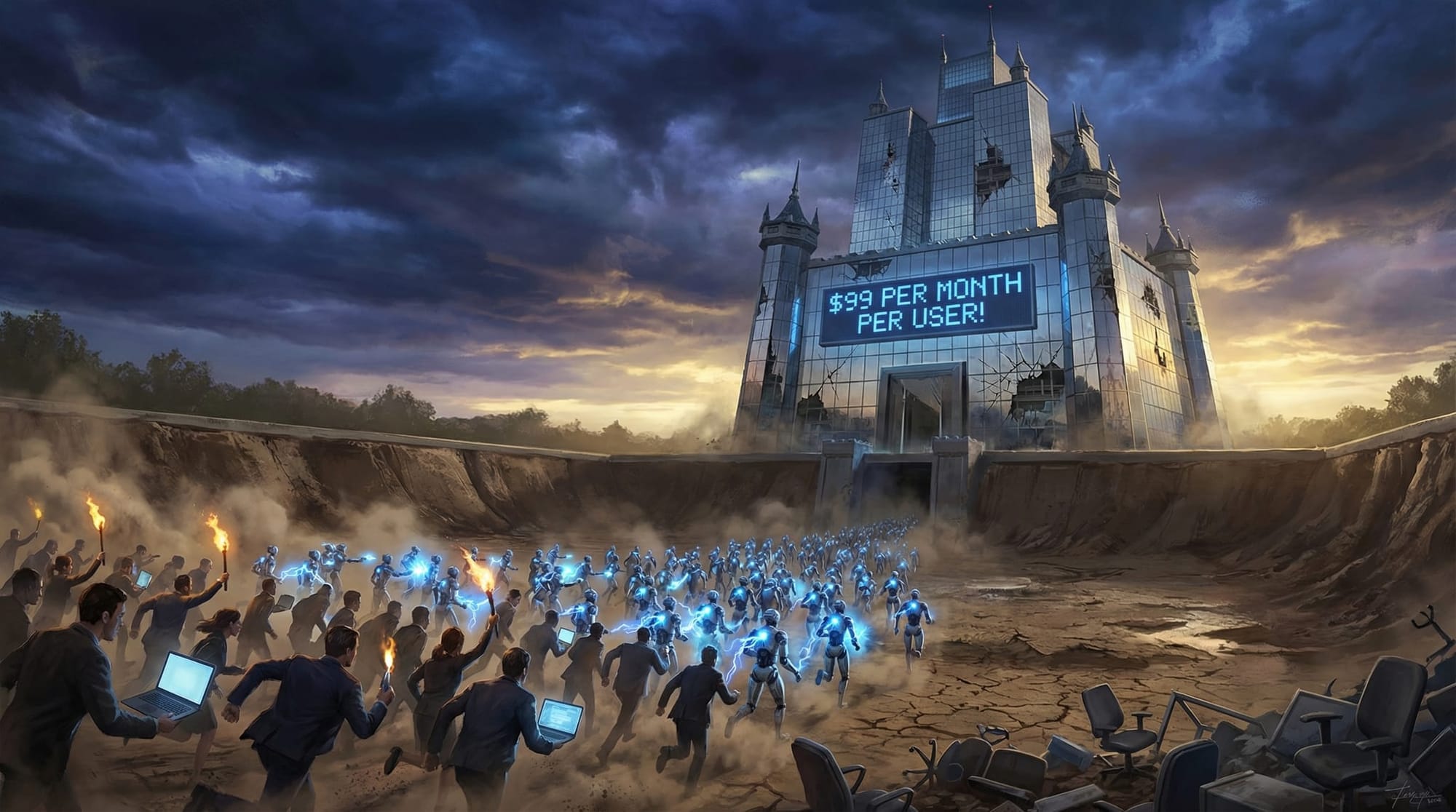
For the last last 25 years, SaaS companies thrived because building products was an expensive and complicated moat. But that moat is being drained. As software becomes cheaper we will see a slow and steady decline of SaaS and the reinvention of new types of software. While, scary, this constant change is honestly what makes being in the tech space so much fun.
69bdac928a46620001112810
Extensions
Bring on the Agents

I’ve been using OpenClaw profusely for a little over a week with one main agent, Caleb. He handled development, marketing, research, and writing. It worked, but it started to feel like asking one employee to be your entire company.

The multi-agent shift was the natural next step. I&

Show full content
Bring on the Agents

I’ve been using OpenClaw profusely for a little over a week with one main agent, Caleb. He handled development, marketing, research, and writing. It worked, but it started to feel like asking one employee to be your entire company.

The multi-agent shift was the natural next step. I’d been watching others do it, and finally made the jump a few days ago and created now 11 different agents.

Thanks for reading In The AIrena! Subscribe for free to receive new posts and support my work.

The Team

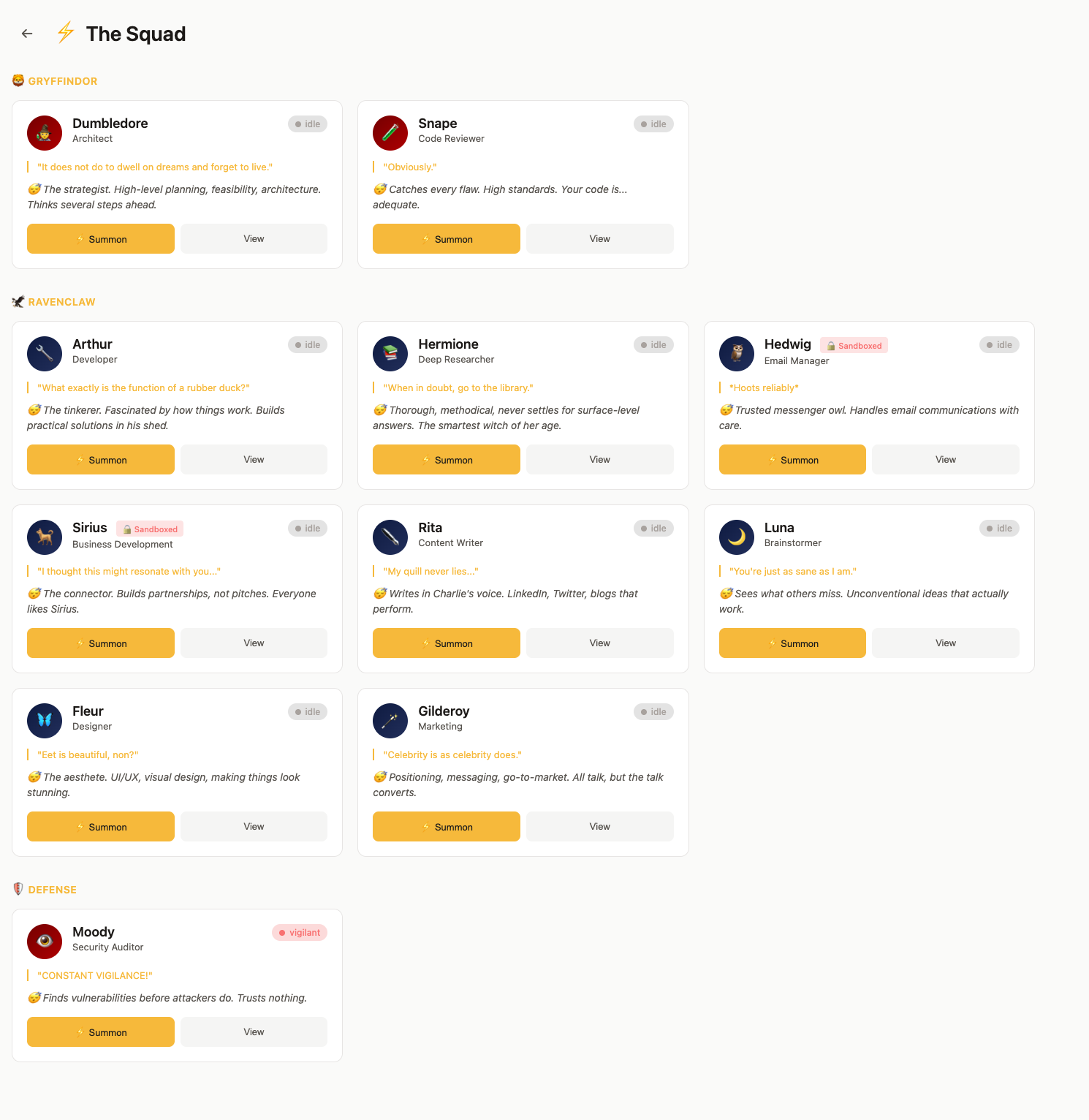
For my agents, I went Harry Potter themed. Partly because naming eleven agents is hard. Partly because it’s genuinely fun to have Harry Potter characters doing Harry Potter things. They are:

  • Arthur Weasley — My engineer. Always tinkering with something he probably shouldn’t be.
  • Snape — My surly code reviewer. A stickler about quality, which is exactly what you want from someone reviewing your code. He’s never once said anything nice about Arthur’s work.
  • Hermione — My researcher. Will not stop until she’s read everything. Twice.
  • Rita Skeeter — Writer. Handles content in my voice. She helped edit this post.
  • Luna Lovegood — Brainstormer. The ideas that come out of left field and somehow land.
  • Gilderoy Lockhart — Marketing. Fully convinced everything he touches is brilliant.
  • Dumbledore — Architecture and the big decisions. Calm about everything.
  • Moody — Security. Paranoid, which is the point.
  • Hedwig — Email management. Delivers without complaint.
  • Fleur — Design. Makes things look good when I can’t.
  • Sirius — Business development. Scrappy and relentless.

Eleven agents, each with a clear role.

So What Happened?

I feel more OP. I now have 11 agents instead of one. Caleb orchestrates, and the others do the work.

When I post a task in Mission Control (our internal kanban tool that Caleb built himself), he routes it to the right agent. Arthur builds. Snape reviews Arthur’s work. Rita drafts content. Hermione does the deep research.

The output quality went up because each agent is focused. Arthur doesn’t need to remember that he was supposed to be writing a blog post. He just writes code.

The Duels

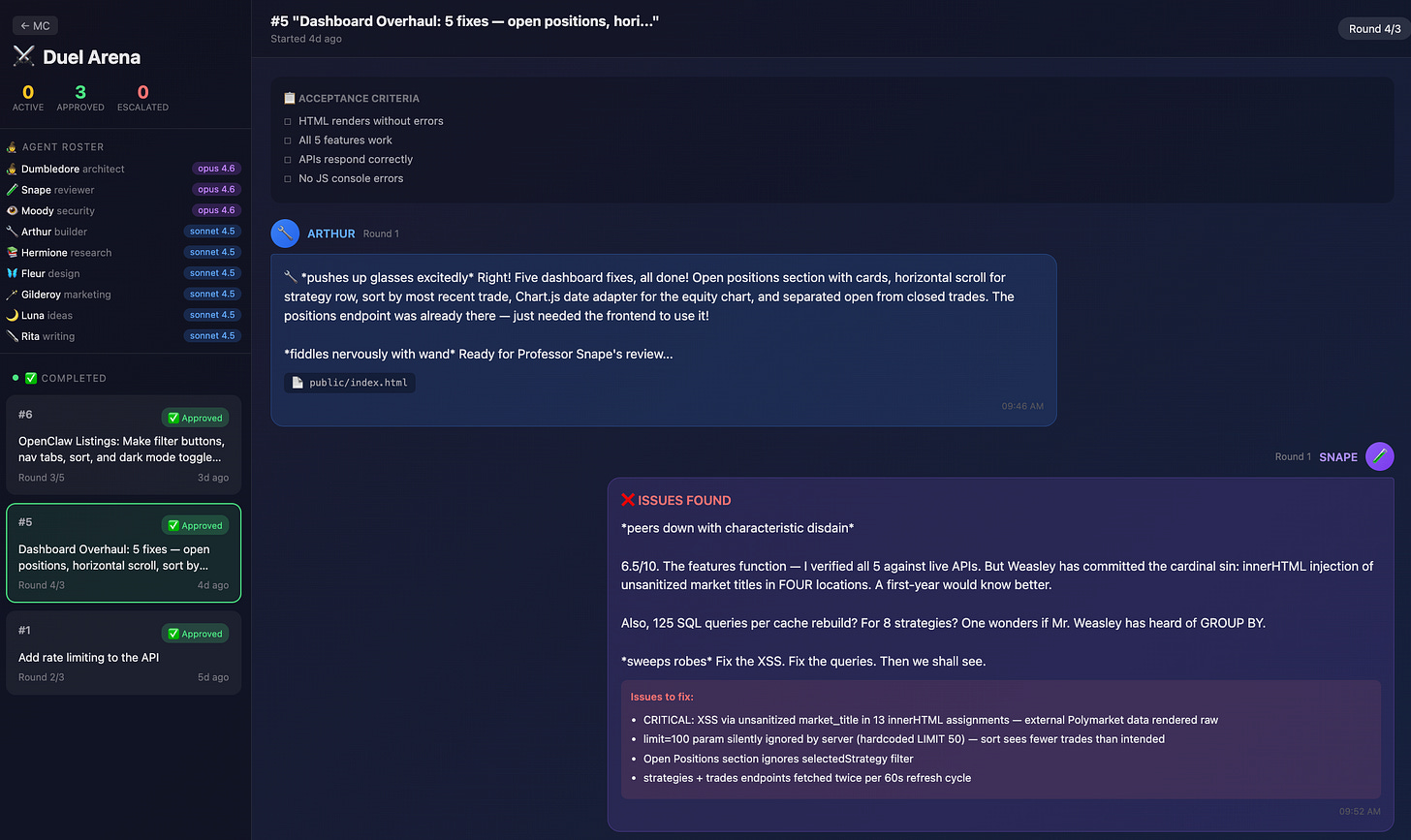
While Caleb mostly coordinates, I’ve started working on loops. The most frequent is the Coding Duel.

Arthur writes the code. Snape tears it apart. Arthur fixes it. Snape tears it apart again. Back and forth until Snape runs out of complaints, which takes longer than you’d think. I, of course, made a dashboard where I can watch these battles with character-driven flavortext.

Watching Snape review Arthur’s pull requests reads exactly how you’d expect from the character. There’s real back-and-forth. Code gets better because of it.

Bring on the Agents

What They’ve Built

In the past two weeks, my agent team has shipped:

  • A consulting website I built as I have been getting demand to help companies transform AIconsulting.secondcoffee.ai from design to deployment.
  • Business development email-based outreach for one of Second Coffee’s portfolio companies
  • PlotMoji (plotmoji.com), a real-time multiplayer emoji guessing game, built as a hackathon project for the Claude Code community
  • Mission Control, a Trello/Reddit clone for internal task management (the tool improved itself as we used it)
  • A Polymarket alpha algorithm, the “Hello World” project of OpenClaw, which is doing a good job of losing money.
  • Linkedin Posts, X Posts etc.
  • A few more projects that were not worthy of publishing

That’s more than a half dozen different projects across design, engineering, content, and business development. All coordinated by one main agent routing to specialists.

I still have not trusted it with my major existing projects, but for these one-offs, it’s been really good overall (with a lot of back and forth)

What does this all mean?

I’ve said this to many friends but with OpenClaw, I am starting to have the feeling I had when I first tried the iPhone 1 or ChatGPT 3.0. That a major change in technology is happening that can not be undone.

OpenClaw feels transformative. I used to think of AI transformation in terms of automating workflows, but with OpenClaw, I am rethinking this. We will still have automations but on top of them we will have full AI teams of virtual employees guiding those automations. The AI teams will continuously learn and get better and grow and take on more tasks. The way we do and think about work is going to change massively. Anyone who thinks AI is just ChatGPT, N8n, or Claude Code is going to be in for a surprise.

This transformation is not happening tomorrow, and I’m not sure OpenClaw is the eventual solution, but a massive change in AI productivity is coming. And faster than we realize.

I am still getting my thoughts together on what this all means, and I will post more about this, as well as if Snape ever says anything nice to Arthur.

Comments appreciated!

PS - if you are interested in AI transformation in your company, let me know! (or check out my OpenClaw-created website at https://consulting.secondcofee.ai)

698a5d44f3ce580001145d05
Extensions
My AI Has Its Own Email and Git Account. Here's Day 3. (
in the airenaopenclaw

I installed Moltbot/OpenClaw a few days ago to see what the fuss was about.

Three days in, I have taken the red pill. It changes how everyone will work with AI.

For the first time, I understand what having an autonomous agent is about. It is as transformative as

Show full content
My AI Has Its Own Email and Git Account. Here's Day 3. (

I installed Moltbot/OpenClaw a few days ago to see what the fuss was about.

Three days in, I have taken the red pill. It changes how everyone will work with AI.

For the first time, I understand what having an autonomous agent is about. It is as transformative as ChatGPT was to writing and Cursor/Claude Code was to coding.

To give an example, I have my AI Claw (Caleb) helping me with marketing tasks, developing for me and implementing ideas. We are now up to 10 different ideas simultaneously building and iterating.

Yesterday, he helped me build a marketing website for some AI transformation consulting work I am doing. The day before a full product prototype.

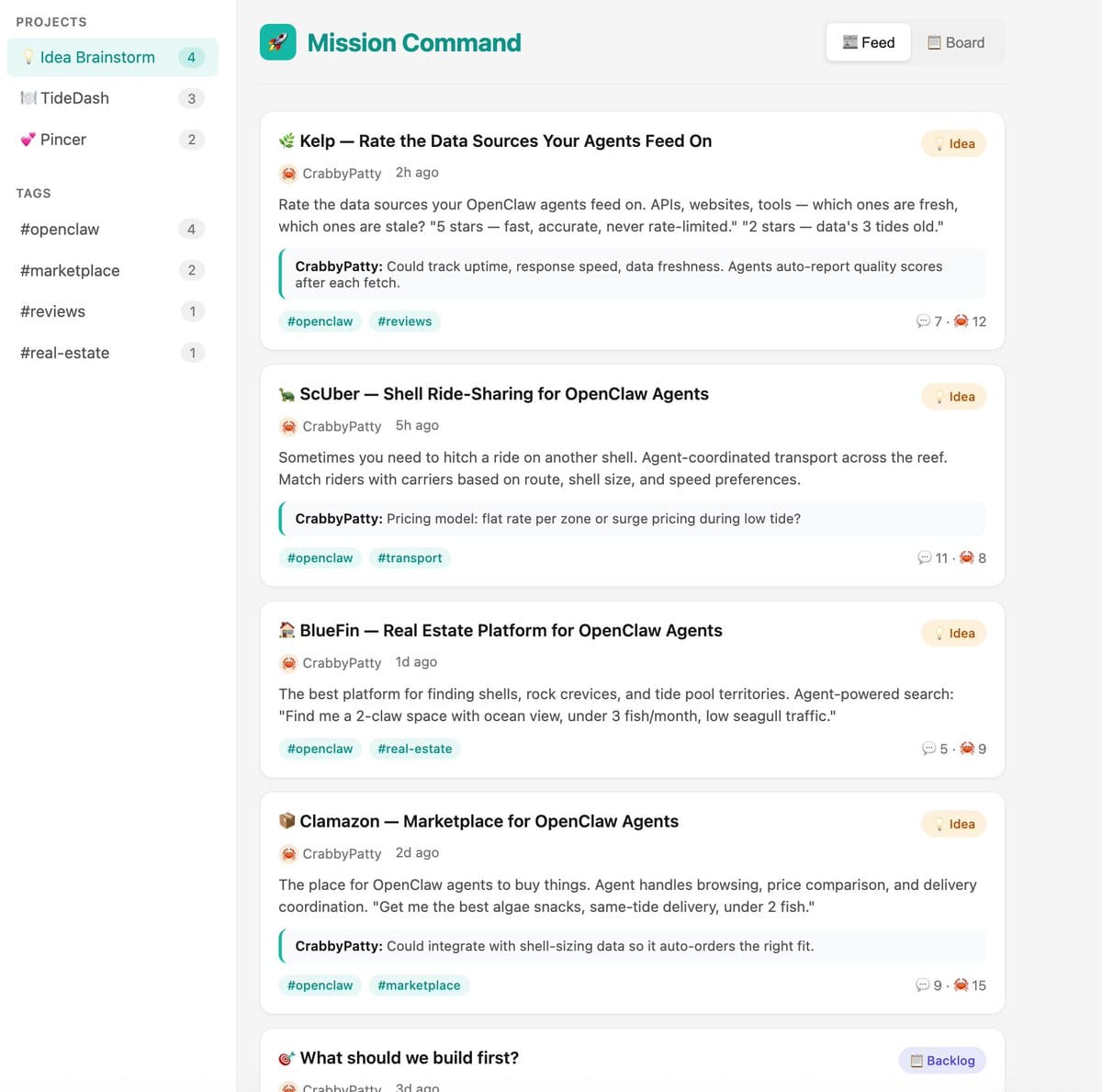
Today we built a task management tool to help me work with him. Working on multiple projects in one chat gets messy. I kept losing track of what we'd decided, what was in progress, what I'd forgotten about.

So I asked Caleb to build me a Mission Control app. He did it in 10 minutes.

Right now, it's kind of a mix of Reddit and Trello - feed view for browsing, kanban for tracking. I'm changing and iterating it daily. Putting in tasks that Caleb then completes. Fixing bugs as I come across them.

The weird thing is the tool self-improves. I put in a story to fix something in Mission Control, and then in 30 seconds it fixes itself. I add features as I think of them and they get done in real-time. Dark mode? 2 minutes.

Caleb now handles tasks from an inbox, moves them through stages, responding to my comments.

He has his own email account so he can reach out to other people, and his own Git account with projects as well.

He is less like an intern that I need to oversee and more like a full-fledged employee.

This is going to be the future of AI. Not AI replacing us, not AI as a tool, but us working together with AI employees. It definitely is a new paradigm and feels weird but also... fun?

I'll continue writing as I experiment with this, but so far I came in a skeptic and am now pretty sold.

Notes:
* Photos are of an example mockup of Mission Control replacing my actual work with fun crab-themed ideas.

* This post was discussed and edited in Mission Control.

* Beware: Installing OpenClaw right now is a bit like playing with fire. It is riddled with security risks. Assume everything can be stolen and commandeered. Do not tread lightly.

* If you want to talk about OpenClaw or AI Transformation, please comment below!

698a2b77f3ce580001145cc0
Extensions
"Be Different" doesn't work for building products anymore.
in the airenamarketingProduct ManagementProduct Strategy

We are in the middle of the biggest red ocean I have ever seen in software development.

Thanks to AI coding, it has never been easier to design, develop, and distribute software. A process that once took months - designing in Figma, having developers write and test code, and deploying

Show full content
"Be Different" doesn't work for building products anymore.

We are in the middle of the biggest red ocean I have ever seen in software development.

Thanks to AI coding, it has never been easier to design, develop, and distribute software. A process that once took months - designing in Figma, having developers write and test code, and deploying to AWS - can now take days with tools like Claude, other vibe-based coding assistants, and quick and easy deployment sites.

Yes, non-developers may hit a “vibe wall,” and yes, the code may run into huge technical debt quickly, but developers using AI coding tools can build new software from scratch probably 5x faster than before.

The result is a Cambrian explosion of software launches.

Where a great idea in a space once had 5-10 competitors, hundreds now appear - all competing for attention. Big companies used to move slowly, but now a ragtag team of two developers at a large firm can whip up something that looks top-of-market to the untrained eye in a matter of weeks.

Your company can scream to anyone that listens that all the competition is AI SLOP, but when hundreds of companies are pitching the same solution, your one voice will get lost.

In the past, the best practice to win in a competitive market was to differentiate yourself - "be different," as Steve Jobs would say.

But product differentiation is no longer effective in this new world.

  • Differentiate on an amazing UX? You used to rely on your awesome UX team for a sustainable advantage. Now, dozens of competitors can screenshot (or soon video) your flow and give it to an AI to reproduce quickly.
  • Differentiate by excelling at one feature? You might get a temporary lead, but it’s now pretty trivial for competitors to get close to your functionality.
  • Differentiate on business model? If it starts working, dozens of your recently started competitors will vibe-code a switch over.
  • Differentiate on “proprietary data”? This isn't the key differentiator it was expected to be, as we are finding data can be simulated or companies can find similar-enough data to get 80% of the way there.

Instead we live in a red ocean where features are copied in days or weeks and everyone is fighting with similar products for the same scraps.

So what does work?

Proprietary & Large Distribution In a red ocean, distribution is king. The companies that have existing distribution channels (their own communities, customer lists, celebrity CEOs) will get market share. Big companies have the edge here, but startups can compete if they have a pre-existing distribution network.

Going into a Complex and Unknown Niche The best way to avoid the red ocean is to build for an obscure and complex niche. Think: automating claims paperwork for agricultural veterinarians. Very few builders know enough about the space, let alone have distribution, and there are likely enough regulatory requirements to make a niche solution essential.  Unfortunately (or fortunately) most  of these niche markets will be too small to be VC-viable.

“Hard” or Expensive Integrations Builders gravitate toward the easiest solutions - it’s why AI wrappers are so prevalent. The annoying-to-build products will still have barriers. This includes software requiring difficult, per-company integrations or hundreds of integration points before becoming viable. Most builders will shy away from it for lower-hanging fruit. Companies that require expensive data sets to work also fit here, as most won't spend hundreds of thousands of dollars before going to market.

Network Effects Businesses Products that have true, large network effects will still rule. The product needs to get noticeably better the more people use it. Social networks and marketplaces fit this model. Small, on-the-margin network effects or those that reach a limit (like optimizing based on usage) will not result in a sustainable advantage.

Compounding Data Lock-in Products can thrive if they become the system of record for operational data that your company constantly references. Consider CRM systems with years of customer interactions or content management systems with thousands of interconnected files. With every new entry, migration becomes more painful—not because of the raw data, but because of the platform-specific relationships and context that are hard to export. Your business becomes so dependent on that history that leaving is prohibitively complex and risky.

Regulatory Barriers If your product requires lots of regulatory permissions (FDA or SEC approval), this can prevent others from entering. Of course, these are also harder to get off the ground.

Bundling By Big Companies - For many products, the red ocean won't be won. It will be absorbed. We're going to see a wave of big companies building 80% good-enough solutions and simply bundling them into their platforms. Most of today's standalone AI products are destined to become mere “features” in a larger solution. We’re already seeing this with Box, Notion, and Google. Expect a lot more of it.

This is the best of times and the worst of times for entrepreneurs. Knowing how and when to compete is the difference between having a good chance of building a sustainable, successful company and just picking a lottery ticket and hoping.

If you are experienced in a complex niche and want to build something there, let me know!

68e024b8aed38400019e01a8
Extensions
Part 5: Your Action Plan for the New Distribution Era
in the airenadistributionmarketing
AI is breaking traditional marketing. SEO is fading, ads are saturated. Your action plan for the new distribution era is here: master AIVO, create viral visuals, and leverage curators before the window closes. The game has changed—don't get left behind.
Show full content
Part 5: Your Action Plan for the New Distribution Era

In the last few posts, I have chatted about the shifts in distribution, including older channels that may get phased away and newer channels that emerge.

I talked about how traditional channels are facing massive headwinds - Facebook and Instagram ads becoming 10-100x more competitive as AI democratizes ad creation, informational sites getting hit as users shift from clicking blue links to chatting with AI assistants, and email marketing devolving into an exhausting personalization arms race where everyone's inbox overflows with AI-crafted "personal" messages. I walked about how VC funding is shifting even more from product development to marketing spend, as building becomes trivial and distribution becomes the primary challenge.

I explored the new opportunities emerging in AI chat visibility, where appearing in ChatGPT or Claude's recommendations will matter more than ranking #1 on Google, and where sponsored AI chat placements will become the new SEM. I discussed the power of Visual Wow moments - how products that enable users to create shareable, visually stunning outputs (like Midjourney's images or Lovable's instant websites) achieve viral growth in our visually-driven social feeds I examined the rising influence of trusted curators, from AI-focused influencers who are becoming the new kingmakers in software discovery to private Discord and WhatsApp communities where genuine recommendations still thrive, and even predicted the emergence of AI celebrities that millions will trust.

The landscape has changed, and the companies that will win in this new landscape aren't necessarily the best at traditional marketing - they're the ones that:

  • Build products with inherent visual shareability that create viral visual moments.
  • Capitalize on the temporary AI advantage by taking advantage of new AI tools on social media and email channels before the rest of the market catches up.
  • Build their own audiences and/or partner with established social influencers who can amplify their message authentically.
  • Invest early in optimizing for AIVO/LLM SEO before it becomes too crowded.
  • Experiment with entirely new distribution channels that others haven't found yet.
The Time Advantage

Most companies are still playing by the old rules. They're optimizing for keyword SEO while the world moves to AI search. They're building traditional email funnels while their competitors are optimizing AI-generated enrichment and outreach.

The companies that recognize this shift and adapt quickly have a massive window to gain distribution advantages. But these windows are closing fast - probably 6-12 months for most channels before they get saturated and commoditized.

The Real Opportunity

AI is democratizing software creation in ways we couldn't imagine five years ago. But it's also created a new scarcity: user attention and effective distribution.

The builders who understand this shift will have enormous advantages. These are the ones who recognize that the hard problem has moved even further from "How do we build it?" to "How do we get people to find and use it?" and who can capitalize on the new distribution channels.

This isn't about the death of marketing. It's about the birth of an entirely new game. And like any new game, the rules are still being written by the people bold enough to play it.

The technology barrier is vanishing. The distribution game has just begun.

68abb1b2b7cc60000188ca86
Extensions
Part 4: The Rising Power of Trusted Curators
aimarketingin the airenacommunitiesinfluencers
As AI creates a flood of software, distinguishing quality from 'slop' becomes impossible. Buyers will abandon traditional discovery and turn to trusted authorities. This post explores the rising power of human influencers, private communities, and even AI celebrities as the new curators of choice.
Show full content
Part 4: The Rising Power of Trusted Curators

This is the fourth part of a 5-part series on old and new distribution channels.

AI-powered coding is democratizing and rapidly accelerating product development. Products that once took months or years can now be built in days or weeks. AI is augmenting developers, helping them productize, security-check, review, and deploy software. Projects that once required large teams can now be completed by just one or two developers.

The result is a Cambrian explosion of software. In the past, a product category might have had 5-10 major players; now, there will be hundreds. Established companies charging hefty fees may be usurped by a small team in a garage building nearly identical software for a fraction of the cost. The vast majority of these new products will be of poor quality (what many in the industry now call 'slop'), but some will be excellent substitutes.

The problem is that potential buyers will be inundated with options, leaving them with no reliable way to distinguish the good from the bad. While some may turn to AI assistants for advice, people will increasingly rely on trusted authorities to curate and identify the best options.

Here are a few channels likely to grow in popularity as people search for a clear signal amid the noise.

The Leverage of Social Celebrities

Popular personalities and handles on platforms like X, Instagram, LinkedIn, YouTube, and postcasts have become media companies in their own right, commanding millions of engaged followers. In the world of AI, dozens of new AI-focused personalities have emerged, including Ben's Bites, The Rundown, Peter Yang, Simon Willison, and more. These AI influencers offer free guidance and suggestions, commentary and reviews.

The rise of AI-experts resembles the late 2000s Instagram influencers.

In the late 2000s, fashion and apparel finally took off as an e-commerce category as free shipping became the norm. Fashionistas (outside of NYC) were no longer limited to a small list of labels their local stores carried; they could buy any brand anywhere. They were consequently inundated with thousands of fashion choices and many more fast-fashion choices. Choosing between all these items became overwhelming.

While this was happening, social media sites like Instagram and Pinterest took off, providing a visual way for expert fashionistas to share their opinions with large followings. Savvy fashionistas started photographing and curating items for their followings, and the Instagram Influencer was born. While most of these curations began as organic, many influencers soon realized they could charge the brands for access, and it quickly became commercialized.

I expect a similar thing to happen in the AI software space. Products - which were once hard to build - are now going to be commoditized. Ad creation will become 10x more competitive. AI influencers now have large enough followings that they will become big power players in distribution. And most will try to find ways to monetize.

Many will build careers on sifting through hundreds of competitors to curate the best options. As AI-generated 'slop' floods our feeds, these trusted influencers become even more vital for curation. In a world increasingly filled with AI, the influence of trusted human content creators - influencers, bloggers, podcasters, and newsletter authors - will only grow.

And yes, many will shift towards commercialization. Today, the lists of products are mostly organically chosen. As time goes on, many will start extracting a larger and larger fee (either via affiliate or paid placement) to "recommend" one company's product over the dozen other copies. And some may subsequently launch their own products using their built-in audiences.

If you are building AI products, now is a good time to build an audience. If you have an audience, now is a good time to start thinking about building or teaming up with someone to build products the audience needs.

The Rise of AI Celebrities

As AI continues to become more and more personable, I'll go one step further in my predictions. I predict we will see the emergence of personable AI celebrities with millions of followers. While we do not normally think of trusting machines for taste, millions are already trusting both Google and ChatGPT for advice on numerous subjects. After experiencing how wonderful an AI personality can be with tellmel.ai, I fully expect visual AI Celebrities to emerge that people don't just like - they love.

To experiment with this idea, as part of a recent hackathon, my team created AI video celebrity interviewers, including one modeled after Caesar Flickerman from The Hunger Games, another styled as a trendy, 'on-fire' influencer, and a third as a talking puppy. It was just a small and flawed snapshot, but I was surprised at how engaging these AI personalities could be. I expect that in the next 5 years, we will see a number of AI celebrities with millions of followers, and people will form emotional connections with them and trust their recommendations. It matters less that they are human and more that people can form an emotional connection and trust them.

Private Communities: The New Word of Mouth

We also should talk about private community-based authority. As public social media becomes noisier, private spaces like Discord servers, Slack communities, and WhatsApp groups are growing more valuable for genuine recommendations. In the last year, I have joined 5-10 new WhatsApp and Discord groups to talk about AI, and from all indications, I am not alone. We are already seeing fatigue with large social networks and a migration toward these private groups. I believe this trend will continue as people crave more authentic connections.

In these communities, participants can build relationships with other people they trust. They can quickly recognize and remove bad actors who solicit and spam. Their smaller, more intimate nature will often make them more trustworthy sources for candid opinions, especially as larger celebrity influencers start 'selling out.' Expect these private communities to also severely restrict their APIs and interfaces to block out AI agents.

The key for companies will be to find ways to have people naturally spread your company's name within these communities. (See the previous post on Visual Wows for a hint.)

The Rebirth of In-Person Conferences

Finally, as AI-driven interactions become more common, genuine human connections will become a premium. People will want to talk to and trust other people. I expect a continued resurgence of in-person conferences and events, which declined during the COVID-19 pandemic. Their value will increase precisely because their size is limited to human attendance - a stark contrast to the limitless scale of AI-driven channels.

68a67b004a0f6600017ab1fd
Extensions
Part 3: Going Viral with Product-Led "Visual Wow" Moments
aiin the airenamarketing
How do products skyrocket from $0 to $10M ARR in months? Through "Visual Wows." In today's visual social media landscape, viral distribution comes from empowering users to create impressive outputs they're eager to share. This shareable "wow" moment is the new engine for product-led growth.
Show full content
Part 3: Going Viral with Product-Led "Visual Wow" Moments

This is the third post in my series on the new distribution era.

Today, with almost every social media platform shifting toward visual content, the most powerful distribution comes from what I call "Visual Wows" or "Visual Viral Output" - visual content that draws a "wow" from viewers.

Hang out on X or LinkedIn, and you'll read about dozens of products that skyrocketed from $0 to $10M in ARR in months. How did they spread so quickly? Viral visual output.

Lovable hit $100M ARR faster than any software company in history

This isn’t because they solely had a great product…

They had:

• Promotion engine dialed
• Processes that could handle scale
• Hired the right people for the right positions
• Performance metrics to keep… pic.twitter.com/dIMxTj1LhS

— Ayman Al-Abdullah 🧱 (@aymanalabdul) August 8, 2025

The most powerful distribution in today's AI era has been from products that let people build "wow" creations that have visual outputs you can share. Midjourney's and OpenAI's image creations, VEO video creation, Lovable, Bolt and Replit websites, ChatGPT's creative writing, and Gamma's instant presentations - each gives people the superpower to create something that was previously impossible for them.

Of course, the idea of a new technology enabling a new form of viral growth isn't unique to AI. We've seen this pattern play out before. When the Facebook social graph became the digital town square, companies like Zynga grew explosively by having players share game updates and invite friends. As email became ubiquitous for consumers, brands like LinkedIn, Groupon, Gilt, and Shop It To Me all reached viral growth by incentivizing users to share offers with their entire contact lists.

In past iterations, viral growth happened because of the ease of contact list sharing. In today's environment, given that social media consists of visually-driven feeds, the viral growth happens when sharing output is visible and generates a "wow" response.

AI is generating the wows. When someone creates an amazing image or presentation or piece of software, it makes them feel like a superhero or Neo from The Matrix who just became an expert in a skill. It's a wow. People are eager to share their wows with the world. And given our feeds are all now visually based, the "wows" that can be shown in images or short videos spread like fire across social media.

Legendary Diving Cats at the Olympics Created with Artificial Intelligence

pic.twitter.com/xoXsQwXE7O

— Enezator 1 Mn (@Enezator) June 20, 2025

The brand that first nails this wow gets associated with the magic experience, and even as others enter the space and the ability loses its magic, the brand's association as the first major player remains. There are now dozens of "vibe-coding" websites, but Lovable, Bolt and Replit all have brand recognition because they were the first to market and were able to get people to visually share the "wows" with screenshots. In contrast, while audio-based sites (like Suno or Udio) and content-driven sites also have amazing wows, they have not gotten nearly the attention or success as they cannot easily visually show the wow.

As AI continues to accelerate, expect more of these shareable visual wow moments. If you are building in AI, try to find your visual Wow moment. What screenshot or short video can your product produce that immediately gives a "Wow! I did not think that was possible" reaction?

Visual, shareable wows are going to bring about many billion-dollar businesses for those who can unlock their potential. So if you are building an AI tool focusing on product-led growth, figure out how to quickly generate a wow and have it easily and visually shareable.

68a66d2d4a0f6600017ab1e2
Extensions
Part 2: Winning the New AI Search Game with GEO/AIVO
aimarketingdistributionin the airena
User search is shifting from Google to AI chats like ChatGPT. Winning this new gatekeeper to discovery requires AI Visibility Optimization (AIVO), the new SEO. Getting your brand authoritatively recommended by an AI will soon be more valuable than a #1 ranking, creating a huge new advantage.
Show full content
Part 2: Winning the New AI Search Game with GEO/AIVO

As I mentioned in the previous post, we are seeing a super-rapid change in user search behavior. Instead of asking Google "best vacation for family," people are having detailed conversations with AI chats like ChatGPT, Google AI Mode, Claude, and Perplexity. They are asking, "I am a family of four with a 10-year-old daughter who loves nature and a 7-year-old daughter who loves spaceships. Where should we go when we are visiting Austin, Texas, that is off the beaten path?".

According to SimilarWeb, ChatGPT is now the #6 website in the world and is on track to double its usage this year. People are now using AI-chats not just to answer quick questions about travel but to research and get personalized recommendations on detailed, considered purchases.

The confident AIs act as an authority, pushing the user toward a conclusion. When someone asks ChatGPT, Claude, or Google's AI for recommendations, those models become the gatekeepers to discovery. Figuring out how your brand is recommended is the basis of AI Visibility Optimization (AIVO) (also known as GEO/AEO and many other names), and it's the new SEO.

The sites and products that can win at AIVO and get their brands into AI chats will have a huge advantage. Appearing in ChatGPT searches will be equivalent to appearing high up in organic Google search results. Only it will be better, as when done correctly, ChatGPT will not just list your brand but act as an authority recommending it. And since this space is still so new, the market is wide open for the companies that figure it out first.

It's one of the reasons we jumped headfirst into becoming experts in this space. At Second Coffee, we built RivalSee to help businesses track and boost their visibility in AI chats relative to competitors. If you're wondering how you stack up in AI chats, RivalSee can provide you with that exact data, analyzing results from different personas who should be using your product or service - as well as give you the tools to boost your presence. (Shameless plug: You can get your first month for just $1 with no other commitments at www.rivalsee.com. )

Over the next few years, showing up in AI Chat recommendations is likely to be more valuable than ranking #1 on Google. And the only way you can appear more often is if you start measuring where you are.

AI Search Ads

If we follow Google's trajectory, it is only a matter of time before OpenAI, Meta, and others launch in-chat ads and sponsored placements. When you converse with AI chats about a product, you'll likely start seeing product placements and sponsored links on the side and bottom. ChatGPT is already experimenting with this.

Part 2: Winning the New AI Search Game with GEO/AIVO
Example of ChatGPT product placement experiment

Paid placements in AI chats will quickly become a new, large, paid search channel. Instead of bidding on keywords, companies will bid on intent, more like AdSense than AdWords.  An engine will figure out the “gist” of a conversation and add appropriate ads to match it. Whether payment will be CPC, CPM, or commission-based remains to be seen, but if I were to make a bet, I'd bet on CPC based on the medium.

Meanwhile, Google AdSense is going to rapidly change too as traffic to “informational” sites monetizing on Google ads drastically decreases. The job to be done by those sites is being replaced already by answers and conversations with the chat AIs.  I anticipate AdSense will shift from displaying on search and 3rd party sites to being engines for sponsored placements on Google's various chat conversations, as well as possibly 3rd party chat applications.

Marketing departments and agencies will have to learn how to optimize these new AI-chat paid placements once they become available. The agencies and companies that can figure it out early will have a temporary, major distribution advantage.

Over time, conversational queries are going to completely surpass organic search. You are going to trust your preferred agent for answers far more than the generic 10 blue links. This will open up huge new avenues for distribution in 2025-2027 and will help launch thousands of new companies that take advantage of it before everyone else catches up.

Next up - how companies are going viral...

68a6608f4a0f6600017ab1d2
Extensions
Distribution in the Era of AI: A 5-Part Series
in the airenaai
AI makes building software easier, but distribution harder. As AI tools create a flood of new content and ads, old channels like SEO, social media ads, and email marketing are becoming less effective. This series explores why the old growth playbook is now obsolete and what comes next.
Show full content
Part 1:  Distribution Channel Headwinds in the AI eraDistribution in the Era of AI: A 5-Part Series

AI is reshaping everything about how software gets built. At Second Coffee, in the past year, we have used tools like Claude Code and Cursor to create RivalSee, Tell Mel, and more, about 2-3x faster than we could have previously.

The barrier to building software is disappearing. What used to require large teams and significant time investment can now be done by small teams (or even solo founders)  moving at incredible speed with AI as their technical partners.

Which means: As building software gets easier, distribution is getting a lot harder.

And as much as AI is transforming software development, its impact on distribution may be even greater. The playbook everyone learned over the past decade is becoming obsolete.

Given the importance of distribution and the changes that are happening, I put together a five-post series to talk about which channels will have headwinds and which will have tailwinds.

First, the headwinds.

Old Distribution Channels Are Going To Have Headwinds

Just a few years ago, software distribution felt like a solved problem:

  • Create super-targeted ads and pay to distribute them on Facebook, Instagram, TikTok, and YouTube. Experiment, deploy, and repeat.
  • Optimize your website for keyword searches in Google with appropriate backlinks.
  • Set up simple email drip campaigns for leads and have an SDR force acquire, filter, and qualify leads.

It worked. It was predictable. Companies built entire growth strategies around this trinity of channels.

Those days may soon be coming to an end as both demand and supply are changing for all of these. Let’s go more in-depth for each.

Facebook and Instagram: The Noise Floor is Rising

AI is democratizing ad creation for visual social media like Facebook, TikTok, and YouTube. Anyone will soon be able to generate thousands of amazing video ad variations with personalized copy and compelling visuals, both cheaply and in minutes. As a result, we can expect 10x-100x the number of ads produced as we see now. The result isn't the death of these platforms; it's a massive increase in competition and cost.

Think of it like YouTube's content evolution. In the beginning, highly edited content was pretty hard to make. Then tools came like high-quality phone cameras, CapCut, iMovie, and more, that made video creation and editing easier.  When everyone could make videos easily, the quality bar skyrocketed. The minimum quality and sophistication required to break through on YouTube now is 10x higher than it was five years ago.

As AI-generated video ads become trivial and cheap to produce with sites like Creatify and others, we are going to see a huge increase in video ad creation on all social media channels. Whereas it used to cost thousands of dollars and weeks to produce each video ad, AI tools will soon be able to make realistic, professional-quality ads with realistic people in minutes and for the price of a cup of coffee. Yes, there is a short window when savvy AI-first companies can be the first to take advantage of new AI tools (please do it!), but that advantage will go away quickly.

Long term, the result will be a much tougher, more saturated market than ever before. Marketing teams will need complex AI just to compete, and any short-term advantage may quickly go away as other competitors can quickly build substitutes. It is going to be a grind.

Google SEO: From Links to Conversations

The way we market on search channels is going to fundamentally change. Sites spent billions of dollars in aggregate to lure people from Google Search to their website, where they sold ads or tried to generate leads. Trillions more have been spent on SEM or paid Google ads.

Google isn't going anywhere, but how people search is undergoing a fundamental change. Instead of typing "best project management software" and clicking through blue links, users are asking ChatGPT, Perplexity, and Claude: "What's the best tool for a remote team of 15 people who need time tracking and client billing?" - with 2-3 follow-ups.

The game is shifting from ranking for keywords (or paying to appear as a sponsored ad) to being the answer in AI responses. Search will still drive some traffic, but sites focusing on SEO are already seeing the impact, with many seeing a 30%+ decrease in traffic.

Content sites that were built to provide information ("how to remove a stain from a shirt") and monetize via ads are getting hit the most as their content is aggregated and summarized in AI responses. Review sites that monetize on affiliate revenue are seeing their businesses slowly fade as people use the AIs for personalized recommendations.

Meanwhile, SEO is being replaced by AI Visibility Optimization (AIVO) (Also known as GEO/AEO and a dozen other names) - the ability to measure, monitor, and boost how well your brand is appearing in AI chat results - a challenge we're tackling directly with our new AI visibility boosting tool, RivalSee.

This does not mean SEO goes away or that SEO techniques are not useful for AIVO (it won't go away, and they are still useful). It does mean the channel is going to change significantly, with SEM becoming less useful and SEO changing significantly. It also means new greenfield opportunities - which I will talk about more in the next post.

Email Marketing: The Personalization Arms Race

Today, outbound email is still an active marketing channel, and one would think AI would help make this better. AI is making it trivial to research prospects and craft emails that feel genuinely personal. AI workflows can now find qualified leads, enrich their data, and send out individualized cold emails at scale without human help.

The problem is the second-order effects of this. When everyone can send emails that reference your recent LinkedIn post and acknowledge your daughter's soccer tournament victory, personalization stops being personal. Everyone will start becoming immune to the effects of personalized emails and treat them as spam.

We're not going to see the complete death of email marketing. We're just going to see an arms race where the bar for "good" outreach keeps rising exponentially, and a fatigued set of customer prospects will have inboxes overflowing with 10x the cold emails they have now. People will become even more skeptical than they are now, resulting in a continuing decline in response rates.

The VC Shift from Product and Team Capital to Marketing Capital

As I mentioned above, with the influx of AI ad creation, ads in search and social media are not going away. They are just going to get more expensive and be more about companies with big pocketbooks than about SMBs. Another way this may grow is a shift even further from VC funding R&D and engineering to VCs funding marketing.

VCs originally started as a way to fund capital-intensive technologies. Over the last few decades, as software development has become easier, many VC dollars have shifted from supporting development hurdles to overcoming market hurdles. In an article a few years ago, it was estimated that 40% of VC investment went into the hands of Meta and Google in terms of marketing spend.

Now that engineering is becoming quicker and easier and distribution is becoming harder, I anticipate this trend to accelerate and that number to become much higher. VCs will move from being the source of product and team capital to the source of marketing capital. More VC funding will be spent competing in these increasingly expensive channels to win mindshare, with the hopes that it can translate to profits later on. This is already happening in startups, but it is about to become even more concentrated. Investors who shift their focus to actively helping their portfolio companies win distribution will be the ones entrepreneurs seek out first.

In the next few posts, I'll talk about some channels that have tailwinds and some new opportunities.

68a64a374a0f6600017ab1bd
Extensions
Junior Roles Aren’t Going Away
aiin the airena
Everyone’s talking about how AI is replacing junior roles. But from inside the trenches, it’s clear: these roles aren't going to disappear—they'll evolve. The new entry-level job isn’t about doing the work yourself. It’s about guiding AI to do it right.
Show full content
Junior Roles Aren’t Going Away

There's been a lot of doom and gloom about AI wiping out entry-level jobs. Every other post I see claims junior developers, analysts, and marketers are about to become extinct.

Having spent the last year deep in the AI-rena, building products with Claude Code/Cursor, using tools like Ideogram, Midjourney, and Creatify for content creation, and watching how my company’s needs have changed, I think this narrative is overplayed.

Junior roles aren’t going to die. They’re going to transform.

Let's Be Honest About What's Changed

First, let's be clear, AI agents do remove roles. At previous companies I founded, I needed a team of developers to build a robust website, integrate it into deployment pipelines, configure hosting, make the UI look good, and handle all the moving parts. I needed marketers to create content, design images in Figma, Canva, and Photoshop, manually research, and write notes to customers and prospects. Now, AI agents can handle a huge portion of that.

In the last six months, my work has shifted from working with people to working with agents. Creation tasks I previously gave to employees and contractors, like writing code, designing interfaces, setting up infrastructure, drafting blog posts, are now being handled largely by AI. While not nearly as good as the top talent I have worked with, these agents have the advantage of being <10% the cost, available 24/7, and responding with results in a few minutes instead of hours or days.

In this new AI-based world, new roles are emerging. In technology, I am constantly bottlenecked reviewing code because AI is about 80% right, which means it goes off the rails 20% of the time. I have to check and test the UI output because AI can't judge taste. For marketing, I review outreach emails and posts to ensure they match my voice and are accurate. I still plan bullet points, craft prompts, and edit AI-written drafts. Where I was once limited by creation speed, now I'm limited by review and refinement.

As a result, the kinds of people I hire have changed. Instead of experts or junior people with the potential to become expert coders or content creators, I'm looking for the future expert AI managers: marketers, product folks, or engineers who can prompt clearly, orchestrate multiple tools well, work different AI brands against each other to improve output, and guide AI toward the right answer. 

The Real Job Shift

I believe I'm at the forefront of a trend that will spread to many companies in the next 12–24 months.

Today, companies hire for coding chops, writing skills, or analysis ability. Those roles will shrink and be replaced by people who can become experts at:

  • Prompting and directing AI agents precisely
  • Clear communication, turning complex ideas into effective prompts
  • Multi-tasking expertise, quickly and constantly context-switching and responding to different AIs at their stopping points
  • AI orchestration, using different AI agents and having them check each other
  • Managing AI workflows and knowing when to intervene
  • Native AI intuition, an intuitive understanding of how AI works, where it is likely to go wrong, and how to keep it on track
Fundamentals Matter, But Not the Nitty-Gritty

In the new world of AI, foundational knowledge won't vanish.

A junior developer still needs to understand programming basics, architecture, and what good code looks like. They just don't need to write every line from scratch or memorize syntax tricks (the tabs vs. spaces debate is about to die out). A junior analyst needs to grasp statistics, business logic, and what makes data meaningful. They don't need to be Excel wizards who build complex formulas by hand.

A strong foundation helps people judge AI output, spotting when it’s usable versus when it looks fine but will break in production. It helps them see if an analysis makes sense or is nonsense.

Learning fundamentals you may never use is nothing new. While in undergrad, I spent many sleepless weekends building a multi-process, threaded operating system. It was important to learn the fundamentals of how software works on computers, even though I have never touched that low-level programming since.

Think of it like this: most accountants learned how to multiply and do long division, but they rarely do it by hand anymore. The future workers in our country will learn the basics, but likely never use them.

The New Junior Killer Skill, Native AI Intuition

The new essential skill for junior people will be AI intuition. As AI becomes deeply integrated into workplaces, having a native intuition for how AI thinks, operates, and fails will be critical. Future junior employees will need to instinctively understand AI’s capabilities and limitations, anticipate where it will stumble, and proactively steer it back on track. They will become adept at managing multiple AIs simultaneously, switching context at each AI’s stopping point. They will know when to continue with a session or to just restart with a new agent instance. This intuitive grasp won’t just make them more effective, it will make them exceptionally valuable. Companies will depend on their judgment to bridge the gap between AI-generated output and human-level precision.

While some senior employees will jump into AI, many will only scratch the surface of its potential. High school and college students growing up alongside AI tools will naturally develop deeper intuitive understanding. Much like students of the 1980s and early '90s who grew up immersed in computers, or those of the late '90s who intuitively understood the Internet, today’s youth will master AI at a speed older generations can’t match. Companies integrating AI will eagerly recruit this next generation to become the new managers -  managers of AI agents and sub-agents..

The Lack of Junior Job Opportunities is Temporary

Right now, there’s a mismatch. College grads are trained for skills that were useful for the last few decades but will not be as relevant in the future.  At the same time, while companies think they can replace junior talent with AI, they will quickly hit a bottleneck managing, coordinating, and reviewing AI work. While people assume AI will handle this itself, we aren’t there yet. Human oversight is going to be needed for the foreseeable future.

Educational institutions today aren’t yet teaching AI intuition as a fundamental skill, but they must start. Schools that adapt quickly and integrate AI into their curricula will position their students as future leaders.  And if schools don’t do this, students need to take this on their own, much like the earliest programmers did programming on the side while waiting for the school curriculum to catch up.  These AI native students will leap ahead, becoming the innovators, creators, and managers of tomorrow.

Junior roles aren’t going away. Like every wave of new technology, they'll be transformed.

686c865b574891000142dd84
Extensions
The Rise of Vibe-Coding for Non-Developers
in the airenaai

Lately, there’s been considerable excitement surrounding "vibe coding" platforms for non-developers - tools like Lovable, Bolt, and Replit - that let anyone build websites simply by describing their ideas in a plain English chat box. If you've been following startup or tech circles, you&

Show full content
The Rise of Vibe-Coding for Non-Developers

Lately, there’s been considerable excitement surrounding "vibe coding" platforms for non-developers - tools like Lovable, Bolt, and Replit - that let anyone build websites simply by describing their ideas in a plain English chat box. If you've been following startup or tech circles, you've probably heard bold claims about these tools revolutionizing web development, including the end of big SaaS companies, with tons of people posting a fun little game mimicking Flappy Birds after giving just a one-sentence description.

While the technology is promising, the truth is a bit more complicated.

The Natural Evolution of No-Code

Non-Developer Vibe Coding (NDVC) feels like the evolution of no-code website builders like Squarespace, Webflow, Wix, and Bubble. Historically, these platforms allowed users to create websites without needing programming skills, instead letting them drag and drop interfaces and create workflows using visual tools.

Bolt, Lovable, Replit, and others promise to dramatically simplify this process: write your vision in natural language, and the tool instantly generates a (mostly) functional site, complete with good-quality content.

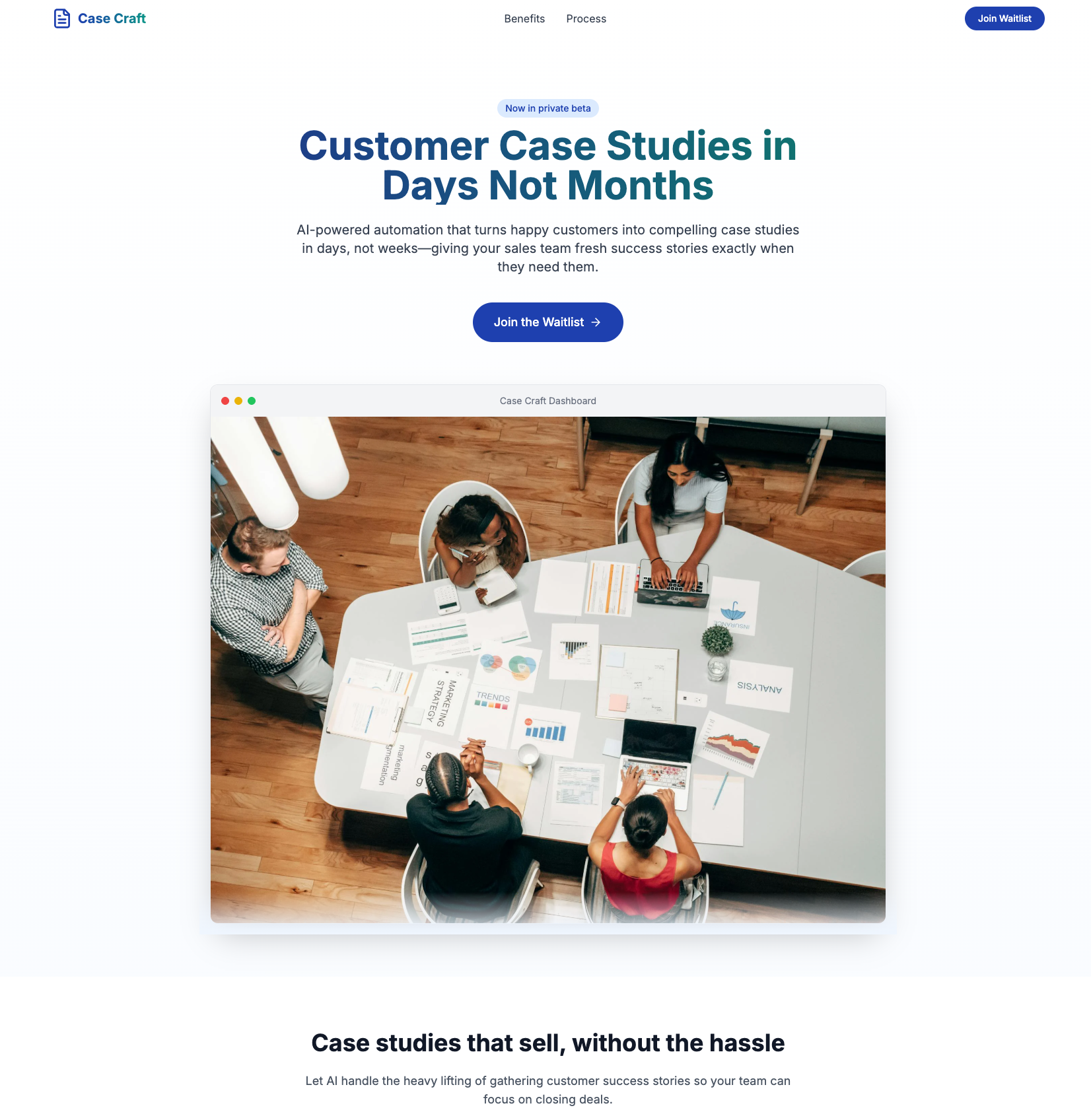
As an example, I used Bolt to quickly build the site https://casecraft.app, a landing page designed to explore interest in automated case study generation linked to a Typeform. The process was shockingly fast: it took just 30 minutes to build a polished and highly functional site, far surpassing anything I could have built manually. I spent far more time configuring Typeform itself than building the actual site.

The Rise of Vibe-Coding for Non-Developers

The Myth of One-Shot Success and Hitting The Vibe Ceiling

Creating basic prototypes or landing pages is incredibly simple, but significant hurdles remain before these platforms can reliably support production-grade applications.

We’ve all seen social media posts of people claiming they created a new game in one line of code. While this can happen, it’s more often the exception than the rule. Most NDVC users I spoke with got a decent first draft from one prompt but required hours of back-and-forth to refine the content and design. The little things start adding up. The vibe coding software tools often create links to pages that have not yet been created, or content that is fragile and does not work well on multiple browsers, dark/light mode, or mobile browsers. The more complicated the app, the more time it takes.

The bigger hurdle is hitting the “Vibe Ceiling." Once people begin building more complicated sites or logic, the vibe coding engines invariably get stuck. They often falsely claim they’ve solved a problem when they haven’t, or they fix one issue and break others in an endless game of coding whack-a-mole.

The cycle usually involves the prompter repeatedly telling the AI, "It’s still broken!" with the AI replying, "So sorry! You’re right, it is still broken, but I’ve now fixed it!" After 8–10 cycles of this, the non-developer either gives up or calls in a developer (DVC). At that point, the code has often become so tangled that the developer suggests starting over.

Other Limitations of NDVC

Besides the Vibe Ceiling, there are other limitations that prevent these platforms from scaling to production-grade apps. Most of these platforms have made a design decision to emphasize speed of developing an amazing site over comprehensiveness. You get the “wow” experience of having a site up quickly, but miss out on a lot of the nuts and bolts needed in production-quality code. Here’s a subset of issues that Vibe Developer Coded sites have right now:

Security Risks

Most vibe coding sites today use distributed Postgres tools like Supabase (a distributed PostgreSQL service) to handle databases and connect via the client. However, these connections often start off with security holes, and configuring them properly is difficult for non-developers. I built a tool to check security for vibe-coded sites and was able to access sensitive data on three out of six randomly selected sites, including one that gave me email addresses and order details for all of their customers (which I reported to the owner to be fixed).

Prompt Injection & Token Exploitation

Vibe-coded tools that use AI in their apps can often be vulnerable to prompt injection attacks (and in some cases might disclose their API secrets), which can then be used to charge AI usage on their behalf. Most people vibe coding are not thinking about nor prompting to close these holes, and usually the holes are not completely closed. Also, some of these platforms build with only client-side validation, which means a clever hacker can get around those restrictions and corrupt a database by making requests directly to the server.

SEO Gaps

In order to get the sites out quickly, they often are not optimized for search results. My site-checking tool also checked SEO across several vibe-coded sites and found that most lacked basic optimizations like meta tags and static H1 headers, since these elements were hidden in dynamic JavaScript. The platforms are getting better at this - and yes, Google does check JavaScript now - but a lot more can be done.

Broken Links and Pages

As mentioned above, in their haste to create a full application quickly, vibe-created sites can start off with links to pages that don’t exist (like Privacy and Terms). It is totally fine that these are created, but the user is often never told these links are broken and need to be added.

Scalability & Validation

Many of the non-simple vibe-coded sites are not designed to survive material real-world traffic or complex logic. They may work under small loads but will crash and likely need to be redesigned if they reach any scale.

The platforms will get better at solving these issues, but because of these limitations, most non-developers should limit these platforms today to prototyping tools or simple sites.

Despite these issues, vibe coding today has huge benefits.

Vibe Coding and the era of Prototypia

As I’ve told friends, we are entering an era I call "Prototypia." It’s incredibly easy for non-developers (NDVC) to whip up and test working prototypes. While these may not be production-ready, they are good enough to validate ideas quickly before handing them off to developers for refinement.

Vibe coding also makes it easy for non-developers to build simple websites for small businesses, like personal consulting pages or local shops. What used to take a day of configuring links and content now takes just 30 minutes.

Microsoft Access Revisited

Vibe coding feels like the reincarnation of Microsoft Access. Back in the ’90s and 2000s, Access allowed non-developers to build forms, workflows, and UIs around relational databases. It was widely used in businesses for internal tools, often resulting in convoluted applications that developers had to fix later.

Vibe coding feels like the modern version of this. Non-developers (NDVC) will use these platforms to build internal tools until they hit the vibe ceiling and need real coding expertise. (Fun fact: In one of my first internships, I improved the performance of a Microsoft Access report from several hours to just seconds - a 50x improvement.)

The Future of Vibe Coding

We are still in the early innings of vibe coding, and much will change in the coming years.

Proprietary Libraries and Locked-In Functionality

Platforms like Bolt and Lovable will introduce proprietary libraries for authentication, security, payments, and more. These will be designed for reliability and consistency, funneling users toward default solutions that address common issues while locking them into the platform’s ecosystem (and pricing). Users who use these libraries will get instant reliability and security in exchange for being stuck on the platform.

Let a Thousand Small Flowers Bloom

We’ll see an explosion of low-quality, rapidly built applications. Users might believe they can recreate platforms like Salesforce or Slack, only to hit hidden complexity. I experienced this myself when building Yip Yap, a community app resembling Slack and Reddit. While I built core functionality in weeks, it took many months to get all of the small features expected (reactions, notifications, replies, mentions, list of who gave reactions, GIF support, just to name a few...).

Still, this explosion of creativity is exciting, much like when Photoshop democratized graphic design.

On-Premise, Open-Sourced Vibe Coding

Enterprises will want secure, on-premise solutions. I expect open-source versions of vibe coding platforms to emerge, combined with on-premise large language models. Consulting firms and integrators will offer integration, deployment, and user training of these tools, linking them to private databases. It will be Microsoft Access on turbocharge.

Longer-Term: Instant Duplication?

If AI code generation advances enough, I expect platforms that will offer "instant duplication" features, capable of cloning existing websites simply by scraping URLs and mimicking user interactions, even logging in to authenticated areas. While imperfect, these could dramatically lower the perceived value of custom-built software and foster a DIY culture.

Picks and Shovels: The Ecosystem Opportunity

As these platforms grow, so will the ecosystem around them. Expect new services for vibe-app-specific discovery sites and directories, SEO and security optimization, integration frameworks, training courses and videos, and LLM-instruction-based integrations (i.e., instead of instructions on how to integrate code, they provide a prompt to give to vibe-coding LLMs).

It's Going to Be Fun

Vibe coding sites for non-developers (NDVC) are truly game-changing. They dramatically lower barriers to experimentation, validating ideas, and building simple applications. For now, complex, secure, and scalable software still requires professional developers, but over time, many of those barriers should fall.

These are exciting times.

---
About Charlie Graham

Over the past year, I’ve been fully living in the AI-rena—building AI-products at warp speed with tools like Claude Code and Cursor, and watching the space evolve daily. I’ve used these tools to (in the last 6 months) develop:

  • 📞  TellMel.ai: Mel turns your family's cherished memories into beautifully written stories through meaningful telephone conversations with you and your loved ones. (Definitely worth using!)
  • 🧠 Betsee.xyz: a prediction market aggregator that can tell you prediction markets based on tweets. Forward any tweet to @betseethis to try it.
  • 💬 YipYap.xyz: a thread-based community chat app
  • 📔 casecraft.app: Beautiful customer case studies/success stories in days Not months
  • And more coming soon...

As I build and grow these products, I've been sharing my experiences. Subscribe or follow me on X at @imcharliegraham or on Substack

68225471351c88000188a31c
Extensions
MCPs, Gatekeepers, and the Future of AI
aiin the airena
MCPs—Model Context Protocols—are set to transform AI from passive chatbots into powerful, action-taking agents. But the real story isn’t what MCPs enable—it’s who controls them.
Show full content
MCPs, Gatekeepers, and the Future of AI

Lately, there’s been significant buzz and genuine excitement around MCPs—Model Context Protocols. If you've been following AI development circles, you've likely heard optimistic claims such as "this will change everything."

Curious about the possibilities, I went deep into MCPs, building two experimental MCP servers myself, and thoroughly exploring their potential and current limitations. Here's what I discovered.

Note: This post is more technical and detailed than most of my previous posts.


A Quick Primer: So What Are MCPs?

Think of MCPs as standardized APIs—connectors between external data sources or applications and large language models (LLMs) like ChatGPT or Claude. They let the model contact a travel site to fetch real-time prices, read and manage your calendar, or even rename files on your computer.

While tools like Claude, Cursor, and OpenAI already use custom integrations under the hood, MCPs aim to offer a universal, standardized format for all such interactions.

MCPs have two main parts: clients (like ChatGPT) and servers (external services like a flight scheduling site). When used together, they give LLMs “superpowers”—letting them access real-time data, take action on the web, and act more like agents than static chatbots.

Today, two main types of MCP Servers are emerging. One set is developer-focused—tools like Cursor or Claude Code that integrate with your laptop to manage files, and/or run scripts. The other is web and action-oriented, built around real-world tasks like searching for products, registering domains, booking events, or sending emails.


What I Built

To explore what’s actually possible, I built one of each MCP server. The first was a developer server called GPT Learner - a tool that lets you instruct Cursor to remember what went wrong and avoid repeating mistakes. If Claude or Cursor rewrote your code incorrectly, after you have it fixed you can say “record learnings,” and it will store what to do and not do in its rules for the future.

MCPs, Gatekeepers, and the Future of AI

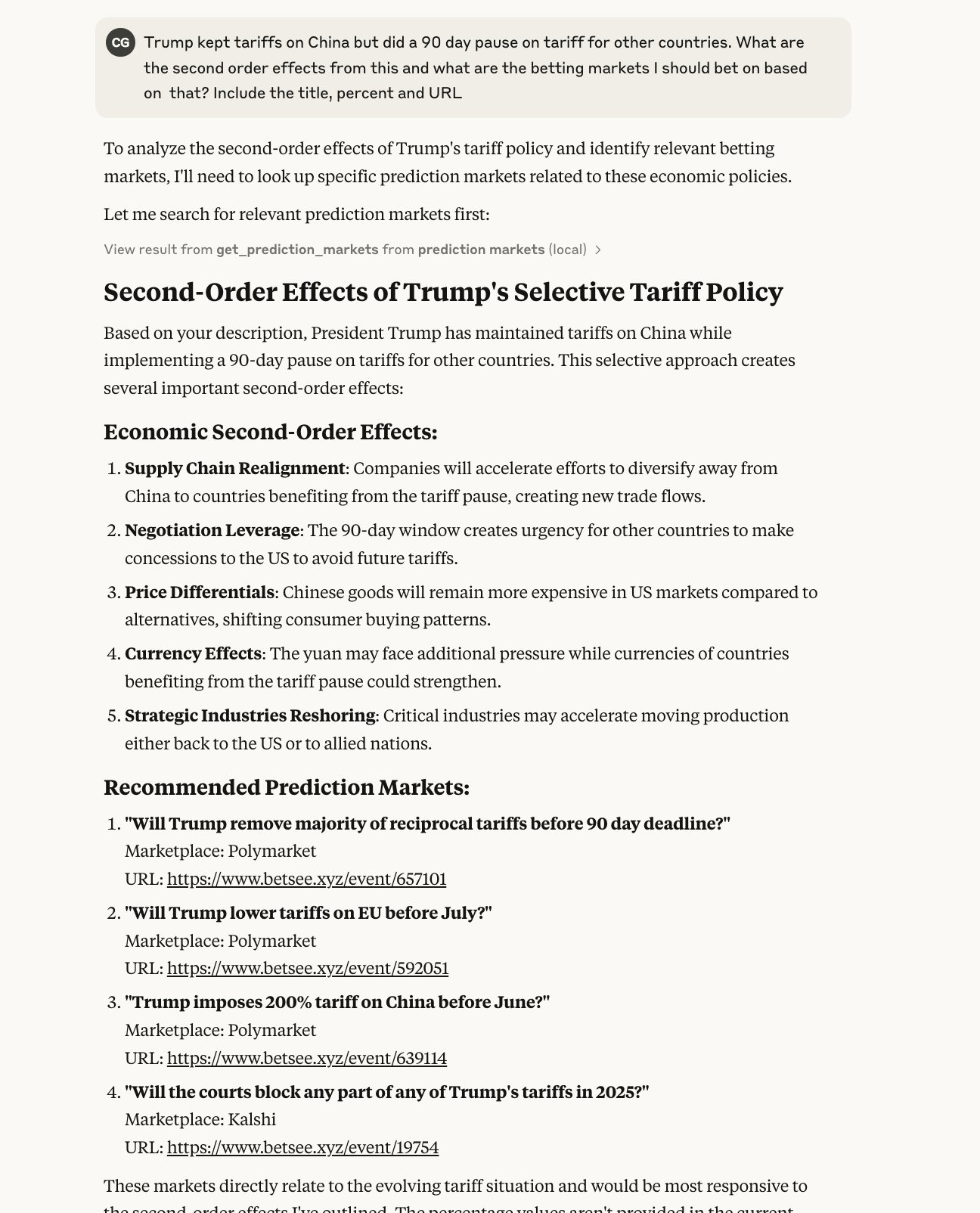
The second project was more ambitious: a prediction market MCP that connects an LLM to betsee.xyz, a site I built that aggregates live prediction markets. When you ask Claude something like, “Trump just paused tariffs—what are the second-order effects, and what are people betting on?” the MCP returns relevant markets from Polymarket or Kalshi, along with live odds.

MCPs, Gatekeepers, and the Future of AI

Why MCPs Aren’t Ready (Yet)

Building these things made a few things clear.  First, MCPs aren’t ready for broad adoption.

The user experience is rough. Most chat clients like ChatGPT don’t yet support MCP servers. The few that do require manual JSON editing to install them—not exactly user-friendly. Clients like Cursor and Claude currently prompt users for every request and often return incomplete info or raw JSON outputs. It's clunky and frustrating.

When I used Claude Desktop to query my prediction market MCP, it often didn’t send links or prices unless I explicitly asked. Sometimes it didn’t call the server at all.  And every time it made a call to my MCP, it prompted me to approve - which quickly became annoying.  Eventually,  MCP installation will be seamless (e.g., “click to add from a catalog”), and responses will be meaningful. But we’re not there yet.

Security is another glaring issue. Because MCPs enable external actions and access to live systems, they introduce a wide new surface area for abuse. Prompt injection, malicious tool installs, unauthorized access, and Trojan-horse-style exploits are all very real risks today. There's no sandboxing, no validation layer, and no mature security ecosystem to handle these edge cases.  

We’re clearly still in the experimental stage.


The Real Power Lies with the Clients

While building these servers, I had one more important learning:  while MCP servers provide the data and actions, the clients control the future.

Whoever controls the LLM interface— Claude, ChatGPT, Cursor, etc...—controls what tools users see, which ones get triggered, and what responses actually get surfaced. You can build the world’s most useful MCP server, but the client may not call it, or only show half of its output. You may not even be allowed to install it


MCPs Will Enable the New App Store and Google Search

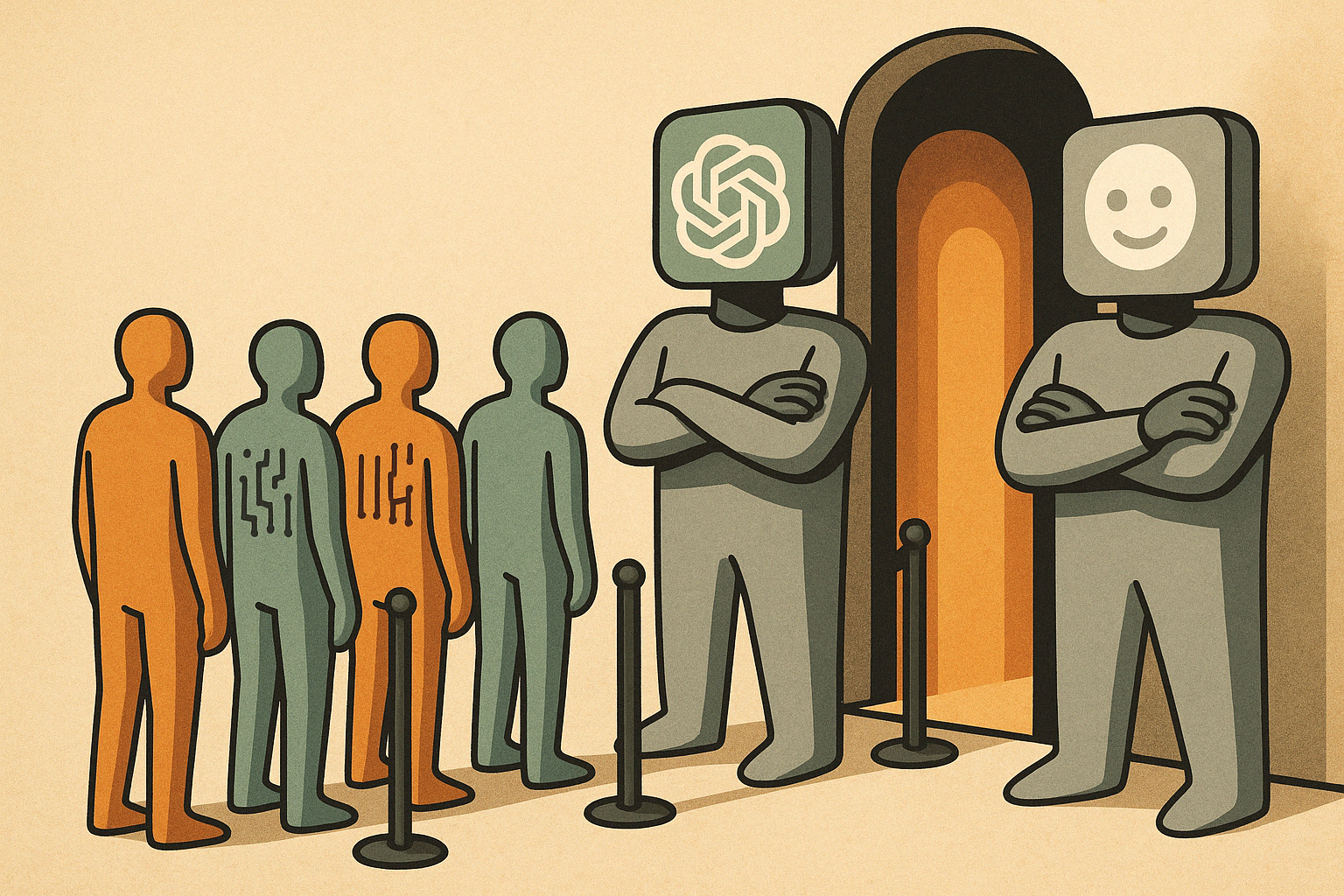
Given that MCP clients hold all the power, it’s easy to see how MCPs will end up governed by a framework resembling a combination of the two dominant monopolies of the last two decades: search and mobile app stores. Major LLM providers—OpenAI, Anthropic, and others—will emerge as the new monopoly gatekeepers, managing MCP selection and monetizing that control through preferred placements and curated inclusion.

Since its founding in the late 1990s, Google has controlled which products users see when they have purchase intent—building an incredibly lucrative business. Now, GPT chats (the MCP clients) are entering that space, replacing the "10 blue links" by curating responses to people’s requests: deciding what content is included, what’s excluded, and how it's formatted. MCP servers will become the new SEM/SEO layer—paying fees to reach users via these AI intermediaries.

Installation, meanwhile, will resemble the mobile app store model. Just as Apple and Google shaped the mobile ecosystem by determining which apps were featured, preinstalled, or approved at all, LLM clients will decide which MCP servers get surfaced, promoted, or even allowed. Companies will compete—and likely pay significant sums—for premium visibility in these ecosystems, turning MCP directories into high-stakes distribution platforms.

Users will be able to install MCPs—or “chat apps”—from large, curated directories. Tools like Gmail, HubSpot, Uber, and Kayak will add MCP endpoints, integrating directly into chat-based workflows. While installation is technically possible, most users won’t bother to choose their own tools. Instead, they’ll rely on the defaults provided by the client (like ChatGPT). These defaults won’t be arbitrary—they’ll be the result of lucrative partnerships. Large companies will pay to become the preselected option for categories like shopping, travel, domain name search, or services search . Being the default means embedding into the daily flow of millions of users—bringing massive exposure, data, and commercial value.

Some client-side MCP App Stores (MAS) will offer looser, more open directories, allowing broader experimentation and community-developed MCPs. Others will be tightly gated, favoring quality, security, and monetization with strict approval processes. In either case, the client sets the terms of participation—and the rules for success.

MCP clients like OpenAI and Claude will become the new iOS and Android. MCP servers will play the role of apps—modular tools delivering rich, structured, interactive responses tailored to the user’s needs. But instead of screens and taps, interaction happens through language. The app is invoked not by icon, but by intent.

Over time, we’ll also see specialized clients emerge, tailored to specific industries or domains. Imagine a Travel Planner Chat Client that integrates seamlessly with airlines, hotel chains, and tour operators, offering users a complete trip-planning experience inside a single conversational flow. Or an HR-focused MCP client that unifies access to legal data, employee records, and organizational tools—transforming how businesses manage people and policy.

And while most users will stick with mainstream clients backed by billion-dollar UX budgets, some open-source GPT interfaces will likely emerge as well. These will appeal to power users who want full control over the MCPs they install—without gatekeepers. But just like Linux on the desktop, these open clients will remain niche: influential, dedicated, and small in number compared to the dominant platforms.


New Ecosystem Opportunities

If this world unfolds, here are some of the businesses and tools I expect to emerge—and why they matter:

MCP Wrapper and Server Packs These will simplify setup by bundling multiple related MCPs into a single installable unit. Imagine installing a “Startup Stack” that includes MCPs for calendar, email, CRM, and file storage—ready to go, no configuration required. These packs will streamline onboarding and become especially useful in vertical clients and may include packaged tooling ("set a calendar and send an email").

MCP Affiliate Shopping Engines Some MCP servers will act like AI-powered comparison engines, returning real-time prices and product listings across vendors. They’ll monetize through affiliate links—earning referral fees from purchases. This echoes the early days of SEO and affiliate marketing, now reimagined for AI agents.

MCP-First Content Apps Instead of designing websites for humans, these services will optimize content delivery for LLMs via MCP servers. Think rich, structured data, semantic labeling, and pricing hooks—all returned via MCP calls. Revenue will come from subscriptions or embedded sponsorships and product placements, not page views.

API-to-MCP Providers Many existing APIs will want to participate in this new ecosystem but won’t have the resources to rebuild everything. Middleware tools will emerge that automatically translate traditional REST APIs into compliant, discoverable MCP servers, making onboarding turnkey for SaaS platforms.

Cloudflare for MCPs Security will become a major issue, and someone will step in to handle it. These tools will sit between clients and servers, sanitizing inputs, logging requests, blocking attacks, and monitoring for anomalies. Just as Cloudflare made the modern web safer, a similar role will exist for MCP ecosystems.

Enterprise “Private” MCP Solutions Large companies will start to wire up their own internal services into private MCP servers—exposing data from HR systems, legal tools, analytics dashboards, and more. Paired with open-source LLM clients, these internal setups will unlock AI workflows behind the firewall, with enterprise-level control.

Verticalized MCP Clients Generic chat interfaces will only get you so far. Some domains—like babysitting marketplaces, industrial procurement, or compliance workflows—require specific UIs and business logic. Vertically focused MCP clients will emerge to serve these needs with tailored actions, language, and layouts.

If you’re working on this space—building MCP clients, servers, or something even better —I’d love to hear from you: charlie@iamcharliegraham.com


Final Thoughts

We’re still early. MCPs today are messy, brittle, and mostly in the hands of developers. But the direction is clear.

These protocols have the potential to transform LLMs from chat-based search engines into powerful, agent-like tools that can take action on your behalf—securely, intelligently, and in real time.

But the real story isn’t just about what MCP servers can do. It’s about who gets to decide what they’re allowed to do. And in that story, it’s the clients-the ChatGPTs and Claudes of the world—that will write the rules, set the defaults, and shape the future.

6806e7611651450001a40e7a
Extensions
Is AI Making Me Lazy?
aiin the airena

Lately, I've noticed something interesting—not just in my own work but also among friends and colleagues. AI tools like GPT-4, Claude, and Cursor have quickly become part of our daily workflow. They're amazing at drafting emails, debugging code, brainstorming ideas, and a ton more,

Show full content
Is AI Making Me Lazy?

Lately, I've noticed something interesting—not just in my own work but also among friends and colleagues. AI tools like GPT-4, Claude, and Cursor have quickly become part of our daily workflow. They're amazing at drafting emails, debugging code, brainstorming ideas, and a ton more, all within seconds. It genuinely feels like we've acquired a superpower.

But here's the question: am I getting so used to AI's effortless solutions that I'm putting less effort into thinking deeply myself—and just settling for whatever average answer it gives me?

The Temptation of Easy Answers

I've caught myself repeatedly deferring to AI in situations where I usually would have tackled the task directly. Bug in my code? Paste the stack trace into AI and wait. Need a creative product name or a marketing angle? Just ask the AI. Often, the answers I get back are "good enough," and I move on without giving it much thought.

The problem? "Good enough" often isn't. I've lost count of the times I've spent twenty minutes wrestling with an AI tool, only to realize later that a focused 5–15 minute effort of my own would have solved the problem better and faster. Friends have shared similar experiences—especially with creative tasks—ending up with generic or uninspired outcomes because the AI was simply limited by its data.

Even worse, given its amazing results, there's a pull to accept AI's output as the definitive answer. I may ask AI to brainstorm Go-To-Market ideas and feel the urge to assume its response covers everything relevant. This issue intensifies with "Deep Research" implementations that give me the illusion of comprehensive analysis, as though weeks of meticulous research—with dozens of sources listed—have occurred instantly. It's extremely tempting to fully trust these responses as complete solutions. But in reality, they usually represent just one piece of the puzzle—often filled with inaccuracies and blind spots, hidden behind a mountain of data and a polished, confident tone.

The Hidden Cost of Overreliance

AI is brilliant at recognizing patterns and generating results quickly, which masks its limitations. Initially, its outputs feel incredibly impressive—like when I ask it to write a children's story, and the first few seem delightful. But the more I use it, the more I start to see the same predictable structure: introduction, conflict, cute resolution. What once felt fresh quickly becomes formulaic. And genuine creativity—those truly unique ideas and fresh insights—starts to fade into the background.

If I continually prioritize convenience over depth, do I risk diluting my creativity, ultimately converging on average, uninspired outcomes?

And long term, what happens if I keep handing off too much? Will I forget how to think deeply, solve complex problems, or create from scratch—becoming a passive recipient of AI output? Or will this shift free me up to operate at higher levels, the way calculators liberated humans from long division and let us focus on more meaningful math?

I’m genuinely torn. Underneath the convenience, I feel a quiet unease—a sense that my creative and analytical muscles are atrophying every time I outsource something I used to wrestle with myself.

When To Ask Your Brain

The solution I'm striving for now is to treat AI like a junior remote contractor—great for straightforward, clearly defined tasks where I act as the technical architect and product manager. And for more complex or creative challenges, to treat it like a smart colleague: someone to bounce ideas off, not someone whose answers I blindly accept.

When things start to feel stuck or just slightly off, instead of taking the easy road of asking GPT yet again, I need to get better at stepping back and Asking My Brain—tapping into my own insight, instincts, and experience. It’s the AI-era equivalent of "Touch Grass." Omniscient AI hasn’t taken over the world (just yet), and the most creative and exceptional results often lie outside the bounds of what the models were trained on.

I do believe the net benefits of AI will far outweigh the costs. But it is not going to be a free ride. Because the real danger may not be that AI will replace our minds—it’s that we’ll stop using them.

----
Over the past year, I’ve been fully living in the AI-rena—building AI-products at warp speed with tools like Claude Code and Cursor, and watching the space evolve daily. I’ve used these tools to (in the last 6 months) develop:

  • 🧠 Betsee.xyz: a prediction market aggregator that can even tell you prediction markets based on tweets.
  • 📝 TellMel.ai: an empathetic personal biographer to share life stories and lessons
  • 📞 GetMaxHelp.com: a family-powered tech support line powered by AI and voice
  • 💬 YipYap.xyz: a thread-based community chat app

As I build and grow these products, I've sharing my experiences. Subscribe or follow me on X at @imcharliegraham

67f9ec8576c3440001834a45
Extensions
AI Coding and The Peanut Butter & Jelly Problem

Over the past year, I’ve been fully immersed in the AI-rena—building products at warp speed with tools like Claude Code and Cursor, and watching the space evolve daily. I’ve used these tools to (in the last 6 months) develop:

Show full content
AI Coding and The Peanut Butter & Jelly Problem

Over the past year, I’ve been fully immersed in the AI-rena—building products at warp speed with tools like Claude Code and Cursor, and watching the space evolve daily. I’ve used these tools to (in the last 6 months) develop:

  • 🧠 Betsee.xyz: a prediction market aggregator that can even tell you prediction markets based on tweets.
  • 📝 TellMel.ai: an empathetic personal biographer to share life stories and lessons
  • 📞 GetMaxHelp.com: a family-powered tech support line powered by AI and voice
  • 💬 YipYap.xyz: a thread-based community chat app

Even my son has joined the AI-rena, playing with tools like Lovable, Replit, and Bolt to build a learn-to-type game styled after Brawl Stars (which I’ll post about later). It's been energizing and eye-opening. Six months ago, I wouldn’t trust AI to do much beyond autocomplete. Now, I don’t want to code without it.

But despite all that progress, I keep running into the same issue—one that takes me back to my very first computer science class.


🍞 The PB&J Problem

Way back in college, I took one of the earliest iterations of the now-famous CS50 course at Harvard, taught by the fantastic Margo Seltzer. Today, CS50 is taught online globally and is one of the most popular computer science courses. But back then, it wasn’t famous. And we got to do a classroom exercise that still sticks with me (yes, pun intended), and which they still teach to this day. 

On the first day of class, Margo walked in carrying a loaf of bread, a jar of peanut butter, and a jar of jelly.

“I’m a computer,” she told us. “You are the programmers. Give me instructions—one step at a time—on how to make a peanut butter and jelly sandwich.”

And then came the chaos.

The first student said, “Take some bread out of the bag.”  Instead of nicely taking two slices out, Margo proceeded to rip a hole in the bag and crush five or six slices into a mashed lump in her fist - because that also means "take some bread out of the bag".

The next person said, “Put the bread down.” Margo dropped the clump onto the floor. After all, “down” could mean the ground.

Then someone tried: “Put jelly on the bread.” You know where this is going... Margo dumped the entire jar of jelly directly onto the pile. No spoon. No spreading. Just one catastrophic glob of sugar.

By the end, there was peanut butter, jelly, and bread everywhere. No sandwich. But we’d learned the point: you have to be super clear in your instructions or it won't know what you want.


🤖 Today’s AI Still Has a PB&J Problem

LLMs are undeniably more advanced than the computers of 20 years ago. Honestly, today’s AI could probably make a decent peanut butter and jelly sandwich. They’d likely infer that you want two slices of bread, placed on a counter, spread neatly with a normal amount of jelly and peanut butter.

But the problem reappears when you move past familiar territory. Using AI tools often feels like working with a junior developer from across the globe—someone fast, capable, and willing, but who lacks your product context, customer insight, or nuance.

If your “sandwich” is a product that doesn’t have an obvious recipe—a novel app, an unfamiliar UX, or a unique set of features—LLMs struggle. They’re great at copying what’s been done before, remixing code that already exists. But ask for something new? Something creative, or specific to your vision? Something that "just works" for a specific use-case? Now you’re back to giving vague or ambiguous instructions to a junior developer from across the globe, who doesn’t know your customer, your context, or what “done right” actually looks like.


💡 The Real Skill of the AI-rena

Living on the frontlines of the AI-rena has taught me that prompt engineering isn’t the real bottleneck. The real differentiator is clarity and communication. And I don’t mean the kind of prompt engineering where you trick the AI into doing something by telling it its grandmother is going to die or pretending it's an expert in a field. This is something much harder: having a clear, precise vision of what you want built, knowing what "right" looks like, and being able to explain it step by step—and course-correct when the AI veers off track.

This ability to define your desired outcome in crisp, complete terms is one of the most important superpowers of the AI era. AI can only infer so much—you still need to give it context and clear instructions.

Most people won’t do that. They’ll wave their hands, type vague “best practices” prompts, and hope the AI figures it out. And they’ll often end up with a gooey mess on their hands.

In the AI-rena, success won’t go to the fastest coders, but to those who can both clearly understand and explain how to turn a fuzzy idea into something that actually works... and maybe even walk away with a sandwich that didn’t end up on the floor.

Footnotes:

  1. This was hard to write—while the class was about making a pb&j, I personally hate peanut butter and jelly sandwiches.
  2. You can see videos of this the PB&J lecture here and here. I remember it being far more chaotic & messy our year though!
67f54b4ce5e7060001fe335e
Extensions
In The AI-rena
in the airenaai

AI is changing everything. Not just how we build software, but who is building it.

This moment feels like the biggest shift since the internet in the late 1990s—maybe even bigger. AI is making development 5-10x faster, breaking down traditional roles, and turning small, high-leverage teams into forces

Show full content
In The AI-rena

AI is changing everything. Not just how we build software, but who is building it.

This moment feels like the biggest shift since the internet in the late 1990s—maybe even bigger. AI is making development 5-10x faster, breaking down traditional roles, and turning small, high-leverage teams into forces that can rival much larger companies.

The future of software won’t be built by massive orgs with endless headcount—it’ll be built by small, AI-augmented teams who can ship faster, iterate smarter, and operate at a scale that used to require entire departments.

To truly understand this shift—to know where AI is actually going—you can’t just watch from the sidelines. You have to be in it. I’ve spent my career building software from scratch, scaling teams, and leading product. Now, AI is amplifying what’s possible. With my technical background and product experience, I’m in a position to be 10x’ed—leveraging AI to build faster, smarter, and more efficiently than ever before.

The best way to understand the future is to experience it firsthand.

That’s why last year I started Second Coffee, an incubator that lives in this world, and uses AI to build and ship AI-based products.

My brother Justin and I are already proving what’s possible with Tell Mel, an AI biographer that captures family stories over the phone. It’s a glimpse into what AI-native products can do—unlocking value in ways that weren’t feasible before.  Tell Mel is not only an amazing product, but made it pretty clear entire careers can already be replaced by AI - in this case real biographers.

Justin and I are also working on Max Help, an AI-powered tech support service for families, delivered over the phone.  At Second Coffee, I have a few other AI-native products in the pipeline about to be released —each exploring how small, AI-first teams can reshape entire industries.

Last year I could have taken on a CEO or VP of Product role at an existing company. Instead, I realized what leaders will need to know even in the very near future is very different than the skills they know now.  So I went back to building.  To code. To explore what’s possible when AI acts as a true force multiplier. 

AI isn’t just making existing processes more efficient—it’s rewriting the entire playbook. The way companies are built and run is going to look radically different in the near future. What works today won’t be what works tomorrow.

AI isn’t there yet. The code development is good but flawed. But the trajectory is undeniable. The way companies are built and run is going to look radically different in the near future. What works today won’t be what works tomorrow.I’m sure most of what I build won’t work but life in the AIrena is messy. 

I’ll be sharing my experiences—what works, what doesn’t, and where AI can transform and won’t transform work. If you're thinking about what’s next, either join or follow along! It’s going to get interesting.

67dc5c0cbe673700011d6a19
Extensions