GeistHaus
log in · sign up

the next wave

Part of wordpress.com

Andrew Curry's blog on futures, trends, emerging issues and scenarios

stories
Culture, change, and ‘structures of feeling’
futurescanningemerging issuesGraham MolitorRaymond WilliamsS-curvesstructures of feeling
Raymond Williams’ neglected idea of ‘structures of feeling’ is a way to understand how shifts in cultural meaning are an early sign of change.
Show full content

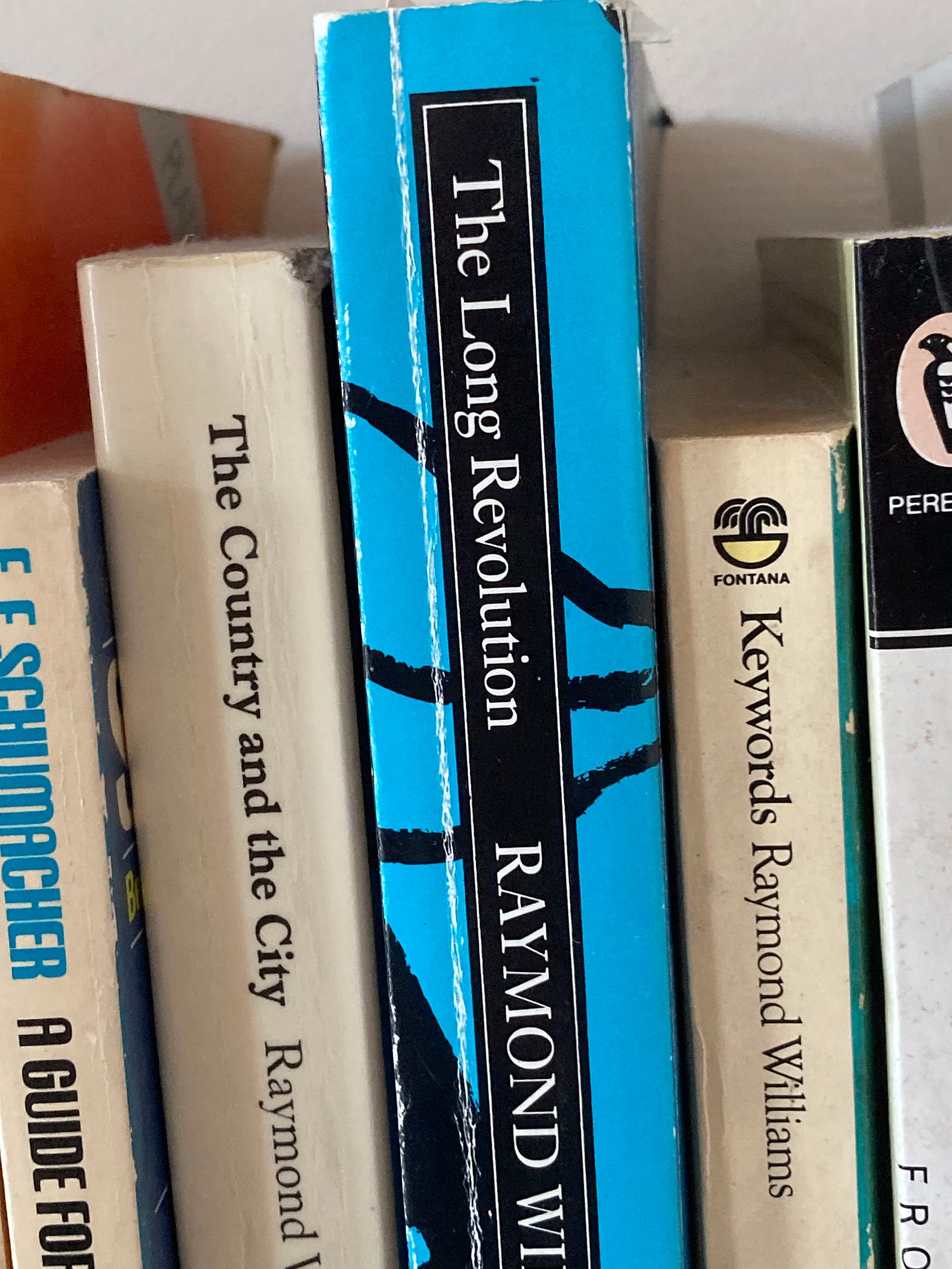
The idea of “structures of feeling” was developed by the cultural theorist Raymond Williams during the 1960s and ‘70s. These days, if he is remembered at all, Williams is remembered for his influential books The Country and the CityKeywords, Television: Technology and Cultural Form, and perhaps a novel such as Border Country.
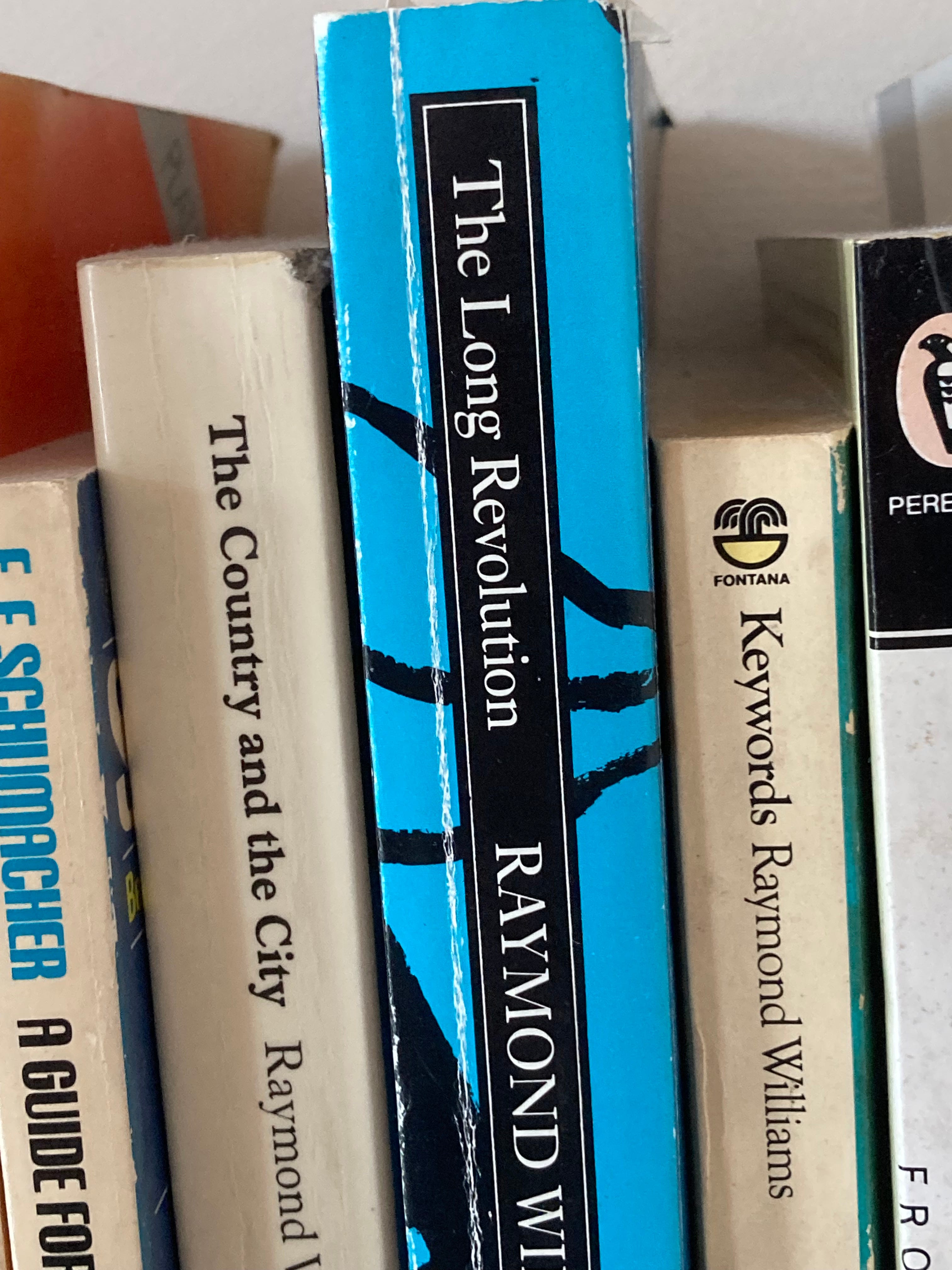
(Photo: Andrew Curry, CC BY-SA-NC 4.0)

Williams was a Marxist, and he was interested in how change happens—especially progressive change—and the idea of “structures of feeling” was a way to talk about changes that you could feel or sense before you could quantify them or measure them.

My purpose in writing about it here is to link it to the futures literature on emerging issues. In doing this, “structures of feeling” may fill a gap in this futures literature. Williams’ concept is inherently social, yet many of the ways that futurists talk about emerging issues lack this social dimension.

The fullest version of his concept that I have found is in his book Marxism and Literature (Oxford University Press, 1977), although the original idea is sketched out much earlier in a section of The Long Revolution (1961), as part of a bravura discussion of culture, literacy, and society in England in the 1840s. Page numbers here reference Marxism and Literature.

Meanings and values

Raymond Williams acknowledges that “structures of feeling” is a difficult term, and it is quite a complex argument, so needs to be built up bit by bit.

[W]e are concerned with meanings and values as they are actively lived and felt… We are talking about characteristic elements of impulse, restraint, and tone; specifically affective elements of consciousness and relationships: not feeling against thought, but thought as felt and feeling as thought: practical consciousness of a present kind. [132]

The definition here is that these elements together constitute a “structure”. They have “specific internal relations” which are both “interlocking and in tension.”

However, you don’t always recognise these structures until later. Williams describes them as a “cultural hypothesis”, effectively awaiting evidence. We experience them individually, but analysis and reflection allows us to understand them as “a social experience”. Because of this social nature of such a structure, with elements of both affect and thought, Williams says it has “a special relevance to art and literature.” [133]

‘The very first indications’

And also vice versa. Because of the nature of art and literature, they “are often among the very first indications that such a new structure is forming.” This notion that there is a fluidity about structures of feeling is underlined by one of the metaphors that Williams uses here:

“structures of feeling can be defined as social experiences in solution”, as opposed to other social formations that have already “been precipitated.” [133-134]

However, not all art comes into this category.

Williams uses language about “emergent formations” and “pre-formations”, which is bit technical but can be unpacked. At their start, such formations are “at the very edge of semantic availability,” meaning that we have little understanding of them. They then become visible as “new semantic figures” which emerge through “material practice.”

‘New practices, new relationships’

In an earlier chapter in the book, Williams has written about the characteristics of “emergent formations.” He describes these as “new meanings and values, new practices, new relationships and kinds of relationship are continually being created.” [123]

In addition, “there is always a social basis for elements of the cultural process that are alternative or oppositional to the dominant elements.” [124]

But this still requires some analysis, he says. Williams suggests that it is “exceptionally difficult” to distinguish between emergent practices that are the beginnings of “a new phase of dominant culture,” and those that are “alternative or oppositional.” (There’s a connection that can be made here to the distinction in the Three Horizons literature between ‘H2-’ innovations which reinforce current dominant systems, and ‘H2+’ innovations which help to bring a new system into being.)

In the second case, he argues, we are talking about elements of culture that are, for example, mostly overlooked by the dominant culture—for example, in working class schools of art. Bringing him up to date, we might consider minority cultures of different kinds.

The potential for emergence

Sometimes these cultures are ignored, sometimes they are incorporated.

But, “no dominant culture”, Williams writes, “ever in reality includes or exhausts all human practice, human energy, and human intentions”. [125]

There is, in other words, always the potential for the emergent to emerge. All the same, writing in 1977, he noted that “the dominant culture reaches much further into capitalist society than ever before,” partly because of the nature of mass communications, a subject that was a particular interest of Williams. This is almost certainly more true than it was then, both because of the concentration of media ownership we have experienced in the last 50 years, and the online spread of mimetic visual culture.

Williams argues that the extent of the reach of mass communications means that the gap between “alternative” and “oppositional” effects of culture has narrowed. I struggled a little with Williams’ distinction here, and I’ll return to this shortly. But, in brief, they blur because, well, culture behaves in complex and emergent ways.
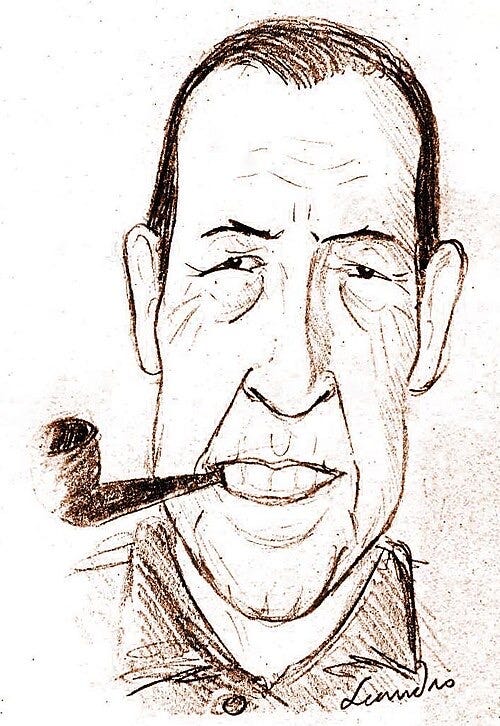
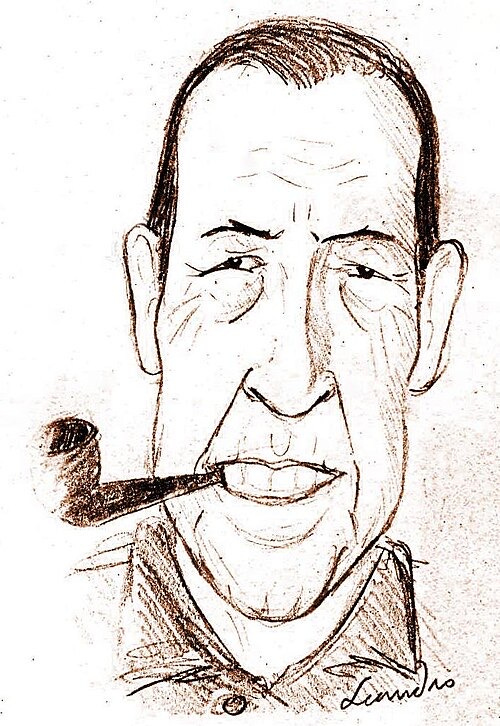
(Raymond Williams, sketched by Leandro Gonzalez de Leon. CC BY-SA 3.0)

‘Alternative’ and ‘oppositional’

Broadly though, if my understanding is right, “emergent” speaks to the appearance of new forms of culture, and “alternative” and “oppositional” speak to their positioning in relationship to dominant culture. Some emergent cultures remain separate, detached, from dominant culture for relatively long periods of time (grime, for example).

The distinction between “alternative” and “oppositional” is harder to get to. Williams writes them together a lot of the time (as in, “alternative or oppositional”), and the reason he does this is because the definition partly depends on the response of the dominant culture, and partly by the nature of the social institutions (or “formations”) they generate. But my best reading here of his analysis, using music examples—mine, not his, obviously—punk seems oppositional, in that its lasting political legacy was Rock Against Racism.

In contrast, “alternative” structures of feeling connect to the creation of alternative forms of social institution and organisation, even while being partially recuperated into dominant culture. My best example here is the cultural thread from electronic music to disco. If this seems like an odd example, I have written about it here: it is the point that crystallises the fight over values that is still the dominant political conflict of our times.

The limits of recuperation

These examples also underline Williams’ point that there are limits as to how completely a dominant culture can absorb or recuperate elements that come from outside of it. Sometimes this is done as pastiche (“facsimiles”).

The notion of class runs through the book—it is called Marxism and Literature for a reason. But Williams’ reading of culture owes as much to the Italian theorist Gramsci as it does to Marx. The problem he is trying to solve here is about the relationship between the ‘base’ in Marx’s writing—the economic relations in society—and the ‘superstructure’, which references the forms of social and cultural structures that emerge. Marx saw this relationship as largely deterministic: base determined superstructure.

But if this is the case, how does change happen that can lead to changes in the base? This is a long-standing question, at least for Marxists. Gramsci’s answer to this was to develop his notion of ‘hegemony’, in which particular classes were able to rule through social consent rather than depending on force.

Williams argues, similarly, that the superstructure is not simply determined by the base.

[T]here is always other social being and consciousness which is neglected and excluded: alternative perceptions of others, in immediate relationships; new perceptions and practices of the material world. In practice these are different from the developing and articulated interests of a rising class.

Emergent culture

In this formulation, these represent two different forms of the emergent. The first is class, the second is “the excluded social (human) area.” They can travel together: “political practice” is shaped by both. But they are not the same thing.

The final, and critical, point about emergent culture is that it is not just about practice. “[I]t depends crucially on finding new forms or adaptations of forms.” [126]

One of the elements of this that connects it to the way that futurists think about emerging issues is Williams’ argument that initially these new “semantic figures” can seem isolated, which is why they start as “hypotheses”. It is only later that we can connect them up as a form of social or cultural change.

Victorian attitudes to debt

The example he gives is from the mid-19th century.

“Early Victorian ideology”, Williams writes, “specified the exposure caused by poverty, debt or illegitimacy as social failure or deviation.”

In contrast, Dickens, Emily Bronte, and others created new semantic figures. These

”specified exposure and isolation as a general condition, and poverty, debt, or illegitimacy as its connecting instances”.

A new “structure of feeling” can therefore also be thought of as a new structure of meaning. He also stresses the importance of specificity:

A specific structure of particular linkages, particular emphases and suppressions,… and particular deep starting points and conclusions. [134]

In the case of debt, these fictional representations were early signs of a new ideology that coalesced only later, based on a different explanation of the social order, in which elements of social protection were developed initially by trades unions and the co-operative movement, and later codifed into law by the reforming Liberal government of 1906-11.

New cultural representations

In other words, what happens here is that these “new semantic figures” describe “a pre-emergence, active and pressing but not yet fully articulated”. In turn, this creates an initial tension, which is articulated by cultural representation. This tension reduces over time as new institutional forms, and social and cultural forms, emerge to solidify this new social explanation.

As an aside, I wrote about something a little similar in an article that discussed, in the context of Carlota Perez’s technology and finance model, the “pre-installation” conditions that could be seen in the period before a new technology surge started.

Futurists have become more interested in the nature of weak signals and emerging issues over the past two decades, as methods have come into the mainstream that were less interested in structural factors of change. It happens, and perhaps this is not a coincidence, that Graham Molitor’s pioneering article on emerging issues analysiswas also published in 1977.

To be sure, Molitor’s approach was very different. When he wrote his short article, he was Director of Government Relations at the large American foods company General Mills, and he came to emerging issues analysis through a public policy lens. He was also interested in improving the quality of forecasts, in a relatively positivist way, rather than understanding the relationship between cultural change and social and political change.

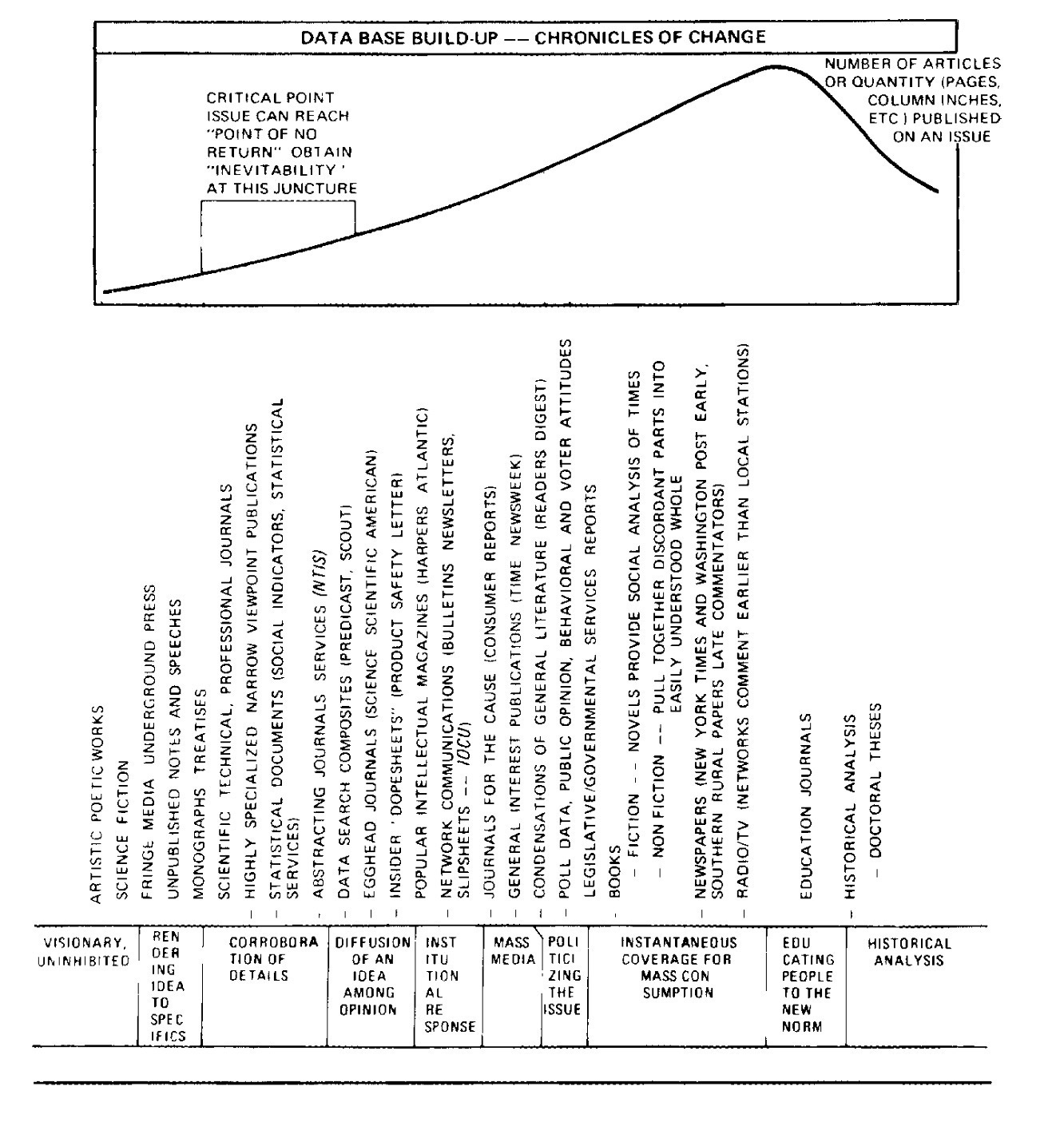
Graham Molitor’s S-curve

His S-curve approach has become standard in futures work now, but what is interesting in this context is the way that he analysed the sources that could be signs of early stage change. Early in the short article (1977, 7) he argues that “isolated events, often viewed at first as bizarre or unique, eventually are pulled together, ans also how aggregation of the events prompts analysis and the identification of trends.”

Part of analysis is, specifically, about literature, as we see in his Figure 3 (1977, 9).
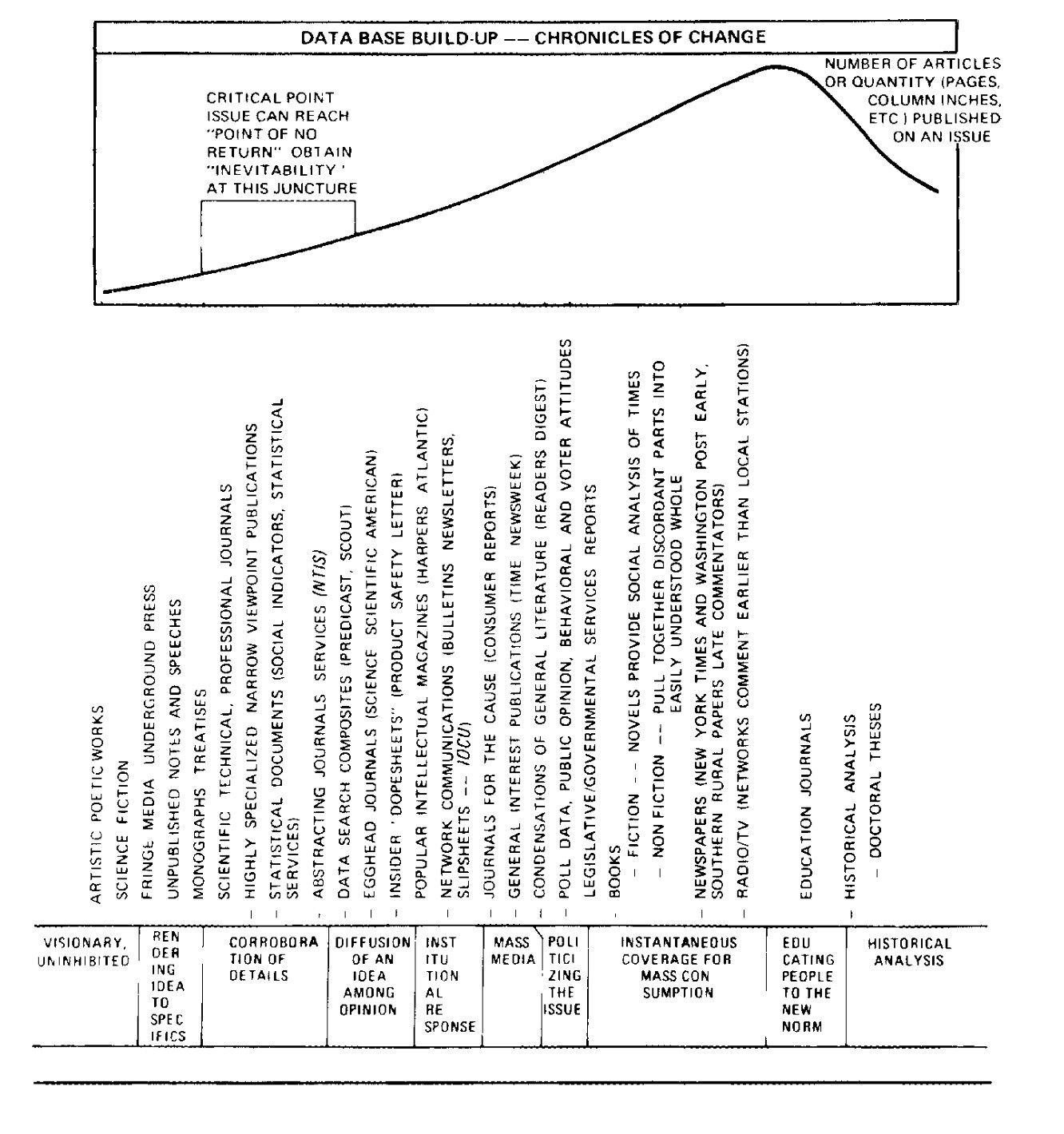
(Source: Graham Molitor, 1977.)

In his description, Molitor says of Figure 3 that

Various classes of literature emerge at different times — lead-lag times of up to 100 years can be involved — therefore, “early warnings” about emerging problems can be obtained from careful literature search.

The messy stage of ‘framing’

At the left hand end of the S-curve, which is approximately where we would expect to find Williams’ structures of feeling, Molitor’s list of sources seems narrower—“artistic poetic works, science fiction, fringe media, underground press.” Perhaps his positivism is getting the better of him here, since Williams would certainly argue that fiction in general—such as Dickens and Emily Brontë—is just as capable of analysis for “structures of feeling”.

In later work (2009), Molitor characterised this early stage as ‘Framing’. I’d say that he saw this as a research stage, where researchers were making sense of a policy issue, but I would read it as messier than this: that stage where ideas are floating around but are not fully understood, and therefore there are arguments about what they mean and how they might evolve. The notion of structures of feeling, I’d say, is a way to understand the way in which cultural activity helps re-shape our understanding of issues that are in the ‘Framing’ stage.

I don’t think the two men would have got on, had they ever met. Molitor came to General Mills after two periods working on policy in the White House, for Presidents Nixon and Ford. Williams was a founding figure of New Left Review and had edited the May Day Manifesto 1968. But the differences between the two men were bigger than this. Molitor wanted to build a forecasting machine; Williams wanted to change the world.

A version of this article was also published in two parts on my Just Two Things Newsletter.

img_8544
thenextwavefutures
http://thenextwavefutures.wordpress.com/?p=10855
Extensions
What kind of business is the AI business?
businessdigitaltechnologyAIbusiness modelsDan Daviesdata centresEd Zitron
The economics of the AI business are basically the economics of data centres. That’s a tough business model to make money from.
Show full content

This is the second of two posts on the AI business here this week. This is a revised version of a post that appeared on my Just Two Things newsletter earlier this week.

—-

My post here on AI published on Tuesday discussed what type of technology innovation AI represents, and therefore what types of business model might work.

Summarising: it’s more likely to be the final stage of the long digital technologies surge, not the beginning of a new wave of innovation; and the Chinese model of AI, building applications that work in verticals, on 30% of US compute power, is probably sustainable. (These are internsin Drew Brenig’s model, even if the economics of some of the current versions—e.g. Cursor—seem terrible).

In a recent blog post, Dan Davies added another leg to this discussion, by asking what type of business the AI business is. The question is meant in a structural sense: in the same way that all business and all sectors have underlying characteristics that shape their economics:

Is it like a gold mine, or like an airline? How do the costs and revenues scale with demand? In what conditions does it do well or badly?” The structure of a model is more important than the numbers plugged in.

(Expensive capital assets sitting idle. Image via CAPA)
The AI business model

Starting out along these lines suggests two important questions:

  • what do the marginal cost economics of AI look like? and
  • what is the equilibrium capex?

By equilibrium capex, he means the point at which the capital costs get covered. And this leads to an immediate insight:

[T]he economics of AI seems to be the economics of datacentres. And a datacentre is a big capital asset which needs a lot of power and cooling, not a weightless creature of pure mathematics… Big sheds with expensive machines in them are the sort of thing that you historically finance with debt rather than equity.

They’re not cheap, either. And thinking about them as big capital assets means you can also think about them in terms of conventional accounting frameworks such as depreciation. Davies has a go at this in his piece:

The longest-lived piece of capex is probably the shed itself. It is hard to get a straight answer about how long the GPU chips last… but the best estimates I can find suggest that it’s under a decade best case, and potentially as short as five years if you really thrash them by doing training work.

Rapid depreciation

An article in Futurism tried to put some numbers on this last year. They quoted Praetorian Capital CIO Harris Kupperman, who broke out the depreciation rates of the chips (obsolete in a few years, he thought), the systems connecting the chips (obsolete in a decade), and the building (several decades).

Going back to Davies’ article, let’s assume, generously, that chips last ten years, even if training LLMs is an inherent part of the AI business model. Even that’s not long when it comes to depreciating assets. In accounting terms it means that a tenth of your capital investment is going up in smoke every year.

In other words, it needs to be earning a return. I’ll come back to this, because there’s no evidence that anyone is earning a return. Kupperman estimated that the “AI datacenters to be built in 2025 will suffer $40 billion of annual depreciation, while generating somewhere between $15 and $20 billion of revenue.”

This also matters because it means there is a huge financial risk in building a data centre and have it sitting idle or even just running but below capacity. This may be the actual reason that half of the data centres due to be opened in the US this year have been delayed or cancelled—rather than, as the tech companies would have us believe, because of Luddite NIMBYs who don’t want data centres built near them.

Marginal costs

Then there are the marginal costs, the second half of this business equation—Davies again:

The fact that data centre capacity is measured in gigawatts suggests that there is a marginal cost here which is unlike the “too cheap to meter” economics which underwrote the original “Information Economy” of Shapiro and Varian. Messing around in pricing sheets and consultant reports… I arrive at the belief that the cost to the buyer of asking an LLM to do a commercially meaningful task and getting a commercially useful result is in the order [of] “a few cents, maybe as much as a dollar or two”.

This is certainly a subsidised cost. Ed Zitron has just published one of his long and abrasive pieces on the state of the AI business, and although it’s too long to more than mention here, this is his summary:

The entire generative AI industry is based on unprofitable, unsustainable economics, rationalized and funded by venture capitalists and bankers speculating on the theoretical value of Large Language Model-based services. This naturally incentivized developers to price their subscriptions at rates that users like rather than reflecting the actual economics of the services.

No path to profitability

He suggests—with some numbers—that the amount of subsidy for AI users is in a range from “large” to “off the scale”, that the business would not be viable without subsidy (because there wouldn’t be enough customers) and isn’t viable with subsidy (because Open AI and Anthropic will run out of money eventually, have no path to profitability, and because all the ‘AI lab’ businesses, like Cursor, are dependent on the pricing structure of Open AI or Anthropic). 

(Detail, James Gillray, 1797, ‘Midas transmuting all into GOLD PAPER’. Public domain.)

One of the signs of this, suggests Zitron, is the mysterious, unpredictable, and quite sharp “rate limits” that Anthropic has imposed on users recently [1].

To be clear, no AI company should have ever sold a monthly subscription, as there was never a point at which the economics made sense. Yet had these companies actually charged their real costs, nobody would have bothered with AI… And the magical part about Large Language Models is that your most engaged customers are also your most-expensive, and the more-intensive the work, the more expensive the outputs become.

Lethal economics

But let’s pretend for a moment that Dan Davies’ figures for “commercially useful tasks” are a real price, and not a subsidised one. Even on this basis, Davies’ concludes that

There’s a considerable risk, as I see it, that AI might have the lethal economics which characterises airlines and media – very low marginal costs, very high overheads, lots of expensive capex. In that sort of environment, people go bust a lot, because there always seems to be a big player who didn’t like their market share last year, competing against a big player who has ambitions to be the last one standing.

And although we think of airlines as being profitable businesses, they’re not (which is one of the reasons they spend so much time also claiming that they’re strategically important, which they might not be any more.) The investor Warren Buffett was a notorious airline industry sceptic, and once said that “If a capitalist had been present at Kitty Hawk back in the early 1900s, he should have shot Orville Wright.”

The aviation comparison

While looking for this quote I found a piece discussing Buffett’s perspective on airlines, which is worth keeping in mind when we think about the AI business:

It is a capital-intensive business with little to no profits to show. Billions of dollars, mostly funded by debt, are spent on growing their fleet of aircraft. The airlines then incur high fixed and variable costs, primarily from aircraft maintenance, labour, and fuel costs. Airlines that expanded aggressively during an economic upcycle often experienced difficulties covering their overheads and servicing their debt in future economic downturns, causing their bankruptcy.

For “fleet of aircraft”, read “data centres”. As for “high fixed and variable costs”, these are about developing models and supporting customers. Zitron suggests that in the AI business, as of 2026:

[E]very bit of AI demand — and barely $65 billion of it existed in 2025 — that exists only exists due to subsidies, and if these companies were to charge a sustainable rate, said demand would evaporate. There is no righting this ship. There is no pricing that makes sense that customers will pay at scale, nor is there a magical technological breakthrough waiting in the wings that will reduce costs.

The outcome, says Zitron, is likely to be the end of the ‘Magnificent Seven’ as growth companies, and possibly the bankruptcy of Oracle, which is over-exposed as it builds data centres for Open AI.

And reading all of this back, I realised that there needs to be a corollary to the endlessly-repeated claim that “Today’s AI is the worst AI you’ll ever use.” Because, in addition: “Today’s AI is also the cheapest AI you’ll ever use.” Don’t bet your critical workflows on a Large Language Model.

The earlier article is here:

AI could be the end of the digital wave, not the next big thing

[1] From Zitron’s article: “One user on the $100-a-month Max plan complained about hitting 61% of his session limit after four prompts (which cost $10.26 in tokens). Another said that they hit 63% of their rate limit on their $200-a-month plan in the space of a day, and another hit 95% after 20 minutes of using their Max plan (I’m gonna guess $100-a-month). This person hit their Max limit after “two or three things.””

img_8556-1
thenextwavefutures
http://thenextwavefutures.wordpress.com/?p=10833
Extensions
AI could be the end of the digital wave, not the next big thing
businessdigitaltechnologyAICarlota PerezNicolas Colin
The AI boom is more likely a marker of the end of the 50-year digital boom than the start of a new wave of innovation.
Show full content

I have deliberately tried not to write too much about AI, because the signal gets swamped by the noise. But I think the picture is becoming clearer now. This week on The Next Wave, I’m going to re-publish versions of posts originally on my newsletter, Just Two: one from last summer, and one that goes live this week.

—-

Just by way of a thought experiment: what if the current surge in the bunch of technologies that goes under the label of ‘AI’ isn’t the beginning of a whole new technology surge, but is actually the final stage of the digital surge that started in the 1970s and accelerated at the turn of the century?

I’ve been wondering this for a while in a vague kind of a way because I haven’t been able to see the business model that supports the huge investment in AI in the USA. (I’ve written about this before on here.)

This is a long way in to couple of pieces by Nicolas Colin, the strategy and innovation blogger, who has been wondering the same thing, but a lot more coherently. He calls this ‘late cycle investment theory’.

The Perez model

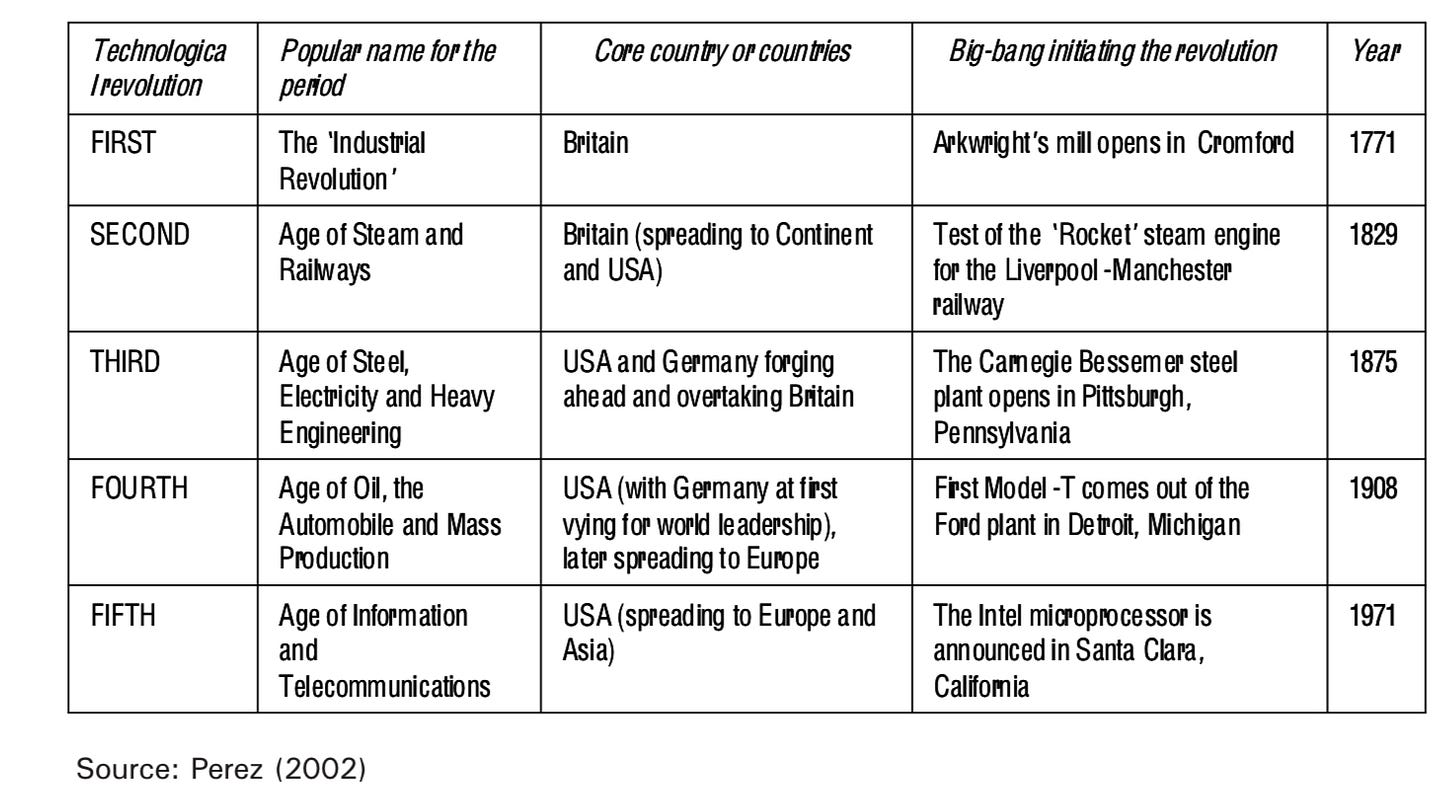
Like me, he is a fan of the work of the academic Carlota Perez, who built on the work of Christopher Freeman to develop a model of how technology and finance interacted to create new long surges of investment, starting with canals and cotton, that run for 50-60 years. (She calls them ‘surges’ because unlike ‘waves’ each technology embeds itself in the society and its infrastructure.)

The two most recent surges are a cars/oil surge, which started in 1908, and the Information and Communications Technology, which started in 1971.

(Source: Carlota Perez)

I’m not going into all of the theory of the Perez model here—it’s online if you want to do that, and I have written about it elsewhere—but the relevant point for the present discussion is that it follows an S-curve, and the first half is slow going, as new infrastructure is ‘installed’, and some of it is below the radar. The internet was a closed academic network for most of the first part of its S-curve.

From infrastructure to ‘deployment’

Halfway through, after a lot of infrastructure has been built out, and usually following a financial crash in which some of the investors in that infrastructure lose their shirts, ‘deployment’ companies take over, with actual customers and business models, and have an accelerated period of growth, before they hit market limits and turn into ordinary businesses. And the investors who have made large returns from that period of growth start looking elsewhere—for the technologies that will make the next surge.

The reason I like Perez’s version is that her model has had a lot of explanatory power over the last 25 years as I have watched the evolution of the tech sector.

That’s a long way into Colin’s argument, and let me quote from his first article directly:

Seen through a late-cycle lens, today’s markets show signs that we’ve entered the maturity phase of the computing and networks revolution. The theory, therefore, leads to specific, testable predictions about where capital should go and which strategies will outperform.

Three indicators

He points to three indicators from the tech sector that support this observation that we’re in the ‘late cycle’:

  1. The startup funding collapse of 2022 wasn’t just a correction—it may be structural. As investor Jerry Neumann argued in his landmark Productive Uncertainty, startups rely on uncertainty as a competitive edge. When good ideas become obvious to everyone—including well-funded incumbents—the startup model faces real strain.
  1. Then came AI, revealing new dynamics. ChatGPT’s breakthrough didn’t come from a garage startup but from OpenAI, backed by Microsoft’s vast computing power. Google, Meta, and Amazon responded with billions. This pattern—big tech deploying huge capital against well-understood problems—fits the late-cycle theory exactly.
  2. Most tellingly, platform saturation now looks almost complete. Digital transformation has reached most sectors where computing and networks can plausibly work. What remains—healthcare delivery, education, constructiongovernment services—may reflect the paradigm’s natural limits, not untapped markets. [His emphasis]
Optimising the existing system

In the second article —some behind a paywall—he looks specifically at the way AI is being deployed, and I’m going to quote/paraphrase quickly the visible bits of this here.

Late-cycle investment theory suggests AI is the efficiency breakthrough of the computing and networks era, not the start of a new one. Just as lean production refined mass production in the 1970s without replacing it, AI optimises the existing paradigm rather than creating a new one.

(Data centre. Photo by penguincakes/flickr, CC BY-NC-SA 2.0)

Colin’s done a lot of analysis here, and he’s assembled quite a lot of evidence which he shares. I’m not going to spend a lot of time on this, because I’m more interested in the bigger strategic questions that get raised if he is right.

What a new technology surge looks like

But it’s worth summarising some of the observations. First, that at the start of a new technology surge, you don’t know it’s happening. You understand the decisive moment afterwards, the moment at which an innovation transformed the cost structure (the Spinning Jenny, Watt’s condensing engine, the Ford production line, the microprocessor). But with AI, the moment was very visible, to the point of being choreographed.

Second, the amount of capital investment is off the scale. At the early stage of a surge, investment tends to be patchy and not fully understood—the sector exists but it is not completely legible yet.

And third, Colin suggests that AI allows computing to reach sectors that have in some ways resisted it:

Like lean production, which extended mass production’s dominance for decades through efficiency gains, AI doesn’t mark computing’s end but its maturation. The technology spreads to previously untouchable sectors, creating the illusion of radical novelty whilst actually representing computing and networks’ final conquest of the physical economy.

Late deployment

It’s worth pausing here. Although Perez dates the end of each of her surges from the date of the innovation that makes the next surge, possible, there’s a kind of ‘late deployment’ stage in the old surge while the new one is still in its early stages of development.

Late deployment: So although the ICT surge dates from 1971, much of the final innovation in the cars/oil surge also dates from then. In the UK at that time, there’s still a huge roadbuilding programme of motorways and ring-roads, and these then made possible the emergence of long-distance logistics, big-box out of town retailing, and edge of town business parks. Colin’s arguing that AI is the equivalent of bigger roads and big box retail—different, but more about embedding the technology more deeply than the kind of transformational change that eventually causes a new and distinctive form of abundance.

There’s also social pushback—in the UK the campaigns against big ringroad schemes started in the late 1960s and early 1970s. And perhaps we’re seeing some of that about AI. The U.S. map of local pushback against data centres from Data Center Watch covers the whole of the country, in red states and blue. People seem to hate Google’s inserting of AI tools into its search results, and hate even more that it is all but impossible to turn it off. This doesn’t speak to an exciting technology that is being embraced by its users. A note by Ted Gioia on his music blog says that:

Most people won’t pay for AI voluntarily—just 8% according to a recent survey. So [tech companies] need to bundle it with some other essential product.

Or as Ed Zitron noted recently of Notion:

Notion bumped its Business Plan from $15 to $20-a-month per user thanks to its new “AI features,” which I imagine sucked for previous business subscribers who didn’t want “AI agents” or any of that crap but did want things like Single Sign On and Premium Integrations. The result? Profit margins dropped by 10%. Great job everybody!

Normal returns

This matters for a couple of reasons. In the first place, late stage post-deployment technologies do produce returns on investment, but they’re normal returns, not increasing returns.

But in the second place it sheds a different light on what amounts to a ‘business model war’ going on between China and the United States at the moment through their different approaches to AI.

I think we know plenty about the American model. It is fuelled by a transhumanist ideology that is just this side of The Rapture, as Sam Altman of OpenAI reminds people every week of the year.

The Chinese model of AI

As the Exponential View newsletter explained on Sundayquoting the policy organisation RAND, the Chinese model is completely different:

In Washington, the AI policy discourse is sometimes framed as a ‘race to AGI.’ In contrast, in Beijing, the AI discourse is less abstract and focuses on economic and industrial applications that can support Beijing’s overall economic objectives.

Azeem Azhar of EV added some gloss:

Chinese teams… publish leaner open-source architectures and partner with specialists in areas such as healthcare analytics (Yidu Tech) and adaptive learning (Squirrel AI).

This is partly driven by constraints: China has far less computing power than the US, and needs to build lean. This also means that its model is far more exportable. But the important point here is that if AI is a late-stage technology and not the next large surge of innovation, the Chinese model matches the moment. Perhaps we shouldn’t be surprised: unlike most countries, a third of the full members of China’s Central Committee are technocrats.

Now read on:

What kind of business is the AI business?

This is a slightly updated version of this article that was first published on my Just Two Things Newsletter.

img_7654
thenextwavefutures
http://thenextwavefutures.wordpress.com/?p=10637
Extensions
Britain’s political eruption
migrationpoliticsBlue LabourGreen PartyLabourNancy FraserReform UK
Labour’s decision to chase Reform UK voters to the right isn’t just a failure of electoral strategy. It is a vast policy failure as well.
Show full content

One of the mysteries of the current British Labour government has been its obsession with the party group known as Blue Labour, which espouses a form of social democracy that marries social conservatism with progressive economic policies. This isn’t just a parochial issue: it seems to be a feature of many struggling social democratic parties at the moment.

(Andy Warhol, Vesuvius. Photo: Andrew Curry, CC BY-SA-NC 4.0)

In the UK, it might not be such a mystery. The former Chief of Staff to the Prime Minister, Morgan McSweeney, pursued this strategy as a way to hold on to potential switchers from Labour to the hard right Reform party, without spending much time considering the consequences for more progressive Labour voters.

This strategy came crashing down around the party’s ears last week in the Gorton and Denton by-election (the equivalent of a US ‘special election). It was won comfortably by the Green Party, with Reform in second and Labour—who had held the seat for more than 90 years—in third.

Blue Labourism

In discussing the wider issues here, this post is a bit of a remix of some of the themes I have touched on when writing about politics at my Just Two Things newsletter.

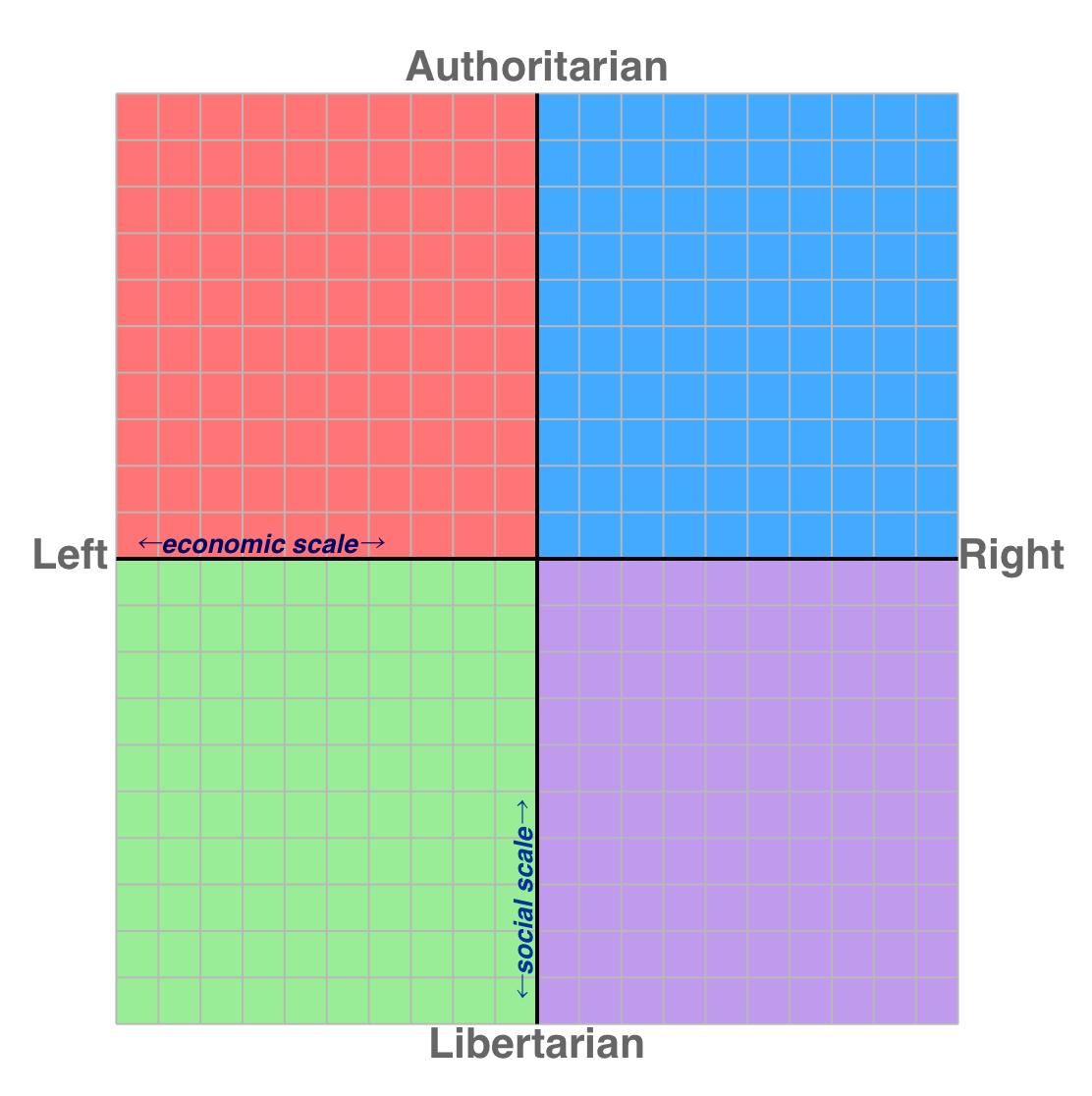
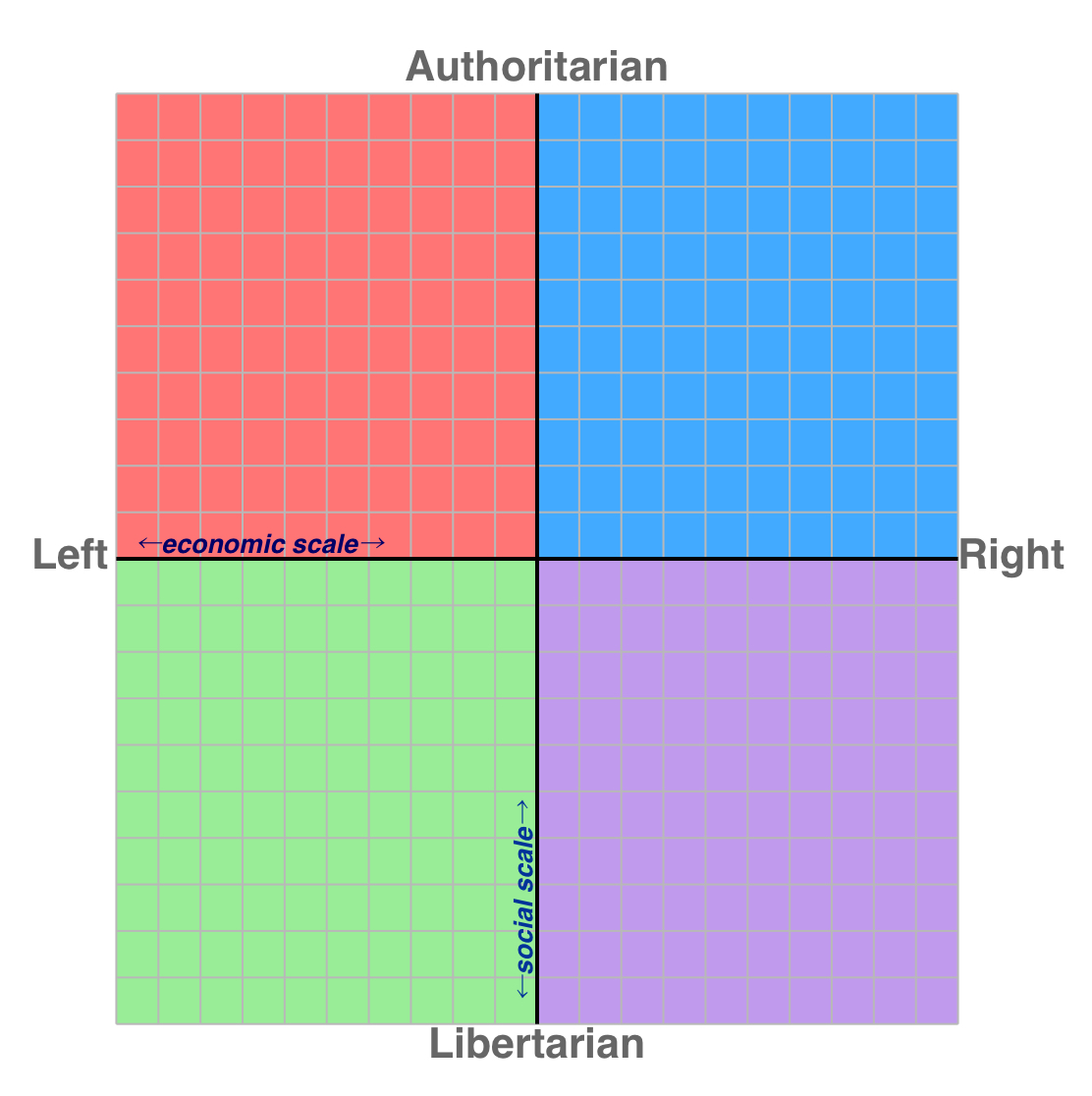
There’s a familiar—if simple—diagram about political attitudes that places them on a 2×2 which marries social attitudes on the vertical axis and economic attitudes on the horizontal.

(Source: Political Compass)

Blue Labourism, in other words, sits in the top left, and more progressive parties, such as the Greens, in the bottom left.

Politics and place

I understand Blue Labourism as having something of an old-fashioned idea about the nature of the working class (which has been changed considerably by post-industrial society) and that it also privileges a notion of a rooted white working class as somehow more important to Labour than other voters.

But Maurice Glasman, who developed it, was concerned about the effects of globalism on communities. If I read him right, he is an advocate of more localism, the importance of mutual organisations such as faith groups, trades unions, and sports clubs, and stronger support for communities as a way to counter this.

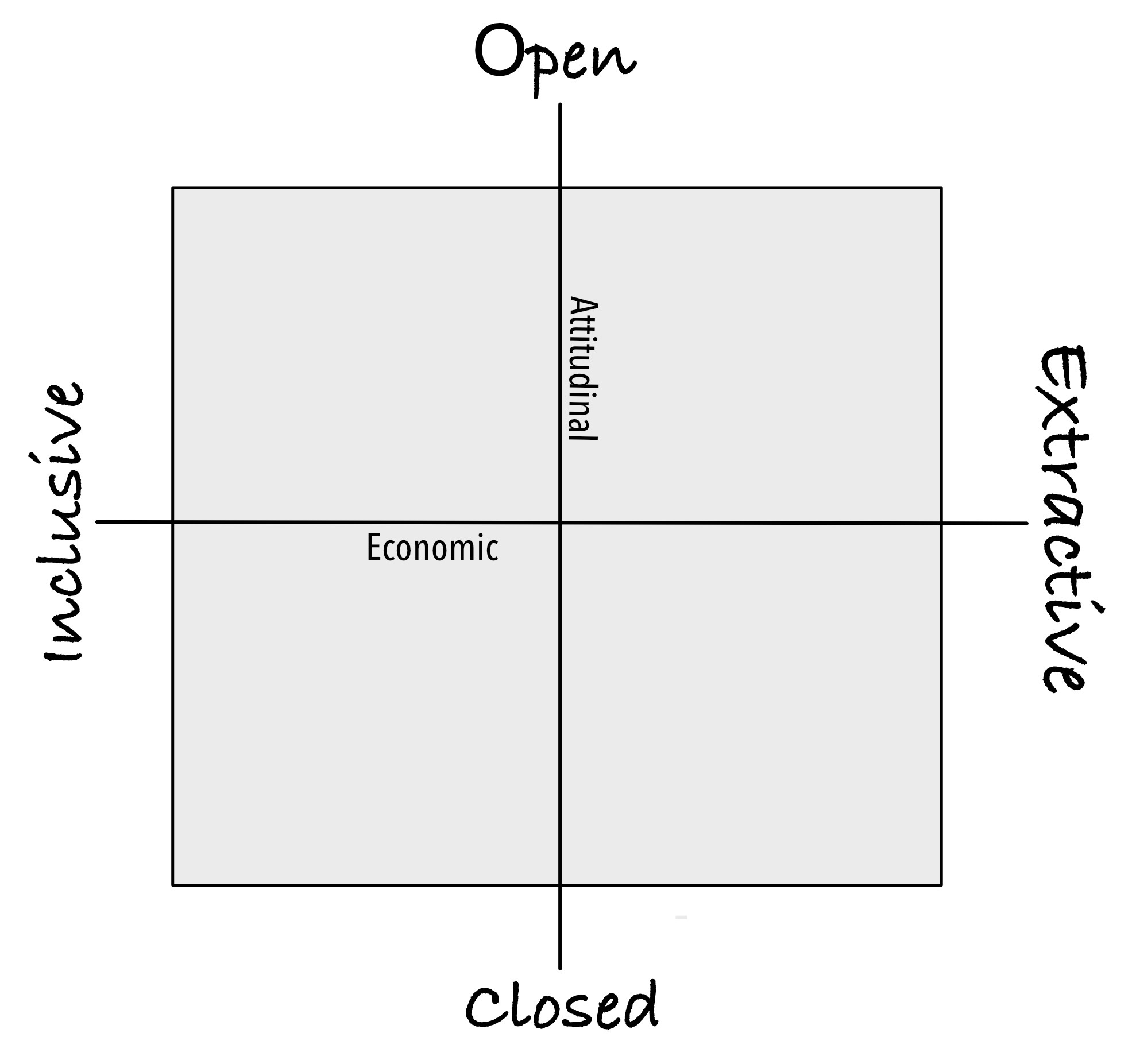
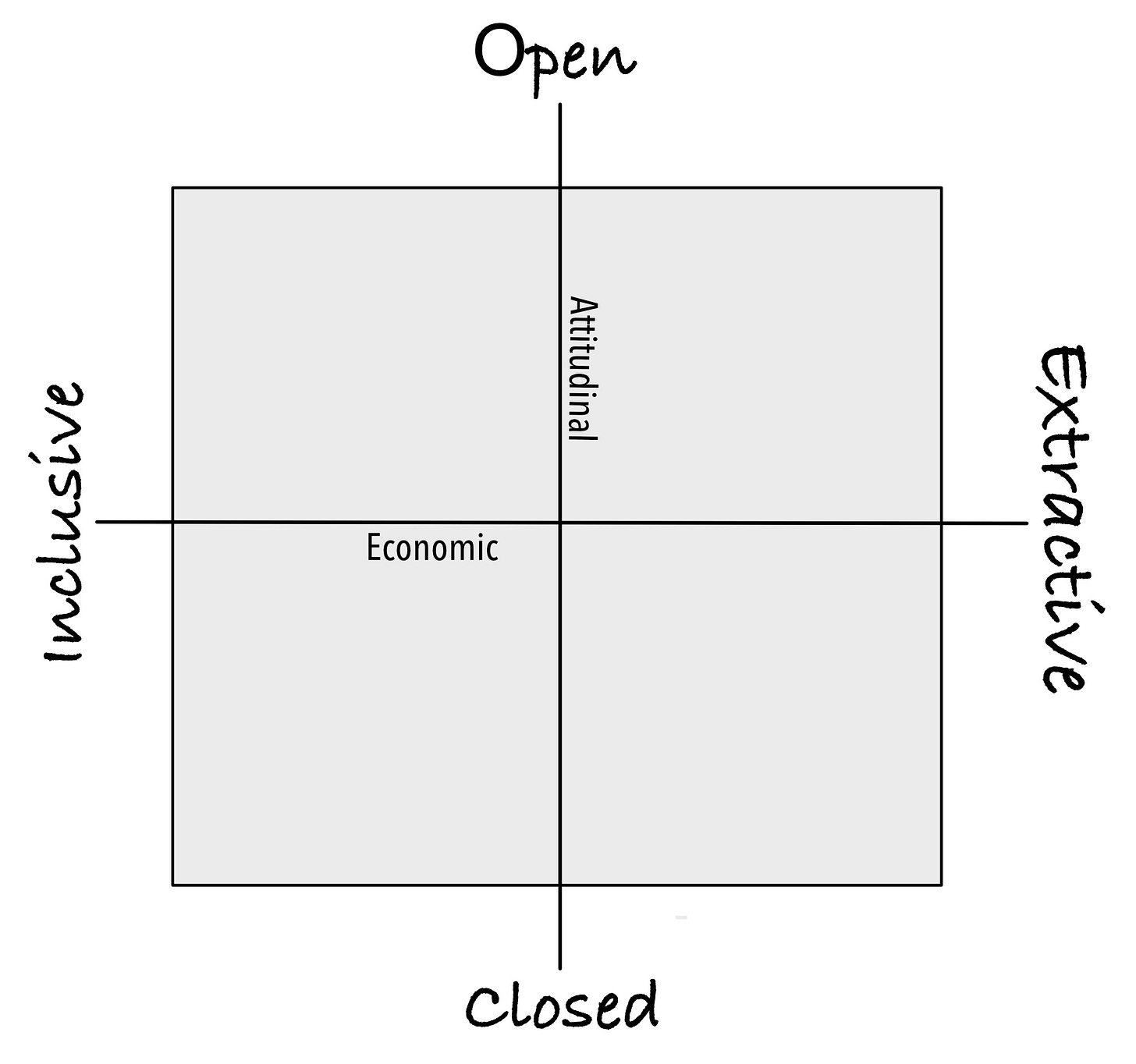
So this brings into the discussion a different political map, originally developed by Ian Christie in 2002 and tweaked a bit by me for an article on populism in 2017, which looks prescient by now.

(Source: Curry (2017), based on Christie (2002).

On this 2×2, place becomes more important: the vertical access is about a sense of location: a global (‘mondiale’) politics at the top, and a local (‘terroir’) politics at the bottom. Horizontally, the axis runs from rights-led politics on the left to authority-led politics on the right.

Political energy

If you think about this version, all of the political energy right now is in the bottom half of the space, and it has drained away from the top half. This is largely a consequence of the long political crisis that has stretched on from the Global Financial Crisis. This is, I think, what the journalist John Harris means when he writes of politics reaching “the belated end of the political 20th century.”

But both the British Labour Party and the mainstream US Democrats remain chained to the top. This is partly because, as Nancy Fraser has argued, they got captured by the interests of finance capital, the arch-enemy of terroir politics. After all, it melts all that is solid into air.

I don’t have Fraser’s short book in front of me as I write, but as I recall in the US this was mostly about money, specifically campaign funding, but also because of the geographies of Democrat politics, and to some extent a deliberate strategy of political capture by Wall Street.

‘Unfriendly to business’

In the UK it is a bit more complicated, but likely a fear of being tagged as “unfriendly to business”[1], some uninformed mumbo-jumbo about the bond markets, and a misunderstanding of where economic development and growth comes from.

(As an extended aside, the British Conservative Party got captured by different—as in speculative—fractions of finance capital, such as hedge funds, while Trumpism is now a creature of venture capitalists and offshore finance, who need new profitable sources of investment now that the 50 year digital tech wave is winding to a close[2].

This is the reason that the Epstein Files are so toxic: MAGA is a terroir party, in the same way that Reform presents itself in the UK, but isn’t—whereas Trump is a creature of speculative untethered mondiale capital. (Ann Pettifor made a connection between Epstein. Peter Mandelson, and Wall Street in a recent post.)

But I digress. Back to the main story.

Taking voters for granted

The version of Blue Labourism promoted by Morgan McSweeney was long on centralised authoritarianism, and short on any kind of real local power, and long on migration as a threat to community.

In the meantime, party policies that were economically progressive were delivered apologetically, always looking over its shoulder at finance. This has pushed its progressive voters to the Greens (in England in the Gorton and Denton by-election) and to Plaid Cymru (in a Welsh Senedd by-election in Caerphilly last year.)

There have been plenty of political commentators explaining the acute electoral error here: broadly of taking progressive voters for granted in a naïve view that they had nowhere else to go. In brief: Labour is never going to outdo Reform on how hardline it can be on migration, but it is a rapid—perhaps the quickest—way to alienate its socially liberal core voters.

A vast policy error

The electoral error here has been laid bare by election results, and plenty of commentators have pointed this out. But far worse than being an electoral error, it is a vast policy error as well. Being hardline on immigration puts the Home Office (Britain’s interior ministry) in charge of economic policy and health and social care policy. The British economy needs migration, because that is where, in a low productivity economy that is where most of its growth comes from[3]. And the health and social care sector needs migration, because the backbone of its workforce is migrants—as a report pointed out last week.

(Source: Workers Rights Centre. The darker orange lines show the rapid decline in health and social care workers coming to Britain.)

And you don’t have to be much of a political strategist to work out that voters are going to punish a social democratic party for not looking after the health sector, or for a weak economy—one a core trusted issue, the other a basic test of government competence—more than they will for migration numbers that are misunderstood and repeatedly misrepresented.

And when you do look at the migration numbers, as Simon Wren-Lewis did on his blog in late 2024 (in a post memorably titled ‘The Politics of Stupid’), you see that most of those coming in to the UK are coming in for work or to study.

(Source: Migration Observatory via Mainly Macro.)

You can cut these numbers, of course, but why would you want to? For example, cutting student numbers merely damages the finances of the UK’s university sector and reduces the UK’s soft power.

And as if to demonstrate the Labour Party’s tin ear, the Home Secretary Shabana Mahmood—a member of the Blue Labour group of MPs—responded to the by election defeat by announcing that she was pressing on with her hard line measures on immigration. She is perhaps too young to recall the aphorism of the 1970s Labour grandee Denis Healey:

When you find yourself in a hole, you should stop digging.

Making the migration case

The thing is, you can make a good case for migration, and not just on economic grounds, although it is true that

Migrants are also overrepresented in more
innovative economic sectors; they are responsible
for a disproportionate number of patents and
business start-ups, and they establish new trade
and investment links.[4]

I wrote about this in a 2025 report for the International Organization for Migration.

As we put it in that report,

indicators of cultural integration and exchange are hiding in plain sight; it is their everydayness that makes them invisible.

The best example is food culture, which in Britain has been transformed by migration over the past 50 years. The quality of sport has similarly gained from better foreign born players, for anyone who remembers the clogging football of the 1970s. In Liverpool the presence of high profile Muslim Mo Salah has reduced (provably) the number of Islamophobic attacks in the city. Most of the more exciting musical innovation in the past five decades has come from migrants, or often, the second-generation children of migrants[5].

Underpinned by rights

Any competent politician should be able to make a compelling story about a modern Britain from these building blocks.[6] But they do have to make it, rather than trading increasingly right wing rhetoric in a race to the bottom. (There’s a compelling Guardian analysis of this in the UK in the past few days.)

And if you are centrist or a centre-left party you ought to be doing this, because the politics that underpin much of what you are supposed to believe in is underpinned by rights. You are on the left end of that 2×2: rights, not authoritarianism.

And we also know that if you don’t defend the rights of immigrants, there are plenty of people who are happy to use this as a vehicle to remove rights from everyone else as well. One look across the Atlantic at the moment is enough to see how that story goes.

See also:

Party politics is realigning itself
Footnotes

[1] Some irony here, since finance capital is so unfriendly to business.

[2] No, AI is not the next big investment thing.

[3] The dirty secret of the Cameron-Osborne government was that almost all of the economic growth came from migration, but neither man was willing to make the case for migration. Cameron may not have realised the connection, but Osborne would have known.

[4] One of the issues here is that migration gets presented in simplistic economic terms as a matter of supply and demand, with the implication that more supply reduces demand and therefore wages. This is true only at the extreme lower end of the labour market, (and can therefore be dealt with through minimum wage legislation). In practice, economies don’t work like this: more supply of labour tends to increase economic activity.

[5] I was going to exclude Britpop from this list, but even Noel and Liam Gallagher are second-generation Irish immigrants.

[6] If you’re stuck, I guess you could ask Danny Boyle and Frank Cottrell-Boyce, since they managed to do this in their 2012 Olympics opening ceremony.

img_8759-1
thenextwavefutures
http://thenextwavefutures.wordpress.com/?p=10813
Extensions
Plants and the great cognition debate
Cognitionconsciousnessneural networksPaco Calvoplants
It’s controversial to suggest that plants have consciousness. It challenges human assumptions about what consciousness and cognition are.
Show full content

A long piece by Amanda Gefter in Nautilus on the cognition of plants starts with her surprise at discovering that the rustling she was hearing in her room at night after bringing the plant home was coming from the plant:

Three jumpy nights passed before I realized what was happening: The plant was moving. During the day, its leaves would splay flat, sunbathing, but at night they’d clamber over one another to stand at attention, their stems steadily rising as the leaves turned vertical, like hands in prayer.

The piece is about the work of the Spanish researcher Paco Calvo, who studies plant behaviour at the splendidly named Minimal Intelligence Lab at the University of Murcia in Spain. He told her that she was suffering from ‘plant blindness’:

to be plant blind is to fail to see plants for what they really are: cognitive organisms endowed with memories, perceptions, and feelings, capable of learning from the past and anticipating the future, able to sense and experience the world.

Paco Calvo. Photo: MINT Lab, Universidad of Murcia.
No brains

Of course, to say this is immediately controversial. We know that plants don’t have brains, and human approaches to cognition are all about the brain. This is, to some extent, a legacy of Descartes. Calvo suggests that this is coming at the problem the wrong way round:

“When I open up a plant, where could intelligence reside?” Calvo says. “That’s framing the problem from the wrong perspective. Maybe that’s not how our intelligence works, either. Maybe it’s not in our heads. If the stuff that plants do deserves the label ‘cognitive,’ then so be it. Let’s rethink our whole theoretical framework.”

Calvo came into this line of work as a philosopher who started studying cognitive science at a time when the ‘computer’ model of the brain was gaining ascendancy. But that model was clearly wrong, as is widely agreed now:

Computers are good at logic, at carrying out long, precise calculations—not exactly humanity’s shining skill. Humans are good at something else: noticing patterns, intuiting, functioning in the face of ambiguity, error, and noise. While a computer’s reasoning is only as good as the data you feed it, a human can intuit a lot from just a few vague hints.

Neural networks

That took him into artificial neural networks, which are a bit better at deducing things from vaguer data, even if they are dependent on the language model they have been trained on.

Programmers train the neural networks, telling them when they’re right and when they’re wrong, whereas living systems figure things out for themselves, and with small amounts of data to boot. A computer has to see, say, a million pictures of cats before it can recognize one, and even then all it takes to trip up the algorithm is a shadow. Meanwhile, you show a 2-year-old human one cat, cast all the shadows you want, and the toddler will recognize that kitty.

So from artificial neural networks, Calvo moved on to trying to understanding how biological systems “perceive, think, imagine, and learn”. And that took him on to plants. (I liked the way that Gefter traced Calvo’s intellectual journey here, by the way.)

(Plants in captivity having a chat. Image: JHLA3350, via Wikimedia. CC BY-SA 3.0)
Seeing, responding, anticipating

It’s a long, long—and fascinating—article, and I’m not going to do much more here than nod at it.

So, first, plants can sense their surroundings:

Plants have photoreceptors that respond to different wavelengths of light, allowing them to differentiate not only brightness but color. Tiny grains of starch in organelles called amyloplasts shift around in response to gravity, so the plants know which way is up… Plants can sense humidity, nutrients, competition, predators, microorganisms, magnetic fields, salt, and temperature, and can track how all of those things are changing over time. They watch for meaningful trends—Is the soil depleting? Is the salt content rising?

And then, having sensed their surroundings, they respond to what they are sensing:

Their roots can avoid obstacles. They can distinguish self from non-self, stranger from kin. If a plant finds itself in a crowd, it will invest resources in vertical growth to remain in light; if nutrients are on the decline, it will opt for root expansion instead. Leaves munched on by insects send electrochemical signals to warn the rest of the foliage,2 and they’re quicker to react to threats if they’ve encountered them in the past. Plants chat among themselves and with other species.

They don’t just respond. They can also anticipate:

They can turn their leaves in the direction of the sun before it rises, and accurately trace its location in the sky even when they’re kept in the dark. They can predict, based on prior experience, when pollinators are most likely to show up and time their pollen production accordingly.

‘Consciousness’ controversies

Calvo also notes that while it is easy to dismiss these as reflexive behaviours, plants would not have been as successful as they have been, in evolutionary terms, if that is all they were doing. It’s fair to say that Calvo is out at the front here. His argument that plants are ‘conscious’ was critiqued by other biologists in a 2021 paper, as Gefter notes:

As Jon Mallatt, a biologist at the University of Washington, and colleagues put it in their 2021 critique of Calvo’s work, “ Debunking a Myth: Plant Consciousness,” to be conscious requires “experiencing a mental image or representation of the sensed world,” which brainless plants have no means of doing.

This takes us back to the start of the article. Maybe those definitions of ‘consciousness’ carry with them a whole set of assumptions that take us back to forms of human (or perhaps animal) exceptionalism. As Calvo suggests:

If the representational theory of the mind says that plants can’t perform intelligent, cognitive behaviors, and the evidence shows that plants do perform intelligent, cognitive behaviors, maybe it’s time to rethink the theory. “We have plants doing amazing things and they have no neurons,” he says. “So maybe we should question the very premise that neurons are needed for cognition at all.”

Beyond ‘machine’ models

If Calvo is out at the front, all the same, he’s not there on his own. Colleagues in the field also believe that the ‘machine metaphor’ of body and brain is getting in the way of understanding—even preventing us from seeing what’s in the data we see in front of us. Louise Barrett, for example, is a biologist at the University of Lethbridge in Canada:

“We need to get away from thinking of ourselves as machines,” Barrett says. “That metaphor is getting in the way of understanding living, wild cognition.”

Barrett and Calvo are among a group of biologists who suggest instead that ‘4E cognition’ is a better way to understand cognition—because there’s a group of relevant adjectives that in English all start with an E:

Embodied, embedded, extended, and enactive cognition—what they have in common (besides “E”s) is a rejection of cognition as a purely brainbound affair. Calvo is also inspired by a fifth “E”: ecological psychology, a kindred spirit to the canonical four. It’s a theory of how we perceive without using internal representations.

The world is its own model

The 4E group suggest that this is also a decent reflection of human cognition:

Humans don’t perceive the world by forming internal images either. Perception, for the E’s, is a form of sensorimotor coordination. We learn the sensory consequences of our movements, which in turn shapes how we move.

The article uses the example of how outfielders catch a ‘fly ball’ (I think this is about an American and Asian sport called baseball). They aren’t calculating the location of the ball, millisecond by millisecond, and sending messages to the legs. Instead, they just keep the ball steady in their field of vision, which will mean that “they and the ball will end up in the same spot.” This isn’t a new idea either. A 1991 paper by the robotocist Rodney Brooks said:

“Explicit representations and models of the world simply get in the way. It turns out to be better to use the world as its own model.”

Descartes was wrong?

And this is where this newer idea of consciousness diverges from the Descartes version. In his recent book, Calvo suggests,

Cognition is not something that plants—or indeed animals—can possibly have. It is rather something created by the interaction between an organism and its environment.

Clearly there’s something going on here, and my instinct is that this will become a dominant model of cognition, sooner or later. We’re just going through that Kuhnian phase where the advocates of the old model need to die off.

It also reminded me of that moment of insight I got when I first read about Maturana and Varela’s model of autopoesis, which goes back to the 1970s, and to which it has clear intellectual links. There’s also an evident connection to the movement towards ‘more than human’ thinking.

A review in the Guardian wasn’t quite convinced that Calvo made the case for plant cognition in his book. But the reviewer connected it to recent work by Peter Singer and Frans de Waal that challenged anthropocentric ideas about intelligence:

This is perhaps the most significant intellectual shift happening today, opening up the possibility that we can radically realign our relationship to the natural world. Instead of blithely thinking that we’re somehow superior to – and separate from – the animals and plants around us, we might start to appreciate that we’re deeply and irrevocably connected to these fragile ecosystems.

A version of this article is also published on my Just Two Things Newsletter.

img_8352-1
thenextwavefutures
http://thenextwavefutures.wordpress.com/?p=9859
Extensions
A handbook for regenerative design
futuremethodsbuilt environmentOliver Broadbentregenerative designThe Constructivisttoolkits
Oliver Broadbent’s ‘Pattern Book for Regenerative Design’ has a clever structure for solving design problems. It is written for engineers, but anyone can benefit.
Show full content

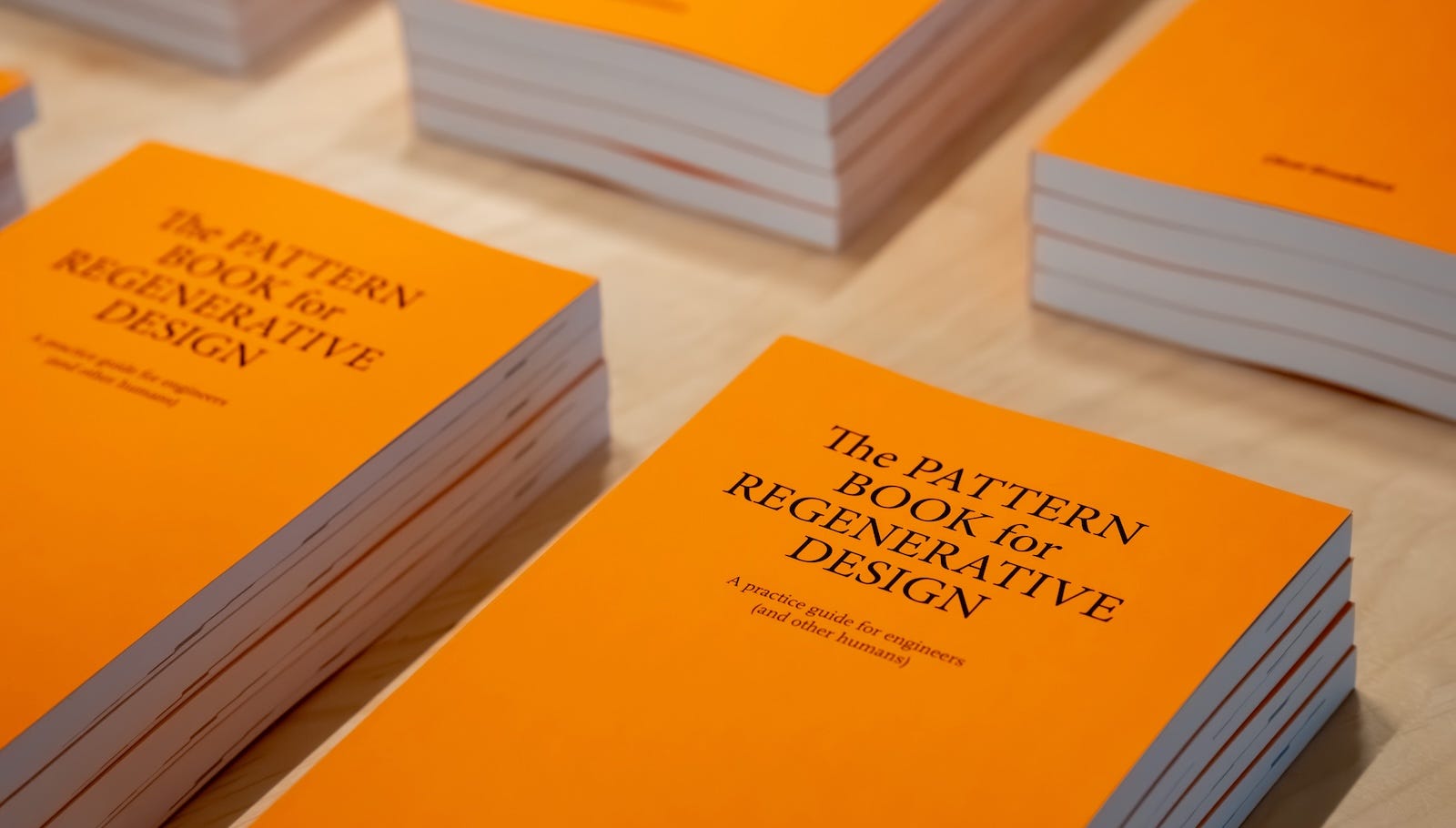
The Pattern Book for Regenerative Design is written for ‘engineers (and other humans)’ who want to “transform the built environment industry into a force for good.” Despite coming into the “other human” category here, I found its mental models and some of its thinking devices useful.

The book builds on a previous book that Oliver Broadbent co-wrote with James Norman, which makes the case for regenerative design in structural engineering, and also draws on his work in the Regenerative Design Lab, which he founded in 2022 and co-convenes. The Lab has been running extended training and leadership courses, and The Pattern Book has partly emerged from this experience of teaching and learning.

(Source: The Constructivist)
Weaving

Early on, he makes the case for the metaphor of patterns, maybe with a nod to the work of Christopher Alexander?

We see patterns./ We think in patterns./ We create patterns./ A pattern is something that repeats./ A drum beat./ An oscillation.

The line breaks here are designed to show how this is all laid out on the page. I couldn’t help but wonder if Oliver Broadbent had stumbled into Stafford Beer’s writings somewhere along the line (it seems likely) and internalised Beer’s complaint that the conventional layout of text on the page is not good for comprehension.

The metaphor of patterns, in Broadbent’s case, goes to a specific metaphor drawn from weaving, which was once a family business. His grandfather, in Bradford, was a cloth designer. And I liked this extended metaphor, drawn from Harold Broadbent’s life:

Once, when driving north from home in Gloucestershire to the factory in Bradford, he saw the shoots of winter wheat pushing through rich red soil. This image became the inspiration for a popular cloth he designed – a rust brown weave with flecks of green in.

He had a picture in his mind of what he wanted to make, but then he had to negotiate with the factory owners to figure out how it could be made with the materials available to them.

And for me this is a strong metaphor for creating change. We need an image of the future. But we have to build it with the materials we have today.” (p.20)

Warp and weft

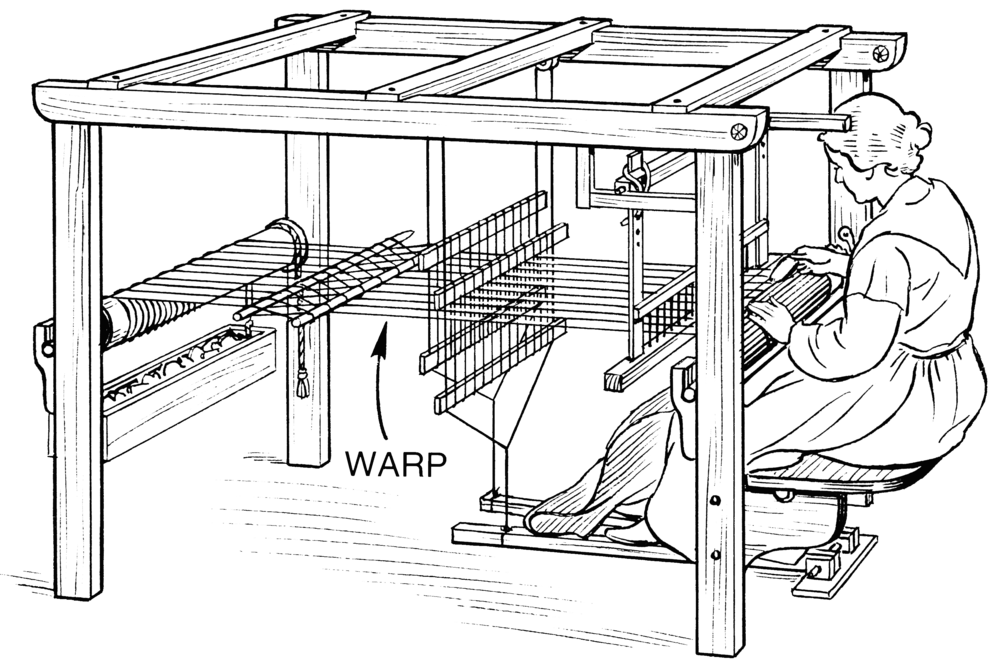
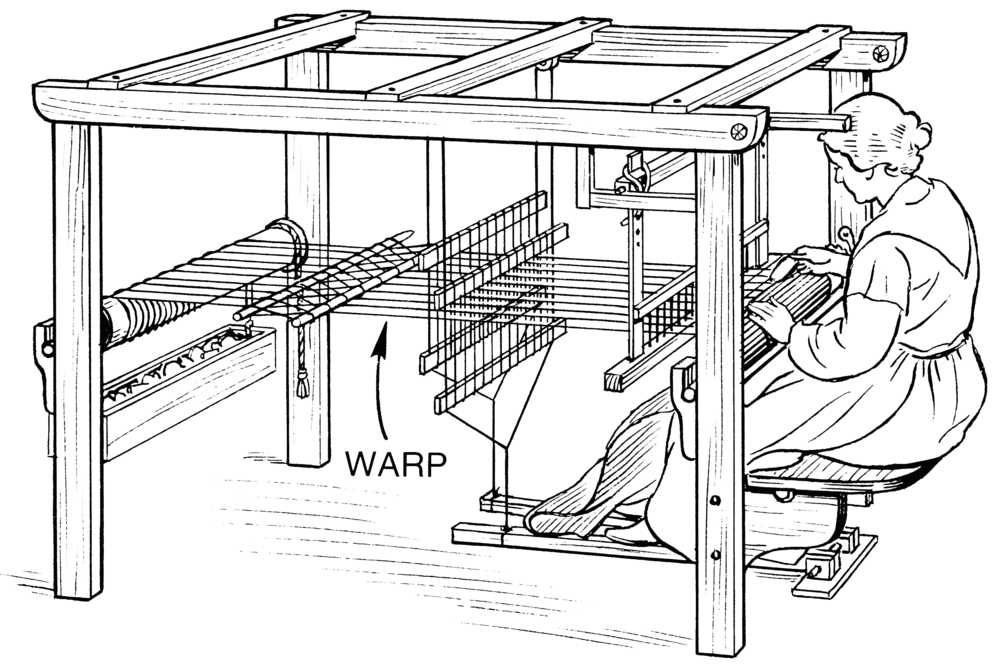
This cloth metaphor runs right through the book. We get deep into warp and weft, those fine Old English words that describe the weaving process. The warp threads take the weight of the material, and are held under tension during the weaving process; the weft threads take almost no strain. So the warp threads need to be stronger. (Oliver Broadbent doesn’t explain any of this in much detail, but Wikipedia was my friend).

(Image: Pearson Scott Foresman, Public Domain, via Wikimedia)

The warp threads in the Pattern Book are “complexity”, ”time”, and “iteration”. These represent the links between present and future. Complexity connects “the character of the present and the future”; time is “the amplifier of change”, and iteration is “the means of navigating complexity over time.”

The weft fibres create the pattern, though. These draw on the Living Systems Blueprint, developed in the earlier book, which connects “interconnection”, “symbiosis”, and “capacity for change”. These aren’t quite tangible enough to represent threads, but from them Oliver Broadbent pulls out “feedback”, “circularity”, and “adaptability”.

Cloth metaphor

So these six elements are found in each of the 12 patterns in the “pattern catalogue” that makes up the front part of the book. The cloth metaphor goes a bit further, though, because the book also contains “motifs”, which draw on the learning and teaching the Lab has been doing.

Good teaching is rarely about setting out the whole picture. It’s about creating moments of tension when we show something new, and moments of release, when the learners see the relevance to the problems they want to solve.

We create tension through stimuli, provocations, metaphors and experiments arranged in different orders to create different effects.” (p.23)

These are the motifs, and they make up the back part of the book—more than half of it, in fact. As we’ll see in a moment, the motifs are the building blocks that make the patterns usable, in the book, if not in weaving.

Patterns

But I should spend a bit more time on the patterns, which again draw on the metaphor of fabric. Pattern 01, for example, which is designed for “intuitive exploration”, is canvas, “for creating large fabrics for a wide range of journeys”. As you go further in the pattern catalogue, you get to more specialist cloths.

Pattern 07 is pinstripe, for “developers and asset managers”, a critical part of of the built environment ecosystem, while Pattern 12 is damask, for “government and industrial regulation.” These go beyond names to being properly metaphorical.

As Oliver Broadbent notes, only a little drily, damask is a

richly woven fabric, originally created on a Jacquard loom, one of the earliest machines to be ‘programmed’ by punch cards. Rich fabrics are synonymous with power, a good metaphor for government and the regulations that control industry. A striking feature of damask is that the stitch looks good on both sides, making the fabric reversible – a reminder that even powerful institutions can change their mind.“ (p.60)

Sequencing

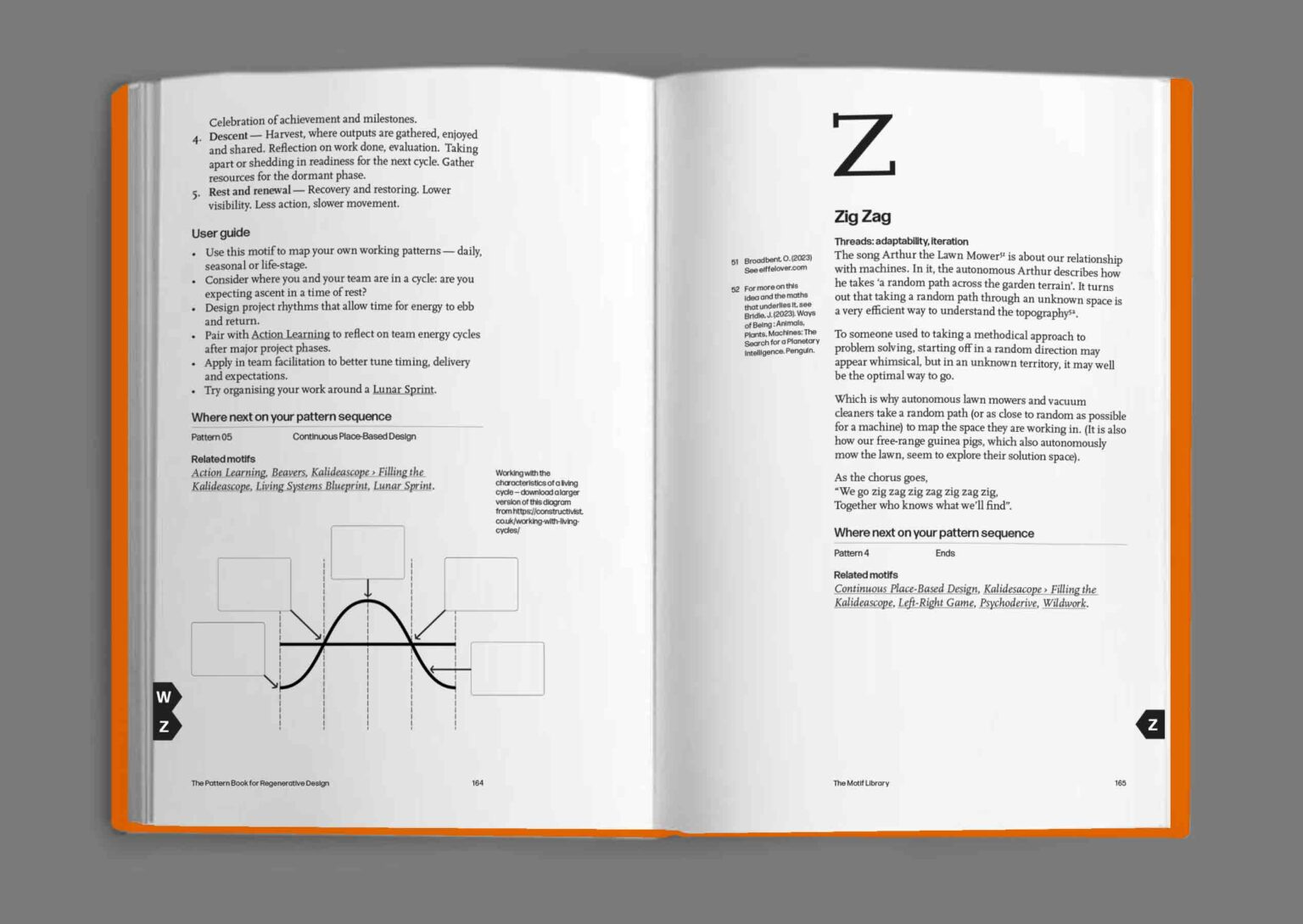
Each of these patterns runs for three pages, and each follows the same pattern on the page. There’s a section on who the pattern is for, and why you might use it. For example, in Pattern 02, twill, which is for “systematic exploration”, Broadbent notes that he and James Norman used this pattern to help structure their book, but that more intuitive researchers might prefer Pattern 01.

And then there’s a section on how to sequence the pattern, usually under between three and six headings (the pattern about culture in more complex), with a set of motifs gathered under each heading. So, in effect, the idea of the Patterns is to help structure the journey, and the motifs tell you what to do with each step.

Again, just to illustrate, the headings in Pattern 05 (‘felt’), which is about regenerative personal journeys are: GroundingTune in to your inner personal clientSpace for rest and reflection; and Create a new practice. The three motifs that help you tune in are called Wildwork, Changing Mindsets, and Catalytic Style, and these are all found in the Motifs section of the book, which is arranged alphabetically.

Toolkits

As someone who has spent time in the past working on toolkits to help people apply futures thinking and tools, I have to say I admire this approach and the metaphor, and the separation of the Patterns and the Motifs, and I’ll certainly draw on it in the future.

It solves two related problems in an elegant way: that when you put the details of method into the overall idea of the steps of the journey, it both appears prescriptive, rather than inviting the reader to try something out, while also drowning them in detail.

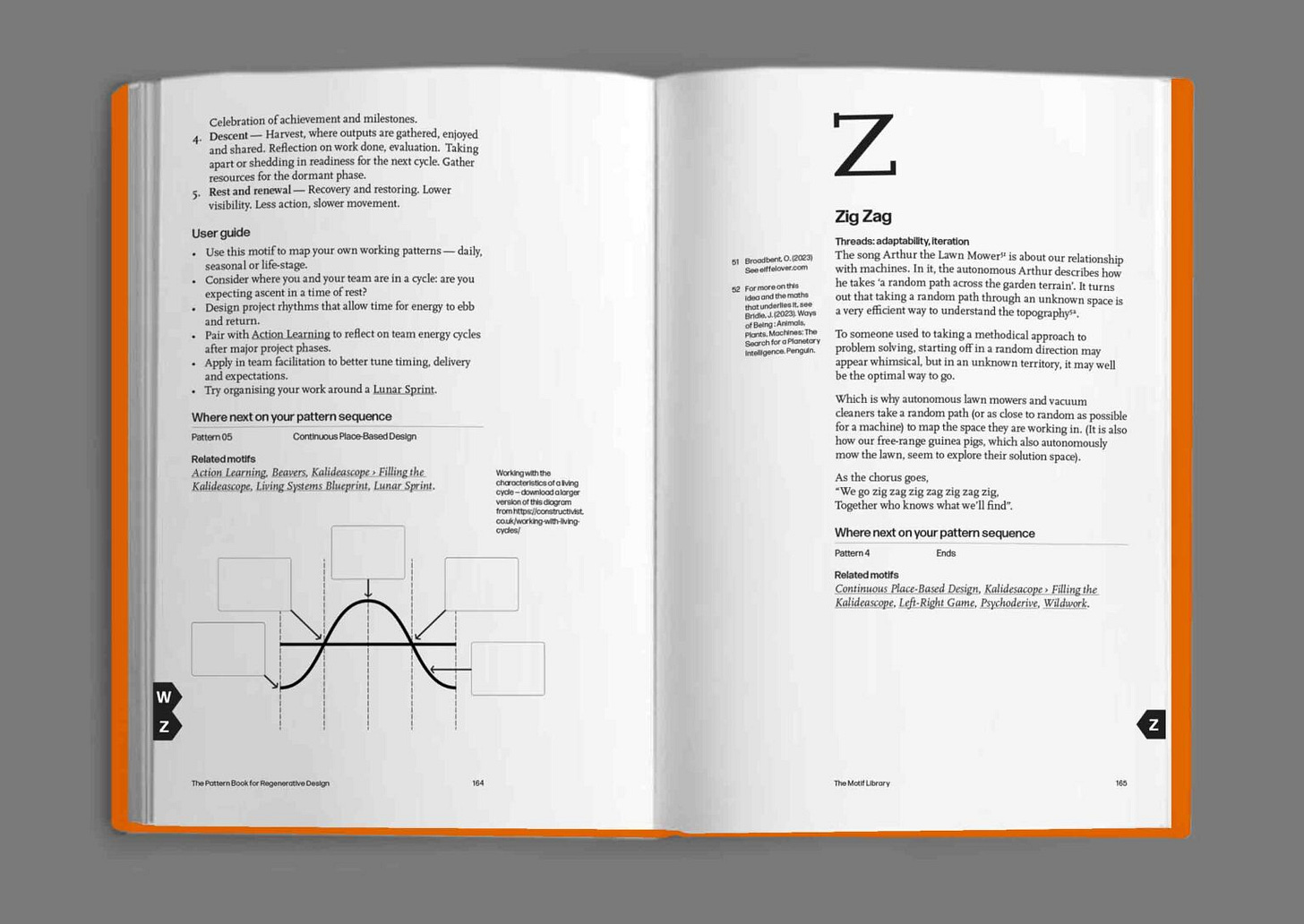
(Photo: The Constructivist)

The Motifs section is a mixture of methods, concepts, metaphors, and frameworks. That makes it sound like a bit of a jumble, and it is. But It’s a rich jumble where the different types of approach create an ecology rather than confusion.

Tuning in

For example, Wildwork, which I mentioned above, is a set of observational questions that help you tune in to the world: it’s “like homework, but done in the wild: a wood, a park, or a garden.” Some are just stories: Autumn Surprise, for example:

An alien visiting the northern hemisphere of Earth from June to December might be surprised to see the leaves fall in autumn, and might wonder why no one else seems bothered. An alien who stays for longer will discover it’s a cyclical event.” (p.70)

This particular motif is a reminder that our period of observation may be shorter than the period of change.

Regenerative practice

Dave Snowden’s Cynefin model is in here, as is Three Horizons, though it is consistently and wrongly attributed solely to Bill Sharpe, when Anthony Hodgson did almost all of the original thinking: it should always be credited to both of them. (I hope that Broadbent will correct this when he does a second edition, and online.) I liked the very short entry on Practiiice (no, this is not a typo), which feels like it could be adopted by futurists as a motto:

Regenerative practice has three eyes.

One eye for the future.

One eye for the present.

One eye for how we change what is going to happen next. (p.135)

In short, even for other humans, this is a rich resource book. If you are a facilitator, or work with systems, or in futures, you will be able to draw on it.

The book has a complicated copyright structure, which ensures that the motifs and exercises are all published under a generously open Creative Commons licence. Some of the tools in the Motifs section are also online at Constructivist. As far as I can tell, you have to buy it direct from Constructivist, which is fine if you’re in the UK but may not be so helpful elsewhere. Maybe a digital edition is a possibility.

A version of this article is also published on my Just Two Things Newsletter.

img_8127
thenextwavefutures
http://thenextwavefutures.wordpress.com/?p=10766
Extensions
Making sense of futures
futureAlvin Toffleropen systemsPeter DruckerPierre Wackrequisite varietyRoy Amarascanning
An introduction to futures—its relationship to open systems theory, why scanning is therefore a foundational practice, and what this means for organisations.
Show full content

I was invited to talk about futures recently at the Royal College of Defence Studies In London. Most of the event was unattributable, but our initial remarks were recorded, so I can share a version of them here.

Futures, in its modern version, is a child of the Second World War. It has two foundational strands, one in the United States, funded by the Department of Defense, and associated with RAND and SRI; the other in Europe, which is less cohesive but associated with Fred Polak‘s The Image of the Future in the Netherlands and Gaston Berger and prospective school in France. The first was about better forecasting, the second about rebuilding nations; the first positivist, the second more normative.

Since then, futures has gone through three phases, each lasting about 25 years. It took the first quarter of a century to reach some conceptual agreement about what futures work did. In 1970, in Future Shock, Alvin Toffler wrote that “Every society faces not merely a succession of probable futures, but an array of possible futures, and a conflict over preferable futures”[1]. In a paper four years later, Roy Amara, who was running the Institute for the Future in California, used the same trio but substituted “preferred futures”[2]. The first is about forecasting and trends analysis, the second about scenarios, the third about visioning. Conceptually, this trio has stuck.

(Giulio Paolini, ‘Dilemma’, 2005. madre, Naples. Photo: Andrew Curry, CC By-NC-SA 4.0)

Over the second quarter of a century, scenarios, and in particular a variant called “scenario planning”, became dominant. You can trace a thread here from the RAND alumnus Hermann Kahn, through his Hudson Institute to Royal Dutch Shell, to the consultancy Global Business Network set up by Shell alumnus Peter Schwarz. This strand runs out of intellectual energy in the late 1990s.

The ‘complexity turn’

The third strand, which was more engaged with issues about complexity and agency, emerges at this time. This is futures’ “complexity turn”, and early markers of it are Richard Slaughter’s Integral Futures model and Sohail Inayatullah’s Causal Layered Analysis. This drew on futures ideas that had been incubated since the 1960s by academic futurists associated with the World Futures Studies Federation, notable James Dator and Eleonora Masini. This work is more interested in values, meaning and power, and in preferred futures. But it is also an important philosophical moment, because it represents a different understanding of our relationship to the future, in which elements of the future exist as latent elements in our present, and respond to what we do or don’t do. This third phase is second-order futures, not first-order futures.

Toffler added a gloss to that Future Shock quote:

Determining the probable calls for a science of futurism. Delineating the possible calls for an art of futurism. Defining the preferable calls for a politics of futurism.

In this he was prescient. There certainly was more art in the construction of scenarios in the second phase, and more politics in the third.

Dancing around systems

Throughout this history, futures has danced around systems. The two are more like cousins that don’t know each other that well, but one coreidea in futures work is that change comes from the outside, which aligns it immediately with open systems theory(pdf), going back to the influential work of Emery and Trist in the 1960s. This suggests that change emerges from the “contextual environment”, then influences the “transactional environment” (also thought of as the “operating environment”, and then finally, the “organisational environment”. I usually describe this metaphorically as like frying an egg in a pan: the pan heats first, then the white cooks, and then, finally, the yolk.

Another systems idea that has direct relevance to futures and foresight work is Ross Ashby’s Law of Requisite Variety (‘variety’ in this context meaning ‘complexity’, which hadn’t really become a commonplace term when Ashby formulated his law in the 1950s.) This is a cybernetic principle—provable mathematically, but not by me—that states that the internal variety of an organisation needs to match the external variety of its external environment. It can do this by amplifying its ability to understand external variety (which is where futures comes in), or by ”attenuating”—reducing—the amount of variety it chooses to absorb from the external environment [3].

One of the features of futures methods is that many of them enable people to have systems conversations without having first to learn systems. Systems thinking is encoded into the methods. I’m thinking here of scenarios, when done well, of Three Horizons, or Futures Wheels, or Causal Layered Analysis, but there are many others.

Foundational tools

Because change comes from the outside, this means that horizon scanning is a foundational tool in futures work. When you’re doing the analysis to build up a scanning picture, you tend to be looking for four things. There are drivers of change — big substantive changes, often with long tails stretching back into the contextual environment (population changes, the rise of feminism, and so on.) These are the province of both quantitative and qualitative analysis. There are trends, which are shaped by drivers, which tend to be quantitative (the proportion of a population over 65, say) and therefore—without going into a long aside about the social nature of the production of data—essentially backward looking.

Then there are weak signals, which are individual data points that signify new possible points of change. These are almost always qualitative. And then there are emerging issues, which can best be described as small clusters of weak signals that might point in due course to a new trend.

The scanning questions

Scanning, I was taught by the futurist Wendy Schultz, involves three questions:

  • Does this confirm something we already know?
  • Does this change something we already know?
  • Is this something new?

Wendy also suggested that the third question had a second part: is this new to most people, so genuinely new, or new to us (and therefore suggestive of a blind spot.)

Because the idea of the “black swan” has spread like a virus, people tend to be too interested in the third question, and not interested enough in the second question [4]. Most things that are genuinely new take a long time to arrive, so if you do notice them you have time to prepare. Things that change something we know, on the other hand, are likely to be disrupting the mental models we draw on to understand what’s going on around us.

Pierre Wack, who led much of the work at Royal Dutch Shellthat shaped the way we think about scenarios, said that they were most useful when the external or contextual environment was changing in unexpected ways. He hoped to change the way that managers read the news.

In times of turbulence

This links to the work of Peter Drucker, whom Wack quoted (or possibly misquoted) as saying that

The greatest danger in times of turbulence is not the turbulence; it is to act with yesterday’s logic.

This connects futures also to management, and to Drucker’s idea of ‘the theory of the business’—which is true of non-commercial organisations as well as businesses. He argued that when organisations were working well, it was because they had a coherent “theory of the business” that connected and aligned three different elements:

  • A view of the external environment—mostly meaning the “transactional environment”, as I understand him— that was correct in its essentials;
  • A mission statement (this might be the “organisational purpose” these days); and
  • The set of competences and capabilities needed to deliver the mission in this environment.

There’s a bit more: as well as maintaining alignment, the organisation needs to ensure that the theory is understood and that it is tested constantly. “Mission” or “purpose” doesn’t necessarily need to be “purposeful” in the modern sense. In the (1990s) paper, Drucker uses the example of Sears, whose purpose was to deliver the things an American household needed at competitive prices.

Signs that you might need to change your theory of the business might be that you attain your objectives (Toyota had this problem when it became the world’s #1 car maker, because, as Hardin Tibbs noted, it had confused goals and mission); if you have an unexpected failure; or an unexpected success.

Obviously the futures and foresight element comes in to help ensure that your view of your external environment is broadly correct. These three elements—environment, mission, competences and capabilities—also connect in interesting ways to Stafford Beer’s viable system model, but that’s probably a discussion for another post.

A version of this article is also published on my Just Two Things Newsletter.

Footnotes

[1] I am grateful to my colleague Johann Schutte for reminding me of this quote, even though I am on the record as regarding Future Shock as being over-rated.

[2] There’s a curiosity in the literature here. Conventionally Roy Amara’s 1974 paper always gets referenced in the futures literature in connection with probable, possible and preferred futures (sometimes as the 1981 book in which the paper was gathered). But Future Shock sold by the truckload, and Amara was the President of one of America’s leading futures researchers, the Institute for the Future. Theres no way he wouldn’t have read it. And when you look at the 1974 paper, the idea is thrown away, buried in a diagram. So my interpretation here is that Amara didn’t make a big deal of the notion of probable, possible, and preferred futures because it was already current in the discourse.

[3] I was teaching this idea recently, and one of the people in the room asked if attenuating the information from the external environment might be a bit of a risk—because you might then be surprised by changes. Well, yes; you might be.

[4] Leaving aside that people who tell you that something was a “black swan” event often turn out to be fundamentally blinkered about what is going on around them. As the futurist Alex Pang once said, “black swan” is not an excuse for bad scanning.

img_8908
thenextwavefutures
http://thenextwavefutures.wordpress.com/?p=10757
Extensions
Party politics is realigning itself
politicsCas MuddeDemocracy 2076JoxleyPeter TurchinPlaid CymruReform UKSimon Wren-LewisZohran Mamdani
We’re at a 40-year moment when politics realigns itself. The parties that are winning are the ones who understand that the economy is broken.
Show full content

It’s been an interesting few weeks for politics, or at least for elections. But I gave up journalism several decades ago because I was more interested in structure than headlines, so I’ve been trying to think about this structurally.

This means that I’m more interested in Zohran Mamdani’s Mayoralty election win in New York, and the by-election win in Wales by Plaid Cymru (over Reform UK) in what was a safe Labour seat, for what they tell us about politics more broadly.

(Zohran badge: via Redbubble.)

The first port-of-call, then, is a report issued by the US NGO Democracy 2076 last week. Democracy 2076

provides strategies to inspire renewed faith in pro-democratic, pro-topian futures that moves people to action in service of a resilient democracy.

And usual disclosures: I have met the Director and Deputy Director, and some of my colleagues at School of International Futures contributed to the report I’m going to discuss here.

Of course, promoting faith in democracy and action in its service is a tough row to hoe in the US right now. But part of their starting point, in the report and more generally, is the observation by Walter Burnham that in the US, the main political parties have gone through significant alignment every 30-40 years or so. Democracy 2076 sees us as going through that moment right now: in other words, there is everything to play for.

Long term change

Theories of long-term change are like catnap to futurists in general, or at least to me in particular. Realignment theory is a bit controversial; there are multiple theories, not just Burnham’s; and there’s been a lot of critique of it. All the same, there’s a similar (and perhaps connected) theory by the US political scientist Gary Gerstle, of “political orders”, which comes into this space from political economy rather than political science or election analysis.

Gerstle similarly sees 40-year periods in which there is a dominant view of how the world works, which then shapes law, regulation, institutional behaviour, and so on. He’s written and edited books about both the New Deal and neoliberalism.

As he puts it in an interview:

Political orders are complex networks of institutions, constituencies, big-pocketed donors, and interest groups. If they are successful in establishing themselves, they can have enormous staying power and can enforce a kind of ideological hegemony on politics, not just on members of their own party but on members of the opposition.

Being an historian Gerstle is careful to suggest that this isn’t an iron law of history—as far as he’s concerned we just happen to have seen two forty year-ish periods.1

Governing crisis

But it useful to consider why these periods of “ideological hegemony” come to an end:

A political order usually breaks up as a result of an economic crisis big and severe enough to cause a governing crisis, during which existing formulas for managing the economy and the polity no longer work. Chaos and failure to enact successful policies, and the popular protest that results from such failures, create an opportunity for political ideas long consigned to the margins to move to the mainstream.

So it’s probably worth my while saying that I suspect that the political science theories about realignment are symptoms of these deeper changes.

So this is a good point to go back to Democracy 2076 and some of the detail in their report. In my view it’s unnecessarily complicated, although I can see what they’re trying to do. They’ve identified 17 tensions, under six headings.2 There’s no simple way to unpack them all, but the headings are: identity; geography and economics; governance and authority; values; demographics and generations; and political structures and international dynamics.

They also have five scenarios, although the relationship between the tensions and the scenarios is a bit uneven.

And some of the tensions are problematic, in that it is possible to believe one end of them from completely different political positions. For example, the very first one: “education as a social equalizer” vs “education as a status reinforcer”. You can believe the second of these be true, and that this is a good thing—or that it is true, but a bad thing, from either a Marxist or populist position of critique.

Political realignment

In a post that’s partly behind a paywall, the British blogger Joxley goes to the other extreme and suggests that politics is in the process of realigning from a left-right (primarily economic) axis to an open-closed (primarily attitudinal) axis:

The definitions are contested and fluid, but broadly mean those who are internationalist and committed to the global liberal order on one side, versus those who are insular, national, and nativist on the other.

If Democracy 2076 is a bit too complicated, I think that this is a bit too simple. When you think about the Political Compass, say, it adds a second social dimension (authoritarian-liberal) to the economic dimension that runs from left to right.

(Source: Political Compass)

Joxley is specifically interested in the future of the centre-right party, and specifically in Britain, which has historically been the most successful ruling party in Europe. But it is also a creature of economic alignment, and he wonders where it can go in an open-closed world.

But I think what might be happening here is a bit more straightforward. The open-closed axis looks quite like the authoritarian-liberalism axis in the Political Compass, with open at the bottom and closed at the top. The economic axis is still there, but has been rewritten by the Global Financial Crisis and its aftermath.

The ‘credentialled precariat’

The demographic-structuralist theorist Peter Turchin doesn’t normally write about current affairs (a recent post focused on the impact of the invention of horse spurs on empire size in the middle ages). But he made an exception after Mamdani’s election. In a post he referenced his book End Times (I reviewed this here), where he wrote about the growth of the ‘credentialed precariat’, who have degrees but are also saddled with debt and high living costs. (The most recent group of degree holders is also being squeezed out of entry-level work by companies using AI as a short-run cost-cutting device.)

In End Times, Turchin characterised American politics—this is the broad brushstrokes version—as benefitting only a small fraction of the electorate:

Ten years ago the political landscape in the US was dominated by two parties: one of the “1 percent” (wealth holders) and one of the “10 percent” (credential-holders). Both parties focused on advancing the interests of the ruling class, while ignoring those of the 90 percent.

We know how that ended up. Trump channelled that into the capture of the Republican Party by MAGA. In places like New York, degree holders are less likely to opt for right-wing populist politics. But looking at one of Democracy 2076’s ‘tensions’, both might agree that current institutions—particularly economic institutions—need dismantling rather than mere improvement.

Turchin reviews Mamdani’s exit poll numbers and says that they

provide strong support for the idea that Mamdani’s win was largely propelled by the young credentialed precariat: the youth with college degree, or higher, earning just enough to live on the edge.

Blocked from mobility

And he points to a piece by John Carney in Commonplacemagazine, written when Mamdani won the Democrat nomination against expectations:

The neighborhoods where Mamdani won [the nomination are] zones of post-industrial drift, populated by nonprofit managers, freelance writers, overburdened teachers, and software engineers who live paycheck to paycheck despite six-figure incomes. This is a class increasingly defined by contradiction: culturally elite, economically unstable, and structurally blocked from mobility.

So all of this suggests to me that there is still an economic axis here, but it runs from something like ‘inclusive economics’ to ‘extractive economics’, depending on who the economy is being run for. We can take ‘extractive’ as a shorthand for a whole range of rentier business models, including debt-driven private equity ownership and enshittification by Big and Small Tech, which have been encouraged by the lax regulation and weak competition law under the neoliberal ‘regime’.

(Source: Andrew Curry/ Just Two Things)

What’s striking about this simple, even simplistic, diagram, is that it still tells you a lot about the potential for political realignment. In the US, generally, the Democrats are still trapped in the world of Wall Street and Big Tech, in the top right. In the UK, the Labour party lurches around the map, sometimes Open, sometimes Closed (cf Palestine Action), but definitely in hock intellectually to the rentiers of the Extractive economy, whom they wrongly associate with economic growth.

Trump, meanwhile, talks Closed/Inclusive while doing Closed/Extractive, which is one the reasons his polling numbers have plummeted.

Political energy

And all the energy is on the other side, both in the US and the UK. Mamdani is Open/Inclusive, while MAGA is Closed and against Extractive: although it lacks a coherent economic philosophy, it is largely dependent economically on those bits of the US government system that try to be inclusive (and which Trump and Russell Vought are trying to dismantle). In the UK, the Green Party (and in Wales, Plaid Cymru) are clearly Open/Inclusive, which is why they are peeling polling support away from Labour. You might notice a pattern here.

And not just in the Anglosphere. Since I wrote the original version of this post on Just Two Things, Crispin Mudde, who studies the far right, noted in The Guardian that Copenhagen no longer has a Social Democrat Mayor. The Green Left (SF) candidate won. For British readers watching the Labour Party aping the Danish immigration model, there might be a certain irony here.

In contrast, the hard-right Reform UK mirrors Trump; certainly Closed but disguising a love of Extraction with populist economic rhetoric about Inclusiveness.

This contradiction suggests that populist right wing parties will tend to come unstuck if they get too close to government. In the UK we’re seeing some of this in the councils that Reform UK won earlier this year. At heart, they are creatures of crisis that thrive as a ‘political order’ is breaking up.

Some of this might also suggest that Joxley is wrong about the prospects for the centre-right, although it will need more imagination than they have shown signs of in the last decade. But you could see a form of Conservatism that represented a light version of the Closed axis combined with some traditional support for more local businesses, rather than hedge funds.

Wrong-headed

But it also suggests that in the UK (and elsewhere) a social democratic political strategy that is about appeasing potential Reform voters is wrong-headed, and we have UK data on this. (TL: DR: it is wrong-headed). Simon Wren-Lewis’ Mainly Macro blog shares data about this in the UK from the political scientist Ben Ansell. He uses a pair of economic/cultural attitudes axes, but confusingly swapped from the two above, so economics goes up and cultural attitudes go across.

Part of the Labour theory is driven by an idea, possibly originating from its political strategist Morgan McSweeney, that its potential voters in marginals and super-marginals are wildly different from voters in safer Labour seats. Although there is a view inside the Labour Party that Morgan McSweeney is some kind of political genius, this theory is a long way off the mark.

Source: Ben Ansell, Political Calculus newsletter

What this shows is that the (colour-coded) voters for each party cluster around the same set of economic and social views, regardless of how marginal or safe the seat is. The grey blobs in the middle are the don’t knows. As Ansell says:

What I think Blue Labour believe is that Labour voters in the marginal Red Wall district have fundamentally different views on social (and maybe economic) issues than Labour voters in safe London seats. They don’t… the differences among voters are among voters not constituencies. Ecological inference is a hell of a drug. [3]

Ageing voters

In his Guardian piece, Cas Mudde says that chasing hard-right votes is a mistake in both the short-term and the long-term:

This strategy is not just unsuccessful in the short run; by failing to win over these voters, it leads to the loss of progressive voters and prevents the rejuvenation of their ageing electorate in the future… Whereas social-democratic parties have some of the oldest electorates… their left competitors are particularly popular among young voters, including many with a minority background. 

And if you need a reminder of what’s at stake here, this is Rupert Murdoch’s New York Post cover on the day after Mamdani won—and no, this is not a parody. The picture on the right shows the Soviet image that the Post’s designer stole it from. Because there’s nothing about ‘Open’ or ‘Inclusive’ that is good for Rupert Murdoch’s political or business interests.

(The New York Post marks Zohran Mamdani’s victory in the election for New York City’s Mayor with Soviet-flavoured propaganda.)

Thanks to Ian Christie for sharing the Joxley post.

—Footnotes

1. My best explanation of why 40 years might be more than just empiricism is that it represents the two halves of a working life: the first when you pay your dues and get acculturated, the second when at least some people get to change the the things they hated in the first part. It’s worth noting that in their Fourth Turning model, Strauss and Howe propose an eighty year generational cycle that goes from crisis to crisis in eighty years, via a rebuilding stage, a stage where the benefits of rebuilding are enjoyed, and an unravelling stage—effectively positioning a mini crisis in the middle. As a systems model, it follows the same pattern as other models. But their timings of each phase, which go back to the middle ages, are suspiciously post-hoc, and the generational mechanisms they propose are unclear.

2. Our short term memory can hold 3-4 things in it, which is a good guide to the level of complexity that people can absorb when you explain concepts to them. Which is also why we write down shopping lists.

3. Ansell notes in a later post that the Labour Party had managed in policy terms to do exactly the opposite of what his data in recent posts would recommend. But then again, Morgan McSweeney is a political genius.

—-

An earlier version of this article is also published on my Just Two Things Newsletter.
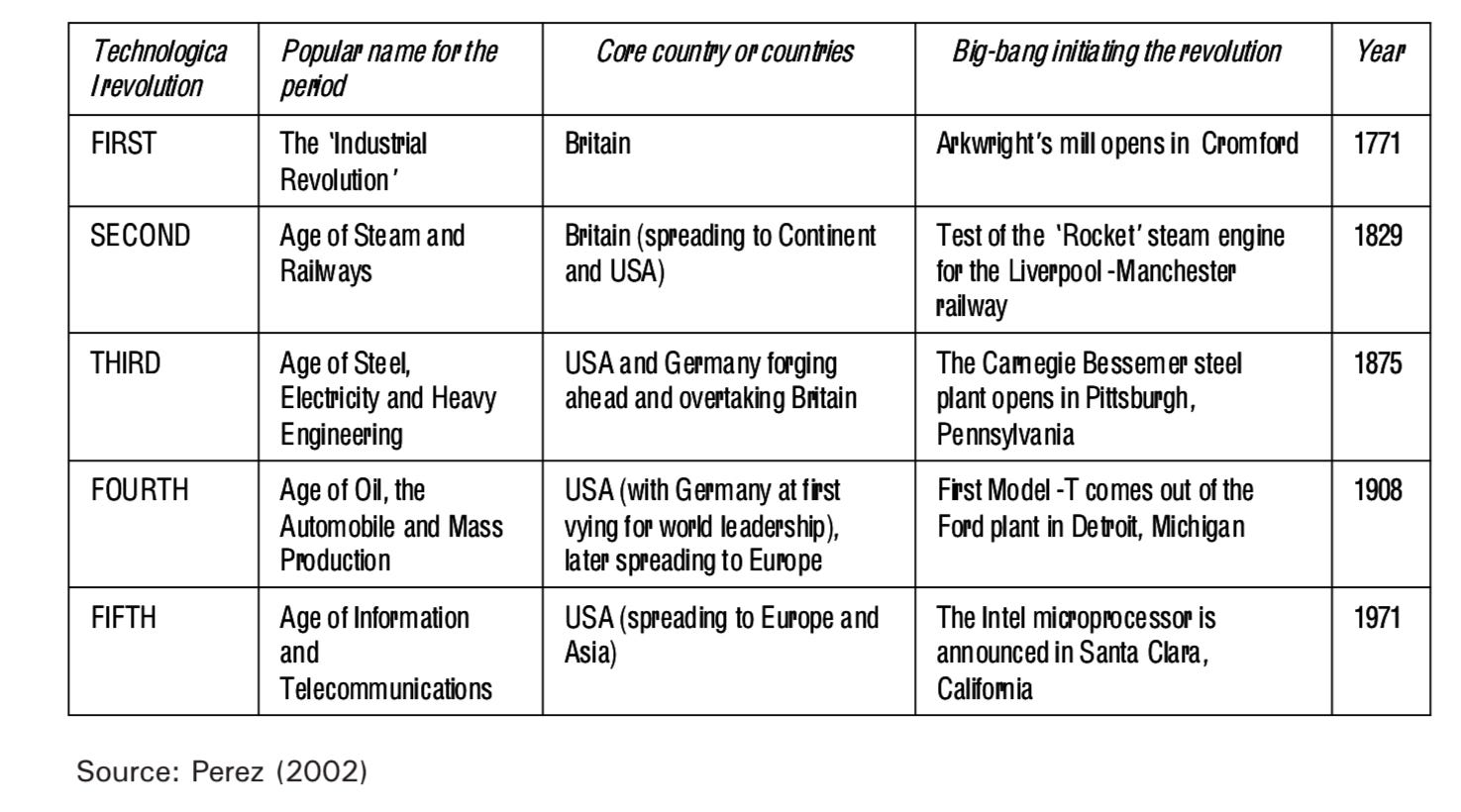
img_8056
thenextwavefutures
http://thenextwavefutures.wordpress.com/?p=10683
Extensions
Crises of care, crises of work
socialworkcitiesLaetitia Vitaudsocial care
Too few people will be working in the future. Forget AI: labour markets don’t pay enough attention to the work involved in caregiving.
Show full content

Laetitia Vitaud has a post on her Laetitia@Work Substack about why too few people will be working in the future. What I liked about it is that from the off she largely parked both the question of AI and the issue of demographics and the ageing population, and instead focussed on issues that are to do with the structure of labour markets.

She focuses on four issues:

  • Insufficient childcare and support for working mothers
  • Housing crisis trapping workers
  • The caregiving time bomb
  • Deteriorating health of workers.

She summarises them: 

These are four interconnected reasons that have little to do with “personal choices” and everything to do with the collective institutions that we’re allowing to weaken and crumble, even as we should be celebrating their anniversaries.

There’s a mixture of American and French data in her piece (probably because US data is still reasonably easy to come by, at least until Trump fires the rest of the National Statistics Bureau for producing data that does not support his Panglossian worldview), and, from memory, because she lives in France.

But these issues seem to me to be common across the rich world. And they fit into something that I have discussed here before: that capital in general, and cities in particular, are finding it hard to reproduce themselves, economically and socially.

So let me just parse her arguments on each of these points, maybe with a diversion or two into her links.

Caroline Walker, Daphne’s Swimming Lesson, 2023 (Preston Art Gallery). Photo: Andrew Curry, CC BY-NC-SA 4.0.
#1. Insufficient childcare and support for working mothers

In the US, working mothers helped to drive the recovery of the economy post-pandemic, but have been leaving the workforce again over the past year. Some of this is down to so-called ‘Return to office’ [RTO] mandates, which are uneven but make it harder for working mothers to work [1].

Vitaud quotes a US economist, Misty Heggenness, who likens it the moment in the Barbie movie where Ken takes control:

“It’s become harder for women, particularly those with caregiving responsibilities, to thrive in this job market… It’s clear that we’re backsliding in the Ken-ergy economy, that the return-to-office chest pounding is having a real ripple effect.”

Of course, one of the reasons for this is that childcare costs have increased, so losing the flexibility of some homeworking creates immediate financial problems, no matter how buoyant the labour market is. Although it seems likely that the result of imposing RTO mandates is that companies become less competitive in the labour market, it will be hard to see that in very noisy business data any time soon.

One of the consequences that is harder to see in the data, both at an individual level and for the economy as a whole, is under-employment: women taking jobs they are over-qualified for because they are closer to home or give them more childcare flex.

The ripple effects extend across entire industries and the entire economy. It also means lower growth. Of course, there are also huge implications for the women themselves—their lifetime earnings will be lower, they will most likely return to jobs that don’t pay the salaries they were making when they left.

Of course, focussing on the US may not be helpful: it’s an outlier in terms of childcare and in sectors that are more obsessed with RTO. But it’s also worth noting, as she does, that the issue of hybrid working seems to have been added to the culture wars checklist by the right in other countries as well.

#2. Housing crisis trapping workers

The costs of housing have ballooned, especially in cities, pretty much everywhere in the rich world. And this has consequences for everything else:

Housing scarcity is an invisible hand shaping nearly every aspect of working lives, social structures, and even our most personal decisions about careers and family formation.\

Vitaud’s preferred theory for this is that the growth of services and knowledge work effectively untethered desirable work from locations, so they gravitated to big cities where people wanted to live. This is a good enough theory that you can trace backthrough the work of John Urry and Scott Lash, and Diane Coyle, over the years, but it’s at least as likely that the cost of housing is high because of [1] deregulation of housing markets and [2] the asset bubble triggered by the billions-worth of quantitative easing that was injected into the world’s richer economies in the wake of the 2008 financial crisis. The problem this creates goes like this:

For every well-paid person in knowledge work who can theoretically work anywhere, there are approximately five people in service work who usually earn significantly less. These “essential” workers—in hospitality, restaurants, elderly care, childcare, healthcare, and other service sectors—serve knowledge workers, care for their children, clean offices, and prepare meals. Unlike knowledge workers, they cannot work remotely and must live within reasonable distance of where the work is located.

And so people end up either being unable to afford to live near their work, or the move further way and, once again, do work for which they are over-qualified. Or they stay in the city and pay a premium for housing that takes a disproportionate share of their income. Good for landlords, not good for the general economy (or for social equity).

#3. The caregiving time bomb

The French data projects that by 2030 one in four French workers will responsible for caring for an elderly relative. That’s a big number, and it’s quite soon, although I’d want to see a bit more detail on how ‘care’ is defined.

Again, the people who end up doing this work are more likely to be women, because

even in households with supposedly “equal” divisions of labour, the burden of elder care falls disproportionately on them (or at least the “choice” to give up paid work for care work is overwhelmingly theirs to make).

Many of these women are unlikely to return to the labour force. Vitaud says that currently about half of the unpaid carers to older adults are employed, but juggle work with their care of duties. And just looking at this for a moment through a narrow economic lens:

the danger is what happens before the loss [of a parent] —when caregiving responsibilities pull thousands of skilled, experienced people out of the workforce for years at a time. Without collective action, this silent drain of talent will accelerate, weakening our economies and worsening gender inequality.

(Maquettes by William Kentridge. From The Pull of Gravity exhibition, Yorkshire Sculpture Park, 2025. Photo: Andrew Curry, CC BY-NC-SA 4.0)
#4. Deteriorating health of workers

There are two issues here: both the generally poorer health of an ageing workforce, and the increasing prevalence of mental health issues, including depression and anxiety. She also notes that we don’t yet understand the long-term health effects of sedentary screen-dominated work. French and German data suggest high rates of absence through sickness already, with few workplaces designed for older workers.

The averages also conceal important differences:

Averages conceal the truth that health outcomes are tightly bound to education and income. Poorer workers face multiple, compounding health risks that make consistent employment harder to sustain, triggering a vicious cycle: poor health leads to reduced earning power, which in turn worsens health.

Vitaud concludes that these four effects are all consequences of the weakening of collective institutions, which in turn is turning social problems into personal issues:

The real failure lies in cutting back foundational protections without building new ones for our era’s most pressing challenges—elderly care, affordable housing, lifelong professional reinvention, and resilience in the face of climate change. The pattern repeats across all these issues.

And while I agree with the description of what’s happening, and the future-facing issues that are emerging quite quickly, I think we need a bit more systemic analysis here.

‘Social reproduction’

The people who have written best about this, in my view, are writers on the left who have focussed on the economics of care and the consequences for ‘social reproduction’—the ability of societies and cities to sustain themselves over time.

This piece is already long, so I’ll be brief, but the pattern of the last 40 years is that whole areas of care have been turned into cash machines by innovative parts of capital with the connivance of government [2]. In short, capital, and capitalism, always has a tendency towards crisis by undermining the things that are necessary to sustain capitalism. (The more theoretical version of this is explained here by Nancy Fraser.)

But the underlying argument here is that over a period of 50 years—and accelerating since the 2008 crisis—we have seen a process whereby increasing areas of the economy have been turned into places run according to the rules of finance capital. Initially this involved running private sector businesses according to financial rules.

As Rebecca Carson argues in her recent book Immanent Externalitiesthis now extendsinto all of the spaces that are essential to our reproduction as human beings. These spaces, which include housing, schools, childcare, eldercare, and health practices, have become new sources of profit. In other words, if we are going to address the issues that Laetitia Vitaud identifies, we don’t just need new institutions. We need innovation in new forms of ownership—social, public, communal, non-profit—that take these institutions back outside of financially-driven management systems.

— Footnotes
  1. Worth noting briefly here that Return to Office mandates have no effect on productivity—they appear to worsen it—and tend to be pushed through by male bosses in sectors with higher levels of macho management: banking, technology, the US government etc.
  2. ‘Innovative’ here is not meant in a good way. As Simon Caulkin wrote recently, “What [Private Equity] does care about is industries or sectors that share certain characteristics. They have guaranteed demand, an assured income stream, and are small in scale – qualities that make them particularly susceptible to PE’s blunt instruments of consolidation or ‘rollup’, leverage and debt financing. So yes, PE loves vet practices, funeral services, human care homes and dental surgeries – with the love felt by killer whales for seals and penguins or crocodiles for small deer or wild pigs.”

—-

A version of this article is also published on my Just Two Things Newsletter.

img_8074-2
thenextwavefutures
http://thenextwavefutures.wordpress.com/?p=10636
Extensions
Breaking the industrial food system
businessenvironmentfoodAgri-Foods for Net ZeroTim Benton
The world food system is “locked in” around three destructive patterns. But the external environment has changed, and increasing costs might start to break the pattern.
Show full content

These notes are from a meeting of the AFNZ meeting (Agri Foods for Net Zero) I went to last year. For some reason it’s been sitting in drafts since then. But it seems pretty current despite that.

The meeting was a follow up to the scenarios work that I did with them last year (more about that here).

Most of the meeting was designed to develop the group’s research agenda, which is about accelerating the transition to Net Zero, and most of it was unattributable.

Photo by Arno Senoner on Unsplash

But Tim Benton, of Chatham House and Leeds University, opened with short presentation on the “triple lock in” that is shaping the food sector in ways that are quite destructive.

Destructive

Quite destructive? Three measures of that. We’re currently producing enough to feed the world’s population, but close to one-in-ten people globally are under-nourished, and this number has been increasing again after a long period of decline. 770 million—also close to one-in-ten of the world population—are obese. The FAO has estimated that the external health costs of the food system are at least $10 trillion annually:

The report found that the biggest hidden costs, more than 70 percent, are driven by unhealthy diets that are high in ultra-processed foods, fats and sugars, leading to obesity and non-communicable diseases, and causing labour productivity losses. This is particularly the case in richer countries. One fifth of the total costs are environment-related, from greenhouse gas and nitrogen emissions, land-use change and water use, with all countries affected.

There are also hidden costs associated with poverty and under-nourishment, especially in poorer countries, but there are also, in richer countries, lost opportunities and lifetime health costs caused by hunger in childhood. (The FAO’s full report is here.)

Benton basically summarised three lock-ins, which are inter-connected:

  1. The cheaper food paradigm
  2. Market concentration
  3. Path dependencies

In some ways the first of these drives the rest of the system, through the assumptions that sit behind it and the policy decisions that it drives.

The cheaper food paradigm

The assumptions that sit behind this are that: consumption drives growth; that cheaper food is good for growth; that markets are the best way to provide cheaper food; that changing diets is not the job of government; and that food safety nets are not needed—or need only to be minimal.

Policy therefore focuses on driving efficiency and market liberalisation, while not worrying about waste (an inevitable product of the system) or ill-health. Farming focuses on a few commodities, grown intensively and at scale.

Market concentration

Markets are dominated by a few, big players, with a vested interest in maintaining the status quo. Their market position means that they can absorb competitors and acquire innovators, while their own innovation focuses on scale and efficiency. New entrants and disruptors face significant barriers to entry.

Path dependencies

The weight of the investment in the food sector acts to reinforce this system, and it is reinforced by most of the incentives in it—including (although Tim didn’t mention it) the way in which investors assess publicly quoted companies, meaning those listed on stock markets. The near-monopoly companies created by market concentration are able to leverage pricing in ways which means that means that “cheap food” often has high margins, which investors like but which has terrible external costs.

Barriers to change

Some of these external costs include environmental impacts, which are not costed, and the whole system generates huge barriers to transformative change, both politically and economically.

The overall cycle looks something like this.

(‘The triple lock in’. Tim Benton/Chatham House, adapted Andrew Curry.)

Although this all looks pretty entrenched, Benton’s view is that it is quite unstable. It looks familiar but it’s already threatened by changing circumstances. The health and environmental costs of this model are already undermining perceptions of the cheaper food paradigm, and on top of that some of the geopolitical conditions that support it—such as relative global stability, open markets, and so on—have started to fragment into a world of onshoring and ‘ally-shoring’. Protectionism and nationalism are undermining the model.

The political environment

So it’s also worth looking at the story that Benton told about the political environment in which the food system gets negotiated. He had a chart which showed a triangle of markets, politicians, and consumers/citizens. (And whether consumers/citizens see themselves primarily as citizens or consumers does matter here.)

(The political economy of food. Tim Bention/Chatham House, adapted Andrew Curry)

The politics of food plays out between these different actors and the intermediaries, who connect the three corners of the triangle. I’ve added some extra intermediaries to Tim’s diagram here.[1] It’s possible to imagine—but I was trying not to complicate things too much—that there are also interactions between the different intermediaries running across the middle of the triangle as well.

Destabilised by externalities

This triangle, he argued, is being destabilised by externalities. Events that were triggered by these externalities would, he thought, change the political dynamics around food at some point. Events might shift values as well. He thought that this might happen quite quickly, as possibly also quite soon.

In short: unlocking the triple lock-in is essential if we are going to get to systemic change in the food system, and that systemic change is necessary if we are going to address the climate and health impacts of food.

But the combination of the costs of the current system, and events triggered by crises in the current system, could well drive this systemic change. As Tim concluded, “The politics will change as the world changes.”

—-

[1] This is reminiscent of Bill Sharpe’s adaptation of the Ambition Loop. He adapted it by adding civil society to the original loop, which involved a loop between business and governments.

A version of this article is also published on my Just Two Things Newsletter.

img_7877-1
thenextwavefutures
http://thenextwavefutures.wordpress.com/?p=10215
Extensions