GeistHaus
log in · sign up

excellent notes

Part of leaflet.pub

notes from my adventures in software engineering, community building, life.

stories
So, I got laid off.
Thoughts about my time at LinkedIn coming to an end.
Show full content

Last Wednesday was my final day as a software engineer at LinkedIn.

My career at LinkedIn started in 2022 when I joined as an intern, then continued in 2023 when I joined as an Infra SWE after completing a post-bacc program in Computer Science.

The three years I spent there certainly had its challenges: two reorgs, three rounds of layoffs (not including my own), and stressful on-call shifts with subsequent incidents. But, I can honestly say I'm better off for having worked there, and grew so much as an engineer. I got to ship cool features, make important design decisions, and build an entire service from the ground up. And, while I didn't choose to leave LinkedIn this way, I'm privileged to have had the experience of working there, plus I even have a chunk of cash to help me find my next move.

Despite the layoff, I'm excited for the future.

It's possible my brain hasn't fully processed the layoff yet, but I'm looking at this situation as an opportunity. The current job market may be rough for software engineers, but I'm challenging myself to approach the job hunt with curiosity and a sense of adventure. I expect my emotions will change as the search spans across multiple months, but I plan to lean on my meditation practice and mindfulness community to help me navigate the emotional rollercoasters.

Besides, less work means more time! I'm grateful for my experience at LinkedIn, but 40 hours was the minimum amount of hours put in for my peers and I. This means I've racked up a ton of unfinished side projects and books, simply because I didn't have the time or energy to complete them. I'm excited to use this break to pick them back up, learn, and gain new skills.

What's next for me -

First, I'm taking a break. Thanks to the WARN Act, I'm still on the LinkedIn payroll for two months, and I'm using this time for learning, building, and lots of hiking. Basically, I'm doing everything but looking for a new job for the first 30 days. As working adults, we often don't get the opportunity to just chill, so I'm taking advantage of it.

I'll also document my experiences in funemployment. While a little couch rotting is fun and even healthy, I'd hate for it to describe my entire unemployment experience. So I'll post weekly layoff check-ins to document my progress, what I've learned, and what I've built.

https://katexcellence.leaflet.pub/3mm5yojl2ck2m
Thoughts on ATmosphereConf as an ATProto Newbie
We really can just build things
Show full content

If you logged into Bluesky over the weekend, you no doubt saw posts about the ATmosphereConf that took place in Vancouver, BC. I, myself, had the pleasure of attending as a newbie to the ATmosphere.

TL;DR: I had a great time, met lots of people, and got inspiration to build something meaningful. It was such a great experience, I plan on attending next year, wherever it’s hosted.

If you’re thinking about whether you should attend, or just want to know what the conference was like from a noob’s perspective, I’ll share my experience and a couple suggestions to make the conference even better for first-timers.

First, a few things about me

I’m an idealist*.

I’m so much of an idealist, I started a meditation group for people like me that believe life can be bigger than just sleep, work, doomscroll, repeat. I believe the antidote for many societal challenges is a strong network of nourishing communities. The Community is my life purpose, and the drive behind everything I do.
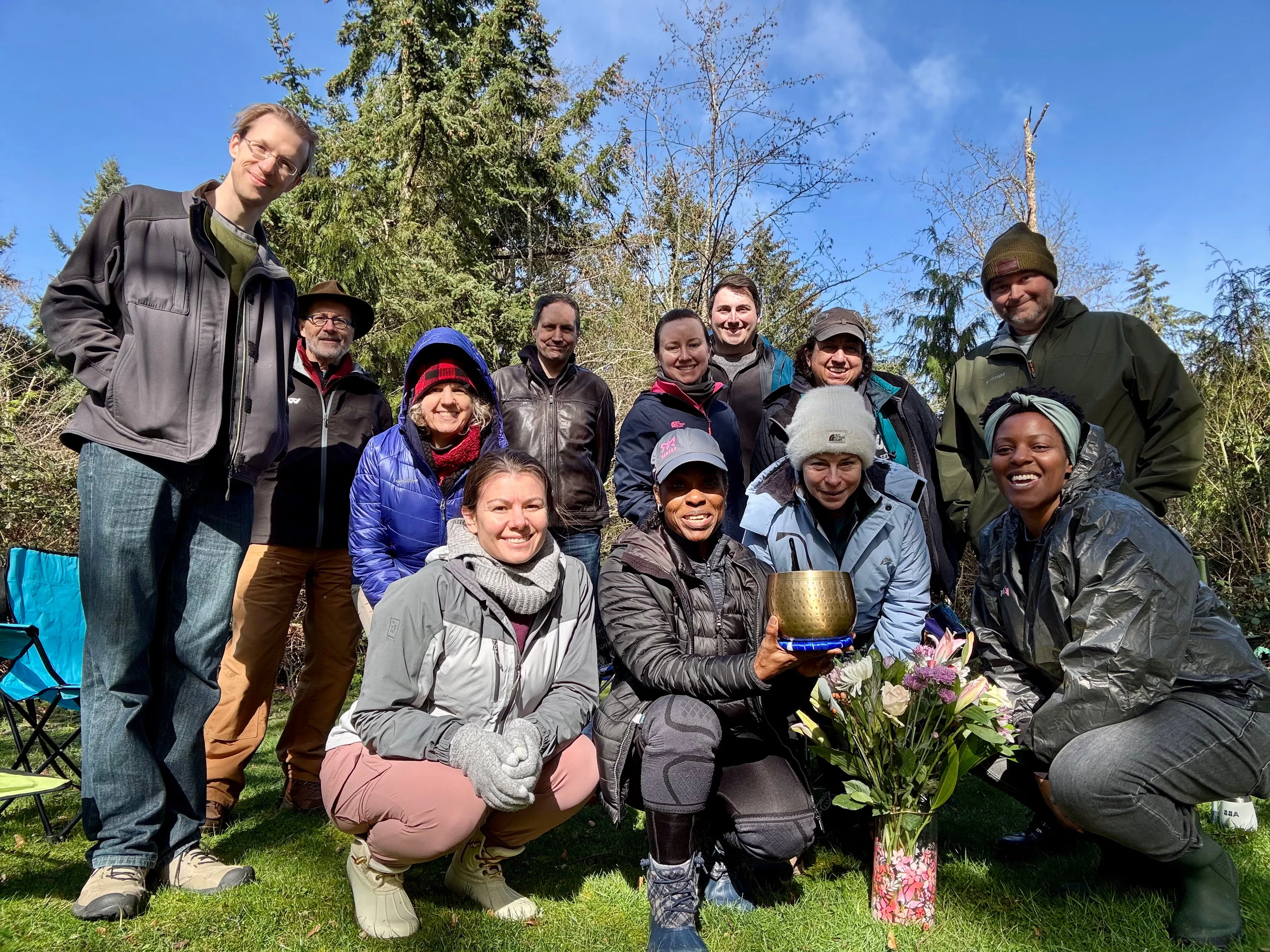
Harmony Mindfulness Community celebrating the spring Equinox at Dash Point State Park

I also hate that Big Tech owns my community.

Meetup.com is where we get new members, and how we organize events. Discord is how we keep in touch outside of meetings. My salary, which supports the group, even comes from Big Tech. My community is at the mercy of techno-capitalist overlords.

*I'm an Earthseed idealist, IYKYK

Why I attended ATmosphereConf

When I attended the conference, I wanted to answer two questions. Can I:

  • Get excited enough about ATProto to build something for my community?

  • Meet other idealists like me that want to support me and my goals?

I’d say the answer to both questions is yes. Through this blog, I hope to explain why.

On getting inspiration to build

On the idealism front, the presenters more than matched my energy. There were certainly many talks covering technical aspects of the protocol. But, most importantly, there were also talks about why the protocol is necessary, and what’s at stake if this protocol and others like it don’t succeed.

What I learned: federated social media is critical to democracy’s survival. If we want humans to reach each other and share information freely, we cannot allow social media to be controlled by a handful of oligarchs.

@sebastian.eurosky.social illustrated this best when he explained how Nazis used centralized ownership of the radio to capture the national narrative. It’s why Germany’s radio stations, to this day, remain federated. To prevent one single authority from exerting their will over the airwaves, Germany's radios must be free and independent.

We must do the same for social media.
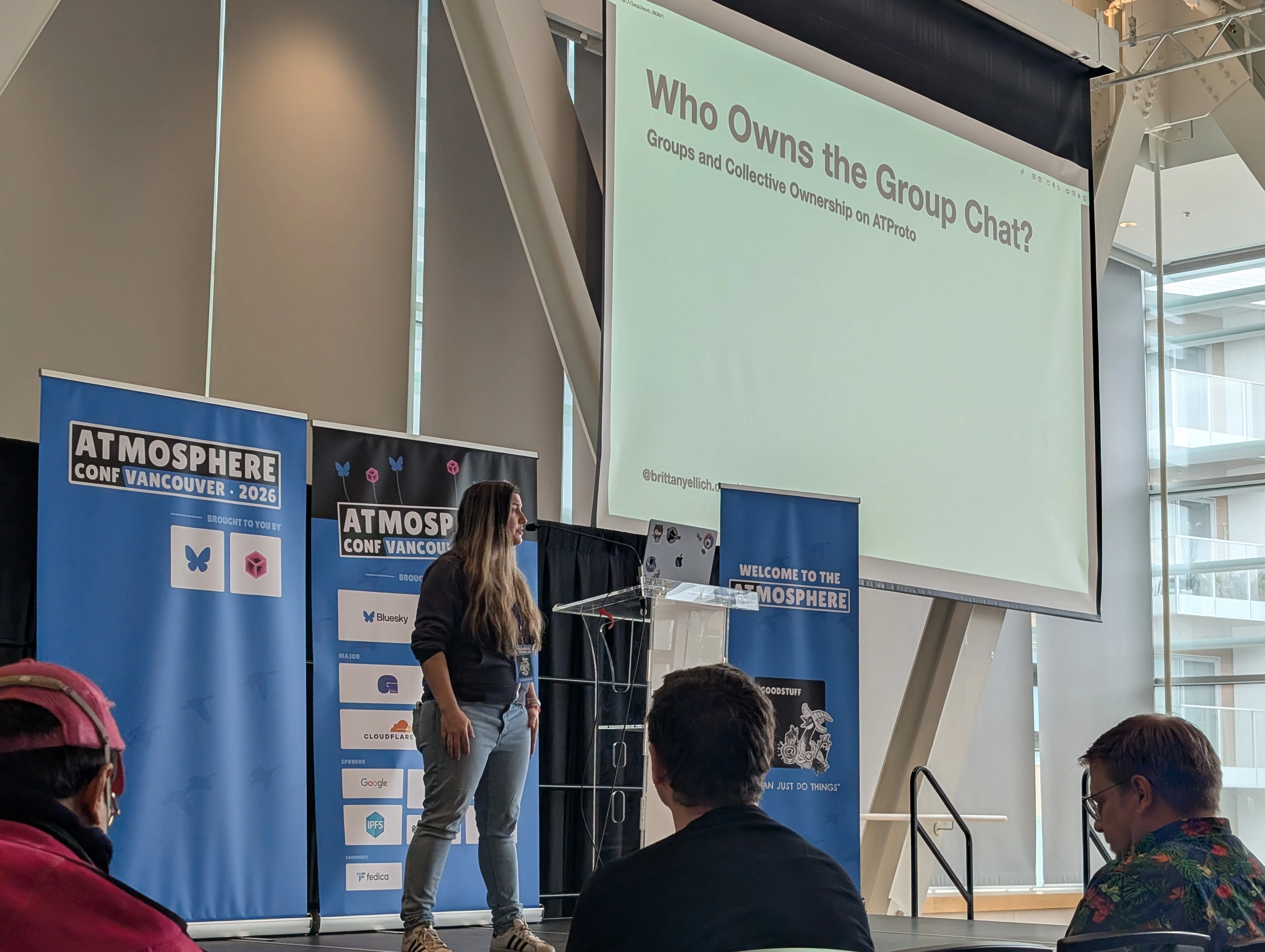
Brittany Ellich presenting her work creating OpenSocial.community

Some of my favorite talks on this were:

On the builder front, there were many opportunities to learn and get inspired. Friday contained a whole day of workshops to teach attendees how to consume and produce content in the ATmosphere. Unfortunately, I arrived too late to participate meaningfully, but the presenters were nice enough to share their repo of learning materials.

Throughout the conference, I also learned by just hearing about what others built. Some of my favorite talks include:

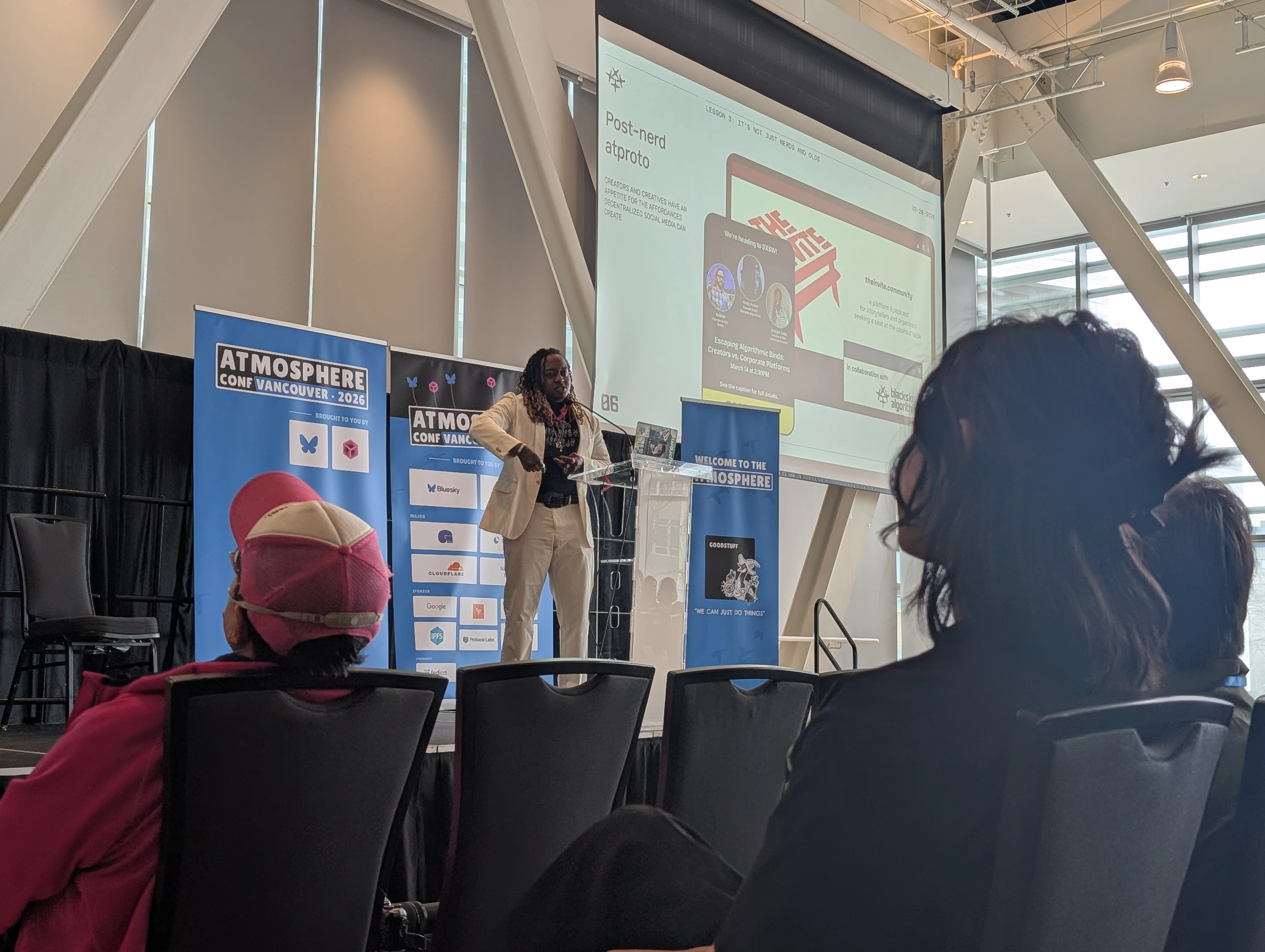
On meeting my peersRudy explaining that, if we want ATProto to survive, it needs to be more than just a place for nerds and olds

As an ATProto noob, I’m happy to report meeting people was fairly easy.

Part of this was because of the ethos of the conference: “we can just do things.” This meant, whenever anyone wanted to do a fun activity, they posted about it on #ATmosphereConf and invited people to link up. That’s how I met a bunch of people my first night - @julietshen.bsky.social made dinner plans, and suddenly I had 15 new friends.

This “we can just do things” spirit was infectious - I even felt bold enough to coordinate a small hangout to launch ATProto PDX. We're using this group to evangelize the protocol, connect technology and civic engagement, and help each other stay accountable to our projects.

I got so many good vibes from my fellow idealists, and I'm super excited about what we will accomplish.
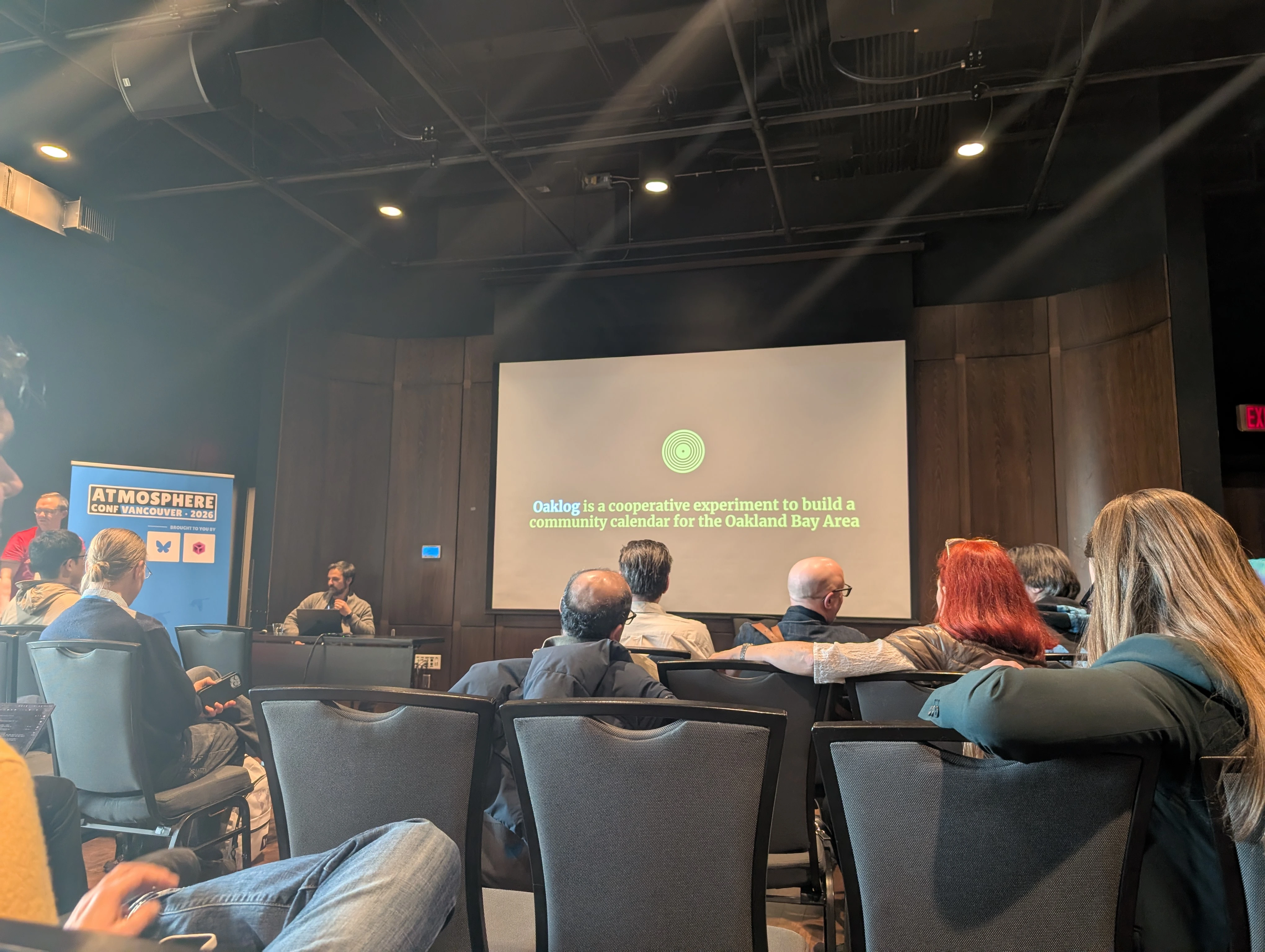
Glen Poppe's lightning talk about working together with several orgs to publish events using ATProtoFinal thoughts: it’s worth attending

If you’re a person like me that:

  • Is obsessed with communities, and

  • Believes technology should be used in service to humans to leave the world better than we found it,

I think the conference is worth attending. It’s a great opportunity to get new ideas, and learn how to use ATproto to support the causes you care about.

Some ideas to make next year even better for first-timers
  • Skip the question, “So, what are you building?” If we want this community to be welcoming for newbies, we need to be open to the idea that some attendees may not have a passion project yet. As a noob to the space, the question “what are you building” made me feel as though I needed A Thing to be deemed worthy enough to speak to, and that my (tech) project mattered more than who I am as a person. If you care about creating a welcoming space, I invite you to ask instead, "What inspired you to come to the conference?" This gives people the space to talk about their motivations, whether it’s technical, or human-centered.

  • Recruit conversation leaders as volunteers. As the conference gets larger, it will become more challenging for first-time attendees to make new friends. Big crowds are often overwhelming, and if you’re not naturally outgoing, it can be hard to spark conversations with strangers. Conversation leaders solve this. Their job is to spot the solo attendees, help them feel welcome, and - with the attendee's consent - connect them to similar attendees so they can leave the conference with new friends. Connectors are essential to a thriving community. Instead of hoping connections happen organically, we can encourage people to take on these facilitator roles in an official capacity.

  • Organize a meetup-meetup. Small groups can help new attendees make friends in a more welcoming environment than a large conference hall. A day before the meetup, organize a space where groups like regional hangouts, Blacksky, Northsky, etc. can meet each other and find buddies to attend sessions with.

I invite the conference leaders to consider these ideas for next year.

But, of course, “we can just do things” also means any one of us has the power to make these ideas happen.

Addendum:

I suppose you probably want to know my answer to, "So, what are you building?"

One perk of living in PDX? I live near @brittanyellich.com. I'm excited to use OpenSocial.Community over the next few months to build something special for my meditation community.

I'll be sure to keep you updated.

https://katexcellence.leaflet.pub/3micur26opc2t
On context catchup
Show full content

One behavior change that has decreased my burnout risk: when someone asks for help, i now place the burden of explanation on the asker instead of taking it on myself.

For example: people often tag me in super long threads with "Hey Kat, can you help us here?"

I used to respond with, "Sure let me catch up on context first"

But when i'm oncall and have many teams pinging me at once with "urgent" issues, this context catch-up is a huge burden

Now, i respond with - "Sure, can you tl;dr your ask?" That question alone has reduced so much of my workload and allows me to helpful to more people, quickly.

Another example: people often tag me with "hey kat, can you check on this?" I used to spend so much time deciphering what "this" meant in that context and what "check on this" meant.

Now, i respond, "Sure, how can i help?"

And then i continue whatever i was doing until they provide an answer.

¯⁠\⁠_⁠(⁠ツ⁠)⁠_⁠/⁠¯

https://katexcellence.leaflet.pub/3mcztwg7rsk2u
Learning to build without motivation
building when you don't got the juice
Show full content

It’s late.

I finally got done answering user questions as part of my on-call shift. Do I spend another hour learning Typescript (something I really don’t want to do)? Or, do I read a fantasy novel for some much-needed relief?

This is a situation I often find myself in, which has proven challenging for building side projects in my free time. How do I build outside of work when I don’t have the energy or motivation to do so?

But, first - who in their right mind would even want to build side projects during their free time?

Let me explain.

Why I’m building outside of work

A lot has happened since my last blog post.

The winter of tech layoffs still continues (or maybe it’s the new norm, who knows), employers are increasing their threats to replace workers with AI, and we’ve elected a president who - among many other charming qualities - is not likely to support a robust safety net for unemployed workers. For this reason, I’ve been toying with the idea of post-employment. Meaning, what would it look like if I needed to lend my services as an independent software engineer, versus an employee of X company?

The problem with that idea? I’ve been working as a small cog in a large machine for my entire career as a software engineer, and my skills have niched down from “how to build x” to “how to build x within this company’s sandbox.” Because many of the tools I work with are internal and I'm not at liberty to discuss my projects publicly, I’m concerned I will be forced into the labor market with limited skills and without a body of work.

With this in mind, my solution is to learn open source tools and build whatever I can in my free time to make myself as employable as possible.

Which brings me back to my first question - how do I build outside of work without the necessary energy or motivation?

Building when you don’t got the juiceRemember: any progress is progress

If it feels like you’re progressing very slowly, remind yourself that you are still making progress. As long as there isn't a pressing deadline hanging over your head, you don’t need to stress about velocity. The car will reach the destination whether it’s driving at 45 mi/hr or 80 mi/hr. The important part is the forward movement, and your persistence towards meeting the goal.

I often have to remind myself of this when it feels like I’m going “too slow.” I finally finished the first chapter of a full stack course, and it took me about a month to do it. But I also did it while going to the gym, going out to see friends, going on hikes, leading a meditation group, getting 8 hours of sleep, etc. etc.

My progress may not be perfect, but it’s forward movement that’s sustainable for my quality of life.

Develop a system that works for you

Something I’ve learned - a goal without a system is really just a dream. Your system doesn’t need to be perfect. But it needs to be practical and actually work for you (not some ideal version of you that wakes up every morning at 5AM).

Here’s how my system works for me:

  • I start work an hour early (since I’m a natural early bird), and use that last hour to work on my side project. This approach does have its challenges, since my team often needs help with urgent tasks throughout the evening, but it's better than nothing.

  • I also have a daily routine journal of simple tasks like brushing my teeth, making up the bed, doing physical therapy exercises, etc. By including building time as part of my daily routines, it helps lower the emotional burden of work. It's just part of what I do everyday.

  • Since I’m more likely to do something if other people are depending on me, I started a study group to keep me accountable. It's hard to slack off when people are expecting you to be ready and prepared to lead a study session!

Again, it’s not a perfect system, but it keeps me moving forward.

Finally, give yourself grace

If this were easy, everyone would be doing it. So, be kind to yourself - building outside of work is very hard! Some days you won't have the juice, and that's okay. The important part is being persistent. Eventually, you will reach your goal.

https://katexcellence.leaflet.pub/3mcsvraog4c26