GeistHaus
log in · sign up

jabel

Part of jabel.blog

stories primary
https://jabel.blog/2026/05/18/today-i-learned-that-the.html

Today I learned that the East Fork of the White River (which runs south of town) is called Aankwaahsakwa Siipiiwi by the Miami people. This translates to “Driftwood River”–which is a far better name that East Fork of the White River!

http://jabel.micro.blog/2026/05/18/today-i-learned-that-the.html
Extensions
The disappearance of Mr. Robert Kirk

Andrew Lang’s introduction to The Secret Commonwealth of Elves, Fauns, and Fairies:

[The author, Robert Kirk] died (if he did die, which is disputed) in 1692, aged about fifty-one; his tomb was inscribed–

ROBERTUS KIRK, A.M.
Linguæ Hinberniæ Lumen.

The tomb, in Scott’s time, was to be seen in the east end of the churchyard of Aberfoyle; but the ashes of Mr. Kirk are not there. His successor, the Rev. Dr. Grahame, in his Sketches of Picturesque Scenery, informs us that, as Mr. Kirk was walking on a dun-shi, or fairy-hill, in his neighbourhood, he sunk down in a swoon, which was taken for death. “After the ceremony of a seeming funeral,” writes Scott, “the form of the Rev. Robert Kirk appeared to a relation, and commanded him to go to Grahame of Duchray. ‘Say to Duchray, who is my cousin as well as your own, that I am not dead, but a captive in Fairyland; and only one chance remains for my liberation. When the posthumous child, of which my wife has been delivered since my disappearance, shall be brought to baptism, I will appear in the room, when, if Duchray shall throw over my head the knife or dirk which he holds in his hand, I may be restored to society; but if this is neglected, I am lost for ever.'” True to his tryst, Mr. Kirk did appear at the christening, and “was visibly seen;” but Duchray was so astonished that he did not throw his dirk over the head of the appearance, and to society Mr. Kirk has not yet been restored. This is extremely to be regretted, as he could now add matter of much importance to his treatise. Neither history nor tradition has more to tell about Mr. Robert Kirk, who seems to have been a man of good family, a student, and, as his book shows, an innocent and learned person.

Legend has it that he was taken so that he could serve as chaplain to the Fairy Queen.

http://jabel.micro.blog/2026/05/18/the-disappearance-of-mr-robert.html
Extensions
https://jabel.blog/2026/05/17/gordon-so-a-broken-heart.html

Gordon: “So a broken heart is also a heart that is breaking open so that it becomes larger, so that it can hold more of the grief and the love and the joy and the pain of the whole cosmos. That is what it is for. That is what you are for.”

Brother Ali: “I’m using my heart for / what hearts are for.”

http://jabel.micro.blog/2026/05/17/gordon-so-a-broken-heart.html
Extensions
https://jabel.blog/2026/05/17/jack-leahy-it-is-incredible.html

Jack Leahy:

It is incredible to me that we humans can live a long, full lifetime on this planet and be unwilling to face the brokenness of our lives and the destruction we have caused ourselves and others. I know shouldn’t get angry about it, but I sometimes do. I hope I can do better when my time comes, but who knows? One of the realizations I had while meditating in the cabin was that we humans, so capable of surviving nearly any catastrophe, no matter how horrific are—at our hidden core, in our most tender and utterly vulnerable ways—so easily broken and nearly impossible to fix. … We can traverse our entire lifetimes in a self-venting miasma of dysfunction so total that it becomes nearly invisible, and never really know why.

http://jabel.micro.blog/2026/05/17/jack-leahy-it-is-incredible.html
Extensions
Trickster Squirrel

George Hansen, The Trickster and the Paranormal:

the trickster is a character type found in mythology, folklore, and literature the world over; tricksters appear as animals, humans, and gods. They have a number of common characteristics, and some of their most salient qualities are disruption, unrestrained sexuality, disorder, and nonconformity to the establishment. They are typically male. Tricksters often deceive larger and more powerful beings who would thwart them; they may be endearingly clever or disgustingly stupid—both cultural heroes and selfish buffoons.

Some other words Hansen uses to describe the trickster:

  • boundary crosser
  • combination of opposites
  • liminal
  • ambivalent

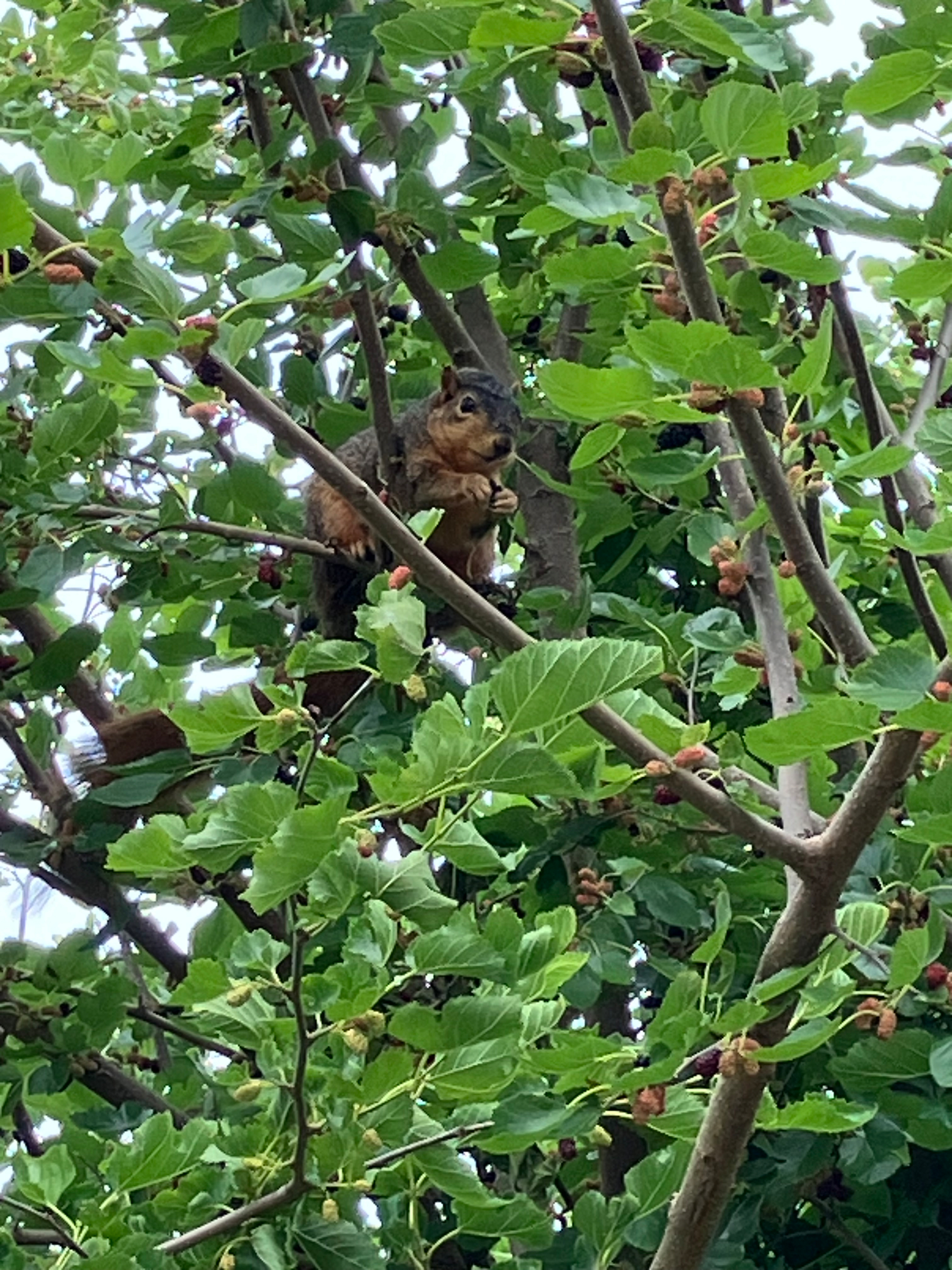
The fox squirrels of Green Man’s Patch are consummate tricksters.

On one hand, they are a joy to watch: their intelligent paws, nimble speed, and graceful leaps from fence to roof. We love to see Farmer Squirrel at work in the fall, burying his forage in every garden bed.

On the other hand, they are destructive. No device yet invented by humankind can keep them out of bird seed. Their graceful leaping is less pleasing when they are landing on your sunflowers, bringing down every last one of them, as they did to us last year. Worse yet, they might leap onto your bald head, as they did to my dad one Sunday morning in the eighties.

Yet Trickster Squirrel is not evil; he is merely unconcerned with human rules. He does not recognize property lines or human intentions around bird seed. He laughs at our attempts to contain him.

He occupies a liminal zone, being a wild animal in an city garden. He is equally at home in his nest high in the tree, dancing down the fence line, or blazing across the ground when he spots the cat. He crosses between the heavens and earth; as much air as flesh.

Trickster Squirrel reminds us town-dwellers that only humans pay attention to the planning commission. In his petty thievery and raucous merry-making, he shows himself to be a realist of a larger reality.

http://jabel.micro.blog/2026/05/15/trickster-squirrel.html
Extensions
Godspeed, Gordon

This morning I was watching Gordon White’s tribute to the recently-departed Peter Carroll. I’ve never read any of Carroll’s books and I doubt I ever will. I was watching for the same reason I read or watched nearly everything Gordon produced: you never knew when he would drop some jewel of knowledge or practice. He ended the video with a prayer that Carroll would be seated as an ancestor of practice.

I switched over to my email app and saw an “Announcement” email from Gordon’s Rune Soup community timestamped just moments before. Gordon had died while travelling in Peru. Shock doesn’t begin to describe it. I would guess he’s about my age (though he will always be remembered as forever 27 😉) and he was so full of plans for new work and ideas for the community.

Everyone here knows about the influence Wendell Berry has had on my life. I haven’t talked as much about Gordon–mostly because I never imagined I’d be talking about his work in the past tense for many years to come. Also because the material he covered isn’t something many people here would seem to have much interest in; in fact, some folks might have little patience for it. (If you’re one of the latter, please don’t tell me. I am emphatically not in the mood.)

Rune Soup started as a blog, then a podcast, then a membership community centered on the Western esoteric and magical tradition, including eventually animism and indigenous shamanism. I’m not sure when I discovered it–probably a decade or more ago? I think my first encounter was when I first came across the term “animism” as a contemporary worldview and not just an insult hurled at indigenous communities by racist anthropologists. I was fascinated by the idea and searched Twitter for it. Many of the folks discussing it had #RSPM in their bios. More digging, and I discovered that hashtag referred to Rune Soup Premium Membership. Down the rabbit hole I went. I started listening to the podcast, reading the blog, and following all of the #RSPM accounts. I joined the membership some time later. I quit for a time but then re-joined in late 2020.

I didn’t always agree with Gordon–and the great thing about him was he never presented himself as a spiritual teacher demanding to be followed. He was irascible and extreme sometimes. He was also astonishingly smart and had an ability to draw together ideas and practice in ways that will not soon be matched.

I’ve never really been what would be called a magical practitioner, especially in the ways that were most prominently discussed in Rune Soup (grimoires, etc.). What Gordon did for me was re-enchant the world. He exposed me to ideas that have become fundamental to who I am, animism being only one of them. And, as one person said in a remembrance this morning, he got me to pray again–and that’s no small thing. He helped me find a way to re-engage Christianity. That engagement would not satisfy traditional Christians, of course, but it has been vital to me.

Gordon has been one of the most important, ongoing teachers of my adult life. I’ve cried more over his death today than I would have expected. The work will go on, of course, but he himself is irreplaceable. His combination of gifts will be deeply missed by me. It’s absurd that he’s gone. It’s way too early, and there’s too much going on.

But, in a very Gordon move, I will quote Lord of the Rings: “A wizard is never late, Frodo Baggins. Nor is he early. He arrives precisely when he means to.”

http://jabel.micro.blog/2026/05/13/godspeed-gordon.html
Extensions
The bodies of peasants

Patrick Joyce, Remembering Peasants:

How little we know about these bodies, these bodies that do the eating! Our ignorance is fed by our assumption that peasant bodies were the same as our bodies. They were not. The difference can be summarized thus: we have bodies, which we carry about in our minds, whereas they were their bodies. The head had not yet won victory over the medieval notion of the bowels as the centre of the body. Food, in the eating, went straight to this centre. In France in the late nineteenth century, the head still did not have much to do with reason. In Gascony, there was no patios word for brain, and ‘ideas’ weighed not on the mind, but on the stomach.

http://jabel.micro.blog/2026/05/12/the-bodies-of-peasants.html
Extensions
The grace of peasants

Patrick Joyce, Remembering Peasants:

And here we might step back a moment and consider that something of great weight may be going on here, with this matter of the morality of ordinary life, and with the word ‘grace’ in particular. For a word that is traditionally applied to the lord seems equally and perhaps more applicable to the peasant, one who is decorous, courtly even. Where does being civilized really reside? Where is ‘civilization’ to be found? The anthropologist Julian Pitt-Rivers was deeply interested in the concept of what he called grace in what he termed traditional societies. The subject of Pitt-Rivers’ anthropology was the peasants of twentieth-century Adalucian Spain, not its aristocrats. As he puts it, ‘grace is inspired by the notion of something over and above what is due, economically, legally, or morally; it is neither foreseeable, predictable by reasoning, nor subject to guarantee.’ It is the gift freely given, a sort of cousin to ‘honour’. As such it infuses peasants’ social relations. Rather than being based on the expectation of reciprocity, it is instead rooted in sacrifice, which is at the root of grace. What is involved is ‘an expression of friendship, respect, appreciation, love, which comes from the heart, not from a sense of obligation; as such, it is a vehicle of grace, and it can be returned, as it must be, only in the form of grace.’ What nullifies grace is the parasite, the witch, the sycophant, the usurer, the graceless ones of the world, big and small.

… We need to be aware that peasant societies are societies of the gift, not the commodity, like our societies. What is given should be given freely; that which is given without expectation of return feeds the giver again and again.

http://jabel.micro.blog/2026/05/12/the-grace-of-peasants.html
Extensions
A game no one wins

“The man with an experience is never at the mercy of the man with an argument,” said the Holiness preacher. This line keeps coming back to me this year.

It can and did indicate anti-intellectualism. I prefer to frame it, however, in terms of anti-rationalism, the critique of the idea that the rational mode of thought is, or at least ought to be, the clearest path to truth.

Fresh out of Holiness churches during my cage stage Lutheranism, my parents, Rachel, and I were having Sunday dinner. I recall saying something about how Lutheran theology covered so much more of the Bible than Holiness teaching ever did. I mentioned the verse, “Whatsoever ye shall bind on earth shall be bound in heaven: and whatsoever ye shall loose on earth shall be loosed in heaven” and described the theology of confession and absolution.

My dad was not impressed. In turn, I challenged him to tell me what he thought that verse meant. He struggled, and I pounced, “You can’t just ignore whole sections of the Bible. That’s the problem with the Holiness churches.” He got angry and stormed off.

To my shame, I did not realize until some time later what an ugly thing I had done. I had humiliated him and—because this always spikes the punch—I had done so in an act of religious superiority. Ain’t no high like self-righteousness.

By the standards of intellectual warfare, I had won; in every way that mattered, I had lost. I was playing a game—and let’s not fool ourselves: intellectual argumentation is a game—while my dad was holding the life preserver of his experience. He had come so far from his origins in an alcoholic home. He revered his in-laws like saints, and their religion was good enough for him.

I was a young punk who thought I had found the truth. I put on theology like a suit of clothes: well-tailored, pressed, and respectable.

Looking back now, I see how the simple faith—riddled with however many contraditions you care to name—held by my dad, grandparents, and who knows how many others of my ancestors, carried them through hard times my 25 year-old self knew nothing about. He was never at my mercy.

I imagine myself watching that moment in the dining room, whacking that young punk on the back of his too-full head with one hand and catching my dad with the other. I don’t know what I’d say, except to insist that the one should stay and the other should shut the fuck up for a minute.

http://jabel.micro.blog/2026/05/12/a-game-no-one-wins.html
Extensions
Appalachian beans

Having read the beans section of The Foxfire Book of Appalachian Cookery, I went in search of heirloom seeds. Behold, the Sustainable Mountain Agriculture Center. After a bit of poking around, I settled on Doyce Chambers Greasy Cut-Short and some Pine Mountain Greasy. The former because they have a solid reputation and the latter because Pine Mountain is not all that far from my ancestral Kentucky counties. They both should be good for either cooking in the pod or drying as soup beans.

http://jabel.micro.blog/2026/05/11/appalachian-beans.html
Extensions
https://jabel.blog/2026/05/11/pete-at-just-a-few.html

Pete at Just a Few Acres Farm is signing off YouTube. I’m genuinely sad to see him go. Also, unsurprised: being a human being and not an influencer, he’s struggled with the perversities of the platform for years. I’m thankful for the hours of pleasure he’s given us. I’ll keep watching re-runs.

http://jabel.micro.blog/2026/05/11/pete-at-just-a-few.html
Extensions
https://jabel.blog/2026/05/11/traditional-irish-prayer-quoted-in.html

Traditional Irish prayer quoted in Remembering Peasants:

With the powers that were granted to Patrick I bank this fire.
May the angels keep it in, no enemy scatter it.
May God be the roof of our house.
For all within
And all without,
Christ’s sword on the door
Till tomorrow’s light.

http://jabel.micro.blog/2026/05/11/traditional-irish-prayer-quoted-in.html
Extensions
A culture of centers

Patrick Joyce, Remembering Peasants:

[In Irish houses of the old style] it is bad manners to knock and for the host to keep you waiting at the door. You go into the house to the fire, the fire the centre of the hearth, the hearth the centre of the kitchen, the kitchen of the house, the house of the farm (‘the home place’), and so onwards goes what Glassie calls a culture of centres, one around which cyclical time revolves. Only illness brings you into the bedrooms in daylight, and being confined to ‘the room’ for any reason is ‘like walking the road on your lone’. ‘It put me in that much despair, I could go up into the room,’ one woman says to Glassie. One should stay by the fire, ‘in company’.

http://jabel.micro.blog/2026/05/11/a-culture-of-centers.html
Extensions
Prophesy, son of man

We were visiting with my in-laws this evening, talking about all sorts of things. Eventually the conversation turned to our worries about caring for my mom. My mother-in-law had been talking about her experience caring for a relative when, at one point, she launched into the most powerful two-minute sermon about trust in God I’ve ever heard. I had tears in my eyes. If she would have made an altar call, I would have responded. And I’m not sure how much I’m joking when I say that.

There was such power in what she said, built as it was on hard-won, battle-tested experience. I felt myself being lifted up into it. And I believe every word of her testimony, even if I would frame it differently; my theology, such as it is, can accommodate her experience. But in that moment, my theology and theories and ideas were chaff in the wind of the Spirit blowing through that house.

That (I am pointing emphatically) is what matters. That is what passes through the valley of the shadow of death, fearing no evil. Right now I am pushing away my instinct to frame that experience inside an idea. Rather, I am thankful simply to have been there. “The wind bloweth where it listeth, and thou hearest the sound thereof, but canst not tell whence it cometh, and whither it goeth.”

http://jabel.micro.blog/2026/05/10/prophesy-son-of-man.html
Extensions
https://jabel.blog/2026/05/10/not-going-to-be-a.html

Not going to be a lot of work on projects this weekend. Yesterday I met up with Todd for lunch in Edinburgh and had a great time. Today will be some family visits, being Mother’s Day. I did, however, get the serpentine belt replaced on the truck. Very easy and far cheaper than a mechanic’s bill.

http://jabel.micro.blog/2026/05/10/not-going-to-be-a.html
Extensions
Drawn to our grandparents

A friend recently said that he identifies more with his grandparents than his parents. I agreed, and with some more thought I think I know why.

A brief overview of the four turnings model of Anglo-American history, if you’re not already familiar. Quotes are taken from the book, focusing on the last two cycles. I suspect historians would hate the four turnings idea, but it’s been a very useful mental model for me.

First Turning: High

an upbeat era of strengthening institutions and weakening individualism, when a new civic order implants and an old values regime decays

  • Reconstruction and Gilded Age (1865-1886)
  • American High (1946-1964)

Second Turning: Awakening

a passionate era of spiritual upheaval when the civic order comes under attack from a new values regime

  • Third Great Awakening (1886-1908)
  • Consciousness Revolution (1964-1984)

Third Turning: Unraveling

a downcast era of strengthening individualism and weakening institutions, when the old civic order decays and the new values regime implants

  • World War I and Prohibition (1908-1929)
  • Culture Wars (1984-2008)

Fourth Turning: Crisis

a decisive era of secular upheaval, when the values regime propels the replacement of the old civic order with a new one.

  • Great Depression and World War II (1929-1946)
  • Millennial Crisis (2008-2033?)

In this model, my friend and I came of age in an unraveling era–and so did our grandparents. Our parents, on the other hand, came of age during a high age, which is very different from a time of crisis. Now that we are facing in the midst of the crisis, we are naturally drawn to those who faced such times before.

http://jabel.micro.blog/2026/05/08/drawn-to-our-grandparents.html
Extensions
The peasant home

Patrick Joyce, Remembering Peasants:

The dwelling is also a constitutive part of the relationship between past and present generations, between the living and the dead. Something handed on, or hoped to be handed on, something to be received. When the dead have a foundational role in human life, as is the case with peasants, then the house takes on a cosmological significance. But the house remains eminently material at the same time. There is also that other house, the one where the dead dwell, the graveyard. So, the place of burial is yet another dwelling place in the peasant village, one always of the greatest importance. The word human comes from the Latin word humus, meaning earth or ground. We are made from the earth to which we will return. The place of inhumation is, or at least was, as surely as the dwelling house, an indication of the sense of having a place in the world, of taking possession of a place and securing it as one’s own.

There is a story by Pirandello in which he refers to a Sicilian baron who refused to let the peasants bury their dead on his land, because he knew that if they did they would come to regard it as their own by natural right - to regard it as their house. The peasants who oppose him, even though the land is in the baron’s ownership, in fact regard the land as already theirs, the dead needing to be buried on ‘our land,’ so that the living can be near them in order that they may be watched over and cared for. In times not so far in the past, where land was owned the custom was that the dead be buried there and not in a cemetery. At the same time as the living watch over the dead, the dead watch over and care for the living; in Corsican culture the dead elders of the house retain in death the authority they once possessed in life.

http://jabel.micro.blog/2026/05/08/the-peasant-home.html
Extensions
The Magic Mountain

Still trawling the archives. I used to have a Buttondown newsletter. The following—a themed issue rather than the usual “what I read this week” format—is the only thing I’ve found worth saving from that era. Reading The Magic Mountain every morning over that winter of 2018-2019 remains as a happy memory.

Welcome, friends. You can only come across so many references to a novel before you decide you need to read it for yourself. That’s why I started reading The Magic Mountain by Thomas Mann.
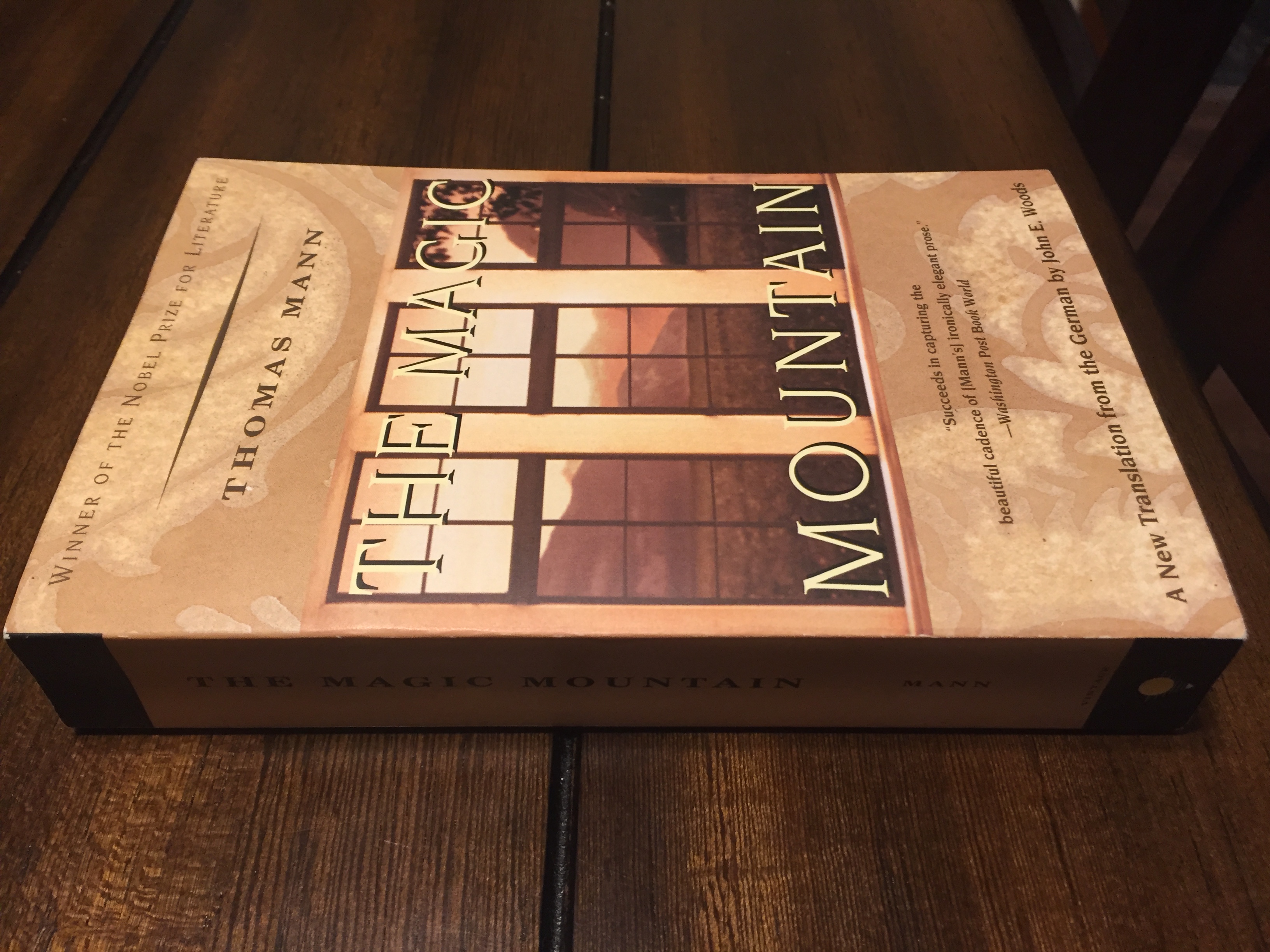
It’s the story of Hans Castorp, “an ordinary young man” who visits his cousin Joachim at the Berghof sanatorium in the Swiss Alps where residents are treated for tuberculosis. Although he plans to visit for only three weeks, Hans is eventually diagnosed with a “moist spot” - a sign of tuberculosis - and stays for seven years. The novel follows Hans' development as he falls in love with a mysterious Russian and befriends, in turn, a humanistic disciple of the Enlightenment, a reactionary Jesuit, and a Dionysian Dutchman. It ends with the outbreak of the First World War, when our hero leaves the Berghof for an uncertain fate.
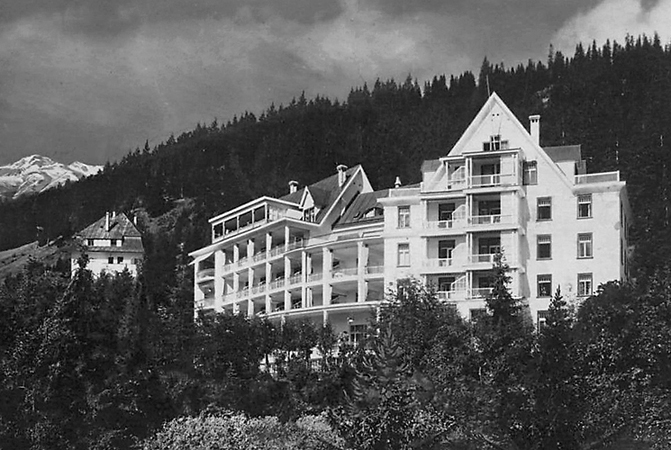
Image: The Wald Sanatorium in Davos (ca. 1920), where Mann took his wife to be treated and which inspired his novel.


Tuberculosis ravaged Europe in the age of Romanticism (a movement in reaction against the Enlightenment). That historical coincidence led to a blending of poetry with an idealization of disease, as in the poetry of John Keats. Hans Castorp brings to the sanitarium a “sympathy with death” which he absorbed from this milieu.

Image: Sketch of John Keats on his deathbed by Joseph Severn


Early in the novel, Hans Castorp is warned by Settembrini that while it is pleasant to experiment with ideas, it would be safer for Hans to patiently learn what Settembrini has to teach him. And he does learn from Settembrini, but while also learning from others and maintaining a critical distance from them all.

The Berghof sanitarium - the magic mountain - is a hermetic place, sealed off from the influence of the “flatlands” and yet a place of transformation. When we meet Hans, he is a chatty, bourgeois engineer. By the time we leave him, he has passed through seven years of individuation. He has watched his would-be teachers run up against the limits of their ideologies. He has experienced serious losses and entered into a “great stupor”. It is only war that draws him out of his lethargy and forces him out of the sanitarium.

C.S. Lewis said he would be happy “to be always convalescent from some small illness and always seated in a window that overlooked the sea, there to read these [Italian Renaissance] poems eight hours of each happy day”. But the world makes too many demands for that. Individuation is not neoliberal self-help aimed at creating better workers. It is a process of becoming who you are, experimenting with ideas, and experiencing losses. It is an alchemy, moreover, intended to situate you in the world of demands, to carry you down from the magic mountain and into the world of conflict.
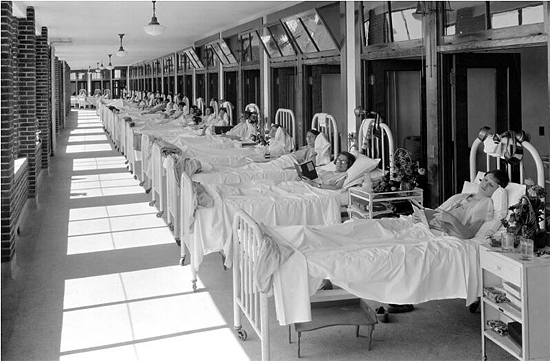

Image: Residents taking their “rest cure” at a sanatorium. It was believed that the high altitude and crisp air of the Alps contributed to the cure of tubercular residents.


Why The Magic Mountain has particular relevance for our time. Ignore the writer’s nonsense about the book being tedious. It is long though…

http://jabel.micro.blog/2026/05/07/the-magic-mountain.html
Extensions
Rare earth

I continue to come across some old drafts as I clean out my Dropbox. Here is a poem that I can’t date exactly–maybe a couple of years ago?

I listened to a podcast today
about rare earth minerals.
It didn’t help my mood.
As the rage built inside me,
I imagined writing a poetic diatribe.

But I’m tired.
And my tooth hurts.
And I’m just so sad about everything.

What good would it do,
artfully arranging words while
the earth is cracked open
and the bodies of the poor are broken
and we here in America await news
of the next goddamn iPhone?

God damn the iPhone.
God damn the killing technology.
God damn me and you,
playing games and scrolling scrolling scrolling
on devices scratched from the bones of our
rare earth.

http://jabel.micro.blog/2026/05/06/rare-earth.html
Extensions
https://jabel.blog/2026/05/06/a-company-man-for-usa.html

“A company man for USA, Inc.” I had an old draft that ended with that line but apparently I deleted it a couple of nights ago. Oh well! Feel free to use it for a folk protest song.

http://jabel.micro.blog/2026/05/06/a-company-man-for-usa.html
Extensions
A land full of people

Patrick Joyce, Remembering Peasants:

The means of survival is land. Peasants do not see land like we do. We see land in terms of ‘nature’ , something separated from the artificiality of humankind’s creations, or, if these creations are included, then the natural, the supernatural and the unnatural are distinguished one from another. ‘Nature' does not convey peasant reality, though we like to think it does. It is for peasants a semantically empty category, and there is little iconic or verbal representation of it in what records peasants have left (although educated peasants writing for an audience of non-peasants do embrace the idea sometimes). From the point of view of the vast majority of peasants, there are, on the other hand, meadows, a river, the sky. For peasants the land is useless without their own work upon it, it will not be domesticated, ‘It will not open and it will not close', as is said in Poland. Marcin Brocki cites peasant words collected by the anthropologist Jacek Olędzki in the Poland of the 1960s: ‘I like it where the plain is; when I was in America I saw a mountain, and this was an awful view. And when it’s flat wherever you look, so that you could roll an apple, that is beautiful. Where you are perfectly flat, a lake, that’s beautiful. And when there are mountains, sands, forests, you don’t even want to come back.’ There is fear and even hatred of the wild, so unlike our veneration of wildness and the wilderness. The wild as our sublime makes no sense to the peasant.

The ideal of “nature” as a landscape untouched by humans is a legacy of twentieth century environmentalism that is best left behind. For one thing, what we have often thought to be “untamed wilderness” was, in fact, a vast garden tended by generations of native peoples. The Amazon, for example.

Another reason to leave that ideal behind is that ecological thinking desperately needs an animist turn. I am truly thankful for every effort to preserve land from development. The Sycamore Land Trust does work like this locally and I’ve walked their trails enough over the years to see the great value in it. At the same time, that cannot be the only strategy. We need to bring in something of that peasant view of the land as the locus of work. We need a land that is thoroughly peopled with human and non-human persons, working together in mutual flourishing.

http://jabel.micro.blog/2026/05/06/a-land-full-of-people.html
Extensions
https://jabel.blog/2026/05/04/im-moving-stuff-out-of.html

I’m moving stuff out of Dropbox so I can stop paying for it. I found this in a drafts folder but I have no memory of it. So I post it here, contextless.

Time is a stalking beast,
Watching, waiting to bring you down.
But we are distracted,
Unconscious of the danger.

http://jabel.micro.blog/2026/05/04/im-moving-stuff-out-of.html
Extensions
https://jabel.blog/2026/05/04/still-listening-to-the-new.html

Still listening to the new David Benjamin Blower while cranking through month-end closing today.

Where there are feet upon the earth there is a village hall
Where there is prayer there is a temple and a gathering
This is an event
This is a happening
God dwells in tents where the beasts sing
God dwells, God dwells here with everything

http://jabel.micro.blog/2026/05/04/still-listening-to-the-new.html
Extensions
Stages of Love

Everyone knows about child development; adult development is less appreciated. One aspect of adult development is the maturation of long-term love.

Young Love
This is the period characterized by looking long and deeply into the lover’s eyes. The world disappears and the only thing that matters is what is seen in those scrying orbs. This period is well documented (see the pop music charts of the last seventy years) and, unfortunately, grasped too tightly by people who do not realize it is meant to be a phase, not a permanent condition. That mistake is the source of a great deal of misery.

Striving Love
This is the period in which the lovers break the mutual gaze long enough to begin building the world seen in each other’s eyes. The mutual gaze is re-engaged less and less often because they’re busy! This is also the most perilous time of the relationship (see the country music charts of the last seventy years). The danger lies in two directions: 1. The work is hard and one or both lovers begin to question if it is worth it. 2. One or both lovers fail to mature through this transitory phase, wishing for the young love phase, and begin to look elsewhere for a new start.

Adept Love
This is the period characterized by the lovers side by side, looking out at the world they have built together. Not so much of the mutual gaze these days; it has been replaced by a rooted knowing, a deeply felt steadfastness. The lovers are no longer those young people with hearts aflutter or the hardworking-yet-anxious lovers of the middle period. They have become the fertile ground out of which grows the future.

Future Phases?
Meet me back here in twenty years, as we approach fifty years of marriage and seventy years of age, and I’ll tell you what I’ve learned.

http://jabel.micro.blog/2026/05/04/stages-of-love.html
Extensions
Pimento cheese

Made pimento cheese for a gathering of friends tonight. I’ve always loved pimento cheese but this is the first time making it. So simple.

  • 2 cups shredded cheddar cheese (shred it yourself; it’s cheaper!)
  • 4 oz diced pimentos
  • 1-2 tsp mustard
  • salt and pepper
  • small amount of grated onion, to taste
  • a few or many dashes of hot sauce
  • 1/2 cup mayo (added a little at a time until you get to the desired texture)

Mix together and chill for at least 30 minutes. Eat with Ritz crackers. Or with bread. Or by the spoonful. I ain’t your boss.

http://jabel.micro.blog/2026/05/02/pimento-cheese.html
Extensions
https://jabel.blog/2026/05/01/im-not-sure-how-i.html

I’m not sure how I heard of David Benjamin Blower or when I followed him on Bandcamp but I’m glad today that I did. His new album is great. “Apocalyptic folk,” he calls it, and that certainly got my attention. 🎵

http://jabel.micro.blog/2026/05/01/im-not-sure-how-i.html
Extensions