GeistHaus
log in · sign up

Greg's Blog

Part of wordpress.com

stories
Guns, Germs, and Steel: The Fates of Human Societies review
Uncategorizedbooksreviews
Guns, Germs, and Steel: The Fates of Human Societies by Jared Diamond My rating: 4 of 5 stars I remember this book being a big deal back when it came out *checks* 30 years ago?? *avoids thinking about my own mortality* I will admit that before reading it I first checked Wikipedia to see if … Continue reading "Guns, Germs, and Steel: The Fates of Human Societies review"
Show full content

Guns, Germs, and Steel: The Fates of Human SocietiesGuns, Germs, and Steel: The Fates of Human Societies by Jared Diamond

My rating: 4 of 5 stars


I remember this book being a big deal back when it came out *checks* 30 years ago?? *avoids thinking about my own mortality* I will admit that before reading it I first checked Wikipedia to see if it had been discredited in the meantime. (the verdict seems to be that there are criticisms but it mostly stands up!)

A friend of mine was pretty into this book, and so I heard a short summary of it many years ago. Over the years, my brain turned that into “Europeans were successful at colonizing because they had guns, germs, and steel”. This is true, but the book is much more about how they got guns, germs, and steel ahead of other societies.

It’s a well-written book, and I learned a lot, but it’s also over 400 pages and by the end I was flagging. I was “stuck” on this book for a while and eventually convinced myself to read a chapter a day.

The broad strokes of the argument are as follows: in order to get technology like guns and steel, you need to move from hunting and gathering to agriculture, because this provides a lot more food and so your society can get bigger and not everyone has to be focused on producing food. Domesticating animals also helps farmers be more productive, plus it increases the chances for animal borne diseases to mutate and spread to humans. (this is a bad thing on an individual level, but kind of good societally because the people that survive will be immune and can spread it to other societies)

Indeed, agriculture was more established in Europe than in other places. So why is that? Well, one reason is that there are a surprisingly small number of crops that are easy to grow and people can eat; perhaps several hundred. Even today, just twelve of these account for over 80% of the annual tonnage of all crops. (wheat, corn, rice, barley, sorghum, soybean, potato, cassava, sweet potato, sugarcane, sugar beet, and banana) (pg 123) Anyway, the Fertile Crescent had many of these crops together with a good growing climate, and the Fertile Crescent is between Europe and North Africa.

Another big factor is the fact that Europe is mostly oriented on an east-west axis (pg 171). This means that the days are the same length, and the climate is relatively similar, which means that crops could spread more widely. (Africa and the Americas are mostly north-south, which does not have these advantages, and the Sahara Desert also made it hard to spread from the Fertile Crescent to southern Africa)


I want to especially stress that the items below are not a complete summary of the book: there are a lot of ideas in the book, and these are just the ones that I found particularly interesting. If these sound interesting I’d recommend actually reading the book 🙂
– Diamond’s own summary of the book is “History followed different courses for different peoples because of differences among peoples’ environments, not because of biological differences among peoples themselves.” (pg 23)
– Of course, you can’t run actual experiments to figure out what factors are most important for how societies develop, but you can look for natural experiments. One such experiment is Polynesia – around 1200 BC a group of people from near New Guinea were able to sail and colonize all of these islands, which was mostly complete by 500 AD. An example is the Chatham Islands, which are small, remote, and much further south than New Guinea, so the crops the settlers brought with them were not able to grow. These Morori people had to revert to being hunter-gatherers, so they had no crop surplus, and didn’t develop much technology. The Morori had no other accessible islands to colonize, so they had to learn to get along, and renounced war. This meant when the Maori people from New Zealand heard about the Morori people centuries later, they sailed there and easily conquered them. (pg 50-51)
– In the Americas, diseases introduced by Europeans quickly spread from society to society, killing an estimated 95% of the Native American population! (pg 73)
– Another example of why growing crops in the Americas was hard was that teosinte (the ancestor of modern corn) took a lot of domestication and development to become a productive crop, probably centuries or even millennia. By contrast, wheat and barley (found in the Fertile Crescent) were very productive crops right away. (pg 127)
– Useful domesticated animals are even fewer than domesticated crops; there are only five species that became widespread and important around the world (cow, sheep, goat, pig, and horse) (pg 147)
– Devising a system of writing is apparently very hard; we know of only two times when societies invested writing entirely on their own (the Sumerians of Mesopotamia before 3000 BC, and Mexican Indians before 600 BC). It is possible that Egyptian writing of 3000 BC and Chinese writing by 1300 BC were independent as well, but the evidence is unclear. And that’s it! (pg 204)
– There’s an interesting section about the four sizes a society can have: band, tribe, chiefdom, and state. For a tribe (a society with hundreds of people), almost everyone is related to each other, and this applies pressure to avoid violence. In traditional New Guinea society, if a New Guinean ran across an unfamiliar person, they would have a long discussion about their relatives, to try to find a way they are related and hence a reason not to attempt to kill each other! (pg 252)
– Another interesting section talks about figuring out whether societies had particular animals by looking at the word for that animal in different modern languages. For example, the word “sheep” is very similar in many Indo-European languages, so that suggests the society 6000 years ago that spoke the root of all those languages did have sheep! (pg 319)
– China developed a lot of technology (including gunpowder!), so why did they fall behind Europe? Diamond’s theory is that China was so unified that whenever they had political turmoil, progress would stop for a while. This is typical in societies, but Europe had so many different countries competing with each other that it was much less susceptible to this. For example, it took Columbus five tries to convince various European princes to finance his voyage. Diamond suggests that Europe was much more fragmented politically because its coastline is highly indented and has large peninsulas, while China has a pretty smooth coastline. (pg 400-402)


View all my reviews

gregstoll
Guns, Germs, and Steel: The Fates of Human Societies
http://gregstoll.wordpress.com/?p=6789
Extensions
Everything Is Tuberculosis: The History and Persistence of Our Deadliest Infection review
Uncategorizedbooksreviews
Everything Is Tuberculosis: The History and Persistence of Our Deadliest Infection by John Green My rating: 4 of 5 stars A good history of tuberculosis and how it has shaped the worl, and also a look at one patient in Sierra Leone that Green met. The book was interesting, and I liked it, but not … Continue reading "Everything Is Tuberculosis: The History and Persistence of Our Deadliest Infection review"
Show full content

Everything Is Tuberculosis: The History and Persistence of Our Deadliest InfectionEverything Is Tuberculosis: The History and Persistence of Our Deadliest Infection by John Green

My rating: 4 of 5 stars


A good history of tuberculosis and how it has shaped the worl, and also a look at one patient in Sierra Leone that Green met. The book was interesting, and I liked it, but not as much as I expected and I’m not sure why; maybe my expectations were too high. But I’d still recommend it!

Other interesting parts:
– Tuberculosis has been curable since the mid-1950s, but it killed over a million people in 2023. (a lot of the book is about why) One estimate holds that tuberculosis has killed around one in seven people who’ve ever lived!! While Covid was the world’s deadliest infectious disease from 2020-2022, TB took back the top spot in 2023. (pg 12)
– Before New Mexico became a state, it deliberately courted patients with TB to move there (it was thought that warm dry air helped the lungs) so they could have more white people in an effort to convince the US Congress to annex them as a state. By 1910 around 10% of the entire population of New Mexico were tuberculosis patients, and New Mexico became a state in 1912. (pg 23-24)
– In Ancient Greece, Hippocrates advised his students to not even try to treat TB since they would surely fail and it would make them look bad. (feels a little unethical!) (pg 36)
– Unlike most bacteria, TB grows extremely slowly, doubling only about once per day! (by contrast E. coli doubles once every twenty minutes!) This gives the immune system lots of time to defend the body, but the reason it’s so slow to grow is that it has a very thick cell wall. In 90% of people the TB cells get surrounded by white blood cells, which are able to contain them and stop the body from becoming ill. (pg 39-40)
– In most places leprosy is very stigmatized, but not in all places, such as precolonial Africa (pg 48)
– People were, uh, kinda weird about TB; dying of TB was sort of romanticized as wasting away was seen as romantic. In a rather telling sign of where the culture was at in the late 1800s, some thought that the high rates of TB among white people was a sign of white superiority. After the discovery of the germ that caused TB (which took away some of the romanticism), they quickly pivoted to thinking that high rates of TB among Black people was a sign of white superiority! (pg 78)
– Some cities in dry sunny climates were founded for people with TB, including Pasadena, California and Colorado Springs, Colorado! (pg 94)
– Preventative therapy is the standard of care for TB, where you take particular antibiotics daily for several months. When it was developed in Bethal, Alaska, TB rates dropped by 69% in a single year! (pg 124-125)
– Because of TB, overall life expectancy in Lesotha dropped by ten years between 1985 and 2002. (pg 143)


View all my reviews

gregstoll
Everything Is Tuberculosis: The History and Persistence of Our Deadliest Infection
http://gregstoll.wordpress.com/?p=6786
Extensions
Baseball Division Races up and running for 2026, and a link from MLB’s Savant!
Uncategorizedbaseballprojects
It’s a new season, and my baseball division races site is up and running again! (just don’t look at how the Astros are doing 😬) Unrelatedly: MLB’s Savant added a win expectancy finder (that they call a Game Strategy Explorer) and they graciously included a link to my own. Very cool!
Show full content

It’s a new season, and my baseball division races site is up and running again! (just don’t look at how the Astros are doing 😬)

Unrelatedly: MLB’s Savant added a win expectancy finder (that they call a Game Strategy Explorer) and they graciously included a link to my own. Very cool!

gregstoll
http://gregstoll.wordpress.com/?p=6772
Extensions
a few more weird softball things
Uncategorizedbaseballkids
(previously) It seems like every day of the tournament has one wild game, and like yesterday today’s was the fourth game. One thing that I didn’t know is that by tournament rules, you can have ten players play in the field (four in the outfield), but you only have to have nine of them bat! … Continue reading "a few more weird softball things"
Show full content

(previously)

It seems like every day of the tournament has one wild game, and like yesterday today’s was the fourth game.

One thing that I didn’t know is that by tournament rules, you can have ten players play in the field (four in the outfield), but you only have to have nine of them bat! This seems kinda contrary to the purpose of a kids softball game, but what do I know. I learned this because the team we were playing this game did this.

Anyway, in this game our team was down 11-8 going into the bottom of the last inning. Two batters got out but we managed to score 3 runs to tie it 11-11, with a runner on third base!

Then the other team’s coach came out to talk to the umpire, which took a while. Eventually it came out that they wanted to intentionally walk the batter to face the next batter instead (which happened to be my daughter). In a coach pitch league!

I don’t know what the rule says, but our team’s parents started chirping a bit once we heard what was going on, and eventually the umpire decided not to allow this. Then the girl at bat hit a walkoff double on the first pitch 🙂

So we played one more game and lost, and got third place in the tournament (out of 22 teams!) with a total of 9 games over two days. It was quite a weekend!

gregstoll
http://gregstoll.wordpress.com/?p=6777
Extensions
Weird things that happened at my daughter’s fourth softball game of the day
Uncategorizedbaseballkids
(yes, four softball games in a day is too much, along the lines of my earlier rant…) The kids were understandably pretty emotional afterwards – it was a tough loss! (and everyone was tired on top of that) (see more weirdness on day 2)
Show full content

(yes, four softball games in a day is too much, along the lines of my earlier rant…)

  • Two over the fence home runs hit by the other team! (admittedly the field was a bit small) In coach’s pitch softball, there’s not much you can do about that other than tip your cap.
  • The opposing manager getting ejected because he thought the game should be over ten minutes early (surely a coincidence that this was the first time the other team was ahead!)
  • In the top of the (actual) last inning, our team was behind 10-8 with two outs when the batter hit the ball, drove in a run, and was running to third base. The throw from the fielder sort of hit the runner (or maybe she stepped on it?), and the umpire called her out. So the other team ran off the field and lined up to shake our hand…except we thought the umpire was wrong about the rule. A civil discussion ensued, and it looked like the umpire was calling someone to ask, but eventually decided that the runner was safe. Then we scored a few more runs to make it 11-10!
  • In the bottom of the last inning, we managed to get two outs with no runs scoring, and then they scored two to walk us off. Oh well!

The kids were understandably pretty emotional afterwards – it was a tough loss! (and everyone was tired on top of that)

(see more weirdness on day 2)

gregstoll
http://gregstoll.wordpress.com/?p=6764
Extensions
That new movie with Nate Bargatze makes me angry
Uncategorizedessaymoviesrant
It’s not often that watching a movie trailer fills me with disgust. But, before watching The Super Mario Galaxy Movie (verdict: basically the same as the first one, it was fine), I saw this trailer for The Breadwinner: At first I was like, hey, that’s Nate Bargatze aka George Washington! I like him well enough! … Continue reading "That new movie with Nate Bargatze makes me angry"
Show full content

It’s not often that watching a movie trailer fills me with disgust. But, before watching The Super Mario Galaxy Movie (verdict: basically the same as the first one, it was fine), I saw this trailer for The Breadwinner:

At first I was like, hey, that’s Nate Bargatze aka George Washington! I like him well enough!

But then…ugh. I guess I’m more sensitive to this as a guy with a husband raising kids, but this kind of crap is how men get pathetically low expectations in family life. And one of the messages in the movie seems to be “hey, keeping up a household is a lot of work”, which is true! But this movie would have been regressive 30 years ago. Go read “Fair Play” instead!

I will not be seeing this movie.

gregstoll
http://gregstoll.wordpress.com/?p=6759
Extensions
A ranking of kids movies I’ve seen in the past year based on books/video games
Uncategorizedmoviesreviews
Show full content
  1. Dog Man – legitimately a good movie! There was some good jokes and I thought it carried over the themes from the books quiet nicely. Would recommend! Kids loved it!
  2. The Super Mario Bros. Movie – Fine. Pretty much a replacement-level modern movie based on a video game. There were some mildly amusing parts. Kids loved it! (also apparently this came out in 2023? Maybe it’s been more than a year?)
  3. A Minecraft Movie – inexplicably follows the beats of a movie from the 80s. The comedy is generally bad. The story is thin. Jack Black is Jack Black. Kids loved it!
gregstoll
http://gregstoll.wordpress.com/?p=6753
Extensions
The Gales of November: The Untold Story of the Edmund Fitzgerald review
Uncategorizedbooksreviews
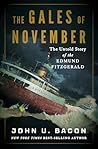
The Gales of November: The Untold Story of the Edmund Fitzgerald by John U. Bacon My rating: 4 of 5 stars I have long been interested in aviation safety, and between the book about El Faro and this one I guess I’m expanding into maritime safety. Is this me entering my dad era? But seriously, … Continue reading "The Gales of November: The Untold Story of the Edmund Fitzgerald review"
Show full content

The Gales of November: The Untold Story of the Edmund FitzgeraldThe Gales of November: The Untold Story of the Edmund Fitzgerald by John U. Bacon

My rating: 4 of 5 stars


I have long been interested in aviation safety, and between the book about El Faro and this one I guess I’m expanding into maritime safety. Is this me entering my dad era?

But seriously, I knew very little about the Edmund Fitzgerald before reading this book, other than the Gordon Lightfoot song. (and the fact that Jim Harbaugh used to listen to it to get psyched up for football games??) (also I guess here’s a funny xkcd about it) I’ve been to the Northeast, but never really to the Great Lakes, but I have been to very very small lakes, and so I hadn’t really gotten it into my head how big the Great Lakes are.

The book does a good job of impressing how big they are: extremely! And I also didn’t know how important they were to commerce – there have been an enormous amount of copper and iron shipped from the mines to various factories.

Anyway, I enjoyed the book and learned a lot, even if it is rather long and seemed to go into detail about every one of the 29 people on board when the ship sank which was a bit much.

Other interesting parts:
– The Great Lakes hold more than 20% of the entire world’s freshwater! If you could empty them over North and South America, both continents would be under a foot of water! Lake Superior alone is bigger than Ireland! (pg 20-21)
– Between 1875 and 1975, there was an average of one shipwreck a week, and nearly one sailor casualty per day. For one hundred years! The Great Lakes are dangerous! (pg 28)
– Before the Edmund Fitzgerald sank in 1975, the previous big storm was the “White Hurricane” of 1913, which sank 19 ships and killed 254 people. (pg 43)
– For transporting goods, a rough estimate is that trains are twice as efficient as trucks, but ships are three times as efficient as trains! (pg 62)
– The Edmund Fitzgerald was so long from bow to stern that it was built with two tunnels that went under the deck, to make it easier for sailors to cross the ship if the weather was rough. The ship was also built to be very flexible, so in high waves the ship would bend enough that the end of the tunnel would go out of sight! This was more or less on purpose, but it’s possible one of the contributing factors to its sinking was its extreme flexibilty. (pg 76)
– When the Edmund Fitzgerald was launched into the water, the wave it produced was so big that it alarmed a person in the crowd, and he had a heart attack and died! (pg 80)
– The Soo Locks connect Lake Superior to the other Great Lakes. During World War 2, a new lock was being built to enable more shipping of iron and copper, and the Army leaders deemed it so important that they sent seven thousand soldiers to guard it, which made it the most heavily guarded position in North America! (pg 143)
– There’s an interesting section about the relationship between the captain and the chief engineer; on some ships, it can become very adversarial. Bacon tells a story of the captain on another ship who was racing the Edmund Fitzgerald who angrily called down to the engine room to get more power. The chief engineer agreed, and hung up the phone, but it was stormy out and he knew it wasn’t safe. So he did nothing, and a few minutes later called the captain back asking if it was better…and the captain agreed! The point of the story (other than making fun of captains) is that the engineer has to look out for the ship regardless of the consequences. (pg 286-287)
– Gordon Lightfoot wrote the song by himself, and was very hesitant to record it with his band. But when he did, the very first time the band ever played it was the take that they used! (pg 373)
– Lightfoot famously took great care to make the lyrics accurate. (which was impressive given how soon it was written after the sinking!) In fact, the original lyrics include the line “At seven PM, a main hatchway caved in” because investigators thought the hatches may not have been closed properly. But after a submarine inspected the wreckage and found this was not the case, he changed it to “At seven PM, it grew dark, it was then…”. I guess Lightfoot felt a responsibility to present accurate facts in his ballad! (pg 377)
– In the fifty years since the Edmund Fitzgerald sank, not one commercial ship has sunk on the Great Lakes, which is a testament to how much more seriously safety has been taken since then. (pg 387)


View all my reviews

gregstoll
The Gales of November: The Untold Story of the Edmund Fitzgerald
http://gregstoll.wordpress.com/?p=6749
Extensions
I have seen the future, and it is revolving sushi
Uncategorizedessayfood
This week I ate at Kura Revolving Sushi Bar for the first time. It was a trip! What I knew going in was that there is a conveyor belt that winds throughout all the tables with dishes, and you can just take whatever looks good. (like dim sum) This was neat enough to make me … Continue reading "I have seen the future, and it is revolving sushi"
Show full content

This week I ate at Kura Revolving Sushi Bar for the first time. It was a trip!

What I knew going in was that there is a conveyor belt that winds throughout all the tables with dishes, and you can just take whatever looks good. (like dim sum) This was neat enough to make me excited about going.

But there’s more! Each seat has a tablet next to it (with a helpful video for how things work) where you can order specific dishes, and even some bigger things like ramen. When your dish is ready it comes out on a _second_ conveyor belt (above the first one, sort of an “express” belt), stops at your spot, and a doorbell rings to tell you to get your dish, which is an elegant solution to the fact that they can’t send out another dish until you take yours off the belt.

All this is tracked by putting your finished dishes into a slot under the main conveyor belt, and your tablet shows your total number of dishes. (I think all the dishes that go by on the main conveyor belt are the same price, around $3-4) Every five dishes you put in, your tablet plays a victory sound for you. If you (somehow!) eat fifteen dishes, then you get a special Hello Kitty prize from a dispenser above your tablet.

To cap off the futuristic vibe, sometimes when you order drinks they are brought by a robot, something like a tall Roomba, although my tea was brought the old-fashioned way, by a person.

Anyway, the place is wild, and we may not have jetpacks but this is not a bad substitute!

gregstoll
http://gregstoll.wordpress.com/?p=6743
Extensions
My thoughts on the ethics of LLMs
Uncategorizedaiessayllm
(When I write, I’m usually not speaking for my employer, but I’m super-duper not speaking for my employer here!) There are a lot of opinions about the ethics of using LLMs. I’ve been considering the arguments I see for a while, and writing down something is a great way to clarify one’s thinking. So, here … Continue reading "My thoughts on the ethics of LLMs"
Show full content

(When I write, I’m usually not speaking for my employer, but I’m super-duper not speaking for my employer here!)

There are a lot of opinions about the ethics of using LLMs. I’ve been considering the arguments I see for a while, and writing down something is a great way to clarify one’s thinking. So, here I go!

  1. Environmental concerns
  2. Training data concerns
  3. Uses of LLMs
    1. Writing code
    2. Writing text
    3. Summarizing text
    4. Image generation
Environmental concerns

I think this has been pretty overblown, both in terms of the amount of electricity usage and water usage. (for cooling data centers) Here’s a good article showing that even the author’s heavy use of Claude Code for a day approximately equals the energy it takes to run a dishwasher once.

This doesn’t take into account the amount it takes to train models, which I haven’t seen a good estimate of. Honestly, solar panels are cheap enough that we should be building them as fast as we can anyway!

Training data concerns

Undoubtedly the biggest models have been trained on copyrighted data without authors’ consent. (You can see if your name shows up in the LibGen dataset here, and if so register to get a settlement from Anthropic) This is bad, and I do think companies should have to pay for using people’s words. I should probably feel more strongly about this, and I’m sure I would if I made a living writing stuff.

Uses of LLMs

The two big main ways I evaluate here are:

  1. Is it OK that LLMs can give wrong answers?
  2. Are you wasting people’s time?
Writing code

I would argue that using LLMs to write code (via an agent like Claude Code or just by asking an LLM individual questions) is probably their least problematic use. It is OK that an LLM will produce wrong code; that’s why you should have a good test suite! (although you better know what you’re doing security-wise…) And provided that you review the LLM-generated code before you send it out for review (like what the LLVM project is requiring), this seems pretty fine to me. (as a bonus, I would imagine much of the code the LLM was trained on was open-source to begin with)

Writing text

Hmm…it depends? I don’t think there’s really anything wrong with asking an LLM for suggestions to improve or reword your writing. (although I don’t do this!) But the more the LLM writes, the more the humanity is taken out, like that terrible Google “Dear Sydney” ad that ran during the last Olympics. And don’t get me started on writing a few sentences and asking the LLM to make it longer; that is the epitome of wasting the readers’ time! If you’re tempted to do this, just send the few sentences you have instead!

Summarizing text

The amount of fine this is is inversely proportional to how important the text is. LLMs make mistakes, and if it’s summarizing a promotional email it’s probably fine, but summarizing an important presentation or letter from a crush is pretty dangerous!

Image generation

Ehh, this seems not great to me because most of the time making an image involves a lot of human expression. I guess if you’re just making it for yourself, whatever, but otherwise it feels gross to me. (we had someone make an LLM image of Jesus to show at our church’s children’s service and I felt pretty revolted!)


Feel free to tell me why I’m wrong!

gregstoll
http://gregstoll.wordpress.com/?p=6735
Extensions