GeistHaus
log in · sign up

Robert's talk

Part of feedburner.com

Web development and Internet trends

stories
Four types of people you will come across during your working life
Technology

This blog post is co-written with Alexandra White and Matthias Rohmer In our experience, working in many different companies and contexts, there are – very broadly speaking and quite simplified – four types of people you will come across during your working life. For me, at least, being able to identify these archetypes has helped […]

The post Four types of people you will come across during your working life first appeared on Robert's talk.

Show full content

This blog post is co-written with Alexandra White and Matthias Rohmer

In our experience, working in many different companies and contexts, there are – very broadly speaking and quite simplified – four types of people you will come across during your working life. For me, at least, being able to identify these archetypes has helped in understanding people and situations better. It’s given me leads for seeing what I can try to improve, but also to avoid particular situations before they become worse.

And just to stress this: it’s not about labeling people or simplifying who they are, and everyone will fall into a different bucket seen from someone else’s perspective. It doesn’t represent everyone, it’s about four types out of probably many more. This is rather about having the insight to appreciate the good things, address the things you can where there’s need for improvement, and finally to withdraw or avoid situations that will only bring you down.

1. Not necessarily the best but friendly and fun

Some of the people you get to meet are good at their job, but not necessarily the best. There might be many reasons behind that, and it’s usually not that they couldn’t be even better at it, but more that they’ve chosen to focus more on other things. However, this kind of people are the ones you really connect with! You have a lot of fun together, you bounce off of each other and being together really elevates the day. And when you are in a group of people where you have something like this dynamic, work and life is so much better.

Cherish it, hold on to it and in our hard-earned experience, be careful about leaving these people and contexts since you don’t know where you will end up.

2. Very competent but not very friendly or fun

With some individuals, they are very competent and experienced, but interaction with them is often intimidating or not very entertaining. In some cases, you may perceive their behavior as harsh for different reasons, but once you get to know them or find things in common, the relationship can be defrosted.
And even if you never really connect as individuals, I’ve always respected their trade and professionalism and then instead focused on just the work-related collaboration pieces.

3. Friendly and fun, and very competent

Sometimes, and if you are lucky, you get the opportunity to work with people who are both amazingly fun to be around and they are incredible at their work. They are the best combination of #1 and #2 above. These situations can truly lead to fantastic things and output! Being lucky to have this, though, is generally rare so hold on to it!

4. Nor competent nor friendly

And finally, there are the particular individuals who aren’t competent and they’re not nice people. Beyond just lack of people chemistry between you and them, from what I’ve seen, this often stems from insecurity on their part and leads to behaviors such as them seeing problems, threats and conspiracies everywhere. In summary, these people are toxic. And yes, I know, it has become fashionable to label someone toxic, kind of like a blanket statement that as soon as you disagree with someone or they question you, you can play this card to invalidate whatever the other person said. But no, in this case, I mean people who are truly and genuinely toxic.

And the more they get away with this behavior, or sometimes that it’s even rewarded by managers, it strengthens them and seems to validate that their approach is not just accepted but the way to get things done. In some cases, you might be able to get through to them, help them understand their behavior, but unfortunately it’s often a lost cause. You don’t need to be mean and you definitely shouldn’t retaliate, as there could be consequences. And then you need to just avoid them as much as you can. Sometimes the only way out is leaving the team or even the workplace where they are, since staying around will be detrimental for your mental health.

It can be challenging to know when to seek help or intervention with toxic personalities, versus when to leave it alone. This will come from experience and building relationships with people you trust. When in doubt, ask a mentor, and if you can, build a good relationship with a leader in your company (could be your manager, or someone outside of the team entirely) to whom you can ask advice.

In conclusion

All-in-all, no one’s perfect and a lot is in the eye of the beholder. Not everyone is social, and of course that is just fine. Try not to mix up people not being social with them not being friendly.

And an interesting reflection is how certain types of people can trigger you to be a certain type of person. If you are met with type 4-style behavior, that might make you respond in behaving as a type-4 as well. It’s a role that’s easily fallen into, but try to be aware and to avoid that.

Overall, though, I think everyone should think about how they behave towards others and how they could be perceived. Try and understand what things might be like in the situation for others, and be humble enough to know that you will never fully know what they are going through.
And just don’t be a dick, ok?

Life’s too short to be wasted on unnecessarily dramatic and hostile contexts and situations.

The post Four types of people you will come across during your working life first appeared on Robert's talk.

https://robertnyman.com/?p=3016
Extensions
The End of the Star Wars Saga
Personal/life

The year was 1983. I was 9 years old. I used to visit my paternal grandmother who lived in the city, and every time I came by she would take me to the movies, which was wonderful! It was the time when I learned to love both movies and cinemas. This time around, she told […]

The post The End of the Star Wars Saga first appeared on Robert's talk.

Show full content

The year was 1983. I was 9 years old. I used to visit my paternal grandmother who lived in the city, and every time I came by she would take me to the movies, which was wonderful! It was the time when I learned to love both movies and cinemas.

This time around, she told me she had heard about a space movie that was supposed to be good. It was called Return of the Jedi. So we went to the movie theater, got tickets and saw it. And naturally, it was fantastic! I was a small boy with wide eyes, and a new world opened up to me. This was my first encounter of any kind with the Star Wars universe.

After this, my memory is a bit hazy. Since I loved the Return of the Jedi so much, we wanted to see the prior movies, and I *think* we went and saw the first (well, 4th chronologically): Star Wars: Episode IV – A New Hope. A number of years ensued with Star Wars toys and action figures, and a world I would dream myself away in.

Yesterday, I went with my daughters to see the final Star Wars movie. Star Wars: The Rise of Skywalker. Movie number 9 in the series, the ending to this epic saga. I’m not going to spoil the movie in any way, don’t worry. But I have to say it was a very special and emotional moment – 36 years later! – to finally see Star Wars come to an end, and to be able to share this with my daughters, who are both now older than what I was when I saw my first Star Wars movie.

Seeing the Lucasfilm logo and the the opening crawl come was definitely a goosebumps moment. End of an era.

And I think, during all the circumstances, that it came to a decent and satisfying conclusion. Like Avengers: Endgame there are so many interesting characters which got way too little time to fully go through their respective character arcs or go deeper into their stories. Unfortunate but understandable. I wish the movie would have been 4 hours long, that it would have taken the time to slow down. It was a rabid pace and packed with events over the 2h 22 minutes it took place.

That said, I think J.J. Abrams likely did the best he could with an extremely challenging situation. I feel content, and while it’s sad, I’m also happy that Star Wars has now reached its end.

Thank you, George Lucas, for creating this amazing universe and for all the joy it has brought to me and my family’s lives.

The post The End of the Star Wars Saga first appeared on Robert's talk.

http://robertnyman.com/?p=3005
Extensions
I’m now a Developer Advocate at Google!
Technology

After over 4 years at Google, I’m now a Developer Advocate! “Wait, I thought you already were that?” is the most common reaction. Allow me to tell my story. How the Google journey began Google recruiters had reached out to me over the years, and in Aug 2014 – if my memory serves me right […]

The post I’m now a Developer Advocate at Google! first appeared on Robert's talk.

Show full content

After over 4 years at Google, I’m now a Developer Advocate! “Wait, I thought you already were that?” is the most common reaction. Allow me to tell my story.

How the Google journey began

Google recruiters had reached out to me over the years, and in Aug 2014 – if my memory serves me right – they queried about my interest in becoming a Developer Advocate for the Web at Google. I expressed my interest and we started Google’s detailed and granular assessment and hiring process. In my first call with HR, though, they informed me that this role was full-time in London. Not having an interest, nor possibility, to move to London I said that I couldn’t relocate but I would be happy to travel there every second week and work there then. I was met with “Unfortunately that’s not going to work out, you have to be based in the London office full-time”.

Having worked remotely at Mozilla for close to 4 years at the time, and working with something like Developer Relations and having over 100 travel days per year for the (now) latest 8-9 years, to me personally it felt a bit off, and not necessary, with that requirement. Google can be pretty strict with its rules around this, though, and at least I appreciated that they were open with this at the outset of our discussions. I still don’t agree with that kind of requirement for this kind of role – working in an office together is great, but at the same time, working remotely is just fine as well – it rather depends on your team and manager. It is what it is, though. I respected Google’s decision and we stopped the process for becoming a Developer Advocate when it was clear that I wouldn’t move to London.

Three weeks later, however, Google reached out and said they had an opening for a Program Manager doing Developer Relations for the Nordics (Sweden, Norway, Denmark Finland) for all developer-facing products, and that I could do it from the Stockholm office. Being still interested and wanting to get in at Google, I decided to go for the opportunity. Granted, it wasn’t for the web platform (only) but I figured it would be a good experience and an in.

Program Manager

I worked about 14 months as a Program Manager within Developer Relations, doing outreach around Android, Android TV, gaming, VR, startup coaching, web development and more. It was indeed an interesting experience, and to mainly meet Android developers to see what they were interested in; what the similarities were with web development, and where it were quite different. Most common questions, by far, from all types of areas where these two that I got almost daily:

  • Can you please get me featured in the Play Store?
  • Can you please sponsor my [conference/event/meetup/work/dog/something else]?

Mostly it was great where I could help developers in any capacity. I realized that helping developers being successful, learning and overcoming hurdles is worth more to me than necessarily the platform. That said, at occasion I did feel useless since I don’t know Android development – I do know most other things around development and connecting the right people, though.

One part that was cool was helping the VR team on a 20% basis, meeting really cool people and trying exciting experiences at GDC, Slush and more, and meeting top partners to Google in expensive hotel suites with VR rigs set up to show off their not-yet released games.

In February 2016 I was going to go to London for a YouTube VR Symposium, and learned that the Web Developer Relations team at Google would have an offsite there just the day before. I had contemplated ways of moving into the Web DevRel team for a while – kind of finding my way home to the web and what my role had been as a Technical Evangelist at Mozilla for 4 years prior – so I rebooked my flight to London to arrive one day earlier so I could meet them.

I remember standing outside a pub in London in the rain for about an hour, pitching to Ben Galbraith and Dion Almaer why I should move over into the Developer Relations team.

Moving to Web Developer Relations

Ben and Dion agreed with me, and a little over three years ago I moved into the Web Developer Relations team. When I moved, my new manager Paul Kinlan and I talked about possibly becoming a Developer Advocate or continuing as a Program Manager (everyone else on the team were Developer Advocates or Developer Relations Engineers). We looked at the descriptions for both work ladders, and at my level they seemed to be mostly about driving strategic initiatives and similar, so we decided I’d continue as a Program Manager.

I spent about three years as a Program Manager, focusing on creating and driving various Programs for developer outreach. I got really good ratings and got promoted to the next level in my ladder – I’m quite organized and like control, so that side of Program Management was something I could relate to and deliver on.

The role Program Manager is a peculiar one, though, and different from company to company. At some companies, I’ve learned, it’s more akin to being a Product Manager. At Google, I would say the focus is generally much more of an administrative one: creating and running processes, working with spreadsheets till you’re blue in the face, creating trackers, herding people and teams and more. For instance, for Chrome Dev Summit November 2018 I worked with representatives from 55 different teams, organizing the Forum space…

Over time, though, I felt that my relation-building skills and developer outreach were less appreciated by the Program Manager ladder than the focus on processes and structure. Since my main drive and interest is communicating with and inspiring developers, I felt that got lost a bit along the way. So, I decided to, finally, explore what a move to a Developer Advocate would entail.

Becoming a Developer Advocate

Paul Kinlan – my manager – and I started exploring the paths to go through a so-called Ladder Transfer. There were a couple of ways that would apply, and what it resulted in was that I needed to list all the things I’ve done in the last three years which would match the Developer Advocate ladder: artefacts, evidence, results and impact. This was almost as much work as going for Promotion as Google (those who know, they know). I put together a 13-page document with all the things I’ve worked on since 2015, the results, and how each and everything in turn matched my level on on the Developer Advocate work ladder.

When I had completed that doc, Paul Kinlan needed to write a statement about me and I needed Google supporters verifying the value and meaning of my work: those people were Addy Osmani, Dion Almaer, Ilya Grigorik and Paul Bakaus. Once I had all of that in place, all of this went to Google’s Hiring Committee – being transferred at Google is basically getting hired, again. The Committee look at all the materials and support statements, and then decide if they want to hire me in the new role as a Developer Advocate.

As you can imagine, all of these steps took a little while, but finally it went to the Hiring Committee who agreed I had proved my competence and impact, and I’m now a Developer Advocate at Google. Yay! 🎉

Thank you to Paul K, Addy, Dion, Ilya and Paul B for your help and support throughout all of this, and also to the various HR representatives who has guided me along the way.

Let’s go make the web better together!

The post I’m now a Developer Advocate at Google! first appeared on Robert's talk.

http://robertnyman.com/?p=2998
Extensions
What is Developer Relations, and how to do it
DevelopingPersonal/lifeSpeakingTechnology

I’ve worked with Developer Relations for many years now, and I think it’s a fascinating topic with many takes on what it is and how to do it! I wanted to share my view on it here, and what I think it encompasses. Last year I gave a presentation called "Have you tried listening?" (video) […]

The post What is Developer Relations, and how to do it first appeared on Robert's talk.

Show full content

I’ve worked with Developer Relations for many years now, and I think it’s a fascinating topic with many takes on what it is and how to do it! I wanted to share my view on it here, and what I think it encompasses.

Last year I gave a presentation called "Have you tried listening?" (video) at the DevRel Summit which I think outlines a number of the main DevRel concepts and areas, and examples from my personal experiences with them.

The idea is to go through them here, and hopefully they will inspire, help and make you think more about ways of doing it.

  1. Developer Relations personas
  2. Dev Rel activities
  3. Measuring your work
  4. Feedback & interacting with people

And in essence, if it’s one thing I wish you will take away from this, that is:

DevRel is people business!

1. Developer Relations personas

There are number of personas I’ve seen working with Developer Relations throughout the years:

  • Super technical
  • Hacker developer
  • Teacher
  • People relations expert

The super technical ones love the technology part of it: they’re really passionate about it and its their main drive. They want to solve problems in a good structured qualitative manner, suggest the best ways of doing it – sometimes opinionated, sometimes more broad – and constantly push the platform they work on to the limits of what it can do.

The hacker developer type is similar to the super technical one, but in my experience, more solution-driven – whatever it takes – than necessarily the format of the solution.

The teacher people find their motivation in being able to inspire and help people work with the platform, help them over hurdles and jumping through hoops, to succeed in what they are trying to to. Their main drive is more about the messaging and making sure people understand it and will grow from it.

The final one is focused on people relations: this persona is usually closer to the teacher one than the others, in that they love to connect people, enable them through networking and connecting them with the right people and being responsive and making sure people are happy about what they do and don’t get stuck.

Of course, most people working with Developer Relations don’t just match one of these personas, and they aren’t mutually exclusive, but I would say that most people I’ve met in DevRel are strongest in one of these four areas.

Titles

In terms of titles, the most common ones seem to be Technical Evangelist and Developer Advocate. I guess the intention of Evangelist would be that you bring out the word of the company, whereas Advocate is that you are supposed to be advocating the needs from external developers to help make your product(s) better for them to build on top of. As for the Evangelist title, I see it less nowadays, partly probably due to the religious connotation (no matter if you are religious or not, best not to confuse them) and that it implies more of a one-way communication than the desired bidirectional one.

No matter the title, though, in my experience people’s behavior doing DevRel has been leaning more towards one or the other of the approaches, mostly independent of the title itself, which has been just fine.

Who are you?

My advice with personas and the way you want to do DevRel is to figure out who you are. Figure out who you really are.

Find what you are good at and what you like. Hopefully they match. Find out how to be this person with everyone around you.

I still struggle with this, almost everyday. I constantly keep on thinking I can do better, be better.

2. Developer Relations activities

There is a number of different activities you can do Developer Relations through, and generalizing, these are the more common ones:

  • Speaking at events
  • Blogging & documentation
  • Writing and sharing code
  • Social media

(Note that these are all outward facing; there’s another layer to this around internal work in your company, working with Engineering and Product teams around the platform, sharing developer feedback and more, which I won’t really cover here)

Speaking at events: What does speaking at events really mean to you? Are they great fun? Getting personal attention? Sharing knowledge? Or, are they a necessary evil? Do you cringe everytime you do it, but feel that you have to?

To me, it means trying to inspire people, and being there for them. Taking the time to present, introduce or engage people in a certain topic, and then being around – in-person – for discussions, feedback and thoughts.

Blogging & documentation: I believe sharing knowledge and thoughts through blog posts and articles is key, and collectively we’re not doing enough of that. The written word is so so important, to make sure you can reach as many people as possible, they can read it in their own pace and ofthen their own language, they don’t have to scrub through a video to find a certain section, and much more.

Documentation in general I would say lives on respective company’s developer site, or, in the case of the web, also in public collaborative places like MDN Web Docs. Where to blog, on the other hand, can be a bit more complicated. Most people seem to feel that if they blog on the company blog, theyre’re limited in what they can say, sometimes it becomes blogging-by-committee for legal/stakeholder reasons and the output is quite bland. And if you blog in your own web site or Medium channel, it’s great in the sense of freedom and building up your personal brand (which is usually harder in a company blog). But, there’s also the risk that that blogging and important content is tied to that specific person and when they leave the company, all that content is gone. And additionally, people’s personal blogs might feature company content and focus mixed with personal opinion posts that doesn’t always represent the company’s values.

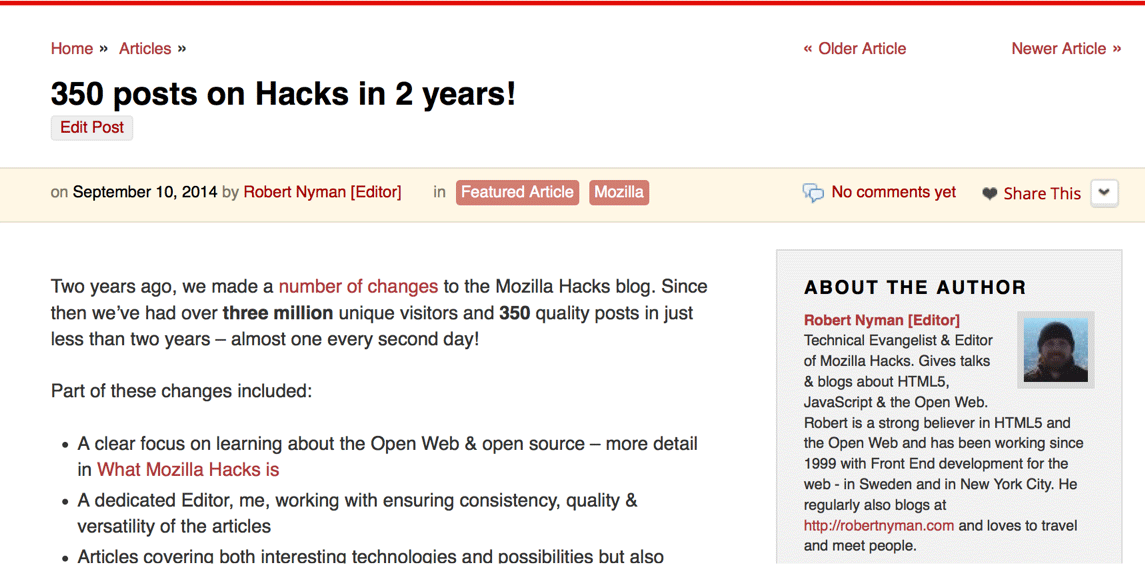
When I worked at Mozilla, and interesting phenomenon – in the spirit of being totally open and transparent – was that people people wrote public blog posts complaining or dissing the work of their colleagues and/ or another part or product at Mozilla. My take here is that openness is great, but also needs to be paired with personal respect and reaching out to people directly with your criticism, not just making it public directly. Also at Mozilla, I was the Editor for Mozilla Hacks for ~2 years. During that time we had lots of guest posts from external developers in the developer community, and I was really happy we could use that platform to share their knowledge and expertise to a broader audience. And this is something I think more companis could do.
Writing and sharing code: For a long time now, I would say that sharing code on GitHub is by far the most common, and also creating or contributing to frameworks for specific technologies. And I think that’s still a great platform for people to do that! Stack Overflow has been quite popular over the years as well, and a lot of people get concrete help there, but the signal-to-noise ratio has overall been a bit challenging.

When you create and share code, I would say that the most important things are:

  • Make sure to be open to feedback. You will get a lot of feedback and suggestions, and at the very least listen to it.
  • Be constructive and respectful. Not everyone is that online, and sometimes the gut instict is to just be defensive or attack back. I’d urge you, if possible, to at least give disrespectful people an initial chance. I’ve experienced many situations, comments etc that, once I’ve responded respectfully and constructively, actually has led to quite good and rewarding discussions.
  • There are always 100 ways to solve something. If you write code, how you structure your solution, there are many many ways you can build things. So when you get feedback on your things, or you give feedback on others’ work, remember that there is never just one way of doing it.

Social media: When you have good code, content and documentation, naturally you want as many people as possible to see that. How to approach outreach and communication? Going out on Twitter is like crossing a floor filled with Lego…
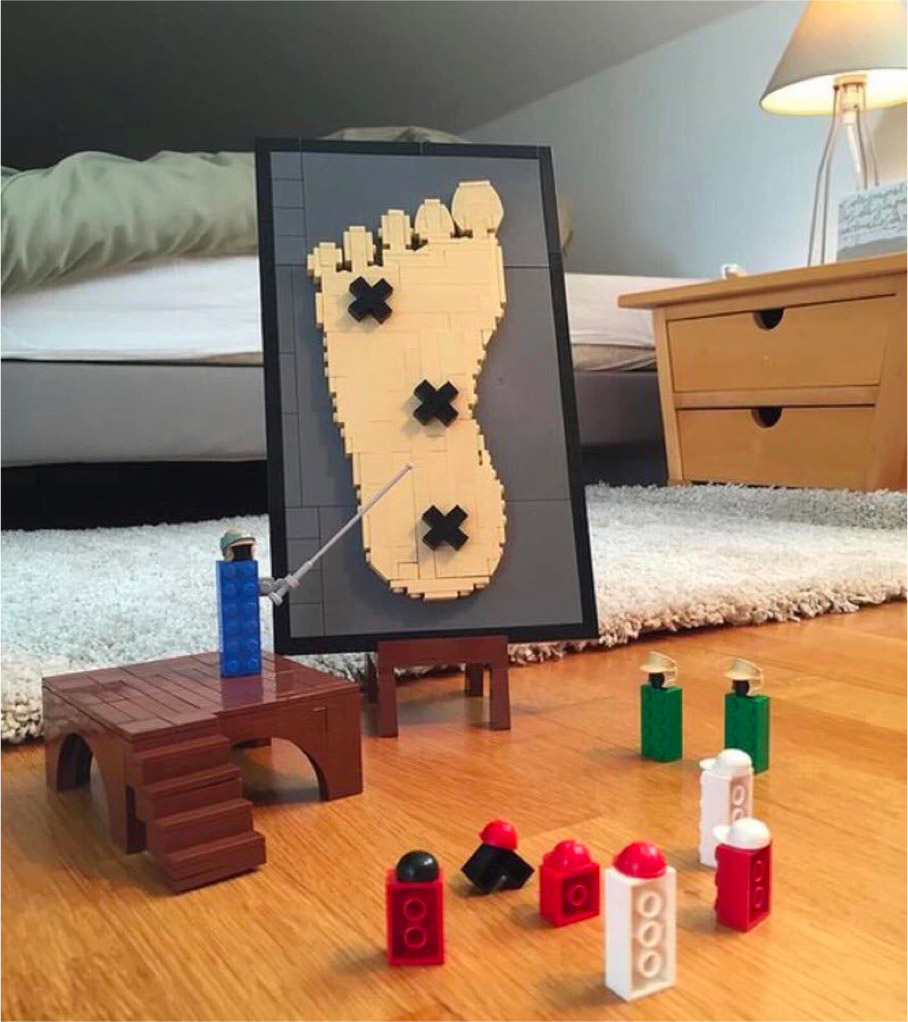
You will be working hard to get attention for what you’ve done, and dor most of us, SEE ME! I ACTUALLY HAVE SOMETHING TO SAY!

And what it even harder is that snark, quick burns and petty attacks often get much more attention than quality content and a respectful tone. But still, don’t despair, keep on sharing good content. Don’t be tempted to lower your bar of behavior just for some quick likes. Personally – while you want to stand up for your work – I don’t think it helps anyone getting into fights in a public channel where no one will back down just for the very reason it’s public, and a level of territorial pride. Rather continue in-person or a video call, if possible, or over e-mail, but take disagreements out of the public space – unless you can keep it civil.

3. Measuring your work

Measuring Developer Relations is really hard. You can measure the easy things like X people at an event, Y people reading an article, Z people watching a video etc. But how do you measure the actual outcome?
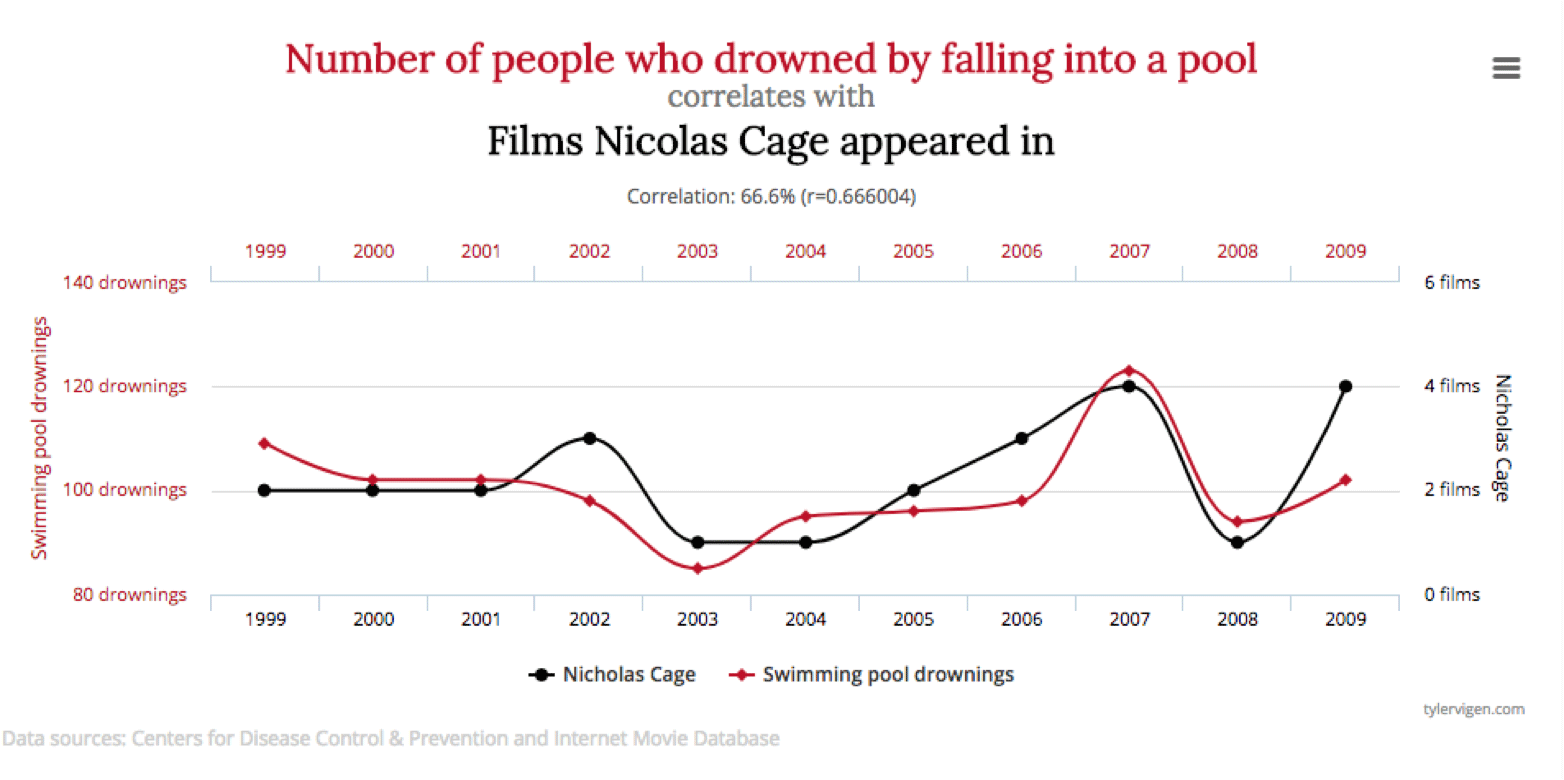
This depends a lot on your product. Would or should you measure number of downloads for your product? Number of uses of your API? End users getting a better experience through big companies shipping your code or product? First of all, I’d strongly encourage you to have as much analytics of usage numbers as possible. Can you find a clear correlation between a blog post you did, documentation shared, event done etc with an uptake following that? And how do you know that the developers using, for instance, your API are using it because something you or your team did, compared to possible influence from other parts of your company?

One important thing to point out here as well is that it’s not mainly about who should get credit for developers using something, but rather having enough data points to know which activities are most successful in helping developers adopting the best solutions.

Firefox DevTools and feedback

One more measurable outcome that I worked on at Mozilla was around Firefox Developer Tools & UserVoice, which I started exploring because of a tip from a friend. Microsoft had used it for other areas before, and they started using it for their Edge browser later after this.

The core approach was:

  1. Let people give feedback and ideas
  2. Analyze and triage that feedback
  3. Compare it to other features on the roadmap, and prioritize it
  4. When developer community-suggested features were shipped, reconnect with them and the developer community to achieve a positive feedback loop
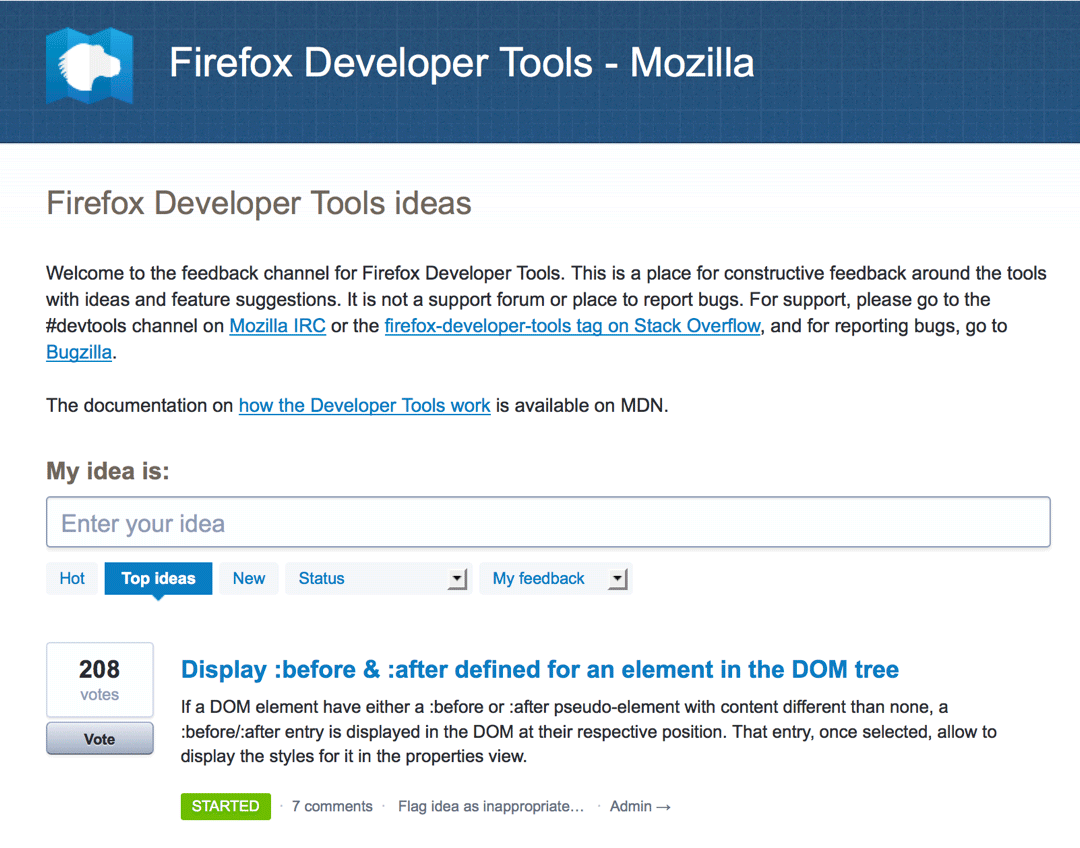
With UserVoice, people could suggest ideas, vote on them and comment. And the main criteria were that it was simple to use, no sign-up or log-in needed, just an e-mail address. It also had a built-in search so for people creating new suggestions, it was matching ideas to see if there already existed a similar suggestion. It also had a general search, paired with official replies from Mozilla, with a direct contact and where we could indicate if an idea was Under Consideration, Shipped, Being Worked on or Declined. And even if we declined something, developers were happy because they got a reply! Better to know than to constantly wonder.

And my favorite part was that, 6 weeks later and in line with the Firefox release cycle, the first features shipped! And we could publish blog posts, showing the community that 3 out of 5 of the new features were suggested and prioritized by them!

And developers loved this, and in the big Vision Mobile survey that year, the number of web developers who said they used Firefox Developer Tools as
their primary toolset had increased 6%!

I also gave a keynote at Nordic.js in 2014 about this experience.

4. Feedback & interacting with people

People are great! No, really, I’m not kidding! People are great! It just takes time to sometimes understand the many facets of interacting with people, from different approaches to their online persona and tone. People aren’t always logical, and many factors affect their behavior. A vast majority of people, though – once you actually take the time to listen to them – aren’t as bad as you think. It does take time and patience, however, staying calm and working hard to understand different perspectives. And it doesn’t mean that you can’t ever lose your temper, although I’m hoping most of you can stay calm. But just don’t explode directly, and not in public. Try and takie it easy, take a few breaths, get a second opinion from someone else to try and help you see things from another angle.

But I would recommend giving people the benefit of a doubt as much as possble, to try and assume they are meaning well and that – in particular in DevRel business – they are not upset with you, as a person, but more likely about a technical issue they can’t solve, and sometimes misguidedly they express it towards you personally.

And then of course everyone is your friend on LinkedIn. Like, everyone. And that’s ok. 🙂

And wherever you work, whatever you do, there will always be feedback and opinions. Way way back when I started blogging in 2005, I got to hear so many times that “JavaScript isn’t a real language” and had to deal with that. When I worked at Mozilla, a lot of people came up to me at events, looked at their shoes, and mumbled something like "I used to use Firefox, but… now I use Chrome" and I would tell them that it was just fine! As long as they were using and enjoying the web!

And at Google, as you can imagine, there are a lot of opinions about Chrome to other areas of Google working with completely different things (and idiots writing manifestos doesn’t help…).

Acknowledging people

Another key learning here is that people want, deserve and need to be seen and heard. In many cases, people just want to share their experiences or challenges, explain their problem and that you take the time to listen. If you can help, great; but if not, that’s just as fine. Because at least you listened, at least you tried.

DevRel is people business

And for me, interacting with people, meeting them in real life: this is what I get energy from. It’s so easy to get lost in e-mails, angry tweets, spreadsheets and more. But once I get to help and inspire people, I’m so happy and I see meaning in what I do.

I would also strongly encourage you to find your real passion.

DevRel is hard work, it can be very frustrating and it is a very unique mix of being technical and dealing with people. It can definitely take its toll on you, so make sure to find your passion

But if we can make people feel like this:
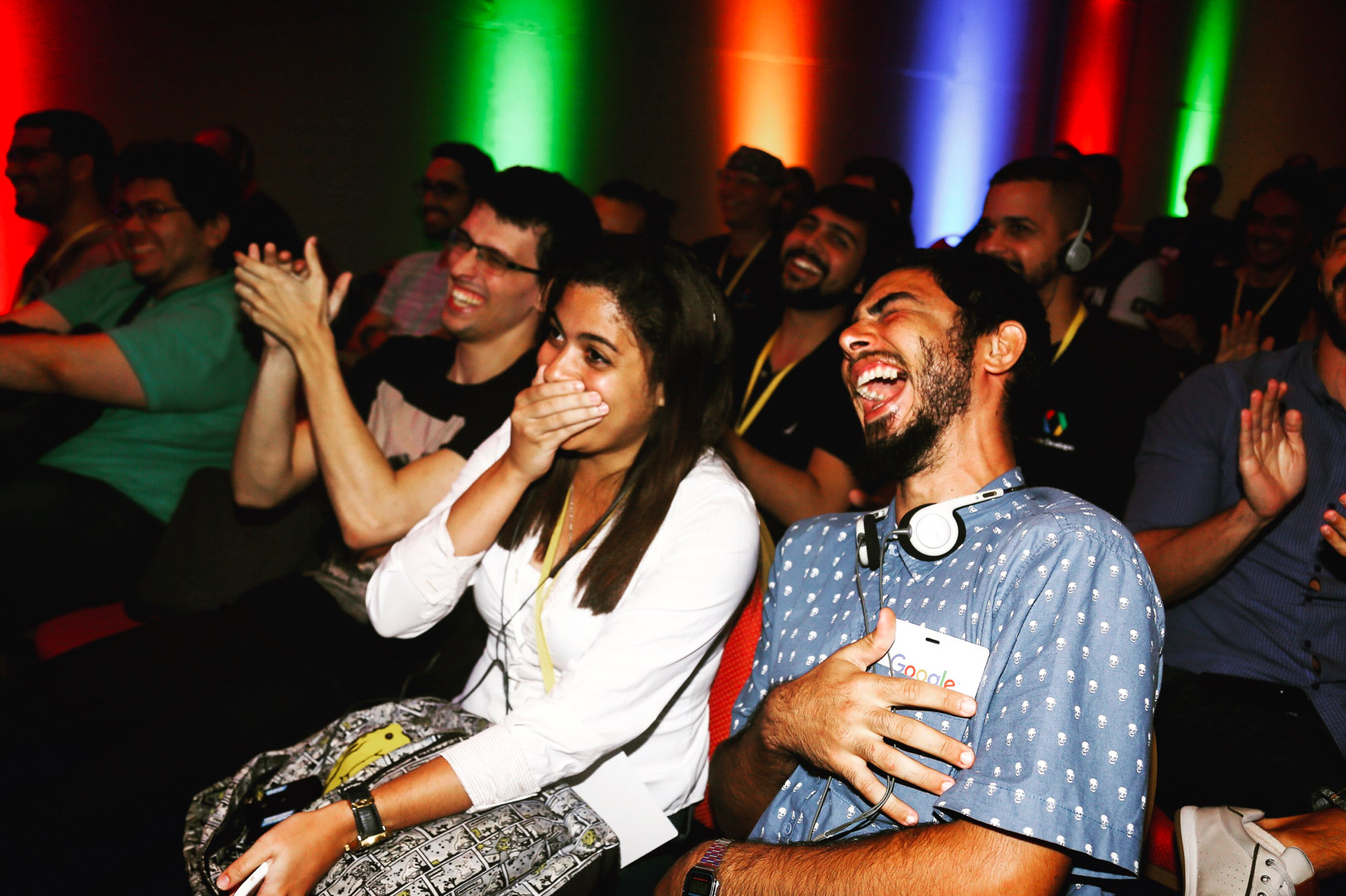
Then we’re on to something
Then we’re doing something right

Have you tried listening? – video and slides

The post What is Developer Relations, and how to do it first appeared on Robert's talk.

http://robertnyman.com/?p=2985
Extensions
We need to create a more inclusive web for developers
DevelopingTechnology

When I was a kid, back in the time when there were announcers telling you which the next program on TV would be, you knew it would be good if they said: "We'd like to warn sensitive viewers that next program might upset you". So, with that in mind, I need to start this blog […]

The post We need to create a more inclusive web for developers first appeared on Robert's talk.

Show full content

When I was a kid, back in the time when there were announcers telling you which the next program on TV would be, you knew it would be good if they said: "We'd like to warn sensitive viewers that next program might upset you". So, with that in mind, I need to start this blog post with saying that it doesn't reflect the opinions of my employer, Google, but are all my own.

Ok, now that that's out of the way, I want to talk about the state of the web, and what it's like for developers, and I do hope to bring some nuance and perspective to the discussion.

My background is that I've worked almost 20 years on the web now, blogging here since 2005, creating and contributing to open-source projects, being a part of the Mozilla Community and working there for three and a half years, and now being one of the members of the MDN Product Advisory Board and working at Google with Developer Relations around the web. I have given presentations in 42 countries and spent the last decades working with developers, communities and companies all over the world.

And the reason I'm telling you this is that I believe I have a fairly good insight into what developers are struggling with, and the trends I'm seeing. And what I see is that there is a big knowledge gap and split between top developers and all the other regular developers, which I think is bigger than ever before. Building really good experiences on the web has become gradually harder for each year that has gone by.

There's this mindset that it's supposed to "be hard" to build things. You should earn your scars, it should hurt like a b… rowser. And talking about browsers, you should know the ins-and-outs of everything in them and how they render things to be a truly good developer. And any tool, if it's not technically excellent in the eyes of the elite, is frowned upon and mocked. From FrontPage to Dreamweaver to WordPress to jQuery to [current framework fights]… you name it. I'm not pretending that I've been any better in this aspect. For instance, when a Swedish travel site with not the best technical results won the Sweden's Best Web Site award I said I should emigrate

But I just don't agree with that anymore. I think if you are in the top 1% and know all of those details and have worked on the web for 20 years, great! But I think it is critically important for anyone else who doesn't have that experience – or time, team resources or privileged environment to gain that knowledge – to have just as big of a chance to offer good experiences and do business on the web as well. We have to make sure the web offers an even playing field for everyone.

I see way way too many examples from all over the world where the web is disregarded because it's too slow, too hard to build for, too hard to get started, and where closed platforms like Facebook or well-lit paths for native app developers instead becomes what they opt for.

AMP

Which leads me to AMP (*gasp*). I've had the same general concerns as many other people about the Google URL and the Search carousel featuring, but knowing that team well and discussing with them on a regular basis, and seeing what they are working towards, I believe they have the best of intentions. With the URLs, as outlined in Improving URLS for AMP pages and statements from Malte Ubl (the creator of AMP), I see this as a matter of time before it is sorted. And with the announcement of Using page speed in mobile search ranking and Malte's discussion on it I personally believe it's all moving in the right direction.

At the same time, I'm really interested in the positive technical benefits AMP has offered developers and companies around areas like ease of developing and ensuring a really fast user experience. In particular, companies with small teams and/or not a super deep technical expertise are suddenly able to ship and build businesses! They can focus on the gist of what they want to create and communicate, and not get bogged down in granular API discrepancies, image optimization, feature detection and continually more and more complex tool chains.

I've also seen a lot of data for developers having built AMP experiences which are a lot faster and help them make a lot more money than before. And that is something I believe is good for everyone.

Looking forward

So, looking forward, I just don't think we should think about how to make it easier for everyone on the web, I believe it is our fundamental responsibility. There will always be room for expert carpenters and wood workers, but that doesn't take away the fact that most people will be happy with IKEA, and it will offer all they need.

And I don't know if AMP will be one of the solutions going forward, or if it will be something completely different, but I do believe we need to acknowledge what opportunities AMP has brought developers and seriously consider how we can offer that on the web as a whole.

We can't be experts in our ivory towers with tons of hard-earned expertise, we need to listen to developers from everywhere and all kinds of different contexts, to truly learn what they need and not what we want to build.

I sincerely hope that as we move forward we create a web that it is easy and inclusive for anyone to develop for, taking all varieties of needs and challenges people face into account.

The post We need to create a more inclusive web for developers first appeared on Robert's talk.

http://robertnyman.com/?p=2975
Extensions
The building for just one browser thing
DevelopingTechnologyWeb browsers

When I got started with blogging back in 2005, I had been an interface developer for the web since 1999. The big challenges back in 2005 were convincing developers and companies to make sure that things worked in more than one web browser, and that JavaScript wasn't evil and actually pretty competent. And now, in […]

The post The building for just one browser thing first appeared on Robert's talk.

Show full content

When I got started with blogging back in 2005, I had been an interface developer for the web since 1999. The big challenges back in 2005 were convincing developers and companies to make sure that things worked in more than one web browser, and that JavaScript wasn't evil and actually pretty competent. And now, in 2018, it's back to the cross-browser support story again (JavaScript seems to be doing fine).

Granted, 2018 has just started, so let's give it a chance. But in 2017 I saw a lot of web sites/apps released by a multiple of high-profile companies which only worked in one browser: Chrome. And it reminded me a lot of the days in 2005 where the story was the same, but just that back then web sites only worked in Internet Explorer (document.all, anyone?).

Seeing this same story coming up again, I wanted to try and pinpoint the main reasons for why this happens, and also why it matters building for more than one web browser.

Why people only build for one web browser

In 2005, Internet Explorer still had an enormous grip of the web browser market. In September 2002, the Phoenix browser first came out, which would then evolve to Firefox who had its 1.0 release in November 2004. Opera had already been around for a really long time, but it was first a few years into the life of Firefox that we started to see a shift in the web browser market share, and slowly, slowly, IE losing its dominance. When Chrome 1.0 came out in December 2008 it helped strengthen the movement Firefox and the community had started.

The overall motivations back then for building for only one browser was that IE had a large enough market share for decision makers to feel this would be the most cost efficient way to reach their users. Cross-browser support was occasionally hard and could lead to longer developing times. Netscape 4 and its support was drastically different from IE, and since it became irrelevant, no other browser was big enough to force them to care more deeply about it.

An extra factor that led to such an extreme dominance over the following years is that a lot of companies built IE-only Intranets with a lot of solutions dependant on proprietary APIs. Pairing that with a slow version upgrade cycle and no other browsers allowed to be installed, this immensely held back the evolution of the web – in particular when other browsers had a much faster pace with better standards support and implementing new features.

I believe the situation in 2018 is similar to the initial mindset in 2005: one browser has a big enough piece of the market, and/or with a company's user base, and they believe it's enough to only test in that browser; that supporting more browsers means more work = higher cost and also possibly that they need APIs only supported in that browser.

Where the situation is different, though, is that now the web standards support across browsers is in a much much better state, and all developers generally have a fast release and improvement pace. Chrome is also – as opposed to IE a few years in back then – at the forefront of browser evolution, together with Firefox, and Safari and Edge have gotten a lot better in recent time. Add to that a lot of newer browsers like Samsung Internet, Brave and much more popping up, also holding a very high standard.

I also think, though, that in this high pace environment, browsers implement new and experimental features, and companies are quick to jump onto them and ship new things based on it, thus leading to certain web apps only working in one browser.

Why you should build for all browsers

Now that I've talked about what I believe the cause and reasoning might be, I want to tell you why I believe it is crucial that we all build for more than one web browser.

First, the number of great resources you have available now to find out what is supported where and how to do things are in a better place than it has ever been. Can I use has a lot of easily digestible information about browser support – and I was happy to work directly with Alexis (@Fyrd) who runs it to get the major Chinese browser in there as well – and then you have extremely extensive documentation and browser compatibility tables at MDN, and Chromestatus, Edge Platform Status and Firefox Platform Status have a lot of fine-grained details on features and their implementation state. There's also Google's Web documentation, the WebKit blog, Edge taking suggestions on UserVoice. And, the Developer Tools in all web browsers is in their best shape ever with tons of tools and help for developers.

Second, instead of building for one-browser-only, or one-browser-first, if you start in the end of using standardized and implemented features across the board in the 4 major web browser engines there are out there, you're not only reaching more users, you are also much better future-proofing your web site and, counter to what seems to be a common opinion, lowering the amount of technical debt or support needed by using features which are agreed on and shipped.

Third, this is the key thing that differ the web from anything else. It's the most global and democratic medium we have, the barrier to entry for creating and sharing is quite low and there will be no company approving what you can publish and when. And things built a long time ago mainly still work in web browsers and this longevity is unparalleled. And when you build for just one browser you diminish all of this to a platform by just one company. The web is bigger than that, the web is stronger than that, and I for one believe we all truly need and deserve a platform for everyone.

So, I understand your reasoning, perspective, goals and challenges. But please, please, consider building something for the web and not just one web browser.

The post The building for just one browser thing first appeared on Robert's talk.

http://robertnyman.com/?p=2972
Extensions
MDN Product Advisory Board meeting and experience
DevelopingGoogleMozillaTechnologyWeb browsers

Having spent almost 20 years working on the web, it is something I strongly believe and am invested in. Therefore, when I see or am part of initiatives that I think will help developers and the web platform out there, it makes me very excited! And last week I got very reminded about how good […]

The post MDN Product Advisory Board meeting and experience first appeared on Robert's talk.

Show full content

Having spent almost 20 years working on the web, it is something I strongly believe and am invested in. Therefore, when I see or am part of initiatives that I think will help developers and the web platform out there, it makes me very excited! And last week I got very reminded about how good that thing can be.

In October last year the MDN Product Advisory Board was announced together with its charter, and it’s something we’ve discussed a long time. How we browser vendors and standards organization can all work together, combine our knowledge, experiences and resources, to help all web developers across the board with clear documentation and information through MDN Web Docs.

To me, it’s not only a good thing to do, it’s the right thing to do. I genuinely believe that through sharing information to everyone, inspiring and helping people and building communities, we do our best to try and make the world a better place.

And MDN Web Docs have an amazing reach with developers and engagement from contributors. In 2017 it:

  • Reached 45% of the estimated global developer audience
  • Had 80,000 content edits
  • Had 8,000 contributors
London, January 2018

Since the Board was announced, we’ve had one video meeting – since we’re spread out all over the world – and set up a mailing list and Slack. The thing I was really looking forward to, though, was being able to get together in-person. The members of the list all have extensive experience working on the web, with most people on the board having successfully contributed to it for almost 20 years each. What happens when you get all these people in the same room? What will the chemistry and group dynamic turn out to be; will we have good discussions but no concrete outcome? Etc.

Back at home again a few days after the meeting, I’m still on an optimistic high! I was so happy to see that we all got together really well, no one taking too much space, dominating the conversation or only pushing their ideas, but rather a fantastic level of jointly sharing a vision and goals I haven’t seen in a long time. This, together with the amount of respect making sure everyone got heard, really listened to and respected for his/her opinions was something that made me very glad!

It sounds like something you want to take for granted, but truly seeing and experiencing how everyone helped each other and offered their time and expertise to drive a topic or challenge forward is something you should always appreciate and hold on to.

So, a big personal thank you to everyone on the Board for this!

Next steps

Based on the discussions we had and planning we set up, we’re just in the process of going through and syncing our notes, to then continue with clear actions about improving MDN for everyone. We explored areas such as clearer and more effective documentation, interactive samples, browser compatibility tables and making that data available and usable in more contexts and scenarios and much more.

Once we have the notes in order we’ll share all of that out publicly, and our overall stance is to share as much information as we can.

MDN Product Advisory Board members

The post MDN Product Advisory Board meeting and experience first appeared on Robert's talk.

http://robertnyman.com/?p=2969
Extensions
One million kilometers later
Travel

One million kilometers. That's a pretty long distance. Going through my travel statistics recently, I discovered that is how much I've traveled during the last few years. This is what the overall stats look like: 698 days of traveling 1,126,866 km 48 countries 109 cities 117 trips I've been extremely fortunate to get the opportunity […]

The post One million kilometers later first appeared on Robert's talk.

Show full content

One million kilometers. That's a pretty long distance. Going through my travel statistics recently, I discovered that is how much I've traveled during the last few years.

This is what the overall stats look like:

  • 698 days of traveling
  • 1,126,866 km
  • 48 countries
  • 109 cities
  • 117 trips

I've been extremely fortunate to get the opportunity to travel all over the world. To get to meet so many interesting people, and learn more about different cultures; learn about their opportunities and their challenges; their main motivations and their hardships. And I'd like to believe this has helped me be a more understanding person, both for what the situation can be like for people, as well as appreciating all the amazing things I have in my life. And as part of it, I also feel that if I've gone somewhere it's also my responsibility to educate people I meet about that place to breed better understanding and respect.

Most of my trips have been work trips where I've always made sure to take extra time to see and understand where I am, the history of that place, the nature and take in the enormous beauty there is in so many parts of the world. I'm also very happy to have traveled with my family, and showing my children a number of places and teaching then about respect and compassion for people, animals and nature.

Another thing I think about is the impact on the environment. With my flights I've tried to keep it to a minimum, meaning least number of connections, and fly with the more environmentally-friendly passenger airplanes (Boeing 787, Airbus 380). But I know planes still have a lot of exhaust, so I try to make up for it in other areas, like driving a hybrid car, eat more locally produced and ecological food, recycling and such. Small things, I know, but something at least.

By now it kind of seems like a good-bye to travel and sum up what I've done. Which isn't entirely true, but not false either. I've been to so many places, and I'll continue traveling when it really makes sense or is important. But having had a number of years with 100+ days/year being on the road, I also want to spend more time at home with a more "normal" life. More family time, more evenings at home, more local things with friends, events and such. And I'm sure I'll get restless at one time or another, or when the travel bug will hit me again, but overall my estimate at least is that I'll travel less for quite a while now.

Also, if you like pretty pictures I share a bunch on Instagram from all over the world, and I've also started an album on Flickr with Creative Commons-shared photos you can look at and/or use.

Travel is an extraordinary thing, and I encourage everyone to try and learn and understand as much about the world, its differences and all its wonderful people.

The post One million kilometers later first appeared on Robert's talk.

http://robertnyman.com/?p=2963
Extensions
On #MeToo
Personal/life

I’ve been following the stories on #MeToo, listening and talking to a lot of people, and have been trying to gather my thoughts. First, no one should ever have to feel unsafe. Ever. I’m so saddened to hear all the stories and testimonies, women being treated unfairly, as less worthy or as just being there […]

The post On #MeToo first appeared on Robert's talk.
Show full content

I’ve been following the stories on #MeToo, listening and talking to a lot of people, and have been trying to gather my thoughts.

First, no one should ever have to feel unsafe. Ever. I’m so saddened to hear all the stories and testimonies, women being treated unfairly, as less worthy or as just being there for men’s entertainment. Why I’m so grateful about #MeToo – despite all the terrible stories – is that it has finally gotten to a point where everyone is listening. Where women feel brave, empowered and supported enough to share what has happen, to dare to say no.

I’ve also been thinking through my own actions over the years. To my knowledge, I’ve never harassed or intentionally treated anyone unequal, but if there have ever been situations where I’ve made any woman feel uncomfortable, not seen or awkward, I’m very sorry. I know I have been young and made stupid jokes, and that while I personally haven’t done anything bad, I haven’t stood up properly when hearing other men talking about women, using a demeaning jargon.

Some believe that with all the attention #MeToo gets now, people will also become opportunistic. There will be false or exxagarated claims, and that a certain vigilante mentality will follow and people will be judged before things are confirmed. I understand the vigilante worry, but at the same time, women have tried for such a long time to get help and not getting it. So this is what they have to do to get heard. The other part is that – according to studies – when it comes to claims about sexual assault and harassment, there are only a few percent that turn out not to be true. So with all the data we have, we have to make sure the victims get listened to, and that they get their fair chance to have their cases tried.

While I’m grateful to live and bring up my daughters in Sweden – one of the most gender equal countries in the world – there’s still a long way to go. But I’m happy to see all the #MeToo demonstrations going on in Sweden, and so many people working together and supporting each other to move in the right direction.

From my side, I constantly strive to treat everyone equal, and to make sure to speak up when I see or hear bad things. In my professional role, I work hard to make sure we have a good and representative gender balance at events, and that everyone feel safe and welcome.

But this is not about me. It’s about all the women who have been treated badly and unfairly, who have felt afraid or have not gotten the same opportunities as men.

Enough. Let us all build a better and more inclusive world together.

The post On #MeToo first appeared on Robert's talk.
http://robertnyman.com/?p=2960
Extensions
Travel in 2016
Travel

Travel. Such an amazing chance to see the world and meet lots of fantastic people! In 2016, I traveled: 121 days 203,078 km 19 countries 25 cities On 16 trips I know I am extremely fortunate to get to do all of this, and while I naturally miss my loved ones a ton when I'm […]

The post Travel in 2016 first appeared on Robert's talk.
Show full content

Travel. Such an amazing chance to see the world and meet lots of fantastic people! In 2016, I traveled:

  • 121 days
  • 203,078 km
  • 19 countries
  • 25 cities
  • On 16 trips

I know I am extremely fortunate to get to do all of this, and while I naturally miss my loved ones a ton when I'm away, at the same time it is an enormous opportunity.

When I travel I sleep very little. Because between work, conferences meetings, local transportation and more, I see it as my responsibility to see and do as much in the place I get to go to. To both show respect to the local people, culture and sights, but also to spread the word about the amazing humans and sights there are out there in the world.

So, between lots of work and sleep deprivation, people mostly get to see the nice pictures I post on Facebook and elsewhere (please add me as a Facebook friend if we know each other). And I humbly hope that they inspire you to go and explore more of this fantastic world as well!

1

2

3

4

5

The post Travel in 2016 first appeared on Robert's talk.

http://robertnyman.com/?p=2954
Extensions
All main announcements and videos from Google I/O 2016
DevelopingGoogleLatest from GoogleTechnology

Last week we held our big Google I/O developer conference, and I thought I’d share links to the main announcements and links to the talks. Main announcements Google Assistant & Google Home Allo and Duo – New communications apps Allo, for messaging, and Duo for video calling. ATAP – Updates and upcoming developer kits for […]

The post All main announcements and videos from Google I/O 2016 first appeared on Robert's talk.
Show full content

Last week we held our big Google I/O developer conference, and I thought I’d share links to the main announcements and links to the talks.

Main announcements Videos of all the talks

The videos from all presentations are now online, where you can see all sessions and talks. They are available through the I/O web site in the Schedule section, and also through these YouTube playlists:

Here are some highlights:

Google I/O Keynote

ATAP Keynote

Google VR & Daydream

The Mobile Web: State of the Union

The post All main announcements and videos from Google I/O 2016 first appeared on Robert's talk.
http://robertnyman.com/?p=2943
Extensions
Adding HTTPS to your web site
DevelopingTechnology

For a good and secure web – and also for faster performance, new APIs on the web such as Service Workers, better search ranking and more – using HTTPS for your web site is key. I’ll walk you through how to easily get started with that here. I’m not a security expert or server guy, […]

The post Adding HTTPS to your web site first appeared on Robert's talk.
Show full content

For a good and secure web – and also for faster performance, new APIs on the web such as Service Workers, better search ranking and more – using HTTPS for your web site is key. I’ll walk you through how to easily get started with that here.

I’m not a security expert or server guy, so this was both an interesting exercise for me, as well as documenting it so anyone else can quickly do it as well. Including some hiccups, it only took me 20-30 minutes in total.

Getting a certificate

There are a number of authorities selling certificates, but in my experience, the easiest one to get started with is Let’s Encrypt. It’s also free, and has a number of major sponsors behind it, such as Mozilla, Chrome, Akamai and Cisco.

Fastest way of generating a certificate for your web site, through Let’s Encrypt, is using SSL For Free. Once you’ve done that, you can choose Automatic FTP Verification or Manual Verification.

SSL verification

Once you’ve done that, you get:

  • SSL Certificate for your site
  • Private key for your certificate
  • CA/Chain Certificate
Installing the certificate

Then, depending on your hosting provider, type of service you have or if you’re hosting it on your own, there are varying approaches. In my case, I’m using Media Temple for this web site, and they were very helpful on Twitter and in their online support chat to point me in the right direction.

All I needed to do was:

  1. Go to the Account Center for my web site. Just as Media Temple has one, I’m sure it applies for most of your hosting options
  2. Choose to import a SSL Certificate, adding the SSL Certificate, Private key and CA/Chain Certificate I got before.
  3. Success!

Ok, no. 3 is kind of a lie. When I entered my key in step 2 I just got an error saying my Private key was invalid. Exasperated as you can only get when you work with computers, I panicked a bit and then reached out to see what the issue might be. Then Media Temple’s support gave me the excellent pointer to Error adding cert, Invalid private key discussion on the Let’s Encrypt forum.

Turns out you need to convert your private key to RSA format, which is swiftly done in a terminal using this line:

sudo openssl rsa -inform pem -in /etc/letsencrypt/live/www.example.com/privkey.pem -outform pem | less

Naturally, chance domain and paths above accordingly. Then copy the output and put in/save as your private key.

More advanced setups

If you’re running your own server, or a VM somewhere or just don’t have the simple account center options for your host, I recommend taking a look at these articles for a manual install:

Validating your certificate installation

Once installed, a simple way of validating your certificate is using the SSL Checker to find out about any potential issues. Then when you visit your web site using https:// everything should show up fine and be secure. That’s seldom the case in real life, though. Watch out for mixed content, i.e. serving some of your content over https:// and some over http://. None of the content over http:// will show up.

Note: Do NOT use relative paths/protocol-relative URLs, i.e. /css/style.css. It opens up for possible Man-on-the-side attacks, and besides, from http:// you can always request https:// assets, but not vice versa.

SSL padlock, Chrome Mobile

Once secure, in all web browsers, you should also see the padlock icon next to your URL in the address bar. If that doesn’t show, use the great service Why No Padlock? to figure out what your issues might be. My bet is that you’ll spend 1% of the time changing your own internal references to https://, then the remaining 99% figuring out about third-party content and how to securely include that.

SSL padlocks, Chrome, Firefox & Safari

Forcing SSL/HTTPS for all requests

Once your web site is secure and safe and running HTTPS smoothly, there’s no reason why you shouldn’t make sure that all requests go through SSL.

As outlined in Force SSL/https using .htaccess and mod_rewrite, here’s a snippet to add to your .htaccess file to ensure that:

RewriteEngine On 
RewriteCond %{SERVER_PORT} 80 
RewriteRule ^(.*)$ https://www.example.com/$1 [R,L]

Happy HTTPS-ing! It’s totally worth it. 🙂

The post Adding HTTPS to your web site first appeared on Robert's talk.
http://robertnyman.com/?p=2934
Extensions
My new role at Google: returning to the web
DevelopingGoogleTechnologyWeb browsers

I’ve just made a very interesting move at Google, and would love to tell you more about it! What I’ve been doing the last year at Google I joined Google as a Developer Relations Program Manager, heading up developer relations in the Nordics for all Google products and technologies. It means anything from Android to […]

The post My new role at Google: returning to the web first appeared on Robert's talk.

Show full content

I’ve just made a very interesting move at Google, and would love to tell you more about it!

What I’ve been doing the last year at Google

I joined Google as a Developer Relations Program Manager, heading up developer relations in the Nordics for all Google products and technologies. It means anything from Android to Cloud to Web to anything else that might be interesting. That was also paired with working with start-ups through various Google programs, and with GDEs (Google Developer Experts) and GDGs (Google Developer Groups) and developer communities in general.

It’s been a very interesting last 15 months and it has given me a lot of perspective about technology as a whole, web & native, startups and what they’re working with, challenges for developers and what new developers choose to develop for and with.

Two things I’ve missed, though, is a more clear focus on an area I know a lot about and love, and to act globally. I love the Nordics and the people there, but for me, knowing developers all over the world, it gives me fantastic learnings and views seeing different challenges, opportunities and mindsets from developers all around the globe.

Working with Developer Feedback and Communities

I’ve thought a bit about how to gain that focus and use my experience and background with the web, and all the gained knowledge and connections from there. At the same time, Paul Kinlan reached out to me to see how we could work closer together, and Ben Galbraith and Dion Almaer came to Google; Ben’s first time, and Dion returning. Sharing their passion about the web platform and what it means – and having followed the great work by both web developer relations under Paul Kinlan and the work of the Chrome Engineering & Product team – it seemed like a natural move to get back to the web, full time.

My new role at Google is working with Developer Feedback & Communities for the web platform, including Chrome but also around the web as a whole. What do developers need from the web platform, what do they think it’s missing there that’s available on native, how can web browser vendors work together in building a web for everyone?

I look forward to discussing the bigger picture, and also working with other web browser vendors to make sure we jointly move in the same direction of creating a great web platform for developers.

We lost something along the way

To me, the web is still the most democratic medium we have. Developers building things for virtually every platform available, based on standards and recommendations. Content that should be available and consumable no matter where you are in the world, and what kind of device you use.

I think we lost something along the way with some mobile platforms, and the enormous focus on native apps. Separate codebases and teams, different store approvals, some things only available on one operating system. Remember the ease of just opening a web browser, putting in a URL and consuming the content? No mandatory app installs, different offers on different platforms and similar. That’s the premise of the web, and with Progressive Web Apps, through offline support, push notifications, installability and more, we are working hard on making the mobile web just as relevant and given in everyday life for people as it already is on desktop computers.

The web and web browsers have improved tremendously, and the things you can now do on the web are fantastic. Performance, APIs and services are contstantly getting better, and it is a very exciting time to be building for the web.

Team members

With my new role, I’m part of a Developer Relations team led by Paul Kinlan, who has these excellent members:

And also working closely together with other great web people at Google, such as:

Talk to me

The web is extremely important, and I want to be a part of making sure it’s as useful and relevant for developers, content producers and users alike.

As for Chrome, our main vehicles for checking current status and feedback/bugs are Chromestatus.com and crbug.com. Do they work for you, are you missing something? What’s important for you on the web?

Talk to me, let me know your thoughts.
Follow me on Twitter, @robertnyman, or drop me a line at nyman@google.com.

Let’s work together on keeping and making the web as the fantastic resource it is!

The post My new role at Google: returning to the web first appeared on Robert's talk.
http://robertnyman.com/?p=2924
Extensions
7 Google products with 1 billion users, AMP, The Physical Web, VR Symposium & more – Latest From Google #16
DevelopingGoogleLatest from GoogleTechnology

I’ve taken a little hiatus from writing here, so here goes with the first post of the year! From Gmail reaching 1 billion users to the web, VR and Android Studio. This is part 16 in the Latest from Google series. Gmail now has 1 billion users Thanks a billion for helping us make Gmail […]

The post 7 Google products with 1 billion users, AMP, The Physical Web, VR Symposium & more – Latest From Google #16 first appeared on Robert's talk.

Show full content

I’ve taken a little hiatus from writing here, so here goes with the first post of the year! From Gmail reaching 1 billion users to the web, VR and Android Studio.

This is part 16 in the Latest from Google series.

Gmail now has 1 billion users

Thanks a billion for helping us make Gmail better and better!https://t.co/Rd82YqwGjl

— Gmail (@gmail) February 1, 2016

One billion is a lot of people. Gmail has now become the 7th Google product to reach one billion users.

Google products with 1 billion users

The Physical Web & Chrome for Android

The Physical Web helps users to discover URLs relevant to where they currently physicallt are, through beacons, and from Chrome 49 it will show Physical Web content.

Learn more about AMP – Accelerated Mobile Pages

AMP - Accelerated Mobile Pages

The idea with AMP (Accelerated Mobile Pages) – an open source initiative – is to make mobile pages a lot faster and also to make it a lot easier for publishers to get their content out.

Smashing Magazine also published the great article Everything You Need To Know About AMP, Google’s Accelerated Mobile Pages.

YouTube VR Symposium in London

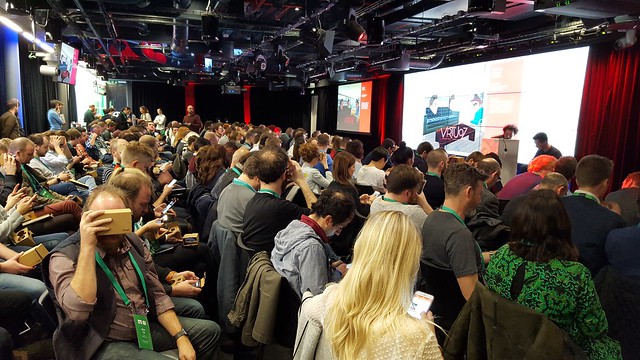
I spent Friday last week in London at the YouTube VR Symposium, for filmmakers and creators to give them a glimpse into what’s doable, things to think about with creating VR content and 360 degree movies. Exciting times!

YouTube VR Symposium, London

Chrome for iOS drastically improved

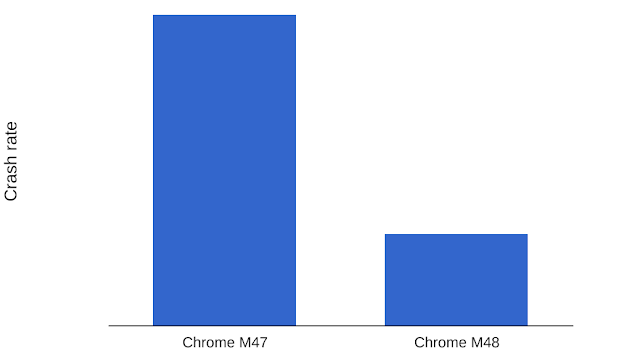
The latest version of Chrome on iOS is a lot faster and more stable, with way less crashes and a lot faster JavaScript execution.

Google Translate now covers 103 languages and 99% of the online population

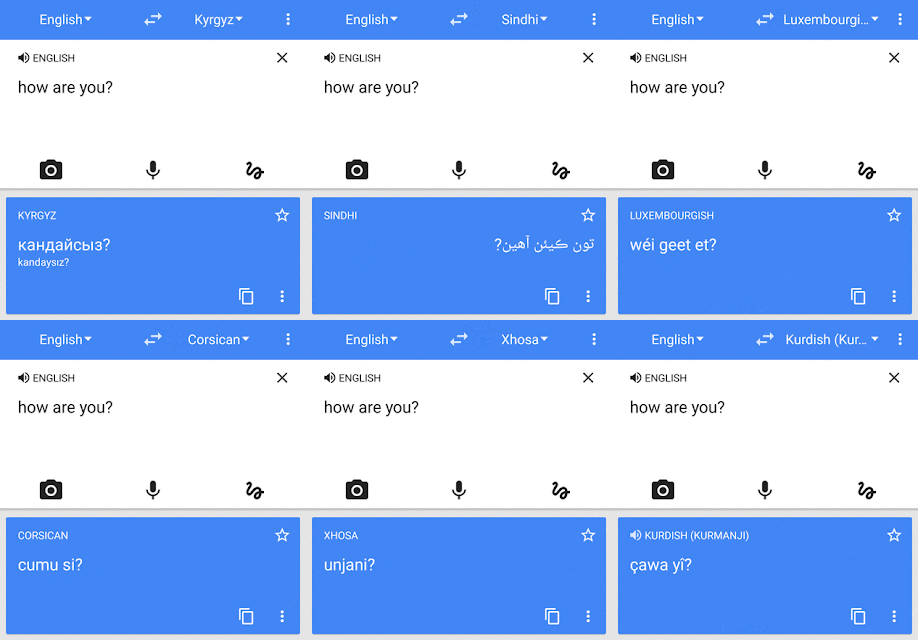
By its impressive work during the last ten years, Google Translate now covers 103 languages and 99% of the online population

Dark theme for Chrome DevTools

We’ve had a lot of requests from developers about adding a dark theme to the Chrome Dev Tools, and now we have a version for you to test!

Project Loon heads into carrier testing

Project Loon, intended to bring Internet to remote parts of the world, is about to go into carrier testing this year. A lot of work has gone into ballon design and testing, and this is the next step.

More news

The post 7 Google products with 1 billion users, AMP, The Physical Web, VR Symposium & more – Latest From Google #16 first appeared on Robert's talk.

http://robertnyman.com/?p=2912
Extensions
Star Wars VR & Lightsaber Escape, Cardboard Camera, tons of Android news and much more! – Latest From Google #15
DevelopingGoogleLatest from GoogleTechnology

Last week before the holidays begin, and many things released an announced – from Star Wars, VR & Google to Android, Cloud and Google Play. This is part 15 in the Latest from Google series. Cardboard Camera Happy to announce the Cardboard Camera! An easy way to turn your smartphone into a VR (Virtual Reality) […]

The post Star Wars VR & Lightsaber Escape, Cardboard Camera, tons of Android news and much more! – Latest From Google #15 first appeared on Robert's talk.
Show full content

Last week before the holidays begin, and many things released an announced – from Star Wars, VR & Google to Android, Cloud and Google Play.

This is part 15 in the Latest from Google series.

Cardboard Camera

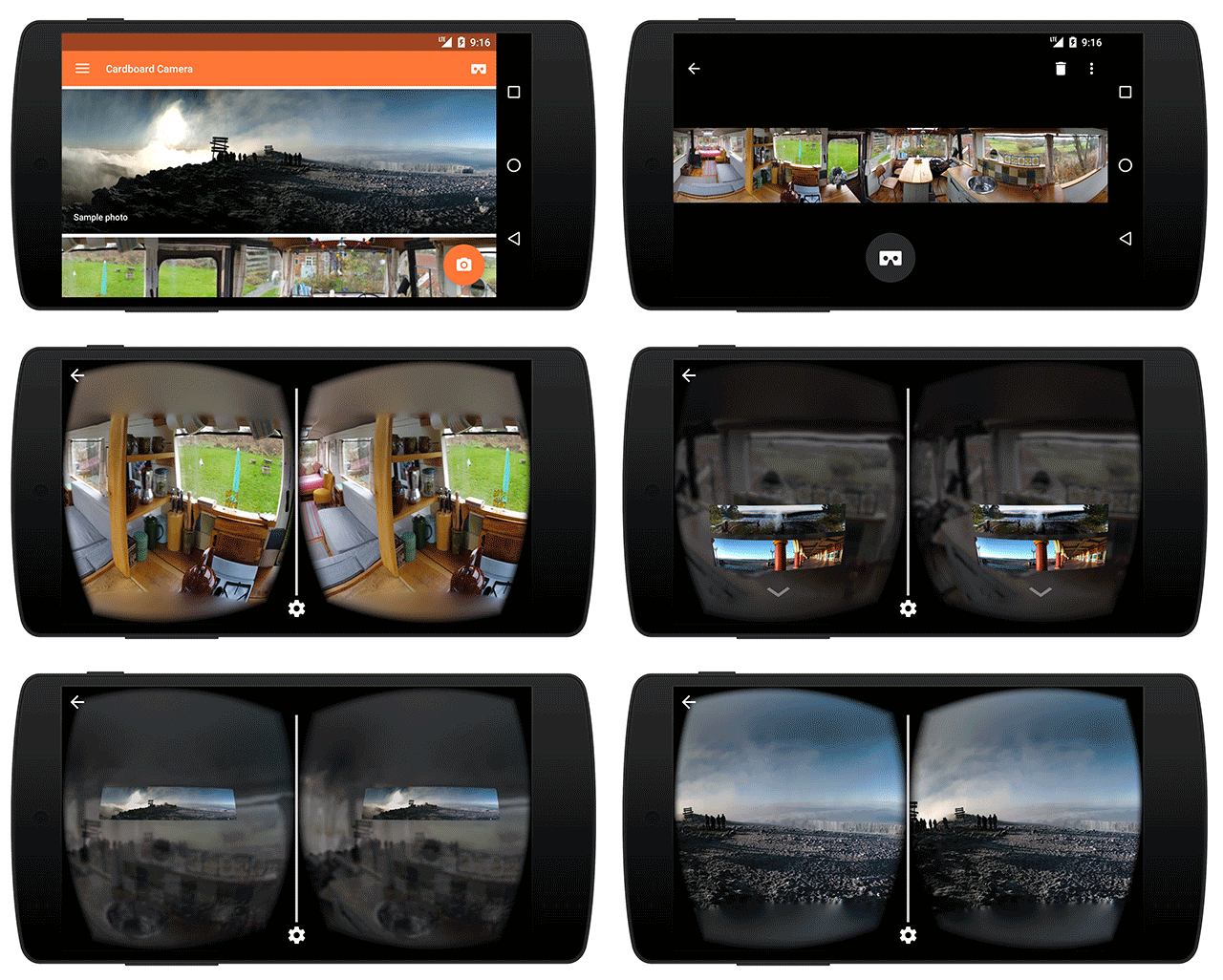
Happy to announce the Cardboard Camera! An easy way to turn your smartphone into a VR (Virtual Reality) camera

Google Photos introduces shared albums

Shared memories made easy with Google Photos, Introducing shared albums.

Google Santa Tracker

The Google Santa Tracker is now live! Go play in Santa’s village. 🙂

Star Wars & Google: VR and LightSaber Escape

Love Star Wars? Google & Star Wars have teamed up delivering a VR experience for Google Cardboard on Android & iOS. Go download the Android or iOS app and have a great time!

There were also some limited awesome Star Wars VR Cardboards released!

Lightsaber Escape

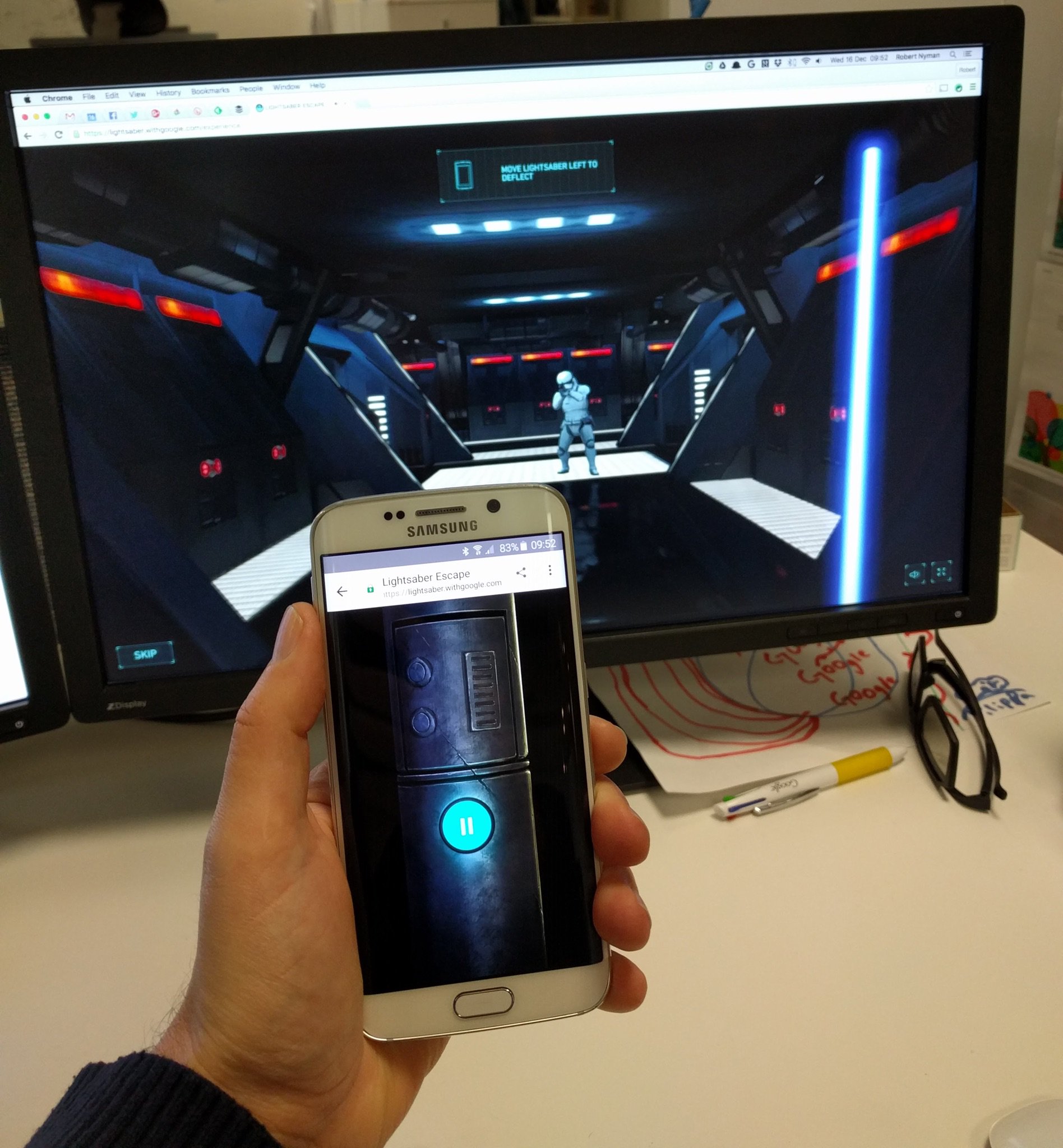
We also just announced the Lightsaber Escape! Go there on your desktop to wield your very own lightsaber!

Lightsaber Escape uses WebGL, WebRTC & WebSockets, developed with Disney, Lucasfilm and Industrial Light & Magic. You can also read up in Creating a Lightsaber with Polymer for how to set up a high FPS WebGL project with Polymer.

Android news

Here’s some exciting news in the Android world:

Android Studio 2.0 Preview: Android Emulator

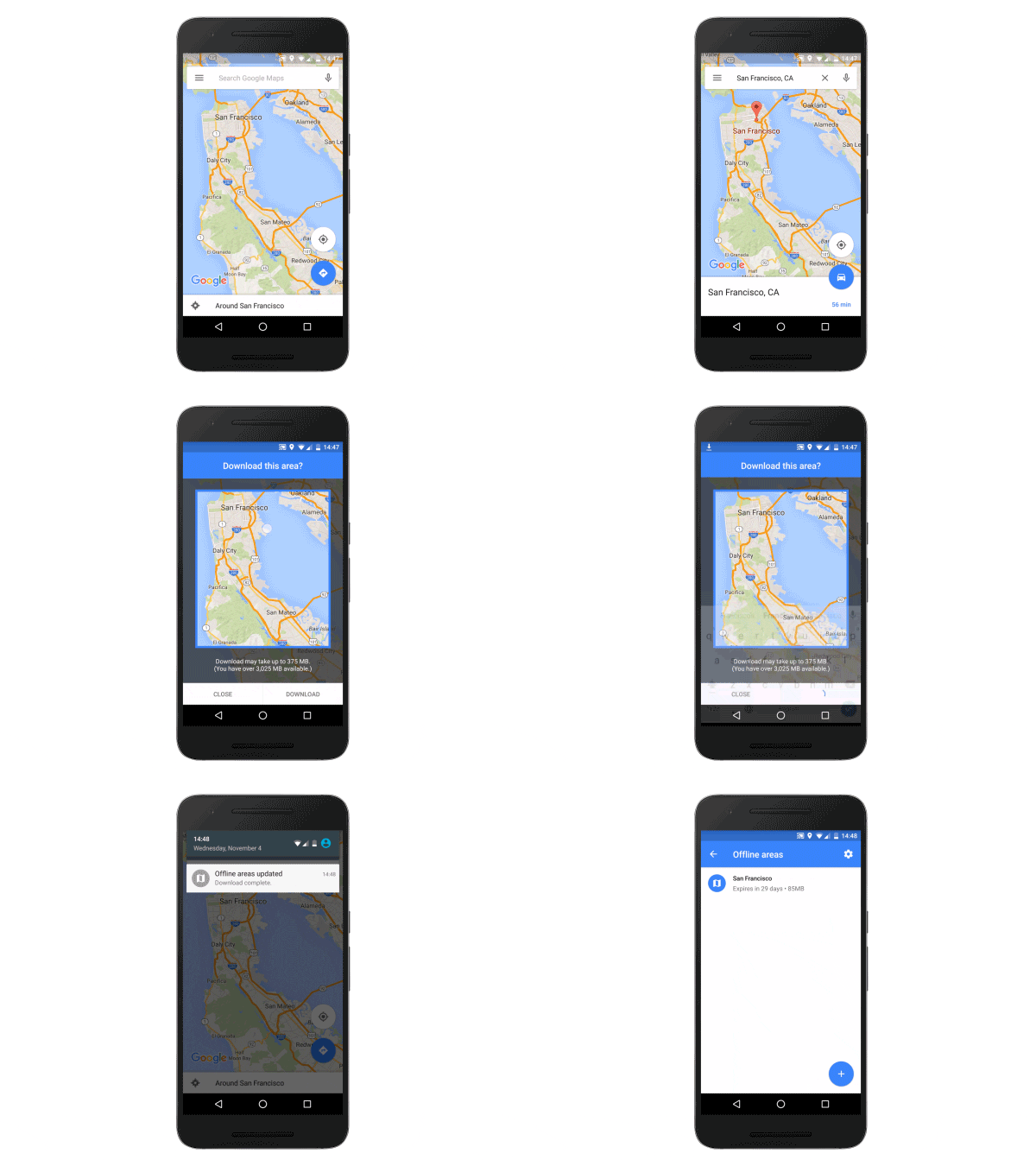
Offline navigation for Google Maps on iOS

Offline navigation Google Maps is now available on iOS, and also showing gas prices and business hours for stores etc.

Demo on Android phone

Pixel C released

We launched the Pixel C, a mix of a powerful tablet and a full-size keyboard.

Google Launchpad Accelerator & the new Agency Program

Google just launched the Launchpad Accelerator, initially available in Brazil, India and Indonesia. We also announced Google’s new global program for Developer Agencies.

More news & releases

The post Star Wars VR & Lightsaber Escape, Cardboard Camera, tons of Android news and much more! – Latest From Google #15 first appeared on Robert's talk.
http://robertnyman.com/?p=2904
Extensions
Google + Star Wars, Chrome Dev & Android Summits, VR news and more! – Latest from Google #14
DevelopingGoogleLatest from GoogleTechnology

A ton of things have been happening the last week, including many announcements, both Chrome and Android Summits and much more! I’ve split this post up in main categories – Google, Android, Chrome & Slush – with news for each area. This is part 14 in the Latest from Google series. Google announcements Here are […]

The post Google + Star Wars, Chrome Dev & Android Summits, VR news and more! – Latest from Google #14 first appeared on Robert's talk.

Show full content

A ton of things have been happening the last week, including many announcements, both Chrome and Android Summits and much more! I’ve split this post up in main categories – Google, Android, Chrome & Slush – with news for each area.

This is part 14 in the Latest from Google series.

Google announcements

Here are a number of interesting things from Google, from Star Wars, Hangouts and search to YouTube and Google Photos.

Star Wars + Google

Star Wars, Google, chose light or dark side

If you go to google.com/starwars, you’ll see our collaboration with the new Star Wars movie and integrations in our apps! More in detail in Google Lets You Give Its Apps A “Star Wars” Makeover
.

Star Wars Google Maps

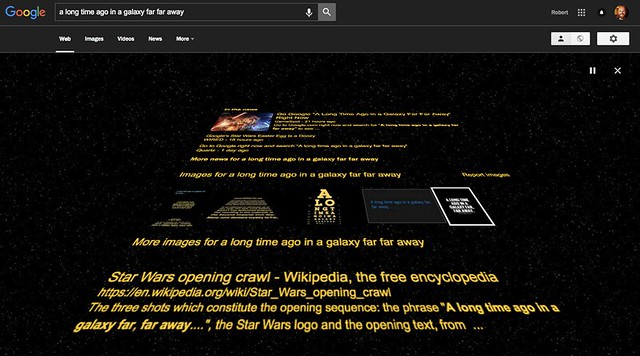
I’d also recommend doing a Google search for a long time ago in a galaxy far far away. 🙂

Star Wars search

Google now lets you join Hangouts as a guest

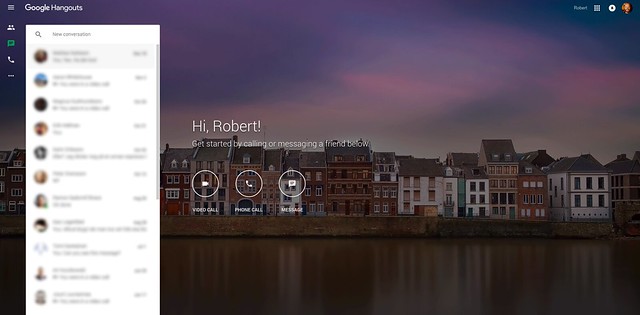
A big step forward in making video and voice calls easier for people, you can now join Hangouts as a guest as a guest and no account is needed.

Google Hangouts

Android Google Search lets you use an app without installing it

In an interesting new approach to testing out apps before installing them, you can now, in the Android Google Search app, stream and use an app without installing it.

Google Photos helps you free up space on your phone

Taking a lot of pictures on your mobile phone? Constantly running out of memorey? Google Photos, currently on Android, will help you free up that space!

Quick Google news VR & Gaming

Within VR specifically, and also for gaming, there have been some interesting news and happenings:

Also, Fun Propulsion Labs recently wrote and shared open source in Hungering for Game Utilities? how to create easy-to-build, performant, cross-platform games.

Android

Android Dev Summit

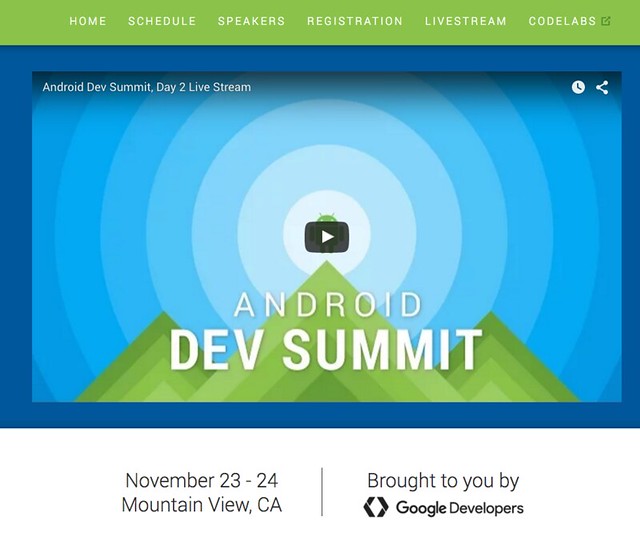
Earlier this week, Android Dev Summit took place in Mountain View, and you can go and look at the vides from the talks. We also announced the Android Studio 2.0 Preview, aimed at making app builds and deployment faster.

One of the main new features is Instant Run:

Great news. Android Studio is the best IDE I've used and a model for how modern software development should work https://t.co/GwlclHwdlG

— Chris Anderson (@chr1sa) November 23, 2015

On the Android Wear front, we were happy to announce that Cellular support comes to Android Wear but also that it can do a whole lot more using your wrist.

Chrome & Web

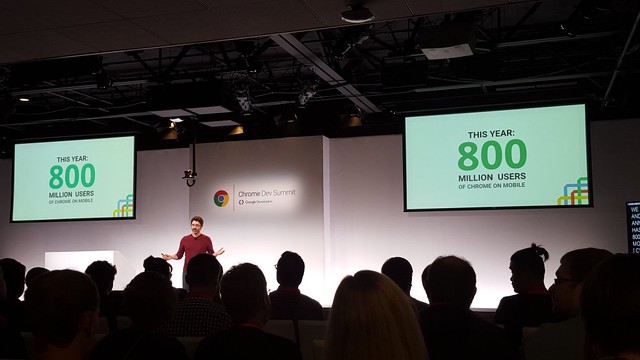
Chrome Dev Summit, Chrome 800 million users

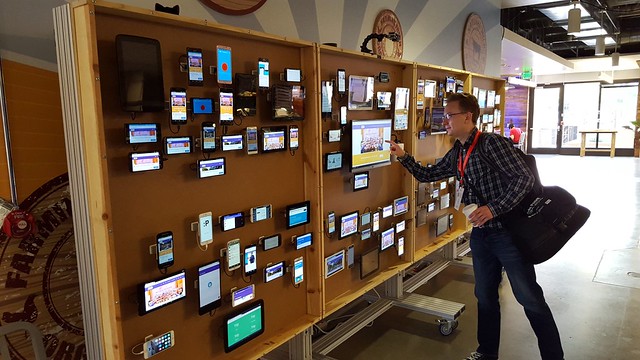
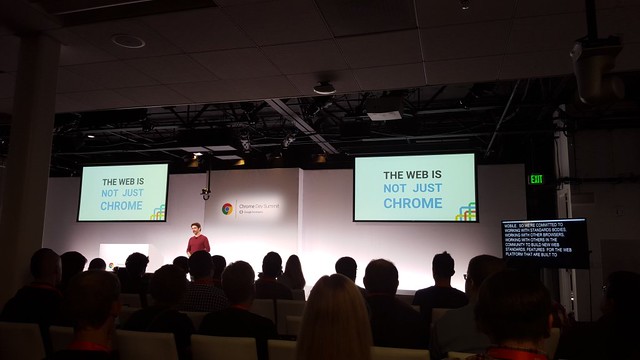
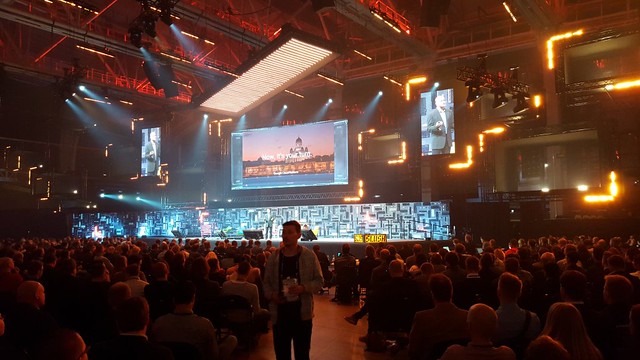
Last week I attended the Chrome Dev Summit, which was truly a great event for web developers! Good on-topic talks, aimed at code, new features and helping developers. I was quite impressed with both the great organization of it as well as the interesting talks.

Chrome Dev Summit, device wall

Also, the videos of all the talks are now available on YouTube!

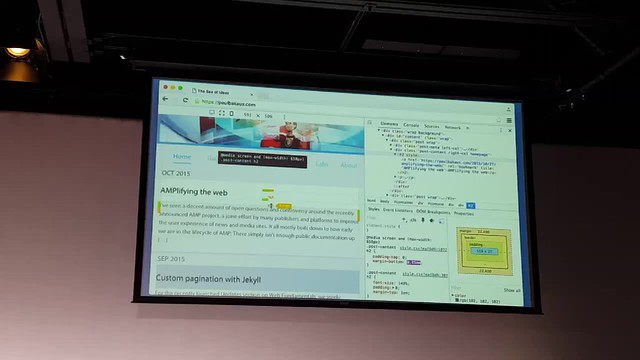
Chrome WYSIWYG DevTools

New WYSIWYG feature in Chrome Dev Tools, demoed by Paul Bakaus

Chrome Dev Summit, the web is for everyone

Slush

Google's Eric Brewer speaking at Slush

A couple of weeks ago, I was happy to attend the Slush conference, with lots of great meetings with interesting developers – especially some great conversations around VR and also met with the US ambassador in Finland.

Met with US Ambassador in Finland on Google's involvement in Finland & the Nordics, demoing VR & more! #Slush2015 pic.twitter.com/I4p0t7eyMb

— Robert Nyman (@robertnyman) November 11, 2015

Google at Slush

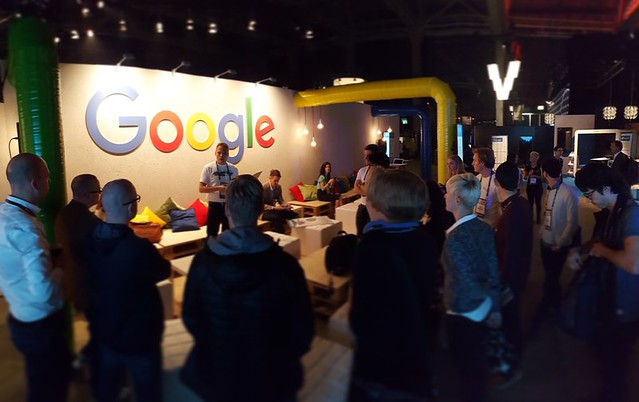
Soundtrap at the Google booth at Slush

The post Google + Star Wars, Chrome Dev & Android Summits, VR news and more! – Latest from Google #14 first appeared on Robert's talk.
http://robertnyman.com/?p=2900
Extensions
All YouTube videos now support VR, Google open sourced its AI Engine, Google for Entrepreneurs Tech Hub in Stockholm – Latest from Google #13
DevelopingLatest from GoogleTechnology

All YouTube videos now support VR, Google open sourced its AI Engine, Google for Entrepreneurs Tech Hub in Stockholm and much more! This is part 13 in the Latest from Google series. All YouTube videos now support VR! YouTube presses play on virtual reality and now all videos support VR! If you have a Google […]

The post All YouTube videos now support VR, Google open sourced its AI Engine, Google for Entrepreneurs Tech Hub in Stockholm – Latest from Google #13 first appeared on Robert's talk.
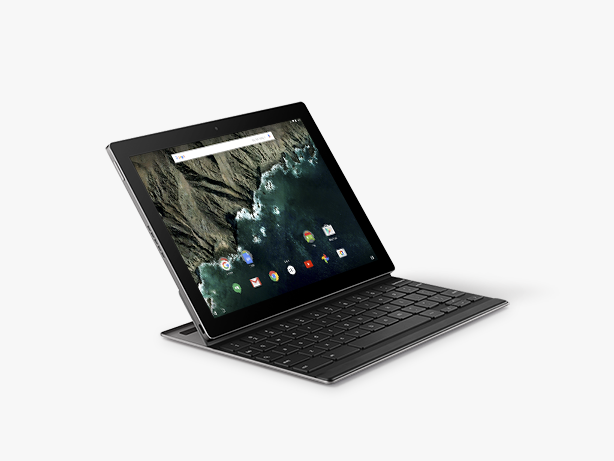
Show full content

All YouTube videos now support VR, Google open sourced its AI Engine, Google for Entrepreneurs Tech Hub in Stockholm and much more!

This is part 13 in the Latest from Google series.

All YouTube videos now support VR!

YouTube presses play on virtual reality and now all videos support VR! If you have a Google Cardboard, for instance, you can dive right in!

http://bit.ly/1HfvIlw

Here’s a recommended playlist with VR videos to start out with!

Google open sourced its AI Engine

Happy to announce that Google Just Open Sourced TensorFlow, Its Artificial Intelligence Engine. It’s a highly scalable machine learning system used in speech recognition, smart Inbox replies, Google Photos and many other places.

More information on TensorFlow is available in the TensorFlow: smarter machine learning, for everyone post and in the video below:

The Current State of VR presentation

This week I was happy to organize yet another Google Tech Talk Meetup, and this time around the presentation was about The Current State of VR meetup, presented by Daniel Kihlgren Kallander.

Video included below, and you can follow along in the slides.

Google for Entrepreneurs launches Tech Hub in Stockholm

Google for Entrepreneurs, in collaboration with Epicenter, launches a Tech Hub in Stockholm. The idea is to help and strengthen the local ecosystem around innovation and entrepreneurship, and offering local seminars, meetups, discussions and more.

Welcome, Swedish #startups! Announcing our new Tech Hub Partner: @Epicentersthlm. https://t.co/UB5MS2Cf1W #sthlmtech pic.twitter.com/D3oHRatkvW

— Google4Entrepreneurs (@GoogleForEntrep) November 5, 2015

Announcement (in Swedish): Google och Epicenter i samarbete för att ta Google for Entrepreneurs till Stockholm

TAG Heuer announced AndroidWear watch

TAG Heuer Connected was announced yesterday, a watch with a titanium case and straps in seven colors, together with a hi-res sapphire glass display.

Comparing Nexus phone sizes

A small practical tip: usually when new phones come out, it’s hard to estiamte the size, especially in comparison to other phones. Therefore I’d recommend phoneArena for seeing different devic e sizes next to each other.

In this comparison, Google Nexus 5 vs Google Nexus 5X vs Google Nexus 6P.

Size comparison: Google Nexus 5 vs Google Nexus 5X vs Google Nexus 6P

The post All YouTube videos now support VR, Google open sourced its AI Engine, Google for Entrepreneurs Tech Hub in Stockholm – Latest from Google #13 first appeared on Robert's talk.

http://robertnyman.com/?p=2894
Extensions
IoT Brillo invites, AI & RankBrain for Search, security panel in Chrome, app to publish your gameplay on YouTube & much more – Latest From Google #12
DevelopingGoogleLatest from GoogleTechnologyWeb browsers

IoT Brillo invites, AI & RankBrain, security panel in Chrome, app to publish your gameplay on YouTube and much more! This is part 12 in the Latest from Google series. Brillo & Weave available through invitation Google’s IoT operating system Brillo & the Weave communication protocol are now available for developers through an invite. I […]

The post IoT Brillo invites, AI & RankBrain for Search, security panel in Chrome, app to publish your gameplay on YouTube & much more – Latest From Google #12 first appeared on Robert's talk.
Show full content

IoT Brillo invites, AI & RankBrain, security panel in Chrome, app to publish your gameplay on YouTube and much more!

This is part 12 in the Latest from Google series.

Brillo & Weave available through invitation

Google’s IoT operating system Brillo & the Weave communication protocol are now available for developers through an invite.

I recommend taking a look at the video, and if you are planning on something in this area, I strongly recommend requesting an invite in the Brillo web site.

Tech Entrepreneur Nanodegree

Together with Udacity, Google has designed a Tech Entrepreneur Nanodegree for learning how to design, validate, prototype, monetize, and market app ideas from the ground up and grow them into a scalable business. All of this content is free, and available at udacity.com/google

It consists of these courses:

  • Product Design: Learn Google’s Design Sprint methodology, Ideation & Validation, UI/UX design and gathering the right metrics.
  • Prototyping: Experiment with rapid-low and high-fidelity prototyping on mobile and the web using online tools.
  • Monetization: Learn how to monetize your app and how to set up an effective payment funnel.
  • App Marketing: Understand your market, analyze competition, position your product, prepare for launch, acquire customers and learn growth hacks.
  • How to get your startup started: Find out whether you really need venture capital funding, evaluate build vs. buy, and learn simple ways to monitor and maintain your startup business effectively.
Google & balloon-powered Internet in Indonesia

Google’s Project Loon aims to bring balloon-powered Internet to Indonesia’s 17,000 islands, and Indonesia is a country where currently only one about one third of the population has access to the Internet. Tests wil start in 2016.

Record & Publish your Gameplay

Through the Google Play Games, Android users can now record & publish the gameplay to YouTube.

Google’s diversity numbers

Google publishes its diversity numbers at google.com/diversity.

Google's diversity numbers

Google for Entrepreneurs <3 Stockholm

Just a little sneak peak that Google for Entrepreneurs will, November 5th, announce what Google does in Stockholm around startups and entrepreneurs

Google Photos has reached 100 million users

Google Photos has reached 100 million active users in just 5 months! They published a post about it, together with 10 other interesting facts about the service!

Google Search, AI & RankBrain

Google is using machine-learning AI RankBrain for improving search results, and Bloomberg had an interesting article on it and Search Engine Land created a FAQ on the topic.

New security panel in Chrome Canary

In Chrome Canary, there’s a new security panel to show how secure your web browsing really is

The post IoT Brillo invites, AI & RankBrain for Search, security panel in Chrome, app to publish your gameplay on YouTube & much more – Latest From Google #12 first appeared on Robert's talk.

http://robertnyman.com/?p=2890
Extensions
YouTube Red announced, what’s new in Android M for developers, New York Times delivers one million Cardboard – Latest From Google #11
DevelopingGoogleLatest from GoogleTechnology

YouTube Red subscription announced, what’s new in Android M for developers, New York Times delivers one million Cardboard and more! This is part 11 in the Latest from Google series. YouTube Red YouTube Red was announced! Watch videos without ads, save videos to watch offline on your phone or tablet, play videos in the backgroiund […]

The post YouTube Red announced, what’s new in Android M for developers, New York Times delivers one million Cardboard – Latest From Google #11 first appeared on Robert's talk.

Show full content

YouTube Red subscription announced, what’s new in Android M for developers, New York Times delivers one million Cardboard and more!

This is part 11 in the Latest from Google series.

YouTube Red

YouTube Red was announced! Watch videos without ads, save videos to watch offline on your phone or tablet, play videos in the backgroiund and more. It will cost$9.99 a month and will be available across all your devices. This will go public Oct 28th and is initially available in the US.

YouTube Red

Also, early next year, we anticipate to launch YouTube Originals with shows and movies.

What is new in Android M?

We had a Google Tech Talk Meetup this week with Erik Hellman, a Google Developer Expert, presenting about what’s new for developers in Android M.

Great slides, tips & tricks and I highly recommend takling a look:

Tools and infrastructure for hackable projects

A week prior we also had a Google Tech Talk Meetup on Tools and infrastructure for hackable projects by my colleagues Patrik Höglund and Henrik Kjellander, talking about testing and working with scaling. I recommend going through their highly useful slides and taking a look at the video from the talk:

New York Times & Google Cardboard

The New York Times Launches NYT VR, a virtual reality project in collaboration with Google, and delivers Over One Million Google Cardboard Viewers to subscribers.

Beta channel for the Android Google app

Google app beta testing

Google launched a beta channel for the Android Google app, where you can get a preview and test out new features for the new home screen, app drawer, Google Now & on Tap and more.

Quick links

Some other quick interesting news:

The post YouTube Red announced, what’s new in Android M for developers, New York Times delivers one million Cardboard – Latest From Google #11 first appeared on Robert's talk.

http://robertnyman.com/?p=2887
Extensions
Android 6.0 Marshmallow & new devices, Accelerated Mobile Pages, Google Cardboard reach + more! – Latest From Google #10
DevelopingGoogleLatest from GoogleTechnology

Lots of new releases, both in the form of software like Android 6.0 Marshmallow and hardware, in the form of two new Nexus phones, 2 Chromecast devices and the Pixel C. Also Google Cardboard success and news about Nest. This is part 10 in the Latest from Google series. Announcing Accelerated Mobile Pages Project (AMP) […]

The post Android 6.0 Marshmallow & new devices, Accelerated Mobile Pages, Google Cardboard reach + more! – Latest From Google #10 first appeared on Robert's talk.
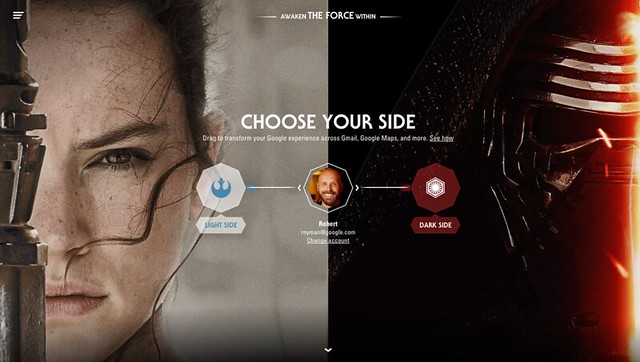
Show full content

Lots of new releases, both in the form of software like Android 6.0 Marshmallow and hardware, in the form of two new Nexus phones, 2 Chromecast devices and the Pixel C. Also Google Cardboard success and news about Nest.

This is part 10 in the Latest from Google series.

Announcing Accelerated Mobile Pages Project (AMP)

Last week, Google launched the Accelerated Mobile Pages Project (AMP), for a faster, open mobile web. The idea is to dramatically improve mobile web performance, through the open AMP HTML framework, which also entails the idea of making it easy for publishers to reach out and make their content as fast and accessible as possible to everyone.

Android 6.0 Marshmallow released

The new Android 6.0 Marshmallow started rolling out, with features such as Now on Tap and the ability to directly translate text within the app you’re currently using.

Google Cardboard & reach

The Google Cardboard app (Android, iOS) is now available in over a 100 countries in 39 languages, and has had more than 15 million installs so far.

The Cardboard developer documentation is also available in 10 languages, and now Google StreetView is also available in Cardboard!

Keynoting Future of Web Apps in London

I keynoted the Future of Web Apps conference in London last week, talking about the web, its future, comparing to native apps, new web features and much more. My slides are available and hope to share the recording of the talk later:

New devices: Nexus phones, new Chromecasts and Pixel C

A couple of weeks ago we launched a number of new devices: two Nexus phones, a new Chromecast, Chromecast Audio for casting to your speakers and a Pixel C device – a tablet with a keyboard.

Nest & Nest Weave

Nest announced New ways to work with Nest. Together with Nest Weave, a communication protocol for devices in your home.

Quicklinks

Some other recommend reading:

The post Android 6.0 Marshmallow & new devices, Accelerated Mobile Pages, Google Cardboard reach + more! – Latest From Google #10 first appeared on Robert's talk.
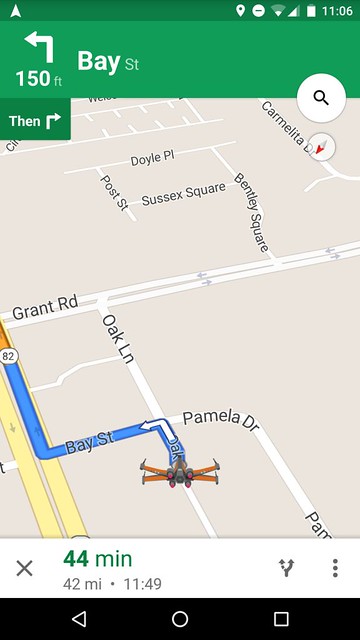
Download video
http://robertnyman.com/?p=2879
Extensions