tag:blogger.com,1999:blog-5432133643734415429.post-2699457370300311103
OLD DEPTFORD HISTORY
Part of feedburner.com
This website is dedicated to the past times of Deptford. If you have any stranger-than-fiction stories about Deptford, I would welcome your input. This may include stories of people and places, those still here or long gone, characters, the war years, ghost stories and haunted places, ancient buildings and bygone memories, long forgotten. Please contact me with your stories axelgs1@yahoo.co.uk
stories
Show full content
A Mysterious Sighting on the Thames Path
Submitted anonymously to olddeptfordhistory.com
We recently received the following account from an individual who wished to remain anonymous. It describes a deeply unsettling encounter along the Thames Path, near an area long associated with the maritime industry and the working history of the river.
The location—close to O'Sheas Marine Services—sits within a stretch of riverbank that has changed little in character over the decades. Boat yards, fenced enclosures, and the quiet presence of the Thames itself make it a place where past and present often feel uncomfortably close.
The AccountOn Thursday, 19th March 2026, I was walking along the Thames Path with my dog.
Ahead of me, I noticed a woman standing still, looking out across the river. She had long hair and was wearing a long coat—something about it immediately struck me as unusual. It looked like a coat from the 1920s, not something you would expect to see today.
As I got closer, my dog began to growl. This is completely out of character for him. He refused to walk any further and became visibly uneasy.
I continued forward slowly, closing the distance to around 30 feet.
Then, without warning, the woman disappeared.
There was no movement—no turning, no walking away. One moment she was there, the next she was gone.
I went to the fence to check if she had somehow gone down toward the river, but she was not in the Thames. Behind the spot where she had been standing is a boat repair yard, enclosed by a fence approximately 10 feet high, with no visible doors or exits.
There was nowhere she could have gone.
She had not passed me, and she had not moved ahead of me.
Even after she vanished, my dog remained on edge.
I cannot explain what I saw.
The Scene
A Possible Echo of the Past?
Deptford and the surrounding Thames-side areas have a long and layered history. From shipbuilding to trade, and from wartime industry to modern redevelopment, countless lives have passed along this river.
It is not uncommon for local folklore to speak of apparitions tied to the water—figures seen briefly, often near the river’s edge, and just as quickly gone.
Could this sighting be a trick of light and shadow? A misinterpretation of distance and movement?
Or could it be something else—an echo from another time, briefly crossing into the present?
Have You Seen Her?We invite readers of olddeptfordhistory.com to share their thoughts.
Have you experienced anything similar along this part of the Thames Path?Do you know of any local history that might connect to this description?Can the anonymous person who submitted this encounter please contact me? Please get in touch.
tag:blogger.com,1999:blog-5432133643734415429.post-4629787989074548088
Extensions
Show full content
A Deptford Street, an Orange, and a Question of Place (c.1926–1930)

This photograph has recently resurfaced that captures a quiet, human moment from inter-war Deptford: a young boy — Andrew’s father — eating an orange, sometime around 1926–1930. It’s a simple scene, yet it opens up a much bigger question: where exactly was this taken?
Andrew, who brought the image to light, has already done the hard yards. He knows the family lived at various addresses around Hughes Fields, Deptford Green, and Creek Road, including No. 122 Creek Road during the late 1920s. He has searched hundreds — possibly thousands — of images at the London Archives, with little to show for it. Anyone who has tried to visually reconstruct pre-war south-east London will understand that frustration.
A pawnbroker’s shop on the left
Pawnbrokers were common on busy working-class streets and were usually clearly signed. Their locations are often listed in trade directories from the period, which makes them one of the most promising leads.A building resembling a church hall on the right
These halls were frequently attached to Anglican or nonconformist churches and sat slightly back from the street, often with plain brick façades and tall windows.Possibly a pub ahead on the right
Pubs tended to anchor street corners or sit prominently along main roads, especially routes linking docks, markets, and housing.
Together, these details suggest a lively, well-used stretch of road, not a quiet back street — very much in keeping with Creek Road or nearby routes leading toward the river, The Stowage, and Deptford Green.
Why the trail goes coldAndrew is absolutely right to suspect that much of this streetscape has vanished. Deptford suffered heavy bomb damage during the Second World War, followed by post-war clearance and redevelopment. Entire rows of shops, pubs, and small halls disappeared, taking with them the visual continuity that historians rely on.
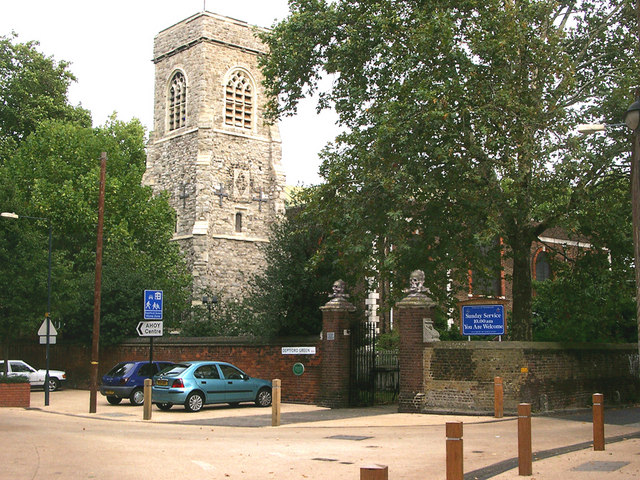
Yet fragments of the old area survive. Around St Nicholas Church, for example, there are still pockets where the scale and feel of old Deptford linger. While these aren’t the answer in themselves, they help us imagine the kind of environment shown in the photograph.
How this photo might be identified
If this image is ever to be pinned down to a precise location, the best chances lie in cross-referencing, rather than photographs alone:
Street trade directories (late 1920s)
Look for pawnbrokers listed on Creek Road, Deptford Green, and connecting streets. Once a candidate street is found, nearby churches or mission halls can be checked.Fire insurance maps and OS maps
These sometimes mark pawnbrokers, pubs, and halls distinctly and can be matched to the spacing of buildings in the photo.Local parish records
Church halls were often tied to specific parishes, which may narrow the field further.
Even if the exact street name never emerges, the photograph still matters. A boy eating an orange — an everyday pleasure in the 1920s — tells us about diet, affordability, and ordinary life between the wars. It’s a reminder that Deptford’s history isn’t only about docks, bombs, or redevelopment, but about people living their lives in streets that have since vanished.
Andrew’s search is one many families share: trying to anchor memory to place when the place itself has gone. If anyone recognises the combination of pawnbroker, church hall, and pub from old Deptford, this photograph may yet give up its secret.
Sometimes, all it takes is one pair of familiar eyes.
tag:blogger.com,1999:blog-5432133643734415429.post-5609265632897560796
Extensions
Show full content
The Day the Sky Fell Silent. The V-2 Strike on Woolworths, New Cross – 25 November 1944.


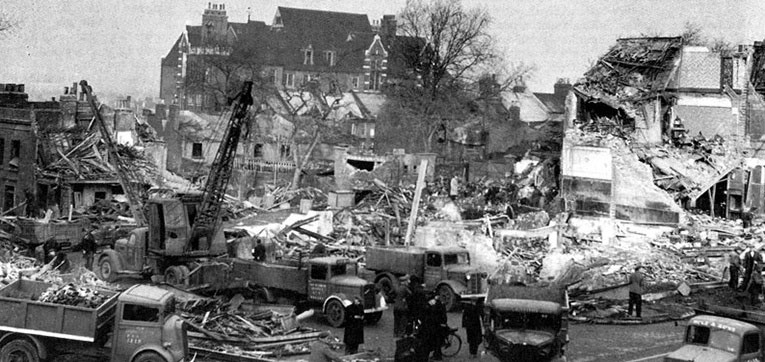
4In the winter of 1944, Londoners had grown grimly familiar with danger from the air. Sirens, the rising whine of the V-1 “doodlebug,” the rush for shelter. But the weapon that struck Woolworths on New Cross Road brought something new and terrifying: death without warning.
At 12:26 pm on Saturday, 25 November 1944, a German V-2 rocket hit the Woolworths store in New Cross, south-east London. In an instant, a busy shopping street was turned into rubble. It remains the deadliest single V-2 attack in Britain.
A Normal Saturday, ShatteredIt was lunchtime. The shop was crowded with local families, women, children, and staff, many doing their weekly shopping or picking up small comforts in a hard year. There was no siren, no engine noise, no chance to run.
The V-2 travelled faster than sound. People only heard the explosion after it happened.
The rocket struck directly, obliterating the store and collapsing neighbouring buildings. Brick dust filled the air. Trams and vehicles were overturned. Fires broke out. Survivors later spoke of an unnatural silence before the screams began.

The Human Cost
The scale of the tragedy was immense:
Around 168 people were killed
More than 120 were seriously injured
Entire families were wiped out
Rescue workers dug for days, often finding victims where the shop counters had been moments earlier
Many of the dead were never formally identified. In wartime London, funerals followed one another in quiet procession, grief often kept private and stoic.
Why the V-2 Was DifferentThe V-2 rocket was the world’s first long-range ballistic missile. Launched from occupied Europe, it arced high into the atmosphere before falling almost vertically onto its target.
Unlike earlier bombing:
There was no defence
No warning system worked
No sound until impact
Psychologically, it was devastating. Londoners described feeling helpless in a new way—you could not hear it coming, and you could not hide.
Aftermath and MemoryThe Woolworths site was later rebuilt and continued as a shop for decades. Today, the location is marked by memorial plaques on New Cross Road, quietly recording the names and the date.
People still leave flowers each November.
For Deptford and New Cross, the strike is not just a statistic of war. It is a deeply local memory—passed down through families, remembered by street names, scars in buildings, and stories told in low voices.
Why It Still MattersThe New Cross Woolworths disaster reminds us that:
The victims of war are overwhelmingly ordinary civilians
Advanced weapons don’t just change battlefields — they change daily life
Memory is fragile unless it is deliberately preserved
The people who died that Saturday were not soldiers. They were shoppers, children, neighbours. Their lives ended not in a front-line trench, but under a familiar shop sign on a London high street. Visiting the site
If you walk along New Cross Road today, pause when you pass the memorial. Traffic moves on, shops open and close—but beneath the pavement lies one of the most tragic moments in London’s wartime history.
tag:blogger.com,1999:blog-5432133643734415429.post-708410583756556791
Extensions
Show full content
Lost Pubs of Deptford: A Vanished Drinking Landscape
Deptford was once thick with pubs. Dock workers, market traders, railwaymen, and families all had their locals — sometimes two or three on the same street. Today, most are gone. Some survive as shells, others as betting shops, flats, or anonymous shopfronts.
This is a look back at a few of Deptford’s lost pubs, with historic photos that capture a disappearing streetscape.
The Deptford Arms52 Deptford High Street
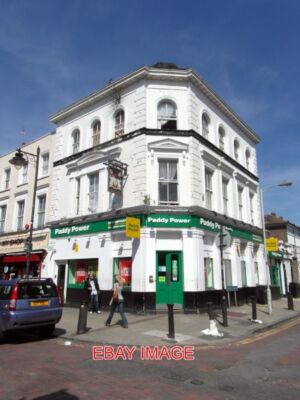
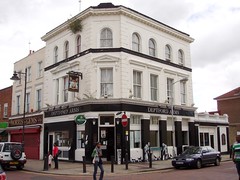
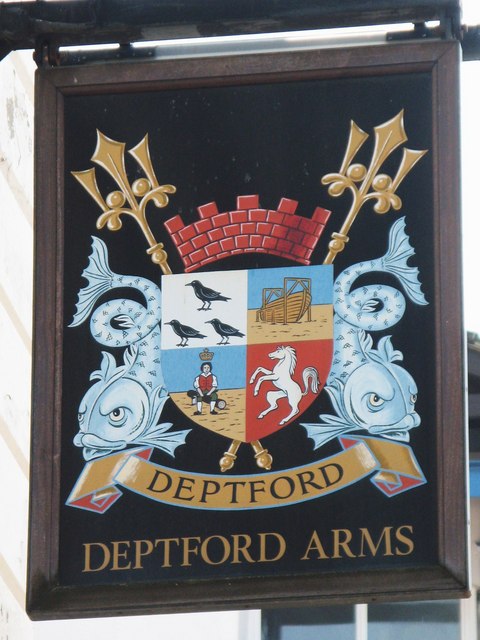
The Deptford Arms stood proudly on the High Street, its corner position making it a natural meeting point. It survived well into the 2000s before closing around 2010.
By the end, trade had thinned and the writing was on the wall. Like many Deptford pubs, it outlived its community but not the economics stacked against it. Today, only photographs show its former identity.
Red Lion & Wheatsheaf45 Deptford High Street


Dating back centuries, the Red Lion & Wheatsheaf was one of Deptford’s oldest pubs. It closed in the early 1970s, a casualty of post-war redevelopment and changing drinking habits.
Its long, low frontage once anchored this part of the High Street. In photos, you can still sense how dominant pubs once were in everyday street life.
The John Evelyn299 Evelyn Street


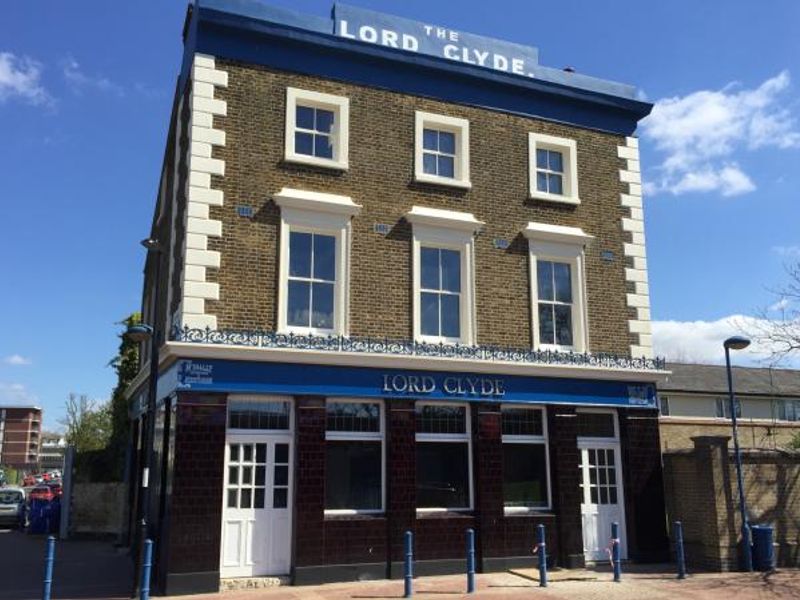
Named after the famous diarist, The John Evelyn was a solid Whitbread local serving the Pepys Estate area. It closed around 2010–2011 and was later converted into a betting shop.
Externally, the building remains recognisable — a familiar Deptford story where the structure survives but the soul does not.
The Beehive72 New Street

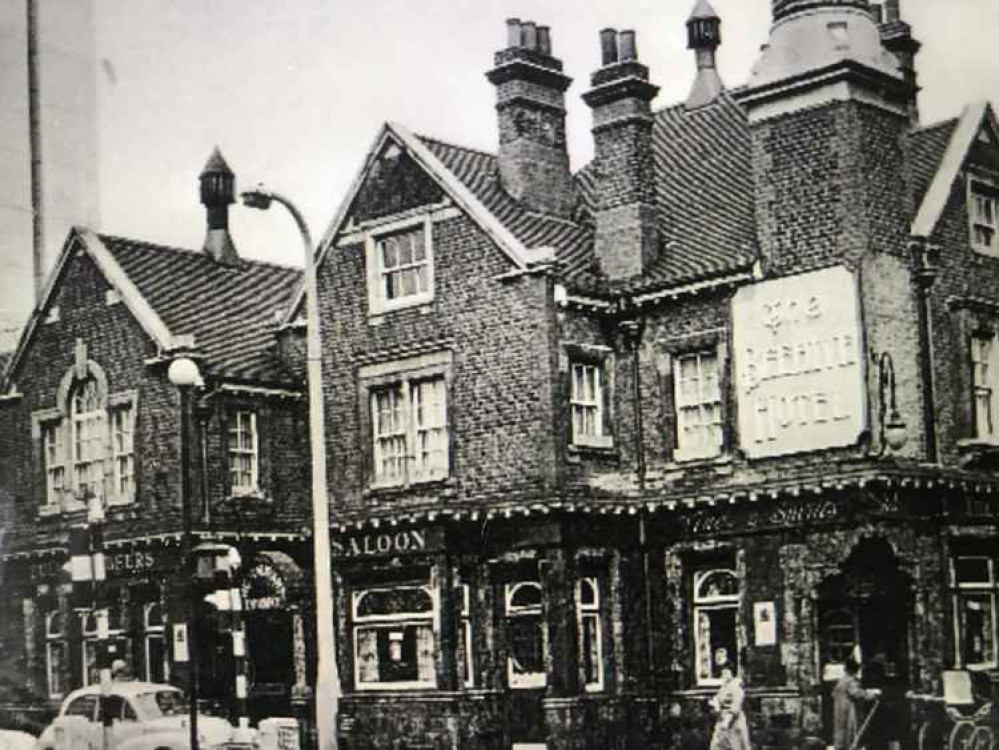

Little remembered now, The Beehive served New Street in the late 19th and early 20th centuries. Like many smaller back-street pubs, it disappeared quietly, leaving few photographs behind.
Its name alone hints at a busier, noisier Deptford — streets alive with dockland trade and foot traffic.
Dog & Bell (Historic View)116 Prince Street


Although the Dog & Bell survives today, historic photos show just how different Deptford once looked. Formerly known as the Royal Marine, it stood amid a dense web of pubs, workshops, and lodging houses.
Its survival makes it a rare living link to Deptford’s pub-heavy past.
Why Deptford Lost So Many PubsDeptford’s pubs didn’t disappear overnight. Their decline came in waves:
-
Dock closures and loss of local industry
-
Post-war redevelopment and road schemes
-
Rising property values and land speculation
-
Changing social habits and licensing pressures
Where there were once dozens of pubs, only a handful remain.
Final ThoughtsOld photos of Deptford pubs aren’t just about drinking — they’re about community, work, routine, and belonging. Every lost pub marks a corner where stories were told, deals were done, arguments started, and friendships formed.
If you grew up in Deptford, chances are at least one of these places mattered to someone you knew.
tag:blogger.com,1999:blog-5432133643734415429.post-7469420145549821432
Extensions
Show full content
tag:blogger.com,1999:blog-5432133643734415429.post-5776071775442547033
Extensions
Show full content
Deptford’s Fallen: Remembering Those Who Served in the First World War

The Brockley & Ladywell Memorial commemorates 165 men from Deptford lost in the Great War.
The Brockley & Ladywell War Memorial: A Lasting TributeOn a quiet stretch of Brockley Grove, the Brockley & Ladywell War Memorial stands as a poignant and enduring reminder of Deptford’s sacrifice during the First World War. Carved into its screen walls and tablets are the names of 165 servicemen who lost their lives between 1914 and 1918 — sons, brothers, neighbours, and friends whose absence left an indelible mark on the community.


Deptford, a working-class district with strong ties to the docks and river, saw many of its young men enlist in the army, navy, and emerging service branches. The memorial’s panels record their names, acting both as a communal ledger of loss and a place for reflection. Although ages at death are not consistently recorded in publicly accessible sources, each name represents a life interrupted and a future left unrealised. The memorial serves to remind us that these men were individuals, not merely numbers.
The Brockley & Ladywell Memorial is more than a list of names. It provides a tangible link between past and present, connecting modern visitors to the families, streets, and workplaces of Deptford from a century ago. Through research into the names, insight can be gained into the lives, regiments, and service histories of local men, helping to preserve their stories for future generations. By visiting, photographing, and documenting these panels, we ensure that Deptford’s contribution to the First World War will always be remembered.

A short dedication.We remember the men of Deptford not as statistics, but as neighbours, co-workers, and friends. Each name on the memorials connects us to a life lived, a family affected, and a community shaped by sacrifice. Let us pause, reflect, and ensure that their memory endures.
A Personal Pilgrimage to Tyne Cot Cemetery
Visiting Tyne Cot Cemetery is a humbling experience. Among thousands of headstones, each representing a life given in courage and sacrifice, I had a personal quest: to find a grave that shared my initials and surname.
 AARON WHITE
I found it—a headstone with my initial and surname—and standing there, I felt an unexpected connection across time, a bond with a soldier I will never meet on this earth but whose bravery and presence resonates with me deeply.
In that moment, I wrote this poem:
© 2025 Andrew White
Tyne Cot is a place of remembrance, reflection, and connection. That single headstone reminded me that history isn’t just in books—it lives in names, in stories, and in the hearts of those who remember.
tag:blogger.com,1999:blog-5432133643734415429.post-7558789873608760200
Extensions
Show full content
Not long after I first published my post about Mary Ann Buildings, I received a lovely message from a reader named Kevin, who kindly shared a personal connection to the place:
Hi Andy,
Following your post and pictures of Mary Ann's Buildings, I thought I would share a photo I found of my Mum — mid-50s, I think — standing in front of the gate shown in the second picture down on your post. You can see the sign above the gate in both pictures. Happy for the photo to be shared!
Best regards
Kevin
 Kevins Mum.
Here is an indepth History of Mary Ann Buildings. Theres a link below to the original post.Mary Ann Buildings, Deptford: The Lost Street Behind St Paul’s
Nestled in the historic heart of Deptford, just behind St Paul’s Church and between Albury Street and Deptford High Street, lies a small cul-de-sac known today as Mary Ann Gardens. To the casual passer-by, this quiet residential corner may seem unremarkable, but its name preserves the memory of an earlier landscape — Mary Ann Buildings, a once-vibrant pocket of working-class housing that tells a story of London’s shifting urban fortunes.
A Georgian Neighbourhood Grows
The area around what became Mary Ann Gardens developed rapidly in the late 18th and early 19th centuries. Deptford — then a bustling riverside town — was home to dockyards, chandlers, shipwrights and labourers. Streets like Union Street (now Albury Street) and Queen Street (now Lamerton Street) were laid out as part of a growing suburb that served the nearby Royal Dockyard and the Thames shipping trade.
Within this grid of narrow streets appeared Mary Ann Buildings, a modest terrace of small workers’ cottages. Their name followed a common convention of the period, when new speculative developments were often given genteel or personal names to distinguish them — perhaps after a family member or the developer’s wife, “Mary Ann.”
Life in Mary Ann Buildings
By the mid-19th century, census records and social surveys depicted Mary Ann Buildings as densely populated but industrious. Small trades flourished here — costermongers, labourers, and dock workers shared the cramped houses. According to social historians, the area was “well known for housing slaughterhouse girls,” referring to the women employed in the local meat trades that surrounded the market and High Street.
Like much of Deptford, the street reflected both the hardship and vitality of working-class London. Children played in courtyards while residents fetched water from shared pumps. St Paul’s Church — a short walk away — offered a spiritual centre amidst the noise of the High Street and the docks.
Decline and ClearanceBy the early 20th century, conditions in parts of Deptford had deteriorated. Overcrowding, poor sanitation, and industrial decline left many of the older houses in disrepair. Urban reformers and local councils began to clear entire streets to make way for new housing schemes.
The Deptford High Street and St Paul’s Conservation Area Appraisal notes that Mary Ann Buildings, along with the southern terrace of nearby Albury Street, was cleared in the 20th century. The replacement was a low-rise post-war development, consistent with the planning ideals of the 1950s and 1960s, which sought open space, greenery, and light in contrast to the dense terraces they replaced.
Mary Ann Gardens TodayToday’s Mary Ann Gardens occupies roughly the same footprint as the former Buildings. The cul-de-sac comprises modest, mixed-tenure housing — low-rise flats and houses surrounded by mature trees. From the street, one can still sense the layered history of the area: Albury Street’s ornate Georgian doorcases stand a few steps away, and the spire of St Paul’s Church dominates the skyline, linking past and present.
Modern property data suggests that most of the current housing dates from around 1970, though the site retains fragments of earlier boundary lines visible on historic Ordnance Survey maps. It is a quiet corner, but one deeply rooted in Deptford’s working-class heritage.
Remembering the Lost StreetsMary Ann Buildings may no longer exist in name, but its memory endures in the maps, archives, and oral histories of Deptford. It represents a familiar London story — of industrial growth, social struggle, and urban renewal.
In the words of one local historian, “to walk through Mary Ann Gardens is to tread on the ghost lines of the city’s hidden lives.” The surviving name on the street sign stands as a small but enduring tribute to the people who once made their homes in the shadow of the docks, shaping a neighbourhood that still bears their mark.
References & Further ReadingLewisham Council. Deptford High Street and St Paul’s Church Conservation Area Appraisal (2021).
The City Within the City — Urban History dissertation, University of Central Lancashire (2019).
Layers of London historic maps (Rocque, Greenwood, OS 1870 editions).
Streetlist.co.uk — “Mary Ann Gardens SE8: Street and Property Data.”
Old Deptford History blog (archival posts and photographic comparisons).
About the Author
By Andy
Andy is a historian and writer with a focus on South East London’s urban and social history. Their research explores the transformation of neighbourhoods like Deptford, Greenwich, and Bermondsey — tracing how working-class communities, architecture, and industry shaped London’s modern identity.
tag:blogger.com,1999:blog-5432133643734415429.post-3984594706508993586
Extensions
Show full content
The Lost Burial Ground of Hughes Fields, Deptford
By olddeptfordhistory.com
Deptford has always been a place where London’s past meets the present. Dockyards, merchants, sailors, revolutionaries — their stories lie in the streets and buildings around us. But there’s one story almost invisible today: the burial ground that once lay beneath or beside Hughes Fields.
This is the tale of a field, a forgotten graveyard, and a changing city.
📍 A Field with a Name and a Past
Hughes Fields (sometimes written “Hughs Field”) lay on the western edge of old Deptford, between Watergate Street, Benbow Street, and Evelyn Street. In the 18th and 19th centuries, this was open land — fields on the fringe of a growing riverside village. By the end of the 19th century, it became the Hughes Fields Estate, built to house working-class Londoners.
Long before that transformation, the land had another identity:
locals referred to a burial ground within or adjacent to Hughes Fields — a piece of parish ground that quietly disappeared from maps as development advanced.
🗺️ A Glimpse on the Old Maps Stanford’s Library Map of London, 1862.

The Stanford 1862 map shows the Hughes Fields area as open ground directly bordering the parish burial zones of St Nicholas and St Paul’s Church. While the burial strip itself isn’t labelled (typical for overflow plots), its location within parish boundary lines and its proximity to the crowded churchyards suggests the land was used for burials before redevelopment. Ordnance Survey, 1890s. By the late Victorian period, this part of Deptford had changed dramatically. New housing covered the field, and the burial ground strip referred to in local accounts was no longer marked. This was common: small burial extensions were often absorbed into building plots, unrecorded except in parish registers or local memory.
 Hughes Field 1895
⛪ St Nicholas & St Paul’s: The Overflowing Churchyards
Deptford’s population grew rapidly in the 18th and 19th centuries. Its two main Anglican parishes — St Nicholas (medieval) and St Paul’s (Georgian) — had busy churchyards that soon filled.
When burial space ran short, the parish acquired new land:
-
St Paul’s expanded into what became Deptford Cemetery (now known as Brockley Cemetery) in 1858.
-
Before that, smaller strips of ground were used for extra burials, likely including the Hughes Fields plot.
Nonconformist chapels in Deptford High Street also maintained small burial yards, adding to the patchwork of sacred ground in the area.
 1850
1850
⚰️ The “Strip of Burial Ground”
Local oral history and older written guides refer to “a strip of burial ground parallel to the new streets through Hughes Field.”
This suggests:
-
It was probably an overflow plot associated with the parish church.
-
It may also have included pauper graves or burials of those without family plots — common in Victorian London.
-
The site was likely unfenced or minimally marked, unlike larger cemeteries.
When the Hughes Fields Estate was developed in the late 19th century, the burial strip was absorbed into the urban fabric. Many such plots across London were either cleared or simply built over, leaving no headstones and little trace above ground.
Additional ground, Wellington Street
This was consecrated and a wall built in 1765 (there is a commemorative tablet in the wall of Charlotte Turner gardens which incorporates the old ground). The ground was extended to the N in 1897 and widened to the West in the 20th c It is now a level park, north of MacMillan St.
¾ acre. This ground, belonging to the parish of St. Nicholas, was laid out in 1884 by the Kyrle Society, and is very well kept up by the Greenwich District Board of Works, who have lately acquired a piece of adjoining land to be added to the recreation ground. (Holmes)
🏡 What Lies Beneath
Today, Hughes Fields Estate is a residential area. The quiet lawns and walkways give no hint of what once lay here. But archaeological sensitivity remains:
-
St Nicholas and St Paul’s churchyards are protected heritage sites.
-
The wider area is listed by Lewisham Council as having archaeological potential.
-
Any major groundworks would require watching briefs, in case human remains or burial structures are encountered.
For many, this is a poignant reminder: Deptford’s layers run deep. Beneath our feet are centuries of lives lived, and lives remembered.
🕯️ Remembering the Unmarked Dead
The burial ground of Hughes Fields may be unmarked, but its story is part of Deptford’s fabric:
-
It reflects a time of rapid urban growth, public health pressures, and parish expansion.
-
It speaks to the lives of ordinary people — sailors, dockers, and families — whose graves may no longer be visible.
-
It reminds us how urban development can bury not only ground, but memory.
As local historians, our task is to keep that memory alive.
🧭 Visiting the Area Today
-
Hughes Fields Estate lies between Benbow Street, Evelyn Street, and Watergate Street.
-
St Nicholas Church and St Paul’s Church are a short walk away and open to visitors at certain times.
-
Brockley Cemetery (originally Deptford Cemetery) offers an evocative sense of the scale of Victorian burial grounds.
When you walk these streets, remember: the ground beneath you once held a burial ground — a quiet resting place on the edge of a growing town.
📚 Sources & Further Reading-
Stanford’s Library Map of London (1862)
-
Ordnance Survey Maps (late 19th century)
-
Mrs Basil Holmes, The London Burial Grounds (1896)
-
London Picture Archive & Layers of London
-
Lewisham Council: Archaeological Priority Area reports
-
OldDeptfordHistory blog and local oral accounts
tag:blogger.com,1999:blog-5432133643734415429.post-4942796925796835050
Extensions
Show full content
The Kings Arms, DeptfordA Ghost in the Dumb Waiter?Deptford has never been short on strange tales. Its streets are layered with the footsteps of sailors, merchants, rebels, and rogues. But one story has persisted quietly through the years — the ghost said to haunt the Kings Arms, a centuries-old pub tucked along Church Street.The Kings Arms was already listed in 19th-century trade directories, serving dock workers, shipwrights, and market folk near the bustling Thames. By all accounts, it was a classic local — a solid bit of Victorian brickwork, all dark wood, tiled floors, and low amber lighting in the evenings.
Pubs like this often gather stories as easily as they gather regulars, and the Kings Arms is no exception.
According to local lore, the ghost that haunts the Kings Arms is none other than a former landlord, a man who ran the place with a firm hand and a watchful eye. Nobody remembers precisely when he lived — and no official record has tied a name to the legend — but the story goes like this:
When a new landlord took over, the old spirit was not pleased.
Staff began noticing odd happenings. A pint left on the bar might suddenly tip over — or, more eerily, slide as if nudged by invisible hands. The dumb waiter, unused for years, would rattle or groan in the still of night. And then there was the bell.
It’s said the pub’s old service bell — long disconnected from anything practical — would sometimes ring on its own. Quiet evenings would be punctuated by that sharp, metallic chime, echoing down the hallway like a call from another time.
One of the best-known anecdotes repeats itself in pub folklore columns: one night, a glass slid clear off the counter and shattered on the floor. A barmaid swore no one had touched it. Another witness — a regular — claimed to have seen it “flicked” into the air.

Of course, skeptics have their theories: • Uneven surfaces.
• Vibrations from traffic or the trains.
• Old fittings that creak and clang in drafts.
But others say it’s the ghostly landlord, making his opinion known.
The tale has found its way into several modern “haunted pub” lists and Halloween roundups. It’s simple, memorable, and rooted in real geography — the Kings Arms, Church Street, Deptford. That makes it the kind of local ghost story that clings to a neighbourhood for generations.
What makes it more mysterious is the lack of a clear record: no name for the landlord, no precise date for the events. Just whispers, a rattling dumb waiter, and a bell that shouldn’t ring anymore.
Many haunted pub stories are born from creaky buildings, tall tales told over a pint, and the delicious thrill of a good scare. The Kings Arms haunting seems to fit squarely in this tradition — half history, half legend.
But walk past the pub on a damp autumn night, when the air off the Thames is thick and the streets echo with your own footsteps, and it’s not hard to imagine that sharp ding of the bell cutting through the quiet.
Maybe it’s just old pipes and tired wood.
Or maybe, just maybe, the old landlord still wants to make sure things are being done properly behind the bar.✍️ Sources: local folklore listings, Deptford pub directories (19th c.), Halloween feature, oral retellings. No primary documentation has been verified to date.
The Kings Arms, Church Street, Deptford, London.
tag:blogger.com,1999:blog-5432133643734415429.post-3534797831109661535
Extensions
Show full content
 Three Mariners is an old sign, of which there are examples among the trades tokens, and which is still to be seen on two or three public-houses in London. There was formerly a tavern known by this sign in Vauxhall.
For years, I’ve been trying to track down the original site of a lost riverside tavern — The Three Mariners — mentioned in a famous 1673 Deptford ghost story. The haunting was said to have taken place “at the Three Mariners in Lower Deptford, by the King’s Yard” at the house of Nicholas Broadway. It’s one of the earliest printed ghost stories linked to the area, but the pub itself seems to have vanished without a trace.
Deptford’s riverside has changed dramatically since the 17th century, and many old inns have disappeared or been renamed. Finding the location of The Three Mariners would help preserve an important part of the area’s maritime and social history.
🕵️ Can you help?
If you’ve come across old maps, directories, parish records, or local photos that mention The Three Mariners, please get in touch. Any lead, no matter how small, could help solve this historical mystery.
👉 Read the original ghost story here: OldDeptfordHistory.com — The Ghost of the Three Mariners (1673)
tag:blogger.com,1999:blog-5432133643734415429.post-4789190060707044966
Extensions
Show full content
The Ghost of Brockley Cemetery: A Deptford Haunting That Shocked Victorian London


A chilling night in Victorian Deptford
In the spring of 1888, the quiet edges of Brockley Cemetery — then often referred to as the Deptford Cemetery — became the scene of an event that sent ripples through London.
Newspapers reported that a young woman of about 18 years old had collapsed and died after what witnesses described as a terrifying encounter with a “man dressed as a ghost.” The British Medical Journal would later cite these press accounts, describing the tragic case as one of those rare instances in which someone had been, quite literally, “frightened to death.”
This was no theatrical story or whispered legend. It was a headline in real Victorian newspapers — and it captured a city already gripped by ghost panics, moral anxieties, and a fascination with the supernatural.
Brockley Cemetery in the 1880s: on the edge of London
Brockley and Ladywell Cemetery (today managed by Lewisham Council) opened in 1858 as a burial ground for the parishes of Deptford and Lewisham.
By the 1880s, the area around Brockley Lane and Brockley Road was still semi-rural — a landscape of gas lamps, unpaved paths, and looming cemetery trees. Death was a visible part of daily life: funerals were community events, and graveyards were places of both mourning and superstition.
Victorian London was also home to a series of “ghost scares” — men and pranksters dressing in white sheets, sometimes with phosphorescent paint, to terrify pedestrians. These incidents were frequently reported in the London press.
“Frightened to death”

The details of the Brockley Cemetery case emerged in early April 1888.
Newspapers (now catalogued in the British Newspaper Archive and cited in the BMJ of 7 April 1888) described how the young woman encountered a figure “dressed as a ghost” near the cemetery gates at night. She reportedly screamed and collapsed on the spot.
Attempts to revive her failed. The coroner’s report, according to the BMJ summary, concluded that shock and fright had likely triggered heart failure.
At a time when medical science was still entangled with moral and social ideas about fear, sin, and female “nerves,” the story became a cautionary tale repeated in both medical circles and popular newspapers.
“The young woman, startled by the sudden apparition of a supposed ghost, was seized with a violent terror, fell insensible, and expired shortly thereafter. A more melancholy result of such wicked folly can scarcely be imagined.”
— paraphrased from BMJ April 7, 1888
Ghosts, panic, and urban legends
The Brockley incident wasn’t unique. Throughout the late 19th century, similar “ghost” scares were reported across London — from Hammersmith (1804) to Peckham (1875) and Lambeth (1890). Some were cruel pranks; others became unsolved mysteries.
What makes the Brockley Cemetery case stand out is that it ended in death — and that the medical establishment took notice. The BMJ’s decision to reference the case gives historians a solid anchor point in a field often filled with unverifiable folklore.
Deptford’s haunted reputation
Deptford — a maritime district with centuries of layered history — was already rich in ghost stories. From the dockyards said to echo with the footsteps of drowned sailors to the St Nicholas Churchyard, long whispered to be haunted, the area was steeped in a supernatural atmosphere.
The Brockley Cemetery tragedy added a modern, headline-grabbing chapter to that folklore. It reflected both the Victorian obsession with ghosts and the very real dangers of fear in an age before electric light and mass policing of nighttime streets.
Legacy and modern retellings
More than 130 years later, the 1888 “ghost scare” has become a staple of local hauntings lists.
Local history blogs like Brockley SE4 and Old Deptford History have revisited the case, pointing to the BMJ reference and speculating on how urban legend and actual tragedy intertwined.
The cemetery itself — now a peaceful green space with Grade II-listed monuments — still carries an air of Victorian melancholy. Ghost walks in the area sometimes reference the incident, though few realise it was once front-page news.
Timeline of the Brockley Cemetery Ghost Scare (1888) DateEventEarly April 1888Young woman encounters “ghost” figure near Brockley/Deptford CemeterySame nightShe collapses and dies; local press reports the case7 April 1888British Medical Journal cites newspapers, labels death as “fright caused by apparition”20th centuryStory absorbed into Deptford ghost lore2000s–presentCase revived in blogs and local history circles
Conclusion
The Brockley Cemetery ghost scare of 1888 is more than just a spooky anecdote. It’s a snapshot of Victorian London — where folklore, fear, and real tragedy met under a gas lamp near a cemetery gate.
It reminds us how fragile the line between urban legend and lived reality can be, and how ghost stories often leave very real shadows.
Sources & References
-
British Medical Journal, April 7, 1888 – note on “frightened to death” case near Deptford Cemetery.
-
Brockley SE4 Blog — “Ghost story at Brockley Cemetery” (modern summary of the BMJ and press coverage).
-
Old Deptford History — Ghosts and local legends.
-
British Newspaper Archive index — Deptford press reports (Greenwich & Deptford Observer).
-
Lewisham Council history of Brockley & Ladywell Cemetery
tag:blogger.com,1999:blog-5432133643734415429.post-6870506738217970165
Extensions
Show full content
THE DEVIL OF DEPTFORD.
BEING A TRUE RELATION OF THE STRANGE DISTURBANCES, LUDICROUS FEATS, AND MALICIOUS PRANKS OF AN EVIL SPIRIT IN THE HOUSE OF MR. G., LIVING IN BACK-LANE AT DEPTFORD NEAR LONDON, IN APRIL AND MAY, 1699.
THE TRUTH WHEREOF IS KNOWN, AND CAN BE ATTESTED BY A GREAT NUMBER OF THE INHABITANTS OF THAT TOWN.
PUBLISHED TO PREVENT FALSE REPORTS.


BEING A TRUE RELATION OF THE STRANGE DISTURBANCES, LUDICROUS FEATS, AND MALICIOUS PRANKS OF AN EVIL SPIRIT IN THE HOUSE OF MR. G., LIVING IN BACK-LANE AT DEPTFORD NEAR LONDON, IN APRIL AND MAY, 1699.
THE TRUTH WHEREOF IS KNOWN, AND CAN BE ATTESTED BY A GREAT NUMBER OF THE INHABITANTS OF THAT TOWN.
PUBLISHED TO PREVENT FALSE REPORTS.
Though the Sadducees and Atheists of this age have the confident vanity to deny the being of spirits, and affirm that all the stories concerning them, and the feats performed by them, are either fabulous, or else are to be ascribed only to natural causes; yet these fond opinions have been undeniably confuted by several learned and ingenious men. And as the examples of former ages, so the prodigious accidents that have happened in these, and some of our neighbouring nations, make it evident beyond contradiction, that there are evil spirits or devils, which do infest this lower world; and of which we have a fresh convincing argument in the following instance: All the particulars whereof were acted, not in the dark or at midnight, but at noon-day in the face of the sun, in the sight of a great many persons; and the effects thereof were felt by divers of the family.
I will not pretend to give an account of every little accident that happened, but only relate those that were most observable, and occurred to the memory of the parties concerned therein; which take as follows.
Upon Saturday, April 25, 1699, at the house of Mr. G., a gentleman well known, living in Back-Lane at Deptford in Kent, about twelve o’clock at noon, a stone was thrown against the parlour window next to the street, which, breaking the glass, came into the room. The boys that were in the street were charged with doing it, but they all denied it; when instantly another stone was thrown, which broke the glass likewise and fell into the room. Soon after, for many days together, a great number of stones were thrown against the back and side windows next the garden, seeming to come from the fields behind; which battered the glass and lead in such a strange manner as if torn and rent with a storm of wind or hail.
The stones still continuing to be thrown, the window-shutters were put to; but then the battery seemed to be renewed with more fury, and one of the shutters was shattered to pieces with a great stone. At length they nailed up strong deal boards on the outside of the broken windows; after which the disturbance ceased from without, but began within the house. One time all the china cups and glasses were removed from the mantelpiece in the parlour, and set on the floor. At another time several earthen plates and dishes were broken to shivers, which being laid together by the gentlewoman, were thrown at them with great force, so that they were obliged to carry them out of the house. Several pewter plates were seen to come out of the kitchen below stairs into the parlour of themselves.
An iron heater moved upstairs into the bedchamber, and was thrown at the gentlewoman’s head, striking her under the ear so hard that the blood came; and while she was surprised at the blow, it rose again from the floor and struck her on the other side of the head. After this the maid carried it into the garden, and about an hour after, they being at dinner, the same heater was seen by the gentleman to come in at the parlour door, and struck his wife the third time upon her collar-bone, which pained her a considerable time.
A small runlet or barrel of about four gallons came out of the cellar to the stair-head; a gentleman being there kicked it down again, but the maid going down soon after met the cask coming up again, with the head uppermost; and the cask was seen to move by the gentleman of the house, and another after it came up.
A candle and candlestick being left in the dining room, which was locked, was thrown upstairs; and they, looking out at the noise, found it there, and yet the door continued locked as before. A large book was thrown down two pair of stairs. Part of a loaf of bread was conveyed from its place, and after long search was at last found hid under a kettle in the cellar. Some butter in a pan was thrown into the dirt, and the pan broken to pieces. A little book came of itself out of a drawer in the chamber, and crossing the room about two foot from the ground, however all the way as if blown along, fell at the gentlewoman’s feet; who carried it back to the same place, but saw it immediately come out of the drawer again and approach her. This was repeated five times successively, she carrying it back and it still returning again; till at length it was gone out of the drawer she knew not how nor where; but sometime after found it in the corner of a closet.
A hat and hat-case likewise marched about the room without human aid. A small stool rose from the ground and fell upon a chest of drawers, and after some time jumped off again and stood upon the feet as before. Candles, tobacco pipes, and a head-block were likewise moved about visibly without hands. And some sausages or links being carried upstairs for security, on a sudden began to be on their march downstairs; a young maid seeing them stir cried out, “Stop the links!” and strove to catch them, but they were too nimble for her and became instantly invisible; but upon strict search were found in a corner of the cellar all over dirty; however, being well washed and fried, the gentleman and his wife made their suppers on them, and found no inconvenience, though they were dissuaded therefrom since it was not known through what infernal hands they had passed.
The gentlewoman one time opening her trunk where her clothes lay, something seemed to heave them up, as if a cat had been underneath. The like accident happened to the maid’s trunk and clothes, though nothing was to be found. The linen likewise in the chest of drawers was often rumpled, though laid never so smooth; and one day the whole chest of drawers was turned with the bottom upwards. The beds, though made in the morning, would be disordered, and the clothes thrown off two or three times in a day, and the pillows carried downstairs.
The gentleman walking in his garden with his hands behind him had a stone thrown therein; and the gentlewoman, seeing a stone coming toward her, caught it with her hand. They were often struck with the stones, but without much damage. It is computed there were no less than a thousand stones thrown into and about the house, within the month wherein this disturbance continued. They set watches about the streets, fields, and gardens adjacent to observe whether any person was seen to throw them, but they could perceive none; and yet at that same time the stones were seen to fly against the house as fast as before.
At first the gentleman got some friends to sit up all night, praying and reading; but in a few days they observed that the noise ceased every night about eleven o’clock, and began again about eight next morning, so that nothing disturbed their rest. They also found in the daytime, that the more company they had the less they were troubled. Some reverend divines were there to enquire into the particulars of this strange disturbance, and were fully satisfied that it could be only the effect of an invisible and supernatural power, and altogether unaccountable to human reason.
This disturbance began about ten days after one person came into the family, who continued there about five weeks, and then went away; the very same day all the disturbance ceased, and all has continued quiet, without the least noise or trouble ever since.
If any desire to be satisfied of the truth of this account, the whole town of Deptford, almost, will be vouchers for the reality thereof; and the ruins that this infernal battery has made on the windows are still visible to any that will please to visit the house. And what can we now imagine our witty infidels will object against this plain matter of fact, or how can they deny invisible powers, when the effects of them are so apparent. We may therefore conclude that they only pretend to be unbelievers in their own defence; and since their lewd lives make them doubtful of obtaining eternal happiness, they strive to fortify their minds against all the arguments offered to prove a future judgment: And because they live like brutes, only gratifying their sinful lusts and appetites, they hope, and would persuade themselves, they shall likewise die like beasts. But let them remember there is nothing more certain than that for all these things God will bring them into judgment.
tag:blogger.com,1999:blog-5432133643734415429.post-1633238891628410239
Extensions
Show full content
 Paul Moriarty
This July, I returned to Hadlow, Kent, for the first time in three years—a journey rooted in remembrance, as I visited my mother’s grave. It was an emotional pilgrimage, marked not only by reflection but also by reconnection with old friends. Yet the visit also brought sorrow, as I learned of the passing of my friend Paul Moriarty.
Paul died on February 2, 2025. To many, he was more than just a familiar face—he was a storyteller, a gentleman, and a beloved regular at the Carpenters Arms pub on 3 Elm Lane in Golden Green. I was introduced to him through his son, Mark, and over time, we formed a genuine friendship built on shared conversations, laughter, and mutual respect.
We would meet during Bank Holidays and around Christmas at the Carpenters Arms. Paul often shared stories about Deptford—tales full of colour and history, things I’d never known. He had a natural gift for storytelling, and his warmth made you feel as though you’d known him forever. I believe he may have visited the area as a hop picker in his younger days—a tradition rooted in the lives of many Londoners of his generation.
Born on September 23, 1938, in Deptford, Paul H. Moriarty lived an extraordinary life. Before finding his way into acting, he worked as a docker and had a background in boxing. It was during his time at the Surrey Commercial Docks that he caught the attention of a film crew who encouraged him to try acting—a twist of fate that changed his life.
To avoid confusion with another actor of the same name, he adopted the stage name P. H. Moriarty and went on to enjoy a long and distinguished career. His roles in films like Quadrophenia, Scum, and A Sense of Freedom are etched in British cinema history. His final film appearance came in Rise of the Footsoldier: Origins (2021), capping a career that spanned decades.
Paul’s television credits stretched back to 1978, starting with Law & Order, and included numerous gritty dramas that benefited from his authentic presence and unmistakable gravitas.
Hearing of his passing was deeply saddening. I want to express my sincere condolences to the Moriarty family.
“Paul was a true gentleman, and I feel privileged to have known him. He will be sorely missed.”
My visit to Hadlow became much more than a return—it was a personal journey of remembrance, reconnection, and reflection. Though marked by grief, I also found gratitude: for lasting friendships, shared memories, and the enduring legacy of those who leave their mark on our lives.
tag:blogger.com,1999:blog-5432133643734415429.post-9145331907431194291
Extensions
Show full content


Tommy Martin
Hello,
I found your website and I am in search of information about 1930's boxer from Deptford Tommy Martin and his family. He was my grandfather. Any information would be greatly appreciated. Seems like there were quite a few boxers from Deptford. Sounds like it was a pretty tough area. My mom said that my grandfather, as a kid, was the leader of a gang of mischief. I know my great grandmother Annie Martin had 9 children and was probably so busy, it was difficult to keep up with him. I know they used to go around and put out the street lights as soon as they were lit! I was privileged to know my grandfather, his sister Phyllis Martin Saunders and my great grandmother Annie Martin... they all moved to St. Croix, USVI, where I was born and grew up.
Many thanks
Judy McMann
https://boxrec.com/en/box-pro/34776
https://boxingnewsonline.net/remembering-tommy-martin-britains-brown-bomber/
tag:blogger.com,1999:blog-5432133643734415429.post-8893785720695817947
Extensions
Show full content

Hi, great blog in Deptford.
My family moved there in the early 1800’s from Dorset. My great great grandfather died in the Greenwich workhouse. This picture of a family wedding shows my great grandmother Rose Marsh 2nd from left front row. 3rd from the right is my great grandfather who was blacklisted by the great western railways for union activity. He had 14 children and they lived in extreme poverty in a house in Edward street. At the back on the right nearly faded out are my grandmother who was born in Swindon but left school at 12 because her father a farm labourer was killed in an accident and they only paid for schooling to 14 for boys and 12 for girls so she was sent into service in London. Beside her is my grandfather who worked for the great western railways in the maintenance yard as a tool maker. He had tickets from malnutrition as a boy so had a humped back but worked hard his whole life.Right at the very back behind my grandfather is a fresh faced young man who is my Dad. He was called Richard Marsh. He left school at 14 to start work in stones foundry in Charlton but at 17 went to do his national service. After that he went to Ruskin college as a mature student, worked for a union for a few years and then became the MP for Greenwich and went on to become a cabinet minister and then the chairman of British Rail. Pretty good story of social mobility in action thanks to the Labour Party and the union movement. From a blacklisted labourer to head of the railways in 3 generations of marshes lolKeep up the good work with the blog it’s brilliant Chris Marsh

Lord Richard Marsh
Richard Marsh was evacuated to Rodbourne from London during the 2nd World War, lived with his Grandmother in Redcliffe Street and went to Jennings Street School. He became Minister of Energy & Minister of Transport in Harold Wilson’s 1st Labour Government from 1966 to 1970. He received a Knighthood and later a life peerage as Baron Marsh of Mannington but is addressed as Lord Marsh. He is now a Cross Bench Peer in the House of Lords. A Cross Bench Peer is one that is not aligned to any particular political party. Richard says he was proud to have lived in Rodbourne and has happy memories of his time there. His fellow peers were puzzled by his choice of title as Mannington is now a trading estate next to a traffic island. When Richard told them that when he lived in Rodbourne this was only fields on the edge of Mannington Rec (Recreation Ground) where he had happy memories of playing with his Rodbournite friends, thus the choice of his title. We are proud to have had him as an honorary member of the Rodbourne Community History Group.
Lord Marsh sadly past away in 2011 aged 83.
tag:blogger.com,1999:blog-5432133643734415429.post-932290435445021519
Extensions
Show full content
Thank you for a fascinating website.
I have been researching the Wood family who lived in the area for many generations and in doing so have been looking at thousands of pages of parish records for around 1700-1800. One of the roads mentioned appears to be Crops Field Lane.
Do you or your viewers have any information where this was located?
Philip Jacquet
tag:blogger.com,1999:blog-5432133643734415429.post-6294104303714655521
Extensions
Show full content
An unlucky and forgotten Utah painter's life is a lesson on caring for local art. The Bigger PictureBy Wes LongEmailPrint

- Cover photo courtesy of Springville Museum of Art
Some people just can't catch a break. And for some unlucky few, misfortune trails them even after they have shuffled off from their mortal coil.
Take William Joseph Armitage, for example. An academically trained artist from London, he relocated to Salt Lake City in 1881, but demand for his skill was limited. By 1885, Armitage tried his luck in San Francisco, alternately living in town on meager means with his son Arthur or at a cottage adjacent to the old Cliff House resort on Lands End. Wishing to finish a painting he was working on at the resort in 1890 before his planned return to Utah, Armitage was "attacked with a coughing and choking," the San Francisco Chronicle reported on Nov. 15, "lasting several minutes and resulting in death."
And still this man, even as he was subsequently remembered by the Deseret News as "an amiable and talented gentleman," had yet to find full respect in this world—right to his grave.
Following his funeral service at the old Fifteenth Ward building in Salt Lake City, the mourners escorted Armitage's hearse down South Temple for burial, only to be met by a steamroller moving in the opposite direction, its engineer neither stopping or slowing down before the procession.
"The horses that drew Grant Bros.' costly hearse were the first to take fright and plunged over the terrace that divides the thoroughfare," reported the Salt Lake Times on Nov. 20. "The coffin that had been placed within the glassy confines with such marked solemnity was tossed around from one side to another, wreaths were relentlessly torn and crushed and it is the sole matter of congratulation that the dead was not hurled to the ground."

- Peter Hill
- “The Resurrected Christ Instructing Nephites,” is one of only three known surviving works by early Utah artist William Armitage.
Finally stopping the steamroller before anyone was injured, the anonymous engineer apparently incensed the crowd further by responding to the close call with "a toothly, heartless smile."
Such disrespect seemed to be a recurring theme in William Armitage's life, only to be compounded further in subsequent generations by the mishandling of his work and the occasional natural disaster—for if fire didn't erase his creations, the dumpster would.
"At the time of his death in that California city in November of 1890," remarked art historian Robert S. Olpin in a 1988 lecture at the University of Utah, "any precise knowledge of the Armitage life and works seems to have disappeared with the artist's own passing, and this early Utah painter is today a very shadowy figure whose works have largely been lost."
After carefully combing through every available printed and living resource, City Weekly is pleased to dispel even a few of those shadows by providing some long-overdue attention to a unique talent. Who knows? Maybe some surviving examples of his work will be rediscovered somewhere in the world as a consequence.
That would be a start, anyway.
Probationary Period
William Armitage was born Feb. 16, 1820, in the Deptford area of southeast London to Thomas Armitage and Mary Wier. Little is known of his familial background, or the circumstances of his artistic beginnings, but his name appears in the student admittance sheet of the Royal Academy of Art School for Dec. 7, 1836, as a teenage entrant.
While art was a well-established profession in Victorian England, there were numerous avenues the aspiring artist could pursue if one wished to become a professional, from courses at local studios and tutelage in workshops to private instruction at home. The most important and exacting of them all, however, was the Royal Academy (RA)—one of the few formal art teaching schools in London at that time.
Open to anyone, free of tuition and without age limits, competition to get into the Academy was indeed tough.
"To be considered for admittance, potential students had to submit a drawing or series of drawings of a classical Greek sculpture," RA Librarian Adam Waterton explained via email. "If the Keeper (director) of the Schools and the Academicians felt that the drawing showed potential, the student was admitted as a Probationer."
Waterton explained that after achieving probationary status, a prospective student would then spend another three months drawing from casts of classical sculptures held in the RA schools.
"If their drawings were considered good enough after three months they were admitted as full students," he said. "The period of study in the 1830s was around six years."

Armitage exhibited his painting "Queen Esther" at the RA's summer exhibition of 1840, reappearing within available public record in 1849 when he exhibited "Jesus Wept" before the British Institution, a private art society. Showcasing another work there in 1852 entitled "Christ Mocked," the Art Journal nevertheless sniffed its disapproval: "The work is deficient in force, character, and minor indispensable qualities."
After marrying Rosa Bleeze (1828-1911) in the early 1850s, it is unclear precisely when Armitage converted to Mormonism, although his wife's baptismal records date to the summer of 1852. They ultimately had eight children together and moved around London frequently.
Listed in the 1861 census as a "teacher of drawing," Armitage almost assuredly took up pupils either in a formal school setting or as a private instructor on top of his exhibitions and sales. Primarily a painter of religious and mythological subjects (with a smattering of portraiture and nature studies), he still had a difficult time of finding an appreciative audience.
The Illustrated London News, for instance, panned Armitage's enormous 1863 painting on the Apocalypse of St. John by comparing him unfavorably with the artists John Martin, Francis Danby and Edward Armitage (no relation).
"It is sad to see so much labour with a result so inadequate," the reviewer pronounced. "The picture may obtain more popularity in the provinces than it can possibly win in the metropolis."
With his eldest daughter Annie the first of the family to depart for America in 1872 (with help from the Latter-day Saint Perpetual Emigration Fund), the others appeared to be engaged with their church unit in London's Wandsworth area, with Armitage operating as a church elder and for a time as his branch's Sunday School teacher.
By May 2 of 1881, however, William and Rosa, along with two of their sons, were among the list of passengers sailing from Liverpool aboard the S.S. Wyoming.
Leaving London's population of almost 4 million, the Armitages were off to give Salt Lake City's "province" of 21,000 a try instead.
Local Color
Beginning with William Major and William Ward in the 1850s, Utah's fine art scene developed in the following decades with great difficulty, despite the patronage of both The Church of Jesus Christ of Latter-day Saints and the Salt Lake Theatre.
The respective arrivals of artists like C.C.A. Christensen (1831-1912), Dan Weggeland (1827-1918), Alfred Lambourne (1850-1926) and George Ottinger (1833-1917) were influential, but still there remained inadequate exhibition space around town and insufficient funds from locals to fully support the profession. Consequently, none of these men could paint full-time, all being obliged to work in additional trades and take on odd jobs.
This was a frequent concern across the pages of Ottinger's personal journal, remarking in one passage that Utahns "as a general thing like pictures and admire them but they have no money to spend for them," with the exception of the rich—who did not generally show up. Well-connected in Salt Lake City and involved with earlier efforts to establish fine arts in Utah, Ottinger was inclined to lend a hand to others of his profession.
"Mr. William Armitage, an artist and drawing master from London, has come to reside in our city as a teacher of drawing—he may manage to make a living," Ottinger confided to his journal in May of 1881. "I am afraid the future will be a hard experience for him, not harder than he has had in London if all be true that I have heard. I have interested myself in his behalf as much as possible, introducing him to the manager of the University and urging him and the board of Regents to organize drawing classes in their institution, as well as finding a few pupils in a private way for him."
By the end of that month, Armitage was receiving students in oil, drawing and watercolor instruction through Charles R. Savage's Art Bazaar. By the fall, he was simultaneously teaching classes at the University of Deseret and at Rowland Hall as well as preparing what would be an award-winning set of works for the biggest artistic venue of the year—the Territorial Fair.

Praising Armitage's entry, entitled "He Shall Wipe away all Tears," in the Salt Lake Herald-Republican, the reviewer "Xenophanes" remarked that "In [the depicted woman's] face the artist had thrown his soul; he had not painted, but created it: leaving it full of feeling, almost flesh and blood." His portraits of John Thaxter White (1858-1933) and the father of a local Studebaker Wagon agent received similarly high marks from both patrons and the awarding committee.
Armitage thus entered upon his best-documented period, being among the founding members of the short-lived Utah Art Association and painting well-received works for individuals and institutions alike. Under the sponsorship of the Art Association, an historic exhibition was carried out at the McKenzie Reform Club Hall on First South in the winter of 1881, showcasing local artistic talent as well as rare treasures from Salt Lake collectors.
To the delight of the Salt Lake Daily Herald on Dec. 23, the showcase was "much finer than was in any way anticipated," becoming more popular as it went on until its close on Jan. 21, 1882.
"It is important to note that this exhibition was the first freestanding exhibition of Utah artists in the brief history of the territory," wrote Vern Swanson, Robert Olpin and William Seifrit for the book Utah Painting and Sculpture (1997), "that is, the first exhibit organized, designed, installed, and managed by the artists themselves, utterly independent of the [territorial] fair, retail businesses, or any other organization or activity."
But due to a prolonged and nearly fatal illness, Armitage could not savor the success of the exhibition, and his artist friends raffled off some of his paintings to support him. Exhibiting work at various venues around town—most notably in whiskey wholesaler George Meears' storefront window space called "The Easel"—Armitage was one of many artists seeking opportunities to bring their work to the public's attention.
The Armitage style, as Olpin explained in 1988, "was essentially a late neoclassical approach to figures and composition more in tune with the 18th century work of the Anglo-American Benjamin West than that of contemporary Victorian English practitioners." He favored an "eclectic" approach to pose and composition, often employing the theatrical "Grand Manner" of heroic action and/or suffering.
From what can be judged by his surviving output, Armitage was less a naturalist and more academic in his approach, in keeping with his Royal Academy training.
Surviving Works
Obtaining the plumb commission of painting interior pictures with Dan Weggeland for the Logan Temple in 1883, Armitage departed for the northern Utah city and turned a room within the historic Cache County Courthouse (199 N. Main St, Logan) into his temporary studio.
"Logan is a charming spot," he later told the Salt Lake Herald-Republican on Oct. 3, 1884, "it reminds me more of the quiet old English villages than any place I have been in. If there were a little more money in circulation, I know of no city where I should prefer to live."
At the Logan Temple, he provided two large paintings of Jesus Christ (both lost to a 1917 fire), and from his makeshift studio, he produced two of the three Armitage paintings whose whereabouts are still known today.
One came at the instruction of LDS Church President John Taylor, reproducing the historical event of "Joseph Smith Preaching to the Indians," while the other is a depiction of a scene from The Book of Mormon entitled "The Resurrected Christ Instructing Nephites." Both later found their separate ways into the interior decorating scheme of the Salt Lake Temple—which may be the sole reason both have survived.
Following these high-profile jobs, Armitage took three of his works to the 1885 Industrial Exhibition of the Mechanics' Institute in San Francisco and received a diploma for his efforts. He showcased another work there the following year and appeared to live primarily in San Francisco until his death (with the exception of a reappearance to Salt Lake City directories in 1888 when he returned to the Armitage home on Third North and First West).
Arriving too late to be fully included among Utah's artistic pioneers and too early to be grouped with its second generation, Armitage was nevertheless remembered as skilled by those who knew him. While his time in Utah only spanned a handful of years, he made enough of an impact that artist Minerva Teichert (1888-1976), in a 1968 interview with a Brigham Young University student, could assert that Armitage was "a grand old man who knew more about art than all the rest of them."
So why do so few of his works survive today?
"It happens," Vern Swanson told City Weekly in a recent interview. Swanson, an art historian and the former director of the Springville Museum of Art, points to the French artist Charles Bargue (1825-1883) as a typical example of a non-prolific artist whose work is known by only a limited number of pieces.
Was Armitage's output limited? It's hard to say. We have, after all, only been able to catalog roughly 35 separate works of his from available sources. Then again, plenty of his paintings likely passed along unmentioned by the press and outside of auction houses. Fires have also played their part, as with the losses of Savage's Art Bazaar in Utah and the Cliff House in California.
But carelessness is likely the biggest contributor.
Holding On
Upon hearing that Armitage's 1869 work "Abraham Instructing Isaac" came up for auction twice in 2008, Swanson sprang into action and purchased it himself, subsequently donating it to the Springville Museum's permanent collection. "I was very, very fortunate," he said.
Swanson knows how precious such works can be, having received many reports over the last 50 years of his career involving paintings in public schools and buildings that have been thrown into dumpsters and furnaces rather than being preserved. Swanson wonders just how many works of art—particularly by Utah's early, more archaic painters—have been lost over the years as a result.
One such memory that lingers with him involved a picture archive undertaken by the old Salt Lake City Library to document visual art from across the state. With the move to a new building in 2003, Swanson recalled, the library staff had no room for the sizable picture archive. But before anything could be digitized, the entire collection was summarily thrown away.
"It hurt Utah's art history considerably," Swanson said of the loss. Consequently, he remains wary about how Utah handles and appreciates its creative works. "I don't trust everybody with art," Swanson concluded.
And even if accumulated hazards and heedlessness have conspired with the steady erasure of time to blot out much of what we can know and appreciate about artists like William Armitage, perhaps Utahns can benefit from the cautionary tale of his life—just not in the ways one might think.
William Armitage, after all, spent a lifetime doing what he loved, creating beauty in his own manner—and that by most standards would be measured as success. The real tragedy is how such works are treated after they leave the artists' hands. And there are countless artists of varying shapes, sizes and mediums today who could benefit from our re-learning this lesson.
Before it's too late.
My thanks to the authour. Wes Long who kindly gave his permission to post his
written history of William Armitage
Link to his article
https://www.cityweekly.net/utah/an-unlucky-and-forgotten-utah-painters-life-is-a-lesson-on-caring-for-local-art/Content?oid=22068441
tag:blogger.com,1999:blog-5432133643734415429.post-697527194154166588
Extensions
Show full content
Greetings!
My name is Wes Long and I am a writer with the Salt Lake City Weekly. I happened upon your website and thought you might have some insight or suggestions on what I could do to locate information on a residence in old Deptford.I am researching an article on an artist named William Joseph Armitage (1820-1890), who at the age of 15/16 was admitted to the Royal Academy of Arts as a student in Dec. 1836 (see attached image). On the Royal Academy's admittance sheet, I saw Mr. Armitage's name beside the residence of "10 Union St" in what appears to be Deptford. Having discovered that Union Street was later renamed as Albury Street, I was curious to know if you had noticed any information on 10 Albury Street [may not be current numbering anymore] or if there were resources you'd recommend that I utilize.
From what little that I have been able to find thus far, Mr. Armitage went on to teach art somewhere in London and showcase his work while raising a family. They later relocated to Salt Lake City, Utah in 1881.
I would appreciate any guidance or advice your website might have to give.
With regard,
Wes LongSalt Lake City Weekly
tag:blogger.com,1999:blog-5432133643734415429.post-3813335588149829676
Extensions
Show full content

Hi,
I read this morning, with great interest, your Old Deptford History, very good, so much information. My reason for looking on your site was because I am starting a novel which begins in Deptford High Street in the summer of 1914.
Why I am sure you ask am I starting my novel there. My mother and her family, of two sisters and four brothers, were born there, although I'm not sure if they were all born there certainly some of them where. 1921 was the year my mother was born there and many years before she passed in 1999 I took her back there. I still have relatives, a sister and now a son that lives in London so I have been a regular visitor over all of my life, indeed I worked there myself for several years.
On my visit back, and in previous family recollections, I learnt about Carrington House, the 'Doss house' it was called, and I learnt about the area and a specific part which I want to check my memory on. My mother said their two up two down terrace was in Speedwell Street. I remember her taking me along the high street, through a passageway to an area behind the high street that was the terrace that they lived in. My grandparents only rented the top two rooms, there was a second family on the ground floor. I clearly remember being told by my mothers two older brothers that conditions where so cramped that they went next door to sleep.
The other memory I have, as I said if it is true, is that these terraces where opposite a high wall that had behind it an abattoir. I can , I am sure, remember my mother talking about hearing the cattle and the noise and smell. As the family grew they moved to a property in New Cross which was eventually bombed and a final move for the family to Woolwich road in Charlton.
Could you, or your many subscribers, confirm if my memory is correct before I commit this to paper.
Kindest regards,
Tony

Last 4 houses left standing in Speedwell Street.
Photo curtesy of Tony.His facebook page is here
https://www.facebook.com/thestateoflondon/photos?tab=album&album_id=127196217837206
tag:blogger.com,1999:blog-5432133643734415429.post-7639382093277545711
Extensions
Show full content
G'day from sunny Queensland.
I have just discovered your articles about old Deptford in SE London - fascinating. I was actually searching for a 'doss house' there called Carrington House - now an unlikely upmarket apartment building I understand - my interest being piqued by a recent TV programme..
In the early '60s I was Public Health Inspector with Deptford Borough Council - as was - and was required to make occasional late-night inspections of Carrington House. It was pretty eerie, walking - accompanied by a staff member, I recall - through dormitories with their serried ranks of beds each occupied by a sleeping male, but the odd thing was that it was pretty quiet and clean, and there were no nasty odours, as one may have expected.
I also remember some of the nearby places and shops mentioned by other correspondents, such as the Noble's/ Nobels toy shop - bliss for youngsters - and a nearby cinema..
Prior to this time my family had moved into the brand-new Deloraine House council flats in Tanners Hill, and I went to the nearby primary school, Lucas St Primary. After 12-plus exams I then went on to St Olave's Grammar School in nearby Rotherhithe (strangely, the sadistic Headmaster there was one Dr RC Carrington)..
In time the family moved to the slightly greener pastures of Eltham, but I returned to Deptford in my early 20s to work as a PHI for the Council. This job took me all over Deptford and New Cross - on foot of course - so I saw much of the place in those days. It was very, very much lower working class, still with slums or near-slums commonplace, and not much of Merry England or 'homes fit for heroes' about it.
Thank you for your very interesting Deptford posts, which I shall explore more closely now that I have found it.
Best regards..
Lawrence Watson
Brisbane, Australia
tag:blogger.com,1999:blog-5432133643734415429.post-1087882802241615162
Extensions
Show full content
Hi there,
I came across your blog whilst looking for information on Whitcher Street, which appears to have existed between the late 1940s to 1970 or thereabouts.
My father, Albert Eric Whitcher (8/7/1927-28/7/2023, native of Epsom, Surrey) had learned in the early 70s that the street was being redeveloped, and purchased the street sign from the council.
It was on display in my childhood home in Battle, East Sussex, and later my father's home in Bury, Lancashire, to which he retired (that's another story of it's own). I also live in Bury.
I attach a few photographs. You can see me, aged perhaps 4 or 5, standing next to the sign in the little photo.
My Father was cremated and his ashes interred at the family grave in Epsom on 22/9/23, and there was a family memorial meal. One of the relatives present was my cousin, the son of Dad's youngest sister. He and his Mum are Australian - they emigrated there some 55-60 years ago.
We had a family photo taken at Dad's memorial meal with the Whitcher St sign, and my cousin asked that if I was going to sell it, please could he have it for his Mum as a birthday gift. I agreed, and today he's sent me a picture of his Mum and their family at her birthday, with the street sign.
We're curious to know anything we can about Whitcher St. I did several searches and found that it had had prefabs after WW2, now demolished, and that it appears on an Ordnance Survey TQ map (1947-1964) held at the National Library of Scotland.
Geographically, it sat above Knoyle St, running between Sanford St and towards Woodpecker St, following the railway line. Nowadays, the only allusion is to Whitcher Place, 0.2m further down on the end of Chubworthy St, and not actually located on the original Whitcher St at all. The NLS website has a transparency feature overlaying the OS TQ map with a modern satellite view.
We would be very interested in anything you or your readers can tell us about how the street was named, built or designated.
Thank you very much, and my Lord Jesus bless you and yours,


tag:blogger.com,1999:blog-5432133643734415429.post-8772609221055445046
Extensions
Show full content
I have just discovered your Old Deptford web site. I see a lot of comments from 2012, but I hope you are still involved and interested. I have been researching a friend's family history, and found hergrandmother living in Douglas Street Deptford in the 1921 census.She was aged 46, wife and mother, but it was unusual that she had a occupation, which was apparently shared by about 100 other people in the area. She was a "bedmaker" employed by the LCC at Carrington House, Brookmill Road, Deptford. From the information on the web site about this "doss house" it doesn't sound a very congenial job!
Anyway I hope this tidbit was of some interest to you.Yours, Dave Jacobs
tag:blogger.com,1999:blog-5432133643734415429.post-3469778767845463017
Extensions
Show full content

Hi All
My name is John Lumea. I live in Boston and am the founder of a nonprofit, THE EMPEROR NORTON TRUST, that since 2013 has been working on a variety of fronts — research, education, advocacy — to advance the legacy of a San Francisco eccentric and sometime visionary that declared himself "Emperor of the United States" in 1859 and went on to become a folk hero and patron saint of his adopted city.
He was born Joshua Abraham Norton in Deptford — the best evidence points to a birth date of 4 February 1818. Joshua was born to Jewish parents — John Norton and Sarah Norden — and, it appears that he was circumcised in Deptford on 13 February 1818.
I recognize this is a long shot. But, I wonder if you or anyone else associated with the Old Deptford History project know anything about where in Deptford Joshua and his family lived? A street? An address? Was there a known "Jewish district" in Deptford at this time?
Joshua's family remained in Deptford for only another two years. They were among the "1820 Settlers" who emigrated to South Africa that year as part of a well-documented British colonization scheme. They boarded the ship Belle Alliance in Deptford in late December 1819. After being delayed by ice on the Thames for more than a month, the ship finally was able to sail on 12 February 1820.
Many thanks for any light you can shed on the Nortons' place of residence in Deptford.
John Lumea
FounderTHE EMPEROR NORTON TRUST
tag:blogger.com,1999:blog-5432133643734415429.post-6184174628858840762
Extensions
Show full content
My name is Jeff Manning, and I was born and bred in Deptford (1950-1970) and I would like to share my memories of Deptford with other deptfordites.
Deptford had 2 excellent pie and mash shops I remember my brother and me eating in Goddards
 when it was in Evelyn Street but we also enjoyed pie and mash in Manzes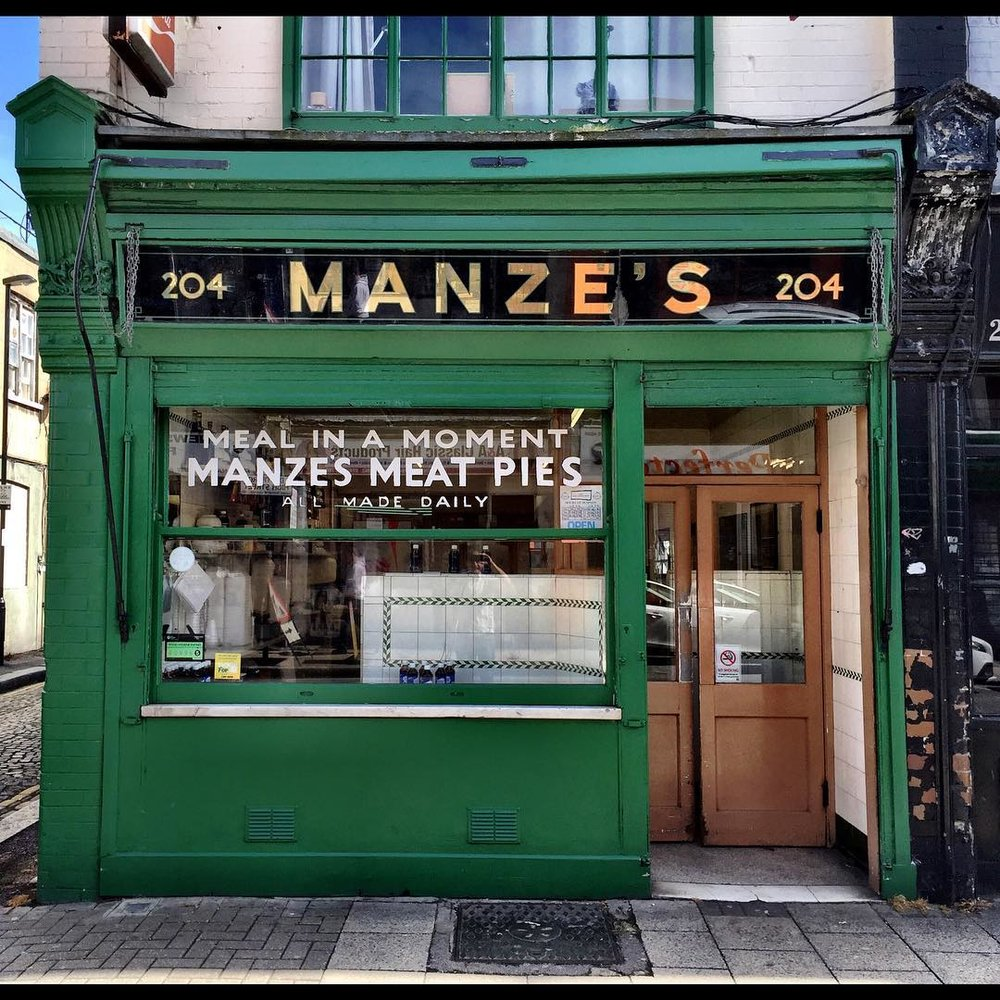
(Pie and mash was one shilling and 4d for a Pepsi to wash it down.) Does anyone remember the toy shop on Lamerton Street?
See below a list of shops I remember:
Edwards the Bakers baked delicious Jam doughnuts they were only a penny each.


Fantos (Does anybody know when Fantos first came to Deptford?)

Mayne’s, Swans Bookstall (Deptford Market Yard), Woolworths
Johnson’s Bakers, Bridges Fish and Chip shop Douglas Way
Perry’s sweet shop Douglas Street, Pecry's
Rossi ice cream shop (Deptford high street and New Cross Road)
Marks and Spencer, Ovenells (Winkle Stall), Lillie’s (Shere Road)

Shopping in Deptford High Street on a Saturday with my mum in the fifties used to take a long time before supermarkets you had to queue up at all the different shops, but it was always busy and vibrant in Deptford then, the crowds so big sometimes you had to walk in the road.
Deptford High Street Signs
10 Trickett Co Ltd 1889 160 -162 Rebuilt 1846
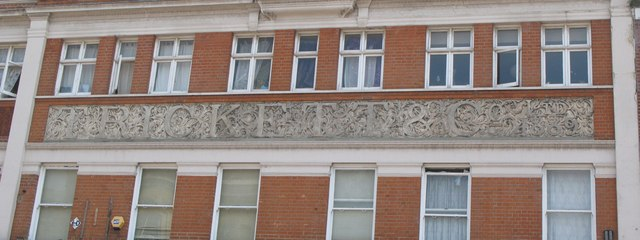
45 Red Lion & Wheatsheaf

77 Caxton House? (Ladies School in the 1820s)
91 Deptford High Street Built in 1898
Corner of Hamilton Street and Deptford High street 2 small street signs (Hamilton street and Hamilton Place)
thanks all
Jeff
tag:blogger.com,1999:blog-5432133643734415429.post-3485160884229933994