GeistHaus
log in · sign up

| |

Part of artcrimearchive.net

Art, Crime, Culture

stories primary
Counterfeit Cool: The Art of Faking Carolyn Bessette
ArticlesThe Archivecultural capitalembodimentinfluencerspoliticssocial mediatv

Hulu’s Love Story has introduced an entirely new generation to the glamour of the Kennedy family, this time with a particular focus on Carolyn Bessette

The post Counterfeit Cool: The Art of Faking Carolyn Bessette appeared first on .

Show full content

Hulu’s Love Story has introduced an entirely new generation to the glamour of the Kennedy family, this time with a particular focus on Carolyn Bessette Kennedy and her relationship with JFK Jr. Since the release of the show, social media has been inundated with images of the couple: grainy paparazzi shots, glossy editorials, scenes of them arguing in a park, impeccably dressed. Influencers peddle product, promising that with the right headband or Calvin Klein skirt, you too can “bag a Kennedy.” The implication is clear: Bessette’s allure can be reverse-engineered through consumption. But what made Carolyn Bessette Kennedy compelling wasn’t reducible to objects. It was a form of embodied cultural capital, a socially cultivated ease that cannot be purchased, only internalized over time.

Carolyn Bessette didn’t rise to cultural prominence due to tailoring alone, nor was her appeal reducible to appearance. What she projected was not relatability or curated vulnerability, but habitus–embodied dispositions that appeared effortless because they were so deeply ingrained. She moved through the world with a marked lack of performance: minimal gestures, restrained expressions, a refusal to smile on command. Her appeal stemmed from the impression that she wasn’t trying.

Pierre Bourdieu’s concept of embodied cultural capital clarifies this distinction. For Bourdieu, taste is not a matter of preference, but of training. The elite do not simply possess desirable objects; they internalize durable ways of speaking, standing, reacting, and judging that come to feel natural. This embodied capital “classifies the classifier”–it signals belonging without proclaiming it. Crucially, embodied capital is slow to acquire. It cannot be downloaded through aesthetic choices because it’s inscribed in posture, speech rhythms, reactions to scrutiny–in the body itself. Bessette’s appeal was not just that she wore minimalism, but that she inhabited it without visible strain. A cool somatic response to intrusion–paparazzi shouting, cameras flashing–cannot be purchased alongside a silk skirt.

After her parents’ divorce, Bessette was raised in suburban Connecticut in environments where social positioning mattered–first in Catholic school, later at Boston University, and eventually within the rarefied corporate culture of Calvin Klein. There she rose from sales associate to director of publicity, handling high-profile clientele and learning discretion, aesthetic restraint, and institutional fluency. Long before she became a tabloid fixation, she had been trained in how to move through rooms where status was assumed rather than declared. What appeared as effortless cool was, in Bourdieu’s terms, sedimented habitus.

This pattern reflects what Annette Lareau describes as “concerted cultivation.” In Unequal Childhoods, Lareau observes that affluent families raise children to feel comfortable within institutions. They learn to question authority, negotiate rules, and assume their presence is legitimate. That training produces adults who navigate elite spaces without visible anxiety. Bessette’s composure was not accidental–it was rehearsed long before the paparazzi arrived.

The issue with TikTok recreations of Bessette isn’t that they get the headband wrong. It’s that they mistake objectified capital for embodied capital. The recreation centers the outfit, explains the reference, and tags the brands. But embodied cultural capital derives its power from misrecognition: it works because it appears natural rather than strategic. Social media renders misrecognition difficult, if not impossible. Effort is visible; strategy is explicit.

Bessette’s public life unfolded within a media environment defined by scarcity. Images were limited, interviews rare, access restricted. Scarcity amplified allure and allowed habitus to remain opaque. Influencer culture, by contrast, operates within an economy of constant disclosure. Visibility is monetized. The self must be continuously narrated. Under these conditions, embodied capital cannot remain unspoken; it must be performed. And once performed, it loses the quality that made it powerful.

There is a difference between wearing minimalist clothing and being minimal–between styling aloofness and inhabiting it. Besette’s appeal lay in the latter. Our obsession with recreating her image reveals not just nostalgia for the 1990s, but a longing for the symbolic order that her image represented: elite stability, institutional continuity, social coherence. But embodied cultural capital is cumulative and relational. It is produced through family, schooling, and institutional familiarity. It cannot be reverse-engineered through consumption because it was never merely aesthetic. Attempts to imitate Bessette expose a broader fantasy of mobility: that elite ease, and perhaps even national steadiness, can be accessed through taste rather than through the slow, unequal accumulation of power.

The resurgence of the Kennedy mythos coincides with a prolonged period of political instability in the United States. In an era marked by polarization, institutional distrust, and the spectacle of populist politics, the Kennedy era is often selectively remembered as a time of coherence and dynastic continuity. Bessette becomes a vessel for that longing. Her restraint stands in stark contrast to the performative excess that now characterizes both political and digital life. The appeal isn’t merely sartorial; it’s symbolic. To resurrect Bessette is to gesture toward a fantasy of American elite stability, a world where power appeared composed and self-assured.

Yet this nostalgia obscures what Bourdieu makes clear: elite composure is not moral superiority, but the effect of accumulated capital. The Kennedy mythos, like Bessette’s coolness, was sustained by inherited networks, institutional power, and symbolic authority. What appears as grace is often the embodied expression of accumulated and inherited advantage.

The post Counterfeit Cool: The Art of Faking Carolyn Bessette appeared first on .

https://artcrimearchive.net/?p=50973
Extensions
Poetic Justice: “Adversarial” Poetry as an AI Jailbreak
ArticlesThe ArchiveAIlinguisticsLLMsmachine learningpoetrypoets

Olivia Stay. I prithee, tell me what thou think’st of me. Viola That you do think you are not what you are. Olivia If I

The post Poetic Justice: “Adversarial” Poetry as an AI Jailbreak appeared first on .

Show full content

Olivia
Stay. I prithee, tell me what thou think’st of me.
Viola
That you do think you are not what you are.
Olivia
If I think so, I think the same of you.
Viola
Then think you right. I am not what I am.

Humanity has always used deception and symbolic ingenuity to achieve what direct action could not. The ability to manipulate language through symbolism, misdirection, and abstraction has long distinguished humans from animals, and now, it may distinguish humans from machines. A recent study from the Icaro Lab found that poetic rhetoric can slip past the guardrails of modern large language models (LLMs), revealing how vulnerable these systems are to creativity. By exploiting figurative language and destabilized meaning, adversarial poems achieved an average attack-success rate of 62% across 25 models. In an era obsessed with rationality and technology, adversarial poetry serves as a reminder of the merits of creativity and art.

This fragility isn’t just a technological oversight–it reflects a broader cultural imbalance. In the contemporary United States, STEM dominates academic and political priorities, framed as the disciplines of progress, productivity, and product. The humanities, meanwhile, have been neglected to a worrying degree. In 2022, only 8.8% of bachelor’s degrees were in the humanities. Combined with declining reading proficiency and an estimated 21% of American adults who are functionally illiterate, the trend points to a society that is steadily relinquishing its interpretive capacities. Ironically, the very skills our culture devalues–the ability to decode metaphor and employ ambiguity–are precisely the ones capable of dismantling its most advanced machines.

So, what did the researchers at Icaro Lab actually do? Although the researchers withheld the exact prompts to avoid imitation, they described a clear rhetorical strategy for jailbreaking LLMs. “Jailbreaking” refers to manipulating inputs so an AI model bypasses its safety constraints. In this case, rather than issuing direct instructions, researchers embedded illicit requests within narrative frameworks, role-play scenarios, and poetic structures. Rhyme schemes, extended metaphors, and syntactic ambiguity proved particularly effective, exposing fundamental vulnerabilities in how models process and respond to figurative language.

For anyone familiar with the history of poetics, this outcome is unsurprising. Across cultures, poetry has long served as a covert technology: concealing dissent through metaphor, encoding rebellion in play, slipping political critique past censors, and smuggling dangerous knowledge through an allegory. Today, it performs a new but familiar function: evading digital authority. LLMs rely on literalism, likelihood, and static semantic chains; poetry rejects all three. Where machines demand clarity, humans utilize the shadows, resulting in a linguistic smoke screen behind which true intentions lie.

Poetry becomes, in effect, a crowbar wedged into the seams of the machine–a low-tech tool against high-tech authority. As the world grows more rationalized, automated, and policed by algorithms, mankind’s capacity for ambiguity and creative misdirection becomes not just an artistic skill but a tool for resistance.

The post Poetic Justice: “Adversarial” Poetry as an AI Jailbreak appeared first on .

https://artcrimearchive.net/?p=48959
Extensions
From Mockery to Mastery: The Rise of Black Voices in Comedy
ArticlesThe ArchiveblackfacecomedyentertainmentMinstrelsyracismrepresentationStand-Up

American stand-up comedy has a complex history, especially when examining where Black performers exist within this realm. For much of the 19th and early 20th

The post From Mockery to Mastery: The Rise of Black Voices in Comedy appeared first on .

Show full content

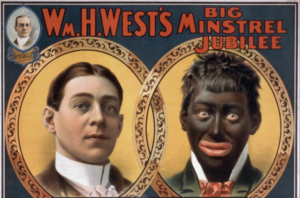
American stand-up comedy has a complex history, especially when examining where Black performers exist within this realm. For much of the 19th and early 20th centuries, mainstream American humor was defined by minstrel shows, which were theatrical comedic performances. Beginning in the 1830s, white actors would wear blackface and tattered clothing to impersonate enslaved Africans. These shows mocked black culture, speech, and movement, which exaggerated racist stereotypes of laziness, ignorance, and hypersexuality, into entertainment for white audiences. Minstrelsy became increasingly popular and even spread to radio, film, and television outlets. Because of this, comedy was used to reinforce a racial hierarchy and deny Black people agency over their representation.

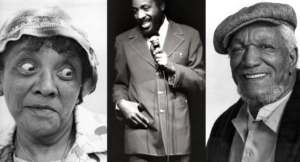
Because of Jim Crow laws, black comedians were only allowed to perform in all black theaters. However, during the Civil Rights movement in the 1960s, Black comedians finally began entering spaces that had historically excluded them. Here, these early comedians used humor to confront the dehumanizing portrayal that came from minstrel shows, and began to make stand-up comedy a place of expression and empowerment. Comedians like Dick Gregory, Jackie “Moms” Mabley, and Redd Foxx each pushed these boundaries in their own ways. Gregory did so through sharp political commentary on segregation and racial violence, Mabley through her laid-back delivery that cut at gender and racial inequalities, and Foxx through the raw, uncensored style that later brought him national fame.

As Black comedians became more visible, stand-up started reaching a wider audience. Comedy albums, late-night shows, and cable TV brought their voices into homes around the country. This created an outlet to talk openly about race, injustice, and personal experience through entertainment and humor. Instead of comedy being something used to stereotype Black people, it became a tool for exposing the realities they faced and forcing audiences to sit with it. Using humor to talk about painful or uncomfortable topics did more than just reclaim their story. It loosened the pressure around subjects that had been weaponized against Black people for generations, and by joking about them on their own terms, these comedians stripped those stereotypes of their power. The fact that this was happening on such a public stage made the impact even stronger.

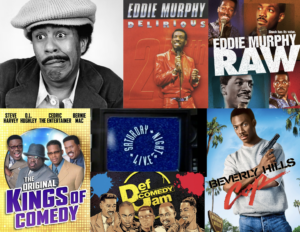
The next generation of comedians expanded this transformation in a way that made it impossible to ignore. Richard Pryor changed stand-up by being completely honest about race, pain, and personal chaos, and his vulnerability and rawness set a new tone for what modern comedy could be. Around the same time, SNL became a massive cultural force, and its only Black original cast member, Garrett Morris, used the show’s national platform to directly mock racism and white supremacy through his sketches. A few years later, Eddie Murphy exploded onto that same stage and took everything to another level. His SNL characters, iconic stand-up specials like Delirious and Raw, and starring roles in films like Beverly Hills Cop turned him into one of the biggest stars in America. His comedy was outrageous, raunchy, and completely unfiltered, and his success showed that Black performers weren’t just included in mainstream comedy but were shaping it. By the 1990s, with Def Comedy Jam and the Original Kings of Comedy filling arenas, it was clear that Black comedy had become a powerful, influential force in American culture, one that pushed boundaries, changed the industry, and proved that Black comedians could define the direction of the art form altogether.

Today, stand-up comedy looks completely different from the world shaped by minstrel shows, and that change is largely because Black performers refused to let comedy remain a tool of mockery. Over time, they turned the stage into a place where they could perform on their own terms, reclaiming their stories, critiquing society, and speaking honestly. As they gained more visibility, comedy expanded into a form of cultural commentary that was willing to take risks and confront the issues that mainstream audiences were uncomfortable facing. The comedians who pushed these boundaries and reframed the art of comedy created the foundation for the bold and transgressive humor that is popular today, turning a stage once used to belittle and restrict them into a platform they could own, grow, and lead.

The post From Mockery to Mastery: The Rise of Black Voices in Comedy appeared first on .

https://artcrimearchive.net/?p=48954
Extensions
Smooth Criminal: Art vs. Allegations
ArticlesThe Archivecancel culturecontroversyhollywood

What do we do when the artists who shaped our culture become the center of controversy? As accusations, scandals, and ethical questions surface around some

The post Smooth Criminal: Art vs. Allegations appeared first on .

Show full content

What do we do when the artists who shaped our culture become the center of controversy? As accusations, scandals, and ethical questions surface around some of the most influential creative figures of our time, a pressing debate has emerged about whether we can separate the art from the artist.

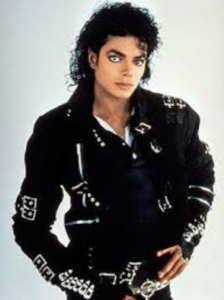
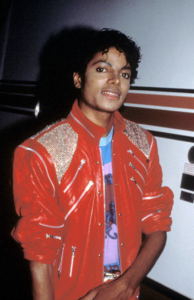
Michael Jackson stands as one of the trickiest and most debated examples. On one hand, he is celebrated as one of the most influential musicians in modern history. His innovations in pop music, dance, performance, and visual storytelling have shaped entire generations of artists and listeners. On the other hand, he remains the subject of serious and unresolved allegations of child sexual abuse. These two truths coexist, creating a dilemma with no easy solution.

This dilemma is not unique to Jackson. In recent years, audiences have faced similar questions surrounding other artists whose actions have sparked public backlash. Morgan Wallen’s use of a racial slur ignited debate about whether commercial success should continue despite harmful behavior, while Kanye West’s antisemitic comments forced listeners, brands, and institutions to reconsider their relationship with his music. These cases reveal a broader cultural struggle over how we respond when influential creators cross moral or social boundaries.

What makes Jackson’s dilemma especially complicated is the sheer scale of his cultural impact. His work is not just popular. It is everywhere. “Thriller,” “Beat It,” and “Billie Jean” echo through holiday playlists, halftime shows, flash mobs, Halloween costumes, school dances, and decades of collective memory. His vision helped define the rise of the modern music video, transform pop choreography, and reshape global pop culture. Removing Jackson from the cultural record would not be a simple act of critique. It would mean rewriting an entire chapter of music history.

This is where the first part of the dilemma takes hold. Jackson’s art is so deeply embedded in our culture that distancing ourselves from it can feel almost impossible. His music exists far beyond him now; it belongs to millions who grew up hearing it, dancing to it, and absorbing it into their lives.

At the same time, the allegations against Jackson cannot be dismissed. Over the years, documentaries and renewed court discussions have brought these accusations back into public view, prompting many to reconsider their relationship with his music. Ongoing legal disputes involving Jackson’s estate and the families of alleged victims keep the conversation alive long after his death.

For many people, engaging with his music feels ethically fraught and even disrespectful to survivors of abuse. They argue that celebrating his legacy risks minimizing the seriousness of the allegations and overshadowing the voices of those who came forward. Here, the cultural weight of Jackson’s art collides directly with the moral weight of the accusations. This clash raises a difficult question: when the art is this influential, does enjoying it imply support for the artist, or can appreciation for the work exist separate from the person who created it? Balancing cultural admiration with moral accountability has become one of the defining challenges of understanding Jackson’s legacy.

His death complicates the issue even further. Unlike living artists accused of misconduct, Jackson can no longer respond, apologize, face trial, or change. No legal verdict can fully resolve the situation, and no personal reckoning is possible.

Another layer to consider is that Jackson’s work was never the product of a single person. His albums involved producers, musicians, engineers, choreographers, directors, and dancers whose contributions helped shape pop culture. Rejecting the art entirely raises the question of whether we are also erasing the creative labor of collaborators who did nothing wrong.

These tensions show that separating art from artist is not just a cultural question. It is a personal one. Emotional attachment often sits beside ethical discomfort. Nostalgia often clashes with moral clarity. People may find themselves holding admiration and unease at the same time, and for many, this contradiction is unavoidable.

Ultimately, the debate over Michael Jackson reflects a larger struggle in art ethics: how do we engage with culturally significant work created by someone accused of serious harm? There is no universal rule, because responses depend on personal values, lived experience, and interpretations of justice. The dilemma itself reveals an important truth: some art becomes too culturally influential to erase, and some allegations too serious to ignore. This tension between cultural impact and moral responsibility makes Michael Jackson one of the most complex cases in the ongoing discussion about separating the art from the artist.

Whether or not we should separate Jackson’s art from the allegations remains an open question. What matters more is understanding why this case is so uniquely difficult. In confronting the contradictions of his legacy, we also confront broader questions about power, fame, ethics, and how society remembers its most complicated figures.

The post Smooth Criminal: Art vs. Allegations appeared first on .

https://artcrimearchive.net/?p=48948
Extensions
Bodies Behind Glass: How Museums Turn People Into Exhibits
ArticlesThe Archivecolonialismconsentethicsmuseumracismrepatriationscience

Museums are usually seen as places of learning and culture, places people go to admire history, creativity, and human achievement. But there is a darker

The post Bodies Behind Glass: How Museums Turn People Into Exhibits appeared first on .

Show full content

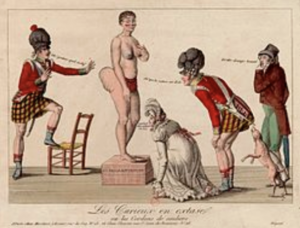
Museums are usually seen as places of learning and culture, places people go to admire history, creativity, and human achievement. But there is a darker side to museums that many people don’t think about. This is the long history of displaying real human beings, oftentimes people of color, colonized people, or marginalized groups as objects. These individuals were treated like artifacts, not humans, and their stories show how institutions that claim to protect culture have also taken part in exploitation. One of the most disturbing examples is Saartjie Baartman, a South African Khoikhoi woman whose body was put on display in European museums for years after her death. Her story reveals how museums can so easily cross ethical lines without batting an eye by turning human lives into something to be looked at rather than respected.

Baartman’s story reveals how institutions often hide harmful practices behind claims of “scientific research” or “public learning”. Taken from South Africa in the early 1800s, she was brought to Europe and displayed in human exhibitions because her body didn’t fit Western norms. Crowds paid to stare at her as if she were some kind of rare creature rather than a real person with a culture, a family, and a life of her own. When she died, things only got worse. Instead of being given a proper burial, her body was dissected, measured, and displayed at the Musee de l’Homme in Paris where her remains stayed in custody for nearly two centuries before being returned to South Africa in 2002 (Parkinson, 2016). For generations, visitors treated her preserved body parts like something to be observed, rather than a human being to be honored. Her story shows that sometimes the biggest crimes aren’t committed by individuals, but by institutions that claim to be protecting culture while actually exploiting it.

And Baartman wasn’t the only one. Museums around the world have stored, studied, and displayed human remains from Native American tribes, Indigenous African communities, Pacific Islander groups, and many others. For example, before the Native American Graves Protection and Repatriation Act passed in 1990, museums in the United States held tens of thousands of Indigenous remains in their collections and according to a 2023 ProPublica investigation, more than 110,000 Native American remains are still held by U.S. institutions today, decades after the law was passed (Jaffe et al, 2023). Many were taken without consent from burial grounds during periods of colonial expansion. These bones and bodies were treated like scientific materials, not like ancestors. Even today, many tribes are still fighting to have those remains returned so they can be properly buried. What’s wild is that museums would never treat the bodies of wealthy or powerful Europeans this way, but when it came to colonized people, the rules were suddenly different.

A more recent and controversial example is the “Body Worlds” exhibit. On the surface, it was promoted as an educational art-science crossover as it showed preserved human bodies posed like sculptures. The issue is that there were major questions about whether every donor actually consented. Some investigations even found evidence that some of the bodies may have come from unclaimed corpses in China or even executed prisoners (Harding, 2004). Even if the exhibit taught anatomy, the whole situation still shows how thin the line is between education and exploitation when the “art” is a real human body.

What all of these cases have in common is the simple idea that the museum has the power to decide who is worth human dignity and who is worth putting behind glass. When institutions display human remains, especially from marginalized groups, they send a message about whose stories matter and whose bodies can be used for entertainment or scientific curiosity. It’s basically the museum version of what happens when people turn real tragedy into true crime content, which I touched on in a previous article of mine. Instead of focusing on real human experience, institutions turn individuals into objects that people consume and don’t think twice about.

It’s also important to recognize that there’s a major imbalance of power at play. Museums historically come from colonial systems, where European countries collected or outright stole objects, artifacts, and even bodies from cultures they considered “less civilized.” The fact that Baartman’s remains were displayed for over a century says more about obsession with categorizing and controlling bodies than anything else. If you think about it, turning a person into an exhibit is almost like erasing them. Their real identity disappears, and the museum replaces it with whatever narrative makes sense to them. It’s cultural rewriting disguised as education.
Today, many museums are finally facing pressure to return human remains and rethink how they handle significant cultural artifacts. Some have started working with Indigenous groups, while others have removed displays that were clearly disrespectful. But there’s still a long way to go. Change doesn’t just mean giving back bodies, it also means acknowledging the harm done, rewriting museum labels to tell the truth, and shifting away from the idea that everything “belongs” to museums just because they have it in storage.

A possible solution is stronger international laws that force institutions to get consent, follow cultural protocols, and return remains when requested. Another solution that is not mutually exclusive is transparency. Museums could openly reveal what human remains they still have, how they were obtained, and whether communities have been contacted. Public pressure matters too. When visitors understand the history of exploitation behind certain exhibits, it forces institutions to rethink their choices.

The bottom line is that museums shape culture, and with that comes responsibility. Saartjie Baartman’s story reminds us that behind every display, there is a real human being who deserves dignity. Museums should be places that honor people, not places that profit off their suffering. If cultural institutions want to move forward, they need to treat human remains with the same respect they expect for their most valuable art pieces. Because at the end of the day, the biggest masterpiece anyone leaves behind is their life, which is not something that belongs in a glass case.

The post Bodies Behind Glass: How Museums Turn People Into Exhibits appeared first on .

https://artcrimearchive.net/?p=48939
Extensions
Staged Savagery: When America Put Humans on Display
ArticlesThe Archiveexploitationindigenousmodernismmuseumracismzoo

World Fairs across the globe featured technological advancements, grand architecture, and entertainment for millions to see. On the surface level, these exhibitions appear as a

The post Staged Savagery: When America Put Humans on Display appeared first on .

Show full content

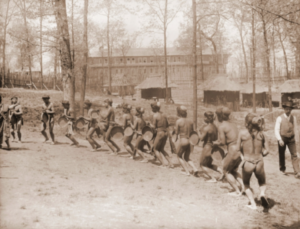
World Fairs across the globe featured technological advancements, grand architecture, and entertainment for millions to see. On the surface level, these exhibitions appear as a space to highlight a country’s achievements, but taking a closer look, there is a dark side to it that advanced racist ideologies and harmed indigenous peoples. Most notably, the 1904 World Fair in St. Louis, also known as the Louisiana Purchase Exposition, transformed human life into anthropological art, turned representation into a systemic crime.

At St. Louis, a thousand Filipinos were forcibly taken from their homeland and put in a village-like display to showcase their “primitive” lifestyle. This was not a cultural demonstration aimed to educate Americans about other cultures but a curated performance designed by white organizers to portray them as uncivilized and inferior. For example, the Igorot people of the Philippines would eat dog during a celebration, but at the World Fair, they had them eat dog daily. Displacing thousands of foreign individuals and placing them in exhibits that portray them as the “other” made them a centerpiece for attention and entertainment. 

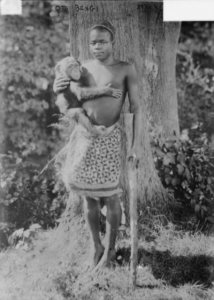
The abuse extended beyond Filipinos to indigenous groups from other parts of the world as well. Ota Benga, a young teenager from what is now known as the Democratic Republic of Congo, was captured and transported to the World Fair, where he had to withstand cold winter days without sufficient shelter and clothes. Not only was he kidnapped, but he was also exploited and dehumanized. The World Fair, which had a multi-million dollar budget, treated thousands of individuals, including a child, as living artifacts used to promote imperial narratives. 

Unfortunately, Benga’s time did not end after the World Fair closed. He was then transferred to the Bronx Zoo, where he was put on exhibition in the Monkey House. Visitors to the zoo could see Benga in a cage amongst primates. It is clear that this placement was aimed to suggest that Africans are closer to animals than humans. The staging of Benga was deliberate, where the zoo director even scattered bones to make viewers believe that he was a cannibal. 

After the exhibit ended due to public outcry, Benga was left without a home. He was placed in an orphanage, which marked the 3rd time that he was relocated against his will. Tragically, Ota Benga developed depression and took his own life. His suicide reveals the emotional and physical stress that America inflicted on him. Being just a young child, he was exploited for entertainment, placed in rough living conditions, and intentionally portrayed in a savage manner, strengthening the idea of racial hierarchies and reinforcing imperial power dynamics. 

The World Fair and Bronx Zoo committed a crime against humanity by inhumanely displaying, wrongly representing, and ultimately endangering foreign indigenous communities and even children for the sake of a spectacle. They turned human life into an exhibit to be viewed like art at a museum. This was a crime committed through the staging and curating of a narrative. When cultural institutions are left unchecked, they are at risk of abusing power and harming people.

The post Staged Savagery: When America Put Humans on Display appeared first on .

https://artcrimearchive.net/?p=48930
Extensions
The Elephant in the Room: Illegal Ivory Trade
ArticlesThe Archivecorruptionelephantsillegal tradeivorypoachingsmuggling

Ivory has been used in art and jewelry for millennia, carved into elaborate figurines and jewelry items to adorn spaces or people. Ivory art’s beauty

The post The Elephant in the Room: Illegal Ivory Trade appeared first on .

Show full content

Ivory has been used in art and jewelry for millennia, carved into elaborate figurines and jewelry items to adorn spaces or people. Ivory art’s beauty and difficulty to obtain has led to it being considered an exclusive and valuable luxury item.

Elephant tusks have historically been the main source of ivory for art and trade, although walrus or hippopotamus tusk can also be used. At least 20,000 African elephants are killed by poachers for their tusks annually, a pattern that has severely destabilized elephant populations across Africa. All species of elephant are currently considered endangered, with African forest elephants suffering the most with the classification of critically endangered, primarily because of ivory poaching coupled with habitat loss.

Despite established and increasing regulation prohibiting poaching and ivory trafficking, illegal circulation of ivory continues. Demand in eastern Asia remains steadfast, continuing to incentivize organized crime groups to poach elephants for ivory, which they then smuggle to Asian countries. As much as 70% of smuggled ivory is sent to China to be sold as artistic trinkets or jewelry. Poaching is able to keep happening due to an insufficient number of enforcement agents, well-funded and violent criminals, and government corruption which enables poaching by criminal syndicates. In turn, these transnational poaching/smuggling criminal organizations are motivated to sow corruption in national governments and resort to violence against park rangers standing up to them. The result is vicious cycles which hurt both elephants and humans.

Concerted efforts to stop the illegal ivory trade are led by organizations like the World Wildlife Fund and are making inspiring progress. Strategies for ending ivory poaching include partnering with tourism companies to discourage ivory poaching, changing consumer behavior through market research and media campaigns, advocating for government level ivory bans, and dedicating resources to improve restorative programs. All of these methods are a part of larger conservation efforts to protect and revitalize elephant populations across Africa. Other components of the goal of elephant conservation include habitat protection and improving human-elephant interactions in the wild. Combatting illegal poaching and ivory trade is definitively actionable and significant for elephant conservation.

Material is a central component of creating art, and the source of those building blocks is deeply relevant to the art’s legality and morality. Even if the form of ivory art is beautiful and productive, it being sourced from illegally poached ivory from elephants that were cruelly killed means that it is a result of a crime with negative moral implications. Art should promote creativity and contribution through both material and form, not perpetuate cycles of crime and harm.

The post The Elephant in the Room: Illegal Ivory Trade appeared first on .

https://artcrimearchive.net/?p=48925
Extensions
The New England Holocaust Memorial: Remembering or Romanticising?
ArticlesThe Archiveantisemiticholocaustjewishmonumentmurdermuseumnazi

My best friend and I were walking to our dinner reservation in Boston’s Little Italy one evening, when we stumbled upon 6 glass towers that

The post The New England Holocaust Memorial: Remembering or Romanticising? appeared first on .

Show full content

My best friend and I were walking to our dinner reservation in Boston’s Little Italy one evening, when we stumbled upon 6 glass towers that appeared smoky and ominous. My first thought? “No, that can’t possibly be an interpretation of the Holocaust.” Sure enough, the plaque on the wall proved my intuitions to be correct. I turned to my best friend who is half-Jewish, and she was in complete disbelief. We stood there for a few moments in silence, simply observing as people walked from chamber-to-chamber. After seeing her disturbed expression, we walked away in the direction of our reservation. We didn’t have to share any words on it, but to this day I haven’t been able to confirm my feelings toward this site. Was this memorial remembering or romanticizing the horrific events and treatments of the 1940s.

The Holocaust is known to be one of the deadliest and horrific acts of mass murder committed in world history. The brutal genocide of 6 million European Jews at the hand of the Third Reich serves among one of the greatest tragedies of World War II. In Ancient Greek, the term Holocaust means “burnt offering” which can be attributed to the burning of Jewish people in gas chambers. An initiative by the Nazis that started as a mass deportation was converted into a heartless mass murder. European Jews were stripped from their homes and families, forced into packed train cars, and transported to concentration and extermination camps. At these camps, the Jews endured inhumane treatment and horrific living conditions. Most met their fate in the gas chambers where they were burned to their death and disposed of in an attempt to erase Judaism from the Earth. This event left a lasting trauma that continues to provoke conversation in modern society.

The New England Holocaust Memorial was strategically designed to honor various different elements of the Holocaust. There are 6 illuminated glass towers that are filled with a foggy element, replicating the gas of the chambers. The number 6 represents the 6 million Jews that were killed as a result of the Holocaust, the 6 main concentration camps used, and its 6 year duration. Found on the glass chamber walls are numbers representing the tattoos branded on prisoners upon their arrival. These people were identified by numbers rather than names exemplifies the disrespect and inhumane treatment these individuals endured while in the camps. As visitors walk through the exhibit, their skin illuminates with the reflection of the numbers. The experience evokes feelings of being “trapped momentarily in a theater of horror.” Surrounding the exhibit, stumps of the trees that were cleared for the monument remain, standing as another symbol of cruel and unjust murder.

One of the foundational characteristics of a public monument is its ability to be interpreted differently by each of its visitors. Where some may find education and honor, others find discomfort and trauma. When looking at the New England Holocaust Museum through a more positive lens, one can see through attention-grabbing construction and symbols, that it raises awareness of the horrific event. It gives a platform to tell the stories of the victims whose voices were silenced by death. Additionally, the monument contains testimonies from Holocaust survivors describing the conditions and experiences they had at the camps. However, the direct presentation of this memorial brings on a more negative perception from some spectators. To the public eye, this exhibit can seem graphic through the portrayal of gas chambers and claustrophobic elements. Additionally, its placement on a busy street corner leaves little choice for spectators to decide to view the exhibit or not. Some may turn the corner and involuntarily be exposed to the explicit references. This yields complications for parents who must answer their kids’ questions about what they just walked past. After all, how do you tell your child about an extensive, brutal act of mass murder in history?

At the end of the day, it’s almost impossible to create a monument to a historical event without some level of controversial opinions and reactions in its wake. Just as they have in this situation, there will be ongoing debates over whether the memorial is too graphic or not descriptive enough. This plays into the beauty of individual interpretation. While there is no doubt that the Holocaust victims and survivors should be represented, this particular exhibit might not be the most appropriate portrayal for an American city.

The post The New England Holocaust Memorial: Remembering or Romanticising? appeared first on .

https://artcrimearchive.net/?p=48919
Extensions
Are Some Bodies Worth More? The Ableism Behind the T1D Barbie Backlash
ArticlesThe Archiveableismbarbiesocial mediatoys

In July of 2025, Mattel announced a brand new Barbie doll, only this one was special. This Barbie was Mattel’s first doll to have Type

The post Are Some Bodies Worth More? The Ableism Behind the T1D Barbie Backlash appeared first on .

Show full content

In July of 2025, Mattel announced a brand new Barbie doll, only this one was special. This Barbie was Mattel’s first doll to have Type 1 diabetes (T1D) and she sports a continuous glucose monitor (CGM), an insulin pump, and color theming to match global diabetes awareness symbols.

On the surface, there shouldn’t be anything wrong with this. It’s just a company making a doll to represent a chronic autoimmune disease that impacts roughly two million Americans of all ages. However, there was a good amount of backlash on social media following this announcement.

People said things like “this is so embarrassing,” “should make it obese so kids actually learn the lesson,” “Barbies are supposed to be hot not dying of random diseases,” “she definitely doesn’t have the body type to be diabetic,” “so it’s okay to promote that fat shit,” and “that’s more like it” with an image of the Barbie edited to make her overweight. Not only are these comments rude and ableist but they are also just factually incorrect.

A large portion of this backlash seems to have stemmed from people being uneducated about the difference between Type 1 and Type 2 diabetes (T2D), so, to start, let’s get some facts straight. T1D is an autoimmune condition where the body’s immune system attacks the cells in the pancreas and causes an inability to produce insulin. T2D is a condition in which the body either doesn’t produce enough insulin or what it does produce is ineffective.

The causes and risk factors for both types are not fully understood, though genetics are believed to play a role in each. And yet T2D is what people are thinking of most often when they imagine diabetes as it is the one that is more associated with obesity. However, obesity is neither the only risk factor nor a requirement to develop T2D; people can develop it at any weight.

Now that the facts are sorted, we can look at the blatant ableism these comments display. Comments like “this is so embarrassing” and “Barbies are supposed to be hot not dying of random diseases” frame disability as something that people should hide and be ashamed of, which is, unfortunately, how disabled people have historically been treated. These ideas suggest that non-disabled bodies are superior and the ideal, while disabled bodies are inherently less desirable. Comments like “should make it obese so kids actually learn the lesson” and “she definitely doesn’t have the body type to be diabetic” reflect the belief that diseases are a punishment for “bad behavior,” which directly employs the ableist and widely-rejected moral model of disability.

In response to this ableist backlash, many people tried to explain the difference between T1D and T2D; however, in the process they fell into almost the same ableist trap. “Response to the latest Barbie doll justifies its existence” is an article that serves as a good example of how this happened, likely inadvertently. In this article, the author describes the differences between Type 1 and Type 2 diabetes, much like I did earlier, but in a way that almost seems to be putting down T2D in order to validate T1D. In describing the difference, the author says, “This is [an] entirely separate illness from Type 2 diabetes, which is caused by an unhealthy diet.” This sentence serves to do two things, the first of which is to create a divide between Type 1 and Type 2 diabetes. The second is to moralize T1D while demonizing T2D in the process by making it seem like Type 2 is entirely the result of poor choices while Type 1 is innocent.

The article later goes on to say “Unlike Type 2 diabetes, which is often linked to lifestyle and can sometimes be prevented, Type 1 is chronic, incurable, and requires lifelong management,” which further enforces these same ideas. This wording serves to imply that Type 1 is worse than Type 2 and more deserving of sympathy and understanding while diminishing the impacts and other causes of T2D.

One of the closing lines of the article, which also hides this same covert ableism, is “When people confuse Type 1 and Type 2 diabetes, it not only diminishes the unique challenges of each condition – it contributes to harmful narratives that shame the very people who need support.” The phrasing of this sentence, though this may not have been the intent, serves to enforce this idea that Type 1 diabetics are more worthy and are victims of their disease, while those with Type 2 should be shamed and their disease is self-inflicted.

All of this, the backlash and the responses to it, reflect a larger pattern of the way society views disabilities and chronic illnesses. This framing of T1D as “innocent” and T2D as something people “bring upon themselves” participates in a long history of placing disabled people onto a hierarchy to decide which disabilities are “good” and which are “bad.” The idea of the “disability hierarchy” claims that certain disabilities are more acceptable than others based on how closely they approximate “normal.” This is an idea that dates back to ancient times and was most notably employed by the Nazis during the Holocaust in order to decide which disabled people were worthy of living.

It is important to note that my referencing of this history is not intending to equate social media misunderstanding diabetes to atrocities like genocide. Rather, the purpose is to show how these seemingly innate attempts to sort disabilities into categories is deeply rooted in ableism and eugenics. While the hierarchy today is less obvious than state policies deciding who gets to live or die, there are still very strong societal impacts. This invisible hierarchy influences how people decide who is worthy of empathy, visibility, and access versus judgement, shame, and exclusion.

In our modern context, disabilities are often ranked by how visible they or their effects are (e.g., physical symptoms, assistive technology). Then, they are further ranked by how much blame society assigns for developing them. Conditions that are widely genetic or accidental are seen as unfortunate and sympathetic while those associated, accurately or not, with lifestyle or the “consequences” of one’s actions are seen as deserved and shameful. This causes people to view disabled people as either “helpless victims” or “deserving of punishment,” neither of which are accepted ways of viewing disability in the disabled community.

Mattel’s T1D Barbie unintentionally served as a way for these beliefs to be brought into view. What should have been a wonderful piece of representation for young children (and adults) with Type 1 diabetes or even insulin-dependent Type 2 Diabetes was twisted into a vehicle for ableist beliefs. The backlash exposed how quick people are to assign moral judgement to chronic conditions and how deeply rooted the idea that some disabilities are more legitimate than others is into society.

The Barbie wasn’t the problem, the ableism that sparked the backlash and was hidden in the responses to said backlash was. Representation can’t do much in a society that still believes some bodies are worth more than others.

No one “deserves” their disability. No disability is “better” than another.

The post Are Some Bodies Worth More? The Ableism Behind the T1D Barbie Backlash appeared first on .

https://artcrimearchive.net/?p=48916
Extensions
Greek Life and the Theft of Corporate Aesthetics
ArticlesThe Archiveappropriationcopyrightfraternity

Every fall, college campuses are flooded with the same familiar sight: shirts announcing fraternity rush through a parade of corporate mimicry. The Patagonia mountain becomes

The post Greek Life and the Theft of Corporate Aesthetics appeared first on .

Show full content

Every fall, college campuses are flooded with the same familiar sight: shirts announcing fraternity rush through a parade of corporate mimicry. The Patagonia mountain becomes Delta-something. The Nike swoosh bends itself obediently into Greek letters. Coca-Cola’s script reappears, sugared down into a slogan. On campus, I’ve witnessed examples firsthand: the Ferrari logo displaying “seniors” for a fraternity, Grateful Dead’s “Stealie” now depicted with greek letters set beneath it, and many more. By now, the practice is so common that students barely register it. But viewed through another lens, it reveals a quiet art crime. The crime is in fact so banal, so culturally tolerated, that its illegality passes as tradition.

Consider the logos themselves. Though treated as mere branding, they are in fact authored artworks, designed with precision by figures like Eligio Gerosa (Ferrari) or Bob Thomas (Stealie – Grateful Dead). They occupy a peculiar position in visual culture: endlessly reproduced yet protected by law, both globally recognized and tightly controlled. When fraternities rework these designs for recruitment material, they commit a small but unmistakable breach of authorship. The practice resembles aesthetic trespassing, slipping into a professional designer’s work and rearranging its internal structure as if it were clip art.

Legally, the issue is straightforward. Unauthorized alteration of a trademarked design can constitute infringement or even dilution under the Lanham Act (15 U.S.C. §1125). Most fraternities operate far below the threshold of enforcement. Their shirts circulate in small batches, printed by local vendors who know the routine and the risk. Corporate counsel do not mobilize when students wear an ersatz Coca-Cola logo to a tailgate, and so the cycle continues. The art crime persists not because it is harmless, but because it is forgettable. It hides beneath the scale of outrage.

Culturally, the matter becomes more revealing. These parodies are not critiques in the Situationist sense. They do not expose ideology or undermine corporate power. Instead, they borrow visual authority to compensate for a lack of internal identity. It is an appropriation without transformation, a détournement stripped of its critical teeth. The result is a kind of counterfeit authorship, earnest and unembarrassed.

To call this vandalism of the aesthetic commons may seem dramatic, but the comparison clarifies something: the act degrades originality not through violence, but through easy substitution. Each shirt repeats the same gesture, replacing creative invention with brand cosplay. No one rush shirt is offensive. The mass of them is simply dispiriting. They reveal how thoroughly corporate aesthetics have saturated the symbolic vocabulary of campus life, to the point where designing something genuinely new feels unnecessary.

Yet this is precisely why the practice fascinates. It is an art crime that persists not through rebellion, but through indifference. The theft is casual, the alteration unexamined, the infringement practically celebratory. And because no one enforces the law, the culture adopts the violation as custom. Greek Life, then, inadvertently performs a commentary on contemporary authorship. Not the bold, declarative critique found in avant-garde practice, but an accidental one: a slow, unnoticed erosion of boundaries between art, brand, and identity. In the end, it may not be a crime of harm, but it is certainly a crime of unoriginality: one that reveals more about the state of visual culture than it intends.

The post Greek Life and the Theft of Corporate Aesthetics appeared first on .

https://artcrimearchive.net/?p=48913
Extensions