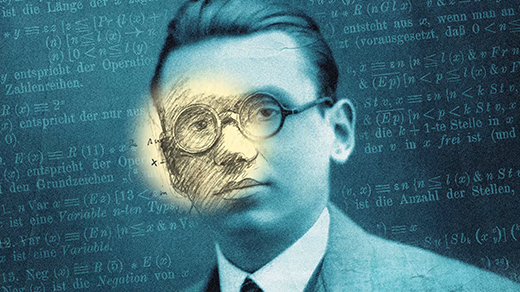
In 1931, by turning logic on itself, Kurt Gödel proved a pair of theorems that transformed the landscape of knowledge and truth. These “incompleteness theorems” established that no formal system of mathematics — no finite set of rules, or axioms, from which everything is supposed to follow — can ever be complete. There will always be true mathematical statements that don’t logically follow from…
In 1931, by turning logic on itself, Kurt Gödel proved a pair of theorems that transformed the landscape of knowledge and truth. These “incompleteness theorems” established that no formal system of mathematics — no finite set of rules, or axioms, from which everything is supposed to follow — can ever be complete. There will always be true mathematical statements that don’t logically follow from…
Over the years, anticipation has built for the start of observations at the Vera C. Rubin Observatory in the mountains of the Atacama Desert in Chile. Originally imagined in the mid-1990s as the Dark Matter Telescope, Rubin is designed to study our constantly moving and changing universe in greater detail than ever before. Once every few days for a decade, Rubin will take images of the entire…
Over the years, anticipation has built for the start of observations at the Vera C. Rubin Observatory in the mountains of the Atacama Desert in Chile. Originally imagined in the mid-1990s as the Dark Matter Telescope, Rubin is designed to study our constantly moving and changing universe in greater detail than ever before. Once every few days for a decade, Rubin will take images of the entire…
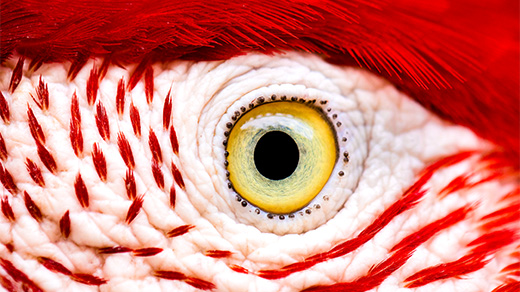
The bird retina is one of the most energetically expensive tissues in the animal kingdom, yet it doesn’t use the energy advantage of oxygen. New research finally explains how this is possible.
When an optometrist shines a bright light into your eyes, a vast, branching tree sprouts in your field of vision. This is the shadow of blood vessels. Though we normally can’t perceive them, these vessels always occlude a portion of what we see, and for an important reason. They power the retina, a thin layer of nerve tissue in the back of the eye that communicates light signals to the brain.
The bird retina is one of the most energetically expensive tissues in the animal kingdom, yet it doesn’t use the energy advantage of oxygen. New research finally explains how this is possible.
When an optometrist shines a bright light into your eyes, a vast, branching tree sprouts in your field of vision. This is the shadow of blood vessels. Though we normally can’t perceive them, these vessels always occlude a portion of what we see, and for an important reason. They power the retina, a thin layer of nerve tissue in the back of the eye that communicates light signals to the brain.
Mathematicians spend most of their time thinking about what’s knowable. But the unknowable can be just as compelling. Perhaps the most famous example comes from a theorem by the logician Kurt Gödel. Gödel’s celebrated result — one of two “incompleteness theorems” he published in 1931 — established that for any reasonable set of basic mathematical assumptions, called axioms, it’s impossible to…
Mathematicians spend most of their time thinking about what’s knowable. But the unknowable can be just as compelling. Perhaps the most famous example comes from a theorem by the logician Kurt Gödel. Gödel’s celebrated result — one of two “incompleteness theorems” he published in 1931 — established that for any reasonable set of basic mathematical assumptions, called axioms, it’s impossible to…
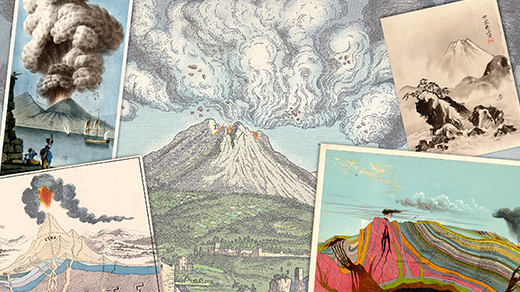
In the summer of 1991, Pinatubo, a volcano in the Philippines, self-destructed. The eruption started on June 12, and three days later it culminated in a tremendous explosion. By the time pyroclastic flows — incandescent avalanches of molten rock and gas — tumbled down its sterilized slopes, Pinatubo’s peak had been obliterated and replaced by a 2.5-kilometer-wide chasm. The eruption killed more…
In the summer of 1991, Pinatubo, a volcano in the Philippines, self-destructed. The eruption started on June 12, and three days later it culminated in a tremendous explosion. By the time pyroclastic flows — incandescent avalanches of molten rock and gas — tumbled down its sterilized slopes, Pinatubo’s peak had been obliterated and replaced by a 2.5-kilometer-wide chasm. The eruption killed more…
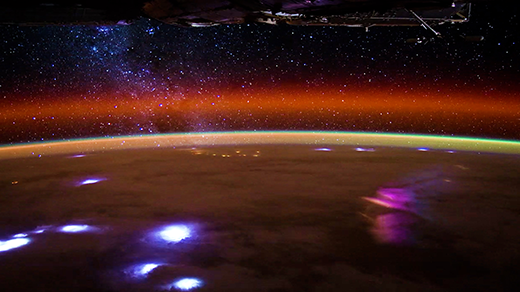
Armed with a slew of new instruments, physicists are closing in on one of nature’s oldest mysteries — and finding that storm clouds are seething with violent and unexpected phenomena.
Before he changed the way we understand lightning on Earth, Joseph Dwyer studied the weather in more cosmic settings. Using the sensors on NASA’s Wind satellite, orbiting a million miles away, he watched flares shoot out from the sun and analyzed the particles that stream from the sun’s surface. But when he relocated to Florida around the turn of the millennium, Dwyer felt ready for something new…
Armed with a slew of new instruments, physicists are closing in on one of nature’s oldest mysteries — and finding that storm clouds are seething with violent and unexpected phenomena.
Before he changed the way we understand lightning on Earth, Joseph Dwyer studied the weather in more cosmic settings. Using the sensors on NASA’s Wind satellite, orbiting a million miles away, he watched flares shoot out from the sun and analyzed the particles that stream from the sun’s surface. But when he relocated to Florida around the turn of the millennium, Dwyer felt ready for something new…
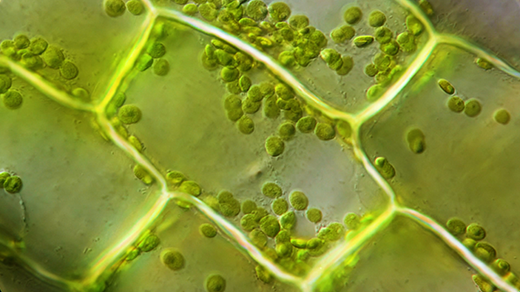
The sunlight-collecting organelles known as chloroplasts solve a packing problem: how to optimize photosynthesis without sustaining damage from dangerously intense rays.
Living on light is a dangerous game. Not only do the sun’s rays carry ultraviolet waves that can snap DNA strands and degrade molecules, but they also vary wildly in intensity. Plants must endure and thrive through soft morning light and blazing summer afternoons, through shade one moment and full sun the next. Their solar calories come in a trickle — or a deluge. “Think of a cloud obscuring the…
The sunlight-collecting organelles known as chloroplasts solve a packing problem: how to optimize photosynthesis without sustaining damage from dangerously intense rays.
Living on light is a dangerous game. Not only do the sun’s rays carry ultraviolet waves that can snap DNA strands and degrade molecules, but they also vary wildly in intensity. Plants must endure and thrive through soft morning light and blazing summer afternoons, through shade one moment and full sun the next. Their solar calories come in a trickle — or a deluge. “Think of a cloud obscuring the…
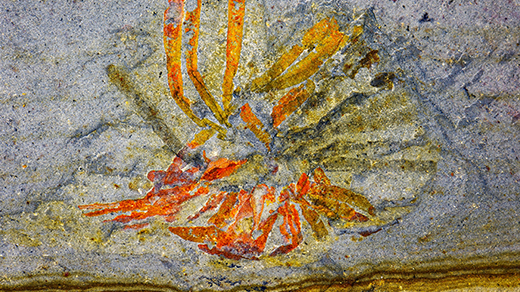
Remarkably preserved fossils found in southern China offer a fascinating window into what life looked like at the end of the Cambrian explosion, with half of the species uncovered being new to science.
Roughly 540 million years ago, toward the start of the Cambrian Period, the planet was mostly ocean, and life was both alien and vaguely familiar. Small, phallic-looking worms rummaged through ocean-floor sediments while blind swimming beasts flung out whiplike tentacles to ensnare prey. Meanwhile, early versions of mollusks and sponges populated the seafloor as jellyfish floated above.
Remarkably preserved fossils found in southern China offer a fascinating window into what life looked like at the end of the Cambrian explosion, with half of the species uncovered being new to science.
Roughly 540 million years ago, toward the start of the Cambrian Period, the planet was mostly ocean, and life was both alien and vaguely familiar. Small, phallic-looking worms rummaged through ocean-floor sediments while blind swimming beasts flung out whiplike tentacles to ensnare prey. Meanwhile, early versions of mollusks and sponges populated the seafloor as jellyfish floated above.