SenateBill CassidyDepartment of JusticeIRSJanuary 6Republicans
Senate Majority Leader John Thune (R-SD) said Tuesday that he is “not a fan” of the Justice Department’s newly announced “anti-weaponization” fund, the latest sign of GOP discomfort over a pool of money that critics are calling a “slush fund” for President Donald Trump’s political allies. In rolling out the fund on Monday, the Justice […]
Show full content
Senate Majority Leader John Thune (R-SD) said Tuesday that he is “not a fan” of the Justice Department’s newly announced “anti-weaponization” fund, the latest sign of GOP discomfort over a pool of money that critics are calling a “slush fund” for President Donald Trump’s political allies.
In rolling out the fund on Monday, the Justice Department stated there are no “partisan requirements” to be awarded some of the $1.776 billion set aside for victims of “weaponization and lawfare.” But Democrats have accused the DOJ of attempting to protect those in Trump’s orbit who have been prosecuted by the federal government. The funds could also extend to the hundreds of Jan. 6 defendants convicted and subsequently pardoned by Trump for their actions in the Capitol riot.
“I’m not sure exactly how they intend to use it,” Thune told reporters on Tuesday, “but yeah, I don’t see a purpose for that.”
The way the Justice Department is tapping the funds, from an unlimited account Congress has long set aside to settle claims against the federal government, has also drawn scrutiny. Thune told reporters that he expects the arrangement will get a “full vetting” from appropriators later this year.
“My assumption is that based on some of the blowback that’s come since this was announced, that there would be a significant amount of attention paid to it,” Thune said.
The “anti-weaponization” fund is part of a settlement over the IRS’s handling of the Trump family’s tax returns. The president and his children dropped their demand for $10 billion in damages related to the leak, “in exchange for” the fund.
Sen. Bill Cassidy (R-LA), a lame duck senator whose falling-out with the president contributed to his primary loss on Saturday, criticized the $1.8 billion fund as lacking “legal precedent” and told reporters Monday that Congress should be the one to “make the law.”
“We are a nation of laws,” Cassidy said. “You can’t just make up things whole piece.”
The optics of Trump initiating a lawsuit that was resolved by an agency he controls have added to that discomfort. The president, who was investigated under the Biden administration for his conduct surrounding the 2020 election and handling of classified documents, will not personally receive a payout from the fund, the Justice Department said.
Other Republicans have given Trump leeway with the settlement fund, viewing its creation as addressing a long-standing problem of political prosecutions.
“I’m open to the concept,” said Sen. John Kennedy (R-LA), a member of the Senate Judiciary Committee. “Does the federal government abuse people sometimes? Yeah, and those people should have recourse.”
Iran on Monday held a mass wedding for hundreds of couples as part of a propaganda effort to convey support for its conflict against the United States. In Tehran, over 100 couples gathered for ceremonies in Imam Hossein Square, while others participated in mass weddings across several major squares in the capital, according to various […]
Show full content
Iran on Monday held a mass wedding for hundreds of couples as part of a propaganda effort to convey support for its conflict against the United States.
In Tehran, over 100 couples gathered for ceremonies in Imam Hossein Square, while others participated in mass weddings across several major squares in the capital, according to various outlets and footage posted on social media. Crowds were broadcast on state TV parading in military vehicles and holding Iranian flags alongside portraits of Iranian Supreme Leader Mojtaba Khamenei and his late father, former Supreme Leader Ali Khamenei, as depicted in photos from the Associated Press.
The weddings were part of a state-sponsored “Janfada” or “Sacrifice for Iran” event. In footage from Reuters, couples partaking in the “self-sacrifice” scheme pledged their allegiance to the Iranian government and vowed to lay down their lives in the conflict between their country and the U.S. President Donald Trump announced on Tuesday he would give Iran negotiators “two or three” more days to agree to a peace deal with the U.S. that makes critical concessions on the country’s nuclear program, before he unleashes widespread attacks on Iran.
“When I registered for Janfada, I discussed it with my wife and told her, I do not want you without this country,” one man at the ceremony said. “This land must exist for me to want you, and if the time ever comes, I will go with all my heart and defend my country.”
Newlyweds during a mass wedding ceremony for couples participating in the “Janfada” (“Sacrifice for Iran”) government campaign in Tehran, Iran, Monday, May 18, 2026. (Vahid Salemi/AP Photo)
“In my view, war will most likely happen, and if it becomes a ground war, and we can help in any way, we will certainly take part,” another man told the outlet. “Even if it is not a ground war, if they tell us somewhere to come help build missiles, we will rush there without hesitation.”
At Imam Hossein Square, the wedding stage was festooned with balloons and a giant image of Mojtaba Khamenei, as people pledged to put their lives on the line in the war, including by forming human chains outside power stations, according to AFP.
ImmigrationCourtsDepartment of Homeland SecurityICEIllegal ImmigrantsManhattanNew YorkNew York City
A federal judge has banned Immigration and Customs Enforcement from arresting illegal immigrants in most cases at New York immigration courthouses. In a Monday ruling, U.S. District Judge P. Kevin Castel determined that federal arrests cannot be conducted without exceptional circumstances in and around three Manhattan immigration courts. The ruling does not apply to immigration […]
In a Monday ruling, U.S. District Judge P. Kevin Castel determined that federal arrests cannot be conducted without exceptional circumstances in and around three Manhattan immigration courts. The ruling does not apply to immigration courts nationwide.
The decision effectively ends the practice that started last year under the Trump administration. The practice was heavily criticized by Democrats in June 2025, when ICE briefly arrested then-New York City Comptroller Brad Lander while escorting out of immigration court a defendant whom ICE officers wanted to detain.
In delivering the ruling, Castel, a George W. Bush appointee, said while there was “a strong governmental interest in enforcing immigration laws,” there was also a serious interest in letting immigrants attend removal proceedings and pursue asylum claims in a court “without fear of arrest.” He previously declined to ban the practice until this week.
Federal arrests at immigration courthouses in Manhattan, however, can still be conducted if there are serious threats to public safety. Also, Castel didn’t forbid federal agents from detaining immigrants away from immigration courts in New York City.
“It is common sense to take illegal aliens into custody following the completion of their removal proceedings,” the department said. “Nothing prohibits arresting a lawbreaker where you find them. We are confident we will ultimately be vindicated in this case.”
Meanwhile, one of the plaintiffs who brought the lawsuit on behalf of immigrant advocacy groups last year celebrated the decision.
“[Monday’s] ruling is an enormous win for noncitizen New Yorkers seeking to safely attend their immigration court proceedings,” said Amy Belsher, director of immigrants’ rights litigation at the New York Civil Liberties Union.
President Donald Trump made his long-awaited endorsement in the Texas Senate primary, giving Attorney General Ken Paxton a boost ahead of the May 26 runoff. “Ken Paxton has gone through a lot, in many cases, very unfairly, but he is a Fighter, and knows how to WIN,” Trump wrote in a Truth Social post. “Our […]
“Ken Paxton has gone through a lot, in many cases, very unfairly, but he is a Fighter, and knows how to WIN,” Trump wrote in a Truth Social post. “Our Country needs Fighters, and also Loyalty to the Cause of Greatness.
“I know Ken well, have seen him tested at the highest and most difficult levels, and he is a WINNER! Ken is a Strong Supporter of TERMINATING THE FILIBUSTER and, very importantly, THE SAVE AMERICA ACT, something which polls at 87%, including Dumocrats, and yet can’t seem to get approved.”
Trump’s endorsement comes as Paxton will face longtime Sen. John Cornyn (R-TX) in a competitive runoff, after neither candidate received 50% of the votes in the March 3 primary.
Trump called Cornyn a “good man” but said he “was not supportive” when “times were tough.”
The president has been teasing an endorsement in this race for months. Cornyn even said during a Monday event in Texas tgat he believed the ship had “finally sailed” on the president backing anyone in the race.
Both Cornyn and Paxton have been vying for the president’s endorsement since the race began last year.
The two have been locked in a tight runoff for the past two months. Cornyn won 42% of the vote to Paxton’s 40.5% in the primary. Because neither candidate got more than 50%, the contest went to a runoff as required by Texas law. The winner will face Democratic Texas state Rep. James Talarico.
“As I said on primary night, it doesn’t matter who wins this runoff,” Talarico said in a statement. “We already know who we’re running against: the billionaire mega-donors and their corrupt political system. For decades, John Cornyn and Ken Paxton have embodied a broken politics that enriches wealthy donors while costs skyrocket for the rest of us. Our movement to take back Texas for working people rises above party politics — because the biggest fight in this country is not left versus right, it’s top versus bottom.”
The Republican primary between Rep. Thomas Massie (R-KY) and Trump-backed challenger Ed Gallrein has set a record for the most spent on a House primary race since tracking began. Nearly $33 million has been spent on advertising and media in the Kentucky contest after Trump targeted Massie for breaking with him over the Epstein files. […]
Show full content
The Republicanprimary between Rep. Thomas Massie (R-KY) and Trump-backed challenger Ed Gallrein has set a record for the most spent on a House primary race since tracking began.
Nearly $33 million has been spent on advertising and media in the Kentucky contest after Trump targeted Massie for breaking with him over the Epstein files. The race has also become a showcase for increasingly aggressive AI-generated campaign ads.
One anti-Massie ad uses artificial intelligence to depict the congressman dining and holding hands with Reps. Alexandria Ocasio-Cortez (D-NY) and Ilhan Omar (D-MN), accusing him of “cheating on America” with “the Squad,” a reference to the progressive Democratic lawmakers.
#KYPol: "Thomas Massie, caught in a throuple in Washington. He's cheating with the Squad on the America First movement…it's a complete and total betrayal of President Trump."
At the same time, a pro-Massie group released an AI-generated ad labeling Gallrein “Woke Eddie” and portraying the retired Navy SEAL abandoning President Donald Trump on a battlefield.
Massie has said pro-Israel AIPAC has been spending big on his race. AIPAC spent $3 million on ads last weekend, according to Massie. In total, AIPAC’s election branch has spent $4.1 million on the primary, according to FEC data reviewed by Reuters, and is one of multiple pro-Israel PACs funding Massie’s opponent.
The race, set to be decided Tuesday night, is shaping up as another test of Trump’s grip on the Republican Party during the 2026 midterm election cycle. The president has increasingly targeted GOP lawmakers he believes have defied him, backing challengers against Republicans who have broken with him on major votes or policy disputes.
That effort has extended beyond Congress. In Indiana, Trump-backed candidates recently unseated nearly every incumbent Republican state senator targeted in a revenge-driven campaign aimed at lawmakers who voted against a Trump-backed redistricting effort.
That dynamic was also on display in Louisiana, where Sen. Bill Cassidy (R-LA) was defeated over the weekend. Cassidy, who voted to convict Trump during his impeachment trial following the Jan. 6 Capitol riot, had also split with the president on several health policy issues and administration nominations.
Cassidy’s challengers, Rep. Julia Letlow (R-LA) and Louisiana Treasurer John Fleming, will now advance to a runoff to determine who will appear on the November general election ballot. Cassidy spent roughly $5.1 million on advertising during the race. He garnered less than 25% of the vote.
Meanwhile, a political action committee aligned with Health and Human Services Secretary Robert F. Kennedy Jr.’s Make America Healthy Again movement spent nearly $117,000 backing Letlow in the final week before the election.
In Texas, another high-profile Republican battle is unfolding as two major candidates compete for Trump’s endorsement in the Senate runoff race. Sen. John Cornyn (R-TX) has emerged as one of the top Senate spenders nationwide, according to Federal Election Commission data. The race has already become the most expensive Senate primary contest to date.
So far, Cornyn has spent more than $10 million on the race, while his Republican opponent, Texas Attorney General Ken Paxton, has spent more than $5 million, ranking close behind the top 25 Republican spenders nationwide.
Trump said Tuesday that he planned to announce his endorsement in the Texas Senate runoff later in the day.
“Actually, I’m going to be making an endorsement today in Texas,” Trump said. “I’m going to be putting out an endorsement in a little while in Texas, the great state — you know, I won Texas all six times, meaning primaries and the race, and I got the highest vote in the history of Texas — and I love Texas, but I’m going to be making an endorsement at about 12:30, 1 today for the big race, the Senate race in Texas, and I hope you find it good.”
CrimeNational SecurityCaliforniaDeathDomestic TerrorismIslamLindsey GrahamRandy FineReligionSan DiegoShootingsTerrorismTim Scott
The deadly shooting at the Islamic Center of San Diego, which left five dead, including two suspects, has drawn renewed attention to one of California’s best-known mosques, a religious center with a long history that includes both controversy and deep community roots. The mosque was the scene of what police are calling a hate crime, […]
Show full content
The deadly shooting at the Islamic Center of San Diego, which left five dead, including two suspects, has drawn renewed attention to one of California’s best-known mosques, a religious center with a long history that includes both controversy and deep community roots.
The mosque was the scene of what police are calling a hate crime, which left three dead, as well as the two suspects who were found in their car having died by suicide.
Here’s what to know about the mosque at the center of the tragedy:
One of the largest in Southern California
The Islamic Center of San Diego is among the largest and oldest Muslim institutions in Southern California, serving thousands of congregants from diverse ethnic and religious backgrounds.
It hosts daily prayers, youth programs, interfaith events, and an affiliated K-12 school, making it a major religious and community hub in the region. Students, teachers, and faculty from the school were safely evacuated when the shooting occurred, and no injuries or fatalities were reported.
Imam Taha Hassane, director of the Islamic Center, has frequently described the organization as focused on outreach and interfaith understanding. The New York Times reported that the sermons are conducted in English, rather than Arabic, because of the congregation’s diversity.
Following the shooting, Hassane emphasized the center’s role as an open and welcoming place where Muslim and non-Muslim visitors regularly attend educational events and dialogues. The mosque had become known locally for outreach efforts with churches, synagogues, and civic groups in the San Diego area.
Connections to 9/11 hijackers and al Qaeda
The mosque has also faced decades of scrutiny because two of the Sept. 11, 2001, hijackers, Nawaf al Hazmi and Khalid al Mihdhar, worshipped there while living in San Diego in 2000.
Investigators found the men had attended services and used mosque bulletin boards to help find housing while taking flight lessons nearby.
However, the 9/11 Commission never concluded the mosque itself was complicit in the attacks. Rather, the 9/11 Commission Report notes that the hijackers found help within the community and from “well-meaning new acquaintances” at the center.
When helping the hijackers, the administrator let Hazmi use his bank account to receive a wire transfer, but the commission’s report did not note if the administrator was aware of his Al Qaeda connections.
The center’s history has periodically resurfaced in national debates over extremism and surveillance of Muslim institutions, particularly after it came to light that former imam Anwar al-Awlaki once preached in San Diego before later becoming an al Qaeda propagandist.
Controversy involving imam’s family and previous ‘hate crime’
More recently, Hassane and his wife, community activist Lallia Allali, and daughter Selma Hassane, have faced criticism over social media activity and public comments related to Israel and antisemitism allegations.
Taha Hassane made comments about the Oct. 7, 2023, Hamas attacks in Gaza, saying the attack that killed 1,200 people was a response by Hamas to a “brutal Zionist occupation and genocide.”
“Resistance is justified when people are under occupation and don’t let them change that narrative,” he said.
Selma Hassane shared a video on Facebook of her husband encouraging students at the University of California, San Diego to urge the school to “boycott and divest from Israel.”
Allali reportedly shared a graphic of a Jewish star cutting through the heads of babies with the caption “the devil is killing,” following the Oct. 7 attacks, according to an antisemitism watchdog group.
People living near the mosque told the New York Postthat after the Oct. 7 attacks, Taha Hassane changed from his previous moderate and friendly demeanor.
The Islamic center had been the scene of hate crimes before, when posters relating to the Israeli hostages taken by Hamas were posted around the center’s campus.
“They are trying to link the entire community — American Muslim community — with Hamas, with whatever is going on over there,” Taha Hassane said at the time to Fox5 San Diego. ”They are trying to portray us with and associate us with Hamas.”
The center also has ties to the Council on American-Islamic Relations, which has been labeled as a foreign terrorist organization in Florida and Texas.
Republican response split between sympathy and criticism
Several Republican lawmakers have condemned the shooting and violence targeting houses of worship, while some also renewed criticism of past statements made by mosque leadership.
Statements from Republican officials echoed messages often issued after attacks on churches and synagogues, calling for prayers for victims and increased protection for faith communities.
Sen. John Husted (R-OH) offered his condolences for the victims and their families on Tuesday.
“Violence targeting people of faith at a mosque, synagogue, temple, church, cathedral, or chapel is abhorrent and has no place in America,” he said.
Sens. Lindsey Graham (R-SC) and Tim Scott (R-SC), as well as Rep. Mike Lawler (R-NY), also shared statements following the shooting, condemning religious violence.
At the same time, Rep. Randy Fine (R-FL) argued scrutiny of the mosque’s leadership speaking against Israel should not be ignored amid the aftermath.
“This kind of language, which could have inspired two suicidal teenagers today, is disgusting and abhorrent,” he said. “I have massive issues with activities of this Muslim center, but shooting it up is NOT the answer.”
Fine made the statement alongside a video of Taha Hassne speaking out against Israel following the Oct. 7 attacks.
Former Ohio governor and presidential candidate John Kasich announced the John Kasich Show, in partnership with SiriusXM, highlighting bipartisan political talks and bridging divides. “There’s too much shouting and not enough listening in our country right now,” Kasich said in a press release Tuesday. The show will premiere on May 23. It will air weekly […]
Show full content
Former Ohio governor and presidential candidate John Kasich announced the John Kasich Show, in partnership with SiriusXM, highlighting bipartisan political talks and bridging divides.
“There’s too much shouting and not enough listening in our country right now,” Kasich said in a press release Tuesday.
The show will premiere on May 23. It will air weekly on Saturdays from 11 a.m. to 12 p.m., with replays on Sundays on SiriusXM’s POTUS channel.
Former independent West Virginia Sen. Joe Manchin will join Kasich for the first episode. Their conversation will emphasize civility and collaboration.
The press release also said the POTUS channel offers “listeners a wide range of perspectives and in-depth analysis from some of the most recognizable voices in media and politics. The channel is home to major names, including Stephen A. Smith, Chris Cuomo, Michael Smerconish, Steve Scully, Dan Abrams, Julie Mason, among others…”
The John Kasich Show will also feature talking points about faith and culture, and the issues shaping America.
“I’ve always believed in unity over division, personal responsibility, service to others, and the ability of everyday Americans to make a difference. This show is about slowing things down, having honest conversations, and creating a place where people can reflect, find clarity, and focus on what still unites us in a noisy world,” Kasich said.
White HouseJD VanceKaroline LeavittWashington D.C.White House Press Secretary
Vice President JD Vance will hold a press briefing at 1 p.m. Tuesday at the White House, filling in for press secretary Karoline Leavitt while she is on maternity leave. VANCE TO HOLD WHITE HOUSE BRIEFING AFTER RUBIO’S PERFORMANCE GAINED RAVE REVIEWS Vance will head to the briefing room podium on one of the most […]
Show full content
Vice President JD Vance will hold a press briefing at 1 p.m. Tuesday at the White House, filling in for press secretary Karoline Leavitt while she is on maternity leave.
Vance will head to the briefing room podium on one of the most closely watched primary days of the 2026 midterm elections, as voting plays out in Kentucky, Alabama, Georgia, and Pennsylvania. The vice president will likely face questions about these primaries, the war in Iran, and his work fighting fraud across the country.
Pundits’ eyes will be fixated on the briefing, as Vance follows Secretary of State Marco Rubio‘s briefing in early May, which earned him the praise of conservatives around the country.
Energy and EnvironmentCoalEnergyFossil FuelsSolar EnergySupply chainWashington D.C.World
Renewable energy alternatives will become the largest sources of electricity in the next 10 years, new research suggests, as nations seek to diversify their energy resources to avoid future supply shocks, as seen with the closure of the Strait of Hormuz. BloombergNEF released its annual energy outlook on Tuesday, forecasting that if countries continue on […]
Show full content
Renewable energy alternatives will become the largest sources of electricity in the next 10 years, new research suggests, as nations seek to diversify their energy resources to avoid future supply shocks, as seen with the closure of the Strait of Hormuz.
BloombergNEF released its annual energy outlook on Tuesday, forecasting that if countries continue on the current path of deploying clean energy technologies such as wind and solar, the world will reduce its dependence on fossil fuels.
“So far in this decade, the world has suffered three substantial energy shocks – Covid-19, the war in Ukraine and most recently the Iran war in the Middle East,” analysts wrote in the report. “Each has highlighted the inherent volatility and insecurity of today’s energy system.”
In 2025, coal accounted for the largest share of global electricity generation at just over 32%. Natural gas followed closely with 21.8%, while solar and wind made up 9.1% and 8.9%, respectively.
BloombergNEF now estimates that solar will outpace coal by 2032, making up 20.6% of global electricity generation, compared to coal’s 19.8%. Natural gas is only expected to make up 19.2% that same year.
Renewables’ share of electricity generation is only expected to grow in the years after, with solar power estimated to make up 31% by 2050, and wind accounting for 24.9%.
This increased deployment of renewable energy is not expected to completely phase out fossil fuels, as coal is expected to make up 8.3% of electricity generation in 2050, according to the report. Natural gas is also estimated to still make up 17.1% of electricity generation that same year.
This is in part due to the rapid deployment of large-load facilities such as data centers, which are being developed to support advances in artificial intelligence.
In 2025, global data center capacity reached around 84 gigawatts, consuming around 1.9% of total electricity demand worldwide. This is roughly equivalent to a 20% increase compared to 2024.
Over the next 25 years, BloombergNEF estimates that demand from data centers will more than double, making up 3.6% of total demand — roughly a tenth of all electricity consumed worldwide.
The report acknowledged that while China, India, and Europe will see electrification dominate over fossil fuels by the early 2040s, the United States will see a much slower transition.
This is in part due to the Trump administration’s own backing of traditional fuels such as coal and natural gas, and its push to slow the development of renewable energy alternatives.
Just last week, Energy Secretary Chris Wright advocated fossil fuels during an interview with CNBC, saying the “world runs on hydrocarbons.”
“It did when I was born. It does today,” he said. “It will when I die. We just simply don’t have replacements for most all of the uses of hydrocarbons.”
BloombergNEF’s latest outlook estimates that the U.S. will see electricity become the dominant fuel in 2047.
Washington Examiner columnist Guy Benson slammed California Democrats on Monday for a new ballot initiative that would repeal the state’s top-two primary system, which would mean a return to traditional party primaries. “I think it goes to and speaks to the arrogance of entrenched one-party rule in a place like California,” Benson said on Fox […]
Show full content
Washington Examiner columnist Guy Benson slammed California Democrats on Monday for a new ballot initiative that would repeal the state’s top-two primary system, which would mean a return to traditional party primaries.
“I think it goes to and speaks to the arrogance of entrenched one-party rule in a place like California,” Benson said on Fox Business’s The Evening Edit.
In a top-two primary system, also known as a “jungle primary,” all candidates run against one another. And the top two vote-getters advance to the general election, even if they are from the same party.
This is a rising concern for Democrats, who are seeing the possibility of two Republican contenders in the California gubernatorial race.
Benson joked that a few weeks ago, he had a conversation about the top-two primary system and whether both candidates would be Republicans.
“Democrats who run that state will not let it happen. They will change the rules; they will do what they need to do to ensure that is not the case,” Benson said.
Democrat Steven Maviglio filed a ballot initiative to repeal the top-two primary system and return the state to traditional party primaries.
“Voters are too frequently forced to choose from just two candidates from the same political party in the general election. When that occurs, entire segments of voters are left without any candidate who reflects their views,” the initiative said. “It is time to end the experiment and return to a system that will expand voter choice and encourage broader participation.”
Benson pointed out, however, that the race looks more like a “dog fight” now, with one Democrat and one Republican at the top of the ticket.
“I don’t anticipate this [ballot initiative] needing to be the case, but there is a break-the-glass scenario, and there’s many people that have a deep understanding of what it would look like if Democrats were locked out and we’re going to do everything to make sure that doesn’t happen,” Gov. Gavin Newsom (D-CA) said on Thursday.
House Majority Leader Steve Scalise (R-LA) called out the initiative and Newsom.
“Here is the Governor of California and Democrats’ 2028 frontrunner saying he has a secret backup plan to change the outcome of an election if his state’s voters pick candidates he doesn’t like. ‘No Kings,’ right Gavin?” Scalise said on X.
Here is the Governor of California and Democrats’ 2028 frontrunner saying he has a secret backup plan to change the outcome of an election if his state’s voters pick candidates he doesn’t like.
White HouseDonald TrumpIranMiddle EastWarWashington D.C.
President Donald Trump has provided Iran with “two or three days” to make a counterproposal for a more permanent peace deal. Trump announced on Monday that he would delay a new attack on Iran, which had been planned for Tuesday, after Qatar, Saudi Arabia, and the United Arab Emirates asked for more time to negotiate […]
Show full content
President Donald Trump has provided Iran with “two or three days” to make a counterproposal for a more permanent peace deal.
Trump announced on Monday that he would delay a new attack on Iran, which had been planned for Tuesday, after Qatar, Saudi Arabia, and the United Arab Emirates asked for more time to negotiate with Tehran.
A day later, Trump, during an impromptu press conference at the White House, told reporters he had been “an hour away from making the decision to go.”
“I had made the decision, so they called up,” the president said on Tuesday. “They had heard I made the decision. They said, ‘Sir, could you give us a couple of more days because we think they’re being reasonable?’ Well, I mean, I’m saying two or three days. Maybe Friday, Saturday, Sunday, something. Maybe early next week. A limited period of time, because we can’t let them have a nuclear weapon.”
But although providing Iran with some breathing room, Trump on Tuesday continued to apply pressure on the regime, previewing the possibility of “another big hit,” despite a push from Democrats to restrict his war powers.
“They want to stop Trump from, if he has to, giving them another slap,” Trump said of Democrats and Iran. “They want to have a nuclear weapon to blow up the Middle East and to blow up, frankly, the world. It’s not going to happen.”
Trump also used the press conference, which started after he showed reporters the construction site for his ballroom project, to defend the war, contending that it is “very popular,” though he was not “doing this politically.”
“It’s very popular when you, when they hear that it’s having to do with nuclear weapons, weapons that could take out Los Angeles, could take out major cities very quick,” he said. “I don’t really have enough time to explain to people, I’m too busy getting it done.”
“When they understand, I think it’s frankly very popular,” he added. “But whether it’s popular or not popular, I have to do it, because I’m not going to let the world be blown up with my watch.”
President Donald Trump summoned the press pool for an unscheduled viewing of the ongoing White House ballroom construction on Tuesday, claiming that the guest space and security facilities are both critical components of the project. Trump, speaking while construction workers hammered away in the background, reiterated that he and private donors were fully funding the […]
Show full content
President Donald Trump summoned the press pool for an unscheduled viewing of the ongoing White House ballroom construction on Tuesday, claiming that the guest space and security facilities are both critical components of the project.
Trump, speaking while construction workers hammered away in the background, reiterated that he and private donors were fully funding the ballroom itself, even as he conceded that an appropriations bill Republicans are seeking to pass will go to enhance security for the entire complex.
The president specifically touted the complex’s ability to stop bullets and other strikes, telling reporters that “it can stop just about anything.”
Trump also drew attention to what he referred to as a “drone port” that will be located just below the roof of the building.
“We call it a drone port,” he said. “It’s set up for an unlimited number of drones. Purposely, we don’t have any air conditioning equipment up there, because we don’t want anything coming down through the pipes. All of the equipment is inside of the building, and that’s for safety reasons.”
The president faced a number of questions on why the White House security and military enhancements must be completed in conjunction with the ballroom, to which he claimed that the latter “becomes a shield for everything that you see.”
“It’s a shield that will totally protect what’s downstairs,” Trump said.
Trump also reiterated that the ballroom was being funded by himself and private donors, though the White House declined to say how much the president has given.
“We are making a gift of this one. This is a gift. This is not going to be paid for by the taxpayer,” the president said. “It’s going to be one of the most beautiful buildings that’s ever been built in the country, or in Washington, D.C.”
CampaignsHouse2026 ElectionsCaliforniaDemocratic primaryHouse of RepresentativesNancy PelosiSan Francisco
Former House Speaker Nancy Pelosi (D-CA) on Tuesday endorsed San Francisco supervisor Connie Chan to succeed her in Congress. “I know and love this district, I know the Congress, and I know Connie,” Pelosi said in a short video. “I’m proud to endorse Democrat Connie Chan, and ask you to join me in electing her […]
“I know and love this district, I know the Congress, and I know Connie,” Pelosi said in a short video. “I’m proud to endorse Democrat Connie Chan, and ask you to join me in electing her to Congress.”
Pelosi’s endorsement comes before voters head to the polls on June 2 in California’s jungle primary, where all the candidates, regardless of party, will face off. If no candidate gets more than 50% of the vote, then the top two vote-getters head to the general election in November.
Chan is in a competitive race against millionaire entrepreneur Saikat Chakrabarti and state Sen. Scott Wiener. Chakrabarti is a former aide to Rep. Alexandria Ocasio-Cortez (D-NY), who has yet to endorse in the race.
Chan is currently a member of the San Francisco Board of Supervisors. She’s also gained the support of Sen. Adam Schiff (D-CA) and a handful of House Democrats.
Pelosi, 86, has held the seat since 1987. She was the first female House speaker in U.S. history.
CampaignsPresidential2024 Elections2026 Elections2028 ElectionsDemocratic National CommitteeKamala HarrisMarylandWashington D.C.Wes Moore
Gov. Wes Moore (D-MD) is telling Democrats to “move on” from the 2024 presidential election, chiming in that he does not care whether or not the Democratic National Committee releases the contentious autopsy of the election loss. “My point is this: release it, don’t release it. I don’t care,” Moore told Politico in a sit-down […]
“My point is this: release it, don’t release it. I don’t care,” Moore told Politico in a sit-down interview released Tuesday. “I really don’t. I’m like, listen, if you need a research report to know why we lost in 2024, then that’s actually part of the problem.”
Moore has shot down speculation that he could run for president in 2028 throughout the past year or so, but nonetheless, he has maintained his reputation as a rising star in the Democratic Party. With troubles such as the Key Bridge collapse and his crusade for redistricting in Maryland, Moore has attracted national attention. But Moore continued to beat around the bush in the Tuesday interview.
“When I say I’m hungry but I’m not thirsty, my definition of hungry is making sure you’re focusing on 2026,” Moore said over crab cakes. “My definition of thirsty is making sure you’re focused on 2028.”
But Moore chimed in on his thoughts on where the Democratic Party should head in the future. His thoughts? Don’t relive 2024. Moore said he thought the reason Democrats and former Vice President Kamala Harris lost in 2024 was because they “didn’t engage people” and they “did not deliver results with any forms of speed.”
“I just think that everything in our party cannot be a 12-year analysis,” Moore said of the autopsy. “It’s like, listen, are you going to fix it or not? And you know, and you know who actually, who really got that was Donald Trump. He was a great vessel for the frustration.”
Harris has called for the release of the autopsy report, as have many other Democrats, such as Sen. Cory Booker (D-NJ). When Politico’s Jonathan Martin asked if he thinks the party wants to “move on” from 2024, Moore said, “Yes, I do,” adding that he is “exhausted by talking about how or why we lost.”
Moore did not necessarily say the party should move on from Harris, who has said she is eyeing another run in 2028, however. Moore called Harris “one of the most accomplished elected officials of our generation.”
“I think if she wants to run for president, she’s earned the right,” Moore said. “And I think if she doesn’t want to run president, she just wants to go off and live her life, she’s earned the right.”
“I think people are exhausted, but honestly, like, but here’s the thing, I do believe if she chooses to run, I highly doubt she’s going to choose to run a race trying to re-litigate 2024,” Moore said.
In the interview, Moore also addressed his unsuccessful bid to redraw the state’s congressional lines to nix the state’s only Republican House seat, saying “we don’t have a choice but to act.” Moore’s push, curbed by Democratic state senators, comes as part of the national mid-decade redistricting push-and-pull that has dominated the conversation in the 2026 midterm cycle.
White HouseDonald TrumpMilitarySecret ServiceWashington D.C.
President Donald Trump said on Monday that the U.S. military asked him to double the size of the White House ballroom construction project. Trump made the remarks while showing reporters the construction of the new White House East Wing, which will house the 90,000-square-foot ballroom. “We’re right on budget, we’re right on plan,” Trump said. […]
Trump made the remarks while showing reporters the construction of the new White House East Wing, which will house the 90,000-square-foot ballroom.
“We’re right on budget, we’re right on plan,” Trump said. “The only budget change would be that we doubled the size at the request of the military. We doubled the size, but we’re right on budget, right on plan.”
Trump said initially the plan was “to build a much smaller room,” but it “wouldn’t have done the job.” The president also highlighted the security capabilities of the new East Wing modernization project.
“It’s larger because they wanted more military capacity,” said Trump. “They wanted more drone capacity. They needed a larger roof, and frankly, we needed a larger facility.”
Poland said questions remain about why President Donald Trump canceled the deployment of thousands of U.S. troops to the European country. In an interview published Tuesday, Polish Deputy Defense Minister Pawel Zalewski said he plans to press the Trump administration on why the Pentagon canceled the deployment of more than 4,000 Army troops, a move […]
Show full content
Poland said questions remain about why President Donald Trump canceled the deployment of thousands of U.S. troops to the European country.
In an interview published Tuesday, Polish Deputy Defense Minister Pawel Zalewski said he plans to press the Trump administration on why the Pentagon canceled the deployment of more than 4,000 Army troops, a move that reduced American military levels in Europe to near pre-2022 levels. The previous day, Polish deputy prime minister Wladyslaw Kosiniak-Kamysz warned that the reorganization “cannot be made at the cost of the biggest ally of the United States in Europe.”
“We will ask questions, and I guess that we will get answers,” Zalewski told Fox News Digital.
“We remember that President Trump, directly talking with President Nawrodski, president of Poland, declared that the U.S. will maintain its armed forces in our country and the number of armed forces,” he added, pointing to Trump’s promise in September that “we’ll be staying in Poland.”
Zalewski and others in the Polish delegation are holding meetings in Washington this week. Despite concerns over the halted troop rotation, he stressed that Poland remains a “model ally” to the U.S. and that his delegation will focus on the future structure of NATO and defense cooperation between the U.S. and Europe during talks in the coming days.
The U.S. military confirmed last Wednesday that it canceled the deployment of the 2nd Armored Brigade Combat Team, 1st Cavalry Division, also known as the “Black Jack” brigade, based at Fort Hood, Texas. The unit had been preparing for a nine-month rotation to Poland as part of Operation Atlantic Resolve, the NATO mission that expanded following Russia’s invasion of Ukraine.
The decision sparked controversy across the board, with House Armed Services Committee Chairman Mike Rogers (R-AL) telling the Pentagon he was “not happy” with the development. Polish officials echoed the sentiment, saying they were confused by the move due to the country’s close alliance with the U.S.
“We understand that there is a reorganization of the American military presence in Europe,” Kosiniak-Kamysz said during a ceremony in eastern Poland on Monday, according to Defense News. “But this reorganization cannot be made at the cost of the biggest ally of the United States in Europe. We invest around 15,000 dollars every year for the deployment of each [U.S. soldier], which distinguishes us from other European countries.”
“[Poland has] also great, strategic purchases in the United States,” he added, referring to Poland’s numerous U.S. weapon purchases in past years. “It is difficult to find in the world, not only in Europe, a second country that has invested so heavily in purchases of the best American gear for its own needs…More than fifty billion dollars is the sum of the purchases that we are implementing in the United States.”
President Donald Trump announced Tuesday that he will make an endorsement in one of the country’s most closely watched Senate battles by the end of the day, ending months of speculation about who would be boosted by his support. TRUMP ENDORSEMENT TRACKER: HERE’S WHO THE PRESIDENT HAS PICKED IN GOP MIDTERM ELECTION PRIMARIES Trump said […]
Show full content
President Donald Trump announced Tuesday that he will make an endorsement in one of the country’s most closely watched Senate battles by the end of the day, ending months of speculation about who would be boosted by his support.
Trump said that around 1 p.m., he would reveal who he is backing in the Texas Senate race, which features a highly competitive primary runoff between Sen. John Cornyn (R-TX) and state Attorney General Ken Paxton.
“Actually, I’m going to be making an endorsement today in Texas,” the president said. “I’m going to be putting out an endorsement in a little while in Texas, the great state — you know, I won Texas all six times, meaning primaries and the race, and I got the highest vote in the history of Texas — and I love Texas, but I’m going to be making an endorsement at about 12:30, 1 today for the big race, the Senate race in Texas, and I hope you find it good.”
This is a breaking news story and will be updated.
JusticeBiden AdministrationDepartment of JusticeDonald TrumpIRSLawfareLawsuitsSettlementsTreasury Department
A top lawyer for the Treasury Department resigned Monday after the Justice Department announced the creation of a nearly $1.8 billion “anti-weaponization” fund to compensate what it described as lawfare victims of the Biden administration. Brian Morrissey’s departure came hours after the fund was announced as part of an agreement to settle a lawsuit brought […]
Show full content
A top lawyer for the Treasury Department resigned Monday after the Justice Department announced the creation of a nearly $1.8 billion “anti-weaponization” fund to compensate what it described as lawfare victims of the Biden administration.
Brian Morrissey’s departure came hours after the fund was announced as part of an agreement to settle a lawsuit brought by President Donald Trump against the Internal Revenue Service over the leaking of his confidential tax records. The IRS is overseen by the Treasury.
Morrissey has served the Treasury as a general counsel since October. He was confirmed by the Senate in a 51-47 vote last year after Trump nominated him for the senior role. Before assuming the position, Morrissey worked at the Sidley Austin law firm.
Morrissey wrote in his resignation letter that he was grateful to have worked for Trump and Treasury Secretary Scott Bessent for the past seven months, according to the New York Times. The Trump appointee has not publicly explained the reason for his resignation.
“As General Counsel, Brian Morrissey has served the United States Treasury with both honor and integrity,” a Treasury spokesperson said in a statement to the Washington Examiner. “We wish him all the best in his next endeavors.”
Following the settlement between Trump and the IRS, the administration set aside $1.776 billion for people allegedly targeted by the Biden-era weaponization of the federal government. Those who may be eligible include some of the roughly 1,500 people prosecuted in connection with the Jan. 6, 2021, Capitol riot and Trump allies.
Acting Attorney General Todd Blanche will select the victims eligible for the money that the Treasury deposits into an account.
“The machinery of government should never be weaponized against any American, and it is this Department’s intention to make right the wrongs that were previously done while ensuring this never happens again,” Blanche said in a statement. “As part of this settlement, we are setting up a lawful process for victims of lawfare and weaponization to be heard and seek redress.”
The initiative will be financed through the federal Judgment Fund, a permanent congressional appropriation used to pay settlements and legal claims against the government. Successful claimants will get formal apologies and monetary relief from the federal government. The DOJ said there will be “no partisan requirements to file a claim” for the anti-weaponization fund.
Trump moved to drop his lawsuit against the IRS after facing scrutiny from a federal judge, who questioned whether the president could sue a federal agency he controlled. The decision came nine days before a hearing at which the judge would have considered dismissing the case for this reason.
The settlement requires the IRS to apologize to Trump, his two oldest sons, and his family business for leaking their tax returns during the president’s first term. The legal agreement does not include any monetary payment or damages.
DefenseDepartment of Defense (Department of War)inspector generalMilitaryNational SecurityTrump Administration
The War Department’s inspector general announced a review of whether the U.S. military’s strikes against suspected drug smugglers in the Caribbean followed the required targeting process. Last September, the Pentagon began what it dubbed Operation Southern Spear, and since its origin, U.S. Southern Command has targeted nearly 60 small boats in the Caribbean Sea or […]
Show full content
The War Department’s inspector general announced a review of whether the U.S. military’s strikes against suspected drug smugglers in the Caribbean followed the required targeting process.
Last September, the Pentagon began what it dubbed Operation Southern Spear, and since its origin, U.S. Southern Command has targeted nearly 60 small boats in the Caribbean Sea or eastern Pacific Ocean that it says were attempting to smuggle drugs into the country, killing nearly 200 people in those strikes.
Specifically, the objective of the review is “to determine whether DoW components followed the established framework of the six-phase Joint Targeting Cycle,” according to a May 11 letter from Bryan T. Clark, assistant inspector general for evaluations programs, combatant commands and operations in a May 11 memo to Gen. Francis Donovan, the leader of U.S. Southern Command, and Bradley Hansell, undersecretary for intelligence and security.
The six phases are the commander’s intent, the development of each target, the analysis and intelligence surrounding each one, the decision to hit it, planning and execution, and assessment, NBC News reported, citing a U.S. official.
This evaluation was self-initiated and not done at the request of Congress.
“The scope of this evaluation includes the joint process for targeted vessels in the U.S. Southern Command area of responsibility as part of Operation Southern Spear,” a spokesperson told the Washington Examiner. “This project was self-initiated based on the DoW OIG’s ongoing assessment of DoW programs and operations.”
The department repeatedly affirmed the legality of the strikes despite bipartisan concern on Capitol Hill. In particular, the first operation on Sept. 2, 2025, garnered a lot of scrutiny when it became clear that the U.S. troops realized the initial strike did not kill everyone on board and then fired again at the vessel to ensure the remaining survivor was killed.
In later instances, Southern Command notified the U.S. Coast Guard of possible survivors to launch search-and-rescue operations. One strike had two survivors, who were later rescued, treated, and ultimately repatriated to their home countries of Ecuador and Colombia.
The most recent strike on a suspected drug boat occurred on May 8, according to U.S. Southern Command, which noted that two people on board were killed, while the Coast Guard activated its search and rescue system for one survivor.
Shortly after the U.S. military began this campaign, War Secretary Pete Hegseth asked Adm. Alvin Holsey, then the commander of U.S. Southern Command, to retire before the end of his tenure. Donovan succeeded him in the position.
Within decades, there will be more humanoid robots in this country than there are people. Are you comfortable with one of them raising your kids? With one of them in your daughter’s bedroom? With your son forming his first idea of intimacy with a machine designed to never say no? These are not hypothetical questions. […]
Show full content
Within decades, there will be more humanoid robots in this country than there are people. Are you comfortable with one of them raising your kids? With one of them in your daughter’s bedroom? With your son forming his first idea of intimacy with a machine designed to never say no?
These are not hypothetical questions. You will vote on them in the next five years. The bills are already being drafted by people who are not waiting for you to catch up.
The runway is shorter than legislators often think. Most state legislative sessions are wrapping up now. Drafting and pre-filing for the next session is already underway in many states. And artificial intelligence has advanced more in the last three months than it did in the prior two years. The states are already behind.
There will not be one AI bill next session. There will be thousands. Infrastructure is AI. Healthcare is AI. Education is AI. Fraud is AI. Elections are AI. The technology is now the substrate underneath every policy domain we legislate, and pretending otherwise will not slow it down.
I do not say so as a critic. I work with legislators, lobbyists, and the press across America every week, teaching, briefing, and meeting with the people who make these decisions. The fluency is not there yet — not in most rooms, not at the depth this moment requires. The people writing bills today are mostly on defense, waiting for the consequences to materialize before adjusting the law, instead of getting in front of the technology while the design choices are still being made.
Drafting a bill used to take a lawyer, weeks of work, and a small army of staff to find model legislation, pull comparable statutes from other states, and turn the policy intent into clean statutory language. That bottleneck is gone.
The data is already showing it. Between Jan. 1 and April 30, tens of thousands of bills were filed across all 50 states and at the federal level. That count is conservative. Add AI on top, and 2027 is going to be the highest-volume legislative year on record by a multiple.
At the same time, a digital divide between the people drafting bills and the people voting on them is functionally emerging as a transfer of power to corporations, the largest firms, and whoever can afford the tools and the talent to use them well. A legislator who is not fluent in AI cannot tell when a lobbyist or a witness is misrepresenting what an AI system actually does. They cannot tell when a vendor is overstating capability to win a contract. They cannot tell when an industry advocate is downplaying risk to kill a bill.
The fluency gap is not a character flaw. It is a training and time problem, and it is solvable. But it has to be solved fast, because the people who would benefit from a less-informed legislature are also adopting these tools, and they are not waiting. AI security matters, but fluency matters first. AI is here to stay, and the legislators who do not learn how to use it will not be able to govern the rest of us.
For legislators, the marching orders are simple: Learn the technology at a working level, not a press-conference level. Use the tools. Pay for the paid versions so your data isn’t training the next model. Have your staff brief you on what your agencies are actually using, and stop drafting bills on defense.
The same logic applies to all Americans. Get involved in AI policy. Decide what matters for the future and start showing up where those decisions are being made. Start associations. Fund nonprofits. Build the education services that can help the public navigate what is coming. The institutions that will guide the next decade are being founded right now. Be one of the people founding them. Learn AI.
From legislators to concerned citizens, AI will wait for none of us. Get in the room, get fluent, and get to work.
Laura Davis is the co-founder of USLege, a venture-backed AI startup, and host of the Bills & Business podcast. Find her at lauraluisedavis.com.
EXCLUSIVE — President Donald Trump expressed confidence in incoming Federal Reserve Chairman Kevin Warsh and said he would leave the interest rate decisions to him. The Washington Examiner spoke to Trump during a Tuesday morning phone call and pointed out that investors are now pegging a higher chance of an interest rate hike rather than […]
Show full content
EXCLUSIVE — President Donald Trump expressed confidence in incoming Federal Reserve Chairman Kevin Warsh and said he would leave the interest rate decisions to him.
The Washington Examiner spoke to Trump during a Tuesday morning phone call and pointed out that investors are now pegging a higher chance of an interest rate hike rather than a cut by the end of the year, and asked him whether he thinks Warsh will deliver a cut.
“I’m going to let him do what he wants to do,” Trump responded. “He’s a very talented guy, he’s going to be fine, he’s going to do a good job.”
The remarks come despite the intense pressure campaign from the White House on outgoing Fed Chairman Jerome Powell to cut interest rates. It also comes after Warsh faced major questions about Fed independence during his confirmation hearing last month.
Warsh is staring down a difficult macroeconomic landscape that has only become more tricky with Powell’s decision to remain on the board.
The problem facing Warsh is that Trump has made it clear he wants lower interest rates, but both the higher inflation environment and Powell’s remaining on the board are making that far less likely.
The war with Iran has caused energy prices to spike, driving up headline inflation. And Powell is staying on the Fed board in part because of the Justice Department investigation into him, which has since been dropped, and the ongoing attempt to fire Fed governor Lisa Cook.
Markets are signaling that they do not believe that Warsh will be able to implement rate cuts. In fact, investors are betting that an interest rate increase is more likely than a cut by the end of the year.
As of Tuesday, the implied odds of a rate cut before the end of the year are just 0.5%, according to CME Group’s FedWatch tool, which calculates the probability of rate changes using futures contract prices for rates in the short-term market targeted by the Fed. The odds of a rate increase have risen to about 55%.
Inflation tracked by the most closely watched consumer price index showed that annual inflation shot up 0.5 percentage points to 3.8% for the year ending in April. The inflation reading for April was the highest since May 2023.
And on Wednesday, the producer price index showed wholesale inflation shot up to a blistering 6%, the biggest increase since 2022. It increased an astonishing 1.4% in April alone.
If higher inflation persists, the case for a rate cut at the Fed becomes increasingly unlikely, and some Fed participants might push for an increase.
Warsh was confirmed by the Senate this month in a 54-45 vote, with only Sen. John Fetterman (D-PA) joining Republicans in voting for him to lead the central bank.
Warsh is set to be sworn in as Fed chairman during a ceremony on Friday. The first meeting he will participate in will be in mid-June.
Washington Examiner columnist Guy Benson argued that Democrats are continuing to “double down” on controversial redistricting and judicial reform rhetoric despite mounting political backlash, warning that some in the party appear willing to “blow up the whole system” over unfavorable outcomes. Benson said the controversy surrounding redistricting battles, Supreme Court rulings, and calls for judicial […]
Show full content
Washington Examiner columnist Guy Benson argued that Democrats are continuing to “double down” on controversial redistricting and judicial reform rhetoric despite mounting political backlash, warning that some in the party appear willing to “blow up the whole system” over unfavorable outcomes.
Benson said the controversy surrounding redistricting battles, Supreme Court rulings, and calls for judicial reform have exposed growing frustration within the Democratic Party.
“There’s a kind of swirl of events that is a bit complex,” Benson said on Fox News’s Fox and Friends Monday, referring to redistricting fights in states such as New York, Texas, California, and Virginia, along with recent Supreme Court decisions on racial gerrymandering.
Benson pointed to the Supreme Court’s position that racial gerrymandering is unconstitutional, saying the ruling has triggered political fallout across several states, particularly in the South.
“The upshot in the minds of many Democrats, as you just heard in that montage, was, ‘Well, the system’s broken because we don’t like the outcomes,’” Benson said. “And therefore, we’re gonna be threatening judicial reform.”
He criticized Democrats for openly discussing expanding the Supreme Court, calling the proposal “shockingly radical.”
“They are angry that they are not getting the power and the results that they want, which they view as a birthright,” Benson said. “And therefore, it sounds like some of them, at least, are willing to blow up the whole system, which is frightening.”
EXCLUSIVE — A major public school district in Wisconsin has partnered with a nonprofit organization to implement diversity, equity, and inclusion programming that would give minority male high school students specialized educational opportunities. Madison Metropolitan School District, the state’s second-largest school system, signed a three-year contract with Improve Your Tomorrow, a California-based DEI academic counseling […]
Show full content
EXCLUSIVE — A major public school district in Wisconsin has partnered with a nonprofit organization to implement diversity, equity, and inclusion programming that would give minority male high school students specialized educational opportunities.
Madison Metropolitan School District, the state’s second-largest school system, signed a three-year contract with Improve Your Tomorrow, a California-based DEI academic counseling group “committed to closing the college achievement gap for young men of color,” according to documents obtained by Defending Education and shared exclusively with the Washington Examiner.
As part of this partnership, Improve Your Tomorrow will provide students at Capital High School and La Follette High School in Madison with mentorship services, career advising, and college exposure activities “designed specifically to support the educational outcomes of young men of color.”
In messages to members of MMSD’s Board of Education, Improve Your Tomorrow recommended that school administrators approve more than $113,000 in estimated expenditures on the partnership project for the 2025-2027 school years.
According to the terms of the agreement memorandum, the school district will provide Improve Your Tomorrow with a list of students to reach out to and enroll as “brothers” in the program. A subsection titled “Target Student Population” stipulates that MMSD, however, must “approve all IYT brothers.”
Improve Your Tomorrow staff will accordingly have access to suspension data, attendance numbers, GPA, and course grades to monitor the academic improvement of program participants.
“There is nothing wrong with wanting to offer extra help to young men of color. But it is illegal to include or exclude students in programs based on race,” Defending Education’s director of communications, Erika Sanzi, told the Washington Examiner.
Sanzi noted that many other male students are in need of additional academic support and urged the school district to use different criteria, one that does not appear to be racially selective, to determine which students require supplemental instruction.
“And not for nothing, but Title IX also prohibits sex-based discrimination in school districts — so that’s a problem too,” Sanzi said.
One of the project’s main goals is to “create culturally affirming environments for [young men of color],” ensuring that MMSD schools are “inclusive, safe, and thriving.” IYT will measure the program’s effectiveness by gauging students’ “sense of belonging,” a priority outcome and “the first indicator of program success.”
To see whether program enrollment is “moving the needle on desired outcomes,” students after two semesters of participation will complete the Member Success Survey, answering questions about “participants’ feelings regarding being an accepted member of a group and being a part of something greater than themselves.”
A spokesperson for IYT told the Washington Examiner that the organization accepts all students into its programs regardless of race.
The representative noted that IYT maintains a nondiscrimination policy clarifying that IYT programs “are open to and serve youth of all races and backgrounds.”
“In accordance with Title VI of the Civil Rights Act of 1964, IYT does not exclude, deny benefits to, or discriminate against any individual on the basis of race, color, religion, sex, or national origin,” the policy states.
IYT says its mission is to increase the number of minority men who attend and graduate from college.
According to reporting from Defending Education, IYT has implemented its demographically tailored college-preparation programming in 18 other school districts across the country. Defending Education reported that IYT, a 501(c)(3) charity, has raked in more than $30 million from school contracts, federal grants, and state funding over the years.
The Washington Examiner contacted MMSD for comment.
WorldAfricaCenters for Disease Control and PreventionEbolaHealthWorld Health Organization
The head of the World Health Organization said he’s “deeply concerned about the scale and speed” of the Ebola outbreak sweeping through the Democratic Republic of Congo and Uganda after the death toll climbed above 100 people early this week. At least 131 people have died and 531 cases are suspected in the outbreak, according […]
Show full content
The head of the World Health Organization said he’s “deeply concerned about the scale and speed” of the Ebola outbreak sweeping through the Democratic Republic of Congo and Uganda after the death toll climbed above 100 people early this week.
At least 131 people have died and 531 cases are suspected in the outbreak, according to Congolese health authorities. The outbreak has alarmed health officials around the world because the rare Ebola strain involved, known as the Bundibugyo virus, has no known vaccine or treatment.
Ebola is a virus with four strains caused by the orthoebolavirus. Symptoms include fever, aches, diarrhoea, vomiting, and unexplained bleeding, according to the Centers for Disease Control and Prevention. Symptoms usually begin 8-10 days after exposure to an orthoebolavirus. It spreads via human-to-human connection.
The mortality rate for Ebola averages at around 50%, but there have been outbreaks with a 90% mortality rate.
The outbreak began in Congo and likely spread unchecked for weeks, as contact tracing in the region has proven difficult.
WHO Director-General Tedros Adhanom Ghebreyesus warned that the disease could spread rapidly because of “significant population movement.”
Ituri, the Congolese province where the outbreak started, attracts a large migrant population due to its gold mining industry and is also home to many people displaced by nearby conflict. Ghebreyesus said more than 100,000 people have been uprooted in recent months.
He also warned that the lack of vaccines and treatments for the rare strain has heightened fears the outbreak could spread further and lead to more deaths, especially among healthcare workers.
A health official uses a thermometer to screen people in front of Kibuli Muslim Hospital in Kampala, Uganda, Saturday, May 16, 2026. (AP Photo/Hajarah Nalwadda)
The virus has begun spreading into urban areas, including Kampala, the capital of Uganda, and Goma in eastern Congo.
On Monday, an American medical missionary serving near the outbreak’s origin point tested positive for the virus. Soon after, the CDC invoked an emergency public health rule to seal U.S. borders to those who have recently been in the Democratic Republic of Congo, Uganda, or South Sudan.
“This order is necessary to protect the health of the United States from the serious risk posed by the introduction of Ebola disease into the United States,” the CDC said.
The latest figures marked a sharp increase from over the weekend, when the WHO first declared a health emergency in the region after more than 250 cases and 88 deaths were linked to the virus.
The last major Ebola epidemic occurred between 2014 and 2016, when nearly 28,000 people were infected. The disease spread to the United States, the United Kingdom, and Italy and resulted in more than 11,000 deaths.
Op-EdsOpinionBusinessRegulationsSouth KoreaTrump AdministrationUnited States
South Korea’s recent pressure campaign against American companies should serve as a warning to policymakers in Washington: Foreign governments are increasingly using regulation as a weapon against successful U.S. firms. It’s time to push back on them. Last month, Republican lawmakers raised concerns about the South Korean government’s treatment of American tech companies operating in […]
Show full content
South Korea’s recent pressure campaign against American companies should serve as a warning to policymakers in Washington: Foreign governments are increasingly using regulation as a weapon against successful U.S. firms. It’s time to push back on them.
Last month, Republican lawmakers raised concerns about the South Korean government’s treatment of American tech companies operating in the country. Their letter highlighted threats of punitive fines, possible business-license actions, and an expansive investigation into a data breach involving the U.S.-based e-commerce giant Coupang.
To Seoul’s credit, officials have since signaled that they will avoid discriminatory treatment toward American firms. But the broader issue remains unresolved. Around the world, governments are taking aim squarely at America’s most competitive industries — especially technology, digital commerce, and advanced services.
For decades, policymakers focused primarily on traditional international issues such as trade policy, security agreements, and diplomatic alliances. Today, the threats to America increasingly come from regulatory warfare: selective antitrust enforcement, politically motivated investigations, digital services taxes, burdensome compliance mandates, and data-localization rules designed to handicap foreign competitors.
These measures carry enormous economic costs for American workers, consumers, and investors. Recent estimates suggest that foreign regulatory actions targeting U.S. digital and e-commerce firms could cost the U.S. economy hundreds of billions of dollars over the next decade. That burden ultimately falls on households through lower growth, weaker investment returns, and reduced competitiveness.
The European Union has become perhaps the most visible practitioner of this approach, routinely targeting major American firms with massive fines and regulations that often seem less about protecting consumers than restraining successful U.S. companies. South Korea risks moving in a similar direction.
The Korea Fair Trade Commission has already developed a reputation for aggressively targeting American technology firms, including Google and Qualcomm. Now, Korean authorities appear to be escalating scrutiny of Coupang following a data breach that the company says affected roughly 3,000 accounts and did not expose financial information. Yet the response reportedly involved more than a dozen government agencies, robustly villainizing the e-commerce company.
None of this means American companies should be exempt from legitimate laws or consumer protections abroad. But enforcement should be transparent, proportional, and applied equally to domestic and foreign firms alike. When governments use regulation as an economic weapon, the United States should treat it as a trade issue — because that is exactly what it is.
The Trump administration has made clear that it intends to pursue a more assertive approach to defending American economic interests. That should include confronting regulatory attacks on U.S. businesses overseas. Washington cannot afford to ignore foreign efforts to weaken the country’s most innovative industries through biased bureaucratic pressure.
American companies remain global leaders because they build products and services that billions of people voluntarily use. Policymakers should not stand idle while foreign governments attempt to punish our success through politicized regulation.
Economic leadership depends not only on innovation itself, but on whether governments are willing to defend the innovators they produce.
White HouseBipartisanshipDonald TrumpHouse of RepresentativesHousingMike JohnsonPoliticsSenateTrump AdministrationWashington D.C.
EXCLUSIVE — President Donald Trump is expressing confidence that Congress will be able to pass landmark bipartisan housing legislation despite disagreement between the House and the Senate over certain provisions. Trump spoke with the Washington Examiner on Tuesday morning during a brief phone call. He said that he was optimistic about housing legislation making its […]
Show full content
EXCLUSIVE — President Donald Trump is expressing confidence that Congress will be able to pass landmark bipartisan housing legislation despite disagreement between the House and the Senate over certain provisions.
Trump spoke with the Washington Examiner on Tuesday morning during a brief phone call. He said that he was optimistic about housing legislation making its way to his desk.
“I think they’re going to get together and come out with something,” Trump said.
The housing legislation has been a point of interchamber contention. Last week, the House released an amended version of the 21st Century ROAD to Housing Act, housing legislation that already passed the Senate overwhelmingly, but that lawmakers in the House and several outside stakeholders had big issues with.
The Washington Examiner asked Trump if he supported the House’s version, which has the blessing of House leadership, including House Speaker Mike Johnson (R-LA).
Well, I’m gonna have to see what all the amendments are, but I support Mike Johnson,” Trump responded. “He’s great, doing a good job. So, let’s see what the amendments are.”
Trump had previously urged the House to vote on the Senate’s version of the housing legislation as is, although the House Financial Services Committee forged ahead and released a new version — one that has received pushback from the Senate.
A key change in the legislation involves the ban on institutional investors purchasing single-family homes. Crucially, the ban would remain in place, but the new language narrows the definition of a single-family home and nixed a controversial provision on build-to-rent homes.
The Senate bill initially contained language that would require investors in build-to-rent homes to sell those houses within seven years. Housing experts argued it would decrease the housing stock, and industry groups have come out hard against the proposal.
Republican and Democratic Senate aides are also pushing back on the language in the House version that narrows the definition of a single-family home, arguing that the combined changes would allow private equity firms to outcompete families in the market more so than the Senate’s version.
Senate Majority Leader John Thune (R-SD) said on Capitol Hill on Monday that he would wait to see what happens with the housing legislation this week in the lower chamber.
Finance and EconomyHouseSenateBipartisanshipHouse Financial Services CommitteeHouse of RepresentativesHousingSenate Banking CommitteeWashington D.C.
It is crunch week for lawmakers on Capitol Hill working to pass bipartisan housing legislation, but there is much uncertainty given differences with the legislation in the House and the Senate. Last week, the House released a revised version of the 21st Century ROAD to Housing Act, housing legislation that already passed the Senate in […]
Show full content
It is crunch week for lawmakers on Capitol Hill working to pass bipartisan housing legislation, but there is much uncertainty given differences with the legislation in the House and the Senate.
Last week, the House released a revised version of the 21st Century ROAD to Housing Act, housing legislation that already passed the Senate in an overwhelming vote, but that lawmakers in the House and several outside groups had major issues with.
Ahead of the revised legislation, the White House and President Donald Trump urged the House to pass the Senate version as is, but the House Financial Services Committee forged ahead and released a new version that is receiving pushback from the Senate.
The whole situation is further complicated by issues with math and timing. The House is set to leave after this week and not return until June, and is attempting to pass the bill under suspension, which requires a two-thirds majority vote and sidesteps certain procedural hurdles.
The plan is a Wednesday vote in the House, which would send it back to the Senate. And while the Senate and White House had wanted the House to vote on the Senate’s version of the bill, some in the lower chamber said that the bill wouldn’t have had the votes absent the changes.
“The Senate bill has a math problem in the House,” one senior House GOP aide told the Washington Examiner. “The House’s amendment reflects a good-faith effort to find consensus and move a bicameral bill to President Trump’s desk.”
But, on the other hand, a senior Senate GOP aide told the Washington Examiner that the House-side changes could threaten the legislation’s support in the upper chamber, which needs a 60-vote majority to pass.
“Any changes made by the House, which go directly against what President Trump himself has said he wants passed, would threaten to tear apart the bipartisan support in the Senate,” the aide warned. “It’s past time the House brings the Senate bill to the floor without changes.”
One key change in the House legislative update involves the ban on institutional investors purchasing single-family homes. Crucially, the ban would remain in place, but the new language narrows the definition of a single-family home and nixed a controversial provision on build-to-rent homes.
The Senate bill initially contained language that would require investors in build-to-rent homes to sell those houses within seven years. Housing experts argued it would decrease the housing stock, and industry groups have come out hard against the proposal.
The provision was heavily criticized by influential groups such as the National Association of Home Builders and the National Multifamily Housing Council.
The House’s revised bill strips that provision, which has drawn plaudits from groups such as the NAHB and the NMHC.
“I mean, obviously, we are pleased that the House understood better the BTR issue specifically,” Sharon Wilson Geno, president of the National Multifamily Housing Council, told the Washington Examiner.
But Republican and Democratic Senate aides are also pushing back on the language that narrows the definition of a single-family home, arguing that the combined changes would allow private equity firms to outcompete families in the market more than the Senate’s version.
Sen. Bernie Moreno (R-OH) also appeared to take a jab at the House’s changes, specifically calling out Rep. Maxine Waters (D-CA), the ranking member of the financial services committee.
“Radical Dems like Maxine Waters & Al Sharpton, who are beholden to corporate landlords, & Trump hating RINOS are teaming up to kill the bipartisan housing bill,” Moreno said Monday on X.
While the changes to the institutional investor provisions received a lot of attention, there were other changes in the House version from the Senate version that House members saw as necessary.
The Main Street Caucus, chaired by Rep. Mike Flood (R-NE), released a statement last week noting the issues that House members in the caucus had with the Senate’s version of the legislation. Flood pointed out that the House’s original housing legislation passed in a 390-9 vote.
“Since then, the Senate made significant substantive changes to the bill that deviate from the House version that work against the stated goals of the bill and have drawn significant opposition from groups that previously supported the package,” the statement said.
There is also the Trump factor at play. It’s unclear how involved the White House will get in the dispute and in what comes next for the legislation, but a second senior GOP Senate aide didn’t mince words when asked about the House’s push to change the text.
“Mike Johnson, Steve Scalise, Tom Emmer, and French Hill are going against President Trump,” the aide said. “The White House, as well as the president, fully endorsed the Senate’s housing legislation. They are going against what President Trump wants — that is unacceptable.”
Senate Majority Leader John Thune (R-SD) told reporters on Capitol Hill on Monday that he is in a wait-and-see mode on the housing legislation.
“Well, we’ll see what they do and what they may or may not add to it,” Thune said. “We’ll see, again what, how it comes back, if it comes back. Again, I wish they would just pick up the Senate bill.”
Foreign PolicyImmigrationAsylum and RefugeesCongressDonald TrumpSouth AfricaState DepartmentTrump AdministrationWashington D.C.
The Trump administration reportedly plans to increase the number of South African refugees allowed into the United States by 10,000 in the coming months. In a Monday report submitted to Congress, first reported by CNN, the State Department proposed lifting the 7,500 refugee cap to 17,500, with the additional 10,000 spots reserved for Afrikaners, a […]
In a Monday report submitted to Congress, first reported by CNN, the State Department proposed lifting the 7,500 refugee cap to 17,500, with the additional 10,000 spots reserved for Afrikaners, a group of white South Africans who descend from Dutch settlers.
The Trump administration argued in the report that “unforeseen developments in South Africa created an emergency refugee situation.”
“This escalating hostility heightens the risks to Afrikaners in South Africa, who are already subject to far-reaching government-sponsored race-based discrimination,” the refugee proposal said.
The State Department said the additional refugees will cost roughly $100 million, according to the report. The administration is required to consult Congress about refugee levels each fiscal year. Administration officials are set to meet with Congress regarding these changes later this week, according to the Associated Press.
Trump dramatically lowered the number of refugees from the Biden administration’s 2024 cap of 125,000 to 7,500. Most of the refugee slots under the Trump administration were reserved for Afrikaners and other South African minorities before the proposed increase.
Trump has long argued that Afrikaners face racial persecution, but South African officials strongly disagree. In February 2025, Trump released a statement highlighting the supposed “egregious actions” of South Africa, alleging that the government seized ethnic minority Afrikaners’ agricultural property without compensation.
South African President Cyril Ramaphosa has denied the Trump administration’s claims, saying that they stem from “white supremacy and white victimhood.”
The State Department also condemned the South African government last year, claiming that it detained U.S. officials who were providing aid to Afrikaners and publicly released their passport information as a form of “harassment.”
Washington SecretsDonald TrumpIranJD VanceKing Charles IIIMarco RubioUnited KingdomWashington D.C.World
Welcome to Tuesday’s edition of Washington’s Secrets. Today, Vice President JD Vance is due up to take his turn in the White House briefing room, and we ask whether his position as President Donald Trump’s explainer in chief puts him in an awkward position, more vulnerable to being undercut by the president than, say, Secretary […]
Show full content
Welcome to Tuesday’s edition of Washington’s Secrets. Today, Vice President JD Vance is due up to take his turn in the White House briefing room, and we ask whether his position as President Donald Trump’s explainer in chief puts him in an awkward position, more vulnerable to being undercut by the president than, say, Secretary of State Marco Rubio, to pick a 2028 rival at random … Also, we get the inside story of how British diplomats steered around a potentially awkward moment during the king’s visit, thanks to Fox & Friends …
It is the toughest job in the administration. And Vance is finding out there is nowhere to hide when your role is playing cleanup, getting in front of the cameras to defend the president.
It happened again this month when Trump was asked whether Americans’ financial struggles were part of his thinking in negotiations to end the war in Iran.
“Not even a little bit,” the president said. “The only thing that matters, when I’m talking about Iran, they can’t have a nuclear weapon. I don’t think about Americans’ financial situation.”
It was a politically problematic comment for a president who campaigned on bringing down prices above everything else.
Cue the president’s cleanup guy.
“I don’t think the president said that,” Vance told reporters a day later at a White House press conference. “I think that’s a misinterpretation.”
Fine. Move on.
Except Trump is not that sort of president.
It was a “perfect statement,” Trump told Fox News anchor Brett Baier soon after.
“I’d make it again,” he added for good measure. “Everybody agrees.”
Vance has been in the role since the campaign. His frequent appearances in front of the cameras mean he often has to field questions about what Trump has just said or done.
Sometimes that puts him in cleanup mode, other times he plays decoder or explainer.
It happened on legal immigration last year. The vice president spent weeks building a case that even legal immigration was too high, that foreign workers were undercutting American wages, and that the country needed to pull back sharply on who was allowed in.
“We have to get the overall numbers way, way down,” he said at the University of Mississippi in October, adding that the optimal number of legal immigrants was “far less than what we’ve been accepting.”
Within two weeks, Trump defended H-1B visas, the program that imports foreign expertise. He told Fox News that the United States needed them to “bring in talent” to do jobs where there were skills shortages.
Vance is not the only one at risk of being undercut or outright contradicted.
“I think that this is a problem that everyone who is in the administration has,” said a former Trump administration official. “If it really is a problem, that is.”
Secretary of State Marco Rubio has found himself announcing policies only for them to be halted hours later. More on that below.
And House Speaker Mike Johnson (R-LA) was another who ran cleanup on the president’s comments about Iran and voters’ financial struggles, only to find himself zigging when Trump was zagging.
For Vance, the pattern was set on Trump’s first day back in the Oval Office. He signed pardons for Jan. 6 convicts, nine days after Vance had said “obviously” people with violent convictions on that day shouldn’t be pardoned.
When the vice president tried to reassure the public about National Guard deployments — “The president is not going out there forcing this on anybody,” he said last September — before Trump tried to do exactly that.
Matt Lewis, a conservative author and podcaster, said it was hard for anyone in the president’s team to speak for such a mercurial leader. It was doubly hard for his vice president.
“When you’re carrying someone else’s water, it’s hard to look strong and decisive,” he said.
“Then I think on top of that, with Donald Trump, it’s especially dicey. I mean, Trump has taken stances on things like Iran that really go counter to Vance’s fundamental brand, and then if you try to play the role of explainer and take something undiplomatic that Trump has said and try to clean it up, make it more palatable, perhaps more ironic, it won’t work because Trump won’t allow you to play that role.
“It’s just a pattern of his.”
Vance’s position and willingness to take questions at the end of speeches make him the most vulnerable of Trump’s lieutenants. Rubio has tamped down media appearances in the past couple of months.
But when Vance takes the briefing room lectern later today, the memory of Rubio’s briefing will be hanging in the air.
Two weeks ago, he told reporters that the war with Iran was over, and the focus had switched to escorting tankers through the Strait of Hormuz.
“Epic Fury, as the president notified Congress, we’re done with that stage of it, OK? We’re now on to this Project Freedom,” he said.
About two hours later, Trump announced that he was pausing Project Freedom.
How Fox & Friends saved British blushes
King Charles III had already landed on American soil when the Financial Times dropped its bombshell report. It had embarrassing audio recording of British Ambassador Sir Christian Turner telling British students that America’s “special relationship” was “probably Israel” rather than the United Kingdom.
He also ran the rule over Prime Minister Keir Starmer’s grip on power. But most worryingly for a diplomatic team focused on ensuring the king’s visit went off smoothly, without attracting the irritation of Trump, he also talked about the Jeffrey Epstein affair.
How “extraordinary” it was, he said, that the American political system had failed to hold U.S. associates of the pedophile to account.
The story dropped on the second day of the royal visit, just as Turner and the king were due to hold a bilateral meeting in the Oval Office with one of Epstein’s best-known associates, the president himself.
What would Trump’s reaction be? The Brits steeled themselves for an awkward encounter with a president who hates to be reminded of his long-past friendship with Epstein.
Secrets can reveal that British officials need not have worried. When Turner arrived with his royal charge, Trump could not have been more welcoming.
And the reason? A fortunate appearance on the president’s favorite TV show. He turned to the ambassador and said he was delighted to have seen him that morning on Fox & Friends, when Turner endorsed the American position that Iran must not have a nuclear weapon and set out the president and the king’s personal connection.
Three times more during a day of speeches, pomp, and military bands, Trump returned to the appearance, praising Turner’s TV hit.
The Financial Times story was one of the few wobbles during a successful visit. And even that was smoothed out with a TV appearance designed for an audience of one.
You are reading Washington Secrets, a guide to power and politics in D.C. and beyond. It is written by Rob Crilly, who you can reach at secrets@washingtonexaminer.com with your comments, story tips, and suggestions. If a friend sent you this and you’d like to sign up, click here.
ColumnistsOpinionAmerica 250American RevolutionGeorge WashingtonNew York
The following is an installment of “On This Day,” a series celebrating America’s 250th anniversary by following the actions of Gen. George Washington, the Continental Congress, and the men and women whose bravery and sacrifice led up to the signing of the Declaration of Independence. May 19, 1776 A panic reverberates throughout New York City […]
Show full content
The following is an installment of “On This Day,” a series celebrating America’s 250th anniversaryby following the actions of Gen. George Washington, the Continental Congress, and the men and women whose bravery and sacrifice led up to the signing of the Declaration of Independence.
May 19, 1776
A panic reverberates throughout New York City as word spreads that British ships have been sighted off the coast.
It is a rumor that hardens patriots, emboldens loyalists, and is ultimately false. However, it spurs Gen. George Washington into formalizing an alarm system so that when the inevitable happens, he, along with the soldiers, citizens, and loyalists who would rise up and join the British Army, would know that the day had come.
The alarm system was simple but effective. By day, two cannons from Fort George and a flag over headquarters. By night, the same cannon signal with lanterns raised.
Washington then orders his troops to be drilled on where their regiment should assemble and how to respond to the attack.
Washington is also strident in ordering readiness. Each soldier will be properly equipped, and every musket on hand must be in working order.
In the end, the false sighting of the British ships becomes a gift, instigating a much-needed rehearsal.
Washington sends a note to the President of the Second Continental Congress, John Hancock.
George Washington to John Hancock, 19 May 1776
New York May 19. 1776
Sir
This will be delivered you by Genl Gates who sets out to day1 for Congress agreable to my Letter of Yesterday.
I have committed to him the Heads of Sundry matters to lay before Congress for their consideration, which from the Interesting Intelligence contained in my last, appear to me of the utmost Importance and to demand their most early and serious attention.
Sensible that I have omitted to set down many things necessary, & which probably when deliberating they will wish to be acquainted with, and not conceiving myself at liberty to depart my post, tho to attend them, without their previous approbation, I have requested Genl Gates to Subjoin such Hints of his own as he may apprehend material. His military experience and Intimate acquaintance with the situation of our Affairs will enable him to give Congress the fullest satisfaction about the measures necessary to be adopted at this alarming crisis, and with his zeal and Attachment to the Cause of America, have a claim to their notice and favors.
When Congress shall have come to a determination on the Subject of this Letter, and such parts of my former Letters, as have not been determined on, you will be pleased to honor me with the Result. I am Sir with Sentiments of the greatest regard & esteem Yr Most Obedt Servt
DefenseHouseAfricaCongressHouse Armed Services CommitteeHouse of RepresentativesIranMiddle EastMilitaryU.S. Central CommandWashington D.C.
Adm. Brad Cooper, commander of U.S. Central Command, is appearing before the House Armed Services Committee on Tuesday at 10 a.m. IRAN THINKS TRUMP IS BLUFFING, EVEN AS IT BRACES FOR ANOTHER ROUND OF PUNISHING U.S. AIRSTRIKES Cooper, the area commander overseeing the Iran war, is expected to face questions from the committee on the […]
Show full content
Adm. Brad Cooper, commander of U.S. Central Command, is appearing before the House Armed Services Committee on Tuesday at 10 a.m.
Cooper, the area commander overseeing the Iran war, is expected to face questions from the committee on the state of the military operations in the Middle East. The committee will likely ask Cooper to address the state of Iran’s nuclear program, CENTCOM’s activities during the ceasefire, and where the conflict stands as peace talks resume.
Cooper will appear alongside Daniel Zimmerman, assistant secretary of war for international security affairs, and U.S. Africa Commander General Dagvin Anderson for the hearing on “U.S. Military Posture and National Security Challenges in the Greater Middle East and Africa.”
Op-EdsOpinionAlzheimer'sCongressDiseaseHealthcareLegislationMental HealthRural America
In America, where you live should never determine the quality of healthcare you receive. But for too many families in rural communities, that is still the reality. An Alzheimer’s diagnosis is difficult anywhere. In rural America, it comes with an added burden — fewer specialists, fewer resources, and fewer opportunities to detect the disease early […]
Show full content
In America, where you live should never determine the quality of healthcare you receive. But for too many families in rural communities, that is still the reality.
An Alzheimer’s diagnosis is difficult anywhere. In rural America, it comes with an added burden — fewer specialists, fewer resources, and fewer opportunities to detect the disease early enough to make a difference. And with a disease where time matters, that gap matters.
Rural communities are older, aging faster, and more medically fragile. At the same time, they face persistent shortages of specialty care and increasing pressure on family caregivers. Nearly 3 in 4 rural physicians report they do not have enough dementia experts to meet the growing demand, leaving communities without the help they need. Rural adults are more likely to receive care from an unpaid family member, and rural caregivers are substantially more likely to experience significant financial strain than urban caregivers.
This disparity has devastating consequences. Alzheimer’s demands preparation, but early diagnosis — essential for planning caregiving, arranging future care, making financial decisions, and honoring a patient’s wishes — remains out of reach for too many rural families.
The reason is that, in addition to a lack of specialists, many rural communities lack access to brain imaging and cerebrospinal fluid testing, which, until recently, were the only two ways to detect biomarkers of Alzheimer’s disease. So, by the time many rural Americans finally receive a diagnosis, they have lost the critical window when this all-consuming disease can be anticipated, planned for, and made more manageable.
Recent breakthroughs in diagnostic testing may help close this gap. Last year, the Food and Drug Administration cleared two blood-based diagnostic tests for Alzheimer’s. These tests are significantly less invasive and easier to administer than costly positron emission tomography scans or CSF testing, which requires an invasive spinal tap by a specialist. It’s not hard to see how blood tests such as these are advantageous in rural clinics and physician offices, especially where there are no nearby dementia specialists or major medical centers.
When coupled with digital cognitive assessments delivered through mobile apps and telehealth platforms by non-specialists, there’s even greater hope for expanded access in underserved areas. Research is ongoing to evaluate whether blood tests can be used to detect Alzheimer’s in people before they show symptoms, which could empower individuals to take steps to reduce their risk and better understand their options for treatment.
These breakthroughs — and others sure to follow — could dramatically change the Alzheimer’s landscape in rural America, but only if policymakers in Washington, D.C. maintain their commitment to bridging the rural-urban divide in dementia care and removing barriers that keep patients and providers from accessing the latest technologies.
A new report from the Information Technology and Innovation Foundation and the National Grange outlines practical steps to reduce rural health disparities, including passage of the Alzheimer’s Screening and Prevention Act. Today, a technical distinction in Medicare policy limits coverage for Alzheimer’s blood tests when used for screening purposes. That distinction may seem small, but its impact is not. Without action from Congress, the full potential of Alzheimer’s blood tests may not be realized for the very communities that stand to benefit most.
The ASAP Act would help address this gap by creating a pathway for Medicare coverage of FDA-cleared blood tests for routine Alzheimer’s screening, allowing more individuals to benefit from earlier detection and more informed decision-making.
Alzheimer’s is one of the most significant health challenges facing our country, and for decades, progress has been slow. Now, we are finally seeing meaningful advancements. The question is whether those advancements will reach every community, or only those with the greatest access.
This is not about one test or one policy. It is about whether we are willing to ensure that where someone lives does not determine whether they have a chance to prepare, to plan, and to face this disease with dignity.
Rural families deserve that chance. And with the tools now in front of us, it is within reach if we choose to act.
Christine E. Hamp is president of the National Grange.
Op-EdsOpinionBudgetsBudgets and DeficitsCongressInfrastructureNational DebtSocial Security
The federal budget is on an unsustainable path. Annual deficits are close to $2 trillion, and the federal debt will reach 120% of GDP by 2036. These top-line numbers should make you worried, but even they don’t fully capture how broken the budget really is. Budgets are more than just lists of spending and revenue. […]
Show full content
The federal budget is on an unsustainable path. Annual deficits are close to $2 trillion, and the federal debt will reach 120% of GDP by 2036. These top-line numbers should make you worried, but even they don’t fully capture how broken the budget really is.
Budgets are more than just lists of spending and revenue. As the old adage goes (and a favorite saying of former President Joe Biden), show us your budget, and we will show you your values. What we spend money on and how we spend it says a lot about who we are. So, what does the federal budget say about America?
First, we prioritize the elderly above all else. An analysis from the Penn Wharton Budget Model finds that we spent $2.7 trillion, or about 40% of the budget, on folks age 65 and older in fiscal 2025. This spending is driven mainly by Social Security and Medicare, the two largest programs in the federal budget. Meanwhile, we spent less than half that amount on working-age adults (ages 26–64) at $1.2 trillion, and only $449 billion on children and young adults. This means for every $1 we spent on children, we spent $6 on seniors.
Keeping the elderly out of poverty is a noble goal, but we do far more than that. The average Social Security benefit is just over $2,000 per month, while the poverty threshold is $1,330 per month. And we have continued to make the programs more generous over the past decades, even though they face insolvency. For example, after adjusting for inflation, the average Social Security benefit today is 70% higher than it was in 1977.
Medicare benefits are also increasing as healthcare costs continue to grow, and these benefits are outpacing the dedicated taxes that support them. The average couple turning 65 in 2030 will receive over $600,000 more in benefits than they paid in taxes to support these programs over their lifetimes; by 2060, that figure jumps to nearly $1.2 million.
Our budget also says we are sloppy and unorganized. In a 2025 report, the Government Accountability Office identified 148 new ways the federal government could reduce duplication, fragmentation, and overlap across agencies that would save taxpayers billions of dollars. For example, there are at least 160 housing and rental assistance programs administered by 20 federal agencies. Eliminating duplication and overlap is something every voter should support. It would save money, improve our fiscal outlook, and make it easier for government officials to determine which programs actually deliver value to taxpayers.
Not only does the government waste significant resources on overlapping programs, but it also has a hard time making payments correctly. Last fiscal year, GAO reported that there were an estimated $186 billion in improper payments, about four-fifths of which were due to overpayments. And that doesn’t cover the full extent of federal spending — it only accounts for agencies that actually reported improper payments, something many agencies fail to even estimate.
We are also showing the world that we are a nation of rule-breakers who refuse to follow our own procedures. In the five decades that the current budget process has been in place, Congress has passed all its required appropriations measures on time only four times: 1977, 1989, 1995, and 1997. And those last three times have an asterisk since Congress was late in passing the budget blueprint that is supposed to precede the actual spending bills. Budgeting based on vibes and whims, as Congress does, is a recipe for disaster, and we are seeing that play out.
Finally, our budget says we are shortsighted and reckless. We are accumulating debt rapidly. Within a decade, 25% of all federal revenue will be used to pay interest, leaving only 75% to pay for defense, safety net programs, infrastructure, and everything else. Absent any changes, we will be forced to borrow even more money, further increasing our debt. The likelihood of getting caught in a debt spiral that leads to a fiscal crisis is increasing by the day.
We are playing with fire, but we don’t have to. There’s time to put the budget on a more sustainable path. It won’t be easy, and voters and Congress alike will have to make tough decisions, but it’s not impossible. Some relatively easy things, such as capping Social Security benefits at $100,000 for a couple or fixing Medicare Advantage to prevent insurers from overcharging, would go a long way.
We should also take concrete steps to reduce our deficit from 6% of GDP to 3%, a more sustainable level.
America does a lot of good in the world. Other countries look to us for leadership. But we need a budget that reflects our true character. A budget that projects stability, reliability, and prudence. Right now, our budget is sending the wrong message about who we are.
Maya MacGuineas is the president of the bipartisan Committee for a Responsible Federal Budget. Adam A. Millsap, Ph.D., is a senior economist and program officer at Stand Together Trust.
White House2026 Elections2028 ElectionsJD VanceKaroline LeavittMarco Rubio
Vice President JD Vance will get behind the podium on Tuesday to host his first White House press briefing since press secretary Karoline Leavitt left for maternity leave. Vance will have a tough act to follow after Secretary of State Marco Rubio hosted the first guest briefing and earned widespread praise for his composure and […]
Show full content
Vice President JD Vance will get behind the podium on Tuesday to host his first White House press briefing since press secretary Karoline Leavitt left for maternity leave.
Vance will have a tough act to follow after Secretary of State Marco Rubio hosted the first guest briefing and earned widespread praise for his composure and lighthearted banter with the press. Rubio’s time at the podium fueled much more speculation about a possible run for president in 2028, as a video of his “hope for America” answer went viral.
But many conservative pundits have long seen Vance as the heir apparent to the MAGA throne, with chatter about a possible Vance 2028 run in the atmosphere since the start of President Donald Trump’s second presidency and even back to the moment when Trump selected Vance as his vice president.
Vance and Rubio have advanced to the front of the hypothetical 2028 GOP presidential field, with both getting a nod from Trump as early as last year. Trump called Rubio and Vance the “perfect ticket” and a “dream team” this month, without details on who he would want to see take the top spot.
With the eyes of politicos watching intently to see how the two pitch themselves in the limelight, Vance will have his moment to do so on Tuesday. Pundits and voters will be tuning in to the briefing to compare how Vance fields questions compared to Rubio on everything from foreign policy to the midterm elections.
Vance’s time in the spotlight comes as he has been traveling around the United States to spread the GOP’s message as a face of the administration to voters during the primary season. With appearances in Maine and Kansas City this week, he has taken on the role of bringing the White House’s midterm elections message to the people, as the Republican Party fights to keep its margins in Congress.
Vance has intertwined his role as the White House’s fraud czar with this midterm election messaging, painting Democrats as politicians who fight for fraudsters and illegal immigrants instead of the people.
“If you actually judge them not by what they say, but by what they do and their emotions, what they reveal to you is that they believe they exist on this earth — they believe their jobs exist in Washington, D.C. — not to fight for you and for your jobs, but to fight for illegal immigrants and the fraudsters who get rich from the system,” Vance said of Democrats on tour on Monday.
Vance will likely face questions from the press about the Iran war, the key midterm election races on Tuesday in Kentucky and Georgia, and his role fighting fraud across the U.S.
Beltway ConfidentialOpinionBorderBorder CrisisBorder PatrolCrimeCustoms and Border ProtectionDonald TrumpIllegal Immigrants
While campaigning in 2024, President Donald Trump pledged to fix the nation’s broken immigration system, a system exacerbated by the rogue incompetence of the Biden administration. Now, after 18 months into his second term, Trump has maintained his excellence in border security and upheld his campaign promise regarding illegal immigration, as the Trump administration has […]
Show full content
While campaigning in 2024, President Donald Trump pledged to fix the nation’s broken immigration system, a system exacerbated by the rogue incompetence of the Biden administration. Now, after 18 months into his second term, Trump has maintained his excellence in border security and upheld his campaign promise regarding illegal immigration, as the Trump administration has achieved a year of zero releases at the U.S.-Mexico border.
Whereas the Biden administration wantonly permitted, if not outright encouraged, border security agencies to release illegal immigrants into the United States, Trump has ensured such ineptitudes would not happen under his watch. After innocent victims such as Laken Riley, Rachel Morin, Jocelyn Nungaray, and many others were murdered by violent illegal immigrants, the Trump administration utilized every possible avenue to ensure that such atrocities would not recur. The first barrier to accomplishing this was limiting border releases.
It is a remarkable success that shows the country’s border security issues stem from failed leadership and a failed president. Biden’s atrocious border policies made the country more dangerous. Trump’s policies made the country safe again. It’s a success that should not go unrecognized.
Homeland Security Secretary Markwayne Mullin touted the historic feat in a press release.
“Twelve straight months of ZERO releases at the border. Under President Donald Trump’s leadership, we are delivering the most secure border in American history,” Mullin said. “The days of catch and release are over. We are enforcing the nation’s laws and sending illegal aliens back to their home countries.”
Mullin’s comments reflect just how much positive change has happened under the Trump administration. While legacy media, political pundits, congressional Democrats, and socialist and communist activist groups regularly whine about illegal immigration enforcement efforts, Mullin and DHS are keeping the country safe from criminally violent illegal immigrants being released into the country. As Mullin noted, the Democrats’ implementation and adherence to “catch and release” policies are finished — a vital component in fixing the problem.
The change has been quite noticeable. Furthermore, it was such a quick and efficient turnaround that every American should ask why Democrats were so intent on releasing violent criminals into the country, which made it less safe for Americans.
Customs and Border Protection Commissioner Rodney S. Scott also celebrated the year without a single release at the border.
“What a difference, America! The U.S. Border Patrol released zero illegal aliens into our country again this month, unlike April 2024 when more than 68,000 were released under President Biden,” Scott said. “Every minute of every day President Trump’s border security policies are making every American safer.”
And while it is understandable for Mullin and Scott to publicize this monumental accomplishment, it is something that should be recognized nationwide. This policy had a domino effect on other aspects of illegal immigration, which, in turn, made the country safer, and made violent criminal illegal immigrants murdering women such as Riley, Morin, and Nungaray, a lot less likely.
Trump cares about citizens. Democrats have shown — based on their immigration policies, actions, rhetoric, and efforts — that they care about illegal immigrants being permitted into the country, regardless of whether their hands are covered in the blood of innocent women. The actuality of zero border releases under Trump, when all that was required was the enforcement of immigration laws, reinforces the imagery of Democrats sitting for citizens at Trump’s State of the Union address. It’s a political reality that every American shouldn’t take lightly.
SenateAppropriations CommitteeBudgetsCongressDepartment of JusticePam BondiTodd BlancheWashington D.C.
Acting Attorney General Todd Blanche is set to testify before the Senate on Tuesday at 9:30 a.m. Blanche is expected to field questions about the Department of Justice’s budget from a Senate Appropriations subcommittee. SALENA ZITO: AMERICA’S LOVE AFFAIR WITH THE ROAD ENDURES This testimony marks the first time Blanche will face lawmakers since then-Attorney […]
Recently, our federal agencies, under the prompting of the Trump administration, moved marijuana products regulated by a state medical marijuana license, and FDA-approved products containing marijuana, from Schedule I to Schedule III of the Controlled Substances Act. Public hearings, which are supposed to occur before such a move, will be held sometime in the future. […]
Show full content
Recently, our federal agencies, under the prompting of the Trump administration, moved marijuana products regulated by a state medical marijuana license, and FDA-approved products containing marijuana, from Schedule I to Schedule III of the Controlled Substances Act. Public hearings, which are supposed to occur before such a move, will be held sometime in the future.
The public-facing reason for this move was to research cannabidiol and marijuana for medicinal purposes. However, CBD has been legally available since the 2018 federal Farm Bill authorized hemp production, and we did not need to reschedule marijuana to study it. For example, the recent executive order to federally fund and study the use of Ibogaine, a Schedule I hallucinogen, for the treatment of mental illness did not require rescheduling.
For years, our nation’s parents have faced headwinds trying to keep their children drug-free. In 2013, our federal government decided to stop enforcing existing marijuana laws. Since that time, a $38 billion addiction-based industry has been allowed to leverage that neglect into profit. Well-funded lobbyist groups and their political helpers have steamrolled states to pass legalization laws quickly before the public noticed the fallout, and entertainment and social media platforms have tried to convince everyone to view marijuana use as normal, safe, and fun.
Now, 13 years later, the 2026 White House National Drug Control Strategy delivers a stark reality. According to this document, cannabis use disorder affects 20.6 million people over the age of 12. In addition, marijuana use is the primary reason given for addiction treatment for those under the age of 20. Today’s high-potency drug is responsible for a significant rise in psychosis, schizophrenia, depression, suicidality, and a slew of other problems that hit those under age 25 the hardest. And yet, the federal government declared, through the reclassification of marijuana for medicinal purposes, that this drug only has a moderate to low probability of abuse. This is abjectly false.
The federal push for carte-blanche reclassification of state-level marijuana products also means that extremely high-THC concentrates and cannabis flower strains with names such as OG Kush, Durban Poison, and Green Crack now have federal legitimacy as substances with a medicinal application. Making matters worse, marijuana is still the only Schedule III substance that does not mandate a cap on potency or require a licensed provider to prescribe an appropriate dosage, strength, and frequency of use.
The real underbelly of Schedule III reclassification is money. This move allows marijuana corporations to claim an estimated $2+ billion in annual federal tax breaks. And for those who are already aware of the behind-the-scenes political greasing that happened while marijuana was classified in Schedule I, just wait and see what happens as this drug downshifts into Schedule III.
If our current administration wants to prevent the corporate frenzy that has already ravaged the American family with false messaging on marijuana, it should advocate the passage of the No Deductions for Marijuana Businesses Act, HR1447. Failure to support this legislation will become the public health vs. corporatism litmus test for every elected federal leader. It should also require marijuana to be governed the same as every other Schedule III drug.
The rush to reclassify marijuana, in spite of the known devastation it has already caused across the nation, is a gut-punch to the countless families whose loved ones have experienced irreparable mental health harm, or death, as a result of marijuana use. Unfortunately, reclassifying marijuana is teaching our nation’s youth one sad lesson: Science is negotiable for the right price.
We must do better for our youngest generation. It is time to make this make sense again.
Susan Homola is the New Hampshire State Chairman for Smart Approaches to Marijuana and a former New Hampshire state representative. Raymond Wiggins, MD, is a licensed physician and the author of the #1 bestselling book series, Weeding Out the Myths About Marijuana.
Conventional wisdom suggests that voter angst over healthcare affordability will haunt the party in power this November. But unlike the typical midterm election pattern — where dissatisfaction with the ruling party pushes voters toward the opposition — voters have not fully embraced the Democratic alternative. That’s an opening for GOP candidates who have historically run […]
Show full content
Conventional wisdom suggests that voter angst over healthcare affordability will haunt the party in power this November. But unlike the typical midterm election pattern — where dissatisfaction with the ruling party pushes voters toward the opposition — voters have not fully embraced the Democratic alternative.
That’s an opening for GOP candidates who have historically run away from healthcare. By leading on Alzheimer’s disease — an overlooked issue — they have a major opportunity to galvanize their base and show critical swing voters that Republicans care about America’s health.
A new Market Institute poll conducted by President Donald Trump’s pollster, Fabrizio Ward, reveals that a supermajority of voters are more likely to support candidates who back earlier diagnosis and expanded access to Alzheimer’s treatments — particularly candidates willing to challenge the coverage barriers standing between patients and their doctor-recommended care.
The issue not only energizes the Republican base but also resonates strongly with independents and swing voters who increasingly feel disconnected from both parties.
Alzheimer’s may once have been perceived as a niche issue, but it is now a widespread voter concern. More than 7 million Americans are living with Alzheimer’s, more than half of voters have a friend or family member with the disease, and 70% worry they or someone they love could eventually be diagnosed. Seniors — the group most likely to be registered to vote — are especially attuned to the issue.
Voters’ concerns are twofold: they fear both the crushing emotional and financial burden of the disease and the growing difficulty of accessing diagnostics and treatment.
Financially, Alzheimer’s costs more than $400,000 over the course of a patient’s lifetime, with families shouldering roughly 70% of those costs through unpaid caregiving and out-of-pocket expenses. Unsurprisingly, 94% of voters say caregiving creates enormous emotional and financial strain on families.
At the same time, Americans understand that early action matters: 92% say earlier detection and treatment can save families emotionally and financially. Lifestyle interventions such as exercise and diet can help preserve brain health, while newer treatments approved by the U.S. Food and Drug Administration have demonstrated the ability to slow Alzheimer’s progression, giving patients and families more time, independence, and stability.
But voters believe the healthcare system is failing to keep pace with this incredible scientific progress. Even when doctors and patients decide on the best course of action, Medicare and private insurers can still delay or deny coverage for diagnostics and treatments. That’s unfair to patients and families who don’t have time to jump through bureaucratic hoops. An overwhelming 89% say coverage restrictions and delays from Medicare and private insurers are blocking patients from FDA-approved treatments. Another 89% worry that doctors avoid prescribing tests or treatments because insurance companies may refuse to cover them.
These fears are too often a reality. Consider Michigan Alzheimer’s patient Lori Baetz’s story. Diagnosed at 62, Baetz began an FDA-approved treatment that helped stabilize her symptoms and preserve her independence. But after Alzheimer’s forced her into retirement, she lost her employer-sponsored insurance — and with it, access to the medicine that had been helping her. Her new insurer refused to continue coverage despite her doctor’s recommendation and clear evidence that the treatment was working. Without it, Baetz began declining.
For voters, stories like Baetz’s crystallize a larger frustration: that even when medical innovation exists, patients still cannot reliably access it because insurers and bureaucratic systems stand in the way. By a nearly 8-to-1 margin, voters say Americans deserve access to promising Alzheimer’s treatments now, even if those treatments slow disease progression rather than cure the disease outright.
Polling shows overwhelming bipartisan support for reforms that expand access. Ninety-two percent support the Alzheimer’s Screening and Prevention Act, which would allow Medicare to cover future FDA-cleared blood tests that screen for Alzheimer’s disease. Support remains above 85% among Republicans, Democrats, independents, and key swing states, such as North Carolina, Pennsylvania, and Ohio.
The political opportunity is clear. In a fragmented election cycle dominated by noise, candidates who focus on the struggles families face in their own communities have a chance to break through.
Voters are looking for leaders willing to put patients before bureaucracy and insurance companies. Republican candidates who recognize that reality and wage the war on Alzheimer’s stand to gain a meaningful advantage among seniors, independents, and swing voters searching for candidates focused on fixing real problems.
Charles Sauer is president of the Market Institute.
Daily on DefenseDefenseDonald TrumpIranMichael FlynnMoscowPresident Donald TrumpRussia-Ukraine WarStrait of HormuzUkraineVolodymyr Zelensky
HERE WE GO AGAIN: It’s becoming a well-established pattern. President Donald Trump grows frustrated with Iran’s refusal to capitulate to all of his demands and issues an apocalyptic threat — “a whole civilization will die,” you’ll be looking “at one big glow coming out of Iran,” and his latest “The Clock is Ticking, and they […]
Show full content
HERE WE GO AGAIN: It’s becoming a well-established pattern. President Donald Trump grows frustrated with Iran’s refusal to capitulate to all of his demands and issues an apocalyptic threat — “a whole civilization will die,” you’ll be looking “at one big glow coming out of Iran,” and his latest “The Clock is Ticking, and they better get moving, FAST, or there won’t be anything left of them” — only to back off claiming there is significant progress toward an acceptable deal.
So far, Trump has been left frustrated and disappointed to find that, despite his belief that a deal was close, the Iranians, emboldened by their stranglehold on the Strait of Hormuz and led by fanatical leaders, have no intention of surrendering.
“Dialogue does not mean surrender,” Iran’s President Masoud Pezeshkianposted on X. “The Islamic Republic of Iran enters into dialogue with dignity, authority, and the preservation of the nation’s rights, and under no circumstances will it retreat from the legal rights of the people and the country.”
As Iranians gathered in Tehran at government-organized street rallies to profess their willingness to die as martyrs for their country, Trump told reporters at the White House, “There seems to be a very good chance that they can work something out. If we can do that without bombing the hell out of them, I’d be very happy.”
BLAME THE NERVOUS ALLIES: In an afternoon post on Truth Social, Trump announced that he was “holding off on a planned military attack” that he said was scheduled for today at the request of the leaders of Qatar, Saudi Arabia, and the United Arab Emirates.
“Serious negotiations are now taking place that, in their opinion, as Great Leaders and Allies, a Deal will be made, which will be very acceptable to the United States of America,” Trump said, while adding he has ordered the Pentagon to “be prepared to go forward with a full, large scale assault of Iran, on a moment’s notice, in the event that an acceptable Deal is not reached.”
The three Gulf allies are worried that if Trump resumes bombing, they will bear the brunt of Iran’s response. “One U.S. official said there’d been ‘a unified message from Doha, Abu Dhabi, and Riyadh. It was along the lines of ‘give negotiations a chance because if you hit Iran, we will all pay the price for it.’” reported Axios’s Barak David. “A second source with knowledge said Trump told some of his hawkish political allies the three Arab leaders told him ‘they don’t want their oil and energy facilities blown up’ due to Iranian retaliation.”
“I won’t predict what Donald Trump is going to do, but he did say that he’s going to be meeting with his national security team in the Situation Room,” Rep. Josh Gottheimer (D-NJ), a member of the Intelligence committees, said on CNN. “We also know what appears to be the response to the latest from Iran on a proposed deal, which seems like, according to reports, right, more words and not a lot of substantive action on their nuclear program.”
TRUMP: THE FAKE NEWS WON’T ADMIT WE WON: Trump continued to rail against any media reports that suggested that war is not going as planned and that even harder hardliners now lead Iran.
In a rant on Truth Social, Trump complained that even “if their entire Military walks out of Tehran, weapons dropped and hands held high, each shouting ‘I surrender, I surrender’ while wildly waving the representative White Flag, and if their entire remaining Leadership signs all necessary ‘Documents of Surrender,’ and admit their defeat to the great power and force of the magnificent U.S.A., The Failing New York Times, The China Street Journal (WSJ!), Corrupt and now Irrelevant CNN, and all other members of the Fake News Media, will headline that Iran had a Masterful and Brilliant Victory.”
But it’s not just the news media that are skeptical of Trump’s ability to wrap up the war on his terms. Retired Lt. Gen. Mike Flynn, Trump’s very first, albeit short-lived, national security adviser, posted on X his opinion that “It is now high time for America to extract ourselves from this very messy situation.”
“Declare Victory and Come Home!” Flynn said, writing that it “has become painfully obvious and more clear by the day,” that freedom fighters inside of Iran must step up to settle the internal situation themselves.
“Now is that moment to accept reality and find an exit,” Flynn wrote. “As I’ve said many times, you may not want war, but war wants you, and this current situation is precisely what I mean. Once you get sucked into the war vortex and those around you are saying we can win with just one more of this or a little more of that, are not facing the reality of the consequences of more war nor the sentiment of the American people.”
Good Tuesday morning and welcome to Jamie McIntyre’s Daily on Defense, written and compiled by Washington Examiner National Security Senior Writer Jamie McIntyre (@jamiejmcintyre) and edited by Christopher Tremoglie. Email here with tips, suggestions, calendar items, and anything else. Sign up or read current and back issues atDailyonDefense.com.
HAPPENING TODAY: EPIC FURY COMMANDER ON THE HILL: U.S. Central Commander Adm. Brad Cooper, who is overseeing the war in Iran, will face some tough questioning this morning when he testifies before the House Armed Services Committee on “security challenges” in the Greater Middle East at 10 a.m. Appearing with him will be U.S. Africa Commander Gen. Dagvin Anderson and Daniel Zimmerman, assistant secretary of defense for international security affairs.
That’s just the first of three hearings today featuring senior Pentagon officials scheduled for this morning. At 10:30 a.m., Army Secretary Dan Driscoll and acting Army Chief Gen. Christopher LaNeve will testify on the Army budget before the Senate Appropriations Committee Defense Subcommittee.
And at 11 a.m. Chief of Naval Operations Adm. Daryl Caudle and Marine Corps Commandant Gen. Eric Smith testify on the Navy’s budget for the next fiscal year.
ZELENSKY: RUSSIA IN A WORLD OF HURT: Ukrainian President Volodymyr Zelensky claims his intelligence services have obtained internal Russian documents that show losses from the war much greater than they are admitting to the world and to the Russian people.
“Importantly, this is specifically a Russian internal assessment — one they are trying to conceal,” Zelensky posted on X. “The first major indicator is a reduction in active oil wells,” Zelensky said, noting that a single Russian oil company has already been forced to shut down around 400 wells.
“Given the specifics of Russian oil production, these are significant losses, as restarting wells in Russia is far more difficult than in other oil-producing countries,” Zelensky said, claiming the documents show an overall reduction in oil refining of at least 10% in the first few months of the year.
“The data on the banking crisis in Russia is also quite convincing: 11 financial institutions are preparing for full liquidation due to problems that cannot be resolved by other means, while another eight banks have accumulated critical issues that cannot be addressed without external resources,” Zelensky wrote. “This year’s federal budget deficit figures also look encouraging for us, standing at almost $80 billion by the fifth month of this year, alongside the bankruptcy of a significant number of Russian regional budgets.”
“We see that our Ukrainian long-range sanctions are truly effective, and we will continue to scale up this line of our active actions,” Zelensky said.
“Ukraine’s May 16 to 17 strike series proved that Russia is unable to effectively defend the Russian capital, a weakness that generated significant frustration in the Russian ultranationalist information space,” the Institute for the Study of War noted in a recent assessment.
“Ukraine’s new domestically produced guided glide bomb will likely allow Ukrainian forces to expand their battlefield air interdiction campaign against Russian forces and assets in the near and operational rear,” the ISW said in a later assessment.
IF AT FIRST YOU DON’T SUCCEED: The New York Times is suing the Pentagon again, over press restrictions that overturned decades of precedent that allowed reporters covering the building to walk the halls and interact freely with military and civilian officials.
The lawsuit, filed in U.S. District Court in Washington, argues the policy violates the First Amendment by requiring journalists to have an official escort at all times when visiting the Pentagon, which it said is “unconstitutional because it imposes unreasonable burdens on reporters.”
Nonsense, said Pentagon spokesman Sean Parnell.
“The latest filing by the New York Times, while dressed up to look like a constitutional challenge, is nothing more than an attempt to remove the barriers to them getting their hands on classified information,” Parnell said in a post on X. “They want to roam the halls of the Pentagon freely and without an escort – a privilege that they do not have in any other federal building. The Department’s policy is completely lawful and narrowly designed to protect national security information from unlawful criminal disclosure.”
“No evidence ever has been presented of reporters obtaining classified information while roaming the halls of the Pentagon,” Washington Post reporter Dan Lamotheposted on X. “Those halls, I would add, are unclassified spaces routinely visited by tourists, foreign military personnel, etc. Classified spaces at the Pentagon are locked — as one would expect.”
9:30 a.m. — Atlantic Council virtual discussion: “European Strength and Transatlantic Ties: Shaping the Next Chapter,” with Jill Dougherty, adjunct professor, Georgetown University; Carrie Filipetti, executive director, Vandenberg Coalition; Lukasz Pawlowski, deputy director, Polish Ministry of Foreign Affairs Department of Strategy; and former Polish Ambassador to the U.S. Marek Magierowski, Atlantic Council nonresident senior fellow https://www.atlanticcouncil.org/event/warsaw-week-2026/
10 a.m. 2118 Rayburn — House Armed Services Committee hearing: “U.S. Military Posture and National Security Challenges in the Greater Middle East and Africa,” with testimony from Gen. Dagvin Anderson, commander, U.S. Africa Command; Adm. Brad Cooper, commander, U.S. Central Command; and Daniel Zimmerman, assistant secretary of defense for international security affairs http://www.armedservices.house.gov
10:30 a.m. 192 Dirksen — Senate Appropriations Committee Defense Subcommittee hearing: “A Review of the President’s FY2027 Budget Request for the Army,” with testimony from Army Secretary Dan Driscoll; and Gen. Christopher LaNeve, acting chief of staff of the Army http://appropriations.senate.gov
11 a.m. G-50 Dirksen — Senate Armed Services Committee hearing: “The Posture of the Department of the Navy in review of the Defense Authorization Request for FY2027 and the Future Years Defense Program,” with testimony from Marine Corps Commandant Gen. Eric Smith; Adm. Daryl Caudle, chief of naval operations; and actingsSecretary of the Navy Hung Cao http://www.armed-services.senate.gov
11 a.m. 1000 Massachusetts Ave. NW — Cato Institute forum: “Should the U.S. Withdraw Troops from Germany?” with Liana Fix, senior fellow for Europe, Council on Foreign Relations; Jennifer Kavanagh, director of military analysis, Defense Priorities; Justin Logan, director of defense and foreign policy studies at Cato; and Katherine Thompson, senior fellow of defense and foreign policy studies at Cato https://www.cato.org/events/should-united-states-withdraw-troops-germany
11 a.m. — Center for Strategic and International Studies virtual discussion: “Cold Peace: Engaging DPRK to Reduce Risk and Threat,” with former State Department Special Representative for North Korea Policy Joseph Yun; Sydney Seiler, CSIS Korea chair; and Adam Farrar, CSIS nonresident senior associate https://www.csis.org/events/impossible-state-live-podcast-cold-peace
12 p.m. — Quincy Institute for Responsible Statecraft virtual discussion: “Europe and the Iran War,” with Thomas Fasbender, head of geopolitics at the Berliner Zeitung; James Crabtree, visiting fellow of the European Council on Foreign Relations; Molly O’Neal, non-resident fellow of the Quincy Institute; and Anatol Lieven, director, Quincy Institute’s Eurasia Program and chair in American diplomatic history at the Quincy Institute https://quincyinst.org/events/europe-and-the-iran-war/
2 p.m. 2200 Rayburn — House Foreign Affairs Oversight and Intelligence Subcommittee hearing: “25 Years After September 11 – Lessons Learned from the Special Inspector General for Afghanistan Reconstruction,” with testimony from John Sopko, former special inspector general for Afghanistan Reconstruction; and Joseph Windrem, former director, Lessons Learned Program in the Office of the Special Inspector General for Afghanistan Reconstruction http://foreignaffairs.house.gov
3 p.m. 222 Russell — Senate Armed Services Emerging Threats and Capabilities Subcommittee hearing: “The Science and Technology Priorities in Review of the Defense Authorization Request for FY2027 and the Future Years Defense Program,” with testimony from Emil Michael, undersecretary of defense for research and engineering and chief technology officer; Chris Manning, deputy assistant secretary of the Army for research and technology; Dave Tremper, deputy assistant secretary of the Navy for research, development, test and evaluation; and Janet Wolfson, associate deputy assistant secretary of the Air Force for technology, engineering, and product support http://www.armed-services.senate.gov
3:30 p.m. — Carnegie Endowment for International Peace virtual discussion: “Is Europe in Danger of Becoming a U.S. or China Colony?” with Noah Barkin, Rhodium Group senior fellow; Rosa Balfour, director of Carnegie Europe; and Anu Bradford, nonresident scholar, the CEIP Europe Program https://carnegieendowment.org/europe/events
White HouseAmerica 250Donald TrumpInfrastructureWashington D.C.
President Donald Trump is forging ahead with a sweeping overhaul of the White House and the nation’s capital that allies hail as beautification and critics say is costly and unnecessary. Undeterred by criticism of his plans to construct a 90,000-square-foot ballroom in place of the White House’s East Wing and to paint the Lincoln Memorial […]
Show full content
President Donald Trump is forging ahead with a sweeping overhaul of the White House and the nation’s capital that allies hail as beautification and critics say is costly and unnecessary.
Undeterred by criticism of his plans to construct a 90,000-square-foot ballroom in place of the White House’s East Wing and to paint the Lincoln Memorial Reflecting Pool blue, Trump is now poised to add a helipad to the South Lawn.
“President Trump has continued to make improvements at the White House and all around D.C. to benefit future presidents and Americans,” White House spokesman Davis Ingle told the Washington Examiner.
The helipad project is in response to concerns regarding the new Marine One helicopters, VH-92A Patriots, which scorched grass during testing, creating a potential fire hazard for the White House.
Reports of the helipad on Sunday coincided with last weekend’s creation of a temporary White House staff parking lot on Pennsylvania Avenue, opposite the North Portico, and the return of the historic Meridian Hill Park fountain.
The fountain was reopened as part of a Trump-directed $54 million National Park Service project to restore the capital’s water features ahead of the country’s 250th birthday this July 4.
“For years, homeless camps and drug addicts took over the park,” the Trump War Room X account posted on Monday. “Now it’s cleaned up and full of families again, thanks to @POTUS’s executive order to make the capital safe and beautiful again.”
Meridian Hill Park before vs. after.
For years, homeless camps and drug addicts took over the park.
Although many Washington residents welcomed the fountain’s return on social media, Trump’s proposed 1,000-person ballroom has drawn criticism over its rising price tag. Trump initially estimated the ballroom would cost $200 million, before later revising the estimate to $400 million as the project expanded.
Trump also said the project would be funded by private donations. The president appears to be keeping that promise, but Congress this month floated an additional $1 billion in taxpayer funding for security upgrades requested by the Secret Service following April’s assassination attempt against the president at the White House correspondents’ dinner.
Those security measures, however, are not certain in their current form after Senate parliamentarian Elizabeth MacDonough ruled over the weekend they could not be included in Republicans’ reconciliation package because they were insufficiently related to the federal budget.
The no-bid contract Trump approved in April to paint the Reflecting Pool from gray to blue has also been scrutinized for rising from $2 million to $13 million, with both projects subject to legal challenges in court and complaints from preservation groups.
“President Trump is making the White House and our nation’s capital beautiful and giving it the glory it deserves — something everyone should celebrate,” said Ingle, the White House spokesman. “Only people with a severe case of Trump Derangement Syndrome would find a problem with that.”
Ronald Reagan biographer Craig Shirley agreed, contending “the ‘Bubble Elites'” oppose Trump because the president “poses a threat to the established order.”
“Trump’s constituency is with the commonsense citizenry and not the corrupt elites,” Shirley, a former Republican strategist, told the Washington Examiner.
Trump has undertaken the most sweeping changes to the White House and Washington since Harry Truman’s reconstruction of the executive mansion in the 1950s.
“Every president has essentially been the unelected mayor of D.C.,” said Shirley, arguing Trump has simply embraced the role more aggressively and visibly than his predecessors.
In addition to redecorating the Oval Office, Trump has redone the Lincoln Bedroom, paved over parts of the Rose Garden to create a patio, installed a presidential walk of fame along the West Colonnade, and erected flagpoles on the North and South lawns.
That excludes his proposal for a 250-foot Independence Arch, similar to France’s 164-foot Arc de Triomphe, across the Potomac River from the Lincoln Memorial for $100 million, as well as the 250-statue National Garden of American Heroes in West Potomac Park for which Congress has already appropriated $50 million.
For Northeastern University political science professor Costas Panagopoulos, Trump appears to be inspired by his “desire” for “tangible manifestations of his legacy” and not simply relying on his policies.
“Even if some of the initiatives are unpopular, costly, or controversial at the outset, they represent a way for Trump to put a visible stamp of his power on Washington, D.C.,” Panagopoulos told the Washington Examiner. “He clearly views himself as a builder president, unshackled by precedent or process. He wants to leave some things behind that cannot be easily dismantled.”
Nevertheless, pollster David Paleologos said Trump must still be mindful of the public perception of the renovations, as affordability and cost-of-living concerns remain top of mind for voters six months before the 2026 midterm elections.
“President Trump knows that the renovations are at the very bottom of voter priorities overall right now,” Paleologos, director of the Suffolk University Political Research Center, told the Washington Examiner. “Trump will make the argument that the project will be completed ahead of schedule and cost less under his watch than it would have been under a Democratic president unfamiliar with construction costs and timelines.”
The Middle East is once again standing on the edge of a dangerous turning point. Tensions between Iran, Israel, and the United States are rising rapidly. Military threats are growing louder. Diplomacy appears frozen. Across Washington, policymakers are debating sanctions, airstrikes, and the possibility of another regional conflict. But amid all the noise, one reality […]
Show full content
The Middle East is once again standing on the edge of a dangerous turning point. Tensions between Iran, Israel, and the United States are rising rapidly. Military threats are growing louder. Diplomacy appears frozen. Across Washington, policymakers are debating sanctions, airstrikes, and the possibility of another regional conflict.
But amid all the noise, one reality is becoming impossible to ignore: the Iranian regime is weaker today than it has been in decades.
For years, Tehran projected strength through fear, proxy militias, missile programs, and regional intimidation. Yet behind the slogans and military parades lies a regime facing enormous internal pressure. Iran’s economy continues to deteriorate under corruption, sanctions, inflation, and mismanagement. Young Iranians are leaving the country in massive numbers. Families struggle to survive while regime elites continue to enrich themselves.
Most importantly, millions of Iranians no longer fear the government the way they once did.
The protests of recent years revealed something far bigger than isolated unrest. They exposed a society exhausted by repression, economic failure, and authoritarian rule. Women, students, workers, and ordinary citizens openly challenged a system once considered untouchable. Even after brutal crackdowns, the anger never disappeared. It simply went underground, waiting for another moment.
That is why the current crisis matters far beyond missiles or nuclear negotiations. The greatest threat facing Tehran is no longer external pressure alone. It is internal exhaustion.
For decades, Washington approached Iran through the same cycle: negotiations, temporary deals, sanctions, threats, and then more negotiations. Yet the regime survived every round because the world continued assuming the Islamic Republic was permanent.
That assumption may now be collapsing.
The U.S. does not need another Iraq-style invasion or another generation of American troops trapped in a Middle East war. Americans are tired of forever wars, and rightly so. But avoiding another war does not mean accepting the survival of one of the world’s most destabilizing regimes forever.
There is another path: stand clearly and aggressively with the Iranian people themselves.
That means maintaining economic pressure on the ruling system while expanding support for independent media, dissidents, labor activists, women’s rights movements, and anti-regime networks inside Iran. It means helping Iranians bypass censorship through technology, encrypted communication, and internet access. Authoritarian governments fear free communication because it weakens their monopoly on fear.
Many American conservatives increasingly recognize this reality. President Donald Trump has repeatedly argued that the regime fears its own people more than foreign armies. Sen. Ted Cruz (R-TX) has also emphasized stronger support for the Iranian people instead of endless diplomacy with Tehran.
History shows that authoritarian systems often appear stable until suddenly they are not. The Soviet Union looked permanent until it collapsed. Dictatorships survive by convincing citizens that resistance is hopeless. Once that illusion weakens, the system itself begins cracking from within.
The Iranian regime understands this danger better than anyone. That is why it fears students, women protesting in the streets, journalists, and ordinary citizens demanding dignity more than it fears speeches from foreign leaders.
A free Iran would fundamentally reshape the Middle East. It would weaken extremist networks, reduce regional instability, lower the risk of nuclear confrontation, and open the door to a far more stable future for millions across the region.
The coming months may determine whether Tehran successfully tightens its grip once again or whether the pressure now building inside Iran finally becomes too great to contain.
One thing is becoming increasingly clear: this may be the beginning of the end for Tehran.
Heyrsh Abdulrahman is a Washington-based senior intelligence analyst and writer specializing in Middle East security, U.S. foreign policy, Iraqi governance, and Kurdish political affairs. His work appears in leading U.S. and international publications.
In order to achieve energy dominance, America must commit to permitting reform. I trained and worked as a geologist. I understand geologic time scales: slow processes unfolding over many years. Permitting large energy infrastructure too often mirrors that same slow pace, holding our country back when urgency is required. Worse yet, even projects that follow […]
Show full content
In order to achieve energy dominance, America must commit to permitting reform.
I trained and worked as a geologist. I understand geologic time scales: slow processes unfolding over many years. Permitting large energy infrastructure too often mirrors that same slow pace, holding our country back when urgency is required. Worse yet, even projects that follow the rules, including engaging with communities, mitigating environmental impacts, and securing approvals, can lead to those approvals being arbitrarily reversed because of shifting political priorities.
Fortunately, Congress has an opportunity to reshape the way energy projects are permitted in this country.
Even in a contentious election year, permitting reform has support across party lines. It is possible that by the end of this congressional term, vital energy infrastructure projects could move forward with confidence in the validity of their permits once they are fully approved. The impact would be immediate and tangible and would bring more energy online more quickly and ensure that increased investment and the jobs that come with it flow to American factories, ports, and workers.
As we remain focused on the construction and operation of our existing U.S. offshore projects, I see firsthand the scale and economic impact of this investment. Hundreds of workers in shipyards across Louisiana, Texas, Mississippi, Florida, and Pennsylvania are building next-generation vessels that will proudly carry the American flag. Hundreds of millions of dollars are being invested in advanced manufacturing and port infrastructure in South Carolina, New York, Rhode Island, and Connecticut. Thousands of union workers are contributing millions of labor hours to support a more secure and energy-independent future. These investments also deliver something essential to American consumers and businesses alike: reliable, predictably priced electricity that will help keep the lights on for decades.
The biggest obstacle to these family-sustaining investments is uncertainty. When approvals can be reversed or processes bypassed, the signal to investors is clear. Long-term, capital-intensive projects in the United States carry political risk. Unless America’s regulations are made more predictable, career-creating investment will go elsewhere. More broadly, this regulatory whiplash harms grid operators, communities, businesses, and ratepayers who depend on affordable, reliable power.
The solution is comprehensive, bipartisan permitting reform. By passing comprehensive permitting reform, Congress can provide energy projects with clear, reliable timelines and can ensure that once permits are issued, they endure across administrations. That can supercharge energy development across the country and deliver more domestically produced energy to consumers. More energy means more investment and more affordable power.
In an increasingly polarized environment, permitting reform represents a rare win-win opportunity to support American energy dominance. Congress should take politics out of energy development by advancing comprehensive permitting reform that provides certainty for all energy technologies.
Amanda Dasch was an executive at Shell for two decades and is now chief development officer of Orsted.
Patriotism and UnityRestoring AmericaAntisemitismHamasHasan PikerIsraelPalestiniansPatriotismProtests
The Departments of Justice, State, and Treasury have all confirmed they are investigating the money behind America’s loudest “pro-Palestinian” network — roughly $278 million funneled since 2017 by Neville Roy Singham, an American communist living in Shanghai, into groups including Code Pink. None of it is registered as foreign. That tells you what it actually […]
Show full content
The Departments of Justice, State, and Treasury have all confirmed they are investigating the money behind America’s loudest “pro-Palestinian” network — roughly $278 million funneled since 2017 by Neville Roy Singham, an American communist living in Shanghai, into groups including Code Pink. None of it is registered as foreign. That tells you what it actually is.
The loudest voices calling themselves “pro-Palestinian” in America aren’t pro-Palestinian. They’re anti-American.
Palestinianism is the marketing. You can prove it with one test: what they don’t protest.
Code Pink, the pink-shirted activist outfit that has spent two-and-a-half years screaming about Gaza, flew a delegation to Havana during an island-wide blackout and had nothing to say about Cuba’s political prisoners or a bankrupt regime running its own people into the dark. The same group has visited China repeatedly and stayed mute on the more than a million Uyghurs locked in camps. Funny how the moral urgency evaporates the moment the abuser isn’t an American ally.
Hasan Piker, the streamer-turned-darling of the progressive left and the subject of glowing New York Times features, called the collapse of the Soviet Union “one of the greatest catastrophes of the 20th century” — because it produced a U.S.-led world order. Tens of millions starved, purged, and put in gulags by communism, and his complaint is that the Soviets lost. Piker isn’t on Singham’s payroll, but this spring, he was set to headline a People’s Forum panel and flew to Cuba alongside Code Pink and the People’s Forum.
Rep. Ilhan Omar (D-MN) said she was “incredibly proud” that her daughter joined Code Pink’s Cuba delegation. Proud, during a blackout, in a country whose government tortures dissidents.
This isn’t a coalition that cares about oppressed peoples. If it did, the Uyghurs, the Cubans, the Ukrainians, and the Iranians hanged from cranes would lead the chants. They don’t. The pattern of selective outrage is the giveaway: These activists go loud on America’s allies and quiet on America’s adversaries.
Now follow the money.
A March Fox News Digital investigation identified roughly 500 organizations with combined annual revenues near $3 billion behind the “No Kings” protests, which crested in an estimated 8 million marchers. Ostensibly, the demonstrations targeted President Donald Trump. In practice, they doubled as something else.
In Richmond, members of the Party for Socialism and Liberation hoisted Cuban, Venezuelan, Iranian, and Palestinian flags. In Portland, demonstrators broke into an ICE facility and burned the American flag. Across the country, the rallies served as anti-war demonstrations against a U.S. campaign to dismantle the Iranian regime — a regime that has spent more than four decades killing Americans.
The funding engine is unmistakable. Singham’s money flows through the People’s Forum, the Party for Socialism and Liberation, the ANSWER Coalition, and Code, whose co-founder Jodie Evans is married to Singham himself. They work in lockstep with the Freedom Road Socialist Organization. It’s the same operation, branded a dozen different ways. And it’s amplified by Qatari, Russian, and Chinese state media — three regimes that happen to share the activists’ chief grievance.
The intellectual giveaway is intersectionality. It is the ideology that lets a movement be against Israel, against U.S.-brokered peace deals, against police, against the dollar, and against the Trump administration all at once without ever having to explain how those things are connected. They aren’t, except by the country that anchors them all.
And it travels well past Singham’s payroll. Most of the people who carry it take none of his money. That’s what makes it dangerous, not less so.
Take someone with no connection to Singham at all: Armenian National Committee of America Policy Director Alex Galitsky, who called the Aug. 8 Peace Summit a “surrender of Armenia’s sovereign rights to a neo-colonial U.S.-backed corporate consortium.” A peace deal, opposed because America brokered it. Galitsky’s slogan is “from Artsakh to Palestine.” Translation: Every time Washington wins, somewhere a victim is being created.
Then comes the political laundering, the step that lets the worldview travel without a money trail. Rep. Rashida Tlaib (D-MI) amplifies ANCA and platforms Galitsky. Sen. Bernie Sanders (I-VT) and Rep. Alexandria Ocasio-Cortez (D-NY) sat down for an extended interview with Piker. None of them is in Singham’s books. They don’t need to be. They carry the network’s worldview into the Democratic mainstream for free.
To be clear, the disease isn’t confined to the Left. Tucker Carlson interviewed Vladimir Putin without challenge, filmed a Moscow grocery-store tour to lecture Americans on Russian living standards, and has platformed Kremlin apologists.
Former Rep. Marjorie Taylor Greene calls aid to Ukraine “money laundering” in language indistinguishable from RT’s. And in 2024, federal prosecutors indicted two RT employees for funneling nearly $10 million through a Tennessee shell company to right-wing influencers. Different audience, same pattern: Foreign regimes shop for American mouthpieces willing to attack American leadership.
What unites all of this isn’t sympathy for Palestinians. If it were, these groups would also fight for Uyghurs, Cubans, and Ukrainians. What unites them is the target: the U.S. Palestinianism works as a rallying cry because it’s emotionally potent and morally simple in the telling. It harvests outrage. The outrage is the point.
The honest version of their slogan isn’t “free Palestine.” It’s “end America.”
Americans should treat this network as what it is — not a peace movement, not a human-rights movement, but a domestic political project funded in part by a communist living in China, echoed by Doha and Moscow, and laundered through sitting members of Congress. The flag of choice is Palestinian. The fight is over Washington.
Joseph Epstein is the Director of the Turan Research Center, which is hosted by the DC-based Yorktown Institute.
Op-EdsOpinionCNNDonald TrumpJournalismMediaMedia BiasMergers and AcquisitionsTV
CNN founder Ted Turner recently died, prompting President Donald Trump to reflect on what the network had become since Turner sold it decades ago. Trump argued on Truth Social that Turner grew disillusioned with CNN’s increasingly ideological direction, and the CNN founder himself said much the same before his death. Now, as CNN’s parent company […]
Show full content
CNN founder Ted Turner recently died, prompting President Donald Trump to reflect on what the network had become since Turner sold it decades ago. Trump argued on Truth Social that Turner grew disillusioned with CNN’s increasingly ideological direction, and the CNN founder himself said much the same before his death.
Now, as CNN’s parent company prepares to be acquired by the pro-Trump Ellison family’s Paramount-Skydance empire, the political and media establishment is panicking over the possibility that the network could finally move back toward the middle.
One day before Turner’s passing, and just weeks after Trump Federal Communications Commissioner Brendan Carr said that the acquisition of CNN’s parent company, Warner Bros. Discovery, by Ellison’s company, Paramount-Skydance, would be approved quickly, the agency’s sole Democratic commissioner opened a “rigorous review” of the merger.
This renewed scrutiny comes as CNN faces yet another self-inflicted controversy that underscores exactly why so many Americans have lost trust in the network.
When late-night host Jimmy Kimmel joked right before the White House Correspondents’ Association dinner that first lady Melania Trump looked like an “expectant widow,” it was bad enough. When a would-be assassin attempted to shoot at Trump officials, it became so much worse.
Kimmel had few defenders after making his ghoulish quip, but guess who jumped to the front of that short line? You guessed it: CNN.
The network’s lead host, Jake Tapper, couldn’t wait to run interference for Kimmel. “Journalism and jokes are not calls for violence,” Tapper claimed, before declaring that “there is zero evidence — zero evidence that the would-be, alleged assassin heard the joke.”
Tapper seemed to think the tasteless crack was only a problem if it directly inspired the shooter. He went on to muse about the Trump administration using “Saturday’s shooting as justification to stop all critical coverage, whether journalistic or comedic, of Donald Trump,” which they never did.
What makes Tapper’s defense of Kimmel all the more galling is the hypocrisy. As Ian Miller notes, after NFL quarterback Aaron Rodgers made a benign joke about Kimmel and Jeffrey Epstein, Tapper went ballistic. “False, defamatory, wildly irresponsible, and not funny,” he proclaimed, adding that there are “lunatics out there who believe this kind of stuff.”
So to recap: It’s OK for Jimmy Kimmel to “joke” about Melania Trump looking like a widow right before a shooter targeted her husband, but not OK to joke about Kimmel.
This double standard drives conservatives crazy, and rightly so. Half the country shouldn’t have to turn on a “mainstream” news outlet and hear this kind of desperate partisanship.
That’s why we should all hope the takeover of Warner Bros. Discovery, which owns CNN, by Paramount wins quick regulatory approval.
The pending acquisition offers a sliver of a chance that fair, objective, and detached journalism might eventually find a home at CNN. Why? Because Paramount’s CEO is David Ellison, who has already demonstrated a commitment to ending the left-wing bias at one network, CBS, after the Tiffany Network came under Paramount’s umbrella.
Ellison installed Bari Weiss, a centrist blogger and veteran of the Wall Street Journal and the New York Times, to run CBS News. Weiss has decreed more evenhanded coverage of the Trump administration and tried to cover political issues more fairly, to the chagrin of many CBS staffers.
Likewise, CNN’s liberal newsroom is reportedly aghast that someone similarly dedicated to fairness and accuracy might end up as their boss. Mainstream Americans can only hope.
As NBC reported, “Seven current CNN employees who spoke to NBC News on Thursday night, hours after Netflix announced it would not try to match Paramount’s bid for WBD, expressed a combination of fear and concern. They described the mood inside the company as ‘shaken’ and ‘depressing.’”
It’s a sad day for journalism when reporters and producers are fearful because new leadership might be on the way in. It’s even sadder when the reason they’re so upset is that their new boss might demand they cover the world fairly.
When Weiss took the reins at CBS News, she told employees, “We have to look honestly at ourselves. We are not producing a product that enough people want.”
Judging by the cable news ratings — CNN badly trails Fox News and even lags behind MSNOW (formerly MSNBC) — CNN is likewise not producing a product that people want. Fewer than 1 million prime-time viewers tune in to CNN, an embarrassing lack of eyeballs for the granddaddy of cable news. Contrast that to Fox News, which averages 3.2 million viewers in prime time.
CNN’s collapse in credibility didn’t happen overnight, and it won’t be fixed overnight either. But if the network truly wants to regain public trust, it has to stop treating naked partisanship as journalism and start remembering what made Turner’s creation successful in the first place.
No serious journalist should have defended Kimmel’s ghoulish joke. And no serious news network should make excuses for the people who do.
CNN’s staff may fear change, but viewers have been demanding it for years.
Michael Glassner, the president of C&M Transcontinental LLC, served as chief operating officer and deputy campaign manager for Donald J. Trump for President Inc. in the 2016 and 2020 campaigns and was a senior adviser on the 2024 campaign. He is one of the longest-serving executives in modern presidential campaign history and has had senior roles in seven presidential campaigns.
EconomyEnergyNewsAffordabilityDonald TrumpFossil FuelsGasGas PricesIranPresident Donald TrumpStrait of HormuzTrump Administration
The national average price for regular gas increased again on Tuesday, climbing to $4.533 per gallon. It marked the third consecutive day of pump price increases, less than a week before the Memorial Day Weekend holiday, traditionally recognized as the beginning of the summer season. Gas prices have fluctuated between $4.50 and $4.56 per gallon […]
Show full content
The national average price for regular gas increased again on Tuesday, climbing to $4.533 per gallon. It marked the third consecutive day of pump price increases, less than a week before the Memorial Day Weekend holiday, traditionally recognized as the beginning of the summer season.
Gas prices have fluctuated between $4.50 and $4.56 per gallon for the last few weeks as the war with Iran and blockades in the Strait of Hormuz continue to send fuel costs soaring. On Sunday, the national average price for gas was $4.513 per gallon. This remained steady on Monday with an ever-so-slight increase to $4.515 per gallon, before rising to Tuesday’s high, according to AAA. However, eight days ago, gas averaged $4.52 per gallon, and a week ago, it decreased to $4.504 per gallon.
Earlier in May, gas prices rose by more than 30 cents per gallon in a week, pushing the national average from $4.176 to $4.483. And while prices have risen and fallen in the last week, the national average price currently remains slightly lower than the 2026 high of $4.56 per gallon set last week, according to AAA.
Gas price fluctuations are nothing new in 2026, as the national average has ranged from below $2.80 per gallon to over $4.50 per gallon this year. Since gas prices fell to $2.79 per gallon on Jan. 12, a five-year low, fuel costs have gradually risen, as mentioned above. Initially, winter weather nationwide was blamed for rising fuel costs, as snowstorms in January and February disrupted oil refinery operations and production. However, fuel prices began to soar after the Iran war began.
During the first week of March, a gallon of regular gas increased to $2.98. By March 31, the national average price of regular gas had risen to $4.02 per gallon. Gas prices had previously reached a 2026 high of $4.16 per gallon on April 9. As a result, soaring fuel costs have been a frequent topic of discussion, with Democrats blaming President Donald Trump’s choice to go to war with Iran as the primary reason gas prices are high.
Nevertheless, despite the recent turbulence at the pumps, the nation’s gas prices vary by state and by region. Currently, the most expensive gas prices in the nation are in the western U.S., while the cheapest are in Gulf states.
California has the most expensive gas prices in the country at $6.146 per gallon. This is followed by Washington state at $5.785 per gallon. Next is Hawaii, with a statewide average price of $5.649 per gallon, and then Oregon, with an average price of $5.344 per gallon. Alaska rounds out the top five states with the highest fuel costs in the nation, with an average price of $5.28 per gallon.
As for the states with the most affordable gas prices in the country, there’s been a substantial realignment in the rankings.
Texas now has the lowest gas prices in the country, with an average of $3.994 per gallon. Mississippi is next, only slightly behind, with a statewide average of $3.998 per gallon, followed by Georgia at $3.999 per gallon. Next is Louisiana, with an average price of $4.026 per gallon, followed by Oklahoma, which has been the state with the cheapest gas prices in the nation for most of the last 2 years. On Tuesday, the statewide average in the Sooner State is $4.049 per gallon.
In FocusAmerica FirstClaudia SheinbaumMexicoNAFTAState Department
In Focus delivers deeper coverage of the political, cultural, and ideological issues shaping America. Published daily by senior writers and experts, these in-depth pieces go beyond the headlines to give readers the full picture. You can find our full list of In Focus pieces here. The State Department’s announcement that it is putting Mexico’s extensive […]
Show full content
In Focus delivers deeper coverage of the political, cultural, and ideological issues shaping America. Published daily by senior writers and experts, these in-depth pieces go beyond the headlines to give readers the full picture. You can find our full list of In Focus pieces here.
The State Department’s announcement that it is putting Mexico’s extensive consular network under review comes none too soon. President Claudia Sheinbaum’s Mexico is a breeding ground for drug cartels that pose a cross-border threat, and internationally she tries to obstruct the pursuit of U.S. interests. It’s time to apply pressure where it hurts.
But the best reason cuts to the heart of the American experiment. Mexico’s 53 consulate complex has been a problem in the making for almost 40 years now, and American presidents of both parties have looked the other way.
An America First approach simply cannot tolerate a wide-ranging consulate network that conspires to cultivate a distinct group that would then act as a permanent pressure lobby. That would enable Mexican leaders to influence America’s own internal debates and hinder the patriotic assimilation of the country’s second-largest ethnic bloc.
Which is why it’s good news that a State Department official confirmed to the press last week that the department was conducting such a probe to ensure that the consulates “are in line with the president’s America First foreign policy agenda and advance American interests.”
Hard to see how they do. Mexico’s consulates stick their noses in our elections, in policy debates, and in national cultural efforts. One of the reasons the consular network came together in the first place was to pull NAFTA across the finish line in the 1990s.
Under George W. Bush, Mexico used its consulate system to advertise and issue Mexican Consular (Matricula Consular) IDs to Mexican nationals in the U.S. to “document” the “undocumented.” Under Obama, it worked to support his most controversial policies, Obamacare and DACA/DAPA. In 2016, the consulates launched a naturalization drive to get more votes against candidate Trump.
In February 2025, Sheinbaum’s response to Trump taking office a month earlier was to order the consulates to take “a proactive diplomatic approach” in a handful of “key areas.” These included “strategic partnerships,” and “combatting disinformation.” In other words, they would engage in U.S. domestic debates and partner with U.S.-based transnational-oriented groups.
In May and June 2025, Sheinbaum openly mobilized Mexican lobbying against creation of a remittance tax in the U.S. Congress’ One Big Beautiful Bill.
The New York Timessaid the State Department review may have been prompted by author Peter Schweizer’s exposé of the consulates in his 2026 bestseller, The Invisible Coup: How American Elites and Foreign Powers Use Immigration as a Weapon. In it, Schweizer detailed, for example, how President Andrés Manuel López Obrador (aka AMLO) used the consulates to oppose Trump’s border policies in 2017.
Sweitzer’s verdict was that, “Across America, the Mexican government, through its more than 50 consulates, is blatantly interfering in our domestic politics, working with American political advisors to turn legal and illegal migrants inside the U.S. into a political force to wield for their benefit.”
In a 2016 essay for National Affairs, I reached similar conclusions about the consulates, warning that “A conservative response must start with understanding that the multicultural, transnational social model, which they have allowed to grow unchecked, poses a real danger.”
Through her own misrule elsewhere, Sheinbaum has of course invited scrutiny of the consulates as a punitive measure. She refuses to cooperate with the United States in pursuing cartels that control large swaths of Mexican territory she can no longer defend. On Cuba, she has pledged to help her fellow Marxists in the Havana regime.
The consulates are central to Mexico’s state policy, however, and State’s review is sure to get Sheinbaum’s attention. She might even appear to mend her ways. After Schweitzer’s book came out, she refuted his findings immediately. “We categorically deny that they are doing anything related to U.S. politics,” she said.
That urgency was in itself revelatory, and should make clear that, now that the review is under way, the Trump Administration should see it through to the end.
A good question to start with: If the consulates aren’t meant to interfere in America’s internal affairs, why are so many needed?
Mexico’s 53 consulates are by far the largest number of any country. Number two Japan only has 17 consulates. Canada has 13 consulates, France 10 and India, Germany and the UK each have eight. El Salvador and Guatemala have around 13 consulates each, but they are more service-oriented than diplomatic, operate in modest office spaces or even mobile units, and are geared to help with matters like remittances.
Mexico could argue that, well, there are 39 million residents in the United States with Mexican origin, and they require consular services. One can counter, admittedly somewhat tongue in cheek, that there is an equal number of Americans who self identify as of “British” ancestry (English, Scots, Welsh, and Scotch-Irish — likely a substantial undercount) and even more Americans who claim German ancestry, yet somehow both those countries manage with eight consulates.
And that is tongue in cheek only up to a point. Many of these “Mexican Americans” out West will proudly tell you that their roots on U.S. soil go back to the 1700s or earlier.
In fact, only 29% of U.S. residents of Mexican origin are foreign born, as per Pew Research. Additionally, 35% of those are naturalized U.S. citizens. So fewer than one in five of these persons require any consular help whatsoever. Not put too fine a point on it, more than 80% of those are American, and Mexico has no claim on them.
But that is not at all how Mexico sees things. It formulated its state policy of acercamiento, or drawing closer — in which the consulates play the key role — in the 1990s to ensure that the fifth, sixth, seventh generation and beyond remained tied to Mexico.
The Mexican view came across most starkly in a comment President Vicente Fox put in on his presidential website in 2002. Mexico, he said, “is one nation of 123 million citizens — 100 million who live in Mexico and 23 million who live in the United States.” Fox created the Institute for Mexicans Abroad (IME), and put at its head the Texas-born Juan Hernandez, to bring these U.S.-based persons the message that, “although far, they are not alone.”
Hernandez then went on ABC News with a message for Mexican-Americans: “I want the third generation, the seventh generation, I want them all to think ‘Mexico First’.”
Fox’s predecessor Ernesto Zedillo in 1997 told a convention of the progressive pressure group La Raza — whose leaders meet on a regular basis with Mexican leaders — that “I have proudly affirmed that the Mexican nation extends beyond the territory enclosed by its borders and that Mexican migrants are an important, a very important part of it.”
Zedillo later amended the Mexican constitution to allow Mexicans to become dual nationals. He privately told a group of Mexican American leaders in Texas in 1995 that the goal of dual nationality was “to develop a close relationship between his government and Mexican Americans, one in which they could be called upon to lobby US policymakers on economic and political issues involving the United States and Mexico.”
One of the main architects of this acercamiento policy, Carlos Gonzalez Gutierrez — today the consul general in Los Angeles, the biggest and most powerful consulate — described the approach in more cloaked diplomatic language in an essay he penned for the Journal of American History in 1999.
“The pertinent question is: How may the Mexican government guarantee in the second and subsequent generations (who were not born in Mexico and do not expect ever to live there) the awareness of being part, not simply of an ethnocultural minority, but of the Mexican diaspora in the United States?” wrote Gonzalez Gutierrez.
Mexico, thus, seeks “the most effective resources and strategy to cultivate in Americans of Mexican ancestry the desire to remain close to their cultural roots, to the values and traditions that provide identity to those who feel they are (actually or symbolically) natives of Mexico.”
In his essay, Gonzalez Gutierrez makes clear that he understands that the U.S. government’s creation of a synthetic pan-ethnic category, Hispanics, allows Mexico City to try to lever up its influence from 39 million to all 60 million “Hispanics” in this country. To make sure that Mexico retains the warm feelings of all these people, Gonzalez Gutierrez has already secured a formal partnership with the lobbying organization of the Smithsonian’s Latino Museum, which is being planned, but not yet built. The head of the museum’s lobbying group traveled to Mexico City in 2024 for Sheinbaum’s inauguration.
And every Monday morning, Gonzalez Gutierrez holds a public audience at the LA consulate, where people will vent off about immigration issues, or even on whether the original homeland of the Aztecs was inside the United States.
To Gonzalez Gutierrez, assimilation is a myth. The “merging of the different national identities of the immigrants into a new American nationality does not correspond to the experience of Mexican immigrants. … The myth of the melting pot, which in the United States has dangled a universal promise of vertical social mobility based on individual merit in a classless society, cannot easily explain the marginality of Mexican communities.”
And from Mexico’s perspective, we can see why. To have its lobbying pressure group — or even a fifth column it can activate one day — Mexico City must work against assimilation. To America, which takes in immigrants yet is determined to remain a distinct nation, assimilation is not an option. It is something it must oppose.
“The one absolutely certain way of bringing this nation to ruin, of preventing all possibility of its continuing to be a nation at all,” Teddy Roosevelt said in 1915, “would be to permit it to become a tangle of squabbling nationalities…each preserving its separate nationality.”
And this, aside from Sheinbaum’s blundering, is ultimately why the Trump administration must see its review, and consulate reduction, through to the end. It’s either America First or Mexico First.
OpinionPatriotism and UnityRestoring AmericaAmerica 250FreedomGeneration ZPatriotismTechnology
As we celebrate America’s 250th anniversary, we reflect on our shared good fortune. Becoming a citizen, either by birth or by choice, affords us a special kind of privilege. It’s a form of privilege unmatched in the developed world. Our country is by no means perfect, yet the freedoms, opportunities, vast natural beauty, and rugged […]
Show full content
As we celebrate America’s 250th anniversary, we reflect on our shared good fortune. Becoming a citizen, either by birth or by choice, affords us a special kind of privilege. It’s a form of privilege unmatched in the developed world. Our country is by no means perfect, yet the freedoms, opportunities, vast natural beauty, and rugged individualism remain abundant. Even so, these advantages can feel routine if it’s all we’ve known.
The United States in 2026 is the wealthiest and most advanced it’s ever been. In many measurable ways, it is safer than the America that previous generations inherited. Our level of healthcare and access to resources is unparalleled. Generation Z is inheriting unprecedented prosperity and technological convenience.
So why does it seem Gen Z, generally defined as those born between 1997 and 2012, collectively love America less? Is it just one stop on the natural progression of age? Or have older people failed to give them a compelling vision of our country that’s worth believing in?
Data show that Gen Z is the most connected yet loneliest generation. This undoubtedly plays a role in whether young people see present-day America as good and their futures as hopeful. According to 2023 data from the Centers for Disease Control and Prevention, a whopping 40% of high school students “reported persistent feelings of sadness or hopelessness in the past year.” And the Cigna Group’s “Loneliness in America 2025” report shows that 67% of Generation Z consider themselves lonely. This is the highest among the four generations. Only 44% of boomers consider themselves lonely.
Two defining characteristics of Generation Z are that it’s both extremely privileged and technologically captured. The striving of previous generations allows an inherited comfort that gives way to complacency. And before long, that can give way to this thought, especially in younger minds: What’s so great about this country anyway? Add to that the inescapable 24/7 news cycle, a sense of instability, real and imagined, and Generation Z is left depressed and exhausted.
The solution to imbuing younger people with patriotism is twofold. Firstly, Gen Z must grow up a bit more. There’s a lot in life that can’t be taught, but must be experienced. Love for one’s country often deepens as maturity grows. Adulthood, family responsibilities, and observing the wider, less privileged world beyond our borders cultivate this appreciation. Secondly, older people, millennials, Gen X, and boomers alike must model an appreciation for this land in both word and deed. Certainly, older people are cynical in ways younger ones are not. However, reality should never dim the blessing of protected freedoms in a prosperous land such as ours.
It’s tempting to give up on younger people when we see frequent displays of thanklessness and rejections of patriotism. But we must remember that the youth of today will be the leaders of tomorrow. What Gen Z learns will lay the foundation for their individual and collective futures. That’s why it’s imperative that we older people invest in today’s youth. Far too many are being taught to hate this country instead of appreciating the good fortune of being American.
In some ways, our nation’s 250th anniversary feels like it’s something happening to us. We celebrate, but it exists outside of our control. While it’s true that time marches on regardless of man’s actions, we are still responsible for ensuring patriotism doesn’t die with us. Looking to the future has always been a feature of our short yet brave time as a country. A free and flourishing America will only exist if we put in the work now. That requires a commitment to our fellow Americans, young and old. This great nation of ours is as much of a feeling as it is a responsibility.
During a speech on July 6, 1987, President Ronald Reagan famously said, “Freedom is never more than one generation away from extinction. It has to be fought for and defended by each generation.”
We should never take freedom for granted, nor waver in encouraging the generations that follow us to preserve it for themselves.
On May 15, Israel eliminated Izz al-Din al-Haddad, better known inside Hamas as Abu Suhaib. The strike in Gaza City removed the terrorist organization’s most senior military commander with real operational authority inside the territory. With his death, Hamas has effectively lost the last figure capable of exercising unified battlefield control over its forces in […]
Show full content
On May 15, Israel eliminated Izz al-Din al-Haddad, better known inside Hamas as Abu Suhaib. The strike in Gaza City removed the terrorist organization’s most senior military commander with real operational authority inside the territory. With his death, Hamas has effectively lost the last figure capable of exercising unified battlefield control over its forces in Gaza.
Abu Suhaib was not an obscure militant operating in the shadows of the organization. He was one of Hamas’s founding members, a longtime brigade commander, and former head of the group’s internal security apparatus. Over the years, he survived at least six Israeli assassination attempts, earning the nickname “Ghost of al-Qassam.” After Mohammed Sinwar’s death in May 2025, Abu Suhaib assumed command of Hamas’s al Qassam Brigades in Gaza, overseeing an estimated 27,000 fighters and roughly 390 kilometers of tunnels concentrated in the northern sector.
He was also directly tied to the Oct. 7, 2023, massacre. According to Israeli intelligence assessments, Abu Suhaib distributed written operational orders to Hamas battalion commanders the night before the assault that slaughtered 1,200 Israelis and resulted in the kidnapping of 251 people. During the war, he helped oversee Hamas’s hostage infrastructure and reportedly kept captives near him as human shields to complicate Israeli targeting operations.
His elimination matters not only because of who he was, but because of what remains of Hamas after nearly three years of war. Israeli operations have already destroyed or severely degraded 23 of Hamas’s 24 battalions as organized fighting forces. Much of the group’s tunnel infrastructure has been rendered unusable, its logistics networks disrupted, and its command structure steadily dismantled.
The financial picture is equally devastating. Before the war, Hamas reportedly controlled roughly $700 million in cash reserves. During the conflict, the organization diverted hundreds of millions of dollars in humanitarian aid to finance tunnel construction, weapons procurement, and military operations. Monitoring data indicated that Hamas operatives looted or taxed the overwhelming majority of aid convoys entering Gaza. Abu Suhaib was deeply embedded in that system and remained a committed opponent of any postwar arrangement that would dismantle Hamas’s military power.
That placed him in direct opposition to the core requirements of President Donald Trump’s Gaza framework, which calls for Hamas’s disarmament, the destruction of its offensive infrastructure, and its permanent exclusion from governing Gaza. In October 2025, Abu Suhaib rejected those conditions outright, consistent with Hamas’s long-standing strategy of preserving enough military capability to sabotage stabilization efforts and perpetuate permanent conflict.
The United States has a direct strategic interest in Hamas’s continued degradation. Washington currently operates a Civil-Military Coordination Center in southern Israel to oversee the October 2025 ceasefire arrangements. Since that ceasefire began, repeated Hamas violations have contributed to continued violence inside Gaza against civilians and the anti-Hamas forces that operate inside the Strip. A commander with Abu Suhaib’s operational experience, ideological commitment, and authority represented an enduring threat both to ceasefire enforcement and to any serious demilitarization effort.
His death now breaks the final link in Hamas’s centralized military command inside Gaza. It further fragments the group’s ability to function as a coherent Iranian proxy and complicates efforts to coordinate attacks across multiple fronts. Hamas still possesses scattered cells, surviving operatives, and political figures. What it no longer possesses is a unified military structure capable of directing sustained, organized warfare from inside Gaza.
For the U.S., Abu Suhaib’s removal reduces the danger to U.S. personnel involved in ceasefire oversight, weakens a key opponent of regional stabilization, and further dismantles the military apparatus responsible for the Oct. 7 massacre, systematic aid theft, and repeated ceasefire violations.
Hamas has not disappeared. But it has been decapitated.
Jose Lev Alvarez is an American–Israeli scholar specializing in Middle Eastern security policy. A multilingual veteran of the Israeli militia special forces and the U.S. Army, he holds three master’s degrees and is completing a Ph.D. in Intelligence and Global Security in the Washington, D.C., area.
Courage, Strength, and OptimismOpinionRestoring AmericaChinaDiplomacyDonald TrumpTaiwanXi Jinping
Both U.S. and Chinese officials tout President Donald Trump’s two-day visit to Beijing last week as a masterclass in pageantry and transactional diplomacy. Smiles were exchanged, lucrative trade deals were verbally committed to, and a fragile consensus was reached on stabilizing bilateral ties and managing global flashpoints such as the Iran crisis. Yet, beneath the […]
Show full content
Both U.S. and Chinese officials tout President Donald Trump’s two-day visit to Beijing last week as a masterclass in pageantry and transactional diplomacy. Smiles were exchanged, lucrative trade deals were verbally committed to, and a fragile consensus was reached on stabilizing bilateral ties and managing global flashpoints such as the Iran crisis.
Yet, beneath the diplomatic veneer, the entire architecture of the U.S.-China relationship remains precarious. Beijing has quietly but firmly hinged all these newfound diplomatic gains and trade results on a single, nonnegotiable issue: Taiwan.
During the summit, Chinese President Xi Jinping issued a stark, unambiguous warning directly to the American delegation. Xi made it clear that if the Taiwan issue is handled properly, the U.S.-China relationship will grow and prosper. However, any mishandling of the issue will lead directly to clashes and even military conflicts.
While the U.S. side has publicly attempted to downplay this fiery rhetoric as standard Chinese posturing, Trump now faces an immediate, high-stakes “stress test” that will prove whether his Beijing triumph was substance or merely illusion.
The $140 million dilemma
The fuse for this crisis is a pending $140 million arms sales package to Taiwan, which secured U.S. congressional approval in January. Trump deliberately postponed greenlighting the sale until after his China trip to avoid jeopardizing the high-profile summit. Now, he can delay no longer.
If Trump OKs the sale, will it completely wipe out the progress achieved in Beijing? Probably not entirely, but it will force Trump into significant diplomatic compromises that could quickly turn his “successful” visit into a dud.
Some U.S. strategists also express concerns about how Trump handled the Taiwan topic during the summit. Trump openly acknowledged that Xi raised the issue of U.S.-Taiwan arms deals during their discussions. Under the “Six Assurances” delivered by President Ronald Reagan to Taiwan in 1982, the United States explicitly committed not to consult with Beijing on weapon sales to the island. Though Trump later insisted he wasn’t altering American policy, the risk is merely discussing the sales with Xi skates dangerously close to violating that decades-old promise.
Furthermore, Trump revealed that Xi directly asked whether the U.S. would militarily defend Taiwan in the event of a Chinese attack. Trump declined to answer. While this aligns with the traditional U.S. policy of “strategic ambiguity,” such blunt interaction is unprecedented.
A risky strategy of conditions
This creates a high-stakes game of brinkmanship. Dare Trump approve the arms sale immediately after his trip? If he does, dare China vaporize the trade commitments it just made?
Trump may attempt to pivot by imposing conditions on Xi, using a tactic along the lines of: “If I agree to hold on to the arms sale, you must agree to cool down your military threats in the Taiwan strait.” This might look like the art of the deal. The broader concern, however, is that doing so would condition Taiwan’s defense on bilateral negotiations with Beijing.
In his interview with Fox News in Beijing, Trump attempted to justify his caution by highlighting the sheer geography of a possible conflict, claiming that the worst-case scenario would be entering a war with China over an island 9,500 miles away from the U.S. mainland, while China sits a mere 100 miles from Taiwan.
This assessment is unfortunately flawed. Thanks to a robust U.S. military presence in neighboring countries such as Japan, the Philippines, and Australia — allies expected to provide heavy support in a crisis — the U.S. would not be fighting from 9,500 miles away.
In fact, distance is a distinct American advantage. The U.S. mainland remains safely insulated from conventional theater operations. It is actually China that faces the more suffocating geographical vulnerability. Taiwan sits directly adjacent to China’s most developed, densely populated southeastern coast. This region holds China’s economic engines — metropolises such as Shanghai and Hangzhou — alongside critical manufacturing hubs and numerous nuclear power plants. In the event of a war over Taiwan, the collateral damage to China’s economic core would far exceed what the Chinese side could politically or economically endure.
Ultimately, Trump’s post-summit reality boils down to a classic test of nerves. If he freezes the arms sale to appease Beijing, the Asia-Pacific region and the broader international community will panic over a fragile balance of power turning decisively in China’s favor. If he approves the sale and China retaliates by withdrawing its trade commitments, American farmers — a vital domestic constituency for Trump — will bear the immediate economic brunt.
Is there a third option? Is another postponement of the Taiwan arms sale by the Trump administration possible? Probably yes, but it will become a tactical win for China and, meanwhile, a hard pill for the U.S. and Taiwan to swallow strategically.
Sen. Bill Cassidy (R-LA), fresh off a stunning primary election loss over the weekend to two Republican challengers, holds no remorse for actions that likely cost him his political career. That includes his 2021 vote to convict President Donald Trump of impeachment over the U.S. Capitol riot. “I voted to uphold the Constitution. That may […]
Show full content
Sen. Bill Cassidy (R-LA), fresh off a stunning primary election loss over the weekend to two Republican challengers, holds no remorse for actions that likely cost him his political career.
That includes his 2021 vote to convict President Donald Trump of impeachment over the U.S. Capitol riot.
“I voted to uphold the Constitution. That may have cost me my seat, but who cares?” Cassidy told reporters Monday evening just off the Senate floor. “I had the privilege of voting to uphold the Constitution. Isn’t that a great thing? Wouldn’t all of us want to say, ‘My, I voted to support the Constitution on something momentous’? That’s the way I feel about it. I’m very pleased about it.”
“When I die,” he later added, “if that’s put in my obituary, ‘He voted to uphold the Constitution,’ that’s going to be a better obituary.”
Trump-backed Rep. Julia Letlow (R-LA) and Louisiana Treasurer John Fleming led Saturday’s primary with 44.8% and 28.3% of the vote, respectively. The duo advanced to a June 27 runoff. Cassidy placed third with less than 25% of the vote.
A conservative who has largely aligned with Trump’s second term but has been critical of health policies and nominees, Cassidy will have the political freedom to wield immense power in a chamber Republicans control by just three seats, should he choose to use it. But the second-term senator did not express an appetite for vengeance against the president by acting as a swing vote, and his GOP colleagues do not expect him to undermine party priorities, including a party-line immigration enforcement bill Senate Republicans hope to pass later this week.
“It’ll be more bringing to completion things I’ve been working hard on and getting stuff that I’ve been working on, that won’t pass this Congress, firmly into somebody else’s office,” said Cassidy, citing Social Security’s impending insolvency as a leading issue he’s long sought to address.
Senate Majority Leader John Thune (R-SD), who backed Cassidy over Letlow despite Trump’s position, praised Cassidy as a “team player,” a “very principled conservative,” and a “very independent thinker.” GOP leadership, Cassidy, and Sen. John Kennedy (R-LA) plan to remain neutral in the runoff between Letlow and Fleming.
“I think he obviously wants to see our team succeed, and he’s got a lot of things I’m sure that he wants to accomplish in his remaining time here,” Thune told the Washington Examiner. “I suspect he’ll be working closely with his Republican colleagues to achieve those things, and work with us to hopefully help us achieve our broader goals and objectives.”
Still, Cassidy would not rule out potential areas where he may diverge from his party or Trump as he criticized Congress for not doing more to “hold the executive branch accountable.”
He declined to reveal how he would vote later this week on a Democratic-led war powers resolution to curb Trump’s ability to continue war against Iran and on the GOP’s immigration push known as a reconciliation bill. Notably, he slammed the Justice Department’s creation of a nearly $1.8 billion “Anti-Weaponization Fund” to compensate Trump allies who claim they’ve been unjustly targeted for criminal prosecution. They could include those convicted, and later pardoned by Trump, for offenses related to the Capitol riot.
“I don’t actually see any legal precedent for that. We are a nation of laws, you can’t just make up things whole piece,” Cassidy said. “It is as if somebody sued themselves and agreed upon a settlement with themselves that’s going to be funded by the rest of us. Now, if that’s the case: What? Wait a second. When I just came off the campaign trail, people are concerned about making their own ends meet, not about putting a slush fund together without a legal precedent.”
Cassidy also compared Trump’s reliance on implementing policies through executive orders rather than Congress to cotton candy that can be easily dissolved by a Democratic administration.
“It tastes good for the moment, but you need something which has a lasting impact upon our country,” he said.
Sen. Bill Cassidy (R-LA) speaks to supporters during an election night watch party Saturday, May 16, 2026, in Baton Rouge, La. (AP Photo/Gerald Herbert)
Cassidy, a doctor by trade, pledged further to “absolutely” hold Health and Human Services Secretary Robert F. Kennedy Jr. accountable, “not to be destructive” but to “be constructive.” Despite repeatedly clashing with Kennedy’s vaccine stances and playing a crucial role in the Cabinet member’s confirmation, Cassidy held no remorse for supporting him and flatly rejected that it was a political calculation to curry favor with Trump.
Cassidy’s concession speech in the moments after his defeat offered another window into how he may more freely air his disagreements with the president, whom he criticized for false 2020 stolen election claims and brash online criticisms.
“When you take part in democracy, sometimes things don’t go your way,” Cassidy told supporters, without invoking Trump’s name. “But you don’t sulk, you don’t complain, and you don’t say the election was stolen.”
Trump celebrated Cassidy’s loss, posting on Truth Social that the senator’s “disloyalty to the man who got him elected is now a part of legend, and it’s nice to see that his political career is OVER!”
One thing that’s likely not in Cassidy’s future is another run for public office. The 68-year-old signaled Monday that any future campaigns were likely out of the question once his term ends in January 2027.
“I am so grateful for the 12 years, and I so respect democracy. I so respect democracy,” Cassidy said. “I may not like the outcome. I respect democracy. And so, right now that door just seems to be shut.”
Beltway ConfidentialOpinionDonald TrumpIranMiddle EastMilitaryStrait of HormuzWashington D.C.
The Islamic Republic of Iran created the Persian Gulf Strait Authority to collect tolls for ships seeking to transit the Strait of Hormuz’s international waters. The normal toll? $2 million. The Islamic Revolutionary Guard Corps reportedly controls the Authority. That matters because the U.S. designates the Revolutionary Guards in its entirety as a terrorist group. […]
Show full content
The Islamic Republic of Iran created the Persian Gulf Strait Authority to collect tolls for ships seeking to transit the Strait of Hormuz’s international waters. The normal toll? $2 million. The Islamic Revolutionary Guard Corps reportedly controls the Authority.
That matters because the U.S. designates the Revolutionary Guards in its entirety as a terrorist group. This means that any country paying tolls on behalf of its ships is financing terrorism and should be subject to sanctions. At the same time, with Pakistani mediation, President Donald Trump’s negotiating team is negotiating with Mohammad-Bagher Ghalibaf, the speaker of the parliament and an ambitious four-time presidential loser best known to Iranians for his combination of ambition and corruption. Ghalibaf, however, is not the only would-be power broker in the Islamic Republic; indeed, it is not clear he holds any sway among the Iranians whose adverse actions Trump seeks to change.
Beyond nominal U.S. allies pumping funds into the coffers of the Islamic Revolutionary Guard Corps, the Trump team has not explained whether Ghalibaf controls the Strait Authority. If he does not, there is a huge problem in Trump’s strategy. Absent an active supreme leader — and there remains no proof-of-life for nominal Supreme Leader Mojtaba Khamenei, who has not been seen since his appointment — there are multiple Revolutionary Guards factions and power brokers; it is unclear whether any single one can deliver his competitors.
If Trump’s selection of Ghalibaf as the focus of his outreach centers upon Ghalibaf’s own willingness to talk rather than any real power in Iran, then there is a major problem. Put in real estate terms, if Trump wished to purchase a Manhattan skyscraper, he should negotiate with its owner rather than the panhandler out front.
If Ghalibaf can deliver, Trump’s strategy falls short in a different way. Ghalibaf’s rivals within the Revolutionary Guard seek to undermine him and depict him as treasonous for his dealings. If Trump wants to see Ghalibaf succeed, he should eliminate his rivals, targeting Ahmad Vahidi and Saeed Jalili, for example.
Indeed, U.S. military dominance gave Trump the ability to pick his interlocutor. Trump might have demanded each figure beginning with the hardest-line negotiator. He should have started, for example, with Vahidi rather than Supreme National Security Council Secretary Ali Larijani. If Vahidi said no, like he would, then Trump should eliminate him, both removing a hard-line rival to any Iranian willing to deal and telegraphing a lesson about the cost of refusing America. If he said yes, the most dangerous rival would essentially acknowledge the defeat of the Islamic Republic’s ideology. While the first several targets for engagement might simply become targets for elimination, eventually the learning curve would take hold.
Once Trump has a credible partner, he should dictate the terms. The Iranian side projects strength, even when its hand is empty. Calling that bluff is important because it will further delegitimize the regime in the eyes of its own people and, more importantly, in the eyes of rank-and-file Guardsmen.
Because the regime now seeks to utilize its leverage over shipping to force concessions, Trump should discount his own advisors or mediators who counsel a deal that rewards Iran’s actions. Pakistani mediators will always be suspect; after all, they also mediated at times with the Taliban, all the while arming the group, sheltering Al Qaeda leader Usama bin Laden, and even allowing their own citizens to fight. Pakistan helped birth the Iranian nuclear program, with Pakistani nuclear scientist AQ Khan giving Tehran the initial blueprints.
Iran will also pull out the Hormuz card for any future demand it has unless Trump extracts a price the regime cannot bear. Compromise now will only force future oil spikes.
Trump is in the driver’s seat, but he must play his own game and stop playing Iran’s.
Michael Rubin is a contributor to the Washington Examiner’s Beltway Confidential. He is director of analysis at the Middle East Forum and a senior fellow at the American Enterprise Institute.
Op-EdsOpinionNew YorkNew York CityRailroadsSocialismStrikesTransportationUnions
The public hates inflation. Ever-rising prices reduce prosperity for households and businesses. There are daily articles about high prices for gasoline, electricity, and beef. But rarely does the media spotlight inflation caused by greedy public sector unions that use their monopoly bargaining power to extract absurd wages and benefits. For the first time since 1994, […]
Show full content
The public hates inflation. Ever-rising prices reduce prosperity for households and businesses. There are daily articles about high prices for gasoline, electricity, and beef. But rarely does the media spotlight inflation caused by greedy public sector unions that use their monopoly bargaining power to extract absurd wages and benefits.
For the first time since 1994, five unions representing more than 3,500 workers on the Long Island Rail Road, the country’s busiest passenger rail network, are on strike. The workers walked off the job on Saturday after negotiations that had gone on for more than a year fell apart.
On the surface, the sticking points between the unions and the Metropolitan Transportation Authority, the New York state agency that manages the railroad, seem trivial. The unions want a salary increase of 5% for the next year of their contract, which begins in June. The workers say they need 5% to keep up with inflation. The MTA is offering 3%.
What the MTA should be offering the unions is a wage increase of zero. Compensation for workers on the LIRR is the highest in the United States transit system, driven by the monopoly power of a strong union in a state controlled by far-left Democrats who kowtow to unions to win votes in elections. The average base salary for an LIRR employee is roughly $120,000 to $130,000, but total take-home pay is frequently much higher due to work rule structures and overtime requirements. Overtime is a major component of compensation for these workers. It is common for employees to earn an additional $60,000 to $100,000 or more in overtime pay. Top earners on the LIRR make up to $300,000 annually.
If wages more than four times higher than the average salary of an American worker are not egregious enough, union workers also enjoy “Cadillac” health insurance. Out-of-pocket healthcare costs are about $25 for a doctor’s visit. Workers also receive expansive prescription benefits and comprehensive dental coverage. The economic value of health insurance for a worker with a spouse and children approaches $40,000 a year. Importantly, that is a tax-free benefit.
The compensation and benefits packages for employees of the Long Island Rail Road are difficult to justify to taxpayers and commuters who already face some of the highest transportation costs in the country. The scale of compensation at the LIRR now reflects a public sector system distorted by political favoritism, excessive overtime practices, and weak accountability.
The MTA, which manages the LIRR, struggles with chronic financial deficits, aging infrastructure, and repeated fare hikes. Yet despite these financial pressures, labor costs continue to consume a massive share of the agency’s budget.
Productivity on the LIRR is also a significant problem. The railroad has frequently been criticized for outdated work rules that make modernization difficult and increase labor requirements beyond what technology would otherwise necessitate. In many industries, automation and operational reform have improved efficiency and reduced costs. But powerful public sector unions resist reforms that could reduce overtime opportunities or alter staffing practices.
This matters because affordable transportation into New York City is essential to the state’s economy. Excessive labor costs divert resources away from system modernization, station improvements, and service reliability. Riders pay more while often receiving mediocre service, delays, and overcrowding. Taxpayers are repeatedly asked to fund bailouts while structural inefficiencies remain untouched.
The LIRR compensation packages are a symbol of the abusive power of public sector unions.
Wages and benefits are shaped more by political power and entrenched union influence than by market discipline or operational efficiency. Without reform, taxpayers and commuters will continue paying the price through higher fares, higher taxes, and declining confidence in public institutions.
James Rogan is a former U.S. foreign service officer who later worked in law and finance for over 30 years. Now he writes a daily note on markets, economics, politics, and social issues.
The Supreme Court‘s weakening of the Voting Rights Act in the Louisiana v. Callais ruling has led to much anxiety about the representation of African American voters in the Deep South. But leaders in the Asian American community are also warning that the ruling could affect the Democratic Party‘s ability to galvanize their voters with […]
Show full content
The Supreme Court‘s weakening of the Voting Rights Act in the Louisiana v. Callais ruling has led to much anxiety about the representation of African American voters in the Deep South. But leaders in the Asian American community are also warning that the ruling could affect the Democratic Party‘s ability to galvanize their voters with less than six months until the midterm elections.
At a recent Asian American Pacific Islander Victory Fund gala, leaders cautioned Democrats against taking their vote for granted.
“The education curve for not only Asians themselves, but all of our allies, our partners in the South, or even nationally working with our democratic partners, we still aren’t understood as part of this progressive fabric,” said Linh Nguyen, president and CEO of AAPI Victory Power Fund.
“When we’re talking to these Asian communities, and specifically in states like Georgia, their baseline understanding is … low,” Nguyen, a former AAPI outreach director for the 2021 campaigns of Sens. Raphael Warnock (D-GA) and Jon Ossoff (D-GA), continued. “But it’s also because they don’t get the outreach from either side. And that’s been the consistent trend, where they don’t hear from us as Democrats, they don’t hear from Republicans.”
Asian Americans are the fastest-growing group of eligible voters since 2020, according to the Pew Research Center.
During the 2024 election, President Donald Trump won 40% of the Asian American vote, 10 percentage points higher than he did in the 2020 election. But polling during Trump’s second administration has shown the president’s support among the community has plummeted.
In several congressional districts in California, Michigan, Arizona, and Texas, the Asian American vote will help decide which party wins competitive races that will determine whether the GOP can keep control of the House or Democrats can retake it.
Democrats, however, cannot solely rely on anti-Trump fervor to win the demographic. They will need to show voters the party can actually fight for their priorities. In some states like Texas, dissatisfaction with Democrats has caused some Indian Americans to run as Republicans.
“They want fighters now. They’re not looking for policy proposals,” said Shekar Narasimhan, chairman of the AAPI Victory Fund, while discussing internal polling.
If Democrats retake the House, they will be able to put some checks on the second half of Trump’s presidency. But after the high court weakened Section 2 of the VRA, and southern states are attempting to create new mid-decade districts, Democrats will likely have a harder time keeping control of the House in 2028 should they win it in 2026.
“Desperate times call for desperate measures,” added Narasimhan. “We’re at a different place altogether after Callais. I feel that the mood has shifted so that now we can reasonably expect that we will have literally thousands of people come out to vote that weren’t even planning to vote in the midterms.”
He did not rule out Democrats creating aggressive maps in response to the ruling, even if it means more Democratic leaders who are not of Asian American descent.
Yet Asian American voters will still need to be persuaded that the Democratic Party is prioritizing their interests.
“We consider them actually a persuadable community,” said Nguyen. “And it’s whoever gets in front of them first is oftentimes where they feel compelled to go.”
Sen. Chris Van Hollen (D-MD), one of the speakers at the AAPI Victory Fund gala, along with honoree Sen. Tammy Duckworth (D-IL), attempted to portray Democrats as fighting for the rights of Asian American voters.
“Norm Mineta was right when he told you that that terrible time that we went through as a country with the internment camps could happen again if we’re not vigilant,” Van Hollen said, referring to the former secretary of transportation and commerce. “And this moment we’re in is exactly one of those moments where we have to fight back, because this president is attacking the very idea of America.”
Van Hollen accused Trump of attempting to tear apart the nation. “We need to fight back with everything we’ve got, because as part of that effort, they’re also attacking our democracy and our Constitution,” he stated.
Duckworth alluded to the work the party will need to do to convince Asian Americans to show up on Election Day during her remarks.
“We don’t have a stronger, more powerful nation that can lead the world and set the standards if some of us are left out of the halls of power, if some of us and our voices are not reflected in the laws and in the legislation and in representation,” said the Illinois senator. “And so you being here is more than what most Americans are doing right now.”
NewsCrimeCrime in CitiesD.C. CrimeDC policeMuriel BowserWashington D.C.
Washington, D.C. Mayor Muriel Bowser is calling for the Council of the District of Columbia to implement a curfew for juveniles in the Washington, D.C. metropolitan area as a public safety matter. Bowser’s plea comes after a violent brawl during a so-called “teen takeover” in the capital city’s Navy Yard section. Video of a melee […]
Show full content
Washington, D.C. Mayor Muriel Bowser is calling for the Council of the District of Columbia to implement a curfew for juveniles in the Washington, D.C. metropolitan area as a public safety matter. Bowser’s plea comes after a violent brawl during a so-called “teen takeover” in the capital city’s Navy Yard section. Video of a melee inside the Navy Yard Chipotle showed several violent juveniles fighting each other, including using store chairs as weapons.
“I urge the DC Council to immediately pass emergency legislation to restore the extended juvenile curfew in Washington, DC,” Bowser said in a post on X.
“The absence of this vital tool is having a profound negative impact on both public safety and sense of safety in the District,” she posted. “We cannot afford further delay.”
Violent confrontations among juveniles in Washington, D.C. have been a recurring public safety concern in recent months. In one instance, during the first week of April, eight teenagers were arrested after police responded to reports of fighting in the Navy Yard district. In multiple incidents, police officers were reportedly assaulted by the youths.
Bowser’s plea for the restoration of the juvenile curfew comes after U.S. Attorney for the District of Columbia Jeanine Pirro warned that parents of teenagers causing trouble in the so-called “teen takeovers” could face legal consequences in the future, including $500 fines, criminal prosecutions, and jail time, in certain circumstances. Pirro said parents could be held accountable under the city’s “Contributing to the delinquency of a minor” statute.
“We’re going to charge them,” Pirro said. “And if you drop your kid off and you fail to supervise them or you let them skip school to join the chaos, you are going to face fines, court-ordered classes, and possible jail time.”
“This sends a clear message to the parents that you must supervise your kids or face criminal consequences,” Pirro said.
In Bowser’s post calling for the restoration of the curfew, she posted an image of what appears to be a legislative proposal by Councilmember Brooke Pinto to reinstate, on an emergency basis, the “Juvenile Curfew Second Temporary Amendment Act of 2025” and the “Volunteer Services Temporary Amendment Act of 2025.”
Pinto’s council act requested that the proposed amendment should “be cited as the ‘Juvenile Curfew Sunset Emergency Amendment Act of 2026.’”
DefenseForeign PolicyCubaDepartment of Defense (Department of War)DronesMilitaryNational Security
With increasing tension between Cuba and the United States, President Miguel Diaz-Canel warned on Monday that any American military action against his country would result in a “bloodbath with incalculable consequences.” There has been increased tension in recent months between Diaz-Canel and President Donald Trump, though it seemed to reach a new intensity recently, in […]
Show full content
With increasing tension between Cuba and the United States, President Miguel Diaz-Canel warned on Monday that any American military action against his country would result in a “bloodbath with incalculable consequences.”
There has been increased tension in recent months between Diaz-Canel and President Donald Trump, though it seemed to reach a new intensity recently, in part due to an Axios report alleging Cuba has secretly received more than 300 attack drones from Iran and Russia over the span of the last couple of years. The Pentagon declined to comment about the report.
Diaz-Canel added, “Cuba poses no threat, nor does it have aggressive plans or intentions against any country. It has none against the U.S., nor has it ever had any—something the government of that nation knows full well, particularly its defense and national security agencies.”
Trump could authorize a military operation using the drone threat as the pretext for it.
The threat of drone attacks against American personnel was further scrutinized during the U.S. and Israeli war against Iran, which began on Feb. 28. Iran fired thousands of drones at civilian and military targets in countries all over the region, including one attack that killed six American service members in Kuwait.
Cuba’s ties to U.S. adversaries such as China, Russia, and Iran have concerned American leaders for decades, given the island’s proximity to the U.S. homeland, though this is the first reporting that those countries allegedly provided drones to them.
“I think the Trump administration is seriously focused on how to change history and how to bring about the democratic change in Cuba that’s necessary to convert Cuba from an adversary to hopefully, at one point, especially given the geographic proximity … to a U.S. ally,” Jason Marczak, a Latin America expert with the Atlantic Council, told the Washington Examiner.
Secretary of War Pete Hegseth told Rep. Mario Diaz-Balart (R-FL) during a congressional hearing last week, “We’ve long been concerned that a foreign adversary using that kind of location that close to our shores is highly problematic,” when asked about Cuba’s intelligence collection and sharing with China and Russia.
Another Cabinet official, CIA Director John Ratcliffe, visited Havana last week to discuss with his Cuban counterparts the “current scenario,” Cuba’s government said.
His visit came the same day that Energy Minister Vicente de la O Levy revealed that Cuba has “absolutely nothing” left in diesel fuel and oil reserves. The island has faced significant blackouts and more hardship after its Venezuelan oil lifeline was cut off in January, following the U.S. military’s capture of Venezuelan dictator Nicolas Maduro.
Marczak said: “Venezuela was long time a strong supporter of Cuba, and the heydays of Venezuelan oil output, especially under Chavez at the time, Venezuela was a major provider of oil to Cuba, that began to dry up as Venezuela faced its own economic crunch, but now with Maduro out, part of the pressure from the United States has been that Venezuela can no longer continue to support the Cubans.”
Without Venezuelan support, Cuba is now even more desperate for a lifeline, while the U.S. has also sought to further squeeze the Cuban government, implementing new sanctions earlier this month.
The U.S. has also made “numerous private offers to the Cuban regime to provide generous assistance to the Cuban people, including support for free and fast satellite internet and $100 million in direct humanitarian assistance,” the State Department said in a statement last week.
“The regime refuses to allow the United States to provide this assistance to the Cuban people, who are in desperate need of assistance due to the failures of Cuba’s corrupt regime,” the statement said.
The Justice Department is also reportedly preparing to seek an indictment against former Cuban President Raúl Castro for his alleged role in the shooting down of four planes operated by the Miami-based exile group Brothers to the Rescue. With a possible Castro indictment looming, the administration could consider a similar mission to the one that resulted in Maduro’s capture because they used his federal indictment as the pretext for the raid.
In yet another sign that former Vice President Kamala Harris is running for president again in 2028, she has rolled out a new slogan: “This is a moment when there are no bad ideas.” Unfortunately, the ideas Harris rattled off after making that statement were terrible, and also entirely about helping Democrats take and keep […]
Show full content
In yet another sign that former Vice President Kamala Harris is running for president again in 2028, she has rolled out a new slogan: “This is a moment when there are no bad ideas.” Unfortunately, the ideas Harris rattled off after making that statement were terrible, and also entirely about helping Democrats take and keep power rather than designed to make the lives of Americans better. In that sense, Harris is the perfect candidate for the current Democratic Party, for that is all it does — dream up ways to achieve power without regard to the concerns and needs of the country.
First, during a Win With Black Womenlivestream show and then again on a recorded call with Tennessee congressional candidate Justin Pearson, Harris called for a “no bad ideas brainstorm” that, in both instances, included packing the Supreme Court, granting statehood to Puerto Rico and the District of Columbia, and eliminating the Electoral College.
In case anyone was wondering what the purpose of these “reforms” is, Harris spelled it out. “I know that we have the power and I know the power is ours and I know we’re not about to let anybody take our power from us,” Harris said.
The Democratic Party has become a vehicle for a class of leftist elites to obtain and preserve power for themselves without any positive agenda for addressing the most pressing issues of the day, which are energy, housing, and ensuring America is an affordable place to raise a family.
Packing the Supreme Court wouldn’t lower anyone’s electricity bill, but it would turn the judiciary into another partisan weapon, destroying public confidence in the rule of law and inviting each party to expand the court whenever it regains power.
Granting statehood to Puerto Rico and the District of Columbia wouldn’t lower housing costs, but it would trigger a chaotic arms race, with both parties pushing to subdivide friendly states or add new ones simply to manufacture more votes in the Senate.
Eliminating the Electoral College wouldn’t make raising a family any more affordable, but it would concentrate presidential campaigns in the largest population centers, weaken the role of smaller states, and further nationalize elections in a way that would deepen regional resentment and political instability.
When Gov. Gavin Newsom (D-CA) was asked last week if he was worried that, by withholding his endorsement in the gubernatorial primary, he was risking the possibility of Democrats being locked out of the general election, he had a telling response. “We all have agencies. We can shape the future,” he said. “I’ve said this before, so I’ll repeat it. I don’t anticipate this need to be the case, but there is a break-the-glass scenario, and there’s many people that have a deep understanding of what it would look like if Democrats were locked out, and we’re going to do everything to make sure that doesn’t happen. I’ll leave it there.”
Newsom and the Democratic Party have a “break-the-glass” scenario to ensure Democrats are not locked out of power, even if that is what California primary voters choose? Fascinating, though unsurprising given the predilection for exclusive exercise of raw power.
Again, instead of working with one of the candidates to offer a positive vision for California’s future, Newsom says that if the voting does not turn out the way Democrats want, he is ready to intervene to fix the process for his party. That is the best the two-term governor of the Democratic Party’s largest state can offer.
In the talk with Win With Black Women, Harris justified gutting the Constitution to preserve Democratic Party power by accusing “these red states” of cheating.
Contra Harris, however, red states are not beating blue states in political power by cheating but by governing better. After the 2020 census, blue states lost five seats to red states as voters moved from failing, badly governed blue states to high-growth, affordable red states. Projections show the 2030 census will be even more brutal for Democrats, with blue states losing a dozen seats to red states.
Harris calls this a “no bad ideas” moment, but what she really means is that Democrats have no solutions for Americans, only schemes for keeping power for themselves.
NewsKathy HochulNew YorkNew York CityPublic TransportationRailroadsTransportationUnionsZohran Mamdani
Negotiators for the Metropolitan Transportation Authority and labor unions representing Long Island Rail Road workers reached a deal late Monday night to end the 3-day strike for the country’s largest commuter rail system. The work stoppage created chaos on Monday for the hundreds of thousands of commuters in the New York City Metropolitan area who […]
Show full content
Negotiators for the Metropolitan Transportation Authority and labor unions representing Long Island Rail Road workers reached a deal late Monday night to end the 3-day strike for the country’s largest commuter rail system. The work stoppage created chaos on Monday for the hundreds of thousands of commuters in the New York City Metropolitan area who use the LIRR as 3500 workers sought better terms of their work contracts.
Gov. Kathy Hochul (D-NY) announced the deal and the end of the strike in a social media post on Monday night.
Tonight, the @MTA reached a fair deal with the five LIRR unions that delivers raises for workers while protecting riders and taxpayers.
I’m pleased to announce that phased LIRR service will resume beginning tomorrow at noon.
— Governor Kathy Hochul (@GovKathyHochul) May 19, 2026
“Tonight, the @MTA reached a fair deal with the five LIRR unions that delivers raises for workers while protecting riders and taxpayers,” Hochul said in a post on X. “I’m pleased to announce that phased LIRR service will resume beginning tomorrow at noon.”
Hochul discussed the agreement, which concluded the work stoppage, calling it a “good, fair compromise” at a press conference on Monday night.
Strikes are never easy on workers, commuters, or families.
— Governor Kathy Hochul (@GovKathyHochul) May 19, 2026
“I always believed that we could reach a good, fair compromise, a contract that achieved two principles,” Hochul said. “Number one, protecting affordability for Long Islanders and commuters while giving fair wages to the employees. And by working and negotiating together, we have reached that kind of deal. That this contract will ensure that 3500 Long Island Rail Road employees will be paid fairly for their labor.”
“Their work is critical for the entire region, and they deserve a fair wage,” Hochul added. “I also would not accept a deal that would compromise affordability for Long Islanders, at a time when everything is going up. We all know the story. I was not going to allow taxes or fares to go up, and that’s why we stood firm for a deal that would not require any additional fare increases or tax increases.
The specifics of the new contract were not disclosed as Hochul said she was “not at liberty to disclose the details” of the agreement.
Due to the agreement being reached late Monday night, it was announced that LIRR service will resume on Tuesday at 12 p.m. As such, the MTA urged commuters to “continue to work from home on Tuesday if possible.”
New York City Mayor Zohran Mamdani expressed gratitude that the impasse was settled so that the city’s 300,000 daily commuters on the LIRR could once again use its services. He also encouraged New Yorkers to seek other work-commute arrangements on Tuesday morning, if possible.
I’m grateful that LIRR unions and the MTA reached an agreement tonight that recognizes both the critical importance of the LIRR and the workers who keep it running.⁰⁰Phased LIRR service will resume tomorrow at noon, so New Yorkers should continue to make alternative travel…
— Mayor Zohran Kwame Mamdani (@NYCMayor) May 19, 2026
“I’m grateful that LIRR unions and the MTA reached an agreement tonight that recognizes both the critical importance of the LIRR and the workers who keep it running,” Mamdani posted on social media. “Phased LIRR service will resume tomorrow at noon, so New Yorkers should continue to make alternative travel plans and expect travel delays in the morning if they typically commute via the LIRR.”
SenateCongressDonald TrumpJohn ThuneWashington D.C.White House
President Donald Trump used a Monday phone call with Senate Majority Leader John Thune (R-SD) to complain about a ruling from the Senate parliamentarian that has jeopardized millions in security dollars for his East Wing ballroom. The phone call, reported by Semafor and confirmed by a source familiar with the conversation, represents the latest flash […]
Show full content
President Donald Trump used a Monday phone call with Senate Majority Leader John Thune (R-SD) to complain about a ruling from the Senate parliamentarian that has jeopardized millions in security dollars for his East Wing ballroom.
The phone call, reported by Semafor and confirmed by a source familiar with the conversation, represents the latest flash of frustration as Democrats attempt to strip the money from an immigration enforcement bill that will get a Senate vote before the end of the week.
Republicans plan to rework the language to comply with the strict rules of reconciliation, a budget process that lets them skirt the filibuster, but the ruling has reopened wounds that predate the current spending fight.
Last year, Thune rejected conservative calls to fire Parliamentarian Elizabeth MacDonough after she ruled against portions of Republicans’ GOP tax law, and Trump himself asked Thune to remove her on Monday, according toNOTUS. A White House spokesperson did not respond to a request for comment.
Under Democratic control, MacDonough has ruled against language on the minimum wage and other liberal priorities.
Democrats successfully challenged the $1 billion in Secret Service funding on Saturday and will attempt to do so again when Republicans submit their updated text. Of that amount, around $220 million is earmarked for “hardening” the East Wing complex. The funding is part of a $70 billion bill to reopen Immigration and Customs Enforcement and its sister agency, Customs and Border Protection.
Thune downplayed the setback as a normal part of reconciliation, which requires that all language have a budgetary impact and fit within the jurisdiction of committees drafting the text.
“It is an iterative process, it’s a back and forth, and we, like on many issues, have multiple plans and ideas and contingencies for how she may or may not rule,” Thune said of MacDonough on Monday. “It’s a give and take, and you take what she suggests or take her opinions, and then try and come up with a different way of getting it done.”
The president has promised to use private funds to pay for the East Wing expansion, but Republicans’ inclusion of the security dollars has fanned Democrats’ criticism of the ballroom as an elaborate vanity project. A sizable number of Republicans have expressed concern about the price tag of that addition in the face of those attacks.
CrimeNational SecurityDepartment of Homeland SecurityFBIFEMAKash PatelMarkwayne MullinSan DiegoShootings
Homeland Security Secretary Markwayne Mullin on Monday night said the San Diego mosque that was the victim of a shooting could have been more secure if the agency he leads were funded. Speaking with Fox News’s Sean Hannity, Mullin was asked about the deadly shooting at the Islamic Center of San Diego on Monday that […]
Show full content
Homeland Security Secretary Markwayne Mullin on Monday night said the San Diego mosque that was the victim of a shooting could have been more secure if the agency he leads were funded.
Speaking with Fox News’s Sean Hannity, Mullin was asked about the deadly shooting at the Islamic Center of San Diego on Monday that left two suspects and three others dead.
Mullin said his agency works with the FBI and White House with religious institutions, but asserted that the recent shutdown, the longest in history, barred them from working with houses of worship on security measures.
“We have FEMA grants that they could use to help protect themselves,” Mullin said. “Unfortunately, for the last 76 days, we were shut down, so we’re just now getting those grants out. Until then, they have to hire their own security.”
The Federal Emergency Management Agency has a Nonprofit Security Grant Program that provides funding for security to nonprofit organizations at high risk of a terrorist attack. According to FEMA, the grant program is intended to “promote coordination and collaboration in emergency preparedness activities among public and private community representatives, as well as state and local government agencies.”
The two suspects in the shooting were found dead from self-inflicted gunshot wounds in a vehicle near the Islamic center. NBC reported that police identified the suspects as Cain Clark, 17, and Caleb Vazquez, 18.
Hannity brought up the possibility the shooting could have been carried out by illegal immigrants, asking how Mullin plans to keep those attending worship safe.
Mullin said that “fortunately” in the case of Monday’s shooting, the two suspects had “extremist views.”
The San Diego Police Department said its officers are investigating the shooting at the Islamic center as a hate crime. There have been no police statements or comments that terrorism was a possible motive in the attack.
The FBI is working with San Diego’s law enforcement to investigate the circumstances surrounding the incident.
FBI Director Kash Patel also spoke with Hannity on Monday and said the FBI is prioritizing the nation’s safety.
“We are not going to tolerate any acts of violence whatsoever, especially terrorist acts of violence based on radical ideology and misplaced faith,” Patel said.
Several Republican lawmakers have spoken out against violence, issuing statements about the events in Southern California. President Donald Trump also briefly weighed in on the incident, calling it a “terrible situation.”
Sens. Lindsey Graham (R-SC) and Tim Scott (R-SC) both posted to social media condemning violence on places of worship and offering their condolences to the victims and their families.
The FBI has started a tip line for information on the shooting. Anyone with information is encouraged to call 1-800-CALL-FBI.
San Diego Mayor Todd Gloria was heckled during a news conference following a deadly shooting at a San Diego mosque that left five people dead, including both suspects. Gloria held the news conference with law enforcement to brief the public about a shooting at the Islamic Center of San Diego that resulted in two suspects […]
Show full content
San Diego Mayor Todd Gloria was heckled during a news conference following a deadly shooting at a San Diego mosque that left five people dead, including both suspects.
Gloria held the news conference with law enforcement to brief the public about a shooting at the Islamic Center of San Diego that resulted in two suspects dying of self-inflicted gunshot wounds and three others being killed.
An unidentified person in the crowd shouted at Gloria as he took to the podium.
“This is a f***ing direct result of your leadership,” the person said. “Our Muslim brothers and sisters have been talking to you for how long? You have to f***ing listen to them, Todd.”
Another individual could be heard yelling, “It’s Trump.”
Gloria did not respond to the shouting and continued with his remarks.
The shooting took place Monday morning at the Islamic Center of San Diego. The two suspects, reportedly Cain Clark, 17, and Caleb Vazquez, 18, were found dead in a car near the center.
Three other individuals were killed during the shooting, though only one has been identified as a security guard, reportedly named Amin Abdullah. Police have not released the identities of any of the victims.
San Diego Police Chief Scott Wahl said they are investigating the incident as a hate crime because “hate rhetoric” was involved, but it was noted that the hate comments were not specific to a mosque. Multiple reports allege the weapons used had “hate speech” written on them.
Wahl said the mother of one of the suspects called police Monday morning before the shooting and said her son, as well as three of her weapons and her vehicle, were missing from the home. The police chief added that a person who is suicidal “is not going to take three weapons from a location.”
Gloria strongly condemned the shooting during his remarks, promising additional protections for houses of worship in the city that are fearful because of Monday’s events.
“Hate has no home in San Diego,” Gloria said. “Islamophobia has no home in San Diego. An attack on any San Diegan is an attack on all San Diegans, and we will not stand for it in America’s finest city.”
White HouseDonald TrumpDrugsHealthcareMark CubanPharmaceutical IndustryWashington D.C.
The White House hosted a somewhat unexpected visitor on Monday: billionaire entrepreneur Mark Cuban. Cuban’s presence wasn’t a total surprise. Outlets reported earlier in the day that he was one of many healthcare executives who’d be at the White House for President Donald Trump‘s announcement regarding TrumpRx, the federal government’s website aimed at lowering prescription […]
Show full content
The White House hosted a somewhat unexpected visitor on Monday: billionaire entrepreneur Mark Cuban.
Cuban’s presence wasn’t a total surprise. Outlets reported earlier in the day that he was one of many healthcare executives who’d be at the White House for President Donald Trump‘s announcement regarding TrumpRx, the federal government’s website aimed at lowering prescription drug prices. Cuban’s Cost Plus Drugs, a direct-to-consumer marketplace for generic prescriptions, was one of three drug companies joining the TrumpRx venture in hopes of lowering costs for American households.
“I’ve been the biggest proponent of TrumpRx.com, and the reason for that is Republicans want cheaper drugs. Independents want cheaper drugs. Democrats want cheaper drugs,” he said onstage at the South Court Auditorium after being introduced by the president. “Together, I think we’re going to do something special.
Following Monday’s event, Cuban told the Washington Examiner that he and Trump had been discussing for months some type of partnership between Cost Plus and the federal effort.
“We have what’s called programming interfaces … that we make available to everybody, and it was just a natural match for [us] just to work with them — to get as many of our drugs as they wanted to carry,” he explained.
Cuban publicly lauded the TrumpRx launch earlier this year, but he told the WashingtonExaminer their biggest fault was that they needed to “just add more drugs.”
“They can only do so much at a time,” he added, noting that, as of Monday, only roughly 550 of Cost Plus’s thousands-strong catalog will be immediately available through TrumpRx. “Some of the guys have been up three straight nights, and so it wasn’t fair to them to expect them just to take all of our inventory and integrate it all through. So this is a great start, and I’m positive we’ll keep on adding.”
But given his past support for Democrats — including an endorsement of former Vice President Kamala Harris in 2024 — and a lengthy history of publicly attacking Trump himself, many were confused to see “Cubes” side by side with the president.
That group included a number of reporters who caught up with Cuban on the White House driveway, the majority of whom peppered the former Shark Tank star with questions about the 2028 presidential field, the looming November midterm elections, and whether or not he regretted his endorsement of Harris.
Virtually none of those questions were answered.
“Hell no,” he joked, when asked if being at the White House might have inspired some aspirations of his own for political office. “It’s too hot here. I’m all about reducing the cost of healthcare. To me, that’s my ultimate legacy.”
“That was last season, right?” Cuban responded when pressed to see if his thoughts on Trump, whom he’s known personally for more than two decades, had changed over the past 18 months. “What you say during an election cycle is obviously going to be completely different, but now the goal is the goal.”
And for Cuban, that goal is simple: cut healthcare costs for American households.
“Nobody likes it, everybody thinks it sucks, and if I can take something that makes everybody’s life more miserable, and more stressful, and f*** it up — I’m in,” he told reporters.
Beyond the TrumpRx partnership, he expressed a willingness to collaborate with the administration on future healthcare initiatives, including potentially lobbying for Trump’s desired legislation codifying his Most Favored Nation drug pricing policies.
“It just depends,” he told the Washington Examiner in response to a question on whether or not he would talk to Hill lawmakers on the president’s behalf. “I think [Most Favored Nation] is great, but when you look at why we’re more expensive for brand drugs versus the rest of the world, it’s because of the insurance companies and the [pharmacy benefit managers] that they own that introduce all the extra costs. Yeah, if I can work with them to get those vertically integrated insurance carriers out of the mix of brand drugs, then I think the cost of medication will drop dramatically, and [Most Favored Nation] complements that.”
Cuban thought there was absolutely zero chance — “it ain’t gonna happen” — that private insurers would step up, like the 17 drug manufacturers who have signed deals with the administration, and meet Trump’s calls to cut costs for consumers.
Though he was loath to discuss either the past or future politics of Washington, D.C., there was one non-drug-related topic Cuban, an Indiana University graduate, was happy to engage with: Hoosier football’s historic, undefeated national championship season.
“I was mad I wasn’t here,” he joked, referencing last week’s visit by the team to the White House and expressing optimism that head coach Curt Cignetti could lead the team to back-to-back titles. “I was celebrating along with them.”
CrimeGun ViolenceIslamPolice and Law EnforcementReligionSan Diego
San Diego Police Chief Scott Wahl said “hate rhetoric” was involved in the deadly shooting at a San Diego mosque that left five people dead, including the two suspects. Wahl said the shooting that took place on Monday morning at the Islamic Center of San Diego is being investigated as a hate crime. The two suspects […]
Show full content
San Diego Police Chief Scott Wahl said “hate rhetoric” was involved in the deadly shooting at a San Diego mosque that left five people dead, including the two suspects.
Wahl said the shooting that took place on Monday morning at the Islamic Center of San Diego is being investigated as a hate crime.
The two suspects were found dead from self-inflicted gunshot wounds in a vehicle near the Islamic center. NBC reported that police identified the suspects as Cain Clark, 17, and Caleb Vazquez, 19.
Three additional victims were killed in the shooting. One of the victims was a security guard at the Islamic Center, Amin Abdullah, according to reports.
Wahl said the mother of one of the suspects called the police about a “runaway juvenile.” He said after speaking with the mother, she started to “piece together” information, which “elevated the threat level.”
The mother believed her son was suicidal and said several of her weapons and her vehicle, as well as her son, were missing, police said. She said her son was with a companion and they were dressed in camo.
“That is not consistent with what we would typically see from somebody that is suicidal,” Wahl said. “That began to trigger a larger threat assessment picture.”
He said the threat management unit began using the technology available to start tracking the situation. Police were first dispatched to the Fashion Valley mall and the area of Madison High School, which was associated with one of the suspects.
Gov. Gavin Newsom (D-CA) issued a statement that said the community was “shattered by gunfire,” offering his and his wife’s condolences to the families and thanking law enforcement for their response.
“Worshippers anywhere should not have to fear for their lives,” Newsom said. “Hate has no place in California, and we will not tolerate acts of terror or intimidation against communities of faith.”
Numerous Democratic and Muslim lawmakers from across the country have called for unity after the shooting.
Rep. Ilhan Omar (D-MN), who is Muslim, also issued a statement, emphasizing that “there is no place for anti-Muslim hate in America.”
“We must confront this violence and protect the right to worship safely,” she said.
New York Mayor Zohran Mamdani called the shooting “an apparent act of anti-Muslim violence.”
“Islamophobia endangers Muslim Communities across this country,” Mamdani said. “We must confront it directly and stand together against the politics of fear.”
Few Republicans have issued statements on the events in Southern California.
Sen. Lindsey Graham (R-SC) offered his condolences to the victims and their families, saying he was “heartbroken” to hear about the “senseless shooting.”
“As Americans, we must stand firmly together rejecting the senseless killing of people of faith. We truly live in dangerous and sick times,” Graham said.
Rep. Mike Lawler (R-NY) issued a statement, calling the shooting “horrific.”
“Devastated by the horrific shooting at the Islamic Center of San Diego in Clairemont,” Lawler said. “A security guard and two other innocent men were murdered in what authorities are investigating as a possible hate crime. My heart goes out to the victims’ families, the Muslim community, and all those who worship there.”
Assistant Attorney General for Civil Rights Harmeet Dhillon said her department is monitoring the “terrible situation.” She added that the Department of Justice “will not tolerate attacks on ANY house of worship in America.”
The FBI has started a tip line for information on the shooting. Anyone with information is encouraged to call 1-800-CALL-FBI.
X owner Elon Musk vowed to appeal a federal grand jury’s verdict against his claim that OpenAI CEO Sam Altman was abandoning the company’s original nonprofit vision after it ruled it was not brought in a timely manner. Musk said the jury did not rule on the evidence of the case, but rather a “calendar […]
Show full content
X owner Elon Musk vowed to appeal a federal grand jury’s verdict against his claim that OpenAI CEO Sam Altman was abandoning the company’s original nonprofit vision after it ruled it was not brought in a timely manner.
Musk said the jury did not rule on the evidence of the case, but rather a “calendar technicality,” and reiterated his claims that Altman transitioned OpenAI from a charity model to a for-profit business.
“Regarding the OpenAI case, the judge & jury never actually ruled on the merits of the case, just on a calendar technicality,” Musk posted on X. “There is no question to anyone following the case in detail that Altman & Brockman did in fact enrich themselves by stealing a charity. The only question is WHEN they did it!”
The trial drew hordes of media coverage as artificial intelligence playmakers and media personnel waited to see how the results would affect the ever-growing industry.
Musk was seeking hundreds of billions of dollars in damages from the defendants, including Microsoft, a partner of OpenAI. He also asked for Altman’s removal from OpenAI’s board and the removal of its for-profit status.
“I will be filing an appeal with the Ninth Circuit, because creating a precedent to loot charities is incredibly destructive to charitable giving in America,” Musk said. “OpenAI was founded to benefit all of humanity.”
Obama-appointed District Judge Yvonne Gonzalez Rogers in the Northern District of California oversaw the case and said there was a “substantial amount of evidence” to support the jury’s finding.
Until then, Altman will keep his role steering the AI company, and OpenAI will remain a for-profit institution.
Musk founded OpenAI with Altman, but he left the company in 2018 and founded an AI chatbot company of his own in 2023, xAI. Musk’s Grok and Altman’s ChatGPT are now top competitors in the AI chatbot industry. Musk’s xAI is also a for-profit company.
JusticeDepartment of JusticeDonald TrumpEd MartinLawTrump AdministrationWashington D.C.
A senior Washington, D.C., Bar disciplinary official withdrew from an ethics investigation against U.S. Pardon Attorney Ed Martin after a series of inflammatory social media posts targeting conservatives, Supreme Court justices, and President Donald Trump resurfaced online. Jack Metzler, a senior assistant disciplinary lawyer with the D.C. Office of Disciplinary Counsel, stepped away from the […]
Show full content
A senior Washington, D.C., Bar disciplinary official withdrew from an ethics investigation against U.S. Pardon Attorney Ed Martin after a series of inflammatory social media posts targeting conservatives, Supreme Court justices, and President Donald Trump resurfaced online.
Jack Metzler, a senior assistant disciplinary lawyer with the D.C. Office of Disciplinary Counsel, stepped away from the Martin investigation over the weekend, according to a court filing. The decision to withdraw came amid mounting scrutiny over his alleged posts on X and Bluesky, some of which have been deleted, that raise questions about the impartiality of the D.C. Bar’s disciplinary process.
— Stanley E. Woodward, Jr. (@ASGWoodward) May 17, 2026
Screenshots circulating online show Metzler mocking Supreme Court Justice Samuel Alito in multiple posts. In one 2023 message, Metzler wrote, “How do you solve a problem like Alito?”
In another, he called it “embarrassing for Christianity” that Alito was invited to speak at Franciscan University of Steubenville.
Other posts criticized Justice Clarence Thomas, conservative activist Leonard Leo, FBI Director Kash Patel, and Trump, including one during the Wagner Group uprising in Russia stating, “Trump so jealous of Russia’s coup rn.”
The posts were highlighted in a recent Daily Signalopinion article by Heritage Foundation legal fellow Zack Smith, who argued Metzler’s conduct compromised the appearance of neutrality required for bar prosecutors.
Zack Smith’s screenshot from a 2023 post by Metzler on his now-deleted X account.
Smith also pointed to a June repost Metzler shared from another attorney encouraging opponents of Trump to use “whatever power we have” to resist the administration, even if it damaged careers or led to prison.
Metzler’s withdrawal allows for disciplinary counsel Hamilton Fox III, another lawyer who has been accused by Trump allies of maintaining a partisan animus against lawyers in the administration, to take over in his place.
The sudden movement in the Martin inquiry comes after the Justice Department filed a lawsuit against the D.C. Bar last week over the disciplinary proceedings brought against Martin and former DOJ official Jeffrey Clark. Both men are Trump allies who are facing Bar authorities over alleged misconduct tied to current administration policies and an ethics dispute surrounding past efforts to investigate the 2020 election, respectively.
Clark already faced disciplinary charges stemming from Trump’s post-2020 orders for DOJ leadership to investigate fraud allegations. He previously drafted a letter to Georgia lawmakers suggesting the department had identified “significant concerns” about the election, though the letter was never actually sent. The D.C. Bar later recommended Clark be disbarred on July 31 last year.
Ed Martin speaks at the Capitol in Washington, June 13, 2023. (AP Photo/Amanda Andrade-Rhoades)
Metzler’s decision is notable as his withdrawal only came after the DOJ sued the D.C. Office of Disciplinary Counsel, accusing it of “weaponizing state bar discipline” against executive branch lawyers associated with Trump, and after Smith flagged his online footprint.
“The D.C. Bar will no longer be permitted to probe sensitive Executive Branch deliberations and target Executive Branch officials with whom they happen to politically disagree,” Associate Deputy Attorney General Stanley Woodward said after the lawsuit was filed.
Energy and EnvironmentBureau of Land ManagementEnergyInterior DepartmentLandSenateTrump AdministrationWashington D.C.
The Senate confirmed Stevan Pearce on Monday to lead the Bureau of Land Management amid strong opposition from environmentalists and Democrats who criticized his views on selling off public land. The chamber voted 46-43 to confirm Pearce’s nomination along with 48 other presidential nominees as part of an en bloc package. In his new role, […]
Show full content
The Senate confirmed Stevan Pearce on Monday to lead the Bureau of Land Management amid strong opposition from environmentalists and Democrats who criticized his views on selling off public land.
The chamber voted 46-43 to confirm Pearce’s nomination along with 48 other presidential nominees as part of an en bloc package. In his new role, Pearce will oversee more than 244 million acres of federal land and over 700 million acres of subsurface minerals.
Pearce, a former Republican congressman from New Mexico, received some pushback from Democrats during his confirmation hearings over his past comments about shifting ownership of public land to state or private entities.
In 2012, Pearce, alongside then-Rep. Rob Bishop, wrote a letter proposing to divest some federal land to help reduce the deficit.
“The federal government owns roughly 650 million acres of land, or 1/3 of the entire landmass of our country. Over 90% of this land is located in the Western states, and most of it we do not even need,” the two congressmen wrote at the time.
Pearce attempted to reassure Democrats during his committee hearings that he would not recommend rolling back national monument designations, and that laws like the Federal Land Policy and Management Act prohibit the sale of large swaths of public land.
However, ahead of the Senate Energy and Natural Resources Committee vote on his nomination, ranking member Martin Heinrich (D-NM) released a statement opposing Pearce’s nomination, stating that “commitments to follow the law by prior nominees have proven unreliable.”
“And while Congressman Pearce has said that his past actions opposing national monument designations and calling for public land sell-offs are in his rearview mirror, they remain in the memory of every New Mexican who faced his opposition in order to protect the lands they cherish,” he added.
Environmentalists have called him “sell-off Steve,” urging lawmakers to oppose his nomination and arguing he has pushed for the sale of public land and sought to expand oil and gas operations.
“’Sell off Steve’ doesn’t have any credentials to manage 245 million acres of national public lands other than he knows how to make himself and his buddies oil and gas millionaires by exploiting the public’s coffers,” Margaret Kran-Annexstein, the director of Colorado Sierra Club, said in a statement earlier this year.
FinanceWhite HouseDepartment of JusticeDonald TrumpJanuary 6Washington D.C.
President Donald Trump said on Monday he wasn’t involved in the creation of a $1.776 billion Justice Department fund to compensate victims of alleged lawfare during the Biden administration. The fund was announced this week as part of a settlement resolving Trump’s lawsuit against the Internal Revenue Service over the leak of his confidential tax […]
Show full content
President Donald Trump said on Monday he wasn’t involved in the creation of a $1.776 billion Justice Department fund to compensate victims of alleged lawfare during the Biden administration.
The fund was announced this week as part of a settlement resolving Trump’s lawsuit against the Internal Revenue Service over the leak of his confidential tax records. The “anti-weaponization fund” could help compensate Jan. 6, 2021, Capitol riot defendants and Trump allies, who say they were politically targeted during the Biden administration.
“It’s been very well received, I have to tell you. I know very little about it,” the president responded when asked if taxpayers should be on the hook for compensating pardoned Jan. 6 defendants. “I wasn’t involved in the whole creation of it and the negotiation, but this is reimbursing people that were horribly treated.
“They’ve gone bankrupt,” Trump said. “Their lives have been destroyed, and they turn out to be right.”
Trump said his administration would be setting up a committee of “very talented people, very highly respected people” to review compensation cases brought before the fund.
“I think it’s a committee of five,” he said. “And again, I didn’t do this deal. It was told to me yesterday. It’s all going to be determined by a committee of four or five people that are respected and very brilliant at what they do.”
White HouseDemocratic PartyDonald TrumpMail-In VotingMarylandWashington D.C.Wes Moore
President Donald Trump quipped that Maryland may not even be majority Democrat as he ramps up his criticism of the state’s mail-in ballot rules. “I was told that it’s automatically a Democrat state, and I don’t believe that,” Trump told reporters on Monday. “I did really well there, and I don’t believe it.” Former Vice […]
Show full content
President Donald Trump quipped that Maryland may not even be majority Democrat as he ramps up his criticism of the state’s mail-in ballot rules.
“I was told that it’s automatically a Democrat state, and I don’t believe that,” Trump told reporters on Monday. “I did really well there, and I don’t believe it.”
Former Vice President Kamala Harris won Maryland in the 2024 election with more than 60% of the vote compared to Trump’s 34% support in the state.
Earlier Monday, Trump implored the Department of Justice to investigate Maryland’s mail-in ballot system after a mistake by the Maryland State Board of Elections meant thousands of voters were sent the wrong party ballot for the state’s primary election on June 23.
After an event at the White House on Monday underscoring his work to decrease prescription drug prices, Trump responded to a question about his concerns regarding Maryland, where Gov. Wes Moore (D-MD), a potential 2028 Democratic presidential candidate, is seeking reelection.
“I’m very concerned about mail-in ballots,” Trump said in the South Court Auditorium. “Mail-in ballot is, by just the nature of it, it’s going to be corrupt. So many people handle it.”
Trump then recalled voting in Florida during a recent election, where a polling location volunteer asked him for his identification.
“I was very proud to enter identification, and everything else,” he said. “I mean, you want to have proof of citizenship, you want to have a voter ID, you want to have all these things, but to me, maybe the worst of all is the mail-in ballots, where they come in.”
Of Maryland, Trump added: “It’s a very, very serious thing that’s happened, and I’ve asked the law enforcement to look at it very, very strenuously.”
Maryland’s mail-in ballot error was first reported on Friday, with the state resending all ballots regardless of whether the voter received a correct ballot in the first place.
“The State and Local Boards of Elections remain committed to running an election that is verified, secure and accurate,” Maryland State Administrator of Elections Jared DeMarinis said in a press release. “Mail-in voting is an integral facet of the electoral process. With over 500,000 voters requesting mail-in ballots, we want to eliminate any doubt in its integrity or accuracy that is why I have arranged the sending of replacement ballots.”
HealthcareTravelAfricaCenters for Disease Control and PreventionDonald TrumpEbolaPublic HealthWorld Health Organization
The Centers for Disease Control and Prevention on Monday imposed new travel restrictions and enhanced screening measures for travelers from parts of Central and East Africa as health officials race to contain a growing Ebola outbreak in the Democratic Republic of the Congo. The CDC said it is invoking a Title 42 public health order […]
Show full content
The Centers for Disease Control and Prevention on Monday imposed new travel restrictions and enhanced screening measures for travelers from parts of Central and East Africa as health officials race to contain a growing Ebola outbreak in the Democratic Republic of the Congo.
The CDC said it is invoking a Title 42 public health order to temporarily suspend entry for some non-U.S. travelers who have recently been in Congo, Uganda, or South Sudan, while increasing monitoring for others arriving from the region.
U.S. citizens and lawful permanent residents will still be allowed to enter, but may face additional health screening requirements. The agency said the measures are intended to prevent Ebola from entering the United States as cases rise in Central Africa.
Non-U.S. passport holders are restricted from entering the country if they have been in Uganda, Congo, or South Sudan in the previous 21 days. The CDC said it is coordinating with airlines, international partners, and port-of-entry officials to identify and manage travelers who may have been exposed to the virus.
Additionally, the CDC said it will enhance port health protection response activities, contact tracing, laboratory testing capacity, and hospital readiness nationwide, as well as continue to deploy CDC personnel to support containment efforts in affected regions.
The restrictions come as the World Health Organization declared the outbreak a public health emergency of international concern, citing the spread of a rare Bundibugyo strain of Ebola virus with no approved vaccine or targeted treatment.
CDC officials said the immediate risk to the public remains low but confirmed at least one American tested positive for Ebola while working in Congo. The infected individual, identified as a medical missionary, is being transported to Germany for treatment, while several others believed to have been exposed are being medically monitored and evacuated from the outbreak area.
Speaking at a separate event Monday, President Donald Trump said people should be concerned about the outbreak but stressed it remains geographically limited for now.
“I’m concerned about everything,” Trump said. “It’s been confined right now to Africa, but it’s something that has had a breakout.”
Dr. Heidi Overton, a member of Trump’s Domestic Policy Council, said the administration has activated a “full interagency response,” involving the State Department, CDC, and Defense Department, to monitor the outbreak and assist Americans in the region.
She said the American and the six other high-risk contacts are being taken to Germany, which has a treatment hub for viral hemorrhagic diseases.
Ebola spreads through direct contact with bodily fluids and can cause fever, vomiting, bleeding, and organ failure. While outbreaks have historically been concentrated in Africa, the virus prompted global alarm during the 2014 West Africa epidemic, when infected aid workers were flown to the U.S. for treatment.
Overton emphasized that there are no known cases of Ebola in the U.S., adding that the administration plans to keep it that way.
Senate Majority Leader John Thune (R-SD) won’t be taking sides after Sen. Bill Cassidy (R-LA) failed to make a June 27 runoff for his Louisiana Senate seat. “Not weighing in on that,” Thune told the Washington Examiner when asked if he had a preference between Rep. Julia Letlow (R-LA) and State Treasurer John Fleming, the […]
Show full content
Senate Majority Leader John Thune (R-SD) won’t be taking sides after Sen. Bill Cassidy (R-LA) failed to make a June 27 runoff for his Louisiana Senate seat.
“Not weighing in on that,” Thune told the Washington Examiner when asked if he had a preference between Rep. Julia Letlow (R-LA) and State Treasurer John Fleming, the two candidates who defeated Cassidy in Saturday night’s primary.
“We’ll see how it plays out, but at this point, it’s going to be up to the voters,” Thune said Monday.
As an incumbent, Thune had endorsed Cassidy for reelection and tried to get President Donald Trump on board as well. But the president, upset at Cassidy’s 2021 impeachment vote, instead encouraged Letlow to run and preemptively endorsed her. The race became a referendum on Cassidy’s perceived disloyalty to the president as a result.
On election night, Letlow placed first with 45% of the vote, while Fleming beat Cassidy for second place, receiving 28% support to Cassidy’s 25%. Under Louisiana law, the top two finishers advance to a runoff if no one earns an outright majority.
When asked about the outcome, Thune called Cassidy a “very principled conservative, very independent thinker” and alluded to polling that consistently showed him placing second or third in the primary.
“He probably knew the challenges he was up against in that race, and the way it turned out, obviously the Republican voters in Louisiana have spoken, and so we’ll move on,” Thune said.
Cassidy was also backed by the National Republican Senatorial Committee, which has so far not waded into the runoff. On Monday, House Majority Leader Steve Scalise (R-LA) endorsed Letlow, calling her a “strong conservative fighter who has consistently delivered for Louisiana families, and for President Trump.”
Cassidy’s loss comes at a precarious time for Thune, who is trying to pass a party-line bill on immigration enforcement that became controversial for Republicans over the millions added to secure Trump’s East Wing ballroom project.
Cassidy is one of several Republicans who are noncommittal on approving those funds and could present a roadblock for GOP leadership in other ways as chairman of the Senate’s health and labor committee, though Thune on Monday called him a “team player.”
“He’s got several months here in which he can be a real force for change and a factor in trying to get some things done,” Thune said. “We look forward to continuing to work with him, and we’ll proceed accordingly.”
The Trump administration is joining forces with Mark Cuban’s Cost Plus Drugs, Amazon Pharmacy, and GoodRx to add generic medications to the direct-to-consumer drug sales website, TrumpRx, in an attempt to lower healthcare costs ahead of the 2026 midterm elections. At the White House on Monday afternoon, President Donald Trump announced a merger of the […]
Show full content
The Trump administration is joining forces with Mark Cuban’s Cost Plus Drugs, Amazon Pharmacy, and GoodRx to add generic medications to the direct-to-consumer drug sales website, TrumpRx, in an attempt to lower healthcare costs ahead of the 2026 midterm elections.
At the White House on Monday afternoon, President Donald Trump announced a merger of the TrumpRx platform with several discount pharmacies to expand access to lower-priced generic medications.
“By incorporating this massive catalog of low-cost generics at Trumprx.gov, consumers will now have one source to ensure that they’re getting the lowest possible costs on their prescriptions,” Trump said.
The White House and the Department of Health and Human Services launched the TrumpRx platform earlier this year as a direct-to-consumer website to access Most Favored Nation drug prices negotiated between the federal government and pharmaceutical companies for name-brand drugs.
Most Favored Nation drug prices, also known as MFN, have been at the center of the Trump administration’s healthcare affordability efforts. Under the threat of tariffs, the administration has secured deals from more than a dozen companies to sell their products in the United States at the lowest rate they are sold at in other countries.
But critics of TrumpRx have bemoaned that the platform is only good for name-brand medications not covered by insurance, such as GLP-1 weight loss medications like Wegovy or fertility drugs like Gonal-f.
The administration’s partnership with private industry actors will allow consumers to obtain generic medication through other online discount pharmacies.
Dr. Mehmet Oz, administrator of the Centers for Medicare and Medicaid Services, said during the event that more than 600 generic drugs have now been added to the TrumpRx portfolio.
“TrumpRx is bringing the modern face to healthcare and really helping us to save lots of money and lots of lives,” Trump said.
President Trump is the first President to actually bring down prescription drug prices — and the data is just starting to show up.
— Rapid Response 47 (@RapidResponse47) May 18, 2026
TrumpRx gets a face-lift as healthcare takes center stage
In addition to the added drugs, the TrumpRx website was also updated to allow users to search on a map for the lowest price prescription drugs at different pharmacies in their area.
Joe Gebbia, U.S. chief design officer whose team built out the website, shared during the event the website’s new functions, which are similar to other comparison shopping tools such as for hotels and airlines.
“From search to savings to satisfaction, this is healthcare built for modern life. You can compare prices on flights, why not medicine?” said Gebbia.
Making healthcare more affordable has been an essential message for both the GOP and Democrats heading into the midterm election season.
Nearly 2 in 3 voters are concerned about not being able to afford rising healthcare costs, according to an April poll from the health think tank KFF. That’s on par with the share who worry about gas and transportation costs and other economic concerns.
More than half say healthcare costs will determine whether and for whom they will vote in November.
The White House Council of Economic Advisers estimates TrumpRx will save the public $529 billion in prescription costs over its first decade
HHS adviser Chris Klomp, one of the main architects of the TrumpRx program, said creating the public-private partnerships to decrease prices will have long-term and stabilizing market effects.
“This president has set us on a course to permanently benefit from lower drug prices as a country,” Klomp said. “The foundation is built, the market is engaged, the future is affordable.”
Mark Cuban joins team Trump
Cuban and Trump have had a complex relationship for the past decade, but the duo appears to have put their history aside to advance the goal of lowering drug prices.
Cuban created the online discount pharmacy platform Cost Plus Drugs in January 2022 with the intention of bypassing traditional industry middlemen.
Cost Plus Drugs is known for offering complete price transparency for its generic drug offerings. The cost of drugs on the website includes the manufacturer’s drug cost, a flat 15% markup, a $5 pharmacy labor fee, and $5.25 for shipping.
Like TrumpRx, Cost Plus Drugs is a cash-pay pharmacy, meaning it does not process insurance claims and drug costs from the site do not go toward a patient’s deductible.
Everyone wants me to rip on TrumpRx. Reality is, it’s saving patients money on IVF and a few other drugs. A lot of money.
IMO, anything that saves patients money is a win.
And they truly do have some great people that are making smart moves. You just don’t know their… https://t.co/fGpYWrX2L0
Cuban has previously praised TrumpRx, but he has not always supported the president politically.
In 2015, Cuban said Trump was the “best thing to happen to politics in a long time,” but during the 2024 election cycle, the billionaire campaigned for former Vice President Kamala Harris as part of the group “Business Leaders for Harris.”
During the question-and-answer session at the event, Trump joked it was a “big mistake” for Cuban to endorse Harris, adding that he has “always respected” him.
The president also said he and Cuban “have the same thing, one thing in common: We want to make people better and keep them wealthy.”
“Republicans want cheaper drugs, independents want cheaper drugs, Democrats want cheaper drugs, and together I think we’re going to do something special,” Cuban said.
Allies of Rep. Thomas Massie are taking a political gamble that could put them directly in President Donald Trump’s crosshairs by standing beside the Kentucky Republican in the toughest primary fight of his career. Trump has long been known to punish Republicans who defy him, whether over major policy disputes or personal slights. Now, some […]
Show full content
Allies of Rep. Thomas Massie are taking a political gamble that could put them directly in President Donald Trump’s crosshairs by standing beside the Kentucky Republican in the toughest primary fight of his career.
Trump has long been known to punish Republicans who defy him, whether over major policy disputes or personal slights. Now, some Republicans backing Massie are discovering that support for the Kentucky libertarian carries a major risk.
Rep. Lauren Boebert (R-CO) got a taste of that backlash after appearing with Massie at a campaign event over the weekend. Boebert’s deployment to Kentucky came at the same time as a parade of Trump allies descended on Massie’s district to campaign for his Trump-backed challenger, Ed Gallrein.
“Is anyone interested in running against Weak Minded Lauren Boebert in Colorado’s Fourth Congressional District?” Trump wrote on TruthSocial.
“Boebert is campaigning for the Worst ‘Republican’ Congressman in the History of our Country, Thomas Massie, of the Great Commonwealth of Kentucky, and anybody who can be that dumb deserves a good Primary fight!” the president continued, adding that it would be his “honor” to withdraw his endorsement and back a challenger.
Boebert brushed off the president’s attack.
“Yes, I saw the President’s post,” she wrote on X. “No, I’m not mad or offended. I knew the risks when I agreed to stand by my friend Thomas Massie. I was, and will be, America First, America Always, and MAGA.”
Boebert is not the only GOP lawmaker who could face Trump’s ire. Reps. Victoria Spartz (R-IN) and Warren Davidson (R-OH), along with Sen. Rand Paul (R-KY), have also rallied behind Massie. Spartz and Davidson joined Boebert on the campaign trail in Kentucky over the weekend.
“Even if Massie somehow survives — as he has before — Trump isn’t going to forget it,” GOP strategist Dennis Lennox told the Washington Examiner.
Massie himself appeared to acknowledge the political risk for his allies, telling Scripps News on Monday: “I have friends in Congress, and they’re sticking their neck out for me.”
Since returning to the White House, Trump has aggressively flexed his political muscle against Republicans willing to oppose his agenda.
This year alone, Trump-aligned groups spent millions to defeat for renomination several Indiana GOP state senators who refused the president’s redistricting push. Sen Bill Cassidy (R-LA) saw his chances at reelection tank after Trump endorsed a primary challenger as payback for a five-year-old vote in favor of impeachment for the Jan. 6, 2021, Capitol riot.
Yet even those contests pale in comparison to the effort Trump has undertaken to oust Massie. The race has already shattered records for the most expensive primary in history. More than $32 million has been spent overall, with Trump-aligned groups pouring more than $7 million into the race and pro-Israel organizations spending another $9 million to unseat Massie.
Lennox said the money flooding into the race underscored how determined Trump is to oust Massie — and suggested the president is unlikely to forget Republicans who sided with him.
“Massie was never inside the party’s tent,” Lennox said. “He’s always operated from outside it. And if he loses, the consultants, operatives, and vendors who tied themselves to him are politically stranded unless November turns into a total wipeout for Trump’s Republican Party.”
The outcome of Tuesday’s primary is likely to reverberate far beyond the state. A Massie loss would further cement Trump’s dominance over the GOP, while a victory could offer a road map for anti-establishment conservatives willing to challenge the president.
JusticeFraudKen PaxtonNonprofitsSouthern Poverty Law CenterTexas
Texas Attorney General Ken Paxton announced a new investigation into the Southern Poverty Law Center on Monday as a federal judge in Alabama moved forward with a criminal fraud case against the civil rights organization, setting a jury trial for October. Paxton said his office has opened an investigation into the Alabama-based nonprofit group over […]
Show full content
Texas Attorney General Ken Paxton announced a new investigation into the Southern Poverty Law Center on Monday as a federal judge in Alabama moved forward with a criminal fraud case against the civil rights organization, setting a jury trial for October.
Paxton said his office has opened an investigation into the Alabama-based nonprofit group over allegations tied to its funding of “certain violent extremist groups that it claimed to oppose,” according to a press release from the attorney general’s office.
The investigation comes weeks after federal prosecutors accused the SPLC of fraud involving payments to confidential informants embedded in extremist groups.
The organization pleaded not guilty to fraud charges May 7 after federal prosecutors accused the group of improperly using more than $3 million in donor funds to pay informants connected to organizations that included the Ku Klux Klan, Aryan Nations affiliates, and individuals who helped organize the 2017 “Unite the Right” rally in Charlottesville, Virginia.
Paxton said his investigation will examine whether the SPLC solicited donations from Texans under potentially misleading pretenses and whether representations about its activities complied with state law.
Paxton, a Republican who has frequently sparred with progressive advocacy organizations, framed the investigation as part of a broader effort to ensure charitable organizations are transparent with donors.
“The radical, woke SPLC was funding the very groups it was claiming to oppose,” he said. “Donors of the SPLC deserve to know if they have been manipulated into supporting a non-profit that gives millions of dollars to the KKK and other groups that they thought they were opposing.”
The SPLC had denied wrongdoing and previously called the allegations “provably wrong,” arguing that its informant program was designed to gather intelligence to prevent extremist violence and aid law enforcement.
The nonprofit group, best known for tracking hate groups and litigating civil rights cases, has said federal authorities were aware of aspects of the program for years.
Meanwhile, a federal magistrate judge in Montgomery on Monday set an Oct. 5 jury trial in the criminal fraud case against the SPLC, according to a court scheduling order. The order schedules jury selection and trial to begin at 10 a.m. in federal court in Montgomery before U.S. District Judge Emily Marks.
Sen. John Cornyn (R-TX) said at a rally on Monday that he does not believe President Donald Trump will make an endorsement in his competitive primary runoff against Attorney General Ken Paxton. “I think that ship has finally sailed,” Cornyn said when asked about Trump intervening in the contest, according to the Austin American-Statesman. The […]
Show full content
Sen. John Cornyn (R-TX) said at a rally on Monday that he does not believe President Donald Trump will make an endorsement in his competitive primary runoff against Attorney General Ken Paxton.
“I think that ship has finally sailed,” Cornyn said when asked about Trump intervening in the contest, according to the Austin American-Statesman.
The senator added that “he would welcome a campaign visit by the president in the fall,” provided he wins the May 26 primary runoff.
Both Cornyn and Paxton have been vying for the president’s endorsement since the race began last year. Trump told reporters last week that an endorsement was looming.
“I’ll make a decision,” Trump told reporters at the Lincoln Memorial reflecting pool. “Maybe, relatively soon.”
Cornyn and Paxton have been locked in a tight runoff for the past two months.
Cornyn won 42% of the vote to Paxton’s 40.5% in the primary. Since neither candidate got more than 50%, the contest went to a runoff as required by Texas law. The winner will face Democratic Texas state Rep. James Talarico.
JusticeWhite HouseDepartment of JusticeDonald TrumpMail-In VotingMarylandRedistrictingWes Moore
President Donald Trump on Monday called for the Department of Justice to investigate Maryland’s mail-in ballot system after a mishap led to voters receiving the wrong party ballot for the primary election. Trump’s direction also comes as Gov. Wes Moore (D-MD) is renewing calls to redistrict the state’s congressional districts after his initial directive failed […]
Show full content
President Donald Trump on Monday called for the Department of Justice to investigate Maryland’s mail-in ballot system after a mishap led to voters receiving the wrong party ballot for the primary election.
Trump’s direction also comes as Gov. Wes Moore (D-MD) is renewing calls to redistrict the state’s congressional districts after his initial directive failed in the state legislature.
The president said the investigation is due to an error confirmed by Maryland’s State Board of Elections that thousands of mail-in ballots were sent out incorrectly, leading some voters to receive the wrong party for the gubernatorial primary.
“In Maryland, they sent out 500,000 Illegal Mail In Ballots, and they got caught!” Trump said in a Truth Social post. “So now, they’re going to send out 500,000 more Mail In Ballots, but nobody knows what’s happening with the first 500,000 they sent.
“In addition, many of these Ballots went to Democrats, so any Republican running in Maryland doesn’t have a chance!” he wrote. “This was done by the Corrupt Governor of the State, Wes Moore. He allowed this to happen in order to make sure that Democrats win. It never made sense to me that Maryland was considered an automatic Democrat State, but now I see why. I’m sure this has gone on for years.”
Trump said he would be directing acting Attorney General Todd Blanche to investigate the matter.
Reports of the mail-in ballot error first surfaced on Friday, prompting the state to resend all ballots regardless of whether a correct ballot had been received initially. Anyone who was mailed a ballot before May 14, or those who received or requested their mail-in ballot by web delivery, was affected.
“The State and Local Boards of Elections remain committed to running an election that is verified, secure and accurate,” Maryland State Administrator of Elections Jared DeMarinisin said in a press release. “Mail-in voting is an integral facet of the electoral process. With over 500,000 voters requesting mail-in ballots, we want to eliminate any doubt in its integrity or accuracy that is why I have arranged the sending of replacement ballots.”
Trump had initially weighed in on the matter Saturday, using it as a reason to pass the SAVE America Act, which would require voter ID and proof of citizenship, as well as restrictions for mail-in voting.
The mail-in ballot controversy comes as Moore reignites his push to redistrict the state.
Maryland’s Democratic leadership has been split over redistricting in the last year, as state Senate President Bill Ferguson declined to take up the issue in the upper chamber despite Moore’s public calls to do so.
The legislative session ended in April without a new Free State map in play, but Moore is renewing his calls for the Democratic gerrymander following the Supreme Court’s decision in Louisiana v. Callais.
The Maryland House passed a proposed map that would have favored Democrats in all eight districts, axing the state’s only GOP seat held by Rep. Andy Harris (R-MD). When it moved to the state Senate, the map failed in committee.
Moore renewed his redistricting effort after the Virginia Supreme Court issued a decision to invalidate Democrats’ newly drawn map in the Old Dominion. He used the circumstances in Virginia to urge state lawmakers to act.
CrimeJusticeDepartment of JusticeDonald TrumpJeanine PirroTeenagersWashington D.C.
Washington, D.C.‘s U.S. Attorney Jeanine Pirro on Monday threatened criminal prosecutions, $500 fines, and possible jail time for parents of teenagers involved in violent “teen takeovers” after a chaotic brawl inside a Navy Yard Chipotle over the weekend sparked renewed outrage over the uptick in juvenile crime. Pirro said Monday afternoon that parents who fail […]
Show full content
Washington, D.C.‘s U.S. Attorney Jeanine Pirro on Monday threatened criminal prosecutions, $500 fines, and possible jail time for parents of teenagers involved in violent “teen takeovers” after a chaotic brawl inside a Navy Yard Chipotle over the weekend sparked renewed outrage over the uptick in juvenile crime.
Pirro said Monday afternoon that parents who fail to supervise minors participating in violent mob gatherings, curfew violations, truancy, drug use, and other criminal activity could face prosecution under Washington’s “contributing to the delinquency of a minor” statute.
Jeanine Pirro, the U.S. attorney for Washington, D.C., conducts a news conference at the Department of Justice about Cole Allen, the suspect in the White House Correspondents’ Association dinner shooting, on Monday, April 27, 2026. (Tom Williams/CQ-Roll Call, Inc via Getty Images)
“If your teen is a curfew violator, you’re subject to a $500 fine each and every time,” Pirro said. “If there are crimes under contributing to the delinquency of a minor, you face up to six months in prison, and I am not shy about looking for jail time.”
The warning came after videos widely circulated online showed a violent melee Saturday night inside a Chipotle restaurant in Washington’s Navy Yard neighborhood.
Photos released by the U.S. Attorney’s Office for the District of Columbia show teenagers involved in a violent brawl inside a Chipotle restaurant in Washington’s Navy Yard neighborhood over the weekend. (U.S. Attorney’s Office for the District of Columbia)
The footage appeared to show large groups of teenagers throwing punches, hurling chairs, and using restaurant furniture as weapons while customers fled for safety.
At one point in the video, a man holding a young girl in a pink dress could be seen shielding her from the violence unfolding around them.
“That infuriated me, and it should infuriate every one of you,” Pirro said. “This has to stop.”
According to the Metropolitan Police Department, officers responded around 8:41 p.m. Saturday to reports of a large fight inside the restaurant on 1st Street SE. Police said officers were already nearby monitoring a large gathering and arrived within roughly one minute, though the individuals involved had fled before police entered the business.
Pirro said the FBI is assisting MPD investigators as authorities work to identify those involved.
“These takeovers are not harmless gatherings,” said Darren Cox, the assistant director in charge of the FBI’s Washington field office. “They’re violent incidents that often lead to assaults, fights, and robberies.”
Pirro repeatedly tied the violence to the District’s ongoing debate over expanded juvenile curfew powers. During the press conference, she displayed a poster board featuring the names and phone numbers of D.C. Council members while urging residents to pressure lawmakers into approving broader discretionary curfew authority for police.
U.S. Attorney for the District of Columbia Jeanine Pirro displays a poster board featuring the names and phone numbers of D.C. council members while urging residents to pressure lawmakers to approve expanded juvenile curfew powers during a press conference on teen takeover violence in Washington. (Washington Examiner/Kaelan Deese)
“What the discretionary curfew gives us is the ability for police to go in and break it up,” Pirro said. “If we know about it ahead of time, we’re there before it happens.”
Mayor Muriel Bowser on Monday signed a bill authorizing MPD to establish temporary 8 p.m. juvenile curfew zones in designated areas, although the measure must still undergo Congress’s mandatory 30-day review period before taking effect, which will likely be sometime in July.
Pirro accused council members of “punting” on the issue earlier this spring and argued the city cannot wait as violent incidents continue heading into the summer months.
“We’re coming for you, and we’re coming for your parents,” Pirro said.
Michael Spence, who oversees the Washington side of Pirro’s office, also said prosecutors are examining whether parents living in Maryland or Virginia could potentially face liability if their children travel into Washington to participate in the disturbances.
“There may be circumstances where we may be able to prosecute parents who live in Maryland or Virginia,” Spence said. “It depends on the circumstances.”
ImmigrationJusticeDepartment of Homeland SecurityICEIllegal ImmigrantsImmigrantsMinneapolisMinnesotaShootings
An Immigration and Customs Enforcement officer was charged Monday in relation to the nonfatal shooting of a Venezuelan man during immigration operations in Minnesota earlier this year. Officer Christian Castro faces four counts of second-degree assault and one count of falsely reporting a crime, according to Hennepin County Attorney Mary Moriarty. “Mr. Castro is an ICE […]
Officer Christian Castro faces four counts of second-degree assault and one count of falsely reporting a crime, according to Hennepin County Attorney Mary Moriarty.
“Mr. Castro is an ICE agent, but his federal badge does not make him immune from state charges for his criminal conduct in Minnesota,” Moriarty said, adding that Sosa-Celis never posed a threat. “There is no such thing as absolute immunity for federal officers who commit crimes in this state or any other.”
On Jan. 14, Castro allegedly shot Julio Cesar Sosa-Celis in the thigh while pursuing another man, Alfredo Alejandro Aljorna. Both men were in the country illegally.
The shooting occurred “through the door of a home with many people, including children, inside, while fortunately missing several others,” Moriarty said.
After the shooting, federal authorities accused Sosa-Celis and Aljorna of beating an ICE officer with a broomstick or a snow shovel during the incident, but those charges were later dropped after an investigation into whether the agents lied about the incident.
Both officers were put on administrative leave after the judge dismissed the claim.
“Both officers have been immediately placed on administrative leave pending the completion of a thorough internal investigation,” acting ICE Director Todd Lyons said. “Lying under oath is a serious federal offense.”
Just weeks before Sosa-Celis’s shooting, federal immigration agents shot and killed two U.S. citizens, Renee Good and Alex Pretti, sparking outrage and protests across the cities and surrounding areas.
NewsCandace OwensCharlie KirkErika KirkHunter BidenJoe BidenTurning Point USA
Conservative podcaster Candace Owens, a longtime critic of former President Joe Biden and his son Hunter Biden, is set to sit down with the ex-president’s son to cover a litany of topics, including the infamous “Hunter Biden laptop” saga. Owens, who has frequently criticized Hunter Biden and his family over his business dealings, drug addiction, […]
Show full content
Conservative podcaster Candace Owens, a longtime critic of former President Joe Biden and his son Hunter Biden, is set to sit down with the ex-president’s son to cover a litany of topics, including the infamous “Hunter Biden laptop” saga.
Owens, who has frequently criticized Hunter Biden and his family over his business dealings, drug addiction, and the controversy surrounding his laptop, previewed a wide-ranging discussion touching on addiction, politics, faith, and Washington’s political culture.
“Hunter Biden, welcome to the Candace Owens show,” Owens said in a promo clip previewing the interview.
During the interview, Hunter openly addresses his past struggles with addiction, acknowledging the personal destruction it caused in his life. “I was a crackhead,” Hunter said, reflecting on how his addiction contributed to the collapse of his marriage and sent him into what he described as a “really, really dark cycle.”
“I’ve heard you call me ‘crackhead’ many times, and the truth of the matter is, I was a crackhead,” Hunter Biden said to Owens in a clip previewing the episode.
Biden also defended himself against years of public scrutiny tied to the laptop controversy, arguing that the revelations largely exposed the depths of his addiction rather than broader political wrongdoing.
“The quote-unquote laptop, which by the way is bulls***,” he said.
The conversation reportedly veers into broader political territory as Biden criticizes what he describes as the “Epstein class,” claiming his father was never fully embraced by Washington’s political establishment.
Owens’s interview with Biden is a departure from her more recent, heavy focus on the murder of conservative activist and Turning Point USA co-founder Charlie Kirk and his widow and current TPUSA CEO Erika Kirk, a topic that was discussed during the interview.
“I do think there was something about the Charlie Kirk assassination that everyone sort of looked over,” Owens said.
“The level of disloyalty or fear, I don’t know what it is, and the criticism of you for asking the questions for someone who was like a brother to you, it’s like, what the f*** are you talking about?” Hunter Biden said.
The interview is set to air on YouTube on Thursday, May 21.
President Donald Trump is expected to announce a major expansion of TrumpRX on Monday at 4:30 p.m. at the White House. The pharmaceutical drug purchasing platform, which Trump launched in early February, previously only sold brand-name drugs from 17 specific manufacturers directly to consumers at a discounted rate. Billionaire Mark Cuban, who owns and operates […]
Show full content
President Donald Trump is expected to announce a major expansion of TrumpRX on Monday at 4:30 p.m. at the White House.
The pharmaceutical drug purchasing platform, which Trump launched in early February, previously only sold brand-name drugs from 17 specific manufacturers directly to consumers at a discounted rate. Billionaire Mark Cuban, who owns and operates the online generic pharmaceutical marketplace Cost Plus Drugs, is expected to attend Trump’s announcement.
Cuban announced that Cost Plus Drugs would be collaborating with TrumpRX in late April. Cuban told Fox News at the time that his company would be “integrating” its medication list with the TrumpRX platform.
Trump routinely touts his efforts to lower prescription drug costs, especially his “Most Favored Nations” pricing proposal, for voters, as healthcare and affordability remain top issues heading into the 2026 elections.
NewsAntisemitismBill MaherCommentaryDemocratic PartyJosh ShapiroKamala HarrisSen. John Fetterman
Washington Examiner columnist Joe Concha blasted Democrats over what he described as the party’s unwillingness to condemn rising antisemitism, agreeing with comedian Bill Maher that many Democratic leaders are “petrified” of their own base. Concha praised Maher for speaking out and criticizing anti-Israel rhetoric and the Democratic Party’s response to antisemitism, despite Maher addressing a […]
Show full content
Washington Examiner columnist Joe Concha blasted Democrats over what he described as the party’s unwillingness to condemn rising antisemitism, agreeing with comedian Bill Maher that many Democratic leaders are “petrified” of their own base.
Concha praised Maher for speaking out and criticizing anti-Israel rhetoric and the Democratic Party’s response to antisemitism, despite Maher addressing a largely liberal audience.
“That takes some guts too, because again, this is a studio audience in Los Angeles, obviously liberal viewers on HBO,” Concha said on Fox Business’s Varney & Company Monday.
“And this guy, week after week, defends Jews at every step.”
Concha argued that aside from Sen. John Fetterman (D-PA), Democrats have largely avoided directly confronting antisemitism out of political fear.
“Outside of John Fetterman, Stuart, you can’t find any Democrats who openly condemn growing antisemitism in this country, and the reason why is because they’re petrified, as Maher pointed out, of their own base,” Concha said.
Concha pointed to the 2024 election cycle as an example, arguing that Democrats prioritized appeasing certain voting blocs over elevating Gov. Josh Shapiro (D-PA) as former Vice President Kamala Harris’s running mate.
“I mean, look what happened in the 2024 elections to Josh Shapiro, governor of a key swing state of Pennsylvania, sitting over 60% approval at the time,” Concha said. “He was the two-foot putt version of a vice presidential pick for Kamala Harris.
“Instead, she went with goofy Tim Walz of Minnesota. Why? Because they were afraid of losing Michigan, and all those voters in Dearborn, Michigan, who are obviously Muslim,” he said. “So, in the end, yeah, this is something that Democrats will not condemn, because they’re afraid that they’ll lose voters, and that’s a whole bowl of wrong.”
An American medical missionary tested positive for Ebola while serving in the Democratic Republic of Congo on Monday. Peter Stafford, serving with American mission group Serge, tested positive for the Bundibugyoebola virus variant, the group said in a press release Monday. According to Serge, Stafford was exposed while treating patients at Nyankunde Hospital in Ituri Province […]
Show full content
An American medical missionary tested positive for Ebola while serving in the Democratic Republic of Congo on Monday.
Peter Stafford, serving with American mission group Serge, tested positive for the Bundibugyoebola virus variant, the group said in a press release Monday.
According to Serge, Stafford was exposed while treating patients at Nyankunde Hospital in Ituri Province and was one of three Serge-supported medical missionaries treating patients when the outbreak began. Stafford’s wife and one other individual are currently adhering to quarantine procedures but remain asymptomatic.
The diagnosis comes after the World Health Organization declared a global emergency over the weekend, as more than 250 cases and 88 deaths were linked to the virus. Most reported cases were in the DRC and Uganda.
Serge’s team base is located in Bunia, which is only 25 miles north of the epicenter of the outbreak in Mongwalu. As of Monday, authorities have documented 390 suspected cases and 100 fatalities, according to the missionary organization.
“Our medical teams labor in some of the most demanding settings in the world, serving vulnerable communities who have limited access to healthcare,” said Joel Hylton, Serge’s senior director of mission. “We are profoundly grateful for their dedication to the people of the DRC, and we deeply lament the hardship they are enduring under this current threat.”
The Bundibugyoebola virus spreads through bodily fluids of infected people or animals, with symptoms including fever, fatigue, and vomiting.
In response to the outbreak, U.S. officials issued a Level Four travel advisory, its most severe level, and warned against traveling to the Congo.
The WHO is meeting on Monday, as the recent Ebola and hantavirus outbreaks are likely to be discussed. The U.S. will not be included in these discussions because President Donald Trump pulled out of the organization in January.
The last Ebola epidemic occurred between 2014 and 2016, with nearly 28,000 people infected with the virus. The disease spread to the U.S., the United Kingdom, and Italy, and resulted in the deaths of more than 11,000 people.
Daily on EnergyElectric VehiclesElectricityEnergyEnvironmental Protection AgencyOilTransportation
WHAT’S HAPPENING TODAY: Good afternoon and happy Monday, readers! If you’re in Washington D.C. this week, we hope you’re ready for the first big heatwave of the year. Temperatures could hit as high as 97°F tomorrow. 🥵☀️🌡️ Be sure to drink plenty of water, stick in the shade and cool off where you can! We […]
Show full content
WHAT’S HAPPENING TODAY: Good afternoon and happy Monday, readers! If you’re in Washington D.C. this week, we hope you’re ready for the first big heatwave of the year. Temperatures could hit as high as 97°F tomorrow. Be sure to drink plenty of water, stick in the shade and cool off where you can!
We have a jam-packed newsletter for you today, starting with an announcement from the Environmental Protection Agency made just minutes ago on the agency’s plans to weaken Biden-era rules on PFAS in drinking water.
We have everything you need to know on the electric vehicle fee proposed in the House’s transportation and highway bill introduced yesterday. Plus, keep reading for the latest on the Treasury’s decision to once again extend a waiver for some nations to buy sanctioned Russian oil.
Welcome toDaily on Energy, written by Washington Examiner energy and environment writers Callie Patteson (@CalliePatteson) and Maydeen Merino (@MaydeenMerino). Email cpatteson@washingtonexaminer dot com or mmerino@washingtonexaminer dot com for tips, suggestions, calendar items, and anything else. If a friend sent this to you and you’d like to sign up, click here. If signing up doesn’t work, shoot us an email, and we’ll add you to our list.
EPA AND HHS NEW RULES ON PFAS IN DRINKING WATER: The Environmental Protection Agency alongside the Department of Health and Human Services announced two new rules to address “forever chemicals” in drinking water.
The EPA has proposed revisiting and rescinding some of the Biden administration limits for several PFAS, commonly known as “forever chemicals.” The agency argued that the Biden administration failed to follow statutory requirements when setting limits on four PFAS chemicals such as: PFHxS, PFNA, HFPO-DA and PFBS.
The agency said if the proposal is finalized it would rescind the limit on these four components and re-evalutate the chemicals for regulation.
The EPA also plans to maintain the Biden administration’s limits on two common types of PFAS, known as perfluorooctanoic acid (PFOA) and perfluorooctane sulfonic acid (PFOS). However, the agency will provide water systems an additional two years to comply with the standards.
Some background: The Biden administration in April 2024 established the first-ever limits on PFAS in drinking water, arguing that exposure to these chemicals could raise risk of certain cancers, liver and heart impacts, and damage to children’s development.
HOUSE RELEASES TRANSPORTATION BILL TEXT: The House Transportation and Infrastructure Committee over the weekend unveiled its $580 billion surface transportation reauthorization bill.
Electric vehicle fee: As part of the bill, lawmakers proposed requiring an $130 annual “registration fee” on electric vehicles and $35 fee for plug-in hybrid vehicles collected by each state.
Lawmakers would require the fee to begin in 2029 with the fee increasing by $5 every two years until it hits $150 annually for electric vehicles and $50 for plug-ins. The proposed legislation aligns with the Trump administration’s effort to repeal policies that support the electric vehicle industry.
Some have argued that electric vehicle owners fail to pay to upkeep the nation’s roads and bridges. However, EV supporters claim that the proposed annual fee is high compared to regular gasoline cars.
“Drivers of gas-powered vehicles pay approximately $73 to $89 in federal gas tax each year,” Albert Gore, executive director of Zero Emission Transportation Association, said in a statement. “The proposed fee would charge an unfair premium on EV drivers, at a time when all Americans are looking for ways to save money.”
Read more about the EV fee here by Washington Examiner’sLauren Green.
Targeting permitting: The highway bill also includes several provisions that would accelerate the federal permitting and environmental review process for transportation related projects. Like similar permitting related bills proposed this Congress, these provisions primarily target the National Environmental Policy Act.
The bill would give more authority to states to assume environmental review of projects crossing state boundaries, soften categorical exclusion requirements for Tribal transportation program projects, and would extend a provision which limits when a highway or transit project permit can be challenged in court.
U.S. EXTENDS SANCTION WAIVER ON RUSSIAN OIL: The Trump administration has once again extended a sanctions waiver allowing the purchase of seaborne Russian oil, this time carving out the exemption for the “most energy-vulnerable” countries as the war in Iran continues to choke global flows of crude.
Quick reminder: Treasury first issued a waiver in March allowing the purchase of seaborne Russian crude in an effort to stave off surging energy prices caused by the closure of the Strait of Hormuz. The waiver was extended in April, and officials including Treasury Scott Bessent later indicated that it would not be renewed. That extended waiver formally expired on Saturday.
What’s new: Bessent confirmed today in a post to X that the United States would be issuing the temporary 30-day general license allowing for the purchase of Russian oil for the “most energy-vulnerable” countries.
“This extension will provide additional flexibility, and we will work with these nations to provide specific licenses as needed,” Bessent said. “This general license will help stabilize the physical crude market and ensure oil reaches the most energy-vulnerable countries.”
Bessent also said the extension would help “reroute” existing supply to countries who need it the most by reducing China’s ability to stockpile discounted oil from Russia.
WHERE PRICES STAND: Growing risks of re-escalation between the U.S. and Iran are putting further upward pressure on oil and gas prices.
Just after 3 p.m. EDT today, international benchmark Brent crude was up by 1.02%, selling at $110.37 per barrel. West Texas Intermediate was also up 1.46% and priced at $106.96 a barrel.
“The oil market continues to reprice ongoing supply disruptions, with last week’s Trump-Xi talks yielding no tangible progress in the Middle East,” ING market analysts wrote in a note today. “There had been hope (possibly misplaced) that China could use its influence over Tehran to break the deadlock between the US and Iran.”
If we’ve learned anything over the last few months, if oil continues to rise, so will gasoline. GasBuddy’s head of petroleum analyst Patrick De Haan is warning that the national average price of gasoline could spike ahead just before Memorial Day next weekend.
As of Monday, AAA reported the national average price of gas was $4.515 a gallon, just about $0.50 less than the all-time high recorded in 2022.
J.H. CAMPBELL’S LIFELINE FROM CHRIS WRIGHT EXTENDS FURTHER: The J.H. Campbell coal-fired power plant is living to see another day as Energy Secretary Chris Wright has once again pushed back the facility’s planned closure.
Wright’s office issued its fifth emergency offer directing MISO and the plant’s operator Consumers Energy to keep the facility open through Aug. 16, 2026. The coal-plant had been scheduled to shut down on May 31 of last year, however, the Department of Energy has repeatedly ordered the operator to keep it open.
The administration has claimed the facility is “critical” to the region’s grid operations.
“The energy sources that perform when you need them most are inherently the most valuable—that’s why beautiful, clean coal was the MVP during peak capacity events this past year,” Wright said in a statement.
Legal challenges: The Trump administration’s emergency orders to keep J.H. Campbell has been challenged in court by the Michigan Attorney General’s office, Earth Justice and the Sierra Club. Together, they have argued the administration’s orders are unlawful and disregard prior planning and regulatory approvals.
“Never before this point did the DOE delay the retirement of a power plant absent a request from the operating utility or local governmental body, and only ever in response to concrete, particularized emergencies, and subject to limitations to ensure that the order extends no further than necessary to address the emergency at hand,” the Michigan attorney general’s office said.
Their case was heard before three-judge appellate court on Friday. The panel did not immediately issue a ruling.
During the hearing, a lawyer for Consumers Energy revealed that the orders to keep the coal plant open have cost the company roughly $43 million, according to the New York Times.
BILLION DOLLAR UTILITY MERGER: Electricity rivals NextEra Energy and Dominion Energy have agreed to merge, creating the world’s largest utility with a customer base stretching from Florida to Virginia.
The details: NextEra Energy announced the roughly $67 billion deal on Monday, saying it was merging with Dominion in an all-stock transaction that will leave NextEra shareholders in control of nearly 75% of the joint company. Dominion shareholders will own just over 25%.
NextEra CEO John Ketchum has said Dominion will not be changing its name nor how its utilities operate as part of the deal, however the combined company will be known as NextEra Energy.
If approved, the company would be more than 80% regulated and serve around 10 million utility customers across Florida, Virginia, and the Carolinas. It would also own 110 gigawatts of electricity generation. The deal is expected to close in the next 12 to 18 months.
SENATE TO VOTE ON BLM NOMINEE: The Senate is expected to vote on 49 presidential nominees, including Stevan Pearce to lead the Bureau of Land Management.
Pearce, is a former New Mexico representative, who has received much backlash from conservationists over his previous comments to shift public ownership of land to state or private entities.
During his confirmation hearings, Pearce told Democrats that the Secretary of the Interior does not envision large sales of public lands and noted that the Federal Land Policy Management Act prohibits such sales.
If confirmed, Pearce would oversee more than 244 million acres of federal land and over 700 million acres of sub-surface minerals.
A LOOK AHEAD
May 18 – 21 The Exchange 2026 conference is taking place in Anaheim, California, focusing on challenges facing the U.S. grid.
May 18 – 21 The BioGas Americas 2026 conference is being held in Detroit, Michigan.
May 18 The Solar Energy Industries Association’s American Solar and Storage Manufacturing Expo is taking place on Capitol Hill.
May 19 The CHARGED Initiative is holding a webinar titled, “Charging Ahead with Electrification: Getting GIS Right.”
May 19 United for Infrastructure is holding an all day event titled “Building a Stronger America,” featuring remarks from Federal Highway Administration Administrator Sean McMaster and House Transportation and Infrastructure Committee Chairman Sam Graves.
May 20 – 21 The Western Governors’ Association is hosting a fourth workshop for its energy abundance initiative, focusing on improving permitting regulations for energy projects.
May 20 The Senate Environment and Public Works Subcommittee on Clean Air, Climate, and Nuclear Innovation and Safety is hosting a hearing to examine three nuclear power related bills.
May 20 The House Natural Resources Subcommittee on Oversight and Investigations is holding a hearing titled, “The Profit Engine Driving Environmental Nonprofits.”
May 20 The House Energy and Commerce Subcommittee on Oversight and Investigations is holding a hearing examining the collapse of the Potomac Interceptor sewage pipeline.
May 21 The House Science, Space and Technology Subcommittee on Environment is holding a hearing titled, “Research-Driven Resilience: Applying Science to Secure U.S. Water Systems from Cyber Threats.”
RUNDOWN
Inside Climate News Sea Level Rise and Sunny-Day Flooding Can’t Stop a Building Boom on the Jersey Shore
Bloomberg Why Microsoft’s 24/7 Carbon-Free Pledge Matters for Emissions
The Guardian The Iran war reminds us: we’ll never be energy-independent with fossil fuels
Op-EdsOpinionAffordabilityCongressElizabeth WarrenHouse of RepresentativesHousingLegislationSenate
Americans are told that Washington is hopelessly divided, with Republicans and Democrats drifting further toward extremes as everyday families struggle to afford basic living costs. In an election year, many assume that any meaningful change will have to wait until next year. Yet this week, the House of Representatives is set to offer a rare […]
Show full content
Americans are told that Washington is hopelessly divided, with Republicans and Democrats drifting further toward extremes as everyday families struggle to afford basic living costs. In an election year, many assume that any meaningful change will have to wait until next year. Yet this week, the House of Representatives is set to offer a rare exception: a bipartisan bill that brings together Democrats and Republicans around a single goal — reducing housing costs by making it easier to build homes.
As chairman of the House’s only housing-focused panel, the Housing & Insurance Subcommittee, I know firsthand that the U.S.’s housing affordability crisis stems from a decadeslong imbalance between supply and demand. The solution is straightforward: to bring down housing costs, we must make it easier to build more homes.
Additionally, President Donald Trump has become a leader in solving another core part of this problem. In his State of the Union address, Trump called out institutional investors who buy up single-family homes that would otherwise go to families looking to achieve the dream of homeownership. In some markets, such as Atlanta or Dallas, this is another driver of increased housing costs.
The 21st Century ROAD to Housing Act, as amended by the House, addresses the long-standing housing supply shortfall while also imposing a flat ban on large institutional investors bidding against families looking to finally get into a home. Our bill is a comprehensive housing solution that slashes red tape, cuts housing costs, and ensures more homes come onto the market and go to hardworking families first.
Meanwhile, the Senate-passed version of the bill — written in large part by Sen. Elizabeth Warren (D-MA) — is a Trojan horse for much of her far-left agenda. The bill includes language that would effectively eliminate an entire segment of housing development that adds 70,000 new houses every year, called “build-to-rent.” In a housing supply shortage, destroying a valuable source of new housing stock is akin to trying to put out a fire with a tank of gasoline.
The proposal to eliminate build-to-rent units is already wreaking havoc on the market, contradicting the goals of Trump’s executive order stopping large institutional investors from buying single-family homes. Earlier this year, 10,000 homes were stopped just by the threat of Warren’s legislation passing. Homebuilders and housing advocates have raised the alarm about this provision, which undercuts everyone’s goal of making it easier to build more housing. In the House-amended bill, we protect build-to-rent as a crucial part of lowering housing costs.
There are some other concerning provisions championed by Warren, including one that makes it easier for nonprofit groups to take over portions of the housing market. The Senate bill creates a new taxpayer-backed slush fund for “co-operatives” to own manufactured housing parks. These “co-operatives” will be funded by the very same nonprofit organizations that propped up the worst of the DEI craze, something that Trump has worked so hard to curtail since taking office.
While families struggle to afford a home, one of the more insidious provisions in the Warren housing bill is unrelated to housing altogether. Their housing bill has language that effectively authorizes a central bank digital currency through the back door. Although framed as a “pause” on adopting a CBDC, the provision implies that the Federal Reserve already has the authority to issue one without congressional approval — a central point of contention in the broader debate over congressional oversight of the Federal Reserve.
Warren’s push to include this language lays the groundwork for a CBDC to be introduced in 2030. A CBDC could become one of the greatest threats yet to the public’s financial privacy while dramatically expanding the Federal Reserve’s authority.
Despite pushback from the House and the housing industry, Warren has pressed on, insisting that no changes be made to her prized bill. That shouldn’t surprise anyone. She’s getting everything she wanted and more; why negotiate now?
All of this is why the House of Representatives is taking action. Our amended version of the 21st Century ROAD to Housing Act addresses these damaging provisions. Should Congress pass this amended bill, the development of thousands of housing units will restart, the backdoor green light for a CBDC will be reversed, and a bill that bans institutional investors from bidding against families for homes will become law.
Once the House-amended bill passes, we hope that our friends in the Senate take it up as soon as possible and send it to Trump’s desk. Time is short, and people need relief from rising housing costs. At the very least, they need a bill that doesn’t make things worse.
Mike Flood is a member of the U.S. House of Representatives, serving Nebraska’s 1st Congressional District.
President Donald Trump abruptly announced on Monday that he has called off new strikes on Iran scheduled for Tuesday due to requests from Saudi and Emirati leaders amid negotiations. He said in a Truth Social post on Monday afternoon he instructed military leaders “that we will NOT be doing the scheduled attack of Iran tomorrow, […]
Show full content
President Donald Trump abruptly announced on Monday that he has called off new strikes on Iran scheduled for Tuesday due to requests from Saudi and Emirati leaders amid negotiations.
He said in a Truth Social post on Monday afternoon he instructed military leaders “that we will NOT be doing the scheduled attack of Iran tomorrow, but have further instructed them to be prepared to go forward with a full, large scale assault of Iran, on a moment’s notice, in the event that an acceptable Deal is not reached.”
Trump had not previously publicly talked about any planned strikes for Tuesday, though he has repeatedly threatened to restart offensive military operations against Iran in light of the stalled negotiations.
The president did not specify how long he would give the negotiations before ordering the “large scale assault,” or if this was a legitimate plan and not an elaborate ruse to push the Iranians to be more willing to make concessions.
He said the leaders of Saudi Arabia and the United Arab Emirates asked him to “hold off on our planned Military attack on the Islamic Republic of Iran, which was scheduled for tomorrow, in that serious negotiations are now taking place, and that, in their opinion, as Great Leaders and Allies, a Deal will be made, which will be very acceptable to the United States of America…”
The U.S. and Israel launched the opening attacks of the war on February 28, and Trump declared a two-week ceasefire on April 7, as long as Iran began letting commercial vessels transit the Strait of Hormuz — a vital waterway for oil and gas exports off its coast — which he had barred since the onset of the conflict.
There have been multiple instances in which Iranian troops have fired at commercial or U.S. naval vessels in the region as well.
The president has repeatedly extended the ceasefire, while Iran has not complied with its requirement to allow vessels safely transit the strait and as a result, the U.S. military launched its own blockade of Iranian ports so that they, too, would feel the economic burden their blockade is having on the global economy.
After Trump announced an initiative in which U.S. navy vessels would help guide commercial vessels through the strait, Iran carried out multiple attacks on commercial vessels and against the United Arab Emirates. U.S. officials said the attacks did not collapse the ceasefire, and the fear of renewed attacks on Gulf countries could impact their push for Trump not to carry out new large-scale attacks.
The Trump administration is hoping to make a deal with the Iranians to officially end the conflict, but the Iranians have not capitulated to American demands.
San Diego police responded to an active shooter at the Islamic Center of San Diego on Monday around 3 p.m., according to the city’s police department. “I am aware of the active shooter situation at the Islamic Center of San Diego in Clairemont and am continuing to receive updates from law enforcement,” San Diego Mayor […]
Show full content
San Diego police responded to an active shooter at the Islamic Center of San Diego on Monday around 3 p.m., according to the city’s police department.
“I am aware of the active shooter situation at the Islamic Center of San Diego in Clairemont and am continuing to receive updates from law enforcement,” San Diego Mayor Todd Gloria said in an X post. “Emergency personnel are on scene and actively working to protect the community and secure the area.”
The San Diego Police Department advised residents to avoid the area near the 7000 block of Eckstrom Ave.
Gloria said updates would be shared when more information is available.
One of Georgia‘s leading candidates for governor, Lt. Gov. Burt Jones (R-GA), was called in for jury duty at a rather inconvenient time on Monday: just one day before Election Day in his gubernatorial primary. Jones, who is endorsed by President Donald Trump, spent his time on the eve of the primary in Butts County […]
Show full content
One of Georgia‘s leading candidates for governor, Lt. Gov. Burt Jones (R-GA), was called in for jury duty at a rather inconvenient time on Monday: just one day before Election Day in his gubernatorial primary.
Jones, who is endorsed by President Donald Trump, spent his time on the eve of the primary in Butts County Judicial Center awaiting his juror number while his primary opponents finished up their final campaign stops.
“Trump-endorsed Lt. Governor Burt Jones shows up and leads by example,” Jones campaign spokeswoman Kayla Lott said in a statement to the Washington Examiner. “Whether it’s as Lieutenant Governor, as a father, as a husband or as a citizen reporting for jury duty the day before an election — Burt Jones shows up. That’s the kind of Governor Georgia deserves.”
The untimely jury duty call comes as Jones is running in the crowded GOP primary to replace term-limited Gov. Brian Kemp (R-GA) against businessman Rick Jackson, Georgia Secretary of State Brad Raffensperger, and state Attorney General Chris Carr.
Polling in the race has shown Jackson, a billionaire MAGA-hardliner running as a political outsider, narrowly leading Jones. But a Trump endorsement could go a long way for voters in the Peach State, which Trump won in 2024. The president’s endorsement power has proved consequential in Republican primaries so far this year, with the next tests to come in Georgia and a Kentucky House primary between Rep. Thomas Massie (R-KY) and Trump-backed Ed Gallrein.
The Georgia gubernatorial race seems down to the wire, with the early voting crowd showing up in record numbers.
On the Democratic side, the primary race for the gubernatorial nomination is also jam-packed. Former Atlanta Mayor Keisha Lance Bottoms is leading in the polls, with former Republican Lt. Gov. Geoff Duncan, former state Sen. Jason Esteves, and former DeKalb County CEO Michael Thurmond trailing behind her.
Polls in Georgia are open from 7 a.m. to 7 p.m. Tuesday.
White House2026 ElectionsDonald TrumpFraudImmigrationJD VanceMissouriWashington D.C.
Vice President JD Vance said Monday during an appearance in Missouri that congressional Democrats are more focused on serving illegal immigrants and fraudsters than voters. Vance, the Republican National Committee finance chairman, has taken a leadership role in boosting Republican candidates ahead of the 2026 elections. His Monday trip included a closed-door lunchtime fundraiser for […]
Show full content
Vice President JD Vance said Monday during an appearance in Missouri that congressional Democrats are more focused on serving illegal immigrants and fraudsters than voters.
Vance, the Republican National Committee finance chairman, has taken a leadership role in boosting Republican candidates ahead of the 2026 elections. His Monday trip included a closed-door lunchtime fundraiser for Republicans and remarks at a Milbank Manufacturing plant in the afternoon.
Speaking at the Milbank event, the vice president lauded sitting Republicans for passing the “Working Families Tax Cut,” Trump’s rebranded name for the One Big Beautiful Bill Act, and fighting alongside the president to lower costs for households before turning his sights on Democrats.
“Here’s the problem with today’s Democratic Party in Washington, D.C.,” Vance said. “It’s not just that they want higher taxes, though they do. It’s not just that they voted against the working families tax cut, though they did. It’s not just that they empowered the criminals, which is why we saw such high murder rates under Joe Biden’s leadership. The problem is that they don’t think that they fight for you.
“What makes them passionate? What really gets them fired up? Listen to them talk. What makes them yell and scream and holler is illegal aliens. If you actually ask, if you actually judge them not by what they say, but by what they do and their emotions, what they reveal to you is that they believe they exist on this earth — they believe their jobs exist in Washington, D.C. — not to fight for you and for your jobs, but to fight for illegal immigrants and the fraudsters who get rich from the system.”
The vice president closed by urging voters to support Republicans, not “because we’re right about everything,” but “because at least we know who we fight for, and we fight for you.”
CrimeJusticeCaliforniaDepartment of JusticeHomelessnessLos AngelesVoter FraudVoter RegistrationVoting
The Justice Department announced on Monday that it charged a California woman with violating the law by paying people to register to vote. Brenda Lee Brown Armstrong, 64, was charged with one felony count of paying homeless people living in the Skid Row area of downtown Los Angeles, and other individuals, to register. Armstrong, also […]
Show full content
The Justice Department announced on Monday that it charged a California woman with violating the law by paying people to register to vote.
Brenda Lee Brown Armstrong, 64, was charged with one felony count of paying homeless people living in the Skid Row area of downtown Los Angeles, and other individuals, to register. Armstrong, also known as Anika, faces up to five years in prison and has agreed to plead guilty, according to prosecutors.
“False registrations undermine Americans’ faith in elections — even more so when payoffs are involved,” Assistant Attorney General Harmeet K. Dhillon of the DOJ’s Civil Rights Division said in a statement. “This Justice Department is committed to ensuring that all U.S. elections are fair and free from illegal meddling — so that all Americans can accept the results with confidence.”
According to her plea agreement, Armstrong periodically worked in a “petition circulation” role for roughly two decades and was paid by individuals and entities to collect voter signatures on official petitions for California state ballots, the DOJ said. Her coordinators only paid for signatures attributable to registered voters, leading Armstrong to “regularly” pay homeless people in Los Angeles to register to vote so they could add their signatures to petitions relating to initiatives, referendums, and recalls.
“Armstrong regularly paid and offered to pay individuals cash, usually in amounts between $2 and $3, to induce them to sign her petitions,” prosecutors said. “Starting no later than 2025, Armstrong began offering payment to individuals not only to sign her petitions, but also to complete a voter registration form.”
On several occasions, Armstrong allowed homeless people to use her own address to register to vote, the DOJ said.
The development comes after conservative media figure James O’Keefe said Sunday that his undercover investigation found petitioners admitted they are paid $7-$10 per signature, sometimes earning $1,000 or more per day, collecting signatures from individuals with minimal knowledge of what they were signing.
O’Keefe said he and his team posed as homeless individuals on Skid Row, using hidden cameras to capture Armstrong on camera.
“Now, because you haven’t registered, I need to register you so I can get paid too. I’m paying you guys, I need to get paid,” a woman, who appears to be Armstrong, says in the video, handing cash to a homeless person. O’Keefe alleged such illegal petitions were caught on camera at least 28 times.
Energy and EnvironmentDonald TrumpEnergyForeign AffairsIranWashington D.C.World
The Trump administration has once again extended a sanctions waiver allowing the purchase of seaborne Russian oil, this time carving out the exemption for the “most energy-vulnerable” countries as the war in Iran continues to choke global flows of crude. Treasury Secretary Scott Bessent confirmed Monday that the United States would issue a 30-day general […]
Show full content
The Trump administration has once again extended a sanctions waiver allowing the purchase of seaborne Russian oil, this time carving out the exemption for the “most energy-vulnerable” countries as the war in Iran continues to choke global flows of crude.
Treasury Secretary Scott Bessent confirmed Monday that the United States would issue a 30-day general license allowing the purchase of Russian oil, just two days after the administration let its previous waiver expire.
In March, shortly after the Iran war began, the Trump administration first issued a waiver allowing the purchase of seaborne Russian crude in an effort to stave off surging energy prices caused by the closure of the Strait of Hormuz.
The waiver was extended in April, and officials, including Bessent, indicated that it would not be renewed.
A source familiar with the decision to extend the waiver told Reuters that the second extension was required by poor and vulnerable nations that have been unable to receive any shipments of crude from the Persian Gulf as the Strait of Hormuz remains effectively shut.
“This extension will provide additional flexibility, and we will work with these nations to provide specific licenses as needed,” Bessent said in a post to X. “This general license will help stabilize the physical crude market and ensure oil reaches the most energy-vulnerable countries.”
Bessent also said the extension would help “reroute” existing supply to countries that need it most by reducing China’s ability to stockpile discounted Russian oil.
Before the war, roughly 20 million barrels of crude oil and other oil products passed through the strait each day, equivalent to around 20% of global crude trade.
As many as 180 vessels could transit the waterway on a daily basis. That traffic has dropped by as much as 97% since the end of February.
These disruptions to global energy flows have caused the worst energy crisis seen globally, according to the International Energy Agency, as oil, gasoline, and jet fuel prices continue to surge.
As of Monday, international and domestic benchmarks of crude oil soared above $100, with Brent Crude selling at more than $111 a barrel. West Texas Intermediate was priced at around $107 a barrel. At the end of February, both were trading around $70 a barrel.
Prices at the pump have also rapidly risen, with the national average price of gasoline hitting $4.515 a gallon on Monday, according to AAA. This is just about $0.50 less than the all-time high recorded in 2022.
The Trump administration has been heavily criticized by Democrats for issuing the waiver, as many on the Left argue that it props up Moscow and its war in Ukraine.
“With the average price of gas above $4.50 a gallon, there is no evidence that this license is reducing costs for American families burdened by the President’s conflict in the Middle East,” Sens. Jeanne Shaheen (D-NH) and Elizabeth Warren (D-MA) said in a statement on Friday.
“Meanwhile, Trump is lining Putin’s coffers at the same time that Russia has offered Iran assistance in targeting and killing American service members,” their statement reads. “The Administration has failed to explain how this license helps Americans or oil markets.”
DefenseDepartment of Defense (Department of War)KentuckyNational SecurityPete HegsethThomas Massie
War Secretary Pete Hegseth participated in a campaign rally on Monday for former Navy SEAL Ed Gallrein, who is running for Kentucky’s 4th Congressional District against incumbent Rep. Thomas Massie (R-KY). Hegseth’s participation breaks a long-held norm that defense secretaries avoid partisan politics, though his willingness to wade into partisanship has long been a component of his […]
Show full content
War Secretary Pete Hegseth participated in a campaign rally on Monday for former Navy SEAL Ed Gallrein, who is running for Kentucky’s 4th Congressional District against incumbent Rep. Thomas Massie (R-KY).
Hegseth’s participation breaks a long-held norm that defense secretaries avoid partisan politics, though his willingness to wade into partisanship has long been a component of his tenure. There were also concerns, which the Pentagon disputed, that his appearance at the rally violated the Hatch Act, a law that limits the political activities of executive branch employees.
“I have to say up front for the lawyers — I’m here in my personal capacity as a private citizen, a fellow American, and a fellow combat veteran, here to support Ed Gallrein,” Hegseth said in his opening remarks.
Chief Pentagon spokesman Sean Parnell told the Washington Examiner prior to the event that “No taxpayer dollars will be used to facilitate his visit. His participation has been thoroughly vetted and cleared by lawyers, including the Department of War Office of General Counsel, and does not violate the Hatch Act or any other applicable federal statute.”
Ed Gallrein, Republican congressional candidate for Kentucky, greets U.S. Secretary of War Pete Hegseth on stage during an America First Workers Special Event on May 18, 2026, in Hebron, Kentucky. (Photo by Jon Cherry/Getty Images)
Hegseth, during the campaign speech, hyped up Gallrein’s military career, saying, “He led at the very highest levels of special operations. He served with distinction as a Navy SEAL and rose into leadership within the elite ranks of SEAL Team Six, one of the most demanding combat organizations on planet Earth.”
He compared Gallrein’s military service with Massie: “Now, contrast that with what we’ve gotten from Tom Massie. At some point, being against everything becomes an excuse for accomplishing nothing.” He added, “At some point, constant obstruction is not leadership, it’s just commentary. It’s obstruction.”
“He needs people willing to help him win, to vote with him when it matters the most, and too often Thomas Massive has acted like his job is to stand apart from the movement that President Trump leads, instead of strengthening it. When President Trump needs backup, Massie wants to debate process. When the movement needs unity, especially at the biggest moments, Massie is willing to vote with Democrats when conservatives are fighting the most radical Left in American history,” he continued.
The primary is on Tuesday, and Massie is trying to hold his seat despite Trump’s opposition.
Defense Secretary Pete Hegseth does impression of President Trump at rally for GOP congressional candidate Ed Gallrein in Kentucky: "He said 'Pete, you're gonna have to be tough as shit…You ready? They're gonna come after you.'" pic.twitter.com/bespTz8voh
Earlier in the day, Hegseth visited Fort Campbell, where he presided over a ceremony to award Purple Hearts to 101st Airborne Division Soldiers wounded during a 2003 grenade attack in Kuwait and to administer the oath of enlistment to 190 reenlistees.
Parnell declined to answer additional questions about which parts of the trip would be paid by taxpayers and whether Hegseth would cover expenses incurred outside his duty as secretary.
In early March, Hegseth was set to appear at a campaign rally for Rep. Zach Nunn (R-IA), but his appearance was ultimately canceled following the start of the Iran war. Days before the scheduled event, six American service members from the 103rd Sustainment Command, which is based in Nunn’s home state of Iowa, were killed in an Iranian drone attack in Kuwait.
In late April, in testimony before the House Armed Services Committee that focused heavily on the war in Iran, Hegseth said the “biggest adversaries we face at this point are the reckless, feckless, and defeatist words of congressional Democrats and some Republicans two months in.”
Energy and EnvironmentDonald TrumpEnvironmental Protection AgencyLee ZeldinMAHARobert F. Kennedy Jr.Trump AdministrationWater Pollution
The Trump administration has proposed rolling back Biden administration limits targeting “forever chemicals” in drinking water amid growing pressure from the Make America Health Again movement. The Environmental Protection Agency and the Department of Health and Human Services on Monday announced two new rules to address PFAS, also known as “forever chemicals” in drinking water. […]
Show full content
The Trump administration has proposed rolling back Biden administration limits targeting “forever chemicals” in drinking water amid growing pressure from the Make America Health Again movement.
The Environmental Protection Agency and the Department of Health and Human Services on Monday announced two new rules to address PFAS, also known as “forever chemicals” in drinking water.
PFAS, or per- and polyfluoroalkyl substances, are often called “forever chemicals” because they don’t easily break down in the environment. There are thousands of PFAS components, which can be found in consumer products such as clothing, kitchenware, cosmetics, and more.
The EPA has proposed revisiting and rescinding some of the Biden administration’s limits in the Safe Drinking Water Act on four types of less common PFAS: perfluorohexane sulfonic acid, perfluorononanoic acid, hexafluoropropylene oxide dimer acid (commonly referred to as GenX chemicals), and perfluorobutane sulfonic acid (PFBS).
The proposals come as the EPA and HHS have faced backlash from MAHA advocates to urgently address environmental health issues. For instance, in early December, more than 2,800 people signed a petition urging the White House to fire Lee Zeldin, head of the EPA.
The two agencies last month also proposed listing microplastics and pharmaceuticals, such as antidepressants, as priority contaminants in the EPA’s draft of the Sixth Contaminant Candidate List on drinking water.
The Biden administration in April 2024 established the first-ever limits on PFAS in drinking water. The administration, at the time, argued that increased exposure to these chemicals could raise the risk of certain cancers, liver and heart impacts, and damage to children’s development.
However, the Trump EPA claimed that the previous administration failed to follow statutory requirements when setting limits on the four PFAS components. If the proposed rule is finalized, it would rescind drinking water regulations on the four components. After issuing the final action, the agency will reevaluate these PFAS chemicals for regulation.
“The Trump EPA is committed to Make America Healthy Again by ensuring clean air, land, and water—and by taking on PFAS the right way, across the full lifecycle and built to last,” EPA Administrator Lee Zeldin said in a statement.
“That means rules grounded in gold-standard science and the Safe Drinking Water Act, support for water systems on the front lines, and action to stop PFAS pollution at the source before it ever reaches a tap,” Lee said. “The Biden administration cut corners and failed to follow the law. We are fixing that error with standards water systems can actually implement and that will hold up to scrutiny, while addressing PFOA and PFOS, two of the best-studied PFAS with well-documented health impacts.”
The EPA plans to maintain the Biden administration limits on two common types of PFAS, referred to as perfluorooctanoic acid and perfluorooctane sulfonic acid. The agency, however, is proposing to provide water systems an additional two years, until 2031, to meet compliance requirements. Drinking water systems would need to seek an extension and meet specific requirements in the EPA final rule.
“This design ensures that systems prepared to meet 2029 are not slowed down, while systems facing legitimate implementation hurdles have a transparent, accountable path to additional time,” the agency wrote in its press release.
The agency also announced $1 billion in grant funding to address PFAS in drinking water through the Emerging Contaminants in Small or Disadvantaged Communities Grant.
Finance and EconomyAgricultureChinaDonald TrumpSoybeansTariffsTradeXi Jinping
The Trump administration announced on Sunday that China agreed to a sweeping soybean deal, appearing to mark an amicable end to a trade conflict between the countries. The White House said Chinese President Xi Jinping would purchase at least $17 billion a year of U.S. agricultural products in 2026, 2027, and 2028, in addition to […]
Show full content
The Trump administration announced on Sunday that China agreed to a sweeping soybean deal, appearing to mark an amicable end to a trade conflict between the countries.
The White House said Chinese President Xi Jinping would purchase at least $17 billion a year of U.S. agricultural products in 2026, 2027, and 2028, in addition to the soybean purchase commitments Beijing made in October 2025. Xi made the commitment during his recent meeting with President Donald Trump, following months of pressure from Washington.
“President Trump and President Xi agreed that the United States and China should build a constructive relationship of strategic stability on the basis of fairness and reciprocity,” the White House said, adding that China also restored market access for U.S. beef by renewing expired listings of more than 400 U.S. beef facilities and adding new listings, and working with U.S. regulators to lift all suspensions.
The development comes after Trump’s tariffs on China last year triggered a trade war between Beijing and Washington, impacting the soybean market among other sectors. China pulled out of soybean agreements it had with U.S. farmers in retaliation for Trump’s “Liberation Day” tariffs last April, effectively boycotting the industry. The move left farmers ailing and sparked Trump’s outrage.
“I believe that China purposefully not buying our Soybeans, and causing difficulty for our Soybean Farmers, is an Economically Hostile Act,” he said in a post to Truth Social. “We are considering terminating business with China having to do with Cooking Oil, and other elements of Trade, as retribution. As an example, we can easily produce Cooking Oil ourselves, we don’t need to purchase it from China.”
After increasing its shipments of soybeans from Argentina and other South American countries for months to undercut Washington, China last October agreed to resume purchasing U.S. soybeans.
Sunday’s announcement from the White House marks an expansion of that deal, and a boost for the Trump administration’s effort to renegotiate trade deals it deems more favorable to the U.S.
Though they’ve found some relief, soybean farmers continue to be affected by Washington policy, particularly due to the Strait of Hormuz’s closure throughout the conflict with Iran.
“Maritime freight disruptions from the ongoing conflict in Iran pose significant consequences to food security here at home and around the world,” the American Soybean Association and other major agriculture groups wrote in a letter to Trump on March 19. “This combination of sustained market pressures, weather-related challenges, and geopolitical uncertainty poses a serious threat to the upcoming growing season and the long-term viability of U.S. agriculture.”
NewsAbortionDepartment of Health and Human ServicesDonald TrumpHealthcareReligious FreedomRobert F. Kennedy Jr.TransgenderWashington D.C.
Enforcing rules on protecting religious freedom and conscience rights in healthcare settings, especially on the issues of abortion and gender transition medicine, is becoming a top priority for the Trump administration’s Department of Health and Human Services. The HHS Office of Civil Rights announced on Monday a significant restructuring to revive the Conscience and Religious […]
Show full content
Enforcing rules on protecting religious freedom and conscience rights in healthcare settings, especially on the issues of abortion and gender transition medicine, is becoming a top priority for the Trump administration’s Department of Health and Human Services.
The HHS Office of Civil Rights announced on Monday a significant restructuring to revive the Conscience and Religious Freedom Division that was initially created by President Donald Trump in 2018 and dissolved during the Biden administration.
OCR is the main law enforcement arm of HHS, overseeing voluntary compliance with more than 50 laws and regulations regarding healthcare best practices, including conscience rights, civil rights, and health information privacy and security.
Administration officials charged that the Biden administration HHS, led by now-California Democrat gubernatorial candidate Xavier Becerra, deprioritized cases involving alleged religious liberty violations, particularly among physicians or providers who claimed participating in abortion or gender transition procedures violated their consciences.
HHS Secretary Robert F. Kennedy Jr. said in a press release on the change that reopening the dedicated conscience rights division will allow HHS to “defend these rights with clarity, accountability, and resolve.”
“This reorganization restores the HHS Civil Rights Division and the Conscience and Religious Freedom Division and strengthens the Office for Civil Rights’ ability to defend religious liberty, enforce conscience protections, and combat unlawful discrimination,” Kennedy said.
A high-ranking HHS official who spoke with reporters ahead of the announcement said that the move is to demonstrate that protecting religious liberty and “faith-filled Americans” is a top priority for the Trump administration.
“The division will stand for the principle that it is fundamentally unfair to coerce, treat differently, persecute, or penalize an individual or organization for acting in accordance with its religious or moral beliefs, when those actions constitute protected conduct under federal law,” said the HHS official.
The new division is slated to take on much of the OCR’s current caseload involving religious-affiliated cases.
The office launched its first conscience rights investigation of Trump 2.0 in April 2025 over allegations that employees at a major pediatric teaching hospital were fired for refusing to administer puberty blockers and cross-sex hormones to children with gender dysphoria.
This March, HHS started a sweeping investigation into possible conscience rights abuses in 13 Democrat-led states that require private health insurance plans to pay for elective abortions.
“Restoring the civil rights division allows OCR to bring back its core identity and to build on OCR’s storied past to extend that legacy by eradicating anti-Semitism, restoring biological truth and robustly enforcing civil rights laws,” the senior HHS official said.
The HHS official told the Washington Examiner that the agency will be hiring additional policy and investigative staff for the new division, as well as a new senior executive leader for the division.
The reorganization will be effectuated next month, at which time an official notice will be issued in the Federal Register.
The new action comes on the heels of HHS publishing a report detailing the actions taken to date to eradicate “anti-Christian bias” from the department and across the federal government.
In December, HHS took steps to block federal Medicare reimbursements for hospitals and institutions that provide gender transition medicine treatments to minors, including puberty blockers, cross-sex hormones, mastectomies, and genital surgeries. The move was quickly stalled in the courts by lawsuits from Democrat-led states.
In March, HHS’s Administration for Children and Families undid a Biden-era regulation requiring foster families to affirm a child’s gender transition, which critics argued discriminatorily prohibited Christians from becoming foster parents.
Los Angeles mayoral candidate Spencer Pratt embraced criticism of his living situation in a campaign ad channeling one of the city’s most famous shows. Pratt’s campaign ad featured a parody of the theme song from The Fresh Prince of Bel Air, with the changed lyrics rapping about his story of how he decided to run […]
Show full content
Los Angeles mayoral candidate Spencer Pratt embraced criticism of his living situation in a campaign ad channeling one of the city’s most famous shows.
Pratt’s campaign ad featured a parody of the theme song from TheFresh Prince of Bel Air, with the changed lyrics rapping about his story of how he decided to run for mayor after his house burned down in the Palisades fire in early 2025. The ad was filled with references blending the show and his campaign, including swipes at incumbent Los Angeles Mayor Karen Bass.
Among the images featured was a clip of the mayoral hopeful spray-painting, “They let us burn!” referring to complaints about the city and state’s handling of the fires.
His decision to make a hotel riffing off of Bel Air came after a TMZ report alleged that he had been staying at the upscale Hotel Bel-Air for the past month, while his wife Heidi Montag was living in Santa Barbara with their two children. The report was viewed by some as contradicting one of his central campaign ads, when he filmed himself in a trailer outside the ruins of his home, saying it was where he lived.
Pratt initially pushed back against the criticisms by insisting he didn’t live anywhere but that the trailer would’ve been an improper residence for his wife and children.
“The Airstream [trailer] is a temporary facility,” he said. “A hotel is a temporary facility. Where my kids are in Santa Barbara right now is temporary housing. This is semantics.”
After the initial pushback, Pratt turned the criticism on its head with this new advert, combining both living spaces. His Fresh Prince of Bel-Air ad featured a pickup truck towing his trailer to the hotel’s parking lot.
TheFresh Prince of Bel-Air ran from 1990 to 1996 and was the launch pad for the movie career of Oscar-winner Will Smith.
Beltway ConfidentialOpinionBoeingChinaDonald TrumpEthicsNvidiaWall Street
President Donald Trump made 40 stock transactions a day in the first three months of 2026, according to his latest filings with the Office of Government Ethics. He made purchases of at least $1 million in a few dozen companies, including government contractors, companies to which he granted regulatory relief, and companies affected by his […]
Show full content
President Donald Trump made 40 stock transactions a day in the first three months of 2026, according to his latest filings with the Office of Government Ethics.
He made purchases of at least $1 million in a few dozen companies, including government contractors, companies to which he granted regulatory relief, and companies affected by his fickle on-again, off-again tariffs.
For instance, Trump purchased at least $1 million in Nvidia stock on Feb. 10, the day Vice President JD Vance, while meeting with Armenia’s prime minister and Nvidia executives, announced a massive AI project in the Asian country.
Firebird, the infrastructure company involved in the deal, explained in a press release that Nvidia was “securing U.S. export licensing and regulatory approvals for the sale and delivery of an additional 41,000 Nvidia GB300 graphics processing units (GPUs) to Armenia.”
Trump also invested at least $1 million in Boeing in February. This past weekend, Trump returned along with Boeing officials from a diplomatic and commercial mission to China, announcing that the country would buy at least 200 Boeing jets for its state-owned airlines.
So Trump is expending U.S. diplomatic capital to help a company in which he recently invested at least $1 million. Even if Trump didn’t give up much to secure this agreement with China, and even if this sale is a net positive for the United States, it’s still a conflict of interest for the president to be pushing trade deals that enrich him personally.
Even if Trump believes he is making decisions in the best interest of the country, it’s hard to be confident that he isn’t weighing his own personal stakes when he is constantly buying and selling millions of dollars in stocks.
Over the weekend, Ukraine launched its largest drone assault on Moscow since the start of the war in February 2022. It deployed more than 500 drones in coordinated waves that kept Russian air defenses firing through the night and into the morning. Targets included military-industrial plants and fuel infrastructure across Moscow Oblast. The strikes hit […]
Show full content
Over the weekend, Ukraine launched its largest drone assault on Moscow since the start of the war in February 2022. It deployed more than 500 drones in coordinated waves that kept Russian air defenses firing through the night and into the morning. Targets included military-industrial plants and fuel infrastructure across Moscow Oblast. The strikes hit a semiconductor plant, a sanctioned facility supplying components to Russia’s war machine, along with the Moscow Oil Refinery and two fuel pumping stations.
The scale of this attack was also apparent in the debris from drones that Russian forces were able to shut down. This debris landed across multiple residential districts, killing at least three people in the Moscow region. Sheremetyevo Airport, Russia’s busiest air hub, reported debris on its grounds, while around 200 flights were delayed or canceled.
This is a big victory for Ukraine.
For more than four years, Russia has broadly kept its population insulated from the consequences of Vladimir Putin’s decisions. At the same time, Ukrainian cities such as Kyiv, Kharkiv, Dnipro, Odesa, have all absorbed heavy missile and drone barrages that kill civilians in their apartments, destroy energy infrastructure through winters, and keep entire populations in a state of perpetual crisis. As long as Moscow’s population experienced this war as something distant, the Kremlin was confident it would face only limited domestic pressure to seek a genuine settlement. Ukraine’s latest attacks will help change those calculations.
The Moscow operation proves that Ukraine’s military can project force at a significant range with precision, and that Kyiv’s war capabilities have advanced dramatically over the course of 4.5 years of war. Russian air defense networks have been unable to keep up with Ukrainian drone advances. Still, it should be noted that Ukraine maintains discipline in target selection. This distinguishes it from the Russian strikes, which have repeatedly hit hospitals, apartment blocks, and civilian markets. Civilian deaths may be inevitable, but civilians should never be a target.
All of this comes as Ukraine is also claiming success on the battlefield. Last month, Russian forces recorded a net territorial loss for the first time since 2024, with Moscow losing control of roughly 113 square kilometers over the previous month and continuing to retreat farther, according to the latest analysis.
The tide of war has turned against Moscow. Kyiv has shown it can both endure and raise costs for Russia. That should not go unnoticed in Washington.
A federal grand jury dismissed Elon Musk‘s claims that OpenAI CEO Sam Altman was abandoning the company’s original humanitarian mission in a ruling on Monday. The jury unanimously decided that all of Musk’s claims were not brought in a timely manner within the statute of limitations, and thus Altman could not be held liable. WHAT […]
Show full content
A federal grand jury dismissed Elon Musk‘s claims that OpenAI CEO Sam Altman was abandoning the company’s original humanitarian mission in a ruling on Monday.
The jury unanimously decided that all of Musk’s claims were not brought in a timely manner within the statute of limitations, and thus Altman could not be held liable.
The ruling is a major blow to Musk, who brought the lawsuit against his former friend and co-founder of OpenAI, a company they built together with other artificial intelligence industry leaders.
Musk’s lawsuit centered on the fact that Altman transitioned OpenAI away from its nonprofit model to a for-profit company, arguing that Altman prioritized monetary gain over the original beneficial mission. The ChatGPT parent company first announced a for-profit subsidiary in 2019 and fully transitioned to the for-profit model in 2025.
This is a developing story. Check back for updates.
In Focus delivers deeper coverage of the political, cultural, and ideological issues shaping America. Published daily by senior writers and experts, these in-depth pieces go beyond the headlines to give readers the full picture. You can find our full list of In Focus pieces here. When leftists aren’t able to achieve their desired political, policy, […]
Show full content
In Focus delivers deeper coverage of the political, cultural, and ideological issues shaping America. Published daily by senior writers and experts, these in-depth pieces go beyond the headlines to give readers the full picture. You can find our full list of In Focus pieces here.
When leftists aren’t able to achieve their desired political, policy, and ideological outcomes, they often target any institution perceived to be standing in their way. Nothing is safe or sacred.
Their targets for “reform,” a preferred euphemism for burning down institutions and rigging the rules on behalf of power-driven ends, have included the Senate, the Electoral College, and the judiciary.
They drone on about defending “democracy” and resisting “authoritarianism,” but much of this posturing is pure projection. They vow to blow up the system to “save” it, but the goal isn’t preserving democracy or any other high-minded-sounding objective. It’s securing power and control, which they view as their birthright. Anything obstructing that power and control must be a flaw in our institutional structure, you see, so that structure must be eliminated or manipulated — sorry, “reformed” — until they get their way.
The truly radical project of court-packing is fast becoming a mainstream view, if not a litmus test, on the Left. Lawmakers with presidential ambitions are demanding “reforms” to the Supreme Court, with several openly calling for the addition of four seats.
Why four, you ask? Well, after decades of progressive supremacy, especially on social and cultural fronts, the court now features a 6-3 conservative-leaning and constitutionalist majority. This is the product of many years of hard work by the conservative legal community, forged through hard-fought election victories and bruising confirmation battles. Every step of the way, leftists have been the aggressors in these fights, but conservatives persevered and adapted — finally attaining a long-sought majority through legitimate means, within the rules. So-called progressives hate it. They feel entitled to their desired outcomes, so this court is a problem.
Adding four seats would theoretically allow Democrats to turn a legitimate 6-3 conservative majority into an illegitimate 7-6 progressive majority, overnight. Presto. “Progressives” will whine about the Antonin Scalia vacancy and alleged GOP hypocrisy on the Ruth Bader Ginsburg vacancy, but they can thank Democrats for both of those results.
This banana republic madness would destroy the court’s authority and would bring about a bona fide constitutional crisis. Its proponents don’t care. They want what they want, and they seem willing to do literally anything to get it. Rep. Ro Khanna (D-CA) just posted a call for court-packing extremism. In addition to pushing Supreme Court term limits, which would likely require a Constitutional amendment, Khanna echoed a growing roster of other congressional leftists in insisting upon action to “expand the court from 9 to 13 Justices, now.”
Now? Is Khanna asking the current Republican majorities and President Donald Trump to implement a 10-3 conservative Supreme Court majority? Of course not. The “now” bit is just activist agitation language.
What he means, naturally, is that Democrats should expand the court if and when they attain the levers of power to implement such an extreme course of action. This version of the chant doesn’t exactly roll off the tongue:
What do we want?
Court-packing!
When do we want it?
As soon as we have a governing trifecta, but definitely not before!
“Now,” therefore, was just a filler word to mindlessly complete the chant. It was plainly not intended to be taken literally, which gives the whole game away. If it were a few back-benchers rattling this particular saber, that would be concerning, but not urgently alarming. The real red flag here is the endorsement of this extremism by “old guard,” Clintonite Democrats such as James Carville, and an apparent embrace of similar “reforms” by the party’s two most recent presidential nominees.
Former President Joe Biden announced his version of a proposal in the waning days of his relevance, just after he was forced out of the 2024 race — just prior to Democrats nullifying their entire primary election, as soon as their giant lie about their incumbent’s mental fitness imploded on a debate stage. The woman who replaced him in that race, and who lost the election, recently told allies that her party should consider court-packing.
“Look, this is a moment where there are no bad ideas, a ‘no-bad-idea brainstorm’ is what I’d like to call it,” former Vice President Kamala Harris said. “And in that no-bad-ideas brainstorm, we talk about what we need to do and think about doing around the Electoral College. We talk about the idea of Supreme Court reform, which includes expanding the Supreme Court.”
She also mentioned another popular leftist power-grab fantasy: “statehood for Puerto Rico and D.C.” What is significant about this tepid half-hug of adding Supreme Court seats and U.S. senators, which is the one and only purpose of the ‘statehood’ scheme, is that Harris is not a leader. She follows the blowing winds within her coalition, often belatedly. She is a lagging indicator. If it’s finally occurring to her that “golly, maybe we need to pack the Supreme Court,” that means that the horse has been out of the intellectual barn for some time. Again, this institution-wrecking radicalism is already a mainstream stance within her wider tribe. It’s fast-approaching “requirement” status, joining anti-Israel fanaticism.
And in spite of Harris’s less-than-snappy “no bad ideas” slogan, court-packing is a profoundly bad idea — as is state-adding, also known as Senate-packing. If this Rubicon is crossed, the opposing side will have no choice but to retaliate at the very first opportunity, even if these moves would be aimed at ensuring solidified, quasi-permanent power for the Left. Republicans would have no choice but to add new red states, and thus GOP senators. They’d expand the Supreme Court again, further crushing the legitimacy of the institution.
This is a path to ruin. It is frightening that it’s becoming something of a consensus in many leftist quarters. And none of it is about any sort of noble cause or true “reform.” It’s about seizing and entrenching power, as evidenced by the reality that they never dreamed of such appalling actions when they were consistently winning. It’s ends-driven destruction. Both parties should stiff-arm the braying of elements of their respective bases and reject the elimination of the legislative filibuster. They should reject adding states for partisan advantage. They should absolutely reject court-packing.
Our moment demands fortifying institutions against fleeting passions, not the opposite. Pushing our republic and system of governance to the brink with such courses of action would be profoundly, and perhaps irreparably, reckless. The sane litmus test should be forswearing these horrific, short-sighted, country-endangering misadventures. The poison of an endless “Flight 93” electoral mindset should be defused, not vindicated and ratcheted up.
If any influential Democrats actually believe in “country over party” as anything other than a cynical slogan about the Republicans and Trump, saying “no” to this is the bare minimum.
Gov. JB Pritzker (D-IL) criticized Chicago Mayor Brandon Johnson, saying the mayor has “no plan” to keep the National Football League’s Chicago Bears in the city after three years in office. The blunt rebuke comes as the Bears weigh where to build a new stadium. The NFL is currently considering two sites: Arlington Heights, Illinois, […]
Show full content
Gov. JB Pritzker (D-IL) criticized Chicago Mayor Brandon Johnson, saying the mayor has “no plan” to keep the National Football League’s Chicago Bears in the city after three years in office.
The blunt rebuke comes as the Bears weigh where to build a new stadium. The NFL is currently considering two sites: Arlington Heights, Illinois, and Hammond, Indiana, a city right across the Illinois border and about 23 miles from the Bears’ current home, Soldier Field. While many Chicago leaders want the team to remain in the city, momentum has increasingly shifted toward the suburban and out-of-state proposals.
Pritzker said Johnson has failed to present a serious effort to keep the Bears in Chicago.
“He has come up with no plan at all about how the Bears would end up in the city of Chicago, so that’s problematic,” Pritzker said. “I’d love them to be in the city, but we are three years in [the Johnson administration], and he still has no plan. The Bears have said publicly — again — that they have now only two options, and that’s the state of Indiana and Arlington Heights.”
The governor also accused Johnson of waiting too long to engage state leaders on the issue.
“The mayor has shown up every spring — at the end of session — to pronounce what he would like to see happen, and, as you know, I present my budget to the legislature in February, so that seems like a good time period to come talk to the governor’s office,” Pritzker said. “We have seen almost nothing out of the mayoral administration here on that subject, or, really, any other, so to show up in May and have a bunch of demands seems late in the game.”
Johnson’s administration, meanwhile, has continued to argue there is still a path to keeping the Bears in Chicago.
Last week, Johnson adviser Jason Lee told the Chicago Sun-Times that both the Arlington Heights and Hammond proposals face significant obstacles, leaving the door open for a return to negotiations with the city.
“I’m not saying there’s no world in which they work. I’m saying that both of them have challenges … And as long as that remains the case, then there’s always the realistic possibility that you have to make a pivot” back to Chicago, Lee said.
The Bears pushed back on those comments, telling the Chicago Sun-Times that the only viable stadium options are in Arlington Heights and Hammond. A decision is expected later this spring or early summer, the team said.
The Arlington Heights proposal faces major hurdles in Illinois. The General Assembly would need to approve a massive property tax break along with roughly $855 million in infrastructure funding to prepare the former racetrack site for development.
Indiana, meanwhile, has already advanced its proposal through the legislature. Gov. Mike Braun (R-IN) signed a bill creating a stadium finance authority that would allow the state to collect revenue from tickets, hotel rooms, restaurants, and tolls to support the project.
Under Indiana’s proposal, the publicly owned stadium would be built for the Bears while the team would keep all revenue generated from games, concerts, and other events.
The Supreme Court announced Monday it will hear a case determining if employees of a federally funded school may sue for sex discrimination under Title IX, something students at those schools may already do under federal law. The high court granted review of Crowther v. Board of Regents of the University System of Georgia in […]
Show full content
The Supreme Court announced Monday it will hear a case determining if employees of a federally funded school may sue for sex discrimination under Title IX, something students at those schools may already do under federal law.
The high court granted review of Crowther v. Board of Regents of the University System of Georgia in its orders list, adding the case to its oral argument schedule for its next term. The case stems from a pair of sex discrimination claims brought by a women’s basketball coach at Georgia Tech, MaChelle Joseph, and an Augusta University art professor, Thomas Crowther, under Title IX, which were consolidated at the U.S. Court of Appeals for the 11th Circuit.
Title IX, a 1972 landmark anti-discrimination law, ensures there is no sex-based discrimination in education programs or activities that receive federal funding, with its most visible results over the past 54 years being the expansion of women’s collegiate sports.
Joseph claimed that the women’s basketball program was not allocated the same resources as the men’s program and that she was fired after years of voicing those concerns. Crowther was fired after an investigation into an allegation of sexual harassment filed against him by a student, but he claims the school treated him differently throughout the investigation because he is a man and alleged the university declined to give him a hearing to plead his case. The federal appeals court dismissed both cases, finding “that Title IX does not provide an implied right of action for sex discrimination in employment.”
In their petition asking the Supreme Court to take up their appeal, Joseph and Crowther warned that the 11th Circuit’s ruling has “far-reaching implications” for Title IX and undermines the landmark law’s enforcement.
“It undermines the uniform enforcement of Title IX across the country,” the petition reads. “It threatens to destabilize enforcement of anti-discrimination provisions under other Spending Clause statutes that, like Title IX, lack explicit private rights of action but have long been interpreted by courts to allow individuals to sue for violations.”
The Trump administration urged the Supreme Court to take up the case, calling on it to resolve the split among appeals courts and to uphold the 11th Circuit’s ruling.
“This Court has never recognized a private right of action for employment discrimination under Title IX,” the Justice Department’s filing to the high court said. “The statutory text and structure do not support expanding the right of action inferred in Cannon v. University of Chicago to reach such claims. ‘Congress, not this Court, should extend th[at] implied cause[] of action’ if it so chooses.”
The Supreme Court is expected to hear arguments in the case during its next term, which will begin in October. Oral arguments will likely be scheduled sometime between Oct. 5, 2026, and April 27, 2027.
In the coming weeks, the high court will issue a ruling in another case where Title IX is at the center of the dispute, when it releases its decision in one of the two cases this term involving state laws barring biological men from women’s sports. In West Virginia v. B.P.J., the Supreme Court will decide whether West Virginia’s Save Women’s Sports Act violates either the equal protection clause of the 14th Amendment or Title IX.
The West Virginia case was argued before the justices in January, immediately following arguments in Little v. Hecox, where the Supreme Court weighed whether Idaho’s Fairness in Women’s Sports Act, which also bans biological men from women’s sports, violates the equal protection clause. Rulings in both cases are expected by the end of June.
There is an increasing appetite among European powers to engage with Russia toward ending the war in Ukraine. To that end, some suggest a mediator should facilitate negotiations between Russian President Vladimir Putin and Ukrainian President Volodymyr Zelensky. But who might that mediator be? More than four years after the war began, Russia has lost hundreds of thousands of soldiers, […]
Show full content
There is an increasing appetite among European powers to engage with Russia toward ending the war in Ukraine. To that end, some suggest a mediator should facilitate negotiations between Russian President Vladimir Putin and Ukrainian President Volodymyr Zelensky.
But who might that mediator be?
More than four years after the war began, Russia has lost hundreds of thousands of soldiers, gained an increasingly decrepit economy, and failed to secure any significant military success. This leads the Europeans to foolishly believe that Putin might now be open to major concessions. But referencing the prospect of a mediator, Putin suggested last weekend that, “Of all European politicians, I would prefer talks with [former German Chancellor Gerhard] Schroeder.”
Putin is showing his very dismissive view of the European outreach here.
After all, Schroeder is an overt Russian asset, someone who long ago sold his soul to the Kremlin in order to enrich himself as a top Russian energy advisor. Ukraine would rightly regard him not simply as a wholly unreliable mediator, but as a direct proxy for Putin. The former KGB officer knows as much.
But even if Putin is floating Schroeder’s name as a joke, more serious observers are making a near equally absurd mediator suggestion of their own. It’s another former German Chancellor, Angela Merkel, who was in power from 2005 to 2021.
As the influential German magazine Der Spiegel reports, “Merkel is now also appearing in the debate [over who to appoint as mediator]… Merkel knows Putin and Zelensky personally well, she even speaks Russian… In response to a Spiegel inquiry, Merkel’s office said: ‘There are no inquiries to the former Chancellor.'”
This suggestion is utterly ridiculous, made even more so by the obvious effort of Merkel’s office to keep her name in the running. Why is it so absurd, you ask?
Spiegel hints at the answer in a statement of supreme German understatement. It notes that Merkel, “had pursued a course in the intensifying conflict between Ukraine and Russia that was considered too Moscow-friendly in retrospect.” This is like saying that President Joe Biden was, in retrospect, too old for the presidency.
Though veiled beneath a broad media delusion, the reality of Merkel’s tenure is clear. Just as she ignored Xi Jinping’s threats to international security so Germany could export cars to China, she also appeased Putin’s aggression so Germany could guzzle cheap Russian gas. The costs of this appeasement were serious and wide-ranging.
Merkel presided over the collapse of the German military, turning it into a clown show of painted broomsticks — current Chancellor Freidrich Merz is now resolving this malaise. She consistently protected Russia’s Nord Stream II gas pipeline to Europe, undermining the security of Ukraine and Germany’s allies in the Baltics, and reinforcing Putin’s energy blackmail agenda.
Merkel also repeatedly forced Ukraine into yielding to Putin following his earlier 2014 attack on the country. She even allowed the Russian chemical weapons program to operate on German soil. The good Chancellor steadfastly refuses to apologize for any of this. Only a fool would consider her a credible mediator.
Who else might do the job?
Spiegel references Finnish President Alexander Stubb as one possibility. But while Stubb would be a good pick, Putin is highly unlikely to agree to his mediation over anger at Finland’s 2023 NATO accession.
Still, the deeper issue here is that the notion of appointing a mediator is a waste of time in the first place. Putin will view this effort as a sign of European weariness and weakness. And he will continue this war until domestic political pressures force him to change course.
In turn, to secure a just end to this war, the West must maintain support for Ukraine. The Trump administration should further demand that the aggressor rather than the victim in this war make the outsized concessions toward peace.
Patient resolution will make Putin cut a deal. Mediator Merkel will only make him toast European idiocy.
White HouseJD VanceKansas CityManufacturingMissouri
Vice President JD Vance is speaking in Kansas City, Missouri, on Monday at 2 p.m. ET. The talk is expected to cover the Trump administration’s support for American manufacturing. Vance also visited a manufacturing facility on Monday morning before giving his remarks. The event comes as Vance and Secretary of State Marco Rubio are being […]
The talk is expected to cover the Trump administration’s support for American manufacturing. Vance also visited a manufacturing facility on Monday morning before giving his remarks.
The event comes as Vance and Secretary of State Marco Rubio are being eyed as legitimate contenders to run in the 2028 presidential election to succeed President Donald Trump.
Vance has been a visible presence on the campaign trail in recent weeks.
Last Thursday, he appeared in Maine to promote the administration’s crackdown on Medicaid fraud with former Gov. Paul LePage, who is the Republican nominee in the state’s 2nd Congressional District. He has also recently appeared in Iowa, Arizona, and North Carolina.
Pakistan deployed 8,000 soldiers and a squadron of fighters to Saudi Arabia during the war with Iran, according to a new report. The deployment wasn’t previously disclosed and may create problems as Pakistan was serving as a neutral mediator in the conflict between Iran and the United States. Despite its mediating role since early in […]
Show full content
Pakistan deployed 8,000 soldiers and a squadron of fighters to Saudi Arabia during the war with Iran, according to a new report.
The deployment wasn’t previously disclosed and may create problems as Pakistan was serving as a neutral mediator in the conflict between Iran and the United States. Despite its mediating role since early in the war, three security officials and two government sources toldReuters that the deployment included a squadron of 16 advanced JF-17 fighters, 8,000 capable troops, and a Chinese HQ-9 air defense system. The force was described as combat-capable and intended to support Riyadh if it came under further attack.
The full timeline of deployments was unclear, but the fighter squadron was deployed in early April. The fighters and equipment were operated by Pakistani personnel and financed by Saudi Arabia, though intended mainly for a training and supportive role.
The deployment came one year after the two countries signed a defense pact, the details of which haven’t been made public. A government source familiar with the agreement, speaking with the outlet, claimed it provides for up to 80,000 Pakistani troops to be deployed to the kingdom, while two security officials claimed it involved the deployment of Pakistani warships.
The Washington Examiner reached out to the Pakistani and Saudi embassies for comment.
Pakistan boasts the most powerful military in the Muslim world, and is the only nuclear-armed Muslim state. It has long enjoyed a close relationship with Saudi Arabia, which has grown in recent years as the kingdom seeks to augment its lagging defense capabilities in exchange for financial and economic support.
An unspecified number of Pakistani troops were already deployed to Saudi Arabia before the war started.
The reveal of the reported deployment of troops to Saudi Arabia adds further confusion to Islamabad’s relationship with Iran. Many hawks in the U.S. have denounced Pakistan as too close to Iran, with Sen. Lindsey Graham (R-SC) leading the charge. Just last week, he urged a “complete reevaluation of the role Pakistan is playing as mediator between Iran, the United States and other parties,” after a senior U.S. official told CBS News that Pakistan sheltered multiple valuable Iranian military aircraft in its territory during the war, to shield them against U.S. attacks.
Spencer Pratt is unlikely to win the Los Angeles mayoral race, given the partisan lean of the city. But his chances continue to rise, as evidenced by how terrified Karen Bass is of Pratt’s candidacy and how she is floundering trying to fend him off. Pratt has the undeniable momentum in the race, dominating the debate between […]
Show full content
Spencer Pratt is unlikely to win the Los Angeles mayoral race, given the partisan lean of the city. But his chances continue to rise, as evidenced by how terrified Karen Bass is of Pratt’s candidacy and how she is floundering trying to fend him off.
Pratt has the undeniable momentum in the race, dominating the debate between the three candidates and rising in the polls from 10% in March to 22% this month, pushing progressive City Councilwoman Nithya Raman into third. Pratt’s momentum is leaving Bass to turn to hysterics, claiming “what’s worrying me” is that Pratt’s campaign is “now taking on a violent turn.” She said Pratt is hateful, demonizing people, provoking unstable people to jeopardize people’s safety.
How so? One Pratt ad created using artificial intelligence shows people throwing tomatoes at Bass. Or, to hear Bass tell it, “the throwing of the tomatoes, which look like blood.” Don’t laugh. She’s serious.
If only Bass were serious about Los Angeles’s problems, she wouldn’t be having to pretend that Pratt is trying to harm her with a tomato-armed mob. Pratt is only running because Bass’s incompetence allowed his house to burn down with hundreds of others in the Los Angeles fires, and Bass’s incompetence has prevented Los Angeles from rebuilding. She has then turned around and painted Pratt as the one victimizing the fire victims because he is “exploiting” their grief and anger. You know, the grief and anger they feel from Bass allowing their houses to burn down and preventing them from being rebuilt.
Bass is essentially telling voters that actually doing anything to fix Los Angeles is a superhuman effort. This is almost literally what she has said. Talking about Pratt depicting himself as Superman, Bass said, “Oftentimes we look for someone superhuman to save us, but the reality is: It never happens.” But it doesn’t take Superman to rebuild burned-down homes or get homeless drug addicts off the streets. It just takes some willpower, something Pratt has in spades and that Bass, at least when it comes to improving the quality of life in the city, lacks.
Pratt is showing that Los Angeles can have a mayor who actually wants to fix problems, rather than just funneling money to liberal NGOs and labor unions and calling it a day. The possibility that voters go for that scares Bass, and it scares Democrats nationally, who recognize that Pratt’s success as mayor could kill the monopoly Democrats have on power in major cities. That is why Bass, with no record to run on, is leaning on outlandish rhetoric about Pratt’s rhetoric, and why Pratt is starting to fall in the crosshairs of national Democrats.
HouseSenateWhite House2026 ElectionsBill CassidyCampaignDonald TrumpHouse of RepresentativesLouisianaMike JohnsonRepublican Party
House Speaker Mike Johnson (R-LA) on Sunday pushed aside concerns that Sen. Bill Cassidy’s (R-LA) primary loss signals the Republican Party has become beholden to President Donald Trump. Cassidy lost his primary election over the weekend after Trump endorsed one of his rivals. Trump made the decision after expressing outrage that the “very disloyal” lawmaker […]
Show full content
House Speaker Mike Johnson (R-LA) on Sunday pushed aside concerns that Sen. Bill Cassidy’s (R-LA) primary loss signals the Republican Party has become beholden to President Donald Trump.
Cassidy lost his primary election over the weekend after Trump endorsed one of his rivals. Trump made the decision after expressing outrage that the “very disloyal” lawmaker voted to impeach him in 2021. The president has also expressed concern that the senator, a medical doctor who chairs the Senate health committee, failed to show adequate support for the White House’s “Make America Great Again” agenda.
When asked to weigh in on concerns that Cassidy’s loss shows there is no room for dissent within Trump’s GOP, Johnson said he still often sees robust disagreements within the party in Congress.
“You see dissent here every day. I mean, I deal with it all day long with the smallest margin in history, working through people’s philosophical differences and preferences,” Johnson said during an appearance on Fox News Sunday. “But this is a vibrant party, it’s a strong party. We are in a great position to win the midterms and defy history.”
“It’s true that President Trump has a huge influence in [Louisiana], as he does still across the country, and you see that over and over in all these elections,” he added. “It’s the most powerful endorsement in the history of politics, and it continues to be shown.”
After the 2024 election, Republicans hailed a “big tent” coalition transcending gender, racial, and socio-economic lines, which helped Trump win a second term.
In recent months, some top Republicans have continued to stand by lawmakers running for reelection who appeal to varying factions of the party, despite Trump’s condemnation of incumbents, including Cassidy and Rep. Thomas Massie (R-KY), who don’t always adopt the White House’s messaging.
Ahead of the midterm elections, Vice President JD Vance and Sen. Tim Scott (R-SC), the chairman of the National Republican Senatorial Committee, which serves as the upper chamber’s GOP campaign arm, have moved to praise Sen. Susan Collins (R-ME), a centrist lawmaker known for opposing Trump at times in Congress.
Collins has “learned how to walk to the beat of a different drummer” as a Republican, Scott previously told the Washington Examiner, “but she represents Maine in the way that they deserve.”
“She’s far more moderate than I am, but she is consistent with her state, and so we need to have a big tent party that’s tethered to the same value system,” he said.
Vance admitted during a campaign stop in Maine last week: “Sometimes I get frustrated with Susan Collins. I almost wish that she was more partisan. But the thing I love about Susan is she is independent because Maine is an independent state, and frankly, if she was as partisan as I sometimes wish that she was, she would not be a good fit for the people of Maine.”
But not every Republican has been as fortunate. Cassidy became the first GOP senator to lose renomination in close to a decade on Saturday, after drawing Trump’s ire.
“Senator Bill Cassidy of Louisiana … suffered an unprecedented loss tonight by not even being allowed to run in the Republican Primary,” Trump said on Sunday. “That’s what you get by voting to Impeach an innocent man, especially one who made it possible for Cassidy’s Senate win. Very disloyal.”
New York Times columnist Nicholas Kristof triggered a media storm this week. Attention has largely focused on Kristof’s publication timing, questionable sources, and insufficient substantiation of extreme allegations. But it’s also worth identifying Kristof’s audience for this conspiracy-influenced piece. Kristof wrote for readers interested in equating democratic Israel and barbarous Hamas, especially right before Israel […]
Show full content
New York Times columnist Nicholas Kristof triggered a media storm this week. Attention has largely focused on Kristof’s publication timing, questionable sources, and insufficient substantiation of extreme allegations. But it’s also worth identifying Kristof’s audience for this conspiracy-influenced piece.
Kristof wrote for readers interested in equating democratic Israel and barbarous Hamas, especially right before Israel released a 300-page report detailing Hamas’s sexual and gender-based violence since Oct. 7, 2023. These readers welcomed Kristof’s claim that “a pattern of widespread Israeli sexual violence against men, women and even children,” as it justifies their anti-Zionism.
Kristof’s target audience accepted his citing of unreliable narrators, biased organizations, and anonymous sources.
As Honest Reporting’s Rachel O’Donoghue noted in the Wall Street Journal, two arrestees Kristof actually named have changed their stories over time. Kristof also relied on Euro‑Med Human Rights Monitor, which “Israel has linked … to Hamas. Euro-Med has a documented record of promoting wild allegations against Israel,” such as asserting Israel evaporated Gazans’ bodies. Kristof’s other trusted sources include the overtly anti-Israel United Nations Human Rights Council and the Open Society Foundation-funded human rights group B’Tselem.
Former Israeli Prime Minister Ehud Olmert, who was quoted as confirming, said he “did not validate” Kristof’s “claims” and that his views were misrepresented. Kristof’s most defamatory claim, originated by Euro-Med, that Israelis taught dogs to rape Palestinian prisoners, was deemed “absurd” by a “canine behavior expert” National Review consulted. And yet, this isn’t the first time Israel has been accused of employing animals to harm or spy on their neighbors.
Egyptian-born Hussein Aboubakr Mansour, a Jewish Institute for National Security of America fellow, previously described “a misanthropic and antisemitic conspiratorial worldview” becoming a feature of the Middle East in the last century. “In this worldview … ’Liberating Palestine’ is not a concrete political issue that has to do with concrete problems but a salvific longing that gives history its meaning and purpose and defines a total conception of the moral, religious, and political good.”
That symbolism should sound familiar to Americans. Since Oct. 7, 2023, Gaza has increasingly defined some Americans’ identities. Conspiratorial beliefs about Israel and Jews have also become more common.
In a recent poll of the Democratic coalition, the Manhattan Institute found approximately one-quarter of respondents “believe that the October 7th attack on Israel was an ‘inside job’ or false flag operation carried out or permitted by the Israeli government as a pretext for the war in Gaza.” Splits by age were striking. “Among those aged 18–29, 24% say that the Holocaust of Jews in Nazi Germany was greatly exaggerated or did not happen as historians describe (compared with 3% of those 65+) … and 38% view October 7th as an inside job (compared with 11% of those 65+).”
The Manhattan Institute concluded that younger Democratic voters don’t have a “unified conspiratorial worldview” as much as they trust institutions less. Significant numbers clearly accept conspiracy myths about Jews, though.
That trend extends to the Right. While the Manhattan Institute didn’t ask Republican voters about Oct. 7 conspiracies, it reported that 37% of Republican respondents “believe the Holocaust was greatly exaggerated or did not happen as historians describe.” That figure jumped to 39% for “women under 50” and 54% for “men under 50.”
These distrustful Americans were an integral part of Kristof’s audience. But they’d be wise to heed Mansour’s words about “the struggle against Zionism” becoming “all-encompassing” and sending “many societies on a spiral of moral and social collapse.”
That’s a pattern Americans should eschew. Societies that scapegoat Israel or its Jewish citizens never solve their own very real problems and only make life worse for everyone.
Melissa Langsam Braunstein (@slowhoneybee) is an independent writer in metropolitan Washington.
Washington, D.C.‘s restaurant industry trade group has waded into the district’s mayoral race, backing moderate councilman Kenyan McDuffie over socialist Janeese Lewis George. The Restaurant Association Metropolitan Washington, or RAMW, has been a staunch supporter of current Mayor Muriel Bowser throughout her tenure. Their backing of McDuffie, an ally of Bowser’s, continues the business group’s […]
The Restaurant Association Metropolitan Washington, or RAMW, has been a staunch supporter of current Mayor Muriel Bowser throughout her tenure. Their backing of McDuffie, an ally of Bowser’s, continues the business group’s support for more centrist-leaning candidates, bucking Lewis George’s more leftist campaign, often compared to that of New York Mayor Zohran Mamdani.
“Kenyan McDuffie emphasizes a results-oriented approach to governance, improving public safety, focusing on supporting small businesses, modernizing city government, and strengthening neighborhood commercial corridors,” RAMW said in a statement on the endorsement.
The group represents more than 1,500 restaurants in D.C., Northern Virginia, and the Maryland suburbs of the district. In Washington, D.C.’s vibrant food scene, the restaurant industry means a lot for local businesses and the local economy. RAMW has a Foodservice Political Action Committee and is active in local immigration policy advocacy.
The restaurant group said they were backing McDuffie due to his proposed policies of streamlining permitting and licensing processes into a single digital portal, creating an AI tool system to help local businesses open more quickly and creating a fund for small business rent support for those at risk of eviction. The statement did not mention Lewis George.
The endorsement of McDuffie also comes at a time when New York City businesses and restaurants have been wary of the business policies coming from Mamdani, a politician Lewis George has tried to emulate. Several high-profile New York City restaurateurs suspended their expansion plans in the Big Apple after Mamdani’s election, the New York Postreported.
When reached for comment on what a possible Lewis George administration would mean for D.C., Lewis George’s campaign pointed to her platform of “reduce red tape and rent for all small businesses.”
Lewis George, who has pulled in massivefundraising numbers so far in the race, also argues for a streamlined, “one-stop shop” licensing and permitting process, while advocating an increase in property taxes on long-term vacant commercial spaces and expanding the small business property tax credit.
RAWM did not respond to the Washington Examiner‘s request for comment on why they supported McDuffie over Lewis George.
ImmigrationNational SecurityChip RoyCustoms and Border ProtectionDonald TrumpICEJohn FettermanReconciliation
As Democrats and Republicans battle over a third reconciliation bill, Rep. Chip Roy (R-TX) is accusing Democrats of undermining border security funding by refusing to back resources for immigration enforcement and national security. “You can’t even put into words that there’s a modern political party that represents almost half of our members of Congress who will […]
Show full content
As Democrats and Republicans battle over a third reconciliation bill, Rep. Chip Roy (R-TX) is accusing Democrats of undermining border security funding by refusing to back resources for immigration enforcement and national security.
“You can’t even put into words that there’s a modern political party that represents almost half of our members of Congress who will refuse to fund the people responsible for securing the border of the United States,” Roy said.
Republicans have been pushing for a third reconciliation bill that would allocate $70 billion to Immigration and Customs Enforcement and Customs and Border Protection. Democrats have been reluctant to approve the funds, arguing that passing a third bill would be used to “fast-track” the Republican Party’s spending wish list and bypass negotiations.
“Thank God for President Trump, thank God for [Homeland Security Secretary Markwayne Mullin], for [border czar] Tom Homan, for all the brave men and women of the ICE border patrol, and thank God that Republicans are standing up and doing the job that is necessary,” Roy said.
Rep. Roy: "Democrats have been more interested in importing almost 6 million people from majority Muslim countries since 9/11. They don't care about the status and the security of our country." pic.twitter.com/IepjCVPUAy
— Rep. Chip Roy Press Office (@RepChipRoy) May 18, 2026
Roy emphasized that not all Democrats oppose funding Border Patrol and ICE, noting that Sen. John Fetterman (D-PA) supports the effort as debate over the reconciliation bill continues. “God bless Sen. Fetterman for at least acknowledging it and being willing to work with us for common-sense things like that,” he said.
Though Republicans have yet to pass their second reconciliation bill, the Trump administration is hopeful the bill will secure funds for national security.
“And he’s also right about what we need to do on the funding on the ballroom. It’s absurd that [Democrats are] making this into some political issue. This is part of the White House infrastructure. They know they want to put in some secure facilities below it so that we have a stronger place there for the leaders of our government,” Roy said.
“You’d think in a post-9/11 world, Democrats would recognize we need that for our leaders regardless of party. No, instead Democrats have been more interested in importing almost 6 million people from majority Muslim countries since 9/11,” Roy said.
“They don’t care about the status and security of our country,” he said.
JusticeBiden AdministrationDepartment of JusticeDonald TrumpIRSJanuary 6Joe BidenTodd BlancheTrump AdministrationWashington D.C.
The Justice Department announced on Monday a $1.776 billion “anti-weaponization fund” that could help compensate Jan. 6, 2021, Capitol riot defendants and allies of President Donald Trump who say they were politically targeted during the Biden administration. The fund, announced in a DOJ press release Monday morning, was created as part of a settlement resolving […]
Show full content
The Justice Department announced on Monday a $1.776 billion “anti-weaponization fund” that could help compensate Jan. 6, 2021, Capitol riot defendants and allies of President Donald Trump who say they were politically targeted during the Biden administration.
The fund, announced in a DOJ press release Monday morning, was created as part of a settlement resolving Trump’s lawsuit against the Internal Revenue Service over the leak of his confidential tax records.
A banner with a portrait of President Donald Trump is hung from the Justice Department on Thursday, March 5, 2026, in Washington. (AP Photo/Jose Luis Magana)
Under the agreement, Trump, Donald Trump Jr., Eric Trump, and the Trump Organization will receive no direct financial damages. Instead, the plaintiffs agreed to dismiss their lawsuit with prejudice in exchange for the DOJ establishing a formal claims process for alleged victims of “lawfare” and political weaponization.
“The machinery of government should never be weaponized against any American, and it is this Department’s intention to make right the wrongs that were previously done while ensuring this never happens again,” acting Attorney General Todd Blanche said in a statement.
Principal Associate Deputy Attorney General Trent McCotter said the use of federal power “to target individuals or entities for improper and unlawful political, personal, or ideological reasons should not be tolerated by any administration.”
While DOJ officials stressed there would be “no partisan requirements” to file claims, some Democrats critical of the president’s decision immediately warned the fund could become a vehicle for compensating Jan. 6 defendants and other Trump-aligned figures who have claimed they were unfairly prosecuted during the Biden administration.
“This, of course, is a political grievance fund that Donald Trump can use to pay off his friends,” Rep. Jamie Raskin (D-MD), the top Democrat on the House Judiciary Committee, said in a Sunday interview on ABC News’s This Week.
The settlement announcement comes as many Jan. 6 defendants have already sought restitution refunds or multimillion-dollar payouts tied to their prosecutions after Trump pardoned roughly 1,500 people connected to the Capitol riot earlier this year.
The fund will have the authority to issue both formal apologies and monetary compensation to successful claimants. It will be financed through the federal Judgment Fund, a permanent congressional appropriation used to pay settlements and legal claims against the government.
The department pointed to the Obama-era Keepseagle settlement as precedent for the arrangement. That case created a $760 million compensation fund for Native American farmers who alleged discrimination by the federal government.
DOJ officials contrasted the new program with Keepseagle by emphasizing that leftover money from the Anti-Weaponization Fund cannot be redirected to nonprofits or outside groups. The fund will instead issue quarterly reports to the attorney general and remain subject to audit oversight.
The announcement also landed as U.S. District Judge Kathleen Williams had been weighing whether Trump could legally sue agencies he controls as president, raising broader constitutional and ethical concerns about the litigation.
DOJ officials said the fund will sunset on Dec. 1, 2028, and that any remaining money would revert to the federal government rather than to outside organizations.
DefenseCanadaDepartment of Defense (Department of War)Elbridge ColbyMark CarneyMilitaryNational SecurityTrump Administration
The Department of War announced on Monday that it would be pausing its participation in the Permanent Joint Board on Defense, which had been the primary forum for U.S.-Canada bilateral defense cooperation for decades. Undersecretary for policy Elbridge Colby, while announcing a halt and review of the advisory body that was created in 1940, cited […]
Show full content
The Department of War announced on Monday that it would be pausing its participation in the Permanent Joint Board on Defense, which had been the primary forum for U.S.-Canada bilateral defense cooperation for decades.
Undersecretary for policy Elbridge Colby, while announcing a halt and review of the advisory body that was created in 1940, cited Prime Minister Mark Carney’s speech at the Davos Economic Forum in January as a contributing factor.
“A strong Canada that prioritizes hard power over rhetoric benefits us all,” Colby said. “Unfortunately, Canada has failed to make credible progress on its defense commitments. DoW is pausing the Permanent Joint Board on Defense to reassess how this forum benefits shared North American defense.
“We can no longer avoid the gaps between rhetoric and reality. Real powers must sustain our rhetoric with shared defense and security responsibilities,” he continued. “Delivering on shared continental defense begins by recognizing our shared geography. Only by investing in our own defense capabilities will Americans and Canadians be safe, secure, and prosperous.”
It’s unclear why Colby made the announcement on Monday, given that Carney’s Davos speech was months ago.
Minutes before the announcement, Colby posted a photograph of himself meeting with the U.S. ambassador to Canada, Pete Hoekstra, at the Pentagon, though he did not specify when the meeting took place.
“We’re working closely to ensure every NATO partner, including Canada, reaches the Hague Summit’s 3.5% GDP defense spending target, a vital investment for North American and Arctic defense,” he wrote along with the photo.
Carney’s relationship with President Donald Trump has fractured in recent months over several different issues, including the former’s address at Davos.
“The middle powers must act together, because if we’re not at the table, we’re on the menu,” Carney said, in a speech widely seen as a thinly-veiled shot at Trump’s treatment of U.S. allies. “We know the old order is not coming back. We shouldn’t mourn it. Nostalgia is not a strategy, but we believe that from the fracture, we can build something bigger, better, stronger, more just.”
Trump has long called Canada — along with some U.S. allies in Europe — ungrateful and accused the country of relying too heavily on the United States.
The two have fought over Trump’s “Liberation Day” tariffs announced last April. Meanwhile, Ottawa’s decision to deepen ties with other nations, including China, has sparked outrage from the Trump administration, and Trump has threatened a crucial bridge project between Ontario and Detroit. Trump’s frequent quips about making Canada the 51st U.S. state have not helped their relationship; instead, they have pushed Carney to declare that “Canada is not for sale.”
CampaignsCongressional2026 ElectionsCampaignDonald TrumpHouse of RepresentativesKentuckyRepublican PrimaryThomas Massie
The clock is ticking on Rep. Thomas Massie (R-KY) to convince Kentucky he deserves another term in the House, as he engages in a duel with former Navy SEAL Ed Gallrein to secure the state’s Republican nomination. Voters head to the polls Tuesday to cast ballots in the race that decides who will head to […]
Show full content
The clock is ticking on Rep. Thomas Massie (R-KY) to convince Kentucky he deserves another term in the House, as he engages in a duel with former Navy SEAL Ed Gallrein to secure the state’s Republican nomination.
Voters head to the polls Tuesday to cast ballots in the race that decides who will head to the general election in November to represent Kentucky’s 4th District.
How tight is the race?
Three recent polls have Gallrein in the lead or in a dead heat with Massie ahead of the Tuesday primary; another has Massie with a slim advantage.
“Massie continues to hold a durable base of support, especially among Republicans drawn to his independent brand and willingness to break with party leadership,” a Quantus Insights poll published this month reads. “But in a primary shaped heavily by [President Donald] Trump’s endorsement, national attention, and outside spending, Gallrein’s lead on both the initial ballot and leaner allocation shows the Trump-backed challenger in the stronger position entering the final stretch.”
Massie has warned that the race’s outcome will boil down to voter turnout and has sparked controversy for blaming donor funding from Israel supporters and lobbyists for fueling Gallrein’s campaign. He told the Washington Examiner over the weekend that he believes the race is “the most expensive in history, like anywhere.” According to AdImpact, $32.6 million has been poured into the race, the most expensive House primary on record.
“The real reason that this race is a serious race, and I may lose, is because a foreign lobby has fully funded, to the extent that they’ve never done in any Republican race ever before, my opponent,” Massie said during a recent appearance on The Tucker Carlson Show.
“It’s going to be close,” he added. “The result is going to be based on who turns out.”
Why is Gallrein challenging Massie?
Gallrein entered the race in October, after Trump personally pushed him to launch a campaign to oust Massie. The incumbent lawmaker, known as a maverick and more libertarian member of the GOP who is frequently isolationist and fiscally conservative, has opposed Trump’s agenda on several fronts, coming out against military action in Iran, denouncing the United States’s long-standing support for Israel, and bucking the president’s signature “big, beautiful bill,” due partly to concerns it would raise the national debt and fail to prioritize domestic issues.
“Thirty minutes into that conversation on Oct. 17, President Trump said, ‘Ed, I don’t have two consecutive terms like President Reagan to enact the agenda that I was overwhelmingly elected to deliver,” Gallrein previously told the Washington Examiner. “Every year matters, every month matters, every week matters, every day matters. And every vote in the Congress and Senate matters.’”
“Then it hit me hard,” Gallrein continued. “Because I’d already lived a life of sacred obligation as a career SEAL officer, leading troops all around the world. Some who didn’t come home. They gave their all.”
President Donald Trump listens as congressional candidate Ed Gallrein speaks on Wednesday, March 11, 2026, in Hebron, Kentucky. (AP Photo/Julia Demaree Nikhinson)
As Trump has flexed his endorsement power in the state he won by over 30 points in 2024, Massie has sought to walk a line between assuring voters he backs the majority of the president’s agenda and touting his independent stance.
“Look … I agree with President Trump nearly all of the time. It’s why in the past, I’ve endorsed him, and he’s endorsed me,” Massie said in one campaign ad aired across his district. “But the other truth is, I’m one of the few Republicans in Washington who stands up to every president, including President Trump, when it comes to these big government spending bills.”
But he could face a tough night on Tuesday. Sen. Bill Cassidy’s (R-LA) Saturday primary loss to a Trump-backed challenger underscored the extent to which the president dominates the party, signaling to other lawmakers critical of the White House that they may face steep odds. Cassidy was the first GOP senator to lose renomination in close to a decade.
Gallrein: From farmer to congressional candidate
Gallrein at the Kenton County Republican Party Lincoln Day Dinner, Thursday, April 30, 2026, in Covington, Kentucky. (AP Photo/Jon Cherry)
Aside from his military service, Gallrein has touted his farming roots.
His family runs a destination farm in Shelby County, in the western stretch of the 4th District, and the candidate grew up on the family dairy farm, saying previously to the Washington Examiner that it’s “a contact sport, and for five generations we’ve been farming in Kentucky for over a hundred years down on the river bottoms.”
Since Trump recruited Gallrein to run against Massie, the Republican camp has become divided as to whom to support. Defense Secretary Pete Hegseth is set to appear at one of Gallreign’s campaign events in Kentucky on Monday afternoon. Meanwhile, lawmakers such as Reps. Lauren Boebert (CO) and Warren Davidson (OH) have continued to stand by Massie, including during a campaign event on Sunday.
Accusations have been hurled on both sides of the race, throwing the primary into the limelight.
Massie’s campaign has been hit by allegations from his ex-girlfriend that the incumbent congressman offered her thousands of dollars to drop a workplace wrongful termination complaint against his political ally, Rep. Victoria Spartz (R-IN).
Gallrein has faced scrutiny for changing his registration from Republican to independent in 2016, just weeks after Trump was announced as the GOP’s presumptive nominee for president. Gallrein changed his registration back to Republican in 2021 when he decided to run for state Senate, about five months after President Joe Biden was inaugurated, according to voter registration records obtained by Massie’s campaign.
HouseElectric VehiclesHouse of RepresentativesInfrastructureTaxesTransportation
Congress could soon impose a $130 annual fee on owners of electric vehicles to help pay for repairs to the nation’s roads. The provision was tucked into a $580 billion bipartisan highway funding bill that Congress is aiming to pass before the end of September. If the bill becomes law as written, the Federal Highway […]
Show full content
Congress could soon impose a $130 annual fee on owners of electric vehicles to help pay for repairs to the nation’s roads.
The provision was tucked into a $580 billion bipartisan highway funding bill that Congress is aiming to pass before the end of September. If the bill becomes law as written, the Federal Highway Administration would be required to impose a $130 annual “registration fee” on electric vehicles collected by each state. It also imposes an annual “registration fee” of $35 for plug-in hybrid vehicles.
Starting in 2029, according to a summary of the legislation, the fee would increase by $5 every two years until it hits $150 annually for electric vehicles and $50 or plug-in hybrids.
“The BUILD America 250 Act ensures that electric vehicle owners begin paying their fair share for the use of our roads,” said House Transportation Committee Chairman Sam Graves (R-MO), who helped author the highway funding bill.
Infrastructure experts have long warned that the increased use of electric vehicles could severely deplete funding for the nation’s roads and bridges. That’s because the federal government funds upkeep for infrastructure projects through the federal gas tax — 18.4 cents per gallon for gasoline and 24.4 cents per gallon for diesel.
Critics of electric vehicles have long argued that their owners use the nation’s roads and bridges, but don’t pay for the upkeep.
Supporters of electric vehicles, however, claim that the proposed annual fee is high compared to that paid by owners of regular cars via the gas tax.
“Drivers of gas-powered vehicles pay approximately $73 to $89 in federal gas tax each year,” Albert Gore, executive director of Zero Emission Transportation Association, said in a statement. “The proposed fee would charge an unfair premium on EV drivers, at a time when all Americans are looking for ways to save money.”
Still, the fee the House is considering is lower than the surcharges some states have already imposed on electric vehicles.
Illinois currently charges electric vehicle owners an additional $100 on top of standard vehicle registration fees. Earlier this year, Democrats in the state legislature proposed raising that surcharge to $320.
TravelAir TravelArlington National CemeteryHolidaysMemorial DayTrafficVeteransWashingtonWashington D.C.Weather
This Memorial Day weekend is expected to be the busiest travel holiday in years, with millions of people hitting the roads and airports to commence the unofficial start of summer. AAA projects that roughly 45 million Americans will travel at least 50 miles from home over Memorial Day weekend, surpassing last year’s numbers and setting […]
Show full content
This Memorial Day weekend is expected to be the busiest travel holiday in years, with millions of people hitting the roads and airports to commence the unofficial start of summer.
AAA projects that roughly 45 million Americans will travel at least 50 miles from home over Memorial Day weekend, surpassing last year’s numbers and setting a new high for holiday travel demand.
Millions expected on the roads
Driving remains the most popular option for holiday travelers, accounting for nearly 87% of all Memorial Day trips. AAA estimates about 39.1 million people will travel by car this weekend, slightly above the 39 million drivers recorded last year.
With so many vehicles expected on highways nationwide, AAA is urging travelers to prepare their cars before leaving home by checking batteries, tire pressure, and fluid levels. During last year’s Memorial Day weekend, AAA responded to more than 350,000 roadside assistance calls involving dead batteries, flat tires, and empty gas tanks.
Rental car demand is also expected to spike, with Thursday and Friday projected to be the busiest pickup days. Orlando, Las Vegas, Los Angeles, Denver, and Boston are expected to see the highest rental demand in the country.
Heavy traffic expected in major metro areas
Drivers should prepare for significant traffic delays, especially on Thursday and Friday afternoons between 3 and 6 p.m., as well as Monday afternoon during the return trip home. Sunday is expected to be the lightest day for traffic.
Transportation analytics company INRIX says congestion tends to shift away from city centers and onto highways during holiday weekends, increasing crash risks as drivers travel unfamiliar routes.
Several major metro areas are expected to experience dramatic increases in travel times. In the Washington region, the drive from Washington, D.C., to Baltimore along the Baltimore-Washington Parkway could take nearly two hours Thursday afternoon, more than doubling normal travel times.
Travelers driving around Philadelphia, New York City, and Boston are also expected to face major slowdowns throughout the holiday weekend.
Higher gas prices won’t slow travelers down
Travelers are also facing higher fuel costs this Memorial Day weekend compared to a year ago. The national average price for regular gasoline stood at $3.17 per gallon during Memorial Day weekend last year, while current prices are the highest since the summer of 2022. As of Monday, the national average was $4.515.
“Memorial Day marks the unofficial start of summer, and for most Americans, it’s a three-day weekend,” said Stacey Barber, Vice President of AAA Travel. “Travel demand remains strong, and despite higher fuel prices, many people are prioritizing leisure travel during holiday breaks.”
Air travel continues to increase
AAA projects approximately 3.66 million Americans will fly to their destinations this Memorial Day weekend, representing about 8% of holiday travelers. That figure marks a slight increase over last year.
Travelers who booked flights early may have benefited from lower airfare prices before rising jet fuel costs began affecting ticket prices. According to AAA booking data, domestic round-trip flights are averaging about $800 this year, roughly 6% cheaper than last Memorial Day weekend.
Popular domestic destinations include Orlando, Seattle, New York City, and Las Vegas, while Rome, Vancouver, Paris, and London top the list of international destinations.
Memorial Day events in Washington
Washington, D.C., is preparing for several major Memorial Day events honoring fallen service members and veterans.
The National Memorial Day Parade will return to Constitution Avenue on Monday, May 25, with veterans, active-duty military personnel, and musical performances. The parade outlines American sacrifice from the Revolutionary War through modern conflicts and will be filmed for a nationwide television broadcast.
The annual Rolling Thunder motorcycle rally is also returning Sunday, May 24, to raise awareness for prisoners of war, service members missing in action, and issues affecting veterans.
On Sunday evening, the National Memorial Day Concert will take place on the West Lawn of the U.S. Capitol. The free event honors military members and their families and will air nationally on PBS at 8 p.m.
At Arlington National Cemetery, service members will place American flags at more than 250,000 graves in the days leading up to Memorial Day. The Memorial Day Flowers Foundation will also provide free roses to visitors paying tribute to fallen service members. Official cemetery tours will be available daily throughout the holiday weekend.
Cooler, stormy weather expected
The holiday weekend forecast for the D.C. area is expected to bring scattered storms and relatively cool temperatures. From Thursday through Monday, highs are expected to remain in the mid-70s with overnight lows in the mid-60s.
One person in Colorado has died from a hantavirus exposure from a local rodent, the Colorado Department of Public Health and Environment said. The adult was not connected to the outbreak on the MV Hondius cruise ship from April, the department said. The state health agency said in a statement that “the risk to the […]
Show full content
One person in Colorado has died from a hantavirus exposure from a local rodent, the Colorado Department of Public Health and Environment said.
The adult was not connected to the outbreak on the MV Hondius cruise ship from April, the department said. The state health agency said in a statement that “the risk to the general public remains low.”
The CDC had said last week that there were no cases of hantavirus in the United States, as health officials have widely urged Americans to remain calm about the virus.
“This is, again, not like COVID, and the CDC has been working very closely with our international partners, our state and local partners,” Acting CDC Director Jay Bhattacharya said in early May during worry over the MV Hondius outbreak, which resulted in three human deaths.
Washington SecretsAnthropicArtificial IntelligenceDonald Trumpeffective altruismPete HegsethThe BibleWashington D.C.
Welcome to Monday’s edition of Washington Secrets. Today, we take a look at the return of Amy Kremer, longtime booster of Donald Trump, who is emerging as a player in the AI wars. Her outfit, Humans First, released a letter calling for careful regulation of the technology. But could she be the witting or unwitting […]
Show full content
Welcome to Monday’s edition of Washington Secrets. Today, we take a look at the return of Amy Kremer, longtime booster of Donald Trump, who is emerging as a player in the AI wars. Her outfit, Humans First, released a letter calling for careful regulation of the technology. But could she be the witting or unwitting conservative face of a movement launched by Effective Altruists? Plus, why you should always take photos of Pete Hegseth if you see him out and about around town!
Dozens of New Yorkers gathered in a church hall in March, setting aside their political differences to unite against the way big tech and its wealthy owners were trying to foist artificial intelligence on Americans.
MAGA conservatives were represented by Joe Allen, a sidekick of Steve Bannon. One of the organizers was Jeremy Ornstein, who rose to prominence with the anti-Trump Sunrise Movement.
The meeting of Humans First was meant to show that AI was too important to be left to narrow party politics.
Yet exactly a month later, the experiment was over. Humans First announced it was rebranding as an organization of “grassroots conservatives committed to fighting for an America First AI policy,” helmed by Amy Kremer, a Tea Party alumna who became notorious for her role in organizing the January 6 rally beside the White House in 2021.
“The same Big Tech billionaires who deplatformed President Trump and who silenced anyone who questioned the COVID narrative, now want the unfettered ability to develop dangerous Artificial Intelligence technology,” she said in the press release.
So what happened?
“In theory, it was a great idea, but in reality, it just wasn’t going to work,” Kremer told Secrets in an interview.
“The left and the right operate in completely different ways. I mean, our lexicon is different, the way we operate, the way we work, it’s completely different.”
Not everyone is convinced it was as simple as that.
Humans First grew out of a project set up by the Center for AI Safety. Its early funding came from Open Philanthropy, financed by Facebook co-founder Dustin Moskovitz.
He is part of the Effective Altruism movement. Its adherents mix progressive goals with libertarian instincts to maximize their positive impact on society (while, it seems, retaining the right to make pots and pots of cash). Their voices are often the loudest in debates about AI safety, and they are particularly associated with Anthropic, an AI company that puts those concerns about risk at the heart of its business.
The movement has poured billions of dollars into trying to shape the debate about the future of AI.
The Bull Moose Project, an America First advocacy group, found the total added up to $5.9 billion during the past six years, funding left-of-center political causes, nonprofit grantmaking, lobbying, and dark money operations.
But it also claimed that the movement had retained half a dozen Republican-connected lobbyists and firms “to provide them cover.”
“The pattern is consistent: hire enough Republicans to claim bipartisanship while the operational staff, donors, and policy agenda remain overwhelmingly Democratic,” it concluded.
The idea is simple. In a Washington where the MAGA movement lives at the White House and where Republicans hold both chambers of Congress, conservative groups are the best way to ensure your message is heard.
On Monday, Humans First made a fresh push. More than 60 figures loyal to Trump, including Bannon, signed its letter calling on Trump to examine and approve the most powerful new AI models before they are released.
The role of Effective Altruists in Humans First’s origin story has some Trump allies wondering if it is an “astroturf” outfit, a way for big-money interests to hide their role behind a grassroots campaign.
For example, Jordan Schachtel, publisher of The Dossier, claimed the group had been packaged to sell a regulatory program to conservatives.
“You cannot change the ideology of an authentic movement, but you can change the wrapper on a product,” he wrote.
Kremer rejected the idea, saying Moskovitz had not donated money to CAIS for several years and that Humans First had been spun out by the time she joined.
“We have not taken any money from him. I don’t know who he is. I don’t know him,” she said. “And actually, I mean, I’m out there raising money right now. Which we feel good about because the polling shows the American people are with us.”
Kremer said she was excited to be working on what would likely be the most important issue of her lifetime. She was horrified to learn about how big AI was pouring money into lobbying groups trying to shape the debate.
“I’m not for sale,” she said. “When I do something, I pour my whole heart and soul into it.”
She said she had become involved out of concern at the growing number of stories about children manipulated by chatbots, or adults getting help to commit crimes or take their own lives from AI engines.
It is a family-first agenda, she said, that chimed neatly with Trump’s own positions. No political gymnastics were needed to develop a MAGA case for regulating the technology.
“The people that are writing the grifter stories, they are the ones that are the grifters,” she said. “What I have learned over the past couple of months is the number of people that have taken money from big AI and won’t dare speak out because they’ve been bought and paid for.”
Hegseth says ‘cheese’
A Secrets source is in touch to describe the scene at Frager’s, Capitol Hill’s best-loved hardware and garden store, over the weekend. While they were shopping for plants on Sunday, a small motorcade of black SUVs pulled up, disgorging Secretary of War Pete Hegseth and family onto the sidewalk.
Onlookers were quick to pull out phones to document the moment, as Hegseth picked up a canister of butane, no doubt lining up an afternoon of grilling.
The snappers included an older gent, who asked Secret Service whether there was any problem with taking pictures of a VIP.
“No, he loves it,” came the reply.
So good he read it twice
Thousands of people gathered on the National Mall on Sunday for an evangelical-style day of worship, including readings from prominent Trump administration figures.
“Trump, who is not known for quoting the Bible,” reported the Washington Post slightly sniffily, “read a passage from Scripture in which God promises to heal the ancient Israelites if they agree to pray and humble themselves before God.”
If that sounds rather familiar, that’s because it is rather familiar. The passage was from 2 Chronicles, Chapter 7, when God responds to King Solomon after the completion of the Temple.
It includes the verse: “If my people, which are called by my name, shall humble themselves, and pray, and seek my face, and turn from their wicked ways; then will I hear from heaven, and will forgive their sin, and will heal their land.”
It was the exact same passage that Trump delivered in a video made for a marathon Bible-reading event last month. And in fact, it was the exact same footage with Trump seated at his desk in the Oval Office.
Lunchtime reading
How Nicki Minaj became Trump’s ‘No. 1 fan’: The alternative headline might be how a 29-year-old former campaign staffer named Alex Bruesewitz scouts stars and influencers to back the president… and how she weighed in with thoughts on ending the government shutdown.
MAGA Women are leading a #Me2.0 in Washington: Last time around, it was Democratic women. This time, think Reps. Lauren Boebert (R-CO), Nancy Mace (R-SC), and Anna Paulina Luna (R-FL), who drove the resignations of two of their colleagues last month.
You are reading Washington Secrets, a guide to power and politics in D.C. and beyond. It is written by Rob Crilly, who you can reach at secrets@washingtonexaminer.com with your comments, story tips, and suggestions. If a friend sent you this and you’d like to sign up, click here.
ColumnistsDaily Memo2026 ElectionsApproval RatingsByron YorkDonald TrumpPollsRepublican Party
WITH TRUMP APPROVAL TICKING DOWN, MIDTERM ELECTIONS ARE STILL A GLOOMY PICTURE FOR GOP. For the first time this term, President Donald Trump’s job approval rating has dipped below 40% in the RealClearPolitics average of polls. The newest rating is 39.9% approval and 57% disapproval. The president’s approval has been ticking downward for months — it started […]
Show full content
WITH TRUMP APPROVAL TICKING DOWN, MIDTERM ELECTIONS ARE STILL A GLOOMY PICTURE FOR GOP. For the first time this term, President Donald Trump’s job approval rating has dipped below 40% in the RealClearPolitics average of polls. The newest rating is 39.9% approval and 57% disapproval.
The president’s approval has been ticking downward for months — it started at 50.5% in January 2025 — and has come to its current level following a number of polls showing his job approval in the mid-to-high 30s. The latest is a New York Times poll, released Monday, that shows Trump at 37% approval and 59% disapproval, all among registered voters.
The New York Times poll found a significant gender gap in Trump approval. Forty-four percent of men approve of the job the president is doing, while 29% of women approve. The race/ethnicity gap is larger — Trump’s approval among white respondents is 45%, while his approval among non-white respondents is 20%. Among respondents who voted for Trump in 2024, his approval rating is 79%. Among those who voted for former Vice President Kamala Harris, it is 3%, and among those who did not vote, it is 21%.
The new survey, like many others, found solid disapproval of the war in Iran. The New York Times asked, “Do you think Donald Trump’s decision to go to war with Iran was the right decision or the wrong decision?” Sixty-four percent said the wrong decision, while 30% said the right decision. Among Trump 2024 voters, 76% said going to war was the right decision. Among Harris voters, 95% said it was the wrong decision.
The pollsters, of course, asked respondents’ opinions on Trump’s handling of the economy — 33% approved and 64% disapproved. More specifically, they also asked about Trump’s handling of the cost of living — 28% approved, 70% disapproved.
As far as the coming midterm elections are concerned, on the so-called generic ballot question — “If the 2026 general election for Congress were held today, which party’s candidate would you be more likely to vote for in your district?” — 50% said the Democratic candidate, while 39% said the Republican candidate, and 11% said they did not know.
That 11-point advantage for Democrats is bigger than the party’s advantage in the RealClearPolitics average of the generic ballot, which stands at 7.2 points. Still, even the average is big enough to cause Republicans serious concern. It’s especially concerning in light of the president’s low job approval rating, another good predictor of midterm election results.
In Trump’s first midterm elections,in 2018, the president’s party, like today, controlled both the House and Senate. The final generic ballot average before the elections favored Democrats by 7.3 points, nearly the same as it is today. Trump’s job approval rating immediately before the 2018 elections was 43.6%, a bit better than it is today. In that election, Democrats picked up 41 seats to win control of the House. The GOP kept control of the Senate.
The Republican Party’s obvious weakness going into the 2026 elections is, of course, the main reason behind the massive battle over redistricting. It appears the GOP will win that battle, at least this year, which could reduce its possible losses in the House. But the current Republican advantage in the House is so small that Democrats can win control by picking up a tiny number of seats.
The current party balance in the House is 217 Republicans to 212 Democrats, with one independent and five vacancies. However those are sorted out, the fact is that if the election were held today, Democrats could win control of the House by picking up three or four seats. That is an incredibly low bar for the party to achieve.
Meanwhile, Trump is adding to his already dominant power in the Republican Party. Over the weekend, one of his last GOP antagonists in the Senate, Sen. Bill Cassidy, lost a primary in Louisiana after Trump endorsed his Republican opponent. That means Trump has gotten rid of all but two of the seven Republicans who voted to convict him in the 2021 post-presidential impeachment trial.
The Cassidy defeat is on top of others, such as the successful Trump-encouraged primary challenges of several Indiana Republican state lawmakers who crossed the president on redistricting. Trump’s obvious power in such matters has made many lawmakers scared of clashing with him, whatever they might feel about redistricting.
So now, Trump’s authority over the Republican Party has never been higher. But now, with five and a half months until midterm elections, he’s not doing nearly as well with the electorate as a whole.
CrimeJusticeAssassinationsCourtsLawNew York CityTrial Lawyers
A judge cleared prosecutors to use Luigi Mangione’s diary and gun, found in his backpack, for use at his murder trial, but blocked other pieces of evidence from being used. In the latest development in Mangione’s state murder trial over the killing of United Healthcare CEO Brian Thompson, Judge Gregory Carro gave a split ruling. […]
Show full content
A judge cleared prosecutors to use Luigi Mangione’s diary and gun, found in his backpack, for use at his murder trial, but blocked other pieces of evidence from being used.
In the latest development in Mangione’s state murder trial over the killing of United Healthcare CEO Brian Thompson, Judge Gregory Carro gave a split ruling. The ruling allowed prosecutors to use a gun and handwritten diary found in Mangione’s backpack, rejecting the defense’s argument that they were obtained illegally. However, Carro bought the defense’s argument when it came to a gun magazine, cellphone, passport, wallet, and computer chip.
The key difference was that the gun and diary were uncovered at the police station, while the other items were taken from his backpack at a McDonald’s during his arrest in December 2024. Carro said that the search at the police station was in line with the Altoona Police Department’s protocol, while the search at the restaurant, done before obtaining a warrant, was not. He said that the police failed to properly justify their logic that the search was intended to uncover any dangerous weapons.
“However, while the body-worn camera footage showed that officers did express concern at the scene that the backpack might contain a bomb, there was no evidence that a gun was a concern or that it was the basis for the search,” Carro wrote.
“But even if it were a legitimate concern, there was no possibility at the time of the search that the defendant might retrieve a gun from the backpack, and thus no exigency,” he said.
Despite the loss of the McDonald’s backpack evidence, the approval of the gun and diary, two of the biggest pieces of evidence, prosecutors say show a motive and link Mangione to the shooting. Prosecutors have described the diary as a “manifesto.”
“I finally feel confident about what I will do,” Mangione wrote in an August 2024 entry, according to court filings. “The details are coming together. And I don’t feel any doubt about whether it’s right/justified. I’m glad – in a way – that I’ve procrastinated [because] it allowed me to learn more about [UnitedHealthcare].”
The federal judge sided with the prosecution on the backpack evidence in the federal case.
“[T]he entire contents of the Backpack fall squarely within several exceptions to the warrant requirement,” U.S. District Court Judge Margaret Garnett wrote in January.
Mangione has three different trials — his second-degree murder trial in New York, his federal trial, and then his Pennsylvania trial based on charges around his arrest. He has pleaded not guilty to all charges.
Mangione’s trial has become one of the most monitored in modern history, with many on social media openly sympathizing with the alleged murderer.
The Supreme Court tossed out federal court rulings in Mississippi and North Dakota on Monday over racial redistricting claims under Section 2 of the Voting Rights Act, weeks after the high court issued a landmark decision changing the standard for such legal challenges. The justices issued the pair of summary dispositions in an orders list, […]
Show full content
The Supreme Court tossed out federal court rulings in Mississippi and North Dakota on Monday over racial redistricting claims under Section 2 of the Voting Rights Act, weeks after the high court issued a landmark decision changing the standard for such legal challenges.
The justices issued the pair of summary dispositions in an orders list, ordering the respective federal district courts where the cases originated to decide on the next steps for both cases with the high court’s recent ruling in Louisiana v. Callais. Justice Ketanji Brown Jackson dissented from the unsigned majority in both cases.
In the Mississippi case, the U.S. District Court for the Southern District of Mississippi struck down two state Senate districts and one state House district as violations of Section 2 of the Voting Rights Act, finding that they unlawfully diluted black people’s ability to elect their representatives of choice. In the North Dakota case, the U.S. District Court for the District of North Dakota found that the state’s legislative district map unlawfully diluted Native Americans’ ability to elect their representatives of choice, in violation of Section 2 of the Voting Rights Act.
The Supreme Court’s ruling in Callais last month significantly raised the bar for bringing Voting Rights Act lawsuits over alleged racial gerrymandering, requiring clear proof of intentional racial gerrymandering, rather than the incidental splitting of racial groups into different districts, while pursuing partisan gerrymandering, which is lawful.
In both cases, the justices were asked to decide whether private parties could bring lawsuits alleging violations of the Voting Rights Act, something the district courts allowed in both cases. Jackson argued in her dissent that that particular issue still needed to be addressed by the high court.
“This case presents only the question of Section 2’s private enforceability, which our decision in Louisiana v. Callais did not address,” Jackson wrote in both of her brief dissents. “Thus I see no basis for vacating the lower court’s judgment.”
The Supreme Court’s decision to toss out rulings in the Mississippi and North Dakota cases is the latest order set off by the justices’ 6-3 decision in Callais last month. Earlier this month, the high court quickly tossed a VRA ruling against Alabama’s congressional map that had mandated the state have two black-majority districts.
The high court’s ruling in Callais, along with subsequent orders such as in Alabama, have touched off a new round of mid-decade redistricting, as states have significantly more freedom to redraw their congressional and state legislative maps without prioritizing racial outcomes.
HealthcareAbortionBill CassidyDonald TrumpFDAFloridaLouisianaPlanned ParenthoodRoe v. WadeSupreme CourtWashington D.C.
The new acting commissioner of the Food and Drug Administration is facing pressure from the anti-abortion lobby after it emerged that Kyle Diamantas had previously been retained as corporate counsel for Planned Parenthood, despite strong support from the Trump administration and top leaders in the movement. Diamantas, 38, was previously the director of the Human Foods Program at the FDA […]
Show full content
The new acting commissioner of the Food and Drug Administration is facing pressure from the anti-abortion lobby after it emerged that Kyle Diamantas had previously been retained as corporate counsel for Planned Parenthood, despite strong support from the Trump administration and top leaders in the movement.
Diamantas, 38, was previously the director of the Human Foods Program at the FDA and was selected to work as acting commissioner after President Donald Trump’s first FDA commissioner, Marty Makary, abruptly resigned this week. Almost immediately after his appointment was announced, anti-abortion activists began to peer into his past, finding at least one eyebrow-raising instance in his professional career for what conservatives view as an unsavory former client.
President Donald Trump listens as Dr. Marty Makary, commissioner of the Food and Drug Administration, speaks in the Roosevelt Room of the White House, Monday, Sept. 22, 2025, in Washington. (AP Photo/Mark Schiefelbein, file)
Court documents reviewed by the Washington Examiner show Diamantas’s name appeared on at least six filings for a Florida Planned Parenthood affiliate in a land-use dispute that began in 2014, when a nearby medical practice sued to block Planned Parenthood from performing abortions at the site under deed restrictions barring outpatient surgeries. Diamantas’s name appears on related litigation filings in the case as recently as April 2016, when he was working at Baker, Donelson, Bearman, Caldwell & Berkowitz.
For the anti-abortion lobby, which has already expressed dissatisfaction over the FDA’s long-stalled review of abortion-inducing drugs such as mifepristone and misoprostol, the details of Diamantas’s career past matter now more than ever.
White House spokesman Kush Desai sought to distance the new acting FDA pick from his role working for the private firm over a decade ago, telling the Washington Examiner on Friday that Diamantas was “a junior legal associate” assigned to the case by his superiors.
“He expressed his objections to representing Planned Parenthood, based on his personal convictions, and ultimately removed himself from the case,” Desai said.
While a handful of anti-abortion advocates privately expressed concern to the Washington Examiner over Diamantas’s career history, a notable majority of the public comments from advocates have expressed a cautious defense of Diamantas, despite his record, and others who say he should be judged not by his past but instead by what actions he takes now.
Anti-abortion advocate says Diamantas has a chance to show his ‘fortitude’
40 Days for Life President Shawn Carney, who often lauds Trump for nominating three Supreme Court justices who helped overturn Roe v. Wadein 2022, said the key question was whether Diamantas had the “testicular fortitude” to pursue stronger oversight of abortion pills.
“Does he have the testicular fortitude to do anything about abortion pills?” Carney told the Washington Examiner when asked what is needed from Diamantas to win over other anti-abortion advocates. “Nobody listened to Trump or Vance or RFK wanting to investigate these dangerous abortion drugs” prior to his nomination.”
Carney argued the FDA under Makary moved too slowly despite repeated vows from Trump administration officials to review the safety regime surrounding mifepristone. That reality has made advocates in this space all the more wary when it comes to Trump’s next nomination for a permanent commissioner.
“We now have case after case of not only it hurting women, but also it going to boyfriends who then put them in milkshakes and smoothies and blueberry pancakes and use it to force abortion,” Carney said. “We have this forced-abortion crisis in our country because of the deregulation of these abortion pills.”
Still, Carney said he did not hold Diamantas’s prior association with Planned Parenthood against him.
“He worked for a firm that represented Planned Parenthood, and he recused himself because of his pro-life beliefs, which is exactly what a pro-life lawyer should do,” Carney said. “So, I think that’s one of the good things about him, frankly. And one thing that gives me hope.”
Mifepristone, the first drug in a two-part medication abortion protocol, is used in roughly two-thirds of the 1.1 million abortions annually in the United States.
In 2023, the Biden administration’s FDA removed in-person screening requirements before and after dispensing mifepristone, which had been part of the abortion pill protocol since the drug was initially approved in 2000. The move allowed telehealth providers to send the drug through the mail, facilitating at-home medication abortions.
Makary and Health and Human Services Secretary Robert F. Kennedy Jr. each pledged during their Senate confirmation hearings that they would conduct a comprehensive safety review of mifepristone under the new at-home abortion protocol, but anti-abortion advocates increasingly believe the review has stalled.
In the backdrop of the new FDA head announcement, the Supreme Court on Thursday evening dealt a blow to anti-abortion advocates by preserving the status quo for online abortion pill sales as Louisiana’s lawsuit challenging the FDA’s mifepristone regulations continues through the courts. The ruling has increased pressure on the FDA to revisit the drug’s safety standards independently, absent a judicial mandate.
Following the ruling, the FDA’s X account posted that the agency would “press forward to complete the science-based safety review” and would “provide greater transparency” regarding milestones in the investigation.
FDA is committed to protecting the health and safety of women. The Supreme Court’s order, issued today, maintains the status quo with respect to the REMS governing mifepristone. The FDA will press forward to complete its science-based safety review of the mifepristone REMS and,…
How Diamantas backed out of his Planned Parenthood case
Derek Goodwyn, an attorney who represented the medical practice suing Planned Parenthood in the Florida case, told the Washington Examiner that Diamantas was a junior associate assigned to the matter at a large law firm and later voluntarily removed himself from the litigation ahead of key proceedings before the Florida Supreme Court.
“He sacrificed something that could have been really good for his career,” Goodwyn, who described himself as a “pretty conservative guy,” told the Washington Examiner. “Any chance to get on a state Supreme Court case, even for free, you typically jump all over it.”
Despite being on opposing sides of the case at the time, Goodwyn said Diamantas told him at the time that he “just couldn’t deal with Planned Parenthood” because of his personal beliefs.
“He took himself off the case when it got to the Supreme Court, which takes guts,” Goodwyn said.
Goodwyn said the litigation itself largely centered on technical land-use and contractual questions over whether abortions qualified as outpatient surgeries under restrictive property covenants, noting that it was not a typical legal fight like the more high-profile cases involving abortion legality or access to abortion-inducing drugs.
Mea culpa to anti-abortion groups
Since becoming acting commissioner, Diamantas has contacted multiple anti-abortion leaders directly in an effort to reassure them he intends to take the abortion issue seriously.
Lila Rose, president of the anti-abortion group Live Action, said on X that Diamantas personally called her to express regret over the Planned Parenthood matter.
LET'S BE REAL: A change of cast at the FDA without action on Chemical Abortion Pills is only rearranging the deck chairs on the Titanic.
Our team at @sflaction has filed EIGHT citizen petitions at the FDA. And with the FDA's complete lack of action or communication on those… https://t.co/df494D11xV
“Diamantas told me that reviewing the abortion pill is a top priority for him and the administration,” Rose wrote.
Kristan Hawkins, president of Students for Life, initially reacted skeptically to the leadership shake-up.
“A change of cast at the FDA without action on Chemical Abortion Pills is only rearranging the deck chairs on the Titanic,” Hawkins wrote on X Wednesday.
LET'S BE REAL: A change of cast at the FDA without action on Chemical Abortion Pills is only rearranging the deck chairs on the Titanic.
Our team at @sflaction has filed EIGHT citizen petitions at the FDA. And with the FDA's complete lack of action or communication on those… https://t.co/df494D11xV
But Hawkins later said she also spoke with Diamantas and came away more optimistic.
“He has promised to be the most pro-life head of the FDA we’ve ever had,” Hawkins said Thursday.
Diamantas also spoke with Jeanne Lichter, president of March for Life, according to the National Catholic Register.
Lichter said she felt “really comfortable that he is bringing in strong pro-life commitments” to the office and predicted he would become “a real champion at the FDA.”
Choosing the next FDA commissioner
Anti-abortion advocates and Republican lawmakers are now increasing pressure on the White House to make abortion policy a major consideration in selecting the FDA’s next permanent commissioner.
The White House would not confirm whether Diamantas is under consideration for the permanent role when asked.
While it is unclear whether he will become the front-runner the administration seeks to confirm in the Senate, any possible nomination could also raise questions about additional litigation Diamantas has represented, which some critics may see as problematic.
For example, the Guardian reported this week that while working at the Miami firm Jones Day, he litigated on behalf of Abbott Laboratories in a case in which the company was accused of failing to inform customers that its premature infant formula increased the risk for a potentially fatal gastrointestinal condition. Abbott lost the case in 2024 and was forced to pay $495 million.
Overall, Republicans in Congress hope Diamantas will work to make clear his goals for addressing the abortion drug issue to quell any concerns about his professional past. Sen. Bill Cassidy (R-LA), chairman of the Senate committee overseeing FDA confirmations, told the Washington Examiner he expects the administration to recognize how central the abortion pill issue has become for Republicans.
“I think the administration understands that the Republicans on the committee are going to be concerned with this issue and that the Republicans are going to want to have reassurances that this is actually an issue,” Cassidy said.
Cassidy has sent multiple oversight letters to the FDA regarding approval of a generic version of mifepristone and opened a broader committee investigation into the FDA’s oversight of abortion pill manufacturers and illicit abortion drugs imported from abroad.
The senator said he believed the administration overall had so far treated the issue too casually.
“It’s not just the FDA commissioner, because sometimes the FDA commissioner might just be taking orders,” Cassidy said. “There has to be a commitment above that level.”
Fairness and JusticeOpinionRestoring AmericaArtificial IntelligenceData CentersFarmingPennsylvaniaProperty Rights
My farm in Northampton County, Pennsylvania, has been in our family for nearly two centuries. My great-great-grandparents worked it with their hands. My grandparents ran it as a dairy. My mother lives on it still. I bought my own piece of that land — a patch of earth I’ve been planning to retire to, where […]
Show full content
My farm in Northampton County, Pennsylvania, has been in our family for nearly two centuries. My great-great-grandparents worked it with their hands. My grandparents ran it as a dairy. My mother lives on it still. I bought my own piece of that land — a patch of earth I’ve been planning to retire to, where I had hoped to plant apple trees, cherry trees, and pumpkins beside her.
Now, two developers want to build a 1.2-gigawatt data center campus on 450 acres adjacent to our farm, and everything my family has worked for is under threat.
This is not a story about nostalgia. It is a story about property rights, about the rule of law, and about what happens when one of the most powerful industries in the world decides that agricultural land — zoned explicitly for farming, some of it under formal state preservation — is more valuable to them than it is to the families who have spent generations tending it.
It is also, for my family, the second time we have watched the government’s machinery turn against us. My grandparents lost their dairy herd in the 1950s, after government inspectors believed the cows had tuberculosis and destroyed them. When the test results came back negative, my grandparents were told it was too bad. They could not afford to replace the herd. They went to work in local factories instead, and the dairy operation never returned. The land stayed in the family. Today, a friend farms it. My mother still lives on it. And what they took from my grandfather 70 years ago, a trillion-dollar industry now wants to take from his grandson.
To build the data center, the township will have to rezone working agricultural land for industrial use. My mother did not agree to sell. The township has not been required to hold a supermajority vote or a binding public hearing on the rezoning itself. The developers held an optional town hall — the formal process that will actually rezone the land does not require one. This is happening not because the land is uniquely suited for data centers, but because it is cheap, because the power grid runs through it, and because rural counties have fewer lawyers than city planning boards do.
There is a larger question embedded in our family’s fight. In the year America celebrates 250 years of constitutional government, we are watching agricultural land — preserved by law, zoned by regulation, and worked by families for generations — being rezoned for industrial use without the transparency or consent that those same regulations promise. If property rights do not protect a Pennsylvania farm that has been in continuous use since before the Civil War, what property rights actually exist anymore?
My fourth great-grandfather, Jacob Miller, is buried in a cemetery on the scenic byway where our farm sits. His headstone reads: Pvt 4 Batt 1st Co Northampton Flying Camp, Revolutionary War. In 1776, he served in the militia battalions that Gen. George Washington personally requested from Pennsylvania to defend the middle colonies. The land my family farms sits less than 50 miles from Washington’s Crossing on the Delaware River. The road is a designated scenic byway. The colonial cemeteries, stone homes, and 1803 schoolhouse within walking distance of our fields make this one of the most intact Revolutionary-era landscapes in the Mid-Atlantic.
I raise this history not out of nostalgia. I raise it because the men who are buried there fought for a principle: that property rights — the right to keep what you own, and to decide what happens to it — were foundational to freedom itself. That principle was radical in 1776. It should not be radical in 2026.
The data have to live somewhere. There are thousands of underutilized industrial parks across America with the power and water infrastructure data centers require already in place. Lower Mount Bethel Township is not one of them. It is being targeted because it is vulnerable. And because the developers know that if a rezoning can happen here, it can happen anywhere a company has enough lawyers and enough money.
The costs of getting this wrong are concrete. At 1.2 gigawatts, this single data center campus will consume as much electricity as nearly a million American homes — roughly the residential load of a city the size of Pittsburgh. On a grid built for farms, that demand strains infrastructure and raises rates for every household and small business in the region. The developers have committed to drawing cooling water from the Delaware River through the adjacent Martins Creek Power Plant rather than from local groundwater — an arrangement that depends entirely on the long-term reliability of a single corporate commitment. Even at the developer’s stated 50 million gallons annually, the water permits required for this facility will tie up regional capacity for decades. The bald eagles nesting on the proposed site, still protected under federal law, were there before any of us were.
My family is not alone. More than 42,000 people have now signed a Change.org petition calling on Congress and state legislatures to restrict data center construction to industrially zoned land. They are signing because what is happening in Northampton County is happening in Virginia, Iowa, Texas, and every state where a farming community has discovered that its zoning is suddenly negotiable. The movement is not coastal, and it is not partisan. It is the response of a country that still believes the rules should mean something.
The conservative case for stopping this is not an environmental case or a romantic one. It is a rule-of-law case. Agricultural zoning exists. Farmland preservation laws exist. Federal eagle protection exists. These are not new regulations. They are existing laws that are being ignored for a single corporate bidder. The question is whether we still have a legal system in which the rules apply to everyone, or whether we have a system where the biggest corporation gets exemptions.
I am not opposed to technological progress. I have benefited from it. What I am opposed to is the assumption that progress gives one industry the right to displace another — that a company’s balance sheet outweighs 200 years of a family’s history, or the food security and water supply of an entire region. That is not progress. That is substitution of one set of interests for another, dressed up in the language of inevitability.
As America approaches 250 years of constitutional government, this is the question that matters. We can celebrate the founding, or we can actually defend the principles that the founding enshrined. We cannot do both if property rights are no longer binding on government when a trillion-dollar industry decides they are inconvenient.
My mother wants to finish her years on the land her family has worked since the 1860s. I want to come home and walk the fields my great-great-grandparents walked, and plant the fruit trees I’ve been planning for years. That should not require heroism. It should require only that the law mean what it says — and that the government, this time, get it right.
Bruce Horne is a multigenerational Pennsylvania farmer and a descendant of Pvt. Jacob Miller, Northampton Flying Camp, Revolutionary War. He is the author of a Change.org petition, signed by more than 42,000 people, urging that data centers be sited on industrially zoned land.
The verdict is in. Study after study has revealed that artificial intelligence is adversely affecting students’ ability to think critically, solve problems, and formulate their own ideas without the assistance of machine learning tools. Who could have predicted that outsourcing every homework assignment to a robot would have such dire consequences for our students? TRUSTING […]
Show full content
The verdict is in.
Study after study has revealed that artificial intelligence is adversely affecting students’ ability to think critically, solve problems, and formulate their own ideas without the assistance of machine learning tools.
Who could have predicted that outsourcing every homework assignment to a robot would have such dire consequences for our students?
Generally speaking, there is no denying that AI is a useful tool. Whether you’re using ChatGPT, Perplexity, or Gemini (take your pick) — no one can say with a straight face that these tools have not made their lives easier, in some regard.
Want to book the most luxurious vacation at the best value, or figure out how much you should tip the movers after yet another relocation? Ask AI.
Want to figure out the best way to revive the puffiness of a down jacket after putting it in the washing machine? Ask AI.
Want help with your golf swing, improving your resume, tips on emailing an obnoxious boss, putting together a presentation, using an Excel formula, stopping a toilet from making an irritating noise, planning an event, getting over the flu — or simply figuring out how to suck less at whatever it is you do? Just ask AI!
But therein lies the problem. Making your professional and personal life more efficient is vastly different than relying on AI to do everything for you — especially when your brain is still developing.
Presumably, if you’re over the age of 25, you can figure out how to do most of the things on the aforementioned list — without relying on AI. It’s simply a second opinion, or an insurance policy.
“I know how to drive from point A to point B, but is there a better route that might save me some time?”
“I sort of know how to boil a lobster, but let me double-check, so I don’t end up looking like Mrs. Doubtfire.”
“Do I really need to pay for the services of a financial advisor, or can I just use Origin?”
But there is a colossal difference between asking AI to help you save time and money, and a sixth grader who uses AI to solve every math problem or write an entire essay for them.
Sure, the assigned book was probably a terrible bore, but the chances are that if students are using AI to write a five-paragraph essay for them, they’re likely also using it to write other papers that should be about their own experiences and not what a machine thinks their personal experiences are.
One 2024 study from the University of Pennsylvania’s Wharton School, with the purpose of understanding the effect of AI math assistance tools on students’ learning, clearly outlined the problem:
“The research tasked students with attending a math lesson and then solving related problems using either traditional methods — like notes and textbooks — or AI tools, including a basic version of ChatGPT and a specially developed AI tutor. Initially, students using AI tools showed remarkable improvements, with those using the basic and tutor versions scoring 48 percent and 127 percent better than their peers, respectively. However, this success was short-lived: On a closed-book test of the same skills, the scores of the students who had used AI plummeted… The study revealed that students using the basic ChatGPT engaged in superficial interactions, frequently asking the AI direct questions like ‘What is the answer?’ The researchers concluded that unsupervised use of AI during skill-building phases can become a hindrance — and potentially limit learning.”
In other words, when students did not have AI tools at their disposal, they were essentially clueless about how to solve a problem.
A 2025 study from researchers at the Massachusetts Institute of Technology and several other elite institutions, to better understand the effect of AI tools on students’ ability to write and retain information, revealed that “AI tools, while valuable for supporting performance, may unintentionally hinder deep cognitive processing, retention, and authentic engagement with written material. If users rely heavily on AI tools, they may achieve superficial fluency but fail to internalize the knowledge or feel a sense of ownership over it.”
In other words, students who did not take the time to do their own research or formulate their own ideas or arguments were less likely to be able to effectively articulate the conclusions the AI tools provided.
As another academic year comes to a close, with math, reading, and writing scores already facing steep declines in the United States, and with more studies revealing that AI use is stunting students’ ability to think for themselves and problem-solve, it’s worth school administrators assessing how AI should be used in the classroom and whether it is helping or contributing to the problem.
David Keltz is an author and communications strategist based in New York City.
BusinessKathy HochulNew YorkNew York CityPublic TransportationRailroadsStrikesUnionsZohran Mamdani
New York City’s Monday morning commute turned to chaos this week as Long Island Rail Road workers continued their strike for higher wages. LIRR workers began picketing on Saturday after negotiations between their unions and the Metropolitan Transportation Authority reached an impasse. The strike caused all 11 branches of the LIRR to shut down, obfuscating […]
LIRR workers began picketing on Saturday after negotiations between their unions and the Metropolitan Transportation Authority reached an impasse. The strike caused all 11 branches of the LIRR to shut down, obfuscating the commutes of the railroad’s approximate 300,000 daily passengers on Monday morning. This is the first LIRR strike in over three decades.
The commuters who take the LIRR largely either resorted to driving or busing into the city on Monday, making rush hour even more of a hassle on the roads. The MTA began an alternate bus service for the strike period, starting shuttle buses in Ronkonkoma, Bay Shore, and Hempstead, to take commuters to subway stations in Queens. Anyone east of those three bus stations had to find their own way to the stops.
Gov. Kathy Hochul (D-NY) encouraged New York City commuters to work from home during the strike.
“It’s impossible to fully replace LIRR service. So effective Monday, I’m asking that regular commuters who can work from home should. Please do so. And employers should make every accommodation necessary to allow for remote work,” Hochul said during a weekend press conference.
The MTA bus shuttles could only transport 13,000 of the 300,000 typical LIRR commuters on Monday, according to the New York Daily News. Janno Lieber, chairman of the MTA, told ABC 7 that most commuters seemed to heed Hochul’s work-from-home directive.
New York City Mayor Zohran Mamdani told New Yorkers to plan for longer travel times and heavier traffic, and also notified the city that New York City Police Department officers would be deployed along major roadways to help facilitate traffic.
Mamdani, a socialist mayor who has picketed with Starbucks workers and nurses, has not joined the LIRR workers on their picket line. Mamdani’s public statements have been much more focused on the traffic chaos than the workers’ arguments.
“As negotiations between the MTA and workers continue and LIRR service remains suspended, the City is preparing for travel disruptions going into the workweek and New Yorkers should too,” Mamdani said on Sunday.
Teamsters and the Brotherhood of Locomotive Engineers and Trainmen are the two unions organizing the strike. They have argued that the 3,500 workers on strike have not received wage raises in three years as they bargain for new contracts.
“Union workers have sacrificed so much for the railroad for years while consistently bargaining in good faith for a fair contract,” Teamsters General President Sean O’Brien said in a statement. “Hundreds of thousands of commuters rely on our members’ labor every day. The LIRR is stranding passengers while denying wages, benefits, and respect to BLET Teamsters and other hardworking union members.”
Hochul has publicly pushed back on the unions’ wage raise demands, saying “the MTA cannot agree to a contract that would raise fares as much as eight percent and risk hiking taxes for Long Islanders.”
Negotiations resumed on Sunday and were currently underway as of press time.
Faith, Freedom, and Self-RelianceRestoring AmericaChinaDemocratsEconomyRepublicansTariffs
This essay is a part of The Right Way Forward, Restoring America’s new think tank debate series in which leading conservative institutions argue the defining questions of the post-Trump era. Read about the series here. For years, Republicans warned voters that Democrats wanted the federal government to run the economy. The concern was well-founded, but […]
Show full content
This essay is a part of The Right Way Forward, Restoring America’s new think tank debate series in which leading conservative institutions argue the defining questions of the post-Trump era.Read about the series here.
For years, Republicans warned voters that Democrats wanted the federal government to run the economy. The concern was well-founded, but too many Republicans now seem comfortable with Washington micromanaging the economy, so long as it’s President Donald Trump in charge.
Republicans have long portrayed themselves as defenders of free enterprise against government encroachment. To vote for Democrats would be to vote for socialism, they said. But the second Trump administration is going well beyond the Biden administration’s industrial-planning schemes by inserting the federal government directly into the corporate bedroom.
Many of the issues that Trump-style economic nationalism seeks to address are not trivial matters. China is a serious strategic competitor. Supply chains for semiconductors, critical minerals, and weapons systems are important to national security and economic resilience. And conservatives are right to be frustrated by a federal government that cannot permit projects quickly, buy weapons efficiently, or maintain a serious industrial base without drowning it in red tape.
But identifying a legitimate problem does not mean heavy-handed government intervention is the solution, regardless of which political party controls the White House. Having Washington become investor, creditor, regulator, customer, and corporate overseer — a situation that conservatives would have rightly considered anathema until Trump took over the Republican Party — is a recipe for cronyism and economic sclerosis, not security.
The Biden administration’s industrial policy was bad enough. Through the CHIPS and Science Act and the Inflation Reduction Act, subsidies, tax credits, loans, and mandates were employed to push capital toward politically favored industries. Many Republicans criticized that approach as industrial planning, and they were right. Industrial policy can sound good on paper, but as corporate America is finding out, making business decisions based on government incentives subject to change from one administration to the next can easily backfire.
But instead of merely rolling back Biden administration interventions, the Trump administration has built on them by having the federal government take ad hoc ownership in a slate of American companies. It has done so randomly, in an opaque manner, and without regard for congressional input or constitutional concerns.
The administration and its supporters also apparently don’t care that a future Democratic administration can use the precedents being set and the equity stakes it inherits to engage in mischief. Indeed, were it a Democratic administration trying to concoct a pseudo-government investment fund for the president to play with, the outcry from self-described conservatives and congressional Republicans would be deafening.
The Biden model was Washington telling companies where it wanted capital to go. The Trump model has Washington supplying the capital in exchange for the power, leverage, and control that come with government ownership. So, while subsidies distort investment, federal ownership creates a deeper problem by forcing firms to make decisions based on political rather than market considerations.
Once the federal government owns part of a company, every regulatory, procurement, tax, trade, antitrust, and permitting decision involving that company or its rivals becomes suspect. Is Washington enforcing neutral rules, or protecting its investment? Is a competitor being treated fairly, or punished for lacking the right political sponsor? Is the taxpayer being protected, or is a favored firm being propped up because officials do not want their deal to fail?
A government that owns the players cannot be trusted to call the game fairly.
While a government investment can initially boost a company’s immediate prospects, taking a bite of the proverbial apple comes with consequences. Broadly speaking, firms may come to see the path to capital as running through Washington. As we almost witnessed with Spirit Airlines, ordinary commercial problems will be sold as a national security emergency. Bad investments will be packaged as strategic necessities. And executives (and their lobbyists) will discover that the right sales pitch is more important than the right business plan.
Traditional conservatives know this. But the Trump-rebranded right should understand that if the solution to every economic problem is tariffs, subsidies, loans, targeting tax breaks, and federal equity stakes, then it becomes impossible to critique the left’s interventions credibly.
They’ll just have a rival industrial policy.
Republicans can’t denounce the government “picking winners and losers” when Democrats do it and then call it “deal-making” when Trump does it. They can’t warn that Democratic industrial policy is socialism while claiming that Trump’s industrial policy represents “America First.” And they certainly cannot credibly defend free enterprise while cheering federal ownership of private firms.
Markets discipline error while politics rewards influence. And once the federal government starts owning companies it regulates, subsidizes, and contracts with, that discipline begins to disappear. Conservatives used to make this argument when criticizing the left — and some still do.
But those self-described conservatives who jettisoned whatever principles they had for political fealty, and the money and influence that can come with it, will have zero credibility when the other team gets the chance to open the gifts the Trump administration left for them.
Tad DeHaven is a policy analyst on federal and state economic and fiscal policy issues for the Cato Institute.
White HouseApproval RatingsDonald TrumpEconomyElectionsIranPollingPolls
President Donald Trump’s approval rating continues to take a hit thanks to prices rising amid the Iran war, according to new polling. More than 60% of respondents said Trump’s decision to go to war was the wrong choice, according to a New York Times-Siena College poll. Among Republicans, however, just over 20% of respondents thought […]
Show full content
President Donald Trump’s approval rating continues to take a hit thanks to prices rising amid the Iran war, according to new polling.
More than 60% of respondents said Trump’s decision to go to war was the wrong choice, according to a New York Times-Siena College poll. Among Republicans, however, just over 20% of respondents thought it was the wrong choice to go to war with Iran.
The poll comes as the 2026 elections are drawing closer, with primary races in full swing. Trump’s leadership is being tested as he attempts to oust lawmakers whom he believes have betrayed him. The president ran a successful campaign in Indiana, ousting several longtime state senators who voted against a Trump-backed redistricting effort last year, and on Saturday, Sen. Bill Cassidy (R-LA), who voted to convict Trump in his second impeachment trial, lost his primary.
Trump’s overall approval rating has sunk to its lowest point in his second term, with just 37% of respondents saying they approve of his job performance.
At the same time, most respondents indicated anxieties about the economy as inflation rose to 3.8% in April, the highest level since May 2023, while gas prices have also surged in recent weeks.
The share of voters who rate the economy as “poor” has risen by 11 percentage points since January, up to nearly half of all voters giving the worst rating for the economy. Only roughly half of Republicans said the economy was only fair or poor.
At the same time, the share of voters saying the country was on the right track fell from 37% in January to 32% in the latest poll, likely due to a 12-point drop among Republicans.
While the numbers are looking dismal for Republicans overall, many within the party still appear satisfied with the state of their affiliation. Only 26% of Democrats said they were satisfied with their party, indicating Democrats have struggled to improve their political brand as they look ahead to competitive battles in the 2026 midterm elections and beyond.
At the same time, just 23% of Republicans said they were unsatisfied with their party.
The president’s most favorable issue remains immigration, with an approval rating holding steady at 41%.
Trump has brushed off economic concerns raised by the war in recent weeks.
“I don’t think about Americans’ financial situation,” he said. “I don’t think about anybody. I think about one thing: We cannot let Iran have a nuclear weapon.”
The poll was conducted among 1,507 registered voters nationwide from May 11 to May 15. The margin of sampling error among registered voters is plus or minus 2.8 percentage points.
President Donald Trump on Monday moved to dismiss his $10 billion lawsuit against the IRS over the leak of his confidential tax returns, as the Justice Department reportedly weighs the creation of a $1.7 billion compensation fund for alleged victims of government “weaponization.” The voluntary dismissal, filed in federal court in Miami by Trump attorney […]
Show full content
President Donald Trump on Monday moved to dismiss his $10 billion lawsuit against the IRS over the leak of his confidential tax returns, as the Justice Department reportedly weighs the creation of a $1.7 billion compensation fund for alleged victims of government “weaponization.”
The voluntary dismissal, filed in federal court in Miami by Trump attorney Alejandro Brito, offered little explanation for why the president chose to abandon the high-profile case just days before a scheduled hearing on whether the lawsuit should be thrown out altogether.
This April 13, 2014, file photo shows the headquarters of the IRS in Washington. The Trump administration has settled lawsuits with dozens of Tea Party groups who said they received extra, often burdensome scrutiny when applying for tax-exempt status. (J. David Ake, File/AP Photo)
“The dismissal requires neither leave of court nor the consent of any party,” Brito wrote in the filing to U.S. District Judge Kathleen Williams, writing that no judicial input was needed to dismiss the case.
The move comes as multiple reports in recent days have indicated that the administration is seeking to establish a roughly $1.7 billion federal fund to compensate individuals who say the federal government politically targeted them during the Biden administration. Trump himself would reportedly not receive money under the arrangement, according to ABC News, which first reported on the fund plans.
Those who may be eligible beneficiaries from the fund include some of the roughly 1,500 people prosecuted in connection with the Jan. 6, 2021, Capitol riot, and others who may have had their livelihoods upended over politically charged prosecutions during former President Joe Biden’s term.
Trump, his sons Donald Trump Jr. and Eric Trump, and the Trump Organization filed the lawsuit earlier this year against the IRS and Treasury Department, arguing the government failed to safeguard their tax records from unauthorized disclosure.
The case stemmed from the actions of former IRS contractor Charles Littlejohn, who pleaded guilty in 2023 to leaking the tax information of Trump and thousands of wealthy Americans, including billionaires such as SpaceX CEO Elon Musk, Amazon founder Jeff Bezos, and Citadel CEO Ken Griffin, to media organizations, including the New York Times and ProPublica. Prosecutors said Littlejohn was motivated by politics. He was sentenced to five years in prison.
Trump’s litigation raised concerns among some of his critics due to conflicts of interest that could arise from suing the government while president. Last month, Williams openly questioned whether the parties in the dispute were “truly antagonistic to each other,” given Trump’s authority over both the IRS and the Justice Department.
Williams had scheduled a May 27 hearing to consider whether the case should be dismissed on those grounds before Trump moved to withdraw the suit on Monday.
Patriotism and UnityRestoring AmericaAmerican RevolutionConstitutionDeclaration of IndependenceJusticeRome
The heat was sweltering when delegates emerged from Independence Hall on Sept. 17, 1787. Crowds had gathered outside, waiting for news from the Constitutional Convention. Among them was Elizabeth Willing Powel, a prominent Philadelphia socialite, who approached Benjamin Franklin, who at 81 was wizened but still sharp. “Well, Doctor, what have we got?” she asked. […]
Show full content
The heat was sweltering when delegates emerged from Independence Hall on Sept. 17, 1787. Crowds had gathered outside, waiting for news from the Constitutional Convention. Among them was Elizabeth Willing Powel, a prominent Philadelphia socialite, who approached Benjamin Franklin, who at 81 was wizened but still sharp.
“Well, Doctor, what have we got?” she asked. “A republic or a monarchy?”
“A republic,” Franklin replied, “if you can keep it.”
The anecdote has become part of the lore of the American Revolution, and for good reason. Franklin’s quip captured the fragility not only of the American experiment but of liberty and self-governance itself.
This is not to say the American experiment has failed, nor to suggest the United States has not been a force for good in the world. It has. But it is fair to ask, as some have, whether America is drifting toward something more akin to late-stage Rome than the republic Franklin envisioned.
For one, few people today even speak of America as a republic. It is far more commonly described as a democracy, something many of the founders rightfully distrusted. When James Madison wrote in Federalist No. 10 that “pure democracies have ever been spectacles of turbulence and contention,” he was warning that unchecked majority rule often devolves into factionalism, instability, and the erosion of individual rights.
That description feels uncomfortably familiar today, and there’s reason to believe it stems from the erosion of the constitutional system Franklin, Madison, and company created in 1787.
Above all else, the founders sought to create a system that divided power. They feared concentrated authority, and nothing was more dangerous than unchecked government. When Thomas Paine called government a “necessary evil,” he was describing the premise on which the Constitution was built.
Drawing on the ideas of Montesquieu, David Hume, John Locke, and other Enlightenment thinkers, the framers split federal authority into three branches, but that was only the most visible feature of America’s checks and balances. Federal powers — coining money, regulating interstate commerce, declaring war, maintaining armed forces — were carefully enumerated in the Constitution. Then came the Bill of Rights.
Rather than listing what government must do for the people, it listed what government could not do: censor speech, disarm citizens, conduct unreasonable searches, seize property without due process, etc. The 10th Amendment further stated that powers not delegated to the federal government were reserved to the states or the people.
All of this was intended to keep the government in check. The framers understood that government mission creep is the norm.
“The natural progress of things is for liberty to yield and government to gain ground,” Thomas Jefferson wrote in 1788.
That is precisely what happened over the course of generations. Today, the federal government regulates nearly every form of economic activity not expressly prohibited, often through executive agency fiat.
The founders are unlikely to have believed the Constitution authorizes the federal government to run a national health insurance market or compel individuals to buy insurance. Still, Obamacare passed Congress. President Donald Trump often appears uninterested in involving Congress at all.
From unconstitutional tariffs to unlawful bump stock bans to the undeclared war in Iran, now stretching beyond 70 days, Trump has repeatedly acted unilaterally. Even supporters of these actions couldn’t argue they are republican (small r) in nature. This is precisely the kind of concentrated executive power the founders feared.
John Adams warned that “liberty, once lost, is lost forever.” But perhaps he was wrong.
Though Washington has grown in power, checks and balances continue to work. The Supreme Court has recently rolled back executive power grabs, including President Barack Obama’s carbon dioxide endangerment finding and Trump’s IEEPA tariffs.
Still, the court cannot rescue the American experiment on its own. Only a renewal of the ideals on which the nation was founded can do that.
Fortunately, the antidote was articulated long ago by Adam Smith in The Theory of Moral Sentiments and The Wealth of Nations — two very different books that together describe the foundations of a free society.
The first emphasized virtue: self-command, moral responsibility, prudence, and justice. The second explained how prosperity emerges when people are free to produce, trade, innovate, and cooperate under stable rules that protect life, liberty, and property.
Unfortunately, Smith’s ideas are not exactly in fashion these days, which helps explain why America today faces $40 trillion in debt, persistent inflation, rampant fraud and corruption, and institutional decay.
Despite these challenges, the American experiment can survive another 250 years, but only through a renewal of the classical liberal ideals on which it was founded.
It will not survive another 50, however, if Americans forget what Benjamin Franklin understood: Keeping a republic requires a virtuous people devoted to liberty, not power.
The U.S. military continued the intensification of its campaign against ISIS in Nigeria, carrying out another wave of strikes on Sunday. The strikes concluded a busy week for AFRICOM in Nigeria, coming off its Saturday operation that killed Abu-Bilal al Minuki, ISIS’s director of global operations and second in command. AFRICOM said assessments are ongoing […]
Show full content
The U.S. military continued the intensification of its campaign against ISIS in Nigeria, carrying out another wave of strikes on Sunday.
The strikes concluded a busy week for AFRICOM in Nigeria, coming off its Saturday operation that killed Abu-Bilal al Minuki, ISIS’s director of global operations and second in command. AFRICOM said assessments are ongoing around its Sunday strikes but that the targets were confirmed ISIS fighters.
“The removal of these terrorists diminishes the group’s capacity to plan attacks that threaten the safety and security of the U.S. and our partners,” it said, adding that the strikes were done in coordination with Nigeria’s government.
Nigerian Armed Forces spokesman Samaila Uba said more than 20 ISIS fighters were killed in the strikes.
AFRICOM released thermal footage of the strike, showing three alleged ISIS fighters being hit with a missile and presumably killed.
#AFRICOM, in continued coordination with Nigeria, conducted kinetic strikes against ISIS fighters in NE Nigeria on May 17. No U.S. or Nigerian forces were harmed.
— U.S. Africa Command (AFRICOM) (@USAfricaCommand) May 18, 2026
The Nigerian Armed Forces provided further context around the strikes in its own statement.
“Following observed convergence and migration of terrorist elements, multiple air strikes were conducted resulting in the elimination of more than 20 ISIS/ISWAP fighters,” Uba said. “The ongoing operations follow the neutralisation of ISIS commander Abu-Bilal al-Minuki and are part of sustained efforts to disrupt terrorist networks, remove them from the battlefield and deny the terrorists any safe haven within Nigeria.”
“The Armed Forces of Nigeria will continue to aggressively defend the sovereignty, security and territorial integrity of the nation. Terrorists who threaten our citizens, communities and national stability will be located and defeated,” he added.
Analysts noted that the strikes over the weekend marked a public shift from the U.S.’s publicly advertised role in Nigeria, from being limited to intelligence and training to a more direct combat role. An airstrike targeting just a handful of militants suggests the U.S. was given significant freedom of operation in the country.
The Sunday strikes are less notable than Saturday’s al Minuki killing, which earned a lengthy Truth Social post from President Donald Trump. AFRICOM described al Minuki as the “most active terrorist in the world.”
Nigeria has long been an active front in the global war on terrorism, but the Islamic insurgency has been given newfound attention over the alleged targeting of Christians. The concern led Trump to send troops and deploy more assets to the African country.
Op-EdsOpinionAffordabilityDonald TrumpDrugsHealthcareLouisianaMedicinePharmaceutical Industry
President Donald Trump has said it plainly: Americans pay “massively higher prices than other nations pay for the same exact pill, from the same factory.” He’s right, and unlike many politicians before him, he forced the pharmaceutical industry to the table. TrumpRx and his Most Favored Nation pricing agreements achieved something Washington insiders long insisted […]
Show full content
President Donald Trump has said it plainly: Americans pay “massively higher prices than other nations pay for the same exact pill, from the same factory.”
He’s right, and unlike many politicians before him, he forced the pharmaceutical industry to the table. TrumpRx and his Most Favored Nation pricing agreements achieved something Washington insiders long insisted was impossible: They created real pressure on drugmakers to lower prices for American patients.
But patients should also understand something important: Some of those manufacturer agreements appear to last only about three years. Temporary concessions may ease pressure in the short term, but they do not solve a pricing problem decades in the making. The clock is already ticking.
That reality makes state action more important, not less.
Most state legislatures have already concluded their work for the year. The states still in session have a closing opportunity to act while national momentum on drug pricing remains real. Across the country, prescription drug costs have become part of a broader affordability crisis touching groceries, housing, insurance, and healthcare alike.
Louisiana is one of the states still moving.
Its legislature is currently considering SB 401, a proposal by Senate Insurance Committee Chairman Kirk Talbot that would create a Prescription Drug Affordability Board empowered only to gather information about high-cost drugs and report its findings publicly. The Louisiana Senate passed the bill unanimously.
Importantly, the proposal would not impose price controls or cap prices. It is fundamentally a transparency measure — a smoke alarm, not a sprinkler. The board would identify possible affordability problems and help policymakers better understand how rising drug costs affect patients, taxpayers, employers, and the healthcare system.
That may sound modest. It isn’t.
Before governments can respond intelligently to rising drug prices, they first have to understand what is happening in the market.
And there are reasons for concern.
Around Jan. 1, manufacturers reported price increases on hundreds of prescription drugs. Industry groups described the increases as modest and tied to inflation. Yet the median increase this year was roughly 4% — well above inflation, which stood closer to 2.7%.
For families already squeezed at the grocery store and the gas pump, that difference matters.
So does the growing burden on public programs. Louisiana taxpayers have spent roughly $1.1 billion annually on Medicaid prescription drugs in recent years, even after rebates. Nationally, Medicaid drug spending exceeds $44 billion annually.
Meanwhile, many uninsured Americans remain directly exposed to list prices. For the roughly 308,000 uninsured Louisianans, those prices are often the actual prices patients encounter at the pharmacy counter.
We founded Americans for Lower Drug Prices because patients are too often missing from conversations dominated by corporate stakeholders. One Baton Rouge resident we met described a career-ending spinal injury that left him in chronic pain. High drug costs did not create his suffering, but they made an already difficult life harder. Still, he works full-time. His story is not unique.
The pharmaceutical industry argues that high prices are necessary to support innovation. Research and development are important. But that argument becomes harder to defend when Americans consistently pay more than patients in other countries for identical medicines manufactured in the same facilities.
That is why transparency matters.
Texas has required pharmaceutical price reporting since 2019. The federal government already requires manufacturers to disclose similar — and often more extensive — information for Medicare and Veterans Affairs programs. The Trump administration is using this type of pricing data to support its affordability efforts.
A state asking for equivalent transparency is not engaging in radical experimentation. It is joining an effort already underway in conservative states and in Washington.
In Louisiana, Gov. Jeff Landry, a Republican, has made rural healthcare transformation and affordability major priorities for his administration. SB 401 will be a key tool in that work by giving the state better visibility into prescription drug costs and the pressures they place on patients, small businesses, and public healthcare programs.
Predictably, pharmaceutical lobbyists have warned that even transparency measures could somehow threaten innovation or reduce patient access. Similar warnings accompanied earlier reporting requirements elsewhere. Those fears did not materialize.
Trump demonstrated that the pharmaceutical industry will move when political leaders apply enough pressure. But temporary agreements alone will not permanently fix America’s drug pricing problems. Durable accountability requires durable oversight.
The states still in session have a chance to help build it. They should use it.
Michael Glassner and Jason Young are co-founders of Americans for Lower Drug Prices. Over the past 10 years, Glassner has served in senior roles in President Donald Trump’s campaigns, including as deputy campaign manager (2016), chief operating officer (2020), and as a senior adviser (2024). Young served in key federal roles at the Department of Health & Human Services, the Food and Drug Administration, and the National Institutes of Health.
ColumnistsOpinionAmerica 250American RevolutionCanadaGeorge WashingtonNew York
The following is an installment of “On This Day,” a series celebrating America’s 250th anniversary by following the actions of Gen. George Washington, the Continental Congress, and the men and women whose bravery and sacrifice led up to the signing of the Declaration of Independence. May 17-18, 1776 At his headquarters in New York, Gen. […]
Show full content
The following is an installment of “On This Day,” a series celebrating America’s 250th anniversaryby following the actions of Gen. George Washington, the Continental Congress, and the men and women whose bravery and sacrifice led up to the signing of the Declaration of Independence.
May 17-18, 1776
At his headquarters in New York, Gen. George Washington sends an urgent note to Second Continental Congress President John Hancock. Washington has received intelligence from the battlefield in Canada indicating that the situation is dire.
Washington grimly writes that American efforts are unraveling. Washington calls the entire operation “a melancholy prospect.”
He warns Hancock that sending more troops and supplies to Canada would only weaken efforts needed in New York.
To John Hancock
New York May 17 1776
Sir
I this moment received by Express from Genl Schuyler an account of the melancholy prospect and reverse of our affairs in Canada:1 and presuming that the Letters which accompany this, will give Congress full information upon that Subject, I shall only add, that Genl Schuyler in pursuance of Orders from the Honble Commission[e]rs has directed Brigr Genl Sullivan to Halt his Brigade, as a further reinforcement on account of the Scarcity of provisions wou’d not releive, but contribute greatly to distress our Troops already in Canada. Before he received these Orders, all the Brigade except Dayton & Wain’s Regiments, had left Albany, but I suppose he will be able to stop their march.
By my Letter of the 15th, Congress will perceive the Quantity of pork already gone from hence, and the Commissary has assured me, that he will forward a further supply as soon as It can be possibly collected—I had also directed Five Tons of Lead to be sent Genel Schuyler for the Canada expedition before I received this unfortunate account,2 which was as much as could be spared for the present, our Stock being inconsiderable in proportion to the demand we may reasonably expect for It, and shall do every thing in my power to releive our Affairs from their present distressed & melancholy situation in that Quarter which occur to me and appear necessary.
I am also to acknowledge the receipt of your favors of the 10 & 13 Instant with their several Inclosures—the money accompanying the Latter came to the paymaster’s Hands safe. I have the Honor to be with Sentiments of the greatest regard Sir Yr Most Obedt Servt
Go: Washington
On May 18, 1776, Washington issues his General Orders of the day, stressing that merit–not mere succession–must guide army promotions, reflecting Congress’s authority to reward “persons of merit” and to encourage “the brave and active.”
[The General] has it now in command from Congress, to signify to the Army, that no promotion upon vacancies, shall take place merely by succession, without their authority, inasmuch as they have reserved, and will exercise the power; of giving Commissions to persons of merit, regardless of any claim by succession.
Washington’s emphasis on merit lingers from his own disillusionment with the British Army. During the French and Indian War, Washington had repeatedly been denied a royal commission despite the merits of his leadership. Colonial soldiers were frequently accorded a lower status, with the British military establishment viewing the provincials as inferior.
HealthcareAfricaCenters for Disease Control and PreventionDonald TrumpEbolaHantavirusHealthWorld Health Organization
The World Health Organization is meeting on Monday after several recent disease outbreaks stirred health concerns in the international community. Hantavirus and Ebola will likely be among the top matters of discussion as leaders gather in Geneva this week. The U.S. is not among the member states assembling for WHO’s annual meeting, as President Donald […]
Show full content
The World Health Organization is meeting on Monday after several recent disease outbreaks stirred health concerns in the international community.
Hantavirus and Ebola will likely be among the top matters of discussion as leaders gather in Geneva this week. The U.S. is not among the member states assembling for WHO’s annual meeting, as President Donald Trump officially pulled Washington out of the organization in January, citing concerns over its handling of COVID-19, among other issues.
Hantavirus
The WHO reported on May 13 that there are a total of 11 cases of hantavirus, including in France and Spain. Officials believe that the latest outbreak of disease, tied to rodents, originated earlier this month on the Dutch-owned cruise ship MVHondius.
Authorities have sought to reassure the public that the virus is not comparable to highly contagious strains of COVID-19. Three deaths have been linked to the international Andes virus outbreak, none of them U.S. citizens.
Eighteen passengers on the vessel that were exposed to the virus were flown to the U.S. for quarantine, and one initially tested positive. The Centers for Disease Control and Prevention said Thursday that there are now no cases of hantavirus in the U.S., though it is monitoring 41 people for symptoms. The virus impact has continued, however, as Ottawa revealed Sunday that one of four Canadians who returned from a cruise ship had tested positive.
The WHO will discuss this week whether to launch a formal reform process for the “global health architecture,” a jumble of groups that do not always work together and often overlap, according to AFP.
“Among the issues to be explored are what is best done at the global and regional levels… and what is a national responsibility?” Helen Clark, co-chair of The Independent Panel for Pandemic Preparedness and Response and a former New Zealand prime minister, said.
“This current crisis, with the departure of key players, also allows … the WHO to re-examine its strategy with its members,” Canadian Health Minister Marjorie Michel added in comments to the outlet.
Ebola
In addition to hantavirus, a new Ebola outbreak has the world on edge. The WHO declared the disease a global emergency over the weekend, after more than 250 cases and 88 deaths were linked to the highly contagious and fatal virus, primarily in Congo. This strain of Ebola spreads through bodily fluids and is caused by the Bundibugyo virus. There is no approved vaccine or therapeutics for Bundibugyo.
The WHO warned that the “event requires international coordination and cooperation” to “scale up and strengthen operations and ensure ability to implement control measures.”
“There are significant uncertainties to the true number of infected persons and geographic spread associated with this event at the present time,” the WHO said in a statement Sunday.
The CDC announced Sunday that “a small number of Americans” had been directly impacted by the outbreak. At least six Americans have reportedly been exposed to the Ebola virus.
Tedros Adhanom Ghebreyesus, Director General of the World Health Organization (WHO) delivers his statement during the opening of the 79th World Health Assembly (WHA79) at the European headquarters of the United Nations, in Geneva, Switzerland, Monday, May 18, 2026. (Salvatore Di Nolfi/Keystone via AP)
The last major Ebola epidemic occurred between 2014 and 2016, primarily within West Africa, when nearly 28,000 people were infected with the virus. The disease eventually spread to the U.S., the United Kingdom, and Italy, killing over 11,000 people before it died out.
Amid the recent break, U.S. officials issued a Level Four travel advisory, its most severe level, warning against traveling to the Congo.
Energy and EnvironmentElectricityEnergyMergers and AcquisitionsWashington D.C.
Electricity rivals NextEra Energy and Dominion Energy have agreed to merge, creating the world’s largest utility with a customer base stretching from Florida to Virginia. The deal, which requires approval from state and federal regulators, will cement the merged companies’ leading position to tackle the surging energy demand crisis fueled by the rapid development of […]
Show full content
Electricity rivals NextEra Energy and Dominion Energy have agreed to merge, creating the world’s largest utility with a customer base stretching from Florida to Virginia.
The deal, which requires approval from state and federal regulators, will cement the merged companies’ leading position to tackle the surging energy demand crisis fueled by the rapid development of artificial intelligence data centers.
NextEra Energy announced the roughly $67 billion deal on Monday, saying it was merging with Dominion in an all-stock transaction that will leave NextEra shareholders in control of nearly 75% of the joint company. Dominion shareholders will own just over 25%.
“This is a historic moment for our two companies and for the states we are privileged to serve. Electricity demand is rising faster than it has in decades,” NextEra president and CEO John Ketchum said. “Projects are getting larger and more complex. Customers need affordable and reliable power now, not years from now.
“We are bringing NextEra Energy and Dominion Energy together because scale matters more than ever— not for the sake of size, but because scale translates into capital and operating efficiencies,” Ketchum continued. “It enables us to buy, build, finance and operate more efficiently, which translates into more affordable electricity for our customers in the long run.”
Ketchum insisted that Dominion, which provides electricity to millions of customers across Virginia, North Carolina, and South Carolina, will not change its name, nor how its utilities operate.
Officially, though, the company will be known as NextEra Energy. Ketchum will serve as chairman and CEO.
If approved, the company would be more than 80% regulated and serve around 10 million utility customers across Florida, Virginia, and the Carolinas. It would also own 110 gigawatts of electricity generation.
The deal also proposes offering $2.25 billion in bill credits for Dominion customers in the mid-Atlantic region over two years after the merger closes.
NextEra Energy expects the deal to close in 12 to 18 months after receiving approval from shareholders, the Federal Energy Regulatory Commission, the Nuclear Regulatory Commission, and state regulators in Virginia and the Carolinas.
The merger comes at a critical time for the utility industry, which is facing increased demand pressure from increased manufacturing, electrification, and large load facilities such as data centers.
NextEra alone hopes to develop 30 gigawatts worth of data center hubs by 2035.
While NextEra is known for its significant investments in renewable technologies, the company has also increased its investment in baseload fuels, including natural gas and nuclear energy, during the second Trump administration.
By purchasing Dominion, the companies have said they will be the leading company in the world for renewables and battery storage, natural gas generation, and the second-largest in the United States for nuclear generation.
Op-EdsOpinionColleges and UniversitiesCongressDepartment of EducationEducationHigher EducationLegislation
This week, higher education experts are meeting in Washington to update regulations about accreditation — the quality assurance process that oversees $110 billion taxpayer-funded financial aid dollars. Many of the conversations had during this process are valuable, like those about strengthening student outcomes and academic freedom protections. But the Trump administration’s reliance on making accreditation […]
Show full content
This week, higher education experts are meeting in Washington to update regulations about accreditation — the quality assurance process that oversees $110 billion taxpayer-funded financial aid dollars.
Many of the conversations had during this process are valuable, like those about strengthening student outcomes and academic freedom protections. But the Trump administration’s reliance on making accreditation changes through regulatory action rather than revising the statutes prioritizes rhetoric over enduring reform.
Regulations are, by their nature, evanescent. They can be imposed without congressional oversight, so presidential administrations are able to use them to interpret (or exploit) vague statutes to suit their needs. Higher education has been particularly vulnerable to this trend; since 2011, each presidential administration has put forth its own interpretation of Title IX’s protections against sexual harassment.
The result has been a decade of regulatory whiplash, causing confusion and costing students and taxpayers hundreds of millions of dollars. This week’s rulemaking might give the Trump administration a short-term political win. But it does not take an expert to predict that if the White House changes hands, it is unlikely that a Democratic president will share President Donald Trump’s vision for accreditation.
The state of higher education demands durable congressional action, not fleeting regulatory reform. Today, more than a third of colleges fail to graduate half their students, and those colleges receive more than $20 billion in federal funds annually. At the same time, institutions are spending billions on services that do little to increase graduation rates. Colleges and their accreditors have been stubbornly unwilling to self-regulate, and the current rules do not properly incentivize improving student outcomes. The Department of Education cannot solve this either, as statute prohibits the Secretary from creating new standards in this area. This deference to the industry does not serve students and families well.
To tackle these pernicious trends, Congress must reauthorize and amend the Higher Education Act of 1965 to make lasting changes to improve quality assurance and student outcomes. This law was designed to be updated on a five-year cycle to keep the statute up to date with what should be America’s most innovative sector. In practice, it hasn’t been reauthorized in nearly 20 years, leaving regulators to fill the gaps left by congressional inaction.
In updated legislation, Congress needs to prioritize oversight that ensures that students receive a quality education at an affordable price. Legislators should mandate specific student outcome measures and set benchmarks that colleges must meet to receive federal financial aid. To do otherwise is a gross waste of taxpayer dollars and students’ time and resources. Institutions should also be required to publish their costs and outcomes.
Students and families deserve to know how much college will cost, what their expected earnings will be, and if their education will prepare them for success in the workplace before spending time and money filling out applications. Legislators should also make sure that institutions protect faculty rights and students’ freedom of speech — regardless of political affiliation. The free exchange of ideas on campus is an essential part of student learning.
This week’s Department of Education meetings cannot create lasting improvements for students or taxpayers. Our organizations, the American Council of Trustees and Alumni and Third Way, are often on different sides of the political aisle. While we don’t always see eye to eye on policy issues, but Republican or Democrat, we agree that higher education is in desperate need of an improved quality assurance framework.
Lasting change requires an act of Congress, and America’s students deserve no less.
Kyle Beltramini is a senior research fellow at the American Council of Trustees and Alumni. Emily Rounds is the senior higher education policy advisor at Third Way.
Op-EdsOpinionAffirmative ActionAfrican AmericansColleges and UniversitiesDepartment of JusticeDiscriminationRacismYale University
The Justice Department is now accusing Yale School of Medicine of discriminating against White and Asian applicants in the name of maintaining racial diversity. The case has reignited the national fight over affirmative action two years after the Supreme Court struck down race-conscious admissions in higher education. But beneath the legal arguments lies a more […]
Show full content
The Justice Department is now accusing Yale School of Medicine of discriminating against White and Asian applicants in the name of maintaining racial diversity. The case has reignited the national fight over affirmative action two years after the Supreme Court struck down race-conscious admissions in higher education.
But beneath the legal arguments lies a more uncomfortable truth: Elite universities do not trust black excellence nearly as much as they claim to.
For years, universities defended affirmative action as necessary to maintain a “sufficient” number of black students on campus. Read between the lines, and the implication becomes hard to ignore. These institutions are effectively admitting that if admissions were based on grades, test scores, and traditional academic achievement within their existing recruitment systems, they do not believe enough black students would qualify.
America has no shortage of brilliant black students. There are black students in Detroit, Baltimore, Atlanta, and Memphis earning near-perfect GPAs, leading classrooms, winning academic competitions, and overcoming obstacles most elite admissions officers could scarcely imagine. The valedictorian at an underfunded public school may never have access to private SAT tutors, elite college counselors, or legacy connections, but that does not make that student less capable of succeeding at Yale.
The real problem is not black talent. The real problem is where elite institutions choose to look for it — and more importantly, where they have decided not to bother.
Yale draws heavily from the same wealthy suburbs, elite preparatory academies, and well-connected social circles year after year. When those pipelines fail to produce the racial demographics administrators want, universities resort to race-conscious admissions rather than confronting the deeper failure of their own recruitment model. That is not equity. It is institutional laziness disguised as social progress.
These same universities know exactly how to recruit aggressively when they want to. They spend enormous resources identifying athletic talent in overlooked zip codes nationwide. They cultivate donor families and legacy applicants for generations. They maintain sophisticated pipelines that overwhelmingly favor students already connected to elite America.
Yet we are supposed to believe these institutions cannot find academically exceptional black students without using race as a deciding factor? Programs like QuestBridge have spent years proving that high-achieving low-income students, disproportionately black and Latino, exist in abundance when institutions bother to look. The data is not ambiguous: When universities invest in broad national recruitment rather than relying on self-selecting applicant pools from privileged zip codes, the diversity of academically qualified applicants expands dramatically. The talent is there. The institutional will is not.
That is not a pipeline problem. It is a choice.
Conservatives should resist the temptation to dismiss the concerns of black Americans who support affirmative action — the history of exclusion is real — but real history does not require a permanent system of racial management run by institutions that already struggle with class bias and elitism.
What Yale and institutions like it should be doing is straightforward: Expand aggressive outreach into overlooked communities, identify high-achieving students earlier, build lasting partnerships with underfunded school districts, and stop treating their own narrow recruitment geography as a neutral baseline.
America does not have a black excellence shortage. Elite universities have a willingness shortage, a deliberate preference for the convenient fiction that race-conscious admissions is the only available tool, rather than an honest reckoning with the fact that their recruitment model was never designed to find the students it claims it cannot locate.
That is the admissions scandal worth talking about.
David Sypher Jr. is a conservative opinion journalist and commentator whose work has appeared in The Hill, The Spectator World, The American Spectator, Spectator World, Human Events, and elsewhere.
White HouseDonald TrumpHelicoptersMarine CorpsTrump Administration
The White House is reportedly planning to build a helipad on the South Lawn to mitigate damage from the Marine One helicopters’ frequent landings and takeoffs. Concern has been raised for years about the damage to the South Lawn’s grass from the much heavier and more powerful VH-92A Patriot helicopter, which is replacing the older […]
Show full content
The White House is reportedly planning to build a helipad on the South Lawn to mitigate damage from the Marine One helicopters’ frequent landings and takeoffs.
Concern has been raised for years about the damage to the South Lawn’s grass from the much heavier and more powerful VH-92A Patriot helicopter, which is replacing the older VH-3D Sea King to serve as Marine One. President Donald Trump is looking to carry out yet another renovation of the White House, solving this problem by installing a helipad, according to people familiar with the matter speaking with the Wall Street Journal.
A timetable hasn’t yet been established, but the plan is likely to face opposition from liberal groups, which have fought Trump’s other renovation projects.
The Washington Examiner reached out to the White House for comment.
President Donald Trump waves to reporters as he walks to board Marine One on the South Lawn of the White House, Friday, May 8, 2026, in Washington. (AP Photo/Jose Luis Magana)
The VH-92A’s powerful engine emits more exhaust than the VH-3D, which risks burning the grass. The danger has prevented the Marine Corps from flying the new aircraft onto the White House lawn and forced it to continue using the decades-old VH-3D, which was originally planned to be retired this year.
A helipad is also planned for Trump’s Mar-a-Lago residence, according to the outlet.
Trump has renovated the White House more than any other president, drawing heavy backlash from critics. In just his first year in office, Trump paved over the Rose Garden, installed a granite walkway along the West Wing Colonnade, installed two new flagpoles on the White House lawn, renovated the Lincoln bathroom, and demolished the East Wing to make way for the construction of a ballroom.
Rep. Thomas Massie (R-KY) will face challenger Ed Gallrein in Tuesday’s Republican primary, but the incumbent is really locking horns with President Donald Trump. Trump’s endorsement of Gallrein and decision to deploy his political operation against Massie is what has made this a competitive primary, in addition to an expensive, nasty, and intensely personal one. […]
Show full content
Rep. Thomas Massie (R-KY) will face challenger Ed Gallrein in Tuesday’s Republican primary, but the incumbent is really locking horns with President Donald Trump.
Trump’s endorsement of Gallrein and decision to deploy his political operation against Massie is what has made this a competitive primary, in addition to an expensive, nasty, and intensely personal one.
Unlike many Republicans who have raised Trump’s ire in the past, Massie can plausibly argue that on a number of issues — Jeffrey Epstein files transparency, no more foreign wars, fighting government surveillance and the “deep state” — he is a MAGA candidate.
Since former Republican Georgia Rep. Marjorie Taylor Greene resigned from Congress rather than run for reelection after breaking with Trump, Massie’s primary will be the biggest test of whether MAGA is about a set of policies versus trusting Trump, a populist ideological movement rather than a cult of personality dominated by one man who will soon be term-limited out of office.
Trump’s position on this is clear: he gets to decide what MAGA is and define America First, not the lawmakers or podcasters who’ve gone off the reservation. He has long been a supporter of Israel and an opponent of Iran acquiring nuclear weapons, and he remains a major player in Republican primaries more than a decade into his leadership of the party.
Rep. Thomas Massie (R-KY) leaves the U.S. Capitol after the last votes of the week on Friday, May 15, 2026. (Tom Williams/CQ-Roll Call, Inc via Getty Images)
Massie is also dogged by the perception that Republicans in Congress haven’t done much to advance Trump’s agenda. One of the few exceptions was the One Big Beautiful Bill Act, which extended the Trump tax cuts and funded the president’s deportations push. Massie voted no.
What Republican primary voters normally regard as principled iconoclasm and independence could be folded into their frustration with what they see as a do-nothing GOP Congress, which has endangered incumbents very different from Massie, such as Sen. John Cornyn (R-TX).
Trump has blasted Massie as “Rand Paul Jr.” But Massie is arguably the ideological progeny of Sen. Rand Paul’s (R-KY) father, 12-term former Texas Rep. Ron Paul. The elder Paul was nicknamed “Dr. No” based on both his medical practice and tendency to vote against bills that might otherwise pass unanimously.
Massie is one of the last Ron Paul Republicans in the House, and has been able to remain more conservative-coded than former Rep. Justin Amash of Michigan, who left both the GOP and Congress. But the Pauls have tended to serve in bigger Republican majorities. In this Congress, the GOP’s House majority is so small that Massie’s vote sometimes counts. Rand Paul’s relationship with Trump has been more up-and-down. Ron Paul had an arrangement with GOP leadership that he would vote with them on procedural matters, such as rules votes, even if he opposed their bills on final passage.
Massie sometimes opposes leadership on rules votes. He was the only Republican to vote against reelecting House Speaker Mike Johnson (R-LA) last year.
While most of the Republicans Trump has opposed in primaries are more of the establishment variety, he has helped run strong fiscal conservatives out of their congressional seats before. Former Sen. Jeff Flake of Arizona and former Rep. Mark Sanford are two of the most prominent examples.
There is also a big generational divide in the Republican primary election. A Quantus Insights poll found that voters aged 55 and under backed Massie by double digits, with those aged 26 to 35 supporting him by a 56-point margin, while his challenger boasts similar leads among voters over 56, including a 35-point advantage with the aged 66 to 75 crowd.
This presumably reflects differing views on foreign policy and how to talk about Israel, as well as differences in where these voters get their information. The older voters likely watch more Fox and other cable news. The younger voters might listen more to conservative podcasters who have become critical of Trump over inflation and the war in Iran.
When Trump first demanded lawmakers “throw Massie out of the Republican Party!” in 2020, then Rep. Liz Cheney (R-WY) was on his side. She donated to Massie’s primary challenger that year, who Trump ultimately did not endorse.
“The truth is Congressman Massie is a candidate who was born out of the populist Tea Party movement just like President Trump,” a Republican strategist advising Massie told me at the time.
Dozens of conservatives demanded the U.S. government place tighter guardrails on artificial intelligence, voicing concern that “unelected elites” could wield undue control over it. More than 60 people affiliated with President Donald Trump, including former senior adviser Steve Bannon, urged the White House to mandate an executive review of the most powerful AI models before […]
Show full content
Dozens of conservatives demanded the U.S. government place tighter guardrails on artificial intelligence, voicing concern that “unelected elites” could wield undue control over it.
More than 60 people affiliated with President Donald Trump, including former senior adviser Steve Bannon, urged the White House to mandate an executive review of the most powerful AI models before they’re released, Axios reported. It comes after Google, Microsoft, Elon Musk’s xAI, and other major technology companies agreed to hand the government early access to their most advanced AI models for national security reviews before they are released to the public.
“America did not become the greatest nation in the world by allowing unelected elites to experiment on the public without safeguards or accountability,” read the letter, which was obtained by the Washington Examiner and organized by conservative group Humans First. “America First means American strength, American security, and the protection of our people first.”
“Some of the world’s largest AI companies are operating with little accountability while racing to build increasingly powerful systems,” it continued. “We know that we cannot trust these companies to police themselves.
The Trump administration has taken a hands-on approach to AI, pushing Congress to pass a national framework regulating the technology that forgoes a “patchwork of conflicting state laws,” as it transforms sectors ranging from the military to the healthcare industry. The White House believes it is of strategic importance to stay on top of the technology to keep an edge on competitors such as China. Trump discussed the topic with Chinese President Xi Jinping during a meeting last week, revealing they “talked about possibly working together for guardrails.”
While Trump has conceded that AI will likely have a seismic impact on the labor market, his team has been bullish about the technological advancement, arguing it is likely to create “a lot” of new jobs. Conservative groups such as Humans First are less confident, expressing fear about a reality where AI could eliminate livelihoods, amid polling indicating a decisive majority of the public believes AI “will decrease jobs.”
“We support proposed policies that require mandatory testing, evaluation, vetting, and government approval of potentially dangerous frontier AI systems before they are deployed,” Human First’s letter read. “Nuclear materials are strictly controlled. Aviation systems undergo rigorous certification. The most powerful AI systems, which can now, or soon will be able to, assist in designing bioweapons, breaking into critical infrastructure, or manipulating financial markets, should be treated with the same seriousness and care.”
At a moment when global energy markets are anything but predictable, it’s increasingly clear that Alaska’s role in America’s energy future has never been more important. Alaska plays a role in the national interest that far exceeds its status as a strategic asset and producing region. The resources on the North Slope, the infrastructure that […]
Show full content
At a moment when global energy markets are anything but predictable, it’s increasingly clear that Alaska’s role in America’s energy future has never been more important.
Alaska plays a role in the national interest that far exceeds its status as a strategic asset and producing region. The resources on the North Slope, the infrastructure that moves those barrels through the Trans-Alaska Pipeline System, and the workforce that supports it all are directly tied to U.S. energy security.
But energy production in Alaska doesn’t stand alone. It is part of a broader economic system that has to function well for investment, development, and long-term production to continue. That’s where Alaska Native corporations come in.
Created under the Alaska Native Claims Settlement Act, ANCs are a uniquely Alaskan model of economic development. They are private, for-profit companies that generate economic opportunity and financial return for Alaska Native shareholders while reinvesting in communities across the state.
Today, ANCs are deeply integrated into Alaska’s economy, and increasingly into the national economy, through participation in the SBA 8(a) Business Development Program. That program allows ANCs to compete for and perform federal contracts in areas such as logistics, engineering, infrastructure support, and cybersecurity. The result is business growth and capital flowing back into Alaska.
That matters more than many in Washington may realize. ANCs are job creators and economic importers. They bring outside revenue into Alaska and reinvest it in scholarships, healthcare, small businesses, and essential services in both rural and urban communities. In many parts of the state, they are foundational to the local economy.
Proposals to restrict or fundamentally alter ANC participation in the 8(a) program risk undermining that model. When you weaken a foundational part of Alaska’s economy, the effects won’t stay isolated.
Energy development, particularly in Alaska, is long-cycle, capital-intensive, and highly sensitive to investment conditions. Companies making billion-dollar decisions look at the broader operating environment, including workforce stability, community strength, infrastructure, and economic continuity.
If one part of that system is destabilized, it introduces risk across the board. As a result, the consequences of instability become less theoretical and quickly create real implications for projects driving Alaska’s next generation of production.
Projects like Pikka Phase 1 are nearing first oil, and Willow is advancing toward development. Recent leasing activity in the National Petroleum Reserve in Alaska demonstrated renewed investor interest in the region. These transformative projects are the result of a successful system characterized by stable policy, aligned stakeholders, and a broad economic base that supports development. ANCs are a vital part of this system.
This is why the conversation around the 8(a) program should not be viewed narrowly as a federal contracting issue. It is an economic and strategic issue with direct ties to domestic energy production, national security, and the long-term viability of one of the United States’s most important resource basins.
Alaska has always required a different lens. It is remote, lacks basic infrastructure, and operates on long timelines. But it also offers outsize benefits to the state and to the country when the policy framework is right.
If we want more American energy, we need a strong Alaska. But a strong Alaska needs policies that reinforce the economic institutions that make development possible. That includes ANCs and the tools that allow them to compete, grow, and reinvest profits back into the state.
Policymakers in Washington should recognize what works for Alaska and the nation, including the 8(a) program, and make sure we don’t inadvertently break it. Because when Alaska succeeds, America’s energy future becomes brighter and more dominant.
Steve Wackowski is the president and CEO of the Alaska Oil and Gas Association. Connor Hajdukovich is the executive director of the Resource Development Council for Alaska.
Turkey decried Israel over its interception of a flotilla bound for Gaza in violation of its naval blockade, labeling it a “new act of piracy.” Israeli naval forces intercepted 36 of the 54 vessels headed for Gaza off the coast of Cyprus as of Monday, according to the Global Sumud Flotilla’s website, roughly 250 miles […]
Show full content
Turkey decried Israel over its interception of a flotilla bound for Gaza in violation of its naval blockade, labeling it a “new act of piracy.”
Israeli naval forces intercepted 36 of the 54 vessels headed for Gaza off the coast of Cyprus as of Monday, according to the Global Sumud Flotilla’s website, roughly 250 miles from their intended destination. The interceptions happened largely without incident, and the activists were transferred to an Israeli landing craft. The ships took off from the Turkish port of Marmaris, and appear to have been tacitly supported by the Turkish government.
This grab from CCTV footage shows activists aboard a flotilla boat with their hands in the air as a boat approaches one of more than 50 vessels that departed from the port of Marmaris, Turkey, last week in what organizers of the Global Sumud Flotilla described as the final leg of their planned journey to Gaza’s shores, in international waters Monday, May 18, 2026. (Global Sumud Flotilla via AP)
“Israel’s attacks and intimidation policies will in no way prevent the international community from seeking justice and solidarity with the Palestinian people,” the Turkish Foreign Ministry said in a statement.
“We invite the international community to take a common and determined stance against Israel’s lawless actions without delay,” it added.
RED ALERT!
Military vessels are currently intercepting our fleet and IOF forces are boarding the first of our boats in broad daylight.
We demand safe passage for our legal, non-violent humanitarian mission. Governments must act now to stop these illegal acts or piracy meant to… pic.twitter.com/4RmPuswZNo
— Global Sumud Flotilla (@gbsumudflotilla) May 18, 2026
The ministry called for the immediate release of the activists, who hail from roughly 40 different countries.
Turkey has become increasingly hostile towards Israel since Oct. 7, 2023, and positioned itself as a main international advocate for the Palestinian cause. The degradation of Iran and more ambiguous stance towards the Palestinian issue from the Gulf countries has helped elevate Turkey to one of the Palestinians’ main supporters on the international stage.
The Global Sumud Flotilla is the latest of several naval aid convoys to travel to Gaza since the beginning of the Israel-Hamas War, continuing a pattern of attempts to reach the exclave by sea since Jerusalem imposed a naval blockade following Hamas’s takeover.
The most viral flotilla since the beginning of the war in Gaza was a Global Sumud Flotilla that set sail in September 2025, joined by climate activist Greta Thunberg. The flotilla was intercepted before it could reach Gaza, and the activists were deported after a short time in detention.
In FocusAbigail SpanbergerATFGun ControlGuns and FirearmsKathy HochulSecond Amendment
Over the past several years, Democratic-led states have increasingly moved to crack down on “ghost guns,” unserialized firearms assembled from kits or homemade parts that are difficult for law enforcement to trace and have become the focus of gun control efforts. Earlier this month, Gov. Kathy Hochul (D-NY) included legislation in her latest budget barring […]
Show full content
Over the past several years, Democratic-led states have increasingly moved to crack down on “ghost guns,” unserialized firearms assembled from kits or homemade parts that are difficult for law enforcement to trace and have become the focus of gun control efforts.
Despite a growing wave of state crackdowns, law enforcement officials and experts say legislation banning ghost guns does little to actually stop criminals from using the untraceable firearms.
Ghost guns have surged in recoveries by police departments nationwide, from Baltimore to Chicago to Washington, D.C. Yet some former officials from the Bureau of Alcohol, Tobacco, Firearms and Explosives who support tighter regulations say legislation alone is unlikely to meaningfully reduce criminal gun violence without aggressive prosecutions targeting offenders who possess or traffic the weapons.
The ghost gun boom
The term “ghost guns” encompasses two types of unserialized guns that are constructed by individuals: firearms made by kits, which are mainly ordered online, and 3D printed guns.
For decades, the ATF largely did not regulate unfinished gun parts kits because key components, known as 80% receivers, were largely not considered firearms under the federal Gun Control Act of 1968. Prior to this, people could generally build a firearm for personal use without a license.
But as ghost guns increasingly turned up on the streets, the ATF in 2022 issued a rule redefining certain kits and partially completed frames or receivers that could be “readily” assembled into functioning firearms as regulated guns, requiring serial numbers, background checks, and licensed sales.
Carlos Canino, the former ATF special agent in charge of the Los Angeles field division, said he first saw ghost guns emerge while working in California when sellers began to offer AK-47 unfinished receivers. He said at the time, you needed “some skill and a garage full of tools” to construct firearms from the receivers.
“California is a trendsetter,” Canino said, arguing the proliferation of ghost guns in Southern California eventually spread nationwide, particularly in states where legally purchasing a firearm through a licensed dealer can be difficult.
He added that gun kits moved from large guns to smaller, easier to assemble firearms.
“My first tour as a special agent in charge of Los Angeles, you started seeing a lot of homemade AR-15s,” he said. “When I went back for my second tour as a special agent in charge of Los Angeles in 2019, you started seeing the 9 mm pistols, untraceable.”
Canino said by the time he returned to the West Coast, people looking to covertly possess a firearm didn’t need to be experts in assembly.
Unlike traditional firearms purchased from licensed dealers, ghost guns are typically assembled from partially completed frames or receivers, the core component of a firearm legally classified as the gun itself. Buyers can purchase unfinished kits online, often containing jigs and instructions showing where to drill holes before attaching barrels, slides, and trigger mechanisms.
One does not need a Federal Firearms License to purchase a ghost gun because unserialized guns are not regulated by the ATF.
The process, Canino said, became dramatically easier as technology improved.
“It’s like a Mr. Potato Head, you just bolt on all the parts,” he said.
Still, former ATF Deputy Assistant Director Richard Marianos cautioned against overstating how much ghost guns have displaced traditional firearms trafficking. Burglaries, thefts, and straw purchases, which are when someone legally buys a firearm for another person prohibited from owning one, remain dominant ways criminals obtain guns, he said, though ghost guns represent a growing share of the market.
The two former ATF officials also differed somewhat on the threat posed by fully 3D printed firearms. Marianos said advancements in printed technology have made some plastic firearm components increasingly viable and raise concerns about weapons evading security detection.
Canino, however, said 3D printed guns “are not a thing,” as he rarely encountered fully-printed guns in day-to-day operations, arguing most ghost guns recovered by police are assembled from commercially available kits rather than entirely printed at home.
If a gun is entirely constructed of 3D printed parts, it is unlikely that it can be fired more than a few times before it melts.
What police data shows
As ghost guns became easier to assemble and purchase online, law enforcement agencies across the country began reporting sharp increases in recoveries, particularly in major cities grappling with violent crime.
Nationwide, law enforcement recovered at least 45,240 suspected ghost guns between 2016 and 2021, according to federal data. At least 692 of those firearms were tied to homicide or attempted homicide investigations, underscoring concerns among officials that once-niche weapons were increasingly appearing in violent crimes.
The ATF reported in 2023 that more than 27,000 suspected ghost guns were recovered and submitted for tracing alone.
Some cities saw especially dramatic spikes.
In Baltimore, police recovered just seven guns in 2018. By 2021, that number had climbed to 201 as city officials warned the firearms were becoming more common in shootings and robberies.
In Los Angeles, authorities recovered 1,921 ghost guns in 2021 alone.
Chicago also saw considerable growth, as the number of ghost guns recovered by law enforcement increased from two in 2016 to 455 in 2021.
Washington, D.C., saw one of the nation’s sharpest increases in the country, with Metropolitan police recovering just three ghost guns in 2017 compared to 346 in 2021.
The Supreme Court in 2025 upheld its previous ruling that allowed the ATF to regulate gun kits, adding emphasis that ghost guns were appearing more often nationally.
Marianos said the rise in recoveries does not necessarily mean ghost guns have overtaken traditional firearms in criminal activity. Rather, he said the numbers illustrate how rapidly the weapons moved from a relatively obscure corner of gun culture into mainstream criminal investigations.
At the same time, Marianos cautioned that recovery figures often lack context, including whether firearms were tied to violent crimes, possessed by prohibited offenders, or ultimately led to prosecution. He said agencies frequently release headline-grabbing seizure totals without consistently detailing how the weapons were used or who possessed them.
Why law enforcement worries about them
The core concern surrounding ghost guns is not necessarily that they are more dangerous than traditional firearms, but that they are hard for investigators to trace after a crime has been committed.
Unlike commercially manufactured firearms sold through licensed dealers, ghost guns lack serial numbers, leaving investigators without one of the most common tools used to identify where a weapon originated and who may have possessed it.
Marianos said tracing a traditionally manufactured firearm can help investigators quickly establish leads. Once a gun’s serial number is entered into ATF systems, law enforcement can determine the original purchaser, creating a paper trail that may reveal whether the firearm was stolen, trafficked, sold illegally, or used by the original owner in a crime.
Marianos said investigators can subpoena records or interview the purchaser to determine how the firearm changed hands.
Ghost guns complicate that process.
Because the weapons are assembled privately and never sold through licensed dealers, there is frequently no purchase trail for investigators to follow.
Canino said the lack of traceability can make ghost guns particularly attractive to criminals seeking to avoid detection.
“If you don’t have any witnesses … good luck getting DNA off of guns,” Canino said, describing ghost guns as potential “crime scene discard,” meaning criminals can abandon guns at scenes with fewer investigative leads than a serialized firearm.
The investigative challenges, combined with sharp increases nationwide, help explain why lawmakers in several Democratic-led states have moved aggressively to regulate untraceable firearms.
The enforcement problem
When signing Virginia’s gun package, Spanberger framed restrictions as “commonsense gun laws,” part of a broader effort to keep increasingly accessible firearms off the streets. In New York, Hochul has repeatedly argued that ghost guns create a public safety threat because they are designed to bypass traditional safeguards.
Marianos said bans alone are unlikely to meaningfully reduce violent crime unless they are paired with aggressive prosecutions targeting offenders already carrying illegal weapons.
He said legislation regulating ghost guns can help disrupt supply chains and close loopholes that allow unfinished firearms to be sold without oversight. But by itself, he argued, banning ghost guns does little to remove firearms already circulating among criminals.
“The idea behind ghost gun bans is good if it’s targeting the criminals in possession or individuals making the guns for crooks,” Marianos said, arguing lawmakers should pair restrictions with stronger penalties for violent offenders.
He said the rapid increase in recoveries helps explain why governors are signing off on ghost gun legislation, but the lack of a framework that will actually reduce crime shows how little lawmakers actually understand about guns.
“My personal belief is if we would wake up amongst our legislators on both sides, and begin to focus on the criminals in possession of weapons, … and just regulate the sportsmen, the collectors, and the enthusiasts, but put more criminal enforcement towards the bad guys, then we begin to deal with our firearms problem in this nation much better,” Marianos said.
Canino similarly said lawmakers were reacting to a technology that evolved faster than existing gun laws.
“Technology has surpassed legislation,” Canino said, comparing ghost guns to the early internet era when emerging technology outpaced criminal statutes and created new opportunities for illicit activity.
Even among former ATF officials who support tighter oversight, there is agreement on one point: Bans may slow the spread of ghost guns, but stopping violent offenders will likely require more than regulating the weapons themselves.
“The reality is that gun legislation is the third rail of politics,” Canino said. “These politicians are deathly afraid to enact any meaningful gun legislation because they think they’re going to get voted out.”
“If she is one of the most valuable of the nation’s citizens, she should have a voice in its affairs,” stated Constance Smedley, an unapologetic advocate of a woman’s right to vote before women could legally cast a ballot. This sentiment remains true today. Women’s voices are valuable. Women obtained the right to vote in […]
Show full content
“If she is one of the most valuable of the nation’s citizens, she should have a voice in its affairs,” stated Constance Smedley, an unapologetic advocate of a woman’s right to vote before women could legally cast a ballot. This sentiment remains true today. Women’s voices are valuable.
Women obtained the right to vote in America barely over a century ago. The battle for these voting rights, both political and cultural in nature, was won due to the blood, sweat, and tears of many like Smedley. It was the result of a long and strenuous pursuit of full equality in the election of a representative government.
And yet, these rights are now at risk. Why? Because the federal government is failing to implement the most basic safeguards that would secure American elections. The SAVE America Act has been languishing in the Senate for 58 days. That’s 58 days of failing to protect American voters.
At night, you lock your door because you want to prevent someone unauthorized from coming in. We need the provisions in the SAVE America Act to lock the door to our elections. Just as your home locks protect belongings and lives, these provisions protect the rights so foundational to our democracy.
Principle #1: Requiring photo ID to vote
Requiring photo ID to vote helps ensure that the person casting a ballot is who they claim to be. It’s not controversial: 83% of Americans support this policy, per a recent CNN poll, spanning all demographics and political parties in majority support. As women, we use photo IDs for commonplace activities anyway. We book hotel rooms, visit the doctor, drive cars, and go out for a glass of wine with friends. If we can provide photo ID without objection to these activities, why would it be at all objectionable when the integrity of ballots is on the line?
The claims that photo ID requirements suppress voter turnout are verifiably false. In 2021, Georgia enacted comprehensive election security legislation, including requiring a photo ID to vote. In 2022, the state experienced record turnout across all demographics. Just this month, the state reported even greater turnout. Photo ID helps voters trust that their ballots aren’t being canceled out by illegitimate votes.
Principle #2: Prohibiting noncitizen voting
If you went to France, Japan, or Australia and tried to cast a ballot in their elections, you would be denied. Similarly, no person who is not a citizen should be afforded voting rights in the United States. And yet, it happens. The fix requires documentary proof of citizenship, whether that’s a passport, birth certificate, or naturalization documents, to name a few options, instead of just trusting everyone to self-affirm citizenship correctly.
Just recently, four noncitizens were charged in New Jersey for voting, not just registering to vote, but actually casting ballots. That’s four New Jersey voters whose voices have been erased. Americans deserve so much better.
Principle #3: Maintaining accurate voter rolls
We live in a very transient society. People often move for work, or to be closer to family, or for a new adventure. The voter rolls, which are lists of people registered to vote, should reflect the accurate location of eligible voters. If I move to Georgia, I shouldn’t be registered to vote in Mississippi. States routinely struggle to remove deceased people, people who have moved, and otherwise ineligible registrants from their rolls. Bloated voter rolls are a serious liability.
When you go to a wedding, you send an RSVP and are entered onto a list. If you attend a wedding without doing this, you’re a wedding crasher. No one should be able to crash the party when it comes to elections. The people who are eligible to vote are the ones who should decide elections.
These election security principles protect women’s votes, and it’s why the SAVE America Act is necessary. They are the most foundational pillars of a functioning election. When you support these principles and understand the facts behind them, you empower yourself to defend your voting rights.
All of the women who went before us did not labor in vain. It is critical to carry on their legacy through championing the best policies. Protecting and respecting the right to vote is just as important now as it was for Constance Smedley.
Anna Pingel is a visiting fellow at Independent Women’s Voice.
Texas Attorney General Ken Paxton enters the May 26 Republican primary runoff against Sen. John Cornyn (R-TX) with a fundraising gap that could prove fatal to his campaign. And unusually for a race of this size, Paxton allies are pointing the finger at a single donor: Leonard Leo, the conservative powerbroker sitting atop a reported […]
Show full content
Texas Attorney General Ken Paxton enters the May 26 Republican primary runoff against Sen. John Cornyn (R-TX) with a fundraising gap that could prove fatal to his campaign.
And unusually for a race of this size, Paxton allies are pointing the finger at a single donor: Leonard Leo, the conservative powerbroker sitting atop a reported $1 billion-plus war chest, large portions of which he had previously deployed to make Paxton the GOP political force he is today, but which are now parked safely on the sidelines as Paxton faces the toughest fight of his political life.
Leo is not a household name in Texas, but his fingerprints are on a substantial portion of the conservative legal infrastructure that defines modern Republican politics. He helped build the Federalist Society into the primary pipeline for conservative judicial nominees. Every Supreme Court justice appointed by Donald Trump was recommended by the Federalist Society. The same network that shaped the federal judiciary also spent a decade shaping Paxton.
When Paxton won his first attorney general race in 2014, Leo joined his transition team, an unusual commitment for a Washington operative in a Texas statehouse race. Over the following decade, Leo’s Judicial Crisis Network, later renamed the Concord Fund, funneled $20.3 million to the Republican Attorneys General Association. In 2018 alone, RAGA gave Paxton $650,000 plus $21,500 in in-kind contributions. RAGA once called Paxton its “greatest champion,” a line that has since been quietly removed from its website.
Leo also gave Paxton’s office something harder to quantify: a central role in the legal campaigns the Federalist Society network had spent years engineering. In 2021, Leo provided legal counsel to a whistleblower organization in a False Claims Act lawsuit against Planned Parenthood, filed before Judge Matthew Kacsmaryk in Amarillo, a Federalist Society member whose appointment Leo had helped secure. Paxton’s office joined the litigation. That same year, Paxton led the multistate challenge to OSHA’s COVID-19 vaccine mandate that produced NFIB v. OSHA at the Supreme Court, a ruling grounded in the major questions doctrine the Federalist Society had championed for years. In November 2024, Paxton led a coalition of 11 states suing BlackRock, Vanguard, and State Street over alleged antitrust violations in the coal market, one of the highest-profile ESG enforcement actions in the country. The outside counsel was Cooper & Kirk, a Federalist Society-aligned firm with documented ties to Leo’s network. In each case, Paxton was the institutional vehicle. Leo’s network supplied the doctrine, the judges, and the legal firepower.
That relationship is now effectively over.
In January 2026, Leo quietly dissolved the Concord Fund. The successor organizations he has stood up have not directed a dollar toward Paxton’s Senate race. A review of Paxton’s Q1 2026 FEC filings covering more than 3,000 itemized transactions turned up zero matches for any Leo-affiliated name, employer, or vendor.
Where Leo is spending tells its own story. The Lexington Fund gave $1 million to a super PAC supporting Maine Sen. Susan Collins, hardly a MAGA standard-bearer. It also gave $500,000 to the Sentinel Action Fund, a conservative super PAC whose 2026 endorsement pattern reads as a clear statement of strategic priorities: Susan Collins first, then former Rep. Mike Rogers in Michigan, then Sen. Jon Husted in Ohio. Both Rogers and Husted have received Trump endorsements, but none of SAF’s picks are MAGA insurgents. They are establishment-aligned, institutionally credible, and built for general elections.
The tension between Leo’s network and MAGA populism goes deeper than endorsement patterns. The Federalist Society justices Leo championed have declined to simply hand Trump legal victories when the law did not support it, and that independence has made them targets on the MAGA Right. Notably, Leo was the driving force behind the Supreme Court challenge to Trump’s signature tariff policy, where his side prevailed with help from Justices Neil Gorsuch and Amy Coney Barrett, both Federalist Society-recommended nominees. Leo appears to have concluded that the future of the conservative legal project runs through electable institutionalists, not through candidates such as Paxton.
There are signs SAF has weighed involvement in the Texas runoff on Cornyn’s behalf, though at least one Paxton ally speaking on background predicted it would not happen, arguing that polling and campaign momentum suggest Paxton will win comfortably. The RealClearPolitics average does give Paxton a lead.
But nearly a quarter of Cornyn’s primary voters say they would back Democrat James Talarico in November if Paxton is the nominee, a defection rate that could prove decisive in what is shaping up as a difficult cycle for Texas Republicans statewide. The man who built Paxton’s career has placed his bets elsewhere. Whether that costs Paxton the nomination is an open question. Whether it would cost him in November is harder to dismiss.
Taylor Millard is a freelance journalist who lives in Virginia. Follow him on X @TaylorMillard.
Courage, Strength, and OptimismRestoring AmericaDiseaseForeign AidMilitaryTrump AdministrationUNICEF
The hantavirus outbreak, and the mpox epidemic before it, highlight how the United States faces a variety of threats that originate overseas. It also underscores how military tools alone cannot protect Americans from such challenges, whether infectious disease outbreaks or destabilizing intra-state conflicts that generate mass migration, as in Haiti, or complicate access to critical […]
Show full content
The hantavirus outbreak, and the mpox epidemic before it, highlight how the United States faces a variety of threats that originate overseas. It also underscores how military tools alone cannot protect Americans from such challenges, whether infectious disease outbreaks or destabilizing intra-state conflicts that generate mass migration, as in Haiti, or complicate access to critical sea lanes, as with Sudan and the Red Sea.
We could increase the U.S. military budget tenfold, but no number of precision military strikes can neutralize deadly microbes, suppress terrorist recruitment, or stabilize important regions affected by conflict.
We need non-military tools, such as international assistance, to mitigate these threats. This is not “soft” power but the smart use of non-military tools to insulate the American people from serious dangers.
But in the past year, governments across the world — including the U.S. — have significantly reduced support for foreign aid. These cuts risk both immediate and long-term global consequences that are counterproductive to U.S. priorities abroad. Cutting international assistance undermines U.S. strength, security, and prosperity by disrupting proven and effective efforts that deliver returns on U.S. taxpayer dollars. We should be making strategic, forward-looking investments that help insulate the U.S. from threats that do not respond to kinetic means alone.
Modest investments in international assistance have proven effective in stopping outbreaks before they reach the United States. Just this year, UNICEF increased support to contain outbreaks of measles and rubella in Nigeria, and of cholera in Mozambique. Vaccinating children doesn’t just protect that child or their immediate community — it protects everyone by preventing outbreaks before they become global public health threats. This is precisely the model the Trump administration’s own America First Global Health Strategy calls for: monitoring and quickly containing infectious disease outbreaks before they reach U.S. shores.
The Trump administration is concerned with mass migration and terrorism. Again, foreign assistance can mitigate both. Programs in areas including emergency relief, education, nutrition, and water, sanitation, and hygiene mitigate destabilizing conditions that often lead to migration and leave children vulnerable to recruitment and exploitation by criminal gangs and traffickers. Between 2005 and 2022, at least 105,000 children were recruited by terrorist organizations and armed groups worldwide — each one a potential future threat to U.S. security. In South Sudan, UNICEF supported the release of 3,677 children from armed groups over five years and prevented their re-enrollment. In Mali, economic programming reached more than 23,000 people across seven regions, combining income opportunities with skills training to dry up the pool of recruits that extremist organizations depend on. These upstream counterterrorism investments reduce pressure on U.S. forces and prevent the formation of new threats to the homeland.
Through local economic development, capacity building, education, and skills and vocational training, U.S. foreign assistance enables communities to become self-sustaining. In Haiti, one mother established a local network dedicated to building sanitation infrastructure and implementing hygiene practices that prevent the spread of cholera in her community. In Egypt, a youth employment and entrepreneurship program has reached more than 400,000 young people since 2008, equipping them with skills and livelihoods that reduce the conditions that fuel extremism. Water, sanitation, and hygiene programming in Egypt’s Upper Nile governorates is further stabilizing a critical ally by improving public health in areas of acute need. Community-driven initiatives like these lessen a country’s dependence on foreign aid and advance the administration’s own “trade over aid” vision.
Federal foreign aid spending also provides a proven return on investment to the U.S. economy. In 2024, UNICEF invested $770 million in U.S. businesses across 37 states to procure life-saving medicine, ready-to-use therapeutic food, and humanitarian supplies — advancing U.S. interests abroad while also creating jobs here at home in companies that provide services from the East Coast to the West Coast.
After recent aid cuts, the U.S. has begun to signal a willingness to restore funding to foreign aid priorities through its $2 billion commitment to the U.N. Office for the Coordination of Humanitarian Affairs and several bilateral global health compacts. But these commitments pale in comparison to the need.
As the administration enters Year 2 of its tenure, senior officials must pair a clear-eyed assessment of key challenges with an evidence-based approach to selecting the tools best suited to keep Americans safe and promote our economic interests overseas. International assistance is one such tool.
Patrick W. Quirk is vice president for global policy and public affairs at UNICEF USA. He served on the secretary of state’s policy planning staff during the first Trump administration.
Vice President JD Vance is emerging as a key surrogate as Republicans try to retain control of the House in the 2026 midterm elections. Vance has increasingly become one of the GOP’s most visible campaign trail assets, stepping into battleground House districts across the country while President Donald Trump remains consumed by foreign policy and […]
Show full content
Vice President JD Vance is emerging as a key surrogate as Republicans try to retain control of the House in the 2026 midterm elections.
Vance has increasingly become one of the GOP’s most visible campaign trail assets, stepping into battleground House districts across the country while President Donald Trump remains consumed by foreign policy and governing battles.
Vance returned to the campaign trail on Thursday, this time in Maine to promote the administration’s crackdown on Medicaid fraud with former Gov. Paul LePage. LePage is the Republican nominee to contest Maine’s 2nd Congressional District this November.
Maine’s 2nd Congressional District is seen as a prime pick-up opportunity for Republicans this fall. President Donald Trump won the district by 10 percentage points over former Vice President Kamala Harris in 2024. The race is open after four-term Rep. Jared Golden (D-ME) announced his retirement from politics last year.
“He was the biggest advocate for your tax dollars and the biggest threat to fraudsters that ever existed in the state of Maine,” Vance said. “Let’s send Paul LePage to the U.S. House.”
The swing through Maine is the latest in a string of campaign appearances Vance has made for House Republicans in recent weeks.
“Winning in the midterms really comes down to one thing — turning out your base,” Republican strategist Cesar Conda told the Washington Examiner. “Aside from Trump himself, I’m not sure there’s anyone better positioned to energize the MAGA base than JD Vance.”
Last week, Vance was in Iowa for Rep. Zach Nunn (R-IA). Nunn is facing a tough reelection challenge in a district Trump won by 4 percentage points in 2024.
The month before, Vance traveled to Arizona to address a Turning Point USA event with Rep. Juan Ciscomani (R-AZ), who is seeking reelection in a district Trump won by 1 percentage point.
In March, Vance was in North Carolina‘s 1st Congressional District for Laurie Buckhout, who is running against Rep. Don Davis (D-NC). Under a newly drawn congressional map, which goes into effect this cycle, Trump won the district by 11 percentage points.
And in February, Vance was at a Wisconsin manufacturing facility with Rep. Derrick Van Orden (R-WI). Trump won Van Orden’s district by 8 percentage points in 2024, but the Republican’s race is considered a toss-up by the Cook Political Report.
Six months before the midterm elections, Democrats have an average 6 percentage point advantage over Republicans in generic congressional ballot polls, according to RealClearPolitics.
“Some will say he’s not the right fit for swing districts or more moderate areas,” Conda said. “But I’d push back a little on that. I think JD actually has a real ability to connect with working class voters, people who might otherwise just stay home on Election Day. That could matter a lot come November.”
Sources close to the White House pushed back on the idea that Vance is becoming increasingly responsible for campaigning before this November’s midterm elections, particularly considering Trump was in China this week and has been contending with the war with Iran since February.
A second GOP source, who praised Vance’s communication skills, suggested the first millennial vice president was being deployed to help the party shore up its appeal to younger men and independents. Those demographics have been especially skeptical of the Iran conflict.
“It’s a tag team effort,” the source told the Washington Examiner. “The president and the vice president do balance each other out quite perfectly, where the president is very good at turning out the base, but I do see Vance as a way of appealing to independents a little bit more.”
Vance is also responsible for GOP fundraising as the Republican National Committee’s finance chairman, raising $60 million during the past 12 months.
Campaigning also gives Vance an opportunity to introduce himself more to the public, especially when Trump is otherwise occupied, according to George Mason University political science professor Jeremy Mayer.
“[Vance] has a lot of room to define himself,” Mayer told the Washington Examiner. “There’s a special problem with being Donald Trump’s vice president, and that is that Trump just sucks the air, the attention out of anyone else who tries to rise up in the Republican Party.”
During his rally on Thursday in Maine, Vance sought to portray his efforts to root out fraud in broad terms that could appeal to even the most “generous people.”
“We don’t want American citizens to go hungry,” he said. “But you know what destroys those programs? And not just destroys those programs, but destroys the spirit of generosity that makes those programs possible? It’s when local officials, and state officials, and federal officials, it’s when they let the fraudsters take advantage of you instead of fighting for you.”
The Iran war is a national security issue that has dominated our attention for the past 11 weeks. By comparison, it is a short time compared to the years most wars consume, yet this one is different. Like everything else in our world, it began quickly and it’s anticipated to end just as rapidly. Yet, […]
Show full content
The Iran war is a national security issue that has dominated our attention for the past 11 weeks. By comparison, it is a short time compared to the years most wars consume, yet this one is different. Like everything else in our world, it began quickly and it’s anticipated to end just as rapidly. Yet, questions arise. If we have won, then why are we still there? Why preserve an enemy’s oil infrastructure? Why hold back when our overwhelming force clearly exists?
In the high-stakes back rooms of global strategic planning, there is a dangerous tendency to mistake the lack of total destruction for a lack of progress. Critics see the administration’s restraint and conclude that the United States is paralyzed by indecision or concerned about optics. They are fundamentally misreading the board.
What we are witnessing is the execution of a multidimensional “Preservation Doctrine.” … The strategic realization that for a war to be truly won, the nation itself must survive the “Day After.”
Let’s dismantle the illusion of Iranian leverage. Our force is not theoretical; it is highly visible, as it has decimated the regime’s leadership, military command, and strategically frozen its economy. If the objective were simply a scorched-earth victory, the war would have concluded within 48 hours.
The decision to spare Iran’s oil sector is not hesitation; it is strategic preservation. That infrastructure is the only foundation from which Iranian citizens can someday rebuild their lives. The current regime is more than willing to go down in flames and bring every civilian with it, viewing its own population as disposable fuel for an ideological obsession. To destroy the economic lifeblood of the nation today would be to condemn future generations to a decade of poverty and resurgent radicalization.
The calculus of pain
However, this restraint creates an executive paradox. We are effectively preserving economic systems that currently benefit a brutal regime because those same systems are necessary for the civilian population to survive once that regime falls. We find ourselves in the position of subsidizing the captors to protect the hostages.
Yet, history teaches us that nations reduced to hopelessness rarely emerge stable. A destroyed country does not automatically produce peace; it produces survivors with nothing left to lose. If we leave the people with no water, no food, and no economy, we simply create a vacuum for the next brutal regime to fill.
The unique military standard
There is a reality here that the world often ignores: the U.S. and Israel consistently shoulder the burden of protecting an enemy’s civilians while under fire. Whether through evacuation notices, humanitarian corridors, or medical and food assistance, this doctrine is founded on the fundamental distinction between an evil regime and the people who are trapped within it.
It is difficult for the West to comprehend that true evil actually exists. Yet to this regime, humans are expendable, as they place military assets beneath schools, hospitals, and playgrounds, to ensure civilian casualties for propaganda. You cannot negotiate with a leadership that views the pleasure of inflicting pain as currency. And the new leaders hold the same radical ideology as the old, just dressed in better rhetoric.
The digital and tactical gap
If our goal is a functional restart for Iran, we must help reinstate communication networks. The Iranian people have the desire to rise, but they are paralyzed by regime-imposed digital blackouts and surveillance. The ability to connect is an essential element in the path to freedom.
However, communication is only part of the battle. We have seen millions of Iranians take to the streets with nothing but courage, only to be met by sharpshooters and state-sponsored killers. We cannot expect a hostage population to overthrow a heavily armed captor while being slaughtered from the rooftops. Providing the people with the defensive means to neutralize these threats is a tactical necessity. True compassion requires providing access to the tools necessary for survival.
The final clause: Now or never
We must also acknowledge the pain that war leaves in its wake … the shattered families and the systematic elimination of youth. With the loss of young soldiers, how do you rebuild a society with traumatized children and no young leaders to prepare for the future? This is the void that our administration is trying to mitigate.
But humanitarian restraint carries enormous risk. Every delay creates an opportunity for the regime to regroup, reposition assets, and weaponize civilian suffering for propaganda. Therefore, restraint is not a permanent status; it is a tactical window. There comes a point where “holding back” ceases to be compassionate and becomes complicit. We cannot allow the regime to weaponize our own morality against us. Finishing the task is the ultimate humanitarian act.
True compassion in warfare is not the absence of force. Sometimes, it is the disciplined application of overwhelming force while still preserving enough of a nation that allows peace to survive afterward.
Jacqueline Cartier is a corporate and legislative strategist focused on communications, crisis leadership, public trust, and emerging technologies that shape human behavior and decision-making. Follow her on LinkedIn.
With more competitive House races than any other state, Pennsylvania’s May 19 primary is shaping up as a high-stakes test of Gov. Josh Shapiro’s (D-PA) political capital as he seeks a second gubernatorial term ahead of a widely expected bid for the 2028 Democratic presidential nomination. Pennsylvania’s bellwether status in the fight for House control leading […]
Show full content
With more competitive House races than any other state, Pennsylvania’s May 19 primary is shaping up as a high-stakes test of Gov. Josh Shapiro’s (D-PA) political capital as he seeks a second gubernatorial term ahead of a widely expected bid for the 2028 Democratic presidential nomination.
Pennsylvania’s bellwether status in the fight for House control leading up to the Nov. 3 midterm elections runs downstream from its longtime role as a presidential battleground. The Keystone State backed former President Joe Biden in 2020 before flipping to President Donald Trump in 2024, alongside Arizona, Georgia, Michigan, Nevada, and Wisconsin. Voter registration is tight in the state home to more than 13 million people, the nation’s fifth-most populous. There are about 3.8 million registered Democrats to 3.6 million Republicans, making Pennsylvania a microcosm of American politics in the era of Trump.
Shapiro, one of the state’s most popular Democratic governors in history, is well-positioned for reelection. His likely challenger in the general election will be Republican state Treasurer Stacy Garrity, who has the backing of the state GOP. But for Shapiro, the implications of this year’s primaries extend well beyond the governor’s race.
Gov. Josh Shapiro (D-PA) greets members of the crowd after speaking at a Clinton County Democratic Party event at the Avenue 209 coffee shop, April 11, 2026, in Lock Haven, Pa. (AP Photo/Marc Levy)
“The only thing I am focused on is beating my opponent for governor and helping other Democrats get elected here and sending a clear message to Donald Trump that the chaos, cruelty and corruption that he’s been engaged in is not something that we support here in Pennsylvania,” Shapiro told reporters after speaking to Democrats at a coffee shop in Lock Haven, located in the north-central part of the state.
Though Shapiro has downplayed an interest in a presidential bid, he has said he wants a voice in the Democratic Party’s future, and it’s clear the political ramifications of this year’s elections could still reshape his national standing. A commanding win at the top of the ticket, combined with Democratic success in competitive House districts, would strengthen his reputation as a governor capable of delivering results in a pivotal swing state. Democratic leaders have increasingly valued that kind of influence, as seen with Gov. Gavin Newsom (D-CA) taking a leading role in California’s redistricting battles and Gov. JB Pritzker (D-IL) asserting control over Illinois’ Senate succession.
Amid 2028 speculation, Shapiro has ramped up his presence on the campaign trail ahead of Tuesday’s primary election, aiming to shape the Democratic field. He is backing preferred candidates in competitive congressional contests and pushing for Democrats to take control of the state legislature for the first time in decades — a coordinated effort to influence both Harrisburg and Washington.
Pennsylvania-based Democratic strategist J.J. Abbott said that if Shapiro can run up the score in a “big, important swing state,” it would be a “strong credential” for the governor should he run in 2028.
The results will serve as an early measure of Shapiro’s political strength, with implications not only for his own trajectory but for the direction of the Democratic Party. Pennsylvania’s closed primary system adds another layer of intensity, as each party works to define its slate ahead of November.
“Pennsylvania isn’t just a swing state anymore: it’s the swing state,” political analyst Mike Fahey told the Washington Examiner. “The most underrated factor in all of this is Josh Shapiro. He’s the most valuable asset Pennsylvania Democrats have right now, and running unopposed frees him to play kingmaker in exactly the kind of suburban districts where his approval numbers actually move voters. Shapiro doesn’t need to campaign for himself; he needs to show up for the right people at the right moment. The candidates who quietly build their infrastructure now are the ones who survive November. Noise doesn’t win races. Organization does.”
Although Shapiro has avoided taking sides in the bitter Democratic primary for Philadelphia’s 3rd Congressional District, he has thrown his political weight behind several House candidates in key battleground races that could shape control of Congress.
Last year, the governor moved early to support former television journalist Janelle Stelson in central Pennsylvania’s 10th District as she mounted another challenge against Rep. Scott Perry (R-PA). He later endorsed Scranton Mayor Paige Cognetti in the 8th District race against Rep. Rob Bresnahan (R-PA), and more recently lined up behind Bucks County Commissioner Bob Harvie in the 1st District contest targeting Rep. Brian Fitzpatrick (R-PA).
But nowhere may the governor’s influence be tested more directly than in the Lehigh Valley-centered 7th District, where Democrats are locked in a bruising four-candidate primary to face Rep. Ryan Mackenzie (R-PA) in one of the nation’s most closely watched swing seats.
“The Lehigh Valley has become one of the most politically elastic regions in the country because voters there tend to respond less to ideology and more to perceived economic competence,” James Christopher, founder of James Christopher Communications, LLC, told the Washington Examiner. “It contains a blend of union households, rapidly diversifying suburbs, and working-class independents who are highly sensitive to inflation, healthcare costs, and wage stagnation. If Democrats frame the race around affordability and local economic stewardship, rather than a broad ideological conflict, they have a real opportunity there.”
In the race, Shapiro has gone all in for Bob Brooks, a retired firefighter and labor leader, even appearing in a prominent campaign advertisement on his behalf. Brooks has elevated the endorsement into a centerpiece of his campaign, repeatedly highlighting Shapiro’s backing in speeches, mailers, and voter outreach efforts as evidence of establishment confidence in his candidacy.
Brooks’s campaign website prominently touts the governor’s endorsement with a bold announcement celebrating Shapiro’s support, though it leaves out another key detail: the governor personally encouraged Brooks to enter the race months earlier.
“BREAKING: Bob was just endorsed by Governor Josh Shapiro!” Brooks’ campaign website reads.
Brooks is also endorsed by former transportation secretary and former (and possibly future) presidential candidate Pete Buttigieg, and Sen. Elizabeth Warren (D-MA), among others.
But not everyone thinks Shapiro is the political power broker he has portrayed himself to be.
“The impact as governor Shapiro may have is quite limited,” Tim Blessing, political science professor at Alvernia University in Reading, Pa., told the Washington Examiner.
“He controls the Democratic Party machinery and can influence, to a degree, the dispensing of moneys, but he and virtually every other governor in the country cannot overcome the fierce partisan winds ripping through the country. The flat-out truth is that the more extreme elements of both parties pretty much control the election process. They decide the primaries and they turn out to vote, en masse, in the general. … Outside of the formal mechanisms of governance and party machinery, Shapiro comes close to irrelevance—even before he begins his second term.”
CongressionalState2026 ElectionsCampaignHouse of RepresentativesJosh ShapiroPennsylvaniaPrimaries
Pennsylvania is holding its primary elections on May 19, giving voters the opportunity to cast their ballots for key congressional and statewide races. All of the state’s 17 House seats are up for grabs this election cycle, while the governor and lieutenant governor are running for reelection. Gov. Josh Shapiro (D-PA) and Treasurer Stacy Garrity […]
Show full content
Pennsylvania is holding its primary elections on May 19, giving voters the opportunity to cast their ballots for key congressional and statewide races.
All of the state’s 17 House seats are up for grabs this election cycle, while the governor and lieutenant governor are running for reelection.
Gov. Josh Shapiro (D-PA) and Treasurer Stacy Garrity (R-PA) are running unopposed in their respective primaries, guaranteeing their general election faceoff come November. Shapiro’s second-in-command is also running unopposed in the Democratic primary, but he will face one of two Republican challengers in the general election.
Apart from the upcoming gubernatorial election, here are the most notable races to watch in the Keystone State:
Democrats seeking to replace their own
Four Democratic candidates are vying to replace Rep. Dwight Evans (D-PA), who is leaving office at the end of his fifth term. He represents Pennsylvania’s 3rd Congressional District, a deep blue district encompassing a portion of Philadelphia.
Evans endorsed Dr. Ala Stanford, a pediatric surgeon and political newcomer, to fill his open seat. Stanford prides herself on running against President Donald Trump and his “disastrous policies,” but she faces steep competition from other contenders with similar campaign messaging.
Shaun Griffith, another political newcomer, said he decided to run for Congress because he was worried that the Trump administration had been infringing on civil liberties. He has worked in public service for the Commonwealth of Pennsylvania for nearly 15 years and would bring that expertise to the office if he is elected.
That possibility may be unlikely, however, as Griffith faces two other contenders with prior legislative experience.
Having served in the Pennsylvania House of Representatives since 2017, Chris Rabb is seeking to take his progressive platform to the federal level. Leading progressives have already endorsed Rabb, including Reps. Alexandria Ocasio-Cortez (D-NY) and Ilhan Omar (D-MN).
Sharif Street, who has served in the Pennsylvania State Senate for the same amount of time as Rabb, has name recognition among Philadelphia residents that helps his chances of winning. He’s the son of former Philadelphia Mayor John F. Street and the nephew of former State Sen. Milton Street. He also has party connections, as demonstrated by an endorsement from the Philadelphia Democratic Party.
A recent poll shows Stanford in the lead over Rabb and Street, but the race could be anyone’s game, as the survey was skewed in Stanford’s favor. The poll was conducted for 314 Action Fund, which backs Stanford as part of its wider mission to elect scientists and doctors to Congress.
No matter which candidate wins the primary, the district will almost certainly be represented by another Democrat come next year. The Cook Political Report rates it 40+ in favor of Democrats, and there is no one running on the Republican side.
Democrats looking to unseat vulnerable Republicans
There are at least a few House races in which Republicans are trying to hold on to their seats for another term.
In Pennsylvania’s 1st Congressional District, Rep. Brian Fitzpatrick (R-PA) is running unopposed in the Republican primary. Meanwhile, Bucks County Commissioner Bob Harvie is competing with mathematician and scientist Lucia Simonelli for the Democratic Party’s nomination to defeat the GOP incumbent in November.
With support from the Democratic Congressional Campaign Committee, Harvie is the likely choice to win the partisan primary.
Fitzpatrick, who has touted his bipartisan record over the years, is ranked among the 26 most vulnerable House GOP seats in 2026 by Decision Desk HQ. The Bucks County Beacon, a left-leaning news outlet, came to a similar conclusion, citing Fitzpatrick’s support for tariffs and healthcare cuts.
“After nearly a decade in Washington, Brian Fitzpatrick has unleashed higher prices on Bucks and Montgomery County families and fails to stand up to Trump when it matters most,” DCCC spokesperson Eli Cousin said in March. “He won’t be able to outrun his record.”
Despite Democrats’ confidence, the Cook Political Report says this race will likely go to the moderate Republican.
Reps. Ryan Mackenzie (R-PA) and Scott Perry (R-PA) find themselves in a similar boat as Fitzpatrick, with the DCCC also considering them two of the most vulnerable Republicans this election cycle. Both face formidable Democratic challengers.
Mackenzie, who represents Pennsylvania’s 7th Congressional District, may very well face firefighter and union leader Bob Brooks in November. With high-profile endorsements from Shapiro and Sen. Bernie Sanders (I-VT), Brooks has momentum heading into the primary against his lesser-known opponents, Lamont McClure, Carol Obando-Derstine, and Ryan Crosswell.
Pennsylvania’s 10th Congressional District, represented by Perry, will see Dauphin County Commissioner Justin Douglas and news anchor Janelle Stelson face off in the Democratic primary. Stelson is the establishment favorite, demonstrated by the DCCC’s support and Shapiro’s endorsement. She also outpaces Douglas in terms of fundraising and narrowly beat Perry in 2024.
The Cook Political Report labels the races in both districts as toss-ups with no clear winner. Only time will tell if Mackenzie and Perry get unseated this fall.
Lieutenant governor fending off Republican challengers
Lt. Gov. Austin Davis (D-PA) is seeking reelection in an uncontested Democratic primary as Republican candidates Jason Richey and John Ventre vie for the GOP nomination.
Elected to the position in 2022, Davis became the first African American to become lieutenant governor and the first millennial to win statewide office in Pennsylvania. Before, he served as a state representative for four years.
Davis is technically not on the same ticket as Shapiro because state law requires candidates for governor and lieutenant governor to run in separate primaries.
Richey is considered the frontrunner in the Republican primary, given that Garrity, whom Trump endorsed, selected him as her top choice for lieutenant governor. Richey leads the Republican Committee of Allegheny County.
Meanwhile, Ventre is relatively new to politics. He has not run for public office before, but has been engaged in local politics through his membership on the Westmoreland County Republican Committee.
Whichever Republican candidate wins the primary will challenge Davis in November.
Op-EdsOpinionActivismCharlie KirkEducationErika KirkHigh SchoolTurning Point USA
Before I founded the nation’s largest Turning Point USA chapter, I heard the accusations leveled against the organization: divisive, extremist, dangerous, fascist. Then I spent years at the forefront of the movement. Here are my observations. I started a Turning Point chapter at Western Albemarle High School in 2025, hoping to construct a space for […]
Show full content
Before I founded the nation’s largest Turning Point USA chapter, I heard the accusations leveled against the organization: divisive, extremist, dangerous, fascist. Then I spent years at the forefront of the movement. Here are my observations.
I started a Turning Point chapter at Western Albemarle High School in 2025, hoping to construct a space for civil dialogue. At the time, political discussion (of any nuance) was taboo on campus. Students with beliefs outside of the accepted mainstream liberal canon were terrified to speak up. Teachers, peers, and administrators forced students into silence. There was no “culture war,” there was no resistance. Only left-wing cultural dominance.
Our chapter changed that. We quickly drew hundreds of students to meetings, hosting speakers from across the nation: Nick Freitas, Isabel Brown, and Brilyn Hollyhand, just to name a few. For the first time, kids from different sides of the aisle, from different religions, ideologies, ethnicities, and backgrounds could walk across the cafeteria to engage in diverse conversations about the political issues of the day.
School administrators were shocked: Hadn’t these kids seen the rumors? Did nobody warn them? Why were they attending these meetings?
The students experienced the reality of TPUSA. Not the rumors they had heard online, but the true heart of the organization. And they loved it.
They came back week after week, month after month, thrilled to participate in the most dynamic, patriotic movement the U.S. has seen since the time of the founding fathers. The accusations of angry onlookers did not deter our students. The internet had no clue what Turning Point was really like, but our students did.
After my first year, I’d come to appreciate TPUSA’s structure and the impact of its presence on campus, but I didn’t quite recognize what made the movement special. Hundreds of national-level conservative organizations existed. Why was Turning Point the one to explode? I found the answer when I met Charlie Kirk.
Charlie and I met at breakfast during Turning Point’s 2025 Student Summit in Tampa, Florida. I sat with my plate of muffins and pastries, and Charlie with his Mint Majesty Tea. While I expected a political conversation, Charlie decided to ask about my dating life. I was taken aback, but after a few minutes of discussing my love life (or lack thereof), I listened to Charlie’s advice. For the next 20 minutes, he passed along sage wisdom on family, fatherhood, and the qualities to look for in a wife. I listened intently, but more than even the content of his words, his sincerity and authentic interest in my life blew me away. I felt cared for.
My experience with Charlie was not an outlier. For the first time, Charlie offered a human-centric alternative to conservative youth. For him, we were more than numbers on a screen or scraps of paper in a ballot box. We were the future of America.
And then, he was gone. Murdered in cold blood. For a brief, beautiful moment, conservatives united in grief. Vigils spread across the country. Church attendance increased, and friends gathered together in prayer. In that time, the entire conservative community felt Charlie’s impact in unifying our movement.
Sadly, since Charlie’s death, online discourse about TPUSA has become increasingly intense and distorted, this time setting its sights on Erika Kirk.
The internet is wrong.
I met Erika backstage during TPUSA’s AmericaFest, an annual conference held in Phoenix, Arizona. I expected a polite, formal interaction, as you’d naturally expect from a high-profile figure.
Instead, I saw something completely different.
My friends and I were preparing to take the stage to accept the Legacy Chapter of the Year Award. Wracked by nerves, we huddled up for a last-minute prayer. Just after I said “amen,” I felt a tap on my shoulder.
What I saw shocked me.
Erika saw our prayer and was deeply moved. She started to cry. Not performatively, not for the spotlight or cameras, but in a quiet, human way.
As I got to know her, I found out that Erika’s tears came from a place of hope. Hope for my generation, hope for my country, and hope for the future.
That interaction was powerful beyond belief.
When opportunists on the internet spread conspiracies, slander, and insults, it’s easy to buy into the madness, accept rumors at face value, and turn on each other. It is important, especially now, to avoid that fate.
The internet is making noise. Lots of it. However, that noise exists only because TPUSA is making a serious impact on the lives of its members, along with the American body at large. With midterm elections coming up, conservatives cannot afford to fall prey to petty drama and combat one another. Not now. There is too much on the line.
Charlie Kirk encapsulated the antidote to internet madness perfectly in a tweet from June 2025: “When things are moving very fast and people are losing their minds, it’s important to stay grounded. Turn off your phone, read scripture, spend time with friends, and remember internet fury is not real life. It’s going to be okay.”
He was right. After years inside the largest Turning Point USA high school chapter, I can attest to the true, God-fearing character of TPUSA. I can also attest that the truth is often less sexy than a lie. The truth is usually simple, good, and self-asserting. The internet can’t profit from “simple.” It struggles to profit from good. In the process, and in the case of Turning Point USA, it loses sight of truth.
Noah Coffin is a high school senior from Virginia and the founder of the nation’s largest Turning Point USA high school chapter at Western Albemarle High School. He contributes to The Young Right where he is involved in conservative media projects focused on youth culture, politics, and Gen Z political engagement. Follow him across social media @realnoahcoffin.
Finance and EconomyBusinessEconomyFederal ReserveInflationIranPricesTrump AdministrationWashington D.C.
After two painful inflation reports this week, some economists think that inflation could push even higher in the coming months — bad news for consumers and for President Donald Trump. The war in Iran and subsequent energy price increases have pushed up headline inflation to levels not seen since 2023. And a big question on […]
Show full content
After two painful inflation reports this week, some economists think that inflation could push even higher in the coming months — bad news for consumers and for President Donald Trump.
The war in Iran and subsequent energy price increases have pushed up headline inflation to levels not seen since 2023. And a big question on the minds of economists, consumers, and politicians is whether it has peaked or if it could keep getting worse.
“I don’t think we’ve hit the peak,” Stephen Kates, a financial analyst at Bankrate, told the Washington Examiner.
This week was a big one for inflation news.
First, the most closely watched consumer price index showed that annual inflation spiked by 0.5 percentage points to 3.8% for the year ending in April. The April inflation reading was the highest since May 2023. In March alone, prices rose 0.9%.
And on Wednesday, the producer price index showed wholesale inflation shot up to a blistering 6%, the biggest increase since 2022. It increased an astonishing 1.4% in April alone.
“That’s a holy cow reading,” Ryan Young, senior economist at the Competitive Enterprise Institute, told the Washington Examiner. “And as that works its way through supply chains up from the wholesaler level, and then on to retail and consumers, that’s a sign that the next few CPI readings are likely to continue being high.”
A lot of this massive run-up in inflation is directly attributable to the war in the Middle East and supply disruptions related to the Strait of Hormuz.
Energy prices have shot up in recent months because of the war with Iran — a barrel of oil was about $65 before the war and punched over $100 last month when the latest inflation reports were taken.
Consumers are feeling the pinch. In January, before the war, average gas prices in the United States reached $2.78 per gallon, according to the Energy Information Administration. As of early May, they have punched up to $4.45 per gallon, a 60% increase.
The bigger concern is that the longer the conflict drags on and energy prices are elevated, the more inflation will start to show through in other goods.
For instance, when food is shipped somewhere, it now costs more to move because diesel fuel is more expensive, which can eventually result in higher prices at grocery stores.
“The longer that the conflict goes on, the more all of this is going to — oil prices, diesel prices, jet fuel prices — will trickle into the rest of the economy, and that’s probably where a lot of this is now going to come from, in terms of sort of direct impacts,” Kates said.
But there is also another element at play: Inflation was still being propped up above the Federal Reserve’s 2% target before the war in Iran began, further complicating the inflation landscape.
Veronique de Rugy, a senior research fellow at the Mercatus Center at George Mason University, told the Washington Examiner that there are deeper issues regarding the country’s fiscal situation.
“The problem is that inflation started ticking back up before the war in Iran, and that I think is a continuation of the problems that started the inflation in the first place, and I think that’s the fiscal side,” de Rugy said.
De Rugy made a point of noting that deficits remain an issue and that Congress has done little to rein in spending.
“I think the conditions are there because Congress continues to signal that it’s not serious about controlling the fiscal side, the deficit is going up, right? No one is talking about austerity,” she said.
And in a best-case scenario, if the situation with Iran is resolved and the strait opens, there are longer-term infrastructure concerns that could prevent energy prices from falling quickly, according to Kates.
“The damage that was done to the energy production infrastructure in the Middle East … the damage done to that is going to take so long to correct, refineries have been destroyed, pumping equipment destroyed or impacted in some way — that isn’t going to be fixed in a matter of months, it’ll be years,” Kates said.
The whole situation is obviously negative for consumers and for Republicans heading into the midterm elections.
Trump’s economic approval ratings have fallen dramatically since he entered office, in large part because of voter discontent over affordability. The higher inflation prints could imperil Republicans in the midterm elections.
But there is some optimism that the current wave of inflation won’t be nearly as bad as the one experienced under former President Joe Biden, when inflation spiked at multi-decade highs.
“That’s because that kind of inflation requires some shenanigans at the Federal Reserve, and who knows what Warsh is going to do, but I think he’s competent enough where he’s not going to mismanage things by cutting interest rates or growing the balance sheets more than he should,” Young said.
DefenseFinance and EconomyArmyDan DriscollIranMilitaryNational SecurityPete Hegseth
Military leaders have warned that without a supplemental funding package to cover the costs of the Iran war, they may be forced to scale back on training exercises and other priorities. The Department of War’s $1.5 trillion dollar fiscal 2027 budget request was formulated before the Iran war, which the department’s comptroller, Jules Hurst, said […]
Show full content
Military leaders have warned that without a supplemental funding package to cover the costs of the Iran war, they may be forced to scale back on training exercises and other priorities.
The Department of War’s $1.5 trillion dollar fiscal 2027 budget request was formulated before the Iran war, which the department’s comptroller, Jules Hurst, said earlier this week has cost approximately $29 billion so far.
The department intends to submit a supplemental funding request to cover the cost of the war but has not yet done so. It has been paying for the war and other unplanned deployments out of its annual operations and maintenance budget.
If Congress doesn’t pass the supplemental quickly, services may be forced to cut or shorten certain programs.
“I will have to start making decisions to change training, operations, certification events, those types of things we do to generate our force in the July time frame,” Adm. Daryl Caudle, the chief of naval operations, told members of the House Appropriations defense subcommittee on Tuesday.
The chairman of the subcommittee, Rep. Ken Calvert (R-CA), responded, “I don’t know who’s making this final decision to get the supplemental over here, but we need to get it over here.”
“Both sides need to look at it,” Calvert said. “Obviously, the Senate needs to look at it. It’s going to take some time. And at the same time, we’re going to be doing the base bill for defense appropriations. But it seems to me, based on what you just told me, that we’re going to need to do the supplemental first and get this funded as quickly as possible.”
The department’s fiscal 2027 request includes $1.15 trillion in the base budget with another $350 billion projected in a reconciliation bill, which is a congressional tactic that allows measures to pass with a simple majority in the Senate. Since neither were determined with the Iran war in mind, the department is leaning on the third, separate, supplemental request to make up the difference, but they have yet to publicly share how much they will seek.
In addition to the costs of the war, the Army has taken on costs associated with deployments of the National Guard to U.S. cities and to the southern border, the latter of which the Department of Homeland Security is expected to reimburse the service but hasn’t to date.
Army Secretary Dan Driscoll told lawmakers on the House Armed Services Committee on Friday that he has been in touch with new Homeland Security Secretary Markwayne Mullin about the money owed to the Army.
He said they’re “optimistic” there will be “meaningful movement” within “a week or two.”
Rep. Adam Smith (D-WA), the top Democrat on the committee, said DHS owed the Army $1.4 billion, while in another hearing this week, Sen. Jack Reed said it was “a nearly two-billion dollar readiness shortfall.”
The army is slashing training costs across the force to make up for the shortfall, according to ABC News, though Gen. Christopher LaNeve, acting Army chief of staff, disputed the reporting during the Friday hearing.
“We haven’t canceled anything, that report is false,” he said. “It’s based off of prudent planning that we always do normally around this time of the year to take a look at what levers that we can pull as we near the end of the [fiscal year]. We do have a shortfall.”
Secretary of War Pete Hegseth, Gen. Dan Caine, chairman of the Joint Chiefs of Staff, and Hurst testified in front of the House and Senate Appropriations defense subcommittee earlier this week, and they, too, were pressed for details on the supplemental.
In their hearing in front of the House subcommittee, Rep. Betty McCollum (D-MN) said lawmakers need the details of the request by June 11 because that’s the date the subcommittee meets to mark up the annual defense bill.
Hurst, the Pentagon comptroller, told lawmakers in that hearing on May 12 the cost of the war had reached approximately $29 billion, up from the $25 billion he had told another committee on April 29. The cost will continue to grow as the military presence remains in the region, facing possible Iranian attacks or a potential resumption of offensive operations.
His estimates do not include the cost of repairing damage to U.S. military bases that were targeted by Iran. The department has shared very little information about the extent of the damage to American bases in the region.
The White House referred the Washington Examiner to the Pentagon, which declined to comment.
EditorialsOpinionDemocratic PartyICEImmigrationMassachusettsOregonPolice and Law EnforcementWashington
A clear pattern is emerging. Democrats across the country are obstructing federal law enforcement. Their actions endanger lives and set a dangerous example for others. As part of their latest gambit, some Democrat-governed states are refusing to issue license plates for federal law enforcement vehicles. The Department of Justice has had enough. On May 12, […]
Show full content
A clear pattern is emerging. Democrats across the country are obstructing federal law enforcement. Their actions endanger lives and set a dangerous example for others.
As part of their latest gambit, some Democrat-governed states are refusing to issue license plates for federal law enforcement vehicles.
On May 12, the DOJ sent letters to the governors of Oregon and Massachusetts and the attorneys general of Washington and Maine, demanding that they revoke their policies.
In a letter to Washington Attorney General Nick Brown, U.S. Assistant Attorney General Brett Shumate warned that the state’s refusal to issue undercover license plates to all Department of Homeland Security vehicles was “not only deeply dangerous as a matter of public safety but also blatantly unlawful as a matter of constitutional law.”
Shumate pointed out that federal agents investigate serious crimes such as drug trafficking, weapons trafficking, human trafficking, terrorism, and fraud. Surveillance and other covert activities are key to fulfilling these responsibilities.
This is dangerous work, and those doing it deserve to be supported, not thwarted.
Indeed, Washington has implicitly acknowledged the need for undercover vehicles. The state issues undercover plates to local and state law enforcement.
Brown should know better. Before he won election as a Democrat in 2025, he served as U.S. attorney for the Western District of Washington, where he oversaw the sort of investigations he is now impeding.
Playing politics with public safety is unacceptable, and in this instance, it is probably also unconstitutional.
As Shumate pointed out, the Washington State Department of Licensing “has directly run afoul of the Supremacy Clause by discriminating against the federal government.”
Local and state authorities do not get to pick and choose which federal laws they are willing to enforce. That is a dangerous precedent to set.
But setting dangerous precedents is what many Democrats are doing as part of their broader campaign to obstruct and vilify federal law enforcement.
Left-leaning officials in cities such as Philadelphia, Chicago, Providence, Rhode Island, Minneapolis, Houston, Boston, and elsewhere have supported “ICE out” campaigns. They have prohibited local law enforcement personnel from cooperating with federal authorities, and they have banned Immigration and Customs Enforcement from using city-owned property and resources.
The campaign to delegitimize ICE has often been accompanied by grossly irresponsible rhetoric.
Philadelphia District Attorney Larry Krasner, for example, said federal immigration agents were “a small bunch of wannabe Nazis.” Gov. Tim Walz (D-MN), his party’s vice presidential candidate in the last election, called ICE “Donald Trump’s modern-day Gestapo.” Rep. Delia Ramirez (D-IL) called the agency a “terrorist organization.”
This is language meant to incite, and it has had a predictable effect.
DHS officials recently reported a 1,300% increase in assaults and an 8,000% increase in death threats against ICE agents and their families.
By obstructing and maligning federal law enforcement, many Democrats are doing lasting damage to both their fellow Americans and the American way of life. We may have only begun to see the consequences.
CongressionalCBS NewsDemocratsDonald TrumpEconomyGas PricesInflationIranMidterm ElectionsTrump AdministrationWashington DC
President Donald Trump and the Republican Party’s approval rating on their handling of the economy continues to decline, though Democrats are seen as only slightly better on the issue. When asked who has a better approach to economic policy, 35% of respondents chose Democrats, compared with 31% who chose “Trump and Republicans.” Respondents were 15 […]
Show full content
President Donald Trump and the Republican Party’s approval rating on their handling of the economy continues to decline, though Democrats are seen as only slightly better on the issue.
When asked who has a better approach to economic policy, 35% of respondents chose Democrats, compared with 31% who chose “Trump and Republicans.” Respondents were 15 percentage points more likely to say Republican policies hurt their cost of living than Democratic policies, according to the CBS News poll released Sunday.
The poll comes as the war in Iran continues to affect gas prices for consumers due to shipping disruptions through the Strait of Hormuz, and midterm elections are less than six months away. The results reflect concerns on the Right that negative perceptions of the GOP’s handling of the economy since Trump came into office may be a political liability in November.
Trump’s victory in the 2024 presidential election was driven in part by an electorate that viewed Republicans as being stronger on economic issues following record-setting inflation under the Biden administration.
But just over a quarter of respondents in the poll approve of Trump’s handling of inflation, down 19 percentage points from March 2025. Rising prices have also been linked to Trump’s tariff agenda, though the war in Iran has become the larger focus of economic concerns since it started on Feb. 28.
Almost seven in ten respondents say they are not getting a clear understanding of the situation in the Strait of Hormuz, reflecting the administration’s struggle to explain the war to the public.
The poll was conducted with a nationally representative sample of 2,064 U.S. adults between May 13 and 15, and the sample was weighted to be representative of adults nationwide based on the 2024 presidential vote and demographic data from the U.S. Census American Community Survey and Current Population Survey.
Declines in approval for the president were most notable among White Americans, with only 43% approving of the way Trump is handling his job. Just 46% of White non-college voters approve of Trump’s performance, compared to 68% in February 2025.
Inflation rose to 3.8% in April, the highest level since May 2023, while the national gas price sits at about $4.51. Almost two-thirds of respondents also said in the poll they believe artificial intelligence “will decrease jobs.”
The survey has a margin of error of 2.7 percentage points and was conducted in partnership with YouGov.
EntertainmentNewsBari WeissCBS NewsCNNEl SalvadorMediaPrince Harry
News anchor Anderson Cooper made his last appearance on the CBS News investigative series 60 Minutes on Sunday night after announcing his resignation from the role in February. Cooper bid farewell to the iconic program in an extended farewell interview, during which he reflected on his path from a childhood viewer to a correspondent who […]
Cooper bid farewell to the iconic program in an extended farewell interview, during which he reflected on his path from a childhood viewer to a correspondent who interviewed prominent figures such as Prince Harry. Cooper will remain a CNN host after appearing on 60 Minutes for nearly 20 years.
The 58-year-old cited his family during the show and in February when he decided to resign, saying then “I have little kids now and I want to spend as much time with them as possible, while they still want to spend time with me.”
Cooper’s departure comes during a period of change at CBS after former New York Times opinion editor and founder of The Free PressBari Weiss was appointed as editor-in-chief last October.
Weiss has received internal and external criticism for editorial decisions since taking over, including delaying the release of a 60 Minutes report about the conditions within El Salvador’s CECOT prison. Critics said it was held for political reasons, while Weiss stated that the original version of the story wasn’t ready because it didn’t include comments from a White House official and didn’t meaningfully build on existing reporting. The segment ultimately aired largely unchanged weeks later.
Cooper said in the interview that he hopes “60 Minutes remains 60 Minutes” though “things can always evolve and change. But I hope the core of what 60 Minutes is always remains.” Cooper also said he thinks the show’s independence “has been critical.”
CBS’s February statement about Cooper’s departure said he can always return to host the show.
Cooper said in the interview that he has mostly worked on 60 Minutes pieces on the weekends and during vacation time. “It’s been really challenging to do the kind of work you need to do to have a great ‘60 Minutes’ piece,” he said.
WorldCenters for Disease Control and PreventionEbolaHantavirusWorld Health Organization
The Centers for Disease Control and Prevention said Sunday that it is mobilizing an “international response” following an Ebola disease outbreak in the Democratic Republic of the Congo and Uganda to coordinate the withdrawal of “a small number of Americans who are directly affected by this outbreak.” The CDC said in a statement that “the […]
The CDC said in a statement that “the risk to the American public remains low” and it “has systems in place to detect and respond rapidly to potential public health threats.”
The affected Americans in Congo are “believed to have had exposure to suspected cases in the country’s latest Ebola outbreak, with several deemed to have had high-risk exposures,” STAT News reported. At least one person “may have developed symptoms.”
The World Health Organization declared the outbreak a public health emergency of international concern on Saturday.
The CDC is sending personnel to the Congo early this week, according to the agency’s Ebola response incident manager Satish K. Pillai, as reported by the Washington Post.
NewsAmerica 250ChristianityFaithnational mallReligionWashington DC
Faith leaders, government officials, and Americans gathered Sunday in Washington, D.C., for a day focused on prayer, praise, thanksgiving, and rededication to God as one nation in preparation of America’s 250th birthday. Freedom 250, a non-partisan organization founded to celebrate the United States’s 250th birthday, hosted “Rededicate 250” on the National Mall. Thousands of guests […]
Show full content
Faith leaders, government officials, and Americans gathered Sunday in Washington, D.C., for a day focused on prayer, praise, thanksgiving, and rededication to God as one nation in preparation of America’s 250th birthday.
Thousands of guests from all across the nation came to show their love for God and the country.
Day overview: The three pillars.
The day was broken up into three “pillars.”
Pillar one focused on “God’s providence throughout” the nation’s history; pillar two focused on “personal testimonies of God’s healing;” and pillar three focused on Americans coming together in gratitude for 250 years of freedom and ask God for his continued “blessing, guidance, and grace” for another 250 years.
Guest speakers included Speaker of the House Mike Johnson (R-LA), Sen. Tim Scott (R-SC), and former Housing and Urban Development Secretary Dr. Ben Carson. Video messages from President Donald Trump, Secretary of State Marco Rubio, and Secretary of War Pete Hegseth, were also played.
Faith leaders who spoke included Dr. Robert Jeffress, senior pastor of First Baptist Dallas; actor Jonathan Roumie from the TV show Chosen and film Jesus Revolution; Jonathan Pokluda, lead pastor of Harris Creek Baptist Church in Waco; Liberty University Chancellor Jonathan Falwell; and Rabbi Meir Soloveichik, who leads Congregation Shearith Israel in New York City.
Podcaster Sadie Robertson Huff and author Eric Metaxas also spoke at the event. Video messages from evangelist Franklin Graham (son of evangelical Billy Graham), and Cardinal Timothy Dolan, who is Archbishop Emeritus of the Archdiocese of New York, were also played.
There were also performances by military bands, choirs, ceremonial units, and contemporary Christian artist Chris Tomlin.
Christian artists performing at Rededicate 250 on the National Mall.
Podcaster Sadie Robertson Huff speaking at Rededicate 250 on the National Mall.
Americans gathered in worship and prayer at Rededicate 250 on the National Mall.
Americans worshipping and listening at Rededicate 250 on the National Mall.
Sen. Tim Scott (R-SC) speaking at Rededicate 250 on the National Mall.
Americans sitting and standing on the National Mall for Rededicate 250.
Dr. Alveda Celeste King, Martin Luther King Jr.’s niece, speaking at Rededicate 250 on the National Mall.
Christian artists performing at Rededicate 250 on the National Mall.
Messages from government officials:
Trump cited 2 Chronicles 7:11-22, where the Lord gives warning to Solomon in a dream after he built a temple for God in Jerusalem. God tells Solomon that He will continue to bless Israel and him as long as he remains faithful to the Lord and the people turn away from their sins and seek God, but if they do not follow God’s commands, then He would reject the temple.
“If my people, which are called by name, shall humble themselves and pray, and seek my face and turn from their wicked ways, then will I hear from heaven and will forgive their sin and will hear their land.”
Hegseth recounted the trials George Washington and his soldiers had to endure in Valley Forge, but despite these hardships, “Washington did not lose faith.”
“We know the painting of him at Valley Forge – one hangs in my office – kneeling in the deep snow, his hat and sword nearby, Washington bows his head,” Hegseth said.
“Amid all the bleak nights, the loss and despair, the lack of proper support, George Washington performed a profound act. He prayed, and on this day of Rededicate 250, let us follow George Washington’s example. Let us pray as he did. Let us pray without ceasing. Let us pray for our nation on bended knee, and let us ask our Lord and Savior Jesus Christ, as Washington did on that momentous day, ‘so help us God.’ May God bless you, and may God continue to bless our great Republic.”
Johnson delivered a prayer of rededication as one nation under God, and prayed for Trump, lawmakers, service members, and all Americans, while also reflecting on God’s providence throughout American history.
“Our founders acknowledged and boldly proclaimed the self-evident truth that every single person is created in your image, and that we are endowed by you, our Creator, with our unalienable rights to life and liberty and the pursuit of happiness,” Johnson said.
A group of people praying at Rededicate 250 on the National Mall. (Emily Robertson/Washington Examiner)
“… Today, here, Lord, in this 250th year of American independence, we hereby rededicate the United States of America as one nation under God,” he continued.
“Look upon us with favor, upon your country, as we celebrate this momentous anniversary, and let your Holy Spirit descend upon this land, so that future generations will look back at this day in this present age and once again see your providential hand at work. I ask this today, Lord. I pray it, and I believe it in your holy name, in Jesus’s name, Amen.”
Scott reflected on the role that faith played in shaping the civil rights movement and America’s history, and emphasized that the country’s greatest moments have been rooted in prayer and the belief that rights come from God, not government.
“There is no way to grasp the last 250 years of America without looking to the power of prayer. You can see it at our Judeo-Christian foundation,” Scott said.
“The civil rights movement was grounded in a simple but powerful truth that every single one of us is created equal, every single one of us [was] created equal before a loving, gracious God, and our rights don’t come from the government. No, our rights come from God,” Scott said as he introduced civil rights leader Dr. Alveda Celeste King.
Messages from faith leaders:
Rev. Samuel Rodriguez, president of the National Hispanic Christian Leadership Conference and lead pastor of New Season Church in Sacramento, California, was one of the speakers.
Rodriguez told the Washington Examiner he hopes to see a “spiritual reset in America,” and “an affirmation of our Judeo-Christian value system.”
“A reminder to all Americans, that what makes us exceptional is not our military prowess, it’s not our economic bandwidth, it’s not our technological acumen, what makes us exceptional is this radical transformative, if not revolutionary, idea of God over man, and man over government,” Rodriguez said.
Actor Jonathan Roumie from the TV show Chosen and film Jesus Revolution speaking at Rededicate 250 on the National Mall. (Emily Robertson/Washington Examiner)
“The fact that we were founded at the heels of an awakening: George [Washington] with field sermons and preachings, the black robe regiment, it was definitely the outcome of an awakening, a spiritual awakening,” he continued.
“So, spiritual awakening prompted the founding fathers of our nation to emerge and repudiate all vestiges of tyranny. We want a reset. We want to affirm that reality, that DNA… We definitely want to reintroduce America to the sacred algorithm of our Judeo-Christian value system because that’s how we thrive. It’s a spiritual reset for America and we desperately need it.”
Rodrguez also explained how Christianity is the “primary reason why [the United States] is prosperous.”
“No other nation has been more responsible for the advancement of the kingdom of heaven here on earth than America. No other nation has been more responsible for preaching the gospel of Jesus Christ, for sending out missionaries all around the world, for filling the Earth with the glory of Christ as the waters covered the sea as the United States of America,” Rodriguez said.
“God has blessed this nation. It’s because of that,” he continued.
“Christianity is not just part of who we are, it really undergirds our success and our prosperity. That’s why 250 years later, we want to double down on that for generations to come. I do believe what’s happening with generation Z males, with Bible sales in America, with what’s happening in universities both Christian and secular across America, the public sphere, Hollywood artists, politicians – we have never seen more of a public expression of our faith, at least in my generation, I’ve never seen this. It’s a beautiful thing we are experiencing. Christianity is the reason why America is still alive 250 years later.”
Rodriguez’s message to the American church is to embrace righteousness and justice.
“My message is ‘righteousness and justice are the foundation of God’s throne, and truth, and love lead the way as attendants. Psalm 89:14.’ If we embrace righteousness and justice, truth, and love, America’s greatest days are still before us.”
NewsWhite House2026 ElectionsCampaignDonald TrumpMedicare and MedicaidSean SpicerSeniorsTrump AdministrationWashington D.C
EXCLUSIVE — Former White House press secretary Sean Spicer used to help President Donald Trump from inside his administration, but now he and Seniors Matter for America are doing so from the outside with a new ad before November’s midterm elections that underscores what Trump has been doing for older voters. Spicer and Seniors Matter […]
Show full content
EXCLUSIVE — Former White House press secretary Sean Spicer used to help President Donald Trump from inside his administration, but now he and Seniors Matter for America are doing so from the outside with a new ad before November’s midterm elections that underscores what Trump has been doing for older voters.
Spicer and Seniors Matter for America are poised to launch a 30-second ad in the Washington, D.C., TV and digital platform market on Monday, called “First,” as part of a more expansive six-figure campaign before the fall contests.
“President Trump puts America’s seniors first,” the narrator will say. “He fought for no taxes on Social Security and a $6,000 tax deduction for seniors, but he’s not done yet.”
The narrator will also cite Trump’s healthcare policies that comprise the president’s Seniors First Agenda, including trying to make prescription drugs “more affordable” and Medicare and Medicare Advantage “strong and reliable.”
“Seniors rely on our support,” he will say. “After a lifetime of hard work, they deserve it. Thank President Trump, for being a champion for seniors.”
Spicer is a senior adviser to Seniors Matter for America, a conservative coalition that started in January to “champion policies that protect promised benefits for seniors, put more money in their pockets, and ensure their long-term healthcare,” according to a spokeswoman for the group.
Former White House Press Secretary, Sean Spicer, center, talking with guests as they wait for the arrival of President Donald Trump at the Commander-in-Chief’s Trophy presentation with the Navy Midshipmen football team in the East Room of the White House, Friday, March 20, 2026, in Washington. (AP Photo/Julia Demaree Nikhinson)
Spicer was Trump’s original press secretary during his first administration before he was replaced by now Gov. Sarah Huckabee Sanders (R-AR) in July, 2017.
Spicer told the Washington Examiner Trump “has done more to put seniors first than any president in recent memory.”
“From fighting to end taxes on Social Security to protecting Medicare Advantage, he has delivered real, tangible results for the Americans who built this country,” the political commentator and former Dancing with the Stars contestant said. “America will always deliver for those who did so much to help us.”
Then-White House press secretary Sean Spicer gestures while speaking to the media during the daily briefing in the Brady Press Briefing Room of the White House in Washington, Friday, March 24, 2017. (AP Photo/Pablo Martinez Monsivais, Fle)
Trump has been appealing to seniors before the midterm elections. He appeared in May at Older Americans Month, in the Villages, Florida, a popular age-restricted community in the Sunshine State.
Trump has been criticized by Democrats for his record for seniors, from his decision to make cuts to Medicaid through the One Big Beautiful Bill to the likes of Treasury Secretary Scott Bessent saying Trump accounts are a “backdoor” for privatizing Social Security.
The White House has ardently defended Trump and Bessent from the criticism, with current White House press secretary Karoline Leavitt contending last July that Trump accounts will “supplement” not “substitute” Social Security.
“Under the Trump administration, we’re standing up for American seniors like no president has ever stood up before,” Trump said during the Villages event. “Just as I promised, we’re strongly protecting Social Security and Medicare — and we always will.”
Fighting for America’s Seniors! NO TAX ON SOCIAL SECURITY
President Donald J. Trump speaks with the great American patriots at The Villages. pic.twitter.com/fezseZy7xb
White HouseFraudGavin NewsomJD VanceMinnesota fraudTaxesWashington D.C.
Vice President JD Vance discussed fraud afflicting Democratic-led states in an interview with Fox News’s Kayleigh McEnany on Saturday in America. Vance, who has been leading the White House anti-fraud task force since March 2026, launched the task force to crack down on the misuse of taxpayer-funded welfare and healthcare programs. He alleged that local […]
Show full content
Vice President JD Vance discussed fraud afflicting Democratic-led states in an interview with Fox News’s Kayleigh McEnany on Saturday in America.
He alleged that local officials were either ignoring or enabling the widespread fraud.
“Well, we just have to prosecute as much as we can and we have to accept that, yes, there are going to be some blue states that fight us. But that doesn’t mean we can’t do our job. And for every person that slips through the cracks because of a crooked judge, we’re going to get 10 people who actually go to prison or suffer real consequences for it and we’re also saving the American people a lot of money,” Vance said.
“You can have a fraudster, you can have them dead to rights, you can have them literally in a text message confessing to the crime but sometimes you’re still going to have corrupt judges,” Vance said.
Vance said that the administration anticipated pushback from judges in Democratic-led states, and is developing legal strategies to pursue prosecutions in jurisdictions it believes will be more favorable.
He also acknowledged that some cases may not move forward but said officials still expect to bring a substantial amount of prosecutions.
“The fraud is right there for everybody to see. We closed down 800 fraudulent hospice centers. If you’re running a business and the federal government closes down your main source of revenue, do you write a letter? Do you make a phone call? Seven-hundred and eighty of those we’ve closed down, we haven’t even heard a single thing from anybody. That’s how bad the fraud is,” Vance said.
Vance said the fraud was so clear that those involved did not attempt to restore the affected services after they were shut down. He also suggested officials are examining whether anyone in Gov. Gavin Newsom’s (D-CA) office could face scrutiny.
“When I hear a report that says to the governor, ‘here’s all this fraud and he doesn’t do anything about it,’ I ask myself, ‘was anybody engaged in criminal wrongdoing? Was anybody in his office engaged in criminal wrongdoing?’ Again, I’m not going to say yes, but I am going to promise the American people,” he said.
Former FBI Director James Comey said he thinks he would still make the decision to reopen the investigation into former Secretary of State Hillary Clinton’s private email account just days before the 2016 presidential election. The investigation into Clinton’s private emails containing government information while she served as secretary of state was a major topic […]
Show full content
Former FBI Director James Comey said he thinks he would still make the decision to reopen the investigation into former Secretary of State Hillary Clinton’s private email account just days before the 2016 presidential election.
The investigation into Clinton’s private emails containing government information while she served as secretary of state was a major topic of the 2016 presidential election as she went up against President Donald Trump in the general election. Comey said on Sunday that he made the decision to reopen the investigation into the emails on Oct. 28, 2016, 11 days before Election Day, “because it was the least bad option” out of those on the table.
“Both options sucked, honestly, but this was the one most consistent with the values of the department, so as painful as it is, I’d have to do the same thing again,” Comey said on NBC’s Meet the Press on Sunday.
Comey reopened the investigation in late October because the FBI learned of new emails related to the case through a separate investigation into former Rep. Anthony Weiner (D-NY). He told NBC’s Kristen Welker that the only other thing he considered was whether or not to punt the case to former Attorney General Loretta Lynch, but he said he thought that would have been a “chicken” thing to do.
“It was a decision that I had to make because I testified all summer that the investigation was done, and now it’s not done. Do I really conceal that from the American people, from the Congress? I can’t. And it would have been a chicken thing to do to dump it on the [attorney general], but sometimes when people are unhappy with me on the street, I think I should have left it for Loretta Lynch,” Comey said.
Eleven days after Comey reopened the investigation, Trump defeated Clinton. Comey told Welker on Sunday that he “hoped” the decision did not impact the election.
“My goal all of that year was to stay out of politics,” Comey said.
Comey has been back in the news this year with two indictments against him from the Department of Justice. One was tossed, but he is set to head to trial in July over a social media post he made reading “86 47.” The Department of Justice prosecutors allege the post was a threat to President Donald Trump‘s life.
WorldChinaDonald TrumpGuns and FirearmsTaiwanTrump AdministrationWashington D.C
Ambassador Alexander Yui, the Taiwanese Representative to the United States, remained optimistic on Sunday about the American arms sale to Taiwan in the face of its delay. President Donald Trump brought a renewed focus on U.S.-Taiwan policy this past week as he flew to Beijing to visit Chinese President Xi Jinping. Despite efforts from a […]
Show full content
Ambassador Alexander Yui, the Taiwanese Representative to the United States, remained optimistic on Sunday about the American arms sale to Taiwan in the face of its delay.
President Donald Trump brought a renewed focus on U.S.-Taiwan policy this past week as he flew to Beijing to visit Chinese President Xi Jinping. Despite efforts from a group of U.S. Senators to urge Trump to announce the sale of weapons to Taiwan ahead of his trip to China, Trump both went on and left the trip without making a commitment. However, Yui did not waver in his confidence in the sale on Sunday.
“The United States government has been consistent throughout all administrations since 1979 in providing arms to Taiwan, according to the Taiwan Relations Act, which is selling arms commensurate to the threat that Taiwan receives,” Yui said on CBS’s Face the Nation.
The U.S. had provided arms assistance to Taiwan for decades, including under Trump’s first tenure as president. The second Trump administration approved an $11 billion arms sale to Taiwan in December 2025. However, Trump has not yet signed off on a proposed $14 billion package that Congress has supported.
“Past administrations, including in President Trump’s first term, made considerable amounts of sales, including the F-16 Block 70s. And also, in his second administration, last year he made two sales to Taiwan also, again, the last one also a very considerable amount of money on arms sales,” Yui continued.
The $14 billion that Trump has yet to approve would provide defense for Taiwan in the event of an attack, which has been of concern to Taiwan’s allies in the U.S. due to recent escalations in tensions between China and Taiwan. After his meetings with Xi, Trump said he “will be making decisions” on the arms sale.
“We discussed the Taiwan, the whole thing with the arms sales. It was in great detail, actually. And I will be making decisions,” Trump said this past week.
Yui told the outlet that although Trump has not yet approved the sale, he has “been very clear in saying that he did not agree on anything that the Chinese side” either.
White House officials also told theWashington Examiner ahead of Trump’s meetings with Xi that “there has been no change in U.S. policy with regards to Taiwan.”
A midair collision occurred Sunday between two Navy F/A-18 fighter jets at the Gunfighter Skies Air Show at the Mountain Home Air Force Base in Idaho. Four deployed parachutes were seen in a video recorded at the base, and the naval pilots are reported to be safe. HEGSETH PRESENTS TOP AWARD TO FORD CARRIER STRIKE […]
Show full content
A midair collision occurred Sunday between two Navy F/A-18 fighter jets at the Gunfighter Skies Air Show at the Mountain Home Air Force Base in Idaho. Four deployed parachutes were seen in a video recorded at the base, and the naval pilots are reported to be safe.
BREAKING: Mid-air collision involving Navy Super Hornets/Growlers during Gunfighter Skies Air Show at Mountain Home Air Force Base in Idaho; 4 parachutes seen. pic.twitter.com/EuuDAaT6GI
An air announcer told the crowd the crews were found safe after ejecting successfully and were spotted a mile south of where the smoke was, according to the Idaho Statesman. A helicopter was sent as part of the emergency response, along with the crash fire crew and additional emergency services.
The base locked down after the collision, and officials said an investigation into the incident is underway, according to the Mountain Home Air Force Base Gunfighters Facebook page, which noted that “more details will be released when they become available.”
Rep. Thomas Massie (R-KY) is remaining staunch in his reelection bid in the wake of Sen. Bill Cassidy’s (R-LA) loss on Tuesday, saying President Donald Trump is acting “desperate” in his attempt to replace him. “You can tell that I’m ahead in the polls, and they’re desperate. That’s why they’re sending the secretary of war […]
Show full content
Rep. Thomas Massie (R-KY) is remaining staunch in his reelection bid in the wake of Sen. Bill Cassidy’s (R-LA) loss on Tuesday, saying President Donald Trump is acting “desperate” in his attempt to replace him.
“You can tell that I’m ahead in the polls, and they’re desperate. That’s why they’re sending the secretary of war to my district tomorrow. That’s why the president’s losing sleep and tweeting about this. That’s why AIPAC has dumped another $3 million into my race this weekend,” Massie said on ABC’s This Week.
Massie, an eight-term incumbent who has sparred with Trump over his insistence on the full release of the Epstein files and his fiscal hawk no-vote on the One Big Beautiful Bill Act, is being challenged by Trump-endorsed Navy SEAL Ed Gallrein. The Gallrein-Massie primary is one of the closest-watched primaries of the year and has also become the most expensive race in House history, according to Politico.
Massie has blamed billionaires and the pro-Israel lobby for the close margins in his race, saying groups such as AIPAC and people like Israeli-American businesswoman Miriam Adelson are spending “$10 million” against his campaign. Massie has been a frequent critic of U.S. aid to Israel.
“How did this race become the most expensive race in the history of Congress for a primary? It’s because three billionaires from outside of Kentucky have funneled millions of dollars in here, they’re trying to buy a seat,” Massie said on Sunday, pointing to Adelson and hedge-fund manager Paul Singer.
But Trump’s endorsement has proven it means a lot this year, particularly in the primary challenges against state senators in Indiana who voted against GOP redistricting and against Cassidy, who voted to convict Trump on impeachment charges in 2021. Trump’s backing alone could end up being the turning point in the Kentucky primary, as the president won the state with 64.5% of the vote in the 2024 presidential election.
“Tom Massie of Kentucky, the worst and most unreliable Republican Congressman in the history of our country, is an even bigger insult to our Nation than Senator Bill Cassidy of Louisiana,” Trump wrote on Truth Social on Sunday.
Though Massie has led by single digits in the limited polling throughout the race, Gallrein took the lead last week, according to a Quantus Insights poll. Massie has won every primary challenge since entering Congress with over 70% of the vote. The poll came as Massie denies allegations from his ex-girlfriend that he offered her thousands of dollars to drop a wrongful termination complaint against his House ally, Rep. Victoria Spartz (R-IN).
But Massie called the forces against him “panicked” on Sunday. He blasted Trump for posting on Truth Social about him saying he could “sustain” Trump’s posts “without a problem,” and called the funding wars the real threat to his reelection.
“Every time he tweets about me, it’s good for some money coming in, because people don’t like that,” Massie said on Sunday.
DefenseForeign PolicyDonald TrumpIranMiddle EastPeaceSocial MediaUnited Arab EmiratesWarWashington D.C.
President Donald Trump vowed to retaliate against Iran on Sunday if it does not strike a peace deal with the United States soon. “For Iran, the Clock is Ticking, and they better get moving, FAST, or there won’t be anything left of them. TIME IS OF THE ESSENCE! President DJT,” Trump wrote on Truth Social. […]
Show full content
President Donald Trump vowed to retaliate against Iran on Sunday if it does not strike a peace deal with the United States soon.
“For Iran, the Clock is Ticking, and they better get moving, FAST, or there won’t be anything left of them. TIME IS OF THE ESSENCE! President DJT,” Trump wrote on Truth Social.
The U.S. and Iran have been in on-and-off peace talks to seek an off-ramp to the U.S.-Israeli war with Iran for over five weeks following the declaration of a ceasefire on April 8. The talks have been brokered by Pakistan but have not resulted in any lasting peace.
Iran responded to a U.S. peace proposal last Sunday, but Trump called the response “totally unacceptable,” as negotiations then continued without the two sides reaching a deal.
Trump’s Sunday Truth Social post calling for Iran to “get moving” on peace comes hours after the United Arab Emirates reported a drone strike on its only power plant. Though the UAE did not blame Iran or any country for the strike, it marks another test for the ceasefire in the region. The UAE had announced in early May that it had to intercept 15 Iranian missiles and four Iranian drones.
Trump’s threat to Iran that “there won’t be anything left of them” if the regime does not act on a peace deal is not the President’s first existential threat to the country. In April, Trump had posted that “a whole civilization will die tonight” if the Iranian regime did not strike a ceasefire deal with the U.S., which they ended up doing.
On Thursday night, Trump told Fox News’s Sean Hannity that Iran “can make a deal or they get annihilated. I don’t want to do that.”
The coming week could be pivotal for the Iran war, particularly on the U.S. home front as Trump returns from his trip to China. Trump said this past week that he does not think “China wants Iran to have a nuclear weapon either” and told U.S. reporters that President Xi Jinping was “impressed” by the U.S.’s conduct in the war.
Trump told reporters on Friday that he would accept a 20-year moratorium on Iran’s nuclear program. This marks a shift, as the president has had the stance that Iran would have to drop its entire nuclear program for good.
President Donald Trump blasted Rep. Thomas Massie (R-KY) in a Truth Social post after Sen. Bill Cassidy (R-LA) suffered a primary defeat in his run for a third term to represent Louisiana in the United States Senate. Speaking after the race results, Trump celebrated Cassidy’s loss and tied it to the Louisiana senator’s vote to […]
Speaking after the race results, Trump celebrated Cassidy’s loss and tied it to the Louisiana senator’s vote to convict him during his second impeachment trial.
“Tom Massie of Kentucky, the worst and most unreliable Republican Congressman in the history of our country, is an even bigger insult to our Nation than Senator Bill Cassidy of Louisiana,” Trump wrote. He added that Cassidy “suffered an unprecedented loss tonight by not even being allowed to run in the Republican Primary.”
Trump argued Cassidy’s defeat was political payback for “voting to impeach an innocent man,” while accusing Massie of being “very disloyal” and a “major Sleazebag.” In the aftermath of the Jan. 6th Capitol riot, Cassidy voted to convict Trump on the charge of “incitement of insurrection,” saying at the time that he believed the president was guilty.
Trump also spoke of his support for Kentucky farmer and military veteran Ed Gallrein in his challenge against Massie, urging voters to “get this loser out of politics in Tuesday’s Election.” In a second Truth Social post early Sunday morning, Trump escalated his criticism of the Kentucky congressman.
“Bad Congressman Tom Massie voted against Tax Cuts, the Board Wall, our Military and Law Enforcement,” Trump wrote. “Actually, he voted against almost everything that is good.”
Trump concluded by calling Massie “The Worst Republican Congressman in History,” and emphasized to Kentucky voters again to “vote the bum out on Tuesday.”
Massie, a libertarian-minded Republican known for opposing government spending and surveillance programs, has frequently clashed with Trump and House GOP leadership. He has drawn criticism from Trump allies in the past for voting against several Trump-backed measures and for publicly breaking with the president on fiscal issues.
Sen. Lindsey Graham (R-SC), one of the Senate’s biggest Iran war hawks, is putting his full chest and his job behind the U.S.-Israeli war, saying the conflict is “worth losing my job” over. “If I had to give up my job to make sure Iran would never have a nuclear weapon, I would do it,” […]
Show full content
Sen. Lindsey Graham (R-SC), one of the Senate’s biggest Iran war hawks, is putting his full chest and his job behind the U.S.-Israeli war, saying the conflict is “worth losing my job” over.
“If I had to give up my job to make sure Iran would never have a nuclear weapon, I would do it,” Graham said on NBC’s Meet the Press on Sunday morning when asked if a non-nuclear Iran would be worth losing the midterm elections for.
The world is watching closely this week as the ceasefire between the U.S. and Iran passes five weeks and President Donald Trump returns from a state visit to China. Before taking off for Beijing last week, Trump told reporters that voters’ “financial situation” does not affect his negotiations to end the war.
“The only thing that matters when I’m talking about Iran: They can’t have a nuclear weapon. I don’t think about Americans’ financial situation. I don’t think about anybody,” Trump said.
Trump’s comments come as energy, gas, and fertilizer prices rise in the U.S. and globally because of the uncertainty around the Strait of Hormuz in a midterm election year. When NBC’s Kristen Welker asked Graham if he agreed with the president’s take in this respect, Graham called it Trump’s “Churchill moment.”
“That’s his Churchill moment: When Churchill came into power, he promised blood, sweat, toil, heartache until we deal with the Nazis, who are an existential threat to the British way of life,” Graham said. “I believe Iran wants a nuclear weapon – they would use it – so does President Trump.”
“Do I worry about gas prices? Yes. But, President Trump’s right. The biggest threat to stability in the world is a nuclear-armed Iran, and whatever price we have to pay, we’ll pay,” Graham said.
Gas and oil prices have been rising but volatile since the conflict began. On Sunday, the national average price of gas for a regular tank stood at $4.51, down from $4.52 a week ago but up from $4.08 one month ago.
Graham argued that the long-term benefit of a non-nuclear Iran is greater than the current cost.
“Gas prices will come down when you put Iran in a box. Saudi-Israel peace will become possible when you put Iran in a box. The upside of dealing with Iran is enormously good, but you got to deal with them,” Graham said.
Americans have known Fox News’s Kayleigh McEnany as the composed woman behind the podium, forcefully defending administration policy in the White House briefing room, sparring with reporters on live television, or navigating the relentless pressures of national politics. But away from the cameras, McEnany said the version of herself her family knows best is far […]
Show full content
Americans have known Fox News’s Kayleigh McEnany as the composed woman behind the podium, forcefully defending administration policy in the White House briefing room, sparring with reporters on live television, or navigating the relentless pressures of national politics.
But away from the cameras, McEnany said the version of herself her family knows best is far lighter.
“There’s definitely a side to me that has fun, that lets loose,” McEnany said to the Washington Examiner. “I am actually very funny with my family; we laugh all the time.”
It is a side of herself that she said audiences are only now beginning to fully see through her Fox News weekend show, Saturday in America — not just as a political commentator or former White House press secretary, but as a wife, mother of three, and woman of faith.
“My mom always used to say to me as I was growing up, ‘You need to show people the side that I see sitting here in the kitchen, just laughing with your family,’” she said.
McEnany said Fox has given her room to bridge both worlds: the polished professionalism viewers expect and the personal side rooted in family, humor, and faith. That balance has become even more meaningful as she has evolved alongside being a mother.
When asked what a typical day looks like, McEnany laughed before answering bluntly, “Chaos, absolutely chaos.”
She recounted one recent day that began with a sick child at home before rushing between drop-offs, caring for her son, co-hosting Outnumbered, attending her daughter’s school musical, and returning to television later that evening — all in the span of a single day.
Former White House press secretary Kayleigh McEnany poses with her newborn child in the Oval Office. (Photo Credit: Kayleigh McEnany)
“I say chaos, but it’s beautiful chaos, and I wouldn’t have it any other way,” she said. “The light and the heart and the joy of my life are my children, my family, and first and foremost, my Savior.”
For McEnany, faith remains the anchor beneath everything else.
“It’s so easy to get lost in your career,” McEnany said, “But ultimately, when I have my last day on Earth, the only thing that’s going to matter is, did I point people to Jesus? And what kind of time did I invest in my children?”
That grounding, she said, began long before politics entered her life.
A passion for politics
Born and raised in Florida, McEnany described herself as usually passionate about politics from a young age, crediting family conversations for shaping her ambition.
“I was this 8-year-old doing chants for Bob Dole on the playground,” she said with a laugh. “From the age of 8, I knew what I wanted to do.”
Her parents helped direct that passion toward opportunities that eventually led her from Florida to Georgetown University, a study abroad at University of Oxford, and ultimately Harvard Law School.
“I had the passion innately, and they helped me to channel it,” she said.
Today, she sees traces of that same determination emerging in her own daughter. “It’s funny how, to some degree, I think we’re born with a passion or a love for whatever we end up doing,” McEnany said. “And the parents harness it in the direction that is positive and productive and fruitful.”
Former White House press secretary Kayleigh McEnany poses with her newborn child, Blake, during a press conference. (Photo Credit: Kayleigh McEnany)
One of the defining public images of McEnany’s White House tenure came shortly after her first press briefing when she brought her newborn daughter, Blake, into the White House — an image many working mothers later viewed as symbolic.
“At the time, did I know how powerful that was in the moment? No,” she said. “Do I know now? Absolutely.”
McEnany said the culture within the political circles cultivated around President Donald Trump made her feel that motherhood and career never had to exist in opposition.
Building Saturday in America
Since hosting Saturday in America from Sept. 20, 2025, McEnany said she finally has the opportunity to shape conversations in her own voice rather than speaking on behalf of someone else.
“For the first time, I’m speaking for myself,” she said.
The show, which has featured interviews with many prominent figures like Sen. John Fetterman (D-PA), former Sen. Joe Manchin (I-WV), and former secretary of transportation Pete Buttigieg, allows McEnany to blend political reporting with deeper cultural and faith-centered conversations.
Fox News’s Kayleigh McEnany in the studio for a segment. (Photo Credit: Kayleigh McEnany)
“We bring stories that are often overlooked, that viewers care deeply about,” she said. She also hosted Vice President JD Vance on Saturday.
But unlike her previous political roles, Saturday in America also gives her space to discuss faith openly, something she said her audiences increasingly respond to.
“We have amazing stories of men and women who have given their life to Christ,” she said. “I think there’s a hunger for that truth.”
The success of the show, she said, is deeply tied to her team around her. With the show averaging around 2.2 million viewers year-to-date according to Nielsen Media Research, McEnany repeatedly emphasized that the show’s growth would not be possible without the producers, researchers, and staff working behind the scenes.
“I have the best team. They work so hard around the clock because they’re passionate and love the show.”
McEnany’s show has grown for the hour it’s on air by 22% for Fox News Channel compared to the same time the year prior, according to data from Nielsen Media Research. Additionally, Saturday in America is currently pacing to give the 10 a.m.-12 p.m. ET Saturday timeslot on Fox News the best year it has ever had in FNC’s 30 year history, according to Fox News.
Grounded in faith
As the conversation turned toward legacy, McEnany became noticeably reflective.
Looking back now, she said one of the biggest lessons she has learned is that ambition alone cannot chart a person’s path. “You will fail if you don’t see the bigger picture,” she said.
McEnany described moments earlier in her career when closed doors felt devastating, only for unexpected opportunities to later emerge in ways she never could have predicted. “God shut doors because he needed this one to open,” she said. “And he needed this one to be the one I walk through.”
Today, McEnany said she no longer measures success solely through career milestones or public recognition. “The end goal was never Kayleigh achieving X, Y, or Z,” she said. “I would like people to see that I pointed people to the kingdom, that I made an eternal difference.”
She paused briefly before adding what she hopes matters most long after the headlines fade: “And hopefully being a good mom.”
President Donald Trump is flexing his endorsement power in the 2026 midterm election cycle, with Sen. Bill Cassidy (R-LA) the latest incumbent to fall to the president’s ire and Rep. Thomas Massie (R-KY) in the president’s sights. Cassidy, a two-term senator who has served on Capitol Hill for over 17 years, placed third in Louisiana‘s […]
Show full content
President Donald Trump is flexing his endorsement power in the 2026 midterm election cycle, with Sen. Bill Cassidy (R-LA) the latest incumbent to fall to the president’s ire and Rep. Thomas Massie (R-KY) in the president’s sights.
Cassidy, a two-term senator who has served on Capitol Hill for over 17 years, placed third in Louisiana‘s Senate primary on Saturday, bucking his reelection campaign before he could even make it to a primary runoff. The result does not bode well for other incumbents, such as Massie, who have earned themselves a challenge from Trump-backed candidates.
Cassidy’s 2021 vote to convict Trump on his impeachment charges in the wake of the Jan. 6 riot at the Capitol spawned his fall from grace and Trump’s bid to oust him. Trump endorsed Cassidy’s challenger, Rep. Julia Letlow (R-LA), who ultimately placed first in the general primary election.
Letlow garnered 44.8% of the vote, state Treasurer John Fleming placed second with 28.3% of the vote, and Cassidy came in third with 24.8% of the vote. Letlow and Fleming will now head to a runoff election for the Republican nomination on June 17.
In Louisiana, a deep-red Bible Belt state that voted 60.2% for Trump in 2024, it’s not surprising that a Trump endorsement could dramatically swing a primary election. Cassidy’s prior election results had given him a large buffer — he won in 2020 with 59.3% of the vote — but this year, Trump’s finger tipped the scale enough to eliminate Cassidy’s margins and his entire reelection bid.
Massie is the next GOP incumbent to face off in a heated primary from a Trump-backed challenger, former Navy SEAL Ed Gallrein. Massie, an eight-term congressman who has won every primary challenge since entering Congress with over 70% of the vote, just fell behind Gallrein in the most recent election poll.
The Massie-Gallrein primary will be one of the most closely followed primary elections in the country this year, as pundits see if Massie’s resolute conservative-libertarian stances can make up for the times he’s bucked Trump.
“I think it’s hard to get motivated to go vote for nobody against somebody, but I think it’s easier to be motivated to go vote for somebody you believe in. Like nobody really believes in my opponent,” Massie told the Washington Examiner this week.
Massie has earned the ire of Trump because of stances such as his vote against the One Big Beautiful Bill Act and his campaign for the full, public release of the Epstein files.
“Bad Congressman Tom Massie voted against Tax Cuts, the Border Wall, our Military and Law Enforcement. Actually, he voted against almost everything that is good. The Worst Republican Congressman in History. Kentucky, vote the bum out on Tuesday,” Trump wrote on Truth Social on Sunday.
Following Cassidy’s ouster, Trump used the opportunity to put a spotlight on a similar race in Kentucky against Massie. But Trump leveled it up and called Massie an “even bigger insult to our Nation” than Cassidy, slamming him as “a major Sleazebag.”
“Vote for Ed Gallrein, a successful Kentucky farmer, and American War Hero, who only ran because he thought that Massie was so disloyal and disrespectful to your President, ME!” Trump wrote.
The Trump endorsement effect also rocked Indiana, where Trump’s crusade to back primary challengers for incumbent State Senators who voted against a GOP redistricting measure in the state reshaped the state’s upper chamber. Five of the seven candidates whom Trump endorsed ousted incumbent state Sens. Dan Dernulc, Linda Rogers, Travis Holdman, Jim Buck, and Greg Walker, who all blocked the redistricting measure.
Indiana is also generally less red than Kentucky. The Hoosier State gave Trump 58.6% of the vote in 2024, while the Bluegrass State voted 64.5% for Trump.
The final stretch of the race has been tough for Massie, who argues the pro-Israel lobby and outside billionaires have spent millions of dollars in negative ads to fuel his ouster. The incumbent faced allegations in the last days of the primary from an ex-girlfriend who claims Massie offered her thousands of dollars to drop a workplace wrongful termination complaint against his political ally, Rep. Victoria Spartz (R-IN). Massie denies the allegations.
A large barrage of Ukrainian airstrikes killed at least four people in Russia, Moscow-area authorities said on Sunday. Kyiv’s drone strike bombardment follows Russia’s multiday missile and drone attack on Ukraine earlier this week, which came just days after a three-day ceasefire and prisoner exchange brokered by President Donald Trump. The Ukrainian drone strikes on the […]
Show full content
A large barrage of Ukrainian airstrikes killed at least four people in Russia, Moscow-area authorities said on Sunday.
Kyiv’s drone strike bombardment follows Russia’s multiday missile and drone attack on Ukraine earlier this week, which came just days after a three-day ceasefire and prisoner exchange brokered by President Donald Trump.
The Ukrainian drone strikes on the Moscow area killed four people, wounded 12 others, and launched debris onto Sheremetyevo International Airport in Moscow, according to the Associated Press. The drone strikes killed a woman in her house in Khimki, two men in the Pogorelki village, and one man in a truck in the Belgorod region, the outlet said.
Ukrainian President Volodymyr Zelensky said the Ukrainian attacks were in response to Russia’s attacks this week.
“Our responses to Russia’s prolongation of the war and its attacks on our cities and communities are entirely justified,” Zelensky wrote on X. “This time, Ukrainian long-range sanctions reached the Moscow region, and we are clearly telling the Russians: their state must end its war. Ukrainian drone and missile manufacturers continue their work.”
Zelensky said on Sunday morning that the Russians had launched 3,170 drones, 1,300 bombs, and over 70 missiles at Ukraine, killing 52 people and injuring 346 others.
“Our people need more protection, and everything that supports Ukraine’s air defense ultimately helps save lives,” Zelensky said, making a pitch for the renewed importance of NATO’s PURL, or Prioritized Ukraine Requirements List, and other initiatives to help provide defense systems for the country.
“The Celebration in Russia is for Victory Day but, likewise, in Ukraine, because they were also a big part and factor of World War II,” Trump wrote on Truth Social.
The temporary break in tensions ended forcefully on May 12 after Russia fired 200 attack drones on Ukraine.
WorldAirstrikesDronesEnergyIranPower PlantsStrikesUnited Arab EmiratesWar
A fire broke out at the United Arab Emirates’s Barakah Nuclear Power Plant on Sunday after a drone strike hit the area. Abu Dhabi’s state media office did not say where the airstrike came from and told the public to only listen to verified sources and “to avoid spreading rumors” on the incident. The strike […]
Abu Dhabi’s state media office did not say where the airstrike came from and told the public to only listen to verified sources and “to avoid spreading rumors” on the incident. The strike comes six weeks after the initial Pakistan-brokered ceasefire between the United States and Iran was put into play, which called for the end of strikes on surrounding Middle East nations.
The ceasefire has been testy at times during the six weeks, with the UAE announcing it had to intercept 15 Iranian missiles and four Iranian drones two weeks ago. But the UAE did not blame Sunday’s drone strike on any particular nation. The media office said there were no injuries and no impact on radiological safety levels.
“The Federal Authority for Nuclear Regulation (FANR) confirmed that the fire did not affect the safety of the power plant or the readiness of its essential systems, and that all units are operating as normal,” the Abu Dhabi Media Office said in a statement.
Barakah Nuclear Power Plant is the UAE’s only power plant and produces 25% of the country’s electricity. Any significant damage to the plant would be a major blow to the Gulf state.
The coming week will be closely watched in the Iran war for all parties as President Donald Trump returns home from his trip to China. Trump said this week that he does not think “China wants Iran to have a nuclear weapon either” and told U.S. reporters that President Xi Jinping was “impressed” by the U.S.’s fight in the Iran war.
Trump also told reporters on Air Force One as he returned home from China that he would accept a 20-year moratorium on Iran’s nuclear program. He has previously maintained the stance that Iran would have to drop its nuclear program permanently.
NewsFinanceMoneyRetirementSocial SecuritySupplemental Security Income
The June 2026 Supplemental Security Income payments, worth up to $994, will be sent to recipients in 15 days. SSI payments are typically issued on the first day of each month. The program supports people with limited income who are blind, age 65 or older, or have a qualifying disability. For example, individual filers can […]
Show full content
The June 2026 Supplemental Security Income payments, worth up to $994, will be sent to recipients in 15 days.
SSI payments are typically issued on the first day of each month. The program supports people with limited income who are blind, age 65 or older, or have a qualifying disability.
For example, individual filers can receive up to $994, couples filing jointly can receive $1,491, and those providing essential care to SSI recipients can receive up to $498.
Additionally, recipients must live in one of the 50 states, the District of Columbia, or the Northern Mariana Islands, and must not be absent from the United States for a full calendar month or 30 consecutive days.
A full calendar for the Social Security Administration payments can be viewed on the agency’s website.
EXCLUSIVE — Bishop Robert Barron believes that for “free exercise of religion” to thrive, the United States must continuously affirm and bolster its explicitly Christian identity. Barron, the prelate of the Diocese of Winona-Rochester, is delivering an address at President Donald Trump’s Rededicate 250 event on Sunday. The event, hosted on the National Mall, is […]
Show full content
EXCLUSIVE —Bishop Robert Barron believes that for “free exercise of religion” to thrive, the United States must continuously affirm and bolster its explicitly Christian identity.
Barron, the prelate of the Diocese of Winona-Rochester, is delivering an address at President Donald Trump’s Rededicate 250 event on Sunday. The event, hosted on the National Mall, is characterized as a “national jubilee of prayer, praise, and thanksgiving” that celebrates the American ideal of “one nation under God” and the “role that religion has played in the American experiment.”
The bishop, speaking with the Washington Examiner ahead of the address, called belief in the Christian God a fundamental underpinning of American civil society that guarantees minority faiths’ freedoms.
“The God referenced in the Declaration of Independence and assumed by the majority of the founders is the creator of all things and the guarantor of rights, freedom, and equality,” Barron said. “Belief in that God is, I would say, essential to our democracy.”
Bishop Robert Barron, Bishop of Diocese of Winona-Rochester speaks at the ARC (Alliance for Responsible Citizenship) conference in London, Tuesday, Feb. 18, 2025. (AP Photo/Kirsty Wigglesworth)
“Basic to this Biblical sensibility is that each human being, made in the image and likeness of God, is a subject of infinite dignity. And from this it follows that everyone within our system should enjoy freedom of religion,” he continued. “Hence the paradox — the more clearly we affirm the Biblical [and] Christian nature of our country, the more the free exercise of religion for all is guaranteed.”
Rededicate 250 is notable for its explicitly Christian messaging and themes. Brittany Baldwin, a senior leader for the White House’s America 250 task force, previously said that her team is “focusing on our heritage as a Judeo-Christian nation.”
She added, “So I think if you do see another religion represented, it would probably be in a modest way.”
The Rev. Paula White-Cain, an evangelical pastor who is among Trump’s closest faith advisors, said last month that Rededicate 250 would not include leaders from non-Abrahamic faiths “praying to all these different gods.”
The Washington Examiner asked Barron to comment on recent remarks from Supreme Court Justice Neil Gorsuch, who in a recent interview with Reason magazine described America as a “creedal nation” based on three great ideas of the Declaration of Independence: “All of us are equal,” “Each of us has inalienable rights given to us by God,” and “we have the right to rule ourselves.”
“Our nation is not founded on a religion,” Gorsuch said in the interview. “It’s not based on a common culture, even — or heritage. It’s based on those ideas.”
Barron said he would agree with Gorsuch “in the measure that no one culture dominates American polity” but contended that the nation “did indeed come up out of a broadly Western culture shaped by Greek philosophy and the Bible.”
“For instance, it is hard to defend the proposition that all of us are equal and subjects with inalienable rights unless you accept that we are all equally children of God, which [Thomas] Jefferson makes explicit in the Declaration,” Barron said.
Asked whether the essentialism of Christianity to America extends to its leadership, Barron said he sees “no problem whatsoever with a non-Christian president” as long as that person holds to the “fundamental principles of the Constitution, including and especially the right to the free exercise of religion.”
Barron stands out among the Rededicate 250 speaker line-up as one of the few non-Evangelical faith leaders. Cardinal Timothy Dolan, the retired archbishop of New York who is also a member of Trump’s Religious Liberty Commission, will be part of the event. Orthodox Rabbi Meir Soloveichik will also be speaking and representing the Jewish faith.
Bishop Robert Barron, with from left front, House Speaker Mike Johnson, Rabbi Levi Shemtov, Barron, Pastor Paula White and President Donald Trump, speaks during a National Day of Prayer event in the Rose Garden of the White House, Thursday, May 1, 2025, in Washington. (AP Photo/Alex Brandon)
House Speaker Mike Johnson (R-LA) will be giving an address at the event, as well as Defense Secretary Pete Hegseth and Secretary of State Marco Rubio. Trump is slated to appear in a pre-recorded video message.
Barron, who is among the most widely followed religious figures in the world on social media, has positioned himself as a reliable but qualified ally of the Trump administration on faith issues. He is a member of the president’s Religious Liberty Commission and has previously spoken at the White House.
He has been eager to praise the president for actions taken to bolster religious freedom in the U.S. and recenter Christianity in American civics. But he has also found himself occasionally being forced to push back against Trump’s more uncomfortable rhetoric, such as when the president accused Pope Leo XIV of being “weak on crime” and “terrible” on foreign policy after the pontiff voiced opposition to American operations in Iran.
Barron called those accusations “entirely inappropriate and disrespectful,” saying such insults “don’t contribute at all to a constructive conversation.
Rubio later flew to visit Pope Leo XIV and reaffirmed the administration’s “enduring partnership” with the Holy See.
This Oregon gubernatorial candidate may not be anywhere near the lead, but it sure is putting up a graphite. A pencil is asking Oregonians for their votes in the state’s 2026 race for governor. Campaigning as a write-in candidate, the utensil is asking people to write “Pencil” on their ballots as a way to make […]
Show full content
This Oregon gubernatorial candidate may not be anywhere near the lead, but it sure is putting up a graphite.
A pencil is asking Oregonians for their votes in the state’s 2026 race for governor. Campaigning as a write-in candidate, the utensil is asking people to write “Pencil” on their ballots as a way to make the point that Oregon’s politicians should prioritize fixing the state’s education system.
Pencil is hoping to raise awareness about Oregon ranking last among states in its demographically-adjusted 4th-grade reading scores on the National Assessment of Educational Progress’s annual report card. The person behind the Pencil is J. Schuberth, a former professor and education advocate.
“The point of Pencil’s campaign is to alert Oregonians that we are 50th out of 50 states in 4th-grade literacy,” Pencil told the Washington Examiner. “This isn’t our kids, parents, or teachers’ fault. It’s a systemic problem, and we can fix it.”
Schuberth, who has dyslexia and a child with dyslexia, says those experiences have made them “know the life-changing power of having teachers who are trained to teach all children to read.” Schuberth filed “Pencil PAC” with the state of Oregon in late February to fund the symbolic run for governor. To make it clear, Schuberth is not running for governor; Pencil is, as a write-in candidate.
Pencil is asking Oregon voters to write in “Pencil” on their ballots as a vote for childhood education reform. (Photo courtesy/Pencil for Governor)
Pencil, as an object, cannot legally win the race or serve as the governor of Oregon. But Schuberth is hoping Pencil’s candidacy gets more eyes on the state’s low literacy rates and raises awareness about education issues across the state.
“Pencil represents the children of Oregon, who don’t have their own lobbying group, and is in the race to make sure grown-ups stay focused on the issue: Our education system is failing our kids,” Pencil wrote in a statement to the Washington Examiner. “We know what to do. Now let’s do it. That’s why Pencil’s campaign matters even if they will never be Oregon’s #1 (or #2) politician.”
Gov. Tina Kotek (D-OR) is running for reelection this year, as her first term as governor comes to an end. Despite some dips in her support in approval polls, the incumbent is likely to beat her Democratic primary challengers, paving her way to the general election in November.
Kotek told Oregon Public Broadcasting that Pencil has a point and raised education-related policies she’s worked on in her first term, like a new early literacy program.
“I agree with Pencil,” Kotek said. “We have a problem when it comes to literacy and reading and writing in our state. That’s why it’s been a priority for me since my first year as governor.”
On the Republican side of the ballot, in a crowded primary, state Senator Christine Drazan, state Representative Ed Diehl, and former Portland Trailblazer Chris Dudley have emerged as the front-runners in the race. Both Drazan and Dudley have vied for the gubernatorial seat before, and both ended up in competitive general election match-ups, Dudley in 2010 and Drazan in 2022.
For Dudley, polling estimates were close in 2010, with several showing Dudley leading former Democratic Gov. John Kitzhaber, but Dudley lost by just over 22,000 votes, with Kitzhaber besting him 49.3% to 47.8%.
In 2022, Drazan and Kotek faced off against each other, along with an independent candidate, Betsy Johnson, in the gubernatorial race. Johnson put up a fight and gave Drazan a nudge with the votes she took away from Kotek. On election day, Kotek took the cake with 47% of the vote, while Drazan had 43.6% and Johnson with 8.6%.
Primary day in the Beaver State is set for May 19, giving Pencil a few more days to get the word out before Tuesday.
The U.S. government’s new full-stack artificial intelligence program is the right strategic bet. Now American companies have to make it pay off. America has a plan to win the AI race. Now it’s time to execute. The administration’s AI Export Program is one of the clearest attempts in years to translate technological advantage into global […]
America has a plan to win the AI race. Now it’s time to execute. The administration’s AI Export Program is one of the clearest attempts in years to translate technological advantage into global market leadership. Rather than focusing solely on domestic regulation, it aims to make U.S. firms the most attractive partners for countries building AI infrastructure.
That strategy is sound — and overdue. But the outcome will not be determined by policy design alone. It will depend on U.S. companies showing up with complete, competitive, and deployable solutions. Its success or failure is existential for the future of the global AI industry.
Established through executive order in 2025 and now ramping up, the AI Export Program is one of the more structurally coherent technology policy initiatives in years. It treats AI as a complete capability requiring full-stack deployment: hardware, software, data infrastructure, and operational support. Of these, data infrastructure is the least glamorous and the most consequential. Models without governed, organized data underneath them don’t generalize. They demo well and deploy badly.
A foreign hospital with a diagnostic AI and no data labeling infrastructure, no training program for clinicians, and no interoperability with existing records will deliver nothing. It is the kind of failure that poisons future procurement and hands the market to whoever shows up next with a complete offer.
In the coming weeks, the Department of Commerce, in consultation with the State Department and the Office of Science and Technology Policy, will solicit proposals from industry-led consortia. (A consortium, in this context, is a group of companies collaborating to provide AI solutions.) Each proposal must cover the complete stack: chips, servers, cloud infrastructure, data pipelines, AI models tailored for sectors such as healthcare, agriculture, or logistics, cybersecurity, and the training programs that allow recipient countries to use what they’re buying. Approved consortia receive targeted federal support, including Export-Import Bank financing, diplomatic backing, and expedited licensing.
Architecture carries policy. When a country builds its hospitals, power grids, or financial system on U.S. AI, it doesn’t just buy technology — it adopts American standards for privacy, security, and accountability by default. A health ministry running American diagnostic tools will find them designed to work with allied systems, maintained by vendors answerable to U.S. law, and built to be audited. The vendor choice is also a governance choice, and one that becomes nearly impossible to reverse once the infrastructure is in place.
The executive order explicitly allows “national champion” companies from allied and partner nations to participate in American-led consortia. A German cybersecurity firm, a Japanese data center manufacturer, or a British cloud provider can be part of a qualifying proposal. That means the program can draw on the best available technology from trusted partners, and allied governments are not being asked to choose between their own industrial champions and access to the American offer. The full-stack doesn’t have to be all-American to count.
Beijing recognized the geopolitical implications of AI infrastructure early. For a decade, under the Digital Silk Road, China has deployed Huawei, Alibaba Cloud, ZTE, and state-backed financing across roughly 80 countries to build telecommunications networks, data centers, smart city platforms, and AI systems. The offer is consistently the same: affordable, fully integrated, and financed. The long-term implications are easy to overlook at the point of signing. Countries that build on Chinese systems train their engineers on Chinese tools, sign maintenance contracts with Chinese vendors, and adopt data standards that interoperate with Chinese platforms. Those relationships compound over time. Switching costs rise. And the governance assumptions built into the original architecture tend to persist long after the initial contract is forgotten.
Critically, this program emphasizes “data pipelines and labeling systems.” This has been the missing piece for many hyped AI rollouts in enterprise and government. When a data strategy is not treated as upstream of any AI strategy, the results tend to disappoint. Large organizations, in the United States and globally, cannot achieve anything meaningful without organizing their data to train models and agents to act specifically toward their needs.
The fair objection is that American export promotion programs have a checkered record — too often captured by well-connected firms rather than the best solutions. The consortium requirement addresses that directly: no single company can qualify alone, which means federal support serves the full package or it doesn’t get approved.
Industry needs to treat this as a market-entry decision, not a grant application. The Persian Gulf States are committing AI infrastructure budgets now. Southeast Asian governments are in active discussions with vendors. Sub-Saharan Africa is earlier in the cycle and still genuinely contestable. The question in every market is whether a U.S. consortium shows up with a complete, financed offer before the window closes. Federal financing and diplomatic support can sharpen that offer considerably. But they cannot substitute for companies that have done the market work. Industry will need to lean in and act as a true partner to the government entities facilitating these deals, rather than a beneficiary.
Beijing understood years ago that AI infrastructure is foreign policy. Washington has finally written it down. The question now is whether American industry will treat this moment as the opening it is, or whether, a decade from now, the rest of the world will be running on Chinese AI because U.S. industry failed to grasp this opportunity.
Matthew Rose is the Head of Corporate and Government Affairs at Snowflake and a senior fellow with the Atlantic Council.
CrimeHealthcareNational SecurityCustoms and Border ProtectionDrug CartelsDrug Enforcement AdministrationDrugsFentanylOpioidsTrump Administration
America’s fentanyl epidemic has become “even more unpredictable and lethal” as illegal drug producers shift to combining the highly addictive substance with synthetic opioids and sedatives, according to the U.S. government at the forefront of the 21st-century war on drugs. The Drug Enforcement Administration issued an alert in mid-May of a new trend in how […]
Show full content
America’s fentanyl epidemic has become “even more unpredictable and lethal” as illegal drug producers shift to combining the highly addictive substance with synthetic opioids and sedatives, according to the U.S. government at the forefront of the 21st-century war on drugs.
The Drug Enforcement Administration issued an alert in mid-May of a new trend in how fentanyl was being introduced to U.S. consumers, both those seeking out fentanyl and unsuspecting users trying to buy other drugs. Fentanyl is increasingly being added to a variety of synthetic drugs, or artificially engineered, man-made chemicals, that are already powerful and potentially deadly.
“The United States continues to face an unprecedented and evolving drug threat driven by illicit fentanyl, which is increasingly mixed with a dangerous array of synthetic substances emerging in the illicit market,” the DEA said in an announcement. “These combinations are making an already deadly drug supply even more unpredictable and lethal.”
Just as the Trump administration has seen initial success cracking down on fentanyl at the border after fentanyl-related deaths hit an all-time high under the Biden administration, Washington faces a new era in the opioid epidemic.
New drugs on the block
Fentanyl is a legitimate pharmaceutical drug reserved for rare medical situations, but it has been knocked off by Chinese chemical suppliers and Mexican cartel manufacturers in recent years in the latest iteration of the opioid epidemic.
Fentanyl can be made year-round and smuggled into the United States in small doses as opposed to marijuana or cocaine, which both come from plants that are harvested seasonally and must be smuggled in large quantities to be profitable. Fentanyl is also used as the main ingredient in counterfeit prescription pills produced in Mexico and moved into the U.S. The pills look identical to real prescription sedatives, including Xanax, Percocet, and oxycodone, and are readily available across social media sites.
The DEA explained this month that police and public health officials are seeing fentanyl combined with several new substances, particularly xylazine, nitazenes, cychlorphine, and medetomidine.
“Many of these substances are not approved for human use and are often undetectable to the user,” the DEA stated in its May warning to the public.
Xylazine, known as “tranq” for its use in sedating horses, and medetomidine are legal drugs, but they are used by veterinarians to sedate animals. Nitazenes and cychlorphine are unregulated synthetic opioids, the latter of which is up to 10 times more potent than fentanyl. Fentanyl itself is up to 100 times more potent than morphine and 50 times stronger than heroin.
Naloxone, the ingredient in Narcan, is an antidote for opioid overdoses, but because xylazine is not an opioid, the emergency medicine only stops the effects of fentanyl, not the tranquilizer, making those who overdose more likely to have lethal repercussions. However, xylazine and medetomidine cannot be fully reversed.
Xylazine is often combined by cartel chemists with fentanyl in order to “amplify sedation and euphoria,” at the cost of causing respiratory suppression and a high lethal risk to the user.
A user who takes xylazine and fentanyl — either by injecting, snorting, swallowing, or inhaling it — can experience unique physical symptoms not seen among users of other types of drugs, prompting the “zombie” name.
Xylazine causes blood vessels to constrict, limiting blood flow. Without adequate blood supply, the skin takes on the appearance of lesions at the injection site and throughout the body. The skin stretches out and disintegrates, posing a risk of limb amputation.
Trump’s fentanyl crackdown
The latest Centers for Disease Control and Prevention data indicated that 109,000 people died from drug overdoses in 2022, with 70% of deaths tied to a synthetic opioid such as fentanyl. Deaths are increasingly referred to as poisonings rather than overdoses because users may be unaware that the substance they are using contains fentanyl.
The amount of fentanyl being seized by federal law enforcement at the nation’s border has decreased sharply over the past year since President Donald Trump commanded the government to shut down the border to the deadly drug. More than 6 billion potentially lethal doses of fentanyl were seized by federal law enforcement at the border in fiscal 2023. It was enough to kill all 330 million people 18 times — but plenty more has made it into the country undetected.
U.S. Customs and Border Protection, the federal agency responsible for inspecting people, vehicles, and goods at the nation’s air, sea, and land borders, interdicted almost half as much fentanyl in fiscal 2025 as in 2023. Roughly 85% of all fentanyl was caught by CBP’s Office of Field Operations officers at the ports of entry as opposed to Border Patrol agents, federal data show.
Government officials and private sector experts suggested a variety of reasons for the decrease in seizures, including the drug being produced in a new, non-pill form, reduced demand in the U.S., problems with production in Mexico, and better evasion of U.S. federal police at the border.
CBP Commissioner Rodney Scott told the Washington Examiner in April that the drug being produced in powder form, as opposed to pills, has allowed smugglers to move it into the country more easily.
“Our intel sources basically revealed they were, cartels were having a harder and harder time recruiting drivers … smugglers to bring pill form fentanyl into the United States because our prosecutions and our deterrence messaging was so solid. They knew they were going to jail for quite a while,” Scott said in an April 27 interview in his Washington office. “In the powder form, the smuggler doesn’t … know necessarily what they’re bringing across. It could be meth, it could be cocaine, it could be fentanyl. So basically, they shifted back to that powder form so they could recruit people to bring it across to the lower overhead. We’re adjusting to that as well through increases in the nonintrusive inspection equipment.”
Last November, the U.S. and China reached an agreement that China would stop allowing exporters to send fentanyl ingredients, or precursors, to producers in Mexican drug labs, where the final product is made and then moved into the U.S.
Following Trump’s two-day summit in China this past week, the White House issued a statement that both presidents “highlighted the need to build on progress in ending the flow of fentanyl precursors into the United States,” though the Chinese Foreign Ministry made no mention of a specific commitment.
Profits for human smugglers at the U.S.-Mexico border have dried up amid Trump’s illegal immigration crackdown over the past 16 months. The annual loss of billions of dollars in human smuggling fees has forced corporate-sized crime rings in Mexico, known as cartels, to pivot to other means of profit, including fentanyl and other drugs.
Fox News’s Fox & Friends Weekend host Rachel Campos-Duffy said her new book, All American Patriotism, is “the spinach getting tucked into the popcorn,” as it explores patriotism and America 250 through a collection of personal stories. “By the end, you’re like, ‘Oh, yay, America!’ But you haven’t gotten a full history lesson,” Campos-Duffy told the […]
Show full content
Fox News’sFox & Friends Weekend host Rachel Campos-Duffy said her new book, All American Patriotism, is “the spinach getting tucked into the popcorn,” as it explores patriotism and America 250 through a collection of personal stories.
“By the end, you’re like, ‘Oh, yay, America!’ But you haven’t gotten a full history lesson,” Campos-Duffy told the Washington Examiner.
The Washington Examiner obtained an early copy of Campos-Duffy’s book for this review.
The stories, gathered by Fox News personalities, reflect on what America and this summer’s America 250 celebrations mean, in an attempt to remember the country’s heritage and boost patriotism.
“We are coming up on this birthday, and I was like, I want to write something to sort of retell the story, like, can we recalibrate?” Campos-Duffy said. “Can we start anew and talk about why America is so great after 20 years of our curriculums and our culture sort of telling us we should be ashamed of it.”
The book takes readers through personal accounts of American pride, from road trips to tales of veterans to Friday night football to the nation’s unity in the aftermath of 9/11.
Campos-Duffy shared her own story as a first-generation American. Her grandparents came to America from Mexico, and her father was born in Arizona. Her mother is an immigrant from Spain.
“My parents were always telling me, ‘You are the luckiest girl. You are an American. You can do anything you want,’” she said.
The book details the accounts of 30 members of the Fox News family and includes a foreword by Turning Point USA CEO Erika Kirk.
“I hope people read the book, get to know our hosts a little bit more, see another side of them,” Campos-Duffy said.
She emphasized that one of the best ways to get to know America is one of the simplest: getting in the car and driving with family and friends.
“I hope that this book inspires people to get out there and see America and start to love America again, because that’s where we need to be.”
As the country approaches its semiquincentennial, Campos-Duffy said, “We can choose to love the country and make it better, or we can keep going down this other path of shame and sort of hating ourselves. And I just don’t think America deserves that.”
Campos-Duffy was asked to explain patriotism to a 5-year-old in one sentence.
“It means you love your country, but you love your country because your country is good, and we live in a good country,” she said.
She argued that the American spirit is being drowned out by dangerous rhetoric online. She said during conversations she’s had with members of Congress, they pointed to social media for causing a divisive shift.
“I think we’ve lost our way, and that’s what this book is about,” Campos-Duffy said. “And I think it does it in a way that’s not preachy.”
Her approach to combating differences with our neighbors: Talk about it right at the dinner table.
“If we can’t have respectful conversations inside of our family about politics, about religion, about tough topics, then we’re not going to learn to have them outside of our family,” Campos-Duffy said.
Campos-Duffy argued that respectful conversations and national unity start with reconnecting over shared community traditions, many of which happen just by being Americans.
“There’s all these different events around 250, but actually, the most important event is probably going to happen in people’s backyards.”
“I feel like this book is a reminder that that’s where we got to get back to,” Campos-Duffy said. “We got to get back to ‘Friday Night Lights.’ We got to get back to family barbecues. We got to get back to all that and make that the center of what we talk about. And I think that will ultimately be unifying.”
All American Patriotism is available for purchase through Amazon, Walmart, and other retailers here on May 19.
This weekend, thousands will gather on the National Mall in Washington, D.C., for Rededicate America 250, a historic moment to honor the United States as it approaches its 250th anniversary. As I think about the implications of this impending gathering, my heart is full. Because this is more than just a celebration of a milestone. […]
Show full content
This weekend, thousands will gather on the National Mall in Washington, D.C., for Rededicate America 250, a historic moment to honor the United States as it approaches its 250th anniversary. As I think about the implications of this impending gathering, my heart is full.
Because this is more than just a celebration of a milestone. It is a reminder of something deeper: the miracle of America, and the enduring values that bind America closely to its greatest ally: Israel.
As someone blessed to be a citizen of both nations, I feel this connection in a very personal way. I grew up in the United States, where freedom is not just a word, but an inalienable right for all people. And today I raise my children in Israel, where freedom is a miracle we fought to reclaim after two thousand years of exile. These two countries shaped me — they shaped my faith and my understanding of what it means to live with purpose, courage, and hope.
When I look at America and Israel, I see two nations born from the same belief: that every person is created in the image of God, that liberty is worth defending, and that faith can guide a people through the darkest of valleys.
America’s founders built a nation rooted in biblical values that still echo through its laws, culture, and national character. Israel’s founders rebuilt a nation rooted in ancient promises that still guide our steps today.
Both nations know what it means to fight for independence. Both know what it means to protect freedom. Both know what it means to trust in God when the future feels uncertain.
And today, as Israel faces threats from Iran and ongoing challenges across the region, these shared values feel more vital than ever.
That is why the Rededicate America 250 event matters so deeply. It is a call to remember who we are. A call to return to the values of faith, family, freedom, and moral courage that shaped America from the beginning. A call to stand united, rather than divided. A call to lift our eyes to something higher than politics or headlines.
For me, it is also a reminder of the privilege of being part of two nations whose stories are intertwined by God’s hand.
When President Donald Trump proclaimed May 15-16 as Shabbat 250, I felt something stir in my heart. Not politically, but personally. As an observant Jewish woman, the idea of marking America’s 250th year with a national moment of rest, reflection, and gratitude felt deeply meaningful. It reminded me that even in a fast-moving world, we are invited to pause. To breathe. To remember the Source of our blessings.
Shabbat has always been the anchor of my week. A time to reconnect with God, with my family, and with my purpose. To see all of America honor that rhythm, even for one day, feels like a beautiful bridge between my two homes.
As Americans gather on the National Mall, they will be celebrating more than a date on a calendar. They’ll be celebrating the miracle of a nation that has stood for 250 years as a beacon of freedom. They will be celebrating the miracle of Israel, a nation reborn against all odds. And they’ll be celebrating the miracle of friendship between Christians and Jews, a friendship that has strengthened both nations and blessed countless lives.
I believe with all my heart that God is still writing the story of America. I believe He is still guiding Israel. And I believe He is calling all of us — Americans, Israelis, and people of faith everywhere — to rededicate ourselves to the values that make freedom possible.
Faith. Family. Courage. Hope. Unity. The triumph of light over darkness.
These are the values that built America, these are the values that rebuilt Israel, and these are the values that will carry us forward.
As we stand together on the day of this observance, may we remember and honor the miracle of these two nations. And may we rededicate ourselves to the God who has blessed both nations with purpose, resilience, and hope.
From Jerusalem to Washington D.C., let us walk forward together stronger, united, and filled with faith.
Yael Eckstein is President and Global CEO of the International Fellowship of Christians and Jews.
In FocusAnthony FauciCOVID-19FBIPardonsWashington D.C.World Health OrganizationWuhan Lab
In Focus delivers deeper coverage of the political, cultural, and ideological issues shaping America. Published daily by senior writers and experts, these in-depth pieces go beyond the headlines to give readers the full picture. You can find our full list of In Focus pieces here. The COVID-19 pandemic was the most historically significant event of […]
Show full content
In Focus delivers deeper coverage of the political, cultural, and ideological issues shaping America. Published daily by senior writers and experts, these in-depth pieces go beyond the headlines to give readers the full picture. You can find our full list of In Focus pieces here.
The COVID-19 pandemic was the most historically significant event of the first quarter of the 21st century in America. More consequential than Sept. 11. More seismic than Barack Obama or Donald Trump being elected president. More destabilizing than the BLM or campus riots or the January 6th breach of the Capitol. COVID-19 altered the trajectory of every facet of American life — our politics, our economy, our schools, our relationships — in ways that will take decades to fully measure and repair.
This week, more than six years after the nation first locked down, we came closer than ever to understanding why the American government responded the way it did, and why so much of the response turned out to be destructive, divisive, and wrong.
At a Senate committee hearing Wednesday, a CIA veteran named James Erdman III testified under oath that a 2021 internal intelligence assessment — one concluding COVID-19 most likely leaked from a Wuhan laboratory — was deliberately suppressed by Biden administration officials, including Dr. Anthony Fauci.
The lab-leak theory of COVID-19’s origin, dismissed and ridiculed at the time by establishment media and Democratic leaders, has since become the accepted explanation for the pandemic’s origin. Today, numerous government agencies hold this view, including the FBI, the Department of Energy and its elite “Z” division, and the CIA — which spent years claiming it simply couldn’t say, before concluding in January 2025 that a lab leak was more likely than a natural origin. That conclusion, it bears noting, was not based on new intelligence, but on a fresh review of existing information ordered in the final weeks of the Biden administration.
According to Erdman, CIA analysts had initially voted five-to-one in favor of the lab leak conclusion internally. But that position was walked back following consultations with outside scientists recommended by Fauci. Erdman noted that these scientists mirrored the list of authors behind the now infamous 2020 Nature Medicine paper “Proximal Origin of SARS-CoV-2” that declared that the virus was not a laboratory construct.
Only years later did it become clear that “Proximal Origin” had been organized and shepherded by Fauci and former National Institutes of Health Director Francis Collins. The authors submitted an initial draft to Fauci and Collins, who then returned it with edits suggesting a stronger dismissal of the lab-leak theory. The authors, including Dr. Kristian Andersen, revised the paper accordingly and submitted it to Nature Medicine. Two months after its publication, Fauci personally approved an $8.9 million grant proposal for Andersen.
Fauci would go on to cite “Proximal Origin” at press conferences without divulging any of this, giving the impression that it was independent evidence that supported his actions.
FILE – Dr. Anthony Fauci, director of the National Institute of Allergy and Infectious Diseases, arrives to speak about the coronavirus in the James Brady Press Briefing Room of the White House, April 22, 2020, in Washington. (AP Photo/Alex Brandon, File)
The reason Fauci needed that impression to hold was simple, and it was the same reason the lab-leak theory had to be buried from the start: Fauci himself had funded the research that may have caused the pandemic. As director of the National Institute of Allergy and Infectious Diseases, he oversaw grants to EcoHealth Alliance — the U.S. nonprofit that funneled American taxpayer money to the Wuhan Institute of Virology for exactly the kind of research now believed to have produced the virus.
If true — and there is mounting evidence to believe that it is — Fauci’s lab-leak cover-up stands to be among the most consequential lies ever told by an American leader. Beyond the legal jeopardy it places Fauci in personally — he testified under oath before Congress that “the NIH has not ever and does not now fund gain-of-function research in the Wuhan Institute of Virology,” a claim his own agency’s acting director later contradicted — it raises a darker question: How much of what was done to Americans in the name of COVID-19 was done to protect not the public, but the man who may have helped cause it?
According to Erdman, public health policy “would have been very different had the American public been made aware” that the virus had originated from a laboratory in Wuhan, not from a wet market, as Fauci and his colleagues insisted at the time.
This is almost certainly true. A public that knew the virus likely escaped from a laboratory partially funded by the U.S. government would have been far less willing to submit to Fauci’s dictums. The mask mandates, vaccine mandates, and school closures that tore the social fabric and wrecked the economy were all predicated on Fauci’s singular authority as the nation’s chief medical expert — a distinction he cultivated diligently and one that would not have survived the truth.
Nor would the censorship regime that silenced dissenting scientists and destroyed careers. Nor the deference shown to a World Health Organization effectively controlled by Beijing. Nor the cooperative posture toward a Chinese government that obstructed every meaningful investigation into what it knew and when.
Nor would society have suffered from the deleterious effects of a lie so massive. Lies, by their nature, breed more lies and sever the bonds of trust between people caught in their web. COVID-19 was materially catastrophic, but also spiritually. The paranoia and division that festered during the pandemic’s darkest days — the suspicion of the unmasked, the shunning of the unvaccinated, the collapse of friendships and families as a result — were not organic responses. They were conditioned, trickling down from the top.
Had the public known about the high likelihood of the lab-leak or Fauci’s connection to the risky research that produced the virus, his authority would have crumbled. And that would have changed everything.
Fauci will likely never stand trial. At 85 and protected by a presidential pardon given by Biden at the eleventh hour, prosecution is no longer realistic. But that should not prevent him or his collaborators from facing the historical reckoning they so richly deserve.
In the quiet hours of the night, may they know exactly what they did, and that we know it, too.
CongressionalHouse2026 ElectionsDonald TrumpHouse of RepresentativesKentuckyThomas MassieWashington D.C.
Rep. Thomas Massie (R-KY) is facing the toughest primary challenge of his political career as President Donald Trump wages an aggressive campaign to oust one of his most outspoken critics from Congress. Massie will face Trump-backed Ed Gallrein on May 19 in a closely watched race that could test the limits of Trump’s grip on […]
Show full content
Rep. Thomas Massie (R-KY) is facing the toughest primary challenge of his political career as President Donald Trump wages an aggressive campaign to oust one of his most outspoken critics from Congress.
Massie will face Trump-backed Ed Gallrein on May 19 in a closely watched race that could test the limits of Trump’s grip on Republican voters.
“It’s going to be a close race,” Massie told the Washington Examiner, arguing the contest would hinge on turnout. According to Massie, younger Republicans have gravitated toward him while older GOP voters have lined up behind Gallrein.
Massie has spent more than a decade cultivating a reputation as one of Congress’s most independent Republicans. A Tea Party libertarian, he frequently bucks both parties on spending and foreign policy and has emerged as one of the few GOP lawmakers willing to directly oppose Trump during his second term.
“I think it’s hard to get motivated to go vote for nobody against somebody, but I think it’s easier to be motivated to go vote for somebody you believe in. Like nobody really believes in my opponent,” Massie explained.
Massie has survived primary challenges before, but this race is his most difficult. Outside groups aligned with Trump have blanketed Kentucky airwaves with more than $25 million in ads boosting Gallrein and blasting Massie.
The incumbent has also faced scandal in the closing days of the race. An ex-girlfriend accused Massie of offering her $5,000 to drop a workplace wrongful termination complaint against his political ally, Rep. Victoria Spartz (R-IN). Massie has denied the allegations.
Polling in the race has been sparse, but it seems to suggest that Massie is in trouble. A Quantus Insights poll, conducted between May 11 and May 12, found Gallrein leading by 8 percentage points. The results showed a pronounced shift from April, when Quantus found Massie up by 9 percentage points.
When asked by the Washington Examiner if this has been his most difficult race yet, Massie responded, “I think it’s the most expensive in history, like anywhere.”
Massie was first elected to Congress in 2012. In that time, he’s always been an outspoken critic of how Washington has done business under both Republican and Democratic governance.
The independence appears to have especially infuriated Trump, who has often maintained a more flexible relationship with Republican dissent than even critics sometimes acknowledge.
While publicly emphasizing loyalty, Trump has frequently endorsed Republicans who disagreed with him politically or even criticized him personally. This cycle alone, Trump backed John Sununu for Senate in New Hampshire despite the candidate previously calling him a “loser” and endorsing Nikki Haley in the 2024 Republican primary.
Massie, however, appears to have crossed a different line. Unlike Republicans who criticize Trump rhetorically before eventually falling in line, Massie has repeatedly used his position in Congress to directly obstruct parts of Trump’s agenda.
This Congress alone, Massie opposed Trump’s signature tax cuts, teamed up with Democrats to release the Epstein files, and forced vote after vote on reining in the president’s power to conduct war on Iran.
“We got to get rid of this loser. This guy is bad,” Trump said during a visit to Massie’s district earlier this year. “He’s disloyal to the Republican Party, he’s disloyal to the people of Kentucky, and most importantly, he is disloyal to the United States of America.”
Despite Trump’s attacks, Massie has retained allies even among some of Trump’s biggest supporters on Capitol Hill.
“Below is my friend Thomas Massie. He loves America and is fighting to save it,” Rep. Lauren Boebert (R-CO) posted on X Friday with pictures of both men. “Also below is my friend and President, Donald Trump. He’s put his life on the line to save this great country. I support both of these men.”
Boebert is traveling to Kentucky to campaign with Massie ahead of the primary. Her support underscores the complicated position conservatives find themselves in as the president targets one of the Right’s most independently minded lawmakers.
The outcome of the Kentucky primary is likely to reverberate far beyond the state. A Massie loss would further cement Trump’s dominance over the GOP, while a victory could offer a road map for anti-establishment conservatives willing to challenge the president.
For years, Andriy Yermak, President Volodymyr Zelensky’s chief of staff, was regarded as one of the most powerful figures in Ukraine. He tightly controlled access to the president, with officials and advisers often alleging that Zelensky was isolated from dissenting views. Meetings held without Yermak’s presence reportedly carried a retaliation risk, and many in Kyiv […]
Show full content
For years, Andriy Yermak, President Volodymyr Zelensky’s chief of staff, was regarded as one of the most powerful figures in Ukraine. He tightly controlled access to the president, with officials and advisers often alleging that Zelensky was isolated from dissenting views. Meetings held without Yermak’s presence reportedly carried a retaliation risk, and many in Kyiv described him as a man who rarely forgot a slight.
Then came the fall. Last November, anti-corruption agents raided Yermak’s apartment, and Zelensky dismissed him as head of the presidential office shortly thereafter. Last week, Ukraine’s High Anti-Corruption Court ordered Yermak’s pretrial detention on money laundering charges, culminating in what many see as the most consequential corruption case in the country’s recent history.
The investigation, led by Ukraine’s National Anti-Corruption Bureau and the Specialized Anti-Corruption Prosecutor’s Office, grew out of Operation “Midas,” a broader investigation tied to Timur Mindich, a former associate of Zelensky. Prosecutors allege that Yermak and several others laundered nearly $10.5 million through the construction of the luxury “Dynasty” residential complex in Kozyn, an affluent village outside Kyiv.
According to investigators, the scheme relied on shell companies, cash transactions, and falsified financial records to move money through the project. Prosecutors suspect that part of the funds may have originated from a much larger kickback and embezzlement scheme tied to the state-owned energy company Energoatom, involving as much as $100 million.
NABU also released audio recordings in which a man identified by investigators as Yermak discusses furnishing one of the cottages in the development. Prosecutors say the property was intended for Yermak himself, while then-Minister for Communities and Territories Development Oleksiy Chernyshov allegedly oversaw the construction process. Investigators also allege that Chernyshov’s wife held a stake in the development company involved in the project. Yermak has denied wrongdoing.
Still, Yermak’s arrest is the closest that anti-corruption officials have come to the president’s inner circle. If Ukraine’s leadership allows the case to proceed, it will send a powerful signal to others that no one is above the law. That message will carry heavy weight in a country where, for decades, proximity to power functioned as a form of legal immunity for corruption. Even during war.
It’s been a hard road to get here.
Anti-corruption bodies were created in 2015 to fight high-level corruption following the Euromaidan revolution. Yet, in the summer of 2025, Yermak and Zelensky supported legislation to place both agencies under the politically appointed prosecutor general. This sparked the first major anti-government street protests since the full-scale invasion began. Zelensky later reversed course under domestic and international pressure.
The Yermak arrest presents Zelensky with one of the more consequential dilemmas of his presidency. A former confidant facing serious criminal charges is a reputational liability for any leader, and the proximity of the alleged wrongdoing to the presidential office will intensify scrutiny of how power operates inside Zelensky’s wartime administration.
Yet, the case simultaneously offers the president an opportunity to demonstrate his commitment to transforming the country into a functioning Western democracy. If he does not use that opportunity, it may cost him and Ukraine a great deal.
Connecticut is poised to enact landmark homeschool regulations, raising debate about government control over private education. James Mason, president of the Home School Legal Defense Association, told the Washington Examiner his organization is writing a letter to Gov. Ned Lamont (D-CT) requesting he veto House Bill 5468, in a last-ditch effort to keep the bill […]
Show full content
Connecticut is poised to enact landmark homeschool regulations, raising debate about government control over private education.
James Mason, president of the Home School Legal Defense Association, told the Washington Examiner his organization is writing a letter to Gov. Ned Lamont (D-CT) requesting he veto House Bill 5468, in a last-ditch effort to keep the bill from becoming law. The measure passed the state legislature earlier this month after a series of cases were highlighted in which homeschooled children were abused.
“I think it’s a mistake to regulate homeschooling based on those tragic events,” Mason said. “The bill that was passed wouldn’t have prevented them and restrict the liberties of many, many parents in the future that have no connection at all to neglect. We’re writing to the governor to ask him to veto the bill because it infringes on the rights of many without really affecting the goal that the legislature has in mind.”
Lamont has signaled he will greenlight the measure, which would require parents to register in person with the state annually to homeschool their child.
The proposition would also stop parents from homeschooling their children if they are on the Department of Children and Families’ Child Abuse and Neglect Registry or are the subject of an ongoing DCF investigation. Under the bill, the parents’ homeschooling requests would not be effective until DCF checks that none of the adults living at the home are on the registry. If DCF finds an open case in the household, the children cannot be withdrawn from school.
Democrats such as state Sen. Douglas McCrory, co-chairman of the Education Committee, have argued those are commonsense measures that prevent abusers from harming vulnerable children. Mason and Republicans in the state legislature believe the measure goes too far and fails to address the root of the abuse cases that sparked calls for more stringent homeschooling regulations to be passed in the first place. They blame the abuse cases on DCF, contending that if the agency had done its job and followed through on leads and open cases, the issues could have been avoided.
“That agency is a train wreck,” Republican state Sen. Eric Berthel said. “It’s off the rails. It needs to go through substantial reform and be fixed before they should be allowed to interact with another family and another child.”
HB 5468, or An Act Concerning the Provision of Parent-Managed Learning, was prompted by several widely reported child abuse cases in Connecticut that have occurred in recent years in homeschooled homes. In March, Eve Rogers was found dead in her home, with authorities saying there were signs she had been sexually assaulted. DCF had an open investigation into the family at the time of her death.
In October, police found 11-year-old Jacqueline “Mimi” Torres-Garcia dead in a plastic bin. An autopsy showed she had been dead for roughly a year at the time of her finding, and that she had passed due to child abuse and starvation. DCF had investigated the Torres-Garcia family as well before the child was found.
In 2025, a man in Waterbury set fire to his room, saying he had been held against his will for 20 years since he was pulled out of public school to be homeschooled as a child. School officials said they contacted DCF 20 times with concerns. In 2023, a 10-year-old New London boy was found malnourished, walking with a limp, and had a broken finger. DCF said they had held no prior involvement in that case.
Democrats blamed Connecticut’s lax homeschooling regulations, known as some of the most laissez-faire in New England, contending that little state oversight allowed cases of abuse to go unchecked.
“It was very important to know that the adults who are responsible for educating these children do not have a history of harming children,” McCrory said, arguing that since schoolteachers are required to pass a similar DCF check, it makes sense to apply that same standard when the child’s teacher is their parent.
Homeschooling advocates argued that DCF bears the burden of the blame, pointing to a case highlighted last month where a child committed suicide within an hour of a DCF visit. The homeschooling bill lawmakers passed to target such abuse fails to solve the root of the issue, they say.
Mason, the HSLDA president, said the bill’s provisions are overly broad, pointing to the requirement that a DCF check must be completed before parents can withdraw their kids from public schools.
“That’s going to affect lots of people,” he said. “A DCF background check could take days or weeks. And that’s a horrible consequence.”
“If you think that the right is fundamental, you shouldn’t have to wait for that,” he added. “And the reason lots of people withdraw from public school in the middle of the school year is sort of a crisis with their kids: bullying, or health problems, or school anxiety, and any number of reasons. And so those parents wouldn’t be able to withdraw until the background check was completed.”
Mason also expressed concern about the provision preventing parents from homeschooling their children if they are on DCF’s Child Abuse and Neglect Registry, or are the subject of an ongoing DCF investigation. The homeschooling advocate said many on the list have not yet had a court hearing or any involvement by a judge establishing credible guilt or evidence of neglect.
“The central register is determined by the investigating caseworker,” he said. “There’s lots of literature out there that says that being placed on the registry is an error-prone approach that has long-term consequences on people who don’t deserve it.”
“It includes neglect, and neglect is such a broad concept that it often encompasses people who are simply poor or disproportionately affects people of color,” he added. “It’s an administrative list that is easy to get on and incredibly difficult to get off, and doesn’t include any of the due process guarantees that a court case would.”
There is no hotter debate unfolding across rural America than the expansion of data center infrastructure. Here in Texas, I have been hearing from folks who are raising legitimate concerns about water use, electricity demand, landowner rights, and whether massive Big Tech companies can be trusted to operate responsibly. I understand those concerns because I […]
Show full content
There is no hotter debate unfolding across rural America than the expansion of data center infrastructure. Here in Texas, I have been hearing from folks who are raising legitimate concerns about water use, electricity demand, landowner rights, and whether massive Big Tech companies can be trusted to operate responsibly. I understand those concerns because I share many of them myself.
The scale and coordination of the rural backlash against data centers is impossible to ignore. The passion is real, and the movement has become increasingly bipartisan, drawing support from both conservatives and liberals alike. The result is a growing wave of opposition that is beginning to stop many of these projects before they ever get off the ground, with calls for moratoriums across the nation.
Typically, if both sides of the aisle can see eye to eye on a single issue, this is a sign that it may be a just cause. But is it?
For decades, radical environmentalists and far-left activists have fought pipelines, power plants, transmission lines, and American energy production. They claim we are running out of oil. They say fossil fuels will destroy civilization. They argue that economic growth, technological advancement, and capitalism itself are the problems.
Now, many of those same tactics are being redirected toward artificial intelligence, data centers, and the infrastructure America needs to compete in the next technological revolution. These efforts often present themselves as completely grassroots and organic.
But are they?
Recent reporting by Power the Future raises serious questions. According to the report, Chinese state-linked propaganda outlets may have helped fund and amplify anti-data center activism in the United States as America and Communist China compete for dominance in artificial intelligence. Frankly, if proven, that should not surprise anyone.
Right now, Beijing is aggressively expanding its own AI infrastructure, power generation, and technology capabilities. They understand the stakes, and for them, it’s just as much a matter of their national security as it is ours. So, we should ask ourselves a simple question: why wouldn’t an adversarial nation want Americans to believe that building new infrastructure is dangerous?
Conservatives should also ask themselves why Sen. Bernie Sanders (I-VT), Rep. Alexandria Ocasio-Cortez (D-NY), and other far-left activists suddenly find themselves aligned with narratives that ultimately benefit Communist China’s technological ambitions over America’s. That should concern every Republican. I know it sends a shiver down my spine.
America did not become the greatest nation on earth through pessimism or managed decline. Americans solve problems. We innovate. We build. When demand rises, we produce more energy, improve technology, and expand infrastructure. That free-market spirit built modern civilization and made the United States the world’s economic engine.
As leaders, we should welcome scrutiny and ensure our natural resources are protected. That is unequivocal, but at what point does responsible oversight become fear-driven obstructionism?
The reality is simple: artificial intelligence is here. The question is not whether AI will exist, but who will control it.
Will the future of AI be shaped by the United States, grounded in free enterprise, transparency, and accountability? Or will it be shaped by Communist China, where surveillance, censorship, and state control are embedded in everyday life?
As conservatives, we must ask ourselves: Do we still believe in abundance over decline, growth over stagnation, and innovation over fear? Are we letting the invisible hand of Communist China sabotage our nation’s technological future?
The future belongs to those willing to build it. America must lead, not retreat.
Fairness and JusticeRestoring AmericaEstablishmentInternetJournalismMediaMedia Bias
Celebrating its 25th anniversary this year, Wikipedia is now well-known for having various strong biases. So how, you might ask, could a project committed to a “neutral point of view,” which in its early years featured quirky facts and honest opinions, end up being the voice of the establishment? How? Wikipedians simply changed the meaning […]
Show full content
Celebrating its 25th anniversary this year, Wikipedia is now well-known for having various strong biases. So how, you might ask, could a project committed to a “neutral point of view,” which in its early years featured quirky facts and honest opinions, end up being the voice of the establishment?
How? Wikipedians simply changed the meaning of neutrality. The changes were gradual, but they added up.
In the beginning, Wikipedia acknowledged that it was reasonable for extreme minority views to receive less attention than majority views. In August 2005, Wikipedians began to discourage giving “undue weight” to discredited ideas, which became the focus of a new policy push. By August 2011, Wikipedia was quoting the BBC and brandishing the loaded term “false balance” — a concept used by left-wing journalists to justify entirely omitting “false” ideas. But this required that Wikipedia itself declare certain ideas to be false, which violated the original neutrality policy. No matter.
A similar shift took place over how to deal with “pseudoscience.” The original policy was to explain the mainstream scientific views of theories held to be pseudoscience, while also explaining what the theories themselves say. By February 2009, however, Wikipedia had officially decided to label some theories as “fringe” in its own voice, again, despite this being directly contrary to the original neutrality policy.
But, you might ask, who gets to decide which views are “false” and “fringe”? Maybe such labels are okay, if they really are applied only to “crazy talk.” And so it might have been, at first.
The answer came in the form of the policy on “reliable sources,” introduced in 2005. Which views are “false” and “fringe”? Wikipedia’s answer: those that “reliable sources” uniformly regard as false or fringe. Initially, the policy had some good points. But over the years, what “sources” were declared “unreliable” became increasingly restricted. Within a few years, Wikipedia had declared some sources “generally unreliable”; over the next decade, the screws gradually tightened. A watershed moment on the platform came in July 2018, when a giant table of so-called “perennial sources” was introduced, summarizing the results of “reliable source” discussions. At about the same time, Wikipedia began systematically reviewing and restricting most conservative and non-establishment sources.
With only establishment sources regarded as “reliable,” many views that were previously tolerated on Wikipedia were branded “fringe” because they could not be supported by “reliable sources.”
The consequences range from absurd to outrageous. With a few exceptions, the Bible and other religious writings generally cannot be used, and anything suggesting the supernatural — including rigorous academic work by confessional Bible scholars — is ignored. What happened in Gaza recently is described, in Wikipedia’s own voice, as a “genocide.” Of course, acupuncture and chiropractic are labeled “pseudoscience”; but so are osteopathy (in part) and modern approaches to the quite ancient Argument from Design for the existence of God.
The COVID-19 lab leak theory, which is now supported by many distinguished scientists, is dismissed in Wikipedia’s own voice as having “no evidence.” The article helpfully adds, “Many scenarios proposed for a lab leak are characteristic of conspiracy theories.”
The political bias that results from omitting so many conservative sources is striking and easily demonstrated. Just compare the articles about Joe Biden and Donald Trump, or look at “Cultural Marxism conspiracy theory,” “Gamergate,” or “transgender youth.” Consider just how frequently “conspiracy theorist” is applied to ordinary Republicans and conservative commentators. A 2024 Manhattan Institute study by David Rozado did a rigorous analysis showing that there was far more negative sentiment attached to right-leaning politicians than to left-leaning ones.
As icing on the cake, Wikipedia recently decided to label the GOP “a right-wing to far-right political party in the United States.” The source for the label: the V-Dem Institute, a Sweden-based academic group that polls a small but highly international roster of political science professors, who are, of course, overwhelmingly left-wing.
And the Democratic Party? It’s “center to center-left.”
Larry Sanger is the co-founder of Wikipedia. His “Nine Theses About Wikipedia” can be found at LarrySanger.org.
The second round of May Social Security payments for retirees, now capped at $5,181, will be issued in four days. When will payments arrive? Retirees born between the 11th and 20th of a month will receive this payment on May 20. The first round went out on May 13 to those born on or before […]
Show full content
The second round of May Social Security payments for retirees, now capped at $5,181, will be issued in four days.
When will payments arrive?
Retirees born between the 11th and 20th of a month will receive this payment on May 20.
The first round went out on May 13 to those born on or before the 10th of a month, and the third round will go out on May 27 to those born on or after the 21st of a month.
When am I eligible?
Citizens are eligible for Social Security payments beginning at age 62.
How can I maximize my check?
Social Security payment amounts are determined by several factors, including age of retirement, the amount paid into Social Security, and the number of years paid into Social Security.
Payments largely depend on a recipient’s retirement age. A beneficiary retiring at the youngest age, 62, could receive up to $2,969 per month, while a 70-year-old retiree could receive up to $5,181 per month, according to the Social Security Administration.
Beneficiaries can see a personalized estimate of how much they could expect each month using the SSA’s calculator.
Social Security is financed by a payroll tax paid for by employers and employees.
Social Security payment amounts are set to shrink unless Congress takes preventive action. Analysts estimate the SSA will no longer be able to issue full payments as early as 2034, due to a rising number of retirees and a shrinking workforce.
Energy and EnvironmentCongressEnergyHouse of RepresentativesInfrastructureSenateWashington D.C.
There is widespread agreement in Washington that one of the most important pieces of legislation Congress could pass this year is meaningful permitting reform. This would broadly target the federal approval process for all sorts of new energy and infrastructure projects including pipelines, transmission lines, highways, and even housing. Lawmakers on both sides of the […]
Show full content
There is widespread agreement in Washington that one of the most important pieces of legislation Congress could pass this year is meaningful permitting reform.
This would broadly target the federal approval process for all sorts of new energy and infrastructure projects including pipelines, transmission lines, highways, and even housing.
Lawmakers on both sides of the aisle have insisted these types of projects have been hamstrung by lengthy environmental reviews and court challenges, making it difficult to deliver on campaign promises such as lowering electricity bills or winning the race for artificial intelligence.
Permitting reform has long been considered a “white whale” in Congress, and passing legislation focused on it would be a significant win for Republicans in both the Senate and House as they face an uphill battle to keep the majority come November.
Progress was made at the end of last year when the House passed the bipartisan SPEED Act, which would reform a decades-old law that requires federal agencies to evaluate the environmental effects of major actions and decisions relevant to their departments, such as permits or licenses required for projects including roads, data centers, and more.
The bill was passed in December with nearly a dozen Democrats on board. Since then, however, negotiations have been relatively stalled in the Senate.
So, with the congressional majority up in the air, what needs to happen to get permitting reform past the finish line this Congress?
Securing the votes
One, if not the most important, metric to hit to pass permitting reform during this Congress is to get 60 votes in the Senate.
While a permitting bill could support certain clean energy initiatives, Democrats have been broadly hesitant to sign on to a bill with Republicans over concerns that the White House would not fairly implement any reforms across technologies.
Just days after the SPEED Act passed in December, the administration paused the leases for five under-construction offshore wind farms along the Atlantic Coast.
While all five projects were ultimately granted permission by federal courts to resume construction, Sens. Sheldon Whitehouse (D-RI) and Martin Heinrich (D-NM) refused to resume negotiations until they received commitments from the White House.
Their holdout lasted several months until March, when reports revealed that the Interior Department was weighing clearing the permitting pathway for some large solar projects to move forward.
Negotiations have continued since, with advocates confident there are enough Democrats interested in a package.
“There are definitely the votes to get permitting reform through should the White House and the four corners in the Senate have an agreement in place,” Chris Treanor, executive director of the Partnership to Address Global Emissions, told the Washington Examiner.
“You know, I think we would get 70 votes, 75 votes in the Senate for permitting reform if Sheldon Whitehouse and Martin Heinrich signed off on it. But I don’t think — I don’t know that the White House is willing to prioritize a bipartisan solution.”
That support, however, is on thin ice.
During the fiscal 2027 budget hearing last month, Sen. Angus King (I-ME) told Interior Secretary Doug Burgum that while he is in favor of passing permitting reform, there would not be any votes in the Senate until the administration provided assurances that agencies would move forward on permits for solar and wind projects.
“I think we’re kind of in a constantly precarious position that the White House could take actions against wind and solar that are strong enough to derail permanent negotiations,” Xan Fishman, vice president of the Energy Program at the Bipartisan Policy Center, told the Washington Examiner. “My hope is that everyone acts in such a way that we can get to yes and come up with a good, reasonable compromise and get something done.”
Fine-tuning the provisions
In order to streamline the federal permitting process, lawmakers are aiming to tackle the issue from a number of different avenues — further complicating negotiations.
Many argue the National Environmental Policy Act is at the crux of permitting delays, saying the 55-year-old law has caused decades of additional red tape and legal delays. As a result, judicial review has become a key topic of debate.
The SPEED Act proposed shortening the statute of limitations for legal challenges against projects subject to environmental reviews from several years to just 150 days.
Some past permitting proposals have suggested more drastic changes to judicial review, limiting timelines to file lawsuits to just 60 days, a cut very few Democrats would likely support.
Another key aspect under negotiation is provisions related to transmission infrastructure.
Democrats have a clear reason for wanting new and modernized transmission lines across the United States, as thousands of gigawatts worth of solar, storage, and wind capacity are waiting to connect to the broader electric grid.
Similarly, transmission-related reform could accelerate Republicans’ efforts to build out natural gas pipelines and large load facilities such as data centers.
However, neither party wishes to give the other a “win.”
“I think it’s very difficult to find common ground on transmission reform asks,” Treanor said. “It’s difficult to ask chairmen and ranking members to develop legislation in order to appease another party or another committee’s asks, as opposed to creating legislation that you yourself truly believe in.”
A former GOP leadership aide told the Washington Examiner that on transmission, they are expecting Heinrich’s office to take the lead, as he is the ranking member of the Energy and Natural Resources Committee. As of mid-May, however, they were not aware of any draft proposals being shared between Heinrich and Chairman Mike Lee’s (R-UT) offices.
Permitting advocates are also skeptical that Democrats will support any package that does not include language that is technology- and project-neutral.
This is a stance that several Republicans in both the House and Senate have come out in support of, as some within the GOP are wary of what actions future Democratic administrations could take against traditional fossil fuels.
“Each of the policy areas has its own degree of complications, where you want to get the language right,” Fishman said. “It’s the fact that there’s two key committees in the Senate, rather than one, that need to do this is one degree of complication. The fact that you have a White House that is taking actions against certain types of energy sources is another complication.”
Considering the House
If and when a bill passes the Senate, it’s important to remember that the legislative process doesn’t stop there, as more often than not, the Senate-approved bill differs from the version that passed in the House.
While often these bills are similar, any new provisions may send waves through the lower chamber, particularly if they clash with certain members’ agendas.
In the case of permitting reform, there are some concerns that if the Senate comes to an agreement on a package supported by Democratic members and clean energy organizations, some staunch conservatives — such as those in the House Freedom Caucus — may view that as a “win” for renewable energy projects and threaten to withhold their votes.
Such positioning was used late last year over House Natural Resources Chairman Bruce Westerman’s (R-AR) SPEED Act.
Rep. Chip Roy (R-TX) initially said he opposed the bill, claiming it would fast-track permitting for wind and solar projects.
To secure the votes of Roy and other hard-line conservatives, Westerman included a last-minute amendment providing the Trump administration the ability to continue revoking permits for wind and solar projects until the bill is signed into law. Ultimately, the amendment caused major clean energy groups, such as the American Clean Power Association, to pull their support.
The former GOP leadership aide told the Washington Examiner that the Senate needs to acknowledge there is no longer a given that the House will pass any bill they approve, with members needing to essentially sell the package to their House counterparts.
As the midterm elections inch closer, they warned that the timeline for debate over new language is rapidly shrinking, saying it’s almost reaching a point where it will be too late.
“I think that the longer it is done behind closed doors, the harder it will be to have a deal that really can get across the finish line,” the former aide said.
When it should get done
If you ask most advocates in Washington when Congress should pass permitting reform this year, an answer you’ll likely hear is “yesterday.”
In late January, Westerman predicted the Senate only had a few months to move legislation forward, given the already tight legislative schedule.
“The sooner the better,” he told the Washington Examiner at the time. “But I actually think we’ve probably got three or four more months that it could happen in. Some people will say we’ve got two months or less.”
Around the same time, some Republicans in the Senate expressed hope that a markup hearing would be held on a bill by the spring. Four months later, summer is a more realistic time frame.
“I very strongly agree with anyone who suggests that we have to do it this summer,” Treanor said. “Once we’re …full-blown post-August recess, it’s hard to imagine there’s any bipartisan compromise, or anywhere where 60 votes will be achieved in the Senate.”
Treanor pointed out that if Democrats take back the House, history would indicate that the party would be less inclined to move forward on permitting reform legislation if it was primarily written by their Republican counterparts.
“I think it needs to be this summer or wait another decade,” he said.
However, some advocates have pointed out there is a chance another agreement could be made during a lame-duck session, as more progressive environmentalist groups have come out in support of permitting reform, including the Natural Resources Defense Council.
Many in Washington have their eyes on the offices of the chairs and ranking members of the Environment and Public Works Committee and the Energy and Natural Resources Committee for potential language.
As of mid-May, no broad draft legislation targeting permitting from those committees had been made public.
However, Sen. John Barrasso (R-WY), who led the effort on permitting alongside former Sen. Joe Manchin in the last Congress, teased earlier this week that he would be introducing legislation soon.
His office declined to provide additional information when asked, telling the Washington Examiner to “stay tuned.”
EditorialsOpinionDonald TrumpHouse of RepresentativesHousingRegulationsSenate
This spring, we reluctantly decided to oppose Senate legislation intended to make housing more affordable, the 21st Century ROAD to Housing Act. While the legislation included some small reforms that could have reduced the cost of housing, it also added new regulations that would have made housing more expensive, not less. But, pleasingly, the House […]
Show full content
This spring, we reluctantly decided to oppose Senate legislation intended to make housing more affordable, the 21st Century ROAD to Housing Act. While the legislation included some small reforms that could have reduced the cost of housing, it also added new regulations that would have made housing more expensive, not less. But, pleasingly, the House has released its own bipartisan version of the legislation this week, and it fixes the problems the Senate bill created.
This is legislation we can support. The Senate, and the White House, would be wise to adopt it.
Housing affordability is arguably the most pressing public policy issue today. The median age of first-time homebuyers reached a record high of 40 in 2025, compared with just 29 in 1980. Only 1 in 5 homebuyers were first-time purchasers in 2025, down from around 2 in 5 in 2007.
Young adults’ inability to afford a home is one of the leading drivers of the United States’s declining birthrate, which reached a record low this year. If we fail to solve the housing affordability problem, the decline will continue.
The cause of high home prices is no mystery; not enough new homes are being built. The U.S. is between 3 million and 8 million homes short of what is needed for a normal and affordable housing market. The shortage is not a market failure but a policy failure. Federal and state governments have imposed a multitude of unnecessary restrictions and regulations on new home construction, driving up costs and making too many new projects unprofitable.
The 21st Century ROAD to Housing Act eliminates outdated federal requirements that manufactured homes be built on a permanent chassis, allowing cheaper factory-built homes to be financed, titled, insured, sold, transported, and installed more like traditional housing. Second, it exempts more Department of Housing and Urban Development-financed projects, home repairs, rehabs, and infill housing from expensive NEPA review. And it wisely drops last year’s attempt to impose national zoning rules on counties receiving Community Development Block Grant funding, instead incentivizing more housing construction by rewarding counties that build more housing and penalizing those that do not.
These are all good but small steps toward housing affordability. If the Senate legislation had stopped there, it would have been worthy of support. Unfortunately, it went on to add new mandates forcing builders who rent homes to sell them after seven years. Unlike the legislation’s ban on institutional investors buying existing homes, those new rules for build-to-rent homes constituted a direct attack on new home construction. The federal government already has too many barriers to new construction; it does not need new ones. The House legislation has fixed this by simply removing the seven-year sell-off mandate.
It should be noted that President Donald Trump endorsed the seven-year sale mandate sought by the Senate. Fortunately, House Republicans are confident they can pass their version of the legislation without Trump’s support. “Over the last couple of months, we’ve heard clear concerns from hundreds of members and stakeholders, and this bipartisan amendment reflects that feedback,” Rep. French Hill (R-AR), chairman of the financial services committee, said this week. “It cuts unnecessary barriers to new home construction, modernizes HUD programs, and allows banks to more freely deploy funding into their communities.”
The logic of the House bill is simple: Build more by regulating less. That is the only way out of America’s housing crisis. The Senate should admit its mistake, drop the anti-builder mandate, pass the House fix, and give Trump a housing bill that lowers costs by letting Americans build the homes they need.
CongressionalCampaignDonald TrumpKentuckyLauren BoebertThomas MassieTrump AdministrationWashington DC
President Donald Trump threatened Saturday to back a primary challenger to Rep. Lauren Boebert (R-CO) after she campaigned in Kentucky for Trump adversary Rep. Thomas Massie (R-KY). “Is anyone interested in running against Weak Minded Lauren Boebert in Colorado’s Fourth Congressional District?” Trump said in a Truth Social post. “Even though I long ago endorsed […]
Show full content
President Donald Trump threatened Saturday to back a primary challenger to Rep. Lauren Boebert (R-CO) after she campaigned in Kentucky for Trump adversary Rep. Thomas Massie (R-KY).
“Is anyone interested in running against Weak Minded Lauren Boebert in Colorado’s Fourth Congressional District?” Trump said in a Truth Social post. “Even though I long ago endorsed Boebert, if the right person came along, it would be my Honor to withdraw that Endorsement, and endorse a good and proper alternative.”
Boebert is among a small group of GOP lawmakers who have publicly supported Massie in his race against Trump-backed Ed Gallrein, a former Navy SEAL and Army Ranger. Massie has emerged as one of Trump’s most outspoken critics on high-profile policy debates, including Trump’s handling of the Jeffrey Epstein case, the Iran war, and spending.
Gallrein held roughly a 5 percentage-point lead over Massie one day before early voting began, according to a Wednesday Quantis Insights poll of 908 likely GOP voters. The primary will be held on Tuesday, May 19.
Trump had endorsed Boebert in 2024 when he was a presidential nominee, calling her then a “Proven Conservative” who delivers for the “America First agenda.” She has been a notable ally of Trump in Congress, recently introducing legislation in late April to give congressional approval to Trump’s White House ballroom.
Massie’s ex-girlfriend alleged this week that the Kentucky congressman had offered her $5,000 to abandon a wrongful termination complaint against his close ally Rep. Victoria Spartz (R-IN), allegations Massie has denied.
Massie’s race serves as a test of Trump’s ability to successfully primary his opponents. During the state elections in Indiana earlier this month, all five lawmakers opposed by Trump lost. Sen. Bill Cassidy (R-LA) lost in the Louisiana Senate primary Saturday night, with Trump-endorsed Rep. Julia Letlow (R-LA) placing first to advance along with state Treasurer John Fleming to a runoff election.
Ahead of the campaign stops in Shelby County and Oldham County, Kentucky, Boebert said in an X post that she supports both Trump and Massie, saying both work “to preserve freedom and liberty.”
The Senate primary took place Saturday even as Louisiana delayed a spate of House races in the middle of early voting.
Show full content
Louisiana will have a new senator next year after Sen. Bill Cassidy (R-LA), saddled by his 2021 impeachment vote against President Donald Trump, lost his campaign for a third term on Saturday.
In a dramatic fall from political grace, Cassidy placed third in a primary for the seat he’s held since 2015, disqualifying him from a runoff that will be held on June 27.
Rep. Julia Letlow (R-LA), the Trump-backed candidate, placed first when the race was called shortly after 10:50 p.m., receiving 44.9% of the vote, while state Treasurer John Fleming placed second with 28.4%.
Under Louisiana law, a runoff for the top two finishers occurs when none of the candidates win an outright majority. Cassidy attracted just 24.6% support, making him the first incumbent senator to lose a primary race in almost a decade.
His defeat represents a major victory for Trump, who had personally encouraged Letlow to challenge Cassidy and offered her his endorsement in January.
That endorsement failed to clear the primary field – Fleming, a former deputy chief of staff during Trump’s first term, effectively divided the anti-Cassidy vote. But the president achieved his ultimate goal, ousting Cassidy over his perceived disloyalty.
Trump congratulated Letlow on Saturday night, predicting “she will make a brilliant Senator” in a Truth Social post. The president fumed at Cassidy in a subsequent statement focusing on his conviction vote, cast after Trump was impeached in the aftermath of the Jan. 6 Capitol riot.
“His disloyalty to the man who got him elected is now a part of legend, and it’s nice to see that his political career is OVER!” Trump said. “I’d like to thank the Great People of the State of Louisiana, and this Big Victory will only make me work even harder for your success, and all that comes with it.”
In a speech conceding from the race, Cassidy said he felt “great” and that he’d called both Letlow and Fleming to congratulate them on their victory. Cassidy also took a jab at the president.
“When you participate in democracy, sometimes it doesn’t turn out the way you want it to,” Cassidy said. “But you don’t pout, you don’t whine, you don’t claim the election was stolen, you don’t find a reason, you don’t manufacture some excuse. You thank the voters for the privilege of representing the state or the country for as long as you’ve had that privilege, and that’s what I’m doing right now.”
Letlow and Fleming will now compete for the GOP nomination, a prize that is expected to guarantee one of them their first Senate term. The nonpartisan Cook Political Report rates the race in Louisiana as solidly Republican, and Trump won there comfortably in 2024.
Letlow, who won a special election in 2021 to represent the House seat held by her late husband, has leaned heavily into her Trump endorsement on the campaign trail. Fleming, a former congressman and founding member of the Freedom Caucus, has framed himself as the true conservative in the race. Both are seen as competitive heading into the runoff.
For months, Cassidy tried to overcome his impeachment vote. As a physician and chairman of the Senate’s health panel, Cassidy aligned himself with the White House on priorities such as healthcare reform and cast the deciding vote in favor of Health Secretary Robert F. Kennedy Jr. despite misgivings over his vaccine skepticism.
The overtures were not enough, however, to win over Trump, who has embarked on a revenge tour to punish electorally those who have crossed him. And since he lost the endorsement, Cassidy has grownmore critical of the administration.
Earlier this month, the president’s allies successfully ousted several of the Indiana Republicans who refused to redraw the state’s House map. The next test will come on Tuesday, when Rep. Thomas Massie (R-KY) tries to fend off a Trump-backed challenger in Kentucky’s House primaries.
Massie has been an unreliable vote in the House and frustrated the White House with his focus on the Epstein files.
Cassidy has stared down a tough primary ever since Gov. Jeff Landry (R-LA) spearheaded an overhaul of how primaries are conducted in Louisiana, and Saturday was the first election testing the new system. Previously, Cassidy had benefitted from open jungle primaries that allowed Democrats to participate, but the change meant only Republican voters could now cast their ballot.
The move was seen as an effort to diminish Cassidy’s chances, as Landry has taken an outsize role in attempting to defeat Cassidy. The governor has since endorsed Letlow in the race and encouraged donors to back her.
Cassidy also faced headwinds from the Make America Healthy Again movement, which committed $1 million to backing Letlow through the Kennedy-aligned MAHA PAC.
In terms of spending, Cassidy and his allies dwarfed the competition, airing the lion’s share of the $35 million that was poured into the race, and as recently as this week, Cassidy had predicted he would make the runoff. Still, polling ahead of the primary consistently showed him in second or third place.
The Senate primary took place Saturday even as Louisiana delayed a spate of House races in the middle of early voting. The decision by Landry came after a Supreme Court ruling on redistricting that is expected to pave the way for the state to redraw its House map.
SenateCongressDonald TrumpSecret ServiceTrump AdministrationWashington D.C.White House
The Senate parliamentarian has struck millions in White House security funding out of Republicans’ immigration enforcement bill, sowing further doubt about whether the money will be approved by Congress later this month. The Saturday decision, part of a “Byrd bath” that sorts out what language can skirt the filibuster’s 60-vote threshold, may be a temporary […]
Show full content
The Senate parliamentarian has struck millions in White House security funding out of Republicans’ immigration enforcement bill, sowing further doubt about whether the money will be approved by Congress later this month.
The Saturday decision, part of a “Byrd bath” that sorts out what language can skirt the filibuster’s 60-vote threshold, may be a temporary setback. Republicans can submit legislative tweaks to Parliamentarian Elizabeth MacDonough aimed at meeting the strict rules of reconciliation, a budget process that lets them sidestep Democratic opposition, and have signaled they will do so.
“Conversations and revisions are continuing, as they have been for days,” said a Senate Judiciary Committee spokesperson.
Its fate, however, remains unclear even if revised language survives a challenge from Democrats, who are seeking to derail the legislation ahead of a floor vote slated for next week. Several Senate Republicans are publicly undecided on whether to approve the $1 billion for the Secret Service, much of which is earmarked for President Donald Trump’s planned East Wing ballroom.
Democrats have painted the ballroom as an elaborate vanity project and sign that the president is out of touch with voters’ cost-of-living concerns.
There is also uncertainty over whether House Republicans will go along with the provision, a late addition to the bill that came after a shooting at the White House correspondents’ dinner last month that appeared to target the president.
The legislation is otherwise focused on providing $70 billion for Immigration and Customs Enforcement and related agencies, and until now, leadership has been reluctant to expand its scope.
Undecided members have expressed openness to some aspects of the funding, aimed at securing a new East Wing expansion where the ballroom, currently under litigation, is expected to be built. Sen. Lisa Murkowski (R-AK) told reporters a new checkpoint to screen visitors, estimated to cost $180 million, would be a “legitimate” use of taxpayer dollars.
But the price tag has given some Republicans pause, and GOP leadership can only afford to lose three votes on the Senate floor.
“I do think that the effort to have a more user-friendly security entry is legitimate to look at,” Murkowski said. “But if you’re tacking on every ask that the Secret Service wants for the next three years and trying to roll that all into the cover of ballroom renovation, I think our job is to sort this out.”
Trump has promised to finance the ballroom with private donations, but Republicans also fear the security funding will be viewed as tacit approval for the project as Democrats promise to make it a campaign attack line.
The Trump administration began a full-court press to win over reluctant members this week, with Secret Service Director Sean Curran briefing Senate Republicans on Tuesday. Homeland Security Secretary Markwayne Mullin also updated centrist House members on Capitol Hill Wednesday. On Thursday, Curran briefed a group of House Republicans at the White House.
The ruling from the Senate parliamentarian comes ahead of multiple committee votes that will tee up the immigration enforcement bill for the Senate floor. That includes a “vote-a-rama” during which Democrats will be given another chance to strip the $1 billion out of the bill.
“Democrats will keep fighting this every way we can — in the Byrd Bath, on the Senate floor with votes, and anywhere else Republicans try to raid Americans’ hard-earned money for Trump’s gilded palace,” Senate Minority Leader Chuck Schumer (D-NY) said in a Saturday night statement. “The contrast couldn’t be clearer: Democrats fight for American families. Republicans fight for Trump.”
The Treasury Department allowed the waiver to expire one day after Sens. Jeanne Shaheen and Elizabeth Warren said it was helping Russia generate oil revenue.
Show full content
The Trump administration on Saturday chose not to renew a sanctions waiver allowing the purchase of seaborne Russianoil, targeting a key source of revenue for Moscow amid the war in Ukraine.
The waiver was first issued in March as President Donald Trump sought to help contain rising energy prices during the Iran war and disruptions to shipping through the Strait of Hormuz. The waiver reflects debates about how to maintain stability in global oil markets while simultaneously constraining Russia’s energy revenue during the war in Ukraine.
Sen. Jeanne Shaheen of New Hampshire, the top Democrat on the Senate Foreign Relations Committee, and Sen. Elizabeth Warren (D-MA) issued a joint statement Friday calling on the Treasury Department to allow the waiver to lapse.
“Treasury must finally end its ill-conceived policy of helping Russia make even more money from President Trump’s reckless war in Iran. With the average price of gas above $4.50 a gallon, there is no evidence that this license is reducing costs for American families burdened by the President’s conflict in the Middle East.”
As of Saturday, the national gas price average is $4.53 a gallon.
The increase in energy prices comes as the Trump administration confronts mounting political pressure over affordability ahead of the November midterm elections. Inflation rose to 3.8% in April, the highest since May 2023.
The waiver was originally issued on Mar. 12 to allow countries to purchase oil and petroleum products from Russia. It was then renewed about a month later, with a Treasury Department spokesperson saying “Treasury wants to ensure oil is available to those who need it.” India asked the United States to extend the waiver on Thursday, according to Bloomberg.
India is the largest buyer of Russian seaborne oil, and it completed record-high purchases in April and May following the issuance of previous sanctions waivers, according to Reuters.
EnergyIranOilOPECSaudi ArabiaStrait of HormuzUnited Arab EmiratesWar
The United Arab Emirates says it did not take politics into consideration when it decided to leave OPEC and OPEC+ at the start of May. Suhail Mohamed Al Mazrouei, who serves the UAE as its energy minister, on Saturday insisted the country’s decision was “rooted in its long-term economic vision, evolving energy capabilities, and enduring […]
Show full content
The United Arab Emirates says it did not take politics into consideration when it decided to leave OPEC and OPEC+ at the start of May.
Suhail Mohamed Al Mazrouei, who serves the UAE as its energy minister, on Saturday insisted the country’s decision was “rooted in its long-term economic vision, evolving energy capabilities, and enduring commitment to global energy security.”
The Gulf state announced last month that it was ending its 59-year membership with OPEC, the world’s largest oil producer group, amid the war with Iran. Oil prices have surged dramatically because the Strait of Hormuz has been effectively closed to commercial shipping, cutting off the flow of oil for international consumers.
There was speculation that the UAE withdrew from OPEC to distance itself from Saudi Arabia. The two nations have tense relations due to economic and geopolitical rivalries. Al Mazrouei disputed the notion that the countries’ rivalry had anything to do with the UAE’s decision to leave OPEC.
“This decision follows a comprehensive assessment of national production policy and future capacity and is guided exclusively by the UAE’s national interest, its responsibility as a reliable energy supplier, and its steadfast commitment to market stability,” he said on social media.
“It is not driven by political considerations, nor does it reflect any division between the UAE and its partners,” the Emirati official added. “The UAE’s decisions are sovereign, strategic, and guided by national interest, not external speculation.”
Under OPEC, the UAE had an oil production limit of 3 to 3.5 million barrels per day. Now that it is no longer bound to that quota, Abu Dhabi is seeking to increase its production capacity to 5 million barrels per day by next year.
The UAE was OPEC’s third-largest oil producer behind Saudi Arabia and Iraq, so its departure delivers a notable blow to the international alliance.
This week, OPEC reported its crude oil production dropped to 18.98 million barrels per day in April. The broader OPEC+ alliance, which includes 10 non-OPEC nations in addition to the 11 core members, declined to 33.19 million barrels per day.
Due to the geopolitical instability in the Strait of Hormuz, a key waterway for transporting oil, OPEC lowered its 2026 forecast for oil demand growth from 1.38 million barrels per day to 1.17 million barrels per day. Its forecast for 2027 is comparatively more optimistic, with a projected estimate of 1.54 million barrels per day.
JusticeBank of AmericaCaliforniaClass-Action LawsuitsLawsuitsSettlements
Bank of America agreed to a $2.25 million settlement in a class-action lawsuit over ATM fees charged at certain 7-Eleven locations.
Show full content
Bank of America agreed to a $2.25 million class action settlement stemming from claims involving balance inquiry fees charged at ATMs inside certain 7-Eleven stores.
Plaintiffs in the case say they were improperly charged more than one out-of-network fee when using Bank of America debit cards to check their account balance. The lawsuit originated from a 2019 complaint filed in federal court in Southern California alleging that Bank of America had breached its contract with customers by assessing excessive fees, according to USA Today.
Bank of America denied any wrongdoing in the settlement. A final hearing for court approval of the settlement is scheduled for Aug. 21.
Customers eligible for payout must have used an FCTI-owned ATM within a 7-Eleven store between May 1, 2018, and Nov. 16, 2021. They must be U.S. customers who were assessed more than one out-of-network balance during the same visit, and did not previously get payments from a claim stemming from a 2024 settlement in the case Weiss vs. FCTI.
Account holders may have been sent a notice about the class action settlement by email, postcard, or both. Eligible class members will receive a proportional share of the $2.25 million settlement fund, though the estimated payout amount is unclear as the number of valid claims is unknown.
The deadline for exclusion and objection is July 7, and past Bank of America account holders must file a claim via the settlement website by July 29. Current Bank of America account holders who received notices will automatically get a payout.
EntertainmentCatholic ChurchCatholicismChildrenItalyPope Leo XIVSocial MediaTikTokVatican
Pope Leo XIV did the viral “6-7” trend for children at the Vatican in a video posted on TikTok by Catholic Priest Don Roberto Fiscer on Saturday. Father Fiscer is a popular Italian-based influencer. The video showed Fiscer with a group of children at St. Peter’s Square. While speaking Italian, Fiscer and the children said, […]
Show full content
Pope Leo XIV did the viral “6-7” trend for children at the Vatican in a video posted on TikTok by Catholic Priest Don Roberto Fiscer on Saturday.
Father Fiscer is a popular Italian-based influencer. The video showed Fiscer with a group of children at St. Peter’s Square. While speaking Italian, Fiscer and the children said, “6-7” as the pope stopped next to them.
The pope repeated the phrase and did the hand gestures associated with the trend.
Democratic politician Christopher Hale, who ran for Tennessee representative in 2018 and 2020, reacted to the video on X, saying, “Leo XIV has cultural range.”
The trend blew up on social media as a type of meme or slang where children said the words “six seven” and moved their hands up and down, one at a time. It is a nonsensical expression used especially by teenagers and tweens, according to Merriam-Webster; the joke is that the phrase has no meaning — its absurdity and repetition are the point.
WorldLondonPolice and Law EnforcementProtestsSocial MediaUnited KingdomWashington D.C.
London’s police department has arrested nearly three dozen people who attended rival protests in the United Kingdom on Saturday. An anti-Islam rally was organized by right-wing activist Tommy Robinson, while a separate protest was simultaneously held to celebrate Nakba Day. It is an annual day of commemoration and national mourning for Palestinians displaced during the […]
Show full content
London’s police department has arrested nearly three dozen people who attended rival protests in the United Kingdom on Saturday.
An anti-Islam rally was organized by right-wing activist Tommy Robinson, while a separate protest was simultaneously held to celebrate Nakba Day. It is an annual day of commemoration and national mourning for Palestinians displaced during the 1948 Arab-Israeli War.
At least 31 arrests were conducted during the police operation that covered both protests and an anticipated soccer match at a nearby stadium in London, the Metropolitan Police said on social media around 4:30 p.m. local time. No details have been provided on which side saw more arrests.
The number of arrests could rise depending on a future update from police. Both protests concluded Saturday afternoon after a couple of hours.
Metropolitan Police officials described the security operation designed to handle the day of rival protests as “unprecedented.” Roughly 4,000 officers were deployed for the operation.
The police department revealed that planning for the large number of people in one area had been underway for months.
“As part of that planning, we have been in ongoing discussions with organisers from both groups,” Deputy Assistant Commissioner James Harman said in a statement on Wednesday. “We have been clear since the outset that we would not accept march routes or rally locations that would increase the risk of intimidation to any particular community or that would risk the two protests coming together.”
“This has been achieved on paper but it now falls to us to deploy very significant resources onto the streets of London to put the policing plan into effect and to keep those groups with opposing views apart,” he added.
About 80,000 people in total were present across both protests. Each group’s organizers boasted that more people attended their respective marches than the other.
Once the Unite the Kingdom rally ended, Robinson thanked the Metropolitan Police for maintaining a safe environment. He also told the large crowd to show “respect” to officers on their way home.
Robinson’s event was meant to protest mass immigration to the U.K. and advocate for free speech, a key issue that conservatives have accused the British government of violating.
On Friday, British Prime Minister Keir Starmer announced that 11 “foreign far-right agitators” were banned from entering the country to attend the rally.
“We’re in a fight for the soul of this country, and the Unite the Kingdom march this weekend is a stark reminder of exactly what we are up against,” he said in a press release. “Its organisers are peddling hatred and division, plain and simple.”
Valentina Gomez, a failed Republican candidate known for her provocative anti-Islam views, was one of those banned right-wing figures. Last month, the U.K. revoked her approved visa. At the time, Gomez vowed to enter the U.K. on a boat instead of an airplane. Based on her recent social media activity, it appears she did not follow through on that plan.
“We will block those coming into the UK who seek to incite hatred and violence,” the prime minister added. “For anyone who sets out to wreak havoc on our streets, to intimidate or threaten anyone, you can expect to face the full force of the law.”
Starmer is facing intense scrutiny after the Labour Party sustained heavy losses in the local elections last week. His stance on immigration has been a source of contention within the country.
Equality, Not ElitismIn FocusRestoring AmericaCongressDebtDemocratic PartyMarxismMoneyRepublican PartySocial SecurityWashington D.C.
This essay is a part of The Right Way Forward, Restoring America’s new think tank debate series in which leading conservative institutions argue the defining questions of the post-Trump era. Read about the series here. The Marxist Leon Trotsky quipped during the Russian Civil War, “You may not be interested in war, but war is […]
Show full content
This essay is a part of The Right Way Forward, Restoring America’s new think tank debate series in which leading conservative institutions argue the defining questions of the post-Trump era.Read about the series here.
The Marxist Leon Trotsky quipped during the Russian Civil War, “You may not be interested in war, but war is interested in you.” The same might be said today about the rising federal debt: While both parties do their best to ignore it, the federal government’s dire fiscal situation won’t be ignored much longer.
This presents different challenges to each political party. For the Democrats, the problem is politics. If they can overcome Americans’ aversion to higher taxes, they will get the expansive welfare state they desire. But the Republican Party faces a more existential threat: The party’s newfound enthusiasm for elderly entitlement programs is mathematically incompatible with Republicans’ history as the party of low taxes and small government.
Consider Social Security. Since 2013, Rep. John Larson (D-CT) has sponsored the Social Security 2100 Act, which would restore Social Security to long-term solvency by raising the payroll tax rate and phasing out the $184,500 ceiling on earnings subject to the tax. By 2019, Social Security 2100 had co-sponsorship from 89% of House Democrats.
And yet Social Security 2100 never even got out of subcommittee, much less all the way to a vote of the House. Why? Because the Democratic leadership understood that massive tax increases are less popular with swing voters than they are with their core Members. President Biden, also attuned to moderates’ sentiments, sealed Social Security 2100’s fate when he came out against raising taxes on anyone earning less than $400,000.
Congressional Democrats know what they want to do on Social Security and the other entitlements — raise taxes, especially but not exclusively on the rich — but they also know that voters may not agree. This is a classic political problem that parties face all the time. But it may only be a matter of time before progressives get the high-tax, high-spending government they favor.
The negative effects of Social Security, and its entitlement partner Medicare, go beyond the personal finances of prospective recipients. (iStock) | YinYang
For Republicans, the problems go deeper.
In 2005, President George W. Bush favored fixing Social Security as much as possible by reducing the growth of future benefits. Centrist Democrats wanted a mix of tax increases and benefit cuts. Only the most progressive Democrats opposed any benefit reduction for anyone at any time.
Today, that’s the position held by President Donald Trump, who opposes any and all cuts to Social Security, even for the rich, and even in the future. In the 2026 State of the Union address, Trump seemingly went further, saying, “We will always protect Social Security, Medicare, Medicaid.”
Those are expensive promises to keep. And, with the Social Security and Medicare trust funds projected to go insolvent in 2032, the invoice is already on the way.
After the Social Security retirement trust fund runs dry, maintaining promised benefits would require the largest peacetime tax increase in U.S. history. Adding Medicare and Medicaid to the picture only adds to the bill. Even today, eliminating discretionary spending entirely, including zeroing out the defense department, would barely balance the federal budget. In future years, entitlements plus debt service will take up nearly the entire federal budget.
For Republicans, whose brand identity is built around low taxes, the repercussions would be even worse. Government’s ability to respond to needs as they arise, including for national defense, would be hamstrung. And the private sector would be weakened as resources are diverted from investment in research and technology to taxes and benefits. Mathematically, it is virtually impossible to maintain small government and low taxes without significant entitlement reforms.
And those reforms are possible without impoverishing America’s retirees, whose incomes are among the very highest in the world. Limiting entitlement benefits for higher-income seniors could go a long way toward reducing costs, without threatening the safety net for those who need it the most.
Democrats want bigger government, they are willing to impose the taxes to pay for it, and their only constraint is voters’ willingness to go along with it. But Republicans are sleepwalking into the end of the GOP as a low-tax, small-government political party.
Andrew G. Biggsisa senior fellow at the American Enterprise Institute
Energy and EnvironmentIn FocusArtificial IntelligenceChinaData CentersEnergyProtestsTechnologyUtah
Despite growing resistance from residents and environmental advocates, Utah officials moved forward with plans for a massive data center project that is poised to be one of the largest in the country. In the far northwestern corner of Utah, the Box Elder County Commission on May 4 approved a data center project dubbed “Stratos Project.” […]
Show full content
Despite growing resistance from residents and environmental advocates, Utah officials moved forward with plans for a massive data center project that is poised to be one of the largest in the country.
In the far northwestern corner of Utah, the Box Elder County Commission on May 4 approved a data center project dubbed “Stratos Project.” However, the project has since received major public pushback, with residents raising concerns over its environmental impacts on the area.
The growing resistance from residents in the county represents a broader movement by communities across the United States against the expansion of data centers. Many people have raised concerns about how data centers will affect communities’ energy bills, water supply, noise pollution, and much more.
The backlash comes as the Trump administration has made it a priority to expand artificial intelligence infrastructure and data center development.
In a new Gallup poll, the organization found that most people are against AI data centers being built near their communities. The survey, conducted in early March, found 7 out of 10 oppose constructing data centers for AI in their local area, with 48% strongly opposed to the idea.
Petitioners react as the Box Elder County Commission announces approval of a large data center on May 4, 2026, in Tremonton, Utah. The commission approved the construction of a 40,000-acre data center near the north shore of the Great Salt Lake. Hundreds of protesters came to the meeting to oppose the plan. (Photo by Natalie Behring/Getty Images)
But despite the growing concerns among residents in the county, Gov. Spencer Cox (R-UT) remains a strong advocate of the project, arguing that AI data centers are essential to U.S. national security when competing against China.
“I don’t know that we have our eyes as open as we should on this,” Cox said earlier this week on a panel with Deseret Voices. “If China beats us to that, they lock us down, and I don’t know where we go from there.”
The project’s primary investor is Kevin O’Leary, widely known as “Mr. Wonderful” from Shark Tank. O’Leary has also been vocal in his support, citing that he is the only developer of data centers with an environmental studies degree, adding that he is aware of the environmental concerns.
Protesters gather ahead of a Box Elder County Commission meeting to decide whether to approve the construction of a large data center on May 4, 2026, in Tremonton, Utah. The commission approved the construction of a 40,000-acre data center near the north shore of the Great Salt Lake. Hundreds of protesters came to the meeting to oppose the plan. (Photo by Natalie Behring/Getty Images)
“Sustainability is at the heart of what we do in terms of all these proposals,” he said in a social media video.
The project in Box Elder County could be one of the largest facilities in the country, spanning 40,000 acres within the Hansel Valley.
Once fully built, the data center is projected to consume nearly 9 gigawatts of electricity. New York City, by comparison, uses about 10 gigawatts of power during summer peaks.
The location of the data center was chosen partly due to a major natural gas pipeline, known as the Ruby Pipeline, that runs through Hansel Valley. Developers of the project said the center will be powered by the natural gas pipeline, not the power grid, arguing it would not raise electricity bills.
Utah’s Military Installation Development Authority also approved the project in late April. MIDA was created to help support military installations in the state. MIDA has noted that the project will help to support military readiness by providing reliable energy and data storage.
Following the approval of the project, Cox posted a series of messages on X to address the concerns and questions regarding the data center. He noted that the project developer has agreed to build out the facility in phases, with the first not to exceed 1.5 gigawatts.
Kevin O’Leary arrives at the Oscars on Sunday, March 15, 2026, at the Dolby Theatre in Los Angeles. (Photo by Jordan Strauss/Invision/AP)
“Utah must remain a place where we can pursue opportunity, protect the things we love, and treat each other with decency along the way,” Cox posted. “I believe we can support economic strength while also protecting our land, air, water, and way of life. That remains my commitment to the people of Utah.”
The backlash against the data center stems from residents’ concerns about the rapid approval of the project and its potential impacts on the state’s water supply and energy resources.
Hundreds of protesters took to the Box Elder County Commission meeting, where the commissioners cast their final vote on the project. The commissioners were met with intense backlash from residents, resulting in them moving to a private room to finish the meeting.
Kevin O'Leary's massive data center was approved by a county commission in Utah last night.
At 40,000 acres, it would be 2.5x the size of Manhattan.
The commission approved the proposal despite opposition from hundreds of locals. pic.twitter.com/1pF9JZD30w
Environmental groups have warned that the project could harm the Great Salt Lake ecosystem, as it already faces shrinking supply due to overconsumption and droughts.
“The Stratos hyperscale data center project should deeply concern anybody who drinks water, and breathes air, and especially Utahns that care for the protection of the Great Salt Lake basin, which is already in crisis,” Maria Archibald, chapter organizer for the Sierra Club in Utah, told the Washington Examiner in a statement.
“Its water demand and energy use threaten to destroy delicate habitat and wildlife ecosystems that are in a fragile state, because the watershed is already on the brink of collapse. Utahns want a livable future, and this project jeopardizes the very notion,” Archibald added.
O’Leary has pushed back against those raising environmental concerns. He told CNN earlier this month that “We’re not gonna drain the Great Salt Lake. That’s ridiculous.”
The Shark Tank investor has gone even further, accusing those opposing the project of being funded by the Chinese government.
Data centers are known for using an extensive amount of water for their cooling systems. On average, a large data center can use an estimated 5 million gallons of water per day.
The project plans to use a “closed-loop” system that would recirculate the same water. The developers have secured about 3,000 acre-feet of water rights on the site.
Box Elder County residents earlier this week filed two applications for a referendum challenging the project.
“Instead of speaking with us, Kevin O’Leary went on social media saying we were out-of-state paid protestors, and we don’t want people from out-of-state making decisions for us. The only thing he’s right about is that we don’t want him, an out-of-state billionaire, making decisions for us,” Brenna Williams, the referendum’s lead sponsor, said in a statement to KUTV.
“This referendum is proof that Box Elder residents are overwhelmingly opposed to the center and the lack of process. We want no part of this development and its threat to our environment, water, air, health, and way of life,” Williams added.
Recently, a few hundred protesters rallied in front of the Utah Capitol on Thursday, chanting “no data centers” before handing a petition to the governor’s office with more than 7,000 signatures opposing the project, Utah News Dispatchreported.
The project will be built out in phases over the next decade. The developer of the project is continuing to raise money for the project and plans to host future town halls.
The fight unfolding in Utah is similar to battles playing out across the country to restrict or ban data center development.
Local governments have taken it upon themselves to regulate or halt the construction of data centers.
In April, the suburban city of Aurora, Illinois, west of Chicago, recently imposed some of the country’s strictest restrictions on data centers, requiring developers to comply with new zoning requirements, energy use rules, water consumption limits, and noise standards.
Other instances include Frederick County, Maryland, which has seen grassroots efforts to hold a referendum on data center zoning plans.
Maine state legislators last month attempted to pass a bill to ban data centers until November 2027, but Gov. Janet Mills (D-ME) vetoed the bill because it did not include an exemption for a project under development. Maine would have been the first state to issue a moratorium on data centers.
At least 11 states have proposed legislation to restrict or ban data center development since late 2025, according toAxios.
Los Angeles mayoral candidate and former reality TV star Spencer Pratt announced he is “for the dogs” in a campaign video fighting against animal abuse. “Vote for the dogs. Vote for Pratt,” Pratt’s caption said on a campaign video posted on X Friday. “These dogs are voiceless, and we are here to give them a […]
Show full content
Los Angeles mayoral candidate and former reality TV star Spencer Pratt announced he is “for the dogs” in a campaign video fighting against animal abuse.
“Vote for the dogs. Vote for Pratt,” Pratt’s caption said on a campaign video posted on X Friday.
“These dogs are voiceless, and we are here to give them a voice,” Pratt said, as he sat next to L.A.-based Youtuber Amanda McCants, who joined him for the video.
In the video, Pratt and McCants interviewed three dogs in an ironic sit-down style interview.
“First of all, thank you for taking the time to meet with us,” McCants said. “We know how busy you are,” Pratt replied, as the camera cut to the dogs lying on the couch.
I joined up with Amanda McCants and 3 special survivors to speak up for the voiceless victims of this unimaginable animal abuse being ignored in our city. This ENDS when I'm Mayor. Vote for the dogs. Vote for Pratt. pic.twitter.com/0umSfN6Gi4
He then addressed one dog, named Todd, who had been neutered.
“As mayor, I want to enforce the spay and neutering so you and all your friends don’t end up dead in these alleged no-kill shelters,” Pratt said.
Pratt mentioned another dog, Glenda, had been force-bred in a backyard and then thrown out.
“Glenda, you look like you were overbred,” Pratt said. He later apologized to the dog, saying, “Glenda, you look great, I’m sorry I said anything about your body.”
McCants chimed in, saying, “Your arms look amazing.”
The video showed flashbacks of Glenda from when she was rescued and her being wheeled on a stretcher.
Pratt called on Glenda again, “Where are the laws, Glenda? This is illegal.”
Pratt joked that another dog, named Pippen, may remember him from the show Celebrity Big Brother UK or Celebrity Big Brother UK All-Stars.
McCants asked if Pippen had seen the satirical “Palisades Mom” show, which was a series of skits created by McCants to parody the ultra-wealthy in the Palisades.
“Pippen, have you ever seen Palisades Mom?” McCants asked.
“Before the Palisades burned down because of…” Pratt interjected. “I can’t film those anymore,” McCants replied.
Pratt made a hand gesture and facial expression that indicated he did not want to say the person’s name, which is alluded to be the city’s current mayor, Karen Bass.
He has also been vocal about his activism before, speaking on comedian and TV personality Howie Mandel’s podcast, and another time when he posted a video for a “rally to save our pets from the zombies,” referring to the city’s homeless population.
Text on the video said, “We are their voice. Speak out for dogs.” Pratt added credits at the end of the clip, giving special thanks to Todd, Glenda, and Pippen, saying, “Very special thanks to our Los Angeles shelter survivors.”
Pratt is running against Bass, and city council member Nithya Raman to be the next mayor. The primary election will be held on June 2.
DefenseDepartment of Defense (Department of War)IranMilitaryNavyPete HegsethVirginiaWashington D.C.
War Secretary Pete Hegseth presented the presidential unit citation to the USS Gerald R. Ford Carrier Strike Group on Saturday as the naval squadron returned home from a nearly 11-month deployment, the longest deployment of an aircraft carrier since the Vietnam war. The Presidential Unit Citation is the highest award that a U.S. military unit […]
Show full content
War Secretary Pete Hegseth presented the presidential unit citation to the USS Gerald R. Ford Carrier Strike Group on Saturday as the naval squadron returned home from a nearly 11-month deployment, the longest deployment of an aircraft carrier since the Vietnam war.
The Presidential Unit Citation is the highest award that a U.S. military unit can collectively receive.
Hegseth personally visited the Naval Station Norfolk in Virginia to hand the carrier strike group the prestigious award for valor.
.@SECWAR “It is my honor to present, from the President of the United States, the Presidential Unit Citation to the USS Gerald R. Ford Carrier Strike Group…
“The Ford Carrier Strike Group did an extraordinary job,” Hegseth said at the homecoming ceremony. “The only story we can tell today is of the heroism and the skill and the professionalism of these sailors, who went three times around the globe to defend that flag right there.”
Nearly 4,500 sailors aboard one of the ships in the carrier strike group returned stateside after spending 326 days abroad. The vessels that returned include the USS Gerald R. Ford, USS Bainbridge, and USS Mahan, according to the Department of War.
Last June, the USS Gerald R. Ford embarked on a routine deployment to Europe that ended up taking longer than expected.
By October, the warship was ordered to sail to the Caribbean Sea as part of a large military buildup in the region that culminated in the capture of former Venezuelan dictator Nicolas Maduro in January. It then made its way over to the Middle East to take part in the war with Iran, joining the USS George W. Bush and USS Abraham Lincoln.
In a lengthy statement, Sen. Mark Warner (D-VA) welcomed back the service members while criticizing President Donald Trump for keeping them at sea for so long.
“President Trump sent the Ford around the world – repeatedly extending its deployment – from the Mediterranean to the Caribbean and the coast of Venezuela and then back to the Middle East in support of an open-ended conflict of his choosing,” Warner posted on X Saturday morning. “These decisions placed enormous strain on our servicemembers, their families, and the overall readiness of one of our most important naval assets.”
The USS Abraham Lincoln previously held the record for the longest post-Vietnam deployment of an aircraft carrier. Its 295-day deployment ended in January 2020.
The USS Gerald R. Ford returned to Norfolk after undergoing a non-combat-related fire in the laundry room two months ago. Sailors were temporarily misplaced because the fire damaged their sleeping quarters. Despite the emergency incident, the ship remained fully operational.
Congressional2026 ElectionsBill CassidyCampaignDonald TrumpLouisianaPrimariesSocial MediaTruth Social
President Donald Trump mounted a public broadside against Sen. Bill Cassidy (R-LA), who is up for reelection in the Louisiana primary on Saturday. Trump has held a grudge against Cassidy ever since the two-term senator voted to convict him in his 2021 impeachment trial after the Jan. 6 Capitol riot. “Senator Bill Cassidy of Louisiana […]
Show full content
President Donald Trump mounted a public broadside against Sen. Bill Cassidy (R-LA), who is up for reelection in the Louisiana primary on Saturday.
Trump has held a grudge against Cassidy ever since the two-term senator voted to convict him in his 2021 impeachment trial after the Jan. 6 Capitol riot.
“Senator Bill Cassidy of Louisiana is a disloyal disaster,” Trump wrote on Truth Social Saturday morning. “His entire past campaign for the Senate was about ‘TRUMP,’ how he’s with me all the way, and then, after winning, he turned around and voted to IMPEACH me for something that has now proven to be total ‘bullshit!’ He knew that at the time, but didn’t care.”
Cassidy voted to acquit Trump in his first impeachment trial in 2019, but he voted to convict the president during his second impeachment trial in 2021.
“Bill Cassidy is a sleazebag, a terrible guy, who is BAD FOR LOUISIANA,” Trump said. “Now he’s going to get CLOBBERED, hopefully, in today’s BIG election, by two great people!!!”
Primary voters are deciding whether Cassidy advances to the general election or gets ousted by Rep. Julia Letlow (R-LA), who is endorsed by Trump, or Louisiana State Treasurer John Fleming. If no one gets majority support on Saturday, the top two candidates will face each other in a June 27 runoff.
The incumbent’s reelection chances are in danger as he has consistently polled in third place behind the two challengers. Letlow and Fleming have framed themselves as candidates more aligned with Trump, who once again expressed his support for the congresswoman.
“VOTE TODAY FOR JULIA L.,” Trump added. “She Is a winner who will NEVER let you down. I LOVE LOUISIANA, won it all three times, and got the most votes in its history, by far (A record!!!), despite its big time and ‘storied,’ political past. THE ELECTION IS TODAY – please get out and VOTE!!!”
Election results will roll in sometime after the polls close at 9 p.m. on Saturday.
The Senate primary elections in Louisiana are moving forward, even though the state’s House primary races are postponed. Gov. Jeff Landry (R-LA) paused the six House primaries until the state legislature passes a new congressional map that would boost Republicans’ chances to win another seat in the midterm elections. The GOP mid-decade redistricting effort hasn’t been approved by both chambers of the state legislature yet.
InfrastructureKathy HochulNew York CityRailroadsTransportationTrump AdministrationUnionsZohran Mamdani
The commuter rail system that runs between Long Island and New York City is effectively shut down after 3,500 unionized workers went on strike early Saturday. The Long Island Rail Road, which is the largest and busiest commuter railroad in North America, serves roughly 300,000 riders daily. The strike is expected to hamper commuting for […]
Show full content
The commuter rail system that runs between Long Island and New York City is effectively shut down after 3,500 unionized workers went on strike early Saturday.
The Long Island Rail Road, which is the largest and busiest commuter railroad in North America, serves roughly 300,000 riders daily. The strike is expected to hamper commuting for the foreseeable future.
Five unions representing about half of the railroad’s workforce couldn’t agree on a pay increase in monthslong negotiations with the Metropolitan Transportation Authority. As a result, the strike took effect at 12:01 a.m. Saturday.
The MTA said its leaders will continue to negotiate with the unions, but the public transit authority urged riders to be flexible until a deal is reached. This means commuters may need to work from home.
“Unfortunately, there is no substitute for the Long Island Rail Road, and its shutdown will cause severe congestion and delays. Avoid nonessential travel and work from home if possible,” the MTA said in a statement. “If you must commute, give yourself ample travel time, no matter which mode you take. There will be congestion on the roads and travel alternatives will be near or at capacity due to an influx of additional riders.”
For now, the MTA will provide shuttle buses to New York City subway stations. However, the plan isn’t sufficient to address the large volume of commuters en route to the city each weekday.
MTA CEO Janno Lieber said the state agency “gave the union everything they said they wanted in terms of pay” and that he believed the unions intended to walk out from the start.
By Friday, the MTA and the unions were about 1% apart on wage increases before the talks failed. Unionized workers wanted a retroactive 9.5% wage increase that covered the last three years and an additional 5% raise for this year.
No new negotiations to resolve the wage dispute have been scheduled, according to the Brotherhood of Locomotive Engineers and Trainmen.
Gov. Kathy Hochul (D-NY) urged both sides to return to the table immediately and restart discussions until a deal is made.
“The decision by some unions to strike over demands that would threaten that progress is reckless,” she said in a statement. “These unions represent the highest paid workers of any railroad in the nation, yet they are demanding contracts that could raise fares as much as 8%, pit workers against one another, and risk tax hikes for Long Islanders. This is unacceptable.”
Hochul also blamed the Trump administration for cutting mediation short and pushing the negotiations toward a strike.
“For weeks, the MTA has attempted to negotiate in good faith and put multiple fair offers on the table that included meaningful wage increases,” she added, “but you cannot make a deal if one side refuses to engage in good faith.”
The unions had asked the Trump administration to intervene by forming an emergency board to review the dispute. Two federal panels, appointed by President Donald Trump, recommended that the MTA offer the unions more money. The recommendation was not binding.
The LIRR strike had been averted twice in the past year until this weekend.
Trump fired back in a Truth Social post, calling the Democratic governor a “Dumacrat” for blaming him when he “never even heard about” the strike “until this morning.”
“She just blurted out, ‘it’s President Trump’s fault,'” he wrote. “No, Kathy, it’s your fault, and now looking over the facts, you should not have allowed this to happen. If you can’t solve it, let me know, and I’ll show you how to properly get things done.”
It comes as Hochul seeks reelection this year. Nassau County Executive Bruce Blakeman, the Trump-endorsed Republican who’s running for governor, criticized his opponent’s lack of leadership leading up to the railroad strike.
“Hundreds of thousands of Long Islanders woke up to chaos because Kathy Hochul failed to do her job,” Blakeman said. “This strike didn’t come out of nowhere — Hochul knew this deadline was coming and still allowed commuters, small businesses, nurses, teachers, and tourists to become collateral damage.”
The railroad shutdown could cost the region up to $61 million per day, according to an estimate from New York State Comptroller Thomas DiNapoli.
New York City Mayor Zohran Mamdani said his office will continue to “closely monitor the ongoing contract negotiations involving the LIRR.” He urged New Yorkers to plan for alternative transit options.
This is the first strike affecting the railroad since 1994. The last strike only lasted two days. It remains unclear how long the latest strike will last.
Courage, Strength, and OptimismIn FocusRestoring AmericaEconomyFree TradeMoneyNAFTATariffsUSMCAWashington D.C.World
This essay is a part of The Right Way Forward, Restoring America’s new think tank debate series in which leading conservative institutions argue the defining questions of the post-Trump era. Read about the series here. For decades, conservative economic orthodoxy has treated free trade as an unquestioned good — an article of faith rather than […]
Show full content
This essay is a part of The Right Way Forward, Restoring America’s new think tank debate series in which leading conservative institutions argue the defining questions of the post-Trump era.Read about the series here.
For decades, conservative economic orthodoxy has treated free trade as an unquestioned good — an article of faith rather than a policy choice. In theory, free trade promises efficiency, lower prices, and shared prosperity. But in practice, the global trading system has never been truly free, and American workers have too often paid the price for pretending otherwise.
Tariffs aren’t dead. They remain one of the most effective tools available to policymakers to advance three core national interests: economic security, revenue generation, and negotiating leverage. Used strategically, tariffs are not a rejection of markets — they are a recognition that markets must be structured to serve the national interest.
The traditional conservative argument for free trade assumes a level playing field. But that assumption collapses under scrutiny. Many of our trading partners impose higher tariffs, manipulate currency, subsidize domestic industries, and ignore intellectual property protections, all while benefiting from relatively open access to U.S. markets.
That’s not free trade.
Agreements like the North American Free Trade Agreement (NAFTA) were sold as wins for the American economy, yet they contributed to the offshoring of key industries and hollowed out manufacturing communities across the country. The lesson is not that trade itself is bad, but that poorly negotiated trade deals can do lasting harm.
Reforms like the United States-Mexico-Canada (USMCA) demonstrated that trade agreements can be rebalanced to better protect American workers and industries. They showed that the United States does not have to accept unfavorable terms in the name of outdated economic dogma.
In today’s geopolitical environment, economic policy is national security policy. The COVID-19 pandemic, supply chain disruptions, and rising global tensions have exposed the risks of overdependence on foreign production.
This is not about isolationism. It is about resilience.
An economy that cannot produce its own pharmaceuticals, semiconductors, or critical infrastructure components is vulnerable. Tariffs can help incentivize the reshoring of these industries, strengthening domestic capacity, and reducing reliance on adversarial nations.
(Washington Examiner illustration; Getty Images)
By encouraging domestic production and protecting key sectors from unfair competition, tariffs help rebuild the industrial base that underpins both economic strength and national defense.
Critics often overlook a simple fact: tariffs generate government revenue. At a time of mounting fiscal pressure, that matters.
Unlike income taxes, which directly burden American workers and businesses, tariffs are largely paid by foreign producers seeking access to U.S. markets, often in the form of reduced margins. While some costs may be passed along, tariffs can still serve as a meaningful source of federal revenue.
That revenue can be used to reduce deficits, fund tax relief, or invest in infrastructure and strategic industries. In that sense, tariffs are not just protective — they are productive.
Perhaps most importantly, tariffs provide leverage. In international negotiations, access to the American market is one of the most valuable assets in the world. It should be treated that way.
When the United States imposes tariffs in response to unfair practices, it signals that reciprocity matters. It forces trading partners to come to the table and engage in serious negotiations.
We’ve already seen how the credible threat — or use — of tariffs can bring countries to negotiate on trade barriers, regulatory practices, and even broader issues tied to economic and national security. Tariffs are not the end goal; they are the means to achieve better outcomes.
For too long, trade policy has prioritized abstract economic gains over the lived reality of American workers. Lower consumer prices mean little to communities that have lost their industries, their jobs, and their sense of economic stability.
A smarter trade policy recognizes that growth must be broadly shared. It acknowledges that the dignity of work, the strength of communities, and the resilience of the middle class are not secondary concerns—they are central to national prosperity.
Tariffs, when used judiciously, help restore that balance. They send a clear message: access to the American market is a privilege, not a right, and it must be earned through fair and reciprocal treatment.
Supporting tariffs does not mean abandoning conservative principles. It means updating them to reflect current realities.
Markets work best when rules are enforced and competition is fair. When those conditions don’t exist, as is often the case in global trade, policy must adapt.
Tariffs are not a relic of the past. They are a practical, strategic tool for advancing American interests in a complex and competitive world. The goal is not protectionism for its own sake, but a stronger, more secure, and more prosperous United States.
It’s time to move beyond outdated assumptions and recognize a simple truth: tariffs aren’t dead — they’re necessary.
Michael Faulkender serves as Co-Chair for American Prosperity at the America First Policy Institute. He previously served as Deputy Secretary of the U.S. Treasury.
Washington Examiner columnist Joe Concha praised the success of former reality TV star and Los Angeles mayoral candidate Spencer Pratt’s AI-driven ad campaigns, arguing that Pratt is a strong candidate for the city. “He has a crossover appeal where there is no ‘R’ or ‘D’ next to his name, but a guy who just wants […]
Show full content
Washington Examiner columnist Joe Concha praised the success of former reality TV star and Los Angeles mayoral candidate Spencer Pratt’s AI-driven ad campaigns, arguing that Pratt is a strong candidate for the city.
“He has a crossover appeal where there is no ‘R’ or ‘D’ next to his name, but a guy who just wants to solve major, major problems in the second biggest city in the country,” Concha said on Fox News’s Hannity Friday.
Concha said that Pratt’s authenticity, combined with his ad campaign, is making him stand out.
“These AI ads that he is doing are absolute bangers, they’re effective, they’re biting, and they’re hilarious, and they will change the way campaign ads are done for the foreseeable future.”
In one video, Pratt is portrayed as Batman, protecting the city from the Joker, who is portrayed as Mayor Karen Bass.
Pratt is running against Bass and city council member Nithya Raman to become the next mayor.
Pratt’s AI ad campaigns also included a fake attack ad. He trolled Bass in the video, and used sarcasm to highlight criticisms against him.
In another AI video, Pratt highlighted a “pratt summer.” He emphasized key problems in the city, and then showcased young people at a festival with branding pulled from Charli XCX’s viral brat album.
“There’s real opportunity here for Pratt,” Concha said.
Concha criticized Bass’s policies, saying, “It’s not so much a homeless problem, it is a drug problem.”
“Her big proposal that she offered this week was free replacement teeth for meth users, and her handling of the wildfires was horrific,” Concha said.
The U.S. military killed a top ISIS commander in a joint mission with Nigeria, President Donald Trump announced late Friday. He described the mission as “meticulously planned and very complex,” resulting in the death of the “most active terrorist in the world.” “Abu-Bilal al-Minuki, second in command of ISIS globally, thought he could hide in […]
Show full content
The U.S. military killed a top ISIS commander in a joint mission with Nigeria, President Donald Trump announced late Friday.
He described the mission as “meticulously planned and very complex,” resulting in the death of the “most active terrorist in the world.”
“Abu-Bilal al-Minuki, second in command of ISIS globally, thought he could hide in Africa, but little did he know we had sources who kept us informed on what he was doing,” Trump wrote on Truth Social. “He will no longer terrorize the people of Africa, or help plan operations to target Americans. With his removal, ISIS’s global operation is greatly diminished.”
The president then thanked the Nigerian government for its partnership.
Nigerian President Bola Ahmed Tinubu said the terrorist’s compound was in the Lake Chad Basin, which borders Niger, Chad, and Nigeria. The terrorist leader was deemed a “specially designated global terrorist” by the State Department in 2023.
War Secretary Pete Hegseth said the United States “hunted” al-Minuki for months because he was killing Christians. In turn, Hegseth revealed, “we killed him — and his entire posse.”
In November, Trump directed the Department of War to help protect persecuted Christians in Nigeria. That order led to a December airstrike that targeted ISIS militants in the West African country.
The latest operation marks Trump’s continued commitment to protecting Christians from Islamists.
“Abu-Bilal al-Minuki was the senior ISIS General Directorate of Provinces Emir — the number two for ISIS globally — responsible for overseeing the planning of attacks, directing hostage-taking and managing financial operations,” he posted on X Saturday morning. “The removal of him and other ISIS personnel makes Americans safer by further degrading ISIS’s ability to plan and carry out attacks that threaten the U.S. homeland, American citizens, and innocent civilians.”
U.S. Africa Command oversaw the “precise” operation, Hegseth said, after it was approved by Trump in conjunction with Nigerian President Bola Ahmed Tinubu.
AFRICOM posted a minute-long video of the aerial footage that captured the fatal strike.
Last night's operation targeted a significant presence of ISIS fighters in Northeastern Nigeria eliminating multiple high value individuals including Abu-Bilal al-Minuki. pic.twitter.com/lNj4AMSITH
— U.S. Africa Command (AFRICOM) (@USAfricaCommand) May 16, 2026
The command center highlighted the “exceptional value” of the strategic partnership between the U.S. and Nigeria.
“Make no mistake, our two nations will relentlessly pursue and neutralize terrorist threats and are committed to protecting our people and interests,” U.S. Air Force Gen. and AFRICOM commander Dagvin Anderson said in a statement.
NewsFinanceMoneyRetirementSocial SecuritySupplemental Security Income
The June 2026 Supplemental Security Income payments, worth up to $994, will be sent to recipients in 16 days. SSI payments are typically issued on the first day of each month. The program supports people with limited income who are blind, age 65 or older, or have another qualifying disability. For example, individual filers can […]
Show full content
The June 2026 Supplemental Security Income payments, worth up to $994, will be sent to recipients in 16 days.
SSI payments are typically issued on the first day of each month. The program supports people with limited income who are blind, age 65 or older, or have another qualifying disability.
For example, individual filers can receive up to $994, couples filing jointly can receive $1,491, and those providing essential care to SSI recipients can receive up to $498.
Additionally, recipients must live in one of the 50 states, the District of Columbia, or the Northern Mariana Islands, and must not be absent from the United States for a full calendar month or 30 consecutive days. A full calendar for the Social Security Administration payments can be viewed on the agency’s website.
In 1994, Amazon sold books out of a garage in Bellevue, Washington. Three decades later, we support 2 million American jobs, operate in all 50 states, and have invested $1.8 trillion in the U.S. economy since 2010. These numbers didn’t happen by accident. They reflect a deliberate choice to invest in American workers, American communities, […]
Show full content
In 1994, Amazon sold books out of a garage in Bellevue, Washington. Three decades later, we support 2 million American jobs, operate in all 50 states, and have invested $1.8 trillion in the U.S. economy since 2010.
These numbers didn’t happen by accident. They reflect a deliberate choice to invest in American workers, American communities, and American infrastructure — no matter the economic cycles or uncertainty. In 2025 alone, we put $340 billion back into this country, our largest single-year commitment in 30 years of operation.
But what matters most is where that investment lands and what it produces.
What our infrastructure actually does for a community
There’s a common assumption that when a large company opens a facility in a small town, the benefits are narrow. The data tell a different story.
Oxford Economics studied 20 years of data and found that five years after Amazon opens a large fulfillment center in a county, on average, 3,900 additional jobs are created beyond our direct hires, 6,000 new small businesses open, 12,000 fewer people are unemployed, and about 6,000 fewer people rely on Medicaid — saving taxpayers roughly $45 million annually. These are measured outcomes, repeated across communities nationwide.
We’re seeing similar dynamics with our data centers. Since 2011, Amazon has invested more than $156 billion in data center infrastructure across the United States, supporting more than 37,000 jobs annually and contributing more than $51 billion to the nation’s GDP. Those investments are helping strengthen local energy infrastructure in communities across the country. Research from the Lawrence Berkeley National Laboratory shows data center growth can reduce pressure on electricity rates by spreading grid costs across a larger customer base. A separate analysis by E3 — which we commissioned to evaluate our own footprint — found our data centers pay their own way, and help fund grid modernization and reliability improvements that benefit neighboring households and small businesses.
But that’s only part of the equation. What works is a deliberate commitment to the people who make our business work. Over the past year, we’ve raised pay and reduced healthcare costs for hundreds of thousands of front-line employees, a commitment totaling more than $1 billion. Our average hourly wage is more than three times the federal minimum — over $30 an hour, including benefits that start on Day One. Since 2019, we’ve spent $2.5 billion redesigning how our facilities operate. For example, we’re deploying robotic systems that reduce heavy lifting and repetitive strain, which are behind the most common causes of injury. We’re actively innovating to ensure safety isn’t a metric, but a promise.
The garage next door
We want to see American companies — founded in a neighborhood garage, just like ours — thrive. When I talk to policymakers and business leaders, I often get asked why Amazon would invest in helping other companies succeed. The answer is straightforward: when sellers succeed, customers get more selection and better prices, which makes our marketplace stronger. That alignment has driven our approach from the beginning.
One pivotal moment at Amazon was when we opened our store to independent sellers, helping them reach customers directly. Today, independent sellers account for more than 60% of all items sold in Amazon’s store and, in 2024, provided more than $100 billion in wages for their U.S. employees.
Today, it means expanding access to AI tools, skills training, and the kind of cloud infrastructure that lets a startup in rural Ohio compete on the same footing as a Fortune 500 company. Between 2011 and 2024, we invested $184 billion in building that backbone. We believe the best ideas can come from anywhere, and they deserve the same infrastructure as the biggest ones. That’s how you keep U.S. technology at the front of the global pack.
Small towns, big numbers
There’s a persistent assumption that corporate investment flows to the coasts and stops there. We’ve made a different bet. Since 2010, more than $450 billion has been allocated to over 1,000 small towns and rural areas. Two out of 5 operations jobs we’ve created in the past five years were in towns with populations under 50,000.
By the end of 2026, more than 200 delivery stations will serve rural America — a $4 billion buildout estimated to create more than 100,000 new jobs, driving opportunities that would’ve been unrealistic in those locations before. We think long-term, and small towns deserve the same commitment as larger locals.
What three decades teaches
Thirty years of building has taught us that sustained investment compounds. It compounds in trust, capability, and the kind of workforce and infrastructure that make the next generation of American innovation possible.
Somewhere right now, someone is starting a company out of a garage. The question for the rest of us — companies, communities, and policymakers — is whether we’re building the kind of country where that idea has a chance to succeed.
We’ve been investing in the U.S. for decades because we believe in American innovation, workers, and communities. It’s fundamental to who we are as a company. And we’re just getting started.
David Zapolsky is Amazon’s chief global affairs and legal officer.
HouseWhite HouseChinaColleges and UniversitiesDonald TrumpFarmingUnited StatesWashington D.C.
President Donald Trump’s support for allowing Chinese students to enroll in U.S. universities and his defense of Chinese ownership of farmland have sparked outcry from conservatives. Coming off the back of a visit to China for talks with Chinese President Xi Jinping, Trump defended Chinese entities’ ownership of U.S. farmland, saying farm prices would “drop” […]
Show full content
President Donald Trump’s support for allowing Chinese students to enroll in U.S. universities and his defense of Chinese ownership of farmland have sparked outcry from conservatives.
Coming off the back of a visit to China for talks with Chinese President Xi Jinping, Trump defended Chinese entities’ ownership of U.S. farmland, saying farm prices would “drop” if those companies were pushed out of the sector.
“You want to see farmers lose a lot of money?” Trump asked during an appearance on Fox News’s Hannity Thursday night. “Just take that out of the market. But they’ve had a lot of land for a long time. Obama did nothing about it. They bought a lot of it during the Obama administration. He did nothing about it.”
National security concerns over China-owned U.S. farmland have been long-standing, particularly over fears that adversaries could spy on the United States. Chinese primary investors reported owning over 245,000 acres of U.S. farmland as of 2024, according to the Department of Agriculture.
But Trump also said it would be a “very insulting thing” for him to tell China that the U.S. doesn’t want to accept Chinese students.
The president said if the U.S. pushed out Chinese students, the country would likely start building more universities in China, and ultimately harm America’s higher education institutions that rely on their enrollment.
“If you want to see a university system die, take a half a million people out of it,” Trump said.
Trump went on to say he viewed it as a good thing that people from other countries come to the U.S. and learn American culture.
“I think it’s good,” Trump said. “Not everybody agrees with me, and it doesn’t sound like a very conservative position, and I’m as conservative — I’m a conservative guy. I’m really a common-sense guy, I think, more than a conservative guy. I think MAGA is common sense.”
Trump’s support of Chinese student enrollment in the U.S. sparked outcry from some Republicans, most prominently from former Georgia Rep. Marjorie Taylor Greene, who rejected Trump’s sentiment that it was “common sense.”
“Trump says it’s insulting to tell China their students can’t go to our universities, imagine being an American student and receiving a rejection letter while 500,000 Chinese students get in,” Greene posted on X, while also decrying Trump’s defense of Chinese entities owning U.S. farmland.
The Young Republicans of Texas similarly rejected the defense of U.S. enrollment of Chinese students, saying in a post to X that if universities are dependent on the registration, then “that’s their problem.”
“What about the Americans who face the insult of their own government giving companies tax incentives to hire foreigners first?” the group said.
Florida gubernatorial hopeful James Fishback, meanwhile, threatened that if he wins the governorship and Trump allows Chinese students to enroll in Florida colleges, he will “raise tuition on them to $1,000,000/year.”
“As Governor, I refuse to let the limited admission spots at our taxpayer-funded colleges be stolen by foreigners,” Fishback posted on X.
On Capitol Hill, Republican lawmakers were measured in their responses.
Rep. Mike Lawler (R-NY) said he has concerns about China purchasing farmland, as well as land near sensitive military locations, but that the long-standing issues would continue to be evaluated as the president returned from his trip to China.
“I’ve had concerns about China purchasing land in the United States for years, so we’ll learn more information as to what was discussed on the president’s trip,” Lawler said.
On student enrollment, Rep. Brian Fitzpatrick (R-PA) said, “the educational experience is enriched by cultural diversity. And I think we ought to encourage that.”
HealthcareCenters for Disease Control and PreventionCongressDepartment of Health and Human ServicesInfectious DiseaseRobert F. Kennedy Jr.
EXCLUSIVE — Funding for wastewater surveillance is slated to run dry unless Congress boosts funding for the infectious disease prevention program as part of next year’s budget appropriation. The Centers for Disease Control and Prevention’s National Wastewater Surveillance System was initially created in response to the COVID-19 pandemic but has since become a central part […]
Show full content
EXCLUSIVE — Funding for wastewater surveillance is slated to run dry unless Congress boosts funding for the infectious disease prevention program as part of next year’s budget appropriation.
The Centers for Disease Control and Prevention’s National Wastewater Surveillance System was initially created in response to the COVID-19 pandemic but has since become a central part of protecting the public from measles, bird flu, and other infectious disease outbreaks.
The NWSS was launched in September 2020 by the CDC to connect independent state and local wastewater treatment plants into a network for infectious disease surveillance to give advanced warning of where outbreaks are likely to occur.
Between 2021 and 2024, the federal government invested more than $500 million in COVID-19 relief spending for the project, but Congress has not yet allocated dedicated, non-emergency funding for the program.
A senior CDC official told the Washington Examiner that the Department of Health and Human Services is utilizing unspent COVID-era funds from prior years to keep the program operational, but the operating budget is thinning. The official said wastewater surveillance has become a critical part of preventing infectious disease outbreaks.
“In many cases it actually allows to stop an early outbreak,” the official said. “It gives us the possibility of preventing an outbreak rather than responding to one.”
CDC data indicate that wastewater surveillance has been an integral part of curbing and controlling measles outbreaks, as vaccine uptake for the highly infectious disease has declined in recent years.
The United States had record-breaking numbers of measles infections last year, with nearly 2,300 cases and three deaths, according to the CDC. As of mid-May, there have been nearly 1,800 cases in 2026.
Measles can spread quickly in the days before and after a person develops symptoms, so a positive test from sewage allows public health officials time to prepare for cases and send additional resources to the affected area. That included personnel to help treat positive patients, as well as launching public awareness and vaccination campaigns.
Several states, including New Mexico, Oregon, Colorado, and South Carolina, have relied upon wastewater testing to help curb recent measles outbreaks.
The RAND Corporation estimated last year that the NWSS could generate a net benefit of nearly $1,500 per person in the first year of the next pandemic on the scale of COVID-19.
President Donald Trump’s budget request submitted to Congress in April requested more than $111 billion in discretionary budget authority for HHS for fiscal 2027, a 12.5% decrease from the enacted level in 2026.
But funding for wastewater surveillance and the strengthening of the program has bipartisan support in Congress.
In March, Sens. Tim Scott (R-SC) and Cory Booker (D-NJ) introduced legislation to expand the wastewater surveillance program, directing the CDC to award grants to state and local jurisdictions to improve monitoring activities.
The legislation, called the PREDICT Act, would require the CDC to produce a national strategic plan outlining how it will use surveillance as an early-warning system to detect emerging health threats and to improve data transparency by creating an interactive dashboard for information sharing by state and local public health officials.
When Scott asked HHS Secretary Robert F. Kennedy Jr. last month about the bill during his testimony before the Senate Finance Committee to make the case for the president’s budget, Kennedy pledged his support to work with Scott to advance the legislation.
“It’s something that’s very personally important to me to have more wastewater surveillance,” Kennedy said.
Sens. Maggie Hassan (D-NH), Ted Budd (R-NC), Roger Wicker (R-MS), and Angus King (I-ME) have also signed onto the legislation.
Several public health organizations last month, including the American Society for Microbiology and the Infectious Diseases Society of America, urged the House and Senate appropriations committees in a letter to provide “at least $120 million” to continue NWSS.
“Data collected through NWSS provides timely, community-level insight into disease trends, allowing public health officials to detect increases or declines in infection earlier than traditional clinical surveillance,” the authors wrote. “This enables faster, more targeted responses, including resource allocation, public communication and mitigation efforts.”
The American Jail Association, the American Public Health Association, the Big Cities Health Coalition, and the Council of State and Territorial Epidemiologists, among other groups, also signed the funding request letter.
Op-EdsOpinionHealthcareLawsuitsPublic HealthRobert F. Kennedy Jr.Trial LawyersVaccines
When evaluating federal initiatives, words such as “efficient,” “self-sustaining,” and “transparent” rarely come to mind. Yet, the National Vaccine Injury Compensation Program bucks that trend by establishing a system that both provides a streamlined pathway to justice for vaccine victims and regulatory certainty for manufacturers. Unfortunately, public officials such as Health and Human Services Secretary […]
Show full content
When evaluating federal initiatives, words such as “efficient,” “self-sustaining,” and “transparent” rarely come to mind. Yet, the National Vaccine Injury Compensation Program bucks that trend by establishing a system that both provides a streamlined pathway to justice for vaccine victims and regulatory certainty for manufacturers.
Unfortunately, public officials such as Health and Human Services Secretary Robert F. Kennedy Jr. have baselessly attacked VICP as “broken” and a “morass of inefficiency, favoritism, and outright corruption.” Kennedy is determined to “fix” (read: destroy) VICP, which could create a new set of lucrative cases for trial lawyers, possibly benefiting Kennedy’s immediate family members, without any tangible benefits to actual victims. This cannot be allowed to happen.
VICP was established 40 years ago as a much-needed alternative to the previous tort-based system, providing vaccine-injury claimants a pathway to compensation in which nearly all award money goes directly to plaintiffs. VICP has stayed true to its mission, awarding billions of dollars directly to claimants while preempting a litigation free-for-all that used to deter manufacturers from bringing vaccines to market.
The system is a just one that nimbly balances justice and innovation, which is why conservatives of all stripes have long supported it. Unfortunately, this successful program is currently under attack by those who wish to bury it under the weight of more than 300 conditions that have very little to do with vaccines, and — surprise — sue until they get their way.
As it turns out, the very features that make the VICP a great deal for taxpayers are what make it a prime target for the trial lawyers who want to tear it down. In the standard civil tort system, trial lawyers commonly receive 33% to 40% of all judgments off the top, leaving victims with only a fraction of their awarded damages. VICP’s fee structure, capping attorney compensation at a set hourly rate rather than a percentage of awards, is designed to maximize the share of compensation that reaches plaintiffs.
The current effort to “reform” VICP, either through legislation such as the End the Vaccine Carveout Act or by administratively expanding the Vaccine Injury Table to cover non-causally linked conditions, such as autism, is a thinly veiled attempt to break it. A recent study estimated that expanding the program’s scope to include these unfounded claims “would likely command compensation awards totaling nearly $100 Billion, with awards thereafter running at about $30 Billion each year. Those awards would quickly consume the current $4 Billion balance in the VICP Trust Fund.” And when the balance runs out, taxpayers would be left holding the bag, if the program even existed at that point anymore.
Advocates of this approach, such as Kennedy, say these are patient-focused reforms. In reality, they are efforts to sabotage the program by pushing vaccine-injury claims back into traditional civil courts, possibly unleashing a flood of new tort litigation at a time when state courts are approaching 60 million incoming cases.
As the Taxpayers Protection Alliance has repeatedly noted, the plaintiff bar is broadly supportive of efforts to destroy VICP, and when the plaintiff bar and anti-vaccine movement find themselves on the same side, it’s worth questioning why. Interestingly, Kennedy and the deep-pocketed law firms enriching his family are advocating the same “fix”: a litigation system that creates new opportunities for trial lawyers, rather than one that delivers real relief for vaccine-injury victims.
If Kennedy and his ideological allies in Congress do want to truly stand up for victims of vaccines, they should support the program uniquely well-suited to provide justice. In the last two years alone, more than 2,100 VICP claimants received compensation totaling roughly $280 million. That’s more than $130,000 per successful claim.
Protecting the VICP is critical to preserving this lifeline for patients while safeguarding innovation for decades to come.
Ross Marchand is the Executive Director of the Taxpayers Protection Alliance.
Op-EdsOpinionChildrenFederal Communications CommissionHollywoodMediaParental Rights
When I shop for groceries, I look at the ingredients list on food packaging. There are certain additives I try to avoid, such as sucralose or high-fructose corn syrup. If I see those ingredients listed, it goes back on the shelf, and I know to look for an alternative. It is a highly individual decision, […]
Show full content
When I shop for groceries, I look at the ingredients list on food packaging. There are certain additives I try to avoid, such as sucralose or high-fructose corn syrup. If I see those ingredients listed, it goes back on the shelf, and I know to look for an alternative. It is a highly individual decision, one others might disagree with, but my choices in that matter do not affect or constrain the decisions of other families whose scruples differ from mine, any more than their preferences affect or constrain mine.
Shouldn’t parents have the ability to do the same thing when they are shopping for media content for their children?
It really is that simple: informed choice requires honest labeling.
Congress recognized this truth in 1996 when it passed the first major update to our telecommunications law since the 1930s. Unfortunately, that update included a fatal flaw: it left too much power in the hands of an industry that exercises hegemonic control over the culture.
The 1996 Telecommunications Act authorized the creation of a television ratings system and gave the industry an opportunity to either develop a rating system of its own or else submit to one devised by the Federal Communications Commission. So Hollywood did exactly what you’d expect it to do. It came up with a system that allowed them to check the box while avoiding any kind of meaningful oversight or accountability.
The companies that are producing and distributing content are the same companies that are determining what the content should be rated. The same companies have also been granted “oversight” of the entire system. It’s a closed system that’s meant to protect industry interests over the interests of the families the ratings system is supposed to serve.
The inherent conflict of interest in an entirely self-preserving system was evident to all from the beginning. The late George Gerbner of the Annenberg School of Communication at the University of Pennsylvania said at the time that it was “A sideshow and a diversion.”
“It’s like the major polluters saying, ‘We shall continue business as usual, but don’t worry, we’ll also sell you gas masks to ‘protect your children’ and have a ‘free choice!’”
The failure of this self-imposed and self-regulated system became painfully obvious this past year when families learned that cartoons created for, marketed to, and rated as appropriate for young children frequently feature LGBT themes, messages, and characters. None of it was labeled or disclosed. This is only the latest example in the 30-year experiment marked by failure after failure.
Across distribution platforms, no single, uniform standard seems to apply, and the burden falls on us, as parents, to learn how to navigate different systems and different parental control standards, while running interference against a multibillion-dollar industry that’s actively working against us.
The system doesn’t protect families from Hollywood, it protects Hollywood from congressional accountability.
In fact, nothing in the current rating system serves to adequately inform and equip parents to evaluate whether the content presented is appropriate for their child or compatible with their family’s values. The lack of transparency about content that might alarm some parents sends the message — whether they admit it or not — that big media conglomerates either do not care about parental choice, or that they are intentionally and willfully working to subvert the authority and autonomy of parents who don’t agree with their political, social, and cultural worldview.
Thankfully, the FCC is now trying to give some control back to parents. It recently issued a Public Notice seeking comment by May 22 on how the television ratings system can better serve parents in today’s media environment. This proceeding offers a timely opportunity to examine whether the current system, largely designed and administered by the entertainment industry itself, is actually delivering the clear, accurate information families need.
The FCC’s inquiry does not propose content regulation. It does not dictate what the public may watch. Instead, it asks a straightforward, commonsense question: Are parents being given truthful, usable information? Or are they being handed the illusion of control?
Earlier this year, the Supreme Court reaffirmed that schools may not hide a student’s gender transition from parents without violating parents’ constitutional rights. If parents have a right to know what is happening with their own children at school, why should we accept a media system that obscures ideological content from parents, especially when we know how powerfully television influences children’s development?
The FCC should be applauded for this long-overdue examination. The goal should be straightforward: a system that serves families, not the entertainment industry. That means ratings criteria that are understandable; content descriptors that are used accurately and consistently; meaningful parental input; and real accountability so the labels match the content across platforms.
Parents are not seeking censorship or editorial control — just honest, intelligible information we can rely on.
Penny Nance is the CEO and President of Concerned Women for America and a former FCC special adviser. On X: @CWforA
In FocusOpinionDonal TrumpEpstein filesIndianaRo KhannaThomas Massie
In Focus delivers deeper coverage of the political, cultural, and ideological issues shaping America. Published daily by senior writers and experts, these in-depth pieces go beyond the headlines to give readers the full picture. You can find our full list of In Focus pieces here. An op-ed in the New York Times on Rep. Thomas […]
Show full content
In Focus delivers deeper coverage of the political, cultural, and ideological issues shaping America. Published daily by senior writers and experts, these in-depth pieces go beyond the headlines to give readers the full picture. You can find our full list of In Focus pieces here.
The Times hasn’t endorsed a Republican presidential candidate since Dwight D. Eisenhower in 1956. That means they loved the likes of Hubert Humphrey, George McGovern, Jimmy Carter twice, Walter Mondale, Michael Dukakis, Al Gore, John Kerry, Hillary Clinton, and Joe Biden twice. But since Thomas Massie is a vocal critic of President Donald Trump, he’s getting the kind of special treatment other anti-Trump Republicans from Marjorie Taylor Greene to George Conway to Mitt Romney have received.
But as for Massie’s accomplishments? Well, in the political arena, none exist. The congressman never offers anything resembling solutions or alternatives outside of pie-in-the-sky generalities. He helped oust former Speaker Kevin McCarthy when a solid majority of House members approved of his performance, leaving Republicans scrambling for months.
But not long after Johnson took the gavel, Massie’s plan with Johnson was the same as with McCarthy: force Johnson out or force his resignation, then worry about the small details, such as, you know, who to actually replace him with afterward.
And despite Massie pretending to care so much, he has never offered himself up as speaker. In fact, he never offered anyone as an alternative to McCarthy or Johnson. Because that would require living in reality and understanding how math works.
Then take Massie’s vote on Trump’s One Big Beautiful Bill Act, which passed by a single vote in the House in 2025 thanks to him and Rep. Brian Fitzpatrick (R-PA). Massie shot it down because it didn’t cut spending enough to his liking. Here’s the problem: Without certain programs in it (such as SALT reductions), the bill doesn’t pass because moderates had promised to reject it. You have to give a little to get a little. If the bill didn’t pass, as Massie desired, the result would have been a huge win for Democrats and a huge tax increase on people.
But for Massie, the possible consequences of his actions (and lack thereof) aren’t the point. It’s all about fundraising and retaining power.
“Y’all sent $175,000 to my campaign in the last 36 hours!” a jubilant Massie announced on X in 2024 after Trump rightly called him a grandstander. “For the first time, my cash on hand is over $1,000,000! It’s a great start, but I’m going to need more if POTUS makes good on his threat to retaliate for my vote. Please help me set a 48 hour record.”
Massie has also teamed with likely 2028 presidential hopeful Rep. Ro Khanna (D-CA) to demand the full release of the Epstein files. This has resulted in Massie getting plenty of airtime on CNN and MS Now. But here’s a simple question: Where was Massie for four years during the Biden administration on Epstein? Where was his criticism of former Attorney General Merrick Garland in interviews or on the House floor?
An extensive search shows nothing. No speeches. No interviews on the topic. Nothing.
Rep. Thomas Massie, R-W.Va., appears before President Donald Trump delivers the first State of the Union address of his second term in Washington, Tuesday, Feb. 24, 2026. (Kenny Holston/The New York Times via AP, Pool)
Trump has since endorsed former Navy SEAL and Army Ranger Ed Gallrein, also a fifth-generation farmer. With the Republican primary happening on Tuesday, Gallrein leads in a recent Quantus Insights poll, 52.8% to Massie’s 45.1%. Polymarket also shows Massie’s chances going backward, with the betting market showing a 30-point drop in his chances of winning from above 80% to below 50% as of Friday afternoon.
“Give me somebody with a warm body to beat Massie,” Trump said at a March rally for Gallrein. “And I got somebody with a warm body, and a big, beautiful brain and a great patriot. He’s unbelievable.
“I’ve dedicated my life to serving my country, and I’m ready to answer the call again,” Gallrein said at the time. “This district is Trump Country. The president doesn’t need obstacles in Congress — he needs backup.”
And Kentucky’s 4th Congressional District is absolutely a part of Trump Country. The president carried it in 2024 over Kamala Harris by capturing 67% of the vote. Massie had the luxury of running unopposed. He’ll need to earn his reelection this time around.
The Massie vs. Gallrein battle comes not long after some Indiana state senators found out what happens when opposing the sitting president. Trump has been pushing red states to employ the Democrats’ playbook in blue states and redistrict in an effort to make it more difficult for the Blue Team to take back the House. Most states have heeded the call, led by Texas, Florida, Tennessee, and South Carolina. The result could be an additional 10 to 12 House seats for the GOP, which may make all the difference.
Some Indiana Republicans, however, resisted the president’s call. Result? Trump called for all five lawmakers to be primaried. All five lost in elections earlier this month.
The same fate may be awaiting Massie, the guy who joined Alexandria Ocasio-Cortez and The Squad in opposing congressional funding for Israel’s Iron Dome in 2021. If not for that defense system, Israeli citizens and their government would be subjected to constant bombardment from enemies that surround the country. Thousands or more would have been killed. That vote thankfully survived his opposition, however, 420-9.
In the end, Kentucky voters will choose between Massie and Trump.
Given the president’s track record on this front, it’s safe to say the congressman’s perpetual “no” votes will come back to haunt him.
Fairness and JusticeOpinionRestoring AmericaBorderCaliforniaIllegal ImmigrantsPolice and Law EnforcementSanctuary Cities
In El Cajon, California, just 25 miles from the Mexican border, a city councilman recently made a simple request. Federal agents had alerted local officials about more than 50 unaccompanied children who might be living in unsafe conditions alongside illegal immigrants. Could El Cajon’s local police conduct a wellness check? The answer, unbelievably, was no […]
Show full content
In El Cajon, California, just 25 miles from the Mexican border, a city councilman recently made a simple request. Federal agents had alerted local officials about more than 50 unaccompanied children who might be living in unsafe conditions alongside illegal immigrants. Could El Cajon’s local police conduct a wellness check?
The answer, unbelievably, was no because doing so might violate California’s sanctuary law, Senate Bill 54.
There is no greater fundamental duty of government than protecting the vulnerable. In a reasonable world, El Cajon police would have acted immediately. Instead, officers were forced to hesitate. California’s sanctuary statute creates legal risk for local authorities who coordinate too closely with federal immigration officials, even in urgent situations like those in El Cajon.
When criminal illegal immigrants are prioritized over children, we have “a legal and moral emergency.” Those are the words my organization, the America First Policy Institute, used when we filed a suit last month against California Attorney General Rob Bonta. Although the suit is on behalf of the City of El Cajon, the issue extends far beyond a single city. As former acting Homeland Security Secretary Chad Wolf recently said in a Senate testimony, “Some on the Left will not stop until we have become a Sanctuary Nation — largely free from all border security and immigration enforcement.”
The Constitution anticipated conflicts between states and the federal government. That is precisely why the supremacy clause exists. Immigration enforcement, foreign policy, and border control cannot operate under 50 separate legal standards. When state and federal laws conflict, federal law must take precedence.
President Donald Trump was reelected in 2024 because millions of people realized our country had lost control of its borders. His administration understands that public safety depends on aggressive immigration enforcement. Those efforts extend well beyond securing the border. Immigration and Customs Enforcement and other federal agencies are actively removing traffickers, gang members, and cartel operatives who have established footholds in countless communities — and taken far too many innocent lives. Sanctuary laws undermine those efforts and make it harder for the administration to fulfill its mission to dismantle the criminal networks preying on American communities.
California enacted SB 54 as part of a concerted effort to resist federal immigration enforcement. Supporters argued that limiting cooperation with ICE would strengthen trust between so-called “immigrant” communities — meaning illegal immigrants — and local law enforcement. It has placed officers in an untenable position, forced to weigh legal risk before acting on federal intelligence, even in urgent situations, and left too many innocent people without timely protection.
New York has taken a similar path. Less than two years ago, Gov. Kathy Hochul (D-NY) declared that she would be “the first one to call ICE” on immigrants who commit crimes. Her position later changed. The Empire State has since adopted policies that significantly restrict cooperation between local agencies and ICE when illegal immigrants are released from custody. In both New York and California, sanctuary policies have made routine coordination between local police and federal officials difficult, if not impossible.
Those bearing the consequences are not the politicians who wrote these laws. They are instead borne by the American citizens whom those officials were elected to protect, especially the most vulnerable. The El Cajon lawsuit presents a simple, constitutional question: Do states have the right to prohibit, or willfully obstruct, essential cooperation with federal authorities? More broadly, it raises two unavoidable questions: Is ideological opposition to federal immigration policy sufficient grounds to dismantle long-standing coordination between local and federal law enforcement? And can that opposition justify policies that risk undermining public safety?
The modern sanctuary movement dates to 1979, when the Los Angeles City Council ordered the Los Angeles Police Department to stop inquiring about immigration status during arrests. Since then, sanctuary jurisdictions have grown exponentially from barely a dozen in the 1990s to more than 1,000 by 2025. These policies are often dismissed as impotent virtue-signaling. In practice, however, laws like the one challenged by El Cajon can constrain law enforcement and impede efforts to respond to serious crimes.
America First policies are committed to protecting every American citizen, including those children in El Cajon. AFPI’s lawsuit challenges a statute that, in practice, obstructs responsibility. It now falls to the courts to uphold the Constitution and enforce the duty California lawmakers have set aside.
Cooper Smith serves as director of Homeland Security and Immigration at the America First Policy Institute. He previously served as policy adviser at the Department of Homeland Security during the first Trump administration.
Residents in Havana, Cuba, who had been sitting in darkness for the better part of a day, poured into the streets on Wednesday night. They blocked roads with burning rubbish, erected barricades, and shouted at the government to turn the lights back on. By Thursday, the blackouts had encompassed the island in the latest round […]
Show full content
Residents in Havana, Cuba, who had been sitting in darkness for the better part of a day, poured into the streets on Wednesday night. They blocked roads with burning rubbish, erected barricades, and shouted at the government to turn the lights back on. By Thursday, the blackouts had encompassed the island in the latest round of nationwide shutdowns. Some areas are reporting power losses lasting 24 hours a day, with the capital enduring outages stretching beyond 22 hours.
Making matters worse, Cuba’s energy minister appeared on state television to explain that his country had run out of oil and fuel. The reserves, he said, were empty. Cuba produces only about 40% of its required oil. Its two largest external suppliers, Venezuela and Mexico, have entirely cut off shipments since January, when the United States tightened restrictions on fuel shipments. Since then, only one Russian tanker has reached the island. Washington said it allowed that shipment considering the humanitarian situation. After that tanker delivered oil, Havana released 2,000 prisoners.
How did things get so bad?
It all leads back to the January capture of Venezuelan dictator Nicolas Maduro. Venezuela had for two decades been the Cuban regime’s essential backer, sending heavily subsidized oil that kept the Cuban economy from collapse. Those shipments had already been declining for years as Venezuela’s own crisis deepened, but Havana had built its survival around the supplies that continued.
But U.S. pressure is growing.
Last week, President Donald Trump signed an executive order extending sanctions against Cuba. This action means that any foreign company doing business with GAESA, the military conglomerate that controls much of the economy, will face American riposte. GAESA’s foreign partners have until June 5 to sever ties or face secondary sanctions.
In response, Cuban authorities are showing more willingness to negotiate. Still, they have yet to demonstrate readiness for any meaningful concessions. They fear that genuinely opening their political system to true reform will lead to their own demise.
Among the issues making a deal difficult is the question of who runs the island. President Miguel Diaz-Canel is a figurehead. Real authority runs through the military establishment, the Castro family, and above all through 94-year-old Raul Castro. Hence why Secretary of State Marco Rubio has been conducting discussions not with the official Cuban government but with Raul’s grandson, bypassing Diaz-Canel. That grandson, known as “Raulito,” is 41 and spent his career as his grandfather’s bodyguard. But the bottom line is that there are different factions within the regime, each with different calculations about what a deal with Washington should look like.
To stave off collapse, Havana is knocking on every door. China has stepped in with massive humanitarian aid, donating tens of thousands of tons of rice and $80 million in emergency funds while rapidly accelerating a “solar revolution.” This would see the construction of 92 solar parks to transition Cuba away from its failed, oil-dependent electrical grid. But solar panels cannot replace subsidized oil.
The regime will now search for the minimum concessions required to ease the pressure without surrendering ultimate political authority. It wants to wait out this storm. Hence why any U.S. easing of the blockade and movement toward normalized relations needs to come with meaningful concessions. These must include the wholesale release of political prisoners, a genuine opening for civic freedoms, and the regime’s separation from its allies in China and Russia.
Washington is closer than it has ever been to a moment of real change. The time for bold action is now.
Sen. Bill Cassidy (R-LA) wields immense power as a committee chairman and voted in line with President Donald Trump 100% of the time last year. It still may not be enough to save his political career. The second-term senator’s vote in 2021 to convict Trump of impeachment over the U.S. Capitol riot and his recent […]
It still may not be enough to save his political career.
The second-term senator’s vote in 2021 to convict Trump of impeachment over the U.S. Capitol riot and his recent tensions with Health and Human Services Secretary Robert F. Kennedy Jr.’s Make America Healthy Again movement loom large over his future in the Senate as primary voters head to the polls Saturday to settle on a nominee in a three-way field.
But if Republican voters are looking for guidance from national party leaders on whether to side with Cassidy, Trump-backed Rep. Julia Letlow (R-LA), or state Treasurer John Fleming, they’re in for mixed messages.
“Hopefully all of the Great Republican People of Louisiana, which I won, BIG, three times, will be voting Bill Cassidy OUT OF OFFICE in the upcoming Republican Primary!” Trump wrote April 30 on Truth Social, some of his most recent remarks on the race.
In a rare break with Trump, Senate GOP leaders and their campaign arm, the National Republican Senatorial Committee, are firmly behind their incumbent colleague.
“Bill Cassidy has been a terrific senator for Louisiana,” Senate Majority Leader John Thune (R-SD) told the Washington Examiner. “Obviously, [NRSC Chairman] Tim Scott and I — the NRSC — our job is to do what we can to support incumbents. But obviously, the voters of Louisiana are going to make that decision.”
While the primary is Saturday, that decision may not be known until more than a month later. It’s likely that none of the trio will garner more than 50% of the vote needed to avert a June 27 runoff. If they fall short, the top two vote-getters head to the runoff.
Cassidy, a doctor by trade and chairman of the Senate health committee, believes his track record on abortion policy will weigh heavily in his favor with undecided conservatives or single-issue voters.
“People in my state want somebody who’s delivered,” Cassidy told the Washington Examiner in a recent interview. “When it comes to the pro-life issue, I’ve been far more active than my opponents — active not just with lip service but actually doing something to make a difference.”
Cassidy has used his influence atop the Health, Education, Labor and Pensions Committee in ways that have both irked and delighted conservatives.
In a post-Roe v. Wade world, the state of Louisiana is arguing in an ongoing lawsuit against the FDA that mail-order access abortion pills violate state law and the Comstock Act, which prohibits the mailing of such materials. Cassidy is backed by the political arm of the Susan B. Anthony Pro-Life America group, the country’s largest anti-abortion organization.
“We are a very pro-life state, and there are single-issue voters in our state who are going to look at my endorsement by SBA and say, ‘This is why I’m going to vote for Bill Cassidy,’” he said.
U.S. Sen. Bill Cassidy, R-La., greets supporters with his wife Laura Cassidy at a campaign stop at Drago’s Restaurant Tuesday, May 5, 2026, in Metairie, La. (AP Photo/Gerald Herbert)
Polls vary widely over who may emerge in the top two. But Cassidy has led just two surveys this year that his campaign did not sponsor. Over the past month, Letlow or Fleming has led the pack.
The Cassidy campaign believes the two-term senator will advance to a runoff against Letlow. It contends she presents an easier head-to-head matchup than Fleming because of her past policy record, which Cassidy aides say lends vulnerabilities.
“Mission one,” Cassidy campaign adviser Mark Harris said, is to “finish in the top two” on Saturday to advance to a runoff. “It’s sort of Julia’s to lose in this first round.”
Cassidy and Letlow sacrificed votes in Washington to campaign back home in the days leading up to the primary.
Letlow missed all 16 votes in the House this week, during at least some of which she was campaigning in Louisiana. Letlow’s office did not respond to a request for comment.
Cassidy was in Washington for most of the week. He missed one of 11 recorded votes in the Senate, which came on Thursday when he was campaigning back in the Pelican State with the Susan B. Anthony group.
Gabrielle M. Etzel and Hailey Bullis contributed to this report.
StateDemocratic primaryGeorgiaHouse of RepresentativesMidterm ElectionsPrimariesRepublican PrimarySenateState Legislatures
Georgia voters are heading into one of the country’s most closely watched primary cycles, with competitive races for governor, one of its Senate seats, 13 House seats, and a series of legislative battles that could shape the state’s political direction for years. The May 19 primaries come as Georgia remains one of the nation’s premier […]
Show full content
Georgia voters are heading into one of the country’s most closely watched primary cycles, with competitive races for governor, one of its Senate seats, 13 House seats, and a series of legislative battles that could shape the state’s political direction for years.
The May 19 primaries come as Georgia remains one of the nation’s premier battleground states. Republicans still dominate statewide offices and the General Assembly, but Democrats have proven competitive in federal races, winning two Senate seats since 2020 and narrowing margins in suburban Atlanta.
The elections also arrive amid renewed national fights over redistricting and voting rights following recent Supreme Court rulings that loosened restrictions on congressional map-making.
Georgia’s runoff system adds another layer of uncertainty. Candidates must win a majority of votes to avoid a June 16 runoff, meaning several crowded primaries could stretch deeper into summer.
Voters are eligible to participate in Georgia’s primary elections regardless of party affiliation. Early voting began April 27 and will continue until May 15. Polls will be open from 7 a.m. to 7 p.m. on May 19 for voters to cast their ballots.
Senate
The marquee federal contest is the reelection campaign of Sen. Jon Ossoff (D-GA), whose seat is viewed as Republicans’ prime pickup opportunity.
Georgia is one of the only states where Democrats are defending a Senate seat in a state President Donald Trump flipped in 2024.
Cook Political Report initially rated the race a toss-up, but changed its label to “leans Democrat,” signaling the tide is turning in Ossoff’s favor.
Ossoff won’t face any challengers in the primary election, and started the midterm election season with over $25.5 million in cash on hand. At the end of March, his cash on hand jumped to $31.7 million, according to FEC filings.
The Republican primary field is far more complicated. Vying for the GOP candidacy are Reps. Buddy Carter and Mike Collins, as well as former Tennessee football coach Derek Dooley and defense contractor Jonathan McColumn.
A clear GOP front-runner has yet to emerge, setting the stage for a messy runoff in June if one can’t clear 50% of the vote. Most polls put Collins in the lead, but Carter and Dooley are not far behind.
Ossoff’s wallet dwarfs those of his GOP competition, as Collins, Carter, and Dooley combined don’t even have half of their Democrat opponent’s cash on hand.
CPR analysis said that even if Republicans sort out the mess in the primary, “there’s little doubt that Ossoff currently has the advantage.”
Trump has yet to endorse a candidate in the primary, but his backing could move the needle for a GOP candidate.
Gov. Brian Kemp endorsed Dooley, but Trump’s endorsement powers have proven successful. The president backed former district attorney Clay Fuller in a special election to replace former Rep. Marjorie Taylor Greene, and Fuller won in a runoff.
House
Georgia’s congressional map is expected to remain largely favorable to Republicans in 2026. Exactly how favorable depends on whether Kemp moves forward with drawing a new map that would likely give the GOP additional seats, but the governor has not said whether he plans to pursue redistricting.
As the map is drawn now, most districts are relatively stable, labeled either “solid R” or “solid D” by CPR. But several House contests, particularly in metro Atlanta and the southwest region, could shape the state’s political direction ahead of November.
In Georgia’s 1st District, the race is open as Carter has his sights set on a Senate seat. The district that includes Savannah is rated solid Republican by CPR, and there is a wide field of candidates vying for the candidacy on both sides.
Republican Kandiss Taylor has filed to run for the seat, but her past political runs have led operatives to rule her out as a serious candidate.
Other GOP candidates include James Kingston, Patrick Farrell, Brian Montgomery, Krista Penn, and Eugene Yu. Kingston is leading on the fundraising front, with roughly $950,000 in cash on hand, according to FEC filings, and has the backing of Trump.
On the other side of the aisle, candidates looking to come out on top in the Democratic primary include Defonsio Daniels, Joyce Marie Griggs, Amanda Hollowell, Michael McCord, Joey Palimeno, Sharon Stokes Williamson, Patrick Wilver, and Randy Zurcher.
Georgia’s 2nd Congressional District is rated solid Democrat by CPR, and Rep. Sanford Bishop (D-GA) is seeking reelection.
Bishop stands on solid ground thanks to his influence as ranking member on several House committees focused on food and agriculture, and his district is known for peanut production, making him an “invaluable ally to the industry,” CPR said.
Rep. Brian Jack (R-GA) is seeking reelection in the 3rd Congressional District, one that is rated solid Republican by CPR. Jack is not likely to face trouble keeping his seat, as he previously served as Trump’s political director and has ties to influential organizations, positioning him for a November win in the deep-red district.
The same can be said of Rep. Hank Johnson (D-GA), who is running for reelection in the solid Democrat 4th District. Johnson has “no risk of losing a primary or general election,” CPR said.
Georgia’s 5th Congressional District, which includes Atlanta, is another safe seat for Democrats as Rep. Nikema Williams (D-GA) seeks reelection. Williams is the overwhelming favorite to win another term representing the Atlanta district, and faces only one primary competitor, Arnetress Beatty, who has never held public office, according to the Atlanta Journal-Constitution.
The Western Atlanta Suburbs, which comprises the 6th Congressional District, is also rated solid Democratic and is held by Rep. Lucy McBath (D-GA). McBath was eyeing a gubernatorial bid but chose to seek reelection and is likely to win in the primary and general elections, according to CPR.
Rep. Rich McCormick (R-GA) was looking to launch a Senate bid, but instead will seek reelection in Georgia’s 6th District, which is located north of Atlanta. The district is rated solid Republican, and despite McCormick receiving backlash for his staunch support of Trump politics, endorsing Gov. Ron DeSantis (R-GL) over Trump in 2024, and a public affair, the congressman faces no GOP challengers.
McCormick’s seat was flipped in 2020 when he lost to Carolyn Bourdeaux. An ugly clash with McBath and redistricting shifted the district to a friendlier GOP crowd, allowing McCormick to get his seat back, and he’s likely to keep it this cycle.
Rep. Austin Scott (R-GA) is running for reelection in Georgia’s solid Republican 8th Congressional District and faces no primary competitors, setting him up for a likely general election win.
Georgia’s 9th Congressional District is also rated solid Republican by CPR, but Rep. Andrew Clyde (R-GA) faces stiff competition from a challenger.
Gainesville Mayor Sam Couvillon has already outraised Clyde ahead of the Republican primary, and his mayoral background could be worrying for Clyde. Redistricting shifted Clyde’s voter base from people who aligned with his gun-toting brand to residents who view guns and election denialism as abnormal.
The seat isn’t likely to flip, but it will give an indication of where the GOP voters are looking for the party to go.
Rep. Mike Collins’s run for Senate has left the race for Georgia’s 10th Congressional District open. Three Republicans and three Democrats are vying for the seat now, but only one has a Trump endorsement that could decide the victor.
Trump endorsed state Rep. Houston Gaines for Collins’s seat over GOP candidates Jeff Baker and Ryan Millsap. The Republican candidates have all significantly out fundraised any Democrats, and combined with the CPR rating of solid Republican, makes the seat unlikely to flip.
The Democrats running for Collins’s seat are retired Army nurse colonel Pamela DeLancy, former Collins challenger Lexy Doherty, and John Dority, who doesn’t have a campaign website.
In Georgia’s 12th Congressional District, Rep. Rick Allen is running for reelection. The district is rated solid Republican by CPR, and he is unlikely to lose his seat. Allen has not faced a “real race” since 2014 when he unseated the state’s last conservative Democrat in 2014.
Rep. David Scott was seeking reelection in the 13th District, but he died in late April. Scott’s death has left the race for the solid Democrat seat open. The Atlanta Journal-Constitution predicted the race will likely be decided in a runoff election on June 16.
Republican Jonathan James Chavez is the lone GOP candidate, and there are six Democrats running: Everton Blair Jr., state Rep. Jasmine Clark, state Sen. Emanuel Jones, Joe Lester, Heavenly Kimes, and Jeffree Fauntleroy Sr.
Georgia’s 14th Congressional District held a special election this year, which Fuller won.
Governor
With Kemp term-limited, Republicans are facing a crowded and potentially bruising primary for governor. The race has been rated a toss-up by CPR.
The GOP field includes Trump-back Lt. Gov. Burt Jones, Secretary of State Brad Raffensperger, and Attorney General Chris Carr. Healthcare executive Rick Jackson also entered the race late, adding another wild card to an already fragmented field.
The Republican primary reflects the broader divide inside the Georgia GOP between more traditional conservatives and candidates closely aligned with Trump’s political movement.
Jones has leaned heavily into Trump’s messaging, while Raffensperger continues to campaign on his national profile after resisting pressure to overturn Georgia’s 2020 election results. Carr has attempted to position himself as a traditional conservative focused on law-and-order issues.
Campaign finance reports show the race already becoming one of the most expensive gubernatorial primaries in Georgia history. Carr and Jones both reported multimillion-dollar fundraising hauls, while Raffensperger entered the cycle with significant leftover campaign funds from prior statewide races.
CPR reported from Georgia sources that the race is a toss-up between Jones and Jackson, setting the stage for an almost assured June 16 runoff.
Democrats view the open-seat contest as one of their better statewide opportunities in years, though the party still faces structural disadvantages in turnout during nonpresidential elections. Georgia Democrats hope for continued population growth in metro Atlanta, and gains among younger and minority voters could narrow the gap.
Former Atlanta Mayor Keisha Lance Bottoms is dominating the Democratic field, polling ahead of her competitors, former DeKalb County Chief Executive Michael Thurmond, former state Sen. Jason Esteves, and former Lt. Gov. Geoff Duncan.
While Bottoms is more than likely to secure the Democratic nomination, her chances of beating Jackson or Jones don’t seem likely.
State legislature
All 56 Georgia Senate seats and all 180 Georgia House seats are on the ballot, though Republicans remain favored to maintain control of both chambers.
Republicans control 99 seats in the state’s House and 33 seats in the Senate.
Democrats are focused heavily on suburban districts around Atlanta, where demographic changes have steadily eroded Republican margins over the last decade. Legislative Democrats believe continued shifts among college-educated suburban voters could make several seats competitive.
Democrats would need to gain 10 seats to gain control of the House and seven in the Senate, making it unlikely they’ll be able to accomplish both this election cycle.
Republicans, meanwhile, are defending their legislative majority while trying to maintain strong support in rural areas and outer-ring suburbs. The GOP also continues to benefit from district lines drawn after the 2020 census.
According to the Atlanta Journal-Constitution, the state’s competitive House seats won’t heat up until November when Democrats and Republicans face off.
The Republican stronghold is tighter in the state Senate, with their biggest risk in the district that includes Fulton County, where GOP state Sen. Shawn Still is seeking reelection. Still has two Democrats looking to challenge him, one of whom, Laura Murvartian, has experience challenging state Rep. Scott Hilton.
Judicial races are also drawing unusual attention this cycle, including contested Georgia Supreme Court elections that have become increasingly politicized as courts play larger roles in redistricting cases.
Five candidates are running for three seats on the state’s high court in a nonpartisan election. Of the candidates running, three are incumbents seeking to retain their seats.
The second round of May Social Security payments for retirees, now capped at $5,181, will be issued in five days. When will payments arrive? Retirees born between the 11th and 20th of a month will receive this payment on May 20. The first round went out on May 13 to those born on or before […]
Show full content
The second round of May Social Security payments for retirees, now capped at $5,181, will be issued in five days.
When will payments arrive?
Retirees born between the 11th and 20th of a month will receive this payment on May 20.
The first round went out on May 13 to those born on or before the 10th of a month, and the third round will go out on May 27 to those born on or after the 21st of a month.
When am I eligible?
Citizens are eligible for Social Security payments beginning at age 62.
How can I maximize my check?
Social Security payment amounts are determined by several factors, including age of retirement, the amount paid into Social Security, and the number of years paid into Social Security.
Payments largely depend on a recipient’s retirement age. A beneficiary retiring at the youngest age, 62, could receive up to $2,969 per month, while a 70-year-old retiree could receive up to $5,181 per month, according to the Social Security Administration.
Beneficiaries can see a personalized estimate of how much they could expect each month using the SSA’s calculator.
Social Security is financed by a payroll tax paid for by employers and employees.
Social Security payment amounts are set to shrink unless Congress takes action to prevent it. Analysts estimate the SSA will no longer be able to issue full payments as early as 2034, due to a rising number of retirees and a shrinking workforce.
Beltway ConfidentialOpinionAmerica 250EuropeFreedomPatriotismWorld War II
Like the Romans, Mongols, and so many great powers in history, modern European nations used their military power to establish global empires predicated on trade, extracted wealth, and political influence. But these empires always viewed their foreign “subjects” as just that, subject servants to the central power in London, Amsterdam, Paris, and Madrid. Not so […]
Show full content
Like the Romans, Mongols, and so many great powers in history, modern European nations used their military power to establish global empires predicated on trade, extracted wealth, and political influence. But these empires always viewed their foreign “subjects” as just that, subject servants to the central power in London, Amsterdam, Paris, and Madrid.
Not so the United States. Though still a young child in the grand sum of history, America has done far more for human freedom than any other nation. It has repeatedly sent its youngest citizens to fight for foreign freedom. It has long defended foreign borders against current and future threats. And while America has ultimately benefited from the prosperity born of Pax Americana, this peace has been both hard-won and hard-maintained.
The scale of American sacrifices for freedom is truly something to behold.
The nation lost 53,400 killed in action in World War I, 291,500 killed in action in World War II, 33,700 killed in action in the Korean War, and 47,300 defending Vietnam. Nearly 6,000 Americans died during the liberation of Kuwait in 1991, Afghanistan in 2001, and Iraq in 2003. More than 1 million Americans were seriously wounded across these conflicts. This is not to say that all these wars were prudent, but rather that Americans have long given a great deal for the freedom of others.
The U.S. is imperfect, of course.
The Philippine-American War led to hundreds of thousands of civilian deaths. The conduct of and eventual withdrawal from the war in Vietnam was insufficiently deferential to civilian protection. The withdrawal from Afghanistan in 2021 was handled grotesquely, both in terms of abandoning defensible areas such as Kabul and Bagram air base, and in leaving American allies behind.
Still, although often insufficiently, our friends abroad recognize the sacrifices Americans have made for their freedom. The American fallen are remembered in musical salutes at London’s Royal Albert Hall, in the pristine maintenance of American war graves in Normandy, and on the Tablet of Honor in Seoul. These testaments record a country that has repeatedly made great sacrifices for faraway strangers.
To be sure, many Western Europeans have too comfortably forgotten that their post-World War II prosperity and freedom came only through American grant. Had the U.S. decided not to help the Soviet Union with lend-lease, or to then leave Europe to the Soviet Union after the war, Europeans would have substituted democracy and thriving civil society for gulags and endemic goods shortages. Allied leaders also know that while NATO serves both American and European interests, without America, it is paper-thin. So also do the leaders of Australia, Japan, the Philippines, and South Korea know that America remains instrumental to their freedom and security.
There is a good reason, after all, that so many central and eastern Europeans so adore America. They know what it was like to live under Nazi and then Soviet tyranny. Now liberated, they are thriving alongside an American ally that protects the democratic rule of law. But when Russian President Vladimir Putin uses (albeit often inaccurate) imperialist history to threaten them, they take him at his word. They also take seriously America’s expectation of burden sharing. Poland, for example, will spend at least 4.8% of its GDP on defense in 2026, a significantly higher figure than even the U.S. (projected to spend 3.3%-of-GDP on defense in 2026).
History is clear. America has provided unequaled service in establishing a condition of global freedom and prosperity unparalleled in human history. This history matters. To understand why, consider what was, what America did to make things better, and what might have otherwise been.
For what was: watch the Krakow Ghetto liquidation scene from Schindler’s List.
For what America did to make things better, watch the D-Day transit scene from The Longest Day:
For what might otherwise have been, watch this scene from The Man in the High Castle. It sees an American SS officer honored in the now completed Volkshalle hall in a Nazi victorious postwar Berlin.
Led by socialist Democrats and foreign billionaires, the anti-data center movement has gained significant momentum. A new Gallup poll has found that seven in every 10 Americans now oppose new data center construction near their homes. Conservative leaders must do better at pushing back against hysterical claims of activists and making the case for more energy, more […]
Show full content
Led by socialist Democrats and foreign billionaires, the anti-data center movement has gained significant momentum. A new Gallup poll has found that seven in every 10 Americans now oppose new data center construction near their homes. Conservative leaders must do better at pushing back against hysterical claims of activists and making the case for more energy, more infrastructure, and more wealth creation.
In some ways, the anti-data center movement is not new. Opportunistic politicians capitalized on fear of the unknown to win votes opposing steam power, railroads, electricity, highways, cell towers, and fracking. Fortunately, in each case, opponents of development lost, and the result was that the United States became the world’s preeminent economic and military power.
Opposition to data centers has become bipartisan but is largely driven by Democrats. Although 71% of all Americans oppose the construction of data centers in their communities, that is 75% of Democrats and a somewhat lower 63% of Republicans. Socialists Sen. Bernie Sanders (I-VT) and Rep. Alexandria Ocasio-Cortez (D-NY) lead the fight against data centers at the federal level, sponsoring the AI Data Center Moratorium Act, which would temporarily ban all data center construction. Their efforts are supported by a network of Leftist activist organizations such as Indivisible, the Sierra Club, and Americans for Financial Reform, which are funded by foreign billionaires including George Soros and Hansjoerg Wyss.
According to Gallup, the main reasons Americans oppose data centers are their high water and power usage, and artificial intelligence replacing human workers. These concerns are not completely unfounded, but have been blown out of proportion by activists and Democratic politicians.
A 2026 Institute for Energy Research analysis found that the price of electricity in the 10 states with the heaviest presence of data centers averaged 14.46 cents per kilowatt-hour in 2025, not much more than the 14.39 cents average in the other 40 states. States with faster electricity-sales growth also saw smaller price increases over the decade. Data-center builders almost always promise new generation — from gas to nuclear to renewables. What really drives up electricity costs are the retirement of fossil-fuel power stations, pipeline restrictions, permitting delays, and mandates pushed by the Leftist groups who blame data centers.
The AI job panic is not supported by labor-market evidence. Yale’s Budget Lab finds no statistically or economically significant effect of AI on employment or wages, and the OECD similarly reports little evidence of significant impact on employment. Even software developers, the supposed canaries in the coal mine, are projected by BLS to add more than 300,000 jobs from 2023 to 2033. The real story is not mass unemployment but transition. Workers with AI skills are becoming more valuable, while some entry-level white-collar positions face pressure. That is a training challenge, not a reason to stop technological progress.
Data center construction is not an economic issue only. It is also a national security imperative. Artificial intelligence will shape warfare, cyber defense, intelligence gathering, drug discovery, energy management, manufacturing, and logistics. That requires massive computing power. China understands this and is not hesitating to build the data centers and energy infrastructure needed to dominate AI. If Democrats and their foreign billionaire funders choke off data center construction in the United States, they will produce a decisive technological advantage to Beijing, which is perhaps one of their intentions. America cannot win the AI race by refusing to build the infrastructure AI requires.
Data center doomers exploit fear to deliver decline. America needs power, infrastructure, and computing capacity to lead the technological revolution. Conservatives should not apologize for growth. They should champion it, build it, and defeat activists who would rather make America poorer, weaker, and dependent on China.
Top Republicans are warming to an idea by Israeli Prime Minister Benjamin Netanyahu that even a year ago would have been considered an unthinkable shift in U.S. foreign policy: ending all American military aid to Israel. Netanyahu’s plan, to wind down the $3.8 billion Israel gets each year in military support, has shocked the ranks […]
Show full content
Top Republicans are warming to an idea by Israeli Prime Minister Benjamin Netanyahu that even a year ago would have been considered an unthinkable shift in U.S. foreign policy: ending all American military aid to Israel.
Netanyahu’s plan, to wind down the $3.8 billion Israel gets each year in military support, has shocked the ranks of congressional Republicans who for decades have considered that funding sacrosanct and been critical of Democrats’ growing interest in placing conditions on it.
But the request is increasingly losing its taboo, and even stalwart supporters of Israel are beginning to praise the policy shift as a sign Israel is coming of age and no longer needs the special treatment it gets as an American ally.
“I think it represents a show of resolve by Israel to be the master of their own destinies, and I think it’ll be well-received,” said Sen. Roger Wicker (R-MS), the chairman of the Senate Armed Services Committee. “It’ll be well-received by Congress, by the administration, by the American people.”
Senate Majority Leader John Thune (R-SD) said the phase-out should at least be entertained and that Israel knows best what’s in its national security interests.
The change would not end the sale of weapons to Israel, such as the F-35s and missile defense systems that give it a military edge over regional adversaries. Instead, it would effectively alter who pays for that equipment, shifting the burden from the United States to Israel.
“If that’s how the Israeli leader feels about it — like they’re able to deal with their national security threats with their own resources, then I guess, I would listen to what he has to say,” Thune said of Netanyahu’s proposal. “I think he knows better than anybody about the challenges they face and the importance of the alliance with the U.S. and the resources that have come with that through the years.”
With the call, Netanyahu is effectively getting ahead of a turn in public sentiment against Israel that has left the fate of that aid in doubt.
As recently as 2024, Congress was infusing Israel with an additional $15 billion in military aid to carry out its war with Hamas. But Democrats have grown increasingly unwilling to finance new arms sales due to Netanyahu’s perceived disregard for U.S. calls for military restraint and its casualty-heavy operation in Gaza.
On the Right, Israel is being squeezed by a smaller faction of the Make America Great Again movement that wants to pare back all American foreign aid.
Netanyahu’s decision to preempt that debate was initially met with GOP skepticism. In December 2025, Sen. Lindsey Graham (R-SC), the chairman of a subcommittee that oversees the aid, called phasing it out a “big mistake” that would weaken Israel’s alliance with the U.S.
But Graham did a U-turn a few weeks later, praising Israel’s desire to be “self-sufficient” and announcing that he would personally ask the Trump administration to “dramatically expedite” a 10-year wind-down.
Netanyahu has generally cited Israel’s growing economy to justify why now is the right time to wean off foreign assistance. For the U.S., Graham described it as an opportunity to “plow” the money back into the U.S. military, and Wicker, too, appears to want to repurpose those dollars.
“To the extent there are federal funds that can be used elsewhere, that would be helpful,” said Wicker, who has previously called for a dramatic ramp-up in defense spending.
Netanyahu’s remarks come as the U.S. prepares to renew an Obama-era memorandum of understanding that cemented the current tranche of aid, $500 million of which is paid each year to the Pentagon, not Israel directly, in support of missile defenses such as the Iron Dome.
That funding runs through fiscal 2028, meaning the Trump administration has two more years to negotiate the terms of a new arrangement. But Netanyahu has begun ratcheting up the timeline for Israel to taper off aid and told CBS recently that he hopes to start “right now.”
“Let’s start now and do it over the next decade, over the next 10 years, but I want to start now,” Netanyahu said. “I don’t want to wait for the next Congress.”
The White House sidestepped the question of where President Donald Trump stands on continuing aid, but he was reportedly taken aback when Netanyahu broached the topic at Mar-a-Lago last December.
“The United States has a tremendous ally in Israel, whose military helped our Department of War achieve all of the objectives of Operation Epic Fury,” White House spokeswoman Anna Kelly said in a statement, referring to the war in Iran. “We do not detail President Trump’s private conversations.”
By and large, Republicans were also reluctant to weigh in on Netanyahu’s proposal, and several downplayed the impact in interviews with the Washington Examiner. Sen. Mike Rounds (R-SD), a member of the Senate Armed Services Committee, questioned how quickly that aid would actually phase out.
“That seems contrary to the memorandum of understanding that we have with Israel,” added Sen. Susan Collins (R-ME), the chairwoman of the Senate Appropriations Committee. “It’s been a vital partnership.”
Sen. John Hoeven (R-ND), another appropriator, said his default position is to continue funding aid for Israel.
“I’m a very, very strong supporter of Israel, and I’m going to continue to be,” he said.
Democrats, for their part, were most receptive to the shift. Sen. Richard Blumenthal (D-CT), a defense hawk and one of the few remaining Democrats still opposing efforts to block weapons sales to Israel, said the U.S. should not “object” if Netanyahu wants to phase out American military aid.
Sen. Chris Coons (D-DE), a longtime supporter of Israel, called Netanyahu’s comments an “encouraging sign,” though he declined to stake out a clear position and questioned whether the Israeli government widely shares Netanyahu’s view.
The notable exception among Democrats was Sen. John Fetterman (D-PA), a centrist who echoed Graham’s prior warning that ending the aid would be a mistake and blamed his party for Netanyahu’s change in posture.
“I mean, you can’t force it on him, but it’s, because it’s become so hostile that I think he realized that inevitably, the Democrat Party is going to vote to try to cut it anyway,” Fetterman said.
Sen. Tim Kaine (D-VA), a member of the Senate Foreign Relations Committee, said a drawdown in aid would reflect a “maturing of the relationship,” given that American allies of comparable size do not receive the same aid as Israel.
“The question is, are we an ally or are we a guarantor?” Kaine said. “And we would be more like an ally rather than a guarantor.”
A Florida state representative was arrested on Friday for holding a sit-in protest outside Gov. Ron DeSantis‘s (R-FL) office against the state’s newly drawn congressional map. State Rep. Angie Nixon, a Democrat representing the district that includes Jacksonville, started the protest around noon and remained there for five hours, attempting to stay beyond the office’s […]
Show full content
A Florida state representative was arrested on Friday for holding a sit-in protest outside Gov. Ron DeSantis‘s (R-FL) office against the state’s newly drawn congressional map.
State Rep. Angie Nixon, a Democrat representing the district that includes Jacksonville, started the protest around noon and remained there for five hours, attempting to stay beyond the office’s closing, until she was arrested.
While protesting, Nixon said her protest was in opposition to the Sunshine State’s new congressional map and that she would remain there until the governor spoke with her.
“I would love for the governor to come holler at your girl,” Nixon said during her protest. “I was elected just like him. We need to have a conversation about why he continues to rig maps, why he continues to play political games, why he is not looking out for Floridians. We need to have that conversation.”
She added that she was urging DeSantis to call a special session to “unrig the maps.”
Nixon, who is seeking the Democratic nomination for U.S. Senate, released a statement following her arrest, saying she was there fighting for constituents. Two other protesters were alongside her at the time of the arrest.
“I will not allow our rights and representation to be taken away in silence,” she said. “At a time when people need their leadership to step up and govern, Gov. DeSantis and the Republican-controlled legislature in Florida are playing politics with people’s lives. I was arrested today along with outraged constituents demanding action instead of doing the job taxpayers send them to Tallahassee for.”
She added that she is calling for the release of all the peaceful protesters arrested Friday and for Florida’s legislature to revisit the map.
DeSantis’s chief of staff Jason Weida commented on a video of Nixon protesting following the arrest.
“Reprimanded and now arrested,” Weida said.
DeSantis himself then commented on Weida’s post, saying Nixon’s arrest was deserved.
“Our office isn’t a platform for this performative nonsense,” he added.
One day earlier, Nixon was reprimanded by the Florida House Rules and Ethics Committee for loudly protesting the new congressional map on the state House floor. She engaged in a similar protest when the state House voted on a new congressional map in 2022.
U.S. Attorney for the District of Columbia Jeanine Pirro on Friday posted a video showing what she described as hundreds of taxpayer-funded computers and lamps sitting unused in basement storage rooms, describing the discovery as an example of wasteful spending in the nation’s capital. In the video shared to her X account, Pirro walked through […]
Show full content
U.S. Attorney for the District of Columbia Jeanine Pirro on Friday posted a video showing what she described as hundreds of taxpayer-funded computers and lamps sitting unused in basement storage rooms, describing the discovery as an example of wasteful spending in the nation’s capital.
In the video shared to her X account, Pirro walked through an unnamed government storage area in Washington and criticized what she said was a failure to properly dispose of surplus items purchased with public money.
“Just because we’re in D.C. doesn’t mean that people here can waste your dollars,” Pirro said in the video, while standing in what she described as a “massive basement storage facility” filled with boxed equipment.
This week, I discovered a massive unmarked storage room with boxes full of forgotten equipment. Just because we’re in D.C. doesn’t mean the government can waste your money. I’m going to make sure some of it is returned to the taxpayers. pic.twitter.com/CdMsPKDzfO
Pirro said the facility contained at least 50 boxes of lamps and “well over 1,000 computers,” estimating the number of unused computers may be closer to 2,000. She argued that instead of leaving the items in storage, the government should sell or donate them through existing surplus property programs.
“When public items are purchased with taxpayers’ dollars are no longer used, you don’t throw them away and put them in the basement, you sell them,” Pirro said. “Even if you only make pennies on the dollar, at least the American taxpayer gets some benefit from it.”
Pirro did not identify the building, agency, or department where the items were stored, nor did she provide an estimated dollar value for the equipment.
The video comes as the Trump administration has continued to spotlight wasteful federal spending and root out waste, fraud, and abuse across government agencies.
Since returning to office, President Donald Trump and allies have repeatedly criticized what they describe as bloated bureaucracy and poor stewardship of taxpayer dollars, while directing agencies to review contracts, staffing, and unused federal assets.
The federal government already operates systems for redistributing or selling surplus property. Through the General Services Administration, excess computers, office furniture, and equipment can be transferred to other agencies, sold at auction, or donated to state and local governments, schools, and nonprofit organizations.
WorldDefenseDepartment of Defense (Department of War)Donald TrumpEuropeIranLithuaniaNATOPentagonPolandStrait of Hormuz
WARSAW, Poland — Poland and Lithuania are making clear their intention to aid American operations to reopen the Strait of Hormuz amid denials that the United States is reducing troops on the eastern flank of NATO. Lithuanian Minister of Foreign Affairs Kestutis Budrys told reporters in Vilnius on Thursday that although his country was “not […]
Show full content
WARSAW, Poland — Poland and Lithuania are making clear their intention to aid American operations to reopen the Strait of Hormuz amid denials that the United States is reducing troops on the eastern flank of NATO.
Lithuanian Minister of Foreign Affairs Kestutis Budrys told reporters in Vilnius on Thursday that although his country was “not part of [operations in Iran] from the beginning,” they are now “on our way” to aid the U.S. in opening the Strait of Hormuz.
“Our state defense council made the decision that we will be present in operations and securing the free navigation in the Hormuz Strait and in the [Persian] Gulf,” Budrys said. “What operation it will be — it will depend on the speed of the preparation of the plan of this operation.”
Lithuanian Minister of Foreign Affairs Kestutis Budrys speaks to reporters at the ministry office in Vilnius. (Timothy Nerozzi/Washington Examiner)
He added, “I’m sure that we will be there with our troops and with our flag.”
During a meeting with reporters in Warsaw on Friday, Polish Deputy Foreign Minister Marcin Bosacki also confirmed his country’s discussions of how it can help the U.S.
“U.S. requests for possible military aid into, for example, securing Hormuz — we are responding and responding positively,” Bosacki said. “This is within the pipeline of discussion both with our American friends and allies and within NATO.”
Regarding the specifics of expected military aid and the timeline for such operations, the deputy foreign minister said he “will not go into details.”
Both countries were at the center of intense speculation this week after reports emerged that President Donald Trump’s administration was reducing the number of troops in their region.
War Secretary Pete Hegseth has ordered a restructuring of military personnel placement, but Lithuania and Poland claim they have been assured the changes will not negatively affect the U.S. military presence in either country.
“We take reassurement that the U.S. doesn’t plan to reduce the number or the capabilities of U.S. troops in Poland,” Bosacki told reporters. “We think that, all in all, we’ll end up with the same number — close to 10,000 U.S. troops in Poland — and capabilities as they are.”
A container ship sits at anchor as a small motorboat passes in the foreground in the Strait of Hormuz off Bandar Abbas, Iran, Saturday, May 2, 2026. (Amirhosein Khorgooi/ISNA via AP)
Polish Prime Minister Donald Tusk previously stated that “these decisions are of a logistical nature and will not directly affect deterrence capabilities and our security,” and other national officials have indicated a desire to increase U.S. presence in Poland.
Bosacki explained that the Pentagon‘s changes to troop logistics in Europe “should have been communicated better” and admitted that Warsaw is “still awaiting some answers.”
The deputy foreign affairs minister clarified it was not “communications between allies” that initially got tangled. He instead blamed “leaks” based on “text messages from the soldiers” that were not accurate and a delayed response from officials correcting the record.
“Only two days later there is an official announcement from the Pentagon,” he said. “I was a journalist and I was a spokesman, and I know a thing or two about communication — and that’s not the golden standard, I would say.”
Lithuanian Defense Minister Robertas Kaunas clarified on Thursday that his country “has received no information from the United States regarding the withdrawal of U.S. troops from Lithuanian territory,” but that they were “previously informed of possible changes to the rotation in the U.S. presence in Europe.”
White HouseWorldChinaDemocracyDonald TrumpHong KongHuman RightsReligious FreedomXi Jinping
President Donald Trump on Friday said he is “not optimistic” about securing the release of jailed Hong Kong democracy advocate Jimmy Lai, signaling dim prospects for one of the highest-profile human rights cases raised during his recent visit to China. Speaking in an interview released Friday with Fox News host Bret Baier, Trump said he […]
Show full content
President Donald Trump on Friday said he is “not optimistic” about securing the release of jailed Hong Kong democracy advocate Jimmy Lai, signaling dim prospects for one of the highest-profile human rights cases raised during his recent visit to China.
Speaking in an interview released Friday with Fox News host Bret Baier, Trump said he personally raised Lai’s case with Chinese President Xi Jinping but was met with resistance.
“I brought up Jimmy Lai, and I would say the response to that was not positive,” Trump said. “I said, ‘Well, I would appreciate it if you would release him. He’s gotten old, and he’s probably not feeling too well. It would be nice.’ And I did not feel optimistic. I’d have to be honest with you about that one.”
Trump said he discussed Lai’s detention alongside other religious and human rights cases, including a pastor imprisoned abroad, while touting his past success securing the release of Americans and foreign detainees.
“I’ve gotten hundreds of people out of different situations,” Trump said, referencing the release of American pastor Andrew Brunson from Turkey during his first term. Trump contrasted his approach with that of former President Joe Biden, criticizing the use of prisoner exchanges involving financial concessions.
Lai, 78, the founder of the now-shuttered pro-democracy newspaper Apply Daily, has become a symbol of Beijing’s crackdown on dissent in Hong Kong following the city’s sweeping national security law imposed in 2020.
A British citizen, Lai has been held in solitary confinement for years while facing charges that include collusion with foreign forces under the security law. He has pleaded not guilty. Rights groups, Western governments, and press freedom advocates argue the case is politically motivated and reflects Beijing’s erosion of freedoms once guaranteed under Hong Kong’s “one country, two systems” framework.
Trump had previously vowed on the campaign trail that he would seek Lai’s release if returned to office, calling the publisher a political prisoner.
Friday’s comments mark his second acknowledgment that Chinese officials may be unwilling to budge. He previously said the case is “a tough one.”
Trump also mentioned he had a discussion with Xi about the release of imprisoned Pastor Ezra Jin, who was arrested in October for leading an underground Zion church.
Supreme Court Justice Clarence Thomas said Thursday that heightened threats against members of the judiciary have made it increasingly difficult for him to attend public events, describing the security environment as “very dicey” as concerns over judicial safety continue to mount. Speaking at a judicial conference in Florida, Thomas said the level of security surrounding […]
Show full content
Supreme Court Justice Clarence Thomas said Thursday that heightened threats against members of the judiciary have made it increasingly difficult for him to attend public events, describing the security environment as “very dicey” as concerns over judicial safety continue to mount.
Speaking at a judicial conference in Florida, Thomas said the level of security surrounding Supreme Court justices has changed dramatically since he joined the bench in 1991, limiting the freedom that the justices once had to appear publicly and engage with communities.
Thomas said attending events had become more difficult because of escalating safety concerns.
“The security concerns now are much different from the way they were when I first became a circuit justice,” Thomas said. “That’s really one of the big changes since I’ve been on the court — that it’s become very, very dicey.”
The comments come as the Supreme Court has increasingly sought additional resources to bolster security for justices and federal judges amid a rise in threats.
Concerns about judicial safety have intensified in recent years following politically charged rulings and growing public hostility toward members of the federal judiciary.
Threats against judges have increased nationwide, prompting expanded protection efforts from the U.S. Marshals Service and calls from judicial officials for more congressional funding.
Security fears surrounding the high court escalated sharply after an armed man was arrested outside the Maryland home of Justice Brett Kavanaugh in 2022 following the leak of a draft opinion in the abortion case that ultimately overturned Roe v. Wade. Congress later approved legislation extending security protections to the immediate families of Supreme Court justices.
Thomas has made similar remarks about security before.
Earlier this year, Thomas was scheduled to attend an event in person at American University in Washington, but had to switch to remote attendance due to a security risk.
At the time, he said he didn’t want to “endanger anyone by my mere presence.”
Thomas, 77, has served on the Supreme Court longer than any current justice and is the second-longest-serving justice in the institution’s history. A leading voice in the court’s conservative wing, Thomas has remained active in public speaking appearances despite criticism and scrutiny regarding some of the court’s decisions.
The Supreme Court rejected Virginia Democrats’ long-shot request to revive a voter-backed redistricting plan for the commonwealth, which was struck down by the Virginia Supreme Court last week. The high court denied the petition on the emergency docket in a brief, unsigned order, declining to elaborate on its decision, and did not include any dissents. […]
Show full content
The Supreme Court rejected Virginia Democrats’ long-shot request to revive a voter-backed redistricting plan for the commonwealth, which was struck down by the Virginia Supreme Court last week.
The high court denied the petition on the emergency docket in a brief, unsigned order, declining to elaborate on its decision, and did not include any dissents. The ruling marks the death knell for Democrats’ hopes of installing a new gerrymander of the commonwealth’s congressional map ahead of the 2026 elections, hoping to flip up to four of Virginia’s 11 congressional seats from Republican to Democrat.
Virginia Democrats filed an emergency petition with the U.S. Supreme Court on Monday, asking them to halt the Virginia Supreme Court’s May 8 ruling finding the state legislature violated the state constitution’s process for holding a referendum on a constitutional amendment. The Virginia Constitution requires ballot measures to be voted on by the state legislature in two stages, with an election in between to give voters the opportunity to weigh the amendment when they vote for their representatives.
The 4-3 majority on the Virginia Supreme Court ruled that because the state legislature passed the constitutional amendment after more than 1 million votes had been cast through early voting in the 2025 election, the April 21 referendum was null and void. Voters had narrowly approved the new congressional map in the referendum, which likely would have shifted the commonwealth’s congressional delegation from a 6-5 Democratic advantage to a 10-1 Democratic advantage.
The emergency petition filed with the U.S. Supreme Court by Virginia Democrats argued the Virginia Supreme Court erred in ruling that an “election” in the Virginia Constitution includes the early-voting period, instead arguing that under federal law, an “election” refers to a singular day.
They also argued the U.S. Supreme Court had jurisdiction to review the Virginia Supreme Court’s ruling despite the case involving the Virginia Constitution. The U.S. Supreme Court typically lacks jurisdiction to review cases appealed from state supreme courts that do not have a federal constitutional issue at the center.
Ahead of the U.S. Supreme Court order, Gov. Abigail Spanberger (D-VA) conceded in an interview with WTOP News on Thursday that the state would use the current congressional map for the 2026 elections, but still said the emergency petition to the Supreme Court, which was still pending at the time of the interview, had important issues for the future that the high court should decide.
Virginia Democrats could still attempt another redistricting referendum in line with the Virginia Constitution, but the earliest the map could be changed would be for the 2028 election.
Colorado Gov. Jared Polis (D-CO) plans to grant clemency to former Mesa County Clerk Tina Peters, a prominent election denier serving a lengthy prison sentence for breaching election security equipment in the aftermath of the 2020 presidential election, according to multiple reports Friday. Peters, 70, was sentenced in 2024 to nine years in prison after […]
Show full content
Colorado Gov. Jared Polis (D-CO) plans to grant clemency to former Mesa County Clerk Tina Peters, a prominent election denier serving a lengthy prison sentence for breaching election security equipment in the aftermath of the 2020 presidential election, according to multiple reports Friday.
Peters, 70, was sentenced in 2024 to nine years in prison after a jury convicted her on several felony and misdemeanor charges tied to a scheme to copy sensitive election system data from Mesa County voting equipment during a 2021 software update.
Prosecutors said Peters allowed an outside computer expert affiliated with allies of President Donald Trump to gain unauthorized access to county systems. Passwords and election data were later spread online and promoted at events, alleging that the 2020 election had been rigged.
Polis had increasingly signaled he was weighing clemency after a Colorado appeals court last month upheld Peters’ convictions but ordered her resentencing, ruling the trial judge improperly considered her public statements while imposing punishment. The court did not overturn the underlying guilty verdicts.
The governor had publicly questioned whether Peters’ nine-year sentence was too hard for a first-time, nonviolent offender.
Trump had repeatedly called for Peters’ release, at one point claiming he had pardoned her, though presidents cannot pardon state convictions. Trump also publicly pressured Polis to intervene in the case. The president posted to Truth Social on Friday: “FREE TINA!”
Polis said he plans to release Tina Peters over free speech concerns rather than Trump’s pressure.
“There should be no consideration of what we say, how unpopular it is, how inaccurate it is in sentencing or in criminal proceedings,” he told CNN.
He added that Trump frequently gets information about Peters wrong, and the president had reached out to him privately regarding the case.
“He gets her age wrong,” Polis said to CNN. “He gets what she did wrong. My focus was doing what’s right and then looking at the merits of the case.”
Polis had said that Peters acknowledged wrongdoing for the first time in her clemency application.
“I made a mistake four years ago,” Peters said. “I misled the secretary of state when allowing a person to gain access to county voting equipment. That was wrong. Going forward, I will make sure that my actions always follow the law.”
Peters had been serving her sentence at a state prison in Pueblo. Under Polis’ expected clemency order, her release date is anticipated to be moved up to June 1.
HealthcareAbortionBiden AdministrationDepartment of Veterans AffairsLawsuitsMilitaryTrump AdministrationVeterans
An advocacy group for military veterans is suing the Trump administration over its recent ban on abortion services and counseling at the Department of Veterans Affairs. The lawsuit, filed Friday in the U.S. Court of Appeals for the Federal Circuit, argues the administration violated the Administrative Procedures Act by revoking a Biden-era policy that gave […]
The lawsuit, filed Friday in the U.S. Court of Appeals for the Federal Circuit, argues the administration violated the Administrative Procedures Act by revoking a Biden-era policy that gave veterans access to abortion nationwide.
In December, the Department of Justice issued a legal opinion that effectively restricted abortion access at the VA. The department abided by the new policy, which blocks all abortions, including in cases of rape, incest, or serious health risks involving the pregnant mother.
The Biden administration provided exceptions for abortion under those circumstances, starting in 2022. Before then, the VA did not offer abortions.
Minority Veterans of America, the lead plaintiff, finds the new abortion restrictions troubling.
“Military service members undertake significant personal sacrifices — including risks to their lives and health, immense physical and mental strain, and time away from their loved ones — to serve and protect our country,” the 64-page lawsuit states. “When those individuals return home from service, our nation promises to provide them and their families with quality, comprehensive and equitable health care as befits those profound sacrifices.”
“The decision by the VA to eliminate abortion care and abortion counseling from the health care provided to veterans and their families is a betrayal of this promise,” it adds. “This essential medical care is particularly important for veterans and their families, yet VA has imposed a ban on abortion services that is the strictest in the entire federal government.”
The federal abortion ban applies across all states, even if a state has legalized abortion. The VA is the federal government’s largest integrated healthcare provider, serving over 9 million enrolled veterans per year at 1,380 healthcare facilities across all 50 states.
The plaintiff is represented by the National Women’s Law Center and Democracy Forward. VA Secretary Doug Collins is listed as the defendant.
The lawsuit asks the federal court to “set aside” the legal opinion that forced the VA to eliminate its abortion-related services and to deem the policy unlawful.
In FocusChinaDonald TrumpSoviet UnionTaiwanXi Jinping
In Focus delivers deeper coverage of the political, cultural, and ideological issues shaping America. Published daily by senior writers and experts, these in-depth pieces go beyond the headlines to give readers the full picture. You can find our full list of In Focus pieces here. The summit between President Donald Trump and Chinese leader Xi […]
Show full content
In Focus delivers deeper coverage of the political, cultural, and ideological issues shaping America. Published daily by senior writers and experts, these in-depth pieces go beyond the headlines to give readers the full picture. You can find our full list of In Focus pieces here.
The summit between President Donald Trump and Chinese leader Xi Jinping has ended without a dramatic formal announcement. Xi’s invocation of the “Thucydides Trap” in his opening remarks was a dramatic reminder of the breadth of his ambitions and the danger they pose for the United States.
The Thucydides Trap is a term coined by political scientist Graham Allison and refers to the ancient Greek historian’s explanation for the Peloponnesian War between Athens and Sparta. Thucydides says that the war arose because Athens’ aggressive rise made Sparta, the historic great power among Greek city states, afraid it would lose its preeminence. This prompted Sparta to launch a war against Athens to curb that city’s ambitions, a war that lasted over 30 years and engulfed all of Greece.
Xi presumably invoked this to analogize between his nation and the U.S. In this reading, China is the new Athens and America is the old hegemon Sparta. If America lets her fear of China govern her reactions, Xi seems to warn, it will lead to a war more deadly than you can possibly imagine.
There are many ways to interpret that, but all share a common recognition that China under Xi intends to become a global power on par with the U.S. That desire will inevitably lead it to do what all great powers do: acquire economic, military, and diplomatic influence in and over other countries. Given America’s status as the only truly global power, it’s clear why Xi’s ambition would stoke anxiety, if not fear, among U.S. leaders.
The two nations are currently engaged in a global battle for influence, with the U.S. seeking to revitalize its long-standing alliances and China probing for weaknesses in that structure while trying to gain de facto hegemony over nations outside the U.S.’s web. This explains why the U.S. is pushing its allies to increase defense spending and invest in America’s domestic military-applicable manufacturing infrastructure and why China is using its economic power to invest in nations throughout the unaligned global South.
The two nations’ competition comes most directly to a head over Taiwan. China has always stated that the island nation, founded in 1949 by the defeated anti-Communist Nationalist government after its defeat by the Chinese Communists, belongs to it. Xi has ramped up that traditional demand and has clearly signaled his willingness to use force if necessary to bring Taiwan back under Beijing’s control.
That would be a disaster for the U.S. and its allies. Taiwan is part of the “first island chain,” a string of islands stretching from Japan south to the Philippines, which stands guard against China’s ability to safely project power into the Pacific Ocean. Take Taiwan, which is near the center of that chain, and China can much more easily project power northward toward Japan and Korea or south toward the Philippines, Indonesia, and Australia. Control of Taiwan would also give China the ability to cut Japan off from the Middle East, from which it gets much of its oil.
Austria, Vienna, Statue of the Greek philosopher Thucydides in front of the columns to the Parliament Building. (Photo by: Eye Ubiquitous/Universal Images Group via Getty Images)
It would also be a disaster because of Taiwan’s supremacy in the manufacture of advanced computer chips. Take Taiwan, and the West would become even more dependent on China for the lifeblood of the modern economy.
Xi’s warning, then, can be viewed as a statement that American defense of Taiwan would be akin to Sparta’s reaction to Athens’ continued incursions into its traditional sphere of influence. That means war, a war that America might not win.
The Soviet Union rarely took such an aggressive position vis-à-vis the U.S. during the Cold War. They made clear that American attempts to militarily overthrow the communist governments in Eastern Europe would be met with force, but the USSR never directly implied it would defend other satellite nations. Thus, the U.S.’s direct involvement to stop North Vietnam’s attempt to conquer South Vietnam did not lead to Soviet intervention, nor did America’s blockade of Cuba, which precipitated the Cuban Missile Crisis.
Most observers take Xi’s not-so-veiled warning as a sign of strength. But one should remember an admonition of the great ancient Chinese strategist, Sun Tzu. In his classic treatise, The Art of War, he counseled that a leader should “appear weak when you are strong, and strong when you are weak.” Xi’s attempt to demonstrate strength — a feature of the entire summit — could be a ploy to mask weakness.
There’s reason to think that might be the case. Chinese weapons systems are said to have not fared well in recent conflicts with U.S. weapons in Venezuela and Iran. If that is true, then Xi might well realize that the vast navy he has constructed would still be a severe disadvantage in a war with the U.S. Without a navy capable of battling the Americans to at least a standoff, Xi’s ability to seize and hold Taiwan becomes infinitely harder.
Xi could also recognize that China remains vulnerable to American economic pressure. Its growth has slowed significantly to around 5% last year and an estimated 4.4% this year. This has slowed the movement of people from farms to cities, creating a massive housing crisis that has left tens of millions of units unsold or vacant. China may not have the financial wherewithal to address this serious financial challenge and risk a war with the world’s only superpower.
Xi’s strategy, then, must try to do two things at once. He must try to prevent the United States from exerting its maximum pressure, economic or military, on China while the country navigates its internal problems. He must also maintain China’s push for global relevance and avoid a serious reverse.
In the best of all possible worlds for Xi, he succeeds beyond his wildest dreams by convincing Trump to reduce pressure on China. Xi cannily is dangling significant investments in American businesses as a carrot, knowing that Trump tends to see international relations through the lens of a balance book. If he is successful, Trump could cut some of his tariffs or do other things to increase the volume of trade between the two nations. That would help increase China’s GDP growth, thereby helping it to better address the financial challenge that flows out of its housing crisis.
It’s unlikely, however, that he will succeed in persuading Trump to abandon support for Taiwan. America’s Pacific allies are united in their desire to see Taiwan remain out of China’s grasp, and any move Trump would openly make in that direction would hurt his efforts to shift the defense burden in the Pacific to the allies. Trump will want to keep the U.S.’s willingness to defend Taiwan in case of war ambiguous, as that provides him with some leverage over Xi.
The most Xi could reasonably hope for, then, is a slowing of American arms sales to Taiwan, or perhaps even a cancellation or reduction in sales already agreed to. Trump would surely not want to do that, as the very mercantile focus that makes him open to a deal that maximizes investment makes him want to continue to sell arms to Taiwan. Any post-summit move in this direction, then, should be taken as a significant win for Xi — and lead one to wonder what, if anything Trump obtained in return.
No one should doubt Xi’s desire to be seen as one China’s great historic leaders. He can achieve that lofty pinnacle only by doing things that others have not. Mao Zedong created the modern Communist state, while Deng Zaoping launched the economic revival that is making China rich. Xi’s distinctive addition to their achievements must lie in recasting China’s relations with the West, taking it from the humbled power of the 19th Century to at least the equal, if not the dominant, power in the world.
Xi does not have much more time to realize his ambition. He turns 73 next month, and even vibrant, healthy men feel their mortality slipping away. No one is remembered as a great leader if one dies before great things are accomplished. One should therefore expect Xi to be more rather than less aggressive in his pursuit of Taiwan and Chinese power, even as he is flexible over how to obtain those goals.
He should nevertheless remember the real lessons of Thucydides’ immortal history. Sparta’s attempt to prevent Athens’ rise did initially lead to defeat, but Athens’ conceit led it to invade Syracuse and suffer a massive defeat. Sparta ended up winning the war it started, forever ending Athenian dreams of dominating Greece. The trap Xi might think will entangle America in a war it will not win may therefore end up being the snare that brings Chinese ambition crashing to the ground.
KAMALA HARRIS IS AT IT AGAIN. You know the bad ideas that have floated around the Left for years, like packing the Supreme Court, doing away with the Electoral College, and making Puerto Rico and the District of Columbia states? The 2024 Democratic presidential nominee, who is also the front-runner for the party’s nomination in 2028, […]
Show full content
KAMALA HARRIS IS AT IT AGAIN. You know the bad ideas that have floated around the Left for years, like packing the Supreme Court, doing away with the Electoral College, and making Puerto Rico and the District of Columbia states? The 2024 Democratic presidential nominee, who is also the front-runner for the party’s nomination in 2028, is embracing all of them.
“This is a moment when there are no bad ideas,” former Vice President Kamala Harris said this week on a podcast produced by the political activist group Win With Black Women. Harris proposed what she called a “No bad ideas brainstorm.”
“And in that no bad ideas brainstorm, we talk about what we need to do, and think about doing, around the Electoral College,” she continued. “We talk about the idea of Supreme Court reform, which includes expanding the Supreme Court. … [And] let’s talk about statehood for Puerto Rico and D.C.”
There’s an obvious flaw in Harris’s premise. There most certainly are bad ideas. One way to know if an idea is bad is to see what Kamala Harris thinks about it. If she thinks it’s good, it’s probably bad.
One useful thing about listening to interviews that politicians do with friendly sources is that the politician is often relaxed and will speak freely and without the guard she might maintain with a less friendly outlet. Harris was certainly that way with Win With Black Women.
But what is remarkable about Harris’s talk is how much it feels like 2019 all over again. Back then, Harris was making her first run for president, and the 2020 Democratic primary race was in its early stages. If there was a bad idea, she embraced it. Green New Deal, Medicare for all, mandatory assault weapon buybacks, amnesty — the whole lot. (Harris also said she was “open” to the idea of packing the Supreme Court.)
Harris’s 2020 campaign didn’t last long. It didn’t even last until 2020. After announcing her candidacy on Jan. 21, 2019, her support gradually grew, and by July she briefly overtook Bernie Sanders for second place in the race with 15% of the vote, behind leader Joe Biden, according to the RealClearPolitics average of polls. But Harris did not wear well. Her support ebbed, and by the end of the year, she had fallen to 3.5%, in sixth place. She withdrew from the race on Dec. 3, 2019.
Of course, Harris ended up as vice president after Biden picked her as his running mate and won. But then, in 2024, when Democrats could no longer ignore Biden’s senility, Harris ended up as the Democratic Party nominee. And when she became the party’s candidate for president, Harris’s old positions came back to bite her.
Remember when, in her only debate with Donald Trump, the then-former president accused Harris of taking all sorts of wild positions? “She did things that nobody would ever think of,” Trump said. “Now she wants to do transgender operations on illegal aliens that are in prison. This is a radical left liberal that would do this.”
Immediately a number of commentators on the Left declared Trump’s statement to be a fantasy. Harris would never adopt a crazy position like that. “What the hell was he talking about?” wrote the New Yorker’s Susan Glasser. “No one knows, which was, of course, exactly Harris’s point.”
Then Trump turned out to be right. In 2019, candidate Harris answered an ACLU questionnaire which asked, “As President will you use your executive authority to ensure that transgender and non-binary people who rely on the state for medical care — including those in prison and immigration detention — will have access to comprehensive treatment associated with gender transition, including all necessary surgical care?” Harris answered yes, she would, adding that, “As [state attorney general], I pushed the California Department of Corrections and Rehabilitation to provide gender transition surgery to state inmates.”
Oops. The 2024 Harris campaign tried to run away from her 2019 self, but to no avail. And now, especially after her “No bad ideas brainstorm” proposal, it appears that if Harris does run again in 2028, it will be the same old show.
Finance and EconomyChinaCryptocurrencyDonald TrumpEric TrumpFinanceSEC
Eric Trump said Friday he plans to sue MS Now host Jen Psaki over a monologue in which she questioned whether Trump family business interests could overlap with President Donald Trump’s official trip to China and suggested conflicts involving companies linked to the president’s sons. Eric Trump accused Psaki of making “blatant lies” about his […]
Show full content
Eric Trump said Friday he plans to sue MS Now host Jen Psaki over a monologue in which she questioned whether Trump family business interests could overlap with President Donald Trump’s official trip to China and suggested conflicts involving companies linked to the president’s sons.
Eric Trump accused Psaki of making “blatant lies” about his business involvement and his purpose for joining the president on a trip to China to meet with Chinese President Xi Jinping.
“I intend to sue @jrpsaki and @MSNOWNews over the below clip,” Eric Trump wrote on X.
He specifically disputed claims that he sits on the board of financial technology company ALT5 Sigma and denied participating in merger discussions or maintaining business interests in China.
The threat followed a segment on Psaki’s MS Now show in which she questioned why Eric Trump, who does not hold a government role, accompanied his father on a trip to China.
She said Eric Trump was “on the board” of ALT5 Sigma and pointed to a Financial Times report that the company had signed a memorandum of understanding to explore a deal with a Chinese chip manufacturer tied to artificial intelligence infrastructure.
Psaki suggested the arrangement raised questions about whether Eric Trump could benefit from the trip.
However, Securities and Exchange Commission filings reviewed by the Washington Examiner show Eric Trump has not served as a voting member of ALT5 Sigma’s board of directors. The company’s 8K filings, which detail changes to the board of directors, list Eric Trump as a board observer, a nonvoting role that allows attendance at meetings but does not confer formal director authority.
Eric Trump stated in his ex post: “I have NEVER been on the board of ALT5 — not now, not ever.”
ALT5, founded in 2018, announced in 2025 that Eric Trump would join the board amid a partnership with World Liberty Financial, the Trump family-backed cryptocurrency company. But later SEC filings show the company redesignated him as a board observer rather than a director.
Psaki’s segment also showed footage of Eric Trump and Donald Trump Jr. ringing the Nasdaq opening bell next to signage for ALT5 and World Liberty Financial. The clip originated from an August 2025 Nasdaq ceremony marking a partnership between the companies, which included ALT5’s integration of World Liberty Financial’s digital assets and treasury products.
ALT5 Sigma and World Liberty Financial maintain a deep strategic partnership involving a $1.5 billion capital transaction, shared leadership between the two companies, and the integration of WLFI tokens into ALT5’s fintech infrastructure, according to SEC filings. This relationship is legally classified as a related-party arrangement due to ALT5’s chairman and director also serving as a co-founder of World Liberty Financial.
Eric Trump said in his X post that he has “zero involvement in any merger discussion involving any public entity” and “zero business interests in China,” adding he joined the trip only “as a loving son who adores my father.” He added that he and his wife, Lara Trump, visited the Great Wall of China during bilateral meetings between Trump and Xi.
Reports show that Eric Trump was listed under ALT5’s leadership page as recently as March, but Forbes reported in April that he had been removed from the company’s listed leaders.
The Washington Examiner reached out to Eric Trump, MS Now, and ALT5.
In FocusOpinion (Restoring America)Restoring AmericaDonald TrumpFree MarketNationalismRepublican PartyRonald ReaganTariffsTrade
This essay is a part of The Right Way Forward, Restoring America’s new think tank debate series in which leading conservative institutions argue the defining questions of the post-Trump era. Read about the series here. Reagan Republicans seek to foster the growth attributed to free markets by adhering to principles such as free trade and […]
Show full content
This essay is a part of The Right Way Forward, Restoring America’s new think tank debate series in which leading conservative institutions argue the defining questions of the post-Trump era. Read about the series here.
Reagan Republicans seek to foster the growth attributed to free markets by adhering to principles such as free trade and limited government. For decades, a pro-market perspective dominated policy, bringing prosperity. But freedom also brought change. Some Americans — often blue-collar workers, religious conservatives, young men — were alienated by these changes. Some conservatives refocused on loyalty to these alienated people rather than to their starting principles — and conservatism rebranded itself as economic nationalism.
Economic nationalism is not just an alternative to free-market conservatism. It is its opposite. Saving the nation from change requires a more active role for government — tariffs, deportations, and more. In that sense, economic nationalism mirrors the big-government Left and is harming the Americans its leaders hoped to help.
The shift in conservatism began with a worthwhile impulse: giving overlooked grassroots elements a voice. Under free trade, America was thriving. The net worth of American households has risen 40% since the North American Free Trade Agreement came into effect in 1994, and has risen 70% since 2001, when China joined the World Trade Organization. But prosperity is not distributed evenly — how could it be, given the differences between people and places? In some communities, unemployment persists. Traditionalists were perplexed by the academy’s ideas about families, race, and gender. COVID-19 bred distrust of authority.
And some politicians listened: alienation is opportunity. The disaffected disagreed with progressives on key issues and tended to nostalgia. Thus, their views were, at least nominally, “conservative.”
But what these conservatives sought to conserve had changed. The free-market conservative backs rules and institutions that support dynamic growth — that is, liberty. Firms would be free to hire the best candidates, to choose the best inputs, and to serve customers worldwide. These firms then grow, ultimately hiring, buying from, and selling more to Americans down the road. The pie of prosperity grew. One person might take a piece, but plenty remained for others.
By contrast, the economic nationalists are loyal to favored inhabitants of America, not to liberty. And the favored inhabitants are seen to need material resources: steel mills, airlines, rare minerals, and streams of wealth like good jobs. The economic nationalist’s vision of the economy is static. When a firm hires an immigrant, an American loses a job; when a customer buys overseas, an American seller loses out — and that’s the end of the story. The pie stays the same size, so if one person takes a piece, another must go without, a zero-sum game.
Many on the Left share this fixed-pie outlook and a fascination with the distribution — or redistribution — of existing wealth and material resources. The economic nationalist, as do many on the left, seeks direct control of wealth. The state is an enticing instrument of direct control. Thus, the economic nationalist embraces antitrust, regulation of speech, and price controls.
The economic nationalist venerates business, but in a way that divides them further from free-market conservatives. Under economic nationalism, everything has a corporate flavor: The president is the CEO, relishing the art of the deal. The government is a player, not a referee. Even basic ground rules are subject to renegotiation. This is conservatism without certainty, featuring abrupt changes of direction on regulation, trade, and foreign policy.
Pro-business is not pro-market, though. Markets are founded on stable rules that delineate clear rights — a rule of law, not of men.
Over time, the economic nationalist’s choice of favored groups reinforced anti-market drift. The immigrants scorned by the nationalist often cherish economic freedom, free speech, and democracy. Instead of people who fell in love with liberty from Cuba, France, or China, economic nationalism draws xenophobes.
Furthermore, the exclusion of conservatives from the universities now bears a bitter fruit. Reciprocating the ivory tower’s disdain, the economic nationalist rejects not only destructive progressive ideas like the theory that speech is violence, but also scholars’ defenses of toleration and free trade. Scorning those who have dealt firsthand with the grim realities of authoritarian states or who dig up real data, economic nationalism threatens to become an intellectual ant mill.
Steve Davies describes the rise of economic nationalism as a realignment: The focus of political discourse has shifted from capitalism versus socialism to nationalism versus globalism. But this is not a neutral shift from one considered perspective to another.
Not all ideas are equal. The prosperity generated by trade is real. Interfering with trade slows growth and is causing harm now. Farmers and small businesses are struggling. Consumers face rising prices. Many Americans despise the cruelty now associated with the anti-immigration agenda. Authorities cutting deals like entrepreneurs looks like corruption. Unsurprisingly, economic nationalism is in trouble with voters.
A few slender threads might draw economic nationalists back to free-market conservatism. Most conservatives support deregulation and tax reform. Deregulation, especially labor market deregulation, would strengthen our comparative advantage in trade by reducing the cost of doing business in the United States. Deregulation would preserve job opportunities, as minimum wage laws and other regulations make it cheaper to use machines than humans. Tax reform would help, too. Deregulation has strong Republican grassroots support and potential for wider support. But deregulation under economic nationalism has been sporadic.
Listening to the grassroots was not an error. The economic nationalist’s error was to adopt the tools of the Left — managed trade, choosing winners, a stronger state — to benefit a different constituency. The truth of markets and the rule of law will endure, and they will be waiting for conservatives’ return.
Solveig Singleton is a policy analyst focusing on consumer finance issues at the Cato Institute’s Center for Monetary and Financial Alternatives.
Rep. Maria Elvira Salazar’s (R-FL) immigration reform legislation, the DIGNIDAD Act, received a lukewarm reception from allies of the America First Policy Institute, a pro-Trump nonprofit group. The bipartisan legislation provides a pathway to legal status for millions of illegal immigrants who have lived in the United States for more than five years and can pass […]
Show full content
Rep. Maria Elvira Salazar’s (R-FL) immigration reform legislation, the DIGNIDAD Act, received a lukewarm reception from allies of the America First Policy Institute, a pro-Trump nonprofit group.
The bipartisan legislation provides a pathway to legal status for millions of illegal immigrants who have lived in the United States for more than five years and can pass a criminal background check.
But AFPI allies and the Make America Great Again movement were less than enthusiastic about Salazar’s efforts.
Former California Republican Rep. Michael Garcia said he understood the intent of Salazar’s efforts during a recent AFPI Hispanic Leadership Coalition panel, but claimed the U.S. needed to focus more on solving the immigration problem first before providing a pathway to legal status.
“All these calls for immigration reform are interesting,” Garcia said in response to a Washington Examiner question on Friday. “They’re needed, and in many cases, they’re value added. We have to fix the leak, which is the open border policy. This is four years of very dangerous policy that has now placed close to 20 million people in our country.”
“I want to fix the pipe first. I want to get an accounting of who is here,” he added. “I want to get the criminals out of our society. I want to make sure they can’t vote.”
Emilio Gonzalez, the former director of the U.S. Citizenship and Immigration Services, called Salazar “a dear friend of mine” but said he had purposely not read the legislation because he did not want to form an opinion on the legislation.
“We have one immigration agency. The more legislation you throw on top of it, [the] more work, [the] more things can fall through the crack,” said Gonzalez, who is also an AFPI senior fellow and lives in Salazar’s district. “You only got a finite number of people. Let’s talk about what we have now.”
The Migration Policy Institute estimates that there are roughly a record 14 million illegal immigrants in the U.S., as does the Pew Research Center. In his second term, President Donald Trump has heavily focused on cracking down on illegal immigration at the southern border.
Roughly one year into Trump’s second administration, Customs and Border Protection released operational statistics that showed an eighth consecutive month of zero releases of illegal immigrants and a record low number of encounters at the border in December 2025.
But advocates say more work is to be done.
“This is really not the time to talk about amnesty or providing legal status to illegal immigrants,” said Alfonso Aguilar, AFPI’s director of Hispanic engagement. “This is the time to get our house in order.”
Aguilar blamed former President Joe Biden’s administration for allowing millions of illegal immigrants into the U.S., which allegedly destabilized communities and resulted in the sexual assaults of women and girls who made the journey to the southern border.
“We have to ensure that that doesn’t happen, and then we can have conversations later,” said Aguilar, a former Chief of the U.S. Office of Citizenship under former President George W. Bush.
Laura Lovelace, an audience member at the AFPI Hispanic leadership coalition immigration roundtable, responded to the Washington Examiner‘s question, calling Salazar’s bill a “disgrace.”
“It is a disgrace, because if you read that bill, there are 1,001 loopholes, lacking vetting, to where actual illegal immigrants who’ve committed violent crimes have a pathway to amnesty,” said Lovelace. “It is a disgrace. I want to shut that down right now. It is the antithesis of everything AFPI stands for.”
“The Dignity Act offers a responsible bipartisan path forward: securing the border, restoring order, protecting American workers, and ensuring legal status is earned through accountability and respect for the law,” said Problem Solvers Caucus Co-Chair Rep. Brian Fitzpatrick (R-PA). “This is not amnesty; it is common sense, compassion, and the rule of law working together. The American people know this problem can be solved. Now it is time for Congress to finally get it done.”
But many conservatives have signaled their displeasure with the legislation.
Heritage Foundation President Kevin Roberts called the DIGNIDAD Act “an elitist solution in search of a problem,” in a recent analysis.
It is unclear whether Trump supports the DIGNIDAD Act, but last month, the White House declared in a press release that the “Era of Amnesty Is Over.”
Yet some groups have signaled they do support some path of legalization for illegal immigrants. The National Hispanic Pastors Alliance’s American Dream immigration proposal included a seven-year path to legalization program that would require background checks, tax compliance, employment, and law-abiding conduct.
The program would also require a $5,000 restitution payment and would result in either a legal temporary resident status that is renewable and doesn’t include citizenship at $10,000. Or a path to citizenship program that requires an additional five years as a permanent resident, along with English, civics, and service requirements, and a $5,000 fee.
Rev. Carlos Duran, the president of the NHPA, said he supports some of Salazar’s legislation but that the group’s proposal improves on the approach of dealing with illegal immigrants.
But ultimately, the AFPI community is more focused on solving an immigration crisis that they blame Biden for.
“I salute the congresswoman. She is a wonderful human being,” said Gonzalez. “She is a dear personal friend. But I’m not sure this is the time to do this. I think we need to concentrate what resources we have on fixing what we have now.”
Energy and EnvironmentChinaChris WrightDonald TrumpEnergyGas PricesIranTrump AdministrationWashington D.C.
EXCLUSIVE — Energy Secretary Chris Wright is staying away from predicting when gasoline prices will fall as the Strait of Hormuz remains closed, walking back his previous thought that the United States had seen peak prices at the pump. Towards the end of April, Wright told lawmakers on the Senate Energy and Natural Resources Committee […]
Show full content
EXCLUSIVE — Energy Secretary Chris Wright is staying away from predicting when gasoline prices will fall as the Strait of Hormuz remains closed, walking back his previous thought that the United States had seen peak prices at the pump.
Towards the end of April, Wright told lawmakers on the Senate Energy and Natural Resources Committee that while he does not know the future of gasoline and energy prices, he believed that it appeared gas prices peaked just a few days prior.
“Often I will speculate or look at those things,” Wright said in his testimony. “I would say gasoline prices look like they peaked about a week or so ago.”
At the time, the national average price of gasoline was $4.02 a gallon. As of Friday, the national average has jumped to more than $4.52 a gallon.
When asked if he still stood by that remark during a phone interview with the Washington Examiner on Friday, Wright walked it back and clarified that he made the comment because a resolution to the war in Iran appeared to be close at hand.
“No, no, no,” he said. “A few weeks ago, I said it appears because we had hit a peak and gas prices started to pull down. It looked like we may have a resolution, but you know, we are dealing with the Iranians. Everything is unpredictable.”
While he steered clear of offering any timeline, Wright acknowledged that gasoline prices will not come down significantly until the Strait of Hormuz fully reopens.
“When gasoline prices start to go down depends on when we get traffic flowing [through] the Strait of Hormuz,” he said.
The secretary also pointed out that while gasoline prices are far above what they were before the war in Iran began — less than $3 a gallon on average — he said the administration has been able to keep prices below peaks seen under former President Joe Biden.
“I am frankly thrilled that we still have gasoline prices below the peak of the Biden administration, where there was no meaningful interruption in oil flows in the world,” Wright said.
Boosting U.S. energy exports
The effective closure of the Strait of Hormuz has choked off roughly 20% of global oil trade, sending crude and gas prices soaring across the globe.
The conflict has particularly squeezed gas supply to Asia and Europe, which are now turning to the U.S. and other producers to reduce their reliance on the strait.
During President Donald Trump’s two-day summit in China this week, the White House said Chinese President Xi Jinping plans to purchase more energy products from the U.S.
“The two sides agreed that the Strait of Hormuz must remain open to support the free flow of energy,” the White House’s readout of a bilateral meeting between Trump and Xi said.
“President Xi also made clear China’s opposition to the militarization of the Strait and any effort to charge a toll for its use, and he expressed interest in purchasing more American oil to reduce China’s dependence on the Strait in the future,” the readout continued.
The secretary also touted the administration’s efforts to increase liquefied natural gas exports to Europe, particularly as flows remained constrained in the Middle East.
Wright said that in 2026, the U.S. is growing its export capacity to a little more than 2.5 billion cubic feet a day, roughly equivalent to one-quarter of the disruption seen in the Strait of Hormuz’s closure.
He specifically pointed to ramped-up operations at the Golden Pass LNG terminal in Corpus Christi, Texas, which began exporting LNG last month.
“It doesn’t fill the whole hole,” Wright said. “But it fills a nontrivial part of it, and of course, that disruption in the Strait of Hormuz will not be all year long. We’ll have those exports back up and going before too long.”
On Friday, Wright indicated that Alaska could play a key role in supplying Asian buyers with products such as oil and natural gas, given its geographic location.
“I think we’ll see more than a doubling in Alaskan oil production over the next five or six years, and that will have, yeah, very, very welcome buyers across Asia,” Wright said.
As for increased exports to China specifically, Wright told the Washington Examiner he did not have details on a schedule or volumes to share, but that he would be speaking with Trump about it “very soon.”
EntertainmentDemocratsElectionsFiresKaren BassLos AngelesTaylor Swift
Los Angeles mayoral candidate and reality TV star Spencer Pratt roasted Democratic opponent and city council member Nithya Raman over her fire safety motion that would effectively ban backyard barbecues under certain conditions. In the video, Pratt is seen with a large piece of meat in a barbecue grill or smoker on a deck, complete […]
Show full content
Los Angeles mayoral candidate and reality TV star Spencer Pratt roasted Democratic opponent and city council member Nithya Raman over her fire safety motion that would effectively ban backyard barbecues under certain conditions.
In the video, Pratt is seen with a large piece of meat in a barbecue grill or smoker on a deck, complete with the words, “HAPPY SMOKE 4th.”
He’s also jamming to “Look What You Made Me Do” by Our Last Night, which is a rock band known for doing covers of pop songs. The song itself is a cover of Taylor Swift’s song, bearing the same name.
Raman’s motion would ban barbecues on Red Flag Warning days, which happen when there are high winds and dry conditions. It called for limits on barbecues, fire pits, and for closing all parks in the event of a warning.
Pratt is trolling the proposed restrictions, and his caption seemingly teases Raman and lawmakers to take away his barbecue.
“The last thing Angelenos need is a ban on hosting a carne asada in their own backyard,” Councilwoman Monica Rodriguez toldthe California Post. “We’re not checking the weather for red flag conditions before planning a backyard barbecue.”
Pratt is running against Raman and City Mayor Karen Bass to be the next Los Angeles mayor. The primary election will be held on June 2.
An Iraqi national has been accused of at least 18 reported terrorist attacks in Europe and Canada against Israeli and U.S. interests in retaliation for the war in Iran. According to court filings, Mohammad Baqer Saad Dawood al Saadi allegedly firebombed a Bank of New York Mellon building in Amsterdam, attempted to detonate explosives at […]
Show full content
An Iraqi national has been accused of at least 18 reported terrorist attacks in Europe and Canada against Israeli and U.S. interests in retaliation for the war in Iran.
According to court filings, Mohammad Baqer Saad Dawood al Saadi allegedly firebombed a Bank of New York Mellon building in Amsterdam, attempted to detonate explosives at the Bank of America building in Paris, coordinated an attack against a Jewish synagogue in the United States, and stabbed two people in London.
Al Saadi is a commander of Kataib Hezbollah, an Iraqi militia that serves as a proxy for the Islamic Revolutionary Guard Corps and threatens U.S. interests across the region, especially in Iraq and Syria. It is a different organization from Lebanon’s Hezbollah, another Iranian-backed militant group.
Since the Iran war started, al Saadi “has directed and urged others to attack U.S. and Israeli interests, including by killing Americans and Jews, in retaliation for the Iranian Military Conflict and to further the terrorist goals of Kata’ib Hizballah and the IRGC,” the complaint alleges, adding that “Al-Saadi and his associates have planned, coordinated, and claimed responsibility for at least 18 terrorist attacks in Europe as well as two additional attacks in Canada.”
Earlier this year, the group captured award-winning U.S. journalist Shelly Kittleson, who was reporting on regional developments in Baghdad.
Kittleson was returned uninjured to the United States after approximately a week in captivity.
Kataib Hezbollah is part of Iran’s “Axis of Resistance” to attack U.S. troops in the surrounding region. The militant groups did not cause any “significant injuries” to U.S. forces in or near Iraq, according to a U.S. Central Command official’s statement to the Washington Examiner. The official added that the threat posed by the militias has had “no impact” on U.S. goals in Iran.
The U.S., Israel, and Iran have negotiated on a shaky ceasefire, as permanent peace talks have struggled to take off.
CrimeAmerica 250Department of JusticeJeanine PirroNational GuardPolice and Law EnforcementWashington D.C.
Hundreds more National Guard troops are arriving in Washington, D.C., ahead of the nation’s 250th anniversary this summer, the Department of Justice announced on Friday. The planned “summer surge,” as DOJ officials described the increased law enforcement presence, will include an additional 1,500 National Guard troops, bringing the total number to 5,000. The news was […]
The planned “summer surge,” as DOJ officials described the increased law enforcement presence, will include an additional 1,500 National Guard troops, bringing the total number to 5,000.
The news was announced by U.S. Marshals Service Director Gadyaces Serralta, who appeared at a press conference alongside U.S. Attorney for the District of Columbia Jeanine Pirro.
The DOJ is spearheading the public safety effort in coordination with the D.C. Safe and Beautiful Task Force, which President Donald Trump established in a March 2025 executive order.
Last summer, the federal government deployed the National Guard to D.C. to reduce crime rates. Pirro touted the success of that initiative on Friday.
“Since the launch of the coordinated operations on Aug. 7, 2025, this engagement has become one of [the largest], if not the largest, modern joint law enforcement collaborations in history,” Pirro said.
“I will continue to use all of my powers to make sure that we use every tool available in our arsenal to make the arrests that are being conducted by these agencies stick and get convictions,” she said.
The federal district’s top prosecutor then turned her attention to a problem that has plagued the city for some time: “teen takeovers.”
Teenagers have disrupted certain D.C. areas, particularly the Navy Yard neighborhood, by gathering together in the middle of the night and partaking in chaos, vandalism, or violence. Mayor Muriel Bowser has repeatedly tried solving the problem with youth curfews, but the D.C. Council has been more hesitant to back the mayor’s vision.
To address the issue, Pirro warned parents who are “contributing to the delinquency of a minor” will be prosecuted under D.C. law if their children are found to have participated in teenage takeovers.
“This statute makes it unlawful for an adult to enable, facilitate or permit a minor to engage in delinquent acts,” she said. “The penalty is up to six months imprisonment.”
In a direct message to D.C. parents, the U.S. attorney said, “You must supervise your kids, or face criminal consequences.”
Friday’s announcement comes as the district prepares for numerous America 250 events. While the bulk of the festivities will be closer to July 4, the nation’s capital is hosting a nine-hour “Rededicate 250” prayer jubilee on the National Mall this Sunday and the Memorial Day Parade on Constitution Avenue next weekend.
Other notable events include the White House UFC fight on June 15, Freedom 250’s “Great American State Fair” from June 25 to July 10, and the free IndyCar race from Aug. 21 to 23.
With these public events come high security risks, which D.C. officials are prepared to tackle.
On Wednesday, interim Metropolitan Police Department chief Jeffery Carroll said there is “no specific credible threat” targeting any of these events. Still, local officials urged residents and visitors to be aware of their surroundings while out in public.
WHAT’S HAPPENING TODAY: Good afternoon and happy Friday, readers! Today marks the 21st annual National Endangered Species Day, where people across the country celebrate the Endangered Species Act and raise awareness about protecting at-risk species and habitats. 🐻🐸🐹🐦🦁🦅 In other news – Callie spoke with Energy Secretary Chris Wright as he traveled to two different […]
Show full content
WHAT’S HAPPENING TODAY: Good afternoon and happy Friday, readers! Today marks the 21st annual National Endangered Species Day, where people across the country celebrate the Endangered Species Act and raise awareness about protecting at-risk species and habitats.
In other news – Callie spoke with Energy Secretary Chris Wright as he traveled to two different liquified natural gas export sites in Texas and Louisiana. The two spoke about a range of issues such as Iran, LNG, and gas prices. Keep reading to learn more about their discussion.
Welcome toDaily on Energy, written by Washington Examiner energy and environment writers Callie Patteson (@CalliePatteson) and Maydeen Merino (@MaydeenMerino). Email cpatteson@washingtonexaminer dot com or mmerino@washingtonexaminer dot com for tips, suggestions, calendar items, and anything else. If a friend sent this to you and you’d like to sign up, click here. If signing up doesn’t work, shoot us an email, and we’ll add you to our list.
QUOTE OF THE WEEK: Following the passage of a House bill for year-round E15, Republican Sen. John Barrasso of Wyoming expressed opposition to the measure, arguing it would harm small oil refineries.
“I oppose a year-round E15 mandate. I oppose it because it hurts small refineries and all of the people around the country who work in these small refineries,” Barrasso said on the Senate floor earlier this week.
“Small refineries have been ignored so far in the current E15 debate. It is time for their voices to be heard,” he added. “Affordable, available, reliable American energy never comes from a one size fits all government mandate, comes from regulatory certainty, from permitting reform, and it comes from people who are working hard every day, like our Wyoming energy workers.”
EXCLUSIVE – A CHAT WITH CHRIS WRIGHT: Earlier this afternoon, Callie had a chance to speak with Energy Secretary Chris Wright as he wrapped up a trip to Texas and Louisiana touting the administration’s efforts to increase exports of liquefied natural gas.
The trip comes as the war in Iran continues, leaving the U.S. in a position of opportunity to help European and Asian nations reduce their dependence on the Strait of Hormuz for oil and gas imports.
The war has been hallmarked by surging oil, jet fuel, and gasoline prices across the world. At the end of April, Wright told Congress that gasoline prices seemed to have already peaked, a prediction he walked back today.
“A few weeks ago, I said it ‘appears’ because we had hit a peak and gas prices started to pull down,” he said. “It looked like we may have a resolution, but you know we are dealing with the Iranians, everything is unpredictable.”
While he steered clear of offering any timeline, Wright acknowledged that gasoline prices will not come down significantly until the Strait of Hormuz fully reopens.
“When gasoline prices start to go down depends on when we get traffic flowing the Strait of Hormuz,” he said.
An opportunity for Alaska: While the administration looks to leverage the United States’ Gulf coast to increase energy exports to Europe, Wright also indicated today that Alaska could play a key role in diversifying oil and gas imports across Asia.
Wright pointed to the lease sale held in the National Petroleum Reserve of Alaska back in March, which brought in historic levels of bidding from oil majors.
“I think we’ll see more than a doubling in Alaskan oil production over the next five or six years, and that will have, yeah, very, very welcome buyers across Asia,” he said.
Stay tuned for more from Callie’s interview with the secretary later today.
WHERE PRICES STAND: As we close out the week, oil prices remained fairly elevated with both Brent Crude and West Texas Intermediate staying above the $100 per barrel line. Just after 3 p.m. EDT, Brent was up 3.41% and selling at $109.33 per barrel. WTI had also jumped 4.20% and was priced at $105.42 per barrel.
Analysts like Peter Cardillo with Spartan Capital have pointed out that while China has agreed with the U.S. that Iran cannot obtain a nuclear weapon, and will increase energy purchases from the U.S., the overall situation in Iran remains unresolved. And with the Strait of Hormuz still closed, there is only one direction prices can go: up.
As for gasoline, those prices appeared to plateau this week, with AAA reporting the national average price to be $4.528 a gallon, down from $4.546 one week ago. Diesel, however, is still ticking upwards. As of Friday, AAA reported the national average price of diesel to be $5.662 a gallon, just shy of the 2022 record of $5.816 a gallon.
UAE SETS PLAN TO DOUBLE CRUDE EXPORTS: The United Arab Emirates has revealed that it is constructing a second pipeline to double its ability to export oil around the Strait of Hormuz.
At a board meeting earlier today, Abu Dhabi Crown Prince Sheikh Khaled bin Mohamed bin Zayed instructed the state-owned Abu Dhabi National Oil Company, the Emirati government said. The West-East Pipeline is now expected to be completed sometime next year.
The new pipeline would allow the UAE to export its current full capacity by land. The country produces 3.2 to 3.6 million barrels per day under the former OPEC quota, which the UAE left at the start of the month.
‘DRILL, BABY, DRILL’ UPDATE: Higher oil prices appear to be boding for the domestic oil industry as the number of active oil and gas rigs operating in the U.S. ticked up by three this week.
Data released by Baker Hughes this afternoon shows that the total number of active oil and gas rigs in the U.S. is 551, just 25 fewer than this time last year. Specifically, Baker Hughes found that four land rigs were brought on while one offshore rig was taken offline, bringing the total number up by three.
Broken down further, the report revealed that the total number of gas rigs dropped by one, while the number of oil focused rigs increased by five.
IMPROVEMENTS IN CHINESE RARE EARTHS EXPORTS: U.S. Trade Representative Jamieson Greer said exports of Chinese rare earths to the U.S. are improving but Beijing is still slow to approve shipments.
Greer said China at times is slow to approve some export licenses, but he said he would give them a “passing grade” on this issue.
“We’ve certainly seen the rare earths come back up to better levels. Sometimes it’s slow. There are times when we have to go and make our point,” Greer told Bloomberg Televisionin China.
He noted that the U.S. government has engaged with its Chinese counterparts when issues are raised by certain companies over the supply of rare earths.
As a reminder: China last year imposed export controls on rare earths in response to the president’s sweeping tariffs. Last October, the U.S. and China reached an agreement to allow shipments of some rare earths to the U.S.
The president along with his cabinet have concluded their trip to China, where the two leaders discussed a range of issues such as Iran, Taiwan, and trade policy.
CUBA RUNS OUT OF OIL AND CIA TAKES A VISIT: CIA Director John Ratcliffe led a U.S. delegation yesterday to Havana to meet with Cuban government officials amid a growing energy crisis on the island.
A CIA official told Reuters that Ratcliffe delivered a message to Cuban officials, stating that the U.S. would “seriously engage” with their government on economic and security concerns, but “only if it makes fundamental changes.”
The visit from Ratcliffe comes as Cuba has run out of fuel.
“The sum of the different types of fuel: crude oil, fuel oil, of which we have absolutely none; diesel, of which we have absolutely none … the only thing we have is gas from our wells, where production has grown,” Cuban Energy Minister Vicente de la O Levy said on state media earlier this week.
The energy crisis in Cuba has prompted rolling blackouts across the island and raising prices on food and other essential supplies.
The Trump administration since January has blocked fuel from entering Cuba, resulting in the fuel supply to run low. Russia sent two ships last month with fuel but those supplies did not last long.
Meanwhile, the Justice Department is preparing to seek an indictment against former Cuban President Raúl Castro over his alleged role in the 1996 shootdown of four planes operated by the Miami-based exile group Brothers to the Rescue, the Associated Press reports.
RUNDOWN
Associated Press Iran war energy shock drives interest in ethanol and other biofuels across hard-hit Asia
Grist Nebraska wonders which is riskier: The fires it starts, or the fires it fights
Bloomberg Pollution From Coal Is Hurting Global Solar Output, Study Finds
The fragile Israel-Lebanon ceasefire was extended by another 45 days, despite repeated violations by Hezbollah and the Israel Defense Forces. The United States brokered a ceasefire between Israel and the Lebanese government, but Hezbollah wasn’t a part of the talks and didn’t indicate it would abide by the move. Hezbollah has continued attacking IDF soldiers […]
Show full content
The fragile Israel-Lebanon ceasefire was extended by another 45 days, despite repeated violations by Hezbollah and the Israel Defense Forces.
The United States brokered a ceasefire between Israel and the Lebanese government, but Hezbollah wasn’t a part of the talks and didn’t indicate it would abide by the move. Hezbollah has continued attacking IDF soldiers and vehicles, while Israel has responded with targeted strikes in Lebanon against Hezbollah fighters, leaders, and infrastructure.
Despite this, high-level talks held in Washington, D.C. extended the ceasefire for another 45 days. State Department Spokesman Tommy Pigott hailed the Thursday-Friday talks as “highly-productive.”
“The April 16 cessation of hostilities will be extended by 45 days to enable further progress,” Pigott said. “The State Department will reconvene the political track of negotiations on June 2 and June 3. In addition, a security track will be launched at the Pentagon on May 29 with military delegations from both countries.”
“We hope these discussions will advance lasting peace between the two countries, full recognition of each other’s sovereignty and territorial integrity, and establish genuine security along their shared border,” he added.
The mere fact that Beirut and Jerusalem are communicating directly is a major breakthrough in itself, as interactions with Israel have long been banned under Lebanese law. However, the extent of actual progress is limited because the Lebanese military is still much weaker than Hezbollah.
Thursday and Friday marked the third round of direct talks between Beirut and Jerusalem. The talks included the participation of military officials for the first time.
Hezbollah’s increasing use of first-person-view drones has proven a major challenge for IDF troops, who haven’t found an effective counter yet. The use of these drones has led to calls to expand the war in Lebanon from some commanders, a prospect made more difficult with the extension of the ceasefire.
Detransitioner Prisha Mosley is calling on the North Carolina legislature to pass legislation pushing clearer definitions in law and more protections for children and parents against transgender “indoctrination.” Mosley, who is appealing a medical malpractice lawsuit after it was thrown out by a lower court, believes that simply outlawing gender transition procedures on children is […]
Show full content
Detransitioner Prisha Mosley is calling on the North Carolina legislature to pass legislation pushing clearer definitions in law and more protections for children and parents against transgender “indoctrination.”
Mosley, who is appealing a medical malpractice lawsuit after it was thrown out by a lower court, believes that simply outlawing gender transition procedures on children is not enough.
“So should the grooming and social transition of children, which is basically just an indoctrination process, which leads to the permanent medicalization of bodies,” Mosley said. “I also think that parents should have a right of action to sue schools that have conducted secret gender transitions behind their backs on their children.”
Mosley is working with a slew of legislators, including North Carolina Senate Majority Leader Mike Lee and House Speaker Destin Hall, to pass legislation to prevent any more children from transitioning.
Mosley believes what doctors call “gender-affirming care” was “anything but caring.” In her lawsuit, she accuses her providers of both fraud and medical malpractice.
“It was fraudulent because I wasn’t actually able to change sex, and making cosmetic alterations to my appearance doesn’t cure any mental illnesses,” Mosley said. “I was misled about my treatment options and the side effects, and informed consent was not given properly.”
As a mother, Mosley said the consequences of her transition have been profound, especially when she gave birth to her son.
“My son was wronged in the most painful way, being unable to breastfeed him the milk that was trapped in my chest because my surgeon left breast tissue but grafted my nipples,” Mosley said. “It’s the worst thing that’s ever happened to me, and I shared it with him in a time that was supposed to be beautiful and full of bonding, and instead was filled with horrifying pain and wanting to die.”
Mosley believes her suit, and other lawsuits by detransitioners, now have a chance to move forward because of Fox Varian’s breakthrough lawsuit in New York against a surgeon and psychologist for facilitating her double mastectomy when she was 16. The detransitioner, now 22, was awarded $2 million in the first detransitioner malpractice lawsuit in the nation to go to trial and result in a win.
“I think every lawsuit that is won protects children who feel like I used to feel, and will hopefully stop doctors from harming them and insurance companies from covering it,” Mosley said.
Ultimately, Mosley said her fight is about justice — for herself, her children, and other detransitioners. Mosley’s legal team is hoping her case will be heard in the fall.
The Texas Supreme Court rejected on a Friday a request from Gov. Greg Abbott (R-TX) to oust Democratic lawmakers who fled the state legislature last summer to protest their Republican counterparts’ mid-decade redistricting efforts, which were ultimately successful. Abbott and Texas Attorney General Ken Paxton argued that by breaking quorum, Democrats “abandoned or forfeited their […]
Show full content
The Texas Supreme Court rejected on a Friday a request from Gov. Greg Abbott (R-TX) to oust Democratic lawmakers who fled the state legislature last summer to protest their Republican counterparts’ mid-decade redistricting efforts, which were ultimately successful.
Abbott and Texas Attorney General Ken Paxton argued that by breaking quorum, Democrats “abandoned or forfeited their offices.” A quorum requires at least two-thirds of the 150-member Texas House to be present for conducting business. The Democrat-led quorum break shut down the redistricting-related special legislative session Abbott called last year.
More than 50 Texas Democrats fled to New York, Illinois, and Massachusetts at the time, but they eventually returned after Texas Republicans threatened to impose fines.
That threat ultimately came to fruition last month when a Republican-led Texas House committee slapped each Democrat who broke quorum with an $8,000 fine. The fines amounted to nearly $422,000.
Chief Justice James Blacklock determined that the issue was resolved on its own and, as a result, found that the case doesn’t require the Texas Supreme Court to intervene.
“In the end, a quorum was restored in two weeks’ time, without judicial intervention, by the interplay of political and practical forces,” Blacklock wrote in a five-page opinion.
The decision is notable, considering all nine justices on the state’s high court are Republicans.
“Whatever wrong may have been committed by the absent House members, the Texas Constitution’s internal political remedies, none of which involve the judicial branch, were sufficient to the task of restoring the House’s ability to do business,” the opinion stated.
The court left open the possibility of weighing in on a similar case in the future.
“Should those remedies unexpectedly prove inadequate in a future case, we might have occasion to consider whether any judicial remedy could ever be available in circumstances such as these,” the opinion added. “We resolve neither that question nor any other today.”
Texas state Rep. Gene Wu, who leads the Democratic caucus, was targeted specifically in Abbott’s request for removal from office. Wu praised the court’s opinion.
“When Greg Abbott threatened to arrest and expel us for denying him a quorum, we told him he should ‘come and take it.’ He tried,” he said in a defiant statement. “Abbott was wrong, weak, and after all his bluster, he couldn’t come and take a damn thing.”
The Democrats staged walkout, however, didn’t deter Texas Republicans from passing a bill to redraw the state’s congressional map. Abbott signed the measure into law on Aug. 29. The GOP-friendly map is expected to be used in the midterm elections following a Supreme Court ruling late last month.
JusticeAbigail SpanbergerAssault WeaponsCourtsGuns and FirearmsSecond AmendmentVirginia
The National Rifle Association announced a pair of lawsuits on Friday against Virginia’s ban on so-called “assault weapons” immediately after Gov. Abigail Spanberger (D-VA) signed it into law, as the Supreme Court could weigh in on the legality of similar laws in other states in the near future. The NRA announced two lawsuits, one in […]
Show full content
The National Rifle Association announced a pair of lawsuits on Friday against Virginia’s ban on so-called “assault weapons” immediately after Gov. Abigail Spanberger (D-VA) signed it into law, as the Supreme Court could weigh in on the legality of similar laws in other states in the near future.
The NRA announced two lawsuits, one in a state court and another in a federal court, to take aim at a pair of gun laws signed by Spanberger. The laws ban the sale and manufacturing of “assault weapons” and the sale of magazines with more than 15 rounds, respectively. Both lawsuits contend the newly enacted Virginia laws are clear violations of the Second Amendment’s right to bear arms.
“We made it clear that this extreme anti-gun proposal, which bans the new purchase of commonly owned firearms and standard capacity magazines in the Commonwealth, is a blatant violation of Second Amendment rights and an affront to landmark Supreme Court cases,” John Commerford, NRA-ILA Executive Director, said in a statement.
“Instead of listening to these factual concerns from their constituents, progressive politicians sided with Michael Bloomberg and his gun-grabbing groups,” he added. “The NRA will not sit idly by while progressive politicians strip the rights of law-abiding citizens, and our world-class legal team is locked, loaded, and ready to shoot down this outrageous gun-control law.”
The lawsuit in federal court claims the “assault weapons” ban would outlaw various types of popular firearms, including the AR-15, and would go beyond the permissible scope of regulation allowed by the Second Amendment.
“To be banned under this historical practice, an arm must be both dangerous and unusual,” the NRA argued in its lawsuit filed in the U.S. District Court for the Eastern District of Virginia. “Arms that are in common use—as the firearms and magazines Virginia has banned unquestionably are—cannot be unusual or dangerous. Therefore, they cannot be banned, and the Virginia laws challenged herein must be declared unconstitutional by a court competent to do so.”
Spanberger praised the pair of identical bills, which install the “assault weapons” ban effective July 1, in a statement released when she signed them into law.
“I am signing this bill into law because firearms designed to inflict maximum casualties do not belong on our streets. We are taking this step to protect families and support the law enforcement officers who work every day to keep our communities safe,” Spanberger said. “While the General Assembly chose not to adopt my amendment that specifically carves out certain firearms frequently used for hunting, I will work with the patrons to clarify this language.”
The new legal battle in the Old Dominion over its “assault weapons” and high-capacity magazine bans comes as the Supreme Court considers taking up the two issues in its upcoming term. The court is sitting on three petitions to hear cases challenging “assault weapons” bans and two cases challenging high-capacity magazine bans.
The three pending “assault weapons” ban petitions include National Association for Gun Rights v. Lamont and Grant v. Higgins, which both deal with a Connecticut law, and Viramontes v. Cook County, which deals with an Illinois law. The two challenges to high-capacity magazine bans include Duncan v. Bonta, which deals with a California law, and Gator’s Custom Guns v. Washington, which deals with a Washington state law.
All five cases were scheduled for discussion at Thursday’s closed-door Supreme Court conference, and decisions on whether the high court plans to take up any of the cases could come as early as Monday.
As Cuba seeks respite from its grave economic and energy crisis, the Trump administration must make any U.S. support contingent upon systemic political reforms by the communist regime. But Cuba must also be made to come clean on “Havana Syndrome,” or what the U.S. government refers to as anomalous health incidents. The time for action […]
Show full content
As Cuba seeks respite from its grave economic and energy crisis, the Trump administration must make any U.S. support contingent upon systemic political reforms by the communist regime. But Cuba must also be made to come clean on “Havana Syndrome,” or what the U.S. government refers to as anomalous health incidents.
The time for action is now. Right now.
After all, CIA Director John Ratcliffe met with Cuban officials during a visit to Havana on Thursday. As CBS News’s Olivia Gazis notes, Ratcliffe was photographed in front of the U.S. Embassy, where, starting in 2016, numerous American diplomats and intelligence officers suffered AHI incidents. As the Washington Examiner has noted previously, “Hundreds of subsequent incidents have been reported globally by American diplomats, intelligence officers, and military personnel. AHI symptoms include dizziness, auditory disruption, traumatic brain injury, and loss of gait. Some victims have suffered serious disabilities and premature death.”
Cuba remains crucial to resolving the AHI investigation.
While some AHIs are the result of otherwise explainable ailments or psychosomatic concerns, as the Washington Examiner first reported in October 2021 and more precisely reported in December 2025, the “evidence suggests that compartmented units of the Russian intelligence services … are using novel pulsed microwave weapons of different sizes and capacities to attack U.S. personnel.”
While the intelligence community has persisted in a cover-up of Russia’s culpability for these attacks, oversight efforts by House Intelligence Committee Chairman Rep. Rick Crawford (R-AR) are slowly unveiling the truth that the intelligence community doesn’t want the public to see. Namely, that Russia has been attacking and even, via AHI, resulting in ailments such as Parkinson’s Disease and cancer, killing people for serving their country.
Still, what makes Cuba particularly important is not that AHIs first began to occur at scale in Cuba — preceding attacks also occurred, including one which targeted then-National Security Agency officers Mike Beck and Charles Gubete in Moscow in 1996, causing them both premature deaths. Rather, what makes Cuba important is the certain role of its Intelligence Directorate in the Cuba-based attacks and, potentially, other attacks on U.S. soil.
The DI is generally an exceptionally capable intelligence service that operates well beyond what otherwise might be expected of a small, impoverished state. But it also maintains a persistent and extensive monitoring of all foreign intelligence officers operating out of embassies in Havana. Moreover, the Russian intelligence services are the DI’s closest foreign partners. Considering this relationship and the DI’s counterintelligence apparatus, it is inconceivable that Russia could have conducted the 2016 operations without the knowledge and support of at least some elements of the DI. The Russians and Cubans do not hide this relationship: Russian spymaster Nikolai Patrushev, the likely linchpin behind the Russian AHI effort, met with DI leaders during a 2024 visit to Cuba.
Ratcliffe and Secretary of State Marco Rubio should thus insist that their Cuban negotiating interlocutor and grandson of de facto Cuban leader Raul Castro, Raul “Raulito” Castro, now disclose exactly how the DI has supported Russian AHI operations. One focus should be on the activities of the now-deceased director of Cuban military counterintelligence, Julio Cesar Gandarilla Bermejo, for example.
The interrogation of this issue is a big test for Ratcliffe and Rubio’s honesty and Raulito Castro’s credibility. Ratcliffe and Rubio have repeatedly pledged to address the AHI crisis, though they have pushed it to the side since entering the Trump administration. And while Castro wants to save his grandfather’s regime, if he insists there is nothing to see in relation to the DI’s role in the 2016 AHI incidents, it will prove he is an utterly untrustworthy negotiating partner.
And, thus, that the very possibility of new U.S.-Cuba cooperation should be terminated before it even begins.
The rape retrial of former Hollywood powerhouse Harvey Weinstein ended Friday in a mistrial after jurors told the court they were unable to reach a unanimous decision. It is the second time a jury has failed to resolve the specific allegation that Weinstein raped Jessica Mann, an aspiring actress. A previous trial last year also […]
Show full content
The rape retrial of former Hollywood powerhouse Harvey Weinstein ended Friday in a mistrial after jurors told the court they were unable to reach a unanimous decision.
It is the second time a jury has failed to resolve the specific allegation that Weinstein raped Jessica Mann, an aspiring actress. A previous trial last year also ended in a deadlock on the same charge.
While jurors could not agree on the Mann allegation, Weinstein has already been convicted of several other sex crimes and remains in prison. After three trials, the case surrounding this allegation is again unresolved.
His defense team has consistently argued that the encounter was consensual.
Prosecutors are expected to decide whether to seek another trial, with a hearing scheduled for June 24.
Weinstein, once one of the most powerful figures in Hollywood and a major political donor, saw his downfall begin when years of sexual harassment and assault allegations surfaced publicly in 2017. The disclosures helped spark the #MeToo movement, reshaping public accountability for sexual misconduct, destroying his studio, and leading to criminal prosecutions in New York and Los Angeles.
He has admitted to being unfaithful to his then-wife but has maintained, “I acted wrongly, but I never assaulted anyone.”
Jessica Mann, now 40, alleged she met Weinstein at a Los Angeles party in early 2013 while trying to build her acting career. She testified that what began as a professional interest from Weinstein soon became personal and unwanted.
In March 2013, she testified that she was staying with a friend at a Manhattan hotel when Weinstein arrived early for a planned breakfast, obtained a room despite her objections, and later met her there. She said she agreed to go to the room to talk, but made clear she did not want sex.
“I said ‘no,’ over and over, and I tried to leave,” she told jurors in her testimony.
Mann testified that Weinstein blocked her from leaving and grabbed her arms. She said that, out of fear, she stopped resisting, complied when he told her to undress, and lay on the bed while he went into the bathroom. She then said he raped her.
In the period after the New York encounter, Mann continued to communicate with Weinstein for months and years. At times, she pulled away while pursuing a relationship with another boyfriend, according to her emails and testimony.
“I love u. Anything u need,” Weinstein wrote in one message.
After Weinstein’s 2020 conviction, she received about $500,000 from a sexual misconduct settlement fund created during his company’s bankruptcy. That payment was mentioned in last year’s retrial but was not raised in this proceeding after lengthy disputes over what evidence could be presented.
In FocusOpinion (Restoring America)Restoring AmericaChinaDonald TrumpManufacturingRegulationsTariffsTrump Administration
This essay is a part of The Right Way Forward, Restoring America’s new think tank debate series in which leading conservative institutions argue the defining questions of the post-Trump era. Read about the series here. The unsung hero of the Trump administration thus far has been deregulation, saving consumers and businesses billions of dollars. While […]
Show full content
This essay is a part of The Right Way Forward, Restoring America’s new think tank debate series in which leading conservative institutions argue the defining questions of the post-Trump era.Read about the series here.
The unsung hero of the Trump administration thus far has been deregulation, saving consumers and businesses billions of dollars. While issues like tariffs or the optimal structure of the tax code are hotly debated on the political Right, there should be near-universal agreement that the crusade to roll back burdensome regulation is constructive and should continue in earnest.
For decades, Washington D.C.’s primary export has been costly red tape that strangles innovation and job growth, increases the cost of living, and reduces consumer choice. Empirical evidence shows that aggressive, targeted deregulation removes government-imposed economic barriers, allowing workers, families, and businesses to thrive.
While the Biden administration added trillions of dollars in regulatory burdens, the second Trump administration is building on the deregulatory success of the first term. Upon taking office, President Donald Trump issued an executive order imposing a 10-to-1 ratio of rules to be eliminated before one could be added. The actual results have significantly exceeded expectations.
(Washington Examiner illustration; Getty Images)
The administration has slashed 129 rules for each new one imposed, saving well over $200 billion, or more than $1,600 per household. But these direct savings are dwarfed by the long-run impact that deregulation has on spurring growth, which means more jobs, more income, and even less dependency on government.
Overregulation has reduced annual economic growth by almost a full percentage point on average each year since the 1980s. It has hamstrung small businesses and sent countless jobs overseas. Consider that manufacturers routinely face annual regulatory burdens of $50,000 or more per worker. It’s no wonder America’s industrial base has gone to China.
But it’s not just manufacturing that has been hollowed out by regulation. The financial services industry has been suffocated by government overreach ever since Dodd-Frank, which became law in the wake of the Global Financial Crisis. As a result, small banks, unable to comply with the mountains of red tape cost-effectively, started going under.
Consumers were left with fewer choices when it came to important financial decisions, like borrowing for a home mortgage, and they paid higher interest rates as a result. Simultaneously, the interest they received on savings accounts went down. Regulation didn’t make banking and lending safer — it made them more expensive.
The Trump administration has also been pushing bureaucracy out of the way for America’s energy industry by reforming leasing and permitting, along with fast-tracking critical infrastructure, like refineries. These efforts mean more energy supply, which in turn means lower prices.
Of course, energy prices have risen dramatically since February because of the war with Iran, but that doesn’t negate the fact that deregulation was putting significant downward pressure on prices at the pump before the outbreak of war. Today’s higher fuel costs are in spite of, certainly not because of, deregulation.
And the deregulatory crusade is not just a matter of making things cheaper, but making them better. Many household appliances, for example, use less water and energy than previous models, but they do a much worse job. Dishwashers and washing machines regularly need to be run a second time to actually clean their contents. Toilets don’t flush well. Air conditioners can’t keep up on very hot days.
Manufacturers are forced to meet such stringent water and energy requirements for many products that they must sacrifice quality. In other words, they’re forced to make the government happy instead of making customers happy. Deregulation rolls back this nonsense by allowing companies to produce and sell the kinds of appliances consumers actually want.
Critics make all manner of hyperbolic claims that deregulation is reckless, destroys the environment, or even kills people. Au contraire. It is government overreach through burdensome regulation that makes us less efficient and causes us to waste resources, thereby incurring truly negative outcomes like lives lost.
Deregulation is about getting inefficient government out of the way so the private market can thrive and produce the rising tide that lifts all boats.
E.J. Antoni, Ph.D., is chief economist and the Richard Aster fellow at the Heritage Foundation and a senior fellow at Unleash Prosperity.
Rep. Lauren Boebert (R-CO) will head to Kentucky this weekend to campaign for Rep. Thomas Massie (R-KY), who is facing a tough primary challenger backed by President Donald Trump. Boebert is one of only a few GOP lawmakers who have publicly supported Massie over the Trump-backed Ed Gallrein. She will join Massie for two events […]
Show full content
Rep. Lauren Boebert (R-CO) will head to Kentucky this weekend to campaign for Rep. Thomas Massie (R-KY), who is facing a tough primary challenger backed by President Donald Trump.
Boebert is one of only a few GOP lawmakers who have publicly supported Massie over the Trump-backed Ed Gallrein. She will join Massie for two events on Friday afternoon in Shelby County and Oldham County, Kentucky.
“Below is my friend Thomas Massie. He loves America and is fighting to save it,” Boebert wrote on X Friday. “Also below is my friend and President, Donald Trump. He’s put his life on the line to save this great country. I support both of these men. I’ve worked with both to preserve freedom and liberty.”
Massie is facing Gallrein in a May 19 primary. The race has drawn national interest, given Trump’s personal push to oust Massie. Groups aligned with the president are spending heavily against the incumbent.
Massie told reporters this week that he’s the “main event” on Trump’s revenge tour.
The Kentucky Republican has served in Congress for over a decade. In that time, he’s broken with Trump and GOP leadership on numerous issues, from spending to the release of the Jeffrey Epstein files.
President Donald Trump insisted he didn’t misunderstand Iran’s “pain tolerance,” boasting of the successes of Operation Epic Fury. In a preview of an interview set to air Friday evening, Fox News host Brett Baier pressed Trump on the Iran war, asking, “Why are we where we are?” “I didn’t underestimate anything,” Trump said. “We hit […]
Show full content
President Donald Trump insisted he didn’t misunderstand Iran’s “pain tolerance,” boasting of the successes of Operation Epic Fury.
In a preview of an interview set to air Friday evening, Fox News host Brett Baier pressed Trump on the Iran war, asking, “Why are we where we are?”
“I didn’t underestimate anything,” Trump said. “We hit them unbelievably hard. Look, we left their bridges. We left their electricity capacity. We can knock that all out in two days. Two days. Everything. We left Kharg Island. … Hit it except for the valves where the oil comes out. Because when you hit that, that means you’re going to lose a little oil.”
The president added that ships were now turning to the United States for oil, “like we’ve never seen before.”
Baier followed up by saying the public wanted to know how much longer the war was going to last. The president turned to history to put the events in a wider context, suggesting that the war hadn’t been going on long at all.
“Vietnam lasted 19 years,” Trump said. “Iraq was like 10 years. Korea was seven years. Another one was 14 years. Another one was 12 years. Another one was nine years. We’re in there for two and a half months.
“We lost tens of thousands of soldiers in Vietnam, we lost tens of thousands of soldiers in practically every war,” he said. “I’ve lost — and I wish we’d lost none because I know those parents, I spoke to them — lost 13 soldiers in two wars.”
Operation Epic Fury saw the U.S. and Israel kill thousands of Iranian troops and decimate its military infrastructure at the cost of 13 killed, with nearly half of those from non-combat-related causes. Despite this, the resilience of the degraded Islamic Revolutionary Guard Corps and continued Iranian blockade of the Strait of Hormuz have deprived Trump of the quick political victory he was hoping for.
The U.S. blockade of Iran is strangling the country’s economy, with analysts estimating Tehran can only hold out until around August before a complete collapse. However, public tolerance may not expand to 3-4 more months, especially with the midterm elections coming up, putting pressure on Trump to possibly prematurely end the conflict without a full victory.
JusticeAntisemitismDeath PenaltyDepartment of JusticeIsraelJeanine PirroTerrorismWashington D.C.
The Justice Department has expressed its intent to seek the death penalty for the man accused of shooting and killing two Israeli Embassy staffers outside a Jewish museum in Washington around this time last year. The DOJ explained its reasoning in a Friday court filing, which U.S. Attorney for the District of Columbia Jeanine Pirro […]
Show full content
The Justice Department has expressed its intent to seek the death penalty for the man accused of shooting and killing two Israeli Embassy staffers outside a Jewish museum in Washington around this time last year.
The DOJ explained its reasoning in a Friday court filing, which U.S. Attorney for the District of Columbia Jeanine Pirro announced at an unrelated press conference.
“My message to anyone who seeks to commit political violence in this district: D.C. is not the place,” Pirro said. “You will be held accountable, and you will face the full wrath of the law.”
Elias Rodriguez faces 13 federal charges related to the fatal shootings of Yaron Lischinsky, an Israeli diplomat, and Sarah Milgrim, a U.S. citizen, in May 2025. The charges relate to acts of terrorism, hate crimes, murder, assault, and firearm offenses.
Israeli citizen Yaron Lischinsky, right, with U.S. citizen Sarah Milgrim. The two staff members of the Israeli Embassy in Washington, D.C., were shot and killed while leaving an event at a Jewish museum on May 21, 2025. (Embassy of Israel in the U.S./AP)
The DOJ’s latest court filing in the case shows the death penalty will be applied to three charges: one count for murder of a foreign official and two counts for discharge of a firearm during a crime of violence and causing death through the use of a firearm. All the charges carry a possible death sentence, according to the DOJ.
Federal prosecutors found that Rodriguez was motivated by the Israel-Hamas war, which is why he targeted the two young Jewish professionals in a violent act of antisemitism. Lischinsky and Milgrim were leaving an event at the Capital Jewish Museum when they were shot. The two victims were a couple.
After the shooting, Rodriguez entered the museum and said, “I did it for Palestine, I did it for Gaza, I am unarmed,” according to the indictment. During the shooting, he shouted, “Free Palestine.”
He also told investigators that he admired the “courageous” Air Force member who set himself on fire outside the Israeli Embassy in February 2024. Rodriguez described him as a “martyr.” Aaron Bushnell died from self-immolation.
HouseHealthHouse of RepresentativesNew JerseyRepublicansThomas Kean Jr.Washington D.C.
Scrutiny over Rep. Thomas Kean Jr.’s (R-NJ) monthslong absence on Capitol Hill has hit a fever pitch, with his office providing few details as to the congressman’s whereabouts. Kean’s father, former New Jersey Gov. Tom Kean Sr., told CNN that his son is “under the care of a doctor,” and that his son is recovering […]
Show full content
Scrutiny over Rep. Thomas Kean Jr.’s (R-NJ) monthslong absence on Capitol Hill has hit a fever pitch, with his office providing few details as to the congressman’s whereabouts.
Kean’s father, former New Jersey Gov. Tom Kean Sr., told CNN that his son is “under the care of a doctor,” and that his son is recovering from a serious, but temporary illness. Kean Sr. declined to provide details about his son’s health but told the outlet he should be back soon.
“He’s hopefully coming back soon and he’s under the care of a doctor,” Kean Sr. told CNN. “They all agree he’s going to be fine. He’s under a doctor’s care.”
On Thursday, the New York Times reported that Kean’s chief of staff, Dan Scharfenberger, said there are “no cameras where Tom is.”
“He’s dealing with a personal health condition, and he’ll be back soon,” Scharfenberger told the outlet.
Kean’s office has not responded to questions from the Washington Examiner over the Republican’s absence.
Kean has not voted in the House since March 5 due to an undisclosed medical problem, but wrote in an April 27 statement that he planned to “return to a full schedule and be at 100 percent” soon.
But there has been no sign of Kean returning to Washington since then, and no photos or videos have been taken of the congressman during his absence.
House Speaker Mike Johnson (R-LA) told reporters that Kean “has a medical issue” but that he did not know anything more regarding his absence.
The speaker said he spoke with Kean on the phone “about two weeks ago,” and that he “sounded great” during the short conversation.
“That’s the full extent of what I know about it,” Johnson said. “And you know it’s a personal thing, and obviously I told him that we’re praying for him and we need him to get back as soon as he can.”
The New Jersey Republican is running for his third term in New Jersey’s 7th Congressional District, a purple swing district that will be crucial to Republicans’ effort to hold their House majority in November.
White HouseCrimeDonald TrumpJD VancePolice and Law EnforcementWashington D.C.
Vice President JD Vance said on Friday that public safety was the “birthright” of every American citizen, while contrasting the administration’s record in supporting law enforcement with that of Democrats. Vance made the remarks at a National Police Week address to the Fraternal Order of Police and other law enforcement organizations at the Capitol. “You’re […]
Show full content
Vice President JD Vance said on Friday that public safety was the “birthright” of every American citizen, while contrasting the administration’s record in supporting law enforcement with that of Democrats.
Vance made the remarks at a National Police Week address to the Fraternal Order of Police and other law enforcement organizations at the Capitol.
“You’re always going to have terrible people who want to do the worst things, but allowing so many of those people free rein, allowing so many of them to strike at our law enforcement officers, ladies and gentlemen, that was a policy choice,” Vance said, pointing to Congress behind him.
The vice president promised that the Trump administration “will never again let policymakers in the building behind us allow violent criminals to tee off on our police officers.” Vance also underscored the White House’s record of supporting law enforcement officers, telling the audience, “We stopped handcuffing the police and started handcuffing more violent criminals.”
“We’ve restored a culture that supports — not second-guesses — our officers when they go out and do their important work,” the vice president said. “We’ve ended the shameful practice of micro-management of state and local police started by the last administration.”
Vance closed his remarks by arguing that security should not be treated as a privilege reserved for wealthy Americans or public officials with government protection. He noted that as vice president, he was entitled to a Secret Service security detail, but that most people were not so lucky and could only rely on the police.
“One of the great things about the United States of America is it was founded on the basic principle that whether you were rich or poor, or black or white, everybody deserves safety and security and peace in their neighborhoods,” Vance told the crowd. “Security is not just something for the rich and the powerful.”
“Security is something that ought to be the birthright of every single American child and every single American family,” Vance added. “You are the people who fight for that principle, who enforce that principle, who protect that principle. I am forever indebted to you.”
Republicans have increasingly leaned on public safety and support for law enforcement as a political contrast with Democrats since the 2020 George Floyd protests, with some Democrats actively embracing the “defund the police” movement.
In FocusAlexandria Ocasio-CortezDemocratsRo KhannaSupreme CourtVirginia
In Focus delivers deeper coverage of the political, cultural, and ideological issues shaping America. Published daily by senior writers and experts, these in-depth pieces go beyond the headlines to give readers the full picture. You can find our full list of In Focus pieces here. The story plays out the same way virtually every time. […]
Show full content
In Focus delivers deeper coverage of the political, cultural, and ideological issues shaping America. Published daily by senior writers and experts, these in-depth pieces go beyond the headlines to give readers the full picture. You can find our full list of In Focus pieces here.
The story plays out the same way virtually every time. Democrats, egged on by the increasingly powerful progressive base, push some obviously unconstitutional scheme that they contend is needed to preserve “democracy.” The courts inevitably knock down the ploy. Frustrated, Democrats ratchet up the anger, promising to “reform” the judiciary that stands in their way.
Right now, the Supreme Court is the only properly functioning institution in American political life. Which is why, the other day, Rep. Ro Khanna (D-CA) argued on the House floor that the next Democratic White House “does not need a court reform commission like some college seminar. We need action. We need term limits for Justices. We need to expand this morally bankrupt Court from 9 to 13.”
Do we? Great, let’s do it today. Republicans run both houses and the White House, after all. They could pack the court right now. According to Khanna, there’s nothing procedurally or constitutionally improper about it. Indeed, it’s imperative. Surely, the congressman isn’t proposing that one party should be empowered to operate under a different set of rules than the other?
Of course, we all know that if Trump packed the court, progressives would shriek “fascism” until they had a mass stroke. The contemporary leftist is a consequentialist with no limiting principles.
After the Virginia Supreme Court stopped the Democrats’ unconstitutional gerrymandering scheme, Rep. Alexandria Ocasio-Cortez (D-NY), now the favorite 2028 Democratic Party presidential prospect in a number of polls, claimed that the court “didn’t overturn a map” but “overturned an election,” and that “the power of the American people that should be the ultimate check on all three branches.”
In any other age, vocalizing illiterate nonsense about our system of governance might be an embarrassing career-ending flub. Today, it’s the norm among progressives. At this point, I’m not even sure most of her audience understands why this crass majoritarian argument is un-American.
Then again, none of the left’s political objections to the court are grounded in anything resembling a legal argument. Progressives grouse about “lawless judges” because they make no distinction between failing to get their way and criminality. Democrats never even bother to mention the Constitution in their critiques of the Supreme Court. Which is weird, considering that the court’s most vital responsibility is to uphold it. After the court upheld the Voting Rights Act, ensuring that Louisiana could not create race-based districts as the law demands, Khanna claimed that “moral light” of the court had been “extinguished,” which is just gibberish.
The Left’s case for “reform” centers around the specious idea that the court is failing because it doesn’t adhere to their political vision or the vision of the fleeting majority.
History has shown that one of the first propositions of authoritarians is to destroy any judicial system that upholds the law. Which is why Democrats want to overturn state constitutions as well.
“We’re going to have to explore judicial reform state by state and at the federal level,” House Minority Leader Hakeem Jeffries (D-NY) recently said, proposing a nationwide takeover of the courts, ”…everything should be on the table as far as I’m concerned.”
An American flag waves in front of the Supreme Court building on Capitol Hill in Washington, on Nov. 2, 2020. (AP Photo/Patrick Semansky, File)
They mean everything. One of the ideas being thrown around by Democrats is to have the Virginia General Assembly lower the mandatory retirement age for Virginia’s Supreme Court from 75 to 54, the age of the youngest current justice, then replace the entire court with leftists who will rubber-stamp the most radical gerrymandering scheme in the history of the republic.
For years, left-wing media and Democrats have tried to delegitimize the Supreme Court by contending that it was under the thumb of Trump, even after it largely shut down the president’s most prized domestic policy in tariffs and his attempts to federalize the Illinois National Guard. The notion that Justices Sonia Sotomayor or Ketanji Brown Jackson are less partisan than Neil Gorsuch or Amy Coney Barrett is preposterous.
For decades, Democrats have made a mockery of confirmation hearings, smearing originalist justices as sexual predators and radicals to preemptively discredit their decisions.
For years, progressive activist groups propped up by wealthy activists have been cooking up imaginary scandals about justices and laundering them through faux journalistic operations. There has never been a scintilla of evidence offered by any leftist that any of the “conservative” justices have altered their judicial philosophy or approach for any personal benefit.
There is no “lawlessness.” There is an ideological disagreement.
If Democrats end up packing the court, it will devolve into another partisan branch as each party adds new justices until the institution is useless.
As for term limits, Khanna and others are offering credulous lefties more unattainable promises. Term limits would immediately be struck down as unconstitutional. Article III bestows lifetime appointments on justices to shield the high court from the vagaries and fleeting pressures of political debate and demagogues like Khanna.
Not every institution in American life needs to reflect fleeting mainstream opinions (though progressives overestimate their popularity, anyway.) Moreover, the court’s disposition should be conservative. Something needs to buttress against the recklessness of majoritarianism. The Founders were clear on this.
This isn’t the first time authoritarians have threatened the country with court packing. When FDR famously floated his own power-grab court-packing scheme in 1937, the Democrat-controlled Senate Judiciary Committee blasted it as “a measure which should be so emphatically rejected that its parallel will never again be presented to the free representatives of the free people of America” because “it undermines the protection our constitutional system gives to minorities and is subversive of the rights of individuals.”
This is the goal of Khanna and others on the illiberal left. Like President Franklin D. Roosevelt’s transparent attempt to circumvent the constitutional order, the modern case for court-packing is predicated on little more than grabbing power.
The problem is that this time, it is unlikely any Democrats care enough about the Constitution to stop it.
JusticeCrimeDepartment of Homeland SecurityDepartment of JusticeDonald TrumpgangsTodd BlancheTrump AdministrationWashington D.C.
A suspected top leader of the Venezuelan gang Tren de Aragua was extradited from Colombia to the United States on Thursday, marking the first known transfer of a TdA member from Colombia to face terrorism-related charges in federal court. Jose Enrique Martinez Flores, a 24-year-old Venezuelan national known as “Chuqui,” was set to appear Friday […]
Show full content
A suspected top leader of the Venezuelan gang Tren de Aragua was extradited from Colombia to the United States on Thursday, marking the first known transfer of a TdA member from Colombia to face terrorism-related charges in federal court.
Jose Enrique Martinez Flores, a 24-year-old Venezuelan national known as “Chuqui,” was set to appear Friday morning before U.S. Magistrate Judge Christina Bryan in Houston federal court after arriving in Texas following a Homeland Security Task Force investigation, the Justice Department said in a press release.
CASE UPDATE from @FBIHouston: Tren de Aragua Leader Extradited on Terrorism and International Drug Distribution Charges following Homeland Security Task Force Investigation
Jose Enrique Martinez Flores, aka Chuqui, alleged to be a high-ranking leader of Tren de Aragua in Bogota,… pic.twitter.com/rNwHxsOoAu
FBI Director Kash Patel on Friday called Flores the “highest-ranking” TdA leader ever to be extradited to the U.S. for prosecution, lauding President Donald Trump for his executive order that designated the Venezuelan-linked criminal gang as a foreign terrorist organization.
Federal prosecutors allege Flores was part of the inner circle of TdA leadership operating in Bogota, Colombia, overseeing a network involved in cocaine trafficking, extortion, and prostitution. The Trump administration designated TdA a foreign terrorist organization in February last year, dramatically expanding the legal tools available to pursue the gang.
According to a second superseding indictment returned by a Houston grand jury in December, Flores is charged with conspiring to provide material support to a foreign terrorist organization, providing material support to TdA, and participating in an international cocaine trafficking conspiracy involving at least five kilograms of the drug intended for distribution in the U.S.
Prosecutors allege proceeds from the drug operation were used to finance Tren de Aragua’s criminal activities. If convicted, Flores faces up to life in prison and a $10 million fine.
The case also names alleged senior TdA leader Giovanni Vicente Mosquera Serrano, known as “El Viejo,” who earlier this year became the first TdA member added to the FBI’s 10 most-wanted fugitives list. Other fugitives named in the same indictment include Yohan Jose Romero and Juan Gabriel Rivas Nunez.
U.S. officials allege Mosquera Serrano helped oversee cocaine trafficking operations in Colombia intended to funnel narcotics into the United States while supporting the gang’s broader criminal enterprise. The FBI believes Mosquera Serrano may be hiding in Venezuela or Colombia and is offering a multimillion-dollar reward for information leading to his arrest.
Federal authorities describe TdA as a sprawling transnational organization involved in drug trafficking, human trafficking, extortion, kidnapping, and killings across Latin America and increasingly inside the United States.
Originating from Venezuela’s notorious Tocoron prison, the gang has become a growing focus of the Trump administration’s immigration and national security agenda.
Since January of last year, the DOJ says more than 260 alleged TdA members have been federally indicted nationwide, including recent charges against 25 TdA members this week in an operation involving more than 80 firearms and 40 pounds of narcotics.
White HouseDepartment of JusticeJD VancePolice and Law EnforcementTrump AdministrationWashington D.C.
Vice President JD Vance underscored the Trump administration’s record of supporting law enforcement on Friday during an address at the Annual National Peace Officers’ Memorial Service. “We can’t ever forget that a single officer lost in the line of duty is too much, but just as we mourn the officers we lost, we celebrate the […]
Show full content
Vice President JD Vance underscored the Trump administration’s record of supporting law enforcement on Friday during an address at the Annual National Peace Officers’ Memorial Service.
“We can’t ever forget that a single officer lost in the line of duty is too much, but just as we mourn the officers we lost, we celebrate the fact that, in 2025, I am proud to say, that the deaths of on-duty law enforcement reached their lowest level in 80 years in the United States of America,” Vance told the National Fraternal Order of Police event on the steps of the U.S. Capitol.
Vance’s address coincides with National Peace Officers Memorial Day, a tradition started by President John F. Kennedy in 1962, and National Police Week.
Speaking to thousands of law enforcement officers, Vance promised that he and President Donald Trump would “never again let policymakers” in Congress “allow violent criminals to tee off on our police officers.” He noted several initiatives the administration was taking to protect police officers nationwide.
“The Department of Justice is aggressively seeking the death penalty for anybody who dares to kill a law enforcement officer in the United States of America,” the vice president said. “We’re taking care of all of you left behind when your loved one pays the ultimate sacrifice.”
In 2024, Trump and Vance campaigned on a law-and-order message against former Vice President Kamala Harris and Gov. Tim Walz (D-MN).
National SecurityDefenseDepartment of JusticeFBIforeign intelligenceIntelligenceIran
The FBI is offering a $200,000 reward for information leading to the arrest of former Air Force intelligence officer Monica Witt, who was charged with spying for Iran after defecting in 2013. Witt served as an intelligence specialist and special agent with the Air Force Office of Special Investigations from 1997 to 2008 and later […]
Show full content
The FBI is offering a $200,000 reward for information leading to the arrest of former Air Force intelligence officer Monica Witt, who was charged with spying for Iran after defecting in 2013.
Witt served as an intelligence specialist and special agent with the Air Force Office of Special Investigations from 1997 to 2008 and later worked as a government contractor.
According to the FBI, she provided Iran with sensitive and classified U.S. national defense information, allegedly endangering American personnel and their families overseas.
“Monica Witt allegedly betrayed her oath to the Constitution more than a decade ago by defecting to Iran and providing the Iranian regime with National Defense Information and likely continues to support their nefarious activities,” said Daniel Wierzbicki, special agent in charge of the FBI Washington Field Office’s Counterintelligence and Cyber Division. “The FBI has not forgotten and believes that during this critical moment in Iran’s history, there is someone who knows something about her whereabouts.”
The allegations against Witt were first detailed in a 2019 federal indictment, which accused her of conspiring with Iranian intelligence officials after attending a 2012 conference in Tehran hosted by the Iranian New Horizon Organization.
U.S. officials described the conference as an event sponsored by the Islamic Revolutionary Guard Corps that was intended to “condemn American moral standards” and spread anti-American propaganda.
According to prosecutors, Witt communicated with a dual U.S.-Iranian citizen identified in court documents as “Individual A,” who allegedly helped facilitate her move to Iran.
The indictment states Witt ultimately “successfully arranged to re-enter Iran” in August 2013, where Iranian officials allegedly provided her with housing, computer equipment, and support from intelligence operatives.
Federal prosecutors alleged Witt later disclosed classified information to Iranian officials and assisted the regime in targeting former U.S. intelligence personnel.
The indictment claims she conducted research on American intelligence community employees she “had known and worked with” and used the information to help create “target packages” on those individuals.
The FBI said Witt remains wanted and urged anyone with information about her whereabouts to contact investigators.
CrimeJusticeArizonaCMSFraudHealthHealthcareInvestigationsMedicare and Medicaid
Arizona Attorney General Kris Mayes on Thursday announced that Medicaid fraud plunged by sweeping margins in the state following a three-year crackdown on crime. In May 2023, Mayes and Gov. Katie Hobbs (D-AZ) began aggressively targeting fraud in the American Indian Health Plan, which is funded and administered by Arizona’s Medicaid program, AHCCCS. Mayes said […]
Show full content
Arizona Attorney General Kris Mayes on Thursday announced that Medicaid fraud plunged by sweeping margins in the state following a three-year crackdown on crime.
In May 2023, Mayes and Gov. Katie Hobbs (D-AZ) began aggressively targeting fraud in the American Indian Health Plan, which is funded and administered by Arizona’s Medicaid program, AHCCCS. Mayes said the inquiry targeted fraudulent sober living homes and treatment providers, described as one of the largest fraud schemes in Arizona history. Since the crackdown sparked, behavioral health code billing for the American Indian Health Plan has dropped by 92%, from $3.1 billion to roughly $230 million, according to the attorney general’s office.
“For the past three years, my office has made it a top priority to hunt down and prosecute the criminals who stole from Arizona’s Medicaid program while exploiting some of our most vulnerable residents,” Mayes said in a statement. “We are not done. We will continue to pursue individuals and entities that participated in this fraud.”
Though officials say Arizona has made strides, the Trump administration has continued to target the state as prime territory for health fraud. In April, the Justice Department named Arizona as one of several states being probed by the agency’s “West Coast Strike Force,” saying that fraud schemes uncovered thus far are worth over a billion dollars of taxpayer money. Earlier this month, the Centers for Medicare & Medicaid Services said Arizona is one of the states it has heightened oversight over, due to “newly enrolled Medicare hospice providers … with elevated fraud risk.”
Mayes’s announcement this week came as she announced the sentencing of nurse practitioner Rita Anagho, who prosecutors say was involved in fraudulent schemes that included billing for behavioral health services never rendered, and billing for services provided to minors who received no care. Officials said she was part of a system that often targeted Native Americans seeking rehabilitative care, who were housed in unlicensed and unregulated sober living homes across Arizona.
Arizona officials on Thursday announced 140 indictments related to the schemes. Anagho operated TUSA Integrated Clinic and served as the behavioral health professional for as many as 10 to 15 other behavioral health facilities, many of which have since been suspended or terminated, according to the state.
Anagho was sentenced to 3.5 years in prison after pleading guilty. The nurse’s case is one of around 140 cases tied to the scheme, with roughly 100 still moving through the legal system, according to Mayes’s office, which condemned Anagho for being part of a ploy to “exploit vulnerable Native Americans struggling with addiction who sought help and were instead trafficked for financial gain.
“This was a systematic pattern of fraudulent billing,” Mayes said. “This fraud was allowed to metastasize largely because the people in charge prior to 2023 were asleep at the wheel, and we have the stats to prove it. … I know that no number of indictments or convictions or amount paid back in restitution can undo the pain and heartbreak and suffering caused by this scandal. But please know that we have heard your stories, and we have seen the damage that has been done.”
The Washington Examiner reached out to the Centers for Medicare & Medicaid Services for comment.
DefenseForeign PolicyDepartment of Defense (Department of War)EuropeMike RogersNational SecurityPoland
House Armed Services Committee Chairman Mike Rogers (R-AL) told Army leaders on Friday his committee is “not happy” with the Pentagon’s recent deployment decisions in Europe. In recent weeks, the U.S. military canceled the deployment of more than 4,000 troops to Poland and announced it would withdraw 5,000 troops from Germany. It’s unclear whether those troops will return stateside […]
Show full content
House Armed Services Committee Chairman Mike Rogers (R-AL) told Army leaders on Friday his committee is “not happy” with the Pentagon’s recent deployment decisions in Europe.
In recent weeks, the U.S. military canceled the deployment of more than 4,000 troops to Poland and announced it would withdraw 5,000 troops from Germany. It’s unclear whether those troops will return stateside or be redeployed to another European country.
Army Secretary Dan Driscoll and acting chief of staff of the Army Gen. Christopher LaNeve appeared in front of the House Armed Services Committee on Friday morning to discuss the service’s fiscal 2027 budget proposal.
Rogers said: “We have been very focused on this committee about force posture in [European Command] in particular, not being disturbed particularly without what statute requires is consultation with us and we didn’t get that, so we don’t know what’s going on here. But I can just tell you, we’re not happy with what’s being talked about particularly since there’s been no statutory consultation with us.”
Later in the hearing, he said it’s not Driscoll or LaNeve’s fault, “but know, we are going to mandate that the department follow the statutory minimums that are set in statute on force posture and if there are attempted deviations, we will remedy them and impose a pain, if they aren’t complied with.”
Acting Pentagon press secretary Joel Valdez said on Thursday the decision “follows a comprehensive, multilayered process that incorporates perspectives from key leaders in EUCOM and across the chain of command. This was not an unexpected, last-minute decision, and it would be false to report it as such.”
Rep. Austin Scott (R-GA) read Valdez’s statement aloud during the hearing and said, “I don’t see how that statement can be true,” following his questioning of LaNeve and Driscoll.
LaNeve said he did not know the specific day the Office of the Secretary of War reversed the deployment to Poland, but said it was “within the last two weeks.” He also confirmed that advanced elements were already overseas when the determination was made.
Multiple lawmakers on the committee asked “why” the department made the decision but LaNeve deferred to “the policy side.”
Rep. Don Bacon (R-NE) called it “reprehensible” and an “embarrassment to our country, what we did to Poland.” He said he received a call from an unnamed Polish official on Thursday who said they were “blindsided.”
Trump has had a rocky relationship with Europe dating back to his first term, largely due to his view that they have not contributed adequately to their own defense, instead relying on the United States. Upon returning to the White House last year, he pushed NATO to raise the minimum defense spending requirement from 2% of gross domestic product to 5%.
Rogers has frequently pushed back against the president’s apathy toward Europe over the last year or so as Trump continued to threaten not to come to the defense of European allies and to withdraw troops.
The president has also discussed withdrawing U.S. forces from Italy and Spain due to their criticism of the Iran war.
ImmigrationDepartment of Homeland SecurityDeportationGovernment ContractorsICEIllegal ImmigrantsKristi NoemMarkwayne MullinPolice and Law Enforcement
Homeland Security Secretary Markwayne Mullin has taken immigration detention in a different direction than the “flashy,” gimmicky style that his predecessor, Kristi Noem, had sought to carry out the Trump administration’s mass deportations, according to three sources aware of department plans. Mullin has spent nearly two months in his new role plotting a course that […]
Show full content
Homeland Security Secretary Markwayne Mullin has taken immigration detention in a different direction than the “flashy,” gimmicky style that his predecessor, Kristi Noem, had sought to carry out the Trump administration’s mass deportations, according to three sources aware of department plans.
Mullin has spent nearly two months in his new role plotting a course that will make the jailing of illegal immigrants through court proceedings more efficient and cost-effective, without the pomp and circumstance seen over the past year.
To do this, Mullin and DHS advisers have chosen to walk away from several warehouses that Noem had tried to buy with the intention of converting the facilities into immigrant jails. DHS has also looked at doing away with the alliteratively named state detention sites, such as “Alligator Alcatraz” and the “Deportation Depot” in Florida.
“I would say that the approach is more sensible and not flashy. No gimmicks,” a senior administration official wrote in a text message. “Not hooking up their friends.”
Noem and her former cohort, special government employee Corey Lewandowski, chose to expand immigrant detention space significantly by shopping for 10 massive warehouses and converting them into jails, as well as covering the costs for states to open their own detention sites where illegal immigrants could be held through deportation proceedings.
As part of Noem’s detention overhaul funded by the One Big Beautiful Bill Act, ICE was set to acquire and renovate eight large-scale detention centers and 16 facilities where people in custody are processed, as well as 10 “turnkey” facilities that it already has. Those changes are expected to bring the total to 92,600 beds, up from roughly 50,000 at the start of Trump’s second term.
Barricades block a drive outside a warehouse as federal officials tour the facility to consider repurposing it as an ICE detention facility on Thursday, Jan. 15, 2026, in Belton, Missouri. (Charlie Riedel/AP Photo)
Noem put in place an unprecedented policy requiring her team to review all DHS contracts over $100,000 personally to avoid wasting money. However, some lawmakers worried that the secretary’s office’s control over all contracts opened the department to nepotism.
The DHS Office of Inspector General has launched an investigation into Noem and Lewandowski’s plans to spend $38 billion converting warehouses into jails, the Wall Street Journal reported this week.
It comes on the heels of an Atlantic report that the government spent $145 million purchasing a Utah warehouse valued at $97 million.
Under Mullin, ICE has now been given permission to move forward with no more than seven warehouse facilities. The additional 10 planned under Noem may be repurposed for DHS use by ICE or other agencies, according to a second source.
Work progresses on a new migrant detention facility dubbed “Alligator Alcatraz” at Dade-Collier Training and Transition facility in the Florida Everglades, on July 4, 2025, in Ochopee. (Rebecca Blackwell, File/AP Photo)
“I would say they are going to be looked at. Some are good. Some just make no sense and are a waste of money,” the first official said.
Separately, ICE uses roughly 30 existing immigrant detention sites nationwide that are owned and operated by private contractors paid by the DHS.
GEO Group and CoreCivic are the largest government contractors assisting ICE with detention. As of early 2026, GEO Group’s portfolio included approximately 20 ICE detention or staging sites where illegal immigrants are held pending court proceedings. CoreCivic owned and oversaw roughly 10 detention facilities.
ICE wants to remake these existing immigration detention sites to give the federal government far more control over them so that they are not beholden to state policies.
Up to 10 of these privately owned detention facilities are expected to be purchased by the government by mid-summer.
German Chancellor Friedrich Merz said he wouldn’t recommend his children work in the United States due to its “social climate,” a comment which risks further angering President Donald Trump. Merz has drawn the wrath of Trump over the past few weeks over several negative remarks he’s made about the U.S., including that Iran was “humiliating” […]
Show full content
German Chancellor Friedrich Merz said he wouldn’t recommend his children work in the United States due to its “social climate,” a comment which risks further angering President Donald Trump.
Merz has drawn the wrath of Trump over the past few weeks over several negative remarks he’s made about the U.S., including that Iran was “humiliating” Washington. He took another swipe at the U.S. at a Catholic Congress in Wurzburg, Germany, saying that American society was deteriorating.
“I am a great admirer of America,” he said. “My admiration isn’t growing at the moment. So, I wouldn’t recommend to my children today that they go to the U.S., get an education there, and work there. Simply because of a social climate that has suddenly developed there.
“By the way, the question of what well-educated young people can achieve used to be answered very differently in America up until a year ago than it is today,” Merz said. “Today, the best-educated in America have great difficulty finding a job.”
News of the comments could torpedo the goodwill cultivated through a phone call he had with Trump on the president’s flight back from China, which he posted about on X.
“I had a good phone call with @POTUS Donald Trump on his way back from China,” Merz said after the call. “We agree: Iran must come to the negotiating table now. It must open the Strait of Hormuz. Tehran must not be allowed to have nuclear weapons. We also discussed a peaceful solution for Ukraine and coordinated our positions ahead of the NATO summit in Ankara. The U.S. and Germany are strong partners in a strong NATO.”
Merz’s comments about Iran “humiliating” the U.S. triggered a crisis in relations, culminating in the U.S. withdrawing 5,000 troops from Germany.
“The Iranians are obviously very skilled at negotiating, or rather, very skillful at not negotiating, letting the Americans travel to Islamabad and then leave again without any result,” he told pupils at Carolus-Magnus-Gymnasium in Marsberg, Germany, late last month. “An entire nation is being humiliated by the Iranian leadership, especially by these so-called Revolutionary Guards.”
Trump quickly responded on Truth Social, insulting his job as chancellor.
“The Chancellor of Germany should spend more time on ending the war with Russia/Ukraine (Where he has been totally ineffective!), and fixing his broken Country, especially Immigration and Energy, and less time on interfering with those that are getting rid of the Iran Nuclear threat, thereby making the World, including Germany, a safer place!” Trump wrote.
He would follow up with several more critical posts about Merz, but the president’s punditry had slowed down in recent days. Merz’s new insult is likely to reignite Trump’s fury.
Los Angeles Mayor Karen Bass fired back at mayoral candidate and reality TV star Spencer Pratt over campaign ads that she said are ”taking on a violent trend.” Bass responded to attacks in Pratt’s campaign ads made with artificial intelligence during a CNN interview with anchor Elex Michaelson on Wednesday. “It is absolutely 150% fiction, […]
A crowd threw tomatoes at an AI version of Bass, where she’s dressed to look like the Joker, and Pratt is Batman, protecting the city.
Bass recognized that Pratt’s name and support have grown exponentially; even singer Katharine McPhee sang a rendition of Tina Turner’s “The Best” to Pratt at a fundraising event, where the lyrics were, “You’re simply the best, better than Karen Bass.”
But Bass argued that Pratt’s use of social media and “casting himself as a Superman … plays into people’s desperation.”
“Oftentimes we look for someone superhuman to save us, but the reality is: It never happens.”
Bass said Pratt’s videos encourage aggression.
“When your messages are so hateful, or when you demonize people, then you do provoke people who are unstable, and you can jeopardize people’s safety.”
Pratt’s AI ad campaigns included a “pratt summer” video, using sarcasm to highlight problems in the city and showcasing young people at a festival with branding pulled from Charli XCX’s viral brat album.
In another AI video, he made a fake attack ad and trolled Bass. He has sharply criticized Bass’s leadership of the city, pointing to persistent issues with drugs and homelessness.
Pratt took a video of a playground in Los Angeles on Wednesday, which he called a “cartel-run drug house” where fentanyl addicts come to take drugs.
Beltway ConfidentialOpinionColleges and UniversitiesDemocratic National CommitteeDemocratsNAACPRedistrictingSportsSupreme Court
Democrats and left-wing activists continue to try to use black college athletes as puppets for their political agenda, demanding that those athletes make sacrifices so that Democrats can score political wins. After the Supreme Court ruled against racially drawn congressional districts, GOP-run southern states have begun planning to redraw their congressional maps. Democrats claim that it […]
Show full content
Democrats and left-wing activists continue to try to use black college athletes as puppets for their political agenda, demanding that those athletes make sacrifices so that Democrats can score political wins.
After the Supreme Court ruled against racially drawn congressional districts, GOP-run southern states have begun planning to redraw their congressional maps. Democrats claim that it is racist not to give black voters their own segregated, “separate but equal” congressional districts, because these redrawn maps will eliminate safe Democratic states.
In hopes of maintaining these segregated congressional districts, Democratic activists are now trying to pressure black college athletes into abandoning SEC schools. Former Democratic National Committee Chairman Jaime Harrison tried to blackmail the SEC into condemning these redistricting pushes, threatening, “Or maybe it’s just time for our children and these young brothers and sisters to find new playing fields that actually respect their humanity, their voices, and their value.”
If Black voters and Black voices aren’t considered meaningful enough to fairly represent the South, then maybe we should reconsider representing the South on the football field and basketball court too.
.@SEC , don’t stay silent in the face of Jim Crow 2.0. Because once you…
He was joined by actor Wendell Pierce, who called on black athletes to “TRANSFER AND DECOMMIT.” CNN entertained these activist calls in a segment with LZ Granderson from the Los Angeles Times, and HBCU Gameday likewise encouraged these athletes to abandon SEC schools such as Alabama, Louisiana State University, and Ole Miss, in favor of historically black colleges and universities. (Similar statements were attributed to top ESPN racebaiter Ryan Clark on social media, but, to his credit, Clark has not jumped in on this tactic).
BOYCOTT the SEC: the Southeastern Conference supports the GOP effort the strip Black voters of their rights. 56% of all players in the SEC are Black. Generating BILLIONS to these institutions. BLACK ATHLETES SHOULD TRANSFER AND DECOMMIT. Boycott Games. pic.twitter.com/M7wQkYg3nU
This has been the new go-to weapon for Democrats, who are politically powerless in most of the South. The NAACP encouraged boycotts back in 2024 after the University of Florida eliminated “diversity, equity, and inclusion” positions used to peddle racist left-wing DEI. NAACP President and CEO Derrick Johnson said of black athletes that “it’s time they take their talents elsewhere.”
The irony is somehow lost that the NAACP and Jaime Harrison are treating black athletes like pawns on a political chessboard, telling those athletes to give up on their dreams of playing for the Crimson Tide or the Gators and telling them to give up the money those universities are handing them. They expect those black athletes to march to the tune of the NAACP and to change the course of their lives because “it’s time they take their talents elsewhere.”
And again, this is all because Republican states don’t think black voters should be segregated into their own congressional districts, because Republicans think black voters are just as American as everyone else. Democrats, evidently, do not. So, in order to fight to continue to segregate black voters, Democrats are now demanding that black athletes do their bidding, because Democrats would rather try to generate boycotts in the South at other people’s expense than do any of the political legwork to win elections.
Texas Attorney General Ken Paxton has secured a $10 million settlement from Texas Children’s Hospital that legally requires the medical institution to create the nation’s first-ever “detransition clinic.” Paxton announced the news on Friday, about three years after he started investigating the Houston-based pediatric hospital over transgender procedures and treatments for minors. The detransition clinic […]
Show full content
Texas Attorney General Ken Paxton has secured a $10 million settlement from Texas Children’s Hospital that legally requires the medical institution to create the nation’s first-ever “detransition clinic.”
Paxton announced the news on Friday, about three years after he started investigating the Houston-based pediatric hospital over transgender procedures and treatments for minors.
The detransition clinic will offer medical care to patients who underwent gender transitions, which Paxton’s office says were pushed by “ideologically motivated physicians.” For the clinic’s first five years, the detransition services will be free to patients and paid by the hospital.
The settlement requires TCH to pay $10 million for billing Texas Medicaid for gender transitions, which the state’s medical insurance program does not allow. TCH faced allegations that its medical providers knowingly falsified diagnosis codes to obtain Medicaid payments for gender transitions.
The legal agreement also compels TCH to fire multiple physicians who performed these procedures, revoke their privileges, and never hire or credential such doctors.
Most importantly, TCH agreed to never provide gender transitions to minors again.
“I applaud Texas Children’s Hospital for changing course and committing to being a part of the solution by agreeing to form a first-of-its kind Detransition Clinic that will help provide free care to those who have been victimized by twisted, morally bankrupt transgender ideology,” Paxton said in a statement. “Under my watch, I will investigate and bring the full force of the law against any Texas hospital that abuses children with harmful medical interventions to ‘transition’ kids.”
The Department of Justice worked with the Texas Republican official’s office to secure the settlement.
TCH maintained it cooperated with the state attorney general and did nothing illegal.
“All reviews and investigations continue to support the facts – we have been compliant with all laws,” the hospital’s statement reads. “Today, we made the difficult decision to settle with the Texas Attorney General and the Department of Justice, closing a chapter that has been wrought with falsehoods and distractions. To be clear – we are settling to protect our resources from endless and costly litigation. This settlement will allow us to redirect those precious resources to focus on the life-saving care and groundbreaking discoveries of our exceptional clinicians and scientists.”
Dr. Eithan Haim, a surgeon who worked at TCH during his residency, celebrated the culmination of his whistleblowing efforts.
“The impossible was done by [Paxton] and his team at the [Texas attorney general’s] office,” he posted on X. “I cannot believe this happened.”
In May 2023, Haim blew the whistle regarding TCH’s continued transgender-medicine program that violated Paxton’s 2022 legal opinion equating “gender-affirming care” to child abuse. TCH then issued a statement that its providers would no longer perform the surgical and hormonal procedures on children. Haim obtained documents suggesting otherwise that conservative journalist Christopher Rufo published in an article, prompting Paxton to open a second investigation into the pediatric hospital.
The medical whistleblower initially remained anonymous, but he revealed his identity after the Biden-era DOJ targeted him in an investigation of the disclosed medical records. He was later prosecuted, but the case was dismissed shortly after President Donald Trump entered office last year.
In FocusOpinionRestoring AmericaCongressHouse Oversight CommitteeSpendingWaste and FraudWelfare
This essay is a part of The Right Way Forward, Restoring America’s new think tank debate series in which leading conservative institutions argue the defining questions of the post-Trump era. Read about the series here. Congress has caught on that how welfare and related programs are funded, and who does the spending, helps explain how […]
Show full content
This essay is a part of The Right Way Forward, Restoring America’s new think tank debate series in which leading conservative institutions argue the defining questions of the post-Trump era.Read about the series here.
Congress has caught on that how welfare and related programs are funded, and who does the spending, helps explain how much fraud and abuse they suffer. That’s one lesson from last year’s One Big Beautiful Bill Act, which is starting to hold states accountable for elevated improper payments involving federal food stamp benefits. A hearing last month suggests that Congress plans to press that theme in future reforms of more programs.
Signed last Fourth of July, the legislation took important steps to reduce food stamp error rates, which more than tripled nationwide between 2013 and 2024 to almost 11%. The new law requires that if states don’t reduce high error rates, they will have to use state funds to pay for benefits that have previously been funded entirely by federal dollars. As Les Ford of the Alliance for Opportunity notes, only eight states have error rates low enough to continue qualifying for full federal funding. Unless they quickly improve their elevated misspending, the rest will have to start paying some food stamp costs.
Many states are now scrambling to improve. Virginia has banned self-attestation of eligibility and is mimicking policies in low-error Wisconsin. Louisiana is offering bonuses to staff who spot errors. And Mississippi is turning to improved technology and training. Each change suggests that new financial accountability rules are making a difference. Meanwhile, whether due to One Big Beautiful Bill Act reforms or other causes, food stamp caseloads nationwide fell by 4.3 million (10%) nationwide in the 12 months through January 2026. Agriculture Secretary Brooke Rollins has attributed “a lot” of that decline to cutting fraud.
Last month, the House oversight committee held a hearing on this principle, titled “Understanding Fraud in Federally Funded Programs Run by the States.” Anyone with even a passing familiarity with human nature can understand one key element. Whether it’s teenagers with their parents’ credit card or state bureaucrats spending federal funds, when someone else picks up the tab, there are simply fewer incentives to control spending. Robert Westbrooks, a former federal inspector general, pointedly asked in his testimony, “Why are Federally Funded, State-Run Programs Susceptible to Fraud?” His answer: because of “the moral hazard created when Washington provides the funding and the states control disbursement.” Stating the obvious, that “may diminish accountability and incentivization.”
Recent evidence supports that. The nation’s unemployment insurance system is normally run and mostly funded by states. But during recessions, the federal government provides significant funding for additional benefits. The pandemic saw a massive infusion of $700 billion in federal funds, all spent by state agencies alongside about $200 billion in state unemployment checks.
Overpayment rates involving state UI benefits grew from around 10% to 12% before the pandemic to 19% and 21% in the 12 months ending in June 2021 and June 2022, respectively. Elevated pandemic misspending cost state taxpayers about $25 billion, according to the Department of Labor. But losses involving federal benefits administered by states dwarfed that. Worst of all was the federal Pandemic Unemployment Assistance program, which had a staggering 36% improper payment rate. Total federal losses stretched beyond $200 billion, possibly far higher.
To be fair, PUA was seriously flawed from the start, allowing claimants to “self-certify” eligibility and paying out benefits without confirming individual identities or work history. But that didn’t trouble many states, since their money wasn’t being wasted. In Illinois, half of the federal PUA benefits paid in 2021 were stolen. In Colorado, 75% of early PUA claims were fraudulent. And California reported 95% of confirmed unemployment fraud involved PUA benefits. Few of those overpayments are recovered, in part because states have no financial incentive to do so.
States also eagerly pay benefits when fully federally funded, but close their wallets when they must cover part of the cost. During the pandemic, even high-unemployment blue states refused to use their own funds to continue paying extended unemployment benefits when full federal funding stopped. The only surprise was that federal officials thought they might.
What to do about it? States will always have a greater appetite to spend — and sometimes waste — federal tax dollars than their own funds. But it’s all the same taxpayers paying in the end. If federal lawmakers want to waste less, they should replicate the One Big Beautiful Bill Act’s reforms and expect states to have more skin in the game.
In sum, stop letting Uncle Sam be Uncle Sucker. The alternative is more spending, more fraud, and, ultimately, debt for our children and grandchildren to pay off.
White HouseAmerica 250ChristianityDonald TrumpFaithReligionWashington D.C.
The White House is holding a historic prayer gathering in Washington, D.C., this weekend, as part of an initiative to mark the United States’s 250th anniversary. The event will take place on the National Mall from 10:30 a.m. to 6 p.m. on Sunday. It will feature faith leaders and top officials, including a video address […]
The event will take place on the National Mall from 10:30 a.m. to 6 p.m. on Sunday. It will feature faith leaders and top officials, including a video address from President Donald Trump, and conclude with a worship concert.
Who’s hosting?
Freedom 250, a semiquincentennial initiative spearheaded by Trump, is hosting the Rededicate 250 event. Admission is free and open to all, though registration is encouraged.
Touted by organizers as a “national jubilee of prayer, praise, and thanksgiving,” the event is expected to draw upwards of 15,000 attendees for the “rededication of our country as One Nation Under God.”
Work continues on the stage for the Rededicate 250 celebration on the National Mall, Tuesday, May 12, 2026, in Washington. (Alex Brandon/AP Photo)
Who’s attending?
The event will be dominated by Protestant leaders expected to speak on the U.S.’s Judeo-Christian origins.
Secretary of State Marco Rubio, War Secretary Pete Hegseth, House Speaker Mike Johnson (R-LA), former Housing and Urban Development Secretary Dr. Ben Carson, and Sen. Tim Scott (R-SC) are among public officials speaking at the faith gathering. Rubio is a staunch Catholic, while Hegseth, Johnson, Carson, and Scott identify as evangelical Christians.
Evangelist Franklin Graham, son of renowned evangelical Billy Graham, Liberty University Chancellor Jonathan Falwell, Cardinal Timothy Dolan, who is Archbishop Emeritus of the Archdiocese of New York, and Rabbi Meir Soloveichik, who leads Congregation Shearith Israel in New York City, are among a slate of religious figures addressing crowds. Podcaster Sadie Robertson Huff and author Eric Metaxas are also set to speak.
“Our founders knew two simple truths,” Hegseth said in a video highlighting the event. “Our rights don’t come from government, they come from God. And a nation is only as strong as its faith.”
What will the day look like?
Event organizers hope to spark religious renewal through the all-day prayer festival, which could be the largest such gathering in half a century.
They say the day will be full of Scripture, music, testimony, and prayer, starting with sunrise worship in front of the Capitol building and ending with a praise concert on 12th Street. Grammy-winning contemporary Christian artist Chris Tomlin is headlining the event, along with Blessing Offor and Aodhan King.
“From morning fellowship in front of the U.S. Capitol to an evening filled with music anchored at the main stage on 12th Street, Rededicate 250 will be rooted in giving thanks for God’s presence in our national life throughout 250 years of American history and asking for his guidance for the next 250,” reads Rededicate 250’s website. “This is more than an event — it is a once-in-a-lifetime national moment.”
Rededicate 250 is coming to life in the heart of Washington, D.C. and it’s going to be one of the most unforgettable moments leading into America’s 250th anniversary.
The stage is up.⁰ The National Mall is transforming. ⁰History is calling.
Last month, the Rev. Paula White-Cain, a senior faith adviser to the White House who is speaking at the event, said it would be “about the history and the foundations of our nation, which was built on Christian values, on the Bible.”
“This is really truly rededicating the country to God,” she said in a webinar.
Washington SecretsChinaDonald TrumpEconomicsIranWashington D.C.Xi Jinping
Welcome to Friday’s edition of Washington Secrets. Which means it is time for our regular rundown of Donald Trump’s week, and whether he won it or lost it. Roughly, Iran, Iran, Iran, Iran, China, China. President Donald Trump left on his postponed trip to meet Xi Jinping this week, but without any resolution to the […]
Show full content
Welcome to Friday’s edition of Washington Secrets. Which means it is time for our regular rundown of Donald Trump’s week, and whether he won it or lost it.
President Donald Trump left on his postponed trip to meet Xi Jinping this week, but without any resolution to the crisis in Iran (the reason for the delay in the first place).
On Sunday, he said he was rejecting Iran’s response to the latest peace proposal as “TOTALLY UNACCEPTABLE.” (Capitalization all his.) The ceasefire was on “life support,” he told reporters a day later, raising speculation that he was about to start bombing the country again.
On Tuesday, Trump left for Beijing, but not without putting a Persian cat among the domestic pigeons. A president elected to make America more affordable again said he was not weighing the economic burden of the Iran war on everyday Americans while negotiating with Tehran. “Not even a little bit,” he said, lest there be any doubt.
On Thursday, Trump met Xi in the Great Hall of the People before each side issued completely different readouts of the meeting. The U.S. emphasized deals and opening China to American business. The Chinese one described how Xi “stressed to Trump that the Taiwan question is the most important issue in China-U.S. relations.”
The president flew back on Friday. It was a trip marked by pomp and pageantry, but with little in the way of breakthroughs on trade or on Beijing’s help to end the war in Iran. Xi kept close to his previously existing positions, such as no nukes for Iran. And even such trade deals as were announced, such as the purchase of 200 Boeing 737s, were smaller than expected.
So what did our two strategists make of it all?
Jed Babbin: Grade B+
The president did well in foreign policy this week in the summit meeting with Xi, as well as the continued trouble with Iran. The Dow Jones Industrial Average is still hovering at about 50,000, so, despite gasoline price rises, the economy is doing very well.
Two NATO allies’ ships — the British “Dragon” destroyer and the French “Charles de Gaulle” aircraft carrier — are en route to the Strait of Hormuz, presumably to help reopen it. We should welcome the help, even from our reluctant allies.
Nevertheless, the ships will complicate things enormously. We should tell the British and French governments, “Please, don’t help me.” When, not if, the Iranians attack these ships, it will bring their governments into the war, which is definitely what they do not want. (Of course, the French may surrender.)
The big meeting with China seemed to produce no surprises. China said it won’t rearm Iran during the war, which may not be true, and agreed that the Strait of Hormuz should be reopened to all ships.
But, and this is a huge “but,” Xi warned Trump to stay away from Taiwan.
It could, according to Xi’s words, cause “conflicts” among our nations. Which means war. Trump was noncommittal on Taiwan. Trump is also bragging that he made generous trade deals with China that will bring trillions of dollars to the U.S. Let’s hope it’s true.
Jed Babbin is a Washington Examiner contributor and former deputy undersecretary of defense in the administration of President George H.W. Bush. Follow him on X @jedbabbin.
John Zogby: Grade D (nice to see China again)
Presidents love foreign trips because foreign policy and diplomacy are in their control, allowing them to shape their legacy with little or no interference from Congress. Trump is basking in the glow of a high-profile summit with Xi. His history with China has not been positive — he is embroiled with allies and enemies, and faces an economy that could derail his leadership.
Trump began his second presidential term with the same playbook as his first: Bludgeon Beijing with tariffs and extract concessions. But in the four years between the two terms, Xi had taken pains to ensure this tactic would no longer work, with export controls on rare earth metals that are indispensable to American arms manufacturers and carmakers. Trump’s threat of retaliatory tariffs faced a hard new reality.
So the U.S. now accounts for just 10% of Chinese exports, down from almost 20% at the start of Trump’s first term in 2016. Chinese factories have reoriented towards Asia, Europe, and Latin America, reducing the impact of U.S. tariffs.
But enough about China. On Monday night, the 79-year-old president went on numerous rants, ranging from unfounded accusations that former President Barack Obama tried to stage a coup in 2016, to reposting demands that former State Secretary Hillary Clinton should be shipped off to Haiti, to bizarre claims that Obama made a profit of $120 million from the Affordable Care Act.
And the news about the economy keeps getting worse. Wednesday’s Producer Price Index report showed the war with Iran is raising costs for US businesses at a rate not seen in nearly four years, increasing the likelihood that companies will pass on those higher costs to consumers.
The index, a measure of wholesale inflation, increased in April to 6% on an annual basis from 4% in March, well exceeding expectations. On a monthly basis, the index increased 1.4%, according to data released Wednesday by the Bureau of Labor Statistics. That’s twice the pace that economists expected and the second-largest since the index began in 2010.
A 15.6% increase in gas prices accounted for 40% of the increase in prices businesses paid last month. That only looks to be getting worse, with oil prices yet to reach their peak levels and global inventories falling at a record pace, according to a report released Wednesday by the International Energy Agency.
In the 1960s, the Mamas and Papas famously sang about their most popular member, “and no one’s getting fat except Mama Cass.” As Trump travels with the CEOs of several of the companies he has invested in, he has made clear that he does not care about anyone facing tough financial decisions while he and his friends get fat.
Any trip to China comes with security precautions. Particularly when the trip involves the president, his closest aides, and reporters with access to the White House and Air Force One. Burner phones were the order of the day, for example, to prevent Chinese security agencies from vacuuming up data when connecting to local networks.
When Trump made a toast at Thursday’s banquet, he sipped from a glass, which was quickly collected not by a Chinese waiter but by an American aide. No one wants the president’s fingerprints or DNA being collected from a discarded utensil.
And American aides made reporters hand in any passes or pins issued by the local hosts before they boarded Air Force One for the flight home. They were dumped in a bin, along with White House staff burner phones, to make sure nothing was carried on to the presidential jet that could have been used to collect information.
How an image of Washington at prayer became a touchstone for the Right: “Washington really did cross the Delaware. But the story of his dropping to his knees in solitary prayer at Valley Forge in the winter of 1777-8, at one of the bleakest moments of the American Revolution, is more legend than history.”
You are reading Washington Secrets, a guide to power and politics in D.C. and beyond. It is written by Rob Crilly, who you can reach at secrets@washingtonexaminer.com with your comments, story tips, and suggestions. If a friend sent you this and you’d like to sign up, click here.
DefenseFinance and EconomyHouseDonald TrumpHouse of RepresentativesIranNATORepublicans
Eighty House Republicans voted on Friday for a measure to cut nearly 482 million from the military budget for the North Atlantic Treaty Organization and put the money into American military bases. Rep. Greg Steube (R-FL) offered the measure as an amendment to a war department appropriations bill. If passed, it would have shifted “$481,832,000 […]
Rep. Greg Steube (R-FL) offered the measure as an amendment to a war department appropriations bill. If passed, it would have shifted “$481,832,000 from the NATO Security Investment Program” to military construction projects at U.S. bases.
The NATO Security Investment Program is a pool of money that all 32 countries in the alliance contribute to, funding digital and infrastructure projects. The United States and Germany are the biggest contributors to the program.
“The U.S. keeps footing the bill for NATO while some of these countries refuse to fully back America when it actually matters,” Stuebe wrote in a post on X. “Taxpayers should not be subsidizing ‘allies’ who expect our protection but won’t show up for us.”
Steube’s amendment to include in the military appropriations bill was rejected by a 333-to-80 vote of the entire House.
The resounding opposition figure, however, obscures the GOP split on the issue. Overall, 127 Republicans joined with 205 Democrats and Rep. Kevin Kiley (I-CA), an independent who caucuses with the GOP, to defeat the measure.
“We sit here and defend them all, and then we get into a bind, and they just run for cover,” said Rep. Tim Burchett (R-TN), who voted for the measure. “Yet, we’ve got all our military out there, all in their countries, protecting them. I’m kind of sick of it. We need to start looking after the good old US of A.”
The amendment came amid sharp criticism of NATO countries by President Donald Trump for refusing to help with the Iran war. The commander in chief, in particular, has griped that NATO countries have refused America the use of bases in the Middle East from which to launch strikes on Iran.
Trump has also lambasted members of the alliance for shrugging off requests to help reopen the Strait of Hormuz, despite much of the oil that Europe relies on navigating through the waterway.
“When you have NATO partners denying you the use of those bases,” Secretary of State Marco Rubio told Fox News this week. “Then what’s the purpose of the alliance? It starts becoming a ‘they’re allies when they want to be’ kind of thing.”
The government of Latvia, a NATO and European Union member, collapsed over the fallout of two stray Ukrainian drones crashing in its territory. Prime Minister Evika Silina assumed office in September 2023, leading a coalition government of center-right parties. Her tenure saw Latvia fully in line with its hawkish Baltic neighbors, who have played an […]
Show full content
The government of Latvia, a NATO and European Union member, collapsed over the fallout of two stray Ukrainian drones crashing in its territory.
Prime Minister Evika Silina assumed office in September 2023, leading a coalition government of center-right parties. Her tenure saw Latvia fully in line with its hawkish Baltic neighbors, who have played an outsize role in adopting a more confrontational stance toward Russia. Despite her harsh stance against Russia, Silina’s downfall came from the exact opposite direction than one would expect: Ukraine.
The crisis began last week, when two Ukrainian drones, presumably intended for Russia, crossed into Latvian airspace. One hit an empty fuel storage tank, while another hit the ground harmlessly. No casualties were reported.
Despite the lack of casualties, the incident sparked an uproar, as the government’s response was considered delayed and inadequate. The drones impacted near the city of Rezekne, located nearly 40 miles from the Russian border, yet they went undetected.
Silina cast blame on Defense Minister Andris Spruds and fired him on Sunday. Justifying the decision, she said the drone incursion “demonstrated that the political leadership of the defense sector failed to fulfill its promise of safe skies over our country.”
Spruds was a member of the allied Progressives party, pushing them to withdraw from the governing coalition, stripping them of a majority, and collapsing the government.
Silina resigned on Thursday, firing departing shots at the Progressives, saying, “political envy and narrow party interests have taken precedence over responsibility.”
“I have always acted responsibly toward my coalition partners. However, my responsibility to society is even greater. I led this government because people needed stability. I held together very different political forces because my task was to ensure that the country moved forward,” she said, adding that she was “stepping down, but I am not giving up. And I am not leaving.”
General elections were previously scheduled for October. The collapse of the government is unlikely to significantly affect Latvia’s foreign policy, as all mainstream parties are some variant of pro-Ukraine and anti-Russia.
The Latvia First party has recently surged in the polls, a right-wing populist party that has endorsed President Donald Trump’s peace proposal and adopted a more pragmatic position toward the Russia-Ukraine war. Though the party is now first in polling, it still doesn’t breach 20% of the vote, so it remains to be seen if it will be able to join the next government or be locked out by a firewall, as has happened elsewhere in Europe.
CampaignsCongressionalgerrymanderingHouse of RepresentativesRedistrictingRetirementTennesseeWashington D.C.
Rep. Steve Cohen (D-TN) said Friday that he is ending his bid for reelection to Congress. The Tennessee Democrat, who has been in office for over 20 years, called it one of the most difficult decisions he had to make in a speech on Capitol Hill. BY THE NUMBERS: HOW MANY SEATS HAS EACH PARTY GAINED […]
Show full content
Rep. Steve Cohen (D-TN) said Friday that he is ending his bid for reelection to Congress.
The TennesseeDemocrat, who has been in office for over 20 years, called it one of the most difficult decisions he had to make in a speech on Capitol Hill.
White HouseChinaDonald TrumpJoe BidenWashington D.C.Xi Jinping
President Donald Trump declined to characterize Chinese President Xi Jinping as a “dictator” on Friday. Trump, flying back from his whirlwind bilateral summit with Xi in Beijing, was pressed to say if he believes Xi is a dictator, as former President Joe Biden frequently claimed during his term in office. “I think that President Biden […]
Show full content
President Donald Trump declined to characterize Chinese President Xi Jinping as a “dictator” on Friday.
Trump, flying back from his whirlwind bilateral summit with Xi in Beijing, was pressed to say if he believes Xi is a dictator, as former President Joe Biden frequently claimed during his term in office.
“I think that President Biden was an incompetent president. He gave us the Iran nuclear deal, which allowed Iran to have a nuclear weapon within a matter of years,” the president countered. “If [we] didn’t terminate that, Iran would have a nuclear weapon, and they would have used it within probably two years.”
Trump was pressed again on whether he thought Xi was a dictator.
“I don’t think about it. He’s the ruler — he’s the president of China. I don’t think about it. You deal with what you have,” the president said. “I respect him. He’s very smart. He loves his country. I respect him. Whether he’s a dictator, that’s for you to figure out.”
Trump’s own rhetoric surrounding Xi has evolved since he first stepped onto the political stage in 2016. At the time, Trump frequently accused Xi and China of stealing American jobs and ruining the economy. Now, despite the lingering trade war, Trump routinely refers to his Chinese counterpart as “an incredible guy” and a “gentleman.”
White HouseJD VanceJohn F. KennedyMemorialsPolice and Law EnforcementU.S. CapitolWashington D.C.
Vice President JD Vance is set to speak at the Annual National Peace Officers’ Memorial Service at the Capitol Friday at noon, an event during National Police Week. The event is hosted by the Fraternal Order of Police and will honor officers who have recently made the ultimate sacrifice, along with paying tribute to all […]
Show full content
Vice President JD Vance is set to speak at the Annual National Peace Officers’ Memorial Service at the Capitol Friday at noon, an event during National Police Week.
The event is hosted by the Fraternal Order of Police and will honor officers who have recently made the ultimate sacrifice, along with paying tribute to all fallen officers.
SenateCapitol HillCongressMitch McConnellPolice and Law EnforcementRetirementU.S. Capitol PoliceWashington D.C.
Congress is moving to raise the retirement age for U.S. Capitol Police officers as the department struggles with staffing shortages, overtime demands, and an increase in threats against lawmakers. The Senate unanimously passed bipartisan legislation Thursday that would allow Capitol Police officers to continue serving until age 62. A separate bill passed earlier this year […]
Show full content
Congress is moving to raise the retirement age for U.S. Capitol Police officers as the department struggles with staffing shortages, overtime demands, and an increase in threats against lawmakers.
The Senate unanimously passed bipartisan legislation Thursday that would allow Capitol Police officers to continue serving until age 62. A separate bill passed earlier this year by the House would allow officers to serve until age 65.
Current law permits officers who receive waivers to continue working until age 60, despite the standard mandatory retirement age of 57 or after 20 years of service, whichever comes later.
The Senate bill was introduced by Sens. Alex Padilla (D-CA) and Mitch McConnell (R-KY), the top Democrat and Republican on the Senate Rules Committee, which oversees the Capitol Police.
Padilla described the proposal as a modest but necessary step as the department faces increasing security demands in the years following the Jan. 6 U.S. Capitol attack.
“We simply must continue to increase staffing levels,” Capitol Police Chief J. Thomas Sullivan told lawmakers during a recent oversight hearing, warning that heightened security measures and a surge in threats against members of Congress have “overextended the department’s traditional staffing model.”
According to the department, Capitol Police investigated nearly 15,000 threats against members of Congress in 2025, a 58% increase from the previous year. Sullivan said the number of threats in 2026 is on pace to rise even higher.
The staffing shortages have placed heavy burdens on officers already on the force. Sullivan said mandatory overtime has become routine, pushing officers “to the limit.”
“I … am concerned about our reliance on overtime and the impact that it has on our officers and their well-being,” Sullivan said.
He also warned that the department’s protective intelligence division, who are responsible for monitoring and investigating threats against lawmakers, remains thinly staffed.
At the same time, the department has struggled to retain veteran officers, many of whom have left for other federal law enforcement agencies offering stronger pay and benefits.
Supporters of the legislation argue that allowing experienced officers to remain on the force longer would help stabilize staffing levels while preserving institutional knowledge.
“We’re talking about officers who have served for a long, long time and have a tremendous amount of institutional memory, experience, and expertise,” Padilla said on the Senate floor. “They offer immense value to the department.”
Nearly 60 sworn officers are already serving under retirement waivers, according to the House Administration Committee, which is more than double the size of a typical Capitol Police recruiting class.
“No officer should be forced to retire when they can still do the job,” said Rep. Bryan Steil (R-WI), the chairman of the House Administration Committee.
Padilla said he hopes bipartisan negotiations between the House and Senate will quickly produce a final bill.
JusticeNational SecurityAmericansAnna Paulina LunaCIAJFK AssassinationJoe ConchaJohn F. KennedyTulsi Gabbard
Washington Examiner columnist Joe Concha criticized government officials Thursday for seemingly withholding information from Americans in light of the Central Intelligence Agency reportedly taking files regarding the assassination of former President John F. Kennedy. The files, which were in the process of being declassified, were allegedly taken from Director of National Intelligence Tulsi Gabbard’s office, […]
Show full content
Washington Examiner columnist Joe Concha criticized government officials Thursday for seemingly withholding information from Americans in light of the Central Intelligence Agency reportedly taking files regarding the assassination of former President John F. Kennedy.
The files, which were in the process of being declassified, were allegedly taken from Director of National Intelligence Tulsi Gabbard’s office, according to Rep. Anna Paulina Luna (R-FL).
Concha argued that the situation highlights public distrust and government secrecy.
“You wonder, ‘Can we trust our government now at this point? Can we trust people that work in government at this point?’” Concha said on Fox Buisness’s The Evening Edit.
Concha said the JFK assassination has been on the minds of Americans for more than 60 years.
“Still, many people do not trust the fact that Lee Harvey Oswald was the lone shooter in that particular assassination,” Concha said. He added that the CIA allegedly taking documents that were going to be declassified raises red flags.
“This could have broken something that maybe dispelled the fact that Lee Harvey Oswald was that lone shooter,” Concha said.
He said Americans need clarity on why the files were reportedly taken, why the CIA was involved, and who ordered the files to be taken, and he asked, “Why can’t we get the truth?”
“People have questions in terms of why isn’t the government explaining things to us in a way that’s transparent, honest, and truthful? It’s a whole bowl of wrong,” Concha said.
Cars and trucks are the American economy’s backbone. In 2024, nearly 7 in 10 working adults drove alone to their jobs, and trucks carried more than 70% of the country’s freight. While many of our industry’s supply chain challenges have rebounded since the COVID-19 pandemic, any examination shows the backbone is under heavy strain and […]
Show full content
Cars and trucks are the American economy’s backbone. In 2024, nearly 7 in 10 working adults drove alone to their jobs, and trucks carried more than 70% of the country’s freight. While many of our industry’s supply chain challenges have rebounded since the COVID-19 pandemic, any examination shows the backbone is under heavy strain and worsening.
Since 2020, car repair bills have jumped more than 60%, twice the overall inflation rate for the same period, and motor vehicle maintenance was the lead driver of transportation-related inflation last year.
I speak on behalf of Christian Brothers Automotive’s more than 310 independently owned locations that serve communities across the country. Together with the broader independent auto care industry, we support nearly 5 million American jobs and $414 billion in annual economic activity, reaching virtually every U.S. zip code. What we’re seeing in shop after shop — suburbs, rural counties, mountain towns, you name it — is the same story: vehicle manufacturers are making it harder and more expensive for Americans to get their cars fixed.
Over the past 15 years, vehicles have become software-driven machines. Automakers have used that technology to restrict access to data, tools, and information that independent and aftermarket repairers need to service vehicles, thereby creating more business for their own service networks. This arrangement sidelines the country’s independent auto shops, with more than 8 in 10 reporting access to necessary vehicle repair information as their business’s top problem. Nearly two-thirds of these businesses report that automaker restrictions cause daily or weekly problems in completing routine repairs.
With new-vehicle prices surpassing $50,000 in 2025, Americans are holding on to their cars longer than ever — driving up demand for convenient, affordable repair services. Customers unable to get their vehicles serviced at their local shop don’t just disappear from the repair market; instead, they are forced to wait longer and stretch already tight budgets at manufacturer-affiliated service centers that charge as much as 36% more for the same fixes.
This burden’s geography matters a great deal, too. Repair restrictions are affecting drivers nationwide, but some communities feel this pain more acutely than others. In mountain communities, where workers and rural residents drive hours over high-altitude passes to reach jobs that start before dawn, repair delays can mean lost wages. In states with large rural populations and limited public transit, the nearest dealership can be a half-day’s drive away or worse.
Automakers will tell you their repair policies are about security, just as they told Congress in January before a proposal to expand auto repair options advanced unanimously. Their argument makes little sense, though, as independent shops only want to access the same repair information already available for automaker service networks, nothing more. Automakers know their true motive is more grounded in maintaining restrictions to protect profits than ensuring American driver safety.
The good news is that federal lawmakers are considering a proposal known as the Right to Equitable and Professional Auto Industry Repair Act (House Rule 1566/Senate 1379) that would allow all certified repairers (independent and manufacturer-affiliated) to access necessary information, tools, and software to service today’s vehicles. More than 80% of Americans, regardless of political affiliation, want to see these protections become law, and more than 50 bipartisan members of Congress are on board.
When manufacturers restrict who can fix your car, competition narrows, prices rise, and the cost falls on the driver, not the automaker. Lawmakers have a clear opportunity to address a key pocketbook issue affecting nearly every American household.
Passing protections like the REPAIR Act is a must-do for Congress to keep the automotive repair industry and the country running smoothly.
Kye Grisham is vice president of procurement and automotive technology at Christian Brothers Automotive Corporation, a system of independently owned repair shops with more than 310 locations serving communities nationwide since 1982.
BEDFORD, Pennsylvania — For the briefest of moments, a line of vintage Rolls-Royce automobiles chugged along the curving Cumberland Road. They passed over the Cumberland Run a handful of times and wound themselves down the mountains, away from Pennsylvania and toward the city of steeples, Cumberland. The sight gives the bystander a moment to imagine […]
Show full content
BEDFORD, Pennsylvania — For the briefest of moments, a line of vintage Rolls-Royce automobiles chugged along the curving Cumberland Road. They passed over the Cumberland Run a handful of times and wound themselves down the mountains, away from Pennsylvania and toward the city of steeples, Cumberland. The sight gives the bystander a moment to imagine what it looked like in the early days of American road tripping.
These 1922 Rolls-Royce vehicles, which included the New Phantom and the Silver Ghost (some of the first cars designed expressly to be owner-driven rather than chauffeured), were not what any Americans owned. But they help you understand what men like Henry Ford knew: no matter what class you fell in, everyone wanted the freedom and adventure that automobiles provided.
Vintage cars along the Cumberland Road in Bedford, Pennsylvania, one of the roads built in this country as the automobile became widely used by average Americans. (Salena Zito)
The vintage convoy of luxury automobiles passing leisurely down the road exemplified just that. Just watching the joy the occupants had with their tops down, scarves flowing in the crisp mountain breeze, waving to farmers along the way, was a reminder that Americans still love their cars and road trips. They still do, more than 100 years after the first assembly line was introduced in 1913 and massive scaling made automobiles affordable to most people.
Since the first American road, the Lincoln Highway, opened in 1913, Americans have found that their relationship with their nation and the roads that connect us north, south, east, and west is almost patriotic in concept.
Whether you are on the road for hours or days, whether you stay in your home state or visit multiple others, there is a breadth of history, scenery, and experiences that connect all of us. Whether we stay ensconced with our families in our cars or stay in campgrounds with a community fire ring, or at a motor lodge, or if you just take a day trip to the local state park. One of the most interesting things we could do this summer is take a road trip, large or small, to experience the country for the 250th anniversary of the signing of the Declaration of Independence.
The Duffy family outside of Independence Hall in Philadelphia, part of their road trip. (Salena Zito)
This is exactly what Secretary of Transportation Sean Duffy, his wife Rachel Compos-Duffy, and their nine children did in intervals of one to three-day trips. They began with Independence Hall in Philadelphia, where the declaration was signed on July 2, 1776.
The road trip was turned into a five-part series, “The Great American Road Trip,” which will run on YouTube for free. Duffy said it was paid for by a nonprofit group of the same name and that no taxpayer dollars were spent on any of his family members.
Sponsors for the project include Boeing, Royal Caribbean, Shell, Toyota, and United Airlines. All are economic engines for the tourism and travel industry that feed into the ecosystems of diners, national and state parks, bed-and-breakfasts, hotels, chain restaurants, and local tourist attractions.
In an interview with the Washington Examiner, Duffy noted that no one in his family received a salary.
Duffy said that road trips in his family were a great adventure, filled with awe, sibling fighting, and stays in campgrounds and motels. They began with his love of seeing the country from the ground at an early age. “When I was growing up, my parents would take us on road trips all the time, and we’d go to Florida, Arizona, California,” he explains.
As one of 11 children, Duffy said that one can imagine there were plenty of “Don’t make me turn this car around” and “Do you want to get out of this car and walk?” moments directed at the back seat.
“Probably one of the most memorable trips, which at this point had just the bottom three or four of us siblings in the car with just Mom; Dad would fly to meet us there because of work, was to the Grand Canyon,” he began. “My mom, who was really athletic, decided that we should walk down to Phantom Ranch and then back up the same day. So, it was like 24 miles. And I think I was 12 at the time, my sister was 9 or 10, and my older brother was 15 or 16.”
Duffy doesn’t mince words — it was a horrific trip. “We couldn’t walk the next day. And she had no money, too. So she bought us a couple Snicker bars, and we had water out of the pump well.” Still, the trip became a family legend. And the laughter and memories brought by telling and retelling it meant even more to him today, two years after his mother had passed.
Duffy had fond memories of packed coolers, roadside oddities, and games of “I Spy” and counting red barns — things that he made his children do during this family road trip, much to their chagrin. “Some things never changed,” he said with a broad smile.
For over 100 years, Americans have embraced their connection to the backroads and highways of the country, linking that adventurous spirit and wanderlust to the very basic concept of the country. It was, and is, audacious, bold, larger than anyone imagined, and filled with possibilities.
“No better way to celebrate the country on our 250th year than getting out there and seeing it,” said Duffy, who began the ride from the White House lawn heading toward the city where the country was formed and 56 men made the bold decision to sign a declaration of separation from the crown. A decision that meant certain death for acts of treason if they failed.
AAA is projecting a record-breaking summer travel season for our nation’s big birthday, with an estimated 39.1 million Americans taking road trips for the Memorial Day holiday alone.
The auto club, formed in 1902, was established by nine independent motor clubs advocating safer paved roads at a time when only 23,000 cars existed in the United States.
Today, there are around 300 million registered vehicles in the U.S., with AAA forecasting that Americans driving them will take 700 million trips this summer, the overwhelming majority opting to drive to their destinations.
And this is happening despite drivers facing rising gas prices as the summer travel season approaches. AAA reports that the national average price for regular gasoline is $4.53 per gallon.
Duffy is sensitive to that burden and suggests that you don’t have to go far from home, perhaps 60 miles or less in any direction, to get that bonding with your family (messy fights and all), a taste of local history that you may have missed, and refresh your understanding of the region you call home.
“My motto is, ‘To love America is to see America.’ Hit the road, go see your country. It’s beautiful. But you don’t have to go far; sometimes the best adventures aren’t far from home,” he said.
“If expenses don’t allow for a two-day trip, you could do a two-hour trip, and there’s probably places that you haven’t been [that are] two hours from your home. Whether it’s a campsite, a river, some cool part of the country where you live that you could go do that with your family. And you can go for the day, you could camp and stay overnight, which means that could fit any budget,” Duffy observed.
“I think to lean into America is to get off the screen, see your country through the window, and [do it] with your family. And if you get off the freeway, then you get to visit the little diner or the little town that you’ll come across and rediscover, and contribute to, what makes us exceptional.”
Duffy said that on the handful of one- to two-day trips his family made over a seven-month span to 11 different states, he also added work stops such as visiting air traffic control towers and assessing port infrastructure, among other infrastructure projects.
His biggest takeaway? “How unique we are. We’re so diverse. We have so much culture and so much beauty that it should be explored — just go see your country through your windshield. Open the heart up, roll the window down, and enjoy it.”
Seeing the country through fresh eyes can center you on what we have in common, he said. “Oftentimes it’s the places that are closest to us that we don’t go see, which, when we go back to this amazing idea that you could travel a couple hours away from where you live and see something that’s amazing that you’ve never seen before.”
Duffy said that while all nine of his children didn’t do it all at the same time, there were still plenty of “I spy with my little eye” games that went down. He just lost count.
“I also lost count of the fights. By the way they fight, just like we did,” he said while laughing. “Years from now, those fights will be part of great stories we will tell about how we took little family road trips together the year that our country turned 250.”
President Donald Trump revealed on Friday that a 20-year moratorium on Iran’s nuclear program would be sufficient for him on that portion of a possible agreement to end the war. The president’s acknowledgement on Air Force One following his trip to China appears to suggest a shift in his thinking, given he has repeatedly said […]
Show full content
President Donald Trump revealed on Friday that a 20-year moratorium on Iran’s nuclear program would be sufficient for him on that portion of a possible agreement to end the war.
The president’s acknowledgement on Air Force One following his trip to China appears to suggest a shift in his thinking, given he has repeatedly said they must agree to completely and permanently dismantle its nuclear program.
“Twenty years is enough, but the level of guarantee from them is not enough,” Trump said about Tehran’s latest offer. “In other words, it’s got to be a real 20 years.”
Simultaneously, he also said that he throws away any Iranian proposal that has “any nuclear of any form,” though his comments suggest that he’s open to Iran restarting its nuclear program eventually.
“Well, I looked at it,” Trump said of a recent proposal. “If I don’t like the first sentence, I just throw it away,” adding it was an “unacceptable sentence because they have fully agreed [to] no nuclear. And if they have any nuclear of any form, I don’t read the rest of it.”
The U.S. military carried out strikes on three of Iran’s nuclear facilities last June in Operation Midnight Hammer, and carried out a roughly five-week war primarily going after their ballistic missile arsenal, navy, and defense industrial base.
Iran is believed to have roughly 970 pounds of highly enriched uranium buried somewhere beneath those collapsed nuclear facilities. It’s unclear where exactly it is and what state it’s in following the strikes.
Trump, who often refers to the highly enriched uranium as “nuclear dust,” has said he wants it removed from the country, but doing so will not be an easy feat, especially if the effort is taken without the approval of the Iranians.
Former U.S. Central Command commander, Gen. Joseph Votel, told the Washington Examiner that senior leaders could “put together a military operation that could go in and” retrieve it, but it’s “a lot of resources, it’s a lot of risk, it’s a lot of time to get in and do that, and it’s a pretty significant undertaking.”
Votel believes it’s “more likely” that the administration is considering “a solution where the U.S. military may be supporting civilian agencies,” like the International Atomic Energy Agency.
The Obama administration agreed to the Joint Comprehensive Plan of Action, or more commonly known as the Iran nuclear deal, in 2015, which Trump withdrew from during his first term in 2018. He has consistently railed against the deal, which included a 15-year moratorium on enriching uranium beyond 3.67%.
The buried highly enriched uranium is believed to be enriched to 60%.
JusticeDepartment of JusticeGuns and FirearmsHarmeet DhillonLawsuitsSecond AmendmentWashington D.C.
The Department of Justice is putting the firearm suppressor ban in Washington, D.C., in its crosshairs, arguing the local regulation violates the Second Amendment. In an amended complaint filed Thursday, Assistant Attorney General for Civil Rights Harmeet Dhillon said suppressors are already regulated under the National Firearms Act. Therefore, the district government is going beyond […]
In an amended complaint filed Thursday, Assistant Attorney General for Civil Rights Harmeet Dhillon said suppressors are already regulated under the National Firearms Act. Therefore, the district government is going beyond the 1934 federal law by categorically banning silencers.
“Categorically banning an arm is different in kind and not merely in degree from regulating it,” the complaint reads. “The District may enact a wide variety of firearm regulations, but the Second Amendment ‘takes certain policy choices’—including a categorical ban of an arm in common use—’off the table.'”
Dhillon made the case that the ban doesn’t hold up because suppressors are commonly used by people who follow the law. She also disputed the “myth” that criminals often use suppressors.
“According to the American Suppressor Association, as [of] April 2026, there are approximately six million registered suppressors in the United States,” the complaint states. “Yet, according to acting former ATF Deputy Director Ronald B. Turk, they are rarely used in criminal shootings and should not be viewed as a threat to public safety. Indeed, in 2017, the ATF reported that it had recommended prosecutions in only 44 suppressor-related cases on average per year.”
The original version of this lawsuit targeted the district’s AR-15 ban, which the DOJ contends is also unconstitutional because law-abiding people commonly use AR-15-style rifles. The department cited a recent comment from Supreme Court Justice Brett Kavanaugh to highlight this point.
“Given that millions of Americans own AR–15s and that a significant majority of the States allow possession of those rifles, petitioners have a strong argument that AR–15s are in ‘common use’ by law-abiding citizens and therefore are protected by the Second Amendment,” Kavanaugh said regarding a case about a Maryland law banning AR-15s.
Separately, Supreme Court Justice Elena Kagan noted AR-15 style weapons are “the most popular rifle in the country.”
The DOJ’s Civil Rights Division applied the Bruen framework, a two-step legal test to evaluate Second Amendment challenges, to the district’s AR-15 and suppressor bans.
The first step says that if the “plain text” of the Second Amendment covers an individual’s conduct, then that conduct is “presumptively” protected by the Constitution. The second step puts the burden on the government to justify the regulation in question by “demonstrating that it is consistent with the Nation’s historical tradition of firearm regulation.”
The DOJ argues the district’s “ban on a weapon in common use” doesn’t have precedent in U.S. history.
Earlier this month, the DOJ sued Denver over its longtime ban on “assault weapons.” The federal government’s argument was very similar to the amended complaint concerning the district’s firearm laws.
Regarding Denver, the DOJ followed up with a separate lawsuit against the Colorado capital’s ban on high-capacity ammunition magazines holding more than 15 rounds.
White HouseAmerica 250Donald TrumpEntertainmentFourth of JulyWashington D.C.
The White House is looking to break the record for the world’s largest fireworks display this summer, when it holds a sweeping celebration in Washington, D.C., marking the country’s 250th birthday. Freedom 250, the organization President Donald Trump spearheaded to commemorate the milestone, is planning over 30 minutes of pyrotechnics on July 4. The fireworks […]
Show full content
The White House is looking to break the record for the world’s largest fireworks display this summer, when it holds a sweeping celebration in Washington, D.C., marking the country’s 250th birthday.
Freedom 250, the organization President Donald Trump spearheaded to commemorate the milestone, is planning over 30 minutes of pyrotechnics on July 4. The fireworks contractor that Freedom 250 hired for the event confirmed to Axios that it’s looking to break the 2016 record of 810,904 fireworks.
“We are shooting to break the record,” said Jodi Dague, the director of marketing at Pyrotecnico.
Trump is set to speak at Freedom 250’s landmark July Fourth event. Organizers expect over a million people to gather on the National Mall for the day’s celebrations. The country’s capital city has been promised a grand parade showcasing elaborate floats, stunning costumes, and performances “celebrating the nation’s rich history and diverse culture.” Freedom 250’s 16-day “Great American State Fair,” featuring all 50 states, will also be held on July 4, anchoring the day’s festivities before the fireworks display.
“The schedule includes ceremonies honoring service members, storytelling of everyday heroes, and decade‑spanning musical performances supported by choirs, marching bands, and artists,” Freedom 250’s website reads. “This landmark moment will be a sweeping national showcase of history, talent, and spectacle.”
Officials announced this week that the day in D.C. has been designated a “national special security event” by the Department of Homeland Security, allowing the Secret Service to lead operations.
“Right now, there is no specific credible threat toward any of the events that are out there,” interim Metropolitan Police Department Chief Jeffery Carroll said during a public safety briefing. “But even with that being said, MPD, of course, has taken a heightened posture with our partners.”
There are a slew of events being planned throughout the year to mark the milestone birthday. In D.C., initiatives include the first-ever UFC fight at the White House on June 14 and a free IndyCar race. The Grand Prix race will take place Aug. 22–23.
In FocusOpinionRestoring AmericaAffordabilityConstructionHousingInflationTaxesTrump Administration
This essay is a part of The Right Way Forward, Restoring America’s new think tank debate series in which leading conservative institutions argue the defining questions of the post-Trump era. Read about the series here. Americans know all too well the taxes they pay: federal taxes, state taxes, local taxes, sales taxes, and even property […]
Show full content
This essay is a part of The Right Way Forward, Restoring America’s new think tank debate series in which leading conservative institutions argue the defining questions of the post-Trump era. Read about the series here.
Americans know all too well the taxes they pay: federal taxes, state taxes, local taxes, sales taxes, and even property taxes. But there is one more tax that has snuck its way into the cost of every home purchase yet never appears on any bill. It is the cost of every zoning restriction, permitting delay, design mandate, and approval process that made your home more expensive to build, and every dollar of that cost is passed straight to you. It is a bureaucrat tax, and it may be the most expensive tax you will ever pay.
The White House’s Economic Report of the President, released this month, has quantified the burdensome bureaucrat tax at approximately $100,000 in additional costs added to every home. This tax quantifies restrictive local zoning, lengthy permitting times, and generally, difficult construction processes, and is the primary driver of housing unaffordability.
Housing consumes 30%-40% of a family’s budget, and for most families, it represents a tested path toward financial stability and wealth creation. Unfortunately, the previous administration’s rampant spending and overregulation caused record inflation, surpassing 9%. Costs jumped up; mortgage rates effectively doubled; Americans paid the price.
Together, the bureaucrat tax and former President Joe Biden’s inflationary policies have pushed homeownership further out of reach for too many Americans. In fact, the average age of first-time homebuyers has surpassed 40. When the housing supply lags behind demand, more buyers chase fewer homes, and prices climb. Today, the United States faces an estimated shortfall of 5 million to 7 million homes, a gap that has built up over the years and cannot be resolved overnight.
Unfortunately, the overregulation has a snowball effect on Americans’ quality of life, jobs, and ultimately, America’s GDP. America First Policy Institute’s recent housing poll found that over half of Americans have delayed a major life milestone, such as marriage, starting a family, moving for a job, or retirement. These challenges are especially pronounced among younger adults and Hispanic communities, with 59% of 18- to 34-year-olds and 61% of Hispanics reporting they postponed moving for a better job because of housing affordability.
These delays, driven by overregulation, not only hold individuals back from advancing economically but also weigh on the broader economy. According to the economic report, the cumulative effect amounts to an estimated 36% reduction in U.S. economic growth over the period studied.
Providing significant tax relief is a giant leap in making homeownership more affordable for American families. In contrast to the previous administration, the current administration fought to pass the most substantial tax relief bill, the Working Families Tax Cuts, in the One Big Beautiful Bill Act. Americans are just beginning to realize the benefits. Simply, the big tax relief bill saved Americans an average of $3,400 in taxes, savings that can be used directly as down payments or for home improvements.
Beyond tax relief, the administration is taking action at the federal level to address regulatory costs. Just this week, Housing and Urban Development Secretary Scott Turner and Agriculture Secretary Brooke Rollins jointly rescinded the Biden-era green energy mandate, saving future homebuyers between $20,000 and $30,000. The rule would have required homebuilders to comply with the 2021 International Energy Conservation Code to qualify for certain government-backed mortgages, an added burden that risked slowing construction in an already undersupplied market. A welcome course correction. Though the previous administration’s regulatory fingerprints on policies like these are hard to shake off. Fortunately, we have a diligent team making progress.
Addressing the bureaucrat tax will require the federal government to incentivize action at the state and local levels. States that pursue meaningful reforms could unlock benefits for their residents, such as reduced mortgage rates for residents or prioritized HUD program eligibility in these deregulated markets. This federal leverage incentivizes communities to deregulate and streamline. The carrot, not the mandate, is the right tool here.
Deregulation can take many forms, such as updating building codes to recognize modular and other off-site construction methods as equal-quality alternatives to conventional site-built homes. A smart approach to reducing housing costs means embracing innovation, particularly in construction.
Moreover, streamlining the development process through “shot clocks” — clear time limits on approvals — along with capped permit fees and transparent, predictable impact fees, can significantly reduce delays. Every day saved in the process translates to cost savings, bringing home prices within closer reach for more Americans.
The Trump administration has correctly identified the disease of the bureaucrat tax that makes it harder and more expensive to build. The treatment requires action, most notably at the local level. The American people are ready. Nearly three-quarters of voters in the AFPI poll support cutting red tape to reduce housing costs. The path forward is clear. Now let’s get to it.
Jill Homan serves as deputy director of Economy and Trade at the America First Policy Institute.
Michael Faulkender serves as co-chair for American Prosperity at the America First Policy Institute. He previously served as deputy secretary of the U.S. Treasury.
American families don’t need abstract economic theory — they are living the reality every day. Groceries cost more, rent stretches paychecks thinner, and wages, while rising on paper, often fail to keep pace with the true cost of living. The recent Iran conflict spiked gas prices to above $4 a gallon. Beyond inflation and gas […]
Show full content
American families don’t need abstract economic theory — they are living the reality every day. Groceries cost more, rent stretches paychecks thinner, and wages, while rising on paper, often fail to keep pace with the true cost of living.
The recent Iran conflict spiked gas prices to above $4 a gallon. Beyond inflation and gas prices, another quieter force is shaping these pressures: the weight of America’s regulatory system.
For those less familiar with policy language, the “regulatory system” is simply the web of government rules businesses must follow — costs that are often passed on to consumers through higher prices, fewer job opportunities, and slower wage growth.
Federal reporting shows at least $15–$20 billion in annual costs from major federal rules alone, while acknowledging this captures only a narrow portion of total regulatory activity. According to data from the White House, regulations can trigger a chain of economic impacts that eventually affect U.S. households and companies. In addition, independent analyses drawing on federal data estimate the broader burden in the trillions, with costs reflected in higher prices and reduced opportunity.
There are 36,207,130 small businesses in the United States. They are all impacted by the excessive red tape and regulations. According to the U.S. Small Business Administration Office of Advocacy, over 80% of the paperwork burden for small businesses comes from the Internal Revenue Service (IRS) alone. Small businesses pay 38.7% of total private-sector payroll.
Regulatory costs do not remain confined to businesses. They are transmitted through the economy in the form of higher prices, reduced output, and weaker competition. This is where policy decisions meet the kitchen table.
As compliance costs rise, businesses adjust — which can potentially lead to price increase, slower hiring, and investment delays. Large firms may absorb these pressures more easily, but for small businesses and startups, they can determine whether an idea ever launches or a growing company stalls.
Basic rules are essential for safety, fairness, and stability. But there is a meaningful difference between targeted safeguards and an ever-expanding web of red tape that accumulates over time, slowing growth and discouraging opportunity.
Over time, this buildup affects economic mobility, especially for younger Americans entering the workforce. Entry-level jobs are often the first to be reduced as employers streamline operations, automate tasks, or consolidate roles. Wage growth can potentially also slow as more resources shift toward compliance rather than hiring and compensation.
For many workers — especially women balancing work and caregiving — fewer entry-level opportunities mean fewer pathways to build experience, stability, and upward mobility. A system meant to expand opportunity can unintentionally narrow the ladder it relies on.
The barriers are even more pronounced for entrepreneurs. Starting a business often requires navigating overlapping federal, state, and local permits, licenses, and regulations. These burdens fall hardest on those without significant capital or professional support, resulting in fewer startups and slower business formation, while favoring established firms with compliance infrastructure.
At its best, regulation protects consumers and ensures fair markets. But when it becomes overly complex and cumulative, it can function as a hidden tax on households, workers, and aspiring entrepreneurs. In child care, for example, decades of regulations beyond core health and safety standards have increased operational costs without better child well-being. Higher costs make child care more expensive while also creating barriers to entrepreneurs and reducing options for families.
Policymakers should take seriously the cumulative impact of regulation — not just individual rules in isolation. Strengthening transparency, improving cost-benefit analysis, and streamlining overlapping requirements would help ensure regulation supports opportunity rather than unintentionally limiting it.
For American families trying to get ahead, that distinction matters more than ever.
Yali Nuñez is a visiting fellow at Independent Women and Director of Rapid Response and Political Communications for Stand Together.
WorldEnergyIranOilStrait of HormuzUnited Arab Emirates
The United Arab Emirates revealed that it was constructing a second pipeline to double its ability to export oil around the Strait of Hormuz. Iran’s blockade of the Strait of Hormuz exposed the fragility of the Gulf States’ oil export infrastructure, grinding their ability to export the lifeblood of their economies to a halt. Aiming […]
Iran’s blockade of the Strait of Hormuz exposed the fragility of the Gulf States’ oil export infrastructure, grinding their ability to export the lifeblood of their economies to a halt. Aiming to reduce its reliance on the key waterway, the UAE revealed on Friday that it was fast-tracking construction of a second pipeline through its territory to circumvent the strait.
At a board meeting on Friday, Abu Dhabi Crown Prince Sheikh Khaled bin Mohamed bin Zayed instructed the state-owned Abu Dhabi National Oil Company, the Emirati government said. The West-East Pipeline is now expected to be completed sometime next year.
The UAE currently relies on a single pipeline to surpass the strait — the Habshan-Fujairah pipeline — which was completed in 2012 and can transport up to 1.8 million barrels per day. The 235-mile-long pipeline transports oil and gas from the oil and gas-rich western regions, through the desert, to the port of Fujairah on the Gulf of Oman.
The new pipeline, if ADNOC’s estimates are correct, would allow the UAE to export its current full capacity by land — the country produces 3.2 to 3.6 million barrels per day under the former OPEC quota, an organization that it left at the beginning of the month. Even at an extended capacity, however, the new pipeline, allowing it to transport roughly 3.2 million barrels per day around the Strait of Hormuz, would drastically decrease its reliance on the strait.
Earlier this week, ADNOC CEO Sultan bin Ahmed Jaber bashed Iran over the closure of the Strait of Hormuz, demanding its reopening without conditions or delay.
“The world is already 1 billion barrels short, because of the closure of Hormuz. 1 billion barrels. That is the arithmetic of extortion. Every day the Strait is held hostage, the costs go up … for families, farms, factories and economies around the world,” he said in a post on X.
Americans have an abundance of payment mechanisms available to them, including cash, debit cards, credit cards, and others. Although inflation has eroded purchasing power, by world standards, the U.S. dollar remains a bastion of stability and credibility. In this menagerie, stablecoins and cryptocurrency remain niche payment products for many Americans. The relative novelty of digital […]
Show full content
Americans have an abundance of payment mechanisms available to them, including cash, debit cards, credit cards, and others. Although inflation has eroded purchasing power, by world standards, the U.S. dollar remains a bastion of stability and credibility. In this menagerie, stablecoins and cryptocurrency remain niche payment products for many Americans.
The relative novelty of digital assets is reflected in the current heated Beltway debate between policy wonks and industry experts. So why should everyday Americans care about legislation like the GENIUS Act (enacted last year to create a regulatory framework to facilitate stablecoin adoption) or the Clarity Act, which got one step closer to becoming law yesterday, for crypto? Because even though use today is not yet ubiquitous, the stakes are huge — nothing short of the United States’s future global financial leadership and civil liberties for all Americans.
Today’s stablecoins have come a long way from early cryptocurrencies (such as Bitcoin), and stablecoins were pure digital money backed by nothing tangible. Today, virtually all stablecoins are backed by some tangible, convertible asset. Overwhelmingly, that convertible asset is some U.S.-dollar-denominated asset, such as short-term Treasury bonds or insured bank deposits. Overall, more than 99% of all stablecoins in circulation worldwide are backed by dollar-based assets, with Euro- and Yen-backed assets comprising less than 0.5% each.
Stablecoins and other cryptocurrencies are here already and are expected to grow rapidly in the near future. According to a recent survey, 27% of Americans say they have already used stablecoins for purchasing or investing. But the generational numbers are striking. While only 2% of baby boomers and 14% of Gen Xers have used stablecoins, 42% of Generation Z say they have.
The implications of getting policies right are heightened because the adoption of USD Coin is even higher in the rest of the world. This is especially the case in developing countries, where populations do not trust their local currencies.
In Latin America, for example, U.S. stablecoins have become institutionalized as part of their financial infrastructure and account for 7.7% of regional GDP transactions. In Africa, it’s 6.7% and, according to research, the majority are everyday people using stablecoins for ordinary payments and savings, not speculation. In short, through stablecoins, we are quietly and quickly dollarizing the world economy and providing an important counterweight to China’s global economic influence.
Through the spread of dollar-based stablecoins, the U.S. is therefore expanding its economic and financial power worldwide, effectively enabling the rest of the world to invest in the United States. When we dominate the global digital economy, the benefits of stablecoins are not just for the rest of the world — they flow to Americans as well.
But this rapid expansion requires market structure and clarity. Without U.S. leadership and growth, this sector will come to a screeching halt. That’s why the Clarity Act, the product of nearly a year of negotiations, is essential. Lawmakers have worked diligently to strike the right balance of implementing guardrails to protect consumers without heavy-handed bureaucracy that would stifle this exciting financial innovation. Senators’ diligent, bipartisan efforts to reach such a compromise are likely why both Democrats and Republicans voted in the Banking Committee yesterday to advance the bill to the full Senate.
Throughout the process, however, legacy financial institutions worked assiduously against the Clarity Act, moving goalposts, skipping negotiations, and earlier this week, complaining that negotiations were happening publicly instead of behind closed doors. The bank lobby has made it clear that tanking the compromise negotiated in Clarity is their goal because legitimizing digital currency would cut into their own profits and market power. As we’ve seen with the debate over open banking and fintech innovation, many of these big banks simply want to use their lobbyists and trade associations to strangle competition. But the crypto ship has sailed, and experts and even skeptical lawmakers suggest the banks have already gotten the overwhelming majority of what they wanted in negotiations. The White House team, which has led good-faith discussions and brought all parties to the table throughout negotiations, also grew weary of the bank lobby’s eleventh-hour bait-and-switch.
Privately-issued, dollar-backed digital currencies offer the best of both worlds: the ability to spread the influence of the dollar around the world while providing a buffer against the overwhelming presence of the regulatory state to weaponize the payments system to punish political opponents and disfavored speech.
The Clarity Act represents an opportunity for a major bipartisan win on an issue of critical importance to our financial system and our position in the world. The bank lobbyists have telegraphed that they’re not giving up their stall tactics as this bill moves to the Senate floor. But any further delay would in effect surrender American leadership in the next era of global financial innovation, risking our economic and national security. The yearlong negotiations have produced measured legislation that balances stability, security, and structure, with room for innovation and growth. Senators should pass the Clarity Act as quickly as possible.
Todd Zywicki is a law professor at George Mason University’s Antonin Scalia Law School and co-founder of the Institute for Consumer Financial Choice. From 2020-21, he was chairman of the Consumer Financial Protection Bureau Taskforce on Federal Consumer Financial Law.
HouseWhite HouseDonald TrumpEconomyEnergyGasIranJim JordanMoneyStrait of HormuzWashington D.C.
House Judiciary Chairman Jim Jordan (R-OH) on Thursday sought to justify rising gas prices in the United States, arguing that it is a painful but necessary side effect of preventing Iran from building nuclear weapons. Jordan engaged in a tough round of questioning on gas prices during an interview with CNN’s Kaitlan Collins. Collins said […]
Show full content
House Judiciary Chairman Jim Jordan (R-OH) on Thursday sought to justify rising gas prices in the United States, arguing that it is a painful but necessary side effect of preventing Iran from building nuclear weapons.
Jordan engaged in a tough round of questioning on gas prices during an interview with CNN’s Kaitlan Collins. Collins said the economic burden is one President Donald Trump promised to alleviate during his 2024 campaign, reminding Jordan of the president’s promise to get gas prices to under $2 a gallon. With the Iran war now pushing average gas prices in the U.S. over the $4.50 mark, the news anchor pressed Jordan to make his case for the Trump administration.
“Well, gas prices were coming down until we had to deal with this situation, but you know, that’s life, that’s dealing with the world and the world we live in, I think the country gets the fundamental fact, and I know I understand this — President Trump makes decisions that are in the best interest of our nation,” Jordan replied.
“He makes decisions that are going to help our country and the long-term security and safety of the people he has the and I think you want a commander in chief like that, you want a commander in chief who’s willing to do tough things that he knows are good for us, all of us, all of your viewers, everyone in this country, and frankly, everyone around the world, it is good if Iran doesn’t get a nuclear weapon,” the Ohio Republican continued.
The tense interview came after Trump stirred the waters with another affordability remark earlier this week, telling reporters that he doesn’t “think about Americans’ financial situation” as a motivating factor for him to make a deal with Iran and end the conflict. The U.S. has been less impacted than many countries due to its energy independence, but it has still been impacted by the war, since the conflict effectively shut down the Strait of Hormuz, a gateway for 20% of the world’s oil supply.
“Not even a little bit,” the president said Tuesday. “The only thing that matters, when I’m talking about Iran: They can’t have a nuclear weapon. I don’t think about Americans’ financial situation. I don’t think about anybody. I think about one thing: We cannot let Iran have a nuclear weapon. That’s all. That’s the only thing that motivates.”
“Every American understands — and they just had a poll like 85%, which is surprising, it’s only that they understand that Iran cannot have a nuclear weapon,” Trump added.
It’s unclear which poll he was referring to. An Associated Press poll found that 80% of Americans are concerned about Iran having a nuclear weapon. The U.S. operation in Iran hasconsistentlypollednegatively.
Jordan’s CNN interview on Thursday took another twist when Collins said that telling the public, “‘that’s life,’ might not, you know, make them feel better.”
“Those are your words, those are your words, not mine,” Jordan shot back. “This is the situation. They were pursuing a nuclear weapon there. They wanted to get there. President Trump said, ‘I’m not going to do that.’ He ran on that, and he’s taken the appropriate action that I think you want your commander in chief to take for the security and safety of America.”
Collins continued to press him on the “that’s life” comment, leading Jordan to again push back.
“I’m not saying that’s life, like I’m saying life sometimes throws things at you that you didn’t anticipate, you have to deal with it, and you want a commander in chief who will deal with it and deal with it in a way that is focused on the safety of the people he was elected to serve and protect,” he said.
Jordan said the public could see gas prices under $2 “hopefully” soon, but expressed hope that the country understands “decisions have to be made” on Iran that will impact long-term national security.
“I want gas prices low, too,” he said. “I mean, we all want gas prices low. Who doesn’t, for goodness’ sake? But we also don’t want Iran to get a nuclear weapon. And I think the country’s smart, they understand decisions have to be made. Let’s focus on getting those gas prices down as quickly and as fast as we can, but let’s also focus on making sure that this regime, who was willing to hang a 19-year-old star athlete in their country … let’s make sure they don’t have a nuclear weapon.”
Russia and Iran, two of China’s biggest partners, said they welcome discussions between the U.S. and China. In both cases, the United States and China are the two largest participants in their respective wars, directly or indirectly. With the wars in Iran and Ukraine on President Donald Trump and Chinese President Xi Jinping’s agenda during […]
Show full content
Russia and Iran, two of China’s biggest partners, said they welcome discussions between the U.S. and China.
In both cases, the United States and China are the two largest participants in their respective wars, directly or indirectly. With the wars in Iran and Ukraine on President Donald Trump and Chinese President Xi Jinping’s agenda during the former’s visit, Tehran and Moscow voiced their welcoming of discussions.
“Any effort made by the Chinese to support diplomacy will be welcomed by the Islamic Republic of Iran,” Iranian Foreign Minister Abbas Araghchi told reporters at a BRICS foreign ministers’ meeting in New Delhi, India.
Kremlin spokesman Dmitri Peskov also welcomed discussions, telling reporters that Russian President Vladimir Putin’s next visit to China at an unspecified date will be “a good opportunity to exchange opinions on the contacts that have taken place between the Chinese and the Americans.”
“When (the US and China) engage in direct dialogue at the highest level … such contacts, of course, are a subject of special attention and analysis for all countries, including our country,” he continued, adding that China was now the world’s largest economy in terms of purchasing power parity.
If Trump’s comments are to be believed, Iran has much more to worry about over the Trump-Xi summit. Speaking to Fox News’s Sean Hannity on Thursday, Trump indicated that China was positioning itself to abandon its support for Iran, even seeming impressed with the U.S.’s performance in a war that killed Iran’s leader and decimated its military.
“We talked about it today, it’s very interesting, but they’re impressed,” Trump said of China’s assessment of the war in Iran. “We have a great military, we have the greatest military we’ve ever had.”
China was one of the countries that stood to lose the most from the war in Iran, given its close economic relationship with the pariah state. Trump suggested they were striking a deal to solve that matter, with the U.S. substituting Iran’s role in providing energy exports.
“[Xi’s] been very good. They get a lot of their oil, 40% of their oil from [Iran]. So, what has happened, and one thing I think that we’re going to make a deal on, is they’ve agreed they want to buy oil from the United States. They’re going to go to Texas, we’re going to start sending Chinese ships to Texas, and to Louisiana, and to Alaska,” the president said, describing it as a “big thing.”
China serves as a key economic lifeline for Iran, which has been blocked from dealing with most of the world’s largest economies. If China were to lessen or withdraw its support, Tehran’s situation would grow even more dire.
Trump told Hannity that he was pushing Xi to do precisely this.
“I told him today, I said, ‘You know, we’re helping you,’ because I don’t think … China wants Iran to have a nuclear weapon either,” Trump said. “I said, ‘These guys are crazy, you don’t need them having a nuclear weapon.'”
When pressed on how Xi responded, Trump said he played coy.
“Well, he’s not going to respond too much. He’s a pretty cool guy,” Trump joked. “He’s not going to say, ‘Oh, gee, that’s a good point!’ I mean, what is he gonna say, ‘What a wonderful point!’”
Discussions around the Russia-Ukraine war in Beijing are less likely to bear fruit, with Trump less aggressive and Moscow in a much better bargaining position.
White HouseChinaDonald TrumpTaiwanWashington D.C.Xi Jinping
President Donald Trump has yet to make a determination on the delayed American arms sale to Taiwan, an issue that Chinese President Xi Jinping raised during their closed-door talks. Trump left Beijing on Friday following the two-day summit, and he spoke with reporters for roughly a half-hour en route to Air Force One’s refueling stop […]
Show full content
President Donald Trump has yet to make a determination on the delayed American arms sale to Taiwan, an issue that Chinese President Xi Jinping raised during their closed-door talks.
Trump left Beijing on Friday following the two-day summit, and he spoke with reporters for roughly a half-hour en route to Air Force One’s refueling stop in Alaska.
Trump confirmed that he and Xi discussed Taiwan a lot, reiterating that Xi is firmly against Taiwanese independence and that the two leaders had a “very good understanding” of the issue.
The president said that he didn’t “think” that Taiwan would drag the U.S. into “conflict” with China.
“[Xi] doesn’t want to see a war,” he stated. “He doesn’t want to see a movement for independence. He says, ‘Look, you know, we’ve had it for thousands of years, and then had a certain period of time and left, and we were going to get it back, and the Korean War and a lot of things happened with all this.'”
“Taiwan, he feels very strongly. I made no commitment,” Trump continued, adding that he would “make a determination” soon but not before speaking to Taiwanese President William Lai.
The United States has sold weapons to Taiwan for decades, and a bipartisan group of senators had pressured Trump to greenlight a new arms sale to Taiwan before leaving for Beijing. The U.S. approved a transfer last year, but the shipment has been delayed for months.
Before Trump left Washington, D.C., White House officials told the Washington Examiner that “there has been no change in U.S. policy with regards to Taiwan.”
White HouseChinaDonald TrumpWashington D.C.WorldXi Jinping
President Donald Trump departed Beijing, China, with two gifts: a promise of rose seeds from Chinese President Xi Jinping and an additional argument for the construction of his White House ballroom project. Trump wrapped his whirlwind, two-day bilateral summit with a stop at Zhongnanhai, the Chinese government’s central leadership compound located next to the Forbidden […]
Show full content
President Donald Trump departed Beijing, China, with two gifts: a promise of rose seeds from Chinese President Xi Jinping and an additional argument for the construction of his White House ballroom project.
Trump wrapped his whirlwind, two-day bilateral summit with a stop at Zhongnanhai, the Chinese government’s central leadership compound located next to the Forbidden City for a garden walk, tea service, and lunch with Xi.
While strolling through Zhongnanhai grounds, the traveling press pool reported that the president was particularly captivated by the pink, yellow, and red Rosa Chinensis.
“These are the most beautiful roses anyone’s ever seen,” Trump later told the press. “I asked [Xi,] ‘Could you get me some for the rose garden, and he said yes. I’ve never seen roses so big!”
Xi, through a translator, responded in kind that he would “provide the president with some of our Chinese rose seeds, as he wants to plant some in the rose garden.”
Last year, Trump’s first major White House renovation was the “Rose Garden Club,” which replaced the original White House Rose Garden installed by former first lady Ellen Wilson in 1913 and later updated by former President John F. Kennedy in 1962. First Lady Melania Trump additionally altered the design in 2020 before Trump replaced the lawn with a hardscape patio and outdoor dining tables last year. The president routinely hosts events for administration, staff, and White House visitors, though rose bushes still line the space’s perimeter.
President Donald Trump talks with China’s President Xi Jinping at the Zhongnanhai leadership compound, Friday, May 15, 2026, in Beijing. (AP Photo/Mark Schiefelbein, Pool)
Following his departure, the president used his trip to justify his main renovation project: the replacement of the East Wing with a new ballroom, security complex, and visitor center.
“China has a Ballroom, and so should the U.S.A.! It’s under construction, ahead of schedule, and will be the finest facility of its kind anywhere in the U.S.A.,” Trump wrote on Truth Social, accompanied by a photo of himself and Xi outside of the Great Hall of the People in Beijing. “Thank you for all the support I have been given in getting this project going. Scheduled opening will be around September of 2028.”
During the tea service, Trump briefly touched on his private conversations with his counterpart, undermining that the U.S.-China “relationship is a very strong one.”
Chinese President Xi Jinping plate during a state dinner with President Donald Trump at the Great Hall of the People on Thursday May 14, 2026, in Beijing. (AP Photo/Mark Schiefelbein)
He claimed the two countries “feel very similar” about how to end the war in Iran.
“We don’t want them to have a nuclear weapon. We want the straits open,” the president stated. “We want them to get it ended because it’s a crazy thing there, a little bit crazy. And it’s no good, it can’t happen.”
Before Trump flew back to the states, he and Xi shared a lavish lunch, featuring minced codfish and seafood soup, crispy and stir-fried lobster balls, pan-seared beef fillet stuffed with morel mushrooms, and king pao chicken and scallops, all served with braised season greens, bamboo shoots, mushrooms, beans, stewed beef buns, and steamed pork and shrimp dumplings. For dessert, the two presidents shared fruits, ice cream, and chocolate brownies.
Reporters were not present for the meal and lunched on the president’s favorite, McDonald’s, in the motorcade.
At Beijing International Airport, the present was sent off by a cadre of Chinese government officials and the same 300, white-and-blue-clad, flag-waving youths who greeted him upon his arrival.
President Donald Trump waves as he boards Air Force One, Friday, May 15, 2026, at Beijing Capital International Airport in Beijing. (AP Photo/Mark Schiefelbein)
Community and FamilyRestoring AmericaBirthrateCongressFamilyLegislationPregnancy
You stand in the employee bathroom of the big box store where you work. It’s your lunch break. You just finished a morning of stocking shelves and running the register for $15 an hour. You stare at the pregnancy test in your hands, and your fears are confirmed. Positive. You shove the test in your […]
Show full content
You stand in the employee bathroom of the big box store where you work. It’s your lunch break. You just finished a morning of stocking shelves and running the register for $15 an hour. You stare at the pregnancy test in your hands, and your fears are confirmed. Positive.
You shove the test in your pocket, clock back in, and spend the rest of your shift smiling at customers like nothing has changed. But everything has. You keep picturing two futures: one in which you walk into the clinic and try to forget this ever happened, and one where you bring a baby home to a life that already feels impossible.
Each year, hundreds of thousands of young women find themselves in that same bathroom, staring at that same pregnancy test, facing that same difficult choice. For many, the decision isn’t just about the right thing to do. It’s about economics. These women feel like they’re drowning with no support system — and they’re not wrong. Between healthcare costs, basic necessities, and broader price pressures, new parents are feeling the squeeze like never before.
According to the most recent analysis from the Peterson-KFF Health System Tracker, families with employer-sponsored insurance face an average of $2,743 in out-of-pocket costs for pregnancy, childbirth, and postpartum care. For a woman earning $15 an hour with no support network, that number might as well be $1 million.
But what if Congress did something about it? Last year, President Donald Trump endorsed the idea of a $5,000 “baby bonus” payment to new mothers. “Sounds like a good idea to me,” he said.
Trump was on to something. A direct cash infusion at the moment of birth can turn overwhelming financial pressure into manageable reality. It tells a scared young mother that she doesn’t have to choose between her baby and survival. It smooths out the sudden income shock from lost wages and upfront costs. And it directly tackles a major driver of America’s baby bust: the painful gap between the larger families Americans say they want, about 2.7 children on average, and the smaller ones they feel they can actually afford.
Rep. David Valadao’s (R-CA) Supporting Newborn Parents Act offers a strong, practical starting point. This bipartisan legislation would establish a $2,000 newborn tax credit for working parents. But unlike other tax credits, the help is immediate and accessible. At the hospital, new mothers would fill out a simple form requesting an advance payment, right alongside registering for the baby’s Social Security number. Rather than wait months for a tax refund, parents can receive the money before bills pile up.
The policy design is thoughtful and conservative. The credit phases in at 20% for every dollar of earnings, so households making just $10,000 would receive the full amount, reaching the working poor without creating dependency. It phases out at the same thresholds and rates as the Child Tax Credit, avoiding cliffs that penalize marriage or extra hours at work. To keep the tax code simple, it aligns with existing CTC rules on qualifying children and Social Security numbers. Families with volatile incomes can use either the current or prior year’s earnings, reducing improper payments while providing real flexibility for parents who work in the gig economy.
Fiscal conservatives shouldn’t panic. This isn’t a massive new entitlement. Even in a scenario where America’s Total Fertility Rate massively increases to two children per woman, American Principles Project projects a $2,000 newborn tax credit would cost no more than $9 billion a year to administer less than the Biden administration spent on “global health programs.” It’s a targeted, pro-work, pro-family tool that delivers relief exactly when it’s needed most, while investing in the future of this great nation: its people.
The newborn credit is not a panacea, but it does provide hope, and that could be the difference that allows a new mom to choose life. A $2,000 payment can cover those first critical weeks of diapers, formula, and rent, providing her with needed breathing room and an opportunity to plan her next steps. That’s a big deal. Let’s pass the Supporting Newborn Parents Act and send a message: America values babies, supports working parents, and refuses to accept the idea that raising children should only be an option for the economically privileged.
That’s exactly the type of message that will resonate with young mothers as they exit the employee bathroom.
Jon Schweppe is a senior advisor at American Principles Project. He previously served in the Trump administration as a senior policy advisor at the Federal Trade Commission. He is the author of the Populist Solutions substack. Follow him on X @JonSchweppe.
A recent all-star week for Secretary of State Marco Rubio is fueling fresh chatter about a 2028 presidential bid. But insiders in the orbit of President Donald Trump aren’t jumping on the bandwagon just yet. Rubio’s May 5 appearance in the White House briefing room ignited a wave of praise across conservative media and Trumpworld. Rubio, 54, […]
Show full content
A recent all-star week for Secretary of State Marco Rubio is fueling fresh chatter about a 2028 presidential bid. But insiders in the orbit of President Donald Trump aren’t jumping on the bandwagon just yet.
Rubio’s May 5 appearance in the White House briefing room ignited a wave of praise across conservative media and Trumpworld. Rubio, 54, made his debut as a stand-in for White House press secretary Karoline Leavitt, who was on maternity leave. Rubio made history as the first sitting secretary of state to conduct a White House press briefing.
Rubio, at the White House podium, addressed a range of national security issues, such as the Iranian blockade in the Strait of Hormuz, which he condemned as “illegal” and “unacceptable.” He also jokingly cited the “chaotic” atmosphere of the briefing room. At one point, he responded to a reporter, “You can ask me two questions, I’ll give you one answer, and I’ll pick the one I like better.”
The Miami-born Rubio, whose parents are from Cuba, also won praise in some quarters for seamlessly switching to Spanish when asked a question in that language.
Secretary of State Marco Rubio walks out to speak to reporters in the James Brady Press Briefing Room at the White House, Tuesday, May 5, 2026, in Washington. (AP Photo/Jacquelyn Martin)
Rubio’s turn at the White House podium fueled speculation that the former 2016 presidential candidate may be emerging as a serious contender for the GOP’s post-Trump future. Though Rubio, also acting national security adviser, would presumably have to get through Vice President JD Vance for the 2028 Republican nomination.
Dennis Lennox, a Republican strategist based in battleground Michigan, told the Washington Examiner that “nobody who isn’t being paid to say otherwise watched Rubio’s presser and didn’t think, ‘Can’t we make him president right now?’”
Yet even many Republicans fueling the excitement acknowledge it’s unclear whether the momentum reflects a genuine shift in the GOP’s 2028 landscape, or the political world simply getting carried away after a strong media performance.
“Sometimes it’s Rubio’s day. Sometimes it’s the vice president’s day. Sometimes they’ll be onstage together,” a former senior White House official told the Washington Examiner. “The only constant is dealing with the media trying to make a mountain out of a molehill.”
Republicans say Tuesday’s briefing crystallized something already brewing inside MAGA: a growing belief that Rubio has evolved from an establishment-minded Florida senator once mocked by Trump as “Little Marco” into a polished messenger for America First.
“I just think [2028] is Rubio’s time,” one veteran Republican operative, who worked on two of Trump’s presidential campaigns, told the Washington Examiner. “That’s not a knock against the vice president. I just think — when you compare Rubio from yesterday to where he was in 2016, debating President Trump, he’s like a totally different person. He’s gotten his hands dirty. He’s showing what MAGA can be after Trump. He’s ready.”
2028 field slowly begins to gel
The renewed attention on Rubio has also coincided with movement in prediction markets. In the hours after Rubio’s White House podium appearance, he overtook Vice President JD Vance and Gov. Gavin Newsom (D-CA) on Kalshi as the most likely winner of the 2028 presidential election. However, Polymarket still gives Vance better odds of winning, with Rubio in a close third behind Newsom.
Even college football legend Urban Meyer, a close friend and supporter of Trump, joined what one former Trump White House official jokingly described as the “Marco love-fest.” On Wednesday, Meyer posted a clip from Rubio’s briefing in which the secretary outlined his “hope for America.”
“My hope for America is what it’s always been,” Rubio said in the one-minute video. “I think it’s the hope, I hope, we all share. We want it to continue to be the place where anyone from anywhere can achieve anything, where you’re not limited by the circumstances of your birth, by the color of your skin, by your ethnicity, but frankly, it’s a place where you are able to overcome challenges and achieve your full potential.”
Rubio’s government X account posted the same exchange, with some enhanced graphic work, granting the clip a campaign ad-esque feel.
But even as Rubio dominated the conversation this week, a longtime, out-of-government adviser to Trump told the Washington Examiner that one good press briefing was unlikely to seal the 2028 GOP nomination for any candidate. Instead, the adviser said Trump would make his own decision on who to back.
“Nobody at the White House is sitting down and tracking who got better coverage on any given day, and President Trump certainly isn’t letting social media influence who he’ll eventually pick as his successor when he leaves office,” the adviser said.
“He’s been abundantly clear there — JD and Marco, Marco and JD,” they added. “You put those two on the ticket, and it’s eight more years of Republicans in the White House.”
Still, 2028 predictions at this point are wildly early. Republicans face strong political headwinds ahead of the Nov. 3 midterm elections. Trump’s approval rating is falling consistently as gas prices rise, and the Iran war remains unresolved, among other national challenges.
Moreover, in recent decades, the White House has largely fluctuated between the two parties. It’s a cycle that has accelerated in recent years, with eight years under former President Barack Obama followed by Trump’s first term. Democratic President Joe Biden served for a single, four-year term, only to be followed by the return of his predecessor, Trump.
Christian Datoc (@TocRadio) is a White House reporter for the Washington Examiner.
DefenseMagazineMagazine - Washington BriefingPremiumDonald TrumpForeign PolicyIranMiddle EastNational SecurityStrait of HormuzWarWashington D.C.
The war in Iran, which President Donald Trump thought would be a quick and easy romp given America’s vastly superior military might, has instead dragged on for weeks. Flummoxing Trump, who was sure Iran would capitulate once most of its navy, air forces, and leadership had been wiped out. In early April, the president was […]
Show full content
The war in Iran, which President Donald Trump thought would be a quick and easy romp given America’s vastly superior military might, has instead dragged on for weeks. Flummoxing Trump, who was sure Iran would capitulate once most of its navy, air forces, and leadership had been wiped out.
In early April, the president was feeling good enough to declare a two-week ceasefire based on what he said in a Truth Social post was that the U.S. had “met and exceeded all military objectives.” And made great progress on a “long-term” peace agreement.
There was one condition: Iran had to end its stranglehold on the Strait of Hormuz, gateway for 20% of the world’s oil supply.
And more than a month later, Iran’s surviving hard-line leaders are still holding fast to that hole card. Despite a U.S. naval blockade that prevents Iran from exporting its own oil.
Call it “The Great Strait Stalemate,” says Brett McGurk, a former top U.S. national security official who is now an analyst for CNN. “I’ve negotiated with the Iranians … and when they have an asset, whether it’s a hostage, something else, they will not give it up. So, it’s kind of like a hostage situation.”
Trump insists he is focused squarely on achieving a singular outcome — ensuring that Iran never acquires a nuclear weapon.
But until the strait is reopened, it appears the nuclear talks are going nowhere.
President Donald Trump, Defense Secretary Pete Hegseth and Chairman of the Joint Chiefs of Staff Gen. Dan Caine layered on the Strait of Hormuz. (Mark Schiefelbein/AP; Amirhosein Khorgooi/ISNA via AP)
Time after time, Trump has thought he was close to a deal. Only to find that instead of giving in, the Iranians were digging in.
When he received Tehran’s response to his latest proposed memorandum of understanding, delivered through Pakistani intermediaries, Trump hit the roof. Calling it “garbage and “totally unacceptable.”
“I’ve had a deal with them four or five times. They change their mind,” Trump said. “They’re very dishonorable people, the leadership … they’re mind changers.”
“Diplomacy is deadlocked,” McGurk said. “Both sides think time is on their side.”
One option for Trump would be to simply declare victory and leave the problem of the strait to others. Including European allies and China, who Trump believes need the strait open more than the United States does.
After all, Trump has insisted Iran’s nuclear program has been obliterated. And he said it will take them 20 years to rebuild.
But leaving the strait in worse shape than he found it, and walking away without an ironclad nuclear deal would be a humiliatingly small return on investment for a war that’s already cost more than $30 billion. With 14 Americans dead and more than 400 wounded.
Plus, it’s not exactly true that the U.S. doesn’t need the strait reopened. Oil is a fungible commodity, and, therefore, the supply of oil on the world market sets the price for everyone. Including the U.S., as evidenced by the recent jump in gasoline prices.
Options on the table
The U.S. could use military force to take control of the strait and escort ships through it. That’s a risky prospect as evidenced by the short-lived “Project Freedom,” in which two U.S destroyers had to shoot their way in and then out of the Persian Gulf and to liberate two U.S.-flagged commercial ships.
“This is where asymmetrics come in,” McGurk said. “The Iranians have these drones, the Shahed drones, which can fly 1,500 kilometers. So, let’s say 1,000 miles. They can be fired from anywhere in the Hormuz mountains, which is inland from Iran, and hit a tanker, slow moving tanker, which has to go through this choke point. To stop that is, it’s a needle in a haystack game.”
Retired Adm. James Stavridis, a former Supreme NATO commander, says the U.S. has the wherewithal to reopen the strait by military force. But for it to remain open in the face of Iranian threats would, in his estimation, require allies.
“If we’re going to keep it open with Iran pushing back, we really want to get Europeans involved, Stavridis told CNN. “And they have the capability. They have excellent minesweepers, they have guided missile frigates, destroyers, cruisers, and they have intelligence networks.”
In testimony before a Senate Appropriations subcommittee, War Secretary Pete Hegseth said the Pentagon has drawn up plans for what Trump has called “Project Freedom Plus,” a second try at guiding ships through the strait.
“We have a range of options, as the chairman [of the Joint Chiefs of Staff] and I have discussed extensively, mostly privately. But some in public, to ensure that transit would continue, should the president or others want us to go in that direction,” Hegseth testified.
The Pentagon has been accused, mostly by Democrats, but also by nonpartisan think tanks, of vastly overstating the effectiveness of Operation Epic Fury. While understating the extent of Iran’s remaining drone and missile arsenals.
Trump has said Iran has only 18% or 19% of its ballistic missiles left, while a classified U.S. intelligence assessment has put the percentage of missiles and launchers at 70%, according to the New York Times.
“Most alarming to some senior officials is evidence that Iran has restored operational access to 30 of the 33 missile sites it maintains along the Strait of Hormuz, which could threaten American warships and oil tankers transiting the narrow waterway,” the report said.
“Unwelcome news if it’s the truth,” Stavridis said on CNN. “The opening of the Strait of Hormuz is becoming the critical path in this, and if Iran does in fact have considerable — particularly short-range — tactical and strategic ballistic missiles, that’s a real problem.”
The Pentagon is confirming neither the New York Times report nor Trump’s public pronouncements. But either way, the numbers suggest there are still significant targets to be hit should Trump decide to resume major combat operations.
In his congressional testimony, Hegseth admonished lawmakers for being too willing to write off a military campaign that is not yet three months old.
A stalemate is not a quagmire, at least not for now.
“I don’t think enough has been stated about the blockade, and the power of the blockade, and the dilemma that our blockade creates for them,” Hegseth said, suggesting Iran may yet crack. “They can’t move anything out of Iranian ports, and over, I think it’s 65 ships at this point have been turned around or disabled. The economic pressure that creates on them greatly outstrips the pressure on us.”
Trump’s first national security adviser, retired Lt. Gen. H.R. McMaster, agrees with Hegseth that it’s a mistake to think Iran has the upper hand.
“I think what we’re up against is the intransigence of a regime that retains this permanent hostility to the Great Satan, the United States, the little Satan, Israel, and its Arab neighbors,” McMaster told CNN’s Anderson Cooper.
“There’s also been, Anderson, a big disparity between the massive damage that has been done to this regime, its military capabilities, and the portrayal of Iran having some kind of an advantage,” McMaster said. “I think Iran really is in a desperate situation.”
McMaster concluded, “I think that because of the intransigence of the regime and because President Trump won’t accept an agreement, that’s unacceptable. I think the chances are quite high that there will be a continuation of this campaign. And I think the regime is making another huge mistake, they’re driving past another off-ramp.”
Jamie McIntyre (@jamiejmcintyre) is the Washington Examiner‘ssenior writer on national security.
CongressionalMagazineMagazine - Washington BriefingPremium2026 ElectionsCaliforniaCongressCourtsRedistrictingSupreme CourtVirginia
A growing sense of dread is spreading through Democratic circles as a rapidly shifting political landscape threatens to complicate the party’s path back to House control in November. Democrats entered the year with momentum after California voters approved Proposition 50, a mid-decade redistricting overhaul that redrew congressional lines to benefit the party through the 2026, […]
Show full content
A growing sense of dread is spreading through Democratic circles as a rapidly shifting political landscape threatens to complicate the party’s path back to House control in November.
Democrats entered the year with momentum after California voters approved Proposition 50, a mid-decade redistricting overhaul that redrew congressional lines to benefit the party through the 2026, 2028, and 2030 election cycles. Under the new map, Democrats could potentially capture as many as 48 of California’s 52 House seats. The move was in response to President Donald Trump urging Texas to redraw its maps to potentially net five more Republican House seats ahead of November’s general election.
Following the California Democratic victory, led by outgoing Gov. Gavin Newsom (D-CA), Utah Democrats won a long-running legal fight over the drawing of House districts. It’s led to a new map that could give Democrats one of four House seats in the Beehive State after years of a 4-0 Republican romp.
But the early optimism Democrats felt has been tempered by a series of setbacks.
Two court rulings — one from the U.S. Supreme Court and another from Virginia’s highest court — combined with an aggressive GOP-led effort to redraw congressional maps in several red states, have handed Republicans their strongest burst of momentum in months, putting Democrats on shaky ground.
Voting rights activists gather outside the Supreme Court in Washington on Oct. 15, 2025, as the justices prepare to take up a major Republican-led challenge to the Voting Rights Act, the centerpiece legislation of the Civil Rights Movement. (Cliff Owen/AP)
“Redistricting is one of the most powerful political weapons in America, and these rulings just gave Republicans a major opening at exactly the right time politically,” political analyst Mike Fahey told the Washington Examiner.
Despite the wins, Republicans are hardly guaranteed a smooth path in the midterm elections. Trump, approaching the midway point of his second, nonconsecutive White House term, seems increasingly like a drag on House Republicans. And the opposition party to the president has picked up seats in every midterm election cycle but three over the past century.
House Republicans are defending their majority amid a difficult political environment marked by sagging presidential approval ratings, exorbitant White House spending requests for a proposed ballroom sought by Trump, rising inflation, persistently high gas prices, and an unpopular, erratic war with Iran that shows no sign of ending soon.
Republicans currently hold a razor-thin 217–214 House edge, with several vacancies. It amounts to House Democrats needing to net at least three seats in the 435-member chamber to claim their first majority in four years.
Last month, the Cook Political Report’s House ratings gave Democrats a relatively straightforward path to the majority, with 217 seats categorized as safely Democratic or leaning their way, enough that flipping a single toss-up district could have handed them control of the chamber. Democrats are now favored in only 208 seats, leaving them with the far more difficult task of capturing 10 out of 18 competitive toss-up races to win back the House.
Court throws out Virginia vote
Virginia voters in April narrowly approved an expensive Democratic-backed redistricting effort designed to potentially net the party as many as four additional congressional seats. The Democratic edge is currently a mere 6-5, and ballot measure supporters sought to make it deeply blue, to the tune of 10-1.
The measure’s approval by voters briefly shifted momentum in Democrats’ favor in the escalating national fight over congressional maps. It was a big part of Democrats’ strategy to counter Republican gains in Florida, Missouri, and North Carolina. In Ohio, where redistricting had to take place in 2026 due to a voter-approved ballot measure, Republicans are looking to pick up two seats.
So, for a moment, the redistricting battle had appeared roughly even. Yet that advantage did not last long.
Republicans filed suit against the Virginia redistricting ballot measure approved by voters. The Virginia Supreme Court on May 8 dealt Democrats a major setback, ruling 4-3 that lawmakers failed to follow the state’s constitutional amendment process properly. The decision forced Virginia to revert to its existing congressional maps for the midterm elections, erasing what Democrats had hoped would be a crucial edge.
The state’s Democratic attorney general, Jay Jones, recently filed an emergency appeal with the U.S. Supreme Court, asking the justices to overturn the ruling, arguing that the Virginia court had effectively overridden the will of voters who approved the amendment at the ballot box. It’s unlikely the high court, which has historically been reluctant to interfere with state courts’ interpretations of their own constitutions, will get involved.
Democrats do, still, have a shot at beating two of four Republicans targeted by the would-be redistricting plans, Reps. Jen Kiggans (R-VA) and Rob Wittman (R-VA). Both have long been on House Democrats’ target list.
Kiggans is likely to face a rematch in the suburban Hampton Roads 2nd Congressional District against the former Democratic congresswoman she ousted in the 2022 midterm elections, ex-Rep. Elaine Luria. Voters there in 2024 backed Trump over Democratic nominee Kamala Harris by a sliver, 49.5% to 49.3%.
To the north, several Democrats are competing in the 1st Congressional District, which includes the Western Chesapeake Bay and suburbs north and west of Richmond. Trump won more easily there, 51.8% to 46.9%. But persistent sprawl from the outer Washington, D.C. area has led many Democratic and independent voters to move there, giving Democrats hope of beating the incumbent.
Still, the late-game Republican redistricting wins — the pair of court decisions and a Florida map that could increase the Sunshine State’s House delegation from 20-8 to 24-4 — quashed Democratic boasts that they had evened the redistricting score. Roughly akin to a basketball team that falls behind in the first quarter and then, through smart play and hustle, evens it up in the second quarter, even taking the lead for a short time. But after holding the other team even in the third quarter, it falls way behind in the fourth and loses big.
Supreme Court guts key section of Voting Rights Act
The Virginia Supreme Court decision came just days after the U.S. Supreme Court signed off on weakening a key section of the Voting Rights Act that for decades had protected black representation in the South. The ruling gave Republican-controlled legislatures a new opening to redraw congressional boundaries in ways critics warned would weaken minority voting influence while expanding GOP opportunities in the House.
Several red states moved swiftly to capitalize on the court’s decision.
In Tennessee, lawmakers redrew the state’s congressional map in a way that may effectively dismantle the last Democratic-held district, shifting from an 8-1 Republican edge to a 9-0 shutout. In Louisiana, the Republican governor postponed congressional primaries after ballots had already been distributed so lawmakers could approve a revised map more favorable to the GOP. The Bayou State’s House delegation is likely to move from a 4-2 advantage to 5-1.
Alabama officials also turned to the Supreme Court, seeking permission to use a proposed map that could place another Democratic seat at risk. Justices signed off on the request, and the state’s delegation is set to increase from 5-2 to 6-1.
South Carolina Republicans, who dominate the state legislature, are considering a new redistricting plan targeting the state’s only Democratic-held congressional district in the Columbia area. The seat has long been held by Rep. Jim Clyburn (D-SC), a two-time House majority whip.
The changes could hand Republicans a sizable built-in advantage in the House, potentially allowing the party to remain competitive or maintain control, even if Democrats win the national House vote by a significant margin in November.
Conservative radio host Sam Mirejovsky crowed about the outcomes.
“Play stupid games, win stupid prizes,” Mirejovsky, a partner at Sam & Ash, told the Washington Examiner. “Democrats spent 15 years gerrymandering states they controlled and expected Republicans to play dead. They didn’t. The lesson, which applies in politics and in life, is that if you do something, expect a response. And if your side is running the shady playbook and you’re cheering it on, do not act shocked when the pendulum swings back and hits you in the face.”
Still, Republicans may not max out on redistricting for the 2026 elections. Alabama and Louisiana could have each tried to draw out all Democrats from their states’ congressional delegations. Doing so might endanger the reelection prospects of some Republican lawmakers by diluting GOP voting bases.
A few states over, Rep. Bennie Thompson (D-MS) got a reprieve from the elimination of his district, the 2nd, covering Jackson and the Mississippi River and Delta. Thompson is the only Democrat in Mississippi’s four-member House delegation, and the lone African American lawmaker. Gov. Tate Reeves (R-MS) said May 13 that any redrawing of maps for the state, which already held primaries, would have to wait until 2027.
Unrecoverable body blow?
How much these redistricting fights matter in the battle for the House will largely depend on Democratic performance in November. Even before the latest round of gerrymandering, Democrats already faced a difficult map, due to geographic sorting among voters and other factors. The massive blue wave in 2018, when Democrats flipped 40 House seats during Trump’s first term, was never considered very likely this year.
Political pundit Jamie E. Wright believes the Nov. 3 elections will reveal whether the Supreme Court and Virginia decisions were temporary setbacks or unrecoverable body blows to Democrats.
“Losing district opportunities in a state such as Virginia adds another layer of difficulty to the already-difficult road Democrats face,” she told the Washington Examiner. “Furthermore, losing those map opportunities in key battlegrounds requires Democrats to expend far more resources to defend districts that they previously considered safe.”
But Wright said that she didn’t believe the recent rulings would be “fatal” for Democrats. Wright pointed to candidate qualifications, message development, get-out-the-vote efforts, fundraising, and national sentiment, which she said played enormous roles in elections.
James Christopher, founding and managing editor of New York-based James Christopher Communications, said he agrees that politics is not purely structural, but added that the judicial branch stepping in sends a “complicated message to voters about the courts, redistricting, and democratic legitimacy itself.”
“In states like California and Virginia, contentious redistricting disputes have at least involved visible court proceedings, public scrutiny, or voter-facing mechanisms,” he told the Washington Examiner, as opposed to several Republican-led states that have been “pursuing increasingly aggressive top-down remapping efforts.”
“That distinction matters because voters increasingly view voting rights, district maps, and representation itself as active political battlegrounds rather than neutral democratic frameworks,” he said.
Christopher added that aggressive redistricting can “absolutely affect turnout, enthusiasm, and public trust.”
Historically, political anger has been one of the strongest drivers of turnout in American elections.
“At this point, Republicans likely retain the upper hand because of structural leverage, institutional control, and redistricting flexibility,” Christopher said. “But Democrats’ path remains viable, particularly if economic frustrations deepen and if these legal and map fights become symbolic of a broader public concern that democratic participation itself is increasingly under strain.”
Veteran Democratic strategist Garry South told the Washington Examiner that the midterm elections could ultimately expose unexpected risks for Republicans pursuing aggressive redistricting efforts.
South argued that redrawing congressional boundaries in Republican-led states may force dozens of GOP incumbents, once considered politically secure, to compete in unfamiliar territory before voters with little connection to them.
“We’ll have to see how it plays out, but there’s a real possibility this strategy could backfire on Republicans,” he added.
Barnini Chakraborty (@Barnini) is a senior political reporter at the Washington Examiner.
Congressional Republicans face increasing political pressure to get bipartisan housing legislation on President Donald Trump’s desk before the midterm elections, amid rising voter dismay over affordability. The bipartisan legislation in question is the 21st Century ROAD to Housing Act, which cleared the Senate in March. The proposal has been held up in the House of Representatives, with some Republicans upset about provisions added to […]
Show full content
Congressional Republicans face increasing political pressure to get bipartisan housing legislation on President Donald Trump’s desk before the midterm elections, amid rising voter dismay over affordability.
The bipartisan legislation in question is the 21st Century ROAD to Housing Act, which cleared the Senate in March. The proposal has been held up in the House of Representatives, with some Republicans upset about provisions added to the bill in the upper chamber, which, they say, could limit the nation’s housing supply.
The underlying bill is meant to ease the housing affordability crunch by lessening some government regulations on housing and incentivizing state and local governments to ease land-use regulations. The rising cost of housing has played a major role in the broader inflation that has sent consumer sentiment to record lows. Higher costs have also driven up disapproval of Trump’s handling of the economy 16 months into his second, nonconsecutive term.
And the longer the legislative logjam persists, the more it deprives the GOP of a key affordability talking point to present to voters on the campaign trail. The midterm elections are Nov. 3, and polls show Democrats in a strong position to win the House, though that climb has been made steeper by recent adverse court decisions on redistricting and new GOP congressional gerrymanders enacted in state capitals.
Even if the congressional housing legislation fails to lower prices this year, it would still be a legislative achievement Republicans could message on.
“Housing is a big issue, it polls very high, and Republicans do want to say they did something about housing — and passing this bill would give them the opportunity to jawbone the issue,” Brian Darling, a Republican strategist and former Senate aide, told the Washington Examiner.
Republican leaders in the House and Senate are being lobbied hard to address their differences and pass the legislation. For instance, both the president and Vice President JD Vance recently posted about it on social media, calling on the House to pass the Senate’s version of the bill.
But with less than six months left until the public casts its ballots and decides whether Republicans keep control of the House and the Senate, lawmakers aren’t yet able to tell their constituents that they have done anything to help with housing affordability.
“This is an issue that I think that Republicans want to get across the finish line so they can have something to campaign on,” Darling said.
House Speaker Mike Johnson (R-LA) and Majority Whip Steve Scalise (R-LA) have indicated that they are weighing changes to the Senate bill, which could lead the House to reopen debate over several controversial aspects of the legislation, especially a provision backed by Trump that would ban large institutional investors from buying single-family homes.
GOP leadership plans to move housing legislation ASAP
House Republican leadership is reportedly planning to put an amended version of the Senate’s housing bill on the floor for a vote as soon as mid- to late-May.
But it is unclear how the lower chamber would handle the ban on purchases by institutional investors. It was added to the Senate bill after Trump called for it in his 2026 State of the Union address. The bill also contains language that would require investors in build-to-rent homes to sell those houses within seven years, a requirement that would likely make many such investments uneconomical. Housing experts argue it would decrease the housing stock, and industry groups have come out hard against the proposal.
The National Association of Home Builders, long a supporter of the bipartisan legislation, threatened to withdraw support over the bill’s language.
Also, in an open letter, a group of prominent housing experts and economists told lawmakers that it would make housing investment uneconomical and amount to a soft ban. They also said it would directly lead to fewer homes being built.
And even if Republicans can coalesce around legislation that can pass and make its way to Trump’s desk, voters likely won’t feel relief directly from the bill in time for the election, Desmond Lachman, a senior fellow at the American Enterprise Institute, told the Washington Examiner.
“Firstly, a lot of the measures take a while before they have an effect,” Lachman said. “That if you change regulations, you get rid of red tape, you make it easier for zoning and all of that, it takes a while before you build the houses. So you’re not going to get short-term relief.”
Still, the affordability problem isn’t going away for Republicans, and any messaging that could help — such as the bipartisan housing legislation — is welcome.
“It’s important for the Republicans to do anything on affordability before the midterms,” Peter Loge, director of the George Washington University’s School of Media and Public Affairs, told the Washington Examiner.
Polling consistently shows that high inflation and cost-of-living concerns are top considerations for voters heading into the midterm elections.
Recently, the consumer price index showed inflation shot up 0.5 percentage points to 3.8% for the year ending in April. And, the producer price index showed that wholesale inflation exploded to a blistering 6% rate, the biggest increase since 2022.
Much of the most recent increase in inflation is attributable to the war in Iran, which has pushed energy prices higher.
Andrew Bates, a Democratic strategist and former Biden administration White House spokesman, pointed out low economic approval ratings for Republicans.
“This legislation won’t make up for how tariffs and chaos are raising housing costs, but it would be a mistake not to pass a bill that increases housing supply,” Bates told the Washington Examiner. “Unless they’d prefer to talk even more about gas prices and Trump’s ballroom.”
Zach Halaschak (@zhalaschak) is the economics reporter for the Washington Examiner.
CongressionalMagazineMagazine - Washington BriefingPremium2026 ElectionsDemocratic PartyElissa SlotkinGary PetersMichiganPoliticsPrimariesSenate
Retiring Sen. Gary Peters (D-MI) has a warning for the three Democrats fighting to replace him in Michigan’s marquee Senate race: Keep it civil. In an interview with the Washington Examiner, Peters expressed concern that the candidates will get increasingly “chippy” with one another as the primary draws closer. Holding Michigan in the Democratic column is crucial for the party to […]
Show full content
Retiring Sen. Gary Peters (D-MI) has a warning for the three Democrats fighting to replace him in Michigan’s marquee Senate race: Keep it civil.
In an interview with the Washington Examiner, Peters expressed concern that the candidates will get increasingly “chippy” with one another as the primary draws closer.
Holding Michigan in the Democratic column is crucial for the party to win a Senate majority in the Nov. 3 midterm elections. Republicans currently have a 53-47 edge, and Michigan is one of the few battlegrounds where Democrats are playing defense due to Peters’ retirement.
Ahead of the Aug. 4 primary, the race has already exposed many of the dividing lines in Democratic politics. Abdul El-Sayed, a medical school graduate who was public health director in Detroit and suburban Wayne County, is trying to steer the primary left. El-Sayed is backed by Sen. Bernie Sanders (I-VT).
Sen. Gary Peters (D-MI) (Evan Vucci/AP)
He is competing against Rep. Haley Stevens (D-MI), who is seen as the establishment pick, and state Sen. Mallory McMorrow, who is courting both progressive and traditional Democrats.
The winner will face Republican nominee-in-waiting Mike Rogers, who represented a Lansing-based district in the House from 2001 to 2015 and spent his last four years there as House Intelligence Committee chairman.
Rogers narrowly lost a 2024 open-seat race to now-Sen. Elissa Slotkin (D-MI). Even as President Donald Trump won Michigan, Rogers came up just short against Slotkin, then a House member for nearly six years. Slotkin edged him out 48.64% to 48.30%, by just 19,006 votes out of nearly 5.6 million cast.
With no clear frontrunner less than three months out from the Democratic primary, Peters is advising the party’s trio of candidates not to resort to low blows to gain momentum.
“Primaries aren’t necessarily bad,” said Peters, 67, who is set to retire from the Senate after 12 years representing Michigan. “It’s an opportunity for folks to get to be known in the state, particularly if they aren’t already known statewide.”
“Our hope is that it just doesn’t get too acrimonious. And unfortunately, a lot of primaries, especially if they’re close, get a little chippy at the end,” Peters said. “I’m encouraging everyone to try to avoid that, but it’s not easy.”
From left to right: State Sen. Mallory McMorrow, Rep. Haley Stevens (D-MI), Abdul El-Sayed. (Emily Elconin/AP; Carlos Osorio/AP; Jose Juarez/AP)
Senate Republicans are watching from the sidelines as the Democratic candidates carve each other up rhetorically, hoping that the jockeying for the nomination leaves the eventual nominee bruised going into the general election.
“The Democrats have got a mess on their hands in Michigan,” Sen. Steve Daines (R-MT), who ran Senate Republicans’ campaign arm last cycle, told the Washington Examiner.
Daines, a nearly 12-year Senate veteran who is retiring after the November elections, cited Democratic infighting in the primary in handicapping the GOP’s chances.
“I realize this environment in a midterm is always more difficult than in a presidential, but I think it bodes well for our chances to pick that seat up,” said Daines, who helped Republicans win a Senate majority in 2024 after four years in the political wilderness.
Democratic tensions boil over
Democratic tensions in the Senate race are on the rise. One of the latest flashes of bitterness came on May 6, when McMorrow chided former Democratic Sen. Debbie Stabenow for supporting Stevens, who was first elected to the House in 2018. McMorrow suggested Stabenow’s endorsement of Stevens was orchestrated by Senate Minority Leader Chuck Schumer (D-NY) because he is “feeling threatened.”
Stevens, 42, has declined to say if she supports Schumer today. But the party leader’s perceived backing of her has become part of a larger, anti-establishment critique from her opponents.
At other times, the candidates have sparred over the influence of pro-Israel lobbying groups on the Senate race and El-Sayed’s embrace of controversial Twitch streamer Hasan Piker as a campaign surrogate.
So far, none of the Democrats has been able to pull ahead in polling, despite multiple debates and a steady drip of opposition research. Both Peters and his Michigan Senate colleague, Slotkin, plan to stay neutral in the race.
Hard-earned advice from a political veteran
In pleading for the younger crop of candidates — El-Sayed is 41, and McMorrow is 39 — to measure their rhetoric, Peters brings the experience of a campaign veteran. The one-time investment adviser and Navy Reserve member spent eight years as a state senator. He lost an agonizingly close race for Michigan attorney general in 2002, falling short by 5,200 votes out of more than 3 million cast, for a 0.17% margin.
Peters spent four years as Michigan Lottery commissioner before beating a Republican incumbent in 2008. He moved up to the Senate in 2014 by winning an open-seat race in an otherwise terrible year for Democrats, with Republicans gaining control of the chamber for the first time in eight years. In 2020, he won reelection by 1.7 points over now-Rep. John James (R-MI).
As the former chairman of the Democratic Senatorial Campaign Committee, Peters is well aware of how contested primaries drain candidate resources and damage the image of the eventual nominee.
That challenge is especially problematic for Senate leadership in Michigan, where the primary is not until August, relatively late in the election cycle. The timing is one reason Republicans were so eager to clear the field for Rogers to make a second straight Senate bid.
“That’s a structural problem with Michigan,” Peters said of the primary date. “I’d love to have an earlier primary in Michigan.
He added, “It’s tough for the person who emerges to be able to do what they all have to do before the general election.”
Democrats have all the electoral advantages that come with running in a midterm year with Republicans in full control of Washington. Political history is also on the Democrats’ side, as Republicans have won only a single Senate race in Michigan since 1978, and there are new headwinds for Republicans, including the war in Iran and its impact on energy costs.
With the national political environment favoring Democrats, Peters expressed cautious optimism that they could retake the Senate this fall, a task that would require them to hold blue seats such as Michigan and flip four others in GOP territory.
“I wouldn’t have been as optimistic six months ago as I am now, looking at the dynamics,” Peters said.
“I’m fairly confident there’s going to be wind in our sails,” he added. “I still don’t know how strong that wind is. Right now, I think it’s pretty good … but we still have a lot of time.”
David Sivak (@DISivak) manages the Congress and campaigns team at the Washington Examiner, while also reporting on Capitol Hill.
MagazineMagazine - Letter From The EditorOpinion2026 ElectionsAl GoreBarack ObamaDonald TrumpHakeem JeffriesHillary ClintonLetter from the EditorRedistrictingVirginiaWashington D.C.
Remember when it was bad to describe elections as “rigged?” Such terminology was Exhibit A, proving President Donald Trump’s anti-democratic tendencies. That’s all gone out the window as Democrats protest both Republican redistricting efforts ahead of the midterm elections and the recent Supreme Court Voting Rights Act decision by using the “r-word.” House Minority Leader […]
Show full content
Remember when it was bad to describe elections as “rigged?” Such terminology was Exhibit A, proving President Donald Trump’s anti-democratic tendencies.
That’s all gone out the window as Democrats protest both Republican redistricting efforts ahead of the midterm elections and the recent Supreme Court Voting Rights Act decision by using the “r-word.”
House Minority Leader Hakeem Jeffries (D-NY) accused the “illegitimate Supreme Court majority” — “It’s the Trump Court,” he said — of hatching a “scheme to suppress the vote and rig the midterm elections.”
“The extremists have completely and totally failed America,” he added. “So they’ve concluded, aided and abetted by the Trump Court, that they have to cheat to win.”
“MAGA has rigged the system,” Gov. Gavin Newsom (D-CA) wrote on social media after the Virginia Supreme Court tossed the 10-1 Democratic map on the grounds that the referendum in which it was approved violated the state Constitution. Newsom, a leading candidate for the 2028 Democratic presidential nomination, protested that other, Republican-led states pursued mid-decade redistricting without a statewide vote at all, as if all state redistricting and constitutional amendment processes are identical or that any were designed by “MAGA.”
Former President Barack Obama urged Virginians to erase all but one of the Republican districts in their purplish state using similar terminology.
“Virginia, we are counting on you,” he said in an ad. “Republicans want to steal enough seats in Congress to rig the next election and wield unchecked power for two more years. But you can stop them by voting ‘yes’ on April 21.”
The New Republic warned of Trump’s “plot to rig midterms as polls turn brutal.”
One can plausibly object to mid-decade redistricting as a practice, and neither party has clean hands when it comes to partisan gerrymandering. But the steady drumbeat that the election fix is in, maintained by the same people who are themselves using whatever leverage they have to maximize their partisan advantage ahead of the voting, goes well beyond such reasonable good-government concerns.
Before Trump’s “stop the steal” machinations in 2020, a poll by the Economist and YouGov found that two-thirds of Democrats believed it was probably or definitely true that “Russia tampered with vote tallies in order to get Donald Trump elected president.” That would be quite the steal, if it weren’t for the fact that there was absolutely no evidence this actually happened.
Relatively few elected Democrats went quite this far, but many hinted at it with imprecise claims that Russia “hacked the election” in 2016. Even the more modest claims of Trump-Russia collusion weren’t substantiated by special counsel Robert Mueller’s lengthy investigation.
Unlike Trump in 2020, Al Gore and Hillary Clinton accepted their election losses. But they also undermined the legitimacy of their Republican opponents’ victories to anyone who would listen. What Trump did was a dramatic and dangerous escalation, as is his wont. But the partisan conviction that the election wasn’t totally on the up and up was not his creation, nor has this kind of talk died down among Democrats since then.
The only way Democrats are likely to heed the Rahm Emanuel types in their party and moderate ahead of the 2028 election is if they underperform in the midterm elections. But if a disappointing outcome can be even semi-plausibly blamed on gerrymandering or the Supreme Court, even that seems far-fetched. “Rigging” will further radicalize Democrats.
In 1861, President Abraham Lincoln announced he was suspending the most basic of civil rights: the right of habeas corpus, which prohibits the government from imprisoning you without charges. When a court ordered the federal government to release an unindicted U.S. citizen, Lincoln simply ignored the order. The Bill of Rights and the courts were […]
Show full content
In 1861, President Abraham Lincoln announced he was suspending the most basic of civil rights: the right of habeas corpus, which prohibits the government from imprisoning you without charges.
When a court ordered the federal government to release an unindicted U.S. citizen, Lincoln simply ignored the order. The Bill of Rights and the courts were now null and void. Such niceties could not be indulged when the very existence of the Republic was at stake.
Democrats today think they are the Republicans of 1861. They may not be fighting a literal war against secessionist slave states, but they have been delayed in their efforts to draw a mid-decade partisan gerrymander. In their mind, they are now justified in using any means necessary to gain and keep power — anything less is bowing to autocracy.
Gov. Abigail Spanberger (D-VA) won last year after saying she opposed mid-decade gerrymandering. She and her party promptly voted to replace the sensible, balanced, non-partisan congressional map with a shameless gerrymander.
Virginia Democrats pointed to similar Republican mid-decade gerrymanders to justify their act of vandalism. To this point, they could argue that turnabout is fair play, even if it means effectively disenfranchising your own people for partisan gain.
But Virginia Democrats didn’t follow the state constitution in their gerrymander. The proper procedure would have been (1) to vote in the legislature to place a constitutional amendment on the ballot, (2) to vote again after the next election, and then (3) to hold a popular vote on the ballot measure.
But the Democrats held their first vote during the 2025 election (after early voting had started), rather than before it. Nevertheless, state officials placed the proposed amendment on the ballot in April.
When Republicans sued, Democratic Attorney General Jay Jones (who is most famous for repeatedly wishing death on Republicans for the crime of being Republicans), argued that the state Supreme Court should not rule until after the public voted on the measure.
The court obeyed Jones. After the ballot measure passed, the court ruled, with a Democrat-appointed justice writing the opinion, that it was invalid.
That’s when Democrats went wild. They decided to not only assail the state Supreme Court’s ruling, but to disregard it.
Members of Congress started planning to remove the entire Virginia Supreme Court, not through impeachment but by legislating a new mandatory retirement age of 54 with no grandfather clause. Democrats could then pack the court with only partisan Democrats who would then overturn the recent decision and reinstate the Democrats’ illegal gerrymander.
Liberal blogger Matt Yglesias, presumably aware that liberals in recent years have tried to assassinate Republicans (including justices) in order to secure favorable policy, nevertheless posted on X that the justices “need to go.”
Marc Elias is the Democratic Party’s premier elections attorney. He was the top lawyer for John Kerry and Hillary Clinton, and he worked for Joe Biden and Kamala Harris. Elias proposed that Democrats simply abolish the government of Virginia.
None of these Democrats had a substantive critique of the Virginia Supreme Court. They just thought the court should have allowed the Democratic power grab because Republicans are really bad.
The Democrats in charge of Virginia are now filing a laughable appeal to the U.S. Supreme Court. The only reason to do this, when their defeat is guaranteed, is to give them grist for attacking the Supreme Court.
If you spent the last decade listening to Democrats call themselves the defenders of democracy and the Constitution, and watching the legacy media nod in agreement, you might be surprised to see their behavior these days. But there’s no inconsistency. The Democrats have been pretty clear.
President Joe Biden made it clear that “MAGA Republicans” were a threat to democracy, and that by “MAGA Republicans,” he basically meant Donald Trump voters and conservatives. Thus, “saving democracy” was never about preserving norms or democratic procedures. It was always about defeating the threats to democracy: the Republicans.
Trump is, in fact, extraordinarily corrosive of our politics and government. He’s as bad as Joe Biden and Barack Obama in arrogating power to the executive. He’s worse than any previous president in loudly demanding loyalty from the justices he appointed. And to his eternal shame, he refuses to accept his loss in the 2020 election, and in his temper tantrum, he spurred a deadly riot at the U.S. Capitol.
Democrats clearly have decided that they will respond to Trump’s power grabs and norm-breaking by grabbing power and breaking norms. They justify their attacks on the rule of law by claiming such attacks are necessary to save the rule of law.
But nobody who has been paying attention should assume this Democratic fervor will die off when Trump is gone. Every single Republican will be dubbed worse than Trump. We know this because they already said it.
Biden declared in 2012 that Republicans would reinstitute slavery. That same election, once-and-future House Speaker Nancy Pelosi declared “democracy is on the ballot,” and adopted that as the central slogan in the final weeks of the election. If Romney wins, she was clearly asserting, democracy is done.
In 2016, the liberal commentariat argued that Marco Rubio and Ted Cruz were worse than Trump. Later, they argued that former Vice President Mike Pence was worse than Trump. They’re already arguing that Vice President JD Vance is worse than Trump.
Republicans could nominate Sen. Susan Collins (R-ME) for president, and MSNow would spend three months convincing viewers she is Mussolini in heels.
Democrats speak as if they must gain power by any means necessary.
Republicans spoke this way very recently. In 2016, many conservatives, including most conservative intellectuals, were wary about voting for Trump, even in the general election, because he was so clearly unfit for the job and unconcerned with the Constitution.
Writer Michael Anton penned a famous essay urging conservatives to discard all considerations besides power, because we conservatives were in the same position as the passengers in the back of the hijacked Flight 93 on Sept. 11, 2001.
Anton was wrong in 2016. Liberals are wrong today to emulate his desperate disregard for norms and standards. This won’t end well.
The United States has more pressing matters than fixing Europe, but Americans cannot afford to leave Europeans unsupervised. Europeans resent American supervision, but they expect the U.S. to protect their interests, whether they fit with American interests or not. These are not new problems. They were there in 1919, when President Woodrow Wilson got lost […]
Show full content
The United States has more pressing matters than fixing Europe, but Americans cannot afford to leave Europeans unsupervised. Europeans resent American supervision, but they expect the U.S. to protect their interests, whether they fit with American interests or not. These are not new problems. They were there in 1919, when President Woodrow Wilson got lost in the Hall of Mirrors at Versailles. They were there in 1947, when the Truman Doctrine admitted that only the U.S. could resist Soviet expansion.
They were still there in the 1990s, when the first Bush administration directed the reunification of Germany and the Clinton administration supported the issue of the Euro currency and made NATO’s borders the European Union’s borders. And they are still here today. We say Europe is moribund, but Europeans are as ingenious and productive as ever at devising new ways to mess up their affairs and create trouble for themselves and the American babysitter.
The hot war in Ukraine and the enrichment of Western European cities by millions of undocumented and unassimilable immigrants are merely the most eye-catching aspects of Europe’s current problems. Solve them tomorrow, and the structural problems will remain and intensify. Europe has lost a generation since the crash of 2008 and the consequent Eurozone crisis that took almost a decade to ricochet through Europe’s national economies. Read David Marsh’s recent book, Can Europe Survive?, and it’s clear that Europe might not. It’s also clear that Europe’s reflexive responses could make it more of a problem for a U.S. that is deepening its commitments in the Middle East and Asia.
The overpriced Euro currency is the old Deutschmark under another name, but the German motor of the Eurozone economy has stalled. The German economy’s stagnation between 2018 and 2025 was its longest and weakest phase of low growth since 1945. The Franco-German relationship is Europe’s economic and political core, but the adoption of a common currency did not lead to systemic convergence. The French and German banking, finance, and defense sectors remain patriotically fragmented. On energy policy, France sought self-sufficiency through nuclear power, while Germany decommissioned its nuclear power stations and pressed weaker European states to buy Russian gas.
The Ukraine war exposed their divergence of political priorities. Germany returned to its historic preoccupation with Russia. France resumed its historic preoccupation with megalomaniac freelancing. The third Western European power, Britain, also reverted to its historical habit and armed Ukraine to prevent the emergence of a dominant power on the European continent. The problem wasn’t just that Britain lacked the means and money to go it alone. Even if the Europeans had managed a united policy, they lacked the weapons. The U.S. spends twice as much on defense as the EU’s entire membership. The U.S. also produces one main battle tank, while the Europeans produce a dozen. Ukraine became America’s war, as every European war since 1917 has been.
The war fulfilled Donald Rumsfeld’s prophecy about the birth of a New Europe of pro-American Eastern states. Poland’s emergence as a military force deprives Russia and Germany of their historic option, carving up central Europe over the heads of its peoples. Despite Viktor Orban’s departure from office, Hungary will remain a singular and pivotal state, wedged between Russia and Turkey. The band of states between the Baltic and the Black Sea, including a future western Ukrainian state, will need American support if they are to thrive. Apart from being more appreciative than Old Europe, the New Europe states will be more stable partners.
Old Europe’s states face social collapse due to immigration, which is a euphemism for Islam, and economic collapse due to the resulting welfare tab. These issues consume their domestic politics and foreshorten their political horizons. We are seeing the beginnings of course correction in Western Europe. Not in the retrenchments of a failed elite, which commits to increases in defense spending that it knows the current political settlement cannot support, but by public demand. In Germany, Chancellor Friedrich Merz admits that the gravy train has run out of steam. In Britain, Nigel Farage’s Reform UK triumphed in the May 7 local elections. In France, polling shows that the nationalist Jordan Bardella has a good chance of becoming president in 2027. But fixing Old Europe, if it can be fixed, will take a generation or more.
Meanwhile, it’s all too easy to see Europe seeking survival by lurching into the kind of quick but strategically reckless fixes that David Marsh recommends. An uncompetitive European currency is caught between “American monetary colonisation” and an onrush of cheap Chinese imports. The answer, Marsh writes, is to make Europe “less dependent on America,” with Britain and Switzerland helping the Eurozone’s capital market integration, and Britain adopting Germany’s pro-China trade policies to “offset political complications with Trump’s Washington.” Marsh doesn’t explore how the US might react to Europe rushing into alignment with China. As ever, Europe is not the most important issue for American policy makers, but it’s too important to be left to the Europeans.
Dominic Green is a Washington Examiner columnist and a fellow of the Royal Historical Society. Find him on X @drdominicgreen.
Karen Bass is the unpopular Democratic mayor of Los Angeles, where a recent poll found her favorability rating languishing at just 31%. She is currently fighting to keep her job for another term, battling a city council member from the far Left while being challenged from the center by former reality television star Spencer Pratt. […]
Show full content
Karen Bass is the unpopular Democratic mayor of Los Angeles, where a recent poll found her favorability rating languishing at just 31%. She is currently fighting to keep her job for another term, battling a city council member from the far Left while being challenged from the center by former reality television star Spencer Pratt. Before their debate last week, in which Pratt leveled intense criticisms of the city’s leadership and governance, Bass appeared on a progressive platform and dismissed his candidacy in a startlingly tone-deaf manner.
“Honestly, before this, I had never heard of Spencer Pratt,” Bass told MeidasTouch. “The thing I am concerned [about] and feel about him is that I feel like he’s exploiting the grief of people in the Palisades, and I just think that’s just reprehensible.” She went on to suggest Pratt was pursuing this campaign to revive his celebrity status.
Accusing Pratt of “exploiting grief” over the Palisades fires is a stunning approach, not just in light of Bass’s prominent failures in handling that disaster, but because both Pratt and his parents lost their homes as a result of the catastrophe. He is not “exploiting” someone else’s grief; this event affected his family in the most personal way imaginable.
Karen Bass speaks during a 2026 Los Angeles Mayoral debate at Skirball Cultural Center on Wednesday, May 6, 2026 in Los Angeles, CA. (Jason Armond / Los Angeles Times via Getty Images)
What is actually reprehensible, to borrow her word, is this cheap and clueless line of attack from a politician who presided over the devastation that motivated Pratt to try to unseat her. In a recent CNN interview, Bass was asked about the fires and how her challengers have accused her of “mismanaging that response on a number of levels.” After paying brief lip service to the notion that the “buck stops” with her as mayor, Bass promptly passed the buck to “climate change” and “climate events” beyond her control.
Let’s set aside the atrocious governmental response to the fires, the dry fire hydrants, the scandalously lethargic and snarled rebuilding efforts, and the fact that Bass was out of the country when the fires started raging, despite red flag warnings and in violation of a campaign pledge not to travel abroad while mayor. It is breathtaking to see the mayor retreat to the “climate change” talking point given the recent revelation that the fires were allegedly set as an act of intentional arson by a leftist who was obsessed with the accused assassin of healthcare CEO Brian Thompson.
Does she not know this information? Does she not care? Does she believe “climate change” is a magic phrase that absolves her of responsibility?
Angelenos must choose among a flailing and inept leftist incumbent, an even further-left Zohran Mamdani/Brandon Johnson/Katie Wilson-style socialist, and an outsider being branded as a “MAGA Republican” to scare a deep-blue, albeit very dissatisfied, electorate. The heavily Democratic composition of that electorate may well doom a candidacy like Pratt’s, but he hasn’t been gaining traction by some fluke or coincidence. He is speaking passionately and clearly about glaring problems plaguing the city, cranking out one viral video after another, and at least making his two leftist rivals, both professional politicians, sweat. So much so, it seems, that Bass doesn’t want to deal with the accountability and inconvenience of another candidate forum.
Spencer Pratt is shown during the 2026 Los Angeles Mayoral debate at Skirball Cultural Center on Wednesday, May 6, 2026 in Los Angeles, CA. (Jason Armond / Los Angeles Times via Getty Images)
Organizers of an upcoming event posted online on May 9 that “the League of Women Voters and the Pat Brown Institute for Public Affairs regret to announce that Mayor Karen Bass has withdrawn from the televised Los Angeles mayoral forum scheduled for May 13 on FOX 11.” The mayor had committed to participating and confirmed her appearance in late April, only to pull out after the May 6 debate less than a week before the next scheduled forum. Her “commitments” appear to mean precious little, including her aforementioned vow not to travel internationally during her mayoral tenure.
The event quickly collapsed and is now canceled altogether. The arrogance and entitlement are staggering. It seems clear as day that the citizens — and potential noncitizen voters, apparently — of Los Angeles deserve better than Karen Bass and the city’s existing leadership, but voters will have to make that determination for themselves.
One challenge is that among the many voters who crave change in their city, a substantial portion want to follow the lead of other hyperliberal cities by downgrading from a bad Democratic mayor to a worse socialist mayor. Nithya Raman, a limousine leftist, thinks the cure for LA’s myriad ills is a sharp leftward turn.
Like Mamdani, she is pretending to disavow her explicit and publicly stated “defund the police” radicalism, but that sort of COVID-era activism is a heuristic for the type of ideology she would seek to impose as mayor. As usual, people will get, and deserve, what they vote for. The city’s mayoral primary is June 2. If none of the candidates receives a bare majority of the vote, a two-person runoff will occur in November’s general election.
It’s easy to blame the politicians. Ask anyone, and they will tell you that Congress is full of cowardly, venal shysters. If that is true, what makes them that way? They are, presumably, ordinary human beings before they get elected. So what is it about asking their fellow citizens for support that turns them into […]
Show full content
It’s easy to blame the politicians. Ask anyone, and they will tell you that Congress is full of cowardly, venal shysters. If that is true, what makes them that way? They are, presumably, ordinary human beings before they get elected. So what is it about asking their fellow citizens for support that turns them into crooks?
Maybe, as the old saying goes, democracies get the leaders they deserve. Maybe the black-and-white division between The People (honest and patriotic) and The Politicians (shifty and shiftless) needs nuance. Maybe The Politicians are following the incentives laid down for them by The People. Maybe The People ask for unreasonable things, such as more benefits and lower taxes at the same time.
I don’t want to be rude about American voters. So let me instead give the example of my British compatriots. You, dear reader, can decide whether my criticisms also apply to Americans.
The first problem is that voters’ perceptions are often awry. For example, British voters believe that foreign aid accounts for around 18% of government expenditure, when the true figure is less than 1%. They think that members of Parliament’s salaries and expenses are among the five biggest government budgets, when in reality the figure is perhaps 0.001% of state spending.
They assume that businesses, especially businesses that they dislike, such as their electricity suppliers, make profits of 50% or more (real profit margins are in single digits). Incredibly, the median British adult believes that the dysfunctional National Health Service, a wholly state-funded monolith that is not allowed to levy charges, runs a profit margin of 34%.
How do candidates begin to appeal to voters whose understanding is so far removed from reality? How, when our taxes and spending are higher than in the immediate aftermath of World War II, do they engage with people who are convinced that our problems are caused by “neoliberalism”?
The only solution I can see is education. Economics is often counterintuitive, running up against our Stone Age heuristics. For a million years, wealth was more or less fixed. If I got more meat after the hunt, you got less. The idea of creating more value through voluntary exchange and specialization needs to be taught because it does not come naturally.
It can be taught, though, even to children. One economics lesson involves giving children bags of assorted candy and asking them to put a value from 1 to 10 on each item. The value is totted up. Then they are allowed to trade, and a new total is calculated. Hey presto: value has been added, not through exploitation or theft, but through voluntary exchange. Internalizing that lesson acts as an inoculation against bad economics in later life.
What goes for trade goes for other counterintuitive ideas. Understanding, for example, that imports are a benefit, not a cost. Or that jobs are not an end in themselves, but a means to the end of greater prosperity. Or that price-fixing never results in lower prices, at least not for long. Or that you can cut tax rates and, by generating economic activity, end up with more revenue.
All these things need to be explained and, as a rule, they are neither taught in schools nor communicated by the media. So someone has to do it.
In the United States, various private organizations step up, consciously remedying the deficiencies of the public education system. I have been spending a lot of time this year with The Fund for American Studies, whose mission is to explain the often difficult individualist philosophy that built the American republic.
I was so inspired by the success of TFAS that I decided to accept a job running the only British think tank that is engaged in that space, namely the Institute of Economic Affairs, which has been teaching classical liberal economics — or, as Milton Friedman liked to say, “just economics” — since 1955.
To run it, I am quitting the Conservative Party after 40 years. Those 40 years taught me that we are leaving things until too late: by the time young people arrive on campus, their cultural assumptions are fixed. If they are convinced that the economy is a racket run in the interests of big corporates, everything they read at university will be slotted into that assumption.
To answer my own earlier question, I believe many American voters do have a problem with bad economics, especially when it comes to support for tariffs and tolerance for huge deficits. Your problem, though, is less severe than Britain’s, in no small measure thanks to organizations like TFAS. We Brits badly need to copy them.
White HouseAffordabilityDonald TrumpGas PricesGas TaxHousingIranWashington D.C.
President Donald Trump is coming under increasing pressure to cut household costs as he seeks to broker a more permanent peace deal with Iran. Six months before November’s midterm elections, nearly two-thirds of polling respondents disapprove of the job Trump is doing regarding the economy, as the continued closure of the Strait of Hormuz has […]
Show full content
President Donald Trump is coming under increasing pressure to cut household costs as he seeks to broker a more permanent peace deal with Iran.
Six months before November’s midterm elections, nearly two-thirds of polling respondents disapprove of the job Trump is doing regarding the economy, as the continued closure of the Strait of Hormuz has choked off one-fifth of the world’s oil supply and raised gasoline prices.
But Trump and the White House remain adamant they are steering the country in the right direction, with the president this week dismissing the idea his decisions concerning Iran are influenced by “Americans’ financial situation.”
“The most important thing by far is Iran cannot have a nuclear weapon,” Trump told reporters on the South Lawn before departing for China. “Every American understands.”
Yet, the White House is also taking several steps to lower the cost of living. Here’s what they’re doing.
Suspending the federal gas tax
Trump this week endorsed Congress temporarily suspending the federal gas tax, which would lower the price of a gallon of gas by 18 cents and its diesel counterpart by 24 cents.
There is bipartisan support for a gas tax “holiday” and even calls for one to become permanent, despite concerns related to its long-term consequences on the federal deficit and the Highway Trust Fund.
For example, economists estimate that any Highway Trust Fund shortfall from a gas tax suspension would likely be covered by general government revenue, which would add about $12 billion to the deficit.
But White House economic spokesman Kush Desai defended the policy, contending that any Highway Trust Fund shortfall would be insignificant because the suspension would be for a short period of time and that 18 cents per gallon “obviously adds up.”
“For a lot of Americans who live in rural, and exurban, and suburban areas who are filling up their car once or twice a week, if not more, those 18 cents adds up,” Desai told the Washington Examiner. “The other point I want to reiterate is that, like the president said, this is not a long-term reality. It’s a short-term disruption. And so this is a short-term mitigation strategy to give some breathing room in the short-term until the Iran situation as a whole gets more worked out.”
Bipartisan Policy Center economic policy vice president Shai Akabas told the Washington Examiner that gas prices could still increase even with the holiday in place because of the situation in the Middle East.
“Without addressing underlying causes, it will be challenging to deliver relief that households will feel in their everyday cost of living,” said Akabas.
Supporting the housing bill
Trump this week also repeated his endorsement of the Senate‘s housing affordability proposal that has faced steep opposition in the House.
“Senators Bernie Moreno and Tim Scott have worked to ensure my call becomes a reality, and have a Bill which has passed the Senate with nearly 90 votes,” Trump posted on Truth Social. “I am asking Congress to pass that Bill, the 21st Century ROAD to Housing Act, which would ensure that homes are for people, not Corporations.”
The legislation would similarly introduce more incentives to construct new homes, create a program to convert abandoned buildings into housing developments, and offer funding to renovate existing structures.
“A month or so ago he signed a couple of executive orders on housing and, basically, one of the main things was to get new home construction up,” Desai, the White House spokesman, said. “It basically tasked the White House to formulate within 90 days a best practices guide of, ‘here are the regulations you should embrace to maintain safety and all of that, but without [getting] in the way of new home construction.’ And so once you [have] that, then we’ll work with the states and local governments that adopt those.”
House Republicans have expressed reservations, however, about the measure’s provision that prohibits large institutional investors from purchasing single-family homes. To secure passage, Trump will likely need to get involved as the House and Senate plot a path forward.
Lowering beef tariffs
Trump is reportedly planning to also temporarily lower tariffs on beef through executive action as he did for coffee, beef, and bananas last November. The Wall Street Journal reported this week that the administration would additionally provide beef farmers with more federal funds and help through deregulation.
Desai told the Washington Examiner the executive action will go “hand in hand with addressing the root of the issue, which is that the domestic cattle herd size is at a multidecade low.”
“The tariff stuff would be a temporary reprieve, and then there’d be more longer-term action to get the domestic beef production up,” he said.
But American Enterprise Institute senior fellow Desmond Lachman is skeptical that decreasing beef tariffs would put downward pressure on prices.
“Despite the easing of tariffs on Argentine and Brazilian beef imports, beef prices still went up by 12% over the past year,” Lachman told the Washington Examiner.
What else can Trump do?
As a more permanent peace deal with Iran eludes Trump, there are other options the president could consider to reduce household costs, according to AEI’s Lachman.
Lachman encouraged Trump to keep prioritizing the reopening of the Strait of Hormuz to decrease the price of oil and fertilizer.
“That would get lower gas and diesel prices as well as prevent a spike in food prices later in the year due to higher fertilizer prices,” he said.
Desai said despite the current issues, the country’s long-term trajectory was still stronger under the Trump administration. He cited Treasury Department data that indicate the budget deficit after the first year of Trump’s second term has declined by more than 20% in comparison to the previous year.
“There’s been this big long-term focus on streamlining the government and cutting out bloat,” the spokesman said. “In the short term, obviously the Iran war is costing defense expenditures. But the long term here is that we’ve objectively gotten into [and] continue to go into every single agency and look for cuts that can be made where we’re not compromising core services or anything like that, but being better stewards of taxpayer dollars.”
Op-EdsOpinionAlcoholFamilyFood and BeverageHealthMAHARobert F. Kennedy Jr.Trump AdministrationWashington D.C.
It is no secret that Americans are not the healthiest populace in the world. We are overweight and don’t always make the best food choices. I am a libertarian-leaning Republican who does not like the government telling me what I can and cannot eat or drink, yet I support the dietary guidelines released by the […]
Show full content
It is no secret that Americans are not the healthiest populace in the world. We are overweight and don’t always make the best food choices.
I am a libertarian-leaning Republican who does not like the government telling me what I can and cannot eat or drink, yet I support the dietary guidelines released by the Trump administration in January. The guidelines, mirroring the message coming from the Make America Healthy Again (MAHA) movement, are realistic ways to guide Americans to better food and drink choices.
It is important to note that the leader of the movement is an example of good health. Health and Human Services Secretary Robert F. Kennedy, Jr. is leading by example. Clearly, he hits the gym often and shows that hard work pays off. RFK Jr. is also pushing a healthy-eating agenda that will help Americans to lose weight and consume healthier foods.
On the food side, the Dietary Guidelines for Americans for the next five years asks American households to prioritize diets built on “whole, nutrient-dense foods — protein, dairy, vegetables, fruits, healthy fats, and whole grains” while pairing that diet with “a dramatic reduction in highly processed foods laden with refined carbohydrates, added sugars, excess sodium, unhealthy fats, and chemical additives.” This seems like common sense and speaks to Americans who are helped by some positive reinforcement when they make good food decisions.
Following these guidelines would be a big change for most American families. On Jan. 8, NPR reported, “Kennedy described the guidelines as the most significant reset on nutrition policy in history, calling for an end to policies that promote highly refined foods that are harmful to health.” He described a new food pyramid that included red meat, cheese, vegetables, and fruits at the top. Those foods have not traditionally been on the pyramid of most Americans grocery list, but increasing the consumption of these recommended foods would help to forward the idea of a healthier America.
On alcohol consumption, the Guidelines speak to commonsense changes from recommendations of the past. Dr. Mehmet Oz, Administrator of the Centers for Medicare & Medicaid Services (CMS), argued for alcohol consumption restraint while recognizing that “alcohol is a social lubricant that brings people together.” Talking down to the American people is not a good way to influence them. The Trump administration has adopted a realistic approach that balances less consumption with the fact that Americans will consume alcohol during social gatherings. This pivot from past recommendations abandons prior finger-wagging guidelines that talked down to citizens.
The guidelines also make clear that pregnant women or people with a prior problem with alcohol consumption should refrain. The new recommendations ditched the odd limit that American males should only consume two drinks and women only one. That former guidance was not based on scientific study and struck most as arbitrary.
Another aspect of the debate is to recognize that not all alcohol consumption is the same. Limiting the number of drinks ignores the distinction between hard liquor, beer, and wine. It is important to note that having a beer while grilling is far different from drinking a Bloody Mary or a Whisky Sour. The average alcohol by volume for beer is 5%, while liquor is 40%. Beer has a lower alcohol content, which translates into slower and lower rates of intoxication. Studies show that peak alcohol content after drinking a beer is significantly lower than after drinking a similar amount of alcohol from liquor. The big takeaway is that not all alcohol consumption is the same, and beer should not be treated the same as liquor consumption.
I consider myself a responsible consumer of beer and wine, because both are considered beverages of moderation, as opposed to hard liquors. Our nation has a long history of breweries, and in many states, a bar was a common place for people to gather for more than just a drink. A bar can be a place where people gather to watch a sporting event or to meet friends. It adds to the social fabric of America to have a place where people have a few beers while building a sense of community.
When you marry the dietary guidelines with government recommendations on exercise, you have a good picture of how to urge Americans to live healthier lives. The Office of Disease Prevention and Health Promotion points out that “physical activity is key to improving the health of the nation” by helping “people understand the benefits of physical activity and how to make it a part of their regular routine.” Taken as a whole, exercise, responsible alcohol consumption, and healthier diets will make America healthy again.
The MAHA movement inspired something good to come from the federal government.
Brian Darling is former Counsel for Sen. Rand Paul (R-KY).
Op-EdsOpinionDiplomacyIranIsraelMiddle EastNATOSaudi ArabiaUnited Arab EmiratesWar
Even as the United Arab Emirates and Saudi Arabia compete across the Middle East and Africa, their security establishments are moving in lockstep with Israel against Iran. In late March, as Iranian missiles rained across the skies of the Gulf states, Israeli Prime Minister Benjamin Netanyahu held secret talks with Emirati President Mohammed bin Zayed […]
Show full content
Even as the United Arab Emirates and Saudi Arabia compete across the Middle East and Africa, their security establishments are moving in lockstep with Israel against Iran. In late March, as Iranian missiles rained across the skies of the Gulf states, Israeli Prime Minister Benjamin Netanyahu held secret talks with Emirati President Mohammed bin Zayed Al Nahyan in Al Ain, just 150 miles from Iran.
The meeting led to expanded operational cooperation and reaffirmed the shared regional objectives of both countries.
At the same time, Israeli commandos and air crews operated a hidden forward base carved into the sands of Iraq’s western desert. The outpost served as a logistical and rescue hub for long-range strikes against Iranian targets more than 1,000 miles away. When Iraqi forces approached, Israeli aircraft struck them to secure the site. The UAE carried out its own strikes on Iranian targets, including a major refinery on Lavan Island, both before and after the April ceasefire, while Saudi Arabia launched unpublicized retaliatory strikes inside Iraq and Iran — the first time leading Gulf states have taken direct military action against Tehran and its proxies.
Jerusalem deployed Iron Dome batteries and elements of its Iron Beam laser system to Emirati territory. By early April, Abu Dhabi had intercepted 537 ballistic missiles, more than 2,256 drones, and 26 cruise missiles. These operations reflected a level of real-time coordination that did not exist before the Abraham Accords. What is taking shape is a functional axis of three states that share intelligence, coordinate strikes, and integrate air defense even as they compete elsewhere.
This marks the evolution of Israel’s Doctrine of the Periphery. Originally crafted in the 1950s by Israel’s founding father, David Ben-Gurion, to break Arab encirclement through ties with non-Arab states on the region’s periphery, the logic has now inverted. The central threat is Iranian revolutionary expansionism and nuclear ambition, shifting Israel’s most consequential partnerships inward toward the pragmatic Sunni Arab heartland.
The Abraham Accords supplied the diplomatic framework — shared vulnerability to Iranian projectiles provided the operational glue. The result is an informal but effective “Abrahamic NATO” — not a treaty organization, but a living network of intelligence fusion, joint planning, coordinated strikes, and interoperable defenses anchored by Israeli technology. Bahrain and Morocco stand as immediate candidates for deeper integration.
’Geostrategically, Israeli systems in missile defense, precision strike, and directed energy are now forward-positioned at critical chokepoints — from the Strait of Gibraltar to the Bab el-Mandeb and into the core of the Iranian-hostage Strait of Hormuz. Tehran must now weigh not only Israeli retaliation, but also the prospect of Emirati or Saudi kinetic responses enabled by shared planning and real-time intelligence. Israel gains strategic depth without overstretch. Gulf partners gain advanced capabilities. Global energy security gains a more resilient shield.
The secret meeting in Al Ain, the hidden base in Iraq, the coordinated strikes on Iranian soil, and the combat deployment of Israeli interceptors to the Emirates together represent the first live validation of this evolved doctrine. This is not merely tactical cooperation under pressure, but the emergence of a new regional order. As the network matures, it is becoming the defining security architecture of the post-Abraham Accords Middle East: flexible, pragmatic, and already delivering results.
Jose Lev Alvarez is an American–Israeli scholar specializing in Middle Eastern security policy. A multilingual veteran of the IDF special forces and the U.S. Army, he holds three master’s degrees and is completing a Ph.D. in Intelligence and Global Security in the Washington, D.C., area.
Treatment breakthroughs mean nothing for rare disease patients if they cannot access them. When you are living with the death sentence of a terminal illness, it can often feel as though nobody is listening. This is why I traveled to Capitol Hill this week to visit senators on the Appropriations Subcommittee on Agriculture, Rural Development, […]
Show full content
Treatment breakthroughs mean nothing for rare disease patients if they cannot access them.
When you are living with the death sentence of a terminal illness, it can often feel as though nobody is listening.
This is why I traveled to Capitol Hill this week to visit senators on the Appropriations Subcommittee on Agriculture, Rural Development, Food and Drug Administration, and Related Agencies as they prepare for a hearing to review the FDA’s 2027 $7.32 billion budget request.
The rare disease community and people like me want to make sure senators demand fiscal accountability from the FDA to ensure it uses these resources for its stated mission.
I lost my grandmother and my father to Huntington’s disease, an incurable degenerative neurological disorder that slowly destroys the body and mind.
Seven years after my grandmother died, my father decided to end his own life rather than continuing to cognitively decline and face losing the ability to talk, walk, swallow, and feed himself — the same problems he watched his own mother suffer. He knew he could not live anything approaching a normal existence.
When I found out that I carried the same gene for Huntington’s disease, I decided I wasn’t going to sit back and wait for the inevitable. I was going to fight to help everyone else experiencing the same bitter struggle.
I am not a scientist, politician, or healthcare executive. I’m a normal American hoping for a better outcome than my father faced.
Across the globe, researchers are doing extraordinary work on diseases once considered hopeless, developing therapies for Huntington’s disease and many other devastating conditions.
That should give families hope. The problem is that even when breakthroughs happen, there is no guarantee the FDA will allow people to access treatments quickly enough to make a difference. Families spend years trapped in the purgatory of regulatory delays, such as the one in March, when the FDA declared that the Huntington’s disease treatment AMT-130’s promising results weren’t good enough, despite what one expert called “no documented rationale.”
Weeks later, the U.S. company that makes AMT-130 announced that because of the FDA blockade, it was going to release the drug — not in the United States, as I had hoped, but in the U.K. While FDA bureaucrats dither, patients lose abilities they will never regain.
The Senate hearing scheduled for May 13 was postponed due to the last-minute resignation of now-former FDA Commissioner Dr. Martin Makary. This delay can provide Congress with a renewed opportunity to fully understand what is at stake in the FDA budget. For rare disease patients, nearly 30 million U.S. adults, and half of us children, it’s not just numbers.
FDA decisions shape the pace of scientific review, access to treatment, and the future of American medical innovation. Patients facing terminal conditions cannot afford unnecessary regulatory paralysis.
Whomever President Donald Trump appoints as the next FDA commissioner must ensure that patients can make informed choices about experimental treatments when existing options have failed. Questions about past resource allocation also must be answered.
Trump took an important step by signing the Right to Try Act, creating a pathway for terminally ill patients to access experimental therapies. That principle matters because when you know that a disease will eventually kill you or a loved one, the risk of trying a promising treatment is far preferable to the risk of doing nothing.
So many families fighting conditions such as Huntington’s, Duchenne muscular dystrophy, and Sanfilippo syndrome traveled to Washington this week, at great personal cost, to express this important truth to our leaders.
My hope is that Congress and the administration will hear us. Rare disease patients should not have to slowly waste away without being able to use the drugs our own scientists invent.
Folks like me may not have celebrity status, political influence, or millions of social media followers. We are just people facing some of the most devastating conditions imaginable, and we deserve the chance to fight for our futures with innovative treatments before it’s too late.
We need to be heard — because we’re running out of time. And some of us will run no further.
Rachel Reising is a Huntington’s Disease advocate who has received an HD gene-positive diagnosis.
Magazine - Your LandOpinionPremiumAssassinationsConspiracy TheoriesCrimeDemocratic PartyDonald TrumpLeftismPolitical violencePollsRadicalWhite House Correspondents' AssociationWhite House Correspondents' Dinner
People usually associate conspiracy theories with the fringe political Right. The mainstream Left is doing its best to change that narrative. According to a new YouGov poll, 42% of Democrats believe the 2024 Butler, Pennsylvania, assassination attempt on President Donald Trump was staged — despite him being shot in the ear on camera. That is […]
Show full content
People usually associate conspiracy theories with the fringe political Right. The mainstream Left is doing its best to change that narrative. According to a new YouGov poll, 42% of Democrats believe the 2024 Butler, Pennsylvania, assassination attempt on President Donald Trump was staged — despite him being shot in the ear on camera.
That is an astonishing number. If you walk into any liberal dominated area — a college campus, coffee shop, or vegan grocery store, for example — nearly half the people you meet will believe the president faked or orchestrated his own near-murder. And they don’t just believe this about the Butler attempt — 34% of Democrats believe the same thing about the White House Correspondents’ Association dinner shooting, and 26% believe Ryan Routh’s attempted assassination at Trump’s Florida golf club was staged.
Two Washington Examiner writers witnessed the Butler shooting, where Trump and three others were shot, one fatally. Roughly a dozen Washington Examiner staff members, including myself, were present at the WHCA dinner shooting at the Washington Hilton. These attempts on Trump’s life were not, in fact, staged, and you’d have to be delusional to believe they were.
It’s especially shocking that the incident Democrats are most likely to believe was staged was the most impossible incident to fabricate. We all watched Trump get shot, we all saw the blood running down his face, and many saw footage of the bloody mess left behind where Corey Comperatore, David Dutch, and James Copenhaver were shot. You mean to tell me all that blood was fake, and Helen Comperatore’s husband wasn’t shot dead while shielding his family? If that’s the case, then whose lifeless body did we see get carried into a white tent in the bodycam footage?
Left: Then Republican presidential candidate President Donald Turmp is helped off the stage at a campaign event in Butler, Pennsylvania, on July 13, 2024, after being shot. (Gene J. Puskar/AP) Right: White House Correspondents’ Dinner shooting suspect Cole Allen runs past the Washington Hilton ballroom security checkpoint. (The Justice Department)
Or is the theory that the shooting itself was real, but Trump paid a 20-year-old known for having poor aim with a rifle to shoot him in the ear at the exact moment he turned his head to look at a chart on immigration figures? If Trump hadn’t turned his head a split-second before the gunshot, he’d be a dead man. If 42% of Democrats think that’s what happened, I have a rainbow-colored bridge to sell them.
A similar percentage of Democrats denied the results of the 2024 election, despite a complete lack of evidence for their claims. After Trump beat Democrat Kamala Harris two years ago, a YouGov poll showed 45% of Democrats saying Harris was the legitimate winner of the election, while NBC reported 41% of Democrats believed the election results were illegitimate.
It appears left-wing election deniers have converted into assassination attempt deniers. Alex Jones was destroyed for entertaining conspiracy theories surrounding the Sandy Hook Elementary School shooting. Will mainstream Democrats receive the same condemnation for denying the mass shooting that took place in Pennsylvania, the attempted mass shooting in Washington, D.C., or the failed hit in Florida? Obviously not, because the media hold the Left and Right to two separate sets of rules.
The reason mainstream Democrats believe these assassination attempts were staged is simple: Mainstream Democratic talking points claiming that Trump is a threat to democracy, a fascist, and a bigot have fueled the flames of left-wing political violence — and they don’t want to take accountability for inciting it. Case in point: Former President Barack Obama claimed that the WHCA dinner shooter’s motive was unknown, well after the suspect’s anti-Trump manifesto featuring standard left-wing talking points was made public.
If Trump calling for “peaceful and patriotic” protests counts as inciting the Jan. 6, 2021, Capitol riot, then what should we call it when, to name one of many examples, former President Joe Biden says “it’s time to put Trump in the bullseye”? The Jan. 6 rioters disobeyed Trump’s order to remain peaceful, while several left-wing gunmen have put bullseyes on Trump since Biden made his comment. Only one of them was impeached for incitement. Again, two sets of rules.
Magazine - Your LandOpinionPremiumChildrenCrisis Pregnancy CentersCultureFamilyIVFPregnancyRobert F. Kennedy Jr.SocietyWhite House
In recent decades, the Mother’s Day discourse — the op-eds, the insufferable millennial-crafted explainers, the viral social media posts — was mostly anti-motherhood. Consider the Salon.com classic, “Why I Hate Mother’s Day.” Why? “It perpetuates the dangerous idea that all parents are somehow superior to non-parents. Meanwhile, we know the worst, skeeviest, most evil people in the […]
Show full content
In recent decades, the Mother’s Day discourse — the op-eds, the insufferable millennial-crafted explainers, the viral social media posts — was mostly anti-motherhood.
Consider the Salon.com classic, “Why I Hate Mother’s Day.” Why? “It perpetuates the dangerous idea that all parents are somehow superior to non-parents. Meanwhile, we know the worst, skeeviest, most evil people in the world are CEOs and politicians who are proud parents.”
We’ve turned a corner, it seems. On Mother’s Day this year, not only were husbands and sons fawning over mothers, but also Uncle Sam. Specifically, Republicans and conservatives, who traditionally would laud motherhood but fastidiously keep government out of it, tripped over one another to offer policy solutions for Mom.
Moms.gov launched on Mother’s Day this year, promising “Resources, Information, and Help for New and Expecting Mothers.” The website, published by the Trump White House, focused on those mothers in the most distress.
Pregnancy centers, not abortion providers, got top billing on Moms.gov. The website also provided sound nutrition information for expectant mothers and, of course, a link to create a Trump Account — a tax-privileged savings account for children to which the federal government will contribute $1,000 for every newborn.
President Donald Trump and members of his inner circle held a Mother’s Day Oval Office press conference to announce the website and a handful of policy changes, tweaking various maternal benefits.
President Donald Trump speaks during a maternal healthcare event in the Oval Office of the White House on May 11. (Aaron Schwartz/SIPA/Bloomberg via Getty Images)
Health and Human Services Secretary Robert F. Kennedy Jr., who is divorced from the mothers of his six children and who once allegedly told a paramour by text that he wanted to “impregnate” her, put a modern twist on the Oval Office event, calling Moms.gov “a one-stop shop for IVF.”
Mother’s Day affected both ends of Pennsylvania Avenue, as some pro-Mom legislation was conceived on Capitol Hill.
A bipartisan group of congressmen proposed a $2,000 “newborn credit.” This is a partially refundable tax credit delivered to parents around the time their baby is born. Unlike the standard childcare subsidies, parents could use this cash however they want: an au pair, a plane ticket for grandma, or to offset lost wages for staying at home.
And because some moms on Mother’s Day just want their alone time, Rep. Blake Moore (R-UT), one of the sponsors of that newborn credit, also introduced a bill to get the kids out of the house: The “Promoting Childhood Independence and Resilience Act,” would try to establish a nationwide norm that setting your children free to roam the neighborhood is not criminal neglect.
Sure, Mother’s Day 2026 included an unusual amount of content for “dog moms,” but it should be cheering that more and more folks are deciding that moms matter.
Magazine - Your LandOpinionPremiumCaliforniaCrimeCriminal Justice ReformDemocratic PartyGender IssuesMassachusettsTransgender
The emerging worldview of the Democratic Party is that five-year-olds can make the decision to permanently change their gender, but 21-year-olds are too young to know that committing crimes is wrong. This dichotomy is on display in Massachusetts, one of the most permissive states in the country when it comes to transgender procedures on minors. […]
Show full content
The emerging worldview of the Democratic Party is that five-year-olds can make the decision to permanently change their gender, but 21-year-olds are too young to know that committing crimes is wrong.
This dichotomy is on display in Massachusetts, one of the most permissive states in the country when it comes to transgender procedures on minors. Boston Children’s Hospital famously posted several videos asserting that children can be knowingly transgender in utero and that the hospital helps gender-confused children begin their transgender process when they are as young as two or three years old.
Meanwhile, Massachusetts Democrats are considering legislation that would move many adult criminal defendants into the juvenile justice system. The bill would gradually raise the age of juvenile jurisdiction to 21 by 2030, meaning 19-, 20-, and eventually 21-year-old defendants charged with misdemeanors or nonviolent felonies would automatically be handled in juvenile court. Even violent felonies committed by defendants 21 and under could be sent to the juvenile system. The only offenses excluded entirely would be first- and second-degree murder.
Massachusetts glowingly advertises that children under the age of 18 can be emotionally mature enough to seek out and receive permanent hormone replacement and other “gender-affirming” procedures without their parents’ consent. On the other end of that spectrum, Massachusetts may soon decide that 21-year-olds are not emotionally mature enough to know that armed robbery, drug trafficking, stalking, sex trafficking, and other crimes are adult crimes that carry adult punishments.
Massachusetts is not alone. California, a “sanctuary state” for trans youth procedures, has been kicking around a bill that would void life sentences for criminals who committed their crimes before they turned 25. The logic behind these decisions is based on the myth (yes, it is a myth) that your brain reaches full development at the age of 25. Therefore, these poor criminals who are old enough to join the military, drink alcohol, smoke cigarettes, etc., are just too young and naïve to know that committing a crime is a bad thing that they shouldn’t do.
But if they wanted to permanently alter their body to “change their gender,” they could begin that process before they are old enough to get their driver’s license. How is that for consistent?
Democrats want to help criminals go free (in the name of “holistic justice” and “reform”) and want to let children transition. Therefore, a 12-year-old girl can be wise enough to get a mastectomy, while a 21-year-old carjacker can’t be expected to know any better. The inconsistency serves its purpose on both issues.
Magazine - Your LandOpinionPremium2026 ElectionsCaliforniaDemocratsKatie PorterMediaXavier Becerra
No matter where they are from, Republicans are used to taking questions from usually hostile reporters. Since most journalists lean left (but not here at the Washington Examiner!), any Republican who has survived at least one election cycle knows how to answer tough questions. But not Democrats. And especially not Democrats from deep-blue states like […]
Show full content
No matter where they are from, Republicans are used to taking questions from usually hostile reporters. Since most journalists lean left (but not here at the Washington Examiner!), any Republican who has survived at least one election cycle knows how to answer tough questions.
But not Democrats. And especially not Democrats from deep-blue states like California.
“By the way, this is a profile piece, this is not a gotcha piece, right?” former Health and Human Services Secretary Xavier Becerra is heard asking KTLA reporter Annie Rose Ramos.
Xavier Becerra talks with KTLA’s Annie Rose Ramos in May 2026. (Courtesy of KTLA)
“Look, I think these questions are fair. It’s in order to learn about you as a candidate,” Ramos replied, adding, “I don’t know how you define profile, but I’d like to begin the interview.”
“The way I describe profile is you talk about all the things that I’ve done, things I want to do, and along with some tough questions. But not only tough questions,” Becerra said.
Ramos thought the beginning of the interview was so strange she played it on KTLA’s broadcast, telling the anchors, “Honestly, I was caught off guard. … To have it start this way before I had even asked a question. I mean, it’s about asking some of the hard questions sometimes but allowing our viewers to get to know each candidate. And so that is why not just myself but our editors and executive producers here at KTLA decided to include that portion in this piece.”
The interview itself turned out to be quite contentious, with Ramos bringing up a New York Times story reporting that Becerra’s HHS “couldn’t find some 85,000″ migrant children it released into the country.
“That’s not accurate,” Becerra responded, adding, “I don’t know if you got those talking points from Donald Trump.”
Ramos then responds, “It’s from a New York Times article.”
Becerra then asserts, “That’s not what the New York Times article said. The New York Times said that children and their sponsors did not respond to calls. They didn’t say we couldn’t find kids.”
In absolutely devastating fashion, as Becerra is saying these words, KTLA puts the New York Times article on screen, highlighting the portion of the article reading, “The agency could not reach more than 85,000 children. Overall, the agency lost immediate contact with a third of migrant children.”
Ramos then reads from her notes, “Working overnight in slaughterhouses, replacing roofs, operating machinery in factories, children as young as 14 years old.”
“That part occurred after these children had left the care of the Department of Health and Human Services,” Becerra responded.
“So you let these children go into these individual sponsors?” Ramos pressed.
Brutal.
But at least Becerra did not end the interview halfway through like former Rep. Katie Porter did back in October to CBS reporter Julie Watts. “I don’t want to keep doing this. I’m going to call it. Thank you,” Porter said, before taking her microphone off and leaving.
Watts’s crime? Asking Porter what she would say to the 40% of California voters who cast a ballot for Donald Trump in the 2024 election.
“How would I need them in order to win, ma’am?” Porter replied before ending the interview.
If California Democrats wilt this badly under routine questions from local reporters, voters should wonder how they would handle the heat of actually governing.
In FocusMagazineMagazine - FeaturesPremiumSenateBen SasseCancerCongressConservativesRepublican PartySenate Judiciary CommitteeWashington D.C.
When Ben Sasse walked onto the Senate floor in November 2015 to deliver his first speech as a member of the upper chamber, he did something unusual: He had waited a full year to speak. It’s part of a Senate tradition known as the “maiden speech.” A historian by training and a management consulting associate […]
Show full content
When Ben Sasse walked onto the Senate floor in November 2015 to deliver his first speech as a member of the upper chamber, he did something unusual: He had waited a full year to speak. It’s part of a Senate tradition known as the “maiden speech.” A historian by training and a management consulting associate by early vocation, he had spent his first year in the chamber interviewing colleagues, studying how the institution functioned, and developing a diagnosis before offering it publicly. When he finally spoke, the speech landed with enough force that Sen. Mitch McConnell (R-KY) distributed the text to every Republican senator, a gesture the Senate GOP leader at the time rarely made.
“No one in this body thinks the Senate is laser-focused on the most pressing issues facing the nation,” Sasse told his colleagues. “No one.” The indictment was bipartisan, surgical, and delivered with the calm of a man who had considered it carefully before speaking. The Senate, he argued, had surrendered its institutional identity to the rhythms of the 24-hour news cycle, to the demand for sound bites, and to the incentive to grandstand for a narrow base and raise money rather than legislate for a country. “The people despise us all,” he said. “And why is this? Because we’re not doing our job.”
It served as a warning that went unheeded, and 11 years later, we’re watching more dysfunction in government than ever before. Sasse, dying of Stage 4 pancreatic cancer at 54, is still saying the same thing. The diagnosis has not changed the message. It has sharpened it.
Sasse, his son Augustin, and his wife Melissa at a swearing-in ceremony wih Vice President Joe Biden, Jan. 6, 2015. (.Photo By Bill Clark/CQ Roll Call)
Whether Sasse was a “good” or “effective” senator is debatable. Whether Washington currently has enough senators like him is not a close question.
The criticism that followed him throughout his eight-year tenure is almost entirely subjective. His critics on the Left saw a man willing to deplore Trumpism in public while voting with President Donald Trump‘s agenda in practice. His critics on the Right, particularly as the party realigned, saw a posturing institutionalist more interested in making points and serving as a pundit than in getting on board fully with the president’s policies. The most durable version of this critique runs something like: He gave great speeches and passed no significant legislation.
Yuval Levin, founding editor of National Affairs and director of Social, Cultural, and Constitutional Studies at the American Enterprise Institute, largely rejects both sets of criticisms. On the Trump question specifically, Levin is direct: “The notion that there was much more he could have done to hold Trump to account is misdirected and mistaken. He took on Trump when he disagreed with him, and when he thought Trump had exceeded his authority or violated his oath. And unlike most Senate Republican critics of Trump, he ran for reelection and won after doing that.”
The objection to the lack of signature legislation mistakes the Senate’s function for a body it was never designed to be. In the framework Sasse spent years articulating, the Senate is not primarily a factory for producing legislation. It is a deliberative institution meant to apply friction to democratic impulses in the House of Representatives, to slow things down when people want to move too fast, and to force the executive and judiciary to operate within appropriate constitutional limits. By that standard, which is closer to the Founders’ intent than the one applied by Sasse’s critics, he understood and performed his role better than most of his colleagues.
The “pundit” critique oversimplifies his actual record. Sasse served on the Senate Intelligence Committee throughout his tenure, and his work on China there was substantive and largely ahead of the political mainstream. When it was still unfashionable for a Republican to identify Beijing as a generational geopolitical threat rather than an irritating trade partner, Sasse was making that case in the committee rooms that mattered. He had genuine expertise in China’s intelligence operations and, accordingly, used his position, spending considerable time in secure facilities at times when most of his colleagues were busy developing more social media strategy. Sen. Mark Warner (D-VA), who worked alongside him on the intelligence committee, offered perhaps the most precise characterization of what made Sasse different, telling Scott Pelley on 60 Minutes in April that Sasse “never really thought about things as conservative, liberal. He thought much more about issues, such as the future and the past.” Senate Majority Leader John Thune (R-SD) said Sasse had a “concern not just for today, but for tomorrow and the future” and that he “wasn’t distracted by all the noise that goes around us on a daily basis.”
Sasse’s legislative fingerprints are also more visible than the pundit label suggests. He helped push through the Protecting American Intellectual Property Act alongside Sen. Chris Van Hollen (D-MD), mandating sanctions on firms and individuals who steal American trade secrets, and saw it included in the United States Innovation and Competition Act of 2021. He secured an amendment to that legislation authorizing an additional $3.5 billion annually for the Defense Advanced Research Projects Agency, targeting the technology competition with China that has since become the central organizing principle of American foreign policy. He co-wrote the National Risk Management Act with Sen. Maggie Hassan (D-NH), strengthening Department of Homeland Security oversight of critical infrastructure. He, along with others, introduced the Born-Alive Abortion Survivors Protection Act, a straightforward piece of pro-life legislation that drew little of the attention he received for his more rhetorical moments. Heritage Action, the political arm of the Heritage Foundation, notorious for calling out Republicans in name only, has Sasse’s career rating at 87% alignment, above the Senate Republican average of 78%.
Sen. Ben Sasse (R-NE), second from left, with Sens. Chris Coons (D-DE), far left, Dick Durbin (D-IL), second from right, and Richard Blumenthal (D-CT), far right, during Judge Neil Gorsuch’s Supreme Court confirmation hearing before the Senate Judiciary Committee, March 21, 2017. (Drew Angerer/Getty Images)
Levin, who watched Sasse’s tenure closely, offers a candid accounting of his legislative limitations. “It’s true that Ben was not an active legislator, advancing proposals, sponsoring and co-sponsoring legislation, and building coalitions,” he said. “He was active in some key committees, especially the Intelligence Committee, where it seemed to him that active engagement could make a difference. But I think he concluded this was not the case in some of his other committees and that he might be more useful as a critic and observer of the institution. No individual senator gets a lot done right now, and of course, that’s part of the frustration he had.”
But the moments that defined Sasse as a senator were the ones that did not produce legislation, and those are the moments worth examining without the usual condescension.
On the first day of Justice Brett Kavanaugh‘s Supreme Court confirmation hearings in September 2018, the chamber descended almost immediately into the theater that had by then become customary. Protesters disrupted proceedings from the gallery. Democratic senators jockeyed for camera time. The atmosphere was more performance than inquiry. Into this circus, Sasse delivered a 12-minute statement that went viral because it said plainly what almost no one in that room was willing to say: The hysteria around confirmation hearings is a symptom, not the disease. Congress had spent decades delegating its legislative authority to executive agencies and now blamed the courts for filling the vacuum. “It is predictable now that every confirmation hearing is going to be an overblown, politicized circus,” he said. “And it’s because we’ve accepted a bad new theory about how our three branches of government should work.” The corrective he offered was simple: Congress should pass laws and stand before voters. The executive should enforce those laws. Judges should apply them, not write them. Naturally, no one disagreed out loud.
He delivered a version of the same argument at Justice Amy Coney Barrett‘s hearing in 2020. Neither speech moved the institution. Both captured something true and important about why the institution was failing, and both were widely shared by people who had largely stopped expecting a sitting senator to say anything worth sharing. The Kavanaugh statement was described in this publication at the time as the civics lesson Washington desperately needed. That it needed to be given by a freshman senator to the full Senate Judiciary Committee was Sasse’s real point.
A campaign sign for Ben Sasse near Fremont, Nebraska, Oct. 12, 2014. (Andrew Burton / Getty)
He also understood, more clearly than most of his colleagues, that the Senate’s dysfunction was not incidental but structural. The cameras, he argued, were a bad incentive. The constant travel and time spent fundraising corroded the relationships that make effective governing possible. Most tellingly, he believed that senators had come to treat their office as the purpose of their lives rather than a temporary form of service to something larger. When Pelley noted on 60 Minutes that many senators he knew “would not be able to breathe without that job,” Sasse replied that he feared that was true and that it represented “a much, much deeper problem.” The best title a person could hold, he said, was dad, mom, neighbor, friend. Senator was “a great way to serve. It should be your 11th calling or maybe sixth, but never top.”
When he resigned from the Senate in January 2023 with four years remaining in his term to become president of the University of Florida, many observers treated it as confirmation of the pundit critique: He could not stay the course. The more honest reading is that he had concluded the institution was, as he told Pelley, “very, very unproductive” and that there were better things for him to do. “We didn’t do real things,” he said. “And it felt like the opportunity cost was really high.” He moved to Florida, then stepped down from that post roughly a year and a half later when his wife, Melissa, was diagnosed with epilepsy and required full-time care. The man who had argued that being a senator should rank no higher than sixth on a person’s list of priorities was living accordingly.
Then, on Dec. 23, 2025, he posted the news to X. “Last week I was diagnosed with metastasized, stage-four pancreatic cancer, and am gonna die.” He was 53. Doctors at MD Anderson Cancer Center had cataloged the full spread: lymphoma, vascular cancer, lung cancer, liver cancer, and pancreatic cancer, the point of origin. He had been given three to four months to live. He called it what it was: “Advanced pancreatic is nasty stuff; it’s a death sentence.”
(Illustration by Jason Seiler for the Washington Examiner)
What followed was unexpected, at least to anyone who had expected Sasse to retreat from public life. He launched a podcast called Not Dead Yet. He sat down for a conversation with New York Times columnist Ross Douthat on the latter’s Interesting Times podcast in April, which was released just days after the interview aired and subsequently circulated widely. He appeared on 60 Minutes with Pelley on April 26, his face visibly marked by his medication, a drug called daraxonrasib from Revolution Medicines that had shrunk his tumors by 76% and extended his life by months that were not supposed to exist. He credited the extra time to “providence, prayer, and a miracle drug.”
The Douthat interview was the more intimate of the two conversations and the more remarkable. Douthat asked Sasse at the close whether he felt ready to die. Sasse said he did not feel ready but that he had hope, grounded in his Reformed Christian faith, that he would be with God. The response moved Douthat visibly to tears, something Sasse responded to with his characteristic dry humor. Earlier in the conversation, Sasse reflected on what the disease had given him alongside what it had taken. “I hate pancreatic cancer,” he told Douthat. “I would never wish it on anyone, but I would never want to go back to a time in my life where I didn’t know the prayer of pancreatic cancer. I can’t keep the planets in orbit. I can’t even grow skin on my face.”
The “prayer of pancreatic cancer,” as Sasse uses the phrase, is something like the acknowledgment of dependence that most people spend their healthiest years avoiding. He is not unusual among the terminally ill in arriving at that acknowledgment. He is unusual in the way he has extended it outward, into public argument, into the same institutional critique he was making in November 2015. On 60 Minutes, he was asked what Congress was missing, and he named the artificial intelligence revolution, the future of work, and the complete absence of 2030 or 2050 thinking in either party. Then, without prompting, he returned to the frame he had always used. “The Senate needs to be less like Instagram. The Senate needs to be more deliberative, and that means less smack-down nonsense,” he told Pelley, adding, “The Senate should be plodding, and steady, and boring, and trustworthy.”
He had been saying some version of that sentence for more than a decade.
Sasse ascends the Senate steps before the last votes before a recess, Aug. 3, 2017. (Tom Williams/CQ Roll Call)
Sasse leaves no signature legislation bearing his name on the front. What he leaves is rarer in the current political environment: a coherent argument about what the Senate is supposed to be, made consistently, publicly, and at real political cost, by a man who spent eight years in the institution and found it resistant to everything he believed about it. That he could not reform the Senate is not surprising. That he kept trying, right up until the diagnosis and through it, is the thing worth noting.
Levin is cautiously hopeful about whether that effort was entirely in vain. “The renewal of the Senate will follow from the frustration of senators who want it to be more relevant and functional,” he said. “That sentiment is certainly growing, but it will need to be reasonably durable and bipartisan to matter, and we’re not there yet. I do think we could find ourselves there, absolutely, but it will take more people like Ben Sasse willing to run and to embody that view.”
The senators who followed him mostly did not replace him. The Senate he described, plodding and steady and boring and trustworthy, is further from realization now than when he walked onto that floor in November 2015 and told his colleagues the truth. That is not a failure, but a confirmation.
Jay Caruso (@JayCaruso) is a writer living in West Virginia.
On May 21, Stephen Colbert will host his final episode of The Late Show on CBS, bringing down the curtain not only on his own 11-year run but on the entire Late Show franchise, a CBS institution since David Letterman launched it in 1993. The finale will feature an all-star parade: Jimmy Kimmel, Jimmy Fallon, […]
Show full content
On May 21, Stephen Colbert will host his final episode of The Late Show on CBS, bringing down the curtain not only on his own 11-year run but on the entire Late Show franchise, a CBS institution since David Letterman launched it in 1993. The finale will feature an all-star parade: Jimmy Kimmel, Jimmy Fallon, Seth Meyers, John Oliver, Letterman himself, Tom Hanks, Julia Louis-Dreyfus, Pedro Pascal, and the Strokes. Kimmel, in a nod to their friendship, will air a rerun rather than compete. The send-off will be suitably grand.
But here is the uncomfortable truth that no amount of celebrity cameos can paper over: The show ending is not quite the one many of us, those who were devoted fans of Colbert in his Comedy Central heyday, had hoped it would become. When Colbert took over from Letterman in 2015, I was genuinely excited. I had written in Public Discourse, in January 2015, about the genius of his nine-year Colbert Report, how it ranked among the most brilliant and daring achievements in the history of American television comedy. My expectations for what he might do with CBS’s larger platform were enormous. My disappointment over the decade that followed was commensurate. The Late Show is ending in circumstances that are murky, contested, and deeply revealing about where political comedy, and the broader landscape of American discourse, stands in the age of Trump.
To understand the disappointment of the CBS show, you must first understand how extraordinary the Comedy Central show was. The Colbert Report, which ran from 2005 to 2014, was built on one of the most audacious conceits in television history: Colbert played a pompous, self-aggrandizing cable news pundit, transparently modeled on the Bill O’Reilly school of blowhard bravado, with such conviction and deadpan command that millions tuned in nightly to watch what amounted to a one-man theatrical performance. As I wrote a decade ago, it was like watching a Tony Award-winning actor reprise his role for a nine-year Broadway run. Except where theater actors are at least able to recite the same lines show after show, Colbert was working from a brand-new script every night. His appearances beyond the studio — testifying before Congress in character in 2010, roasting President George W. Bush at the 2006 White House Correspondents’ Association dinner — were acts of genuine artistic and civic courage. The Report was, at its best, not just funny. It was revelatory.
(Illustration by Dean MacAdam for the Washington Examiner)
And then came CBS. On Comedy Central, Colbert was a must-watch. You never quite knew what he was going to do, because the character he had built was expansive and strange enough to go anywhere and say anything. On CBS, you always knew exactly what he was going to say. The monologue would skewer President Donald Trump. The desk piece would skewer Trump. The guest interview would pivot, at some point, to Trump. The format was not revelatory — it was reactive. When you strip away the character, you strip away the distance. Satire requires a certain remove from its target — the Colbert of Comedy Central had that remove built into his form. The Colbert of CBS was, increasingly, just a smart and angry man behind a desk, preaching to a choir that already knew every hymn. Variety, reviewing the final season, called the show “not very good TV” and “out of touch with everyday Americans.” That verdict, however harsh, is not wrong.
CBS announced in July 2025 that it would end The Late Show franchise entirely in May 2026, calling it “purely a financial decision against a challenging backdrop in late night” and stressing it was “not related in any way to the show’s performance, content, or other matters happening at Paramount.” The cancellation came just three days after Colbert went on air to call Paramount’s $16 million settlement of Trump’s lawsuit over the editing of a 60 Minutes interview a “big fat bribe.” Paramount was awaiting Federal Communications Commission approval for its merger with Skydance Media, which required the blessing of a Trump-appointed regulatory apparatus. “I absolutely love that Colbert got fired,” a celebratory Trump posted on Truth Social. “His talent was even less than his ratings.”
Colbert himself, in a diplomatically ambiguous New York Times interview, said he believed “two things can be true”— that the economics of broadcast late night had genuinely become unsustainable, and that something more ominous may also have been at work.
“Less than two years before they called to say it’s over,” he said, “they were very eager for me to be signed for a long time. So, something changed.”
The economics are real: Late Show viewership had declined from a peak of over 3 million six years ago to roughly 2.4 million by mid-2025, and ad revenue dropped about 25% from 2022 to 2024. CBS’s replacement for the franchise is Byron Allen’s Comics Unleashed, a roundtable comedy program deliberately designed to avoid political humor — the TV programming equivalent of stuffing yourself with plain white bread and chugging a quart of milk after you’ve mistakenly eaten a jalapeno pepper because your mouth is on fire and you’re desperate to avoid anything that might renew the sensation that had been causing your tongue to burn.
This image released by CBS shows Stephen Colbert during a taping of “The Late Show with Stephen Colbert” on Monday, July 21, 2025, in New York. (Scott Kowalchyk/CBS via AP)
If Colbert’s cancellation was the most dramatic front in the war between the Trump administration and late-night television, it is hardly the only one. In a story I covered in these pages in September 2025, ABC briefly suspended Jimmy Kimmel Live! after Kimmel made comments about the assassination of conservative activist Charlie Kirk. FCC chairman Brendan Carr threatened punitive regulatory action, including potential revocation of broadcast licenses, if Kimmel was not reprimanded. Broadcast station owners Nexstar and Sinclair pulled the show from their ABC affiliates. ABC eventually brought Kimmel back, whereupon he addressed the controversy on air but explicitly “made no apologies” for his ill-fated joke.
The confrontation has since escalated. In a parody routine last month, Kimmel, riffing on the upcoming White House Correspondents’ Association dinner, quipped that Melania Trump had “the glow of an expectant widow,” a joke about the age gap between the first lady and the president. (Even attempting to explain the joke still can’t cover up its awful taste and even poorer judgment.) Days later, the dinner itself was cut short when an armed man attempted to enter the Washington ballroom. Both Trump and Melania then called on Disney and ABC to fire Kimmel immediately, with Melania calling his words “hateful and violent rhetoric” and Trump declaring the joke “something far beyond the pale.” Kimmel responded in his monologue that it was “not, by any stretch of the definition, a call to assassination.” Reports emerged of an FCC review of Disney’s broadcast licenses. This is the context worth remembering: In December 2024, ABC had already paid $15 million toward Trump’s future presidential library to settle a defamation lawsuit over remarks by anchor George Stephanopoulos. The pattern is difficult to ignore.
Late-night television is currently in the intensive care unit of the TV world, and it’s doubtful whether it’ll make it out alive. Oliver’s HBO deal concludes in 2026. Kimmel has hinted at retirement. Fallon and Meyers remain at NBC through 2028, but their shows have absorbed significant budget cuts — Meyers lost his house band, and Fallon has cut to four taping days a week. Jon Stewart’s Daily Show contract has been renewed for another season, but unlike Fallon, Kimmel, and Colbert, Stewart is only on the air once a week, and it’s unclear how much longer he’ll want to continue after 2026. After Stewart goes, the Daily Show could very well go with him. Letterman himself recently said he “would be surprised” if late-night television “lasts more than a year” in its current form. The economics of streaming have gutted the advertising model that once sustained these productions, and that is a real part of the story. But economics alone cannot explain why a president publicly celebrates the cancellation of a program that criticized him, or why a regulatory agency threatens broadcast licenses over a comedian’s monologue. There is something more than market forces at work here.
What is at stake is the role comedy has historically played in American public discourse — a role going back to Mark Twain and finding its late-20th-century expression in Johnny Carson, Letterman, and then, most brilliantly, in the Stewart-Colbert axis of the early 2000s. Political comedy is not merely entertainment. At its best, it is a form of critique that reaches audiences pure journalism cannot, saying things straight that reportage cannot say because it operates under the cover of the joke. When that space is constricted — by regulatory threat, by corporate timidity, by audiences migrating to fragmented podcasts and streaming alternatives — something real is lost. Podcast hosts and YouTube commentators have picked up parts of the mantle, but their reach is different in kind, not just in scale. The nightly late-night broadcast, addressing a genuinely mass national audience, performed a specific and irreplaceable function in the democratic conversation.
None of this diminishes what Colbert achieved. The Late Show won a Peabody and its first Emmy for Outstanding Variety Talk Series in 2025 — the final season of its existence. Colbert was number one in his timeslot for nine straight seasons. And yet the CBS show, for all its accolades, never recaptured the electric, slightly dangerous quality that made The Colbert Report essential. It settled into a groove of anti-Trump leftism perfectly calibrated for its base but rarely surprising. The Colbert of Comedy Central encompassed the entire panorama of American political and cultural absurdity. The Colbert of CBS became, increasingly, a spokesman for one side of a binary argument. The difference is not trivial. It is the difference between art and advocacy, between a show that illuminated something true about the human condition and one that confirmed what its audience already believed.
In his New York Times interview, Colbert was characteristically gracious about the end: “Eleven years is a long time to work here. And almost ten years before that — almost twenty-one years altogether, in late night. I feel so much better to be ‘grateful for’ than to be ‘mad about.’” That equanimity reads less like complacency than the considered perspective of a man who understands, better than anyone, that the best work of his career happened at an earlier hour, on a smaller network, under a stranger set of constraints.
When I wrote about the end of The Colbert Report in 2015, I asked whether Colbert would be remembered as one of the greatest television characters of all time, alongside Cosmo Kramer and George Costanza. I answered yes. I still stand by that judgment. The character he built on Comedy Central was one of the most brilliant and durable satirical creations in the history of the medium. The man who inhabited him remains one of the most gifted performers of his generation. But the CBS version of Stephen Colbert — the real man, without the character’s protective armor of irony — never quite found a form equal to his gifts.
On May 21, the lights will go down at the Ed Sullivan Theater for the last time as a late-night venue. Letterman will be there, though the franchise he built will not be passed to anyone — it will simply cease, replaced by Comics Unleashed, a program whose apolitical guiding philosophy is the inverse of everything Colbert represented.
Colbert, in his final New York Times interview, said: “I don’t have any problem with Trump being a Republican. I have a problem with Trump being a complete narcissist who is only working for his own interest and does not appear to care if the entire world burns.”
Regardless of whether or not this is true, and regardless of whether or not you agree with Colbert, it is honest insofar as it’s perfectly reflective of what he believes. And it’s precisely this honesty that reveals the ocean-wide chasm between the enervated earnestness of his CBS show and the comic genius of his Comedy Central work. On The Colbert Report, Colbert would not have said this. He would have found a way to make it funnier, and stranger, and more devastating. That is the measure of what was lost when the character went away.
When Colbert ended The Colbert Report in December 2014, he staged a mock resurrection — defeating death and ascending to heaven in a sleigh driven by Santa Claus carrying Abraham Lincoln, Captain America, and Alex Trebek, leading a chorus of “We’ll Meet Again.” It was a finale worthy of the show: biblical, mythological, and absurd all at once. On May 21, as The Late Show credits roll for the last time, there will be no such mythology on offer — only the elegiac fact of a disappointing show ending, and behind it, the frustrating image of the great one that might have been.
Daniel Ross Goodman (@DanRossGoodman) is a Washington Examiner contributing writer and the Allen and Joan Bildner Visiting Scholar at Rutgers University.
Former Labor Secretary Lori Chavez-DeRemer was forced out of her Cabinet-level post in April by a White House that had grown weary of the scandals surrounding her. The allegations against Chavez-DeRemer included: abuse of office for her and family members’ benefit; drinking on the job; having an affair with a subordinate; taking aides to a […]
The allegations against Chavez-DeRemer included: abuse of office for her and family members’ benefit; drinking on the job; having an affair with a subordinate; taking aides to a strip club; and being forced to bar her husband, Dr. Shawn DeRemer, from the Frances Perkins Building over complaints of unwanted sexual advances on female DOL staffers. Several other members of Chavez-DeRemer’s inner circle had already been forced out by the time of her departure, including a chief of staff and a member of her security detail with whom she had an alleged affair.
The labor secretary denied any wrongdoing on April 20, the day the White House announced her exit. “The allegations against me, my family, and my team have been peddled by high-ranked deep state actors who have been coordinating with the one-sided news media and continue to undermine President Trump’s mission,” she wrote on X. “I look forward to continuing to fight the good fight from outside and always advocating for the American worker.”
Chavez-DeRemer’s dirty laundry was first aired by the New York Post in January in a story with the headline: “Labor Secretary Lori Chavez-DeRemer under investigation for ‘inappropriate’ relationship with employee.” The paper relied on leaked documents from the DOL inspector general’s investigation. (The Washington Examiner asked the DOL inspector general if the investigation continues now that Chavez-DeRemer has left her position, but did not receive a response.)
At left, President Donald Trump listens as Labor Secretary Lori Chavez-DeRemer speaks in the Oval Office, Oct. 16, 2025; at right, Crystal Carey, tapped by Trump to be general counsel of the National Labor Relations Board, during a confirmation hearing in Washington, D.C., July 16, 2025. (Left, Alex Brandon/AP; right, Valerie Plesch/Bloomberg/Getty)
She had been confirmed by the Senate last March with significant bipartisan support, by a 67-32 vote, when many votes for other Trump Cabinet positions were cast along narrower party lines. Chavez-DeRemer picked up significant Democratic support because President Donald Trump had nominated the one-term U.S. representative from Oregon on the advice of Teamsters President Sean O’Brien.
O’Brien wanted Chavez-DeRemer to lead DOL because she was seen as a Republican sympathetic to the desires of union leadership. She had endorsed the Protecting the Right to Organize Act while running, unsuccessfully, for reelection, for instance. If passed, the PRO Act would have stacked the deck for unions and against employers in a number of ways. That was one reason why a few Republicans, including Sens. Rand Paul (R-KY) and Ted Budd (R-NC), voted against her confirmation.
Once she was sworn in, Chavez-DeRemer did not endear herself either to the DOL’s pro-union bureaucracy or to the more union-skeptical conservative political appointees. Rather, if the allegations against her are true or even mostly true, she left many things on autopilot while constantly flying around the country on the taxpayers’ dime.
Acting secretary, reporting
Chavez-DeRemer’s deputy secretary, Keith Sonderling, has been named acting labor secretary. Prior to this job, Sonderling, in his mid-40s, has been all over the federal bureaucracy, including at the Equal Employment Opportunity Commission, the Department of Commerce, and the DOL’s Wage and Hour Division. There has been some speculation that Trump will give him the nod for the main job.
Deputy secretary is also a Senate-confirmed position. Sonderling was approved on a roughly party-line vote of 53-46. With past as prologue, so long as Senate Democrats don’t filibuster his nomination, he would likely have enough votes in this Congress to take the “acting” out of his title.
But all kinds of things could happen to derail that. If Trump consults O’Brien again, it’s unlikely the Teamsters president would want Sonderling for the job, for instance. There’s also the cautionary tale of Julie Su, Chavez-DeRemer’s predecessor in the Biden administration.
Then-nominee for Deputy Secretary of Labor Keith Sonderling, right, greets Sen. Bill Cassidy (R-LA) before a confirmation hearing, Feb. 27, 2025. (Win McNamee/Getty)
As President Joe Biden’s first DOL secretary, former Boston Mayor Marty Walsh was confirmed with similar bipartisan numbers to Chavez-DeRemer’s, 68-29. Su was seen as much more of an activist and was dogged by charges that she had allowed billions of dollars worth of fraud in COVID-19 funds while labor secretary of California. She barely squeaked by into the deputy slot, with a 50-47 vote.
When Walsh moved on to represent the NHL’s hockey players as the head of their union, Biden attempted to elevate Su to the top job. But because he couldn’t find the votes for it, she remained acting head of the agency until Trump returned to the White House. Su was then appointed as “Deputy Mayor for Economic Justice” by New York City Mayor Zohran Mamdani upon the latter’s victory last year.
New boss, met
At about the same time that things began to go badly for Chavez-DeRemer in January, Crystal S. Carey was sworn in as general counsel of the National Labor Relations Board.
Her title is confusing because, while Carey is indeed a lawyer, that is beside the point.
Carey is not serving as the independent executive agency’s head lawyer. Rather, she is the new boss of another federal labor agency that has roiled employment law for the last decade or so. Some of her early moves have earned praise from unexpected quarters.
“The new boss is not the same as the old boss,” wrote Cary Burke, a partner in the mostly plaintiff-side employment law firm Lee Meier Burke, on social media. Burke called Carey a “lunch-pailer who’s ready to get down to business” to deal with a case backlog that is “just crushing everyone.”
Burke said that the new general counsel’s general approach “makes all the sense in the world.” He added that “if I’m honest, I’m also annoyed that it took Congress more than six months to confirm her appointment.”
Carey was confirmed by the Senate in December 2025 as part of a deal to clear up a massive nominations logjam and sworn in mid-January. The confirmation of two NLRB board members alongside her finally brought to the body to a quorum, which is legally necessary for many agency functions.
Breaking the cycle
All general counsels for the NLRB, which oversees unionization elections and polices union-related labor law, begin their tenure with a memo laying out their priorities for the agency’s workers. The message of Carey’s January memo to 1,500-plus employees spread across 26 regional offices was simply: “Let’s get to work.”
“This memorandum will not follow the format of previous initial GC memos,” Carey announced in her opening line, and there was a reason for that. “For too long we have been stuck in a cycle where justice to all parties is delayed,” she reckoned, by what amounted to partisan axe grinding.
Now, the agency has a massive backlog of cases to grind through. The number was reportedly over 16,000 cases, though only a fraction of those will require action by the board itself.
This introduction was a sharp contrast to her predecessor in the Biden administration, Jennifer Abruzzo. The Biden NLRB general counsel’s opening memo, Burke pointed out, “identified nearly 20 separate fact patterns” for the local offices to send to D.C.’s Division of Advice for further scrutiny. That move only gummed up the works.
Abruzzo had many obsessions, including intense scrutiny of all company manuals for workers, a hatred of mandatory company all-hands meetings to discuss unionization, and a desire to push college athletes toward unionization. In her parting statement, she confidently predicted, “There’s no putting that genie back in the bottle.”
Carey, who, like Sonderling, is also in her mid-40s, has a history with the agency. While attending law school at Penn State, she interned at the Baltimore regional office. She then served as a field attorney and rose through the ranks to senior staff counsel assigned to past Republican Board Chairman Philip A. Miscimarra.
She left the agency for a private practice in 2018, and this move drew opposition from organized labor to her nomination. O’Brien said that his duty on nominations was to call balls and strikes, and that Carey was “a strike that must be called.” As a partner at Morgan Lewis, Carey had “spent her entire professional career backing Big Business to the detriment of working people,” he warned. (With Carey confirmed and his nominee Chavez-DeRemer forced out, he’s currently batting 0-for-2.)
The NLRB is the agency that kicked off a long struggle in U.S. labor law in 2015 by muddying the so-called joint-employer standard. Workers may toil for a services firm that subcontracts for a client firm, on the client firm’s campus.
For example, many hospital cafeterias are run and staffed in this way, which only makes sense as hospitals are not known for any special competency in supervising line cooks. The law had been clear that those employees could be declared jointly employed by both parties for the purposes of unionization and wage laws, but only if the job site firm exercised control that was substantial, direct, and immediate.
An NLRB packed with Obama nominees scrapped that clear standard. It added both indirect control and reserved control, which in plain English means control that the job site firm might have exercised but didn’t, as criteria that might be considered in declaring joint employment. This led to several lawsuits from business groups.
Standards whipsawed back and forth with successive administrations, and one would be hard pressed to find a single step along the way that wasn’t met with yet more litigation. Even O’Brien, who is part of the larger team pushing for a more expansive rule, admitted in a 2025 Senate hearing that workers regard it as “regulatory ping pong” at this point.
Carey’s approach to an issue that sucked up so much agency attention is almost Solomonic in its creativity. Under her, the NLRB removed the judicially stayed Biden joint-employer rule, treating it not as a matter of rulemaking but as a matter of housekeeping.
That will still mean some litigation over the final rule from the first Trump administration, which reinstated the old standard. Her hope appears to be that any remaining litigation might settle out, and the agency can move on to other things.
In the meantime, the new NLRB boss is using the backlog to reform the agency’s processes quietly, using bureaucratic triage to refocus the agency on its core mission.
One representative memo from Carey counseled agents to resolve cases “through settlement rather than litigation whenever feasible”; to go light on firm rules that, while technically incorrect, had caused no actual harm to workers; and to hold off on formal agency demands for evidence until agents see “a prima facie case” in front of their own noses.
Jeremy Lott (@jeremylottdiary) is the author of several books, most recently The Three Feral Pigs and the Vegan Wolf.
The agenda at President Donald Trump’s Beijing summit with Chinese President Xi Jinping included trade, tariffs, rare-earth metals, Taiwan, Iran, religious freedom, and various other topics, but one pressing matter attracted little attention from the leaders of the world’s two most powerful countries: their escalating race to dominate advances in artificial intelligence. In recent months, […]
Show full content
The agenda at President Donald Trump’s Beijingsummit with Chinese President Xi Jinping included trade, tariffs, rare-earth metals, Taiwan, Iran, religious freedom, and various other topics, but one pressing matter attracted little attention from the leaders of the world’s two most powerful countries: their escalating race to dominate advances in artificial intelligence.
In recent months, AI developers in China — at the behest of and with substantial assistance from the Chinese Communist Party — have closed the gap with their counterparts in the United States, often using highly suspicious means of doing so. In parallel, Beijing appears to be orchestrating, through none other than Sen. Bernie Sanders (I-VT), a campaign to stymie the growth of American data centers, the behemoth facilities that power the AI revolution. If policymakers fail to respond to the CCP’s mounting challenge, the U.S. will find itself on the short end of the most important technological revolution this century.
So how exactly did China manage to (nearly) catch up to America’s tech giants? What role are Xi and his minions playing? And how can we fight back?
The gap narrows
Last month, Stanford University’s Institute for Human-Centered Artificial Intelligence released a study finding that China is rapidly closing the AI gap with the U.S. “For years,” the researchers concluded, “the U.S. outpaced all other global regions on AI — in model size, performance, artificial intelligence research, citations, and more. But China emerged as an AI counterweight to the U.S., gradually gaining ground, and this year it appears to have nearly erased any U.S. lead.”
President Donald Trump and Chinese President Xi Jinping arrive during a state dinner at the Great Hall of the People on May 14 in Beijing. (Mark Schiefelbein/AP)
The institute discovered that, in February 2025, China’s DeepSeek-R1 model equaled the level of the most advanced U.S. AI and that, currently, Anthropic’s top model leads its Chinese counterpart by a mere 2.7%. That gap had previously been in the double digits, with some experts estimating it would have taken China more than seven months to catch up to the U.S.
In addition, and maybe more problematically, the researchers found that “China leads in publication volume, citations, patent output, and industrial robot installations” and that “the number of AI scholars moving to the United States has dropped 89% since 2017.”
How has this all happened? How does a country that invented an entire field and pioneered its signal breakthroughs now find itself on the back foot?
For one, the CCP has pumped tens of billions of dollars into AI research, outstripping even the U.S. A March study by the Association of American Universities found that, for the first time in history, overall Chinese research and development investment topped American R&D, $1.03 trillion to $1.01 trillion. A 2025 RAND survey concluded that Beijing seeks to develop a $100 billion AI industry by 2030 and has created an $8.2 billion fund solely for machine-learning startups.
Chinese AI firms also benefit from the so-called “second-mover advantage,” meaning they can piggyback on advanced models developed in the U.S. and make them far more efficient. For instance, China’s DeepSeek V3.2, introduced late last year, purports to incorporate an “efficient attention mechanism that substantially reduces computational complexity while preserving model performance in long-context scenarios.”
But Xi and the state instruments he controls appear also to be exploiting American weaknesses, including through highly suspect methods.
Last month, I attended a hearing of the bipartisan House Select Committee on the Chinese Communist Party entitled “China’s Campaign to Steal America’s AI Edge.” Chairman Rep. John Moolenaar (R-MI) kicked off the proceedings by contending that “China’s smuggling of advanced AI chips is a pervasive threat facing law enforcement” and noting that “just last month, the Department of Justice announced a $2.5 billion chip smuggling case, which would be the largest export control violation in U.S. history.”
Moolenaar then asked, “Why is China so desperate to acquire U.S.-designed chips? The reason is obvious: AI is a truly transformative technology. It’s already changing how we fight wars, run our government, and operate companies.” He concluded that “it is essential for the United States to maintain a decisive lead in the AI race. We cannot afford a future where Beijing dominates this technology.”
At the hearing, Dmitri Alperovitch, the founder and chairman of the Silverado Policy Accelerator, echoed Moolenaar, asserting that “we are in a race, and the stakes could not be higher. Artificial intelligence will transform every industry, every battlefield, and every government.” Alperovitch also predicted that “whoever fields the best models running on the best infrastructure will likely win not just the AI race itself but the 21st century. The single most important input to winning is compute — the processing power used to train and run AI models.”
In addition, Yusuf Mahmood, the director of AI and emerging technology policy at the America First Policy Institute, reiterated that it used to be the case that “China’s frontier AI capabilities are generally considered to be about seven months behind America’s.” He also specified how Chinese actors have pilfered American AI breakthroughs, including through “distillation,” a process where users create accounts on pioneer models like GPT or Claude, query the models en masse, and Hoover up the data.
According to Mahmood, other examples of Chinese misconduct include stealing trade secrets and poisoning pioneer models by hacking into their training datasets and implanting false or faulty data. These attacks, he explained, already have dangerous effects.
“The American trade secrets, capabilities, and hardware that China steals directly feed its economy and Beijing’s military apparatus — including technology shipped around the globe to U.S. adversaries and rogue states,” Mahmood testified. “Just recently, the Iranian regime used weapons systems powered by Chinese AI technology to attack American warfighters.”
In short, China is quickly eroding the once-impregnable wall that the U.S. believed it had built around AI.
The battle over data centers
But it’s worse than that.
China appears to be working hard to suppress future American AI breakthroughs by stoking opposition to the data centers that have sprouted like wildflowers across the country.
These massive complexes, which each comprise thousands of servers and graphics processing units, power the computing revolution. According to Goldman Sachs, American AI titans are spending more than $700 billion in 2025 and 2026 combined on building out data centers. OpenAI’s projects alone amount to nearly a trillion dollars in infrastructure investment.
Sen. Bernie Sanders (I-VT) and Rep. Alexandria Ocasio Cortez (D-NY) hold a news conference on the Artificial Intelligence Data Center Moratorium Act, at the Capitol on March 25. (J. Scott Applewhite/AP)
Data centers, naturally, levy massive power demands on the electrical grid, and for this reason, many of the leading U.S. tech companies have invested heavily in increasing capacity. Early this year, OpenAI announced a billion-dollar alliance with SB Energy; Microsoft is working to bring the Three Mile Island nuclear facility online for the first time in decades; Meta has been exploring space-based solar energy; and Nvidia has partnered with Siemens and Bill Gates to develop a fusion power plant.
But progressive activists and local residents near the sites of these data centers have aligned to oppose the projects, notwithstanding the tax dollars and jobs they will generate for their respective communities. Numerousrecentlegacymediaarticles have lamented the supposed catastrophes these facilities will spark, and Sanders has emerged as their leading antagonist in Congress.
“We need a federal moratorium on AI data centers,” Sanders announced in a March press release, along with Rep. Alexandria Ocasio-Cortez (D-NY). “We cannot sit back and allow a handful of billionaire Big Tech oligarchs to make decisions that will reshape our economy, our democracy and the future of humanity. We need serious public debate and democratic oversight over this enormously consequential issue.”
Sanders has also emerged more broadly as a vigorous opponent of the computing revolution. In a Wall Street Journalop-ed entitled “AI Is a Threat to Everything the American People Hold Dear,” the senior senator from Vermont argued that AI is “undermining our democracy,” “damaging the environment,” “pos[ing] an existential risk to the human race,” “threaten[ing] our privacy,” and “reshaping how we as human beings relate to one another.” His proposed moratorium is the progressive equivalent of “a total and complete shutdown… until our country’s representatives can figure out what the hell is going on.”
But a Chinese wrinkle has recently emerged in Sanders’s anti-AI advocacy. In late April, he convened a discussion on Capitol Hill titled “The Existential Threat of AI and the Need for International Cooperation,” which prominently featured Xue Lan, a professor at Tsinghua University, and Zeng Yi, dean of the Beijing Institute of AI Safety and Governance.
How a U.S. senator would turn to Chinese “experts” to share their insights on AI safety boggles the mind, especially when Beijing is ruthlessly hurtling headlong toward rapid AI expansion without any of the safeguards that democratic governance provides — an irony seemingly lost a member of the greatest deliberative body in history. Seeking Chinese input on how to ethically and responsibly develop technology calls to mind foxes and henhouses, arsonists and firemen, and many other similar metaphors, none of them favorable.
So ill-advised was the Vermonter’s gambit that the Washington Post editorial board proclaimed that “Bernie Sanders’s AI cooperation fantasy is dangerous.” Even more sharply, Treasury Secretary Scott Bessent wrote that, “instead of harnessing American innovation, Senator Sanders is inviting foreign nationals to tell the United States how to regulate AI … The real threat to AI safety is letting any nation other than the United States set the global standard.”
Perhaps fittingly, Sanders has consistently served as a useful idiot to left-authoritarian regimes, and this occasion appears to be no exception. A pity, then, that instead of bolstering the American AI position, the former Burlington mayor has allowed Beijing to unduly and perniciously influence our policy.
How to fight back
So what is to be done? How can American AI giants retain their edge? What can the federal government do to ensure we win? And how can China’s highly assertive strategy effectively be countered?
Fortunately, many of our best minds are hard at work on this very problem, beginning with the CCP select committee, which itself has reportedly been the target of attempted Chinese espionage.
For instance, at the April hearing, the Silverado Policy Accelerator’s Dmitri Alperovitch urged rigorous enforcement of the prohibition on selling advanced AI chips to China.
“To ensure that we do not arm the enemy,” Alperovitch argued, “we need to first hold the line on export controls, close the loopholes, and ensure penalties effectively deter violations. Providing China with cutting-edge AI chips is the modern equivalent of selling rockets to the Soviets during the space race.”
Along similar lines, the America First Policy Institute’s Yusuf Mahmood exhorted the committee to establish security standards for frontier AI labs, create an anti-distillation task force, and authorize and fund agencies like the Bureau of Emerging Threats and the Center for AI Standards and Innovation.
“The threat from the CCP will bring new challenges,” Mahmood said. “To predict them, the federal government needs small, talent-dense, empowered offices focused on understanding AI’s future.”
A big screen shows a broadcasting of Chinese President Xi Jinping meeting with President Donald Trump at the Great Hall of the People in Beijing on May 14, 2026. (WANG Zhao / AFP via Getty Images)
Around the same time, the Office of Science and Technology Policy issued a memorandum on the “Adversarial Distillation of American AI Models” cautioning that Chinese foreign entities have been “leveraging tens of thousands of proxy accounts to evade detection and using jailbreaking techniques to expose proprietary information” in order to “systematically extract capabilities from American AI models, exploiting American expertise and innovation.” In response, OSTP vowed to “work together with private industry to develop best practices to identify, mitigate, and remediate industrial-scale distillation activities and build strong defenses against such activities” and to “explore a range of measures to hold foreign actors accountable for industrial-scale distillation campaigns.”
In addition, my American Enterprise Institute colleague Klon Kitchen, who’s closely monitoring our competition with China, recently sounded an alarm and offered some helpful suggestions. “China, Russia, and North Korea aren’t waiting for Mythos,” Kitchen wrote, in reference to the Anthropic model that identified a plethora of cybersecurity vulnerabilities across a wide range of platforms. “They’re extracting what’s already available from other AI models and running their own programs in parallel.”
To vigorously respond to this threat, Kitchen contended, the U.S. must actively facilitate deterrence against the kinds of international cyberthreats that Beijing presents.
“We should say explicitly that we hold governments responsible for attacks originating within their borders or infrastructure, regardless of whether they claim the attackers are independent criminals,” he opined. “We should say that attacks on American critical infrastructure—power, water, finance, defense—are acts of aggression that will draw a response from the full range of American capability.”
Even beyond strategies for countering the CCP’s aggressive AI posture, there’s also reason for hope that AI may actually corrode the communist regime’s core from within.
Cameron Berg, a prominent AI researcher, argued in the Wall Street Journal that large language models like ChatGPT and even DeepSeek may eventually penetrate Beijing’s Great Firewall. In an op-ed entitled “AI is Bound to Subvert Communism,” Berg wrote that “even China’s heavily censored chatbots have proved difficult to contain within the party’s ideological boundaries.” Optimistically, “American frontier models, running without those constraints and deployed inside China, would be more potent still: a personal tutor in open inquiry for every user, engaging any question, exploring any line of reasoning, without third-party mediation.”
Berg summarized a study by European researchers who managed to crack the CCP-imposed censorship function from the Chinese DeepSeek model and “found that the underlying system answered freely about every topic Beijing had tried to suppress,” including seemingly verbotentopics like the Tiananmen Square massacre.
Thus, not all the news is bad. But China is unquestionably gunning hard to outpace the U.S. in AI dominance across a number of disturbing domains. Only a vigilant and forceful response can ensure American leadership in this critical technology.
Michael M. Rosen is an attorney and writer in Israel, a nonresident senior fellow at the American Enterprise Institute, and author of Like Silicon From Clay: What Ancient Jewish Wisdom Can Teach Us About AI
NewsAmerican HistoryDonald TrumpExecutive OrdersFounding FathersNational MonumentPresident Donald TrumpTrump AdministrationWashington D.C
President Donald Trump announced the proposed site for the future “National Garden of American Heroes” in Washington, D.C. The president chose West Potomac Park as the site for the upcoming sculpture park honoring great Americans. Trump revealed the location in a Truth Social post aboard Air Force One as he was traveling back to the […]
Show full content
President Donald Trump announced the proposed site for the future “National Garden of American Heroes” in Washington, D.C. The president chose West Potomac Park as the site for the upcoming sculpture park honoring great Americans. Trump revealed the location in a Truth Social post aboard Air Force One as he was traveling back to the United States from China.
“I am proud to announce the site of the NATIONAL GARDEN OF AMERICAN HEROES,” Trump said in his post. “This magnificent exhibition of statues will be located in West Potomac Park, which we are transforming into one of the World’s most beautiful public spaces.”
I am proud to announce the site of the NATIONAL GARDEN OF AMERICAN HEROES. This magnificent exhibition of statues will be located in West Potomac Park, which we are transforming into one of the World's most beautiful public spaces. Right now, it is a totally BARREN field of Prime… pic.twitter.com/gabjF06cRK
— Donald J Trump Truth Social Posts On X (@TrumpTruthOnX) May 15, 2026
Trump has teased the West Potomac as a location for the park for months, as it was his preferred location all along. In his post, he lauded the new national garden as a future “world-class masterpiece” filled with monuments to great Americans throughout history. He said the creation of the park is part of his vision to make Washington, D.C., the “safest and most beautiful capital in the world.”
“When finished, West Potomac Park will be a World Class Masterpiece with elegant Landscaping, and adorned with Beautiful Statues, and be yet another one of my great projects to make Washington, D.C., the Safest and Most Beautiful Capital in the World,” Trump said. “The National Garden of American Heroes will feature the MOST BEAUTIFUL collection of statues of AMERICAN HEROES, featuring our Illustrious Founding Fathers, Military Warriors, Religious Leaders, Civil Rights Champions, World Class Athletes, Artists, Entertainers, and MORE.”
The idea for the National Garden of American Heroes was initially conceived during Trump’s first term in 2020, in the middle of the nationwide destructive George Floyd riots in which protesters destroyed many statues throughout the country. Trump announced the idea of the garden during a speech he gave at Mount Rushmore in South Dakota on July 4, 2020.
“Our nation is witnessing a merciless campaign to wipe out our history, defame our heroes, erase our values, and indoctrinate our children,” he said in his speech then. “Angry mobs are trying to tear down statues of our Founders, deface our most sacred memorials, and unleash a wave of violent crime in our cities.”
“So today, under the authority vested in me as President of the United States — I am announcing the creation of a new monument to the giants of our past,” Trump said in 2020. “I am signing an executive order to establish the National Garden of American Heroes, a vast outdoor park that will feature the statues of the greatest Americans to ever live.”
Trump later issued an executive order on Jan. 18, 2021, announcing his intention to build the park, days before his first term ended. The Biden administration did not take up the project.
It is unclear what Americans will have in the new park, as details have not been finalized. However, in Trump’s executive order from 2021, the contents of it named many American historical and cultural icons, including John Adams, Samuel Adams, Louis Armstrong, Neil Armstrong, Crispus Attucks, Daniel Boone, Herb Brooks, Kobe Bryant, Walt Disney, Frederick Douglass, Amelia Earhart, Thomas Edison, Aretha Franklin, Benjamin Franklin, Jackie Robinson, George Washington, among many others.
“The people of America (and the World!) will come here to learn and be inspired by the ‘Greats,’ Trump said in his post. “The National Garden of American Heroes is one more project we are undertaking to honor the 250th Birthday of the Greatest Nation on Earth, THE UNITED STATES OF AMERICA!”
In FocusMagazineMagazine - FeaturesOpinionPremium2026 ElectionsAbortionDobbs v. Jackson Women's Health OrganizationDonald TrumpRoe v. WadeWashington D.C.
The pro-life movement is unhappy with President Donald Trump. This discontent has been building throughout his second, nonconsecutive term and is coming to a head months before the midterm elections. Trump had won over skeptical social conservatives of most stripes during his first term. Allies billed him the “most pro-life president in history.” All three […]
Show full content
The pro-life movement is unhappy with President Donald Trump. This discontent has been building throughout his second, nonconsecutive term and is coming to a head months before the midterm elections.
Trump had won over skeptical social conservatives of most stripes during his first term. Allies billed him the “most pro-life president in history.” All three of Trump’s Supreme Court appointees voted to overturn Roe v. Wade, delivering the biggest pro-life victory in the movement’s history.
In a 2016 presidential debate, Trump explicitly promised that outcome when moderator Chris Wallace asked if he would like to see Roe reversed.
“Well, if we put another two or perhaps three justices on, that will happen, and it will happen automatically, in my opinion, because I am putting pro-life justices on the court,” Trump said. “I will say this, it will go back to the states, and the states will then make a determination.”
(Washington Examiner/Getty Images)
But abortions are up slightly since Roe fell in 2022, hitting 1,126,000 clinician-provided abortions last year, according to data compiled by the pro-legal abortion Guttmacher Institute. That’s still well below the peak of 1.6 million abortions in 1990, but it is a break from the trend of declining abortions from much of the 1990s to 2009 — and exactly the opposite of what pro-life activists expected from the reversal of the 1973 decision that legalized abortion in most cases throughout the country.
One reason that abortions haven’t continued falling despite the Supreme Court’s Dobbs v. Jackson Women’s Health Organization decision allowing states to ban the procedure is that the continued availability of mail-order abortion pills has allowed women seeking abortions to circumvent pro-life laws in states where they are on the books. (Some states responded to Dobbs by liberalizing their abortion laws further or enshrining legal abortion in their state constitutions.)
The second Trump administration has allowed continued access to mail-order abortion pills while swearing off new federal abortion restrictions and slow-walking a safety review of mifepristone by the Food and Drug Administration. One pro-life leader who had previously tried to maintain cordial relations with Trump and a place at the table in the White House is more blunt about the issue.
“Trump is the problem,” Marjorie Dannenfelser, president of Susan B. Anthony Pro-Life America, told the Wall Street Journal in an article published on May 3. “The president is the problem.”
That’s a jarring quote. Pro-life activists worked hard to return Trump to the White House in the 2024 election campaign. He had been an architect of the anti-Roe majority on the Supreme Court, delivering what previous Republican presidents could not. According to exit polls, Trump won 92% of voters who thought abortion should be illegal in most cases and 88% who believed it should be illegal in all cases. Asked simply whether or not abortion should be legal, Trump carried 91% of those who said the practice should be illegal.
But Trump also won 29% of voters who said abortion should be legal. He tied former Vice President Kamala Harris, 49% to 49%, on a more detailed question asking voters if abortion should be legal in most cases. He barely lost to her on the question of who voters trusted more to handle abortion, receiving 46% to Harris’s 49%.
Trump had skillfully navigated the complexities of public opinion on abortion in the first presidential election since Roe was overturned while running against only the second female major-party nominee. (He had previously beaten the first woman nominee, but that was while Roe remained in effect.) He did so by running to the right of the Democrats but to the left of the mainstream pro-life movement.
It shouldn’t have been a surprise. While Trump was willing to take credit for ending Roe and fulfilling his 2016 campaign promise to nominate conservative judges, he was also quick to recognize the electoral risks that returning abortion policy to the democratically elected branches of government posed to Republicans.
Throughout the run-up to the 2024 Republican primaries and during the election, Trump repeatedly warned the party that abortion was going to be a difficult issue. Democrats, Trump told a GOP fundraising dinner in South Carolina that year, “have energized this issue and the Republicans are going to have to learn how to fight it.”
“I have to tell you from a conservative and Republican standpoint, you have to learn how to talk about pro-life, you have to learn how to talk about that decision,” Trump said at another GOP fundraising event in Alabama. “Because you don’t know how to talk about it.”
“In order to win in 2024, Republicans must learn how to properly talk about abortion,” Trump said at a rally in Dubuque later that year.
Trump’s advice was to position the Democrats as the extremists on abortion. “Remember, the Democrats are the radicals on this issue. We’re not the radicals on this issue,” he said. “The Democrats are the radicals because they’re willing to kill babies in their fifth and sixth and seventh and eighth and ninth month and even after birth.”
Trump then invoked former Virginia Democratic Gov. Ralph Northam, whom he called “that wack job who thought he was Michael Jackson.” In 2019, Northam spoke on an area radio station during a dispute over late-term abortion in Virginia, saying, “The infant would be delivered. The infant would be kept comfortable. The infant would be resuscitated if that’s what the mother and the family desired. And then a discussion would ensue between the physicians and the mother.”
In the primaries, Trump hit Gov. Ron DeSantis (R-FL) for signing what he deemed an overly strict abortion ban, calling the “heartbeat” bill a “terrible thing and a terrible mistake.” DeSantis and former United Nations Ambassador Nikki Haley tried to capitalize on Trump’s abortion triangulation, but were unsuccessful.
After Trump won the nomination for the third consecutive time, he weakened the Republican platform planks on abortion and marriage, having left them largely intact during his first two presidential runs. The GOP platform, as adopted in Milwaukee, endorsed Trump’s federalist approach of leaving abortion regulations largely to the states.
When Trump does engage on abortion from a pro-life perspective, he doesn’t mince words or retreat to euphemisms about creating a culture of life. He describes abortion, especially late-term abortions, as killing babies.
“If you go with what Hillary is saying,” Trump said in a 2016 debate with Clinton, “in the ninth month you can take the baby and rip the baby out of the womb of the mother, just prior to the birth of the baby.”
“Now, you can say that that’s okay,” Trump continued. “And Hillary can say that’s okay. But it’s not okay with me. Because based on what she’s saying and based on where she’s going and where she’s been, you can take the baby and rip the baby out of the womb in the ninth month, on the final day. And that’s not acceptable.”
But like most issues, Trump also talks about abortion as something that can be negotiated. “Pro-lifers have a tremendous power now with that termination [of Roe] to negotiate. They had none,” Trump told Alabama Republicans. “They didn’t have any before that ruling. They had no power whatsoever, [people] could kill babies at any time they wanted, including after what we would call birth. They could kill babies. Now [pro-lifers] have tremendous power.”
Trump made a similar argument in an interview that year. “But on pro-life, I will tell you what I did on Roe v. Wade, nobody else, for 50 years they’ve been trying to do it. I got it done,” he said. “And now we’re in a position to make a really great deal and a deal that people want.”
“We’re in a position now — and I’m going to be leading the charge — we’re in the position now where we can get something that the whole country can agree with, and that’s only because I got us out of the Roe v. Wade, where the pro-life people had absolutely nothing to say,” Trump said.
“We’re going to agree to a number of weeks or months, or however you want to define it,” Trump told NBC’s Meet the Press, the same show on which he originally said he was “pro-choice” in 1999, causing pro-lifers to initially view his first Republican presidential campaign with suspicion.
But even on the narrow question of in vitro fertilization, Trump has learned that such deal-making on moral issues is easier said than done.
Trump’s May IVF announcement at the White House was an olive branch to the pro-life movement. But most antiabortion activists believe the embryo destruction involved in the practice is immoral. Universal IVF coverage proponents were also unhappy with Trump’s proposal, which included concessions to pro-lifers who didn’t want to see paying for IVF mandated under Obamacare.
Trump’s team has taken other steps to make things right with pro-lifers. There have been meetings at the White House. Marty Makary, who was also unpopular with the pharmaceutical industry, has been ousted at the FDA.
“Dr. Makary was uniquely destructive to the pro-life movement,” Sen. Josh Hawley (R-MO) said after the FDA chief stepped down under pressure. “His resignation is an opportunity for the FDA to reset.”
A larger problem, however, isn’t Trump. Now that Republicans can actually follow through on the things they have long said they wanted to do about abortion, the political risks are greater.
A May 5 YouGov poll found that 48% support making abortion pills available by mail, “even if they are accessible in states with abortion restrictions,” compared to 27% who are opposed. Forty-seven percent say medical abortions are safe, to 21% who believe it is unsafe, and 33% who aren’t sure.
In Gallup’s polling, public identification with the pro-life position peaked at 51% in 2009 and fell as low as 39% in the weeks before the Dobbs decision (which was leaked early) in May 2022. The split in 2025 was 51% pro-choice to 43% to pro-life. Last year, 35% said abortion should be legal only under a few circumstances, 30% said abortion should be legal under all circumstances, 19% said it should be legal in most cases, and 13% said it should be illegal in all cases. (These numbers fluctuate less historically than the pro-choice vs. pro-life split.)
Democrats have taken to describing virtually any pro-life law passed at the federal level as a “national abortion ban.” Trump, during the 2024 campaign, fought hard to prevent this branding from sticking to Republicans, emphasizing repeatedly that he was going to leave abortion up to the states.
When the Supreme Court heard Planned Parenthood v. Casey in 1992, many thought Roe would be overturned then. Abortion rights activists feared Justice Clarence Thomas, who was narrowly confirmed after a bitter fight in 1991, would be the fifth vote against Roe after nearly a dozen years of Republican presidents.
Instead, three Reagan appointees and one justice nominated by George H.W. Bush voted with the liberals to uphold the essence of Roe. Pro-lifers were bitterly disappointed. But Casey did expand the range of abortion restrictions that were permissible under the court’s jurisprudence. This largely shifted the abortion debate in the pro-life movement’s favor, with a focus on parental-notification laws, bans on late-term abortions, and particularly grisly procedures like partial-birth abortion, and restrictions on taxpayer funding of abortion.
Thirty years later, Dobbs was the legal victory the pro-life movement hoped for since 1973. Not a single one of Trump’s nominees to the Supreme Court let them down. Trump kept his word that Roe would be overturned if he could appoint “two or three” justices.
But by allowing pro-life elected officials to regulate abortion in ways that weren’t as popular as banning partial-birth abortion, Dobbs may have shifted the political debate back in favor of the pro-choice side. Democrats used abortion to minimize their losses in the 2022 midterm elections, though Republicans still won control of the House.
Pro-lifers suffered losses in ballot initiatives not just in reliably blue states, but also in more favorable terrain like Ohio and Kansas. Abortions stopped declining and started rising again. The movement had managed to get Trump to flip-flop in favor of their abortion position without much pressure in 2015-16. Yet they were powerless to stop him from watering down the abortion plank in the Republican platform that had been pro-life since Reagan.
By this reading, Trump is reacting to real political conditions rather than being the main cause of the pro-life movement’s problems. In any event, Trump’s successors will soon need to grapple with abortion on their own. Pro-lifers will have to try to exert political pressure on the 2028 Republican presidential primary field while resisting the election of Democrats who want to pass a federal abortion law that is more permissive than the Casey regime under the guise of “codifying Roe.”
The pro-life challenge will be ensuring that Dobbs was not a pyrrhic victory but the starting point for a culture and government policy that is more protective of unborn human life. It won’t be easy. They have virtually no Democratic support, and Republicans are proving to be less reliable allies than previously thought. But as the Trump era comes to a close, pro-lifers will have no choice but to start anew.
W. James Antle III (@jimantle) is executive editor of the Washington Examiner magazine.
EntertainmentMagazineMagazine - Life & ArtsOpinionPremiumChildrenGreat BritainNetflixTVUnited Kingdom
“Boys will be boys,” the truism has it. For better or worse, British showrunner Jack Thorne has emerged as our foremost expositor of that idea. Thorne’s previous project was an example of “worse.” Adolescence (2025) was the platonic ideal of the wrong story for the moment. Set in present-day Doncaster, the series said nothing at […]
Show full content
“Boys will be boys,” the truism has it. For better or worse, British showrunner Jack Thorne has emerged as our foremost expositor of that idea.
Thorne’s previous project was an example of “worse.” Adolescence (2025) was the platonic ideal of the wrong story for the moment. Set in present-day Doncaster, the series said nothing at all about the Pakistani “rape gangs” then in the news, focusing its ire instead on the supposed misogyny and rage of white, 13-year-old Yorkshiremen. The show told, in other words, a lie of omission. Whatever the virtues of its performances and whiz-bang camerawork, Thorne’s saga felt less like a digital-age Bildungsroman than like propaganda.
In part because of its august literary heritage, Thorne’s latest effort dodges this trap. Netflix’s four-part Lord of the Flies is based (of course) on the 1954 novel by William Golding, a schoolroom classic since the early 1960s. The series is easily the best literary adaptation since Steven Zaillian’s stunning Ripley (2024) and will thrill even those audiences who greeted Adolescence with a scowl. Meticulously designed and cast, Thorne’s take on the book is a ripping Swiss Family Robinson (1960) yarn turned into a surrealist nightmare, a political fable with none of Adolescence’s ham-fisted partisanship. If, as seems likely, the former playwright has turned his attention permanently to television, then Lord of the Flies heralds much good viewing to come. Watch Thorne’s eerie production and shudder.
Lox Pratt in “Lord of the Flies.” (J Redza/Courtesy of Netflix)
Like the novel, the series concerns a troupe of boys made to forge their own society after an island plane crash. The protagonists are four youngsters who together span much of the range of human nature. Ralph, capable but demure, would be a natural leader but for his inability to act ruthlessly. Imperious Jack is Ralph’s rival and foil, a preening showman who understands instantly that the rules of British decorum no longer hold. Clever but frail, Simon hovers between these poles, serving for a time as Jack’s conscience but slowly shifting his loyalty. More steadfast is Nicholas (aka “Piggy”), Ralph’s bespectacled deputy, chief administrator, and friend.
Thorne’s work with young actors is nothing short of astonishing. In addition to its main ensemble, Lord of the Flies features perhaps two dozen child extras, some of them seemingly only four or five years old. Restless, begrimed, and increasingly frightened, these boys comprise the mob that Ralph and Jack must wrestle to control. One lapse in verisimilitude from a child performer could sink the whole show, as could any trace of munchkin sweetness at odds with the series’s tone. What we get instead from these “littluns” is a convincing pliability. In the absence of adult authority, it only makes sense that some older boy will establish an island throne.
Although the young actor playing Jack, Lox Pratt, has already been cast as Draco Malfoy in HBO’s forthcoming Harry Potter series, the rest of Thorne’s leads consist of unknowns, a strategy of particular utility for audiences who haven’t read Golding’s book and don’t know whose side to be on. Take note of the name Ike Talbut: the young man playing Simon will be heard from again, perhaps in a big way. Yet all four of the show’s headliners do strong work, making their characters likable, or at least fathomable. Most importantly, all manage a subtlety of expression rare among TV performers not yet in their middle teens.
Other facets of the production are equally stirring. The show’s score, by The White Lotus’s Cristobal Tapia de Veer, nods at the intrepid survival films of the 1950s and ’60s but darts down crooked trails, some of them blazed by composer Jonny Greenwood in scores such as There Will Be Blood (2007). Long stretches of the program owe a debt to The Thin Red Line (1998), Terrence Malick’s lyrical World War II epic, but Thorne adds his own visual touches that serve to make the show’s color scheme more lurid, for instance, as the boys grow feral. Perhaps most intriguing is Thorne’s inclusion of choral music by Britten and Vaughan Williams, a choice that might have seemed cynical were it not so effective. Here is Britain’s glorious cultural heritage, the production implies. And here, descending into madness, are her children.
Lord of the Flies comes no closer than that to ostentatious, standard-issue leftism. Nevertheless, the series, like the book, demands to be understood as political allegory, a character study comprehending not only individuals but also whole classes, nations, and times. Piggy (David McKenna), responsible and well-meaning, knows enough to follow feeder streams to fresh water but doesn’t grasp that revealing his hated nickname to strangers is a bad idea. Ralph’s (Winston Sawyers) naval officer father has outfitted him with every skill necessary for command except a basic familiarity with human beings. Cementing control of the “tribe” requires of Jack not civic virtue but raw charisma and resolve. Stripped of their civilizing institutions, the boys will not be governed by bureaucratic managerialists. They desire a strongman.
Some will say, of course, that Netflix’s program is yet another critique of “toxic masculinity.” Thorne himself has characterized the show as “a psychological study of a time as well as a psychological study of a gender.” All well and good, I suppose, but the reader will forgive me for seeing an examination of liberalism’s suicidal self-regard instead. Ralph fails because he cannot fathom that other boys hold values at odds with his own. Jack succeeds, at least for a time, because he recognizes and acts according to reality.
Or does he? Among the ironies of Golding’s novel is how swiftly the rescued boys fall into the embrace of Mother England, their cruelty replaced in an instant with grateful sobs. It turns out that they were only ever playing at savagery. They meant no harm.
Graham Hillard is the TV critic for the Washington Examiner magazine.
EntertainmentMagazineMagazine - Life & ArtsOpinionPremiumAnimalsCrimeHollywoodMovies and FilmsMysteriesPolice and Law Enforcement
Once every 20 years, Hugh Jackman lends his considerable screen power to the summer’s friendliest murder mystery. In the summer of 2006, Jackson channeled the ruthlessness that surely hides behind every matinee idol as the Tarot Card Killer in Woody Allen’s London-based trifle Scoop, which, despite its grisly premise, was a charmer of a comedy. Now, […]
Show full content
Once every 20 years, Hugh Jackman lends his considerable screen power to the summer’s friendliest murder mystery.
In the summer of 2006, Jackson channeled the ruthlessness that surely hides behind every matinee idol as the Tarot Card Killer in Woody Allen’s London-based trifle Scoop, which, despite its grisly premise, was a charmer of a comedy. Now, Jackman shifts from killer to victim in director Kyle Balda’s The Sheep Detectives, which is far less accomplished, and infinitely more infantile, than its antecedent, but which shares some of the same assumptions. These movies take it as a given that there is easygoing entertainment to be sussed out of various acts of wickedness, as long as the stars are appealing and the locales scenic. Call it the Murder, She Wrote theory of storytelling, though even here, The Sheep Detectives falls short: For starters, it’s about an hour longer than any given episode of Murder, She Wrote — and not in a good way.
The problems with The Sheep Detectives begin with its title. If one goes to the movie in ignorance of its literary inspiration — a 2005 novel by Leonie Swann titled Three Bags Full: A Sheep Detective Story — one might assume that the title is a metaphor, just as Norm MacDonald, in a famous appearance on David Letterman’s late-night show, claimed to have once assumed the Broadway musical Cats could not possibly be about actual cats. In fact, as with Cats, The Sheep Detectives is about the domesticated animal so named, which, in this film’s universe, is capable of human speech and Sherlock Holmes-like powers of detection.
Hugh Jackman in “The Sheep Detectives.” (Courtesy of Amazon MGM Studios)
Jackman stars as George Hardy, a shepherd with ample acreage on the outskirts of an allegedly decrepit British village that is nonetheless prosperous enough to support an inn and a cultural festival. Yet it is not such narrative inconsistencies that disturb as much as the fact that, for the first 20 or so minutes of the movie, Jackman is required to co-star primarily with a flock of sheep. The notion would be insipid even if the sheep had been portrayed by real animals, but the fact that they are CGI representations of their species makes the spectacle pitiful. Because the film exists in the no-man’s-land of adult whimsy — it is certainly not intended for children, although it may be perfect for what no less an authority than Dr. Seuss once termed “obsolete children” — our minds freely wander from the action on-screen: We wonder, watching Jackman feed a bottle of milk to a little lamb and whisper in its ear, what prop he might have been holding before the computer wizards drew in the adorable creature?
It is not enough, by the film’s lights, for George to be a good and faithful shepherd — a perfectly noble profession — but he also must nearly flirt with pagan nature worship. He insists upon giving human names to each sheep, though the names he picks have a cloying cuteness that suggests a man of limited imagination: among their ranks are Lily, Zora, Sebastian, and, heaven help us, Mopple. George speaks of his sheep with a reverence generally reserved for deities, and he is presented as hostile toward the local church and its minister, which offers a clue as to the movie’s surprisingly strident agenda: Much of the film is devoted to the sheep accepting the fact that, upon their deaths, they will not transform into clouds, as their theology insists, and will, in fact, merely be dead. They learn to accept that they will live on — as the modern cliche goes — only in the memories of those who loved them, ruminants and humans alike. For such a mawkish movie, The Sheep Detectives seems committed to pushing a thoroughly atheistic vision of life, at least as far as orthodox belief systems are concerned.
In any event, among the weirder manifestations of George’s sheep worship is his nightly practice of summoning his flock to listen to him read from his collection of mystery and crime novels. The sheep merely “baaa” while George is reading, although, when outside of the presence of their shepherd and other humans, they converse among themselves about the finer points of the plots. “It was the creepy aunt,” says one sheep about the likely suspect in one mystery novel. “The creepy aunt was three stories ago,” replies another.
Then George turns up lifeless in his pasture, the likely victim of a murder. Alas, George has acquired enemies among the townsfolk, which include jealous innkeeper Beth Pennock (Hong Chau), rival shepherd Caleb Merrow (Tosin Cole), and stony-hearted, evidently irredeemably evil butcher Ham Gilyard (Conleth Hill), the last of whom is subject to particular vilification (Among other things, The Sheep Detectives is a very pro-vegetarian, carnivore-hostile movie). All of this is tracked by a reporter from a nearby newspaper, Elliot Matthews (Nicholas Galitzine), whose motives may not be entirely journalistic. Ironically, when the film sticks to human-based scenes revolving around George’s murder and its fallout, it manages to be relatively engaging in the Scoop manner. Light-hearted whodunits, as we know, can be hard to resist.
But, please, resist this one. Since the story demands that the sheep — the sheep! — play an active role in sleuthing, the investigation into George’s death is instantly trivialized. This is too much. Having been asked to accept that sheep can reason and verbalize, we are further asked to accept that, through their exposure to Agatha Christie, they can think through true-crime cases. Are we to take seriously the scene of a lamb — yes, a lamb — being hoisted into a jail to point an incompetent police officer (Nicholas Braun, faintly amusing) in the right direction? Most audiences will check out by the point at which they realize the extent to which the movie’s title was truthful: that it really, truly will be about sheep engaging in detective work.
Since the movie has nothing on its mind but reminding us of the unceasing adorableness and underrated smarts of sheep (and bizarrely insisting on the purported untruth of religious systems), we might at least hope that the performances are solid. Unfortunately, Jackman struggles to find much to do when playing scenes against the sheep or their on-set stand-ins. As a follow-up to his terrifically layered and touching performance as a Neil Diamond tribute band performer in Song Sung Blue, this is a complete disappointment. As for those who lend their voices to the sheep — including Bryan Cranston, Regina Hall, and, most notably but inexplicably, Seinfeld alum Julia Louis-Dreyfus as chief sheep Lily — they over-perform and over-enunciate in the manner of far too many vocal actors these days. Friendliness is a virtue in these strange times, but not when it involves having so much wool pulled over the audience’s eyes.
Peter Tonguette is the Life & Arts editor of the Washington Examiner magazine.
There are men who build companies, and then there are men who build entire categories of human experience. Ted Turner, who died on May 6 at the age of 87, was decidedly the latter. The founder of CNN and the architect of modern cable television, Turner took a grief-stricken young man’s billboard inheritance and turned […]
Show full content
There are men who build companies, and then there are men who build entire categories of human experience. Ted Turner, who died on May 6 at the age of 87, was decidedly the latter. The founder of CNN and the architect of modern cable television, Turner took a grief-stricken young man’s billboard inheritance and turned it, over the course of roughly three decades of volcanic ambition, into the most consequential media empire of the 20th century.
Robert Edward Turner III was born on Nov. 19, 1938, in Cincinnati. When he was 9, his family relocated to Savannah, Georgia, where his father was building a billboard business. Turner enrolled at Brown University in 1956 but was expelled for sneaking a coed into his dormitory room. He returned to Georgia to work in the family’s billboard operation — a detour that would eventually lead to everything.
Turner was just 24 when his father died in 1963, leaving behind a company that had fallen deeply into debt. Turner refused to follow his father’s dying advice to sell, worked tirelessly to pay off the millions in debt, and eventually turned the firm into the largest billboard company in the Southeast. He buried his grief in work, but Turner wasn’t content to push other people’s products forever.
Ted Turner speaks during the CNN World Report Contributors banquet in Atlanta on May 4, 1995. (John Bazemore/AP)
In 1970, he bought an independent UHF station with a weak signal that didn’t even cover Atlanta. In 1976, he began transmitting the station to cable systems around the country via satellite, and it became the TBS SuperStation. Its motley collection of old movies and The Andy Griffith Show reruns was augmented by Turner’s acquisition of the Atlanta Braves, then a perennial doormat. Through their national superstation exposure, the Braves slowly attracted fans across the nation, including yours truly. Growing up in the ’90s, when the Braves were becoming a powerhouse, even I — deep in the heart of Red Sox territory in western Massachusetts — developed an affinity for Turner’s team, thanks to how often I’d see them on TV. (To this day, the Red Sox are my American League team and the Braves are my National League team.)
Turner’s sports interests extended well beyond the baseball field. In 1977, he bought the Atlanta Hawks, later broadcasting them on TNT and TBS as well, thereby ensuring that Mookie Blaylock and Stacey “Plastic Man” Augmon — all-time-great sports names — would also become household names. In the very same year, Turner captained the U.S.’s winning America’s Cup yachting crew.
But perhaps no achievement better captures the sheer audacity of the man than the launch of CNN in 1980. At a time when news was available only at specific broadcast hours, the idea of letting consumers decide when they chose to learn what was going on in the world was considered revolutionary — and by many, insane. The venture was derided in its early days as the “Chicken Noodle Network.” (No, that wasn’t a Trump nickname, but it sounds like it could have been.) Turner pressed forward anyway.
The Gulf War of 1991 silenced the skeptics for good, as CNN’s live coverage from behind Iraqi lines transformed the network into the then-global standard for breaking news. There was virtually no major sector of American media in which Turner didn’t have a hand. If you (like me) love basketball and the now-iconic studio show Inside the NBA with Ernie Johnson and Charles Barkley (now licensed to ESPN/ABC but still broadcast out of Atlanta), you owe a big thank you to Turner, who created TNT.
If you (like me) love movies, you should thank Turner for founding Turner Classic Movies (TCM) and for going into debt to buy MGM’s vintage film library. And if you (like me) love Family Guy, you owe Turner a great deal of thanks for having launched Cartoon Network, which saved (and then helped revive) the funniest animated sitcom of our time. We may all, in one way or another, owe a significant debt of gratitude to Turner. The question is, what do you get someone who was worth $7.34 billion? A fruit basket?
A prolific philanthropist and environmentalist, Turner sometimes ran into trouble for injudicious comments about world affairs or religion. While sitting for a Reader’s Digest profile, Turner compared himself to Alexander the Great, Napoleon Bonaparte, Mahatma Gandhi, and Jesus Christ. That sort of flamboyant overstatement became central to his personal brand — as did the self-awareness that occasionally peeked through it. He once bragged, “If only I had a little humility, I’d be perfect.”
It’s hard to think of a more fitting epitaph, and harder still to imagine anyone filling the particular kind of space he occupied: the larger-than-life American original who bet on satellite dishes and 24-hour news when everyone said it couldn’t be done, who skippered his own yacht to victory and then collapsed on the floor of the victory party, who turned his father’s tragedy into one of the great entrepreneurial stories of the modern era. Turner told TV interviewer Charlie Rose in 2004: “I had one of the most incredible runs in human history.” The irritating thing, for those inclined to roll their eyes at such a remark, is that he wasn’t wrong.
Daniel Ross Goodman is a Washington Examiner contributing writer and the Allen and Joan Bildner Visiting Scholar at Rutgers University. Find him on X @DanRossGoodman.
MagazineMagazine - Life & ArtsOpinionPremiumAcademiaBooksCultureMediaPoliticsRetirementSeniorsTaxes
Imagine the following scenario: It is the year 2038, and you are 68 years old. Three years ago, you were forcibly retired from your job as a senior manager at an insurance company, under a new law that instituted mandatory retirement ages across all white-collar occupations. This didn’t panic you because you had sacrificed, scrimped, […]
Show full content
Imagine the following scenario: It is the year 2038, and you are 68 years old. Three years ago, you were forcibly retired from your job as a senior manager at an insurance company, under a new law that instituted mandatory retirement ages across all white-collar occupations. This didn’t panic you because you had sacrificed, scrimped, and saved for years toward the day when you might have to retire. You even owned your home free and clear, having paid off the mortgage with just 24 years of hard, thrifty work. Consequently, while your future would not be luxurious, it would be secure.
But then other ominous things began happening: Shortly after being forced to retire, you were prevented from attending your local school board meeting by a new rule that prevented “a majority of gerontocrats in the audience.” The same thing happened at every other local government function you tried to attend afterward. Town, city, and state. You were barred from entry everywhere. And you started seeing that word — gerontocrats — everywhere you went: on TV, social media, the front page of newspapers.
The day came when your state had a referendum on a new “project of intergenerational justice.” Under this policy, your property taxes would increase by 10% for every year you’d owned a property past the tenth year. You went to the polling place to vote against it, only to be confronted by a line of more than a thousand people. Voting had recently been made mandatory, and there were stiff penalties for missing the polls. You waited nine hours in a line of young people who made jokes about how they were going to take all your stuff and put you in a home. That evening, you saw that the new property tax measure had been passed. It was retroactive. You have lived in your home for 35 years, so your new property tax is 1,083% of what it was the previous year.
You calculate that you can stay in your home for four more years if you sell your remaining investments immediately. That’s when you discover that, as an investor over the age of 65, you will pay a 65% tax on all net gains, for the purposes of “intergenerational justice.” You sell your house to a venture capital firm for a pittance, since you are one of perhaps 2 million people in your state affected by the new law, and it is, to put it mildly, a buyer’s market. You cash out your shares, take the one-third of the money you’re allowed to keep, and move to an apartment owned by the same firm that bought your home. You calculate that you will be utterly destitute before your 72nd birthday. When you have a panic attack about this and go to the hospital, you will have to wait until everyone under the age of 55 is attended to, at which point the doctor will offer you “MaiD,” short for medical assistance in dying, short for state-provided painless suicide.
The above scenario isn’t science fiction. It reflects an agenda recently given a platform in the pages of Harper’s, the Atlantic, and the New York Times by Yale professor and residential head Samuel Moyn. Most of his previous books have disappeared into obscurity the moment they were released, covering such non-potboiler topics as the 1948 Declaration of Human Rights, the work of Emmanuel Levinas, and the political stances taken by Isaiah Berlin and Judith Shklar during the Cold War. The reader can be forgiven if he has never heard any of these names. Much of the liberal arts professorship business consists of writing grant-subsidized birdcage filler about the lives and work of other liberal arts professors and Marxist philosophers. The purpose of these books is not to be sold, read, or enjoyed. They are intended to “drive the discourse,” which is a fancy way of saying they “keep professors in their completely secure and undemanding six-figure jobs.”
Moyn’s latest book, by contrast, is receiving substantial and persistent national attention. Titled Gerontocracy In America: How the Old Are Hoarding Power and Wealth — And What to Do About It, it advocates a witches’ brew of horrifying actions to be taken against older Americans. To quote from Moyn’s recent guest essay in the New YorkTimes:
“It is not ageist … to begin to save our democracy from gerontocracy. … It is not ageist … to impose policies to transfer jobs, houses and wealth down the generational chain … [we should] reinstitute mandatory retirement in those employment sectors (especially white-collar work) where generational renewal has been obstructed for years. In housing, besides circumventing the disproportionately high elder participation in town meetings where land-use decisions are made, I advocate a progressive tax on older homeowners to incentivize them to downsize rather than retain. The longer you stay, the more you should have to pay. The funds could allow for new construction and other projects of intergenerational justice.”
So, ageist policies or not actually ageist? Perhaps no one has told Moyn that, outside of an elementary-school squabble, asserting the opposite of the truth does not magically make it true. One gets the sense that Moyn only neglected to mention confiscating the gold teeth of the elderly because most of us are getting composite resin in our cavities nowadays.
What’s most notable is that Moyn’s book received a simultaneous triple-barrel promotion across three of the most influential left-wing publications in America. Gerontocracy in America won’t be published until mid-June, but that didn’t stop the New YorkTimes, the Atlantic, and Harper’s from giving it a front-and-center airing in the space of a single week.
Instead of running a piece by Moyn or an excerpt from his book, as the New YorkTimes and Harper’s did, the Atlantic was a little more shy. It had Harvard graduate Idrees Kahloon write a glowing review of Moyn’s ideas that grudgingly conceded, “This proposed social engineering is both harsh and vanishingly improbable,” before continuing as follows: “Curing gerontonomia would require redirecting some public funds from programs aimed at the elderly, such as Social Security, to family benefits, education, and infrastructure.”
So, yeah, it will be hard to confiscate all the old folks’ stuff and keep them out of the voting booth, but “curing gerontonomia” — a rather chilling neologism recently created by Tim Vlandas in the pages of the Political Quarterly — will require us to do it, so let’s figure it out, OK? Like it or not, we will apparently have to break a lot of older eggs to make the intergenerational justice omelet.
Unless Moyn has become a far more persuasive person, or has acquired a far more persuasive literary agent, than was the case with his previous books, it seems obvious that these three ultra-prestigious literary institutions have simultaneously glommed on to this idea of “intergenerational justice” because their individual and institutional preferences strongly accord with Moyn’s ideas about the elderly. And why not? In the New York Times, Moyn makes what he must surely think is an utterly airtight case against the continued existence of the gerontocracy: “Older Americans favor restrictions on immigration most, even when they need immigrant caregivers most. Likewise, there is a correlation between age and resistance to policies to halt the overheating of the planet or raise funds for education and other civic purposes.”
This, finally, is where we find the true reason for Moyn’s anti-elderly activism and its enthusiastic reception in the national paper of record: Old people are voting all wrong! They are refusing to pull the lever for increased immigration and draconian “climate action”! If we can’t trust older people to vote, as the New YorkTimes and the Atlantic insist, can we really trust them with things such as houses and money?
If the programs suggested by Moyn, and eagerly seconded by these legacy media dinosaurs, seem vaguely familiar to you, it might be because they are very far from new. There’s a phrase for legislation that removes the right to own property, possess wealth, and participate in the political process from individuals: bill of attainder. To be “attainted” is to lose one’s civil rights and forfeit one’s property to the Crown.
You might think that a bill of attainder is a notably un-American idea, and in this, the Founders would agree with you. The Constitution explicitly prohibits them. Perhaps Samuel Moyn can be forgiven for being both historically ignorant and openly tyrannical. Such is the privilege of Ivy League tenure. It is more worrisome to have his dangerous and discriminatory ideas openly espoused on the national stage. The Atlantic traces its founding to 1857, the New YorkTimes to 1851, and Harper’s to 1850. These institutions should possess more than a passing familiarity with American values. Since they do not, they could always ask the nearest “gerontocrat” for an education on the topic — without, it is to be hoped, attempting to steal their stuff.
Jack Baruth was born in Brooklyn, New York, and lives in Ohio. He is a pro-am race car driver, a former columnist for Road and Track and Hagerty magazines, and writer of the Avoidable Contact Forever newsletter.
MagazineMagazine - Life & ArtsOpinionPremiumAlbaniaBalkansBook ReviewsBooksCold WarCommunismEuropeHistoryWorld War II
“Albanianism,” wrote the 19th-century poet Pashko Vasa, was his country’s one true faith. Not many outsiders will get the reference, but Albania’s troubled history seems to have produced a particularly rugged and enduring national identity. British pop star Dua Lipa once incited a minor social media furor by posting a map of “Greater Albania” that […]
Show full content
“Albanianism,” wrote the 19th-century poet Pashko Vasa, was his country’s one true faith. Not many outsiders will get the reference, but Albania’s troubled history seems to have produced a particularly rugged and enduring national identity. British pop star Dua Lipa once incited a minor social media furor by posting a map of “Greater Albania” that included large chunks of the country’s neighbors. Lipa was born in Britain, but her parents are ethnic Albanians. Loyalty to the mother country evidently runs deep.
From the end of World War II to 1985, the Albanian strongman Enver Hoxha simultaneously cultivated and profited from this national siege mentality. Originally a protege of Tito and Stalin, Hoxha developed a unique (and uniquely dysfunctional) brand of Albanian Marxism to cement his one-man rule. In so doing, he created a European hermit kingdom, the closest the continent has ever gotten to modern North Korea. The story of Hoxha’s rise to power, his bizarre cult of personality, and the lingering influence of his regime is told in Enver Hoxha: Twentieth-Century Tyrant, a capable but somewhat plodding biography of the only Albanian most foreigners would have heard of before Miss Lipa’s ascent to stardom. The book was written by University of Toronto professor Robert C. Austin and historian Artan R. Hoxha (no relation to the subject of the biography).
Albania’s past is troubled even by Balkan standards. Although the Albanians have a distinct language and a history stretching back to the Middle Ages, modern Albania did not gain independence until 1912. The collapse of the Ottoman Empire left the country a lonely and impoverished Muslim enclave in a dangerous neighborhood. Aside from a few poems from Byron and a colorful Georgian travelogue entitled High Albania, the country left almost no imprint on Europe or the wider world.
Enver Hoxha: Twentieth-Century Tyrant; By Robert C. Austin and Artan R. Hoxha; Reaktion Books; 328 pp.; $27.50
After independence, Albania experienced an almost comical progression of failed political experiments. The country was briefly ruled by a German princeling before trying parliamentary democracy and then a presidential system. This last attempt at representative government was overthrown in 1928 by the self-proclaimed King Zog I, whose own dynastic ambitions were cut short by an Italian occupation during World War II.
Zog was the first in a succession of tyrants who shaped Hoxha’s political imagination, but he was far from the worst of the bunch. Even before the occupation, Albania had effectively become an Italian protectorate, and Mussolini’s shadow loomed large over the country’s political and intellectual life. When Hoxha and his communist partisans occupied the capital of Tirana after the war, they moved into the fascist ruling class’s recently vacated neighborhood.
Ultimately, Zog and Mussolini were supplanted by Tito and Stalin as the major influences on Hoxha’s ideological trajectory. The young Albanian guerrilla embraced Marxism in World War II and was advised and supplied by Tito’s acolytes. Meanwhile, Uncle Joe kept a distant but watchful eye on the communist parties of the Balkans and Eastern Europe. Hoxha would stay loyal to his memory and fashion a similar cult of personality even after the Soviet Union had disavowed Stalinism’s worst excesses.
The figure who emerges in the pages of Enver Hoxha:Twentieth-Century Tyrant is a brutal cipher. Compared to most Albanians of his era, Hoxha was relatively privileged, studying abroad in France and getting appointed to a minor diplomatic post during the interwar period. After returning home, he ran a successful tobacco business before heading for the hills to fight the fascists.
Nothing about these early years suggests that Hoxha was destined for greatness, but war and ideological upheaval often provide opportunities for violent, cunning men. Postwar Albania may have lacked infrastructure, an industrial base, or a functioning education system, but it was fertile ground for a budding autocrat. Show trials quickly dispensed with the country’s old elite, who were guilty (or found guilty) of collaborating with the Italians. The first postwar election was conducted with rubber balls, boxes, and pictures representing the Albanian Communist Party and a single non-communist alternative. Under such conditions, the emergence of an authoritarian government was probably inevitable.
Albania’s leader Enver Hoxha in Drilon, Albania, in 1984. (AP Photo)
Despite Hoxha’s careful censorship and later mythmaking, Twentieth-Century Tyrant unearths a few intriguing biographical details. The young partisan was apparently tall and handsome, which probably imbued him with an aura of command in a country that was still patriarchal, semifeudal, and mostly illiterate. Hoxha also had certain intellectual pretensions: His wartime codename was lifted from the pages of Gogol, and he claimed to have written for the French communist daily L’Humanité. He was quick to grasp the value of brutality, condemning his own brother-in-law to death in the purges that followed World War II.
Although these details are interesting, Hoxha lacks the sinister appeal of a Hitler, a Mao, or a Stalin. His early career suggests that luck and happenstance played a more important role in his rise than planning or strategic aptitude. During the war, the future dictator became a key conduit to the better-organized Yugoslav partisans because he happened to speak French, and the Yugoslav advisers didn’t speak Albanian. Perhaps Hoxha was simply in the right place at the right time with the right capacity for violence.
What sets Hoxha apart from your run-of-the-mill dictator was his bizarre cult of personality, which developed as Albania steadily alienated its foreign patrons and closed itself off from the outside world. Tito was the first to go — a proposed Balkan federation subordinating Tirana to Belgrade was nixed, and Yugoslavia quickly transformed from a fraternal socialist ally to an enemy of the Albanian people. The Soviet Union was a useful counterweight to Yugoslavia, at least until Stalin died and the regime loosened its grip, at which point Hoxha decided the Russians had gone soft. Eventually, even Mao’s China was deemed insufficiently Marxist.
By the 1970s, Hoxha had effectively cut Albania off from both the West and his former allies while formulating baroque Marxist theories to justify his rule. The paranoia of the regime is exemplified by the thousands of bunkers Hoxha constructed that still dot rural Albania, built to resist a massive foreign invasion that never materialized. Hoxha’s ideological fixations, meanwhile, produced some striking brutalist architecture and strange ideological pronouncements. In 1967, he declared Albania the only atheist country in the world.
This is a carefully researched book, but the co-authors have an unfortunate habit of using 21st-century language to write about their 20th-century subject matter. After World War II, Hoxha’s wife is described as dealing with “unresolved trauma,” a term best left to modern self-help gurus. Earlier, the authors write that “in the fire of war . . . [Hoxha] found the focus and discipline to pursue his goals,” which makes him sound less like a Marxist guerrilla and more like a disciple of Jordan Peterson.
A CIA report from 1947 described Hoxha as “tall, handsome, athletic, ostentatious, aggressive, ambitious, cunning, insincere and lacking in fundamental ideals” and claimed that he was a communist “for pragmatic, rather than ideological reasons.” The co-authors of the present volume disagree, arguing that Hoxha’s personal ambitions and ideological convictions merged until they became indistinguishable. Decades after the collapse of the old regime, Albania is still one of the poorest countries in Europe. The memory of Hoxha and Hoxhaism is another reminder that brutality and ideological fervor make for a dangerous combination.
Will Collins is a lecturer at Eotvos Lorand University in Budapest, Hungary.
MagazineMagazine - Life & ArtsOpinionPremiumBook ReviewsBooksCultureFictionLiteratureMassachusettsMental HealthSuicide
At first glance, Elizabeth Strout’s fiction seems light and easy. What we see is what we get, and what we get are clear-cut characters, straightforward storylines, gentle fun, and homespun charm. But the Pulitzer Prize-winning author’s novels are deceptively simple. Beneath the surface sparkle and shimmer, there lurk hidden depths. As we turn the pages, […]
Show full content
At first glance, Elizabeth Strout’s fiction seems light and easy. What we see is what we get, and what we get are clear-cut characters, straightforward storylines, gentle fun, and homespun charm. But the Pulitzer Prize-winning author’s novels are deceptively simple. Beneath the surface sparkle and shimmer, there lurk hidden depths. As we turn the pages, we discover that Strout’s tales of small-town life contain big human problems. “Love was the skin that protected you from the world,” muses Patty in Strout’s 2017 novel Anything is Possible. But for characters whose relationships are strained and inner lives are complicated, love is either hard to come by or not nearly strong enough to cushion the blows.
In her new novel, Strout again presents what appear to be ordinary lives and everyday scenarios, and it isn’t long before hard knocks and harder truths reveal complex emotional layers or prompt drastic turns of events. But The Things We Never Say isn’t entirely business as usual. Strout dispenses with her traditional Maine setting and instead establishes her cast in coastal Massachusetts. More importantly, that cast consists of fresh faces. Strout’s previous works were intricately interlinked, and famous protagonists Olive Kitteridge and Lucy Barton have made a series of welcome returns. (In her last novel, 2024’s Tell Me Everything, Strout even staged a meet-up for both her heroines.) Strout’s latest is a clean slate, which gives her the opportunity to start anew. But does her central character prove as memorable as her past creations?
He is 57-year-old Artie Dam, an eleventh-grade history teacher at a local high school. He is good at his job: The state of Massachusetts named him Teacher of the Year, and his students often chant “Damn-dam, the greatest man.” He is happily married to Evie, a family therapist, and they live in a beautiful house with an ocean view. Their adult son, Rob, is a successful software engineer. Artie enjoys the time he spends with his good friend Flossie MacDonald — “he could be himself with her.” He derives equal pleasure taking his sailboat out on the bay.
The Things We Never Say; By Elizabeth Strout; Random House; 224 pp.; $29.00
Artie seems to be thoroughly content, but in truth, he is coming undone. He thinks back to his checkered childhood, during which money was in short supply and his troubled mother was institutionalized after suffering psychotic “spells.” He realizes that the anxiety he was inflicted with as a boy never went away and has recently developed into full-blown fear, “a large and massive thing that hung in front of him that he had to move through all the time.” He feels Evie has little interest in what he has to say. Meanwhile, Rob, still processing the trauma from a car accident 10 years earlier, has become aloof. When Flossie moves to Ohio to be near her daughter, Artie is left to struggle on with his “double life” and grapple with his overarching affliction: loneliness.
It is no spoiler to disclose that Artie contemplates the best method of suicide and then decides to get the job done. “People do die of loneliness,” he tells himself, “and I am — or will be — one of them.” It is also no spoiler to reveal that following a near-death experience, Artie is given a new lease of life. At this point, a lesser writer would switch from serious to saccharine and adopt a moralistic stance to depict a reborn Artie learning to love himself again and showing the downhearted and the desperate that their lives, too, are worth living. However, Strout is not that kind of writer. She is unsentimental, all too ready to kill her darlings or at least ensure that not all of them get to live happily ever after.
Strout allows Artie to pick himself up and dust himself off, and for a while, he carries on as usual. He deals with a parent complaint at school and student issues in the classroom, and he imparts fatherly wisdom to Rob about how to break up with his girlfriend. But Strout makes it abundantly clear that emotional scars don’t heal so quickly, and that Artie is still struggling in his “state of dismalness.” For starters, he impulsively and inexplicably steals a comb and shortly afterward tries to shoplift two shirts. He also agonizes over a thorny existential matter — is there is such a thing as free will? — and bothers everyone around him with the same query. Has his fate been ordained, or is he in charge of his own destiny?
This all unfolds while Artie is reeling from a bombshell revelation. True to form, Strout kicks her protagonist when he’s down, but in this instance, it would spoil all to divulge more. Suffice it to say, it involves a decades-old secret, a historic betrayal, and a deathbed confession. Strout delivers her shock, then compels us to read on to find out whether her beleaguered hero will lose all he values or recover and recalibrate his life.
In keeping with the best Strout novels, this one is an enthralling character study. And what a character Artie is. Strout renders him tragicomic: his gauche behavior, endearing naivete, and insistence on wearing white socks with “old man black sneakers” raise smiles. His depths of despair — “The pain he felt was almost physical, he was that sad” — raise concern.
Strout’s 11th novel is marred in places. Some of her descriptions are stale (“white clouds rolled past, puffy-looking like enormous cotton balls”), and she occasionally recycles and repurposes metaphors (Artie has “deep pockets of sensitivity,” while Evie sporadically wrestles with “deep pockets of grief”). The narrative tracks the build-up to, and fallout from, the 2024 election, but the political commentary feels bolted on rather than blended in. And then there is Strout’s overall structure. The book consists of a series of short-gapped episodes. A few are only a couple of lines long. Manageable bite-sized chunks for some readers will be meager, unnourishing portions for others.
The fragmentary structure can result in disruptive stopping and starting. But it also enables Strout to variegate her storytelling. She employs a range of different techniques, such as dream sequences and flashbacks. “Memories,” she writes, “began to pop up like mushrooms after a fall rain.” She also employs effective flash-forwards to give us peeks into certain individuals’ futures as well as glimpses of lives cut short.
As ever, though, Strout’s plot plays second fiddle to her themes. Here, in addition to examining the effects of trauma and the problem of loneliness, she offers a fresh look at a perennial issue in her work: the extent to which we can truly know other people. “So blind we humans are — so blind,” notes Strout. “To each other and to ourselves, moving through life as though through shadows, putting out a hand in the dark and thinking we have touched someone.”
Malcolm Forbes has written for the Economist, the Wall Street Journal, and the Washington Post. He lives in Edinburgh.
The House has set up a clash with the Senate after it amended a key bipartisan housing bill and plans to vote on it and send it back to the upper chamber next week. The House Financial Services Committee announced that it has revised the 21st Century ROAD to Housing Act, housing legislation that already […]
Show full content
The House has set up a clash with the Senate after it amended a key bipartisan housing bill and plans to vote on it and send it back to the upper chamber next week.
The House Financial Services Committee announced that it has revised the 21st Century ROAD to Housing Act, housing legislation that already passed the Senate in an overwhelming 89-10 vote but faced pushback from some in the House and from some outside groups.
Portions of the legislation were stripped and others added, which Financial Services Committee members, including Chairman French Hill (R-AR) and ranking member Maxine Waters (D-CA), contend more fairly represent the housing priorities of their chamber.
“Over the last couple of months, we’ve heard clear concerns from hundreds of members and stakeholders, and this bipartisan amendment reflects that feedback,” Hill said on Thursday. “It cuts unnecessary barriers to new home construction, modernizes HUD programs, and allows banks to more freely deploy funding into their communities.”
The amended legislation represents a possible flash point with the Senate, which has been urging the House to take up its version of the bill without changes. Notably, President Donald Trump has also urged the same.
Trump on Monday night posted a message on social media calling on the House to vote for the Senate housing legislation.
“I am asking Congress to pass that Bill, the 21st Century ROAD to Housing Act, which would ensure that homes are for people, not Corporations,” Trump said. “Thank you for your attention to this matter!”
But the House is forging ahead with the changes anyway.
One key change in the legislation involves the ban on institutional investors purchasing single-family homes. Crucially, the ban would remain in place, but the new language narrows the definition of a single-family home and nixed a controversial provision on build-to-rent homes.
The Senate bill initially contained language that would require investors in build-to-rent homes to sell those houses within seven years. Housing experts argued it would decrease the housing stock, and industry groups have come out hard against the proposal.
The provision was heavily criticized by influential groups like the National Association of Home Builders and the National Multifamily Housing Council.
The House’s revised bill strips that provision.
The Washington Examiner caught up with Sharon Wilson Geno, president of the National Multifamily Housing Council, on Thursday after the updated language was released. She said her group was happy the provision was nixed.
“I mean, obviously, we are pleased that the House understood better the BTR issue specifically,” Wilson Geno said.
A group of organizations representing the nation’s rental housing providers, including the NAHB and NMHC, also sent a letter to congressional leadership on Thursday signaling support for the House’s revised bill. They said the revision safeguards the “development of hundreds of thousands of rental homes.”
“Professional housing providers and the sources of capital that support them are an important resource for Americans who need more housing options,” the letter said. “This legislation will help preserve flexible housing options for renters, ease affordability challenges and provide more opportunity for households on the path toward homeownership.”
During a Thursday call with reporters, a GOP aide with the House Financial Services Committee said the Senate version of the housing bill had a “math problem” in the House. The aide said the new version was an effort to keep the Senate’s housing bill intact while also reflecting the priorities of the House, as well as member and stakeholder feedback.
The Senate’s housing bill also includes language, aimed at appeasing conservatives, that applies a temporary ban on central bank digital currencies.
A CBDC is a form of digital currency issued by a central bank. In the United States, that would be the Federal Reserve. Consumers would be able to use digital money issued directly by the Fed in addition to cash. Proponents of a CBDC argue that a centralized dollar would help prevent bank bailouts and increase efficiency.
But opponents, many of whom are Republicans, contend that it could give the Fed too much power or could raise Fourth Amendment concerns, depending on how much control the government would have over individual accounts.
Some in the House were upset the ban wasn’t made permanent, and, notably, even the House’s revised version retains the sunset provision through 2030.
Also, the House added a dozen community banking provisions that were not included in the Senate’s version but were a priority for Hill.
Trump, who is in China, has not responded to the House’s move to amend the Senate bill. But on the Senate side, Banking Committee Chairman Tim Scott (R-SC) is still holding to the position that the House should pass the Senate’s version of the bipartisan legislation.
“As Chairman Scott has said many times, it is time for the House to support President Trump and pass the 21st Century Road to Housing Act unamended,” a spokesman for the Banking Committee said in a statement provided to the Washington Examiner.
One senior Senate GOP aide pointed out to the Washington Examiner on Thursday just how wide a margin the housing bill passed by in the upper chamber.
“Any changes made by the House, which go directly against what President Trump himself has said he wants passed, would threaten to tear apart the bipartisan support in the Senate,” the aide warned. “It’s past time the House brings the Senate bill to the floor without changes.”
Op-EdsOpinionColleges and UniversitiesCongressEducationHigher EducationLegislationSenate
This month, I introduced the Promoting Access and Revenue Integrity Through Institutional Transparency Act, the PARITY Act. The bill does one thing: It repeals the federal government’s discriminatory 90/10 rule and finally puts technical schools on a level playing field with the rest of higher education. For years, federal regulators have bent the rules to […]
Show full content
This month, I introduced the Promoting Access and Revenue Integrity Through Institutional Transparency Act, the PARITY Act. The bill does one thing: It repeals the federal government’s discriminatory 90/10 rule and finally puts technical schools on a level playing field with the rest of higher education.
For years, federal regulators have bent the rules to serve political interests rather than students, and the 90/10 rule is a textbook example. It applies to one narrow slice of higher education, the institutions that train America’s nurses, electricians, mechanics, and welders. They alone must prove that at least 10% of their revenue comes from nonfederal sources. Public and private nonprofit universities are exempt.
If the same rule were applied across the board, 80% of public two-year colleges and 40% of public four-year institutions would fail. The 90/10 rule was never an honest measure of program quality. It was a tool the Obama and Biden administrations used to suppress competition and steer students toward more expensive and more liberal universities.
In other words, the same schools that bear primary responsibility for the $1.8 trillion student debt crisis, many that manage endowments worth billions of dollars, got a carve-out from their allies in Washington.
The damage falls hardest on the students Washington claims to protect. Career colleges disproportionately serve veterans and working-class people. They are not shopping for a luxury campus experience. They want affordable, practical training that fits around a job and doesn’t leave them deeply in debt. The 90/10 rule pushed them out of programs that fit their lives.
Nowhere is that paternalism more damaging than in how the rule treats our veterans. GI Bill benefits belong to veterans, not bureaucrats. Yet, thanks to a Biden administration rule change, the 90/10 rule now restricts where veterans can spend the education benefits they earned. Telling a Marine veteran who wishes to pursue a career as a plumber or a welder that he can only use his benefits at a four-year university only puts him deep into student debt and delays his career.
Congress has already moved past this rule. The One Big Beautiful Bill Act, signed by President Donald Trump last year, built an outcomes-based education framework that applies to every institution, regardless of structure. We now measure whether students graduate, get hired, and enroll in programs that pay off. With those guardrails already in place, the 90/10 rule is not just unfair, it is redundant.
Repealing the 90/10 rule is also what the workforce needs. Career colleges train more than 7 in 10 medical assistants, nearly 1 in 5 nurses, and over a third of electricians. Enrollment at these schools grew over 20% between 2019 and 2024, the fastest rate in all of higher education. Politicians need to realize that a credential that leads directly to a skilled job is worth more than a debt-financed degree.
The PARITY Act reflects a broad consensus. Veterans organizations, including the National Defense Committee, the American GI Forum, Vietnam Veterans of America, and the Korean War Veterans Association, have endorsed the bill, alongside Consumer Action for a Strong Economy, the Taxpayers Protection Alliance, and the 60 Plus Association. They agree here because the 90/10 rule fails students, fails veterans, and fails the workforce.
With outcomes-based accountability already in place, anyone still defending the 90/10 rule is no longer defending students. They are defending university professors and administrators. Congress should send the PARITY Act to Trump’s desk.
Jim Banks is a United States senator representing Indiana.
EducationTechnologyAmerica 250Artificial IntelligenceBusinessHealthcareScience and TechnologySemiconductorsSmall Businesses
Student entrepreneurs believe artificial intelligence is integral to spurring a new age of innovation in the United States after submitting award-winning ideas for a national collegiate competition marking the country’s semiquincentennial. Five students from across the country spoke with the Washington Examiner after being declared among the winners of America250’s Startup contest and $25,000 prizes. […]
Show full content
Student entrepreneurs believe artificial intelligence is integral to spurring a new age of innovation in the United States after submitting award-winning ideas for a national collegiate competition marking the country’s semiquincentennial.
Five students from across the country spoke with the Washington Examiner after being declared among the winners of America250’s Startup contest and $25,000 prizes. Lukas Garcia, Sanjana Kavula, Adhira Tippur, Leo Guan, and Ayush Banerjee all crafted novel systems built on AI models designed to do everything from onshoring advanced semiconductor chips manufacturing to streamlining operations at healthcare clinics. They expressed hope AI is democratizing and accelerating innovation in America, framing the technology as “analogous to the dot-com revolution.”
“I think that if we can accurately use the power of AI to its maximum potential, that we can see a huge rise in industrial capabilities, technological breakthroughs, and scientific breakthroughs in the United States,” Garcia said during a phone call. “I can see a future in which the United States definitely does benefit significantly and allows us to continue positioning ourselves as one of the best, if not the best, country in the world.”
“AI has allowed us to develop the product a lot faster and has allowed us to actually solve the problem that people are facing in a more efficient manner,” Kavula added. “I think, personally, it’s going to help a lot more businesses come from just ideas … and help people build more things that customers actually want, which I think is the biggest goal at the end of the day.”
Lukas Garcia: Clemson University
Garcia described himself as the son of Argentine immigrants who emigrated to the U.S. when their homeland took an economic nosedive in 2001. His father is now a professor in Clemson’s Department of Chemistry in South Carolina, where Garcia is gaining attention for Crystal-XG, his award-winning early-stage venture. Garcia said he’s grateful to America250 for shining the spotlight on innovation and to live in a country full of “brilliant minds, brilliant companies, scientists, and engineers.”
“I think the United States is the best country in the world,” he said. “It’s completely understated that the opportunities that we have in the United States, and so therefore, I think, like the American250 campaign is fantastic, and recognizing the fact that, you know, we do live in a country, and we are very fortunate, as U.S. citizens, to have all of these opportunities around us. And I don’t think that we should take that for granted.”
Garcia said he had been doing research for several years prior to attending Clemson, and grew frustrated one summer as he worked in a lab on crystal synthesis. By summer’s end, he said he had only around 10 publishable crystal results to show for 500 experiments conducted. That’s when Garcia got the idea that “if some of the best-trained humans don’t know what they’re doing, then a computer or a machine learning algorithm probably can.”
“I realized it was a really inefficient process. And not only that, I realized that there were vast applications in pharmaceuticals, material science, energy, catalysis,” he said.
To solve the inefficiencies, Garcia said he created an AI algorithm that can output results in under a minute, compared to the six months it can take without the model for a candidate molecule to become fully crystallized. There are now two U.S. labs and 11 worldwide running predictions with Garcia’s algorithm.
“A scientist inputs the molecule that they want to crystallize. And so our model converts that molecule into chemical language that it can understand, and from there, it’ll pretty much find the synthetic pathway necessary to crystallize it,” he said. “So it visualizes what that molecule looks like in 3-space, has a few different thermodynamic and chemical properties that we calculate, and then from there, it’s just finding the best pathway to crystallize it.”
Garcia emphasized hopes that by cutting costs and inefficiencies, his AI algorithm can help revitalize pharmaceutical manufacturing in the U.S., an industry he suggested has been hit hard by federal funding cuts.
“We are super interested in helping out some of these research labs here within the United States,” he said. “Pharmaceutical manufacturing — we really want to bring it back to the United States, you know, chemical breakthroughs, scientific breakthroughs, and whatnot, bringing novel therapeutics to patients, that’s the main thing I want to drive home.”
Lukas Garcia participates in America250’s national Startup competition for student entrepreneurs. (America250)
Sanjana Kavula and Adhira Tippur: Rice University
Sanjana Kavula and Adhira Tippur are from Rice University in Texas. They worked as a team to develop an AI-powered patient intake and front-desk automation platform called Kairos that is designed for dental clinics. Tippur credited the U.S.’s “powerful” infrastructure for driving both her startup’s success and innovation more broadly in the country.
“The U.S. is uniquely positioned when it comes to innovation, especially as a student founder like Sanjana and myself — it’s really something here where an idea starts from a very personal problem, and it can become a real company, because the infrastructure essentially exists to really support that,” the student said during an interview.
“There are a lot of university startup competitions, mentors that we’ve had access to, early customers willing to pilot with us, investors willing to take bets on young founders. That ecosystem in general, that America provides, is quite incredibly powerful, especially to us,” she added.
Tippur said she initially became aware of the administrative burden on healthcare workers growing up, when working in her mother’s dental office in the Rio Grande Valley. As she grew older and started working more in healthcare technology, Tippur said she kept coming back to that direct experience and realizing it “really impacted” patients’ access to quality care.
“I remember feeling like everyone was doing 10 things at once, and so the front desk especially always felt quite overwhelmed,” she reflected. “Phones are really nonstop, lots of patients just trying to schedule in. A lot of insurance coming in, people showing up in person, looking for help, and just general emergencies that would keep popping up.”
Tippur joined forces with Kavula to create a system to solve the problem. Kairos works by plugging an AI program into clinics’ existing practice management software, such as Open Dental, Dentrix, or Epic systems, Kavula said. The two students said they customize Kairos to each clinic’s system to adapt to varying workflows. Eight clinics are now using Kairos, with more set to adopt the technology in the coming months, according to the pair, whose operations are based largely in Texas.
The students said clinics use Kairos to schedule appointments, process calls, and manage insurance workflows, among other tasks.
“With Kairos, what we do is we’re an end-to-end patient intake system for healthcare clinics,” Kavula said.
Leo Guan and Ayush Banerjee: Georgia Institute of Technology
Guan and Banerjee worked as a team to develop Fractal Semi after realizing the primary issue with semiconductor innovation was that American manufacturing had failed to keep up with chip design, due to an overreliance on offshore producers.
Banerjee explained that advanced semiconductor chips are created through complicated recipes with hundreds of steps. Much of that knowledge is currently “stuck” offshore, he said, and stored in facilities outside of China, creating a national security supply chain risk as U.S. semiconductor foundries lag behind. The students cited Taiwan Semiconductor Manufacturing Company as the U.S.’s main advanced semiconductor supplier, meaning cutting-edge AI and defense chips have been largely outsourced to overseas manufacturing.
To close the supply chain gap and spur domestic manufacturing, Guan and Banerjee are working on an AI model to simulate the process. By replicating the foundry virtually, they hope to radically simplify the process, slashing costs for U.S. manufacturers. The $25,000 award from American250 will help them understand one step in the semiconductor process, which they say will allow them to extrapolate.
An integral piece of Fractal Semi includes plans to embed sensors in existing semiconductor manufacturing machines inside foundries. Doing so will allow the researchers to collect data on how the semiconductor chips are built, allowing them to train the AI model. The pair hopes it will cut down the costly and lengthy trial-and-error processes engineers often grapple with when working to develop cutting-edge chips.
“By having an AI model that knows the physics of how to create a semiconductor, it can basically help you gain the knowledge of how to create one without doing trial and error that can be super expensive,” Guan said, adding that trial and error “can take five years and billions of dollars.”
The students emphasized the revolutionary role AI has had on technology, both through accelerating and democratizing innovation. And they hailed the U.S. as a nation that provides unique opportunities for entrepreneurs, praising Palantir’s tech fellowship, Nvidia’s inception program, and even the platform OpenAI provides, for “giving back.”
Leo Guan and Ayush Banerjee participate in America250’s national Startup competition for student entrepreneurs. (America250)
“There’s a lot of opportunities to innovate, to create our own specific AIs, using the resources that these great companies have provided,” Banerjee noted. “I don’t think that’s possible in other countries around the world, at least for now.”
“AI is super important, because essentially, if you train an AI well enough, it sort of understands reality, right?” Guan added. “So essentially, I think that puts you at a point where you don’t really have to run live experiments anymore, you can have these things called digital twins that kind of emulate what happens in reality. … Discovering new things just becomes a lot easier with AI and a lot more inexpensive.”
Consider three data points: sworn CIA testimony that Anthony Fauci deliberately shaped the intelligence community’s COVID origins assessment, a federal indictment of his senior NIAID adviser for conspiracy and destruction of records, and a presidential pardon signed via autopen at 10:31 p.m. on former President Joe Biden’s last night in office. Why pardon someone if […]
Show full content
Consider three data points: sworn CIA testimony that Anthony Fauci deliberately shaped the intelligence community’s COVID origins assessment, a federal indictment of his senior NIAID adviser for conspiracy and destruction of records, and a presidential pardon signed via autopen at 10:31 p.m. on former President Joe Biden’s last night in office.
Why pardon someone if there’s nothing to hide? Ask that question, and everything that follows becomes explanation rather than conspiracy theory. They’re a cover story coming apart at the seams.
The public health record was bad from the start. Six-foot social distancing for an airborne pathogen. Cloth masks presented as protective gear. Church closures, open dispensaries. Multiple studies showed outdoor transmission was rare and vitamin D deficiency correlated with worse outcomes, but the same agencies promoting prolonged indoor isolation flagged sunbathing as a risk. Dr. Robert Malone, co-inventor of the mRNA vaccine platform, was deplatformed for asking legitimate questions. The Twitter Files confirmed the White House pressured platforms to silence credentialed critics. Federal officials provided the targeting list. That’s not consensus. That’s managed narrative.
This week’s Senate hearing filled in the mechanics. CIA whistleblower James Erdman III — a 20-year agency veteran, former Army Ranger, and former lead of the ODNI’s COVID origins investigation — testified that CIA scientific analysts concluded multiple times between 2021 and 2023 that a lab leak was the most likely COVID origin. Those conclusions were buried. Congress was never informed. “Dr. Fauci’s role in the cover-up was intentional,” Erdman said under oath. He testified that Fauci fed the CIA a curated list of scientific advisers with aligned institutional interests, while holding a direct conflict as the official who approved the Wuhan research funding. Some of those advisers had privately flagged concerns about a lab origin in early 2020, then co-authored a widely cited paper publicly dismissing the hypothesis. Sen. Rand Paul’s (R-KY) framing: You can’t be the arsonist and the fire marshal.
The Morens indictment adds a criminal layer. Fauci’s senior NIAID adviser, David Morens, was charged by a federal grand jury on April 16 with conspiracy against the United States, destruction of federal records, and concealment of records. Prosecutors allege Morens used his personal Gmail to hide FOIA-responsive communications — writing in one email that he was using it “to make emails disappear” — and wrote scientific commentary endorsing natural-origin conclusions in exchange for gifts. Acting Attorney General Todd Blanche called it “a profound abuse of trust.”
Then Biden preemptively pardoned Fauci, signed via autopen. “I have committed no crime,” Fauci said. If that’s true, the pardon was unnecessary. If it was necessary, the statement is false. Pick one. Innocent people fight charges. Guilty people accept pardons authorized at 10:31 p.m. on their way out the door. That’s not innocence. That’s liability management.
The human cost is documented and substantial. Schools stayed closed longest where union influence was strongest, producing five to nine months of learning loss that fell hardest on the students with the least access to alternatives. McKinsey research quantified the damage; low-income and minority students were hit hardest. Adolescent mental health emergency room visits rose 31% for teenage girls versus prepandemic levels. Hundreds of thousands of small businesses closed permanently while politically connected enterprises operated with exemptions. That damage was never calculated and never assigned to anyone responsible. The Morens indictment and the Erdman testimony are the beginning of that accounting, and it is long overdue.
The path is clear: declassify every COVID origins document Fauci touched under authority the Senate already granted — and compel intelligence agencies currently resisting that mandate through national-security FOIA objections to comply. Treat the Morens indictment as a starting point, not a conclusion. Pass legislation formally prohibiting federal agencies from directing private platforms to suppress speech. School-choice legislation would ensure no future administration can use school closures as a political lever against families. And any federal official who uses personal email to circumvent records law during a public health emergency should be treated as a coconspirator, not a retiree.
Justice Louis D. Brandeis was right. Sunlight is the best disinfectant. The blinds have been shut long enough.
Jay Rogers is a financial professional with more than 30 years of experience in private equity, private credit, hedge funds, and wealth management. He has a BS from Northeastern University and has completed postgraduate studies at UCLA, the University of Pennsylvania, and Harvard. He writes about issues in finance, constitutional law, national security, human nature, and public policy.
EducationMagazineMagazine - Life & ArtsOpinionPremiumAcademiaAntisemitismBook ReviewsBooksColleges and UniversitiesElise StefanikHigher EducationIsraelJudaism
Rep. Elise Stefanik’s (R-NY) new book, Poisoned Ivies, opens with a premise that many American Jews have come to learn painfully: elite universities in the United States have become incubators for ideological extremism, moral confusion, and open antisemitism. But reading the book as merely a political critique of higher education misses what makes it so unsettling. […]
Show full content
Rep. Elise Stefanik’s (R-NY) new book, Poisoned Ivies, opens with a premise that many American Jews have come to learn painfully: elite universities in the United States have become incubators for ideological extremism, moral confusion, and open antisemitism. But reading the book as merely a political critique of higher education misses what makes it so unsettling. For many readers, the crisis Stefanik documents is deeply personal. It forces a painful reassessment not just of institutions, but of friendships, communities, and people we once trusted.
Recently, one of my best friends from middle and high school posted a meme blaming the murders of everyone from JFK to Charlie Kirk to Princess Diana on Benjamin Netanyahu and “his people.” We have been friends for thirty years, and she’s always known I’m Jewish. We haven’t seen each other in years, but we’ve kept in touch via social media and bonded over how similar our lives have become despite the distance; we’re both homeschooling our children and still appreciate the same music we did as teenagers. When she posted that meme, I responded and asked, “Do you think I killed my friend Charlie?” She didn’t respond, and we haven’t communicated since.
That exchange crystallized something many Jews have quietly grappled with since Oct. 7, 2023. Writing recently for Commentary magazine, where he is senior editor, my husband, Seth Mandel, explained what it’s been like for millions of Jews around the world for the last two and a half years: “It’s just a strange feeling to know how many of the people you interact with would be unmoved if you were to go up in flames right in front of them. Essentially, October 7 became the kind of dividing line that made a lot of Jews understand history.”
Poisoned Ivies: The Inside Account of the Academic and Moral Rot at America’s Elite Universities; By Elise Stefanik; Threshold Editions; 256 pp.; $29
I had another one of those moments while reading Poisoned Ivies. I picked up the book intending to review Stefanik’s account of antisemitism on campus, but midway through, I encountered a far more personal shock: the name of someone else from my own past.
Stefanik recounted the case of Derron Borders, who, while working as a Cornell University diversity administrator, publicly celebrated the Oct. 7 attacks on social media, framing Hamas violence as resistance against “settler colonization, imperialism, capitalism, [and] white supremacy.”
Borders was not merely a passing acquaintance to me. When I was 16 years old and studying abroad in Belgium, he was one of my closest friends. He was one of the people who made me feel safe in a foreign country. Because he was gay, I trusted him implicitly in social situations where many teenage girls are vulnerable. He was physically imposing, kind, protective, and thoughtful.
One of the biggest topics of conversation during our exchange year was keeping safe from immigrants, who were mostly from Muslim countries and would go through Belgian cities in packs, endangering anyone unlucky enough to trigger them. On New Year’s Eve, one of our friends landed in the emergency room because one such gang discovered he was American. I was scared of them discovering I was a Jewish American; he would have been in similar danger as a gay American.
So it was jarring to discover, 25 years later, that he had become the sort of activist who reflexively excuses Islamist violence and frames Jewish victims as oppressors, defending a culture where gay men are routinely thrown off the roofs of tall buildings as punishment for their sexuality. But Stefanik’s book helped me understand how that transformation happens.
Borders’s story mirrors that of many of the figures Stefanik profiles. Like countless young people searching for a sense of belonging, he found it in academia — an environment that increasingly functions less as a place of learning and more as an ideological community demanding conformity. As Stefanik argues, DEI didn’t merely reshape universities; it became a pseudo-religious system in which dissent was punished and moral orthodoxy enforced. In short, my old friend joined a cult, and he bought in completely.
The post-Oct. 7 reactions on campuses revealed something impossible to ignore: the institutions most loudly obsessed with “harm,” “safety,” and “inclusive communities” suddenly discovered enormous moral flexibility when Jews were the victims. Universities that maintained sprawling bureaucracies devoted to policing microaggressions struggled to say plainly that calls for Jewish genocide violated basic standards of conduct.
Stefanik’s now-famous congressional hearing with the presidents of Harvard University, the University of Pennsylvania, and the Massachusetts Institute of Technology became a national flashpoint precisely because her question was so straightforward: whether calling for the genocide of Jews violated the university’s rules on bullying and harassment. The inability of elite university leaders to answer clearly exposed how deeply compromised these institutions had become.
Stefanik documents how similar patterns emerged across campuses nationwide, from Cornell to Columbia University and beyond. Across campus after campus, the pattern repeated itself: faculty members praised Hamas violence, student groups celebrated terrorism, administrators equivocated, and protest encampments became sites of open intimidation. And yet the institutions themselves often seemed paralyzed, unwilling to enforce even their own rules when doing so might conflict with prevailing ideological fashions.
Borders finally fit in, but he was an unlucky zealot: According to the Ithaca Journal, he was soon ousted from Cornell and found himself on administrative leave from his next gig at Kansas State after headlines emerged about his past comments.
Borders wasn’t even the most radical actor at Cornell; he was just unlucky enough not to have tenure. In the fall of 2024, Inside Higher Edreported, “The Cornell University faculty member [Russell Rickford, an associate professor of history] who said, roughly a week after Oct. 7, that Hamas’s attack ‘exhilarated’ him is back teaching.”
Rickford is far from unique. Stefanik spends the entire first half of her book chronicling the immediate aftermath of Oct. 7 on college campuses across the country, from her alma mater, Harvard, to the University of Pennsylvania, to Columbia, and more.
Much of Poisoned Ivies grew out of Stefanik’s role in exposing these failures publicly, particularly during the now-infamous congressional hearings that forced university leaders to defend the indefensible.
In an interview on my podcast The Mom Wars, Stefanik explained that she wrote the book partly because she feared the media would dismiss these incidents as isolated anomalies. They were not anomalies, she argued, but evidence of a systemic failure embedded within higher education itself. She told me, “To have it in one volume, it is jaw-dropping that this happened in the United States of America, let alone anywhere in the world, but in our own country at these very preeminent, previously prestigious schools. I think it’s important not only for today and this turning point of higher education, but for history’s sake, when we look back at this moment in time.”
For many Jews, the last two years have been clarifying in painful ways. Relationships that once felt solid suddenly appear fragile. Institutions once viewed as prestigious now seem hollow. Old friends reveal beliefs you never imagined they held. Poisoned Ivies succeeds because it captures that broader sense of betrayal. It documents not just a political crisis in higher education, but a cultural one — a moment when many Americans, Jewish and otherwise, began to realize that some of the country’s most influential institutions no longer possess the moral confidence to distinguish clearly between civilization and barbarism.
Bethany Mandel is a homeschooling mother of six and co-host of The Mom Wars podcast.
MagazineMagazine - Life & ArtsOpinionPremiumAfghanistanArmyDefenseMilitaryWar in Afghanistan
Some may view the military as just another job, but not many vocations involve living, eating, and sleeping around one’s coworkers. I remember many nights in my rack, with dozens of other men in their own bunks. Some snored. Others talked in their sleep. Soldiers get used to it, but it’s a strange phenomenon that […]
Show full content
Some may view the military as just another job, but not many vocations involve living, eating, and sleeping around one’s coworkers. I remember many nights in my rack, with dozens of other men in their own bunks. Some snored. Others talked in their sleep. Soldiers get used to it, but it’s a strange phenomenon that doesn’t come up in many other careers.
Sleep is often a rare and precious commodity in the military. Training and war duty don’t always allow time to rest. Once in Afghanistan, my squad pulled an overnight guard shift, worked through the entire next day, and were nailed with guard duty the next night. There were three of us exhausted men on the post that second night. We kept up this shuffling walk, like zombies, to stay awake. Our conversation often devolved into nonsense gibberish, as we lost our train of thought mid-sentence.
I was so tired that I hallucinated. In a momentary flash, I saw a plate of spaghetti on our post. “Who brought chow?” I asked. The guys had no idea what I was talking about.
From basic training on, the Army has a tradition of the fire guard. Each soldier is awake on guard or doing chores for an hourlong shift overnight. In the field, this was sometimes our “alarm clock.” The last man must wake the leadership, and thus the platoon. Every soldier hopes for the first or last shift, losing only one hour of sleep. Nobody wants the next-to-last shift. That guy might manage to get back to sleep sometime in the final hour, but not for long.
Waking the next fire guard soldier can be interesting. Usually, one shakes the soldier’s foot or nudges his arm. “Hey, man. You’re on fire guard.”
(Getty Images)
But once in basic training, I decided to pull a prank. I grabbed the next fire guard’s shoulder and violently shook him. “Rogers! Rogers!” I hissed. “Wake up! Right now!”
Rogers sprang up onto his hands and knees, eyes wide, breathing heavy, looking all around for the danger. “Wha… What’s wrong?”
“Nothing,” I whispered calmly. “You have fire guard.”
I thought this was very funny. Rogers was mad at me all day.
I served with my good friend Jake Pries for a long time. The fire alarm went off early on the first night in the basic training reception barracks. The shrieking thing was only a few feet above Pries’s head as he kept sleeping in the top bunk. We had to shake him hard to finally get him out of his rack.
On a basic training field exercise, I had to wake Pries for fire guard. In the dark woods, I whispered to my pal Qualls, the other private on duty with me: “Watch this. This f***er is hard to wake up.”
I went to Pries’s little two-man tent and shook his boot. Nothing. I shook him harder. He slept. I slapped his foot. Qualls laughed. Finally, Pries moved a little. I shook him more.
At last, Pries sat up, blinking, looking around with no idea where he was.
“Pries, get out of the f***ing tent,” I said quietly.
“What?” Pries said, bewildered. “Reedy? What are you doing?”
“You have fire guard, idiot. Get up.”
“The hell are you talking about?” Pries asked.
Qualls hit the ground laughing.
“Fire guard!” I said. “You know, when you have to wake up and walk around for an hour for no reason.”
I lost a solid 15 minutes of sleep time trying to get Pries up and moving.
Despite frequent sleep limitations and wake-up hijinks, service members become very good at catching up on rest whenever and wherever they can, under the flimsy shelter of a poncho, on a supply pile in a truck, or sitting back to back in the rain. Because of their service and sacrifice, though, the rest of us can sleep a little safer at night.
Trent Reedy, author of several books including Enduring Freedom, served as a combat engineer in the Iowa Army National Guard from 1999 to 2005, including a tour of duty in Afghanistan.*Some names and call signs in this story may have been changed due to operational security or privacy concerns.
MagazineMagazine - Life & ArtsOpinionPremiumChristianityEducationEntertainmentHigher EducationHollywoodJudaismReligionTV
Recently, I had a conversation with a rabbi who runs a synagogue in Southern California. The language and idiom of show business permeates that part of the country — everyone in the Los Angeles area, it sometimes seems, has a connection to the entertainment industry — so it didn’t surprise me when he told me […]
Show full content
Recently, I had a conversation with a rabbi who runs a synagogue in Southern California. The language and idiom of show business permeates that part of the country — everyone in the Los Angeles area, it sometimes seems, has a connection to the entertainment industry — so it didn’t surprise me when he told me that he thinks of himself as the “showrunner” of his synagogue.
I’m two-thirds of the way through a Master of Divinity at Princeton Theological Seminary, on my way — God willing and the people consenting — to ordination as a priest in the Episcopal Church. And the more time I spend in this new vocation, the more I think my rabbi friend has it exactly right. The overlap between clergyman and executive producer is considerable.
I spent 35 years in the television business as a writer, producer, and showrunner — the person responsible for the creative direction of a series, the hiring and firing of key personnel, and the one everyone credits when the show is a hit and blames when it isn’t. A showrunner is the boss the way a medieval baron was: not nearly as powerful as expected, with a lot of warring and unpredictable constituencies to placate, and always worried about seditious plots and treasonous whispers.
In both, there is the burden of authority — you are responsible for everything, and when something goes wrong, it is emphatically your problem to solve. The phone rings for you. The buck stops with you. In both, there is the matter of consensus-building: you have constituencies with competing interests and strong opinions, and your job is to keep all of them moving in roughly the same direction without letting any of them notice that you’re doing it. If you do both jobs right, it looks effortless and even slightly mysterious. It all comes down to this: in both jobs, you are trying to put on the best possible show for the least possible money.
There is, however, one significant difference between being a showrunner and being a parish priest. At least, I hope there is. I’m fairly confident that in my future career as an Episcopal priest, I will not be called upon to solve any murders.
(Getty Images)
I say “fairly confident” because if you spend any time watching British mystery programs — the kind that live on PBS and BritBox and have been running continuously until they all blur together — you could be forgiven for concluding that an essential duty of an Anglican priest is to be able to solve the murder of the kindly old eccentric who, it turns out, was secretly living off of Nazi gold he smuggled home after the war. Or, you know, something like that.
The local vicar, in this particular fictional universe, turns out to be an indispensable expert in every criminal investigation. He rides his bicycle around a picturesque English village — inevitably named something like Little-Cheddar-on-the-Biscuit or Blowing Piddle — and he ferrets out murderers with a clockwork efficiency that allows him to make it to the pulpit in time to deliver a thematically appropriate sermon.
A sermon, by the way, that you never see him write. And that’s really why I hope my rabbi friend is wrong, and the jobs really aren’t similar.
When I was running television shows, my days were consumed by the 10,000 things that were not writing. Budget meetings. Network calls. Casting sessions. Human resources situations of the type that occasionally end up with everyone hiring a lawyer. What drew me to show business in the first place — actually writing comedy scripts — was reliably the last item on the day’s agenda. You know how it is. Sometimes the job swallows the vocation.
So I have made myself a small private promise. I plan to be a focused and dedicated member of the clergy. I plan to preach, and pray, and visit the sick, and celebrate the sacraments, and do the thing I actually came here to do. I will keep the annual rummage sale to a manageable level of drama. I will try to make a happy peace among the squabbling members of the Altar Guild. But if there are any mysterious parish murders, I’ll let someone else handle those.
Well, OK, maybe I’ll solve one or two — just to prove that I can do it — and then hop on my bicycle and get back to work.
Rob Long is a television writer and producer, including as a screenwriter and executive producer on Cheers, and the co-founder of Ricochet.com.
NewsWorldAsiaBeijingChinaDonald TrumpForeign AffairsIranMiddle EastPresident Donald TrumpStrait of HormuzXi Jinping
The summit between President Donald Trump and Chinese President Xi Jinping concluded on Friday, with both leaders speaking fondly of one another. Both agreed that the meeting strengthened ties between the two countries before Trump departed Beijing Capital International Airport for the United States. Xi lauded Trump’s visit to the country, saying the two agreed […]
Show full content
The summit between President Donald Trump and Chinese President Xi Jinping concluded on Friday, with both leaders speaking fondly of one another. Both agreed that the meeting strengthened ties between the two countries before Trump departed Beijing Capital International Airport for the United States. Xi lauded Trump’s visit to the country, saying the two agreed on positive developments in bilateral relations and both committed to work toward “constructive strategic stability.”
“This visit is a historic and landmark visit,” said Xi, according to a report from the Associated Press. “Together, we affirmed the new position of a constructive, strategic and stable China-U.S. relationship.”
“The visit is also beneficial to promoting mutual understanding, deepening trust in each other, and increasing the well-being of the people of both countries,” said the Chinese president.
President Trump meets with President Xi in Zhongnanhai.
"I want to thank you very much. This has been an incredible visit. I think a lot of good has come of it. We've made some fantastic trade deals—great for both countries…" pic.twitter.com/cdt3H9jeOB
Earlier in the day, Trump and Xi met at China’s Zhongnanhai compound, a residence for the leadership of the Chinese Communist Party. With both leaders addressing the media, Trump again called it “an incredible visit” and said the two countries agreed to mutually beneficial trade deals. He also touted the longevity of his relationship with the Chinese president and that both leaders worked to solve “a lot of problems.”
“I want to thank you very much,” Trump said, seated alongside Xi. “This has been an incredible visit. I think a lot of good has come of it. We’ve made some fantastic trade deals, great for both countries.”
“We’ve settled a lot of different problems that other people wouldn’t have been able to settle,” Trump added. “And the relationship is a very strong one, and we’ve really done some wonderful things, I believe.”
Trump also discussed Iran with Xi, and both leaders shared similar views on the war and current geopolitical dilemma.
“We feel very similar on Iran,” Trump said. “We want that to end, and we don’t want them to have a nuclear weapon. We want the Straits open …and we want them to get it ended, because it’s a crazy thing.”
“They’re a little bit crazy,” Trump said about the Iranian regime, “and that’s no good. Can’t have it. They cannot have a nuclear weapon.”
JusticeDepartment of JusticeDonald TrumpJack SmithJim JordanJudgesMerrick GarlandMike LeeSubpoenasWashington D.C.
EXCLUSIVE — Congress is weighing bipartisan legislation to curb secret federal subpoenas as former special counsel Jack Smith has become increasingly outspoken in attacking the Trump administration’s Justice Department, renewing scrutiny of the investigative tactics Smith used during his infamous “Arctic Frost” investigation. The push behind the bill, known as the nondisclosure order or “NDO […]
Show full content
EXCLUSIVE — Congress is weighing bipartisan legislation to curb secret federal subpoenas as former special counsel Jack Smith has become increasingly outspoken in attacking the Trump administration’s Justice Department, renewing scrutiny of the investigative tactics Smith used during his infamous “Arctic Frost” investigation.
The push behind the bill, known as the nondisclosure order or “NDO Fairness Act,” has accelerated in recent weeks as Smith publicly accuses President Donald Trump‘s DOJ of corruption and political weaponization. Republicans have responded by reminding the country of what occurred during the Arctic Frost investigation, where Smith quietly obtained phone records from GOP lawmakers and conservatives through nondisclosure orders that prevented targets from learning their data had been seized.
Committee Chairman Mike Lee (R-UT) speaks during a hearing of the Senate Committee on Energy and Natural Resources on Capitol Hill, Thursday, July 10, 2025, in Washington. (AP Photo/Mark Schiefelbein)
Sen. Mike Lee (R-UT), who is leading the Senate version of the legislation, told the Washington Examiner the bill is intended to stop politically motivated surveillance from being concealed behind secrecy orders.
“The deep state should not be able to cover up politically motivated spying against law-abiding Americans — unfortunately, nondisclosure orders have been used to do exactly that,” Lee said. “The NDO Fairness Act bolsters protections for your digital property under the 4th Amendment and establishes a review system to ensure that NDOs aren’t abused.”
House Judiciary Committee Chairman Jim Jordan (R-OH) similarly framed Arctic Frost as an example of unchecked federal surveillance powers being used against political opponents, arguing Smith’s investigators were able to gather records from members of Congress secretly with insufficient judicial scrutiny.
Committee Chairman Jim Jordan (R-OH) speaks as FBI Director Kash Patel appears before the House Judiciary Committee, on Capitol Hill in Washington, Wednesday, Sept. 17, 2025. (AP Photo/Mark Schiefelbein)
“Jack Smith and partisan Arctic Frost investigators abused nondisclosure orders to secretly seize data from members of Congress,” Jordan told the Washington Examiner.
“The NDO Fairness Act takes a critical step to rein in this surveillance overreach,” he said. “It forces the government to justify how long the order can last and makes sure those affected are notified.”
Lawmakers and aides involved in the legislation say Smith’s sharper public posture has refocused attention on the investigation and strengthened arguments that Congress needs to impose stricter guardrails on secret electronic surveillance authorities before another politically charged investigation emerges.
The renewed spotlight comes after Smith delivered a private speech in Washington last month, reported by the New York Times, in which he accused the Trump administration’s DOJ of being “corrupted” and targeting political opponents. Republicans have seized on the remarks as evidence that Smith remains politically motivated even after his prosecutions against Trump collapsed following the 2024 election.
Former Justice Department special counsel Jack Smith, left, walks past Rep. Brad Knott (R-NC) before he testifies before the House Judiciary Committee about his investigations into President Donald Trump, Thursday, Jan. 22, 2026, at the Capitol in Washington. (AP Photo/Jacquelyn Martin)
Arctic Frost began in 2022, initially as an FBI inquiry, as part of the Biden administration’s broader investigation into Trump and his allies’ efforts to challenge the 2020 election results.
The inquiry expanded further once Smith was appointed as special counsel by former Attorney General Merrick Garland in November 2022 to include subpoenas for phone records and electronic data tied to GOP lawmakers, congressional aides, conservative organizations, and Trump allies.
According to records released in September through congressional oversight efforts led by Sen. Chuck Grassley (R-IA), the FBI under the Biden administration sought tolling and phone data connected to multiple GOP senators and hundreds of conservative-linked individuals or groups, even though they were not criminal targets themselves. The records obtained included metadata such as call logs and associated phone information rather than call content. The specific reasons why Biden-era investigators needed so many private records from the conservative movement are unclear, leading critics to accuse Smith of engaging in a partisan fishing expedition.
Among the lawmakers whose records were sought were Sens. Lindsey Graham (R-SC), Josh Hawley (R-MO), and Ted Cruz (R-TX), along with current Trump officials such as FBI Director Kash Patel and White House chief of staff Susie Wiles, and several more. But it was only revealed in early November that their records had been obtained because Smith’s team used NDOs to block providers such as AT&T and Verizon from notifying them.
U.S. District Judge James E. Boasberg, chief judge of the U.S. District Court for the District of Columbia, stands for a portrait at E. Barrett Prettyman Federal Courthouse in Washington, March 16, 2023. (Carolyn Van Houten/The Washington Post via AP, File)
Republicans have increasingly focused blame not only on Smith, but also on Judge James Boasberg, an appointee of former President Barack Obama, who approved the secrecy orders tied to the subpoenas. Lee and Graham, among others, have called for Boasberg’s suspension and even his removal from the bench.
Critics, such as the targeted lawmakers, have argued Boasberg failed to provide meaningful judicial scrutiny and instead enabled Smith’s expansive investigative theories targeting lawmakers involved in post-2020 election disputes and constitutionally protected political activity surrounding electoral certification.
The controversy has also fueled broader concerns among conservatives about separation-of-powers troubles after federal investigators secretly gathered records tied to sitting members of Congress involved in election certification proceedings.
One Senate adviser familiar with the negotiations told the Washington Examiner that lawmakers increasingly view the bill as the lone Arctic Frost-related reform effort with a realistic path to becoming law, in part because Democrats, too, have historically been skeptical of unchecked surveillance powers.
“There’s been growing frustration from Republicans that for all the investigations into Arctic Frost and all the exposure of Jack Smith, nothing has happened,” the adviser said. “This is the one exception.”
The adviser said the bill still preserves the ability for authorities to pursue secrecy in terrorism and child exploitation cases but forces prosecutors to establish an actual evidentiary basis before subjects can be kept unaware their records are being seized.
Under the legislation, prosecutors would have to provide written justification before obtaining an NDO and demonstrate “specific and articulable facts” showing that notifying the target would create an adverse result, such as destruction of evidence or flight from prosecution. The bill would also impose time limits on secrecy orders and allow providers to challenge them in court.
Supporters say those safeguards would have made it significantly harder for Smith’s team to quietly obtain records from lawmakers based on broad theories tied to their public statements, meetings, and election-related political activity.
An initial variant of the bill passed the House Judiciary Committee by unanimous voice vote last November, giving supporters optimism it could advance through the House under suspension procedures typically reserved for bipartisan legislation.
The Senate remains the larger obstacle because a single senator could slow or block expedited passage. Still, supporters believe the measure has unusually strong prospects because it has attracted Democratic backing, including from Sen. Chris Coons (D-DE).
“The Constitution protects Americans’ right to privacy in their personal communications, but we can only assert that right if we know our privacy has been violated,” Coons said in January.
A Trump administration official said the legislation would make it harder for future administrations to replicate Smith’s tactics, regardless of the party in power.
“Whether they were colluding or Boasberg was unaware makes no difference,” the official told the Washington Examiner. “The fact that Smith could secretly seize cell phone records from congressmen and senators as part of his witch hunt is un-American.”
Alex DeGrasse, CEO of North Country Strategies and a longtime GOP leadership adviser, said Smith’s increasing public criticism of the DOJ has only intensified Republican interest in advancing the legislation quickly.
“If Jack Smith can do it, the next one can do it, and that’s what we’re worried about,” DeGrasse told the Washington Examiner. “This is a rare opportunity where there is Democratic support to get this fixed.”
The issue is likely to gain further attention in Congress as Democrats have sought to defend Smith and his prosecutions of Trump during his recent testimony in late January.
Grassley has indicated Smith will likely come before his committee in due course but has emphasized a need to expand the record of Smith’s misdeeds before bringing him in for questioning on matters directly related to this legislative push.
The Democratic Party wants voters to believe the border crisis created by President Joe Biden was an accident that Democrats solved in June 2024 with an executive order tightening asylum screening. This is utterly false. The Biden administration worked hard with the United Nations to facilitate as much migration to the United States as possible. […]
Show full content
The Democratic Party wants voters to believe the border crisis created by President Joe Biden was an accident that Democrats solved in June 2024 with an executive order tightening asylum screening.
This is utterly false. The Biden administration worked hard with the United Nations to facilitate as much migration to the United States as possible. The United Nations reaffirmed the policy this week, and it is therefore only one White House election away from being reinstated by a future Democratic administration.
Biden’s Department of Homeland Security secretary, Alejandro Mayorkas, was asked at a security summit this week whether President Donald Trump would have won the 2024 election if Biden had acted sooner to close the border.
“I was very pleased that in June of 2024, we took executive action that, I thought, made reforms that were sensible and proved successful,” Mayorkas responded. “Our tougher border stance was coupled with an increased focus on providing lawful pathways for people to arrive in the United States outside the hands of smugglers. Those two combined dropped our numbers by 70, 75 percent.”
This is a fabrication. In June 2024, the month the executive action was announced, 130,415 migrants were intercepted crossing the southern border. By December 2024, Biden’s last full month in office, apprehensions had fallen to 96,000. That is a decline, but of only 25%, not the 75% Mayorkas claims.
Southern border apprehensions peaked in December 2023 at 301,981, and fell to 96,000 by December 2024, a 70% decline. But unless Mayorkas is also claiming to have invented time travel, he cannot use a June 2024 executive order to take credit for a decline in border apprehensions that began six months earlier.
The reality is that the Biden administration, and most particularly Mayorkas and Secretary of State Antony Blinken, reached a secret deal with Mexico in December 2023 under which they agreed not to announce their immigration executive order until after Mexico’s June 2024 election. In exchange, Mexican President Andres Manuel Lopez Obrador agreed to crack down on migrants moving north toward the border. It was Mexico’s stepped-up enforcement, not Biden’s executive order, that caused border apprehensions to fall.
Democrats argue that Biden’s new “lawful pathways” for migrants to enter the country were essential to securing Mexico’s cooperation. But Trump has proved that claim false. Trump ended all of Biden’s illegal parole programs, and instead of rising, border apprehensions fell to their lowest levels ever. Under Trump, zero migrants have been released into the U.S. after being apprehended crossing the southern border for 11 straight months. Before Trump, no president had ever achieved that for even a single month.
The Democratic Party and its supranational allies are plotting to reverse Trump’s successful immigration policies. The United Nations this week hosted the second International Migration Review Forum to check member countries’ progress in implementing the Global Compact for Safe, Orderly, and Regular Migration. Like Mayorkas, the Global Compact on Migration seeks to “expand regular pathways” for migrants, not to help countries keep out migrants if they do not want them. “Migrant documentation shouldn’t be a privilege,” one Global Compact delegate said, arrogating national democratic sovereignty, “it should be an accessible right.”
Trump pulled the U.S. out of the Global Compact on Migration during his first term in office. Biden reversed that policy and rejoined it, then gave billions of taxpayer dollars to the U.N. High Commission for Refugees to build migrant aid centers throughout Latin America that were expressly designed to help migrants come to the U.S. using Biden’s illegal parole programs — what Mayorkas calls “lawful pathways.”
Biden’s parole programs had no basis in statute. They were an illegal abuse of executive power. While Biden was in office, his CBP One app and CHNV parole programs brought in about 75,000 migrants per month, or about 1 million per year. Since there is no statutory basis for these programs, Democrats could double the numbers unless Congress takes action.
The only thing stopping Democrats from colluding with the U.N. to erase our borders is the Trump administration. In response to the International Migration Review Forum’s meeting this week, the Trump administration released a statement calling the Global Compact on Migration an effort “to facilitate replacement migration to the United States and our Western allies.”
“UN agencies systematically facilitated mass migration into America and Europe, even as citizens of these nations called for restrictions on migration,” a statement from the State Department read. “UN agencies — working with the NGOs they fund — established a migration corridor through Central America and to the U.S. border,” the statement continued.
“The United States will not legitimize global compacts that enable mass migration into America or Western nations,” the statement concluded. “Under President Trump, the State Department will facilitate remigration — not replacement migration.”
Asked point-blank by Bret Baier in 2022 whether it was the objective of the Biden administration to reduce illegal immigration, Mayorkas said it was not.
“It is the objective of the Biden administration to make sure we have safe, legal, and orderly pathways for individuals to be able to access our legal system,” Mayorkas said.
The Global Compact on Migration is the kind of international agreement that reminds us how essential the nation-state is to democracy and self-government. Left unchecked, international elites and their Democratic Party allies flood communities with millions of migrants from around the world every year. The goal of Democrats is to manage this flow, not to end it.
Op-EdsOpinionGas PricesInflationIranMergers and AcquisitionsRailroadsSupply chainTransportationTrucking
The chemical distribution industry is no stranger to global crises. When instability flares overseas, it rarely stays contained. It ripples outward, touching American industries, workers, and consumers alike. Today, as conflict in the Middle East disrupts global commerce, those pressures are once again reaching our shores, adding another layer of stress to an already fragile […]
Show full content
The chemical distribution industry is no stranger to global crises. When instability flares overseas, it rarely stays contained. It ripples outward, touching American industries, workers, and consumers alike.
Today, as conflict in the Middle East disrupts global commerce, those pressures are once again reaching our shores, adding another layer of stress to an already fragile system. But these challenges don’t stop at our shores. At the same time, rail service disruptions, industry consolidation, and capacity constraints are making it harder for chemical shipments to move efficiently once they arrive in the United States, creating additional bottlenecks throughout the full shipping journey.
This week, members of the chemical distribution industry from across the country are in Washington, D.C., for our annual Washington Fly-In. Most are not large corporations with deep reserves. These are small and mid-sized businesses, family-run companies, regional employers, and community anchors meeting with lawmakers to discuss their role as critical links in the supply chain. From manufacturing and agriculture to healthcare and energy, chemical distribution is the connective tissue of modern life. And right now, that system is under strain, with multiple challenges at sea and on land all converging at once.
In recent months, ocean carriers have imposed new surcharges in response to the war in Iran, which has resulted in greater instability from the start. Some increases may be justified by longer routes or higher fuel costs. But too often, these fees appear untethered from actual conditions. Members of our alliance report surcharges applied even on routes far removed from the conflict, with little explanation for how those charges are calculated or why they persist.
The numbers tell a stark story. A $650 fuel surcharge per container. An additional $480 for inland transport once the cargo reaches a port. More than half of our members say they are experiencing delays of more than a week, and more than 9-in-10 report chemical shortages. These are not marginal inconveniences. They are systemic pressures that reverberate through various supply chains, including factories, farms, hospitals, and more.
When costs rise unpredictably at the foundation of the supply chain, they do not stay there. They show up in higher prices, slower production timelines, and tighter margins for American businesses already navigating a volatile global landscape.
To their credit, federal regulators are paying attention. The Federal Maritime Commission and the Surface Transportation Board have signaled that they are monitoring surcharge practices and broader market dynamics. We thank these agency leaders for their vigilance and their willingness to engage at a moment when oversight is urgently needed. Their role is indispensable in ensuring that temporary disruptions do not become permanent distortions.
But the pressure does not end once cargo reaches American ports.
Our members rely heavily on the freight rail network to move essential products across the country, and here too, costs and uncertainty are mounting. Rail service challenges and the prospect of further consolidation are creating new concerns for shippers already stretched thin.
The proposed Union Pacific–Norfolk Southern merger raises serious alarm bells about diminished competition, increased risk of service disruptions, and higher costs that would ultimately be borne by American shippers and consumers. By consolidating control over key routes and interchange points, the combined company would wield outsize influence over pricing and service terms, leaving shippers with fewer alternatives.
For the chemical distribution industry, which relies on both ocean and rail networks to move essential products, this is a compounding risk. Rising surcharges at the port and from freight rail providers meet shrinking freight rail options, and the squeeze tightens.
Congress can play a constructive role by reinforcing the oversight already underway. By staying closely engaged, lawmakers can support regulators’ efforts to assess surcharge practices and promote greater transparency. Likewise, they can press the STB to reject a mega-merger that would consolidate market power and pass commonsense rail safety reforms to make freight rail accountable for its declining service.
Supply chains do not fail in a single moment. They weaken when pressure builds across multiple points — when costs rise without transparency, when delays become routine, when competition gives way to concentration.
As we meet with policymakers this week, our message is straightforward: Do not let a global crisis become an excuse for unchecked costs, and do not allow consolidation to further tilt the playing field against small businesses. Maintaining a resilient supply chain demands a comprehensive approach that recognizes how pressures across ocean shipping, rail transportation, and other parts of the network accumulate over time. Steady oversight and a strong commitment to competition can make all the difference — not just for our industry, but for the many sectors that depend on the safe and effective delivery of chemical products.
Eric R. Byer is president and CEO of the Alliance for Chemical Distribution.
Op-EdsOpinionAmerica FirstDiplomacyDonald TrumpMake America Great AgainNATO
President Donald Trump’s abiding foreign policy is aptly named “America First.” It asserts that the post-World War II, American-led “rules-based order” had been accomplished. It was time to stop enriching “allies” and former enemies that had been rebuilt and were now competitors, and could, at the very least, help pay for their own defense. Bluntly, […]
Show full content
President Donald Trump’s abiding foreign policy is aptly named “America First.” It asserts that the post-World War II, American-led “rules-based order” had been accomplished. It was time to stop enriching “allies” and former enemies that had been rebuilt and were now competitors, and could, at the very least, help pay for their own defense. Bluntly, Americans were done “taking one for the team.”
But the Trump administration was not heralding a return of isolationism or the end of the Pax Americana. It declared the people’s interests would be paramount in U.S. international relations. If other nations’ interests were accorded with clearly defined and articulated American interests — be it economically or militarily — a mutually advantageous arrangement could ensue.
After all, every other nation conducts its foreign policy by putting its own citizens’ interests first. The novelty, then, was not the Trump administration putting America first, but how past administrations relegated our citizens to a second-class status in international arrangements.
Yes, putting American interests first in foreign affairs has discombobulated our allies. Accustomed to the United States beneficently subordinating our interests to theirs, they have decried America First. This is most notable among signatory nations to ossifying defense and economic arrangements.
Over the decades, member countries of NATO or the European Union, as well as in America, such arrangements have created entrenched and enriched elites, who cling to the past to preserve their power, profits, and perks at the expense of Americans and, in fact, often their own people. These are precisely the globalist elites America First opposes to promote and protect the interests of Americans.
Yet, in opposing these antiquated elitists, it is critical for the Trump administration to heed the counsel of former British Prime Minister Lord Palmerston: “Therefore I say that it is a narrow policy to suppose that this country or that is to be marked out as the eternal ally or the perpetual enemy of England. We have no eternal allies, and we have no perpetual enemies. Our interests are eternal and perpetual, and those interests it is our duty to follow.”
Unlike the immediate postwar period of enduring, static alliances with “permanent” friends and “perpetual” enemies, the America First policy must navigate the treacherous shoals and incessantly swirling eddies of international relations in this fraught, postmodern period of alliance impermanence. In international relations, today’s ally can become tomorrow’s enemy almost as quickly as it takes to friend and unfriend on Facebook.
As ever, other nations will determine whether and when their own interests align with ours. It is crucial for the U.S. to facilitate a favorable decision by another nation to align with our interests, and not to place unnecessary obstacles to their cooperation. If any U.S. administration erects such barriers, it will induce some otherwise amenable nations to perceive their interest rests in seeing America get its comeuppance on the world stage. Such determinations by possible allies are precisely the self-inflicted wounds that turn America First into “America Alone.”
What is needed to avoid this is not belligerence nor appeasement. It is prudence and patience, implemented with nimbleness and insight. A country’s interest may not align with ours today, but it may well be in lockstep later. Therefore, the proper America First strategic paradigm for this period of alliance impermanence is not NATO. It is Operation Desert Storm.
When he was named America’s United Nations Ambassador in 1971, George H.W. Bush visited every other ambassador. When asked why, his reasoning was simple: Every nation has a sense of dignity, and it should be respected. This perspective served him well when, as president in 1991, he crafted the coalition of over 35 nations to assist — many of them militarily — evicting the Iraqi army from its illegal occupation of Kuwait.
This alliance of nations was not permanent nor stated to be against a permanent enemy. Further, it was executed for a clear objective, one which these nations believed to be in their own strategic interest. There was no nation-building or “forever war.” And it was an abject American-led triumph.
Trump’s America First policy is most successful when it communicates that it’s a concise strategic goal and how it protects and promotes the interests of Americans, which builds necessary popular support for it. But the America First policy proves unhelpful when it resorts to bolstering domestic support by castigating other nations for not supporting the strategic goal.
Burning bridges with traditional and prospective allies over a singular difference of opinion regarding how they perceive their own strategic interests is a recipe for alienation — one risking America First becoming America Alone and hastening the ominous prospect of the Pax Americana becoming the Pox Americana.
Hon. Thaddeus G. McCotter (M.C., Ret.) served Michigan in Congress, including two terms in leadership as chairman of the Republican House Policy Committee. Not a lobbyist, he contributes to American Greatness and Chronicles, co-hosts the John Batchelor Show, and moderates and speaks at public policy seminars.
NewsBeijingChinaDonald TrumpForeign AffairsIranMiddle EastPresident Donald TrumpSean Hannity
President Donald Trump is holding firm on Iran, according to comments he made during an interview with Fox News’s Sean Hannity on Thursday while visiting Beijing, China. The president boasted of the United States’s military success in the war and suggested a bleak outlook for the future of the Middle Eastern country. And when discussing […]
Show full content
President Donald Trump is holding firm on Iran, according to comments he made during an interview with Fox News’s Sean Hannity on Thursday while visiting Beijing, China. The president boasted of the United States’s military success in the war and suggested a bleak outlook for the future of the Middle Eastern country. And when discussing the future of the conflict, Trump appeared to offer Iran an ultimatum.
“They’re finished,” Trump told Hannity regarding Iran. “Now they can make a deal or they get annihilated. I don’t want to do that.”
The president mentioned how Operation Epic Fury against Iran had allegedly decimated Iran’s military, which, in turn, would make it difficult for them to challenge the U.S. He suggested that it was only a matter of time before Iran was ultimately defeated.
“They have no navy,” Trump said. “They have no air force. It, it’s all, it’s, it’s gone. It’s just a question of time. If we want, we stopped. Could have gone for another few weeks it would have been over. Uh, I did that at the request of a lot of leaders that are friendly with them. Uh, it’s not going to matter for them.”
As the interview touched on a variety of topics, Trump later returned to the topic of Iran and their allegedly obliterated military. He specifically mentioned Iran’s naval fleet, its air force, and anti-aircraft weapons.
“Like a couple of months and the navy’s gone,” Trump said. “They have 159 ships. Every single one of them is now happily floating or not floating at the bottom of the sea.”
“They have no air force,” he added. “They had a nice air force. They don’t anymore. They have no air force.”
He also mentioned Iran’s anti-aircraft weapons and how those were also taken out during military strikes in Operation Epic Fury. He brushed off the notion that Iran had rebounded a bit during the ceasefire and possibly rebuilt some of their military during this time, amid a recent New York Timesreport that claimed Iran “retains substantial missile capabilities.” The president wasn’t too worried about Iran’s alleged military retooling.
“They have no anti-aircraft,” Trump said. “Now, they probably have, I mean, we know everything they’ve done. They built it up a little bit. We’ll take it out in one day. It’ll all be gone.”
He also said he hoped “Iran was watching,” because U.S. intelligence reports have tracked Iran’s rebuilding efforts and that the U.S. was aware of Iran’s progress. But, again, Trump did not appear to be concerned, stating that any retooling Iran has done could be “gone in one day” in the event the U.S. resumed military strikes.
“And so they’re trying to get a few things together,” said Trump. “They have to take in some missiles from underground. We know exactly what they’re doing. It’ll all be gone in one day. Everything they’ve done for the last four weeks will be gone in one day.”
President Donald Trump claimed that Chinese President Xi Jinping was “impressed” by the U.S.’s performance in its war with Iran and that it may soon resume imports of oil from the United States. Speaking with Fox News’s Sean Hannity after his meeting with the Chinese leader, Trump expressed his belief that a good relationship with […]
Show full content
President Donald Trump claimed that Chinese President Xi Jinping was “impressed” by the U.S.’s performance in its war with Iran and that it may soon resume imports of oil from the United States.
Speaking with Fox News’s Sean Hannity after his meeting with the Chinese leader, Trump expressed his belief that a good relationship with the other superpower was a good thing and that positive relationships with “very powerful” countries are desirable. He then suggested the view was mutual vis-a-vis China and that Beijing gained further respect for the U.S. during the war with Iran.
After boasting of successes in Venezuela and Iran, Trump said he and Xi spoke about the matter at their meeting.
“We talked about it today, it’s very interesting, but they’re impressed. We have a great military, we have the greatest military we’ve ever had,” Trump said.
China was one of the countries that stood to lose the most from the war in Iran, given its close economic relationship with the pariah state. Trump suggested they were striking a deal to solve that matter, with the U.S. substituting Iran’s role in providing energy exports.
“[Xi’s] been very good. They get a lot of their oil, 40% of their oil from [Iran]. So, what has happened, and one thing I think that we’re going to make a deal on, is they’ve agreed they want to buy oil from the United States. They’re going to go to Texas, we’re going to start sending Chinese ships to Texas, and to Louisiana, and to Alaska,” the president said, describing it as a “big thing.”
Trump later said Beijing had “an insatiable appetite for energy, and we have unlimited energy.”
The closed-door meeting appeared to have included a fair bit of discussion around Iran, with Trump arguing that the U.S. action in the region was in Beijing’s interest as well.
“I told him today, I said, ‘You know, we’re helping you’ because I don’t think … China wants Iran to have a nuclear weapon either. I said, ‘These guys are crazy, you don’t need them having a nuclear weapon,'” Trump said.
When pressed on how Xi responded, Trump said he played coy.
“Well, he’s not going to respond too much. He’s a pretty cool guy. He’s not going to say, ‘Oh, gee, that’s a good point!’ I mean, what is he gonna say, ‘What a wonderful point!'” Trump joked.
Energy and EnvironmentForeign PolicyDepartment of EnergyIAEANuclear EnergyNuclear WasteTrump AdministrationVenezuela
The United States, working with the United Kingdom and International Atomic Energy Agency, successfully removed highly enriched uranium from a Venezuelan research reactor. The operation was carried out by the U.S. Department of Energy’s National Nuclear Security Administration. The existence of the highly enriched uranium had long been known, being used in an old RV-1 […]
Show full content
The United States, working with the United Kingdom and International Atomic Energy Agency, successfully removed highly enriched uranium from a Venezuelan research reactor.
The operation was carried out by the U.S. Department of Energy’s National Nuclear Security Administration. The existence of the highly enriched uranium had long been known, being used in an old RV-1 reactor for research purposes well before the socialist takeover of the country. It ceased operations in 1991 and hasn’t been used since.
Beginning in April, the uranium was transferred from the shutdown reactor south of Caracas, Venezuela, 100 miles overland to a port in a nighttime convoy protected by the Venezuelan military. The uranium was placed in a British ship and shipped to the Department of Energy’s Savannah River Site in South Carolina.
“The safe removal of all enriched uranium from Venezuela sends another signal to the world of a restored and renewed Venezuela,” Brandon Williams, NNSA administrator, said in a statement. “Thanks to President Trump’s decisive leadership, the dedicated teams on the ground completed in months what would have normally taken years.”
The press release from the NNSA said the 30 pounds of uranium would be processed at the H Canyon chemical separations facility to “obtain high-assay low-enriched uranium for America’s nuclear renaissance.”
The operation began in February when Energy Secretary Chris Wright visited Venezuela, during which the matter was discussed with Venezuelan officials.
The IAEA also boasted of its role, thanking the U.S., Venezuelan, and U.K. experts it worked alongside.
“This has been an example of the strong will, effective coordination, dedication and professionalism of all the parties involved,” IAEA Director General Rafael Grossi said in a statement.
Ironically, the uranium was initially supplied to Venezuela by the U.S. and U.K. decades ago.
Republican California gubernatorial candidate Steve Hilton drew gasps from the California governor debate crowd after telling former Health and Human Services Secretary Xavier Becerra to prepare his criminal defense in a corruption case. Trump-endorsed Hilton targeted one of the highest-polling candidates in the race over allegations of corruption during his time in the Biden administration […]
Show full content
Republican California gubernatorial candidate Steve Hilton drew gasps from the California governor debate crowd after telling former Health and Human Services Secretary Xavier Becerra to prepare his criminal defense in a corruption case.
Trump-endorsed Hilton targeted one of the highest-polling candidates in the race over allegations of corruption during his time in the Biden administration and new allegations about improper payments taken from his campaign account.
“There’s another point I think we have to acknowledge: We learned today that Xavier was implicated in this corruption scandal today. We learned that he knew about illegal and improper payments from his campaign account to his former chief of staff,” Hilton said.
“Honestly, and it pains me to say it because I like you personally, Xavier, but you shouldn’t be on the debate stage. You shouldn’t be in this race. You should be preparing your criminal defense,” he said, drawing an audible response from the audience.
Becerra appeared noticeably taken aback, first responding with a joke.
“With friends like that, who needs enemies, right?” he said.
Becerra responded by disputing accusations of corruption and mishandling during his time as HHS secretary, then boasted of his expansion of healthcare coverage, saying it was “far beyond what Donald Trump [did], your daddy, and we are going to continue to move forward in California.”
The moderator had to press him to respond to the corruption allegations that emerged on Thursday.
“As I’ve said from day one, I was not involved in the wrongdoing. I had nothing to do with that. I did nothing wrong, and don’t take my words for it. Take the words of the U.S. attorney, who said no candidate running for governor has been implicated in this particular matter. So, Steve, you may not want to accept it, but the truth is what it is. You don’t get to make up the facts,” Becerra said, beginning a further exchange.
Dana Williamson, a former adviser to Becerra, pleaded guilty on Thursday to federal corruption-related charges tied to a scheme prosecutors say siphoned money from a dormant campaign account. Becerra hasn’t been charged or officially accused of wrongdoing.
Secretary of State Marco Rubio said Thursday that the U.S. position toward Taiwan is “unchanged” after discussions with Chinese President Xi Jinping. Beijing has long insisted that Taiwan is a part of China, with this insistence serving as the main area of contention with the United States. When asked if the U.S. had changed its […]
Show full content
Secretary of State Marco Rubio said Thursday that the U.S. position toward Taiwan is “unchanged” after discussions with Chinese President Xi Jinping.
Beijing has long insisted that Taiwan is a part of China, with this insistence serving as the main area of contention with the United States. When asked if the U.S. had changed its position toward Taiwan after a meeting between President Donald Trump and Xi, Rubio indicated the meeting was irrelevant to the wider U.S. position.
“U.S. policy on the issue of Taiwan is unchanged as of today and as of the meeting that we had here today. It was raised; they always raise it on their side, we always make clear our position, and we move on,” Rubio said.
Rubio’s comments reflect the U.S. telling of events, with the U.S. readout of the closed-door meeting between Trump and Xi not even mentioning Taiwan. A readout from the Chinese Foreign Ministry, on the other hand, related Xi’s comments threatening a future conflict over the island.
“The Taiwan question is the most important issue in China-U.S. relations,” Xi was quoted as saying. “If it is handled properly, the bilateral relationship will enjoy overall stability. Otherwise, the two countries will have clashes and even conflicts, putting the entire relationship in great jeopardy.”
Trump did not acknowledge Xi’s statement on Taiwan and moved to the next topic of discussion, the Washington Post reported, citing an anonymous White House official.
Since the 1970s, the U.S. has maintained a policy of “strategic ambiguity” toward Taiwan whereby it doesn’t explicitly commit to defending the island in the event of an attack nor commit to not defending it. The lack of an explicit position has discouraged a Chinese invasion while allowing for courteous relations between the two superpowers.
The U.S. also doesn’t explicitly recognize the legitimacy of the government in Taipei despite extensive ties with Taiwan.
Trump’s visit to China, his first during his second term, saw Xi bring out the red carpet for the president and his delegation, which included Rubio. The visit has taken on a decidedly positive tone, with the two leaders openly praising each other and their respective countries.
Trump addressed comments from Xi that the U.S. was a nation in decline in a Thursday Truth Social post, saying he agreed it was under former President Joe Biden but that it was now on the rise again.
“Two years ago, we were, in fact, a Nation in decline. On that, I fully agree with President Xi! But now, the United States is the hottest Nation anywhere in the world, and hopefully our relationship with China will be stronger and better than ever before!” Trump wrote.
HouseCapitol HillDemocratsFrederica WilsonHouse of RepresentativesWashington D.C.
Rep. Frederica Wilson (D-FL) confirmed Thursday evening that she is recovering from eye surgery after a weekslong absence from Capitol Hill. “Following left eye surgery, my priority has been ensuring a full and responsible recovery,” Wilson said. “Although I am currently unable to fly under my doctors’ orders, my work has not stopped for a […]
Show full content
Rep. Frederica Wilson (D-FL) confirmed Thursday evening that she is recovering from eye surgery after a weekslong absence from Capitol Hill.
“Following left eye surgery, my priority has been ensuring a full and responsible recovery,” Wilson said. “Although I am currently unable to fly under my doctors’ orders, my work has not stopped for a single day. While recovering in the district, I have continued carrying out my official duties, meeting with leaders, local organizations, city and county officials, and constituents.”
Wilson, 83, has not cast a vote since April 17. The Florida Democrat, who has been in office since 2013, has missed 49 roll call votes.
However, in her statement, Wilson defended her absence from the House, saying that whether she is in Washington or her district, the “work never stops for me.”
“Serving the people of Florida’s 24th Congressional District has been the work of my entire adult life,” her statement said. “This is my footprint, and this is what I do, and my constituents know my commitment to them is unwavering.
Scrutiny over Wilson’s missed House votes ramped up on Thursday. Wilson’s statement did not say when the congresswoman planned to return to Washington.
Reps. Lois Frankel (D-FL) and Maxwell Frost (D-FL) told the Washington Examiner prior to Wilson’s statement being released that they were not aware she was missing votes. A staff member for Rep. Jared Moskowitz (D-FL) confirmed that he has not spoken to the congresswoman.
“I didn’t even know. Is she OK?” Frankel said during a brief interview. “I’m gonna find out. I didn’t know anything about it. I didn’t know she wasn’t there.”
House Minority Leader Hakeem Jeffries (D-NY) told reporters on Thursday that Wilson is “recovering from a procedure,” and that he expected her to be back shortly.
Wilson’s absence from Capitol Hill comes after Florida’s legislature passed a gerrymandered congressional map that could deliver Republicans four more House seats. The new map is expected to give Republicans a 24-4 advantage over Florida Democrats heading into the 2026 midterm elections.
Wilson’s seat, in Florida’s 24th Congressional District, is considered solid Democrat under the new map.
When asked if members should be transparent about their health, Frost told the Washington Examiner, “Generally, yeah, but I mean people get procedures done all the time.”
Russian forces have bombarded Ukraine with massive numbers of drones and missiles just days after the end of the three-day ceasefire, which both sides accused the other of breaking. Since the early hours on Wednesday, Russia launched more than 1,500 drones and over 50 missiles of various types, Ukrainian President Volodymyr Zelensky said, adding that […]
Show full content
Russian forces have bombarded Ukraine with massive numbers of drones and missiles just days after the end of the three-day ceasefire, which both sides accused the other of breaking.
Since the early hours on Wednesday, Russia launched more than 1,500 drones and over 50 missiles of various types, Ukrainian President Volodymyr Zelensky said, adding that the Ukrainian military intercepted 94% of the incoming drones and 73% of the incoming missiles.
A Kh-101 missile hit a residential apartment building in Kyiv, the capital of Ukraine, which is hundreds of miles from the frontlines, and it collapsed several floors. The current death toll from the apartment building strike is nine, and roughly 20 people are believed to be missing following the strike. Dozens were injured as well.
The intense, dayslong Russian attack came just days after the completion of a three-day ceasefire and prisoner exchange that was brokered by President Donald Trump.
Russia pursued a short-term ceasefire so it could safely hold its Victory Day parade, which is held every year on May 9 to commemorate the Soviet Union’s victory over Nazi Germany in World War II. The parade, long been known for displays of military hardware and equipment, was scaled down this year in comparison to past years.
“With the lack of battlefield advances, high casualties, and mounting economic costs that are already causing growing dissatisfaction in Russia, Putin has tailored his Victory Day address as a message first and foremost for domestic consumption,” Royal United Services Institute associate fellow Natia Seskuria told the Washington Examiner.
“The subdued parade and scaled‑back displays of military hardware indicate increasing vulnerability, even as the Kremlin insists the war is ‘coming to an end.’ Putin seeks to reassure the public that Russia is still winning a war that is losing popularity, and to justify the ongoing sacrifices as part of an existential struggle against NATO and the West,” she continued.
Despite the ceasefire, both sides accused the other of breaching the agreement.
Rescuers clear the rubble after a Russian missile hit an apartment building during massive air attack in Kyiv, Ukraine, Thursday, May 14, 2026. (AP Photo/Efrem Lukatsky)
George Barros, an expert with the Institute for the Study of War, told the Washington Examiner that Zelensky “played a very smart political game here” because “Vladimir Putin is not able to secure his airspace,” so there was a “truncated parade.”
Outside the frontlines
Ukraine, in recent months, has begun targeting Russia’s logistics supply lines beyond the frontlines, which is not something it had been doing this time last year.
However, instead of relying on expensive long-range weapons systems provided by Western allies to hit deep inside Russian territory, Ukraine is using drones to target Russia’s supply lines in the middle range beyond the frontlines.
“The number of middle strikes has also grown significantly. There are now twice as many strikes at distances of 20+ kilometers compared with March, and four times as many compared with February. And there will be even more. This is a priority area,” Zelensky said on May 5.
Ukrainian troops last week used drones to hit a truck driving along a highway in Mariupol, which is Russian-occupied Ukrainian territory approximately 60 miles from the frontlines.
“If that intensifies in the direction in which it appears to be, then the Russians are going to struggle with being able to mask the forces that they need to be able to make these sorts of gains,” Barros explained. “The Russians don’t have a good answer. They don’t have an operational concept. They don’t have tactics that are a silver bullet.”
This matured Ukrainian capability will force the Russians to defend their logistics much further away from the frontlines than they had been. If the threat makes it harder for Russia to get materials and troops to the frontlines, it could slow their advance.
Russian forces have only been able to gain roughly 107 square miles of territory since the start of 2026, ISW told the Washington Examiner.
On Monday, prior to Russia’s overwhelming assault, Zelensky warned, “Distance is already becoming less and less important — we have demonstrated that through our long-range capabilities.”
Russian ‘recruits’
Russia has tried to lure young adults — both domestically and internationally — into joining the military with the promise of high salaries, free college tuition, and even Russian citizenship to overcome its manpower issues.
Several African countries have warned that countless young men have been tricked into traveling to Russia under the guise of better opportunities, only to be thrown into the military and risk ending up on the frontlines.
More than 1,000 Kenyans have traveled to Russia to fight in the war, though not all of them left from Kenya (some were living in the diaspora), and only 30 of them have returned to the country, the Kenyan government said in February.
The authorities stepped up their efforts to intercept these recruits and stop them from going. As a result, the handlers involved have evolved their tactics, including changing the route of getting them from Kenya to Russia.
In addition to Kenya, Tanzania, Zambia, South Africa, Nigeria, Ghana, Togo, Botswana, and Mali have all acknowledged men getting falsely recruited into the Russian army, according to the New York Times.
Closer to home, Russian officials are looking for university students domestically to fill its new drone forces, which were formed last November as a new branch of the country’s army, according to NBC News.
Earlier this week, Russian media reported on the killing of Valery Averin, 23, a student at the Buryat Republican College of Construction and Industrial Technologies who is believed to be the first confirmed case of a student killed in the war after getting recruited by the Defense Ministry.
He completed his training as a drone operator on March 24, last spoke with his foster mother, Oksana Afanasyeva, on April 2, and was killed on April 8.
“He really wanted to serve, but the army wouldn’t take him — said he was mentally unstable or something. He lied to me, said he was going to work at Wildberries. And when I found out he’d signed a contract, I nearly lost my mind. I said, ‘What have you done? Where did you go?’ He said, ‘Nothing’s going to happen to me, everything will be fine, don’t worry,’” Afanasyeva told BBC Russia.
Attempting to find new recruits is meant to avoid the need for a mobilization effort.
Putin ordered a partial mobilization of reservist troops in late 2022, a widely unpopular move that led to a large exodus of eligible men who feared getting drafted into the conflict. Since then, the Russian leader has sought to avoid a repeat of that.
Energy and EnvironmentForeign PolicyCIACubaJohn RatcliffeLatin AmericaTrump Administration
CIA Director John Ratcliffe visited Havana, Cuba, on Thursday to discuss the “current scenario,” Cuba’s government said. In a Thursday statement, Cuba’s government said Ratcliffe arrived with a delegation as part of a “request” from Washington, which was approved. Ratcliffe met with his counterpart in Cuba’s Ministry of the Interior on Thursday, a meeting that […]
Show full content
CIA Director John Ratcliffe visited Havana, Cuba, on Thursday to discuss the “current scenario,” Cuba’s government said.
In a Thursday statement, Cuba’s government said Ratcliffe arrived with a delegation as part of a “request” from Washington, which was approved. Ratcliffe met with his counterpart in Cuba’s Ministry of the Interior on Thursday, a meeting that was held “in a context characterized by the complexity of bilateral relations, in order to contribute to political dialogue between the two nations, as part of the efforts to address the current scenario,” the statement said.
“The elements provided by the Cuban side and the exchanges held with the U.S. delegation made it possible to categorically demonstrate that Cuba does not constitute a threat to the national security of the U.S., nor are there legitimate reasons to include it on the list of countries that, allegedly, sponsor terrorism,” the statement reads, referring to a long-running grievance from Havana.
The statement added that Cuba had a record of “confronting and unequivocally condemning terrorism in all its forms,” suggesting that talks around Cuba’s position on the U.S.’s list of state sponsors of terrorism was at the top of the agenda.
The meeting marks Ratcliffe’s first visit to the U.S.-besieged country and makes him the highest-ranking Trump official to visit.
His visit came the same day that Energy Minister Vicente de la O Levy revealed that Cuba has “absolutely nothing” left in diesel fuel and oil reserves. Havana and parts of the island have faced blackouts ranging from 20 to 22 hours per day after its Venezuelan oil lifeline was cut off in January following the U.S. capture of Venezuelan President Nicolas Maduro. The United States has continued to turn the screws of pressure against Cuba, implementing new sanctions earlier this month.
The capture of Maduro and change in Caracas’s posture have nearly doomed the already flailing island nation, which now faces a hostile Trump administration with no major allies. High-level talks have taken place behind closed doors to discuss possible reforms that would bring an end to U.S. sanctions, likely including systemic changes that would signal an end to Cuba’s communist revolutionary project.
Ratcliffe’s visit to Cuba hasn’t immediately brought an end to belligerent rhetoric from Washington or Havana. Cuban President Miguel Diaz-Canel claimed the U.S. had imposed a “genocidal energy blockade.”
The State Department has countered that the U.S. has made several private offers to provide assistance, including support for satellite internet and $100 million in humanitarian assistance, but that Havana “refused to allow” the assistance.
“The decision rests with the Cuban regime to accept our offer of assistance or deny critical living-saving aid and ultimately be accountable to the Cuban people for standing in the way of critical assistance,” the State Department said on Wednesday.
CrimeHouse2026 ElectionsDemocratsDonald TrumpHouse of RepresentativesJailMark HarrisRepublicans
114 House Democrats voted against legislation on Thursday requiring the Department of Justice to publicly identify jurisdictions with cashless bail policies. Overall, the legislation passed by a vote of 308-to-116 and now heads to the Senate. Ninety-six Democrats joined 211 Republicans to vote in favor. Rep. Kevin Kiley (I-CA), an independent who caucuses with the […]
Show full content
114 House Democrats voted against legislation on Thursday requiring the Department of Justice to publicly identify jurisdictions with cashless bail policies.
Overall, the legislation passed by a vote of 308-to-116 and now heads to the Senate. Ninety-six Democrats joined 211 Republicans to vote in favor. Rep. Kevin Kiley (I-CA), an independent who caucuses with the GOP, also voted for the measure. Meanwhile, 114 Democrats and two House Republicans voted against the measure.
An office for one of the House Republicans told the Washington Examiner the vote was by mistake and is being rectified.
The legislation, introduced by Rep. Mark Harris (R-NC), would require the attorney general to publish an annual list of state and local governments that allow suspects accused of crimes deemed threats to public safety to be released without posting cash bail. Covered offenses include murder, rape, burglary, looting, and rioting.
“Americans should be able to see which jurisdictions have enacted dangerous and irresponsible policies related to bail when making decisions about where to live, work, or travel,” Harris said. “It also shows Americans where change is needed most.
“The American people deserve transparency and accountability when it comes to policies that affect public safety,” he said.
Over the past decade, numerous states and cities have adopted cashless bail laws. Under the system, judges are prevented from mandating that individuals charged with crimes post bail before being released from police custody pending trial. There have been several high-profile cases of such individuals turning around and committing violent offenses.
A study conducted by the Yolo County district attorney’s office in California found that “individuals released on zero bail were subsequently rearrested for a total of 169% more crimes than individuals released on bail.”
State2026 ElectionsConnecticutFraudMidterm ElectionsRepublican Party
A Republican Connecticut gubernatorial candidate suspended her campaign Thursday after being accused of fraud. Erin Stewart, the former mayor of New Britain, was accused by Crumbie Law Group, a law firm hired by her democratic successor to investigate rumors of wrongdoing, of spending $207,076.07 on a government credit card during her tenure without disclosing how […]
Show full content
A Republican Connecticut gubernatorial candidate suspended her campaign Thursday after being accused of fraud.
Erin Stewart, the former mayor of New Britain, was accused by Crumbie Law Group, a law firm hired by her democratic successor to investigate rumors of wrongdoing, of spending $207,076.07 on a government credit card during her tenure without disclosing how the funds were used. The bombshell allegations came just days ahead of a primary she was favored to win and were cited as the reason for her campaign’s suspension.
She said the allegations had “understandably taken over this race and diverted attention away from the critical mission of saving our state from high taxes, high costs, the most expensive energy in America, and low opportunity for young people.”
“I take the allegations that have been made against me very seriously. And for that reason, I am suspending my gubernatorial campaign effective immediately so that I can focus on addressing those claims,” Stewart added. “Yesterday I requested copies of the relevant documents and I will be reviewing them carefully. I will take accountability for any mistakes, and I intend to make full and complete restitution to the City of New Britain — my home — for anything that I owe.”
She went on to thank her supporters and team, which she hailed as the “best political team in Connecticut.” The former mayor went so far as to say she “truly” believes that she would have defeated Gov. Ned Lamont (D-CT) in the deep-blue state.
Stewart gave her “full support” to state Sen. Ryan Fazio, who is facing off against Newsmax host Betsy McCaughey.
Incumbent New Britain Mayor Bobby Sanchez called the allegations against Stewart “outrageous,” saying the investigation confirmed that “there was a deeply troubling pattern of abuse involving public funds, repeated violations of City policy, and conduct that represented a serious breach of the public trust.”
He pledged that the city would “be pursuing all appropriate legal avenues to recover taxpayer funds whenever possible, including seeking restitution from the former mayor for any improper or unauthorized expenditures identified through this investigation.”
According to the investigation, among the many purchases on the government credit card was $47,582.42 spent on Amazon, $19,260.67 at the private Hartford Club, $19,222.97 at Costco, and $7,476.18 on Instacart.
“The report further concludes that these were not isolated incidents, but a consistent pattern of conduct that investigators say violated City policy and undermined public confidence in government,” Sanchez said, claiming that among the expenses on the card was spending on “family expenses, political-related activity, private club memberships, clothing, gifts, travel,” and other nongovernment-related matters.
The expenses were made from 2016 to 2025. The government credit card policy demands that holders don’t use them for “any non-business, non-essential purpose, i.e., for any personal purchase or any other transaction that is not authorized by City Department Directors.”
The cardholder agreement also warns that the “employee will be held liable for any unauthorized purchases made by the employee which appear on the city’s credit card statement.”
Steve Descano, the commonwealth’s attorney in Fairfax County, Virginia, was grilled by lawmakers on Thursday during a heated congressional hearing on why he quietly removed a long-standing statement from his campaign website promising that he would grant leniency to illegal immigrants accused of crimes. “Mr. Descano, why’d you change your website?” asked Rep. Jim Jordan […]
Show full content
Steve Descano, the commonwealth’s attorney in Fairfax County, Virginia, was grilled by lawmakers on Thursday during a heated congressional hearing on why he quietly removed a long-standing statement from his campaign website promising that he would grant leniency to illegal immigrants accused of crimes.
“Mr. Descano, why’d you change your website?” asked Rep. Jim Jordan (R-OH), chairman of the House Judiciary Committee, at Thursday’s immigration enforcement subcommittee hearing, titled “Fairfax County, Virginia: The Dangerous Consequences of Sanctuary Policies.”
Descano recently deleted a page on his campaign site declaring that, as the sanctuary county’s top prosecutor, he will take a lenient approach to prosecuting illegal immigrants.
According to the now-nixed statement, Descano would weigh “immigration consequences” during the charging process and plea deals with illegal immigrants, pledging to mitigate or outright avoid the “collateral” consequences for illegal immigrants when possible.
“Steve’s office will take immigration consequences into account when making charging and plea decisions,” Descano’s campaign website previously read. “Although prosecutors typically refer to immigration consequences as ‘collateral consequences,’ avoiding the unnecessary destruction of families and communities will be a top priority for Steve as Commonwealth’s Attorney. Wherever possible, Steve will make charging and plea decisions that limit or avoid immigration consequences.”
Descano accused Jordan of wrongly conflating his policy position as a candidate with his official policy as Fairfax County’s chief prosecutor.
“The campaign website is not my policy,” Descano told Jordan, noting that his campaign published that page containing the subsection on “Protecting Immigrant Communities” when he first ran for commonwealth’s attorney in 2019. After surviving two recall efforts, Descano is up for reelection in 2027.
“You are misrepresenting my policies. My policies do not say that we do not prosecute,” Descano continued, before Jordan interjected.
“Well, if you’re proud of your policies, why’d you change your website?” Jordan pressed.
“Because that’s not my policy,” Descano said. “As I told you, sir, that is a campaign statement that I made before I was commonwealth’s attorney.”
“It had been up for six years,” Jordan said. “A week after we sent you a letter saying we want you to come testify — shazam, you change it. I’m just asking, is that coincidental?”
“I could not believe that people were so obtuse that they could not realize what the difference between a campaign statement and an actual office policy is,” Descano said, reportedly drawing gasps from supporters in the audience.
“So when you make campaign statements, those aren’t true?” Jordan questioned. “You aren’t being honest with your voters?”
Descano countered, “That’s not what I’m saying at all, sir.”
“Sure sounded like it,” Jordan said.
Descano said he was hoping to appear on Capitol Hill to talk about his office policies, “not be distracted by a campaign statement.” The two-term Democrat reiterated that the campaign page went live a year before he was sworn in and handled any cases.
“This is almost laughable,” Jordan said, holding up a printed copy of Descano’s campaign statement. “This is your policy. You said it right here. You told the voters: If you elect me, I will take into account immigration consequences when making charging and plea decisions.”
Descano waved a different document in the air. “This is my policy. Not what you have in your hand.”
“Oh, so what you said to the voters is not real, doesn’t count?” Jordan asked.
“What I’m saying is as an officeholder, my office is run by my policies,” Descano said.
A 2020 procedure memorandum, issued by Descano’s office the year he took office, made comprehensive changes to the way Fairfax County prosecutors negotiate pleas, charge suspects, and recommend sentencing “to bring such practices in line with the values and needs of the community and reduce mass incarceration.”
Mirroring much of the language on his campaign site, Descano’s signed guidelines for plea bargaining, charging decisions, and sentencing recommendations instruct all assistant prosecutors to “consider immigration consequences where possible,” namely, “the detrimental impact that deportation/removal has on the families and communities those removed or deported leave behind.”
Last week, the Justice Department launched a civil rights investigation into Descano’s office for allegedly offering what federal investigators say is preferential treatment to illegal immigrants in criminal cases.
Descano took down the campaign page weeks following the Feb. 23 stabbing death of Stephanie Minter, a mother allegedly murdered by illegal immigrant Abdul Jalloh while she was waiting at a Fairfax County bus stop.
Critics, including Minter’s surviving family, blamed Descano for allowing Jalloh, who has a history of stabbing Fairfax County residents, to be released back into the community repeatedly despite multiple warnings from local police to county prosecutors about Jalloh’s high likelihood of harming someone again.
Descano’s office had dropped a slew of charges against Jalloh stemming from more than 30 arrests related to rape, assault, drug possession, property destruction, identity theft, trespassing, firing a weapon, grand larceny, contributing to the delinquency of a minor, and pickpocketing.
Opponents see Descano, one of the most prominent progressive prosecutors in Northern Virginia, as being soft on crime and refusing to hold illegal immigrants, in particular, accountable.
In the 2019 election cycle, Descano received significant campaign funding from groups bankrolled by Democratic mega donor George Soros, including the Justice and Public Safety PAC, a Soros-backed political action committee that works to elect left-wing prosecutors committed to criminal justice reform.
Among Descano’s reform efforts, as Fairfax County commonwealth’s attorney, he has created a “diversion” program meant to provide criminally charged defendants with an “off-ramp from incarceration.” Instead of jail time, program participants are referred for mental health counseling, job skills training, and affordable housing.
Defendants participating in the program must have “an underlying issue that has led to their criminal involvement,” and they can have their cases dismissed as a reward for completing the program.
Descano’s office touts that the “unprecedentedly expansive” diversion program, called Taking Root, is run in partnership with Opportunities Alternatives Resolutions, a restorative justice organization that provides post-release “support services.”
Jalloh, the suspected murderer from Sierra Leone, was living in OAR-supplied transitional housing at the time he allegedly stabbed a homeless victim in 2025. According to police records obtained by the Washington Examiner, Jalloh was out on probation for a separate 2023 stabbing conviction.
The Supreme Court restored access on Thursday to mail-order abortion pills nationwide, lifting an appeals court’s block on a 2023 FDA rule which had removed the in-person requirement for mifepristone. In an unsigned order, the high court ruled 7-2 in favor of issuing a stay, which indefinitely pauses a May 1 ruling by the U.S. […]
Show full content
The Supreme Court restored access on Thursday to mail-order abortion pills nationwide, lifting an appeals court’s block on a 2023 FDA rule which had removed the in-person requirement for mifepristone.
In an unsigned order, the high court ruled 7-2 in favor of issuing a stay, which indefinitely pauses a May 1 ruling by the U.S. Court of Appeals for the 5th Circuit that had restored an in-person screening requirement for access to the abortion pill. The majority did not elaborate on its ruling. Justices Clarence Thomas and Samuel Alito each wrote their own fiery dissents disagreeing with the high court’s decision to lift the lower court’s block.
“I write separately to note that, as Louisiana argued below, it is a criminal offense to ship mifepristone for use in abortions. The Comstock Act bans using ‘the mails’ to ship any ‘drug . . . for producing abortion,'” Thomas wrote, saying he would deny the emergency petition brought by two abortion pill drugmakers to lift the block on selling the pills online and transporting them to patients via mail.
“Applicants are not entitled to a stay of an adverse court order based on lost profits from their criminal enterprise. They cannot, in any legally relevant sense, be irreparably harmed by a court order that makes it more difficult for them to commit crimes. And, whereas it would ‘serve the public interest’ to ‘reduc[e]’ applicants’ ‘opportunity to commit crimes,’ a stay would have the opposite effect. I respectfully dissent,” Thomas added.
Alito called the decision by his seven colleagues to grant the emergency petition “remarkable,” adding that, “What is at stake is the perpetration of a scheme to undermine our decision in Dobbs v. JacksonWomen’s Health Organization, which restored the right of each State to decide how to regulate abortions within its borders.”
“Some States responded to Dobbs by making it even easier to obtain an abortion than it was before, and that is their prerogative. Other States, including Louisiana, made abortion illegal except in narrow circumstances. But Louisiana’s efforts have been thwarted by certain medical providers, private organizations, and States that abhor laws like Louisiana’s and seek to undermine their enforcement,” Alito said in his dissent.
Alito, who handles emergency petitions from the circuit the case originated from, granted an administrative stay last week, extending the deadline of the temporary halt by several days to allow the justices to decide what to do after the 5th Circuit issued a national injunction putting a pause on online abortion pill sales as part of relief in Louisiana’s lawsuit against the FDA.
The uncertainty over access to the abortion pill since the 5th Circuit ruling on May 1 has had the medical community on edge, with some physicians and clinics pausing prescriptions for mifepristone until the legal status is clarified.
Mifepristone, the first drug in a two-part medication abortion protocol, is used in roughly two thirds of the 1.1 million abortions annually in the United States. Louisiana Attorney General General Liz Murrill sued the FDA in October over the agency’s 2023 decision to allow doctors to prescribe mifepristone via telehealth and send abortion pills through the mail without ever evaluating their patients in person.
The 2023 decision from the Biden administration’s FDA removed the in-person screening requirements before and after dispensing the pills, which had been part of the abortion pill protocol since mifepristone was initially approved for use in 2000.
Abortion policy experts estimate that the year-over-year increase in abortions since the overturning of Roe v. Wade in 2022 is due to online abortion pill sales.
Murrill, assisted by the conservative legal advocacy group Alliance Defending Freedom, argues that the FDA’s removal of the in-person requirement harmed Louisiana, along with the 12 other states that have prohibited elective abortions following the overturning of Roe.
The 5th Circuit opinion, authored by Trump-appointed Judge Stuart Kyle Duncan, agreed with Louisiana’s claim that the state is “suffering irreparable harm” because the ability to obtain online abortion pills effectively nullifies state law prohibiting elective abortion.
The appeals court also acknowledged that emergency room visits due to complications from at-home abortions significantly contribute to the state’s Medicaid budget, which covers health expenses for low-income residents. More than 40% of Louisiana residents are covered by Medicaid.
In a 2024 case, the Supreme Court unanimously upheld the FDA’s rule allowing mifepristone to be prescribed online and shipped nationwide, ruling that the group that sued over the rule, the Alliance for Hippocratic Medicine, did not have proper standing to file the legal challenge. The high court could take up the Louisiana case, which it ruled on in an emergency stance Thursday, on the merits in the future.
HouseEthicsHouse of RepresentativesNorth CarolinaSexual HarassmentWashington D.C.
The House Ethics Committee said it was reviewing sexual harassment allegations against Rep. Chuck Edwards (R-NC) on Thursday. In a statement, House Ethics Chairman Michael Guest (R-MS) said the panel “is reviewing allegations that Representative Chuck Edwards may have created or fostered a hostile work environment and engaged in sexual harassment in violation of the Code […]
Show full content
The House Ethics Committee said it was reviewing sexual harassment allegations against Rep. Chuck Edwards (R-NC) on Thursday.
In a statement, House Ethics Chairman Michael Guest (R-MS) said the panel “is reviewing allegations that Representative Chuck Edwards may have created or fostered a hostile work environment and engaged in sexual harassment in violation of the Code of Official Conduct.”
“The Committee notes that the mere fact that it is investigating these allegations, and publicly disclosing its review, does not itself indicate that any violation has occurred. No other public comment will be made on this matter except in accordance with Committee rules,” Guest added.
The announcement makes Edwards the latest of several members of Congress to be accused of sexual misconduct, triggering a bipartisan effort to implement legislation to combat abuse.
House Speaker Mike Johnson (R-LA) had mentioned the allegations on Wednesday, saying they were “serious.” Edwards has denied the allegations.
“As stated many times, we welcome the ethics review and are fully confident that it will be demonstrated that Congressman Edwards has done nothing wrong,” Edwards’s campaign spokesman Paul Shumaker said in a statement to the Asheville Citizen-Times on Thursday.
The allegations include the claim that Edwards had an inappropriate sexual relationship with a staffer.
Virginia Republican leaders urged the Supreme Court on Thursday to deny a long-shot petition filed by Democrats from the commonwealth to revive the voter-approved Democratic gerrymander of Virginia’s congressional map. The brief from GOP leaders in the Old Dominion comes days after Virginia Democrats filed an emergency petition to the U.S. Supreme Court, hoping to […]
Show full content
Virginia Republican leaders urged the Supreme Court on Thursday to deny a long-shot petition filed by Democrats from the commonwealth to revive the voter-approved Democratic gerrymander of Virginia’s congressional map.
The brief from GOP leaders in the Old Dominion comes days after Virginia Democrats filed an emergency petition to the U.S. Supreme Court, hoping to reverse a ruling from the Virginia Supreme Court that found state officials unlawfully rushed the April 21 redistricting referendum to voters. The Virginia Republicans argue it is too late for the high court to reinstate the referendum results, and that even if it were not too late, they have no valid federal claims in the case that the U.S. Supreme Court can review.
“Applicants’ demand is extraordinary. They ask this Court to stay a state supreme court’s judgment on a state constitutional issue governing the state constitutional amendment process, all so that they can redraw congressional districts weeks before early voting begins in the primary,” the brief said.
“But the application is even more extraordinary for what it omits: any mention of a deadline for relief, any discussion of the injunction in a separate case that renders the application meaningless, and any federal question providing this Court a basis for review,” the brief continued.
The referendum at the center of the dispute, which narrowly passed last month, would have changed Virginia’s congressional districts to give Democrats a likely 10-1 edge over the GOP, compared to their current 6-5 advantage.
The April 21 vote was ruled null and void by the commonwealth’s highest court last week, after the state legislature violated the Virginia Constitution when sending the referendum to voters. The Virginia Constitution requires ballot measures to be voted on by the state legislature in two stages, with an election in between to give voters the opportunity to weigh the amendment when they vote for their representatives.
The Virginia Republican leaders’ filing to the Supreme Court noted Virginia Democrats previously listed May 12 as the “point of no return” to be able to implement the congressional map approved by voters in the voided vote, a deadline which has already passed. Gov. Abigail Spanberger (D-VA) conceded in an interview with WTOP News that the state would use the current congressional map for the 2026 elections, but still said the emergency petition to the Supreme Court had important issues for the future that the high court should decide.
The last-ditch effort by Virginia Democrats is widely considered a long shot, especially because the lawsuit appealed from the Virginia Supreme Court deals with issues interpreting the Virginia Constitution rather than the U.S. Constitution.
The U.S. Supreme Court typically lacks jurisdiction to review cases appealed from state supreme courts that do not have a federal constitutional issue at the center. Virginia Democratic officials have attempted to claim the high court has jurisdiction to hear their claims, despite the dispute being over the state constitution.
The Supreme Court could issue a ruling on the emergency petition any time in the coming days.
Finance and Economy2028 ElectionsBudgets and DeficitsCaliforniaDonald TrumpGavin NewsomState Legislatures
Gov. Gavin Newsom (D-CA) on Thursday unveiled a revised California budget proposal that he said keeps the state balanced for the next two fiscal years, pushing back on critics who have accused him of overspending and setting up his successor to hold the bag. “I could’ve gotten out of here with a 12-month solution, stacked […]
Show full content
Gov. Gavin Newsom (D-CA) on Thursday unveiled a revised California budget proposal that he said keeps the state balanced for the next two fiscal years, pushing back on critics who have accused him of overspending and setting up his successor to hold the bag.
“I could’ve gotten out of here with a 12-month solution, stacked up a lot of wins, not had any of these questions about any of these cuts, and then really socked it to the next administration,” Newsom said in Sacramento as he rolled out a roughly $350 billion spending plan that avoids sweeping cuts.
Newsom, who is term-limited and considered an early front-runner in the 2028 presidential race, added that he was not “trying to get out of dodge” but instead wanted to leave behind a budget that remains structurally balanced after he leaves office.
Gov. Gavin Newsom (D-CA) speaks about his state budget proposal while also mocking President Donald Trump, Thursday, May 14, 2026, in Sacramento, California. (Jeff Chiu/AP Photo)
“I think that’s important,” he said. “I want to underscore that we are balancing not just for the next fiscal year, which ends July of next year, but we’re balancing for another year.”
The governor has worked to protect many of the signature programs that have defined his tenure leading the nation’s most populous state and one of the world’s largest economies. He framed the revised budget as proof that California can preserve its progressive priorities while also strengthening reserve accounts and rainy-day funds.
“We’re cutting deficits, but we’re not cutting corners,” Newsom said.
But a recent report from California’s Legislative Analyst’s Office warned that the state is on an unsustainable financial trajectory, arguing that current revenues are unlikely to keep pace with the cost of maintaining existing government operations and the slate of initiatives approved under Newsom and Democratic lawmakers over the past several years. Analysts found that expenditures have consistently grown faster than incoming revenue, leaving California with a structural budget imbalance.
That growing gap had emerged as one of the biggest threats to Newsom’s fiscal record and a potential vulnerability for opponents eager to portray Sacramento Democrats as overly reliant on volatile revenue streams. Still, an unexpected surge in tax collections tied to investor enthusiasm around artificial intelligence companies eased some of the immediate pressure. Revenues are $16.5 billion higher than projected in January, helping the state avoid a $2.9 billion deficit, ensuring there is no budget hole next year, and slashing the shortfall in half the following year.
Newsom has avoided sweeping tax hikes and has shown little appetite for dramatically scaling back the costly policy agenda he championed during his tenure.
Republican lawmakers argued Newsom failed to confront the state’s long-term fiscal challenges meaningfully, criticizing his budget proposal as too limited to prevent future deficits. With Democrats holding supermajorities in both legislative chambers, Republicans have little influence over the final budget negotiations. They have until mid-June to pass the budget.
“Governor Newsom appears to define fiscal success narrowly: if the budget doesn’t collapse on his watch, it’s a balanced one,” Republican Assemblyman David Tangipa said in a statement.
Alongside spending reductions, Newsom proposed several major new investments, including a $5 billion block grant for teacher training and support, $500 million to expand math and literacy programs in high-need schools, affordable housing reforms aimed at lowering construction costs, and a $100 million fund to help wildfire victims secure loans to rebuild homes destroyed in recent fires.
He also announced a $300 million infusion for California’s health insurance exchange after federal lawmakers reduced funding earlier this year. The money would help stabilize subsidies within Covered California, the state’s Obamacare marketplace, eliminate monthly premiums for the lowest-income enrollees, and reduce out-of-pocket costs for middle-income families purchasing insurance through the exchange.
Newsom also used the budget rollout to sharpen his attacks on President Donald Trump, accusing him of being indifferent to the economic pressures facing ordinary Americans.
Trump’s remarks earlier this week became a focal point of Newsom’s criticism. During an exchange with reporters about negotiations with Iran, Trump was asked whether concern for Americans’ financial well-being was influencing his approach to an agreement.
“Not even a little bit,” Trump said. “The only thing that matters when I’m talking about Iran — they can’t have a nuclear weapon.”
Newsom seized on the comments, saying Trump “doesn’t particularly give a damn about the financial situation of the average American.”
The governor also accused the president of undermining affordability, attacking innovation, and weakening the national economy, while arguing California continues to outperform much of the country and the developed world despite those headwinds. At one point during the presentation, Newsom displayed meme-style slides, including one depicting Trump and Treasury Secretary Scott Bessent as characters from the movie Dumb and Dumber.
Gov. Gavin Newsom (D-CA) pushed back against redistricting efforts across the country, characterizing red states removing black majority districts as “racism.” “This is Jim Crow 2.0,” Newsom said at a news conference Thursday. “It’s sick. Stone cold racism at a scale I never thought I would see in my life — Never have seen in […]
Show full content
Gov. Gavin Newsom (D-CA) pushed back against redistricting efforts across the country, characterizing red states removing black majority districts as “racism.”
“This is Jim Crow 2.0,” Newsom said at a news conference Thursday. “It’s sick. Stone cold racism at a scale I never thought I would see in my life — Never have seen in my lifetime. It’s all bringing us back to pre-1960s world. It’s jaw-dropping what is happening.”
Newsom’s comments come in response to red states across the country moving to change their congressional maps after the Supreme Court’s decision in Louisiana v. Callais.
The decision moved the redistricting battle into a new phase, as the ruling found that a Louisiana congressional map was unconstitutional for creating race-based districts, weakening the Voting Rights Act and reinvigorating other red states to redistrict.
Gov. Jeff Landry (R-LA) moved to suspend the state’s House primary elections following the decision, days before voters were set to go to the polls.
But the suspension confirmed so close to the primary election rendered 45,000 early voting ballots in the state null. When pressed on this in a 60 Minutes interview, Landry said, “It’s not my fault.”
Newsom slammed Landry for the decision, accusing the Louisiana governor of canceling the election to “eliminate black representation.”
“I can’t believe this is happening,” Newsom said. “My parents talked to me about this and I said, ‘Well, thank God this is not going to happen in my lifetime,’ and it’s happening in real time.”
The California governor continued to push back on the efforts, categorizing moves to eliminate black majority districts as “anti-black.”
“Anti-woke is anti-black. All these attacks on DEI is anti-black,” he said. “[The] level of racism is sick. Rewriting history is censoring a historical fact. [The] number of African Americans being eliminated from key positions and posts, the Pentagon and elsewhere is sick.
“It’s happening in the United States of America in the open and it needs to be called out.”
Newsom’s comments echoed those of other Democrats who continue to push back on Republicans’ redistricting efforts, including Rep. Jim Clyburn (D-SC), whose seat is 1 of 3 in which black Democrats might be eliminated.
“You’ve got a president that’s taken black folks out of everything,” Clyburn told NBC News. “So I don’t want us to just look at this voting case in isolation. No, this is a comprehensive attempt on the part of this administration to redeem Jim Crow. … He’s trying to turn the clock back.”
Newsom, who has expressed interest in running for president in 2028, said he feels a “deep responsibility” to respond to the situation not as a governor, but as a “human being.”
“This is not why our founding fathers lived and died,” Newsom said. “It was about the expansion of liberty, the expansion of freedom, including more and more people, and we’re seeing exactly the opposite of that take shape under this administration.”
Newsom’s comments come months after he successfully passed a new congressional map in California that could help Democrats win more seats in the midterm elections.
In November, Californians overwhelmingly voted in favor of Proposition 50, a referendum temporarily creating a new congressional map in the Golden State that could favor Democrats.
California’s new congressional map, which a federal court ruled could proceed in a 2-1 decision, was created to possibly neutralize the anticipated seats Republicans would gain in Texas after the Lone Star State redrew its map to help the GOP in the midterm elections.
HouseDonald TrumpHouse of RepresentativesIranJared GoldenWar Powers Resolution
Rep. Jared Golden (D-ME) saved President Donald Trump again from a House defeat Thursday, as the lone Democrat to vote against legislation restricting the commander in chief’s ability to wage war with Iran. Golden, who is retiring from Congress after this term, was the only House Democrat to vote against a war powers resolution by […]
Show full content
Rep. Jared Golden (D-ME) saved President Donald Trump again from a House defeat Thursday, as the lone Democrat to vote against legislation restricting the commander in chief’s ability to wage war with Iran.
Golden, who is retiring from Congress after this term, was the only House Democrat to vote against a war powers resolution by Rep. Josh Gottheimer (D-NJ). The measure deadlocked in a 212-to-212 vote. Under the House rules, a tie effectively means the legislation fails.
With Republicans holding a razor-thin majority, Speaker Mike Johnson (R-LA) could afford to lose only two GOP votes before needing Democratic support. Reps. Thomas Massie (R-KY), Brian Fitzpatrick (R-PA), and Tom Barrett (R-MI) backed limiting Trump’s war powers, making Golden’s vote decisive.
The defections also underscored slipping Republican support for Trump’s handling of the Iran conflict. In a similar vote last month, only Massie broke with the White House. Thursday’s vote tripled the number of GOP defections and forced Republican leadership to once again rely on Golden to prevent an embarrassing rebuke of Trump from his own party.
Even if the resolution cleared the House, it likely wouldn’t have gotten the 60 votes necessary in the Senate, where similar efforts have repeatedly failed. Regardless, Trump could still veto it even if it passed Congress.
Thursday’s result mirrored what happened last month when the House considered a war powers resolution on the Iran conflict. Golden’s opposition was key then as well.
Yet Thursday’s vote was also a bigger test of Trump’s war powers because the conflict with Iran has already pushed past the 60-day mark. The 1973 War Powers Resolution limits a president’s unilateral military action to 60 days before having to seek authorization from Congress. The law does allow the president to grant himself a one-time 30-day extension with limitations on offensive operations.
The White House has argued that the conflict, which started on Feb. 28, has yet to reach the threshold because of a ceasefire that is in place with Iran.
JusticeWhite HouseDepartment of JusticeDonald TrumpExecutive OrdersImpeachmentJudgessecurityWashington D.C.
A federal appeals court panel on Thursday questioned President Donald Trump‘s authority to restrict federal contract work from major law firms and a separate effort to revoke the security clearances from attorneys at these firms, whom the government says engaged in “unscrupulous” and partisan behavior. The back-to-back hearings before the Court of Appeals for the […]
Show full content
A federal appeals court panel on Thursday questioned President Donald Trump‘s authority to restrict federal contract work from major law firms and a separate effort to revoke the security clearances from attorneys at these firms, whom the government says engaged in “unscrupulous” and partisan behavior.
The back-to-back hearings before the Court of Appeals for the D.C. Circuit centered on whether courts can review security clearance decisions allegedly motivated by retaliation or politics, or whether such decisions are effectively immune from judicial scrutiny under presidential national security powers.
In both arguments, Justice Department attorney Abhishek Kambli maintained that security clearance determinations are constitutionally reserved for the executive branch and therefore largely beyond federal courts’ review, even when judges posed hypotheticals involving race, religion, political affiliation, or speech.
“Even if it is for improper motives, it is ultimately unreviewable,” Kambli said during the law firm hearing.
Chief Judge Sri Srinivasan and Judge Cornelia Pillard, appointees of former President Barack Obama, repeatedly appeared skeptical of that position, while Trump-appointed Judge Neomi Rao focused more heavily on limits courts face in reviewing national security judgments.
Law firms argue Trump orders were retaliatory
The first hearing involved executive orders against Perkins Coie, WilmerHale, Jenner & Block, and Susman Godfrey.
Each firm had ties to Trump adversaries. Perkins Coie represented former Secretary of State Hillary Clinton’s 2016 presidential campaign and WilmerHale employed former special counsel Robert Mueller, while Jenner & Block previously employed former Mueller prosecutor Andrew Weissmann. Susman Godfrey represented Dominion Voting Systems in litigation against Fox News following the 2020 election.
Trump’s orders sought to suspend security clearances, restrict lawyers’ access to federal buildings, terminate government contracts tied to the firms’ clients, and pressure government contractors to disclose business relationships involving the firms.
Former U.S. Solicitor General Paul Clement, representing the firms, argued the orders were openly retaliatory.
“The executive orders lay the president’s motives bare,” Clement said.
He argued the orders were designed to “maximize punishment” against firms associated with Trump’s perceived enemies and warned the directives threaten the independence of the legal profession.
“Lawyers cannot zealously represent their clients while walking on eggshells for fear of reprisals,” Clement told the court.
Judges repeatedly pressed Kambli on whether the administration’s legal theory would allow presidents to revoke security clearances based on race, religion, or political affiliation.
Pillard, for example, asked whether a president could target lawyers representing Catholics or Asian Americans. Srinivasan separately questioned whether security clearances could be revoked based solely on disfavored speech unrelated to handling classified information.
Arguing for the Trump administration, Kambli maintained that the issue is nonjusticiable because the Constitution commits security clearance authority to the executive branch.
The panel also focused heavily on Paul, Weiss, Rifkind, and Wharton & Garrison reaching a deal with Trump shortly after being targeted. The firm agreed to provide $40 million in pro bono legal work aligned with administration priorities before Trump rescinded the executive order.
Srinivasan suggested the reversal undermined claims that the orders were truly rooted in national security concerns.
“It seems like it would have a bearing … on whether the determination was grounded in trusting the handling of classified information,” Srinivasan said.
At least nine firms eventually reached agreements with the administration, including Skadden, Arps, Slate, and Meagher & Flom, which pledged at least $100 million in pro bono legal services.
Judges scrutinize revocation of Mark Zaid’s clearance
The panel then heard a separate appeal involving Mark Zaid, the longtime national security lawyer known for representing intelligence officials, whistleblowers, and figures tied to Trump’s first impeachment, whose security clearance the president revoked last March.
Unlike the broader law firm cases, the Zaid dispute focused solely on whether courts may review an individual clearance revocation allegedly tied to retaliation.
Zaid’s attorney argued the administration bypassed ordinary security clearance procedures and instead used a presidential memorandum to summarily revoke his clearance without individualized review.
“The only thing that’s happened is that Mr. Zaid got an increase in his security clearance” during Trump’s first term, attorney Abbe Lowell argued. “The only thing that changed after that was that Mr. Zaid took on the government in representing those adverse to that same president.”
The judges spent significant time debating the D.C. Circuit’s 2024 decision in Lee v. Garland, which held that many security clearance disputes are nonjusticiable political questions.
Rao repeatedly questioned whether Zaid’s claims could survive under Lee, emphasizing that the case broadly barred judicial review of revocation decisions.
The district court previously restored Zaid’s clearance while litigation proceeds, finding the administration likely acted without meaningful national security justification. In related law firm cases, multiple federal judges in Washington separately blocked Trump’s executive orders last year, concluding the directives likely violated constitutional protections, including the First Amendment, by retaliating against firms tied to the president’s political opponents.
The appeals court did not immediately rule in either case. Both disputes are widely expected to eventually reach the Supreme Court, regardless of how the appeals court rules.
In FocusOpinion (Restoring America)Restoring AmericaChinaConservativesFree MarketFree TradeNational SecuritySouth China SeaTaiwanTariffs
This essay is a part of The Right Way Forward, Restoring America’s new think tank debate series in which leading conservative institutions argue the defining questions of the post-Trump era. Read about the series here. For most of the postwar era, the conservative position on economics was clear enough to fit on a bumper sticker: […]
Show full content
This essay is a part of The Right Way Forward, Restoring America’s new think tank debate series in which leading conservative institutions argue the defining questions of the post-Trump era.Read about the series here.
For most of the postwar era, the conservative position on economics was clear enough to fit on a bumper sticker: free markets, free people, free trade. The logic was not merely economic. It was strategic. American prosperity and American power are intertwined. This consensus is now under frontal attack. The so-called “populist” Right is finding common cause with the Old Left; too many conservatives have stopped fighting back.
This national security rationale for protectionism has metastasized well beyond anything the genuine security concerns would justify. Steel and aluminum tariffs, solar panel duties, semiconductor subsidies, interventions in shipbuilding and agriculture, a Golden Share of Nippon/US Steel giving Washington veto power, government stakes in numerous mining companies and Intel, and even calls for a sovereign wealth fund. Even the tariffs on upholstered furniture and cabinets were imposed under a national security-related authority.
Each cronyist proposal invokes “supply chain resilience,” “strategic autonomy,” or the imperative of not depending on adversaries. Carried to its conclusion, this logic justifies protecting virtually any domestic industry that can retain a competent lobbyist and identify a defense application for its product.
The security concerns animating this debate are real. China threatens Taiwan, the world’s dominant semiconductor supplier, and has systematically engaged in industrial espionage against U.S. firms. Even as Europe and the United States stifle manufacturing to comply with net-zero climate demands, China ramps up its industrial base, freely skirting these absurd rules.
A Philippine Marine speedboat patrols off the coast of Manila-ruled Thitu Island while a China Coast Guard vessel nears it, in the disputed South China Sea, on May 3, 2026. Recent reports have shown that China has significantly increased its People’s Liberation Army and Coast Guard presence in the contested waters. (Daniel Ceng/Anadolu via Getty Images)
China further strengthens its grip on global supply chains with its Belt and Road initiative, tightly controls the supply of critical minerals, and attempts to expand control across the South China Sea. COVID-19 exposed genuine fragility in pharmaceutical and medical supply chains. With China controlling roughly 60% of global processing capacity, the rare-earth concern isn’t theoretical. Furthermore, China’s dominance gives Beijing uncomfortable leverage over technologies central to modern warfare.
These are real vulnerabilities. Acknowledging these vulnerabilities, however, does not validate every proposed remedy.
The response to these threats matters as much as identifying them. Free trade with free peoples bolsters growth while strengthening supply chains. NAFTA produced one of the most sustained expansions of prosperity in U.S. economic history. U.S. exports nearly tripled in inflation-adjusted terms. American manufacturing output rose by more than half. Middle-class real family income increased by more than $28,000 in inflation-adjusted terms. Foreign direct investment, partly attracted by the stability and openness of the American market, exploded by more than 500% in just seven years.
The CHIPS Act is instructive here. The underlying diagnosis was defensible: Advanced semiconductor manufacturing matters enormously for national security, and American capacity had atrophied. But the remedy of subsidies is contorted. Bureaucratic requirements have multiplied. The same government that struggles to run the post office is now attempting to pick winners in one of the most dynamic and technically complex industries on Earth.
We’ve forgotten the basic framework: The government should secure the conditions for voluntary exchange and let the free market allocate capital and production. This allows the magic of comparative advantage to work. Political interference in that process handicaps the free-market economy that built the most prosperous middle class in history. Special interests recognize that they can leverage “strategic importance” to obtain government intervention. Defense contractors, farmers, automakers, steel producers, and even airlines have made the case for their own indispensability. All have found receptive ears in the current environment.
The honest response to genuine security vulnerabilities looks quite different from what is currently being sold.
Targeted strategic stockpiles for genuinely critical materials, rare earths, and key pharmaceutical inputs are a reasonable and limited intervention. Likewise, targeted penalties on Chinese companies are in order. But the primary solution should be to remove the onerous government interventions that created these problems in the first place. That starts with scrapping the Green New Deal-type mandates and subsidies artificially driving up the demand for the components used in wind turbines and solar panels and enacting permitting and regulatory reforms that allow the U.S. and our allies to extract and process the abundant critical minerals and rare earths we possess.
Export controls on advanced semiconductor technology and AI systems with clear dual-use military applications are defensible on grounds that would satisfy even a strict free trader: They restrict what we sell to adversaries, not what we buy from allies. Yet current policy veers into contradiction: invoking national security to justify intervention at home while green-lighting sensitive technology flows abroad so long as the government takes a cut. This is both unlawful, since export taxes are prohibited by the Constitution, and strategically incoherent.
“Friend-shoring” has merit when it reflects genuine free trade agreements with allies, rather than politically managed trade by another name. But that’s not what we’re getting. The Trans-Pacific Partnership would have provided a counterweight to the China threat by giving a similar framework to allies across the Pacific. President Donald Trump rejected this, a decision that weakened our position. Instead, he has built tariff walls that raise costs for American manufacturers, consumers, and exporters alike. Tariffs are taxes paid by U.S. businesses and families. Over time, the industries protected by tariffs become less competitive, not more, because insulation from competition removes the pressure to innovate.
There is also a deeper strategic irony. The argument for managed trade rests on the premise that American economic strength requires protecting domestic industries from foreign competition. But the economic dynamism to fund a $1 trillion defense budget, sustain technological leadership, and outcompete authoritarian rivals depends on the opposite: competition, efficiency, and prudent capital allocation. Protectionism suppresses these forces.
Free markets and national security are not in tension; history shows they’re intertwined. The postwar economic order championed by conservatives was built on free and open trade, strong alliances, and American institutions anchoring global commerce. Abandoning that order erodes freedom, slows growth, and weakens the very national security the protectionists claim to defend. If conservatives fail to make this case for free trade and free markets, no one else will.
Joel Griffith is a senior fellow at the Plymouth Institute for Free Enterprise at Advancing American Freedom Foundation.
Paramount Skydance is reportedly considering inking a podcast deal with Katie Miller, the wife of White House senior adviser Stephen Miller. Miller’s podcast, The Katie Miller Podcast, has featured many high-profile Republican lawmakers and administration officials throughout President Donald Trump‘s second term, giving an inside look into Trumpworld. Paramount Skydance, led by David Ellison, whose […]
Miller’s podcast, The Katie Miller Podcast, has featured many high-profile Republican lawmakers and administration officials throughout President Donald Trump‘s second term, giving an inside look into Trumpworld. Paramount Skydance, led by David Ellison, whose father is also a Trump ally, is looking at a possible distribution deal with Miller for her podcast, according toAxios.
Paramount is considering the deal with Miller to bring more podcasts with video elements into its fold, the outlet said, with Miller’s podcast having a video component on YouTube. The company will reportedly consider other podcasters and weigh podcasting platforms with a test group over the next several months.
The Washington Examiner has reached out to Paramount for comment.
The possible deal is part of a growing series of mainstream media companies signing deals with Trumpworld, opening up their business models to more conservative viewpoints.
In early 2026, Amazon partnered with first lady Melania Trump to release her self-titled documentary, Melania. A few months later, the Wall Street Journal reported that the company was weighing a reboot of The Apprentice with Donald Trump Jr. as the host. The Miller-Paramount deal could be the latest conservative media venture to join the list.
Miller has interviewed the likes of Vice President JD Vance, Sen. Katie Britt (R-AL), FBI Director Kash Patel, Tesla founder Elon Musk, and rapper Nicki Minaj. Her podcast, which began in 2025, has 39 episodes.
EducationJusticeAffirmative ActionColleges and UniversitiesDepartment of JusticeSupreme CourtYale University
The Justice Department accused Yale University’s medical school of intentionally using race-based admissions policies, alleging the school violated federal law despite the Supreme Court’s 2023 ban on affirmative action in college admissions. In the landmark case Students for Fair Admissions v. Harvard, the Supreme Court ruled that universities could no longer consider race in admissions […]
In the landmark case Students for Fair Admissions v. Harvard, the Supreme Court ruled that universities could no longer consider race in admissions decisions.
According to the DOJ, investigators found that Yale University School of Medicine continued to favor black and Hispanic applicants over students from other racial groups following the ruling.
“The Department finds that after Harvard, Yale discriminated against other applicants to benefit preferred race classes of Black and Hispanic,” the DOJ report reads.
Investigators cited internal documents, training materials, and communications that they say showed an intent to continue considering race in admissions decisions.
The department also pointed to disparities in academic metrics between admitted black and Hispanic applicants and applicants from other racial groups, arguing that “highly qualified White, Asian, and other students were denied admission on the basis of their race.”
Federal investigators said Yale appeared to continue discussing race in admissions after the Supreme Court ruling through verbal guidance rather than written policies.
The report cited a 2024 admissions presentation containing a slide titled only “Admissions post-SCOTUS,” which officials said suggested staff were being instructed verbally on how to continue considering race in admissions decisions.
The department also referenced several redacted documents dated after the Harvard decision, including one labeled “Guidance on Consideration of Race Updated 8.15.25.”
“Yale has continued its race-based admissions program despite the Supreme Court and the public’s clear mandate for reform,” said Harmeet Dhillon, the assistant attorney general for the Justice Department’s Civil Rights Division. “This Department will continue to shed light on these illegal practices, and demand that institutions of higher education comply with federal law.”
Despite the findings, the DOJ did not announce penalties against Yale. Instead, the department said it is seeking a voluntary resolution agreement with the university to bring its admissions policies into compliance with federal law.
Last week, the DOJ released a similar report accusing the University of California, Los Angeles, of using race-based admissions practices at its medical school. The department likewise stopped short of imposing penalties in that case.
FBI Director Kash Patel went on a “VIP snorkel” excursion at the USS Arizona Memorial at Pearl Harbor during a Hawaii trip last summer, according to government emails obtained by the Associated Press. The outing took place in August 2025, after Patel returned to Hawaii from official visits to Australia and New Zealand, during which […]
Show full content
FBI Director Kash Patel went on a “VIP snorkel” excursion at the USS Arizona Memorial at Pearl Harbor during a Hawaii trip last summer, according to government emails obtained by the Associated Press.
The outing took place in August 2025, after Patel returned to Hawaii from official visits to Australia and New Zealand, during which he met with foreign law enforcement and intelligence officials.
Military officials coordinated the snorkeling session, described in emails as “VIP snorkel,” around the USS Arizona, the sunken battleship that serves as the final resting place for more than 900 sailors and Marines killed during Japan’s attack on Pearl Harbor in 1941.
The FBI publicly highlighted Patel’s stop in Hawaii to visit the bureau’s Honolulu field office and meet with local law enforcement, but did not disclose the snorkeling session or his return to the island for an additional two-day stay.
Flight-tracking data reviewed by the Associated Press showed the Gulfstream G550 aircraft commonly used by the FBI director remained in Hawaii for two nights before traveling to Las Vegas.
FBI spokesman Ben Williamson posted a statement on X disputing the Associated Press’s report, saying that the snorkeling adventure was part of a Department of War engagement with interagency partners.
“The AP is attempting to spin an invitation from the Commanding General of Indo Pacom to a military base as a party or vacation, which is so stupid,” Williamson said. “The DoW routinely does these engagements with interagency partners – to include this one – and when he was Chief of staff for DoD in Trump 1, Patel offered the same event for many partners that came to visit. It’s a historical tour to honor heroes who died on the USS Arizona – not a party.”
The USS Arizona Memorial is generally off-limits to swimmers and divers, with exceptions typically made for marine archaeologists, maintenance crews, and certain government officials connected to the site.
According to former government divers familiar with operations at Pearl Harbor who spoke to the Associated Press anonymously, dignitaries, including defense secretaries and military leaders, have occasionally participated in similar excursions dating back at least to the Obama administration, though such access is rare.
The Hawaii trip is the latest controversy surrounding the FBI director, who has faced criticism for his use of the bureau plane and global travel.
Earlier this year, questions emerged over his attendance at the Winter Olympics in Milan after video surfaced of him celebrating with members of the U.S. men’s hockey team following their gold medal victory. Patel had said the trip was related to a meeting with Italian authorities.
A Washington, D.C., Superior Court judge ordered the former executive director of a D.C.-based nonprofit organization to return more than $1 million in alleged misused funds. The Office of the Attorney General sued the H Street Community Development Corporation last year, alleging that former Executive Director Kenneth Brewer illegally used nonprofit funds to pay his own […]
Show full content
A Washington, D.C., Superior Court judge ordered the former executive director of a D.C.-based nonprofit organization to return more than $1 million in alleged misused funds.
The Office of the Attorney General sued the H Street Community Development Corporation last year, alleging that former Executive Director Kenneth Brewer illegally used nonprofit funds to pay his own annual bonuses.
Brewer served as executive director of HSCDC and its for-profit wing, the H Street Investment Corporation, for over a decade. The nonprofit organization focuses on housing access and economic opportunity for Washington residents, specifically along the H Street corridor.
In March 2024, HSCDC sued Brewer for abusing his position of authority and misappropriating nonprofit funds, followed by a separate complaint from the attorney general’s office in 2025.
“Particularly at a time when District residents are facing serious financial challenges, my office will not allow nonprofit executives to exploit their positions of power to line their own pockets with charitable funds,” D.C. Attorney General Brian Schwalb said in a news release. “Through this judgment, $1.255 million in misappropriated funds will go towards affordable housing and local business development as donors originally intended.”
According to the suit, Brewer circumvented the nonprofit board, improperly transferring funds from the nonprofit organization to the for-profit subsidiary to fund bonuses ranging from $150,000 to $350,000 per year. He also allegedly funded bonuses through the sale of his nonprofit’s properties.
According to court filings, Brewer’s large bonuses were outside of the district’s nonprofit laws.
They argued that there was no way Brewer’s bonuses could be said to further the purpose of the HSCDC to directly “‘facilitate and perpetuate the revitalization of the H Street Corridor and its surrounds.’”
The court ordered Brewer to return the over $1.25 million in unauthorized bonuses, creating a constructive trust over Brewer’s assets and allowing HSCDC to collect what it is owed in misappropriated funds.
HealthcareCenters for Disease Control and PreventionDepartment of Health and Human ServicesHantavirusInfectious DiseaseRobert F. Kennedy Jr.World Health Organization
The Centers for Disease Control and Prevention confirmed that there are no cases of hantavirus in the country as of Thursday, following a global outbreak linked to a trans-Atlantic cruise ship. CDC officials told reporters that public health officials are currently monitoring 41 people for the virus, but no cases have been confirmed in the […]
Show full content
The Centers for Disease Control and Prevention confirmed that there are no cases of hantavirus in the country as of Thursday, following a global outbreak linked to a trans-Atlantic cruise ship.
CDC officials told reporters that public health officials are currently monitoring 41 people for the virus, but no cases have been confirmed in the United States.
The outbreak of the Andean strain of hantavirus, which can spread from person to person through close, prolonged contact, is linked to exposure aboard the MV Hondius, which set sail from Argentina to Western Africa in April.
Earlier this week, all 18 U.S. passengers who were aboard the ship were under federal quarantine as doctors from the CDC figured out when they could return to their homes. Sixteen patients are isolated in Omaha, Nebraska, and two others are in a hospital in Atlanta.
CDC officials told reporters on May 14 that another seven passengers who left the ship and returned home before the outbreak was identified are also being monitored, along with 16 people who may have been exposed during flights on which a symptomatic case was present.
David Fitter, incident manager for CDC’s hantavirus response, told reporters that the agency is “not using federal quarantining authority” to forcefully sequester patients.
“Our approach is based on risk and evidence,” Fitter said. “We are working closely with passengers and public health partners to ensure monitoring and rapid access to care if symptoms develop.”
Source: MarineTraffic; Graphic by Grace Hagerman
The World Health Organization has reported 11 cases linked to the hantavirus outbreak on the MV Hondius, including three deaths.
The spread of the virus has sparked public concern about a possible global health crisis similar to the COVID-19 pandemic, but health officials worldwide have said the risk to the general public remains low.
On Wednesday night, Health and Human Services Secretary Robert F. Kennedy Jr. posted a message on X praising Gov. Jim Pillen (R-NE) and leadership at the University of Nebraska Medical Center for monitoring patients and taking the lead on developing testing for the virus.
UNMC has a level-3 biocontainment lab, the second-highest level of biosecurity standards, and played a vital role in managing the Ebola outbreak concerns in 2014.
Kennedy said UNMC’s capabilities “continue to set the gold standard for infectious disease response.”
“The nation is grateful for your service and partnership in protecting the health and safety of the American people,” Kennedy said. “If you need anything from HHS, we will deliver.”
Thank you, Nebraska Governor @TeamPillen, @UofNE_President, Dr. @hewlett_angela, and the entire @unmc team for your decisive leadership and exceptional care in safely repatriating and treating Americans exposed to the Andes Hantavirus. Nebraska plays a critical role in America’s…
Acting CDC Director Jay Bhattacharya, who is also the Director of the National Institutes of Health, during a CBS News interview on Wednesday, attempted to quell concerns about the virus affecting the World Cup, which begins next month.
Bhattacharya said there is “always the possibility of various outbreaks or whatnot” when large numbers of people are traveling internationally, but he said that “the risk is not any different than it is in other World Cups.”
“The United States has systems in place to make sure that if something happens, that we respond appropriately,” Bhattacharya said.
As of May 5, the WHO director said U.S. officials are sharing information openly with the international body despite President Donald Trump removing the U.S. from the WHO earlier this year.
DefenseDepartment of Defense (Department of War)IranMiddle EastMilitaryNational SecurityU.S. Central Command
A senior military official acknowledged to lawmakers on Thursday that while the U.S. military has significantly degraded Iran’s military capabilities, its forces still remain a threat, particularly in the Strait of Hormuz. Adm. Brad Cooper, the commander of U.S. Central Command, told lawmakers on the Senate Armed Services Committee on Thursday that the U.S. and […]
Show full content
A senior military official acknowledged to lawmakers on Thursday that while the U.S. military has significantly degraded Iran’s military capabilities, its forces still remain a threat, particularly in the Strait of Hormuz.
Adm. Brad Cooper, the commander of U.S. Central Command, told lawmakers on the Senate Armed Services Committee on Thursday that the U.S. and Israeli militaries have “significantly degraded” Iran’s military capabilities and that Iranian forces “no longer threaten regional partners or the United States in ways that they were able to do before.”
Commercial shipping through the Strait of Hormuz has slowed down dramatically, and prior to the start of the war, approximately one-fifth of the world’s oil traveled through it. Iran threatened to target those vessels with drones and missiles and has made good on that threat multiple times. After President Donald Trump announced a ceasefire on April 7, the U.S. subsequently began its own blockade of ships heading to or coming from Iran.
“The Iranian capability to stop commerce has been dramatically depleted through the strait, but their voice is very loud,” Cooper added in his first public testimony since the war began. “And those threats are clearly heard by the merchant industry and insurance industry.”
Simultaneously, Cooper said the U.S. had met its military objectives laid out in Operation Epic Fury, even though Iran continues to threaten shipping through the strait and has acted on the threat.
Trump has threatened to restart offensive military operations against Iran if its leaders do not agree to a deal with the U.S.
“They are a very large country, and they retain some military capability,” Cooper added.
He rejected media reporting that Iran retains about 70% of its mobile launchers and prewar missile stockpile, saying that those numbers “are not accurate,” and he disputed reporting that the U.S. bombed more than 20 schools during the conflict.
He had a heated back-and-forth in the hearing with Sen. Kirsten Gillibrand (D-NY), who asked about the New York Times’s reporting that the U.S. had bombed 22 schools during the war.
“There’s no indication that we have that’s been corroborated,” he said, adding that the only active civilian casualty investigation is the one into the strike that hit a school in Minab, Iran, in the first days of the war that killed roughly 170 people.
Cooper said in his written testimony that in the 38 days of major combat operations, the U.S. conducted more than 13,500 strikes, destroying more than 85% of Iran’s ballistic missile, drone, and naval defense industrial base and more than 90% of Iran’s naval mines, and U.S. forces destroyed 82% of Iran’s air defense missile systems along with the radar and command architecture that tied together Iran’s fixed-wing airfields, hangars, fuel storage and munitions stockpiles.
In some ways, Iran’s asymmetric warfare efforts have worked, and in other ways, it has not during the conflict.
Iran’s “Axis of Resistance,” or the proxy forces it has sponsored for decades, including Hamas, Hezbollah, and the Houthis, has largely not come to Tehran’s defense amid the war. Israel’s military has systematically degraded most of Iran’s proxy forces since Hamas’s Oct. 7, 2023, attack in southern Israel forever changed the region.
Yet Iran has also proven it can shut down shipping in the strait at any time, in part due to the geography of the region.
Retired CENTCOM Cmdr. Joseph Votel, who was in the position a decade ago, told the Washington Examiner that the U.S. will likely have to “contend” with Iran’s ability to shut down the strait in the future.
“When we think about asymmetric threats here, and I think what we’re learning here, is that in addition to drones and missiles and proxies, which they’ve used, one of the most important asymmetric capabilities they have is the ability to directly impact global economy by exerting the geographical advantage they have over the Strait of Hormuz, and I think that’s something we will have to contend with more in the future,” he said.
Votel noted that while there are more options the military could utilize to create the conditions for ships to safely transit the strait, he believes “the real focus needs to be, I think, on trying to get to some type of negotiated agreement that allows us to move forward.”
Daily on EnergyData CentersEnergyEnvironmental Protection AgencyNatural GasWater Pollution
WHAT’S HAPPENING TODAY: Good afternoon and happy Thursday, readers! The Environmental Protection Agency has proposed rolling back one of the Biden administration’s standards aimed at reducing pollution for fossil fuel power plants as part of the administration’s broader effort to boost fossil fuel production. 🏭 In other news, today’s edition of Daily on Energy takes […]
Show full content
WHAT’S HAPPENING TODAY: Good afternoon and happy Thursday, readers! The Environmental Protection Agency has proposed rolling back one of the Biden administration’s standards aimed at reducing pollution for fossil fuel power plants as part of the administration’s broader effort to boost fossil fuel production.
In other news, today’s edition of Daily on Energy takes a look at new polling released this week that suggests that most Americans oppose having AI data centers in their communities. The findings come as the Trump administration has taken steps to expand data center growth across the country.
Welcome toDaily on Energy, written by Washington Examinerenergy and environment writers Callie Patteson (@CalliePatteson) and Maydeen Merino (@MaydeenMerino). Email cpatteson@washingtonexaminer dot com or mmerino@washingtonexaminer dot com for tips, suggestions, calendar items, and anything else. If a friend sent this to you and you’d like to sign up, click here. If signing up doesn’t work, shoot us an email, and we’ll add you to our list.
EPA PROPOSES ROLL BACK OF WASTEWATER STANDARDS ON POWER PLANTS: The Environmental Protection Agency has proposed rescinding the Biden administration’s wastewater standards for power plants.
The agency will reconsider a rule known as the effluent limitation guidelines for power plants. The rule was finalized in 2024 by the Biden administration as part of a suite of standards aimed at reducing pollution for fossil fuel power plants.
The Trump EPA argued that the previous administration’s rule “jeopardized many affordable and reliable baseload power plants.” The Trump EPA’s proposal would rescind certain “one-size-fits-all” limits and allow permit writers greater flexibility to set discharge limits on a case-by-case basis.
Some background: The Biden administration’s 2024 wastewater rule set stringent standards aimed at reducing the discharge of toxic metals and other pollutants into waterways from coal-fired power plants.
The administration said at the time that the dischargers include pollutants such as selenium, mercury, arsenic, and nickel, halogen compounds such as bromide, chloride, and iodide, nutrients, and total dissolved solids. It noted that those pollutants can enter drinking water sources, recreational waters, and aquatic life.
Opposition: The environmental group, Earthjustice, said the proposal would allow power plants to contaminate groundwater and other waterways.
“This is another example of the Trump administration endangering the health of Americans as a favor to corporate polluters,” Earthjustice attorney Thom Cmar said in a statement. “This plan would eliminate safeguards on hundreds of millions of pounds of wastewater with neurotoxins and cancer-causing contaminants. It would allow coal power plants to avoid cleaning up contamination that threatens our drinking water sources.”
Delays vehicle emission standards: In other EPA news, the agency also announced it would delay the compliance deadline for the Biden administration emission standards for light- and medium-duty vehicles for two years until model year 2029.
The Biden administration in 2024 finalized “Tier 4” emission standards for 2027 to 2029 Model Year, aiming to reduce emissions by 50%.
CORNYN, FETTERMAN LNG BILL: Republican Sen. John Cornyn of Texas and Democrat Sen. John Fetterman of Pennsylvania introduced a bill today that would prevent future presidents from delaying or blocking liquefied natural gas export permit approvals.
The “LNG Export Security Act,” first reported by Daily on Energy alum Josh Siegel, comes in response to former President Joe Biden’s move to pause new LNG export permits as the administration studied economic and climate effects. The pause was later blocked by a federal court.
Specifically, the bill would expand a “public interest” definition in the Natural Gas Act to protect the development of natural gas facilities and domestic natural gas supply.
Both Republicans and Democrats have grown anxious about the executive branch interfering and derailing the permit approval process for future renewable and fossil fuel energy sources, driving much of the negotiations for meaningful tech-neutral permitting reform in Congress.
The United States is expected to reach record high production of natural gas this summer to support rising LNG exports. The global LNG market has since been tightened due to the war in Iran with Europe turning to the U.S. for its supply.
TRUMP SAYS CHINA PLANS TO BUY MORE U.S. ENERGY: President Donald Trump met with Chinese President Xi Jinping for more than two hours at the start of their two-day summit, during which his Chinese counterpart reportedly committed to purchasing more energy products from the United States.
Trump revealed the commitment to Fox News’ Sean Hannity following the meeting in an interview that is scheduled to air later this evening.
According to the outlet, Trump said Xi promised that China would cooperate with the U.S. on Iran, buy U.S. soybeans as well as more oil, liquefied natural gas, and other energy.
These commitments were also teased in the White House’s official readout of the bilateral meeting, which read “The two sides agreed that the Strait of Hormuz must remain open to support the free flow of energy. President XI also made clear China’s opposition to the militarization of the Strait and any effort to charge a toll for its use, and he expressed interest in purchasing more American oil to reduce China’s dependence on the Strait in the future.”
China’s readout of the meeting did not offer any additional details on potential new energy deals between the two countries and it remains unclear what exactly those deals could look like.
HOW OIL MARKETS ARE REACTING: Oil prices remained relatively stable today following Trump’s meeting with Jinping, with international and domestic benchmarks hovering around the $100 per barrel line.
At around 2:30 p.m. EDT, Brent crude was up by 0.27% and was selling at $105.92 per barrel. West Texas Intermediate also jumped by 0.26% and was priced at $101.28 per barrel.
Gasoline prices also remained fairly steady today, with AAA reporting the national average price at the pump to be $4.534 a gallon, up just two cents from yesterday.
VOTER SENTIMENTS ON PERMITTING AND U.S. ENERGY MIX: A new survey released by the Partnership to Address Global Emissions Coalition has found that around 71% of voters support Congress passing meaningful permitting reform legislation that could accelerate development of new energy infrastructure.
The survey found that this support exists across the political spectrum, with 64% of moderate Democrats saying they are in favor of some reform including for fossil fuel projects.
Specifically, around 57% of moderate Democrats said they favored permitting reform for new energy infrastructure including natural gas pipelines, with another 57% said they supported increasing the production and use of natural gas in the U.S.
The support for natural gas comes as most voters – 65% – described energy costs as a serious problem. The survey found that around 75% say the U.S. is failing to keep up with growing demand, putting further pressure on prices. As a result, the coalition also found that at least 69% of Americans – including 73% of moderate Democrats – back all of the above energy solutions.
You can find other key findings from the survey here.
DEPARTMENT OF ENERGY AWARDS $94M FOR SMR DEVELOPMENT: The Department of Energy is awarding eight companies a total of $94 million to go towards developing small modular reactors and help meet the president’s goal of quadrupling nuclear energy capacity in the U.S. by 2050.
The details: The agency announced the awards earlier this afternoon, saying the projects selected would help deliver new nuclear power in the 2030s.
The largest award, more than $27.8 million, is being given to the Nebraska Public Power District in order for them to obtain an early site permit from the Nuclear Regulatory Commission to deploy future SMRs in Nebraska.
Constellation Energy is also receiving an award of over $17 million to pursue a similar early site permit from the NRC for deploying advanced reactors in New York.
The remaining six projects focus primarily on supply chain development for SMRs, with awards ranging between $547,900 and more than $21 million. The companies receiving the funds include BWXT Nuclear Energy, Container Technologies Industries, Framatome U.S. Government Solutions, Global Nuclear Fuel Americas, North American Forgemasters Company, and Scot Forge Company.
Key quote: “Advanced light-water SMRs will give our nation the reliable, round-the-clock power we need to fuel the President’s manufacturing boom, support data centers and AI growth, and reinforce a stronger, more secure electric grid,” Energy Secretary Chris Wright said. “These awards ensure we can deploy these reactors as soon as possible.”
ICYMI – MOST AMERICANS OPPOSE DATA CENTERS: New polling suggests that most Americans are against having artificial intelligence data centers built near where they live, signaling that the Trump administration‘s efforts aimed at rapidly expanding data centers development to win the AI race may be losing public support.
The details: A survey conducted by Gallup in early March, released this week, found that seven out of ten Americans oppose constructing data centers for AI in their local area, with nearly half (48%) strongly opposed to the idea.
Around 23% of respondents said they somewhat opposed data centers being built in their areas, while only 27% said they were in favor.
Much of the opposition to data center growth has been tied to the facilities’ extensive use of resources, as well as environmental pollution and the effect on local consumer’s own energy bills.
A separate survey conducted by Gallup in April found that at least 50% of those opposed to data center construction cited effects on resources including water, energy consumption, farmland, and deforestation.
PresidentialDonald TrumpElectionsEric TrumpLara TrumpPresidentsSean HannityWhite House
Eric and Lara Trump, the second son and daughter-in-law of President Donald Trump, said they “would never rule anything out” regarding a potential presidential run. Fox News’s Sean Hannity grilled the Trumps while aboard Air Force One for his podcast, Hang Out with Sean Hannity, where he told them not to dodge the question. “If […]
Show full content
Eric and Lara Trump, the second son and daughter-in-law of President Donald Trump, said they “would never rule anything out” regarding a potential presidential run.
“If you go into this game, you better be ready for it,” Eric Trump said. “It’s probably actually the answer he [Donald Trump] gave when he was roughly my age — ‘If it ever got so bad I’d throw my hat into the ring’ — and that’s probably actually my answer.”
He also emphasized that families and spouses need to be prepared when someone in the family considers a presidential run.
“By the way, she’d be amazing at it,” Eric Trump said about his wife, Lara, being president.
The Trumps also emphasized that politics has gotten so dirty and brutal that there’s nothing they can’t handle.
“If you continue to rub your hands, you get a callus. You continue to beat somebody enough, you develop a thick skin. And we have all developed such thick skin,” Lara Trump said.
The United States has pledged an additional $1.8 billion in humanitarian aid for the United Nations, building on a $2 billion pledge made in December. Mike Waltz, the U.S. ambassador to the U.N., made the announcement on Thursday with the State Department and the U.N. Office for the Coordination of Humanitarian Affairs. “These funds will […]
Show full content
The United States has pledged an additional $1.8 billion in humanitarian aid for the United Nations, building on a $2 billion pledge made in December.
Mike Waltz, the U.S. ambassador to the U.N., made the announcement on Thursday with the State Department and the U.N. Office for the Coordination of Humanitarian Affairs.
“These funds will save more lives around the world but also drive forward the reforms that we put in place for efficiency, accountability, and lasting impact,” Waltz said.
The funding will be reserved for life-saving aid to victims of natural disasters, famine, and “people who are truly in critical need,” the U.S. envoy added. The money will be allocated over the coming year.
Waltz said the U.S. remains the “single largest national donor” to the U.N. out of any other country despite USAID’s absence.
The 193-member intergovernmental organization has raised $7.4 billion toward its goal of $23 billion in humanitarian funding for the year. Both donations made by the U.S. account for just over half of the money raised so far.
U.N. officials, including Secretary-General Antonio Guterres, were grateful for the latest contribution.
“This commitment will allow humanitarians to reach millions of people in the most urgent crises with lifesaving support,” a spokesperson for Guterres said.
“This is an exceptionally tough time for humanitarians. We are overstretched, under‑resourced, and increasingly under attack. Yet we have shown that we can deliver – even under the most challenging conditions,” U.N. OCHA Under-Secretary-General Tom Fletcher said in a statement. “This second allocation builds on the urgent action already taken this year and will allow us to accelerate and expand that progress, protecting millions more lives when it matters most.”
Fletcher added that the new funding will “help save millions of lives.” He noted that after the previous $2 billion pledge, the U.N. set aside $1.68 billion for “principled, impartial, needs‑based humanitarian action across 18 crises, aiming to reach more than 22 million people with life‑saving support.”
The global body wants to reach 87 million people in need this year, far short of the 300 million people around the world that need humanitarian assistance.
Gov. Abigail Spanberger (D-VA) confirmed that Virginia would use its current congressional map, drawn in 2021, rather than the Democratic-drawn map from the April referendum, in this year’s midterm elections. Spanberger’s confirmation that the state will retain its current map for 2026, consisting of six Democratic and five Republican districts, clarifies how the Democratic governor […]
Show full content
Gov. Abigail Spanberger (D-VA) confirmed that Virginia would use its current congressional map, drawn in 2021, rather than the Democratic-drawn map from the April referendum, in this year’s midterm elections.
Spanberger’s confirmation that the state will retain its current map for 2026, consisting of six Democratic and five Republican districts, clarifies how the Democratic governor will proceed as the litigation plays out over this year’s redraw.
Her comments in an interview with WTOP News come just days after state Attorney General Jay Jones filed an emergency petition to the U.S. Supreme Court, requesting the justices reinstate the Democratic map approved by voters in April and struck down by the Virginia Supreme Court last week.
Spanberger told the outlet that the petition to the Supreme Court is “important, but when it comes to the execution of elections, no matter the outcome in that case, we will be running our elections beginning next month with early voting on the current maps that we have.”
She also pointed to the state’s lapsed Tuesday deadline for changes to the congressional map. Virginia’s 2026 primaries are set for Aug. 4, with early voting beginning on June 19. All of the state’s U.S. representatives are up for reelection for the midterm elections.
The redistricting debacle was bound to cause a bit of confusion either way, as some candidates had already planned on running in new districts created by the map approved by voters. That map, crafted by the Democratic state legislature, would likely have given Democrats a 10-1 advantage in the commonwealth’s congressional delegation.
“What needs to happen is we need to focus on the task at hand, which is winning races in November,” Spanberger said.
She told the outlet that she “somewhat doggedly” believes Democrats can flip two to four GOP-held seats in Virginia’s House delegation this year.
She did not specify which seats she is eyeing, but Democrats have been vocal about targeting Reps. Rob Wittman (R-VA) and Jen Kiggans (R-VA). Wittman’s seat in Virginia’s 1st Congressional District is listed as “Leans Republican” by the Cook Political Report, while Kiggans’s seat in the state’s 2nd Congressional District is a toss-up. Kiggans is being challenged by former Rep. Elaine Luria, the Democrat whom she defeated in 2022.
In FocusOpinion (Restoring America)Restoring AmericaDonald TrumpFiscal PolicyJD VanceRepublicansTaxes
This essay is a part of The Right Way Forward, Restoring America’s new think tank debate series in which leading conservative institutions argue the defining questions of the post-Trump era. Read about the series here. Republicans’ massive 2025 tax bill was built on two opposing theories. One should be familiar to anyone following Republican politics […]
Show full content
This essay is a part of The Right Way Forward, Restoring America’s new think tank debate series in which leading conservative institutions argue the defining questions of the post-Trump era.Read about the series here.
Republicans’ massive 2025 tax bill was built on two opposing theories. One should be familiar to anyone following Republican politics over the past several decades: lower tax rates, a broader tax base, and better treatment of investment. The other is newer: explicitly using the tax code to reward politically important interest groups.
That contradiction lies at the center of the One Big Beautiful Bill Act. It also reveals a deeper question facing the American Right: Does it still believe tax reform is possible, or has it instead turned to using the tax code for social engineering, once the primary province of the Left?
For decades, Republican tax policy had a clear North Star. From the Hall-Rabushka flat-tax plan in the 1980s to Herman Cain’s 9-9-9 plan and reform proposals from then-presidential hopefuls Marco Rubio and Ted Cruz, the debate was usually about how best to move toward a flatter, simpler, more neutral tax system. The logic was so infectious that even Democrat Jerry Brown’s 1992 second-place finish to Bill Clinton included a 13% flat tax. Details differed, but low rates on a broad base were the shared goal of tax reform.
The basic insight across all these proposals was straightforward. The tax system should raise the necessary revenue to fund a limited government while causing the least possible damage to economic growth, work, and investment. To do this: keep tax rates low, treat similar people similarly, and limit the carve-outs that turn the tax code into Swiss cheese.
Much of the 2025 tax law still reflects the older philosophy. It preserves lower marginal tax rates from the first Trump term’s tax reform, maintains a larger standard deduction, improves incentives for business investment through permanent expensing, and extends some limits on itemized deductions. These are significant achievements but mostly extensions of the 2017 reforms.
The most economically important components are the lower rates and investment tax cuts. But they are not the political selling point.
That may be smart short-term politics. But it is poor fiscal policy and will become increasingly unpopular over time.
A broad tax base with low rates treats everyone the same. But every new carve-out moves in the opposite direction. A teacher and a waiter who make similar incomes now face very different tax burdens. Up to $25,000 of the waiter’s income isn’t taxed. The teacher pays full freight.
Vice President JD Vance’s now-infamous, miserable “childless cat ladies” comment and his related suggestion that they should pay higher taxes are a perfect illustration of how perverse the tax code already is. Thanks to the child tax credit and half a dozen other child-related tax subsidies, the childless cat lady already faces a tax penalty for choosing not to have children.
Complexity breeds unfairness, and unfairness fuels lobbying for new carve-outs. Temporary breaks get extended, excluded groups demand special treatment, and industries fight to keep existing favors.
This is how tax systems decay: one exception at a time. It’s not a new problem. It’s precisely the dynamic that earlier generations of tax reformers sought to solve.
It should worry fiscal conservatives for another reason. As more income is exempted, pressure grows to raise rates on those still paying or create new taxes elsewhere.
This dynamic is already visible on the Left. Sens. Cory Booker (D-NJ) and Chris Van Hollen (D-MD) have both proposed exempting large amounts of income from tax, paired with higher taxes on high-income earners and family-owned businesses. On the Right, a similar impulse has driven many previously anti-tax crusaders to embrace century-high tariff rates and celebrate the billions in revenue they generate.
As more and more income is carved out of the tax base, the remaining taxpayers must bear a larger share of the burden. When current taxes fall short, lawmakers will add new ones: a carbon tax, a value-added tax, or new taxes on wealth and assets.
These preferences endure because their true cost is easy to disguise. Supporters campaign for them as tax relief for ordinary workers, but someone must pay. If the goal is to help workers, simple, transparent systems are better than complex, opaque subsidies embedded in the tax code.
The fundamental question facing Republicans is philosophical. Is the tax code supposed to fund a constitutionally limited government with as little economic harm as possible? Or is it simply another political tool to direct rewards and punishments? Those are very different views of what the fiscal system is for.
When the temporary “no tax on [fill in the blank]” policies expire at the end of 2028, Republicans will need to confront these two conflicting views of reform, which are really two philosophies of the role of the state in private affairs.
The old Republican consensus isn’t dead yet — far from it. Its core principles shaped most of what ended up in the One Big Beautiful Bill Act. But it now also shares space with a more populist instinct that sees every grievance, industry, or voting bloc as a candidate for special treatment.
The good news is that the older path remains open. Republicans can still return to the broad-base, low-rate, flat-tax North Star.
Adam N. Michel is the director of tax policy studies at the Cato Institute and author of the Substack, Liberty Taxed.
A Labour Member of Parliament announced his resignation on Thursday in a move that could pave the way for Greater Manchester Mayor Andy Burnham to return to Westminster, intensifying pressure on Prime Minister Keir Starmer amid growing unrest within the party. Josh Simons said he would step down as MP for Makerfield, triggering a by-election […]
Show full content
A Labour Member of Parliament announced his resignation on Thursday in a move that could pave the way for Greater Manchester Mayor Andy Burnham to return to Westminster, intensifying pressure on Prime Minister Keir Starmer amid growing unrest within the party.
Josh Simons said he would step down as MP for Makerfield, triggering a by-election in the safe Labour seat. Burnham later confirmed he plans to seek approval from Labour’s National Executive Committee to run as the party’s candidate, framing the move as a chance to bring “Greater Manchester-style” politics to the national stage.
The development follows months of speculation about Burnham’s return to Parliament, after Starmer repeatedly blocked attempts for his return to Westminster. The prime minister’s leadership has come under mounting strain in recent weeks following poor local election results and growing calls within Labour for a change in direction.
Starmer suffered another blow Thursday when his health secretary resigned, saying he had “lost confidence” in the prime minister’s “heavy-handed” leadership.
“I do not believe this government is delivering the urgent, radical, brave reform we need,” Simons wrote in his resignation letter. “We need a new direction. I believe that Andy Burnham can provide it.”
In a social media post, Burnham confirmed he would pursue the candidacy.
“I can confirm that I will be requesting the permission of the NEC to stand in the Makerfield by-election,” Burnham wrote.
“There is only so much that can be done from Greater Manchester,” he added. “Much bigger change is needed at a national level if everyday life is to be made more affordable again.”
Labour suffered heavy losses in recent local elections, with dozens of council seats falling to populist Reform UK and the Conservatives.
Senior Labour figures have increasingly questioned Starmer’s leadership, with more than 90 Labour MPs out of the party’s 403 lawmakers calling for Starmer to step down in recent days, though the prime minister has insisted he intends to remain in office.
Starmer has not publicly responded to the latest resignation. Earlier this week, he downplayed speculation about his political future.
“The Labour Party has a process for challenging a leader and that has not been triggered,” Starmer said Tuesday. “The country expects us to get on with governing. That is what I am doing and what we must do.”
CongressionalHealthcare2026 ElectionsAbortionBill CassidyLouisianapro-lifeSenateSusan B. Anthony Pro-Life AmericaVotingWashington D.C.
EXCLUSIVE — Sen. Bill Cassidy (R-LA) says he is hopeful that his leadership in Congress against the abortion pill mifepristone will secure his voting base ahead of his contentious primary for reelection. Cassidy, who was first elected to the Senate in 2014, is facing a tough GOP primary challenge on May 16 against Rep. Julia […]
Show full content
EXCLUSIVE — Sen. Bill Cassidy (R-LA) says he is hopeful that his leadership in Congress against the abortion pill mifepristone will secure his voting base ahead of his contentious primary for reelection.
Cassidy, who was first elected to the Senate in 2014, is facing a tough GOP primary challenge on May 16 against Rep. Julia Letlow and Louisiana Treasurer John Fleming.
In the lead-up to the election, Cassidy told the Washington Examiner in an exclusive interview that he believes his track record on abortion policy will be enough to sway on-the-fence conservatives in his favor.
“People in my state want somebody who’s delivered,” Cassidy said. “When it comes to the pro-life issue, I’ve been far more active than my opponents, active, not just with lip service, but actually doing something to make a difference.”
Cassidy, a doctor by training, has used his chairmanship of the Senate health committee to put pressure on the Food and Drug Administration to reinstitute in-person screening requirements for mifepristone, which anti-abortion advocates say is an essential policy to protect women’s health.
In 2023, the Biden administration FDA removed long-standing rules requiring in-person screening from a physician prior to obtaining the abortion pill, enabling telehealth providers to mail mifepristone directly to patients.
As chairman of the Senate health committee, Cassidy has been at the helm of multiple Senate-wide investigations letters sent to the FDA, including over the agency’s decision to approve a new generic version of mifepristone last fall and whether the agency is taking proper precautions against illicit foreign imports of abortion drugs.
Being pro-life means protecting both women and unborn children. As a doctor, I know the risks chemical abortion drugs pose.
Louisiana is at the center of a lawsuit against the FDA, arguing that telehealth access to abortion nullifies Louisiana law, entirely prohibiting elective abortions following the overturning of Roe v. Wade.
In January, Cassidy also invited Attorney General Liz Murrill to testify about the multiple cases of coerced abortion in Louisiana that are part of the FDA lawsuit, as well as her difficulty in prosecuting a criminal case against a New York physician who prescribed abortion pills to the mother of a pregnant Louisiana minor who used them to coerce her daughter into an abortion.
The state attorney general said the 16-year-old was 20 weeks pregnant when her mother forced her into an abortion, which is well beyond the 10-week gestational age limit set by the FDA for a safe medication abortion.
There have been multiple other reported cases of coerced abortion between romantic partners, including in Texas and Ohio.
Cassidy said he is strongly against any form of coerced abortion and believes that position “appeals to both the person who is pro-life and a person who just wants to stick up for the mom who’s otherwise vulnerable to pressure.”
“There are others who are on either side of the life issue who are going to say, ‘My gosh, a woman should not be coerced into taking an abortion pill,’” Cassidy said.
U.S. Sen. Bill Cassidy, R-La., greets supporters with his wife Laura Cassidy at a campaign stop at Drago’s Restaurant Tuesday, May 5, 2026, in Metairie, La. (AP Photo/Gerald Herbert)
But Cassidy is one of the few remaining Senators who voted to remove President Donald Trump from office as part of impeachment proceedings in 2021 following the January 6 Capitol riot.
Although the senator has repeatedly said he supports the president’s agenda, on health policy and economic matters, his impeachment vote has proved to be a significant challenge for his third-term reelection campaign.
An Emerson College poll from April 30 found 28% of GOP primary voters supported Fleming, followed by 27% for Letlow and 21% for Cassidy.
The Emerson poll also found that 83% of Louisiana Republicans have a favorable opinion of the president, compared to only 30% of GOP voters in the state having a favorable view of Cassidy.
A different poll conducted around the same time by the Letlow-aligned agency BPDC found Letlow’s support hovering at 33%, followed by both Fleming and Cassidy each commanding approximately 21% of the vote. In a head-to-head runoff, Letlow led Cassidy by 22 percentage points.
Trump endorsed Letlow in March and has subsequently called Cassidy a “very disloyal person” in reference to Cassidy’s role in not confirming the president’s surgeon general nominee, Dr. Casey Means.
Cassidy at the time responded to Trump’s comment on disloyalty by telling reporters that he is “loyal to the United States of America.”
The sitting senator, however, also failed to secure endorsements from fellow Republicans in the state, with both Murrill and Gov. Jeff Landry backing Letlow.
When asked about Landry and Murrill’s decision to endorse Letlow, Cassidy said, “The only endorsement that matters, of course, is the endorsement of voters on voting day.”
But Cassidy said he believes the endorsement of Susan B. Anthony Pro-Life America, the largest national anti-abortion political action group, will help draw support from single-issue voters in Louisiana.
“We are a very pro-life state, and there are single-issue voters in our state who are going to look at my endorsement by SBA and say, ‘This is why I’m going to vote for Bill Cassidy,’” the senator said.
U.S. Senate candidate Julia Letlow greets supporters at a campaign stop at Hammond Northshore Regional Airport in Hammond, La., Wednesday, May 6, 2026. (AP Photo/Gerald Herbert)
SBA officially endorsed Cassidy on Jan. 7, just shy of three weeks before Letlow declared her candidacy.
Caitlin Connors, political director for SBA, told the Washington Examiner that her organization’s endorsement for Cassidy was based on “the unique leadership profile that he has had while in service” rather than as an indictment against Letlow or Fleming.
Illegal immigrants reportedly comprise as much as one-fifth of the population of Fairfax County, a Northern Virginia sanctuary jurisdiction in the national spotlight for several murder cases involving illegal immigrant suspects. An expert witness called to testify before Congress on the “Dangerous Consequences of Sanctuary Policies” told the House Judiciary immigration enforcement subcommittee Thursday that […]
Show full content
Illegal immigrants reportedly comprise as much as one-fifth of the population of Fairfax County, a Northern Virginia sanctuary jurisdiction in the national spotlight for several murder cases involving illegal immigrant suspects.
An expert witness called to testify before Congress on the “Dangerous Consequences of Sanctuary Policies” told the House Judiciary immigration enforcement subcommittee Thursday that 1 in 5 Fairfax County residents are either in the country illegally or living with someone who is there illegally.
“About 1 in 5 Fairfax residents is someone who could be deported or who lives with them,” David Bier, the director of immigration studies at the Cato Institute, testified at Thursday’s hearing.
Fairfax County is the most populous county in Virginia, home to more than 1.1 million people, according to 2024 Census Bureau estimates. By the Cato Institute’s calculations, that means as many as 220,000 illegal immigrants, or 20% of the county’s total population, could reside in Fairfax County.
Data from the Migration Policy Institute place the number of illegal immigrants, including visa overstayers, across all of Virginia at approximately 361,000, as of 2023.
Opponents of lax immigration policies say Fairfax County’s sanctuary practices, such as refusing to honor federal detention requests, have attracted illegal immigrants to resettle there. Indeed, there has been a heavy concentration of criminally charged illegal immigrants in Fairfax County in recent years.
In fact, Fairfax County had the country’s third-highest release rate of illegal immigrants freed from pretrial detention, trailing only Santa Clara County’s main pretrial holding facility in California and Cook County Jail in Illinois.
In 2025, the Center for Immigration Studies ranked the Virginia suburb at No. 3 nationally by release volume out of sanctuary strongholds in the United States that routinely disregard detention requests from Immigration and Customs Enforcement.
From October 2022 to February 2025, the Fairfax County Adult Detention Center released more than a thousand deportable illegal immigrants onto the streets in direct defiance of over 1,150 immigration detainers lodged with local officials, according to ICE records obtained by the CIS.
In terms of noncompliance, the CIS reported that Fairfax County, over that period, outpaced many other uncooperative facilities of much larger U.S. cities, including San Francisco County Jail at No. 9 with 462 declined detainers, Minnesota‘s Hennepin County Jail at No. 11 with 363, and New York City’s Rikers Island at No. 16 with 237.
Gov. Gavin Newsom’s (D-CA) former chief of staff pleaded guilty Thursday to federal corruption-related charges tied to a scheme prosecutors say siphoned money from a dormant campaign account belonging to former Health and Human Services Secretary Xavier Becerra, who is now one of the state’s leading gubernatorial candidates. Dana Williamson, who was Newsom’s chief of […]
Show full content
Gov. Gavin Newsom’s (D-CA) former chief of staff pleaded guilty Thursday to federal corruption-related charges tied to a scheme prosecutors say siphoned money from a dormant campaign account belonging to former Health and Human Services Secretary Xavier Becerra, who is now one of the state’s leading gubernatorial candidates.
Dana Williamson, who was Newsom’s chief of staff from 2022 to 2024 and previously worked as a political adviser to Becerra, entered a plea agreement in federal court in Sacramento after months of negotiations with prosecutors.
Under the agreement, Williamson pleaded guilty to conspiracy to commit bank and wire fraud, making false statements to federal authorities, and tax-related allegations tied to a COVID-19-era federal loan. Prosecutors dismissed 20 additional charges.
Federal prosecutors had accused Williamson of participating in a scheme alongside Becerra’s longtime aide and former chief of staff Sean McCluskie and lobbyist Greg Campbell to funnel about $225,000 from Becerra’s inactive campaign account for personal use.
Prosecutors alleged the money was redirected through consulting arrangements and other payments to conceal the transfers after Becerra was nominated to head the Department of Health and Human Services under former President Joe Biden. Williamson was also accused of expensing luxury purchases as tax-deductible business expenses.
The case first erupted last year when a federal indictment charged Williamson with 23 counts related to fraud, tax crimes, and public corruption, sending shockwaves through California political circles because of her close ties to Newsom and Becerra.
McCluskie, another central figure in the case and a longtime adviser to Becerra, previously pleaded guilty in connection with the broader campaign fund scheme. Campbell also accepted a plea deal at the time of Williamson’s indictment.
Becerra has not been charged, and prosecutors have characterized him as a victim whose dormant campaign account was exploited without his knowledge. His team has repeatedly denied any wrongdoing and said federal investigators found no evidence implicating him.
Becerra’s main competition in the gubernatorial race, former Rep. Katie Porter (D-CA), has used Williamson’s indictment as a way to bash her primary contender, saying voters shouldn’t “risk” supporting him.
The plea deal reportedly notes that Williamson made “false statements” to Becerra about the funds being siphoned from his account.
TechnologyArtificial IntelligenceData CentersDonald TrumpEnergy and EnvironmentPollingTrump AdministrationWashington D.C.
New polling suggests that most Americans are against artificial intelligence data centers built near where they live, signaling that the Trump administration‘s efforts aimed at rapidly expanding development to win the AI race may be losing public support. A Gallup survey conducted in early March found that seven out of 10 Americans oppose building AI data centers […]
Show full content
New polling suggests that most Americans are against artificial intelligence data centers built near where they live, signaling that the Trump administration‘s efforts aimed at rapidly expanding development to win the AI race may be losing public support.
A Gallup survey conducted in early March found that seven out of 10 Americans oppose building AI data centers in their area, with nearly half (48%) strongly opposed. Around 23% of respondents said they somewhat opposed data centers being built in their areas, while only 27% said they were in favor.
This opposition to data center development is far greater than the resistance to nuclear power plant construction seen in the same survey.
Gallup found that around 53% of Americans said they were opposed to building a nuclear power plant in their region, down from a peak of 63% more than 20 years ago.
Much of the opposition to data center growth has been tied to the facilities’ extensive use of resources, as well as environmental pollution and the effect on local consumers’ energy bills.
A separate survey conducted by Gallup in April found that at least 50% of those opposed to data center construction cited effects on resources, including water, energy consumption, farmland, and deforestation.
Another 22% cited quality-of-life concerns, including property values, size of land required for the facilities, increased traffic, and an impact on residents’ health. Roughly 20% pointed to higher utility bills and cost of living, while around 16% expressed concerns about noise pollution, air and water contamination, and light and heat generated by the facility.
Energy demand from data centers is expected to surge dramatically in the next decade, with BloombergNEF estimating that data centers will consume more than 100 gigawatts by 2035. By comparison, data center demand in 2024 was estimated to be around 34.7 gigawatts.
For comparison, one megawatt is typically considered roughly the same amount of energy consumed by 400 to 900 homes annually.
The Trump administration has repeatedly advocated the rapid development of data centers to advance AI technology and get ahead of foreign adversaries, such as China.
The administration has attempted to alleviate concerns about the impact data centers will have on consumers’ bills by having Big Tech firms sign a “ratepayer protection pledge” to secure their own power.
Administration officials have described winning the AI race as a matter of national security. However, that message may become lost on voters as opposition to data centers grows and energy and electricity prices soar.
This week, the Bureau of Labor Statistics released an update to its Consumer Price Index, revealing that electricity prices rose 6.1% for the year ending in April, nearly double the rate of overall inflation. Month-over-month electricity prices rose 2.1%, according to the report.
Democratic politicians wail about the rising tide of fascism just to turn around and demand a fascist takeover of the judicial branch because it won’t rule how they want. Democrats are particularly upset with two cases. The first was the Supreme Court striking down race-based congressional districts, which Democrats used to segregate black voters into Democratic districts […]
Show full content
Democratic politicians wail about the rising tide of fascism just to turn around and demand a fascist takeover of the judicial branch because it won’t rule how they want.
Democrats are particularly upset with two cases. The first was the Supreme Court striking down race-based congressional districts, which Democrats used to segregate black voters into Democratic districts in solid red states such as Alabama or Mississippi. The other was the Virginia Supreme Court striking down Virginia’s ballot proposition to support a Democratic power grab in the gerrymandering process.
The result is hysteria among the Democratic Party. House Minority Leader Hakeem Jeffries (D-NY) said the following: “We are going to have to explore massive judicial reform, state by state, and at the federal level, and everything should be on the table as far as I’m concerned.”
House Democrat Leader Hakeem Jeffries proposes a nationwide radical takeover of the courts if Democrats gain power:
"We're going to have to explore judicial 'reform' state by state and at the federal level…everything should be on the table as far as I'm concerned." pic.twitter.com/7maxVExZXy
What does that mean? In Virginia, Democrats are floating the idea of lowering the mandatory retirement age for its state Supreme Court from 73 to 54, in order to remove the four justices who struck down their obscene gerrymandering operation that violated the state’s constitution. Democrats could then replace those four justices with four stooges who would vote however the party demanded, and then raise the retirement age back up to keep them on the court for decades.
And nationally, this, of course, means that Democrats are bringing back court packing. Rep. Ro Khanna (D-CA) is demanding that Democrats add four seats to the Supreme Court, where they would appoint four rubber stamps who sign off on every unconstitutional policy Democrats support. That would conveniently flip the Supreme Court majority from a nominal 6-3 originalist/”conservative” majority to a nominal 7-6 Democratic majority.
“Now,” he demands. I’m against the idea, but if Khanna wants Trump to add four more SCOTUS justices, GOP should consider it…
(This is not what he means, of course. He wants to blow up the judiciary to manufacture an illegitimate 7-6 leftist majority when his side is in charge) https://t.co/bBimbZ4HVl
This is the fascism that Democrats pretend to care about fighting against, by any objective measure. They don’t like the way the judicial branch rules, so they want to destroy the branch and remake it as an organ of the Democratic Party, with new justices who will rule as Democrats command. When it comes to President Donald Trump’s rhetorical broadsides against the judicial branch, Democrats whine and wail about the “independent judiciary.” Meanwhile, they want to destroy that independence entirely.
If this is not “fascism,” then what is? The moment a court doesn’t give Democrats what they want, they want to change the rules, stack the deck, and rig the system in their favor until it returns favorable results. They don’t want a judicial branch at all. They just want to get their way, and they will dismantle the judicial branch until they clear out everyone who doesn’t conform to the Democratic Party hivemind.
White HouseFraudGuantanamo BayJD VanceMaineMedicare and Medicaid
Vice President JD Vance joked on Thursday that he liked the idea of sending Medicaid fraudsters to Guantanamo Bay as he called for a broader crackdown on criminals abusing taxpayer-funded programs. Speaking to a crowd in Maine about the administration’s efforts to crack down on Medicaid and Medicare fraud, Vance was interrupted by an attendee […]
Show full content
Vice President JD Vance joked on Thursday that he liked the idea of sending Medicaid fraudsters to Guantanamo Bay as he called for a broader crackdown on criminals abusing taxpayer-funded programs.
Speaking to a crowd in Maine about the administration’s efforts to crack down on Medicaid and Medicare fraud, Vance was interrupted by an attendee who urged the vice president to send criminals abusing the taxpayer-funded programs to “Gitmo” — a nickname for the detention camp at a U.S. base in Cuba.
“This guy just said, ‘Send them to Gitmo,'” Vance said, pointing to a member of the audience. “No comment, sir. But I kind of like sending the fraudsters to Gitmo. We got to get them out of this country, and we got to get them in prison.”
Vance tied Medicaid fraud in part to illegal immigrants receiving taxpayer-funded benefits, while also calling for broader crackdowns on fraudsters abusing the programs.
The vice president said in his remarks that Maine was right behind California and Minnesota in terms of numbers of Medicaid and Medicare fraud. He said the reason was that Gov. Janet Mills (D-ME) was refusing to cooperate with the federal government on the crackdown.
“If you look at the fraud that has happened in this state, if you look at the illegal immigrant communities who have taken benefits that ought to, by right, go to the people in this room,” Vance said. “What you have in Maine is a festering problem where people have been taken advantage of, and they’ve been stolen from, and your government hasn’t done anything about it.”
“So let me ask you this simple question: Do you like having a government official who fights for illegal aliens over you?” Vance said.
White House2026 ElectionsDonald TrumpFraudJD VanceMainePaul LePageWashington D.C.
Vice President JD Vance traveled to Maine on Thursday to campaign for a Republican congressional candidate and expand the Trump administration’s campaign to root out fraud schemes across the country. Vance appeared alongside former Gov. Paul LePage, who is seeking election in Maine’s 2nd Congressional District, in Bangor, where he picked up on themes he […]
Show full content
Vice President JD Vance traveled to Maine on Thursday to campaign for a Republican congressional candidate and expand the Trump administration’s campaign to root out fraud schemes across the country.
Vance appeared alongside former Gov. Paul LePage, who is seeking election in Maine’s 2nd Congressional District, in Bangor, where he picked up on themes he put down at a press conference on Wednesday.
“Because I love this state, I can say I am heartbroken by what has happened to the fraud that’s being perpetrated on the taxpayers of this state,” he told the crowd. “Outside of Minnesota and California, which are probably No. 1 and No. 2, if they’re the gold medalist and the silver medalist — I heard somebody shout out ‘New York’ — maybe New York is the bronze medalist. But let me be honest, maybe Maine is the bronze medalist.”
Vance said the reason for this was that Gov. Janet Mills (D-ME) was refusing to cooperate with the federal government on the crackdown.
“If you look at the fraud that has happened in this state, if you look at the illegal immigrant communities who have taken benefits that ought to, by right, go to the people in this room,” he said. “What you have in Maine is a festering problem where people have been taken advantage of, and they’ve been stolen from, and your government hasn’t done anything about it.”
Vance accused Mills and former President Joe Biden of taking Maine “from a state that did not have a serious fraud problem to one where I can honestly say it’s one of the worst states in the union.”
On Wednesday, Vance and the members of President Donald Trump’s anti-fraud task force announced new steps to pressure states to cooperate with the federal government to root out fraud.
The task force sent letters to each state Medicaid program, pressing them to cooperate with the Trump administration or lose federal funding for “Medicaid Fraud Control units.”
“Our goal here is not to do that. We don’t want to turn off any money. What we want to do is ensure that people are taking fraud seriously. We want to protect Medicaid. We want to protect Medicare, but we can’t do that if the states that are administering those programs are allowing those programs to be fleeced by fraudsters,” he said at the time. “So we encourage — whether it’s California in New York or Maryland or Ohio — we encourage people to work with us. We want to help you use technology and other tools to get rid of the fraud, to get to the root of the fraud.”
CampaignsCaliforniaDrugsElectionsFentanylHomelessnessKaren BassLos AngelesPolice and Law EnforcementVoting
Los Angeles mayoral candidate and reality TV star Spencer Pratt showed off a “cartel-run drug house” at what he called “Karen Basura’s park,” referring to Democratic Mayor Karen Bass. Pratt posted a video on Instagram on Wednesday that showed a Los Angeles playground littered with trash, buckets, blankets, and clothing. A homeless encampment stood right […]
Show full content
Los Angeles mayoral candidate and reality TV star Spencer Pratt showed off a “cartel-run drug house” at what he called “Karen Basura’s park,” referring to Democratic Mayor Karen Bass.
Pratt posted a video on Instagram on Wednesday that showed a Los Angeles playground littered with trash, buckets, blankets, and clothing. A homeless encampment stood right next to the park.
“When you can’t even drive to a campaign event in Karen Bass’s LA without stumbling upon a cartel-run drug house at a playground,” Pratt said. “WOW.”
In the video, Pratt calls the playground “Karen Basura’s park.” The word “basura,” a derogatory nickname Pratt uses for Bass, means trash in Spanish.
“That’s the encampment where all the fentanyl addicts and dealers just post up next to it,” Pratt said in the video. He panned the camera to several tent-like structures next to the playground.
“Insane,” Pratt said.
Pratt is running against Bass and another Democratic candidate, LA City Councilwoman Nithya Raman, in the mayoral race.
Pratt has consistently criticized Bass’s leadership in the city, and also called out Raman’s “treatment- first” approach during a mayoral debate last week, saying “She’s going to get stabbed in the neck” by drug addicts.
Pratt’s caption also included a call to first responders.
“By the way, I dare the Police and Fire union bosses to publicly poll their members to show which candidate they *actually* support. Who do you think they’re voting for?”
Congressional2026 ElectionsDonald TrumpJD VanceMainePaul LePageSusan CollinsWaste and Fraud
Vice President JD Vance praised Sen. Susan Collins (R-ME) during a campaign trip to Maine before the fall midterm elections, despite the senator distancing herself from him and President Donald Trump. During an event in Bangor on Thursday highlighting the work of Vance’s anti-fraud task force, the vice president noted that Collins was not in […]
Show full content
Vice President JD Vance praised Sen. Susan Collins (R-ME) during a campaign trip to Maine before the fall midterm elections, despite the senator distancing herself from him and President Donald Trump.
During an event in Bangor on Thursday highlighting the work of Vance’s anti-fraud task force, the vice president noted that Collins was not in attendance due to votes in Washington.
“Sometimes I get frustrated with Susan Collins,” Vance told the crowd. “I almost wish that she was more partisan. But the thing I love about Susan is she is independent because Maine is an independent state, and frankly, if she was as partisan as I sometimes wish that she was, she would not be a good fit for the people of Maine.”
“So let’s give a shout out to Susan Collins, who’s doing a great job,” Vance added.
Collins is facing a tough reelection battle this fall. The incumbent is likely to face scandal-plagued Democrat Graham Platner in the general election. Platner leads Graham by an average of 7 percentage points, according to RealClearPolitics’s data aggregation.
Vance is also in Maine on Thursday to campaign for former Republican Gov. Paul LePage, who is contesting the Pine Tree State’s 2nd Congressional District. The seat is open after Rep. Jared Golden (D-ME) opted to retire.
Republicans see the district as a prime pick-up opportunity. President Donald Trump won the district by 10 percentage points in 2024 over former Vice President Kamala Harris.
“Paul is a great guy, a guy who loves the state of Maine,” he said. “Fraud has festered in Maine because this guy is no longer the governor of Maine, so we’re going to send him to Washington and fight fraud at the federal level.”
Senators will no longer be paid during future government shutdowns after unanimously approving a resolution precipitated by two record-breaking lapses in federal funding. In a show of bipartisan support, the Senate adopted the measure Thursday by voice vote. A day earlier, it advanced 99-0 and had the public backing of Senate Majority Leader John Thune […]
Show full content
Senators will no longer be paid during future government shutdowns after unanimously approving a resolution precipitated by two record-breaking lapses in federal funding.
In a show of bipartisan support, the Senate adopted the measure Thursday by voice vote. A day earlier, it advanced 99-0 and had the public backing of Senate Majority Leader John Thune (R-SD) and his Democratic counterpart, Sen. Chuck Schumer (D-NY).
Passage of the measure marked a rare break from the partisan gridlock that has defined much of President Donald Trump’s second term in office. Republicans are still in the process of reopening the Department of Homeland Security, which shuttered more than two months ago over Democratic opposition to the agency’s aggressive immigration enforcement tactics.
An even larger swath of government was closed for 43 days last fall due to a separate dispute with Democrats over Obamacare subsidies.
The measure, sponsored by Sen. John Kennedy (R-LA), is designed to address the political optics of lawmakers receiving paychecks as other federal employees, sometimes including their own staff, go without pay. The circumstance is due to both a quirk in the Constitution and a permanent allocation for lawmakers’ salaries dating back to 1983.
“We ought to hide our heads in a bag,” Kennedy said in a Wednesday floor speech. “It’s got to stop. Shutting down government should not be our default solution to our refusal to work out our issues and our differences.”
The legislation is also premised on the hope that withholding senators’ salaries will decrease the chances of future shutdowns. Senators would still get paid, but their paychecks would be held in an escrow account until the government reopens.
The change does not take effect until November, a decision meant to comply with the 27th Amendment’s prohibition on changes in lawmaker salary before the next election.
“This is about shared sacrifice,” Kennedy added. “This is about putting our money where our mouth is.”
The House is not bound by the resolution, though companion legislation has been introduced there, too, and Speaker Mike Johnson (R-LA) previously told the Washington Examiner that he’ll “see what consensus we can build on it.”
The Senate vote came after months of Kennedy pressuring GOP leadership, and Thune eventually agreed as part of negotiations over DHS funding.
White HouseConstructionDonald TrumpDoug BurgumGolfInterior DepartmentNational Park ServiceWashington D.C.
Interior Secretary Doug Burgum released the design of the East Potomac Golf Links after the Trump administration’s renovations to the golf course in Washington. The renovated course will feature a brand new driving range facing the Washington Monument and a new 18-hole course. Burgum said golf course design and consulting firm Fazio Design created the […]
Show full content
Interior Secretary Doug Burgum released the design of the East Potomac Golf Links after the Trump administration’s renovations to the golf course in Washington.
The renovated course will feature a brand new driving range facing the Washington Monument and a new 18-hole course. Burgum said golf course design and consulting firm Fazio Design created the rendering.
“Like iconic public courses of Bethpage Black & Torrey Pines, East Potomac will offer locals—of the National Capital Region—championship-quality golf at affordable, highly discounted rates,” Burgum said.
Excited to unveil the design for the East Potomac Golf Links renovation from Fazio Design.
Like iconic public courses of Bethpage Black & Torrey Pines, East Potomac will offer locals—of the National Capital Region—championship-quality golf at affordable, highly discounted… pic.twitter.com/foLZAAcsj3
— Secretary Doug Burgum (@SecretaryBurgum) May 14, 2026
The rendering features a driving range apparently larger than the current one and appears to face toward the Jefferson Memorial and Washington Monument instead of the Potomac River, as it does now. The layout also appears to include one 18-hole course, replacing the current two nine-hole courses and one 18-hole course.
The redesign rendering does not appear to touch any parts of Hains Point outside the golf course’s boundaries, such as the pedestrian and bike pathways.
The Washington Examiner has reached out to the Interior Department for comment. Fazio Design did not provide a comment on the design when reached by the Washington Examiner.
Tom Fazio, a renowned course designer and architect who owns Fazio Design, has designed several famous courses across the country, including one at Pinehurst Resort in North Carolina.
Burgum released the rendering following the Trump administration’s announcement that struck a deal with the nonprofit group that has leased the course for years, the National Links Trust. The deal allows the administration and the trust to begin renovating Washington’s three main public courses: East Potomac Golf Links, Langston Golf Course, and Rock Creek Park Golf.
“At Rock Creek Park Golf Course, we will restart construction of a new clubhouse, driving range, practice facilities, and maintenance facility as part of a restoration project that will create a lasting community asset for golfers and non-golfers alike,” National Links Trust co-founders Mike McCartin and Will Smith said in a Friday statement.
The deal announcement also included word that the new East Potomac Golf Links would feature a “top-tier 18-hole championship golf course capable of hosting pre-eminent tournament golf” and cater to players of all abilities.
The deal came just days after a federal judge warned of “serious consequences” if the Trump administration closed the course for construction without advanced notice to the District Court for the District of Columbia. The judge’s warning came after reservationists suing the Trump administration raised alarm bells that the Interior Department had not followed the proper environmental review process.
Sen. John Fetterman (D-PA) on Wednesday rose to President Donald Trump’s defense on a controversial remark he made on the Iran war, arguing that critics missed valuable context. During an interview with Fox News’ Sean Hannity, Fetterman referenced a comment Trump made on Tuesday, when he said, “I don’t think about Americans’ financial situation” as […]
Show full content
Sen. John Fetterman (D-PA) on Wednesday rose to President Donald Trump’s defense on a controversial remark he made on the Iran war, arguing that critics missed valuable context.
During an interview with Fox News’ Sean Hannity, Fetterman referenced a comment Trump made on Tuesday, when he said, “I don’t think about Americans’ financial situation” as a motivating factor for him to make a deal with Iran and end the conflict. Fetterman pointed to the rest of Trump’s statement, in which the president said his only focus in making a deal is cutting off Iran’s capacity to create nuclear bombs. Trump’s team has said he made the decision to attack Iran after the country told the U.S. that it had enough enriched uranium to make 11 nuclear bombs within 10 days.
“I mean, he said something that got clipped,” Fetterman said. “But what he really was saying, what he did say, is like, ‘I am really thinking that we can’t ever let Iran build a bomb.’ And I mean that’s exactly, that’s the essence of what that is, and to hold that line. I mean, how could we just walk away and not let that, you know, let that happen.”
Fetterman said that, because Iran has funded terrorism across the globe, including through Hamas in Gaza, Hezbollah in Lebanon, and the Houthis in Yemen, “the whole world” should join in with the U.S. in demanding Iran end their nuclear program. The Pennsylvania senator also criticized Democratic colleagues for opposing Trump on the war.
“People in my party have forgotten that the Iranians actually are the really bad guy,” he said. “You know, they’re the ones that organized 10/7. They’re the ones who created Hezbollah, Hamas, and Houthis now.”
Vice President JD Vance and House Speaker Mike Johnson (R-LA) have also been forced to rise to Trump’s defense after the president made the comment during a press gaggle at the White House earlier this week.
At the time, a reporter asked him how much he thinks about Americans’ “financial situation” as he seeks an end to the war.
“Not even a little bit,” Trump said. “The only thing that matters, when I’m talking about Iran: They can’t have a nuclear weapon. I don’t think about Americans’ financial situation. I don’t think about anybody. I think about one thing: We cannot let Iran have a nuclear weapon. That’s all. That’s the only thing that motivates.”
“Every American understands — and they just had a poll like 85%, which is surprising, it’s only that they understand that Iran cannot have a nuclear weapon,” the president added.
Later on in the press gaggle, another reporter asked Trump to clarify his comment. The president expressed confidence that the public would accept short-term financial unease with the understanding that, post-war, the stock market would resurge due to falling energy costs.
“Now, if the stock market goes up or down a little bit, the American people understand [because] when it’s over, you’re going to have a massive drop in the price of oil,” Trump said. “When this war is over, oil is going to drop. The stock market is going to go through the roof. And truly, I think we’re in the golden age right now. You’re going to see a golden age like we’ve never seen before. … As soon as this war is over, you’re going to see numbers like you’ve never seen before.”
“If Iran has a nuclear weapon, the whole world would be in trouble because they happen to be crazy, they’re not going to have a nuclear weapon,” he added.
Fetterman said he was proud to stand with the president on Iran and touted his deciding vote on a war powers resolution on Wednesday. Due to Fetterman’s Senate vote against party lines, Trump continues to hold critical executive authority in the Iran war.
“I’m the only Democrat that voted for that, because all the other Democrats, we’ve all said in the past, we can’t let Iran build the nuclear bomb,” Fetterman said. “And now, when someone did something about that to really prevent that, you know, why wouldn’t I support that? So I’m proud to have that vote.”
Rep. Jasmine Crockett (D-TX) endorsed Rep. Christian Menefee (D-TX) over longtime Rep. Al Green (D-TX) on Thursday as the two battle it out in a hotly contested May 26 primary runoff. “We need a new generation of fighters who are ready to throw down for what’s right,” Crockett said in a TV ad. “My friend […]
Show full content
Rep. Jasmine Crockett (D-TX) endorsed Rep. Christian Menefee (D-TX) over longtime Rep. Al Green (D-TX) on Thursday as the two battle it out in a hotly contested May 26 primary runoff.
“We need a new generation of fighters who are ready to throw down for what’s right,” Crockett said in a TV ad. “My friend Christian Menefee is that fighter. Christian Menifee took on MAGA in Texas and won. In Congress, I see him doing the work firsthand every single day.”
Green and Menefee’s districts were redrawn together when Texas passed a new redistricting map last year.
Age has played a factor in the contest between the 78-year-old Green and 37-year-old Menefee. While Green has served in Congress for 20 years, Menefee was sworn in just earlier this year after winning a special election to replace the late Rep. Sylvester Turner.
Crockett’s endorsement is one of the first since losing a hotly contested Democratic primary for Senate to state representative James Talarico.
HouseBernie MorenoDomestic ViolenceHouse of RepresentativesOhioScandals
Rep. Max Miller (R-OH) filed a complaint against his ex-wife, Emily Moreno, on Wednesday, alleging that the daughter of Sen. Bernie Moreno (R-OH) and her legal team defamed him by portraying him as an “abusive father and husband.” Miller filed the lawsuit in Cuyahoga County, Ohio, and is seeking at least $25,000 for damages made to […]
Show full content
Rep. Max Miller (R-OH) filed a complaint against his ex-wife, Emily Moreno, on Wednesday, alleging that the daughter of Sen. Bernie Moreno (R-OH) and her legal team defamed him by portraying him as an “abusive father and husband.”
Miller filed the lawsuit in Cuyahoga County, Ohio, and is seeking at least $25,000 for damages made to his character and career after his ex-wife and her lawyers told media outlets that he had abused her, including TMZ, the Daily Mail, and the Daily Beast, according to the complaint.
In the complaint, Miller alleges Emily Moreno and her legal team, Andrew Zashin and Zashin Law, amplified the publications the reported their statements for “the strategic purpose of seeking their ‘15 minutes of fame’ and marketing themselves at the expense of destroying Plaintiff’s personal and professional reputation, prejudicing the public against him during his service in Congress, and his campaign for re-election, republished their false and defamatory statements on their website.”
Miller filed for divorce in August 2024, on the day of their second wedding anniversary. The two have since been engaged in an ongoing public dispute on the circumstances surrounding the split.
The Daily Mail reported at the beginning of May that Miller had allegedly “hurled” boiling water at Emily Moreno, with whom he has a child, and shared photos of injuries allegedly caused by the reported attack. Miller specifically notes this incident, calling the claim that he “committed battery on Moreno,” allegedly in front of their daughter, as false and dishonest.
Miller was quick to dispute the claims reported and went on to claim Bernie Moreno was funding the “malicious campaign to ruin [his] life despite his knowledge of her mental health issues.” Miller told the senator that the “antics harm [his] own grandchild.”
The Ohio congressman got his start in politics working for Marco Rubio’s presidential campaign in 2016, before moving to Donald Trump’s campaign in the same year.
He continued working closely with Trump throughout his first term. In 2018, the Washington Post reported that Miller had lied on his resume and falsely claimed to be a Marine Corps recruiter.
Miller also reportedly had a romantic relationship with former White House aide Stephanie Grisham from 2019 to 2021. Grisham claimed Miller was physically abusive, which Miller disputed, also suing her for defamation. Miller voluntarily dismissed the case with prejudice, according to reporting by Cleveland.com.
Even before being in the public eye, Miller has a history of court proceedings dating back to 2007 when he was charged with assault, disorderly conduct, and resisting arrest, which were later dismissed. He was charged with underage drinking in 2009, which was dismissed; disorderly conduct due to a late-night physical altercation in 2010, in which he pleaded guilty; and operating a vehicle while impaired in 2011, in which he pleaded guilty to a misdemeanor.
The Washington Examiner reached out to Miller and Zashin Law for comment.
BusinessEntertainmentAntitrustCongressEuropeEuropean UnionHollywoodMergers and AcquisitionsParamount
Members of the European Parliament have joined Democratic representatives in scrutinizing the pending merger between Paramount Skydance and Warner Bros. Discovery. In a Thursday letter sent to Paramount Skydance CEO David Ellison, five lawmakers said the $111 billion deal is still subject to an antitrust review in Europe. The letter comes less than a month […]
Show full content
Members of the European Parliament have joined Democratic representatives in scrutinizing the pending merger between Paramount Skydance and Warner Bros. Discovery.
In a Thursday letter sent to Paramount Skydance CEO David Ellison, five lawmakers said the $111 billion deal is still subject to an antitrust review in Europe.
The letter comes less than a month after WBD shareholders voted to approve Paramount’s offer, but the lawmakers argued that shareholders do not have the final say on the matter. The merger still needs regulatory approval in both the United States and Europe.
“As elected Members of the United States Congress and the European Parliament, we wish to clarify that shareholder approval has no bearing on the rigorous and comprehensive review under all applicable competition, national security, editorial independence and media and cultural plurality frameworks that this transaction must now undergo,” the letter reads.
Reps. Sam Liccardo (D-CA) and Deborah Ross (D-NC) signed the letter alongside European MPs Nathalie Loiseau, Brando Benifei, and Andreas Schwab.
“This transaction, if not fully compliant with a due authorization process and respecting all applicable legislation, could substantially lessen competition across interconnected markets, including film and television production, content licensing, theatrical distribution, and streaming services,” they wrote. “It could, thereby reduce consumer choice and increase prices.”
Multiple members of Congress, including Liccardo, have written letters before voicing their concerns about the Paramount-WBD merger. What makes the latest letter different is that European lawmakers are joining their American counterparts in signaling opposition to the blockbuster merger.
“In the European Union, the European Commission and the European Parliament will closely examine market definition, market share threshold, customer substitutability, vertical integration effects, and downstream impacts in the Internal Market pursuant to the EU Merger Regulation,” they said.
Apart from reduced competition and other antitrust concerns, the letter’s signatories are alarmed by foreign investments from the United Arab Emirates, Qatar, and Saudi Arabia in the merger. Foreign investors are expected to own 49.5% of the combined company, with 38.5% of the equity held by sovereign wealth funds in the three aforementioned Gulf States.
Paramount responded, saying that foreign investors will not hold board seats or voting shares in the combined entity.
“Paramount has been engaging constructively and proactively with regulatory agencies which are rigorously reviewing the transaction,” a Paramount spokesperson said in response to the letter.
Ellison wants to close the merger by the third quarter of 2026, but that favorable outcome depends on whether Paramount secures regulatory approval before the end of September.
Chinese President Xi Jinping has vowed not to offer Iran military assistance, according to President Donald Trump. Trump, who is halfway through a two-day bilateral summit with Xi in Beijing, sat for an interview with Fox News’ Sean Hannity during the trip. “They’re not fighting a war with us,” he told the Fox host when […]
Show full content
Chinese President Xi Jinping has vowed not to offer Iran military assistance, according to President Donald Trump.
Trump, who is halfway through a two-day bilateral summit with Xi in Beijing, sat for an interview with Fox News’ Sean Hannity during the trip.
“They’re not fighting a war with us,” he told the Fox host when asked to characterize his conversations with Xi regarding the conflict. “He said he’s not going to give them military equipment. That’s a big statement. He said that strongly.”
NEW: President Trump reveals to @seanhannity that Chinese President Xi Jinping has committed to withholding military equipment from Iran following their high-level discussions.
Trump noted that while China continues to purchase Iranian oil, Xi expressed a strong desire to see… pic.twitter.com/gUXZmblk9y
“At the same time, [Xi] said, you know, they buy a lot of their oil there, and they’d like to keep doing that,” the president said. “He’d like to see Hormuz Strait opened. I said, ‘Well, we didn’t stop it. They did, and then we stopped them.’ It’s sort of interesting.
Trump additionally claimed that Xi expressed displeasure with Iran’s recent implementation of tolls on commerce through the international waterway.
Prior to departing the White House for Beijing, Trump told reporters that he didn’t require Xi’s aid to end the Israel-U.S. war with Iran.
“We’ll win it one way or the other. We’ll win it peacefully or otherwise,” the president said at the time. “[Iran’s] Navy is gone. Their air force is gone. Every single element of their war machine is gone. They’ll either do the right thing, or we’re just going to finish the job.”
The president’s full interview will be aired on Fox News on Thursday at 9 pm EST.
Many hundreds of Americans of high interest to the Chinese intelligence services are visiting Beijing right now. Thus, whatever else comes of it, China will successfully exploit President Donald Trump’s state visit for intelligence collection purposes. The only question is how successful the Ministry of State Security and China’s military intelligence apparatus will be. Those […]
Show full content
Many hundreds of Americans of high interest to the Chinese intelligence services are visiting Beijing right now. Thus, whatever else comes of it, China will successfully exploit President Donald Trump’s state visit for intelligence collection purposes. The only question is how successful the Ministry of State Security and China’s military intelligence apparatus will be.
Those traveling with Trump should have brought temporary “burner” cellphones, laptops, and other electronic devices. As soon as their trip home begins, those devices should be put in signal-isolating Faraday bags (ones that work) and then destroyed. Factory resets will not do anything except make the Chinese smile.
After all, the Chinese intelligence services voraciously pursue any information of possible value to the Chinese Communist Party. Acting aggressively and globally, China poses an unparalleled intelligence threat to the United States. Xi Jinping’s cyber/signal/electronic intelligence activity against the U.S. is greater than that of all other nations combined. In Beijing, Chinese intelligence officers can read keystrokes and images from devices that are disconnected from the internet, even without camera surveillance. They can insert nearly undetectable, replicating, and, should they desire, device-to-device transmissible malware into any device connected to the internet or a cellular network. They can sometimes do so when a device is turned off or otherwise disconnected.
Hence, why government and military personnel who need to send sensitive messages from Beijing will only do so from the U.S. Embassy’s secure information facilities (the president, Secretary of State Marco Rubio, and War Secretary Pete Hegseth will have secure communication tents established in their hotel rooms).
What about everyone else?
Unfortunately, even prudent use of burner devices by traveling Americans only goes so far. At a minimum, the Chinese will be able to listen to burner phone calls, read sent or received messages, and steal the cellphone numbers and email addresses of anyone saved as a contact or communicated with. Hotel cleaning staff will be joined or fully staffed by Ministry of State Security officers. Any devices left in hotel rooms will be highly vulnerable to being physically scoured or implanted with malware that can hide and then transfer itself to any other devices or servers that the burner device later connects with.
Any information collected will be used in the moment to develop future means of intelligence targeting and collection, and to serve the darker intelligence arts of blackmail and manipulation. Ultimately, China will be most focused not on what it can steal from burner devices today, but rather what its penetration today can provide in intelligence value one year, five years, or 10 years down the line.
Consider how China could possibly blackmail a U.S. government official if it finds out said official has been acting as a source for a journalist on the trip. What if China waits until that official takes on a far more senior position in a future Vance or Rubio administration? What if China learns a Secret Service agent is having an affair? What if it learns that an Air Force One steward is deep in debt? The Chinese axiom “Hide your strength, bide your time” is oft referenced, but never sufficiently so.
Moreover, there’s no question that this trip offers China a goldmine of intelligence targets.
They include the Secret Service, Diplomatic Security Service, and Army CID agents, respectively protecting Trump, Rubio, and Hegseth. Then there are the military personnel assigned to Air Force One and its support aircraft. Don’t forget the “Football” nuclear suitcase carriers. Nor the behemoth White House military office, which provides communications and medical support to the president. Then there are dozens, if not hundreds, of advisers, translators, protocol officers, and other government officials. Some higher-ranking officials are also likely to bring family members with them (offering indirect access to the primary target). Hundreds of American journalists are covering Trump’s trip, many of whom have sources across the administration, Congress, and the federal bureaucracy. Finally, there are the American corporate titans, including Elon Musk, and the CEOs of Apple, Boeing, Micron, Goldman Sachs, and others.
All it takes is for one of these individuals to make one mistake. A good number will likely do so. Even then, other threats abound. If anyone on this trip was a victim of one of China’s previous mass hacks, such as the 2015 Office of Personnel Management and 2017 Equifax breaches, they may be approached for recruitment. Or they might simply run into a very attractive South Korean tourist at a Beijing bar or tourist spot. And then find out that said tourist is actually a Ministry of State Security officer. This happened in 2008, when a senior adviser to British Prime Minister Gordon Brown had his phone stolen when he invited a woman he had met at a Shanghai bar back to his hotel room.
In short, as far as possible, Americans in Beijing should take a digital time out.
The U.S. military abruptly canceled the deployment of more than 4,000 troops to Poland and announced it would withdraw 5,000 troops from Germany as the department restructures its posture in Europe. The canceled deployment to Poland, which was reported on Wednesday, involved the 2nd Armored Brigade Combat Team, 1st Cavalry Division, also known as the […]
Show full content
The U.S. military abruptly canceled the deployment of more than 4,000 troops to Poland and announced it would withdraw 5,000 troops from Germany as the department restructures its posture in Europe.
The canceled deployment to Poland, which was reported on Wednesday, involved the 2nd Armored Brigade Combat Team, 1st Cavalry Division, also known as the “Black Jack” brigade, based at Fort Hood, Texas. There was no immediate explanation for the decision.
There are approximately 80,000 U.S. troops in Europe.
The administration’s decision to pull troops from Germany came amid Trump’s public feud with German Chancellor Friedrich Merz over the Iran war. Trump has since warned that the Pentagon would be “cutting a lot further than 5,000.”
Lithuanian Defense Minister Robertas Kaunas made headlines on Wednesday as well, when he indicated the United States had suspended its troop rotation to Europe, but he clarified those remarks to the Washington Examiner during a meeting in Vilnius, the Lithuanian capital.
“Lithuania remains in constant contact with its allies and operates on the basis of official information provided by them,” he said. “Lithuania has received no information from the United States regarding the withdrawal of U.S. troops from Lithuanian territory. However, Lithuania had been previously informed of possible changes to the rotation in the U.S. presence in Europe.”
Kaunas said Lithuania “is always ready to welcome more U.S. troops,” adding that “it remains in constant contact with the United States and continues to demonstrate its commitments — both through its host nation support package and its defense spending, which is the highest among NATO allies as a percentage of GDP.”
Like Kaunas, other defense leaders in Eastern European countries have said they would be happy to host a larger American military presence if given the opportunity.
Both Polish President Karol Nawrocki and Latvian Foreign Minister Baiba Braze echoed that sentiment in recent days.
Eastern European allies view U.S. military presence in their countries as increased deterrence against Russia from making moves against them, which is why they are hoping the U.S. posture review rearranges but does not reduce its presence on the continent.
Trump has long had a tense relationship with NATO and America’s European allies in part because, in his view, they have not done enough for their own security. He pushed the alliance to increase the defense spending minimum requirement from 2% of GDP to 5%.
Given Trump’s threats toward NATO countries in Europe, Congress included a provision in the 2026 National Defense Authorization Act that states the U.S. cannot reduce its forces in Europe below 76,000 without submitting an assessment and certifying to Congress that such a move would not harm U.S. or NATO security interests.
The chairmen of both the House and Senate armed services committees, Rep. Mike Rogers (R-AL) and Sen. Roger Wicker (R-MS), respectively, released statements earlier this month expressing their concern about the Pentagon’s decision to withdraw a brigade from Germany. The pair suggested that instead of withdrawing them from the continent altogether, they move them farther east in Europe.
Amid the concern about a U.S. footprint reduction across Europe, U.S. Army soldiers recently participated in the Sword exercise in eastern Europe.
CongressionalHouse2026 ElectionsHouse of RepresentativesLouisianaRepublican PartySenateWashington D.C.
Rep. Julia Letlow (R-LA), whom President Donald Trump endorsed in Louisiana’s Senate race, has missed every vote in the House this week. Letlow has missed 12 roll call votes since Tuesday, when the House returned from a one-week recess. The Louisiana Republican is running against Sen. Bill Cassidy (R-LA) and State Treasurer John Fleming in […]
Show full content
Rep. Julia Letlow (R-LA), whom President Donald Trump endorsed in Louisiana’s Senate race, has missed every vote in the House this week.
Letlow has missed 12 roll call votes since Tuesday, when the House returned from a one-week recess. The Louisiana Republican is running against Sen. Bill Cassidy (R-LA) and State Treasurer John Fleming in one of the GOP’s most competitive Senate primaries this cycle.
Cassidy has voted in all 10 votes taken in the Senate this week. Louisiana’s Senate primary is scheduled for Saturday. The Washington Examiner has reached out to Letlow’s office for comment.
Among the legislation Letlow did not vote on this week was a bill to allow year-round sales of the ethanol blend E15, pushed for by farm-state Republicans. The bill, which did not earn the support of her fellow Louisiana Republicans, House Speaker Mike Johnson (R-LA) and Minority Leader Steve Scalise (R-LA), passed 218-203 on Wednesday.
The legislation divided oil-state Republicans, who argued it would raise costs for smaller refineries. Rural Republicans, meanwhile, argued the move would lower gasoline costs for farmers.
Letlow’s Senate campaign account on X shows she visited VieMed Healthcare, a sleep clinic in Lafayette, Louisiana, on Wednesday.
“Enjoyed spending time at VieMed today and speaking with hardworking Louisianans who keep our state moving forward,” a post on Letlow’s Facebook reads. “Their work ethic, values, and love for Louisiana are exactly why I’m fighting so hard for our future.”
A representative for VieMed confirmed the visit and told the Washington Examiner that the clinic was “pulling” for her in the Senate race.
Trump encouraged Letlow to launch her campaign against Cassidy earlier this year, calling her a “TOTAL” winner in a Jan. 17 Truth Social post.
Trump and Cassidy have a long-standing feud stemming from the Louisiana senator’s vote to convict the president during his second impeachment trial over the Jan. 6, 2021, Capitol riot. More recently, Trump blamed Cassidy for blocking his surgeon general pick, Casey Means, and forcing him to withdraw her nomination.
Recent polling shows Letlow and Fleming in the lead, though neither breaks the 50% threshold to avoid a runoff.
The Senate primary is continuing as scheduled despite Louisiana’s pursuit of gerrymandering congressional districts in response to the Supreme Court’s landmark Louisiana v. Callais ruling that weakened Section 2 of the Voting Rights Act.
Gov. Jeff Landry (R-LA), who is supporting Letlow, suspended the state’s House elections on April 30, but noted the Senate race and ballot measures would still be voted on as scheduled.
Letlow has represented Louisiana’s 5th Congressional District since 2021.
Director of National Intelligence Tulsi Gabbard’s office is pushing back on claims that the CIA “raided” ODNI headquarters and removed boxes of sensitive files related to the assassination of President John F. Kennedy and the controversial MKUltra program, after comments from Rep. Anna Paulina Luna (R-FL) sparked a wave of online speculation and cable news […]
Show full content
Director of National Intelligence Tulsi Gabbard’s office is pushing back on claims that the CIA “raided” ODNI headquarters and removed boxes of sensitive files related to the assassination of President John F. Kennedy and the controversial MKUltra program, after comments from Rep. Anna Paulina Luna (R-FL) sparked a wave of online speculation and cable news coverage of the dust-up this week.
“This is false — the CIA did not raid the DNI’s office,” ODNI press secretary Olivia Coleman wrote late Wednesday evening on X, in response to a now-deleted segment from Fox News host Jesse Watters amplifying the allegation.
The controversy began after Luna told NewsNation that she had been informed the CIA had “taken documents out of ODNI, multiple boxes pertaining to the JFK files as well as MKUltra.” She characterized the alleged removal as “troubling,” particularly because President Donald Trump has ordered broad declassification reviews involving assassination records and particularly sensitive intelligence files.
The comments quickly spread online and were later picked up by Fox News on Wednesday afternoon, when Watters described the allegations in dramatic terms during an interview with Luna, saying “THE CIA JUST RAIDED TULSI GABBARD’S OFFICE… HOLY SMOKES!”
But hours later, Luna walked back the framing. Just after 9:30 p.m. on Wednesday, she clarified on X that the incident was not a “raid” and did not happen earlier in the day, adding the CIA allegedly “took documents that ODNI has jurisdiction over.”
Clarification: Took documents that ODNI has jurisdiction over. Also, this did not happen today and was not a “raid” however it did take place and we are just being made aware of it based on reporting etc.
“Also, this did not happen today and was not a ‘raid’ however it did take place and we are just being made aware of it based on reporting etc.,” Luna wrote.
Luna also took to X on Thursday morning to defend herself further amid the fallout from the claims.
“I am noticing a few large accounts stating falsely that I claimed there was a raid on Tulsi Gabbard’s office by the CIA,” she said. “This is completely false. There is no clip or statement that exists. Why is there an orchestrated push for this narrative? Not one account can post a clip of me saying that cause it never happened.”
The CIA has not publicly commented on the underlying allegation involving the documents themselves. However, the agency did respond broadly to a Senate hearing connected to the matter, criticizing lawmakers for subpoenaing a CIA officer to testify about the intelligence community’s initial investigation into the origins of the COVID-19 pandemic.
“The witness testifying today is not appearing as a whistleblower in pursuit of the truth, but instead in response to the subpoena issued by Chairman Paul,” CIA spokeswoman Liz Lyons wrote on X, referring to Sen. Rand Paul (R-KY).
The Committee acted in bad faith by subpoenaing an Agency officer for testimony today without notifying CIA, despite having already obtained closed-door testimony from the individual previously. The witness testifying today is not appearing as a whistleblower in pursuit of the…
Luna’s allegations appear to stem from testimony delivered Wednesday before the Senate Homeland Security Committee by CIA whistleblower James Erdman III. During the hearing, Erdman alleged that roughly 40 boxes tied to JFK assassination materials and MKUltra-related records had been taken from ODNI while undergoing declassification review.
Luna later posted a letter addressed to CIA Director John Ratcliffe requesting preservation of all records related to the matter. Ratcliffe previously served as director of national intelligence during Trump’s first administration, before later becoming CIA director during Trump’s second.
The dispute comes amid renewed public attention on long-classified government files tied to the assassination of Kennedy and Cold War intelligence operations.
Earlier this year, Trump ordered the release of additional assassination-related documents involving Kennedy, the Rev. Martin Luther King Jr., and Sen. Robert F. Kennedy. The National Archives has since released tens of thousands of pages of records as part of a declassification process.
MKUltra remains one of the CIA’s most infamous historical programs. Beginning in the 1950s, the agency conducted covert experiments involving LSD, hypnosis, and sensory deprivation, in an effort to discover and explore the possibilities for human mind-control, often on unwitting subjects in the United States and Canada.
Many records tied to the program were destroyed in 1973 at the orders of then-CIA leadership, though additional files have surfaced through declassification efforts.
Prior to the information breakdown on Wednesday, Luna informed her followers one day before that a previously planned hearing to discuss the MKUltra program would no longer happen on Wednesday, because “our other three witnesses, rightfully so, were hesitant to testify,” Luna said, citing vague but “legitimate concerns.”
Luna, on Thursday, maintained that it is her job to follow up when Congress is offered “conflicting narratives from different agencies,” noting that the history of the CIA destroying certain records looms large over her concerns on this issue.
“For people to act like the CIA doesn’t have a history of destroying documents is BIZARO-WORLD,” she added in her Thursday morning post.
While Luna has continued pressing for answers about the handling of the records, ODNI has merely stated that Gabbard’s office was not forcibly raided, and Luna has claimed that the CIA removed records within ODNI’s jurisdiction.
While it is unclear what will happen next, Luna said Wednesday she would be filing a subpoena over the allegedly taken files by the end of the day on Thursday: “The CIA has 24 hours to return the documents to Tulsi Gabbard’s office or else I will make a motion to issue a subpoena.”
The Washington Examiner contacted spokespeople for Gabbard, Luna, and Ratcliffe.
CongressionalHouseState2026 ElectionsMarylandMidterm ElectionsRedistrictingState LegislaturesWes Moore
Gov. Wes Moore (D-MD) is chiming back into the redistricting debate this week after his push to redraw the maps in the state’s last legislative session landed with a thud. Maryland’s Democratic leadership has been split over redistricting this past year, as state Senate President Bill Ferguson refused to take up the issue in the […]
Show full content
Gov. Wes Moore (D-MD) is chiming back into the redistricting debate this week after his push to redraw the maps in the state’s last legislative session landed with a thud.
Maryland’s Democratic leadership has been split over redistricting this past year, as state Senate President Bill Ferguson refused to take up the issue in the upper chamber despite Moore’s public insistence that he do so. Although the legislative session ended in April without a new Free State map in play, Moore is renewing his calls for the Democratic gerrymander following the Supreme Court’s decision in Louisiana v. Callais.
“We don’t have a choice but to act, particularly when we’re watching the greatest assault on black voter representation around the country that we have seen in generations,” Moore told Politico in a preview of an interview set to be fully released next week.
Democrats across the country have raised alarm bells about their electoral prospects in recent weeks following the Supreme Court’s decision striking down race-based redistricting and the Virginia Supreme Court’s decision to invalidate Democrats’ newly drawn map in the state. House Minority Leader Hakeem Jeffries has vowed to continue Democrats’ redistricting campaigns across the country, urging states such as New York, Maryland, and Illinois to join the gerrymandering fight.
Moore has been urging Democrats in his own state to take action, telling the outlet the Virginia ruling gives Maryland greater urgency to act.
“It’s a five alarm fire for this country,” Moore said. “I think it is the responsibility for Maryland, for our General Assembly, and for every other state who has the option, to say ‘Why should certain states go through a process of determining in mid-decade what their state’s going to do, but then other states are supposed to sit on their hands?'”
Maryland’s state House passed Moore’s proposed congressional map, which would have favored Democrats in all eight districts, nixing the state’s only GOP seat held by Rep. Andy Harris (R-MD). But the state senate, under Ferguson, refused to take up the plan, with it dying in committee.
Ferguson explained his reasoning against mid-decade redistricting in October, saying “the legal risks are too high, the timeline for action is dangerous, the downside risk to Democrats is catastrophic, and the certainty of our existing map would be undermined.”
The state senator is up for reelection in 2026 and is facing a primary challenge from small-business owner Bobby LaPin. Moore has not yet endorsed Ferguson.
When Politico asked where Moore stood on his endorsement and Ferguson’s reelection, he responded with, “I think he really knows how much I need for the Senate to takes seriously this moment.”
This week has been critical for redistricting efforts across the country, with GOP states such as Mississippi and Georgia weighing in.
On Wednesday, Gov. Brian Kemp (R-GA) announced he would convene a special legislative session to consider redistricting for the 2028 elections. Moore did not mention the idea of a special session in the clip aired Thursday.
DefenseDepartment of Defense (Department of War)DronesIranMiddle EastMilitaryNational Security
The U.S. military has begun using much cheaper weapons systems to defend against Iranian drones, forcing them to use more exquisite unmanned systems, according to U.S. Central Command Commander Adm. Brad Cooper. U.S. troops had relied on expensive air defense systems, each missile with a cost upwards of multiple millions of dollars a piece, to […]
Show full content
The U.S. military has begun using much cheaper weapons systems to defend against Iraniandrones, forcing them to use more exquisite unmanned systems, according to U.S. Central Command Commander Adm. Brad Cooper.
U.S. troops had relied on expensive air defense systems, each missile with a cost upwards of multiple millions of dollars a piece, to stop incoming drones that have cost as little as tens of thousands of dollars. The math wasn’t in the U.S.’s favor, but Cooper said on Thursday that the calculations have begun to change.
“The days of $35,000 drones that we saw in the last couple years, particularly in the fight against the Houthis in Yemen, those days are behind us,” he said in front of the Senate Armed Services Committee. “Today, we face an increased threat from drones that are highly sophisticated. They’re jet-powered. They have high-end sensors. They have electronic warfare signals intelligence.”
“So those days of using high-value defenses to shoot down cheap targets are behind us,” he said. “What we have been doing lately is using our own low-cost, one-way attack drones, attacking Iran, making them use higher and more expensive weapons. So I can confidently tell you we have flipped the cost curve in many ways.”
Since the United States and Israel launched their opening strikes against Iran on Feb. 28, Iran has responded by launching thousands of drones across the region, including targeting infrastructure in Gulf States.
One specific drone attack on a Kuwaiti operational center in Port of Shuaiba on March 1 resulted in the deaths of six American service members, while several others were injured.
President Donald Trump announced a ceasefire with Iran on April 7, but the two sides have begun dueling blockades of the Strait of Hormuz. For the Iranians, they have threatened to target any commercial vessel that does not meet their demands of coordinating with and paying them, while the U.S. subsequently decided they would blockade any ship going to or coming from an Iranian port so that Iran, too, would feel the economic burden its hold has placed on the global economy.
U.S. Navy vessels in the Strait of Hormuz or nearby have come under Iranian fire multiple times despite the ceasefire, and the U.S. troops have defended themselves kinetically.
The director of the Pentagon’s multi-agency task force to improve the U.S.’s counter-drone technology, Brig. Gen. Matt Ross, recently visited a “battle lab” in the Middle East that the task force established “to assist in the surge of c-UAS capability to our warfighters,” LTC Adam Scher, a spokesperson for the task force, told the Washington Examiner.
Scher added: “Brig. Gen. Ross saw firsthand that there is no ‘silver bullet’ that can defeat every drone threat. What continues to be required in all theaters is a layered defense, including good intelligence to provide early warning, sensing in depth, passive protection, multiple defeat options, and proactive, entrepreneurial base commanders that are empowered to employ the full breadth of tools at their disposal to keep their forces and critical infrastructure safe.”
Cooper, the CENTCOM chief, told lawmakers that the U.S. has also taken lessons from the Ukrainians, who have been on the forefront of drone proliferation and development.
Far from the front lines in the Middle East or in Europe, U.S. Army soldiers recently participated in Project Flytrap 5.0 as part of the SWORD Exercise in Lithuania. This part of the exercise focused on developing and integrating low-cost, effective counter-drone system solutions that can keep troops safe on the modern battlefield.
Maj. Galen King, a regimental executive officer involved in the training, told reporters, “I think one of the key lessons that we’ve taken from ongoing conflicts is really related. We call the triad, and the three parts of the triad are UAS counter, UAS, and electronic warfare, and they’re all bound together by a network that’s able to synthesize that data and information for all three.”
Political commentator Joy Reid joined host Don Lemon on the Don Lemon Show in September 2025, responding to resurfaced comments from conservative activist Charlie Kirk, who allegedly suggested successful black women such as Reid advance primarily because of affirmative action. “As smart as I know my a** is, [Justice] Ketanji Brown [Jackson] is smarter, smartest […]
Show full content
Political commentator Joy Reid joined host Don Lemon on the Don Lemon Show in September 2025, responding to resurfaced comments from conservative activist Charlie Kirk, who allegedly suggested successful black women such as Reid advance primarily because of affirmative action.
“As smart as I know my a** is, [Justice] Ketanji Brown [Jackson] is smarter, smartest person I’ve met in my life,” Reid said. “You smart, I’m smart, that lady is smart on a level I’ve never seen before, and her three roommates were even smarter. These girls were so smart that we were shocked that we’d met anybody that intelligent.”
Joy Reid: "JD Vance got into Yale because they were tired of just letting in white men from New York…from all the elite schools. They wanted an Appalachian white. That's also affirmative action and DEI."pic.twitter.com/dl4RC6qect
— Joe Rogan Podcast News (@joeroganhq) April 4, 2026
In an X post, Kirk appeared to reference comments from Reid, late Rep. Sheila Jackson Lee, and former first lady Michelle Obama, saying they used race to take spots from more deserving people.
“Amy Coney Barrett, on the other hand, is a Supreme Court justice just like Ketanji, even though her qualifications are minuscule compared to Ketanji’s,” Reid said. “Maybe that’s the affirmative action we’ve been getting: white people who are essentially mediocre in scale to a black person getting the spot because they want a conservative.”
Reid argued that conservatives have also benefited from forms of affirmative action and diversity initiatives.
“Maybe the way JD Vance got into Yale is because they were tired of just letting in white men from New York, from all the elite schools, and they wanted an Appalachian white,” Reid said. “That’s how that man got into Yale, I promise you.
“They wanted to just get out of the New York-D.C. matrix, Massachusetts matrix, and let somebody into Harvard and Yale who came from a different place, that’s also affirmative action and DEI,” she said.
Her comments sparked backlash from online users, including Washington Examiner columnist Joe Concha, who said, “Or… JD Vance graduated Ohio State following his enrollment in the Marines by graduating summa cum laude, which requires a 3.9 GPA or higher.”
Concha also said Lemon and Reid were two people fired from low-rated networks coming together to share thoughts.
Reid also argued that institutions have long considered background and regional representation in admissions decisions, framing her criticism of what she described as selective outrage surrounding DEI policies.
“So before y’all start going crazy about DEI just being, ‘They let black people in just on the basis of being black,’ think a little more critically and think about the fact that it’s also disabled people, military people, veterans, people who came from Appalachia, white folks who come from Alaska and different places they don’t normally come from,” she said.
In FocusOpinion (Restoring America)Restoring AmericaDemographicsHousingMedicare and MedicaidmortgagesSocial SecurityTaxes
This essay is a part of The Right Way Forward, Restoring America’s new think tank debate series in which leading conservative institutions argue the defining questions of the post-Trump era. Read about the series here. Much is said about the decline in opportunity for young Americans, from the job market to home ownership. But the […]
Show full content
This essay is a part of The Right Way Forward, Restoring America’s new think tank debate series in which leading conservative institutions argue the defining questions of the post-Trump era.Read about the series here.
Much is said about the decline in opportunity for young Americans, from the job market to home ownership. But the dire reality is that the present may be remembered as the good old days by the next generation because, without major policy changes, the economic outlook for America’s youth is set to deteriorate significantly in the decades ahead.
Housing is an important focal point. After declining sharply for decades, mortgage rates have more than doubled since the pandemic. Higher interest rates and soaring home prices mean that in 2025, an American earning the median income must spend 31% of their income to afford the mortgage on a median-priced home, even after saving a 20% downpayment. In 2019, the figure was 26% of income. Meanwhile, the cost of renting has also risen faster than average wages over the last two decades.
Yet, even these challenges may look insignificant compared to what lies ahead if federal legislators fail to act. America is aging rapidly as birth rates plummet. The Congressional Budget Office projects that in just four years, deaths will outnumber births in America for the first time ever, with no reversal in sight. This demographic shift will place enormous pressure on federal finances, increasing the national debt and, with it, interest rates. The result will be more expensive mortgages, costlier business investments, slower economic growth, and fewer job opportunities.
It would be one thing if America’s youth lost economic opportunities due to rising federal debt to pay for investments in them, but the opposite is happening. They are paying for the cost of their own economic burial to finance the retirement of wealthy seniors. The reason for the ballooning debt is the cost, not of the military or aid for poor children, but of Social Security and Medicare for upper-middle-class retirees.
The numbers are already alarming. In fiscal 2025, the federal government spent a record 3.2% of GDP on interest payments alone — that is, one out of every seven dollars of federal spending going simply to paying interest to bondholders. Interest costs now exceed the entire defense budget and are projected to surpass Medicare spending imminently. This money does nothing to improve infrastructure, education, or national security. Rather, it is the cost of past fiscal irresponsibility, which will only compound.
Preventing this outcome requires confronting uncomfortable truths. First, spending cuts and tax hikes are unavoidable. The question is how to do it and who will bear the burden. If the Left gets its way, it will raise payroll and income taxes, perhaps even impose a cost-raising carbon tax, and further slow economic growth by taxing the productive investments we need.
If Republicans are serious about preserving the American dream, they must ensure that Social Security and Medicare are adjusted to reflect present realities. For the first time ever, high-income retiree couples are collecting over $100,000 in Social Security benefits. This is neither a safety net nor pro-growth. It is taxing young people for working to subsidize the non-working upper middle class. A pro-growth and just budget reform would cap Social Security benefits for rich retirees, rather than raise taxes on young workers.
Second, although Social Security reform is crucial, most future spending growth will actually come from Medicare and Medicaid. Most of these costs are not from healthcare inflation but from covering new services and the abuse of insurers. Medicare and Medicaid must be reformed so that insurers, states, and hospitals are discouraged from overcharging the federal government. Republicans can do this by restricting coverage for new products, ending Medicaid coverage for illegal immigrants, rooting out fraud, and turning both systems into either managed care or premium support.
Third, conservatives must also stop pushing for inefficient tax breaks that lower revenue while inducing no economic growth, or even discouraging growth. All forms of tax deductions and exclusions represent a larger sum than the entire budget deficit already. It does not make sense that thanks to the new tax break on tips, a waiter pays a lower tax rate than a construction worker making the same income. It also makes no sense for the tax code to subsidize mortgage debt and state tax hikes by allowing the upper class to itemize these costs in their tax returns. Congress can help raise revenue in an efficient and progressive way by ending itemized deductions and raising over $3 trillion over a decade.
Fourth, policymakers must pursue pro-growth economic policies. A dynamic economy is the only sustainable way to support both current retirees and future generations. This means reducing regulatory barriers, lowering taxes on investment and work, and encouraging innovation and entrepreneurship.
Finally, America must rethink its demographic trajectory. While fertility policy is complex, removing economic barriers to family formation, such as restrictive housing policies, would help, and so would shifting welfare away from single adults to married couples for having children. Immigration reform that prioritizes younger and highly educated workers over older and less educated immigrants can also partially offset demographic decline and strengthen the tax base.
None of these reforms will be politically easy. But the alternative — continued fiscal drift — is far worse. Every year of inaction compounds the problem, making eventual adjustments more painful and more abrupt.
Demographics may not be destiny in every area of life, but when it comes to the federal budget, they are an inescapable reality. A nation with fewer workers and more retirees cannot sustain ever-expanding promises without undermining its own economic foundation.
DefenseDepartment of Defense (Department of War)Golden DomeMilitaryPete HegsethTrump AdministrationWar
War Secretary Pete Hegseth pushed for the department’s $1.5 trillion budget request Thursday, calling it a “generational down payment.” Hegseth posted a video on X pushing for the funding, which is the largest budget request in U.S. history. “With global threats that are constantly evolving, it’s time to make a $1.5 trillion investment — a […]
Show full content
War Secretary Pete Hegseth pushed for the department’s $1.5 trillion budget request Thursday, calling it a “generational down payment.”
Hegseth posted a video on X pushing for the funding, which is the largest budget request in U.S. history.
“With global threats that are constantly evolving, it’s time to make a $1.5 trillion investment — a generational down payment,” Hegseth said.
The video showed an animated character in a COVID-19 mask that looked like former President Joe Biden, while Hegseth said, “Washington bureaucrats allowed the defense industrial base to fall apart.”
The $1.5 trillion investment is a GENERATIONAL DOWN PAYMENT on America’s national defense.
This investment guarantees the United States maintains overwhelming strength and unmatched deterrence against any adversary for generations to come. pic.twitter.com/2zOSlZkzNr
— Secretary of War Pete Hegseth (@SecWar) May 14, 2026
The War Department released the budget request in April. The White House also justified the funding, highlighting a pay raise for troops and restoring investments in combat medicine.
Hegseth said the investment guarantees the U.S. military will maintain its advantage that grew during the Trump administration.
“More than half of it [the budget] will be allocated to investments in new capabilities. That means factories, technology, and jobs,” Hegseth said.
He also said that $102 billion would go toward American airpower, shipbuilding, and the country’s maritime industrial base.
Eighteen billion dollars would be invested in America’s Golden Dome missile defense system, and there is also funding for drone warfare and space capabilities.
Ukrainian President Volodymyr Zelensky’s former chief of staff was jailed Thursday on money laundering and fraud charges tied to a luxury real estate development near Kyiv. Andriy Yermak served as head of the Office of the President of Ukraine from 2020 until his resignation in November 2025 amid a widening corruption scandal. During his tenure, […]
Andriy Yermak served as head of the Office of the President of Ukraine from 2020 until his resignation in November 2025 amid a widening corruption scandal. During his tenure, Yermak attended high-level meetings with world leaders and played a key role in shaping Ukraine’s wartime policies.
Earlier this week, Ukraine’s Anti-Corruption Prosecutor’s Office formally charged Yermak with corruption. On Thursday, the High Anti-Corruption Court ordered him held in a pretrial detention center for two months and set bail at $3 million.
“I don’t have such funds,” Yermak told Ukrainian journalists after the ruling. “Now my lawyer will work with my friends for help [to collect the bail funds].”
“I think my attorney, the group of lawyers, will file an appeal,” he said. “I have nothing to hide, I will continue fighting, and I will stay in Ukraine.”
According to the High Anti-Corruption Court, $348,000 had already been transferred to the court’s account.
Under Thursday’s ruling, Yermak must comply with several restrictions if he posts bail, including regularly reporting for questioning from an anti-corruption watchdog, notifying investigators of his whereabouts, remaining in Kyiv unless granted permission to leave, surrendering his passports, and wearing an electronic monitoring bracelet
Investigators allege Yermak helped launder $10.4 million connected to a luxury construction project near Kyiv as part of an organized crime group.
A longtime ally of Zelensky, dating back to the Ukrainian president’s career in entertainment, Yermak resigned amid the $100 million corruption scandal last November. Investigators said these new charges are related but have not named Yermak in that investigation.
The investigation, dubbed “Operation Midas,” included more than thousands of hours of wiretaps and led to the seizure of bags of cash. Ukraine’s anti-corruption agencies, the National Anti-Corruption Bureau of Ukraine and the Special Anti-Corruption Prosecutor’s Office, said they uncovered last year an alleged criminal organization involving current and former energy officials, businessmen, government ministers, and a former deputy prime minister.
While investigators have not implicated Zelensky in the alleged scheme, the scandal has damaged his anti-corruption image and renewed concerns about entrenched corruption in Ukraine.
Authorities said five of the seven suspects tied to the operation have been detained. Investigators allege the group manipulated contracts at a Ukrainian nuclear energy company to launder roughly $100 million through a secret office in Kyiv.
The investigation has also reached other Zelensky associates, including entrepreneur Timur Mindich and former Deputy Prime Minister Oleksiy Chernyshov. Both were charged with corruption last year and denied wrongdoing.
Authorities say Mindich fled to Israel one day before he was set to be arrested.
ImmigrationNational SecurityNewsBorder PatrolCustoms and Border ProtectionDepartment of Homeland SecurityPolice and Law Enforcement
The national chief of the U.S. Border Patrol, Michael Banks, announced in a letter to employees on Thursday that he will retire from his post. His resignation comes after a Washington Examiner investigation into unethical behavior while a federal agent, according to three sources familiar. “After over 37 years in public service to the people […]
Show full content
The national chief of the U.S. Border Patrol, Michael Banks, announced in a letter to employees on Thursday that he will retire from his post.
His resignation comes after a Washington Examinerinvestigation into unethical behavior while a federal agent, according to three sources familiar.
“After over 37 years in public service to the people of the United States America, it is time for me to retire and return home to Texas to focus on my family and ranch,” Banks wrote in a letter to the workforce, obtained by the Washington Examiner.
Washington SecretsBeijingChinaDonald TrumpMarco RubioWashington D.C.WorldXi Jinping
Welcome to Thursday’s edition of Washington Secrets. Today, we ask who wanted what from the China summit and who came out of it ahead. (Spoiler: Probably the guy quoting Thucydides.) Plus, what is a “Mullah corner?” President Donald Trump used all the tricks at his disposal when he met Xi Jinping in Beijing. He pulled […]
Show full content
Welcome to Thursday’s edition of Washington Secrets. Today, we ask who wanted what from the China summit and who came out of it ahead. (Spoiler: Probably the guy quoting Thucydides.) Plus, what is a “Mullah corner?”
President Donald Trump used all the tricks at his disposal when he met Xi Jinping in Beijing. He pulled the Chinese leader’s hand close to him and didn’t let go for 15 seconds.
And at one point on the red carpet, Trump displayed his physical dominance by striding down the center, bumping his Chinese counterpart to the side.
None of that mattered, though.
While Trump arrived for the summit wanting deals and help on Iran, Xi wanted only one thing: for China to be recognized as an equal power. He got it in spades.
“I say it to everybody, you’re a great leader,” Trump said to Xi. “Sometimes people don’t like me saying it. But I say it anyway because it’s true.”
Traveling with him on the trip, he added, were his country’s top business executives who wanted to “pay respects to you and to China.”
Look closely at how events unfolded, however, and the sentiment was hardly reciprocated. Xi clearly now believes that China has the upper hand in their relationship.
Take Trump’s arrival. Waiting to greet him at the bottom of the steps to Air Force One was Han Zheng, China’s vice president.
The job title may sound impressive, like Trump dispatching Vice President JD Vance to welcome guests, but the Chinese position is ceremonial only. Han has no place in the top ranks of the Chinese Communist Party and is not in Xi’s inner circle.
The result pandered to Trump’s taste for the ceremonial but without carrying any real weight.
Longtime China watchers could only wince as the U.S. president, elected on a platform of standing up to Beijing, flattered his host.
“Understandable Pres. Trump wanted to be polite to Xi,” posted Nicholas Burns, former ambassador to China. “But gushing that he is a great leader strengthens him and weakens us.”
The Chinese readout from their private meeting made clear that Xi was intent on delivering a warning. “Stay away from Taiwan” was the implicit message.
“If it is handled well, bilateral relations can remain generally stable,” he told Trump, according to state media. “If it is not handled properly, the two countries could collide or even come into conflict, pushing the entire China-US relationship into a very dangerous situation.”
Trump has his own asks. Chief among them is his desire for China to reduce its $200 billion trade surplus with the U.S. by importing more American products, particularly Boeing planes, beef and soybeans.
Reports suggest that Xi agreed to buy more liquefied natural gas along with 200 Boeing 737 jets. That is small beer compared with Xi’s overall project to become the world’s factory, wiping out foreign producers with a program of massive domestic subsidies.
Instead, Xi used another of his favorite rhetorical tools to make the point that China and the United States are peers.
“Can China and the United States overcome the Thucydides Trap and create a new paradigm of major country relations?” Xi asked Trump in the Great Hall of the People.
Xi has used variations of this formulation for at least a decade, following Harvard political scientist Graham Allison, who popularized an example first used by the ancient Greek historian Thucydides. His point, made with reference to China and the U.S., was that conflict inevitably arises when a rising power challenges an established one.
Xi, of course, has an answer to his own question.
The solution lies in a new paradigm of major-country solutions, suggesting that China is a peer of the U.S. in a two-superpower world.
Who knows what Trump made of the example, with its lessons about how the rise of Athens sent fear shuddering through Sparta, triggering the Peloponnesian wars? But he offered his own answer in his own way about whether Xi and China are equals.
“It is my honor to extend an invitation to you and Madam Peng to visit us at the White House this September 24, and we look forward to it,” he said at the banquet.
China welcomes Marco ‘Lubio’
You will by now know that Secretary of State Marco Rubio is traveling with Trump in China. What you may have forgotten is that then-Sen. Rubio earned himself a ban from Chinese soil in 2020 by championing human rights.
So how did Rubio get in? Not by any relaxation of Chinese sanctions on the former senator, but by the sort of diplomatic sleight of hand that shows exactly what Trump and his team are up against in their negotiations.
The Chinese government and official media simply changed the way they transliterated the first syllable of Rubio’s surname just before he took office last year, using a different Chinese character for “lu.”
No one by that name had been banned. Simple.
Trump’s unusual Truth silence
On Monday night, the president fired off 58 posts on Truth Social, taking potshots at political rivals, rehashing unfounded claims that the 2020 election was stolen, and whining that he wasn’t getting enough credit for renovating the Lincoln Memorial Reflecting Pool.
Since then, silence. Or near enough.
His account has posted only three times in the past 24 hours. The posts are video clips of his arrival in China and his formal welcome. No commentary, no digs, no attacks.
What’s going on? Natalie Harp, his faithful social media assistant, is on the trip, so there’s no reason why he couldn’t.
Has he, for once, realized that posting every thought that comes into his head might not be the best way to approach a sensitive diplomatic negotiation?
Or has the Secret Service impressed upon him that firing up his phone in China would be a gift to the country’s spies?
Mullah corner
Yesterday, we asked if anyone could explain the reference to “Mullah corner” in Politico‘s Playbook a few weeks ago, used as a subheading for a piece on Iran’s leaders. The answer appears to be no — none of you could.
So let Secrets explain. Muller Corner is a popular variety of yoghurt sold in Europe. It comes with a corner of fruit compote, which can be mixed into the yoghurt. It was available in the U.S. at one time, but appears not to have caught on.
“Mullah corner” is the sort of pun that Secrets enjoys, but we suspect it was lost on American readers.
Lunchtime reading
Why Trump’s spiritual adviser dedicated a golden statue to the President: Pastor Mark Burns: “I’m very close to the President, but I don’t know anybody in my circle who worships or honors Donald Trump as a god or any kind of deity. President Trump had nothing to do with the statue, as you and the media keep trying to portray that he did.”
The Benefits of Boundaries: Why thinking outside the box is not always the path to success. Fascinating review of “Inside the Box: How Constraints Make Us Better” by David Epstein.
You are reading Washington Secrets, a guide to power and politics in D.C. and beyond. It is written by Rob Crilly, who you can reach at secrets@washingtonexaminer.com with your comments, story tips, and suggestions.If a friend sent you this and you’d like to sign up, click here.
Cuban officials said Wednesday that the island has completely run out of fuel needed to keep much of it running, blaming a monthslong U.S. sanctions campaign that has sharply restricted fuel imports and pushed the country deeper into an already severe energy crisis. Energy Minister Vicente de la O Levy said that the country has […]
Show full content
Cuban officials said Wednesday that the island has completely run out of fuel needed to keep much of it running, blaming a monthslong U.S. sanctions campaign that has sharply restricted fuel imports and pushed the country deeper into an already severe energy crisis.
Energy Minister Vicente de la O Levy said that the country has “absolutely nothing” left in diesel fuel and oil reserves, leaving Cuba’s fragile power grid reliant on limited domestic crude production, natural gas, and renewable energy sources that have struggled to meet demand.
Authorities and media outlets said blackouts in some parts of Havana and across the island have stretched as long as 20 to 22 hours a day.
The announcement marks a dramatic escalation in Cuba’s worsening economic and humanitarian crisis, which has intensified since President Donald Trump’s administration moved earlier this year to tighten sanctions and pressure foreign governments and companies against shipping oil to the island. The measure effectively cut off traditional suppliers, including Venezuela and Mexico.
Cuban President Miguel Diaz-Canel detailed the state of the island’s energy system, explaining there is a deficit of more than 2,000 megawatts during the peak energy demand periods. Diaz-Canel blamed Trump for the country’s situation.
“This dramatic worsening has a single cause: the genocidal energy blockade to which the United States subjects our country, threatening irrational tariffs against any nation that supplies us with fuel,” he said.
Diaz-Canel gave an example of Cuba making the most with the resources it has received. He said that with the arrival of one fuel tanker, much less than the eight needed each month, energy blackouts were mitigated and the fuel deficit was reduced.
Diaz-Canel said the U.S. sanctions are “a perverse design whose main objective is the suffering of the entire people, to hold them hostage and turn them against the Government.”
He added that easing sanctions in the past has “clearly demonstrated, without a shadow of a doubt” how Cuba benefits from the “draconian” policy being lifted.
The U.S. State Department on Wednesday said Secretary Marco Rubio has made several private offers to the Cuban regime to provide assistance, including support for satellite internet and $100 million in humanitarian assistance.
The State Department said the regime “refused to allow” U.S. assistance on the island.
“Today, the Department of State is publicly restating the United States’ generous offer to provide an additional $100 million in direct humanitarian assistance to the Cuban people that would be distributed in coordination with the Catholic Church and other reliable independent humanitarian organizations,” the agency said. “The decision rests with the Cuban regime to accept our offer of assistance or deny critical living-saving aid and ultimately be accountable to the Cuban people for standing in the way of critical assistance.”
Public frustration spilled into the streets on Wednesday following the fuel supply announcement, Bloomberg reported. Several neighborhoods in Havana saw protests where residents demanded electricity and relief from prolonged outages.
The Trump administration has defended the sanctions as pressure aimed at the Cuban government rather than ordinary citizens. Rubio backed new restrictions targeting military-linked businesses and foreign entities that continue operating in Cuba, arguing the measures are intended to weaken the communist government’s grip on the economy.
The United Nations and humanitarian agencies have criticized the tightening restrictions, warning that the fuel shortage is threatening food supplies, water access, and medical care for millions of Cubans.
Courage, Strength, and OptimismRestoring AmericaAsiaChinaDiplomacyDonald TrumpTaiwanWorldXi Jinping
China’s pressure on Taiwan is growing. In addition to naval bullying in the Taiwan Strait, the Chinese government is leveraging its influence over poor countries to apply indirect pressure. In a recent example, the president of Taiwan, Lai Ching-te, was forced to cancel a scheduled trip to Africa after Beijing pressured three Indian Ocean nations […]
Show full content
China’s pressure on Taiwan is growing. In addition to naval bullying in the Taiwan Strait, the Chinese government is leveraging its influence over poor countries to apply indirect pressure.
In a recent example, the president of Taiwan, Lai Ching-te, was forced to cancel a scheduled trip to Africa after Beijing pressured three Indian Ocean nations to bar his plane from crossing into their airspace. He could not reach his destination without their overflight permission. Simple, yet effective.
The cancellation is part of a troubling trend. With Washington’s attention focused on the Middle East, Beijing smells an opportunity to put the screws to the democratically governed island.
China explicitly considers Taiwan to be part of its territory and holds a policy of “reunification” with the island. This has only accelerated under Chinese President Xi Jinping and his policy of “national rejuvenation.” As with all communist regimes, “reunification” means “hostile takeover.”
Xi recently welcomed the leader of Taiwan’s opposition party, Cheng Li-wun, to Beijing. Cheng and Xi huddled for hours, even though beforehand Xi had declared that Taiwan was an “inseparable” and “inalienable” part of China.
It was a power play, a finger in the eye of Lai, and a clear effort to weaken Taiwan by exploiting internal political divisions. Cheng’s party had been holding up a badly needed increase in Taiwanese defense spending, likely another reason Xi welcomed her so warmly.
China has also been putting pressure on Japan, a historic friend of Taiwan. Beijing recently sent stealth fighters and attack drones to menace a Japanese destroyer transiting through the Taiwan Strait, and aired the footage on China state TV.
The ship might have gotten off easy. After Japanese Prime Minister Sanae Takaichi suggested that a Chinese blockade of Taiwan could draw a response from Japan, a Chinese diplomat threatened on social media to cut off her “filthy head.”
This pattern of heightened Chinese belligerence spells trouble not just for East Asia but the United States. America acknowledges but does not endorse China’s claims to Taiwan, and maintains diplomatic ambiguity toward this One China policy. In practice, America maintains a “pseudo-embassy” in Taipei, sends military equipment to the island, and has troops there training Taiwanese forces.
The United States also has a close military alliance with Japan and an extensive troop presence and network of bases there. The entire American tech economy, including the data centers that power the AI revolution, depends on semiconductors made in Taiwan. If China were to invade Taiwan, the United States would almost certainly be drawn into the conflict.
South Korea could prove a problem too, because it hosts a significant U.S. troop presence. A Taiwan invasion could see Seoul issue its own military response, come under Chinese attack itself, or fall victim to a North Korean invasion; all three scenarios would draw in the U.S. military.
The situation is fraught with danger, and President Donald Trump has taken an appropriately nuanced approach. He’s talked tough against China while calling for calm and meeting with Xi. He has heaped praise on the kindred spirit Takaichi while reportedly asking her to tone down the rhetoric over Taiwan.
Trump’s approach to Taiwan has emphasized soft power. In addition to diplomacy, earlier this year the president signed a sweeping trade deal with the island that limits or abolishes most tariffs between the two parties.
The agreement will ease Taiwanese economic dependence on China. It also mandates that Taiwanese tech companies make investments in the U.S., especially including building semiconductor factories here.
In the same vein, last year Taiwan tightened restrictions on the Chinese tech giant Huawei, the global leader in 5G and a major player in AI. Shortly afterward, the U.S. approved a merger between Hewlett Packard Enterprise and Juniper Networks, creating a new, globally scaled U.S. competitor to Huawei that can influence markets in East Asia. A senior national security official told Axios that concerns with China were a big reason why the Justice Department allowed the merger to move forward — to “[strengthen] domestic capabilities” and “[counter] Huawei and China.”
What Trump understands is that deterring China from invading Taiwan isn’t just about military might; it’s about diplomacy and market power too. And sometimes it’s about restraint if an ally goes too far.
A Chinese invasion of Taiwan would be disastrous for East Asia and the United States. As China steps up the pressure, Trump is moving to neuter their ability to harm us. He is also taking steps to isolate America from the results of any potential crisis. It’s what he means by putting America first.
Bart Marcois is a retired career diplomat. He was the Principal Deputy Assistant Secretary of Energy for International Affairs and has extensive private-sector experience in commercial intelligence and international business development. He produces daily political and diplomatic analysis at youtube.com/AMinuteWithBart.
JusticeWorldFreedom of SpeechGazaIsraelMarco RubioState DepartmentUnited NationsWar Crimes
A federal judge in Washington, D.C., has ordered that the Trump administration cannot penalize U.N. official Francesca Albanese, the United Nations special rapporteur on the Palestinian territories, who has accused Israel of war crimes and human rights abuses in Gaza. In July 2025, Secretary of State Marco Rubio and the Treasury Department announced that the […]
In July 2025, Secretary of State Marco Rubio and the Treasury Department announced that the United States would be imposing sanctions on Albanese. The sanctions were imposed for what Rubio called her “biased and malicious activities” in her rhetoric and actions recommending war crime charges against Israel to the International Criminal Court.
“Albanese has spewed unabashed antisemitism, expressed support for terrorism, and open contempt for the United States, Israel, and the West,” Rubio said last year.
Albanese’s family challenged the Trump administration’s decision in the U.S. District Court for the District of Columbia, saying the sanctions have caused “irreparable harms” in their personal and professional lives. U.S. District Judge Richard J. Leon, appointed by President George W. Bush, ordered that Trump administration officials could not impose the sanctions on the U.N. official.
“Albanese has done nothing more than speak!” Leon wrote in his opinion. “It is undisputed that her recommendations have no binding effect on the ICC’s actions – they are nothing more than her opinion.”
Leon determined that Albanese, an Italian citizen, had enough substantial ties to the U.S. — considering the facts that she lived and worked here for several years, her daughter was born in the U.S., she owns a home in D.C., and she often travels to the country for her work — to conclude that she is granted First Amendment rights.
Leon opined that the sanctions had caused sufficient “irreparable harm” to Albanese, her husband, and her daughter, an American citizen, to warrant a preliminary injunction to halt their imposition. He pointed to effects on their property rights, her daughter’s ability to enter the country, and their familial relations, in his opinion.
“Plaintiffs face real, tangible harms as a result of Albanese’s designation,” Leon wrote.
The Washington Examiner has reached out to the State Department for comment on the ruling.
Energy and EnvironmentCongressDonald TrumpEnergyEnvironmental Protection AgencyFossil FuelsLee ZeldinPower Plants
The Environmental Protection Agency is proposing to roll back the Biden administration’s wastewater standards for power plants, a move the agency said would improve grid reliability and reduce compliance costs. The agency said Thursday it is reconsidering a rule known as the effluent limitation guidelines for power plants. The Biden administration finalized the rule in […]
Show full content
The Environmental Protection Agency is proposing to roll back the Biden administration’s wastewater standards for power plants, a move the agency said would improve grid reliability and reduce compliance costs.
The agency said Thursday it is reconsidering a rule known as the effluent limitation guidelines for power plants. The Biden administration finalized the rule in 2024 as part of a suite of standards aimed at reducing pollution from fossil fuel power plants.
The EPA’s proposal would rescind certain “one-size-fits-all” limits and allow permit writers greater flexibility to set discharge limits on a case-by-case basis.
“This proposal is critical to advancing the Trump administration’s efforts to make electricity more affordable and reliable for all Americans while powering economic growth,” EPA Administrator Lee Zeldin said in a statement.
“The AI and data center revolution is creating an electricity and baseload power demand that cannot be met under the overly restrictive policies of past administrations, he continued. “The Trump EPA will continue doing its part to address these burdensome regulations on the coal-fired power plant sector that hold American communities back from the new opportunities presented by this new 21st century energy reality.”
The Trump EPA has sought to reverse several Biden administration standards on power plants as part of an effort to boost fossil fuel energy production. The Trump EPA said the 2024 rule has “jeopardized many affordable and reliable baseload power plants.”
It added that the proposal is estimated to reduce electricity generation costs by as much as $1.1 billion annually.
The Biden administration’s 2024 wastewater rule set stringent standards aimed at reducing the discharge of toxic metals and other pollutants into waterways from coal-fired power plants.
The administration said at the time that the dischargers include pollutants such as selenium, mercury, arsenic, and nickel, halogen compounds such as bromide, chloride, and iodide, nutrients, and total dissolved solids. It noted that those pollutants can enter drinking water sources, recreational waters, and aquatic life.
In another deregulatory effort on power plants, the EPA last year proposed rescinding a Biden administration rule that would require new and existing plants to reduce carbon pollution by installing carbon capture, sequestration, and storage technology to limit the release of other toxic substances, such as mercury.
The EPA has also finalized a rule rescinding the Biden administration 2024 rule known as the Mercury and Air Toxics Standards, or MATS. The agency reverted the rule back to the 2012 standards, arguing that those requirements are sufficient to reduce emissions.
JusticeDepartment of JusticeFloridaHealthcareMedicare and MedicaidSeniorsWaste and Fraud
A federal jury in Florida has convicted the founder of a healthcare software company for defrauding Medicare and other federal healthcare benefit programs out of more than $1 billion. HealthSplash CEO Brett Blackman, 42, of Kansas, was found guilty on Wednesday for his role in operating a platform that generated fictitious doctors’ notes and prescriptions […]
Show full content
A federal jury in Florida has convicted the founder of a healthcare software company for defrauding Medicare and other federal healthcare benefit programs out of more than $1 billion.
HealthSplash CEO Brett Blackman, 42, of Kansas, was found guilty on Wednesday for his role in operating a platform that generated fictitious doctors’ notes and prescriptions as part of a sprawling billing scheme.
Blackman owned and controlled HealthSplash, which acquired Power Mobility Doctor Rx, an internet-based platform that forged doctor orders for durable medical equipment, known as DME.
Alongside others involved in the scam, Blackman connected pharmacies, DME suppliers, and marketers with telehealth companies that would accept illegal kickbacks and bribes.
Brett Blackman wearing a dollar-sign gold chain necklace. (Courtesy of the U.S. Justice Department)
Blackman and his co-conspirators targeted hundreds of thousands of Medicare beneficiaries through misleading mailers, television advertisements, and calls from offshore call centers to coerce them to accept medically unnecessary orthotic braces, pain creams, and other devices, according to court documents and evidence presented at trial.
Prosecutors say they then paid purported telemedicine physicians to sign bogus prescription orders for these items to obtain reimbursements from Medicare, despite no meaningful interaction with the patients, and at times, no interaction at all. Blackman and his accomplices took a cut for themselves as an illicit referral fee.
Blackman faces a maximum penalty of 20 years in prison for the conspiracy to commit healthcare fraud and wire fraud conviction, five years for the healthcare kickbacks conviction, and five years for conspiring to defraud the United States and making false statements in connection with healthcare matters. Blackman’s co-defendant, Gary Cox, was convicted in a prior trial and sentenced to 15 years in prison.
Officials with the Justice Department told the Washington Examiner that this was one of the largest fraud busts completed under the Trump administration and one of the largest ever in the state of Florida.
“The Department of Justice crushed one of the most egregious fraud schemes in Florida history,” acting Attorney General Todd Blanche said in a statement. “This illegitimate operation stole more than $1 billion from American taxpayers — including hundreds of thousands of Medicare beneficiaries. This was cold, calculated, industrial-scale theft targeting the sick and elderly, coercing vulnerable people into buying unnecessary medical equipment. We will not rest until every fraudster ripping off the American people is held accountable.”
“The defendant orchestrated a massive telemarketing scheme that used foreign call centers and spam mailers to target our country’s senior citizens and defraud government health care benefit programs,” added Assistant Attorney General Colin M. McDonald of the DOJ’s National Fraud Enforcement Division. “The Fraud Division will continue to aggressively prosecute health care fraud schemes, hold criminals accountable, and protect the integrity of America’s health care system.”
On April 7, the DOJ announced the creation of its fraud division, focused on investigating and prosecuting all forms of taxpayer theft. The division’s work supports President Donald Trump’s anti-fraud task force, a whole-of-government effort chaired by Vice President JD Vance to root out fraud, waste, and abuse within federal benefit programs.
BusinessAir TravelAirlinesFinanceMergers and AcquisitionsTransportation
Allegiant Air and Sun Country Airlines officially closed their merger on Wednesday, less than two weeks after Spirit Airlines unexpectedly collapsed. The $1.5 billion cash-and-stock deal, which includes debt, allows the two smaller regional airlines to fill the void left by the now-defunct budget carrier. Allegiant is based in Las Vegas, and Sun Country is […]
Show full content
Allegiant Air and Sun Country Airlines officially closed their merger on Wednesday, less than two weeks after Spirit Airlines unexpectedly collapsed.
The $1.5 billion cash-and-stock deal, which includes debt, allows the two smaller regional airlines to fill the void left by the now-defunct budget carrier. Allegiant is based in Las Vegas, and Sun Country is based in Minneapolis.
The merger will “create the leading leisure-focused airline” in the nation, according to Allegiant, as the aviation industry remains in flux with surging fuel prices caused by the Iran war.
“By bringing together two strong airlines with similar business models, we are creating a more differentiated and durable airline – one well positioned to deliver lasting value for our customers, team members, and shareholders,” Allegiant CEO Gregory Anderson said in a statement.
There will be no immediate changes for Allegiant and Sun Country customers as both airlines will remain separate for now.
In the long term, the combined entity will operate under the Allegiant brand and keep its headquarters in Las Vegas while adding more flights to its network. Sun Country will retain its presence in the Minneapolis-St. Paul area.
With the merger, both low-cost airlines will operate more than 650 flight routes with connections to nearly 175 U.S. cities and an expanded aircraft fleet. Allegiant itself operates 551 routes to over 100 airports across the country, with the remaining routes operated by Sun Country.
Both airlines are smaller than the airline industry’s leaders. American Airlines operates more than 2,700 flight routes to more than 350 destinations across 60 countries, and United Airlines provides over 1,000 unique routes to roughly 390 destinations in 74 countries.
United, American, Delta Air Lines, and Southwest Airlines collectively dominate about 80% of the domestic market.
Allegiant has touted the benefit for customers of having more access to leisure destinations in the United States and select international markets.
The deal will result in greater revenue for the combined company. As part of the agreement, Sun Country is lending its cargo operations to Amazon Prime Air and charter flight contracts with casinos, sports teams, and the War Department to Allegiant’s existing charter business.
Allegiant is over $500 million more valuable in market capitalization than Sun Country.
Spirit’s absence has been felt acutely across the aviation industry, with fewer flights to smaller airports. Arnold Palmer Regional Airport, located about 45 miles southeast of Pittsburgh, now has an empty flight schedule because Spirit was the only airline that served passengers there. Mass layoffs, which affected roughly 17,000 employees, were also a result of Spirit’s closure.
Rising oil costs linked to the war with Iran placed enormous stress on Spirit in its final days. The budget carrier’s financial troubles also stemmed from its failed $3.8 billion merger with JetBlue Airways. In 2024, a federal judge blocked the deal at the request of the Justice Department. Following the decision, Spirit filed for bankruptcy twice in less than a year.
TechnologyWorldArtificial IntelligenceCatholicismDronesPentagonPope Leo XIVRomeVaticanWar
Pope Leo XIV on Thursday expressed concern over the increasing use of artificial intelligence in warfare, arguing that the technology sets up a moral dilemma for humanity. The pontiff’s warning came during a speech at Rome’s La Sapienza University, in which he called for expanded oversight over AI being developed and used in the military […]
Show full content
Pope Leo XIV on Thursday expressed concern over the increasing use of artificial intelligence in warfare, arguing that the technology sets up a moral dilemma for humanity.
The pontiff’s warning came during a speech at Rome’s La Sapienza University, in which he called for expanded oversight over AI being developed and used in the military “so that it does not absolve humans of responsibility for their choices and does not exacerbate the tragedy of conflicts.” Leo, the first American pontiff, is expected to issue a similar admonition in his first encyclical set to be released on Friday, according toAxios.
“What is happening in Ukraine, in Gaza and the Palestinian territories, in Lebanon, and in Iran illustrates the inhuman evolution of the relationship between war and new technologies in a spiral of annihilation,” he said, voicing unease that investments in AI and high-tech weaponry are fueling conflicts across the world.
The pontiff’s address at Europe’s largest university follows some public squabbles with the Trump administration. Secretary of State Marco Rubio’s visit with Leo in Rome earlier this month appeared to smooth over some tensions, with the State Department later touting “the strong relationship between the United States and the Holy See and their shared commitment to promoting peace and human dignity.”
The pontiff’s move to weigh in on AI-directed warfare comes as global leaders, from President Donald Trump to Ukrainian President Volodymyr Zelensky, are increasingly turning to the technology to win conflicts.
Pope Leo XIV visits the Città Universitaria (University City) at Sapienza University of Rome to meet with faculty and students at the institution’s primary campus, one of the world’s oldest and largest universities, Thursday, May 14, 2026. (AP Photo/Gregorio Borgia)
Ukraine announced last month that it used an all-robot force to capture a Russian enemy position, marking the first time in the war that such an operation has been successfully executed. At the time, Zelensky said the technology was life-saving.
“Lives were saved more than 22,000 times when a robot went into the most dangerous areas instead of a warrior,” he said. “This is about high technology protecting the highest value — human life.”
The U.S. is battling to win the AI arms race, including by heavily investing in a strategy to team soldiers with autonomous drones on the battlefield, particularly during dangerous breaching exercises, marking a major cultural shift for the Pentagon.
“We’re not putting soldiers as the first line,” Army Chief Technology Officer Alex Miller told the Washington Times’ Threat Status podcast in February. “We’re trading blood for steel, and it’s steel on our side and blood on their side.”
Skydio drones, which operate with the help of “narrow AI,” are used for tracking objectives. The Department of War secured a record-breaking $52 million contract with the drone manufacturing company in March. Months later, the Pentagon announced on May 1 that it had reached deals with six of the world’s leading AI companies to use their software in the War Department’s classified work.
“Access to a diverse suite of AI capabilities from across the resilient American technology stack will give warfighters the tools they need to act with confidence and safeguard the nation against any threat,” the Pentagon said.
HouseWhite HouseCongressDonald TrumpReconciliationRepublican PartySecret Service
EXCLUSIVE — Republicans will head to the White House on Thursday afternoon for another classified briefing with the Secret Service as the Trump administration intensifies its push to salvage a controversial $1 billion security funding request facing growing Republican skepticism on Capitol Hill. A source familiar with the meeting told the Washington Examiner that lawmakers […]
Show full content
EXCLUSIVE — Republicans will head to the White House on Thursday afternoon for another classified briefing with the Secret Service as the Trump administration intensifies its push to salvage a controversial $1 billion security funding request facing growing Republican skepticism on Capitol Hill.
A source familiar with the meeting told the Washington Examiner that lawmakers will hear directly from Secret Service Director Sean Curran, Secret Service Chief Operating Officer Christopher Toms, and other senior members of the Secret Service leadership team about why the money is needed.
The closed-door meeting marks the third high-level briefing this week alone centered on the White House security funding. It comes as administration officials race to shore up support for the funding ahead of President Donald Trump’s self-imposed June 1 reconciliation deadline.
The White House has spent much of the week lobbying lawmakers behind the scenes. White House and Secret Service officials already briefed Senate Republicans at a luncheon on Tuesday and House Republicans on Wednesday.
The lobbying blitz has yet to pay off, however. Several Republicans in both chambers remain opposed to the funding request, largely because part of it is tied to Trump’s planned White House ballroom project.
Taxpayer money is not funding the construction of the ballroom, which Trump has pledged will be built with $400 million in private donations. Yet, $220 million in taxpayer money is requested for security installations above and below ground for the ballroom and the new, larger White House East Wing.
The rest of the $1 billion in security funding is earmarked for other upgrades to the White House complex. Those include $180 million for a visitor screening facility, $350 million for enhanced security training, $150 million for emerging drone and biological threats, and $100 million for increased security at high-profile events.
Republicans have spent the past month crafting a sweeping reconciliation bill providing up to $70 billion for Immigration and Customs Enforcement and Customs and Border Protection. But the addition of the White House security funding has complicated negotiations and created fresh friction among fiscal conservatives already uneasy about the bill’s cost.
In April 2010, the chairman of the Prince William County Board of Supervisors stood at a public meeting and thanked Donnie Hylton and his wife by name. The Hyltons had pledged 67 acres along Interstate 95 to the National Museum of Americans in Wartime. The thanks are on video. In October 2011, the Hylton Foundation […]
Show full content
In April 2010, the chairman of the Prince William County Board of Supervisors stood at a public meeting and thanked Donnie Hylton and his wife by name. The Hyltons had pledged 67 acres along Interstate 95 to the National Museum of Americans in Wartime. The thanks are on video.
In October 2011, the Hylton Foundation made a handshake commitment at the museum’s groundbreaking. In October 2012, Donnie Hylton III signed a written pledge calling the donation unconditional. In December 2020, Conrad Hylton, by then leading the foundation, sent a written confirmation letter to the museum’s auditors stating that the pledges had no restrictions or conditions. Four affirmations in writing, across a decade and a half.
On Dec. 16, 2024, Conrad Hylton terminated all discussions. He demanded the museum hand over its site plans and engineering work to a Hylton-controlled entity without compensation. The land was not coming.
This dispute is being framed as a real estate fight. The stakes are larger. Ultimately, it’s a test of whether a written promise made to America’s veterans still binds the people who made it. It’s also a critical bellwether of how our nation views military service.
I spent 30 years in uniform as a Special Forces officer in our Army, serving in war zones in Europe and the Middle East, and from the E-Ring in the Pentagon to the West Wing of the White House. In every one of those rooms, the rule was the same. When you sign your name to a commitment, you’ve made it. It’s binding. There is no light version.
The Cecil and Irene Hylton Foundation, at the moment Donnie Hylton signed the 2012 pledge, meant it. The Commonwealth of Virginia and Prince William County built their plans around that meaning. Twenty thousand donors built $22 million in commitments around it. The Hylton heirs are now arguing, through counsel, that the word unconditional had a hidden footnote nobody else read. It seems that footnote has everything to do with further personal enrichment, and virtually nothing to do with what’s in the bounds of local, state, or federal law.
There was consideration on the other side. In October 2010, Prince William County rezoned 11 Hylton family parcels along the Interstate 95 corridor. The ordinance specifically referenced the museum as the public benefit that justified the upzoning. The Hyltons kept the rezoning. Their parcels are worth a great deal more today than they were before the museum’s name was attached to them.
Integrity is the value at stake here. Integrity in public life is the unglamorous habit of keeping a written word once given. As Green Berets, we were always told that integrity is “doing the right thing when no one’s looking.”
A republic in which a 14-year documented pledge to America’s veterans can be dissolved by the heirs of the man who made it is a republic that has stopped paying attention to its own load-bearing walls. The court will hear the breach-of-contract case in Prince William County Circuit Court. The country should hear the larger one.
The damage runs past one museum. The Americans in Wartime collection contains more than 900 oral histories from veterans of every U.S. conflict since the Second World War. The men who carried American rifles up Mount Suribachi are dead. The men who held the line at Chosin Reservoir are nearly dead. The men who came home from An Khe and Khe Sanh are old. Their testimony is the witness statement the next century will need when it asks what this one was for. There is no second collection. There is no backup tape of a generation. When the Hylton Foundation walked away from the land, it walked away from the only American museum specifically built to put those voices into a public room.
The museum also holds more than 100 operational tanks and military vehicles, including a 1917 tank from World War I and a 1942 Ford jeep. Those machines were built to be touched, climbed on, driven, and remembered. They are in storage. The Landscapes of War exhibits, the recreated trenches, the ruined French village, and the obstacle course where a sixth grader can stand inside the actual scale of a battlefield are in storage, too. The country marks its 250th birthday in July. The Americans in Wartime project was meant to be open for it. It’s in court instead, fighting the family that gave its word.
The Hylton name sits on a high school in Woodbridge and a performing arts center at George Mason University. The family has done a great deal of good in Prince William County. It does not get to launder a broken commitment to U.S. veterans through that legacy. Donnie Hylton kept his word in 2012. His successors are choosing not to keep it in 2026. The choice belongs to them. The judgment belongs to the rest of us.
America’s veterans don’t need another speech about honor or integrity. We already know what that is. They need the deed to the land they were promised.
Colonel John Fenzel III (USA, Ret.) is a former Special Forces officer, White House Fellow, and founder of the Heroes’ Path Foundation. He served as staff director of the Homeland Security Council after Sept. 11 and is the author of four books.
Op-EdsCaliforniaDepartment of JusticeDr. Mehmet OzemergencyFalse Claims ActFraudMedicare and MedicaidWaste and Fraud
I’ve litigated Medicaid fraud cases involving millions of stolen dollars. So I know a scam when I see one, and ambulance financing in California is raising red flags from Sacramento to Washington, D.C. The mechanics of fraud are often complex, but the underlying pattern is usually the same: a financial structure gets exploited for selfish […]
Show full content
I’ve litigated Medicaid fraud cases involving millions of stolen dollars. So I know a scam when I see one, and ambulance financing in California is raising red flags from Sacramento to Washington, D.C.
The mechanics of fraud are often complex, but the underlying pattern is usually the same: a financial structure gets exploited for selfish purposes. It doesn’t matter whether the system was originally designed to help ordinary people. Fraudsters will find it and extract as much money as they can.
California’s Medicaid program is being exploited by government-affiliated ambulance providers using intergovernmental transfers (IGTs) to unlock additional federal matching funds.
This mechanism allows public entities to move money among agencies, classify it as Medicaid spending, and then claim extra reimbursement from Washington. In some cases, the total funds drawn down can exceed the actual cost of delivering care.
Supporters say the system helps keep emergency services funded. Critics say it amounts to financial engineering designed to maximize federal payouts rather than reflect the real cost of treatment. Some would go further and call it exactly what it is: a scandal.
I’ve seen similar dynamics trigger Department of Justice investigations and litigation by whistleblowers under the False Claims Act (FCA). In other cases I’ve worked on, private providers generated revenue based on reimbursement from medical services under Medicaid. Those schemes were challenged because they crossed a legal line between private profit and public interests.
Here, California blurs that line by diverting public funds into public profit.
California’s system does not cross the legal threshold for fraud under the FCA for the sole reason that the FCA does not apply to the states. But functionally, the outcome is not so different.
When reimbursements exceed costs, providers become motivated to maximize claims rather than improve care delivery. Oversight becomes more difficult because the activity operates within approved frameworks. And taxpayers are left funding a system where spending is driven by financial engineering rather than medical necessity.
That is a serious problem. It also creates a dangerous precedent for other states. If a mechanism like this can be used to increase federal funding without corresponding increases in costs or the quality of care, there is every reason to expect that it will spread.
Medicaid is already one of the largest and fastest-growing areas of federal spending. Expanding structures that inflate reimbursements without improving outcomes will only accelerate that trend.
The longer this goes unaddressed, the harder it becomes to distinguish between what is truly needed and what is abusive.
A system rife with bad incentives, where payments are disconnected from services, will eventually become unsustainable. That is bad news not only for taxpayers, but also for Californians who genuinely need emergency medical transport.
Federal policymakers should take this seriously. Dr. Mehmet Oz and the Centers for Medicare & Medicaid Services have both the authority and the responsibility to ensure that Medicaid payments are tied to actual costs and legitimate services. That means tightening the rules around IGT financing, improving transparency, and enforcing stronger auditing standards. Congress should also be paying attention and consider expanding the definition of whom the FCA applies to, including expanding that definition to include state actors.
This case is ultimately about whether Medicaid is being used as intended or whether well-meaning financial structures are being exploited to drain federal funds raised from American taxpayers.
The Department of Justice’s functions require that it tackle fraud. Now it’s time to end ambulance IGT fraud in California, with the same focus on protecting taxpayers and patients.
Daniel Trujillo Esmeral is a Washington, D.C.–based labor and employment attorney. He represents employers and employees in complex federal litigation, including experience representing litigants, both employees and employers in actions in federal court, including under the False Claims Act and regularly works to defend and enforce whistleblower claims.
White HouseColleges and UniversitiesConstitutionDonald TrumpEric TrumpFloridaLawsuitsMiamiRon DeSantis
President Donald Trump, Miami Dade College, and Florida officials are facing a lawsuit alleging that the donation of public land for the proposed Trump Presidential Library violates the Constitution. The lawsuit, filed on behalf of a Miami nonprofit group, residents, and a Miami Dade College student, argued that the Constitution bars states from providing financial […]
Show full content
President Donald Trump, Miami Dade College, and Florida officials are facing a lawsuit alleging that the donation of public land for the proposed Trump Presidential Library violates the Constitution.
The lawsuit, filed on behalf of a Miami nonprofit group, residents, and a Miami Dade College student, argued that the Constitution bars states from providing financial benefits or gifts to a sitting president. Plaintiffs claim Florida crossed that line last year when Gov. Ron DeSantis (R-FL) transferred a 2.63-acre parcel in downtown Miami to the Trump Presidential Library Foundation.
The Miami Dade College parking lot, the area where Gov. Ron DeSantis (R-FL) is proposing to establish President Donald Trump’s presidential library, is seen next to the Freedom Tower, left, on Sept. 23, 2025, in Miami, Florida. (Marta Lavandier, File/AP Photo)
According to the complaint, the land could be worth “hundreds of millions of dollars” and gives Trump an improper personal benefit while still in office.
The legal filing points to comments from Trump and his son, Eric Trump, suggesting the site may house more than a traditional presidential archive. Eric Trump shared conceptual plans in March for a luxury tower tied to the project, while Trump himself told reporters the development could ultimately function as a hotel.
FIRST LOOK: The Donald J. Trump Presidential Library is officially here.
Over the past six months, I have poured my heart and soul into this project with my incredible team at @Trump.
This landmark on the water in Miami, Florida will stand as a lasting testament to an… pic.twitter.com/azV1hx0HG2
“This concept could be an office, but it’s most likely going to be a hotel with a beautiful building underneath,” Trump said.
The lawsuit argues the arrangement undermines the intent of the Constitution’s domestic emoluments clause, which was designed to prevent states from currying favor with a president through gifts or financial incentives.
“This provision reflects the Founders’ deep concern that government corruption could undermine the new republic and harm the American people,” the complaint states. “They wrote it to try to prevent Presidents from putting their personal interests above those of the nation.”
Plaintiffs also claim the deal could pressure other states into competing for presidential favor.
“As a result of Florida’s conduct, other states have been forced into an arms race in which they must either compete with Florida to lavish gifts on the President or fear being unfairly disadvantaged,” the lawsuit states.
The complaint further argued that the project appears to be aimed more at commercial development than preserving presidential history, noting Trump has publicly downplayed the idea of building a traditional library or museum. The filing cites Trump describing the proposal as “most likely going to be a hotel” featuring a Boeing 747 Air Force One display in the lobby.
The lawsuit also alleged the land transfer harmed local nonprofit group Sistrunk Seeds, which operates Dunn’s Overtown Farm and had hoped to use the property for an urban farming project tied to community education initiatives.
In addition, plaintiff Carmen Salcedo, a current Miami Dade College student, argued the college should prioritize projects that benefit students rather than developments that could financially benefit the president.
Entertainment2026 ElectionsCaliforniaCelebritiesDemocratsElectionsKaren BassLos AngelesMayorsSocial Media
Singer Katharine McPhee sang for Los Angeles mayoral candidate and reality TV star Spencer Pratt during a fundraising event at McPhee’s and husband David Foster’s home in Brentwood, California, on Monday. Footage circulating online showed a karaoke-style setup in the backyard, complete with a microphone and lyrics on a screen, and Grammy-winning producer Foster on […]
Show full content
Singer Katharine McPhee sang for Los Angeles mayoral candidate and reality TV star Spencer Pratt during a fundraising event at McPhee’s and husband David Foster’s home in Brentwood, California, on Monday.
Footage circulating online showed a karaoke-style setup in the backyard, complete with a microphone and lyrics on a screen, and Grammy-winning producer Foster on the keyboard. McPhee sang a rendition of Tina Turner’s “The Best.”
But what’s grabbing everyone’s attention: McPhee’s variation on the lyrics.
As she swayed around the backyard, videos showed her singing, “You’re simply the best, better than Karen Bass and Nithya Raman.”
Erik Telford, senior vice president of public affairs at the Commonwealth Foundation, posted a video on X, and said McPhee turned the song into a “crowd anthem.”
The Los Angeles political machine was ready for policy attacks.
Pratt is running against Democrats Karen Bass and Nithya Raman in the Los Angeles mayoral race. Bass is the city’s current mayor, and Raman is a city council member.
At one point, when McPhee repeated the chorus, she accidentally said, “Cynthia Raman.” She quickly turned to Pratt and said, “I called her Cynthia,” which drew laughter from the guests. Pratt shrugged as if he didn’t notice the mistake.
The fundraiser included wealthy donors, influencers, and Hollywood figures, according to Vanity Fair.
The eyes of the world are fixed on the summit between President Donald Trump and Chinese President Xi Jinping. This is one of the highest-stakes diplomatic meetings in decades, a true opportunity for national resolve. For decades, the American people have watched in disbelief as their leaders traded their jobs and safety for false global […]
Show full content
The eyes of the world are fixed on the summit between President Donald Trump and Chinese President Xi Jinping. This is one of the highest-stakes diplomatic meetings in decades, a true opportunity for national resolve.
For decades, the American people have watched in disbelief as their leaders traded their jobs and safety for false global harmony. Trump changed the tide. Fighting for trade access. Aggressively limiting Chinese spy tech. Designating China as a currency manipulator.
In the first Trump administration, I had a front-row seat as the president stood up as the primary defender of American interests both here at home and on the global stage. This China summit is the ultimate opportunity to prove the United States will not be a silent observer of managed economic decline in the West.
The U.S.-China relationship touches the interests of every American. Following numerous shortsighted policy decisions from Washington, factories in small towns were shuttered as a direct result of globalist policies that favored short-term gains over long-term national stability. This summit is an opportunity for Trump to hold China accountable as our country faces a wave of state-sponsored competition backed by Beijing. Trump has proved time and again that his primary interest is prioritizing Americans’ economic security over foreign interests.
A major opportunity for Trump is to address the issue of illegal Chinese product dumping. This practice is a calculated effort to destroy the competitive edge of American manufacturers. By saturating our agricultural and other markets with cheap, artificial products, China effectively kills off local competition and creates a dangerous dependency on its state-controlled supply chains. This is a problem that requires a firm hand and a clear message: the U.S. will no longer tolerate the systematic destruction of its industrial base through these unfair trade tactics.
Protecting our broader agricultural sector should remain a key priority. The Chinese Communist Party has spent years attempting to reach into the American food supply by investing in domestic food processing, even attempting to smuggle in illegal agricultural seeds. This is a direct threat to our economic sovereignty, growth, and national security. We must never allow a foreign adversary to hold the keys to our grocery stores or our farming communities.
Recent policy reports indicate that the Chinese government continues to threaten U.S. agriculture through these acquisitions and influence operations. Strengthening the American food supply chain means removing the CCP from the equation entirely. Our farmers deserve all we can do to protect their land and livelihoods from hostile foreign influence while ensuring that our food stays safe and domestic.
Another example of this malicious practice is in the vaping market. The influx of unapproved Chinese vapes into our retail stores is a public health crisis that demands attention this week. These products frequently evade Food and Drug Administration oversight and represent a significant risk, especially to young people across the country. Allowing China to flood our neighborhoods with unregulated and potentially dangerous products is an affront to our laws and our families. Now is the time for China to stop the flow of these unauthorized products while allowing American producers to innovate and clear illegal CCP items off the shelves for good.
The conversation must also include the sensitive equipment found in our hospitals and clinics. It is an alarming reality that Chinese medical devices, which many Americans are likely unaware of, pose a stark threat to American patients. Many of these devices are designed with integrated technology that serves as a gateway for Chinese intelligence agencies. These surveillance components allow the CCP to monitor our citizens and potentially compromise our most private health information.
Texas and Florida have already shown significant leadership by taking aggressive steps to remove these risks from their hospitals and medical centers. Trump can now take that momentum to the summit to demand transparency and security.
This meeting is about the strategic independence of the U.S. economy in an increasingly volatile world. Relying on an adversary for essential goods is a vulnerability that we can no longer afford to ignore. By standing firm against the influence of the CCP, Trump can ensure that the U.S. remains the dominant force in the global market for the next century.
Negotiating from a position of strength is the only way to achieve lasting peace and prosperity, not only for the American people but for people worldwide. Trump can once again prove he is the only leader willing and able to stand up to the CCP and put American workers, patients, and families first.
Trump is uniquely equipped with the language of strength and courage. This summit is the stage where he can remind China and the world that America will always come first. By standing firm on trade, technology, food, and health, Trump will define the next era of American leadership.
Chad F. Wolf served as acting secretary of homeland security during President Donald Trump’s first term.
White HouseChinaDonald TrumpIranStrait of HormuzXi Jinping
The White House said on Wednesday that President Donald Trump and Chinese President Xi Jinping agreed during a bilateral summit that the Strait of Hormuz must remain open and that Iran can “never have a nuclear weapon.” Trump is halfway through a two-day bilateral summit with Xi in Beijing. The two leaders have spent hours […]
Show full content
The White House said on Wednesday that President Donald Trump and Chinese President Xi Jinping agreed during a bilateral summit that the Strait of Hormuz must remain open and that Iran can “never have a nuclear weapon.”
Trump is halfway through a two-day bilateral summit with Xi in Beijing. The two leaders have spent hours behind closed doors discussing trade, the war in Iran, and existing American policies regarding Taiwan.
Both nations provided readouts indicating to their respective countries that the leaders had sufficiently discussed the top-line issues. On Iran, in particular, the White House said that Xi had agreed with Trump on the need to reopen the Strait of Hormuz and that Tehran’s nuclear ambitions must be stunted.
“The two sides agreed that the Strait of Hormuz must remain open to support the free flow of energy. President Xi also made clear China’s opposition to the militarization of the Strait and any effort to charge a toll for its use, and he expressed interest in purchasing more American oil to reduce China’s dependence on the Strait in the future,” the White House wrote. “Both countries agreed that Iran can never have a nuclear weapon.”
China has long supported the regime in Tehran and is one of its largest clients when it comes to oil. Between 25% and 50% of the total oil consumed in China comes from Iran.
Over the weekend, Trump rejected a recent peace proposal from Tehran.
Israeli Prime Minister Benjamin Netanyahu and Foreign Minister Gideon Saar on Thursday ordered a defamation lawsuit to be filed against the New York Times after a journalist published an opinion piece alleging Palestinian prisoners were raped and sexually abused by Israeli prison guards and soldiers. The opinion article, titled “The silence that meets the rape […]
Show full content
Israeli Prime Minister Benjamin Netanyahu and Foreign Minister Gideon Saar on Thursday ordered a defamation lawsuit to be filed against the New York Times after a journalist published an opinion piece alleging Palestinian prisoners were raped and sexually abused by Israeli prison guards and soldiers.
The opinion article, titled “The silence that meets the rape of Palestinians,” was published by columnist Nicholas Kristof on May 11 and detailed interviews with Palestinians who alleged there existed “a pattern of widespread Israeli sexual violence against men, women and even children.”
“Following the publication by Nicholas Kristof in The New York Times of one of the most hideous and distorted lies ever published against the State of Israel in the modern press, which also received the backing of the newspaper, Prime Minister Benjamin Netanyahu and Foreign Minister Gideon Sa’ar have instructed the initiation of a defamation lawsuit against The New York Times,” the Prime Minister of Israel account posted on X.
In his article, Kristof said he had spoken with 14 men and women who alleged they had been victims of sexual violence at the hands of Israeli settlers or security forces.
The columnist reported that there is “no evidence that Israeli leaders order rapes,” but added that a United Nations report found that the Jewish State has made sexual violence and abuse “standard operating procedures” and “a major element in the ill treatment of Palestinians.” He added that the Euro-Med Human Rights Monitor, which has a history of criticisms against Israel, said that Israel uses “systemic sexual violence” that is widely implemented as part of state policy.
The individuals interviewed for Kristof’s article include Palestinian journalists, farmers, and civilians who were imprisoned by Israeli authorities. He detailed the alleged victims’ accounts, adding that many stories were corroborated by witnesses and those the victims had confided in.
The accounts detail alleged rape with various objects, including wands, metal detectors, rubber batons, and even carrots.
Netanyahu has called the accusations “baseless” and Israel’s Ministry of National Security “categorically rejects the allegations.” The security agency said it has investigated the complaints, but did not mention whether any prison employee had been fired or prosecuted based on the allegations.
Kristof’s article also alleges that because American tax dollars help finance Israeli security forces, it is “complicit” in the alleged sexual violence.
The Washington Examiner reached out to the State Department for comment.
In FocusOpinion (Restoring America)Restoring AmericaConservativesEconomicsFamilyFinanceHousingMarriage
This essay is a part of The Right Way Forward, Restoring America’s new think tank debate series in which leading conservative institutions argue the defining questions of the post-Trump era. Read about the series here. Conservatism has always been pro-family because what it means to be a conservative, almost by definition, is to treasure the […]
Show full content
This essay is a part of The Right Way Forward, Restoring America’s new think tank debate series in which leading conservative institutions argue the defining questions of the post-Trump era.Read about the series here.
Conservatism has always been pro-family because what it means to be a conservative, almost by definition, is to treasure the hearth and home. The next phase of conservative thought and energy needs to focus its energies on backing up those pro-family sentiments with an economic agenda to match.
For years, conversations around “family values” have centered on culture war hot-button items, and there the Right has notched some recent victories. Defeating the excesses of the “woke Left” is all to the good, even if much work remains to be done.
But a positive vision for culturally and economically supporting families needs more than just combating radical progressivism. It needs to celebrate and invest in the family, particularly in those earliest and most fragile years of new parenthood.
A family-first agenda has to start with up-front assistance for new parents in the form of a cash benefit at childbirth, commonly referred to as a “baby bonus.” This would be a salient way of demonstrating that the federal government (or a sufficiently motivated state) recognizes that couples who embark on the journey of parenthood are doing something heroic: raising the next generation.
This idea goes beyond just a tweak to the tax code. It would recognize that around childbirth, expenses rise while incomes often become more volatile, new mothers are physically vulnerable, and fathers play an essential role in supporting her and the baby in those fragile first days.
A family-focused politics will, in some cases, overlap with some progressive energies around safety-net spending. It remains the case, for example, that your modal Democratic member of Congress is more likely to want to see the child tax credit substantially increased than the median Republican member. Where bipartisanship can help get an idea across the finish line, it should be pursued.
Supporting parents in those precious years of early childhood should entail financial support — doubling the child tax credit to $4,400 for children under 6 would be a wonderful step — and could become part of a bipartisan package aimed at expanding families’ options and improving maternal healthcare, like we have seen in red states.
But a conservative pro-family politics is its own distinct choice, not an echo of big government spending programs. Conservative economic policy to support families should work with markets, rather than against them, loosening up zoning restrictions that push up housing costs and make it too hard for neighbors to offer less-formal childcare arrangements.
It should approach conversations around big-ticket items like paid leave or childcare with an egalitarian spirit, seeking to modestly expand the choices facing families without putting a governmental “thumb on the scale.” Too often, policymakers propose subsidizing one version of work-life balance without giving those parents who want to take some time away from the labor force sufficient support to make that decision. Their voices need to be heard in Washington, D.C.
So, too, do the concerns of fiscal hawks, who rightly point out the growing federal deficit. Conservatives will never outspend progressives when it comes to a pro-family welfare state, but that shouldn’t mean a pinched, excessively libertarian approach to these questions either. A Burkean, incremental approach that seeks to recognize the burdens young families face can provide a solid footing.
And lastly, a family-first approach to politics needs to grapple with the upstream forces that are making it harder for couples to form and young people to start their own families. The rising cost of housing, for example, will require the political courage to side with young couples hoping to buy their first house against the status quo that favors incumbent, often elderly, homeowners. Other tax gimmicks, like the state push to exempt the elderly from property taxes or the One Big Beautiful Bill Act’s special deduction for seniors, push the burden onto those in their years of family formation.
There are no silver bullets to help us here. Building a pro-family economic agenda starts with recognizing the burdens parents bear and then beginning the slow, deliberate work of putting political muscle behind that vision. For a conservative movement looking for a post-populist economic vision to rally around, one that centers families’ needs could provide a compelling start.
Patrick T. Brown is a fellow at the Ethics and Public Policy Center.
The following is an installment of “On This Day,” a series celebrating America’s 250th anniversary by following the actions of Gen. George Washington, the Continental Congress, and the men and women whose bravery and sacrifice led up to the signing of the Declaration of Independence. May 14, 1776 Gen. George Washington is facing deeply disturbing […]
Show full content
The following is an installment of “On This Day,” a series celebrating America’s 250th anniversaryby following the actions of Gen. George Washington, the Continental Congress, and the men and women whose bravery and sacrifice led up to the signing of the Declaration of Independence.
May 14, 1776
Gen. George Washington is facing deeply disturbing intelligence coming from all points of the war.
Jonathan Sturges, an attorney in Connecticut, sends a note to Washington warning him that they have captured men aboard a small sloop who confessed to being loyalists out to join the British forces on Long Island. Sturges warns Washington about a growing Loyalist plot in the colonies.
From the Hudson Valley, Lt. Colonel Henry Beekman Livingston reports that garrisons are in a “most deplorable Situation,” lacking supplies, boats, and proper care for the sick. Beekham’s alarm underscores a stark reality: the American defense is stretched thin.
British Health Secretary Wes Streeting handed in his resignation on Thursday, telling Prime Minister Keir Starmer that he has “lost confidence” in his “heavy-handed” leadership of the United Kingdom. Streeting opened the letter by listing his accomplishments in office, but he concluded that staying in his post would be “dishonourable and unprincipled” while Starmer remains […]
Show full content
British Health Secretary Wes Streeting handed in his resignation on Thursday, telling Prime Minister Keir Starmer that he has “lost confidence” in his “heavy-handed” leadership of the United Kingdom.
Streeting opened the letter by listing his accomplishments in office, but he concluded that staying in his post would be “dishonourable and unprincipled” while Starmer remains in power.
“Where we need vision, we have a vacuum. Where we need direction, we have drift,” Streeting wrote. “This was underscored by your speech on Monday. Leaders take responsibility, but too often that has meant other people falling on their swords. You also need to listen to your colleagues, including backbenchers, and the heavy-handed approach to dissenting voices diminishes our politics.”
Starmer has been under growing criticism since the Labour Party lost a slate of local elections. Reform U.K., which is growing increasingly popular in the country for its populist views, was one of the parties that overtook Labour politicians.
“Last week’s election results were unprecedented — both in terms of the scale of the defeat and the consequences of that failure,” Streeting said before warning of the “threat” that Reform U.K. poses.
“For the first time in our country’s history, nationalists are in power in every corner of the United Kingdom – including a dangerous English nationalism represented by Nigel Farage and Reform UK,” he added. “This represents both an existential threat to the future integrity of the United Kingdom, but Reform UK also represent a threat to the values and ideals that have made this country great.”
Over 90 Labour MPs out of 403 have called for Starmer’s resignation as he vows to remain prime minister.
After he refused to quit, Labour MP Jess Phillips resigned as safeguarding minister. Providing similar reasons as Streeting for her departure, Phillips said she was “not seeing the change I think I, and the country expect.” Also, Labour-Co-op MP Miatta Fahnbulleh resigned as junior minister this week.
A member of the Labour Party, Streeting leans toward the moderate wing that former British Prime Minister Tony Blair made popular during his tenure in the late 1990s and 2000s. Starmer shares a similar political outlook but has focused more on party unity compared to Streeting, who has been more combative in his rhetoric against right-wing populism.
At one point in his resignation letter, the Cabinet official complimented Starmer’s “strengths” in leading the Labour Party to victory in 2024 and continuing to keep “Britain out of the war in Iran.” But he said those aren’t good enough reasons for him to stay.
The newly resigned health secretary is speculated to be mounting a bid to replace Starmer. While his resignation appears to be the first step toward that possibility, a political editor for the Times said Streeting has decided against triggering a leadership election immediately.
“It is now clear that you will not lead the Labour Party into the next general election and that Labour MPs and Labour Unions want the debate about what comes next to be a battle of ideas, not of personalities or petty factionalism,” Streeting wrote. “It needs to be broad, and it needs the best possible field of candidates. I support that approach and I hope that you will facilitate this.”
Starmer has not responded to the latest resignation. He previously indicated that his exit won’t happen at the moment, though that could change.
“The Labour Party has a process for challenging a leader and that has not been triggered,” the embattled Labour prime minister said at a meeting on Tuesday. “The country expects us to get on with governing. That is what I am doing and what we must do.”
Washington Examiner investigations editor Sarah Bedford slammed Democrats for their Virginia redistricting referendum failure. “It’s pretty clear that the Democrats made a massive tactical error with the Virginia referendum,” Bedford said on the Hugh Hewitt Show on Wednesday. Virginia voters were asked in April whether the state should redraw its congressional map, framing it as […]
“It’s pretty clear that the Democrats made a massive tactical error with the Virginia referendum,” Bedford said on the Hugh Hewitt Show on Wednesday.
Virginia voters were asked in April whether the state should redraw its congressional map, framing it as a way to “restore fairness.” The measure narrowly passed as the Associated Press called the race in favor of the referendum with 81% of ballots counted; “yes” votes led with 50.3% to 49.7% for “no.”
Bedford said the Democrats in Virginia failed two-fold because there was already a relatively even split in terms of congressional representation, 6-5 in favor of Democrats.
She said it’s “not just because they didn’t follow their own state’s Constitution and get that referendum before voters, but also because you had some Republican states that were reluctant to redistrict, because Texas and California had sort of battled things to a draw and maybe they could have just left it there.”
Bedford said the pressure is on and “Republicans are absolutely up at this point.”
Bedford added that Senate Majority Leader John Thune (R-SD) said Republicans have gained around 10 House seats due to redistricting.
“I do think that was just sort of a massive strategic error for Democrats, simply because they have fewer states to gerrymander at this point. And if they are going to inspire Republicans into an all-out warfare, republicans just have more arrows to fire when it comes to redistricting.”
CrimeJusticeNational SecurityChinaDepartment of JusticeEspionageNew York CitySpying
A New York City resident was convicted on Wednesday of running spy operations for China from a Manhattan office building. Lu “Harry” Jianwang, 64, was convicted of acting as an illegal foreign agent and obstructing justice by deleting WeChat messages that prosecutors said included orders from Beijing to harass and intimidate pro-democracy dissidents. Prosecutors said […]
Show full content
A New York City resident was convicted on Wednesday of running spy operations for China from a Manhattan office building.
Lu “Harry” Jianwang, 64, was convicted of acting as an illegal foreign agent and obstructing justice by deleting WeChat messages that prosecutors said included orders from Beijing to harass and intimidate pro-democracy dissidents. Prosecutors said he set up an outpost in Manhattan’s Chinatown neighborhood in 2022, after attending an event in Fujian province where China’s Ministry of Public Security announced it was opening 30 secret police stations around the world. A U.S. citizen for decades, Lu now awaits sentencing and faces up to 30 years in prison.
“A police station operating in New York City at the direction of the Chinese government has been exposed, its sinister purpose disrupted, and its founder held accountable for blatantly disregarding the law and our country’s sovereignty,” U.S. Attorney Joseph Nocella Jr. said in a statement. “Our Office remains resolute in protecting the rights of people seeking freedom from repression and speaking out to bring democracy, reform, and human rights to China.”
Prosecutors described the matter as the first criminal case of its kind. A jury in Brooklyn federal court convicted Lu after a weeklong trial.
Lu was initially arrested in April 2023 and pleaded not guilty. His legal team pushed back against accusations that he acted as an unregistered agent of the Chinese government. They defended the outpost, arguing that he acted voluntarily and alone to create a community center where he helped people renew their Chinese driver’s licenses remotely without returning to China.
“Harry’s motives were pure. Harry’s support in the community is enormous for a reason — not because he’s some underworld operative,” attorney John Carman said. “His support is there because he’s helped a lot of people in the 45 years that he’s been in the United States of America, becoming a citizen and reaching out to members of his community to help them.”
Lu Jianwang stands with his lawyer, John Carman, outside a U.S. courthouse in Brooklyn, New York, on Wednesday, May 13, 2026, following his conviction of acting as an illegal foreign agent for China. (AP Photo/Michael R. Sisak)
Prosecutors argued otherwise, saying Lu created the outpost at China’s direction, making him “in lockstep with what the Chinese government tasked him to do.” They also accused him of helping China locate a pro-democracy activist living in California.
“The police station wasn’t the defendant’s idea or initiative: this was the Chinese government,” Assistant U.S. Attorney Antoinette Rangel said. “This was the Chinese government’s plan, and the defendant made it happen.”
“May today’s verdict send a message to other foreign agents–the FBI maintains its unwavering resolve to reveal and disrupt the clandestine operations of adversarial nations,” FBI Assistant Director in Charge James Barnacle added.
White HouseChinaDonald TrumpIranTaiwanTradeWashington D.C.Xi Jinping
The most remarkable aspect of President Donald Trump’s trip to China is just how unremarkable it’s proven to be. Chinese President Xi Jinping hasn’t skimped on the pomp for his two-day bilateral summit with Trump, but, halfway through, the proceedings have hardly deviated from the official guidance and predictions laid out by policy experts. Both […]
Show full content
The most remarkable aspect of President Donald Trump’s trip to China is just how unremarkable it’s proven to be.
Chinese President Xi Jinping hasn’t skimped on the pomp for his two-day bilateral summit with Trump, but, halfway through, the proceedings have hardly deviated from the official guidance and predictions laid out by policy experts.
Both sides have focused on easily anticipated top priorities. For Trump, that’s improving the U.S. trade standing with Beijing and ensuring that China, at the very least, doesn’t intervene on Iran‘s behalf to further slow Trump’s chosen path for ending the conflict in the Middle East. Xi similarly focused on trade but clearly viewed Taiwan as his top foreign policy priority. Both nations provided readouts indicating to their respective populaces that the leaders had sufficiently discussed the topline issues.
“President Trump had a good meeting with President Xi of China. The two sides discussed ways to enhance economic cooperation between our two countries, including expanding market access for American businesses into China and increasing Chinese investment into our industries. Leaders from many of the United States’ largest companies joined a portion of the meeting,” the White House wrote on Thursday. “The Presidents also highlighted the need to build on progress in ending the flow of fentanyl precursors into the United States, as well as increasing Chinese purchases of American agricultural products. The two sides agreed that the Strait of Hormuz must remain open to support the free flow of energy. President Xi also made clear China’s opposition to the militarization of the Strait and any effort to charge a toll for its use, and he expressed interest in purchasing more American oil to reduce China’s dependence on the Strait in the future. Both countries agreed that Iran can never have a nuclear weapon.”
The most remarkable aspect of President Donald Trump’s tip to China is just how unremarkable it’s proven to be. (AP Photo/Mark Schiefelbein)
Xinhua News Agency, China’s official state news agency, published a statement similarly touting the importance of trade but said that Taiwan “is the most important issue in China-U.S. relations.”
“If handled well, bilateral relations can maintain overall stability. If handled poorly, the two countries will clash or even clash, pushing the entire China-US relationship into a very dangerous situation,” the readout stated. “‘Taiwan independence’ and peace across the Taiwan Strait are incompatible; maintaining peace and stability across the Taiwan Strait is the greatest common denominator between China and the US, and the US must handle the Taiwan issue with utmost caution.”
Trump is known for going off-script, even while hosting visiting dignitaries at the White House or conducting diplomacy abroad, but the president has been uncharacteristically tight-lipped since touching down in Beijing on Wednesday.
During his brief interactions with the press, Trump has limited himself to heaping praise on his counterpart — he frequently refers to Xi as a “gentleman” and says the two have a great relationship. Meanwhile, the president has not posted any statements to Truth Social since getting into the country, just video clips of the public portions of his visit.
President Donald Trump proposes a toast during a state dinner with China’s President Xi Jinping at the Great Hall of the People on Thursday May 14, 2026, in Beijing. (AP Photo/Mark Schiefelbein)
Trump was particularly impressed with the roughly 300 Chinese youths and military honor guard who greeted him upon his arrival at Beijing International Airport on Wednesday.
“The children were amazing,” he said. “There are some who say it’s going to be the biggest summit ever.”
Even White House communications director Steven Cheung, known equally for professionally cooperating behind closed doors and lobbying incendiary attacks against critics on social media, was on his best behavior. A stone-faced Cheung declined to answer the traveling press pool when peppered with questions about Trump and Xi’s private conversations.
Earlier this week, John Ullyot, the former chief National Security Council spokesman from Trump’s first term in office, suggested in an interview with the Washington Examiner that any announcements, regardless of the policy area, coming out of Trump’s bilateral might be underwhelming.
“There’s always deals that are ready to be signed dealing with trade — agriculture, aircraft — trade related announcements that are being negotiated. That’s part of the formula for a head of state summit between major powers,” he explained. “The question about whether it goes beyond that is really an open one. It’s up to President Trump, who is as skilled a negotiator as we’ve had in the last 50 years or more as president.”
President Donald Trump, left, and Chinese President Xi Jinping, center, arrives during a state dinner at the Great Hall of the People on Thursday May 14, 2026, in Beijing. (AP Photo/Mark Schiefelbein)
Trump isn’t slated to depart China until Friday afternoon local time, and while the prospect of a major announcement or two over the next 24-plus hours remains low, two marginally noteworthy developments did occur during the first 24 hours.
First, while escorting Trump into the Great Hall of the People for a private conversation, Xi gestured toward the site of 1989’s infamous Tiananmen Square Massacre, located just outside the hall. The two leaders spoke briefly as Xi pointed, but reporters were not close enough to hear the words exchanged.
And, during the official state banquet later that evening, Trump confirmed one of the worst-kept secrets in Washington by formally inviting Xi to visit the White House in September.
Ullyot described the trip’s truncated schedule and low propensity for major news as “a mix of relationship building as well as serious negotiation time.”
“Those are two big goals, alone, that both of the leaders have,” he explained. “A real breakthrough might happen, might not happen, but at the same time, if they can both walk away with some of that relationship building, pointing to a breakthrough down the line, that’s a victory on both sides.”
Beltway ConfidentialOpinionChicagoCrimeDemocratic PartyNew York CitySeattleZohran Mamdani
Walgreens is shuttering a location in Chicago, upsetting residents, and stirring fury among exploitative and complicit politicians. The way some local “leaders” tell it, the drugstore chain is acting greedily, selfishly, or even criminally. “Walgreens should be charged with first-degree corporate abandonment,” thundered a local alderman. “It should be a crime, the way they’re treating […]
Show full content
Walgreens is shuttering a location in Chicago, upsetting residents, and stirring fury among exploitative and complicit politicians. The way some local “leaders” tell it, the drugstore chain is acting greedily, selfishly, or even criminally.
“Walgreens should be charged with first-degree corporate abandonment,” thundered a local alderman. “It should be a crime, the way they’re treating our elders. It should be a crime, the way they’re treating our families.”
This is complete nonsense, of course, but the asinine nature of his flailing is laid bare by Walgreens’ reasons for closing its store in the Windy City’s Chatham neighborhood. According to the local Fox affiliate, the corporation was losing more than $1 million annually at that location, driven by stunning levels of theft and exorbitant security costs.
Walgreens executives revealed the store lost more than a million dollars last year, partly due to declining prescription sales but also a massive amount of store theft.
“Theft at this store is 16 percent,” Johnson said. “That’s four times above the company average.”
And the company explained that they tried to stop theft.
“Lock boxes help us protect the merchandise in the store. A lot of the time, those lock boxes were getting destroyed. And that’s at a great cost to the company,” said Jason Vasquez, Walgreens District Manager.
They say Walgreens was spending $400,000 a year on security guards in the store, but there were still attacks on store employees.
“We’ve had people jump across the counters, because we sell liquor behind the counter, taking liquor, cigarettes… That wears. That wears down. Not so much the financial piece but the endurance of that day in and day out,” said Lonnie Fuqua, the store’s manager.
That excerpt really says it all. A 16% theft rate with frequent physical attacks on employees, all despite a $400,000-per-year security expenditure, led to bleeding red ink. It was obviously unsustainable. But in Mayor Brandon Johnson’s Chicago, the “problem” is Walgreens declining to forge ahead with this dangerous madness indefinitely. Politicians ask, “What about the resulting ‘prescription desert’ for community members?
Perhaps they should worry first and foremost about maintaining the rule of law in said community. This is reminiscent of when underserved residents in Minneapolis were adversely impacted by the leftist-fueled race riots of 2020. When public officials fail to maintain law and order, lots of people get hurt. That’s not the fault of businesses or anyone else. The core function of government is the enforcement of public order to defend citizens’ safety.
The last, pathetic gasp of failing political leaders is to scapegoat companies that decide they cannot continue to operate, due to terrible policies and untenable conditions. Seattle’s socialist mayor, Katie Wilson, is dabbling in the same sort of ludicrous blame shift.
“We cannot allow giant grocery chains to stomp all over our communities, close stores at will, and leave behind food deserts,” Wilson complained on the campaign trail.
Enough Seattle voters found this economic illiteracy appealing and elected her. Earlier this year, Democrats “proposed a bill [in] the Washington State Legislature [that] would allow cities to establish and operate grocery stores to address food deserts,” in support of the mayor’s rhetoric.
Undeterred by observable reality, leftist officials continue to return to the government-run grocery fantasy, with New York City Mayor Zohran Mamdani describing his own related foray as a “grand experiment.” The first step in that experiment entailed Mamdani announcing plans for a store in Manhattan that will take years to open, and will “cost taxpayers roughly four times what rival markets spend on construction… and will likely run at a loss in perpetuity,” experts and industry sources told the New York Post.
If this is what “success” looks like, what would constitute failure?
White HouseChinaDonald TrumpWashington D.C.Xi Jinping
President Donald Trump matched Chinese President Xi Jinping’s invitation to Beijing on Thursday, inviting the Chinese leader to visit the White House in September. The U.S. president is halfway through a two-day bilateral summit with Xi, where the world’s two most powerful men have spent hours behind closed doors discussing trade, the war in Iran, […]
The U.S. president is halfway through a two-day bilateral summit with Xi, where the world’s two most powerful men have spent hours behind closed doors discussing trade, the war in Iran, and existing American policies regarding Taiwan.
Xi hosted Trump at a state banquet Thursday evening, local time, where the president offered to host Xi in Washington.
“Thank you again, President Xi, for this beautiful welcome, and tonight, it is my honor to extend an invitation to you, Madam Peng, to visit us at the White House this September 24, and we look forward to it,” Trump stated, before toasting the U.S.-Sino relationship. “And I’d now like to raise your glass and propose a toast to the rich and enduring ties between the American and Chinese people. It’s a very special relationship, and I want to thank you again. This has been an amazing time.”
Xi lauded Trump at the dinner, adding that both leaders “believe that the China-U.S. relationship is the most important bilateral relationship in the world.”
“We must make it work and never mess it up,” he added, according to the traveling press pool.
Trump has remained uncharacteristically tight-lipped since touching down in Beijing on Wednesday. Since then, the president has avoided posting on Truth Social, though, in brief interactions with the press, he has complimented the Chinese government on the spectacle rolled out for the summit.
“The children were amazing,” he said Thursday, referring to the roughly 300 Chinese youths, waving Chinese and U.S. flags, who welcomed him at Beijing International airport.
EntertainmentAmerica 250CrimeDepartment of Homeland SecurityNational SecurityPolice and Law EnforcementSecret ServiceWashington D.C.
Washington, D.C., officials outlined sweeping security preparations on Wednesday for the city’s upcoming events, as it gears up for major celebrations marking the 250th anniversary of the Declaration of Independence. July 4, the centerpiece of America 250 festivities, has been designated a National Special Security Event by the Department of Homeland Security, allowing the Secret […]
Show full content
Washington, D.C., officials outlined sweeping security preparations on Wednesday for the city’s upcoming events, as it gears up for major celebrations marking the 250th anniversary of the Declaration of Independence.
July 4, the centerpiece of America 250 festivities, has been designated a National Special Security Event by the Department of Homeland Security, allowing the Secret Service to lead operations, according to district leaders. NSSE is the highest level of security clearance, typically reserved for high-profile events such as the State of the Union address and presidential inaugurations.
“Right now, there is no specific credible threat toward any of the events that are out there,” interim Chief Jeffery Carroll said during a public safety briefing. “But even with that being said, MPD, of course, has taken a heightened posture with our partners.”
Aside from the July 4 announcement, officials noted that security preparations are underway for a number of additional events, including this weekend’s Rededication Prayer Jubilee on the National Mall, next weekend’s Memorial Day Parade, Freedom 250’s “Great American State Fair” and free IndyCar race, and the White House UFC fight, which has also been deemed a high-security occasion. Carroll urged the public to take mass transit, warning they should expect traffic delays due to road closures and wide security perimeters.
In the wake of the attack on the White House Correspondents’ Association dinner, where a suspect was charged with attempting to assassinate President Donald Trump, officials said recent incidents are shaping how agencies coordinate security efforts. D.C. Homeland Security Director Clint Osborn, Deputy Mayor for Public Safety and Justice Lindsey Appiah, and others emphasized that such events require coordination between federal, state, and local partners.
“We recognize there’s been a lot that’s gone on in the past year in the district,” Appiah said. “We recognize that these events are occurring within a specific context of national and global events. And so that has certainly informed our communications, our intelligence monitoring, our cooperation with the task force and otherwise.”
“We have ongoing communication between local, state, and federal partners at every level, including at DHS and at other federal agencies, monitoring intelligence,” Carroll added.
Metro said it is planning for a “longer stretch than normal” to move large crowds, as millions of visitors are expected in the city between the various events. Metro’s deputy general manager Andy Off on Wednesday conceded major events will take an “all hands on deck” approach, but expressed confidence his team is “well rehearsed.”
“This is what we were built for, right?” Off said.
Officials expressed confidence that the summer will go smoothly.
“This summer, our collective goal is to make sure people in our city stay informed, have fun, and stay safe,” Appiah said. “Through strong coordination with our local and federal partners, we are making sure the District is ready for America’s 250th anniversary and the many events that will bring residents and visitors together in the months ahead.”
Chinese President Xi Jinping, while meeting with President Donald Trump in Beijing overnight, warned there would be “clashes” and “conflicts” over Taiwan if the United States does not handle the regional dispute well. China has claimed sovereignty over Taiwan for years, while the U.S. has backed the self-governing island’s military capabilities through arms sales and […]
Show full content
Chinese President Xi Jinping, while meeting with President Donald Trump in Beijing overnight, warned there would be “clashes” and “conflicts” over Taiwan if the United States does not handle the regional dispute well.
China has claimed sovereignty over Taiwan for years, while the U.S. has backed the self-governing island’s military capabilities through arms sales and strategic planning in the event of a possible invasion from mainland China. Despite the aid, the U.S. does not officially recognize Taiwan’s independence. The issue threatens to derail the U.S.-China relationship.
“The Taiwan question is the most important issue in China-U.S. relations,” Xi said in the closed-door meeting, according to a readout from the Chinese Foreign Ministry. “If it is handled properly, the bilateral relationship will enjoy overall stability. Otherwise, the two countries will have clashes and even conflicts, putting the entire relationship in great jeopardy.”
Trump did not acknowledge Xi’s statement on Taiwan and moved to the next topic of discussion, the Washington Post reported, citing an anonymous White House official. Taiwan was not mentioned in the White House’s readout.
The meeting primarily focused on strengthening trade ties and resolving the Iran war.
Trump later described the talks as “extremely positive” while delivering a toast at the state dinner. In a show of good faith, he invited Xi to visit the U.S. in late September.
Meanwhile, a looming geopolitical conflict over Taiwan may come to the forefront of international politics the longer the Iran war lasts. Depending on how the conflict in the Middle East ends, it could alter Xi’s plans for the democratic island.
Xi has reportedly ordered his army to prepare for a possible invasion by 2027, though that is not a guaranteed timeline for such an attack.
The Taiwanese government insists China remains the “sole cause of instability” for the region as Beijing continues running military drills around the island.
“Even during the meeting between the leaders of the United States and China, the People’s Liberation Army continued to send military aircraft and ships to harass and threaten Taiwan in the region,” the Taiwanese Ministry of Affairs said in response to Xi’s warning.
Taiwan also thanked the U.S. for its long-term support.
“The government views all actions that contribute to regional stability and the management of potential risks from authoritarian expansion positively and continues to work with the United States in various aspects of our relationship,” Taiwanese government spokeswoman Michelle Lee said.
Fairness and JusticeOpinionRestoring AmericaCostsHealth InsuranceHealthcareMedicare and MedicaidPolice and Law EnforcementWaste and Fraud
Healthcare fraud isn’t new, but it’s becoming increasingly sophisticated, targeted, and costly. The National Health Care Anti-Fraud Association estimates financial losses at tens of billions of dollars each year. Schemes are siphoning dollars away from patient care and driving up healthcare prices at a time when living expenses continue to skyrocket; we can do more […]
Show full content
Healthcare fraud isn’t new, but it’s becoming increasingly sophisticated, targeted, and costly. The National Health Care Anti-Fraud Association estimates financial losses at tens of billions of dollars each year. Schemes are siphoning dollars away from patient care and driving up healthcare prices at a time when living expenses continue to skyrocket; we can do more to stop this.
Congress and the administration have wisely focused on tackling fraud, waste, and abuse, but we can make even more meaningful progress through greater coordination among health insurance companies, hospital systems, law enforcement, and regulators.
Improved data and analytics have put health insurers on the front lines of this fight. Blue Cross and Blue Shield companies operate special investigative units — highly specialized teams of coders, fraud investigators, former law enforcement professionals, and audit experts trained to connect the dots others might miss. Using advanced analytics alongside deep, on-the-ground knowledge, they can flag billing patterns that don’t line up with patient needs or standard practice.
Because fraud does not stop at state lines, the Blues work together to connect and build on local anti-fraud expertise, enabling BCBS companies to share intelligence the moment a scheme is identified. When one BCBS company spots a local fraud scheme, BCBS companies come together seamlessly to address the issue nationally, so that payments do not end up in the wrong hands.
Central to the work of this national hub is our partnership with law enforcement, which was foundational to Operation Gold Rush, one of the largest fraud schemes ever pursued by the Department of Justice. A BCBS company alerted the DOJ to an overseas operation that was greatly overbilling for items such as catheters and glucose monitors. This cooperation advanced the DOJ case, which involved $10 billion in fraudulent claims.
This approach from the Blues has made a significant dent in fraud: in just four years, more than 67,000 investigations helped prevent or recover more than $22 billion that would have otherwise been lost. Our coordination with law enforcement helps ensure scams are dismantled, not just paid and audited after the fact.
More can be done to strengthen fraud prevention across Medicare, Medicaid, and other federal health programs. BCBS recently responded to the Centers for Medicare & Medicaid Services’ Comprehensive Regulations to Uncover Suspicious Healthcare initiative’s request for input on how better to detect and stop fraud, waste, and abuse. Our message was straightforward: fraud prevention works best when health plans have access to timely, actionable information.
Too often today, action on credible fraud risks is slowed by limited real-time coordination and a lack of communication. With today’s technology, we know it’s possible to speed up information sharing to stop suspicious claims before dollars are spent.
One of our priorities is to ensure that when the federal government identifies a fraudulent provider and suspends payments, Medicare Advantage and Medicare Supplement plans should be notified immediately. That real-time visibility allows plans to act quickly, stopping payments and preventing bad actors from continuing to collect funds even after they’ve been flagged.
The same principle should work both ways. When plans detect fraud, they should have the authority to halt payments right away, protecting taxpayers’ dollars before losses pile up — not after, when recovery is harder, slower, and more costly.
Smart, targeted fraud prevention protects access to care and keeps costs down. Health plans, CMS, and law enforcement are already stopping billions in fraud, and with coordinated, seamless information sharing, we can do even better.
Our goal isn’t more red tape, but smarter guardrails — earlier intervention, clearer accountability, and faster action that stops payment for fraudulent claims before costs escalate.
Monica Auciello is the chief legal officer for the Blue Cross Blue Shield Association. In her role, she oversees fraud prevention and detection work.
Op-EdsOpinionCarbonEconomyEnergy and EnvironmentNGOsRegulations
Americans are increasingly being governed by rules they never voted for, written by people they will never elect, and enforced through systems they cannot challenge. Foreign-led institutions are effectively controlling U.S. domestic environmental policy. Behind the technical language of “global standards” and “harmonization” are decisions that shape American industry, energy, and cost of living, which […]
Show full content
Americans are increasingly being governed by rules they never voted for, written by people they will never elect, and enforced through systems they cannot challenge. Foreign-led institutions are effectively controlling U.S. domestic environmental policy.
Behind the technical language of “global standards” and “harmonization” are decisions that shape American industry, energy, and cost of living, which are being outsourced to international bodies with zero constitutional accountability. No oversight. No appeal. Yet the consequences are binding.
The International Organization for Standardization has long enjoyed a reputation for the kind of necessary, dry-as-dust neutrality that keeps the world’s gears turning.
From the diameter of a screw to laboratory safety protocols, the ISO has been the invisible hand ensuring that global trade speaks a common language. However, a recent and quiet pivot has seen this body step out of the machine shop and into the halls of global governance. By partnering with the Greenhouse Gas Protocol to “harmonize global emissions accounting”, the ISO is now deciding who gets to stay in the race.
This partnership is sold as a triumph of transparency, a way to declutter the “alphabet soup” of climate reporting. In reality, it represents a profound outsourcing of American economic sovereignty to an unelected international bureaucracy. While ISO standards are technically voluntary, history teaches us that they are “voluntary” in the same way that having a pulse is voluntary for staying alive. Once these frameworks are embedded into international banking regulations, insurance requirements, and federal procurement policies, they become de facto law. For the American business owner, the result is a regulatory regime that was never debated in Congress and cannot be challenged at the ballot box.
The standardized methodology is equally concerning, particularly the fixation on emissions. By requiring companies to account for the carbon footprint of their entire value chain, from the raw materials provided by a distant supplier to the product’s eventual use by a customer, the ISO is mandating a logistical nightmare. It forces businesses to act as private investigators into their partners’ affairs, imposing staggering administrative costs that a multinational corporation might swallow but that will surely choke a small manufacturer in New Mexico or a family-owned energy producer in Texas.
Perhaps most damaging is the insistence on measuring aggregate emissions rather than emissions intensity. Under this global framework, a factory that implements cutting-edge technology to become 20% cleaner per unit of output is still “failing” if it grows its business to meet rising demand. We are effectively telling our most productive sectors that success is a sin and expansion is a liability. It is a system that perversely penalizes the very technological progress it claims to encourage.
One need look no further than my home state of New Mexico’s 2025 Climate Action Plan to see this “standardization” trap in action. Under the guise of Measure B-1, the state has moved to adopt the 2021 International Energy Conservation Code into its administrative framework. While proponents frame this as a common-sense update for efficiency, it is actually the first domino in a sequence that prioritizes global technical alignment over local economic reality. By codifying these international standards, state regulators are bypassing the traditional legislative debate, effectively importing a one-size-fits-all regulatory regime that was never designed with a New Mexican family’s mortgage in mind.
The irony is that the state’s own planning documents acknowledge the friction these mandates create. Even as the Climate Action Plan cites analysis on the “hidden costs” of these building codes, recognizing the risk that a 10% to 20% spike in construction costs could permanently price families out of homeownership, it proceeds to embrace the international metrics that drive those costs. It is a classic bureaucratic double-bind: acknowledging the economic harm with one hand while tightening the global regulatory knot with the other. This is the quiet surrender of state-level common sense to a foreign power.
The United States possesses a unique, diverse energy portfolio that combines traditional resources with nuclear and renewable innovation. A one-size-fits-all global standard, designed in the sterile rooms of international nongovernmental organizations, will inevitably fail to account for these domestic realities. If we allow our climate policy to be dictated by a technical committee in Geneva, we are handing our competitors a road map to outmaneuver us.
Transparency in emissions is a noble goal, but it must be pursued through a scientifically grounded, democratic process that respects the distinction between a technical specification and a political objective. We must decide whether our economic future will be shaped by the needs of American workers and consumers or by a harmonized spreadsheet managed by an unaccountable global elite. Coordination is a virtue, but not when it comes at the cost of our national common sense.
Patrick M. Brenner is president and CEO of the Southwest Public Policy Institute.
Policymakers are demanding that farmers scale back meat production, reengineer agricultural systems, and burden consumers with higher grocery bills to prevent a fabricated climate catastrophe. This is fearmongering based on false claims that methane emitted as a byproduct of livestock digestion contributes significantly to allegedly dangerous atmospheric warming. Happily, the pseudoscience of this campaign against […]
Show full content
Policymakers are demanding that farmers scale back meat production, reengineer agricultural systems, and burden consumers with higher grocery bills to prevent a fabricated climate catastrophe. This is fearmongering based on false claims that methane emitted as a byproduct of livestock digestion contributes significantly to allegedly dangerous atmospheric warming.
Happily, the pseudoscience of this campaign against ruminants — mainly cattle and sheep — is refuted in a paper published by the CO2 Coalition, Fairfax, Virginia. Even if all 1.6 billion of Earth’s cattle were killed, the amount of warming averted would be an immeasurably small 0.04 degrees Celsius, according to the paper. The temperature reduction from killing all 1.3 billion sheep would be 10 times smaller. Even more absurdly, New Zealand’s national goal of reducing cattle and sheep emissions would affect the temperature by no more than 0.000008 degrees Celsius. That is eight one-millionths of a degree.
Even these tiny amounts would be made smaller by the emissions of wild ruminants, such as deer and termites, replacing domesticated animals as agricultural lands reverted to forests and grasslands.
“No rational person would invest a single dollar to achieve such insignificant temperature reductions,” says the paper, which was authored by Deborah Alexander, Methane Science, Accord, Clevedon, New Zealand; James D. Ferguson, professor emeritus, University of Pennsylvania School of Veterinary Medicine; Albrecht Glatzle, Rural Association of Paraguay; William Happer, professor emeritus, Department of Physics, Princeton University; and William A. van Wijngaarden, Department of Physics and Astronomy, York University, Canada.
The digestion systems of ruminants convert certain carbohydrates, such as cellulose, into usable energy that other animals, including humans, cannot digest. The “controversy” over ruminant digestion emitting methane through burps overlooks the value of these animals’ transforming otherwise low-value vegetation into highly nutritious meats and milk, in addition to valuable hides and wools. Animal husbandry produces some of the most nutrient-dense foods — packed with protein, iron, zinc, and vitamin B12 — that many plant-based alternatives do not.
Millions of families in developing countries rely on small-scale livestock farming not just for sustenance, but for economic survival. A cow or a small herd of goats represents a family’s financial reserve, their source of daily milk, and their insurance against hard times. When international bodies demand global reductions in livestock, they are calling on the poorest people to surrender their path to upward mobility.
The anti-methane campaign is built on an exaggeration of methane’s small warming effect, turning what ordinarily would be the esoteric interest of atmospheric physics into apocalyptic headlines about climate doom.
As a greenhouse gas, methane is a distant third behind water vapor, whose atmospheric concentration can be as much as 50,000 parts per million, and carbon dioxide, at 420 ppm. Water, in the form of clouds, has by far the greatest influence on temperature, both cooling by reflecting sunlight back to space and warming by providing insulating cover at night.
Carbon dioxide, the most demonized of the greenhouse gases, has limited ability to warm further at its current concentration. Even doubling CO2 would result in a warming of less than 1 degree Celsius.
With an atmospheric concentration of less than 2 ppm, methane has little influence relative to CO2. Both these gases warm through their interaction with the infrared region of the electromagnetic spectrum, much of which is saturated by current gas concentrations. This means that additional molecules of the gases have an ever-diminishing warming potential.
The exaggeration of warming potency is one misrepresentation of greenhouse gasbags. Another is the characterization of warming as a negative. Along with the plant fertilization of elevated CO2 levels, natural, modest warming since the 19th-century closing of the Little Ice Age has had beneficial effects on ecosystems and crop production. Growing seasons are longer, the Earth is greener, and more food is available for an increasing population.
There is also a fundamental misunderstanding of basic biology. As experts have outlined in a detailed analysis of cows, methane, and the climate, livestock methane is part of a natural circulation of carbon through a food chain that includes manure fertilization of grasses and browse, and photosynthesis.
Nonetheless, political leaders embracing doomsday propaganda have abandoned basic logic. In Denmark, to meet strict emissions quotas, dairy farmers are mandated to feed cattle chemical additives designed to inhibit methane-producing bacteria. In places such as the Netherlands and Ireland, governments have seriously discussed shutting down thousands of farms to meet irrational climate targets.
For global climate policy, agriculture is an ideological football rather than a means to feed people. Meat taxes, public procurement rules, and “sustainable diet” campaigns push the same message: Eat less meat and pay for more expensive food with no benefit in return.
The case for attacking livestock methane is nonexistent, and the cost is enormous. Policymakers must start paying attention to real science and common sense.
The near-assassination of President Donald Trump in Butler, Pennsylvania, opened America’s eyes to major problems with the United States Secret Service. The nation — indeed, the world — watched in shock as bullets flew from an unguarded rooftop, killing former Army reservist and volunteer firefighter Corey Comperatore, mortally wounding two other onlookers, and miraculously only […]
Show full content
The near-assassination of President Donald Trump in Butler, Pennsylvania, opened America’s eyes to major problems with the United States Secret Service. The nation — indeed, the world — watched in shock as bullets flew from an unguarded rooftop, killing former Army reservist and volunteer firefighter Corey Comperatore, mortally wounding two other onlookers, and miraculously only barely nicking the ear of the then-former commander in chief.
The 20-year-old assassin had been observed acting suspiciously and using a rangefinder at least 25 minutes before he aimed and fired multiple shots. But the Secret Service did nothing.
Only later did we learn that senior-level USSS officials did not share “classified threat information” received 10 days before the assassination attempt with the team assigned to protect the president or with local law enforcement.
In releasing his final report on the Butler incident, Sen. Rand Paul (R-KY) stated that “What happened in Butler was not just a tragedy — it was a scandal. The USSS failed to act on credible intelligence, failed to coordinate with local law enforcement, and failed to prevent an attack that nearly took the life of a then-former president.”
USSS headquarters had denied multiple requests for additional staff, assets, and resources to protect Trump. Counter snipers were authorized but not deployed by the USSS for the rally. Later, then-USSS Director Kimberly Cheatle falsely testified to Congress that she had not denied the Trump rally any USSS assets.
Paul continued, almost in disbelief: “Despite those failures, no one has been fired.” He urged Congress and the White House that “We must hold individuals accountable and ensure reforms are fully implemented so this never happens again.”
Well, it happened again.
And this time, would-be assassin Cole Allen might have succeeded in his plot to kill Trump and numerous administration officials attending the 2026 White House Correspondents’ Association dinner had he not tripped over his own feet after running past a group of USSS agents, one of whom he shot in the chest.
In the aftermath of the Butler incident (and the Ryan Routh incident months later), many blamed political indifference by Biden administration officials for the incompetent protection detail that cost a father his life. But the WHCA dinner failures lie squarely at the feet of Trump’s hand-picked Secret Service Director Sean Curran, White House Chief of Staff Susie Wiles, and newly appointed DHS Secretary Markwayne Mullin.
Reporter Susan Crabtree, who has chronicled numerous USSS blunders in recent years, called the WHCA dinner incident “another epic failure for the Secret Service leadership… because (just like in Butler) these rank-and-file agents were put in a place to fail and set up to fail… This is a serious leadership issue at the Secret Service.”
Former House oversight committee chair Jason Chaffetz says the agency has a serious hiring and vetting problem as it struggles to deal with manpower issues, an indication that the rot at USSS is the canary in the coal mine, exposing the decline in patriotism across the nation.
Chaffetz says that, while “there’s a lot of good, heroic people” at USSS, the agency was reduced to advertising for agents and officers on pizza boxes in Washington, D.C. Some of these pizza box recruits are now guarding the President.
Crabtree, who has documented numerous USSS failures since long before the Butler incident, says that sex scandals, drinking and sleeping on the job, lack of discipline, and other failures among USSS agents indicate that lackluster hiring policies are still alive and well at the agency, which is also plagued by agents with animus toward the president and his agenda.
One person with intimate knowledge of the USSS wonders why Wiles and Curran prioritized spending $400 million to build a replica of the White House at the USSS training center rather than invest in higher-quality training for agency recruits.
Others wonder why the newly appointed Mullin, who was a potential target of the WHCD fiasco, flew back to Oklahoma on the night of the attempted assassination rather than recognize the urgency of getting answers about a near-catastrophic failure of an agency under his command.
Curran was one of the USSS agents assigned to former President Barack Obama’s detail in 2012 when other USSS agents and U.S. military personnel were caught sleeping with prostitutes at a hotel in Cartegena, Colombia, before the president arrived for a meeting, so he had to be aware that the agency is still plagued, as Crabtree suggests, by in many cases “DEI hires” and agents with animus toward the president and his agenda.
The morass at the USSS may be partly due to internal disagreements among administration officials. Wiles, as chief of staff, had wanted a political appointee rather than the careerist Curran as USSS director, and former DHS Secretary Kristi Noem sought to install a politically savvy chief counsel to oversee much-needed reforms at the agency, yet Wiles blocked Noem’s request.
Curran may have the title, but if he proposed reforms, were they ignored?
A quick review of some of the foibles at the USSS just since Curran became director shows lapses in judgment and worse by USSS agents who, with better screening and a broader applicant pool, might have been avoided.
In May 2025, two female Secret Service agents were suspended following an on-duty fight outside Obama’s Kalorama neighborhood home.
A vetting failure allowed radical “Code Pink” activists to book tables at a Washington, D.C., restaurant hosting the President and some friends. There were rumors that someone had tipped off the “free Palestine” and “Trump is Hitler” sign bearers at what was supposed to be a secret pop-up outing.
The visit by the president and the first lady to the United Nations General Assembly two weeks later was even worse.
The president pointed to incidents with an escalator and a teleprompter, but the greater embarrassment for the USSS was that the New York Police Department reported that one USSS agent fell asleep on the job and also left his rifle unattended for several minutes while he went to the bathroom.
On Jan. 5, William (aka Julia) DeFoor, son of a prominent Cincinnati family, broke into Vice President JD Vance’s Ohio home, shattering four windows and doing $28,000 in damages, before USSS agents detained the hammer-wielding invader.
Two weeks later, a USSS agent assigned to Vance shared sensitive security information with an undercover journalist employed by O’Keefe Media Group. Tomas Escotto provided shift schedules, advance travel plans, real-time locations with photos containing revealing metadata, and his personal disdain for the Trump administration.
In March, an agent assigned to former first lady Jill Biden’s protective detail negligently shot himself in the leg at the Philadelphia International Airport, a faux pas that could have killed or injured bystanders.
The Secret Service in April arrested a Federal Aviation Administration contractor who had used a government-issued computer to research previous assassination attempts on Trump and searched for ways to smuggle a gun into a federal building, but only after he emailed the White House vowing to “neutralize/kill” the president.
Also in April, the USSS unsuccessfully investigated a mystery shooting near the White House for two weeks. The agency only found rifle casings and a video that showed the shooter’s vehicle, but it still has not identified the shooter.
On May 5, USSS agent John Spillman was arrested in South Florida after being found naked and masturbating in a hotel hallway in front of hotel customers. One female guest said he had followed her from the hotel lobby, and that she and other guests “immediately entered their rooms” in fear for their lives.
Despite these incidents, heads have not rolled, nor has the administration weeded out incompetence and indifference among the cadre whose mission is to protect national security by protecting those the people have chosen to lead a divided nation.
While Trump administration officials themselves have a lot to answer for regarding these near-disasters on their watch, the lapses of these USSS agents are a canary in the coal mine, revealing a glaring lack of patriotism or even an understanding of shared responsibility for national security. And that has got to change.
Duggan Flanakin is a policy analyst at the Committee For A Constructive Tomorrow.
Op-EdsCongressDepartment of Veterans AffairsMilitaryTrial LawyersVeteransVeterans Affairs
The House Appropriations Committee may have finally given veterans and taxpayers the chance to see whether high-priced lawyers are helping service members get Department of Veterans Affairs benefits — or whether they are fleecing everyone for hundreds of millions of dollars. In late April, committee Members voted 58-0 to approve a fiscal 2027 budget for […]
Show full content
The House Appropriations Committee may have finally given veterans and taxpayers the chance to see whether high-priced lawyers are helping service members get Department of Veterans Affairs benefits — or whether they are fleecing everyone for hundreds of millions of dollars.
In late April, committee Members voted 58-0 to approve a fiscal 2027 budget for veterans. There is a lot here for veterans to celebrate, but one of the most important provisions is buried deep in a nearly 100-page report accompanying the bill. On page 29, under the heading, “attorney fees,” the committee directs the VA to deliver a report on “the aggregate costs associated with veterans and dependents obtaining attorney representation in VA appeals.”
It’s only a single sentence fragment. But it’s a huge win for veterans who can spend up to seven years trying to secure disability benefits. In 2025, the VA sent $394.7 million to attorneys and claims agents, and legally, lawyers can charge up to 20% of a veteran’s backpay, with up to another 13% of the veteran’s backpay funded directly by the VA.
That’s 33% of what a veteran is supposed to take home. And since attorneys charge by the hour, they have an incentive to make things last as long as possible, which is no good for veterans or taxpayers.
I’m a military spouse and former ombudsman for one of my husband’s previous commands. This means I know the system quite well, both the good and the bad. I’ve seen service members and their families walk into the VA’s system with the expectation that their sacrifice of family, body, and health will quickly result in the benefits that they were promised during years or decades of service. Most of the time, however, they walk out disappointed, suddenly aware that they’re going to have to fight harder at home than they ever did during deployments.
Of course, a better VA system is the real answer. Seven years is an eternity for a veteran struggling with PTSD after seeing their battle buddy die or being injured in combat. It’s just as long for the spouse who spent years moving, fearing for their loved one’s life during deployments, and welcoming a changed person back home.
Also, to include their children, which is why my husband and I ferociously protect our time together. We recently spent almost two months in a hotel as a family while he was in training, uncomfortable, for sure. But it was worth it to keep our family together and strong.
This battle has been going on long enough for children to turn into young men and women.
In the 12 years since the first major scandal exposed just how broken the system is, little has changed from the veteran perspective. That’s why every dollar at the VA must be investigated, and Congress should go even further to ensure those dollars are used well. For example, the CHOICE for Veterans Act of 2025 (H.R. 3132) caps fees on certain claims and appeals at $12,500, which means that honest lawyers and others who help veterans will make plenty of money. And the shysters, whether lawyers or the get-your-money-fast schemers, will have minimal incentive to fleece veterans.
Veterans put their lives and health on the line to keep this country safe. The least we can do is protect them during and after their time in service. Disputes between the VA and the veterans the agency is supposed to serve should not be seen as a revenue stream, especially when the money comes out of veterans’ own pockets.
Lawyers joke that a “good case” is one that helps them trade in their BMWs for newer models. For too many trial lawyers stuck in the VA disability system’s backlog of denied benefit applications, that punchline is paid for by disabled veterans and taxpayers who never get to laugh.
Behind every VA appeal is someone who has already paid in advance with their body, health, and family life. Yet, when they finally win, an army of lawyers is waiting at the finish line for a huge payout.
Julie Ferland is a military wife and a former ombudsman.
Finance and Economy2028 ElectionsBudgetsCaliforniaGavin NewsomState Legislatures
Gov. Gavin Newsom (D-CA) is entering what could be the defining fiscal test of his governorship: whether he can stabilize California‘s finances before leaving office and hand his successor a clean budget. After years of surpluses driven by a booming stock market and surging tax revenues, California now faces a far more uncertain outlook marked […]
Show full content
Gov. Gavin Newsom (D-CA) is entering what could be the defining fiscal test of his governorship: whether he can stabilize California‘s finances before leaving office and hand his successor a clean budget.
After years of surpluses driven by a booming stock market and surging tax revenues, California now faces a far more uncertain outlook marked by volatile revenue swings, rising spending pressures, and growing concerns about long-term deficits, all against a backdrop of strained relations with the federal government. Newsom’s revised budget proposal, set to be unveiled Thursday, could represent his final opportunity to demonstrate fiscal control before he is termed out of office in 2027.
Gov. Gavin Newsom (D-CA) presents his revised state budget during a news conference in Sacramento, California, Wednesday, May 14, 2025. (Photo/Rich Pedroncelli)
Republicans have increasingly argued that Newsom, widely viewed as a potential 2028 presidential contender, has relied too much on temporary revenue spikes while expanding costly programs that would saddle future governors with issues if economic conditions weaken.
At the center of the debate is California’s unique dependence on high-income taxpayers, particularly capital gains tied to Wall Street performance. Because the state collects such a large share of its revenue from the wealthiest 1% of residents, sudden market downturns could quickly create budget holes. That vulnerability became clear over the last year as stock market turbulence and economic uncertainty triggered warnings of multibillion-dollar deficits by his office.
Now, unexpectedly strong income tax collections have given Newsom some breathing room to avoid deeper cuts and potentially erase much of the projected deficit heading into the next fiscal year. But critics claim a temporary rebound does little to solve California’s larger structural challenges.
When pressed to comment on the upcoming budget reveal, Newsom touted that California’s economy is “remarkable, resilient, dominant.”
“No economy in the United States of America, no state has outperformed the state of California,” he said last week.
The broader political question facing Newsom is whether voters will view his final budget as responsible stewardship during tumultuous economic times or as a short-term balancing act that merely delays difficult decisions for the next administration.
Since taking office in 2019, Newsom has broadened access to publicly funded healthcare for qualifying illegal immigrants, expanded subsidized childcare programs, and pushed through free school meals, among other major Democratic priorities. Those programs strengthened Newsom’s standing with progressives and helped many Californians cope with the state’s soaring cost of living. They have also given him a list of accomplishments to point to should he mount a national bid.
But state budget analysts warn California’s long-term finances are becoming increasingly strained by those commitments. According to a recent analysis from the state’s nonpartisan Legislative Analyst’s Office, California’s spending growth has consistently outpaced revenue growth since before the pandemic, creating a structural deficit that lawmakers have repeatedly patched with temporary solutions.
State spending from California’s main operating fund has climbed by roughly $100 billion since Newsom’s first full budget year in 2019-20. Much of that stems from the rising cost of maintaining existing programs and services. Rather than imposing broad spending cuts or pursuing politically risky tax hikes, Democratic leaders have increasingly relied on reserve funds and internal borrowing to close budget gaps, something that could come back to bite them.
The governor’s office has remained tight-lipped about the details ahead of the release in Sacramento, but the Los Angeles Times reported that he is expected to propose creating a new $100 million fund to help wildfire victims secure loans to rebuild homes destroyed in recent fires.
“We have been on the ground in L.A. since Day One of recovery from these fires, and we aren’t turning our backs now,” Newsom said in a statement. “This community deserves continued support to help them get back on their feet, and rebuild their homes and their lives.”
Newsom is also expected to propose a $300 million infusion to stabilize California’s health insurance exchange after federal lawmakers cut funding earlier this year, according to administration officials.
The additional money would be used to shore up subsidies within Covered California, the state’s Obamacare marketplace. It would also help eliminate monthly premiums for the lowest-income enrollees and reduce out-of-pocket costs for middle-income families purchasing coverage through the exchange.
Newsom’s May 14 revision reveal is a mandatory part of the state’s three-step budget process, which began at the beginning of the year and ends in a final budget passed by the legislature next month.
In January, Newsom’s administration projected a $2.9 billion budget deficit for fiscal 2027, far smaller than the roughly $18 billion shortfall forecast by the Legislative Analyst’s Office late in 2025 but still significant enough to slow or scale back several ambitious policy initiatives.
At the time, Department of Finance officials unveiled Newsom’s proposed $348 billion spending plan for fiscal 2027, which begins July 1, 2026. The proposal included roughly $248 billion in general fund spending, approximately $11 billion more than the current year’s budget. Administration officials attributed the stronger fiscal outlook to rebounding state revenues, elevated stock market performance, and improving economic conditions, something they are expected to echo on Thursday.
White House2028 ElectionsFraudGavin NewsomJB PritzkerJD VanceMedicare and MedicaidWashington D.C.
Vice President JD Vance is making his own lane for the 2028 Republican presidential primary and using his anti-fraud task force to do it. Vance on Wednesday delivered an ultimatum to all 50 of the nation’s governors: crack down on fraud or lose federal Medicaid funding. “Today, we are sending across 50 Medicaid programs letters […]
Show full content
Vice President JD Vance is making his own lane for the 2028 Republican presidential primary and using his anti-fraud task force to do it.
Vance on Wednesday delivered an ultimatum to all 50 of the nation’s governors: crack down on fraud or lose federal Medicaid funding.
“Today, we are sending across 50 Medicaid programs letters that will require them to show that they are effectively and aggressively prosecuting Medicaid fraud in their states. And if they do not aggressively prosecute Medicaid fraud, we are going to turn off the money that goes to these anti-fraud units,” Vance told reporters in the Eisenhower Executive Office Building’s Indian Treaty Room.
The vice president added, “If we continue to find problems, we can turn off other resources within their state Medicaid programs as well.”
Vance is now expected to amplify the message during a swing through Maine on Thursday, where he’ll also campaign for former Republican Gov. Paul Lepage’s House bid.
The anti-fraud message provides Vance with the opportunity to present himself as an important member of the Trump administration at a time when the president and his aides are simultaneously coming under pressure over issues ranging from Iran to convicted sexual offender Jeffrey Epstein.
It also provides Vance with the opportunity to define himself in contrast not only to Secretary of State Marco Rubio, who is considered to be another 2028 Republican presidential contender, but also potential 2028 Democrats, including Govs. Gavin Newsom (D-CA), JB Pritzker (D-IL), and even Tim Walz (D-MN). Walz’s prospects, however, have precipitously declined since he suspended his gubernatorial reelection campaign last year after rampant fraud was uncovered in Minnesota.
To that end, Vance on Wednesday particularly targeted Newsom, who averages 19% support behind former Vice President Kamala Harris in early 2028 Democratic presidential polls.
“We’re announcing that the federal government is deferring $1.3 billion in Medicaid reimbursements from the state of California, and the simple reason is because the state of California has not taken fraud very seriously,” Vance said.
The popularity of Vance’s anti-fraud task force among Trump’s MAGA base, to which the vice president must appeal to have any hope in 2028, was emphasized in the case of Walz. The Justice Department alleged last December that half or more of the $18 billion in federal funds spent on 14 Minnesota-run programs for the likes of child nutrition, housing services, and autism since 2018 may have been pilfered.
But despite its popularity with MAGA, Vance’s anti-fraud task force is not without political risk. Going after Medicaid could open up Vance to accusations from Democrats that he’s hampering access to healthcare for poor people. The argument is one that Democrats have relished in using against Republicans since the passage of Obamacare.
Vice presidential historian Joel Goldstein told the Washington Examiner that another possible problem for Vance is that his anti-fraud task force “may seem less important relative to voters’ concerns regarding the worsening economic conditions” and “the administration’s handling of Iran.”
NewsEuropeIranItalyMarco RubioMilitaryNATOPortugalRomaniaSecretary of StateSpainState Department
Secretary of State Marco Rubio wonders what the point of the United States remaining in the North Atlantic Treaty Organization is if countries in the alliance won’t help the United States when needed. Rubio made the comments on Wednesday in an interview with Fox News host Sean Hannity aboard Air Force One en route to […]
Show full content
Secretary of State Marco Rubio wonders what the point of the United States remaining in the North Atlantic Treaty Organization is if countries in the alliance won’t help the United States when needed.
Rubio made the comments on Wednesday in an interview with Fox News host Sean Hannity aboard Air Force One en route to the summit in China. He questioned whether the countries are actually committed to an alliance with the U.S. after several NATO countries refused to grant the U.S. permission to use its air bases for operations in the war with Iran. Rubio was miffed with those countries’ decision.
“I’ve been a supporter of NATO throughout my career in the Senate,” Rubio told Hannity in the interview. “And one of the reasons why I supported NATO was because it gave us basing rights. It allowed us to have bases in Europe that we could use in a contingency like something in the Middle East where you could have planes flying from some country in Europe and actually protecting our national interest in the Middle East, as an example, or in Africa.”
“And so when you have NATO partners denying you the use of those bases – when the primary reason why NATO is good for America is now being denied to us by Spain, as an example – then what’s the purpose of the Alliance?’ Rubio said. “It starts becoming a ‘they’re allies when they want to be’ kind of thing.”
Some NATO countries denied U.S requests for assistance in its war with Iran, ranging from prohibiting the U.S. from using air bases and airspace. Italy said the U.S. couldn’t use Sigonella Naval Air Station in Sicily for aircraft that were going to be used in military operations in Iran. Other countries, such as Spain, said the U.S. couldn’t use its bases or airspace for aircraft being used in Operation Epic Fury. The lack of cooperation has further increased tension between the U.S. and the alliance.
Rubio, however, did make sure to credit several NATO countries that were helpful to the U.S., assisting with requests in some instances “before we even asked.” He highlighted Portugal’s efforts in his remarks to Hannity, while also mentioning Bulgaria, Poland, and Romania in a positive light.
“And look, to be fair, there are countries in NATO that were very helpful to us,” Rubio said. Just singling one out – Portugal. They said yes before we even asked – told them what the question was.”
“Poland. So there are countries – Romania, Bulgaria,” Rubio added before criticizing those countries that refused to help the U.S. and questioning whether the U.S. should remain in NATO after recent events.
“Others like Spain have been atrocious, just horrifying,” Rubio said. “So I do think there are some very legitimate questions to ask about NATO, and that is: What is the purpose of being in an alliance whose benefit to us is these basing rights if, in a time of conflict like the one we’ve had with Iran, they can deny us the use of those bases?”
“So why are we there for? Only to protect them but not to further our national interest?” Rubio asked. “This is a very legitimate question that we need to address.”
White HouseCongressDonald TrumpReconciliationSecret ServiceSenateWashington D.C.
Support for $1 billion in new security upgrades at the White House is cratering among Republicans over President Donald Trump’s ballroom. Holdouts in both chambers span across the ideological spectrum, from centrists to fiscal hawks. Some are even demanding that the administration produce a more detailed accounting of how a portion of the federal funds […]
Holdouts in both chambers span across the ideological spectrum, from centrists to fiscal hawks. Some are even demanding that the administration produce a more detailed accounting of how a portion of the federal funds would be spent on a ballroom that Trump has long promised would be fully paid through private donations and his own money.
There appears to be little more that Senate Majority Leader John Thune (R-SD) and House Speaker Mike Johnson (R-LA) can do to persuade weary Republicans of greenlighting the security funding that’s tucked into a party-line immigration enforcement bill. The ball now rests in the administration’s court.
“I think we want to see that full breakdown,” Sen. Lisa Murkowski (R-AK) said. “It’s a pretty nice, round number. Convenient.”
Rep. Brian Fitzpatrick (R-PA), co-chairman of the bipartisan Problem Solvers Caucus, advocated the portion for ballroom security, estimated to cost Secret Service $220 million, be stripped from the roughly $70 billion immigration enforcement legislation. The remaining $780 million would be used for Secret Service training and security measures unrelated to the ballroom, construction of which is being privately funded to the tune of about $400 million.
“We have a lot of needs in this country right now,” Fitzpatrick said.
The White House did not respond to a request for comment.
Republicans are racing to pass the bill in the coming weeks under the so-called budget reconciliation process that requires only a simple majority and cannot be blocked with a Senate filibuster. But the GOP is working on razor-thin margins. The episode marks the latest split between the White House and members of Congress, an increasing number of whom fear Trump’s lack of focus on affordability issues will bite them in the November midterm elections.
Sens. Rick Scott (R-FL) and John Curtis (R-UT) were also among GOP lawmakers who framed closed-door briefings from senior administration officials this week, including Secret Service Director Sean Curran, as inadequate. Sen. Jim Justice (R-WV) was likewise on the fence, saying the figure “seems like all the money in the world to me.”
“We’re in this environment where there’s a lot of important things. We don’t have the money,” Curtis said. “We’re telling people at home, ‘We don’t have the money to do this and that.’ So why should we be any different here?”
President Donald Trump arrives at the James Brady Press Briefing Room at the White House after a shooting incident outside the ballroom at the annual White House Correspondents’ Association Dinner in Washington, Saturday, April 25, 2026. (AP Photo/Tom Brenner)
House Republicans emerged from a private meeting Wednesday with Department of Homeland Security Secretary Markwayne Mullin using a new talking point they said was further justification for the $1 billion in security funds.
“Did you know that the Secret Service cannot take donations?” said Rep. Buddy Carter (R-GA), a candidate for Senate. “That’s why they’re having to spend $15 million or $20 million [sic] to secure the ballroom.”
Republican leaders are pivoting from the politically toxic “ballroom” label as they forge ahead, settling instead on variations of its official name — East Wing Modernization Project — to describe the tranche of security money. The Senate could pass the bill as early as next week and send it to the House. Thune estimated that “most of our members are prepared to support the funding for the Secret Service that’s needed to enable them to do their jobs.”
The inclusion of the security provisions in what ultimately passes the Senate is far from certain. They’ll have to withstand not only political muster but also the Byrd rule that governs which policies are allowed in reconciliation bills.
“I’m not going to prejudge the product we get from the Senate,” Johnson said. “But I certainly understand what the Secret Service’s requests are.”
Finance and EconomyHouse2026 ElectionsBipartisanshipHouse of RepresentativesHousingMidterm ElectionsPoliticsReal EstateTrump AdministrationWashington D.C.
Republicans are under increasing political pressure to get bipartisan housing legislation to President Donald Trump’s desk in time to address voters’ dismay about affordability before the midterm elections. The bipartisan legislation in question is the 21st Century ROAD to Housing Act, which cleared the Senate in March, but has been held up in the House […]
Show full content
Republicans are under increasing political pressure to get bipartisan housing legislation to President Donald Trump’s desk in time to address voters’ dismay about affordability before the midterm elections.
The bipartisan legislation in question is the 21st Century ROAD to Housing Act, which cleared the Senate in March, but has been held up in the House of Representatives as some Republicans are upset about provisions added to the bill in the upper chamber that could limit the housing supply.
The underlying bill is meant to ease the housing affordability crunch by lessening some government regulations on housing and incentivizing state and local governments to ease land-use regulations. The rising cost of housing has played a major role in the broader inflation that has sent consumer sentiment to record lows and driven up disapproval of Trump’s handling of the economy.
And the longer the legislative logjam persists, the more it deprives the GOP of a key affordability talking point to present voters on the campaign trail. Even if the legislation fails to lower housing prices this year, it would still be a legislative achievement Republicans could message on.
“I mean, housing is a big issue, it polls very high, and Republicans do want to say they did something about housing — and passing this bill would give them the opportunity to jawbone the issue,” Brian Darling, a Republican strategist and former Senate aide, told the Washington Examiner.
Republican leaders in the House and Senate are being lobbied hard to address their differences and pass the legislation. For instance, both the president and Vice President JD Vance posted on social media this week, calling on the House to pass the Senate’s version of the bill.
But with less than six months left until the public casts its ballots and decides whether Republicans keep control of the House and the Senate, lawmakers aren’t yet able to tell their constituents that they have done anything to help with housing affordability.
“This is an issue that I think that Republicans want to get across the finish line so they can have something to campaign on,” Darling said.
House Speaker Mike Johnson (R-LA) and Majority Whip Steve Scalise (R-LA) have indicated that they are weighing changes to the Senate bill, which could lead the House to reopen debate over several controversial aspects of the legislation, especially a provision backed by Trump that would ban large institutional investors from buying single-family homes.
House Republican leadership is reportedly planning to put an amended version of the Senate’s housing bill on the floor for a vote as soon as next week.
But it is unclear how the lower chamber would handle the ban on purchases by institutional investors. It was added to the Senate bill after Trump called for it in his 2026 State of the Union address. The bill also contains language that would require investors in build-to-rent homes to sell those houses within seven years, a requirement that would likely make many such investments uneconomical. Housing experts argue it would decrease the housing stock, and industry groups have come out hard against the proposal.
The National Association of Home Builders, long a supporter of the bipartisan legislation, threatened to withdraw support over the bill’s language.
Also, in an open letter, a group of prominent housing experts and economists told lawmakers that it would make housing investment uneconomical and amount to a soft ban. They also said it would directly lead to fewer homes being built.
And even if Republicans can coalesce around legislation that can pass and make its way to Trump’s desk, voters likely won’t feel relief directly from the bill in time for the election, Desmond Lachman, a senior fellow at the American Enterprise Institute, told the Washington Examiner.
“Firstly, a lot of the measures take a while before they have an effect,” Lachman said. “That if you change regulations, you get rid of red tape, you make it easier for zoning and all of that, it takes a while before you build the houses. So you’re not going to get short-term relief.”
Still, the affordability trouble isn’t going away for Republicans, and any sort of messaging that could help — such as the bipartisan housing legislation — is welcome.
“It’s important for the Republicans to do anything on affordability before the midterms,” Peter Loge, director of the George Washington University’s School of Media and Public Affairs, told the Washington Examiner.
Polling consistently shows that high inflation and cost-of-living concerns are top considerations for voters heading into the midterm elections.
This week alone, the consumer price index showed inflation shot up five-tenths of a percentage point to 3.8% for the year ending in April. And, the producer price index showed that wholesale inflation exploded to a blistering 6% rate, the biggest increase since 2022.
Much of the most recent increase in inflation is attributable to the war in Iran, which has pushed energy prices higher.
Andrew Bates, a Democratic strategist and former Biden administration White House spokesperson, pointed out low economic approval ratings for Republicans.
“This legislation won’t make up for how tariffs and chaos are raising housing costs, but it would be a mistake not to pass a bill that increases housing supply,” Bates told the Washington Examiner. “Unless they’d prefer to talk even more about gas prices and Trump’s ballroom.”
More than two months after President Donald Trump’s decision to go to war with Iran, taken in the shadow of his military intervention in Venezuela, the contrast between the two is hard to ignore. One intervention is drifting into uncertainty, while the other is settling into something easily described as a success. As the shaky […]
Show full content
More than two months after President Donald Trump’s decision to go to war with Iran, taken in the shadow of his military intervention in Venezuela, the contrast between the two is hard to ignore. One intervention is drifting into uncertainty, while the other is settling into something easily described as a success.
As the shaky ceasefire between the United States and Iran makes a lasting peace treaty seem like a distant dream, the idea that Iran might follow Venezuela’s path now feels slightly absurd.
For a moment, it was a compelling story of a quick intervention and a brittle regime collapsing under pressure. But this narrative has stalled. The popular uprising against Iran’s Islamic Republic, which Trump appeared to anticipate, has not materialized.
Meanwhile, in Caracas, the outcome is very different and looks remarkably durable. Polling carried out by AtlasIntel and Bloomberg shows that nearly 80% of Venezuelans think their country is the same or better off now than under former Venezuelan dictator Nicolas Maduro.
More than half view increased American influence as a positive force, which is a striking reversal in a region where such sentiment is rarely offered lightly.
That relative stability has not happened by accident. The U.S. administration’s three-stage plan of stabilization, recovery, and transition has, in its early phases at least, held together.
Crucially, the consolidation of power under acting President Delcy Rodriguez has avoided the kind of fragmentation and infighting that so often follows regime change. Washington, for its part, has moved to reinforce that stability, including lifting sanctions on Rodriguez herself, which has been seen as an unmistakable signal that the U.S. is prepared to back the new order, not just install it.
Along with Rodriguez’s recognition by the U.S. government in a federal court filing last month, which acknowledged her administration as Venezuela’s legitimate authority, this has given her position both political and legal weight.
The U.S. promised Venezuelans economic prosperity after removing Maduro from power, and the Central Bank, silent for years, has resumed publishing inflation data.
What is emerging is a more deliberate attempt to rebuild the machinery that makes investment possible. The Rodriguez administration has moved to overhaul the legal framework governing oil and gas, rolling back the most restrictive elements of the Hugo Chavez era and allowing foreign firms greater operational control and more viable tax terms.
Deals that once seemed politically impossible are now being openly discussed by foreign oil executives in Caracas, including arrangements that would allow Venezuelan crude to flow back into U.S. markets at scale.
Venezuela’s monthly oil exports rose 14% to 1.23 million barrels per day in April, the highest figure since the U.S. imposed sanctions back in 2018. This historic increase has been driven by a supply pact between the U.S. and Venezuelan governments, alongside increased trading from companies like Vitol and Trafigura. The trading firms’ sales rose to some 691,000 bpd in April, while Chevron’s exports of Venezuelan crude also increased to 308,000 bpd, from 267,000 in March.
Rodriguez’s government has also taken steps in the direction of a negotiated political opening. These include the presidential Program for Democratic Coexistence and Peace, a body that includes a group of opposition members, as well as a political reform commission under National Assembly President Jorge Rodriguez. Additionally, a cross-party parliamentary commission is overseeing the amnesty law.
This broader economic and political transformation provides an opportunity for coordination with U.S. institutions. Cooperation and information sharing with departments including Treasury, Energy, Homeland Security, and more will be essential to driving Venezuela’s progress in the post-Maduro era.
Those involved in Venezuela’s energy sector understand the importance of stability. Investors are not just looking for opportunity; they are looking for assurance that agreements reached today will still hold tomorrow.
Yes, none of the changes implemented since 6 January guarantee a lasting outcome given the country’s infrastructure remains degraded, the sanctions policy is still contingent on politics, and the broader question of democratic legitimacy is far from resolved.
However, there’s no doubt the framework is shifting to something closer to a functioning system: from one defined by contested authority, legal ambiguity, and political risk to one where decisions are made by a recognized government, contracts are structured through established legal channels, and oil exports can once again move through predictable commercial arrangements.
Financial markets were hit this week with negative news on both consumer and producer price inflation. Tuesday’s CPI report showed inflation running at 3.8% on a 12-month basis, well above the Federal Reserve’s 2% inflation target. Even more concerning, the data showed inflation accelerating again after a period of moderation. Then, on Wednesday, the Treasury market was rattled […]
Show full content
Financial markets were hit this week with negative news on both consumer and producer price inflation. Tuesday’s CPI report showed inflation running at 3.8% on a 12-month basis, well above the Federal Reserve’s 2% inflation target. Even more concerning, the data showed inflation accelerating again after a period of moderation. Then, on Wednesday, the Treasury market was rattled by a much larger-than-expected increase in producer price inflation. For April, PPI rose 1.4%, far above the market expectation of a 0.5% increase.
The central question for financial markets is whether the current spike in inflation is transitory or whether the United States faces a renewed inflation problem that will require the Federal Reserve to raise interest rates.
The issue confronting the Federal Reserve is critically important. With contained inflation, households can make informed decisions about purchasing durable assets such as homes and cars. They do not have to worry that the value of their savings and investments will be eroded by persistently rising prices. Businesses also benefit from stable inflation because it encourages long-term capital investment. Strong investment drives sustained productivity growth, which is the foundation of rising living standards for all Americans.
For now, the Federal Reserve is reacting correctly to the recent inflation readings. Inflation, which had been trending lower, has accelerated again because of the surge in oil and gasoline prices caused by the Iran war and the temporary disruption to shipping through the Strait of Hormuz. Understandably, there are growing calls for the Federal Reserve to respond aggressively by raising interest rates. That would be a mistake. The Federal Reserve should continue to adopt a wait-and-see approach.
The current inflation surge is primarily the result of a geopolitical supply shock, not an overheated domestic economy driven by excessive consumer demand. Personal consumption growth, which drives the economy, is running at under 2%, hardly an inflationary pace. Monetary policy is also a blunt instrument. Higher interest rates cannot produce more oil, reopen shipping lanes in the Persian Gulf, or lower gasoline prices in the short term.
The U.S. economy has already endured multiple supply shocks over the last several years. Now the Iran war has created another energy shock. In this environment, the Federal Reserve must be careful not to overreact to temporary inflation pressures that are likely to ease over time.
A cautious response is especially warranted because there are no signs of a wage price spiral. Wage growth remains subdued, with hourly earnings increasing at roughly 3.5%. At the same time, the U.S. economy is experiencing a productivity renaissance, with productivity growth running above 2%. Low wage inflation combined with strong productivity growth means businesses are not facing severe margin pressure that would force them to raise prices aggressively. Corporate profit margins remain healthy. Moreover, alternative inflation measures such as the Dallas Federal Reserve’s trimmed mean index, which excludes outliers, show core inflation running at a more moderate 2.4%.
Historically, central banks often make their biggest mistakes when they panic during commodity price spikes. Raising interest rates aggressively in response to an energy shock can weaken economic growth without meaningfully reducing inflation. Higher borrowing costs would slow housing activity, business investment, and hiring.
The Federal Reserve should not short-circuit what appears to be sustainable 2% economic growth accompanied by rising productivity. It should stay calm and wait for more data.
James Rogan is a former U.S. foreign service officer who later worked in law and finance for over 30 years. Now he writes a daily note on markets, economics, politics, and social issues.
In late February 2026, Israel delivered a decisive blow that crippled Iran’s ballistic, nuclear, and geostrategic capabilities. It exposed the hollowness of the mullahs’ surveillance state and defeated the Russia-China-Iran axis threatening to encircle the West and export terrorism. While American and Israeli forces struck physical targets, the decisive victory came from cyberspace. Mossad and […]
Show full content
In late February 2026, Israel delivered a decisive blow that crippled Iran’s ballistic, nuclear, and geostrategic capabilities. It exposed the hollowness of the mullahs’ surveillance state and defeated the Russia-China-Iran axis threatening to encircle the West and export terrorism.
While American and Israeli forces struck physical targets, the decisive victory came from cyberspace. Mossad and Israel’s military signals intelligence units had spent years penetrating Tehran’s traffic cameras, municipal CCTV, mobile networks, and payment systems. Artificial intelligence fused this data with human intelligence to track then-Ayatollah Ali Khamenei and more than 250 senior regime and Islamic Revolutionary Guard Corps officials with lethal precision.
The result was a synchronized decapitation strike that eliminated much of Iran’s top leadership in one coordinated blow. At the same time, Israeli operators hijacked the popular BadeSaba prayer app — used by millions — and flooded it with messages urging soldiers and civilians to defect.
Then came the digital knockout. Iranian internet access collapsed to 1% to 4% of normal levels and remained crippled for over 60 hours, with some regions blacked out for weeks. Revolutionary Guard command networks went dark. State television was seized and repurposed to broadcast calls for regime change. GPS and maritime tracking for more than 1,100 vessels were jammed. The mullahs’ own Orwellian surveillance apparatus had been turned into a weapon against them. Large-scale retaliation never came.
The strategic consequences are reshaping the Middle East. Iran’s ability to fund proxies such as Hezbollah, the Houthis, and Iraqi militias has been gutted. The Strait of Hormuz, through which 20% of the world’s seaborne oil passes, is suddenly far less menacing. A single cyber campaign proved that digital dominance can neutralize a critical maritime chokepoint without firing a shot at sea.
This power shift is accelerating the Abraham Accords. Quiet diplomatic channels with additional Arab and Muslim states have expanded rapidly. Governments that once kept Israel at arm’s length now recognize it as the indispensable counterweight to Iranian aggression — reinforced by Jerusalem’s deployment of Israeli soldiers to the UAE to operate the Iron Dome and Iron Beam laser defense systems.
Despite recent European Union sanctions on Israeli civilians and military embargoes, Europe has taken notice. Recent polling shows strong support for deeper cooperation and defense ties with Israel. Germany led the way in early 2026 with a comprehensive cyber and AI partnership protecting critical infrastructure. Capitals confronting Russian and Chinese hybrid threats increasingly see Israel as an essential partner.
For Jerusalem, the operation validates its national strategy. Its high-tech sector contributes 17% of GDP and employs 11.5% of the workforce. In 2025, Israeli cybersecurity firms raised a record $8.27 billion. This ecosystem serves as both an economic engine and a strategic asset.
The lesson is clear: Persistent digital access, AI-driven targeting, and integrated psychological operations allow a country 75 times smaller than Iran to achieve effects once reserved for great powers. Future conflicts against Tehran-backed forces will follow this template: blind the enemy in cyberspace first, then strike with precision. The Jewish state has turned its geographic and demographic constraints into a decisive asymmetric advantage.
The February 2026 campaign accelerated a pragmatic realignment based on results rather than rhetoric. After decades of Western wishful thinking about Iran, the mullahs’ regime stands exposed as a paper tiger.
In an era of great-power competition, demonstrated capability matters more than diplomatic theater. Israel delivered that capability in abundance. The Middle East balance of power has shifted permanently, and it will not shift back.
Jose Lev Alvarez is an American–Israeli scholar specializing in Middle Eastern security policy. A multilingual veteran of the IDF special forces and the U.S. Army, he holds three master’s degrees and is completing a Ph.D. in Intelligence and Global Security in the Washington, D.C., area.
Equality, Not ElitismRestoring AmericaAcademiaColleges and UniversitiesDemocratsHigher EducationTeachers
The Trump administration‘s efforts to reform higher education have been hampered by a lack of accurate data. As a recent Heterodox Academy report noted, current studies of faculty political diversity have serious weaknesses. This leaves voters, policymakers, and even schools with a limited look at the problems they face. But there is a better way […]
Show full content
The Trump administration‘s efforts to reform higher education have been hampered by a lack of accurate data. As a recent Heterodox Academy report noted, current studies of faculty political diversity have serious weaknesses.
This leaves voters, policymakers, and even schools with a limited look at the problems they face. But there is a better way to measure faculty political skew that provides a clear look at the extent of the problem and how to address it: professors’ research interests.
The most common techniques to measure ideological diversity on campus look at academics’ party registrations or surveys of faculty. Both have real flaws. Party registration is a blunt tool. There is a big difference between a registered Democrat who is apolitical in the classroom and one who is an outspoken progressive scholar-activist.
Most surveys have small samples and low response rates, which leads to unintentional skew. A progressive who objects to the premise of “viewpoint diversity” might be less likely to respond to a survey from an organization he regards as suspect. Crucially, many studies also tend to focus narrowly on the Ivy League, providing little insight into academia’s broader bend.
By contrast, an examination of professors’ research interests gives a clear, detailed look at their views insofar as they affect scholars’ academic work. For a study I conducted through Claremont McKenna College last year, I combed academic biographies from English and history faculty employed by 257 colleges across America for uses of “woke” or identity-based keywords in their biographies — words like “queer,” “postcolonial,” “Latinx,” “racist,” or “social justice.” Unlike inquiries into “race” or “gender,” which could be of interest to either liberal or conservative professors, the terms I searched for implied a particular left-wing ideology.
The results showed that President Donald Trump has been too narrowly focused on the Ivy League. At the average school, 43% of English and history professors had progressive keywords in their academic biographies. While Ivy League colleges were worse than average at 51%, the non-Ivy percentage was still substantial at 42%. That the problem extends so far across the country shows it cannot be solved by presidential fiat.
This broad-based ideological skew limits the range of ideas American students learn in the classroom. Claremont McKenna professor Jon Shields’s research found that professors who teach left-leaning texts teach the corresponding right-leaning responses less than 5% of the time. Professor bias can also drive student self-censorship. Comparing data from the Foundation for Individual Rights and Expression, I found that at colleges where under 20% of professors had left-wing keywords, 45% of students were uncomfortable speaking about controversial political topics in class. At colleges where over 60% of professors had these keywords, the discomfort rate rose to 54%.
Given the sheer extent of this problem, any attempt to combat progressive campus dominance requires concerted pressure from both inside and outside the university. Inside schools, hiring should focus on a diverse range of research interests, especially in the humanities. Donors who care about ideological diversity should fund professorships and programs in areas that liberals often ignore. More organizations like Johns Hopkins’s Grad Student Intellectual Diversity Initiative should support the efforts of conservatives who aim to enter academia.
Outside of schools, Congress should put ideological diversity conditions on universities’ receipt of federal funds. If universities don’t like these conditions, they are free to forgo the funds.
It’s easy to dismiss individual conservatives’ complaints about academia. But seeing the scope of ideological bias in raw data should end any debate over whether this is a real issue.
Henry Long is a media relations assistant at American Enterprise Institute.
A veterans group that runs multimillion-dollar ad campaigns in support of Democratic candidates, typically retired service members, has been spending heavily on a nonmilitary Senate hopeful who is considered one of Senate Minority Leader Chuck Schumer’s (D-NY) recruits to win several crucial races in the 2026 midterm elections. VoteVets, a political action committee that presents […]
Show full content
A veterans group that runs multimillion-dollar ad campaigns in support of Democratic candidates, typically retired service members, has been spending heavily on a nonmilitary Senate hopeful who is considered one of Senate Minority Leader Chuck Schumer’s (D-NY) recruits to win several crucial races in the 2026 midterm elections.
VoteVets, a political action committee that presents itself as a veteran advocacy organization, is bankrolled by the Senate Majority PAC, a super PAC closely affiliated with Schumer and “solely dedicated to building a Democratic majority in the U.S. Senate.” According to Federal Election Commission filings, the Senate Majority PAC has given VoteVets more than $31.2 million over the past decade to help Democrats secure Senate seats.
Most recently, VoteVets poured an additional $800,000 into its already seven-figure advertisement blitz supporting the Senate run of Josh Turek, a Democrat serving in the Iowa House.
As part of the paid media campaign, VoteVets released a 30-second video last week touting Turek as “the fighter Iowa needs in the U.S. Senate,” although the state representative is not a veteran. His father, however, served in Vietnam, and Turek, a wheelchair-bound Paralympic gold medalist, says his spinal condition was caused by his father’s wartime exposure to Agent Orange.
“Now Josh is running for Senate to end the corruption in Washington,” the VoteVets ad says.
Turek, meanwhile, is widely seen as Schumer’s pick in battleground Iowa. His competitor in next month’s Democratic primary, Iowa state Sen. Zach Wahls, has tied Turek to the Democratic establishment and elites in Washington, D.C.
Wahls, conversely, has positioned himself as an independent voice, telling voters, “As your U.S. senator, I will not be there to work for Chuck Schumer or for Donald Trump or the billionaires or the big corporations.”
The two Iowa Democrats are neck and neck in terms of fundraising, according to their April quarterly reports. Each raised about $1.1 million in the first three months of 2026, with Turek slightly leading over Wahls.
Schumer-backed candidates in other key states have similarly struggled to outraise their competition, as primary challengers have found success running against Democratic Party leadership using anti-establishment messaging. Schumer has not formally endorsed Turek.
VoteVets, which is based out of a P.O. box in Portland, Oregon, has spent $5 million on ad buys countering any imagery attaching the bureaucracy of Washington to Turek. Through a seriesof videos, promoted online and broadcast on TVs statewide, VoteVets is introducing Turek to Iowans as “the only candidate ready to take on the corruption in D.C.”
“Some politicians are for sale. Josh Turek is for Iowa,” one VoteVets video ad told viewers, adding, “Josh isn’t bought and paid for. He refuses to take a single dime of corporate PAC money.”
In response, Wahls has called out Turek for receiving help — in the form of sponsored content — from the outside spending group, going so far as to suggest that VoteVets is a pass-through entity working on behalf of Schumer to tilt the primary in Turek’s favor.
During a Democratic candidate forum last month, Wahls accused Turek of accepting support from Washington insiders via “a dark money super PAC.”
“This organization that is supporting my Democratic opponent, Rep. Turek, is called VoteVets,” said Wahls. “It is known to be linked to Senate Minority Leader Chuck Schumer.”
On the debate stage Tuesday night, Wahls took the allegations further, explicitly stating, “Sen. Schumer is trying to come into Iowa, trying to buy an election to the tune of $6.7 million and climbing.”
Polling results, released by Turek for Iowa a day after the debate, show Turek up 53% to 27%, a 26-point advantage against Wahls among Democratic primary voters.
“The momentum behind Josh Turek is surging because Iowans know that Josh is the fighter they need in the U.S. Senate and he is the right candidate to take on Ashley Hinson to fight for working families and hold big corporations accountable,” a Turek campaign spokesperson told the Washington Examiner. “That’s why he’s endorsed by Senator Tom Harkin and over 80 Iowa leaders, and it’s why he’ll win in November.”
Tom Harkin, a former Democratic senator who served as a pilot in the Navy the same decade as Turek’s father, has defended VoteVets’s support of Turek. Turek’s disability, which the U.S. Department of Veterans Affairs has directly linked to Agent Orange exposure, required almost a dozen surgeries by the time he turned 12.
“Josh is as much a victim of the Vietnam War as veterans who were out in the field fighting, absolutely,” Harkin told the Iowa Mercury.
As for VotesVets, Harkin said, “It’s not like they are trying to do something they haven’t before and that is to support good, solid candidates who they believe will be supportive of veterans and veterans’ issues — that’s their bottom line.”
In addition to ad campaigns featuring pro-Turek veterans, VoteVets has hosted a happy hour meet-and-greet connecting Turek with military families while focusing on his familial ties to the military.
“Josh Turek’s connection to the veteran community began at birth,” the VoteVets Action Fund, its 501(c)(4) arm, captioned the outreach event.
In the invite aimed at veterans, VoteVets mentioned that Turek was born with spina bifida and has relied on VA healthcare benefits for most of his life, “so he doesn’t just understand the VA as a policy issue; he understands it as a lifeline.”
Josh Turek, right, controls the ball as Japan’s Tomohiko Oshima tries to stop him during a wheelchair basketball match at the Athens 2004 Paralympic Games on Saturday, Sept. 18, 2004, in the Olympic Indoor Hall. The Athens Paralympic logo is seen on the left. (AP Photo/Thanassis Stavrakis)
Some veterans associations, such as the congressionally chartered Disabled American Veterans, have raised concerns about overtly partisan PACs on both sides of the political aisle harnessing the credibility of war veterans to push certain policy positions.
Paul Rieckhoff, the founder of Iraq and Afghanistan Veterans of America, expressed “deep misgivings about the veteran label being used to advance partisan agendas.” Rieckhoff pointed to how the public often confuses highly partisan veterans groups with nonpartisan veteran services that “put their advocacy for veterans above any political agenda.”
In a statement to the Washington Examiner, VoteVets rebutted the “offensive claim” that the organization is not a legitimate veterans group.
VoteVets pointed to pushback on social media defending the organization, including posts from Democratic strategists Mike Nellis, formerly a senior adviser to Vice President Kamala Harris, and Steve Schale, who was the state director for Barack Obama’s 2008 campaign in Florida.
“I think the actual active duty and veterans who run VoteVets — guys who faced bullets in defense of the nation — would be shocked to learn they are ‘fake,’” Schale posted on X.
VoteVets co-founder Jon Soltz, previously the Pennsylvania co-coordinator of Veterans for John Kerry, served two tours in Iraq. Past board members include Douglas Band, who was the deputy White House assistant to President Bill Clinton, and retired Gen. Wesley Clark, a 2004 Democratic presidential candidate.
“For more than twenty years, VoteVets has effectively worked to elect veterans, national security professionals, and military family members,” VoteVets senior adviser Paul Eaton told the Washington Examiner. “We are proud to support Josh Turek because he knows firsthand the generational costs of war.”
Eaton added, “Josh will fight for our 3,000 members in Iowa who are Veterans and military family members — and for working families across the state. With our country at war and prices soaring, our nation needs Josh in the Senate now more than ever.”
VoteVets emerged during the second administration of President George W. Bush to primarily oppose U.S. military intervention abroad by working to elect veterans to Congress who were critical of the wars in Iraq and Afghanistan. The group’s preferred candidates were generally Democrats aligned on the issues of national security and foreign policy.
On the campaign trail, Turek has strongly spoken out against America’s involvement in the Iran conflict, saying that he is “an example of the generational consequences of these forever wars that we continue to find ourselves in.”
“In my lifetime, I’ve seen us spend $1 trillion over in Iraq, another $1 trillion in Afghanistan. For what?” Turek questioned during the debate on Tuesday. “In my father’s conflict, 50,000 men and women [didn’t] come from Vietnam. I’m tired of seeing a blank check to the military industrial complex.”
VoteVets has since expanded its focus area from strictly military matters. When the organization began lobbying about climate change legislation in 2010, progressive critics within the anti-war movement at the time observed, “VoteVets.org looks less like a veterans’ lobby than a full-fledged water-carrier for Democratic interests on Capitol Hill.”
In FocusArtificial IntelligenceChinaDonald TrumpForeign PolicyTaiwanTradeXi Jinping
In Focus delivers deeper coverage of the political, cultural, and ideological issues shaping America. Published daily by senior writers and experts, these in-depth pieces go beyond the headlines to give readers the full picture. You can find our full list of In Focus pieces here. President Donald Trump’s three-day state visit to China is underway. Trump […]
Show full content
In Focus delivers deeper coverage of the political, cultural, and ideological issues shaping America. Published daily by senior writers and experts, these in-depth pieces go beyond the headlines to give readers the full picture. You can find our full list of In Focus pieces here.
President Donald Trump’s three-day state visit to China is underway. Trump is holding key meetings with Chinese President Xi Jinping. While the trip’s primary focus is on trade relations, other issues such as the war in Iran, the status of Taiwan, and artificial intelligence are also featuring heavily. But seeking increased Chinese imports of U.S. goods, Trump must protect key U.S. security interests.
China poses by far the greatest global threat to U.S. security — a threat that must take priority above all other policy concerns.
Unfortunately, the Trump administration has undermined this principle with the war in Iran. Prior to the war, I suggested, “The Islamic Republic of Iran is a nest of pests that must be contained and, when necessary, stamped out. Communist China is a den of apex predators that requires unceasing, absolute priority attention.”
The point stands. While the United States will likely soon reach a diplomatic accord with Iran, the substantial degradation of Iran’s nuclear and missile infrastructure has not led to regime change. But the war has caused global economic chaos. It has also heavily depleted munitions stocks that would be crucial in any future war with China. That’s a problem. If China ever wins a Pacific war against Taiwan and/or the U.S., Beijing’s victory will be catastrophic for American and global prosperity, human rights, and freedom.
Taiwan will be at the forefront of Xi’s agenda.
Beijing views Taiwan as the “first and foremost” red line in its relationship with the U.S. Xi views the democratic island nation, little more than 80 miles off China’s coast, as an unresolved humiliation for the Chinese Communist Party. He believes that reunifying Taiwan under CCP authority is the ultimate test of Beijing’s destiny for global domination. Many U.S. military analysts believe Xi will attempt an invasion of the island by 2030. Trump at least somewhat recognizes this sensitivity, having observed that Taiwan is the “apple of [Xi’s] eye.”
But Xi also knows that Trump is a highly transactional leader. In turn, Trump must be cautious against making concessions on Taiwan in return for far lesser Chinese concessions to America.
The risk is that Trump might suspend planned arms sales to Taiwan or alter U.S. policy to oppose Taiwan’s independence from China directly. While Trump would accrue massive Chinese purchases of U.S. products in reciprocity, any such action would weaken Taiwan’s deterrent against Chinese attack, encourage Chinese escalation against the island, and damage America’s reputation as a defender of human freedom. Taiwan cannot afford to have its defensive posture weakened — uncertainty about U.S. commitment and the speed of a possible Chinese attack already make the island’s position precarious.
Making big concessions on Taiwan would also greatly jeopardize America’s alliance structure and the associated benefits of trade, diplomatic, and military influence it affords. Allies would view U.S. security guarantees as valuable only if they didn’t conflict with Trump’s narrow negotiating interests in any one moment. Their deference to America would transition into a deference for quid pro quo dealings with American adversaries. For all these reasons, Trump should recognize China’s sensitivity on Taiwan while reinforcing his support for the status quo.
Trump must also make clear to Xi that he will uphold America’s treaty defense obligations to the Philippines and Japan. Trump has undermined this with recent rhetoric toward Japan, which, under Prime Minister Sanae Takaichi, is finally spending seriously on defense and boosting support for American global interests. In addition, the Philippines faces particularly aggressive Chinese efforts to seize control of waters within Manila’s exclusive economic zone.
Trump must also hold firm on the other U.S. red line issues of Chinese espionage, trade dumping, and AI.
On AI, Trump must make clear that as long as China undermines U.S. and allied security on the oceans, in international trade, and in cyberspace, he will continue to restrict exports of the most advanced semiconductor chips to Beijing. Those restrictions are crucial in that they prevent China from undercutting America’s leadership in the century-defining domain of AI and high-tech research. These restrictions also weaken China’s ability to strengthen its already highly formidable military.
On dumping, Xi’s favored strategy of using state-subsidized industries to offload artificially cheap goods into the U.S. market, Trump should warn that he will use tariffs to protect American industries from unfair competition.
On Chinese espionage, Trump should ensure Xi understands that China’s endemic theft of American intellectual property will carry consequences for Beijing in terms of targeted tariffs and, if necessary, broader punitive action. China is under significant economic pressure, so it cannot easily afford the continuation of high-level U.S. trade tensions. And while Trump must be wary of U.S. economic health in the context of the Iran war and approaching midterm elections, Xi is perpetually paranoid about the risk of economic dissatisfaction bleeding into political opposition to the CCP. Put simply, Trump can draw lines in the sand that Xi will be reluctant to cross.
This can be a positive summit that marginally reduces tensions, improves lines of communication, and reduces trade barriers at the margin. But Xi and the CCP have no interest in fairness. They seek maximalist gains at America’s expense.
Trump should be wary of making major concessions for narrow or short-lived economic gains.
Op-EdsCrimeDepartment of JusticeFairfax Co.Fairfax CountyGeorge SorosIllegal Immigrantsillegal immigrationInvestigationsVirginia
A few weeks ago, the Victims’ Rights Reform Council filed a civil rights complaint with the Department of Justice on behalf of Cheryl Minter, mother of murdered victim Stephanie Minter, because enough is enough. For years, Americans have been told that wanting criminals held accountable is somehow cruel. That enforcing the law is “oppressive.” That protecting victims and communities […]
Show full content
A few weeks ago, the Victims’ Rights Reform Council filed a civil rights complaint with the Department of Justice on behalf of Cheryl Minter, mother of murdered victim Stephanie Minter, because enough is enough. For years, Americans have been told that wanting criminals held accountable is somehow cruel. That enforcing the law is “oppressive.” That protecting victims and communities violates civil rights.
That is a lie.
What about the civil rights of law-abiding Americans? What about the right to walk down the street without fear? The right to send your child to school safely? The right to not bury a loved one because a violent offender was released over and over again in the name of “reform?”
The announcement that the U.S. Department of Justice is investigating Fairfax County Commonwealth’s Attorney Steve Descano should send a message to every prosecutor, judge, and politician in America who has spent years experimenting with public safety while innocent people paid the price.
For families like ours, this is not politics. This is survival.
Right now, we are living in a system where criminals are prioritized, victims are sidelined, and public safety is treated as optional. Cashless bail. Sanctuary policies. Prosecutors refusing to prosecute. Judges treating repeat violent offenders as statistics instead of threats.
The consequences are not theoretical. They are deadly.
Every single day in America, another family wakes up to a preventable tragedy. Sometimes multiple in one day. Innocent people murdered, assaulted, raped, or terrorized by offenders who should never have been free in the first place. These are not unavoidable acts of fate. They are the direct result of policy decisions made by elected officials and activists who chose ideology over human life.
And when the worst happens, the people responsible rarely face consequences.
Instead, they deny. They deflect. They manipulate crime statistics through downgraded charges and selective prosecution. They lecture grieving families about compassion while showing none to the victims left behind.
We were all horrified by the murders of Jocelyn Nungaray, Rachel Morin, Laken Riley, Megan Bos, Stephanie Minter, and Sheridan Gorman.
The worst thing that can happen after losing a loved one like this is watching it happen to someone else and knowing it was preventable. That reality is what pushed us to act.
The truth is, when I started this initiative, literally no one wanted to help at first. I spoke to lawyer after lawyer. I reached out to organizations asking for support to hire counsel. Doors closed. Calls went unanswered. People said it couldn’t be done.
But “no” is not in my vocabulary.
Out of desperation and determination, I sat down and started researching every possible avenue available to victims and their families. I used every tool I could find. I drafted the complaint myself, believing there had to be some way to fight back against a system that has abandoned innocent people. Eventually, a legal expert reviewed it, pointed us in the right direction, and provided the contacts we needed to file it.
For too long, Soros-funded prosecutors, activist judges, and abolitionist politicians have been allowed to gamble with other people’s lives without consequence. They make reckless decisions from behind podiums and security details while ordinary Americans pay the price in blood. The people are tired of being told to accept chaos as normal.
We are tired of watching repeat offenders released again and again while victims’ families are left to pick out caskets. We are tired of watching illegal immigrants arrested dozens of times remain in communities because politicians care more about headlines than safety. We are tired of hearing that compassion applies only to offenders, not to the innocent people they destroy.
That is why VRRC is pursuing every avenue available through civil rights law, federal action, public pressure, and strategic partnerships across the country. We are documenting cases. We are exposing patterns. We are forcing attention onto the jurisdictions and officials whose policies have endangered communities.
Because when public officials knowingly ignore danger and show deliberate indifference to the safety of the people they serve, that becomes more than bad policy. It becomes a civil rights issue.
Victims and their families are too often told they have no standing, no recourse, and no path to justice. Once again, criminals seem to have more protections than the people they harm.
But we refuse to accept that.
This DOJ investigation is only the beginning. The era where public officials could hide behind slogans while communities suffer is coming to an end. Americans are waking up. Families who have buried loved ones are finding their voices. And organizations like VRRC are making sure those voices are impossible to ignore.
WorldChinaDefenseDonald TrumpEuropeFinlandIranNATORussiaRussia-Ukraine War
HELSINKI, Finland — Finland joined the North Atlantic Treaty Organization just over three years ago, expecting to walk into an efficient and well-funded defensive alliance capable of warding off their belligerent Russian neighbors. Finnish government leaders are not afraid to admit that they found NATO to be much more disorganized and underfunded than they hoped […]
Show full content
HELSINKI, Finland — Finland joined the North Atlantic Treaty Organization just over three years ago, expecting to walk into an efficient and well-funded defensive alliance capable of warding off their belligerent Russian neighbors.
Finnish government leaders are not afraid to admit that they found NATO to be much more disorganized and underfunded than they hoped — echoing recent complaints from President Donald Trump.
But as Trump threatens to walk away from an alliance that has “done absolutely nothing to help” with the Iran war, Finland is pleading for the United States not to blow up the defense network just as its fellow European members are beginning to pull their weight.
“We have exactly the same position as President Trump in the sense that we think that NATO is not at its full potential yet because most of the European countries have not invested enough in the past years in defense and deterrence,” Finnish Foreign Minister Elina Valtonen said in a private meeting with American journalists, including the Washington Examiner, in Helsinki on Tuesday.
Finnish Foreign Minister Elina Valtonen speaks to American reporters at the nation’s parliament in Helsinki. (Timothy Nerozzi/Washington Examiner)
Prior to 2025, multiple members of NATO routinely failed to meet the alliance’s 2014 agreement that each spend at least 2% of gross domestic product on defense. Others packed questionable expenditures into their “defense budgets” in order to pad out their totals without actually contributing to joint security.
Valtonen offered some qualified defense of European counterparts in the alliance, contesting that Trump and previous U.S. administrations have expected the continent to only invest in defense by purchasing American weapons. She suggested that such an arrangement undermines Europe’s ability to produce a credible defense industry.
Trump cracked the whip on the alliance at the beginning of his second term, and NATO Secretary General Mark Rutte has credited the president with forcing a “real shift in mindset” among delinquent members.
She also pointed to “not so long ago” when “not only Americans but many other countries in Europe” urged post-reunification Germany not to invest in its own defense at all. That demand has come back to bite the alliance as one of its wealthiest members struggles to refurbish its decrepit military.
All NATO members are now hitting their spending expectations for the first time, a development that should have solidified confidence in the alliance’s future.
But some states’ failure to even passively support U.S. operations against Iran has led Trump to declare he “needs nothing from NATO” and reduce American personnel in Europe.
“I think sometimes it seems that President Trump, when he speaks about NATO, he speaks about Europe — but Europe and NATO, of course, are two different things,” Valtonen said, adding that Trump should “keep what is happening in the Middle East now separated from NATO.”
Finnish Defense Minister Antti Hakkanen reiterated the idea that “NATO is not only Europe” during a subsequent meeting with reporters.
“The big picture is that Russia and China are trying to separate Western countries,” Hakkanen told reporters in a separate meeting at the Ministry of Defense. “That will benefit China mostly because they don’t have this kind of unique alliance globally.”
NATO’s influence beyond Europe and North America is bolstered by collateral alliances between member countries and outside allies such as Japan and Australia. Through these mutual defense pacts, NATO projects power into regions like the Middle East and the Pacific.
Finnish Defense Minister Antti Hakkanen speaks with American reporters at the Ministry of Defense in Helsinki. (Timothy Nerozzi/Washington Examiner)
“The U.S.’s biggest influence in the world comes through alliances in the Pacific area, Middle East, Europe, and all that stuff and that’s why this alliance network — not just U.S.-Europe, but the alliance network — is the key,” the defense minister asserted.
He warned that partners and non-NATO allies across the globe are watching the alliance carefully to determine whether the “global U.S. alliance network” has a future.
“Pacific area partners and Middle East partners are also watching closely [to see] what is the future of this global U.S. alliance network,” Hakkanen said. “And this is the main objective for Russia and especially China in [the] long term — to separate this alliance or bring mistrust into that alliance.”
Finland’s decision to abandon decades of neutrality and join NATO was a major geopolitical gamble. Their realignment upset Russia and put a target on their back as one of the West’s easternmost bulwarks against Moscow’s sphere of influence.
Ultimately, their tone toward the mercurial Trump administration is one of desperation, well aware that a U.S. withdrawal would leave them exposed, vulnerable, and unprepared to face the threats that loom in the east.
“Russia might be — just for whatever reason — willing to test Article 5,” Valtonen said. “If there is any doubt that the U.S. would not be on board in that, then of course it crumbles altogether.”
“We definitely hope that the U.S. is not leaving NATO. It is not only out of self-interest but also for basically, I would say, the future of humankind,” she continued. “We do think that those values we represent are the best ones in the world — we stand strong for freedom — and it’s just easier to do that together.”
With Georgia’s Republican Senate primary days from voting, the party’s once-promising bid to unseat Democratic Sen. Jon Ossoff (D-GA) is descending into a bitter blame game. Republicans are openly question whether a drawn-out and expensive intraparty fight has weakened one of the GOP’s top pickup opportunities of 2026. Instead of coalescing around a single heavyweight […]
Republicans are openly question whether a drawn-out and expensive intraparty fight has weakened one of the GOP’s top pickup opportunities of 2026.
Instead of coalescing around a single heavyweight challenger, Republicans are barreling toward what many expect will be a costly June runoff between a fractured field that includes Rep. Mike Collins (R-GA),Rep. Buddy Carter (R-GA), and former Tennessee football coach Derek Dooley. Polling has consistently shown Collins leading the field, though no candidate appears close to the 50% threshold needed to avoid a second round of voting.
The dynamic has fueled growing anxiety among Republicans who worry Ossoff has spent months raising money, building his profile, and consolidating support while GOP candidates tear each other apart.
“Frustration is not the word that describes my feelings. I’m pissed,” said Ryan Mahoney, a longtime Georgia Republican strategist who previously worked for GOP senators in the state. “Jon Ossoff raising an incredible sum of money while he has no incoming. No one is hitting him. No one is undermining his fundraising ability.”
Mahoney argued Republicans are repeating a pattern that has plagued the party in past Georgia cycles, pointing to bruising primaries in both the 2018 governor’s race and the 2020 Senate contests that left nominees financially depleted entering the general election.
“Whoever the nominee is, they’re already coming out of a bloody primary,” he said. “They’re going to be facing down a guy that probably has $50 million cash on hand.”
Ossoff has shattered Georgia fundraising records this cycle, raising more than $14 million during the first quarter and entering the spring with roughly $31 million in the bank.
The Senate Leadership Fund, the GOP’s top Senate super PAC, has already reserved $44 million in television advertising to help counter Ossoff’s financial advantage. GOP operatives also anticipate a flood of national money and outside group spending once the party settles on a nominee, arguing Republicans will quickly unify around the eventual challenger to Ossoff.
Still, many Republicans privately say the party squandered months failing to consolidate behind a single candidate after Gov. Brian Kemp declined to run.
National Republicans spent much of last year trying to recruit Kemp into the race, viewing the term-limited governor as the GOP’s strongest possible challenger to Ossoff. When Kemp declined, he backed Dooley, the son of longtime University of Georgia football coach Vince Dooley. Kemp’s endorsement of Dooley, a longtime family friend with no elected experience, failed to clear the field.
“There’s not a good reason why this thing dragged out for a year only to end up right where it was a year ago,” a Georgia Republican strategist said on the condition of anonymity to speak candidly about the race. “What did we gain by doing that?”
The strategist said frustration extends beyond the candidates themselves, with many Republicans privately faulting multiple power centers inside the party.
“I think the governor deserves some of the blame. Where has the White House been? What is the NRSC not doing?” the strategist said. “There’s not a good reason why this thing has dragged out for a year.”
The absence of a Trump endorsement has also loomed over the race. All three candidates have aggressively courted the president. But Trump has thus far declined to intervene despite mounting expectations that the contest is headed toward a runoff. The White House declined to comment on Trump’s views of the primary contest or whether he has been in contact with any of the three candidates.
“If he felt like he could put his finger on the scale and get someone over 50%, it would certainly benefit their chances,” said a former Republican staffer who previously served in senior Capitol Hill roles and now lives in Georgia. “It speaks volumes on its own.”
The prolonged primary is unfolding as national Republicans increasingly turn their attention toward other battlegrounds, including Michigan, where Democrats are navigating a contentious Senate primary of their own. Some Republicans fear Georgia risks slipping down the list of the GOP’s top pickup opportunities after once being viewed as perhaps the party’s best chance to flip a Democratic-held Senate seat.
The campaigns themselves reject the idea that the primary has damaged chances of beating Ossoff.
A Collins campaign spokesperson argued that the high spending proved he was the candidate with a message that could break through negative ads, something that will likely be needed in the general election given Ossoff’s war chest.
“It’s been amazing to watch the governor spend $3 million to boost Derek Dooley instead of protecting the Supreme Court, and Squeaker spend $7 million to boost himself, yet neither can compete with what Georgia Republicans actually want: an authentic trucker who delivers results,” the spokesperson said.
Chris Crawford, a spokesperson for Carter, said the contentious primary has forced candidates to fight for every single vote in every single part of the state, increasing name recognition and grassroots support.
“President Trump calls Buddy Carter a ‘MAGA warrior’ and after covering every inch of Georgia, voters know why,” Crawford said. “He has out worked the field, and people are turning out early and voting for Buddy Carter to be their next U.S. senator. We’re in a great spot, peaking at the right time. Buddy is primed and ready to send Jon Ossoff packing.”
Connor Whitney, a spokesperson for Dooley, said the primary brought media attention to every corner of the state and raised awareness of the contest.
“The Dooley campaign is firing on all cylinders this last week of the GOP primary,” Whitney said. “From campaigning in every corner of the state with Governor Kemp, to doing countless media interviews, and rising in the polls, momentum is on our side. We look forward to May 19th.”
A recent Quantus Insights poll conducted April 28 through May 2 showed Dooley climbing to 23%, his strongest showing yet and a potential sign that the Kemp-backed candidate is gaining traction heading into the final stretch of the race.
Democrats, for their part, see the bruising GOP primary as creating an opportunity for Ossoff to enter the general election from a position of strength. On a press call this week, Georgia Democrats highlighted a string of recent special election overperformances, stronger-than-expected Democratic participation in early voting, and Ossoff’s massive fundraising advantage as signs that the party’s coalition remains energized despite Georgia backing Trump in 2024.
Democratic officials also argued that months of Republican infighting have pushed the GOP field into an increasingly aggressive competition over who can align themselves most closely with Trump and the national party’s right flank. At the same time, Democrats say Ossoff has spent the primary period focused on expanding his statewide political operation and defining the Republican contenders early on issues including healthcare, insurance costs, and dysfunction in Washington.
Within Democratic circles, some also believe a runoff would further complicate Republicans’ efforts to unify behind a nominee by prolonging the intraparty attacks, forcing additional spending, and keeping the eventual candidate locked in a divisive contest well into the summer.
Nick Puglia, a regional press secretary for the NRSC, argued Ossoff remains highly vulnerable despite his fundraising advantage.
“Jon Ossoff is the most vulnerable incumbent on the map and he’s going to need all the help he can get,” Puglia said. “Out of state liberals are bankrolling his campaign for that exact reason, but no amount of money can change his record of voting against Georgians and with the radical left.”
The Republican National Committee also rejected the idea that the GOP is entering the general election weakened, arguing Democrats face their own political and financial problems heading into 2026.
“Georgia Republicans are running in lockstep with President Trump and his winning agenda, while Democrats are stuck defending a toxic and historically unpopular record,” RNC spokeswoman Emma Hall said. “Republicans have the message, the momentum, and the resources to defy history in November, and Democrats are too broke and divided to do anything about it.”
But Mahoney warned Republicans may already be running behind after spending months attacking one another instead of defining Ossoff before the general election.
“No one is hitting him. No one is undermining his fundraising ability. No one is undermining anything he says or does,” Mahoney said. “He’s on late night TV. He’s doing the whole circuit, and no one is pushing back on him.”
“And so it’s going to be very hard in kind of a very abridged election cycle to take him on and take him out,” he added. “It’s frustrating. It frankly makes me incredibly pissed off.”
White HouseAffordabilityChuck SchumerDonald TrumpEconomyGas PricesIranMike JohnsonWashington D.C.
Before President Donald Trump left Washington for Beijing this week, he made stark comments about the economic woes facing the public. The “financial situation” of voters was not a priority, Trump said, as he seeks to end the Iran war. “The only thing that matters, when I’m talking about Iran: They can’t have a nuclear […]
Show full content
Before President Donald Trump left Washington for Beijing this week, he made stark comments about the economic woes facing the public.
The “financial situation” of voters was not a priority, Trump said, as he seeks to end the Iran war.
“The only thing that matters, when I’m talking about Iran: They can’t have a nuclear weapon,” he told reporters while speaking on the South Lawn. “I don’t think about Americans’ financial situation. I don’t think about anybody.”
Democrats pounced immediately on those comments.
“He says almost anything, and he doesn’t care,” said Senate Minority Leader Chuck Schumer (D-NY) while speaking on the Senate floor Wednesday morning. “Clearly, Donald Trump doesn’t care about Americans’ financial situation, considering that just this morning, we saw wholesale inflation skyrocket to 6%, the highest it’s been since December of 2022.”
The Democratic leader then segued into blasting Trump over a topic that has recently captured his attention: his insistence that Congress provide $1 billion in security funding for the White House ballroom through a second reconciliation bill.
“Now what is Donald Trump thinking about instead? Himself, especially his new ballroom,” Schumer said. “At a time when 77%, that’s 77% of Americans, say that Donald Trump’s policies have increased their cost of living, Trump and the Senate GOP try to force through a bill that would spend a billion taxpayer dollars on a gilded ballroom and not one penny on bringing down American costs.”
House Minority Leader Hakeem Jeffries (D-NY) later claimed Trump and the GOP didn’t “give a damn” about the personal finances of the American people during his weekly press conference.
House Speaker Mike Johnson (R-LA) defended Trump’s comments as reporters peppered him about Trump’s comments about the economy and about the president’s penchant for a newly constructed ballroom at the White House.
“I don’t know the context in which he made that comment, but I can tell you, the president thinks about Americans’ financial situations,” Johnson said Wednesday morning during a press conference. “He’s laser focused on trying to resolve the conflict in Iran, because if we get the Strait of Hormuz, when we get the Strait of Hormuz reopened, that will alleviate a lot of pressure with gas prices and other things in the economy.”
Johnson also touted the One Big Beautiful Bill Act, which he said was “infused with pro-growth policies,” as an example of the GOP’s focus on affordability.
But as gas prices remain at an average of $4.51 per gallon just ahead of the summer holiday season, Trump’s focus on ending an unpopular war in Iran and on construction projects that don’t affect the average American’s daily life is putting the GOP in an awkward position.
Peace talks to end the war have fallen apart since Operation Epic Fury launched on Feb. 28. After more than 10 months of the conflict, three Senate Republicans — Sens. Susan Collins (R-ME), Lisa Murkowski (R-AK), and Rand Paul (R-KY) — joined with nearly all Democrats except Sen. John Fetterman (D-PA) in the seventh failed resolution to end the war.
At a Rose Garden event on Monday celebrating National Police Week, Trump focused some of his remarks on the changes he has made to the White House.
“This place was not properly taken care of,” said Trump. “I was told by my wife, ‘You have to act presidential, so don’t use foul language.’ I won’t. Therefore, normally I wouldn’t say it was a s*** house, but I don’t want to say that. The columns were falling down. The plaster was falling off.”
Trump then bragged about “all the brand new, beautiful stone.”
“I paid for it myself. All of the stone, all of the different things we have, and we’re bringing the White House back to shape.”
Trump has also focused some of his attention on the Lincoln Memorial Reflecting Pool renovation and the construction of an arch comparable to Paris’ Arc de Triomphe, neither of which addresses the pocketbook issues that voters are concerned about.
Some Republicans have balked at supporting the $1 billion ballroom funding request.
“I can’t fathom that kind of number for security,” said Sen. Jim Justice (R-WV), while Rep. Brian Fitzpatrick (R-PA) said the ballroom is “Not happening here.”
Matthew Dallek, a political historian at George Washington University, said it was likely that Democrats could run ads featuring Trump’s comments on the economy ahead of the midterm elections. “It seems to hand them like a really big political club,” he said.
Trump’s comments come as the Republican odds of keeping control of the House increased after the Supreme Court’s recent ruling weakening the Voting Rights Act. Several states are moving forward with creating more GOP-leaning districts.
But with Trump’s dismissive comments about the economy and obsession with several construction projects, Republicans are once again forced to focus on issues that put them on the defensive against Democrats.
“The image of him tearing down the east wing, and then of Republicans potentially trying to fund the ballroom at a time when Americans have been hurting for many years, and are hurting even worse now, I think it’s a bit of a slap in the face to many people who voted for Trump and just many Americans,” Dallek said.
Trump claimed the ballroom is “under budget” before he left for China, while Johnson claimed, “there’s an urgent need for increased security measures” during his press conference.
“The ballroom is totally privately funded,” he added. “The president has dedicated like $400 million for that project, and by the way, it’s going to be a donation to the country.”
A recent Washington Post-ABC News-Ipsos poll showed that 56% of Americans opposed the ballroom while only 28% support the project. The poll also showed 52% opposed the construction of the arch, while only 21% supported the project.
Republicans in competitive races will likely have to “thread the needle” of pushing back against Trump’s priorities without incurring his wrath, said Dallek.
Trump’s dominance over the GOP remains strong. Five Indiana Republican state senators lost primaries to Trump-backed challengers after refusing to go forward with a mid-decade redistricting plan in the state.
“It may not be possible to do, but they’re going to try and thread a needle where they are going to support the president,” Dallek said. “But they’re going to probably try to put a little bit of distance between themselves and Trump on inflation. And how they do that is a tall order.”
Chinese spies have infiltrated American society alarmingly. Americans must do more to combat this obvious threat. The Department of Justice announced the indictment on May 11 of Eileen Wang, a Democrat and mayor of Arcadia, California, for “acting as an illegal agent” for the Chinese Communist Party. Wang has agreed to plead guilty. Arcadia has […]
Show full content
Chinese spies have infiltrated American society alarmingly. Americans must do more to combat this obvious threat.
The Department of Justice announced the indictment on May 11 of Eileen Wang, a Democrat and mayor of Arcadia, California, for “acting as an illegal agent” for the Chinese Communist Party. Wang has agreed to plead guilty.
Arcadia has a population of 55,000. Wang was elected in 2022 to the city council from which the mayor is chosen on a rotating basis.
China is patiently but unrelentingly playing a long game and targeting a wide range of institutions, big and small, private and public.
The House Select Committee on China recently announced that one of its staff members was offered $10,000 to give Beijing inside information about the committee’s work. The staffer declined the bribe and reported the incident to the FBI.
As Nikki Haley, former U.S. Ambassador to the United Nations, pointed out: “If the Chinese Communist Party is this brazen with congressional staff, imagine what’s happening in boardrooms, universities, and defense contractors. This is everywhere,” she warned. She’s right.
Recent years have seen local and state officials in California, New York, and elsewhere charged with working for the Chinese government. Former and current members of the U.S. military, including pilots, have also been indicted for providing secrets and training to the Chinese Communist Party, America’s chief adversary.
Yet the United States has been slow to appreciate the threat. As author Alex Joske documented, Western officials long believed China’s spy efforts were haphazard and amateurish. The evidence shows otherwise.
Former Defense Intelligence Agency officials David Shedd and Andrew Badger have argued that “China’s rapid rise in geopolitical power is due, in no small measure, to its unprecedented campaign of state-sponsored industrial espionage.” They say the U.S. needs an “urgent wake-up call.”
The costs of the U.S.’s complacency are beginning to emerge. The FBI calculates that Chinese intellectual property theft costs our country roughly $600 billion a year.
Chinese industrial espionage is an important component of Beijing’s strategy to overtake the U.S. But the CCP’s efforts to infiltrate local and state governments are equally revealing.
Kyle Shideler of the Center for Security Policy has pointed out that local officials such as Wang aren’t recruited for stealing state secrets. Rather, they’re picked because “our adversaries seek to subvert and supplant us, not just steal technology.”
Chinese influence operations, often spearheaded by its United Front Work Department, are an important part of Beijing’s efforts. Chinese President Xi Jinping has called the United Front his “magic weapon.”
China is recruiting congressional staff members, mayors, and council members from small American towns. Calculating and patient, Beijing makes long-term and stealthy plans to achieve its malign objectives.
The public must be vigilant about our opponent. We must ensure all of our officials, at local and national levels, are too. And we must steel ourselves for what is sure to be a prolonged struggle against a determined and highly capable foe.
NewsWorldAsiaBeijingChinaDonald TrumpForeign AffairsPresident Donald TrumpsummitTiananmen SquareTrump AdministrationUnited StatesXi Jinping
President Donald Trump and Chinese President Xi Jinping began their summit on Thursday, with delegations from each country meeting in Beijing’s Great Hall of the People. The meeting commenced after Xi greeted Trump and the U.S. delegation with a festive welcome ceremony outside the building earlier in the day. After both exchanged platitudes in the […]
Show full content
President Donald Trump and Chinese President Xi Jinping began their summit on Thursday, with delegations from each country meeting in Beijing’s Great Hall of the People. The meeting commenced after Xi greeted Trump and the U.S. delegation with a festive welcome ceremony outside the building earlier in the day. After both exchanged platitudes in the high-stakes meeting, Xi warned that the world was at a delicate inflection point as it carefully observed the summit between the two powers.
The two leaders sat at an open rectangular table, with a simulated lawn containing flowery bushes in the middle open area. Trump and Xi faced each other and were seated in the center of the tables and their respective delegations. The meeting lasted for approximately two hours, according to reports. Trump was positive and optimistic, expressing gratitude for the welcoming reception, was complimentary of Xi and China, and touted knowing each other “a long time.”
.@POTUS begins a meeting with President Xi at the Great Hall of the People:
“You and I have known each other now for a long time—in fact, the longest relationship of our two countries that any president and president has had—and that’s, to me, an honor.”
— Rapid Response 47 (@RapidResponse47) May 14, 2026
“You and I have known each other now for a long time, in fact, the longest relationship of our two countries that any president and president has had, and that’s, to me, an honor,” Trump said in his opening remarks. “We’ve had a fantastic relationship, we’ve gotten along. When there were difficulties, we worked it out. I would call you or you would call me….When we had a problem we worked it out very quickly.”
Trump then expressed optimism for future relations between China and the U.S., predicting the relationship between the two countries would “be better than ever before.”
“It’s an honor to be with you,” Trump said. “It’s an honor to be your friend, and the relationship between China and the U.S.A. is going to be better than ever before.”
.@POTUS meets with President Xi at the Great Hall of the People in Beijing:
"It's an honor to be with you, it's an honor to be your friend, and the relationship between China and the U.S.A. is going to be better than ever before. Thank you very much!" pic.twitter.com/aepz02qOgj
— Rapid Response 47 (@RapidResponse47) May 14, 2026
Meanwhile, Xi held a different tone, according to reports, warning that the world was at a “crossroads” with current geopolitical tensions. He stressed that the U.S. and China should be allies rather than adversaries. He also referenced the noteworthy theory in international relations, the Thucydides Trap, to describe the current state of affairs between the U.S. and China, and hoped the two countries could avoid the theorized phenomenon.
“The whole world is watching our meeting,” Xi reportedly said during his opening comments.
“As the once-in-a-century transformation accelerates and the international landscape undergoes change and turmoil, the world has reached a new crossroads,” said Xi. “Can China and the United States overcome the Thucydides Trap and establish a new paradigm for relations between great powers?”
The Thucydides Trap is an international relations theory that describes the ascension of a new power rivaling an existing hegemon in geopolitics. Theorists suggest that tensions arising from the situation have often led to war between the two countries. The term comes from a historical account of the Peloponnesian War between Sparta (the dominant existing power) and Athens (the rising new state), written by the ancient Greek historian and military general Thucydides in his work, History of the Peloponnesian War.
To avoid a military conflict, Xi urged stability in China-U.S. geopolitics, suggesting that when the two countries get along, it is best for the world. He called for cooperation between the two world powers.
“Cooperation benefits both sides, while confrontation harms both,” Xi said. “The two countries should be partners rather than rivals, achieve success together and pursue common prosperity, and chart a correct path for major-country relations in the new era.”
“Can we, in the interest of the well-being of our two peoples and the future of humanity, build a brighter future together for our bilateral relations?” asked Xi.
He also congratulated the U.S. on celebrating the 250th anniversary of the “founding of the United States” and hoped that 2026 would be a “landmark year” in geopolitics between the two countries, the Associated Press reported.
“This year marks the 250th anniversary of the founding of the United States. I extend my congratulations to you and to the American people,” Xi said.
NewsWorldBeijingChinaDonald TrumpPresident Donald TrumpTiananmen SquareUnited StatesXi Jinping
Chinese President Xi Jinping greeted President Donald Trump on Thursday with a welcome ceremony featuring the usual pomp and circumstance for a diplomatic visit by an important world leader. Upon his arrival at China’s Great Hall of the People near Tiananmen Square, the president was met with Chinese children waving flowers and flags of both […]
Show full content
Chinese President Xi Jinping greeted President Donald Trump on Thursday with a welcome ceremony featuring the usual pomp and circumstance for a diplomatic visit by an important world leader. Upon his arrival at China’s Great Hall of the People near Tiananmen Square, the president was met with Chinese children waving flowers and flags of both countries, as were members of China’s People’s Liberation Army. It was a continuation of Wednesday’s festive welcome for the United States president and delegation after landing at Beijing Capital International Airport.
Chinese students welcome President Trump to the Great Hall of the People in Beijing
— Rapid Response 47 (@RapidResponse47) May 14, 2026
Trump, Cabinet members including Secretary of State Marco Rubio, Treasury Secretary Scott Bessent, and War Secretary Pete Hegseth, and tech titans Nvidia founder and CEO Jensen Huang, Apple CEO Tim Cook, and Tesla and SpaceX CEO Elon Musk were greeted by Xi and other Chinese officials. The People’s Liberation Army band played the Star-Spangled Banner as Trump and Xi observed at the Great Hall of the People. Trump saluted as the U.S. national anthem was played.
President Trump stands with President Xi Jinping on the steps of the Great Hall of the People at the conclusion of the official arrival ceremony
— Rapid Response 47 (@RapidResponse47) May 14, 2026
Later, Trump walked Xi to the U.S. delegation and introduced the Chinese president to them and they exchanged handshakes. While standing next to each other and addressing a group of reporters, Trump was very complimentary about the Chinese president and his country.
The Star-Spangled Banner plays as President Donald J. Trump is greeted by President Xi at the Great Hall of the People in Beijing, China. pic.twitter.com/ANPzR3WQmi
After the welcome ceremony, both delegations headed inside to the Great Hall of the People to begin their summit and high-stakes conversations. Before the summit’s important topics were discussed, Trump expressed his gratitude for the festive welcome, calling it “an honor few have ever seen before.”
“President Xi, I want to thank you very much,” Trump said. “First of all, that was an honor like few have ever seen before, and I think I was particularly impressed by those children, they were happy, they were beautiful. The military is obvious, they couldn’t be better but those children were amazing and they represent so much, and I know they represent so much to you.”
HouseAnna Paulina LunaCIAHouse Oversight CommitteeJFK AssassinationJohn F. KennedyTulsi GabbardWashington D.C.
Rep. Anna Paulina Luna (R-FL) issued an ultimatum to the CIA on Wednesday, saying it has 24 hours to return documents related to the assassination of John F. Kennedy and its MKUltra program that were reportedly taken from Director of National Intelligence Tulsi Gabbard‘s office. The situation was exacerbated when James Erdman, a career CIA […]
Show full content
Rep. Anna Paulina Luna (R-FL) issued an ultimatum to the CIA on Wednesday, saying it has 24 hours to return documents related to the assassination of John F. Kennedy and its MKUltra program that were reportedly taken from Director of National Intelligence Tulsi Gabbard‘s office.
The situation was exacerbated when James Erdman, a career CIA operations officer, testified before the Senate homeland security committee that the agency had taken roughly 40 boxes relating to the former president’s assassination and the controversial human experiment from Gabbard’s office.
Gabbard, whose office oversees the CIA, was reviewing the information relating to the events for declassification. President Donald Trump had promised the declassification of the files relating to JFK’s assassination, releasing thousands last year.
Luna said the documents had been requested by Congress and that if they were not returned, she would introduce a motion to subpoena them.
Rep. James Comer (R-KY), who chairs the House Committee on Oversight and Government Reform, and Luna issued a letter to CIA Director John Ratcliffe requesting that all documents relating to the JFK assassination and the controversial MKUltra experiment be preserved.
Luna had previously announced that the House oversight committee would be holding a hearing on MKUltra.
Luna later corrected herself, saying the raid did not happen on Wednesday but that that was the time at which she and her colleagues found out about it. She added that ODNI had jurisdiction over the documents.
CIA officials allegedly took the documents from the National Reconnaissance Office last year during the government shutdown, and they have not been back in ODNI’s possession since, NewsNation’s Katie Pavlich reported.
MKUltra was a secret CIA program that ran from the 1950s to 1970s that experimented with mind control, behavior modification, and interrogation techniques, sometimes using drugs such as LSD on unwitting subjects. Many files were destroyed in 1973, but thousands of surviving CIA documents were later released through congressional investigation in the 1970s and afterward.
Luna said in an interview with Pavlich that the files taken from Gabbard’s office relating to MKUltra “apparently never existed.”
CIA spokeswoman Liz Lyons released a statement following Erdman’s testimony, saying he was “not appearing as a whistleblower in pursuit of the truth” but rather in response to a subpoena to discuss Dr. Anthony Fauci, the former White House COVID-19 adviser, pushing the national security community into publicly saying the COVID-19 pandemic had a natural origin instead of coming from a lab leak.
“This proceeding amounts to nothing more than dishonest political theater masquerading as a congressional hearing,” Lyons said, signaling a fracture in the agency’s willingness to comply with congressional subpoenas.
Rep. Tim Burchett (R-TN) responded to Luna’s threat in an X post, supporting the congresswoman in her venture to subpoena the CIA.
“The CIA lied about MK Ultra existing,” Burchett said. “They were sued and were forced to admit it but say they aren’t doing it now. Which lie do you believe? Subpoena and preserve these documents now.”
Rep. Victoria Spartz (R-IN) on Wednesday said she didn’t extend Rep. Thomas Massie‘s (R-KY) ex-girlfriend’s employment in her office because of “concerning conduct.” Massie’s former girlfriend, Cynthia West, came out with allegations against the Kentucky congressman, claiming he offered her $5,000 to drop a wrongful termination complaint against his close friend and ally, Spartz. In […]
Show full content
Rep. Victoria Spartz (R-IN) on Wednesday said she didn’t extend Rep. Thomas Massie‘s (R-KY) ex-girlfriend’s employment in her office because of “concerning conduct.”
Massie’s former girlfriend, Cynthia West, came out with allegations against the Kentucky congressman, claiming he offered her $5,000 to drop a wrongful termination complaint against his close friend and ally, Spartz.
In her statement, Spartz denied having heard of any such payment and defended Massie as a “defender of women’s rights.”
“Rep. Spartz has never heard of an alleged $5,000 settlement proposal — or any other settlement proposal — by Rep. Massie regarding allegations Ms. West brought against Rep. Spartz’s office,” her office said in a statement, adding that a video posted by West was the first time she had heard of a payment. “On a personal level, Rep. Spartz considers Thomas Massie to be one of the strongest supporters of women in Congress and a defender of women’s rights among her GOP colleagues. Rep. Spartz has seen him in action.”
The statement went on to dispute West’s claims that she was “terminated” after her and Massie ended their relationship, and that she was offered a separate settlement of $60,000 that required her to sign a nondisclosure agreement. West had claimed Massie landed her the job in Spartz’s office so she could spend more time with him in Washington, D.C.
“Ms. West was not terminated by our office; rather, her temporary employment was not extended beyond 90 days due to concerning conduct by Ms. West,” the statement said. “A few months later, Ms. West brought allegations against Rep. Spartz’s office, which Rep. Spartz denied and refused to settle during the pre-filing period.”
“Recently, due to delays and other circumstances in this case, Rep. Spartz was willing to reconsider settlement discussions in order to save taxpayer money and mitigate disruptions to the operation of the office. At no point did Rep. Spartz try to force Ms. West into a non-disclosure agreement,” her office added.
Spartz said she would be “happy” to disclose any documents relating to West’s allegations and employment.
West had claimed she was fired from Spartz’s office for raising concerns about what she called a toxic work environment, as well as Spartz hiring a noncitizen for a district director role and involvement in Ukrainian elections.
Spartz has a reputation for being one of the “worst bosses” on Capitol Hill, with the highest turnover rate among House members from 2001-2024, according to LegiStorm. She is in her third term in Congress.
Massie denied West’s allegations in a statement Wednesday, framing it as a political attack ahead of the Republican primary on May 19, in which Massie faces a GOP challenger backed by President Donald Trump.
“It’s sad that a week before this election people are making false and unsubstantiated allegations about me in an obvious attempt to influence the outcome of this election,” Massie said. “All of the claims of inappropriate conduct are false. I’ve never offered anyone money in exchange for their silence. I report all of my farm income, including cash, to the IRS. There are no ethics claims filed against me, nor have there ever been any claims filed against me in my 14 years in office. I have consulted legal counsel and we are considering all options.”
West denied coordinating with Trump or Massie’s primary challenger, Ed Gallrein, and said she decided to speak publicly because she resented Massie’s calls for transparency regarding the Epstein files.
JusticeDepartment of JusticeDonald TrumpEd MartinTodd BlancheTrump AdministrationWashington D.C.
The Department of Justice on Wednesday said it filed a complaint against Washington’s attorney disciplinary system for allegedly unfairly targeting federal lawyers and improperly intruding into sensitive executive branch decision-making. The complaint, filed in federal court, targets the District of Columbia’s Bar disciplinary authorities, which oversee ethics investigations involving attorneys licensed in the nation’s capital. […]
Show full content
The Department of Justice on Wednesday said it filed a complaint against Washington’s attorney disciplinary system for allegedly unfairly targeting federal lawyers and improperly intruding into sensitive executive branch decision-making.
The complaint, filed in federal court, targets the District of Columbia’s Bar disciplinary authorities, which oversee ethics investigations involving attorneys licensed in the nation’s capital. D.C. Disciplinary Counsel Hamilton P. Fox III, the D.C. Office of Disciplinary Counsel, and the D.C. Court of Appeals Board on Professional Responsibility were the subjects of the complaint.
The DOJ alleges the D.C. Bar’s disciplinary system has engaged in a “pattern of discriminatory enforcement” against current and former federal attorneys, particularly those serving in Republican administrations, while violating constitutional protections tied to executive branch independence.
Acting Attorney General Todd Blanche said the complaint is the result of a history of the D.C. Bar acting as a “blatantly partisan arm of leftist causes.”
Associate Attorney General Stanley Woodward said in a statement that the lawsuit was intended to stop what the department called a “weaponization of the legal process” against government lawyers.
“The D.C. Bar will no longer be permitted to probe sensitive Executive Branch deliberations and target Executive Branch officials with whom they happen to politically disagree, and Federal attorneys will once again be free to share their candid legal advice with their bosses and colleagues,” Woodward said.
The filing comes amid a broader effort by the Trump administration to shield DOJ attorneys from outside ethics investigations.
In March, the department proposed a rule that would require state bar authorities to pause disciplinary inquiries involving current or former DOJ lawyers while the department conducts its own internal review first.
The administration has increasingly clashed with D.C. disciplinary authorities over cases involving President Donald Trump’s allies and DOJ officials.
The complaint specifically references recent ethics proceedings against former interim U.S. attorney for the District of Columbia Ed Martin and former DOJ official Jeffrey Clark, both of whom faced scrutiny over actions tied to Trump-era legal and political disputes.
Martin, now serving as pardon attorney, was accused earlier this year of ethical misconduct related to a letter pressuring Georgetown University Law Center over diversity policies. Clark has faced disciplinary proceedings stemming from his role in efforts to challenge the results of the 2020 elections.
White HouseDonald TrumpEconomyIranJD VanceMike JohnsonWashington D.C.
Vice President JD Vance and House Speaker Mike Johnson (R-LA) on Wednesday brushed aside President Donald Trump‘s declaration that the “financial situation” of Americans was not a motivation for ending the Iran war. Both the vice president and House speaker faced questions about the president’s comment during two separate press events. “I don’t know the […]
Show full content
Vice President JD Vance and House Speaker Mike Johnson (R-LA) on Wednesday brushed aside President Donald Trump‘s declaration that the “financial situation” of Americans was not a motivation for ending the Iran war.
Both the vice president and House speaker faced questions about the president’s comment during two separate press events.
“I don’t know the context in which he made that comment, but I can tell you the president thinks about American financial situations,” Johnson told reporters during his Wednesday press conference on Capitol Hill. “I talk to him, on average, twice a day, sometimes three or four times a day, and we talk about it constantly.”
Johnson added that Trump is “laser focused” on reopening the Strait of Hormuz, which he claimed “will alleviate a lot of pressure with gas prices and other things in the economy.”
Vance was also forced to clarify Trump’s comments during his own Wednesday press conference, suggesting that the viral clip in question was a “misrepresentation of what the president said.”
“Of course, the president, and I, and the entire team — we care about the American people’s financial situations,” he countered. “It’s one of the reasons why we passed the Working Families Tax Cut[s]. It’s one of the reasons why we’re so focused on fraud. We care about how the American people are doing, economically.”
Trump made the controversial remark before departing the White House for a bilateral summit in China when asked to what degree he thinks about Americans’ “financial situation” as he seeks an end to the war.
“Not even a little bit,” the president responded, claiming that the only issue coloring his thinking is Iran’s nuclear program. “I don’t think about Americans’ financial situation. I don’t think about anybody. I think about one thing: We cannot let Iran have a nuclear weapon.”
Democrats were quick to pounce on the comments in an effort to paint Republicans as out of touch on the issue of affordability.
The vice president was asked about the politics at the White House on Wednesday. Vance said that the administration knows “that we have a lot of work to do in order to deliver on the prosperity that the American people deserve.”
“The president is hyperaware of this. I’m hyperaware of this. We talk about it all the time,” he continued, pushing the blame back onto the previous administration. “We know that the American people inherited a very bad inflation crisis.”
“The inflation number last month was not great,” Vance concluded. “But take it back to the May of 2023 in the Biden administration or take it back to even further. We’re not seeing anything like what we saw under the Biden administration, and that’s a problem in and of itself.”
Political organizer Denise Powell defeated state Sen. John Cavanaugh on Tuesday night in Nebraska‘s high-profile Democratic primary in the race to replace retiring Rep. Don Bacon (R-NE). With roughly 90% of votes counted, Powell narrowly bested Cavanaugh with about 40% of the vote to Cavanaugh’s roughly 38%, according to the Associated Press. Powell is now […]
Show full content
Political organizer Denise Powell defeated state Sen. John Cavanaugh on Tuesday night in Nebraska‘s high-profile Democratic primary in the race to replace retiring Rep. Don Bacon (R-NE).
With roughly 90% of votes counted, Powell narrowly bested Cavanaugh with about 40% of the vote to Cavanaugh’s roughly 38%, according to the Associated Press.
Powell is now set to take on candidate Brinker Harding, an Omaha City Council member who ran unopposed for the GOP nomination. Libertarian nominee Eric Michael Foreman will also appear on the general election ballot. In the wake of President Donald Trump’s 2016 election win, Powell founded Nebraska’s Women Who Run, an Omaha-based PAC that helps promote women running for office in the Cornhusker State. She is running her campaign based on priorities like safeguarding the Democratic process, lowering costs for Nebraskans, and defending abortion.
The Democratic primary drew national attention not only because of Democrats’ desire to flip Nebraska’s 2nd Congressional District blue but because of the heated primary between the six candidates that ran for the seat. Powell and Cavanaugh appeared as front-runners in the primary, as their candidacies drew big-name endorsements and over $5 million in outside spending.
Powell, endorsed by the Congressional Hispanic Caucus’s campaign arm, slammed Cavanaugh’s campaign as a risk to Nebraska’s so-called “blue dot,” which allowed the Omaha area to cast Nebraska’s only vote for former Vice President Kamala Harris in the 2024 election.
Powell argued that if Cavanaugh, a state senator backed by the Congressional Progressive Caucus PAC, was elected to the seat, his state senate seat could be at risk of being filled by a Republican state senator by Gov. Jim Pillen (R-NE). If Pillen made this move, Powell argued that state Senate Democrats would further weaken their bargaining ability with the Republican supermajority and expose Nebraska Democrats to things like an overhaul of their electoral college system and a possible GOP redistricting campaign.
With Powell now the Democratic nominee, Cavanaugh will retain his seat in the state Senate, with his term not set to expire until January 2029.
The Cook Political Report rates Nebraska’s 2nd District as a lean-Democratic seat, with its race summary noting that “Democrats have a prime opportunity to flip this seat,” which Bacon has held for the GOP since 2017. The district went for Harris in 2024 and former President Joe Biden in 2020 but voted for Trump in 2016.
In his last general election in 2024, Bacon narrowly defeated his Democratic opponent, Tony Vargas, by a 1.8 percentage point margin.
DefenseArmyDepartment of Defense (Department of War)NATOPete HegsethPolandRussia-Ukraine WarTrump Administration
The U.S. Army has abruptly canceled the planned deployment of roughly 4,000 soldiers to Poland, a defense official confirmed to the Washington Examiner. The deployment involved the 2nd Armored Brigade Combat Team, 1st Cavalry Division, also known as the “Black Jack” brigade, based at Fort Hood, Texas. The move reduces American troop levels in Europe […]
Show full content
The U.S. Army has abruptly canceled the planned deployment of roughly 4,000 soldiers to Poland, a defense official confirmed to the Washington Examiner.
The deployment involved the 2nd Armored Brigade Combat Team, 1st Cavalry Division, also known as the “Black Jack” brigade, based at Fort Hood, Texas. The move reduces American troop levels in Europe to near pre-2022 levels.
The unit had been preparing for a nine-month rotation to Poland as part of Operation Atlantic Resolve, the NATO mission launched after Russia‘s 2014 annexation of Crimea and expanded following Moscow’s invasion of Ukraine.
The official confirmed the deployment had been halted but offered no explanation for the sudden decision.
Soldiers and families reportedly began learning of the change early Tuesday as word spread informally among troops preparing to leave. Portions of the brigade’s advance team were already in Poland, and military equipment had begun transit overseas, according toDefense News.
The decision comes weeks after the Pentagon announced plans to withdraw approximately 5,000 troops from Germany following what defense officials described as a review of force posture and operational needs in Europe.
War Secretary Pete Hegseth previously said the administration was evaluating “theater requirements and conditions on the ground” as part of a broader reassessment of overseas deployments.
The troop changes have raised questions among lawmakers and NATO allies about the future of America’s military presence on the alliance’s eastern flank as Russia’s war in Ukraine continues. Poland has become one of Washington’s closest security partners in Europe and hosts more than 10,000 U.S. troops on rotational deployments, along with major logistics hubs supporting NATO operations.
The halted deployment also comes amid growing concerns about Army funding and readiness.
During a Senate Armed Services Committee hearing this week, ranking member Jack Reed (D-RI) said the Army faces at least a $2 million budget shortfall tied to expanded operations, including National Guard deployments in Washington and missions at the U.S.-Mexico border. Other reports have placed the gap between $4 billion and $6 billion.
Commerce Secretary Howard Lutnick testified before House investigators that he viewed a disturbing comment made by Jeffrey Epstein during a 2005 visit to Epstein’s town house as “sexual in nature,” according to a House oversight committee transcript released Wednesday. The revelation from the transcript of Lutnick’s May 6 testimony adds new detail to his previously […]
Show full content
Commerce Secretary Howard Lutnick testified before House investigators that he viewed a disturbing comment made by Jeffrey Epstein during a 2005 visit to Epstein’s town house as “sexual in nature,” according to a House oversight committee transcript released Wednesday.
The revelation from the transcript of Lutnick’s May 6 testimony adds new detail to his previously disclosed account that he cut short a tour of Epstein’s Manhattan home after noticing a massage table inside the residence. While Lutnick’s account about witnessing the massage table was previously known, his testimony provides deeper insight into why he said he took lengths to avoid Epstein in the years that followed.
Commerce Secretary Howard Lutnick testifies before Congress on Thursday, April 23, 2026, in Washington. (Graeme Jennings/Washington Examiner)
“I asked him why he had a massage table in the middle of his house,” the commerce secretary responded. “And he said — my best recollection is, he said, ‘Every day and the right kind of massage.’”
When asked by investigators what he believed Epstein meant by “the right kind of massage,” Lutnick responded, “That it would become, in some form, sexual in nature.”
Lutnick said the comment immediately alarmed both him and his wife.
“It was based on his comment that was inappropriate and gross to me and my wife,” Lutnick testified. “It just was off-putting, and we left.”
The testimony was part of a nearly four-hour closed-door transcribed interview conducted May 6 by the House oversight committee, as lawmakers continue a sweeping review of Epstein’s network and the conduct of prominent political and business figures tied to him.
Oversight committee Chairman James Comer (R-KY) defended Lutnick after the interview, arguing the commerce secretary had been transparent in recent months about his limited interactions with Epstein, while acknowledging that he had not been “100% truthful” about some of his earlier responses over his interactions with Epstein.
A collage showing James Comer and Howard Lutnick. (AP photos)
“There’s only so many questions you can ask Howard Lutnick, who lived, had a property next door to Epstein in New York, talked to him three times over a decade,” Comer told reporters after the testimony.
According to testimony and committee descriptions of the evidence, Lutnick and Epstein were neighbors in Manhattan from roughly 2005 to 2019, but only interacted in person three times.
This March 28, 2017, file photo, provided by the New York State Sex Offender Registry, shows Jeffrey Epstein. (New York State Sex Offender Registry via AP, File)
The first interaction was the 2005 town house tour. The second came in 2011, when Lutnick said he briefly visited Epstein regarding a neighborhood dispute involving a construction project.
The third occurred in 2012, when Lutnick and his family attended a lunch at Epstein’s property in the U.S. Virgin Islands while vacationing nearby. Lutnick described it as “unsettling” and “inexplicable” that Epstein’s staff somehow learned his family would be traveling near the island and reached out to arrange the meeting.
A collage of images of Jeffrey Epstein and his private island.
“I still have no idea how his staff discovered my family’s vacation plans or why they pursued arranging a visit with me,” Lutnick testified.
Lutnick said Epstein initially appeared interested in meeting with him alone, but said his wife insisted any visit would include their entire travel party, which included another family.
He also repeatedly testified that he never witnessed Epstein engage in sexual conduct with young women or girls and never saw inappropriate activity during any of the encounters.
Lawmakers pressed Lutnick over comments he made publicly last year claiming he was effectively “one and done” with Epstein after the town house visit, despite later documented interactions.
Lutnick defended those statements by arguing he meant he never again placed himself alone in a social or business setting with Epstein after deciding he was “gross” and “disgusting.”
The committee on Wednesday released a separate transcript from Gateway founder Ted Waitt, who testified he dated Ghislaine Maxwell for roughly six years after meeting her and Epstein at a 2003 Hong Kong dinner attended by former President Bill Clinton.
Maxwell is serving a 20-year prison sentence for conspiring and assisting with Epstein’s abuse of minors, and was convicted in 2021, nearly two years after Epstein’s death in prison while awaiting trial on sex trafficking charges.
Waitt testified that he later regretted allowing Maxwell around his children and said he now viewed Epstein’s circle as part of a broader culture that protected powerful people from scrutiny.
The committee is slated to interview Tova Noel, the prison guard who was on duty at the time of Epstein’s death, on May 19. Former Attorney General Pam Bondi is scheduled to be interviewed later this month on May 29.
A federal appeals court grilled the Trump administration on Wednesday over its policy of deporting immigrants without permanent legal status to countries other than their country of origin, a policy the Supreme Court has twice allowed while litigation proceeds. A three-judge panel on the U.S. Court of Appeals for the 1st Circuit questioned DOJ lawyer […]
Show full content
A federal appeals court grilled the Trump administration on Wednesday over its policy of deporting immigrants without permanent legal status to countries other than their country of origin, a policy the Supreme Court has twice allowed while litigation proceeds.
A three-judge panel on the U.S. Court of Appeals for the 1st Circuit questioned DOJ lawyer Sarah Welch over their concerns with the process of deporting illegal immigrants to countries other than their own, and specifically asked about what assurances the federal government has received from those countries not to harm the deportees it receives. Third-country deportations are typically sought by federal immigration officers when they are unable to deport an illegal immigrant back to his or her country of origin, either due to an immigration court’s order or for some other diplomatic reason. The case heard by the 1st Circuit started with a group of immigrants lacking permanent legal status the administration planned to deport to South Sudan.
The judges grilled the Justice Department lawyer on the administration’s reliance on diplomatic assurances to address key human rights and torture concerns related to where the illegal immigrants are being sent, asking what is in the third countries’ assurances and whether those assurances could be challenged.
Welch explained the agreements struck between the U.S. government and third countries over deportations represent a core executive branch function, and that the federal government determines whether a diplomatic assurance against torture or prosecution is credible on its own, adding that courts would not be able to second-guess that determination. Two of the judges expressed sharp concern over that stance.
Welch also leaned heavily in her argument on the Supreme Court twice allowing the third-country deportation policy to go forward via its emergency docket in 2025.
“The district court’s preliminary injunction interfered with executing the valid and unchallenged removal orders of illegal aliens who were particularly difficult to remove and intruded on areas that the Constitution and Congress have consigned to the executive branch,” Welch said. “That’s why the Supreme Court has had to intervene twice so far in this case to correct the district court’s overreach, and while it’s a pleasure to be before the court again, not much is new.”
U.S. District Judge Brian Murphy, a Biden appointee, blocked Trump’s third-country deportation policy in February for a third time, ruling it was “not fine, nor is it legal,” even after the Supreme Court had twice allowed the policy to continue in the interim via its emergency docket.
The Supreme Court previously lifted Murphy’s preliminary injunction blocking the third-country deportation policy in June 2025, issuing a 6-3 unsigned order that did not elaborate on the rationale behind the majority’s decision. Shortly after the Supreme Court lifted the block, Murphy still tried to enforce another order that built off the one the justices lifted — this one blocking the deportation of eight criminal immigrants lacking permanent legal status to South Sudan. The high court quickly rebuked him in a 7-2 unsigned order.
Murphy’s February ruling was a final ruling on the matter, which superseded the preliminary injunction that was lifted by the Supreme Court, but the ruling was halted by the 1st Circuit panel in March.
The three-judge panel that heard arguments in the case Wednesday included U.S. Circuit Judges Jeffrey Howard, an appointee of former President George W. Bush; Seth Aframe, an appointee of former President Joe Biden; and Lara Montecalvo, also a Biden appointee. Howard and Aframe granted the request to halt Murphy’s February ruling pending appeal, while Montecalvo said she would have denied it.
The panel overall appeared more skeptical of the Justice Department’s arguments in upholding the third county deportation policy. The judges did not offer a timeline for when they plan to rule. Regardless of the ruling, the losing side can appeal next to either the full bench of the 1st Circuit or the Supreme Court.
Trump’s third country deportations have been one of several immigration policies that have made headlines, including in the most infamous deportation case of the second Trump administration with Kilmar Abrego Garcia. The Trump administration has said it wants to send Abrego Garcia to Liberia, but a federal judge in Maryland has stalled the process and claimed officials have made “false assertions” about her prior rulings to an appeals court.
The remains of a second U.S. Army soldier who went missing in Morocco during a training exercise have been recovered. The U.S. military in Europe and Africa said 19-year-old Spc. Mariyah Symone Collington of Taveres, Florida, was recovered Wednesday after going missing earlier this month.
Show full content
The remains of a second U.S. Army soldier who went missing in Morocco during a training exercise have been recovered.
The U.S. military in Europe and Africa said 19-year-old Spc. Mariyah Symone Collington of Taveres, Florida, was recovered Wednesday after going missing earlier this month.
EXCLUSIVE — Senate Health, Education, Labor, and Pensions Committee Chairman Bill Cassidy (R-LA) said the new acting Food and Drug Administration commissioner, Kyle Diamantas, does not have the prerequisite expertise to oversee the agency’s complex medical device and pharmaceutical oversight. President Donald Trump’s first commissioner, Dr. Marty Makary, abruptly resigned from office on Tuesday afternoon […]
Show full content
EXCLUSIVE — Senate Health, Education, Labor, and Pensions Committee Chairman Bill Cassidy (R-LA) said the new acting Food and Drug Administration commissioner, Kyle Diamantas, does not have the prerequisite expertise to oversee the agency’s complex medical device and pharmaceutical oversight.
President Donald Trump’s first commissioner, Dr. Marty Makary, abruptly resigned from office on Tuesday afternoon following a series of controversies at the FDA, one of the largest regulatory agencies within the sprawling Department of Health and Human Services. Diamantas, previously director of the Human Foods Program at the FDA, was selected to be the acting director when Makary’s resignation was announced.
Cassidy, who faces a tough Republican primary for reelection on Saturday, told the Washington Examiner in an exclusive interview that he hopes Diamantas is “only the acting director for a very short period of time.”
Diamantas was one of the leading architects of the 2025 Dietary Guidelines for Americans, a policy document governing federally funded food programs and the crowning jewel of the Make America Healthy Again movement. He has also overseen the agency’s “Operation Stork Speed,” meant to improve infant formula supply safety testing and food labeling reform.
Cassidy, a medical doctor who specialized in liver disease, described Diamantas as “a food guy, good guy, no complaints.”
But he said he is concerned that Diamantas, a lawyer by training, does not have the experience with the complex issues of medical devices, including the use of artificial intelligence in medicine, that makes up “the bulk of their business” at the FDA.
“I don’t mean to disrespect him, but if you look at the Food and Drug Administration, the relative importance of both parts of that, having an experience in healthcare and the approval of drugs is far more important than the food,” Cassidy said.
HHS Secretary Robert F. Kennedy Jr., the face of the administration’s MAHA agenda, said on X Tuesday he has “full confidence” in Diamantas to temporarily lead the agency and that the search for a new commissioner “is already underway and we will move forward with urgency.”
Marty, you took on entrenched interests, challenged the status quo, and never lost sight of the American people we serve. You pushed forward critical reforms and helped advance our mission to Make America Healthy Again. I’m grateful for your courage and your friendship. Wishing… https://t.co/UEKpAxNmHa
Cassidy’s committee is responsible for confirming the president’s FDA commissioner nominee.
As chairman, Cassidy has had several clashes with the White House over confirmations, including for Kennedy due to his support for decreasing the number of vaccines children receive.
Critics contend that Cassidy had a strong hand in blocking the nomination of Trump’s surgeon general nominee, Dr. Casey Means, who did not have enough Republican votes in the HELP committee to advance. Means’s nomination was eventually withdrawn. She was replaced by former Fox News contributor Nicole Saphier, who also awaits a confirmation hearing before Cassidy’s committee.
Cassidy’s detractors also frequently emphasize his financial ties to the pharmaceutical industry, which they say make him opposed to MAHA.
Calley Means, the brother of Trump’s former surgeon general nominee and current White House health policy adviser, took aim at Cassidy in an X post following the withdrawal of his sister’s nomination, saying that he personified “dark forces” against Americans’ health.
“Bill Cassidy is a mindless avatar for his donors and a blind defender of the status quo system that is profiting from American sickness,” Means said, adding that he will “lose his re-election and immediately work for the pharmaceutical industry.”
Energy and EnvironmentHouseCongressEnergyEnvironmental Protection AgencyGasGas PricesHouse of RepresentativesTrump Administration
House lawmakers passed a measure to allow year-round sale of ethanol blend, known as E15, giving a boost to farmers sought for months by corn-state lawmakers. The House voted 218-203 to pass the Nationwide Consumer and Fuel Retailer Choice Act, which would allow the sale of gasoline blended with 15% ethanol year‑round nationwide. The […]
Show full content
House lawmakers passed a measure to allow year-round sale of ethanol blend, known as E15, giving a boost to farmers sought for months by corn-state lawmakers.
The House voted 218-203 to pass the Nationwide Consumer and Fuel Retailer Choice Act, which would allow the sale of gasoline blended with 15% ethanol year‑round nationwide. The bill would also revise the Renewable Fuel Standard, a federal policy that mandates that gasoline and other transportation fuels contain minimum amounts of fuel from renewable resources.
Cheers broke out on the House floor, with Rep. Van Orden (R-WI) clapping and whistling, when the legislation secured enough votes to pass.
E15 is gasoline blended with 10.5% to 15% ethanol. It is restricted from sale during the summer because of the concern that it can create smog. But the Trump administration has been pursuing year-round E15 fuel sales to help reduce gas prices. The higher-blend fuel is typically cheaper than E10 gasoline.
The bill split Republican leadership, with House Speaker Mike Johnson (R-LA) and Majority Leader Steve Scalise (R-LA) voting no, whereas Majority Whip Tom Emmer (R-MN) and Republican Conference Chairwoman Lisa McClain (R-MI) voted yes. The bill passed with the support of 122 Republicans and 95 Democrats.
Republicans have been negotiating the year-round blended fuel sales since January, with GOP leadership promising farm-state Republicans that the measure would receive a floor vote. Republicans created an E15 task force in January, responsible for proposing legislation on E15.
The Environmental Protection Agency in March announced an emergency waiver to allow E15 gasoline sales. The waiver went into effect on May 1 through May 20, as part of an effort to lower gas prices that have soared due to the war in Iran.
Republicans came close to passing an E15 measure last month. GOP leadership promised rural Republicans that E15 would be included in the long-awaited Farm Bill, but negotiations fell apart on the House floor after House Speaker Mike Johnson (R-LA) promised Republican hardliners that a final vote on the farm bill would be delayed to hammer out the details concerning E15 sales.
The delay angered rural Republicans, who wanted to see the farm bill passed. GOP leadership struck a deal with them to decouple the farm bill and E15, and hold a standalone vote on the year-round sale of the ethanol blend on the House floor on May 13.
Republican lawmakers from oil states have resisted expanding E15, as small refiners have warned that it would raise costs for them. But representatives of states like Iowa have pushed for it, as it would benefit corn farmers.
Ahead of votes, American Farm Bureau Federation President Zippy Duvall called on House lawmakers to pass the legislation.
“Farmers need strong domestic markets that will help support long-term farm viability and grow rural communities,” Duvall said in a statement.
The portion of the bill that changes the Renewable Fuel Standard would disadvantage small refineries by limiting the EPA’s ability to grant them exemptions from requirements that they include certain amounts of biofuels into their products.
Rep. Josh Brecheen (R-OK) opposed the bill on the grounds that it “cripples” small refiners.
During the House floor debate, Rep. Chip Roy (R-TX) said, “if we need to do something to support farmers, let’s have a direct conversation about it, but expanding E15 is just the wrong direction to go because it’s going to harm refiners.”
“We’re making it massively difficult for refining capacity to grow in the United States. We’re not actually solving the problem here,” he added.
The White House is optimistic that Republicans can pass a third party-line bill through the reconciliation process this year to secure funding for national security and parts of a GOP election integrity bill that has stalled, according to White House legislative director James Braid. Although Republicans have not yet passed their second reconciliation bill, which […]
Show full content
The White House is optimistic that Republicans can pass a third party-line bill through the reconciliation process this year to secure funding for national security and parts of a GOP election integrity bill that has stalled, according to White House legislative director James Braid.
Although Republicans have not yet passed their second reconciliation bill, which will include funding for immigration enforcement and the Secret Service, GOP leaders are already looking ahead to the prospect of another piece of legislation that can bypass the 60-vote threshold in the Senate using reconciliation.
“Any reconciliation bill is going to have to deal with the incredibly important needs of our national defense, as we face new threats from China, from Iran, from various corners of the globe, and ensuring that the American defense industrial base is at its strongest, is able to meet the needs of the force structure and the force posture of the president’s national security strategy and the groundbreaking work they’re doing over there at DOW,” Braid told the Washington Examiner in an interview this week, referring to the Pentagon. “So I do think the fundamental piece of that is going to be that defense piece.”
House Speaker Mike Johnson (R-LA) has signaled interest in advancing a third reconciliation bill through the lower chamber, although Senate Republicans appear less certain that one will come together. Republicans passed tax cuts through reconciliation, alongside funding for border security and defense in the One Big Beautiful Bill Act last year, and are still working on a second reconciliation bill through the Senate.
Senate Majority Leader John Thune (R-SD) acknowledged on Wednesday that the upper chamber is now eyeing a third reconciliation bill that some conservatives at one point worried would not materialize.
“There is talk now, because we have a third bullet available to us, a third legislative vehicle of what a Reconciliation 3.0 might look like,” Thune said on the Hugh Hewitt Show. “And you know, the House is going through that process. We are, too, having conversations about timing and what it might include, et cetera.”
Some conservatives had initially wanted the second reconciliation bill to include elements of the SAVE America Act that could potentially survive the complex procedural rules in the Senate that dictate what can pass via the filibuster-skipping process, but the White House ultimately backed Senate leadership in keeping the second reconciliation bill focused more narrowly on funding for the Department of Homeland Security and Secret Service. The $1 billion in proposed Secret Service spending has drawn criticism from some Republicans, including Rep. Brian Fitzpatrick (R-PA), because a portion of it would go toward building security features for the White House ballroom.
Braid disputed the suggestion that Secret Service funding will be allocated to Trump’s ballroom, a project that polls show is unpopular. Instead, he argued the funding is to secure the White House complex more broadly.
“This is a complex that for decades has needed security infrastructure upgrades,” he said.
A third reconciliation bill could also include parts of the SAVE America Act, which would impose a proof-of-citizenship requirement for voter registration and a voter ID requirement at the ballot box. The bill passed the House earlier this year but stalled in the Senate because the GOP’s 53-seat majority can’t overcome the 60-vote threshold needed to break a filibuster.
Braid said the White House continues to push Republican senators to consider abandoning the filibuster to pass the SAVE Act and other GOP priorities, arguing Democrats would scrap the filibuster themselves were they in control of the Senate.
“If we’re not successful in doing that, I think we have a great chance of getting at least a down payment on the SAVE Act in Reconciliation 3.0, and that’s certainly something that would be in the conversation for that future legislative effort,” he said.
The third reconciliation bill could also include some anti-fraud measures that build off the early successes of Vice President JD Vance’s task force.
“I think that the vice president’s fraud task force is doing incredible work, and we’re seeing a lot of ways in which the American social state can be reformed, that there are problems with American taxpayer dollars getting on target,” Braid said. “We think that there’s an opportunity for a broadly unifying fraud [effort] … ensuring taxpayer dollars are going to the appropriate recipients.
“I think we’ve got a great opportunity to work on Recon 3, but of course, we’re laser-focused on Recon 2,” he said. “I think a lot of people have already looked past this one. I can tell you from having done this with experience that there’s no such thing as a simple reconciliation bill. So we’ve got a lot of ball left to play on Recon 2.0.”
DefenseWorldBenjamin NetanyahuDronesIsraelMiddle EastUnited Arab Emirates
After bearing the brunt of Iran’s missile and drone salvos, the United Arab Emirates is sparing no expense in building up its drone defense network ahead of a feared next round of fighting. The damage inflicted on the UAE by Iran’s cheap Shahed drones has served as a wake-up call for the small Arab nation, […]
Show full content
After bearing the brunt of Iran’s missile and drone salvos, the United Arab Emirates is sparing no expense in building up its drone defense network ahead of a feared next round of fighting.
The damage inflicted on the UAE by Iran’s cheap Shahed drones has served as a wake-up call for the small Arab nation, exposing a gap in its air defense network. During the lull in fighting, it has expedited efforts to plug this gap, building up physical barriers and strengthening ties with experts in counterdrone technology, primarily Israel.
The war has led to a breakthrough in relations between Israel and the UAE, with the true extent of their ties only coming out this week.
A burgeoning alliance
On Wednesday, Prime Minister Benjamin Netanyahu’s office revealed that he had taken a secret trip to the UAE in the middle of combat operations against Iran. During the visit, Netanyahu personally met with UAE President Sheikh Mohamed bin Zayed, and the meeting resulted in a “historic breakthrough in relations between Israel and the UAE.”
Israeli media reported that Netanyahu’s flight occurred while Israeli airspace was completely closed, yet no leaks of the trip emerged. The breakthrough hinted at in Netanyahu’s visit was the shipment of an Iron Dome battery, which had been reported earlier.
Former British diplomat Edmund Fitton-Brown, who has extensive experience in the UAE and broader region, told the Washington Examiner that Netanyahu’s visit was “important,” but “not surprising.”
“It’s a perfectly logical thing to do,” he said. “I think it definitely reflects the fact that you’ve got an emerging, not just understanding, but an emerging alliance between the UAE and Israel. And that is significant because we can’t really say that there’s ever been an alliance between an Arab country and Israel.”
The UAE, alongside Bahrain, became the first Gulf State to officially recognize Israel in 2020 as part of President Donald Trump’s Abraham Accords. Relations continued to improve but hit a bump from Arab backlash over the Israel-Hamas war.
The UAE was the primary target of Iran’s retaliatory strikes during Operation Epic Fury and Roaring Lion, sustaining more missile and drone attacks than Israel, despite not being an official belligerent. The attacks shattered any Emirati sympathies with Iranian rapprochement and helped push a full embrace of Israel.
In addition to Netanyahu’s visit, the Wall Street Journal reported on Wednesday that Mossad chief David Barnea traveled to the UAE twice during the war, in March and April. KAN News reported that Shin Bet chief David Zini also visited the UAE during the war and that the two countries closely coordinated on security and defense matters.
The new “alliance” between the UAE and Israel was also driven by the former’s growing rivalry with Saudi Arabia, Fitton-Brown said, and will lead the UAE to become more independent.
The UAE denied the claims that Netanyahu and other Israeli officials visited the country during the war.
“The United Arab Emirates denies what is being circulated regarding a visit by Israeli Prime Minister Benjamin Netanyahu to the country, or the reception of any Israeli military delegation on its territory,” the UAE Ministry of Foreign Affairs said in a statement.
“The state affirms that its relations with Israel are declared relations, established within the framework of the known and announced Abraham Accords, and are not based on secrecy or hidden arrangements,” the statement reads, adding that “any claims about undeclared visits or arrangements have no basis in truth, unless issued by the competent official authorities in the United Arab Emirates.”
Plugging a key gap
Israel’s provision of the Iron Dome gives the UAE a major boon in its drone defenses, with its primary air defenses — acquired from the United States, Russia, South Korea, and Israel — focused on countering medium and long-range cruise and ballistic missiles. The defense network was ill-prepared for the hundreds of drones launched at the country, which both overwhelmed its few short-range defenses and forced it to counter in an uneconomic way.
“The UAE had heavily invested in air defenses prior to the conflict, but even those were not sufficient to fully mitigate Iranian attacks during the conflict, as the UAE found out the hard way,” Ryan Brobst, deputy director of FDD’s Center on Military and Political Power, told the Washington Examiner. “Therefore they requested, and Israel ended up deploying an Iron Dome system along with IDF soldiers to the country during the conflict to operate it.”
The Iron Dome is designed to be an economical way to intercept short-range missiles and drones, a capability the UAE largely lacks. Iran’s drone barrages heavily depleted its expensive interceptor missile stockpiles.
“It was not initially designed with drones in mind, but its capabilities did later expand to be able to handle drones,” Brobst said.
Israel is set to provide its anti-drone expertise in other areas, too, as its war with Hezbollah hones its abilities.
Fitton-Brown argued that the anti-drone advantage the partnership with Israel will provide may lead to further breakthroughs in Israel’s attempts to engage with the region. He said it’s “not beyond the realms of possibility” that Bahrain and Kuwait could “be part of a group that would buy into stronger defensive relations with the Israelis.”
“I think protection from drones and air defense partnerships are going to be really important to [the Gulf countries] in the future, because they now know that for as long as the Islamic Republic exists … they know that they could be attacked again, with limited warning and not a great deal of restraint,” he said.
The Washington Examiner reached out to the Emirati Embassy for further information and comment.
HouseAffordabilityFraudHouse of RepresentativesReconciliationRepublican PartyWashington D.C.
House Republicans have begun amping up talks of a third reconciliation bill to tackle fraud and affordability, before the second one has even crossed the finish line. House GOP leadership met with committee leaders on Tuesday to discuss priorities for a third party-line reconciliation bill, as skepticism continues on the probability of another large piece […]
House GOP leadership met with committee leaders on Tuesday to discuss priorities for a third party-line reconciliation bill, as skepticism continues on the probability of another large piece of legislation with the 2026 midterm elections around the corner.
“We’re working through the details, but we’re making progress on a consensus of documented items that would impact the affordability,” House Budget Committee Chairman Jodey Arrington (R-TX) told reporters.
Arrington added Republicans want to “double down on broad fraud prevention,” and that Democrats won’t help in getting any defense supplemental across the finish line for the war in Iran.
A reconciliation blueprint was unveiled early this year by Republican Study Committee Chairman August Pfluger (R-TX) that aims to save $1.6 trillion. Housing affordability, healthcare, and energy are the crux of the framework, which have already shaped up to be major factors in the 2026 elections.
“I still think it involves a lot of the framework that we provided, which is affordability on housing, energy, and healthcare. But also I think most of our conference, and especially after listening to Attorney General [Todd] Blanche today and previous speakers like Dr. Oz, we want to tackle fraud,” Pfluger told the Washington Examiner after the RSC’s weekly luncheon on Wednesday.
While House leadership has indicated they want to move full steam ahead, setting their sights on passage by the end of July. Senate Majority Leader John Thune (R-SD) has poured cold water on the idea, as the second reconciliation bill has yet to pass.
“I can’t — if they’re telling you that’s what their schedule is — but we’re still working on reconciliation 2.0,” Thune told reporters.
Thune isn’t the only one expressing doubt. A senior GOP aide told the Washington Examiner that a third reconciliation bill is merely a “pipe dream.”
All of this comes as congressional Republicans are in a monthlong sprint to craft a funding deal providing up to $70 billion for Immigration and Customs Enforcement and its sister agency, Customs and Border Protection, through the reconciliation process. President Donald Trump has said he wants the measure on his desk by June 1.
As the funding bill works through the process in the upper chamber, Pfluger and House leadership look forward with high hopes.
“Who knows better than the Senate that the obstruction that Democrats are willing to go to to stand in the way of good legislation,” said Pfluger. “We’re going to pass a good bill over here, and I anticipate they will pass it in the Senate.”
While Speaker Mike Johnson (R-LA) has pledged that a third reconciliation bill will come to fruition to encompass the GOP’s midterm priorities, he faces an uphill battle amid slim margins and the approaching November elections.
Gov. Henry McMaster (R-SC) plans to call South Carolina lawmakers back to Columbia after a Republican effort to redraw the state’s congressional map collapsed in the state Senate earlier this week, according to multiple reports. The move would revive an effort backed by President Donald Trump and state GOP leaders to redraw congressional lines in […]
Show full content
Gov. Henry McMaster (R-SC) plans to call South Carolina lawmakers back to Columbia after a Republican effort to redraw the state’s congressional map collapsed in the state Senate earlier this week, according to multiple reports.
The move would revive an effort backed by President Donald Trump and state GOP leaders to redraw congressional lines in hopes of turning South Carolina’s lone Democratic-held congressional seat Republican before the 2026 midterm elections.
The proposal would likely target the 6th Congressional District, represented by Rep. Jim Clyburn (D-SC), the state’s only Democrat in Congress.
Trump publicly pressured South Carolina Republicans to move forward with redistricting, urging lawmakers to “be bold and courageous” and to delay congressional primaries until August to allow for a new map.
A Senate vote Tuesday to allow lawmakers to return after the regular legislative session ended failed to secure the two-thirds majority required, with five Republican senators joining Democrats to block the measure.
Among the Republicans opposing the effort was state Senate Majority Leader Shane Massey, who warned that aggressively redrawing districts could backfire politically and make currently safe Republican seats more competitive.
The proposed redraw would attempt to dismantle or significantly alter the majority-black 6th District, redistributing Democratic voters into neighboring Republican districts and potentially creating a 7-0 GOP delegation.
Critics, including some Republicans, argued the move risked energizing Democratic turnout and could weaken Republican incumbents in suburban districts.
Clyburn was also skeptical of how much redistricting would affect his bid for reelection.
“I don’t know why people think I could not get reelected if they redistrict South Carolina,” Clyburn told CNN. “I have a district that’s about 45% African-American. I have no idea what the number will be after the legislature finishes, but whatever that number is, I will be running on my record and America’s promise.”
The renewed push follows a recent Supreme Court ruling that weakened portions of the Voting Rights Act, prompting Republican-led states across the South, including Tennessee, Alabama, and Louisiana, to revisit their congressional maps ahead of the midterm elections.
In FocusOpinion (Restoring America)Restoring AmericaBusinessLaborLori Chavez-DeRemerRepublican PartyRonald ReaganUnions
This essay is a part of The Right Way Forward, Restoring America’s new think tank debate series in which leading conservative institutions argue the defining questions of the post-Trump era. Read about the series here. For over a century and a half, a predominant theme on the political Right has been its association with the […]
Show full content
This essay is a part of The Right Way Forward, Restoring America’s new think tank debate series in which leading conservative institutions argue the defining questions of the post-Trump era.Read about the series here.
For over a century and a half, a predominant theme on the political Right has been its association with the American business community. Whether it was the construction of the transcontinental railroad in the 1860s, industry-supporting tariffs during the 1920s, or supply-side economics in the 1980s, the modern Right has remained a political home for business — if not always the free market — since its inception.
Likewise, while the Right has attempted to make overtures toward organized labor over the years, particularly during the Teddy Roosevelt and Eisenhower–Nixon eras, some of its most successful presidents have been celebrated for their anti-union stances. In 1919, Gov. Calvin Coolidge called in the Massachusetts State Guard to restore order in the midst of the Boston police strike — a move that would launch him into the presidency — while Ronald Reagan famously fired over 10,000 striking air traffic controllers in 1981.
But today, the calculus is starting to change. During the 2022 railway strike, Sens. Marco Rubio (R-FL), Ted Cruz (R-TX), and Josh Hawley (R-MO) sided with unions in seeking paid sick leave for workers. Afterwards, Cruz went so far as to declare that the GOP was “a blue-collar party,” while Rubio decried “Wall Street’s drive for efficiency” that turns railroad workers into “little more than line items on a spreadsheet.”
Organized labor’s standing within the Republican Party reached even greater heights in the run-up to President Donald Trump’s reelection. In 2023, then-candidate Trump notably skipped the second primary debate to visit striking UAW autoworkers in Michigan. Teamsters President Sean O’Brien famously secured central billing as a primetime speaker at the GOP’s 2024 convention. Both Vice President JD Vance and Hawley openly identify as anti-right-to-work, taking a political stance that was unthinkable on the Right as recently as five years ago.
(Washington Examiner illustration; Getty Images)
But for all the press coverage this growing pro-labor wing of the Republican Party has received, it still remains a distinct minority. While six Republicans voted in favor of paid sick leave during the 2022 railway strike, 42 still remained opposed. Hawley’s Faster Labor Contracts Act, which is meant to expedite negotiations of labor contracts for unions, has only garnered support from one other Republican in the Senate and a mere 17 out of 218 Republicans in the House.
The Right’s ambiguity around organized labor is perhaps best seen in Trump’s nomination of former Rep. Lori Chavez-DeRemer to serve as labor secretary. Chavez-DeRemer was a pointedly pro-union Republican in the House during her tenure on Capitol Hill, including supporting the union-backed PRO Act, which, among other provisions, would have effectively overridden state right-to-work laws.
But during her nomination hearings, Chavez-DeRemer backtracked on her support for the PRO Act and generally struck a more pro-business stance. During her time as labor secretary, Chavez-DeRemer’s agency has largely toed the line with past Republican administrations, including recently siding in favor of preserving the rights of independent contractors not to be forcibly reclassified as full-scale employees (reclassification has been a longtime political priority for unions). With news of Chavez-DeRemer’s recent resignation, it’s unclear if the next labor secretary will change the trajectory of the agency significantly or not.
But the Right will not be able to keep up its sphinx-like demeanor toward labor indefinitely. In recent years, unions have enjoyed a string of political victories, from repealing public sector collective bargaining reforms in Utah to overturning right-to-work in Michigan and Missouri. Virginia also recently passed legislation to mandate collective bargaining for government workers, while the commonwealth’s right-to-work law may soon be overturned as well. Union power is extending into new spheres, too, as states like Massachusetts and California have recently allowed gig workers to join unions.
In the face of its growing crackup over organized labor, the Right is badly in need of developing a labor policy that is pro-worker without being pro-union. The best bet would be to coalesce around a flexible work agenda that empowers workers to achieve autonomy and agency in their employment arrangements.
This policy agenda could take many different forms, but it might include championing the independent contracting status of gig workers while simultaneously expanding so-called portable benefit models that provide these workers with funds to access workplace benefits. This provides a more nimble, nuanced alternative to reclassifying them as employees or unionizing them. Or right-leaning politicians could seek to address issues like just-in-time scheduling, a common sore spot for workers in many industries, by striking a grand bargain with the business community regarding overtime averaging.
By focusing on flexibility rather than cribbing the union political playbook, the Right can take a pro-worker stance without needing to fully repudiate its pro-business instincts. To be sure, the political Right has real tensions it must grapple with when it comes to organized labor. But it also has an opportunity. There’s still time for it to stake out a position as pro-worker rather than pro-union, and in doing so, articulate a modern labor policy for the 21st century.
Jarrett Dieterle is a legal policy fellow for the Manhattan Institute.
Sen. Rand Paul’s (R-KY) son reportedly went on a drunken tirade to Rep. Mike Lawler (R-NY) about “gays and Jews,” blaming the marginalized groups for various events and mistaking Lawler for being Jewish. Lawler recounted the Tuesday evening situation to the Washington Examiner and said the senator’s son gave him the “middle finger and then tripped” […]
Show full content
Sen. Rand Paul’s (R-KY) son reportedly went on a drunken tirade to Rep. Mike Lawler (R-NY) about “gays and Jews,” blaming the marginalized groups for various events and mistaking Lawler for being Jewish.
Lawler recounted the Tuesday evening situation to the Washington Examiner and said the senator’s son gave him the “middle finger and then tripped” while he was “clearly inebriated” at a bar in Washington, D.C.
Lawler said the situation speaks to a bigger issue of how the Jewish population is treated.
“This is the level of hatred and vitriol, frankly, that some of my Jewish colleagues experience, but many of my constituents [also] experience,” he said. “I’m one of the largest Jewish populations anywhere in the country, in my congressional district, and I’m not going to stop standing up for my constituents, standing up for the Judeo-Christian values that are at the core of our nation, our Constitution.”
Paul’s son, William Paul, made an X post on Wednesday, apologizing for the incident and saying that he will be “seeking help.”
“Last night, I had too much to drink and said some things that don’t represent who I really am,” William Paul said. “I’m sorry and today I am seeking help for my drinking problem.”
The Senate overwhelmingly advanced a resolution on Wednesday that would block senators from receiving pay during government shutdowns, signaling growing bipartisan frustration with repeated funding standoffs in Congress. According to a press release, Sen. John Kennedy’s (R-LA) resolution, which required 60 votes to invoke cloture, would require the Senate to withhold pay from all senators […]
Show full content
The Senate overwhelmingly advanced a resolution on Wednesday that would block senators from receiving pay during government shutdowns, signaling growing bipartisan frustration with repeated funding standoffs in Congress.
According to a press release, Sen. John Kennedy’s (R-LA) resolution, which required 60 votes to invoke cloture, would require the Senate to withhold pay from all senators during government shutdowns.
“Here’s what my resolution would do,” Kennedy said in March, “It would change Senate rules to provide that when we are in a shutdown, that senators cannot be paid, cannot receive their salaries; their checks would be, think of it this way, Mr. President, locked in a vault, and once the shutdown is over, the senators can pick them up.”
Lawmakers voted 99-0 to end debate on the measure, clearing a key procedural hurdle.
“I think everybody in the Congress knows what I’m about to say may be a bit cynical, but it’s true,” Kennedy said. “If I were king for a day, I’m not and I don’t aspire to be, and I wanted to avoid shutdowns, I would do two things: I would provide that members of Congress can’t be paid during the shutdown, and I would provide that members of Congress can’t leave Washington, D.C. during a shutdown.”
He also clarified that S. Res. 526 is a resolution, not a bill, and would apply only to the United States Senate, not the House of Representatives.
“Now I can’t pass the second part of that, so I’m going to try to pass the first part of that,” Kennedy continued. “This resolution, again, it’s not a bill; it’s about shared sacrifice. And I’m not doing it to punish anybody. I’m not doing it to try to embarrass anybody. I recognize that there are varying degrees of wealth among United States senators and their ability to go without a paycheck.”
The Louisiana Republican argued that the proposal would force Congress to share the financial consequences of government shutdowns that leave federal workers without pay and disrupt government services nationwide.
“I know and like every member of this body, and every member of this body who has a substantial amount of wealth has achieved that wealth through their own hard work, and most, if not all, of them started with nothing, and you know what I say? God bless them, more power to them, that’s America,” he said. “So, I want to put that up front because I’m sure that some are going to point out that some of our members are wealthier than others.”
Kennedy first attempted to pass his resolution during a government shutdown in November 2025 and again in March this year, by unanimous consent during the Department of Homeland Security shutdown. The March attempt was blocked by Sen. Brian Schatz (D-HI).
ImmigrationJusticeCourtsDepartment of Homeland Securityillegal immigrationJoe BidenLawfare
A top Department of Homeland Security lawyer in the Trump administration is renewing criticism of a Rhode Island federal judge after a courtroom clash spiraled into allegations of government misconduct and judicial overreach last week. In a sharply worded op-ed published Tuesday in the Federalist, DHS General Counsel James Percival accused U.S. District Judge Melissa […]
In a sharply worded op-ed published Tuesday in the Federalist, DHS General Counsel James Percival accused U.S. District Judge Melissa DuBose of “judicial misconduct” and argued that the fallout surrounding the temporary release of Dominican national Bryan Rafael Gomez was “entirely of Judge DuBose’s own making.”
Melissa DuBose (U.S. District Court for the District of Rhode Island); Bryan Rafael Gomez (DOJ)
The dispute stems from an April 28 decision by Dubose, an appointee of former President Joe Biden, ordering Gomez released from Immigration and Customs Enforcement custody before the court had been informed he was the subject of an international arrest warrant tied to a homicide investigation in the Dominican Republic.
Gomez, who illegally entered the United States in 2022 under the Biden administration, was arrested on assault and battery charges in Massachusetts earlier this year before being transferred into ICE custody after local authorities honored an immigration detainer.
Despite sharply criticizing the government’s conduct and later referring a DOJ lawyer for possible discipline, DuBose ultimately reversed course last week and ordered Gomez detained again pending a new immigration bond hearing after becoming aware of his international arrest warrant.
Percival is now speaking out on what he describes as the original sin in the case. “The court had no authority to release this criminal illegal alien,” Percival wrote. “That decision belonged to an immigration judge.”
The courtroom controversy stems from an April 16 press release ICE issued, announcing the arrest of “5 foreign fugitives wanted for murder,” including Gomez. DuBose said she did not see the press release prior to ordering Gomez’s release.
After DuBose ordered Gomez released in the subsequent days, DHS escalated the matter publicly with a second April 30 press release titled “Activist Biden Judge Releases Violent Criminal Illegal Alien Wanted for Murder.”
“An activist judge appointed by Joe Biden released this wanted murderer back into American communities,” DHS spokeswoman Lauren Bis said in the statement.
But according to statements made during hearings last week, DOJ attorney Kevin M. Bolan had been instructed by ICE officials not to disclose the Dominican allegations to the court because Dominican authorities had not yet authorized the information for litigation use.
The contradiction between the administration publicly promoting the warrant while withholding it from the court became a focal point during hearings last week, when DuBose raised concerns about the government’s candor to the judiciary.
“It’s the candor and the lack of candor to this court that has to be addressed,” DuBose said during the hearing. “And it has to be fully investigated, so we don’t have anything like this happen again.”
DuBose subsequently referred Bolan for possible disciplinary action after he acknowledged withholding the information from the court while blaming ICE for directing him not to disclose it.
Percival, however, argued the judge herself created the problem by ordering Gomez released instead of directing the matter to immigration court for a bond determination.
“The fact that the court lacked the necessary information to review Mr. Gomez’s custody status is the court’s fault and only the court’s fault,” Percival wrote.
He further accused DuBose of attempting to intimidate DHS officials for publicly criticizing her ruling, noting, “The first thing the court did was engage a spokesman who gave a statement on behalf of the court calling DHS’s statements ‘misleading and demonstrably false.’
“Rather than allow this legitimate criticism, the judge has engaged in a political public affairs battle and intimidation campaign against DHS,” he wrote.
DuBose had previously described the administration’s public attacks via the DHS press release as “dangerous.”
Art Arthur, a former immigration judge and resident fellow at the Center for Immigration Studies, previously said that the case exposed both a messaging breakdown inside DHS and a deeper procedural dispute over whether the matter should have been handled by an immigration judge rather than a federal district court.
“If certain information is so sensitive it can’t be shared with a court, it likely shouldn’t be highlighted in a press release, either,” Arthur wrote in an analysis about the case on May 4.
But Arthur also told the Washington Examiner on Tuesday that immigration law already provides a mechanism for bond determinations and appeals through the immigration court system, which he suggested complicates DuBose’s decision to order Gomez released outright.
“There’s a procedure for immigration judges to grant bond, and there’s a procedure to appeal denials of bond,” Arthur told the Washington Examiner. “The question becomes, in lieu of habeas, why didn’t they use one of those procedures instead?”
Arthur added that Percival’s argument that DuBose lacked authority to release Gomez was “arguable,” though he acknowledged he did not necessarily disagree with it.
Last week, Chief Judge John McConnell, an appointee of former President Barack Obama who has also drawn the ire of the Trump administration, escalated the matter by appointing Roger Williams University School of Law professor Niki Kuckes as special counsel to investigate possible attorney misconduct tied to the case.
McConnell authorized Kuckes, a legal ethics expert and former clerk to late Supreme Court Justice Antonin Scalia, to review court filings, request documents, conduct interviews, and provide recommendations on whether further disciplinary proceedings are warranted.
“What exactly is the special counsel investigating?” Percival asked rhetorically in his op-ed. “Apparently, it is the fact that a co-equal branch of government dares to publicly criticize Judge DuBose.”
In FocusOpinion (Restoring America)Restoring AmericaAmerica 250Child CareCultureFamilyHeritage FoundationIVFLGBT IssuesMarriageWomen
This essay is a part of The Right Way Forward, Restoring America’s new think tank debate series in which leading conservative institutions argue the defining questions of the post-Trump era. Read about the series here. One of the worst feelings a parent can experience is throwing a birthday party for a child that no one […]
Show full content
This essay is a part of The Right Way Forward, Restoring America’s new think tank debate series in which leading conservative institutions argue the defining questions of the post-Trump era.Read about the series here.
One of the worst feelings a parent can experience is throwing a birthday party for a child that no one attends. As America’s 250th birthday draws near, the celebration comes with a warning: Far fewer Americans will be around to celebrate America’s 500th birthday.
The future of the family is one of the most critical issues facing our nation. In 1970, married couples comprised 70% of all American households. Today, only 47% do. Over the same time period, the median age at which men and women said “I do” for the first time increased from 23 and 21, respectively, to 31 and 28 today.
These family dynamics also affect the lives of children. Today, 40% of American children are born to unmarried parents, and roughly 25% live with a single parent, the highest rate in the world.
Our current trajectory translates to a future America with far fewer Americans.
The family is the foundation of civilization, and marriage — the union of one man and one woman — is its cornerstone. It is the seedbed of self-government. A strong family is itself a declaration of independence from an ever-expanding state and minimizes the need for government in its daily life. The opposite is also true: Family decline fuels the growth of government.
This is why the Heritage FoundationpublishedSaving America by Saving the Family: A Foundation for the Next 250 Years, a comprehensive policy paper intended to serve as a road map for rebuilding our most important institution. Our report analyzes the policy and cultural factors that destabilized family life and provides recommendations to reverse decades of decline.
It is no surprise that the liberal New York Times and NPR framed our efforts to strengthen families as an attack on women’s and LGBT rights. But while there is broad agreement on work requirements in welfare programs and eliminating marriage penalties, there are also legitimate disagreements on the Right about what, if any, role the government should play in encouraging family formation.
Given the damage done to the family by policies that expanded the welfare state in the 1960s, a healthy dose of skepticism should be expected for anything that resembles social engineering coming from Washington. Principled critiques of the costs and benefits of expanded child tax credits deserve serious consideration. Humility is too often a virtue in short supply within the halls of power in our nation’s capital.
But Heritage policy experts recognize that when low-income couples say “yes” to children but “maybe” to marriage, they increase the likelihood that both mother and child end up on public aid. This is one of the many reasons our policy solutions, tax credits or otherwise, are keyed to marriage.
Another related area of disagreement on the Right is related to messaging about the solutions to our family-formation crisis. The total fertility rate, approximately 1.6 births per woman, is below the 2.1 replacement rate, so it’s easy to understand why elected officials, political advisers, tech leaders, and social activists want more babies born.
But treating babies like an outcome measure opens the door to policy ideas that will not lead to flourishing families, including ubiquitous (and subsidized) in vitro fertilization access, commercial surrogacy, and other problematic forms of reproductive technology. Pro-life groups have already begun pointing out the ethical concerns of destroying unused embryos. An expansion in IVF access and use would likely only encourage more women to delay marriage and children, and do little to reverse demographic decline. That has certainly been the case in Spain. Europe’s leader in IVF also has the highest average age at first marriage for men and the second-highest for women.
These interventions are sold as cures for America’s birth dearth, but sustainable efforts to strengthen families must be built on a pro-marriage, not merely a pro-natal, vision for the future. Proposals to strengthen the family that are tied to marriage, especially in early adulthood, align policy intent and incentives for maximum societal impact.
One example is our proposed Newlywed Early Starters Trust accounts, which would deposit $2,500 into an investment account when a child is born and could be accessed by couples who marry by or before the age of 30. To give a sense of how the free market and compound interest can support family formation, a couple who marries at 28 could expect an inflation-adjusted NEST distribution of more than $38,000 over three years. That is the type of financial security that would go a long way to help newlyweds, especially in working-class and low-income communities where the married, two-parent families are a relic of the past.
NEST is a template for future family policy proposals because it addresses bipartisan concerns about affordability while encouraging both the optimal family formation sequence — marriage before baby carriage — and timing.
Heritage is in the middle of an ideological fight for the family. The progressive Left has abandoned the battlefield and would love nothing more than to paint family policy as a regressive right-wing obsession. Some conservatives are pro-family but reject the idea that government can be a force for good in this area of life. Others are vocal about their desire to see a “baby boom” but aren’t as concerned about ensuring every child has a right to the connection, affection, and protection of their biological parents.
The conservative movement, now more than ever, needs clear thinking and bold action on matters of hearth and home because the future of the family will determine the fate of the nation.
Delano Squires is the director of the Richard and Helen DeVos Center for Human Flourishing at The Heritage Foundation.
Two House Republicans and one independent are joining every single Democrat to force Speaker Mike Johnson (R-LA) into holding a vote on legislation sending $1.3 billion in aid to Ukraine and instituting new sanctions on Russia. Reps. Don Bacon (R-NE), Brian Fitzpatrick (R-PA), and Kevin Kiley (I-CA) joined Democrats to reach the 218-signature threshold needed […]
Show full content
Two House Republicans and one independent are joining every single Democrat to force Speaker Mike Johnson (R-LA) into holding a vote on legislation sending $1.3 billion in aid to Ukraine and instituting new sanctions on Russia.
Reps. Don Bacon (R-NE), Brian Fitzpatrick (R-PA), and Kevin Kiley (I-CA) joined Democrats to reach the 218-signature threshold needed for a discharge petition. The parliamentary procedure bypasses the committee process and forces legislation directly to the floor for a vote.
Kiley, an independent who caucuses with Republicans, said he was convinced to support the maneuver because “the collapse of the recent ceasefire shows that leverage is needed for diplomacy to succeed.
“Congress can act now, in a bipartisan way, to strengthen that leverage and advance a durable peace that protects the interests of the United States and our allies,” Kiley wrote in a statement. “We must also send a strong message that Russian support for Iran’s targeting of U.S. military assets will not be tolerated.”
Bacon, Kiley, and Fitzpatrick’s support for the legislation comes as all three have expressed skepticism about approving $1 billion for security upgrades to the East Wing of the White House, where President Donald Trump is currently moving forward with the construction of a new “ballroom.”
Democrats have long sought to bring a Ukraine aid bill to the House floor. The measure, authored by Rep. Gregory Meeks (D-NY), would provide $1.3 billion in new aid to Ukraine and implement new sanctions on Russia.
The majority of House Republicans have opposed additional aid to Ukraine over concerns about corruption in Kyiv. Instead, Trump has pushed NATO allies to purchase weapons directly from the U.S. and transfer them to Ukraine.
Secretary of War Pete Hegseth has also faced skepticism from lawmakers of both parties during multiple Capitol Hill budget-related hearings in recent weeks regarding Ukraine aid. Last month, Sen. Mitch McConnell (R-KY) accused the Pentagon of failing to disburse $400 million in aid to Ukraine.
Florida Attorney General James Uthmeier subpoenaed the NFL on Wednesday after the league failed to provide a satisfactory response to the Republican official’s concerns about diversity hiring practices. At the heart of Florida’s scrutiny against the NFL is the Rooney Rule. The rule sets an interview quota for coaches from minority groups, requiring every team […]
Show full content
Florida Attorney General James Uthmeier subpoenaed the NFL on Wednesday after the league failed to provide a satisfactory response to the Republican official’s concerns about diversity hiring practices.
At the heart of Florida’s scrutiny against the NFL is the Rooney Rule. The rule sets an interview quota for coaches from minority groups, requiring every team to interview at least two external candidates from underrepresented groups for head coach, coordinator, and general manager jobs.
In late March, Uthmeier demanded that the league suspend the diversity hiring policy and asked for a response by May 1. NFL lawyer Ted Ullyot responded to the attorney general’s request by then, but the league did not eliminate the policy or its diversity hiring programs.
“My office appreciates the NFL’s stated commitment to equal opportunity and nondiscrimination,” Uthmeier wrote in a new letter. “We also appreciate how quickly the NFL changed its website in response to our letter, as well as the NFL’s assertion that it no longer requires the consideration of race or sex in the hiring of at least one offensive assistant.”
“Unfortunately, neither your letter nor the changes to your website assuage our concerns over the NFL’s violations of Florida law,” he said. “In fact, they raise new ones.”
Uthmeier argues the Rooney Rule violates Florida law because it gives preference to one race over another, which he said is wrong, illegal, and unnecessary.
The subpoena orders the league to appear at the Florida attorney general’s office in Tallahassee on June 12 at 9 a.m., Fox News and OutKick reported.
The subpoena effectively pressures the state’s three professional football teams — Jacksonville Jaguars, Miami Dolphins, and Tampa Bay Buccaneers — not to apply the league’s diversity hiring practices for top jobs.
The NFL has not made a public statement about the subpoena, but its leader did defend the Rooney Rule and similar policies after the attorney general’s initial letter.
“One thing that doesn’t change is our values, and we believe in diversity and its benefit to the National Football League,” NFL Commissioner Roger Goodell said. “We are well aware of the laws and where the laws are changing and evolving. We think the Rooney Rule is consistent with those, and we certainly will engage with the Florida AG or anybody else as we have in the past to talk about our policies.”
Daily on EnergyChris WrightDoug BurgumEnergy and EnvironmentEthanolLee ZeldinOil
WHAT’S HAPPENING TODAY: Good afternoon and happy Wednesday, readers! It’s been a busy day on Capitol Hill, with all three of President Donald Trump’s energy and environment cabinet members testifying before Congress. 🏛️⬇️ If you found it difficult to track all the hearings, don’t worry, we have highlights from all three below. Today’s edition of […]
Show full content
WHAT’S HAPPENING TODAY: Good afternoon and happy Wednesday, readers! It’s been a busy day on Capitol Hill, with all three of President Donald Trump’s energy and environment cabinet members testifying before Congress. If you found it difficult to track all the hearings, don’t worry, we have highlights from all three below.
Today’s edition of Daily on Energy also takes a look at the latest global oil demand and supply forecasts from the International Energy Agency as the war in Iran continues.
Plus, the House of Representatives is preparing to vote on a proposal that would allow year-round sales of the E15 fuel blend. Confused about the bill? Keep reading for more details.
Welcome toDaily on Energy, written by Washington Examinerenergy and environment writers Callie Patteson(@CalliePatteson) and Maydeen Merino (@MaydeenMerino). Email cpatteson@washingtonexaminer dot com or mmerino@washingtonexaminer dot com for tips, suggestions, calendar items, and anything else. If a friend sent this to you and you’d like to sign up, click here. If signing up doesn’t work, shoot us an email, and we’ll add you to our list.
TRUMP’S ENERGY AND ENVIRONMENT SECRETARIES HEAD TO THE HILL: All three of President Donald Trump’s energy and environment cabinet members appeared before Congress today, clashing with Democrats on proposed budget cuts from the White House, the war in Iran, and the administration’s crackdown on renewable energy projects.
Zeldin in the Senate: Environmental Protection Agency Administrator Lee Zeldin testified before the Senate Appropriations subcommittee on environmental policy, where Democrats asked the administrator about the agency’s changes to estimates of the health benefits of its regulations.
Democrat Sen. Chris Van Hollen asked the administrator why the agency is no longer considering the cost of pollution to public health.
The senator was referring to the agency’s rulemaking earlier this year, where the EPA said it would no longer be considering the monetary value of health benefits when it sets regulations on fine particles and ozone because of uncertainty regarding the economic impacts.
“As we update the modeling, working with our dedicated career scientists at EPA, rather than setting an arbitrary number to it, we look forward to being able to put a number to it that has the support of the Science Advisory Board and the scientific community,” Zeldin said.
In its rule, the agency said earlier this year it will not provide the cost of the health benefits “until the agency is confident enough in the modeling to properly monetize those impacts.”
Burgum in the House: During his appearance before the House Natural Resources Committee, Interior Secretary Doug Burgumconfirmed that the administration will be appealing an April district court ruling that ordered Interior to end a set of policies delaying permits for wind and solar.
He lambasted the ruling, saying that a single judge should not be able to dictate how one agency sets its internal process for issuing federal permits.
“The idea that a single judge could decide what the process that we’re supposed to go through internally to make sure that we’re complying with the law through a complex permitting process is absurd,” he said.
When asked if the administration would be appealing the ruling, Burgum said, “Absolutely.”
Several Democrats on the committee criticized Burgum and the administration for its crackdown on renewable energy projects, saying that stalling wind and solar permits is allowing nations like China to get ahead of the U.S. in the race for artificial intelligence.
Burgum stood firm with the administration’s messaging that it is in favor of all energy resources, as long as they are reliable and dispatchable.
“When the sun goes down, [solar projects] produce zero electricity,” he said. “And this nation over-rotated towards intermittent forms of energy. And the idea that we could add intermittent and shut down baseload is what put our grid at deep risk.”
Ranking Member Jared Huffman appeared to mock Burgum for this view, announcing that he was requesting unanimous consent to enter information into the hearing’s official record on “this amazing new technology that apparently the secretary is unaware of” called a “battery.”
Wright in the Senate: Energy Secretary Chris Wright spoke before the Senate Armed Services Committee, where he said that Iran is extremely close to producing weapons-grade uranium.
“They are a small number of weeks away to enrich that to weapons-grade uranium. There’s still a weaponization process that happens after that, but they’re quite close,” Wright told the panel.
E15 ON THE FLOOR: House lawmakers are scheduled to vote this evening on a bill to allow for year-round sale of the ethanol blend known as E15.
The House last month passed the farm bill, reauthorizing food and agriculture programs for the next five years. However, they were unable to pass a provision on the year-round sale of E15.
Republican leaders agreed to decouple the bill and E15, resulting in the House scheduling a standalone vote today.
The Republican Party for several weeks has struggled to pass a plan for the year-round sale of E15, a fuel blend containing 10.5% to 15% ethanol blended with gasoline that has been restricted due to smog concerns.
For weeks, there has been disagreement among Republican lawmakers from oil states and corn states over the sale of E15. Farmers have pushed for year-round sale, arguing it would boost corn demand. However, small refiners have raised economic concerns over complying with higher ethanol mandates.
Stay tuned as we will be following the bill’s vote this evening.
SOLAR EXPECTED TO SURPASS COAL IN TEXAS THIS YEAR: The Department of Energy’s Energy Information Administration is now estimating that electricity generation from solar power will exceed that produced by coal in Texas for the first time this year.
The details: In an analysis released earlier today, the EIA said that solar generation will reach 78 billion kilowatt hours this year in Texas’s electricity grid, best known as ERCOT. By comparison, coal is expected to hit 60 billion kilowatt hours.
The EIA is forecasting that roughly 40% of new solar capacity additions added across the country this year will be installed in Texas. This includes a 837-megawatt solar and battery energy storage system project southeast of Dallas. The EIA is not tracking any new coal plants to be built in ERCOT.
It’s important to note that solar generation in Texas is still far behind the largest source of electricity generation in ERCOT, natural gas. The traditional fossil fuel made up around 44% of electricity generation in the region between 2021 and 2025. During that same timeframe, solar’s share increased from 4% to 12%. Coal, meanwhile, decreased from 19% to 13%.
IEA WARNS GLOBAL OIL DEMAND WILL OUTPACE SUPPLY DUE TO IRAN WAR: Worries of a global crude supply glut are long gone, as the International Energy Agency is now warning that worldwide demand for oil will outpace supply this year as the war in Iran continues.
The details: The Paris-based agency said in its May oil market report this morning that global oil supply dropped by another 1.8 million barrels per day last month. This brings the total supply losses seen since the war began to around 12.8 million barrels per day.
The IEA said these losses are occurring at a “record pace,” while also causing demand destruction. The agency is now projecting that global oil demand will drop by 420,000 barrels per day in 2026, more than double its previous forecast of an 80,000 barrel per day decline. This still outpaces supply, as the IEA is forecasting total global crude demand this year to be around 104 million barrels per day while supply will sit around 102.2 million barrels per day.
These market disruptions are directly tied to the closure of the Strait of Hormuz, and even if the waterway were to reopen today, the IEA says it will take months to return to normal. The agency also warned that it expects there to be further price volatility ahead of peak summer demand, meaning oil prices could soar even higher in just a matter of weeks.
Plus…OPEC cuts oil demand forecast: OPEC also slashed its demand growth forecast this year, lowering the projection to around 1.2 million barrels per day. Previously, the oil-producing bloc estimated that demand would grow by 1.4 million barrels per day.
Since the war began, OPEC production of crude has dropped by around 9.7 million barrels per day, roughly equivalent to 30%, according to CNBC.
Wednesday’s update comes just weeks after the United Arab Emirates, one of the group’s largest producers, said it was exiting OPEC.
OIL PRICES DIP SLIGHTLY: While the situation in Iran remains largely unchanged, oil prices fell today by around 1%.
Just after 3 p.m., international benchmark Brent Crude dropped by 1.99%, selling at under $106 per barrel. West Texas Intermediate was also down 1.23% and priced at just under $101 per barrel.
Reutersreported that this small dip could be attributed to fears over U.S. interest rate hikes, as higher rates could slow economic growth and curb demand. Earlier today, Boston Federal Reserve President Susan Collinswarned that the Fed may need to increase interest rates over pressures from inflation.
EUROPEAN REGULATORS WARN OF GROWING RELIANCE ON US NATURAL GAS: Energy regulators warned European Union countries about overreliance on U.S. natural gas supplies, Reutersreports.
“The EU’s reliance on U.S. LNG may raise questions of dependency on a single supplying country,” the EU Agency for the Cooperation of Energy Regulators said in a report.
European countries have moved to reduce dependence on Russian natural gas following its invasion of Ukraine. EU countries have since tripled their imports of U.S. LNG since 2021. Reuters said that EU countries obtained about 58% of their LNG from the U.S. in 2021.
Europe’s supply of LNG has been further tightened due to the war in Iran. For instance, Qatari LNG exports have been significantly disrupted because of the war. Qatar provided more than 25% of its production to Europe in 2022.
Reuters said that the U.S. is on track to become Europe’s biggest gas supplier this year. The U.S. could provide about 80% of the EU’s LNG by 2028, according to data from the Institute for Energy Economics and Financial Analysis.
RUNDOWN
Politico ‘The only thing that terrifies me is BYD’: Politicians quake at Chinese EVs
The Associated Press Price shocks from the Iran war power solar sales in energy-hungry Asia
Bloomberg How Long Can the US Be the Oil Supplier of Last Resort?
Finance and EconomyBusinessDonald TrumpEconomyMoneySupreme CourtTariffs
U.S. businesses are beginning to receive refunds from the Trump administration after the Supreme Court determined the president’s tariffs lacked a proper legal basis. Oshkosh Corporation, Basic Fun, VOS Selections, and Flexport are among the companies that said this week they are starting to see reimbursements from the federal government, in line with a previous […]
Show full content
U.S. businesses are beginning to receive refunds from the Trump administration after the Supreme Court determined the president’s tariffs lacked a proper legal basis.
Oshkosh Corporation, Basic Fun, VOS Selections, and Flexport are among the companies that said this week they are starting to see reimbursements from the federal government, in line with a previous court order that said U.S. importers could expect refunds to begin rolling out around May 11. The development was triggered by the Trump administration’s move on April 20 to set up a portal for businesses to file claims for refunds from tariffs that President Donald Trump issued through the International Emergency Economic Powers Act.
Wine importer VOS Selections, which was one of the leading small businesses that challenged the IEEPA tariffs in the Supreme Court, said Wednesday that it has received a $110,000 tariff refund.
VOS Selections CEO Victor Schwartz’s legal team told the Hill the development confirms that refunds are “absolutely starting to flow.”
“I’m kind of impressed the government built and launched this technology pretty quickly,” Flexport CEO Ryan Petersen added in comments to CBS News. “A lot of government timelines can be way longer than that.”
Petersen said that his supply chain management company’s clients have received a total of $137 million in IEEPA tariff refunds from the U.S. government. Small business owner Sarah Wells told CBS News that $10,000 in tariff refunds, about half of the total reimbursement she filed for, was deposited into her bank account on Tuesday.
Oshkosh, which produces military and other industrial vehicles, and Basic Fun, the makers of toys such as Lincoln Logs, also said they began receiving some of the tariff refunds on Tuesday.
Basic Fun CEO Jay Foreman told CNBC that the company has received 5% of the refund it filed for so far.
The government has to return the money it collected from certain tariffs imposed by Trump last year following a Supreme Court decision in February. Trump used IEEPA to issue his sweeping “Liberation Day” tariffs, among other levies, in April 2025. But the high court said in its landmark decision that the president cannot use IEEPA to issue tariffs.
The justices did not include a line in the decision allowing the White House to retain funds already collected under IEEPA, leading Customs and Border Protection to create an online system through which businesses could file reimbursement claims. CBP’s Consolidated Administration and Processing of Entries portal could process up to $175 billion in tariff refunds for at least 300,000 companies.
WorldFIFAImmigrationState DepartmentTrump AdministrationVisasWorld Cup 2026
The Trump administration announced Wednesday that it will temporarily waive visa bond requirements for certain international visitors attending the FIFA World Cup, easing travel restrictions for some foreign fans headed to the United States next month. The State Department instead opted into FIFA’s pass system for expedited visa appointments. Assistant Secretary of State for Consular […]
Show full content
The Trump administration announced Wednesday that it will temporarily waive visa bond requirements for certain international visitors attending the FIFA World Cup, easing travel restrictions for some foreign fans headed to the United States next month.
The State Department instead opted into FIFA’s pass system for expedited visa appointments. Assistant Secretary of State for Consular Affairs Mora Namdar said the move is aimed at helping the U.S. host the best FIFA World Cup in history.
“The United States is excited to organize the biggest and best FIFA World Cup in history,” Namdar said in a statement to the Washington Examiner. “We remain committed to strengthening US national security priorities while facilitating legitimate travel for the upcoming World Cup tournament.”
Last year, the administration introduced a policy requiring travelers from a dozen countries, such as Cambodia, Ethiopia, Mongolia, Nicaragua, and Tunisia, to post visa bonds of up to $15,000. The deposits were designed to deter visa overstays and were refundable if travelers complied with visa rules or if their applications were denied.
“The visa bond will also be waived for nationals of competing countries who by April 15 purchased FIFA World Cup tickets and opted in to the FIFA Priority Appointment Scheduling System through the FIFA website, and who demonstrate that they are otherwise fully eligible for a U.S. visitor visa,” a State Department official told the Washington Examiner.
The official added that every visa applicant must still complete a rigorous screening and vetting process with the consul before the visa is issued to comply with U.S. law.
The policy was part of broader immigration crackdown efforts targeting countries with high overstay rates and security concerns.
In total, travelers from 50 nations were subject to the bond program. Five countries that qualified for this year’s World Cup were among those affected: Algeria, Cabo Verde, Côte d’Ivoire, Senegal, and Tunisia.
Until Wednesday, only players, coaches and select team staff were exempt from the bond requirement as the administration prioritized visa processing for the tournament. Regular fans with confirmed tickets still faced the additional financial hurdle.
The World Cup begins June 11 and will be jointly hosted by the United States, Canada, and Mexico. U.S. officials believe relatively few fans were directly impacted by the bond policy, with roughly 250 people as of early April impacted.
Former Health and Human Services Secretary Xavier Becerra has emerged as the front-runner in California’s crowded race for governor, according to a poll released Wednesday. The survey, conducted by Emerson College Polling and Inside California Politics, found Becerra leading the field with 19% support. He was followed closely by Republican candidate Steve Hilton and Democratic businessman Tom Steyer, who each received 17%. Former […]
Show full content
Former Health and Human Services Secretary Xavier Becerra has emerged as the front-runner in California’s crowded race for governor, according to a poll released Wednesday.
The survey, conducted by Emerson College Polling and Inside California Politics, found Becerra leading the field with 19% support. He was followed closely by Republican candidate Steve Hilton and Democratic businessman Tom Steyer, who each received 17%.
Former Rep. Katie Porter trailed at 10%, while San Jose Mayor Matt Mahan drew 8%. Another 12% of voters said they remain undecided.
Xavier Becerra, a candidate in California’s gubernatorial race, speaks during a gubernatorial debate hosted by Nexstar on Wednesday, April 22, 2026, in San Francisco. (Jason Henry/Pool Photo via AP)
“Xavier Becerra tops the crowded California primary for the first time in an Emerson poll, his support increased by 9 points since mid-April, driven by now being the top choice among Democratic voters at 31%,” said Spencer Kimball, executive director of Emerson College Polling. “Steve Hilton and Tom Steyer closely follow at 17% respectively, Hilton’s support stagnant, while Steyer’s support increased 3 points since April.”
The survey of 1,000 likely primary voters was conducted Saturday and Sunday and carries a margin of error of plus or minus 3 percentage points.
The race to succeed Gov. Gavin Newsom (D-CA) had been wide open for months. Former Rep. Eric Swalwell started moving to the top before dropping out last month after multiple women accused him of sexual assault and misconduct. Becerra had been stuck in the low single digits in a race that at one point featured as many as 60 candidates. Swalwell’s departure reshaped the field, injecting new momentum into Becerra’s campaign and boosting his fundraising.
For months, Democratic leaders were worried that a fragmented field could split the vote and risk shutting Democrats out of the November contest altogether by boosting the two Republican candidates: Hilton, a former Fox News host who was once an adviser to former British Prime Minister David Cameron, and Riverside County Sheriff Chad Bianco, in the June 2 primary election. If Steyer is able to sneak ahead of Hilton, then both Republicans could end up missing out.
California uses a “jungle” primary system, which places all candidates on the same ballot and advances the top two vote-getters, regardless of party, to the general election.
Newsom has declined to endorse a candidate in the primary.
Becerra’s ‘gotcha’ moment
With less than a month to go, candidates are doing everything to get the edge — as well as capitalize on their opponent’s missteps.
A newly surfaced video of Becerra attempting to shape the tone of a television interview went viral Tuesday, triggering backlash and handing critics an early opening against his campaign.
“By the way, this is a profile piece, this is not a ‘gotcha’ piece, right?” Becerra asked a KTLA reporter moments before the interview began airing on Tuesday.
“I think these questions are fair,” Ramos replied. “It’s in order to learn about you as a candidate.”
The California television station later shared the exchange online, where it quickly gained traction. KTLA anchors revisited the moment with Ramos on air, while clips spread rapidly across social media and drew immediate criticism from Becerra’s political opponents.
Becerra’s campaign pushed back against the backlash, arguing the exchange was being taken out of context.
“Unlike other candidates in the race, Becerra sticks around even when the questions get tough,” campaign spokesman Jonathan Underland said in a statement. “He’s proven over decades in public service that he will always show up, take questions, and defend the right of journalists to do their jobs.”
Mahan’s campaign spliced together a video of Becerra with one of Porter being testy with a reporter that went viral.
“By the way, part of being Governor is answering tough questions,” Mahan’s campaign posted on X.
Can you imagine someone being convicted and fined for quoting a Bible verse outside a hospital? You don’t have to — this literally happened in Northern Ireland last week, and it’ll happen in the United States, too, if we don’t push back on state-sanctioned secularism. Retired pastor Clive Johnston was convicted of breaching a “safe […]
Show full content
Can you imagine someone being convicted and fined for quoting a Bible verse outside a hospital? You don’t have to — this literally happened in Northern Ireland last week, and it’ll happen in the United States, too, if we don’t push back on state-sanctioned secularism.
Retired pastor Clive Johnston was convicted of breaching a “safe access zone” for preaching John 3:16 outside a hospital where babies are killed via abortion. The law prohibits “influencing,” “preventing or impeding access,” or “causing harassment, alarm or distress” within 100 meters of abortion-providing facilities.
The apparently ”alarming” and “distressing” John 3:16 says, “For God so loved the world, that He gave His only begotten Son, that whosoever believeth in Him should not perish, but have everlasting life.”
That’s a message of love, not harassment. But in what the Bible calls “this present evil world” (Galatians 1:4), God’s love is a very offensive subject. There are many controversial concepts in the scriptures, but our Creator’s love and sacrifice for humanity should not be one of them.
Over six years ago, I quoted the same verse, John 3:16, in my “Intro to Gender, Race, and Sexuality” class at Rutgers University — my professor was so offended, in her own words, that she docked me a whole letter grade. I used the verse to prove that God loves and died for everyone, regardless of what kind of sins they commit (in this case, sodomy), so Christians shouldn’t be hateful toward gay people.
Despite my appeal, the professor did not change my grade. Thankfully, a few media outlets picked up my story and gave me a voice to push back on anti-Christian persecution. It was this incident that inspired me to become a journalist, focusing on liberal indoctrination on campus.
Opposition to the Bible doesn’t stop in higher education — just last month, a California public school district began weighing whether to ban the King James Bible. The complaint filed in Redlands Unified School District claimed God’s perfect word is “inappropriate” for students and demanded it be pulled from shelves. A Utah school district successfully banned the King James Bible from its schools in 2023, and similar complaints have been filed across the country from Colorado to Texas.
John 3:16 is so popular and powerful for the same reason it is so hated, despite being perhaps the least offensive of the 31,102 verses in the King James Bible. It summarizes the gospel of salvation in one sentence.
The message of John 3:16 is that God loves every one of us — even though we are all sinners (Romans 3:23) who through our own actions have earned an eternity in hell (Romans 6:23) — and came down from heaven to take the punishment we deserve, offering salvation as a free gift (Romans 5:15). And to receive that gift, we must stop trusting in their own righteousness which God sees as “filthy rags” (Isaiah 64:6), but instead “submit to God’s righteousness” (Romans 10:3-4) by placing our trust in the shed blood of Jesus Christ to wash away our sins (Romans 3:25). If you ask Him to save you, while trusting in nothing other than His finished work on the cross to pay for your sins (Romans 10:9-10), he will never turn you away.
That’s why John 3:16 is so powerful and so hated by the world. When we stop seeing things as a physical battle, but a spiritual one, it all starts to make sense. Ephesians 6:12 says, “For we wrestle not against flesh and blood, but against principalities, against powers, against the rulers of the darkness of this world, against spiritual wickedness in high places.”
Secularism is quickly becoming the state-sanctioned religion of the West, and attacks on the Bible will not stop as long as Satan remains the “god of this world” (2 Corinthians 4:4). As Christians, or people with enough common sense to recognize that Christianity is the glue holding together the moral fabric of society, we must push back on this dangerous trend while we still can.
Here’s an extrabiblical prophecy for you: Like in Northern Ireland, the U.S.’s secular Left will someday try to establish similar “safe access zones” where they can prosecute Christians for sharing the gospel message of John 3:16. And if we as a society don’t vote for leadership willing to oppose this, they will be successful.
ColumnistsOpinion2026 ElectionsCaliforniaDonald TrumpHouse of RepresentativesRedistrictingTexasVirginia
As President Donald Trump’s job approval sinks to or below 40% (depending on which poll you’re looking at), betting markets and political conventional wisdom are that his Republican Party is not necessarily doomed to lose its narrow House majority, nor is it at serious risk of losing its Senate majority. This is partly because of […]
Show full content
As President Donald Trump’s job approval sinks to or below 40% (depending on which poll you’re looking at), betting markets and political conventional wisdom are that his Republican Party is not necessarily doomed to lose its narrow House majority, nor is it at serious risk of losing its Senate majority.
This is partly because of court decisions affecting redistricting in major states, but it also owes something to fundamentals that a few observers have noted even before. One example is Henry Olsen, writing two months ago in the Washington Post, noting that the president’s job approval has been cratering more among non-voters than among likely voters. In today’s RealClearPolitics polls, the same relation is apparent: Trump’s slippage is less among those more likely to vote.
Similarly, Republican pollster Patrick Ruffini in March noted that, in a 60,000-person biennial YouGov survey, the Democratic advantage in party identification has been steadily narrowed toward the vanishing point since 2006. And in this year’s special elections, in which the opposition party typically fares better than the president’s, have been showing less anti-Republican movement than in 2025.
Nonetheless, the fact that the president’s party almost always loses House seats (exceptions: 1934, 1998, 2002) plus the fact that Republicans won only 220 seats to Democrats’ 215 in 2024, has made it seem close to certain that Democrats would win control.
To forestall that, Trump last summer urged Texas’s Republican governor and legislature to redistrict its 38 House districts. They passed a plan portrayed as gaining five Republican seats, although it may not if the 2024 MAGA surge among Hispanics evaporates, as polls suggest. Similarly, Republicans in North Carolina (where the Democratic governor has no veto over redistricting) and Ohio passed plans advertised as gaining one and two seats, respectively.
Democrats retaliated spectacularly last November in California, where a plan is estimated to increase Democrats’ edge in the state’s delegation from 44-8 to 48-4. And then incoming Gov. Abigail Spanberger (D-VA) backed Virginia legislators’ plans to temporarily have a referendum to abolish the bipartisan commission they had installed and increase the party’s edge “temporarily” from 6-5 to 10-1. The state’s Supreme Court declined, at Democrats’ request, from ruling on the legality of the procedure until after the vote.
On April 21, Virginians who had elected Spanberger by a 15 percentage-point margin voted for the Democrats’ ploy by only 3 percentage points. Unlike most special elections, turnout was higher among Republicans than Democrats. On May 8, the state Supreme Court ruled that the Democrats’ procedure had violated the state constitution.
In the meantime, the U.S. Supreme Court’s decision in Callais v. Louisiana ruled that the Voting Rights Act doesn’t require maximizing the number of “minority influenced” districts, which opened the way for some Republican legislators to redistrict and add a district for their party. And in Florida last week, Republican legislators quickly passed Gov. Ron DeSantis’s (R-FL) redrawing of its 28 districts, which was predicted to add 4 Republican districts.
As elections analyst Nate Silver explained, the uneven distribution of the parties’ voting bases tends to give Republicans an advantage in single-member, equal-population districting. Increasingly since the mid-1990s, and even more so after Trump’s emergence, Democratic voters tend to be concentrated in central cities, sympathetic suburbs, and university towns, while Republican voters tend to be spread more evenly around the rest of the country.
This means that Republican districting plans tend to have more compact-shaped districts, while Democrats tend to link distant nodes with tenuous corridors. Illinois Democrats’ 14-3 plan, for example, consists of bacon strips leading outward from Chicago wards and heavily Democratic suburbs out across miles of treeless prairie to Democratic towns. Virginia Democrats’ 10-1 plan had five districts fan out from heavily Democratic Arlington and Fairfax Counties, just across the Potomac River from Washington, D.C.
In contrast, Texas and Florida Republicans’ plans would probably pass even a stringent numeric test for compactness and contiguity. Speaking of which, one Illinois Democrat called for his party to “get over the mental hurdle of contiguity” and let Chicago ward leaders pick clumps of downstate landscape hundreds of miles away for his big city neighbors to easily outvote.
The result for the moment is nearly a level playing field in the House races. The authoritative Cook Political Reportrates 188 seats as solidly Republican and 184 seats as solidly Democratic. It rates 22 seats as leaning or likely Republican and 23 seats as leaning or likely Democratic. That’s 210 seats at least leaning Republican, 207 as leaning or likely Democratic, leaving 18 seats, 4 currently held by Democrats and 14 by Republicans, as toss-ups.
So if Democrats win all the toss-ups, they would control the House 225-210, a net gain of 10 seats — a win, but not the blue wave they’ve been hoping for. If Republicans win half of the toss-ups, they would control the House 219-216, a net loss of just one seat.
Those numbers are beginning to look familiar. The House was 222-213 Democratic in 2020, 222-213 Republican in 2022, 220-215 in 2024.
But this is May, and the election is in November — early voting starts in September. Republicans entered Trump’s first term with a 241-194 majority and had better numbers at this point in the cycle than they do now, and Democrats ended up with a 235-199 majority in November.
And they didn’t have the burden that year of being on the defensive on the inflation, which most voters believe has been the result of Trump pushing through two long-held priorities: erecting tariff walls around the United States and reducing the power of the terrorist regime in Iran.
Republicans, surprised and pleased that the redistricting wars have gone their way, might entertain different possibilities, such as an easing of inflation and surge of economic growth, the end of hostilities in Ukraine, and regime collapse in Iran. Disheartened Democrats would decline to turn out, while enthusiastic Republicans surge to the polls.
With all these contingencies still conceivably open five or six months before the election, there remains no reason to expect bipartisan legislative action on just about anything. It makes no sense for working politicians with some strength of conviction to compromise when the possibility of a trifecta in the White House and majorities in both the House and Senate remains a realistic possibility in the next presidential election year.
And since we have emerged into a period of parity between the parties, as a 49% nation, as I wrote in The Almanac of American Politics after the 2000 election, no presidential candidate has won in a landslide. Republicans have won trifectas in 2000, 2004, 2016, and 2024, and Democrats have won trifectas in 1992, 2008, and 2020.
Americans have had such periods of partisan parity, characterized by especially bitter partisanship before, in the fights between Jacksonians and Whigs between 1832 and 1852, and between the pro-Civil War Republicans and dubious Democrats between 1864 and 1894. Eventually, other issues arose, new political platforms emerged, and something like a consensus emerged.
Could that happen this year? Maybe. But it sure doesn’t look like it.
DefenseArcticCoast GuardDepartment of Defense (Department of War)Department of Homeland SecurityMilitaryNational Security
The U.S. Coast Guard announced on Wednesday that it doled out a $3.5 billion contract to Davie Defense to build and deliver a new class of five Arctic Security Cutters over roughly the next decade. Two of the five new cutters will be built at the Helsinki Shipyard in Finland, while the other three will […]
Show full content
The U.S. Coast Guard announced on Wednesday that it doled out a $3.5 billion contract to Davie Defense to build and deliver a new class of five Arctic Security Cutters over roughly the next decade.
Two of the five new cutters will be built at the Helsinki Shipyard in Finland, while the other three will be built at Gulf Copper facilities in Galveston and Port Arthur, Texas. The first of the five cutters is scheduled for delivery in 2028, while all five are expected to be completed by February 2035.
The contracts had been initially awarded back in February, though that was essentially a preliminary agreement while all final details were negotiated, which have now been finalized.
The service has agreed to two other Arctic Security Cutters agreements — one with Rauma Marine Constructions of Rauma, Finland, for two cutters and another with Bollinger Shipyards of Lockport, Louisiana, for four additional cutters — though those have yet to be finalized.
“Finalizing this contract represents decisive action to guarantee American security in the Arctic,” said Adm. Kevin Lunday, commandant of the Coast Guard. “The Arctic Security Cutters will deliver the essential capability to uphold U.S. sovereignty against adversaries’ aggressive economic and military actions in the Arctic. These cutters will ensure the Coast Guard’s ability to control, secure and defend our northern border and maritime approaches.”
Icebreakers are vessels with reinforced hulls and powerful machinery designed to push through ice-covered waters. These boats are crucial for Arctic navigation, sometimes clearing the path for other ships to follow.
One of the few cutters currently operational, the U.S. Coast Guard Cutter Storis, returned to its home port in Seattle, Washington, earlier this week after a 36-day patrol in the Bering Sea. Storis was the first icebreaker to enter U.S. military service in over two decades when it was commissioned last year.
Last October, President Donald Trump issued a memorandum declaring that the United States “faces an urgent and growing threat in the Arctic region posed by strategy competition, aggressive military posturing, and economic encroachment by foreign adversaries,” and the current fleet “of icebreakers and Arctic-capable vessels remains insufficient to meet current operational demands and presents a national security risk.”
The U.S. has more than 95,000 miles of shoreline and 25,000 miles of navigable rivers, and it’s the Coast Guard’s role to protect maritime transportation, safeguard and regulate ports, and lead the country’s drug interdiction efforts.
The New York Times has repeatedly lied to its audience about Israel and the Palestinians through its shoddy journalism. Its deranged coverage may have finally hit a peak with the paper going all in on the conspiracy theory that Israel has trained dogs to sexually assault Palestinians. The New York Times published an opinion piece […]
Show full content
The New York Times has repeatedly lied to its audience about Israel and the Palestinians through its shoddy journalism. Its deranged coverage may have finally hit a peak with the paper going all in on the conspiracy theory that Israel has trained dogs to sexually assault Palestinians.
The New York Times published an opinion piece from Nicholas Kristof headlined “The Silence That Meets the Rape of Palestinians.” The purpose of the piece was almost certainly to blunt the release of a civil commission report about Palestinian sexual violence against Israelis during the Oct. 7 massacre. As my colleague David Harsanyi detailed, Kristof’s piece contains no evidence whatsoever of Israeli rapes of Palestinian prisoners, instead relying on claims from “sources” with terrorist ties or an otherwise existing motive to lie about Israelis. An Israeli “source” Kristof relied on has already disputed the characterization of his quotes.
For those keeping track, Kristoff's piece:
– Was published to pre-empt a detailed report about sexual violence by Hamas, full of actual evidence. – One of his main quoted Israeli sources says Kristoff misrepresented his take. – The article omits context about the background of…
The most jaw-dropping part of the piece, though, is the assertion that Israel is using trained dogs to rape Palestinians. This utterly deranged conspiracy theory has bounced around the gutters of social media for years, too laughably stupid even for more mainstream antisemites to run with. And yet, Kristof and the New York Times have gone all-in on the claim, pushing it mainstream with, you guessed it, no evidence whatsoever. To call the concept biologically dubious would be a dramatic understatement. On a related note, the outlet was careful to place this supposedly groundbreaking reporting in its opinion section, rather than labeling it as news.
The commission on Hamas sexual violence against Israelis “has examined over 10,000 photographs and videos of the attack totalling more than 1,800 hours of visual analysis.”
Conversely, someone told Nick Kristof that Zionist dogs are trained to rape Arabs, so he wrote that. https://t.co/d2sVSwz7cZ
This follows a trend for the New York Times, which has repeatedly botched coverage of Israel (at best) or lied to its readers (at worst). The outlet was one of many to push the falsehood that Israel bombed a Palestinian hospital, killing hundreds of Palestinians, pushing the story viral before it was revealed that the few dozen Palestinians killed were killed by a Palestinian missile. The outlet famously presented a Palestinian child dying of genetic disorders as the face of Palestinians dying from supposed Israeli-imposed starvation, a lie that it had to issue a correction for (and still won a Pulitzer Prize for anyway).
But, it cannot be understated that the nation’s supposed premier newspaper going all-in on “Israeli government dogs are raping Palestinians” is utter lunacy. This isn’t just about Kristof, who regularly whitewashes the world’s worst actors. The outlet’s editors, fact-checkers, publishers, and top brass all helped push this piece to the public and have stood by it. This assertion is more ridiculous, more absurd, and more sinister than any claim of stolen elections (from both Republicans and Democrats). How does a newspaper survive such a claim?
Running with this insane conspiracy theory with no evidence but “some Palestinians said so” should be the death knell for “The Gray Lady.” It shows that there is neither a bottom that the outlet won’t sink to nor standards that the outlet will uphold in its coverage. Whatever credibility the New York Times had going into this week, the institutional promotion of this conspiracy theory, with not even a halfhearted attempt at journalism to back the story, should have killed it once and for all.
Los Angeles mayoral candidate and reality TV star Spencer Pratt pushed back after reports claimed he had been staying at one of the city’s most expensive hotels despite previously saying he was living in an Airstream trailer after losing his home in the Los Angeles fires. Pratt had spent more than a month staying at […]
Show full content
Los Angeles mayoral candidate and reality TV star Spencer Pratt pushed back after reports claimed he had been staying at one of the city’s most expensive hotels despite previously saying he was living in an Airstream trailer after losing his home in the Los Angeles fires.
Pratt had spent more than a month staying at the Hotel Bel-Air, according to TMZ. Pratt responded to the criticism on social media, blaming incumbent mayoral candidate Karen Bass for the destruction caused by the fires.
“Hey guys, why don’t they wanna talk about why I need a hotel in the first place?” Pratt wrote in a statement on social media. “Karen Bass let my home burn down. Also 6,000 of my neighbors. NBD.”
Hey guys, why don’t they wanna talk about why I need a hotel in the first place?
He also accused critics of targeting his personal life instead of his campaign platform.
“Funny how they never attack my policy ideas,” Pratt said. “They can only try to assassinate your character. They don’t wanna talk about my debate masterclass a week ago, they wanna talk about a reality show from a lifetime ago. That’s because they want the continued decline of the city. They are locked in an ideological death spiral and can’t shake it. Come at my policies or go sit back down on the back bench. I’m in the arena, son.”
Pratt, a registered Republican and one of five major contenders heading into the June 2 primary, drew attention during last week’s mayoral debate after repeatedly attacking Bass over her handling of the 2025 wildfires. His performance fueled Republican hopes of mounting a competitive challenge in heavily Democratic Los Angeles.
In recent months, Pratt has sharply criticized Bass over the city’s response to the fires, which killed 31 people, destroyed thousands of structures, and caused billions of dollars in damage. Bass has also faced scrutiny after reports alleged her office sought edits to an official report on the Palisades fire to soften criticism of the city’s emergency response.
Her administration has additionally been questioned over depleted water reservoirs during the crisis, budget cuts to the Los Angeles Fire Department before the fires broke out, and the slow pace of rebuilding efforts in affected communities.
Despite the criticism, recent polling suggests Bass remains the front-runner in the race. An Emerson College Polling/Inside California Politics survey found Bass leading with 30% support, followed by Pratt at 22% and Councilwoman Nithya Raman at 19%.
The Minnesota House fraud prevention and oversight committee released its final report following a two-year investigation into the state’s fraud crisis, concluding this week that Gov. Tim Walz’s (D-MN) administration allowed fraud to persist by protecting Somali fraudsters from state regulators out of concerns for cultural sensitivity, even accusing rank-and-file investigators of racially profiling suspected […]
Show full content
The Minnesota House fraud prevention and oversight committee released its final report following a two-year investigation into the state’s fraud crisis, concluding this week that Gov. Tim Walz’s (D-MN) administration allowed fraud to persist by protecting Somali fraudsters from state regulators out of concerns for cultural sensitivity, even accusing rank-and-file investigators of racially profiling suspected scammers.
According to the committee’s 84-page report on “Waste, Fraud, and Abuse in Minnesota,” adopted Wednesday, when government employees flagged suspicious billing patterns to their supervisors, officials in the Walz administration ignored, demoted, and retaliated against the whistleblowers, at times accusing them of being “xenophobic” toward the subjects of these investigations.
The taxpayer theft was primarily committed by Somali immigrants who were caught operating fake home healthcare agencies, daycares, autism treatment centers, and food pantries that fraudulently billed Minnesota’s public assistance programs for services purportedly performed.
“This is an important fact because failure to admit [that] this was largely an issue in the Somali community was one of the reasons it was allowed to continue,” the GOP-majority Minnesota House Fraud Prevention and State Agency Oversight Policy Committee wrote. “Whistleblowers were afraid to speak up for fear of being called ‘racist’ or ‘Islamophobic.’”
The legislative body, for instance, found that auditors were labeled “racist or xenophobic” when they brought attention to irregular childcare payments submitted by Somali-owned daycare providers.
Minnesota state Rep. Kristin Robbins, the committee’s Republican chairwoman, said in an interview with the Washington Examiner following the report’s release that these racially charged workplace allegations created a culture of fear that hindered fraud investigations. Whistleblowers told the committee that they were reluctant to follow up on reports of fraud, fearing retaliation or being branded as a bigot.
“Either they then didn’t pursue the claim because they were told, ‘Oh, you’ll be racist and it’s going to hurt your personnel file,’ or they didn’t want the social pressure of being considered a racist,” Robbins recalled. “It would ruin their career if they tried to get a different job and were known as a racist.”
According to Wednesday’s committee report, after rampant fraud was found within the Minnesota Department of Human Services, department leadership worked to “undermine” DHS’s criminal investigations unit, including by implementing a so-called Continuous Improvement Program that required the fraud-fighting task force to complete cultural sensitivity training.
The oversight committee found that this diversity, equity, and inclusion initiative, which the fraud prevention panel concluded was a form of corrective action for “thinly veiled accusations of racism against the unit,” led to DHS staff “continuously demeaning” members of its investigative unit.
Furthermore, per the committee’s findings, the mandatory DEI training inundated the department’s criminal investigations wing with group meetings, assignments, and other onerous tasks that took time away from actual fraud investigations.
Robbins told the Washington Examiner that it was only when some officials were willing to hold fraudsters accountable, regardless of race, that Minnesota started seeing regulatory reform.
“Look, fraud is fraud. It doesn’t matter who’s committing it,” Robbins said. “It’s a crime. But yes, the majority of the fraud was happening in the Somali community.”
She mentioned, however, that some of her committee’s most compelling whistleblowers are of Somali descent but were afraid to testify due to reputational risk in their own community.
“So it’s not that every person in the Somali community is committing fraud,” Robbins said. “It’s that there’s a web of fraudsters in the Somali community, and people were afraid to call it out.
“We need to get to the truth, and we can’t be afraid to say the truth,” Robbins said. “And the truth is that, yes, at this point in our investigation, most of the fraud has been found in the Somali community.”
The fraudsters themselves claimed to be victims of racism as a common line of attack to fend off inquiries from oversight officials and suppress fraud reports.
At a private meeting with Minnesota Attorney General Keith Ellison (D) in 2021, operatives of Feeding Our Future, a Minnesota nonprofit organization that ran a $250 million fraud ring involving dozens of Somali-owned catering companies, similarly blamed heightened scrutiny of its operations on “racist, xenophobic, and Islamophobic” attitudes in the state government.
Consultants with Feeding Our Future suggested to Ellison, the state’s chief civil regulator, that they would donate to officeholders who would shield “communities of color” in the business sector and create an economic atmosphere “that’s fair and equal, not one where we are targeted arbitrarily and preciously by different departments because of the origin of our nation and our religion.”
Ellison agreed that state agencies were discriminating against East African business owners on the basis of race and religion, noting that a warning from the attorney general’s office “is sometimes enough to make people knock it off.”
Feeding Our Future also sued the state’s Department of Education on racial discrimination grounds for not approving new food distribution site applications as quickly as its operators wanted.
The nonprofit group oversaw a network of food distributors, many of them fraudulent, that stole school nutrition funds by claiming reimbursement for meals supposedly served. Dozens of coconspirators, mostly Somali suspects behind the shell companies, were indicted in the criminal conspiracy.
White HouseDonald TrumpFraudJD VanceMedicare and MedicaidWashington D.C.
Vice President JD Vance announced new efforts by the Trump administration to eliminate fraud schemes on Wednesday, alerting states that refuse to cooperate with the federal government that they will risk losing access to federal funds for “Medicaid Fraud Control Units” and, possibly, additional programs. Vance, who leads President Donald Trump‘s anti-fraud task force, held […]
Show full content
Vice President JD Vance announced new efforts by the Trump administration to eliminate fraud schemes on Wednesday, alerting states that refuse to cooperate with the federal government that they will risk losing access to federal funds for “Medicaid Fraud Control Units” and, possibly, additional programs.
Vance, who leads President Donald Trump‘s anti-fraud task force, held a press conference at the White House to announce the initiative. The vice president joked about hosting the event while Trump was abroad on a state visit to China.
“On days like today, I sometimes feel like Macaulay Culkin in Home Alone,” the vice president joked at the top of his remarks. “I walk in the White House, and it’s very quiet, and no one’s there. It takes me a second to realize exactly what’s going on.”
Vance proceeded to outline that the administration has identified healthcare fraud schemes across virtually all 50 states but accused some, “mostly blue states,” of not taking “Medicaid fraud seriously.”
The vice president specifically noted that some Democratic-led states, such as Maryland, have embraced the federal government’s anti-fraud initiatives, but that others, most notably California, Hawaii, and New York, are not using federal anti-fraud resources at all.
Vance said that the first step in addressing that dynamic would come later on Wednesday, in the form of letters sent to every state Medicare program pressuring them to start targeting fraud schemes, or they will lose access to MCFU funding. Furthermore, he stated that the federal government would consider turning off additional federal funding in future over additional resistance to cooperation on the issue.
“Our goal here is not to do that. We don’t want to turn off any money. What we want to do is ensure that people are taking fraud seriously. We want to protect Medicaid. We want to protect Medicare, but we can’t do that if the states that are administering those programs are allowing those programs to be fleeced by fraudsters,” he reiterated. “So we encourage — whether it’s California in New York or Maryland or Ohio — we encourage people to work with us. We want to help you use technology and other tools to get rid of the fraud, to get to the root of the fraud.”
“We want to help you, but we can only help these state programs if those state programs are willing to help themselves,” Vance closed. “So, these letters are the first step, the first effort to try to force these states to get serious about prosecuting fraud.”
DefenseDepartment of Defense (Department of War)National SecurityNorth KoreaNuclear WeaponsSouth Korea
The United States is insufficiently prepared to handle a conflict on the Korean peninsula in which Pyongyang deploys a tactical nuclear weapon against the South, according to a new Pentagon-sponsored tabletop exercise. The department’s Defense Threat Reduction Agency sponsored the Atlantic Council’s Guardian Tiger III tabletop exercise, which sought to assess U.S. and allies’ readiness and the […]
Show full content
The United States is insufficiently prepared to handle a conflict on the Korean peninsula in which Pyongyang deploys a tactical nuclear weapon against the South, according to a new Pentagon-sponsored tabletop exercise.
The department’s Defense Threat Reduction Agency sponsored the Atlantic Council’s Guardian Tiger III tabletop exercise, which sought to assess U.S. and allies’ readiness and the challenges they would face if North Korea were to employ a limited nuclear attack.
“The threat of limited nuclear attack is very real and far more realistic in our assessment, in our view, than the idea of a major all-out nuclear attack that would be against population centers,” Markus Garlauskas, the principal investigator for the exercise, told reporters during a Defense Writers Group event on Wednesday.
Tabletop exercises are designed to simulate potential real-world scenarios to estimate how each party may react in a given situation, with attention paid to how one decision could have a cascading effect on how a conflict plays out.
In Guardian Tiger III, the simulation starts off with a North Korean attack against South Korea’s northwest islands, which incurs a strong South Korean response, leaving North Korea to further escalate. So they decide to sink a South Korean warship off the east coast in international waters using an autonomous torpedo with its “disco ball” nuclear warhead.
The scenario is not too far-fetched, considering that on March 26, 2010, a North Korean submarine sank the South Korean Navy corvette Cheonan. The vessel sank, and more than 40 South Korean service members were killed. Even though North Korea denied involvement, a South Korea-led team of international investigators concluded that the ship was destroyed by a North Korean torpedo.
The tabletop exercise scenario is a little different because there was no active ongoing conflict between the two sides in 2010.
“In this case, they sunk a ship with a nuclear weapon,” Garlauskas added. “Now this is in the context of, again, there’s already an ongoing conflict, so it’s not quite the same situation. But keep in mind, it’s very difficult at this point for the alliance to say, ‘Hey, we’re going to go to an all-out war to end the North Korean regime, because they sank a ship with a nuclear weapon, right?’ So, it creates a political and operational dilemma for the United States and South Korea.”
The U.S. and South Korean forces, in the exercise, subsequently destroyed the Kim family villa complex at Wonsan, and in turn, North Korea uses a thermonuclear (“peanut”) nuclear airburst over the Liancourt Rocks, which are a group of islets in the Sea of Japan.
He continued: “It’s a very sparsely populated island, doesn’t really achieve any significant military effects, but of course, it creates a real significant political dilemma in how to respond. This is different than an underwater detonation. This is now the Korean government, considering the land of South Korea has actually been attacked by North Korea. But again, is it at this point worth the risk, worth the cost of going all the way to ending the regime, knowing that if you try to end the North Korean regime, that it might actually result in even further nuclear escalation.”
The two sides continue to engage in retaliatory and escalatory attacks on one another, with North Korea conducting large-scale missile and drone attacks, including with one very low-yield nuclear weapon, on Osan Air Force Base, rendering it non-mission capable. The situation continues to spiral.
Now the U.S. and South Korea launch a limited conventional nuclear counterattack and give North Korean leader Kim Jong Un one last chance to avoid escalation going to new levels, only for his forces to carry out an attack with multiple nuclear short-range ballistic missiles armed with tactical nuclear weapons targeting Kunsan air base.
In this April 15, 2017, file photo, an unidentified missile that analysts believe could be the North Korean Hwasong-12 is paraded across Kim Il Sung Square in Pyongyang. (AP Photo/Wong Maye-E, File)
With Kim’s rejection, the U.S. and South Korea decide to carry out strikes on North Korea’s nuclear command and control and their nuclear forces with the goal of ending his regime, though Pyongyang carries out its pre-planned and pre-delegated retaliation that, if faced with an existential threat, could be far greater than anything they’ve done in the simulation up to this point.
“We’re talking about literally dozens, if not hundreds, of targets in North Korea, and that’s going to cause significant collateral damage, et cetera. But the alliance makes the choice to do that,” Garlauskas said.
“In the case that Kim Jong Un is killed or the command and control is knocked out of the nuclear forces, this is the nuclear counter strike that the forces are ordered to execute,” he added. “And so this includes attacking ballistic missile defense systems in Alaska, Kadena Air Base in Japan, Anderson Air Force Base in Guam, Pearl Harbor, Omaha, STRATCOM, Strategic Command Headquarters, and then attacking U.S. and South Korean command and control on the peninsula.”
In tabletop exercises, every decision is its own variable that can impact the rest of the simulation, but they can provide useful insights into allied and enemy shortcomings, exposure, and possible advantages. For example, in Guardian Tiger III, Russia and China provided non-lethal aid to North Korea but did not get directly involved militarily, though the response from both Moscow and Beijing would have a significant impact on how the conflict could play out.
In this photo provided by the North Korean government, North Korean leader Kim Jong Un, center left, and his daughter, center right, arrive at the East Pyongyang Grand Theatre in Pyongyang, North Korea, June 29, 2025. (Korean Central News Agency/Korea News Service via AP, File)
“I think the No. 1 most important thing is to make absolutely clear to all of our adversaries, and particularly to North Korea, because they’re the ones who are most likely to reach for nuclear weapons in extremis, that this is something that we are actively thinking about and preparing for, and that the use of a nuclear weapon or the attack with a nuclear weapon in a limited or unusual way, like an underwater nuclear detonation,” Garlauskas added.
Ensuring the U.S. is prepared for this possibility is not only about the military or military resources, which need improvements, he said, adding that the government needs to do a better job at informing the public about possible threats or scenarios. For the military, the Atlantic Council’s recommendations include developing a deeper and broader understanding of the risks of a limited nuclear attack and being able to articulate it to troops, the executive and legislative branches of government, and allies.
“It was clear that most of the participants hadn’t really spent a whole lot of time thinking about this, and we’re psychologically unprepared for the dilemmas that this would create,” Garlauskas continued.
Participants in Guardian Tiger exercises I, II, and III, were hesitant to approve the use of an American nuclear weapon in response to an adversary’s use of a small tactical nuke, Lauren Gilbert, the deputy director of the Atlantic Council’s Indo-Pacific Security Initiative, who was also a part of the tabletop exercise, added.
Garlauskas was hesitant to describe the U.S. representatives of being “self-deterred,” when asked by the Washington Examiner, but said, “I would say there were definitely people who participated in the tabletop exercise who had that characterization that we’re self-deterring.”
Garlauskas was appointed to the Senior National Intelligence Service as the National Intelligence Officer (NIO) for North Korea on the National Intelligence Council from July 2014 to June 2020. Before that, he served for nearly 12 years overseas at the headquarters of United Nations Command, Combined Forces Command, and U.S. Forces Korea in Seoul.
Gov. Brian Kemp (R-GA) has called a legislative special session on redistricting in Georgia for the 2028 election cycle. BRIAN KEMP PASSES ELECTION CHANGE TO MAKE ATLANTA RACES MORE COMPETITIVE FOR REPUBLICANS The announcement of the special session, set to start on June 17, comes as Georgia’s GOP has put mounting pressure on Kemp to […]
Show full content
Gov. Brian Kemp (R-GA) has called a legislative special session on redistricting in Georgia for the 2028 election cycle.
The announcement of the special session, set to start on June 17, comes as Georgia’s GOP has put mounting pressure on Kemp to suspend the state’s 2026 primaries and redraw the congressional map for this year’s midterm election cycle. The session will convene one month after the state’s May 19 primary elections, and any new changes to the maps would take effect in the 2028 cycle.
The special session, according to Kemp’s Wednesday proclamation, will be used for “revising, repealing, or amending” the map of the state’s U.S. congressional and state legislature districts. Lawmakers will also discuss the state’s election laws.
Former Navy SEAL officer Ed Gallrein has taken the lead over Rep. Thomas Massie (R-KY) in a new poll on the Kentucky 4th District primary matchup. The latest Quantus Insights poll comes just one day before early voting begins in the Bluegrass state, where the closely watched election will test whether President Donald Trump’s endorsement […]
Show full content
Former Navy SEAL officer Ed Gallrein has taken the lead over Rep. Thomas Massie (R-KY) in a new poll on the Kentucky 4th District primary matchup.
The latest Quantus Insights poll comes just one day before early voting begins in the Bluegrass state, where the closely watched election will test whether President Donald Trump’s endorsement of Gallrein can tip the scales and take down eight-term congressman Massie.
Quantus Insights polled 908 likely GOP voters and found that Gallrein holds 48.3% of the voters’ support, while 43.1% support Massie. Just 7.6% of polled voters remained undecided, with the majority of those undecided voters leaning toward Gallrein. The pollster reported that while “the race remains competitive,” their survey “points to a clear advantage for Gallrein.”
“Massie continues to hold a durable base of support, especially among Republicans drawn to his independent brand and willingness to break with party leadership,” the poll analysis reads. “But in a primary shaped heavily by Trump’s endorsement, national attention, and outside spending, Gallrein’s lead on both the initial ballot and leaner allocation shows the Trump-backed challenger in the stronger position entering the final stretch.”
The survey, taken between May 11 and 12, is the first poll to show Gallrein in the lead, as other surveys had shown Massie up by single digits. The trend does not bode well for Massie, who has won every primary challenge since entering Congress with over 70% of the vote.
This week has trended in a bad direction for Massie, with news breaking late Tuesday that Massie’s former girlfriend accused him of offering her cash to drop a wrongful termination complaint against Massie ally Rep. Victoria Spartz (R-IN). Massie denied the allegations brought by his former girlfriend, Cynthia West, who worked in Spartz’s Washington office during the period she said she was dating Massie.
“It’s sad that a week before this election, people are making false and unsubstantiated allegations about me in an obvious attempt to influence the outcome of this election,” Massie said.
Finance and EconomySenateConfirmationsEconomyInterest RatesJerome PowellKevin WarshMonetary PolicyNominationsSenate Banking CommitteeWashington D.C.
President Donald Trump’s nominee Kevin Warsh gained Senate confirmation Wednesday to be chairman of the Federal Reserve, where he is set to immediately face a dilemma between trying to curb inflation and fulfilling Trump’s wishes by lowering interest rates. The Senate confirmed Warsh, 56, on Wednesday in a 54-45 vote, with only Sen. John Fetterman […]
Show full content
President Donald Trump’s nominee Kevin Warsh gained Senate confirmation Wednesday to be chairman of the Federal Reserve, where he is set to immediately face a dilemma between trying to curb inflation and fulfilling Trump’s wishes by lowering interest rates.
The Senate confirmed Warsh, 56, on Wednesday in a 54-45 vote, with only Sen. John Fetterman (D-PA) joining Republicans in voting for him to lead the central bank. Warsh will enter the Fed at a time where inflation is rising, thanks in part to energy market disruptions from the war in Iran, and investors see interest rate hikes as more likely than cuts.
On Tuesday, the Senate also voted 51-45 to confirm Warsh to a 14-year term on the Fed’s Board of Governors.
Kevin Warsh testifies at a hearing on his nomination to be chairman of the Federal Reserve. (Graeme Jennings/Washington Examiner)
Inflation is running well above the central bank’s 2% target.
An update to the consumer price index this week showed that annual inflation spiked five-tenths of a percentage point to 3.8% for the year ending in April. And on Wednesday, the producer price index showed that wholesale inflation shot up to a blistering 6%, the biggest increase since 2022.
All of this presents a major headache for Warsh, who is now tasked with leading the 12-member Federal Open Market Committee, which is in charge of interest rate decisions, as Fed Chairman Jerome Powell’s chairmanship term expires.
Notably, Powell has opted to break longstanding tradition and remain on the Fed board. Traditionally, Fed chairs retire from the board after their terms are up, allowing the president to fill the vacancy. While Powell’s term as chairman ends on May 15, his term as a board member runs until 2028.
Powell, who for months has faced withering criticism from Trump for failing to cut rates faster, faced an investigation by the Justice Department, which has since been dropped, that he asserted was politically motivated. He has also said that Trump’s effort to fire Fed Governor Lisa Cook has factored into his decision to stay at the Fed as a form of helping the central bank resist political pressure.
Powell’s plan to stay on the board will deprive Trump of a majority of seats on the Fed’s Board of Governors. Powell himself was initially nominated by Trump to be chairman, but he was renominated by former President Joe Biden and has since diverged from Trump on monetary policy.
And while Powell might take a backseat once Warsh comes on, the dynamic could still be an interesting one for Warsh to navigate, especially because Powell is well respected on the board and has been on the panel since 2012.
Also adding to the challenges for Warsh, markets are signaling that they do not believe that he will be able to implement rate cuts. In fact, investors are betting that an interest rate increase is more likely than a cut by the end of the year.
As of Wednesday, the implied odds of a rate cut before the end of the year are just 1%, according to CME Group’s FedWatch tool, which calculates the probability of rate changes using futures contract prices for rates in the short-term market targeted by the Fed.
But the odds of a rate increase in 2026 have now risen to just over 34%.
It is worth noting that Warsh alone cannot cut interest rates, even as chairman. That is because while the chairman leads the Fed board and messaging, interest rate decisions are up to the FOMC.
Warsh was previously a Fed governor, but he hasn’t been a public policymaker for over a decade. The Stanford and Harvard Law School graduate was a member of the Federal Reserve Board of Governors from 2006 to 2011, including during a big chunk of the Great Recession. He has long been a prominent figure in finance and economics.
After leaving the central bank, Warsh worked as a distinguished visiting fellow at Stanford University’s Hoover Institution. Warsh was also a partner at billionaire Stanley Druckenmiller’s Duquesne Family Office.
Congressional2026 Elections2028 ElectionsColoradoDemocratic PartyHakeem JeffriesHouse of RepresentativesOregonRedistrictingWashington
House Minority Leader Hakeem Jeffries (D-NY) revealed a plan on Wednesday to pick up a dozen congressional seats for the Democratic Party. Jeffries called on Democrats in blue states, particularly New York, New Jersey, Washington, Colorado, Oregon, Maryland, and Illinois, to act “aggressively” to counteract Republicans’ gerrymandering push with their own redistricting agenda, during a […]
Show full content
House Minority Leader Hakeem Jeffries (D-NY) revealed a plan on Wednesday to pick up a dozen congressional seats for the Democratic Party.
Jeffries called on Democrats in blue states, particularly New York, New Jersey, Washington, Colorado, Oregon, Maryland, and Illinois, to act “aggressively” to counteract Republicans’ gerrymandering push with their own redistricting agenda, during a CNN interview. The development comes as the Left looks to rebound from a bruising couple of weeks in the redistricting war, after a Supreme Court ruling sparked the redrawing of political maps favoring Republicans and Virginia’s top court blocked Democrats from implementing a plan that would likely have netted the party four House seats.
“We cannot exist in an environment where Republicans are free to gerrymander congressional districts out of existence without an expectation that Democrats are going to respond immediately and forcefully,” Jeffries said this week.
Jeffries and his allies have designed plans to push blue states to set aside nonpartisan redistricting rules and aggressively gerrymander to shift at least 12 seats toward Democrats by the 2028 elections, according to the outlet. The effort could cost hundreds of millions of dollars over the next two years.
Democrats’ plans face an uphill battle. In Maryland, the state Senate already refused in April to advance an effort to redraw the state’s maps, despite holding support from Gov. Wes Moore (D-MD). This followed a Supreme Court ruling that squashed a Democratic effort in New York to redraw last year, even as Jeffries continues the redistricting campaign in his home state.
In Illinois, the state’s laws allowing for race-based districting came under fire just last week. Former state Rep. Jeanne Ives filed a lawsuit challenging the Illinois Voting Rights Act of 2011 on Friday, in light of the Supreme Court’s recent Louisiana v. Callais ruling, which established that states should be given more freedom to draw political maps without prioritizing racial outcomes. Ives’s lawsuit comes after Illinois Senate President Don Harmon, a Democrat, toldCapitol News Illinois that his caucus decided against pursuing a constitutional amendment on redistricting after the Callais ruling.
In New Jersey, a top Democratic leader said Tuesday that he was taking a “real hard look at the possibility of redistricting.” Senate President Nick Scutari’s comments come after Gov. Mikie Sherrill (D-NJ) previously confirmed she was open to mid-decade redistricting.
“We can’t just let states like Texas [redraw maps] when New Jersey can be in that fight,” Scutari said. “We’re having active discussions, and I’m in favor of that.”
In Colorado, Jeffries could already have the wheels turning on redistricting.
House Majority Forward, a super PAC tied to Jeffries, gave $150,000 earlier this year to Coloradans For a Level Playing Field, the issue committee pushing several redistricting initiatives in the state, according to the Colorado Sun.
window.addEventListener("message",function(a){if(void 0!==a.data["datawrapper-height"]){var e=document.querySelectorAll("iframe");for(var t in a.data["datawrapper-height"])for(var r,i=0;r=e[i];i++)if(r.contentWindow===a.source){var d=a.data["datawrapper-height"][t]+"px";r.style.height=d}}});
Oregon and Washington have been named as targets for gerrymandering by the States Project, which invests in Democratic legislative races. The States Project told the New York Times earlier this month that it is also targeting Wisconsin, Minnesota, Nebraska, and Pennsylvania, where the organization hopes gains in state legislatures could protect or add as many as nine Democratic congressional seats for the 2028 cycle.
Washington has long relied on an independent redistricting commission to draw district lines. But Washington State Democratic Party Chairwoman Shasti Conrad recently suggested that if her party secures a legislative supermajority, lawmakers could look for a workaround, as party members float a new map.
“I am not pushing for us to undo the independent redistricting system,” Conrad told the Washington State Standard last week. “But there’s a national discussion that is happening around how to meet the moment. … We’re having to fight fire with fire.”
“Washington state is not going to just sit by while Donald Trump and his allies in Texas, Missouri, North Carolina, and Ohio seek to rig the U.S. House to lock in a Republican majority,” Washington House Majority Leader Joe Fitzgibbon of West Seattle added in January, when he led an ultimately unsuccessful redistricting push.
Gov. Tate Reeves (R-MS) called off Mississippi’s special legislative session to redraw the state’s judicial map after the previous court-ordered redraw was deemed incongruent with the Supreme Court’s recent decision in Louisiana v. Callais. Reeves explained in a Wednesday morning radio interview with SuperTalk Mississippi Media that “there is no reason for the legislature to […]
Show full content
Gov. Tate Reeves (R-MS) called off Mississippi’s special legislative session to redraw the state’s judicial map after the previous court-ordered redraw was deemed incongruent with the Supreme Court’s recent decision in Louisiana v. Callais.
Reeves explained in a Wednesday morning radio interview with SuperTalk Mississippi Media that “there is no reason for the legislature to come in” anymore. The special session was not for congressional redistricting, but for redrawing the state’s Supreme Court map after a federal court ordered in 2025 that the judicial map diluted the votes of Mississippi’s black residents. Reeves called that initial federal court ruling in north Mississippi an “asinine ruling.”
After the Supreme Court’s decision in Callais, the state and the plaintiffs in that case filed a joint motion to halt the court-ordered redraw, Reeves said, and the judge vacated the order.
“There is no longer any reason for the legislature to come in on next Wednesday,” Reeves said, referring to the day the special session was slated to begin. The next time the state legislature could change the judicial map would be its next full legislative session, which starts at the beginning of 2027.
Reeves, however, stood firm in his desire to redraw the state’s congressional map to favor Republicans. The state’s current map gives Republicans a 3-1 advantage, with U.S. Rep. Bennie Thompson (D-MS) being the only Democrat. Reeves said he is in “constant” communication with the White House about congressional redistricting.
“No one is working closer with the White House on what the congressional maps in Mississippi look like than I am,” Reeves said.
However, he discussed the “complicated” implications if Mississippi decided to push to redistrict in the 2026 cycle, since it has already had its primary elections with the current districts in place. He pointed to the fact that blue states such as Illinois, which has three GOP seats on its current map, have already held their primaries, saying, “There is a risk with every move on this puzzle that is made.”
“There is no doubt that Mississippi can and should redraw the four congressional districts. The question is not if we should do it, the question is simply when we should do it,” Reeves said.
Reeves did not rule out a 2026 redistricting, however, saying the state is looking at “every potential option” for redrawing the map.
“The tenure of Congressman Bennie Thompson reigning terror on the 2nd Congressional District is over,” Reeves said. “It’s not a question of if. It’s a question of when.”
Thompson, who has served in Congress since 1993, has been vocal about the national redistricting battle since the Supreme Court struck down race-based redistricting. He said Democrats should “resist with every fiber in our body” the sweeping moves across the South to redistrict after the Callais decision.
“I don’t care what they say; we are committed to fighting this redistricting no matter what. There are more at stake than meets the eye, and we’ve come too far to ever turn around!” Thompson said on X in early May.
In FocusOpinion (Restoring America)Restoring AmericaBusinessConservativesEnergyEnergy and EnvironmentprogressivesReformRegulationsRepublicans
This essay is a part of The Right Way Forward, Restoring America’s new think tank debate series in which leading conservative institutions argue the defining questions of the post-Trump era. Read about the series here. Conservatives have long argued that overregulation strangles America’s ability to build, driving up costs by causing delays and blocking new […]
Show full content
This essay is a part of The Right Way Forward, Restoring America’s new think tank debate series in which leading conservative institutions argue the defining questions of the post-Trump era.Read about the series here.
Conservatives have long argued that overregulation strangles America’s ability to build, driving up costs by causing delays and blocking new energy, infrastructure, and housing projects.
Now, in a somewhat surprising turn, many on the Left are beginning to agree. The emerging “abundance” movement has embraced a supply-side critique of environmental regulation, arguing that outdated rules and permitting delays are preventing the country from building what it needs. Just a decade ago, such arguments would have been politically unthinkable among progressives.
That shift should be a welcome development for conservatives. Yet it has also exposed a fault line within the modern Right between those who favor neutral, market-oriented reforms and those more comfortable using policy to steer outcomes. If that divide persists, it risks squandering a rare opportunity to enact reforms that would ultimately advance conservatives’ own stated principles.
Consider the current debate over permitting reform in Congress. Just months ago, major reform seemed within reach. A bipartisan bill led by Rep. Bruce Westerman (R-AR) aimed to overhaul the nation’s permitting process by narrowing the scope of environmental review, imposing enforceable review timelines, and limiting litigation — creating a faster, more predictable process for approving major projects.
Lef: Rep. Bruce Westerman (R-Arkansas). (Washington Examiner illustration; Getty Images)
But the effort has largely stalled, due in part to fractures on the Right. While Westerman pitched the bill as an all-of-the-above, technology-neutral reform, some Republicans objected that faster permitting might benefit not just oil and gas, but also wind and solar projects they oppose. Democrats, for their part, balked after the Trump administration ramped up efforts to cancel several renewable energy projects that had already been permitted. Though the bill advanced in the House, its prospects in the Senate have dimmed.
The dispute reflects a deeper disagreement over whether permitting should operate as a neutral set of rules or as a tool for shaping economic outcomes. In practice, some Republicans have treated regulatory reform as another front in the energy wars, seeking to streamline approvals for preferred projects while preserving obstacles for disfavored ones. At the same time, the Trump administration has shown a willingness to revoke previously approved projects, echoing earlier decisions by Democratic administrations to cancel oil and gas leases and projects like the Keystone XL pipeline.
This approach undermines one of the most important features of a functioning market system: predictability. The proposed permitting reforms would provide greater security for federal permits once they are issued, treating them less like political favors that are easily revoked based on shifting political priorities. Without that assurance, investors will be hesitant to commit capital to large-scale projects that take years to plan and build.
That kind of predictability and respect for the rule of law should appeal to conservatives. Yet in practice, some Republicans have been willing to abandon it when it constrains their ability to target disfavored industries.
In December, the Trump administration moved to pause several previously approved offshore wind projects, prompting Senate Democrats to block the permitting bill. Some of those projects may be ill-conceived. But a system in which permits can be revoked at will, depending on who holds power, should concern anyone committed to stable institutions.
To be sure, Republicans are not alone in this inconsistency. Pro-abundance Democrats often support deregulation in principle while resisting it in practice, especially if it benefits fossil fuels or other disfavored industries. But progressives have never claimed the same commitment to markets or deregulation. On one of the central questions facing the modern Right — when government should intervene in economic affairs and when it should step aside — conservatives themselves remain divided.
The consequences are significant. If the United States is to lead in energy production, advanced manufacturing, or artificial intelligence, it needs a permitting system that can support large-scale investment. That means faster approvals, clearer rules, and greater certainty. But it also means resisting the temptation to turn structural reform into another arena for picking and choosing among technologies.
The emerging politics of “abundance” offers a chance to do that. But it will require conservatives to recommit to the principles they have long espoused: neutral rules, market institutions, and respect for the rule of law. Permitting reform should not be about putting a thumb on the scale for particular outcomes. It should be about creating a system that enables a wide range of projects to move forward under consistent, predictable standards.
The alternative is a politics of selective abundance: support for markets and deregulation when they deliver preferred outcomes, and suspicion of them when they do not. That may be an understandable instinct in a polarized political environment. But it is also a recipe for continued gridlock — and for preserving the very regulatory barriers that conservatives have long argued need to be dismantled.
Shawn Regan is a senior fellow at the Manhattan Institute.
In FocusBirthrateDemocratsDrug PolicyGamblingHousingImmigrationMarriageWagesWelfare
In Focus delivers deeper coverage of the political, cultural, and ideological issues shaping America. Published daily by senior writers and experts, these in-depth pieces go beyond the headlines to give readers the full picture. You can find our full list of In Focus pieces here. Democrats rarely mention our nation’s fertility crisis, but when they […]
Show full content
In Focus delivers deeper coverage of the political, cultural, and ideological issues shaping America. Published daily by senior writers and experts, these in-depth pieces go beyond the headlines to give readers the full picture. You can find our full list of In Focus pieces here.
Democrats rarely mention our nation’s fertility crisis, but when they do, they always offer the same solution: more immigration. Here is former President Bill Clinton stumping for Vice President Kamala Harris in the most recent presidential election.
“We got the lowest birth rate we’ve had in well over 100 years,” Clinton told Harris supporters less than a month before the 2024 election in Columbus, Georgia. “We’re not at replacement level, which means we got to have somebody come here if we want to keep growing the economy.”
“America is not having enough babies to keep our populations up,” Clinton continued, “So we need immigrants that have been vetted to do work.”
It’s nice that Clinton threw in that “vetted” part, especially since President Joe Biden wasn’t vetting any of the 8 million illegal immigrants he released into the country during his four years in office. But even if we were vetting every immigrant into this country, it still wouldn’t change the fact that increased immigration only makes our fertility crisis worse, not better. And fertility has been dropping in the United States for decades.
According to the latest National Center for Health Statistics numbers, 3,606,400 babies were born in the U.S. last year, down from 3,628,934 in 2024. The fertility rate — the number of births per 1,000 women of childbearing age — dropped to 53.1 in 2025, down from 53.8 in 2024. Demographers generally agree that a rate of 70 births per 1,000 women of childbearing age is necessary for a population to replace itself.
The cause of our nation’s fertility crisis is actually strikingly obvious to anyone who looks at the right numbers. In 1970, there were 87 births per 1,000 women of childbearing age, well above replacement levels. At that time, 61% of women of childbearing age were married compared to 39% who were not. Fast forward to 1990, and the fertility rate had fallen to 71 births per 1,000 women of childbearing age, lower than the 1970 figure but still above replacement level. By that time, the percentage of women of childbearing age who were married had fallen to 51%.
Fast forward to today, and just 37% of women of childbearing age are married, while 63% are single. There are actually millions fewer married women of childbearing age today (24.3 million) than there were in 1990 (29.8 million). Of course, 24.3 million married women are producing fewer children than 29.8 million women. It would be an absolute miracle if they weren’t!
To solve the fertility crisis, therefore, we must first solve the marriage crisis, the causes of which are a bit trickier to nail down. That said, there are some factors that are almost universally acknowledged to be associated with higher marriage rates, and unfortunately, high immigration levels push all of those factors in the wrong direction.
Democrats will never admit it, but the most comprehensive examination of economic research ever conducted, the National Academies of Sciences 2017 report on The Economic and Fiscal Consequences of Immigration, found that increased immigration lowers wages for some native-born Americans, particularly other minorities and those without a college education.
To be clear, increased immigration does increase wages for many Americans. If you are a lawyer or doctor, you can pay low wages to an immigrant to mow your lawn, cook your food, or care for your children, giving you more time to earn money. But for Americans who are younger and less skilled, high levels of immigration cause harm. This is particularly relevant for the fertility crisis because marriage has declined the most in exactly the demographics hit the hardest by increased immigration. And higher male wages are universally associated with higher marriage rates.
It is not a coincidence that the biggest baby and marriage boom in our nation’s history began at the exact moment that the percentage of foreign-born Americans was at its lowest.
High levels of immigration also decrease social mobility. In past generations, when immigration levels were low, Americans from economically depressed places were likely to move to faster-growing places. People in slow-growing rural agricultural areas or declining mining towns could move to the big cities of California and easily find work. And this is exactly what happened in the 1950s, ’60s, and ’70s. But by the 1980s, those entry-level jobs and houses were filled with immigrants from abroad, not migrants from other states. Thanks to this crowd-out effect, California has since become a net exporter of residents to other states. And with Americans less able to move cities to start a new household, marriage has become harder.
Hinted at above, housing is another proven barrier to family formation, and the literature clearly shows that increased housing costs drive down marriage and fertility rates. One recent study of 2,450 U.S. counties found that higher housing costs were associated with lower marriage rates, suggesting that the price of forming a household affects the decision to marry. Another study even purported to show that half of all America’s fertility decline since 1990 was caused by increased housing costs.
Separately, other researchers have linked high immigration levels with rising housing costs. The most comprehensive study looked at rents and housing prices in metropolitan statistical areas across the country, which consist of a central city and its surrounding suburbs. The authors found that not only did increased immigration cause rents and housing prices to rise in the communities where immigrants settled, but the surrounding communities also saw housing costs go up as natives fled the neighborhoods immigrants were settling.
High immigration levels are also associated with declining levels of social trust and community cohesion. Harvard Professor Robert Putnam has found that residents of ethnically diverse neighborhoods have lower levels of trust in others, lower rates of community cooperation, and fewer friends. Separate research confirms this decreased interaction carries over to marriage. Diverse neighborhoods were found to have lower marriage rates, delayed marriage, and fewer births.
If we want to survive as a nation, we cannot keep mindlessly importing more immigrants to replace our disappearing population. More immigration only makes the fertility crisis worse by making it more difficult for native-born Americans to get married and start a family.
Instead of undercutting male wages through immigration and bad trade deals, we should be investing in programs and industries that employ them. This means spending as much on technical apprenticeship programs as we do on colleges and universities. It means prioritizing economic growth over environmental activists by reforming our permitting process so we can become a country that builds again.
We also need a social safety net that rewards marriage instead of punishing it. For decades, our means-tested safety-net programs have lowered or eliminated benefits for low-income couples who get married. We can remove these penalties.
We should also help boys become men that women want to marry. Too many adolescents get lost in the vice economy of porn, weed, and mobile sports gambling. These billion-dollar industries were all illegal not that long ago, when marriage rates were higher. Let’s make them illegal again.
America cannot import its way out of a marriage crisis. A nation that wants children must make it easier for its own citizens to marry, work, buy homes, and build families. That means lower immigration, higher wages, cheaper housing, stronger communities, and a culture that helps boys become husbands and fathers.
Energy and EnvironmentCongressDoug BurgumInterior DepartmentSolar EnergyTrump AdministrationWashington D.C.Wind Energy
The Trump administration has confirmed it will appeal a district court ruling that ordered the Interior Department to end a set of policies delaying federal permitting for wind and solar projects on federal lands, calling the ruling “absurd.” Interior Secretary Doug Burgum lambasted the ruling during a hearing before the House Natural Resources Committee on […]
Show full content
The Trump administration has confirmed it will appeal a district court ruling that ordered the Interior Department to end a set of policies delaying federal permitting for wind and solar projects on federal lands, calling the ruling “absurd.”
Interior Secretary Doug Burgum lambasted the ruling during a hearing before the House Natural Resources Committee on Wednesday, saying that a single judge shouldn’t dictate how the agency sets its internal process for issuing federal permits.
“The idea that a single judge could decide what the process that we’re supposed to go through internally to make sure that we’re complying with the law through a complex permitting process is absurd,” he said.
When asked if the administration would be appealing the ruling, Burgum said, “Absolutely.”
In April, a federal judge in Massachusetts issued a preliminary injunction in favor of a group of clean energy advocacy and trade groups that claimed the administration had unlawfully implemented policies preventing the development of renewable energy resources.
The policies in question were implemented last July via a memo from Burgum with the intent to “end preferential treatment for unreliable, subsidy-dependent wind and solar energy.”
These policies included requiring nearly every step of the federal permitting process for wind and solar to receive direct approval from the Interior secretary, prohibiting renewable developers from using an online government tool intended to streamline environmental reviews, and an order that effectively barred wind and solar projects on federal land.
Burgum was pressed on whether the agency would abide by the court’s injunction during Wednesday’s hearing, and did not directly answer whether he would.
“I mean, we have three separate equal branches of government that each have their own responsibilities, and ours is to execute on the permitting responsibilities that we have,” Burgum said.
Rep. Susie Lee (D-NV) pushed back against the directive, telling Burgum that there have been “zero permits” issued for wind and solar power projects in her state of Nevada over the last year, despite support from state leadership.
She asked the secretary to abide by the injunction and begin approving permits for new renewable energy projects to support the U.S.’s efforts to get ahead in the artificial intelligence arms race.
The Democratic congresswoman also claimed that the memo, as it remains in place, is derailing bipartisan efforts to pass meaningful permitting reform.
“When you’re looking at permitting reform, the single thing that prevents it from happening is this memo, this July 15 memo that is stalling,” Lee said. “If you would just rescind that memo, we could get permitting reform passed this Congress, and we can start to talk about permitting all forms of energy.”
White HouseCMSDr. Mehmet OzFraudHealthcareInvestigationsJD VanceMedicare and Medicaid
The anti-fraud task force led by Vice President JD Vance set a six-month pause on new Medicare enrollments for up-and-coming home healthcare and hospice providers due to rampant fraud. The Centers for Medicare and Medicaid Services announced the enrollment moratoria on Wednesday ahead of a press conference held by Vance. The move prevents new hospices […]
Show full content
The anti-fraud task force led by Vice President JD Vance set a six-month pause on new Medicare enrollments for up-and-coming home healthcare and hospice providers due to rampant fraud.
The move prevents new hospices and home health agencies, which the CMS deems high-risk for fraudulent activity, from enrolling in Medicare reimbursement. Providers already registered with Medicare will not be affected.
During the six-month period, the CMS will intensify its fraud investigations, deploy advanced data analytics, and remove suspicious hospices and home health agencies from Medicare more quickly.
CMS Administrator Mehmet Oz is leading the effort in coordination with Vance’s task force.
“We’ve seen systemic and deeply troubling fraud in the hospice and home health space, with bad actors exploiting some of our most vulnerable Medicare patients and stealing money from the American taxpayer,” Oz said in a statement. “Today we’re shutting the door on fraud—preventing new bad actors from entering Medicare while we aggressively identify, investigate, and remove those already exploiting them. This is about protecting patients, restoring integrity, and safeguarding taxpayer dollars.”
Wednesday’s announcement marks an escalation of the Trump administration’s “war on fraud.” It started in Minnesota and has since extended to California, Texas, and other states.
The CMS froze $350 million in federal Medicare funding for Minnesota over significant fraud concerns, specifically targeting home-based services.
In Los Angeles, the White House task force suspended nearly 450 hospices and over 20 home health agencies suspected of stealing more than $600 million from federal healthcare programs.
The CMS is also investigating hospices in Texas for alleged fraud, but similar investigations seem to predominantly target blue states more than red states.
Separately, the anti-fraud task force revealed that $1.4 billion has been withheld from home healthcare and hospice services nationwide after providers were suspended. About 90% of the suspended providers did not contact the CMS following their suspensions, leading the agency to believe they did engage in fraud.
Oz and Vance acknowledged the exclusive reporting on these fraud developments on social media. Also on Wednesday, the White House Task Force to Eliminate Fraud set up an X account.
Vance is hosting a 2 p.m. Wednesday press conference solely dedicated to his anti-fraud efforts. He is expected to be joined by Federal Trade Commission Chairman Andrew Ferguson in making an announcement.
“It is an honor to work with Vice President Vance and our incredible Task Force partners,” Ferguson wrote on X. “I encourage everyone to tune in today to hear more about all the important work being done by the Trump Administration to eliminate fraud.”
HouseCapitol HillHouse of RepresentativesSexual HarassmentSexual MisconductWomen
Reps. Teresa Leger Fernandez (D-NM) and Kat Cammack (R-FL) are set to launch a bipartisan task force to combat sexual misconduct following a slew of scandals and ethics complaints this Congress. The talks of revamping workplace culture on Capitol Hill come after then-Reps. Eric Swalwell (D-CA) and Tony Gonzales (R-TX) resigned last month over allegations […]
Show full content
Reps. Teresa Leger Fernandez (D-NM) and Kat Cammack (R-FL) are set to launch a bipartisan task force to combat sexual misconduct following a slew of scandals and ethics complaints this Congress.
The talks of revamping workplace culture on Capitol Hill come after then-Reps. Eric Swalwell (D-CA) and Tony Gonzales (R-TX) resigned last month over allegations of making sexual advances toward staffers. Swalwell has denied wrongdoing.
Leger Fernandez, the chairwoman of the Democratic Women’s Caucus, and Cammack, the chairwoman of the Republican Women’s Caucus, have reportedly pledged to work together on this issue after deeming the current anti-sexual harassment training inadequate. NOTUS reported the duo’s decision to team up on the matter.
The goal of the task force is to revamp how the lower chamber handles allegations of misconduct. Cammack told NOTUS the current training is “laughable,” while Leger Fernandez called it “insufficient.”
“It doesn’t explain not only what you’re not supposed to do, but why you’re not supposed to do that,” Leger Fernandez said. “We have to get to a place where everybody understands that the women who are on the Hill are there because they got elected, or there because they have applied and been hired because of their brilliance, because of their commitment.”
Other lawmakers have also discussed revamping the House Ethics Committee’s procedure for investigating allegations of wrongdoing.
Last month, Reps. Stephanie Bice (R-OK) and Josh Brecheen (R-OK) introduced legislation requiring any member of Congress who uses taxpayer money to settle misconduct lawsuits to be exposed publicly to the entire House.
“This type of good governance legislation ensures that members who are found personally liable and use taxpayer dollars to settle a lawsuit cannot hide their actions,” Bice said. “The American people deserve to know whether their lawmakers have been accused of sexual assault, harassment, or other violations of the Congressional Accountability Act.”
The Washington Examiner reached out to Cammack and Leger Fernandez’s offices for comment.
WHY IS THERE AN IRAN WAR? The U.S.-Israeli war against Iran is now in its 11th week. During that time, President Donald Trump and top administration officials have given varying reasons for it. Last week, for example, Secretary of State Marco Rubio explained that “Operation Epic Fury,” the initial attack that began on Feb. 28, had […]
Show full content
WHY IS THERE AN IRAN WAR? The U.S.-Israeli war against Iran is now in its 11th week. During that time, President Donald Trump and top administration officials have given varying reasons for it. Last week, for example, Secretary of State Marco Rubio explained that “Operation Epic Fury,” the initial attack that began on Feb. 28, had ended, and the United States had moved on to an effort to rescue the roughly 23,000 crew members on ships trapped in the Strait of Hormuz. That plan, dubbed “Project Freedom,” did not last long but might return at any moment.
Now, Trump appears to be getting back to basics. Why did the U.S. go to war in Iran in the first place? The reason is one that Trump has said many times in the past: Iran must not be allowed to have a nuclear weapon. That’s it. Everything else is an add-on.
Trump said some variation of that a number of times at the White House on Tuesday before he left to begin his trip to China. Some examples:
“Iran cannot have a nuclear weapon. They will not have a nuclear weapon … They’re not going to have a nuclear weapon.”
“The only thing that matters when I’m talking about Iran, they can’t have a nuclear weapon … We cannot let Iran have a nuclear weapon, that’s all.”
“It’s a very simple message. Iran cannot have a nuclear weapon, and they won’t have a nuclear weapon … Iran will not have a nuclear weapon.”
Most of the ancillary issues, such as Iran’s navy, missiles, and proxies, were off to the side. Instead, Trump made a simple case: The U.S. is fighting to keep Iran from getting nuclear weapons.
Starting with that fundamental reason, Trump then conceded that the war has raised energy prices, and with them the prices of almost everything else. But he argued that the trade-off was worth it. “If you go back to just before the war, for the last three months inflation was at 1.7%,” Trump said. “Now, we had a choice. Let these lunatics have a nuclear weapon. If you want to do that, then you’re a stupid person.”
Trump even referred to “our inflation” as a way to contrast the war-driven inflation of today with former President Joe Biden’s inflation of the past. “Our inflation is just short-term,” Trump said. “As soon as this war is over, you’re going to see inflation go down to probably 1.5%.”
Now, some Americans, perhaps many Americans, might not agree with Trump’s reasoning. Maybe they don’t think the benefits of achieving the Iran goal are worth higher prices here at home. But at least Trump made things clear.
And by making things clear, Trump also raised questions about the war so far: What does it mean to make sure that Iran does not get a nuclear weapon? Does that mean the current war should ensure that Iran never gets a nuclear weapon? Or should it ensure that Iran does not get a nuclear weapon for a period of time — say, five or 10 years — at which point the U.S. or other nations might have to take action again to prevent Iran from realizing its goal?
Trump favors the former. “I could leave right now, and it would take them 25 years to rebuild their country,” he said Tuesday. “But I don’t want to do that. I want to have it complete and total.”
Again, some, perhaps many, might not agree with Trump’s position. Why not knock out Iran’s nuclear capability for some number of years and then, while always carefully monitoring, end the war and see what happens? If the Iranians go back to nuclear weapons development, they can be hit again. But perhaps at some point, someday, they will stop.
In any event, Trump again offered some much-needed clarity on Tuesday. He also raised the question of why the war, such as it is right now, is still going on in its 11th week.
Vice President JD Vance is holding a press conference Wednesday afternoon on anti-fraud initiatives he has been spearheading alongside other officials. Since March, the vice president has led the White House task force designed to combat fraud across the nation. Reported fraud in Minnesota served as the impetus for the task force’s creation, according to […]
Show full content
Vice President JD Vance is holding a press conference Wednesday afternoon on anti-fraud initiatives he has been spearheading alongside other officials.
Since March, the vice president has led the White House task force designed to combat fraud across the nation. Reported fraud in Minnesota served as the impetus for the task force’s creation, according to an executive order.
CrimeFinanceDemocratsDonorsEric SwalwellGovernorLos AngelesPolice and Law Enforcement
Billionaire Stephen Cloobeck was arrested Tuesday in the Los Angeles, California area on felony charges. Cloobeck, who previously ran for California governor and donated to Democratic campaigns, was arrested on charges of attempting to prevent or dissuade a victim or witness from testifying. Cloobeck was arrested before 11 a.m. on Wednesday and was held at […]
Show full content
Billionaire Stephen Cloobeck was arrested Tuesday in the Los Angeles, California area on felony charges.
Cloobeck, who previously ran for California governor and donated to Democratic campaigns, was arrested on charges of attempting to prevent or dissuade a victim or witness from testifying.
Cloobeck was arrested before 11 a.m. on Wednesday and was held at the West Hollywood station on a $300,000 bail, according to Los Angeles County Sheriff’s Department records.
Cloobeck dropped out of the California governor race in November to support his friend, former Rep. Eric Swalwell, donating over $39,200 to the campaign.
Coolbeck had said he was running for governor of the Golden State because he couldn’t find a single qualified candidate, and he funded the campaign with his real estate fortune. A University of California, Berkeley poll from last year, however, found the billionaire received support from less than half of 1% of registered voters.
Following Swalwell’s sexual assault allegations and April resignation, Cloobeck announced he was leaving the Democratic Party.
“I am no longer associated with a man that takes advantage of women,” Cloobeck told reporters. “I support women’s rights.”
Earlier this year, Cloobeck was blocked from the prediction market platform Kalshi for trading on the California governor’s race. Clookeck attempted to bet on Swalwell’s campaign, and at an earlier date, placed bets on his own bid for the state’s high seat.
If convicted of the felony charges, Cloobeck could face up to three years in prison.
CampaignsElectionsMike JohnsonNew York CitySocialismTea PartyZohran Mamdani
Speaker Mike Johnson (R-LA) raised the alarm about progressives similar to New York Mayor Zohran Mamdani “popping up” in elections across the country as more left-leaning candidates gain momentum within the Democratic Party. Johnson cautioned against the shift in an interview with Fox News released Wednesday, saying it is something that has “never [been] seen […]
Show full content
Speaker Mike Johnson (R-LA) raised the alarm about progressives similar to New York Mayor Zohran Mamdani “popping up” in elections across the country as more left-leaning candidates gain momentum within the Democratic Party.
Johnson cautioned against the shift in an interview with Fox News released Wednesday, saying it is something that has “never [been] seen before in American history.”
“The way I describe it in summary is there are mini Mamdanis popping up all around the country,” Johnson said. “They’re openly about socialist, Marxist ideology.”
The speaker’s comments come as more progressive candidates across the country either win their primaries or gain more national attention, including Senate candidates Graham Platner in Maine and Abdul el Sayed in Michigan.
Johnson pushed back on critics who equate Democrats becoming more progressive with Republicans starting the Tea Party after former President Barack Obama was elected, arguing the change in the GOP was about “fiscal responsibility.”
“The Tea Party reset in the Republican Party was about fiscal responsibility,” Johnson said. “This is about moving away from a constitutional republic to a communist utopian ideology.”
“It’s a dangerous thing for the future of the country,” he added.
Mamdani’s election signaled a shift within the party, as the mayor ran a campaign as a self-described “Democratic socialist” touting progressive policies and earning endorsements from more left-leaning politicians, including Sen. Bernie Sanders (I-VT) and Rep. Alexandria Ocasio-Cortez (D-NY).
The results of the New York City mayoral election further exemplified this, with the results indicating a changing of the guard within the Democratic Party from moderates to progressives.
Mamdani earned 50.8% of the vote, with moderate-turned-independent Andrew Cuomo — New York’s former governor — trailing behind with 41.3% and Republican Curtis Sliwa coming in third with 7%, according to CNN.
Since Mamdani was elected, more progressives across the country have felt encouraged to enter politics.
But Johnson warned against this shift, saying Democrats are moving too far left and going unchecked.
“The problem we have is the insurgent Left; the far Left has all the energy, excitement, and money in the Democratic Party,” he said. “This is not our father’s Democratic Party anymore. They are going far, far left, and no one is there to stop it, and that is a dangerous thing for the future of the country.”
Trump Mobile will reportedly launch its first original model, the “T1” phone, this week. The anticipated launch comes after a nine-month delay from the company’s initial expected launch date in August 2025. The delay came after speculation that the T1 phone would not be fully made in the United States. Trump Mobile CEO Pat O’Brien […]
Show full content
Trump Mobile will reportedly launch its first original model, the “T1” phone, this week.
The anticipated launch comes after a nine-month delay from the company’s initial expected launch date in August 2025. The delay came after speculation that the T1 phone would not be fully made in the United States.
Trump Mobile CEO Pat O’Brien told USA Today that the first T1 phones were assembled in the U.S., but in the future, T1 phones will use parts mainly manufactured in the U.S.
Trump Mobile confirmed to the Washington Examiner in June 2025 that the first T1 phones would be assembled in Florida, California, and Alabama. Since then, the product launch date was pushed back from August 2025 to October 2025, then to this week as the company made adjustments. He told USA Today that the product delays only created a better product.
“Those delays were worth it in our minds as we are delivering an amazing product,” O’Brien told the outlet.
Eric Trump, the president’s son and executive vice president of the Trump Organization, announced that the phone would be built for “hard-working Americans” last year.
“I’m incredibly excited to step into this new digital space, hard-working Americans deserve a wireless service that’s affordable, reflects their values, and delivers reliable quality they can count on,” Trump said in a statement.
Customers can join a waitlist to receive the T1 phone on the Trump Mobile website. It lists the phone under a promotional price of $499. Those who join the waitlist for the phone pay a $100 pre-order charge and could be eligible for the first month free.
“The T1 isn’t just another smartphone; it’s a bold step toward wireless independence,” the Trump Mobile website reads. “Designed with American values in mind, the T1 delivers top-tier performance, sleek design, and powerful features, all without the inflated price tag.”
The company website details that the phones were built with “American teams helping guide design and quality.” The phone uses Android software and a gold design emblazoned with a black American flag reading “Trump Mobile” underneath. It also uses a fingerprint sensor and an AI face-unlocking feature, with a USB-C charging port.
Trump Mobile has multiple plans for its customers, including a signature $47.45 plan in a nod to President Donald Trump‘s two terms, a family plan, and a 15% discount military plan. The website currently lists renewed Samsung and Apple phones as available phone products.
Trump Organization executives Eric Trump and Donald Trump Jr. made the initial announcement about the T1 phone on the 10th anniversary of their father’s announcement that he was running for president in 2016.
The announcement came just days after the president threatened to hit Apple and Samsung with tariffs if they did not onshore their manufacturing. Apple has taken subsequent steps to make more of its manufacturing investments in the U.S.
The Washington Examiner has reached out to Trump Mobile for comment.
Countries that are part of OPEC, the intergovernmental organization that oversees global oil markets, are cutting their output as oil demand has slowed due to higher energy prices amid the Iran war. The slowed demand, in turn, led OPEC to cut its forecast for oil demand growth for the year. In its latest monthly update […]
Show full content
Countries that are part of OPEC, the intergovernmental organization that oversees global oil markets, are cutting their output as oil demand has slowed due to higher energy prices amid the Iran war.
The slowed demand, in turn, led OPEC to cut its forecast for oil demand growth for the year. In its latest monthly update on Wednesday, the group of petroleum-exporting countries lowered its 2026 forecast from 1.38 million barrels per day to 1.17 million barrels per day.
OPEC’s crude oil production dropped by 1.73 million barrels per day to 18.98 million barrels in April. The broader OPEC+ alliance, which includes 10 non-OPEC nations in addition to the 11 members, declined by 1.74 million barrels per day to 33.19 million barrels per day.
Overall production among OPEC members has fallen by more than 30%, or 9.7 million barrels per day, since the war started.
Before the Iran war, the Strait of Hormuz saw ships carrying about 20 million barrels of crude oil and petroleum products daily.
The key waterway remains effectively closed to commercial shipping due to competing blockades from the United States and Iran.
Despite the closed strait and the unresolved war, OPEC+ has agreed to proceed with a “symbolic” production quota increase of 188,000 barrels per day for June. The measure shows nations are attempting to continue business amid global tensions regarding the war.
OPEC’s optimistic demand growth forecast for next year is 1.54 million barrels per day, an increase from its previous estimate of 1.34 million barrels per day.
The United Arab Emirates recently withdrew from OPEC to distance itself from Saudi Arabia, which leads the group. The UAE’s exit took effect on May 1, but the Gulf nation was still included in the April output numbers.
The UAE was OPEC’s third-largest oil producer last month, so its departure delivers a notable blow to the international alliance. The country aims to increase its output to 5 million barrels per day by 2027. Under OPEC, the UAE previously had a limit of about 3.5 million barrels per day.
Los Angeles Mayor Karen Bass holds the lead in a field of rivals looking to claim victory in the city’s mayoral race this fall, according to a new poll. The poll from Emerson College Polling/Inside California Politics showed Bass holds 30% of voters’ support, followed by reality television star Spencer Pratt at 22% and Councilwoman […]
Show full content
Los Angeles Mayor Karen Bass holds the lead in a field of rivals looking to claim victory in the city’s mayoral race this fall, according to a new poll.
The poll from Emerson College Polling/Inside California Politics showed Bass holds 30% of voters’ support, followed by reality television star Spencer Pratt at 22% and Councilwoman Nithya Raman with 19%. Support for Bass increased by 10 points since March, Pratt by 12 points, and Raman by 10 points, while the percentage of undecided voters dropped from 51% to 16%, according to the survey.
Bass, a Democrat, faced intense scrutiny from a slew of rivals looking to oust her during last week’s first mayoral debate of the election cycle.
Pratt, one of five viable contenders heading into the June 2 primary and a Republican, particularly captured attention at the debate for going after Bass, giving rise to GOP hopes for a conservative LA mayor. Polymarket put Bass’s odds of winning at 45%, Raman’s at 38%, and Pratt’s at 18% following the debate.
“Another performance like that, and he has a real chance,” Jeff Burton, a former senior National Republican Congressional Committee official, previously told the Washington Examiner.
Republicans have highlighted that Los Angeles is home to some of the highest rates of drug use in the United States and holds some of the country’s largest homeless populations.
Bass’s handling of the 2025 fires also remains important to voters, particularly after accusations she requested edits to the official Palisades fires report to soften criticism of the city’s response to the crisis, which claimed 31 lives. Bass’s office has faced questions about why some of the state’s largest water reservoirs were empty when the disaster sparked, why the LAFD’s budget was cut shortly before the crisis occurred, and why rebuilding efforts have stretched on after the fires caused billions in damage and torched thousands of structures. It takes over half a year for developers and survivors whose homes were burned down to receive permission to rebuild in Los Angeles County, according to Gov. Gavin Newsom’s (D-CA) office.
During the debate, Bass defended her record.
“I think that I deserve a second term, and I’m going to fight for that because we have made significant progress in a variety of areas,” she said. “For example, homelessness was going up year after year, and under my watch, it is the first time we’ve had a decrease in street homelessness. While it went up in the country 18%, it came down in Los Angeles 17.5%.”
The latest poll indicates Bass’s campaign holds a critical edge weeks ahead of the primary. But allies-turned rivals have sought to paint her as a highly vulnerable candidate. Raman sent shockwaves through the city when she entered the mayoral race against Bass earlier this year, despite previously endorsing the incumbent. At the time, Raman said Los Angeles is “at a breaking point.”
“I do think Angelenos have really given us a lot of faith, voted for more taxes to address important housing issues, address homelessness, to address some of our biggest crises,” she said. “And if we don’t show results to them, I think we will lose them.”
The Emerson College/Inside California Politics poll surveyed 1,000 California voters from May 9-10 with a margin of error of approximately 3 percentage points.
Campaigns2026 ElectionsArizonaDonald TrumpElectionsOhioRedistrictingRepublican National CommitteeVirginiaWashington D.C.Wyoming
Republicans are making significant gains on election integrity through a broad, multipronged strategy centered on prioritizing engagement with state legislatures, courtrooms, and redistricting fights, despite the SAVE America Act, election legislation backed by President Donald Trump, showing few signs of life in the Senate. The shift became especially clear over the past two weeks — […]
Show full content
Republicans are making significant gains on election integrity through a broad, multipronged strategy centered on prioritizing engagement with state legislatures, courtrooms, and redistricting fights, despite the SAVE America Act, election legislation backed by President Donald Trump, showing few signs of life in the Senate.
The shift became especially clear over the past two weeks — first when the Supreme Court narrowed the legal force of Section 2 of the Voting Rights Act in Louisiana v. Callais on April 29, and again last week when the Supreme Court of Virginia struck down a Democratic redistricting referendum that could have dramatically reshaped the state’s congressional delegation ahead of the midterm elections.
Mary Cohen, left, and ballot distributor Carol Scollan, right, help Marshall Solomon settle into a voting booth at precinct No. 83 at the Heritage Springs Clubhouse in Trinity, Florida, during the general election, Tuesday, Nov. 5, 2024. (Douglas R. Clifford/Tampa Bay Times via AP)
Put together, the rulings underscored how the conservative election integrity movement has run a contingency plan to reshape elections while the Trump-backed legislation languishes in Congress.
Jason Snead, executive director of the Honest Elections Project, said his group has pursued a decentralized strategy focused on state-level election laws and litigation since 2020. (Courtesy of Jason Snead)
Even without the SAVE America Act, Republicans and conservative legal groups have increasingly shifted toward a decentralized strategy focused on state-level policymaking and litigation — with all signs showing that it is working.
“What changed after 2020 is that election integrity became essentially a plank in the Republican platform,” Honest Elections Project Executive Director Jason Snead told the Washington Examiner.
In the six years since Snead’s group was founded, he has increasingly leaned on coordination with Republican lawmakers, secretaries of state, and legal teams across the country to cement into law policies that Snead touts as “making it easier to vote, but harder to cheat,” in addition to efforts to reduce foreign influence on U.S. elections.
“We’ve really focused on the states because that’s where the Constitution puts primary authority over elections,” Snead said.
GOP state legislatures mark the center of election security efforts
That approach has produced a broad policy push across Republican-led states in recent years. According to the HEP, at least nine states have enacted bans on foreign funding in ballot measure campaigns over the past two years, while 17 states have passed ranked choice voting bans.
More importantly, the HEP has also supported policies that are now cornerstones of Trump’s voting policy agenda, such as proof-of-citizenship bills, voter ID laws, voter-roll maintenance measures, and legislation requiring ballots to be received by Election Day in order to be counted.
What matters for the GOP is that, for now, the public increasingly sees a portion of Trump-backed election integrity measures as beneficial for restoring confidence in elections after the turmoil and distrust surrounding the 2020 election cycle. Democrats, meanwhile, maintain that the policy direction from Republicans is instead geared toward making voting harder and narrowing the electorate.
One of the common criticisms of the SAVE America Act is the notion that states should be free to conduct their own elections, while the legislation would impose rules for elections from the federal level. For Republican-led states, that is where Snead comes in.
A pillar example of his work is in Wyoming, where Secretary of State Chuck Gray, a Republican, has adjusted his state’s policies into what he described as a “model on election integrity across the United States.”
Republican presidential nominee Donald Trump poses for a photo with Wyoming Secretary of State candidate Chuck Gray before he speaks at a campaign rally at the Gaylord Rockies Resort & Convention Center, Friday, Oct. 11, 2024, in Aurora, Colorado. (AP Photo/Alex Brandon)
Gray, who is running for Wyoming’s at-large House district, has championed an array of election law changes during his tenure, many of which Snead’s group has helped promote.
“Honest Elections Project has done a lot of great work in Wyoming and across the nation in advocating for these common-sense election integrity measures,” Gray said, citing the group’s work on banning private election funding, foreign funding of ballot measures, and ranked choice voting.
Ohio is another state that has emerged as a groundswell for election integrity laws, many of which mirror Wyoming’s. State Sen. Theresa Gavarone, a Republican, told the Washington Examiner that many of the state’s reforms initially faced fierce backlash before becoming normalized once implemented.
“People were saying it was racist, people were calling me all sorts of names,” Gavarone said of Ohio’s voter ID law, which took effect in April 2023. “We’ve run a few elections now, and I really haven’t heard any complaints about it since.”
GOP turns to courts as SAVE America Act flounders
Not every state in this national legal fight has the same perks for the GOP like Wyoming, where a like-minded secretary of state is much more open to election security policies.
That blind spot is where the Republican National Committee has tuned its attention, taking on more than 100 election-related lawsuits in 30 states to shore up any gains it can make in courts before November, encompassing policies such as voter ID laws, noncitizen voting, election administration, and mail ballot rules.
One RNC official told the Washington Examiner in March that the party is increasingly trying to accomplish through litigation what Republicans cannot currently achieve through Congress.
The Republican National Committee logo is shown on the stage at the North Charleston Coliseum, Jan. 13, 2016, in North Charleston, South Carolina. (AP Photo/Rainier Ehrhardt)
“We are doing through a judicial, piecemeal approach, which is what’s available to us, what the SAVE Act is trying to do through legislation,” the official said.
The RNC’s broader legal focus already includes several links to the Supreme Court’s consequential 2025-26 term.
Earlier this year, the RNC argued Watson v. Republican National Committee before the high court, asking the justices to strike down Mississippi’s law allowing mailed ballots to be counted if they arrive up to five days after Election Day, so long as they are postmarked on time. The justices have yet to issue a ruling, but one that favors the RNC would have a cascading effect in other battleground states with extended ballot deadlines, including in Pennsylvania.
The RNC is also asking the Supreme Court to intervene in battleground states where officials are not aligned with Republican-backed election policies, seeking the justices to take up disputes over Pennsylvania’s undated mail-in ballot requirements and Arizona’s proof-of-citizenship voter registration laws.
Shawna Bolick, an Arizona Republican who has worked on election legislation since 2020, told the Washington Examiner that Democrats in the state have resisted efforts to tighten safeguards.
“You would think that they would want to make sure only U.S. citizens were voting, but unfortunately, they don’t really support that,” she told the Washington Examiner.
RNC Chairman Joe Gruters previously told the Washington Examiner that Pennsylvania’s date requirement is “a simple, common-sense safeguard that protects the integrity of the state’s elections.”
“Counting ballots that are missing basic requirements like a date violates Pennsylvania law and undermines confidence in elections,” Gruters said.
The RNC’s Supreme Court petition leans heavily on arguments advanced by Judge Emil Bove of the U.S. Court of Appeals for the 3rd Circuit, a recent Trump nominee who wrote that the requirement imposes what can only be described as a trivial burden on voters.
“For a voter with a functioning pen, sufficient ink, and average hand dexterity, this should take less than five seconds,” Bove wrote in a dissenting opinion supporting reconsideration of the case.
Supreme Court reshapes redistricting fight
Republicans also received a major boost from the Supreme Court’s April 29 ruling in Louisiana v. Callais, one of the most consequential election law decisions in years.
The 6-3 ruling significantly narrowed how Section 2 of the Voting Rights Act can be used to challenge congressional maps and dealt a major blow to race-based redistricting requirements that have shaped map drawing for decades, particularly in the South.
The U.S. Supreme Court is seen in Washington, Friday, April 3, 2026. (AP Photo/Rahmat Gul)
While the high court did not completely dismantle the legal standard long used to challenge maps under the Voting Rights Act, the ruling made those cases significantly harder to win for challengers going forward.
The decision has emboldened Republicans to pursue map revisions in several states where the Voting Rights Act previously mandated the creation of majority-minority districts.
At least four southern states with Republican majorities are moving to redraw their congressional maps in the wake of the landmark high court ruling, with action already underway in Tennessee, Louisiana, Alabama, and Florida, where GOP leaders there say the decision runs up against prior race-based districting mandates.
South Carolina Republicans also explored a redraw effort, though the state Senate declined this week to advance the proposal.
The most seismic development from Callais took place on Monday, when the Supreme Court allowed Alabama to begin the process of redistricting without an additional majority-minority district, after it was forced to include a second following a dispute surrounding its 2023 map.
Alabama presently has a 5-2 Republican majority in Congress, which, prior to litigation over the 2023 map, had a 6-1 GOP-friendly split with a minority-favored district covering Birmingham.
Virginia ruling halts Democratic map push
Republicans also scored a major victory last week in Virginia, in a massive blow to Democrats, who had hoped to net up to four seats with the redistricting referendum that narrowly passed on April 21.
The Supreme Court of Virginia invalidated the referendum that would have authorized new congressional maps heavily favoring Democrats, ruling that lawmakers failed to comply with the constitutional amendment process required under the state constitution.
The map that was favored by Democrats could have shifted Virginia’s current 6-5 congressional split toward a 10-1 Democratic advantage.
Gov. Abigail Spanberger (D-VA), seated right, signs executive orders in the governor’s ceremonial office along with Attorney General Jay Jones, center, and other members of her Cabinet at the Capitol in Richmond, Virginia, on Saturday, Jan. 17, 2026. (AP Photo/Steve Helber)
Virginia Attorney General Jay Jones, a Democrat, has already asked the state Supreme Court to stay its ruling pending a decision over its Supreme Court petition that it filed on Monday, though legal experts say the prospects for any relief are slim to none, as the legal dispute centered on the state constitution and most likely lacks a clear federal nexus.
Chief Justice John Roberts, who handles emergency petitions out of Virginia, told Republican legislators who challenged the amendment to file a response by 5 p.m. Thursday.
Democrats warn of broader rollback
Democrats and left-leaning election groups see the string of court decisions and the growing popularity of election security measures as a reason to bolster their rhetoric of resistance against the GOP.
Liberal election lawyer Marc Elias, who formerly worked for former Secretary of State Hillary Clinton during her failed 2016 presidential campaign, has framed the broader legal fight even more starkly.
Attorney Marc Elias is shown on Thursday, Dec. 4, 2008, in St. Paul, Minnesota. (AP Photo/Jim Mone)
“We are now witnessing the latest instance of a Supreme Court decision creating a legal and cultural permission structure to attack democracy,” Elias said in a blog post this week, referring to the Callais case. “The Republican Party has become a collection of arsonists targeting every part of civil society, liberalism and democracy.”
Snead, who has expressed confidence in his group’s efforts to help states craft secure election laws, emphasized that the gains conservatives have made since 2020 should not be seen as permanent.
“There’s no such thing as permanent victories in politics,” Snead said. “One of the long-term objectives is making sure that election integrity remains a part of the conservative platform forever.”
He also argued that the stakes reach beyond any single election cycle, saying public confidence in elections is what allows losing candidates and voters to accept results and try again the next time.
“Democracy depends on the consent of the governed, but it also depends on the consent of the losers,” Snead said. “We have to have a system that convinces people who lose the elections that they lost fair and square.”
A two-decade veteran of the Central Intelligence Agency told the Senate on Wednesday that Dr. Anthony Fauci, the former White House COVID adviser, was involved in pushing the national security community into publicly saying the COVID-19 pandemic had a natural origin instead of coming from a lab leak. James Erdman, a career CIA operations officer, […]
Show full content
A two-decade veteran of the Central Intelligence Agency told the Senate on Wednesday that Dr. Anthony Fauci, the former White House COVID adviser, was involved in pushing the national security community into publicly saying the COVID-19 pandemic had a natural origin instead of coming from a lab leak.
James Erdman, a career CIA operations officer, told the Senate homeland security committee that Fauci, the former director of the National Institute of Allergy and Infectious Diseases, was involved in shaping the intelligence community report on the virus’s origin to fit the narrative that it had a natural origin.
More than 1 million Americans died during the pandemic following the emergence of the novel coronavirus from Wuhan, China, in late 2019.
Republicans in Congress, particularly Senate Homeland Security & Governmental Affairs Chairman Rand Paul (R-KY), have investigated whether the virus originated at the Wuhan Institute of Virology in China as a result of a lab leak, as opposed to China’s official narrative of an animal-to-human spillover event.
Much of the hearing revolved around Fauci’s role in developing the 2021 Intelligence Community Report, in which findings from multiple intelligence agencies were synthesized to yield slight but conflicting conclusions toward a lab-leak event.
Erdman said Fauci was indirectly involved in swaying the ultimate outcome of the 2021 Intelligence Community Report by providing a list of experts for the National Intelligence Council to consult in determining whether the virus originated in the lab or from a natural source.
He said Fauci pointed the intelligence community toward subject matter experts who were biased toward the natural origin theory to downplay the possibility of a lab incident.
“Dr. Fauci’s role in the cover-up was intentional,” Erdman said. “Dr. Fauci influenced the analytical process and findings by leveraging his position to ensure the IC consulted with a conflicted list of curated subject matter experts, public health, health officials, and scientists.”
Sen. Josh Hawley (R-MO) criticized Fauci’s involvement, saying the decline in public trust for federal health officials following the pandemic is a natural response to an orchestrated cover-up.
“It’s bad enough that he’s out there misleading the public behind the scenes,” Hawley said. “He’s trying to intervene to stop our own intelligence community, who are supposed to work for the public, from actually accurately assessing the evidence.”
CIA calls Paul’s hearing ‘dishonest political theater’
CIA spokeswoman Liz Lyons told Fox Newsthat Paul’s committee “acted in bad faith” by subpoenaing an active CIA operations officer to testify after he had already provided classified, closed-door testimony.
She said Erdman was not testifying “as a whistleblower in pursuit of the truth” but rather under threat of congressional action if he did not comply with the subpoena.
“This proceeding amounts to nothing more than dishonest political theater masquerading as a congressional hearing,” Lyons said. “As the CIA has already assessed, COVID-19 most likely originated from a lab leak, and efforts to undermine that conclusion are disingenuous.”
Erdman said during his public testimony that he recently finished his assignment at the Office of the Director of National Intelligence and is back at the CIA. He told Sen. Ron Johnson (R-WI) that he and his superiors are talking about what is next.
In FocusOpinionRestoring AmericaAffordabilityConservativesFree MarketJobsLaborUnionsWages
This essay is a part of The Right Way Forward, Restoring America’s new think tank debate series in which leading conservative institutions argue the defining questions of the post-Trump era. Read about the series here. For decades, conservatives agreed on the simple premise that the best foundation for good jobs, rising wages, and expanding opportunity […]
Show full content
This essay is a part of The Right Way Forward, Restoring America’s new think tank debate series in which leading conservative institutions argue the defining questions of the post-Trump era.Read about the series here.
For decades, conservatives agreed on the simple premise that the best foundation for good jobs, rising wages, and expanding opportunity was the free market, not government mandates.
Recently, that consensus has fractured as the New Right has embraced a more interventionist approach to labor policy — one that flirts with wage mandates, stronger unions, sectoral bargaining, mandates for faster labor contracts, and laws micromanaging a single employer’s warehouses.
The concerns are real. Wages haven’t kept pace with major costs such as healthcare, housing, and higher education. In many places, it’s harder for younger people to buy a home and raise a family, particularly on one income.
The Right’s renewed focus on workers is overdue. But policy prescriptions that call for more government intrusion misdiagnose the problems — and risk making them worse.
Conservatives’ goals — good jobs, rising wages, and increased opportunities — haven’t changed. The fracture lines are the most effective means of achieving these goals.
Because conservatism is grounded in the belief that society is too complex to be engineered toward specific outcomes, and that institutions such as families, civil society, and markets contain knowledge policymakers lack, it has long emphasized sound means as the surest path to desirable ends.
The new Right’s willingness to engage in government planning to achieve their desired ends cuts to the heart of conservatism.
Traditional conservative means include: strong property rights and the rule of law; freedom of contract; free and open competition; limited and predictable regulation; and labor market flexibility, mobility, and access. When barriers are low and possible rewards are high, entrepreneurship thrives, and workers have the freedom and motivation to pursue upward mobility.
This commitment to free enterprise is central to American prosperity. The contrast is telling. Real average earnings in the United States increased by 28% between 2000 and 2024, compared to a 5% increase in Spain, a 2% decline in Italy, and a 6% drop in Greece — the latter three of which have some of the heaviest-handed labor interventions.
A truly pro-worker agenda prioritizes individuals over collective organizations and trusts competition over forced coordination. Yet many union-centered policies rely on exclusive representation, in which a single organization speaks for all workers, regardless of whether each worker supports that representation or the policies it negotiates.
This tension highlights a broader mistake in the self-proclaimed “pro-worker” turn on the Right: conflating worker well-being with the expansion of centralized power, whether through government mandates or quasi-governmental labor unions. Historically, conservatism has been skeptical of concentrated power in all forms, recognizing that it often serves insiders at the expense of outsiders. Labor policy is no exception.
Policies that privilege unions or impose one-size-fits-all standards risk locking workers into rigid arrangements that may benefit some, but leave many others with fewer opportunities, less mobility, and diminished bargaining power over their careers. This is particularly true for younger workers and those, such as caregivers and individuals with disabilities, who want something other than what the union negotiates.
Moreover, many interventionist proposals misunderstand the root causes of workers’ frustrations. Affordability is driven by costs and earnings, and recent pressures are more closely tied to rising costs in major expenses such as housing, healthcare, and education.
Government policy is largely to blame for these outsized cost increases. Zoning and land-use regulations constrain housing supply, and environmental regulations and property taxes further increase costs. Federal subsidies and third-party payment systems distort incentives in higher education and healthcare, driving up costs without improving quality. And occupational licensing limits competition and restricts entry into well-paying fields.
Layering additional labor mandates on top of these distortions doesn’t solve the problem; it compounds it. As (this author’s favorite) economist Thomas Sowell noted, “Sometimes it seems as if there are more solutions than problems. On closer scrutiny, it turns out that many of today’s problems are a result of yesterday’s solutions.”
Wage mandates reduce employment, particularly among younger and less experienced workers. Sectoral bargaining risks cartelizing labor markets, reducing competition, and innovation. Legislation such as the Faster Labor Contracts Act, which would impose binding arbitration on employers, and the Warehouse Worker Protections Act, which would dictate warehouse operations, may aim to help a subset of workers. But the actual outcome would be less growth, reduced flexibility, and a step toward central planning: a guaranteed way to suppress and impoverish workers — just ask the former Soviet Union and East Germany.
The Right is right to care about workers, not just for the economic benefits, but because work is a primary source of human dignity. Offering up one’s talents in service to others provides meaning and purpose.
But good intentions don’t guarantee good outcomes, and history shows that when government replaces collaboration with compulsion, both workers and employers lose.
Those who would abandon conservatism’s commitment to means — emphasizing individual liberty, free markets, and limited government intervention — in an attempt to dictate ends — favoring command-and-control policies that concentrate power and constrain choice — risk undermining the very prosperity they seek to promote.
A genuinely pro-worker conservatism trusts in the capacity of individuals, families, and communities to make their own decisions, and seeks to create the conditions under which those decisions can lead to upward mobility and economic security. That approach may be less politically expedient than sweeping mandates or high-profile interventions, but it is more consistent with the principles that have historically driven both economic growth and worker advancement. And it is more likely to deliver lasting results.
Rachel Greszler is a senior research fellow at the Plymouth Institute for Free Enterprise at Advancing American Freedom Foundation
HealthcareDepartment of Health and Human ServicesDonald TrumpFDAHealthVapingXi Jinping
President Donald Trump is facing pressure to confront Chinese President Xi Jinping over illegal Chinese-made vaping products being sold in the United States, as the two world leaders hold diplomatic talks this week. Moms for America Action, a conservative parental advocacy group, said Chinese-made disposable e-cigarettes have fueled youth nicotine addiction in the United States and […]
Show full content
President Donald Trump is facing pressure to confront Chinese President Xi Jinping over illegal Chinese-made vaping products being sold in the United States, as the two world leaders hold diplomatic talks this week.
Moms for America Action, a conservative parental advocacy group, said Chinese-made disposable e-cigarettes have fueled youth nicotine addiction in the United States and accused Beijing of allowing illegal products to flow into the country.
The organization pointed to the growing popularity of disposable vaping brands such as Geek Bar, Elf Bar, and Lost Mary, which have faced scrutiny from federal regulators over marketing authorization concerns.
“It’s a multibillion-dollar industry, and China specifically is profiting off of it, so it’s not just a health concern,” said Emily Stack, executive director of Moms for America Action, in a statement to the Washington Examiner. “It becomes a national security concern as well.”
Stack said the group wants Trump to directly confront Beijing over what it describes as the role of Chinese manufacturing and exports in fueling the U.S. illicit vape market.
“We are aware that you are profiting off and doing harm to children, and if you want to have a good working relationship with America going forward, this is something we are very concerned about and will be cracking down on in our country,” she said, describing the message she believes should be delivered to Chinese leadership.
Stack said that much of the illicit market is difficult to police because products are often disguised in unconventional packaging.
She also added that enforcement gaps at both federal and local levels have made it harder to curb the flow of illegal products.
“A lot of local law enforcement are not overly informed on some of these issues, and they don’t know these products are such a high priority,” Stack said.
The group argues that stronger coordination between federal agencies, Customs and Border Protection, and local authorities is necessary to address what it describes as a fast-moving illicit trade network.
“The federal and local levels are going to need to work together,” she said.
Stack also said the organization believes marketing plays a major role in youth uptake, particularly through social media and flavored products.
“These products are being marketed toward younger individuals because it’s easier to get them hooked then, and they’ll keep buying them,” she said.
The group estimated that 80% of the U.S. vape market is made up of illegal imports.
Varieties of disposable flavored electronic cigarette devices manufactured by EB Design, formerly known as Elf Bar, are displayed at a store in Pinecrest, Fla., Monday, June 26, 2023.
Currently, the Federal Food and Drug Administration has approved 45 E-Cigarettes and other electronic nicotine delivery systems. Unauthorized e-cigarettes are frequently sold near schools and military bases, putting minors and service members at risk, according to the Department of Justice.
While youth vaping rates have gradually declined in recent years, Centers for Disease Control and Prevention data show that more than 1.63 million middle and high school students still reported using e-cigarettes in 2024. Among those users, more than 67% said they had attempted to quit within the past year, while nearly 88% reported using flavored products.
Last year, the Department of Health and Human Services, through the Food and Drug Administration, and Customs and Border Protectionseized over 4.7 million units of unauthorized e-cigarette products with an estimated retail value of $86.5 million. In total, Chinese e-cigarette exports to the United States surpassed $10 billion in 2025.
Lawmakers are taking steps toward limiting the sale of illegal vapes in the U.S. Last year, Congress passed a resolution requiring the FDA to allocate at least $200 million of its $712 million budget toward regulating the e-cigarette industry.
Welcome to Wednesday’s edition of Washington Secrets, which comes to you refreshed and reinvigorated after a break. Today, we run the rule over polling from North Carolina, with surprising results in a Senate race that might not be as clear-cut as you thought. Plus, we take a look at some of the mysterious language in […]
Show full content
Welcome to Wednesday’s edition of Washington Secrets, which comes to you refreshed and reinvigorated after a break. Today, we run the rule over polling from North Carolina, with surprising results in a Senate race that might not be as clear-cut as you thought. Plus, we take a look at some of the mysterious language in a so-called rival newsletter!
North Carolina is a must-win state for Democrats as they seek to flip the Senate. Poll after poll gives their candidate, former Gov. Roy Cooper, a decisive lead.
But a new analysis by polling firm J.L. Partners suggests the race is too close to call if undecided voters are taken into account. The results showed that Republican candidate Michael Whatley is running neck and neck with Cooper, within the margin of error of one recent poll, and actually ahead in another, than most pollsters currently believe.
With almost six months until polling day and hundreds of millions of dollars more to be spent, it suggests a longer and more bitter fight to come in North Carolina.
J.L. Partners used a modelling technique that correctly predicted a 53-47 Republican Senate majority in 2024.
While most pollsters simply disregard undecided voters, the J.L. Partners technique allocates them to one candidate or the other based on other responses in the survey, such as whether they are registered with one party or another and who they voted for in previous elections.
Co-founder James Johnson said that in 2024, the analysis showed that undecided Senate voters were more likely to be Trump voters.
That phenomenon appears to be repeating itself, he said.
In some races, as much as 40% of the undecideds voted for Trump last time, about 10 points ahead of those who voted for Kamala Harris, and might be expected to come back into the GOP fold.
This time around, the effect was most pronounced in North Carolina.
In a poll for the Carolina Journal, 45% of uncertain voters in the Senate race voted for Trump in 2024. Only 32% had voted for Harris.
The J.L. Partners reallocation model then reduces Cooper’s lead from 8 points to within the 4-point margin of error.
“There’s a long way to go, and the picture for Republicans this November is tough,” Johnson said.
“But just as in 2024, there’s a hidden dynamic to this election. And it means we shouldn’t rule out some Republicans from their Senate races — and our research suggests that applies most to Michael Whatley in North Carolina.”
His firm was also the most accurate in predicting the 2024 presidential election. Again, his models tended to do a better job of identifying hidden Republican votes.
Applying the reallocation method to a Public Policy Polling survey from March in North Carolina turns a 3-point Cooper lead into a deficit.
Even so, Republicans may face an uphill struggle to hang on to the seat held by Thom Tillis, who decided not to seek a third term.
With few flip opportunities around the country, Democrats have no path to take the Senate if they do not win in North Carolina.
It pits Cooper, a two-term governor with a big-fundraising network and one of the rare Democrats who is popular in the South, against Whatley, a close ally of Trump and one of the masterminds behind the president’s 2024 win.
The result is a frantic, bad-tempered battle in one of the nation’s closest swing states.
Some forecasts suggest it could become the first billion-dollar Senate race in history.
Cooper has the lead in money. He has massively outraised Whatley so far, bringing in $13.8 million in the first quarter of this year, compared with Whatley’s $5 million, according to Federal Election Commission filings.
Whatley campaign spokesman DJ Griffin said the J.L. Partners analysis reflected what he was seeing.
“This polling confirms what we’re seeing across North Carolina: support for Michael Whatley is surging as voters rally behind a proven conservative fighter.
“North Carolinians want lower taxes, safer communities, and a senator who will defend their values — not Roy Cooper, whose record includes releasing 3,500 felons early, vetoing tax cuts, and supporting radical policies like boys in girls’ sports.”
The Cooper campaign declined to comment.
The Playbook interpreter
Readers of yesterday’s Playbook newsletter may have been mystified by a subheading that read, “dot ball,” on a piece about Nebraska’s 2nd Congressional District, often identified as the “blue dot” on electoral maps.
It’s an inside-baseball kind of story about changing voting methods. But the reference to a “dot ball” is a cricket term. It denotes a ball bowled that results in no score for the batting team and no out for the bowling team. It is so called because scorers record it with a dot.
It is, of course, not the only Britishism to have featured in recent months. If anyone has decoded “Mullah corner” from March 12, about the Iranian regime, then do let me know. Secrets had a chuckle at that one but suspects most readers in the U.S. would have been none the wiser.
Quote of the day
Elon Musk delivered quite the flex Wednesday morning as he flew to Beijing as part of Trump’s delegation.
Zerohedge, the popular financial blog, posted on X that the high-powered delegation of chief executives, which included Tim Cook of Apple, Jensen Huang of Nvidia, Larry Fink of BlackRock, Stephen Schwarzman of Blackstone Group, Kelly Ortman of Boeing, et al, amounted to about $20 trillion worth of CEOs on Air Force One, the Tesla founder shot back with a one-line post, underlining his place in the billionaire firmament: “Just Jensen and I are on AF1.”
Lunchtime reading
Inside Marty Makary’s downfall at the FDA: “Senior leaders in the White House increasingly concluded Makary was out of step with the president’s priorities on vaping and other policy issues, people familiar with the matter said.” Pharmaceutical industry insiders were also coming to the White House with complaints.
From boycotts to Boy George, Eurovision is back: The camp European song contest is held this weekend. Behind the songs, there are always geopolitical tensions. This time, they threaten to overshadow the whole thing.
You are reading Washington Secrets, a guide to power and politics in D.C. and beyond. It is written by Rob Crilly, who you can reach at secrets @ washington examiner DOTCOM with your comments, story tips, and suggestions.If a friend sent you this and you’d like to sign up, click here.
DefenseForeign PolicyWhite HouseHugh HewittIranPresident Donald TrumpWar
Washington Examiner chief political correspondent Byron York spoke on the Hugh Hewitt Show Tuesday about his take on President Donald Trump’s communication regarding the war with Iran. Host Hugh Hewitt said he thinks Trump has been good about messaging the objective of the battle with Iran in that “they don’t get a nuclear weapon,” but […]
Show full content
Washington Examiner chief political correspondent Byron York spoke on the Hugh Hewitt Show Tuesday about his take on President Donald Trump’s communication regarding the war with Iran.
Host Hugh Hewitt said he thinks Trump has been good about messaging the objective of the battle with Iran in that “they don’t get a nuclear weapon,” but not the why, which is that lunatics can’t have nuclear weapons.
When Hewitt asked York if he thinks Trump “has been good on the second part,” York said, “up until recently, he hasn’t been great on any parts of it. You and I have been talking about this ever since February 28th, when he started this war and really did not explain until after it began what was going on.”
York weighed in after viewing Trump’s meeting with the press outside of the White House before heading off to China.
“He really refined everything down to three sentences, which are ‘Iran cannot have a nuclear weapon, preventing that is worth an economic hit, as soon as the war is over the U.S. economy will boom,’” York said. “That’s it, one, two, three, he said it over and over and over again.”
When Hewitt said his argument is the why, and that Trump has to tell the people, “Pakistan’s got nukes, India’s got nukes, China, the United States, France, England, we’ve got nukes, Russia’s got nukes. Why can’t Iran have nukes? Israel’s got nukes. And the answer is they’re lunatics and they’ll use them. And I think that’s the part that’s missing.”
In response, York said, “Well they could make it a four sentence right now. Iran cannot have a nuclear weapon because crazy people cannot have nuclear weapons, that’s it. That is worth an economic hit, as soon as the war is over the economy will boom. You have a comma and a clause and explain the whole darn thing.”
Tennessee Democratic lawmakers in the state House have been removed from leadership positions as punishment for how they carried out fiery protests against Republicans’ redistricting agenda. Republican Speaker of the House Cameron Sexton removed Democratic lawmakers from all House standing committees and subcommittees until next session, “except where membership is required.” The development affects multiple […]
Show full content
Tennessee Democratic lawmakers in the state House have been removed from leadership positions as punishment for how they carried out fiery protests against Republicans’ redistricting agenda.
Republican Speaker of the House Cameron Sexton removed Democratic lawmakers from all House standing committees and subcommittees until next session, “except where membership is required.” The development affects multiple lawmakers, including state Reps. Justin Pearson, Justin Jones, Gabby Salinas, Gloria Johnson, and Aftyn Behn. One letter sent to Democratic House Leader Karen Camper stated that she would remain on the Government Operations Committee only as required by House rules.
In a letter, Sexton said that the lawmakers took actions “aimed at disrupting the democratic and legislative processes and creating disorder” on the House floor, including “instigating and encouraging disruptions of the legislative process in coordination with paid protestors and attendees in the gallery.”
KeShaun Pearson is arrested and removed from the Tennessee House gallery Thursday, May 7, 2026, in Nashville. (George Walker IV/AP Photo)
Tennessee state Rep. William Lamberth (R), left, speaks with state Rep. John Ray Clemmons (D), right, Thursday, May 7, 2026, in Nashville. (George Walker IV/AP Photo)
A woman protests outside the Tennessee House chamber Thursday, May 7, 2026, in Nashville. (George Walker IV/AP Photo)
Tennessee state Rep. Justin J. Pearson (D) is arrested with his brother KeShaun Pearson on Thursday, May 7, 2026, in Nashville, Tennessee. (George Walker IV/AP Photo)
Tennessee state Rep. Justin Jones (D), left, protests outside the House chamber Thursday, May 7, 2026, in Nashville. (George Walker IV/AP Photo)
Democrats affected by the committee changes blasted Republicans over the punishment.
“Just as my white Republican colleagues chose racial retaliation against Tennessee’s Black voters, the Speaker of the House is now choosing retaliation against a Black lawmaker for standing up against their Jim Crow racial gerrymander,” Jones said in a statement alleging the GOP stripped him of committee assignments “for protesting their white supremacist agenda.”
“Speaker of the TN House Cameron Sexton just removed me and every Democrat — and therefore every Black elected official in the state legislature from any committee we served on,” Pearson added. “This move strips nearly 2 million Tennesseans from the representation they deserve in TN state leg.”
The protests took place during last week’s special session over Republicans’ redistricting efforts in Tennessee, prompting a response from state troopers. Republicans passed new maps that eliminated the state’s only Democratic, majority-minority district in Memphis in response to the Supreme Court’s Louisiana v. Callais decision, which gave states greater freedom to draw political maps without prioritizing racial outcomes.
Democrats pushed back against Republicans’ move to redraw the map without prioritizing racial outcomes in Rep. Steve Cohen’s (D-TN) 9th Congressional District. Lawmakers such as Pearson and Johnson accused the GOP of reverting to white supremacy and using the new maps as “racist tools” to take away black political voting power, and some protesters showed up to demonstrations wearing Ku Klux Klan hoods.
window.addEventListener("message",function(a){if(void 0!==a.data["datawrapper-height"]){var e=document.querySelectorAll("iframe");for(var t in a.data["datawrapper-height"])for(var r,i=0;r=e[i];i++)if(r.contentWindow===a.source){var d=a.data["datawrapper-height"][t]+"px";r.style.height=d}}});
When the state House voted last week to pass the new maps, Democrats staged a walkout, locking arms at the front of the chamber. KeShaun Pearson, the brother of the Democratic lawmaker, was among several protesters arrested after refusing to leave the House gallery, according to WPLN. Jones was seen in video footage lighting a small Confederate flag on fire as he participated in the walkout.
Redistricting advocates have pushed back against criticism, pointing out that voters in the historically majority black district have elected a white representative, Cohen, to lead Memphis since 2006. Sexton told FOX 17 News redistricting has nothing to do with racism, framing it as a purely partisan effort to boost the Republican Party’s power in Congress.
“Justin Pearson says everything’s racist,” he said. “What you do know is that other states are doing the same thing. Virginia turned their whole state blue. California’s looking at doing blue.”
Secretary of State Marco Rubio is sanctioned by Beijing and officially unable to enter China but is allowed under a linguistic quirk of Mandarin. Rubio was sanctioned during his time in the Senate over his hawkish stance on China and work addressing human rights in China. Shortly after he was named secretary of state, however, […]
Show full content
Secretary of State Marco Rubio is sanctioned by Beijing and officially unable to enter China but is allowed under a linguistic quirk of Mandarin.
Rubio was sanctioned during his time in the Senate over his hawkish stance on China and work addressing human rights in China. Shortly after he was named secretary of state, however, analysts noted that the Chinese government and official media began spelling his name differently. The first character of his transcribed surname was changed, going from ‘卢比奥’ (Lǔ Bǐ’ào) to ‘鲁比奥’ (Lǔ Bǐ’ào), according to the Chosun Daily.
Two diplomats told the AFP that the change was to take advantage of a legal loophole because Rubio was only banned under the previous name.
Beijing didn’t address the change when asked. China’s foreign ministry spokesperson Mao Ning told Chinese media last year that she “had not noticed it but would look into it.”
In more recent comments, Chinese Embassy spokesman Liu Pengyu said Rubio wouldn’t be blocked from entering China, as the sanctions were over his actions toward China while he was a senator.
Rubio was one of the most outspoken voices in the Senate against the Chinese government, but his tone has softened in line with the Trump administration’s stance toward the country.
While the change in spelling of Rubio’s name is perhaps the most notable, it’s common for Western figures to have multiple transliterations of their names, as the process of converting Western names into Chinese characters isn’t standardized. This often changes their pronunciation — President Donald Trump is alternatively called telangpu and chuanpu, the Guardianreported.
Rubio further drew attention on the flight to China over his choice of outfit — a grey Nike tracksuit resembling the same one former Venezuelan Dictator Nicolas Maduro was wearing when he was captured from Caracas by U.S. Delta Force commandos.
Restoring America is running a new kind of think tank series, “The Right Way Forward,” which does not ask conservatives to speak as a chorus but to argue in earnest. Beginning the week of May 11, leading conservative think tanks will square off in the first of four debates that will tackle the defining questions […]
Show full content
Restoring America is running a new kind of think tank series, “The Right Way Forward,” which does not ask conservatives to speak as a chorus but to argue in earnest.
Beginning the week of May 11, leading conservative think tanks will square off in the first of four debates that will tackle the defining questions of the post-Trump conservative movement. The opening installment examines conservatism’s fault lines over the role of the state in the economy.
“Call it what you will: economic nationalism, industrial policy, compassionate conservatism, ‘conservative economics,’ America first, the new conservatism, or common good conservatism. They have been sold by the Left under the banner of fairness, economic justice, or social justice. They are now being promoted by some who call themselves conservative under the banner of American patriotism.”
“Trump’s tariffs are doing exactly what Reagan’s tariffs did: reducing foreign barriers in conjunction with reduced tax and regulatory burdens for all American businesses and entrepreneurs.”
“The administration’s preference for unilateralism increases the possibility of a reversal or major rollback of its policies when new officials take over.”
“Making housing better for Americans by reducing financialization and improving the wealth-building potential of mortgages, would likely be broadly supported by Americans on both sides of the political spectrum.”
“Protectionism isn’t just an economic loser but also a political one. A key factor behind Trump’s 2024 victory was voter anger over rising costs. Higher tariffs, and the higher prices they create, cut directly against that concern.”
“Nearly 100 academic studies have examined this topic, of which 86% reported the commonsense result: Low-skill immigrants push down the earnings and employment of lower-skilled, U.S.-born workers.”
“When Congress is inevitably forced to enact needed reforms, demagogues will try to convince Americans that they’re victims. Indeed, there will be collateral damage because Americans entrusted their retirement to politicians who promised that future generations would sustain an unsustainable system forever.”
“Despite what some in the media say, this new industrial policy has not emerged out of populist demands. It has come from the strained efforts of politicians and intellectuals to justify business handouts using the language of populism, or simply to hide the reality of industrial policy from the public.”
“If we intentionally design systems that respect human dignity, reinforce community, and promote shared prosperity, AI could become man’s greatest ally — rather than his reckoning.”
“Trump’s sharp departure from earlier Republican Party orthodoxy is particularly regrettable, coming at a time when the artificial intelligence revolution is gathering steam.”
“The administration’s policies have opened a window to American opportunity, but it will not stay open long. Shipyards in Virginia and semiconductor factories in Arizona need skilled workers before contracts are even finalized.”
– Michael Faulkender, Michael Shires, America First Policy Institute
The South Carolina Supreme Court has overturned the murder conviction for Alex Murdaugh, who was accused of killing his wife and son in June 2021. In a unanimous ruling, South Carolina’s high court ordered a new trial due to jury tampering concerns involving the county clerk. “Although we are aware of the time, money, and […]
Show full content
The South Carolina Supreme Court has overturned the murder conviction for Alex Murdaugh, who was accused of killing his wife and son in June 2021.
In a unanimous ruling, South Carolina’s high court ordered a new trial due to jury tampering concerns involving the county clerk.
“Although we are aware of the time, money, and effort expended for this lengthy trial, we have no choice but to reverse the denial of Murdaugh’s motion for a new trial due to [Becky] Hill’s improper external influences on the jury and remand for a new trial,” the justices wrote in the 5-0 ruling.
The decision is the latest twist in the case.
Murdaugh was previously sentenced to two consecutive life terms for shooting his wife and son on their hunting estate. He remains in prison for financial crimes.
This is a breaking news story and will be updated.
A number of articles over recent days, including the Washington Examiner’s “Why the anti-abortion movement is upset with the president who overturned Roe,” have painted a picture of a pro-life movement angry at President Donald Trump. They are simply not persuasive. As a national leader in the pro-life movement since 1993, I organize quarterly meetings […]
Show full content
A number of articles over recent days, including the Washington Examiner’s “Why the anti-abortion movement is upset with the president who overturned Roe,” have painted a picture of a pro-life movement angry at President Donald Trump. They are simply not persuasive.
As a national leader in the pro-life movement since 1993, I organize quarterly meetings of other national leaders, and at a recent gathering, I told them that the pro-life movement is in the best position it has ever been to achieve its goal, thanks precisely to Trump.
This is true because the Golden Age of America has begun. Trump is literally dismantling the financial and ideological pillars of the pro-choice movement that for decades has imposed unlimited abortion on an American public that has never bought into that ideology.
I don’t need the president to give pro-life speeches or articulate the principled basis of our opposition to abortion. We, pro-life leaders and activists, can do that just fine. We need the president to preserve the tools we need to do so: freedom of speech, of religion, of the press, of association, of protest, and more.
Trump’s victories in all these areas help the pro-life side more than the pro-abortion side.
I have been to most of the recently concluded hearings of the Religious Liberty Commission, now drafting its recommendations for the president. At every one of those meetings, the freedom of pro-life Americans to speak up and to protest peacefully has come up. Trump pardoned peaceful pro-life prisoners and weakened the FACE law.
Greater election integrity and redistricting help Republicans more than Democrats. School choice, now funded more than ever, helps more students learn the pro-life message.
Pro-life speech is protected more than ever, on social media, on campuses, where Trump has used financial pressure to preserve pro-life speech, and even in the pulpits, where, by executive action, the president has protected and emboldened the clergy to speak their minds.
The president has led the charge to rein in bias in traditional media and on university campuses. Again, which side does this favor?
Look at his executive order defining federal policy on gender. Its name, Restoring Biological Truth to the Federal Government, puts us precisely on the right track for the abortion issue. The same biological truth that a man is a man and a woman is a woman says a baby is a baby.
The president’s decision to withdraw the United States from some 66 international organizations and alliances has helped the pro-life movement in a major way, as these groups fund abortion efforts, with USAID and UNFPA as key examples.
The Trump accounts and child tax credits are making it easier for families to welcome new life.
These victories for the pro-life cause are generational and far more important than casual comments from the president on the issue, or on how long it takes his administration to evaluate the harmful effects of abortion drugs.
There is a narrative circulating about a MAGA civil war and eroding support for Trump. Yet, even CNN has had to admit the rock-solid support behind MAGA and Trump from his base.
We don’t need a similar narrative within the pro-life community. Rather, we should be celebrating and building on victories that are, in unprecedented ways, shifting the very foundations of the abortion debate in our favor.
In just a matter of days, the rules around abortion by mail have shifted back and forth. First, the 5th Circuit temporarily blocked the mailing of mifepristone into Louisiana, then abortion providers immediately pivoted to alternative abortion pill regimens, and finally, Supreme Court Justice Samuel Alito temporarily restored nationwide access while the court considers next […]
Show full content
In just a matter of days, the rules around abortion by mail have shifted back and forth. First, the 5th Circuit temporarily blocked the mailing of mifepristone into Louisiana, then abortion providers immediately pivoted to alternative abortion pill regimens, and finally, Supreme Court Justice Samuel Alito temporarily restored nationwide access while the court considers next steps.
That rapid scramble revealed that when abortion pill access is threatened, the abortion industry moves fastest not to protect women, but to protect its business model.
Within hours, abortion provider Carafem posted a notice on its website: “Legal Update: Due to a recent court ruling, we are temporarily unable to mail mifepristone, one of the medications used in an abortion with pills. We are still providing misoprostol-alone abortions through mail.”
That notice showed how quickly abortion providers were willing to pivot to a non-Food and Drug Administration-approved misoprostol-only model to keep abortions flowing and profits intact. But after Alito administratively stayed the 5th Circuit’s May 1 order — temporarily restoring nationwide access to mifepristone by mail through at least May 11 while the court considers further briefing — that message quietly disappeared.
When one abortion pill pathway was challenged because of safety concerns, the response was not caution. It was not concern for women. It was not a pause to ask whether mailing powerful drugs across state lines without in-person medical oversight was truly best for patients. It was an immediate shift to another abortion pill regimen to keep the abortion-by-mail business model moving.
For Big Abortion, the priority is not women’s health. It is preserving access to abortion pills by any means necessary because abortion by mail is more profitable than in-person appointments.
The abortion industry would like Americans to believe that mailing abortion drugs is simply about “access.” But if that were true, they would not fight so hard against even the most basic safeguards.
For years, mifepristone came with common-sense protections: in-person dispensing, confirmation of gestational age, screening for ectopic pregnancy, informed consent, and opportunities to identify coercion, abuse, or trafficking. These were not radical restrictions. They were basic protections for women facing a serious medical decision.
Then, after Dobbs v. Jackson Women’s Health Organization, the Biden administration made expanding abortion access a political priority and directed federal agencies to do just that. The FDA responded by dismantling those protections, first suspending enforcement of the in-person visit requirement and then removing it in 2023, allowing abortion drugs to be prescribed online and shipped through the mail without a doctor ever seeing the patient face-to-face.
This was not modernization. It was deregulation, and it created exactly the kind of abuse Louisiana is now fighting in court.
Women such as Rosalie Markezich show why this matters. When Markezich learned she was pregnant, she smiled. She wanted that baby. But her boyfriend decided the child would “ruin his life.” Without her consent, he used her personal information to order abortion drugs from California and had them mailed to her home in Louisiana.
She did not want an abortion.
When she resisted, he became angry. He drove her to a hospital parking lot, shouted at her, and terrified her into submission. Fearing for her safety, she took the pills just to survive the moment. She still mourns the loss of her child.
Later, she said, “If mail-order abortion wasn’t a thing, I’m 100% sure I would have my child.”
This is what happens when convenience replaces care. And, sadly, Markezich is not alone. Many men in Ohio, Massachusetts, Texas, and more have been charged with forcing their partners to take the abortion drugs.
Abortion pill manufacturers and providers continue trying to circumvent Louisiana’s laws, not because women are safer this way, but because easier access means a stronger bottom line. Fewer in-person visits mean lower overhead. Faster distribution means more volume. More pills mailed means more profit. In fact, the chief financial officer of Danco Laboratories even noted in a 2022 deposition that investments have been “extremely profitable.”
Women are not transactions. They are not customers to be rushed through an online checkout process and left alone to bleed in their bathrooms. They deserve real care.
This is where pregnancy help organizations stand apart.
For decades, local pregnancy centers across Louisiana and across the country have been serving women with pregnancy tests, ultrasounds, parenting support, housing referrals, material assistance, counseling, and long-term care. And we do it without charging her.
Pregnancy help does not profit from her fear. It walks with her through it.
At Heartbeat International, we support the largest network of pregnancy help organizations in the world because every woman deserves compassionate care without a price tag. Pregnancy help organizations offer real help, real support, and real care — free of charge.
Los Angeles mayoral candidate and reality TV star Spencer Pratt trolled Democratic incumbent Karen Bass with a fake attack ad targeting himself. Pratt posted the AI-generated ad on his X account on Wednesday. He jokingly highlighted his own campaign’s use of AI videos and said, “Karen Bass got FOMO. These AI attack ads are crazy […]
Pratt posted the AI-generated ad on his X account on Wednesday. He jokingly highlighted his own campaign’s use of AI videos and said, “Karen Bass got FOMO. These AI attack ads are crazy desperate.”
The parody video is designed to look like an attack ad from Bass. In the video, Pratt essentially argued that Bass is foolish for attacking him because, in his view, his policies are sensible.
The video showed a scene with a mother jogging in a park with her baby as two men chase her down a sidewalk.
“As a busy mom, running away from the crazy drug addicts in our park is the only exercise I get,” she said in the video. “Spencer wants to get rid of them. Does he want me to be fat?”
Pratt has consistently brought up the homelessness and drug problems in the city. During a mayoral debate last week, Pratt criticized city Councilwoman Nithya Raman, who is also running for mayor, about her “treatment-first” approach, saying, “She’s going to get stabbed in the neck” by drug addicts.
Another scene showed a father and daughter surrounded by flames, an allusion to the Palisades fire, a topic that Pratt has criticized Bass for.
As the flames surrounded them and the girl cried, her father said, “A vote for Spencer is a vote for change. Why would you vote for change when everything is fine? Stay the course with Karen Bass.”
He then turned to the girl and said, “Smile, damn it!”
The Central Intelligence Agency vehemently denied reports of its participation in deadly operations against drug cartels in Mexico. On Tuesday, CNN published a report alleging that the CIA had vastly expanded its operations in Mexico against drug cartels, including getting directly involved in assassinations of cartel figures. The most notable was its alleged facilitation of […]
Show full content
The Central Intelligence Agency vehemently denied reports of its participation in deadly operations against drug cartels in Mexico.
On Tuesday, CNN published a report alleging that the CIA had vastly expanded its operations in Mexico against drug cartels, including getting directly involved in assassinations of cartel figures. The most notable was its alleged facilitation of a car bombing on a busy Mexican highway that killed Francisco “El Payin” Beltran on March 28. CIA spokeswoman Liz Lyons denied the report in strong terms, accusing the outlet of endangering American lives.
FILE – A soldier stands guard by a charred vehicle after it was set on fire, in Cointzio, Michoacán state, Mexico, Sunday, Feb. 22, 2026. (AP Photo/Armando Solis,File)
“This is false and salacious reporting that serves as nothing more than a PR campaign for the cartels and puts American lives at risk,” she said in a post on X.
Mexico’s Secretary of Security Omar Garcia Harfuch backed the CIA’s denial, issuing a statement of his own holding that Mexico City “categorically rejects any version that seeks to normalise, justify, or suggest the existence of lethal, covert, or unilateral operations by foreign agencies on national territory.”
“Cooperation with the United States exists, is important, and has yielded relevant results for both countries; however, it is carried out under clear principles: respect for sovereignty, shared responsibility, mutual trust, and cooperation without subordination,” he said.
Any international involvement in Mexico is limited to “information exchange, institutional coordination, and formal mechanisms” through the government.
Expanded U.S. involvement in Mexico’s war against its cartels has been alleged since shortly after Trump entered office. It was widely reported that the CIA was instrumental in providing intelligence support to a Mexican special forces raid that killed Nemesio “El Mencho” Oseguera Cervantes, the founder of the Jalisco New Generation Cartel.
CNN’s Tuesday report went well beyond what was previously being claimed. The deadly campaign against Mexico’s cartels has been spearheaded by the CIA’s elite Ground Branch, and has varied from intelligence sharing to direct participation in assassinations. The deadly operations have mostly been limited to mid-level cartel members so far.
“The lethality of their operations has been seriously ramped up,” one of the people briefed on the operations told the outlet. “It’s a significant expansion of the kind of thing the CIA has been willing to do inside Mexico.”
The denial of participation of the CIA is also in the Mexican government’s interest, given the taboo of direct U.S. intervention.
The Minnesota House anti-fraud and oversight committee is asking Congress to issue a subpoena to Rep. Ilhan Omar (D-MN) for refusing to hand over records of her office’s past correspondence with the ringleader of Feeding Our Future, a nonprofit organization that was implicated in a massive COVID-era fraud scheme. Lawmakers on the GOP-led Minnesota House […]
Show full content
The Minnesota House anti-fraud and oversight committee is asking Congress to issue a subpoena to Rep. Ilhan Omar (D-MN) for refusing to hand over records of her office’s past correspondence with the ringleader of Feeding Our Future, a nonprofit organization that was implicated in a massive COVID-era fraud scheme.
Lawmakers on the GOP-led Minnesota House Fraud Prevention and State Agency Oversight Policy Committee suspect that the congresswoman played a part in the sprawling reimbursement scheme that primarily involved Somali immigrants, many living in Omar’s congressional district, stealing more than $250 million from a federal child nutrition program.
Court documents containing communications between congressional staffers in Omar’s office and Feeding Our Future’s convicted mastermind, Aimee Bock, were entered as government exhibits in the fraud kingpin’s federal trial.
The contents of the exhibits, though publicly listed, were sealed by the court because other defendants are still facing charges. However, the entries’ descriptions indicate that members of Omar’s congressional office, including her “community representative,” communicated with Bock on multiple occasions via email and text in 2021, when Feeding Our Future was actively defrauding the federal meal delivery program intended to feed children during the COVID-19 crisis.
Two of the email chains discussed “Help with USDA Food Program” and the federal government’s approval of Pandemic EBT benefits for economically disadvantaged students across Minnesota who were no longer receiving school-provided lunches while learning from home.
Since the court order applies only to parties in the Bock case, the Minnesota House oversight committee has repeatedly requested that Omar voluntarily hand over the email and text exchanges herself, believing they show physical proof of the congresswoman’s alleged involvement in the criminal conspiracy.
Omar missed the committee’s deadline last week to turn over the messages on her own accord, and the eight-member committee, comprised of five Republicans and three Democrats, voted to subpoena Omar at an oversight hearing. The motion, which required a two-thirds majority of six votes in favor, failed due to Democratic opposition.
Minnesota state Rep. Kristin Robbins (R), who chairs the committee, subsequently sent a letter to Rep. James Comer (R-KY), chairman of the U.S. House Committee on Oversight and Government Reform, asking that he seek a congressional subpoena against Omar for the sealed records.
“Here we needed to have six votes, and the Democrats all united in protecting her,” Robbins said in an interview with the Washington Examiner. “But our friends in Congress, on the oversight committee, have a majority, so depending on their rules, they would be able to get the documents.”
If the congresswoman were subpoenaed and she refused to comply, Omar could be held in contempt of Congress, a criminal offense punishable by jail time. Such a threat might compel Omar to turn over the documents, which Robbins says are “sitting on the server in her congressional office” and are considered public records regardless of court restraints.
According to a copy of the written subpoena request shared with the Washington Examiner, Robbins told Comer, “It is essential to understand the genesis of the largest COVID-related fraud scandal by getting the documents and the facts about Rep. Omar’s and her staff’s communications with defendants in this case.”
“As you may be aware, Rep. Ilhan Omar has documented ties to criminals convicted in the Feeding Our Future case, including holding her 2018 election party at the Safari Restaurant and appearing in a video promoting the MEALS Act, which was filmed at the Safari Restaurant,” wrote Robbins.
In 2020, Omar introduced the Maintaining Essential Access to Lunch for Students Act, a bill that removed restrictions on which entities could enroll in the prepared meals program and, accordingly, recoup the cost of meals supposedly served to school-aged children.
Under previous Department of Agriculture regulations, only school-based catering services were permitted to participate. Through the MEALS Act, tucked into a sweeping COVID-19 relief package, outside caterers were granted waivers, permitting them to claim compensation for food they purportedly delivered.
At the time, students from low-income households were unable to rely on free or discounted school lunches due to the government-mandated school shutdowns. These participation waivers, thanks to the MEALS Act, lowered the eligibility requirements to include organizations operating off of school property.
Officials say Feeding Our Future, a Minnesota nonprofit organization owned by Bock, exploited the program’s expanded enrollment provisions by setting up dozens of fake companies as food distributors and siphoning off millions in reimbursed child nutrition money. Investigators found that many of the fraud ring’s purported meal providers, operated predominantly by Somali-owned businesses in the Minneapolis area, never actually fed any children.
Omar, a Somali refugee, advertised the MEALS Act specifically to her Somali constituents. In a 2020 media appearance aired on Somali TV of Minnesota, Omar taped a promotional video at Safari Restaurant, one of the implicated Feeding Our Future food distribution sites.
The footage featured Omar thanking Safari Restaurant, whose owner was a high-ranking coconspirator later convicted alongside Bock, for “helping those kids’ families in need of food.”
Robbins’s suggested subpoena additionally requested all of Omar’s communications with the staff of Safari Restaurant “regarding how to apply for the program, becoming a site under the sponsorship of Feeding Our Future, and the planning and production of the video.”
Omar’s history with Safari Restaurant reportedly stretches back years. The restaurant was a frequent venue and caterer for her campaigns, both during Omar’s statehouse days and her congressional run.
As a candidate for state representative, Omar listed Safari Restaurant as a vendor. Disclosure records maintained by the Minnesota Campaign Finance Board show two Omar campaign events paid for catering and event space at the restaurant between 2016 and 2017, costing a combined $1,100. Their relationship continued after Omar sought higher office.
Omar held her 2018 Democratic primary victory party at Safari Restaurant when she first ran for Congress. According to Federal Election Commission filings, Omar’s congressional campaign repeatedly used Safari Restaurant’s services from 2018 to 2020, charging the site 12 times. She spent almost $10,000 at the locale over those years on food, drinks, and rental fees.
The Washington Examiner contacted Omar’s office for comment.
Finance and EconomyEconomyEnergyFinanceInflationSocial SecuritySocial Security Administration
The Social Security cost-of-living adjustment for 2027 is estimated to be as high as 4.2% as inflation continues to rise, largely driven by higher energy costs stemming from the Iran war. Mary Johnson, an independent Social Security and Medicare policy analyst, projected the increase amid surging prices for gasoline, energy, and groceries. The Iran war […]
Show full content
The Social Security cost-of-living adjustment for 2027 is estimated to be as high as 4.2% as inflation continues to rise, largely driven by higher energy costs stemming from the Iran war.
Mary Johnson, an independent Social Security and Medicare policy analyst, projected the increase amid surging prices for gasoline, energy, and groceries. The Iran war significantly affected the estimate, as Johnson had previously set the 2027 COLA estimate at 3.2%.
The new forecast is based on April’s consumer price index data released by the Bureau of Labor Statistics on Tuesday.
The broad consumer price index rose 3.8% over the past 12 months, according to the data. This marks the fastest increase since May 2023. The index has been steadily increasing since the United States and Israel attacked Iran in late February.
The war, which has effectively closed the Strait of Hormuz to commercial shipping, caused the energy index to rise 3.8% in April.
Meanwhile, the Consumer Price Index for Urban Wage Earners and Clerical Workers increased 3.9% over the past year. The estimate is used to calculate the Social Security COLA, an annual increase for benefits designed to keep up with inflation.
Social Security benefits increased 2.8% this year, with the larger payouts beginning last January.
While Johnson’s 4.2% estimate is concerning, the COLA forecasts for next year are subject to change in the coming months. The Social Security Administration will calculate the figure based on inflation data until the agency announces a COLA change, typically in October.
Gov. Brian Kemp (R-GA) signed a bill just before Georgia’s legislative deadline, making several Atlanta-area elections nonpartisan, a move that could weaken the Democratic stronghold. The legislation, House Bill 369, switches all county offices, except the sheriff’s offices in Gwinnett, Fulton, DeKalb, Clayton, and Cobb counties, to nonpartisan elections. Though Kemp signed the bill into […]
Show full content
Gov. Brian Kemp (R-GA) signed a bill just before Georgia’s legislative deadline, making several Atlanta-area elections nonpartisan, a move that could weaken the Democratic stronghold.
The legislation, House Bill 369, switches all county offices, except the sheriff’s offices in Gwinnett, Fulton, DeKalb, Clayton, and Cobb counties, to nonpartisan elections. Though Kemp signed the bill into law on Tuesday, it will not go into effect until Jan. 1, 2028, meaning it will not be in place for the 2026 elections.
The bill’s Republican sponsors have said the point is to take politics out of local elections and to focus on other matters, like public safety. Republican state Sen. John Albers, the bill’s initial sponsor, told a local Atlanta outlet that his bill “has nothing to do with a party.”
“We have the Super Bowl coming here,” Albers said. “We have the NCAA. We had the World Cup. We have all these conglomerations of federal, state, and local agencies working together. If we can take the politics out of that equation, that means we’re focusing on public safety, which is my number one priority.”
But the state’s GOP has not been shy about celebrating how the bill could give Republicans a boost and cut away at Fulton County District Attorney Fani Willis’s margins. The Democratic district attorney has drawn the ire of Republicans across the country after she brought a failed racketeering case against President Donald Trump.
Willis and DeKalb County District Attorney Sherri Boston slammed the bill as one crafted with “bad faith and unconstitutional motives.” The two vowed to fight the bill in court and said that taxpayers will “sadly” be the ones footing the bill.
“House Bill 369 is clearly unconstitutional, and we are appalled at Governor Brian Kemp’s decision to sign it into law,” Willis and Boston said in a joint statement. “This is a blatant attempt by Republicans to give their candidates an edge in Democratic counties by hiding their party affiliation from voters.”
The move to sign the elections bill comes as Kemp has faced widespread pressure from the state’s GOP legislators and 2026 election candidates to jump into the national redistricting battle and redraw the Peach State’s congressional map in favor of Republicans.
Kemp has held out so far on redistricting for 2026, voicing concern that early voting for the state’s primaries is already underway. He has instead vowed to redraw the map in line with the Supreme Court’s Louisiana v. Callais decision for the 2028 election cycle.
Students across the United States remain nearly half a grade level behind in reading, according to a new report from researchers at Harvard University, Stanford University, and Dartmouth College, who warned the country is now facing a yearslong “learning recession.” The study, which analyzed state test scores for students in grades three through eight across […]
Show full content
Students across the United States remain nearly half a grade level behind in reading, according to a new report from researchers at Harvard University, Stanford University, and Dartmouth College, who warned the country is now facing a yearslong “learning recession.”
The study, which analyzed state test scores for students in grades three through eight across more than 5,000 school districts in 38 states, found that academic achievement had already begun to decline years before the COVID-19 pandemic disrupted classrooms nationwide.
“The pandemic was the mudslide that had followed seven years of steady erosion in achievement,” said Thomas Kane, a Harvard professor and researcher on the Education Scorecard project.
Researchers found that only five states and the District of Columbia improved their reading scores between 2022 and 2025. Nationwide, students remain significantly behind pre-pandemic reading levels, while math scores have shown only modest improvement.
Kane said the decline mirrors what economists describe as a recession, when growth turns negative. “That’s exactly what happened in education in 2013,” Kane said. “Achievement growth, which had been remarkable from 1990 through 2013, turns negative in both math and reading.”
The report found reading achievement had already been falling at roughly the same annual rate before the pandemic as during it. Eighth-grade reading scores on the National Assessment of Educational Progress are now at their lowest point since 1990, while fourth-grade scores have dropped to levels not seen since before 2003.
Researchers pointed to two possible drivers behind the downturn: the declining emphasis on test-based accountability in schools beginning around 2013 and the rapid growth of student social media use.
“There are at least two reasons to think that social media may have played a role,” Kane said, noting that students with the heaviest social media usage tend to fall at the lower end of achievement rankings. He also pointed to similar declines in countries including Canada, Germany, and the Netherlands.
The study found recovery since 2022 has been “U-shaped,” with the wealthiest and poorest school districts seeing the greatest improvements while middle-income districts lagged.
“The highest income districts presumably had their own funding and lots of parental involvement,” Kane said. “But the other group was the highest poverty districts that got a lot of federal aid during the pandemic.”
Districts in the middle, where between 30% and 70% of students receive federally subsidized lunches, saw the slowest recovery rates, according to the report.
Researchers estimated that recovery in the poorest districts was driven almost entirely by federal pandemic relief dollars.
“There would have been no recovery in the highest poverty districts if there hadn’t been federal pandemic relief,” Kane said.
The report also found that states implementing “science of reading” reforms, which are evidence-based literacy policies focused on phonics and structured reading instruction, showed the strongest gains in reading recovery.
States including Louisiana, Tennessee, Kentucky, and Mississippi posted improvements between 2022 and 2025, while states without similar reforms largely failed to improve.
Researchers additionally warned that high absenteeism rates continue to slow recovery efforts and called on federal and state governments to invest in research on absenteeism, literacy reforms, and the effects of social media on academic performance.
In FocusOpinion (Restoring America)Restoring AmericaColleges and UniversitiesDonald TrumpJobsLaborManufacturingTariffs
This essay is a part of The Right Way Forward, Restoring America’s new think tank debate series in which leading conservative institutions argue the defining questions of the post-Trump era. Read about the series here. Every factory that returns to American soil, every semiconductor plant that breaks ground, every shipyard that restarts production brings with […]
Show full content
This essay is a part of The Right Way Forward, Restoring America’s new think tank debate series in which leading conservative institutions argue the defining questions of the post-Trump era.Read about the series here.
Every factory that returns to American soil, every semiconductor plant that breaks ground, every shipyard that restarts production brings with it the same question: Where are the workers?
Under President Donald Trump, the United States is set to witness a new golden age of manufacturing. Tariffs have reshaped supply chains, while foreign direct investment is skyrocketing. In both site plans and groundbreakings, reshoring is a welcome reality. But that growth will be short-lived without American workers trained and ready for these jobs.
The problem is urgent. According to a recent survey, roughly 45% of manufacturers responded that “attracting and retaining a quality workforce” is one of their biggest challenges. As of August 2025, roughly 409,000 manufacturing jobs sat vacant. Deloitte and the Manufacturing Institute project that 3.8 million new manufacturing workers will be needed by 2033, with as many as 1.9 million positions at risk of going unfilled if current trends hold.
The dearth of skilled manufacturing labor is a failure of our nation’s education system. The federal student loan portfolio is set to surpass $1.7 trillion, yet institutions have faced zero accountability for graduating students into fields with limited labor market demand. The Trump administration took a step toward addressing this imbalance, issuing a proposed rule that would tie federal aid eligibility directly to graduates’ earnings outcomes. Congress must codify that framework to ensure a future administration cannot reverse it.
Several generations of young people were peddled the myth that a four-year college degree was the only road to prosperity and dignity. In pursuit of that lie, high school shop classes gave way to college counseling offices while both funding and prestige were stripped from vocational and trade programs. The result was a generation steered away from the trades just as those careers were becoming more essential, and often more lucrative, for the nation’s economic strength.
The Biden administration fecklessly compounded the damage, spending billions subsidizing the existing system and wanting to spend hundreds of billions forgiving student loans without any meaningful reforms or accountability. Meanwhile, students who took on significant debt for degrees in fields with limited economic return are delaying major life milestones.
American businesses aren’t waiting on Washington to act. According to the Department of Labor, the number of active registered apprentices grew 77.43% between 2016 and 2025 — numbers that will only rise with the Trump administration’s simplification of apprenticeship requirements this past March. Ninety-three percent of registered apprentices who completed their program were retained by their employer and earned an average salary of $86,000.
For years, policymakers lacked the tools to see what was really happening. Federal data could show that a graduate was “employed” — but not whether they were working as a welder or an Uber driver, let alone their compensation. The system that buried millions of student borrowers in debt will collapse entirely unless earnings data begin to drive federal dollars. Programs that place graduates into well-paying jobs in high-demand fields must be prioritized, while those that fail to do so should no longer receive federal subsidies.
After years of federal foot-dragging, the legislative foundations have finally been laid. The Workforce Innovation and Opportunity Act and the Strengthening Career and Technical Education for the 21st Century Act (enacted during Trump’s first term) require workforce training programs to align with local labor market needs. The Working Families Tax Cuts Act from last year built on that foundation, creating Workforce Pell Grants to support short-term training programs, including related instruction for apprentices, that prepare participants for high-skill, high-wage, or in-demand occupations.
But without more meaningful employment outcome data to hold anyone accountable, these requirements will remain aspirational. Congress should require programs receiving federal workforce funding to demonstrate that their graduates secure relevant jobs at competitive wages and expand Workforce Pell to make it available to every eligible apprentice.
Community colleges and regional technical institutions are already partnering with local employers to build programs around open positions: training welders where welders are needed and training HVAC technicians where HVAC technicians are scarce. That model must be expanded. Federal workforce grants should prioritize institutions that can demonstrate employer commitments and job placement pathways on the back end.
The administration’s policies have opened a window to American opportunity, but it will not stay open long. Shipyards in Virginia and semiconductor factories in Arizona need skilled workers before contracts are even finalized.
Trump is bringing manufacturing jobs home. Congress must ensure the American workforce is ready to fill them.
Michael Faulkender serves as co-chairman for American Prosperity at the America First Policy Institute. He previously served as deputy secretary of the U.S. Treasury.
Michael Shires serves as vice chairman for Education Opportunity at the America First Policy Institute.
A New Mexico jury recently ordered Meta to pay $375 million for exposing children to online sexual predators. One day later, a California jury ordered Google and Meta to pay millions to a woman who said YouTube and Instagram caused her depression and body image distress as a child. Across the country, ordinary citizens on […]
Show full content
A New Mexico jury recently ordered Meta to pay $375 million for exposing children to online sexual predators. One day later, a California jury ordered Google and Meta to pay millions to a woman who said YouTube and Instagram caused her depression and body image distress as a child.
Across the country, ordinary citizens on juries are essentially stepping in for Congress, which has thus far failed to hold Big Tech companies accountable for deliberately addicting children, connecting them with predators, and pushing content that promotes self-harm, eating disorders, and sexual exploitation. In case after case, plaintiffs have presented evidence that companies knew their platforms could harm young users, but chose not to warn families or redesign their products. Instead, they tried to hide or downplay the risks.
Internal company research has confirmed as much: Meta’s own studies found that Instagram worsened body image problems for roughly 1 in 3 teenage girls, even as executives publicly downplayed the risks.
For the families involved, these verdicts may feel like justice has finally arrived. In some sense, it has.
But the verdicts are also a damning indictment of a system that must wait for children to be predictably harmed before anyone is held accountable. Because of a lack of congressional appetite to regulate Big Tech, consumer harm shows up as lawsuits. But juries can only step in after harm has occurred — deciding, case by case, how companies should have protected children in the first place. And when the victims are children, the cost is measured in damage no verdict can undo.
The recent wave of cases underscores that courts are beginning to recognize what families have long understood: platforms such as Instagram or X are not neutral conduits of speech. They are products — and like any product, their design can be safe or dangerous.
At the center of this failure is a law written when the internet meant message boards and static web pages. Section 230 of the Communications Decency Act made sense in 1996. It allowed platforms to host user content without being treated as the publisher of every post — a reasonable protection that helped the young internet grow.
But the internet of 1996 is not the internet of today.
Today’s platforms run on sophisticated algorithms that determine, at massive scale, what billions of people see. They are built to maximize engagement, often by keeping children and teenagers continually scrolling. American teenagers now spend an average of about five hours per day on social media, according to a new Gallup poll, with heavier use consistently associated with worse mental health outcomes.
For years, tech companies have argued that because users create and upload content, platforms cannot be responsible for any harm caused by it. Courts are beginning to reject that argument by focusing on the design of the platforms themselves: algorithms, infinite scroll features, engagement loops, and the lack of safety features companies chose not to include.
And the risks are accelerating. Artificial intelligence now allows predators to generate sexualized images of children in seconds and distribute them at scale — yet there is still no clear federal standard requiring platforms to detect or prevent this abuse.
Congress must reclaim its role as a consumer protector. Reports of online child sexual exploitation have surged in recent years, with the National Center for Missing and Exploited Children receiving more than 20 million reports in 2025 alone. If technology companies engineer their platforms to addict, to connect predators with children, or to amplify exploitative content, that is a product failure, and lawmakers must hold those companies accountable.
At minimum, lawmakers should make clear that Section 230 does not shield companies from liability when their own design choices — algorithms, recommendation systems, or product features — cause foreseeable harm, especially to children.
Lawmakers have regulated dangerous products before. They required warning labels on cigarettes. They set safety standards for cars and toys. They acted because the risks were clear and the consequences were too severe to ignore.
The question before Congress is no longer whether children are being harmed. Juries across the country are already answering that question. The real question is whether lawmakers will act now to prevent the next harm — or continue leaving it to the courts.
For children growing up online right now, waiting is a choice. And it’s the wrong one.
Teresa Huizar is CEO of Washington, D.C.-based National Children’s Alliance, the nation’s network of nearly 1,000 Children’s Advocacy Centers, providing justice and healing through services to child victims of abuse and their families.
In the past six months, Nigeria has seemingly received more attention in U.S. media than ever before. Unfortunately, most of that attention has centered on terrorist attacks and killings. It is true that Nigeria is confronting a multipronged security crisis, with terrorist groups such as Boko Haram and ISIS operating in the north and militant […]
Show full content
In the past six months, Nigeria has seemingly received more attention in U.S. media than ever before. Unfortunately, most of that attention has centered on terrorist attacks and killings.
It is true that Nigeria is confronting a multipronged security crisis, with terrorist groups such as Boko Haram and ISIS operating in the north and militant Fulani herders conducting attacks in the North Central states.
What is false, however, are the countless claims by activists that seek to paint a picture of the Nigerian government being systemically and structurally engaged in genocide, or, at best, simply turning a blind eye to Christians suffering from these attacks.
Having been on the front lines of Nigerian President Bola Ahmed Tinubu’s security surge with the Nigerian security forces for the past three months, I can tell you that a significant amount of information circulating about the situation in Nigeria is false.
Professional activists don’t want you to know that the vast majority of Nigerian Christians and Muslims live in harmony and cooperation. They also don’t want you to know that Tinubu’s security forces are making enormous strides against violence and terrorism perpetrated by militant Fulanis.
Since Nigeria is a 50% Christian, 50% Muslim country of more than 240 million people with a Muslim president, claims of “Christian genocide” are a political lightning rod for Tinubu’s political opponents.
The killings in Jos on Palm Sunday, for instance, garnered a lot of attention in U.S. media. On that Sunday, militant Fulani shot a random group of people, Muslims and Christians alike, on a stretch of road known for drinking and drug trafficking. The killers did not shoot at a gathering of worshippers; that detail was invented out of thin air. I know this because I went there and personally interviewed eyewitnesses.
The U.S. activist Alex Barbir chose to promote his own version of the story, fabricating a picture of a religious war. Right after the shooting, Barbir stood in the street at the location of the killings and told people in that neighborhood that if they did not stand up and fight back, they would all be killed. They did fight back, and a mob of angry young people stormed into an adjacent neighborhood two days later and killed an innocent pharmacist. Barbir’s actions resulted in his expulsion from the country for inciting religious hatred, and rightly so.
The inflammatory, counterproductive, and false narratives don’t stop with Barbir. In Benue state, just last month, a U.S.-based “reporting” website fabricated a story of churchgoers being slaughtered. I went to that village (Ankpali) in person and conducted a thorough investigation. No church has been open in that village for the past five months because people fled late last year due to blood feud violence with Fulani herders. The victims I interviewed said the reason for the killings was that the few remaining villagers had refused to serve beer to Fulani herders who came into the village.
I am no stranger to paid opposition aimed at inciting violence for political purposes. Throughout my career reporting from conflict zones, I’ve seen that all over the world.
Some of the political actors peddling false narratives about the situation in Nigeria simply want Tinubu out of office. Others, like the Biafran separatists, would like to go even further and split up Nigeria into two countries.
President Donald Trump’s political opponents in the United States are implicated in this situation, too. Given Trump’s stated desire to work with the Tinubu government, portraying that same government as complicit in a so-called “Christian genocide” ultimately portrays Trump as being tricked by Muslim terrorists.
The U.S. cannot afford for Nigeria to become a failed terrorist state like so many of its neighbors. The stability in West Africa that stems from a democracy like Nigeria cannot be underestimated, and yet certain individuals apparently want to undo all that good work and churn up a civil war with claims of Christian genocide.
Christians concerned about the situation in Nigeria deserve to know the truth from the front lines. Tinubu’s security forces are surging to the areas of the country where Christians are facing violence, and their efforts are making a real difference. With continued partnership from the U.S., Nigeria will see a day when terroristic violence, kidnapping, and banditry are relics of the past.
Philip “Flip” Holsinger is an award-winning freelance photojournalist who has reported from Haiti, El Salvador, Kosovo, Bosnia, Azerbaijan, and the Republic of Georgia. One of his photographs was named one of the Top 10 Photos of 2025 by Time Magazine.
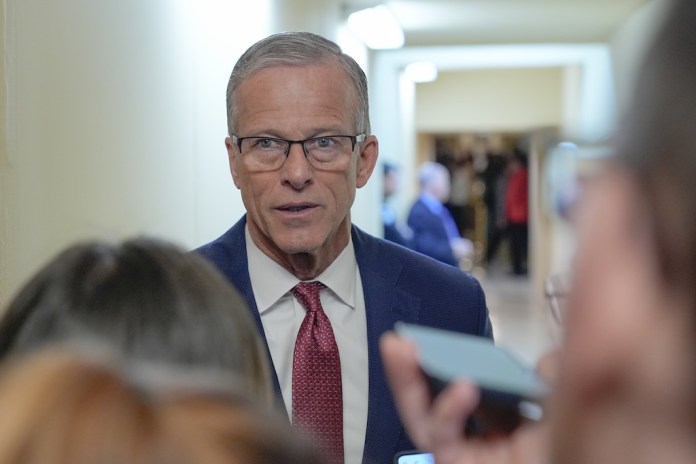


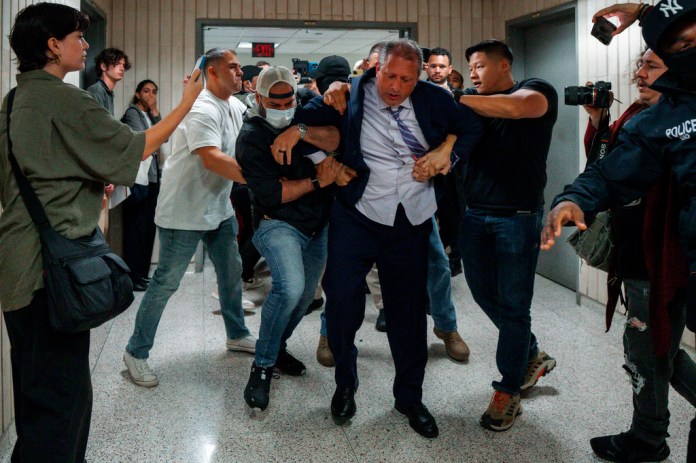
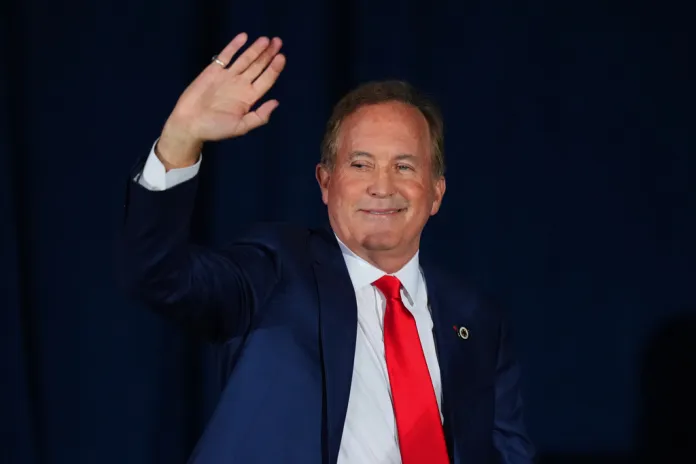


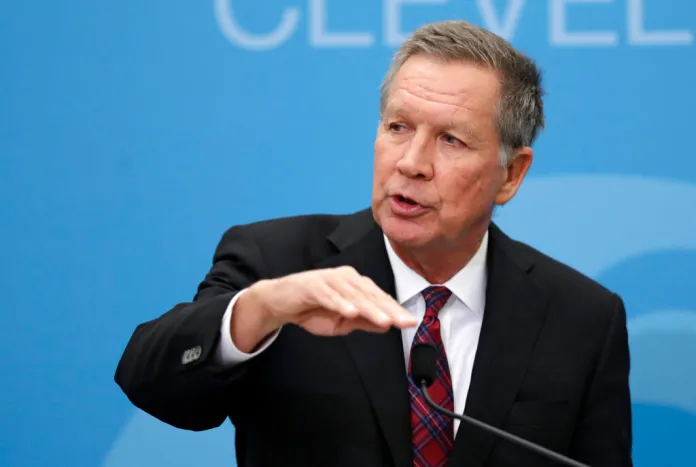
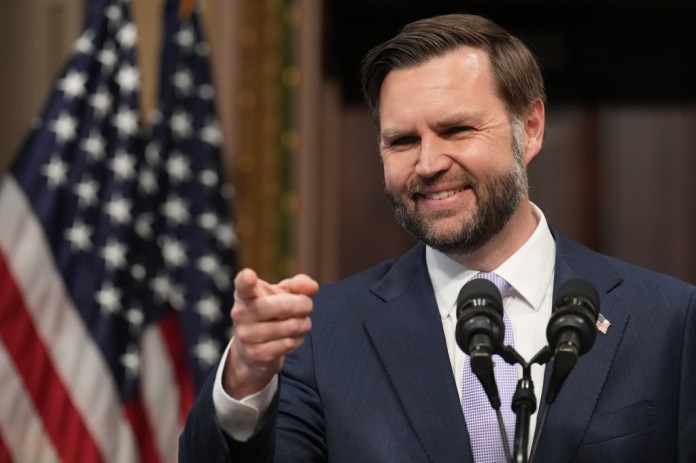

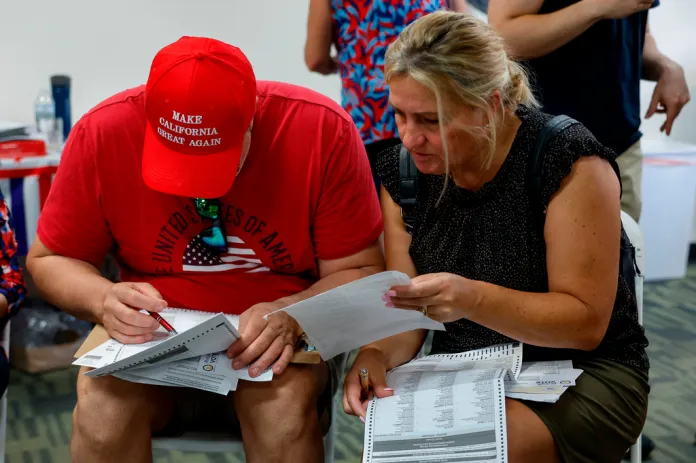



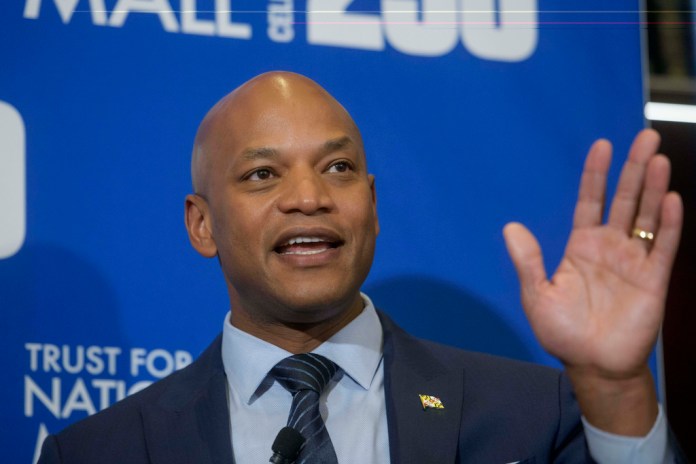


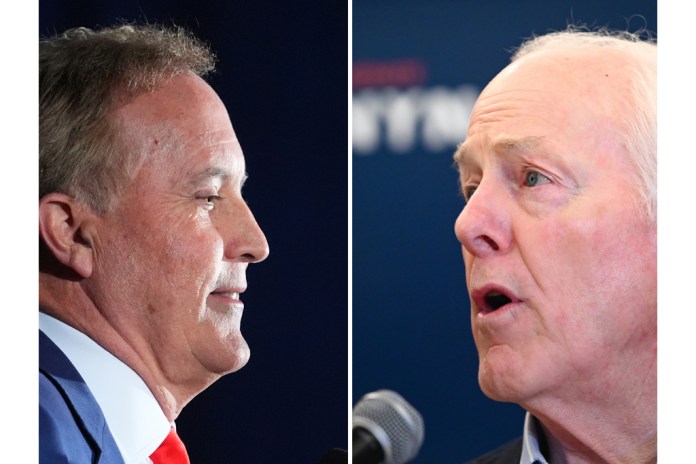

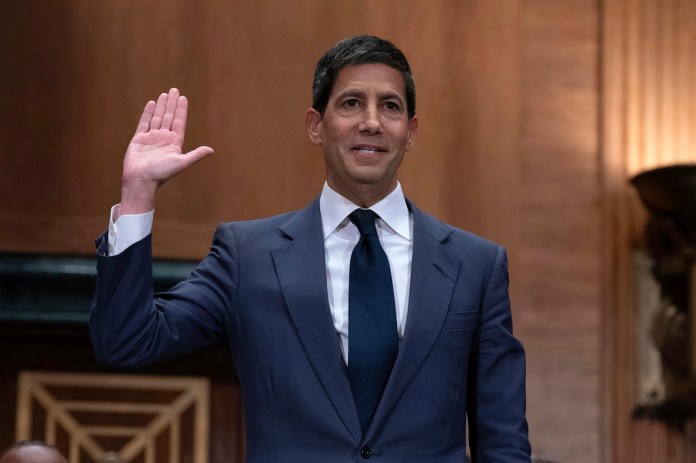




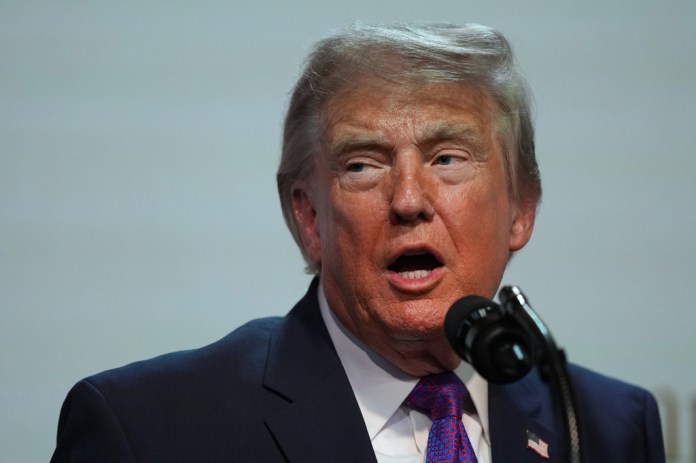
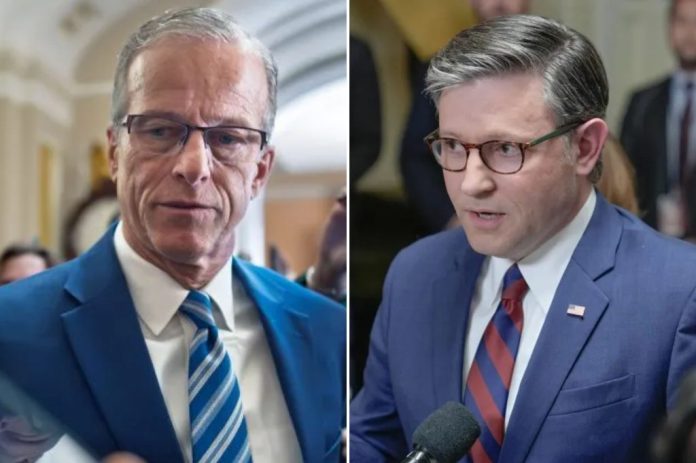
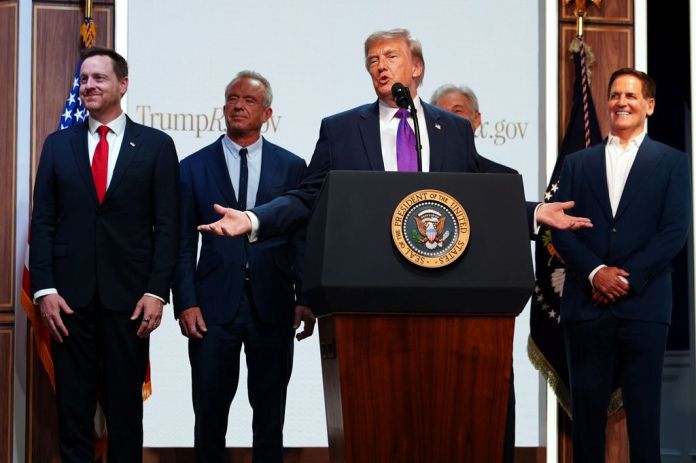
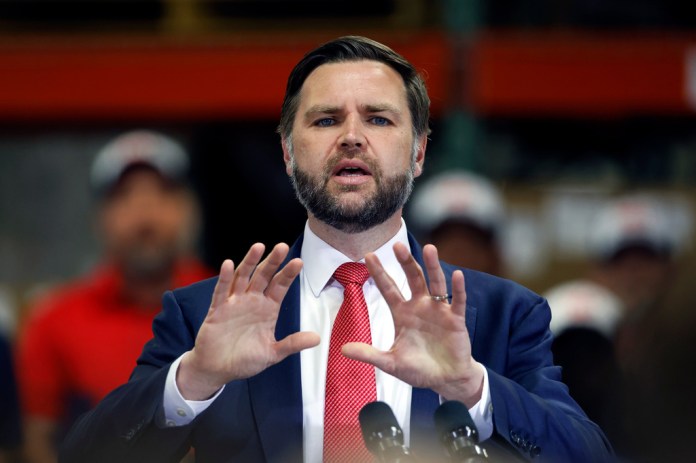




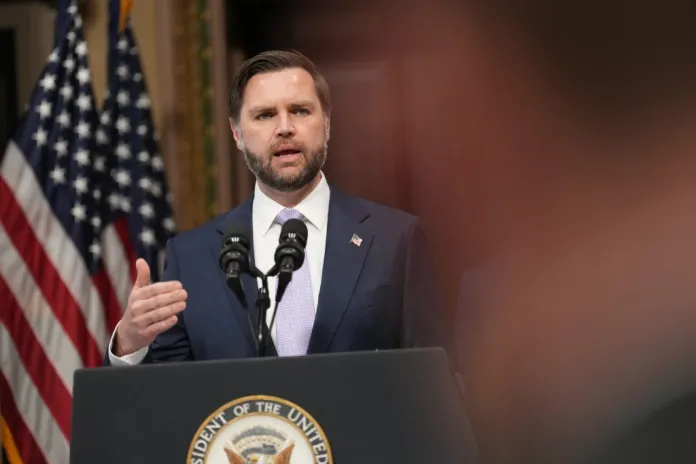

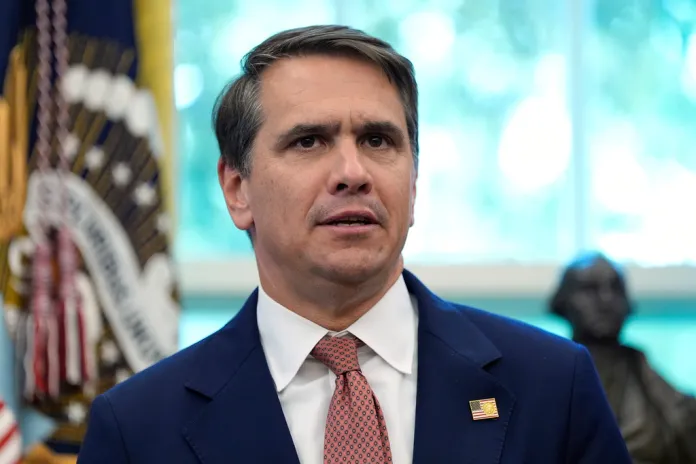













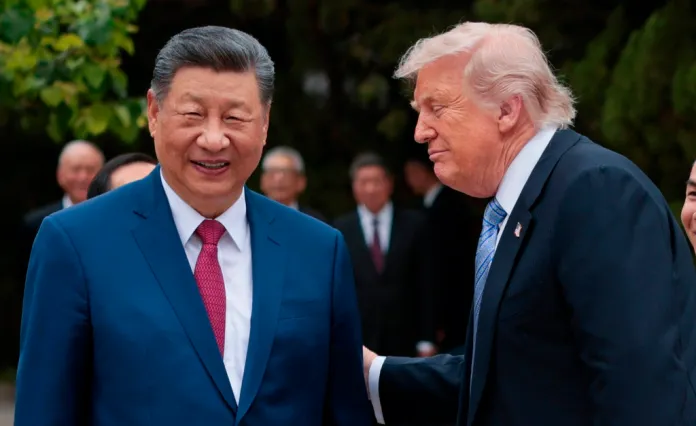
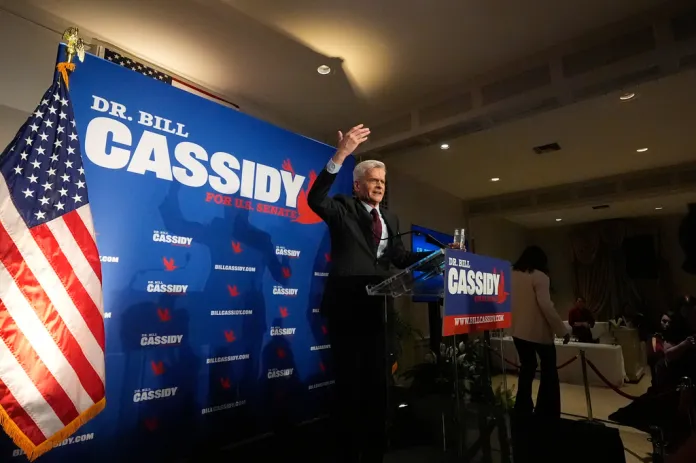



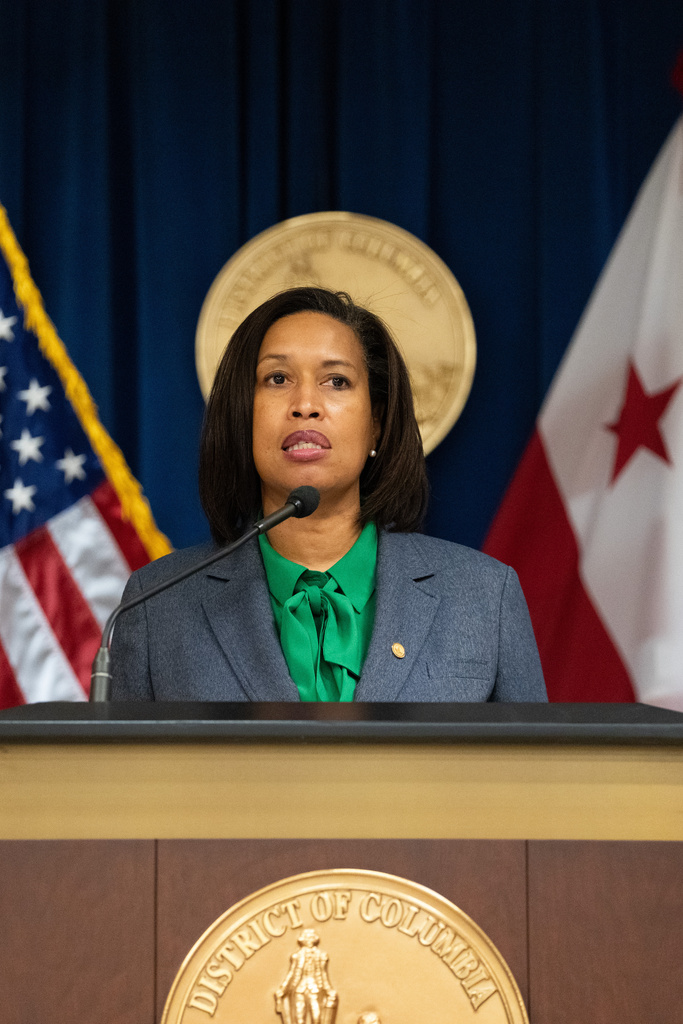



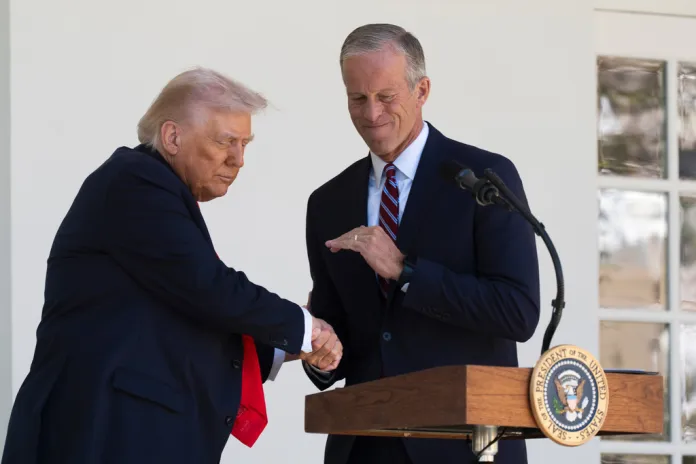
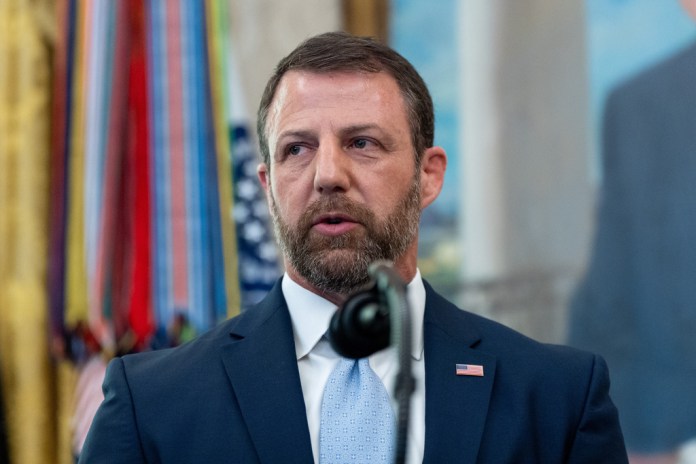
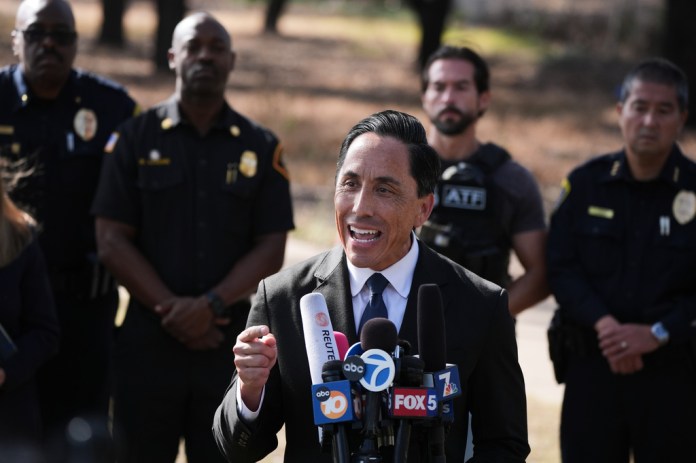
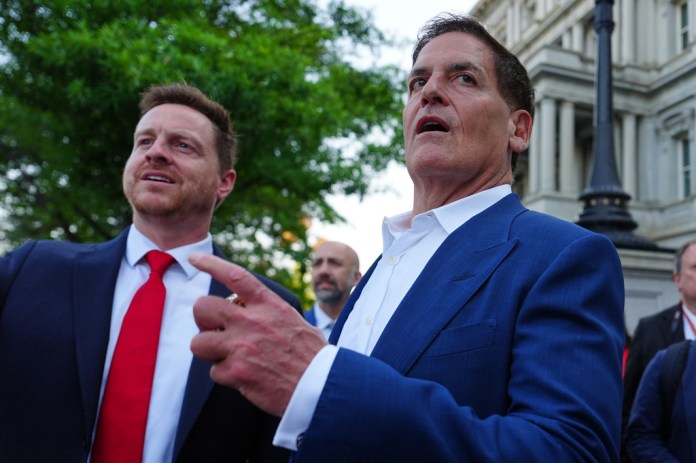

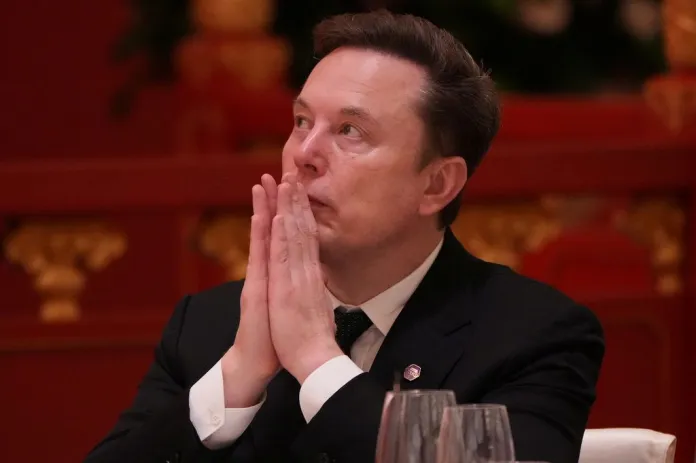



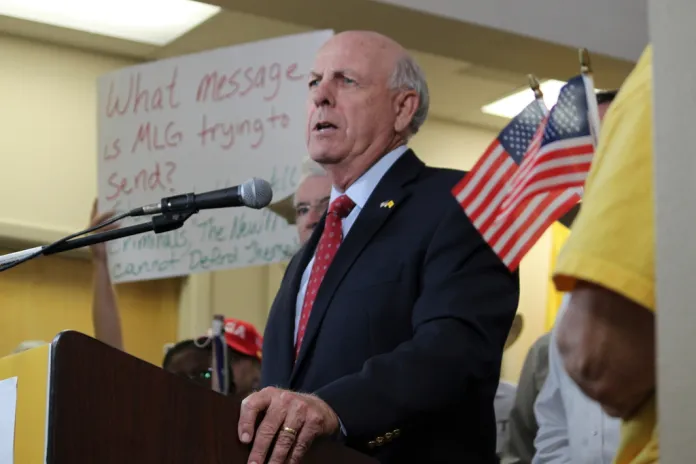

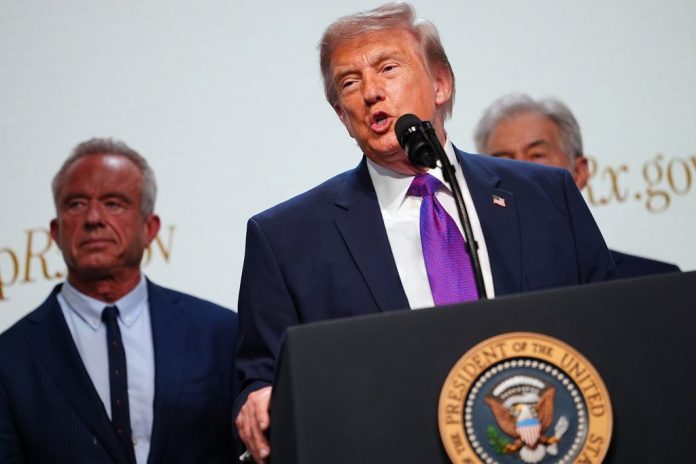

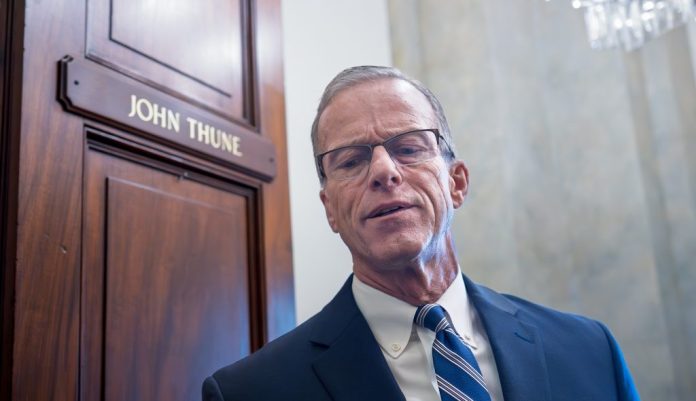

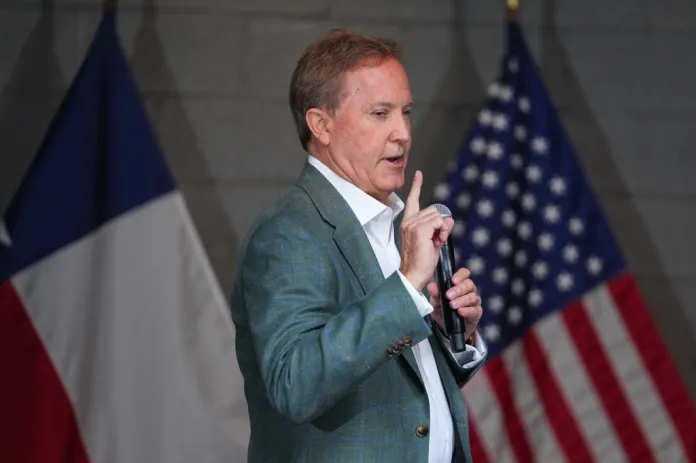
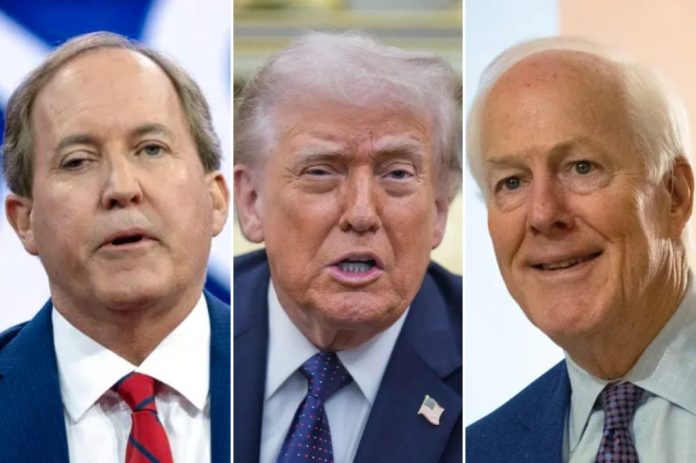
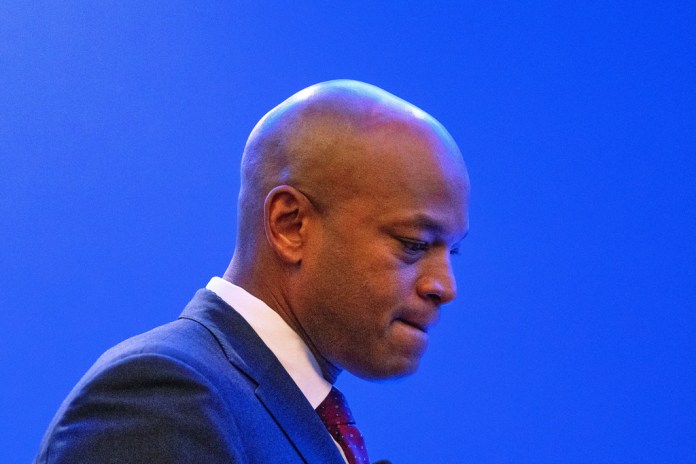




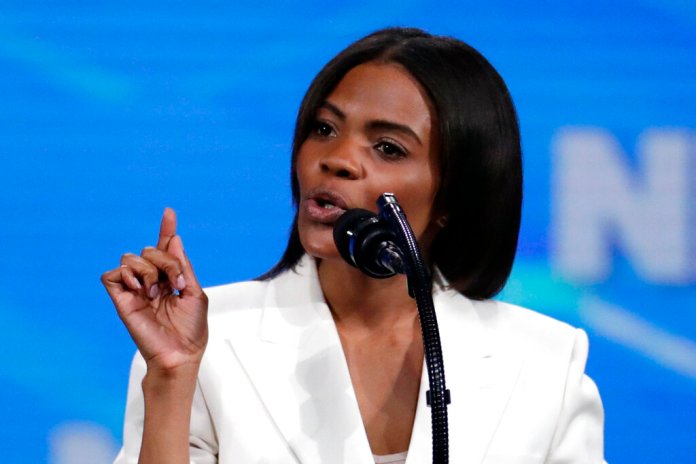




 Be sure to drink plenty of water, stick in the shade and cool off where you can!

 Plus, keep reading for the latest on the Treasury’s decision to once again extend a waiver for some nations to buy sanctioned Russian oil.





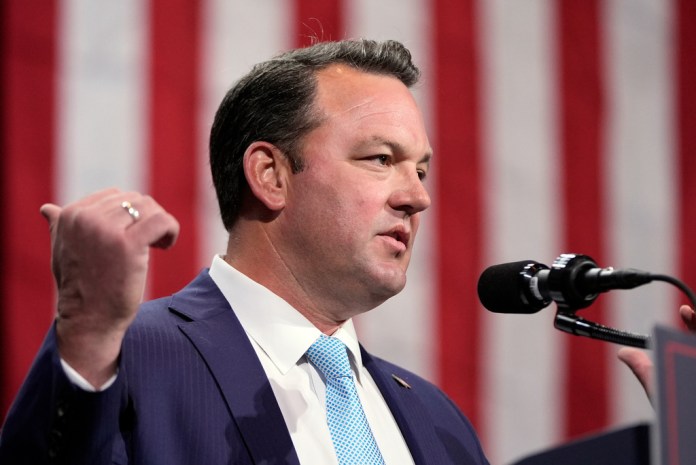
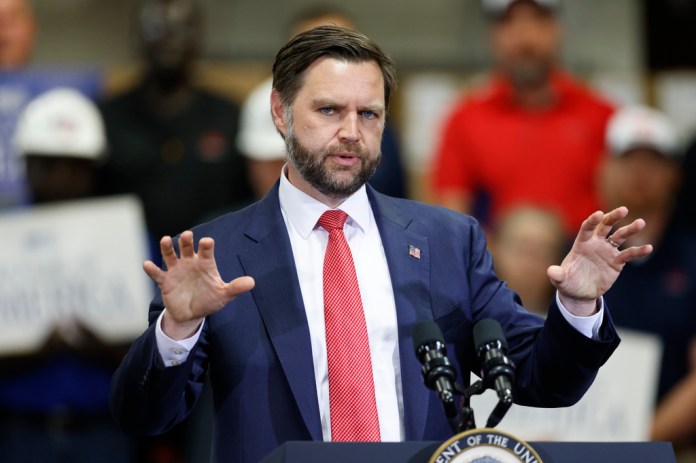
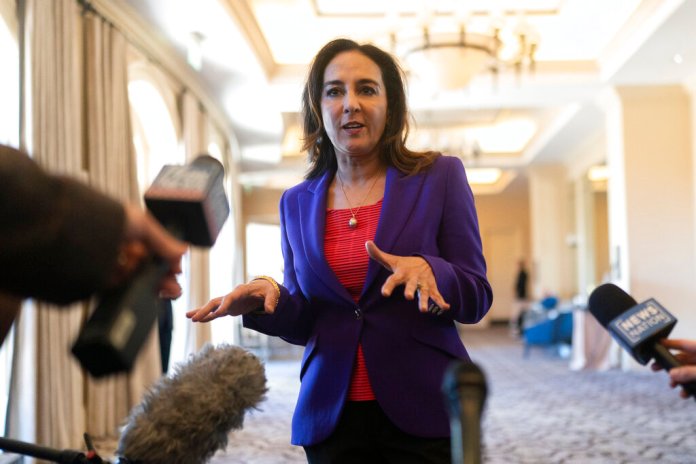

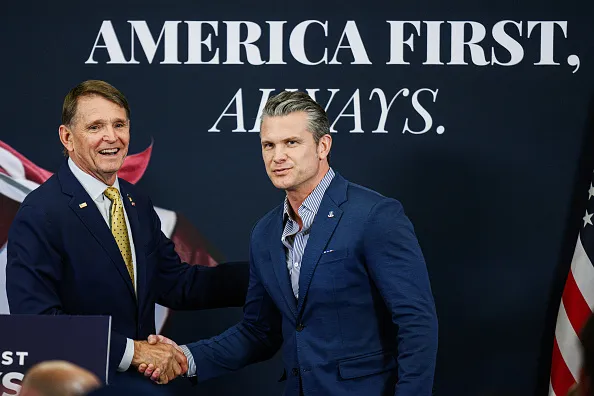
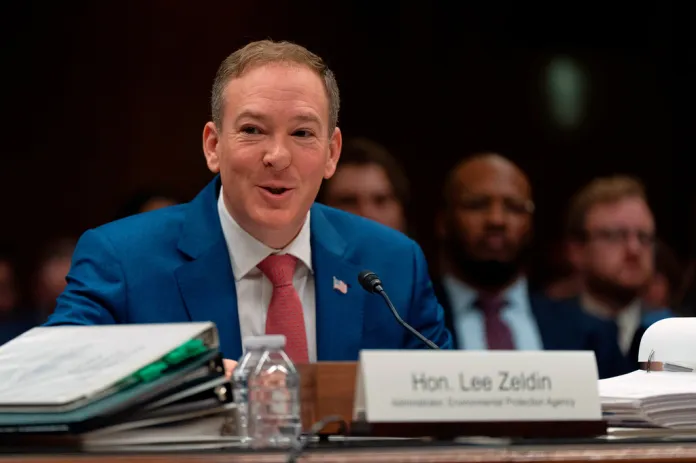
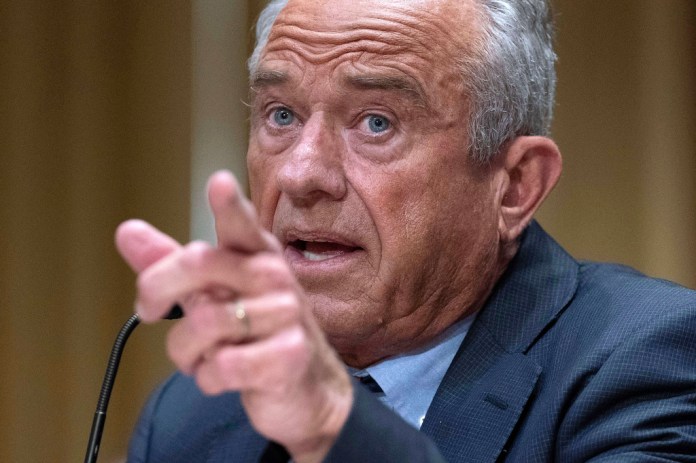


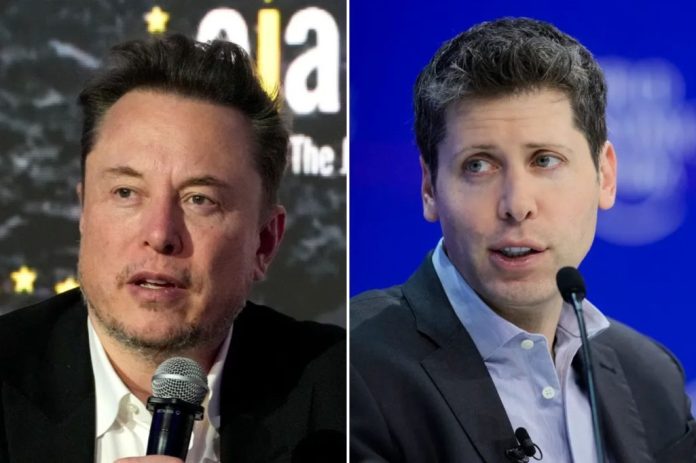
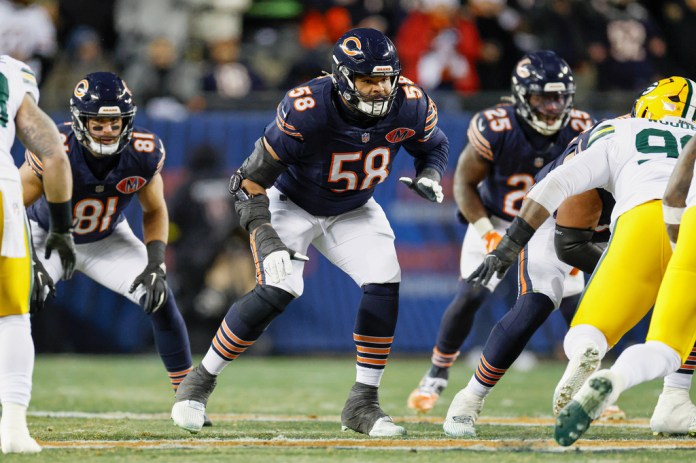




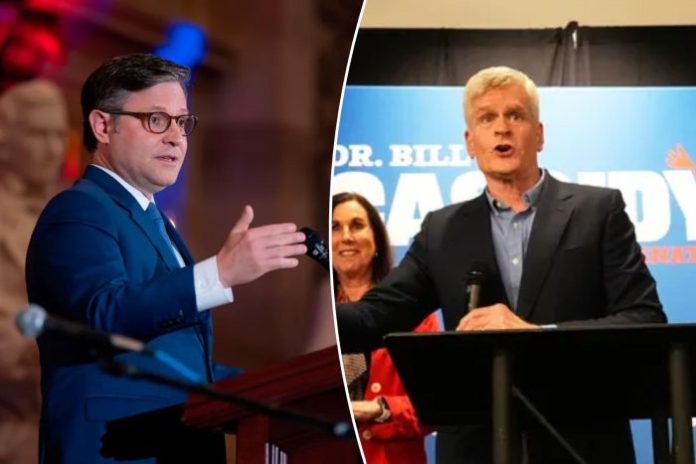


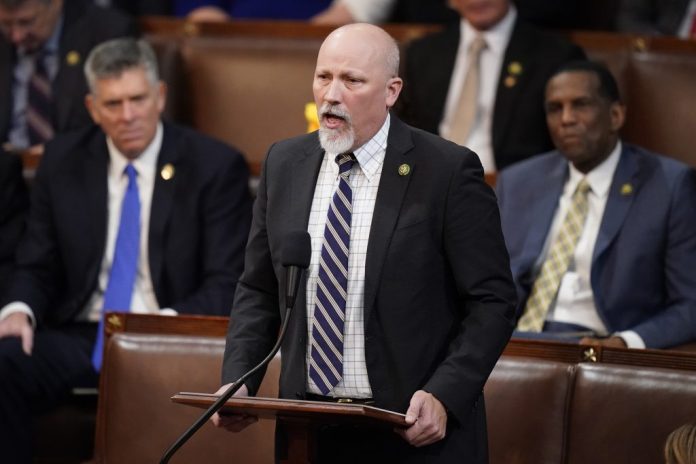


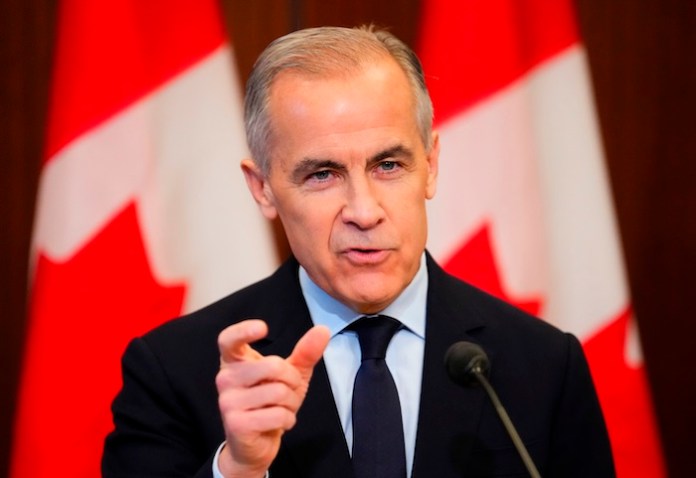






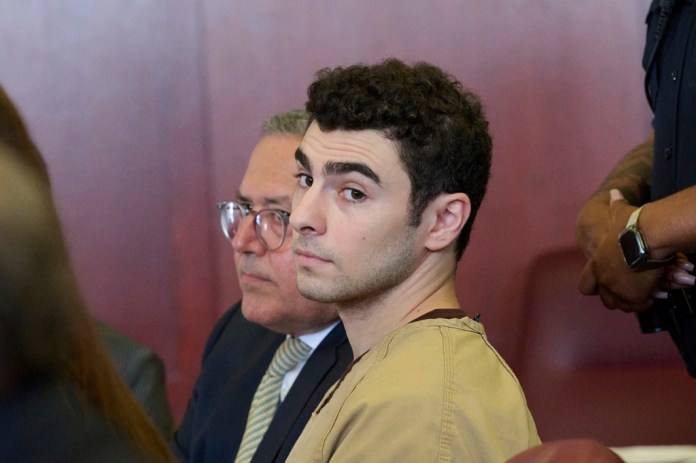
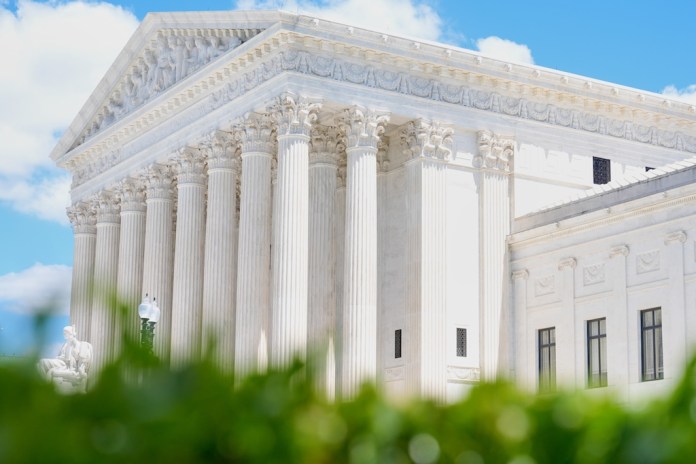
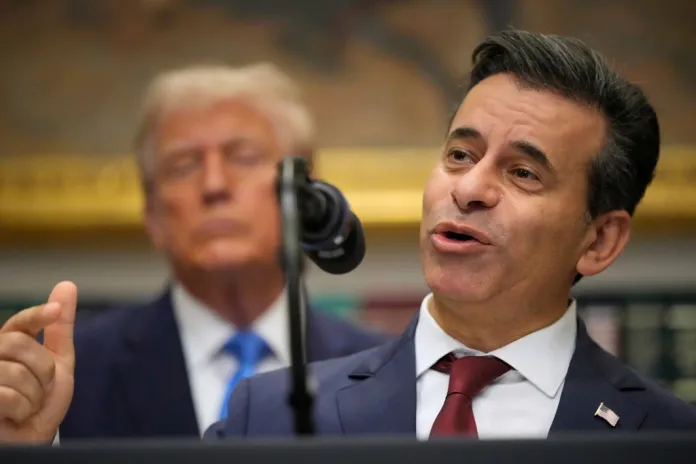





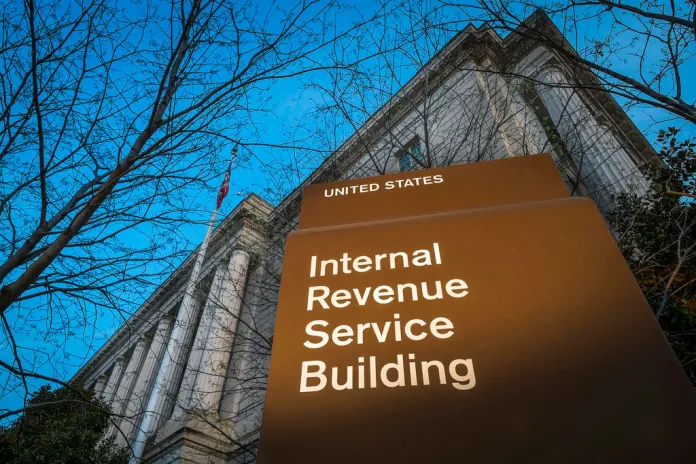






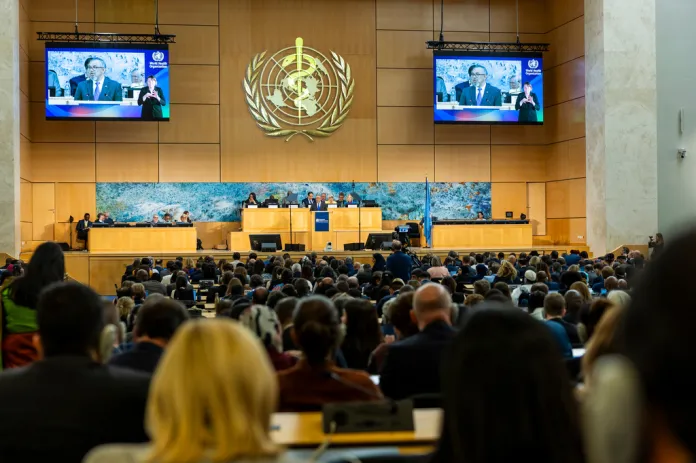








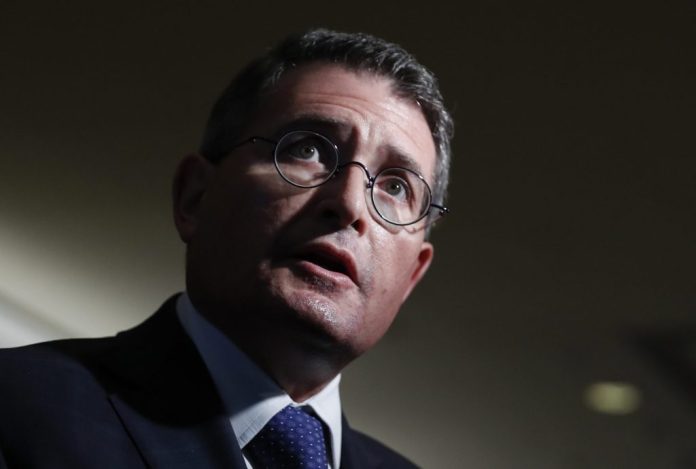

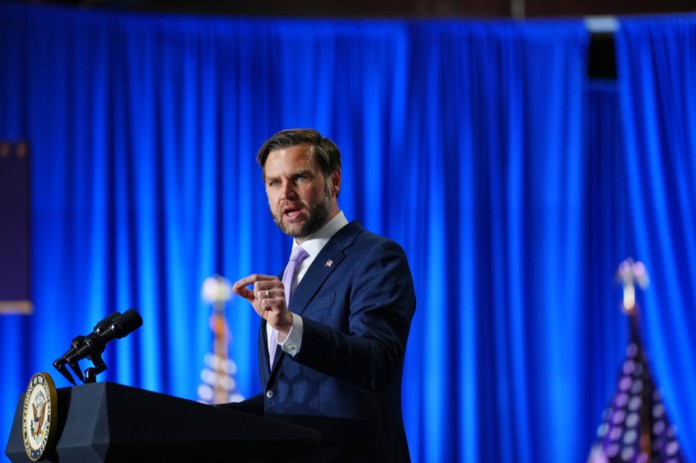












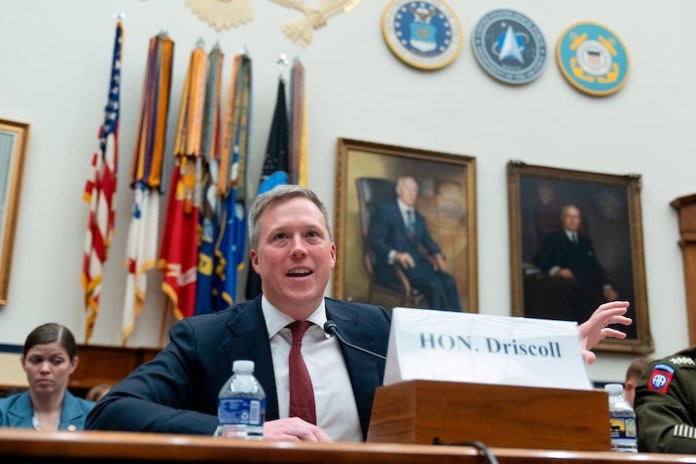







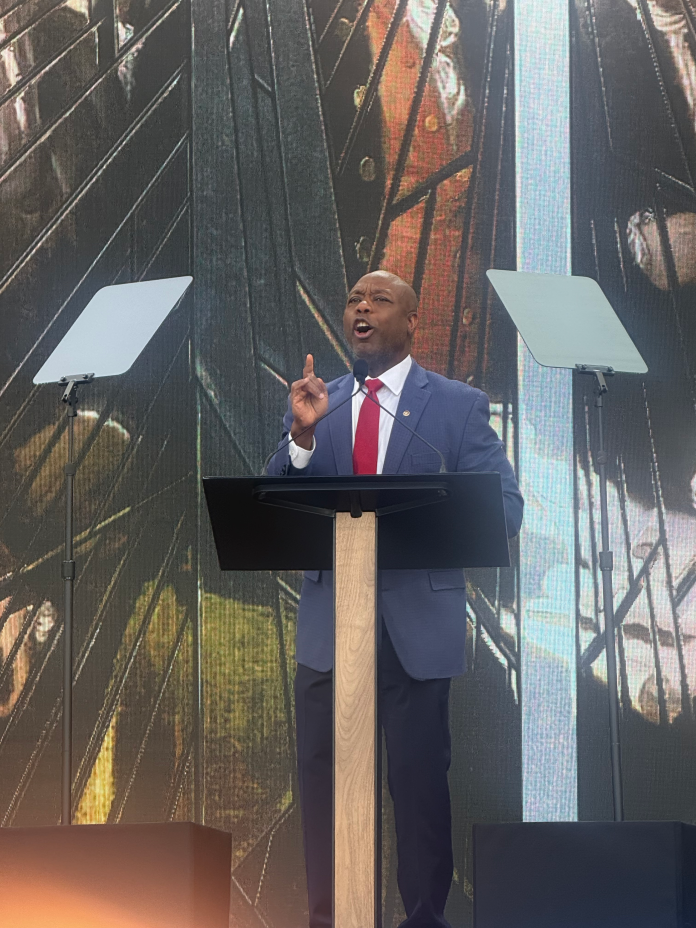






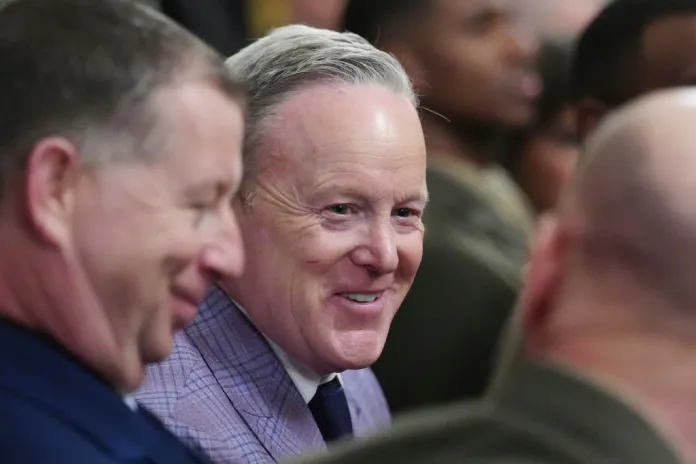


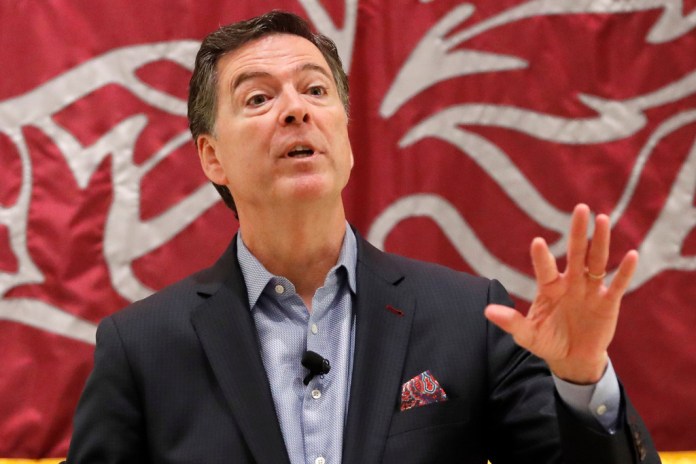



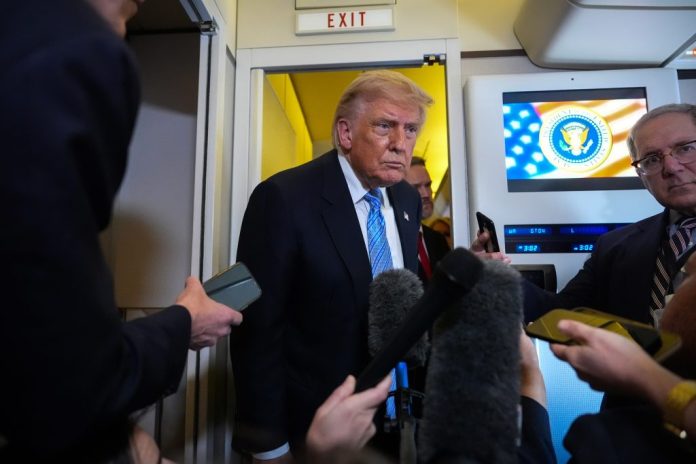
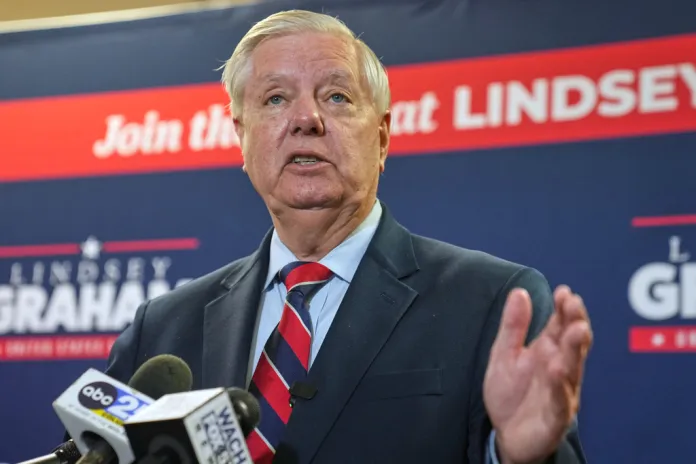
















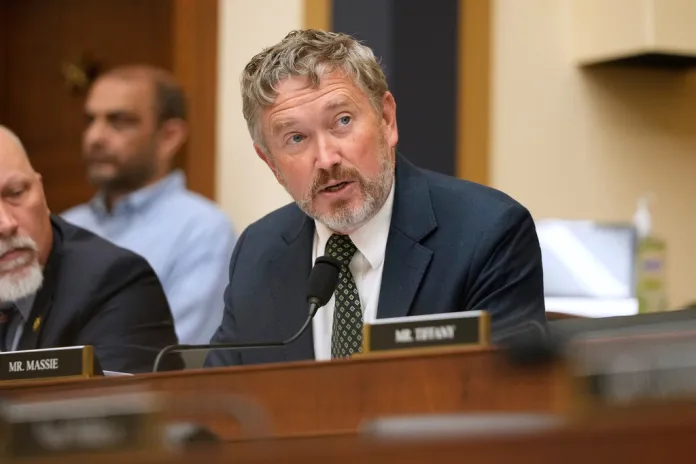












 Nicolly_Brito






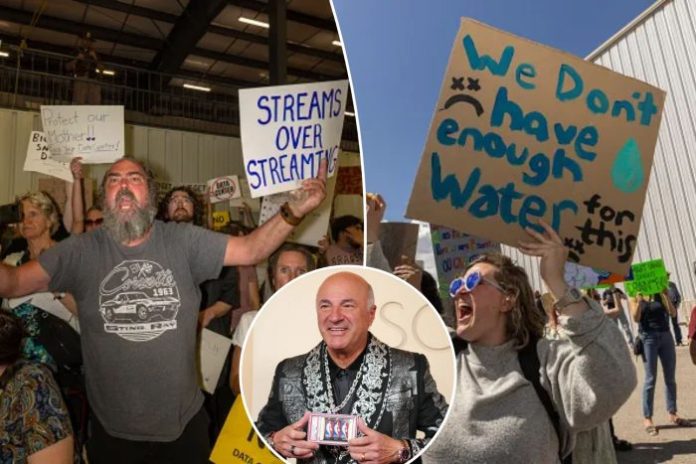


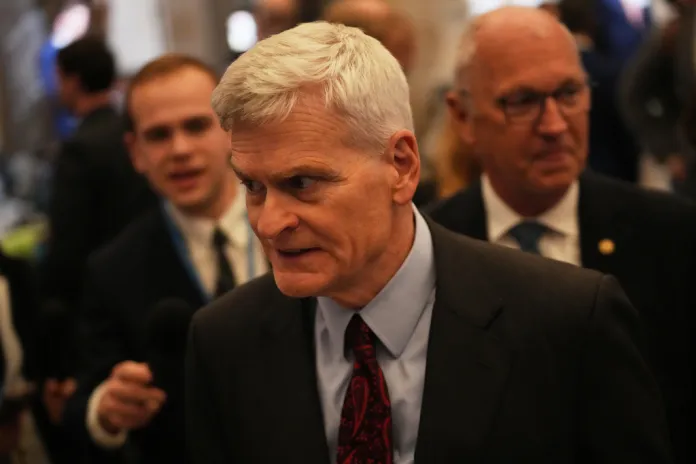
















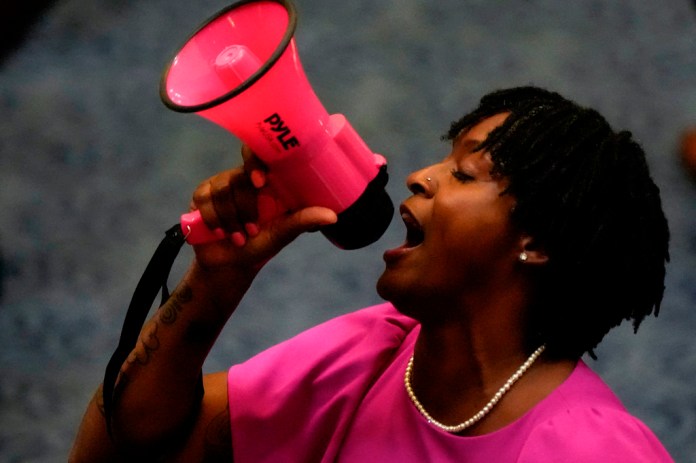
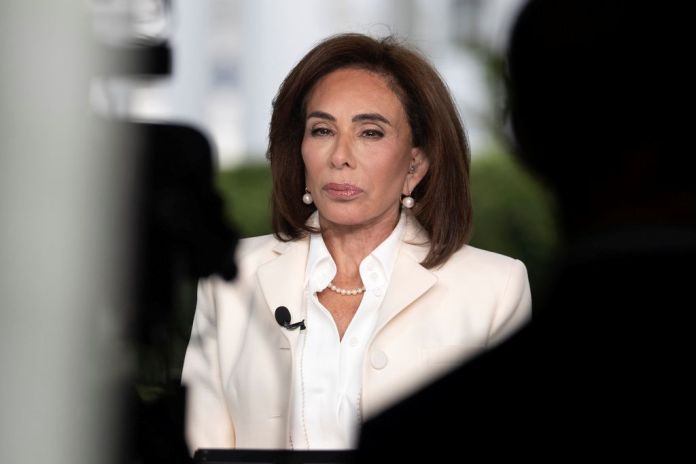



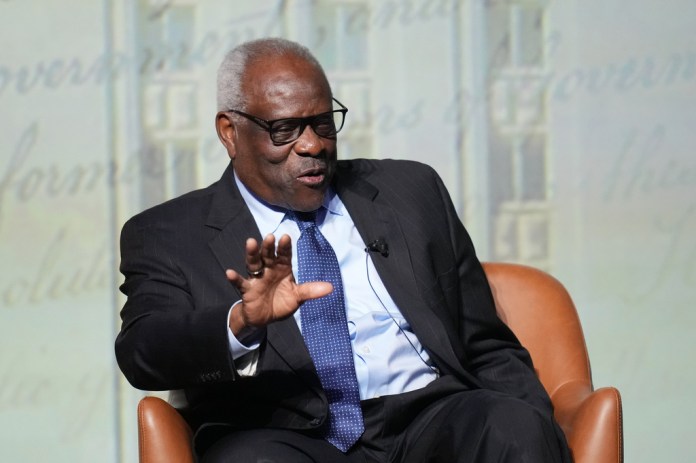
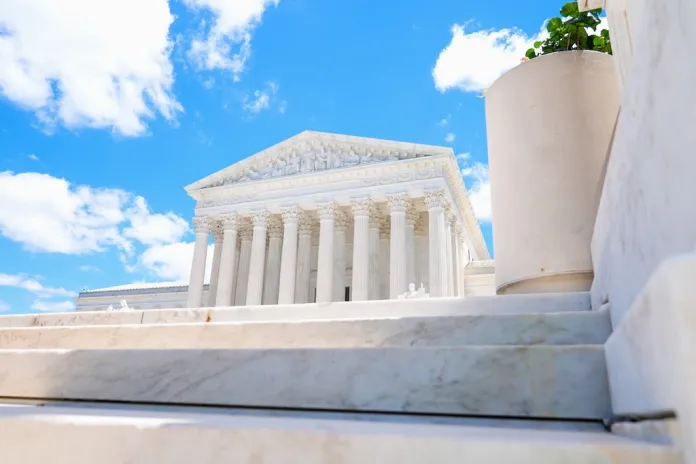



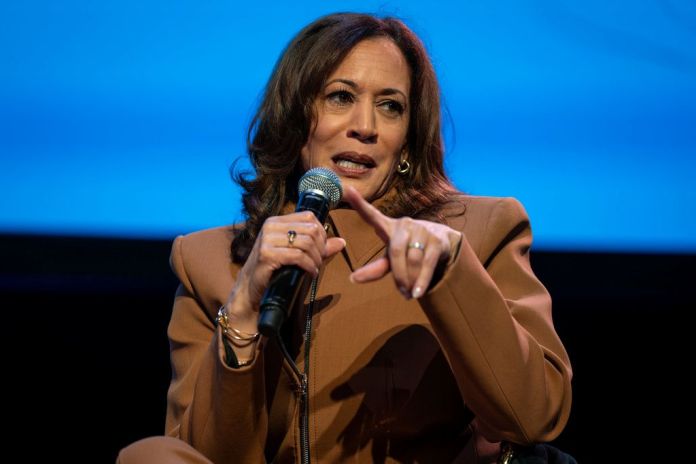



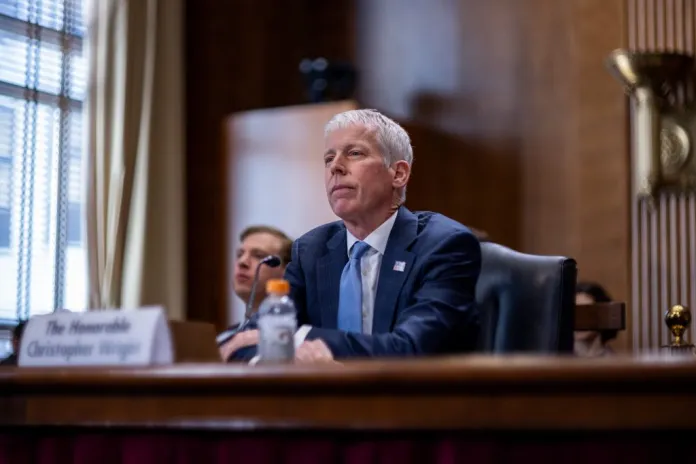




 Keep reading to learn more about their discussion.
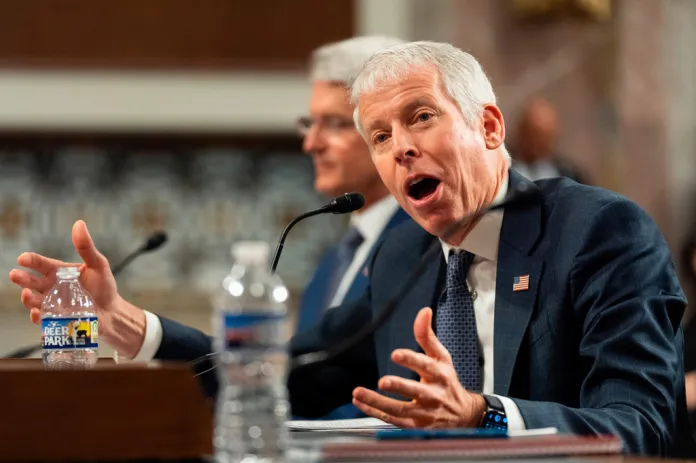


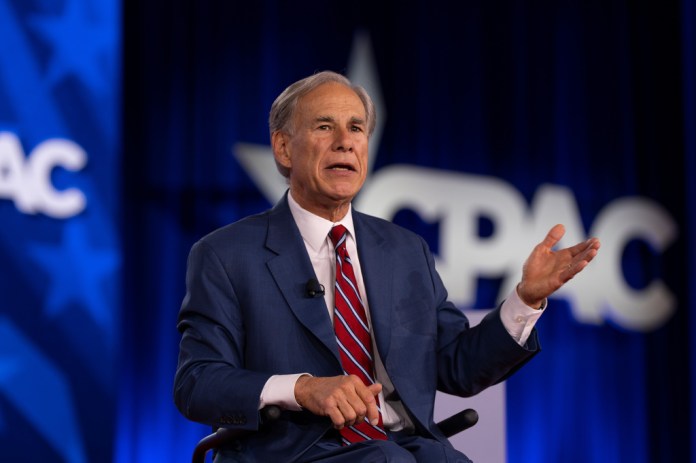

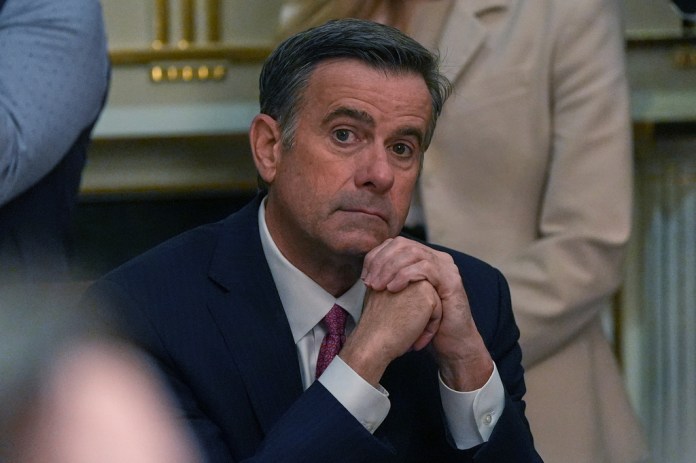




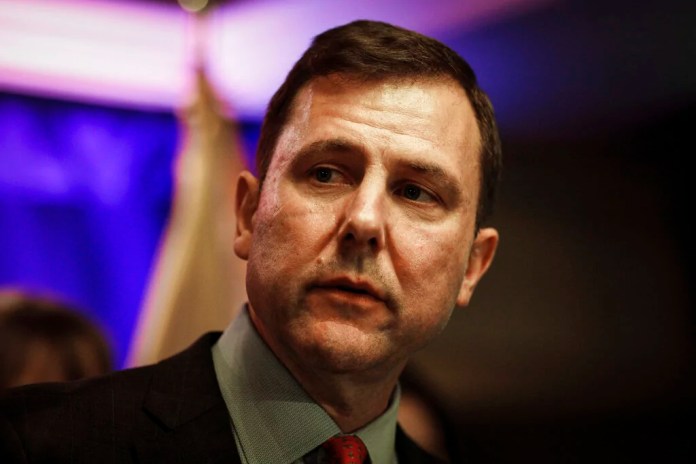
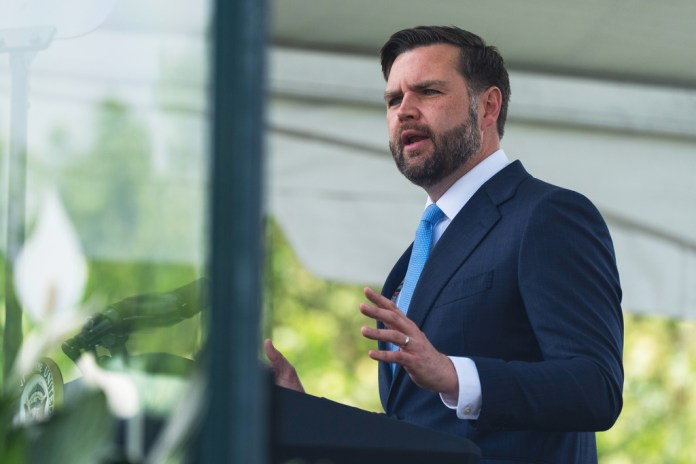
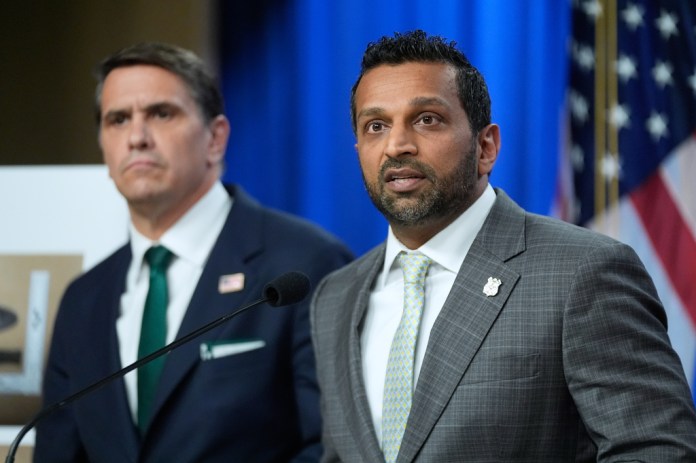


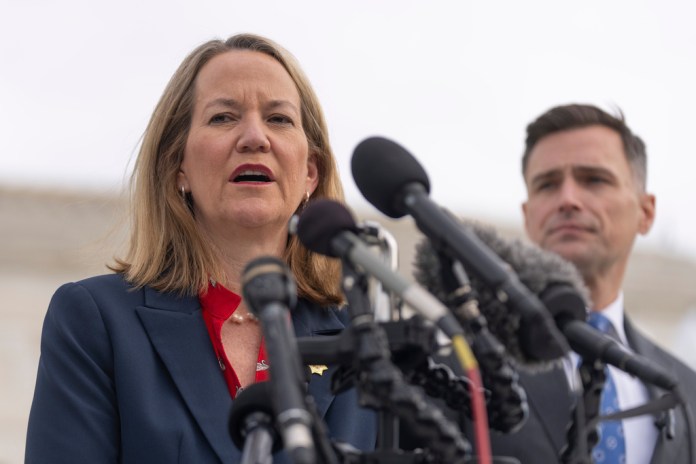
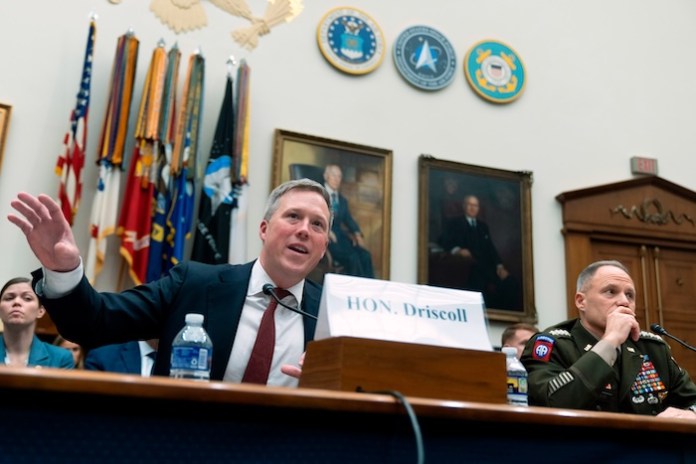


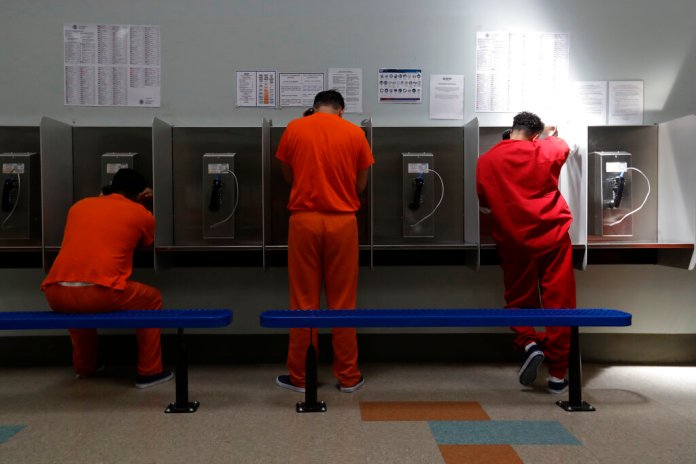



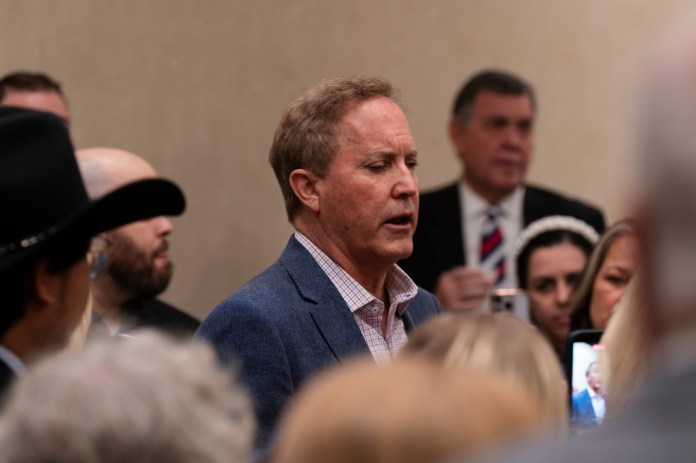








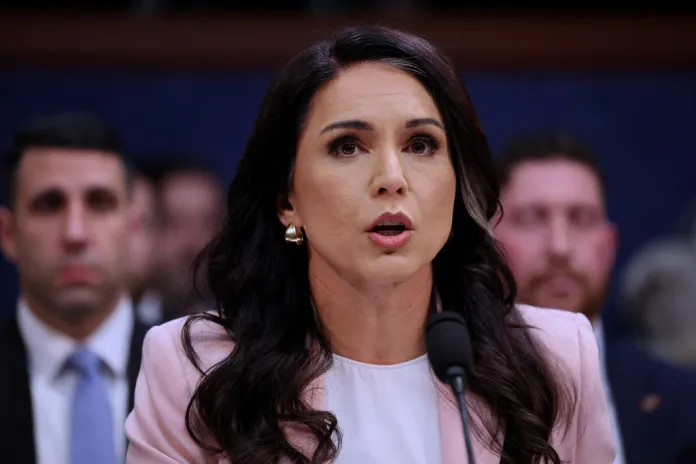






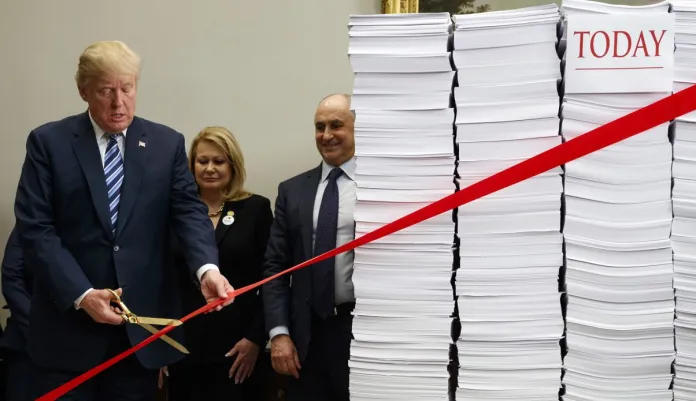










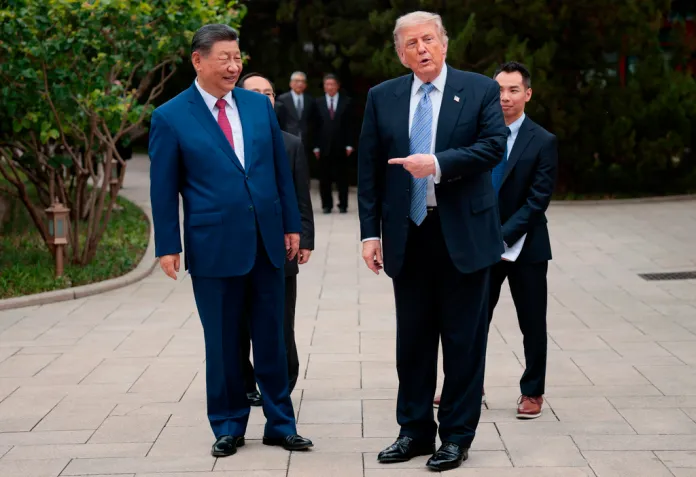

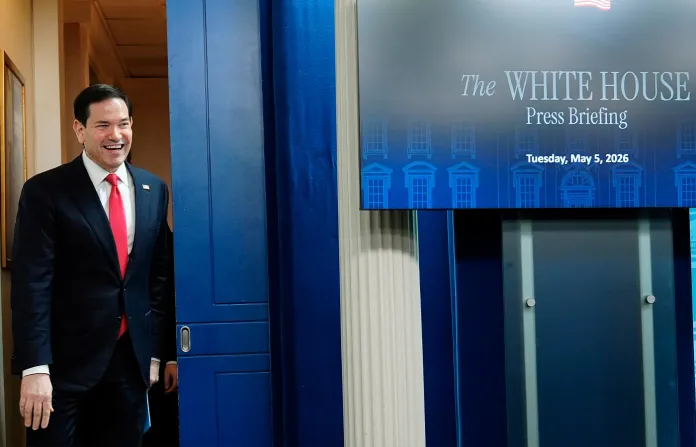



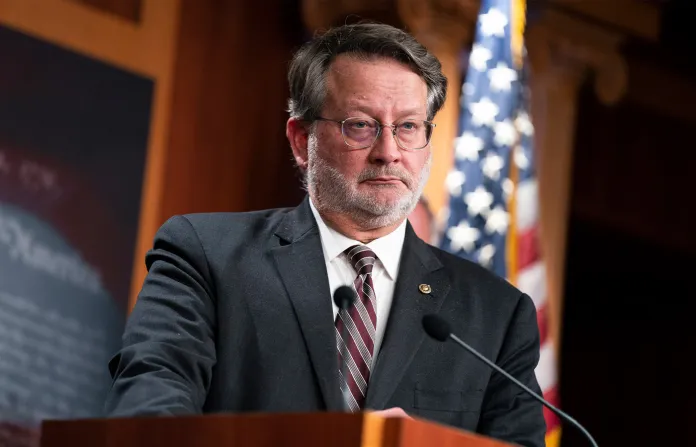

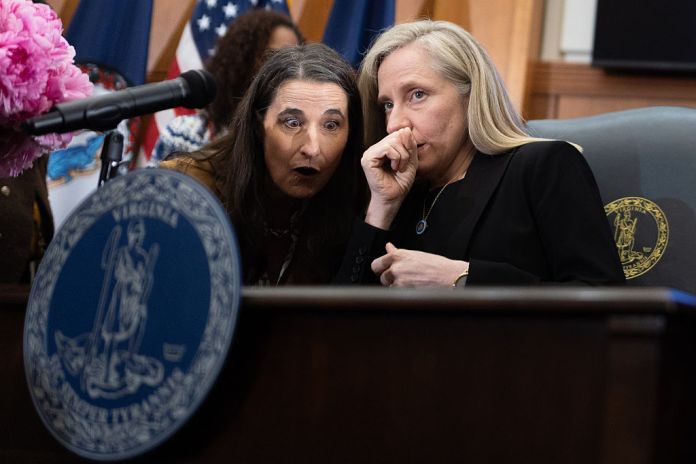
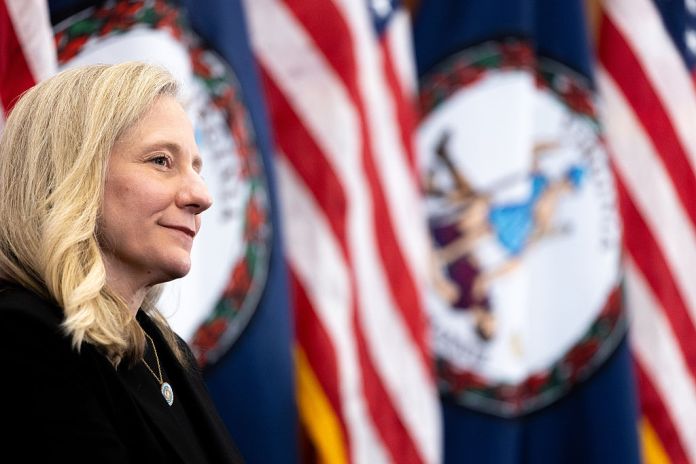





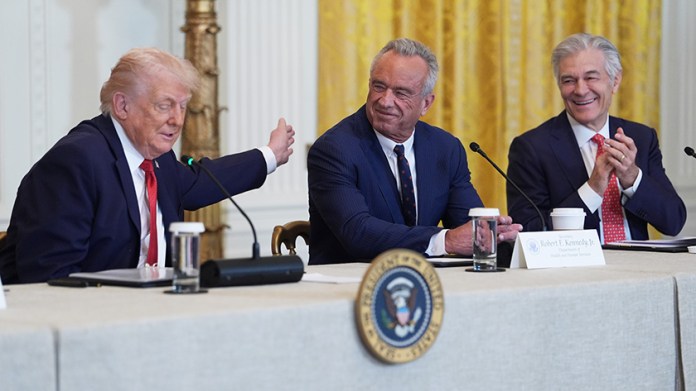



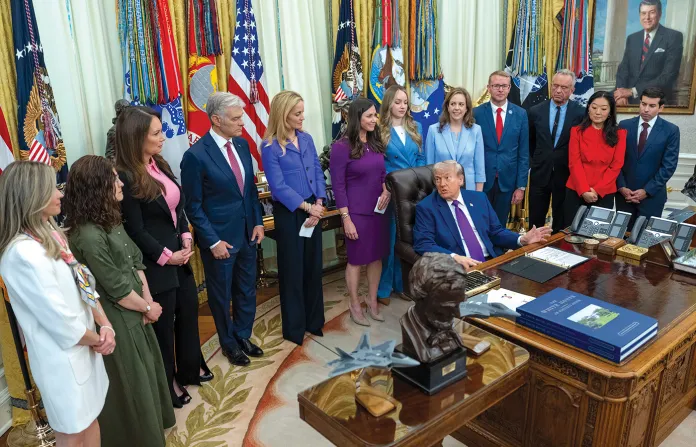



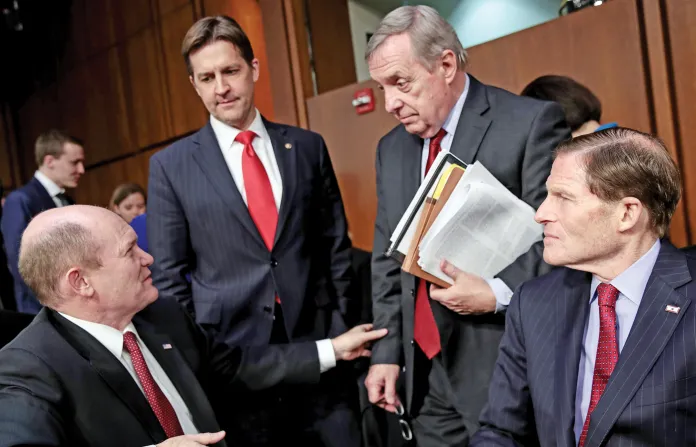




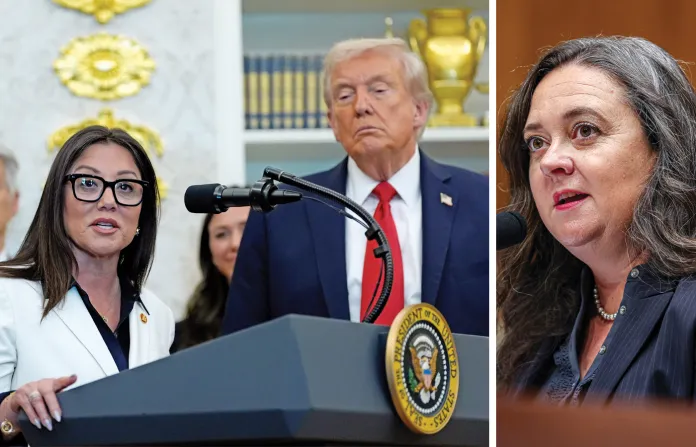
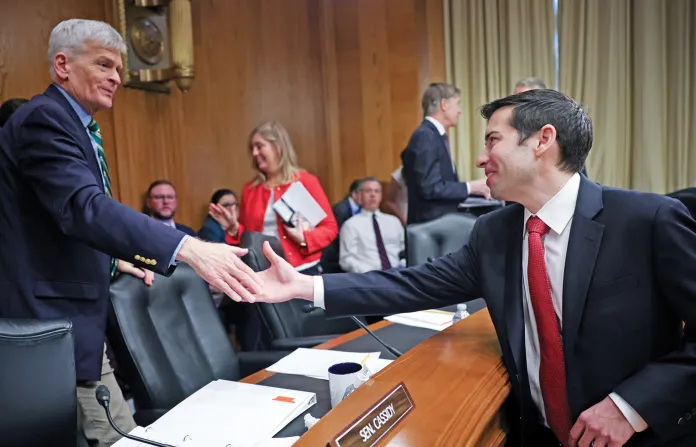

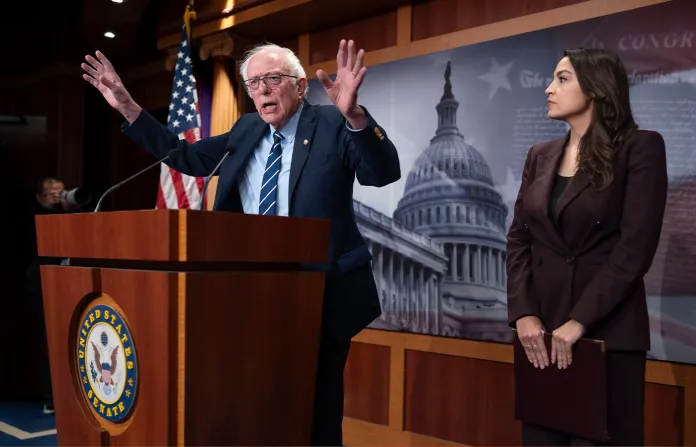











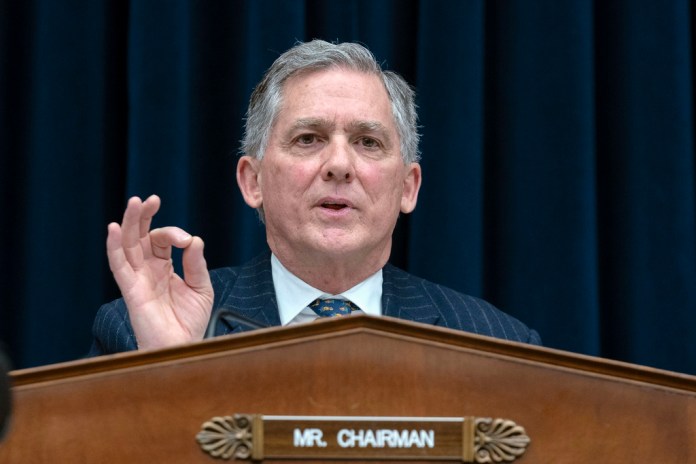




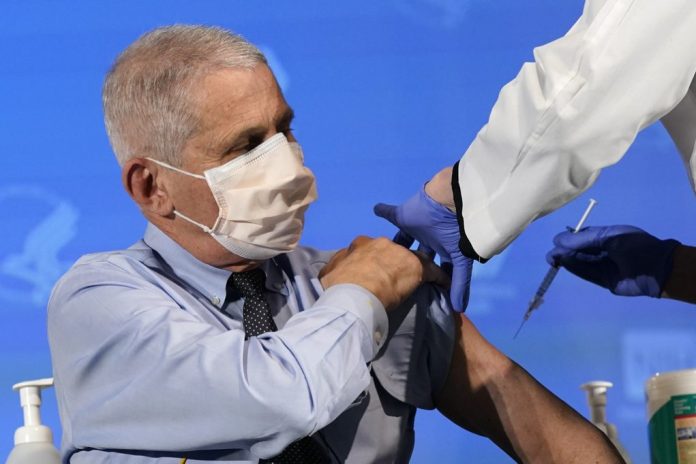





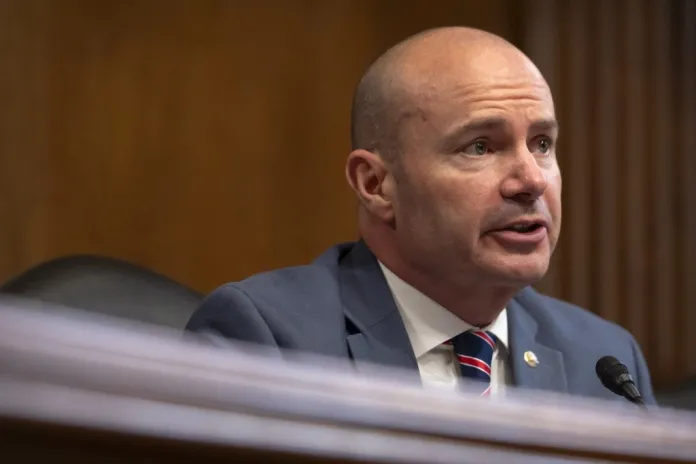
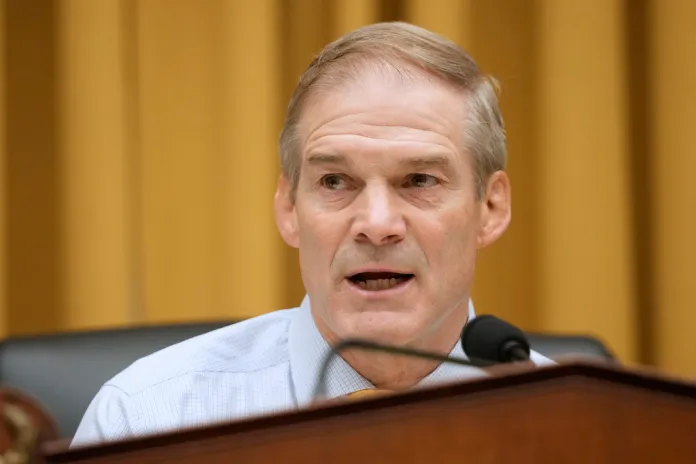
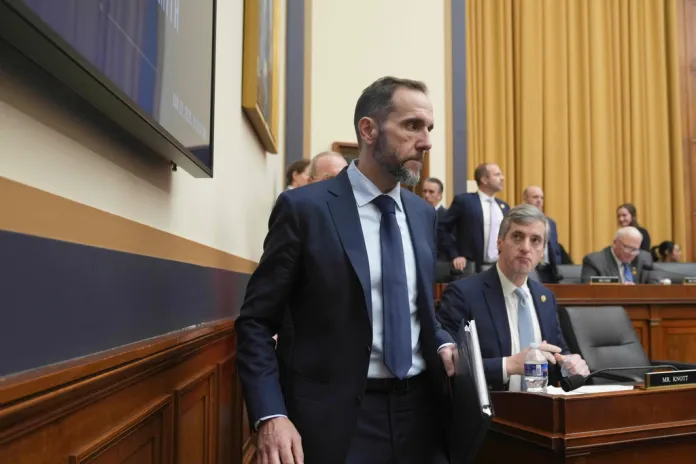
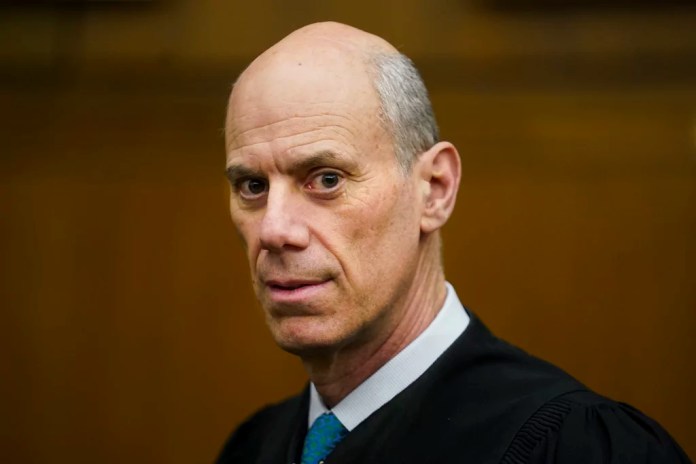


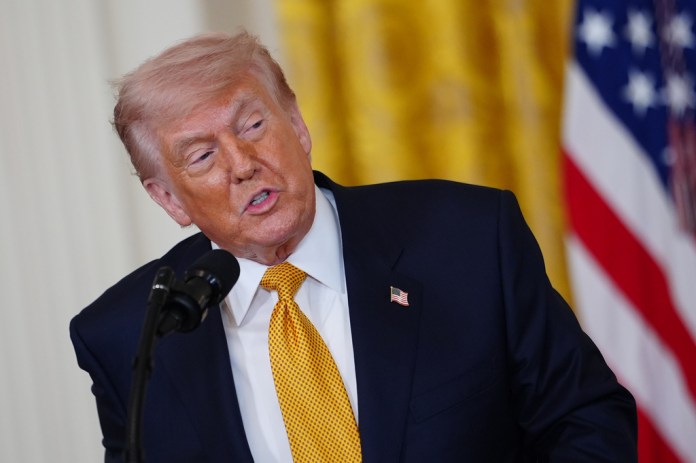




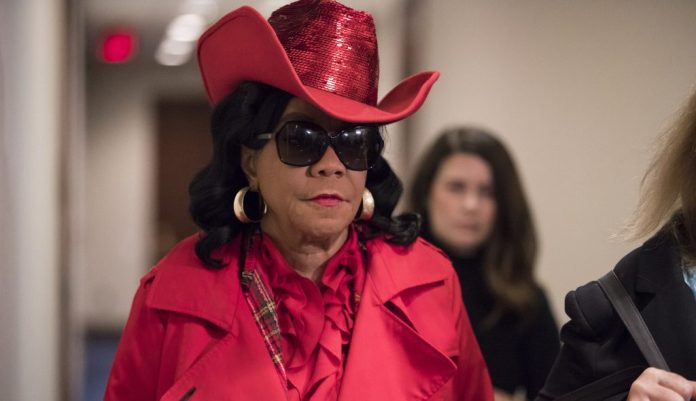




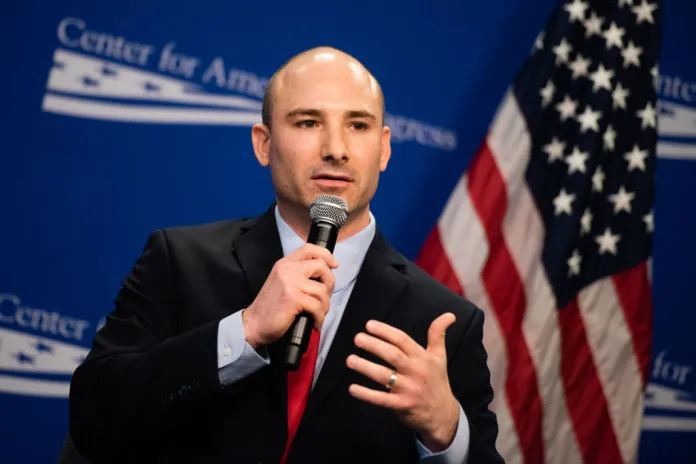
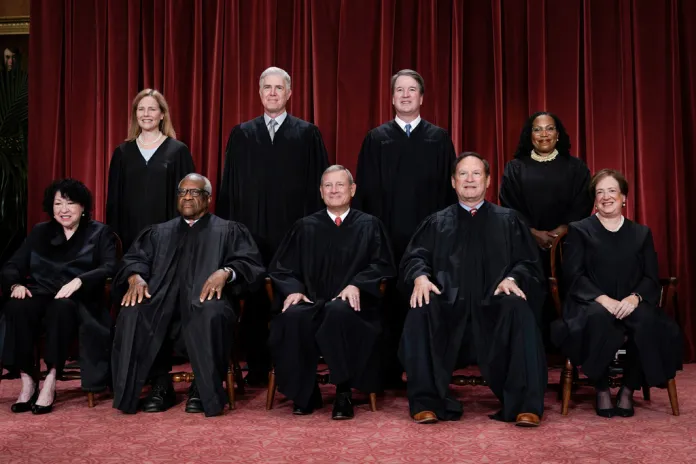
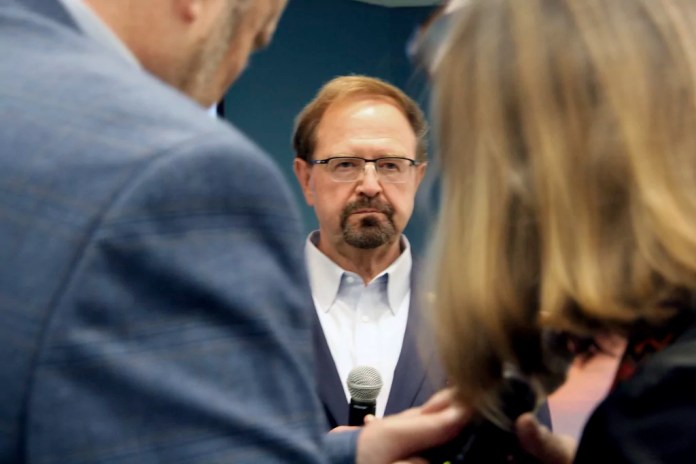
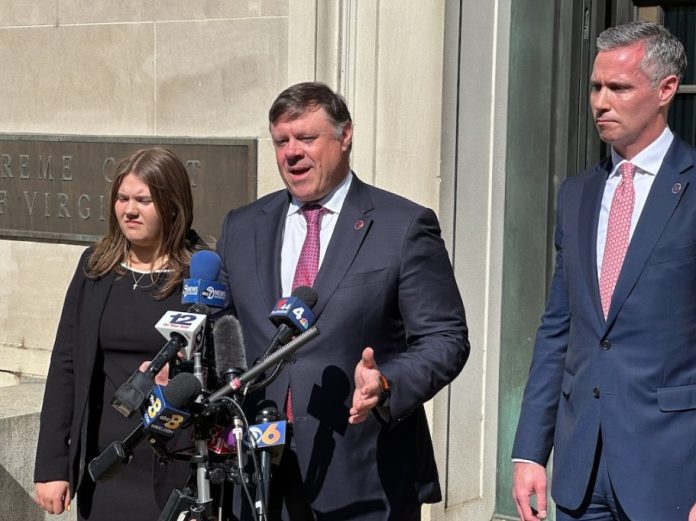

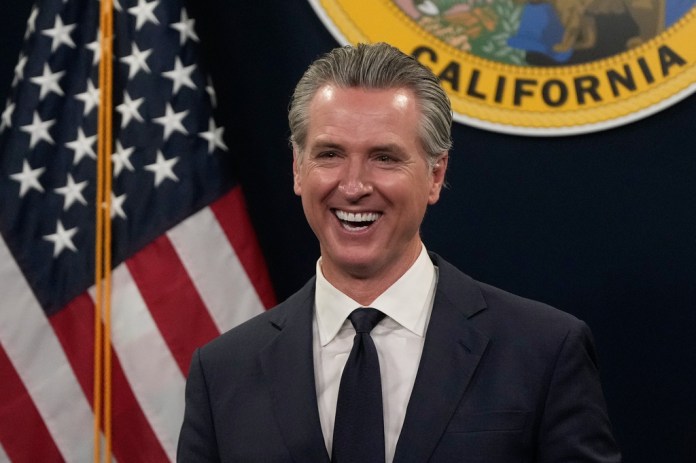
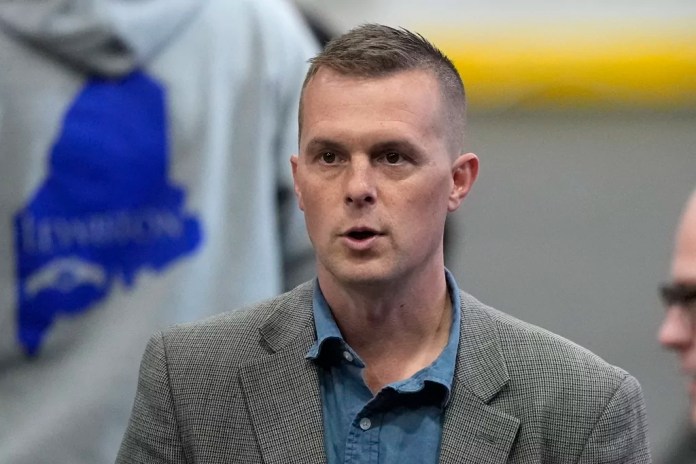





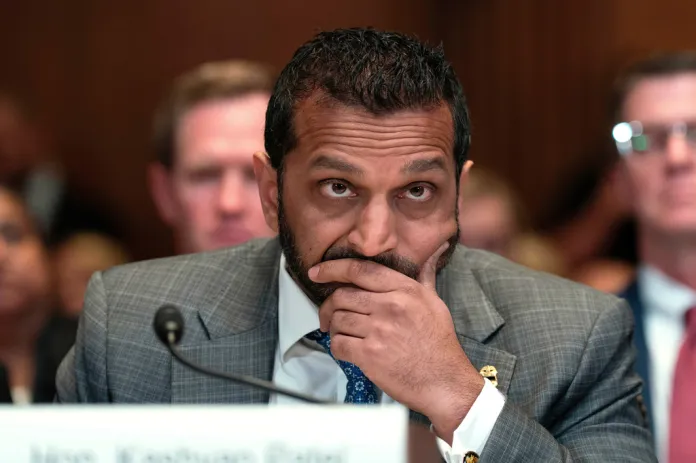




 The findings come as the Trump administration has taken steps to expand data center growth across the country.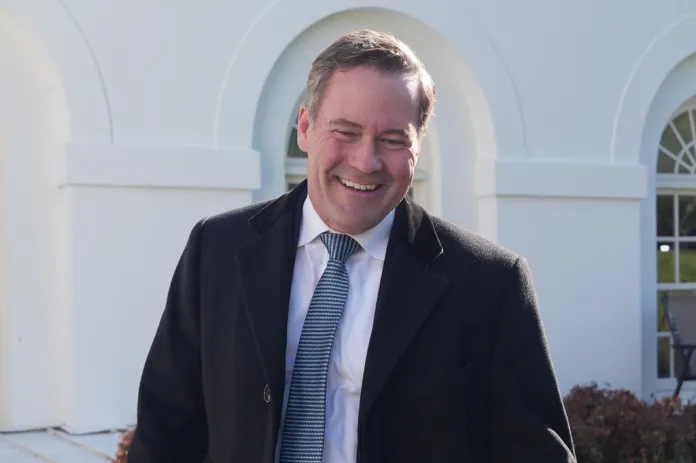
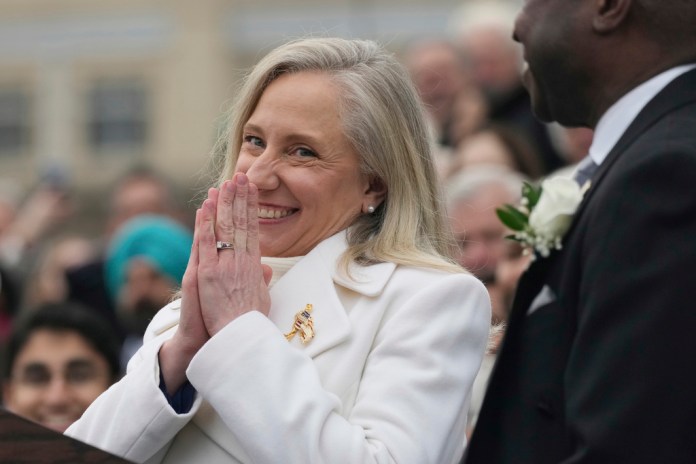


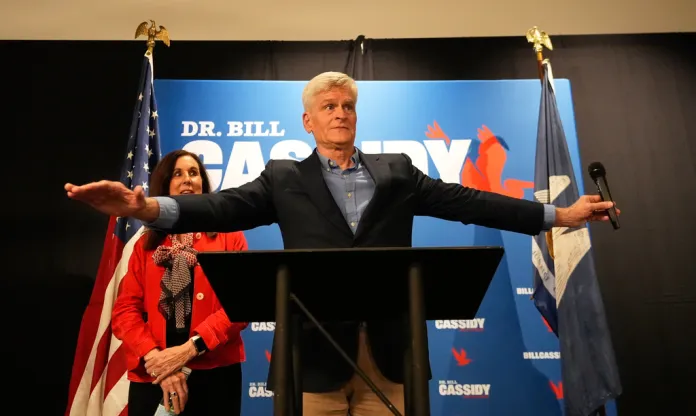

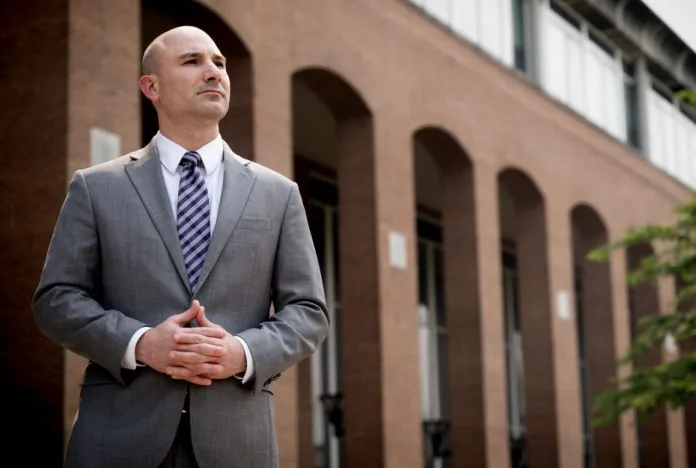


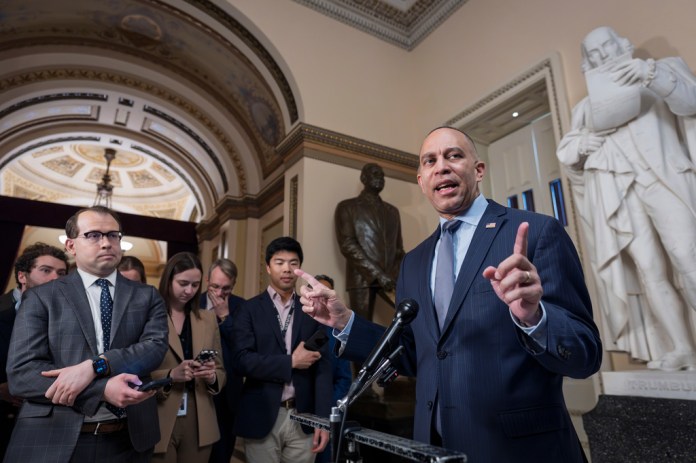
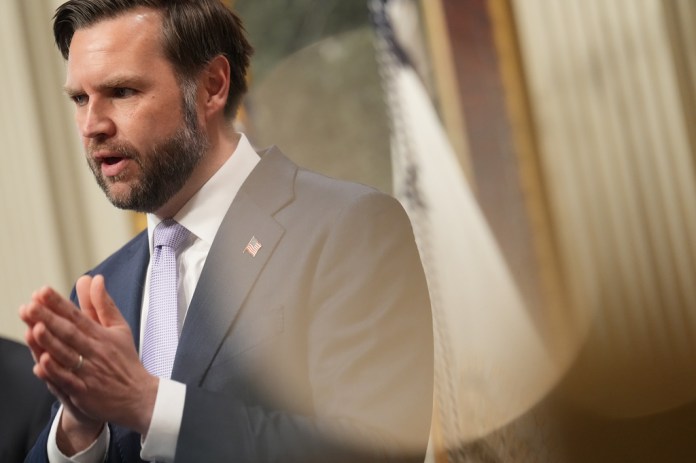
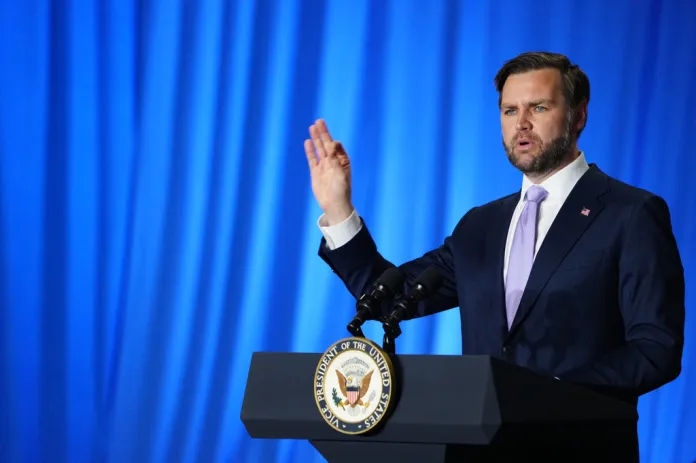




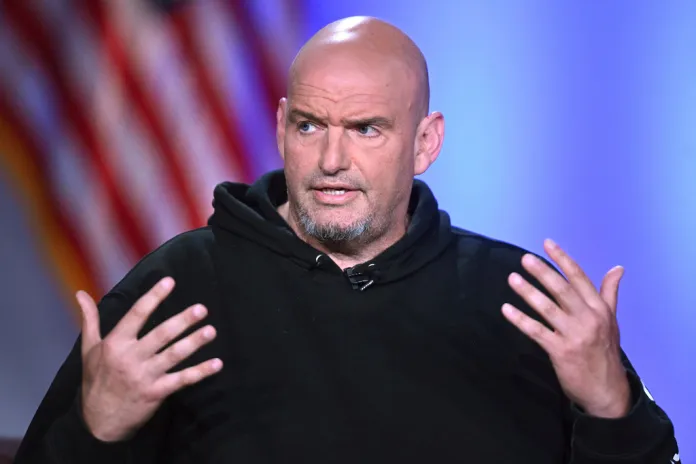

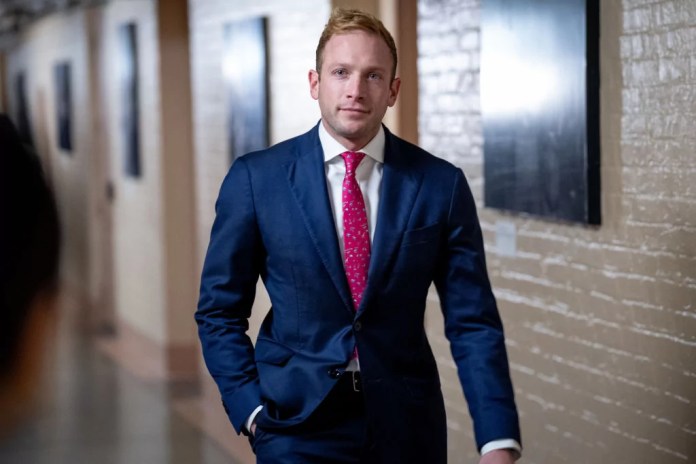


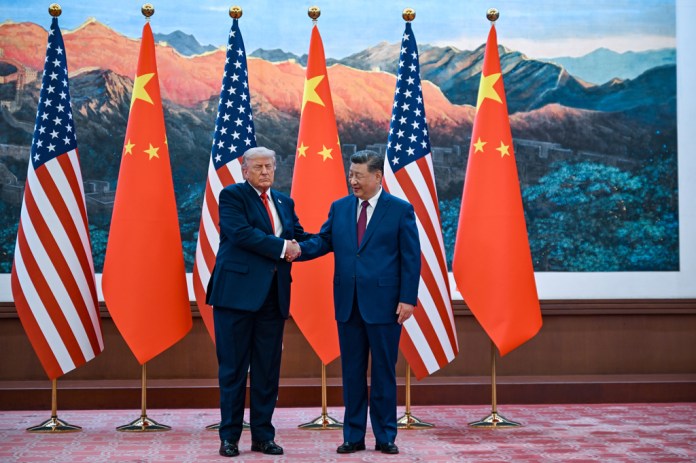

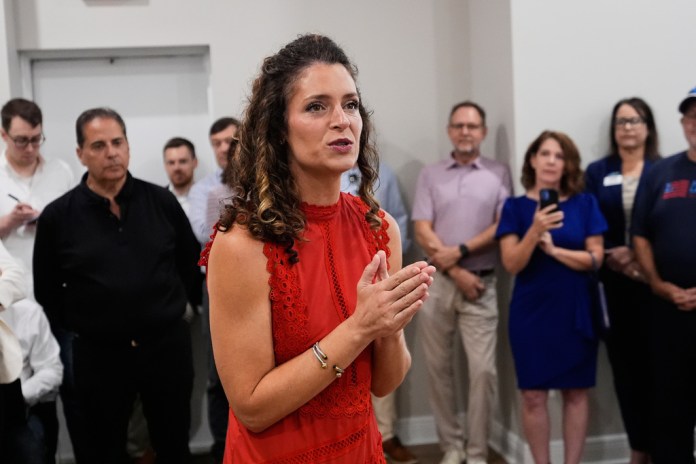
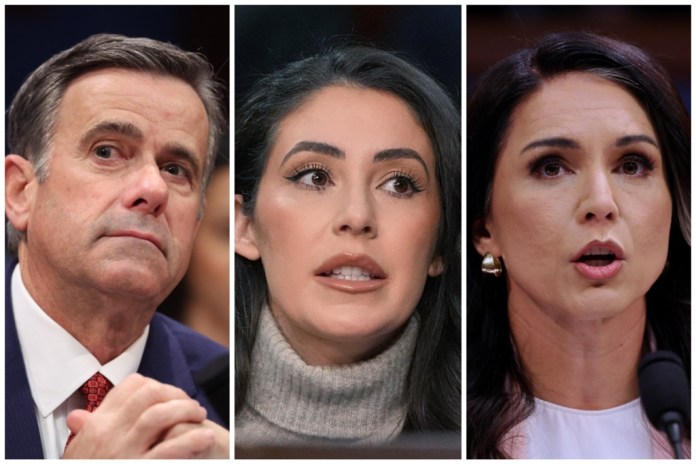
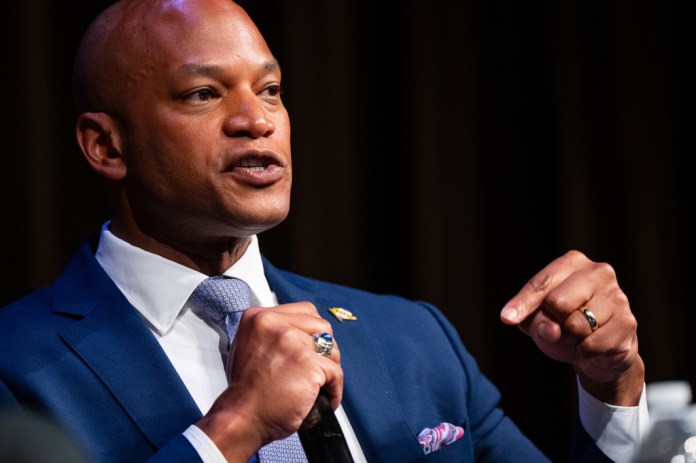


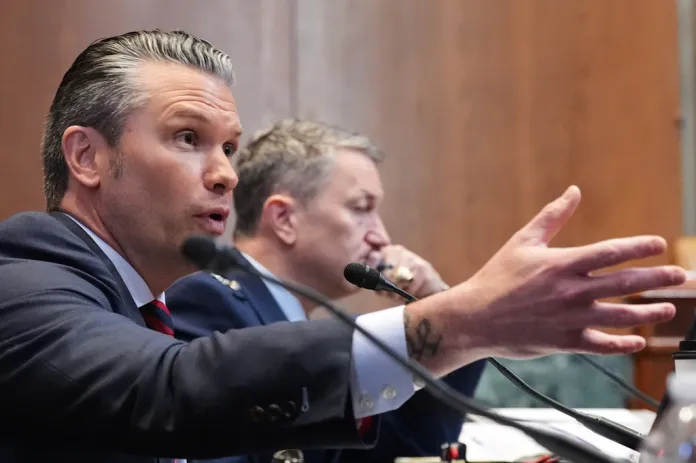





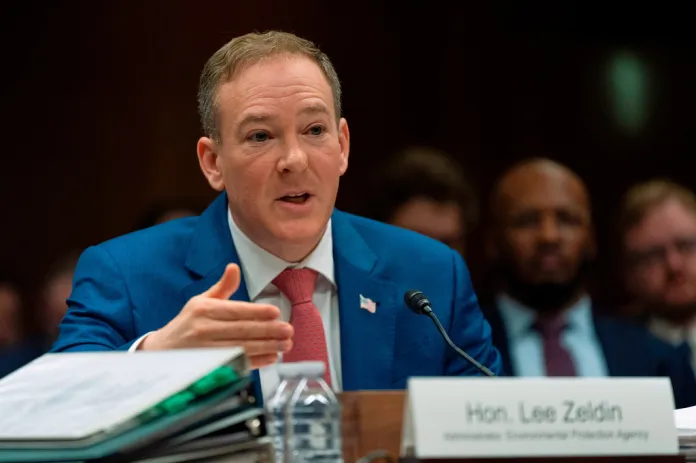









 FIRST LOOK: The Donald J. Trump Presidential Library is officially here.




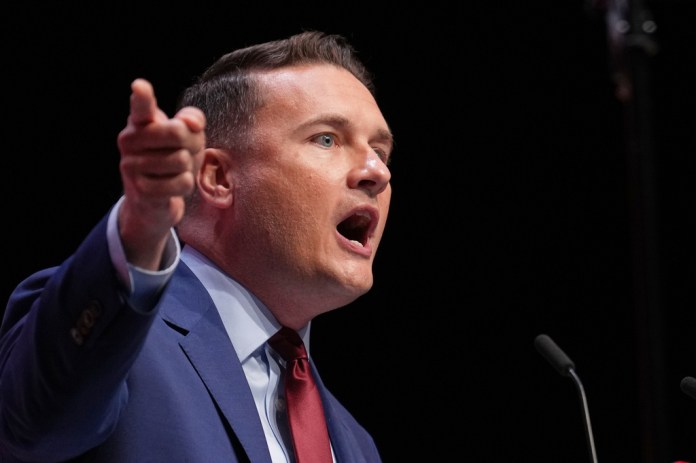
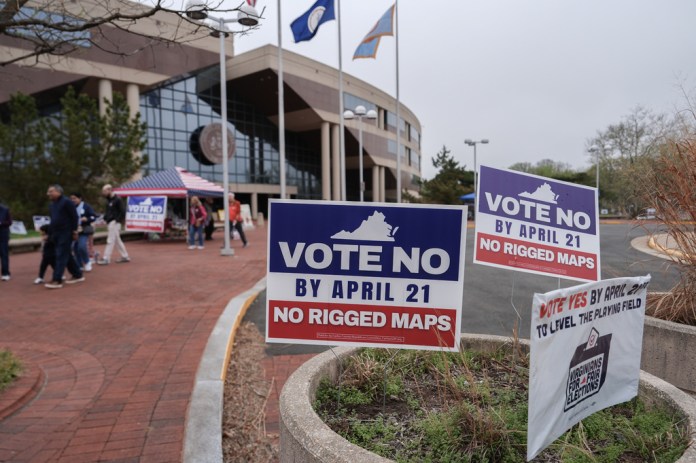
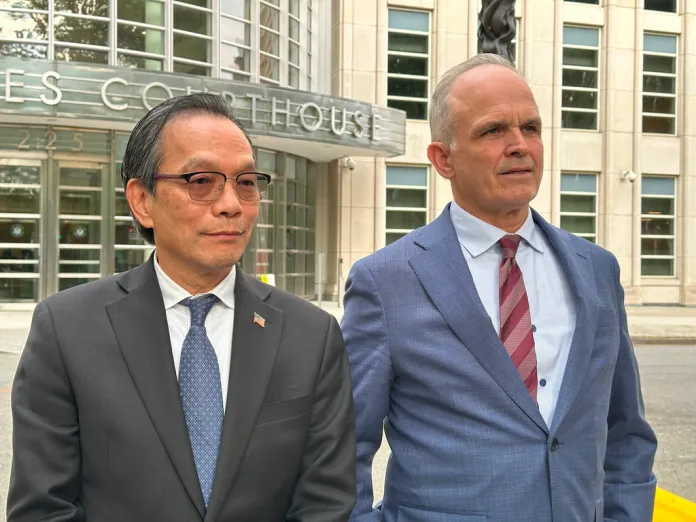
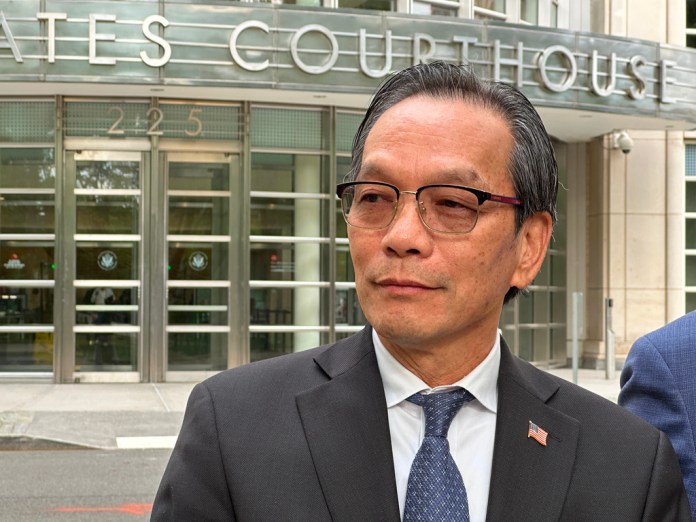






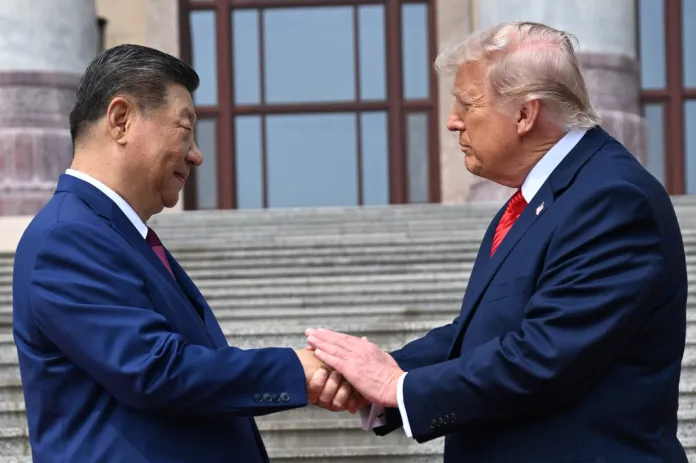



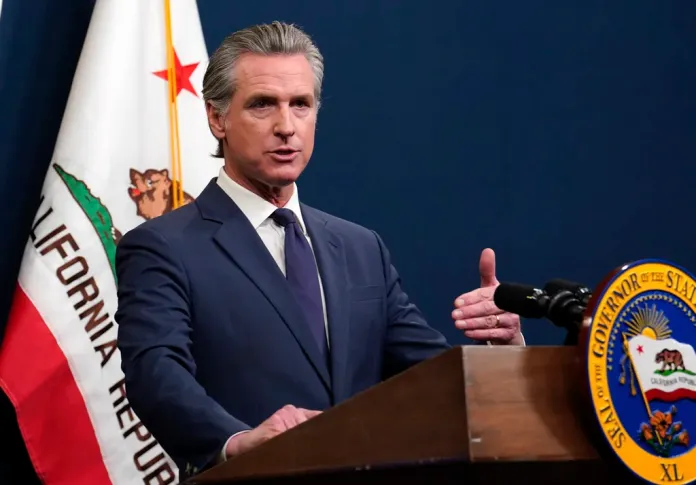

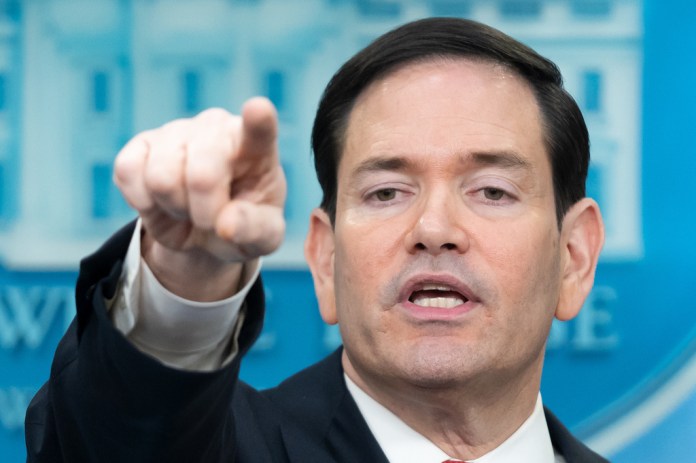

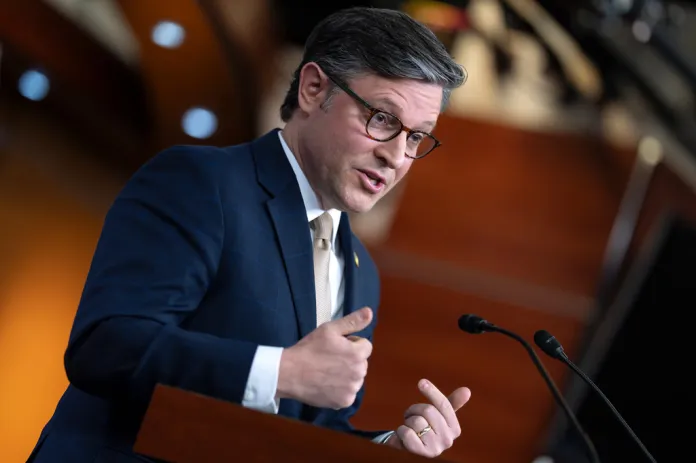





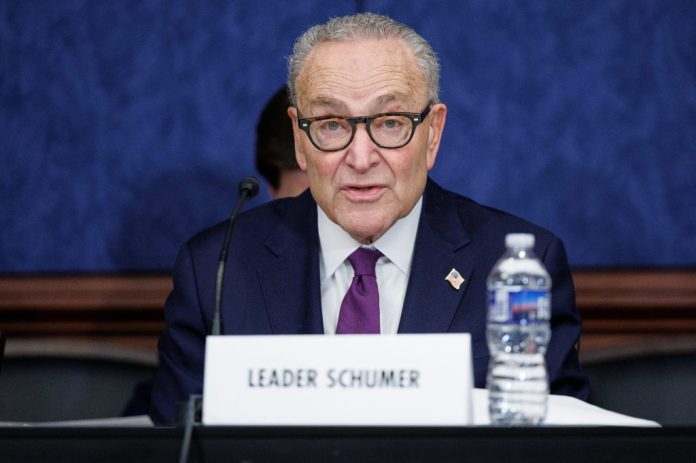
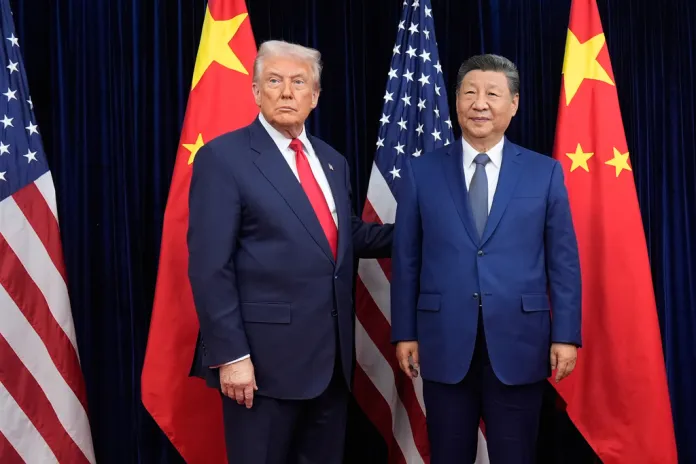
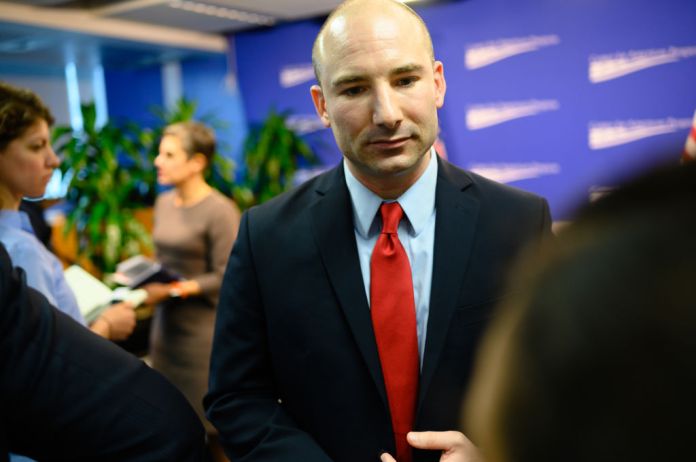




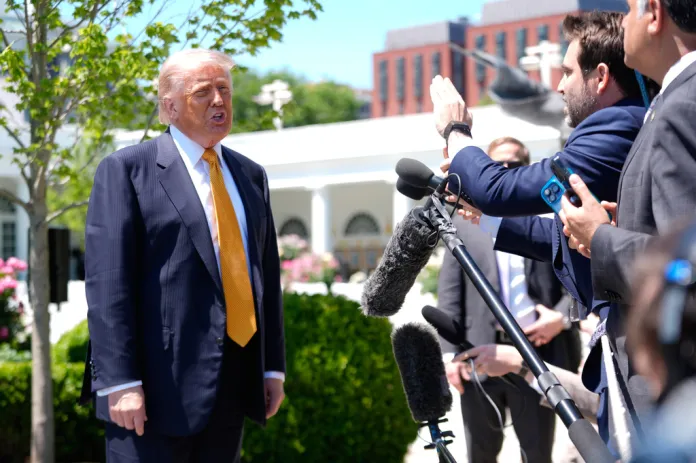

 :
: