Post-Trump conservatism, etymology, and a paean to the future of rail
Show full content
Words Entirely Related“History” and “Story”
A friend of mine recently argued that the very etymology of “history” (deriving, he argued, from “his story”) showed us that time was charged with providential meaning: history is God’s story.
Having taken my fair share of courses in Ancient Greek, I am an insufferable smart aleck on this sort of thing. “History” is not a compound of the English words “his” and “story” but comes to us the Greek word ἱστορία (historia), which has been around long before even Old English (indicipherable to most of us moderns) arrived on the scene.
Herodotus, oft-hailed as the “father of history” wrote his Ιστορίαι (trans. “histories”), in order that “neither the deeds of men may be forgotten by lapse of time, nor the works great and marvellus, which have been produced some by Hellenes and some by Barbarians may lose their renown; and especially that the causes may be remembered for which these waged war with one another.”
Anyway, as it turns out, if I were better on my etymology I would have caught that “history” and “story” are entirely related, both coming from the same Greek root. At some point, its Latin derivative, historia, gets shortened into storia, and many centuries after that, the words drift semantically apart, referring to technical knowledge (history) on the one hand and a tale (story) on the other.
As Herodotus’ intro and especially his fanciful account of Arion and the dolphin make clear, this split was a very modern thing (not until the 1500s). Never let the history get in the way of a good story (that great deeds may not “lose their renown”).
Arion Riding a Dolphin, by Albrecht Dürer circa. 1514 (around when history and story split)Writing
“Conservatism after Trump cannot afford to forget the cause of fraternity. But neither should post-Trump conservatism forget what Kruger argued, and what Reform Conservatives who followed also believed: Fraternity ultimately depends on liberty.”
“In largely overlooked remarks delivered last year in Paris, Vice President JD Vance delivered a policy master class on the industrial promise of artificial intelligence and the conditions required for innovation to flourish. … With his support for the Railway Safety Act, however, Vance has embraced precisely the kind of innovation-stifling regulations he decried in Paris on an industry that has long symbolized American progress and industrial dynamism.”
Former congressman Tim Ryan (contestant for the 2020 Democratic presidential nomination and Ohio’s open Senate seat in 2022, which he lost to Vance) and his former Republican colleague Brad Wenstrup wrote a response.
North America’s oldest rail labor union also took issue with the op-ed, writing a letter to the editor.
Daily Wire also had some interesting coverage of the debate.
“While Sara Koenig’s The Ten Commandments Through the Ages serves as an interesting diversion, Christians seeking not just intellectual stimulation but also guidance on the moral lessons of the Old Testament should look elsewhere.”
"Outside of the COVID-19 pandemic and the Great Recession, the American economy experienced its most anemic year of job growth in more than two decades."
This Substack is just stuff that involves me in some fashion; if you want to see some more of what the rest of my organization is up to, be sure to follow AAF Policy.
That's 25 faves from '25, in case you're bad at math.
Show full content
If any of these make you really mad, be sure to let me know. For my own part, I wrathfully texted a friend upon receiving his Christmas card, in which he claimed Mission Impossible: Final Reckoning was his favorite film of 2025 (the rebuke was well received, so I will endeavor to comport myself similarly if corrected).
Writing
My favorites by my favorite (me):
The Case for Quaker Nationalism (Plough): I wrote this whole essay in order to (1) commit to public record an off-handed remark that Stanley Hauerwas once made in a doctoral seminar about the seeming paradox of pacifist government and (2) pay homage to my Pennsylvania Dutch forebears.
The Institutional Roots of America’s Political Crisis (Mere Orthodoxy): My review of James Davison Hunter’s Democracy and Solidarity, exploring how Reinhold Niebuhr confirms and further complicates JDH’s diagnosis.
Don’t Wait To Have Kids (WORLD): In which I question the common advice that newly-weds spend a few years ‘getting to know each other’ before trying for kids.
Digital Poverty at St. Dunstan’s Academy (WORLD): I am invoking the metaphysics of marriage to claim my wife’s essay as my own. This began as a wild, unexpected adventure in Virginia backcountry, eventually giving birth to an essay on the future of education.
I moderated a national security panel with H.R. McMaster at our annual policy summit.
FREOPP pulled together an excellent conference, including panels on the future of the right (feat. AAF president Tim Chapman), welfare reform and the success sequence (feat. now-but-not-then AAF senior fellow Rachel Greszler), and the case for free trade (feat. yours truly).
I wrought shame on several colleagues for missing our annual Reindeer Games (sticky note was from a defiant development team that felt my use of an office TV—allegedly ‘paid for’ through their fundraising efforts—was unfair).
Watching
Mission Impossible (series): Katelyn and I watched every single installment of the films. While Final Reckoning was disappointingly dull, MI:3, Rogue Nation, and Dead Reckoning were great. As an American, you have a patriotic duty to prefer these films over Bond.
Avatar: The Last Airbender (original series): Youth television is plagued with standalone episodes. Children yearn for narrative and character development, which ATLA serves up in spades (the Zuko-Iroh arc is unbeatable). On a side note: our three-year-old now spontaneously shouts, “not my cabbages!”
Severance, Season 2: Not a bad showing for a second season, despite a couple lackluster episodes. If you haven’t seen the first season, you should. If you want more after, S2 should sate your desire, though it’s unclear how S3 could possibly keep up the action.
White Christmas (Black Mirror): This best-of-all Black Mirror episodes was a rewatch for me as part of Katelyn’s sci-fi indoctrination project. Far better than Arnold Schwarzenegger’s Total Recall, which was also on the list. Word to the wise: most Philip K. Dick adaptations don’t hold a candle to Blade Runner.
Death By Lightning: This miniseries adaptation of Candice Millard’s Destiny of the Republican (covering the 1880 election and James Garfield’s short-lived presidency) was excellent. Nick Offerman’s Chester Arthur was wonderful (unlike his role in Mission Impossible).
Listening
I listen to more audiobooks than podcasts (and generally think the latter aren’t the best ROI) but each of these episodes was worthwhile.
The Next Parenting Trend Starts Before Conception (Interesting Times): Gattaca used to be a sci-fi film. This interview has me convinced it will soon have to be reclassified as historical fiction. Noor Siddiqui’s discussion of “compassionate transfer” was also interesting.
#2252 - Wesley Huff (The Joe Rogan Experience): A good introduction to the buff Bible nerd swordsman (yes, he is pretty much that meme).
Alice in Wonderland (Christians Reading Classics): Lewis Carroll was an Anglican deacon and his father was a minor figure in the Oxford Movement, so of course I had to discuss the interesting Christian elements in the Alice series.
The Heritage Foundation’s New Foundation (The Dispatch Podcast): The tangent on resentment, identity politics, and the now-more-than-ever need for Jordan Peterson is a good one.
What Is DOGE’s Real Goal? (The Ezra Klein Show): Santi Ruiz, a fellow NoVa kid, played on my church soccer team, which means I am sworn to stan his Klein interview. Given DOGE’s later implosion, this interview from early 2025 is fascinating and prescient.
Reading
I read fewer books this year than I ever have since I began tracking my reading after graduate school. Many of them were good, but none would make it into my personal canon of all-time greats or must-reads (a clarifying idea I got from Ben Sasse’s The Vanishing American Adult).
So in lieu of books, here’s five articles that have stuck with me:
The Goon Squad (Harpers): Truly haunting reporting on the state of American men and male adolescents. Not for the faint of heart.
The Based Ritual (Substack): Hanania is Very Wrong on many things but Very Right on young right peacocking.
Forsaking All Others (Mere Orthodoxy): My friend Haley claims readers are better off going straight to the source (Kierkegaard’s Works of Love), but I thought this was such a lovely meditation on marital fidelity and a necessary white pill to The Goon Squad’s black pill.
My Father’s Ghosts (The Dispatch): An essay on fatherlessness with vim, vigor, and real flesh and blood. Even better if you have met the mensch who wrote this.
Thanks for reading, happy New Year, and let me know if you have any further recommendations!
‘TIS the year’s midnight, and it is the day’s, Lucy’s, who scarce seven hours herself unmasks; The sun is spent, and now his flasks Send forth light squibs, no constant rays; The world’s whole sap is sunk; The general balm th’ hydroptic earth hath drunk, Whither, as to the bed’s-feet, life is shrunk, Dead and interr’d; yet all these seem to laugh, Compared with me, who am their epitaph. — John Donne, “A Nocturnal Upon S. Lucy’s Day, Being the Shortest Day”
There have been times when the world kept time differently. There have been times when the church calendar made a little more sense, or at least had more symmetry.
On Saturday, December 13, Christians around the world will observe the feast day of the virgin martyr Saint Lucy, some of them waiting until this weekend to light their Christmas trees (in my household, waiting till the first Sunday of Advent is patience enough). Through her name (Lucia ← lux) and accounts of her eye-gouging, Lucy has long been associated with vision and light—a connection only intensified by the proximity of her feast day to the winter solstice, the darkest day of the year. But at one point the connection was even stronger: Lucy’s feast day and the solstice were one and the same.
In theory, a saint’s feast day is a fixed and uncontroversial thing: these holy days mark the date of a saint’s death (with three notable exceptions: the birthdays of Jesus [Christmas], Mary, and John the Baptist). When we celebrate the saints, we are typically celebrating the moment they went to be with the Lord.
Christians have long kept time with the help of the saints. But we haven’t always kept time with the same system, and it was the transition from the Julian to the Gregorian calendar (differing in how they account for leap years) that shifted the solstice from the 13th to the 21st, even as Lucy’s feast day remained in place.
Another date, the significance of which has diminished as a result of a shifting liturgical calendar, is March 25.
Jewish tradition gave the date of March 25 to Abraham’s sacrifice… This day was also regarded as the day of creation, the day when God’s word decreed: “Let there be light.” It was also considered, very early on, as the day of Christ’s death and eventually as the day of his conception. — Cardinal Ratzinger (aka Pope Benedict XVI), The Spirit of the Liturgy
Had Christians fixed the commemoration of the Crucifixion to that day, the Christian year would cycle from conception to birth in the same nine-month interval that marks every human beginning. More trivially, had we kept it on that date many more readers of J.R.R. Tolkien’s Lord of the Rings might realize how the author cleverly set the events of his story in sync with the Christian calendar: like Christ, the fellowship is born on December 25 and can finally cry “it is finished” when the Ring is destroyed on March 25. Call it an Easter egg (no pun intended).
But, as with the switch to Gregorian (which preserved the connection between the calendar and the cycle of seasons, which were drifting under Julian), the decision to celebrate Easter on a changing date across the years makes a good deal of sense, even if it cost the church calendar some of its beautiful proportionality.
Only by breaking that symmetry and allowing the date of the Crucifixion and Easter to float across the spring can the Church join Christ in the drama of Holy Week: from the triumphant celebration of Palm Sunday to Good Friday’s sorrow, round again to Resurrection Sunday joy. With a fixed date, Easter would only fall on Sunday once or twice in a decade. With a floating date, every Sunday is inflected with something of the resurrection.
During the Cold War, we did not sell advanced radar systems to the Soviet Union. We did not export nuclear technology to Warsaw Pact nations. And we should not now export AI-warfare infrastructure to Communist China.
According to Massachusetts’ own 2019 study, one-quarter of its kids from 16-20 use marijuana every month, and 13% use it almost daily. This isn’t fearmongering; it’s a well-documented public health crisis.
As Samuel Goldman points out in his history of Christian Zionism, Christian support for Israel long predates Left Behind and the Reagan administration, and even the rise of premillennial dispensationalism in the 19th century.
“Mike Johnson is an effective Speaker because he is taking public arrows for his team. The majority of the Republican conference is pro-life and understands that this controversial provision should have never been in NDAA in the first place,” John Shelton, the group’s policy director, said in a statement.
“Even these alternatives are going to cost a lot. There’s still going to be government subsidies. It’s just a question of who the subsidies are going to go to,” Shelton said.
A fishing accident plus cold takes on Jefferson, Carroll, & Kirk
Show full content
Like some broken fisher king of old, I have wandered about my lands with a limp for the past several weeks. The moral of the story is to never lean too far out over the rocks while net-fishing or the local shellfish population will tear you to shreds. But for the saving grace of modern medicine, I would have probably lost my leg, if not my life (whenever I find myself grumbling about the medical bills that I incurred during this tragic saga, I will try to be grateful and remember that penicillin was discovered less than a century ago). Two rounds of antibiotics and twenty-four stitches later I am now mostly mended. I’ll stick to the flat, sandy shore when net-fishing in the future!
This is not the set of shells that did me in, but it very well could be.
If you want to read more about fisher kings, might I recommend to you book three of C. S. Lewis’ space trilogy: That Hideous Strength? It pairs wonderfully with The Abolition of Man and his essay “The Inner Ring.” While many professors will assign THS as a standalone, it’s far better if you read Out of the Silent Planet and Perelandra first.
Jefferson’s Patriotic Obsession with Megafauna
Someone on the internet wrote that “Jefferson was weirdly obsessed with wooly mammoths” so I penned a long thread about why there was nothing weird about it.
Jefferson’s obsession with the woolly mammoth was part and parcel of his case for American greatness. It was critical that “the bones of the mammoth which have been found in America, are as large as those found in the old world” (Notes on the State of Virginia) …
The Wonder of Alice in Wonderland
The hippies have tried their best to ruin it, but Alice’s Adventures in Wonderland still shapes the way we think about children, logic, whimsy, and Christianity 165 years after it was first published.
Thanks to for hosting me on her podcast and an engaging conversation about the great Anglican deacon, mathematician, and author, Lewis Carroll. Her book, Christians Reading Classics, is coming out in just a couple weeks. I’m looking forward to digging into my advance copy.
The Charlie Kirk Effect May Already Be Fading
I wrote a little for WORLD about the sobering statistics on revivals and national tragedies, even while I try to do justice to Erika Kirk’s graceful remarks about her husband’s assassination.
If you’re interested in reading more on this, Glenn Stanton made a more bullish case for the Charlie Kirk Effect, also at WORLD.
Laureate, as in “poet laureate” or “rest on one’s laurels,” comes from laureatus (woodenly: “laurel-ed”; more poetically: “crowned with laurels”).
Victors in contests were crowned accordingly, due to some association between the Greek god Apollo and the laurel bush that is slipping my mind.
Ritz-Carlton and ritzy (Mrs. Shelton, who was just “laureled” with not one but two fellowships (EPPC and Novak), pointed this one out to me):
The high-class Ritz Hotel opened for business in Paris in 1898. A quick decade later and people were already using “ritzian” as an associated adjective. Fortunately, around 1920 we seemed to move on to the far smoother “ritzy,” and then by 1928 we were “putting on the ritz.”
The company’s lawyers tried to get “ritzy” deleted from the dictionary, and, failing that, attempted to trademark it without success. Now we can all put on the ritz without fearing trademark violations!
Forthcoming
My internet friend Nadya Williams is launching a new podcast, Christians Reading Classics, on August 14 and kindly invited me to discuss Lewis Carroll’s Alice books with her. Check out her introduction of the project below and stay tuned for my thoughts on Alice, “slithy toves,” and why—like Humpty Dumpty—I always pay extra “when I make a word do a lot of work.”
This podcast series is loosely based on Nadya’s forthcoming book by the same title.
“Whether we will survive the coming centuries will all depend upon our continued commitment to the combination of the spirit of liberty and the spirit of religion. In Religious Freedom, Wilsey provides Christians a needed roadmap to the pressing political challenges of our time.”
“Hundreds of millions of federal dollars will no longer flow to Planned Parenthood, some of their abortion facilities may close, and many more babies will have a fighting chance to be born.”
“Our NATO allies are finally waking up and prioritizing defense spending,” AAF policy director John Shelton told National Review. “While this should have happened years ago, better late than never.”
The Sheltons’ meetcute, recorded for the ages: “The couple met and connected offline, outside the Supreme Court, at the most romantic of events: a Southern Baptist Convention Ethics and Religious Liberty Commission (ERLC) briefing.”
Upcoming reading groups, writings, and things I liked
Show full content
Summer Reading Groups: Eliot & Weil
I have been thinking a lot about T. S. Eliot and Simone Weil ever since reading Alan Jacobs’ excellent The Year of Our Lord 1943: Christian Humanism in an Age of Crisis (I reviewed the book at Providence and did a long interview with Love Thy Niebuhr on how Jacobs’ narrative neglects Eliot’s important relationship with Niebuhr).
Perhaps unsurprisingly, then, I’m excited to announce that I’m hosting a reading group through Faith & Law on Eliot on June 30th and Weil on August 4th. Check out the details on the readings and please RSVP if you will be in the D.C. area and would like to join as we read The Four Quartets and The Need for Roots.
“The World Economic Forum might preach that ‘you’ll own nothing and you’ll be happy,’ but the prophet Micah promises that ‘everyone will sit under their own vine and fig tree, and no one will make them afraid.’ At its best, the American experiment, and the American dream that was born of its fruits, anticipates this prophetic vision (George Washington quoted it frequently throughout his letters).”
“More than half a millennium before the New Testament, The Odyssey records the earliest known usage of a Greek word for gospel (evangelion). Homer’s gospel, first told by Odysseus to simple herdsmen, is the news that he, the master, is returning to his lands. Odysseus’ people did not recognize their master, because he was disguised, coming in a different form than they expected. And then, when he returned to his home, he found it overtaken by those who did not receive him as their rightful ruler.”
Food gives both solid reality and delicious longing to children’s books. Brian Jacques, author of the Redwall series about monastic chivalric mice, was a milkman when he began volunteering to read at a school for the blind. He found himself horrified by the quality of the books he was reading, and decided to write his own – and, because the children were blind, he accentuated senses other than sight: smell, sound, temperature, texture and, most important of all to children, taste. The food in Redwall is the thing most of its readers remember: it gives the story the rich shine of desire. You might, were you a Redwall mouse, have a feast of ‘tender freshwater shrimp garnished with cream and rose leaves, devilled barley pearls in acorn purée, apple and carrot chews, marinated cabbage stalks steeped in creamed white turnip with nutmeg’.
A truly conservative movement must resist the allure of revanchist politics obsessively focused on destroying the edifices of the left. As Kirk so eloquently demonstrated, civilizations are not built on negation, but on affirmation. They thrive when they are anchored in a moral and spiritual order that shapes their laws, customs, and governance. The same principle holds true for political movements. To regain its footing, the conservative movement must return to this foundation, cultivating ordered souls capable of sustaining an ordered polity.
If postliberals are serious about addressing the defects of contemporary liberalism, then they must preserve and perfect—rather than reject—the liberalism that came before it, a liberalism on glorious display in Quaker Pennsylvania.
As a native of the Commonwealth of Virginia, I found Brad Littlejohn’s call for a Christian commonwealth (as distinct from Christian nationalism) quite appealing. But I am also the son of a line of commonwealthers from Pennsylvania, so I have long thought the magisterial1 register of Littlejohn’s project presented an incomplete picture: after all, Pennsylvania was founded by Quakers and filled with Anabaptists and other Radical Reformation-types who often espoused some form of pacifism.
While politics and pacifism might seem incompatible, the Quakers made it work for a surprisingly long time in Pennsylvania. Whether that experiment was ultimately a success or a failure is an interesting question, and answering it requires revisiting some overlooked history from William Penn’s colony.
Long beforehand, [religious liberty] was already a principled and practiced reality with more than a century of precedent in places like Pennsylvania and Rhode Island, even predating John Locke’s “A Letter Concerning Toleration” (1689).
“Your parents and grandparents will never be younger, either. The sooner you start, the more likely they will be strong enough to help you raise your children, and the longer they will get to know them and watch them grow up. These decisions compound generationally in ways that many people don’t anticipate. On my side, where multiple generations didn’t have kids until their late 20s or early 30s, not one of my grandparents lived to meet any of their great-grandchildren. However, thanks to the difference just a few years per generation can make, every single one of my wife’s grandparents lived to love and hold our children.”
In which I have a long aside about the long-delayed “vibe shift”:
“Then-presidential candidate Donald Trump condemned the [biological bathroom] legislation, offering that transgender people were welcome to “use the bathroom that they feel is appropriate.” The vibe shift was still a long way off: Trump, the transgender-accommodator, won the popular vote in North Carolina, while McCory, the hardliner, lost his reelection and watched the bathroom bill get repealed the following year.”
The Magisterial Reformation consisted of the Lutheran, Reformed / Calvinist, and Anglican streams of Protestantism, which had fairly tight relationships (at least originally) with the “magistracy,” or ruling class. But there was also the Radical Reformation, which gave us traditions of believer’s baptism and a more cautious approach to church and state.
One of the best pieces of advice that I received during graduate school was to read deeply in particular authors: don’t just read for breadth and a layman’s sense of the whole, pick a few people to think at length with.
Brad East had a recent post along these lines about authors whom he had read ten or more books by, including fiction writers. I’m not as convinced by the merits of this exercise on the fiction side, but I haven’t seen the same level of intellectual return there (that is, other than sheer enjoyment).1
My nonfiction list would include John Calvin, C. S. Lewis, Oliver O’Donovan, “Stanley Hauerwas,” N. T. Wright, and Os Guinness—many of these for school or post-school writing projects (see links). This sort of thing was a lot easier when I could just pull the entire corpus of an author straight to my Senate desk from Library of Congress.
I wouldn’t necessarily recommend these particular authors be on your list, nor that ten books is a super practical goal, but reading one or two more books by the same author is exceptionally clarifying (not just Alasdair MacIntyre’s After Virtue, but the virtue trilogy and Dependent Rational Animals). That said, I still have no idea what O’Donovan is ever going on about. Perhaps that would require more re-reading—something I ought to do much, much more of.
“In writing his own ‘big book,’ John Steinbeck claimed that everything he had published before (including the Pulitzer Prize-winning Grapes of Wrath) was merely ‘an exercise, as practice for the one to come.’ Steinbeck wrote that the book—what would eventually become East of Eden—‘must contain all in the world I know and it must have everything in it of which I am capable—all styles, all techniques, all poetry.’ This is what Hunter has delivered in Democracy and Solidarity, weaving his life’s research into a multigenerational tale of America’s coming of age.”
“Under the parameters of the 1994 Budapest Memorandum, Russia made a series of commitments to Ukraine: Russia would respect the sovereignty and existing borders of Ukraine, refrain from threatening or using force against Ukraine, refrain from economic coercion, seek U.N. action in the event of aggression against Ukraine, and not use nuclear weapons against Ukraine. Thirty years later, Russia has broken all of its promises to Ukraine save one.”
“It’s true that voters consistently rank the economy as their No. 1 issue. But underneath all the aggregated data, voters care about issues besides their retirement portfolio’s performance. The average voter can put up with a lot, but when he starts struggling to put food on the table, all of these other grievances spill out into the open.”
“As a result of this anemic excuse for liberty, tens of millions of babies have been aborted, with countless other Americans struggling under various forms of spiritual bondage.”
Forthcoming
Review of Covington, McGraw, Watson’s Hopeful Realism (Providence)
Review of John Wilsey’s Religious Freedom: A Conservative Primer (TGC)
I’m certainly not opposed to reading deep in fiction authors. I do it a lot, though my fiction list would be primarily fantasy: J. R. R. Tolkien, Robert Jordan, Brandon Sanderson (four times over!), J. K. Rowling, Neil Gaiman (yikes!), and Brian Jacques.
My favorite reading and writing from the past year.
Show full content
Reading
Given all that we had going on this year with a move and a newborn (#4!), it’s unsurprising that my reading and audiobook-listening pace would be slower than years past, averaging one book a week (about one-third of my all-time high: 141 books in 2018). Still, at least for me, there are diminishing returns for reading more books, as I usually end up cutting out other useful exercises like reading articles and listening to podcasts in order to maximize books logged.
I’ve found that the quality of books is more important than the number of them (e.g., Charles Taylor’s A Secular Age, which I read last year, is something I still think about a lot, but at nearly a thousand pages it only counts as a single book and is hard to justify reading if your main goal is hitting a raw number). Still, even quality books still require quality engagement or they’ll slip through your mind like a sieve. All my favorite books this year are favorites in part because of the active reflection I did with them, whether by writing, participating in discussion groups, or reading other related books (typically involving the same topic, author, or secondary literature).
This year, three books stood out above all the rest, one new and two old:
“The largest part of this book is the historical narrative… with a sketch of the contours of the hybrid-Enlightenment. Drawing as much from Calvinism as it did from classical Republicanism and Lockean individualism… it was also deeply contradictory. It would fuel a century of nation-building, but it also deepened the contradictions by doubling down on the boundaries of exclusion… There are clear signs, however, that we are now in a period of exhaustion. The endlessly worked-through sources of the hybrid-Enlightenment are depleted and no longer have traction.”
Tim Keller died before this book was published, but he was already endorsing it in draft form (probably because it pairs so well with his own Decline and Renewal of the American Church) and is acknowledged by Hunter in the book. Sadly, this characterization might discourage some people from reading Hunter’s magnus opus, thinking that they have evolved past Keller (and with him, Hunter).
However, as I argue in a piece for a forthcoming Mere Orthodoxy print edition symposium on the book, far from some namby-pamby thirdwayism, what a Hunterian approach to our cultural crisis requires is reconquista, that is, repaving the paths that allowed Christian intellectuals in the past to define and shape the symbolic universe.
"Niebuhr's public career could get off the ground only after his mother's arrival in Detroit in January 1916. She immediately took over much of the day-to-day conduct of the parish, including the Sunday School and the Choir... They moved into an apartment at 1950 West Grant Boulevard, where he chained himself to his typewriter. Aside from writing his weekly sermon, and an occasional sick visit or council meeting, he could devote most of his week to devouring magazines and drafting letters and articles, which he began to produce in profusion. In part the barrage of prose was an effort to augment his minuscule income.”
Knowing is narrative. There is no better way to understand a deceased person than through a thorough account of of their life, and even forty years after its release, Fox’s biography of Niebuhr is still the definitive account of his life. Read it to learn how he became a public intellectual (and to better understand the impossibility of a Christian replicating the same feat today) and who were the contemporaries and friends he interacted with (Eliot, Auden, Maritain, Heschel, and many more), plus some lovely additional color, like how he once lectured through an ongoing Nazi air raid or performed in a Union Theological Seminary parody of Murder in the Cathedral.
“The women watched the men, watched to see whether the break had come at last. The women stood silently and watched. And where a number of men gathered together, the fear went from their faces, and anger took its place. And the women sighed with relief, for they knew it was all right - the break had not come; and the break would never come as long as fear could turn to wrath.”
I really didn’t want to like this one, which is not how I usually approach a book. I had constructed an overly neat narrative in my head as to why I despised Of Mice & Men (released in 1937, two years prior to Grapes) and loved East of Eden (possibly America’s greatest religious novel, published more than a decade later): in his early life, Steinbeck was obsessed with evolutionary processes and group dynamics to the point of effacing the individual and personal responsibility (an intellectual kinsman to Jack London). On my account, Steinbeck only overcame this collectivist fixation after an ugly divorce (his second) and a personal reckoning with the potential within every man and woman for great evil or goodness (that Eden’s antagonist, Cathy Trask, is based on his ex-wife seemd to fit this narrative aptly). But the truth is, Grapes of Wrath is an incredible book, and Steinbeck uses both the close-up of the Joad family and the zoom-out of the broader Dust Bowl migrations to masterly symphonic effect. I would have never guessed I could be made to care so much about this particular moment in history, but Grapes reads like Upton Sinclair’s The Jungle meets classic American road narrative.
Even still, if you read Grapes of Wrath but never “got” Steinbeck, do try East of Eden. While the critics preferred Grapes, Steinbeck himself thought Eden was his masterwork, with everything else mere practice for the performance of his life. I might write about this down the road but it strikes me that Steinbeck was very much the 20th century’s Jordan Peterson, using Jungian readings of Scripture to provide his work with rich moral depths (especially in Eden).
Writing
I wrote a fair amount I was proud of this year, but I’ll spare you from anything more than my two absolute favorites (both receiving honorable mentions in the 2024 Eliot Awards). For most of the rest (other than “Christmas After The Nightmare,” which was published since my last update), you can trawl through the archives of this Substack.
In which I make the case that Reagan’s policy record was anything but “Zombie reaganism” or a “dead consensus” to be pitched out. His administration, especially in its second term, provides some of the most profitable tools to policymakers looking to advance family policy.
I spelled out the application potential of one of those tools, the Family Policymaking Assessment, under a Republican trifecta at the Institute for Family Studies.
Alan Jacobs’ The Year of Our Lord 1943 turns on a misleading distinction drawn by Jacobs between the book’s protagonists (T. S. Eliot, C. S. Lewis, Jacques Maritain, W. H. Auden, and Simone Weil) and Reinhold Niebuhr. I correct the record, detailing how Eliot himself thought of Niebuhr, drawing from several sources, including private letters that were released to the public after Jacobs’ book was published. Eliot thought Niebuhr was “far and away the best theological thinker in America.” If we take Eliot seriously, we ought to take that judgement seriously as well.
If you liked this one, I’ve got more on Niebuhr in the forthcoming Democracy and Solidarity symposium I mentioned above . I also wrote a follow-up post on Substack going through Niebuhr’s relationships with Auden, Barth, Billy Graham, Lewis, Maritain, and Ellul.
Maybe some day I’ll turn this all into a book simply so I can title it Welcome to the Niebuhrhood (or perhaps Into the Niebuhr-Verse, since Miles Morales and Niebuhr both lived in Manhattan)…
Note: I’m experimenting with Amazon Affiliate links, in which I get a small kickback if you purchase any of the books listed in this post. It seems like a positive-sum affair, since I was already recommending these books and you were considering purchasing them at that same price anyway, but if there are reasons you think this is a bad idea, let me know!
Did Tocqueville, Confucius, Barth, and Bonhoeffer really say that?
Show full content
Fact-Checking
Proving a saying has been misattributed is tricky business.
It is not enough to show that the quote is out of keeping with the character, worldview, or style, though these are often telltale signs of misattribution.
Confidence in these matters requires two things:
An exhaustive knowledge of the person’s writing and speaking.
Proving a correct attribution only requires reference to a single piece of evidence where the author or speaker published the words or is reported to have uttered them (assuming that the report or publication is reliable).
Proving misattribution requires some degree of certainty that one hasn’t missed an archive somewhere, or (even more challenging), that the researcher knows all that the person might have said, including in private.1
Ascertaining whether others said/wrote the passage in question first.2
Further, quotations attributed to non-English speakers are particularly thorny to verify for English-only researchers. That is probably why so many of these misattributed quotations can proliferate, e.g., Dietrich Bonhoeffer’s supposed saying that “Silence in the face of evil is itself evil. God will not hold us guiltless. Not to speak is to speak. Not to act is to act.”3
In fact, I came across one recently that I was convinced must be fake.
This saying often gets attributed to Confucius (as the Clinton Foundation does here) but it’s hard to find a paper trail for it going back very far, and it feels like such sentimental, West Wingy advice that surely it must have come from Pinterest, not 5th century China!
But it really is an ancient Chinese proverb. On a forum, someone tipped me off to the fact that it might actually be from Guan Zhong, a Chinese statesman who lived some centuries before Confucius. Verifying the claim was a bear, though. There are not many translations of the Guanzi available in English. Fortunately, Internet Archive had one, and by running a couple keywords through the search, I was eventually able to find it:
"When planning for one year, there is nothing better than planting grain. When planning for ten years, there is nothing better than planting trees. When planning for a lifetime, there is nothing better than planting men." — Guanzi, Quan Xiu 10.5
A couple things to note here:
I was initially unable to find it by searching “rice” because the English was translated as “grain.” This is always the challenge of trying to keyword verify quotes in translation.
The English translation in the book was closer to the Chinese structure (“plant rice,” “plant trees,” “plant people,”) than the version quoted most often in other sources (“plant rice,” “plant trees,” “educate people.” The pop version narrows the scope and ruins the symmetry, in my opinion!
The introduction to that chapter of the Guanzi suggests that it was written several centuries after Guan Zhong, so attributing it to him might be a stretch (though we often allow traditionally-held authorship to suffice in cases like this).
The introduction also notes the Confucian themes of that chapter, so misattribution to Confucius makes a certain sense (if nevertheless inaccurate).
“Instead, we have to choose between the candidate who promises not to do anything about the problem and the candidate who promises to make it far worse. Another President Calvin Coolidge, the last president to leave office with less debt than when he started, is nowhere to be seen.”
E.g., there is no contemporaneous record that Karl Barth said “to clasp the hands in prayer is the beginning of an uprising against the disorder of the world.” The first attribution we find for this comes about a decade after Barth’s death. However, there are thematically similar passages in his unpublished Church Dogmatics IV.4. Further, the decade-late attribution comes from someone who knew Barth, so it is plausible that he said it, or something very similar.
E.g., in 2016, Hilary Clinton said, “America is great because America is good,” but it would be wrong to attribute the saying to her (even though she said it without attribution in her speech). Equally wrong, however, would be to attribute it to Tocqueville. As best as anyone can tell, a version of this does traces back to an 1835 book, but not Democracy in America (published that same year). Rather, in A Narrative of the Visit to the American Churches, two British ministers wrote: “America will be great if America is good. If not, her greatness will vanish away like a morning cloud.”
"Tide over," Kamala Harris' great-great-great grandfather, and various updates.
Show full content
I will try to get back to using this space to provide more curios about language, history, and philosophy but it has been a very busy couple months (as you can see below).
That said, a year and a half ago I unearthed an exchange between Vice President Kamala Harris’ great-great-great grandfather and William Wilberforce on the slave trade that is perhaps newly interesting as she is closer than ever to the Democratic nomination for the presidency.
Let that (and this footnote→) tide you over1 until the next post.
There is no doubt that the J. D. Vance of Hillbilly Elegy has changed. While news outlets will be tempted to tell this story of Vance’s transformation as a simple parable of power’s corrupting effects, there is a more illuminating account of what happened to Vance: namely, his own.
Discussing the essay I wrote on T. S. Eliot and Reinhold Niebuhr for Providence. These two intellectual titans of the 20th century grew up just 50 miles apart in Missouri.
“Tide over” was first recorded in 1627: “to Tide ouer to a place, is to goe ouer with the Tide of ebbe or flood, and stop the contrary by anchoring till the next Tide” (the Sea Grammar of Captain John Smith—yes, thatJohn Smith). You can see the whole gallery of art that E. Boyd Smith produced for The Story of Pocahontas and Captain John Smith (1906) here.
The phrase does not appear to have been used figuratively until a letter from the Earl of Dudley in 1821: “I wish we may be able to tide over this difficulty.”
Niebuhr's interactions with Eliot, Auden, Barth, Graham, Maritain, Lewis, and Ellul.
Show full content
I began an earlier essay for Mere Orthodoxy with a remark made by Jean Monnet, the architect of the United Nations: “Nothing is possible without men, but nothing lasts without institutions.” More and more it seems to me that understanding history’s Great Men and Women requires familiarity with the relationships, connections, and institutions that made their work possible. William Wilberforce’s crusade against the slave trade is mere hagiography apart from an appreciation of the Clapham Sect; J. R. R. Tolkien and C. S. Lewis’ writings make far more sense if you know The Inklings. Alan Jacobs’ The Year of Our Lord 1943 offers just this kind of enmeshed analysis.
While an excellent book, The Year of Our Lord 1943 turns on a misleading distinction between its protagonists (T. S. Eliot, C. S. Lewis, Jacques Maritain, W. H. Auden, and Simone Weil) and Reinhold Niebuhr.
In my essay, I look at how Eliot himself thought of Niebuhr. From private letters that were released to the public after Jacobs’ book was published, we know that Eliot considered Niebuhr “far and away the best theological thinker in America.”
Since turning in the piece, I learned a couple more interesting things about Eliot’s and Niebuhr’s underexplored relationship:
Eliot, along with W. H. Auden, Jacques Maritain, and others, helped fund the Niebuhr chair at Union upon Reinhold’s retirement.
Reinhold Niebuhr “regularly used [the Four Quartets] as devotional reading,” according to Eliot scholar Bernard Bergonzi.
Niebuhr once acted in a parody of Eliot’s play Murder in the Cathedral.
One of Niebuhr’s final books, The Structures of Nations and Empires (1959), was saved from a far clunkier title (Dominions in Nations and Empires: A Study of the Structured and Moral Dilemmas of the Political Order Relevant to the Perplexities of a Nuclear Age) on the insistence of Eliot, his editor for publication in the United Kingdom—although the subtitle was still twenty-two words in the end.
Niebuhr and W. H. Auden
Auden wrote a generally positive review of Niebuhr’s Christianity and Power Politics in January 1941, though he included something of a knife at the end (which Jacobs uses to frame The Year of Our Lord 1943):
“The danger of being a professional exposer of the bogus [like Niebuhr] is that, encountering it so often, one may come in time to cease to believe in the reality it counterfeits. … Does he believe that the contemplative life is the highest and most exhausting of vocations, that the church is saved by the saints, or doesn’t he?”
Niebuhr welcomes the critique and invites Auden over to explore the issue further (they lived about ten miles apart in New York). They became fast friends and just months later, Auden is already citing Niebuhr’s influence on poems like “At the Grave of Henry James”:
All will be judged. Master of nuance and scruple, Pray for me and for all writers living or dead; […] For the treason of all clerks.
Reinhold’s wife Ursula and Auden (both British born) would team up to mock Reinhold, calling him fidgety, making fun of his eating habits, and teasing him as a “Prot.” Reinhold, in turn, referred to the two lovingly as “damned Anglicans.”
As famously as the three got along (many Union students fondly recall encountering Auden at the Niebuhrs’ house), Auden sometimes struggled to be around them. “When I see you surrounded by family and all its problems, I alternate between self-congratulation and bitter envy,” he confessed in one of many exchanged letters.
Niebuhr, Barth, and Billy Graham
Niebuhr’s relationship with Barth went through many ups-and-downs but after World War II, Niebuhr was outraged with Barth’s failure to confront communism and wanted to stem his influence. On Barth and his followers (whom he saw as indifferent to major world affairs), Niebuhr wrote: “Yesterday they discovered that the church may be an ark in which to survive a flood. Today they seem so enamored of this special function of the church that they have decided to turn the ark into a home on Mount Ararat and live in it perpetually." Niebuhr’s beef with Barth was on par with Kendrick vs. Drake, driving major news headlines
Despite having positive things to say about other celebrity preachers like Billy Sunday, Niebuhr had very few kind words for Graham, accusing him of “pietistic moralism.” Niebuhr also blasted Graham for presiding over church services at the White House (a new initiative from Nixon), calling it the “Nixon-Graham doctrine of the relation of religion to public morality and policy,” even going so far as to argue it violated the First Amendment.
Niebuhr, Lewis, Maritain, and Ellul
In 1940, C. S. Lewis writes to his brother that he’s reading Reinhold Niebuhr’s Interpretation of Christian Ethics (1936), calling it “a very disagreeable but not unprofitable book.” Almost two decades later, he writes in another letter that he’s only read one book of Niebuhr’s (presumably the same) and can’t remember the name but “on the whole, reacted against it.”
Reinhold laments in a 1948 letter to Ursula that the “women’s question” (on ordination) is hopeless and “one could not even raise the issue significantly. C.S. Lewis has come to the support in Time and Tide of an Anglican dean who declares that women as priests are impossible."
From 1944 to 1947, “Niebuhr joined Jacques Maritain… and others for a four-to-six hour meeting every six weeks” for the Commission on Freedom of the Press (also known as the Hutchins Commission, for its chair, University of Chicago president Robert Hutchins). The commission was formed by Henry Luce (the publisher of both Time and Life magazines). Perhaps unsurprisingly, then, Niebuhr graced the cover of Time the following year in 1948.
Niebuhr and Jacques Ellul were two of the ten members of the World Council of Churches’ Commission on The Church and the Disorder of Society. The commission, which also included Emil Brunner, issued a major report in 1948.
I’ve been too busy over the last month to help ensure you win your next round of pub trivia, so I’ll just flag a couple recent writings and upcoming events before I fall further behind.
“Narrative, as it turns out, is not merely a medium of truth but truth’s necessary vessel.”
I wrote this piece on Brandon Sanderson and philosophy more than five years ago and mothballed it after it was rejected by Tor (now Reactor, a SFF magazine associated with Sanderson). I’ve pitched it around now and then since but with no success. Providence recently rescued it from oblivion, even though it’s a little out of their usual wheelhouse. I’ve been really pleased with the comments coming in so far, especially for a piece that limped into existence.
Providence very kindly asked me to serve as a Contributing Editor, which is a proper scandal considering some of the other names I’m joining on that list:
J. Daryl Charles, Jeffrey Cimmino, Paul Coyer, Dean Curry, Alan Dowd, Debra Erickson, Garrett Exner, Matt N. Gobush, Rebeccah Heinrichs, Michael Lucchese, Timothy Mallard, Jennifer Marshall, Paul Marshall, Walter Russell Mead, Tim Milosch, Eric Patterson, John Shelton, Miles Smith IV, Joshua Walker, Nadya Williams
“Even in the Negative World, Christians are duty-bound to hold steadfast to the truth, regardless of the political or electoral consequences.”
My colleague Jonah did all the heavy-lifting on this one but it was fun to throw a news story about Republican staffers complaining about Johnson praying too much into Aaron Renn’s Three Worlds framework. For the record, my take on his book, Life in the Negative World is more or less the same as my take on Dreher’s Benedict Option: mostly common sense that drew more blowback than was deserved. Renn did a great job incorporating good-faith criticisms of his model into the book, which made it a lot stronger in the end.
AEI’s Ben Storey wrote a fantastic introduction to René Girard and Pierre Manent—two of the most important philosophers for making sense of the current political moment. I’m thrilled to bring him in for a lunch.
I’m thrilled Family Policy Alliance is dedicating a full plenary session at their Social Conservative Conference to the moral issues surrounding in vitro fertilization. Let me know if you’ll be there!
If you want to read more on this topic, I highly recommend the following resources:
Unpublished Niebuhr, wild earmarks, and various engagements
Show full content
Reinhold Niebuhr
Last year, I worked through a good chunk of Niebuhr’s unpublished writings (housed at the Library of Congress). Mark Tooley and James Diddams over at Providence were so kind as to put two of them into circulation online: “The Revival of Religion in America” and “The World I Would Like to Live In.” Niebuhr was ghosted on the one and rejected on the other, even though both publications had pitched him on the pieces (and in one case, stiffed him the modern equivalent of $2,000 in the process).
I found it both hilarious and extremely humanizing to read through Niebuhr’s correspondences. Even at the height of his fame (Gifford Lectures, face of TIME magazine), Niebuhr still had to deal with rejections.
I also found correspondences between Niebuhr and T. S. Eliot. Eliot had a lot of fascinating interactions with his contemporaries through his work at Faber (including publishing A Grief Observed and seeing straight through the pseudonym that C.S. Lewis was using at the time). One of these underappreciated interactions was Eliot’s work with Niebuhr.
If you have ever felt bad about your own writing, reading Eliot’s edits on Niebuhr’s submissions (wrong words, incomplete sentences, mixed-up references) could be just the thing you need.
While there’s plenty more where this came from, I’ll just attach one page so as not to bog this post down too much. Also, it’s worth noting Eliot’s good bedside manner and kind words for Niebuhr here, even when he’s functioning as an exacting editor.
Earmarks
Earmarks, or “congressionally directed spending requests,” have sometimes been described as the grease that keeps the government running smoothly. Elected officials in Congress get to request federal funding for state and local projects back home and, in return, massive spending bills are more likely to secure passage.
There are obvious problems with this kind of horse-trading, sometimes referred to as “pork barrel” spending. Many of the projects are notoriously dumb and wasteful: e.g., hundreds of millions of dollars went to a “bridge to nowhere” in Alaska. Outrageous examples like the infamous bridge eventually led to a 10-year moratorium on earmarks, only ending in 2021 when Democrats gained control of both chambers of Congress (the practice was sadly sustained even when Republicans won back the House).
There’s often earmarks that are morally repugnant (in the latest spending bill, there’s money set aside specifically for a Rhode Island hospital that performs abortions late into the second trimester). What I wasn’t expecting to find was something so odious that even the requesters were scandalized by it.
Fortunately, in an extremely rare occurrence, the earmark was exposed and removed from the bill. However, Senator Fetterman has promised to stick it back in next year. Yikes!
We should just get rid of the whole earmark system so that we don’t have to hope that somebody unearths this stuff and can kill it before the checks go out. Because, doubtless, much more goes on completely undiscovered.
This one was a fun proof-of-concept that, while book reviews are usually the most reliable way to weasel into a publication, Letters to the Editor are less predictable but can be a nice Hail Mary (you don’t even have to write a full article!)
“Learning to transfer your theological skills in the workforce” (Duke Divinity School)
A friend at Duke was kind enough to interview me on my wild and weird journey from the divinity school to the Hill.
Favorite books list, Christmas devotionals, and regulatory burdens on family formation
Show full content
Favorite Books
I finally made time in 2023 for a couple books that had been recommended to me for a very long while. Some, I had put off because they were massively long (A Secular Age); others, because the title gave me the false impression that I wouldn’t be interested (Radical Hope; The Women Are Up To Something; The Toxic War on Masculinity). But for almost all of these, I figured that I had probably already gotten everything that I needed from these books in other ways: podcasts, reviews and articles, classes or cocktail party conversations. While that is true for many books (they should have been an essay, or remained an essay), I didn’t find it true for any of these five. The fine details were rich, important, and evaded distillation into a singular thesis.
Begotten or Made?: Human Procreation and Medical Technique by Oliver O’Donovan (1984)
I studied some bioethics in graduate school, which gave me the false sense that I had somehow already absorbed all I could from this OOD title by interaction with later books. It turns out that was an extraordinarily prideful assumption.
Matthew Lee Anderson—who wrote a fantastic introduction to the recent republication of BoM that you should try to get your hands on —described the book more elegantly than I ever could in his contribution to Mere Orthodoxy’s “23 Books for 2023”:
“Protestants keep complaining about their need for a ‘theology of the body.’ Developing one starts with reading the resources we already have. [This book] remains one of the most substantive, serious treatments of bioethical questions Protestant moral theology has produced in the past thirty years.”
Radical Hope: Ethics in the Face of Cultural Devastation by Jonathan Lear (2006)
The title sounded extraordinarily cheesy to this born-and-bred Evangelical’s ears, so even though people I respect have been pointing to this book for a very long time, I resisted their suggestions.
Radical Hope is a fantastic follow-up to books like Alasdair MacIntyre’s After Virtue about sustaining a tradition. What do we do amidst massive societal transformations (Industrial Revolution, liberalism, digital age) that frustrate our efforts to map traditional scripts about virtue and the good life onto the world? Lear offers up the example of Plenty Coups: the last great chief of the Crow Nation. The analogies are ripe and the lessons potent for those of us trying to navigate the Brave New World of the 21st century.
A Secular Ageby Charles Taylor (2007)
It was less presumptuous of me to assume I had gotten what I need from A Secular Age without reading it. I had heard Taylor lecture on the book’s themes in grad school, after all. But again, I was wrong to put this book on the backburner.
I’m still thinking through specifics of the transformations that Taylor outlines: e.g., the Protestant Reformation’s underappreciated crusades against prostitution and sexual immorality that Christians had all-too-often come to accept as an ineradicable evil. Taylor’s book suffers some for uneven-handed treatment of Protestants (finding us at fault for much of the worst of modernity), but it is an important ironic truth that the road to hell is paved by good intentions.
The Women Are Up To Something: How Elizabeth Anscombe, Philippa Foot, Mary Midgley, and Iris Murdoch Revolutionized Ethicsby Benjamin J.B. Lipscomb(2021)
The study of history is often too sequential, at least at the popular level. Giving a proper account of simultaneity requires nuance and page count that can drag down a book or textbook, but there’s something incredibly rewarding to see the movement of history in not just Great Men and Women but groups and cohorts. Books treating the Inklings (the literary group made up of J. R. R. Tolkien and C. S. Lewis, among others) do so much to help us understand each of those men in a way that a singular focus on their lives would not.
Lipscomb has given us a treatment very similar in scope to Humphrey Carpenter’s The Inklings for a cohort very close in time and place to the authors of Lord of the Rings and The Chronicles of Narnia. To understand the friendships existing between Anscombe, Foot, Midgley, and Murdoch is to come to a much greater understanding of how virtue ethics was repopularized in the 20th century.
The Toxic War on Masculinity: How Christianity Reconciles the Sexesby Nancy Pearcey (2023)
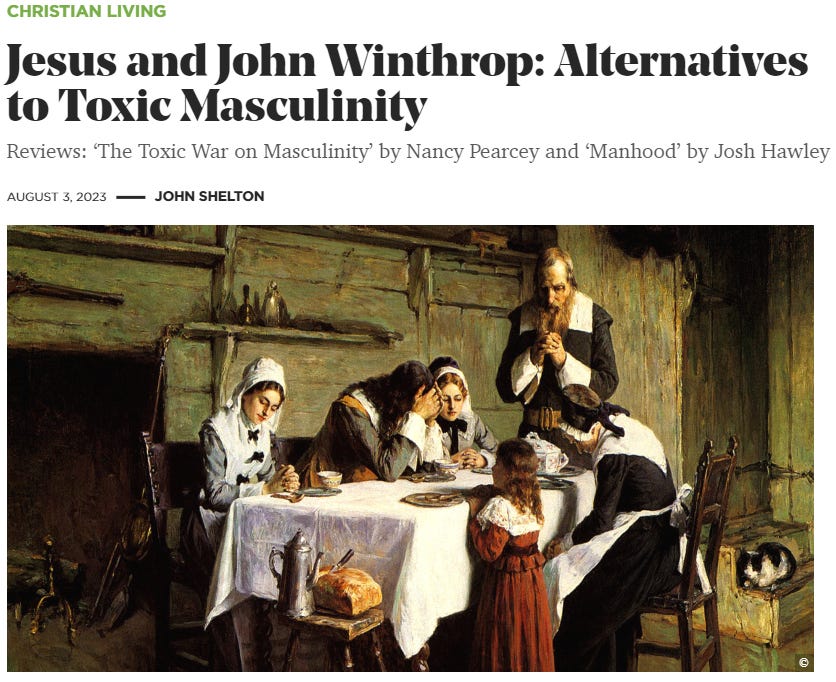
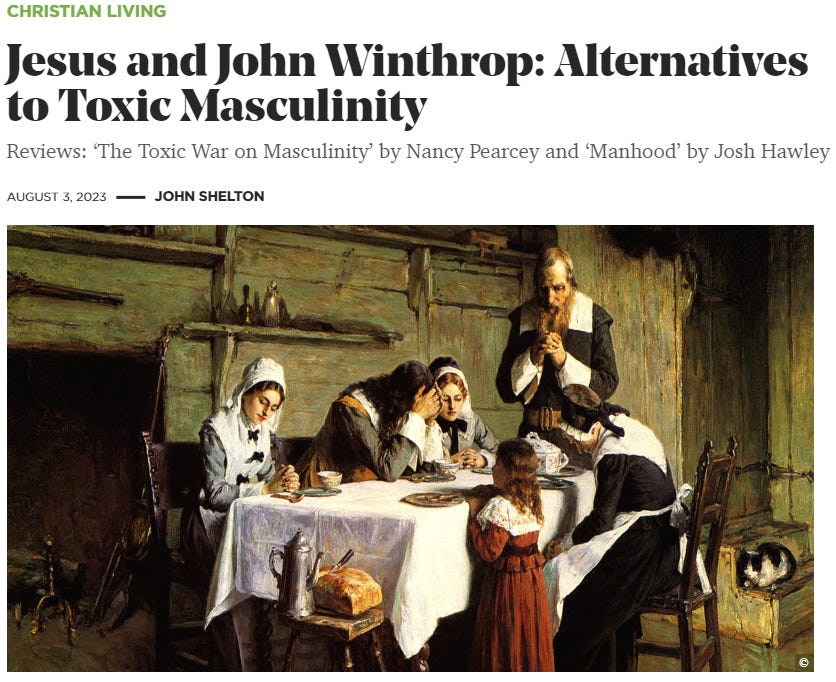
I don’t know that I would have picked up this book if I hadn’t been asked to write a review of it by The Gospel Coalition (you can read that review, “Jesus and John Winthrop,” here: https://www.thegospelcoalition.org/reviews/toxic-war-masculinity/). Many of Pearcey’s books suffer from titles that fail to do justice to the exquisite content within (Love Thy Body, a fantastic theological treatment of the body, is another example of this problem).
Pearcey’s book pairs perfectly with everything listed above: how did we get here? Where do our ideas about masculinity come from and how have they been upended by cultural transformations? What does it mean to be a “good man”?
Christmas Devotionals
If you’re like me and didn’t grow up in a church tradition that closely follows the liturgical calendar, you are in for a wild treat. Christmas only starts on December 25th; it doesn’t end until Epiphany on January 6th (how I didn’t figure this out from songs about the “twelve days of Christmas” is beyond me). What this means is that, in addition to Christmas, we also get to celebrate feast days for Stephen, John, Holy Innocents, and Holy Name. And you don’t have to feel bad about failing to take down your tree before Epiphany (you’re not lazy, you’re liturgical)!
Anyway, four years ago, members of my church put together a set of devotionals for the Twelve Days of Christmas. I offer them up to you here in case you are in want of an easy way to celebrate the Christmas season.
PS: If you have a way of doing so easily, I'd recommend printing it as a booklet!
Prioritizing the Family in Policy
Once upon a time, some lawmakers had the very good idea of requiring regulatory agencies to consider how their rules would impact family stability before forcing those rules upon us. Unfortunately, that requirement has largely been ignored in the decades since it came into existence.
I wrote a piece for WORLD warning that a recently circulated rule from the Environmental Protection Agency could have serious adverse consequences on family formation, stability, and (at least in my own case) sanity. Policies always have trade-offs. It’s been encouraging to see recognition of this happening more and more in housing conversations (YIMBYs are rightly concerned about cumbersome and poorly designed environmental regulations making it impossible to build homes and thereby making housing unaffordable). And yet, there’s been less recognition of this problem when it comes to vehicle safety and emissions policy.
blasphemy, more problems with sensual content, and an upcoming reading group
Show full content
Blasphemy
blaspheme: βλασ-φημεῖν (Greek), the first half of which Proto-Indo-European scholars think derives from the PIE word mal (morphing to mlas, then blas), which survives today in words like “malicious” and “malevolent.” The second half means “to speak,” so the etymological sense of the whole is something like “to speak evil.” The word latinizes to blasphemare and passes on through Old French into English from there. Interestingly, “blame” is etymologically related.
Demothenes, an Athenian statesman famous for his oratory prowess, uses βλασφημεῖν in the 4th century B.C. to refer to slander against himself, and the New Testament sometimes uses it similarly to refer to “speaking evil of someone” (KJV), but it eventually comes to be used entirely in the context of blaspheming God.
Today, most people probably associate it with theocratic parts of the Middle East or curious old laws still on the books in parts of the United States.
“Whoever wilfully blasphemes the holy name of God by denying, cursing or contumeliously reproaching God, his creation, government or final judging of the world, or by cursing or contumeliously reproaching Jesus Christ or the Holy Ghost, or by cursing or contumeliously reproaching or exposing to contempt and ridicule, the holy word of God contained in the holy scriptures shall be punished by imprisonment in jail for not more than one year or by a fine of not more than three hundred dollars, and may also be bound to good behavior.” — General Laws, Part IV, Title I, Chapter 272, Section 36
Even though it’s still ‘the law,’ it’s no longer enforced; in this way I suppose you could say blasphemy has been “decriminalized” at the state level. In 1838, Abner Kneeland of Massachusetts was the last person to be imprisoned on blasphemy charges; the case centered around Kneeland’s denial of God and life after death, and a quote from Voltaire “so indelicate that four successive judges protected four different juries from the embarrassment of listening to it” (determining what exactly the quote was has proven enormously difficult for me, I suspect in part because modern attunement to blasphemy is so attenuated).
The Establishment Clause of the First Amendment has only been held to bind the individual states since the 1925 Supreme Court decision, Gitlow v. New York. Prior to then, even if states chose not to establish religion, they were at least allowed to do so theoretically. This older interpretation, which only bound the federal government, held for about half a century longer than the modern jurisprudence that enforces Establishment Clause prohibitions against the states.
For quite a very long time, Massachusetts had an official religious establishment (which John Adams thought “most mild and equitable”). Interestingly, in 1692, the province adopted a law requiring towns in Massachusetts Bay Colony to collect taxes to support public worship and elect an “able, learned orthodox minister” at a special town meeting. Then finally, in 1833, Massachusetts amended its Constitution to hold that “all religious sects and denominations, demeaning themselves peaceably, and as good citizens of the commonwealth, shall be equally under the protection of the law; and no subordination of any one sect or denomination to another shall ever be established by law.” Clearly, even this ‘disestablishment’ was not understood at the time to protect Mr. Kneeland from a blasphemy conviction.
Blasphemy is still, nevertheless, an important theological category, even if it is no longer a relevant legal category. I wrote about that some here: “Theology is Dangerous” (Mere Orthodoxy).
Agnus Dei“Behold the Absolute Unit of God, who takes away the debt of the world.”
Whether or not this meme I made is blasphemous all depends on whether God has a sense of humor or not. The classic answer to that question is: “He did make an odd fellow like you, after all.”
G. K. Chesterton (himself an “absolute unit”) ended Orthodoxy with the following line: “There was one thing that was too great for God to show us when He walked upon our earth; and I have sometimes fancied that it was His mirth.” I myself can’t help but fancy that the Lord took a great pleasure in nimbly outwitting the scribes and Pharisees. There is a great Marx Brothers-esque comedy to watch all his antagonists constantly fall on their faces until he finally allows them their victory.
It has often been remarked that those seeking to capture Jesus’ person and personality too often end up describing their own reflection at the bottom of a well. So the liberal Protestants found a liberal Protestant, evangelical scholars an evangelical, and so on.
It’s entirely possible that the mirthful God that Chesterton catches in the corner of his eye is simply more of that. George Bernard Shaw (a rail of a man) is reported to have once patted his friend Chesterton on the belly and asked what the baby’s name was going to be. Whether or not it’s historically true, it is certainly true to character that Chesterton responded “John, if it’s a boy; Mary, if it’s a girl; and Shaw if it’s just gas.” It would be no surprise that such a man would find God humorous. But it also takes a man of great comedy to recognize another.
One day we will know, should these memes not ultimately prevent me from asking God jokes in the hereafter.
Response to “Talking About Sex” Essay
Samuel D. James takes a piece I wrote for Mere Orthodoxy as a launching pad for his own reflections. I focused on the viewing/reading of the sensual, whereas he had some important insights about the actual production of it.
“The reason such a scene exists is not creative genius or concern for historical accuracy. It exists because of one powerful man and his rapacious desires…. It is pornography, specially brewed for Harvey Weinstein.” — Samuel D. James
People seem seem to think that it is possible to subvert the pornographic with the pornographic. Outlets, including evangelicalism’s Christianity Today and the Jesuit Catholic magazine America, were positive that Don Jon (2013) had accomplished just this, calling the film Joseph Gordon-Levitt directed “a very moral movie” and insisting that “the literal last thing in the world that this movie does is glorify porn.”
F&L Senate Reading Group (December)
If, through some strange confluence of events, you are both a congressional staffer and a reader of this email, you should join us for Faith & Law’s next Senate Reading Group on December 8th. We’ll be working through C. S. Lewis’ “Meditation on the Third Commandment” alongside Matthew Loftus’ “Kichijiro was Right.” I’m hoping this will be a fun pairing to help people feel more of the attraction of a modest Christian politics. Message me for more details if you’re interested.
If you ever have suggestions for future readings we should do, please let me know in the comments or by carrier pigeon! You can see previous discussions we’ve done on the website (note also that Gary Haugen will be speaking to F&L on December 1st).
Thanks for reading Ragbags and Bricolage! Subscribe for free to receive new posts.
Somebody let me on their podcast(!); the power of the pornographic; Ibram Kendi's evangelical roots; and other upcoming things/projects
Show full content
Church Podmatics: “Christ as Culture”
(Jesus playing a fugue on the organ, in true Jensonian fashion. Image courtesy of Bing AI)
Listen to me join Church Podmatics’ Matt Wilcoxen and Matthew Mason to discuss Robert W. Jenson’s “Christ as Culture” lectures (1: Christ as Polity; 2: Christ as Art; 3: Christ as Drama). Surprisingly, even counting this newly minted episode, there are just a handful of podcast episodes on Jenson in existence. For a man who has been called “America’s most creative systematic theologian,” and whom Karl Barth named as the one theologian who truly understood him, that is a travesty!
Thanks for reading Ragbags and Bricolage! Subscribe for free to receive new posts and support my work.
This was incredibly fun for me, so if you are ever out a co-host on a podcast and need a pinch hitter, or just want a “special guest” to make fun of, feel free to reach out! I promise to cut down on my paper rustling sounds in the future!
Two big quotes for those who might otherwise not dive any deeper into Jenson:
On Politics:
“Christ is a political fact among and in competition with the polities of this world. The members of his body proclaim that he exists at the right hand of God, that is, that he is the world’s sovereign, and inform all earthly would-be sovereigns that they are merely his place-holders, his vicars, and that, moreover, they are extensively in rebellion. … Christ’s presence in this world is not a private phenomenon, an invisible interiority. It is, as Cardinal Bellarmine once famously said of the church… ‘as visible as the republic of Venice.’ … If we are in Christ we must expect to be involved in the political struggles of this world. In particular, we must expect other polities to make war against us, as China does and as most Islamic societies do, and as do the liberal democracies, in certain ways. … Short of the End, Christians are saddled with plural citizenship. This does not make for peaceful lives"; it means that the line between the polity of God and the polities of this world runs through each of us and through our community, and that we must expect to struggle in our own communal and individual lives with the conflicts between polities which in this age are inevitable.” — Christ as Culture 1
On Art:
“An artist is an experimenter with possible worlds. … Is there a world other than the multitude of possible worlds? Do artists simply create worlds, any one of which is as real as any other, there being, as it were, no standard world by which to judge them? … Christians and Jews… know there is God, and even what he is like. And so they know there is a standard world, the one he, as we uniquely say, ‘creates’. Or, looking from the other side, Christians and Jews know that artists are not creators, not even co-creators—whatever such beings might be. … [Yet] in my view postmodern theory is in so far right that we are not in position to access this standard directly. For if the standard world were immediately available to us, there would be no possibility of our making art. … The sign that art’s proliferating construals have indeed a standard, even though we do not access it directly, is that artistic production is work. … An artist must labor to construe his possible world[;] he cannot just decree it. … Were there no Creator and so no creation, no standard world, artists would need to do no work.” — Christ as Culture 2
For a little more on Jenson, check out Brad East’s wonderful obituary.
Talking About Sex in a Pornographic Culture
People seem seem to think that it is possible to subvert the pornographic with the pornographic. Outlets, including evangelicalism’s Christianity Today and the Jesuit Catholic magazine America, were positive that Don Jon (2013) had accomplished just this, calling the film Joseph Gordon-Levitt directed “a very moral movie” and insisting that “the literal last thing in the world that this movie does is glorify porn.”
I argue that this same misplaced confidence in our ability to subdue and tame the pornographic is present in Evangelical literature from Every Man’s Battle (2000) to Josh Butler’s Beautiful Union (2023).
Read the whole essay at Mere Orthodoxy here: "Talking About Sex in a Pornographic Culture." I kind of think of it as part two of a set of commentaries on recent articles at The Gospel Coalition, as the reaction to the Peeler article was wrapped up in the prior scandal around the Butler book preview. I wrote a little more about it in my last Substack.
PS: I wasn’t able to work this in, but I was scandalized to learn that at the time Stephen Arterburn published Every Man’s Battle, he was already on his way to his second divorce, and would not too long thereafter marry a woman he met at one of his purity seminars! This is why I’ve argued elsewhere that we need “self-help books whose authors’ own lives have proven divorce-proof.”
WORLD Article on Kendi
Unrelated to the recent news about the mass layoffs at Ibram X. Kendi’s Center for Antiracist Research, my work colleagues were discussing a provocative quote of Kendi’s: “The only remedy to racist discrimination is antiracist discrimination. The only remedy to past discrimination is present discrimination. The only remedy to present discrimination is future discrimination” (How To Be An Antiracist).
Somehow, this reminded me of an interesting quirk in Kendi’s background: his parents met through InterVarsity Christian Fellowship (IVCF), which is an Evangelical parachurch ministry that serves college campuses (I was actively involved in the University of Virginia chapter). Kendi has not been coy about this: chapter one of his breakthrough book begins with this story, concluding: “my own still-ongoing journey toward being an antiracist began at Urbana ‘70 [IVCF’s triennial conference]… I cannot disconnect my parents’ religious strivings to be Christian from my secular strivings to be an antiracist.”
Perhaps because conservative Christians don’t often read books by proponents of “critical race theory” (or whatever you prefer to call it), the people who would find this origin story most fascinating are the least likely to have heard it. So I wrote about it for WORLD here: “The Secular Son of Progressive Christianity” You can also hear me read it aloud (if that’s what you’re into) for WORLD Radio here: "Ibram X. Kendi's Church Without Christ."
There’s only so much you can do with 800-words but these kinds of religious parents - secularist children stories fascinate me: e.g., you have the son of Ronald Reagan, Ron Reagan, an atheist advocating for strict separation of church and state; similar dynamics with the sons of Tony Campolo and John Piper; and then you have Walter Rauschenbusch, the leader of the Christian social gospel movement, whose grandson was Richard Rorty, a secular philosopher on the left, perhaps most famous today for his “Trump Prophecy.”
Upcoming
I have 4,000+ words in a forthcoming edition of National Affairs on one way that the sprawling coalition that is the Right (from libertarians, to fusionists, to social conservatives, to the New Right and beyond) might be able to work together to get important things done. Ronald Reagan’s legacy has taken a serious beating over the past decade, which is a shame because I think several underappreciated accomplishments from his administration contain the blueprint for a path forward.
Nancy Pearcey is coming to Church of the Resurrection to speak about her new book, The Toxic War on Masculinity: How Christianity Reconciles the Sexes on Monday, October 30 at 7:00 p.m. You can register and find more details here (there will be food). I reviewed the book favorably here: “Jesus and John Winthrop: Alternatives to Toxic Masculinity” (TGC).
EDIT: In the originally published version of this Substack, I made a Freudian slip and said Pearcey is coming to talk about her new book, Jesus and John Wayne. Pearcey, as I mention in my piece, not only did not write that book by Kristin Kobes Du Mez, she conspicuously avoids talking about it for the full length of her own. Thank you to Matthew Lee Anderson for catching this most grievous error (and who knew someone read these besides my mom)!
Robert Jenson and Stanley Hauerwas both published books addressing young children I’m working on something concerning the enormous importance and difficulty of this kind of theological exercise. Incidentally, Jenson’s interlocutor for his book is his granddaughter, Solveig, who two decades later would become the subject of a controversial New York Timespiece, as well as a character in a New Yorker article on a monthly NYC meetup known as the “Gathering of Thought Criminals.”
If I can find the time, I will also try to pop out an essay for The Other Journal on parachurch ministry, the core of which will be questioning how the parachurch serves the church. If you’re interested in writing for TOJ, check out the latest call for papers on the church: https://theotherjournal.com/submissions/ I’ve had a great experience with all the editors I’ve worked with there. You should have seen how rough these pieces were when I submitted them…
Thanks for reading Ragbags and Bricolage! Subscribe for free to receive new posts and support my work.
Linn Tonstad, The Butler-Peeler Controversies, and Nancy Pearcey
Show full content
What’s Linn Tonstad Got To Do With It?
I very foolishly decided to offer my cold take on two controversies that emerged out of The Gospel Coalition earlier this year: the publication of excerpts from Josh Butler’s Beautiful Union and a review of Amy Peeler’s Women and the Gender of God. This latest piece focuses more on the latter, voicing concerns about her positive engagement with a provocateur-theologian at Yale Divinity by the name of Linn Tonstad. If you should choose to read the article, be warned that the language (quoting Tonstad) is extremely foul.
ICYMI: This piece emerged partially out of my surprise at the “family trees” I found when I mapped out mainline academic theology. Tonstad studied under Miroslav Volf, who studied under Jurgen Moltmann, who studied under was influenced by* Karl Barth.
The other piece, focusing on Josh Butler, was written earlier but should finally be making its way onto the World Wide Web sometime soon.
I say all this to emphasize that neither my opinion on Peeler nor my opinion on Butler are about “taking sides” in a culture war fight. I simply think there are more interesting questions about how we should live and speak lurking below the surface.
* UPDATE: Peter Hartwig graciously pointed out that I was wrong when I said here and before that Moltmann studied under Barth. They corresponded, there were certainly lines of influence, but no institutional teacher-student relationship.
Even better, Peter knows this because of an embarrassing interaction where his father made the same mistake as I have here, asking Moltmann “what it was like to study with Dr. Barth?” to which he replied, “I never did.” There might even be audio of the interchange, which Peter has promised to try to hunt down. *
To that end, I would love to do some more reflection in the same vein as the piece above, thinking through what a confessional college, a denominational seminary, or a divinity school housed within a university might look like in a healthier world. I have some initial thoughts on this, but there’s a lot of things I’d like to read before opining publicly (e.g., John Henry Newman’s The Idea of a University, Alasdair MacIntyre’s God, Philosophy, Universities, Stanley Hauerwas’ The State of the University). If there’s anything else you’re aware of or have found fruitful, I’d appreciate further suggestions!
Nancy Pearcey Is Coming To Town
Apparently if you review an author’s book, you’re obligated to help them host an event when they’re in the area. Last month, The Gospel Coalition published a review I wrote of Nancy Pearcey’s The Toxic War on Masculinity and now Church of the Resurrection in Washington, D.C. is hosting a book event for her on Monday, October 30th. See more information at the Facebook event or Eventbrite link.
While the book has a title straight out of the culture war, the content is graciously written and extraordinarily deep. As I argue in the TGC review, by starting before the process of industrialization (several centuries before Kristin Kobes Du Mez’ Jesus and John Wayne picks up), Pearcey tells a much more interesting story about the history of gender relations.
Two recent articles from in TGC and WashEx, and some Pence miscellany
Show full content
A little over a month ago, I sent in a draft review of two new books on masculinity (The Toxic War on Masculinity by Nancy Pearcey and Manhood by Josh Hawley) and it just went live yesterday: "Jesus and John Winthrop: Alternatives to Toxic Masculinity."
I put them both in conversation with Kristin Kobes Du Mez’ Jesus and John Wayne (which I previously poked into some here: "Mapping Jesus and John Wayne"), arguing that Pearcey begins her account of Christian masculinity several centuries too late, missing the most important drivers of modern notions of manhood.
What’s more, it turns out that authentic Christian masculinity is the cure for toxic masculinity, not its cause. Nominal Christianity and secular scripts for manhood (including what Hawley calls “epicurean liberalism”) have wrought destruction on our country’s households. John Winthrop’s Massachusetts provides a helpful counter-example to notions that Christianity is the problem.
By the way, one of my favorite little things about The Gospel Coalition (where this ran) is that they encourage their writers to include the church they attend in their bios. It’s a great practice for holding writers accountable and helping readers find churches (or possibly, as my wife worries, aiding stalkers in hunting down their quarries).
In a very different vein, I shared some concerns in the Washington Examinerlast month with parts of Trump’s announced plans for expanding executive power should he win in 2024, as well as the growing admiration for New Deal-style politics (e.g., disregarding the constitutional order, growing the size of the federal government, and using state power to punish political enemies) on the political Right.
But I’m most proud of this one little snippet:
One of these New Dealers’ most prominent intellectuals even helped write an entire book about “redeeming the administrative state.” Call me crazy, but I’ve always thought the point was to abolish it, not call it down the aisle to accept Jesus as its lord and savior.
And I’ve been surprised to learn that a lot of Republicans actually admire Richard Nixon’s philosophy of power. That seems Very Bad!
Faith & Law Reading Group
Lastly, I wanted to share that, as part of a monthly reading group sponsored by the fantastic ministry of Faith and Law, I’ll be reading N. T. Wright’s “Loving to Know” with a handful of congressional staffers later today. If you or someone you know might be interested in joining us in the future, let me know! In previous meetings, we’ve read C. S. Lewis’ “Learning in War-Time” and Brad East’s “Once More, Church and Culture.” I’m always grateful for suggestions.
If a reading group is not your speed, Faith & Law has plenty of other great events that you should check out if you or someone you know works on or around the Hill.
Pence Miscellany
In the aftermath of Trump’s indictment, people fixated on a couple Pence-related elements in the transcript.
The Christmas Call
It was perhaps inevitable that a tense Christmas call would lead to a viral meme. Here’s my perfected form of that (Pence doesn’t have sideburns, as in the link above).
“Too Honest”
The former president’s words have now taken the form of a dope hat (as these things always seem to do), which will ironically help Trump’s challenger make it to the debate stage. You can buy it here!
Thanks for reading Ragbags and Bricolage! Subscribe for free to receive new posts and support my work.
Du Mez' book by the numbers, why we need Paul Ramsey, and more on mapping the mainline
Show full content
As I said in the last post, this kind of ‘mapping’ “requires a great deal of sleight of hand in simplification, but the result was interesting.” Quantifying the number of pages that the major characters of Jesus and John Wayne appeared on was easy and objective with the help of the appendix. But determining whether someone like George W. Bush should get coded as belonging to Connecticut (his place of birth), D.C. (his place of greatest prominence), or Texas (the state where he made a name for himself) is a subjective exercise (I opted for the latter of the three). Mapping this out with more sophistication (alternatively coding Bush to Texas or D.C. whenever a page’s action is set there) would be a gargantuan (albeit more enlightening) task.
Nevertheless, the result (simplifications and all) certainly was interesting. By my math, Du Mez’ book is primarily about Texas (Bush, Bill Gothard, Doug Phillips), California (Ronald Reagan, John Wayne, Mel Gibson), Virginia (Jerry Falwell, Pat Robertson, Chuck Colson), New York (Donald Trump, Oliver North, Teddy Roosevelt), and Colorado (James Dobson, John Eldredge). One question I have is: how might the narrative look different if it was weighted more towards the Bible Belt and where most Christians exist (as a percentage of the state population) rather than California and New York? Does concentration on celebrity and the sensationalistic (which makes the book a gripping read for so many determined to “understand” evangelicals and Trump voters) cast a shadow over Du Mez’ case for her status as an “objective” observer?
According to data from the Pew Research Center, Alabama, Louisiana, Mississippi, South Dakota, and Tennessee are the five most Christian states in the country. Yet altogether, they only make up about three percent of the book (for comparison, Texas, California, Virginia, New York, and Colorado make up 51 percent). Even if we just look at states in terms of total population, Du Mez’ five should have about half as many mentions, whereas the five most Christian states should see twice the limelight.
Lastly, it’s not even clear that this book is really about John Wayne, “toxic masculinity,” martial character, or nationalism. (See Ploughcast 46for a compelling take that Du Mez has fundamentally misunderstood the nature of Western films).
According to Du Mez’ own index in the back of the book, James Dobson—and not Donald Trump, Ronald Reagan, or John Wayne—is the star of the show (or, as she might prefer us believe, the spider at the center of the web). Dobson is mentioned twice as much as the titular John Wayne!
Paul Ramsey: A Necessary Guide for Christian Ethics
After mapping academic theology and seeing how important Paul Ramsey was for academic theology (teaching the greats like Oliver O’Donovan and Gilbert Meilaender), I remembered that I wrote a piece on Ramsey more than five years ago that fell the cracks during the editorial process. Well, now you can read it here: "Navigating the Scylla and Charybdis: Paul Ramsey and Contemporary Political Theology"
Also, during that same time, this Paul Ramsey Institute fellows program for bioethics came to my attention. I highly recommend checking it out for those of you interested and qualifying! Ramsey’s student, Meilaender, served on the President’s Council on Bioethics and is one of the scholars associated with the program. And Katelyn (Mrs. Shelton) will be joining the 2023-2025 cohort of fellows. Matthew Lee Anderson, whose Substack on theology and ethics is worth a follow, is also affiliated with the program.
More on Mapping the Mainline
The ever insightful Brad East has written some on the Mapping Mainline Theology chart I cooked up for the last post.
He makes some great points about the cacophonous state of academic theology (and how Oliver O’Donovan’s Ethics As Theology trilogy was, as a result, largely overlooked) and the waning influence of Stanley Hauerwas, but my biggest takeaway was how much institutions (and not just genius) matter.
The unsurprising spider at the top of this web is Barth. The more surprising is Niebuhr—H. Richard, not Reinhold. Reinhold’s influence on twentieth century thought, including academic theology and ethics, was great and lasting. But H. Richard always had more theological influence (or so I think), and this map captures that nicely. Niebuhr the younger was an institutionalist, and there is a sense in which his legacy stretches longer and wider than his brother’s.
There’s a lot of very interesting Catholic and philosophical connections that I wasn’t bold enough to attempt to include, but you can get one really interesting glimpse into that through Benjamin Lipscomb’s 2022 book, The Women Are Up to Something: How Elizabeth Anscombe, Philippa Foot, Mary Midgley, and Iris Murdoch Revolutionized Ethics. You can get it for free through the library on Hoopla but it’s definitely the kind of book that you would want to have physically on hand for reference and re-reads.
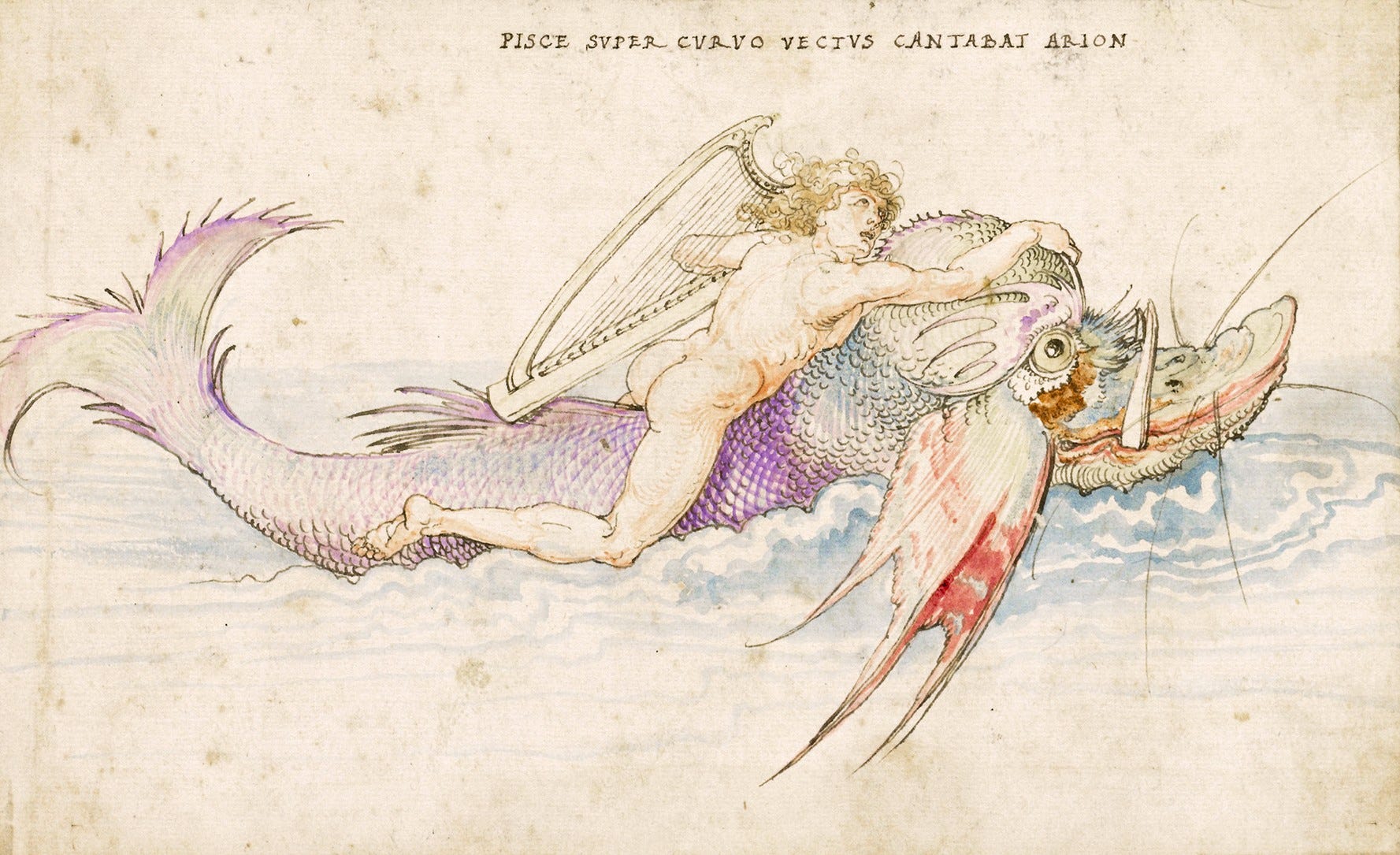




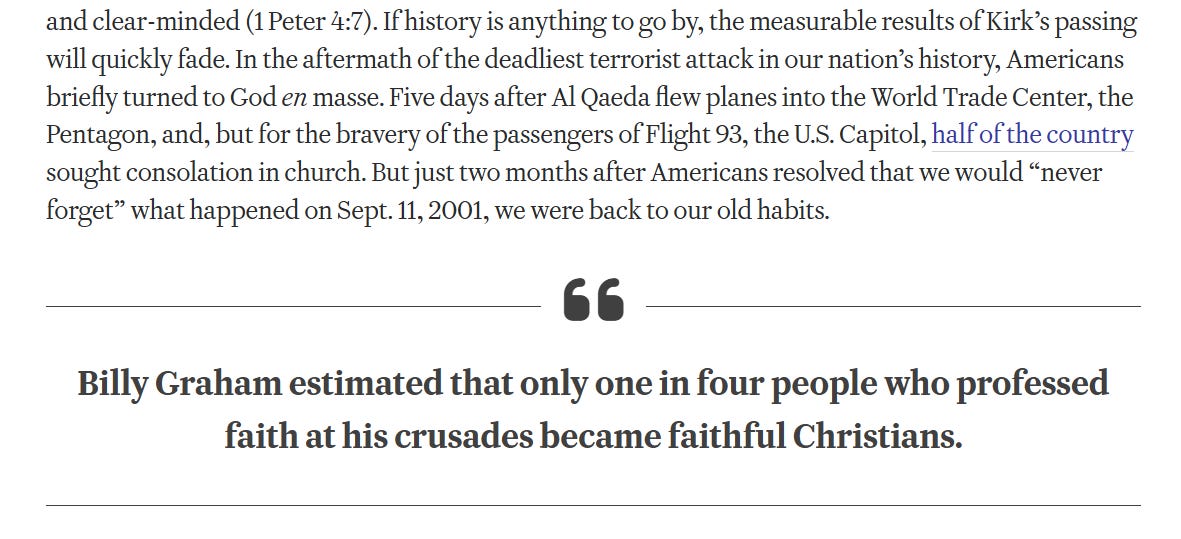
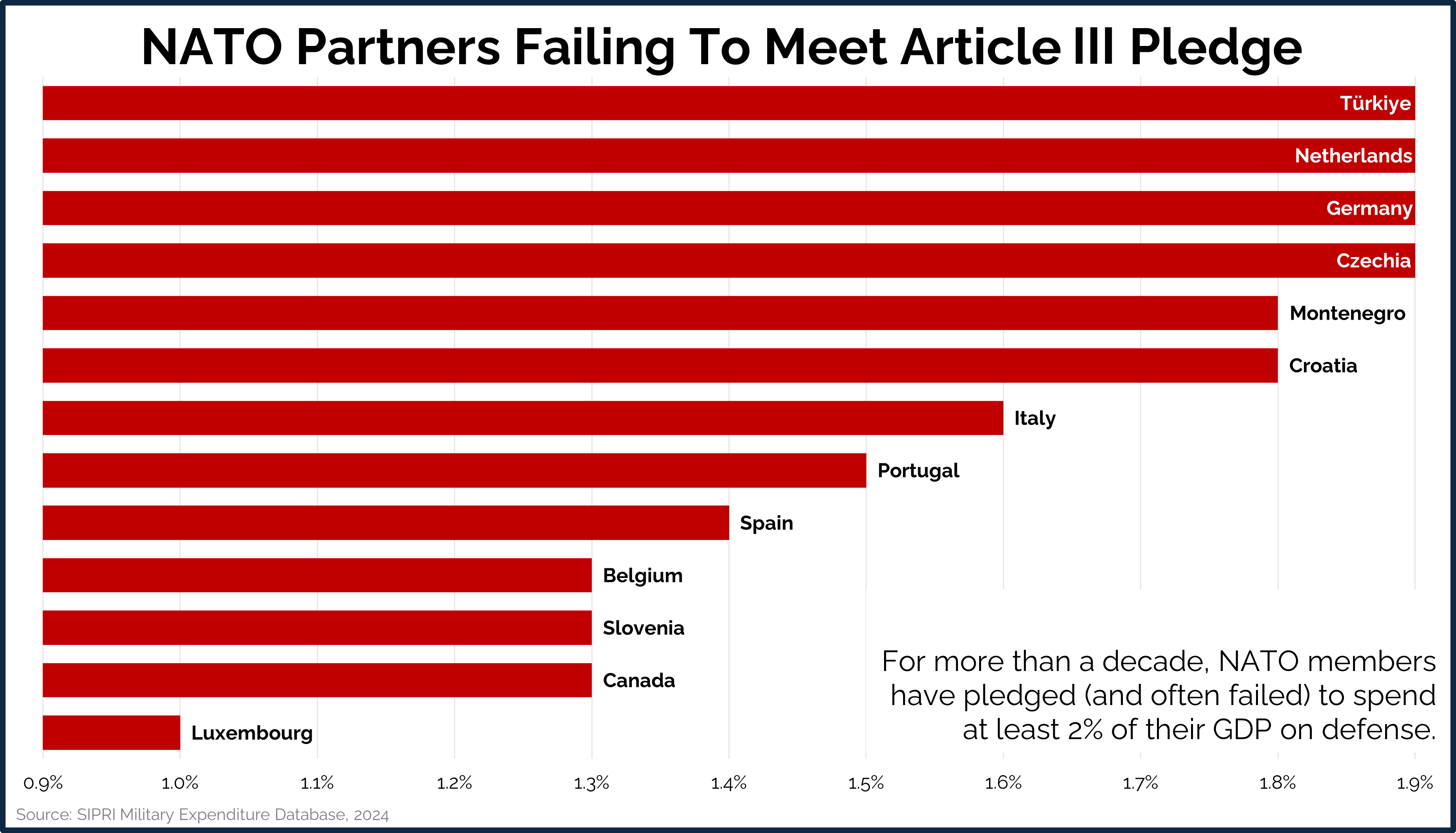





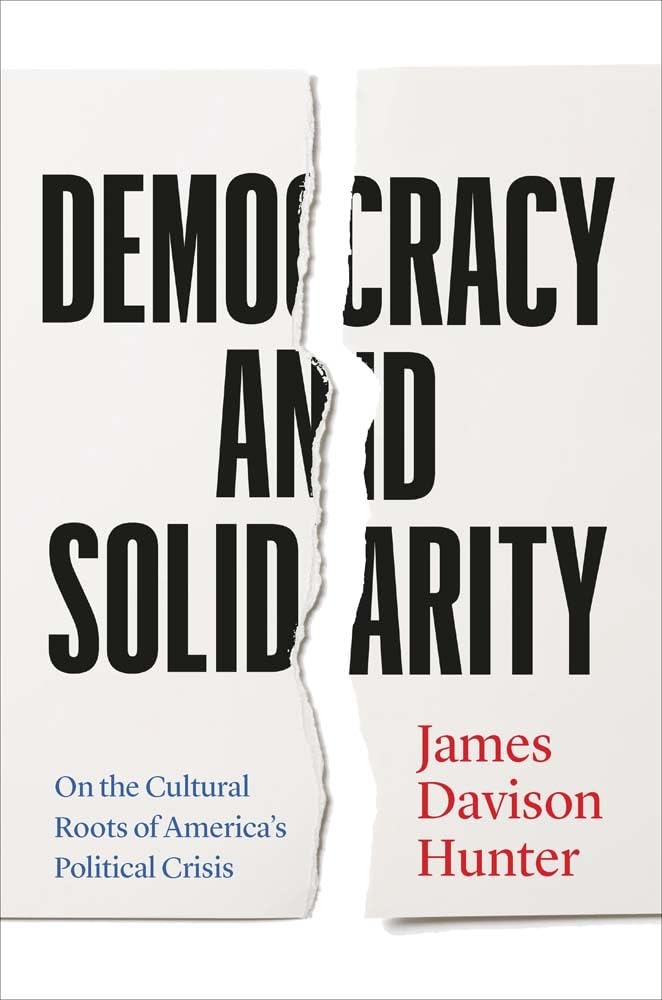


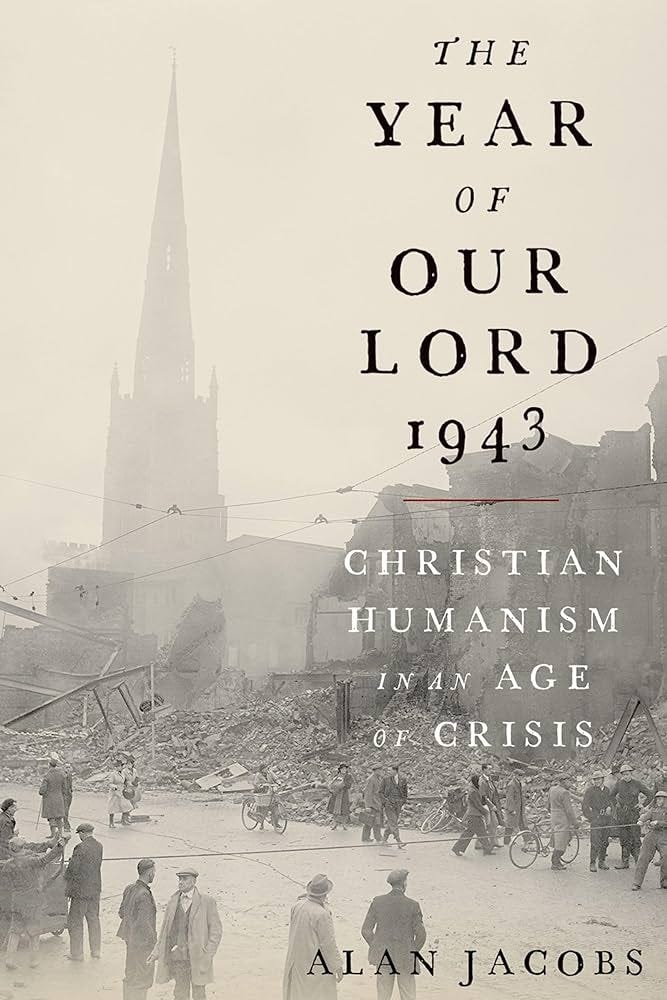



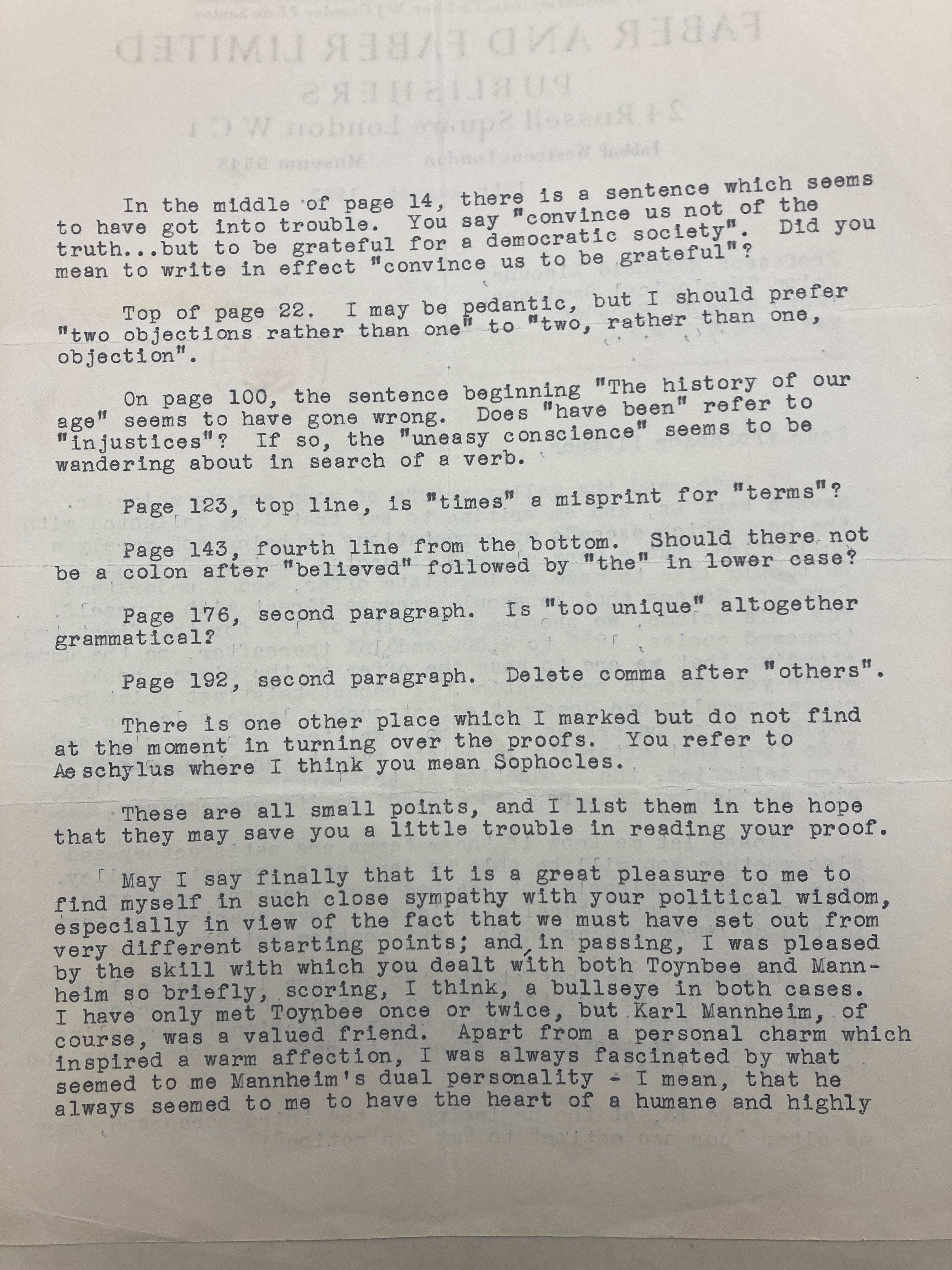


 Digital LiturgiesMovies, Moral Revulsion, and a Post-Christian AgeJohn Shelton’s recent Mere Orthodoxy piece, Talking About Sex in a Pornographic Culture, struck a chord with me. I think he’s correct, perhaps even more than he intends to be. John makes the point that in a culture that is awash in sexual imagery—i.e., a culture where pornography is not merely available but permeates the popular imagination—it is imposs…Read more3 years ago · 28 likes · 15 comments · Samuel D. James