GeistHaus
log in · sign up

Office of Wilson

Part of Office of Wilson

Simon Morgan-Wilson. Product lead, service designer and interaction designer etc etc.

stories primary
Service design is not user experience design at greater scale
service designuser experience designsystem thinking
Preface: What's going on here?

These thoughts were poked to the forefront a few months ago leafing again through one of my foundational reads around service design. And then I was seeing people saying service design is UX design at greater scale. And then seeing UX design being

Show full content
Preface: What's going on here?

These thoughts were poked to the forefront a few months ago leafing again through one of my foundational reads around service design. And then I was seeing people saying service design is UX design at greater scale. And then seeing UX design being presented as service design.

So, I've put my head down here and there over the last few weeks to lean into my service design and system thinking foundations and weave in some now. Throughout I've tried to reference some of those foundations as references. Think of this as a brain-mashing in progress. There are likely to be holes and flaws.

Service design as systems work – not bigger UX

Service design gets framed, again and again, as user experience design at greater scale. That framing to me is wrong, wrong, wrong – and the wrongness is consequential. Most people who claim to have moved from user experience design (UX) to service design haven't really moved. They've added stakeholder maps and front-stage/back-stage diagrams to a fundamentally interface-shaped practice. This is just reportage, conceptualising the front-end, the interactions. Service design is a shift in what you're designing, not how much of it.

What you're actually designing is different

UX takes a piece of a system – an app, a flow, a touchpoint – and tries to make it work well for the person using it. The system is held constant. You inherit the business rules, the back-office processes, the technical platform, the organisational boundaries. Within those, you design.

Service design works the other way round. The system itself is what gets designed. The screen, the form, the call centre script, the letter: these are outputs of decisions made elsewhere, and those decisions are the ones to question. If a person abandons a journey, a UX response is to redesign the journey. A service design response is to ask why the journey exists in that shape: which policy created the form field, which integration constraint produced the wait, which team's incentives produced the handoff.

This isn't a matter of zooming out. Zooming out is still a UX move. Service design is doing different work. Lou Downe's Good Services makes this distinction more clearly than anything out there.

What systems thinking actually gives you

The working vocabulary here comes from Donella Meadows, whose Thinking in Systems and her 1999 essay on leverage points are foundational. The concepts below are hers, summarised briefly, the service shaped examples are mine.

Feedback loops. Services have reinforcing and balancing loops that produce their behaviour over time. A queue forms, so the service tightens eligibility, so people work around the rules, so caseworker time goes up, so the queue gets worse. None of that is visible in a journey map, because journey maps are snapshots.

Stocks and flows. A service runs on accumulations and rates: backlogs, capacity, trained staff, unresolved cases. Many "user experience" problems are actually stock problems wearing a UX costume. Waiting time isn't a user interface problem: it's the consequence of an inflow exceeding an outflow somewhere in the operational chain.

Leverage points. Meadows' central insight is that the highest leverage interventions in a complex system are structural (paradigms, goals, rules, information flows) rather than parametric (numbers, settings, copy). Most UX work sits at the bottom of Meadows' hierarchy. Service design earns its name when it operates higher up. A useful diagnostic falls out of her argument: when you finish a piece of work, ask whether you changed a number, a buffer, a delay, a rule, a goal, or a paradigm. If the only honest answer is "a number", that's fine, but it's UX.

Unintended consequences and dependencies. Any change to one part of a service produces effects elsewhere. A "delightful" front end can swamp a back office. A clarified letter can drive a spike in calls. Designing without modelling these dependencies is the systems equivalent of refactoring code without running the tests.

Where services actually live

There's a useful iceberg picture worth pairing with all of the above: Downe uses a version of it in Good Services and it's still the clearest way to make the point.

What the user touches is a small fraction of what the service is. Underneath sit the operational workflows, the case management systems, the legacy databases, the data-sharing agreements, the regulatory regimes, the funding mechanisms, the contracts, the supplier ecosystem, the staff training, the audit requirements, the political and historical context that produced any of it. The service is the whole of that, in motion.

UX work treats the visible bit as the thing. Service design treats the visible bit as a symptom, and the rest as the territory of intervention.

It's not UX plus extras

Becoming a service designer is not UX plus extra.

It involves trading off some of the depth of interaction craft for literacy in adjacent disciplines: organisational design, policy and regulation, enterprise architecture, operations, procurement. Dan Hill's Dark Matter and Trojan Horses is clearest in this expanded territory, the "dark matter" he describes is most of that list. (And probably where I started nabbed "dark matter" to refer to this.)

I don't think you need to be the expert in any of these, but you do need to have enough knowledge to understand them, to hold a useful conversation, to recognise where the real constraints are, to know what levers needs changing and how, and to call out when a stated constraint is actually a convention dressed as a constraint.

Most of the daily work is talking to people in those disciplines, not making artefacts. The artefacts get less polished, the meetings get longer, the wins are harder to put in a portfolio. A working service is the deliverable. Very little else counts.

The cosmetic service design trap

The practice that uses the language of service design without doing any of the systems work. We have all seen it. This sits in Hill's territory directly: design work that doesn't engage with the organisational, political, and contractual matter above the designer's head is decoration.

A team produces a beautiful blueprint. The blueprint sits next to an unchanged back-office process. The recommendations are about the front end. Nobody renegotiates a contract, changes a policy, redesigns a team structure, retires a system, or amends a funding flow. The blueprint becomes a research output. The blueprint is filed.

This happens partly because the systems work is genuinely hard and slow, so slow. Partly because it requires authority the design team often doesn't have. And partly because the incentives in many organisations, and inside the design profession itself, reward visible output over structural change.

The honest test of a service design engagement is whether anything structural is different a year later. A year later. If only the screens have moved, it was UX with a vocabulary upgrade.

Why this matters more in 2026

Two things make this shift urgent now. (He says remembering saying this in 2020. And then 2017. And...)

The first: The parts of UX that were the day job – wireframes, flows, component-level decisions – are increasingly the things AI could probably do fastest. The economic value moves up the stack, towards the work AI can't yet do well: framing the right problem, navigating organisational politics, holding the model of a complex service in your head, deciding what to design and what to leave alone.

The second is that the services that most need design attention are the gnarly ones: public sector, healthcare, finance, regulated industries. These services are not failing because their interfaces are bad. John Seddon has been arguing this for thirty years – and the evidence has only accumulated. They are failing because their underlying systems were assembled over decades, with overlapping incumbents, contested ownership, and contradictory goals. You can't UX your way through that, adding to the papier-mâché.  You can only design with it, by being literate in how it actually works.

What this really requires is a change in stance. Stop treating the service as something to be improved at the edges. Start treating it as something whose shape can be redesigned, slowly, by people willing to do the unglamorous work in the middle of it.


the tldr

Service design isn't just doing the screens. Service design isn’t just user experience (UX) design at greater scale. It changes what you're actually designing. UX takes the system as given and improves a component within it. Service design treats the system itself as the thing being designed, which means engaging with policy, operations, contracts, technology, and organisational structure rather than just screens. The most powerful interventions sit furthest from the interface, at the level of rules, goals, and information flows. Anything less, however well presented, is UX with extra vocabulary. Deal with it.

Appendix: Further reading

Here's a short, deliberately tight list that formed my early thinking, moved things on a bit – and still sets the roots for how I see these things. These reads are all deeper dives – and worth your time if you work in the places and ways I do too. Sharing here because it might help you. Doing this list helped me remember what formed my thinking. 🙇🏻‍♂️

Donella Meadows, "Leverage Points: Places to Intervene in a System" (1999).
The original essay. Free online, and totally worth reading in full rather than via summaries. Start here.

Donella Meadows, Thinking in Systems: A Primer.
The posthumously published expansion of Donna's thinking. It's a great starter. The chapters on stocks, flows, feedback loops, and "the zoo" of common system structures give you the working vocabulary.

Lou Downe, Good Services.
The clearest articulation of what a working service is. Gives you the service shaped instances of the systemic concepts. And it's incredibly readable. (As close to a toilet book as a work book can be.)

Dan Hill, Dark Matter and Trojan Horses: A Strategic Design Vocabulary.
Short yet dense. The best expression I know of the "stuff above the designer's head" that determines whether design work lands or doesn't.

John Seddon, Beyond Command and Control.
The mature statement of the Vanguard Method. Combative, uneven in places, but the best book on why public service systems behave the way they do.

GDS Service Manual.
The most operationally useful reference for UK public sector service work – and beyond to be honest. It's free, it's online, it's not cult, it's practical and applicable.

And already I can see I've missed out some Donna Hall and a couple of others – but I need to draw the line somewhere.

If any of this is useful – or useless – to you let me know. 🫡
6a02de2ad25ff30001b337a4
Extensions
Week note — weeks commencing Monday 20 April 2026 and Monday 27 April 2026
2026 weeknotesweeknoteweeknotesweek noteweek notes
What's this?

Every week I look back at the previous seven days and forwards to the next. Running and health, culture, home improvements, work and adjacent things. Read none, some or all – sharing in case it helps someone else out there.

Last week's note.

tldr
Show full content
What's this?

Every week I look back at the previous seven days and forwards to the next. Running and health, culture, home improvements, work and adjacent things. Read none, some or all – sharing in case it helps someone else out there.

Last week's note.

tldr

Ran 72km across fourteen days, Grimsby's playoff opener loss despite Staunton's awesome goal, Port Sunlight before last game of the regular season at Tranmere, Dave West on Scrum as governance in an AI world, work design history number 1, Camp Digital, and finally 300 pages of Berlin read in a weekend after a three year break.

Health and running

72.24km across the fortnight.

Week 1 (27 April - 3 May): 33km across four days.

Week 2 (4-10 May): 39.28km across five days. Enjoyed a couple of walks between Euston and Piccadilly Circus and a run while I was down in London.

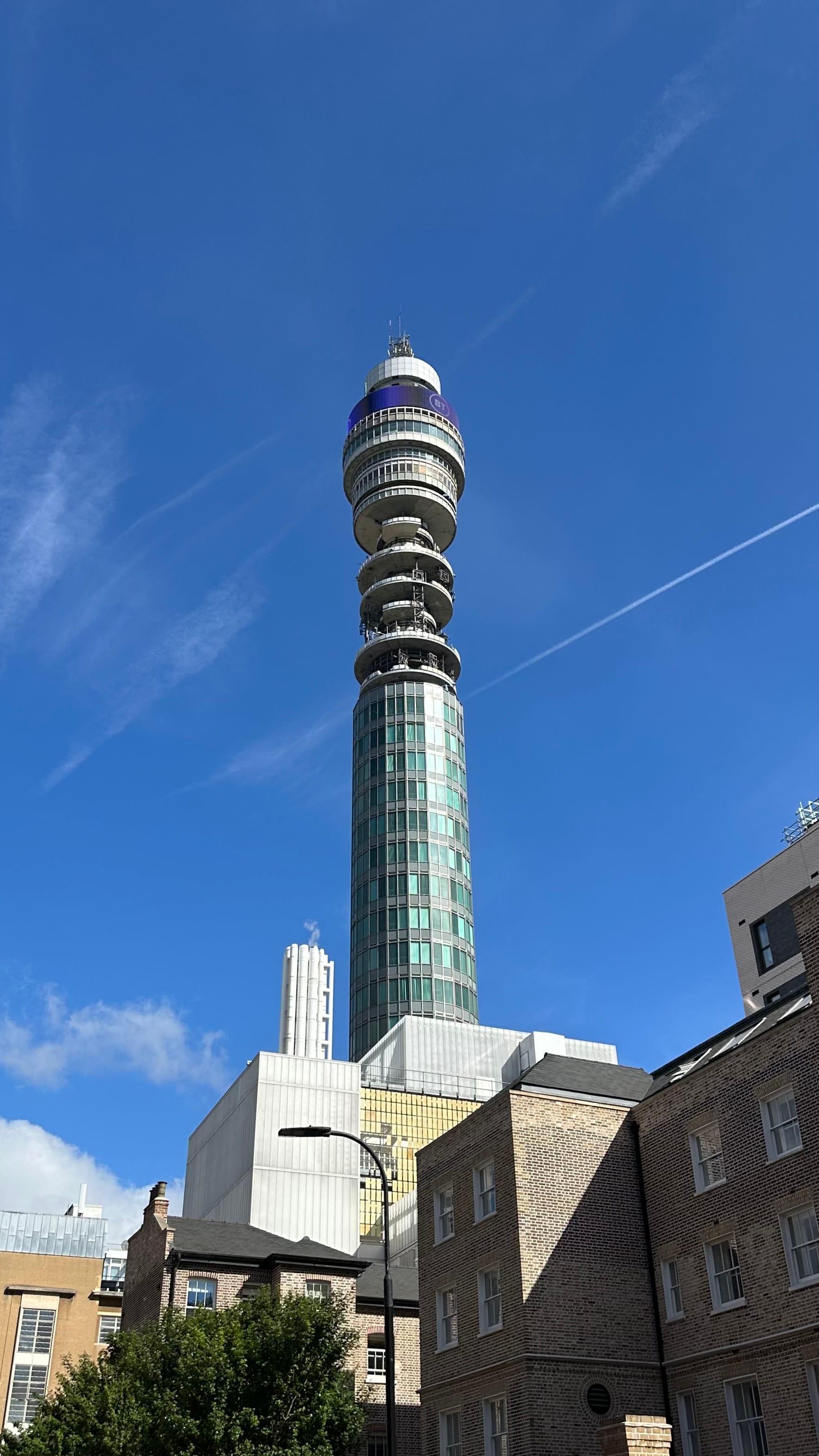
BT Tower in London on one of my walks.

Year to date: 593.42km. Tracking comfortably ahead of 1,400km and 1,600km targets, just behind 1,800km pace by about 24km.

Also had a few scritches with dogs on my runs, aaaaaawwww.

April run note.

Had an ECG Monday 27th; follow-up scheduled for Monday 18 May to discuss possible medication. More body joy.

Much respect to anyone who did the Leeds marathon and RUNNING UP THE CHEVIN YOU MAD BASTARDS. (Last year was one year enough for me.) Needs to book some races, mind...

Culture and out-and-about

Lou Sanders at Howard Assembly Room Wednesday 29 April was good fun. Afterwards there was an In Sides listening party on YouTube. Went to bed later than planned because of it, no Hartnoll brothers online at the same time (or obviously), good excuse to listen to that classic Orbital album yet again.

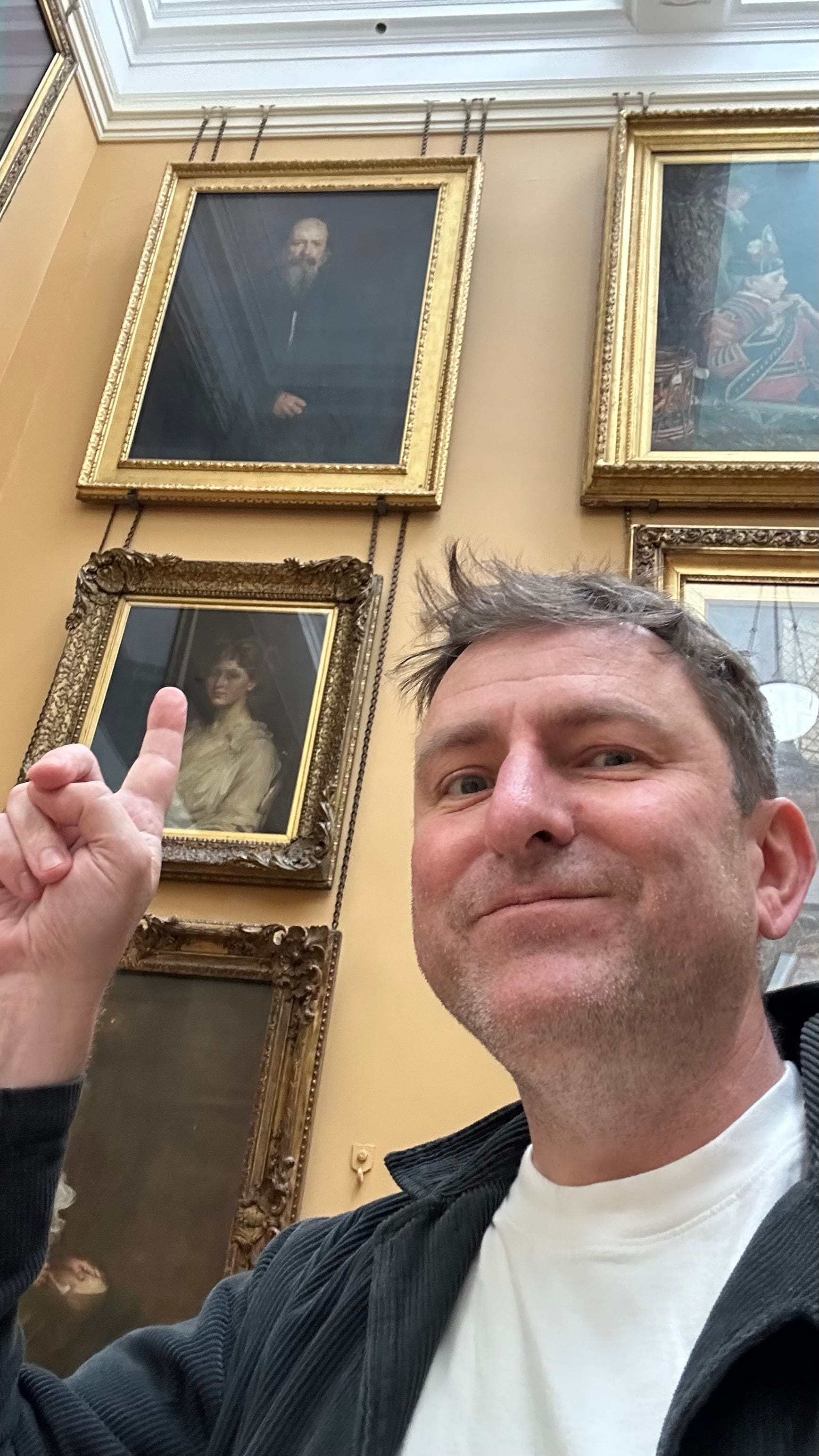
Two King Edward VI School alumni in the same picture, me and Alfred lord Tennyson at Lady Lever gallery in Port Sunlight.

Saturday 2 May: Port Sunlight and Lady Lever Art Gallery. Excellent. Port Sunlight is lovely. The gallery is stunning with a great collection, including a picture of fellow King Edward VI School alumni Alfred Lord Tennyson. All ahead of the Grimsby game at Tranmere. Town already assured of a playoff place before the game but a win could have meant higher playoffs seeding. Carnival atmosphere from the Town fans. Tranmere got the point they needed to avoid relegation.

Spent Sunday afternoon drinking homemade cocktails while watching TV. It was raining outside so I am more than fine with this.

After work trip in London on Tuesday 5 May, enjoyed a pint of Guinness with the bestie/wife in the Derbyshire. Arsenal match afterwards. Gooners!, or something.

Thursday 7 May: Camp Digital in Manchester. Lovely conference, good vibes. Mixed talks with a bit of work. Great to see so many friends afterwards. Took a lot from Tessa Fowler's nitty gritty talk about the Scottish Government's Ukrainian refugee response. Himal Mandalia's session on burnout was superb. Dan Hett did a nice job reminding us about the joy of craft and that it's easy to make things.

Also polling day for local councillors at home.

Sorted tickets for Harry Styles' Meltdown (Soulwax and NYPC) in June.

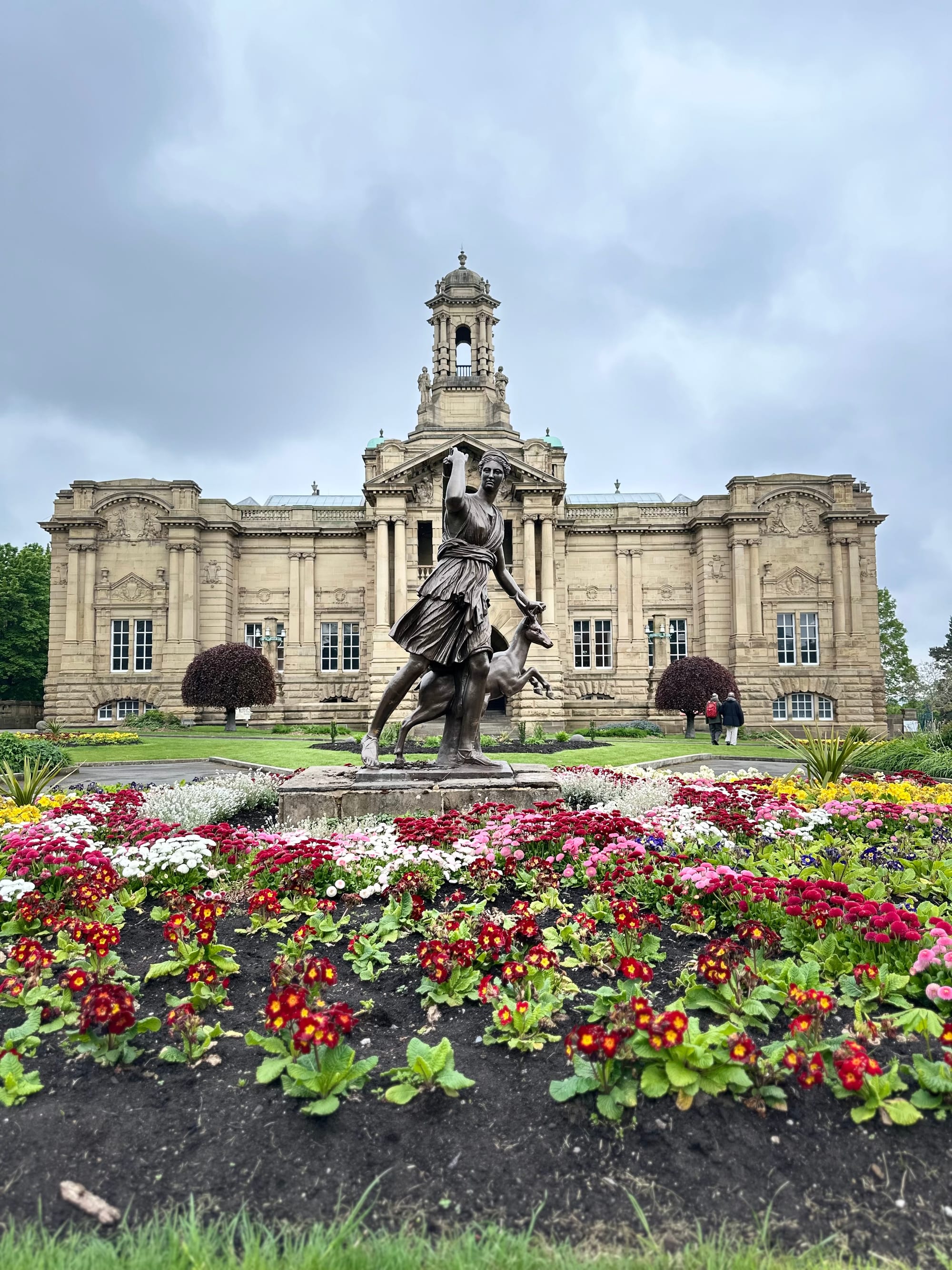
Outside the main entrance of Cartwright Hall, Bradford.

Saturday just gone had a trip down the road to Cartwright Hall with Kristin, first time since the Turner Prize exhibition. The collection on show at the moment is excellent. Well worth the trip to see with your own eyes. Some pics on Instagram.

Sunday (which threw me all day) game for Grimsby Town against Salford City, League Two playoff first leg at Blundell Park. Town lost 1-2 at home, final home game of the season. Reece Staunton scored the fastest goal in English playoff history. We were a bit limp, but still in it. Highlights. Second leg Friday 16 May, which I'll be watching in a pub in London (recommendations for a pub that'll actually show a League 2 playoff game welcome).

Reading: at the weekend read about 300 pages of Jason Lutes's Berlin - a massive step forward after taking three years to read the first 100 pages.

Film: Bridesmaids. According to IMDB I've seen it before (I rated it). I can't remember that. I laughed and laughed and laughed though. Down and Out in Beverly Hills yet again: Shut up you putsch etc etc. And The Devil Wears Prada.

Recent Taskmaster is still lolz lolz lolz.

House, home, maintenance
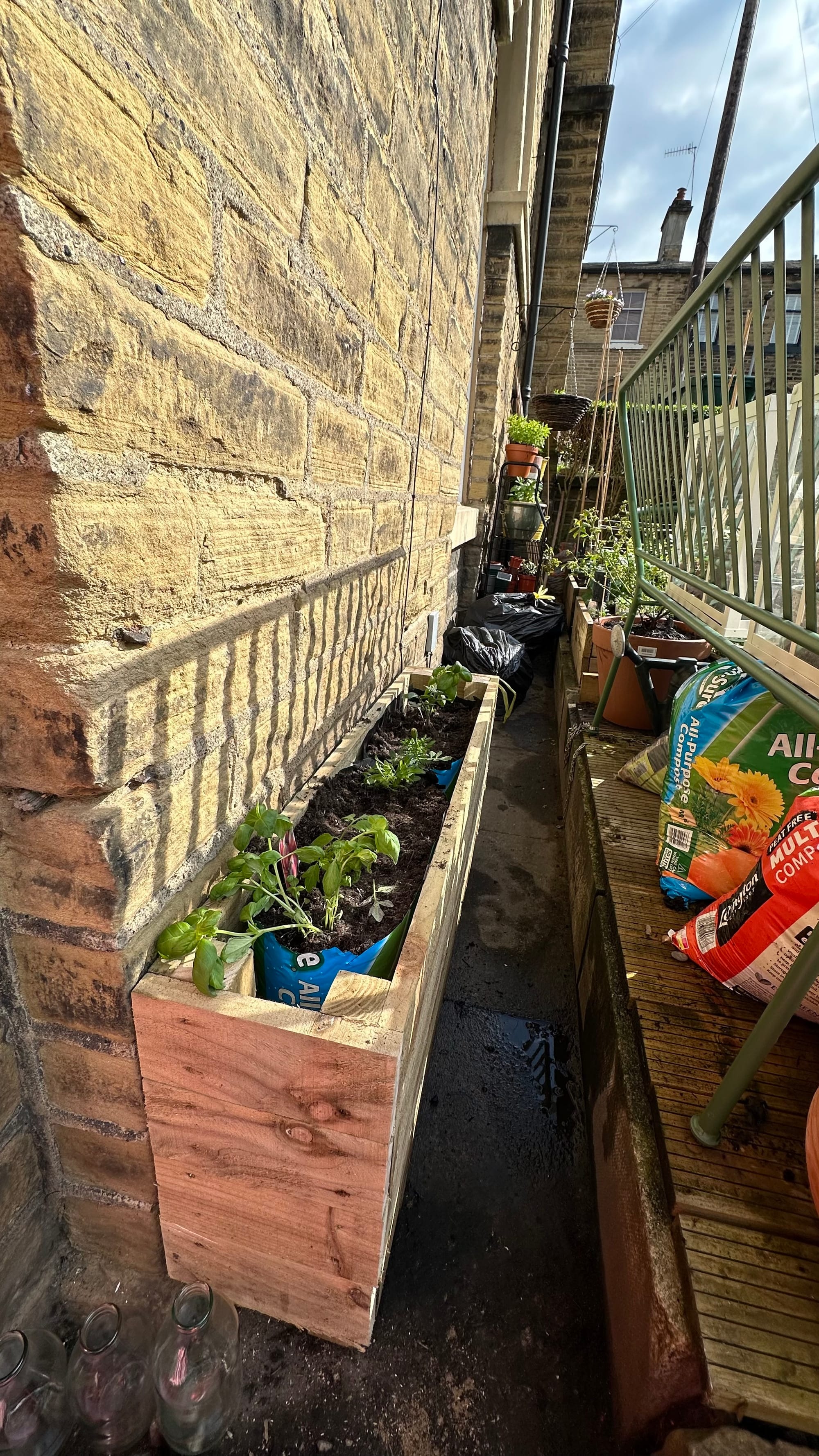
I made a tomato planter for the front garden. Pretty sure the less making I do at work the more making I do at home.

Made a tomato planter for the front door on bank holiday Monday.

New front and back doors on order.

Contacted a decorator to get the new windows painted.

Work

Been a slog. Maybe something longer to write about in the future.

Finally got the design history from the start of the work published: Appointments in the App intro.

Went to Agile Yorkshire: Dave West (CEO of Scrum.org) on Scrum evolving from a delivery framework into a governance framework in an AI world.

Interesting internetNext week
  • Thursday-Sunday: London trip with Kristin
  • Friday: Agile in the Ether #92; Salford City v Grimsby Town playoff second leg (watching from a pub in London, call out for recommendations again, thanks!)
  • Sunday: Athletic Bilbao v Celta Vigo
  • Running: targeting 40km for the week
6a023eddd25ff30001b33743
Extensions
Agile Yorkshire – May 2026 notes
eventsAgile Yorkshire

An event of two halves. I was only there for the first as it's been a long few days and I needed some downtime afterwards. Some notes on the first half.

Intro

Dave West, CEO of Scrum.org, on What happens to Scrum in an AI world? With

Show full content

An event of two halves. I was only there for the first as it's been a long few days and I needed some downtime afterwards. Some notes on the first half.

Intro

Dave West, CEO of Scrum.org, on What happens to Scrum in an AI world? With organisations simultaneously cutting agile investments whilst AI tools are making delivery faster than ever, Dave used his vantage point - constantly talking to CTOs and senior leaders globally - to explore whether Scrum's foundational assumptions still hold, and how the framework might need to evolve.

Context and main argument
  • We're living in an increasingly uncertain world where change is measured in hours, not quarters
  • Most organisations have responded by freezing agile investments and returning to command & control (the opposite of what they should do)
  • AI is exposing that delivery has never been the bottleneck – governance, innovation, and deciding what to build are the real constraints
The speed paradox
  • AI dramatically accelerates individual output (code, content, analysis)
  • But organisations aren't seeing corresponding increases in value delivery
  • Developers are burning out from the sheer volume of AI-generated output that needs reviewing and coordinating
  • This is classic local optimisation – we're accelerating the wrong part of the system
Scrum as governance, not delivery
  • Dave's key provocation: Scrum might be evolving from a delivery framework into a governance framework
  • With AI dramatically accelerating what teams can build, Scrum's ceremonies become governance mechanisms:
    • Sprint goals as guardrails to prevent teams doing everything they're now capable of
    • Definition of done as quality gates for AI output
    • Daily scrums to coordinate the volume of AI-generated work
    • Sprint reviews as checkpoints to ensure direction is still correct
  • Only 23% of organisations are actively thinking about how to govern AI
  • This is where Scrum could provide the most value in an AI-augmented world
Scrum as an infinite versus a finite game
  • Most organisations treat agile as a finite game with clear wins and endings
  • Scrum should be an infinite game – the goal is to keep playing, not to "win"
  • Sprint goals, empiricism, and regular cadence become even more important with AI
How AI challenges agile's foundational assumptions
  • Do we still need cross-functional teams if AI can provide all the skills?
  • Is working software still the primary measure of progress when AI can generate massive amounts of code?
  • Example: Rabobank consolidated from 12-14 teams down to 2-3 per value stream by using AI to reduce coordination overhead
New roles in an AI-augmented world

Scrum masters become:

  • AI governance managers (who owns the output?)
  • AI collaboration coaches and fluency builders for teams
  • System designers for human + AI hybrid teams

Product owners become:

  • Context managers (AI needs explicit context that humans take for granted)
  • Discovery specialists (AI enables rapid option analysis)
  • Relationship builders (still can't be automated)
What organisations should do
  • Invest in AI fluency for teams, not just individual tools
  • Build shared prompt libraries and context models
  • Define clear governance and accountabilities for AI outputs
  • Focus relentlessly on outcomes, not output (story points/velocity are now completely meaningless)
What individuals should do
  • Develop empirical judgement – your job is to provide wisdom, not just data
  • Build team cohesion: people are disconnected and anxious about AI
  • Treat your career as a product backlog with a clear product goal
  • Keep learning: use AI to help you learn, ironically
  • Help evolve Scrum – share what's working and what needs to change
Dave's core message 

Technology changes are catalysts for human change. AI will fundamentally reshape work. We can either let a small group of tech lords drive that change.

Or we can use agile principles to harness AI for good: building better teams, delivering more value, and keeping humans at the centre.

Postscript: relevance to my work

Several threads from Dave's talk resonated with my product and user-centred design leadership hats on:

Context as competitive advantage
Dave's point product owners become "context managers" in an AI world seems critical. AI can generate solutions rapidly, but it can't know the nuanced context of NHS services, clinical pathways, user needs, or organisational constraints unless someone actively manages that context. A person's deep understanding of user needs and service design becomes more valuable, not less.

Discovery elevation
Dave argued discovery should become a "first class citizen" in Scrum, with AI enabling rapid option analysis and hypothesis testing. How does this align with user-centred design principles? AI could accelerate the ability to prototype and test multiple solutions – but the judgement about which problems to solve and which user needs to prioritise remains fundamentally human.

The governance bottleneck
Dave made a central argument that delivery is no longer the constraint, governance is. Which sounds familiar in my NHS work. The real bottleneck isn't building the integration or the interface – it's the decision-making across ICBs, trusts, and national stakeholders. AI doesn't fix that. Does it make the governance and prioritisation decisions even more critical?

Infinite game thinking
NHS transformation work shouldn't be a finite project with a clear "done" state (and let's avoid the use of BAU for now too – work is work). Dave's emphasis on treating the work as an infinite game – the goal is to keep learning, adapting, and delivering value – maps directly to how I want to approach ongoing service improvement through research, analysis and then service iteration.

Outcomes over output
I especially liked Dave's dismissal of velocity and story points as "completely meaningless" in an AI world. A hopscotch of logic takes me to this reinforcing core product and UCD principles: what matters is the value delivered to users and the organisation, not the volume of features shipped.

More info on Agile Yorkshire

69fbb0e0d25ff30001b336eb
Extensions
Run note for April 2026
2026 runningrun noterun notesrunning
What is this?

My monthly look back on my running. Reflection helps me with the now, the next and the further future. It's all good.

Previous run note: March 2026

April summary
  • 30 days: 21 days running, 9 days off.
  • 164.25 km. Target: 180 to 200 km.
Show full content
What is this?

My monthly look back on my running. Reflection helps me with the now, the next and the further future. It's all good.

Previous run note: March 2026

April summary
  • 30 days: 21 days running, 9 days off.
  • 164.25 km. Target: 180 to 200 km.
  • Average of 7.82 km per run / 5.48 km per day.
  • Average of 38.3 km per week.
  • Year to date: 545.29 km.
Week km Days ran Avg per day Wednesday 1 April (five days) 19.82 3 6.61 km w/c Monday 6 April 45.53 5 9.11 km w/c Monday 13 April 19.53 3 6.51 km w/c Monday 20 April 54.41 7 7.77 km w/c Monday 27 April (four days) 24.96 3 8.32 km Notes

Target was 180 to 200 km. Landed on 164.25 km. Short by 15km so not too bad.

Days 1 to 12: inconsistent but functional, mixing single rest/off days with short streaks.
Days 13 to 19: a collapse — strict alternating pattern, run one day, rest the next, which killed momentum and produced the lightest week at 19.53 km, also when I was pulling some long days for work.
Days 20 to 29: ten consecutive running days with no rest (and longest streak of the year so far). Salvaged the month from being significantly worse, possibly trying to counterbalance the lacking week before. No injuries, no burnout, just consistent getting out the door.
Day 30: took it off, just to be safe.

The month included two trips away.

  • Easter weekend, 3 to 6 April, in Billingshurst. Three runs during that trip. Different terrain, different routes, all good.
  • 21 and 22 April: a night in Cambridge and a tidy 6km before the train home. Lots of walking on that trip too.

Both trips kept the running going, which is the main thing.

Best week was w/c 20 April with 54.41 km, seven runs in seven days.

Longest single run: 11.19 km, Sunday 12 April at, out past Bingley, steady, felt good. Saturday 27 April came close at 10.64 km.

General pattern held: most runs between 6 km and 8 km, familiar routes, home to Bingley and back. Just functional plodding.

The knee is still improving. Achilles quiet. No massive injuries, just the odd niggle like my left knee sometimes feeling loose, no setbacks. The body's cooperating, which is the main thing. Ran through a couple of tired mornings but nothing that stopped the next day's run.

Weight sitting around 87 kg. Target was 86 kg by end of April. Didn't happen. Flat progress, which is better than going backwards but not what was needed. Running to stay ahead of the numbers rather than running to improve them. Something needs adjusting — the intake rather than the distance.

Most runs were in the morning, a small handful drifted to evening when mornings got squeezed, but the early habit is established. Still the best way to get it done before the day has other ideas.

Gym situation: didn't happen. Home-based approach didn't materialise either. This keeps getting deferred. Needs commitment, although does all the gardening count?

The HbA1c and foot check-up from March were positive, although my blood pressure less so. so the direction is right even if the pace is slower than ideal.

A functional month, but a good month. 164km is about the 15th highest monthly return I've had. Twenty-one days of running out of thirty is a good return, even if the pattern was a bit haphazard. Planning and determination got there in the end.

Versus annual targets
  • 1,400 km looks comfortable.
  • 1,600 km tracking OK, just ahead of pace.
  • 1,800 km, 57km behind, a push in the warmer weather could see that actually happen
  • 2,000 km lol
Goals for May
  • 31 days, targeting 180 to 200 km.
  • Keep the morning run habit. It is working.
  • At least one run of 12 km+ per week.
  • Actually sort out a home-based strength or cross-training approach. (Tidy the back yard a little — and pray for no rain.)
  • Weight: 85.5kg by end of May. Let's go.
  • Break the Bingley loop monotony — one different route per week minimum.
  • There's London trips planned this month, use them for city runs.
  • Book some races.

My 2026 running spreadsheet
Me on Strava, inevitably

69f8496d09023a00011fff3f
Extensions
Week note — week commencing Monday 20 April 2026
2026 weeknotesweeknotesweek notesweeknoteweek note
What is this?

Every week I look back at the previous seven days and forwards to the next. Running and health, culture, home improvements, work and adjacent things. Read none, some or all – sharing in case it helps someone else out there.

Last week's note.

tldr

Midweek

Show full content
What is this?

Every week I look back at the previous seven days and forwards to the next. Running and health, culture, home improvements, work and adjacent things. Read none, some or all – sharing in case it helps someone else out there.

Last week's note.

tldr

Midweek trip to Cambridge for some sightseeing, the football, and a morning jog; The Prodigy in Leeds; Dean Owens two minutes from the house; 4-0 win v Swindon from the sofa; 54.41km of running across seven days; gardening.

Health and running

54.41km across the week. Ran every day.

  • Monday 7.66km
  • Tuesday 5.3km
  • Wednesday 6.04km – lovely morning jog round Cambridge
  • Thursday 8.22km
  • Friday 8.65km
  • Saturday 10.53km, with the local park run slid in
  • Sunday 8.01km, seeing someone do a remote London marathon along the canal

April after three weeks: 140km. Year to date: 522km – comfortably between the 1,600km and 1,800km targets if this pace continues.

❤️ Loved seeing lots of chums doing the London marathon. ❤️

Culture and out-and-about
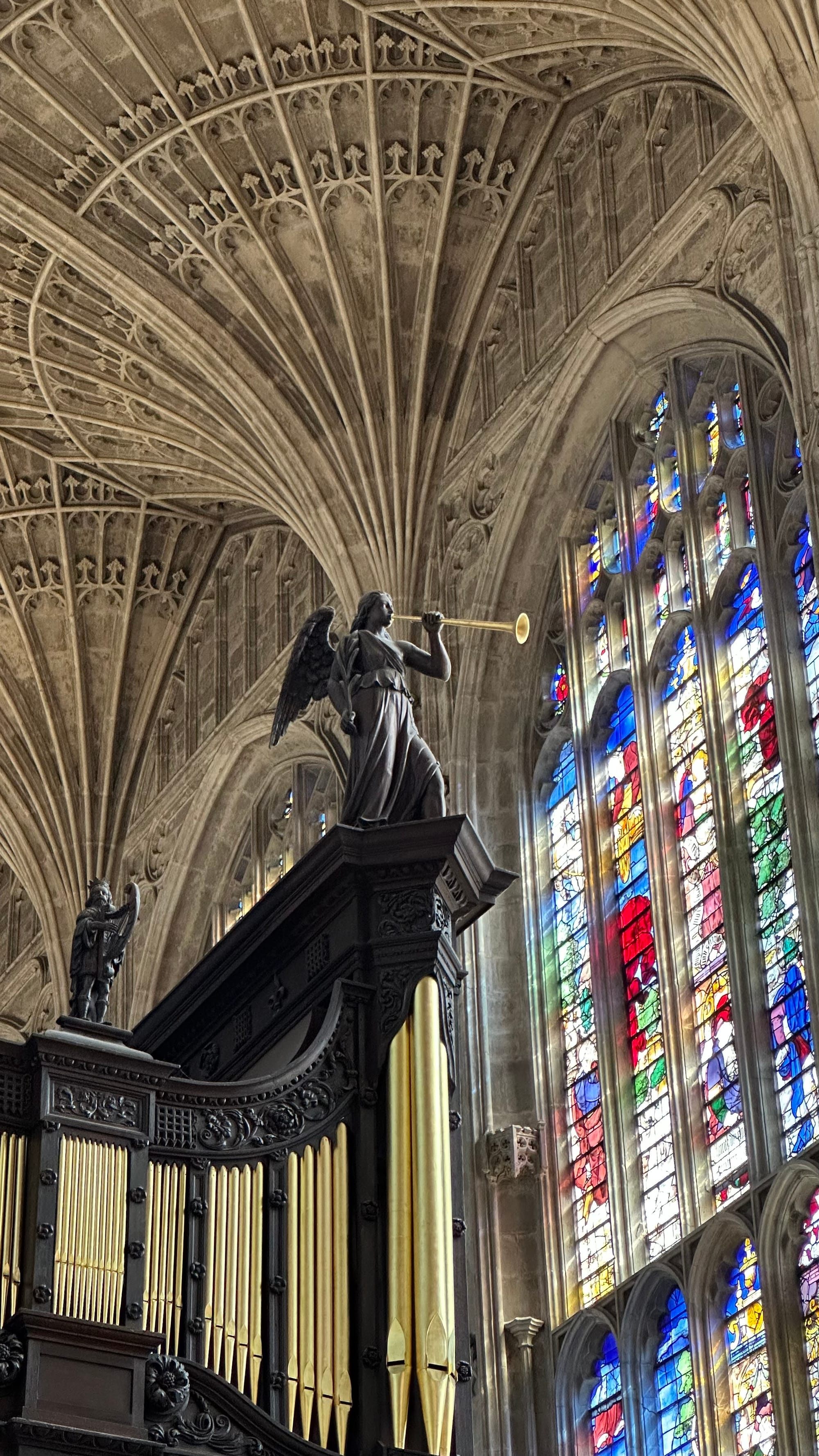
King's College Chapel interior with fan vaulted ceiling, organ angel statue and stained glass windows

Tuesday to Cambridge for the Grimsby game. Mooch around in the afternoon in lovely weather (Parker's Piece, the birthplace of footie's rules; the Mathematical bridge is great!), popped into King's College for a wander around the amazing chapel, before heading to the Abbey Stadium for the evening kick-off. One of the Town games of the season. Nice to be stood next to Jase on the terrace. Wednesday morning's jog round Cambridge before getting the train home was lovely. Some pics over on Instagram.

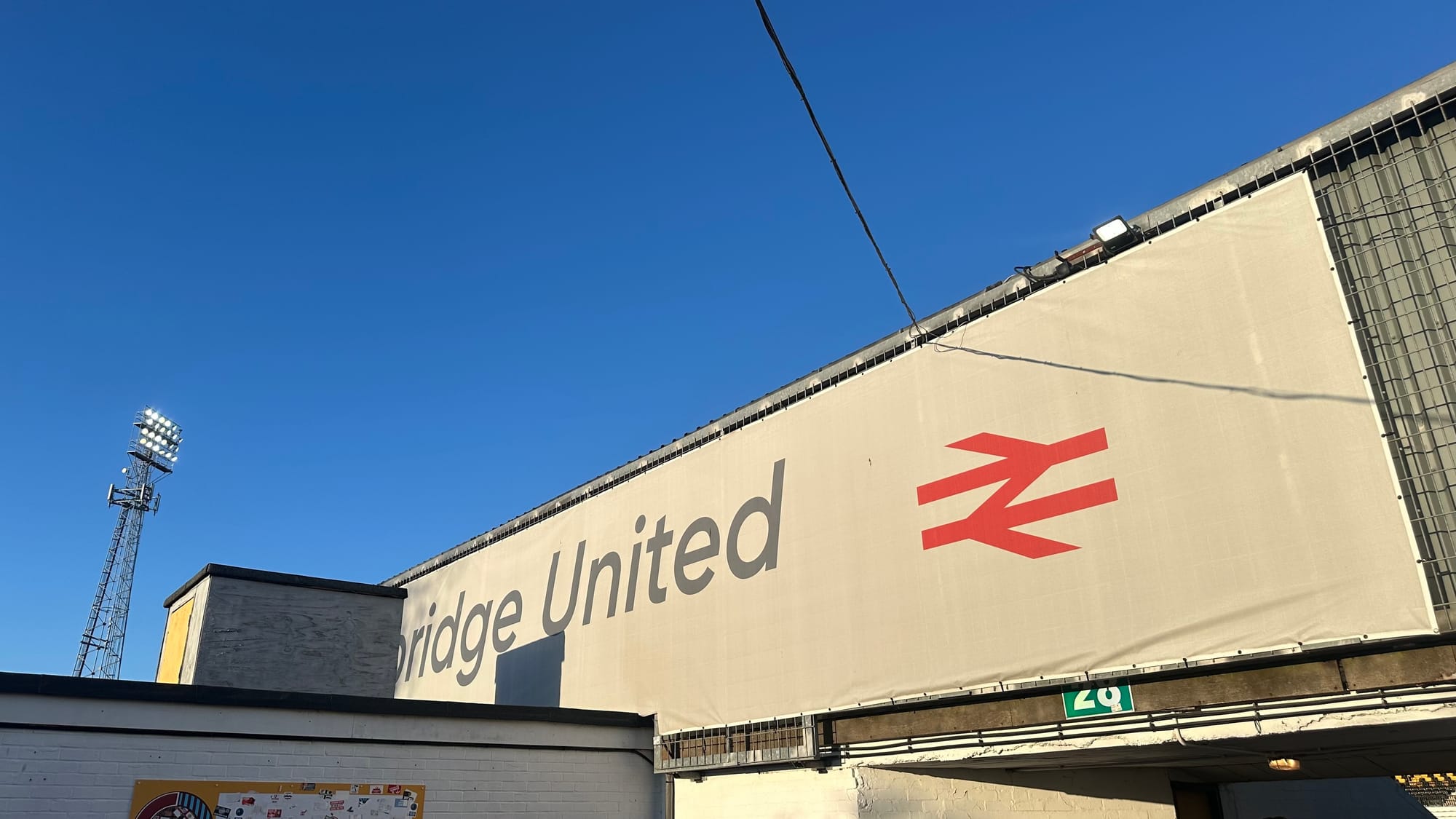
The British Rail logo on the exterior of Cambridge United's Abbey Stadium, viewed from outside the away end under clear blue skies. Nice pylons too.

Wednesday evening: First Direct Arena in Leeds. Carl Cox first with two hours of dance floor fillers, then The Prodigy, who were good.

Friday: Dean Owens & The Sinners at Caroline Street Social Club, two minutes from the house. Very good.

Saturday: Grimsby v Swindon, 4-0, watched it from the comfort of the sofa as the weekend was too busy, meant I could have a pre-match beer at Cultures beforehand. Playoffs confirmed.

Sunday: day trip to Coventry to take Nate back to uni. It's the most time I spent with him the last month while he's been back. Listened to the Leeds FA Cup semifinal game and Gorillaz tunes all the way back.

Reading: picked up Jason Lutes' Berlin again, got half an hour in.

TV/films: Finished Marvel's Wonder Man, great fun. Behind on watching 52 films in 52 weeks.

House, home, maintenance

Wall guy came round for the front wall repointing. All looking nice now. Another improvement ticked off. Dude was so nice too.

Lots of gardening in evenings and over the weekend. Not much DIY, but that'll pick up this week again.

Someone came to look at the windows to get them painted – getting costs sorted.

Work

Lots of Jira punishment. Strong thoughts off this week on what I think is good product practice versus what others do and the line between understanding and flying in. But for another day. Or just hold it in my mental pain cave.

Interesting internetNext week

Running: planning roughly 45km.

Health: ECG on Monday.

Back to the doorframe stripping.

Garden: keep the seedlings going, get some more planters made.

Lou Sanders at Howard Assembly Room in Leeds on Wednesday.

Starting the bank holiday weekend with Saturday over in the Wirral to visit Port Sunlight and Lady Lever Art Gallery before Grimsby away at Tranmere.

No legging it around the country this week.

69ef03ab0eb9ab0001a2a73f
Extensions
Week note — week commencing Monday 13 April 2026
2026 weeknotesweeknotesweeknoteweek notesweek note
What is this?

Every week I look back at the previous seven days and forwards to the next. Work and adjacent things, running and health, culture, home improvements, and personal stuff. Read none, some or all – sharing in case it helps someone else out there.

Last week's

Show full content
What is this?

Every week I look back at the previous seven days and forwards to the next. Work and adjacent things, running and health, culture, home improvements, and personal stuff. Read none, some or all – sharing in case it helps someone else out there.

Last week's note.

Running

19.53km. Three runs: Tuesday, Thursday, Saturday. Lots on but not good enough. Same old rule ignored: On a weekday get out early on or you won't get out at all. Rule proven. I hit Friday needing 30km for my weekly target – a stretch.

Eased in the Asics Trabuco 14s in Saturday is sloppy conditions. Like their vibe so far.

This week I'm planning roughly 50km. Every day, steady, all it needs.

General
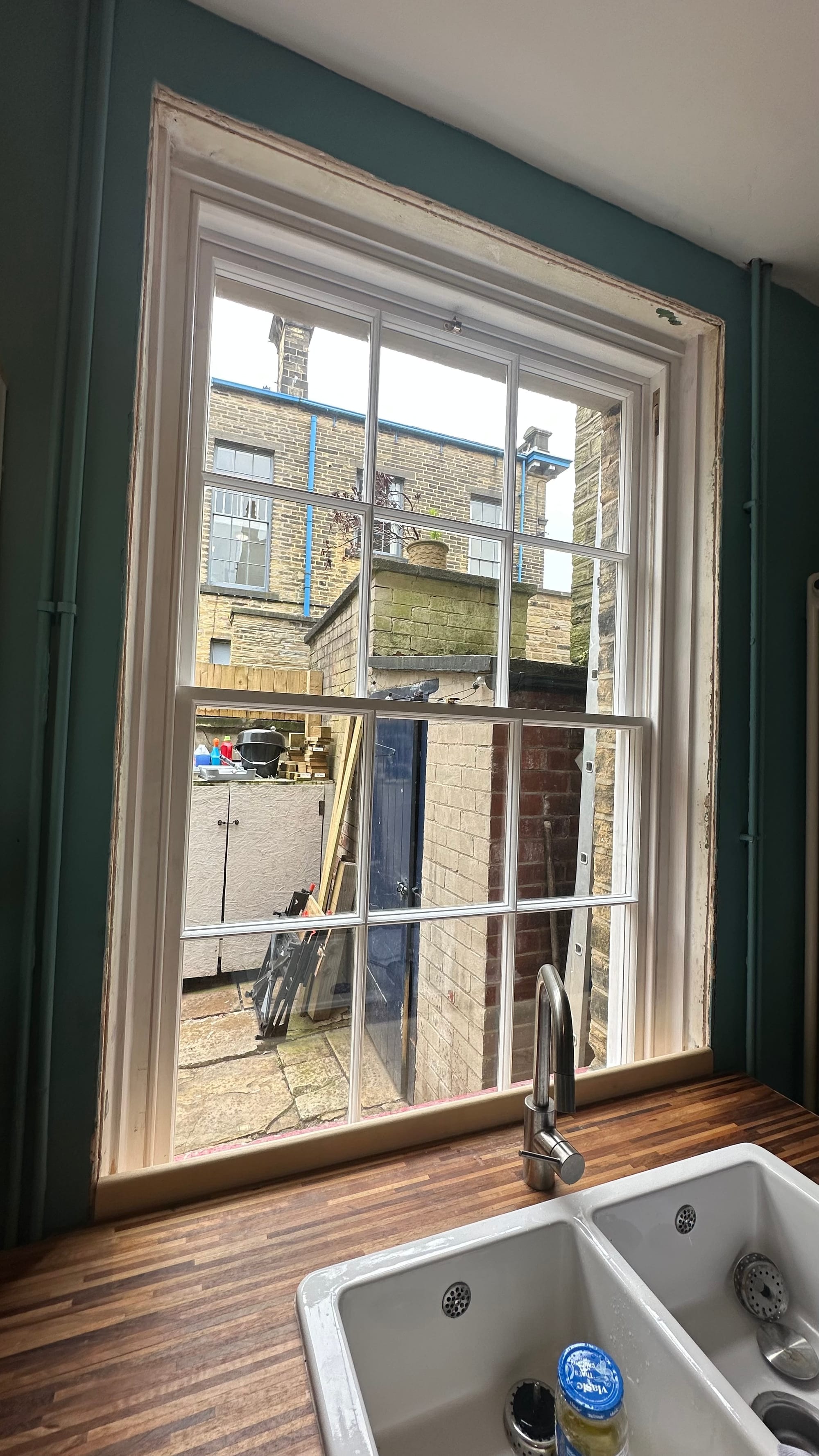
A new sash window in the kitchen of our house in Saltaire, looking out into the yard.

We have a complete set of new windows in the house now, amazing. It's great having every window in the house actually open and not look like they're about to disintegrate. Just - just - the doors left, which are about £5k in total. 💸

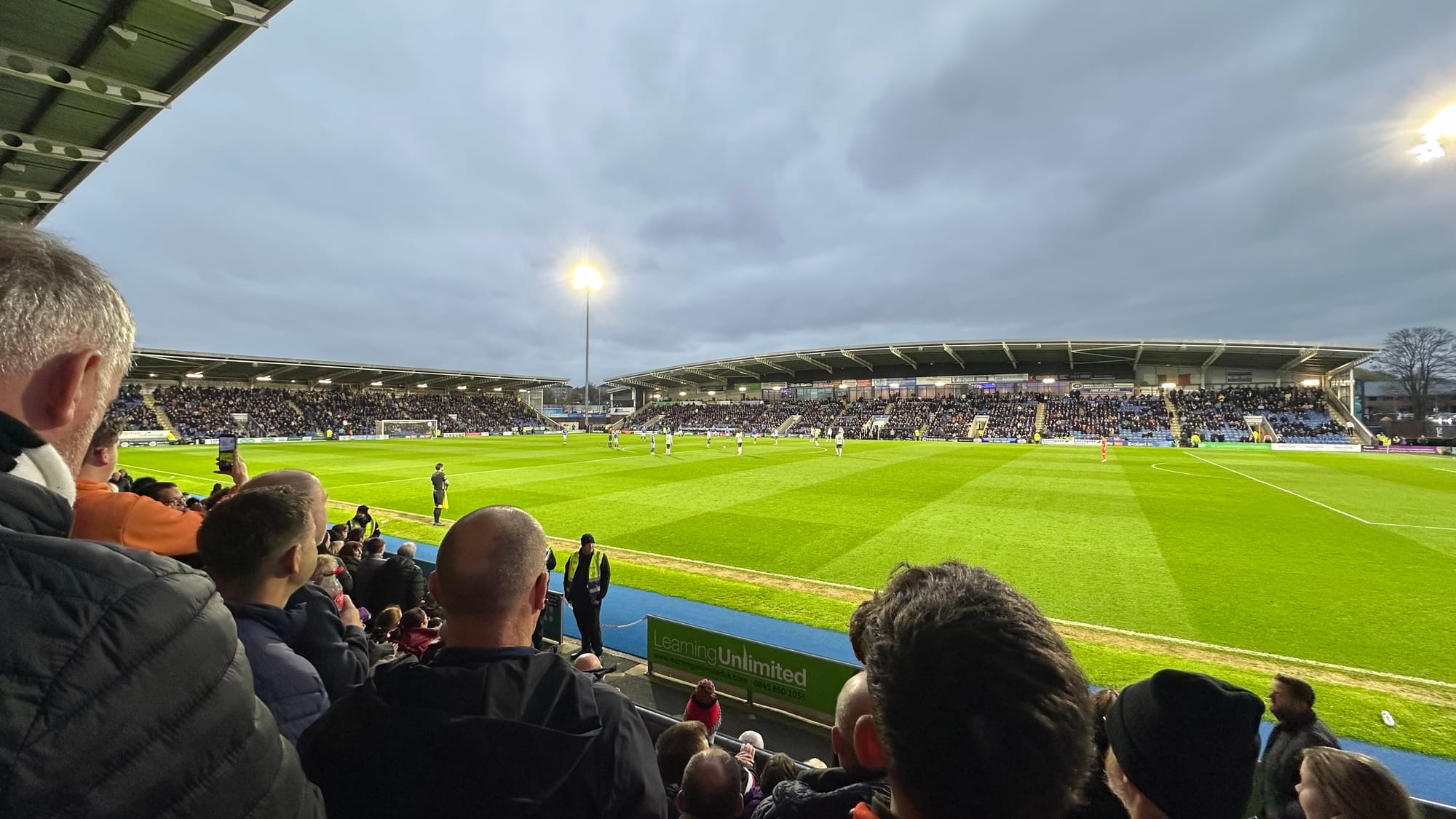
Pre-match from the away end at Chesterfield's stadium under floodlights, showing the pitch and main stand with a crowd gathered under an overcast evening sky.

Football: Took the lad to Chesterfield for Grimsby on Tuesday, a missed chance for Town to pull closer in the table to the Spirerites. Could've equalised in the last minute, didn't, wouldn't have deserved the point tbh. 2-1 defeat.

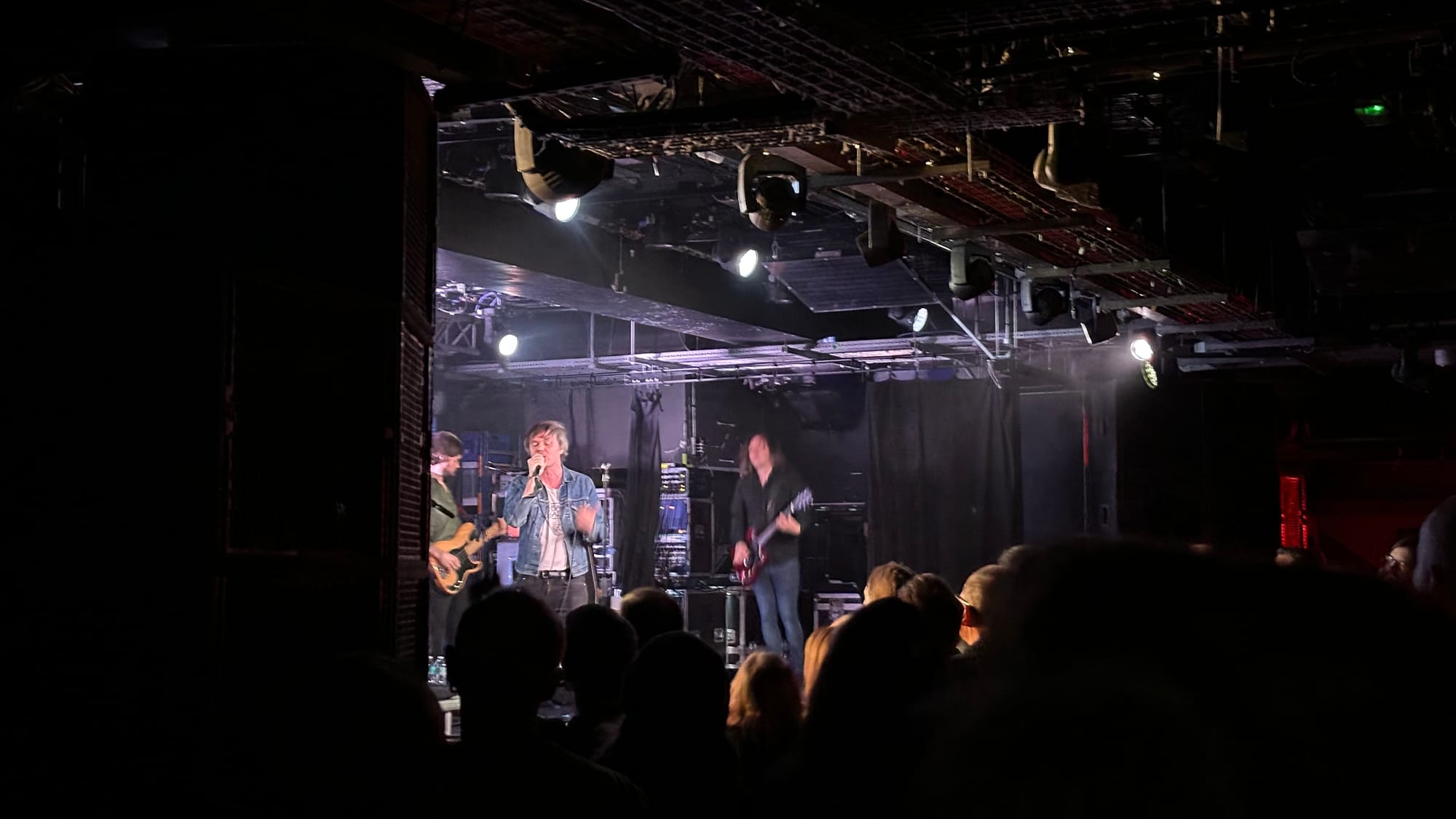
Idlewild on stage at the "intimate" Foundry at Sheffield uni, Roddy centre stage flanked by band members, viewed to the side from within the crowd.

Date night in Sheffield on Thursday for Idlewild. They were grand. Not as many tracks from the new album as I expected. The spiky A Film For the Future getting an airing. We need to work out a better way of coexisting with tall people at gigs though.

Added another Open Bench. Spotted a few at Roberts Park that aren't on there yet.

Fell into an internet rabbit hole about people making homes in trees.

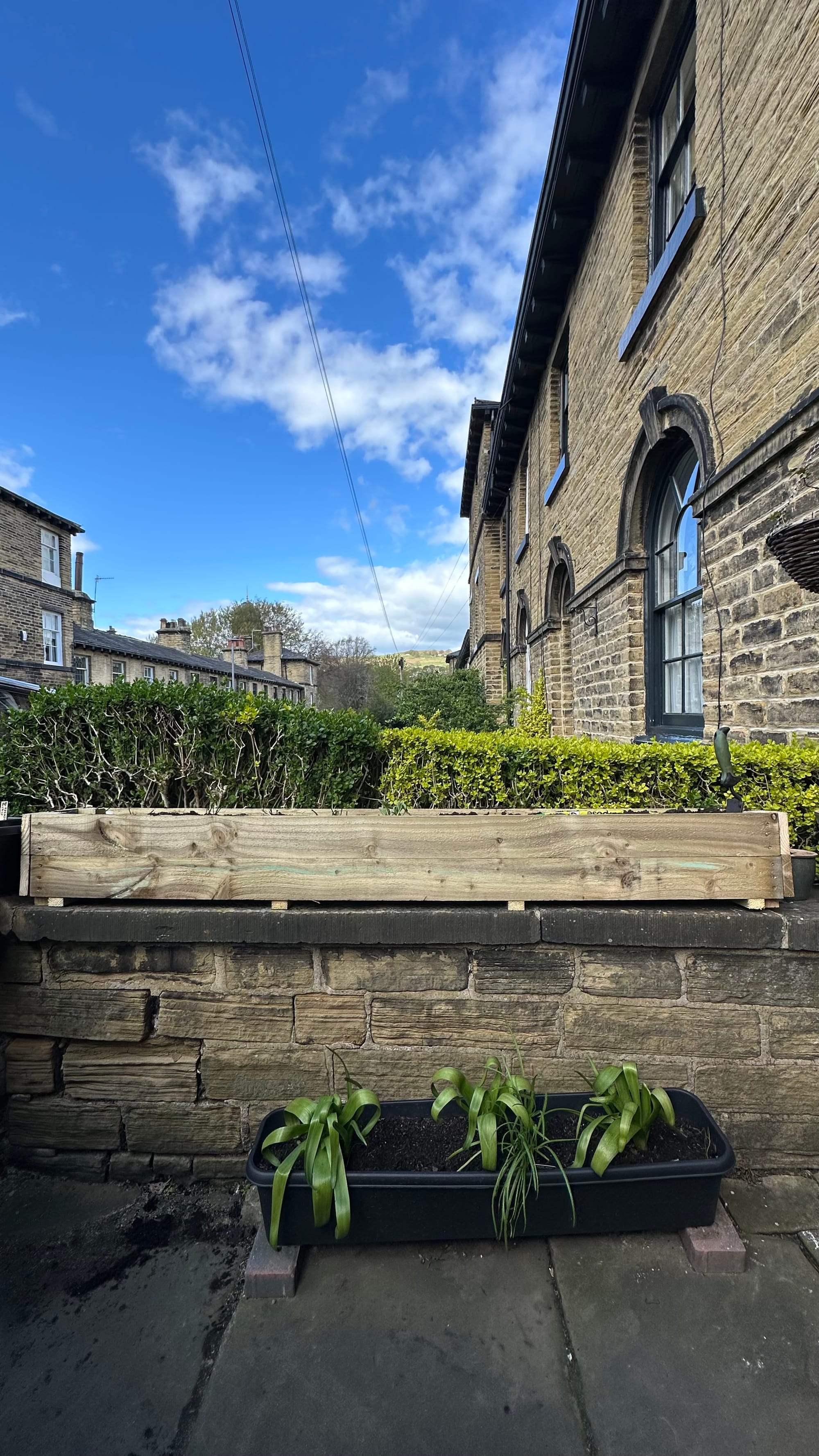
A freshly made wooden raised planter bed positioned on top of a stone wall in the front garden, the Victorian stone buildings of William Henry Street visible behind.

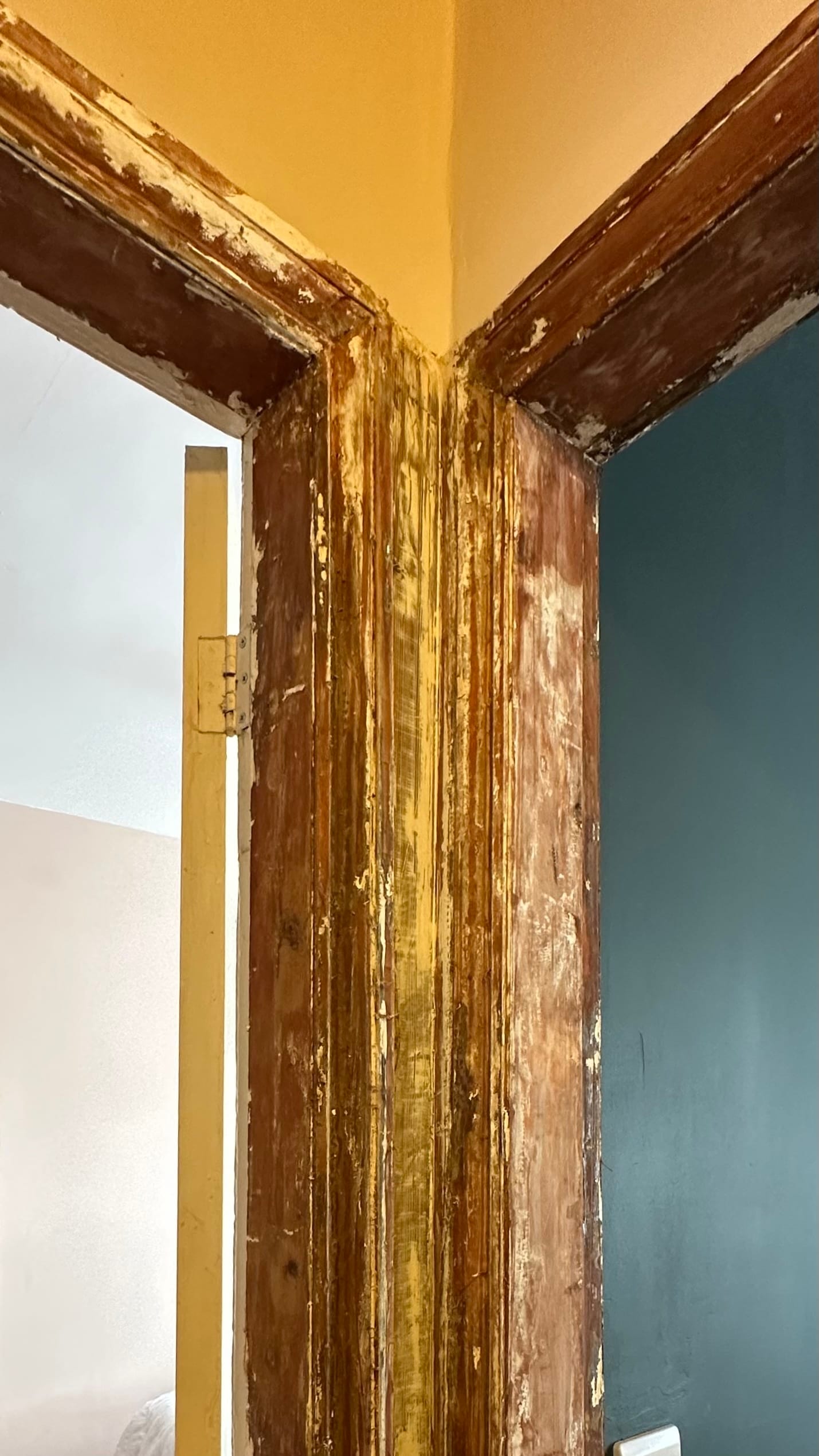
Weekend was lots of gardening with Kristin (including: made a strawberry planter too for out front where the sun hits in the afternoon; potatoes into some tubs onto the top of one of the outhouses), watching Grimsby beat Gillingham 4-1 while I cleaned the kitchen shelves and lots more doorframe stripping (round three, about three more rounds to go, getting there).

Interior doorframe mid-restoration, stripped back to reveal layers of old paint in yellows and browns. This is actually a lot of progress.

Watched the new Malcolm in the Middle, just four episodes, felt like the energy of a few other episodes squeezed in too, good fun. Started Wonder Man, which I am digging (and reminding me I need to keep picking through The Studio).

Next week

Cambridge on Tuesday for the Town game (three league games left), Carl Cox and the Prodigy in Leeds on Wednesday for some midweek exercise, Experimentation North, getting the front wall repointed, try and watch Akira's re-release at the flicks, Town v Swindon, taking Nate back to uni. Relentless stuff at the moment.

69e68ddf39a575000112d187
Extensions
Week note — week commencing Monday 6 April 2026
2026 weeknotesweeknotesweek notesweek note
What is this?

Every week I look back at the previous seven days and forwards to the next. Work and adjacent things, running and health, culture, home improvements, and personal stuff. Read none, some or all – sharing in case it helps someone else out there.

Previous week: Week

Show full content
What is this?

Every week I look back at the previous seven days and forwards to the next. Work and adjacent things, running and health, culture, home improvements, and personal stuff. Read none, some or all – sharing in case it helps someone else out there.

Previous week: Week commencing Monday 30 March 2026

tldr

Easter in Sussex, Crawley away, five-hour drive back (The Cure/Depeche Mode), Gareth from uni days, 45.53km, garden seeds, Taskmaster, Northern News on toilets, Blue Lines at 35.

Health and running

By the end of the week the body felt good overall. Earlier in the week, less so.

The usual right knee was slightly there, and the tendon at the bottom of my right leg was slightly sore, but nothing that stopped anything.

Got out five times across the week for 45.53km total.

  • Monday 7.09km in Billingshurst.
  • At home: Wednesday 8.67km, Thursday 8.02km, Saturday 10.56km (added a bench to Open Benches too), all heading west towards Bingley.
  • Sunday 11.19km eastwards. Was going to Apperley Bridge and then turn back but didn't realise there was a half marathon going on so turned back early rather than run into the mass of racers.
  • Rest days Tuesday and Friday fitted around shutters quote/Gareth/football/other commitments.
  • April after two weeks: 77.71km (week 1: 32.18km, week 2: 45.53km).
  • Tracking towards a realistic target of around 175km for the month, which would be solid given Easter travel and house stuff.
  • Year to date: 446.75km – comfortably between 1,600km and 1,800km for the year if this pace continues.

Ordered some new Asics Novablasts and a pair of Asics Trabucos while Sportsshoes were doing 20 percent off at Easter.

Not sure about weight. Half in denial.

Probably ate more bread than I should have.

Work

Monday and Tuesday were days off.

Friday was one of those days there were plenty of after-work sessions, one session being very heavy going. A bit of work seeped into the weekend, because if I didn't do it it'd be living in my head all weekend.

Realised this week it's about 12 years to the day I left Home, which seems a long time to be "doing my own thing".

Socialising

We were away for Easter weekend: Easter Monday morning started with a short drive from Billingshurst to Amberleyvillage to look at the church and the lovely thatched roofed houses, before saying bye to Becca and Rory (our hosts for the weekend) and heading to Crawley for the Grimsby game. No one else from the Cod Almighty crew was at the game so I wrote a match report on that one. Crawley crossed off the away grounds to go to.

Nearly five hours driving back after the game, had a good singalong to The Cure up to and along the M25, then Depeche Mode for the M1.

Caught up with Gareth — a long-term friend from uni days, haven't seen him for a lllllooooooooonnnnnnng time — and his family on Tuesday afternoon as they were Saltaire way. Came away with the mission to get a few of the old uni crew together for... a... something.

Was a supportive husband and watched Arsenal and Sporting's European Cup quarter final on Tuesday night, then the Porto v Forest Europa League quarter final on Thursday (and not because there's support for Forest in this house). Arsenal v Bournemouth was on the TV on Saturday lunchtime while we pottered around in the garden. The Gunners are making hard work of wanting that title.

Saturday Town were home to Crewe, watched on TV as couldn't get two tickets together. Very good, very satisfying, despite giving away the two late goals. We're a place outside the play-offs, just below Chesterfield. Guess who we play next.

The boy and his girlfriend came round for dinner; nice to see him. What the fuck is all this having to put two Nintendo Switches next to each other to eject, unload and load though.

Sunday night NBA: Brooklyn Nets (my team) and Dallas Mavs (her team) finished their seasons, both failing to make the play-offs. Both teams were going to finish 13th in their respective Conferences, but Mavs won their last game, so they ended up twelfth and the Nets thirteenth. Just had to go one better, didn't they. I stayed up (11pm on a Sunday!) to watch the first quarter of the Nets game, like some sort of tribute. They started strong but were well on their way to losing by the end of the first 12 minutes. Until October, boys. 🫡

Mind and culture

No progress on reading more Chief Engineer this week. Bit stuck on it.

New series of Taskmaster landed and it was a hoot. (It's on YouTube too.)

Started watching Everybody's Live with John Mulaney as some light relief.

Very much enjoyed listening to the podcast Northern News (Acast / Pocketcasts / other podcasts places are available). The amazing Andy Zaltzman was on, championing "human ingenuity in the face of disappointment". He also made a really good point about the lack of investment in public toilets – they are rarely a thing these days.

Massive Attack's Blue Lines is THIRTY-FIVE YEARS OLD.

Managed to avoid watching Hot Tub Time Machine 2. It wasn't hard.

House, home, maintenance

Had someone round to quote on shutters for the windows. Need to get the windows finished off before pursuing but have idea of costs now.

Weekend pootling in the front garden and back yard. Nursing seeds, getting another salad box going (trying to do a new one every 3-4 weeks), planning where strawberries and tomatoes could go, working out what growing boxes I still need to make, that sort of thing.

This coming week

Running: 48-56km planned across six days.

Kitchen window gets installed on Tuesday, then straight to Chesterfield for Grimsby away in the evening.

Date night on Thursday evening.

Agile in the Ether at lunchtime on Friday.

Grimsby away at Gillingham on Saturday. I've looked up how to get there by train and how much. I shouldn't go. There's other stuff to do. (BUT! I've never been...)

Sunday: Man City v Arsenal on TV at 4:30pm.

Need to buy some potato tubs as my ex-wife thinks she gave away my others, gah.

Buy wood for the next load of planters.

Resist/give in to buying a season ticket at Blundell Park for next season.

Hunt down some tiles for a splash screen in the kitchen.

STRIP THE DOORFRAMES MORE.

Sort some stuff out for May (like tickets for Interesting).

Think about a break in June.

Oh, and some work.

Easy peasy.

69dd3d0459cd9400017a52ca
Extensions
Week note — week commencing Monday 30 March 2026
2026 weeknotesweeknotesweeknoteweek noteweek notes

Previous week note: Week note — week commencing Monday 23 March 2026

The week where March turned to April and the long Easter weekend took me to Cleethorpes, Brighton, and Billinghurst.

Health, body – and running

Didn't do the end of week weigh-in as I was away.

Show full content

Previous week note: Week note — week commencing Monday 23 March 2026

The week where March turned to April and the long Easter weekend took me to Cleethorpes, Brighton, and Billinghurst.

Health, body – and running

Didn't do the end of week weigh-in as I was away. Expect I'm back to 88.5kg after the Easter weekend (CHOCOLATE) but that's fine. Planning a looked after week of eating and quite a bit of running this week.

Shout out to Matt Jukes who hasn't had the best health the last couple of weeks. Big up, big man.

Five runs, 32.18 km.

Monday 6.32km, Tuesday 6.04km, Wednesday rest, Thursday 7.68km, Friday rest (travelling), all round home. Saturday 5.13km and Sunday 7.01km in Billinghurst was nice to get out for something different.

Year to date: 401.22 km.

No gym this week.

Felt tired early in the week. Clocks changing hump?

Work

In theory a three-and-a-half days working week.

Product in the A(e)ther on Tuesday evening — notes from the session.

Assembly assembly on Wednesday lunchtime, good to get about 13 fellow Assembly workers together. We'll do it again in about a month.

Some interesting chats in workland about evaluating, discussing even the value of options — the difference in the long term of costs if we do something quick now versus something "longer burn" — and collaboration doesn't have to be everyone in the team doing everything together. Operating models too.

Getting out

Good Friday: Gave out some Easter eggs to some good eggs. Grimsby Town were disappointing, as my mum used to say. Tony B's match report here. The pre-match fish and chips at Ocean Fish Bar was spot on though, and nice to catch up with my mum for an hour on the drive to Cleethorpes.

Saturday: Brighton was good fun. Enjoyed a walk around the Lanes and onto the pier, where I lost 3-0 at skeeball to Kristin, who is the reigning household champion.

Sunday: Petworth House has a fine collection of art and I enjoyed a stroll round the village afterwards for a slice of pecan pie.

Great to spend time with Becca and Rory who put me and Kristin up for the long weekend.

Some pics on Instagram.

Mind and culture

Published the run note for March on Monday.

Watched Romesh Ranganathan's Can't Knock the Hustle, filled some time, took my mind off things.

Was exposed to Hot Tub Time Machine.

House and home

The plants are coming along nicely.

Final replacement window scheduled to be be in place middle of April, w-hey. Getting some shutters for the new windows after that 💸

This coming week

Arsenal v Sporting Lisbon on Tuesday evening, being a good partner and supporting the cause.

Porto v Forest on Thursday — allez allez Porto.

Still deciding if I want to/can make the Grimsby/Crewe game on Saturday. It's the last few games of the season...

Brooklyn Nets' season finishes Sunday, their bobbling around at the foot of the Eastern conference coming to an end, mercifully.

69d5400c59cd9400017a528b
Extensions
Run note for March 2026
2026 runningrun noterun notesrunning

Previous run note: January and February 2026

March summary
  • 31 days: 22 days running, 9 days off.
  • 170.32 km. Target: 170 km.
  • Average of 7.74 km per run / 5.49 km per day.
  • Average of 38.9 km per week.
  • Year to date: 381.4 km.
Week km
Show full content

Previous run note: January and February 2026

March summary
  • 31 days: 22 days running, 9 days off.
  • 170.32 km. Target: 170 km.
  • Average of 7.74 km per run / 5.49 km per day.
  • Average of 38.9 km per week.
  • Year to date: 381.4 km.
Week km Runs Sunday 1 March (one day) 0 0 w/c Monday 2 March 42.64 6 w/c Monday 9 March 38.96 5 w/c Monday 16 March 29.61 4 w/c Monday 23 March 46.75 5 w/c Monday 30 March (two days) 12.36 2 Notes

Target was 170 km, landed on 170.32 km. The planning worked — rough month plan, then take if week by week with a little thought looking ahead every Sunday. January and February both finished at exactly 106 km each with no real design whatsoever, so the contrast is worth noting: this time it was on purpose.

March was a month of running in places. Three trips to London in the first two weeks, Seville in the third. The away runs were, without exception, the best of the month:

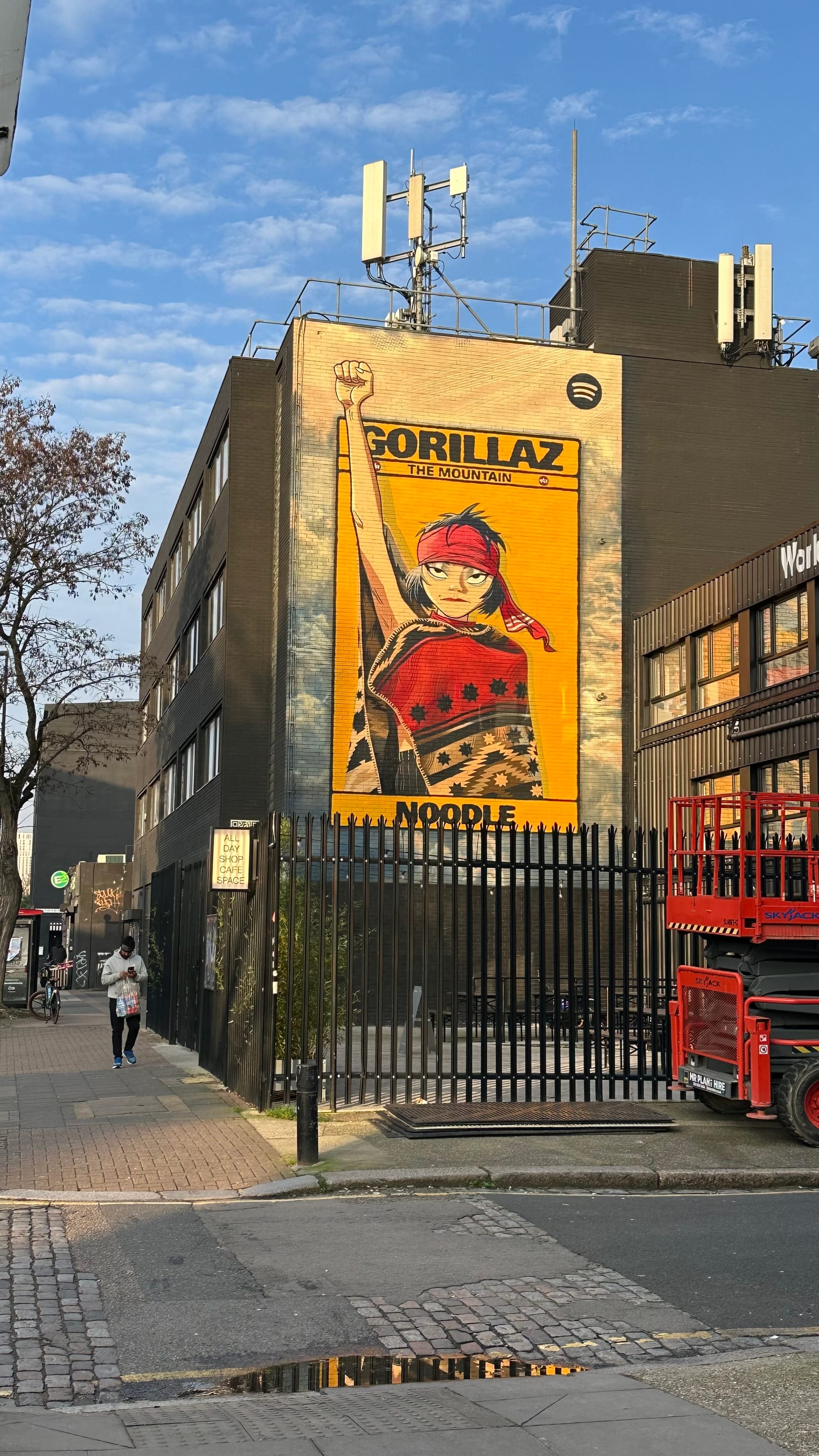
A glimpse of the Gorillaz street art in Shoreditch

There are few better ways to get to know a city than running along its river. There's a list forming. The contrast with the home runs is stark — the vast majority of those were the familiar plod out from Saltaire to Bingley and back. It's a good route. It's also the same route. Something to fix in April.

Good to get a run in before I gave blood on 10 March — and before the obligatory 24 hours off exercise that follows a donation.

Best week was w/c 23 March at 46.75 km, the week after Seville, straight back into it. Longest run was Saturday 28 March — out to Bingley to do the parkrun, then back, 15.17 km. Nice to use parkrun as a destination rather than just showing up at it.

The knee is better. Been nursing it since December and it genuinely turned a corner in the last ten days of the month. Achilles quiet too.

On the diabetes front: a foot check-up confirmed the loss of sensation is most likely an old joint issue near the base of the big toe rather than anything more T2-related. The HbA1c is sitting at 51 mmol/mol — just above the 48 threshold, but heading the right way. Running, weight management and watching the carbs are the levers. Keep pulling them.

Weight at 87.5 kg. Flat on where the month started, down from the new year but the pace has slowed. Something to keep chipping away at. The early alarms: not 6:15 (which turned out to feel too brutal) but most runs were out the door by 6:50. That's a workable rhythm. Getting out before the day has other ideas remains the key.

Continual thought: If I didn't run would both my weight and diabetes numbers be worse? Am I just running to keep them steady? 🤷🏻‍♂️

The gym: went once, found the rowers had been claimed by a class, went to Asda instead. That's the full story. Home-based approach in April.

A steady month. Some planning and focus helped. Not flashy, just functional — and the target got hit almost exactly.

Versus annual targets Target km needed by end of March Status OK — 1,400 km 350 km 381.4 km, 31.4 km ahead Stretch — 1,600 km 400 km 381.4 km, 18.6 km behind MEGA STRETCH — 1,800 km 450 km 381.4 km, 68.6 km behind

The 1,800 km was always ambitious. 1,600 km is still possible if April and May are strong. 1,400 km looks comfortable.

Goals for April
  • 31 days, targeting 180 to 200 km. (So, 45 km a week)
  • Keep the morning run habit. 6:45-ish is working. Build on it.
  • At least one run of 15 km+ per week in the second half of the month.
  • More city runs if possible. (Must be a London trip due...)
  • Sort out the gym situation — something home-based that doesn't depend on a class not having booked the rowers first!
  • Weight: 86 kg by end of April.
  • Keep being careful with the knee as the distance builds. It's improving — don't undo it.
  • Might need to invest in a new pair of running shoes: the Asics Novablasts and the Hoka Challengers might have just another month in them.
69cbafdd0d52cc0001e6a176
Extensions
Week note — week commencing Monday 23 March 2026
2026 weeknotesweeknoteweeknotes

Back to the grind after a fabulous time in wonderful Seville — arriving home on the Sunday, straight into it on Monday.

Health and body

Face-to-face diabetes appointment on Monday at Saltaire Medical Practice. Blood sugar at 51mmol/mol — just above the threshold of "well managed", 48,

Show full content

Back to the grind after a fabulous time in wonderful Seville — arriving home on the Sunday, straight into it on Monday.

Health and body

Face-to-face diabetes appointment on Monday at Saltaire Medical Practice. Blood sugar at 51mmol/mol — just above the threshold of "well managed", 48, but not alarming. Hoping some gradual weight loss will help nudge that number down. Weight holding at 87.5kg.

Advised to keep an eye on my blood pressure. Readings across the week were consistently in the 142–146 / 93–105 range — broadly in line with what the monitor has been showing for the last six years or so. Keeping an eye on it.

Tired and low energy for most of the working week. Hard to know how much was just getting back to sitting at desk most of the day, how much was the weather, how much was the final-stretch grind of the discovery. Possibly all three.

If you're interested in how wearing slippers about the house because your doctor said you should is going — it's going just fine. Might get a matching tartan robe next.

Running

Five runs, 46.75km. A strong week given the conditions — the low energy didn't stop the legs working.

Monday 6.35km, Tuesday 8.72km, Wednesday 6.14km, Thursday 10.37km, Saturday 15.17km. Friday and Sunday were rest days. The weather was not on anyone's side — cold, wet, grey, usually two of those, sometimes all three at once — had to get a new underlayer.

Year to date: 368.68km. Month to date: 157.96km going into Monday — needing just over 12km across the final two days of March to clear 170km, which is very much on.

Work-y

The current NHS discovery work wraps up on Tuesday, the final push — squeezing in as much as possible and trying to tie things together. The shape of the work is pretty clear, some worthwhile avenues to delve deeper into with some lean thinking. But at the mo it is about making sure everything is properly captured to set up that next phase of work neatly.

This coming week also has an Assembly assembly on Wednesday — a lunchtime gathering for a few of the people who work there. Product in the {A}ether remotely on Tuesday, then Product Assembly lunchtime lean coffee in Leeds on Thursday.

House and home

The boiler had its annual check on Thursday. Verdict: "in great nick — and one of the best you can get." Mildly satisfying given what it cost to fix a year ago.

Sunday morning tip run to finally get rid of some large boards that have been sitting in the back yard since we moved in. Had hoped to repurpose them as planters but they were too far gone.

Sunday afternoon involved getting a lot more seeds into trays for the garden. Progress, though more tomatoes are needed — we don't have enough on the go yet.

No progress on the inside doorframes.

Mind and culture

Three blog posts out this week:

Kristin and I went to Pictureville on Saturday evening for Project Hail Mary on the IMAX screen — really entertaining. Support your local cinemas.

TV:

  • Finally finished season 4 of Yellowstone. I get Beth has gone through a lot, but she's written (and acted by Kelly Reilly) like a pantomime villain in this season. Bit of a letdown after the immense seasons 2 and 3. Still, season 4 done after something like five years getting this far.
  • Watched Romesh Ranganathan's Just Another Immigrant, as some easier, lighter watching.
  • Had a look at the opening episodes of Bait and Mr and Mrs Smith. Both got potential, to slightly misquote the Killers.
  • The Bear season 3 is next before heading back for the final season of Yellowstone.

Reading: Chief Engineer is still at page 151. Need to find a couple of half-hours for it this week.

As promised last week: olive oil, tomatoes, cheese, meats, garlic, more olive oil on bread for every lunch Monday through Saturday. A "vow" kept.

Finished off the last of the Big Man coffee and popped into Village General Store in Saltaire to restock, a couple of bags from there: a bag of Atkinsons and a surprise finding of some Swerl.

This coming week
  • The discovery wraps on Tuesday.
  • Assembly assembly at lunchtime on Wednesday.
  • Running plan in place.
  • Easter Friday: see my mum on the way to Cleethorpes. Home town, home ground, Blundell Park for Town v Harrogate, with fish and chips first. It is the law.
  • After the match, heading down towards Crawley for the long weekend. Fingers crossed for a trip to Brighton on Saturday. And more fingers crossed the Grimsby Town promotion train is still on the rails for Easter Monday's game at Crawley. How convenient.
  • Gym trip Monday or Tuesday.
  • Running month note on Wednesday.
tldr

Final push on the NHS discovery, three blog posts out the door, a strong 46.75km week in truly miserable weather and low energy, Project Hail Mary on the big screen is very good, finally done with season 4 of Yellowstone – and the boiler has the seal of approval.

69ca9f0a51194f0001ddb4ed
Extensions
As a pedestrian at road junctions...
road signageroad safety
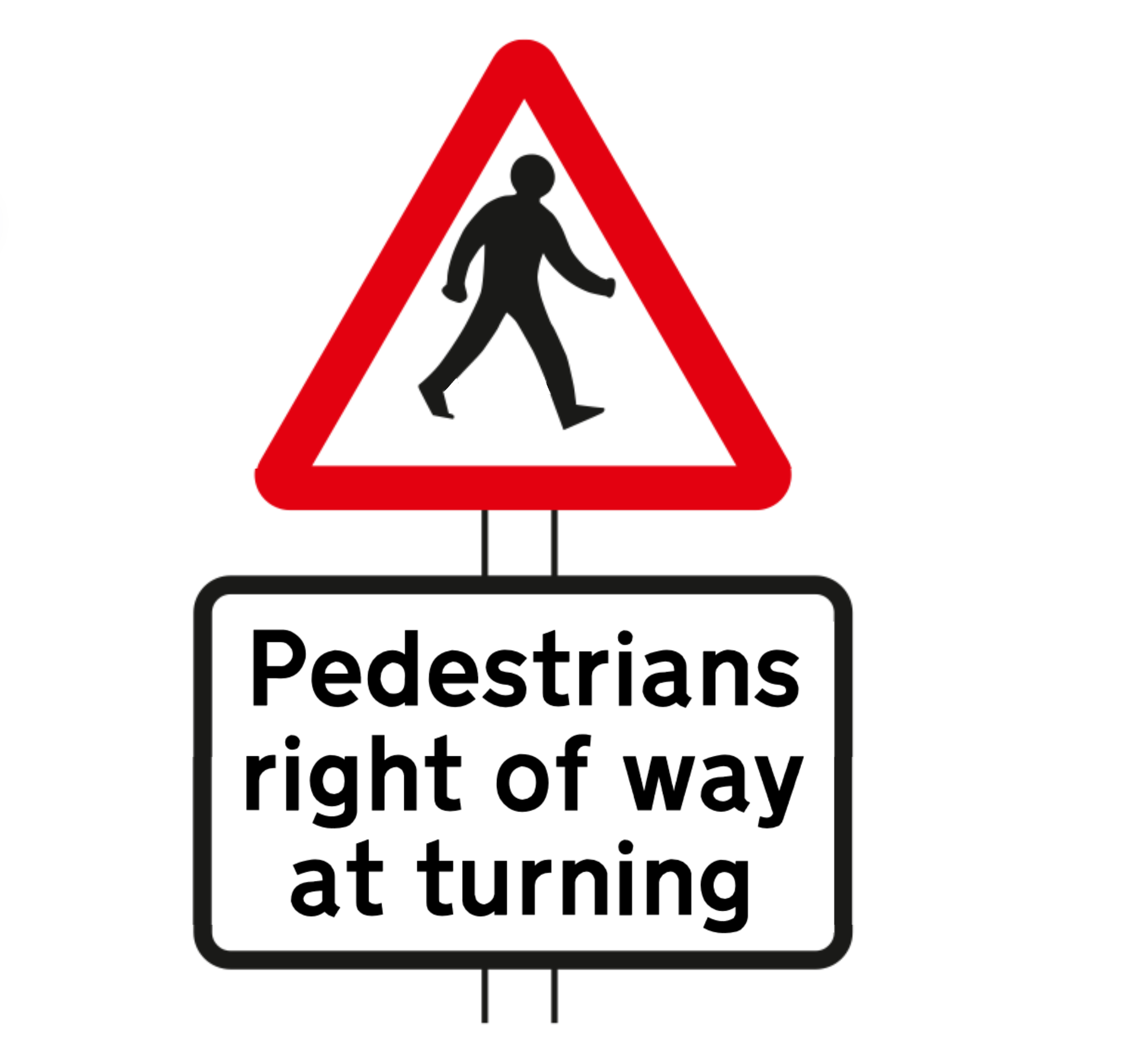
A road sign I have mocked up. I have yet to see one of these. Have you?

The Highway Code is a book of rules for everyone who uses the road — drivers, cyclists, and people on foot. All road users in England are expected to know and follow it.

Show full content
A road sign I have mocked up. I have yet to see one of these. Have you?

The Highway Code is a book of rules for everyone who uses the road — drivers, cyclists, and people on foot. All road users in England are expected to know and follow it.

In January 2022, the Highway Code changed. Pedestrians were given stronger rights when crossing the road. This means drivers now have to be more careful and more considerate, especially at junctions.

At a junction with road markings where a car is turning

As a pedestrian, if you are waiting to cross, or already crossing, and a car wants to turn into or out of the road you are crossing, the car must give way to you. That means the driver must slow down and stop to let you cross safely before they continue.

You do not need to have stepped into the road first — simply standing at the kerb ready to cross is enough.

At a junction with no road markings or signs

Some junctions have no signs, markings or lights at all.

At these, nobody has automatic priority. Drivers should approach carefully and watch out for pedestrians. As a pedestrian, you can cross, but take extra care and make sure drivers have seen you.

At a junction with traffic lights

Everyone — drivers and pedestrians alike — must follow the lights.

What this means for drivers

A driver who fails to give way to a pedestrian at a junction can be charged with careless driving. The fine can be up to £5,000.

What this means for pedestrians

You have the right to cross – but always make sure the driver has seen you before you step out. Your rights only protect you if the driver knows you are there.

What if you are a pedestrian crossing the road and a driver beeps their horn at you?

If you are crossing legally at a junction, you have the right to finish crossing.

You do not have to hurry up or move out of the way. The driver is in the wrong, not you.

Stay calm, finish crossing safely, and do not get into a confrontation.

The Highway Code is also clear that a car horn must only be used to alert other road users to the driver's presence — not to intimidate or hurry people. Using it aggressively at a pedestrian who is legally crossing is itself a breach of the Highway Code.

If you felt genuinely threatened or intimidated, you can report the incident to the police. If you have the vehicle's registration number, the police can in theory pursue it as a case of careless or inconsiderate driving.

In reality, without other evidence such as CCTV footage, a prosecution is unlikely — but a report still creates a record. Some local councils and police forces also run online reporting tools for road behaviour, which are worth knowing about.

The most important thing is your safety. Finish crossing calmly, but do not let confidence in your rights lead you into a dangerous situation with a driver who is not paying attention.


A study published in 2025 found that only around 31% of drivers – roughly seven out of ten drivers – are still not following the rule to give way to pedestrians at junctions when turning, as required by Highway Code Rule H2:

"At a junction you should give way to pedestrians crossing or waiting to cross a road into which or from which you are turning."

Road signage could help make these newer rules and the situation clearer. I have yet to see any signage that addresses this. Have you?

It took me 25 minutes to pull together the rough sign design at the top of this page: work through some signage options to borrow from, jot down some wording options, and then pull it together. It might not be perfect but it's a start, borrowing from on a lot of existing design patterns.

Now, if it's OK to hang missing cat notices on lampposts it must be OK to hang a "safety notice" at a ropey turning. How to get my sign design printed large enough and weatherproof enough to hang on a nearby lamppost...

69c429a26e34320001925ad3
Extensions
Twentieth Century Society — Concorde design and lifestyle — notes
designingaeroplaneseventsConcordeC20 Society

An online talk and Q&A with Lawrence Azerrad, hosted by the Twentieth Century Society, exploring the design, culture and legacy of the legendary Concorde. A glimpse into a past that showed us a future we still romantically strive for.

The main talk

Azerrad opened by framing Concorde

Show full content

An online talk and Q&A with Lawrence Azerrad, hosted by the Twentieth Century Society, exploring the design, culture and legacy of the legendary Concorde. A glimpse into a past that showed us a future we still romantically strive for.

The main talk

Azerrad opened by framing Concorde not as a story about an aeroplane but as a story about ideas — possibility, ingenuity, and what happens when human creativity is pointed at an ambitious, seemingly unreachable goal (quoting American president John F. Kennedy in the process). He drew a through-line from the space race and the Apollo programme to the development of supersonic civil aviation, arguing that both were expressions of the same spirit: setting an aspiration and then working backwards to make it real.

"Futures literacy" anchored this, the idea that if you begin from what is merely probable, you never reach the extraordinary. Using the future cone model Azerrad showed places "preference" at the widest, most ambitious end: only by starting there do you have a chance of getting close to it. Concorde, like the polio vaccine or the moon landing, was that kind of moonshot.

The jet age context mattered enormously. We saw early renderings of LAX and images of Braniff Airlines' Emilio Pucci uniforms to illustrate how architecture, fashion and aviation were all pulling in the same direction in the late 1950s and 60s: a shared, palpable optimism that technology was going to make ordinary life better for many people, not just a few. Airlines from Lufthansa to Qantas had Concorde on order. It was never meant to be an elite product, but the next logical step in mass travel.

On the aircraft itself Azerrad was clearly in awe of the engineering. The Rolls-Royce Olympus engines (designed and built in Bristol) were effectively rocket engines, allowing the aeroplane to cruise at 1,350mph — faster than the Earth's rotation. A flight's service ceiling was 60,000ft, high enough to see the curvature of the Earth. The fastest transatlantic crossing: 2 hours, 52 minutes, 59 seconds. People "arrived before they set off", as they adjusted their watched in the time zone of their arrival. In 1973 it stayed within the path of totality of a solar eclipse for 74 minutes — a record for the longest total eclipse viewing in history.

He was candid about Concorde's shortcomings. Around a tonne of CO2 per passenger per flight was not defensible, although he acknowledged the aircraft came from a pre-computer era with completely different objectives (which was accompanied by an eye-opening picture of a large room of men – and it was men – working with paper and pens). Azerrad felt had the programme scaled, improvements in materials, sustainable aviation fuel and computer-aided design would have addressed much of this — but Concorde never got that chance.

The story of why it didn't... The US was developing its own supersonic transports (Boeing and Lockheed both had designs), and rather than let European aviation set the standard, American commercial and political pressure made it very difficult for Concorde to become a market norm. Then the Boeing 747 changed the economic equation entirely: dollar per seat per mile pointed decisively towards volume over speed. With no large-scale orders surviving, British Airways and Air France were left with fewer than 20 aircraft and had to pivot — turning Concorde into something closer to a prestige sports car than a new standard for air travel.

That pivot produced some remarkable design work. He traced the interior evolution across roughly four major redesigns — from Raymond Loewy's Air France interior (with echoes of Kubrick's 2001) through the rather grey Landor Associates period to Terence Conran's final BA interior: blue, lean, uncompromising. Every object a passenger touched had been designed by someone — menus, toiletry bags, silverware (famously pilfered by Andy Warhol), uniforms by Hardy Amies (the Queen's dressmaker, who also designed the costumes for 2001 and the uniforms for the 1972 Olympics). André Putman designed the last Air France interior. Azerrad quoted her: "To not dare is to have already lost." The Concorde Room at JFK, designed by Conran, was, he said, among the most beautiful rooms he could imagine being in.

He closed with Terence Conran's foreword to the first edition his book Supersonic, in 2016: "Concorde provides an example of aspiration that we can learn from today. It's an invitation to dream and create. It provides a calling that is needed now more than ever."

Q&A snippets
  • Boom Supersonic (a modern attempt at commercial supersonic aeroplanes) has airline orders and believes it can deliver this decade, but the context is very different — private enterprise rather than national endeavour, and the post-9/11 migration to private jets has already shrunk the addressable market.
  • The US role in Concorde's downfall: American pressure to block European aviation setting the supersonic standard meant the programme never achieved the scale it needed. When the US cancelled its own supersonic efforts, it redirected funding to the space shuttle rather than supporting Concorde. Nobody got the dream.
  • Does every technology eventually collapse to volume? He didn't dispute it, but noted what gets lost — the 747's brief golden age of piano bars and Chateaubriand is also gone. The A380 and 747 are being retired. We keep stripping travel back to a logistics problem.
  • "Why people fly in pyjamas now?" He borrowed this from designer Debbie Milman — passengers have stopped respecting the experience because airlines stopped respecting passengers first.
  • Boom is targeting business-class prices, not ultra-luxury. The value proposition is time, not glamour. Some companies will pay for it, but the private jet boom since 9/11 has already taken a big chunk of the natural customer base.
  • On optimism: not a platitude, a practical orientation. The real question is always how you point it at something and make it productive. That's Concorde's actual legacy.

The book Supersonic: The Design and Lifestyle of Concorde is now in its third edition.

69c38f719016cf00016d541d
Extensions
Travel note: Seville — 19 to 22 March 2026
travel notetravelingSevilleSpain

With Kristin. A long weekend, a lot packed in.

Why Seville

My interest in Spain goes back to an A-level in early modern history in the early 1990s, where I first encountered Isabella and Ferdinand, who reigned in the latter part of the 15th century — the Catholic Monarchs who

Show full content

With Kristin. A long weekend, a lot packed in.

Why Seville

My interest in Spain goes back to an A-level in early modern history in the early 1990s, where I first encountered Isabella and Ferdinand, who reigned in the latter part of the 15th century — the Catholic Monarchs who completed the Reconquista, driving the Moors from the Iberian peninsula. It sparked a fascination with Spain that has never really left me, and particularly with cities like Seville where you can see the layers of both cultures pressed up against each other in the stonework.

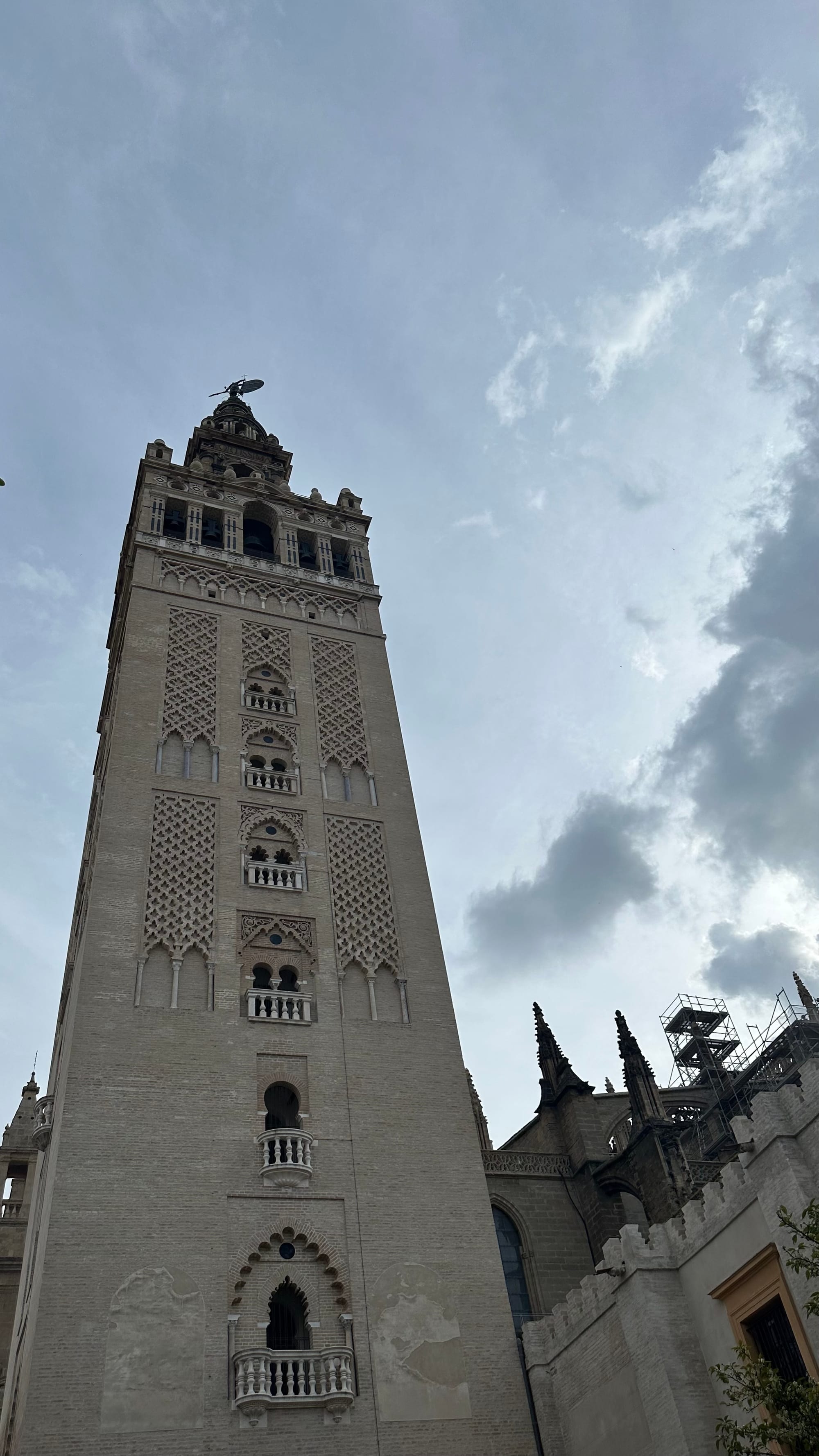
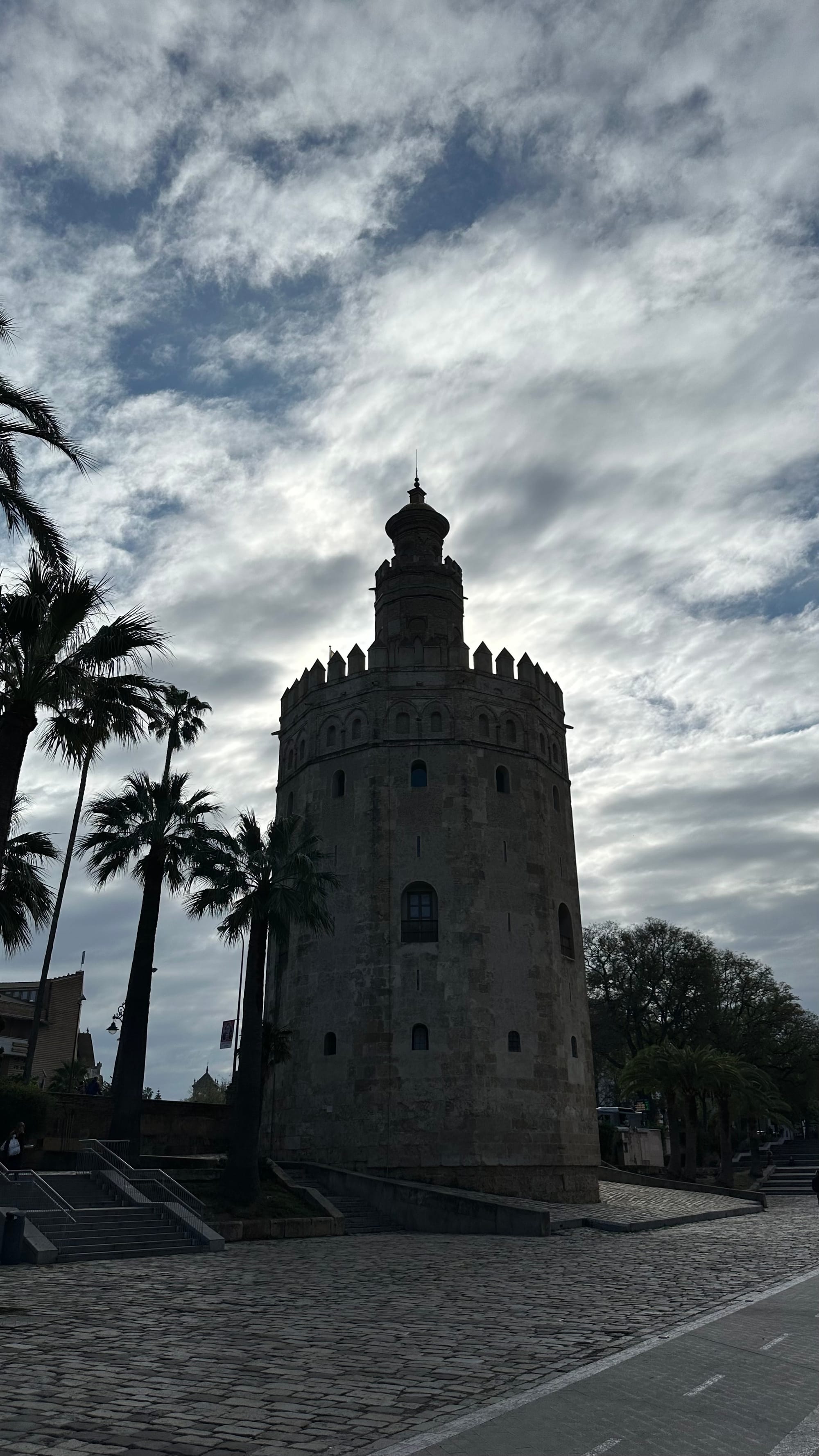
The cathedral is the most vivid example of that, standing on the site of a 12th-century Almohad mosque, which Ferdinand III (another Ferdinand, so many Fernandos) converted to Christian use when he took the city in 1248. Rather than erase what was there, the builders kept the mosque's ablution courtyard — now the Patio de los Naranjos, still fragrant with orange trees at this time of year, like the whole city — and its minaret, which became La Giralda, the bell tower that still dominates the Seville skyline. When the decision was taken in 1401 to build an entirely new Gothic cathedral on the same footprint, they kept those Islamic elements intact. It's a building that carries the layers of both cultures visibly and deliberately. The Reconquista written in stone.

Getting there

Manchester Airport the night before — an Ibis Budget, fine for what it is. RyanAir (don't judge) at 9:15am, landing in Seville at 12:10pm local time. The hotel — the Adriano Hotel Boutique — was around €550 for three nights: friendly staff, great location just round the corner from the cathedral and close to the river. A good base.

Taxi from the airport into the city centre: around €28, cobbled streets for the last stretch to the hotel. The driver was fine. (The Sunday morning driver back to the airport had considerably more gusto — but we made the flight.)

Tip: book your cathedral and Alcázar tickets at least two weeks in advance. Individual tickets were sold out by the time we looked — a guided tour was the only way into the cathedral. As it turned out, an excellent decision.

What we did

We don't tend to do group tours, but the cathedral forced our hand. Our guide Susanna was excellent — equal parts information and wry humour. On the two-year notice required to get married at the cathedral: "A lot can happen in two years. You find many people end up married to someone they weren't planning to marry when they booked." The scale inside is almost incomprehensible. Plan for well over two hours. Next time: up La Giralda tower.

La Giralda, the cathedral bell tower, shot from street level looking straight up. The intricate geometric Moorish brickwork of the original 12th-century minaret rises above, topped by the 16th-century Renaissance belfry and the Giraldillo weathervane at the very top. To the right, the cathedral's Gothic pinnacles and a section of scaffolding. 104 metres of history, straight up. Not that I went that far up.

On Friday we also visited the Setas: the vast mushroom-shaped wooden structure in the old town that houses the ruins below and a market and walkway above. Peculiar, striking, and somehow entirely Seville.

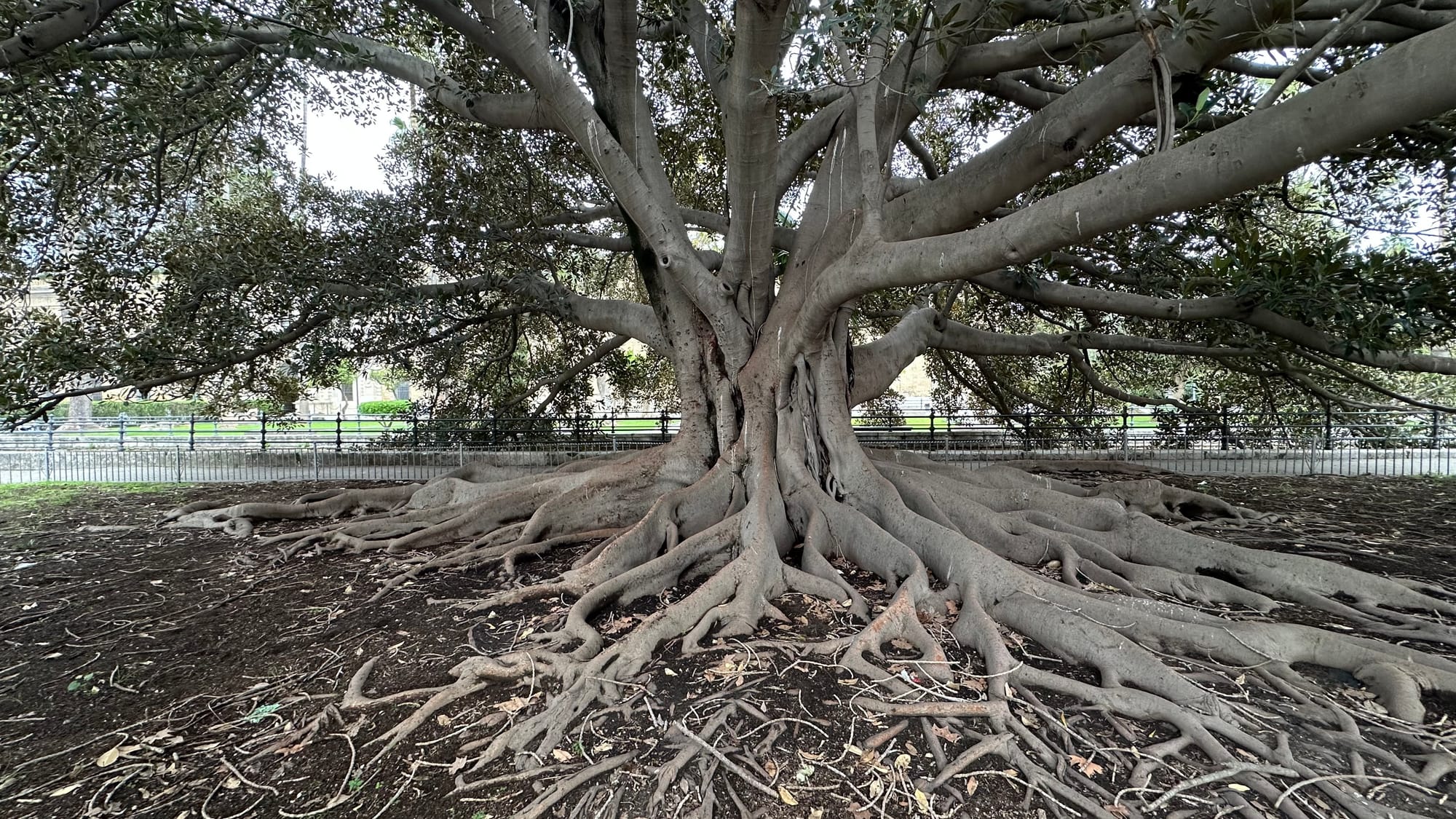
A magnificent tree, a typical tree you bump into in Seville, photographed close up from ground level. The trunk splits into multiple thick, smooth-barked limbs that fan outward and upward, filling the frame with branches. What makes it extraordinary is the root system — vast, gnarled roots spreading across the bare earth in every direction, rising and dipping like something from a fairy tale, each one as thick as a forearm. The canopy is dense with dark green leaves. Behind it, an iron railing and what looks like a grand building beyond. A tree that has clearly been there a very long time and intends to stay.

Lachlan, our Australian guide on the Friday evening tapas tour, introduced us to the north side of the city in a way we wouldn't have found on our own. Sometimes necessity makes the choice for you, and it makes the right choice.

We saw the Alameda de Hércules at night — the long tree-lined promenade in the north of the city, anchored at one end by its Roman columns, featuring Hercules and the emperor Caesar. Worth seeing in daylight too; we didn't quite manage it.

Museo de Bellas Artes: A large circular dome fresco sits at the centre, radiating outward like a wheel — painted panels between gilded ribs depicting figures, saints or allegories, in the Baroque manner. At the very centre, a coat of arms. The surrounding walls of the dome are equally dense with painted decoration: more figures, ornate gold and white plasterwork, geometric patterning, and friezes running the full circumference. The arches below are encrusted with intricate carved and gilded detail — foliage, heraldic motifs, scrollwork — every surface covered, nothing left plain. The overall effect is overwhelming in the best possible way.

Saturday took in the Museo de Bellas Artes — one of Spain's finest art museums, in a gorgeous former convent. Grand, full of fine religious art, including some epics by Murillo, and some epic Zurbarán, and with a roof in one of the buildings that stops you in your tracks. On the way back to the city centre we visited the Antiquaries — Roman ruins and mosaics discovered beneath the city, sitting pretty much in the basement of the Setas.

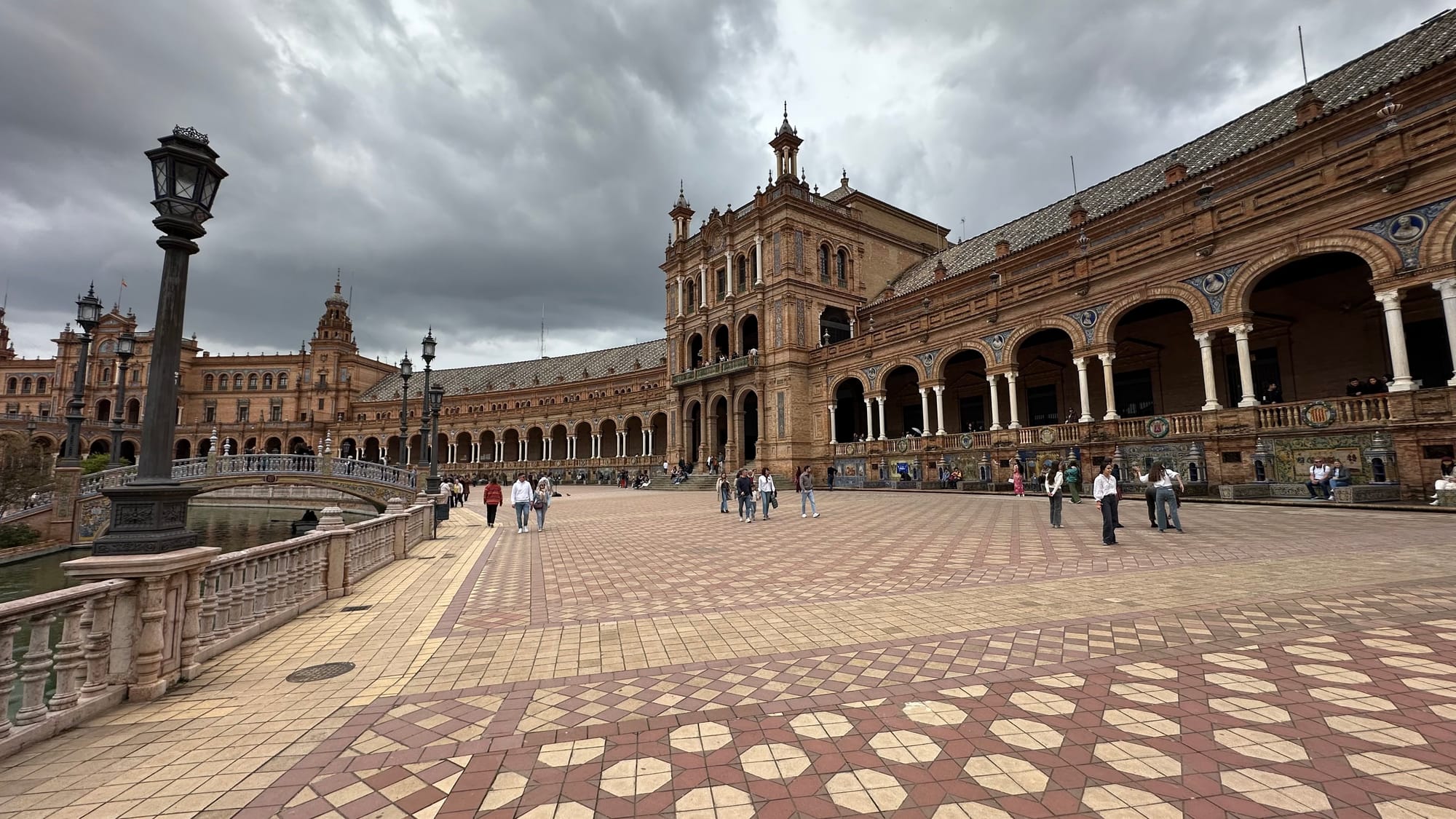
The Plaza de España, Seville. A vast semicircular palace of warm brick and ornate stonework curves away into the distance, its arcaded facade stretching the full width of the frame. In the foreground, the beautifully patterned tiled floor of the plaza, geometric in terracotta and cream. To the left, a balustraded canal with a small decorative bridge, one of four that cross it around the square. Ornate cast iron lamp posts line the walkway. A handful of visitors cross the open space, dwarfed by the scale of the building behind them. Above it all, a dramatic dark grey sky, heavy with cloud — which only makes the warm ochre of the architecture glow warmer. Astounding is the right word for it.

A stroll across the city to the Plaza de España, which is simply astounding. It's a vast open space — hard to convey the scale until you're standing in it — built around a sweeping semicircle of palace buildings, with a tiled alcove bench for each province of Spain running the entire length. Every alcove has its own painted ceramic map and scenes from the province's history. I found my beloved Bilbao — marked as Vizcaya, its province. One of those places that stops you in your tracks.

Late Saturday afternoon was a trip to the flamenco at La Casa del Flamenco. I've been once before, in Madrid, but this was a level above. There's something about flamenco — the intensity, the physicality, the raw emotion of it — that is just so, so horny. Like opera did ballet. Wonderful stuff.

I've always been fascinated by Catholicism — the ritual, the fervour, the sheer commitment of it. Being in Seville the week before Holy Week felt like arriving just as the city was winding itself up. You could feel it at the football — the noise, the passion — and in the streets in the days that followed. When we came out of the flamenco on Saturday evening and walked straight into a procession, it felt like a gift. Brief, unexpected, right outside the door. Seville is a city that doesn't need much prompting to remind you it's alive. I thoroughly enjoyed every second of it.

The football

Betis's usual home — the Estadio Benito Villamarín — is currently being redeveloped, so they've moved to La Cartuja for the 2025/26 season, which is how we ended up there for the Europa League. La Cartuja sits on the Isla de La Cartuja, a large island between the Guadalquivir and the Canal de Alfonso XIII, and it was the site of Expo '92 — the Universal Exhibition held in 1992 marking 500 years since Columbus reaching the Americas. I hadn't really clocked this before the trip.

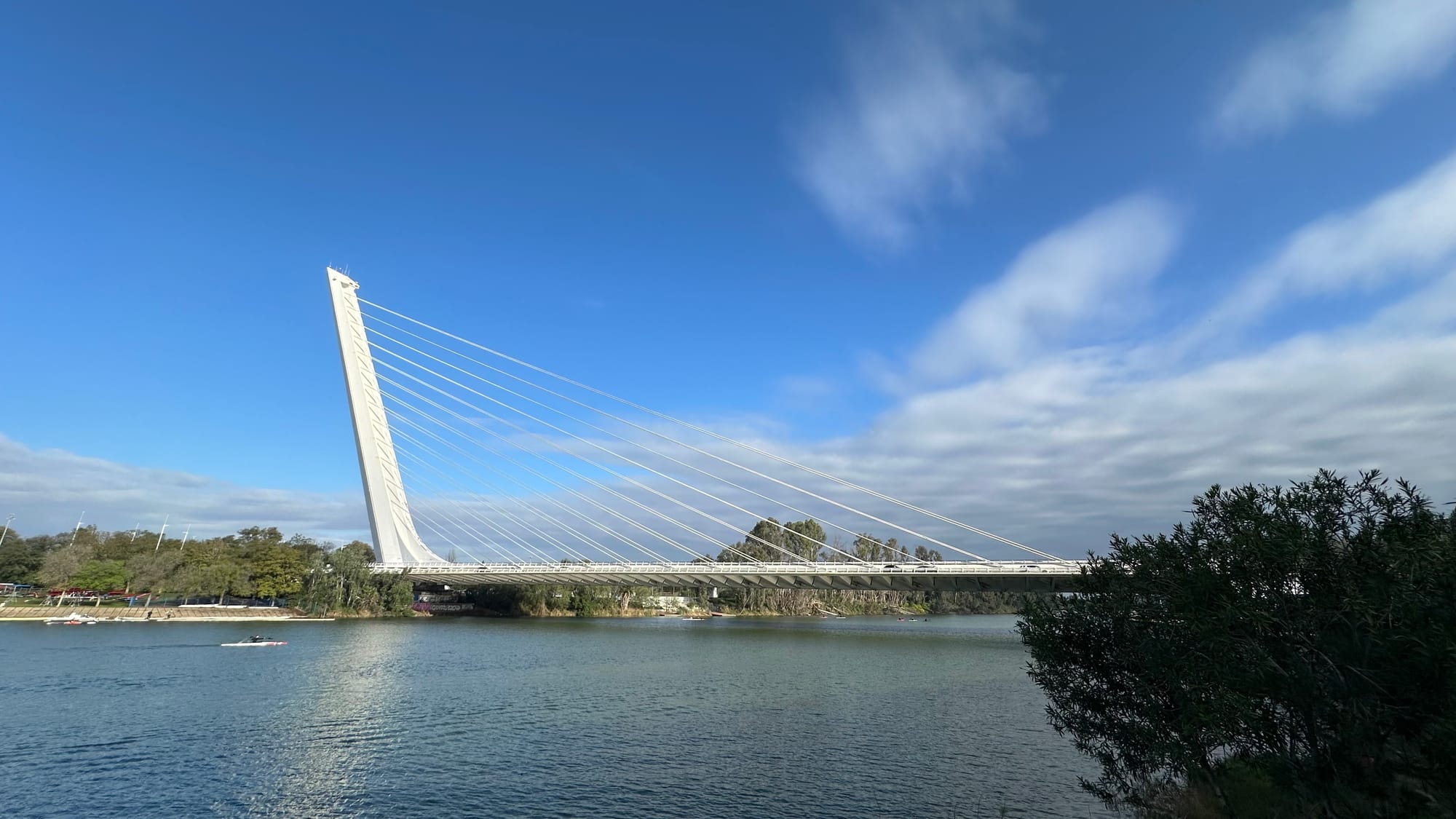
The Puente del Alamillo — Santiago Calatrava's iconic Expo 92 bridge — photographed from the Guadalquivir riverbank on a bright morning. The single white pylon leans dramatically backward, its thirteen pairs of cables fanning out to support the deck in Calatrava's signature asymmetric design. The river is calm and glassy, with a small boat cutting across the water in the foreground. Green trees line the far bank. The sky is a deep, clean blue with a sweep of cloud to the right. Everything is crisp and white and warm. The kind of thing you stumble across on a morning run and stop dead for.

Five new bridges were built over the Guadalquivir to serve the Expo: the Alamillo, Barqueta, Cartuja, Cristo de la Expiración, and Delicias. We got to see some of the remaining pavilions and structures on the long walk back to the hotel after the game — an hour on foot, which generated fewer steps than you'd hope but was worth it. The most striking of the bridges is the Alamillo, designed by Santiago Calatrava — the architect behind the City of Arts and Sciences in Valencia and the Oculus in New York — its single inclined steel tower counterbalancing a 200-metre span with thirteen pairs of cables. There's a lot more on the Wikipedia page for Expo '92.

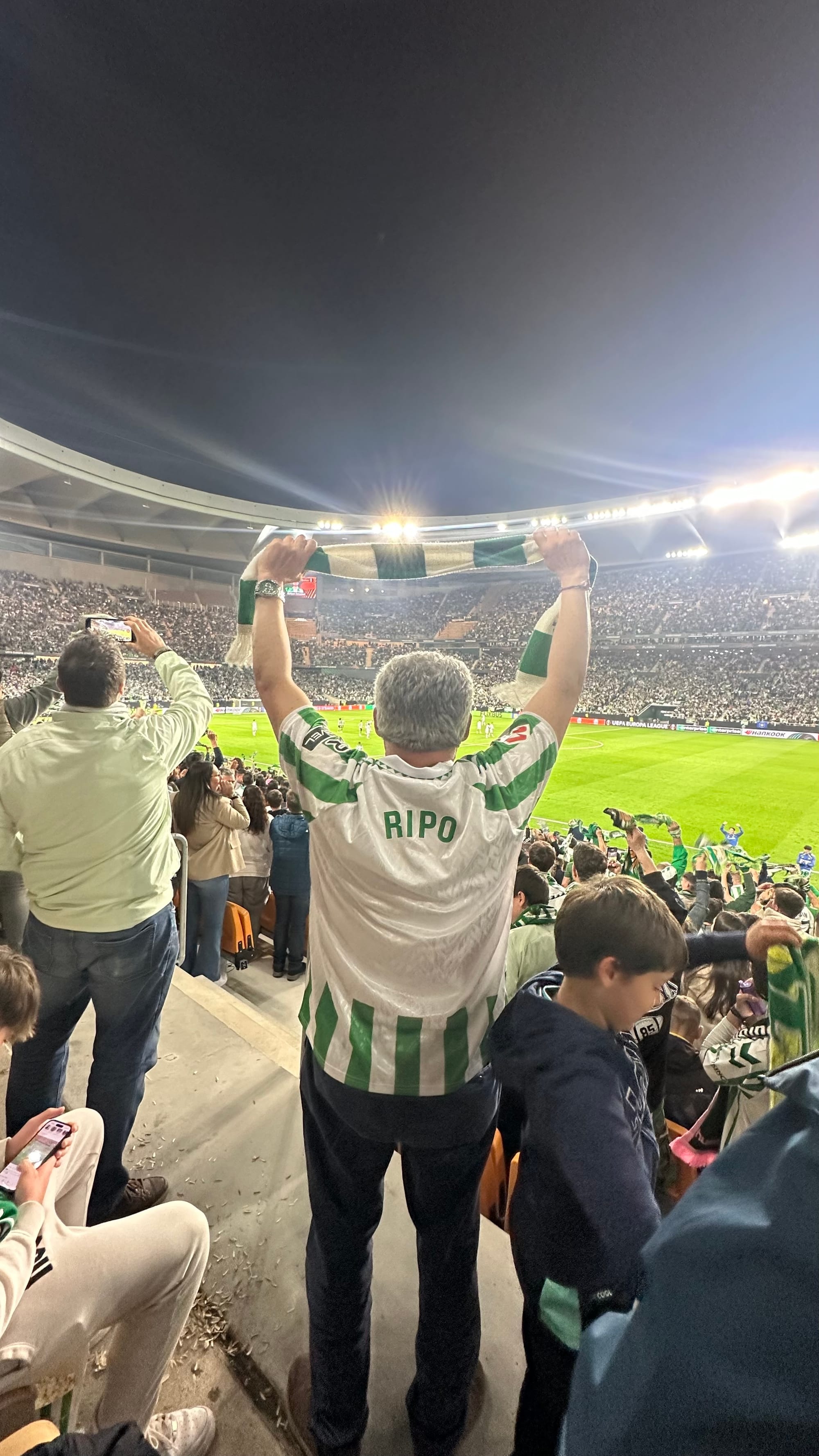
The match itself — Betis v Panathinaikos, Europa League last 16 second leg — was a proper adventure. The atmosphere was extraordinary, the noise immense. Betis were fantastic to watch. An hour's walk back through the island in the dark, past Expo pavilions and bridges, capped it off perfectly.

A night match at a packed stadium, shot from the stands. In the centre of the frame, a Real Betis fan — Ripo — stands with his back to the camera, arms raised, holding a green and white scarf aloft. He's wearing the green and white hooped Betis shirt. The stadium is full, floodlit, and buzzing. The pitch glows bright green below. Around him, other fans are on their feet, phones out, arms up.

A postscript: on Sunday evening, safely home, I watched my beloved Athletic Club beat Betis 2-1. A little strange after cheering Betis on Thursday night in their European adventure. But Bilbao for lyf, innit.

Running

Two of my four runs for the week were in Seville, both along the Guadalquivir — wide paths, graffiti, fishermen, people in various forms of canoe. There are few better ways to get to know a city than running along its river.

Friday's was 5km, heading south along the river before turning inland into the city itself.

The Torre del Oro — the Gold Tower — shot from street level, looking up. A sturdy, crenellated cylindrical medieval tower in pale stone, with a smaller octagonal section above and a domed lantern at the very top. It sits right on the Guadalquivir riverfront, flanked by palm trees against a dramatic cloudy sky, the light overcast and moody. The cobbled plaza around it is quiet. A 13th-century Almohad watchtower that once helped control access to the river — and now one of the most recognisable landmarks in the city.

Saturday's 8km took in more of the riverfront: the Torre del Oro, the Torre Sevilla just over the water, the Alamillo bridge, a glimpse of the monastery across the river, and the graffiti that lines the whole stretch. The climate at this time of year is perfect — warm, dry, the orange blossom everywhere.

Eating and drinking

Friday lunch at Casa Morales: espinacas con garbanzos, pig knuckle, vermut, and the usual small pour of beer. Perfecto.

Friday evening: the tapas tour, north side of the city, led by Lachlan. Several stops, several cañas, several things eaten that we'd have walked past on our own.

Saturday breakfast at La Canasta, near the cathedral: cured ham on bread, a cortado, and a smoothie. Simple and exactly right.

Two cañas of Cruzcampo on the bar at Bodeguita El Acerao, frothy heads still settling. Between them, a small dish of what look like spiced or fried chickpeas — the kind of thing that just appears, uninvited and very welcome. A wooden Cruzcampo crate sits in the background alongside empty wine glasses. A perfect Saturday afternoon.

Saturday afternoon back at Bodeguita El Acerao — one of the tapas tour stops worth a return. Cruzcampo, a caña each: poured for about three seconds, swilled for two, then slapped down on the corner with its frothy head. Wonderful.

Saturday evening: tasting menu with paired wines at Azahar. The perfect way to sample a few tastes at the end of the trip. We walked through yet another parade to get there. All those processions. Enough to sway one back to the ways of Catholicism.

To do next time
  • Visit the Alcázar — book at least two weeks in advance
  • Up La Giralda tower at the cathedral — and up the Torre del Oro
  • Explore the Expo '92 island properly in daylight — the pavilions and bridges deserve more than a night-time walk after a football match
  • See Betis at the Estadio Benito Villamarín when the redevelopment is done
  • Go back for Holy Week itself
  • The Alameda de Hércules in daylight
  • Walking along the top of the Setas.
  • More of the north side of the city
  • The Macarena church, Santa Maria Magdalena, and the Convento de Santa Inés (for the pastries)
  • El Rinconcillo for food
  • Museo del Baile Flamenco and the Museum of Folk Art and Costume
  • Plaza de la Maestranza — and the Museo Taurino inside it
  • More of Triana
  • Return to Bodeguita El Acerao — obviously
  • And honestly, just the vibes. I loved it there.
69c2fd969016cf00016d53cf
Extensions
Week note — week commencing Monday 16 March 2026
2026 weeknotesweeknoteweeknotes

A week that split cleanly in two: three working days, Bradford Digital's Tech Tuesday among them, then a long weekend in wonderful Seville with Kristin. More on Seville separately.

Health and body

Keeping an eye on blood pressure, which is now a regular part of the routine. Yet

Show full content

A week that split cleanly in two: three working days, Bradford Digital's Tech Tuesday among them, then a long weekend in wonderful Seville with Kristin. More on Seville separately.

Health and body

Keeping an eye on blood pressure, which is now a regular part of the routine. Yet another diabetes nurse appointment due on Monday — more on that next week.

Weight holding steady at 87.5kg. Food was sensible enough even with the trip away.

Running

Four runs, 29.61km. Monday didn't happen and Sunday, with the journey home, wasn't realistic.

The four that did happen were solid: 7.85km on Tuesday, 8.65km on Wednesday, 5.01km in Seville on Friday, and 8.1km on Saturday. Two of those were along the Guadalquivir — there are few better ways to get to know a city than running along its river.

Year to date: 321.93km.

To hit 170km for March I need 65.51km across the remaining 9 days — about 7.3km a day. Doable.

Getting out

Over 15km of walking across the week. Felt like it should have been more given how much ground we covered in Seville, but 15km is still a decent return.

Long weekend in Seville with Kristin — the best time with the bestie. I'll be eating tomatoes, cheese and cured meats on bread for the first week back home, obvs. The trip has its own note.

Work-y

Two and a half days of NHS work, plus Bradford Digital's Tech Tuesday on Tuesday afternoon — the tenth event in the series, part of UK Tech Week. I was one of the sponsors through Office of Wilson, which felt like the right thing to do. Wrote it up separately.

On the NHS side: started the week with some opportunity mapping — revisiting and refining it with the team across Monday and Tuesday morning. We had a delve into the technical shape of things too.

Local involvement is essential if the work moves forward after this month, so spent some time with people in NHS Midlands. Nice to get a little prototype work in as well. And a deeper dive into gov platforms with the ever-generous people at GDS.

The discovery is in its final weeks and the shape of things is becoming clearer.

House and home

Another window ordered — the list of jobs is long but the direction is good.

In the garden, pea shoots are coming through and Kristin's carefully nurtured seeds are growing well on the inside.

Mind and culture

Page 151 of Chief Engineer — about 35% of the way through. Plane journeys are earning their keep as reading time.

Enjoyed the Brothers Macklovitch's guest mix on Beats in Space episode 195. Chromeo doing what Chromeo do.

Sunday night: started series two of Last One Laughing. Good to have something easy and funny to come home to.

This coming week

Diabetes nurse on Monday. Running target of 40–50km — some recalibrating after a lighter week. A gym session that is definitely happening this time. Trying to culture myself at home — the cheap and cheerful version.

tldr

Bradford Digital, a blog post out the door, focused discovery work, four solid runs, and then wonderful Seville. A week of two halves, both good.

69c172b9f900b700016370f4
Extensions
Bradford Digital's Tech Tuesday — notes
eventsBradford Digital
Practical AI, proper community

On Saturday I was at Bradford Live for the joyous and celebratory Gorillaz gig, my first time in that building in something like thirty years. On Tuesday I was back, for Bradford Digital's Tech Tuesday: the tenth event in a series that has quietly

Show full content
Practical AI, proper community

On Saturday I was at Bradford Live for the joyous and celebratory Gorillaz gig, my first time in that building in something like thirty years. On Tuesday I was back, for Bradford Digital's Tech Tuesday: the tenth event in a series that has quietly become one of the most genuine things going in Bradford's digital community, and this year part of UK Tech Week.

I'll say upfront: I was one of the sponsors for the event, through Office of Wilson. Bradford has given me a lot over the past thirty-odd years and this felt something worth giving something back to.

Professor Ciprian Dan Neagu of the University of Bradford presenting at Bradford Digital Tech Tuesday. The slide shows AI-assisted 3D point cloud analysis of Saltaire UNESCO World Heritage Site, with building segmentation models visualised in colour.

I missed the morning sessions, arrived after lunch, so I was starting off with a fascinating session with Professor Ciprian Dan Neagu of the University of Bradford, who framed AI as the sixth industrial revolution — Industry 6.0, characterised by humanisation and human-centred AI. His research examples included a digital twin of Saltaire UNESCO World Heritage Site, which gave me a small jolt of recognition: I live there.

Tim Burnett's talk, "From anxiety to adoption: practical AI for business," was built around two ideas: "human first" — AI isn't replacing us, and we need to stay in the driver's seat — and "AI forward" — this is happening, and the question is how we shape our relationship with it rather than whether we engage. A couple of things stuck with me: the point about shadow AI, the gap between what organisations officially sanction and what people are actually using; and a deceptively plain prompting tip — treat it like a junior colleague. Give it context, explain your intent. Unremarkable on the surface, but it cuts through a lot of mysticism.

The Innovation Panel brought together Andy Jack (Expert OS), Jordan Finneran (Pimsical), and Lucy Smith (Thistl). The sharpest exchange was around the pull of shiny technology. Jordan put it plainly: people forget they're supposed to be solving problems. Andy's version: the barrier to building has dropped so far that the question has shifted from "can we?" to "should we, and for whom?" Both things felt true, and like things that get lost in the hype.

The Business Panel at Bradford Digital Tech Tuesday, chaired by Dom Burch.

The Business Panel, chaired by Dom Burch and featuring Rebecca Fitzgerald (YBS), Karen Crutchley (Schofield Sweeney), Matthew Grogan (Freeman Gratton Holdings), Annelise Turner (GIG Retail), and Jez Bristow (Jadamedo Consulting), brought a more grounded perspective on what adoption looks like inside larger organisations. The most centring take of the afternoon: start by asking people what eats their time, what's repetitive, what stops them finishing at a reasonable hour — then find the right tool to address it, which may or may not involve AI at all. What struck me was less the tactical advice than the values underneath it.

That thread ran through all three sessions — not AI taking jobs, but what we choose to do with the capacity it returns. Several people, across very different kinds of businesses, kept coming back to relationships as the thing that matters most and that automation can't replicate.

Bradford Digital has been running since October 2023, driven by a genuine community feel. Being at Bradford Live on Tuesday gave the tenth event a scale it deserved. But it also made me pine a little for the intimacy of the regular gatherings at Assembly Bradford — the creative energy of that space is central to what Bradford Digital is. What both venues share is the thing that matters: a room of people who are genuinely curious, willing to share what they're working through, and invested in something good for the city.

The best line of the afternoon came from Jez Bristow: saving someone four or five hours a day isn't really about productivity. It's about what they choose to do with those hours instead. That felt like a good underline for the whole day.

Phil Myerscough has been making the case that innovation is happening in Bradford right now, and quietly building the community to prove it — on top of his day job. He's right. And that consistency matters as much as any individual event.

More information

69ba4e88e7e98e000160d985
Extensions
Week note — week commencing Monday 9 March 2026
weeknoteweeknotes2026 weeknotes2026 running

A lot packed in. Blood donation, three days away in London, Oldham away, Gorillaz at Bradford Live, and a good run of running to boot.

Health

Monday started with a blood pressure check, now a regular part of the routine. Tuesday was blood donation day at the Bradford centre —

Show full content

A lot packed in. Blood donation, three days away in London, Oldham away, Gorillaz at Bradford Live, and a good run of running to boot.

Health

Monday started with a blood pressure check, now a regular part of the routine. Tuesday was blood donation day at the Bradford centre — it went fine, though it hurt a little more than usual. "I had to adjust the needle," the nurse said, before handing over a leaflet just in case of bruising. Lemon drizzle cake and a donation to charity afterwards made it worthwhile. If you've never given blood, you should give blood.

Sleep was a mixed bag, never great when working away, but came into the week refreshed enough.

Body and food

Hovering around 87kg — which means I've already hit my end-of-March target with a couple of weeks to spare. If the direction holds, 85-86kg by the end of the month feels possible. Progress.

Running

38.96km across six days, my third highest weekly return of the year. The plan called for 48km but I'm not bothered about the gap — Sunday's long run gave way to some front garden work before the rain came in, which felt like the right call. Tuesday's run was trimmed to 8km due to time rather than the donation. Saturday was the standout — legs felt good and the morning was fine, so 9.34km instead of the planned 5. The London runs were fun too, doing a couple of circuits of the area rather than just a straight out-and-back. Year to date now at 292.32km, close enough to plan pace to feel healthy.

Work-y

Three days away in London, working out of Impact Hub in Euston and Work.Life on Old Street.

The appointments in the NHS App work is entering its last weeks.

Agile in the Ether on Friday — the lean coffee format as good as ever for surfacing things worth chewing on. I really enjoyed the "things we have learned" bit; nice to break out of just work stuff.

I got back some work-y shots I had taken. (Thanks, Faye!) I'm already submitting this with my application for a stint reading a story on CBeebies.

Me seated on a grey sofa. I'm wearing a black t-shirt, my hands loosely clasped in my lap. I am looking slightly off to one side rather than directly at the camera. Apparently this gives the photo a relaxed, candid feel.
Other bits

Over 15km of tracked walking across the week, which is a good total. London on foot helps – and London on foot is my preferred way of London-ing. (Related: Unplanned, saw a lot of the Barbican on Thursday, which was very very nice.)

Good to have some catch-ups with people from across the industry while in London — something I'm making more of an effort to do rather than just keeping my head down when I'm there.

Tuesday evening: Grimsby Charter Day, marked in the appropriate way with a drink on the Tattershall Castle on the Thames — a paddle steamer that used to run the Humber between Hull and Grimsby before ending up as a floating pub opposite the London Eye. Feels right.

A good dinner at Decimo at The Standard. Yummy ramen at Bone Daddies another night. London fed and watered.

Oldham away on Saturday. An hour's drive to watch a match that had the shape of two teams getting in each other's way for 45 minutes, then a much better second half with chances, a bar hit — and then a late breakaway goal against us. Poor result. Lovely sunny day and good to catch up with friends though.

Saturday evening more than made up for it. Gorillaz at Bradford Live — warm-up shows for the Mountain Tour. Joyous, celebratory, a proper mix of music and cultures. And the venue itself is something: Bradford Live is a glorious building that had been closed for 25 years before reopening after redevelopment. Fabulous to see a gig like that locally.

Sunday: gardening in the dry before the heavens opened, then an afternoon on the sofa watching How to Get to Heaven from Belfast, which was entertaining — no other word for it.

New windows went in at the house this week. The transformation is coming together.

Mind and culture

Continue to read Chief Engineer continues. Train rides along the east coast line are giving me the chance to make progress. Dense on detail but worth it — just needs patience.

Gym: went on Monday evening as planned. Two minutes in on the rower and: "I'm running a class here shortly and we'll need to use the rowers." Got up and went to Asda instead.

The coming week

Seville from Thursday with Kristin. Running plan already sorted — 46km across the week including runs in the city. Real Betis are at home in the Europa League on Thursday evening too — might be a stretch after an early start, but we'll see. Back Sunday.

tldr

A really good week. Blood donation done, running strong, London productive and social, Town predictably unpredictable still, Gorillaz joyous. Weight already at the March target.

Carry forward: sort the Seville plan, get the gym sessions in, keep the momentum going.

69b8080928f13c0001462c00
Extensions