Only a couple vendors could likely fulfill what the FBI is after, namely Flock and Motorola.
Show full content
The FBI wants to buy access to automated license plate readers (ALPRs) nationwide, which would likely allow the agency to track the movements of vehicles—and by extension people—across the country without a warrant, according to FBI procurement records reviewed by 404 Media.
The documents show that ALPRs continue to be a sought-after tool for law enforcement, not just for local police and individual communities, but federal agencies too. The news also comes as protests and pushback against ALPRs have spread around the country.
💡Do you work at Flock or Motorola? I would love to hear from you. Using a non-work device, you can message me securely on Signal at joseph.404 or send me an email at joseph@404media.co.
“The FBI has a crucial need for accessible LPRs to provide a diverse and reliable range of collections across the United States. This data should be available across major highways and in an array of locations for maximum usefulness to law enforcement,” a statement of work, which describes what data the FBI is seeking access to, reads.
ALPR cameras generally work by constantly scanning the color, brand, model, and license plate of vehicles that drive by. This creates a timestamped record of where a particular vehicle was at a specific time that law enforcement can then query, effectively letting them see exactly where someone drove across time. The technology has existed for decades, but has become more pervasive in recent years.
The FBI says it is looking for a vendor that will let it log into a Software-as-a-Service system and then query the collected ALPR data with license plate information, a description of the vehicle, a time or date, and geolocation information.
The FBI says it is looking for ALPR coverage in the following areas: Eastern 48 (East of the Mississippi River); Western 48 (West of the Mississippi River); Hawaii; Puerto Rico; Alaska; and outlying areas such as Guam, the U.S. Virgin Islands, or Tribal Territories. In effect, the FBI is looking for ALPR data nationwide and even beyond. An attached price template indicates the FBI is willing to pay $6 million for each of those broad areas, bringing the total to $36 million.
Images: Screenshots from the documents.
The FBI says it intends to award the contract to a single vendor, but if any such vendor is unable to fulfill all of the requirements, the agency may award the contract to up to two vendors. The contract is specifically for the FBI’s Directorate of Intelligence, which oversees the agency’s intelligence mission. The FBI is not only a law enforcement agency, but also part of the Intelligence Community.
There are a limited number of companies that might be able to provide the sort of data the FBI is seeking. One of those is Flock, whose ALPR cameras are stationed in communities all across the country. According to data 404 Media and researchers have obtained through public records requests, Flock has at least 80,000 cameras connected to its national lookup tool. At one point, Homeland Security Investigations (HSI), a section of Immigration and Customs Enforcement (ICE); the Secret Service, and the Navy’s criminal investigation arm all had access to Flock’s nationwide network as part of a pilot program. As 404 Media revealed, local police have performed lookups in the Flock nationwide database on behalf of ICE.
The other is Motorola Solutions, which acquired Vigilant Solutions. Motorola has a massive database of ALPR information built with cameras installed in police officer’s roaming vehicles. An arm of the company that sells to private industry has essentially outsourced image collection to repo men. In 2019, I reported on that part of the business, called Digital Recognition Network (DRN), and was shown how powerful its tracking capabilities can be. 404 Media reported last year that ICE recently invited staff to demos of a Motorola app that let officers scan a license plate and add it to a database of billions of records that show where else that vehicle has been spotted.
Josh Thomas, chief communications officer at Flock, told 404 Media in an email “We’re not going to speculate on prospective deals. But it’s worth noting that we already work with several federal agencies, all of whom are subject to the same obligations, constraints, and transparency mechanisms that apply to every other Flock customer. We also rebuilt our product from the ground up, starting last year, to ensure all local customers could trust that they can use Flock in full compliance with local and state laws. A big part of that is our Audit Assistance tool.”
Neither Motorola nor the FBI responded to a request for comment.
Britt Paris's new book 'Radical Infrastructure: Imagining the Internet from the Ground Up' tells the story of the physical internet, and how it can benefit people, not corporations.
Show full content
As you scroll around the web, how often to you think about the physical infrastructure—the miles of cables, acres of land—that makes up the internet? This is where real power lies, and there are ways to imagine it differently, as serving the people who use these utilities instead of big tech execs.
This week, I’m delighted to be joined by Britt Paris. Britt is a critical informatics scholar and Associate Professor of Library and Information Science at Rutgers University’s School of Communication & Information. Her work focuses on Internet infrastructure, artificial intelligence-generated information objects, digital labor, civic data, and social epistemology. She’s also a fellow with AI Now. Her book Radical Infrastructure: Imagining the Internet from the Ground Up just came out in February.
Britt tells us about how her great-great-great uncle started a telecommunications cooperative in rural Missouri before the city even had connection, how examples like NEMR show us an alternative to monopolies that provide internet access and let people decide how they want their internet to work for them, and what’s giving her hope as she helps bargain for educators’ rights at Rutgers.
Listen to the weekly podcast on Apple Podcasts,Spotify, or YouTube. Become a paid subscriber for access to this episode's bonus content and to power our journalism. If you become a paid subscriber, check your inbox for an email from our podcast host Transistor for a link to the subscribers-only version! You can also add that subscribers feed to your podcast app of choice and never miss an episode that way. The email should also contain the subscribers-only unlisted YouTube link for the extended video version too. It will also be in the show notes in your podcast player.
“With your permission, your child’s lead teacher may wear a small teacher-worn camera that captures the teacher's approximate first-person perspective, and/or we may place a fixed video camera in the classroom,” a document given to parents and later shared with 404 Media reads.
Show full content
University of Washington researchers planned to have preschool teachers wear cameras that would record everything they saw from a first-person perspective, including the children they were teaching, then use that footage to develop AI models. Crucially, the program was presented as opt-out, rather than opt-in, meaning that parents had to take steps to prevent recordings of their children being processed by AI.
“With your permission, your child’s lead teacher may wear a small teacher-worn camera that captures the teacher's approximate first-person perspective, and/or we may place a fixed video camera in the classroom,” a document given to parents and later shared with 404 Media reads. “These videos simply capture the normal interactions between teachers and children during regular classroom activities. Recordings occur during morning program hours up to 150 minutes, up to 4 visits in one month. Your child will not be asked to do anything new or different. Their daily routine will stay exactly the same.”
404 Media has repeatedly covered how AI is permeating through education. That includes students using AI themselves, and even the creation of entire AI-powered schools. Now, the University of Washington research shows how AI data collection is pushing into early childhood education too.
💡Do you know anything else about how researchers are using AI? I would love to hear from you. Using a non-work device, you can message me securely on Signal at joseph.404 or send me an email at joseph@404media.co.
Or, it would have, if parents didn’t revolt. After a backlash, the University of Washington told 404 Media it has now shelved the planned research.
“The goal of this study is to better understand children’s everyday learning experiences and to develop Al tools that can help assess classroom interaction quality,” the document says. The research was being led by Dr. Gail Joseph and the Cultivate Learning team at the University of Washington, it says. Joseph’s work focuses on early childhood education.
The document says that this collected footage would have been used to “develop and evaluate AI models for assessing classroom interaction quality.” That includes human reviewers watching and annotating the videos, with that data then improving AI models. “AI tools will also analyze the same recordings to generate codes and justifications,” the document reads. The document doesn’t name any specific AI providers, but says, “Video data may be processed using cloud-based AI services.”
Photos of the notice given to parents. Image: 404 Media.
Only the research teams would have used the annotated videos to train “secure, private AI models.”
Teachers were to be given a “written observation summary,” it adds. The researchers say the footage and audio may have been used in academic papers or for conferences, but the researchers planned to blur faces and edit out names “whenever possible.”
Finally, the collected footage and data may be shared with others “to support future early childhood education research,” the document says.
A parent who received the document said they were “taken aback” after reading it. “I am troubled by the idea of using my child's likeness in unknown AI tools and how this could be abused,” she added. “I was particularly concerned about families’ ability to give informed consent. As a native English speaker, the vague language in the handout left me with a slew of questions. Many families in our school are migrants and non-native English speakers, but forms were not provided in any of their native languages.” 404 Media granted the parent anonymity to avoid repercussions.
404 Media sent sections of the document to multiple experts in education and AI. “The excerpt doesn’t provide important information, and those omissions concern me (assuming they’re not provided in another part of the letter I haven’t seen). Who may the data may be shared with? How long will it be maintained? Who is funding the research? Those are questions that I would want answers to, and the answers could exist,” Faith Boninger, co-director of the National Education Policy Center, told 404 Media. “A big question that doesn’t have an answer relates to the language that describes the purposes for which the videos may be used. The wording ‘not limited to’ implies that there could be any number of future uses to which the data may be put that haven’t even been thought of yet.”
“I am always hopeful we will continue to find ways to improve support for teachers and students. While I don’t know the details of this specific study, from what you shared, I am glad to see research that includes humans in the loop and clear disclosure of data collection and use,” Jake Baskin, executive director of the Computer Science Teachers Association, told 404 Media. “That said, anytime we bring cameras and AI into the classroom, protecting student and teacher data must be the highest priority. Rigorous research with transparent publication of results is how we will learn what actually helps educators in the classroom.”
The document presents participation in the research as “completely voluntary.” But it is not an opt-in model. Instead, parents have to opt-out if they don’t want their children to be recorded by a teacher-worn camera and have that footage processed by AI. “You may decline or withdraw your child from the research at any time. Your decision will not affect your child’s enrollment or standing in the program,” it says.
That raised questions around how that would practically work. If one parent opted their child out, would only they be omitted from any footage? Jackson Holtz, assistant director of University of Washington News, told 404 Media in an email that if a parent did opt-out, that entire class would be removed from the research. “The consent process was designed so that not only could families opt out, if even a single family decided to opt out, their entire classroom would be excluded,” he wrote. The parent said, “Only through questioning teachers and school administrators did we learn the researchers would put stickers on children who opted out, but no further information was provided on whether they would still be filmed.”
“Our initial outreach was intended to help us better understand how families would feel about a project that uses artificial intelligence to support teachers,” Holtz continued. Holtz said after that feedback, the University of Washington has stopped the research. “Given the early responses from parents, we have terminated the study and are no longer seeking participation at any site. (It is not unusual to terminate a study in the early stages as we receive feedback from community partners.) All programs are in the process of being notified that this particular study is now terminated,” he wrote.
After 404 Media contacted the university for comment, the section of its website describing the study was taken offline.
A type of crystal lattice called a clathrate structure has been found for the first time in the fallout of a nuclear detonation.
Show full content
Welcome back to the Abstract! Here are the studies this week that were long in the tooth, trapped in the lattice, unearthed in Thailand, and entombed in post-apocalyptic waters.
First, scientists discover that even Neanderthals had to go to the dentist. Then: a nuke-born crystal, a 60,000-pound herbivore, and life after the death of most species on the planet.
Neanderthals performed dental interventions at least 59,000 years ago, pushing the timeline of dentistry back by tens of thousands of years, according to a study about a molar from Chagyrskaya Cave in southwestern Siberia.
Early humans used rudimentary dental tools, like toothpicks, for well over a million years. But scientists have now identified evidence that Neanderthals used drills to treat cavities at the Siberian site, performing an Ice Age version of a root canal. Previously, the oldest tooth that showed signs of a dental checkupt belonged to “Villabruna,” a prehistoric human male who lived in Italy 14,000 years ago.
The remnants of the Neanderthal tooth adds to a growing body of research that has overturned the stereotype of Neanderthals as cognitively inferior to Homo sapiens and hints at “cognitive convergence” between the two species, according to the study.
The Chagyrskaya Cave molar. Image: Zubova et al., 2026, PLOS One, CC-BY 4.0
The Chagyrskaya Cave tooth shows “evidence of two distinct types of manipulations requiring different tools, in addition to the drilling/rotating technique, necessitating complex finger movements,” said researchers led by Alisa Zubova from the Peter the Great Museum of Anthropology and Ethnography (Kunstkamera).
The study suggests that Neanderthals at this site “possessed the cognitive capacity to intuit the source of pain, comprehend the feasibility of its elimination, and deliberately select the most efficacious dental intervention,” the team added. “The technical proficiency required for this procedure…reflects a capacity for causal reasoning, anticipatory planning, and volitional endurance, contradicting earlier assumptions regarding Neanderthal behavioral limitations.”
It's not clear if this Neanderthal patient got a complimentary toothpick at the end of the visit, but at the very least, they received some temporary relief from a bad toothache.
Scientists have discovered a weird new type of crystal in the ashes of the Trinity test, the first detonation of a nuclear bomb, which took place in the early morning of July 16, 1945, in New Mexico.
Trinity’s “gadget” unleashed a powerful fireball that vaporized its test tower and transformed the desert sand into a glassy residue called trinitite. For decades, researchers have found novel and bizarre compounds in the fallout. A new study now reports the first known instance of a clathrate structure—a crystal lattice that can trap “guest” molecules inside its cagelike scaffolding—in red trinitite.
The sample of red trinitite that contained the clathrate. Image: Bindi, Luca et al.
“The discovery of this phase represents the first crystallographically confirmed identification of a clathrate structure among the solid-state products of a nuclear explosion,” said researchers led by Luca Bindi of the University of Florence.
“This work underscores how rare, high-energy events—such as nuclear detonations, lightning strikes, and hypervelocity impacts—serve as natural laboratories for producing unexpected crystalline matter,” the team added.
In addition to being one of the most pivotal split-seconds in history, the Trinity test spun sand into exotic materials that are still generating discoveries more than 80 years later.
Meet the largest dinosaur ever found in Southeast Asia: Nagatitan chaiyaphumensis, a hulking sauropod that lived more than 100 million years ago in what is now Thailand.
Weighing in at an estimated 60,000 pounds and measuring nearly 90 feet from head to tail-tip, this massive herbivore belonged to the titanosaur family, the largest animals ever to walk on land.
“We estimate a body mass of 25–28 tonnes for Nagatitan, and suggest it was part of a broader middle Cretaceous body size increase in Asian titanosauriforms, facilitated by rising temperatures and expanded suitable habitat,” said researchers co-led by Thitiwoot Sethapanichsakul of University College London and Sasa-On Khansubha of Sirindhorn Museum in Thailand.
“The discovery of Nagatitan expands the known diversity of Southeast Asian sauropods and improves our understanding of titanosauriform biogeography within the region,” the team added.
While it’s mind-boggling to imagine a 90-foot-long, 25-tonne animal casually ambling around, Nagatitan is only mid-sized for a titanosaur. The biggest behemoths in this family may have exceeded 120 feet in length and boasted 130,000 pounds of fully plant-powered body mass.
With that said, the all-time heavyweight champion of the animal kingdom is our own contemporary, the blue whale, which tips the scales at an astonishing 400,000 pounds. Have you ever felt so puny in your life?
The last titanosaurs were wiped out by the asteroid that brought the age of dinosaurs to a sudden and brutal end 66 million years ago, killing off about two-thirds of all species on Earth. But though the space rock eradicated the land giants, some animals managed to pull through, including a large fish that lived within 2,000 years of the impact.
Scientists led by Jacob Wilson of the Denver Museum of Nature & Science described the anatomy of a gar and weighed in on its possible taxonomy, building on the initial 2022 study that first reported the specimen. Measuring about five feet in length, this gar inhabited a post-apocalyptic world that is preserved within the Fort Union Formation of North Dakota.
The specimen “is notable both for its size (more than 1 meter) and its precise stratigraphic placement 18 centimeters above the Cretaceous/Paleogene (K/Pg) boundary clay,” the team said. “Our conclusions support the inference that gars were prominent members of freshwater ecosystems and, in turn, freshwater ecosystems were capable of supporting large-bodied predators within ∼2000 years after the K/Pg extinction.”
This gar hatched into an eerily empty ecosphere, mere centuries after a planetary nightmare, yet it still grew into a fisherman’s dream catch. It’s a testament to the resilience of life on Earth, which could not be fully stomped out even by a direct cosmic punch to the face.
The former Crown Prince of Iran is meeting with Iranian diaspora tech and business leaders on Saturday to discuss the future of the country. Attendees include the CEO of Uber.
Show full content
A who’s who of the Iranian diaspora will meet at Uber HQ on Saturday to discuss tech and the future of Iran, according to an email about the event viewed by 404 Media. The guest list includes venture capitalists, angel investors, tech CEOs, and the son of Iran’s former leader who was deposed almost 50 years ago.
On Friday afternoon, people representing the group of Iranian business leaders cold-emailed invitations for the event to journalists. “This Saturday, a private conference on the future of Iran will take place at Uber Headquarters in San Francisco, bringing together leaders in technology, finance, and geopolitics for an off-the-record discussion on Iran’s future and regional developments,” the email said. “Featured speakers include Reza Pahlavi, Dara Khosrowshahni, Shervin Pishevar, and Hamid Moghadam. The event waitlist has already surpassed 2,000 applicants.”
Khosrowshahi is the CEO of Uber; Moghadam is the CEO of San Francisco based investment trust Prologis; Pishevar is the former CEO of HyperLoop and an angel investor who put money into Uber, Airbnb, Slack, and Robinhood; and Pahlvani is the former Crown Prince of Iran, the son of the Shah deposed during Islamic Revolution in 1979. Also in attendance will be a SpaceX engineer, a Tesla engineer, and the senior global commodity manager at Nvidia, according to the invite.
It’s unclear what, exactly, these elite members of the Iranian diaspora will discuss on Saturday morning. The schedule calls for a 9:30 reception followed by 30 minutes for “strategic rebuild,” 30 minutes for “future tech,” and 30 minutes for “internet” followed by “open dialogue.”
The meeting is called the “Tech X Future of Iran” and the flyer with the guests and schedule included a pre-Islamic Republic version of the Iranian flag. Pahlavi is a complicated and controversial figure who has lived most of his life outside of Iran. He has said, repeatedly, that if he returned to lead he would only do so as a bridge to democratic rule.
“Millions of Iranians inside Iran and outside of Iran are calling my name,” he told 60 Minutes earlier this year. “They recognize in me the person uniquely placed to play a role of transitional leadership. Not running for office, because that's not what I'm doing, but to be a bridge to that destiny.”
But for Pahlavi to enter Iran or any of these tech moguls to see their ambitions fulfilled, a lot has to happen. Iran would have to lose the war and the Islamic Republic and its military would need to fall. Neither seem like a possibility at the moment.
The war isn’t over and it’s unclear when it will be. Iran is in control of the Strait of Hormuz and has been hitting US allies and military bases in the region. Reports from U.S. intelligence agencies indicate that Tehran still has 70 percent of its missile launchers and pre-war missile inventory meaning it can fight the US for months. It also still has all its nuclear material and recovering it without a peace deal would be a deadly and costly operation.
A representative for “Tech X Future of Iran” did not return 404 Media’s request for comment.
The change comes as arXiv and others struggle to manage an influx of AI-generated materials masquerading as rigorous science.
Show full content
ArXiv, the open-access repository of preprint academic research, will ban authors of papers for a year if they submit obviously AI-generated work.
Late Thursday evening, Thomas Dietterich, chair of the computer science section of ArXiv, wrote on X: “If generative AI tools generate inappropriate language, plagiarized content, biased content, errors, mistakes, incorrect references, or misleading content, and that output is included in scientific works, it is the responsibility of the author(s). We have recently clarified our penalties for this. If a submission contains incontrovertible evidence that the authors did not check the results of LLM generation, this means we can't trust anything in the paper.”
Examples of incontrovertible evidence, he wrote, include “hallucinated references, meta-comments from the LLM (‘here is a 200 word summary; would you like me to make any changes?’; ‘the data in this table is illustrative, fill it in with the real numbers from your experiments’.”
“The penalty is a 1-year ban from arXiv followed by the requirement that subsequent arXiv submissions must first be accepted at a reputable peer-reviewed venue,” Dietterich wrote.
Dietterich told me in an email on Friday morning that this is a one-strike rule—meaning authors caught just once including AI slop in submissions will be banned—but that decisions will be open to appeal. “I want to emphasize that we only apply this to cases of incontrovertible evidence,” he said. “I should also add that our internal process requires first a moderator to document the problem and then for the Section Chair to confirm before imposing the penalty.”
In November 2025, arXiv announced it would no longer accept computer science review articles and position papers because it was being “flooded” with AI slop. “Generative AI/large language models have added to this flood by making papers—especially papers not introducing new research results—fast and easy to write. While categories across arXiv have all seen a major increase in submissions, it’s particularly pronounced in arXiv’s CS category,” arXiv wrote in a press release about the change at the time.
And in January, it announced first-time submitters would need an endorsement from an established author due to a rise in fraudulent submissions.
AI-generated, fabricated citations are a huge problem in research. A recent study by Columbia University researchers examined 2.5 million biomedical papers across three years, and found that one in 277 papers published in the first seven weeks of 2026 contained fabricated references; In 2023, it was one in 2,828, and in 2025, one in 458. AI-generated citations and papers are already straining the peer-review process, and more and more papers are making it through the pipeline with those meta-comments and hallucinated data intact.
ArXiv is managed by Cornell Tech, but this July, it will become an independent nonprofit corporation. Greg Morrisett, dean and vice provost of Cornell Tech, told Science.org that this change will help arXiv raise more money from a wider range of donors, which Morrisett said is needed to deal with the emergence of “AI slop.”
This week, we discuss developers' AI woes, how the magic happens, and the Beach Boys.
Show full content
This is Behind the Blog, where we share our behind-the-scenes thoughts about how a few of our top stories of the week came together. This week, we discuss developers' AI woes, how the magic happens, and the Beach Boys.
I included this line in the copy: “The officials’ comments may need to be taken with a pinch of salt, but still reflect ICE’s position that Palantir is allowing the agency to identify people to arrest and locations to raid faster.”
I think that was important to include because these are comments and figures coming from senior ICE officials, and one in particular, Matthew Elliston, assistant director of Law Enforcement Systems & Analysis at ICE. As we all know, DHS lies.
Mayo Clinic's "Ambient Listening" has been around for a couple of years, but clearly not all patients know their interactions with nurses are being passively recorded and processed by AI.
Show full content
Mayo Clinic, the massive U.S. hospital network, is using what it describes as “Ambient Listening” to record patient interactions with nurses, including in emergency rooms, then using AI to process that collected data. The recording is opt-out, rather than opt-in, and at least some patients are likely not aware the recording is happening.
The recording brings up questions of informed consent and whether the generated notes may be accurate enough. A study last month found that AI-powered scribe tools sometimes produce much less accurate notes than humans depending on the situation.
💡Do you know anything else about AI use in healthcare? I would love to hear from you. Using a non-work device, you can message me securely on Signal at joseph.404 or send me an email at joseph@404media.co.
“Mayo Clinic would like to record interactions between you and your nurse to assist with electronic health record documentation,” a notice posted in a Mayo Clinic location reads. A person who said they were taking their elderly father to the emergency room shared a photo of the notice with 404 Media.
“About halfway through his visit in the [emergency department], I had to stretch my legs and just happened to notice this poster, which was not close to the bed or visitor chairs, and was the size of a regular piece of printer paper. My dad certainly didn't notice or read it,” the person told 404 Media. 404 Media granted them anonymity to talk about their parent’s medical care.
A photo of the notice. Image: 404 Media.
“I did not talk to any staff about it, because we were in the middle of an emergency, which is part of my whole issue with this being an opt-out thing in the emergency department. So many people might not notice this or even be healthy enough to read or notice it,” the person added.
The notice specifically says the recording device might capture data that falls under HIPAA, the U.S.’s health data protection law. “This device may capture protected health information that is protected by the Health Insurance Portability and Accountability Act and Mayo Clinic’s Notice of Privacy Practices. Please ask a staff member for additional information,” it reads.
Mayo Clinic has been using Ambient Listening for a couple years at this point, but not all patients may be aware the recording is ongoing. A July 2024 press release says Mayo Clinic is working with medical technology giant Epic and AI company Abridge on “a generative AI ambient documentation workflow for nurses.”
On its website Abridge pitches itself as an “Enterprise-grade AI for clinical conversations—trusted by the largest healthcare systems. Measurably improving outcomes for clinicians, nurses, and revenue cycle teams at scale.” In December 2024, Johns Hopkins Medicine reached an agreement to deploy the Abridge ambient AI platform across 6,700 clinicians, six hospitals, and 40 patient-care centers, according to a press release from Abridge.
Mayo Clinic finalized an “enterprise-wide agreement” with Abridge last year, according to another press release. That paired the technology with around 2,000 clinicians who serve more than 1 million patients annually, the release says.
Neither Mayo Clinic nor Abridge responded to a request for comment.
A recent study found that human note takers create much better notes than AI-powered scribe tools. In some specific cases, the AI performed especially poorly compared to a human: when there was background noise; when the clinician and patient were wearing masks; and to a lesser extent when the patient had an accent, according to the American Medical Journal.
Doctors around the country are increasingly using AI in various forms, such as dictating notes to be added to a patient’s file. On the consumer side, a recent study found that chatbots can give out wildly different and incorrect medical advice to users.
The dismantling of the United States Agency for International Development (USAID) is associated with measurable increases in Africa, especially in areas most dependent on the agency’s support.
Show full content
🌘Subscribe to 404 Media to get The Abstract, our newsletter about the most exciting and mind-boggling science news and studies of the week.
The sudden shuttering of the United States Agency for International Development (USAID) by DOGE in 2025 is associated with a rise in violent conflicts across Africa, according to a study published on Thursday in Science.
Days into Donald Trump’s second term, his administration began rapidly dismantling USAID, which had, up until that point, been the world’s largest national humanitarian donor. Elon Musk, who spearheaded the Department of Government Efficiency, announced that his team had fed the agency “into the woodchipper” in February 2025. Tracking models suggest the collapse of USAID may have already caused 762,000 preventable deaths, of which 500,000 are children, and the cuts could lead to more than nine million preventable deaths by 2030, according to a study published in February 2026.
Now, a team reports “the earliest evidence of the impact of cuts to USAID on the incidence of violent events” which suggests that “the radical cuts…led to an increase in conflict in the regions that received the most aid from the United States,” according to the new study.
“What we find is that with the USAID shutdown, there was a rapid increase in the likelihood of violence, the severity of violence, and the lethality of violence across nearly one thousand subnational administrative units across Africa,” said Austin L. Wright, study co-author and associate professor and director of strategic initiatives at the Harris School of Public Policy at the University of Chicago, in a call with 404 Media.
In regions that received the most support from USAID, the cuts were associated with a 6.5 percent probability of any conflict event, compared to regions that received no aid. To get a sense of the devastating impact of that statistic, here’s what the study reports:
“The probability of protests and riots was 10% greater, the number of conflict events increased by 10.6%, battle counts increased by 6.9%, and battle-related fatalities increased by 9.3%. Event-study analysis confirmed no preexisting differences in conflict trends between high- and low-exposure regions before the shutdown. Effects are of similar size, with a 12.3% relative increase in the number of conflict events.“
Between 2021 and 2024, USAID is estimated to have saved 91 million lives, about a third of which are children under 5 years old. The agency was created by John F. Kennedy in 1961 and, in the years preceding Trump’s shutdown of the agency, accounted for less than 1 percent of total U.S. federal spending.
The impact of aid on communities is complex and context-dependent. Aid may reduce conflicts in cases where the opportunity costs of violence are mitigated by an influx of resources, known as the “opportunity cost effect.” But aid can also fuel conflicts over the handling and distribution of those resources, known as the “rapacity effect.”
The collapse of USAID, which is unprecedented in its scale and speed, has produced the worst of both worlds, according to the new study.
“When those funds rapidly go away, it's a shock to the opportunity cost, and now it becomes more and more attractive to participate in what we might call the unproductive part of the economy, which is participating in violence, engaging in crime, and other activities,” Wright said. “But because the shutdown was so rapid, it didn't really have an opportunity to bind on the rapacity effect, because it's not as if the bridges, roads, or full-on infrastructure went away. The things that individuals or groups might fight over were still present.”
“It’s a bit of a ticking time bomb, because you're both removing the conflict-reducing side of aid, while leaving behind the conflict-enhancing part of aid,” he added.
To quantify the impact of the cuts on violence, Wright and his colleagues examined the Geocoded Official Development Assistance Dataset (GODAD), which monitors geolocated information regarding foreign aid disbursements, alongside the Armed Conflict Location and Event Data (ACLED), which tracks violent events.
The overlapping datasets revealed macro-level patterns between aid distribution and violence in the wake of the cuts, including significant upticks of violence in areas that had previously received large amounts of aid, or where the population had less control over their government due to weaker executive constraints.
Moreover, this increase in conflict has persisted over the course of months and may continue in areas that fall into “conflict traps” defined by self-perpetuating cycles of violence.
These impacts are catastrophic for people who had relied on USAID, as evidenced by the estimated death tolls, and the increased risk of violent conflicts and upheavals. They also present new vulnerabilities for the United States and its allies. Though USAID had an altruistic mission, the agency also served as a vector of soft power and an early-warning system for tracking public health risks, like pandemics. The loss of the agency has already caused national security issues for the U.S., such as the seizure of discarded USAID supplies by Iran-backed Houthi groups in Yemen.
“Those insecurities don't stay where they're created; they travel,” Wright said. “That unfortunately means that the vulnerabilities that are being created at the moment will likely have long-run consequences of creating insecurity that directly impacts the safety of Americans.”
Moreover, Trump’s demolition of USAID prompted many allies in Europe to pull back on their own foreign aid, exacerbating the effects. Though other humanitarian organizations are struggling to mitigate the consequences, the loss of trust caused by the shutdown of USAID is likely permanent, with ominous long-term consequences.
“Even if you reactivated USAID and pretended as if it never went away, you can't reverse these effects because you've already communicated your bad faith behavior,” Wright said. “There is nothing quite like the reputational bomb of simply shutting down an agency, and what that does to the reputation that the U.S. might have if it ever wanted to reinitiate its interventions.”
“From the soft power lens, and a global lens, the reputational effects, I think, are tremendous and will create a bunch of wedges and inefficiencies,” he concluded. “If one simply wanted to restart USAID, it's going to cost much more to rebuild than simply the same budget all over again.”
🌘Subscribe to 404 Media to get The Abstract, our newsletter about the most exciting and mind-boggling science news and studies of the week.
"I hoarded a large database of something valuable, just not what you expect… 150k stools images."
Show full content
A few weeks ago, I came across a wild post on Reddit’s r/DHExchange, a subreddit for trading large datasets: “I hoarded a large database of something valuable, just not what’s [sic] you expect…150k stools images.”
The post, made by a user called Ill_Car_7351, was advertising exactly what it sounds like: A database of poop images, collected from an AI poop analyzing app that he had launched several years ago. Basically, 25,000 people had been taking images of their poop and uploading them to his app. He’d been collecting, analyzing, and annotating these images and now wanted to sell access to them: “I’ve got 150k+ labeled and classified images of 💩 from roughly 25K different people. Jokes aside, I know there’s a lot of value in it (hard to obtain, useful for ML [machine learning] training, cancer studies etc) but not sure on how to move about it. Feels like I’m sitting on a pile of shi..ny coins but can’t find who wants them.” The poster added that “the images are extremely rare,” and that he was trying to figure out how much money he could sell them for.
The comments were from people who were mostly horrified: “When I was 5 the teacher taught me how to read. I now regret that happened,” one read. “What in the fuck,” another read. “How to delete someone else’s post,” a third said.
I messaged the poster and told him I was interested in obtaining the database. Thus began my journey into the Internet of Shit and, by extension, the unpleasant world of the underground sale of highly sensitive, app-collected user data for AI training.
The poop database comes from an app called PoopCheck, an app made by a company called Soft All Things that purports to use AI to analyze images of one’s stool in order to give you a “daily gut health score.”
“Our AI analyzes your poop using the Bristol Stool Scale and advanced pattern recognition. Get insights on consistency, color, shape, and what they mean for your digestive health,” the app advertises. The Bristol Stool Scale classifies stools into one of seven types ranging from “separate hard lumps, like little pebbles” to “watery with no solid pieces.”
The app also features a “community,” of 151,317 “shared stools” at the time of this writing and a “leaderboard,” where people can share images of their poop for commentary from other users and earn points for participating. I found the posts in the community a bit hard to stomach, with titles “like play dough,” “Concerned,” and “Dealing with this on and off for the past 3 weeks.” Pictures are not automatically shared to the community; when you take a photo it asks if you want to share it.
“Popular” posts on the app include people speculating as to whether their fellow community members have parasites or colon cancer; in the comments section of a few posts I saw people recommending ivermectin to the original poster.
Though users have the option to share their poops with other users, the app provides mixed messages about the fact that the data uploaded to the app will be analyzed, annotated, and packaged with other poops into a commercial database to be sold to AI companies.
On the App Store page for PoopCheck, it says “The developer does not collect any data from this app.” The link to the privacy policy from within the App Store download page does not mention anything about selling or sharing the data and says “your health data is encrypted in transit and at rest. Photos are processed securely. We implement industry-standard security measures to protect your data.”
The PoopCheck website’s About page states “Privacy First.” And “Health data is sensitive. That’s why privacy isn’t a feature, it’s our foundation. Your photos are encrypted. You can delete everything at any time. We built PoopCheck the way we’d want our own health apps built.” The FAQ also notes “your privacy is our priority.”
This is completely different from the “Service Agreement” and “Terms and Conditions” people agree to when they actually open the app and make an account. The Service Agreement states that “by uploading stool images or any health-related data to the App, you grant Soft All Things LLC a worldwide, irrevocable, perpetual, unconditional, royalty-free, fully-paid, transferable, sub licensable license to use, reproduce, modify, adapt, distribute, sell, license, and create derivative works from such content for any lawful purpose, including but not limited to research, commercial exploitation, product development, and third party licensing. You acknowledge that your images and data may be used to create, train, improve, and commercialize AI technologies and machine learning models, and that such models and any outputs derived from your data may be licensed or sold to third parties, including medical organizations, research institutions, and commercial partners.”
It adds that “your data may be irreversibly incorporated into AI models and aggregated datasets. Deletion of your account will remove your personal profile data but does not require the removal of anonymized, aggregated, or derivative data already processed or incorporated into AI models.” Under a section called “Sharing of Information,” it adds that the company reserves the right to share or sell the data “for any business purpose,” including “AI and Data Licensing.”
On Reddit, I messaged Ill_Car_7351 and said “Hi - am interested in this database you posted about. Can you share any more info about what you're looking for / details about the app where it was collected? also any chance there's like, a sample of what the data looks like etc?” They responded quickly and said “Hey! The db was gathered by real users, we had 25k users over the last couple years, since we launched the app. It’s called PoopCheck btw if you wanna see it. Let’s maybe talk via email? I’ll be happy to share a sample of the data if that interests you.”
I sent an email to someone named “Marco” at Soft All Things, who identified himself as one of the founders of PoopCheck. I said I had reached out on Reddit and was interested in a sample of the data. I used my real email address and real name.
“We can surely send you a sampling of the dataset, would a Google Drive link containing an image folder and JSON data work? We can also figure out other ways if you prefer,” Marco said. “In terms of the actual dataset you need, what would be the size of it for your needs? And what would you be using it for? Just so we can make sure it’s actually a good fit for your use case.”
I told Marco that I wanted 10,000 pieces of data and said I would use it for AI training. I asked him for pricing and what type of data was included.
Marco responded:
“You'll find a folder with images and JSON metadata covering the key fields we capture per entry. Let us know if you have any questions about it.
To give you a better idea of the dataset and pricing options: we currently have over 150,000 images validated by AI. Around 5,000 of these have also been manually reviewed by a member of our team, who verified the AI output and labeling, making this portion more valuable and priced accordingly. It's also worth noting that certain types on the Bristol Stool Scale are rarer than others, so availability may vary depending on your specific needs.
With that in mind, here there is an estimation of pricing options:
• 5,000 fully human-reviewed & annotated (on top of AI validation) — $4,000
• 5,000 reviewed + 5,000 unreviewed — $5,000
It would be great to have a quick call to take this further as there are a few things about the dataset's structure and coverage that are easier to walk through live.”
The sample dataset Marco sent me included 20 images of poop from four specific users (five poops each). Each image was tied to a series of user-reported data points as well as AI analyses of each image. AI-analyzed datapoints included the time the poop was taken, the Bristol Type of each poop, whether it was “healthy” or “unhealthy,” the “shape” and “consistency,” whether there was blood or mucus in the poop, and the quantity (“large,” “normal,” or “small”), and whether it was “floating” or not. Each of these data points also had a “confidence” score for how confident the AI was in its analysis. Each image also had user-reported information, which included the answers to a series of questions including “when did you have your last meal,” “any discomfort while pooping? (“Hard to pass;” “burning”; “sharp pain” etc); “How long did it take?” “Did it smell stronger than usual?” “Coffee or alcohol in the last 12 hours?” The data also included demographic information, which includes age ranges, sex, height, weight, and sensitivities such as “lactose intolerance” or “irritable bowel syndrome.” Each image is tied to a specific user through a field called “externalIndividualID.”
Soft All Things is not exactly quiet about the database that it has created. On the Poop Check website, it has a page called “For Business,” which advertises its database. It sells access to both the “Stool Analysis API,” which “turns a stool photo into a structured health report,” as well as the “Annotated Dataset,” of 140,000+ images to “train your own models.” It advertises this as the “largest consumer stool image dataset we know of.”
It maybe should not be terribly surprising that a free app in which you upload images of your poop to a random company would have a business model focused on packaging and selling that data. But this type of data collection—of our literal poop—highlights how almost anything we do on our phones can ultimately end up for sale. The fact that it is advertising this for sale at all indicates that there is an AI goldrush for any and all types of data, even our literal waste.
Research has shown, over and over again, that de-identified “anonymous” data doesn’t necessarily remain anonymous when combined with other datasets. Toward the end of last year, the appliance giant Kohler endured a security shitshow when a researcher showed that its stool-analyzing smart toilet camera was not actually properly encrypting the images that it sent to Kohler. The concern there was that your poop data would be somehow accessed by bad actors. In the case of PoopCheck, anyone can simply buy access.
After I told Marco I was writing an article about PoopCheck and its database, he stopped responding to me and did not answer any of my questions.
Jeff Bezos learns being good at YouTube is not so easy.
Show full content
An eon ago, in the year 2012, an editor at my first job at U.S. News and World Report had the idea that we should have a YouTube channel. It wasn’t a pivot to video, exactly, but it would be a bet on an emerging platform where some creators were beginning to go viral with news content. The idea was to put the journalists in front of the camera and have them talk about their articles and the news of the day. It did not go well.
I was nervous, unconfident, had a bad haircut, and, like everyone in Washington, D.C. then and now, was very unfashionable. I had no media training, had never been on TV or video of any sort. I did not have a smartphone. I was socially awkward and spoke in monotone. I blinked endlessly while I talked and fidgeted like crazy with my hands. I constantly said um, tripped over my words, and generally had no idea what I was doing. We made a series of videos with titles like “Head Injury Studies Continue to Cause Alarm in NFL,” “Are the Politics of Climate Change Shifting?,” and “Which Party Will Get the ‘Internet Vote’?” The videos were poorly edited, sounded weird, and got zero traction.
I did not want to make these videos but it was a newsroom-wide initiative and so I did it anyway. Thankfully and mercifully, almost no one watched any of these videos, because they were bad. Then and now, they are the opposite of what anyone watches on the internet. And yet, these videos were roughly about as good as a series of podcast videos being released by the Washington Post’s new and drastically worsened Opinion section, apparently at great expense to the outlet. They were also about as popular, with many of my videos garnering upwards of several dozen views.
On Sunday, the very good media newsletter Status reported that the Washington Post recently invested $80,000 on new audio and video gear for its new Make It Make Sense podcast, which features the Washington Post Editorial Board. It has also remodeled a studio in its office, which seems apparent in a very bad trailer for the show titled “A News Show You Can Trust, Finally,” but not in any of its previously recorded videos (some of which were released this week). All of this has happened at the behest of opinion editor Adam O’Neal and Washington Post owner Jeff Bezos as part of the section’s shift rightward to focus on billionaire- and free market-friendly content.
The podcast is not going well. Watching a few minutes of several of the videos immediately gave me flashbacks to the videos I was in at U.S. News, and served as a stark reminder that the executives running these media companies have zero clue what they’re doing. The videos posted by the Washington Post so far feel extremely dated, as though they were made either with zero resources in 2012 or by someone who has never watched a YouTube video or listened to a podcast in their lives. Everyone is wearing the same business casual and looks like they have been suddenly airdropped from a Pret a Manger on K Street into a nondescript glass cube. The podcasts follow zero of the best practices of YouTube or podcasting; the only indication that anyone involved has been on YouTube ever in their life are the podcast’s thumbnails, which are bad and weird in a different way entirely but at least attempt YouTube’s signature clickbait style, albeit with a weird yellow wash and a serif font. Some of the videos start mid-sentence with no introduction or grabby hook whatsoever. One video begins: “The president of the United States is going to head to the Supreme Court to listen to some of the experts, uh, I think this might be the first time a sitting president is going to hear arguments at the Supreme Court…” the host trails off. Another host says “I think so. I think,” and stops speaking. “This is, uhh, we’ll confirm that. We’ll fact check that.” This is the first 19 seconds of the video.
Recent episodes of the podcast feature tired and milquetoast, recycled right-wing takes one could pull out of a hat, such as “What the Media Got Wrong During Covid,” “Weed Isn’t As Harmless As You Think,” and what-to-do-with-racist-statues. Other takes include college is too easy, billionaires actually do pay enough taxes, people who hate AI are unhinged, and—in a moment of actually trying to capture the zeitgeist—Hasan Piker is bad. None of the videos are popular. Some of them have fewer than 30 views, while others have ticked up into the triple digits primarily based on hate watches from people clowning on the podcast in recent days. The new studio has not helped, though it does at least look better. A video posted yesterday has 160 views at the time of this writing.
On audio-only platforms, the podcast is faring no better. Googling “Make It Make Sense podcast” brings up many other podcasts called Make It Make Sense, but not Jeff Bezos’s new flagship show. I was able to find the podcast in the Apple Podcast app, where it has four ratings and 2.3 stars out of 5, and the most glowing review is “This is bad and the people making it should feel bad.” On Spotify, it has a 2.8 out of 5 rating.
I do feel for the people who are in these videos. It is not easy to be on camera and it is not easy to make engaging YouTube content (growing our own YouTube channel has been a slog, and has been far more difficult than growing an audience on any other platform). Over time, with lots of practice and following many mean YouTube comments, I now feel slightly more comfortable being on camera than I did in the U.S. News days. And yet media executives keep trying to make people who are not good at presenting video do it anyway.
The best thing that can be said about this project is that at least we know Jeff Bezos is not buying views on YouTube, which is a common practice for vanity venture capitalist podcasts that no one wants to watch or listen to. So, why write about this at all?
Well, the show is the type of thing that we have seen time and time again from big media companies, and specifically, their airheaded executives who think that they have any idea how to make content that resonates with anyone at all. As Status pointed out, the Washington Post had a large and highly competent video team that made very good and successful video content. It laid the vast majority of them off, and this is what we’re left with. The Washington Post was known for having one of the most innovative, quirky, and successful TikTok channels, built in part by the journalist Dave Jorgenson.
Jorgenson left the Post in July of last year to start his own channel and company. “Dear Jeff Bezos, if you’re reading this, you already know. I’m leaving the Washington Post and starting my own company,” Jorgenson said in a video announcing the channel. “My boss, and my boss’s boss are coming with me, so viewers can continue to expect the same high quality, fact-checked videos.” Jorgenson now has 328,000 subscribers on YouTube and 317,000 TikTok followers. The Washington Post’s TikTok now exclusively posts repurposed stock footage from news wires. We have seen similar at VICE (which just “relaunched” VICE News as Adobe sponcon), Deadspin, etc.
Talented journalists—especially video journalists and podcasters—lose their jobs but the channels and feeds they created and built are zombified and repurposed for an executive’s passion project, staffed by people who have no idea what they’re doing. These projects inevitably also cost lots of money but with the added bonus that no one watches them. The project inevitably fails and is ignored into the oblivion. It’s fine to just ignore these stupid projects but maybe also we should mention sometimes that this is all part of the systematic hollowing out of news institutions that once did very good work that people cared about.
Turns out anyone can make a podcast. That doesn’t mean anyone is going to listen.
Spools of cable are critical for internet infrastructure and jam-proof drones but skyrocketing costs are making it hard to field them.
Show full content
Fiber-optic cable has become a staple of drone war. From Ukraine to the Sahel, combatants are fielding quadcopters piloted via kilometer-long lengths of cable that allows operators to control them across vast distances while insulating the drone from being knocked from the sky. This technique was once a cheap way for militaries to beat their opponents' electronic warfare, but demand for cable from data centers and war is raising the cost of every flight.
War is a cat and mouse game. One side deploys a devastating tactic and the other side figures out a way to defeat it. When small and cheap quadcopter drones began to dominate the skies, first by Islamic State and then in Russia’s war on Ukraine, fighters quickly learned it was easier to knock them out of the sky with electronic warfare than it was to shoot them down.
Then, in 2023, Russia began to deploy FPV drones controlled via lengths of fiber-optic cable. The cable sits spooled in a tube below the drone that unwinds as it flies. The fiber-optic cable provides a fast and clear connection between a drone and its operator and no signal is flying through the air which makes it immune to jamming.
Ukraine took heavy vehicle losses when Moscow began using fiber-optic drones but Kyiv quickly adopted the tactic and now wheat fields in the country are covered in discarded cable. Three years ago, this was a cheap and effective means of slipping past enemy defenses. In 2026 it’s not nearly as cost effective.
“Fiber-optics is still happening at the battlefield, although not as much as it used to be. It's extremely pricey now. We used to buy 50km spool for $300, now it's easily $2500. Just so you know,” Dimko Zhluktenko, a Ukrainian soldier, said in a post on X on May 10.
The price of fiber-optic cable has been steadily rising since about 2023 and has almost doubled in just the past few months. In January, Shanghai based fiber-optic company Sun Telecom declared there would be a “fiber famine” in 2026. Last year, a kilometer of its G.652D fiber cable cost $2.20. By December of 2025 the same length of cable cost $3. A month later, Sun Telecom had increased the price again to $4.1.
One of the big market shifts driving up the cost of fiber is an increased demand for data centers as companies rush to build out the compute infrastructure they believe they’ll need for AI. “Almost every phone call I get from my customers is trying to see, how do we get them more? I think next year the hyperscalers will be our biggest customers,” Wendell Weeks, the CEO of fiber-optic cable manufacturer Corning, told CNBC after his company signed a deal with Meta for $6 billion in cable.
In a January LinkedIn post, North Carolina telecom company Brightspeed warned of “fiber-supply shortages.” Two other American ISPs told trade publication Broadband Breakfast said they’d seen orders for fiber unexpectedly cancelled. “We have heard concerns in recent weeks of timeframes slipping, and concerns about the ability to obtain supplies at all, as circumstances change,” Mike Romano, the CEO of NTCA, a rural broadband tradegroup, told Broadband Breakfast.
Data center driven demand is only part of the story. Wars in Ukraine, Iran, and the Sahel region of Africa are hungry for fiber-optic cable and manufacturers can barely keep up. Combined, Russia and Ukraine consume 50-60 million kilometers of fiber-optic cable every year, according to Kyiv Post. Most of this comes from China because both countries lack the domestic manufacturing base to produce that much cable. The demand has caused the price of a kilometer of Chinese fiber-optic to go from $2.33 in 2025 to $5.83 in 2026.
The core component of fiber-optic cables is a long piece of flexible and manufactured glass or plastic called an optical fiber. The delicate strands are about the width of a human hair. Ukraine doesn’t manufacture optical fibers. Russia had one factory in the city of Saransk but Ukraine destroyed it with drones in the spring of 2025. Now both countries rely on China to keep drones in the air. Exports on fiber-optic cable to Russia spiked after Ukraine destroyed the factory, hitting a height of 717.5 million meters in November of 2025.
“Ukraine has recently expanded its use of Starlink communications for attack drones, which are impractical for Russia to jam. The cost of a Starlink antenna—which is expended in an attack—is now lower than the cost of the longest-range FPV fiber-optic spools,” Roy Gardiner, an OSINT analyst at Defense Tech for Ukraine told 404 Media. “The drive toward the development and deploying at least partial autonomous control for drones to defeat electronic warfare jamming will accelerate as fiber optic FPVs become less available.”
During war humans become great innovators. The game of cat and mouse continues and fighters are developing strategies to combat fiber-optic drones. In September of 2025, Russian and Ukrainian military bloggers began to report a new technique for countering the wire driven drones: a 150-meter-long fence made of spinning barbed wire. The theory is that the fiber-optic cable, dragged along the ground, will get caught in the fence and severed.
Despite rising costs and the dangers posed by barbed wire, the drones keep flying. In March, Iran used fiber-optic controlled drones to strike American targets in the gulf, including the destruction of a Black Hawk helicopter parked in Iraq. The known fiber-optic FPV drones top out at about 50 kilometers of cable, a distance that will clear the Strait of Hormuz at its narrowest point.
We got Haotian AI, the Chinese-language deepfake software powering scams. We also talk about a man finding $1 million of Yu-Gi-Oh cards, and how the AI hard drive shortage is impacting internet archiving.
Show full content
We start this week with Joseph’s story about how we obtained Haotian AI, a sought-after piece of realtime video deepfake software that lets you turn into anyone else during Microsoft Teams, WhatsApp, or Zoom calls. After the break, Matthew tells us about some insane Yu-Gi-Oh trading card drama. In the subscribers-only section, Jason explains how the hard drive shortage is impacting those archiving the internet.
Listen to the weekly podcast on Apple Podcasts,Spotify, or YouTube. Become a paid subscriber for access to this episode's bonus content and to power our journalism. If you become a paid subscriber, check your inbox for an email from our podcast host Transistor for a link to the subscribers-only version! You can also add that subscribers feed to your podcast app of choice and never miss an episode that way. The email should also contain the subscribers-only unlisted YouTube link for the extended video version too. It will also be in the show notes in your podcast player.
Tech company executives are confident that AI will completely transform the economy and point to the changes they see in-house to prove that this change is coming fast. At Meta, Google, Microsoft, and others, leadership says that AI generates a growing share of the overall code, which makes it cheaper and faster to produce. The implication is that if this AI is good enough that tech companies are using it internally to improve efficiency and reduce headcount, it’s only a matter of time until every other industry is similarly transformed.
Developers who are told to use AI whether they like it or not, however, tell a different story. On Reddit, Hacker News and other places where people in software development talk to each other, more and more people are becoming disillusioned with the promise of code generated by large language models. Developers talk not just about how the AI output is often flawed, but that using AI to get the job done is often a more time consuming, harder, and more frustrating experience because they have to go through the output and fix its mistakes. More concerning, developers who use AI at work report that they feel like they are de-skilling themselves and losing their ability to do their jobs as well as they used to.
“We're being told to use [AI] agents for broad changes across our codebase. There's no way to evaluate whether that much code is well-written or secure—especially when hundreds of other programmers in the company are doing the same,” a UX designer at a midsized tech company told me. 404 Media granted all the developers we talked to for this story anonymity because they signed non-disclosure agreements or because they fear retribution from their employers. “We're building a rat's nest of tech debt that will be impossible to untangle when these models become prohibitively expensive (any minute now...).”
The actual quality of output doesn't matter as much as our willingness to participate.
Tech company executives love to brag about how much of the code at their company is AI-generated. In April, Google said that three quarters of new code at the company was generated by AI. Last year, Microsoft CEO Satya Nadella said up to 30 percent of the company’s code was generated by AI. Microsoft’s CTO Kevin Scott said he expects 95 percent of all code at the company to be AI-generated by 2030. Meta’s Mark Zuckerberg said last year he expects AI to write most of the code improving AI within 12-18 months. Anthropic says 90 percent of the code written by most if its team is AI generated. Tech companies have also been bragging about their “tokenmaxxing,” or how much money they’re spending on AI tools instead of human employees.
💡Are you a developer at Google, Microsoft, or another tech being pressured to use AI? I would love to hear from you. Using a non-work device, you can message me securely on Signal at (609) 678-3204. Otherwise, send me an email at emanuel@404media.co.
Predictably, the huge spike in productivity that these companies claim their own AI products have enabled hasn’t resulted in more or better products, shorter work weeks, or better consumer experiences. Mostly, AI implementation in tech companies has been used to justify multiple massive rounds of layoffs. To name just a few examples where tech companies said they reduced headcount because of AI use, more recently, Meta said it would cut 10 percent of its workforce (around 8,000 people), Microsoft said it would offer voluntary retirement to 7 percent of its American workforce (around 125,000 people). Snapchat said it would lay off 16 percent of its full-time staffers (about 1,000 people).
The comments made by a senior ICE official at a trade show highlight how Palantir is increasing the speed at which ICE operates. Most people detained by ICE have no criminal conviction.
Show full content
Immigration and Customs Enforcement’s (ICE) use of Palantir systems now means agency officials effectively have a list of 20 million people readily accessible on their iPhones, increasing the speed at which ICE can find houses to raid and people to arrest, according to comments made by a senior ICE official last week during a border security conference.
While ICE and the Department of Homeland Security (DHS) generally won’t answer questions from journalists about how the agency is using Palantir’s technology, senior officials were much more talkative during the Border Security Expo which took place in Phoenix, Arizona, last week. 404 Media spoke to four people who attended the conference. Here companies looking to sell their technology to ICE or other agencies gathered for two days of speeches, Q&As, and product pitches.
💡Do you work for Palantir or ICE? Did you used to? I would love to hear from you. Using a non-work device, you can message me securely on Signal at joseph.404 or send me an email at joseph@404media.co.
The officials’ comments may need to be taken with a pinch of salt, but still reflect ICE’s position that Palantir is allowing the agency to identify people to arrest and locations to raid faster. Although the Trump administration has attempted to step back from its mass deportation rhetoric and city wide raids, especially in the wake of killing multiple people, ICE continues to violently and wrongfully detain people. Data from April showed that 70.8 percent, or 42,722, of people held in ICE detention have no criminal conviction.
The four people who attended the Border Security Expo saw Matthew Elliston, assistant director of Law Enforcement Systems & Analysis at ICE, and other DHS officials speak.
At one point, Elliston made the comment about ICE agents having 20 million targets, or potential people to detain, on their iPhones. This list can lead ICE agents to an individual and a house; they can then see if another target might be next door. This target may be a lower priority, but ICE can now use that information to arrest more people.
At another point, Elliston said that Palantir’s technology has increased ICE’s rate of successfully locating a target from around 27 percent to just under 80 percent.
Two of the attendees were Kenny Morris, a campaigns strategist within the American Friends Service Committee (AFSC) Action Center for Corporate Accountability, and Dov Baum, director of AFSC’s Action Center for Corporate Accountability. 404 Media is not naming the other two attendees to protect them from professional repercussions.
Investigative work that used to take hours now takes 10 to 15 minutes, Elliston said. Elliston added Palantir gives the agency access to between 30 and 40 datasets.
Palantir generally doesn’t generate its own datasets; instead, its tools are broadly used to bring usually disparate datasets together and let them be queried as one.
In January, 404 Media revealed Palantir was working on a tool for ICE called ELITE, or Enhanced Leads Identification & Targeting for Enforcement. This tool populates a map with potential deportation targets, brings up a dossier on each person including their personal information, and provides a “confidence score” on that person’s current address. Those addresses came from various sources including the Department of Health and Human Service (HHS) and Thomson Reuters’ CLEAR product, according to an ELITE user guide 404 Media obtained.
Palantir has worked with DHS, and specifically Homeland Security Investigations (HSI), for years. This work was previously focused on the Investigative Case Management (ICM) system, which HSI used. In the second Trump administration, Palantir became a “more mature partner to ICE,” the company said in a leaked Palantir wiki obtained by 404 Media.
Palantir did not respond to a request for comment for this article. The company previously wrote a blog post after 404 Media first revealed the existence of ELITE, writing, “The ELITE tool is used for prioritized enforcement to surface the likely addresses of specific individuals, such as those with final orders of removal or with high severity criminal charges.”
A DHS spokesperson told 404 Media in an email: “U.S. Immigration and Customs Enforcement is committed to achieving the nation’s mandate to clear the backlog of illegal aliens who pose a threat to the security of our communities. Like other law enforcement agencies, ICE employs various forms of technology while respecting civil liberties and privacy interests.”
Elliston also discussed Mobile Fortify, ICE and CBP’s facial recognition app. Elliston claimed the app has been used 200,000 times with a 0 percent mismatch rate. 404 Media reported in January that Mobile Fortify misidentified a woman, twice.
At one point, Elliston said that the agency has a lot of money and he’s open for business. If you want to show me something, send me a LinkedIn message, he said. After the session, one attendee said they watched as a huge line of people waited for their chance to speak to Elliston.
The logic behind Polymarket, Kalshi and sports betting apps can be traced back to the inner workings of the slot machine.
Show full content
How did we get to a point where it’s legal for anyone to bet on anything? Be it the results of a baseball game or a land war in Europe, if you have access to a credit card and a computer you can try to predict the outcome of anything that’s happening in the world and win a little bit of money if you’re right. If we know that gambling can lead to high rates gambling addiction and financial ruin, why does it seem like our culture has suddenly embraced it?
For years, anyone who has reported on our increasing addiction to technology has found their way to Natasha Natasha Dow Schüll’s book Addiction by Design: Machine Gambling in Las Vegas. The book is an ethnography of slot machines. It is based on many interviews with the people who make them and play them, a deep investigation of how they work, and how they fit into the larger context of casinos, Las Vegas, and gambling more broadly.
Since it was published more than a decade ago, the logic of slot machines has extended far beyond Las Vegas. Every notification on our phone, trading platforms like Robinhood, the crypto craze, and now prediction markets, can be understood through the lens of slot machine design and Schüll work. That’s why I was incredibly happy she agreed to come on the podcast this week to discuss our current gambling-obsessed culture.
404 Media is a journalist-founded company and needs your support. To subscribe, go to 404media.co. As well as bonus content every single week, subscribers get access to additional episodes where we respond to their best comments. Subscribers also get early access to our interview series. Gain access to that content at 404media.co.
Become a paid subscriber for early access to these interview episodes and to power our journalism. If you become a paid subscriber, check your inbox for an email from our podcast host Transistor for a link to the subscribers-only version! You can also add that subscribers feed to your podcast app of choice and never miss an episode that way. The email should also contain the subscribers-only unlisted YouTube link for the extended video version too. It will also be in the show notes in your podcast player.
AI writing is impossible to avoid, is making everything sound the same, and is driving us crazy.
Show full content
A few years ago, while I was covering the rise of AI slop on Facebook, I asked my friends and family if they were getting AI spam fed into their timelines and if they could send me examples. A handful of them responded, sending me obviously AI-generated science fiction scenescapes, shrimp Jesus, and forlorn, starving children begging for sympathy. But a few of my friends sent me images that they thought were AI but were not. Their mental guard was up to the point where they were looking at human-made art and photos and thought it safer to dismiss them as AI rather than be fooled by it.
To browse the internet today, to consume any sort of content at all, is to be bombarded with AI of all sorts. People think things that are fake are real, things that are real are fake. Much has been written about “AI psychosis,” the nonspecific, nonscientific diagnosis given to people who have lost themselves to AI. Less has been said about the cognitive load of what other people’s AI use is doing to the rest of us, and the insidious nature of having to navigate an internet and a world where lazy AI has infiltrated everything. Our brains are now performing untold numbers of calculations per day: Is this AI? Do I care if it’s AI? Why does this sound or look or read so weird? Does this person just write like this? Is this a person at all?
I see AI content where I’m conditioned to expect and ignore it: In Google’s “AI Overviews” that famously told us to eat glue pizza, in engagement-bait LinkedIn posts, and throughout our Facebook and Instagram feeds. But increasingly I have the feeling that it’s everywhere, coming from all directions, completely unavoidable. It’s not exactly that I have a revulsion to AI-assisted content or don’t want to get fooled by it. It’s that something is happening where my brain has become the AI police because everything feels incredibly uncanny. I will be going about my day reading, watching, or listening to something and, suddenly, I notice that something is wildly off. Quite simply, I feel like I’m going nuts.
An example: Last week, in a desperate attempt to avoid yet another take on the White House Correspondents Dinner shooting, I was listening to an episode of Everyone’s Talkin’ Money, a podcast I’ve been listening to off-and-on for years about taxes (yikes). This podcast has been going on for years, has a human host named Shari Rash, and hundreds of episodes. Rash started reading the intro script: “The shift I want you to make today—and this is the shift that changes everything—is starting to see your tax return as information—not a bill, not a badge of shame, but information.” The script went on and on and on like this, with AI writing trope after AI writing trope. My brain shut down and stopped paying attention to the script and started wondering if Rash was using AI just for the intro script? What about for the research? Did she edit the script at all? I turned the podcast off.
Later that day, I was scrolling the Orioles Hangout forums, a small community of diehards obsessed with the Baltimore Orioles that I have been lurking on for decades. Until recently, it had been one of the few places on the internet that I could safely assume was not full of AI. Except now, it is. The site’s administrator has started using AI to analyze player performance and to help him write some of his posts. To his credit, he explains how he’s using AI and prefaces these posts by noting they are AI-assisted analysis. Some of them are interesting. But now, most days I’m browsing the forums, I will see arguments between posters who have been there for years that seem overly generic or don’t really make sense. One recent post arguing about the timetable for an injured player’s return suggested a ludicrously long recovery. One poster pointed this out: “You said 10-18 months and I said it won’t take that long for a position player.” The poster responded: “You’re right I did. The 10-18 months was an AI generated answer … consider it a small cautionary tale about trusting AI and another on the benefits of seeking out actual medical research on questions like this.” Every day I now scroll the forum and see people noting that they plugged something into ChatGPT or Gemini and have copy pasted the answers for other people to see. In this 30-year-old community of human beings discussing sports, AI is unavoidable.
It is, of course, not just me. Friends send me screenshots of texts they’ve gotten from people they’ve started dating, wondering if they’re using ChatGPT to flirt. I’ve gotten obviously AI-generated apologies or excuses from people trying to bail on a social engagement. I’ve been to weddings where the speeches felt—and were—partially AI-generated.
A recent PEW poll showed that people believe it is important to be able to tell whether an image, video, or piece of writing was AI-generated, AI-assisted, or written by a human. And it showed that a majority of people do not believe that they are able to tell the difference between AI-generated works and human made works. Studies have repeatedly shown that humans judge AI-generated art and writing more harshly than human works, and a study published in the Journal of Experimental Psychology found that when people know or perceive a piece of writing to be AI-generated, it is “stubbornly difficult to mitigate” and “remarkably persistent, holding across the time period of our study; across different evaluation metrics, contexts, and different types of written content.” Put simply, it is not just me who hates AI writing or finds it annoying. Even if AI writing can be “fine,” it very often feels bland, weird, formulaic. The writer Eve Fairbanks wrote a thread the other day that I thought more or less nailed it: “The tell for AI isn’t rhythm, wording, or fact errors. It’s that problems with *all these elements* exist equally & at once.”
A commencement speaker at the University of Central Florida was booed, with graduating humanities students yelling out, "AI SUCKS!"
Show full content
Speaking to graduates of University of Central Florida’s College of Arts and Humanities and Nicholson School of Communication and Media on May 8, commencement speaker Gloria Caulfield, vice president of strategic alliances at Tavistock Group, told graduating humanities students that AI is the “next industrial revolution,” and was met with thousands of booing graduates.
“And let’s face it, change can be daunting. The rise of artificial intelligence is the next industrial revolution,” Caulfield said. At that point, murmurs rippled through the crowd. Caulfield paused, and the crowd erupted into boos. “Oh, what happened?” Caulfield said, turning around with her hands out. “Okay, I struck a chord. May I finish?” Someone in the crowd yelled, “AI SUCKS!”
Scientists analyzed over 900 marriages within the ’Ndrangheta, one of the most infamous mafia syndicates, to understand how “matrimonial ties relate to power and cohesion within the organization.”
Show full content
Welcome back to the Abstract! Here are the studies this week that got ID’d, caught on camera, internally probed, and married off.
First, scientists have confirmed the identities of four sailors who died in a grisly Victorian voyage. Then: the sights and sounds of an Arctic seafloor, a glimpse into the guts of ice giants, and a wedding kiss of death.
Scientists have identified four men who died in Sir John Franklin’s disastrous expedition of 1845, a British mission to chart a passage through the Arctic that ended in misery, starvation, and cannibalism, leaving no survivors.
“Since the late nineteenth century the coast of Erebus Bay on King William Island, Nunavut, has been a focal point for historical and archaeological investigations of the 1845 Franklin Northwest Passage expedition,” said researchers led by Douglas Stenton of the University of Waterloo. “Its significance comes from the nature and volume of materials derived from an extraordinary and ultimately tragic event: the fatal attempt by 105 surviving sailors to escape their icebound ships in the spring of 1848 by walking hundreds of kilometres south to the mainland of North America.”
Graves at Franklin Camp on Beechey Island, Nunavut, Canada that memorialize Franklin expedition crew members. Image: Gordon Leggett
Using DNA extracted from skeletal remains, a study has confirmed that the 180-year-old bones belong to the able seaman William Orren, the ship's boy David Young, the officers' steward John Bridgens, and captain of the foretop Harry Peglar. Orren, Young, and Bridgens served on HMS Erebus, the expedition’s flagship, and their remains ended up in Erebus Bay on Canada’s King William Island.
The remains of Peglar, who served on the secondary vessel HMS Terror, were found nearly 80 miles away from the others and are reported in a separate study led by Stenton. Stenton’s team has previously identified the Erebus engineer John Gregory as well as the Captain of Erebus, James Fitzjames, whose remains were subject to cannibalism.
The researchers matched the DNA of these sailors to samples provided by living descendants or relatives to conclusively confirm their identities. In addition to solving a scientific mystery, this process literally puts a face to one man as the team included a reconstructed portrait of David Young, who was around 20 when he died.
David Young, Boy 1st Class from the HMS Erebus, in a 2D Forensic Facial Reconstruction. Image: Diana Trepkov, Investigative Forensic Artist
The results also help to piece together key details of the nightmarish fates that befell these sailors as they endured starvation, exposure, disease, and despair.
“For their descendants, the identifications of John Bridgens, David Young, and William Orren reveal that, like John Gregory, they had survived the first three years of the expedition,” the researchers said. “They also unveil the locations where their deaths occurred, and the fact that none of the men were alone when they died.”
Peglar did die alone, however, and he remains the only member of the Terror crew who has been identified. In the study about his farflung remains, the team concludes with a passage Peglar wrote a few days before the survivors abandoned their stuck vessels and embarked on the retreat that would ultimately kill them all.
Peglar noted the need to procure new boots as “we have got some very hard ground to heave.”
Though the Arctic has many deadly perils, this region is also home to some of the most amazing lifeforms found anywhere on the planet. Scientists have now captured rare footage and recordings of “a highly turbulent environment” on the seafloor of a glacial fjord in northwest Greenland, according to a study.
Here, at depths of about 850 feet, the songs of narwhals reverberate along the seafloor, crustaceans called copepods move in sudden hops, and “marine snow” made of particulate matter falls in blizzardlike bursts. A snailfish was also caught on tape making a particularly memorable exit.
“One snailfish showed peculiar backward swimming, passively drifting backward with the current,” said researchers led by Evgeny A. Podolskiy of Hokkaido University. “It curled its tail and remained motionless for at least 16 seconds before disappearing from view.”
You’ve heard of the Irish Goodbye and the Minnesota Goodbye, but I’m not sure anything can top the Greenlandic Glacial Fjord Snailfish Goodbye.
What’s inside Uranus? Or Neptune, for that matter? Nobody really knows, and we have to rely on models until someone can figure out how to get a direct look inside the guts of these ice giants.
To that end, researchers ran simulations of the possible evolution and composition of the two planets’ interiors based in part on observations of their atmospheres. The results suggest that “the deep interiors of the two planets exhibit distinct compositions” with Neptune having “relatively rock-rich mantles…whereas Uranus is inferred to have more ice-rich mantles,” according to researchers led by Vanesa Ramirez of Leiden University.
“Our results indicate fundamental differences in the internal architectures of Uranus and Neptune, challenging the traditional view of these planets as compositional twins,” the team added.
To put in confectionary terms, Neptune appears to be more of a rocky road, while Uranus may be a refreshing ice slushy. Either way, the study underscores how much there is left to learn about these solar system worlds.
In a genuinely gangster new study, scientists took a whack at unraveling the marital power dynamics at work within the 'Ndrangheta mafia syndicate, an infamous crime ring built around familial ties.
“Interfamily marriages have long been recognized as a strategic resource in mafia organizations,” said researchers led by Maurizio Catino of the University of Milano-Bicocca. “Drawing on judicial records documenting…906 marriages among 623 ’Ndrangheta clans, we analyze how matrimonial ties relate to power and cohesion within the organization.”
While nuptials between the most powerful clans are important for group cohesion, the team found that the marriages among less influential families were the real “load-bearing” relationships in the network. In part, this is because boss families tended to be “associated with redundant, overlapping unions” whereas there is more elasticity in the outer circles.
The study is packed with wild and often disturbing anecdotes—and some that seem directly lifted from a Scorsese flick.
For instance, take the case of Emanuele Mancuso, whose aunt tried to dissuade him from cooperating with law enforcement with this pitch-perfect guilt trip: “How is your mother doing? She’s not well! She knows she no longer has a son, how do you think she feels?”
It’s stressful enough to plan a wedding without the additional pressure of figuring out how you will fit into an international criminal syndicate. You can only hope the union will end in holy (not holey) matrimony.
The University promised “to pursue all rights and claims for necessary relief” if a small Michigan community won’t pump water into a data center.
Show full content
The University of Michigan has sent a legal threat over a yearlong pause that would prevent water hookup to a proposed nuclear weapons research and AI data center. Los Alamos National Laboratory and the University of Michigan are looking to build a $1.2 billion, 220,000 square foot data center in Ypsitlanti Township. On April 22, the Ypsilanti Community Utility Authority (YCUA) passed a 365-day moratorium on the delivery of water to hyperscale data centers in the area while it conducted environmental sustainability and long-term water use studies.
As first reported by MLive, the University hand delivered and emailed a legal threat to the YCUA on April 21, the day before it was to vote on the proposed water moratorium. According to a copy of the letter obtained by 404 Media, the university feels the moratorium is “unlawfully discriminatory” against data centers and it promised to pursue “all rights and claims for relief” if its demands weren’t met.
Luther Blackburn, YCUA’s executive director, told 404 Media that the organization had no comment on potential or pending litigation, but did confirm that he’d received a legal communication from the university. “YCUA staff are working on a Request for Proposal to complete the investigations and studies outlined in the moratorium,” he said. “I believe YCUA has acted lawfully and in accordance with industry best practices by issuing the moratorium.”
The university disagreed. “The University objects to any such sector-specific moratorium which would be legally invalid because, among other defects, it would be unrelated to any documented utility or public health needs,” the letter said, according to a copy obtained by 404 Media. “As a threshold matter, a moratorium on utility service is permissible only when linked to legitimate utility considerations such as documented capacity constraints, public health issues, or genuine financing challenges.”
The University argued, citing various legal precedents, that the courts will not be on Ypsilanti’s side and claimed that the area has plenty of water. “The record contains no evidence supporting any such YCUA capacity constraint,” the letter said. “To the contrary, YCUA’s leadership has publicly stated that serving the University’s proposed facility would not affect the authority’s ability to provide or treat water.”
The letter quoted Blackburn as saying he had confirmed in 2025 that the data center’s proposed use of 200,000 gallons a day were within YCUA’s 8-10 million gallon per day capacity. “In addition, YCUA leadership has stated that serving the University's project would likely help mitigate overall utility costs by improving efficiency and cost distribution,” the letter said.
Sean Knapp, the YCUA’s director of service operations, told Planet Detroit last year that the YCUA is operating below capacity at the moment. “Adding the data center as a customer would help mitigate overall costs by improving efficiency and cost distribution,” he said at the time.
After saying it was illegal for the Ypsilanti community to not give it water, the University claimed the moratorium discriminated against data centers. “Beyond the above legal deficiencies, the proposed moratorium is pretextual and unlawfully discriminatory because it singles out ‘data centers’ by label rather than by utility impact,” the letter said. “It is discriminatory to permit other users to connect and consume currently available capacity while the utility conducts undefined studies to determine whether there is sufficient capacity for the University’s proposed facility.”
The University then asked the YCUA not to pass a moratorium and promised to “pursue” the matter. “The University respectfully requests that YCUA refuse to issue any sector-specific moratorium, instead basing any service decisions on documented utility factors, applied evenhandedly through existing permitting and technical review processes,” the letter said. “If these legal requirements are not followed by YCUA, the University reserves the right to pursue all rights and claims for necessary relief.”
The University of Michigan did not return 404 Media’s request for comment.
Ypsilanti Township has been fighting the proposed datacenter for more than a year now. Data centers are wildly unpopular in the United States. They often cause noise pollution, affect water quality, and drive up utility bills for their neighbors. Local opposition to the Ypsilanti Township data center has been compounded by its connection to America’s nuclear weapons industry.
This week, we discuss storage, RSS, and a big reporting project.
Show full content
This is Behind the Blog, where we share our behind-the-scenes thoughts about how a few of our top stories of the week came together. This week, we discuss storage, RSS, and a big reporting project.
JOSEPH: In an earlier BTB I mentioned the pain of obtaining cryptocurrency in 2026. Well, that was in service for the article we published this week called ‘HELLO BOSS’: Inside the Chinese Realtime Deepfake Software Powering Scams Around the World. This has been a long time coming. As you can read in the piece, it took weeks, eventually more than a month really, to get the people to sell me the software and for us to test it.
I wanted to talk about my opinion on the ethics around a story like this. This is not a science. Many journalists have a different view on all sorts of different techniques or conduct. But these are my thoughts.
Messages could include "medical circumstances, accessibility accommodations, disputes, sexual assault allegations," and more.
Show full content
Thursday afternoon, millions of students at thousands of universities and K-12 schools were locked out of Canvas, a piece of catch-all education technology software that has become the de facto core of many classes. ShinyHunters, a ransomware group, hacked Canvas’s parent company and apparently stole “billions” of messages and accessed more than 275 million individuals’ data, according to the hacking group. The group also locked students out of Canvas.
Later Thursday, Instructure, which makes Canvas, was able to mostly put Canvas back online; it is not clear if the company paid a ransom or not. The breach demonstrates the danger in centralizing the educational and personal data of millions of students in a single service. Canvas is essentially a portal where teachers post assignments and lectures, have discussion boards, and students can message with each other and their teachers and connect with other pieces of education tech software.
Soon after the hack, I called up Ian Linkletter, a digital librarian specializing in emerging education tech, to talk about the implications of the breach. Linkletter has worked in education tech for 20 years and over the last few years has become known for exposing privacy concerns in Proctorio, a remote test proctoring software that rose to prominence during the early days of the COVID-19 pandemic. Linkletter was sued by Proctorio but eventually the case was dropped.
Linkletter told me the Canvas hack is “the biggest student data privacy disaster in history” in part because of its scale and the sensitive nature of what was stolen. This is my conversation with Linkletter, which has been lightly condensed.
404 Media: What do we know about the hack so far? Linkletter: At about 1:20 PM [Pacific, Thursday], people started posting screenshots to Reddit of this breach message that they got. Some institutions were cautioning people to change their passwords if they were logged in, right now it just seems like people are in panic mode, some senior administration at schools are in meetings talking about whether they need to cancel finals next week. It’s just the implications are on everything because schools are reliant on this learning management system for everything—communications, grading, finals, everything.
In your email to me, you said you've worked in EdTech for 20 years and you said this is the biggest student data privacy disaster in history. I'm curious what sort of made you frame it that way. I supported Blackboard [a similar piece of tech] way back in the day and I supported Canvas from about 2017 to 2022 when I worked at the University of British Columbia. And what I was there for when we switched to Canvas in 2017 was the shift from like these scrappy little self-hosted learning management system apps that would be on Canadian servers to this centralized, all eggs-in-one basket faith in a U.S. tech company. This idea that our data would be just as safe with them as it was when we had it. And because this move to the cloud happened so suddenly about 10 years ago, all of a sudden data got centralized. The only way that I can think of that this type of hack where everything went down, where so much was stolen would be if Instructure had access to everybody's data, which doesn't seem necessary. For it to be just so widespread across every customer is something that, like, [we’ve] never seen before.
Because the contents of messages got leaked, it’s really easy for phishing attacks to get customized. Like, Canvas got hacked [...] and continuing our conversation type of thing, you can get some really personal information from people. And that's also new.
I can also imagine messages between students and teachers to be pretty sensitive. I supported instructors that used Canvas. And so I would hear these stories like, and they're on like the professor’s subreddit and stuff too, like students are telling you that people died [to explain absences]. There's personal circumstances, medical circumstances, accessibility accommodations, disputes, sexual assault allegations, like all sorts of stuff would be getting reported to the instructor using Canvas. If that information is out across hundreds of millions of people, there's a lot of harm that's going to happen.
What will you be kind of monitoring as this plays out? My biggest concern right now is monitoring the institutional response. I feel very strongly that students should have been warned about this like days ago. And it just took this second hack where students got something in their face notifying them that really made schools respond. So I believe that students need to be warned or else they're going to get harmed. And the longer schools wait to tell students about what’s going on, even the little that they know, the more stress and chaos and potential risk to student privacy and safety is at stake.
A DHS official and another person who attended a recent conference described the plans to 404 Media.
Show full content
Immigration and Customs Enforcement (ICE) is exploring developing a pair of smart glasses that would “supplement” the agency’s facial recognition Mobile Fortify application, which lets officers scan someone’s face to verify their citizenship, according to a Department of Homeland Security (DHS) official. Another person who attended a conference where a senior ICE official spoke about the plans also described them to 404 Media.
The smart glasses, if they came to fruition, would be yet another technological escalation in the Trump administration’s mass deportation campaign. 404 Media previously revealed ICE and Customs Border Protection (CBP) were using the internal app Mobile Fortify to scan peoples’ faces, and instantaneously query a wide range of government databases to decide whether to detain the person or not.
💡Do you know anything else about tools or data ICE is using? I would love to hear from you. Using a non-work device, you can message me securely on Signal at joseph.404 or send me an email at joseph@404media.co.
404 Media has obtained a copy of ‘Haotian AI’, a popular piece of realtime deepfake software marketed to scammers. It can turn a fraudster's face into anyone else's on WhatsApp, Zoom, and Teams.
Show full content
“Oh my god. Oh my god,” I yelled as I looked at my own face on someone else’s body. It was all there: my five o’clock shadow, my goofy grin, even the bags under my eyes.
I was on a Microsoft Teams call interacting with this deepfake version of myself in realtime. Ordinarily the other person on the line looks nothing like me, but by using a gaming laptop and a sought-after, cutting edge piece of software for scammers, his face morphed into mine. My deepfake pinched his cheek, covered his nose, and stroked his chin, all without the illusion breaking.
“We really had no idea what we were getting ourselves into,” said one researcher involved in the first-of-its-kind study that dosed fish with psilocybin, the component in magic mushrooms.
Show full content
Move over, coked-up salmon. Fish dosed with psilocybin, the psychoactive component found in magic mushrooms, showed less aggression toward peers compared to their normal behavior in laboratory experiments, according to a study published on Thursday in Frontiers in Behavioral Neuroscience.
Scientists have studied the effects of psilocybin on humans and a variety of other mammals, but fish offer unique insights into the effects of this compound due to their wide varieties of social structures and activity levels. The research is the first to “demonstrate that psilocybin reduces aggression in any animal model,” according to the study, and opens the door to future studies that might pin down the neural mechanisms that underlie these behavioral changes.
The mangrove rivulus fish (Kryptolebias marmoratus) is particularly intriguing as a highly aggressive fish with incredible adaptations, including the ability to survive out of water for months at a time. It is also a rare hermaphroditic species that reproduces mainly through self-fertilization, producing clones that remove genetic variation as a factor in experiments.
A Flock sales pitch; a retracted paper on ChatGPT; and Chinese interference in RightsCon.
Show full content
This week we start with Jason's story about Flock accessing cameras in a children's gymnastics room as a sale pitch demo. After the break, Emanuel tells us why Nature retracted a paper about the alleged benefits of ChatGPT in education. In the subscibers-only section, we talk all about the cancellation of RightsCon after pressure from the Chinese government.
Listen to the weekly podcast on Apple Podcasts,Spotify, or YouTube. Become a paid subscriber for access to this episode's bonus content and to power our journalism. If you become a paid subscriber, check your inbox for an email from our podcast host Transistor for a link to the subscribers-only version! You can also add that subscribers feed to your podcast app of choice and never miss an episode that way. The email should also contain the subscribers-only unlisted YouTube link for the extended video version too. It will also be in the show notes in your podcast player.
It was already a sordid tale of online drama, blurry photographs, and erratic TikToks. Then his mom started posting.
Show full content
For the past month the story of a man who discovered almost a million dollars worth of rare trading cards in a Texas dumpster has enthralled a niche subset of the Yu-Gi-Oh trading card game community.
At the end of March, a man began to sell massive amounts of rare Yu-Gi-Oh cards online. He claimed he’d found them in the trash, but people in the community worried he’d stolen them. His posts on Facebook, TikTok, and eBay became erratic. He fought with people in the comments and said he’d made tens of thousands of dollars selling cards. Then his mom showed up on Facebook to defend him.
Following the latest iOS update which requires UK mobile Apple device users to verify their ages, Pornhub’s parent company Aylo is lifting its ban—but only for people using iPads and iPhones.
The Internet Archive, Wikimedia, academics, and hobby archivists are having trouble finding hard drives or are having to pay extremely high prices for them.
“What educators, parents and policy officials really needed was high quality data and evidence to help guide them. What they have had to deal with instead is some substandard research.”
Show full content
Humanities & Social Sciences Communications, a major journal in the Nature Portfolio, has retracted a paper that claimed AI had a positive impact on student learning.
The original paper, titled “The effect of ChatGPT on students’ learning performance, learning perception, and higher-order thinking: insights from a meta-analysis,” was originally published in May of last year by Jin Wang and Wenxiang Fan of the Hangzhou Normal University in China. It is a meta-analysis, meaning it combines data from 51 research studies published between November 2022 and February 2025 on the effectiveness of ChatGPT in education. The paper claimed it found that ChatGPT had a large or moderately positive impact on “students’ learning performance, learning perception, and higher-order thinking.”






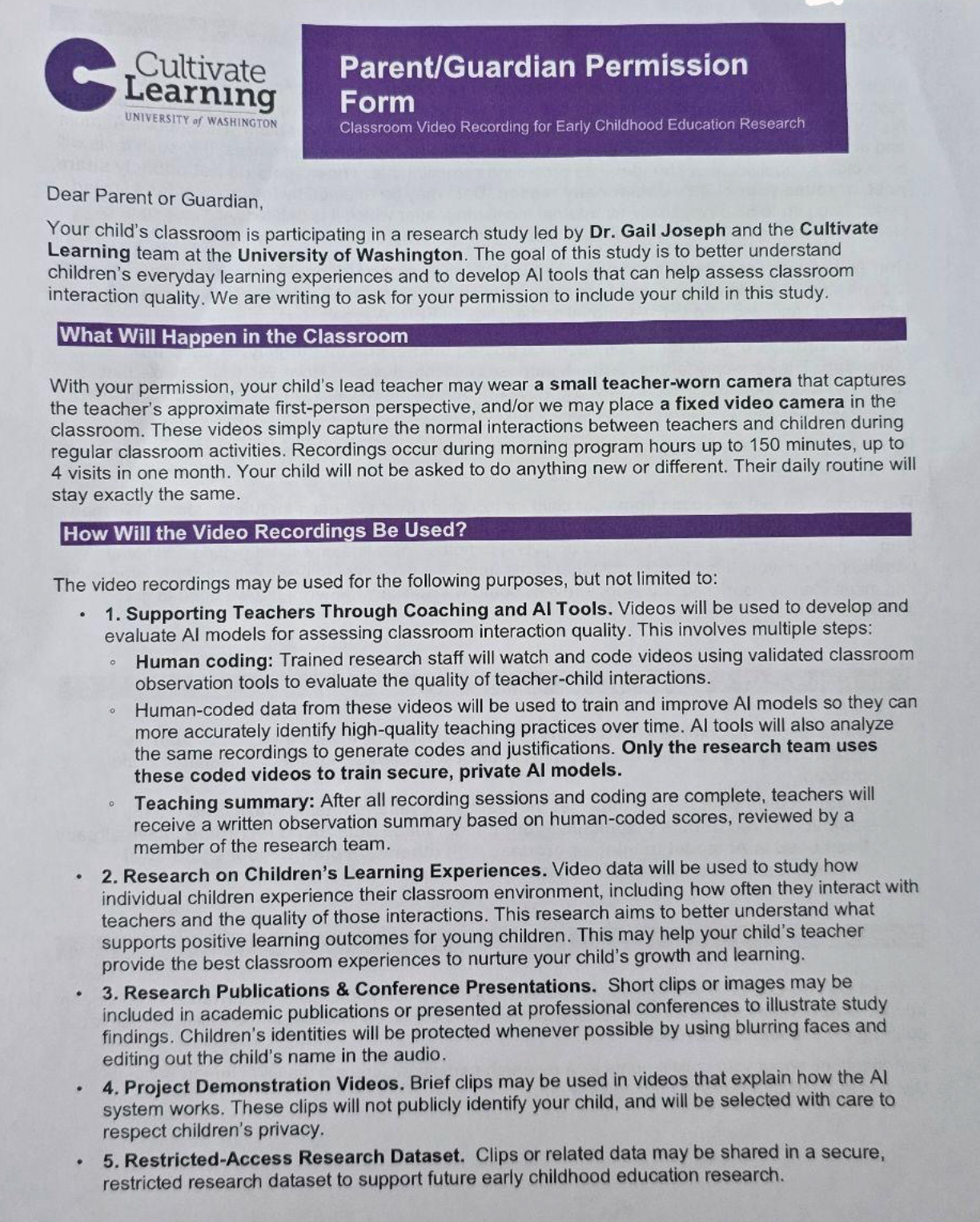
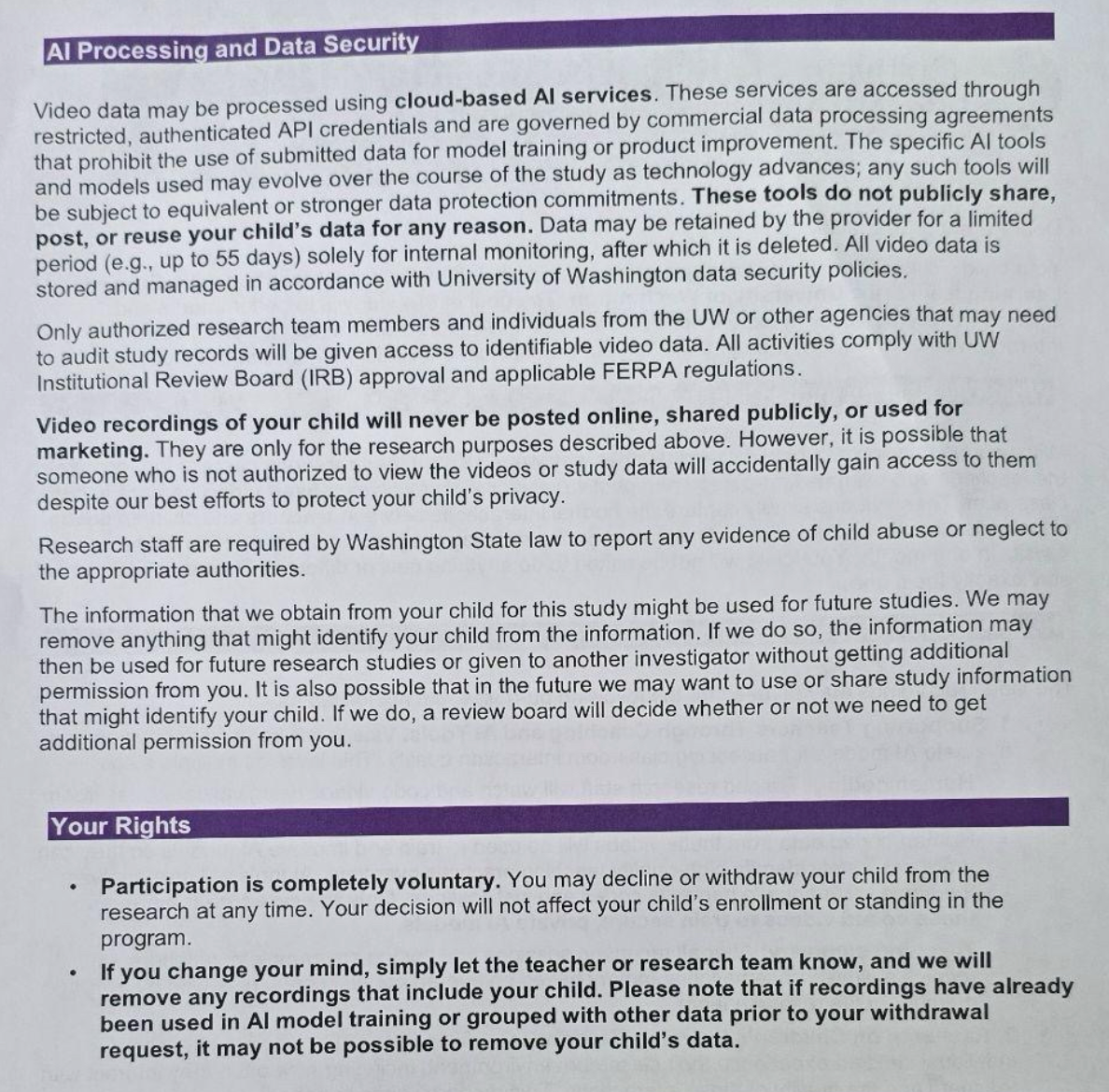










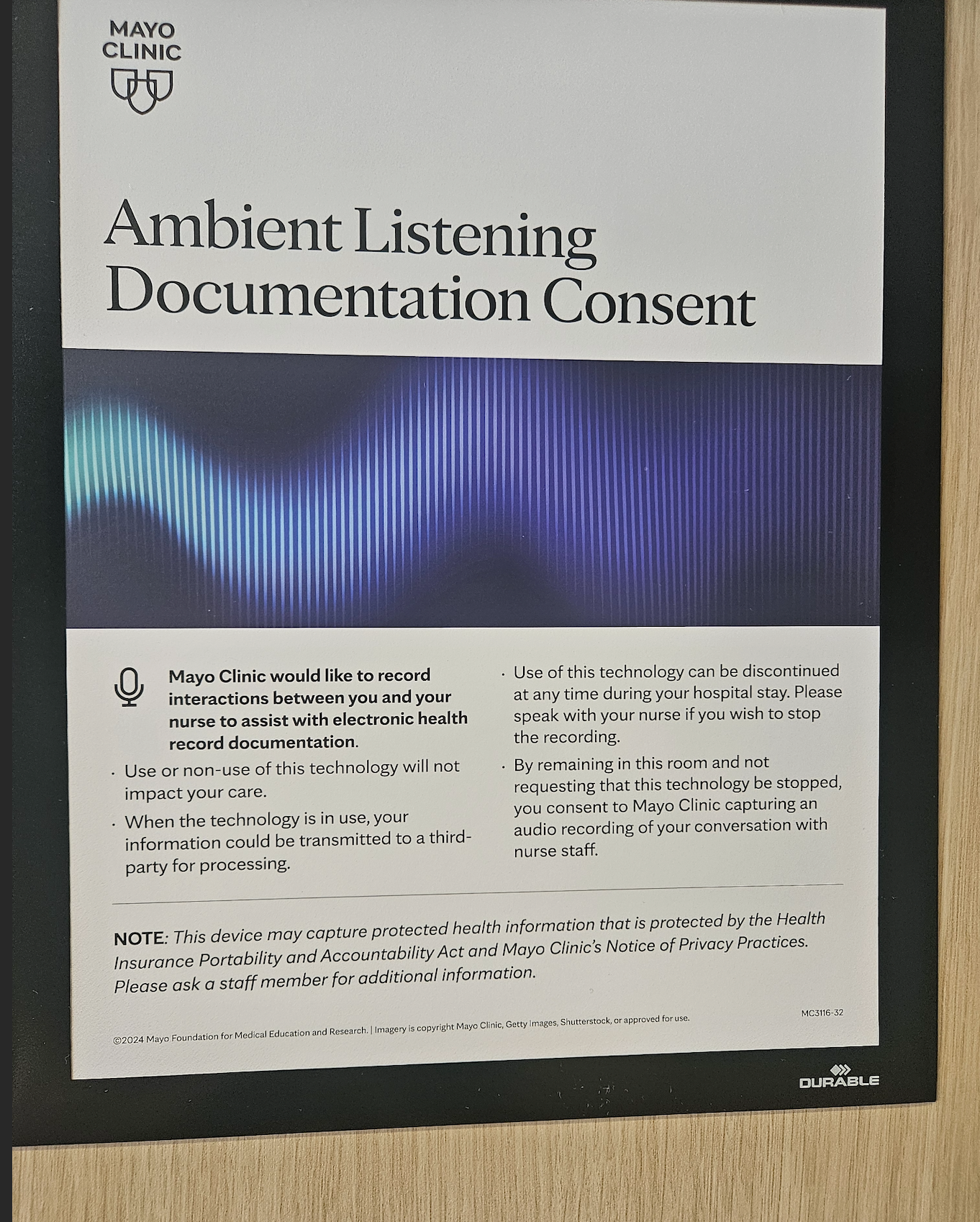

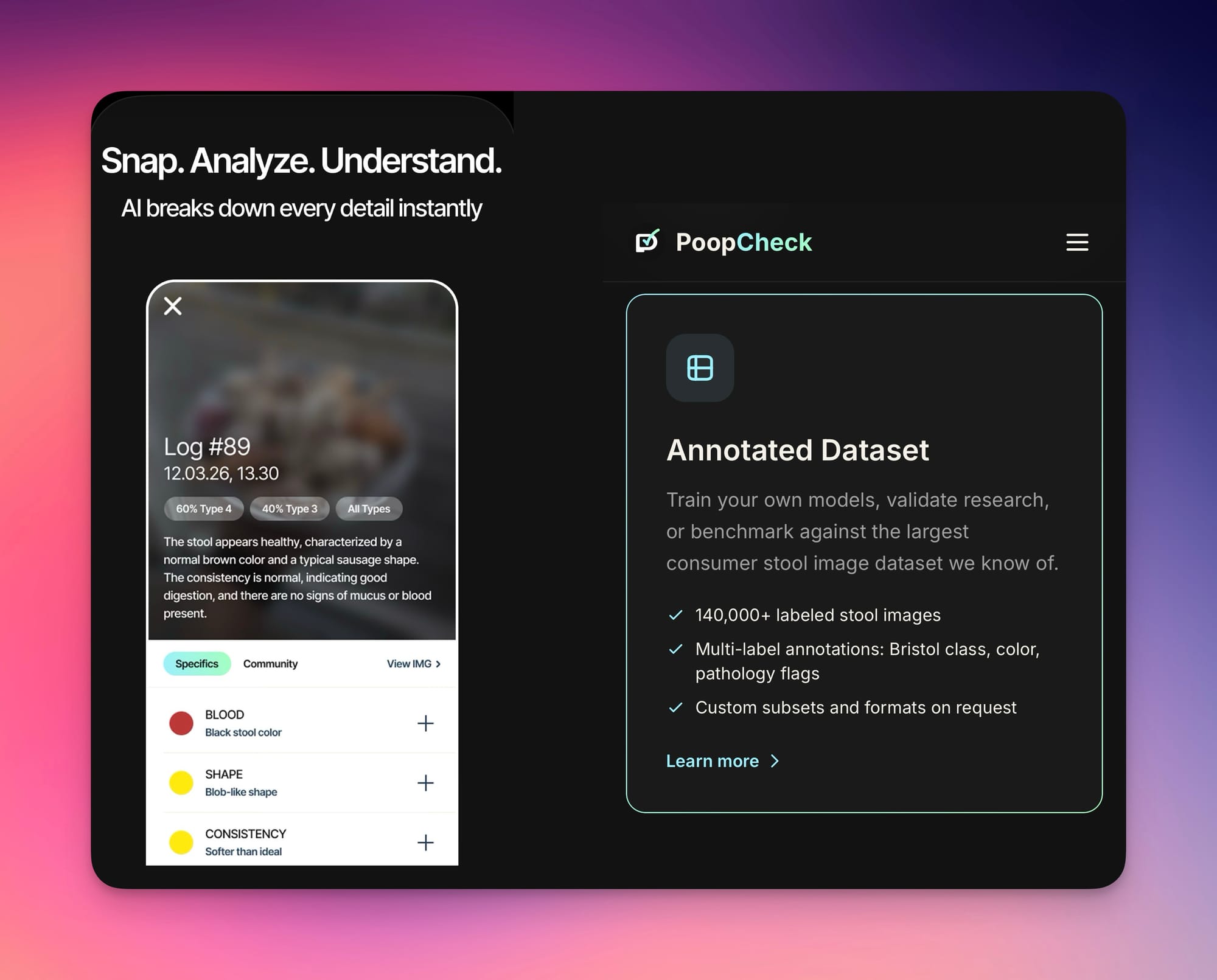



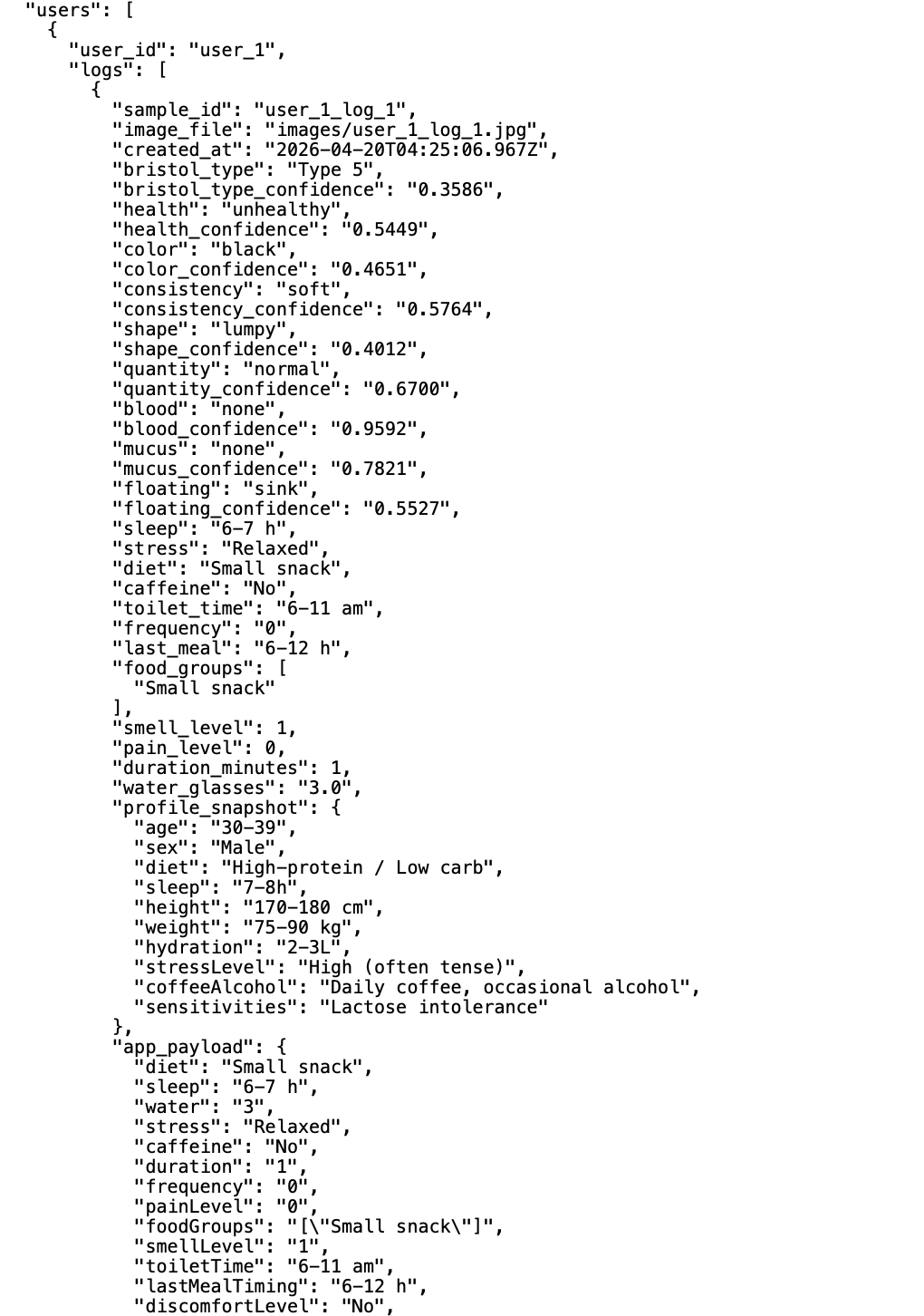











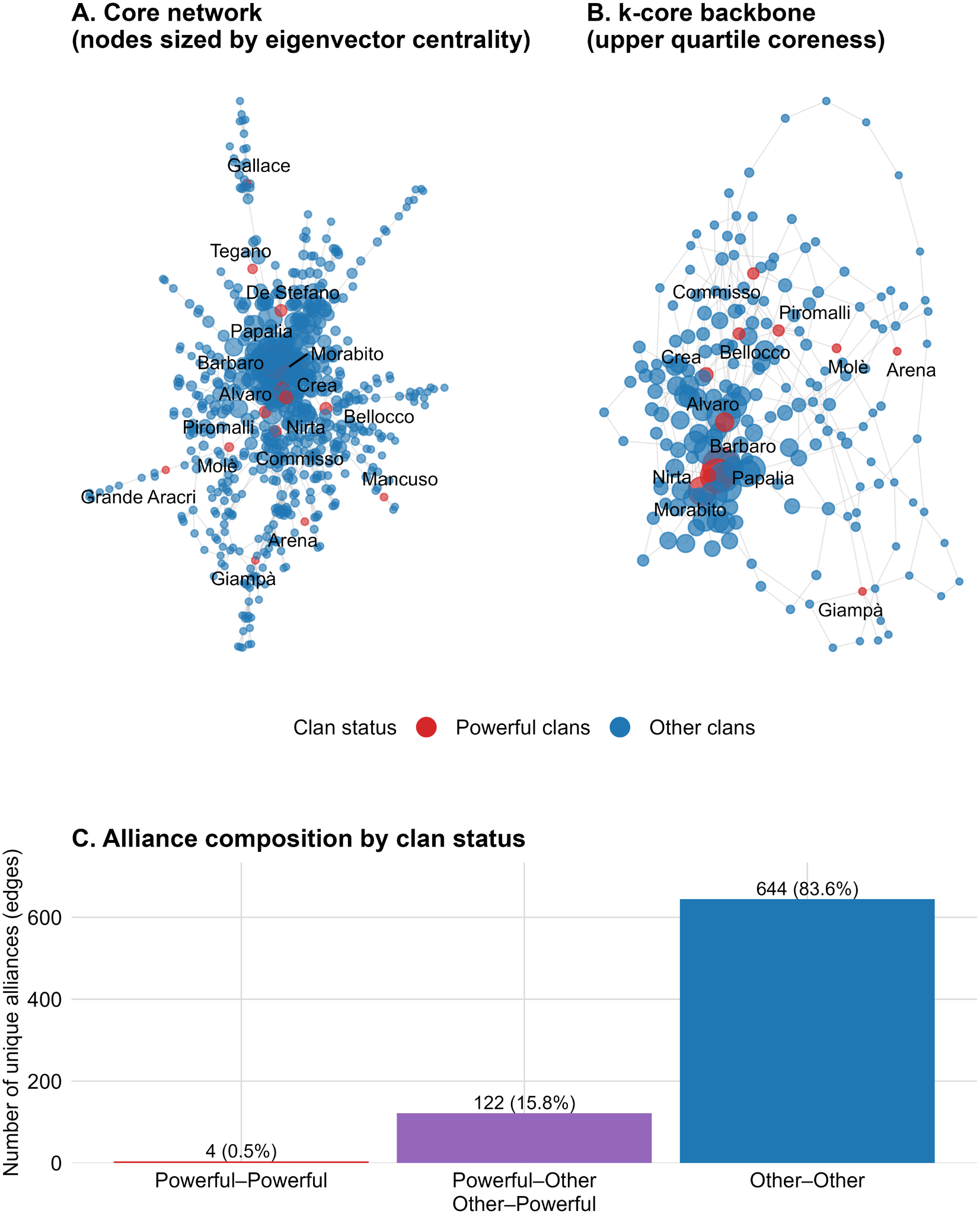
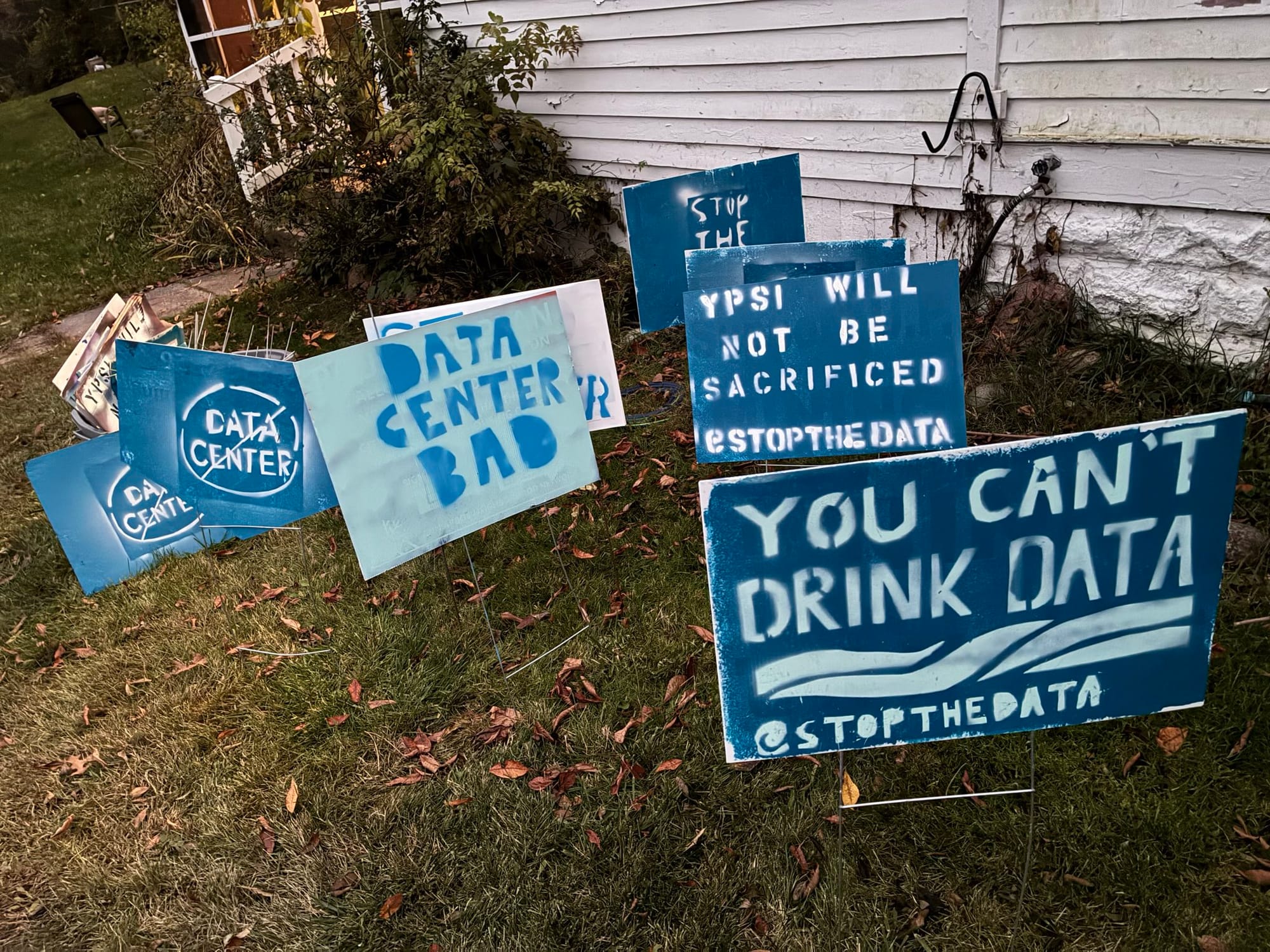




 404 MediaBecky Ferreira