GeistHaus
log in · sign up

Baldur Bjarnason - All Writing

Part of Baldur Bjarnason - All Writing

Everything from www.baldurbjarnason.com

stories primary
The old world of tech is dying and the new cannot be born
Show full content

When I was living in the UK, one of the more common responses people had to me being Icelandic – beyond the strangely common “I hate Björk” refrain – was some comment about Vikings or Norse mythology.

I’m guessing my name helped prompt those. We all have very traditional Icelandic names in my family.

If the comment caught me at the wrong time, I’d occasionally reply in my usual literal-minded way:

The Vikings were coastal raiders and Iceland is an island in the middle of bloody nowhere. Once Iceland was settled in 930, we were mostly a nation of farmers and substantially Celtic. We were probably the least ‘Viking’ of all the Nordic countries. Besides, we converted to Christianity in the year 1000, so we were only pagan for a few decades at most. The Icelandic Sagas are a bit like cowboy movies in that they’re the events of a few short years spun into a nation-building mythology that’s well out of proportion to their historical impact.

The idea of us being a “Viking nation” has a strong hold on people’s imagination. But we’ve been a Christian culture for a thousand years. Longer if you account for the few settlers like my ancestor Auður Djúpúðga who were Christian a century before the rest of the nation converted.

One of the pitfalls of growing up in a Christian culture, one that sticks with you even when, like me, you’ve been an atheist most of your life, is a tendency towards knee-jerk millenarianist thinking.

“This changes everything!”

No matter the flavour of Christianity, a core idea baked into every aspect of the religion is that singular revelatory events can fundamentally change the world. There’s the “before”. Then the “event”. Then an “after” that has been completely transformed. In Christianity itself this is usually associated with Christ’s chaotic transit schedule – “He is here! He has left! He is about to arrive again! Now he’s leaving again! But he’s also somehow always been here! And not.” – but the mode of thinking is common throughout literature, philosophy, and storytelling in the Christian west.

When we tell our stories and spout our opinions, we are very prone to statements along the lines of “this changes everything!”.

However, when you study comparative literature you quickly discover that cultures dominated by other religions tend not to have this tendency, at least not to the same extent.

This colours academic thinking as well. Thomas Kuhn’s paradigm shift, for example, on the face of it frames scientific progress as a series of singular revelatory events that each change an entire field of study in almost one go. But if you dig into the text itself, The Structure of Scientific Revolutions, the process it describes is one where the worldviews of scientists and academics change one by one, where many simply never adopt the new worldview – the one that more cohesively explains what they’ve been observing – and instead stick to preexisting models. Even the most sudden and dramatic paradigm shifts are processes of epistemic diffusion where the old and new models of truth coexist and interact. All of which is to say that Kuhn’s ideas lend themselves to a pluralistic interpretation provided you actually dig into the text itself, and it means that, if you squint, you could make the ideas work with theories of epistemic anarchism such as that of Paul Feyerabend.

Kuhn’s paradigm shift is less a revelation and more a cycle where the new contains elements of the old and the old attains elements of the new.

From an individual perspective, switching your worldview or mental model on a problem or topic can feel revelatory. “This changes everything!” But the world hasn’t changed. All that changed is how you understand it.

I say all this because I don’t want people to fall into the pitfall of expecting revolution. But I do want you to be open to the idea that events can change, transform even, our understanding of how things work.

There have been a few moments in my life where singular events changed my worldview without truly changing any of the facts I knew.

They simply triggered a new thought: “Oh, this explains what’s been happening.”

The simultaneous realisation that the core argument of my PhD thesis was simply incorrect but that it would also pass easily because I knew the people who were likely to judge it – the theory would play to their biases. I had the choice of continuing to work on what was incorrect and get a PhD or to deliver what I believed to be true and almost certainly not finish the PhD. I still don’t know if I made the right choice. I’m certainly not proud of it.

Walking through the ASDA superstore in Bristol and seeing it for the monument to destruction that it is. Civilisation-scale existential decay as aisles and aisles of branded consumer goods.

Sitting in on a talk on autism diagnoses, one of a series of scientific talks, watching an animation they used as a diagnostic aid, hearing everybody around me laugh as if the shapes on the screen made sense, only then truly understanding myself, and feeling more alone than I have ever felt before or since.

Nothing changed in these moments but in personal terms there was a “before”, the moment, followed by the “after” where everything had changed. The world was the same. But to me the world had transformed.

The US techopolistic hegemony #

Reading that Dmitry Sklyarov had been arrested for violating the US Digital Millennium Copyright Act was the moment I first truly understood how the technopoly of the US government and the tech industry worked.

There have been many definitions of Neil Postman’s term technopoly but mine is:

In a technopoly, the only ideas and thoughts that have social and cultural legitimacy are those that support, are supported by, and are mediated through technology.

New ideas in education or healthcare, for example, are evaluated through a technological lens and not whether they educate or heal.

The Sklyarov case was notable for a few reasons:

  • He and ElcomSoft had been working within the preexisting paradigm where ideas were evaluated based on their quality and how well they stood up to discourse. Adobe had shipped ebook DRM software that was flawed as designed and trivially breakable. Exposing these failures was a legitimate research activity.
  • But ideas in a technopoly aren’t evaluated based on how well they work but in terms of how well they support technology as a culture. That the systems were crap didn’t matter: they were sacrosanct.
  • A technopoly is both cultural and political because “technology” is both a culture and a self-reinforcing socioeconomic system. Looking at the world through the lens of “technology” leads you to think about the world in terms of technology. Once you accept it as a frame of reference it becomes all-encompassing.
  • By defending the technopoly the US government was signalling to its allies that, as a political and cultural paradigm, the technological mode of thought was not optional. They clearly saw this worldview as integral to the future of the US hegemony.

Despite Adobe withdrawing its complaint, the US persisted in pursuing the case because the point it was making was larger than a single company.

That the case ended in acquittal was neither here nor there – although it admittedly mattered to the defendants. What mattered to the rest of us was that it wasn’t enough for the United States that they effectively controlled tech and copyright policy worldwide – most of its allies had followed its example and implemented or were in the process of implementing their own version of the DMCA – they demanded that thought, debate, and meaning conformed as well. The economics and ideology of Technology were – always – intertwined.

Global tech policy and discourse was set and enforced by the US to favour US-based tech companies whether the companies involved wanted it or not.

The global tech economy #

Our current globalised tech industry can only exist because of the protectionism and policy uniformity imposed by the United States on its hegemony. That billions of people across dozens of countries work and interact on unified platforms whose laws and regulations are, for all practical purposes, basically that of the US – the policies of end-user nations tend to have a minimal effect on how any of these platforms are run – is an artifact of US dominance.

It’s not because these companies are so fantastic or that their products are so amazing that countries would face local uprisings if they tried to keep them in check. They are, more often than not, about as popular and respected as tobacco or pharmaceutical companies – some of them and their products are polling in terms of public sentiment in ranges similar to child molesters or authoritarian immigration enforcement entities – and their CEOs are some of the more despised public figures in recent history.

Countries can fine the tech industry, up to a point, as that just establishes the cost of doing business. “This is the price list for inflicting societal suffering. Pick the one that suits your business model.” But attempts to genuinely change the rules – beyond just enforcing bullshit compliance regulations that mostly serve to keep local upstart competitors in check – will be blocked, overtly or covertly, by the United States.

Before, when the US system of free-flowing trade was still in full force, much of the pressure was implicit or covert. US diplomats didn’t need to say anything. All that was needed was a tacit understanding that there were rules, that the US set those rules, and that those who followed the rules would benefit from the trade that came with being a part of the global hegemony.

The rules didn’t need to be enforced directly except in extreme cases. Even legislation such as the EU’s GDPR exists mostly to strengthen the existing system by establishing rules and boundaries that only incumbent – mostly US – tech companies have the resources to fully follow, and the system was packed with enough exceptions and loopholes to ensure that when it came to changing corporate behaviour it was more theatre than action.

Regulation that’s defined entirely in terms of the technology it regulates, as opposed to in terms of the effects it has on society or imposing boundaries and limits on the technology itself, is a core component of the technopolistic political and legislative environment.

The game of technology is defined and controlled by the United States of America. Local governments can impose rules that moderate the impact, but genuine limitations on technology are impossible.

Or, they used to be.

The decline #

In parallel with the rise of the technopoly over the past couple of decades the US’s global dominance has been declining. The 2007 crash effectively legalising financial fraud – you only get jail time if you defraud the rich – lead to both a decline in the rule of law in the US and an excessively financialised economy. When stock markets and the like are overrepresented they suck the air out of the rest of the economy and make it less competitive.

If you have two economies of equal size and productivity, one has a massive financial sector and billionaires while the other does not, the financialised economy will have less left over to invest in research, education, infrastructure, and healthcare. Over time, it will inevitably fall behind the country with a smaller financial sector because it’s the other things that drive the economy and productivity, not stock market growth.

The US has coasted on the fact that it’s economy is so big that it could afford all the finance and billionaire parasites sucking its blood. At least for a while.

The other force driving the decline is China.

The rise of China and the decline of the rule of law governing finance in the US has added tension to the relationships in the western hegemony. It’s difficult for the EU to negotiate its ongoing “equitable” surrender to US economic policy if that economic policy just amounts to “whatever our oligarchs want to steal this month, they get.”

Somewhat oversimplifying matters, for a while the bargain was that the EU could have protectionist policies for its industries and in exchange they’d mostly acquiesce to US dominance of tech. Escalating abuses, corrupt tech oligarchs, social media manipulation of politics and elections, attempts to directly co-opt education and healthcare industries, and – with “AI” – outright attacks on many of Europe’s biggest industries such as culture and media, have contributed to the fraying of this relationship.

The EU suffers from the double bind of being protectionist of its industries – that’s literally what it’s for – while at the same time explicitly allowing direct attacks on those industries and its single market because the US tech industry – protected by the US and their dominance over the global economy – has broadened the scope of its ambitions to include “everything, everywhere.” If the EU moves to protect their industries they are acting against the technopoly and US hegemony that frames their very understanding of the world. At the same time their very reason for existence is the protection of their local industries and market and allowing their destruction is unthinkable. Neither action is conceivable, hence the double bind. Psychologically, a double bind like this would feel as confusing as being told you have to bite your own arm because the arm misbehaving. Even if it’s correct, even if your arm is indeed misbehaving and biting it is indeed all you can do to stop it, the thought still has the flavour of madness.

Other countries and regions historically allied with the US are in a similar internal conflict.

Voters, labour, and industry increasingly demand checks on the US tech industry. Populist politicians speak out against social media platforms. Tech companies are compared directly to the tobacco industry. Right-wing nationalist calls for “sovereignty” are redefined to include technological autonomy.

But participation in the US-controlled global economy is contingent on putting as few limitations on the excesses of tech as possible, an implicit bargain that has repeatedly been made explicit by their current president.

That same president has, in a way, presented the world with a resolution to the double bind by unceremoniously ending the US hegemony. His trade war partially unravelled the status quo, but it’s his diplomacy or lack thereof that put a period to era of American dominance.

The moment this became obvious was the Iran crisis.

“This changes everything!” as they would say.

The hegemony ends #

The closing of the Hormuz strait is a bigger event than portrayed by most mainstream media.

Not only did the US fail to beat a much smaller nation – one that has been operating under crippling economic sanctions for years and plagued with internal turmoil – into submission, they effectively sabotaged the world market, destroyed all of their alliances in Asia, and destabilised the petrodollar bargain all at once.

It is triggering a monumental economic crisis – this much we’ve been told – but a longer-lasting change is how it has accelerated the unravelling of the old world order.

The impact of removing 20% of the world’s oil and gas supply isn’t distributed equally. It’s primarily, at least to begin with, born by countries in Asia, many of whom are historically some of the US’s strongest allies in the region. This is affecting their industries and agriculture and threatens both starvation and economic collapse.

What’s more, they know who’s to blame:

Nam Aoi, 58, said she can only afford to plant on 19 of her 32 hectares. Until now, she never left farmland barren before.

Some of her neighbors blame the Thai government for not helping enough. Others accuse fertilizer companies of profiteering during an emergency. But standing at her paddy field under the 102-degree heat, sweat beading on her forehead, Nam Aoi said she faults only two men: Trump and Israeli Prime Minister Benjamin Netanyahu.

“Those two held hands and created war,” Nam Aoi said, her voice rising. “Nothing is normal because of them.”

Iran war is crushing Asia’s farmers, threatening global food supply - The Washington Post

The petrodollar bargain where the world’s biggest oil producers agree to only sell oil for dollars – propping up the dollar and forcing countries to buy the currency in excess of what their direct economic relationship to the US would require – has been falling apart in slow motion over the past few years, but this latest crisis simultaneously takes much of the dollar-priced oil directly off the market and weakens the underlying relationship so that the bargain is less likely to hold whenever the strait opens again.

There’s a risk that US allies in Asia crash-transition to alternative energy sources because of the Hormuz crisis, increasing their reliance on China, decreasing their reliance on Gulf oil, reducing their investment in the US dollar, and begin the process of severing themselves from US in terms of trade and diplomacy.

If the crisis spreads to the EU, coming straight at the heels of the Greenland and tariff crises, the pressure within the EU to disentangle itself from the US increases substantially.

These processes now look pretty inevitable. The question is mostly how long it will take.

The US no longer has the power or influence it once did and that changes everything for US tech companies.

The old is dying #

We’re in a very odd place. We’ve clearly come to an end, of sorts, but it’s an ongoing end – a decline mixed with stepwise collapses – so we don’t get the release that comes with closure or the certainty of knowing your fate.

We’re in a crisis because, as Antonio Gramsci said, “the old is dying and the new cannot be born”.

I have spent much of my career pulling together thoughts on why the software industry behaves the way it behaves. Management is mostly motivated by stock prices, not by delivering valuable software at a profit, but that only explains their drive, not the mechanism they apply to reach for their ambitions.

The mechanism is the application of control. Instead of delivering services and software that unlocks value for their client industries, the software industry has spent the past decade or so trying to control their customers and their client industries. Why make software for hotels when you can control the hotel industry? Why make software for taxis when you can replace the entire industry with software? Instead of trying to entice customers to upgrade their software by making new versions more valuable to them, push them to a subscription service where you control what they get, when they get it, and what value they’re allowed to unlock from their own businesses. Why sell Word when you can sell an Office 365 Cloud Subscription?

The endpoint of this is to replace every industry that remains with generative models. Cut back on actual development of Photoshop, for example, lower development costs and programmer overhead even as you replace the industries that are your customers with automatic image and video generators.

But writing out a detailed analysis of the how, what, why, and where of the software industry’s grasp for control doesn’t really make that much sense when we don’t know how any of it’s going to pan out.

The software industry is built on the foundation provided by an unchallenged US global hegemony. Without it, without the economic force provided by the US dollar, the US having access to all of our data around the globe and their control over payment systems and networking would be less tenable. Today’s software industry would not exist. Without the weight of the US political empire behind it – if Airbnb or Uber had been local startups – much fewer countries in the world would have loosened their regulations and consumer protections to accommodate them to the point where they prospered as they did.

Even as the software industry achieves its ne plus ultra – the unprecedented achievement of controlling all language, media, and office work in the west by turning “AI” into the universal intermediary – the foundation they built on is crumbling.

A big chunk of my livelihood over the past few years has been in helping people understand the software industry on both a micro- and macro-level. Why do software companies behave the way they do? Where should you copy them, and where should you chart a different path? What works and doesn’t work in a software development project? What has worked for me? What has worked for those like me?

Even my writing on “AI” has centred on how things work, not on politics, social impact, education, or culture:

  • How do LLMs affect productivity and quality? (Much like leaded petrol. There’s some potential benefit for individual users with literally decades of expertise, provided nobody else uses LLMs. The results are catastrophic when everybody is using them.)
  • How do LLMs affect the thinking of those that use them? (Quite a bit, mostly for the worse, but the exact causes and effects are tough to assess.)
  • Does it work for business or not? (Mostly not. The inherent variability of a generative model means that the benefits will always be mostly hypothetical while the harms are widespread and long-lasting and substantially outweigh the benefits that can be realised.)

But “AI”, even more so than any other tech, is contingent on political clout. It’s what forces through data centres, lets companies infringe on copyright and violate software licences, renders them at least temporarily immune to all kinds of consumer protections and wrongful death suits, and results in the political collaboration where “AI” systems provide authoritarian states with “accountability sinks” and algorithmic cover for institutional racism. It’s this political partnership more than anything inherent in the technology that has let the “AI” bubble get this far and change so much.

It’s also what makes analysis so fraught because the US is over as a global power. Getting beat by a cash-starved, under-resourced, extremist state struggling to quell internal unrest is not something that happens to global superpowers. Remember, this isn’t an instance of asymmetric warfare like the Vietnam War where the very strengths of an empire are turned into weaknesses. Iran has big obvious military targets and an organised military that’s still functioning after an all-out attack by the US. It’s state versus state where even a draw means the big state lost. It’s what happens to shit-heel nations who don’t know their time has come, like when the United Kingdom and France rushed headlong into the Suez Crisis.

But the Hormuz crisis also delivered a second mortal blow to the US-controlled globalised market. You can’t remove 20% of the world’s energy output, not to mention a number of other essential commodities, without disastrous consequences. Two weeks would have been bad enough. Two months are a catastrophe. A whole summer would be unimaginable.

Crises happen. As do strategic miscalculations. Even empires make mistakes. What sets the recent crises – Hormuz, tariffs, and Greenland – apart is how the US has used them as an opportunity to deliberately signal the end of its own empire. They first turned on their trading partners, then their allies in Europe, and then they delivered one of this century’s biggest economic and energy crises to their allies in Asia.

Countries that were firmly embedded in the US-controlled global market are now buying oil with yuan and paying Iran for passage with cryptocurrencies. As electricity and fuel rationing begins, everybody knows that the US is to blame: the voters, the media, the politicians, and the wealthy. When people die, their nearest and dearest will blame Americans.

The ground is shifting underneath every industry that was built on the assumption that the US would protect and preserve the globalised status quo. The software industry has shifted its entire value proposition from “we make tools that help you make or save money” to using political clout and the dollar hegemony to capture, control, and loot entire sectors of the various economies of the world. That strategy only works when you’re in charge.

It’s impossible to guess what exactly will happen next to software or tech. All I know is pretty much all of modern software is built on a premise that no longer holds. Even free and open source software is contingent on everybody agreeing to similar policies regarding copyright. Whether tech has enough clout on its own to continue its strategy of capture and control, whether it compromises with local governments to retain its power, whether we’re in for a period of collapse and fragmentation is anybody’s guess. The old world is dying and the new cannot be born.

My understanding of how the software industry works is now historical. It does not correspond to our present reality. That history is a legacy that’s useful to understand but only as an antecedent to the present, but if we take it to represent some sort of truth about the new world when it eventually comes into existence we will only be misguided and misled.

The tech industry is shaping up to be one of the most hated industries in our modern era.

It was built on the foundation of empire.

They’ve been taking enormous risks believing they were empires in their own right.

I suspect we’re about to find out whether that’s true or not.


If you enjoy systemic-but-practical takes on software development, you might enjoy my book Out of the Software Crisis: Systems-Thinking For Software Projects.

Out of the Software Crisis Out of the Software Crisis by Baldur Bjarnason
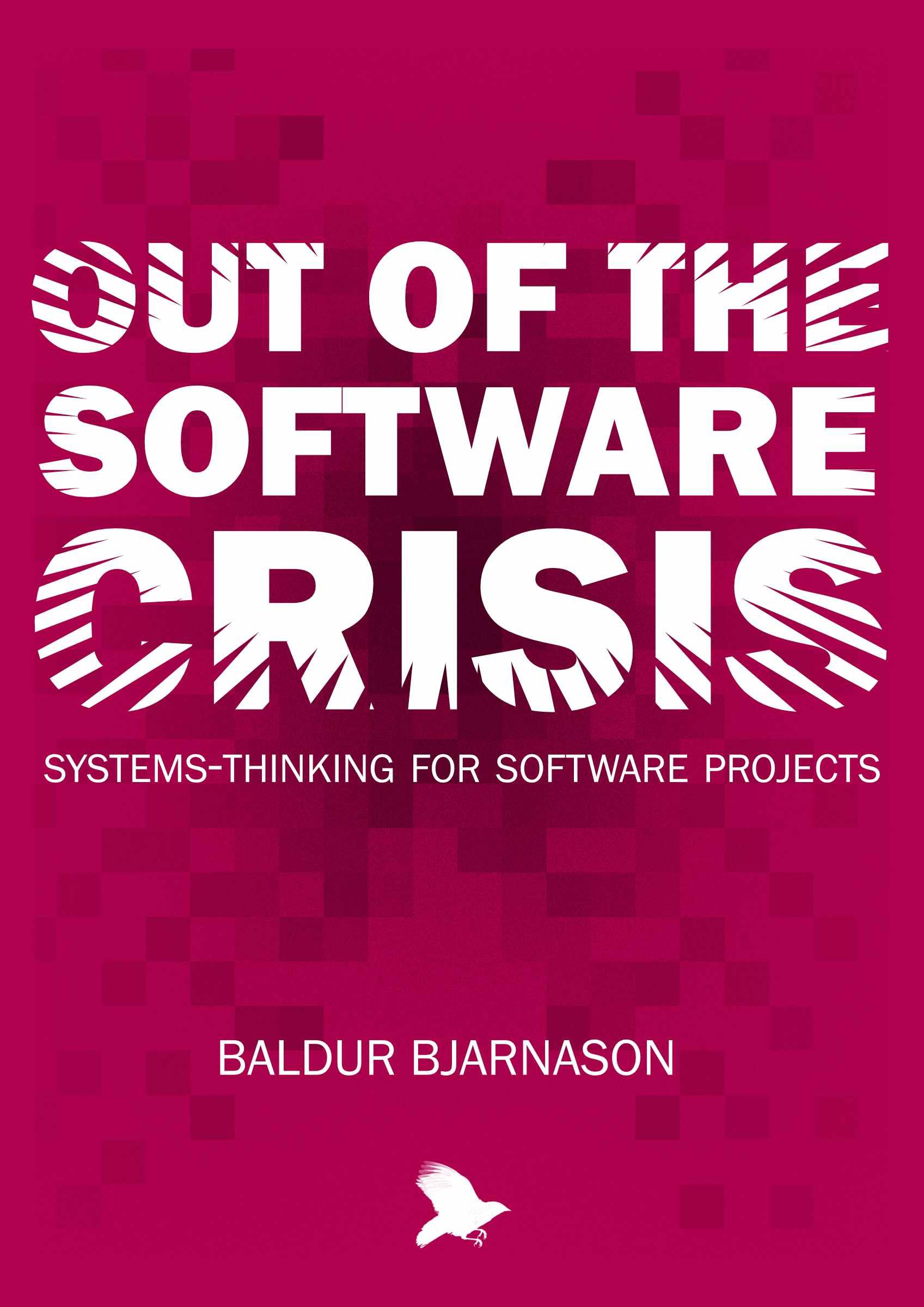
€35 EUR for PDF and EPUB.

Software projects keep failing, not because we don’t have the right team or tools but because our software development system is broken. Out of the Software Crisis is a guide to fixing your software projects with systems-thinking making them more resilient to change and less likely to fail.

Systems-Thinking For Software Projects

https://www.baldurbjarnason.com/2026/the-old-world-of-tech-is-dying/
Birds in May
Show full content

A seagull on a streetlight

A black and white photo of a seagull on a streetlight

A blackbird looking a bit scruffy.

A scruffy looking blackbird in a tree. You can see a commercial greenhouse in the background.

Oystercatcher! On a lawn!

It's an oystercatcher on a lawn. That being a long-beaked bird that mostly doesn't catch or eat oysters That same oystercatcher, except now it's pecking at something in the grass.

This male northern wheatear was hanging out at a construction site this week.

A small bird, grey and white with a yellow streak, sitting on a large rock. That same bird but now on a stack of plywood and seen through a chain link fence. The bird is still on the plywood stack but partially obscured by the fence.

A white wagtail doing its thing.

A black and white photo of a white wagtail, which is a small black and white bird, on the ground. Another black and white photo of the wagtail where it's keeping an eye on the photographer Still suspicious of the photographer. Now this same bird is in a tree, still worrying about the photographer.

Blackbird.

A blackbird stands near a path. There's a small bridge ahead. It looks like the blackbird is watching the photographer A black and white photo of a blackbird in a tree. The trees are still bare. The blackbird has worms in its beak.

The black-tailed godwit has arrived.

This bird is a long-beaked shorebird or wader with an orange head and grey wings. It is watching the photographer The same godwit in flight. It is landing elsewhere, still keeping an eye out for the photographer.
https://www.baldurbjarnason.com/notes/photos/birds-in-may-2026/
A massive Easter sale and a preview of my next book (out late 2026)
Show full content
Easter 2026 Bundle

And a preview of The Magic Toy Factory

Why the software you make and use sucks.

Get The Ebook bundle for €49 EUR, discounted from €134 (price includes VAT, where applicable)

It doesn’t seem to matter what process or method you use, whatever benefit there is to your work seems to come out in the wash.

Your job adopts a scrum or agile, buys a fancy SaaS that’s supposed to change everything. It all seems fine for a while, but if you make the mistake of pausing a few months later and reviewing the progress, you usually find that the effect, if any was minimal.

The problems at work are supposed to be fixable. The bargain was supposed to be straightforward:

  1. Each issue has a solution.
  2. You adopt the solution, a methodology or app used by others (“industry standard”).
  3. The issue is supposed to go away.

Instead it just gets soggier.

Your problem is that you’re just tinkering with the system you’re working in. You can’t actually fix the issue directly. You need to fix the system – the organisation you’re working in.

To fix a system that isn’t working isn’t you don’t add more to it, but instead you stop doing the things that make it worse.

Thankfully, this is usually much less work than adopting a fancy new process or onboarding everybody to a new Software-as-a-Service.

My book, Out of the Software Crisis, focus on the many ways organisations and teams compromise their own work by introducing a number of ideas based on management theory and Systems-Thinking.

This Easter, from 31st of March to the 7th of April, you can get all of my books, including Out of the Software Crisis, as a part of a four book bundle, only available during over the Easter period, at a €85 EUR discount off the full combined price.

It includes:

  • Out of the Software Crisis: Systems-Thinking for Software Projects, an opinionated guide to the systems-thinking perspective on software development.
  • The Intelligence Illusion: why generative models are bad for business, an overview of the many risks and pitfalls of using generative models in your business backed by in-depth research.
  • I am Uncluttered (Yellow): doom-prepping web dev through disdain, disrespect, and doing the right thing. (Only available for a limited time through this bundle.)
  • Bad Writing and Other Essays: Twenty-Five Years of Writing About the Digital Transformation. (Only available for a limited time through this bundle.)
Also included: a preview of my upcoming book #

Included is an 80 page preview of the book currently I’m working on and will hopefully release later this year: The Magic Toy Factory which continues my exploration and explanation of management theories and concepts from a more humanistic process.

Buyers will have the option to join a newsletter where I plan to document my progress with the book.

And when the book is out, anybody who has bought the preview, whether as a part of the bundle or individually, will get the final version for free.

Easter 2026 Bundle

And a preview of The Magic Toy Factory

Why the software you make and use sucks.

Get The Ebook bundle for €49 EUR, discounted from €134 (price includes VAT, where applicable)

If you don’t want to buy the entire bundle but want the preview and want to follow my progress on the book, you can buy just the 80 page preview, in PDF and EPUB, for €29 EUR.

Prelude to the Toy Factory

A preview of The Magic Toy Factory

Why the software you make and use sucks.

Get The Ebook bundle for €29 EUR (price includes VAT, where applicable)
https://www.baldurbjarnason.com/2026/easter-sale-and-the-toy-factory/
The two worlds of programming: why developers who make the same observations about LLMs come to opposite conclusions
Show full content

“Why are you being so difficult? This could be a good thing for us? How can you be so sure?”

This was in late 2000. We were having drinks in the Watershed in Bristol.

For those of you not familiar with the Watershed, it’s an art house cinema, media production centre of excellence, conference venue, houses a diverse community of media practitioners, and a bar.

It was the place in Bristol where people in media hung out. Students, writers, artists, academics, film, TV, and radio people of all stripes, writers, and more have tended to hang out there at various times over the years.

I don’t know what it’s like today – I haven’t been to the UK in about a decade – but I’d be surprised if it didn’t still attract that sort of crowd. At least what’s left of it after the past decade of ruin.

When I was studying my Masters in Interactive Media back in 2000, us interactive media students used to hang out there a lot. During one of these hangouts we ran into a small group of people claiming to be just about to launch a dot-com startup.

This was after the dot-com bubble had crashed. Now, there’s an argument to be made for starting a tech or software company as the market bottoms out. Your competition has been cleared out or is suffering. Funding might be hard but recruitment becomes easier. You also tend to have easier access to all sorts of under-priced infrastructure.

This was not that. This was a group of young guys that were specifically starting a VC-funded startup, in the dot-com vein, and making all the same promises you saw in the dot-com bubble:

  • “We’re going to change the world.”
  • “Anybody who signs up to work with us is going to be rich.”
  • “The stock options are going to be worth a fortune.”
  • “We have an amazing concept.”
  • “No, I’m not going to tell you unless you sign an NDA.”

They sat down at a table full of interactive media students and basically offered us all a job, with stock options and amazing benefits.

I told them to fuck off, although in a not quite so polite language. I’d only been in the UK for a few weeks as an adult by then. I was still speaking with level of bluntness that was even considered a bit much by other Icelanders.

I was the only person at the table who was even just a little bit sceptical. I told the others they’d never hear from these guys again.

“Yes you will,” the startup guys chimed in. They were still at the table.

“If these assholes do contact you, then they’ll ask you to work for free, promising an amazing future.”

“No we won’t.” They were quite all quite drunk.

It was at this point that one of my friends, another Masters student, took me aside and asked me why I was being difficult.

“Because they’re either lying to you, trying to use you, or both.”

“But how can you be sure?”

“Because nothing they’re saying makes sense. None of us will ever hear anything from any of these guys again. Also, weren’t you listening earlier when one of them talked about how he was worried his neighbour was going to plagiarise their idea by listening in on the radio waves generated by the electric wiring in his flat? They don’t sound well.”

“That could be happening! I’m sure I’ve heard about that happening to somebody.”

We never heard from any of them.

People want to believe in magic #

You don’t have to spend much time looking into how faith healers and homeopaths operate to realise that their biggest advantage is people’s unrelenting desire to be fooled. They want to believe in magic.

Even when they know better. Even when the people making the promises of magic sound like they are on the verge of a serious breakdown.

But, often as that does happen, I don’t think this is why I was alone at that table in my scepticism. That was more a question of how each of us saw the industry we were a part of.

You see, this was an evening in the middle of a week, where we had gone out after the lectures of the day ended.

That meant the group was disproportionally full-time students with no family and no day job to pay for their studies.

We were people who had only experienced the web, web development and design, and interactive media as this powerful new thing that held endless possibilities.

And me, the resident grump.

The students who were in the Masters because the dot-com they had been working for fell apart were all at home. The people who were studying because they suddenly had spare time after business for their interactive media studios had dried up were at home with their creepy partner who hit on every twenty-year-old in sight.

If you mostly see the positive in your field, vague promises of a grand future sound more compelling. If you’ve seen the dysfunction firsthand but love the industry despite its flaws, you know that the vagueness hides a lot of horrors and grim disappointment.

The promises made by the makers of various coding tools built with Large Language Models (LLMs) tap into this divide.

Two groups within the field of software development look at the same dynamic, the same behaviours, and the same features, but come to diametrically opposite conclusions.

This might seem perplexing but it makes sense once you realise that software development was already divided:

  1. Those who believe software development and the software industry has been going from strength to strength – “software is eating the world” – and this is just making that happen faster.
  2. Those who believe we’ve been in an incrementally escalating software crisis since at least 2007.

Our current software crisis – we’ve had a few – has been ramping up since the US gave up on regulation after the 2007 crash. Instead of reforming and regulating finance, the US decided to let the finance industry take over all of its industries, which hasn’t been great overall, but for software it’s meant that “quality” stopped mattering.

  • Well-funded startups capture market share with subsidised products.
  • Big tech is a cluster of oligopolies and monopolies.
  • Internal software projects are driven by their potential effects on stock prices (“UGC! No, Web 2.0! No, blockchain! No, AI!”).
  • Customer lock-in is a standard tactic.

There is little to no downside to poor software quality. The upside of doing the job well is limited compared to tactics like lock-in, dishonest subscription models, and monopolies

Some corners of the software industry are less affected. Others, such as web dev, are more affected.

To illustrate the lack of a downside:

The stock price of the company that caused worldwide outages and economic havoc, Crowdstrike, even in a stock market affected by the Iran war, is higher today than its peak before the outage.

Massive worldwide economic harm, no real consequences.

This has led to a field whose standard practices are a cluster of bad habits and superstition. Web development is now especially notorious for completely disregarding accessibility, user device capabilities, and regulations. Most of the ideas of user-centred design are alien to modern developers. Misconceptions about test-driven development and pair programming abound. Code review is the norm even though it’s largely useless as practised.

When developers say that LLMs make them more productive, you need to keep in mind that this is what they’re automating: dysfunction, tampering as a design strategy, superstition-driven coding, and software whose quality genuinely doesn’t matter, all in an environment where rigour is completely absent.

They are right. LLMs make work that doesn’t matter easier – it’s all monopolies, subscriptions, VCs, and lock-in anyway – in an industry that doesn’t care, where the only thing that’s measured is some bullshit productivity measure that’s completely disconnected from outcomes.

Those who are most vocal today about the dysfunctions of LLM-coding were already warning about the dysfunctions of the software industry well before the “AI” bubble began. The issues that plague the industry predate this particular bubble and many in software have been concerned about them for years.

Equally, most of the people who today are the most vocal about the benefits of LLM-coding were bullish about software development before the bubble. They didn’t see anything wrong with the earlier state of affairs so they don’t see anything wrong with magnifying that dysfunction tenfold.

Hence, a divide in the discourse around LLMs for coding.

Both see Large Language Models as a mechanism for scaling up existing software practices with minimal human observation.

One group thinks this will make the world ten times richer. The other thinks it’ll be a catastrophe.

There is nothing either group can say to the other to shift their opinion because the disagreement is down to a fundamental difference in worldview.

But if you aren’t in tech and are wondering which to trust, just ask yourself: do you really think the chucklefucks of tech have got coding figured out?

Or are they a bunch of self-serving con artists sitting at a table with inveterate optimists spinning a yarn of a grand future?


Later this month I’m going to be launching a small project.

The idea is very simple:

What if we give people more options for how they can support a newsletter that don’t involve subscription?

Instead of charging people $25-50 USD a year for a subscription, I’m planning on offering a short ebook containing advance copies of the next few flagship essays I plan on publishing on the newsletter, along with a few thousand words of essays and arguments that are unlikely to see the light of day elsewhere.

These essays use my personal experience with software development and interactive media as a lens for me to interrogate the evolution of the software industry and what we can learn from what we’ve lost.

Buying it will give you an opportunity to see the essays well before they are published and show you the argument they’re making as a whole in a single ebook.

If that sound like your thing and you aren’t a follower of my newsletter, you might want to subscribe. If you’re already a subscriber, then you have my thanks.

https://www.baldurbjarnason.com/2026/the-two-worlds-of-programming/
Ravens in March
Show full content

This raven is picking the meat off a sheep’s jaw. I’m guessing somebody threw their “svið” leftovers out for the ravens to enjoy.

Whoops dropped it. If you aren’t familiar with the horror that is the Icelandic cuisine known as “svið”.

This time of year, when the ravens congregate in town before scattering into the countryside for the summer, I tend to stalk their regular hangout spots.

Two ravens in a tree, glowering at the photographer A raven on a fence post and another flying behind it A bunch of ravens hanging out on steps over a fence. The fence is long gone, but the gate and the steps are still there. Five ravens all lined up in a row on a hill.

This is why I’m thankful my neighbour has placed his bird feeders well out of the reach of the cats.

Grása, a very fluffy grey and white cat, sits by a timber fence. Unseen is the bird feeder that hangs well above her reach. Another photo of the cat Grása who is relaxing in the sun. Grása has this aura of calm around her that belies the fact that her default mode for dealing with strange cats is 'attempted murder'. These two ginger cat siblings arrived in the neighbourhood a year ago. They live across the street from the house with the bird feeder. This black cat also lives in this same street and is also coming out for a longing gaze at the birds feeding.
https://www.baldurbjarnason.com/notes/photos/ravens-in-march-2026/
Objects not data: a photography and illustration print experiment
Show full content

Information Wants To Be Free. Information also wants to be expensive.

—Stewart Brand

There is a tension inherent in the economic nature of data.

Data can be endlessly copied. That’s its nature. This will drive down the value of data under pretty much every economic system that’s realistically available to us. That’s what the anthropomorphic “wants to be free” means.

Data is now also our primary representation of most work of value. Designs, writing, images, and illustrations exist because we make them. That takes work, experience, education, training, and – quite often – equipment. That’s why “it” also wants to be expensive. Its very existence has a cost that won’t disappear just because you can make copies.

This tension has existed since the early days of the internet.

The balance on the scale between “free” and “expensive” has steadily been shifting towards free, but people have also been reevaluating their relationship with digital media for very good reasons.

How often have you lost access to something you loved because the only copy you had was behind a cloud or streaming subscription somewhere?

You pay companies and people monthly subscriptions for years, but what are you left with when it’s all said and done?

Nothing.

Information – digital media – wants to be expensive because the expressions they carry are inherently valuable.

But it’s also not always a great deal – especially subscriptions where the only thing you’re getting for your money is ephemeral access.

We’d all like something more robust that feels worthwhile and personally valuable.

Standardised files, such as ebooks, are a useful compromise for both the creator and the reader – they genuinely do work – but given the declining state of many things digital, I think many of us want things we can hold in our hands.

At least as an option.

This is why I’ve been exploring various forms of print to complement the digital ebooks business. I’ve started with print books – and I have more print ideas I’d like to explore – but I don’t think it should end there.

Over the next few months, I’ll be experimenting with selling art and photography prints as a way to fund my work on this newsletter and as a publisher.

I take quite a few photographs. Brynhildur Jenný both photographs and illustrates.

There are quite a few professional art print services around the world, that offer high quality prints on archival – gallery quality – paper.

I’m planning on offering a series of prints – a selection of our work – using theprintspace a service that offers Giclée art printing in the US, UK, and EU.

Now, unfortunately, I won’t be able to offer these prints in the EU. While Iceland has a manageable VAT thresholds for individuals and small businesses, if you’re a non-EU business using a drop-shipping service based in the EU, you are obliged to handle VAT on the shipment no matter how low your volume is. As far as I can tell, that requires a lot of additional tax bureaucracy for me both here in Iceland and in the EU which won’t be worthwhile if the prints only sell a few occasional copies.

Figuring out an optimal solution to that bureaucratic problem is not going to be straightforward. I’d like to sort this out over the next few months, but in the meantime I won’t be able to ship to the EU.

(It might be genuinely simpler for me to invest in a Giclée-quality printer and ship EU orders from Iceland, but I’m not willing to go that far yet.)

For the first batch of prints, I’ve selected four pictures. Each is available in two sizes, each size is limited to 25 copies each picture, and they all come with a certificate of authenticity.

  • 30cm x 40cm / 11.8" x 15.8" for €75 EUR
  • 18cm x 24cm / 7.1" x 9.4" for €45.00 EUR

My primary approach for choosing the sizes was to use the obligatory Nordic heuristic: what seems to be easily available in Ikea?

So, instead of overthinking the print sizes, I just went with some of the common photo frame sizes on offer in Ikea and Jysk, which is also the reason why I’m focusing on smaller print sizes to begin with.

This might be an issue for people in the US (not sure what the standard sizes are there) and if the only place in your city that has frames that fit turns out to be Ikea, then I apologise in advance.

I’m open to other print sizes in future experiments. Let me know if you have specific suggestions.

I chose two recent photos I took here in Hveragerði. Brynhildur Jenný chose two pictures of hers.

I’ve outlined each photo in more detail below.

We’re very much open to suggestions as well, so if there are any specific photos of mine or from the Ugly Reykjavík project that you’d like a print of, just let me know.

Shipping costs are per order (not per print) and if you order more than one print at a time, you’ll get a 25% discount on the second and subsequent prints.

Let me know what you think.

Horses in the Mist #

The geothermal areas around the town of Hveragerði emit quite a bit of steam. When the air is cold and the wind is still, that steam combines with the mist to sit over the landscape like a fog.

We also have horses.

It is a Giclée art print on Hahnemühle Pearl, a highly durable paper with a satin finish whose natural white colour and resin coating lends depth to the photograph.

Horses wrapped in steam and fog on a frosty pasture

The Raven and the Church #

Ravens often seek out tall places to better observe their surroundings. In many small towns, that’s going to be the local church. This black and white photo captures a raven perching on the Hveragerði town church steeple.

Again, a Giclée print on Hahnemühle Pearl.

A black and white photo of a raven perched on a building.

Strange Little Hut (Ugly Reykjavík) #

The Ugly Reykjavík photography project by Brynhildur Jenný aims to document the parts of Reykjavík and Iceland as experienced by those that live there—the parts of the country that are less classically picturesque and show us an Iceland that has been lived in, as seen by those living in it.

The photo is a Giclée art print, using Hahnemühle Pearl paper produced and delivered by a professional art printing service.

A strange little rusty hut

The Cat and I and the Flower #

An illustration from the Icelandic graphic novel The Cat and I by Brynhildur Jenný, which is a touching autobiographical story about a girl growing up in nineties Iceland and her cat.

The illustration is a Giclée print on Hahnemühle Bamboo. The paper’s matt texture and off-white warm tones was chosen as it best represented the paper Brynhildur Jenný used when she drew the illustration by hand, in order to create a final print that most accurately reflected the original.

An illustration of a cat and a girl sitting together and looking at a flower.
https://www.baldurbjarnason.com/2026/objects-not-data-art-prints/
Birds in February
Show full content

A couple of simple bird shots. Redcaps and a starling.

Redcaps, a tiny bird, in a tree. Only one is in focus. A starling in a tree looking down at the photographer.

The ravens are still in town.

A raven in flight against a bright sky A raven posing on a telecommunications mast A raven flying over the town Hveragerði
https://www.baldurbjarnason.com/notes/photos/birds-in-february-2026/
Have I hardened against LLMs?
Show full content

The other day a reader of The Intelligence Illusion sent me a short email that outlined their takeaway from the book and ended it with a simple question.

Slightly paraphrased:

Would it be correct to say that your views on LLM’s/Transformers have hardened since you wrote your book?

My answer is below.


That’s a good question.

My views on the technology itself are roughly the same as when I published the first edition of the book. The downside pretty comprehensively outweighs the upside and, to echo your own summary, the technology is only narrowly useful for a very specific set of use cases, and even then you need to take care.

That’s still my position. What’s hardened are my views on the tech industry, software, management, and influential members of the software developer ecosystem.

This will make more sense if I explain to you what the past few years have been like from my perspective, starting with the time I first began to research this new wave of generative models.

I’ve been somewhat interested in “AI” since my career began. I got my start in multimedia around 2000 which, along with that sector being somewhat adjacent to games development, meant I’ve been keeping an eye on “AI” and procedural media generation since the early 2000s, albeit always from an interactivity and media perspective. I’ve long since lost most of the books on the topic I had back then – except for a copy of Norvig’s Paradigms of Artificial Intelligence Programming because it used Common LISP, which always seemed fun to keep around – but it meant that it’s usually been fairly straightforward for me to dip in once in a while and catch up on what the field has been up to.

I’ve generally made sure to be in the position where if I had to use current tech for something, I’d know enough to be dangerous.

So I wasn’t coming at generative models entirely unfamiliar with the field.

What I discovered during my research appalled me. This was a piece of technology that obviously and seemingly deliberately played into and supported some of the worst elements of the human psyche:

  • Deceptive design – playing into anthropomorphism and confirmation biases.
  • Political extremism – that is, an all-out assault on labour – baked into the product at the foundation.
  • An outright attack on education. Instead of trying to help schools, colleges, and universities navigate issues introduced by the technology, every vendor seemed (and seems) to be intent on making it impossible to manage to the point where it’s now outright threatening our education systems as a whole.
  • So much Child Sexual Assault Material (CSAM). Way more than anybody could reasonably expect. It’s all over the training datasets. It keeps happening in the output. In at least a couple of cases that seems to be the point. The vendor seems to want the model to be able to generate these materials.
  • Nondeterministic behaviour, making the tech unusable from a modern management perspective.
  • Insecure on every level.
  • Grossly mediocre output.
  • Incredibly poor quality overall once you account for security, accuracy, and fabrications.
  • Vendors persistently and deliberately ignoring the law, leading to numerous lawsuits, some of which might have liability implications for many end users. (See Grok. Even if you have the sociopathic stomach to look past the ethical and moral implications, the prevalence of CSAM on many of these platforms exposes anybody who uses them to liability.)

And more. So much more.

I lay much of this out in the book. Some of it got a chapter. Some of it only got a paragraph. But the book overall lays out the risks of the tech from the perspective of modern management and software design and, towards the end, I describe ChatGPT as “the opposite of good software”. As in, it’s not just bad software, it’s as if they wrote up an inventory of what makes software good and then decided for each and every entry in the list to implement the exact opposite in their app and service design.

That already isn’t a ‘soft’ view on the technology by any measure.

But, as I wrote the book, I always tried to adopt as neutral a tone as I could. CSAM is obviously bad so I shouldn’t have to tell people that it is very bad. Frequent fabrications in knowledge work, research, and education is very bad so pointing out that it’s happening should be enough, I shouldn’t have to hammer home why any of it is bad. Nor should I have to adopt a vulgar tone to make it obvious to the reader that this is all pretty thoroughly bad.

Many of those who read the book and saw the inventory of technical flaws and issues came to roughly the same conclusion you did. In short, roughly paraphrasing you (if you don’t mind), they decided that:

This tech is only useful for a couple of very specific use cases that I care about and even then only if I don’t mind the inevitable faults.

Add to that the caveat that this only applies if the current price point is maintained which is not going to be true in the long term.

This is a rational conclusion to arrive at after reading an inventory of harms that includes, among other things, hard-to-detect fabrications and massive software insecurity. This is what I had hoped for when I wrote the book. I don’t expect everybody to be in a position where they can unilaterally reject the use of the tech – many people can’t risk their livelihoods and I’m not one to judge people if that’s their only option for putting food on the table – but I had hoped that people would come away from the book and the essays in my newsletter with about that level of understanding of the implications.

Personally, my personal conclusion was that the only usable tool to come out of this all are the speech recognition and transcription models. They aren’t great, you need to edit the output a lot to make it usable, but they reduce the work of transcribing audio by a substantial margin as long as you don’t use OpenAI’s Whisper. OpenAI’s model fabricates in its transcripts. To this day, it still regularly makes shit up in its transcripts. That it’s being adopted in healthcare around the world should terrify you. That it’s being sold into these sensitive industries by OpenAI even though they seem well-aware of these flaws should make you question the integrity of the people running that company.

So, transcription models: save money, pretty much the only useful thing (IMO) to come out of this, as long as you don’t use OpenAI’s models. There are quite a few alternatives to their models.

Your overall take on the book is, roughly, what I had hoped for from a reader when I wrote it. I’m very grateful to hear that.

What I hadn’t expected was the reaction of the tech industry, managers, and most journalists – the people driving online discourse in the field – that read my book or my newsletter essays.

It’s as if I outlined the risks of using lead paint in consumer products. In the outline would be a list – written in neutral language to emphasise that this is institutionally and economically serious writing and not punditry “serious” writing – and it would be almost entirely cons.

Some of the “cons” would include, for example, lead paint literally making people so sick they die and that it’s children who are most at risk.

But one of the very few “pros” in this hypothetical list would be a short note, included to show that I’d done my homework, saying that using lead paint might make production a few percentage points cheaper, but that this claim came directly from vendors and there would be good reason to be sceptical.

Then imagine that most of the reactions to the “the risks of lead paint” piece went: “Five per cent cheaper, you say? Interesting. I need to look at using lead paint in our products.”

Imagine that much of the subsequent discourse then showed a complete disregard of the harms, the cost in terms of human misery, and instead use the piece as an argument for increasing the use of lead paint just “more safely because now we’re aware of the issues and the hazards”.

Imagine what that would feel like as a writer of that piece?

The more I wrote about generative models, the more appalled I became at the response from the industry, to both my writing and that of others actively highlighting the risks. Few people who have any influence in tech and software seem to care about the harms, the political manipulation, the outright sabotage of education, the association with extremism, or the literal child abuse.

They say they care, but then continue to support and promote the CSAM machine, the platform that’s insecure by design, the software that’s so psychologically manipulative it’s driven people to suicide, and the generative output that is unsafe and filled with fabrications at every level.

They say “oh, no” even as they keep pressing the “do horrible things with a machine made by horrible people” button again and again, just because they think it’ll boost their productivity by 5-10%.

Every time I lay out the harms in straightforward and neutral language, the response from most in the industry – management especially – has been to ignore the harms and focus either on the hypothetical unproven benefits advertised by “AI” vendors or the incremental subjective benefits they think they’re getting and would be minor even if they were true. When I explain in unambiguous terms what those harms mean, I get labelled an extremist with hardline views.

Tech companies have done everything they can to maximise the potential harms of generative models because in doing so they think they’re maximising their own personal benefit. More use equals more profit. But it also equals more harm.

When I point this out, I get dismissed as a crank. I’m being “unreasonable”.

I am so utterly disappointed in my peers, especially those in web development which is a field that has gone for LLMs in a big way.

So my views on LLMs or Transformers haven’t hardened. They’re roughly the same as they were four years ago. The tech is what it is and while the exact details vary from version to version, its fundamental issues remain roughly the same as they were four years ago.

But my views on the tech industry and my peers in the industry have changed. They’ve changed dramatically.

I never had high expectations of this industry, but it still managed to disappoint me.

https://www.baldurbjarnason.com/2026/have-i-hardened-against-ai/
Black and white January
Show full content

Icelandic ravens stay in the countryside during the summer, but are urban in the winter. The cemetery in Gufunes, for example, usually has a bunch of them hanging around midwinter. Here in the south they tend to alternate between towns and in recent years usually arrive in Hveragerði in or around January.

A raven on a tree branch surrounded by branches. A raven on a streetlight looking at two of its companions flying past

I kinda like the shapes these create.

The river in Hveragerði is in the foreground and a jagged construction site is in the background. The river runs in the foreground and another construction site is in the background. A fence, a hill, and power lines divide the photographic landscape in this black and white image.
https://www.baldurbjarnason.com/notes/photos/black-and-white-january-2026/
Books as signifiers, the paradox of tolerance, and Nazi bars
Show full content

“Could you have a quick look at this manuscript? I think it could do with a fresh pair of eyes.”

A request like this wasn’t unusual in the early days of Unbound, the now defunct and disgraced London-based publisher. Even though it was funded as a startup – their shtick was that they were building a crowdfunding platform that specialised in books, which was a story that a certain type of investor loved – and overloaded on technical staff, it was still firmly in its “scrappy make-do” era of company growth, so it wasn’t unusual to be asked to look at something or quickly do a thing, even if it wasn’t strictly speaking a part of your job.

Around that same time I’d been asked to look over a book that referenced Iceland and Nordic culture, which turned out to be trite piece of shit, leaned heavily on cliches, had rote sentence structure, and clearly was not based on anything even vaguely resembling research. I’ve never had much of a filter, which is why I was not allowed to talk to authors directly when I worked there.

The book in question was going to be put through a CSS-based typesetting process we were testing that used Pressbooks and PrinceXML, so being asked wasn’t a surprise.

“What’s it about?”

“Oh, free market policy. That kind of thing.” The person who was in charge of digital production there at the time, and had asked me to read the manuscript, had his back turned to me, busy working on something on his laptop, which should have been a dead giveaway.

“Ugh, okay.” I open up the manuscript and the first thing I see, on the very first page, was a quote from Ayn Rand.

“Oh, for fuck’s sake! Could you be more of a fucking cliché? What sort of dimwitted hack opens a book on libertarian politics with a quote from fucking Atlas Shrugged? You have got to be kidding me!”

Everybody at the table started to laugh. For a moment, I genuinely thought somebody had mocked up a fake manuscript with the most dreadful clichés they could think of just to get a rise out of me, no, it was real. The joke was that somebody had been betting on how long it’d take me to say something.

Not long.

This manuscript would need a lot of work, and even more drama, before it would be finally ready to be published, but the book ended up making a lot of money for Unbound, as did its Bitcoin-oriented follow-up.

Both were genuinely awful books, even with the generous editorial polishing they got. I kept seeing the Bitcoin follow-up book in stores for years afterwards. Most of the time it was the only nonfiction book I’d worked on that I ever encountered in English-language stores.

For a while, one of Unbound publishing strategies was to take right-wing tripe from reactionary influencers like Julie Burchill and give it enough of an editorial polish for the book to be taken seriously by the media establishment.

Though, in their defence they’d also publish weird experimental literature, such as an intentionally abstruse, award-winning book written by an English nationalist, Brexit-supporting author who would later convert to Christian Millenarianism.

(Whoops?)

Then, with The Good Immigrant, Unbound’s management seemed to realise there was much more cultural cachet on the progressive side of politics and – from the outside, as I’d left the company by then – it looked like their publishing strategy pivoted on the spot.

You’d better believe that if somebody told me they liked those books – the facile garbage that passed for political commentary from the early days of Unbound or that nationalist ode to 1066, a year often cited as the birth of the English national identity, written in a poorly thought-out made-up language – I’d straight-up assume they were a complete asshole.

The paradox of tolerance #

The other day, I published a link to a blog post by Manu Moreale with the following quote from it on Mastodon:

Now, some preferences can raise eyebrows: if I tell you my favorite book is the Mein Kampf, you have every reason to be perplexed and ask follow-up questions. But if you just assumed, based on that, that I’m a Nazi sympathizer, that would be wrong.

And I posted it with this response from me:

What on earth possesses somebody to write this paragraph! If your favourite book is Mein Kampf then you are absolutely going to be a Nazi sympathiser, if not an outright Nazi.

In hindsight, I’m pleasantly surprised that I didn’t swear more. I guess I’m mellowing with age.

The responses to my shock have in turn been a bit odd. Or, they were odd for a short while after Manu Moreale posted a follow-up linking to it, saying that he’s bad at choosing examples but otherwise sticking to his argument. In the follow-up he talks about how the controversy might be because he might have misunderstood the word “favourite”.

In either case, whether it’s down to poor choice of example or a misunderstanding of the language, the result is the same: he made an argument for tolerating Nazi rhetoric in our public discourse and it’s obvious from the discourse I saw in my feed reader – mostly from micro.blog accounts – and my replies, quite a few people found the argument compelling.

This matters because Mein Kampf means something very different from, for example, the Gor novels, distasteful as those books are. Mein Kampf is a book that’s of a very, very different species than your average controversial novel.

The history of publishing is full of controversial or even outright unsavoury literary books, but Mein Kampf is not that. It is a political manifesto. It is routinely used as an explicit signal of political affiliation.

Anybody who talks favourably about the book Mein Kampf in a social context, as opposed to noting its role in history, is unambiguously doing so to let on that they are a Nazi sympathiser in a way that some parts of “polite” society find acceptable.

That’s what Mein Kampf is for.

That’s the manifest purpose of declaring a nonacademic interest in Mein Kampf in any social context.

The defining document of the Nazi movement is not an extreme example of whatever sliding scale or gradient we use when we debate the relative merits of controversial books.

It’s a book that is categorically very different from, for example, Fight Club or Ender’s Game. Loving it, liking it, or enjoying it tells you something very specific about that person.

The example Many used means he made a very different argument from the one he thought he was making. He sleepwalked into the paradox of tolerance.

Similarly, if somebody said that they found The Turner Diaries compelling. Not even a “favourite” and not even Mein Kampf.

That still means they are a Nazi sympathiser and are specifically mentioning the book to test out whether you tolerate Nazi rhetoric.

Adopting overt Nazi and fascist insignia or praising Nazi or Nazi-adjacent documents like Mein Kampf or The Protocols of the Elders of Zion is what people do to make others aware of their political inclinations and to find those like-minded. They are testing the boundaries of what kinds of discourse you find socially acceptable.

By doing so with signifiers rather than through action, communities mistakenly let these authoritarians and extremists recruit and spread their ideology of violence until preventing their violence becomes impossible. These ideas must be scorned by open societies if they wish to remain open.

Let’s use a non-fascist example.

Imagine you have regular dinner parties where you invite interesting people from the local community to chat and network. One of your guests starts saying that society’s ills are caused by women not knowing their place and that the best way to fix society would be for all women to be beaten regularly.

If you say nothing, or even limit yourself to polite objections, the women in your party will know that they aren’t safe there. Those who can leave will leave. Those who can refuse to attend the next party will refuse. Those who feel they have to attend, because of their job or spouse, will go quiet and hope not to be noticed.

The implicit threat of violence in the intolerant speech will drive away those targeted as well as anybody who doesn’t agree with it, leaving you with only those who agree – tacitly or not – or those who don’t mind the idea of violence as long as they aren’t the target.

Tolerating intolerant speech in your community, your social gatherings, and your immediate surroundings, will cause that intolerance and violent language to grow and take over the community and, quite often, actual violence will follow.

This was exactly what Karl Popper was arguing against in 1945.

Any attempt to protect Nazi rhetoric from mockery and scorn needs to be rejected outright and publicly.

No matter what Manu intended, what he made was a public argument for tolerating Nazism and allowing Nazi rhetoric into our public discourse.

That’s crossing a line and, in an era where the US president is literally demanding to be handed entire sovereign nations because the US needs “lebensraum”, it’s a line that absolutely should not be crossed.

But, even if we do throw Karl Popper overboard, dismiss everything his generation learned about fascism and violent extremism, and take Manu’s argument at face value, then it’s still nonsense.

Because you absolutely should judge people based on the books they like. That’s what talking about books is for.

You talk about the books you like to find like-minded people. You reference books to signal that you share an interest with those around you who recognise the reference. You mention your favourite book because it tells us something about you. People prominently display the books they like in shelves for visitors to see.

We expect people to draw conclusions about who we are based on the books we favour, because one of the role books have in our society is act as a signal of our interests, personality, and social inclinations.

Books are a signal #

Like many, I have a limited repertoire of clever stories to tell at parties. You don’t have to hang around me too long before you start hearing me repeat old stories.

Bad company stories – both the ones that focus on a poor choice of friends and those of shit employers – tend to work best when you already know the people around you have similar experiences.

Odd neighbours are a surprisingly rich vein – I’ve had a few decidedly odd ones and everybody seems to have had strange neighbours – but those stories, such as the ones about the scouse thug I had as a neighbour once and his con artist friend aren’t really “first meeting at a dinner party” material.

Books and publishing-related stories tend to be my standby – my first social weapon of choice – in a conversation with strangers, closely followed by film discourse or photography.

Mentioning specific books or specific genres are often a very effective way of sussing out which people are likely to be good company at a party. Talk about your love of specific romance novels, such as those by Loretta Chase or Courtney Milan, and you’ll find out very quickly which of your party is an insufferable snob and which are open-minded about what they read. Usually you end the conversation with a list of books to put on your “to read” list.

If it doesn’t make sense for me to mention a book directly as a conversation starter, then mentioning that I’ve worked quite a bit in publishing is usually a good introduction to a story from the publishing industry and those usually do well as icebreakers. Anybody who has worked in the industry for any period of time will have a few choice ones, as writers are generally fantastic instigators of anxiety and drama.

Back when I was working in Montréal for an open education startup, this would have been 2016 or thereabouts and the startup later morphed into a open education charity, the then-CEO invited a few of us to a meetup near the office that he thought would be an interesting opportunity for networking.

Once there, we set out to mingle and, after getting pulled into a group of people I didn’t know, I quickly went through the “inventory” of stories, ruled out the “the software industry is dysfunctional” ones and figured that getting introduced as somebody working for an open education startup would serve as a solid segue into a publishing industry story.

So I told the “Ayn Rand is a libertarian cliché” story from the start of this essay as the drama of that book’s road to publication is a fun story to tell, despite not being itself suitable for publication. The author is an asshole and the stories absolutely do paint him as one of the worst persons in publishing, so publishing the tale of woe on the web is a recipe for disaster, but it is great party fodder.

But what I hadn’t realised was that this wasn’t a publishing or education meetup.

This was a tech meetup.

“Why is that funny? Ayn Rand is my favourite author and philosopher. Her books have inspired everything I’ve done in my career.”

Right at the outset, I’d run into the “tech is actually full of Objectivist assholes” landmine. I tried to make a friendly joke but, since I’m not known for my ability to camouflage my emotions, the only move I had left was to gulp down my drink and cite the need to refill as an excuse for moving on in polite haste.

I didn’t ask the Ayn Rand fan any follow-up questions. I didn’t engage in a conversation to “explore our differences”. I already know what our differences are, she told me what they were when she praised Ayn Rand. To follow Manu’s advice would have only given her opinions the respect they do not deserve and would have given her the false impression that I wanted the company of her or anybody like her.

I’m certain she felt the same.

That’s the lie inherent in Manu’s argument. Nobody believes this shit. Not the Ayn Rand fans, the Fight Club men’s rights assholes, or the “genocide is tragic but necessary” Ender’s Game apologists.

The only reason why people would argue that you have to debate them if you find their declared favoured books distasteful is when they want to cross your boundaries and force something on you.

It’s abuser logic.

It’s also nonsense logic.

Those who argue that we shouldn’t judge people based on what they say they like and should instead ask them questions imagine some sort of friendly exchange where come to an agreement where they see the logic in each other’s position.

Ah, I see that Harry Potter has some literary merit and, although you do support and agree with how the author has funded a massive campaign to strip an entire class of people of their civil rights, that is incidental to your love of the setting and the characters.

Bullshit. The last thing anybody who declares an interest in a “problematic” book wants is genuine questions you’d get from an annoyed person with a comp. lit. degree when you tell them that your favourite book is a controversial novel.

You can still talk about these books without driving people away. You just can’t pretend they exist without context. Everybody today knows about Rowling or Woody Allen. Pretending that context doesn’t exist is insulting.

If you keep referencing Harry Potter or quoting Woody Allen (even that McLuhan scene) without acknowleding the context, you are doing so kowning their reputation. You simply can’t have missed it by now. Pretending that context doesn’t exist just isn’t plausible.

But you can acknowledge it and in doing so open up a very different conversation from what you otherwise would have had.

There’s an entire generation of millennials who still have a fondness for the books of Harry Potter. They can talk about what those books mean to them while still acknowledging that the fondness is now somewhat tainted by the author’s reputation actually works, and they can do that without causing drama or getting accused of transphobia or the like.

How do I know?

Because I’ve been on ther other end of that conversation several times.

I personally never liked the books. Read the first one; didn’t like it. But I’ve had quite a few conversations with coworkers or friends about the Harry Potter where the conversation began with an acknowledgement of the context that now inevitably follows the series.

It usually ends with me recommending they seek out Diana Wynne Jones’s books, which are amazing and tap into a similar cultural reservoir, and it’s never ended in recriminations and accusations of extremist politics.

In my experience, it’s the people who loudly proclaim you shouldn’t judge Harry Potter fans who are the most problematic.

The people who shout loudly in defence of the great unwashed masses, who demand that the masses should be allowed to continue in their innocent context-free love of a bestselling series, who are the zealous in defending other people’s right to love Harry Potter who are likely to be massive bigots. Normal people with bittersweet feelings about a piece of childhood nostalgia usually know better.

Unless they actually are bigots. That happens. We wouldn’t be in the mess we’re in if society didn’t have its fair share of bigotry.

The same tactic of acknowledging the issue even as you mention the book applies to most of the controversial creative works you can think of, from Lolita – “it’s tragic how a horrific tale of abuse, written by an abuse victim, has been adopted by abusers” – to Fight Club – “most fans completely misunderstand it”.

But it doesn’t apply to Mein Kampf, The Turner Diaries, or the Protocols of the Elders of Zion.

Leave them to academic discourse.

The people who really want to talk about these books on social media, dinner parties, or at the pub?

Nazis.

Let the Nazis talk about Nazi shit and, soon enough, you’ll end up with a Nazi bar.

Books symbolise many different things. They can signpost political affiliations, opinions, identity, and inclinations.

Some books, however, are just curses embodied in paper.

The Bitcoin book I had to work on, the one written as a follow-up to the libertarian sludge whose manuscript annoyed me so much on first reading, followed me all around the world like it was an indelible stamp of nonsense and bile etched into the fabric of reality.

I now live in Hveragerði, a small town in Iceland that I often refer to as being at “the end of the world”. A couple of years ago as I wandered past the town library, I glanced at their giveaway shelf. Libraries need to prune their collections regularly and the books that can’t be given away get sent to recycling.

Right in my eyeline, cover facing out, there it was.

That goddamn Bitcoin book.

It had followed me to the end of the world.

https://www.baldurbjarnason.com/2026/paradox-of-tolerance/
'AI' is a dick move, redux
Show full content

(This was originally posted as a social media thread. Edited and posted here for posterity.)

I’ve stopped trying to debate software developers on LLMs. You might have noticed if you’ve been following this blog. It’s a fruitless debate. Even if the believers in agents and copilots could be budged on empirical grounds, and the past few years have given us plenty of evidence that they can’t, this is still a crowd that is explicitly fine with using tools that are themselves deeply unethical.

Debating people who look past “chatbot psychosis”, the dismantling of the education system, the gendered abuse, the generated CSAM images, the overt attacks on the media industries, or the ultra-right’s glee about “AI”, by showing them a well-constructed academic study is never going to work.

“Oooh, neat experimental design! I’m totally going to take this seriously even though it challenges everything I believe about myself and would force me to reassess my life’s work”, said nobody, ever.

Somebody who is capable of looking past “ICE is using LLMs as accountability sinks for waving extremists through their recruitment processes”, generated abuse, or how chatbot-mediated alienation seems to be pushing vulnerable people into psychosis-like symptoms, won’t be persuaded by a meaningful study. Their goal is to maintain their personal benefit, as they see it, and all they are doing is attempting to negotiate with you what the level of abuse is that you find acceptable. Preventing abuse is not on their agenda.

You lost them right at the outset.

Most of them are up to their eyebrows in Cialdini-style cognitive traps and have completely lost sight of the fact that subjective experiences don’t tell you anything about the effects on a system, organisation, industry, or community. Anything sensible will fall on deaf ears.

Nor do they seem to care, except in a performative way, that “AI” is designed to be an outright attack on labour and education, using the works of those being attacked – without their consent – as the tools for dismantling their own communities and industries, all done in overt collaboration with the ultra right.

Even if you disregard context – the political climate, hostility toward labour, attacks on education and media, the alienation increasing the risk of psychological episodes – these “systems thinkers” no longer seem to understand that software is a system built on the labour of thousands.

Even if it were true that the effect for them personally is positive, that is objectively and manifestly not scaling up to the level of the larger software development system. We can all see it. Software as an ecosystem has rapidly become less stable, less secure, worse designed and outright less productive for the end user.

Shit is getting bad out in the actual software economy. Cash registers that have to be rebooted twice a day. Inventory systems that randomly drop orders. Claims forms filled with clearly “AI”-sourced half-finished localisation strings. That’s just what I’ve heard from people around me this week. I see more and more every day.

And I know you all are seeing it as well.

We all know why. The gigantic, impossible to review, pull requests. Commits that are all over the place. Tests that don’t test anything. Dependencies that import literal malware. Undergraduate-level security issues. Incredibly verbose documentation completely disconnected from reality. Senior engineers who have regressed to an undergraduate-level understanding of basic issues and don’t spot beginner errors in their code, despite having “thoroughly reviewed” it. Everybody being forced to use the tools to increase output even when they themselves don’t think it’s safe or right.

The software made by the software industry is getting substantially worse every month. The products are getting worse. The platforms are getting worse. The ecosystems are less safe. And the job environment is horrible. And it’s happening faster and faster.

Going all “but it works great for me” even as the industry burns around you and the “it” is a right-wing political project built on disregarding consent, being applied to dismantle public infrastructure and institutions, is fundamentally a dick move.

And debating dicks is pointless.

https://www.baldurbjarnason.com/notes/2026/note-on-debating-llm-fans/
My town looks okay, for now (photos)
Show full content

Things look a bit dire all over, but last week’s photography walk was a good one.

A very yellow photo due to a combination of the yellowing plastic in the greenhouse and the sunset. You can see dirt on the plastic and the silhouettes of plants inside. The curvature of the greenhouse is more obvious in this photo. You can see the branches outside glow in the sun

This raven pair gave off strong “Statler and Waldorf commenting on passing hikers” vibes.

Two ravens perching side-by-side, clearly vocally commenting on what they see below Two ravens perch side-by-side on a tree branch. You can see the slopes of a mountain behind them. A raven in flight. Taken against the sky Raven on a frosty branch staring down at the photographer. Same raven on the same branch, taking another look.

I wonder why the river is called “Varmá” (literally “Warm River” in Icelandic)?

A photo of Varmá river. A frosted tree stretches out over the river and steam is all around. A photo of a ice-encrusted branch that has grown out over a river. Steam rises from the river. Same branch. Same river. Except this time the photo is in portrait orientation so you can see more of the trees above and the sky.

So, during winter here in Hveragerði steam frosts on the plants in needle-like ice formations when it’s cold. I’m guessing this can happen wherever humidity and frost combine, but it gives the plant life next to the river a unique look.

A tree branch in silhouette. Needle-like ice grows out of the branch. Another tree branch with ice. The sun is setting and rising (this is midwinter in Iceland) in the background A photo that shows a whole tree covered in this kind of ice. The river is behind it. Long grass covered in ice. Behind it you can see the river and the remains of a 19th-century wool wool mill. Steam rises behind ice-covered tree branches

The smaller birds were also out and about this week here in Hveragerði. Redpolls, redwings, and blackbirds.

Redpolls fluttering around a neighbour's bird feeder A redwing catching a bit of sunlight in the cold Another blackbird posing in a tree A blackbird posing in a tree Seen through the a pair of tree branches, two pigeons perch on a street light as the sun is rising and setting. (It's midwinter in Iceland.)

Scenes around the river Varmá here in Hveragerði were genuinely picturesque this week.

One of the few remaining buildings of the old wool mill sits ruined by the river, half-bathed in sunlight, steam rising from the water Light shines through the steam over the water like rays.

These photos are kind of the “leftovers”. Not bad photos, per se, but don’t work quite as well as I had hoped they would when I took them. I’ll probably need to revisit them at a later date.

This first one is great in pretty much every way, except for the fact that you can see the streetlights up top, which feels off for the overall image.

The abandoned powerhouse for the old wool mill, wrapped in fog. You can see hints of the road that runs by the river, which is a little bit off-putting.

All the interesting bits are in shade in these two, which detracts from the overall picture.

The river Varmá, in shade. Frosted trees and grass along its banks. On the other side of the river you can see the teacher's parking lot for the town school. A clear view of another part of the old wool mill on the other side of the river. Only the foundations remain.

This is a solid photo, but would have been better if I had shot it with a slightly wider lens at a slightly different angle. Good, but compromised.

A bench, surrounded by frosted grass and trees.

Some of the local cats hang out in and on top of a commercial greenhouse. They’re friends with the staff, who occasionally forget the cats are there when they leave at the end of the day, so the owner has to go and let the cats out when they don’t show up for meals.

Seen through a cluster of branches, the cat Loðmundur climbs on top of a greenhouse roof. The very furry cat Loðmundur pauses on a greenhouse roof to inspect the view. Skotta, a calico-patterned cat, sits on a table inside the greenhouse That same calico-patterned cat walking across one of the tables in the greenhouse.
https://www.baldurbjarnason.com/notes/photos/my-town-looks-okay-for-now/