airhacks.fm podcast
podcast with adam bien
podcast with adam bien

Introduction I just got back from the annual J.P. Morgan (JPM) Healthcare Conference, which got me thinking about the tension between optimism and pessimism in our industry. That reminded me of a surprising insight from Andrew Ross Sorkin’s 1929: Inside the Greatest Crash in Wall Street History: even days before the market collapsed, strong optimists (bulls) and pessimists (bears) were making their case for the U.S. economy. Today, biopharma faces a similar dynamic, raising an important question: what are the bull vs. bear arguments for 2026? And what events could tip the balance? In my view, there are four areas of U.S. biopharma to watch in 2026: scientific innovation, capital markets, China, and policy. For each, it’s a fascinating race between bull and bear arguments. Given my perch, I will spend this blog digging into the first three categories, as I am not a policy expert! But first, let’s discuss the overarching bull and bear cases in 2026. What are the bull and bear arguments for U.S. biopharma in 2026? I read Sorkin’s book at the end of 2025, while visiting my family for the holidays, which is why it was top of mind going into JPM. In the midst of reading the book, I reached out to colleagues and friends in biopharma for their perspective on bull vs. bear arguments in 2026. I also read published reports (here, here, here, here, here, here, here; my AI summary of analyst reports here) and re-watched Bruce Booth’s outstanding Year in Review (2025 video link here). I pressured tested my ideas during JPM and asked for input via LinkedIn. Those conversations and reports informed the perspective I share below – and what events to watch as the year unfolds. The bull argument starts with unmet medical need. Just look around – there […]
Macroeconomic changes, LLMs and efficiency. What should we be thinking about and doing as leaders going into 2025?

And what might come next
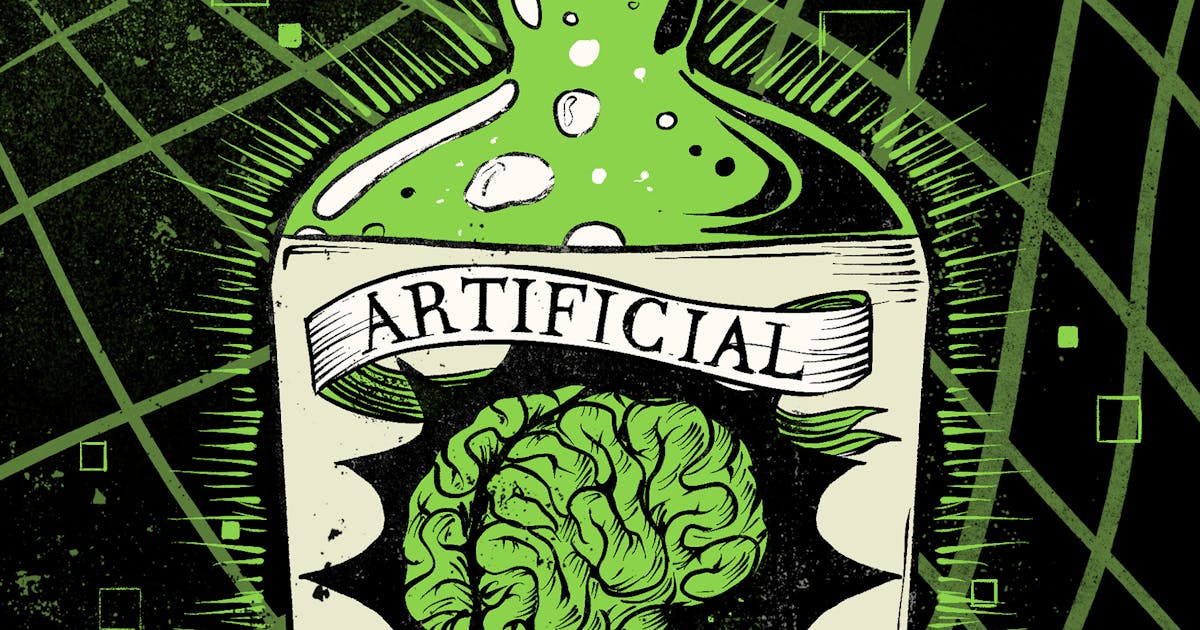
Propaganda and deceit are a feature of AI, not its downfall.

I write pretty software
a blog by Michał "rysiek" Woźniak

Nobel Prize winner Geoffrey Hinton said that machine learning would outperform radiologists within five years. That was eight years ago. Now, thanks in part to doomers, we’re facing a historic labor shortage.
My personal website and blog
a blog by Michał "rysiek" Woźniak
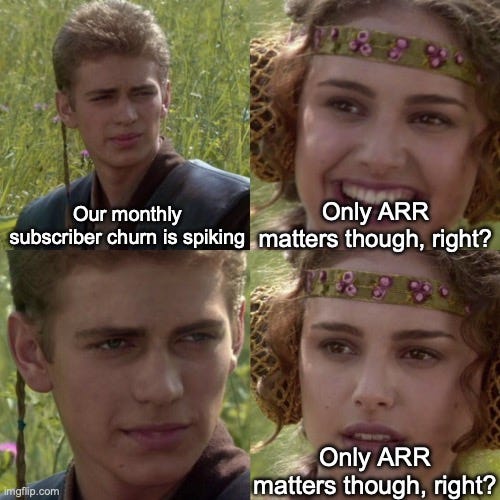
Monthly subscribers signal different intent than annual customers. How to think about pricing, conversion, and retention when customers won't commit to a year.
wingolog: article: tree-shaking, the horticulturally misguided algorithm

There’s no doubt that artificial intelligence is a transformative technology, but so were smartphones, broadband mobile internet, cloud computing, and many other things over the last 20 years. It is truly amazing to think that just 20 years ago none of it existed and life was significantly different. Yet still, none of those things had and outsized impact on productivity. The most likely scenario is that the future will look a lot like the past. Many things will be improved, some will be transformed, but adoption will be uneven, with some organizations and industries moving quickly to put new applications into practice, while most will lag behind. As progress fails to meet expectations, disappointment and disillusionment will set in, and focus and budgets will shift elsewhere. If you are truly an AI expert, with the knowledge and skill to shape the technology, you can still expect to do well. There will never be a shortage of organizations that need people to help leverage technology to do important work for them. But if you are just chasing the wave, you will be tying yourself to the ebbs and flows of market sentiment. The truth is that you can’t separate a technology from the environment in which it operates. As the philosopher Martin Heidegger argued, to build for the world you need to understand what it means to live in it. Technology becomes powerful when people who understand solutions learn to collaborate effectively with those who understand the problems that need to be solved. So while there is clearly a need for genuine AI experts, we still need experts in every other human domain. You’re much better off betting on yourself than betting on a technology you have little or no agency over.

Yesterday I was wasting a little time on LinkedIn between calls. I ran across this post by April Dunford which resonated heavily with me and introduced me to a term I’d not previously heard: main character energy (or syndrome, I guess). I rolled up my sleeves and waded into the comments as a thought-follower, offering…
So this is an article I originally wrote last year for our agency’s internal knowledge base. It’s primarily aimed at junior devs, and I thought I’d share it on my public blog for others to peruse. To be clear, I use LLMs daily for work and play, whether that’s within Neovim or Zed, locally run Ollama models, or ChatGTP/Gemini web interfaces, so I’m hardly an anti-LLM naysayer. But it’s definitely a breathlessly over-hyped sector.
...And now for a new blog straight from HOPE 16 in Queens, NY! You would think that after a FULL day of talks, workshops and general hackery, I...
And what might come next
Large publicly traded tech companies seem to no longer consider their customers – that is, people and organizations who actually buy their products or pay for access to their services – their core foc
Texts on this and that.

Having looked at the basic semantics of Go in the previous article, I’m continuing my exploration by looking at Go’s facilities for object orientation. This looks at structures and embedding in more detail, as well as methods and interfaces.


The cliche of the tech world is to trot out the infamous Gartner Hype Cycle and no-where is this more prevalent than in AI, post Chat-GPT ...
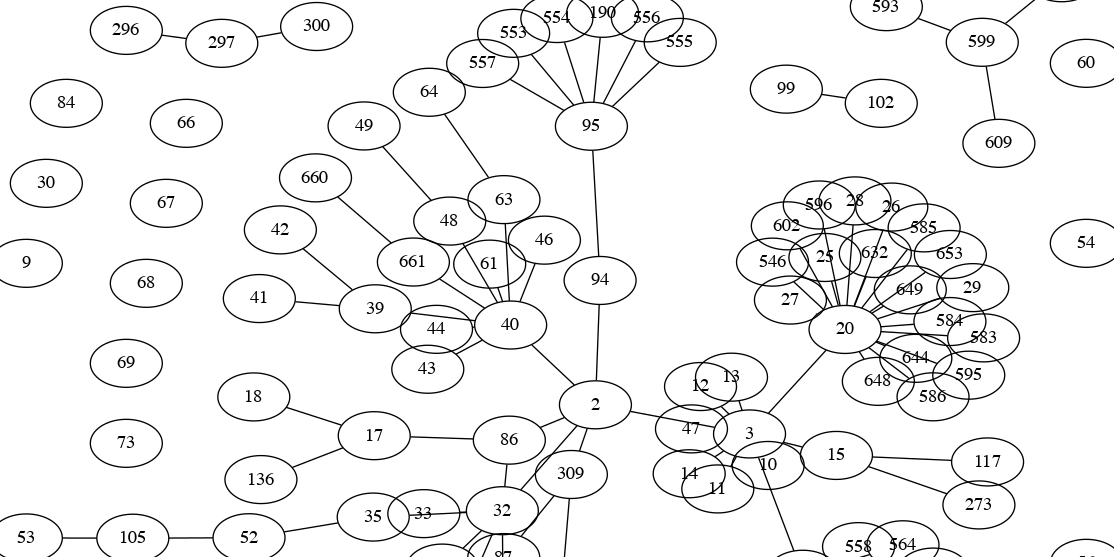
Disparate thoughts on personal information management after traversing the hype cycle.

How code generation can be made to work in the real world.

Can we tame AI-generated code? Discover how API-centric architecture and prompt engineering provide perfect guardrails for agentic vibe coding.
GraphQL is an incredible piece of technology that has captured a lot of mindshare since I first started slinging it in production in 2018. You won’t have to ...

I have been a skeptic of some of the more breathless claims made for Generative AI since at least October 2023, when I participated in a panel organized by S...

On programming and personal projects
Get expert insights on how AI, LLMs, and evolving search habits are shaping the future of SEO — and what it means for your business.


“Artificial intelligence” is a failed technology. It’s time we described it that way.

With the dust settling from WWDC, we have more realistic expectations of the new APIs and can make achievable plans for the summer.
Three nerds discussing tech, Apple, programming, and loosely related matters.