
Leveraging Spaced Repetition to Power My Weekly Newsletter
The Payments Engineer Playbook, April Cools edition
The Payments Engineer Playbook, April Cools edition
Following my recent criticism of a Stat article, you may be wondering, who can we trust? I have written several harsh criticisms in the past, railing against Substack and Lambda School (2). Let me be
I used to bemoan the fact that every time I post about an idea someone tells me, "that's been done before!" — now I've learned to love it
Why spaced repetition is important and how to get started with it
Picking up Ink and giving back to the community.
My digital life in a nutshell: I discover relevant content I don’t have time to consume, I find time and become overwhelmed with my scattered backlog, I wish the content were in a different format, and then I’m unable to find something again once I’ve consumed it. Not retaining enough is a valid problem but we’ll tackle that one later. There’s a lot of generalization in my summary but the core issue is an extraordinarily high level of friction in the process of finding, organizing, and sharing digital content.
About a month ago I quit my job as an engineering manager at Shopify because I wanted to take some time to go deeper on LLMs. “Going deeper on LLMs” is hand-wavy on purpose: I wanted to explore a bunch of different things—developer experience, safety, interpretability, even the fundamentals of neural networks and deep learning. At a meta level, I also wanted to use LLMs 10x more throughout my day to find out how I can use them more effectively and what are the friction points I could explore in prototypes or research.
A personal blog

Hunting timeless insights into humans and software and helping others on the way.
I recently had someone ask me what I felt helped me grow the most in my first few years working as a software engineer. Upon them asking me this, I initially drafted an answer that looked something like the following: A combination of building systems and seeing how they failed and then reading lots of code and books including: (list of programming books I’ve read). However, upon writing this – and before sending it thankfully – I realized I was almost entirely misrepresenting the things that actually helped me grow. Building things and seeing how they broke was genuinely a huge factor, but, despite reading lots of programming books during my first few years as a software engineer, I think they played a relatively minor role in my growth (because books don’t work). Also, I (along with Kartik) wrote an entire post about how nobody actually reads code like a book, so clearly I wasn’t doing that much. Instead, I ended up writing a longer message which, in addition to building things, pointed to the following factors as encouraging my growth:
You read a book, you think you’ve understood it. Then you try to explain the content to your friend and you find out you don’t remember much. Why?

Books often fail not because readers are lazy or dumb, but because the medium itself offloads too much of the learning work onto the reader’s metacognition.

There are two hundred million students in India today. While much of the developed world is deeply worried about their aging population, we can be calm on account of being a young country. Unfortun…
I used to bemoan the fact that every time I post about an idea someone tells me, "that's been done before!" — now I've learned to love it
personal website
The personal website of Dan Cătălin Burzo.
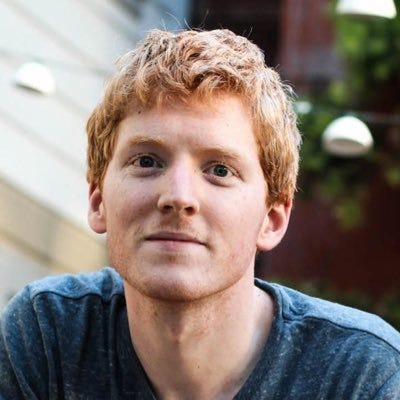
In addition to being a friend and a Noahpinion subscriber, Patrick Collison is one of the world’s most successful founder-CEOs.
The abundance of books is a distraction. Seneca, 1st centruy AD
Personal knowledge management (PKM) is the best thing I discovered in 2019. I’ve since tried a couple of different approaches and too many (six) apps. In this article, I would like to share everything I’ve learned about it over that period.