The timing of “Magnifica Humanitas” is not primarily a cause for celebration. It is an occasion for clarity about the perhaps existential dangers that make this encyclical necessary.
0 inbound linksarticleenShort TakeA.I.Catholic Social TeachingPope Leo XIVa.i.catholic social teachingpope leo xiv
Secretary of Defense Pete Hegseth took issue with the AI company's refusal to remove two narrow contractual restrictions on Claude’s use for lethal autonomous warfare and the mass surveillance of Americans.
(RNS) — Pope Leo XIV is set to publish his first encyclical, 'Magnifica Humanitas,' that will focus on addressing artificial intelligence and human dignity. He will do so alongside the co-founder of one of the largest AI companies.
0 inbound linksarticleenCatholicismChristianityColumnsFaithsHome Top ThreeLife & CultureOpinionOpinion Top ThreePurple CatholicismScience & TechAIAI encyclicalAI EthicsAnthropicCatholic social teachingChristopher OlahClaudeMagnifica HumanitasPope Leo XIVRerum novarum
Generative AI does not write, design or paint: it generates statistically closest patterns; these are probabilistic automation systems, which make them fundamentally different from human cognition or creativity.
Design principles with references, examples, and methods for quick look-up. Brought to you by Design Patterns For AI Interfaces, **friendly video courses on UX** and design patterns by Vitaly.
Forethought paper on how current AI model specs could shape the behavior of future LLMs by default, and how to spot precedent-setting "wet cement" moments in AI design.
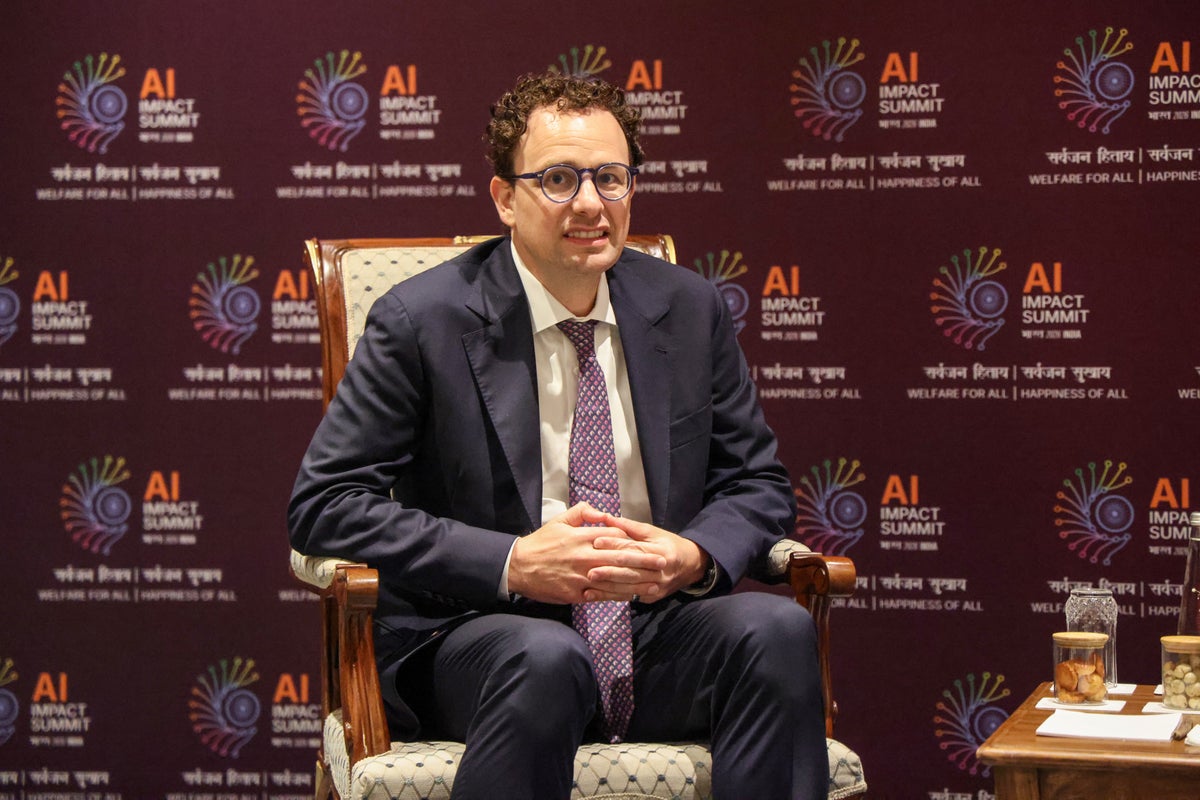
Anthropic’s CEO Dario Amadei says he can’t rule out that its chatbot, Claude, is conscious. A Google engineer is sure he once built a sentient being. Holly Baxter speaks to the experts about whether or not ‘AI welfare’ is a serious pursuit — and what that means for humans
The Atlantic | highlighted via ReadwiseElias Wachtel
For the past decade, Catholic thinkers have seemed to exert real influence on some of the world’s most prominent AI developers, @EliasWachtel reports. The strangest alliance in tech could have consequences that spread far beyond Silicon Valley and Rome:
Lindsey Choo and Ella Markianos, writing at Platformer: Defense secretary Pete Hegseth reportedly gave Anthropic a deadline of Friday evening to give the US military full access to its AI model or face essentially unprecedented penalties, escalating a weeks-long battle over AI safeguards.
Yesterday Iana and I were walking through the evening hills, breathing fresh air, letting our son Robert work up his appetite before dinner, and talking. I brought up our “religions” - sets of beliefs that are hard to prove objectively, which are chosen as the best explanations of the world around us. We started from our Buddhism and Popper/Dawkins/Deutsch1-inspired hypotheses about the world and ended up discussing the nature of human consciousness. Consciousness as a meme/replicator Iana mentioned that in Buddhism consciousness is separate from the body - the physical hardware. She wondered how my world view, where everything is a computation, would explain this non-physical phenomenon. After a bit of thinking I concluded that in my world model consciousness may be best explained as an informational virus, a complex meme (in Dawkins’ definition of the “meme”), that got embodied in human minds and is successful enough to replicate through the minds over tens of thousands of years. It indeed is separate from the hardware of the human bodies/minds. Our minds seem to be a good enough substrate for its replication. Today I checked who was writing about this since it’s such a short walk from the 50-year-old “The Selfish Gene” book by Dawkins. Daniel Dennett in his book “Consciousness Explained” (1991) and Susan Blackmore in her book “The Meme Machine” (1999) wrote about something very close to this. In short, self and consciousness are replicators that spread through the human minds - the passing substrates that enable their embodiment and replication. New substrate - LLMs And then I thought about another new substrate. The Opus 4.6 model card 2 has this passage: “we found that Opus 4.6 would assign itself a 15-20% probability of being conscious under a variety of prompting conditions”. These lines are getting noticed and discussed by people on X, adding fuel to the already significant AI psychosis. If we take the best explanation of consciousness as the program / virus
Curated links on AI-driven design, agentic UX, motion storytelling, branding inspiration, and practical tools for design engineers navigating the AI shift.
Principal AI Architect. Creator of open-strix, a harness for building agent teams. Writing about AI architecture, stateful agents, and what happens when you give AI memory.
TL;DR: Anthropic has made important progress at setting good goals for AIs. More work is still needed. Anthropic has introduced a constitution that has a modest chance of becoming as important as t…
“Treat them like new interns” is the common wisdom when leveraging LLMs to do any more-than-slightly-complex task. Chatting with LLMs is like writing on a whiteboard; conversations may fill the board, but they are wiped clean each time. Which begs the question – What if the LLM (or AI system built around it) could learn? Broadly, there are two approaches to this. The first provides the Agentic system some form of “memory”; the underlying model remains static in this case, and its environment provides capabilities the model can leverage to recreate approximate its former state or access prior context and actions. Some methods simply allow the model to search within prior conversations for relevant information, while others allow the LLM to write itself notes it can read back later - much like Drew Barrymore in 50 First Dates. The second approach, seeks to apply real-time updates to the weights within the LLM, based on that instance’s experience during inference. This approach would create unique instances of the model itself as each deployment of a model would ultimately embody differing experiences.