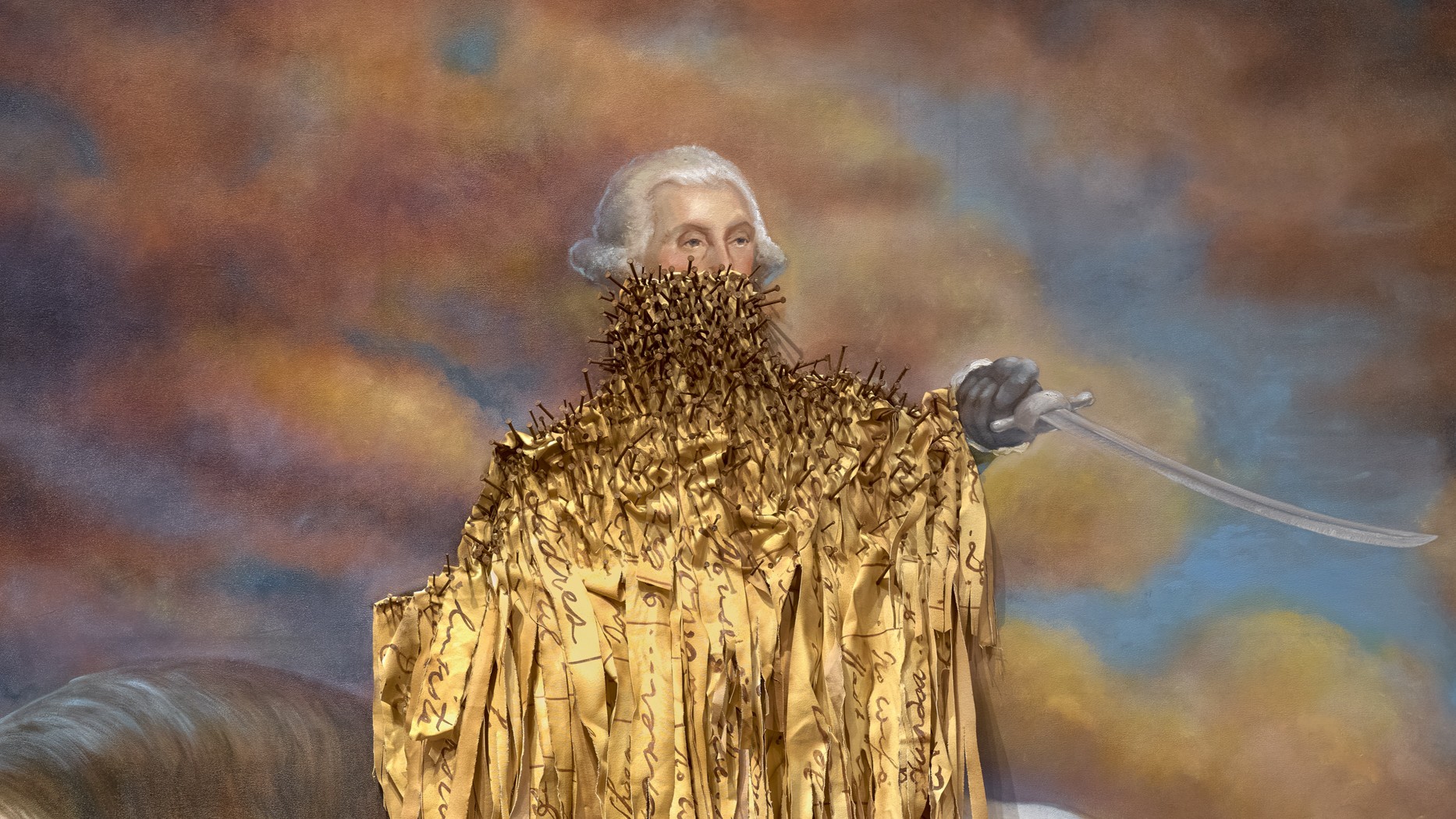
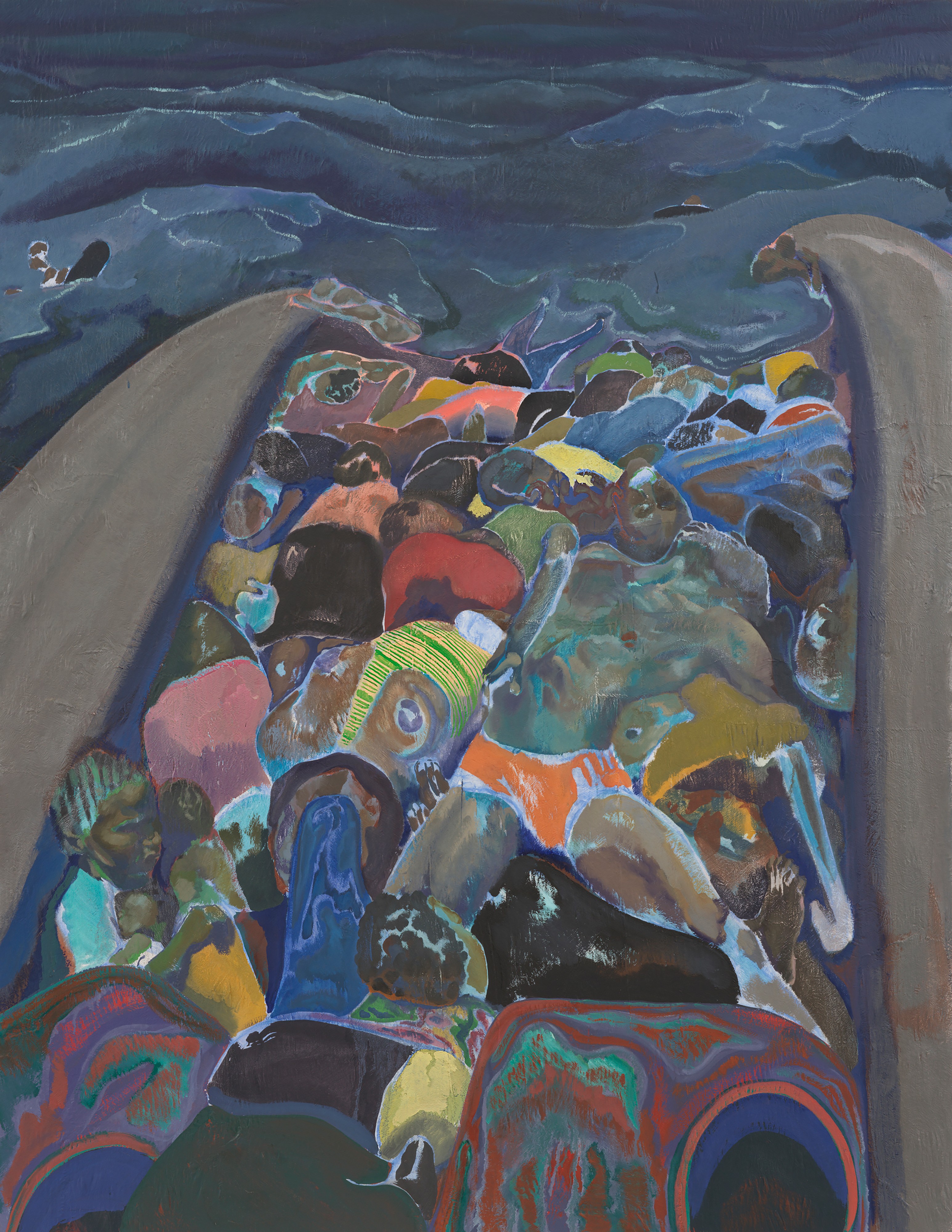
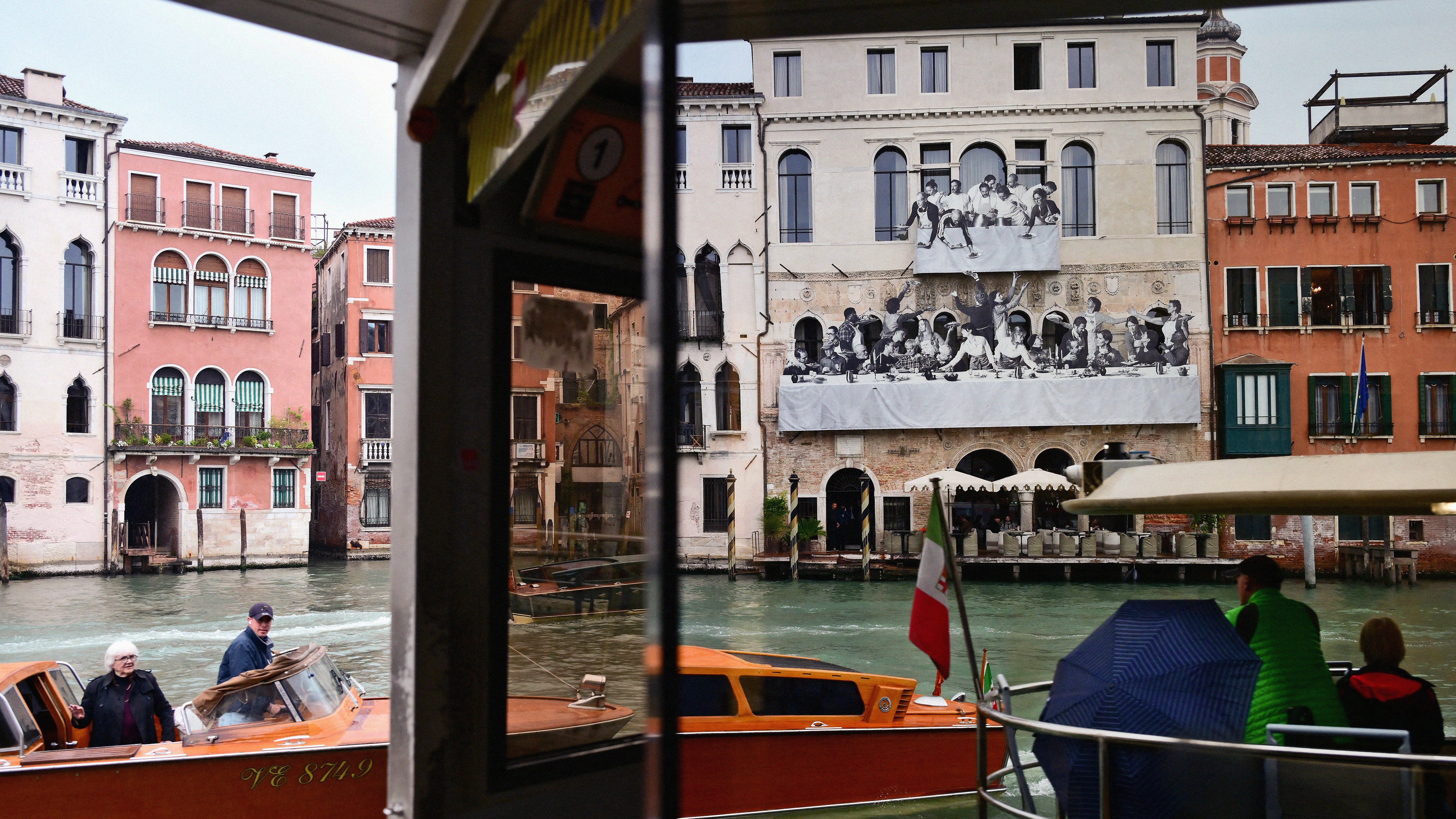
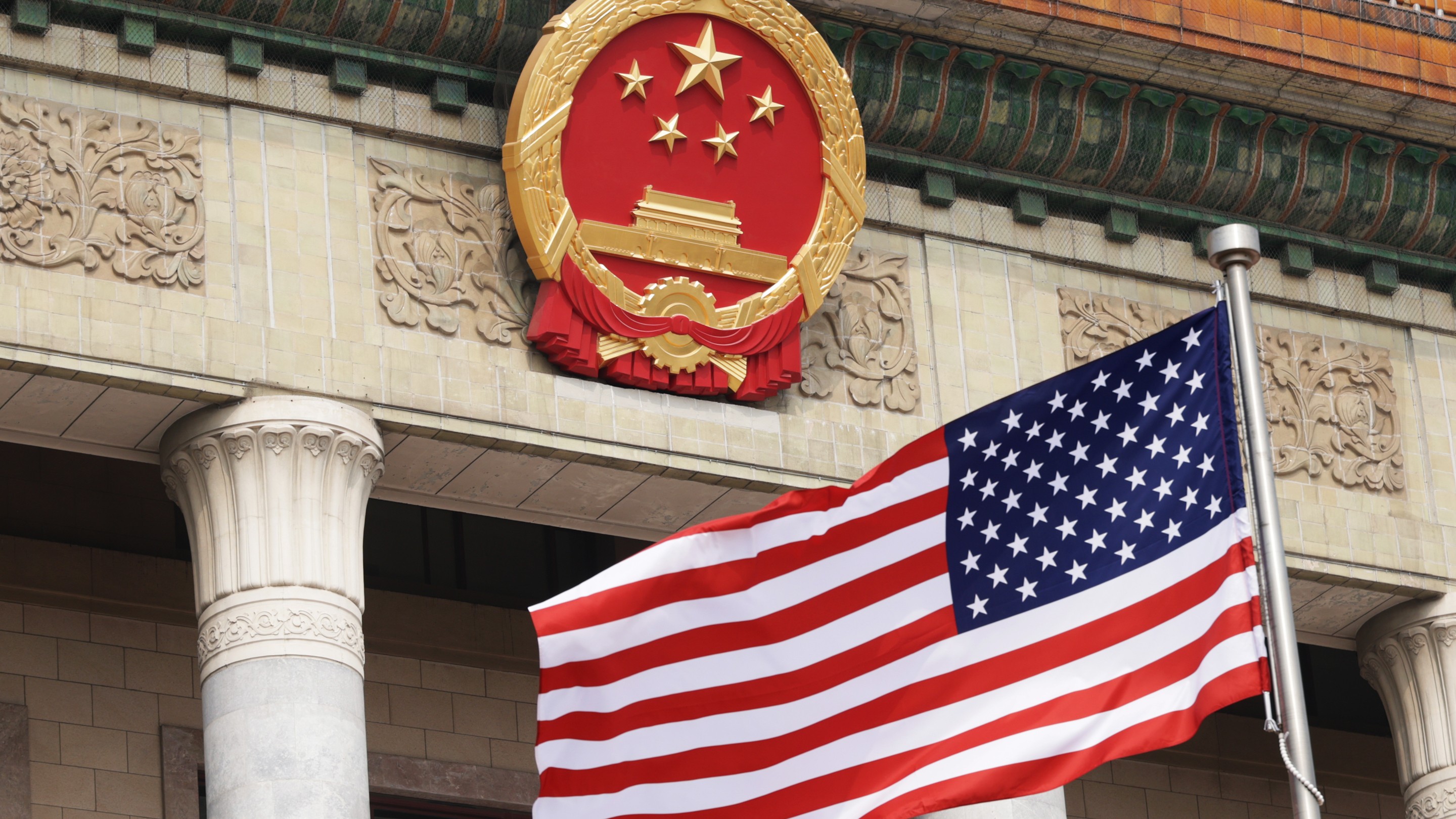
The historian Ada Ferrer’s new family memoir retells the story of Cuba through the individuals who matter most to her.
Show full content
Decades ago, Ada Ferrer learned a lesson about what she’d later call the “misencounter between the history I was reading and the history of the people in my life.” During the late 1980s, while pursuing a master’s degree in history at the University of Texas, Ferrer asked her parents to share their memories of events covered in her coursework. Did Adela and Ramón, who had emigrated from Cuba in the early ’60s, remember the nation’s constitutional convention of 1940? They did not. Had they attended Fidel Castro’s massive rallies during the 1959 Cuban Revolution? They had not. Castro’s agrarian reforms hadn’t touched Ramón’s family farm, which was too small to be confiscated; neither parent watched the leader’s hourslong speeches, because they didn’t have a television.
Yet Ferrer’s mother and father were profoundly shaped by the history they hadn’t witnessed directly. So was Ferrer, who has devoted her life to studying the country where, as she writes, “I was born but could not remember.” Today, she is a professor of history at Princeton and the winner of a 2022 Pulitzer Prize for Cuba: An American History, which documents five centuries of evolution and revolution. Her new book, Keeper of My Kin: Memoir of an Immigrant Daughter, is a far more intimate story. Recounting her family’s experiences after the revolution, it is about “utterly ordinary people,” she writes, “always on the margins, absent less as a matter of ideology than from an unconscious sense that history did not belong to them.”
The feeling of being buffeted by forces far outside one’s control may seem familiar today, both in Cuba and in the United States—two neighbors undergoing destabilizing change. The island’s economy is shattered (it recently ran out of oil), and months of United States pressure for political change has led to the pursuit of an indictment of Raúl Castro, the 94-year-old brother of the late leader. Someday, historians will write of this moment when, after decades of repression, Fidel Castro’s revolution collapsed under its own weight, and when President Trump said Cuba was his to “do anything I want with” as he pursued heedless regime change in Latin America and mass deportation in the United States. Any proper account of the current era will also need to reckon with how thousands of families were, as Ferrer writes of her own kin, “broken by history and made by it, too.”
Ferrer planted the seeds for her memoir by beginning Cuba with an account of her family’s immigration to the United States. Her mother had left her son from an earlier relationship—Ada’s half brother Poly, short for Hipolito—behind in Cuba. “Does a revolution change people?” Ferrer asked. “Does migration?” Her new memoir answers these questions with an emphatic yes, and focuses on key turning points including the Mariel Boatlift, the economic crisis after the fall of the Soviet Union, and the brief detente under President Obama.
Extraordinary collections of letters made it possible for Ferrer to write her family’s story. After her parents died—her mother in 2020, and her father in 2022—she inherited the moving, often heartbreaking letters that her brother and mother sent back and forth during the years of their separation; anguished letters to Poly from Tía Niña, an aunt who had helped care for him in Cuba, sent after he eventually moved to the United States; the open letters that her father wrote to Castro and U.S. presidents, expressing his dissatisfaction with their leadership; and the correspondence that Ramón maintained with his own estranged son, Ada’s half brother Juan José, a teacher in Cuba.
The preservation of such a wealth of private material isn’t rare. Before Facebook Messenger, when phone calls across the Florida Straits were difficult, letters were the primary way that Cubans communicated with friends and relatives in the United States. Less often does such correspondence wind up in the hands of a historian who can curate and verify them, fill in their gaps with other sources and personal memories, and contextualize them within the sweep of Cuban history. Ferrer is the ideal keeper of her kin’s stories.
Each turn in Cuba’s postrevolutionary history changed the trajectory of Ferrer’s family, leading repeatedly to separations and reunions and reassessments of their relationship to the country. Ferrer’s father left Cuba first, in 1962, three years after Castro’s triumph. He had served in the Cuban army under Fulgencio Batista, the president ousted by the revolution. “Stridently anticommunist” like most Cubans, Ferrer writes, Ramón resolved to leave after being detained as a suspected counterrevolutionary. His departure as a political refugee marked the first time, but not the last, that the revolution had led to the separation of the family.
Adela and Ada followed a year later, in 1963. Poly would spend 17 years apart from the family, with devastating consequences, before joining them as one of thousands of Cubans who had left the island during the boatlift. Their reunion was a complicated one: Ferrer recalls Poly saying of his mother that “just as she had ruined his life by leaving him in Cuba, he was now here to ruin hers.” Only when Adela was in her 90s, in the hospital recovering from a surgery, did she tell Ada about the moment she left her boy behind. It was six in the evening, she recalled, and Poly, then 9 years old, was playing outside with friends. The next morning, she and baby Ada went to the airport. Poly was told that she’d gone to visit relatives in the countryside for a few days. His father wouldn’t allow him to leave Cuba; Adela had no choice but to leave without him.
In the early letters that Poly wrote to his mother, he said he was doing well, going to school every day, taking care of his grandmother, and helping her with errands. Ferrer describes young Poly as “a boy proud to behave, proud to be weathering the shock of his mother’s abrupt and unannounced disappearance,” though he sometimes cried himself to sleep. As he grew older, however, the letters darkened. In 1970, when Poly was a teenager, after he had forgotten to send his mom a Mother’s Day card, he apologized and wrote, “Deep inside me lives the name of my absent mother.” He became fixated on joining his family in the United States. “I will only be well when I have you at my side,” he wrote, and he began to describe his separation from his mother as “the great trauma that I have suffered.”
In 1978, Castro surprised Cuban exiles by inviting them to visit the island. Adela accepted the offer to see Poly, who was now in his 20s, for the first time since she had left Cuba. “In their separation,” Ferrer writes, “Poly had become a man. But my mother had changed as well; she became someone he didn’t know, someone who was mine in a way she might never again be his.” Poly, however, was even more profoundly changed. After he arrived in the U.S., he got a job, but he also drank and did drugs, and he was violent. He stabbed a man, and even attacked Ferrer. After being incarcerated and attempting suicide, he died of “hypertensive crisis,” according to a medical examiner, while sitting on the toilet, home alone in Hialeah, Florida.
Many of Ferrer’s recollections prompt her to reflect on how different her life might have been. When her mother visited Cuba, Ferrer was in high school and contemplating college. She asked her mom to take pictures of the University of Havana because she thought that’s where she would have gone to school if she had stayed in Cuba. In this alternate life, she might not have come to speak more English than Spanish. She might not have attended Vassar, an “elite American college” where she felt like she didn’t quite fit in; one student tells her mother that Ferrer reminds her of their family’s maid, adding that “she’s Hispanic, but not really Hispanic—she’s educated.” Ferrer doesn’t describe herself as a Latina even once in Keeper of My Kin—instead she prefers Cuban, or immigrant—but her expressions of loss and alienation echo the ways many Latinos describe their lives in this country.
These memories also lead Ferrer to wonder how Poly might have turned out differently, and how responsible the family was for his fate. Was there something she or her mother could have done to keep him out of trouble? Might Poly have made better decisions if he’d had better role models? Before she and Poly met, they had expressed tenderness toward each other in their letters. But after he joined the family in New York, Ferrer realized that she didn’t much like her brother, who brought chaos into the household and, she suspects, resented her success. Ferrer’s father was ambivalent about his stepson’s presence as well: He understood how important it was to his wife to be reunited with her son, but he saw that their reunion only intensified her stress and her guilt.
In March 2016, after Obama loosened travel restrictions, the whole family traveled together to Cuba. Like many Cubans in the United States, Ferrer’s father had vowed never to set foot there again while Castro’s party was in power, but he was persuaded to take what would likely be his last opportunity to return. They visited the house where Ramón and Adela had met, cemeteries where relatives were buried, and the house his son, Juan José, had lived in before he died in 2009.
The family trip coincided with Obama’s visit to Cuba. Ferrer watched his speech at her aunt’s house. “We share the same blood,” Obama said. “We both live in a new world, colonized by Europeans. Cuba, like the United States, was built in part by slaves brought here from Africa. Like the United States, the Cuban people can trace their heritage to both slaves and slave owners.” When Ada asked her father, who was no fan of Obama’s, what he thought about the speech, he said, “He killed it!” Back in the United States, he told her that he wanted to spend a year in Cuba. The country was a “disaster,” he said, “but it’s my disaster.”
Ferrer’s father never did make it back. He died in 2022, and so he was spared from seeing Cuba’s descent into greater disaster. Given all of the letters he wrote about U.S.-Cuban relations, I reached out to Ferrer to ask her what she thought her father might have made of Cuba’s situation today. She believes that they would have disagreed about what the solution should be. She thinks that Cuba is stuck—caught between President Miguel Díaz-Canel, who uses the rhetoric of anti-imperialism to mask the ways that his government has failed its people, and Trump, who wants to bring down the Cuban system no matter the human cost because he cares, above all, about being acclaimed as a great man of history. Her father, she thinks, would have argued that the situation has become so bad that he would welcome change at any price, even if it meant increased U.S. control over the island.
Millions of Cubans, including those in exile, wait to see what will become of their island. One lesson Ferrer seeks to impart is that the outcome is sure to shape their lives in unexpected ways. Although historians are likely to focus their attention on government shake-ups, military moves, and diplomatic deals, the fallout of this moment, like all moments, will be seen in the smaller events that break and remake the people in our lives.
*Illustration Sources: Courtesy of Ada Ferrer; Sven Creutzmann / Hulton Archive / Getty; Kwangmoozaa / Getty.
Readers respond to our February 2026 issue and more.
Show full content
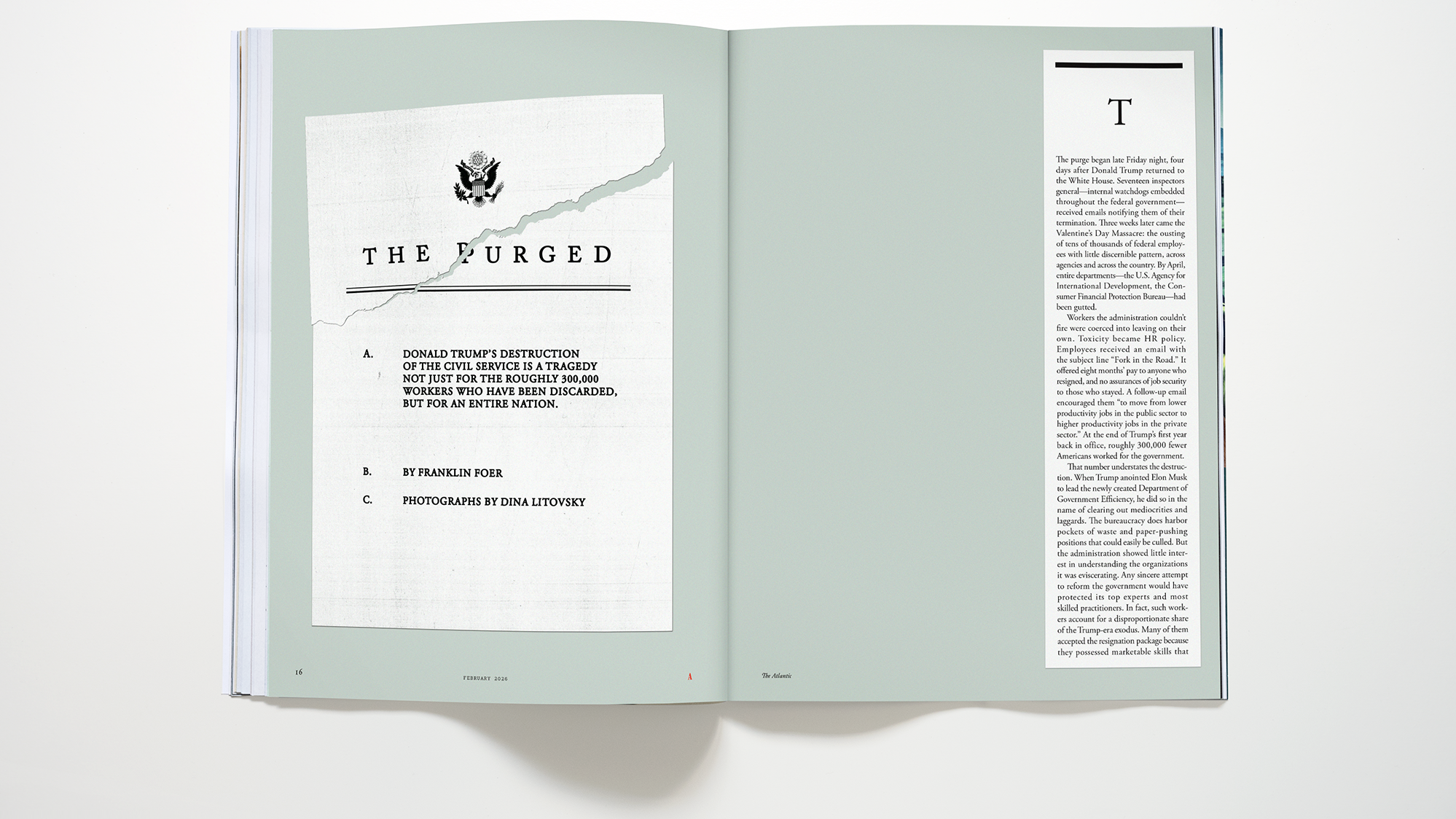
The Purged
Donald Trump’s destruction of the civil service is a tragedy not just for the roughly 300,000 workers who have been discarded, but for an entire nation, Franklin Foer wrote in the February issue.
I read Franklin Foer’s “The Purged” in one held breath. This is how to weigh the stakes of our political moment—one life at a time. No statistic can adequately describe America’s losses. Each of the 50 people profiled in Foer’s essay is so gifted and generous, so essential to what the United States means—or at least to what it used to mean. I salute Foer’s courage to tell the story head-on. His narrative journalism is letting us see one another whole.
Rita Charon New York, N.Y.
There but for the grace of God go I. I never worked directly for the federal government, but I did research and consulting as a contractor for the Department of Energy’s National Laboratories, the Environmental Protection Agency, and the National Center for Atmospheric Research. I am a meteorologist, an atmospheric physicist, and an environmental economist, now retired. I worked on significant problems, including air quality, acid deposition, and the safety of liquefied gases. I developed simulation techniques for the accidental release of toxic chemicals. I don’t know the people in the article personally, but I do know them—I know their value. Their individual loss is our national loss.
Daniel J. McNaughton Newport, R.I.
I worked in state government for 29 years. Franklin Foer’s 50 profiles are an important reminder that we’ll feel the consequences of Donald Trump’s purge for decades. I tend to think of government work as that of quiet competence. When we travel on interstate highways, we do not think about the work done to locate an appropriate site for a road, to build it, and then to maintain it. When we fly, we hope that the plane meets safety standards but spare little thought for the federal staff who developed those standards and enforce them for our benefit.
I was reminded of the importance of federal expertise last year, when the remnants of Hurricane Helene roared through the mountains and left astounding damage to public and private infrastructure. The Mitchell News-Journal, the local paper in rural Mitchell County, North Carolina, has on multiple occasions reported on confusion among employees of the Federal Emergency Management Agency over how to follow the agency’s own internal guidelines. I am sure that FEMA can and should be made more efficient. But destroying morale and stirring chaos with on-again, off-again layoffs is certainly not the way to do it.
John Dorney Durham, N.C.
I am a retired federal civil servant and a disabled veteran. I worked for the U.S. Postal Service for many years. I always took great pride in my desire to go above and beyond to help others get what they wanted or needed. On behalf of the millions of current and former federal civil-service employees, I am truly grateful for Franklin Foer’s research and reporting in this article.
In my 32-year career, the other civil-service employees and members of the military I worked alongside were dedicated, honest, and hardworking professionals. When I started to hear claims that federal employees were overpaid poor performers, or that they supported a particular political agenda that undermined the administration’s, or that they amounted to an unelected, overly partisan bureaucracy, I was shocked. These claims were so the opposite of my own experience that I thought surely anyone hearing them would disregard them as false.
Nyleen Mullally Rapid City, S.D.
I was very moved by the depth of reporting in Franklin Foer’s story on purged government employees. The profiles helped fill in the picture—that these are real people, and that their absence will be felt for a very long time. The damage to our culture and our progress as a nation is much larger than many people realize. Thank you for helping us keep that fact front of mind, now and into the future. I hope some of this strength can be rebuilt—but first we’ll need to rebuild the reputation of government.
Evelyn Luengas Fort Worth, Texas
from the archives
“I was holding myself together, but just barely,” Sherry Winfield confesses in “Dinah’s Hat,” a new short story by Stephen King. Sherry and her friend Morris have just ventured from their trailer park to a beach with Dinah, the mysterious child Morris cares for; there, they encounter a group of young bullies. “In time,” Sherry recalls thinking of the events that follow, “I’ll be able to convince myself that never happened.”
“Dinah’s Hat” isn’t the first work of fiction King has written for The Atlantic. In the magazine’s May 2011 issue, he published “Herman Wouk Is Still Alive,” a short story told from the perspective of two aging poets, Phil and Pauline, picnicking at a rest stop in Maine, and two mothers, Brenda and Jasmine, eager to take their children on a road trip up I-95. Compared with much of King’s other work, the horrors of “Herman Wouk Is Still Alive” are fairly quotidian—dead-end jobs and deadbeat dads, aging, depression. The story, nevertheless, builds to a haunting conclusion.
In a 2011 interview with The Atlantic’s James Parker, King explained that the story had emerged from a bet with his son Owen on that year’s NCAA basketball tournament: The winner would provide a title for a short story; the loser would have to write it. Owen, victorious, proffered the phrase “Herman Wouk Is Still Alive,” inspired by news coverage he’d read that Wouk, the Pulitzer Prize–winning author of War and Remembrance and The Caine Mutiny, was still writing well into his 90s. In King’s eventual story, Phil and Pauline read a fictionalized New York Times article testifying to Wouk’s longevity. “The ideas don’t stop just because one is old,” Wouk tells his interviewer. “The body weakens, but the words never do.” His sentiment inspires the two poets, both in their 70s—until, moments later, tragedy renders language powerless.
Wouk himself was asked about King’s story in a Q&A published with his 2012 novel, The Lawgiver. “I read Mr. King’s short story and enjoyed it,” Wouk said. “As for the longevity, I share his evident puzzlement, with boundless gratitude to my forebears and my Maker.” He continued, “It helps to have work I love, with much work yet to do by His grace.” Wouk died in 2019, just 10 days before his 104th birthday.
— Andrew Aoyama, Deputy Managing Editor
Behind the Cover
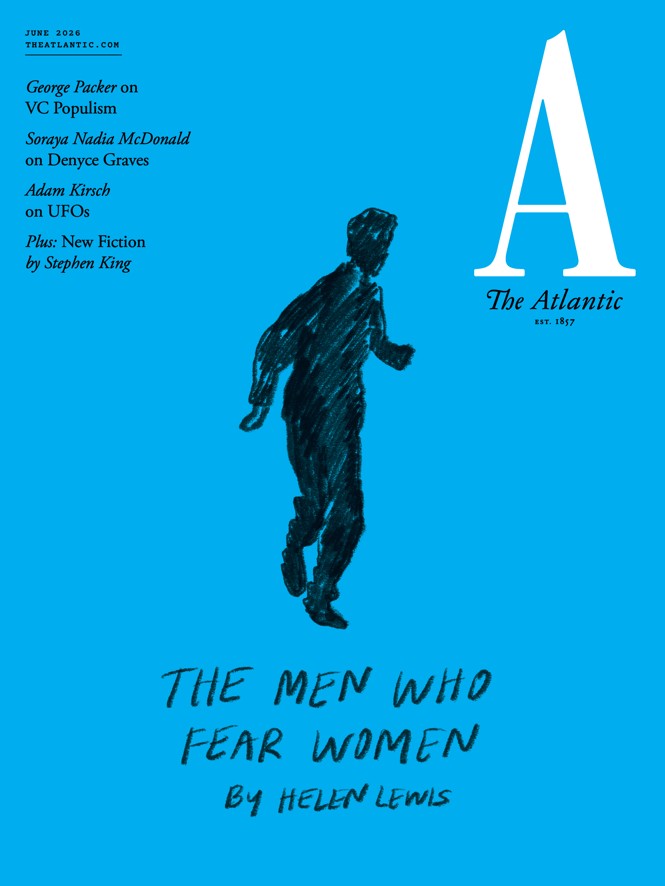
In this month’s cover story, “The Men Who Don’t Want Women to Vote,” Helen Lewis argues that “masculinism”—a movement seeking to counter the advances of feminism and place men back at the center of public life—has become the most important uniting force on the American right. Many men are drawn to masculinism, Lewis writes, because they feel that they have lost status to women. For the cover, we depicted the fear that undergirds their resentment: A rough silhouette of a man runs toward the viewer, looking over his shoulder at an imagined threat.
— Liz Hart, Art Director
This article appears in the June 2026 print edition with the headline “The Commons.” When you buy a book using a link on this page, we receive a commission. Thank you for supporting The Atlantic.
Intelligence provides new context for one of the Iran war’s deadliest incidents for American forces.
Show full content
A pair of Air Force refueling planes were flying high over Iraq two weeks into the U.S. and Israeli war against Iran. The KC-135 Stratotankers, which carry up to 200,000 pounds of jet fuel, function as flying gas stations, extending the reach of United States and allied aircraft far from air bases. On March 12, the two tankers collided. One of the planes safely landed with a badly damaged tail; the other crashed, killing six service members, constituting almost half of U.S. military fatalities in the conflict. The same day, U.S. Central Command said that the crash over Iraq’s western Anbar province had occurred in “friendly airspace” and had not been caused by hostile fire.
Initial intelligence reports told a different story. They indicated that the U.S. government had detected anti-aircraft fire by Iran-backed militias in the area around the time of the collision and that the pilots may have been forced to take evasive actions. The reports, which haven’t been previously made public, were described to us by two current officials and one former official. But Centcom’s leaders, citing different, more highly classified information, were convinced that those initial reports were mistaken. Militias had never fired surface-to-air missiles that could have threatened the aircraft, according to their assessment. The initial reports may have picked up instead on launches of missiles aimed at ground targets. That’s why the Pentagon statement asserted that no hostile fire was involved and that the skies were friendly. An Air Force–led investigation is expected to conclude that the disaster was an “avoidable mishap” by pilots operating in congested airspace, military officials told us.
Centcom’s quick and definitive public assessment of the incident, despite intelligence suggesting a more complicated picture, fits a Trump-administration pattern of omitting from its public statements important details about the conduct of the war. Senior officials have trumpeted military successes—two days before the crash, Secretary of Defense Pete Hegseth said the U.S. had “total air dominance”—and have downplayed the resilience of Iranian forces and their armed proxy groups across the Middle East.
The contrasting accounts of what preceded the crash point to the confusion of a crowded battlefield, as well as to the serious threat that Iran’s proxies in neighboring Iraq pose to the U.S. and Israeli war effort 23 years after President George W. Bush ordered Iraq’s invasion in pursuit of Saddam Hussein. President Trump said within hours of the start of the Iran war that one of his goals was to “ensure that the region’s terrorist proxies can no longer destabilize the region or the world and attack our forces.”
But those groups remain a potent force: Iran-sponsored militias have pounded U.S. facilities across Iraq with relentless rocket and drone attacks since the war began, forcing a near-total evacuation of the U.S. embassy in Baghdad. Iran’s proxies in Iraq also possess advanced arsenals, including ballistic missiles and anti-aircraft weapons. Early in the conflict, one official said, U.S. intelligence indicated that a refueling tanker narrowly avoided a militia missile in the same area of western Iraq where the deadly collision occurred. A Centcom spokesperson disputed that account, saying it had no indication of such an incident.
The war is now subject to a shaky cease-fire as the United States and Iran continue an extended standoff over control of the Strait of Hormuz, the vital waterway for global energy supplies that Iran has effectively closed.
Those killed in the March 12 crash include three active-duty airmen from the 6th Air Refueling Wing based in Tampa, Florida, and three National Guard airmen from the Ohio Air National Guard’s 121st Air Refueling Wing. A Pentagon official declined to comment, saying that providing details before the Air Force probe is complete would be premature. The official, like others we interviewed, spoke on condition of anonymity to discuss sensitive matters. A family member of one of the service members who was killed recently told us that the Pentagon relayed to him that the incident was under investigation but that it has not provided any more information since.
The Iraqi government is a U.S. security partner. Washington helped build up the country’s security forces in the more than two decades since the 2003 invasion. But the State Department says militias, which operate both within the state’s security apparatus and outside of it, have struck U.S. sites in Iraq more than 600 times with drone and missile attacks since the war began on the last day of February. Their targets have included bases, diplomatic facilities, and aircraft on the ground, Phillip Smyth, an independent analyst of Iraqi proxy groups, told us. Iraq is “definitely not a friendly airspace,” as the Pentagon asserted, Smyth said. The Iraqi militias have also claimed or carried out as many as 5,200 strikes on military and civilian targets in Persian Gulf countries as well as on Jordan and Syria.
Other Iranian proxies in the region include the Houthis in Yemen, Hamas in Gaza, and Hezbollah in Lebanon. But the militias in Iraq, many of whose members are on Iraqi-government payrolls as part of the paramilitary Popular Mobilization Forces, may be the most potent and the least discussed, Aaron Zelin, a fellow at the Washington Institute for Near East Policy who studies Mideastern extremist groups, told us.
Israel has devastated Gaza in its campaign against Hamas and, in recent weeks, has targeted Hezbollah strongholds in southern Lebanon. Last year, the U.S. carried out a monthslong campaign against the Houthis to stop attacks on ships transiting around the Bab el-Mandeb, the strait that separates the Arabian Peninsula from the Horn of Africa. But Iran’s network of proxies in Iraq has faced comparatively fewer U.S. strikes since the Iran war began, reflecting a U.S. desire not to be seen as reengaging in Iraq two decades after its invasion. Neither the U.S. nor Israel has done much targeting of the groups’ top leadership in Iraq during that time, allowing the militias to preserve their command structures and maintain operations. “These guys have only consolidated more of the state,” Zelin said. “I suspect the same dynamics will continue unless the U.S. and its allies—or Iraqis themselves—decide they want to do something far more serious about it.”
Like the regime in Tehran, the Iraqi militias have sought to force the United States to expend costly air-defense munitions to protect personnel and facilities. U.S. officials, including Hegseth and General Dan Caine, chairman of the Joint Chiefs of Staff, have publicly minimized any concerns about the depletion of U.S. munitions. But not everyone in the administration trusts those assurances. In White House meetings, Vice President Vance has repeatedly questioned the Pentagon about the accuracy of such claims.
The U.S. military has been in intermittent conflict with Iraqi militias for more than 20 years. (Hegseth, who served in the Iraq war as a National Guardsman, has cited the hundreds of U.S. soldiers killed by those Iranian proxies as a justification for the current conflict.) In subsequent years, however, U.S. forces entered an awkward, arms-length alliance with the militias as both Washington and Baghdad battled the Islamic State. Today, the militias and their affiliated parties wield formidable political power, holding roughly one-third of the seats in Iraq’s 329-member Parliament, despite the United States’ role as Iraq’s chief Western ally.
The militias’ violence during the Iran war has intensified friction between Washington and Baghdad. In the past month, U.S. officials have suspended security aid to Iraq, halted the transfer of U.S. dollars generated by Iraqi oil sales, and thrown their support behind a new prime minister–elect in an effort to force the government to take on the militias.
The administration can apply that pressure because Trump is already inclined to pull remaining U.S. forces from Iraq and is willing to risk severing the relationship, Victoria Taylor, who served as a senior State Department official for Iraq and Iran during the Biden administration, told us. Trump recently withdrew U.S. forces from neighboring Syria, another center of what remains of the Islamist insurgency.
Kataib Hezbollah, which has been designated by the U.S. as a terrorist group since 2009, is the most powerful of the Iraqi militias equipped, trained, and funded by Iran. It’s the group that some of the early intelligence suggested had been targeting the U.S. tankers.
The group has a history of launching attacks on U.S. assets and allied targets across the Middle East. U.S. officials blamed it for the recent kidnapping of the American freelance journalist Shelly Kittleson in Baghdad. (She was released a week later.) Federal prosecutors also recently charged Mohammad Baqer Saad Dawood al-Saadi, an alleged senior member of Kataib Hezbollah, with involvement in at least 18 attacks or attempted attacks in the U.S., Canada, and Europe.
Two senior Iraqi officials told us that Kataib Hezbollah has an arsenal of advanced weapons, including ballistic missiles, and has begun manufacturing its own missiles and drones, as do Iran-linked militia groups in Lebanon and Yemen.
Among Iran-backed militias’ most powerful weapons is the 358, a surface-to-air missile that experts say can loiter before striking its target and reach an altitude of up to roughly 30,000 feet. Kataib Hezbollah is believed to have possessed the missile at one point in the past, though whether it still does is unclear. Iraqi officials do not believe that the group has used one so far in the war, and the militia does not appear to have successfully targeted any foreign aircraft.
Unlike in previous American wars, when the Pentagon allowed journalists to witness the wars alongside deployed forces, details about the Iran war have come almost exclusively from the top—and have been uniformly positive. Hegseth and Caine have held a number of Pentagon press briefings in which they have focused on the degradation of Iranian forces and missile capabilities as well as the overall number of targets hit—more than 13,000 inside Iran before the cease-fire kicked in.
Admiral Brad Cooper, the head of Centcom, has also participated, and last week he was on Capitol Hill, where he was pressed by lawmakers about the war’s civilian casualties. He said that Centcom was investigating one incident, the bombing of a school in southern Iran on the war’s first day, which killed about 170 people, in an apparently errant U.S. strike. But Airwars, a watchdog group that has worked closely with Centcom in the past, has identified some 300 incidents in the Iran war that involved civilian casualties that the group claims merit investigation. Whether those incidents involved U.S. or Israeli strikes is unclear. During his congressional testimony, Cooper said there were initial investigations into allegations of civilian casualties, but those have not yet found any U.S. involvement. Centcom declined to comment further.
Despite Hegseth’s claims about America’s air dominance, the war has thrust American pilots into dangerous airspace over Iran. Iranian forces have shot down an American F-15E Strike Eagle and an A-10 Warthog. They have also damaged a F-35 stealth fighter jet, forcing the pilot to make an emergency landing. After mounting major rescue operations, the Pentagon was able to safely recover the F-15 and A-10 aircrews.
Much about the March 12 incident in which the refueling tanker went down remains unknown. Soon after the crash, a coalition of Iran-backed Iraqi-militia groups known as the Islamic Resistance in Iraq—which includes Kataib Hezbollah—claimed responsibility, saying that it had used “appropriate weaponry” to shoot down the tanker “in defense of our country’s sovereignty and its airspace violated by the aircraft of the occupation forces.” The coalition also claimed responsibility for damaging the second aircraft. American officials have dismissed those assertions as disinformation.
One of the U.S. officials we spoke with said that the pair of tankers was on a mission that involved refueling Israeli aircraft. Both Centcom and the Israel Defense Forces declined to comment. Iraqi officials described the tanker crash as an accident. One said the U.S. government asked members of Iraq’s elite Counter Terrorism Service to help retrieve the fallen airmen. Centcom declined to comment on that too.
For now, the prospect of further U.S. casualties appears reduced after Trump said yesterday that he had held back a planned attack against Iran to give a new Iranian peace proposal a chance. The pause may also provide Iran’s proxy militias with the opportunity to regroup to harass U.S. forces anew.
Sam Altman did not seem to be having a good time. During the many days that he spent inside an Oakland courtroom, the normally cheery CEO of OpenAI—a guy who tends to be chipper even when declaring AI’s existential risks to humanity—appeared anxious, even distraught. When he listened to the proceedings in Elon Musk’s lawsuit against him, a weekslong trial that threatened to remove Altman from OpenAI’s board and functionally destroy the company, he frequently concealed his mouth with his palm, fidgeted with a water bottle, and leaned forward and stared at the floor. He kept looking back at the rows of reporters behind him. On the witness stand Tuesday, Altman repeatedly noted how Musk’s actions had “annoyed” him.
Musk, who helped form OpenAI as a nonprofit in 2015, alleged that Altman and OpenAI had violated the organization’s founding principles by seeking profits. He was requesting, among other remedies, more than $150 billion in damages, which Musk said he would donate to the OpenAI nonprofit. This morning, a nine-person jury delivered a unanimous verdict after less than two hours of deliberation: Whether or not OpenAI had done something wrong, Musk sued outside the statute of limitations, two to three years depending on the charge. And Musk could have known of any alleged wrongdoing, the jury found, well before. Altman has been granted some respite: OpenAI and the AI industry will continue along, unphased, at least until Musk appeals the decision. (A second portion of the case, related to claims that Musk made under antitrust law, remains unresolved, although the presiding judge has said that his are “not very good claims.” Neither Musk’s lawyers nor OpenAI immediately responded to a request for comment.)
OpenAI swept the legal argument. But in another sense, basically everybody involved in Musk v. Altman came away looking petty, short-sighted, deceptive, or ignorant. During the dozens of hours I spent in the courtroom, sometimes lining up as early as 5 a.m. to secure a seat, there wasn’t much substance to be found. Frankly, at the end of it all, everyone had good reason to be annoyed.
Musk came off the worst in this trial, by far. The question before the jury was whether OpenAI’s for-profit arm had somehow broken a legal promise the organization made to Musk at the organization’s founding: “It’s not okay to steal a charity,” as Musk told the jury on the first day. This was a farcical notion based on any number of pieces of evidence and testimony presented at trial, not least of which being that in 2017, Musk himself was involved in discussions for OpenAI to raise more money by making a parallel for-profit arm. Coming into the trial, this was already an uphill battle for Musk and his lawyers. But even by those low expectations, the entire affair was a debacle.
As a witness, Musk was impish. When asked simple questions by William Savitt, one of the attorneys representing OpenAI, Musk rambled and avoided the issue at hand. When the lawyers asked for a yes or no, he bristled: “The classic reason why you cannot always answer a yes-or-no question,” Musk said from the witness stand, “is if you ask a question, ‘Have you stopped beating your wife?’” (“We’re not going to go there,” U.S. District Judge Yvonne Gonzalez Rogers interjected.) Later, Musk accused Savitt of asking improper questions, after which Gonzalez Rogers sharply cut in, telling the world’s richest man, “You’re not a lawyer.” Musk conceded but, after a pause, grinned and added, “Well, technically I did take Law 101.”
When Musk answered questions, he argued that OpenAI had sacrificed safe and responsible AI development by prioritizing profits. But when cross-examined about AI safety, Musk was unable to articulate any coherent arguments. Savitt noted that Musk’s xAI, a competitor to OpenAI, is a for-profit company, and asked if xAI presents identical dangers. “Yes,” Musk said, “I think it creates some safety risk.” Savitt then asked about basic AI-safety measures. Musk, who earlier had testified that he wants to avoid an AI “Terminator outcome,” was clueless. Asked about safety cards, for instance, Musk responded, “Safety card? Why would it be a card?” These are years-old, widely used, industry-standard documents that anybody who has worked at an AI company in the past five years should be intimately familiar with.
The following day, in a particularly withering exchange, Savitt went down the list of Musk’s other enterprises. Did he think that Tesla was making the world better? “Yes,” Musk said. And is Tesla a for-profit company? “Yes.” Savitt then asked these two questions about SpaceX, Neuralink, and X. For each of his businesses, Musk responded yes and yes. The same man who has a trillion-dollar compensation package from Tesla and may receive another from SpaceX was suing OpenAI for trying to make a lot of money. I wondered to myself, What are we doing in this courtroom again?
Despite winning in court, Altman didn’t come off all that much better. The first question from Steven Molo, one of Musk’s lawyers, to Altman was “Are you completely trustworthy?” With a puzzled look, the OpenAI CEO responded, “I believe so.” Molo asked if he had misled business partners, and Altman, after a pause, said, “I believe I am an honest and trustworthy business person.”
Altman’s evasive answers were significant because he has a long history of being accused by colleagues and business partners of being deceptive. Ilya Sutskever, a co-founder and former chief scientist of OpenAI, testified that during his time at the company, he had felt that Altman created an “environment where executives don’t have the correct information,” which is not conducive to AI safety. Multiple former OpenAI board members testified to similar effect in explaining why, in late 2023, they briefly fired Altman. (For his part, Altman wrote in a recent blog post that he is “not proud of handling myself badly in a conflict with our previous board that led to a huge mess for the company.”) When the judge excoriated OpenAI’s legal team for making contradictory arguments in separate lawsuits that she is hearing, Musk smiled and nodded. Musk’s legal team essentially hung its case on impugning Altman’s integrity, and Molo told the jury in his closing argument to imagine that they were walking over a bridge: “The bridge is built on Sam Altman’s version of the truth,” he said. “Would you walk across that bridge?”
The many texts, emails, and internal documents released because of the lawsuit, and the sworn testimony of current and former OpenAI executives, were hardly flattering for the firm— depicting a treacherous company culture that has nonetheless made its staff fantastically rich. Sutskever said that his stake in the company is worth some $7 billion, and Greg Brockman, OpenAI’s president and another defendant in the lawsuit, said that his equity is worth some $30 billion. Altman, who previously told the Senate that he has no direct equity in OpenAI, testified that through an investment fund run by the start-up incubator Y Combinator (which Altman used to be president of), he has an indirect financial stake in the firm.
The trial surfaced and produced countless other shenanigans: Musk apparently called an OpenAI employee a “jackass” for wanting to prioritize safety over speed, after which that employee was given a satirical trophy depicting a donkey’s butt. (During his own testimony, Musk denied yelling at someone and said he would have used such a word only in jest.) In a diary entry, Brockman had written that it would be “wrong to steal the nonprofit from” Musk and that doing so would “be pretty morally bankrupt, and he’s really not an idiot.” Sutskever, a Yoda-like figure in the AI world, described AI progress from 2018 to now as “the difference between an ant and a cat.” At the beginning of the trial, the judge had asked Musk to refrain from posting on social media about the trial as it unfolded, and he did show restraint. Immediately after the verdict, though, Musk posted on X: “The ruling by the terrible activist Oakland judge, who simply used the jury as a fig leaf, creates such a terrible precedent.”
To the extent that the trial could have actually been about the best way to develop AI for the benefit of humanity, and about whether OpenAI is honoring its founding pledge to do so—well, it simply wasn’t. For the most part, Musk and Altman—billionaires who are perhaps the two most influential tech CEOs in the world—were in essence asking their attorneys to debate whether making ungodly sums of money was acceptable. In a remarkable exchange during closing arguments, Gonzalez Rogers excoriated one of Musk’s lawyers for misleading the jury: Molo, after attacking the bridge “built on Sam Altman’s version of the truth,” said that Musk is not asking for money from OpenAI. The district judge pointed out that he, in fact, was asking for money. “You need to retract that statement, or you need to drop your claim for billions of dollars,” the judge said. Musk’s lawyers did not drop the demand.
The release of the local election official convicted of seven crimes is likely to encourage attacks on election integrity.
Show full content
This is an edition of The Atlantic Daily, a newsletter that guides you through the biggest stories of the day, helps you discover new ideas, and recommends the best in culture. Sign up for it here.
Local election officials are the lifeblood of American democracy. They, and not the president or Congress, are most important for functional elections, and that’s what made Tina Peters’s crimes especially egregious.
Peters was the county clerk in Mesa County, Colorado, during the 2020 election. Following the election, she signed documents affirming that all results in her county were in order. Later, however, she became convinced of claims by Donald Trump and others that the election was tainted by fraud. Peters ordered security cameras turned off, then allowed an election-denial activist access to voting data from her county. She lied to staffers, obtaining him a badge under another person’s name. When the data leaked, she falsely claimed ignorance. (The county eventually had to replace all of its voting machines.)
In 2024, Peters was convicted of four felonies and three misdemeanors related to the case, and was sentenced to almost nine years in prison. (She pleaded not guilty.) On Friday, Colorado Governor Jared Polis, a Democrat, announced that he had commuted Peters’s sentence, setting her to be released from prison on June 1. This is a serious mistake. Perhaps Polis succumbed to threats and pressure from Trump to subvert justice, but he insists he did not. Whatever the motivation, clemency for Peters weakens the rule of law, and it will encourage those who wish to undermine elections.
Peters became a cause célèbre for Trump and his backers—“the most prominent MAGA prisoner still behind bars,” as my colleague Yvonne Wingett Sanchez wrote last year. Peters was so prominent mainly because she was one of the very few people involved in post-2020 election denial to face a serious consequence. Trump himself had escaped trial or conviction, and he had granted clemency to others, but because Peters was convicted in state court, he couldn’t pardon her.
Instead, Trump spent months lambasting Polis and punishing Colorado, including moving U.S. Space Command to Alabama, killing a water project, and closing down a climate-research center. This is an appalling abuse of federal power: a president, for his own political purposes, attempting to force a sovereign state to release a duly convicted prisoner, using public money. It is very similar, in fact, to how Trump tried to extort Ukraine, leading to his first impeachment.
Polis claims not that he was strong-armed but that he reached the decision of his own avail, which might be even worse. He suggested that Peters was being penalized for casting doubt on the election. “It’s not a crime in our country to believe the earth is flat,” Polis told The New York Times. “It’s not a crime to believe voting machines are flawed.” Just so—but acting on those beliefs can be a crime. Peters didn’t just tell people the election was rigged; she took actions that violated the law based on that mistaken idea.
Fraud and abuse by election officials such as Peters are, ironically, much greater threats to election integrity than the bogus claims that she has backed. Because her position gave her an imprimatur of authority, her claims have also made the work of election officials who are trying to do the right thing much harder. A group representing Colorado county clerks opposed granting Peters clemency, citing violent threats from her supporters. The Republican district attorney who prosecuted Peters told the Times that he opposed the move and urged the governor to speak with the Republican county commissioners who had to clean up her mess.
Polis granted Peters clemency at a time when many prominent Democrats are emphasizing the need for harsher accountability for Trump and people around him. (Polis’s decision drew widespread condemnation from high-ranking Democrats in Colorado and elsewhere.) Clemency and leniency can be virtues, but only when the offender has shown a willingness to change or is part of some disadvantaged group. Peters doesn’t appear especially remorseful. In her clemency application, she said that her actions were “wrong” and added, “Going forward, I will make sure that my actions always follow the law, and I will avoid the mistakes of the past.” This apology didn’t convince the governor’s clemency advisory board, according to the Times, and it doesn’t mesh well with her social-media presence, where she has continued to portray herself as a persecuted whistleblower. Peters also ran for secretary of state in 2022. When she lost the GOP primary, she blamed—you guessed it—fraud.
Instead, clemency seems only to have convinced many 2020 election deniers that they were right all along. I have reported on the pardon-to-prison pipeline for people involved in the January 6 riot who were sprung free by Trump and then committed more crimes, and new examples keep popping up. Election deniers have taken top positions across government, including overseeing election security at the Department of Homeland Security, and some could even be elected as governor this year.
The most glaring example, of course, is the president himself. Trump repeatedly escaped serious consequences: He was impeached by the House but acquitted by the Senate because Republicans who loathed him were unwilling to cast a tough vote. A state case against him in Georgia fell apart because of misconduct by the Fulton County district attorney. The Justice Department brought charges, but the Supreme Court both bestowed broad immunity on former presidents for official actions and ran out the clock on a chance to bring him to trial.
Emboldened by getting off without serious consequences, Trump has not only abused his power to press for clemency for Peters. He has also picked up right where he left off in 2020, embarking on a broad effort to subvert the 2026 midterms and spreading false claims of fraud.
Two months ago, the political scientist Seth Masket, an expert on national politics at the University of Denver, called Peters’s continued imprisonment “a one-person measure of democratic health,” writing that “if Trump can degrade democracy in a solidly blue state with Democratic trifecta control and one of the best election systems and highest turnout rates in the country, he can do it anywhere.” Polis’s decision on Friday makes the patient much sicker.
The Trump administration announced a nearly $1.8 billion fund to compensate people who say they were targeted by the Biden Justice Department, after President Trump dropped his $10 billion lawsuit against the IRS over the 2019 leak of his tax returns.
The World Health Organization declared a global health emergency over a fast-growing Ebola outbreak in central Africa, where more than 300 suspected cases and 88 suspected deaths have been reported, mainly in the Democratic Republic of the Congo and neighboring Uganda. United States officials said they are temporarily restricting entry for some travelers who have been in the region for the past three weeks, as health experts warn that there is no approved vaccine or treatment for this strain of the virus.
A little less than two years ago, Gen Z underwent a rebrand. Donald Trump had just been reelected. Exit polls suggested that young voters—especially young men—had helped deliver the Republican victory. Rather suddenly, a generation associated with climate activism and trigger warnings became known for manosphere podcasts, fiscal conservatism, and gender relations so icy that they’ve contributed to the national panic about fertility rates.
But a lot has changed since 2024. Trump has begun a (thus far ineffectual) war with Iran, something he said wouldn’t happen. His administration’s handling of the Epstein files, where his name appears abundantly, has been criticized by Democrats and Republicans alike. He vowed to lower gas and grocery prices; instead, they keep rising. His approval ratings have hit record lows, and he’s losing favor among crucial voting blocs such as independents and Latinos. Journalists and political commentators keep speculating and debating: Will the young men who moved rightward crawl back in the other direction?
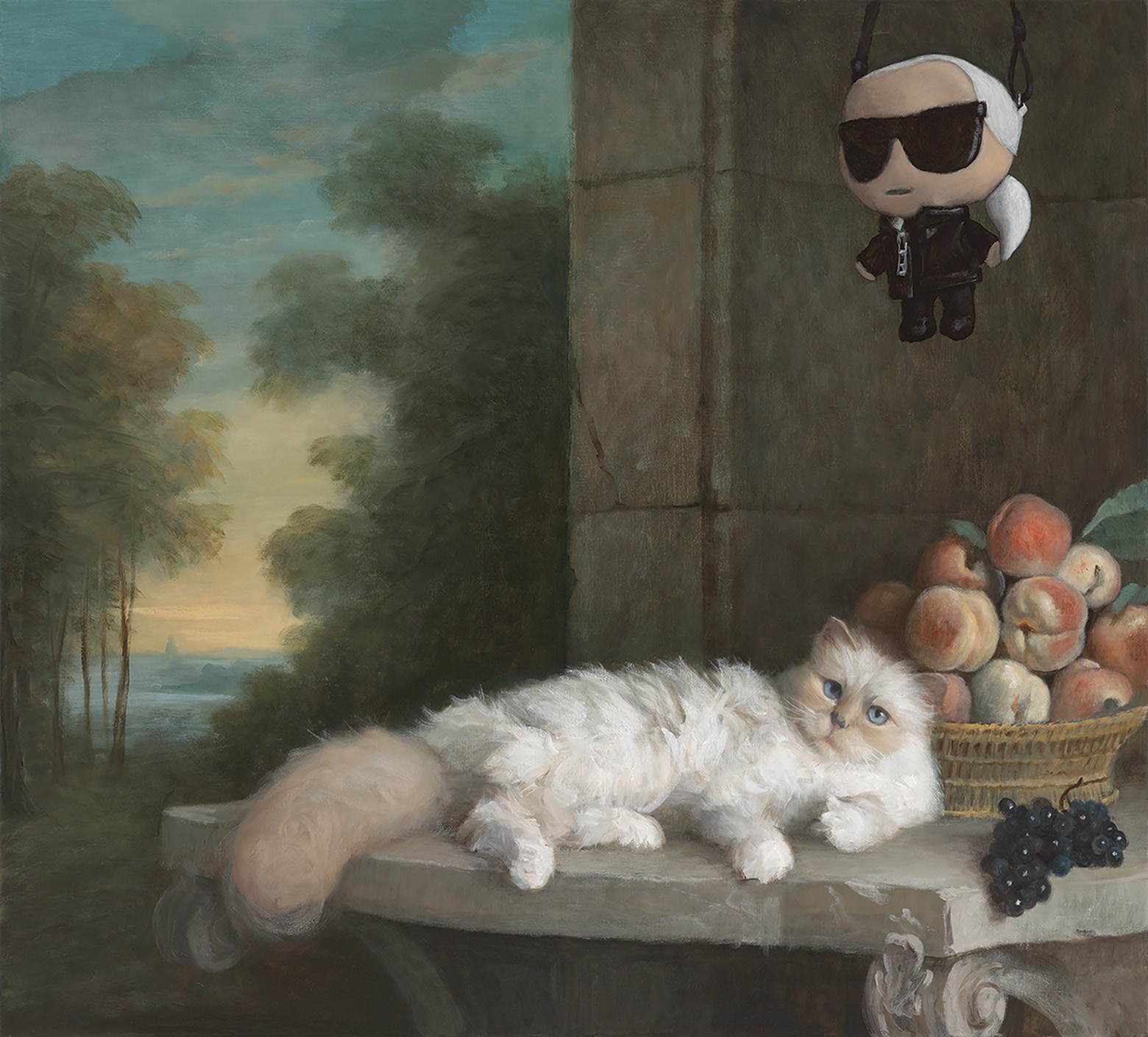
Explore. Did Karl Lagerfeld really leave millions to his blue-cream Birman, Choupette? Chris Heath writes about what may be the richest cat in the world.
In Beijing, the president scrapped hardheaded diplomacy in favor of an imagined personal bond.
Show full content
In 1971, Richard Nixon announced his plan to visit Beijing—marking a geopolitical turning point, as the trip would be the first for a U.S. president in 25 years. Senate Majority Leader Mike Mansfield offered an observation that has since become a Washington commonplace. “Only a Republican, perhaps only a Nixon,” he toldU.S. News & World Report, “could have made this break and gotten away with it.”
This notion entered the political lexicon to denote a particular kind of calculation: that on certain issues, only a hard-liner has the credibility to pursue a softer line and survive politically.
Last week in Beijing, Donald Trump had his Nixon moment. He scrapped a policy that combined hardheaded diplomacy with action to protect U.S. interests and check Chinese power. In its place, he embraced the notion that a personal bond with Chinese leader Xi Jinping can ensure stability.
Trump is getting away with this move politically. Geopolitically, he will not. His new stance imperils Americans and emboldens China, which makes a future crisis likelier than ever.
In recent decades, Republicans and Democrats have largely agreed to treat China as a strategic competitor. The United States has tightened export controls on advanced technology, reduced its economic exposure to China, and thickened its web of alliances across the Indo-Pacific. That shift began during the first Trump administration; the Biden administration intensified it.
Trump has long been a vocal critic of China. He began his second term with a trade war that pushed tariffs on Chinese goods to 145 percent. He reversed course after China retaliated and demonstrated, through its grip on rare earth processing, that it could inflict real pain in return. Then he began speaking of his great personal relationship with Xi and of the advent of a U.S.-China G2.
In Beijing last week, he praised Xi in terms he seldom uses for America’s democratic allies: “a great leader,” straight out of “central casting.” Trump took with him an extraordinary delegation of American CEOs, including Apple’s Tim Cook, Tesla’s Elon Musk, and Nvidia’s Jensen Huang, whose company has spent the past year lobbying to keep its most advanced chips flowing to the Chinese market.
China announced that the two countries had agreed to establish a “constructive China-U.S. relationship of strategic stability.” Wang Yi, China’s foreign minister, framed the new concept as one of “respecting each other’s core interests and major concerns.” Beijing is almost certainly suggesting, with this language, that it expects the U.S. to limit its competitive measures. Trump, for his part, announced modest trade deals on aircraft and agriculture.
Were a Democratic president doing any of this, Republican hawks would be unsparing in their criticism. Cowed by Trump, they are largely silent. Trump’s shift raises deceptively simple questions that may define the coming China debate and even reshape American policy: Why are we competing with China at all? What’s wrong with a little peace and quiet?
Some experts see an opportunity to persuade Democrats to soften their position on China. Jessica Chen Weiss, a former Biden State Department official who broke with that administration over what she viewed as excessive hawkishness, used the occasion of the summit to write in the Financial Times that Trump had “created real breathing room in U.S.-China relations,” and to argue for a posture that embraces interdependence and cooperation and abandons strategic competition altogether. Hers will not be the last such argument.
The trouble with this posture is that it fails to account for the Chinese actions that threaten the livelihood and security of the United States and its allies. Consider trade. Beijing uses the full weight of the Chinese state—subsidies, financing, regulatory protection, industrial policy at a scale that no Western country can match—to dominate the high-end industries of the future. It has reduced its imports to make itself less dependent on other states, and increased its exports to gain leverage over them. China’s trade surplus in manufacturing goods is now more than $2 trillion. As Robin Harding of the Financial Times has put it, Beijing is “making trade impossible.” It has effectively given Western countries a choice between deindustrialization and protectionism.
Trump’s tariffs reduced China’s surplus with the United States, but the excess goods simply rerouted to Europe, Southeast Asia, and Latin America, where they are now hollowing out the manufacturing bases of America’s allies. A serious U.S. response would involve coordinating with Europe, Japan, and Korea on common tariffs and pressing Beijing on the underlying imbalance. Trump is doing the opposite. He treats the European Union, which is on the brink of a trade war with China, as a rival rather than a partner, and he has signaled that he sees America’s economic relationship with allies as no more privileged than its relationship with its rivals.
The most striking signal of last week, though, was on cybersecurity. For several years, a Chinese state-affiliated group that U.S. intelligence calls Volt Typhoon has been pre-positioning itself inside the IT networks of American water utilities, transportation systems, electric grids, and the like. Should the U.S. and China come into conflict—say, over Taiwan—Volt Typhoon could unleash destructive attacks on American infrastructure. China has similar capabilities in states allied with the U.S. in the Indo-Pacific.
Asked aboard Air Force One whether he had raised China’s cyber campaign with Xi, Trump offered something close to a shrug. “What they do, we do too,” he said. “We spy like hell on them too. I told him, ‘We do a lot of stuff to you that you don’t know about.’” Pressed on the specific question of pre-positioning for attacks on civilian infrastructure, he allowed: “Well, you don’t know that. I mean, I’d like to see it, but it’s very possible that they do, and we’re doing things to them.”
Espionage—intrusions for the purpose of intelligence collection—is ubiquitous and, within limits, accepted. The pre-positioning of cyber weapons inside the civilian infrastructure of a country with which one is not at war is something else entirely. To conflate the two in public, alongside Xi, is to tell Beijing that one of the most aggressive components of its peacetime posture against the United States carries no political price.
The cyber-penetration also signals a larger problem: China is building the military capability to make a war over Taiwan winnable. John Culver, a former CIA analyst of China’s military, recently toldThe Washington Post that “it’s hard to point to an area other than submarines and undersea warfare and say the United States still has an advantage,” and that China is leading in “air-to-air missiles, surface-to-air missiles, counter-space capabilities and electronic warfare.”
China’s engagement with U.S. companies has helped it build the industrial and technological base that underwrites these military advances. In his book, Apple in China, the journalist Patrick McGee notes that Apple’s annual investment in China’s technology sector exceeded the Biden administration’s once-in-a-generation investment in domestic chips manufacturing. The high-tech China of today, he writes, would not be what it is without Apple. This “transfer of technology and know-how” was “so consequential as to constitute a geopolitical event, like the fall of the Berlin Wall.” Apple’s CEO was, of course, on the plane to Beijing last week.
China needs advanced U.S. chips to power artificial intelligence. Restricting Beijing’s access to these has been one way for the U.S. to interfere with China’s growing military capability in recent years. But Trump has systematically relaxed those controls over the past year, for example by approving sales of Nvidia’s H200 to several major Chinese tech firms.
With regard to Taiwan, Trump said, rightly, that the United States just seeks to maintain the status quo. But he also needlessly raised doubts about the U.S. commitment to helping Taiwan defend against a Chinese attack, and he seems to have bought into Xi’s narrative that the problem is that Taiwan is seeking independence.
In the past, the U.S. has sought to deter a Chinese assault on Taiwan by strengthening the island’s defenses. Since 1982, the U.S. has made an explicit policy of selling arms to Taiwan without consulting Beijing on the timing or content of the shipments. But last week’s meeting suggested a weakening of this American posture: Trump dismissed America’s long-standing assurances to Taiwan in this regard as something from “a very long time ago” and accused Taiwan of stealing America’s chip industry. He acknowledged that Taiwan had been Xi’s most important issue and said that an American arms package authorized in December and not yet delivered was “a significant bargaining chip” with Beijing.
To watch some of the coverage of Trump’s visit to China, or to listen to the administration, one could be forgiven for thinking that he inherited a relationship on the brink of war. He did not. The Biden administration, in which I served, had a strategy of managed competition. That blended close and frank diplomatic contact among senior officials with “competitive actions” to strengthen America’s strategic advantage over China.
Relaxing the competitive policies toward China in favor of warmer leader-to-leader engagement reflects a fundamental misreading of Xi’s intentions. Xi’s preferred strategy toward the United States is exactly the one on offer in Beijing last week: engage Washington to buy a period of stability, then use that time to pursue longer-term objectives in relative comfort. China hopes to emerge with decisive advantages that will allow it to finish its harder business at a moment of its choosing.
Jon Czin, a former CIA analyst of Xi and now my colleague at the Brookings Institution, said in a podcast interview that the key thing to know about the Chinese leader is that “he is not a dealmaker”; nor is he “sentimental about his personal relationships.” He’s “a jack-in-the-box,” Czin said, “who will wind up for years, sometimes for decades, and then pop when he thinks the moment is right, startling everyone around him.”
The Beijing summit was the first of as many as four meetings between the two leaders set to take place this year. Xi is scheduled to visit the United States on September 24, and the leaders may meet again at conferences scheduled for November and December. That frequency gives Trump every incentive to seek to maintain good terms with Xi, even if it means suppressing impulses inside his own administration toward a more competitive approach to China.
Nixon went to China because he understood that relations with Beijing would help the United States in the Cold War against the Soviet Union. Trump went there to abandon the strategy of managed competition and replace it with a leader-to-leader bond. His new posture is one that strengthens America’s top rival, leaves its vulnerabilities unaddressed, and makes a U.S.-China crisis more likely rather than less.
By 10 a.m. yesterday, the line of people wishing to dedicate America to God was more than three hours long. They came ready with prayer flags to wave the Holy Spirit into action, and shofars to scatter demonic forces. They wore T-shirts declaring the sort of Christians they were. A muscular man wore one that read Prayer Warrior. A woman in cargo shorts announced that she was an Intercessor for America. An elderly woman wore one that read I Am the Weapon.
“You understand you’re not going to be able to get in with that,” a security guard told a man wheeling a huge cross toward the entrance to the National Mall, as thousands of people began spreading out across a swath of grass that many of them now considered a kind of occupied territory in a cosmic spiritual war.
“We are here to bring the Earth into alignment with God,” a man named Joel Balin, who had come with a friend from Atlanta, told me. “To bring the kingdom of heaven to Earth.”
The rally, called Rededicate 250, was billed as a “jubilee of prayer, praise and Thanksgiving” for “God’s presence” in American history. It was part of a series of events celebrating the nation’s anniversary put together by a Donald Trump–aligned nonprofit called Freedom 250, which is being funded by a public-private partnership that includes corporate donors such as Exxon Mobil, Lockheed Martin, and Palantir and for which Congress has allocated $150 million. Critics of the event denounced the reliance on government funds, the participation of administration officials, and the near-total lack of religious diversity as an attempt to make a certain version of Christianity a national religion. A minor protest went on outside the barricades—a small group of people holding signs supporting LGBTQ people, immigrants, and all of the other Americans they believed to be under threat from the Trump administration. They blasted metal music, and a woman with pink hair screamed into a bullhorn.
The people in line paid them little mind. The event was a long-sought triumph for those who came and for millions more grassroots believers who helped elect Trump twice, embracing prophecies that God anointed him for the great spiritual battle against demonic forces that they understand to be animating current events. This idea was the work of the apostles and prophets of the New Apostolic Reformation, a charismatic movement that began gathering momentum in the 1990s and is now the leading edge of the Christian right. Sunday was a clear display of the influence of the movement, whose leaders were instrumental in mobilizing voters to turn out in recent elections and to take part in the January 6 insurrection, when many people believed that they were taking the U.S. Capitol for God’s kingdom.
Speakers yesterday included Paula White-Cain, an apostle who now leads the White House Faith Office; Lou Engle, an apostle and prophet who is known for organizing the kind of mass-prayer gatherings that characterize the movement; and Guillermo Maldonado, an apostle who leads one of the largest Latino churches in the country, El Rey Jesús, in Florida. Administration officials including Secretary of Defense Pete Hegseth and Secretary of State Marco Rubio, whose own theologies do not exactly align with the movement, told stories about God deploying miracles at key moments in the nation’s history, leveraging these anecdotes to argue that the United States was founded to be a Christian nation. Historians say this is a clear misunderstanding of the American Revolution. Trump, just back from China, appeared in a prerecorded video in which he reads from the Old Testament, which seemed to be the same video that he had recorded for a marathon reading of the Bible last month. More revealing than any of these speakers, though, were the thousands of people willing to stand in line for three hours and then roast for seven more in the hot sun.
Balin, who leads a men’s ministry called Wednesday Warriors, told me that by enabling the event, Trump was “opening up a door for us to do spiritual warfare,” and that the very presence of so many believers gathered in the nation’s capital was scattering demonic forces and advancing the kingdom. He said that church-state separation is a “myth” and that, really, any separation from God is a foolish denial of the cosmic reality of the spiritual battle under way. He said that people he knows are tired of “materialism” and “dualism” and “an Enlightenment mindset” that fails to account for how supernatural forces affect earthly life. “There are so many things happening in the supernatural realm, and in the ancient world and other cultures, they recognized this—there was no separation,” he said. “I think we are rediscovering that as Americans.”
It was past 11 a.m., and people were spreading out blankets on the green grass, taking selfies, and livestreaming to congregations back home. “This is Pastor John!” a man in a blue suit said into his cellphone. The crowd was mostly white, but many people I spoke with emphasized that their movement is international and multiethnic, even as some expressed skepticism about accepting Muslim and other non-Christian immigrants into the country. MAGA hats abounded.
On the stage, the first of many praise bands blasted the surging worship music common in charismatic churches these days. People mouthed the words. A screen displayed what appeared to be two church windows, which sometimes were filled with images of stained glass, and sometimes with an American flag, and sometimes with swirling clouds and stars. In the crowd, several women danced free-form with prayer flags, and other people periodically blew a shofar, the hollowed-out ram’s horn used in traditional Jewish services and considered in charismatic circles to be a tool of spiritual warfare. Two women from the central coast of California looked around.
“This is what we’ve been praying for, for our country to turn back to God,” Debbie Cloud, a retiree, told me as she began to cry.
She and her friend Susan Fraze said that they are working on the long-shot campaign of an influential apostle named Ché Ahn, who is running for governor of California as a write-in candidate. Cloud said that she attends a nondenominational church called Calvary Chapel. Fraze goes to a nondenominational church called the Bridge. Almost everyone I spoke with had some story about how they used to be Baptist, or Pentecostal, or Methodist but had found their way to churches with names such as Oasis and Free Chapel and Anchor and Abundant Harvest, the kind of nondenominational congregations that are growing as most denominations continue to decline. At least 15 percent of all American adults now identify as nondenominational, and most of them are embracing charismatic ideas about signs and wonders and spiritual warfare. Many people told me about their involvement with prayer groups, prayer rooms, prayer closets, and so-called prayer furnaces, spaces dedicated to intense, dayslong prayer sessions that people believe can shape the spiritual destiny of the country.
Under the shade of a tree, a man named Adriel Lam told me that he’d flown in from Hawaii, where he works for Capitol Ministries, an organization that seeks to bring prayer into state capitols. Lam is also running for Congress. He said that yesterday’s gathering was more evidence that an outpouring of the Holy Spirit is under way across America, a moment that he described as “post-postmodernism.”
“Modernism told us, Let’s know our chemistry. Let’s know our physics. Science can explain the world,” he said. “Then postmodernism said, Let’s question the foundations of everything. Post-postmodernism is people saying, Let’s go back to zero. Let’s go back to the first century, when Jesus united the physical and the spiritual. God is moving our generation for renewal.”
On a blue towel in the grass, David Hitt, an accountant from Atlanta, huddled and kneeled with several friends. He told me afterward that they were submitting themselves to Jesus and aligning their spiritual posture with God.
“We underestimate what’s going on in the invisible realm,” he said. “Our assembly, our worship, our prayer is creating openings for God to do his will.” He elaborated that he meant actual openings, portals where the Holy Spirit could enter into battle against actual demonic forces. He estimated that the prayer of just one person could put 1,000 demons in flight, and the prayer of two people could eject 10,000.
“So here we’ve got how many people focused on God?” he said, envisioning legions of demons fleeing the capital.
“Praise Jesus,” someone said. A man walked by in a T-shirt that read Jesus is King, Repent or Die. Another wore one that read Blessed are those persecuted for righteousness.
Outside the metal barricades, the capital was quiet. People jogged and went to the Smithsonian, and beyond a block or so, you couldn’t hear the music or the loud cheers when House Speaker Mike Johnson said, “We hereby rededicate the United States of America as one nation under God.” Inside, though, the message was clear.
“We are the kingdom,” a woman named Robin Noll, who’d come to Washington, D.C., on a bus with 29 others from western Pennsylvania, told me. “God is driving us into the battlefield.”
The garment has long been an indicator of people’s views about innocence and sexuality.
Show full content
Earlier this month, to celebrate a Spotify-streaming milestone, the singer Olivia Rodrigo held an intimate concert in Barcelona while wearing a certain outfit: a floral baby-doll dress, pink bloomers, and knee-high leather boots. The getup almost immediately set off an online maelstrom. Some commenters accused her of dressing like a “sexy baby” and promoting “pedo core” (short for “pedophilia core”); others defended her right to dress however she pleases.
Rodrigo, though, appeared to have specific references in mind: In a recent interview, she noted that she’s currently inspired by artists such as Kat Bjelland and Courtney Love, who paired baby-doll dresses with punk rock in the 1990s to repudiate the fetishization of girlhood. But those artists, too, were disparaged for the look back then—one reviewer in 1994 called Love’s style that of a “raddled Baby Jane whose notion of clothes-shopping is to lie in a skip outside a paedophile brothel.” And critiques of the style reached into the world of fashion more broadly. After Giorgio Armani and Anna Sui featured baby-doll dresses and pleated skirts in ’90s runway shows, one New York Times writer remarked, “Is there anything more perverse and weird than grown women wearing kiddie clothes?”
Baby-doll dresses have clearly been a magnet for moral panic for decades. But though some people might associate them squarely with girlhood, the history of the billowy dress is far more convoluted: It has traveled, over the centuries, between kid and adult closets. This fluidity reflects how “kiddie” and “grown” clothes have never had strictly differentiated styles, fashion historians told me, and how the line between the two has constantly shifted—even if the policing of how these garments are worn, especially by women, has remained constant.
For much of history, people mostly made kids’ clothes at home, and they sometimes dressed their children like adults; in the Victorian era, some children wore corsets. Kids’ clothing as a separate, mass-produced consumer category didn’t even really take off in the United States until the early 20th century, thus launching fresh concerns about what was appropriate to wear at each age. In the 1920s, some people viewed the era’s adult shift dresses as childlike; when men wore shorts in public in the 1970s and ’80s, it was also sometimes deemed a kiddish regression.
Short, flowy garments—the classic baby-doll silhouette—actually started out as a practical choice that a child of any gender could play in: One American boy’s garment, from 1855, looks roughly like a baby-doll dress Rodrigo or Sabrina Carpenter might wear on tour. Adults started wearing a version of this garb around the 1860s, Aude Le Guennec, a design anthropologist at the Glasgow School of Art, told me. At the time, many women were transitioning from riding horses sidesaddle to commuting by bicycle, and shorter dresses and bottoms were simply more functional. The outfit was highly controversial at the time, Le Guennec said, with people claiming that it looked as if women were showing their underwear. (Eventually, many women switched to wearing culottes.)
Later in the 19th century, similar bottoms—varying from knee- to ankle-length—would be called “bloomers” after the suffragist Amelia Bloomer, who advocated for less-restrictive women’s clothing. Bloomers became a symbol within the women’s-rights movement—though even Bloomer eventually felt pressure to abandon the garment, after critics loudly accused her of trying to be too “masculine.”
In the 1950s and ’60s, short, loose-fitting dresses and bloomers were reconceptualized again, this time as lingerie. The designer Sylvia Pedlar, in response to World War II fabric shortages, had in the 1940s chopped nightgowns in half, creating dresses that people might now link with the baby-doll look. But the style gained its contemporary moniker after it became associated with the 1956 movie Baby Doll, about a 19-year-old girl forced to marry an older man. Old ideas about the silhouette’s functionality waned, and the dress started to be seen as a sexual symbol, a messy one that played into the over-sexualization of young women.
Fashion tends to be a Rorschach test reflecting the concerns of its time. And the line between kid and adult clothes has been drawn largely based on ideas about which clothing was age-appropriate for girls to wear, Daniel Cook, a childhood-studies professor at Rutgers University at Camden, told me. After the rise of mass manufacturing, whole new vocabularies emerged to cater to different age groups (and to get people buying more clothes): “teenager,” “subteen,” “preteen,” “junior miss.” By the 1990s, the “tween” was a full-blown consumer category, catered to by new retailers such as Limited Too. And with each new demarcation, the clothing industry and the broader public seemed to negotiate the age at which it was okay for a girl’s body to be put on display. A “preteen” dress, for example, might be less revealing than a “teen” dress, or have a less “sophisticated” (read: tight) shape.
Nowadays, the distinction between child and adult fashion is largely disappearing again, especially as social media consolidates clothing into a more age-agnostic, algorithmic aesthetic. Stores such as Lululemon and Zara, associated with adult styles, are popular with girls; Limited Too recently released pleated skirts and polos in adult sizes.
Still, even as fashion evolves, the same cultural habit of scrutinizing women’s wardrobes persists. But so does a spirit of defiance. Amid the frenzy surrounding Rodrigo’s dress, Courtney Love reposted a series of reels to her Instagram Story, in support of the singer. “You can pry my babydoll dress,” one of the posts read, “from my cold dead hands.”
The older ones and the younger ones may be voting in different ways.
Show full content
A little less than two years ago, Gen Z underwent a rebrand. Donald Trump had just been reelected. Exit polls suggested that young voters—especially young men—had helped deliver the Republican victory. Rather suddenly, a generation associated with climate activism and trigger warnings became known for manosphere podcasts, fiscal conservatism, and gender relations so icy that they’ve contributed to the national panic about fertility rates.
But a lot has changed since 2024. Trump has begun a (thus far ineffectual) war with Iran, something he said wouldn’t happen. His administration’s handling of the Epstein files, where his name appears abundantly, has been criticized by Democrats and Republicans alike. He vowed to lower gas and grocery prices; instead, they keep rising. His approval ratings have hit record lows, and he’s losing favor among crucial voting blocs such as independents and Latinos. Journalists and political commentators keep speculating and debating: Will the young men who moved rightward crawl back in the other direction?
That may depend, it turns out, on whether you’re talking about young men—or even younger men. The spring 2026 Yale Youth Poll, released last month, found that a majority of respondents—and roughly 70 percent of the young adults—disapproved of Trump. Even with men under 30, the president lost ground compared with Yale’s fall 2025 poll. But the data also revealed a dividing line: Among 23-to-29-year-old men, support for Democrats increased by 14 percentage points. Among 18-to-22-year-old men, it fell by a percentage point—even while their approval of Trump declined somewhat. The women in that youngest age group, meanwhile, make up the single most liberal population: further left than the slightly older Gen Z women.
Of course, you can splice and dice any cohort differently and come up with what’s called a “microgeneration.” But this poll echoed something I’ve heard in my reporting before: Gen Z, which encompasses people born from 1997 to 2012, splinters into an older and a younger group that tend to behave quite differently. Rachel Janfaza, who researches and writes about this age group, has referred to them as Gen Z 1.0 and 2.0. The generational researcher Meghan Grace described them to me as “Big Zs” and “Little Zs.” Whatever you call them, the split seems like a meaningful one. You might think of Little Zs as the angstier siblings to their Big Z counterparts: more divided, less trusting, and even readier to shatter the status quo.
When you’re young, everything around you might shape your still-nascent beliefs: your family, your neighborhood, but also the state of the world in that chapter in time, Patrick Egan, a public-policy professor at NYU, told me. Your politics, in adolescence and early adulthood, are in the process of “crystalizing.” Just look at Gen Xers, he said, who came of age when Ronald Reagan was enjoying a popular presidency in the mid-to-late 1980s; perhaps partly for that reason, the group leans Republican compared with other generations.
Little Zs and Big Zs grew up nearly at the same time—but in different worlds. Big Zs might’ve texted their friends on flip phones; Little Zs grew up with smartphones, herded toward content by TikTok algorithms. Big Zs might have looked up assigned reading on SparkNotes, but Little Zs could use AI to write a high-school paper. Perhaps most important, Big Zs were already in college, or had even graduated, by the time COVID hit. That doesn’t mean the pandemic wasn’t difficult for many of them. But they’d done some real maturing—and gained some real self-understanding—before that blow. Little Zs were in middle or high school in 2020. They were at home when they should’ve been making new friends, breaking rules and getting grounded, falling in goofy early love.
The Little Zs who resented attending Zoom class and missing prom might have appreciated that many Republicans were criticizing school shutdowns, scorning mask mandates, and talking about personal freedom. More broadly, their anger with decision makers might have fed the anti-establishment impulse that researchers have noticed especially among younger Zoomers, who are “a lot less tethered,” Egan said, “to the traditional ways that people even a little bit older than them have been thinking about politics for a long time.” Many of them, he told me, like that Trump positions himself as a norm-flouting outsider to politics—despite the fact that he’s a second-term president.
Clearly the MAGA mentality has spoken to the men of Little Z in particular. Perhaps that’s because many Republicans put a particular brand of masculinity on a pedestal at a time when these men were still developing a sense of self. They might have heard GOP leaders on “bro podcasts,” Grace said, or seen them partner with the Ultimate Fighting Championship, and understood those efforts as an invitation: “Yes, your voice does matter. And we want it to be on our side.” Now these men have graduated from high school. They’re thinking about how they’ll make a living. They’re seeing that job growth is happening largely in traditionally female-dominated fields—health care, retail, social services—rather than in, say, manufacturing, Egan told me. And they’re still hearing Trump claim he’ll fix the economy.
Republicans might have spoken to Little Z women, too—to their money anxiety, their COVID trauma, their frustration with the status quo. But in other ways they’ve been turning those young women away. The 2021 Dobbs decision that struck down abortion protections may have been a particular blow for the women who are now in their early 20s. Grace and her colleague Corey Seemiller have been studying Zoomers’ political ideology for years, and in 2021, they identified that Little Z men were starting to shift rightward compared with Big Z men. But they didn’t see much of a shift at all among women. Then Dobbs happened, and young women lurched left. They were perhaps old enough to be having sex but young enough to be especially terrified of pregnancy, and of the thought that men would be telling them what to do about it.
Much has been written about the gender gap in Gen Z politics. But that split seems to be especially dramatic among Little Zs. Judging, in part, by the Yale poll results, “it may be more pronounced than anyone’s really anticipated,” Egan said. That divergence could have profound implications for not only future elections but also how Little Zs continue to relate to one another. Grace and Seemiller surveyed young women and found that, of the respondents who didn’t plan to marry, a third said that was because they fear losing their independence. A lot of them, she said, feel like the men around them have already voted to take away their freedom.
But the beliefs of Little Z, as much as they might be crystallizing, are not set in stone. Little Zs are different from Big Zs because they’ve been through different formative experiences—but also simply because they’re younger. And many kinds of political figures, regardless of party, could still respond to their sense of disempowerment, their skepticism of elites, their hunger for authenticity. Egan has heard young voters talk glowingly not just of Trump but of Zohran Mamdani, Bernie Sanders, Alexandria Ocasio-Cortez. “There’s just tremendous choice,” Egan told me—far more than when he, a member of Gen X, was younger. In his day, a 20-year-old didn’t have nearly as many disparate voices—on TikTok, CNN, or Fox News, or in the halls of Congress—acknowledging their particular struggles. Now, he said, one “can find messages that really speak to that sense of precarity, that sense of upheaval.”
If Trump keeps breaking his campaign promises, even Little Z men might turn toward other leaders. The midterms are around the corner. Young people don’t tend to show up in great numbers, historically, but Grace reminded me that in 2018 and 2022, Zoomers had notably high midterm-election turnout for their age group. They’re not like other generations; they’re not even like one another. Someday, Little Zs won’t be so little anymore—and their elders might be surprised by who they grow into.
Anthony “Bingy” Arillotta waited years to become a made man in the Genovese crime family, and when at last the call came in August 2003, he followed directions to the letter. According to sworn testimony, Arillotta was summoned to a steak house in the Bronx, where he was made to hand over his cellphone, beeper, and jewelry before being driven to an apartment building. When he got there, he was taken to a small bathroom and strip-searched for electronic devices. For his big meeting with the boss, he was given a bathrobe to wear.
Until recently, only spies and criminals had to worry this obsessively about their private statements being picked up by electronic equipment. But soon, the average person might need to deploy surveillance countermeasures. The next time you conduct a delicate bit of office diplomacy or share a romantic or financial secret with a friend over drinks, a sensor built into someone’s glasses, necklace, or lapel pin might be watching you and listening.
In March, the tech start-up Deveillance announced the development of Spectre I, a hockey-puck-shaped device that purports to prevent others from recording you (no strip search required). The company was founded by Aida Baradari, a recent college graduate who was worried by the surge in people wearing AI-enabled recorders. These wearables can be used as a silent notetaker, a personal assistant, or even a therapist of sorts. That technology isn’t yet mainstream, but it may be soon. Apple—the company with the largest personal-tech ecosystem in the world—is rumored to be developing an AI pin or pendant that would serve as an iPhone’s constant eyes and ears; many other products of this type are on the way. AI accessories could one day be as widespread as AirPods.
New surveillance technologies tend to breed new countermeasures, which lead, in turn, to more sophisticated surveillance. During the Second World War, after Germany operationalized radar, the Royal Air Force began dropping thin strips of metallized paper cut to a specific size that resonated with the radar, swamping German screens with phantom echoes that were indistinguishable from real aircraft. Some historians have argued that the ensuing radar arms race was more consequential to the war’s outcome than the Manhattan Project.
For decades, crude jammers have been sold to people who hope to avoid being recorded. Early versions blasted loud, unpleasant white noise to conceal voices. More recently, companies have made models that emit a steady stream of ultrasonic sound at inaudible frequencies, exploiting a quirk of microphone hardware that converts those high frequencies into noise. In 2020, a team at the University of Chicago led by Yuxin Chen reported that it had mounted 23 ultrasonic transducers on a single bracelet, such that jamming signals could be sent in all directions instead of being focused on a single target.
But even high-tech jammers have a hard time fending off today’s AI wearables. The most advanced pins, pendants, and glasses use speech-recovery algorithms to strip away unwanted noise, whether it originates from everyday sources—such as the clinking of glasses in a crowded bar—or from an ultrasonic jammer. This task the algorithms perform is quite difficult: In that crowded bar, a microphone on a person’s lapel will intercept sound vibrations from many different sources at once. It will pick up a bartender calling out a drink order, music emanating from a speaker, bursts of laughter coming from nearby tables—and all of these sounds ricochet off of walls and other objects, creating yet more noise. The human body solves this “cocktail party problem” without us noticing: Our ears serve as dual microphones, and our brain can use the timing and intensity differences between them, along with layered processing in the auditory cortex, to isolate the voice of a person who is sitting across from us.
DeLiang Wang, a computer scientist at Ohio State University, has spent decades training neural networks to accomplish that same goal, for the purpose of improving hearing aids. By feeding the networks hundreds of hours of recorded human voices, he has taught them to recognize the frequencies and rhythms of speech. The models build an internal representation of “speech-ness,” and when they encounter a noisy recording, they focus on the parts that match the patterns they have learned and then suppress everything else. The most advanced technologies can now infer missing syllables in the way that a reader fills in a redacted word from context, allowing them to reconstruct speech that wasn’t cleanly captured in the first place.
Big tech companies are trying to do this too. Microsoft has been running an annual Deep Noise Suppression Challenge since 2020 to advance the field. (Their in-house team is trying to make Teams meetings less excruciating.) Other companies are working on noise cancellation for cellphone calls and podcast software. This sort of research is meant to improve the lives of normal users of technology—assuming that we podcast listeners count as normal—but every advance in de-noising can also be used to help an AI assistant recover speech from a jammed recording.
Defeating these algorithms may require a different countersurveillance approach altogether. Finn Brunton, a historian at UC Davis and the co-author of Obfuscation: A User’s Guide for Privacy and Protest, told me that one of the best ways is to identify the data that a device is trying to collect, and then supply it with a junk version. The Berlin-based artist Adam Harvey used this strategy when he developed makeup and clothing that frustrate facial-recognition algorithms. Daniel Howe and Helen Nissenbaum did something similar with a browser plug-in called TrackMeNot: Rather than concealing a user’s Google searches, the extension continually runs its own randomized decoy queries in the background, so that whatever a user actually searched for becomes lost in a sea of false leads.
People have tried this technique in the realm of audio too. Woodrow Hartzog, a law professor at Boston University who studies privacy and surveillance, told me that early in his legal career, he worked with defense attorneys who worried that their jailhouse conversations with clients would be recorded. To fight back, they played “babble tapes”—audio files layered with 40 tracks of voices in different accents—in the background.
In 2023, a team led by Ming Gao, now a researcher at Nanjing University, used human voices to defeat speech-recovery algorithms in a different way. Its jammer, called MicFrozen, is worn by a speaker who doesn’t want to be recorded. It listens as they talk and then generates a real-time stream of ultrasonic “anti-speech” tuned to the speaker’s voice, much like the noise-cancellation technology in your headphones. The device then sends out another layer of counterfeit speech-shaped sound to mislead any algorithm that tries to reconstruct what was lost.
Baradari, whose company is working on the Spectre I device, wouldn’t tell me exactly how her jammer’s signals work, but she said that they, too, resemble speech. The launch video for Spectre I claims that the device will also be able to detect the presence of nearby microphones. When I asked Baradari how it will do that, she clarified that her team is still “working on that part right now.”
However effective Spectre I turns out to be, it won’t be the end of the recording arms race. More capable AI models may eventually deploy some new listening tricks of their own. They may bypass recorded audio altogether. In Stanley Kubrick’s 2001: A Space Odyssey, when two astronauts retreat to a soundproofed pod to discuss disconnecting HAL 9000, the ship’s computer simply reads their lips through the porthole. A wearable powered by a model that’s been trained on enough conversation footage could, in principle, do the same. In theory, it could also stare at a glass of water between two people and recover their speech from vibrations on the liquid’s surface.
AI wearables may always have an edge over countermeasures. After all, they’re using a technology that is a product of the entire speech-processing industry, which takes in billions of dollars in investments—not just for AI assistants but also for hearing aids, smart speakers, and teleconferencing tools. Meanwhile, only a few academics and small companies are defending us from these technologies. “The thing about cat-and-mouse games is that we know how they usually end up for the mouse,” Hartzog said. “And in this case, the cat includes some of the most powerful corporations to ever exist.”
The Mafia knows what it’s like to be a mouse. By the time Arillotta, the aspiring made man, was told to put on the bathrobe, criminal organizations had been engaged in surveillance arms races of their own for decades. After law enforcement started bugging their phones, bosses would conduct business in person. Sometimes, they’d use a safe house or a vehicle, but those could be bugged, too, and so sensitive information might have been communicated only during a walk-and-talk. Eventually, crime families turned to burner phones, and then devices with encryption. But here, again, they fell prey to the cat.
In 2018, the FBI began secretly running Anom, its own encrypted-phone company. Through informants, it sold 12,000 devices with a special Anom messaging app. Members of Mafia families, motorcycle gangs, and other criminal organizations treated the phones as a status symbol, and used them to negotiate drug deals, launder money, and participate in all manner of other illegal activity. But the security that they offered was a ruse: Every message that they sent was being intercepted by the feds.
William Dean Howells, the editor of The Atlantic, wandered through Philadelphia’s Centennial Exhibition of 1876 trying to make sense of a spectacle that defied description. Two wheels, one small, one large, seemed to tell the story of the great transformation on display. The small one was made of wood—an old spinning wheel set up in a rude log cabin meant to conjure colonial Plymouth. As Howells related, a reenactor playing the Mayflower pilgrim Priscilla Alden paused in her work to give an old Quaker woman a turn. At first, the woman’s “long-unwonted fingers” seemed rusty. She struggled to splice the thread, then got it tangled while Howells and others watched in breathless silence. Finally, though, her dexterity revived, and the wheel came to life “with a soft triumphant burr, while the crowd heaved a sigh of relief.” It was, Howells reflected, “altogether the prettiest thing I saw at the Centennial.”
But Howells and millions of other Americans went to Philadelphia as much to look forward as to look back. Far more thrilling than the wooden spinning wheel was the huge cast-iron wheel—30 feet in diameter and 122,000 pounds—turning almost noiselessly at the center of the complex works of the Corliss Engine in Machinery Hall, driven by steam pumped in from a separate building. Howells sat, stunned, before the engine’s “infinitely varied machinery” working “with unerring intelligence.” No Priscilla Alden or old Quaker was necessary here—just a single, mostly idle attendant whose only job was to occasionally put down his newspaper and administer a few drops of oil.
In Centennial: The Great Fair of 1876 and the Invention of America’s Future, the historian Fergus M. Bordewich takes a tour of the exhibition—and, venturing beyond it, takes the measure of America on its 100th birthday. At not quite 200 pages of text, the book is brisk and tightly constructed, filled with vivid characters and finely wrought, often-wrenching scenes. Along the way, Bordewich finds a country caught between the marvel of its material progress—what he calls a “phantasmagorical theater of national glory”—and the fragility of its ideals and institutions. While the fair celebrated a confident industrial future, the nation outside its gates seethed with violence, corruption, and social inequality.
Writing in our own anniversary moment, when historical narratives are themselves the stuff of cultural and political conflict, Bordewich largely lets the discord speak for itself. But taken together, the dizzying disorientations of 1876 can’t help fueling grim conclusions. Bordewich, who has written forceful histories of the Underground Railroad, the radicalism of the Republican Congress during the Civil War, and Reconstruction-era Ku Klux Klan violence, presents a country turning its back on two revolutions—those of 1776 and 1865. In their place, Americans embraced a third: an industrial revolution that rendered the spinning wheel a quaint relic of the past and the iron wheel an object of faith for the future.
The centennial commenced on the morning of May 10, 1876, with a seemingly providential break in the rain. The program—which included lengthy speeches on the marvels of American growth, and an orchestra playing an array of national anthems from around the world in addition to Richard Wagner’s made-to-order “American Centennial March”—had swelled to fit the exhibition’s hybrid nature. What had originally been intended as a national birthday celebration had been joined to a World’s Fair displaying the material wonders of the Industrial Age. The ensuing event, which ran for the next six months, was designed to show how happily material progress and national glory could be made to blend. Financed through a mix of public and private money and enabled in no small part by the backroom maneuvering of the Pennsylvania Railroad boss Thomas Scott—whose lines stood to benefit from the traffic—it was a perfect Gilded Age confection.
The massive glass-and-iron main building was the largest man-made structure on the planet at the time, encompassing more than 21 acres of floor space. It was just one of some 200 buildings across the site, many of them sparkling architectural showpieces dedicated to, among other things, pomology, photography, brewing, dairy processing, and glassmaking. Nations and states commissioned their own buildings—a Tudor mansion for England, a residence and “bazaar” for Japan, a “cottage” for Connecticut, a Spanish-moss-fringed log cabin for Mississippi. Fairgoers could see some of the first mechanical typewriters in action, sample Charles E. Hires’s root beer, hear the ear-splitting “annunciator” of Western Electric’s new heat-sensitive fire alarm.
When the exhibition closed in November, at least 9,799,392 people—about 20 percent of the U.S. population—had visited, including a 79‑year‑old man who walked from New Albany, Indiana, with the aid of a stick cut and carved in the 1810s. Most of those who went were delightfully overwhelmed. In a letter home, a young woman from Providence, Rhode Island, struggled to find words for what she saw: “Dear Mother, Oh! Oh!! Oh!!! Oh!!!! Oh!!!!! O-o-o-o o-o-o-h!!!!!! Your affectionate daughter, Mary.” Even Alexander Graham Bell, whose newly invented telephone was one of the fair’s sensations, said that it was all “so prodigious and wonderful that it absolutely staggers one.”
Behind the unspeakable wonders of Machinery Hall stood a world of labor—dirty, dangerous, and low-paid—that constituted a grave threat to the values of the republic. Such toil clashed with Jeffersonian ideals that equated independent proprietorship of farms and shops with the moral virtue necessary for honest citizenship. Just before the Civil War, Abraham Lincoln had said that men performing wage labor for more than a short stint suffered from “either a dependent nature which prefers it, or improvidence, folly, or singular misfortune.”
By 1876, industrial wage labor was the permanent misfortune of a growing class of people. Their absence from the spectacle in Machinery Hall was telling. The ingenuity of those who’d designed and displayed the machines fit easily on the trajectory of national greatness; the drudgery of those who did the grunt work off-site did not. The old ethos that Lincoln had believed in still had enough purchase that workers themselves bore the blame for their own miseries. “Had an unfortunate accident this morning,” a Pittsburgh plant manager working for Andrew Carnegie reported (one of Bordewich’s many well-chosen quotes).
Rope on cupola hoist broke and cage fell catching the Hoist Boy in the act of crossing under, crushing him to a jelly. It was caused by the boy’s carelessness, and disobedience of order and the poor fellow paid the penalty with his life. Delayed works slightly.
Events unfolding that summer in Pennsylvania coal country, about 100 miles away from the exhibition, showed how little hope there was to at least improve working conditions through unions and other forms of labor organizing. As Bordewich narrates in an astonishing set piece, the Philadelphia and Reading Coal and Iron Company had seen to that. When it sought retribution against Irish miners who had gone on strike the previous year, it didn’t merely have the backing of public authority in Schuylkill County; it was the public authority. With the help of a private police force, the company’s president took on the powers of a district attorney and personally prosecuted a set of cases against the miners, most of whom were labor activists. In a series of show trials, the men were charged with murder and assorted acts of terror, and 20 were sent to the gallows.
If industrial workers were largely absent from the centennial, Bordewich shows how Native Americans turned into a different kind of disappearing act. Assumed for decades to be “vanishing” before the tide of Anglo-American civilization, they had become objects of ethnological interest, their “primitive” cultures underscoring the marvels of the present age. Taking the lead on the event’s many Native American exhibits, the Smithsonian’s director, Joseph Henry, first planned to stage a living display of several hundred Native Americans—a Museum of Natural History diorama brought to life. But ongoing hostilities in the West got in the way. Instead, Henry sent expeditions to gather as many Native American artifacts as possible, in order to “present savage life and conditions in all grades and places.” For fairgoers, the juxtaposition with mechanical developments was powerful.
Beyond the exhibition, of course, the “vanishing” of Native Americans was not an abstraction but a policy. Writing on “the Indian question” in 1873, Commissioner of Indian Affairs Francis A. Walker had asked, “What shall be done with the Indian as an obstacle to the national progress?” The answer, he hoped, would involve peaceful means, albeit with extant Western Indians coerced onto reservations, where they would be subject to a “rigid reformatory control” while learning to adopt Anglo-American culture and practices. More often, the putative “Peace Policy” devolved into war, as was the case with the American campaign against the Lakotas happening during the centennial.
That campaign—provoked by America’s violation of an existing treaty after the discovery of gold in the Black Hills—produced a great shock at the fair. Just three days after the triumphant Fourth of July celebrations in Philadelphia, news arrived that the Lakotas had routed American forces under the command of General George Armstrong Custer near the Little Bighorn River, in the Montana territory. Custer, who was killed along with more than 260 of his men, had confidently predicted that “civilization in its advancing tread” would “roll mercilessly over” the Plains Indians. Only weeks before, he’d been at the centennial—to take in the wonders of civilization in its advancing tread.
For Black Americans, the centennial posed a pressing question: What place would they have in the national future it claimed to celebrate? Some, such as Representative Josiah Walls of Florida, anticipated that the fair would blot out “all questions of minor differences and all hurtful recollections of past disagreements.” Walls was mostly right, just not in the way he hoped. Bordewich describes how, at a moment when political support for Reconstruction was ebbing, the exhibition staged a reconciliation not between races, but between regions. White northerners and white southerners restored their old bonds of friendship through symbolic gestures—Union and Confederate generals seated together; a relative of Robert E. Lee reading the Declaration of Independence on the Fourth of July.
Still, claiming their place in both the exhibition and the nation at large remained a goal of Black Americans. Members of the African Methodist Episcopal Church commissioned a monument to Richard Allen, a prominent Black Philadelphian of the early republic and the founder of the denomination. “We intend to leave Philadelphia in 1876 as did the heroes in 1776, with a fixed resolve to achieve noble results,” the group announced. “And in 1976, we expect our progeny to gather around the Monument in question, shed tears of gratitude for the example we have left them, and call us blessed.” Delayed first by a missed deadline and then by a train accident, the monument was installed just a week before the exhibition closed.
In Allen’s absence, the most prominent “memorialization” for Black Americans was a restaurant, not a monument or a pavilion. When a white Atlanta businessman proposed to open a “Restaurant of the South,” centennial commissioners welcomed the prospect. The waitstaff would be among the only Black employees on the fairgrounds (Black workers were mostly excluded from the centennial), and their job would include playing enslaved people on a plantation, singing “quaint melodies,” and strumming the banjo. Northern fetishization of southern slavery was nothing new; the minstrel show had become popular in northern cities in the decades before the Civil War. But the success of the restaurant and its apparent nostalgia for slavery seemed to complete a notable shift in national sentiment since Appomattox.
Many northerners (Republicans, at least) had linked Black freedom to national progress immediately after the Civil War. That connection had all but faded by 1876, amid violent campaigns to “redeem” southern states from Republican rule and Black voters. As Bordewich relates in a harrowing account, those efforts had turned to South Carolina in the summer of 1876. Well aware that they were in the minority in their state, South Carolina’s redeemers had been waiting for a chance to “provoke a riot and teach the negroes a lesson,” as the future governor and senator Ben Tillman recalled. “It was generally believed,” Tillman wrote, “that nothing but bloodshed and a good deal of it could so well answer the purpose of redeeming the state from negro and carpetbag rule.”
The redeemers had their opening when two white men in a carriage confronted a Black militia marching in a Fourth of July parade in the town of Hamburg. When the two men returned for a court date four days later, they came with a mob and a cannon. The militiamen did not appear at the courthouse, but took shelter instead in a nearby building that housed their weapons and ammunition. In the ensuing standoff, the mob (including Tillman and his rifle club) began shelling the building. When the militiamen were driven from the building, the mob killed six of the men, as well as the town’s Black marshal, cutting out his tongue. The massacre was just a piece of what became a successful campaign to oust the Republican governor and legislature. The following month, a Black South Carolina Republican wrote to President Ulysses S. Grant begging for federal protection after another armed white group attacked a party meeting and demanded that the men “give up the flag” or be shot.
At the centennial’s closing, on November 10, 1876, there was no providential break in the rain. Those on hand for the ceremonies packed into Judges’ Hall for valedictory reflections and final rounds of Handel’s “Hallelujah” chorus, Wagner’s march, and a rendition of “America.” Grant declared the exhibition over, and a telegrapher tapped out instructions to the Corliss Engine’s operator to halt the great machine.
Three days earlier, on Election Day, the great machine of American self-government had also come to a halt. That year’s presidential contest pitted New York’s Democratic governor, Samuel J. Tilden, against Ohio’s Republican governor, Rutherford B. Hayes. Neither was a man of great charisma—Tilden shy; Hayes upright, teetotal, and vague—but everyone knew what was at least nominally at stake in the election. In addition to taking on the widespread corruption with which the Republicans had become associated, Tilden promised an end to Reconstruction. Hayes paid lip service to the rights of former slaves, while also voicing his commitment to reconciliation between the North and the South.
Though the choice was not exactly stark, the outcome was opaque. Bordewich offers a concise account of the tangled mess that followed. Tilden won the popular vote and stood on the precipice of claiming the Electoral College, but given rampant problems and irregularities, the nation “teetered on the edge of a constitutional abyss,” as Bordewich writes. The result came down to three southern states—Florida, South Carolina, and Louisiana—in which both parties claimed victories in state and national races.
An 1878 painting of a congressional hearing addressing the disputed 1876 election between Samuel J. Tilden and Rutherford B. Hayes (Cornelia Adele Strong Fassett / Three Lions / Hulton Archive / Getty)
Absent the violence and intimidation visited upon Black voters, the Republicans would likely have won each state, but winners were impossible to determine. Florida ended up with three separate vote counts. In South Carolina, where the number of votes exceeded the number of eligible voters, two legislatures and two governors vied for control and haggled over the presidency. Louisiana’s electoral commissioner put the state’s returns up for sale to the highest bidder, while a monitoring commission tossed out the results from 15 parishes in which the fraud and violence had been particularly egregious.
Another civil war loomed. While the White League in Louisiana threatened to attack the statehouse, and representatives of rival governments, all heavily armed, faced off in South Carolina, former Union General George B. McClellan, a Tilden supporter, talked of marching on Washington at the head of an army. Resolution came only through shadowy negotiations and political compromises. Congress created a special Electoral Commission—composed of senators, representatives, and Supreme Court justices—to determine the outcome, but its deliberations quickly broke along partisan lines. In a series of backroom dealings, Democrats agreed to accept Hayes’s election if federal troops were withdrawn from the South. Reconstruction, already heading toward a violent end in places like Hamburg, came to an official close as Hayes removed the last federal troops from the South, seven weeks after his inauguration.
Not long before the Centennial Exhibition ended, a Massachusetts man published a poem in a Washington, D.C., newspaper telling “The Story of Hamburg,” just a few columns over from a grim run of headlines leading an article on continuing violence associated with the election. The poem isn’t in Bordewich’s book, but, like the stark contrasts in its pages, the lines speak to our moment. “Let others tell of the nation’s glory,” the poet began; his attention would be elsewhere:
I sound no paeans of valor and fame—
My song is shadowed by strains of sadness;
I tell the tale of the nation’s shame.
On the 250th anniversary, we are no less caught between the glory and the shame than our forebears were on the 100th. Since the 1960s, the writing of American history has largely been a project of recovering and reckoning with conquest and its legacies, racism and the limits of democratic practice, and horrific events like the Hamburg Massacre. The aim of the official anniversary proceedings embodied in President Trump’s 2025 executive order has been to “restore truth and sanity to American history”—and, in the process, to recover the glory and forget the shame. That effort was vividly realized in Philadelphia earlier this year, when the National Park Service removed a slavery exhibit from the President’s House in Independence National Historical Park. A federal judge’s order to restore the exhibit is now being appealed, and the fight over where to look—and how to look—at our past remains the crux of our commemorations.
Though we’ll mostly be looking back at 1776 this year, Bordewich has done a great service in calling our attention to 1876. The soundness of our democratic machinery is again in doubt; we, too, wonder at the power of new technology, and what it means for work; race remains a source of conflict and a tool of power. Bordewich is as cautious in drawing such parallels as he is in spelling out the lessons that might lie in the juxtapositions of fairground and background. It’s up to us to hear the echoes, and to make sense of the glory and the shame.
This article appears in the June 2026 print edition with the headline “How America Celebrated Its 100th Birthday.”
Once-speculative concerns about the technology have now become pressing matters.
Show full content
AI has ascended to the role of main character. When Donald Trump traveled to Beijing for a historic summit last week, AI was one of the central topics of his discussions with Xi Jinping. As the two nations remain locked in a technological arms race, the president brought along some of the United States’ most powerful AI executives, including Elon Musk and Nvidia’s Jensen Huang. A continent away, the European Union has been unsuccessfully petitioning Anthropic to grant access to its advanced cybersecurity model, Mythos. Back in the United States, millions of students and teachers are dealing with the fallout of a devastating ransomware attack on the software platform Canvas—a hack that was likely aided by AI tools. And on Thursday, Cisco became the latest major company to justify layoffs by pointing to AI.
The past six months have marked a sea change in the reach and influence of AI. For most of 2024 and 2025, there was talk of AI progress slowing down or even stopping altogether. Even as the technology began to infiltrate schools and reshape financial markets, AI was relatively easy to compartmentalize from other major, more pressing issues in American life.
No longer. Now the technology has become regarded as a matter of the greatest economic, political, and global consequence. The most important issues in U.S.-China relations? Tariffs, Taiwan, and AI, apparently. Political leaders and pundits including Bernie Sanders and Steve Bannon have put AI center stage, and the backlash against data centers is loud and inescapable. The specter of AI-driven layoffs hangs heavy—as does the threat of advanced hacking bots capable of taking down electrical grids and breaking into banks. All manner of once-speculative concerns about AI have become pressing matters. There is no longer a distant AI future so much as the mess we are all forced to confront today.
The newly chaotic and inescapable state of AI is the result of two inflection points. The first came at the start of the year, when AI agents exploded in popularity. Products such as Anthropic’s Claude Code and OpenAI’s Codex don’t just talk to you; they can do things on your behalf—code, trade stocks, analyze spreadsheets, generate slide decks, and even create Amazon listings. The technology’s once-questionable economic value became very clear, very quickly, to a large number of businesses, which have clamored to incorporate agents alongside, or in lieu of, their human employees. As agents have swarmed the workplace, nearly three-quarters of employed Americans think AI will decrease overall job opportunities and 30 percent of Americans are concerned that AI will make their own job obsolete.
The second shift began in late February. First, a high-profile contract dispute between Anthropic and the Pentagon revealed how essential AI has become to national security. Then, in early April, Anthropic announced Mythos, a model with the ability to rapidly find and exploit bugs throughout the internet. (Shortly after, OpenAI came out with an analogous model.) In tandem, these events suggest that some of the most catastrophic fears about AI could come true: Several independent cybersecurity experts have told me that these models are approaching the abilities of the most elite human hackers. Anthropic and OpenAI have not released these cybersecurity models to the public, out of fear they will be used by criminals or terrorists; meanwhile, companies and government bodies alike are hungering for access so they can use the tools to patch any bugs. As a result, AI labs have become major geopolitical actors in their own right.
Spurred by the threat of massive AI cyberattacks, the Trump administration is now reportedly weighing the possibility of testing or even licensing the most powerful AI models before their public release—moves the White House once called “dangerous” and “onerous.” White House Chief of Staff Susie Wiles is said to be spearheading Trump’s AI policy and has written a rare post on X vowing to keep Americans safe from AI cyberattacks by ensuring “the best and safest tech is deployed rapidly to defeat any and all threats.” (A White House official told me that “any policy announcement will come directly from the President.”) This month alone, dozens of members of Congress have signed letters to the White House on AI regulation.
It’s hard to overstate the extent to which AI has crept into contemporary life, even for people who aren’t commonly using the technology. A poll this spring showed that, for Americans, AI is growing in importance faster than any other issue. AI wasn’t a focus for campaigns in 2024, but several races coming up this year are poised to involve heated debates over the technology. Data centers in particular have gone from basically invisible to a divisive issue that cuts across party lines: 70 percent of Americans oppose the construction of an AI data center in their community. These centers’ voracious demand for natural resources might be showing up in your electrical or water bill or your receipt at the gas pump. Data centers have also become objects of military and political violence. Last month, the home of an Indianapolis city councilman was shot up after he voted to approve a data center. And these buildings have been targeted or threatened by Iranian, U.S., and Israeli forces during the war in the Middle East.
There will never again be a graduating class that experienced even a year of college without ChatGPT. On Instagram, Facebook, and X, influencers preach about how to use Claude and ChatGPT to make your life easier. Recent leaps in deepfake tools make it harder than ever to assume that any given post on social media is human-made. As if AI had not already eaten the economy, Anthropic and OpenAI are racing to be listed on stock markets in what will likely be two of the largest public offerings in history. This will dramatically warp the public-investing landscape and affect, for better and worse, basically anybody with any sort of savings—a college fund, a 401(k), a pension.
All of which is to say, basically anything that is American seems tangled up with AI: the war in Iran, gun violence, the midterms, NIMBYism, falling test scores, class inequality, the stock market, housing, gas prices. None of these issues are necessarily determined or superseded by AI—far from it—but rather, this technology and industry are now directly, unavoidably implicated in them all. And the experience of this AI-saturated present is a bewildering one. Partisan lines on AI are scrambled and confused. The influx of cash into data centers has propped up the U.S. economy, making it impossible for economists and policy makers to fully understand the effects of tariffs and the war with Iran. More and more companies are citing AI for mass layoffs, but whether this is a genuine justification or a convenient excuse to downsize is anybody’s guess. Whether AI is going to empower or rot all our brains, too, will only become evident many years from now. All these questions and tensions are hard to make sense of, let alone resolve, but they can no longer be deferred.
The path here was not the inevitable result of some technological, scientific, or economic law. Nor is continuing down it. To the extent we are already living in the AI future, it is the result of a series of calculated decisions by the biggest tech firms and their investors. Silicon Valley has spent ungodly sums on AI and data centers: Microsoft, Amazon, Meta, and Google alone have already spent more on data centers since the launch of ChatGPT than the federal government spent to build the entire interstate highway system. Those expenditures are set to grow, even as consensus opinions on whether all this spending constitutes an economic bubble fluctuate every few months. Meanwhile, AI companies have been hard at work partnering with local and federal government agencies, major colleges and research universities, Fortune 500 companies, and media organizations to weave their products into everyday life.
All of this spending and all of these partnerships were set in motion years before the technology was actually capable or reliable enough for widespread usage. Now these same companies are barreling forward to consummate their technological revolution. For everyone else, the AI future is beginning to feel less like something you participate in and more like something that happens to you.
Did Karl Lagerfeld really leave millions to his blue-cream Birman, Choupette?
Show full content
Karl Lagerfeld, the great German fashion designer, lived in a surreal kind of grandeur. The creative director of both Chanel and Fendi, he owned apartments in Paris, Rome, and the Côte d’Azur, as well as villas in Biarritz and his native Hamburg; enormous collections of Art Deco furniture, antique jewelry, and couture garments; a personal library of some 300,000 books, by his own estimation; paintings and sculptures by Jeff Koons, Takashi Murakami, and John Baldessari; three Rolls-Royces; a curious assemblage of 509 iPods; and hundreds of pairs of his trademark wraparound sunglasses and fingerless biker gloves. According to a conversation that his biographer, William Middleton, had with the Parisian florist Lachaume, his annual flower budget appears to have been about 1.5 million euros. Lagerfeld never married or had children, and when he died of cancer, in 2019, the press quickly began to speculate about the immense fortune he’d supposedly left behind, which a number of outlets, including Bloomberg, Forbes, and The Guardian, ballparked at more than $200 million. Speculation also swirled about where these riches would end up.
More than seven years later, here is what is known for certain about the details of Lagerfeld’s will and estate: nothing. (Under French law, such matters are not made public.) But plenty has been rumored. Various figures close to Lagerfeld have been suggested as beneficiaries, including several male models and fashion executives, his bodyguard, his housekeeper, and the princess of Monaco. Even so, from the start, one improbable name has stood out: Choupette, Lagerfeld’s blue-cream Birman cat.
In the years before he died, Lagerfeld often spoke in extraordinary ways about the role Choupette played in his life. Listen to just a fraction of his avowals: “I never thought that I could fall in love with an animal like this.” “She is the center of the world. If you saw her, you would understand. She is kind of Greta Garbo.” “She has lunch and dinner with me, on the table, with her own dishes. She never touches my food. She would never eat on the floor.” “I have only one great love, my cat, Choupette.” And, ruefully, “There is no marriage, yet, for human beings and animals.”
Choupette came into Lagerfeld’s life over the 2011 Christmas holiday. A young model with whom Lagerfeld had a close friendship, Baptiste Giabiconi, asked whether he might leave his four-month-old kitten at Lagerfeld’s home while he visited family in Marseille. Somewhat reluctantly, Lagerfeld, who had previously had little time or affection for cats, agreed and found himself besotted. When the kitten was reclaimed by Giabiconi, Lagerfeld moped, and beseeched that Choupette be returned to him for good, a wish soon granted.
The first public window into this change in Lagerfeld’s life came not long afterward, when a friend of his posted a picture of Choupette sitting wistfully in Lagerfeld’s apartment, next to what appears to be a full bathtub, an arrangement of several dozen roses arching over her. By that summer, Lagerfeld was explaining in interviews that Choupette was “like a kept woman”; that she had “two personal maids, for both night and day—she is beyond spoiled”; and that these maids, aside from their other duties, were charged with writing down every detail of Choupette’s behavior when he wasn’t around so that he might know what he had missed: “Everything she did, from what she ate, to how she behaved, if she was tired, and if she wasn’t sleeping.” Already, Lagerfeld declared, there were 600 pages of such documentation.
Choupette’s fame swiftly grew, and Lagerfeld routinely extolled the extravagance of his cat’s day-to-day life: how she ate chef-prepared meals off the best china, traveled by private jet, appeared with models on magazine covers, and starred in advertising campaigns. Lagerfeld proclaimed her the most famous cat in the world, and declared that her advertising work had made her independently wealthy. “She has her own fortune from things she did,” he stated. “She’s a rich girl!”
Courtesy of Lucas BérullierA photo of a private-jet trip that Choupette took with Lagerfeld to New York, posted to her official Instagram account several months after the designer’s death. “Always watching over daddy,” the caption read.
According to Lagerfeld, in 2014 alone, Choupette earned more than $3 million from campaigns for Opel Corsa cars and Shu Uemura’s Shupette makeup line. That same year came a book, Choupette: The Private Life of a High-Flying Fashion Cat, including photos, biographical tidbits, and details of Choupette’s beauty regimen. A second book, Choupette by Karl Lagerfeld, 53 photos of Choupette taken by the designer on his iPhone, followed in 2018.
Once he adopted her, few Lagerfeld interviews failed to include testimony to Choupette’s outsize role in his life, albeit clearly one that reflected his own particular tastes and needs. “She’s peaceful, funny, fun, graceful, she’s pretty to look at, and she has a great gait,” he’d explain, “but her main quality is that she doesn’t speak. It was love at first sight.”
In his later years, Lagerfeld had intense attachments to select younger men he adopted as muses, but he is not believed to have had conventional romantic relationships. (As a younger man, he had a partner of nearly 20 years, Jacques de Bascher, who died from AIDS in 1989.) Lagerfeld often spoke as though his was a life that sidestepped sex entirely, though he once told Vice magazine: “I personally only like high-class escorts. I don’t like sleeping with people I really love.” Either way, if the manner in which he chose to live could be considered to have left a void, Choupette seems to have filled it. In a period when the designer was no longer close-shaven, he observed, “With this facial hair, I am really starting to look like Choupette. We are like an old couple. She even grooms the beard—we sleep on the same pillow and she spends her time licking it.”
Then reality intervened. Lagerfeld had learned he had cancer several years before his death in a Paris hospital on February 19, 2019, but this was information he had shared with almost no one. To ensure that Choupette was properly taken care of after he was gone, he designated his housemaid Françoise Caçote, who had long been the cat’s primary lady-in-waiting (and diarist), as her ongoing caretaker. During Lagerfeld’s last days, she surreptitiously brought Choupette to his hospital room. Once, not long before Lagerfeld’s death, Choupette caused great panic by disappearing, feared lost in the wider hospital, until her tail was spotted sticking out from her hiding place in Lagerfeld’s en suite bathroom.
As the post-death arrangements were made (Lagerfeld would be cremated with a piece of aquamarine jewelry bearing Choupette’s likeness), the media speculation about Lagerfeld’s estate began. The narrative that this involved Choupette had been primed by Lagerfeld himself, who had referred to how, should he die first, Choupette would be lavishly provided for. Although some reports that week allowed that any bequest to Choupette was, as yet, unconfirmed, a fair few were more absolute—led, as many such narratives are, by the British press, even its supposedly more respectable sectors. Their cumulative message was clear: “A cat belonging to the fashion designer Karl Lagerfeld, who died on Tuesday, is reportedly in line to receive up to $300m (£230m) of his estate” (The Telegraph); “Karl Lagerfeld’s cat, Choupette, may be set to inherit some of his £150 million fortune” (the Daily Express); “Karl Lagerfeld’s cat Choupette is reportedly set to inherit some of the formidable fashion designer’s £150m fortune” (the Independent).
The swirl of scuttlebutt about other beneficiaries, totals, tax liabilities, and relative shares has continued ever since, and there are consistent reports that, even now, no one has received any money. Nonetheless, it has been printed as established fact that, separate from his will, Lagerfeld had arranged a sizable sum, generally said to be about $1.5 million (though sometimes as much as $4 million), to ensure that Choupette would live on in the style to which she had become accustomed. She was, it was sometimes claimed, the richest cat in the world.
A little over seven years after Lagerfeld’s death, I’m sitting in an office building that towers above the Parisian suburb of Courbevoie with a man named Lucas Bérullier. Bérullier is Choupette’s agent.
Bérullier never met Lagerfeld, but he is fluent in the lore. “There’s a story,” he recalls, “when he adopted Choupette, at early stages and she was still young, everything was white in his apartment, and she was like a white fur ball. And he was so scared of someone or himself sitting on her or hurting her that he had every piece of furniture changed into black.”
Bérullier runs a company called My Pet Agency, one he started nearly a decade ago after seeing an unfilled opportunity for representing pets with potent social-media engagement. My Pet Agency’s menagerie is dominated by dogs, which Bérullier says are generally more obliging than cats. One of the dogs he has represented is Messi, the French border collie prominently featured in the film Anatomy of a Fall, though Bérullier points out that the company handled only Messi’s “social-media and special campaigns,” not his acting work. (Yes, this is a world where an animal might have more than one agent.) Most of the rest are cats, though along the way there has also been Buckley the cow, Cheepy the Australian cockatoo, Jiro the otter, Spike the beetle, and Mr. Pokee the smiling hedgehog.
As the business grew, Bérullier was aware that there was one megafamous pet living nearby in Paris that he would love to bring into his stable. While Lagerfeld was alive, Bérullier never found a way to make contact, but the summer after his death, an initial connection was finally made. Bérullier’s wife, a makeup artist, was doing a job in Lagerfeld’s studio, and she got to talking with Lagerfeld’s former bodyguard and confidant Sébastien Jondeau about Choupette. Bérullier soon went to visit Françoise Caçote and Choupette, and everything was agreed. “She needed someone to help harmonizing and structuring the communication,” he says. “Someone on her side defending what was best for her and what was best for Choupette.”
These days, Choupette lives in an apartment with Caçote somewhere in Paris, but I’m told that neither cat nor caregiver is receiving visitors right now. Bérullier says that a large part of his job, when it comes to matters relating to this particular client, involves turning people down.
Courtesy of Lucas BérullierLagerfeld’s former housekeeper Françoise Caçote, Choupette’s caretaker after the designer’s death
He says that commercial opportunities are screened according to a number of criteria: Beyond financial considerations, there are questions as to whether such offers are suitable for Choupette and for Lagerfeld’s legacy. There are moral considerations, too. “We believe that Choupette only works with animal-cruelty-free brands,” he explains. “A brand that uses fur, we would have to decline a collaboration.”
Other practicalities must also be accommodated. Cats, in general, can be tricky, and Choupette sounds a little tricky even for a cat. Bérullier has to prepare clients for the possibility that Choupette won’t even turn up. “And people understand, because you call them, you’re like, ‘Sorry—for the cat welfare and well-being.’ And they all say, ‘Oh, it’s fine. Okay. You told me. I get it.’ Then we have to either reschedule or just not do the job.”
Jobs that are not rescheduled, and that require Choupette to leave her home, are generally done at a studio that Choupette is accustomed to, just a few minutes away. Clients are told that there is a two-hour maximum, that everything must be ready before Choupette’s arrival, and that she requires her own private room. There must be no noise on set, and no one may take photographs aside from the photographer. Also, Choupette must not be shot from above. Shooting from human height, Bérullier explains, is the classic amateur pet-owner blunder. “That’s not engaging. But if you start laying and going like this—” Bérullier mimes getting on the floor in front of an animal. “And even sometimes going under them, it makes the impression that they’re giants! And that will engage.”
Bérullier shares one more practical accommodation made for the most important shoots: Whenever prudent, there will be a cat double on set, ready to do whatever Choupette might not. They don’t use just one regular stand-in—it depends on what might be required that day: “We know the one that is very human-friendly, the other one that is playful, the one that has the eyes that look the same or the tail that looks the same.” It’s clear that he does not consider this duplicity, more the reality of dealing with animal actors—and one, he points out, that is routine in moviemaking. He notes that the Choupette camp doesn’t go out of its way to disguise footage from a double, and that eagle-eyed Choupette fans can often tell.
Bérullier also demystifies some other assumptions that lie at the very core of how Choupette is commonly perceived. The multimillion-dollar fees that Lagerfeld alluded to Choupette commanding were for campaigns where the clients were largely paying for Lagerfeld’s name, and also for Lagerfeld being the photographer, designer, and art director. Bérullier doesn’t share Choupette’s current rate card but suggests that the numbers involved are substantially more modest. “Let’s be honest, we can’t ask millions for a post or a shoot,” he says.
Likewise, he punctures the notion—one that Lagerfeld sometimes explicitly stated—that Choupette has her own seven-figure bank account. “The law is the law,” he says. “A cat can’t own a bank account.” (When I ask whether there couldn’t be some kind of corporation holding the money, he says that if this were so, it would be a matter of public record.) Furthermore, he suggests that we should be skeptical of stories that Caçote has already received a million-plus sum on Choupette’s behalf. The one printed story of this kind that Bérullier verifies is that Lagerfeld did, before his death, give Caçote the apartment in which she and Choupette live, but he notes that even this came with substantial unaddressed French tax liabilities.
Bettina Pittaluga for The AtlanticChoupette’s agent, Lucas Bérullier
There is no suggestion at all, in what he is saying, that Choupette wants for anything. Revenue is clearly coming in, though maybe not as much as one might assume. “It’s really hard for me because on one hand, you do want to keep the myth up,” Bérullier says. “But it’s not what I want people to be interested in. I mean, for me, she’s the most beautiful cat in the world; she’s the most fascinating—and culture and iconic and heritage. But not in a money way.”
As for the will itself, here are some more details of what has been rumored. The will was apparently written in April 2016, and there are commonly said to be a number of beneficiaries. Many accounts suggest the former bodyguard Sébastien Jondeau and two of Lagerfeld’s male-model muses, Baptiste Giabiconi and Brad Kroenig. It is generally agreed that the Lagerfeld executive Caroline Lebar is also named. Sometimes, but not always, mentioned are the former Chanel creative director Virginie Viard; the writer and style consultant Amanda Harlech; a second Lagerfeld executive, Sophie de Langlade; Kroenig’s son Hudson (Lagerfeld’s godson, who started modeling for Lagerfeld on the runway at age 2); another model friend and protégé, Jake Davies; Princess Caroline of Monaco; and Caçote. (Animals may not inherit directly under French law.)
It is said that a key reason for the delay in settling Lagerfeld’s estate is a long-standing legal fight with the French tax authorities. One area of dispute may stem from the repercussions of the belated discovery that Lagerfeld’s home in Monaco, where the tax regime is famously gentler, was technically in France. But there may well be more than that. There is talk of a complicated web of international corporations potentially structured to reduce tax liability, and it was reported several years before Lagerfeld’s death that he was under investigation for tax evasion. An added layer of intrigue was the apparent disappearance of Lucien Frydlender, Lagerfeld’s accountant of 30 years and the estate’s putative executor, who reportedly died in Israel in 2024.
The closest anyone has come to capturing what those supposedly involved say about any of this is Michael Waldman, who made a remarkable documentary, The Mysterious Mr Lagerfeld, for British TV in 2023, in which he interviews a range of Lagerfeld associates, including all three men—Giabiconi, Kroenig, and Jondeau—who are most often identified as the principal beneficiaries. Jondeau describes Lagerfeld handwriting the will and confirms that he was one of the beneficiaries, and appears to confirm that Kroenig and Giabiconi are included too. And Giabiconi says this: “He named me top of the list. Well, I got a big percentage.”
But a percentage of what, exactly? Although the Lagerfeld estate’s value was widely assumed to be in the low hundreds of millions, there seems to be no solid basis for this number. And although Lagerfeld was evidently very rich, he was also famously generous and profligate: In the documentary, the manager of Lagerfeld’s favorite bookshop says that he was the store’s best client, spending 500,000 to 700,000 euros each year. Various sales have liquefied assets in the years since—a Paris apartment was sold for $10.8 million, a villa outside the city for about $5 million—but nothing yet approaching the totals that have been widely touted.
In Waldman’s film, one interviewee, Lagerfeld’s estranged friend Patrick Hourcade, raises another rumor, the most dramatic of all—that the remaining money will go to the French finance ministry. Waldman tells me he got the sense from other interviews that expectations had certainly been lowered—that, for instance, Jondeau “thinks and hopes that something will come, but he doesn’t know how much, and he knows that it’s possible that there’ll be very little or nothing.”
Waldman also spent time with Choupette at Caçote’s home, which he reports is a nice-enough apartment, where she lives with her husband and teenage son. “The husband was quite funny,” Waldman says. “He was like a salt-of-the-earth plumber—he might even have been a plumber, I can’t even now remember. But he was a working man. And he was obviously bemused by this mad world that his wife had got herself into and more than tolerant of this extraordinarily beautiful cat.”
Filming Choupette, Waldman says, required patience. “She didn’t like strangers,” he says. “That was understood.” But, he adds, “there was also something in the way that Choupette moved that said, I am more important than you. I am more important than anybody or anything. And I sort of saw that. And in terms of trying to seduce Choupette into my lens and, as it were, communicate in an unprecedentedly intimate way, she refused.”
The latest rumored turn in the seemingly never-ending drama of the Lagerfeld estate came earlier this year. It had been reported in 2024 that the beneficiaries had agreed on terms to settle with the tax authorities. According to the German magazine Bunte, in December 2025 the will had at last been finalized, but then had apparently been challenged by an unknown party. This had come to light, Bunte asserted, because Lagerfeld’s surviving blood relatives had received a letter informing them of this development. These relatives, who are not believed to be in the will, had apparently been notified because, should it be ruled that Lagerfeld had no valid will, his estate would then be divided among them.
Lagerfeld was born in Hamburg in 1933. (For many years, he would claim to have been born in 1938, something he would later attribute to his discomfort at having been born in the year of the Nazis’ rise to power.) Lagerfeld’s father—who, incidentally, was a member of the Nazi party—had been married before, and Lagerfeld had an older half-sister, Thea. It is from that line of the family that his surviving German niece, Thoma Theodora Friederike, the countess von der Schulenburg, comes. She is quoted in the Bunte article as saying that she would “emphatically reject” any inheritance.
But Lagerfeld also had a full sister, Martha Christiane, who was two years older than him. When she was in her mid-20s, she took a job in Seattle as an au pair. There she met a tax inspector named Robert Johnson; they married and moved back to his hometown of Portland, Connecticut, where they raised three boys and one girl.
I reach Caroline Wilcox in the records department of a municipal agency in rural Connecticut, where she has worked for more than 40 years. She is Karl Lagerfeld’s niece.
She first met Lagerfeld when she was a baby, when her mother took a ship back to Germany for a visit in 1961, about a year after her birth. Later, Caroline and her younger brother Karl—named after his uncle—would wear the clothes that Lagerfeld and Lagerfeld’s mother sent them; her brother Karl was the only kid in the neighborhood in lederhosen. (Two more boys, Roger and Paul, would follow later.) Still, she notes, her mother’s world and her uncle’s were far apart. “I was raised a little feral with three brothers,” she says. “I had a pet goose.”
In the fall of 1974, Lagerfeld, who was in New York, drove up to see his sister for the first time in years, and invited Caroline and her brother Karl to visit him in Paris the following summer. “We had a wonderful time,” she says. “He took me to a salon for a full day. I came out not even looking like myself. Took us shopping for clothes, reoutfitted us. I had never been to a restaurant.”
Lagerfeld met up with his sister one final time, in the 1980s, and after that, none of Lagerfeld’s American family ever saw him again, but they never fell out of touch. “We weren’t close,” Wilcox says, “but we had contact.” Lagerfeld would send presents, and sometimes money, to his sister, and also a Fendi fur for her 50th birthday, and he and his sister would talk by phone. In 1992, when he found out that Wilcox was getting married, he told her to forget about the dress she had already picked out. He, Karl Lagerfeld, would be making his niece’s dress. Faxes went back and forth, Lagerfeld sending his hand-drawn sketches and handwritten thoughts. The day before the wedding, a courier arrived in the snow carrying Lagerfeld’s creation, flown in that same day with its own seat on the Concorde.
In 2015, Wilcox’s mother died after a short illness. Lagerfeld had been getting updates, and once she was gone, Wilcox let her uncle know. “I texted with him throughout the day,” she says. “He was upset and talked about how different their lives were. I recall he was on an elevator to take a moment of privacy because he was at a show or working. That day was very busy for him, but he did take the time out to make me feel better.”
Wilcox says that her close friends know of this family connection, but few people beyond that. “If you said ‘Lagerfeld’ to most people here,” she points out, “they would not know who that was.” Her brother Roger lives nearby, and drives heavy vehicles. Her other brother Paul moved to Texas, where he is a government contractor. (Her oldest brother, Karl, died in a motorcycle accident when he was 18.) “We’re just ordinary people,” she says. “He has American relatives that live quite, quite differently than what his world was like. We’re very proud, but also unassuming.”
She declines to say whether she has recently received a letter regarding the will, but emphasizes that she certainly has laid no claim to it. “He was a generous, kind person to us,” she says. “My uncle was so unique. A once-in-a-century person.”
Courtesy of Lucas Bérullier“She is the center of the world,” Lagerfeld once said of Choupette. “If you saw her, you would understand. She is kind of Greta Garbo.”
She mentions that in his later years, Lagerfeld would text her pictures of Choupette. “He loved that cat,” she says. Sometimes she would send back photos of her dog, a Chihuahua-corgi mix: distant relatives finding common ground.
“A picture of my dog, Poppy, on my couch,” she says, “is a lot different than a picture of Choupette on a pillow.”
One more strange wrinkle in the Choupette story relates to her online history. The Instagram page @choupetteofficiel was launched on August 15, 2019, Choupette’s eighth birthday, nearly six months after Lagerfeld’s death.
But, as I’ve previously alluded, by then Choupette’s virtual celebrity was already long established. Lagerfeld often referred approvingly to her online popularity; the 2014 Choupette book boasted of “her own Twitter account and a vast following” and reprinted the first tweet, on June 6, 2012, from the account @ChoupettesDiary, posted less than six months after Lagerfeld had taken Choupette as his own: “Baptiste may think he is a muse but only I, Choupette, am Lagerfeld’s true muse. Everything from my whiskers 2 my meows inspire.”
Given the way that these social-media accounts were regularly referenced in the conversation surrounding Lagerfeld, it was natural to assume that they were part of Lagerfeld’s wider conception of Choupette. But the odd truth is this: They had nothing to do with Lagerfeld, or with anyone around him. On that day in June 2012 when the very first tweet appeared, Ashley Tschudin, a 23-year-old who held a low-level job at a New York company that managed booking software for modeling agencies but who had no inside track to the world of fashion or of Lagerfeld, had just read an interview with the designer published that morning in Women’s Wear Daily, in which he rhapsodized about Choupette and her obsessively documented two-maid luxury life. A character popped into Tschudin’s head—“a sassy, satirical, high-fashioned feline,” she tells me, “who had a lot of opinions about humans, about her lifestyle, the fashion industry, pop culture, and the beauty industry”—and, right there and then, she opened a Twitter account with the name @ChoupettesDiary, composed a bio (“I’m a famous beauty who refuses to eat on the floor & my maids pamper my every need. I am Choupette Lagerfeld and I am a spoiled pussy”), and started tweeting.
By the end of the same day, @ChoupettesDiary had gathered so much attention that Tschudin had done two anonymous interviews as Choupette by direct message—one with WWD, whose Lagerfeld interview had inspired all of this just hours before, and a second with Fashionista (“I felt it was time to show the fashion world the REAL Choupette,” the cat pronounced).
After that, Tschudin says that Lagerfeld’s team soon reached out to ask who she was. She told them her name and that was that. “It was never that they would step in and say, ‘Oh, no, you can’t say this,’ ” she says. “There was no control or approvals or communication as to overseeing the brand that I was building, except for that first introduction.” In the Twitter feed, and on the Instagram account and the more discursive blog that shortly appeared in tandem, she would freely use whatever photos were out there, including anything available from Lagerfeld and those around him. “Never once did I receive an email that said, ‘Hey, you can’t use these anymore.’ Why would they do that? I was building a brand for them for free.”
Meanwhile, Tschudin was able to monetize the social-media accounts for herself, though she says only to modest effect: “Not in a consistent-paycheck way,” she notes. “Not enough to pay for my groceries.” She most benefited, she acknowledges, in more indirect ways: “Choupette became my voice and opened a lot of doors in my career for me within digital marketing, within the fashion industry, the beauty industry.”
Though Tschudin always had full-time jobs unrelated to impersonating a cat, she would typically spend hours each day on Choupette-related posting. “I loved it,” she says. “It was my creative outlet. It was my voice. I could say things that I, a human, couldn’t say, because it was humorous coming from a high-fashion feline.” When Lagerfeld died, at first she simply carried on. “Thank you everyone for your words of condolence,” Choupette swiftly announced. “With a once cold but now simply broken heart, I am going into mourning.”
She knew that there was going to be a problem when she saw Caçote’s first @choupetteofficiel post that August. Bérullier had touched on this situation when I met with him, mentioning that when he first came on board, “there was a bit of a dispute—we can call it that—with the person who had fans’ accounts. We had a conversation with the people behind, but we didn’t find an agreement that was okay.” Tschudin’s version is rather more blunt. She says that her lawyer made contact offering “a variety of options”: Choupette’s representatives could buy the brand and its audience; they could collaborate with her; they could hire her. “They were not interested in any of those,” she says. “They did not come in a collaborative way to the table.” It became clear that they preferred a fourth option. Tschudin was never formally shut down, but she could no longer easily use photos, and all of the fashion-world invitations she’d become accustomed to simply evaporated. She took the hint. “It was heartbreaking,” she says. “It was as if my voice was taken away.”
Not all of her memories of her time as Choupette are sour ones: “The brand as a whole is something I’m extremely proud of. I’m proud of a voice that I gave to an animal that did not have a voice. I’m proud to have gotten the opportunity to be one of the world’s first pet influencers when that was not a career path.”
During all of those years when she was assuming Choupette’s voice, Tschudin and her subject never met. Truth is, she’s not an evangelical cat person. Back then, she did have a pet, but it was a Chihuahua called Roscoe. Now, living in California, where she works for a company that does hiring for Google, she has seven rescue dogs and a rescue pig.
In 2023, it was decided that the theme of the year’s Met Gala, to be held on May 1, would be a tribute to Karl Lagerfeld. The first that Choupette’s people knew of this was when a request came to participate in an Annie Leibovitz Vogue photo shoot that would feature a dozen supermodels. Choupette’s part in this went well enough. Bérullier says that when the cat and her team turned up on the day, all of the models gathered at Paris’s Grand Palais were cooing, “Choupette! Choupette!” The cat’s designated model was Naomi Campbell, and Leibovitz duly photographed the two of them together on Pont Alexandre III, Choupette in Campbell’s arms.
That, though, was just the prequel. As news of the Met Gala theme became public, My Pet Agency was bombarded with endless versions of the same question: Would Choupette be attending the Met Gala? There are two stories to tell here. One is the story that was told at the time. The second is the one that appears to be closer to the truth.
This is the first narrative: Choupette’s people were besieged with requests for her to attend the Met Gala, but were stretching out a will she or won’t she? dynamic. A little over a week before the event, Choupette was photographed on Instagram lazing on a bed, paws over her face: “Me while everyone is wondering whether I’m going to the Met Gala.” A few days later, Kim Kardashian posted a photo of herself, lips pouting, next to Choupette on a bed: “Had a date with @choupetteofficiel in Paris. We then spent some time at @karllagerfeld’s office to get a little inspiration for the Met.” The implication seemed to be that because Choupette wouldn’t be mingling with the famous and beautiful in New York, one of their representatives had paid a visit beforehand.
The day of the Met Gala, when the cat’s nonattendance was revealed in a @choupetteofficiel post, it was presented as how things were always going to be: “Many people invited me to walk the red carpet of the #METGALA2023 in tribute to Daddy, but we preferred to stay peacefully & cozy at home.” Attention instead pivoted to the way Choupette was represented in New York on the night—Jared Leto walking down the red carpet in a full-body Choupette costume. This, presumably, had been the plan all along.
Except that a second narrative, significantly different, became apparent later that year, during an episode of The Kardashians. It turned out that Kim Kardashian’s meeting with Choupette had actually happened in the middle of March, about six weeks before her Instagram post. Ahead of the meeting, Kardashian explained to her show’s cameras exactly why she was there. “I am going to the Met with Karl Lagerfeld’s cat as my date,” she said, “and I’m so excited.” Later she further spelled out the mindset she was bringing to that day’s meeting: “Choupette is really key to my whole vibe for the Met this year.”
When I ask Bérullier, he concedes that this was provisionally the case. “We received about half a dozen requests of people who wanted to take her,” he says. “And first you’re like, Oh, yeah, cool. Of course. We’ll be there.” Then they started thinking about the reality of traveling there, and of taking Choupette down “the busiest, loudest, craziest carpet,” and wondering whether it was a good idea after all. Still, once Kardashian emerged as a likely escort, plans began to form. “It made the most sense: the most famous cat with the most famous person on the planet.”
That was why it had been arranged that Choupette and Kardashian would meet in a suite at the Paris Ritz. “I’m nervous,” Kardashian said beforehand. “I literally feel like I’m going on a blind date.” I’m pretty sure, watching this, that Kardashian is just mugging for the camera, creating a frothy reality-show narrative. But genuine trepidation might have been wise.
The cat and the Kardashian met for the first time when Caçote placed Choupette next to Kardashian on a plush hotel sofa. (Bérullier was there, too, taking a video on his phone.) Choupette initially appeared somewhat tolerant of Kardashian’s close presence, but not for long. Kardashian was wearing a black jacket—“some sort of plastic leather,” says Bérullier, who believes that Choupette was scared of the sound that this outfit made. Soon Choupette hissed, then jerked toward Kardashian, snarling. Kardashian swiftly withdrew her hand.
“Don’t worry, she pretends—she won’t do anything,” Bérullier reassured her.
“Oh, it’s okay—I act like that sometimes too,” Kardashian replied. “She is feisty.”
But then there was more hissing. Bérullier says that the two of them were together on the sofa for nearly an hour. At one point, when Kardashian tried to hold Choupette, Choupette lashed toward her face, and Caçote quickly stepped in to take the cat.
Later on, Kardashian and Choupette did successfully pose for photos together on a bed. By then, Kardashian had removed her jacket, and Bérullier says that this part of the encounter went much better. But the conclusion had become obvious. As she would summarize it on The Kardashians: “I think I realized really quickly that Choupette, we’re not a match. So I am not bringing her to the Met.”
“It would have been just not right for the cat,” Bérullier says. “You know, sometimes you need a bit of distance to understand that.”
Most of Choupette’s public life in the years since Lagerfeld’s death has been rather more low-key. Her most regular client is a high-end German cat-accessories-and-toys brand called LucyBalu. Just before Christmas, she did a shoot for a Maisons du Monde home-decor range. Last year, she was announced as the French voice of the mischievous cat Azraël in the French version of the Smurfs movie (Les Schtroumpfs ), though that was more clever marketing than anything else. She filmed some promotional footage but, cat being a universal language, no French-cat noises were overdubbed in place of the original sounds.
One more unusual recent collaboration was with a German painter, Max Renneisen, who has a particular interest in the great French 18th-century animal portraitists Jean-Baptiste Oudry and Alexandre-François Desportes.
“There are so many depictions of the favorite dogs of Louis XV, Louis XIV, and I thought that Choupette is a perfect match,” he explains to me. “It’s the equivalent of today to these royal pets. I want to present Choupette in the same way as these royal pets in the 18th century were presented.” Initially, he sourced some photos of Choupette and got to work. The first painting he did, of Choupette in a spectrally lit forest clearing, was directly styled after Oudry’s 1726 portrait of Polydore, one of Louis XV’s hunting dogs. But Renneisen felt dissatisfied with what he had created. “It is not really Choupette,” he adjudges, “but more an invention of a white cat supposed to be Choupette.”
To do better, he felt like he needed Choupette herself, so in 2024, he tracked down Bérullier and secured permission from Bérullier and Caçote to photograph her, in order to capture images he could use for paintings.
In truth, Renneisen tells me, the ensuing photo session wasn’t that successful. He would like to have seen Choupette in certain poses, but it became apparent that his expectations were unrealistic. “When she realizes that you want something,” he says, “she doesn’t want to do it.”
No matter. He was also given lots of photos he hadn’t seen, and these guided him. Choupette was difficult to paint—“because of the texture, this fur, all the shades of her color”—but bit by bit, a portfolio came together.
Renneisen returned to Paris this February to photograph Choupette a second time, now alongside some of the paintings he had made. I ask him whether he got the sense that Choupette recognized herself in his paintings.
“No, I don’t think so,” he replies. “All the fuss we do about her, all this concept of celebrity, giving a meaning to her, everything—this is us, for the humans.” He further notes: “Choupette is not a diva. She’s a cat, and we want to see the diva in her.” I point out that a lot of people fixate on Choupette’s character, and on what she’s thinking. I ask him whether he does that too.
“No,” he says. “No, no, no. I accept her as a cat. She’s a cat.”
Photograph By Joe Clark; painting courtesy of Max RenneisenThe German painter Max Renneisen depicted Choupette in the style of the great French 18th-century animal portraitists, with a very 21st-century Lagerfeld floating above her.
And that is where I believed my grand Choupette quest—often surreal and delightfully absurd—had reached its natural end. But I was wrong.
Long after my return from Paris, as this article is going to press, I receive a message that Caçote might answer some questions in writing. I send some, and wait. Eventually, answers arrive.
One thing I ask Caçote about are those day-to-day diaries of Choupette’s life written between 2012 and 2019, of which she was the primary author. Most of the 100 or so volumes that she believes exist are no longer in her possession. “I miss them,” she writes. “I’d like to pick one at random and reread it. Karl loved to do that too.” And, she adds, “It’s very frustrating, especially since I asked for them after Monsieur’s death and was told they were part of the estate, so they weren’t given to me. I was told they might be given to me later, but I’m still waiting. I’d like to know what happened to them!!”
But of all Caçote’s answers to my questions, the following three are the ones that tell me the most about what I want to know:
Is taking care of Choupette—with everything that entails—a heavy responsibility for you?
“Yes, of course!! I’m always afraid of being judged. What I do know is that Choupette is happy at home, and that’s the main thing.”
Choupette is often called “the richest cat in the world,” and newspapers frequently report that you’ve received huge sums of money to take care of her. I understand that this isn’t true. What do you think of this misconception, and what would you like people to know about it?
“I want to be completely transparent: today, we have received absolutely nothing. Given the situation’s complexity, I have had to hire expensive lawyers to claim the inheritance in my name and ensure that Karl’s wishes are properly respected.
“While things are being sorted out, I’m doing my best to honor his wishes, especially that Choupette wants for nothing. That’s my top priority. In addition to caring for her, I work part-time to support her. She receives all the love, attention, and care she needs.
“The most important thing is that she’s happy, surrounded by love and affection, and protected as Karl would have wanted. We remain hopeful that the situation will one day be resolved peacefully.”
What is Choupette doing right now?
“She’s taking a quiet nap.”
This article appears in the June 2026 print edition with the headline “Cat Heir.” When you buy a book using a link on this page, we receive a commission. Thank you for supporting The Atlantic.
Joe Biden became quieter, while Donald Trump grows even louder.
Show full content
This article was featured in the One Story to Read Today newsletter. Sign up for it here.
When Donald Trump took the oath of office last January, he was the oldest president to begin a term, clocking in at 78 years and 220 days. He replaced the man who formerly held that title, Joe Biden, who had dropped out of the race after it became quite obvious to the entire country that he had aged too much, too quickly. But as Trump himself grows older—traveling less, switching to more comfortable shoes, and seeming to nod off during meetings—his age isn’t getting the same kind of scrutiny.
I have long thought that a reason for that is the president’s sheer size. Trump stands 6 foot 3 and, according to his most recent physical, weighs 224 pounds (yes, questioning that number is a legitimate thing to do). He is a big presence in any room, as opposed to Biden, who grew visibly thinner as he got older, adding to the appearance of frailty. Trump is also LOUD; Biden’s voice was frequently reduced to a gentle whisper. And Trump has the gift of omnipresence. His genius is in capturing attention. Biden’s public schedule grew sparse, and he actively avoided generating news; Trump holds multiple events in front of the press nearly every day. He fills Americans’ TV screens and social-media feeds seemingly nonstop, with an almost-unspoken message: How could he be fading if he’s everywhere?
But as Trump turns 80 next month, his recent behavior should prompt even more questions than usual about his stability, judgment, and mental sharpness. Among the points of concern: a late-night social-media storm a few days ago featuring more than 50 messages, many strewn with dangerous or nonsensical misinformation, which followed a similar Truth Social broadside weeks earlier; an apocalyptic threat to wipe out a civilization; more and more insults (“nasty,” “stupid,” “ugly,” “treasonous”) hurled at reporters; appearing to fall asleep in public, sometimes twice in one week; deep bruises on his hands, which are covered in makeup and accompanied by confusing explanations; and long, odd tangents in speeches that seem longer and odder than his usual tangents. Never known for his ability to self-censor, Trump seems to have completely abandoned any sort of filter, tossing out messages from one extreme (He’s glad that Robert Mueller is dead!) to the other (actually, Trump is Jesus and shall heal the sick).
Biden’s team relentlessly pushed back against worried murmurings about his age and ability to handle the responsibilities of the presidency, and, for a while, the storyline was mostly relegated to the background. Democrats who had concerns bit their tongue. The president had enough good days to allow his aides to try to dismiss the narrative as a right-wing talking point, while encouraging allies—and some in the media—to look the other way. But then Biden’s deficiencies burst into the open with his faltering, confused performance in a general-election debate that was followed by a wave of recriminations and finger-pointing that continues among Democrats and journalists to this day.
Trump’s White House, as you’d expect, has also vehemently brushed away concerns about having another octogenarian in the White House. Those close to him say that, yes, Trump moves a little slower these days, but that he’s still a commanding, charismatic force. That’s just it: Whereas Biden noticeably changed, Trump appears in many ways to be the same. He’s always been erratic; he’s always been bombastic. But as Trump has aged, he’s becoming a purer, less filtered version of himself. Because the changes are less obvious, they’ve drawn less attention. For now, at least.
The differences between first-term Trump and second-term Trump are numerous. One of the biggest: He has dramatically scaled back his travel. Though he has taken several foreign trips, including one last week to China, his domestic travel schedule is nowhere near as busy as it was in his first term, and months of White House promises that it would ramp up have gone unfulfilled. Trump has long prized what his staff deems “executive time”—unstructured hours in the morning usually filled by watching cable TV and using his phone—and he rarely has a public event before late morning.
Once in public, Trump’s remarks continue to feature many of his longtime hallmarks—disdain for scripts, a disregard for time, mixing up names and facts, and an impulse to say whatever pops into his head. But these days the displays of disinhibition are more pronounced, and many include seemingly aimless stories and distracted observations. (Take, as just one example, a White House Christmas reception five months ago when Trump spent nearly 10 minutes telling a story that involved a White House doctor—actually two White House doctors—and Barack Obama’s daughters and a poisonous snake in Peru. He interrupted himself to mention his own brush with death and to claim that his health is better than that of Obama or George W. Bush. “Trump is in the best health of all,” he said.)
A White House spokesperson ignored my long list of questions about Trump’s behavior and changes to his schedule and quickly sent me a personalized statement. “Here’s where you’re wrong, Jonathan,” White House Communications Director Steven Cheung told me. “President Trump has done more public events and has engaged with the press more than any other president in history.”
Republican lawmakers have, for years, given Trump notoriously wide latitude for his behavior. (“I haven’t seen the tweet” became an entire meme of deflection.) But some have quietly begun to wonder about the president’s judgment, particularly when it comes to political priorities. Gone is the promised attention to the economy and lowering prices. Instead, Trump’s focus is often on grandiose ways to burnish his own legacy, including trying to seize foreign lands and build over-the-top monuments to himself (“No one wants an arch when people can’t afford to buy gas,” one Republican lawmaker told me about Trump’s plans for a 250-foot monument, inevitably dubbed the Arc de Trump, between the Lincoln Memorial and Arlington National Cemetery). When the president departed Beijing on Friday, one of his first China-related social-media posts from Air Force One was not about any deal struck in the summit but rather on the host nation’s grand ballroom and how the U.S. should have one too.
Trump has also switched to more comfortable shoes, tossing aside the dressier pairs he used to wear for $145 Florsheims, and then giving them to aides, an act of generosity that—call me cynical here—also makes his own pair stand out less. Then there are his hands: Throughout this term, Trump has sported a deep bruise on his right hand, which at times is covered up (poorly) with makeup. When asked about it, he has said he takes a lot of aspirin to have “thin blood,” perhaps to ward off clots, strokes, or heart attacks. White House aides have said that leads to bruising after handshakes. But in recent weeks, the bruising has also been spotted on his left, non-shaking hand.
Trump now notably delivers far more of his remarks while seated. In his first term, he typically spoke behind a podium either in the Oval Office or elsewhere in the White House. Now the standard configuration is Trump sitting behind the Resolute Desk, while officials and aides fan out behind him. And sometimes, while sitting in that chair, Trump’s eyes … begin … to … close. In what has become fodder for late-night comics and liberals on social media, Trump has had his eyes shut for a suspiciously long time, as if he might be sleeping, at a number of events lately. Trump aides have strenuously denied this, suggesting that the president is simply listening intently. Last Monday, when a reporter observed on X that Trump’s eyes were closed during an Oval Office event on maternal health care, the official White House Rapid Response account retorted, “He was blinking, you absolute moron.” If true, this blink lasted for at least 10 seconds.
Maybe Trump is tired because he’s up late. He has long boasted about how little sleep he needs, and reporters covering his two terms have grown accustomed to news made by social media both early in the morning and late at night. But even the wild Twitter sprees of his first term have been eclipsed by some of the Truth Social barrages of late. Aides long ago stopped trying to curb Trump’s social-media habits, even if they sometimes create political problems. The posts are normally created (or found to repost) by longtime aide Dan Scavino, other times by Trump’s executive assistant, Natalie Harp. They will bring printouts of the posts to Trump, who signs off on every one. But sometimes he just posts on his own. The White House wouldn’t tell me whether that is the case during these late-night spewfests.
Trump’s audience on Truth Social (which he owns) is far smaller than the one he had on Twitter—12.6 million versus 111.4 million—and that, at times, has seemed to limit awareness of his posting. (Trump was kicked off of Twitter after the January 6, 2021, Capitol riots; he was reinstated after Elon Musk bought the site two years later, but the president now prefers his own platform.) One night in December, he posted nearly 160 times, the most in one go during his second term. In February, he posted a racist video that depicted Barack and Michelle Obama as monkeys. Early last month, he threatened Iran by saying “a whole civilization will die tonight.” A few days later, he decreed Pope Leo “WEAK on Crime.” And then overnight into the early morning hours of April 13, Trump amplified dozens of posts, including one that depicted him as Jesus. In just a few days, Trump had offended adherents of multiple religions and drew criticism from even some of his most loyal supporters. He eventually deleted the post that depicted him as the son of God, but only after absurdly claiming that he thought it showed him as a doctor, not Jesus. Last Monday night, his account posted 55 messages between 10:14 p.m. and 1:12 a.m., including a mix of his own thoughts and a slew of reposts of multiple messages that falsely claimed the 2020 election was stolen and called for Obama’s arrest.
The strain on the president is obvious: The nation he leads is at war; the economy he promised to revive is teetering; and his approval ratings are falling. His behavior has renewed Democrats’ calls to invoke the Twenty-Fifth Amendment to remove the president from power for not being able to serve. (That would require the Cabinet to act and is a nonstarter.) Senate Minority Leader Chuck Schumer has called Trump “an extremely sick person,” and his counterpart in the House, Hakeem Jefferies, deemed the president “unhinged” and “out of control.”
But it’s not just Democrats. Some former Trump allies have also questioned his psychological fitness, and a poll released last week found that 59 percent of Americans believe that Trump does not have the mental sharpness it takes to lead the country. But Republicans in Congress have defended Trump, and the White House, which always touts the president’s stamina, has mocked any suggestion that he was not up for the job.
That defensiveness reminds me of just how aggressively Biden’s aides would push back at journalists who dared to ask questions about his age. It’s worth revisiting how Biden’s declining health was shielded by those around him.
Biden’s age had been front and center during his 2020 campaign, and even some of his Democratic primary opponents wondered whether he was “declining” or “forgetting” things. He never formally vowed to serve only one term, but it was the expectation among many Democrats, and some in Biden’s inner circle, that he would act as a transitional figure, one who would vanquish Trump and steer the nation out of the coronavirus pandemic before stepping aside. He took the oath of office at age 78, the oldest man ever to serve as president. (He was 78 days older at the start of his term than Ronald Reagan was when he ended his.) But Biden enjoyed remarkable legislative success in his first two years, and then Democrats fared surprisingly well in the 2022 midterms.
With hindsight, many Democrats believe that had Biden announced then that he would step down after four years, he would have been remembered as one of the more accomplished recent presidents. Of course, he did not. Trump’s comeback on the Republican side fueled the belief among those close to Biden that he had to stay in the fight; he had beaten Trump once, and only he could do it again. But Biden’s decline, which was already the source of Washington whispers, seemed to accelerate in full public view. White House aides furiously fought any suggestion that Biden, then 81, was too old to run again, too old to serve another four years (he’d have been 86 when he left office in January 2029), and pushed back against any Democrats who suggested that their party needed a new, younger standard-bearer. They chided reporters who wrote about it.
Stories came anyway. Then came the disastrous debate in Atlanta, and the three-plus weeks of calls for Biden to drop out of the race, a rancorous fight that nearly tore the Democratic Party apart. Trump, in private, boasted to aides that his “Sleepy Joe” nickname for Biden was spot-on, even as his own advanced age received less attention. “It was fair to ask about Trump’s health in 2024, but Democrats were afraid to do it because it would boomerang on Biden,” Larry Sabato, a political scientist at the University of Virginia, told me. Veterans of Biden’s White House have expressed regret that their West Wing did not fully understand the groundswell of reservations about the president’s age, and some believe it grew too insular and overly protective of the president. Andrew Bates, who was the senior deputy press secretary for Biden, told me that their “outdated approach to media undercut Joe Biden’s superpower—his connection with working people.”
In Bates’s view, Trump has a different problem, one that exposes the president for who he really is. “The most obvious impact of age on him is that he has lost the capacity to pretend he cares about other people,” Bates said.
The White House announced this week that Trump will undergo a medical and dental checkup on May 26, which will be his fourth publicly disclosed doctor’s visit in his second term. (He has also had two dental visits in Florida.) Last year he had an annual physical in April 2025, and then what the White House described as a “routine yearly checkup” in October. Across his terms, Trump has bragged repeatedly about acing multiple cognitive tests, a boast that only raises more questions.
Many presidents have faced inquiries about their physical and mental health. Reagan seemed to slip late in his presidency in the years before he announced that he had Alzheimer’s. Franklin D. Roosevelt was in poor health before dying just a few months into his fourth term. Woodrow Wilson suffered a debilitating stroke. Abraham Lincoln battled depression. Dwight Eisenhower had a major heart attack. And some of Richard Nixon’s own aides privately worried about his drinking and his mental stability.
Nixon often utilized the “madman theory,” in which he would act unstable to intimidate foes and achieve better results. Trump’s aides say he does the same, including in his genocidal threats toward Iran; they are comfortable with that comparison to Nixon. But they may soon face more similarities with Biden.
The “Weekend Update” joke swap is a celebration of friendship, bad taste, and the importance of context.
Show full content
Even by the standards of shocking Michael Jackson jokes, it was a shocking joke. “Michael Jackson did nothing wrong,” Michael Che, a co-anchor of Saturday Night Live’s “Weekend Update,” said during last night’s episode. “He was right to molest all those kids.” This was delivered with palpable surprise at the words coming out of his mouth, but Che kept going: “They were lucky. I would have paid him to do it. And I did! That’s right, when I was 10 years old, Michael Jackson molested me, and the only thing it gave me was a fetish for middle-aged white women.” He then smiled and said, almost as an aside, “That is not why I have that.”
Che, of course, wasn’t saying what he actually thinks about the late pop star or his own personal sexual preferences. He was participating in a tradition where he and co-anchor Colin Jost each write “Weekend Update” material that the other man has to deliver cold, without seeing the joke ahead of time. The goal is to make their co-anchor look as crass, offensive, and stupid as possible, and Jost had crafted a real doozy for Che to read. But the joke wasn’t just about shocking the audience or innovating in the seemingly spent arena of Michael Jackson jokes—it also demonstrated how the right context can make grotesque humor sing, by turning the discomfort of the joke teller into the real gag.
In an interview with the comedian Mike Birbiglia, Che said that the stunt was inspired by the “Update” jokes they’d written that had bombed during dress rehearsal. (Che recalled how one groaner was greeted with a woman loudly saying “no.”) But for one episode, Che and Jost decided to recycle those same jokes for the other man to say. To Che’s surprise, the act of telling the audience that they were aware that these jokes were in bad taste “made them laugh hysterically.” Jost pushed for them to do it again, but without knowing the jokes ahead of time; Che admitted that he became worried that Jost was going to surprise him, “so I wrote new ones that were horrific.”
This has since evolved into a biannual tradition—and one of the best parts of the past decade of SNL. Highlights have included Jost getting Che to call Kendrick Lamar “the biggest bitch of them all” during the height of his feud with Drake, and Che writing a joke about Jost’s wife, Scarlett Johansson, that was so beyond the pale he later apologized to her on air.
The tradition has endured partly because of the sheer shock value of the jokes, which almost guarantees they go viral, but also because it’s very sweet, in a very strange way. After working together for a decade, the two men understand each other on an artistic and personal level. For Che, writing his jokes means leaning into Jost’s straight-laced vibe and the idea that he seems like a guy who would enjoy racist material, such as this line he was made to recite about the Oscar-winning film Sinners:“A Black vampire is just like a white vampire, except the only thing it sucks dry is the welfare state.” In contrast, Jost loves to make Che look like some sort of louche sexual deviant, as seen with the Jackson joke.
It all comes down to the two men’s anguished delivery, which itself becomes the joke. In the interview with Birbiglia, Che noted that people worry they will “get in trouble” for laughing at jokes they know are wrong, so the secret is to give them permission. This is how jokes that on paper read as merely sexist and racist really become about two friends trying to make each other really, really uncomfortable.
The latest joke swap arrived just after Netflix’s recent roast of Kevin Hart, which was filled with nasty, not-all-that-winky exchanges between the featured comedians. Take one particularly vicious back-and-forth between Shane Gillis and Chelsea Handler, where Gillis cracked about Handler partying with Jeffrey Epstein and Handler returned fire by bringing up Gillis’s history of telling racist jokes. The environment wasn’t that fraternal. Maybe everyone was in on the joke, but the event certainly seemed like it was filled with people who despised one another, and who wanted to demonstrate that they were the edgiest and most callous person in the room.
In comparison, Jost and Che’s one-upmanship clearly comes from a place of deep affection. At one point, Jost was made to joke about a new album by Ye (formerly Kanye West): “Please try to separate the art from the artist, and remember that Ye can make awful music and still be right about Hitler.” At the end of “Weekend Update,” he said that to atone for this particular bit, “I’d like to sacrifice the most important thing in my life: my beautiful, award-winning, world-famous hair.” A barber entered the set from behind, pulled out his clippers, and draped Jost in a black cape.
But right before the clippers made contact, Che intervened with a passionate No! “You was really gonna do it?” he asked in seemingly genuine disbelief. “Man, you are the greatest comedian of all time,” he added, dropping the bit for a second and simply telling his friend how much he loved him.
There’s a lot going right at universities, if you’re only willing to see it.
Show full content
This article was featured in the One Story to Read Today newsletter. Sign up for it here.
Roosevelt Montás grew up in a small mountain village in the Dominican Republic. Two days before his 12th birthday, his mother flew him up to New York, where she had found a minimum-wage job in a garment factory. A few years later, when he was a sophomore in high school, some neighbors in his apartment building threw out a bunch of books. One of them was a finely bound volume of Socratic dialogues. Montás snagged it—and Socrates changed his life.
A high-school mentor helped him get into Columbia, where students confront the great books of Western civilization in the school’s Core Curriculum. There, Montás encountered the writings of St. Augustine. “In plumbing the depths of his own psyche, Augustine gave me a language with which to approach my own interiority,” he recalled in his memoir, “he gave me a model and a set of questions with which to explore the emotional wilderness, full of doubt and confusion, that was my own coming-to-adulthood, in America.”
Augustine paradoxically caused Montás to lose his Christian faith, but led him to gain a faith in philosophy. Montás went on to lead Columbia’s Center for the Core Curriculum, and he is now starting a center on citizenship and civic thought at Bard College.
I get to visit about two dozen campuses every year, and I meet at least a few teachers like Montás at each of them. I can generally spot the ones with the pure disease, the ones with that raw teacher-fire. Usually, they had some experience early in life when they fell in love with learning. This love then became a ruling passion, and now they fervently seek to share it with their students in the classroom. You can find them at Ivies and at community colleges, at big state schools and small liberal-arts colleges. They are a part of what’s going right in American higher education, the part that critics (like me) don’t write about enough.
These teachers talk of their vocation in lofty terms. They are not there merely to download information into students’ brains, or to steer them toward that job at McKinsey. True humanistic study, they believe, has the power to change lives. They want to walk with students through the biggest questions: Who am I? What might I become? What is this world I find myself in? If you don’t ask yourself these questions, these teachers say, you risk wasting your life on trivial pursuits, following the conventional path, doing what others want you to do instead of what is truly in your nature. If society doesn’t offer this kind of deep humanistic education, where people learn to seek truth and cultivate a capacity for citizenship, then democracy begins to crumble. “What I’m giving the students is tools for a life of freedom,” Montás says.
These great teachers are the latest inheritors of the humanist tradition. Humanism is a worldview based on an accurate conception of human nature—that we are both deeply broken and wonderfully made. At our worst, humans are capable of cruelty, fascism, and barbarism that no other mammal can match. On the other hand, deep inside of us we possess fundamental longings for beauty, justice, love, and truth, which, when cultivated, can produce spiritual values and human accomplishments breathtaking in their scope.
Life is essentially a battle between our noblest aspirations and our natural egotism. Humanistic education prepares people for this struggle. Yes, schooling also has a practical purpose—to help students make a living and contribute to the economy. But that practical training works best when it is enmeshed within the larger process of forming a fully functioning grown-up—a person armed with knowledge, strength of judgment, force of character, and a thorough familiarity with the spiritual heritage of our civilization. Preprofessional education treats people solely as economic animals; humanistic education also treats them as social and moral animals.
Humanistic teachers do this by ushering students into the Great Conversation—the debate, stretching back centuries, that constitutes the best of what wise people have thought and expressed. These teachers help students encounter real human beings facing the vital challenges of life: Socrates confronting death, Sun Tzu on how to manage conflict, Dante in love, Zadie Smith on living in the boundary between different identities. The Great Conversation represents each generation’s attempt to navigate the dialectics of life, the tension between autonomy and belonging, freedom and order, intimacy and solitude, diversity and cohesion, achievement and equality. The Great Conversation never ends, because there are no final answers to these tensions, just a temporary balance that works for a particular person or culture in a particular context.
By introducing students to rival traditions of thought—Stoicism, Catholic social teaching, conservatism, critical race theory—colleges help students cultivate the beliefs, worldviews, and philosophies that will help them answer the elemental question of adulthood: What should I do next? By introducing them to history and literature, colleges arm students with wisdom about how humans operate, which is handy knowledge to have. They offer them not only life options but also, more importantly, the ability to choose among them. “Any serious human problem is a hard problem,” Andrew Delbanco, who teaches at Columbia, told me. “The fundamental obligation of a humanities teacher is to try to develop in students an allergy to ideology and certainty. To acknowledge self-doubt.”
But humanistic education is no mere intellectual enterprise. Its primary purpose is not to produce learned people but good people. When teachers do their job, they arouse in their students not only a passion for learning but also a passion to lead a life of generosity and purpose. “The correct analogy for the mind is not a vessel that needs filling, but wood that needs igniting—no more—and then it motivates one towards originality and instills the desire for truth,” Plutarch observed many centuries ago.
Teachers do this by making excellence attractive to the young—excellent lives, excellent ideas, excellent works of art, commerce, and science, and, above all, excellent ideals. The students who are captivated by these ideals find some cause to advance, some social problem to address, some business to start. When confronted by inspiring ideals, many students say: I care intensely about this, I want to orient my life around this. It’s not only their minds that have been refined but also their desires and ambitions. In a true humanistic education, the French philosopher Jacques Maritain wrote, “the shaping of the will is thoroughly more important to man than the shaping of the intellect.”
Preprofessional education is individualistic and selfish. Such students learn to ask: How can I outcompete my peers and beat them up the ladder to success? In a humanistic program, by contrast, groups of people gather to form communities of truth, to reason together, to explore life together, to pool their desires and seek the common good.
I find that students flock to humanistic teachers who radiate a sense of urgency. They tell students: We are doing something important here. College is not just frat parties and internships; it’s potentially the most important four years of your life. You can emerge either an anesthetized drone or a person fully curious, fully committed, and fully alive.
I know this kind of education can have this effect because it is the education I got decades ago at the University of Chicago. I knew I could never be as learned as the professors I encountered, but their passion for large topics and great books seemed so impressive to me. I yearned with all my soul to understand the world as best I could, to embark on a lifelong journey of growth. Whatever my ample failings, that yearning, kindled in those classrooms with those books and those teachers, has never gone away. I stumbled unknowingly into a humanistic education, because it was the only college I got into, but I can tell you, it totally worked on me.
Today, the teachers I’m talking about tend to feel like dissidents within the academy, like they are doing something countercultural. That’s because at most schools, humanistic education has been pushed into the remote corners of academic life. It’s not that people woke up one morning and decided to renounce the humanistic ideal, it’s just that other goals popped up. It was easier to fundraise for them, easier to sell them to tuition-paying parents. The idea of forming students into the best version of themselves sort of got left behind.
Meghan Sullivan grew up in a working-class family in Florida, with her parents running through a series of jobs, punctuated by periods of unemployment. She went through grade school thinking she wanted to be a teacher, because she admired her teachers. Then in high school she joined the debate team and decided she was put on this earth to become a lawyer. She had a friend whose father taught philosophy. She was struck by what a dumb profession that was. As she told an interviewer, Tom Burnett, she decided that “there’s no universe where being a philosophy professor is more important than being a lawyer.”
Sullivan went to college fully intending to major in prelaw. But one semester, she didn’t get into the classes she wanted, and her adviser suggested she take a philosophy class. She rolled her eyes but signed up. Her first assigned paper asked her to consider whether it is ever morally permissible to commit suicide. She went to her teaching assistant and asked, “Am I allowed to, like, answer this? Like, are we allowed to talk about this?” He told her that not only was she allowed to do so, but it was a course requirement. “I found it just totally exhilarating,” she recalled. Now she teaches philosophy at Notre Dame.
Mark Edmundson also grew up in a working-class family, in Medford, Massachusetts. He got into college, something no one else in his family had done, and told his father that he might study prelaw, because you could make a decent living as a lawyer. His father, who had barely graduated high school, “detonated,” Edmundson later recalled. You only go to college once, his father roared, you better study what genuinely interests you. The rich kids get to study what they want, and you are just as good as any rich kids.
Edmundson soon encountered Sigmund Freud and Ralph Waldo Emerson. “They gave words to thoughts and feelings that I had never been able to render myself,” he wrote in his book, Why Teach? “They shone a light onto the world, and what they saw, suddenly I saw, too.” Edmundson now teaches poetry and literature at the University of Virginia.
“To get an education, you’re probably going to have to fight against the institution you find yourself in—no matter how prestigious it might be,” Edmundson once told an audience of students. “In fact, the more prestigious the school, the more you’ll probably have to push.”
The forces arrayed against humanistic learning are many:
Specialization. Aside from educating the young, universities have another perfectly noble mission—the advancement of knowledge. This goal requires that academics be trained to specialize in a single narrow discipline. They are often given jobs and awarded tenure because of their contribution to that narrow discipline.
The resulting system often values research instead of teaching. Sullivan observes that in graduate school “the message you get overwhelmingly is that you need to be a narrow research specialist, you need to impress the grand poohbahs of your discipline. Teaching is something you do to pay the bills.” And, as Anthony Kronman of Yale has argued, when academics specialize, it starts to seem downright unprofessional even to ask the big general questions of life. Specialization, even for a noble purpose, is a dehumanizing force, one that induces universities to turn their back on the formation of the young.
Preprofessionalism. Every year, UCLA surveys freshmen about what they hope to get out of college. Back in the 1960s, more than 80 percent—the top answer—said they hoped to “develop a meaningful philosophy of life.” Over the ensuing decades, that priority has plummeted. Now, more than 80 percent of freshmen say the purpose of college is to help them become “very well off financially.” Going to college has become a consumer experience—you pay huge tuition and in return you get rewarded with a pleasant time, career prep, a network of connections, and some fancy credentials. Interest in subjects like history and humanities has plummeted. More subtle is the effect preprofessionalism has had on the student mindset. A tone of cynical calculation prevails as students learn to manipulate the game. Many read just enough to get by, optimizing time management in the general frenzy for merit badges. An ethos of detached knowingness displaces an ethos of passionate inquiry. Humanistic education says: You need to elevate your desires! The consumer mindset says: Tell us what you want, and we will give it to you.
Politicization. The humanistic ideal has been replaced in some departments by the activist ideal. The purpose of the professor is to indoctrinate students so they can resist the structures of oppression. The activists naturally focus more on power and social systems than on the subjective inner experience of an individual heart, an individual soul. Politics, rather than the pursuit of truth, goodness, culture, or beauty, becomes the cause that gives life meaning.
Political radicalism once seemed exciting, but now it just makes parts of academic culture dreary. I used to love going into the Seminary Co-op bookstore at the University of Chicago or the Harvard Coop bookstore in Cambridge, both of which feature the latest academic books. Now there’s much less on those sales tables I’d want to buy. It’s the same ideological story, the same jargon, applied to different subject areas: oppressor/oppressed, transgression, deconstruction, intersectionality—the aging Foucault-inspired monoculture. Students have learned to manipulate this hustle. You don’t have to work on your soul in order to be counted as a good person, you just parrot the approved progressive attitudes on your way to Goldman Sachs. Roughly 88 percent of students at the University of Michigan and Northwestern admit to researchers that they lie in their papers and pretend to be more progressive than they really are in order to get a better grade.
The crumbling of humanistic self-confidence. Many people who work in the humanities have lost faith in the idea that a book or a course can transform a life, or even that literature is a repository of great wisdom to which one must humbly submit. The old humanistic ideal seems to many archaic, outmoded, reactionary. Thus, passionate attempts to transform students have been replaced by a dispassionate application of theory on behalf of some geriatric race, class, and gender ideology. Why would anybody major in English if the stakes involved are really so trivial?
The loss of national purpose. In his 1996 book, The University in Ruins, Bill Readings wrote that universities once saw themselves as the defenders, creators, and transmitters of the national culture. That is, they served the same function as the cathedrals of the Middle Ages: cultural and intellectual furnaces whose influence radiates outward and elevates the broader society. Earlier generations of university leaders like Charles William Eliot, Vannevar Bush, and Robert Maynard Hutchins saw themselves as public figures with national roles. But, Readings argued, universities have lost any notion of serving the national culture, replacing it with the pursuit of excellence. Like any corporation, they seek to provide excellent services to consumers in order to move up the ranking systems.
We’re never going to go back to the humanistic ideal as it existed in the 19th century or even the 1950s—nor should we—but the failure to come up with a new version for the 21st century has been devastating for universities. They’ve lost a core piece of their identity. According to a survey by the Pew Research Center, 70 percent of Americans say universities are heading in the wrong direction. Public trust in universities is in such steep decline that President Donald Trump gets cheered on for trying to dismantle them.
It has also been devastating for students. In a Harvard survey, 58 percent of college students said they had experienced no sense of “purpose or meaning” in their life in the month before being polled. “Ideals are psychological goals necessary to the health of the mind,” the literary critic Alfred Kazin once wrote. Today’s students, whose educations are seldom oriented around ideals, are not in a healthy state of mind.
And it’s been devastating for America’s leadership class. Universities are supposed to make the great good—to train the nation’s leaders in virtue so they can live up to their responsibilities as privileged members of the elite. But today’s leadership class, which has not been trained to serve or even understand those who are less fortunate, has forfeited the trust of the populace. Because universities have left a cultural void, the nation as a whole has lost its humanistic core, its sense of shared morals, its shared humanity. Simultaneous technological advance and humanistic decay have left us both objectively better off and subjectively worse. Loss of faith leads to nihilism. Might makes right. Brutality reigns. Welcome to American politics in 2026.
The good news is that things are changing. There is an interesting pattern in the history of higher education: Universities reform after confrontations with barbarism. Columbia formed its Core Curriculum program just after the horrors of World War I. It was, as the literary critic Jacques Barzun put it, a curriculum “born of trauma.” During and after World War II, a slew of writers like Maritain, Hutchins, T. S. Eliot, C. S. Lewis, Hannah Arendt, and Karl Jaspers published books on how to reform education. People took a look at the civilization-threatening brutality unleashed by the war and concluded: We’ve got to cultivate better human beings! In 1942, the German dissident Dietrich Bonhoeffer took a look at the way fascism had devoured his country and argued that the most important question for any responsible person was not just how to behave honorably during the war; it also concerned “how the coming generation is to live.”
The cruelty of the Trump era has aroused a similar response. Wide swaths of Americans can suddenly see the importance of character and character formation. As public norms crumble, more and more people come to appreciate the importance of teaching citizenship. As the public culture grows more savage, people can see what catastrophes result when the nation abandons its humanistic core. Moreover, Trump is never totally wrong. His assaults on the universities, and especially on research funding, have been monstrous, but it is true that universities got a bit too ideological, a bit too preprofessional, a bit too exclusive and elite. For higher ed, these have been the worst of times but, paradoxically, also the best of times.
I’ve met with several dozen university presidents over the past year, and nearly every one of them is initiating some sort of new program or reform. They understand, as Rajiv Vinnakota of the Institute for Citizens & Scholars put it to me, that universities have spent so much time serving the private good of students and faculty that they have neglected their role as stewards of the public good. We are living through the greatest period of university innovation of our lifetimes.
I would lump these changes into three buckets:
Moral formation. Some colleges never got out of the character-building business, including the service academies, the Christian colleges, and the HBCUs. But over the past decade a raft of schools have introduced programs to help students become better versions of themselves. Some of these programs resemble the kind of great-books education I got at Chicago. For example, several years ago the historian Melinda Zook realized that only a tiny percentage of Purdue students had ever taken a literature or history course. She introduced the Cornerstone program, offering students the chance to study “transformative texts.” In 2017, about 100 students enrolled. Now, nearly 5,500 Purdue students are reading transformative texts.
Ted Hadzi-Antich Jr., who teaches at Austin Community College, decided that big ideas shouldn’t be just for rich kids, and began teaching a seminar called “The Great Questions.” He then formed the Great Questions Foundation, which has trained more than 140 faculty at community colleges across the nation on the art of leading big-ideas seminars.
Wake Forest decided to put character formation at the center of its mission about a decade ago. Since 2020, it has trained 140 faculty across various departments on how to do character education, and 160 faculty on how to think about their own moral growth. The university also formed the Educating Character Initiative, which has so far dispersed more than $35 million impacting 146 institutions that are developing their own programs.
These days, I find that almost every school I visit has at least one course that directly addresses the great moral challenges students will face. At Wesleyan, there’s a course called “Living a Good Life,” where students try on different moral philosophies and participate in experiences like “Live Like a Daoist Week.” At Harvard, Richard Weissbourd leads a course called “Becoming a Good Person and Leading a Good Life.” He covers subjects like how to raise a moral child; how to care for people across cultural, racial, and economic differences; how to cultivate romantic relationships; and how to find your purpose. He’s learned that Shel Silverstein’s book The Giving Tree particularly resonates with female students. The book is about a tree who gives and gives and gives to a self-centered boy until she is a stump and has nothing left to give. Some of the women say their romantic relationships are kind of like that.
There’s a tremendous variety to these programs. Some teach character formation by holding up moral exemplars, some through the exploration of moral philosophies, some by discussing good commencement addresses. At Valparaiso University, students discuss great ideas and then have to write, produce, and perform a musical about those ideas, an exercise that requires cooperation and self-sacrifice. The University of Pennsylvania art historian Gwendolyn DuBois Shaw taught a course in Washington, D.C., called “Memorials, Models, and Portraits of Leadership,” on exploring character through the arts. Francis Su of Harvey Mudd College turned his approach into a book called Mathematics for Human Flourishing.
Civic thought. If democracy is not to degenerate into disorder, citizens must learn to exercise their freedom responsibly, deliberate together, and make sensible judgments about the choices before them. This requires training, and lately, a raft of citizenship programs have sprung up to provide it.
At Yale, where I also work, my colleague Bryan Garsten recently launched the Center for Civic Thought, which hosts conversations on political theory, constitutional principles, and how to disagree well. I recently sat in on Garsten’s class “The Common Good.” The course is structured around questions such as how much we owe to others and how political authority should be distributed. Students are asked to design their own society, with its own system of government. It’s an exercise that causes them to think about power and fairness, and that challenges them to understand their own values.
In one class, Garsten showed two brief videos, one from the Trump aide Stephen Miller saying that international relations is about nothing more than raw power, and one from the former Democratic presidential candidate Pete Buttegieg saying that international relations is about building a rules-based order. Then students read the Melian Dialogue in Thucydides’s History of the Peloponnesian War, in which the Athenians make the Milleresque claim that international affairs have nothing to do with justice or the right, that the strong do what they can and the weak suffer what they must. Garsten asked students to decide if they agree.
I have found, over the past few decades of teaching, that it has become harder and harder to get students to argue in public. They are afraid of being judged by their peers and of the harsh social penalties that might follow. Gradually, the skills required to disagree well have atrophied. The new college civics programs are designed to give students and faculty the tools to do that. For example, Vinnakota has organized a coalition of more than 70 university presidents, who are launching programs to educate students for democracy, to prepare them to argue well, and to protect free speech. I recently visited the University of Michigan, where there is a new $50 million initiative designed to do this. The Greater Good Science Center at Berkeley offers an eight-month online course that discusses the latest science on the art of bridging differences.
These programs are especially vibrant in red states, where legislatures have funded a series of initiatives to widen intellectual diversity on campus. The University of Tennessee, for example, now has the Institute of American Civics; Ohio State boasts the Chase Center. These programs face intense pressure from the left-wing academics in other departments who want their scholars deplatformed—and from the right-wing state legislators who funded them (who can get a little nutty, and demand, for example, that you shouldn’t teach Socrates, because he was gay).
The University of Florida now hosts the Hamilton School for Classical and Civic Education. It offers courses like “Capitalism and Its Critics,” “What Is Statecraft?,” and “What Is the Common Good?” More than 3,000 students enrolled in Hamilton School classes in its first two years of operation.
I visited the University of Texas at Austin’s version of these programs, the School of Civic Leadership. It offers courses like “Excellence of Character: The Virtues,” “Great Thinkers in Realism and Geopolitics,” and “Truth and Persuasion.” I met faculty who had left other universities from across the country to do the sort of teaching that had inspired them to go into the profession in the first place. I was impressed by how hard they were trying to prevent this program from becoming a conservative ghetto. The students I met were all over the political map. They said they got involved in the program because they wanted to find a space on campus where they can argue things out. Some of them came from Classical Christian schools where they’ve been debating Aristotle since they were 11, and others came from normal public high schools where they had never heard of Aristotle, but they were mixing it up together now. One freshman told me, “This week alone two separate professors accused me of being a Neoplatonist.” I don’t know exactly what they meant by that, but it sounds like he’s getting a good education.
How to do life. The third big area of change involves basic life skills—how students can lead not just a successful life but also a flourishing one. Several years ago, Lori Santos’s happiness course, “Psychology and the Good Life,” took Yale’s campus by storm, attracting at one point a quarter of the student body. At Stanford, “Design for Living & Learning,” a course based on engineering and design thinking, was also astoundingly popular.
Miroslav Volf and others designed the “Life Worth Living” course at Yale to use classic theological wisdom from the Buddha to Augustine to address fundamental questions like who we answer to and what we should hope for. In the book that grew out of the course, Volf and his co-authors Matthew Croasmun and Ryan McAnnally-Linz write, “Life isn’t a series of crises calling for Heroic Moral Deeds. Most of the time, it’s a series of small, seemingly insignificant decisions and nondecisions.”
Meghan Sullivan’s “God and the Good Life” is perhaps the most popular course at Notre Dame. She walks students through the large life topics: how to live generously with your money, how to take responsibility in your community, how to manage suffering, how to prepare for death. Over the course of the semester students compose an “apology,” which is a statement in the Socratic tradition “about your beliefs and how they fit into the ongoing story of your life.” Once completed, the apologies are frequently shared with family and friends.
Courses like these cut through the over-intellectualized nature of academic culture—the idea that all inquiry should be depersonalized, dispassionate, data-driven, objective. Being a good person is more about having the right emotions, perceptions, and intentions toward others in the concrete circumstances of life than it is about logic-chopping games and dry dissertations. “For Aquinas,” Sullivan and her co-author Paul Blaschko wrote in the book that accompanies their course, “faith is a different sort of knowledge, closely related to the virtue of love. Love is a deeply intellectual virtue, requiring attention and understanding.” By the spring of 2025, 142 classes at 35 institutions explored how to make a life-worth-living course, and more than 14,000 students had taken one of them.
Anna B. Moreland leads the Shaping Initiative at Villanova. Freshmen take a course about how to get the most out of college, and seniors can take a seminar on how to shape an adult life. Students often arrive on campus, Moreland says, underprepared to face the identity questions that meet them. She started a seminar as a sort of experiment to help them figure out who they are. “The student response was almost visceral, like I had put my finger on a raw nerve of their lives.”
Students, for example, are powerfully struck by the distinction Aristotle makes between different kinds of friends—friends of utility, friends for pleasure, friends for virtue. In the highest form of friendship, each person values the other for who she fundamentally is—for her character—not just as a means to have a good time or to secure some practical advantage.
In the fall of 2025, after I visited some classrooms at Villanova, I gave a talk in a larger hall. When I finished, a young man carrying an iPad came up to me. He was a bit pimply, a freshman all of two months into his college life. He showed me what looked like an electrical-wiring diagram, with my main points structured across the screen. He’d drawn elaborate connections between them. Then he told me that a quotation from an obscure Simone de Beauvoir book was relevant to my argument, and proceeded to read it to me. It was a brilliant quote, directly relevant, making a point that had never occurred to me. I wanted to grab this kid by the shoulders and ask him, “Who the hell are you?!”
On every campus there are students who haven’t yet gotten the memo that they’re only supposed to deconstruct, critique, dismantle. These students are willing to honor their longing to bring their lives to point. They display a willingness to be transformed.
All through history, in civilizations all over the world, peoples have sought to pass down the best of their own way of life from generation to generation, to orient those around them toward the good life, to inculcate virtue, and to aim each other toward some ultimate purpose. That our culture dropped the ball on all of that is just plain weird. Now I constantly meet people who are unfamiliar with the humanist tradition. Sometimes when I ask professors how they help their students find meaning, they admit bluntly: I wasn’t trained for that; I would have no clue how to do it.
The student hunger never went away. The social need never went away. And now, the tide is turning. If you are a Fox News watcher who thinks that the universities are simply woke hothouses filled with Maoists plotting revolution, your views—which were always exaggerated—are out of date. Leaders are adapting. Professors are rediscovering their sense of mission. There’s a ton of good stuff happening on campus these days, if you’re only willing to see it.
Tender shrub, green leaves of its foliage,
the curl of a baby’s fingernail, knocked
over by storm, its brush crumbling to touch—
how did I miss it—it’s all that I can
do—for those I could not save—but twist
the stubborn bush from its tangled roots
& turn it upright as if giving birth
to a baby in breach. I don’t mind mud
underneath my nails, worms my fingers touch
(they enrich the soil), mosquitos swarming
crazily (it’s one hundred degrees!),
circling my head like a halo of distrust.
It’s nature’s promise I curse. All those weeks
when I prayed for a triumphant birth.
A new exhibition makes George Washington seem like anything but a saint. That’s a good thing.
Show full content
George Washington has long been something of an American visual cliché. When the Russian diplomat and artist Pavel Svinin visited the United States in the early 19th century, he found it “noteworthy that every American considers it his sacred duty to have a likeness of Washington in his house, just as we have images of God’s Saints.”
Today, the country is no less prone to canonizing versions of patriotism, though they go well beyond art. As the nation’s 250th anniversary nears, the Trump administration has come up with observances thatshow a limited image of American history, as in its visually conventionalThe Story of America video series, full of yellowed parchment and tricorn hats. Other commemorations are essentially celebrations of the current president: The U.S. Mint is set to issue a commemorative gold Donald Trump coin, and one of the administration’s first observances of the anniversary year was a military parade that coincided with the president’s birthday. Such decisions, like the “sacred duty to have a likeness of Washington” on the wall, obscure the line between the nation and its leader—which, in turn, seems connected to Trump’s tendency to suggest that criticizing him is unpatriotic.
But in the context of the 250th, it’s worth remembering that patriotism doesn’t have to be uncomplicated or exuberant or even easy. In a 2018 remembrance of Philip Roth, Zadie Smith recalled that after the great writer retired, he devoted himself to reading, especially about slavery: “His coffee table was piled high with books on the subject—canonical, specialist, and obscure—and many slave narratives.” For Smith, this investigation was coherent with Roth’s body of work: “He always wanted to know America,” she writes, “and to see it in the round.”
A similar spirit of understanding as patriotism animates the Virginia Museum of Fine Arts’s show “Titus Kaphar and Junius Brutus Stearns: Pictures More Famous Than the Truth,” which is part of Virginia’s state commemoration of the semiquincentennial. It juxtaposes the 19th-century artist Junius Brutus Stearns’s paintings of George Washington—not portraits, but imagined scenes of the president’s life that circulated widely in their time and remain canonical enough to appear in those Story of America videos—with six works by the contemporary painter and sculptor Titus Kaphar. Both artists show Washington as a slaveholder, a choice that’s noteworthy in Stearns’s work and central to Kaphar’s.
Kaphar is married to a descendant of Washington’s, and his works in the show approach the Founding Father with the seriousness and respect one might give an older relative. Kaphar seems less interested in criticizing Washington than in bringing two often-fragmented narratives about him together—that is, in inviting viewers to see him both as a once-in-a-nation’s-lifetime hero and as a flawed human being who enslaved many others. As Kaphar unites these ideas, he also combines wildly varied artistic techniques. The show includes two of his sculptures, and paintings that are done not only in conventional oil on linen but also in uncommon materials such as torn fabric and sculpted tar. This mixing of media does not divert attention from Kaphar’s abundant traditional skill. In fact, his oil painting is so gorgeous, and his canvases so strikingly colorful, that they eclipse all of Stearns’s work.
I wasn’t surprised that Stearns couldn’t compete with Kaphar. Mark Thistlethwaite, an art historian who has written about Stearns extensively, described him to me as a “very competent painter,” someone who’s remembered largely because he was good at creating clear, accessible images. Still, it’s fun to see contemporary works outshine older ones. It also creates an excellent model for honoring America’s 250th; because Kaphar’s art is so exciting, the show celebrates his work—and therefore the present—at least as much as it engages with the past. This slight elevation of new over old is its own vision of progress, one in which serious contemplation of art history leads to visually stunning and, at least in Rothian terms, meaningfully patriotic art.
The Virginia Museum of Fine Arts is in Richmond, not far from Monument Avenue. Outside the museum is Kehinde Wiley’s Rumors of War, an enormous sculpture of a young Black man on horseback that Wiley conceived in 2016 as a response to the five statues of Confederate leaders then lining that street. (As of 2021, all of them had been removed.) According to the historian Lydia Brandt, those Confederate monuments, all erected decades after the Civil War, were connected by style, ideology, and sightline to the two Washington statues in Richmond’s Capitol Square. At that time, Brandt writes, Virginia’s Lost Cause apologists were eager to suggest that “just as Washington was great, so too were these sons of the Confederacy”—and they were keen to resurrect “the idea that the Confederacy’s mission had been squarely in line with the ideals of the founding fathers.”
Stearns’s Washington series holds echoes of this idea. Done in the 1840s and 1850s, around the time that the Fugitive Slave Act became law, Stearns’s images were unusual in explicitly depicting Washington not just as a slave owner but as a plantation master—and, in representing his enslaved subjects as healthy and content, the art historian and Yale University President Maurie D. McInnis writes, they contributed to the myth that “slavery was a benevolent and natural institution.”
Washington as a Farmer at Mount Vernon, one of the Stearns paintings included in the VMFA show, is a scene of the president managing his fields. Much of the composition is devoted to enslaved workers, and yet your eye goes directly to Washington. His face is so bright that it seems illuminated from within. Stearns used this technique in the other works that are on view too: Though they’re full of people, and though his skill at portraiture wasn’t great enough to make Washington’s face immediately recognizable, you can always spot the president by his glow.
Kaphar uses light to even greater effect than Stearns did. All four of his paintings in the VMFA show have luminous backgrounds—gold, lapis, candy pink—and even brighter subjects. Asma Naeem, the director of the Baltimore Museum of Art, who previously curated a show of Kaphar’s work at the National Portrait Gallery, described him to me as “incredibly erudite when it comes to the history of portraiture.” His knowledge manifests in part in his ability to replicate, riff on, and sometimes—as in this case—exceed the styles of the era he’s reacting to.
By subjects, I don’t mean only Washington. The VMFA show includes two of Kaphar’s paintings of the Founding Father; one of his enslaved chef Hercules Posey; and one of his enslaved valet Christopher Sheels. Sheels also appears in Stearns’s painting Washington on His Deathbed, hovering at the very edge of a crowded scene; he’s cast in such deep shadow that his expression is hard to read.
Washington on His Deathbed, 1851 (Junius Brutus Stearns / Dayton Art Institute)
Kaphar’s All That We Carry (Christopher Sheels), in contrast, places Sheels alone in front of an acid-trip sky, wearing white clothes that match the ones the president wears in Deathbed.While Stearns’s fabrics are laboriously draped and bunched, Kaphar uses thick black strokes to give Sheels’s clothes folds, creating dimension while also demonstrating ease. Rough streaks of white paint crackle around Sheels’s body like electricity, and a white dot in each of his irises makes it seem as if he is staring directly into bright light. His face is young, resolute, and full of blue glints that match the sky behind him.
All That We Carry (Christopher Sheels), 2025 (Titus Kaphar)
In interviews, Kaphar often speaks of “amending” art history “in the same way as we do to the constitution”—adding and changing, but never erasing. By transforming Stearns’s cramped, overshadowed Sheels into a near-celestial figure, Kaphar creates a companion image to Washington on His Deathbed that is not a replacement or rebuttal but a demonstration of how much more humanity—how much more America—there is to see.
A more muted version of this additive ethos is visible in another Kaphar painting, George Washington’s Chef. Posey’s gorgeously draped, golden-white clothing is painted with a skill that Stearns might well have envied. His face is made of carefully molded tar. Only his mouth is discernible—a logical feature to highlight on a cook. Choosing to call attention to Posey’s mouth, and therefore his work, chimes with the painting’s title, which puts the focus on Posey’s enslaver. The presentation of the chef in this context may seem at odds with Kaphar’s almost joyous approach to Sheels, but Posey is rendered with a dignity that keeps this painting grounded in the legacy that it’s rectifying.
Washington himself appears in two of the Kaphar paintings in the VMFA show—but not all of him. In Shadows of Liberty, Washington appears on his horse, his body and the bottom half of his face—which Kaphar paints with pink-cheeked 19th-century perfection—covered in shredded pieces of yellow-white canvas that bear the names of people Washington enslaved. They’re nailed on, echoing Kongo power objects called minkisi that are used in spiritual practice; in that tradition, the nails can signify either curses or binding contracts. In Kaphar’s version, the many nails and the canvas strips they hold in place work to obscure Washington. The president becomes a slaveholder on horseback, his identity swallowed up the way Stearns’s shadows eat up Sheels.
Another painting, In the Name of God Amen, uses a similar concept, but its tone and mood are distinct. In it, the president glows against a gorgeously blue background. He gazes levelly into nothingness—death, perhaps, or the future. The lower part of his face is hidden by golden-yellow ribbons of canvas that contain some of the text of Washington’s will, which freed everyone he’d enslaved, pending the death of his wife, Martha. Here, instead of letting the strips hang loose, Kaphar sculpts them into an elaborate, beautiful ruff that gives Washington a regal air. It is as if his decision, this time, has elevated him.
Writing about Kaphar for the Gagosian gallery’s magazine, the philosophy professor Jason Stanley, who studies fascism, observes that the nails in Kaphar’s paintings of Washington and other presidents, in their reference to Kongo practice, are a “manifestation of Black agency in both material and technique; they are also, well, rusty nails driven into a president’s face.” This is technically true for In the Name of God Amen too—but it has fewer nails, and they suggest much less violence than Stanley implies, such that they seem to represent a contract, not a curse.
Stanley views Kaphar’s work as a challenge to “‘patriotic’ art,” but the transition between these two paintings—and these two renditions of Washington—strikes me as intensely patriotic. In one, the heroic image of Washington on horseback is buried under symbols of his commitment to slaveholding. In the other, his decision to manumit those he’d enslaved gives him—to use a canonically un-American word—nobility. The latter painting makes clear that the show is celebrating as well as contemplating Washington.
Such a nuanced approach to the Founding Father is a form of progress, especially compared with the canonizing images of Washington that Svinin observed. Of course, it’s also artistically exciting. Stearns’s work has the appeal of transforming the past into a clear visual story. Kaphar’s, meanwhile, sucks viewers in with its combination of beauty and intellectual complexity. It asks its audience not to change their idea of how important Washington was and remains to the country but rather to expand their notion of how many of his choices mattered.
I left the VMFA convinced that Washington’s greatest step toward liberty was the one—manumission—that he chose to delay until after the death of his wife, Martha. (Likely fearing for her life, given how many people’s freedom hinged on her dying, she ultimately chose not to wait.) What’s more, it struck me that without understanding the reluctance that this order of events indicates, it’s impossible to consider the courage of his decision. By asking viewers to consider Washington as a slaveholder, Kaphar proposes a kind of patriotism that comes with a full—and ever growing—understanding of history. By presenting his work alongside Stearns’s, the VMFA underscores this vision. It reminds visitors that taking pride in one’s country requires memory.
In his final act, the liberal stalwart wants to save his party from ideologues.
Show full content
Barney Frank might not draw a connection between his coming out as gay nearly four decades ago and his coming out against left-wing dogmatism in the Democratic Party today. But the parallel is unmistakable: The 86-year-old former Democratic representative from Massachusetts is shining a light on a sensitive subject that many people wish he would keep quiet about.
In his forthcoming book, The Hard Path to Unity: Why We Must Reform the Left to Rescue Democracy, Frank contends that left-wingers have saddled his party with a “vote-repelling platform” of open borders, defunded police departments, and “the rule of the pronoun police.” By voicing his criticism of these stances, Frank hopes to give cover to fellow liberals who share his political concerns, if not his courage. “I know most Democrats agree with me,” Frank told me via Zoom from his home in Ogunquit, Maine, where he recently began hospice care. “But they’ve been intimidated out of saying so.” Frank’s physical infirmity had no apparent effect on his mental acuity and, if anything, made his message more urgent. By refusing to repudiate far-left ideas, he said, Democrats “allowed the impression that we agree with them.”
With its allusions to personal integrity, the importance of setting an example, and the ignominy of silence, Frank’s explanation for speaking up now echoes his comments in 1987 when, in an interview with The Boston Globe, he became the first elected federal officeholder to voluntarily disclose that he was gay. Now, as then, his candor has prompted a certain amount of discomfort and even hostility.
On CNN earlier this month, the host Jake Tapper asked a frail and visibly gaunt Frank why he believes his own side needs fixing. “As we succeeded in bringing the mainstream of the left into a concern with inequality,” he told Tapper, “we also enabled people who wanted to use that as a platform for a wide range of social and cultural changes, some of which the public isn’t ready for.” Frank lamented that by subjecting Democrats to litmus tests on highly controversial issues—such as “male-to-female transsexuals playing sports designated for women,” as he put it—progressives set their causes up for defeat.
The response on the left proved Frank’s point. An X post that commented “Barney Frank literally dying on CNN while denouncing trans kids in sports is all time peak for the Dem brand” earned 41,000 likes. “Having the argument be made by someone clearly in the last months of his life does not do much to counteract the impression that the left wing of the party represents its future,” Nathan J. Robinson of Current Affairsgloated.
During his 32-year congressional career that ended in 2013, Frank developed a reputation as one of the House’s most prominent progressives. In addition to helping lead the movement for gay and lesbian equality, he was a crucial defender of President Bill Clinton during his impeachment, and Frank’s name graces a major piece of progressive banking legislation. Frank has more than earned the credibility to criticize his own side for its failings. Indeed, the fact that a figure with such sterling progressive bona fides is so concerned about those failings that he wrote an entire book about them indicates how serious the problem has become. His political valedictory deserves a fair hearing, not catty rejoinders.
The growing popularity of economic populism on both sides of the ideological divide, Frank argues, has vindicated the left’s economic program. But just when the “mainstream left” had the opportunity to capitalize on the public’s embrace of economic populism, the cultural left sabotaged the opportunity by forcing a suite of far-out ideas into public discussion. “Instead of accepting victory” for having convinced Americans of their economic views, Frank told me, the left “took it as a sign that they were right about a broader range of things.”
Frank’s last name captures his personality. Friends and foes alike frequently describe his temperament as “brusque.” Speaking his mind is a trait Frank developed early in his career, when he showed the sort of moxie necessary for a Harvard-educated Jewish New Jerseyan to gain prominence in Boston, a city whose politics were long dominated by ward-heeling Irish Catholics.
Frank came of age politically between the end of World War II and the Vietnam War, when liberalism was the country’s reigning creed. The opening pages of Smahtguy, a cartoon biography by Frank’s former staffer Eric Orner, describe how Frank’s parents revered Franklin D. Roosevelt, New York City Mayor Fiorello La Guardia, and Israeli Prime Minister David Ben-Gurion. One panel depicts the Franks reading an installment of Eleanor Roosevelt’s daily syndicated column, “My Day,” in which the former first lady lambastes the British authorities for refusing Jewish refugee boats permission to dock in Palestine. In his early 20s, Frank unknowingly participated in a CIA-funded trip to a youth festival in Helsinki with Gloria Steinem (a program aimed at buttressing the non-Communist left, which, along with funding a smattering of highbrow anti-Communist literary magazines, counts among the greatest things the agency ever did).
Although liberal interest groups gave him consistently high scores throughout his career, Frank has long had an independent streak. In 1978, as a Democratic member of the Massachusetts House of Representatives, Frank crossed party lines to endorse Republican Senator Edward Brooke, the first Black candidate to win a Senate seat by popular vote. Brooke, the only Black senator to serve between 1881 and 1993, was a prominent member of what is now an extinct species: the liberal Republican. Frank, who served as a co-chair of Democrats for Brooke, thought Brooke’s reelection was crucial not only for racial representation but also for political moderation. “Brooke’s loss in 1978 was a prime example of the negative impact of people with strong ideological passions demanding rhetorical militancy from their candidates,” Frank wrote in a 2015 appreciation.
In Congress, Frank supported higher taxes on the rich and opposed Bill Clinton’s North American Free Trade Agreement and welfare-reform package. His support for economic populism has not waned. Well-intentioned mistakes made by liberals, he writes in The Hard Road to Unity, “are largely responsible for the political strength that xenophobic populism has come to enjoy in the developed world.” He attacks, at length, the neoliberal policies pursued by Clinton, British Prime Minister Tony Blair, and other followers of the post–Cold War, center-left “third way” philosophy that sought a path between social democracy and the free-market orthodoxy of President Ronald Reagan and Margaret Thatcher. These leaders were so single-mindedly devoted to economic growth, Frank argues, that they ignored the massive gulf emerging between the super wealthy and everyone else. A process of what he calls “globalization without amelioration”—that is, the passing of international free-trade agreements without measures to address the economic displacement they would cause the working class—“reinforced the identification of liberal governance with economic hardship.”
Both wings of the left, Frank believes, are to blame for its sorry predicament: The moderate left’s “complacent confidence in the calming effect of a steadily rising GDP” has alienated working-class voters while the progressive left’s immoderation on social issues keeps them away.
Especially divisive, Frank believes, is immigration, which he described to me as “one of the exacerbating factors but not one of the original causes” of America’s current populist moment. The mainstream right, which once welcomed more immigrants, has entirely shifted its stance. “My barometer is weasel-in-chief Lindsey Graham,” Frank said. The South Carolina Republican senator co-sponsored a comprehensive immigration-reform package two decades ago only to turn toward restrictionism once Donald Trump made immigration the centerpiece of the GOP’s agenda. But Frank also faults his own party for its refusal to adapt to growing misgivings about immigration within the electorate. Instead, Democrats lurched in the opposite direction. Frank recalls a debate in which nearly all of the 2020 Democratic presidential candidates raised their hand in agreement with a statement that border crossings should be decriminalized. That image, Frank writes, “should have been captioned ‘We who are about to die politically salute you.’”
On transgender issues, Frank has personal experience with how the left defeats itself. In 2007, he introduced the Employment Non-Discrimination Act, a bill that would have banned employment discrimination on the basis of sexual orientation. Frank was excoriated by left-wing activists for not including gender identity as a protected category. Doing so would have made the measure impossible to pass; even Frank’s more narrowly scoped bill drew a veto threat before being defeated in the Senate. Every subsequent effort to pass federal anti-discrimination legislation that included a gender-identity provision failed. (The need for such legislation was largely obviated by a 2020 Supreme Court ruling that the 1964 Civil Rights Act protects individuals from discrimination on the basis of both characteristics.)
Today’s LGBTQ activists, he says, could learn something from their predecessors, who would not have forced elected officials to face a litmus test on whether transgender women should be allowed to participate in women’s sports. He points to Barack Obama, who was widely viewed as an ally of the gay community in 2008 despite opposing its signature issue at the time, marriage equality. Contrast that politically savvy and ultimately successful approach with the left’s treatment of Democratic Representative Seth Moulton, who was widely denounced after the 2024 election for expressing discomfort at the idea of his daughters “getting run over” by biological males on a playing field.
To Frank, the greatest internal difficulty that people on the left face is an unwillingness to recognize that they live in a moderate country. A liberal incrementalist, he all but accuses his intra-party opponents of delusion. After Republican Barry Goldwater and Democrat George McGovern suffered landslide defeats in their campaigns for the presidency in 1964 and 1972, respectively, some supporters of each nominee, Frank told me, had the same reaction: The candidate “didn’t do enough to bring out the true believers.” The real problem, Frank contended, was the opposite: an abundance of partisans who scared away moderates. Making matters worse, the left truly believes that its radical views are embraced by the public. They’re “not advocating that we take consciously unpopular stands,” Frank says. “They think they’re popular. They’ve convinced themselves of that.”
Such righteousness exacerbates the intra-left squabbling over the Democratic Party’s future. Many progressives believe their own hearts to be pure but cannot conceive that anyone to their right might have sincere reasons for opposing them on borders, crime, foreign policy, or any other issue. “Many of these zealots,” Frank writes, “are convinced that the source of their abandonment is some form of corruption.” One can see this motivated reasoning in the current attempts to blame Kamala Harris’s election loss on her not taking a stronger position against Israel during the war in Gaza. Of those who refused to vote for Harris on such grounds, Frank is unsparing. “If there were to be a competition for the dumbest, most counterproductive voting behavior in American history since secession,” he writes, “this would be in the running.”
The title of Frank’s book calls for party unity. He gives the impression that his definition of the term is broad, and it essentially means whatever it takes for Democrats to win elections. Strangely, he has little to say about the issue that, more than any other, is making that unity so elusive: Israel-Palestine. When I asked Frank what he makes of the rampantanti-Semitismon the activist left, he responded by blaming not its purveyors but Israeli Prime Minister Benjamin Netanyahu, who “wins the prize for achieving the biggest political movement I can think of, which is moving Israel from being an untouchable, third-rail issue in America to making it so unpopular.” He cited the disproportionate representation of Jews in Congress as evidence that anti-Semitism is “not a broad political issue” but “a problem at the individual level, a personal-safety issue.” Frank seems oblivious to the ways in which the progressive ideologues he correctly faults for repelling voters are, by and large, the same people pushing the party in an extreme anti-Israel direction. They will not be satiated by a change in the ideological composition of the Israeli government.
In contemplating how the American left should advance its goals, Frank distinguishes between “swords,” which he describes as interventionist policies “into the behavioral patterns of others” favored by progressives, and “shields,” or protective measures “less likely to provoke a backlash.” The 1968 Fair Housing Act, which prohibited discrimination in the sale, renting, or financing of housing, was a shield. Busing children as a means of desegregating schools was a deeply unpopular sword. Frank says that the gay-rights movement wisely chose to advance the shield of local antidiscrimination measures long before pushing for marriage equality—a lesson, he believes, that the transgender movement should follow.
Striking the right balance on these divisive issues will not be easy. On affirmative action, climate change, immigration, and other matters, a significant distance separates progressive activists and the white working class whom the Democratic Party needs to attract. When I asked Frank whom he likes as a 2028 presidential nominee, the only name he mentioned was Senator Chris Murphy of Connecticut. “My fear is not that we will nominate someone from the far left but that whoever is nominated will be tempted to move too far in that direction to win,” he said.
It took nerve for Barney Frank to come out as gay four decades ago, at a time when homosexuality was still grounds for denying someone a security clearance. And it takes nerve to stand up to a bullying, intolerant left today. As he nears the end of his life, Frank is offering his fellow Democrats a message they would be wise to heed. The future of the country may very well depend on their ability to listen.
Panelists joined to discuss what the summit in Beijing may mean for the U.S. and China.
Show full content
Editor’s Note:Washington Week With The Atlantic is a partnership between NewsHour Productions, WETA, and The Atlantic airing every Friday on PBS stations nationwide. Check your local listings, watch full episodes here, or listen to the weekly podcast here.
Donald Trump met with Chinese President Xi Jinping for a high-stakes summit in Beijing this week. Panelists on Washington Week With The Atlantic joined to discuss potential takeaways from the visit, and more.
“There was an enormous amount of trepidation looking in advance of the summit on the part of America’s allies,” Susan Glasser, a staff writer at The New Yorker argued last night. “What Donald Trump has made very clear is that no matter what’s written on paper, no matter what laws are passed by Congress, there’s no permanent commitments or alliances, as far as he’s concerned.”
Joining the editor in chief of The Atlantic, Jeffrey Goldberg, to discuss this and more: Peter Baker, the chief White House correspondent at The New York Times; Glasser; Mark Mazzetti, a Washington correspondent for The New York Times; Nancy Youssef, a staff writer at The Atlantic.
For a lifetime, I dismissed my body’s complaints. Then came ovarian cancer.
Show full content
Last fall, in the sunroom where we eat our meals, my 11-year-old son and I sat at the dining table—he on one side, I on the other. Because of my low immunity, I sat apart from him, by an open window.
Six months before this, a doctor had phoned me with the news: suspicious for malignancy. For quite some time, my body had been sending signs—fatigue, bloating, light bleeding—but I had dismissed them for various reasons. I’d been raised to diminish my needs; my doctors didn’t seem concerned; I’m a mother working two jobs and didn’t have time to be sick. The official diagnosis came shortly thereafter, during surgery: ovarian cancer.
Dinner was quiet. I was usually the one who started the chitchat about school, swim team, and chemo side effects. But that evening, I was consumed by visions of other tumors, growing undetected in other bodies. “The silent killer” is ovarian cancer’s nickname. My cancer was so silent that two gynecologists hadn’t considered it as a possible diagnosis, and at least one radiologist had entirely missed my tumor—as wide as a peach and as long as my hand.
While I was on tour for my first book, a work of fiction, many readers asked if it was autobiographical. I would answer that it was 1 percent based on real life and 99 percent imagination, without saying which was which, because I like my privacy, and I am essentially made up of tiny lockboxes, some of which are hidden even from me. Now all I could think about was real life—and the urge to write about it. But I felt conflicted. So, while stirring my bowl of bone broth, I asked my son for his thoughts. He kept his eyes down and didn’t speak for a long time.
Ovarian cancer is the deadliest of all gynecological cancers. The American Cancer Society estimates that more than 21,000 women in the United States will receive a new ovarian-cancer diagnosis this year, and about 12,450 will die from the disease. Its five-year relative-survival rate is about 50 percent. By comparison, the rate for prostate cancer is more than 98 percent. The rate for breast cancer is just over 90 percent.
The symptoms of ovarian cancer can be frustratingly unremarkable: abdominal pain, bloating, irregular bleeding, painful intercourse, pelvic discomfort, changes in appetite, changes in bowel and bladder habits, fatigue or loss of energy, unusual weight gain or loss, upset stomach, heartburn, back pain. Indicators can be so subtle and nonspecific that doctors tend to misattribute them to other, more common, ailments—which can delay diagnosis, sometimes for years. Many people who experience symptoms also find endless alternative explanations for them: It was something I ate. It’s a fact of midlife. It’s perimenopause. Or simply: This is just what women go through.
A depressing truth is that by the time doctors order blood tests or imaging, ovarian cancer is typically at an advanced stage. Nearly 80 percent of cases are diagnosed at Stage 3 or 4, meaning the cancer has metastasized to distant locations. Eighty percent. The five-year relative survival rate for late-stage ovarian cancer is about 30 percent. Even if the disease is diagnosed at an earlier stage, the survival rate depends on multiple factors, not least of which is the type of ovarian cancer one has (it’s estimated that more than 30 types exist).
Andrea Gibson, the poet whose struggle with ovarian cancer was chronicled in the award-winning documentary Come See Me in the Good Light, and who died last year, was diagnosed at Stage 2B. To put this all another way: It means that if your best friend gets diagnosed and has a son in seventh grade, she is unlikely to see him graduate from high school. It means that your mother will most likely expire before your car warranty. It means that the stuff in your freezer may outlive your sister.
The first more-than-unremarkable symptom came while I was delivering a lecture on the art of revision to my college writing students. “Being a good reviser is not unlike being a good person,” I told them. “A good person puts aside their own needs for the sake of others. A good writer puts aside their own needs for the sake of the reader, for the sake of—” and there, right there, was when I felt it. A tiny blowtorch in my stomach, just below the sternum. I sat down to finish my sentence, quickly invented a small-group discussion prompt, and escaped into the hallway.
I had never been so happy to see a bench. Bent over, head to knees, I considered my options: (1) Get to the restroom; though what if I were to faint in a stall? (2) Cancel class and go to the ER; but in 20 years of teaching, I’d never canceled class—not when my parents died weeks apart, not even when I miscarried. (3) Self-diagnosis; it could be an ulcer, or maybe stomach cancer (the cause of my father’s demise), or maybe it didn’t matter what it was, because I needed to get back to my students. Put aside your needs for the sake of others, I’d just told them, and my survival instinct kicked in: You’ve been through worse. That was pain. This is not pain. I decided it was acid indigestion and got back to work.
Days later, while dressing in the morning, I saw my torso in the mirror and froze. I looked about four months pregnant, except I was bulging from all sides, like a taut barrel. I snapped a photo, if only to share it with girlfriends (#joysofperimenopause), and slipped on an A-line dress that hid my middle. Running late, I called a cab, then logged on to an app to make an appointment with my general practitioner. She was booked four months out.
I almost didn’t make the appointment. In this, I’m hardly alone. A 2024 survey by the Deloitte Center for Health Solutions found that 50 percent of women respondents had skipped or delayed health-care services over the past year, and that women were 50 percent more likely than men to delay or skip an appointment because of a long wait time. So there I was—rationalizing that the bloat would resolve on its own, just as the torchlike pain had. But before giving up, I did one simple thing: I wrote a message to my GP.
I think of how easily I could have not done this. How I could have ignored my body and instead spent those spare minutes loading the dishwasher, mindlessly scrolling on social media, or waiting outside so as not to make the driver idle for 30 seconds as I exited my building. But this one simple thing took less than a minute: torchlike pain; barrel-like bloat; send.
In retrospect, I can see I had symptoms long before this. On two occasions, I’d had unusual bleeding, also known as spotting, a term I hate, as it sounds less like a medical concern and more like something that needs cleaning. Both times, the bleeding had been minimal—about three pomegranate seeds’ worth of red each day—but it lasted months. The first bleed had happened years ago. An ultrasound and a uterine biopsy came back negative. Call if the bleeding continues, I was told. Eventually, it stopped.
The second bout had occurred more recently, four months before the torchlike pain. The ultrasound again showed nothing unusual. Call if it continues, I was told again.
One day, on my walk to campus, I recalled all of the spot bleeds in my life, beginning with my first period, which came when I was 11, at a sleepover. Because I’d grown up somewhat cloistered, I’d never heard of menstruation and thought I was bleeding to death. The next day, when I told my mother about it, she seemed disgusted and walked out of the room. From then on, I learned to keep my mouth shut about my private parts.
Then there was the time when I was pregnant and visiting Connecticut, about to give a lecture. An hour before stage time, I sat in a hotel bathroom, staring at the dark dots on my underwear. I never made it to the lecture. Later, as I sat in a dank ER dreamed up by Lars von Trier, a young doctor informed me that my three-month-old fetus no longer had a heartbeat. The doctor left without another word, leaving me alone with the ultrasound machine that continued to not make a sound.
On the walk to campus, I connected all of the bleeds and the various ways in which each episode had led to silence, grief, and dismissal. Advocate for yourself was the battle cry of the American patient. Yet what had been whispered to me from birth was: Don’t complain; don’t trouble anyone. Now I told myself, Don’t worry about this spot bleed. I thought about how the word hysteria comes from the Greek for uterus. I thought: You don’t want to prove them right.
The day after I messaged my GP, I got a call from her nurse, who asked me to reiterate my symptoms. “Hmm,” she said, and offered a choice: Wait four months or make an appointment with the “overflow” doctor. Now it was my turn to hmm. I considered my work and parenting obligations and weighed them against the odds of this doctor, like others before her, telling me, Call if it keeps happening. (Deloitte reported that in another of its surveys, more than 40 percent of women respondents had delayed care because they were discouraged by previous experiences, including instances in which a provider had discounted their complaints or misdiagnosed a problem.)
While I was contemplating, the nurse discovered that the overflow doctor had an opening the next day. This tipped the scale to yes. “Sure” is what I actually said, casually, as if my life didn’t depend on it.
The overflow doctor had benevolent eyes and doughy cheeks, like fresh loaves of bread. Even her voice sounded like something just pulled from the oven. I liked her. She didn’t rush; she inquired about my symptoms, listened expressively, gathered intel for about 30 minutes. She asked if I’d been under stress, and I nearly chortled. What middle-aged working mom wasn’t under stress?
Her diagnosis: stress-induced gastritis. It sounded embarrassingly unserious. Wanting to crawl under something, I started gathering my things and looked forward to beating myself up at home. But then the doctor stopped me; she wanted to examine me. I lay down, and she poked around my torso. Does that hurt?
Never a fan of admitting pain, I told her not exactly; it was more like—and she poked again. I jolted. “Maybe I’m just ticklish,” I told her. She poked a third time. I jerked again. She told me it was probably nothing, but because it was on my right side, she wanted to order a CT scan to rule out appendicitis.
Sometimes, when I startle awake in the middle of the night, I think: If my tumor had been on my left—if there’d been no need to rule out appendicitis and therefore no need for the scan—what then?
Before the scan, I saw myself aging gracefully to 100. “Centenarian novelist” is something I’d actually said aloud. Before the scan, I easily imagined seeing my son graduate from middle and high school, and then seeing him off to college, where I would help him decorate his dorm room. I would see him fall in love, have kids, a career. Hubris or ignorance let me believe I would witness it all—the milestones, the good and the bad, though truthfully, I mostly imagined the good.
After the scan, the overflow doctor called. It was past dinner. I picked up and joked that this couldn’t be good news, because no doctor ever calls with good news, and certainly not this late. She did not disagree. Her silence made me dart to my bedroom, away from my son, who has bionic hearing. I’m sorry, she finally said, her voice falling an octave.
That night, a glass partition rose. My friend Aleksandar Hemon, in a devastating essay about his infant daughter’s cancer diagnosis, wrote, “I had a strong physical sensation of being in an aquarium: I could see out, the people outside could see me (if they chose to pay attention), but we were living and breathing in entirely different environments.” In the past, I had understood these words. Now I felt them. My old self lived on the other side of the glass. That version of me was sturdy. She lived and loved in a time of no disease. At first, I thought only she and I were divided by the before and after, but I soon realized that my family, my friends, maybe the entire world lived on that other side. After the scan, I bobbed in an aquarium of solitude. I felt alone, and somehow also exposed.
I told only a few people about the diagnosis. An elderly family member called to offer comfort and asserted that my son and husband would be absolutely fine if I were to die. After this, I refrained from telling anyone.
I was raised—by my family and my first and second cultures (Korean, American)—to either remain silent or speak in hushed tones about weaknesses and troubles. To discuss anything related to the pelvic region, especially menstruation, went against all norms. Maybe this explains why we have thousands of euphemisms for women’s cycles. (One Spanish phrase translates roughly to defrosting the steak.) With so much artistry, you’d think we’d be able to talk more freely about the monthly shedding of the uterine lining. But no. I myself have gestured to my pelvic area and called it “down there,” as if a cartographer were needed to name this uncharted region. I’ve heard myself say “lady parts” or “vagine” in a French accent, using humor to hide discomfort—and that’s with my closest women friends. As for men? The only time I’ve heard them talking seriously about the female reproductive system is when they’re trying to control it.
I was also raised to believe that pain was integral to being female. To complain about cramps was futile. (Even the word cramps makes the pain sound trite.) So, from an early age, I practiced silence—first about period pain, then about all pain.
Case in point: After my CT scan, a radical hysterectomy was scheduled. If all went smoothly, it would take my surgeon about two hours to remove the ovaries, fallopian tubes, uterus, cervix, omentum, and 15 lymph nodes. But all didn’t go smoothly. My surgeon made an incision, froze a section of the tumor, sliced it, and sent it to pathology, where a speedy report confirmed its malignancy, which she expected. What she did not expect was endometriosis—a condition in which tissue similar to the lining of the uterus grows outside the uterus, causing heavy and especially painful menstruation. The endometriosis was so extensive that my abdomen was drowning in lesions, scar tissue, and adhesions. Everything within was stuck together or to the bowels. For six hours, my surgeon (now hero) meticulously peeled off the glued organs, making sure to avoid spreading the cancer.
During post-op, I learned that I’d probably had endometriosis my entire life. For four decades, I’d lived with painful periods and bleeding so horrible that I once had to rush to the hospital to receive two bags of blood. For four decades, my body had screamed. But instead of listening to it, I had dismissed it. I’d downgraded the pain. Called it normal.
The size of the tumor suggested that it might have been growing for a long while. But in what I can describe only as sheer luck, some of that sticky endometrial filament had traveled to my fallopian tube and sealed the tumor in tight. My surgeon, who works in one of the top hospitals in the nation, said she had never seen anything like it. The endometriosis held me at Stage 1. It had stopped the cancer from spreading to my ovaries, where it tends to metastasize with great speed.
I had failed to take care of my body. And yet, in the end, it had chosen to take care of me.
That autumn evening in our sunroom, I waited for my son’s thoughts. He was a stone’s throw from puberty. He’d seen his mom transform from a strong, independent woman into a person who struggled to make meals and who, after three rounds of chemo, looked like a deflated monk. Cancer had provided an early exit out of his childhood. Yet through it all, he had complained not once. More telling, he had opted to not tell a single friend about the cancer, because he feared being pitied. I came to suspect that he was as private as I was, if not more. So in asking my question, I suppose, I was also asking for his permission.
He chewed his dinner more carefully than usual. I looked out the west-facing window. The sun was setting, and our cube of a dining room turned into a tank of gold. “If the essay puts some goodness into the world,” he finally said, “I think you should do it, Mom.”
And there, right there, was when I felt it—not pain but a twinge of sorts, his sentiment piercing me like an arrow, in a place that cancer couldn’t reach. My little boy was putting aside his own discomfort for the sake of someone else—for me—and with his generosity, my aquarium glass softened, just enough for me to push my hand through and reach for his.
Being private can be empowering; you get to decide which lockboxes to open and for whom. Self-silencing pain and allowing it to be silenced, however, had not served me well. It took a cancer diagnosis to break this habit, this inheritance, this other silent killer. It was not just endometrial luck that saved me. It was also the decision to believe my body, to turn up the volume a notch and let it be heard.
The success of Michael suggests that audiences are nostalgic for a universal kind of fame that’s rare today.
Show full content
A few years ago, Magic Johnson told a story about Michael Jackson that seems almost unimaginable today. In the 1980s, the former Los Angeles Lakers superstar invited Jackson to a Lakers game, an invitation the singer was initially hesitant to accept because he was worried that his presence would create too much of a frenzy. As it turned out, those fears were justified. “He sat down; people went crazy,” Johnson recalled to Variety. “They were running from upstairs, the sides. We had to stop the game to get him out.”
As popular as Beyoncé, Taylor Swift, and Drake are, all have attended sporting events without causing a stoppage in play. But Michael Jackson, after he became famous, was different. He existed on a truly singular plane of stardom—and nearly 20 years after his death, he still inspires a unique level of obsession, devotion, and curiosity from fans, even those who weren’t alive to see him in the flesh. The enormous success of Michael, the recently released biopic about Jackson’s life, is a testament to that staying power. Already, the movie is the second-highest-grossing biopic of all time, and there’s serious speculation that a sequel will be produced, given that the movie’s timeline stops in the late 1980s.
Audiences haven’t been deterred by the critics largely panning the film for being shallow and offensively commercial. The flurry of headlines about what was left out of the film—most obviously, the 1993 lawsuit that accused Jackson of molesting a 13-year-old, and subsequent lawsuits alleging similar abuse—also haven’t mattered. (Jackson settled the 1993 lawsuit and denied wrongdoing; in 2005, he was acquitted in a lawsuit brought by a different accuser. Jackson, who died in 2009, was accused of sexually assaulting four children in a new lawsuit filed against his estate in February. The estate has denied the allegations.) Regardless of any prior negative buzz, the Michael filmmakers were counting on nostalgia overpowering the controversy about the movie’s moral footing—and they were right.
I’m not ashamed to admit that I fell for it too. As I watched Michael in the theater, I was flooded by my own memories of Jackson. One of the movie’s core plot points revolves around the tensions that cropped up during the planning of the Jacksons’ Victory Tour in 1984, where the adult Michael reunited with all of his brothers in the Jackson family. I was 9 years old when my mother took me to one of these dates; tickets were almost impossible to get, but my stepfather at the time won a pair from a radio promotion. Our seats were so high up in the Pontiac Silverdome, which is just outside of my hometown of Detroit, that it was a wonder my ears didn’t pop. Not that I would have cared. Although I can’t remember every song the Jacksons sang that night, I still vividly remember how electric it felt to be in that audience.
This is the exact emotional manipulation the Michael filmmakers seem to have been going for. They wanted me to remember how I’d kissed the poster of Jackson on my wall every day before school; the soap-opera-esque love triangle I’d manufactured between my Barbie, Ken, and Jackson dolls; the way I’d treated the debut of the “Thriller” video like it was the moon landing; how I’d prayed fervently for Jackson after his hair had caught on fire during a video shoot for a Pepsi commercial. In fact, a friend of mine from Los Angeles recently shared that she and her mother drove down to the hospital that treated Jackson for his burns to hold vigil. Even though those are specific memories, the millions of people around the world who’ve watched the movie may very well relate; for better or worse, it seems that many of them have chosen to take a trip down memory lane rather than deal with the complicated reality of Jackson’s life.
It probably doesn’t help that, today, the famous are no longer that famous. Modern superstars certainly seem much more accessible than Jackson ever did, because of social media and the demand from fans and business partners for more visibility. But even younger fans who never got to experience Jackson the way I did enjoy his music and imitate his dance moves; his mythology never lessened over time. It’s more than just nostalgia driving people to the theaters. Jackson has existed as a foundational piece in music history, and no fan wants to feel as if they’re missing out on understanding one of the most consequential figures the industry has ever produced.
This isn’t to dismiss concerns about the movie’s quality or the complete elimination of the child-sex-abuse allegations. (Scenes about the 1993 lawsuit were filmed, but legal issues led to millions being spent on reshoots.) But the gulf between what Michael delivers and what some people think it ought to be couldn’t be wider. Fans don’t want to feel uneasy about Michael Jackson. They want to see the poster on their bedroom wall. It’s worth thinking about why that is.
The Venice Biennale is excessive, at times preposterous. But it can still yield moments of profundity.
Show full content
The forced excitement accompanying each new iteration of the Venice Biennale, I’ve heard it said, is akin to a faked orgasm—at some point, it’s probably better to stop. Yet among this magical city’s spells, as the novelist Mary McCarthy once wrote, is “one of peculiar potency: the power to awaken the philistine dozing in the sceptic’s breast.” McCarthy had in mind “dry, prose people” who object to “feeling what they are supposed to feel, in the presence of marvels.” This, then, is the art lover’s dilemma whenever the Biennale comes around: Do you marshal skepticism or let the feelings flow?
Whatever your preference, you’ll get a lot of practice. The Biennale, which opened last week and will remain up through November, has frequently and misleadingly been called “the Olympics of the art world”—and it’s certainly a competition of sorts (primarily for attention), but no one seems to care much about who’s winning. More accurate, it’s an everywhere-all-at-once phenomenon. You try to account for it all, but it’s virtually impossible to tell a clean story about it.
This year, the buildup to the Biennale was dominated by responses to the decision by its president, Pietrangelo Buttafuoco, to allow the Russian and Israeli Pavilions to mount exhibitions. Accusations of complicity with pariah states and counteraccusations of censorship flared during the festival’s early days. In other corners, opinions ran hot about rampant nudity in the Austrian Pavilion. Yet the fervor, whether consequential or minor, in some ways has little to do with the actual physical experience of being in Venice, scouring the city for art.
There is so much of it. I saw thousands of artworks in dozens of locations for five straight days and still missed a good deal of what was on offer. The whole thing is frankly preposterous. But what reliably happens at the Biennale is that you, at some point, see something unexpected that slows you down—that makes you conscious of tiny changes in your breathing, maybe even draws a tear. It might happen in a church: in the Frari, for instance, home to Titian’s Pesaro Madonna altarpiece, the first painting I seek out every time I visit Venice. Or in a darkened room along the Grand Canal, while watching Arthur Jafa’s devastating collage of mostly found footage, Love Is the Message, the Message Is Death. You don’t, in other words, know when it might happen. But if you want it to happen, you have to remain susceptible.
On the morning of the opening day, I set off early so I could duck into the Scuola Dalmata, a small 15th-century building only minutes from the Biennale’s main entrance, to see a cycle of paintings by the great Venetian Renaissance painter Vittore Carpaccio. The most famous of these shows Saint George slaying a dragon whose human victims—reduced to skulls, amputated limbs, and severed heads—litter the ground beneath them. The dragon’s jewellike, fanned-out wing, the colonnade of receding palm trees, and the architectural backdrop are all sublime. But when you get up close, the painting is shockingly macabre.
Saint George and the Dragon, 1502, Vittore Carpaccio (Save Venice Archives. Photograph by Matteo De Fina.)
Another painting in the cycle had been replaced by a yellowing photographic reproduction. The original was only yards away in a small room, illuminated by studio lights. Standing in attendance, like doctors in a teaching hospital, was a team of conservators funded by Save Venice, an American organization that works with local experts and authorities to preserve Venice’s artistic heritage. They welcomed me in, suggesting only that I mind my umbrella. Scuffed and pockmarked, the painting looked stoic but stripped of dignity, like an old aristocrat in a hospital gown.
A short walk away in the Giardini are the pavilions of the Biennale. As I was inspecting Carpaccios, diplomats, collectors, and press were mentally preparing for an art-viewing marathon punctuated by endless dreary speeches about the importance of art in a turbulent world. When I arrived at the Russian Pavilion, Aleksei Paramonov, the Russian ambassador to Italy, was being led through the building by the exhibit’s commissioner, Anastasia Karneeva. (Karneeva, I learned later, is the daughter of Nikolay Volobuyev, the deputy chief executive of Rostec, the state-owned Russian defense corporation.) Suddenly, all hell broke loose.
Dozens of women dressed in black clothes and pink balaclavas had gathered outside the pavilion. It was raining. They began setting off smoke flares—pink, blue, yellow. They chanted slogans (“Blood is Russia’s art!”; “Disobey! Disobey! Disobey!”), danced to loud music, climbed the pavilion’s external structures, and bared their chests to reveal more slogans. This, of course, was Pussy Riot, the performance artists and anti–Vladimir Putin activists who, since 2012, have disrupted a World Cup final, a Winter Olympics, and—most famous and at great cost—a Russian Orthodox cathedral in Moscow. For 20 minutes, they basically tore the place up. The Russian ambassador cowered inside the pavilion. A helicopter hovered overhead.
Important people speaking at exhibition openings will tell you that art is about communication. They’re not wrong. But because some crucial part of artistic expression is always slipping toward the incommunicable, the most powerful art is sometimes less a dialogue than a soliloquy. Pussy Riot’s performance felt this way: They crave justice, they’re willing to risk blacklists and prison, and they’re creative. They know how to communicate. But look past those pink balaclavas and into their eyes, and it’s clear that their hearts are broken in ways that they’ll never truly communicate to us in the crowd, clutching our cellphones.
The performance represented a rare vital moment at the center of the otherwise-lackluster exhibitions in the Giardini and the adjacent Arsenale. But the satellite exhibits spread across the city have, in recent years, become the best reason to visit the Biennale. These are high-quality, reputation-making shows, and they’re installed in some of the city’s most beautiful churches, palazzi, and museums.
Many of this year’s exhibits address war and suffering. Michael Armitage, a British painter born in Kenya, updates old-style history painting with fresher, journalistic impulses to produce compositions—of chicken thieves, migrants crammed on rafts, crowds facing COVID-era curfews—that feel strangely dreamlike. All reveal his extraordinary flair for color: lilac and dull greens undergirding local outbreaks of yellow, turquoise, and red.
Raft (i), 2024, Michael Armitage (Michael Armitage / David Zwirner. Photograph by Kerry McFate.)
Armitage’s show, at the Palazzo Grassi, contains allusions to the etchings of Francisco Goya, so it complements Nalini Malani’s dazzling, large-scale animations projected in darkness at the Magazzini del Sale. Malani, an Indian artist in her 80s, uses a fast-paced collage aesthetic, layering her own imagery over appropriated artworks, including Goya’s Disasters of War etchings, all accompanied by her own anti-war voice-over. Her sequence of animations forms a colonnade of colored light in this narrow, high-ceilinged former salt warehouse. Both the Malani and Armitage shows left Jenny Saville, the British painter of magnified bodies and faces, with a solo show at the prestigious Ca’ Pesaro, looking mannered and lost. (If competition is not the point in Venice, comparisons are nevertheless inevitable.)
Another superb show featured Matthew Wong, a painter of intimate, hauntingly lovely figurative works inspired by van Gogh and Matisse. Wong died by suicide at the age of 35, in 2019. Seeing his smaller, brightly colored, sometimes heavily patterned works in the rooms of the Palazzo Tiepolo Passi, their walls painted tomato red or pale green, with shafts of light coming through the pale-curtained windows, was my favorite experience of the Biennale. While I was there, everything seemed to rhyme, both within and beyond the paintings: the patterns, the colored light, the interiority, the intimacy.
Installation view of Matthew Wong: Interiors, 2026, at the Palazzo Tiepolo Passi (Matthew Wong Foundation / Artists Rights Society, New York. Photograph by Roberto Marossi.)
The Biennale is best understood as a massive, citywide festival of art in three parts: the national pavilions, in which countries choose their own artists to show; the main exhibition (a curator, with a vague theme in mind, selects work by international artists—110 of them this year); and, finally, those satellite exhibitions staged all across Venice.
The national pavilions and main curated exhibition have been steadily getting worse over the more than two decades I’ve been attending. “In Minor Keys,” the main exhibition this year, was to have been organized by Koyo Kouoh, an admired and beloved curator who was born in Cameroon and educated in Switzerland. Kouoh died a year ago, days after being diagnosed with liver cancer. Several tributes to her are visible in Venice—most notably a giant mural by the American artist Derrick Adams on the facade of a palazzo near the Arsenale.
Kouoh was only months into the job, but she had come up with an outline, and after a meeting in Dakar, Senegal, shortly before she died, a five-person committee was charged with carrying out her vision. Sad to say, but perhaps unsurprising under the circumstances, it’s a flop—an avalanche of slapdash assemblages, clumsy painting, human figures morphing “surreally” into bouquets of found objects, and random-looking installations. Elaborate wall labels drum relentlessly on themes of identity politics, the ecological crisis, colonialism, and wellness. No artist, it seems, can stick to a single medium. One, we are told, “has developed an interdisciplinary practice that spans painting, drawing, sculpture, tattoo, poetry and sound.” Throughout the show, wall labels repeatedly refer to each artist’s “practice,” cant designed seemingly to encourage an endless unspooling of arbitrary-looking art “product” and to repress a basic reality of art making—the struggle to create objects with their own unique resonance and autonomy.
A few works did stand out. I loved a giant embroidery by Thania Petersen, a South African of Afro Asian Creole descent. A fantastical map tracing the migration of Sufi music in Africa, it superimposes Sufi iconography over a 17th-century South African coastal landscape, features a rich array of plant life, and is populated by whirling dervishes riding on flying fish. I was seduced, too, by a four-channel video installation by Cauleen Smith, a Los Angeles–based artist. Her work is a very private-feeling meditation on what it’s like to live in that city. It includes footage of softly lapping ocean waves, wheeling birds, the Watts Towers, freeways, protests, and the city center at night. It’s all set to gorgeous music that Smith commissioned, and keyed to the writing of the great L.A. poet Wanda Coleman.
Close-up of Cosmological Offerings for a Drowning World, 2026, Thania Petersen (La Biennale di Venezia. Photograph by Marco Zorzanello.)
Meanwhile, the national pavilions this year tended toward the embarrassing, the way that only committee-driven, compromise-riddled projects can be. One exception (it’s embarrassing precisely because the artist didn’t compromise) was the aforementioned Austrian Pavilion, converted into what the artist, Florentina Holzinger, calls “Seaworld Venice.”
Holzinger is a performance artist working in the taboo-breaking tradition of the Vienna Actionists, who used blood, meat, and naked bodies to incite disgust and test the endurance of the audience. Visitors enter the pavilion beneath a giant bell into which a naked woman climbs via a rope before flipping upside down and turning herself into a living, swinging clapper. Inside, another naked woman on a Jet Ski does circles in a turbulent body of water. Out back, a small sewage-treatment plant converts bodily waste from two flanking portable toilets into purified water, which is piped into a large tank in which yet another unclothed woman, wearing a scuba mouthpiece, floats for four hours at a time. All of this is presented as a critique of mass tourism and ecological devastation. But it’s exactly what it looks like: a desperate bid for attention.
By comparison, the United States Pavilion, displaying abstract sculptures by Alma Allen, a Utah-born artist living in Mexico, seemed refreshingly modest. Unfortunately, Allen’s work is frictionless, and so polite that it’s hard to distinguish from interior decoration. It’s the sort of work you see in commercial galleries on the manicured main streets of Palm Beach and Santa Barbara. Allen’s last-minute selection came after another artist, Robert Lazzarini, was chosen and then summarily dropped. The U.S. Pavilion has always been one of the most hotly discussed shows in the Giardini, but at this year’s opening, people were leaving the building with blank expressions.
The Biennale has been presenting art in national pavilions for more than a century, and although I can recall great exceptions, there’s something dismal about most of them. The tradition endures even as most people quietly agree that art probably shouldn’t be co-opted by the agendas of nation-states. In this day and age, soft power is no joke: It can help you get away with murder, as the Saudis have demonstrated. Their pavilion, created by the Saudi Palestinian artist Dana Awartani, re-creates beautiful floor mosaics from sites in Syria, Palestine, and Lebanon, all destroyed over the past 15 years. The tiles are designed to crack over time, a reminder that everything is fragile and fleeting, including Venice.
Back on the Grand Canal, Christie’s International Real Estate was trying to gin up interest in a 15th-century palazzo (asking price: more than $20 million). The Ca’ Dario, as it’s called, was painted by Claude Monet; praised by John Ruskin in his three-volume architectural study, The Stones of Venice; and likened by Henry James to “a house of cards that hold together by a tenure it would be fatal to touch.” In Venice, the Ca’ Dario is legendary. It has remained unsold, its interior rarely seen, for more than two decades because it is thought to be cursed: At least seven past owners and guests have died, sometimes violently.
During the Biennale’s opening week, however, invited guests were able to enter, and for thus risking our lives, we were rewarded with a display that was, on the one hand, shameless marketing—a classic auction-house flex—but on the other, pretty dazzling. It included a stunning portrait by Titian, a rare Édouard Manet painting of Venice, and works by, among others, J. M. W. Turner, John Singer Sargent, Cy Twombly, and Andy Warhol. Prices range from $500,000 to $50 million.
Great art can be attached to stupid sums of money; it can also be political in nature. But it is above all about inner life. It allows you to escape the trap of your self, enabling you to absorb what is unknown and incommensurable. Some works achieve this through untrammeled beauty; others, very often, do so through expressions of acute pain.
T1982-U1, 1982, Hans Hartung (ADAGP / Fondation Hartung Bergman and Perrotin. Photograph by Tanguy Beurdeley.)
On my final afternoon in Venice, I went to see The Martyrdom of Saint Lawrence, a Titian painting I’ve been trying to view for years. Every time I try, the church is closed. But this time, I got lucky. Titian painted Saint Lawrence—a third-century church deacon who was slow-roasted for defying Roman authorities—bound to a palette over a sizzling fire, while a man thrusts a long, forked skewer into his torso. The painting, surrounded by scaffolding while the church undergoes repairs, is full of thrusting diagonals and shadowy figures, a meditation on both extreme suffering and pointed indifference to it.
Art that’s anchored in real pain almost always leaves open a channel to beauty—or at least some more richly humane response to life. I realized this in “Still Joy,” a vital show about the experiences of young Ukrainians since the Russian invasion, and I sensed it again in the abstract, technically masterful art of Hans Hartung, a German artist who lived through two world wars, lost his leg fighting in the French Foreign Legion, and had much of his early work destroyed in the bombing of Dresden.
Hartung hated silence. He couldn’t tolerate sudden loud noises and couldn’t create without music. The Hartung show at the Fondazione Querini Stampalia is about Hartung’s relation to music, and it includes the most beautiful modern painting I saw all week: an abstract arrangement of hovering fields of dark and light blue, a large patch of black, and a lozenge of light seemingly stolen from the middle of a Venetian cloud an hour before dusk. In his work, the unfathomable is what most powerfully involves us—some private kernel of feeling that resists interpretation, and always remains out of reach.
These stories can restore a sense of wonder adults quietly lose.
Show full content
This is an edition of The Wonder Reader, a newsletter in which our editors recommend a set of stories to spark your curiosity and fill you with delight. Sign up here to get it every Saturday morning.
Growing up has become associated with outgrowing certain pleasures: picture books, fairy tales, stories that speak openly about wonder and fear, villains and heroes. But adulthood does not actually require abandoning the things that first shaped how we experience the world.
Recently, Anna Holmes wrote about moving across the country in 2020 and donating boxes of adult literary classics but refusing to part with the children’s books she owned. Those stories were not just sentimental objects; they preserved a way of engaging with the world that adulthood often trains out of us.
The children’s author Mac Barnett argues that “when we dismiss children’s books, what we’re really doing is failing to recognize the potential of children.” Holmes extends the thought: “In dismissing children’s books, adults fail to recognize the potential of people.”
Children approach stories with a flexibility that many adults lose: They tolerate nonsense and accept strange rules, as long as the story can delight them. As adults, we often replace that openness with efficiency and skepticism, flattening delight into something more practical.
Maybe rereading children’s books is not really about returning to childhood. It is about recovering a way of moving through the world with a little more curiosity, a little less certainty, and a greater willingness to be surprised.
On Children’s Books
What Adults Lose When They Put Down Children’s Books
By Anna Holmes
Grown-ups who dismiss literature for kids aren’t just snobbish—they’re missing out.
Will children’s books become catalogs of the extinct? “As an environmental journalist and a parent, I worry that the animals in my son’s bedtime stories will disappear before he learns they’re real,” Tatiana Schlossberg wrote in 2022.
My colleague Isabel Fattal recently asked readers to share a photo of something that sparks their sense of awe in the world. “Tulip Time in Holland, Michigan, is pure magic. I live on a Tulip Lane (which means there are thousands of planted tulips for all to enjoy) and I literally never get over the beauty of it all. I constantly find myself saying, ‘Oh, WOW!’” Vanessa H., from Michigan, writes.
We’ll continue to feature your responses in the coming weeks.
Education games are taking over American classrooms.
Show full content
One afternoon earlier this year, my 11-year-old son was sitting at his laptop and working quietly on his math homework. At least, that’s what he was supposed to be doing. When I glanced at his screen, equations were nowhere to be seen. He was controlling a monster in the midst of battle, casting magic spells to outduel an opposing player.
“That’s not your math homework!” I told him. But it was. His fifth-grade-math teacher had told her students to spend time on Prodigy, a site that looks and feels like a video game. As my son indignantly showed me, Prodigy surfaces multiple-choice questions in between cartoon-monster attacks. Correctly identify an isosceles triangle or the square root of 49, and your “Aquadile” or “Bonasaur”—barely veiled rip-offs of Pokémon characters—gets a health boost that will help it fend off your opponent’s next salvo.
Prodigy is among a bevy of gamified tools that have gained a foothold in classrooms across the country by promising to make learning fun. (As Prodigy’s website puts it: “Kids no longer have to choose between homework and playtime.”) These platforms—which also include Blooket, Gimkit, and Kahoot—can seem like a win-win. Students’ eyes light up at math-and-vocabulary-review sessions that once induced groans. Teachers, meanwhile, can use the games to track which questions kids get right and wrong, helping them triage trouble spots.
But as I watched my son play Prodigy, it became clear there wasn’t much learning happening. In about 10 minutes of gameplay, he spent less than 30 seconds answering math questions. When he got one wrong, the game didn’t pause to diagnose where he went wrong or guide him to the correct answer. The only time he slowed down, grudgingly, was when Prodigy forced him to watch videos advertising its paid-membership plans. (Prodigy did not respond to a request for comment.)
Other popular ed-tech games also lean into gaming more than learning. Gimkit lobs occasional multiple-choice questions in the middle of live, multiplayer games that closely resemble popular commercial titles such as Among Us and Only Up. Blooket offers a single-player game similar to Plants vs. Zombies that can be used as a homework assignment and others, such as Gold Quest, that are designed to be played live by a whole classroom. While parents and teachers fret over students’ watching MrBeast videos during social-studies class, schools have embraced education software that has become hard to distinguish from Candy Crush.
Educational games have been around for decades; Millennials may remember playing Math Blaster and Oregon Trail in computer lab. Only recently have web-based, free-to-play platforms become a staple of daily lesson plans and homework assignments. Their rise has been abetted by the prevalence of school-issued Chromebooks and an incursion of technology into almost every aspect of education since the pandemic. For kids the age of my son, who attended kindergarten on Zoom, a school experience mediated by ed tech is all they’ve ever known.
Some of these platforms are now so compelling that students want to play them in their spare time. Blooket, for example, has a gambling-like feature that has proved popular throughout the gaming industry: Players earn an in-game currency they can spend on packs that offer a slim chance at rare prizes—in this case, special avatars, or “Blooks.” The site has spawned a cottage industry of YouTube streamers who share hacks for obtaining more currency and post screen recordings of their luckiest “pulls” from reward packs. “Oh my God, we pulled it,” one popular YouTuber raves in a video that has nearly half a million views. “One of, if not the, rarest Blooks in the game. And if this video gets 10,000 likes, I’ll give it away to one of you guys.”
Ben Stewart, who co-founded Blooket as a high-school student in 2018, told me that the company now has about 20 employees, millions of active users (he wouldn’t say exactly how many), and 23 game modes. He understands that some teachers and parents might have qualms with education software that mimics the addictive mechanics of mobile games. Blooket is designed not to supplant lectures or project-based learning, he argued, but rather to replace flash cards and worksheets as a way of reviewing facts that students have already absorbed. “In our mind, if you’re using Blooket for an hour in a class, something has gone wrong,” he said. Blooket aims to surface questions at least once every 20 seconds, he added, and limits the amount of rewards players can earn in a day (though they can spend money to unlock more).
Several teachers I spoke with agreed that Blooket and its ilk are best deployed in small doses and for defined purposes. Mashfiq Ahmed, a high-school-chemistry teacher in New York City, told me that he uses Blooket and Kahoot for review sessions at the end of a unit, and as filler for a substitute teacher when he’s out sick. Ed-tech games also allow kids who finish their in-class assignments early to work ahead on their laptop, keeping them quiet and out of trouble until the bell rings. And if nothing else, they can provide “a quick blast of competitive entertainment,” Jason Saiter, a high-school teacher in Dublin, Ohio, told me. “Sometimes teachers need things like this to get through the day. Sometimes certain types of students do too.”
But things can sometimes get out of hand. On Blooket and several other platforms, students can create their own quizzes from existing templates. Some have cleverly learned to design them so that any answer is designated as correct—they simply mash the first answer to each question as soon as it appears to maximize their in-game rewards. The internet is full of hacks for Blooket, Gimkit, Prodigy, and others—such as browser extensions that automatically answer every question correctly. When I ran this by Stewart, he flashed something between a smile and a grimace. “Kids are creative,” he said. “They try to cheat our games as many ways as they possibly can.” If there’s one thing that all of these years of tech-centered education has taught schoolkids, it’s how to game the system.
Over the past few years, districts across the country have enacted phone bans or restrictions in a bid to limit distractions. Schools have also blocked students from using their laptop to access sites such as YouTube and Roblox. But those measures don’t solve the deeper problem: Software has eaten the American school, and unwinding that will require more than a content filter or a Yondr Pouch.
Some parents now want to go further. Jodi Carreon, a mother based in San Marcos, California, told me that her younger child was in second grade when he began coming home begging her to pay for Prodigy’s premium service so he could get more rewards. Then she started getting notes from teachers that her son was getting distracted playing Prodigy in class. “I’m like, ‘You literally handed them this,’” she said. Carreon is now the national-expansion director for Schools Beyond Screens, a parent group that recently successfully pushed Los Angeles to become the first major U.S. school district to adopt sweeping restrictions on laptop and tablet use in classrooms.
Other experts argue that the problem isn’t games or technology per se—it’s the thoughtless way that schools are using them. A well-designed game “can be extremely effective in not just getting kids interested in the subject matter, but to help them understand why they’re doing it in the first place,” Jan Plass, a professor of digital media and learning sciences at NYU, told me. He cited a 2008 game called Immune Attack, developed in part by scientists, in which players must navigate a nanobot through a patient’s bloodstream to spur their immune system to fight off infections. He contrasted that with gamified tools such as Prodigy, which simply bolt multiple-choice questions onto unrelated game templates. It’s a lazy approach, but it’s cheap and accessible, and it dovetails with an education system geared toward standardized tests.
In other words, the status quo of ed tech is bleak. Screen time has become a default rather than an intentional choice for harried teachers and distracted students. That day I first encountered my son playing Prodigy, I noticed something odd after several minutes of watching him. He was learning how to divide fractions in math class, but the screen kept flashing addition problems. “Oops,” he said when I pointed that out. “I must have clicked the wrong lesson.”
In Beijing, a lame-duck president personified the decline of American power.
Show full content
Spare a moment, please, for the lame-duck superpower. It calls itself the leader of the free world, but the free world no longer believes it. When it extends its hand, nobody rushes to accept. When it threatens, nobody trembles.
After President Trump arrived in Beijing this week, Xi Jinping showered him with pomp befitting a summit of great powers. Yet the Chinese leader permitted potshots at his guest to go viral on his country’s internet rather than suppressing them, as some observers expected he would during a state visit. Xi answered Trump’s lavish praise by sternly lecturing him about meddling with Taiwan. In the end, Xi offered nothing of great substance—no solutions to the war in Iran, no sweeping trade deals, no promises of access to rare earth minerals. Xi used the visit to humor the lame-duck president, waiting for his time to pass.
During the first Trump administration, foreign leaders flattered and accommodated the president out of deference to American power. They feared it; they relied on it. During the second administration, and especially since the beginning of the Iran war, their calculus has quietly shifted—not because the strategy of obsequiousness has failed, but because it’s no longer worth the trouble. Like many of his counterparts around the world, Xi has begun to assume that it’s not just Trump who is term-limited; it’s also his nation.
Trump’s war in Iran was meant to showcase American power. It did the opposite. In the course of failing to remove a much weaker regime or eliminate its nuclear threat, the United States blew through its arsenal—so much so that allies in the Pacific reasonably wonder whether enough munitions remain to protect them. According to The Wall Street Journal, the Pentagon is now worried that it lacks the firepower to execute contingency plans for defending Taiwan.
Supporters of the war argued that it would deal China a severe blow by eliminating one of its most potent allies. But the Gulf nations most threatened by Iran have actually turned to China. As first reported by The Washington Post, an intelligence assessment prepared for the chair of the Joint Chiefs of Staff warned that those countries have begun acquiring from Beijing the systems needed to protect their oil infrastructure and bases. Trump didn’t just fail to weaken China’s position in the Middle East. He strengthened it.
Without exerting itself much, Beijing has profited from America’s self-immolation. China’s petroleum reserves and its investments in renewable energy have allowed it to offer Thailand, the Philippines, and Australia relief from the energy crisis that the United States instigated. Instead of applying diplomatic pressure on Iran to cut a deal, China has let the conflict linger, so that the United States continues to bear the blame for the disruptions to shipping. Meanwhile, China poses as the faithful steward of the rules-based order—the cooler head, the power on which even the U.S. must now rely.
By patiently waiting out this moment, by letting the United States exhaust itself, China has bought time to pursue what Xi calls “national self-reliance”—time to catch up with the West technologically and to fortify itself for the point when competition takes a harsher turn.
That very same strategy is guiding Iran. Trump repeatedly signals his desire for a deal to end the war, by wishfully exaggerating how close he is to reaching one. But Iran keeps responding to his offers with outrageous demands, including for reparations for the destruction the United States wrought.
In the meantime, Iran has been able to dig out weapons systems buried in the rubble caused by American strikes on bunkers and caves. According to intelligence assessments, The New York Times reports, the Iranians have restored access to 30 out of 33 missile sites along the Strait of Hormuz. Across the whole of the country, Iran has regained roughly 90 percent of its underground missile storage. Without having to purchase a rocket or launcher, it has bounced back.
American history is rife with the perils of lame-duck leaders. As their time in office grinds to a close, presidents grow eager to write a final chapter worthy of their saga. They reach for the grand gesture; they attempt to solve the intractable problem. But in their mad dash to assert their relevance, they manage merely to prove how little they matter to the rest of the world. Trump is now living that fate, and the consequences extend far beyond his presidency. Every failed deal, every summit that yields nothing, every boast that goes unfulfilled, confirms what adversaries already suspect. A lame-duck superpower exhausts itself in full view of the world, and the world moves on.
In retrospect, maybe the protein Pop-Tarts were a bit much. Americans, broadly speaking, are in a state of protein mania. We are eating it at breakfast, lunch, dinner, dessert, and just about anytime in between. We like it in chips, candy, soda, water. We like protein so much, in fact, that we’ve been eating it all up.
Whey-protein prices are surging, and a shortage may be imminent. “Demand is strengthening,” the USDA warned in a recent report, and “inventories remain tight.” Some manufacturers have already sold their supplies for the full year. Since January, wholesale prices for food-grade whey powder have risen by more than 50 percent, to the highest level on record, according to the commodity-pricing experts at DCA Market Intelligence.
Retail prices are going up, too: Six months ago, a two-pound jug of Optimum Nutrition’s “delicious strawberry”–flavored whey protein powder went for about $40 on Amazon; now it’s $54.03. “We’ve absolutely felt it,” Stephen Zieminski, the CEO of the supplement company Naked Nutrition, said of the shortage in an email to me (though he noted that his company had not raised prices). “Demand is up and supply is tighter than it has ever been.”
Historically and currently, much of the protein that has made its way into packaged foods and smoothies and those big tubs of protein powder comes from whey. Raw milk is treated with heat, acid, or enzymes to coagulate it into two distinct substances: curds, which become cheese, and whey, which was, at least until recently, the cheesemaking process’s unlovely by-product.
Almost as long as industrialized agriculture has existed, the problem with whey wasn’t scarcity at all, but the opposite. Farmers did anything they could do to get rid of it as cheaply as possible: fed it to livestock, sprayed it onto fields (“although the smell and salt often proved to be troublesome,” as one food scientist put it), dumped it into rivers and sewers. For much of our nation’s history, any fish unlucky enough to be born in Wisconsin or Vermont had a good chance of being murdered by whey.
Then environmental regulation limited whey dumping, and technological developments made processing whey into powder much easier. Starting in the 1980s, whey was the food industry’s go-to source of supplemental protein: cheap, vegetarian, efficient, and already right there in abundance. Supply and demand were more or less in alignment, for a while.
But then came protein fever. Influencers started bragging about how many grams they got in a day. The government flipped the food pyramid around, placing protein at the top. People from every walk of life latched onto protein as a sort of one-size-fits-all superingredient, supposedly capable of giving anyone the body they want, as long as they eat enough of it (even though the reality is, obviously, more complicated). And food manufacturers responded to this new demand enthusiastically, cramming in America’s new favorite macronutrient wherever they could, usually in the form of whey.
Now the infrastructure can’t keep up. The North American dairy industry has pumped about a decade of investment into whey processing over the past four or five years, the University of Wisconsin at Madison agricultural economist Leonard Polzin told me—but it’s still not enough. “Consumer demand and consumer preferences can change faster than processing capacity can,” he said. “We’re in that lag situation right now.”
Turning fresh, raw cow’s milk into the shelf-stable, scoopable, tasty-enough protein powder people want is a massively complicated process, one that requires space and time and huge, expensive machines. At one point while Polzin and I were talking, I suggested that one of these machines might cost, say, $100,000. Wrong, Polzin told me—try millions. A full processing plant can cost up to $1 billion to build, he said. “Everything is just big numbers.” Even if you had, theoretically, started raising capital for a dairy-processing facility the day the word protein-maxxing first appeared on Reddit—three years ago—it would unlikely be up and running today.
The higher the protein content, the more complex (and expensive) the processing. Whey protein isolate—the proteiniest protein available, the kind that makes it possible to stuff half a chicken breast’s worth of fuel into a candy bar—is the most expensive and, until recently, was a very small part of the market. The dairy industry just isn’t set up for it. “The processor decisions are long-run decisions,” Polzin said. “It’s really hard to make capital investments at the drop of the hat, based on whatever new shiny consumer preference there is out there.”
Polzin grew up on a dairy farm. He remembers the cottage-cheese craze of the past, when a fitness-fixated country set its sights on a different milk-based superfood that was supposed to make you healthier and thinner and more powerful. Trends come and go, was his point. They move quickly. Our appetites change faster than the systems that satisfy them. North America is currently building out about $12 billion of dairy-processing capacity. Projections suggest that the current shortage will be short-lived and that the dairy industry will catch up with demand in the near future. I just wonder what consumers will be demanding then.
The top White House adviser has stepped back from AI, space, and the Paramount merger.
Show full content
When Paramount CEO David Ellison wanted to throw a Washington dinner party last month “honoring the Trump White House,” he got a helping hand from Katie Miller, the MAGA podcaster and onetime White House strategist. She sent follow-up invites to top Trump aides to encourage attendance for the “intimate gathering” at the U.S. Institute of Peace ahead of the White House Correspondents’ Dinner on April 25.
The party turned a traditional celebration of the CBS News White House team into a high-profile corporate flex. Ellison, who is seeking federal approval for his company’s takeover of Warner Bros. Discovery, ended up sitting at the same table as President Trump and in the same room as Miller’s husband, the Trump adviser Stephen Miller, and other senior administration officials, including acting Attorney General Todd Blanche, whose department is currently reviewing the deal.
Katie Miller’s involvement was not entirely unexpected. For months before, she had been talking informally with Paramount brass about selling her media property, The Katie Miller Podcast, to the news-media giant as it expands its offerings, according to two people familiar with the plans who spoke anonymously because they were not authorized to discuss the nonpublic information. Those talks, which were first reported by Axios, have yet to result in a finalized sale, the people familiar with the matter said.
But the conversations were serious enough that months earlier, Stephen Miller—who has a near-boundless role overseeing policy as deputy chief of staff—told the White House that he would recuse himself from all issues around Paramount’s efforts to win control of Warner, which he had not previously worked on, the White House spokesperson Abigail Jackson told us.
Stephen also recused himself last year from matters involving artificial intelligence because Katie, a longtime adviser to Elon Musk, had maintained a part-time consulting contract with xAI, the owner of the Grok chatbot and the social-media company X. When SpaceX purchased xAI in February, Miller also recused himself from space issues, Jackson added.
“Katie Miller is an accomplished professional in her own right with over a decade of senior government and media experience—Stephen is incredibly proud of what his wife has achieved through her own hard work,” Jackson told us in a statement. “He fully complies with all ethics recommendations and rules and regularly consults with White House ethics officials to address any potential conflicts of interest.”
Stephen Miller has not recused himself from matters related to sponsors of Katie’s podcast, however, because the White House counsel has concluded that sponsorships differ from consulting arrangements. A White House official told us, when we inquired about this, that Stephen nonetheless makes a point not to interact with the sponsors of his wife’s podcast, including companies and trade groups that have been actively seeking favor from Trump and his team.
Several people familiar with the operation, who spoke with us on the condition of anonymity, criticized Katie Miller, saying that her pitch to guests—who have included Cabinet secretaries and corporate leaders with interests before the White House—is inextricably tied to her marriage to Stephen, one of Trump’s most senior advisers. Some also charged that advertisers are coming to the show for similar reasons. People familiar with her pitch told us they felt like Miller was explicitly selling access.
Allies of Katie Miller contest this characterization. No evidence has surfaced that either of the Millers has done anything to help a podcast sponsor outside of the show. Another person involved in some partnerships told us that the podcast sponsorships reflected standard industry practices and terms, and did not include any services out of the norm.
Katie Miller, who launched the lucrative podcast in August after leaving work at the White House, has built her audience around unusually intimate conversations with top Trump administrations officials and their spouses, whom she knows socially and professionally. The podcast sponsors include the Southern Company, a major utility; the American Beverage Association, which represents the makers of sugary soda; Polymarket, an online prediction market; and the Merchants Payments Coalition, a group pushing for legislation to reduce credit-card swipe fees.
A purchase by Paramount would be a major win for Miller. She has made no secret of her affection for the company or her dislike of one of its major rivals, Netflix. When Netflix appeared to have an upper hand in acquiring Warner this spring, Miller took to X to accuse the Netflix co-founder Reed Hastings of overseeing “the push of sexualized & trans content to minors” on the streaming service; she also attacked the Netflix board member Susan Rice, a former adviser to President Biden, charging that the left is “hellbent on destroying our country and corrupting our kids.” (Paramount’s corporate team did not pay or ask for her social-media posts, a company insider told us.)
An acquisition would also bring Paramount’s growing network of news properties even closer to the inner sanctum of the Trump administration. Last year, Ellison appointed new leadership at CBS News that has revamped programming in ways that some insiders view as more sympathetic to Trump and his movement. CBS employees told The New York Times in April that they were taken aback by the existence of the “intimate gathering” honoring the Trump administration, which used the CBS logo on its invitation.
Ellison has met repeatedly with Trump, as has his father, Oracle founder Larry Ellison, who is a major Republican donor and a financial backer of the media company. In July, Paramount agreed to pay $16 million, largely to the president’s future library, to settle a civil lawsuit by Trump over a 2024 60 Minutes segment that had been edited in a way he believed to be unfair. The settlement was widely seen as an effort to secure approval from the Trump administration for Paramount’s 2025 merger with Ellison’s company, Skydance.
The Ellisons’ vision for media has become a shorthand for the kind of coverage that the people inside Trump’s inner circle believe they deserve—and some have voiced their support for Ellison directly controlling CNN if regulators approve the pending merger with Warner Bros. Discovery. “The sooner David Ellison takes over that network, the better,” Secretary of Defense Pete Hegseth said earlier this year at a Pentagon briefing in which he criticized CNN’s coverage.
Katie Miller, a veteran of the first Trump administration who once worked for Vice President Pence, began working again for Trump after the 2024 election, when she helped sherpa Health and Human Services Secretary Robert F. Kennedy Jr. through the Senate confirmation process. In the first months of Trump’s second term, she worked as a special government employee, primarily as an adviser to Musk and his Department of Government Efficiency. She stopped working for Musk full-time in August but maintained a part-time consulting relationship with his company.
Miller launched her podcast by nabbing an interview with Vice President Vance, then had extended conversations with then–Attorney General Pam Bondi, then–Deputy Attorney General Todd Blanche, and Kennedy. She has also persuaded leaders such as FBI Director Kash Patel, House Speaker Mike Johnson, and Hegseth to make appearances with their partners. New York Stock Exchange President Lynn Martin, UFC boss Dana White, the Palantir co-founder Joe Lonsdale, and United Airlines CEO Scott Kirby have made appearances, as have celebrities such as the former NBA player Tristan Thompson and the actor Jenny McCarthy.