Show full content


This morning, in Coventry, Hugo Queniat presesented Sampling from multimodal distributions with warm starts: Non-asymptotic bounds for the Reweighted Annealed Leap-Point Sampler by Holden Lee and Matheau Santana-Gijzen at a weekly reading group in Warwick. This fairly involved proposal is a modification of the original ALPS algorithm of (my friends) Nick Tawn (Warwick), Matt Moores (ex-Warwick), and Gareth Roberts (Warwick). With theoretical improvements but little applicability in realistic settings, imho (and in others). Still a fascinating topic!


Dear all,
It is with great pleasure that we announce the Blackwell-Rosenbluth Award by j-ISBA, a recently established award for junior researchers in different areas of Bayesian statistics. The award aims at recognizing outstanding junior Bayesian researchers based on their overall contribution to the field and to the community. There will be six winners in total who will be invited to present their work in two special events of the Junior Bayes Beyond the Borders (JB^3) webinar series and receive three years of free ISBA and j-ISBA membership.
ISBA proudly has a wide geographical diversity among its members. To encourage scientific exchange and strengthen research connections between geographies, three prizes will be awarded to researchers based in time zones UTC+0 to UTC+13 [e.g. Africa + Asia + Europe + Oceania] and three to those based in UTC-12 to UTC-1 [e.g. North America + South America]. We welcome nominations of junior researchers working in the broad spectrum of topics in Bayesian statistics, including but not limited to methods, theory, computation, machine learning, data science, biostatistics, econometrics, industrial statistics, environmental science, and software.
There will be two scientific committees: one representing UTC- and the other representing UTC+, each consisting of members from their respective regions based on their professional affiliations. These committees are tasked with evaluating candidates for the award. The UTC- committee will evaluate submissions from UTC+ and vice versa.
Why Blackwell-RosenbluthThe award is named after David H. Blackwell and Arianna W. Rosenbluth for their groundbreaking works that lie at the foundation of modern Bayesian statistical theory and computation. They represent important role models for new researchers in Bayesian statistics.
David Harold Blackwell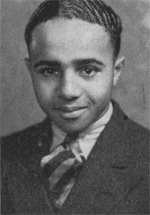 Born on April 24, 1919, Blackwell excelled in mathematics from an early age. He earned his doctoral degree from the University of Illinois at Urbana-Champaign under the supervision of Joseph L. Doob in 1941. He had a distinguished career, becoming a founding member in 1955 of the newly established Department of Statistics at University California, Berkeley. In 1965, he became the first African American to be elected member of the U.S. National Academy of Sciences and was awarded the John von Neumann Theory Prize in 1979. In addition to his seminal contributions to Bayesian inference, decision theory, game theory, sequential analysis and renewal theory, he also wrote one of the first textbooks in Bayesian statistics (Basic Statistics, McGraw-Hill, 1969).
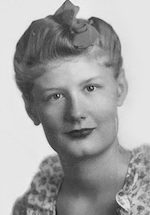 Born on September 15, 1927, Arianna Wright Rosenbluth showed an affinity for sciences from early childhood. She completed her doctoral work under the supervision of a future Nobel Laureate, John Van Vleck, in 1949, making her the fifth woman to earn a Ph.D. in Physics from Harvard. Later, as a coauthor of the seminal 1953 paper introducing the Metropolis algorithm, Rosenbluth almost single-handedly implemented the algorithm on the MANIAC I hardware at the Los Alamos Scientific Laboratory. This made her the first person to ever implement the Markov chain Monte Carlo method when sophisticated programming tools were still years away, and the program had to be written in strings of 1’s and 0’s.
Ph.D. students or early career researchers who obtained their PhD after January 1, 2021 are eligible for nomination. Candidates who were nominated in previous years may be nominated again if they received their Ph.D. after January 1, 2021. In exceptional cases, applicants who are more than five years past their Ph.D. may still be considered if they experienced a significant career break within five years of earning their degree (such as breaks due to illness, caring for a sick family member, pregnancy-related leave, or parental leave). Candidates may inquire about their eligibility, particularly if they have taken career breaks, by sending an email to jisba.section@gmail.com. A nomination may come from any ISBA member, including the nominee themselves. A nomination is to be submitted electronically and should contain:
Nominations for the 2026 award edition are now open! Deadline to submit is July 12, 2026

Attending the workshop “Computational methods for probability distributions on manifolds” (IHP, Paris, May 11-13, 2026) made me re-ponder the challenge of simulating a distribution conditional on the random variable X~p(x) being constrained to the manifold M defined by q(x)=0. Fortunately, Claude helped a lot in downgrading the importance of the Hausdorff measure σ! The density writes p(x)/||∇q(x)||, with respect to the Hausdorff measure on M. Which accounts for the curvature of the manifold M. When resorting to an MCMC algorithm to simulate this density, there are two options: (a) simulate from a proposal on the manifold M whose density wrt the Hausdorff measure σ is known or (b) resort to a reparameterisation map φ of the manifold M whose input on an Euclidean space has density
wrt the Lebesgue measure.

This week, we are running a small workshop on Computational methods for probability distributions on manifolds, whose size was dictated by the corresponding surface of the Institut Henri room allotted to us by the IHP administration. Very exciting theme and very exciting program, which more than make up for the unseasonal weather in Paris.
May 11
Guillaume Pouliot – MCMC on Manifolds in Economics
Alessandro Barp – Kernel and Stein discrepancies between distributions, à la Schwartz
Robin Ryder – Coupling MCMC on manifolds
Chang-Han Rhee – Experimental Design on Manifolds
May 12
Gilles Vilmart – High-order sampling of the invariant distribution of ergodic stochastic dynamics: preconditioning and postprocessing
Paul Breiding – Sampling from or near nonlinear algebraic varieties
Nick Whiteley – Statistical exploration of the Manifold Hypothesis
Judith Rousseau – Denoising diffusion Models under the Manifold Hypothesis : A dimension free convergence rate
Manon Michel – Convergence of non-reversible Markov processes via lifting and Flow Poincaré inequality
Tobias Grafke – Sampling Conditioned Diffusions via Pathspace Projected Monte Carlo
Miranda Holmes-Cerfon – Simulating sticky Brownian motion
Agnès Desolneux – Distances “à la Gromov-Wasserstein” for Gaussian Mixture Models
May 13
Giovanni Samaey – Multilevel interacting particle methods for sampling Bayesian inverse problems
Marylou Gabrié – Revisiting enhanced sampling driven by collective variables using generative models
Chris Walker – A Bayesian Perspective on the Maximum Score Problem
Lulu Kang – Active Learning for Manifold Gaussian Process Regression

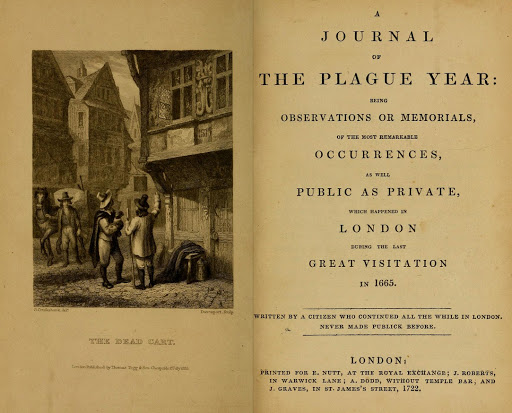 Read The Moth Diaries, by Rachel Klein, presumably following a recommendation in The Guardian or on Tor’s Reactor blog. This is a 2002 book, labelled as gothic horror by the review I read then. However, there is little horror in the novel and much more of a diffracted snapshot of a perturbed pupil at a US boarding school, traumatised by the suicide of her father. As the story is told through and only through the diary of that pupil, most facts being reported second-hand and not always coherently, it becomes quickly impossible to separate truth from fantasy, especially the veracity of another pupil being a vampire. Or just the new best friend of the narrator’s former best friend. Which makes the book much more interesting, if unsettling. (Especially regarding how a sexual assault by a teacher on the pupil is not reported by her as such.)
During a May 01 trip to Caen, if not for the half-marathon, next month!, I visited the nearby fish market in Courseulle, where I tasted fantastic, local, oysters, possibly at the height of their growth, despite the warning to avoid oysters in months without R’s! I also taught a restaurant waiter how to make affogato! And visited the amazing archaeological site of Aregenua, in the tiny village of Vieux, of which I had never heard. This Gallo-Roman city was the centre of local power in the early centuries, when Caen hardly existed, with 5000 inhabitants, temples, a forum and a theatre. All of which gradually vanished in the Dark Ages… The site is now protected from pilfering, but a large fraction remains un-escavated. (Too bad the museum boutique was not selling garum!)
Watched some episodes of The Night Agent (2), rather efficient copycat of the Bourne movies, but also requiring a huge suspension of belief in its accumulation of coincidences and the ability of the agents to operate in completely new environments. With a completely implausible reception at the Iranian Embassy. (And a DGSE agent with an awful French.) But the tension in the cat & mouse “game” is there, to the point I had to split episodes when it got too intense!
 Here are the 2026 Hugo Awards finalists, with winners to be announced on 30 August at LAcon V. Since I registered for selecting the awards, I did get the Hugo Voter Packet (with full ebooks, some audiobooks, if not movies, or TV scripts) and hence be able to read at least some of them. Before or after the deadline in August.. Here are some categories:
Best Novel
Best Novella
Best Novelette
Best Short Story
Best Series
 death penalty by firing squads is being reinstated
Strikingly, Mother Jones draws a strong parallel between the grievances against King George III in the Declaration of Independence and the above…
