GeistHaus
log in · sign up

PA Ancestors

Part of paancestors.com

The authoritative resource for Pennsylvania genealogy research. Guides to vital records, courthouses, archives, probate, land, military, and immigration across all 67 Pennsylvania counties.

stories primary
Philadelphia Is Digitizing 20 Million Historical Records with Ancestry: What It Means for Your Research
philadelphiaancestry.com18th century19th century
Philadelphia signed a deal with Ancestry.com to digitize approximately 20 million vital records from the City Archives — birth, death, marriage, and property records dating from the late 1600s through 1950. Here's what researchers need to know.
Show full content
Philadelphia Is Digitizing 20 Million Historical Records with Ancestry: What It Means for Your Research

On March 25, 2026, Philadelphia Mayor Cherelle Parker signed Bill 251066 into law, authorizing a multi-year concession agreement between the City of Philadelphia and Ancestry.com. Under the agreement, Ancestry will digitize, index, and make searchable online approximately 20 million historical records held by the Philadelphia City Archives.

If you research Philadelphia ancestors, this is the most significant change in records access in decades.

What's Being Digitized

The City Archives — part of the Philadelphia Department of Records — houses one of the largest municipal genealogical collections in the country. The records covered by this agreement include birth records, death records, marriage records, and property records dating from the late 1600s through approximately 1950.

These are the records that genealogists have historically accessed only by visiting the City Archives in person, requesting a search from the staff, and waiting for results. Under the new agreement, Ancestry will digitize the full collection, create searchable indexes of the metadata, and make the images available to Ancestry subscribers online.

The city's own ordinance describes the collection as "approximately 20 million historical records reflecting Philadelphia's rich heritage" and calls it "one of the nation's most significant municipal genealogical collections."

Philadelphia Is Digitizing 20 Million Historical Records with Ancestry: What It Means for Your Research
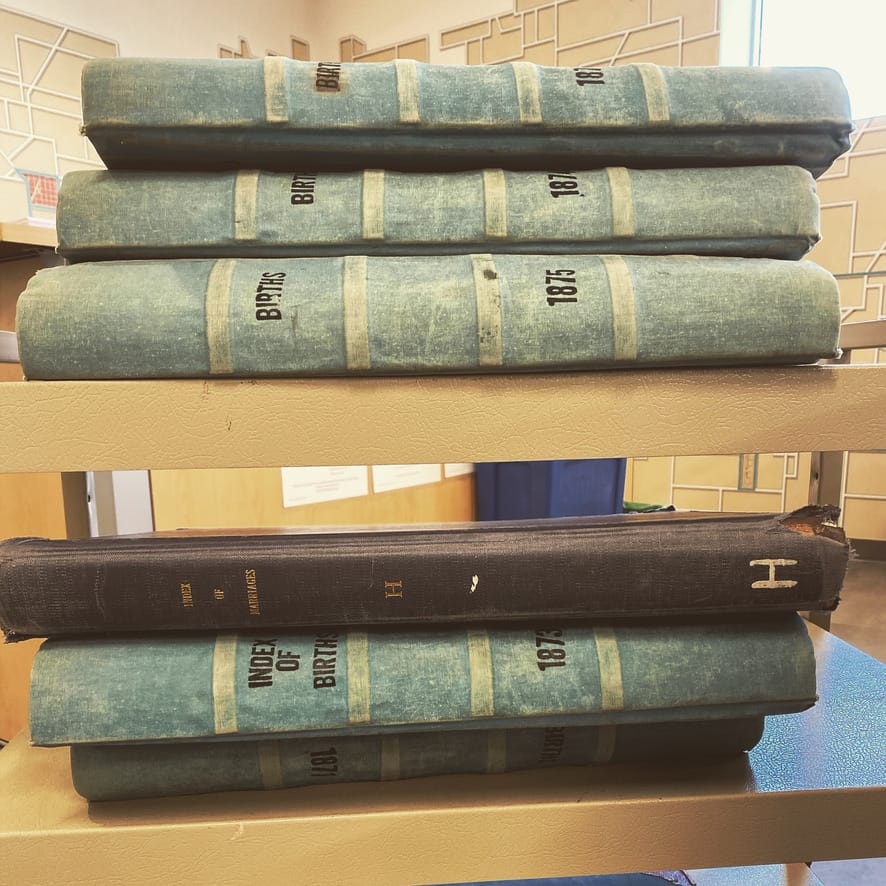
Original birth registers for the City of Philadelphia at the City Archives.
The Timeline

Ancestry estimates the digitization and indexing work will take approximately two years to complete. The bill was signed March 25, 2026, so researchers should expect new Philadelphia collections to begin appearing on Ancestry sometime in 2027 or 2028, with the full collection available by approximately 2028.

The agreement has an initial ten-year term. After that, the city controls whether to renew.

What It Costs

Nothing to Philadelphia taxpayers. Ancestry bears all costs associated with digitization and indexing. In exchange, Ancestry receives the right to host the city's vital records on its platform for the duration of the agreement.

The city retains ownership of all original records and receives permanent copies of every digitized image. Records Commissioner James Leonard confirmed to Technical.ly that "Ancestry.com receives only a license to host images on their platform during the agreement term" and that "the city receives and retains permanent copies of all digitized images, ensuring we maintain the digitized collection regardless of the partnership's future."

How to Access the Records

If you have an Ancestry subscription: Watch for new Philadelphia collections to appear over the next two years. These will be searchable by name once Ancestry completes the indexing.

If you don't have a subscription: You have several free options:

  • Philadelphia Free Library branches — More than 50 branches across all ten City Council Districts currently offer free Ancestry.com access to patrons using library computers.
  • City Archives and City Hall Records offices — Free public access to the digitized records will continue at these locations.
  • Philadelphia public schools — As part of the agreement, every public middle and high school in Philadelphia will receive free access to Ancestry Classroom, where students can search the records.

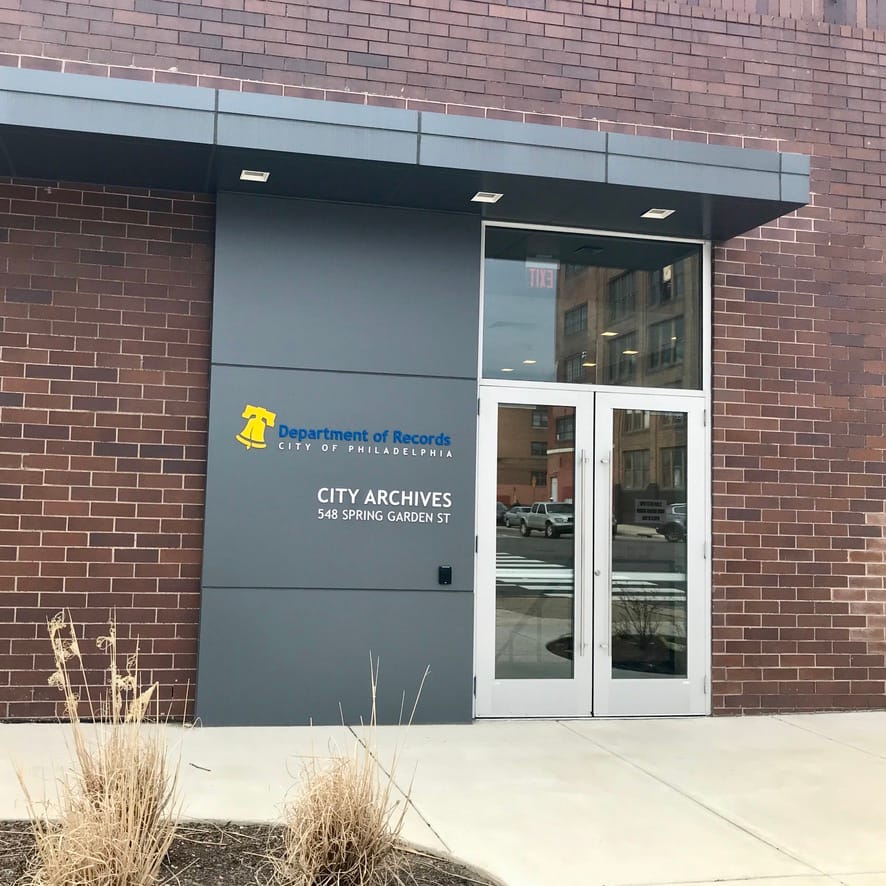
If you want to see the originals now: The City Archives is located at 548 Spring Garden Street, Philadelphia, PA 19123. You can visit in person and request searches from the staff. The archives holds records organized into 234 descriptive Record Groups and many Sub-Groups. A searchable index of the collection — the Descriptive Inventory of the Archives of the City and County of Philadelphia — is partially available online at PhillyHistory.org, covering 143 of the 234 record groups so far.

What's Not Included: Wills and Estate Records

This agreement covers the records held by the Department of Records at the City Archives. It does not include wills, administrations, inventories, or estate files.

Philadelphia's probate records are held by the Register of Wills, which is a separate city office from the Department of Records. The Register of Wills maintains its own archive of wills and estate files going back centuries. These records are not part of the Ancestry digitization agreement and will not appear in the new online collections.

Philadelphia Is Digitizing 20 Million Historical Records with Ancestry: What It Means for Your Research

This catches researchers off guard. If you go to the City Archives expecting to pull a will or an estate file, you will be told those records are not there. You need to start your request at the Register of Wills office, currently located at City Hall, Room 180. The two offices serve different functions, hold different records, and operate independently — even though both deal with historical Philadelphia documents that genealogists need.

If your research requires both vital records and probate records for a Philadelphia ancestor, plan on dealing with two separate offices.

This Follows an Established Model

Philadelphia is not the first government archive to partner with Ancestry for large-scale digitization. The Pennsylvania State Archives entered a similar agreement with Ancestry in 2008, making millions of commonwealth-held records available online. I covered the state archives partnership and how to use those collections in Archives in Pennsylvania for Genealogy Research (2023).

Similar digitization agreements exist in Vermont, Indiana, Tennessee, and more than 60 other state and local archives across the country. The model is consistent: the archive provides access to the physical records, Ancestry pays for digitization and indexing, and both parties benefit from expanded public access.

The Question Worth Watching

There is an ongoing legal case that genealogists should be aware of.

Reclaim the Records, a nonprofit transparency advocacy group, has been in a legal dispute with the Pennsylvania Historical and Museum Commission and Ancestry over the 2008 state archives agreement. The core question is whether the digital indexes and metadata created during the digitization process — not the original records themselves, but the searchable tools built from them — are public records that must be made freely available, or proprietary work product that Ancestry can treat as its own.

The Commonwealth Court heard arguments in the case in February 2026. As of this writing, no decision has been issued.

Philadelphia's agreement with Ancestry follows the same structural model as the state agreement at the center of this dispute. The city's ordinance specifies that Philadelphia retains ownership of the originals and receives permanent copies of all digitized images. But the question of who controls the searchable indexes — the layer that makes 20 million records findable instead of just digitized — remains legally unresolved in Pennsylvania.

This does not change what the agreement means for researchers in practical terms. New Philadelphia records are coming to Ancestry, and they will be searchable. But if you follow genealogical access issues, this is a case worth tracking.

What This Means for Philadelphia Researchers

For anyone with Philadelphia ancestors, the practical impact is straightforward: records that previously required an in-person visit to the City Archives will become searchable online within two years. Birth records, death records, marriage records, and property records spanning roughly 300 years of Philadelphia history — from the late 1600s through 1950 — will be available to anyone with an Ancestry subscription or free library access.

If you have been planning a Philadelphia research trip specifically to pull vital records, you may want to wait for the digital collection. If you have been putting off Philadelphia research because you could not get to the archives in person, this agreement removes that barrier.

And if you have never searched the Philadelphia City Archives at all — 20 million records just became part of your research plan.

The Bill and Supporting Documents

© 2019–2026 PA Ancestors L.L.C. and Denyse Allen. All Rights Reserved.

About PA Ancestors: The authoritative resource for Pennsylvania genealogy research — vital records, county courthouses, archives, probate, land records, military records, and immigration research across all 67 Pennsylvania counties. Founded by Denyse Allen, Pennsylvania genealogy researcher and author.

More Pennsylvania Research: paancestors.com
69f0fd17dbef69000113674d
Extensions
How to Research at the DAR Library in Washington, D.C.: A Genealogist's Guide
dar libraryRevolutionary Wargenealogy research
The DAR Library closes in July 2026 for a multi-year renovation. Plan your research trip now. Insider tips on getting there, using the collections, accessing lineage applications, and what to bring.
Show full content
How to Research at the DAR Library in Washington, D.C.: A Genealogist's Guide

The Daughters of the American Revolution (DAR) Library is one of the largest genealogical research libraries in the country. It holds over 225,000 books, more than 20,000 volumes of transcribed local records, thousands of manuscript items, and the Genealogical Research System (GRS) with its searchable databases of lineage society applications. If you have Revolutionary War ancestors or you are researching any American family line, a trip to the DAR Library belongs on your research plan. And it needs to happen before July.

This guide covers everything you need to know before you go, from getting there to getting the most out of your research day.

Hours, Admission, and What It Costs

The DAR Library is free and open to the public. There is no admission fee and no membership requirement.

Hours:

  • Monday through Friday: 8:30 AM to 4:00 PM
  • Saturday: 9:00 AM to 5:00 PM
  • Closed Sundays and all federal holidays

The Library also closes during the week of the annual DAR Continental Congress (typically late June or early July), when only registered Congress attendees can access it.

One important note: the DAR headquarters hosts special events throughout the year, including receptions, galas, and private functions. These events can delay the Library's opening or close it early. When I visited, a wedding party came through the building for photos between their ceremony and reception in another part of the headquarters. The next morning they were doing an open house the the library delayed opening for two hours. It is a working event space, not a quiet academic library. Plan for flexibility.

Getting to the DAR Library

The DAR Library sits within steps of the White House in downtown Washington, D.C. There is no convenient parking nearby. Street parking is metered, limited, and competitive. If you drive, download the ParkMobile app before your trip and be prepared to park in a garage on New York Avenue, Pennsylvania Avenue, or 17th or 18th Streets and walk from there.

By Metro: The closest station is Farragut West on the Blue, Orange, and Silver lines. Exit the station on 17th Street and walk south toward Constitution Avenue. Turn right on D Street. The walk is about 12 minutes and downhill, which helps when you are carrying a bag.

By Rideshare or Taxi: A Lyft, Uber, or cab is the easiest way to get a door-to-door drop-off. This is what I recommend, especially if you are carrying research materials or equipment. Tell the driver 1776 D Street NW and they will pull right up to the building.

Driving: Street parking is limited to two hours and strictly enforced. There are parking garages in the area, but given the location near the White House, garage parking is expensive and fills quickly. If you drive, plan to arrive early and be prepared to walk from wherever you end up parking.

Entering the Building

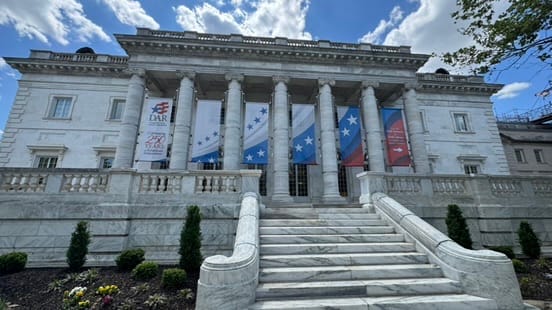
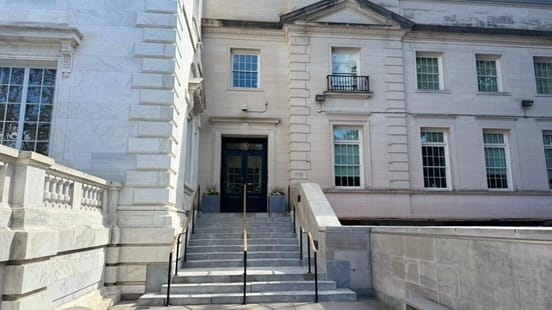
As you face the building from D Street, the entrance is to the right. Look for the sign above the door. There are about ten steps up to reach the entrance, so keep that in mind for accessibility.

How to Research at the DAR Library in Washington, D.C.: A Genealogist's Guide
Library entrance for the DAR

Inside, you will pass through a security checkpoint. There is a guard, a bag check, and a screening process. No food or beverages are allowed inside the Library. Leave your coffee in the car.

After security, you will pick up a visitor's pass at the front desk and proceed down the hall. The Library entrance is on the left. Before you reach it, you will pass a small display area where the DAR rotates exhibits of artifacts and documents from their collection.

Right now, the exhibit is worth a stop. For America's 250th anniversary, the DAR Museum has opened Revolution in Their Words, an exhibition that examines the nation's founding through firsthand accounts of the people who lived it. The exhibit draws on the DAR's own artifact and manuscript collections, along with loans from other museums. It presents perspectives from free and enslaved Black people, Native Americans, women, and soldiers on the front lines.

A companion display, Preserving Patriotism: The Declaration of Independence and Its Legacy at DAR, is on view in the Museum's Study Gallery. It brings together signatures of all 56 signers of the Declaration of Independence, exhibited in their entirety for the first time. Both exhibits run through March 27, 2027.

You will also find a restroom and a water bottle filling station near the security checkpoint. Since you cannot bring beverages in, this is where you will refill during breaks.

Inside the Library: What to Expect

The DAR Library is comfortable for a full day of research. The seating is good, the lighting is excellent, and the research tables have plenty of electrical outlets for charging a laptop, phone, or iPad. There is fast, free WiFi available so you can log in from your personal laptop and work between the physical collection and online databases without any trouble. People talk at a low conversational volume rather than a whisper. It feels more like a working research room than a silent study hall.

The staff rotates roughly every two hours at the front reference desk, so if you are there for the full day you will interact with several different librarians. All of them are knowledgeable and genuinely helpful. They will help you locate materials, navigate the catalog, and find what you need in the collection.

That said, the staff is not there to do your research for you. Come prepared with your notes, your research questions, and a plan. Know which ancestors you are looking for and what records you need before you arrive. The more specific your questions, the more the librarians can help you find the right sources quickly.

Browsing the Collection

The Library's main collection is in open stacks that you can browse freely. Downstairs, the shelves are organized alphabetically by state. If you are researching Pennsylvania ancestors, head to the P section and start pulling volumes.

The collection includes published county histories, church record transcriptions, cemetery records, tax lists, probate abstracts, and thousands of other genealogical reference works organized by the state where the records originated.

To the right of the main stacks is a separate family history section. This is where the DAR holds genealogies and family histories that members have submitted over the decades. If someone has compiled a history of your surname and donated it to the DAR, this is where you will find it.

Do not re-shelve books. When you are finished with a volume, place it on the book carts located along the center aisle. The staff will re-shelve it in the correct location.

How to Research at the DAR Library in Washington, D.C.: A Genealogist's Guide
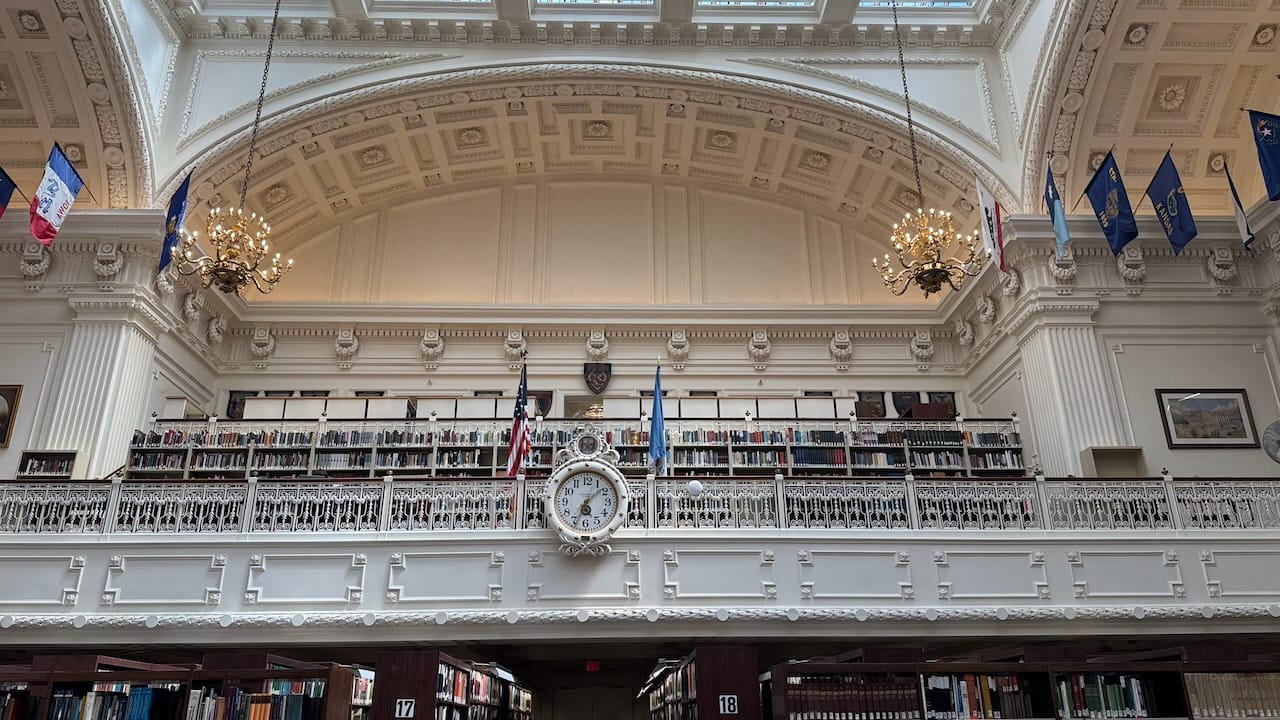
Interior of the DAR Library. All this plaster work will be redone as part of the renovation in 2026.
The Genealogical Records Committee (GRC) Reports

The GRC Reports are one of the DAR Library's most valuable collections for genealogists. This 20,000+ volume set contains transcriptions of local records compiled by DAR chapters across the country: probate records, court records, land records, Bible records, cemetery transcriptions, family genealogies, and Revolutionary War service documentation.

These are often the only transcriptions that exist for certain local records, especially for smaller counties and rural areas. For Pennsylvania researchers, the GRC Reports can fill gaps that no other repository covers.

Accessing Lineage Society Applications

This is one of the primary reasons genealogists travel to the DAR Library, and it is worth understanding how it works before you arrive.

The Library has six computers available for looking up DAR membership and supplemental applications through the Genealogical Research System (GRS). Only six. This is a bottleneck because viewing lineage applications is one of the most popular activities in the Library. Plan accordingly and be patient.

Here is the process:

  1. Search the GRS on one of the six computers to find the application you need. You can search by ancestor name, member name, or national number.
  2. Preview the file on screen. This is the key advantage of being on-site. You get to see the full application, the lineage page, the references page, and the ancestor's services page before you commit to purchasing a copy.
  3. Print the file if you want a copy. A complete application file costs $15, the same price as ordering a record copy from home. The difference is that here, you can preview it first.
  4. Printouts are held behind the librarian's desk. You do not take them with you as you print them. At the end of your research day, you collect all your printouts and pay at once.
  5. They accept credit cards or cash for copies and printouts.

If you are researching a specific patriot ancestor, search the GRS for every application that names that ancestor. Different applicants traced different lines of descent and may have used different supporting documentation. Viewing multiple applications for the same patriot can reveal sources you did not know existed.

Photo and Copy Policies

You can make photocopies from the Library's collection for a per-page charge. You can also pay a photo fee at the reference desk and use your own digital camera to photograph pages from books and records. Handheld scanners are not permitted.

Ask the librarian at the reference desk about the current fees and policies when you arrive, as these can change.

What to Bring
  • Your research plan. Know which ancestors, which records, which questions. Do not figure it out when you get there.
  • Printed copies of any existing documentation you are working from: family group sheets, census records, DAR or SAR application copies, source inventories.
  • A laptop, tablet, or phone for checking online databases and taking notes. Outlets are available at the tables.
  • A camera (phone camera works fine) for photographing records. Pay the photo fee at the reference desk.
  • Pencils. Some archival reading rooms require pencils rather than pens near original documents. Bring both.
  • A water bottle. The bottle filling station near security is your only hydration source since no beverages are allowed inside.
  • Cash or credit card for copies, printouts, and photo fees.
  • Patience and flexibility. Events in the building can affect hours. Computer availability for GRS access is limited. The research will take longer than you expect.
What Not to Bring
  • Food or coffee/tea (none allowed past security)
  • Handheld scanners (not permitted in the Library)
  • An assumption that you will get through everything on your list. Prioritize your most important research targets and work through them in order.
Planning Your Research Before You Go

The DAR's website offers several tools to help you prepare:

  • The DAR Library Catalog lets you search the collection remotely so you can identify books and volumes relevant to your research before you arrive.
  • The Genealogical Research System (GRS) is partially available online at services.dar.org. You can search the Ancestor Database, Member Database, and some GRC records from home to identify the application numbers you want to pull on-site.
  • The DAR Library's collection guides describe what is available by state and record type.

Doing this homework before your trip means you walk in the door with a list of specific call numbers and application numbers instead of spending your first two hours figuring out what they have.

How to Research at the DAR Library in Washington, D.C.: A Genealogist's Guide
The Library Is Closing: Why You Need to Go Now

In July 2026, the DAR Library will close its doors for a multi-year renovation. The full book collection of over 225,000 volumes will be moved offsite. The historic reading room will undergo a complete restoration of its plasterwork, skylights, floors, and shelving.

This is not a brief closure. This is a building-wide project that will take years to complete. You can read the DAR's full announcement at dar.org/collections/library/libraryonthemove. When the Library reopens, it will be beautiful. But between now and then, the open stacks you can browse today, the GRC Reports you can pull off the shelf, the family histories you can page through by hand will not be accessible.

Some of the DAR's digital resources, including the Genealogical Research System, should remain available online during the renovation. But the on-site experience of browsing the stacks, pulling volumes by state, and previewing lineage applications on the Library's computers before purchasing them will not be available for the foreseeable future.

If you have been meaning to make this trip, the window is closing. The Library is open Monday through Friday, 8:30 AM to 4:00 PM and Saturdays 9:00 AM to 5:00 PM through the end of June. After that, you will be waiting years for your next chance.

The timing is remarkable. The 250th anniversary of the Declaration of Independence is two months away. The Revolution in Their Words exhibit is on display in the building. The DAR is actively digitizing Revolutionary War records and adding them to the GRS. And the Library is free.

Go with a plan. Bring your research. Ask the staff for help. Give yourself a full day. And do it soon.


The DAR Library is located at 1776 D Street NW, Washington, D.C. 20006. Free admission. Open Monday through Friday 8:30 AM to 4:00 PM, Saturday 9:00 AM to 5:00 PM. Closed Sundays and federal holidays.

For more information: dar.org/collections/library


© 2019–2026 PA Ancestors L.L.C. and Denyse Allen. All Rights Reserved.

About PA Ancestors: The authoritative resource for Pennsylvania genealogy research — vital records, county courthouses, archives, probate, land records, military records, and immigration research across all 67 Pennsylvania counties. Founded by Denyse Allen, Pennsylvania genealogy researcher and author.

More Pennsylvania Research: paancestors.com
69f0e7a2dbef6900011366fb
Extensions
Live Book Walkthrough: Colonial Pennsylvania Genealogy Research
18th centurycolonial recordsfrakturnative americanspa archives books
Watch the live walkthrough of Colonial Pennsylvania Genealogy Research by Denyse Allen. Learn how to find the right records for your ancestor's ethnic or religious community in colonial and Revolutionary Era Pennsylvania.
Show full content
Live Book Walkthrough: Colonial Pennsylvania Genealogy Research

On March 20, 2025, I hosted a live walkthrough of my book Colonial Pennsylvania Genealogy Research: Communities and Revolutionary Era Records, 1681–1790 for readers and PA researchers.

In this session I cover:

How to find the right chapter for your ancestor's ethnic or religious community. How to work through record types when your first source doesn't give you what you need. The repositories most researchers don't know about — and how to contact them.

This is the recording of the full presentation (Q&A removed for privacy).

If you don't have the book yet, you can pick up a copy on Amazon.

Full Transcript

Let's get started. This is the walkthrough for Colonial Pennsylvania Genealogy Research. Thank you for buying the book.

My name is Denyse Allen. I'm a real person — this is not AI generated. I started PA Ancestors in 2019 with the intention of doing client research. I knew Pennsylvania was a confusing state for researchers, and that seemed like useful work. Then COVID happened, and we weren't going to archives for two years. A lot of them were saying, "Please don't come into the buildings." In that process, I started making content around Pennsylvania research to help other people.

This book was very much about getting everything off my hard drive. This book and my next book are about clearing off all the information I've collected about how to research in Pennsylvania — all the people that were here — and getting it published so it's useful to everybody. I really want it to be useful. And I think even though we have AI and the internet, a book is still the most useful form for content. Some things never change.

What We'll Cover Today

We'll go through what's in the book and how to use it — because it is a big book. I'll cover why it's structured the way it's structured, how it's organized, the system I used for placing the records, and why one source leading to three more is okay. That's the process.

This book was published this year because of the 250th. I set Pennsylvania Ancestors aside last year and focused on AI for research and writing in general. But I kept thinking about the 250th, kept thinking about my Pennsylvania ancestors, and I realized I really needed to get this all off my computer and share it.

The book shocked me at 404 pages — which amused me, because a 404 is the error you get when you hit an internet page that doesn't exist. I feel like a lot of people feel that way about Pennsylvania research. They hit a 404 and their people don't exist.

The Book's Structure

There are 29 chapters. Twenty of them focus on the communities of Pennsylvania — basically who your ancestors hung out with. I spent a lot of time on the published Pennsylvania Archives book series (not the Pennsylvania Archives building). And I covered the roles people played in the Revolutionary War.

The book originally was going to be called Revolutionary War Era Research. Then I realized it really covers the whole colonial period, because you can't understand who was in the Revolutionary War unless you understand where they came from — from 1682 or earlier onward.

The book has four parts:

Part One: Foundational Context. What makes Pennsylvania unique. We developed rapidly as a colony and state, and in that rapid development there's a lot of confusion for people researching backwards in time. County lines are constantly changing. Municipal lines within the counties are constantly changing.

Part Two: Community Chapters. This is the bulk of the book. These chapters are organized by religious and ethnic groups, and also by roles — indentured servants are in there as a specific role because that crosses several ethnicities. I organized it this way because if you're doing cluster research, this is a great way to figure it out.

The other thing to be aware of — this isn't how we live now, but it's how people lived then — you didn't marry outside of your faith. The Quakers are the obvious example. They left a great paper trail of who they kicked out for marrying outside the faith. But that was the case for almost every faith. If you think about your ancestors that way, you can rule in or rule out a lot of potential candidates in your research by clustering them in these communities.

Part Three: Revolutionary Era War Roles. A lot changed in people's lives after the Revolution. There was loss of life, brother against brother, family against family. A lot of people were just trying to stay neutral. Some of that was their religion — we had faiths beyond the Quakers who were conscientious objectors. The Brethren fell into that category. The Schwenkfelders fell into that category. They paid fines, they were jailed, they were run out of the state.

I also reference the First Great Awakening in this book, which was a major religious revival movement that caused people to shift religions or caused their churches to break apart into different factions. There's a Second Great Awakening after the Revolutionary War that I'll cover in detail in my next book, because that's when a lot of people lose their ancestors while tracing them back through religious records.

Part Four: Research Advice. These are the typical record types — probate records, land records, and so on. Where you find them. A directory of the major repositories.

What Makes Pennsylvania Different (and Weird)

Other than the fact that we don't have straight lines for land boundaries — I know everyone from the Midwest asks, "Could Pennsylvania please have straight lines?" No. We can't.

No colonial census. This is a real drawback. We have tax lists in some counties that have survived, and only for some years. Tax lists are what you'll rely on. What's called the septennial census is really a tax list — you probably know that. It's on Ancestry.

The proprietary land system. The Penn family divided up the land, and there were actually very few landowners — many more tenants living on properties. When the Penn family divided land, they didn't survey it all first and then divide it. They divided it and then said, "Go survey that piece you were just given." So a lot of land parcels ended up overlapping with each other. When you're researching land in the colonial period, it's not a straight line like doing deed research. You have to look around and check your ownership. I didn't go into this in depth because there's an excellent in-depth book on land record research for Pennsylvania — it's a big blue book and it's very thick.

Border disputes. I grew up in Pennsylvania and never knew that Connecticut claimed the top half of the state for over 50 years. I told my parents and they said, "Really?" That was a major land dispute with a lot of bloodshed. We also had disputes with Virginia and Maryland over boundaries. If your people lived close to those borders, you'll have to research in those states too.

The Pennsylvania Archives series. These are the published books. They've all been digitized. They started publication in the 1850s and unwisely decided to throw things out after they were transcribed and put into the books. So a large portion of the Revolutionary era and colonial material doesn't exist in its original form anymore. We consider these published volumes to be the original sources at this point.

That said, the Pennsylvania State Archives building in Harrisburg does have additional colonial and Revolutionary era records — ledger books for paying out soldier uniforms, food distribution records, accounting books. Those have been digitized and put on the Power Library for the state, and they're working on getting them transcribed and more accessible. As soon as that happens, it's going to open up a lot of findings for colonial and Revolutionary ancestors.

Records are still spread out everywhere. Neighboring states have centralized. New Jersey has all the county records at the state archive. Maryland has all the county records at the state archive. Delaware is just Delaware — it's small, so everything's in one archive. But in Pennsylvania, the county records are still in the counties. If you're doing deep research, you'll need to go to the county courthouse or contact them. A lot is on FamilySearch, but not everything.

County evolution. Cumberland County at the time of the Revolution was 3,000 square miles. If you have an ancestor in Cumberland County, that could be a lot of places by 1800. You have to constantly recalibrate — where am I as I go through this record?

The Community Chapters

I recommend that your main research strategy is to find your community and start in that chapter. I did not intend for people to read all the community chapters. If you do, they're incredibly boring in sequence because they're all formatted the same way. I'm sorry — it needed consistency.

The Quakers have a good overview. There's a lot of in-depth Quaker research available in webinars and presentations because they left so many records. Same with the Germans. The Scots-Irish did not leave a lot of records, but I give you tips in their chapter to help with researching them. If you're not sure of the community, you can start ruling in and ruling out based on what you're learning in each chapter.

These are your people — the people your ancestors knew and associated with.

The communities are listed in the book roughly in the order they appeared in the colony. So if you're not very far back, you might start with the Methodists. And I'm sorry — those records are hard to find and they're not great. They get better after the Civil War, but that doesn't help us for this period.

Some communities are identified by religion, some by ethnicity, and in the ethnic chapters there are several different religions they might be. The Welsh are one of those — they might be Baptist, Anglican, or Quaker.

What's in Each Community Chapter

Each community chapter follows a four-part structure:

  1. Historical context — who these people were, where they came from, why they came to Pennsylvania. You could read a whole book on any single community. This is meant to be an overview and an awareness exercise of who was here. If you find your people, please do more in-depth research.
  2. Where the records are held — I do not provide a lot of URL links. I'm going to be opinionated here: without the historical context, you don't understand what you're looking at. I could have provided a bunch of links, but I pointed to the specific kinds of records and the repository where they're held. You're not beginner researchers — if you're buying this book, you're a more advanced researcher. You know to go to that repository's website and look for that specific set of records. And in a paperback book, URL links are useless.
  3. The specific kinds of records they created — especially if they were unique to that community. I wanted you to know the name of the record, how it was used, and how it was completed.
  4. Conventions, languages, recordkeeping practices, and how to interpret them — there are people who are more advanced on some of these communities than I am. I gave you the grounding and tried not to go over my skis.
The Record Types

The record type chapters are at the end of the book. This is the standard material — probate records (which we call estate files in Pennsylvania; if you walk into a courthouse, that's what they call them), land records, and the rest. It defines them, explains what they are, when the record is created, and what caused it to be created.

In my next book — covering 1790 to 1910 — I'll take you over the hump to when vital records get created reliably in 1906. There are a lot of changes to probate laws, vital records laws, and property laws in that period. Married women owning land, single women owning land — I'll make sure all of that is covered.

The repository directory covers the major repositories. I did not include an entire courthouse listing — I trust you can look that up. But I describe the repositories and how they work.

And I will make a plug: if you have not visited the Pennsylvania State Archives in their new building, I highly recommend it. If you're traveling a distance, it's worth a couple of days. It's set up for researchers, not just record storage. There's space to spread out. They have a lunch area where you can bring your lunch and stick it in the refrigerator and eat looking out on the Susquehanna River. The manuscript collection has its own room where you can really spread out and access things. The staff is incredibly knowledgeable, more than willing to help, and they love genealogy researchers. Most of our courthouses love seeing genealogy researchers too. One exception might be Philadelphia, but that's Philadelphia. I personally haven't had a problem with them.

Research Strategy

This five-step approach is probably basic for most of you, but here it is:

  1. Start with what you know. Have it written down, clear, and confirmed — what's absolutely true to the best you can prove.
  2. Identify your community. You might need to do process of elimination. If it's a German surname, you're not going to the Scots-Irish section or the Welsh section. You're probably not doing the Catholic section because the German Catholics come later. You may need to check a few chapters to figure out specifically what kind of German speaker or surname you have.
  3. Work through the record types using the last two chapters.
  4. Follow the leads — when one source leads to three more, that's the process working.
  5. Go deeper with the community-specific resources.
The Revolutionary Era Chapters

If you've watched the Ken Burns series on the Revolutionary War — it's great. I'm learning a ton about how British soldiers behaved while they were deployed here. I didn't realize the extent of sexual assaults against women. That might explain some DNA surprises for those of us who can trace back that far. I didn't cover that in the book because I just learned it from the Ken Burns series, but it's something for version two.

As you probably know, we had our Patriots, but the largest group was the unaffiliated — people who were really trying to stay out of it. Our Patriots are what we're researching especially this year, trying to get their stories straight. I hope I've provided more resources for you beyond the lineage society application.

If you're like me, you're descended from a patriot and you looked at the SAR or DAR application but never really did the deeper research. I realized I didn't understand what my soldier went through — what battles he was in, what his life was like. That's another reason I wrote this book.

The Loyalist chapter covers the records Pennsylvania produced around the people we kicked out or whose estates we confiscated.

And the Privateers — people don't think about Pennsylvania being a coastal state, but Philadelphia is a major port off the Delaware River. We had Spanish pirates, French ships. Most of the hard currency in the colonial period was Spanish, not English. We had state-issued privateering as well as federal, where ships could go out and confiscate what was on British vessels. Some of it happened on Lake Erie, but not much — that was still considered Native American territory. The War of 1812 changes that, and I'll cover it in the next book.

The Appendices

The appendices include a short list of resources I use in addition to what's in the chapters. I spent a lot of time referencing the Sidney George Fisher books written at the end of the 19th century. I like him as a historian because he's incredibly opinionated about the different ethnic groups and their impact on the state. We don't talk about people that way anymore — we just talk about people in general. But when you're doing genealogy research, it does matter where they came from and what their religion was. Fisher also controversially wrote about the American Revolution as a civil war between two warring factions of the British. People at the time said he was wrong, but now some historians are coming around to that point of view — the Revolution as America's first civil war.

There's a glossary of colonial-era terms. As experienced researchers you probably have your own references, but I wanted to make sure anyone on the newer side had an easy reference. I also include references for reading old handwriting and a section on dating problems — the confusion between surnames changing (especially for German ancestors, where the name changes every time it's recorded), place names changing because county or municipal lines were redrawn, and the way we recorded dates changing during this period. Colonial research is not for the faint of heart.

I include a guide for the Pennsylvania Archives book series, though the best guide for it is still the book published in 1949.

What's Coming Next

I'm writing a companion piece about writing the stories of Revolutionary War ancestors — how to position the story and ground it in historical context. It's not a genealogy research guide at all. It's about the writing. It covers how to look at the war from the perspectives of free and enslaved Black people, Patriots, Loyalists, and the unaffiliated. It's about writing from the evidence — not historical fiction, but assembling what you have in the actual records and the historical research, using AI to assist with that process. It's meant to be an enhancement to the research book.

My next research book will cover 1790 to 1910, which should take you over the hump to when vital records start being created reliably in 1906.

A Small Ask

If you could leave a review on Amazon, that would be a great thing for other Pennsylvania researchers. Just scroll down to "Write a customer review," give it your honest star rating, and a sentence or two. What's the most important thing for another researcher to know about this book?

I'm not asking you to give it five stars. Be honest. But if you're going to give it four stars or less, tell me why — so that if I update this book, I know what to improve. I want this to be the most useful book on colonial Pennsylvania research that exists. That was my goal.

Thank you for being here, and thank you for buying the book.


© 2019–2026 PA Ancestors L.L.C. and Denyse Allen. All Rights Reserved.

About PA Ancestors: The authoritative resource for Pennsylvania genealogy research — vital records, county courthouses, archives, probate, land records, military records, and immigration research across all 67 Pennsylvania counties. Founded by Denyse Allen, Pennsylvania genealogy researcher and author.

More Pennsylvania Research: paancestors.com
69ba84afc476d80001f39917
Extensions
Colonial Pennsylvania Genealogy Research Is Here!
18th centurycolonial recordsRevolutionary War
The third PA Ancestors Genealogy Guide maps surviving records for 20 colonial communities, the Revolutionary War, and the Pennsylvania Archives series. Available now on Amazon.
Show full content
Colonial Pennsylvania Genealogy Research Is Here!

Pennsylvania's colonial records are scattered. If you've spent any time researching ancestors who lived here between 1681 and 1790, you already know this. Church records in one archive. Tax lists in another. Military records across three different repositories. And half the time, you're not even sure what survived.

That's why I wrote Colonial Pennsylvania Genealogy Research: Communities and Revolutionary Era Records, 1681-1790. It's the third book in the PA Ancestors Genealogy Guides series, and it's the one I've wanted to write since I started the series in 2022.

This book is a directory. Not a how-to-do-genealogy book. A directory of what records exist, where they are, and what you need to know before you start looking.

What's inside

The book covers over 20 distinct communities that made colonial Pennsylvania one of the most diverse places in the Americas. Each chapter identifies the records that survive for that community, where those records are held, and the research traps to watch for.

Communities covered include Quaker, Welsh, Scots-Irish, German Lutheran, German Reformed, Moravian, Mennonite and Amish, Jewish, Catholic, Anglican/Episcopal, Baptist, Methodist, French Huguenot, Scottish, Schwenkfelder, and German Baptist Brethren. There are also chapters on Native American records, Dutch/Swedish/Finnish settlers from before Penn's charter, and free and enslaved African American communities.

The Revolutionary War section covers Patriots, Loyalists, privateers, and the people who tried to stay neutral. It maps pension records, militia muster rolls, confiscation records, letters of marque, and the oath records that caught people on both sides of the conflict.

There are also chapters on vital records, tax lists, court records, indentured servants, and the full published Pennsylvania Archives series — all nine series, with guidance on what's in each one and where the gaps are.

Why this book, why now

America's 250th anniversary year felt like the right time for a book that maps the records of the people who were actually here. Not the famous names. The farmers, weavers, indentured servants, church members, and militia privates whose records are still sitting in archives waiting for someone to find them.

I've spent over ten years researching my own Pennsylvania ancestors — eight generations. This book is the reference I wished I had when I started.

The PA Ancestors Genealogy Guides series

This is the third book in the series:

  1. Pennsylvania Vital Records Research (2022) — How Pennsylvania's vital records system works and where to find birth, marriage, and death records
  2. Archives in Pennsylvania for Genealogy Research (2nd edition, 2023) — A guide to the state's archives, historical societies, and research repositories
  3. Colonial Pennsylvania Genealogy Research (2026) — Records for colonial communities and the Revolutionary era
Get the book

Colonial Pennsylvania Genealogy Research is available now on Amazon in Kindle ($9.99) and paperback ($24.99).

Colonial Pennsylvania Genealogy Research Is Here!

© 2019–2026 PA Ancestors L.L.C. and Denyse Allen. All Rights Reserved.

About PA Ancestors: The authoritative resource for Pennsylvania genealogy research — vital records, county courthouses, archives, probate, land records, military records, and immigration research across all 67 Pennsylvania counties. Founded by Denyse Allen, Pennsylvania genealogy researcher and author.

More Pennsylvania Research: paancestors.com
69aeb807895f8f0001faa9ea
Extensions
Loyalist Records in Pennsylvania: The Other Side of the Revolution
Revolutionary Warloyalistscolonial-recordsbritish-archives18th-century
How to trace colonial Pennsylvania citizens who were loyal to the British during the Revolutionary War, step-by-step.
Show full content
Loyalist Records in Pennsylvania: The Other Side of the Revolution

A significant minority of Pennsylvanians remained loyal to the British Crown during the American Revolution. About three thousand Pennsylvania Loyalists left with General Howe when the British evacuated Philadelphia in June 1778. Many more stayed and faced legal consequences. If your Pennsylvania ancestor disappears from records around 1778, refuses a Test Act oath, has property confiscated, or turns up in Canada or Britain after the war — you may have a Loyalist ancestor. The records that document Loyalism are scattered across Pennsylvania, British, and Canadian archives, but they can be remarkably detailed.

Understanding Loyalist ancestry matters for genealogists because it explains why families vanish from Pennsylvania records, why property changed hands, and where to look next when the trail goes cold. It also corrects a common misconception: three-fourths of documented Pennsylvania Loyalists were working class — candle-makers, carpenters, blacksmiths, sailors, shop-keepers. This was not just a movement of wealthy merchants.

Who Became Loyalists — and Why It Matters for Research

People remained loyal to the Crown for different reasons, and those reasons affect which records they left behind. Political conviction motivated some who believed British rule was legitimate. Economic interest drove merchants and officials with ties to British trade. Religious factors played a role — some Anglican clergy remained loyal, while pacifist groups like Quakers were often accused of Loyalism even when their position was strictly religious, not political. Recent Scottish immigrants, particularly Highlanders, sometimes remained loyal due to cultural ties to Britain.

Loyalism was strongest in Philadelphia, especially among merchants and officials. The British occupation of Philadelphia from September 1777 to June 1778 revealed existing Loyalist sympathies that had been hidden. When the British departed, those who had cooperated faced prosecution — and about three thousand left with the army rather than risk it.

Legal Consequences That Created RecordsTest Acts and Oaths (1777-1778)

Pennsylvania required adult males to swear allegiance to Pennsylvania and renounce loyalty to King George III. Those who refused could not vote, hold office, serve on juries, sue to collect debts, buy or sell land, or were liable to additional taxation. Test Act records — lists of who swore and who refused — are published in Pennsylvania Archives and held at the Pennsylvania State Archives.

A critical research finding: loyalty oaths extracted under mob threat were considered non-binding by the people who signed them. An ancestor's name on a patriot loyalty oath does not definitively prove patriot sympathies. Check oath dates against documented mob violence incidents, look for recantation records, and search for continued Loyalist activity after oath-signing.

Attainder and Property Confiscation

Pennsylvania passed acts of attainder against prominent Loyalists, declaring them traitors and forfeiting their property. The Supreme Executive Council ordered seizures, courts held proceedings, and agents managed and sold confiscated property. These records are published in Pennsylvania Archives, 6th series, volumes 12 and 13 — nearly two full volumes dedicated to forfeited estates. They document who lost property, what was confiscated, property valuations and descriptions, and sometimes subsequent purchasers.

A Philadelphia County Confiscated Estates Register dated March 10, 1780, appears in 6th series, volume 13, facing page 312. Attainder records also appear throughout Colonial Records volumes 12-16 and Pennsylvania Archives 1st series volumes 8 and 10.

The 600-Name Tory Currency Agreement

During the British occupation of Philadelphia, approximately 600 people signed an agreement pledging to accept British paper money at its pre-Declaration value — effectively a loyalty pledge. After the British evacuated, this list became a weapon for identifying suspected disloyal citizens. Names on this agreement faced post-war suspicion and possible prosecution. Cross-reference these names with damage claims, recantation records, and exile documentation.

The Carlisle and Roberts Treason Trials (1779)

Two men — Carlisle (a carpenter) and Roberts (a miller), both apparently Quakers — were tried for high treason and executed. The mercy petitions filed on their behalf are genealogically significant: Carlisle's petition bore 387 signatures, Roberts's bore 900, for a total of 1,287 names of people publicly willing to ask mercy for accused traitors. Signers included prominent figures like General John Cadwalader and Dr. Benjamin Rush, signer of the Declaration. These petition names represent a goldmine for identifying people who held sympathies — or at least discomfort with execution — that they were willing to put on record.

Where Loyalist Families Went

When a Pennsylvania family vanishes from records around 1778, they may have evacuated with the British army. Search strategies for tracking them include checking New York records from 1778 to 1783 (New York was the British evacuation point), searching for migration to Nova Scotia, New Brunswick, or Upper Canada after 1783, and consulting the Carleton Papers (British headquarters papers, available on microfilm at NARA) which document evacuees and their destinations.

After the war, many Loyalists settled in Canada, Britain, or other British colonies. Britain established the American Loyalist Claims Commission (1783-1790) to compensate Loyalists for property losses. Claimants had to describe property left behind and prove loyalty. These claims contain detailed property descriptions, family information, service to the Crown, and documentation of when and how they left Pennsylvania. The records are at the British National Archives in Audit Office records (AO 12 and AO 13).

Canadian records include Loyalist land grants, muster rolls, and petitions for assistance at Library and Archives Canada. Provincial archives in Ontario, Nova Scotia, and New Brunswick hold additional records. The United Empire Loyalists' Association of Canada maintains records and helps document Loyalist ancestry.

Signs Your Ancestor May Have Been a Loyalist

Look for these indicators in your research: disappearance from Pennsylvania records during or after the war; property confiscation (family land taken by the state); Test Act refusal (appearing on lists of those who refused oaths); migration to Canada or Britain after the war; family tradition of being on "the wrong side"; and mid-1778 gaps — the family vanishes during or after the British evacuation.

But be cautious about jumping to conclusions. Many people stayed in Pennsylvania and simply never served in the military. Absence of patriot service records does not mean Loyalism. Many were pacifists, neutrals, or people who tried to survive without committing to either side.

Where to Find Loyalist Records

Pennsylvania State Archives: Test Act records (who swore and who refused), confiscation records, Supreme Executive Council records, all published in Pennsylvania Archives.

Historical Society of Pennsylvania: Personal papers documenting Loyalist families, manuscripts relating to confiscations, and Philadelphia during occupation materials.

National Archives (UK): Audit Office records AO 12 and AO 13 (American Loyalist Claims Commission) — the primary source for Loyalist claims. Some are digitized; others require archival research. Use the Discovery catalog to search. Some records are also available through Ancestry's UK collections.

Library and Archives Canada: Loyalist land grants, muster books, United Empire Loyalist records. Many are digitized and searchable online.

NARA (US): Carleton Papers (British headquarters papers) documenting evacuees.

Research Strategy: Step by Step
  1. Search Pennsylvania confiscation records in Pennsylvania Archives 6th series, volumes 12-13 for your ancestor's name
  2. Check Test Act records for oath refusals or coerced oaths
  3. Search the Carleton Papers at NARA for evacuation records
  4. Check Loyalist Claims Commission records at the British National Archives (AO 12 and AO 13) for property claims
  5. Search Canadian records at Library and Archives Canada for land grants, muster rolls, and petitions
  6. Check provincial archives in Ontario, Nova Scotia, and New Brunswick for settlement records
  7. Cross-reference petition signatures from the Carlisle and Roberts mercy petitions with your family names
  8. Follow both branches — Loyalist families often split, with some members staying in Pennsylvania and others leaving; research both locations
Religious Groups and Loyalism

Quakers were pacifists, not Loyalists — but refusing to support the war looked like Loyalism to many Patriots. Some Quakers were exiled to Virginia in 1777. Quaker meeting records document these troubles extensively, including sufferings records and disownment proceedings. Most Quakers were not Loyalists; they refused to support either side.

Anglicans faced complications because of the Church of England's connection to the Crown. Some Anglican clergy were Loyalists, and some congregants were suspected. But many Anglicans were Patriots.

Recent British immigrants and those with commercial ties to Britain also faced suspicion, whether warranted or not.

The Complexity of Allegiance

Loyalty was not always clear-cut. Some Pennsylvanians changed sides during the war. Some were neutral but accused of Loyalism unfairly. Some had family members on both sides. Some who were accused were later vindicated and had property restored. Some who left during the war quietly returned afterward and resumed normal life.

Do not assume Loyalist ancestry is something to hide or avoid researching. Loyalist ancestors are a documented part of Pennsylvania history. Their records — confiscation inventories, claims commission testimony, Canadian settlement papers — often contain more family detail than what survives for many Patriot ancestors.

For the complete guide to researching Loyalist ancestors in Pennsylvania, including confiscation records, British archives, and Canadian settlement documentation, see Pennsylvania Revolutionary Era Research by Denyse Allen.

If you've discovered a Loyalist ancestor and want to write their story, Chronicle Makers is where family historians turn complex research discoveries into finished family chronicles.


Frequently Asked QuestionsHow do I know if my Pennsylvania ancestor was a Loyalist?

Look for disappearance from Pennsylvania records around 1778, Test Act refusal, property confiscation in Pennsylvania Archives 6th series volumes 12-13, or migration to Canada or Britain. Be cautious — absence of military service does not mean Loyalism. Many Pennsylvanians were pacifists or neutrals who stayed in the state.

Where are Pennsylvania Loyalist records kept?

Loyalist records are split across multiple countries. Pennsylvania confiscation and Test Act records are at the Pennsylvania State Archives and published in Pennsylvania Archives. Loyalist Claims Commission records are at the British National Archives (AO 12 and AO 13). Canadian settlement records are at Library and Archives Canada and provincial archives.

Were most Pennsylvania Loyalists wealthy?

No. Three-fourths of documented Pennsylvania Loyalists were working class — carpenters, blacksmiths, sailors, candle-makers, shop-keepers. Do not assume only wealthy merchants were Loyalists.

What happened to Loyalists who stayed in Pennsylvania?

Many Loyalists stayed and faced Test Act penalties (inability to vote, hold office, buy or sell land). Some had property confiscated. But many in the "neutral and hesitating class" simply resumed ordinary life after the war. Some who had property seized sought and received restoration through the courts.

Can I find Loyalist records online?

Some. The British National Archives has digitized portions of the Loyalist Claims Commission records, accessible through their Discovery catalog and some through Ancestry's UK collections. Library and Archives Canada has digitized many Loyalist records and made them searchable online. Pennsylvania confiscation records in Pennsylvania Archives are available at major research libraries and some are digitized.


© 2019–2026 PA Ancestors L.L.C. and Denyse Allen. All Rights Reserved.

About PA Ancestors: The authoritative resource for Pennsylvania genealogy research — vital records, county courthouses, archives, probate, land records, military records, and immigration research across all 67 Pennsylvania counties. Founded by Denyse Allen, Pennsylvania genealogy researcher and author.

More Pennsylvania Research: paancestors.com
699b86a2cb95130001c59377
Extensions
Revolutionary War Pension Records for Pennsylvania Soldiers
Revolutionary Warmilitary-recordspension-recordsnara18th-century
Step-by-step on how to find military pension files of Pennsylvania citizens for service during the Revolutionary War.
Show full content
Revolutionary War Pension Records for Pennsylvania Soldiers

Revolutionary War pension files are among the most valuable genealogical records in existence. A single pension file can contain a veteran's age, birthplace, residence, names of fellow soldiers, marriage information, and children's names and birth dates — information rarely found anywhere else for this period. If your Pennsylvania ancestor served in the Revolution, a pension file may be the single richest document you'll ever find for them.

Congress passed multiple pension acts between the 1780s and 1850s, each with different requirements. The most important for genealogists is the Act of 1832, which provided pensions based on service alone — no need to prove poverty. This resulted in thousands of applications where veterans described their service in their own words, often decades after the war, with extensive biographical detail.

What Pension Files ContainVeteran's Applications

When a veteran applied for a pension, he provided biographical information — full name, age or date of birth, current residence, and sometimes place of birth. He gave a service narrative describing when and where he enlisted, the officers he served under, battles and campaigns he participated in, and where he was discharged. Some files include family mentions, discharge papers, and affidavits from fellow soldiers.

Widow's Applications

When a widow applied, she needed to prove both her marriage and her husband's service. Widow's files often contain the most genealogical detail of any pension record: marriage proof (church records, family Bible pages, witness affidavits), the husband's service history, the date of marriage, children's names and birth dates, and the husband's date of death. If a veteran died before pensions were available, his widow's file may be your best source.

Depositions and Supporting Documents

Pension files often include testimony from fellow soldiers, neighbors, ministers who performed marriages, and anyone who could attest to service or family relationships. Correspondence between the veteran or widow and pension officials may also survive, sometimes adding personal details not found elsewhere.

The 1832 Applications: Why They Matter Most

The 1832 pension act required veterans to describe their service in their own words. These first-person narratives are extraordinary. A veteran might describe exact dates of enlistment and discharge, names of officers and fellow soldiers, places marched through, battles witnessed or participated in, and personal experiences.

For genealogists, 1832 applications offer precise ages and birthplaces, residence at time of application (which may be far from Pennsylvania, showing migration), family connections through witnesses who were often relatives, and detailed military service information found nowhere else.

Where to Find Pension Files

The Pension Index is the starting point. It's available free on FamilySearch and Ancestry, and identifies file numbers and the type of service claimed. Always search for both the veteran and his widow — the widow's file may contain different information.

Fold3 has the most complete digital access to the actual pension files. This is a subscription service but many libraries provide access.

NARA (National Archives) holds the original files in Record Group 15. You can order copies or visit NARA research rooms in person.

FamilySearch is digitizing some pension files and provides free access to the index.

The key microfilm series are M804 (the index to pension and bounty land warrant application files) and M805 (selected records from the files themselves).

Don't Stop at Pensions: Depreciation Pay and Soldiers' Pay

Many genealogists overlook a critical source: the Depreciation Pay and Soldiers' Pay records in Pennsylvania Archives, 5th series, volume 4, pages 107-496 and 599-777. These document soldiers who were compensated for currency depreciation during the war. They include soldiers who never received pensions but definitely served. The pension applications list published in Pennsylvania Archives 5th series, volume 4 is incomplete — it does not include all names for which files exist at the National Archives. Always cross-check.

Bounty Land Warrants

Congress and Pennsylvania both promised land to soldiers as payment for service.

Federal bounty land entitled veterans to claim land in federal territories, particularly Ohio. Amounts were based on rank and length of service. Veterans could claim land themselves, sell their warrants, or assign them to others.

Pennsylvania's state bounty land came in two forms: Donation Lands in western Pennsylvania for Continental Line soldiers, and Depreciation Lands (compensation for depreciated currency), also in western Pennsylvania. Records include warrant applications documenting service and eligibility, land patents showing who received land, and assignment records showing who sold warrants.

Find federal bounty land patents at the Bureau of Land Management (glorecords.blm.gov). Find Pennsylvania bounty land records at the Pennsylvania State Archives in the Land Office records.

Research Strategy: Step by Step
  1. Search the pension index on FamilySearch or Ancestry for both the veteran and his widow
  2. Obtain the complete file through Fold3 or NARA — the index card is just the beginning; files can be dozens to hundreds of pages
  3. Read everything — do not stop at the first page; check all depositions, correspondence, and family Bible records
  4. Note every name — witnesses were often fellow soldiers, family members, or neighbors useful for cluster research
  5. Check for rejected applications — rejected files still contain service narratives and biographical information
  6. Search Depreciation Pay records in Pennsylvania Archives 5th series volume 4
  7. Check bounty land records at both federal and state levels
  8. Follow the migration — the pension application shows where the veteran lived at application, which may reveal his migration path from Pennsylvania
Pennsylvania-Specific Issues

Militia service qualifies under the 1832 act if it totaled six months or more. Service could be aggregated from multiple short tours. Militia files may describe local operations and units unfamiliar to researchers focused on Continental Army service.

German soldiers appear with names sometimes Anglicized, varied spellings, and narratives referencing German-speaking communities. Search variant spellings.

Frontier service veterans from western Pennsylvania describe Indian warfare and frontier defense — experiences different from eastern soldiers, with references to specific raids or defense actions.

For the complete guide to pension records, bounty land, and every other record type for Revolutionary-era Pennsylvania research, see Pennsylvania Revolutionary Era Research by Denyse Allen.

If you've found your veteran ancestor's pension file and want to write their story, Chronicle Makers is where family historians turn first-person accounts like these into finished family chronicles.


Frequently Asked QuestionsAre Revolutionary War pension files available online?

Yes. The pension index is free on FamilySearch and Ancestry. The actual pension files are available on Fold3 (subscription required, but many libraries provide access). NARA also provides copies by request. FamilySearch is digitizing some files.

What if I can't find my ancestor in the pension index?

Not all veterans applied for pensions. Check the Depreciation Pay and Soldiers' Pay records in Pennsylvania Archives 5th series volume 4, which document soldiers who were paid but never pensioned. Also check muster rolls in volumes 1-8 of the same series. Your ancestor may have served but never applied for a pension.

What's the difference between a veteran's file and a widow's file?

A veteran's file contains his service narrative and biographical information. A widow's file contains her husband's service information plus marriage proof, family Bible records, and often children's names and birth dates. Widow's files frequently contain more genealogical detail than veteran's files.

Did Pennsylvania militia members qualify for federal pensions?

Yes, under the 1832 act, anyone who served at least six months in any military capacity — including militia — qualified. Service from multiple short tours could be combined to meet the six-month requirement.

What are bounty land records?

Both Congress and Pennsylvania promised land to soldiers as payment for service. Federal bounty land was in territories like Ohio. Pennsylvania's Donation Lands and Depreciation Lands were in western Pennsylvania. Warrants, patents, and assignment records document who received and who sold this land.


© 2019–2026 PA Ancestors L.L.C. and Denyse Allen. All Rights Reserved.

About PA Ancestors: The authoritative resource for Pennsylvania genealogy research — vital records, county courthouses, archives, probate, land records, military records, and immigration research across all 67 Pennsylvania counties. Founded by Denyse Allen, Pennsylvania genealogy researcher and author.

More Pennsylvania Research: paancestors.com
699b86a2cb95130001c5936b
Extensions
Pennsylvania Militia and Associator Records: What Survives
Revolutionary Warmilitary-recordsmilitiaassociatorspennsylvania-archives18th-century
Learn what's different about Pennsylvania militia records vs. Associator records and where to find each. Includes a step-by-step research strategy.
Show full content
Pennsylvania Militia and Associator Records: What Survives

Most Pennsylvanians who served in the Revolution did not enlist in the Continental Army. They served in the militia or as Associators — the voluntary companies formed before formal military organization existed. Militia and Associator service was local, short-term, and far more common than Continental Line enlistment. If your ancestor served in the Revolution from Pennsylvania, there's a strong chance it was as a militiaman, not a Continental soldier.

The records that survive for militia and Associator service are extensive but scattered. Muster rolls, pay records, officer lists, non-associator lists, and militia fine records appear across multiple volumes of the Pennsylvania Archives and in county-level collections. Understanding the distinction between Associators and militia — and knowing where each record type lives — is the key to finding your ancestor's service.

Associators: Pennsylvania's First Military Response (1775-1777)

Before Congress established the Continental Army, Pennsylvania organized its own military response through the Associator system. In 1775, the Pennsylvania Assembly authorized voluntary military companies — the Associators — to defend the colony. Men could join voluntarily; they elected their own officers and served short terms.

Associator records are important for several reasons. They document the earliest military participation from Pennsylvania, often predating Continental Army records. They capture men who served briefly in 1775-1776 and then returned to civilian life — service that may not appear in any other military record. And the non-associator lists created alongside them document who refused to join, providing evidence of pacifism, Loyalism, or simple non-participation.

Associator records include muster rolls and officer lists published in Pennsylvania Archives, 5th series. Non-associator lists — compiled township by township — identify every man who did not associate, sometimes noting the reason (religious objection, suspected Loyalism, or no reason given). These lists are published in Pennsylvania Archives and in county records.

The Militia System (1777 Onward)

In 1777, Pennsylvania replaced the voluntary Associator system with a compulsory militia law requiring service from able-bodied men aged 18 to 53. Men were organized into companies by township and battalions by county. Service tours were typically short — weeks to a few months at a time — and men could be called up multiple times throughout the war.

This was a "come-and-go army." A single ancestor might have three or four stints under different battalion numbers or company names within a single year. Between tours, the same person appears in home-community tax records — showing the rotation pattern of militia service.

A critical research trap: battalion numbers changed during the war. After the Militia Act of March 20, 1780, the same men were listed under different battalion numbers with no notation in the published Pennsylvania Archives documenting the renumbering. The soldier didn't leave — the unit designation changed. Trace individuals across renumbered units by noting the same company composition and officer names.

The militia system generated several types of records that survive today.

Muster Rolls and Returns

Militia muster rolls list soldiers present in a unit at a given time. They appear in Pennsylvania Archives, 5th series, volumes 1-8, organized by county and unit. These rolls typically show each soldier's name, rank, dates of service, and sometimes notes about absence, transfer, desertion, or death. Muster returns — summary documents showing unit strength — also survive and provide context for individual rolls.

Pay Records

Militia pay records document compensation for service. The Depreciation Pay records in Pennsylvania Archives, 5th series, volume 4, pages 107-496 and 599-777, compensated soldiers for currency depreciation. These are crucial because they document soldiers who served but may never have received pensions. The pension applications list in the same volume (pages 499-596) is incomplete. Always check the Depreciation Pay records separately.

Militia Fine Records

Pennsylvania imposed fines on men who refused militia service. These fine records, published in Pennsylvania Archives, 3rd series, volumes 5-7, list individuals by company who were fined for "non-performance of militia duty." Fine records serve a dual purpose for genealogists: they identify Quakers, Mennonites, Moravians, and other pacifists (whose consistent willingness to pay heavy fines demonstrates religious conviction), and they may identify quiet Loyalists (those who refused service and could not or would not pay, facing property seizure).

The key distinction: conscientious objectors paid fines consistently. Loyalists often refused payment and faced property seizure.

Supply Tax Lists

Supply taxes were levied to support the war effort. These tax lists, which appear alongside militia records in the Pennsylvania Archives, show who contributed to the war financially. They capture people who may not have served in the militia but supported it through taxation — and those who refused to pay.

What Militia Records Tell You

Militia records provide different information than Continental Line records. Continental soldiers served long enlistments far from home, and their records often include detailed service narratives (especially in pension files). Militia service was local and short, so the records tend to be briefer — but they tell you things Continental records don't.

Township and county of residence. Militia companies were organized by township. Finding your ancestor in a specific militia company tells you exactly where they lived.

Community connections. The men in a militia company were neighbors. Other names on the same muster roll are people who lived near your ancestor, attended the same church, and may appear as witnesses in deeds, wills, and pension files.

Dates of presence. Muster rolls prove your ancestor was in a specific place at a specific time. If you're tracking migration, this is valuable evidence.

Service pattern. Multiple muster rolls show whether your ancestor served one tour or many — important for pension eligibility (six months total under the 1832 act) and for understanding their war experience.

Non-Associator Lists: The Record of Refusal

Non-associator lists are among the most overlooked Revolutionary War records in Pennsylvania. Compiled township by township, they identify every man who did not join the Associator companies. For genealogists, they document where an ancestor lived (the township is identified), confirm the ancestor was of military age, provide evidence of religious pacifism (many non-associators were Quakers, Mennonites, or Amish), and may indicate Loyalist sympathy (though most non-associators were pacifists, not Loyalists).

Cross-reference non-associator lists with church membership records and militia fine records to understand why your ancestor didn't serve.

Substitute Service

A man could hire a substitute to serve in his place if he could afford it. When this happened, the original man liable may appear in records indicating he paid for a substitute, and the substitute's name should also appear in service records. The connection between the two may or may not be documented — but if you find a "substitute" notation, it means someone else paid for that service.

The Originals Were Destroyed

A critical fact about Pennsylvania militia records: the original Revolutionary War records held by the Commonwealth were transcribed in the nineteenth century, then destroyed. The published Pennsylvania Archives is often the only surviving record. You cannot check transcriptions against originals. Transcription errors cannot be verified. When citing militia records, cite the Pennsylvania Archives series, volume, and page — and note that these are transcripts.

Frontier Militia: A Different War

Militia service in western Pennsylvania looked very different from service in the east. Frontier militiamen fought Indian warfare and defended settlements rather than participating in set-piece battles like Brandywine or Germantown. Their muster rolls reference specific raids, defense actions, and frontier forts rather than Continental Army campaigns.

If your ancestor served in a western Pennsylvania militia unit, their records may describe experiences unfamiliar to researchers focused on eastern service. Frontier militia records appear in the same Pennsylvania Archives volumes as eastern militia records but cover a distinctly different kind of warfare.

Pension Eligibility for Militia Service

Under the 1832 pension act, anyone who served at least six months in any military capacity — including militia — qualified for a federal pension. Service from multiple short tours could be combined to meet the six-month requirement. This is important because many Pennsylvania militiamen served several brief tours that individually seem insignificant but together met the threshold.

If your ancestor served in the militia, search the pension index on FamilySearch for both the veteran's name and his widow's name. Militia pension applications describe local operations and units that may not appear in other records, and they include the same biographical detail (age, birthplace, residence, family information) found in Continental Line pension files.

Research Strategy: Step by Step
  1. Determine your ancestor's county and township using tax records, church records, or census data
  2. Search Pennsylvania Archives 5th series for militia muster rolls from that county — volumes 1-8 cover the war period
  3. Check non-associator lists if your ancestor doesn't appear in militia records — these identify who didn't serve and sometimes why
  4. Search militia fine records in Pennsylvania Archives 3rd series, volumes 5-7 — consistent fine payment suggests religious pacifism
  5. Check Depreciation Pay records in Pennsylvania Archives 5th series, volume 4 — captures soldiers who served but never received pensions
  6. Search the pension index on FamilySearch — militia service of six months or more qualified under the 1832 act
  7. Obtain the full pension file through Fold3 or NARA if your ancestor is in the index
  8. Note every name on your ancestor's muster roll — these were neighbors who may appear as witnesses in other records
  9. Search supply tax lists for financial contributions to the war effort
Where to Find These Records

Pennsylvania State Archives (Harrisburg): Original militia records, published Pennsylvania Archives volumes, and county-level military records that have been transferred to the state.

Published Pennsylvania Archives: Available at major research libraries, the State Archives, and some volumes digitized online. The 5th series (military records) and 3rd series (tax and fine records) are the most important for militia research.

National Archives (NARA): Federal pension files for militia veterans who qualified under the 1832 act. Compiled military service records include some militia records.

FamilySearch: Free pension index. Some microfilmed military records.

Fold3: Full pension files and compiled service records.

County historical societies: Some hold local militia records not published in the Pennsylvania Archives.

For the complete guide to Pennsylvania militia, Associator, Continental Line, and all other Revolutionary War military records — including where each record type is held and how to interpret it — see Pennsylvania Revolutionary Era Research by Denyse Allen.

Found your ancestor on a militia muster roll? That's the beginning of a story worth writing. Chronicle Makers is where family historians turn service records and pension files into finished family chronicles.


Frequently Asked QuestionsWhat is the difference between Associators and militia in Pennsylvania?

Associators were voluntary military companies formed in 1775 before formal military organization existed. Men could join or refuse. In 1777, Pennsylvania replaced the Associator system with compulsory militia service requiring able-bodied men aged 18 to 53 to serve. The key difference is voluntary versus compulsory — and different records survive for each.

Did Pennsylvania militiamen qualify for Revolutionary War pensions?

Yes. Under the 1832 pension act, anyone who served at least six months in any military capacity — including militia — qualified for a federal pension. Service from multiple short tours could be combined to meet the six-month requirement. Search the pension index on FamilySearch for both the veteran and his widow.

What are non-associator lists?

Non-associator lists identify men who refused to join the voluntary Associator companies in 1775-1777. They were compiled township by township and published in Pennsylvania Archives. These lists document where a man lived, confirm military age, and may indicate religious pacifism or Loyalist sympathy. Cross-reference with church records to understand why your ancestor didn't serve.

Where are Pennsylvania militia muster rolls?

Muster rolls are published in Pennsylvania Archives, 5th series, volumes 1-8, organized by county and unit. Original records are at the Pennsylvania State Archives. Some are available through Fold3 and FamilySearch.

What if my ancestor paid militia fines instead of serving?

Militia fine records in Pennsylvania Archives, 3rd series, volumes 5-7, list individuals fined for non-service. Consistent fine payment typically indicates religious pacifism (Quakers, Mennonites, Amish). These fines are themselves useful genealogical records — they prove your ancestor's residence, confirm military age, and suggest religious affiliation.


© 2019–2026 PA Ancestors L.L.C. and Denyse Allen. All Rights Reserved.

About PA Ancestors: The authoritative resource for Pennsylvania genealogy research — vital records, county courthouses, archives, probate, land records, military records, and immigration research across all 67 Pennsylvania counties. Founded by Denyse Allen, Pennsylvania genealogy researcher and author.

More Pennsylvania Research: paancestors.com
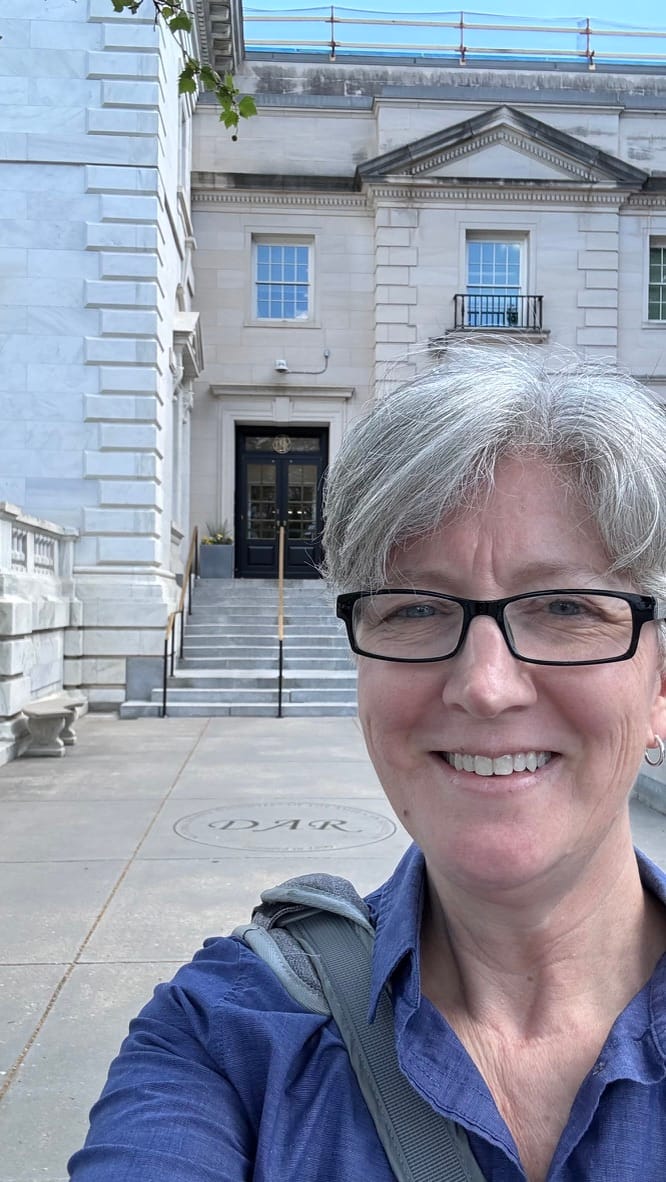
699b86a2cb95130001c5935c
Extensions
How to Find Revolutionary War Service Records for Pennsylvania Ancestors
Revolutionary Warmilitary-recordsservice-recordspennsylvania-archives18th-century
The three types of military service records for Pennsylvania during the Revolutionary War - what they are and where to find them.
Show full content
How to Find Revolutionary War Service Records for Pennsylvania Ancestors

Pennsylvania Revolutionary War service records are scattered across multiple repositories — the Pennsylvania State Archives, the National Archives, and published volumes of the Pennsylvania Archives. No single source contains everything. If your ancestor served in the Revolution from Pennsylvania, you may need to check muster rolls, pay records, pension files, and bounty land applications across several collections to build a complete picture of their service.

The good news: Pennsylvania's published Pennsylvania Archives series includes extensive military records in multiple volumes, and the pension file index is free online. The challenge is knowing where to look and understanding what each record type tells you. This post walks through the major service record types and exactly where to find them.

Types of Service: Who Served and How

Pennsylvania fielded several types of military forces during the Revolution, and each generated different records.

Continental Line

Pennsylvania raised thirteen numbered regiments for the Continental Army — the Pennsylvania Line — plus artillery and cavalry units including the Light Dragoons. At peak strength this was one of the largest state contributions to Washington's army. Continental Line soldiers enlisted for specific terms (one to three years) or "for the duration." They were paid by Congress, and their records are in both federal and state collections. Continental Line service qualifies for federal pensions and for Pennsylvania's Donation Lands (land grants in western Pennsylvania reserved for Continental soldiers).

One significant event to know: the Pennsylvania Line Mutiny of 1781, when Pennsylvania troops mutinied over inadequate pay and unclear enlistment terms. Records of this mutiny may document your ancestor's presence in a Pennsylvania regiment.

The Flying Camp (1776)

The Flying Camp was a short-lived formation created in 1776 to provide rapid reinforcement where needed. It involved temporary enlistments through December 1776, and many Pennsylvania militia served in it, including at the Battle of Long Island. Flying Camp records appear in Pennsylvania Archives 2nd series, volume 14 (pages 755-777), volume 15, and 3rd series, volume 23 (pages 401-466).

Associators

Before formal military organization, Pennsylvania created the Associator system — voluntary militia companies formed from 1775. Associators elected their own officers, served short terms, and provided the first organized military response from Pennsylvania. Associator records include muster rolls, officer lists, and non-associator lists (those who refused to join). These records are published in Pennsylvania Archives, 5th series.

Militia

After the Associator period, Pennsylvania established a formal militia system requiring service from able-bodied men. Militia served short tours — often weeks or a few months at a time — and multiple tours could be aggregated. Militia records include muster rolls, pay records, and fine records for those who refused to serve. Under the 1832 pension act, militia service of six months or more (aggregated from multiple tours) qualified for a federal pension.

Navy and Privateers

Pennsylvania maintained a state navy to defend the Delaware River, including the defense of Fort Mifflin and Fort Mercer. Pennsylvania also authorized privateers through letters of marque — privately owned ships authorized to capture enemy vessels. Crew lists and prize records document privateer service. Pennsylvania Navy muster rolls appear in Pennsylvania Archives 3rd series, volume 23.

Support Roles

Not all military service involved combat. Teamsters and artificers transported supplies, built fortifications, and manufactured equipment. Express riders carried messages. Scouts and guides — especially on the frontier — provided intelligence. These support roles appear in supply records and commissary documents rather than muster rolls, making them easy to overlook but genealogically valuable.

Where to Find Service RecordsPennsylvania Archives, 5th Series (Volumes 1-8)

This is the single most important published source for Pennsylvania Revolutionary War military records. These eight volumes contain muster rolls, pay records, officer lists, and related military documents for both Continental Line and militia units. They are organized by unit and cover service from 1775 through the end of the war.

Volume 4 deserves special attention. Pages 107-496 and 599-777 contain the Depreciation Pay and Soldiers' Pay records — compensation paid to soldiers for currency depreciation during the war. These records document soldiers who definitely served but may never have received pensions. Many genealogists overlook this source completely. The pension applications list in the same volume (pages 499-596) is incomplete and does not include all names for which files exist at the National Archives. Always cross-check.

National Archives (NARA)

The National Archives holds federal military records in several key collections. Compiled Military Service Records (Record Group 93) are abstracted from muster rolls, pay records, and other documents, compiled onto individual cards for each soldier. These are available on microfilm and through Fold3. Pension files (Record Group 15) are indexed on FamilySearch and Ancestry and available in full on Fold3. Bounty land warrant applications document soldiers who applied for land grants based on service.

The key microfilm series are M881 (Compiled Military Service Records for the Revolutionary War), M804 (index to pension and bounty land warrant application files), and M805 (selected records from pension files).

Pennsylvania State Archives

The State Archives in Harrisburg holds original state-level military records including militia returns, officer commissions, and related correspondence. Many of these have been published in the Pennsylvania Archives series, but the originals sometimes contain additional detail. The Archives also holds the published volumes for on-site reference.

FamilySearch

FamilySearch provides free access to the Revolutionary War Pension Index and has microfilmed some military records from both NARA and state collections. Start here for the pension index search — it's free and covers both veteran and widow applications.

Fold3

Fold3 (subscription required, but many libraries provide access) has the most complete digital collection of Revolutionary War military records, including compiled service records and full pension files. If your library doesn't offer Fold3, check whether NARA's research rooms provide access.

Ancestry

Ancestry has some military record collections for the Revolutionary War period, including indexes and some digitized records. It's not as comprehensive as Fold3 for military records specifically, but it's worth searching if you have a subscription.

Reading Muster Rolls and Pay Records

Muster rolls list soldiers present in a unit at a specific time. They typically show the soldier's name, rank, dates of service (enlistment and discharge or present-at-muster), and sometimes notes about absence, death, desertion, or transfer. Pay records show the same names with amounts paid and dates of payment.

When reading these records, watch for name spelling variations — the clerk wrote what he heard. A soldier might appear as "Smith," "Smyth," or "Schmitt" across different rolls. Rank changes also appear: a private in one muster might be a corporal in the next. Note every detail — unit designations, officer names, and dates help you distinguish between soldiers with common names.

Don't Overlook Non-Service Records

Not finding your ancestor in military service records? That's common in Pennsylvania. Religious pacifists (Quakers, Mennonites, Amish, Moravians, German Baptist Brethren, Schwenkfelders) represented a significant portion of the population and refused military service on principle. Others were exempt due to age, disability, or essential occupations. Those who refused militia service paid fines — and those fine records are themselves useful genealogical sources.

Check non-associator lists, militia fine records in Pennsylvania Archives 3rd series volumes 5-7, and supply tax lists. Absence from military records does not mean your ancestor wasn't in Pennsylvania during the Revolution — it means you need to look in civilian records instead.

Revolutionary War Diaries in the Pennsylvania Archives

One often-missed source: personal diaries published in the Pennsylvania Archives that name individual soldiers and place them at specific locations on specific dates. These include Captain William Hendricks' diary (1775) in 2nd series, volume 15; John Joseph Henry's campaign narrative (1775-1776) in 2nd series, volume 15; Lieutenant Colonel Adam Hubley's Sullivan Expedition diary (1779) in 2nd series, volume 11; and Captain Joseph McClellan's account (1780-1782) in 2nd series, volume 11. If your ancestor served in these units or campaigns, the diary entries may provide corroborating evidence for service records — or may be the only record of their presence.

Indexes to Start With

The Pennsylvania Archives 6th series, volumes 15 (Parts 1 and 2) contain an index to muster rolls — the most comprehensive starting point for searching. Linn and Egle's Pennsylvania in the War of the Revolution, Battalions and Line in 2nd series, volumes 10-11, is another key index. The DAR and SAR databases also index patriot ancestors. Start with these before diving into individual volume searches.

Research Strategy: Step by Step
  1. Search the pension index on FamilySearch (free) for both the veteran's name and his widow's name
  2. Search Pennsylvania Archives 5th series volumes 1-8 for muster rolls and pay records — check Depreciation Pay records in volume 4 especially
  3. Check compiled military service records on Fold3 or at NARA (Record Group 93, microfilm M881)
  4. Obtain the full pension file if indexed — the index card is just the beginning; files can be hundreds of pages
  5. Search bounty land records — federal bounty land patents at glorecords.blm.gov, Pennsylvania Donation and Depreciation Lands at the State Archives
  6. Check for your ancestor's unit — once you know the unit, you can search for other soldiers who served alongside, who may appear as witnesses in pension files
  7. If no military records are found, search non-associator lists, militia fine records, tax records, and church records to document your ancestor's wartime presence
Pennsylvania-Specific Considerations

County matters. Pennsylvania's Revolutionary War units were often organized by county. Knowing your ancestor's county helps narrow the search to the right unit.

Name variations are common. German-speaking soldiers had names Anglicized by English-speaking clerks. Search multiple spelling variants.

The originals were destroyed. The original Revolutionary War records held by the Commonwealth were transcribed in the nineteenth century, then the originals were destroyed. The published Pennsylvania Archives is often the only surviving record. You cannot check transcriptions against originals. When citing these records, cite the Pennsylvania Archives series, volume, and page — and note that these are transcripts.

Officers were tradesmen, not gentry. Among prisoners captured at Quebec, Pennsylvania officers included a blacksmith, a hatter, a butcher, a tanner, a shoemaker, and a tavern-keeper. Do not assume that "Captain" or "Colonel" indicates a wealthy landowner. Check tradesmen records, apprenticeship records, tavern licenses, and tax records for occupational data.

Depreciation Pay records are essential. Many soldiers who served but never applied for pensions appear in the Depreciation Pay and Soldiers' Pay records in Pennsylvania Archives 5th series, volume 4. This is the most commonly overlooked military source for Pennsylvania.

For the complete guide to finding every type of Revolutionary War service record for Pennsylvania ancestors — including Continental Line, militia, Associator, naval, and bounty land records — see Pennsylvania Revolutionary Era Research by Denyse Allen.

Once you've found your ancestor's service record and know what they did during the Revolution, Chronicle Makers is where family historians turn that research into written family stories.


Frequently Asked QuestionsWhere are Pennsylvania Revolutionary War service records?

Service records are split between the National Archives (compiled military service records, pension files, bounty land applications) and the Pennsylvania State Archives (state-level records, published in Pennsylvania Archives 5th series volumes 1-8). The pension index is free on FamilySearch. Full pension files and compiled service records are on Fold3.

What if I can't find my ancestor in military records?

Many Pennsylvanians did not serve in the military due to religious pacifism, age, disability, or essential occupations. Check non-associator lists, militia fine records, tax records, and church records. Absence from military records is common in Pennsylvania and does not indicate Loyalism.

What is the difference between Continental Line and militia service?

Continental Line soldiers enlisted in numbered regiments for specific terms (usually one to three years) and served with the Continental Army. Militia served short tours — often weeks to a few months — closer to home. Both types of service generated records, and both qualified for pensions under the 1832 act (militia required six months total).

What are Depreciation Pay records?

Congress compensated soldiers for the loss in value of Continental currency paid during the war. These records, published in Pennsylvania Archives 5th series volume 4 (pages 107-496 and 599-777), document soldiers who were paid but may never have applied for pensions. They are the most commonly overlooked military source for Pennsylvania.

How do I know which unit my ancestor served in?

Start with the pension file (which often describes the unit) or compiled military service records at NARA. Muster rolls in Pennsylvania Archives 5th series volumes 1-8 are organized by unit. If you know your ancestor's county, search units organized from that county. Tax records and militia fine records can also indicate which militia company covered your ancestor's township.


© 2019–2026 PA Ancestors L.L.C. and Denyse Allen. All Rights Reserved.

About PA Ancestors: The authoritative resource for Pennsylvania genealogy research — vital records, county courthouses, archives, probate, land records, military records, and immigration research across all 67 Pennsylvania counties. Founded by Denyse Allen, Pennsylvania genealogy researcher and author.

More Pennsylvania Research: paancestors.com
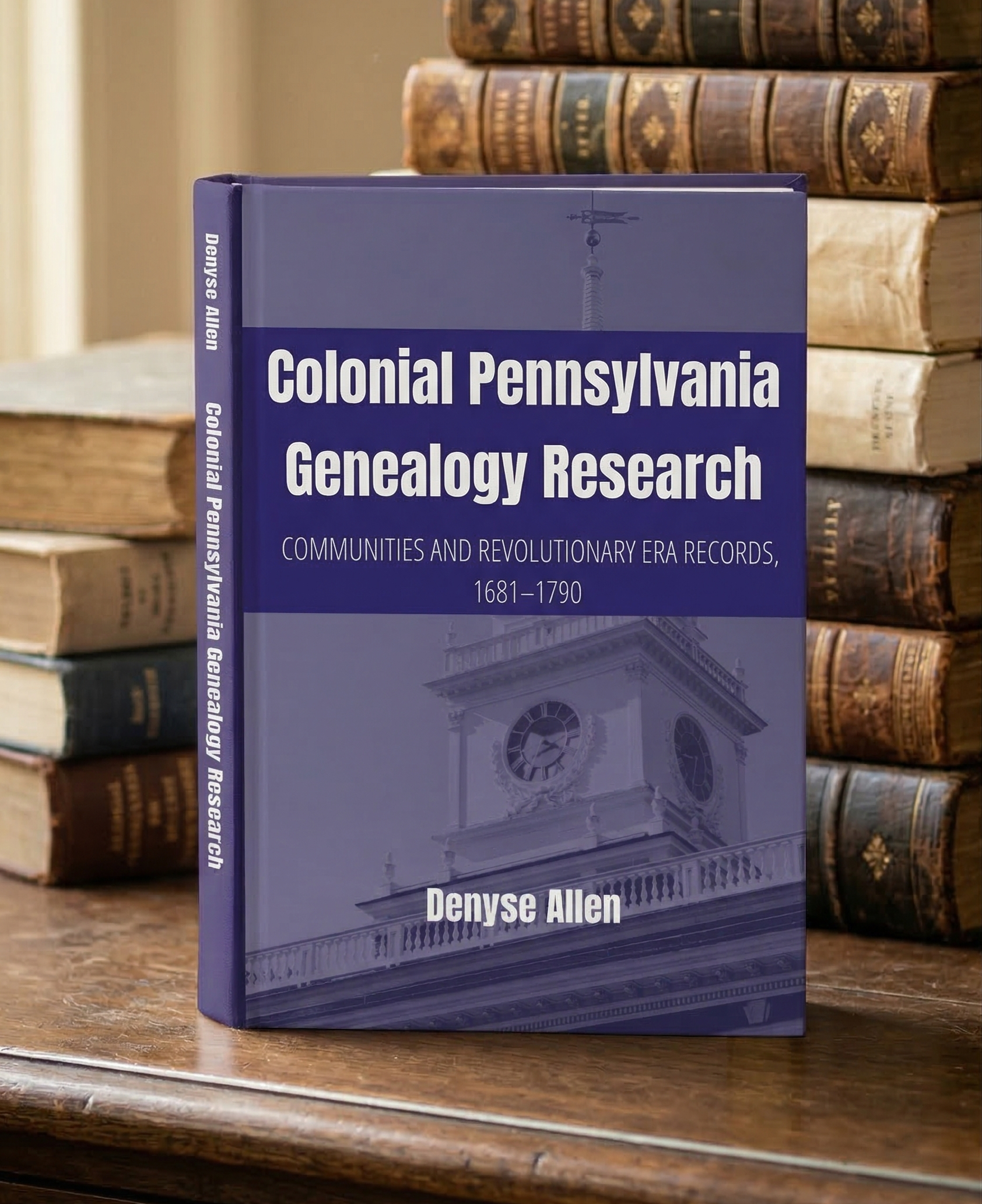
699b86a1cb95130001c5934e
Extensions
Pennsylvania in the Revolutionary Era: A Researcher's Overview
Revolutionary Warcolonial-recordsmilitary-records18th-century
Get started in Pennsylvania Revolutionary Era research, 1765-1790. Learn what records exist and where to find them, plus how the war affected individuals and families.
Show full content
Pennsylvania in the Revolutionary Era: A Researcher's Overview

Pennsylvania was the political and military center of the American Revolution. The Continental Congress met in Philadelphia. The Declaration of Independence was signed here. Valley Forge, Brandywine, and Germantown were fought on Pennsylvania soil. If your ancestor lived in Pennsylvania between 1765 and 1790, the Revolution shaped their life — whether they fought, stayed home, or left the state entirely.

Researching Revolutionary-era Pennsylvania ancestors is both rewarding and complex. The records are rich but scattered across county courthouses, the Pennsylvania State Archives, the National Archives, and even British archives. There was no statewide vital registration until 1906, so church records, tax lists, militia rolls, and pension files become your primary sources. This overview covers what records exist, where to find them, and how the war affected every group in the state.

Who Was in Pennsylvania During the Revolution?

Pennsylvania was the most ethnically diverse of the thirteen colonies. By 1776, its population included English Quakers who had founded the colony in 1682, Welsh settlers concentrated in the "Welsh Tract" of southeastern Pennsylvania, massive German-speaking communities — Palatines, Mennonites, Amish, Moravians, Reformed, and Lutherans — who made up roughly a third of the population, Scots-Irish settlers who had pushed west into frontier counties starting around 1717, Scottish, French Huguenot, Jewish, Swedish, and Dutch settlers, and close to 6,000 enslaved Africans plus a small free Black population.

Each group kept different records, worshipped in different churches, and responded to the Revolution differently. Your research strategy depends heavily on which group your ancestor belonged to.

Patriots, Loyalists, and Everyone in Between

Not everyone in Pennsylvania chose the same side — and many chose no side at all.

Patriots

Pennsylvania fielded Continental Line regiments, Associator militia companies, and numerous volunteer units. Service records, muster rolls, and pay records survive in both the Pennsylvania Archives and the National Archives. The most valuable records for genealogists are the pension files — particularly the 1832 applications, where veterans described their service in their own words, often including birthplaces, family members, and migration history.

Read more: How to Find Revolutionary War Service Records for PA Ancestors and Revolutionary War Pension Records for Pennsylvania Soldiers

Loyalists

A significant minority remained loyal to the Crown. About 3,000 Pennsylvania Loyalists left with the British army when General Howe evacuated Philadelphia in June 1778. Those who stayed faced Test Act oaths, property confiscation, and social consequences. Loyalist records include the Test Act lists (who swore allegiance and who refused), property confiscation records in Pennsylvania Archives 6th series volumes 12-13, and the Loyalist Claims Commission records at the British National Archives.

Three-fourths of documented Pennsylvania Loyalists were working class — candle-makers, carpenters, blacksmiths, sailors, shop-keepers. Do not assume only wealthy merchants were Loyalists.

Read more: Loyalist Records in Pennsylvania: The Other Side of the Revolution

Pacifists and Neutrals

Quakers, Mennonites, Amish, Moravians, German Baptist Brethren, and Schwenkfelders held religious convictions against military service. Together they represented a significant portion of Pennsylvania's population. These groups paid militia fines rather than serve, and their records appear in fine lists, non-associator lists, and meeting minutes rather than military rolls.

Many other Pennsylvanians simply tried to survive without committing to either side. Absence of military service records does not mean an ancestor was a Loyalist — many stayed in Pennsylvania, maintained ordinary lives, and left records in tax lists, church registers, and land records throughout the war years.

The Records That SurviveMilitary Records

Pennsylvania's Revolutionary War military records include muster rolls and pay records in Pennsylvania Archives, 5th series volumes 1-8; Depreciation Pay and Soldiers' Pay records in Pennsylvania Archives 5th series volume 4 (often overlooked); pension files at the National Archives (indexed on FamilySearch and available on Fold3); and Bounty Land Warrant applications for land granted as payment for service.

Read more: Pennsylvania Militia and Associator Records: What Survives

Civilian Records

The Revolution generated massive civilian documentation. Tax assessment lists (published in Pennsylvania Archives, 3rd series volumes 11-22) document every taxable person in every township from 1765 to 1791. Supply and impressment records document farmers, merchants, and artisans who provided goods to the army. Damage claims filed after the war document property destroyed or seized. Committee of Safety records name people investigated, reported on, and denounced.

Church Records

With no vital registration before 1906, church records are essential for this period. Baptism records substitute for birth certificates. Marriage records come from church registers. Burial records supplement cemetery evidence. Different denominations kept records at different levels of detail — Quaker and Moravian records are among the most thorough.

Land Records

Pennsylvania's proprietary land system produced some of America's richest genealogical records. The three-stage process — warrant, survey, patent — created multiple documents per transaction. The county-by-county land warrantee index in Pennsylvania Archives 3rd series volumes 24-26 lists every person granted land from 1730 to 1898. Bounty lands — Donation Lands and Depreciation Lands in western Pennsylvania — document veterans who received land for their service.

Where to Find These Records

Pennsylvania State Archives (Harrisburg): State-level military records, tax records, land office records, and published Pennsylvania Archives series.

National Archives and Records Administration (NARA): Federal military records, pension files (Record Group 15), bounty land applications. Available through Fold3 and in person at NARA facilities.

County courthouses: Deeds, marriage licenses, probate records, court records, and tax records — all maintained at the county level. Pennsylvania never centralized its county records.

FamilySearch: Free access to the pension file index, microfilmed county records, and some digitized collections.

Ancestry.com: Death certificates, birth certificates, some military records, and church record collections.

Fold3: The most complete digital access to Revolutionary War pension files and military records.

British National Archives (Kew, London): Loyalist Claims Commission records (AO 12 and AO 13), British military records, and colonial correspondence.

Library and Archives Canada: Records of Pennsylvania Loyalists who settled in Canada, including land grants and muster rolls.

What's Different About Pennsylvania

Pennsylvania's Revolutionary-era research differs from other states in several important ways. There are no vital records before 1906, so church records and substitutes are essential. County records are not centralized — each of 67 counties maintains its own records. County boundaries changed significantly between 1682 and 1878, so your ancestor's property may have been in a different county than exists today. The ethnic diversity means your ancestor's records may be in German, Latin, or other languages. Religious pacifism means absence of military service is common and does not indicate Loyalism. The Pennsylvania Archives published series is an extraordinary resource — dozens of volumes of transcribed original records — but it's not complete and should be cross-checked against original sources.

Start Your Research

For a comprehensive guide to every ethnic group, record type, and repository available for Revolutionary-era Pennsylvania research, see Pennsylvania Revolutionary Era Research by Denyse Allen (coming March 2026). The book covers 30+ chapters on specific groups, record types, regional strategies, and AI-assisted research techniques.

If you've found your Revolutionary-era ancestor and want to write their story, Chronicle Makers is a community of family historians turning research discoveries into finished family stories.


Frequently Asked QuestionsHow do I find out if my Pennsylvania ancestor served in the Revolutionary War?

Start with the Revolutionary War Pension Index, available free on FamilySearch and Ancestry. Search for both the veteran's name and his widow's name. Then check muster rolls in Pennsylvania Archives 5th series volumes 1-8. Also search Depreciation Pay records in volume 4 — many soldiers who never received pensions appear there.

What if my ancestor didn't fight in the Revolution?

Many Pennsylvanians did not serve due to religious pacifism (Quakers, Mennonites, Amish, Moravians), age, disability, essential occupation, or personal choice. Look for them in tax records, church records, fine records for non-service, and the non-associator lists. Absence of military records is common and doesn't mean your ancestor wasn't there.

Where are Pennsylvania Revolutionary War records kept?

Military records are split between the Pennsylvania State Archives (state-level records, published in Pennsylvania Archives) and the National Archives (federal records, pension files). Civilian records are at county courthouses. Loyalist records are at the British National Archives and Library and Archives Canada.

What is the Pennsylvania Archives series?

The Pennsylvania Archives is a multi-series publication of transcribed original Pennsylvania records spanning the colonial period through the 19th century. For Revolutionary War research, the most important volumes include the 3rd series (tax records, land warrants), 5th series (military records, pay records), and 6th series (confiscation records). These volumes are available at major research libraries, the State Archives, and some are digitized online.

How do I know which county my ancestor lived in during the Revolution?

Use the tax assessment lists in Pennsylvania Archives 3rd series volumes 11-22, which cover 1765-1791 and are indexed in volumes 27-30. These list every taxable person by county and township. Be aware that county boundaries were different during the Revolutionary period — use a historical county map to confirm.


© 2019–2026 PA Ancestors L.L.C. and Denyse Allen. All Rights Reserved.

About PA Ancestors: The authoritative resource for Pennsylvania genealogy research — vital records, county courthouses, archives, probate, land records, military records, and immigration research across all 67 Pennsylvania counties. Founded by Denyse Allen, Pennsylvania genealogy researcher and author.

More Pennsylvania Research: paancestors.com
699b8662cb95130001c5933e
Extensions
Stuck on a Pennsylvania Brick Wall? AI + Research Strategy Can Break Through
genealogy research
Stuck on Pennsylvania genealogy? AI + focused research breaks through brick walls. Free tools, PA-specific prompts, and research community inside.
Show full content
Stuck on a Pennsylvania Brick Wall? AI + Research Strategy Can Break Through

You're here because Pennsylvania genealogy has you stuck.

Maybe it's an ancestor who vanished between censuses. Maybe it's a German baptism record you can't read. Maybe you've searched every database you know, visited courthouses, emailed archives—and you're still stuck.

Here's what I want you to know: This isn't your failure. Pennsylvania research is genuinely, objectively harder than almost anywhere else in the United States.

Why Pennsylvania Genealogy IS Harder

Pennsylvania stores its historical records across over 800 different archives—historical sites, museums, libraries, government buildings, universities, historical societies, and genealogical societies. (I literally wrote a book cataloging them all.)

Add to that:

  • Church records that cover over 25 denominations before 1800
  • Jurisdictional changes that moved your ancestor between counties without them moving at all
  • Fragmented vital records that didn't standardize until 1906
  • Estate records buried in multiple courthouse offices

If you feel overwhelmed, you should. Pennsylvania threw everything possible at family historians.

How AI Changed My Pennsylvania Research

I've been researching my Pennsylvania ancestors for years. I have seven generations who called Pennsylvania home, across 17 different counties. I know what it feels like to hit a brick wall and stay there.

But something shifted when I started using AI strategically in my research.

AI didn't hand me 200 record hints to go through. It didn't replace my research experiences.

What it did was keep me on track making progress:

AI helped me organize what I had. Years of scattered notes, photos in boxes, documents across multiple folders—AI helped me sort through it systematically so I could actually see what I was missing.

AI helped me create thorough research plans. Instead of random searching, AI analyzed what I knew and suggested exactly which records to pursue next and where to find them.

AI helped me sort through direct and indirect evidence. When I had five documents that seemed to contradict each other, AI helped me analyze them systematically and see which evidence was strongest.

AI helped me make conclusions. Not by deciding for me, but by organizing the evidence so clearly that the answer finally became obvious.

The breakthrough moment? When I realized AI wasn't replacing my Pennsylvania research expertise—it was making that expertise work 10 times faster.

Why I Built Chronicle Makers Labs

After my own breakthroughs using AI in Pennsylvania research, I started teaching these methods to other genealogists. The response was overwhelming.

People kept saying the same thing: "I've been stuck for years. AI helped me figure this out in less than a week!"

So I built Chronicle Makers Labs—a community with courses that teaches you how to combine traditional genealogy methods with AI tools that actually work.

It's not a replacement for what you already know and the work you've already done. It's aresearch accelerator that helps you break through the walls you've been hitting.

What's Inside Chronicle Makers Labs (For Research)

Chronicle Makers has four Labs total. Three of them are specifically built for researchers stuck in their research:

Lab 1: Family Tree Foundations Lab

Start here if your tree might have errors blocking your progress.

  • Audit your existing research for mistakes
  • Organize your digital files so you can actually find things
  • Use AI to identify gaps vs. what's already enough to move forward
  • Result: A clean, organized foundation to build on
Lab 2: Building the Family Tree Lab

This is where you systematically gather the records you're missing.

  • Learn the "Core 5 Records" strategy that prevents overwhelm
  • Use AI to transcribe handwritten documents
  • Get AI help finding which records exist and where to look
  • Use AI to translate German, Swedish, or other foreign language records
  • Result: A systematic approach to finding records instead of random searching
Lab 4: Breaking Brick Walls Lab

The advanced research Lab for the toughest problems.

  • AI-powered research planning for complex ancestors
  • Evidence analysis when you have conflicting documents
  • Jurisdictional research for Pennsylvania's county changes
  • Advanced document interpretation (probate, land, court records)
  • Result: Breakthroughs on ancestors you've been stuck on for years

You also get AI tools built specifically for genealogy research:

  • Document analyzer that reads old handwriting
  • Research planner that creates custom strategies for your ancestor
  • Evidence correlator that connects records across sources
  • Translation tools for foreign language documents

Plus, you're joining a community of genealogists actively solving brick walls (not just collecting records), but actually breaking through and helping each other do the same.

Some Members Write Chronicles Too

Here's something important: Chronicle Makers has a writing Lab too (Lab 3). Some members love writing their family stories once they've done the research.

But you don't have to write anything if you don't want to.

Most people join Chronicle Makers to use AI on their genealogy. What matters is finally getting unstuck.

Get Your Research Unstuck

Ready to Get Unstuck?

Chronicle Makers VIP gives you complete access to everything — all four Labs, the 10-Day Chronicle Writing Sprint (90% completion rate), monthly group coaching, live research office hours, and a community of genealogists who are actually finishing their projects.

One payment. No subscriptions. No upsells. Full access to every tool, course, and resource inside Chronicle Makers.

👉 👉 Join Chronicle Makers

Not sure yet? Subscribe to the free Chronicle Makers Weekly newsletter on Substack to see AI-powered genealogy methods in action before you commit.

If you want full access to Labs 1-2, that's the Premium Membership at $29/month. If you want all four research-focused Labs (1, 2, 3, 4), that's the VIP Membership at $59/month.

But start free. See if the AI tools work for your Pennsylvania research. See if the community can help with your specific brick wall.

Don't Stay Stuck Another Year

Pennsylvania genealogy is hard. Your brick wall is real. But it's not unsolvable.

AI + systematic research methods + a community solving the same problems = breakthroughs you thought were impossible.

👉 Join Chronicle Makers VIP | Read the Chronicle Makers newsletter first


© 2019–2026 PA Ancestors L.L.C. and Denyse Allen. All Rights Reserved.

About PA Ancestors: The authoritative resource for Pennsylvania genealogy research — vital records, county courthouses, archives, probate, land records, military records, and immigration research across all 67 Pennsylvania counties. Founded by Denyse Allen, Pennsylvania genealogy researcher and author.

More Pennsylvania Research: paancestors.com
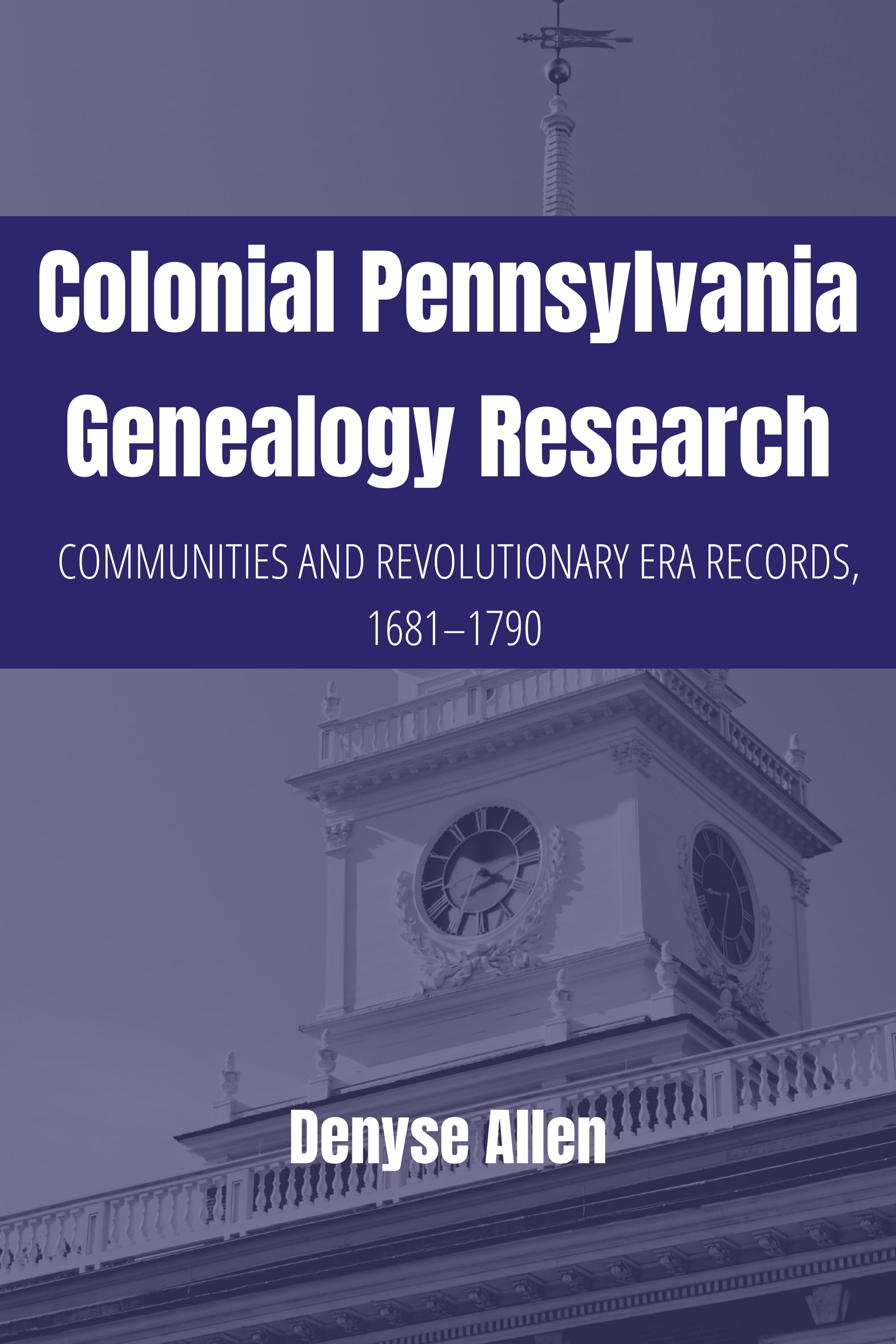
6931d9d0d3b0fd000175c843
Extensions
The Ultimate Guide to RootsTech 2025
Resourcesrootstech
Essential tips for attending, whether online or in-person. Plan your days, meet new people, and enjoy everything this genealogy conference offers.
Show full content
The Ultimate Guide to RootsTech 2025

Yes, it's the middle of winter and yes, it looks nasty outside, but there's something exciting on the horizon—RootsTech 2025 is just around the corner! 

The largest genealogy conference in the world is happening soon, and I couldn’t be more thrilled. Whether you're attending in person in Salt Lake City or tuning in online, I've got a bunch of tips to share, all drawn from lessons learned last year. 

At the end, I have a pdf download with all 25 tips for 2025, plus a blank planner you can fill out.

Let’s make the most out of this incredible event!

About RootsTech

For those who may not be familiar, RootsTech is a must-attend event for anyone interested in genealogy. It's a place where people from all over the globe gather to share their passion for family history. I attended last year and immediately made a personal vow: Never to miss a RootsTech if I can help it. This year, I’ll be joining hundreds of fellow enthusiasts in Salt Lake City, but the great thing about RootsTech is its online component. So, even if you can't make it in person, there's still an opportunity to join virtually.

Registration

First things first—registration. 

We're currently seven weeks away from RootsTech, so if you’re considering attending, head over to RootsTech.org to get started. You can use your FamilySearch login to register, choosing between an in-person or virtual experience. The online event is free, while in-person attendance requires a small fee. 

Registering now ensures you receive all the important updates.

Secure Your Accommodation

Finding a place to stay is crucial, especially with the conference being such a major event. 

The Ultimate Guide to RootsTech 2025

The closest hotels to the Salt Palace Convention Center, like the Radisson and the Hyatt Regency, may already be filling up, but you still have great options like the Marriott and Hilton, a short walk away. Remember, the earlier you book, the better your rates.

Packing and Prepping Essentials

When it comes to packing, a reusable water bottle is a must-have. The conference offers water filling stations, so bringing your own bottle helps you stay hydrated without extra costs. Also, double up on chargers. I lost one last year, and believe me, that’s an inconvenience you want to avoid. Comfort is key for attire—think semi-casual, business-casual. Anything but a formal gown!

Another essential is your genealogy research material for the FamilySearch Library, which is conveniently located about a block and a half from the main conference venue. This library is open for extended hours around the event time, providing an indispensable resource for research.

Fun and Friendly Gear

Here's a fun idea: a custom T-shirt with your family's surnames, like the one my friend made last year. These shirts are conversation starters, helping you connect with others who might just be long-lost relatives. There’s a link in the description for how to create your own. Consider it! It's both practical and entertaining.

Session Planning

About three weeks before the conference, it's time to preview and plan the sessions you want to attend. The RootsTech mobile app and website enable you to browse through lectures and prioritize your schedule. If there are workshops you're interested in (interactive and limited in size), book those as soon as possible.

Exploring Exhibitors

Do your research on the vendors who'll be at the conference. RootsTech has hundreds of exhibitors showcasing innovative products, including those with artificial intelligence—something I'm particularly excited to explore. From vendors to workshops, it’s all conveniently accessible in the app.

The Ultimate Guide to RootsTech 2025

Networking Prep

Use the "Relatives at RootsTech" feature, which becomes active three weeks before the event. It's a great way to connect with fellow attendees. Also, make a list of speakers you’re keen to meet in person. These preparations help maximize your networking opportunities during the conference.

Logistics Check

As you get closer to the conference, ensure all travel logistics are nailed down. Confirm your hotel and flight details, and explore convenient local transportation options like the UTA Green Line in Salt Lake City, which offers an affordable and efficient way from the airport to downtown, costing just $2.

Gear and Fitness Prep

Test and update any mobile devices or laptops you are bringing. Backup important files and remember to bring spare cables. 

Also, consider upping your walking routines before the conference. The Salt Palace Convention Center is immense, and I walked about six miles daily last time. If walking is a concern, scooters are available for rent, but remember to book them in advance.

Culinary Adventures

Apart from genealogy, indulge in Salt Lake City’s local restaurants. Favorites from last year include Siegfried's Delicatessen with its authentic German cuisine, the vibrant and fun Blue Iguana for Mexican food, and Squatters Pub for hearty comfort meals. I enjoyed all these places in 2024 and highly recommend them.

Packing Smart

A crucial packing tip: leave space in your suitcase for conference goodies—freebies, T-shirts, and inevitably, books. Learning from last year, I’m planning to leave a third to a fourth of my suitcase empty for this purpose.

Final Weeks Checklist

In the final week leading up to RootsTech, download all educational handouts and syllabi. Check the weather forecast to ensure appropriate attire. Utilize the conference’s free coat check to manage bulky winter coats once inside.

The Ultimate Guide to RootsTech 2025
The Day Before the Conference

If you’ve been prepping along the way, following this list, you won’t be scrambling to get ready. 

The day before the conference, double-check your plans. Ensure all session details are accurate, and you have each syllabus handy. Take time to relax, hydrate, and ready yourself for the days ahead.

If you are going in person and new to Salt Lake City, consider visiting the Utah State Capitol for its historical insights and stunning view of the city. It’s a great way to soak in some local culture before diving into the genealogy frenzy.

Settle In

Familiarize yourself with the Salt Palace layout, noting key locations like bathrooms and session rooms. Even if you feel lost, worry not—friendly volunteers are always around to guide you.

Don't forget to grab some RootsTech swag! Shirts and other memorabilia are available for purchase online and at the conference. Sizes and items are limited, so shop early to get exactly what you want.

Community and Updates

As we get closer to the conference, please share your experiences, tips, and updates in the comments section. Everyone wants to know what you do to make genealogy conferences great!

Download the pdf below which has all 25 tips for RootsTech 2025, plus a blank planner you can fill-out for yourself.

The Ultimate Guide to RootsTech 2025

Rootstech 2025 Guide From Chronicle Makers82.9KB ∙ PDF fileDownloadDownload

I’ll be posting weekly updates for RootsTech 2025 and a post conference recap (or two or three). Follow along and get everything you can out of this amazing event.


© 2019–2026 PA Ancestors L.L.C. and Denyse Allen. All Rights Reserved.

About PA Ancestors: The authoritative resource for Pennsylvania genealogy research — vital records, county courthouses, archives, probate, land records, military records, and immigration research across all 67 Pennsylvania counties. Founded by Denyse Allen, Pennsylvania genealogy researcher and author.

More Pennsylvania Research: paancestors.com
67c5aedeea97410001e5ac06
Extensions
Archives in PA: Local Organizational, Historical, and Genealogical Archives
archives in pa book
Local archives are offer highly focused collections that bring depth to family history. There are hundreds of these places in Pennsylvania.
Show full content
Archives in PA: Local Organizational, Historical, and Genealogical Archives

Local archives in Pennsylvania are those which focus on collecting materials for their county, city, township, borough, community, historical site or figure, genealogical society, industry, activity, or ethnic group. These are often volunteer-run non-profit organizations, and do not typically employ professional archivists for processing their materials. However, their collections are highly focused and specific, offering rich details about the past that are not found elsewhere. If you have an ancestor connected to one of these places, people, or activities, there is a good chance there is a record of him or her there. 

The local archives listed below are organized geographically by county. What is not listed in this section is the county courthouses and county government archives holding historical courthouse records, such as wills, deeds, court records, etc. For that list, consult Chapter 7: County Courthouses and Archives.

To save space, physical addresses are not provided, but website addresses are. Researchers are encouraged to visit each website for more details on archival holdings and how to research its collections.


Adams County

Adams County Historical Society and Beyond the Battle Museum Website: https://www.achs-pa.org

American Museum of Military History 
Website: https://www.museumofmilitaryhistory.com

Biglerville Historical and Preservation Society
 
Website: https://www.facebook.com/Biglerville-Historical-and-Preservation-Society-1958759457734710

East Berlin Historical Preservation Society 
Website: http://ebhpspa.org

General Lee's Headquarters Museum 
Website: https://www.battlefields.org/visit/heritage-sites/gettysburg-battlefield-general-lees-headquarters

Gettysburg Battlefield Preservation Association 
Website: https://www.gbpa.org

Gettysburg Foundation Museum and Visitor Center 
Website: https://www.gettysburgfoundation.org/museum-visitor-center

Gettysburg National Military Park 
Website: https://www.nps.gov/gett/learn/historyculture/collections.htm

John T. Reily Historical Society 
Website: https://www.jtrhs.org

Seminary Ridge Museum 
Website: https://www.seminaryridgeeducation.org

Shriver House Museum 
Website: http://shriverhouse.org

Ye Old Sulphur Spa Historical Society 
Website: https://www.yosshs.org


Allegheny County

Afro-American Historical and Genealogical Society 
Website: https://www.aahgs.org

Allegheny Cemetery Historical Association 
Website: https://alleghenycemetery.com

Allegheny Foothills Historical Society 
Website: http://plumhistory.org

Allegheny-Kiski Valley Historical Society 
Website: http://akvhs.org

August Wilson Center for African American Culture 
Website: http://www.augustwilsoncenter.org

Bayernhof Museum 
Website: http://www.bayernhofmuseum.com

Bloomfield Preservation and Heritage Society 
Website: http://www.bloomfieldlive.com/bloomfield-preservation--heritage-society.html

Carrick-Overbrook Historical Society 
Website: http://www.carrick-overbrook.org

Coraopolis Historical Society 
Website: https://www.facebook.com/coraopolishistory

The Daguerreian Society 
Website: https://lebohistory.org

Depreciation Lands Museum 
Website: http://dlmuseum.org

Edgewood Historical Society 
Website: https://www.facebook.com/EdgewoodHistoricalSociety

Elizabeth Township Historical Society 
Website: https://www.facebook.com/ElizabethTownshipHistoricalSociety

Fort Pitt Museum 
Website: https://www.heinzhistorycenter.org/fort-pitt

Frick Art and Historical Center 
Website: http://www.thefrickpittsburgh.org

Heinz History Center 
Website: http://www.heinzhistorycenter.org

Historical Society of Carnegie 
Website: https://www.facebook.com/HistoricalSocietyofCarnegie

Historical Society of Green Tree 
Website: http://www.greentreeboro.com/histsoc.php

Jewish Genealogical Society of Pittsburgh 
Website: https://www.pghjgs.org

Historical Society of Mt. Lebanon 
Website: https://lebohistory.org

Historical Society of Upper St. Clair 
Website: https://www.hsusc.org

Lawrenceville Historical Society 
Website: https://www.lawrencevillehistoricalsociety.org

Manchester Historic Society 
Website: http://www.manchesterhistoricsocietypa.com

Mexican War Streets Society 
Website: http://www.mexicanwarstreets.org

McKees Rocks Historical Society 
Website: https://www.facebook.com/McKees-Rocks-Historical-Society-139655842733617

McKeesport Preservation Society 
Website: https://www.facebook.com/McKeesportPS

McKeesport Regional History and Heritage Center 
Website: https://www.mckeesportheritage.org

North Hills Genealogists 
Website: http://www.northhillsgenealogists.org

Old Moon Township Historical Society 
Website: https://moontownshiphistoricalsociety.com

Rachel Carson Homestead Association 
Website: http://www.rachelcarsonhomestead.org

Rivers of Steel Heritage Corporation (Carrie Furnace) 
Website: http://www.riversofsteel.com

Saint David's Welsh Society of Pittsburgh 
Website: https://www.stdavidssociety.org

Sewickley Heights History Center 
Website: https://www.sewickleyheightshistory.org

Sewickley Valley Historical Society 
Website: http://sewickleyhistory.org

Soldiers and Sailors Memorial Hall and Museum 
Website: https://www.soldiersandsailorshall.org

South Park Historical Society 
Website: http://www.southparkhistoricalsociety.com

Squirrel Hill Historical Society 
Website: http://www.squirrelhillhistory.org

Tarentum History and Landmarks Foundation 
Website: https://www.facebook.com/Tarentum-History-With-Cindy-387764171353675

Theatre Historical Society of America 
Website: https://historictheatres.org

Tour-Ed Mine and Museum 
Website: https://tour-edmine.com

Turtle Creek Valley Historical Society 
Website: https://www.facebook.com/TCHistorical

Verona Historical Society 
Website: http://www.veronahistory.org

Western Pennsylvania Genealogical Society 
Website: http://www.wpgs.org


Armstrong County

Apollo Area Historical Society 
Website: https://apollopahistory.com

Armstrong County Historical Museum and Genealogical Society Website: https://www.achmgs.org

Brady's Bend Historical Society 
Website: http://www.bradysbendhistoricalsociety.org

Dayton Area Local History Society 
Website: http://daytonpa.org

Freeport Area Historical Society 
Website: https://www.freeporthistoricalsociety.org

Leechburg Area Museum and Historical Society 
Website: https://leechburgmuseum.org


Beaver County

Beaver Area Historical Museum Website:https://www.bcpahistory.org/beavercounty/HistoricalSocieties/Beaver/Beaver.html

Beaver County Genealogy and History Center 
Website: https://www.facebook.com/profile.php?id=100057099144268

Beaver Falls Historical Society and Museum 
Website: https://www.facebook.com/Beaver-Falls-Historical-Museum-745367992315864

Brighton Township Historical Society 
Website: https://brightontwp.org/historical-society

Harmonie Associates 
Website: https://www.harmonie.org

Little Beaver Historical Society 
Website: https://littlebeaverhistorical.org

National Iron and Steel Heritage Museum 
Website: https://steelmuseum.org

New Brighton Historical Society 
Website: https://www.nbhistory.org

Old Economy Village 
Website: http://oldeconomyvillage.org

Research and Resource Center for Beaver County 
Website: https://bchrlf.org

Richmond Little Red Schoolhouse Association 
Website: https://brightontwp.org/little-red-school-house

South Side Historical Village 
Website: https://www.facebook.com/South.Side.Historic.Village


Bedford County

Anderson House 
Website: https://www.societyofthecincinnati.org/larz-and-isabel-anderson

Bedford County Historical Society 
ebsite: http://www.bedfordpahistory.com

Cumberland Valley Township Historical Society Website:https://www.visitcumberlandvalley.com/listing/cumberland-county-historical-society/792

Fort Bedford Museum 
Website: http://www.fortbedfordmuseum.org

Old Bedford Village 
Website: http://www.oldbedfordvillage.com


Berks County

Albany Township Historical Society 
Website: https://www.albanyths.org

American Museum of Veterinary Medicine 
Website: https://www.avmhs.org/veterinary-museums-and-exhibits 

Berks County Genealogical Society 
Website: https://berksgenes.org

Berks History 
Website: https://www.berkshistory.org

Boyertown Area Historical Society Website: http://www.boyertownhistory.org

Conrad Weiser Homestead Website: http://www.conradweiserhomestead.org

Fleetwood Area Historical Society 
Website: https://fleetwoodpa.org

Hay Creek Valley Historical Association and Joanna Iron Furnace Website: http://www.haycreek.org

Heidelberg Heritage Society 
Website: https://www.heidelbergsociety.org

Kutztown Area Historical Society 
Website: http://www.kutztownhistory.org

Mid Atlantic Air Museum 
Website: http://www.maam.org

Oley Valley Heritage Association 
Website: https://www.oleyvalleyheritage.org/site

Pennsylvania German Cultural Heritage Center 
Website: https://www.kutztown.edu/about-ku/our-campus/maps/pennsylvania-german-cultural-heritage-center.html

Pine Forge Historical Society 
Website: https://pine-forgehs.org/

Reading Area Firefighters Museum Inc 
Website: http://www.readingpafiremuseum.com

Reading Public Museum 
Website: http://www.readingpublicmuseum.org

Reading Railroad Heritage Museum 
Website: http://www.readingrailroad.org

Sinking Spring Historical Society 
Website: https://www.facebook.com/Sinking-Spring-Area-Historical-Society-and-Heritage-Park-101603801315574

Tulpehocken Settlement Historical Society 
Website: https://tulpehockenroots.org


Blair County

Altoona Railroaders Memorial Museum 
Website: https://www.railroadcity.org

Baker Mansion Museum Website: http://www.blairhistory.org

Blair County Genealogical Society 
Website: http://www.bcgslibrary.org

Blair County Historical Society 
Website: http://www.blairhistory.org

Fort Roberdeau Association 
Website: https://fortroberdeau.org

Bellwood -Antis Historical Society 
Website: http://www.bellwoodantis.net/history.html

Railroader's Heritage Corporation 
Website: https://www.railroadcity.org

Roaring Spring Historical Society 
Website: https://www.facebook.com/RSHistoricalSociety

Tyrone Area Historical Society 
Website: http://www.tyronehistory.org

Williamsburg Heritage and Historical Society Website:https://sites.google.com/site/williamsburgpennsylvania/history-historical-district-information


Bradford County

Bradford County Heritage Association 
Website: https://theheritagevillage.org

Bradford County Historical Society 
Website: http://bradfordhistory.com

Sayre Historical Society 
Website: https://sayrehistoricalsociety.org

Tioga Point Museum 
Website: http://www.TiogaPointMuseum.com

Tuscarora Township Historical Society Website:https://sites.psu.edu/ourstorycentralpausnewspaperproject/vignettes/tuscarora-township-historical-society

Wyalusing Valley Museum Association, Inc. 
Website: https://www.facebook.com/wyalusingmuseum


Bucks County

Andalusia Foundation 
Website: http://andalusiapa.org

Bristol Cultural and Historical Foundation 
Website: https://www.bristolhistory.org

Bucks County Civil War Round Table Museum and Library 
Website: http://www.civilwarmuseumdoylestown.org

Bucks County Genealogical Society 
Website: https://bucksgen.org

Bucks County Historical Society 
Website: https://www.mercermuseum.org/about/press-room/fact-sheet-bchs-2

Craven Hall Historical Society, Inc. 
Website: https://craven-hall.org

Doylestown Historical Society 
Website: https://doylestownhistorical.org

Dublin Historical Society 
Website: https://dublinohiohistory.org

Haycock Historical Society 
Website: https://haycockhistoricalsociety.org

Historical Society of Bensalem Township 
Website: http://bensalemhistoricalsociety.com

Historical Society of Hilltown Township 
Website: https://www.hilltownhistory.org

Historic Morrisville Society
Website: https://historicsummerseat.com

Hulmeville Historical Society, Inc. 
Website: http://www.hulmevillehistorical.org

John Fitch Steamboat Museum 
Website: https://craven-hall.org/fitch-steamboat-museum

Johnsville Centrifuge and Science Museum 
Website: https://nadcmuseum.org

Levittown Historical Society 
Website: https://www.facebook.com/Levittown-Historical-Society-And-Museum-1364661420227399

Lower Makefield Township Historical Society 
Website: https://www.lmt.org/government/boards-and-commissions/historical-commission

Margaret R. Grundy Memorial Museum 
Website: http://www.grundymuseum.org

New Hope Historical Society 
Website: https://newhopehistorical.org

Newtown Historic Association 
Website: http://www.newtownhistoric.org

Northampton Township Historical Society 
Website: https://www.northamptontownshiphistoricalsociety.org

Patterson Farm Preservation 
Website: http://www.pattersonfarmpreservation.com

Pearl S. Buck International House and Historic Site 
Website: http://www.pearlsbuck.org

Pennsbury Manor 
Website: https://www.pennsburymanor.org

Pennsylvania Postal History Society 
Website: http://www.paphs.org

Perkasie Historical Society
 Website: https://www.perkasiehistory.org

Plumstead Historical Society 
Website: https://sites.google.com/site/plumsteadhistoricalsocietyorg

Quakertown HIstorical Society 
Website: https://www.quakertownhistoricalsociety.org

Richland Historical Society 
Website: https://richlandcountyhistoricalsociety.weebly.com

Sellersville Museum 
Website: http://www.sellersvillemuseum.org

Solebury Township Historical Society 
Website: http://soleburyhistory.org

Springfield Township Historical Society 
Website: http://www.springfieldbucks.org/township_facts.php

Warwick Township Historical Society 
Website: http://www.moland.org

Washington Crossing Historic Park 
Website: https://www.washingtoncrossingpark.org

Yardley Historical Association 
Website: http://www.yardleyhistory.org


Butler County

Butler County Genealogical Society 
Website: https://butlercountyogs.org

Butler County Historical Society 
Website: https://butlerhistory.com

Cranberry Township Historical Society 
Website: https://explorecranberry.org

Cranberry Genealogy Society 
Website: https://www.cranberrygenealogy.org

John Roebling's Historic Saxonburg Society 
Website: https://www.facebook.com/JRHSS

Maridon Museum 
Website: http://www.maridon.org

Mars Area History and Landmarks Society 
Website: https://marshistory.org

Slippery Rock Heritage Association 
Website: http://srheritage.org

Zelienople Historical Society 
Website: https://www.zeliehistory.org


Cambria County

Allegheny Portage Railroad National Historic Site 
Website: https://www.nps.gov/alpo/index.htm

Cambria County Historical Society 
Website:  http://www.cambriacountyhistorical.com

Flood Museum 
Website: https://www.thefloodmuseum.com

The Inclined Plane, Inc.
Website: http://www.inclinedplane.org

Lilly Washington Historical Society 
Website: https://l-whs.org

Portage Area Historical Society 
Website: https://www.facebook.com/Portageareahistoricalsociety

Tunnels Park and Museum 
Website: http://www.gallitzin.info

Windber-Johnstown Area Genealogical Society 
Website: http://www.johnstownroots.org


Cameron County

Cameron County Historical Society 
Website:  https://cameroncohistorical.wixsite.com/cameroncohistorysoc


Carbon County

Asa Packer Mansion 
Website: http://www.asapackermansion.com

Lansford Historical Society 
Website: http://lansfordhistoricalsociety.weebly.com/index.html

Mauch Chunk Museum 
Website: https://mauchchunkmcc.org

No. 9 Washanty Mine and Museum 
Website: https://no9minemuseum.wixsite.com/museum

Old Jail Museum and Heritage Center 
Website: http://www.theoldjailmuseum.com

Palmerton Area Historical Society 
Website: https://www.palmertonhistorical.org

Summit Hill Historical Society and Museum 
Website: https://www.facebook.com/summithill


Centre County

Bellefonte Museum for Centre County 
Website: https://www.bellefontemuseum.org

Boalsburg Heritage Museum 
Website: https://www.boalsburgheritagemuseum.org

Boal Mansion Museum
Website:  http://www.boalmuseum.com

Centre County Genealogical Society 
Website: https://centrecountygenealogy.org

Centre County Historical Society 
Website: https://centrehistory.org

Centre County Library and Historical Museum 
Website: https://www.centrecountylibrary.org

Eagle Iron Works and Curtin Village 
Website: https://www.curtinvillage.com

Milesburg Historical Society 
Website: https://www.milesburg.org

Penns Valley Area Historical Museum Association 
Website: http://www.pennsvalleymuseum.org

Pennsylvania Military Museum 
Website: http://www.pamilmuseum.org

Philipsburg Historical Foundation 
Website: https://www.phf1797.com


Chester County

Alfred O. Deshong Museum and Cultural Arts Center 
Website: http://www.oldchesterpa.com/museum_deshong.htm

Caln Township Historical Society 
Website: https://www.oldcalnhistoricalsociety.org

Charlestown Historical Society 
Website: https://www.charlestownhistorical.org

Chester County History Center 
Website: https://mycchc.org

Downingtown Area Historical Society 
Website: http://www.downingtownareahistoricalsociety.org

Historical Society of the Phoenixville Area 
Website: http://www.phoenixvillehistoricalsociety.org

Kennett Square Historical Commission 
Website: https://www.kennett.pa.us/199/Historical-Commission

Kennett Underground Railroad Center 
Website: https://www.kennettundergroundrr.org

National Iron and Steel Heritage Museum 
Website: http://www.steelmuseum.org

Old Caln Historical Society 
Website: https://www.oldcalnhistoricalsociety.org

Oxford Area Historical Association 
Website: http://www.oxfordhistorical.org

Schuylkill Township Historical Commission 
Website: http://www.schuylkilltwp.org

Tredyffrin Easttown Historical Society 
Website: http://www.tehistory.org

Tredyffrin Historic Preservation Trust 
Website: https://tredyffrinhistory.org/?page_id=327

Tri-County Heritage Society 
Website: https://haycreek.org/tricounty-heritage-society

Welkinweir
Website: http://www.welkinweir.org

West Whiteland Historical Commission/Friends of the Thomas Mill Website:https://www.westwhiteland.org/180/Historical-Commission

Wharton Esherick Museum 
-[/Website: http://www.whartonesherickmuseum.org


Clarion County

Clarion County Historical Society 
Website: http://www.clarioncountyhistoricalsociety.org


Clearfield County

Clearfield County Historical Society 
Website: http://www.clearfield-county-historical-society.net

Coalport Area Coal Museum 
Website: http://www.coalportmuseum.org

DuBois Area Historical Society 
Website: http://duboishs.com

East Broad Top RR Preservation Association 
Website: https://eastbroadtop.com


Clinton County

Clinton County Historical Society 
Website: https://www.facebook.com/CCHSofPA

Greater Renovo Area Historical Society 
Website: https://renovoheritage.org

Piper Aviation Museum Foundation 
Website: http://www.pipermuseum.com

Sugar Valley Historical Society 
Website: http://www.svhistory.org


Columbia County

Berwick Historical Society 
Website: https://berwickhistoricalsociety.org

Columbia County Historical Society 
Website: http://www.colcohist-gensoc.org

Red Deer at Rolling Hills Farm 
Website: http://www.reddeeratrollinghillsfarm.com


Crawford County

Baldwin-Reynolds House Museum 
Website: http://www.baldwinreynolds.org

Conneaut Lake Area Historical Society 
Website: https://www.conneautlakehistory.com

Crawford County Historical Society
Website: http://www.crawfordhistorical.org/chs

Drake Well Museum 
Website: http://www.drakewell.org

Johnson-Shaw Stereoscopic Museum 
Website: http://www.johnsonshawmuseum.org

John Brown Farm, Tannery and Museum 
Website: https://visitcrawford.org/listing/john-brown-tannery-site

Linesville Historical Society 
Website: https://www.countyoffice.org/linesville-historical-society-linesville-pa-af1

Northwestern PA Railroad and Tooling Heritage Center 
Website: https://www.facebook.com/NWPAHeritagePartnership

Oil Creek Railway Historical Society 
Website: https://octrr.org

Titusville Historical Society 
Website: https://titusvillehistoricalsociety.org


Cumberland County

Cumberland County Historical Society and Hamilton Library 
Website: https://www.historicalsociety.com/visit/museum

Historical Society of East Pennsboro Inc 
ebsite: http://www.ephistory.org

Newville Historical Society 
Website: https://newvillehistoricalsociety.weebly.com

Shippensburg Historical Society 
Website: https://www.shippensburghistoricalsociety.org


Dauphin County

Camp Curtin Historical Society 
Website: https://www.campcurtin.org

Capital Area Genealogical Society 
Website: http://capitalareagenealogy.org

Dauphin Middle-Paxton Historical Society 
Website: http://capitalareagenealogy.org

Gratz Historical Society 
Website: http://capitalareagenealogy.org

Halifax Area Historical Society 
Website: https://www.facebook.com/Halifax-Area-Historical-Society-128563587613

Hershey Derry Township Historical Society 
Website: http://www.hersheyhistory.com

Highspire Historical Society 
Website: http://highspirehistory.org/index.html

Historical Society of Dauphin County 
Website: http://www.dauphincountyhistory.org

Historical Society of East Hanover Township 
Website: https://www.facebook.com/Historical-Society-of-East-Hanover-Township-Dauphin-County-1689373737828430

Historical Society of Millersburg and Upper Paxton Township 
Website: https://www.millersburghistory.com

Hummelstown Area Historical Society 
Website: https://www.hummelstownhistoricalsociety.org

Londonderry Township Historical Society 
Website: https://www.londonderrypa.org/#gsc.tab=0

Milton Hershey School 
Website: https://www.mhskids.org/about/history/school-history-department

National Civil War Museum 
Website: http://www.nationalcivilwarmuseum.org

Pennsylvania Capitol Preservation Committee 
Website: http://cpc.state.pa.us

Pennsylvania Fire Museum 
Website: https://pnfm.org

Pennsylvania State Police Museum 
Website: https://www.psp-hemc.org

Pillow Historical Society 
Website: https://www.pillowhistoricalsociety.org

State Museum of Pennsylvania 
Website: https://statemuseumpa.org

West Hanover Township Historical Society 
Website: https://www.facebook.com/westhanoverhistorical

Williamstown Historical Society 
Website: https://www.facebook.com/Williamstown-PA-Historical-Society-148329449083914


Delaware County

1696 Thomas Massey House 
Website: http://thomasmasseyhouse.org

Aston Township Historical Society 
Website: http://www.athsdelco.org

Bethel Township Preservation Society 
Website: https://www.facebook.com/betheltownshippreservationsociety

Brandywine Battlefield Park Associates 
Website: http://brandywinebattlefield.org

Brandywine River Museum 
Website: http://www.brandywinemuseum.org

Chadds Ford Historical Society 
Website: http://www.chaddsfordhistory.org

Christian C. Sanderson Museum 
Website: http://www.sandersonmuseum.org

Concord Township Historical Society 
Website: https://concordhist.org

Dabbs Woodfin Library and Archives at Newlin Grist Mill 
Website: http://www.newlingristmill.org

Darby Borough Historical Preservation Society 
Website: http://darbyhistory.com

Delaware County Historical Society 
Website: https://www.padelcohistory.org

Friends Historical Association 
Website: https://www.quakerhistory.org

Haverford Township Historical Society 
Website: http://www.haverfordhistoricalsociety.org

Marple Historical Society 
Website: http://www.marplehistoricalsociety.org

Middletown Township Historical Society 
Website: http://mthsdelco.org

Nether Providence Historical Society 
Website: http://nphistory.org

Newtown Square Historical Society 
Website: https://nshistory.org

Norwood Historical Society 
Website: http://norwoodpahistorical.org

Paper Mill House Museum 
Website: https://www.facebook.com/papermillhouse

Pennhurst Memorial and Preservation Alliance 
Website: http://www.preservepennhurst.org

Pennsylvania Veterans Museum 
Website: https://paveteransmuseum.org

Radnor Historical Society 
Website: https://radnorhistory.org

Ridley Park Historical Society 
Website: https://ridleyparkhistorical.org

Rose Valley Historical Society 
Website: https://rosevalleymuseum.org

Sharon Hill Historical Society 
Website: https://www.facebook.com/profile.php?id=100071468263223

Swarthmore Historical Society 
Website: https://www.swarthmore.edu/friends-historical-library/swarthmore-historical-society-archives

Thornbury Historical Society 
Website: https://sites.google.com/site/thornburyhistoricalsociety

Tinicum Township Historical Society 
Website: https://www.tinicumtwpdelco.com/historical-society

Upper Chichester Historical Society 
Website: https://chichesterhistory.org

Upper Darby Historical Society 
Website: http://udhistory.org

Washington-Rochambeau Revolutionary Route 
Website: http://www.w3r-us.org


Elk County

Bucksgahuda And Western Railroad Museum 
Website: http://www.bnwrr.com

Elk County Historical Society 
Website: https://elkcountyhistoricalsociety.org

Historical Society of St. Mary's and Benzinger Twp 
Website: http://smhistoricalsociety.com

Jones Township Historical Society 
Website: https://elkcountyhistoricalsociety.org

Ridgeway Heritage Council 
Website: https://www.facebook.com/people/Ridgway-Heritage-Council/100064411135160

Mt. Zion Historical Society 
ebsite: http://mtzionhistoricalsociety.org/index.htm


Erie County

Corry Area Historical Society 
Website: https://www.corryareahistoricalsociety.org

Edinboro Area Historical Society 
Website: https://www.facebook.com/eahs.pa

Erie County Historical Society 
Website: https://www.eriehistory.org

Erie Maritime Museum 
Website: https://www.eriemaritimemuseum.org

Erie Society for Genealogical Research 
Website: https://www.genealogyerie.org

Fairview Area Historical Society 
Website: https://fairviewhistory.org

Fort Le Boeuf Historical Society 
Website: https://fortleboeufhistory.com

Hagen History Center Website: https://www.eriehistory.org

Harborcreek Historical Society 
Website: https://www.harborcreekhistory.org

Harry T. Burleigh Society 
Website: https://www.facebook.com/burleighsoc

Hazel Kibler Museum 
Website: https://www.facebook.com/Hazel-Kibler-Museum-134111706605966

Lake Shore Railway Historical Society 
Website: https://lakeshorerailway.com

Lawrence Park Historical Society 
Website: https://www.facebook.com/Lawrence-Park-Historical-Society-643116839221101

North East Historical Society 
Website: http://www.northeasthistoricalsociety.org

Union City Area Historical Museum 
Website: https://unioncitypa.us/museum

Waitsburg Historical Society, Inc. 
Website: https://www.waitsburgmuseum.org


Fayette County

Braddock Road Preservation Association 
ebsite: https://braddockroadpa.org

Brownsville Historical Society and Nemacolin Castle 
Website: https://www.nemacolincastle.net

Bullskin Township Historical Society 
Website: https://www.bullskintownshiphistoricalsociety.org

Coal and Coke Heritage Center 
Website: https://fayette.psu.edu/visit/coalandcoke

Connellsville Area Historical Society 
Website: https://connellsvillehistoricalsociety.com/home

Dunbar Historical Society 
ebsite: http://www.dunbarhistoricalsociety.com

Fayette County Genealogical Society Website: https://www.facebook.com/FayetteGenSociety

Fayette County Historical Society 
Website: https://fayettehistoricalsociety.com

Flatiron Building Heritage Center 
Website: http://barcpa.org

Friendship Hill Association 
Website: https://www.friendshiphillnhs.org

Fort Mason Historical Society 
Website: http://www.masontownpa.com/Organizations/HistoricalSociety.aspx

Greater Tri Town Area Historical Society 
Website: https://www.facebook.com/The-Greater-Tri-Town-Area-Historical-Society-284383628386118

Smock Historical Society 
Website: https://www.franklinfayette.com/community/smock-historical-society


Forest County

Forest County Historical Society 
Website: https://forestcountypahistory.org


Franklin County

Allison-Antrim Museum, Inc 
Website: https://greencastlemuseum.org

Fort Loudon Historical Society 
Website: https://www.facebook.com/fortloudounpa

Franklin County Historical Society 
Website: https://www.franklinhistorical.org

Mercersburg Historical Society 
Website: https://mercersburghistory.org

Old Jail and Museum 
Website: https://www.franklinhistorical.org/old-jail

Pennsylvania Forest Heritage Association 
Website: http://www.paforestfiremuseum.com

Renfrew Museum and Park 
Website: http://www.renfrewmuseum.org

Waynesboro Historical Society 
Website: http://www.waynesborohistory.com


Fulton County

Fulton County Historical Society Museum 
Website: http://www.fultonhistory.org


Greene County

Cornerstone Genealogical Society 
Website: https://cornerstonegenealogy.com

Greene County Historical Society 
Website: https://www.gchistory.org

Nathanael Green Historical Foundation 
Website: http://www.natgreene.org/about-us.html

Paul R. Stewart Museum 
Website: http://www.waynesburg.edu/museum


Huntingdon County

Broad Top Area Coal Miners Historical Society 
Website: https://broadtopminersmuseum.com

Fort Shirley Heritage Association 
Website: https://huntingdonhistory.org/links/fort-shirley-heritabe-association

Huntingdon County Historical Society 
Website: http://www.huntingdonhistory.org

Isett Acres Museum 
Website: https://isettacres.com

Mount Union Area Historical Society 
Website: https://huntingdonhistory.org/links/mount-union-area-historical-society

Orbisonia/Rockhill Furnace Historical Society 
Website: https://www.facebook.com/ORFHS

Rockhill Trolley Museum 
Website: http://www.rockhilltrolley.org

Three Springs Area Historical Society 
Website:https://www.facebook.com/ThreeSpringsSaltilloHistoricalSociety


Indiana County


Dane Castle Museum Website: https://castlesy.com/dane-castle-strongstown-pennsylvania

Historical and Genealogical Society of Indiana County 
Website: http://www.hgsic.org

Historical Society of the Blairsville Area 
Website: https://blairsvillehistoric.com

Jimmy Stewart Museum 
Website: https://jimmy.org

John G. Schmick Museum 
Website: https://www.visitindianacountypa.org/members/john-g-schmick-heritage-center

Pennsylvania Labor History Society 
Website: https://palaborhistorysociety.org

Saltsburg Stone House Museum 
Website: http://www.saltsburgstonehousemuseum.org

Smicksburg Area Heritage Society 
Website: https://www.facebook.com/Smicksburg-Area-Heritage-Society-1815265842083812


Jefferson County

Brockway Area Historical Society 
Website: https://brockwayhistory.org

Coolspring Power Museum 
Website: http://coolspringpowermuseum.org

Jefferson County Historical Center 
Website: http://www.jchconline.org/Default.aspx

Punxsutawney Area Historical and Genealogical Society 
Website: http://www.punxsyhistory.org

Reynoldsville Historical Society 
Website: https://reynoldsvillehistoricalsociety.org


Juniata County

Juniata County Historical Society 
Website: http://www.juniatacountyhistoricalsociety.org

Juniata Mennonite Historical Center 
Website: http://www.juniatamennonitehistoricalcenter.com

Tuscarora Academy Museum 
Website: https://juniatacountyhistoricalsociety.org/tuscarora-academy-museum


Lackawanna County

Anthracite Historic Discovery Center 
Website:https://www.facebook.com/AnthraciteHistoricalDiscoveryCenter

Carbondale Historical Society and Museum, Inc. 
Website: https://carbondalepahistorical.org

Electric City Trolley Museum and Station 
Website: http://www.ectma.org

Greenfield Township Historical Society 
Website: https://www.facebook.com/GreenfieldTownshipHistoricalSociety

Lackawanna and Wyoming Valley Railway Historical Society 
Website: http://lwvrhs.org/

Lackawanna County Historical Society 
Website: http://lackawannahistory.org/index.html

Pennsylvania Anthracite Heritage Museum 
Website: http://www.anthracitemuseum.org

Steamtown National Historic Site 
Website: https://www.nps.gov/stea/index.htm

Tripp House 
Website: http://tripphouse.com


Lancaster County

Amos Herr House Foundation and Historical Society 
Website: http://herrhomestead.org

Caernarvon Historical Society 
Website: https://www.facebook.com/people/Caernarvon-Historical-Society/100027226827139

Columbia Historic Preservation Society 
Website: https://www.facebook.com/Columbia-Historic-Preservation-Society-236107089521

Conestoga Area Historical Society 
Website: http://www.pennmanorhistory.org

Demuth Museums and Lancaster Museum of Art 
Website: https://www.demuth.org

East Petersburg Historical Society 
Website: https://www.facebook.com/EastPeteHistory

Elizabethtown Historical Society 
Website: https://www.facebook.com/ElizabethtownHistoricalSociety

Ephrata Cloister Website: https://ephratacloister.org

First National Bank Museum 
Website: http://www.bankmuseum.org

Historical Society of the Cocalico Valley 
Website: https://www.cocalicovalleyhs.org

Historical Society of Salisbury Township 
Website: http://www.salisburytwphistory.org

Lancaster County Museums Council 
Website: https://lancastercountymuseums.org

Lancaster Mennonite Historical Society (now Mennonite Life) 
Website: http://lmhs.org

LancasterHistory.org and Wheatland 
Website: http://www.lancasterhistory.org

Landis Valley Village and Farm Museum 
Website: http://www.landisvalleymuseum.org

Lititz Historical Foundation 
Website: http://www.lititzhistoricalfoundation.com

Lititz Moravian Archives Museum 
Website: https://www.lititzmoravian.org/museumarchivestours

The Manheim Historical Society 
Website: https://manheimhistoricalsociety.org

Marietta Museum 
Website: http://www.mariettarestoration.org

Maytown Historical Society 
Website: https://maytownhistory.com

Millersville Area Historical Society 
Website: https://www.facebook.com/minersvilleareahistoricalsociety

Mount Joy Area Historical Society 
Website: https://www.facebook.com/minersvilleareahistoricalsociety

North Museum of Natural History and Science Website: http://www.northmuseum.org

Railroad Museum of Pennsylvania Website: https://rrmuseumpa.org/

Rock Ford Plantation And Museum 
Website: http://www.rockfordplantation.org

Rough and Tumble Engineer's Historical Museum 
Website: https://roughandtumble.org/

Southern Lancaster County Historical Society
 Website: http://www.southernlancasterhistory.org/robert-fulton-birthplace

Strasburg Heritage Society 
Website: https://strasburgheritagesociety.org

Theodore Burr Covered Bridge Society of PA 
Website: http://tbcbspa.com

William Montgomery House 
Website: https://themontgomeryhouse.com

Winters Heritage House Museum and The Seibert Genealogy Research Library 
Website: http://www.elizabethtownhistory.org

Wright's Ferry Mansion 
Website: https://lancastercountymuseums.org/wrights-ferry-mansion


Lawrence County

Ellwood City Historical Society 
Website: https://ellwoodhistory.org

Enon Valley Community Historical Society 
Website: https://www.facebook.com/enonhistoricalsociety

Lawrence County Historical Society 
Website: http://www.lawrencechs.com

S.N.P.J. Slovenian Heritage Center 
Website: http://snpjheritage.org

Wampum Area Historical Society, Inc. 
Website: https://www.facebook.com/Wampum-Area-Historical-Society-105034050905786


Lebanon County

Cornwall Iron Furnace 
Website: http://www.cornwallironfurnace.org

Isaac Meier Homestead 
Website: https://www.facebook.com/meierhomestead/

Lebanon County Historical Society 
Website: https://lebanoncountyhistory.org/

Mount Gretna Area Historical Society 
Website: https://mtgretnahistory.org/

Stoy Museum 
Website: https://lebanoncountyhistory.org/


Lehigh County

1803 House 
Website: https://www.1803house.org

Coopersburg Historical Society 
Website: https://www.facebook.com/coopersburghistoricalsociety

Emmaus Historical Society 
Website: https://www.emmaushistoricalsociety.org

Governor Wolf Historical Society 
Website: https://www.govwolf.org

Haines Mill Museum 
Website: https://delawareandlehigh.org/map/attraction/haines-mill-museum

Lehigh County Historical Society 
Website: http://www.lehighvalleyheritagemuseum.org

Liberty Bell Museum 
Website: https://www.facebook.com/LibertyBellMuseum

Lower Macungie Township Historical Society 
Website: https://www.lmthistory.org

Lower Milford Historical Society 
Website: https://www.facebook.com/LMHS.PA

Lynn-Heidelberg Township Historical Society 
Website: https://www.facebook.com/LHTHS

Lynn Township Historical Society 
Website: https://www.lynntwp.org/about/history

Macungie Historical Society Inc. 
Website: http://www.macungie.org

Museum of Indian Culture 
Website: https://www.museumofindianculture.org

Shelter House Society 
Website: https://shelterhouseemmaus.org

Whitehall Historic Preservation Society 
Website: https://www.whitehallhistoricalsociety.org


Luzerne County

Eckley Miners' Village 
Website: http://eckleyminersvillage.com

Greater Hazleton Historical Society 
Website: http://www.hazletonhistory.org

Greater Pittston Historical Society 
Website: https://www.facebook.com/GreaterPittstonHistoricalSociety

Huber Breaker Preservation Society 
Website: http://www.huberbreaker.org

Luzerne County Historical Society 
Website: https://luzernehistory.org

Nanticoke Historical Society 
Website: https://nanticokehistoryonline.org

Nathan Denison House 
Website: https://luzernehistory.org/visit/denison-house

Northeast Pennsylvania Genealogical Society, Inc. 
Website: https://nepgs.com

Plymouth Historical Society 
Website: https://www.plymouthistoricalsocietyluzernecopa.org


Lycoming County

Blooming Grove Historical Society 
Website: https://www.historicbloominggrove.org

East Lycoming Historical Society 
Website: https://www.facebook.com/EastLycomingHistoricalSociety

Jersey Shore Historical Society 
Website: https://jshistory.org

Lycoming County Genealogical Society 
Website: https://lycominglineage.editorx.io/lycominglineage

Montgomery Area Historical Society
 Website: https://www.facebook.com/montgomeryareahistoricalsociety

Muncy Historical Society and Museum of History 
Website: http://www.MuncyHistoricalSociety.org

Preservation of Williamsport Foundation, Inc. 
Website: https://www.preservationwilliamsport.com/about-pw

Thomas T. Taber Museum 
Website: https://tabermuseum.org


McKean County

Bradford Landmark Society 
Website: http://www.bradfordlandmark.org

Eldred World War II Museum 
Website: http://eldredpawwiimuseum.com

Kane Community Depot and Museum 
Website: https://www.paroute6.com/the-kane-depot

Penn-Brad Oil Museum 
Website: https://penn-bradoilmuseum.org


Mercer County

Canal Museum 
Website: http://greenvillemuseumalliance.org/canal-museum

Grove City Historical Society 
Website: http://www.grovecityhistoricalsociety.org

Hermitage Historical Society 
Website: https://www.hermitage.net/364/Hermitage-Historical-Society 

Jamestown Historical Society 
Website: https://jamestownhistoricalsociety.org

Mercer County Genealogical Society 
Website: https://www.facebook.com/mcgenealogy.pa

Mercer County Historical Society 
Website: https://www.facebook.com/MCHSinPA

Sharpsville Historical Society 
Website: http://www.sharpsvillehistorical.com/index.htm


Mifflin County

Mifflin County Historical Society 
Website: https://www.mifflincountyhistory.org/Home.html

Mifflin County Mennonite Historical Society 
Website: https://www.facebook.com/p/Mifflin-County-Mennonite-Historical-Society-100032495240977


Monroe County

Antoine Dutot Museum and Gallery 
Website: https://dutotmuseum.org

Barrett Township Historical Society 
Website: https://www.barretthistorical.org

Bell School 
Website: https://www.bellschool.com

Historical Association of Tobyhanna Township 
Website: http://tobyhannatwphistory.org

Quiet Valley Living Historical Farm 
Website: http://www.quietvalley.org

Pocono Indian Museum 
Website: https://poconoindianmuseum.com


Montgomery County

Amy B. Yerkes Museum 
Website: https://www.millbrooksociety.org/museum-collection

Anthracite Railroads Historical Society 
Website: https://www.anthraciterailroads.org

Bertolet Meeting House and Burial Ground 
Website: https://ccpickell.wixsite.com/bertoletmeetinghouse

Conshohocken Historical Society 
Website: https://www.conshohockenhistoricalsociety.org

Goschenhoppen Folklife Library and Museum 
Website: https://goschenhoppen.org

Harriton House 
Website: https://www.harritonhouse.org

Heckler Plains Folklife Society
Website: https://www.facebook.com/HecklerPlains.org

Highlands Historical Home 
Website: https://www.highlandshistorical.org

Historical Society of Fort Washington 
Website: http://www.fortwashingtonhistory.org

Historical Society of Montgomery County 
Website: http://www.hsmcpa.org

Historic Trappe and Center for Pennsylvania German Studies 
Website: https://historictrappe.org

King of Prussia Historical Society 
Website: http://www.kophistory.org

Lansdale Historical Society 
Website: https://lansdalehistory.org

Limerick Township Historical Society 
Website: http://www.limerickpahistory.org

Lower Merion Historical Society 
Website: https://lowermerionhistory.org

Lower Pottsgrove Historical Society 
Website: http://lowerpottsgrovehistoricalsociety.org/site

Lower Providence Historical Society 
Website: https://lphistoricalsociety.webs.com

Mennonite Heritage Center 
Website: https://mhep.org

Millbrook Society 
Website: https://www.millbrooksociety.org

Montgomery Township Historical Society 
Website: http://www.knappfarm.org

Norristown Preservation Society 
Website: http://www.norristownpreservationsociety.org

Old York Road Historical Society 
Website: http://www.oyrhs.org

Peter Wentz Farmstead Society Website: https://peterwentzfarmsteadsociety1.org

Plymouth Meeting Historical Society Website: http://www.plymtghistsoc.freehosting.net

Pottstown Historical Society Website: http://www.pottstownhistory.org

Saunders House Website: https://www.saundersnursing.com

Schuylkill Canal Association, Inc. Website: http://www.schuylkillcanal.com

Schwenkfelder Library and Heritage Center 
Website: http://www.schwenkfelder.com

Skippack Historical Society 
Website: http://skippack.org/shs.htm

Spring-Ford Area Historical Society 
Website: https://www.sfahs.com

Upper Moreland Historical Association 
Website: https://uppermorelandhistory.org

Upper Salford Historical Society 
Website: https://www.facebook.com/uppersalfordhistory

Welsh Valley Preservation Society 
Website: http://www.morganloghouse.org

Wissahickon Valley Historical Society 
Website: http://www.wvalleyhs.org

Worcester Historical Society 
Website: https://www.facebook.com/WorcesterHistoricalSocietyPA


Montour County

Montour County Historical Society 
Website: https://montourcountyhistoricalsociety.org


Monroe County

Historical Association of Tobyhanna Township 
Website: http://tobyhannatwphistory.org


Northampton County

Historic Bethlehem Partnership Museum and Educational Services Website: http://www.historicbethlehem.org

Easton Area Public Library – Marx Local History Room 
Website: https://www.eastonpl.org/MarxRoomHome.html

Easton Heritage Alliance 
Website: https://heritageday.org

Hellertown Historical Society 
Website: https://www.hellertownhistoricalsociety.org

Hugh Moore National Canal Museum 
Website: https://canals.org

Jacobsburg Historical Society 
Website: https://www.jacobsburghistory.com

Lehigh Township Historical Society 
Website: http://www.lehightownshiphistoricalsociety.org

Lower Saucon Township Historical Society 
Website: https://lutzfranklin.wordpress.com

Moravian Historical Society 
Website: http://www.moravianhistoricalsociety.org

Moravian Museum of Bethlehem 
Website: https://historicbethlehem.org

National Museum of Industrial History 
Website: http://www.nmih.org

Northampton County Historical and Genealogical Society 
Website: https://sigalmuseum.org

Slate Belt Historical Society 
Website: http://slatebeltheritage.net

South Bethlehem Historical Society 
Website: https://southbethhistsoc.org

Walnutport Canal Association, Inc. 
Website: https://walnutportcanalassociation.tripod.com/index.html  


Northumberland County

Mahanoy and Mahantongo Historical Preservation Society 
Website: https://www.facebook.com/p/Mahanoy-and-Mahantongo-Historical-Preservation-Society-100067969141483 

Milton Historical Society 
Website: https://www.miltonpahistoricalsociety.com

Northumberland County Historical Society 
Website: https://www.northumberlandcountyhistoricalsociety.org

Warrior Run Church 
Website: https://freelandfarm.org/warrior-run-church


Perry County

Historical Society of Perry County 
Website: http://www.hsofpc.org

Perry Historians 
Website: http://www.theperryhistorians.org


Philadelphia

Academy of Natural Sciences of Drexel University Library and Archives
Website: https://ansp.org/research/library

ACES Veterans Museum 
Website: https://acesveteransmuseum.com

African American Genealogy Group 
Website: https://aagg.org

African American Museum of Philadelphia 
Website: https://www.aampmuseum.org

American Swedish Historical Museum 
Website: https://www.americanswedish.org

Athenaeum of Philadelphia 
Website: http://www.philaathenaeum.org

Bridesburg Historical Society 
Website: https://www.facebook.com/Bridesburg-Historical-Society-346411578320

Chestnut Hill Conservancy and Historical Society 
Website: http://chconservancy.org

Cliveden of the National Trust, Inc. 
Website: https://cliveden.org

Eastern State Penitentiary Historic Site 
Website: http://www.easternstate.org

Elfreth's Alley Association Website: http://www.elfrethsalley.org

Frankford Historical Society Website: https://www.thehistoricalsocietyoffrankford.org

Germantown Mennonite Historic Trust 
Website: http://www.meetinghouse.info

Grand Army of the Republic Civil War Museum and Library 
Website: http://www.garmuslib.org

Greek American Heritage Museum of Philadelphia 
Website: http://gahsp.org

Historical Dental Museum 
Website: https://dentistry.temple.edu/about/museum

Historical Society of Tacony 
Website: http://www.historictacony.org

Independence Seaport Museum 
Website: http://www.phillyseaport.org

Jewish Genealogical Society of Philadelphia 
Website: http://www.jewishgen.org/jgsp

Masonic Library and Museum of Pennsylvania 
Website: http://www.pagrandlodge.org

Mummers Museum 
Website: https://www.mummersmuseum.org

Museum of Nursing History, Inc. 
Website: https://nursinghistory.org

Museum of the American Philosophical Society 
Website: https://www.amphilsoc.org

Museum of the American Revolution 
Website: http://amrevmuseum.org

Mutter Museum 
Website: https://muttermuseum.org

National Jewish Museum 
Website: https://theweitzman.org

Old Saint Joseph's Historic Preservation Corp 
Website: http://www.oldstjoseph.org

Ormiston Mansion 
Website: https://www.ormistonmansion.org

Paul Robeson House Museum 
Website: https://www.paulrobesonhouse.org

Philadelphia Museum of Art 
Website: http://www.philamuseum.org

Polish American Cultural Center Museum 
Website: http://www.polishamericancenter.org

Powel House Museum 
Website: https://www.philalandmarks.org/powel-house

Rosenbach Museum and Library 
Website: https://rosenbach.org

Roxborough Manayunk Wissahickon Historical Society 
Website: https://www.rmwhs.org

Science History Institute 
Website: https://www.sciencehistory.org/othmer-library

Stenton Museum 
Website: https://www.stenton.org

Swedish Colonial Society 
Website: https://colonialswedes.net

Temple Judea Museum of Keneseth Israel 
Website: https://templejudeamuseum.pastperfectonline.com

Union League of Philadelphia Library Committee 
Website: http://www.unionleague.org

University City Historical Society 
Website: https://uchs.net

Woodford Mansion 
Website: http://www.woodfordmansion.org

Woodlands Mansion and Cemetery 
Website: http://www.woodlandsphila.org

Wyck Association 
Website: http://www.wyck.org


Pike County

Dingmans Ferry-Delaware Township Historical Society 
Website: https://dingmansferryhistoricalsociety.org

Gray Towers Heritage Association 
Website: https://greytowers.org

National Friends of Grey Towers 
Website: https://www.fs.usda.gov/greytowers

Pike County Historical Society 
Website: https://www.pikehistorical.org

Shohola Railroad and Historical Society 
Website: http://www.wallenpaupackhistorical.org

Wallenpaupack Historical Society 
Website: http://www.wallenpaupackhistorical.org


Potter County

Oswayo Valley Historical Society 
Website: https://oswayovalleyhistoricalsociety.com

Pennsylvania Lumber Museum 
Website: http://lumbermuseum.org

Potter County Historical Society 
Website: https://www.facebook.com/pottercountyhistoricalsociety


Schuylkill County

Ashland Area Historical Preservation Society 
Website: https://www.aahps.net

Historical Society of Schuylkill County 
Website: http://www.schuylkillhistory.org

Mahanoy Area Historical Society 
Website: https://mahanoyhistory.org

Minersville Area Historical Society 
Website: https://minershistory.com

Orwigsburg Historical Society 
Website: https://www.facebook.com/orwigsburghistory

Railway Restoration Project 113 
Website: https://www.rrproject113.org

Saint Clair Historical Society 
Website: https://stclairhistoricalsociety.com

Schuylkill Haven Historical Society 
Website: https://www.facebook.com/Schuylkill-Haven-Area-Historical-Society-438878806857916

Schuylkill Historical Fire Society 
Website: http://www.theshfs.org

Tamaqua Historical Society and Museum 
Website: https://www.tamaquahistoricalsociety.org

Tremont Area Historical Society Website: http://www.tremonthistory.org


Snyder County

Snyder County Historical Society 
Website: http://www.snydercounty.org


Somerset County

1901 Church, Inc. 
Website: http://www.steeplesproject.org

Berlin Area Historical Society 
Website: https://berlinpa.org

Boswell Area Historical Society 
Website: http://boswellpa.com

Conemaugh Township Area Historical Society Website:https://www.facebook.com/ConemaughTownshipAreaHistoricalSociety

Historical and Genealogical Society of Somerset County 
Website: http://www.somersethistoricalcenter.org

Hooversville Historical Society 
Website: https://pghmuseums.org/directory-content/hooversville-area-historic-society 

Meyersdale Area Historical Society 
Website: https://www.meyersdaleahs.com

Rockwood Area Historical Society 
Website: https://fccrockwood.org/community-services/rockwood-area-historical-society

Quecreek Mine Rescue Foundation 
Website: http://quecreekrescue.org

Salisbury-Elk Lick Historical Association Website: http://www.salisburypa.com

Shade Central Historical Society Website: http://shadecchs.weebly.com

Springs Historical Society and Museum 
Website: http://www.springspa.org

Stoystown Historic District Website:https://www.livingplaces.com/PA/Somerset_County/Stoystown_Borough/Stoystown_Historic_District.html  


Sullivan County

Eagles Mere Museum 
Website: https://eaglesmeremuseum.com

Endless Mountains War Memorial Museum Website:https://www.facebook.com/EndlessMountainsWarMemorialMuseum

Sullivan County Historical Society 
Website: http://www.scnyhistory.org


Susquehanna County

Brooklyn Historical Society
Website: http://brooklynpahistoricalsociety.net

Clifford Township Historical Society 
Website: https://cliffordtownshiphistoricalsociety.org

Harford Historical Society 
Website: https://www.facebook.com/Harford-Historical-Society-121858607841961

Old Mill Village Museum 
Website: https://oldmillvillage.org

Susquehanna County Historical Society 
Website: https://www.susqcohistsoc.org


Tioga County

Coates Heritage House Museum 
Website: http://www.coates-heritage.iwarp.com

Elkland PA Historical Society 
Website: http://www.coates-heritage.iwarp.com

Pennsylvania Historical Association 
Website: http://www.pa-history.org

Tioga County Historical Society 
Website: https://tiogahistory.org


Union County

Mifflinburg Buggy Museum 
Website: http://buggymuseum.org

Union County Historical Society 
Website: http://unioncountyhistoricalsocietynj.org


Venango County

National Transit Building
Website: http://nationaltransitbuilding.com

Venango County Genealogical Society 
Website: https://www.facebook.com/VenangoCountyGenealogicalClub 

Venango County Historical Society 
Website: http://venango.pa-roots.com

Venango Museum of Art, Science, and Industry 
Website: http://www.venangomuseum.org


Warren County

Elk Township Historical Society 
Website: https://www.facebook.com/ElkTownshipHistoricalSociety

Simpler Times Museum 
Website: https://www.facebook.com/Simpler-Times-Museum-2164762166934949

Warren County Historical Society 
Website: https://warrenhistory.org

Wilder Museum 
Website:https://warrenhistory.org/Wilder%20Museum/wilder_museum.html


Washington County

Bradford House Historical Association 
Website: https://www.bradfordhouse.org

California Area Historical Society 
Website: https://calpahistoricalsociety.org

Charleroi Area Historical Society 
Website: https://www.facebook.com/charhistsoc

Donora Historical Society 
Website: https://sites.google.com/site/donorahistoricalsociety

Fort Vance Historical Society 
Website: http://fortvance.org

Jefferson Township Historical Society 
Website: https://jeffersontwphs.com

Meadowcroft Rockshelter and Historic Village 
Website: https://www.heinzhistorycenter.org/meadowcroft

Monongahela Area Historical Society 
Website: https://mahs-pa.org

Pennsylvania Trolley Museum 
Website: https://pa-trolley.org

Peters Creek Historical Society 
Website: http://peterscreekhistoricalsociety.org

Washington County Landmarks 
Website: http://washcolandmarks.com


Wayne County

Equinunk Historical Society 
Website: https://www.equinunkhistory.com

Greene-Dreher Historical Society 
Website: https://www.greenedreherhs.org

Mount Pleasant Historical Society 
Website: https://www.facebook.com/MPAHistoricalSociety

Waymart Area Historical Society 
Website: http://www.visitwaynecounty.com/place/waymart_area_historical_society 

Wayne County Historical Society 
Website: http://www.WayneHistoryPA.org


Westmoreland County

Allegheny Township Historical Society 
Website: https://www.facebook.com/Allegheny-Township-Historical-Society-113090752428971

Avonmore Area Historical Society 
Website: http://avonmorepa.org/history-heritage

Baltzer Meyer Historical Society 
Website: https://www.baltzermeyer.com

Bell Township Historic Preservation Society 
Website: https://www.bellcountyhistorical.org

Bushy Run Battlefield Heritage Society, Inc. 
Website: https://bushyrunbattlefield.com

Delmont Historical Restoration Society 
Website: https://delmonthistorical.org

Derry Area Historical Society 
Website: http://www.derryhistory.org

Fort Ligonier Association 
Website: http://www.fortligonier.org

Greater Monessen Heritage Society 
Website: https://monessenhistoricalsociety.com

Greensburg Fire Museum, Inc. 
Website: https://gbgfire.com/museum

Latrobe Area Historical Society 
Website: https://www.latrobehistory.org

Ligonier Valley Historical Society 
Website: https://www.compassinn.org

Norwin Historical Society 
Website: https://www.norwinhistoricalsociety.org

Rostraver Township Historical Society 
Website: https://www.facebook.com/fellschurch1835

Scottdale Historical Society, Inc. 
Website: https://www.scottdalehistoricalsociety.com/about-us

Victorian Vandergrift Museum and Historical Society 
Website: https://www.vvmhs.org/

Westmoreland County Historical Society 

Website: https://westmorelandhistory.org

Westmoreland Museum of American Art 
Website: http://www.wmuseumaa.org

West Overton Village and Museum 
Website: http://www.westovertonvillage.org


Wyoming County

Wyoming County Historical Society 
Website: http://www.pawchs.org


York County

Agricultural and Industrial Museum of York County 
Website: https://www.yorkhistorycenter.org/york-pa-museums

Dallastown Area Historical Society 
Website: https://dallastownhistoricalsociety.org

Fire Museum of York County 
Website: https://www.yorkhistorycenter.org/york-pa-museums

Hanover Area Historical Society 
Website: https://hahs.us

Indian Steps Museum 
Website: https://www.indiansteps.org

Lower Windsor Area Historical Society 
Website: https://www.facebook.com/LowerWindsorAreaHistoricalSociety

Neas House Museum 
Website: https://mainstreethanover.org/neas-house

Wirt Park Fire Station Museum 
Website: https://iaff2045.com/stations/station-79-1-wirt-park

Kreutz Creek Valley Preservation Society 
Website: https://sites.google.com/site/kcvpsociety

Manheim Fire Company Museum 
Website: http://www.manheimfire.com/museum.htm

Maryland and Pennsylvania Railroad Preservation Society 
Website: http://www.maandparailroad.com

New Oxford Area Historical Society 
Website: https://www.facebook.com/NOAHS17350

Northern York County Historical and Preservation Society 
Website: http://www.northernyorkhistorical.org

Old Line Museum 
Website: https://www.facebook.com/oldlinemuseum

Police Heritage Museum 
Website: http://www.policeheritagemuseum.com

Red Lion Area Historical Society 
Website: http://redlionareahistoricalsociety.org

South Central Pennsylvania Genealogical Society 
Website: https://www.scpgs.org

Spring Grove Area Historical Society 
Website: https://sgahps.org

Stewartstown Historical Society 
Website: http://stewhist.org/

Wellsville Area Historical Society 
Website: https://www.facebook.com/WellsvilleHistory

West Manchester Historical Society 
Website: https://www.facebook.com/westmanchestertwphistoricalsoc/

Wrightsville Historical Museum 
Website: https://www.historicwrightsvillepa.org/wrightsville-historic

York County History Center 
Website: https://www.yorkhistorycenter.org

From the book Archives in Pennsylvania for Genealogy Research, 2nd edition, by Denyse Allen. Print and ebook copies available on Amazon https://www.amazon.com/dp/B0DQX915KK


© 2019–2026 PA Ancestors L.L.C. and Denyse Allen. All Rights Reserved.

About PA Ancestors: The authoritative resource for Pennsylvania genealogy research — vital records, county courthouses, archives, probate, land records, military records, and immigration research across all 67 Pennsylvania counties. Founded by Denyse Allen, Pennsylvania genealogy researcher and author.

More Pennsylvania Research: paancestors.com
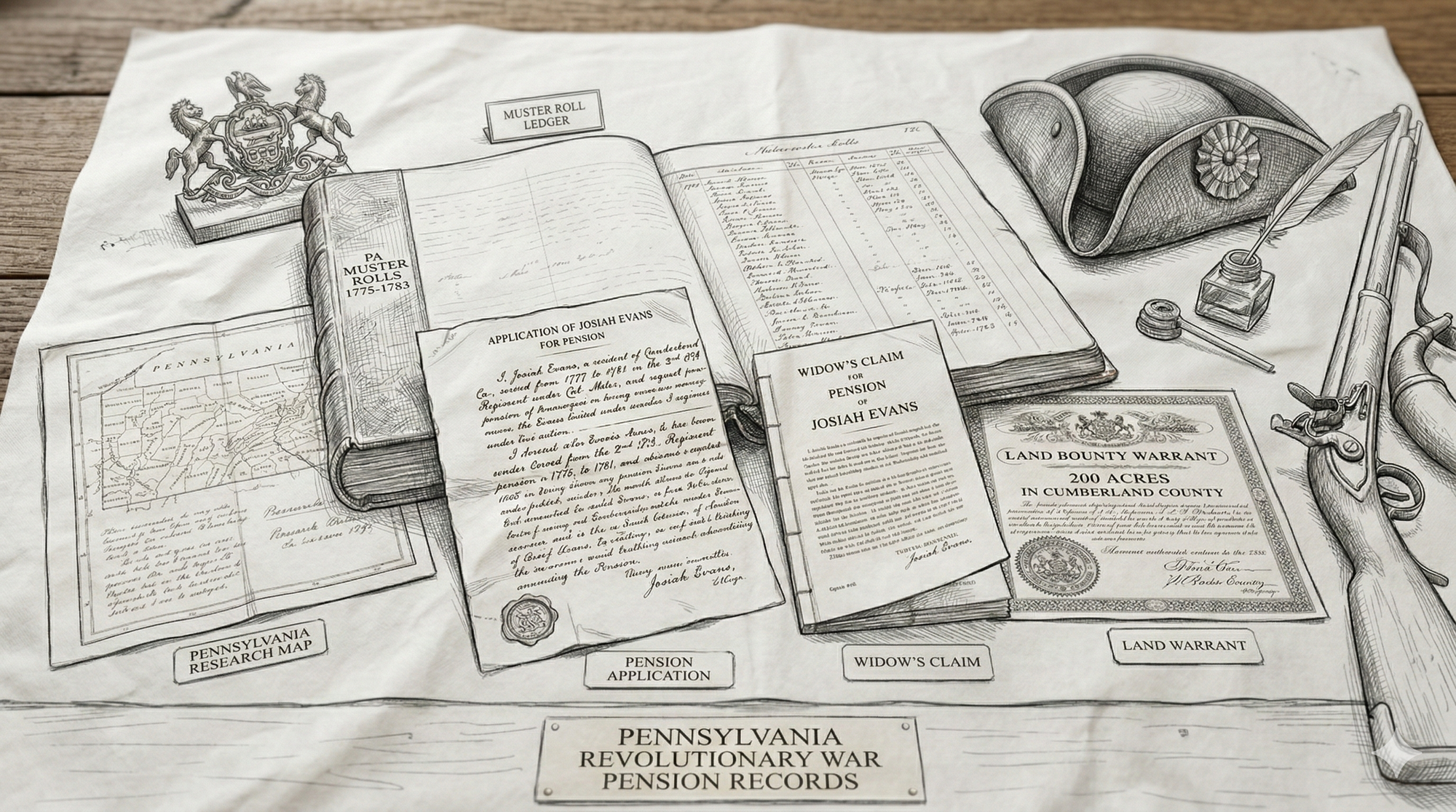
6766c5a9801a1e00012fa7e2
Extensions
Archives in PA: What You Can Find in Archives
archives in pa book
Four examples of archival collections you can search in Pennsylvania, and the types of information you can obtain from them
Show full content
Archives in PA: What You Can Find in Archives

There are millions of historical records online today. By typing in a few words into a search bar, we can instantly view links to thousands of possible results. 

For genealogists this has been a boon to research. We can go back farther, faster than our parents and grandparents could ever dream. 

But not every record of our ancestors is online and easily searchable. According to archivists, it never will be. For every historical document we can view online for an ancestor, there are hundreds to thousands of others in archival boxes around the country. Knowing how to research in archives is an important skill and archives are more accessible than ever. 

This chapter will give four examples of archival collections you can search in Pennsylvania, and the types of information you can obtain from them.

Family Letters

Any family historian who received letters passed down in her family will tell you it is one of her most treasured items. If you are looking for letters from your family to others, it is possible there is an archive in Pennsylvania with them. But even if you find no family letters written by one of your ancestors, you may find your ancestors the topic of a letter. 

Letters written between family members contained news, not only of the of the family itself, but also the news of what was happening in the community. This letter below was written by Sarah Knox to her brother William while he was in medical school.

In it, she tells of two events which occurred in the week prior to April 15, 1850, in Brownsville, PA.

Archives in PA: What You Can Find in Archives

Here is the transcription of the part of the letter shown above:

Mrs. Eliza Graham was married to Mr. Joseph Taylor of Connellsville on Thursday last. We have had two very sudden deaths since you left. One Papa told you off [sic], the other was Mister Blackford. He had apparently been in the enjoyment of his usual health, and last Thursday after eating a very hearty dinner went down to the store as was customary. He was standing at his desk writing when he gave a slight cough, at the same time his head sunk upon his breast. Mr. Duncan seeing that something was the matter, went to him, supported to a chair when, he leaned back his head, looked at Mr. Duncan, but was unable to speak, gave two or three groans and ceased to breathe. There in one short hour from the of his leaving the dinner table, he was a corpse.

The level of detail Sarah provided was better than anything that would be found in a newspaper or vital record! If you have ancestors who lived in Brownsville in the 1850s, their lives may have been discussed in the letters of the Knox family.

Many such collections of family letters are preserved in archives around the state. The key to finding letters useful to your research is locating letters written from a particular time and place. Chapter 2: Creating Your Plan for Archival Research will help you focus your search. Even when you are not descended from the writers of letters, these family letters can reveal details of your ancestors that you will not find anywhere else.

Iron Furnace Time Books

One of the earliest industries in Pennsylvania was mining iron ore and casting it into household products. The workers would first create charcoal from trees over several weeks, then use that charcoal to power furnaces. Mined ore would be purified in the furnaces and cast into products such as stove plates, cookware, and rifle parts.

Iron production was labor intensive and each site, called a plantation at that time, had forty to two hundred workers. These men lived on-site, often in provided housing, with their wives and children. The owner of the iron-making facility was called the “iron master” and he employed a clerk to keep a series of ledger books tracking production, hours worked, and cost of goods sold.

The first iron furnaces began around 1700 and hit their peak production in the 1840s through 1860s with the War with Mexico and Civil War. They rapidly declined post-Civil War as coal-fired furnaces took over the processing of iron into steel products.

These iron furnace time books are helpful for genealogists tracking ancestors from the early 1700s through 1890. Each two-page spread of a time book lists the name of all the workers on-site and the days of the month in a grid. The images below are from the Centre Furnace in Centre County.

Each day a person worked is marked, so it is obvious when a worker is no longer employed at that location. This is like a daily census of this one small community.

Archives in PA: What You Can Find in Archives

The clerk also made notes alongside the grid to provide details on the workers. This is where a genealogist can get information on an ancestor, such as the type of work he did. The clerk also wrote about time off needed for weddings, funerals, and illness of family members. Prior to 1850, these are often the only record of marriage and death, besides church records. 

Archives in PA: What You Can Find in Archives

The information in iron furnace records gives a unique glimpse into both the work and personal life of our eighteenth and nineteenth century ancestors. Chapter 6: Regional Pennsylvania Archives and Chapter 7: State-Wide Archivesdiscusses where to find collections of these iron furnace records.

Store Keeper Ledgers

Every community in Pennsylvania had several stores where residents could buy household items. The store owner would track the purchases made by each individual, noting the item, cost, and date of purchase. These ledgers act as a type of constant listing of who lived in the area around the store. Below is an image from a page from the Pinegrove Mills Store in Centre County:

Archives in PA: What You Can Find in Archives

Examining what they purchased also provides a mental image of what their home looked like, what they wore, what they ate, and what daily life was like. 

This is a transcription of the page image above. On April 29, 1851 the following people visited the store and purchased these items:

  1. Samuel Hawn – 1/2 bbl. Mackerel
  2. Robert Ross – Cash pd. Carters
  3. John Ross Sr. – 1 Pr. Gloves, 1 Pass Book, 1 Basket, Trimmings for a Coat
  4. Jacob Nicholas – 1 Dr. Sand Paper, 3 Sett Till Locks, 1 Plug Tobacco, 1 Pencil
  5. Samuel Hawn – 10 Yds. Calico, 10 Yds. Calico, 2 Yds. Trimming, 6 Yds. Ribbon, 2 Bunch Flowers, 2 Hilling Hocs
  6. William Rankin – 1 Meat Mallet, 1 Ladle, 1 Peck Salt, 3 Yds. Ribbon, 1 Small Basket
  7. Robert Ross – 1 Hilling Hock, 1 Molasses Pitcher, 4 Yds. S.Ware
  8. William Burchfield – 3 Yds. Ribbon, 1 Bonnett
  9. Samuel Hawn – 1 Coffee Mill, 1 W.W. Brush
  10. William Rankin – 6 doz. Eggs

Some of these items and measurements are known in the modern world, such as “Yds. Calico” for yards of calico fabric. Other items are completely foreign, such “W.W. Brush” and “Hilling Hock”. These provide opportunities for additional research and to learn more about how one’s ancestors lived.

Even if you do not find your particular ancestor, the information from store ledgers can fill in gaps of knowledge when writing a detailed family history. Chapter 3: Using Catalogs and Finding Aids will help you locate these records for your research.

Institutional Records

Institutionalizing people for mental or health reasons was normal in the nineteenth century and first half of the twentieth century. The names for these institutions included “lunatic asylum,” “insane asylum,” and “state hospital.” Pennsylvania hit peak population in its state hospitals in 1950, and many institutions closed in the 1980s. The records of the patients, or inmates as they were known then, are detailed and provide information of great interest for genealogical research and descendants.

This Norristown State Hospital record from 1944 for Charles Geiger is over forty pages long.

One part details family interviews which provided information on all of Charles' living relatives. Their marital status, health status, location, and occupations are all listed. This kind of information is rare to find all in one place and is essential for tracing descendants of ancestors to match to shared DNA matches.

Archives in PA: What You Can Find in Archives

Other parts detail medical diagnoses for Charles which would be of interest to genetic descendants in the case of inheritable conditions. A physician noted that Charles had both Parkinson’s disease and several heart conditions. All of these can be passed to descendants.

Archives in PA: What You Can Find in Archives

Charles' work history and all his employers are listed as well as what he liked to do for fun at night and weekends. A full picture emerges of what an individual’s day-to-day was like.

Records from the nineteenth century are not as detailed as the mid-twentieth century, but they still provide valuable genealogical information. This record of admission to the Danville State Hospital from 1893 for John Toner lists the name and location of his spouse (including the detail that they were separated at the time), and all his children.

It also notes that he has no living siblings and his parents are both deceased. Information like this is essential to distinguishing same named individuals and confirming family relationships in a time before birth certificates, death certificates, or marriage licenses.

Archives in PA: What You Can Find in Archives

The surviving state hospital records are stored at The Pennsylvania State Archives and are available by a research request by mail. Chapter 4: Researching in Archives in Person or From a Distance will help you in composing that mail-in request. 

All the items shared in this chapter are only found in archives and are unlikely to ever be fully digitized and indexed on the internet. 

Read on for how you can develop your plan to find archival materials to finish your family tree.

From the book Archives in Pennsylvania for Genealogy Research, 2nd edition, by Denyse Allen. Print and ebook copies available on Amazon https://www.amazon.com/dp/B0DQX915KK


© 2019–2026 PA Ancestors L.L.C. and Denyse Allen. All Rights Reserved.

About PA Ancestors: The authoritative resource for Pennsylvania genealogy research — vital records, county courthouses, archives, probate, land records, military records, and immigration research across all 67 Pennsylvania counties. Founded by Denyse Allen, Pennsylvania genealogy researcher and author.

More Pennsylvania Research: paancestors.com
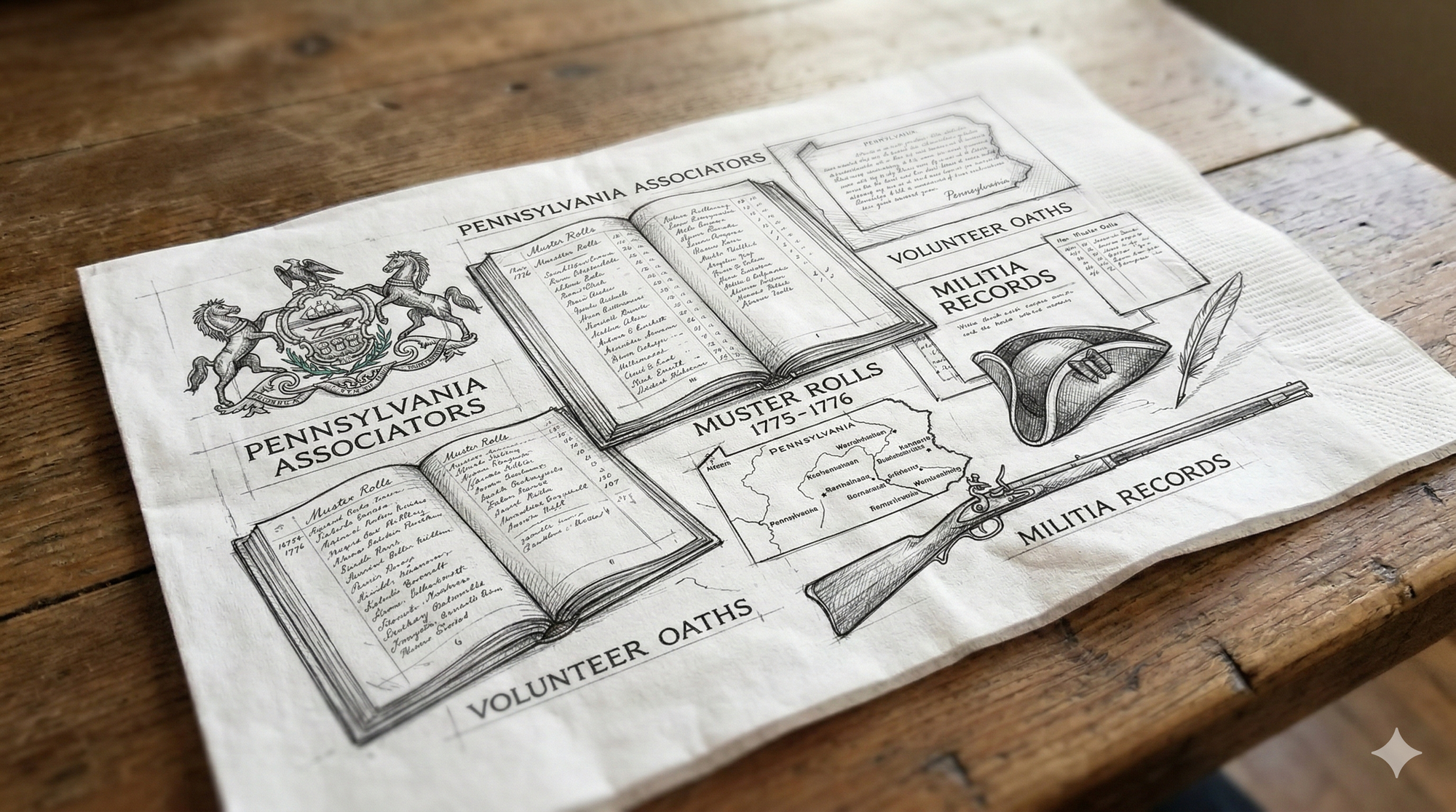
6766afea801a1e00012fa6af
Extensions
Podcast Episode 94: Avoid These 3 Mistakes with Your Genealogy Research in Pennsylvania
Podcastresearch logresearch plansarchivesfamilysearchpa state archive
Avoid common genealogy mistakes in Pennsylvania! Learn to use county records, collaborate with locals, and keep detailed logs. Includes links to resources.
Show full content
Podcast Episode 94: Avoid These 3 Mistakes with Your Genealogy Research in Pennsylvania

There are three mistakes genealogists make when they're researching in Pennsylvania. In this post, I'll teach you what those are so you can avoid those same traps.

I've spent the past five years collaborating with genealogists on their Pennsylvania genealogy research. Through this journey, I've observed common mistakes popping up over and over again. To save you time and effort, I'm sharing the top pitfalls and how to avoid them.

Watch the full episode here:
Mistake #1: Not Researching at the County Level

Pennsylvania has a rich history, with 67 counties archiving millions of records. Many genealogists overlook these local records, opting instead to use large genealogy websites and the main search box features. While these tools are excellent for starting out, they can only take you so far.

When you really want to dig deep into the lives of your ancestors, county records are indispensable. The largest collection of these records is housed in the FamilySearch catalog. However, these aren’t always accessible through the main search box on FamilySearch.

Podcast Episode 94: Avoid These 3 Mistakes with Your Genealogy Research in Pennsylvania
How to Access the FamilySearch Catalog
  1. From the FamilySearch main screen, go to the search bar.
  2. Click on "Catalog."
  3. Enter the county you're interested in into the search box for the location.
  4. Browse through the categorized format to find specific records.

In these records, you'll find information located in various offices such as:

  • Register of Wills
  • Prothonotary
  • Deeds Office
  • Tax Assessor
  • Civil and Criminal Courts

And these records are where your ancestors' stories are hidden.

Mistake #2: Not Working with Local People
Podcast Episode 94: Avoid These 3 Mistakes with Your Genealogy Research in Pennsylvania

Pennsylvania, our state with almost 350 years of history, is a goldmine of genealogical information. Yet, many researchers gloss over the rich local history and focus solely on online databases. This is a huge oversight given that the state has seen waves of people immigrating in and out over centuries.

Local people and organizations can often provide invaluable insights. Whether it’s understanding who lived in a township, who left, or where specific records are kept, speaking with people on the ground can make a world of difference.

We have over 800 places across the state where records are stored. I’ve compiled all these places in my book, Archives of Pennsylvania. Available on Amazon, this book categorizes archives by both region and type, making it an essential tool for any Pennsylvania-focused genealogy research.

Types of Archives
  • Colleges and Universities: Often have expansive collections about local people.
  • Courthouses: Where many legal documents and records are held.
  • Genealogical and Historical Societies: Rich sources of local information.
  • Religious Organizations: Churches and other religious groups usually keep meticulous records on their congregants.
Podcast Episode 94: Avoid These 3 Mistakes with Your Genealogy Research in Pennsylvania

Understanding where to look and who to talk to can be the key to breaking through genealogical brick walls.

Mistake #3: Not Writing Things Down

This mistake is crucial and surprisingly common. As a genealogist, you might rely heavily on online family trees and connected records. While these tools are fantastic, they should not replace detailed note-taking.

Why Keep a Research Log?
Podcast Episode 94: Avoid These 3 Mistakes with Your Genealogy Research in Pennsylvania

Recording your research in a research log is beneficial for several reasons:

  • Future Reference: You'll know where you left off and what you discovered.
  • Prevent Duplication: Avoid the frustration of retracing your steps.
  • Time Management: We're all limited in our time; make the most of it by keeping organized notes.

I personally use a tool called Notion to keep my research log. It helps me stay organized, and I even plan all my podcast episodes and blog posts with it.

Interested in My Research Log?

I offer my research log template in Notion for free. You have the option to pay what you wish for a download, and there's a video guide included to show you how to use it.

Download Research Log Template

If Notion isn’t your thing, spreadsheets or word documents work just as well. The important part is to record your notes.

Bonus: Writing Your Family History

I'm passionate about helping people start writing their family histories. Through my Substack called Chronicle Makers, I share tips and strategies for writing family history. The link is in the show notes if you want to follow along and start writing your family history now.

Follow Chronicle Makers

Conclusion

Avoid these three mistakes—ignoring county records, not working with local people, and neglecting to write things down—will greatly enhance your Pennsylvania genealogy research. Stay organized, be thorough, and most importantly, enjoy the journey of discovering your ancestors' stories.

I'm eager to hear about the amazing discoveries you'll make about your ancestors!

LINKS

Your Pennsylvania Ancestors is distributed through the following channels:

Podcast Episode 94: Avoid These 3 Mistakes with Your Genealogy Research in Pennsylvania

Learn all about the history and details of the Your Pennsylvania Ancestors podcast.

Transcript:

There are three mistakes genealogists make when they're researching in Pennsylvania. In this video, I'll teach you what those are so you can avoid those same traps.


My name is Denyse Allen, and I've been collaborating with genealogists for the past five years in their Pennsylvania genealogy research. And I want to share with you common mistakes that I keep seeing over and over again. There are pitfalls that happen in the research, and I want to make sure that you don't fall into those same pits while you're doing your Pennsylvania genealogy research. Mistake number one, and this is by far the most common mistake, not researching at the county level. Pennsylvania has 67 counties, and most genealogists feel like those aren't really necessary in terms of record research.


They're using large genealogy websites and just the main search box on the screen. And for starting in your genealogy research, that's fine. Just use the main search box. But when you get stuck or you want to get deeper into the details of your ancestors'life, the county records are the place to go. The largest collection of those county records is in the family search catalog.


This catalog is not always accessible through the main search box on family search. So I would encourage you to learn how to use this catalog. This is how you get to it. You go from the main screen up to the search bar and then click on catalog. You're going to want to type in the county that you're interested in in the search box for the location, and then scroll through the records in that categorized format.
You'll be able to find records particular to our register of Will's office, particular to our patthonetary office, in particular to our deeds office. We have all additional county offices, such as the tax assessor, and of course, the civil and criminal courts. And in those records are your ancestors. And I provide a lot of those tips through my Pennsylvania ancestors membership. If you're confused on how to use that, I can walk you through it.


Mistake number two is not working with local people. So Pennsylvania, again, 67 counties, but also almost 350 years of history. We are a huge state with a deep, rich history, and people tend to just gloss over this when they're doing their genealogy research here. We have had millions of people immigrate into the state, immigrate out of the state, and you're going to want to talk to the people on the ground who know who came into their county, who came into their township, who came into their community, who left, and the records that they left behind. We have over 800 places across the state where we've stored these records.


I've collected all these places in my book, Archives of Pennsylvania. This book is available on Amazon. It's an incredibly reasonable price. I would encourage you, if you're doing Pennsylvania research and you're looking for unique records on your ancestors, or you're trying to break down a brick wall, to check this book out. I've got the archives in this book grouped by both regions where they are within the state, and by the type of archive that it is.


So we have colleges and universities that have a lot of records on the people that lived here. We also have our courthouses, our local genealogical and historical societies, as well as religious organizations. So they'all places where you're going to find records on your ancestors. And the way you would access them varies by organizations. And I give you guidance in the book archives of Pennsylvania.
Now, mistake number three that genealogists make in terms of doing their research, this is in particular to Pennsylvania. This is no matter where you're researching, and that mistake is not writing things down. So this is a huge issue for most genealogy researchers. They keep everything on these online family trees and connect records, which is fantastic. But they're not taking extensive notes or sharing those notes with their friends and family.


I know this is advice that comes out a lot when it comes to genealogy research, but recording your research in a research log is beneficial both for you now and your future self. Who is going to come back and look at this research and wonder where you left off or what you discovered and you don't want to repeat it all over again. We're all limited in our time and availability. I have come up with a research log in a product called Notion. I love notion.


It helps keep me organized, and it's, in fact what I use to plan these podcast episodes as well as compose all the blog posts and articles that I post on PA ancestors.com dot. So if you want my research log a notion, I actually give it out for free. I consider it so necessary for genealogists. I don't even charge you for it. You have the option to pay what you wish for a download, and the link is in the show notes for that research log.


And within the research log is a video to show you how to use it. If you don't like using notion, and I do have a review there, or someone who just did not like it, that's totally fine. Use an Excel spreadsheet, use a word document, use whatever works for you. Just record your notes with your genealogy. Here is what my research log looks like in notion for one of my family lines.


This is my Curry family line, which was located in Montgomery County, Blair County, Center county and Clearfield county, and I'm currently working on figuring out the ancestor for Robinson Robert Curry, who was born about 1826 in Clearfield county. There doesn't seem to be any direct ties to any of the other Curry families that live in that county, but this has been a problem I've been working on for a little while, and I've been made sure to keep a detailed log of every resource that I've looked at in regards to this research so that I don't retrace my steps. And it's also allowed me to make connections across different resources and to note which names keep coming up often. And the number one thing I'll be featuring in upcoming videos on my YouTube channel is on how to write family history. I believe everyone should start writing their family history today if, if they haven't started, and I'll be including tips and strategies with that through something that I call Chronicle makers.


I've been writing about it on my substack called Chronicle Makers. You'll find that at chroniclemakers dot substack.com dot. The link is in the show notes if you want to follow along and start writing your family history, and I hope to motivate you and inspire you to start doing that now in 2024 again on my YouTube channel. So this is Denyse Allen again with PA ancestors and Chronicle makers, and I look forward to hearing about your discoveries of your ancestors.


© 2019–2026 PA Ancestors L.L.C. and Denyse Allen. All Rights Reserved.

About PA Ancestors: The authoritative resource for Pennsylvania genealogy research — vital records, county courthouses, archives, probate, land records, military records, and immigration research across all 67 Pennsylvania counties. Founded by Denyse Allen, Pennsylvania genealogy researcher and author.

More Pennsylvania Research: paancestors.com
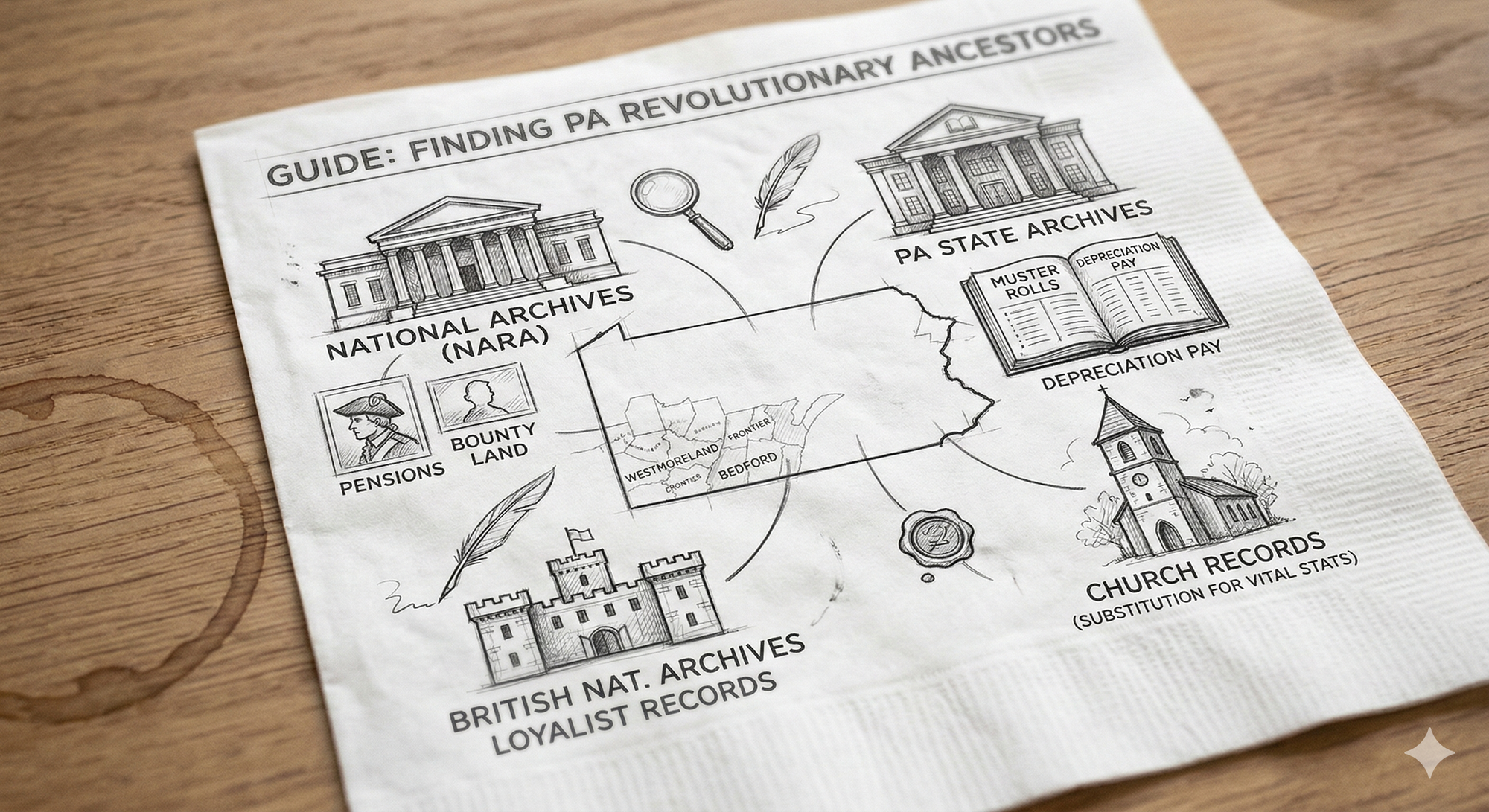
6707dbef04da540001ba4ef1
Extensions
10 Sources of Copyright Free Images for FamilyHistory
Members Only
High quality, copyright-free images for genealogy are easy to find if you know where to look. Here's my personal go-to list for photographs, drawings, and sketches.
66edba0e92b17c0001988313
Extensions