1870s to 1900s fashions1900s to 1920sHatsLate Victorian fashionsResources for CostumersDelineator Magaziine onlinewomen's fashion 1900
On New Years Eve, 1899, ladies who bought Butterick patterns had these choices or gowns for balls and parties. On January 1, they could start the New Year in chic winter outfits…. Also chic: a new hat…. Perhaps winter winds … Continue reading →
Show full content
Formal evening dress, cover of Delineator magazine, December1899
On New Years Eve, 1899, ladies who bought Butterick patterns had these choices or gowns for balls and parties.
Butterick Gowns for New Year’s Eve, 1899. Delineator magazine.
On January 1, they could start the New Year in chic winter outfits….
January 1900 Delineator. Cover image.
More Modish toilettes for January 1900. Butterick patterns from Delineator magazine.
Plaids were chic. Delineator, January 1900.
Also chic: a new hat….
Fashionable winter hats, Delineator, January 1900.
Perhaps winter winds didn’t blow 125 years ago? Or perhaps fashion was as impractical then as now.
Delineator Magazine cover, January 1900.
The good news is that these color images (and much more) are available online. You can read entire issues of fashion magazines like Delineator at Hathi Trust. The collection is not complete, but the pleasure of a little time travel is at your fingertips.
The January 1900 issue is here: paste this into your search bar:
1870s to 1900s fashionsCorsetsCostumes for the 19th centuryLate Victorian fashionsVintage Garments: The Real Thing1830s bodice in 1890s1830s skirt in 1890s1890s Empire costume1890s fashionempire fashion revival 1890sempire stays pattern 1893fashion historymother hubbard clothing
Sometimes a new fashion takes off and becomes dominant. Sometimes not! While browsing through a fashion and pattern magazine from 1893, I learned something new — which may interest vintage clothing collectors. This is a typical style from 1893: The … Continue reading →
Show full content
Empire gown from Delineator, January 1893. Butterick pattern #4944.
Sometimes a new fashion takes off and becomes dominant. Sometimes not!
While browsing through a fashion and pattern magazine from 1893, I learned something new — which may interest vintage clothing collectors. This is a typical style from 1893:
A typical fashion from January 1893, Delineator. A tightly fitted bodice, with huge Leg-o-Mutton sleeves contrasting with a tiny waist.
The huge sleeves and very tiny waists that are associated with the mid-eighteen nineties were already The Fashion in January 1893.
But there was an attempt to introduce a return to the Empire style of 1805:
Empire style dress, early 1800s. Metropolitan Museum collection.
Short-Waist Empire pattern 4912, Butterick, June 1893. Delineator.
This attempt to to revive a fashion from early in the 19th century took me by surprise.
Butterick Empire Gown and short Empire Jacket for day wear, Delineator, January 1893. This dress has gathers in front and in back, like early French Empire gowns.
The high-waisted jacket of the Empire and Regency periods was called a “Spencer.”
A Spencer jacket. Early 1800s. Metropolitan museum.
This “Ladies’ Empire Jacket,” Butterick pattern 4934 from 1893, could be worn over other outfits.
Butterick Empire Jacket pattern 4934. Delineator, January 1893.
Another “bolero” length jacket was the sleeveless “Zouave Jacket,”
a revival of a style popular in the 1860s.
A sleeveless “Zouave” jacket from Butterick, Delineator, June 1893.
The 1893 Empire fashion required new undergarments, including new corsets that stopped inches above the natural waist.
“Empire Short Stays” were underwear designed to be worn under the new fashion. Butterick pattern 4936, January 1893, Delineator.
Notice the buttons, which were necessary to hold up the petticoat, since it would otherwise slide down to the natural waist.
Notice how this “Empire Petticoat” buttons on to the Empire Short Stays, or corset.
Just as happened in the early 1800s, the skirt part of the Empire gown evolved to have a relatively flat front, with most of the fullness pushed to the back.
The “New Departure” in 1893 was the Empire Waist. Delineator, June 1893. Pattern 4971, lower right, has no gathers in front.
Very quickly, the term “Empire waist” stopped being restricted to gowns that would have looked familiar to Jane Austen. (“The Empire”was that of Napoleon. Here is a portrait of his Empress, Josephine. Her 1805 gown is slightly gathered at the front, with most of the fullness pushed to the back:)
Portrait of Josephine de Beauharnais by Robert Lefevre, c. 1805. Wikipedia
Some of the 1893 Empire gowns look more like Regency styles.
Alternate views of Butterick 4944, Delineator, January 1893.
And Corset manufactures offered this:
“Empire Stays” could apply to a normal, long-waisted corset, as well as the short stays offered by Butterick. Ad, Delineator, June 1893.
What, one may ask, makes those long stays “Empire?” [Afterthought: I noticed that these are corded stays, rather than boned stays….]
Well, instead of a short-waisted top with a full, gathered skirt attached, Butterick’s Delineator magazine began applying the word “Empire” to bodices that were tight to the normal waist, but which had a sash or fabric change a few inches below the bust:
“Ladies’ Empire Costume, with Removable Jacket,” Delineator, January 1893.
Here is an “Empire Belt:”
“Ladies’ Empire Belt” pattern 4923, Delineator, January 1893.
However Empire or Regency ladies would not have recognized these styles:
“Misses’ Empire Waist,” Butterick 6218, June 1893.
Misses’ Empire Waist” 6218, June 1893, Delineator.
“Ladies’ Empire Costume” with “Empire Circular Skirt” & “Empire Jacket.” Jacket pattern 6257, Delineator, June 1893.
Fashion reporters began to call bodices with a natural waist line “the 1830 bodice” (and a full or circle skirt became the “1830 skirt.”)
I poked around in 1893 newspapers and found that the 1893 “Empire Waists” were definitely a topic of debate. [“Waist” was the 1893 term for a bodice, but in this case it also referred to a waistline just below the breasts.]
In March of 1893, The Miami Republican published “Styles of the Empire: Fashion Sailing Between Two Dangerous Rocks of Antiquated Designs. ”
‘You might as well wear a Mother Hubbard and be done with it,’ is what a man said to his wife the first time he saw her in full empire rig.”
A “Mother Hubbard” robe/wrapper/negligee, from Delineator, April 1899. Some men disliked the waistless, figure-hiding Empire garments; to some, the Empire gown was not suitable for public wear.
The newspaper conceded that “the empire frock is comfortable….” while “The 1830 waist, on the contrary, is quite long and very slim. So slim that our healthy young women groan and wonder what they could do, even if it were possible to squeeze into it, for they could never stay there.” But the comfort of the empire waist seemed too self-indulgent, suited to “the woman who would like to sit around in a wrapper [loose house robe] all day.”
The St. Louis Globe-Democrat, October 4, 1893, devoted several pages to a huge ball held in Missouri, describing what was worn by all the ladies — in alphabetical order. Mrs. Henry Allen wore a gown of green faille over an underdress of green, “empire waist outlined with a girdle of gold and green passementerie,” plus a gold comb in her hair. Miss Mary Breckenridge wore pink and white, with an empire waist. Miss Florence Bliss wore white China silk, her empire waist “trimmed with bands of red velvet.” Mrs. C. J. Dunnerman wore black and gold for her “empire waist with crocheted vest over gold satin.” Miss Bessie Davenport was all in white, with an empire waist, while Miss A.M. Douglas’ empire waist was cream silk, and Mrs. J.S. Finkenbiner’s gown was heliotrope bengaline, with an empire waist….
At least eight other ladies — out of more than a hundred — chose to wear the new empire gowns. But it was a minority choice.
It might be tempting — if you find a high-waisted gown from 1893 or so — to classify it as a maternity garment. But not necessarily! Many of the ladies attending that ball in “empire” gowns were “Miss,” not “Mrs.”
Empire dress for Misses, Delineator, January 1893.
Garments called “Tea Gowns” or “Wrappers” often featured fullness over the midriff, but they also had an inner lining that was snugly fitted, like an ordinary bodice or dress. That was true of this vintage garment (undated) which I examined:
A pleat-fronted wrapper with front opening, hidden by the pleat. Its velvet has worn bare, so it probably got lots of use. Private collection.
It was a very small size, and had a tightly fitted underbodice that closed with hooks and eyes to the waist. It could have been worn with some of the hooks unfastened, but not as a maternal bust swelled.
However, Empire-influenced fashions might be worn as aesthetic dress in the 1890s. This Tea dress is in the collection of the Fine Arts Museums of San Francisco.
The 1893 empire waist was just another fashion flame that flared briefly … and went out.
Exhibitions & MuseumsUncategorizedVintage Garments: The Real Thingancient woven clothingegtved girl clothingfashion history prehistoric clothingprehistoric clothingprehistoric weavingprehistory
It would be remarkable to open a grave and find well-preserved clothing from 600 years ago, but the wool blouse, string skirt, and belt of the “Egtved girl” found in Denmark are nearly 3400 years old! There are many documentaries … Continue reading →
Show full content
It would be remarkable to open a grave and find well-preserved clothing from 600 years ago, but the wool blouse, string skirt, and belt of the “Egtved girl” found in Denmark are nearly 3400 years old!
image from Reddit Posted by u/Alexaalexa97
There are many documentaries on YouTube about this wonderfully preserved clothing from 1373 BCE, with an actress wearing and demonstrating moving around in carefully recreated copies of the outfit. [ Note: Some of the speculation about the original wearer’s life and travels has been re-evaluated as more scientific information becomes available. Apparently the soil samples used to trace her origins were based on samples from land contaminated by modern agriculture and modern chemical fertilizers. ]
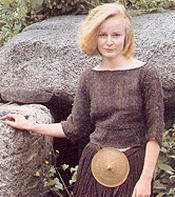
Egtved girl in reproduced clothing, courtesy of Nationalmuseet i København
The outfit, including a decorative belt that wraps twice around her body and has a round shield/sun disk looks surprisingly modern in this era of cropped tops and very short skirts. See a recreation being worn here.
If you want a close look at the way these clothes were reproduced by experimental archeologists, here are some YouTube videos:
Sally Pointer has posted many videos of her work on prehistoric textiles, including how to make string for cords, nets, and clothing from nettles (!) which are processed much like flax is processed to make linen. If you are interested in prehistoric textiles, subscribe to her YouTube channel. Her videos on reproducing the Egtved girl’s clothing are filled with good images of the historic clothing and her reproductions, being modeled by a modern young woman. Here is a long list of her videos: https://www.youtube.com/playlist?list=PL5zgizOgAtq211QucFDShmbK1CieFOClX
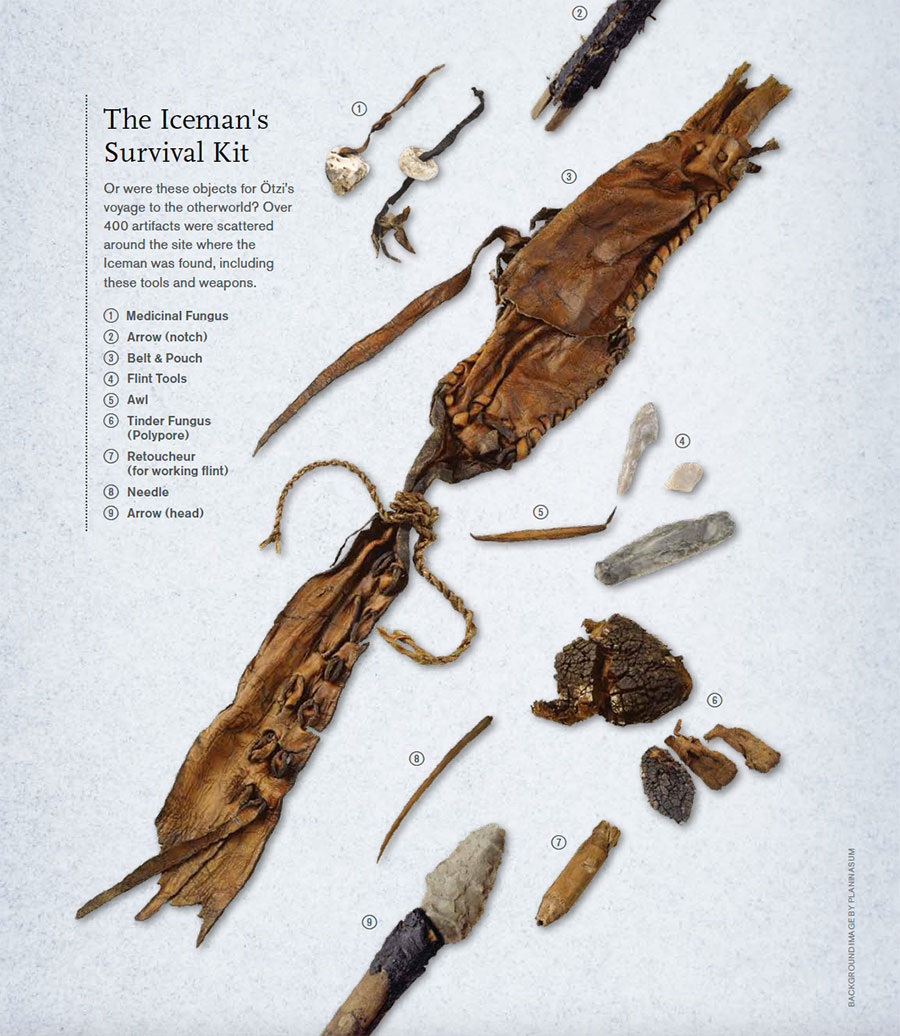
My own experience of stinging nettles comes from walks in England, and it’s inspiring to think pre-historic people used this seemingly unfriendly plant for textiles and food! Once archeologist Elizabeth Barber (in Women’s Work: The First 20,000 Years) pointed out that half the historic record was long ignored because textiles and wooden objects rarely survive, I became very conscious of the fact that we speak of “hunter-gatherers,” but we find much more evidence of hunting (stone arrowheads, bone fishing hooks) than we find of gathering — which includes baskets, ropes, fishnets, and clothing. If you’ve ever tried to carry ripe blackberries back to your campsite in your hands, you’ll appreciate that prehistoric people had to figure out a way to carry large quantities of fruits and grains! They also had to carry water, probably in leather bags or tightly woven baskets. And of course, they had to carry babies while keeping their hands free. I can’t imagine that pre-modern nomadic people didn’t take their painstakingly made stone tools with them while following herds and moving to summer or winter camps. [In fact, the man who lived about 5000 years ago and was found preserved in ice — now called Otzi — had a leather pouch on his belt. Penn Museum has an excellent article about him — and his clothing.] As important as spears and axes were needles, scrapers, and awls. An excavation in what is now Florida shows that Native American women were weaving textiles from palmetto fibers 7000 years ago. They were buried with their needles and other tools.
Experimental archeologist Ida Demant has also reproduced the skirt and Emma Stockley shows you a quick pre-historic top. This top is not based on the Egtved girl, but on the top worn by an older woman buried at Borum Eshoj, Denmark. The oak from which her coffin was made dates to about 1350 BCE. This blouse surprised me because it required a tool which could cut fabric, instead of using rectangular woven pieces stitched together. (And, yes, this video uses scissors and a sewing machine!)
Vintage News has lots of ads but some good photos. The Egtved girl’s clothing was wonderfully well-preserved because she was buried in an oak coffin. Only her hair and teeth remained; she is not a mummy. Her coffin and possessions are in the National Museum of Denmark.
1900s to 1920sEdwardian fashionsHosieryHosiery & StockingsMusingsPanties knickers bloomers drawers step-insUnderthingsEdwardian stockings and underwearFrench open drawers 1903Patterned stockings 1900s
[Please overlook the added texture. The stockings did not have a gray checked pattern. The online image, scanned and posted by Google Books, needs “de-gaussing,” but I no longer have a program that will do that. Sorry.] These are fashionable … Continue reading →
Show full content
Ladies’ stockings, Delineator magazine, August 1903.
[Please overlook the added texture. The stockings did not have a gray checked pattern. The online image, scanned and posted by Google Books, needs “de-gaussing,” but I no longer have a program that will do that. Sorry.]
These are fashionable stockings featured in Butterick’s Delineator magazine in 1903. Delineator was aimed at middle-class (and aspiring) women, so these stockings were not limited to ladies who showed their legs professionally….
They were colored in pink and blue as well as black and white, sometimes with “lace applique” at the calf and upper thigh. Imagine getting a flash of those stockings peeking out from covered-to-the-chin fashions like these:
Street wear, Delineator magazine, January 1903.
Ladies’ fashions for January 1903. Delineator magazine.
Rambling Thoughts:
The Edwardians had a king known to have multiple liaisons and a long-term mistress, so a glimpse of stocking may have been less shocking in 1903 than in his mother’s reign.
(It’s easy to think of the Victorians as straight-laced, but a “a pair of ladies’ drawers” — the kind worn by Queen Victoria **– were originally “crotchless,” consisting of two legs attached only at the waistband.)
Undergarments for 1893 included frilly “French open drawers” like these:
French Open Drawers, Butterick pattern 6979, Delineator, August 1903.
French Open Drawers. Butterick pattern 7060 in Delineator, September 1893.
“French open drawers” certainly cast a new light on that “disreputable” French dance, the Can-Can. (The Can-Can first appeared in the 1840s, but it remained a popular number for decades.) Ooh-lah-lah!
1870s to 1900s fashionsCostumes for the 19th centuryHats and MillineryHosieryLate Victorian fashions1890's fashions for bicycle riders1898 fashionbicycle clothes 1898 womenplaid stockings 1890s
1. Leave the old year behind. 2. Move forward with enthusiasm. 3. Exercise every day. 4. Wear entertaining socks! Happy new year!
1870s to 1900s fashionsCapesCoatsCorsetsCostumes for the 19th centuryLate Victorian fashions1890's fashions1890s coats capes womenfashions for 1893
I think of those very large leg-o’-mutton sleeves as the fashion of 1895, but they started earlier. A good, warm winter coat is useful almost anywhere, so here are some coats (and capes) from 1893 — 130 years ago — … Continue reading →
Show full content
I think of those very large leg-o’-mutton sleeves as the fashion of 1895, but they started earlier.
From Delineator Magazine, published by Butterick in December 1893.
A good, warm winter coat is useful almost anywhere, so here are some coats (and capes) from 1893 — 130 years ago — to wear in your dreams.
Butterick coat pattern 6593, from Delineator, December 1893, p. 629.
The nearly floor length coat has a front waist seam that echoes the woman’s suit jacket of the day.
To achieve the tiny waist and full hips of this period, you could wear a corset like this under your dress:
Ad for a “Solid Comfort Corset.” from Delineator, December 1893.
Some corsets came with bust padding:
This shows very large hips in relation to the midriff, and arrived with “Tampico Dress Forms” — which probably helped the corset to “develop the bust.”
Your 1893 coat could be relatively simple and tailored, or you could indulge in a few frills:
What with the capelet and the huge sleeves, a lady must have taken up two seats on the bus….
Triple capelet, horizontal shoulders/sleeves, vertical hat.
This three-quarter coat is double-breasted, like a man’s reefer jacket (or pea coat:)
Three-quarter coat, with back fullness that echoes the skirts of 1893. Butterick pattern 6592.
This distinctly feminine double-breasted style has a “sprung collar,” swooping up at the shoulders. Delineator, December 1893. Butterick pattern 6606.
It took a lot of wool to make coat sleeves that would fit over the enormous dress sleeves of the day:
Lady’s visiting toilette, December 1893. Her purse looks ridiculously small compared to her sleeves and lapels.
I think that getting into a cape would have been much easier than getting in and out of a coat, and capes were definitely an option:
Collars were very high in 1893. This type, with flaring over the shoulders, is a “Columbia collar.” You could make the cape in two different lengths.
“Outdoor toilettes,” December 1893, Delineator magazine.
If you want to read more about these styles from 1893, copy and paste this link to the Hathi Trust. It will take you to the complete December 1893 issue of Delineator magazine:
1870s to 1900s fashionsCapesExhibitions & MuseumsLate Victorian fashionsNightclothes and RobesVintage patternsWomen in Trouserscycling outfit clothes fo womendoll patternsdolls clothes 1899 1890sevening dress 1899gaiters leggings 1890slady dolls
Dolls and doll clothes patterns usually appeared in the November and December issues of magazines like Delineator. I have seen “Fashion Dolls” in museums, but the “Lady Doll” is new to me: an 1890’s version of Barbie — a doll … Continue reading →
Show full content
1899 Butterick suit pattern for a “lady doll.” Delineator magazine, November 1899, p 572.
Dolls and doll clothes patterns usually appeared in the November and December issues of magazines like Delineator. I have seen “Fashion Dolls” in museums, but the “Lady Doll” is new to me: an 1890’s version of Barbie — a doll with an adult figure and a wardrobe of current fashions. Butterick patterns made for these dolls were close copies of Butterick patterns for women.
1899 Butterick pattern for a woman’s “tailor” suit. Delineator, December 1899 p 629.
Butterick Patterns for lady doll” clothes from November 1899, Delineator.
Making this in a doll size would be a challenge:
Doll’s suit pattern from Butterick, 1899.
“Dolly” would be wearing a suit very similar to this one for real women:
I had a hard time imagining a doll with the tiny waist, large bust, and rounded hips of that year’s corseted figure, but Butterick also sold patterns for the doll herself.
The doll on the left has a very adult figure, with narrow waist and long legs. The porcelain head would be purchased separately. The jointed rag doll on the right has a painted face.
Unlike the “lady dolls,” this 30″ rag doll with painted face was made to wear actual baby clothes.
A very large hand painted doll — but not a “lady doll.”
Lady dolls and fashion dolls, on the other hand, were not intentionally childlike. Like a 20th century doll with a stylized woman’s figure, the whole point of a lady doll was that girls could dress her in grown-up clothing, This fashion doll even wears a corset:
This fashion doll from the Barry Art Museum collection is also described as a lady doll. 17 inches tall, French, circa 1880-1885.
I have always been amazed by the details on Fashion Dolls, and the patterns Butterick sold for lady dolls would require painstaking craftsmanship, especially if the doll was only 16 inches tall!
Lady Doll patterns fit dolls from 16 to 28 inches in height (including head).
This fashion doll is just 17 inches tall. Look at the detail in her ruffles and lace!
French Fashion doll circa 1875, from Barry Art Museum Doll collection.
So I guess it’s not surprising that the clothing patterns for lady dolls assume considerable sewing skills to make such realistic outfits.
A “Yachting costume” for your lady doll. A yachting cap pattern was included.
Butterick doll pattern for cape, December 1899.
This doll cape pattern is very similar to a Butterick pattern that was available for women:
Woman’s “golf cape” with optional hood, Delineator, November 1899.
A similar cape pattern was available for Misses and girls:
A cape pattern in Misses’ and Girls’ sizes. December 1899, Delineator.
I was delighted to find that a lady doll could also wear a Cycling outfit:
Shirt-waist, Bloomers or Knickerbockers, and gaiters, for a lady doll, resembling the clothes a lady might wear while riding a bicycle.
They are very similar to these real patterns for cyclists:
Butterick pattern 3083 for women’s knickerbockers, Delineator, August 1899.
The knickerbockers would be worn under a cycling skirt. This one is for women:
Woman’s cycling outfit, Butterick 3131 from Delineator, Sept 1899. The skirt is shorter than a normal adult lady’s skirt and has a deep pleat at the back.
Cycling suit for ladies, Sept. 1899.
Because the skirt is shorter than a woman’s walking skirt, buttoned gaiters (here called leggings) prevented legs from being exposed — or splashed with mud.
Gaiters or Leggings covered the rider’s legs to the knee.
Bloomers (or Knickerbockers) and Leggings (or Gaiters.)
Can you imagine finding doll buttons that small, and making those doll-sized buttonholes? The lady doll’s cycling jacket is also rather elaborate:
Lady Dolls’ set no. 227 Consisting of a 3 piece Cycling Skirt, Eton Jacket, and a Tam 0′ Shanter cap. for Dolls 16 to 28 inches. December 1899, Delineator.
Of course, a lady doll’s complete wardrobe would include underwear, a nightgown, a robe, petticoats, etc.
For dolls 14 to 28 inches. Notice her tiny waist and generous bottom!
Lady doll’s nightgown, Delineator, December 1899.
Above, a doll’s robe or wrapper, to be made of flannel.
Lounging-Robe and petticoat, chemise, and drawers for a lady doll.
In 1899, evening and ball gowns often consisted of a separate bodice and skirt. For formal affairs, the neck and arms could be exposed; for dinner parties or formal afternoon events, a separate guimpe was worn under the bodice and provided a high collar and long sleeves.
The combination of bodice (waist) and guimpe would supply 2 different formal looks for a lady (or a lady doll.) Butterick patterns from Delineator, December 1899.
Evening waist, Butterick, September 1899. (Talk about giving women an unrealistic body ideal! Also, those tiny tyrannosaurus hands and forearms are typical of fashion illustrations in the 1890s.)
In a series of articles about jobs for women, Delineator interviewed doll dress maker Ernestine Pomroy in December, 1899. She makes it clear that lavish doll wardrobes were a high-priced luxury item for the children of the wealthy. Considering the details on the patterns above, it makes sense that this was a job for the professional seamstress, especially in an era when many women who could afford it also chose their own dress patterns and took them to a professional seamstress to have them made up.
The Interview: “Miss Ernestine Pomroy, looking around for some way whereby she might earn a living, was impressed with the expensiveness of dolls’ cloths [sic] as sold in the New York stores. She made several complete outfits, took them to one of the leading toy merchants and asked for orders. That was her beginning, just a little more than two years ago. To-day she employs four assistants regularly, and in the Autumn, before the holiday season, is forced to employ twelve additional ones for several weeks.
When visited in her work-rooms on East Ninth Street the other day, Miss Pomroy, speaking of her work, said: “Of course, I am not the first person who ever made doll clothes for the New York trade, but I believe I am the first person to make it a profession and devote one’s whole time to it. I began just as you have been told, by making a few gowns for children dolls, that is, dolls which are dressed like little girls eight or ten years old. Now, we make them for all ages, though I still prefer to make for dolls of that age.
“While most of my clothes are made to fill orders from the large toy dealers, I have many regular customers among children. They have parents who can afford to humor every whim, and their dolls are brought to me and the season’s outfit ordered, just as its little mistress is taken to the tailor and modiste. In such instances our charges are proportionately large, as no two of the garments are alike, and often the mother of our little customer wishes exclusive designs and will pay for such privileges. This is, as a rule, the case only where the pet is a “lady doll.” Then the costumes of exclusive designs are wished for parties, dinners, weddings or some child’s entertainment. In these outfits we are expected to furnish every article of apparel from their shoes and stockings to their hats. The shoes we buy ready made, or, I should say import, for there is no factory for dolls’ shoes in America; but the hats are made by our milliner and copied after the latest French models.
“Doll’s gloves, rubber capes and mackintoshes are made by regular factories in this country, so I have nothing to do with them beyond supplying them to our customers, though in some instances I have designed them for the manufacturers.
“I think there is an opening for such a business as mine in every large city, and I have certainly found it remunerative. It requires, in my judgment, about the same qualities that make a good dressmaker; but I selected it because I found that while one field was over crowded the other was untouched. The result has been highly satisfactory, as my work is both pleasant and profitable.”
Barry Art Museum Doll Collection, “Parisienne” doll, back view, circa 1868.
If you are interested in dolls, I highly recommend a visit (online, unless you live nearby) to the Barry Art Museum in Norfolk, Virginia. On the campus of Old Dominion University, the Doll and Automata Collection is only one of the museum’s collections. Other departments include Fine Arts and Glass. If you can’t visit in person, visit the Doll Collection online here.
1920sevening and afternoon clothesShoes1920 skirts1920s fashionsButterick evening patterns 1920skirts with side flouncestango bootstango shoestango slipperstwenties fashions
While looking at those orange and black outfits from the early twenties, I realized that the skirt with added lace cascades at the sides was really rather interesting. I have seen stranger ideas stolen and presented on fashion runways! And … Continue reading →
Show full content
Butterick skirt pattern 2096, with a separate bodice. January 1920.
While looking at those orange and black outfits from the early twenties, I realized that the skirt with added lace cascades at the sides was really rather interesting.
Butterick skirt pattern 2096, from Delineator, February 1920.
I have seen stranger ideas stolen and presented on fashion runways!
And I found more of them.
Butterick skirt 2166, also from February 1920.
A version for misses in their teens. Butterick dress #2017. It’s shorter, and the bodice is attached.
These styles come from a brief period when hips were widened, but not to make the waist look tiny. These dresses (or skirts) are made from bulkier fabrics.
Butterick skirt 2056 at left and 2100 at right.
Back views:
Bodice 2056 with skirt 2046, and dress 2100 (in green above.)
Back to variations on Skirt 2096:
Skirt 2096 with lace cascades. And tassels.
Detail, Butterick skirt #2096, without lace. Self fabric, lace, chiffon, or tulle could be used.
“The straight skirt is two piece with draped side frills.”
Skirt 2096, back view of one version.
Above, Skirt 2096 as described in February 1920.
This is also skirt 2096, but made from a heavier fabric.
For full glamour, this is a different skirt, #2166:
Skirt 2166, detail.
A different version of #2166:
This looks very different from the other version of #2166.
Butterick skirt #2166 does seem to have an “apron” rather than cascades inserted into the side seam.
Above, description of Skirt 2166.
And, while Butterick suggested that real glamour was for adults…
Adult style, using skirt 2166.
… Teenaged “misses” had their own version of the skirt with flounces at the sides:
Butterick dress 2107 for teens and small women. Delineator, March 1920.
This shortened version, scaled for petites, is worn with “Tango slippers,” sometimes called “Tango Boots.”
1920sChildren's Vintage stylesevening and afternoon clothesHats and MillineryUncategorized1920s colors1920s fashions1920s fashions for women19211922fashion historytwenties fashions
It’s been some time [Oct. 5, 2014] since I first wrote about the popularity of an orange and black combination for everyday wear in the early 1920s. It wasn’t just for October, and it didn’t necessarily evoke thoughts of Hallowe’en … Continue reading →
Show full content
Orange and black on the cover of Delineator magazine, October 1921.
It’s been some time [Oct. 5, 2014] since I first wrote about the popularity of an orange and black combination for everyday wear in the early 1920s. It wasn’t just for October, and it didn’t necessarily evoke thoughts of Hallowe’en in those days. Here are a few examples:
This ensemble is from February 1920. Delineator.
A chic summer coat:
This boldly orange, black, and white coat dates to August 1921. Note her matching orange veil! Delineator.
Full length view of coat, Delineator, August 1921.
The woman next to her wears orange-ish plaid:
The effect is orange-y, although one could argue that it’s ochre and rust….
This orange and black dress is topped with an orange and black hat.
November, 1921; Delineator.
The black skirt has an orange lining on the side drape, and the collar is black, with black embroidery on the bodice.
Orange dress, black hat, 1921:
This orange dress is beaded in darker orange. October 1921, Delineator.
Butterick also sold beading patterns. This is dress 3303 with embroidery design 10921.
If you’re not familiar with Delineator Magazine, it was published by Butterick and contained many articles and fiction as well as pages and pages of featured Butterick sewing patterns. Issues of the magazine going back to the 1880s can be found online at Google’s Hathi Trust. They are searchable.
Two dresses from Delineator, April 1922.
Both theses Spring outfits feature the orange and black color combination.
The dress on the right seems to have a self-bias-tape lattice trim worn over a black slip or underdress. (A slip intended to show was made of dress fabric and called a “costume slip.”
This black winter dress is embroidered and lined in burnt orange for a subtle zing.
Delineator, January 1922.
January, 1922.
Another black costume, this time a sheer tunic for evening, has touches of red-orange embroidery accenting sleeves, bodice, and borders:
A sheer tunic top over a black “costume slip.”
Details of tunic 3462. January, 1922. Delineator.
Black and orange for Spring:
A suggested costume for April, 1922. Delineator.
It depends on a printed fabric in white, black, blue and orange for its contrast sleeves and belt.
Even tennis clothes could be colorful, like this blouse from August 1922:
Blouse, Delineator, August 1922.
Children could wear orange and black any time of the year:
Girl’s dress embroidered in black, with matching bloomers. December 1922, Delineator.
If you’re desperate for a costume idea, how about Little Orange Riding Hood?
Little Orange Riding Hood; October 1921. Delineator.
1950s-1960sMusingsUncategorizedVintage AccessoriesWomen in Trousersdressing for the mid 1960sdropped waist 1960sEmpire waist 1960skitten heels 1960sQuant influence 1960sstiletto heels 1950s 1960sWomen's shoes 1965 1966
A few years ago I enjoyed watching a young woman in England on YouTube; she was a fan of the “Sixties” look and even went to great lengths to find authentic 1960s’ synthetic fabrics for the clothes she made. Her … Continue reading →
Show full content
Low heeled chic: Shoes from Sears, Fall 1966.
A few years ago I enjoyed watching a young woman in England on YouTube; she was a fan of the “Sixties” look and even went to great lengths to find authentic 1960s’ synthetic fabrics for the clothes she made. Her hair and makeup were appropriate. But I eventually stopped watching her because she kept getting the shoes wrong. Those Mary Quant dresses were generally not worn with high stiletto heels! (Very 1950s.)
Stiletto Heels advertised in the New York Daily News, August 1953. Very 1950s. Not youthful.
Butterick Fashion News features more Mary Quant patterns. April 1965. Notice the shoes.
These were callled “Kitten” heels, only about one inch high. Sears catalog, Spring 1966.
I was 20 years old, in college, in 1965. My friends and I were great Beatles fans. We loved youthful English Fashion. Of course, I’m not just trusting my memory about the shoes: “Since their introduction in 1950s, [stilettos] slowly went out style in 1960s, only to triumphantly return during 1970s when new “needle” style came into fashion. ” — from “History of Stiletto Heels.” The secret of the exceptionally narrow high heel was steel instead of wood, as this article from Popular Science explains.
These high heels are from 1958, when skirts still covered the knee — and 2 inches below it. From The Gazette, Montreal, 2/2/1958.
I had some of these “spike heels” in 1962 — not at all suitable for walking down steep hills in San Francisco! But in the mid-sixties, as the skirts got shorter, young women’s fashion shoes were actually comfortable.
Even with a Mary Quant suit, low heels were worn. BFN, April 1965.
Low heeled fashion shoes from Sears, Spring 1966.
My favorite shoes from 1966 were very similar to those green ones at the bottom. Mine weren’t from Sears, but they were bright pink. They went well with a couple of blue paisley dresses that had a touch of shocking pink as part of the pattern.
You could even wear flats (with half-inch heels) for all but the most formal occasions. BFN April 1965. Note the Mary Quant separates, including shorts, pants, blouse and skirt for a mix and match wardrobe.
Flats and Kitten heels from Sears, Fall 1967.
Those blue Mary Jane flats with the white trim and heels are definitely youthful chic.
1960s’ flats could have 3/4 inch heels, half inch heels, or 3/8 inch heels.
A variety of flats, Sears Spring 1966.
I also bless Quant for her “Empire” influenced dresses. BFN April 1965.
Quant played with ways of avoiding the tight-waisted fashions of the 50s. She introduced a high waist, like the one above, and a dropped waist evoking the 1920s.
Mary Quant pattern in BFN April 1965. Notice the shoes.
The neat white collar was a feature of many, many Quant-influenced designs, sometimes with a long center button placket or a variation on the necktie.
Another Mary Quant suit — this time with pants and a skirt to match the jacket and extend your wardrobe. BFN April 1965.
The matching trousers,1965.
Notice that 1960s’ sleeveless dresses did not always cut away at the shoulder. (I personally think that a sleeveless top that completely exposes the shoulder is more flattering.)
This is not to say that no young women wore very narrow heels in the 1960s, but they were generally not more than 2 3/4 inches high. They looked higher because the part of the heel that touched the floor was only about 1/4 inch square.
Narrow heels, but not “spiked heels.” These are all 2 3/4 inches high.
The college I attended owned an Italianate mansion built by a (temporarily) wealthy San Franciscan called William Ralston.
It included a mirrored ballroom, oval in shape, with wooden floors laid in a parquet pattern of dark and light. College dances were held there until people realized that those 1/4 inch square heels were destroying the floor. My father, who knew how to operate heavy equipment, once measured my 1962 spiked heels and did some math: a 130 pound woman wearing 1/4 inch wide heels exerted the same pressure per inch as a steam roller. Add to that the popular dance called “the twist” and it’s no wonder spiked heels were drilling holes in the century-old floor!
These heels from 1956 were lethal to some wooden floors. Image from Clarion Ledger, Jackson Mississippi, Sept. 1956.
So what did we wear with cocktail and formal dresses? Low, narrow heels.
Mary Quant cocktail dress. BFN April 1965. “Body conscious and audaciously chic . . . modified princess seaming and inverted heart shape neckline. Add a self-flower!”
2 1/2 inch heels. Sears, Spring 1966.
Don’t forget to buy a matching purse…. although that rule was changing, to the chagrin of shoe stores which usually sold matching purses.
Buttterick patterns from Jan. 1965 show Mary Quant’s influence in an empire waist (left) and a loosely fitted princess-seamed dress (right.
Center: A dropped waist a la Quant. Butterick patterns from 1965.