he idea sounds perfect. You, your family, fresh snow crunching underfoot, heading into the wilderness to cut your own Christmas tree like some kind of pioneer. Free. Natural. Instagram-ready.
Show full content
The idea sounds perfect. You, your family, fresh snow crunching underfoot, heading into the wilderness to cut your own Christmas tree like some kind of pioneer. Free. Natural. Instagram-ready.
Here's what actually happens: you spend three hours figuring out if you even can, another hour applying for permits online, and then drive 90 minutes to find out the only legal cutting area near you is a hydro corridor full of trees that look like Charlie Brown's reject pile.
Welcome to cutting Christmas trees on Crown land in Canada, where "free" comes with more strings attached than your grandmother's tinsel collection.
If you're in Saskatchewan, British Columbia or Alberta, you're golden. BC hands out free permits through their Natural Resource Districts - you fill out a pre-approved form online, print it off and sign it, and head to designated areas. Alberta's even easier - 24/7 online access, valid for 30 days, up to three trees. Done.
Saskatchewan tops the list and doesn't even bother with permits. Under four meters? Go nuts. Just stay away from highways and plantations.
But cross into Quebec and the party's over. The provincial forestry ministry essentially bans it, protecting their commercial Christmas tree industry. They'll grudgingly consider applications from remote residents who can't get to a store, but everyone else gets pointed toward tree lots. Break the rules? Three hundred bucks, first offence.
Nova Scotia won't even issue you a permit. The province considers personal tree cutting somewhere between trespassing and theft, and they mean it - fines run up to $50,000 for illegal cutting. That's not a typo.
Even where it's technically allowed, the restrictions pile up fast. Ontario only lets you cut north of the French and Mattawa rivers - that's a four-hour drive from Toronto, each way. The province flat-out tells southerners to stay home and hit a tree farm instead.
Manitoba charges ten bucks for a permit but you can only cut in specific designated areas, and only between December 1-25. Miss that window? Too bad.
And everywhere, everywhere, there are rules. Can't cut within 102 meters of highways. Can't take trees from plantations, parks, or regeneration areas. Can't just lop the top off a big tree (fire hazard, they say, plus it's wasteful). Can't sell your tree. Can't transport it across provincial lines. Some places won't even let you use power equipment.
When Things Go Sideways
BC warns you could face Criminal Code prosecution. Manitoba will confiscate your tree, your equipment, and fine you up to $50,000 plus six months in jail. These aren't parking tickets.
The Reality Check
If you're near a place with a good program - Whitehorse, Grande Prairie, anywhere in Saskatchewan - it's a great option. Yukon doesn't even require permits. Just go cut your tree, stay out of parks and First Nations land, and you're fine.
But for most cottage owners in the east? The romantic vision crashes hard against reality. You're either driving hours to marginal cutting areas, navigating permit systems that make filing taxes look simple, or risking fines that could buy you a decade worth of premium pre-cuts from the lot down the road.
The cottage country dream of a quick trip into the bush for a free tree only works if you live in the right province, do your homework, get your permits sorted early, and accept that your "perfect" tree might look more scraggly than Pinterest-worthy.
Or you could just support your local tree farm and save yourself the hassle. Nobody's judging.
In Short: BC, Alberta and Saskatchewan have the easiest systems. Ontario works if you're already up north. Quebec and Nova Scotia? Forget it. Manitoba's doable for $10 if you're organized. The territories keep it simple. Check your provincial forestry website before you even think about grabbing an axe.
Those bones you're zipping out along the mudline are actually ribs - specifically, epipleural ribs.
Show full content
Last month after a long (and successful) day on the water, I had one of those conversations that started simple and ended with me questioning everything I thought I knew about Walleye. A fellow angler was cleaning his catch and the topic of Y bones came up. As he worked, he mentioned that he didn't keep Pike - slimy, too difficult to clean and not as tasty as walleye.
"The Y bones are way smaller in walleye," he said, tossing the strips into his scrap bucket. "That's why they're so much easier than pike."
I was a bit surprised - I had always thought they were pin bones, not Y bones. But we could certainly agree Walleye were the superior fish; everyone knows northern pike are a nightmare to clean with their maze of Y bones buried deep in the meat.
Walleye? You zip out that one line of pin bones and you're golden.
Still, something nagged at me about calling them the same thing.
What Science Actually Says
After diving into actual fish anatomy research (yeah, I went that deep), walleye don't have Y bones at all. Or pin bones, as it turns out. Not small ones, not modified ones - no bones in the meat at all.
Those bones you're zipping out along the mudline are actually ribs - specifically, epipleural ribs. They're basically modified dorsal ribs that extend toward the lateral line area. True Y bones - or intermuscular bones if you want to get technical - only exist in more primitive fish like carp, trout, and yes, those slimy northern pike we all love to hate.
The whole order of fish that walleye belong to (Perciformes, which includes Yellow Perch) evolved past needing these extra bones. They developed better ways to swim efficiently without all that internal scaffolding cluttering up their muscle tissue.
Why Walleye Are Just Better Fish
This isn't just academic fish nerd stuff - it explains why walleye are objectively the best eating freshwater fish. While pike are stuck with an ancient skeletal system that makes them a pain to process, walleye streamlined their bones millions of years ago.
The result? Cleaner meat, easier filleting, and that perfect flaky texture that makes walleye the gold standard. Pike might fight harder, but they're basically swimming around with outdated hardware.
Those epipleural ribs in walleye sit right along the natural division between upper and lower muscle groups. When you make your cuts and zip, you're following an anatomical highway that lets you remove them cleanly - it's actually satisfying.
Pike's Y bones branch out through the meat like a road system designed by someone who hates GPS and loves the feeling of bones in their throat.
The Practical Side
Here's what this means for your fish cleaning: keep doing the zipper technique.
You're dealing with a completely different bone structure than pike. The ribs get more noticeable in bigger walleye - anything over 16 inches will have them, and they're really pronounced in those 24-inch plus slabs.
The technique works so well because these ribs naturally separate along tissue lines. That satisfying unzipping sound? That's connective tissue releasing in sequence as you pull.
Try the same thing on a pike - where the bones are actually in the meat - and you'll just end up frustrated with chunks of meat stuck to scattered bone fragments.
The next time someone tells you walleye have Y bones too, you can set them straight. They're dealing with completely different equipment - just more proof that walleye figured out how to be perfect fish while pike are still messing around with Stone Age architecture.
Now get out there and catch some before winter hits.
Walleye are still the finest fish that swims in Canadian waters, after all.
A sunburn on the eye has a few fancy names, either photokeratitis, ultraviolet keratitis and more commonly in the wintertime, snow blindness.
Show full content
Now that summer is in full swing, it's pivotal that we go outside and enjoy the limited supply of warm weather here in Canada. Although many lake-goers are familiar with the importance of using sunscreen or sunblock on their skin to protect from damaging ultraviolet (UV) light from the sun, many may be unfamiliar with the sun's damaging effects on the eye.
Before looking deeper into the sun's effects on the eye, we need to understand a few basic structures in the eye. The eye is composed of many complex structures, but to avoid eyestrain for our readers, let's just highlight the cornea.
Sitting on the outermost portion of the eye, the cornea is the most exposed to the elements including the sun’s harmful UV rays. The cornea is a part of your eye you could touch with your finger (not recommended) and similar to an onion, the cornea is made up of several layers. Each of the cornea’s 5 (debatably 6) layers, has its own distinct function. When UV light enters the eye, damage occurs mainly to the outermost layer, the epithelium.
UV light is known to cause sunburn, premature aging and cancer of the skin. Similarly in the eye, UV light is known to cause sunburn, premature aging and cancer of the eye.
A sunburn on the eye has a few fancy names, either photokeratitis, ultraviolet keratitis and more commonly in the wintertime, snow blindness.
In ultraviolet keratitis, little cells on the front surface of your eye (the corneal epithelium) are damaged by the UV light from the sun and begin to die. These dead corneal cells detach from the eye as part of the natural healing process and no longer cover the ultra-sensitive corneal nerves that lie in the layer beneath (corneal stroma).
These corneal nerves do NOT like being exposed, and can cause extreme pain until they are covered by new corneal epithelial cells. Thankfully the eye (specifically the cornea) is able to regenerate very quickly and can heal itself fully within 48 hours due to some handy corneal stem cells lying on the front surface of the eye.
When is an eye sunburn likely to occur?
A sunburn on the eye can occur to anyone spending time outdoors without using proper eye protection. The exact time it takes for your eyes to become damaged from UV light depends on a multitude of factors including air pollution, season, time of day and reflection off of surfaces, and altitude. Since UV is the highest in the summer, some common lake time activities that increase your risk of ultraviolet keratitis include water activities (due to UV reflection off of the water) such as boating, swimming, surfing; hiking/jogging or any other prolonged outdoor activities.
There are many other unsuspecting causes of ultraviolet keratopathy including painting or viewing white surfaces (fences, buildings and snow), arc welding, tanning beds, damaged halide lamps (often found in gymnasiums) or exposure to germicidal UV lights.
What are some symptoms of an eye sunburn?
The common symptoms of ultraviolet keratitis are delayed, and tend to occur 6-12 hours after the UV exposure has occurred. Symptoms vary, but typically occur in both eyes simultaneously and include:
Severe eye pain
Decreased vision
Pain and sensitivity to bright lights
Watering of the eye (Tearing)
Facial and eyelid swelling
Redness
How do you treat an eye sunburn?
Thankfully, the condition is usually “self-limiting” which means it will often heal on its own, within 48-72 hours and is unlikely to cause any long-term damage to the eye. A visit to the eye doctor is still necessary as there are supportive treatments available to minimize pain and other symptoms. Some of these treatments include cool compresses, lubricating ointments and over-the-counter or prescription painkillers.
Some doctors may also initiate preventative anti-bacterial eyedrops depending on the severity of the burn. In rare cases, the damage to the eye caused by the UV light can make way for a bacterial infection which can cause permanent loss of vision if not treated immediately.
Other eye complications from sunlight?
As alluded to earlier, UV light can cause early aging changes and certain eye cancers.
UV light is known to be an accelerating factor in the development of cataracts. Cataracts are a normal aging related change to the eye that causes slow decreases in vision and require non-urgent surgical intervention.
UV light has been shown to accelerate the progression of macular degeneration, which is one of most prevalent causes of vision loss in people over the age of 65.
UV light is a major factor in the development of uveal and other eye cancers. Cancer in the eye is especially dangerous as the eye has a very high rate of blood flow which increases the potential for metastasis of potential cancers.
Don't overlook eye safety this summer
Before we go any further, it must be reiterated that sunscreen should never be used on the eyeballs.
Fortunately, ultraviolet keratopathy and all other eye conditions aggravated by UV can be prevented by proper use of UV-protection sunglasses.
Thankfully in Canada, all glasses marketed as “sunglasses” must be UV-blocking by law; buyer beware - this is not the case in all countries around the world. The amount of UV protection provided by sunglasses is variable and can be anywhere from 60-100% of UV protection.
The amount of UV protection is usually indicated by how dark the tint is on the glasses, with 100% UV protection being the darkest and not recommended for driving.
Many contact lenses incorporate UV protection into their contact lenses and although they may help, they are inferior to sunglasses when it comes to UV protection.
It's been shown that while close to 71% of the population owns a pair of sunglasses, most report only occasional use. This summer, look cool while protecting your eyes and wear your sunglasses!
Eye pain can be a sign of many different eye conditions and diseases, and any eye pain warrants medical attention.
Three Michigan anglers have been fined a combined $4,500 and face fishing bans after being caught fishing during the closed season.
Show full content
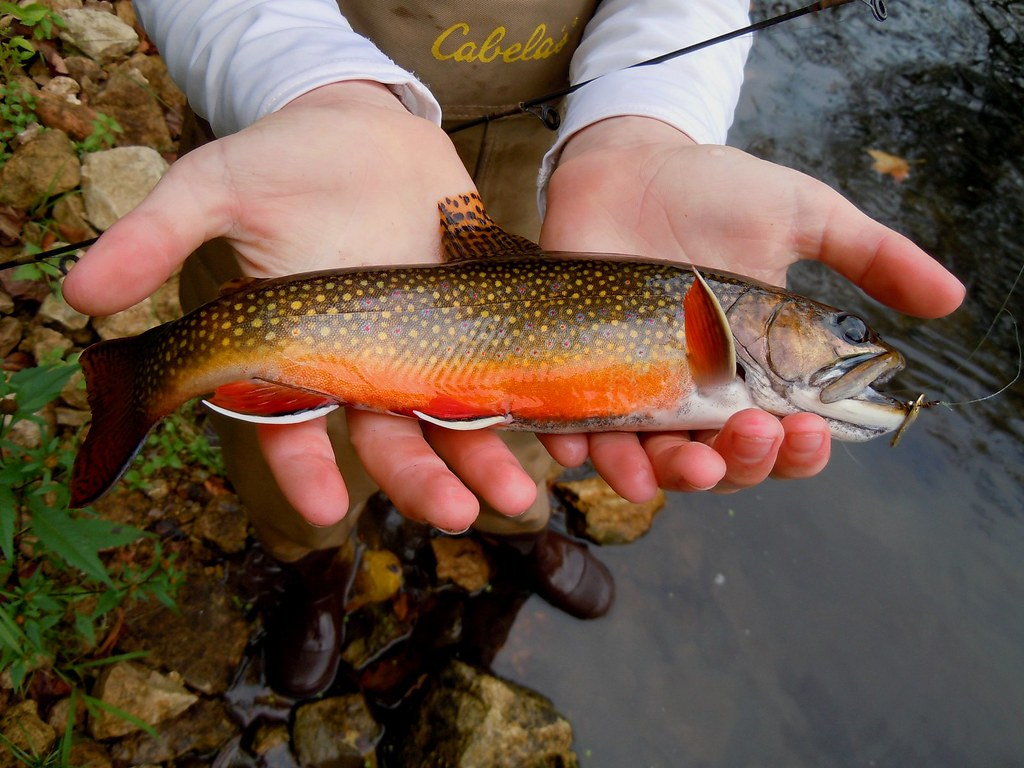
Three Michigan anglers have been fined a combined $4,500 and face fishing bans after being caught fishing for brook trout during the closed season on Lake Nipigon, following an investigation sparked by their own YouTube video.
The Ontario government announced the convictions this week as part of ongoing efforts to protect the renowned trout populations in one of Canada's premier fishing destinations.
YouTube Video Leads to Investigation
The case began when conservation officers from Ontario and Michigan launched a joint investigation after discovering a YouTube video posted by one of the anglers. The video, which showed the group fishing on Lake Nipigon on March 28, 2023, provided clear evidence of multiple violations during the brook trout closed season.
Kevin Murray of Midland, Michigan, received the stiffest penalty after pleading guilty to catching and retaining one undersized brook trout during the closed season. He was fined $2,000 and banned from possessing an Ontario fishing licence or engaging in any fishing activities in Ontario for one year.
Mathew Bilodeau, also of Midland, who posted the incriminating video, pleaded guilty to angling for brook trout during the closed season and was fined $1,500. He also received a one-year ban on fishing in Ontario.
Jame Miceli of Saginaw, Michigan, pleaded guilty to the same charge and was fined $1,000, though he did not receive a fishing ban.
Protecting a World-Class Fishery
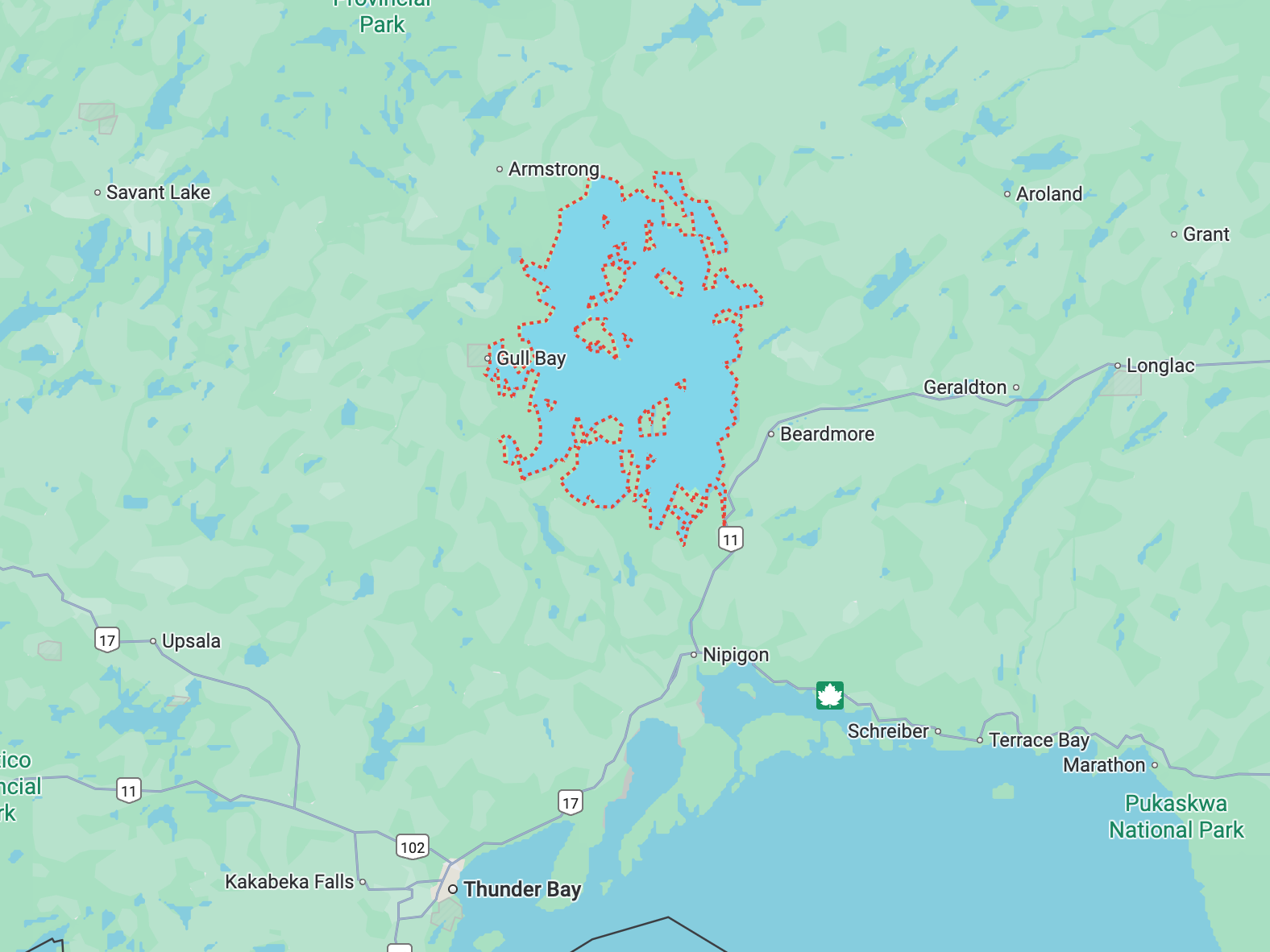
Lake Nipigon, located north of Thunder Bay, is the largest lake entirely within Ontario's borders and is internationally recognized for its exceptional brook trout fishing. The lake has produced numerous record-breaking catches over the years, including the current world record brook trout caught in 1915.
Lake Nipigon bordered in dashed red
The closed season, which runs from September 16th to the Friday before the fourth Saturday in April, is designed to protect brook trout during their spawning period when they are most vulnerable. During this time, the fish gather in shallow waters to reproduce, making them easy targets for anglers but also critical to sustain for future generations.
The regulation applies to brook trout in Lake Nipigon during the designated period.
"These seasonal closures are essential for maintaining healthy fish populations"
Cross-Border Cooperation in Action
The case was a cross-border cooperation between Ontario and Michigan conservation officers, and an example of how technology and social media can aid in enforcement efforts, with the anglers' own documentation providing the evidence needed for conviction.
Justice of the Peace Jerry M. Woods Jr. heard the case remotely in the Ontario Court of Justice, Thunder Bay, on March 24, 2025, nearly two years after the violations occurred.
A Cautionary Tale for Anglers
For the hundreds of thousands of anglers who travel to Ontario each year to experience world-class fishing, this case serves as an important reminder about the responsibility that comes with accessing these natural resources. Ontario's fishing regulations, including closed seasons, size limits, and catch limits, are designed to ensure sustainable fishing opportunities for current and future generations.
What may be legal in one area could be prohibited in another, and ignorance of the regulations is not considered a valid defense.
Report Violations
The Ontario government encourages anyone who witnesses natural resource violations to report them through the ministry TIPS line at 1-877-847-7667 or Crime Stoppers at 1-800-222-TIPS. These anonymous reporting options have proven effective in helping conservation officers protect Ontario's natural resources.
The fines collected from these violations will be directed back into fish and wildlife conservation efforts, helping to ensure that Lake Nipigon and other Ontario waters continue to provide exceptional fishing opportunities for generations to come.
For anglers targeting freshwater species like pike and walleye, the Legalis LT 2500D offers exceptional value.
Show full content
When it comes to reels, there are a lot of options out there - particularly for spinning reels. If you walk into a Canadian Tire or Cabela's and take stock of the inventory, to the untrained eye, there's not much difference between a $49 and $499 reel. Perhaps besides a slightly smoother feel or polished appearance, they're pretty much all the same - right?
The key is finding a balance between quality and price, and a cursory once-over of a bare reel doesn't tell you a thing about the drag system or how it performs when there's an aggressive pike on the end of the line.
I was looking for a good, all-purpose spinning reel primarily for pike and walleye fishing here in Saskatchewan and purchased the Legalis LT (2021) for the task from Bass Pro Shop (a former Cabela's) in Saskatoon. It was on sale for around $80 CAD though is currently listed for $119.99 CAD online.
There are two variations of the 2500 size, 2500D and 2500D-XH - the only difference is a faster retrieve with the 6:2:1 gear ratio on the XH.
Weight & Feel
The reel has a premium feel; it's solidly built and silky-smooth. It weighs in at just over 200 grams (7.2 oz) which is lighter than many other reels in the same price range. The LT from Daiwa stands for light and tough - which accurately describes what you can expect.
Even a few grams can make a difference after a full day of casting (and hopefully reeling in some monsters).
Field Testing
I paired the reel with a 6.6ft Shimano Stimula medium spinning rod and took it out for a day of fishing. Before we left for our destination of the day, I broke it in with a dozen or so perch off the dock. Good start.
It performed beautifully over the course of the day with about two dozen walleye and a pike on the other end of the line.
Drag System The drag system is where this reel really shines for its price point. The ATD (Automatic Tournament Drag) provides smooth, consistent pressure throughout the fight. Even with exceptionally hard runs, the drag never stuttered or grabbed - just smooth resistance and steady tension. The max drag of 22 lbs on the 2500 size is more than sufficient for Saskatchewan species.
Build Quality & Features The machined handle feels solid with no play, and the rubber handle knob provides good grip even with wet hands, though there are some seams that you might not see on a higher end rod. The 5+1 ball bearing system keeps everything running smoothly.
Value
At the $80 CAD sale price, this reel punches well above its weight class. Even at the regular $120 CAD price point, you're getting features typically found in the $150-200 CAD range.
Final Verdict
For casual anglers targeting freshwater species like pike and walleye, the Legalis LT 2500D offers exceptional value. It's light enough for all-day casting, tough enough for aggressive northerns, and smooth enough to make you forget you didn't spend $300+.
If you can snag it on sale, don't hesitate. At full price, it's still a solid investment that won't leave you wishing you'd spent more.
•
Materials match the price (carbon fiber vs aluminum)
•
Nearly 5-year-old model
Bottom Line
For Saskatchewan pike and walleye anglers, the Legalis LT delivers features typically found in the $150-200 range. Snag it on sale for unbeatable value.
Power outages at the cottage are almost as Canadian as mosquitoes are. But while city dwellers might see their power restored within seconds, cottage country plays by different rules.
Show full content
If you've owned a cottage for more than a season, you've probably experienced it - that moment when the hum of the fridge suddenly stops, the lights flicker and die, and you're left standing in the quiet darkness wondering how long this one's going to last.
Or scarier still, arriving to find flashing clocks and not knowing when or how long power was out for since your last visit,
Power outages at the cottage are almost as Canadian as mosquitoes are. But while city dwellers might see their power restored within seconds, cottage country plays by different rules.
And those rules can turn a minor inconvenience into a major headache – or worse, a costly disaster.
Why Your Cottage Loses Power More Than Your City Home
It's not your imagination – cottages really do experience more power outages than urban homes. Rural customers in Canada experience outages roughly three times more frequently than their urban counterparts. While your city friends might deal with one or two outages a year, you're probably resetting clocks every time you arrive.
The reasons are pretty straightforward when you think about it. Power has to travel much farther to reach your cabin than it does to reach a downtown condo. Those extra kilometres of wire strung through forests and across fields mean thousands more opportunities for something to go wrong.
The Perfect Storm of Challenges
Distance and Exposure: Rural power lines face the full fury of Canadian weather. While city lines get some protection from buildings, your cottage's power supply stands naked against ice storms that coat lines with crushing weight, winds that build speed across open water before slamming into infrastructure, and those beautiful trees we all love – until they're growing into the power lines.
Wildlife Encounters: Here's something city folks don't deal with: squirrels, raccoons, birds of prey, and even the occasional bear can interfere with rural power equipment. That adorable family of raccoons might be less cute when they cause a transformer to blow.
The Economics: In the city, one transformer might serve dozens of apartments. In cottage country, that same transformer might serve just three or four properties spread across several kilometres. When repairs are needed, there are simply fewer customers to share the cost, making upgrades happen less frequently.
Help is Far Away: When your cottage loses power, repair crews might need to drive for an hour just to reach the general area, then spend additional time locating the specific problem along kilometres of rural line. And with fewer crews stationed in rural areas, you're often waiting for help to arrive from the nearest town.
When the Power Goes Out, the Problems Pile Up
A power outage at the cottage isn't just about reading by candlelight (though that can be romantic). It's the cascade of problems that follow, especially when you're not there to manage them.
Remember that beautiful lake trout you caught and froze for Thanksgiving? Or the steaks you bought for next weekend's visit? After 24-48 hours without power, you'll be returning to a smell that'll have you reaching for the bleach.
One cottage owner from Manitoba told me about returning after a week-long outage to find their freezer had become "a horror movie prop." The cleanup took days, and the smell lingered for weeks. "We had to throw out the freezer entirely," she said. "The smell just wouldn't leave."
Winter's Frozen Pipe Nightmare
This is the big one – the disaster that keeps cottage owners awake at night in January. When the power fails, so does your heating system. In Canadian winters, it doesn't take long for indoor temperatures to plummet. Once they hit freezing, your pipes become ice-filled time bombs.
The math is sobering: a single burst pipe can cause around $16,000 in damage. And here's the kicker – it might be days or weeks before you discover the disaster. One Muskoka cottage owner discovered their burst pipe had been spraying water for two weeks. "It was like walking into an ice palace," he recalled.
"Beautiful, but devastating."
The Pump Problem
If you're on well water, a power outage means no water. Your pump needs electricity to bring water up from the well. No power means no showers, no toilet flushing, no drinking water.
Sump pumps face the same fate. That pump keeping your basement dry during spring melt or heavy rains? It's now just expensive decoration. A weekend storm that knocks out power could leave you returning to a flooded basement.
When Smart Homes Go Dumb
Here's a modern irony: all those smart home devices you installed for peace of mind become useless exactly when you need them most. Your WiFi router needs power. Your smart thermostat can't send you alerts without internet. Your security cameras go dark. Your smart water leak detectors fall silent.
I had a whole smart home setup – cameras, thermostat, leak detectors, the works. Then a winter storm knocked out power for four days. I was blind to everything happening at the cottage. By the time power was restored, the damage was done.
Protecting Your Cottage Paradise
So what's a cottage owner to do? You can't prevent every power outage, but you can certainly minimize the damage.
Traditional Solutions
Generators: A good generator can keep essential systems running – your heating, fridge, and sump pump. Automatic standby generators kick in within seconds of an outage. Portable generators are cheaper but require someone to be there to start them.
Winterization: If you're not using the cottage in winter, proper shut-down procedures are crucial. Drain the pipes, shut off the water, and add antifreeze to traps. No water in the pipes means no burst pipes, even if the temperature drops to -40°C.
Good Neighbours: The cottage community is famous for looking out for each other. Exchange numbers with year-round neighbours who can check on your place after storms.
Power Outage Monitors
Technology has come a long way in helping cottage owners sleep better at night. Smart grid equipment helps utilities identify and isolate problems more quickly.
But you don't have to wait for utility upgrades.
New cellular-based monitoring systems work even when the power and internet are out. These devices use backup batteries and cellular networks (like a phone) to keep you informed about temperature, power status, and other critical conditions at your cottage. If the power fails and temperature starts dropping toward the danger zone, you'll get an alert on your phone – giving you time to arrange help before those pipes freeze.
The best part? They don't rely on your cottage's WiFi, so they keep working when everything else fails.
CabinPulse is a great example of a power outage monitor - and it's made in Canada!
Create Your Outage Action Plan
Every cottage should have a power outage plan:
Know your shut-offs: Make sure everyone knows where the main water shut-off is located
Emergency supplies: Keep flashlights, batteries, and a battery-powered radio at the cottage
Contact list: Have numbers for neighbors, local handypeople, and your power utility
Winter preparations: Consider installing a low-temperature alarm like CabinPulse that can send you alerts
Document everything: Take photos for insurance if damage occurs
Making Peace with the Inevitable
Power outages at the cottage are like taxes and blackflies – inevitable parts of the experience. But with preparation, monitoring, and a good sense of humor, they don't have to ruin your cottage dreams.
After all, some of my best cabin memories happened during power outages – board games by candlelight, stories around the woodstove, and stars so bright they took your breath away because there wasn't a powered light for miles.
The trick is making sure that when the lights come back on, your cottage is still the paradise you left it as. Because while a weekend without power can create memories, coming back to burst pipes and spoiled food creates the wrong kind of memories entirely.
So check those flashlight batteries, consider your monitoring options, and maybe introduce yourself to that year-round neighbour you've been meaning to meet.
When the next outage hits – and it will – you'll be ready.
They just seem to waste energy following me around. What do they gain from this behavior?
Show full content
Reader Question:
I was out for a walk near my cabin yesterday evening, and I noticed something peculiar that's happened a number of times before. A cloud of flies started swarming overhead and following me along the trail. These weren't biting flies – they weren't trying to land on me or bite – they just kept hovering and buzzing around my head. Even when I swatted at them, they'd disperse for a second and then immediately return to their annoying orbit.
What I can't figure out is why they do this? They're not getting blood like mosquitoes or deer flies. They're not landing to feed. They just seem to waste energy following me around. What do they gain from this behavior?
- Dennis T., Alberta
CabinLiving.ca Answer:
You've encountered one of nature's more irritating mysteries! Those persistent followers are likely male flies engaged in a behavior called "hilltopping." Many fly species, including hover flies and some types of gnats, use moving objects – including humans – as mobile landmarks for finding mates.
Male flies patrol for females by hovering around prominent objects. In nature, this might be a tall tree, a rock outcrop, or even a large animal. You, walking through their territory, became a convenient moving landmark. The males hover around you hoping females will notice the commotion and come investigate. It's essentially a singles bar with wings!
They're particularly active during their mating seasons (often late afternoon and early evening) and in areas where natural landmarks are scarce. The behavior persists even when you swat because their drive to mate overrides their sense of self-preservation.
While annoying, take comfort in knowing you're not their target – you're just their inadvertent wingman. A hat with a brim, walking at a different time of day, or choosing windier routes can help minimize these unwanted escorts.
Saskatchewan's got its own lake monster - the one nobody really talks about - and it seems to have completely vanished.
Show full content
So here's something weird. Saskatchewan's got its own lake monster - the one nobody really talks about - and it seems to have completely vanished. Not in the dramatic, mysterious way you'd hope for with a cryptid. More like everyone... just stopped seeing it.
The stories go way back.
Some say the first documented encounter was fishermen complaining about massive holes torn in their fishing nets back in the 1920s. The Cree folks who lived here before that? They had stories about people vanishing in certain parts of the lake.
The Thing in the Water
Here's what people say they've seen: something between 3 and 9 meters long, depending on who's telling the story and how many beers they've had. Sometimes it's scaly. Sometimes it's smooth like a wet telephone pole. The head? Take your pick - dog, seahorse, pig.
One guy named Gordon Watt saw it back in the day and said:
The most believable sighting I've come across was from Rob Grosse, a Saskatoon guy who saw it as a kid in 1985. He and his brother were out in a canoe with a little four-horsepower engine when they spotted what looked like a floating log. Good Samaritans that they were, they headed over to tow it out of the way. Except it wasn't a log. It was dark, wet-looking, had bumps on its back, and when they got close enough to realize what they were looking at, they gunned that little engine and hauled ass back to shore.
By the time they dragged their parents down to the beach?
Nothing. Just calm water.
The Boring (But Probably True) Explanation
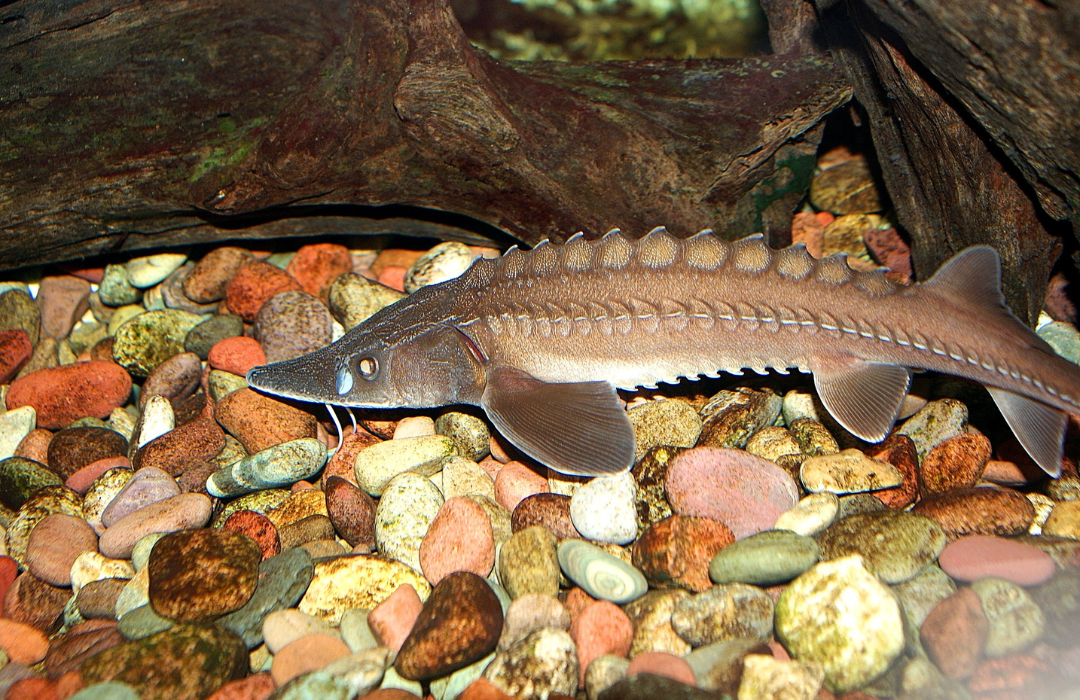
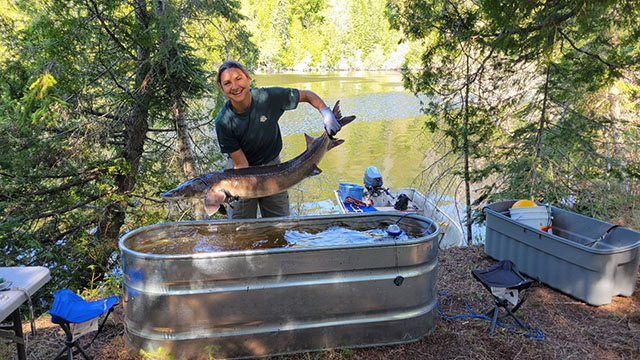
Gord Sedgewick, a fisheries biologist with Saskatchewan's Ministry of Environment, has the most reasonable take. He figures it's probably a lake sturgeon - maybe a couple of them - that swam up from the North Saskatchewan River during high water and got stuck when levels dropped. "Sturgeon have a very long life span, so the few that may have entered the lake could have stayed there for many decades."
Makes sense. Sturgeon can live over 100 years and grow massive. They're bottom feeders, so you wouldn't see them much. And get this - the same thing happened at Candle Lake, where they actually caught some river sturgeon that had made the journey upstream.
The weird part? Nobody's ever caught a sturgeon at Turtle Lake. Not in test nets, not in commercial fishing operations.
Here's the thing that gets me. The 70s and 80s were apparently the golden age of Turtle Lake Monster sightings. Newspaper articles, eyewitness accounts, the whole deal. These days? "nothing has been reported in recent years" according to that same fisheries biologist.
Maybe the old sturgeon finally died. Maybe people got too skeptical to report what they see. Or maybe - and this is just me thinking out loud here - our monster got tired of all the attention and found a deeper hole to hide in.
Whatever the case, our prairie lake monster has been keeping a low profile for decades now.
While everyone's fussing over Ogopogo out in BC or tracking every ripple in Loch Ness, our creature just quietly faded away. No merchandise empire. No tourist buses. Just the occasional old-timer who remembers when something used to scare the hell out of fishermen on calm days.
Maybe that's the most Saskatchewan thing about it - even our monster doesn't make a fuss.
The Ontario government is moving forward with plans that would remove approximately 60% of the shoreline from Wasaga Beach Provincial Park.
Show full content
The Ontario government is moving forward with plans that would remove approximately 60% of the shoreline from Wasaga Beach Provincial Park, transferring nearly 60 hectares of protected land to the Town of Wasaga Beach for tourism development.
The proposal, posted on Ontario's Environmental Registry in late June, would see Beach Area 1, Beach Area 2, New Wasaga Beach, and Allenwood Beach removed from provincial park protection. The plan is part of Premier Doug Ford's $38 million "Destination Wasaga" investment announced in May, aimed at revitalizing the area as a year-round tourism destination.
A Popular Destination at Stake
Wasaga Beach holds the distinction of being Ontario's most visited provincial park in three of the last four years for which data is available, and according to 2023 figures, it ranks as the province's second most-visited park overall. The beach stretches along Georgian Bay and is known as the world's longest freshwater beach.
"Our vision is and always has been to become a year-round destination here in Wasaga Beach that celebrates the longest freshwater beach in the world, but also the entire ecosystem here," Wasaga Beach Mayor Brian Smith told CBC Toronto.
Environmental Concerns Mount
The proposed land transfer has sparked significant opposition from environmental groups, who point to the ecological importance of the areas slated for removal. The affected lands include critical habitat for the piping plover, a species listed as endangered under both federal and provincial legislation.
"Provincial parks are meant to be protected and managed to maintain their ecological integrity, and they're dedicated to the people of Ontario," said Tim Gray, executive director of Environmental Defence to CBC Toronto.
"They're meant to be protected forever."
Beyond wildlife habitat, the shoreline areas contain mature sand dunes that serve important ecological functions. These natural formations act as protective barriers against storms and high water events, providing flood mitigation for adjacent areas—a function that becomes increasingly important as climate patterns change.
The lands proposed for transfer also include significant vegetation communities, provincially significant wetlands, and "The Point" located in Beach Area 1, which is designated as a provincially significant earth science Area of Natural and Scientific Interest.
Legislative Changes in the Works
What has particularly concerned environmental advocates is that the province isn't simply following existing procedures for park land disposal. Instead, the government is proposing amendments to the Provincial Parks and Conservation Reserves Act itself.
Under current law, disposing of park lands greater than 50 hectares or one percent of a park's total area requires the Minister to report to the Legislative Assembly, table proposed new boundaries, and obtain Assembly endorsement of those changes.
A spokesperson for Ontario's Ministry of Environment denied broader implications, stating that "no other changes are being considered beyond those included in the Environmental Registry of Ontario."
What's Next
The province is currently accepting public feedback on the proposal through Ontario's Environmental Registry. Environmental groups are encouraging concerned citizens to contact their MPPs, as any legislative changes will require votes in the provincial legislature and committee review.
The proposed changes come amid broader concerns about the Ford government's approach to environmental protection, including the recent passage of Bill 5, which scaled back certain species-at-risk protections and made it easier for the government to exempt projects from environmental regulations.
For the hundreds of thousands of Ontarians who visit Wasaga Beach annually, the outcome of this proposal could significantly alter one of the province's most beloved recreational destinations.
Whether the final result will successfully balance tourism development with the conservation values that provincial parks are meant to embody remains to be seen.
A man sustained significant injuries in a grizzly bear attack while e-biking with his wife near West Creston, British Columbia, prompting trail closures and an ongoing search for the animals involved.
Show full content
A man sustained significant injuries in a grizzly bear attack while e-biking with his wife near West Creston, British Columbia, prompting trail closures and an ongoing search for the animals involved.
The Incident
The attack occurred at approximately 4:30 p.m. on Saturday along the Kootenay River near West Creston. According to the B.C. Conservation Officer Service (COS), a couple was e-biking in the area when the wife heard her husband scream and saw a grizzly bear running toward her.
The woman immediately deployed bear spray to deter the approaching bear. She then noticed a second grizzly bear attacking her husband and used bear spray again, successfully causing both bears to flee the area.
Emergency Response
Emergency services were called to the scene, and the injured man was transported by ambulance to a hospital in Cranbrook, where he underwent surgery for his injuries. The extent of his current condition has not been disclosed.
Multiple Conservation Officers responded to the incident alongside Royal Canadian Mounted Police (RCMP) officers. The teams conducted a thorough sweep of the vicinity but were unable to locate the bears involved in the attack.
Safety Measures Implemented
As a precautionary measure, authorities closed three major trails in the area and installed warning signage. Traps were set overnight in an attempt to capture the bears, but no animals were caught.
Conservation Officers returned to the area the following morning, successfully locating the attack site and conducting additional searches of the surrounding area. No bears were observed during the follow-up investigation.
Current Status
The trails in the affected area remain closed to the public as the search for the grizzly bears continues. The Conservation Officer Service has not indicated when the trails might reopen.
The COS expressed gratitude to their emergency responder partners for their assistance in handling the incident.
Bear Safety Reminder
This incident highlights the importance of carrying and knowing how to use bear spray when recreating in bear habitat. The quick thinking and preparedness of the woman involved likely prevented a more serious outcome.
Remain vigilant in bear country; make noise while traveling, carry bear spray, and be prepared to encounter wildlife, especially during peak activity periods.
It's a full-body workout unlike any other, engaging the core, shoulders, back, and leg muscles - not to mention glutes, triceps, and various stabilizing muscles. And perhaps most uniquely, it works your brain too - a meditation.
Show full content
There's a rhythm to splitting wood by hand that you just can't beat.
Ask anyone who's spent a morning working through a pile of rounds. It's a full-body workout unlike any other, engaging the core, shoulders, back, and leg muscles - not to mention glutes, triceps, and various stabilizing muscles. And perhaps most uniquely, it works your brain too - a meditation.
In it all, your body finds the rhythm eventually - that sweet spot where momentum, gravity, and timing come together in one satisfying crack.
Reading the Wood
The first step is planning. Every piece of wood tells you how it wants to be split. Look at the end grain first. See those tiny cracks radiating out from the center? That's your roadmap.
Line up your axe with those natural fault lines and you're already halfway there.
Knots are the enemy. They're where branches grew out of the trunk, and the wood fibers twist and lock together. When you spot one, work around it. Split off the clear sections first, save the gnarly bits for kindling - or toss them in the "not worth it" pile, unless you're looking for a real challenge.
Fresh-cut wood splits easier than seasoned stuff, especially if you're working with maple or birch. The moisture acts like a lubricant between the fibers.
Every species has its personality. Fir jumps apart if you look at it right. Oak makes you earn every piece. Elm? The devil's wood - stringy and stubborn as hell.
The Swing Itself
Forget everything Hollywood taught you about chopping wood. Good form - and safe axe use - starts with your feet planted shoulder-width apart, knees slightly bent. If the axe goes flying, you want it to miss the shins or any body part you'd like to keep. Wide legs gives the axe a place to go.
Start by placing your axe right where you want to hit. Get your hands positioned - one at the base of the handle, one about three-quarters up. Now take a half step back. This is your distance.
The swing starts with lifting the axe head straight up, letting your top hand slide down to meet your bottom hand as you raise it. At the top of the arc, you're not trying to muscle it down. You're guiding it. Let the weight of the head do the work. Your job is to keep it on target and accelerate through the contact.
When you connect right, you'll feel it. The wood pops apart and the halves fall away clean. When you don't, the axe either bounces back (aim was off) or gets stuck (hit a knot or went against the grain). If it sticks, rock it back and forth to work it free.
Don't yank straight up unless you want to learn about back surgery.
The Finer Points
Your chopping block matters too. A good stump, cut flat and about knee height, is gold. Too high and you lose power. Too low and you're asking for a stray swing to find your shin. Set your round on the block and give it a little wiggle. If it rocks, reposition it. Stable wood is safe wood.
Sharp tools make everything easier. A dull axe is dangerous - it bounces and glances instead of biting. Learn to sharpen your blade properly. A few passes with a file before each session makes all the difference.
Weather matters too. Especally relevant to those in the colder parts of Canada - frozen wood splits like a dream. The water between the fibers turns to ice and creates perfect fracture planes. Those minus-twenty February mornings might be brutal, but they're prime splitting weather to stock up for summer campfire season.
Your body knows the distance, the weight, the timing. That's when it becomes meditation. Just you, the wood, and that perfect sound when everything connects right.
In a complicated world, some things remain beautifully simple.
Lake sturgeon have been cruising our rivers and lakes for over 200 million years, and they're absolute units.
Show full content
Swimming with Dinosaurs
You know how we Canadians love our superlatives? Well, here's one that'll make you sit up straight - we've got fish in our waters that literally swam alongside dinosaurs.
Lake sturgeon have been cruising our rivers and lakes for over 200 million years, and they're absolute units.
We're talking fish that can grow longer than a hockey stick, tip the scales at 180 kilograms, and live longer than your great-grandma. The oldest recorded Lake Sturgeon was 155 years old from Lake Huron.
These prehistoric beasts look the part too. Instead of scales, they're covered in bony plates that get less pronounced as they age - kind of like how we lose our edge as we get older.
They've got these whisker-looking barbels hanging near their mouths that help them navigate murky lake bottoms where they hoover up snails, crayfish, and whatever else is down there.
But here's the kicker - the current population of lake sturgeon is perhaps just one per cent of what it once was.
In 1845, fishermen pulled 800,000 kilograms of lake sturgeon from Lake of the Woods alone. By 1957? That catch had dropped to basically nothing.
From Sacred to Scorned and Back Again
Jennifer Simard first saw lake sturgeon - namew in Moose Cree dialect - as a teenager when she found them stranded in a spillway, as she described in a recent interview with The Narwhal. For her people, these fish aren't just big and old. They're sacred.
Indigenous peoples have relied on sturgeon for over 2,000 years, using every part of the fish - meat and eggs for food, skin for containers, oil for medicine, even the sticky stuff from their air bladders to patch up canoes.
Then settlers showed up and things went sideways fast. Commercial fishermen treated these ancient giants like garbage. They would even use the sturgeon to throw in the steamboats as fuel.
Can you imagine? Using a 150-year-old fish as kindling?
The turnaround is happening though, and it's Indigenous communities leading the charge. Moose Cree First Nation is working to have the North French River formally recognized as an Indigenous protected area, studying how namew move through their traditional waters.
Over in Northwestern Ontario, the Dalles First Nation just kicked off their own recovery program, releasing a dozen juvenile sturgeon fitted with transmitters back into the Winnipeg River.
The Science of Second Chances
After conducting a thorough species status assessment using the best available science, the U.S. Fish and Wildlife Service determined lake sturgeon do not require listing under the Endangered Species Act. That's not because they're thriving - it's because the recovery efforts are actually working.
Parks Canada is tracking sturgeon movements in Pukaskwa National Park with acoustic receivers, discovering that these fish travel incredible distances. One sturgeon originally tagged in Michigan was detected frequently along the Pukaskwa coast, showing just how far these ancient wanderers roam.
The real heroes might be the hatcheries though. Genoa National Fish Hatchery has a lead role in rearing lake sturgeon, raising more than 60,000 fingerlings per year. It takes about 20 years for these fish to reach maturity, so we're playing the long game here.
What Happens Next
The good news keeps coming.
Commercial sturgeon fishing in Ontario shut down in 2009, sport fishing's been mostly banned since 2010, and those old pulp mills that poisoned the waterways? Many have closed, letting the rivers heal.
But we're not out of the woods yet. Dams still block migration routes, and climate change is messing with water temperatures that trigger spawning. The federal government still hasn't added lake sturgeon to the Species At Risk Act, though Nature Canada says it's under consideration.
The recovery's happening at different speeds across the country. Some populations in the Great Lakes are stable enough to sustain themselves, while others still need help from stocking programs. It's going to take time - remember, these fish don't even start having babies until they're old enough to vote.
But if a fish can survive 200 million years, including an ice age or two, I'm betting on the sturgeon. Especially with Indigenous knowledge guiding the way and science backing it up.
These ancient giants are staging a comeback, one slow-growing fingerling at a time.
When you step out of your car at the cabin and take that first deep breath? That clean, sharp scent that instantly makes your shoulders drop and your mind clear? Yeah, that's not just nostalgia hitting you.
Show full content
When you step out of your car at the cabin and take that first deep breath? That clean, sharp scent that instantly makes your shoulders drop and your mind clear? Yeah, that's not just nostalgia hitting you. There's actual chemistry happening in your nose right now, and it's pretty fascinating.
Turns out, pine trees are basically running their own chemical factory up there in those branches. The main players are compounds called terpenes - specifically one called alpha-pinene that gives pine its signature woody, fresh smell.
Think of terpenes as the tree's personal bodyguards. When bark beetles come knocking or fungi try to set up shop, the tree pumps out these chemicals like it's nobody's business. The resin that oozes out when you nick a tree? That's loaded with the stuff.
These aren't just any chemicals either. We're talking about over 40,000 different terpene structures found in nature, with pines producing their own special blend. Alpha-pinene, beta-pinene, limonene, camphene - each one adding its own note to that symphony of scent we call "pine fresh."
Those same defensive compounds that protect trees happen to trigger something in us humans too. Scientists in Japan have been studying this since the 1980s, when their government started promoting "forest bathing" as part of their health programs.
Now, before you think this is just fancy talk for taking a walk, researchers have been measuring what actually happens when people spend time around pine trees. Some studies suggest breathing in these compounds might affect immune function and stress hormones, though the research is still ongoing and scientists are careful to note that more studies are needed to understand exactly how and why.
What we do know for sure is that people consistently report feeling better after time in pine forests. Whether that's the terpenes, the quiet, the exercise, or just getting away from screens for a bit - well, that's still being sorted out. But the correlation is strong enough that entire tourism industries have sprung up around it.
Not All Pines Are Created Equal
Here's something most folks don't know - different pine trees pack different aromatic punches. Your standard pine gives you that classic alpha-pinene hit, but throw in some spruce or fir, and you're getting beta-pinene, camphene, and limonene in the mix. That last one? Same stuff that makes lemons smell lemony.
The Jeffrey pine out west apparently smells like butterscotch when you get up close to the bark. Meanwhile, balsam firs are winning popularity contests as the most fragrant Christmas trees. Eastern hemlocks throw in a citrus twist to their piney base notes.
Here in Saskatchewan, our jack pines and white spruce are pumping out their own cocktail of these compounds. The concentration changes with temperature too - researchers say around 30 degrees Celsius is when trees really get their terpene production going.
Makes sense why that summer cabin air hits different than a winter walk in the same woods.
What's really cool is how these airborne chemicals might be doing more than we thought. Some research suggests terpenes can actually form tiny particles in the air that help create clouds above forests.
Trees using chemistry to control their own weather? Now that's next level.
Pine essential oils have been used in traditional medicine for ages, and while modern science is still catching up on understanding all the mechanisms, there's growing interest in studying these compounds. Some folks diffuse pine oils at home, trying to capture a bit of that forest feeling. Does it work the same as the real thing? Jury's still out, but it sure smells nice.
The bottom line is this: that distinctive pine smell comes from a complex cocktail of chemicals that trees produce for their own survival. The fact that we find it so pleasant, so calming, so... right?
That's either a happy accident of evolution or nature's way of telling us to spend more time in the woods.
Next time you're out there, crushing pine needles between your fingers or just breathing in that forest air, you're experiencing an ancient chemical language. The trees are talking, and somehow, some way, our bodies seem to understand the message.
Now if you'll excuse me, all this pine talk has me itching to get outside.
These computer screens aren't giving off any terpenes, that's for sure.
Cory Nickason of Saskatoon was simply preparing for a family camping trip when a quick stop at Stop N Go Convenience on Wedge Road turned into a life-changing moment – and put him one step closer to his dream of owning a cabin.
Show full content
Sometimes the universe has perfect timing. Cory Nickason of Saskatoon was simply preparing for a family camping trip when a quick stop at Stop N Go Convenience on Wedge Road turned into a life-changing moment – and put him one step closer to his dream of owning a cabin.
The Tuesday morning started like any other pre-camping checklist: pack the gear, fill the gas tank, and maybe grab a lottery ticket. But when Nickason decided to check his LOTTO MAX numbers before hitting the road, he discovered he was holding a million-dollar ticket.
A Moment to Remember
The scene at the convenience store was one for the books. After counting all those zeros – twice, just to be sure – Nickason got a congratulatory fist bump from the customer behind him in line before rushing out to share the news.
"She couldn't even read it because I was shaking so bad!"
Nickason recalled of the moment he showed the winning ticket to his wife waiting in the truck.
The Camping Trip Must Go On
In true outdoorsman fashion, Nickason didn't let the windfall derail the family's camping plans. They headed out the next day as scheduled, though the experience was notably different.
"I slept in jeans that night, with my winning ticket in my wallet in the pocket," he admitted, showing that even a million dollars couldn't shake his practical nature – or his commitment to keeping that precious ticket safe in the wilderness.
From Tent to Cabin
While Nickason's immediate plans include paying off the mortgage and buying a new truck, it's his third goal that resonates with anyone who's ever dreamed of owning their own slice of wilderness: he's looking into buying a cabin.
For someone who was literally on his way to go camping when fortune struck, the progression from tent to cabin feels like the natural next chapter. It's a dream shared by countless Canadians who spend their weekends escaping to the outdoors, imagining what it would be like to have their own permanent retreat.
Saskatchewan's Outdoor Lottery Luck
Nickason's win adds to what's becoming a notable trend of lottery winners with outdoor aspirations. Whether it's dream fishing trips, cabin purchases, or RV adventures, it seems Canada's lottery winners know exactly where they want to spend their newfound freedom – in the great outdoors.
The Perfect Timing
There's something poetic about winning the lottery while preparing for a camping trip. For Nickason, that million-dollar ticket represents not just financial security, but the freedom to upgrade from occasional camping trips to potentially owning his own cabin – a place where every weekend could feel like that lucky Tuesday when everything changed.
As he moves forward with his plans, Nickason joins the ranks of lottery winners who've chosen to invest their winnings in the cabin lifestyle.
And really, after sleeping in jeans to protect a million-dollar ticket during a camping trip, having a proper cabin bed probably sounds pretty appealing.
A planned concert by American Christian musician Sean Feucht at a Parks Canada historic site in Nova Scotia has sparked controversy among local residents and a federal MP.
Show full content
A planned concert by American Christian musician Sean Feucht at a Parks Canada historic site in Nova Scotia has sparked controversy among local residents and a federal MP.
Feucht, who was described by The Atlantic as "The Christian Rocker at the Center of MAGA" is scheduled to perform Wednesday evening at York Redoubt National Historic Site, a fortification built in 1793 that overlooks Halifax Harbour. The performance marks the beginning of what Feucht has called his "Summer of Revival in the nation of Canada" tour.
York Redoubt National Historic Site
Local residents near the historic site have expressed opposition to the event, saying it contradicts Parks Canada's stated values of inclusion and diversity. Several residents told media they had never seen a concert held at the location before and only learned of the event through a Parks Canada email over the weekend warning of potential noise and parking issues.
Feucht, who unsuccessfully ran for U.S. Congress as a Republican in 2020, has been vocal in his opposition to LGBTQ+ rights, abortion access, and critical race theory. He has called for American government policy to be based on traditional Christian values.
Liberal MP Shannon Miedema, who represents the area, has reportedly contacted Parks Canada urging them to cancel the concert after hearing concerns from constituents. In communications with residents, Miedema indicated the event does not align with Parks Canada's core values while acknowledging the importance of free speech.
Parks Canada has not publicly responded to questions about how the concert came to be approved or whether they plan to proceed with the event. If the concert goes ahead as planned, some residents have indicated they will stage a protest.
The controversy highlights ongoing tensions around the use of public spaces for events featuring politically divisive figures, particularly at nationally significant historic sites managed by Parks Canada.




 4.5
/5
Excellent Value
4.5
/5
Excellent Value