GeistHaus
log in · sign up

Washington Blade: LGBTQ News, Politics, LGBTQ Rights, Gay News

Part of Washington Blade: LGBTQ News, Politics, LGBTQ Rights, Gay News

America's Leading LGBT News Source

stories primary
Cuba marks IDAHOBiT amid heightened tensions with U.S.
CubaCilia FloresfeaturedFidel CastroIDAHOBiTJohn RatcliffeMariela CastroMiguel Díaz-CanelNational Center for Sexual EducationNicolás MaduroRaúl CastroRaúl Guillermo Rodríguez CastroVenezuela

Energy crisis, fears of military intervention overshadow events

The post Cuba marks IDAHOBiT amid heightened tensions with U.S. appeared first on Washington Blade: LGBTQ News, Politics, LGBTQ Rights, Gay News.

Show full content

International Day Against Homophobia, Transphobia, and Biphobia commemorations took place in Cuba against the backdrop of increased tensions between the country and the U.S.

Mariela Castro, the daughter of former Cuban President Raúl Castro who is the director of the country’s National Center for Sexual Education, spoke at a Havana press conference on May 13. Mariela Castro, who is a member of Cuba’s National Assembly, also participated in an IDAHOBiT gala that took place in the Cuban capital on May 14.

CENESEX organized an IDAHOBiT event in Havana on Sunday. The group this month also put together panels and other gatherings.

‘Love is law’

IDAHOBiT commemorates the World Health Organization’s declassification of homosexuality as a mental disorder on May 17, 1990.

This year’s IDAHOBiT theme was “At the Heart of Democracy.” CENESEX-organized IDAHOBiT events took place under the “Love is Law” banner.

“On this day we remember diversity is wealth and equality is a right that does not allow exceptions,” said Cuba’s National Office of Statistics and Information on Sunday. “To say ‘no’ to homophobia, transphobia, and biphobia is to affirm Cuba is being built around the inclusion, the dignity, and the recognition of all people.”

Mariela Castro’s uncle, Fidel Castro, in the years after the 1959 Cuban revolution sent thousands of gay men and others deemed unfit for military service to labor camps known as Military Units to Aid Production.

His government forcibly quarantined people living with HIV/AIDS in state-run sanitaria until 1993. Fidel Castro in 2010 formally apologized for the labor camps, which are known by the Spanish acronym UMAP.

His brother, Raúl Castro, succeeded him as Cuba’s president in 2008. Fidel Castro died in 2016.

The Cuban constitution bans discrimination based on sexual orientation and gender identity, among other factors. Authorities, however, routinely harass and detain activists who publicly criticize the government. (The Cuban government in 2019 detained this reporter for several hours at Havana’s José Martí International Airport after he tried to enter the country to cover IDAHOBIT events. Officials then allowed him to board a flight back to the U.S.)

Same-sex couples have been able to marry on the island since 2022.

Cuba’s national health care system has offered free sex-reassignment surgeries since 2008. Activists who are critical of Mariela Castro and/or CENESEX have previously told the Washington Blade that access to these procedures is limited.

Lawmakers in 2025 amended Cuba’s Civil Registry Law to allow transgender people to legally change the gender marker on their ID documents without surgery.

Federal prosecutors to reportedly indict former Cuban president

American forces on Jan. 3 seized now former Venezuelan President Nicolás Maduro and his wife, Cilia Flores, at their home in Caracas, the Venezuelan capital, during an overnight operation.

Venezuela after Maduro’s ouster stopped oil shipments to Cuba. That, combined with a U.S. energy blockade, has caused widespread blackouts and a severe fuel shortage that has paralyzed the country.

Federal prosecutors are reportedly planning to indict Raúl Castro over his alleged role in the 1996 shooting down of four planes that Brothers to the Rescue, a Miami-based Cuban exile group, operated over the Florida Straits that separate Cuba and the Florida Keys. The Associated Press notes Raúl Castro, who is 94, was Cuba’s defense minister when the incident took place.

CIA Director John Ratcliffe on May 14 met with Raúl Castro’s grandson, Raúl Guillermo Rodríguez Castro, and other Cuban officials in Havana.

Axios on Sunday reported Cuba “has acquired” more than 300 drones and is preparing to use them to attack Guantánamo Bay, a U.S. naval base on the island’s southern coast, and other targets that include Key West, Fla., which is less than 100 miles north of the Communist country. Cuban President Miguel Díaz-Canel said Cuba is “not a threat, nor does it have aggressive plans or intentions against any country.”

“Cuba, which is already suffering from a multidimensional aggression by the U.S., does indeed have the absolute and legitimate right to defend itself against a military onslaught. This cannot, however, be logically or honestly be wielded as an excuse to wage war against the noble Cuban people.”

Las amenazas de agresión militar contra #Cuba de la mayor potencia del planeta son conocidas.

Ya la amenaza constituye un crimen internacional. De materializarse, provocará un baño de sangre de consecuencias incalculables, más el impacto destructivo para la paz y la estabilidad…

— Miguel Díaz-Canel Bermúdez (@DiazCanelB) May 18, 2026

The post Cuba marks IDAHOBiT amid heightened tensions with U.S. appeared first on Washington Blade: LGBTQ News, Politics, LGBTQ Rights, Gay News.

https://www.washingtonblade.com/?p=98979966
Extensions
PHOTOS: Blade Summer Kickoff Party
Photos

Ashley Biden accepts award for Beau Biden at annual Rehoboth fundraiser

The post PHOTOS: Blade Summer Kickoff Party appeared first on Washington Blade: LGBTQ News, Politics, LGBTQ Rights, Gay News.

Show full content

The 19th annual Blade Foundation Summer Kickoff Party was held on Friday, May 15 at Diego’s in Rehoboth Beach, Del. An award presentation was held for former Delaware Attorney General Beau Biden. Ashley Biden accepted the award on her brother’s behalf and gave remarks. Other speakers included Delaware state Rep. Claire Snyder-Hall, CAMP Rehoboth Executive Director Dr. Robin Brennan and Washington Blade Editor Kevin Naff. The event was a fundraiser for the Steve Elkins Memorial Fellowship in Journalism.

(Washington Blade photos by Daniel Truitt)

The post PHOTOS: Blade Summer Kickoff Party appeared first on Washington Blade: LGBTQ News, Politics, LGBTQ Rights, Gay News.

https://www.washingtonblade.com/?p=98979938
Extensions
PHOTOS: Taste of Point
PhotosD.C.District of ColumbiaLGBTQ eventsLGBTQ youthPoint FoundationRoom & BoardTara HootTaste of Point

Annual fundraiser supporting LGBTQ youth scholarships and mentorships held at Room & Board

The post PHOTOS: Taste of Point appeared first on Washington Blade: LGBTQ News, Politics, LGBTQ Rights, Gay News.

Show full content

The Point Foundation held the annual Taste of Point fundraiser at Room & Board on Wednesday, May 13.

(Washington Blade photos by Michael Key)

The post PHOTOS: Taste of Point appeared first on Washington Blade: LGBTQ News, Politics, LGBTQ Rights, Gay News.

https://www.washingtonblade.com/?p=98979919
Extensions
Honey, have we been priced out of gay paradise?
Real EstateDelawareReal estateRehoboth Beach

Rehoboth remains more accessible than many queer beach destinations

The post Honey, have we been priced out of gay paradise? appeared first on Washington Blade: LGBTQ News, Politics, LGBTQ Rights, Gay News.

Show full content

Let’s set the scene, darlings. It’s a scorching July Saturday. You’ve got a trunk full of rosé, a playlist that slaps harder than a “RuPaul’s Drag Race” elimination, and a group chat blowing up with your people en route to Rehoboth Beach — the Delaware beach town that has been the LGBTQ community’s summer headquarters for decades. Sun, sand, Poodle Beach, drag shows, and the kind of easy, breezy freedom that only comes from being surrounded by your tribe.

Now imagine pulling up to a “FOR SALE” sign on that charming two-bedroom cottage two blocks from the boardwalk — the one you’ve been eyeing for years — and seeing the price tag: $1.97 million. Honey, put the rosé down. We need to talk.

Nation’s Summer Capital Has a Spending Problem

Rehoboth Beach has long worn the nickname “The Nation’s Summer Capital” like a crown, owing to the annual migration of Washingtonians — and increasingly, Philadelphians and New Yorkers — who descend on its 27 miles of Atlantic coastline every summer. For the LGBTQ community in particular, Rehoboth has never been just a beach town. It has been a sanctuary, a second home, a place where you can hold your partner’s hand on the boardwalk without a second thought. But the real estate market? She is not reading the room.

According to Redfin data, the median sale price of a home in Rehoboth Beach recently hit $1.96 million — a jaw-dropping 106% increase year over year, and a figure that sits 127% above the national median. The price per square foot has climbed to $1,160, up nearly 27% in the same period.  Gag.

So Who IS Buying Right Now?

Let’s not be dramatic — people are still buying in Rehoboth. They’re just a specific kind of people. According to neighborhood data, the per capita income in Rehoboth Beach runs around $118,239, equating to a household income of nearly $473,000 for a family of four. About a third of the workforce telecommutes, many in high-earning, white-collar professions. And more than 68% of residents hold a college degree, compared to a national average of under 22%.

If you want to buy a median-priced home in Rehoboth today with a standard 25% down payment, you’d need to bring nearly half a million dollars to closing — and then cover about $4,000 a month in ongoing expenses.

Still, the market isn’t quite the frenzy it was at peak pandemic frenzy. Homes are sitting on the market for an average of 88 days as of early 2026 — up significantly from the frantic bidding wars of a few years ago, when a listing might vanish before you could refresh Zillow a second time. Sellers are (slowly) getting the memo that buyers have limits.

Have Your Beach House (and Airbnb It, Too)

Many LGBTQ buyers have discovered a savvy workaround to Rehoboth’s sticker shock: buy a property, rent it during peak season, and let your summer visitors essentially pay your mortgage.

The numbers surprisingly support this strategy. The Rehoboth Beach short-term rental market currently has around 928 active listings, with hosts averaging $400 per night and annual revenues of approximately $39,689. The busiest month, predictably, is July — when guests book an average of 96 days in advance (so yes, those summer reservations your friends keep missing out on are being snapped up in April).

The key is making your property stand out in a crowded market. Properties accommodating eight or more guests dominate the Rehoboth STR market (nearly half of all listings), so that five-bedroom house with a game room suddenly starts to look like a business plan. At the same time – keep in mind that location, location, location honey – that is also so valuable. Even a two-bedroom condo close to the beach will also rent favorably well and get those numbers needed to make the most sense to your pockets.

This method allows you to have a second home, enjoy it, have friends enjoy it, and also helps recoup some of the overhead so the overhead and increase in overall purchase price is a bit more manageable.

What It All Means for Our Community

Rehoboth has always been more than real estate. It is one of the few places on the East Coast where LGBTQ people have, for decades, built an actual physical community — businesses, organizations, gathering spaces, neighborhoods — not just a social scene. CAMP Rehoboth, Poodle Beach, the Blue Moon (which, after some drama, was recently sold to new owners who pledged to keep it a queer-affirming space — phew), and countless gay-owned restaurants and shops form an ecosystem that attracts our community every summer precisely because the roots run deep.

But ecosystems require people — year-round residents, small business owners, artists, service workers — not just wealthy second-home owners. When prices rise to the degree they have in Rehoboth, the people who sustain that community can no longer afford to stay. It’s a pattern playing out in LGBTQ neighborhoods from San Francisco’s Castro to New York’s Chelsea, and it’s worth watching closely here.

The good news? Rehoboth remains more accessible than many comparable queer beach destinations. Provincetown, Mass. — the other iconic LGBTQ beach town on the Eastern seaboard — regularly sees median home prices north of $1.5 million with far less inventory and a significantly smaller footprint.

And Delaware’s tax structure does the community a quiet but important favor: no state sales tax, among the lowest property tax rates in the country, and relatively favorable income tax treatment for retirees. These aren’t glamorous talking points, but they matter when you’re running the numbers on whether your beach house dream can actually pencil out.

The Bottom Line, Babe

Can our community still afford Rehoboth? The honest answer is: it depends on what you mean by Rehoboth.

If you mean a single-family home within walking distance of Poodle Beach with an ocean view and a wraparound porch — prepare to spend north of $1.5 million, need a household income pushing six figures annually, and move fast when something comes to market.

If you mean a condo or townhome in the greater Rehoboth area – or a property you plan to rent out in peak season to offset costs — there are still real pathways in.

And if you mean belonging to a community, showing up every summer, taking up space on that beach, supporting LGBTQ-owned businesses, and making sure Rehoboth’s queer identity doesn’t get washed away by the luxury market tide — well, that part doesn’t have a price tag.

It just requires showing up. So pack the car. Bring the rosé. The beach is still ours.


Have a real estate question or Rehoboth market tip? Reach out to justin.noble@sothebysrealy.com for LGBTQ-friendly real estate resources in the Rehoboth area.

The post Honey, have we been priced out of gay paradise? appeared first on Washington Blade: LGBTQ News, Politics, LGBTQ Rights, Gay News.

https://www.washingtonblade.com/?p=98979916
Extensions
Comings & Goings
LocalAlexandriaDarren NorrisHank's Oyster BarHank's Pasta BarJamie Leedslgbtq business ownersOld Town AlexandriaVirginia

Chef Jamie Leeds opens new dining concepts

The post Comings & Goings appeared first on Washington Blade: LGBTQ News, Politics, LGBTQ Rights, Gay News.

Show full content

The Comings & Goings column is about sharing the professional successes of our community. We want to recognize those landing new jobs, new clients for their business, joining boards of organizations and other achievements. Please share your successes with us at comingsandgoings@washblade.com. 

The Comings & Goings column also invites LGBTQ college students to share their successes with us. If you have been elected to a student government position, gotten an exciting internship, or are graduating and beginning your career with a great job, let us know so we can share your success.

Congratulations to Jamie Leeds, chef extraordinaire, and owner of Hank’s Oyster Bars, as she ventures into some new areas. Leeds is an award-winning Washington, D.C.–area chef, restaurateur, and entrepreneur with more than three decades of experience shaping the region’s dining scene.

Her first new venture is a restaurant opening in Alexandria this week. It will be called Hank’s Pasta Bar, bringing a personalized twist to classic Italian dining with a hiddenrestaurant-inside-a-restaurant in Old Town, Alexandria. The new trattoria is above Hank’s Oyster Bar, and will feature a build-your-own menu, marking a new direction for Leeds in partnership with chef Darren Norris. Norris brings more than three decades of experience to Hank’s Pasta Bar, with a foundation grounded in Italian cooking. The grand opening was scheduled for May 14. The elevated casual eatery blends an inventive chef-driven menu with an easy-going, sit-down dining experience that puts guests in charge. Hank’s Pasta Bar bridges the gap between elevated fast casual, like Norris’s Shibuya, and full-service dining, like Leeds’s Hank’s Oyster Bar. Diners order electronically at the table, but unlike fast casuals, food and beverages are delivered on plate ware, and a server is on site at all times.  

The restaurant-inside-a-restaurant, welcomes guests to dine in with a full bar, including Italian wines and craft cocktails, maintaining its focus on traditional Italian fare with contemporary touches, including a build-your-own pasta bowl experience starting at $16. Create your own pasta bowl from seven artisanal pastas (including gluten-free), nine made-in-house sauces, proteins, vegetables, and toppings. Leeds said, “It’s the kind of place you’d find down a side street in a Tuscan hill town, after being tipped off by a friend who says, ‘trust me.’ If you know, you know.” 

The restaurant will continue Hank’s community partnerships, including with Real Food for Kids, supporting programs that improve school food and nutrition equity. 

In addition to this you should try Jaimie’s other new venture. Back Door Taco at Hank’s in Dupont Circle. You walk down the alley from 17th Street to the back door of Hank’s, and enter a small patio to partake of great tacos and interesting cocktails.

The post Comings & Goings appeared first on Washington Blade: LGBTQ News, Politics, LGBTQ Rights, Gay News.

https://www.washingtonblade.com/?p=98979913
Extensions
IDAHOBiT a reminder we all must stand up against transphobia
CommentaryBuck AngelCaitlyn JennerDonald TrumpIDAHOBiTJK RowlingKyler PrescottLana WachowskiLGB AllianceLilly WachowskiLog Cabin RepublicansNigel FarageReform PartyRussiaUnited KingdomUnited StatesVladimir Putin

Trans rights remain under attack in U.S., around the world

The post IDAHOBiT a reminder we all must stand up against transphobia appeared first on Washington Blade: LGBTQ News, Politics, LGBTQ Rights, Gay News.

Show full content

May 17 is the International Day Against Homophobia, Transphobia, and Biphobia. 

In 2026, transphobia is the biggest issue out there: all the stereotypes that were used against the LGBTQ community in general in the past are now used to attack the rights of transgender people and to create a moral panic against them. As a person who understood that they were not a girl — despite being assigned female at birth — since they were four, and who in their 30s had to wait in line for a gender clinic, I am obviously worried about this situation. Trans people continue to be seen less as people and more as part of an “agenda,” and there is a greater risk that the international trend of attacks on trans rights is just a first step in a broader attack on the LGBTQ community, and that soon bi, gay, and lesbian people will lose part of their hard-won rights to have the same protections and opportunities as heterosexual people.

When, in U.S. states such as Kansas, trans people face escalating legal and political restrictions on recognition that affect their everyday lives — for example, requiring their driving licenses to match the gender assigned at birth even after transition — while trans people in the U.S. are banned from military service and federal funding is stopped for gender-affirming care for trans youth, it is obvious to everyone that the problem is real. It is also global.

For example, there have been significant attacks on trans rights in the UK in recent years, especially against trans youth, many of whom have been denied gender-affirming care. The day when I finally found the energy to write this story was the day of the local British elections, when surprisingly many seats in city and town councils were won by the queerphobic populist Reform Party, creating some new Reform-dominated councils. Reform Party leader Nigel Farage has praised U.S. President Donald Trump and expressed admiration for Russian dictator Vladimir Putin — both of whom are known for endangering the lives of their trans citizens and rejecting trans identity as something that should be accepted.

So, who can challenge it? The general public often takes cues from public figures. Celebrities play a significant role in shaping public opinion and framing how different social issues are understood.

We need trans celebrities to speak up against transphobia when “anti-trans” celebrities like JK Rowling oppose our rights. It seemed that when conservatives around the globe stood up together to support each other, the trans community should unite, and trans celebrities should protect their trans siblings, while the broader LGB community should recognize the threat and unite around trans rights.

But not everything is so simple. Surprisingly, at a time of the greatest attack on trans rights in this century, many lesbian, gay, bi and even trans celebrities and influencers openly support transphobic policies and ideologies.

One of the clearest examples is Caitlyn Marie Jenner, a retired Olympic gold medal–winning decathlete and public figure known for her participation in the reality show “Keeping Up with the Kardashians.” She is one of the most famous trans people in the world.

From 2015 to 2016, she starred in the reality television series “I Am Cait”on E!, which focused on her gender transition and on telling a story to inspire the younger generation of trans people. In the first episode, Jenner also visited the mother of Kyler Prescott, a 14-year-old trans child who died by suicide earlier that year, and spoke openly about using her privilege to fight for awareness, equality, and dignity for trans people. The idea of supporting trans youth was one of the core themes of her TV series. 

That was then.

Jenner’s perspective on trans rights became more and more transphobic. For example, in 2021 she opposed trans girls participating in girls’ school sports. In 2023, she launched a PAC campaign attacking trans youth rights. She also expressed support for Donald Trump and said about herself that she would never be a “real woman.”

Another famous example is transmasculine sex educator and activist Buck Angel, a former adult film actor. He was seen as a modern and progressive person in the 2000s and early 2010s, praised for increasing visibility for trans men through sex education, documentaries, public speaking, and media work. But later he started calling himself “transsexual” rather than “transgender,” following a more transphobic and rigid view of trans identity, and openly showed support for Trump and MAGA.

Of course, there are plenty of trans celebrities who continue to fight for trans rights — the most obvious example is Lana and Lilly Wachowski, notable film directors who gave us “The Matrix” films and the “Sense8” TV series. But the Wachowski sisters were known for being politically left-wing and progressive even before their transition. They are part of a progressive movement, not just a “famous trans person” like Jenner was.

So, why is this happening? Why have more mainstream and conservative trans celebrities, as well as some LGBTQ groups, turned away from trans rights? And what do we need to do?

One of the reasons is fear. 

Popular and privileged people — whether they are socialites, actors or leaders of big organizations — are not used to being outcasts, and so they follow dominant trends. For them, the fear of not fitting in, being rejected by the audience and losing their position in society became bigger than their sense of justice. This is probably one of the reasons why some LGBTQ groups, such as the Log Cabin Republicans in the U.S., became more transphobic, or why the LGB Alliance in the UK became more popular.

Another reason is the polarization of society. 

Some LGBTQ activists may hate me for saying this, but it is partly our fault. Mainstream trans communities sometimes make trans identity look like a “trend” or part of an ideology. The media — especially tabloids — are even more to blame for this stereotype than the trans community itself. When uninformed people hear about trans people today, many of them imagine left-wing, maybe even socialist, non-religious young supporters of Palestine who are good at understanding ecological issues and worried about global warming. Of course, many trans people are like that. But many are not. And those who are not often feel excluded and become more prone to public self-hatred.

It created a cycle in which people who did not feel part of the community started searching for an alternative that rejected them for being trans and encouraged them to accept transphobic rhetoric, betraying themselves and their trans siblings. This led to greater polarization and hatred against conservative trans people, pushing them even further away.

The International Day Against Homophobia, Transphobia, and Biphobia needs to be a day when we stand up against all transphobia, including the kind expressed by trans people, while at the same time supporting all trans people, no matter how uncomfortable their views may be for us.

The post IDAHOBiT a reminder we all must stand up against transphobia appeared first on Washington Blade: LGBTQ News, Politics, LGBTQ Rights, Gay News.

https://www.washingtonblade.com/?p=98979821
Extensions
Disillusioned about democracy? Think of it as a community garden
CommentaryIDAHOBiTILGA WorldInternational Olympic CommitteeKristina StoecklPhillip AyoubRémy BonnySenegalTrinidad and TobagoUnited NationsUnited States

May 17 is the International Day Against Homophobia, Transphobia, and Biphobia

The post Disillusioned about democracy? Think of it as a community garden appeared first on Washington Blade: LGBTQ News, Politics, LGBTQ Rights, Gay News.

Show full content

A short walk from where I live, there is a community garden. People of all ages can participate in designing its areas and learn how to cultivate plants. Together, they build and maintain the space for the benefit of the entire community.

Democracy works the same way. It flourishes when people can bring their energy, knowledge, and presence to the common ground. It works precisely because most of us want to nurture neighborhoods where every life can flourish — no matter where we live, the color of our skin, or the food we enjoy on our tables.

But today, reactionary political movements and governments worldwide are poisoning our gardens with the invasive weeds of their authoritarian policies and exclusionary legislation. According to the CIVICUS Monitor, 73 percent of the world’s population lives in countries where governments repress fundamental civil society freedoms.

By now, we know the playbook. Whenever authoritarians seize our common garden, they drive out those they deem dispensable first. Very often, LGBTI people, racialized persons, and migrants are at the forefront of weathering the storm. 

Only half a century ago, the wins that our movement has obtained seemed unthinkable. But those advances are always on the line, always one election away from the strongman of the hour deciding to unravel them.

On May 17, 1990, the World Health Organization removed homosexuality from the International Classification of Diseases (almost 30 years later, also in May, the removal of “gender identity disorder” followed.) The world celebrates this anniversary every year as the International Day against Homophobia, Transphobia, and Biphobia. This was a milestone in the global struggle for the rights of LGBTI people. Back then, 114 countries and territories worldwide still criminalized consensual same-sex sexual acts. Today, still 65 of them maintain those laws.

Progress has been steady. But in 2025, for the first time in years, that number started to grow again. Burkina Faso introduced a criminalizing law for the first time in its history. Trinidad and Tobago reversed recent gains. Senegal further tightened the threat after years of intensifying violence

The obsession of legislators and policymakers with people’s bodies has translated into paroxysmal attacks against trans and intersex folks — from the 771 bills currently under consideration in the United States, to the disgraceful and misguided policy of the International Olympic Committee reintroducing sex testing and banning trans and intersex women athletes from competing in the female category.

And isn’t it ironic, really, that legislators worldwide put so much effort into driving LGBTI people out of public spaces, when at least 61 UN member states still have legal barriers that prevent civil society organizations working on sexual, gender and bodily diversity issues from formally registering and operating?

Political scientists Phillip Ayoub and Kristina Stoeckl, writing in the “Journal of Democracy”, show that illiberal governments deliberately deploy state-sponsored LGBTI-phobia to mobilize constituencies and frame liberal democracy as a cultural threat. These governments weaponise democratic pluralism for endless culture wars. 

The playbook passes from one authoritarian to the next, activist Rémy Bonny showed. What started in Russia in 2013, with a law against the “promotion of non-traditional sexual relationships,” has grown into a pattern that illiberal leaders worldwide use to silence opposition and gain international influence amongst conservatives.

What makes this strategy particularly vicious is how it pits discriminated groups against one another. Time and again, reactionary people in power speak of “protecting women” just to attack trans and intersex people — manufacturing conflict among communities that, in fact, share a common struggle to protect the freedom to decide over their own bodies.

Whenever governments need to distract the public from their failures to create a better garden for everyone, they need a scapegoat. More often than not, it is LGBTI folks. Often, it is those fighting for safe abortions or against racism. Some other times, it is those advocating respectful relations with our land and natural resources. But the attacks never stop at a single movement. Case in point? Only 10 days ago, a government caved in to foreign influence and cancelled the largest global gathering on human rights in the digital age.

At ILGA World, we serve and work with LGBTI communities globally. We know that time and again, LGBTI people have resisted these pests, rolled up their sleeves alongside all the good people caring about their communities, and sown the seeds of change.  

This year, the world will join to celebrate May 17 under the theme “At the heart of democracy.” Because, as disillusioned with the concept as people may be, deep down most of us believe that we all deserve a space where we can feel safe and thrive. And together, we can contribute to the beautiful, shared community garden that we deserve.

Julia Ehrt (she/her) is the Executive Director at ILGA World and a widely respected LGBTI activist and community leader. 

Before joining ILGA World, she was the Executive Director of Transgender Europe, where she contributed significantly to how trans issues are perceived and debated today in Europe and beyond. She served as a founding Steering Committee member of the International Trans Fund (ITF) until 2019 and as a board member of the Association for Women’s Rights in Development (AWID) for six years. She is a member of the board of directors of the Astraea Lesbian Foundation for Justice, and a signatory to the Yogyakarta Principles plus 10

Julia holds a PhD in mathematics and lives with her partner and child in Berlin and Geneva.

The post Disillusioned about democracy? Think of it as a community garden appeared first on Washington Blade: LGBTQ News, Politics, LGBTQ Rights, Gay News.

https://www.washingtonblade.com/?p=98979838
Extensions
‘The Inheritance’ is most-nominated at this year’s Helen Hayes Awards
TheaterAIDSE.M. ForsterFran TapiaGabriel SilvaHelen Hayes AwardsHelen Hayes Awards 2026Howards EndJamar JonesMatthew LópezMichael R. JacksonNancy RobinetteRound House TheatreStanley BohorekThe Inheritance Parts One and TwoTom Story

42nd annual celebration of excellence in local theater set for May 18

The post ‘The Inheritance’ is most-nominated at this year’s Helen Hayes Awards appeared first on Washington Blade: LGBTQ News, Politics, LGBTQ Rights, Gay News.

Show full content

Helen Hayes Awards 2026
May 18, 2026
For tickets go to theatrewashington.org

Last year, when out director Tom Story took on the daunting task of directing Round House Theatre’s production of “The Inheritance, Parts One and Two,” he knew that casting would be important, maybe even paramount, to the endeavor’s success. So, Story didn’t mess around.

Penned by queer playwright Matthew López, “The Inheritance” (inspired by E.M. Forster’s 1910 novel “Howards End”) is based on gay culture in the wake of the AIDS crisis. 

Story looked at actors he knew, and some he didn’t. He wanted low drama and maybe players who could relate to the LGBTQ experience. In the end, the production’s 13-person cast was entirely queer except for brilliant local favorite Nancy Robinette as Margaret, the wise housekeeper.

Clearly, Story’s vision resonated with audiences. Round House’s production of “The Inheritance” is the most-nominated work of this year’s Helen Hayes Awards, earning 14 nominations. It’s also one of Round House’s highest grossing popular successes ever.

The queer cast members whose ages ranged from about 22 to 60, worked hard and enjoyed the process, and along the way garnered an Outstanding Ensemble in a Play (Hayes) nomination for their efforts. 

The ensemble included Jamar Jones as Tristan, a brilliant doctor who leaves New York for Canada after deciding there’s no place for a gay, HIV-positive Black man in America. For the experienced actor, being part of “The Inheritance” was profound: “I think it was a divinely orchestrated production.”  

He adds “I really feel that it’s so rare that you get to work on a show of that magnitude…size, time, where virtual strangers genuinely fell into rhythm. We became a cohort. I never felt a sense of unease, or reluctance to try things. I could be as big or bold as I wanted to be; or I could be small. Fail, mess up, try again. I didn’t feel judged.”

Jones considers Richmond his home, but says “I’m based where the work is.” Currently, he’s back at Round House rehearsing “Sally & Tom” (May 27-June28), a play within a play/meta exploration of the relationship between Thomas Jefferson and Sally Hemings by Suzan-Lori Parks. 

Jones plays both a contemporary violinist and an enslaved fiddler, parts that have required him to learn to “air fiddle.” He’s all over it: “I want to represent the art and to be as precise as possible. Taught by an instructor, I’ve made strides with movement of the bow; next up is finger placement.” 

Will he leave the play a violinist? “I’ll report back on closing night. Maybe I will have added something to the special skills list on my resume.”

For about a decade, Jones worked in living history, interpreting, performing, and writing pieces about the enslaved people of Colonial Virginia. Among the many historical characters he portrayed was Jupiter (Thomas Jefferson’s longtime enslaved manservant), an experience that’s proved a connection and preparation for his current role.   

The 42nd Helen Hayes Awards celebration recognizing excellence in professional theater in the DMV will be held on Monday, May 18, 2026 at The Anthem on the District Wharf in Washington, D.C. Named for Helen Hayes, the legendary first lady of Broadway, the program consists of the awards presentation hosted by Felicia Curry, Awa Sal Secka, and Derrick Truby, followed by an after-party at nearby Whitlow’s. 

With works selected from 149 eligible productions presented in the 2025 calendar year, nominations were made in 41 categories and grouped as either “Helen” (non-Equity/small Equity presence) or “Hayes” (Equity-heavy).

The many nominations are the result of 49 vetted judges considering 1,997 pieces of work, such as design, direction, choreography, performances, and more. The productions under consideration included 42 musicals, 107 plays, and 33 world premieres.

The following are more of this year’s queer nominees. 

A past Helen Hayes Award recipient and nominee, Fran Tapia is competing against herself this year in the Outstanding Lead Performer in a Musical (Helen) category. Nominated for her memorable turn as the diva barkeep in GALA Theatre’s “Columbia Heights Bolero Bar,” an immersive musical centered on songs of longing and immigration set in a diverse neighborhood on the eve of a divisive presidential election

“It was a challenging time, because a lot of what was happening in the show was happening in the neighborhood,” says Tapia who lives in Columbia Heights just eight minutes from GALA. 

Based in D.C. since 2019, Tapia says “Being recognized in a country that is not my homeland but where I’m building my artistic home, is deeply meaningful. And the variety of roles I have been able to play speaks to the richness of DC theater and the collaborators who trusted me with these roles.”

Her other individual nomination is for the title role in Spooky Action Theater’s “Professor Woland’s Black Magic Rock Show,” a passionately comedic political satire. She approached the mysterious central character as nonbinary. 

Tapia (“Chilean, Latina, queer and proud immigrant”) says while very different, both performances involved particularly strong characters. She’s grateful audiences responded positively to her work. 

Stanley Bahorek, who moved to D.C. with his husband four years ago, is best known as an accomplished actor with a long list of Broadway and regional credits (including playing Carl, the gay son in Studio Theatre’s recent production of “The Mother Play”). Now, he is nominated for Outstanding Music Direction (Helen) for his work on “A Strange Loop,” a production of D.C.’s Visionaries of the Creative Arts (VOCA) in collaboration with Deaf Austin Theatre. He shares this nomination with Walter “Bobby” McCoy.

Michael R. Jackson’s Tony and Pulitzer wining play “A Strange Loop,” is the story of Usher, a Black, queer theater usher trying to write a musical.  VOCA’s take on the work is seen through a deaf BIPOC lens with a deaf Usher played by a deaf actor (out actor Gabriel Silva). Invited by director and longtime friend Alexandria Wailes (who is deaf), Bahorek (who is hearing) joined the creative team as a sort of hybrid associate director/ music supervisor. 

“I’m fluent in conversational American Sign Language (ASL),” he says. “I sort of functioned as a sherpa between the hearing and deaf and hard-of-hearing creatives. It’s been a great thrill to be a part of VOCA’s biggest production to date.” 

If he and McCoy take home the prize, who makes the acceptance speech? Bahorek takes a beat before replying “That’s something we still need to talk about. And soon.” 

A full list of award recipients will be available at theatrewashington.org on Tuesday, May 19, 2026. 

The post ‘The Inheritance’ is most-nominated at this year’s Helen Hayes Awards appeared first on Washington Blade: LGBTQ News, Politics, LGBTQ Rights, Gay News.

https://www.washingtonblade.com/?p=98979910
Extensions
HIV Vaccine Awareness Day set for May 18
District of ColumbiaAIDSfeaturedHIVHIV vaccineHIV Vaccine Awareness DayHIV/AIDSNational Institutes of HealthNIAIDWhitman-Walker Health

Whitman-Walker joins nationwide recognition of efforts to develop vaccine

The post HIV Vaccine Awareness Day set for May 18 appeared first on Washington Blade: LGBTQ News, Politics, LGBTQ Rights, Gay News.

Show full content

Whitman-Walker Health, the D.C.-based community healthcare center that specializes in HIV/AIDS and LGBTQ-related health services, will join health care advocates from across the country to support efforts to develop an HIV vaccine on HIV Vaccine Awareness Day on May 18.

“HIV Awareness Day, observed annually on May 18, was established to recognize and thank the volunteers, scientists, health professionals, and community members working toward a safe and effective prevention HIV vaccine,” Whitman-Walker said in a statement.

“Led by the National Institutes of Health’s National Institute of Allergy and Infectious Diseases (NIAID), the day is also an opportunity to educate communities about the critical importance of preventive HIV vaccine research,” the statement says.

It adds, “The reality is that any new vaccine discovery must be built community by community, institution by institution, and then it must reach everyone – especially the communities who have carried the heaviest burden of this epidemic.”

On its own website, the National Institutes of Health says HIV Vaccine Awareness Day also highlights its longstanding efforts, coordinated by its Office of AIDS Research, to support researchers’ efforts to develop an HIV vaccine.  

“Researchers are making promising headway in efforts to develop a safe, effective HIV vaccine,” it says in a statement on its website.

A Whitman-Walker spokesperson said Whitman-Walker was not holding a specific event to observe HIV Vaccine Awareness Day, but it will recognize the day as a way of encouragement for its ongoing work to address the AIDS epidemic and support for vaccine research.

“Today, no one has to die from HIV,” said Whitman-Walker’s Health System division’s CEO, Dr. Heather Aaron in the Whitman-Walker statement. “We have the treatments, the technology, and the research to change outcomes, and yet people in our community are still dying from HIV//AIDS,” she said in the statement.

“That is unacceptable, and it is exactly why our work continues,” she added. “Here in D.C. with more focus on Southeast D.C., the Whitman-Walker Health System remains committed to making a difference through cutting-edge research, policy advocacy, and philanthropy, because fair access to life-saving treatment is not a privilege. It is a right.”  

The post HIV Vaccine Awareness Day set for May 18 appeared first on Washington Blade: LGBTQ News, Politics, LGBTQ Rights, Gay News.

https://www.washingtonblade.com/?p=98979906
Extensions
DC Black Pride is around the corner
Out & AboutAnthony OakesD.C.DC Black PrideDC Black PRide Comedy ShowDistrict of ColumbiaPride 2026

Anthony Oakes hosts comedy show on Thursday

The post DC Black Pride is around the corner appeared first on Washington Blade: LGBTQ News, Politics, LGBTQ Rights, Gay News.

Show full content

Anthony Oakes will host “DC Black Pride Comedy Show” on Thursday, May 21 at 7 p.m.

Oakes will workshop his new hour about addiction, incarceration, recovery, and redemption with special guests.

This event will be hosted by the hilarious Apple Brown Betty with TJ So Silly, Howl Cooper, and featuring Patrice Deveaux. DJ Art.is will be spinning on the 1’s & 2’s. Libations will be provided by Drink Alchy. Images by RGF ENT. Tickets are $28.52 and can be purchased on Eventbrite

The post DC Black Pride is around the corner appeared first on Washington Blade: LGBTQ News, Politics, LGBTQ Rights, Gay News.

https://www.washingtonblade.com/?p=98979904
Extensions
United Night Out set for Saturday
Out & AboutAudi FieldD.C.D.C. UnitedDacha Navy YardDana NearingDC Different DrummersDistrict of ColumbiaDJ HeatdragHeineken RooftopLGBTQ sportssoccerTeam D.C.Team DCUnited Night Out

Team DC hosts evening of soccer, Pride, music, drag and community

The post United Night Out set for Saturday appeared first on Washington Blade: LGBTQ News, Politics, LGBTQ Rights, Gay News.

Show full content

On Saturday, May 16, Team DC is taking over Audi Field for United Night OUT as D.C. United faces St. Louis SC.

Come out for an evening of soccer, Pride, music, drag, and community. The night kicks off with pre-game fun featuring DC Different Drummers, DJ Heat, and a Pride Night OUT Party at the Heineken Rooftop. Then get ready for a 7:30 p.m. match, including the National Anthem sung by Dana Nearing and a halftime drag performance.

After the match, the celebration continues at the Post-Game Rooftop Party with DJ Heat and the After Party at Dacha Navy Yard. Game tickets and after party tickets are available now through Zeffy. After party tickets are $20 and include one drink. 

The post United Night Out set for Saturday appeared first on Washington Blade: LGBTQ News, Politics, LGBTQ Rights, Gay News.

https://www.washingtonblade.com/?p=98979902
Extensions
Calendar: May 15-21
CalendarCenter AgingD.C.District of ColumbiaFreddie's Beach BargenderqueerGo Gay DCLGBTQ eventsLGBTQ people of colorred bear brewingtransTrans and Genderqueer Game NighttransgenderVirginia

LGBTQ events in the days to come

The post Calendar: May 15-21 appeared first on Washington Blade: LGBTQ News, Politics, LGBTQ Rights, Gay News.

Show full content
Friday, May 15

Trans and Genderqueer Game Night will be at 7 p.m. at the DC LGBTQ+ Community Center. This is a relaxing, laid-back evening of games and fun. All are welcome and there’ll be card and board games on hand. Feel free to bring your own games to share. For more details, visit the DC Center’s website

Saturday, May 16

LGBTQ People of Color will be at 7 p.m. on Zoom. This peer support group is an outlet for LGBTQ People of Color to come together and talk about anything affecting them in a space that strives to be safe and judgement free. There are all sorts of activities like watching movies, poetry events, storytelling, and just hanging out with others. For more information and events, visit thedccenter.org/poc or facebook.com/centerpoc.

Go Gay DC will host “LGBTQ+ Community Brunch” at 11 a.m. at Freddie’s Beach Bar & Restaurant. This fun weekly event brings the DMV area LGBTQ+ community, including allies, together for delicious food and conversation.  Attendance is free and more details are available on Eventbrite.

The DC LGBTQ+ Community Center will host “Sunday Supper on Saturday” at 2 p.m. It’s more than just an event; it’s an opportunity to step away from the busyness of life and invest in something meaningful, and enjoy delicious food, genuine laughter, and conversations that spark connection and inspiration. For more details, visit the Center’s website

Sunday, May 17

Red Bear Brewing Company will host “Drag Brunch” at 11 a.m. This is a camp and comedy drag brunch with host Logan Stone. Tickets cost $10.60 and can be purchased on Eventbrite

Monday, May 18

“Center Aging: Monday Coffee Klatch” will be at 10 a.m. on Zoom. This is a social hour for older LGBTQ+ adults. Guests are encouraged to bring a beverage of choice. For more information, contact Adam (adamheller@thedccenter.org).

Tuesday, May 19

Center Bi+ Roundtable will be at 7 p.m. on Zoom. This is an opportunity for people to gather in order to discuss issues related to bisexuality or as bi individuals in a private setting.Visit Facebook or Meetup for more information.

Tae Kwon Do Class with Avi Rome will be at 12:30 p.m. This inclusive and beginner-friendly class, led by Instructor Avi Rome, offers a light warm-up, stretching, and instruction in basic techniques, patterns, and striking padded targets. Each session is designed to be adaptable for all ability and mobility levels, creating a welcoming space for everyone to build strength, confidence, and community through martial arts. For more details, visit the DC Center’s website

Wednesday, May 20

Job Club will be at 6 p.m. on Zoom upon request. This is a weekly job support program to help job entrants and seekers, including the long-term unemployed, improve self-confidence, motivation, resilience and productivity for effective job searches and networking — allowing participants to move away from being merely “applicants” toward being “candidates.” For more information, email centercareers@thedccenter.org or visit thedccenter.org/careers.

The DC LGBTQ+ Community Center will partner with House of Ruth to host “Art & Conversation” at 2:30 p.m. This free workshop is facilitated by art therapist Jenny Christakos, LPC, LPAT, ATR-BC, a licensed mental health  clinician at House of Ruth’s Domestic Violence Support Center. This session, titled “The Masks We Wear,” will explore elements connected to identity, belonging, and community. No RSVP required. Email counseling@thedccenter.org with any questions.

Thursday, May 21

Virtual Yoga Class will be at 7 p.m. on Zoom. This free weekly class is a combination of yoga, breath work and meditation that allows LGBTQ+ community members to continue their healing journey with somatic and mindfulness practices. For more details, visit the DC Center’s website.  

The post Calendar: May 15-21 appeared first on Washington Blade: LGBTQ News, Politics, LGBTQ Rights, Gay News.

https://www.washingtonblade.com/?p=98979900
Extensions
This year’s IDAHOBiT to highlight democracy
WorldBotswanaCaribe AfirmativoColombiaDominican RepublicEastern Caribbean Supreme CourtEuropean Unionfeaturedhong kongHungaryIDAHOBiTInitiative for Equality and DiscriminationKenyaPéter MagyarPolandSt. LuciaUnited NationsUnited StatesViktor OrbánWorld Health Organization

Criminalization laws, US funding cuts among global movement’s challenges

The post This year’s IDAHOBiT to highlight democracy appeared first on Washington Blade: LGBTQ News, Politics, LGBTQ Rights, Gay News.

Show full content

Activists around the world on Sunday will mark the International Day Against Homophobia, Transphobia, and Biphobia.

The IDAHOBiT Advisory Group — which includes 18 LGBTQ and intersex rights organizations around the world — in a press release notes IDAHOBiT events are expected to take place in more than 60 countries. Advocacy groups are also using IDAHOBiT to highlight discrimination and violence based on sexual orientation and gender identity and other LGBTQ-specific issues.

Caribe Afirmativo, a Colombian advocacy group, on May 8 released a report that notes one LGBTQ person was reported murdered in the country every 32 hours in 2025. Caribe Afirmativo also said the Colombian government has not done enough to address anti-LGBTQ violence.

“The evidence is clear: violence against LGBTIQ+ persons in Colombia does not begin with homicide, but with tolerated prejudice and ignored threats,” reads Caribe Afirmativo’s report. “In 2025, the State not only failed to protect — it also failed to count, investigate, and sanction. The crisis is not invisible. It is structural. And it requires an urgent, comprehensive, and sustained response.”

The Initiative for Equality and Discrimination, a Kenyan group known by the acronym INEND, issued a report that details how the country’s law enforcement treats LGBTQ and intersex people. “A widespread pattern of arbitrary arrests, extortion, and both physical and sexual violence” are among the abuses the INEND report notes.

“These abuses not only inflict severe physical and psychological trauma but also foster a widespread distrust of the law enforcement, further marginalizing the community and hindering its ability to seek justice, access essential services such as healthcare, and fully enjoy fundamental freedoms,” it reads.

IDAHOBiT commemorates the World Health Organization’s declassification of homosexuality as a mental disorder on May 17, 1990. This year’s IDAHOBiT theme is “At the Heart of Democracy.”

This year’s IDAHOBiT will take place against the continued impact that the lack of U.S. funding is having on the global LGBTQ and intersex rights movement.

The IDAHOBiT Advisory Group notes consensual same-sex sexual relations remain criminalized in 65 U.N. member states, and the number of countries with criminalization laws increased in 2025. The IDAHOBiT Advisory Group also indicates more than 60 countries have laws that restrict “freedom of expression related to sexual and gender diversity issues.”

“No matter where we live, who we are, or the faiths that drive us, most people want to nurture neighborhoods and communities where every life can bloom,” said the IDAHOBiT Advisory Group. “But today, reactionary governments worldwide are poisoning our gardens with the invasive weeds of their authoritarian policies and exclusionary legislations.”

‘Progress is still happening’

Activists around the world since last year’s IDAHOBiT have seen several legal and political victories.

New Hungarian Prime Minister Péter Magyar on April 12 defeated his predecessor, Viktor Orbán, whose government faced widespread criticism over its anti-LGBTQ crackdown.

The Eastern Caribbean Supreme Court last July struck down St. Lucia’s colonial-era laws. The Dominican Republic’s Constitutional Court a few months later ruled the country’s National Police and Armed Forces cannot criminalize consensual same-sex sexual relations among its members. Botswana late last month repealed a provision of its colonial-era penal code that criminalized homosexuality.

A Hong Kong judge last September ruled in favor of a lesbian couple who sought parental recognition for their son. The European Union Court of Justice over the last year issued two landmark decisions: one said EU countries must recognize same-sex marriages legally performed in other member states and another directed member states to allow transgender people to legally change their name and gender on ID documents.

“Time and again, LGBTQIA+ people have resisted, rolled up their sleeves together with all the good people caring about their communities, and sowed the seeds of change,” said the IDAHOBiT Advisory Group in its press release.

The post This year’s IDAHOBiT to highlight democracy appeared first on Washington Blade: LGBTQ News, Politics, LGBTQ Rights, Gay News.

https://www.washingtonblade.com/?p=98979891
Extensions
Capital Stonewall Democrats endorses Janeese Lewis George for D.C. mayor
District of ColumbiaAnita BondsAparna RajBrooke PintoCapital Stonewall DemocratsCharles AllenD.C. CouncilDavid MeadowsDoni CrawfordElissa SilvermanfeaturedHoward GarrettJackie Reyes YanesJacque PattersonJaneese Lewis GeorgeKenyan McDuffieKurt VorndranMatt FrumanMiguel Trindade DeramoOye OwolewaPhil MendelsonRashida BrownRobert WhiteTerry LynchZachary Parker

Group also backed D.C. Council, Congressional delegate, AG candidates

The post Capital Stonewall Democrats endorses Janeese Lewis George for D.C. mayor appeared first on Washington Blade: LGBTQ News, Politics, LGBTQ Rights, Gay News.

Show full content

The Capital Stonewall Democrats, D.C.’s largest local LGBTQ political organization, announced on May 14 that it has endorsed D.C. Councilmember Janeese Lewis George (D-Ward 4) for mayor in the city’s June 16 Democratic primary.

Lewis George along with former D.C. Councilmember Kenyan McDuffie (D-At-Large) are considered by political observers to be the two leading candidates among the seven candidates competing in the Democratic primary election for mayor.

Both have strong, long-standing records of support on LGBTQ issues, indicating Capital Stonewall Democrats members, like LGBTQ voters across the city, are likely choosing a candidate based on non-LGBTQ related issues.

In a May 14 statement, the group announced its endorsements in seven other Democratic primary races, including D.C. Council Chair Phil Mendelson, who is running unopposed in the primary. Also endorsed is D.C. Councilmember Robert White (D-At-Large), who is one of five Democratic candidates competing for the position of D.C. delegate to the U.S. House of Representatives.

D.C. Councilmember Brooke Pinto (D-Ward 2) is among the four candidates competing with White for that pos, and who like White has a strong record of support on LGBTQ issues.

In the At-Large D.C. Council race for which incumbent Anita Bonds is not running for re-election, Capital Stonewall Democrats has endorsed community activist and LGBTQ ally Oye Owolewa in a nine candidate race.    

For the Ward 1 D.C. Council election, in which five LGBTQ supportive candidates are competing, the group did not make an endorsement because none of the candidate received a required 60 percent of the endorsement vote cast by Capital Stonewall Democrats members, according to the group’s former president, Howard Garrett.   

The statement announcing its endorsements shows that it decided to list its “Preferred Ranking” of each of the Ward 1 Democratic candidates as part of the city’s newly implemented ranked choice voting system. It lists gay candidate Miguel Trindade Deramo as first, bisexual candidate Aparna Raj second, Jackie Reyes Yanes third, Rashida Brown fourth, and Terry Lynch fifth.

In the remaining ward Council races, Capital Stonewall Democrats endorsed Councilmember Matt Fruman (D-Ward 3), who is running unopposed for re-election; Councilmember Zachary Parker (D-Ward ), the Council’s only gay member who is being challenged by two opponents; and Councilmember Charles Allen (D-Ward 6), who is running unopposed for re-election.

The group also chose not to make an endorsement in the special election for another At-Lage D.C. Council seat that became vacant when then-Independent Councilmember McDuffie resigned to enable him to run for mayor as a Democrat. Under the city’s Home Rule Charge adopted by Congress, that at large sweat is restricted to a “non-majority party” candidate, meaning a non-Democrat.

The three candidates running for the seat, all Independents, include incumbent Doni Crawford, who was appointed to the seat earlier this year; former D.C. Councilmember Elissa Silverman; and Jacque Patterson. All three have expressed support on LGBTQ related issues.

“The organization’s endorsement process included candidate questionnaires, public forums, and direct voting by active CSD members,” the statement announces its endorsements says. “Each endorsement reflects the collective voice of 173 LGBTQ+ Democrats who voted in the process and are committed to building lasting political power in the District,” according to the statement. “Candidates that reached 60 percent support received the endorsement.”

Garrett, the group’s former president, acknowledged that with nearly all candidates running in D.C. elections expressing strong support for the LGBTQ community, many if not most of the group’s members most likely chose a candidate based on issues other than LGBTQ related issues.

He said he believes Lewis George, who he is supporting and is viewed as a progressive candidate who self-identifies as a Democratic Socialist, compared to McDuffie, who is viewed as a moderate Democrat, captured the group’s endorsement based on the view that she is the best person to lead the city going forward.

“I believe that Capital Stonewall members voted for Janeese Lewis George because we’re tired of the status quo and we need a new, bold leader to not only move or city forward but also to stand up to Donald Trump and his administration,” Garrett told the Washington Blade.

McDuffie’s LGBTQ supporters, including former Capital Stonewall Democrats presidents David Meadows and Kurt Vorndran, have argued that McDuffie’s positions on a wide range of issues, including LGBTQ issues, show him to be the best candidates to lead the city at this time and In future years.

The group’s endorsement of Lewis George comes one week after GLAA DC, a nonpartisan LGBTQ advocacy group, awarded her its highest candidate rating of +10.    

The post Capital Stonewall Democrats endorses Janeese Lewis George for D.C. mayor appeared first on Washington Blade: LGBTQ News, Politics, LGBTQ Rights, Gay News.

https://www.washingtonblade.com/?p=98979887
Extensions
UK government makes trans-inclusive conversion therapy ban a legislative priority
United KingdomBoris Johnsonconversion therapyfeaturedKeir StarmerKing Charles IIISimon BlakeStonewallTheresa Maytransgender

King Charles III on Wednesday delivered King's Speech

The post UK government makes trans-inclusive conversion therapy ban a legislative priority appeared first on Washington Blade: LGBTQ News, Politics, LGBTQ Rights, Gay News.

Show full content

King Charles III on Wednesday said a transgender-inclusive ban on so-called conversion therapy in England and Wales is among the British government’s legislative priorities.

“My government will bring forward a bill to speed up remediation for people living in homes with unsafe cladding [Remediation Bill] and a draft bill to ban abusive conversion practices [Draft Conversion Practices Bill],” said Charles in his King’s Speech that he delivered in the British House of Lords.

The government writes the King’s Speech, which outlines its legislative agenda. The British monarch delivers it at Parliament’s ceremonial opening.

“Conversion practices are abuse, and the government will deliver the manifesto commitment to bring forward a trans-inclusive ban on conversion practices,” said the government in an addendum to the speech.

Then-Prime Minister Theresa May’s government in 2018 announced it would “bring forward proposals to end the practice of conversion therapy in the U.K.”

Then-Prime Minister Boris Johnson’s government in 2022 said it would support a ban that did not include gender identity. The decision sparked outrage among British advocacy groups, and prompted them to boycott a government-sponsored LGBTQ conference that was ultimately cancelled.

Prime Minister Keir Starmer’s Labour Party ahead of the 2024 elections included a conversion therapy ban in its manifesto. Charles delivered the King’s Speech against the backdrop of growing calls for Starmer to resign after the Labour Party lost more than 1,000 council seats in local and regional elections that took place on May 7.

Stonewall, a British advocacy group, on April 30 said the government “has failed to meet its own timeline to publish a draft bill to ban conversion practices.”

“We should not have to wait any longer,” said Stonewall CEO Simon Blake in his group’s statement. “Conversion practices are abuse. LGBTQ+ people do not need fixing or changing. They need to hear and feel that government is going to protect their safety and dignity. Not at some random date in the future. No more delays.”

The post UK government makes trans-inclusive conversion therapy ban a legislative priority appeared first on Washington Blade: LGBTQ News, Politics, LGBTQ Rights, Gay News.

https://www.washingtonblade.com/?p=98979884
Extensions
‘Live Your Pride’ is much more than a slogan
CommentaryPuerto RicoWAVES AHEADWilfred Labiosa

Waves Ahead forced to cancel May 17 event in Puerto Rico

The post ‘Live Your Pride’ is much more than a slogan appeared first on Washington Blade: LGBTQ News, Politics, LGBTQ Rights, Gay News.

Show full content

On May 5, I spoke by phone with Wilfred Labiosa, executive director of Waves Ahead, a Puerto Rico-based LGBTQ community organization that for years has provided mental health services, support programs, and safe spaces for vulnerable communities across the island. During our conversation, Labiosa confirmed every concern described in the organization’s public statement announcing the cancellation of “Live Your Pride,” an event scheduled for Sunday in the northwestern municipality of Isabela. But beyond the financial struggles and organizational challenges, what stayed with me most was the emotional weight behind his words. There was pain in his voice while describing what it means to watch spaces like these slowly disappear.

This was not simply the cancellation of a community event.

“Live Your Pride” had been envisioned as a celebration and affirming gathering for LGBTQ older adults and their allies in Puerto Rico. In a society where many LGBTQ elders spent decades hiding parts of themselves in order to survive, spaces like this carry enormous emotional and social significance. They become places where people can finally exist openly, without fear, apology, or shame.

That is why this cancellation matters far beyond Isabela.

What is happening in Puerto Rico cannot be separated from the broader political climate unfolding across the U.S. and its territories, where programs connected to diversity, inclusion, education, mental health, and LGBTQ visibility increasingly find themselves under political attack. These changes do not always arrive through dramatic announcements. More often, they happen quietly. Funding disappears. Community organizations weaken. Safe spaces become harder to sustain. Eventually, the absence itself begins to feel normal.

That normalization is dangerous.

For years, organizations like Waves Ahead have stepped into gaps left behind by institutions and governments, particularly in communities where LGBTQ people continue facing discrimination, social isolation, economic instability, and mental health struggles. Their work has never been limited to organizing events. It has involved accompanying people through loneliness, trauma, rejection, depression, aging, and survival itself.

“Live Your Pride” represented much more than entertainment. It represented visibility for LGBTQ older adults, many of whom survived decades of family rejection, religious exclusion, workplace discrimination, violence, and silence. These are individuals who came of age during years when living openly could cost someone employment, housing, relationships, or personal safety. Many learned to survive by making themselves invisible.

When spaces like this disappear, something deeply human is lost.

A gathering is canceled, yes, but so is an opportunity for healing, connection, recognition, and dignity. For many LGBTQ older adults, especially in smaller municipalities across Puerto Rico, these events are not secondary luxuries. They are reminders that their lives still matter in a society that too often treats aging and queer existence as disposable.

There are still political and religious sectors that portray the rainbow as some kind of ideological threat. But the rainbow does not erase anyone. It illuminates people and stories that society has often tried to ignore. It reflects the lives of young people forced out of their homes, transgender individuals targeted by violence, older adults aging in silence, and families that spent years defending their right to exist openly.

Perhaps that is precisely why the rainbow unsettles some people so deeply.

Its colors expose abandonment, hypocrisy, inequality, and fear. They force societies to confront realities that are easier to ignore than to address honestly. They reveal how fragile human dignity becomes when political agendas decide that certain communities are no longer worthy of protection, funding, or visibility.

The greatest concern here is not solely the cancellation of one event in one Puerto Rican town. The deeper concern is the message quietly taking shape behind decisions like these — the idea that some communities can wait, that some lives deserve fewer resources, and that safe spaces for vulnerable people are expendable during moments of political tension.

History has shown repeatedly how social regression begins. Rarely with one dramatic act. More often through exhaustion, silence, budget cuts, and the slow dismantling of organizations doing essential community work.

Even so, Waves Ahead made one thing clear in its statement. Although “Live Your Pride” has been canceled, the organization will continue providing mental health and community support services through its centers across Puerto Rico. That commitment matters because people do not survive on slogans alone. They survive because somewhere there are still open doors, trained professionals, supportive communities, and people willing to remain present when the world becomes colder and more hostile.

Puerto Rico should pay close attention to what this moment represents. No healthy society is built by weakening the organizations that care for vulnerable people. No government should feel comfortable watching community groups struggle to survive while attempting to provide services and compassion that public institutions themselves often fail to offer.

The rainbow has never been the problem.

The real problem is the discomfort created when its colors force society to confront the wounds, inequalities, and human realities that too many people would rather keep hidden.

The post ‘Live Your Pride’ is much more than a slogan appeared first on Washington Blade: LGBTQ News, Politics, LGBTQ Rights, Gay News.

https://www.washingtonblade.com/?p=98979880
Extensions
‘Spaced out on sensation’: a 50-year journey through a queer cult classic
MoviesLos AngelesRichard O'BrienRoxy TheatreThe Rocky Horror ShowTim Curry

Excellence of ‘Rocky Horror’ reveals itself in new layers with each viewing

The post ‘Spaced out on sensation’: a 50-year journey through a queer cult classic appeared first on Washington Blade: LGBTQ News, Politics, LGBTQ Rights, Gay News.

Show full content

Last week’s grab of nine Tony nominations for the new Broadway revival of “The Rocky Horror Show” – coming in the midst of the ongoing 50th anniversary of the cult-classic movie version – seems like a great excuse to look back at a phenomenon that’s kept us “doing the Time Warp” for decades.

It’s a big history, so instead of attempting a definitive conclusion about why it matters, I’ll just offer my personal memories and thoughts; maybe you’ll be inspired to revisit your own.

First, the facts: Richard O’Brien’s campy glam-rock musical became a London stage hit in 1973; that success continued with a run at Los Angeles’s Roxy Theatre in 1974, and a Broadway opening was slated for early 1975. In the break between, the movie was filmed, timed to ride the presumed success of the New York premiere and become a mega-hit – but it didn’t happen that way. The Broadway show closed after a mere handful of performances, and the movie disappeared from theaters almost as soon as it was released.

This, however, was in the mid-1970s, when “cult movies” had become a whole countercultural “scene,” and the film’s distributor (20th Century Fox) found a way to give “The Rocky Horror Picture Show” another chance at life. It hit the midnight circuit in 1976, and everybody knows what happened after that.

When all of this was happening, I was still a pre-teen in Phoenix, and a sheltered one at that. It wasn’t until 1978 – the summer before I started high school – that it entered my world. Already a movie fanatic (yes, even then), I had discovered a local treasure called the Sombrero Playhouse, a former live theater converted into an “art house” cinema; my parents would take me there and drop me off alone (hey, it was 1978) for a double feature. I remember that place and time as pure heaven.

It was there that “Rocky Horror” found me. The Sombrero, like so many similar venues across the country, made most of its profits from the midnight shows, and “The Rocky Horror Picture Show” was the star attraction. I saw the posters, watched the previews, got my first peeks at Tim Curry’s Frank, Peter Hinton’s Rocky, and all the rest of the movie’s alluringly “freaky” cast; when I came out of the theater after whatever I had watched, I would see the fans lining up outside for the midnight show. I could see their weird costumes, and smell the aroma I already knew was weed, and I knew this was something I should not want to have any part of – and yet, I absolutely did.

After I started high school and found my “tribe” with the “theater kids,” I was invited by a group of them – all older teenagers – to go and see it. I had to ask my parents’ permission, which (amazingly) they granted; they even let me ride with the rest of the “gang” in our friend’s van – with carpeted interior, of course – despite what I could see were their obvious misgivings about the whole situation.

It would be over-dramatic to say that night changed my life, but it would not be wrong, either. I was amazed by the atmosphere: the pre-movie floor show, the freewheeling party vibe, the comments shouted at the screen on cue, the occasional clatter of empty liquor bottles falling under a seat somewhere, and that same familiar smell, which delivered what, in retrospect, I now know was a serious contact high. 

As for the movie, I had already been exposed to enough “R” rated fare (the Sombrero never asked for ID) to keep me from being shocked, and the gender-bent aesthetic seemed merely a burlesque to me. I was savvy enough to see the spoof, to laugh at the lampooning of stodgy 1950s values under the guise of a retro-schlock parody of old-school movie tropes; I “got it” in that sense – but there was so much about it that I wasn’t ready to fully understand. Because of that, I enjoyed the experience more than I enjoyed the film itself.

I’m not sure how many times I saw “Rocky Horror” over the next few years, but my tally wasn’t high; I drifted to a different friend group, became more active in theater, and had little time for midnight movies in my busy life. I was never in a floor show and rarely yelled back at the screen (though I did throw a roll of toilet paper once), and I didn’t dress in costume. Even so, I went back to it periodically before the Sombrero closed permanently in 1982, and as I gradually learned to embrace my own “weirdness,” I came to connect with the weirdness that had always been calling me from within the movie. Each time I watched it, I did so through different eyes, and they saw things I had never seen before.

That process has continued throughout my life. I’ve frequently revisited “Rocky” via home media (in all its iterations) and special screenings over the years, and the revelations keep coming: the visual artistry of director Jim Sharman’s treatment; the dazzling production design incorporating nods to iconic art and fashion that I could only recognize as my own knowledge of queer culture expanded; the incomparable slyness of Tim Curry’s unsubtle yet joyously authentic performance; the fine-tuned perfection of Richard O’Brien’s ear-worm of a song score. The excellence of “The Rocky Horror Picture Show” revealed itself in new layers with every viewing.

There were also more intimate realizations: how Janet was always a slut and Brad was always closeted (I related to both), and how Frank’s seduction becomes the path to sexual liberation for them both; how Rocky was the “Über-Hustler,” following his uncontrolled libido into exploitation as a sex object while only desiring safety and comfort (I related to him, too), and how the “domestics” were driven to betray their master by his own diva complex (I could definitely relate to both sides of that equation). How Frank-N-Furter, like the tragic Greek heroes that still echo in the stories we tell about ourselves, is undone by hubris – and anybody who can’t relate to that has probably not lived long enough, yet.

The last time I watched (in preparation for writing this), I made another realization: like all great works of art, “The Rocky Horror Picture Show” is a mirror, and what we see there reflects who we are when we gaze into it. It’s a purely individual interaction, but when Frank finally delivers his ultimate message – “Don’t dream it, be it” – it becomes universal. Whoever you are, whoever you want to be, and whatever you must let go of to get there, you deserve to make it happen – no matter how hard the no-neck criminologists and Nazi-esque Dr. Scotts of the world try to discourage you.

It’s a simple message – obvious, even – but it’s one for which the timing is never wrong; and for the generations of queer fans that have been empowered by “The Rocky Horror Picture Show,” it probably feels more right than ever.

The post ‘Spaced out on sensation’: a 50-year journey through a queer cult classic appeared first on Washington Blade: LGBTQ News, Politics, LGBTQ Rights, Gay News.

https://www.washingtonblade.com/?p=98979874
Extensions
Lambda Legal names new deputy policy director
LGBTQ Non-Profit OrganizationsbisexualCathryn Kate OakleyDistrict of ColumbiaDonald TrumpDouglas CurtisFairfax CountyfeaturedgayGeorge Washington UniversityHomepage HeadlinesHuman Rights CampaignKevin JenningsLambda LegalLaw Offices of Jay B. MyersonlesbianMunicipal Equality IndexNorth Carolina House Bill 2Obergefell v. HodgesRespect for Marriage Actsame-sex marriageState Equality IndextransgenderTrump administrationUnited States v. SkrmettiUnited States v. WindsorVirginia BarVirginia Values ActWhite HouseWomen’s Gender and Sexuality Studies Program

Group continues to fight against anti-LGBTQ federal actions.

The post Lambda Legal names new deputy policy director appeared first on Washington Blade: LGBTQ News, Politics, LGBTQ Rights, Gay News.

Show full content

Lambda Legal announced Wednesday that it has a new Deputy Legal Director of Policy.

Cathryn “Kate” Oakley, a former staff member at the Human Rights Campaign, is now Deputy Legal Director of Policy at Lambda Legal.

Oakley has covered extensive ground in the fight for LGBTQ rights in the courtroom and beyond. Since joining HRC in 2012, she has held several advocacy roles, including Senior Director of Legal Policy, Senior Counsel, and State Legislative Director. Throughout her career, Oakley has worked to advance LGBTQ equality in federal and state legislative offices across the country.

Working on landmark legislation like the Respect for Marriage Act and the Virginia Values Act, while fighting discriminatory efforts such as North Carolina House Bill 2, Oakley also served as a founding author of HRC’s Municipal Equality Index and co-author of the State Equality Index, two of the organization’s most widely accessed resources. She has also provided on-the-spot legal analysis of landmark U.S. Supreme Court decisions, including U.S. v. Skrmetti, Obergefell v. Hodges, and U.S. v. Windsor.

Now, Oakley is looking toward changing federal policy to “stand up for the LGBTQ+ community and everyone living with HIV.”

“Freedom and equality are hanging in the balance in America, and LGBTQ+ people are on the frontlines,” Oakley said. “Lambda Legal has been at the forefront of fighting for LGBTQ+ civil rights for decades, and the nation needs that leadership now more than ever. I am honored to join this powerful team and look forward to fiercely and passionately defending the communities we serve together.”

In addition to her extensive work creating protections LGBTQ people across the country have used to stay safe against anti-LGBTQ politicians and policies, Oakley is also a member of the Virginia Bar. Prior to joining the Human Rights Campaign, Oakley practiced domestic relations law at the Law Offices of Jay B. Myerson in Fairfax County.

In addition to practicing law, Oakley has also worked to educate the next generation of lawyers while serving as an adjunct professor at George Washington University since 2014. There, she has co-taught the Sexual Orientation, Gender Identity, and the Law course in the Women’s, Gender, and Sexuality Studies Program.

“Kate Oakley is exactly the kind of leader Lambda Legal needs at this moment,” said Kevin Jennings, chief executive officer at Lambda Legal. “Her command of nondiscrimination law and her years on the front lines fighting anti-transgender legislation make her an outstanding addition to our team. We are thrilled to welcome her.”

Douglas Curtis, chief legal officer at Lambda Legal highlighted Oakley’s experience within the LGBTQ rights arena as a major draw for the nonprofit”s newest policy head.

“Kate’s experience is a tremendous asset to Lambda Legal,” Curtis said. “She has spent her career turning legal expertise into real wins for LGBTQ+ people at every level of government, and I could not be more excited to have her alongside us in this fight.”

Lambda Legal currently has multiple ongoing cases against the Trump-Vance administration challenging a range of anti-LGBTQ policies pushed by the White House. The organization is involved in seven open cases against the administration, centered on trans rights and related federal policy shifts, with five preliminary injunctions granted in current cases.

The post Lambda Legal names new deputy policy director appeared first on Washington Blade: LGBTQ News, Politics, LGBTQ Rights, Gay News.

https://www.washingtonblade.com/?p=98979852
Extensions
What’s new in Rehoboth Beach for summer 2026
Rehoboth BeachBay Laurel Home and GardenBlue MoonBodhi KitchenBRASHhhCamp RehobothClear Space TheatreCritter BeachDelawareDiego'sDriftEdenElegant SlummingfeaturedFreddie's Beach BarGallery 50JAMLGBTQ eventsLGBTQ nightlifeLori's Oy Vey CafeMarket 59Mill CreameryPazzo ItalianoPurple ParrotSussex CountyThe Coffee MillThe PinesWaypoint Hotel

Moon changes ownership, Market 59 debuts, and much more

The post What’s new in Rehoboth Beach for summer 2026 appeared first on Washington Blade: LGBTQ News, Politics, LGBTQ Rights, Gay News.

Show full content

Another year and Rehoboth Beach, Del., is ready for the new summer season. The crowds will come for sun, sand, surf, and the boardwalk. It will cost a little more to get to the beach this year, as gas prices are way up. But once you are in Rehoboth, you know it’s worth it. 

One aesthetic change you’ll notice at the boardwalk is the installation of a security gate and bollards near the bandstand, intended to enhance security during large events. The town plans an expanded fireworks show for July 4 to honor the nation’s 250th birthday. 

Most of the commercial establishments in Rehoboth are along and between three blocks: Baltimore Avenue, Rehoboth Avenue, and Wilmington Avenue. This column will seem like I am walking back and forth because I am, and you will too. One thing to remember: Parking in Rehoboth is difficult and expensive and free parking is over as of May 15. There are parking permits available for either a day or longer at the non-metered spots.

During more than 40 years that I have been going to Rehoboth, including more than 30 owning a place in Sussex County, I have witnessed the town transform from a summer vacation spot to a vibrant, year-round community. This was hastened by the COVID pandemic, when lots of people moved to the beach when they could work virtually. Others, reaching retirement age, decided the beach was the place to be. This influx of residents has given many businesses a reason to stay open year round.

Over the years, Rehoboth has become a real foodie town, with many more restaurants, many of them high-end, opening. There are local gay-led restaurant groups like the award-winning Second Block Hospitality Group, which operates The Pines, Bodhi Kitchen, and Drift. Another group, JAM Holdings, owns Eden, which relocated to Route 1 in January after 20 years on Baltimore Avenue; and Jam, which is expected to reopen on Rehoboth Avenue later this year after leaving its Wilmington Avenue location that was demolished over the winter. That building was home to several beloved restaurants over the decades, including Chez la Mer and Azzurro. 

Among the new businesses this year, be sure to stop at the gay-owned Bay Laurel Home and Garden, located at the old Farmer Girl site on Route 1 for your gardening needs. The Waypoint Hotel opened in December on Rehoboth Avenue, site of the former gay-owned Shore Inn.

Another of the newbies is the upscale Market 59 on Baltimore Avenue. The owners plan to add a restaurant and bar before July 4 called Fifty-Nine. The market offers grab-and-go options for the beach plus homemade breads and pastries, produce, and seafood. Then there is the renamed Frankie and Louie’s across the street, now called Pazzo Italiano. Still the same great takeout and now hooked up with The Pines leading to some new menu items. Then I hear there will also be a new Champagne Bar opening soon on Baltimore Avenue. 

Then there are the established and stellar standbys, including the Back Porch, on Rehoboth Avenue; Megan Kee’s restaurants La Fable, Houston White, and Dalmata; and the restaurants on Wilmington Avenue, including Mariachi, Salt Air, and Henlopen Oyster House, where you can sample the Rehoboth Rose oysters from the gay-owned Nancy James Oysters. Then on 1st Street there is Goolee’s Grill for a comforting breakfast and Bloody. Walk up the second block of Rehoboth Avenue and you reach the Purple Parrot and its ever-popular Biergarten.

The iconic Blue Moon restaurant and bar was recently sold to new owners who have pledged to keep it an LGBTQ-affirming space, according to longtime owner Tim Ragan. Ragan and his partner Randy Haney sold the Blue Moon to Dale Lomas and Mike Subrick, owners of Atlantic Liquors on Route 1. “They don’t want to change a thing,” Ragan told the Blade. Happy hour continues all summer long from 4-6 p.m.

For morning coffee nothing beats The Coffee Mill, in the mews between Rehoboth and Baltimore Avenue, where I can be found every morning I am at the beach. The owners, Mel and Bob, also own the Mill Creamery ice cream shop, and another Coffee Mill in Dewey Beach. Mel is proud of his clothing store BRASHhh on 1st Street. On the Rehoboth Avenue side of the mews is the beloved Browseabout Books where you can find a beach read, grab a coffee, and shop for everything from toys to home decor. A few doors away on Rehoboth Avenue is the fun Gidgets Gadgets.

My favorite place for happy hour is Aqua Bar & Grill for good drinks, food, and service. Say hi to Katie Lyell behind the bar at Aqua, winner of the Blade’s Best Of Award for Best Rehoboth Bartender. Aqua, which is celebrating its 20th anniversary this year, hosts Taco Tuesdays and half-price burgers on Thursdays, all on the spacious outdoor deck. While you are on Baltimore Avenue make sure to stop by CAMP Rehoboth, the LGBTQ community center. Pick up your copy of Letters and take a peek at the art exhibit in their offices. Maybe even say hello to the new executive director, Robin Brennan, Ph.D. I had the chance to stop in and meet her and my congratulations to the board. I think they made a great choice for executive director and the organization is clearly in good hands. Then stop in the CAMP Courtyard, and get something to eat at Loris Oy Vey café, celebrating her 30th season, and still the best chicken salad at the beach. Visit the newly relocated Gallery 50 on Baltimore Avenue, which moved from Wilmington Avenue. Then stop in at Elegant Slumming, also on Baltimore Avenue, say hi to Philip, and shop his exquisite jewelry, and some great artwork. If you have a pet and want to treat them to something nice, stop by Critter Beach on Rehoboth Avenue.

After a day in the sand, and a good dinner, there is the nightlife. Diego’s on Rehoboth Avenue Extended hosts regular entertainment, including drag shows and internationally renowned DJs. A new partially enclosed patio offers an expanded space to hang out. Don’t miss their Sundays with local icon Pamala Stanley, now in her 21st season at the beach; in addition to her Sunday dance party, she performs her “Piano Pam” show on Monday evenings. Then there is always fun at Freddies Beach Bar, on 1st Street with its video bar and regular entertainment. Clear Space Theatre on the first block of Baltimore Avenue has a busy summer of shows including “The Cher Show”(June 23-Aug. 27), “Mean Girls” (June 26-Aug. 29), and “Pretty Woman” (July 1-Aug. 25). Clear Space always hosts talented casts including many college students who are getting their first chance to shine. Some come back when they are a little more established. This year that includes Caetano de Sá who first performed at the beach in “Jersey Boys” when he was a student at the Boston Conservatory at Berklee, where he earned his BFA in musical theater. He will be back as of May 25 for the summer rep to play Sonny in the production of “The Cher Show,” Martin/Coach Carr in “Mean Girls,” and Mr. Hollister in “Pretty Woman,” along with some cabarets. The incredibly talented Ashley Williams is also back in town and will host a cabaret show on Aug. 2. Tickets for all the shows are available online and they sell out fast. 

So, make your plans now to head to the beach. Stay a day, or a week, or more, in a hotel, or a rental house. But make those plans quickly, as things sell out fast in Rehoboth. Look forward to seeing you at the beach!

The post What’s new in Rehoboth Beach for summer 2026 appeared first on Washington Blade: LGBTQ News, Politics, LGBTQ Rights, Gay News.

https://www.washingtonblade.com/?p=98979860
Extensions
LGBTQ community must say NO to Janeese Lewis George
OpinionsD.C.Democratic Socialists of AmericaDistrict of ColumbiaDSAIsraelJaneese Lewis GeorgeJauhar AbrahamJewish Community Relations CouncilJewish Community Relations Council of Greater WashingtonKenyan McDuffieNew York CityRon HalberZohran Mamdani

Mayoral candidate should disavow Jauhar Abraham

The post LGBTQ community must say NO to Janeese Lewis George appeared first on Washington Blade: LGBTQ News, Politics, LGBTQ Rights, Gay News.

Show full content

Unless she disavows the support, and words, of those like Jauhar Abraham, which she hasn’t done, the LGBTQ community should say a resounding NO to voting for Janeese Lewis George. I don’t know her personally, but I do know what Abraham said about my community, and I know George not only accepted his endorsement, but went to help celebrate his birthday with him. 

Abraham called gay men ‘fags.’ He then ranted, including saying gay men, who he called ‘sissies,’ should not be allowed to teach his children in our public schools. We have spent too many years fighting for our rights and dignity as gay men, and have come too far, to have a mayor who will not call out that kind of language, and the person who uses it.

Another issue on which I criticized George is her asking for, and getting, the endorsement of the Democratic Socialists of America (DSA), a group that is considered antisemitic. The DSA calls for the abolishment of the State of Israel, from ‘The river to the sea’ and tells endorsed candidates they may not meet with any Zionist organization, among other things. Her response to being called out on this by Ron Halber of the Jewish Community Relations Council of Greater Washington, was to have a private meeting with some Jewish leaders, where she blamed the answers to the questionnaire she submitted asking for the DSA endorsement, on a staffer. She neither fired the staffer, nor said which statements the staffer made she disagreed with. She has never disavowed the positions of the DSA. No one at that meeting was satisfied, and the same week she headlined, with others, a DSA rally. She claimed she is only a member of the Metro DSA group, but you cannot be a member of the local group, without being a member of the national organization. She also said she is a member of the Democratic Party, and doesn’t always agree with all they say. Well, it’s simple. In both cases, tell us what you disagree with in both their platforms. She has refused to do this. 

I want the next mayor of D.C. to be willing to take responsibility for what they do, and say. I never agree 100% with any politician I have supported, and never expect to. But I want honest politicians. When something gets screwed up in the mayor’s office, will George blame it on a staffer? 

It is also clear she doesn’t fully understand the tightrope a D.C. mayor must walk because we are not a state. George is clearly trying to emulate the campaign Mamdani ran for mayor in New York City. It was a great campaign. Mamdani is a great speaker, and charismatic. He also had the benefit, George doesn’t have, to run against a totally flawed candidate. Mamdani deserved to win. 

I also want my adopted city of D.C., having moved here in 1978, to succeed. But what we are seeing in New York as Mamdani tries to make good on his promises, is his needing the help of the governor, and the state legislature. What George apparently misses completely, is, we have no governor, or state legislature. In reality, our governor is the felon serving as president, and the state legislature is Congress. We have seen generally how unwilling they are to help, and in most cases would rather try to hinder us from moving forward. It requires the mayor to be a constant advocate, but while doing that, also walking a tightrope. While fighting for statehood, and in the meantime, budget and legislative autonomy, the mayor has to deal with what exists today. Even if Democrats win back Congress in 2026, and I think we will, the felon will be there for the first two years of our next mayor’s term. Because of that, it is even more crucial they understand how to deal with him. Whether it’s housing policy, our court system, the national guard, parks department, or a host of other agencies and issues, we don’t have full control. 

So, for all these reasons, I urge the LGBTQ community, and all voters, to say NO to Janeese Lewis George. She is wrong for D.C. at this time. I urge voters to say YES to, and cast their ballot, for Kenyan McDuffie for mayor. All my reasons to vote for him can be found in a column I wrote previously for the Blade. Let’s make sure our city, a city we all love, moves forward for ALL of us.

The post LGBTQ community must say NO to Janeese Lewis George appeared first on Washington Blade: LGBTQ News, Politics, LGBTQ Rights, Gay News.

https://www.washingtonblade.com/?p=98979863
Extensions
Yes, chef!
a&e featuresDelawarefeaturedJustin FritzRehoboth BeachSyriaThe Addy Sea Inn

From military service in Syria to cooking in coastal Delaware, Justin Fritz delivers comfort and connection

The post Yes, chef! appeared first on Washington Blade: LGBTQ News, Politics, LGBTQ Rights, Gay News.

Show full content

Driving down the long stretch of road that connects Rehoboth to Bethany Beach, I’m thinking about the morning ahead of me. I’ve done tough jobs before on subjects I knew nothing about. But when it comes to this assignment – profiling a local chef – I can’t help but worry that I’ve bitten off more than I can chew.

I eat food. I love food. Ironically, I can’t cook. 

Sure, I can make a passable meal in a pinch, but when it comes to innate culinary skills, I don’t have the gene. That means I eat out often. Even when the food is good, the experience is rarely inspiring. I have no doubt that the guy I’m about to profile can cook, but for me, food is fuel, not fun. Writing about eating feels like reading about dancing. You can understand the mechanics, but the magic is harder to capture.

Sooner than I expected, I reach my destination. Rising quietly from the dunes, the weathered cedar shingles and wraparound porch of The Addy Sea Inn gives off the kind of understated confidence money can’t buy. Built in 1904, it doesn’t try to impress you. It just does. I pull into a gravel parking space, step out of the car, and take a breath. Already, I sense that I’ve misjudged what this morning will be.

Inside, breakfast service has just wrapped, but the dining room is still humming with energy. Plates clink. Fresh coffee is brewing. After a quick round of introductions with the staff, I’m ushered back to the kitchen, where Executive Chef Justin Fritz is waiting.

The room is modest, only slightly larger than my kitchen at home, anchored by a narrow stainless-steel island that serves as the operational center. Whatever the kitchen lacks in space it makes up for in technology. The appliances are state-of-the-art and the multi-tiered glass oven on the wall looks smarter than I am. 

There’s no brigade of line cooks. No shouted orders. No “Hands” or “Yes, chef!” echoing off the walls. There’s just me and him. It’s a one-man show.

His first wedding tasting is less than an hour away, but instead of rushing, Justin offers me the grand tour. Pride radiates from him — not ego, but something quieter. We move through the inn, past guests and staff he greets by name, out onto a porch overlooking the beach and Atlantic, where meticulously planned weddings unfold like carefully choreographed dreams.

“This whole place transforms,” he says, gesturing toward the lawn. “We pitch a 90-foot tent in a yard that can accommodate 150 guests. We set the DJ and the bar up in the back on a floating deck that becomes a dance floor.”

On our way back inside, we stop to see herbs growing in a double row of hanging planters — mint, basil, strawberries trailing down the wall like decorations you can eat. It’s not performative. It’s practical. Everything here has a purpose. 

Back in the kitchen, the tempo shifts. There are no printed-out recipes or neatly arranged mise en place. Justin stops talking just long enough to consult the whiteboard hanging on his refrigerator. There are notes – words, not sentences – cueing him on all the things he needs to remember. 

When he finally goes into action, it’s intense, but controlled. Justin knows every inch of his kitchen and moves efficiently to gather what he needs to get five different entrees into the oven. I try to be a fly on the wall, but I’m the elephant in the room. I try, and fail, to move out of his way. 

After our fifth near-collision, he laughs. “You just stay there,” he says. “I’ll move around you.” And he does.

Justin’s path to The Addy Sea Inn wasn’t linear, and in many ways, that’s what defines him. After culinary school and early professional success, he made a decision that shifted everything: He enlisted in the Army Reserves alongside his younger brother. In an unexpected twist, Justin completed the enlistment process first, while his brother’s path was delayed pending a medical waiver.

Initially, Justin’s role had nothing to do with food. He worked as a computer technician, repairing advanced equipment — a technical, methodical position that stood in stark contrast to the creative environment of a kitchen. Then, as often happens in Justin’s stories, his circumstances changed. A casual conversation with a commanding officer one afternoon led to a sudden reassignment.

“He said, ‘You’re supposed to be at the range. Get in the car — I’ll explain on the way.’” Justin recalls. “Next thing I know, I’m deploying.”

The destination was Syria. And instead of working with electronics, he found himself back in a kitchen — only this time, under conditions that redefined what cooking meant.

“They didn’t want military cooking,” he says. “They wanted home cooking.”

That expectation, simple on the surface, became extraordinarily complex in practice. Ingredients had to be sourced from local markets where quality and safety were inconsistent. Refrigeration was limited. Water couldn’t be trusted. Meat arrived butchered in ways that required improvisation rather than precision.

Justin Fritz served in Syria where he cooked using local ingredients that brought a sense of comfort and safety to troops. (Photo courtesy Fritz)

“One time I ordered lamb,” he says. “It came back as bones. Just bones. I scraped the meat off and turned it into sausage because I couldn’t waste it.”

So, Justin adapted. He baked bread from scratch, created meals that could be eaten days later, and found ways to bring a sense of normalcy into an environment defined by uncertainty. French toast, burritos, pretzels, tiramisu — dishes that, under different circumstances, might have felt routine became something else entirely.

“I think people underestimate what food means,” he says. “It’s not just eating. It’s memory. It’s comfort. It’s safety.”

That last word lingers.

By the time Justin arrived at The Addy Sea Inn, he carried more than just professional experience. He brought discipline, resilience, and a perspective shaped by environments far removed from coastal Delaware. But he also brought uncertainty.

The new role required something different from what he’d done before. Here, he wasn’t executing someone else’s vision — he was responsible for creating one.

“I realized I get to do this,” he says. “I get to build this.”

What he has built is both ambitious and carefully controlled. Under new ownership and with a growing team, The Addy Sea Inn has evolved into a sought-after destination for weddings and events. The scale has increased, but the operation remains intentionally lean, which puts more pressure on Justin to deliver.

A single day might include breakfast service, take-away lunch preparation, afternoon tea, wedding tastings, and a full-scale event execution. Layered on top of that are cooking classes, early-stage digital content, and a catering business Justin has deliberately paused so he can focus on something more cohesive.

“I want to grow the culinary side of this place,” he says. “Not just more events, but better experiences. Classes, tastings — things that bring people into it. I love teaching. I love sharing it.”

It’s a vision rooted less in expansion and more in depth. Not more for the sake of more, but more meaningfully.

When I return a few days later for breakfast service, the experience feels both familiar and entirely new.

The day begins with sunrise. Before anything else, Justin pauses and brings his team outside. It isn’t a long break, and it isn’t framed as anything formal. It’s simply a moment — watching the light shift over the water, occasionally catching sight of dolphins moving just beyond the shoreline.

Then, without ceremony, the work begins.

Eggs crack. Bacon sizzles, potato pancakes bake on the grill. Orders move in and out with steady consistency. There’s no frantic energy, no sense of scrambling to keep up. Instead, there’s a flow — continuous, measured, almost meditative.

“It doesn’t always feel like work,” he says.

Watching him move through the morning, it’s easy to understand why.

Hours later, after the hustle and bustle of the first meal has ended, Justin turns his attention to a larger, albeit more creative task — cupcakes for two themed parties. Already inspired, he lifts a heavy electric mixer onto the counter and pushes a flour-dusted binder in front of me. 

“I’ll bake the cupcakes. You make the butter-cream frosting,” he says, flipping to the page with the recipe. “Double it.”

The request sends me into a mild panic, especially since it requires math. But Justin believes I can do it. To my surprise, so do I. The first batch of chocolate cupcakes are already out of the oven before I finish the first bowl of frosting. Since all I have to do is repeat the process, I’m starting to feel relieved and maybe even a little cocky. That’s when it hits me.

“Chef, I made a mistake…I forgot to double the amount of vanilla. I need to do it over.”

“It’s fine,” Justin says casually, swiping a small disposable plastic spoon across the silky surface. “It tastes great. Focus on the next batch.”

The result, two exquisitely decorated cupcakes, are almost too pretty to eat.

“These are yours to take home,” he says as he carefully packs them away in a to-go box.

I start to protest, to tell him he should save the best for himself or the other guests. But I stop myself and pause and savor the moment. This one, I keep.

Chef Justin Fritz resists easy categorization, and that may be part of what makes him so compelling. He is classically trained, but without pretense. His military background suggests rigidity, yet his approach is flexible and intuitive. He carries himself with a quiet confidence, never needing to announce it. Part Jason Bourne, part Willy Wonka. Justin isn’t just cooking food, he’s making magic.

By the time I leave, my understanding of the assignment has shifted. What I expected to be a story about food has become something broader, more nuanced. It’s about care. About connection. 

That sense of purpose extends beyond the kitchen. When I ask Justin what’s next, he speaks not just about growth and ambition, but about balance — about building a life that allows space for both. There’s a quiet acknowledgment of Cheyenne, his partner of five years, woven into that answer. Not as a headline, but as something steady and grounding, part of how he measures what comes next.

I arrived thinking I would write about a chef. What I found instead was someone who uses food as a language — a way to communicate, to connect, and to create something that stays with you.

The only way to experience Chef Justin’s cooking is to step inside his world — by checking into The Addy Sea Inn (www.addysea.com) or securing a ticket to one of the inn’s limited public events, including the Spring Soirée and the Toys for Tots Holiday Fundraiser. There’s no standalone restaurant, no reservation to book online. His food exists within the rhythm of the inn itself.

In louder, larger kitchens, “Yes, chef!” is a command — sharp, immediate, unquestioned.

But here, at the edge of the ocean, it lands differently.

Not as an order.

As trust.

And maybe that’s the real story — not the food, not the title, but the quiet, deliberate way Chef Justin Fritz makes people feel something they don’t forget.

Justin Fritz (Photo courtesy of Justin Fritz)

The post Yes, chef! appeared first on Washington Blade: LGBTQ News, Politics, LGBTQ Rights, Gay News.

https://www.washingtonblade.com/?p=98979853
Extensions
Bureau of Prisons declines to reconsider transgender inmate policy
Federal Government“Defending Women from Gender Ideology Extremism and Restoring Biological Truth to the Federal Government” Donald Murphyand Pensions CommitteeBladeBOPBureau of PrisonsConstitutionDistrict of ColumbiaDonald TrumpEd MarkeyeducationEighth AmendmentExecutive Order 14168featuredGLAD LawGLAD Law Staff Attorney Sarah AustinGLBTQ Legal Advocates & DefendersHealthHomepage HeadlinesJeffrey A. MerkleylaborLGBTQLowenstein Sandler LLPMay 6Mazie K. HironoNational Center for LGBTQ RightsPaulina PoePresident TrumpPrison Rape Elimination ActSarah Austinstandards of caretransgenderTransgender Law CenterTrump administrationU.S.Wardenski P.C.WPATH

Democratic lawmakers raised concerns this week, lawsuit filed

The post Bureau of Prisons declines to reconsider transgender inmate policy appeared first on Washington Blade: LGBTQ News, Politics, LGBTQ Rights, Gay News.

Show full content

Following a letter sent Monday by several Democratic senators raising concerns about the Federal Bureau of Prisons’ updated transgender inmate policy, the BOP responded to a request for comment from the Washington Blade, saying it does not plan to reverse the changes implemented earlier this year.

The policy was revised in 2025 to comply with President Donald Trump’s Executive Order 14168, titled “Defending Women from Gender Ideology Extremism and Restoring Biological Truth to the Federal Government.”

In a statement to the Blade, BOP spokesperson Donald Murphy said the updated policy is rooted in medical guidance and data-driven decision making.

“The BOP implemented the February 2025 policy to ensure that inmates with gender dysphoria are properly diagnosed and treated consistent with best medical practices,” he said. “Unlike the prior administration’s one-size-fits-all approach, the BOP’s new policy ensures individualized assessments and treatments. And while the previous administration’s policies on treating inmates with gender dysphoria was driven by radical ideology, the BOP’s current policy is based on medical studies, medical expert opinions, state correctional policies, caselaw, and penological concerns. Absent court order, there are no plans to reconsider or revisit the policy.”

U.S. Sens. Ed Markey (D-Mass.), Jeff Merkley (D-Ore.), and Mazie Hirono (D-Hawaii) signed the letter, arguing that the policy change fails to adequately prioritize the safety of trans inmates — protections they say are guaranteed under the Constitution.

This inquiry comes days after a federal lawsuit was filed against the Justice Department specifically on the concern that trans inmates are not receiving adequate care.

Earlier this month, the National Center for LGBTQ Rights, a legal organization focused on LGBTQ rights since 1977, filed a lawsuit in District Court of the District of Columbia against the Trump-Vance administration in collaboration with GLAD Law, Lowenstein Sandler LLP, and Wardenski P.C.

The suit, filed on May 6, alleges the administration is “ignoring federal protections” designed to prevent sexual abuse of incarcerated trans people.

“Transgender people in prison are sexually abused or assaulted at nearly 10x the rate of the general prison population,” the press release announcing the lawsuit states, adding that federal legislation was enacted to address those risks.

The plaintiff in the lawsuit, Paulina Poe, is a trans woman currently incarcerated in a men’s facility. According to the complaint, she has been “propositioned, groped, sexually harassed, and assaulted” by male inmates and subjected to strip searches by male officers — circumstances the Prison Rape Elimination Act regulations were intended to prevent.

The lawsuit also argues that the policy changes violate constitutional protections and deny trans inmates medically necessary care.

“The Eighth Amendment requires prisons and jails to provide ‘adequate medical care’ to incarcerated people which includes adequate treatment for people diagnosed with gender dysphoria,” says the Transgender Law Center. “‘Adequate medical care’ should be delivered according to accepted medical standards, such as WPATH’s Standards of Care. Some courts have said that in some circumstances ‘adequate medical care’ for gender dysphoria includes providing gender-appropriate clothing and grooming supplies, and the ability to present yourself consistent with your gender identity.”

GLAD Law Staff Attorney Sarah Austin also issued a statement when the lawsuit was announced, saying those responsible for the policy changes — and the rollback of protections under the Prison Rape Elimination Act — will be “held accountable for this egregious and lawless action.”

“The federal government’s unlawful attempt to roll back binding Prison Rape Elimination Act regulations is an especially dangerous step in its ongoing campaign to strip transgender people of legal protections,” Austin said. “The targeting of transgender incarcerated people is a deliberate choice to put vulnerable people in harm’s way simply because of who they are.”

The Justice Department has not responded to the Blade’s request for comment.

The post Bureau of Prisons declines to reconsider transgender inmate policy appeared first on Washington Blade: LGBTQ News, Politics, LGBTQ Rights, Gay News.

https://www.washingtonblade.com/?p=98979846
Extensions
Pride faith services in Washington, D.C.
District of ColumbiaBlack CatChiles v. SalazarfaithHoly Trinity Catholic ChurchPridePride MassRiverside Baptist ChurchSaVanna WanzerSt. Mark's Episcopal ChurchWestin DC DowntownWestminster Presbyterian ChurchWilliams Institute

Almost half of all LGBTQ adults in the U.S. are religious

The post Pride faith services in Washington, D.C. appeared first on Washington Blade: LGBTQ News, Politics, LGBTQ Rights, Gay News.

Show full content

Are you an LGBTQ person of faith or someone exploring spirituality? It is more common than people realize. According to a Williams Institute study published in October 2020, almost half of all LGBTQ adults in the United States are religious. This may seem counterintuitive as any LGBTQ people have complicated relationships with faith because of very real histories of abuse, trauma, and violence. 

This violence still continues in the United States, especially following the Supreme Court’s March 2026 decision in Chiles v. Salazar, who ruled Colorado’s ban on conversion therapy for minors violates the First Amendment, but not everyone has encountered this violence, nor do people who have faced it, separate themselves completely from religion. Many people may seek out affirming faith traditions which are prevalent in the DMV area.

For individuals seeking out faith services during Pride 2026, please check out the list below, which will be updated as more events are publicized.

Memorial Service for SaVanna Wanzer

May 17th at 1 pm

Westminster Presbyterian Church (400 I St SW, Washington, DC 20024)

Westminster Presbyterian will host a celebration of life for legendary DC trans rights activist and founder of DC Trans Pride and Black Trans Pride SaVanna Wanzer who was a long-time member of the church. Live music will begin at 12:15 pm before the start of the memorial service. The service will be livestreamed on the Westminster DC Facebook page. A meal will follow the Sunday service.

There will also be a celebratory vigil held on Saturday, May 16th from 6:30-8 pm for friends and family at the church led by LGBTQ organizer Raycee Pendarvis.

Doesnt God Love Me Too?

May 23th at 11 am

Downtown Westin (999 9th Street NW, Washington, DC 20001)

This intimate conversation is hosted by Janeé Lee, founder of Queer Ministry, between Black trans and queer people who are surviving religious trauma and navigating their relationship with the church. The workshop, hosted as part of Trans Pride DC, is a chance for people to share their stories at the intersection of queerness and spirituality and to walk away with a spiritual healing guide with affirming scriptures and inclusive theology.

DC Black Pride Worship Service

May 24th at 10 am

Remnant Christian Center (120 West Hampton Avenue, Capitol Heights, MD)

Hosted by The Community Church of Washington DC-UCC, this service will feature speakers and sessions on Black queer faith and unity, including host and speaker Robert D. Wise Jr. for a powerful Pentecost Unity Service. Attendees are encouraged to come dressed in and white. 

Pride Shabbat + Dinner

June 5th at 7 pm

Sixth & I (600 I Street, NW, Washington, DC 20001)

Join Rabbi Jenna will be leading an inclusive, musical service celebrating the diversity of Jewish life in Washington, DC. Happy Hour, which is limited to people 21 and older, will start at 6 pm. The service will start at 7 pm, with dinner at 8:15 pm. The service is free but registration is required, and the kosher-style pescatarian meal does cost money. Register online here.

Muslim Pride

June 14th at 5 pm

Black Cat (1811 14th St NW, Washington, DC 20009)

Muslim Pride is a community-led and funded grassroots performance series centering queer and trans Muslim artists through music, drag and dance. The series was originally founded in 2020 as a way to create affirming spaces where faith, culture, and queerness can coexist. This year’s series features Mercedes Iman Diamond. This year, Muslim Pride expands to Washington, DC, New York City, and Los Angeles. Buy tickets here.

Pride Celebrations and Sunday Worship Service

June 14th all day

Riverside Baptist Church (699 Maine Avenue SW, Washington, DC 20024)

Join Riverside Baptist Church for a day-long Pride celebration beginning with Pride Weekend/Musical Theater Sunday worship service at 10 am. Later that morning and early afternoon, from 11:30 am to 1:30 pm, the church will be hosting a Pride Pageant, a technicolor celebration featuring a runway showcase, line dancing, food, and refreshments. 

Pride Interfaith Service 

June 22nd at 7 pm

St. Mark’s Episocpal Church (301 A Street, SE, Washington, DC 20003)

Join this interfaith service celebrating affirming faith traditions and intertradition dialogue hosted by queer and trans faith leaders. The interfaith service has been hosted annually for over 40 years, and first began back in the 1980s with faith leaders and queer people of faith coming together to mourn and pray at the site of the AIDS Memorial Quilt on the National Mall. Learn more about the history of the interfaith service here.

6th Annual Pride Mass

June 23rd at 6 pm 

Holy Trinity Catholic Church (3513 N St NW, Washington, DC 20007)

Holy Trinity will be hosting its 6th annual Pride Mass. After its debut this past summer, the Pride Mass choir will be singing at the Pride Mass in June, and following the Mass, there will be an annual reception with ice cream and other goodies. Learn more about attending the reception and Holy Trinity’s LGBTQ+ Ministry. 

The post Pride faith services in Washington, D.C. appeared first on Washington Blade: LGBTQ News, Politics, LGBTQ Rights, Gay News.

https://www.washingtonblade.com/?p=98979834
Extensions
European Commission says all EU countries should ban conversion therapy
European UnionACT (Against Conversion Therapy) LGBTconversion therapyEuropean CommissionEuropean ParliamentfeaturedILGA Europe

Recommendation 'an important step forward for LGBTI rights across Europe'

The post European Commission says all EU countries should ban conversion therapy appeared first on Washington Blade: LGBTQ News, Politics, LGBTQ Rights, Gay News.

Show full content

The European Commission on Wednesday said all European Union countries should ban so-called conversion therapy.

The recommendation comes weeks after the European Parliament voted in favor of prohibiting the widely discredited practice across the EU. More than 1.2 million people signed a campaign in support of the ban that ACT (Against Conversion Therapy) LGBT launched in 2024 through the EU’s European Citizens Initiative framework.

“We warmly welcome today’s commitment from the European Commission to a recommendation on ending conversion practices, an important step forward for LGBTI rights across Europe,” said ILGA Europe in a statement.

Seven EU countries — Belgium, Cyprus, France, Malta, Norway, Portugal, and Spain — have banned conversion therapy outright.

Greece in 2022 banned the practice for minors. German lawmakers in 2020 passed a law that prohibits conversion therapy for minors and for adults who have not consented to undergoing the widely discredited practice.

ILGA Europe said the European Commission’s recommendation “highlights how much work remains to be done.”

“Ending conversion practices cannot stop at symbolic commitments or fragmented national approaches,” stressed the advocacy group. “We need coordinated EU action, proper training for professionals, and survivor-centered support systems that recognize the serious harm these practices cause.”

“More than one million people supported the European Citizens’ Initiative calling for change,” added ILGA Europe. “The message is clear: conversion practices are not therapy or belief, they are a form of violence that Europe can and should end.”

The post European Commission says all EU countries should ban conversion therapy appeared first on Washington Blade: LGBTQ News, Politics, LGBTQ Rights, Gay News.

https://www.washingtonblade.com/?p=98979830
Extensions
Blade Foundation awards 9th journalism fellowship to AU student
DelawareRehoboth BeachAmerican UniversityBlade FoundationBonnie Watson ColemanDiego'sKevin NaffSteve ElkinsSteve Elkins Memorial Fellowship

Thomas Weaverling will cover LGBTQ issues in Delaware this summer

The post Blade Foundation awards 9th journalism fellowship to AU student appeared first on Washington Blade: LGBTQ News, Politics, LGBTQ Rights, Gay News.

Show full content

The Blade Foundation this week announced the recipient of its 2026 Steve Elkins Memorial Fellowship in Journalism is Thomas Weaverling, who is scheduled to graduate from American University with a degree in communication, language, and culture this month.

He will cover issues of interest to Delaware’s LGBTQ community for 12 weeks this summer. The fellowship is named in honor of Steve Elkins, a journalist and co-founder of the CAMP Rehoboth LGBTQ community center. Elkins served as editor of Letters from CAMP Rehoboth for many years as well as executive director of the center before his death in March of 2018.

Kevin Naff, editor of the Blade, welcomed Weaverling and will introduce him to the Rehoboth Beach community at an event this week. 

“If the applicants to our fellowship program are any indication, the future of American journalism is very bright,” Naff said. “Thomas stood out for his broad skillset and strong writing and reporting skills and we’re all excited to work with him this summer.”

Weaverling is the ninth recipient of the Elkins fellowship, which is funded by community donations at the Blade Foundation’s annual fundraiser in Rehoboth Beach. This year’s event is scheduled for May 15 at Diego’s and includes a generous sponsorship from Realtor Justin Noble and remarks from Ashley Biden accepting an award on behalf of her brother Beau Biden for his LGBTQ advocacy while serving as Delaware’s attorney general.

“I am incredibly honored and excited to receive the Steve Elkins Memorial Fellowship in Journalism,” Weaverling said. “Writing for the Washington Blade has been a goal of mine since I began my freshman year of college and I could not be more thrilled to have this opportunity. I am looking forward to getting to know the LGBTQ+ community in Rehoboth Beach and throughout Delaware.”

Weaverling is graduating cum laude with a concentration in journalism and Spanish. He studied in Spain in 2025 and worked in the office of Rep. Bonnie Watson Coleman (D-N.J.) as a policy intern.

For more information on the fellowship program or to donate, visit bladefoundation.org.

The post Blade Foundation awards 9th journalism fellowship to AU student appeared first on Washington Blade: LGBTQ News, Politics, LGBTQ Rights, Gay News.

https://www.washingtonblade.com/?p=98979814
Extensions
Jason Collins dies at 47
SportsAdam SilverBrunson GreenfeaturedJason CollinsNational Basketball Association

First openly gay man to actively play for major sports team battled brain cancer

The post Jason Collins dies at 47 appeared first on Washington Blade: LGBTQ News, Politics, LGBTQ Rights, Gay News.

Show full content

Jason Collins, the first openly gay man to actively play for a major professional sports team, died on Tuesday after a battle with brain cancer. He was 47.

The California native had briefly played for the Washington Wizards in 2013 before coming out in a Sports Illustrated op-ed.

Collins in 2014 became the first openly gay man to play in a game for a major American professional sports league when he played 11 minutes during a Brooklyn Nets game. He wore jersey number 98 in honor of Matthew Shepard, a gay college student murdered outside of Laramie, Wyo., in 1998.

Collins told the Washington Blade in 2014 that his life was “exponentially better” since he came out. Collins the same year retired from the National Basketball Association after 13 seasons.

Collins married his husband, Brunson Green, in May 2025.

The NBA last September announced Collins had begun treatment for a brain tumor. Collins on Dec. 11, 2025, announced he had Stage 4 glioblastoma.

“We are heartbroken to share that Jason Collins, our beloved husband, son, brother and uncle, has died after a valiant fight with glioblastoma,” said Collins’s family in a statement the NBA released. “Jason changed lives in unexpected ways and was an inspiration to all who knew him and to those who admired him from afar.  We are grateful for the outpouring of love and prayers over the past eight months and for the exceptional medical care Jason received from his doctors and nurses. Our family will miss him dearly.”

NBA Commissioner Adam Silver said Collins’s “impact and influence extended far beyond basketball as he helped make the NBA, WNBA, and larger sports community more inclusive and welcoming for future generations.”  

“He exemplified outstanding leadership and professionalism throughout his 13-year NBA career and in his dedicated work as an NBA Cares Ambassador,” said Silver. “Jason will be remembered not only for breaking barriers, but also for the kindness and humanity that defined his life and touched so many others.”

“To call Jason Collins a groundbreaking figure for our community is simply inadequate. We truly lost a giant today,” added Human Rights Campaign President Kelley Robinson in a statement. “He came out as gay — while still playing — at a time when men’s athletes simply did not do that. But as he powerfully demonstrated in his final years in the league and his post-NBA career, stepping forward as he did boldly changed the conversation.”

“He was and will always be a legend for the LGBTQ+ community, and we are heartbroken to hear of his passing at the young age of 47,” she said. “Our hearts go out to his family and loved ones. We will keep fighting on in his honor until the day everyone can be who they are on their terms.”

The Washington Blade will update this article with additional reaction when it becomes available.

The post Jason Collins dies at 47 appeared first on Washington Blade: LGBTQ News, Politics, LGBTQ Rights, Gay News.

https://www.washingtonblade.com/?p=98979803
Extensions
Polish government to recognize same-sex marriages from EU countries
PolandCampaign Against HomophobiaDonald TuskEU Court of JusticeEuropean UnionfeaturedKarol NawrockiKarolina GierdalLambda WarszawaRafal Trzaskowski

Prime minister: recognition 'no way a path to the possibility of adoption'

The post Polish government to recognize same-sex marriages from EU countries appeared first on Washington Blade: LGBTQ News, Politics, LGBTQ Rights, Gay News.

Show full content

The Polish government on Tuesday said it will recognize same-sex marriages legally performed in other European Union states.

The EU Court of Justice in Luxembourg last November ruled in favor of a same-sex couple who challenged Poland’s refusal to recognize their German marriage. Poland’s Supreme Administrative Court in March reaffirmed the decision.

The couple, who lives in Poland, brought their case to Polish courts in 2019. The Supreme Administrative Court referred it to the EU Court of Justice.

Prime Minister Donald Tusk on Tuesday apologized to same-sex couples for the “years of rejection and humiliation” they suffered because Poland did not recognize their relationships.

“I hope that after the ruling of the (European Union) court and the Supreme Administrative Court, we will also find swift and necessary legislative solutions in parliament,” said Tusk, according to TVP, Poland’s public broadcaster.

Warsaw Mayor Rafał Trzaskowski, a member of Tusk’s centrist Civic Coalition party, who supports LGBTQ rights, said his city will begin to recognize same-sex marriages legally performed in other EU countries before the national government does. Tusk, for his part, said this recognition is “no way a path to the possibility of adoption.”

Any marriage recognition bill that MPs pass will go to President Karol Nawrocki, who is a socially conservative Catholic, for his signature.

“We welcome these decisions and announcements with hope,” said the Campaign Against Homophobia, a Polish LGBTQ advocacy group. “The true confirmation of these words, however, will be the signing of the aforementioned regulation and the actual certificates held in the hands of those Polish couples who were forced to fight for their dignity and justice before Polish courts.”

Karolina Gierdal, a lawyer with Lambda Warszawa, another Polish LGBTQ rights organization, criticized Tusk’s adoption comments.

“It is sad that the LGBT community is once again presented as a threat, as if society needs reassurance that adoption rights ‘won’t happen.’” she told TVP. “The reality is that children are already being raised in same-sex families in Poland, and maintaining the current legal situation means reducing the level of legal protection available to those children.”

The post Polish government to recognize same-sex marriages from EU countries appeared first on Washington Blade: LGBTQ News, Politics, LGBTQ Rights, Gay News.

https://www.washingtonblade.com/?p=98979797
Extensions
America’s broken pipeline of mental healthcare for trans youth
NationalAlex SheldonAmerican Academy of Child and Adolescent PsychiatryAngela SuttonAshwin VasanAustin MartinBring Change to MindCaliforniaCarle Foundation HospitalCaroline FenkelCharlie HealthChild Mind InstituteDaniel TrujilloDepartment of EducationDonald TrumpDustin NowaskieElla SuttonEllesse-Roselee AkréfeaturedFierce HealthcareFloridaGlenn CloseGlistenGLMAHeadspaceHolly CookJenna GloverJessica SchleiderJohns Hopkins Bloomberg School of Public HealthKFFLizette TrujilloMassachusettsmental healthMichael BellMinnesotaNew YorkNew York City Department of Health and Mental HygieneNex BenedictNorthwell’s Cohen Children’s Medical CenterNorthwestern UniversityOhioOutCare HealthPamela HarringtonProject OzProject YESQuinn PulsipherSavannah Pride CenterShaplaie BrooksSociety for Adolescent Health and MedicineSouthern Poverty Law CenterTexasTrevor ProjectVera FeuerViolet

Despite strong demand, 44 percent of LGBTQ youth have no access to it

The post America’s broken pipeline of mental healthcare for trans youth appeared first on Washington Blade: LGBTQ News, Politics, LGBTQ Rights, Gay News.

Show full content

Uncloseted Media published this article on May 12.

Editor’s note: This article includes mention of suicide and contains details about those who have attempted to take their own lives. If you are having thoughts of suicide or are concerned that someone you know may be, resources are available here.

By SAM DONNDELINGER and ANASTASSIA GLIADKOVSKAYA | The first panic attack Quinn Pulsipher remembers having was at 8 years old. They describe it as “a pitch-black ghost that hugs them all over and tries to control their mind.” At the beach on vacation with their family, the wind suddenly picked up, and Quinn began hyperventilating, screaming and crying uncontrollably. Nothing could calm them down.

After that first episode, the panic attacks occurred whenever there was a storm, sometimes even when there was just a light breeze.

By the time Quinn was 14, they were “spiraling down.”

They began failing most of their classes. They rarely left their room, even avoiding going to the store with their mom.

Quinn, who is nonbinary, says the deterioration of their mental health was related to the rejection they received for their identity. At school, teachers continued to misgender them even after their records were updated. They endured cyberbullying, transphobic slurs from classmates and lawmakers across the country restricting their rights.

For those six years, Quinn cycled through five therapists who, according to their mom, Hilary, did not understand the challenges Quinn faced as a queer kid.

Hilary spent hundreds of hours searching for help — filling out intake forms, sending emails and calling therapists across Utah — only to get to the scheduling stage and repeatedly hear that providers “weren’t willing to treat a trans kid.”

The therapists who agreed to work with Quinn often failed to understand how being transgender intersected with their anxiety and depression. Some confused gender identity with sexuality. Others dismissed the idea that Quinn’s gender identity could be connected to their worsening mental health.

One night, after a teacher refused to use their pronouns, Quinn reached a breaking point. They came home and cried for hours.

“The feelings were too much,” they told their mother. “I shouldn’t have to fight for my pronouns and name to be used.”

“They kept repeating, ‘I just can’t do it anymore,’” Hilary told Uncloseted Media and Fierce Healthcare. “So I flat-out asked if they were suicidal, and they said ‘yes.’ I was terrified. I prepared myself for the possibility that my child might not be alive when I checked on them.”

Hilary scheduled an emergency appointment with a nonbinary therapist Quinn has now started seeing after getting off a six-month waitlist.

“It didn’t fix everything,” says Quinn. “But what helped was talking to somebody who got it. [My therapist] is just so kind, respectful, calm and accepting. I don’t know any other way to describe just how amazing it is to have someone like this.”

“I feel so lucky we found [their therapist] when we did because I could have lost my kid,” Hilary says.

As almost 1 in 4 American teens identify as LGBTQ, affirming therapy can be life-saving. Yet availability is shrinking. Access to mental healthcare for LGBTQ youth dropped from 80 percent to 60 percent from late 2023 to late 2024, according to the Trevor Project. And in 2025, though 84 percent of LGBTQ youth wanted mental healthcare, 44 percent of them could not get it.

Over four dozen interviews with transgender teens, their families, clinicians and researchers reveal a fragmented health system plagued by long waitlists, prohibitive costs, parental consent complications and a shortage of affirming providers. Clinicians receive little to no formal education on LGBTQ health, often leaving young patients to repeatedly explain their identities in spaces intended to support them. Many LGBTQ youth say they have encountered provider homophobia and transphobia. These barriers are compounded by political hostility and school environments where bullying is pervasive.

“It’s really a wall of barriers and there’s these layers and layers of obstacles that, taken together, make accessing care feel impossible,” says Lana Lipe, a licensed clinical social worker and private practice therapist serving queer patients in Indiana.

“Not only is the need growing, but there’s not enough resources,” adds Jenna Glover, chief clinical officer at Headspace.

The journey to affirming providers

On every major mental health and suicide risk indicator, queer youth struggle more than their heterosexual peers. Analysis of 2023 national data found that queer youth are more likely to experience persistent feelings of sadness or hopelessness (66 percent versus 31 percent), poor mental health (54 percent versus 22 percent) and suicidal ideation (41 percent versus 13 percent). They were also more likely to attempt suicide (20 percent versus 6 percent).

Experts stress that the mental health struggles of queer youth are not inherent to their identities. Rather, they exist because of the minority stress they experience. Six in 10 LGBTQ teens experienced bullying in the past year. And those who did reported significantly higher rates of attempted suicide.

“They’re struggling because of what’s being done to them, and what isn’t happening for them,” Lipe says.

Finding affirming providers is difficult in part because there is no mandated LGBTQ cultural sensitivity training for mental health professionals in the U.S. And when training is offered, experts interviewed for this story agree that it’s not sufficient.

“We know that affirming care saves lives,” Lipe says. “The question isn’t whether we can do better; it’s if we’re willing to.”

From 2009 to 2010, medical school curricula included an average of only five hours of LGBTQ-related content, one study found. By 2022, that average had increased to 11 hours, which some maintain is still inadequate. Dustin Nowaskie, a psychiatrist and founder of OutCare Health, a nonprofit offering LGBTQ health resources and provider training, has argued that med schools should require 35 hours of LGBTQ training.

“This leaves the burden of educating providers to patients,” Ellesse-Roselee Akré, assistant professor at Johns Hopkins Bloomberg School of Public Health, told Uncloseted Media and Fierce Healthcare. “It has an impact on people’s willingness to receive care, people’s willingness to continue getting care and contributes to a lot of people finding alternative ways to self-medicate and treat their health themselves.”

Daniel Trujillo, a trans teen from Arizona, was lucky enough to find an affirming therapist.

As early as 3 years old, Daniel expressed his gender identity in drawings. His parents were paying attention and helped Daniel socially transition at 8 years old, which included a haircut and new clothes. Soon after, they found Daniel an affirming care team, including a psychologist for whom they paid out of pocket.

“They had had years of experience navigating how to support transgender youth and how to talk us through things we didn’t know, and help us better understand the needs of our child,” says Daniel’s mother, Lizette Trujillo.

Daniel, now 18, saw his therapist for about eight years. “During my tween and early teen years, it felt really important to have someone to help identify things I was going through,” Daniel says. “As I got older … it was more just someone to debrief with.”

The Trujillos, who have long advocated for trans rights in legislative sessions, moved to Spain in 2025 to keep their family safe due to the current political attacks on trans rights in the U.S. The move meant Daniel could no longer see his therapist.

“The political climate has made it harder and scarier for parents to say that they support their children,” Lizette says.

One way that LGBTQ patients can find providers is through online directories. GLMA, the national association of LGBTQ and allied health professionals, maintains a public list of over 5,000 queer-affirming providers, which it says is the largest online directory of its kind.

To be approved, providers must attest to their approach to LGBTQ care, thereby signaling their commitment to an affirming practice. GLMA reviews each provider’s online presence for anti-LGBTQ activity or affiliations, including social media posts and ties to Southern Poverty Law Center-designated hate groups. In cases where a provider has a limited or no online footprint, GLMA may request professional references. Providers are also asked questions to test their competency in LGBTQ topics and training.

“To be an affirming provider means that you are meeting patients exactly where they are,” Alex Sheldon, GLMA’s executive director, told Uncloseted Media and Fierce Healthcare. “It’s more than just checking a box that says, ‘I’m not going to outright discriminate against you.’ We ask for folks to go a little bit further in their exploration of their own educational ability. … Did you receive LGBTQ-specific training in medical school [or while you pursued your doctorate]? Have you published any LGBTQ related materials? Do you do research in the space?”

In a survey of 375 providers, the findings of which have not yet been published and were shared with Uncloseted Media and Fierce Healthcare, OutCare Health found nearly half of providers stated that the current political climate has made them feel more cautious about being publicly visible as an LGBTQ-affirming provider. “We have witnessed … a shrinkage of LGBTQ+ providers and practices,” Nowaskie wrote in an email.

There are many ways to deepen knowledge. Providers can voluntarily engage with medical association-accredited trainings from organizations like OutCare Health or Violet, which offer provider training on marginalized populations. Companies can either mandate these trainings or offer bonuses to clinicians for completing them.

Violet’s training revolves around a few key questions including whether providers feel confident in their knowledge of a given identity and whether they know what therapies are appropriate. Violet can then track if the training led to changes in provider behavior and patient outcomes.

Violet has seen steady interest in its LGBTQ health training: across 2024-2026, over seven hours of education per provider were completed each year, suggesting sustained engagement. And the number of providers who completed LGBTQ education grew 51 percent on the platform, from over 7,600 to nearly 11,600.

Headspace’s Glover says LGBTQ education should not be a specialization: “It should be a general part of education that any provider should be able to provide this level of care.”

Schools can be a source of pain or support

The lack of affirming providers has real-world effects. It took Ella Sutton, a 15-year-old trans girl from Fredericksburg, Va., years to find an affirming therapist to help with her anxiety and depression and to deal with the daily bullying she experienced. Ella’s mom, Angela Sutton, says that many therapists who use the tag “trans-accepting” themselves still lack expertise.

“They say LGBTQ-affirming and LGBTQ-welcoming, but … do you know how to deal specifically with gender dysphoria, body dysmorphia, all of the unique and complex things that go along with being trans? Ella is still having to explain who she is over and over again. They don’t even have that concept or grasp of it because, where’s the training?” Angela says.

In 2024, Ella and her family left Florida, where she had been bullied for being trans to the point of fearing riding her bike outside. After researching Bloomington, Ill., Angela felt it would be a safe home for her daughter, joking that half of the 1.6 percent of the population who identify as trans in the U.S. live in Bloomington.

But a few months into seventh grade, Ella was beaten unconscious in a school hallway.

In footage of the attack as described in a lawsuit, another student — who had been overheard saying she would “bully this girl until [she] transfers” — approaches her from behind, pulls her hair and forcefully and repeatedly slams her head to the ground until Ella loses consciousness. She then punches her in the face until someone pulls her off.

“She has officially lived the purest form of hate,” Angela says. “She was only four feet tall and 50 pounds at the time. She is a kid.”

After the attack, Ella was diagnosed with a concussion, a potential traumatic brain injury and post-traumatic stress disorder, according to the family’s lawsuit against the school. She says the trauma left her feeling unsafe and severely disrupted her education and well-being.

“I was just really depressed and I was always in bed. … I couldn’t eat more than a few crackers a day. All I did was sleep,” Ella told Uncloseted Media and Fierce Healthcare. “[The hate and bullying] just kind of makes you feel like a burden and like you shouldn’t be like the person that you are, even if that’s who you should actually be.”

When done right, schools can offer crucial opportunities for community, resources and support, but they are increasingly a breeding ground for bullying and political threats. Queer students reported their school climate felt more hostile during the 2024-25 school year due to an anti-LGBTQ political climate, a Glisten survey found, and over two-thirds of respondents faced harassment or assault because of their gender identity or expression.

Some states have instituted explicit policies to repress LGBTQ identities. In Florida, schools must abide by so-called “Don’t Say Gay” laws that restrict K-3 classroom instruction on sexual orientation or gender identity and prohibit all employees in K-12 public schools from using students’ preferred pronouns. Teachers must also report changes to a student’s name, pronoun use or restroom use to parents, which effectively outs children who haven’t told their parents about their identity. In Ohio, teachers are required to notify the parents if a student requests to identify as a gender that doesn’t align with their biological sex.

And even in Massachusetts, a blue state with the country’s only Commission on LGBTQ Youth, schools have become tight-lipped in their support, whether out of fear of losing funding or retaliation from parents. “Almost all districts [have] some anti-LGBTQ activity,” the commission’s executive director, Shaplaie Brooks, says. Examples include parents opting students out of LGBTQ-inclusive education; rejection of parent advisory councils meant to ensure LGBTQ inclusivity; bullying from students and rejection from educators; and administrators requesting flag removal or other material signaling affirmation.

Not ‘the next Nex Benedict’

Angela didn’t want Ella to be “the next Nex Benedict,” referring to the nonbinary 16-year-old who was beaten unconscious by kids in a school bathroom and later died from the injuries.

Even before the bullying started, she created an extensive integration plan with Ella’s junior high school. All was going smoothly until a teacher accidentally deadnamed Ella while taking attendance, even though the records were updated. From there, bullying “spread like wildfire,” according to Angela. And once it began, Angela exchanged over 60 emails with school administrators to ensure that the bullying would stop, but to no avail.

The school did not respond to Uncloseted Media and Fierce Healthcare’s request for comment.

Beyond attacks on queer rights, some lawmakers are deprioritizing mental health in general. In 2025, just a month after President Donald Trump ordered the closure of the Department of Education, the agency ended $1 billion in grants meant to train and support mental health professionals who work in schools. And in Indiana, Republican legislators removed teacher training requirements related to social-emotional learning and cultural competency.

Schools are the most common institutional entry point into mental healthcare for youth. But staffing models vary wildly. Some districts have well-staffed health centers, while others share a single provider across multiple schools. Half of all U.S. schools cite inadequate access to a licensed mental health professional as a top factor limiting their ability to provide mental health services to students, according to KFF, a nonprofit research organization.

The share of schools reporting inadequate funding for mental health services has grown since 2021 and resources vary by state. In California, public school students on private or government insurance qualify for free therapy and counseling. Meanwhile, Alabama ranks last nationally in mental health access, with many rural districts struggling with staffing shortages and inconsistent funding. Last June, 16 states successfully sued the DOE over terminated grants, with funding restored for those states by a federal judge in October.

Even organizations trying to support schools are hitting roadblocks. Bring Change to Mind, co-founded in 2010 by actress Glenn Close, operates a national student-led high school club program focused on mental health. In 2025, the organization found that 92 percent of registered club participants said they take better care of their mental health as a result.

Bring Change to Mind had spent seven years building out its high school program in Indiana with the support of the state education department. The organization also launched a middle school pilot at the agency’s request. But in 2025, its DOE funding was not renewed. “I have to find money elsewhere, until things change,” says Pamela Harrington, the organization’s executive director.

And last month in Minnesota, administrators shut down student attempts at Benilde-St. Margaret’s to start a mental health club, despite Bring Change to Mind offering seed funding. The school is near where a shooting took place last year, and the club was intended to support students struggling with the tragedy.

Harrington has also noticed that many students have stopped self-identifying as LGBTQ over the past several years. Registration for the organization’s annual student summit is down, even though participation is up. “Some students don’t feel safe registering,” she says.

Crisis care is another first entry point for many

All of these barriers may be contributing to a surge in youth going to the hospital in a mental health crisis. From 2011 to 2020, despite an overall decrease in pediatric emergency department visits, the portion of mental health-related ED visits by kids and teens soared, with the sharpest increase for suicide-related visits.

In New York state, Northwell’s Cohen Children’s Medical Center sees a disproportionate number of kids who are queer. Whether it’s bullying, depression, anxiety, trauma or suicidality, “all the rates are much higher for these kids, they’re much more vulnerable,” says Vera Feuer, the former vice president for child and adolescent psychiatry at Northwell, who left the organization in April. “Because community access is so difficult, we are often the first mental health providers that these families ever see,” says Feuer, who is now the chief clinical officer of the Child Mind Institute.

She says the main reasons kids end up in the ED for mental health are suicidality and self-harm, or behavioral problems like aggression. Conflicts involving sexuality or gender identity are often part of the trigger, and can get worse in a hospital environment if staff are not properly trained. “Feeling like you add value to the people around you versus feeling like you’re a burden, are really important components of suicidal crises,” Feuer says.

Many patients in the ED deal with trauma. And while evidence suggests that trauma-informed care has a positive impact on patients, the approach isn’t always used in EDs. The psychiatry team at Northwell is trained to be trauma-informed and affirming, which could look like wearing a Pride badge, asking a patient their pronouns or determining if they want to disclose their identity to their parents.

Feuer says even in cases of significant self-harm, some parents are “in utter denial” about their child’s identity. They might see the behavior as attention-seeking and be more concerned about their school test the next day. “The parent is also in crisis, and their brains don’t work particularly well when they’re with us,” she says.

When Ella was admitted to Carle Foundation Hospital in Illinois after the attack at school, Angela says she was offered “zero resources.”

Speaking generally about the hospital’s policies, Holly Cook, director of the Carle Foundation Hospital ED, wrote in an email that the ED has multiple protocols in place for patients experiencing mental health crises, including referrals to the outpatient psychiatric team and community mental health resources. “The top priority … is keeping the patient safe, treating the patient with dignity and helping to explain the processes as they occur,” Cook wrote.

But Angela says none of those supports were offered to Ella after her hospitalization. She says they were left without referrals for counseling, trauma services or clear guidance about where Ella could receive ongoing emotional support.

“The hospital ER doc was aware of the situation,” Angela says. “They didn’t even give me the proper ‘victim information’ paperwork that includes those types of resources. … We got nothing regarding mental health resources from the hospital. … I ended up finding resources on my own for crisis counseling because I just really needed somebody to help my kid.”

A Carle Health spokesperson declined to comment on Ella’s case, citing HIPAA, and reiterated the hospital’s priority of patient safety and dignity.

In other parts of mental healthcare, resources are strained. Last year, the Trump administration cut the LGBTQ-specific option on the 988 suicide hotline, even though suicide rates dropped 11 percent below projections since its rollout. And the 10 states with the largest 988 service uptake saw rates drop 18 percent below projections.

All of this is occurring when research demonstrates that LGBTQ youth who are able to access affirming mental healthcare report lower rates of suicide attempts.

Angela, aware that her daughter needed urgent support after she was attacked, found Project Oz, an Illinois nonprofit that provides survival aid to youth. They provided crisis care weekly to Ella, which helped her process the trauma of the attack. But the care was limited to six weeks due to their care model.

“She really listened and included my [trans identity] in the care,” Ella says. “I wish I had a little bit more time because I got to a point of recovery but it wasn’t complete. I get it could only be six weeks, but it takes time to process this stuff.”

“My biggest barrier to mental healthcare has honestly been people not understanding,” she says. After searching for years, Ella has found a trans therapist that Angela says “sees all the trans youth in [their] town.”

After working with him, Ella’s self-harm has reduced from an average of once a month to only once in the past six months.

“I’m happier. I’ve worked through my struggles a lot more and [don’t] keep it in the back of my mind because that’s what I used to always do. I would just avoid my problems.”

Parental consent Is a significant barrier to care

Ella was fortunate to have her mom in her corner. For many LGBTQ youth who need mental healthcare, getting their parents on board can be a barrier. Family rejection has among the strongest associations with suicidality and poor mental health in LGBTQ youth.

Jessica Schleider, an associate professor at Northwestern University, came across this in her research as director of the school’s Lab for Scalable Mental Health.

When she initially required parental consent for teen participation in youth mental health research, it led to homogenous samples. But when the researchers secured university approval to waive parental consent for future studies, “samples suddenly became about 80-85 percent LGBTQ, from 5-10 percent,” Schleider says. Through follow-up studies, it became clear that fearing parents was often the reason teens avoided care.

This revelation prompted Schleider to lead a study analyzing parental consent laws for mental healthcare around the country. In 2024, she found that a third of states have laws prohibiting teens from independently consenting to therapy. In these states, the study found teens with depression were significantly less likely to get treatment. Things have likely gotten more restrictive since then, per Schleider.

“Parental rights movements have really been sweeping recently, and a lot of these laws are getting more stringent,” says Schleider. The movement hinges on a “push for parents to be involved in every facet of their children’s lives to their detriment,” Schleider adds.

Trans youth are much more likely to experience homelessness than their peers and are overrepresented in foster care. Getting kicked out of their home for identifying as LGBTQ further complicates access. Will they have an ID? Will they know their Social Security number? What about transportation? “We have a healthcare system that’s built on forms and insurance cards,” says Lipe, the private practice therapist in Indiana. “When you don’t have those things, getting access to long-term care or even just routine care becomes impossible.”

Schleider says states, both red and blue, don’t realize the extent to which parental consent laws create barriers to accessing care. “It reflects how these structures and systems are all built, which is without youth input,” she says.

Astrid, a 17-year-old in central Florida who didn’t want her last name included for safety concerns, says that her mental health struggles are fueled by her parents’ rejection of her trans identity. She says these struggles are compounded by the fact that it’s been difficult getting her parents on board with seeking consistent care.

Astrid has experienced depression and anxiety and has self-harmed since she was 10. As therapy helped lessen her gender dysmorphia and body dysphoria as she transitioned, it was a blow when her family had to change insurance and their provider was no longer in network.

“I just can’t have this fight with my parents again,” she told Uncloseted Media and Fierce Healthcare. “It took so long to convince [them] to let me try therapy. … They just think I should occupy myself more, and it will distract me.”

As a result, Astrid has not been in therapy for the last two years.

LGBTQ youth who report living in very accepting communities attempted suicide at less than a third of the rate of those who live in very unaccepting communities, per the Trevor Project. “That’s why chosen family, chosen community is so important,” says Glover. “That’s the basic safety net that we need.”

With his family’s and care team’s support, Daniel Trujillo never experienced suicidality, his mother says. “He’s proof of what happens when you affirm and you love someone,” Lizette says.

Freedom of speech makes it harder to police harm

Once parents are on board, navigating the network of providers and discerning who may be affirming or rejecting still remains a challenge. To demonstrate this, Avery, an 18-year-old from Mississippi, opened up his laptop to Psychology Today, a therapy provider directory, to find a therapist. Avery, who is questioning his gender and has been in and out of therapy for six years to help with his anxiety, depression and suicidal ideation, filters for “transgender” therapists, and only a handful in his area appear. When he adds another filter looking for therapists who work with trans people with autism, zero results turn up.

“There’s a big difference between mental healthcare and good mental healthcare,” says Avery, who asked to use only his first name for safety reasons. “A lot of queer people are dealing with complex cases. I have autism and I want to be able to work with someone who understands that as well as my gender.”

Avery describes a long history of therapy providers who were unequipped or dismissive of his gay identity. Several therapists avoided engaging with his gender questioning altogether, leaving him feeling ignored.

There were more extreme scenarios. He says one therapist used a form of Eye Movement Desensitization and Reprocessing, a type of psychotherapy often used for PTSD, suggesting that his sexuality was something he could change.

“He said, ‘Have you considered that identity is culturally constructed and that you could just construct an identity that’s not gay?’” Avery says. “It made it hard to trust therapists for me.”

With Colorado’s ban on conversion therapy being overturned by the Supreme Court on free speech grounds last month, therapists now have more legal protections to use nonaffirming language with clients. Beyond that, the ability for LGBTQ-affirming therapists to practice freely in certain states is being challenged. In March, Texas’ attorney general issued a legal opinion declaring that the prohibitions outlined in a law that makes it illegal for healthcare providers to “transition” kids also apply to certain mental health providers. This limits what they can say in sessions.

“They want to make any mental healthcare for trans kids that is affirming punishable but they are saying free speech protects conversion therapy, so that is hypocritical in our minds,” GLMA’s Sheldon says. “It is going to be a very challenging landscape for mental health providers.”

If you find it, can you afford it?

Even when you identify an affirming provider, finding one that takes insurance is another battle. According to the Trevor Project, affordability was the top reason queer youth couldn’t access care in 2025, with 46 percent reporting they could not afford it.

Many therapists don’t accept insurance, citing difficulties in becoming in-network with payers and low reimbursement rates.

“We’re quite literally pricing kids out of survival,” Lipe, the therapist in Indiana, says.

Aaron Martin, a licensed marriage and family therapist with a virtual private practice in San Francisco, accepts several commercial insurance plans. And his reimbursement rates are not only low but also sometimes delayed. For over a month, Martin was owed over $1,000 by a major insurer. Chasing them down by phone meant wasted time that could’ve been spent seeing patients. “It becomes this really awful game,” Martin says. “It makes a lot of sense why providers are just opting out [of insurance] altogether.”

The Savannah Pride Center offers therapy for free or as low as $5, regardless of insurance status. But getting in is challenging. Parental consent is required, and there is a waiting list. “We definitely saw an uptick in clients right after the election,” Michael Bell, the center’s executive director, says.

The path forward

To combat the shortage of providers, especially in more rural areas, experts interviewed for this story agree that telehealth has emerged as a powerful medium to support queer patients. Use of telehealth for mental healthcare has increased in schools, though some schools are parting ways with virtual providers as federal COVID-19 relief funds expire.

“Technology is here,” says Ashwin Vasan, a physician and epidemiologist and the former commissioner of the New York City Department of Health and Mental Hygiene. “Let’s make it better. … When you do that, you can actually steer it towards meeting the needs of the most vulnerable.”

Virtual providers like Charlie Health are seeing the positive impact. In 2025, 43 percent of Charlie Health’s patients identified as LGBTQ, many of whom struggle with suicidal ideation. “Virtual care can really meaningfully change access and safety equations,” says Caroline Fenkel, co-founder and chief clinical officer at Charlie Health. For example, for trans youth who have not had top surgery, being able to log on virtually where they only have to show their face can feel more comfortable.

Though telehealth can help in some cases, policy change is needed. Akré, of Johns Hopkins Bloomberg School of Public Health, says the barriers trans youth face are systemic, not individual. “Our mental healthcare system as it’s designed, is not really meant to accommodate individuals with diverse identities,” she says.

Echoing Akré, Lipe notes chronic stressors like poverty and disability don’t have an easy fix: “We don’t currently have solutions that match the complexity of that problem.” Some social needs are addressable, like transportation to care. “Anything we can do to help reduce those barriers, so that they can access those types of services, is critical for upstream prevention,” Lipe says.

While expanding LGBTQ-specific training for providers is often cited as a solution, Akré argues that education alone won’t fix the problem. “It doesn’t change behavior at scale — policy does.”

In addition to mandating training requirements, Akré recommends stronger accountability for discrimination in care and clearer reporting systems so patients aren’t left “reporting into a black hole.” Without those structural changes, she says, trans youth will continue to navigate a system that too often requires them to fight for care at the very moment they need it most.

When it comes to schools, Glisten, a national nonprofit advocating for LGBTQ students, says queer kids feel safest when reports of bullying are taken seriously. Glisten recommends that bullies should be held accountable, with parent involvement, and schools should support students in organizing gender and sexuality alliances.

In the absence of sweeping policy changes, non-therapy tools remain a key access point. Schleider’s lab runs Project YES, a free online mental health support tool that offers referrals to local or crisis resources. Within the tool, users can access Project RISE, designed for LGBTQ youth, which teaches skills to overcome internalized stigma.

“I definitely believe that’s our best bet, particularly for these historically stigmatized groups, where changing laws and policies is going to take too long,” Schleider says.

For Quinn, things are still hard, but their affirming therapist has changed how they move through tough moments.

After years of shutting down when things felt overwhelming, Quinn’s biggest change, according to their mom, is their ability to express what they want and need.

“[Their therapist] was kind of the catalyst for us to find a gender clinic and start on estrogen and puberty blockers,” Hilary says.

Quinn says they feel more themselves and feel more engaged with life. Their mom has noticed.

“I went to Costco the other day, and they wanted to come with me,” Hilary says. “That didn’t used to happen. I get to see my kid again.”

Neither the Society for Adolescent Health and Medicine nor the American Academy of Child and Adolescent Psychiatry, which publish clinical guidelines for providers, responded to multiple requests for comment.

The post America’s broken pipeline of mental healthcare for trans youth appeared first on Washington Blade: LGBTQ News, Politics, LGBTQ Rights, Gay News.

https://www.washingtonblade.com/?p=98979784
Extensions
GLAA releases ratings for 18 candidates running for D.C. mayor, Council, AG
District of ColumbiaAparna RajBrian SchwalbCharles AllenDoni CrawfordDwight DavisDyana N.M. ForesterElissa SilvermanErnest E. JohnsonfeaturedFred HillGLAA D.C.J.P. SzymkowiczJaneese Lewis GeorgeKenyan McDuffieLisa RaymondManuel RiveraMiguel Trinidade DeramoOye OwolewaPhil MendelsonRashida BrownRini SampethTerry LynchZachary Parker

Mayoral contender Janeese Lewis Geroge among those receiving highest score

The post GLAA releases ratings for 18 candidates running for D.C. mayor, Council, AG appeared first on Washington Blade: LGBTQ News, Politics, LGBTQ Rights, Gay News.

Show full content

D.C. mayoral candidate Janeese Lewis George, a Democrat, is among just four candidates to receive the highest rating score of +10 from GLAA D.C. who are competing in the city’s June 16 primary election.  

GLAA, formally known as the Gay and Lesbian Activists Alliance of Washington, has rated candidates for public office in D.C. since the 1970s. It rated 18 of the 36 candidates on this year’s primary ballot for mayor, D.C. Council, and D.C. attorney general based on its policy of only rating candidates who return a GLAA questionnaire asking for their positions on a wide range of issues, most of which are not LGBTQ-specific.

Among the candidates who did not return the questionnaire and thus did not receive a rating, according to GLAA, was Democratic mayoral contender Kenyan McDuffie, who along with Lewis George, is considered by political observers to be one of the two leading mayoral candidates running in the Democratic primary.  

Lewis George and McDuffie, who each have long records of support for the LGBTQ community, are among a total of eight candidates running for mayor on the June 16 primary ballot: seven Democrats and one Statehood Green Party candidate. In addition to Lewis George, GLAA rated just two other mayoral candidates. Rini Sampath, a Democrat who self identifies as queer, received a +6.5 rating, and Ernest E. Johnson, also a Democrat, received a +4.5 rating

Under the GLAA rating system, candidate ratings range from a +10, the highest score, to a -10, the lowest possible score. In its ratings for the June 16 primary, the lowest score issued was +4.5. GLAA said in a statement that each of the 18 candidates it rated expressed strong support for LGBTQ-related issues in their questionnaire responses, indicating that the overall rating scores reflect the candidates’ positions on mostly non-LGBTQ-specific issues. 

The three other candidates who received a +10 GLAA rating are each running as Democrats for the Ward 1 D.C. Council seat. They include gay candidate Miguel Trindade Deramo; Aparna Raj, who identifies as bisexual; and LGBTQ ally Rashida Brown. The only other Ward 1 candidate rated by GLAA is LGBTQ ally Terry Lynch, who received a +5.5 rating.

Ward 5 D.C. Councilmember Zachary Parker, the Council’s only gay member who is facing two opponents in the Democratic primary, received a +7 GLAA rating. The two challengers did not return the questionnaire and were not rated.

“In seven out of 10 of our priorities, every candidate indicated agreement,” GLAA said in its statement to the Washington Blade in referring to the candidates it rated. “Total consensus on core issues signals that whomever is elected to Council and mayor, we should expect to hold our elected officials accountable to our goals of protecting home rule, resisting federal overreach, advancing transgender healthcare rights, and eliminating chronic homelessness in the District,” the statement says.

“While candidates agree on the basics, they distinguish themselves in the depth and creativity in their responses, and their record on the issues,” according to the statement, which adds that candidates’ full questionnaire responses and ratings can be accessed on the GLAA website, www.glaa.org.

Like past election years, GLAA does not rate candidates running for the D.C. Congressional Delegate seat or the so-called “shadow” U.S. House of Representatives and U.S. Senate seats.  

With the exception of one question asking about transgender rights, none of the other nine of the 10 questionnaire questions are LGBTQ-specific. But most of the questions mention that LGBTQ people are impacted by the issues being raised, such as affordable housing, federal government intrusion into D.C. home rule, and access to healthcare and public benefits for low-income residents.

One of the questions asks candidates if they support decriminalization of sex work in D.C. among consenting adults, which GLAA supports. Lewis George is among the candidates who said they do not support sex work decriminalization at this time. The other two mayoral candidates that GLAA rated, Sampath and Johnson, said they support sex work decriminalization.

In the race for D.C. attorney general, GLAA issued a rating for just one of the three candidates running: Republican challenger Manuel Rivera, who received a +4.5 rating. Incumbent Democrat Brian Schwalb and Democratic challenger J.P. Szymkowicz were not rated because they didn’t return the questionnaire.

D.C. Council Chair Phil Mendelson (D), who is running unopposed in the primary, received a +6.5 rating. Ward 6 Councilmember Charles Allen, who is facing three Democratic challengers in the primary and who is a longtime LGBTQ ally, received a +6.5 rating.

In the special election to fill the at-large D.C. Council seat vacated by the resignation of then-Independent Councilmember McDuffie to enable him to run for mayor as a Democrat, GLAA has rated two of the three Independent candidates competing for the seat. Elissa Silverman received a +5.75 rating, and Doni Crawford received a +5.6 rating.

Finally, in the At-Large D.C. Council race GLAA issued ratings for five of the 11 candidates running in the primary, each of whom are Democrats. Oye Owolewa received a +9; Lisa Raymond, +7.5; Dwight Davis, +6.5; Dyana N.M. Forester, +6; and Fred Hill, +6.6.

The full list of GLAA-rated candidates and their detailed questionnaire responses can be accessed at www.glaa.org.

The post GLAA releases ratings for 18 candidates running for D.C. mayor, Council, AG appeared first on Washington Blade: LGBTQ News, Politics, LGBTQ Rights, Gay News.

https://www.washingtonblade.com/?p=98979780
Extensions
Blade finalist for D.C. Society of Professional Journalists awards
NewsD.C.featuredKevin NaffLou ChibbaroMichael K. LaversMichael KeyPro ChapterSociety of Professional Journalists’ WashingtonWashington Blade

Editor Kevin Naff to be inducted into Hall of Fame at June. 9 dinner

The post Blade finalist for D.C. Society of Professional Journalists awards appeared first on Washington Blade: LGBTQ News, Politics, LGBTQ Rights, Gay News.

Show full content

The Society of Professional Journalists’ Washington, D.C., Pro Chapter on Tuesday announced the Washington Blade is a finalist for various awards it will hand out at its annual dinner next month.

International News Editor Michael K. Lavers is a finalist for the weekly editorial/opinion writing category for his piece “Vacationing abroad with an embarrassment in the White House.” He is also a finalist for the weekly newspaper non-breaking news category for his article “Trump executive orders leave LGBTQ migrants, asylum seekers in limbo.”

Photo Editor Michael Key is a finalist for the weekly newspaper feature photography category for a photo of a protest that he took outside the D.C. Attorney General’s office. He is also a finalist for the weekly newspaper photography story category for his article “‘Trump Must Go Now’ march to the White House” and for the weekly newspaper photojournalism category for his coverage of the WorldPride Street Festival and Closing Concert.

Senior Reporter Lou Chibbaro is a finalist for the weekly newspaper non-breaking news category for his article “In D.C., LGBTQ homelessness on the rise despite overall decline.”

Kevin Naff, the Blade’s editor and co-owner, will be inducted into the Society of Professional Journalists’ Washington, D.C., Pro Chapter’s Hall of Fame at its annual dinner that will take place at the National Press Club on June 9.

The post Blade finalist for D.C. Society of Professional Journalists awards appeared first on Washington Blade: LGBTQ News, Politics, LGBTQ Rights, Gay News.

https://www.washingtonblade.com/?p=98979775
Extensions
He is 16 and sitting in a Cuban prison
CommentaryCubaJonathan David Muir BurgosWorld Health Organization

Jonathan David Muir Burgos arrested after participating in anti-government protests

The post He is 16 and sitting in a Cuban prison appeared first on Washington Blade: LGBTQ News, Politics, LGBTQ Rights, Gay News.

Show full content

Jonathan David Muir Burgos is 16-years-old, and that fact alone should force the world to stop and pay attention. He is not an armed criminal, nor a violent extremist, nor someone accused of harming others. He is a Cuban teenager who ended up behind bars after joining recent protests in the city of Morón, in the province of Ciego de Ávila, demonstrations born out of exhaustion, desperation, and the growing collapse of daily life across the island.

Those protests did not emerge from privilege or political theater. They erupted after prolonged blackouts, food shortages, lack of drinking water, unbearable heat, and a level of public frustration that continues to deepen inside Cuba. People took to the streets because ordinary life itself has become increasingly unbearable. Families are surviving for hours and sometimes days without electricity. Parents struggle to find food. Entire communities live trapped between scarcity and silence.

Jonathan became part of that reality.

And today, he is sitting inside a Cuban prison.

The World Health Organization defines adolescence as the stage between approximately 10 and 19 years of age, a period marked by emotional, psychological, and physical development. That matters deeply here because Jonathan is not simply a “young protester.” He is a minor. A teenager still navigating the fragile years in which identity, emotional stability, and personal growth are being formed.

Yet the Cuban government chose to place him inside a high-security prison alongside adults.

There is something profoundly disturbing about a political system willing to expose a 16-year-old boy to the psychological brutality of prison life simply because he exercised the right to protest. A prison is never only walls and bars. It is fear, humiliation, emotional pressure, intimidation, and uncertainty. For a teenager surrounded by adult inmates, those dangers become even more alarming.

The situation becomes even more serious because Jonathan reportedly suffers from severe dyshidrosis and has previously experienced dangerous bacterial infections affecting his health. His condition requires proper medical care, hygiene, and adequate treatment, precisely the kind of stability that is difficult to guarantee inside the Cuban prison system.

Behind this story there is also a family living through a kind of pain impossible to fully describe.

Jonathan is the son of a Cuban evangelical pastor. Behind the headlines there is a mother wondering how her child is sleeping at night inside a prison cell. There is a father trying to hold onto faith while imagining the emotional and physical risks his teenage son may be facing behind bars. Faith does not erase fear. Faith does not prevent parents from trembling when their child is imprisoned.

And this is where another painful contradiction emerges.

While a Cuban pastor watches his son remain incarcerated, there are still political and religious voices outside Cuba romanticizing the Cuban regime from a safe distance. There are people who speak passionately about justice while remaining silent about political prisoners, repression, censorship, and now even the imprisonment of adolescents.

That silence matters.

Because silence protects systems that normalize abuse.

For too long, parts of the international community have spoken about Cuba through ideological nostalgia while refusing to confront the human cost paid by ordinary Cubans. The reality is not romantic. The reality is families surviving in darkness, young people fleeing the country in massive numbers, parents struggling to feed their children, and now a 16-year-old boy sitting inside a prison after joining a protest born from desperation.

No government has the moral right to destroy the emotional and psychological well-being of a teenager for exercising freedom of expression. No ideology should stand above human dignity. And no institution that claims to defend justice should remain indifferent while a child becomes a political prisoner.

Jonathan David Muir Burgos should not be in prison.

A 16-year-old boy should not have to pay for protest with his freedom. 

The post He is 16 and sitting in a Cuban prison appeared first on Washington Blade: LGBTQ News, Politics, LGBTQ Rights, Gay News.

https://www.washingtonblade.com/?p=98979730
Extensions
From the Capitol to the coast: Rep. Sarah McBride shares Rehoboth favorites
Rehoboth BeachAQUABaltimore AvenueBunkerCongressD.C.DeauvilleDelawareDelawareansDistrict of ColumbiaDoverDrift Seafood and Raw BarfeaturedgayGordon’s PondHomepage HeadlinesHouse of RepresentativesIndianLGBTQLongwood GardensLongworth House Office BuildingNorth ShoresPoodle BeachRehobothSarah McBrideThe PinestransgenderUnited StatesWashingtonWashington Blade

As summer kicks off, Congresswoman Sarah McBride shares her favorite Rehoboth spots.

The post From the Capitol to the coast: Rep. Sarah McBride shares Rehoboth favorites appeared first on Washington Blade: LGBTQ News, Politics, LGBTQ Rights, Gay News.

Show full content

Each year for the past 19 years, the Washington Blade has kicked off the summer season with a quintessential tradition — a party in Rehoboth Beach. The annual celebration is well known among Blade readers as the unofficial start of summer and beach season. (This year’s event is May 15, 5-7 p.m. at Diego’s featuring remarks from Ashley Biden.)

Two weeks ago, the Blade sat down with Sarah McBride (D-Del.), the first openly transgender person elected to Congress, to discuss her first year in office. While reflecting on key milestones and challenges ahead, she also shared some of her favorite Rehoboth spots and what the beach town means to her.

“I love Rehoboth,” the state’s sole House member told the Blade, beaming from her office in the Longworth House Office Building. “I love Baltimore Avenue, and love going to Aqua and the Pines.”

Both Aqua and the Pines have long served as staples of Rehoboth’s LGBTQ community. From the Saturday night lines stretching down the street off the main drag to the Sunday tea dances, the venues have helped cement Rehoboth as one of the top LGBTQ beach destinations in the United States dating back to at least the 1940s, when LGBTQ federal workers would escape the pressures — and often prying eyes — of Washington for a queer haven along the Delaware coast.

While attitudes and the community itself have evolved over the decades, Rehoboth today can still feel like an extension of D.C. — only with more Speedos and sandy flip-flops. Conversations that begin in Washington about politics and nightlife often continue beachside, shifting from “What’s Bunker’s theme tonight?” to “Who’s DJing at Aqua?”

When asked where she likes to dine in town, McBride highlighted one longtime favorite while also teasing a new addition she’s eager to try.

“Drift Seafood and Raw Bar is one of my favorite restaurants,” she said. “I actually ran into a Rehoboth restaurateur the other day while I was at Longwood Gardens for the tulips — which were beautiful. The restaurateur just opened a new restaurant on the south end of Baltimore Avenue that I’m excited to try. It sounds like an Indian fusion restaurant.”

When asked whether she frequents Poodle Beach — the longtime LGBTQ section of the shoreline — McBride shared that she prefers a quieter stretch of sand a bit farther north of Rehoboth’s gay beach scene.

“I usually go to Deauville, which is just north. It’s right there in between the boardwalk and Gordon’s Pond and North Shores.”

Regardless of where she chooses to unwind from the pressures of Washington and Dover, McBride was clear about how much both Rehoboth and Delaware mean to her.

“I love Rehoboth. I love the restaurants there. This is the professional privilege of my lifetime, getting to represent Delaware.”

“One of the things that I love is seeing how much goodness there is in this state,” she shared. “I represent more people in the House of Representatives than any other representative. Unlike most members who represent exclusively urban, suburban, or rural districts, I represent all three. Delaware demographically looks like America.”

She went on to say that representing a state whose demographics closely mirror the country as a whole gives her hope for the future — something that can at times feel elusive within the often-divisive halls of Congress.

“That means every day that I’m here, and every time Delawareans come to visit me, I get to see the full diversity of this country and this state on display. I get to see the goodness across that diversity, whether it’s diversity of identity or diversity of thought. It makes me even prouder to represent a state that time and time again judges candidates not based on their identities, but based on their ideals.”

She ended with a simple but hopeful message about her state and its people.

“Our politics are too often defined by hate. I’m glad Delaware and Delawareans are showing that a different kind of politics is possible.”

The post From the Capitol to the coast: Rep. Sarah McBride shares Rehoboth favorites appeared first on Washington Blade: LGBTQ News, Politics, LGBTQ Rights, Gay News.

https://www.washingtonblade.com/?p=98979770
Extensions
PHOTOS: ‘Studio 69’
PhotosBunkerD.C.District of ColumbiaDJ Boyyyishdragdrag queensGlitterati ProductionsLGBTQ nightlifeStudio 69Tiara MissouVenetian

Glitterati Productions hold party at Bunker

The post PHOTOS: ‘Studio 69’ appeared first on Washington Blade: LGBTQ News, Politics, LGBTQ Rights, Gay News.

Show full content

Glitterati Productions held the “Studio 69” party at Bunker on Friday, May 8.

(Washington Blade photos by Michael Key)

The post PHOTOS: ‘Studio 69’ appeared first on Washington Blade: LGBTQ News, Politics, LGBTQ Rights, Gay News.

https://www.washingtonblade.com/?p=98979748
Extensions
White House counterterrorism strategy targets ‘anti-American, radically pro-transgender’ groups
The White HouseAAAAmerica FirstAmericasAnarchistsAnti-FascistsCharlie KirkDistrict of ColumbiaDonald TrumpDonald Trump Jr.Factcheck.orgfeaturedFox NewsgayGun Violence ArchiveGVAHomepage HeadlinesIranJan. 6 Capitol attackJoe BidenMark BryantMiddle EastMonroe DoctrineNational Strategy for Countering Domestic Terrorismsame-sex marriagetransgenderTrumpUnited StatesUnited States Counterterrorism StrategyWestern HemisphereWhite House

Administration released document last week

The post White House counterterrorism strategy targets ‘anti-American, radically pro-transgender’ groups appeared first on Washington Blade: LGBTQ News, Politics, LGBTQ Rights, Gay News.

Show full content

The White House released the “United States Counterterrorism Strategy” last week, introducing enforcement priorities that include references to people with “extreme transgender ideologies.”

The document is the first executive branch counterterrorism strategy released since former President Joe Biden’s 2021 “National Strategy for Countering Domestic Terrorism,” which largely focused on threats tied to domestic extremism and the Jan. 6 Capitol attack. The Trump-Vance administration’s new strategy instead centers heavily on cartels, Islamist organizations, and what it describes as “violent left-wing extremists.”

The report identifies three primary categories of terror threats facing the U.S.: “Narcoterrorists and Transnational Gangs,” “Legacy Islamist Terrorists,” and “Violent Left-Wing Extremists, including Anarchists and Anti-Fascists.” The strategy repeatedly frames those groups as existential threats to the U.S. and outlines a more aggressive, militarized counterterrorism posture.

The introduction to the report closes with a warning from President Donald Trump referencing counterterrorism operations carried out during his second administration: “We will find you and we will kill you.”

In the section outlining the administration’s counterterrorism priorities, the document argues that federal intelligence, and law enforcement agencies under prior administrations focused on the wrong threats while overlooking violence committed by left-wing extremists. The strategy specifically references transgender ideology while discussing political violence.

“As real threats were ignored or underplayed, Americans have witnessed the politically motivated killings of Christians and conservatives committed by violent left-wing extremists, including the assassination of Charlie Kirk by a radical who espoused extreme transgender ideologies.”

Claims tying a trans person to Kirk’s killing have been disputed, however, and multiple news outlets later retracted or corrected early reports that identified the shooter as trans.

The report later expands on that argument, saying the administration will prioritize targeting “violent secular political groups” it describes as anti-American and “radically pro-transgender.”

“In addition to cartels and Islamist terror groups, our national CT activities will also prioritize the rapid identification and neutralization of violent secular political groups whose ideology is anti-American, radically pro-transgender, and anarchist.”

The rhetoric mirrors claims frequently made by Trump allies and conservative commentators linking trans people and left-wing activism to political violence. However, data compiled by researchers and organizations tracking mass shootings does not support the idea that trans people are responsible for a significant share of such attacks.

Factcheck.org says rhetoric from Trump and several far-right political pundits contradicts available data, noting that the percentage of mass shootings committed by trans people is “exceedingly small.”

Despite the lack of evidence supporting generalized claims about trans people, the president’s son Donald Trump, Jr., told Fox News in September 2025 that he could not “name a mass shooting in the last year or two in America that wasn’t committed by, you know, a transgender lunatic.”

Factcheck.org also found that even if cases involving shooters with unclear gender identities were included in statistics about trans mass shooters, the number would still account for only a fraction of a percent.

Mark Bryant, founding executive director of the Gun Violence Archive, said the number of trans mass shooters could be as high as eight, but would still account for less than 0.1 percent of mass shootings over the last 12 years, according to GVA data. He added that the figure would remain below 0.2 percent even when examining incidents from 2018 to the present.

Beyond domestic extremism, the strategy frames the administration’s broader counterterrorism agenda through the lens of “America First” foreign policy and renewed U.S. dominance in the Western Hemisphere. The report repeatedly references the Monroe Doctrine, the nearly 200-year-old policy warning European powers against interference in the Americas.

“After years of neglect, the United States will reassert and enforce the Monroe Doctrine to restore American preeminence in the Western Hemisphere, and to protect our homeland” Trump said in the report.

The document also breaks down counterterrorism priorities by region, including the Middle East, where it argues the U.S. is “no longer as dependent” on the region because of increased domestic energy production.

“Our growing domestic energy production means the Middle East is no longer as central to America’s stability, yet threats from this region remain, and our counterterrorism goals continue to be specific and rooted in realistic threat analysis.”

The statement comes amid rising gas prices tied in part to instability surrounding the war involving Iran, with fuel costs reaching some of their highest levels since 2022. According to AAA, the national average price for gasoline climbed to $4.52 per gallon as the national average rose “$.25 for a second straight week.

The post White House counterterrorism strategy targets ‘anti-American, radically pro-transgender’ groups appeared first on Washington Blade: LGBTQ News, Politics, LGBTQ Rights, Gay News.
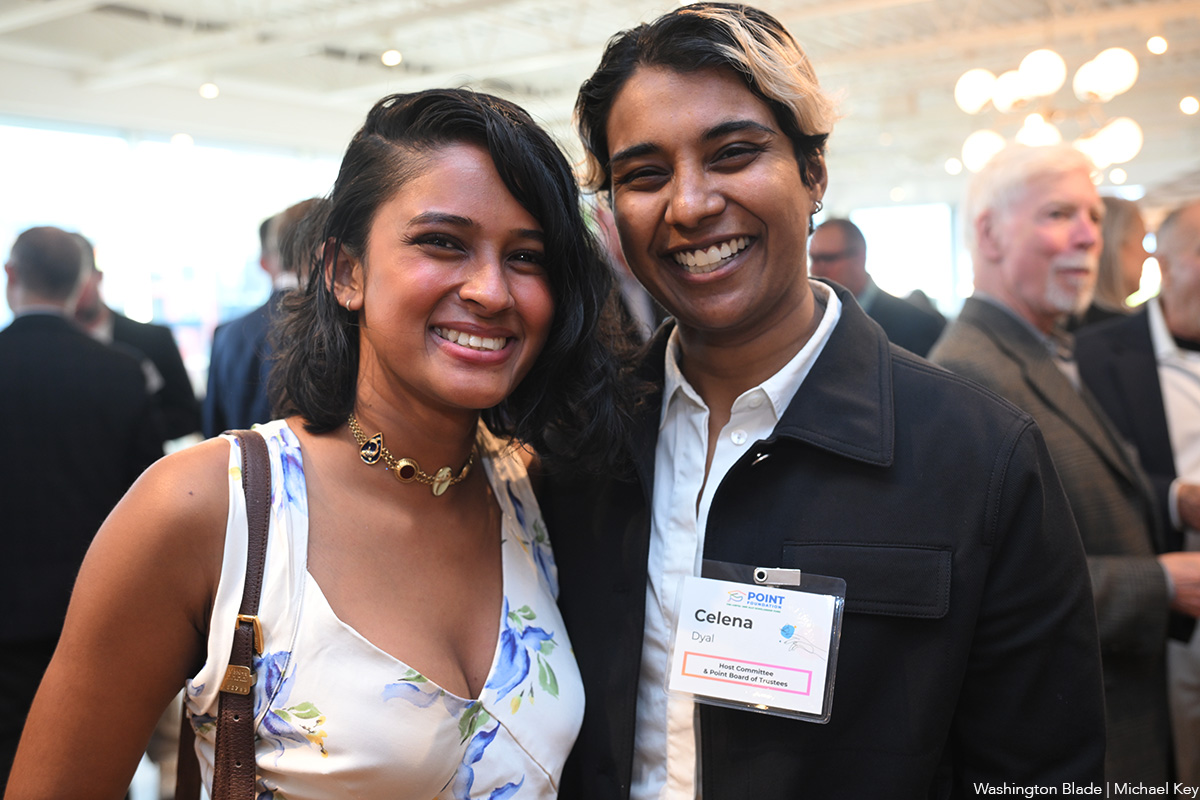
https://www.washingtonblade.com/?p=98979738
Extensions
Anti-LGBTQ violence prevention efforts highlighted at D.C. community fair
District of ColumbiaAmerican Foundation for Suicide PreventionD.C. LGBTQ+ Community CenterD.C. LGBTQIA+ Violence Prevention and Response TeamD.C. Mayor's Office of LGBTQ AffairsD.C. Office of Victims Services and Justice GrantsDC LGBTQ+ Community CenterDC SAFEDefend YourselfDestination TomorrowfeaturedIncjoseph's HouseLife Enhancement ServicesMCSR (Men Can Stop Rape)Metropolitan Police DepartmentMetropolitan Police Department LGBT Liaison UnitOnyx Therapy GroupPeople Into LivingSonya JosephU.S. Attorney’s Office for D.C.Us Helping UsVolunteer Legal Advocates

Mayor’s Office of LGBTQ Affairs organized May 8 event

The post Anti-LGBTQ violence prevention efforts highlighted at D.C. community fair appeared first on Washington Blade: LGBTQ News, Politics, LGBTQ Rights, Gay News.

Show full content

Detailed advice on how LGBTQ people can avoid, defend themselves against, and prevent themselves and loved ones from becoming victims of violence, with a focus on domestic and intimate partner violence, was presented at a May 8 LGBTQIA+ Safety in Numbers Community Fair.

The event, organized by the D.C. Mayor’s Office of LGBTQ Affairs, included five workshop sessions and information tables set up by 14 LGBTQ-supportive organizations and D.C. government agencies or agency divisions, including the D.C. Metropolitan Police Department’s LGBT Liaison Unit and the D.C. LGBTQ+ Community Center.

Also playing a lead role in organizing the event was the D.C. LGBTQIA+ Violence Prevention and Response Team, or VPART, a coalition of D.C. officials and leaders of community-based organizations that work with the Office of LGBTQ Affairs.

The event was held in meeting space in the building where the Office of LGBTQ Affairs is located at 899 N. Capitol St., N.E.

The workshop topics included de-escalation training on healthy relationships, bystander intervention, self-defense training, violence prevention grants, and suicide prevention.

“This will be a public safety and violence prevention event where community partners will educate attendees on various methods of violence intervention and trauma-informed practices,” according to a statement released by the Mayor’s Office of LGBTQ Affairs prior to the start of the event.

The statement adds, “We will have live demos, interactive games, and workshops focused on strategies for self-defense, protecting vulnerable communities, increasing access to mental health resources, providing tools for recognizing domestic violence/intimate partner violence signs in intimate relationships, and assistance for substance abuse.”

Sonya Joseph, associate director of engagement for the Office of LGBTQ Affairs, told the Washington Blade that studies have shown rates of domestic or intimate partner violence are higher in the LGBTQ community than in the community at large.

“Domestic violence and intimate partner violence are two very big prevalent issues in the LGBTQ community,” she said, adding that some of the workshops at the event would be providing “training on healthy relationships and how to recognize and prevent intimate partner violence and the signs of it.”

About 35 to 40 people attended the workshop sessions.

Experts specializing in violence impacting the LGBTQ community have said domestic violence refers to violence among people in domestic relationships that can include spouses but also siblings, parents, cousins, and other relatives. Intimate partner violence, according to the experts, refers to violence perpetuated by a partner in a romantic or dating relationship.

These D.C. based organizations or agencies that participated in the LGBTQIA+ Safety in Numbers event, and which can be contacted for assistance, include:

• Defend Yourself

• DC LGBTQ+ Community Center

• American Foundation for Suicide Prevention

• Joseph’s House

• Us Helping Us, People into Living, Inc.

• MCSR (formerly known as Men Can Stop Rape)

• MPD LGBT Liaison Unit

• Volunteer Legal Advocates

• DC SAFE

• Destination Tomorrow

• D.C. Office of Victims Services and Justice Grants

• Life Enhancement Services

• ONYX Therapy Group

• U.S. Attorney’s Office for D.C.

The post Anti-LGBTQ violence prevention efforts highlighted at D.C. community fair appeared first on Washington Blade: LGBTQ News, Politics, LGBTQ Rights, Gay News.
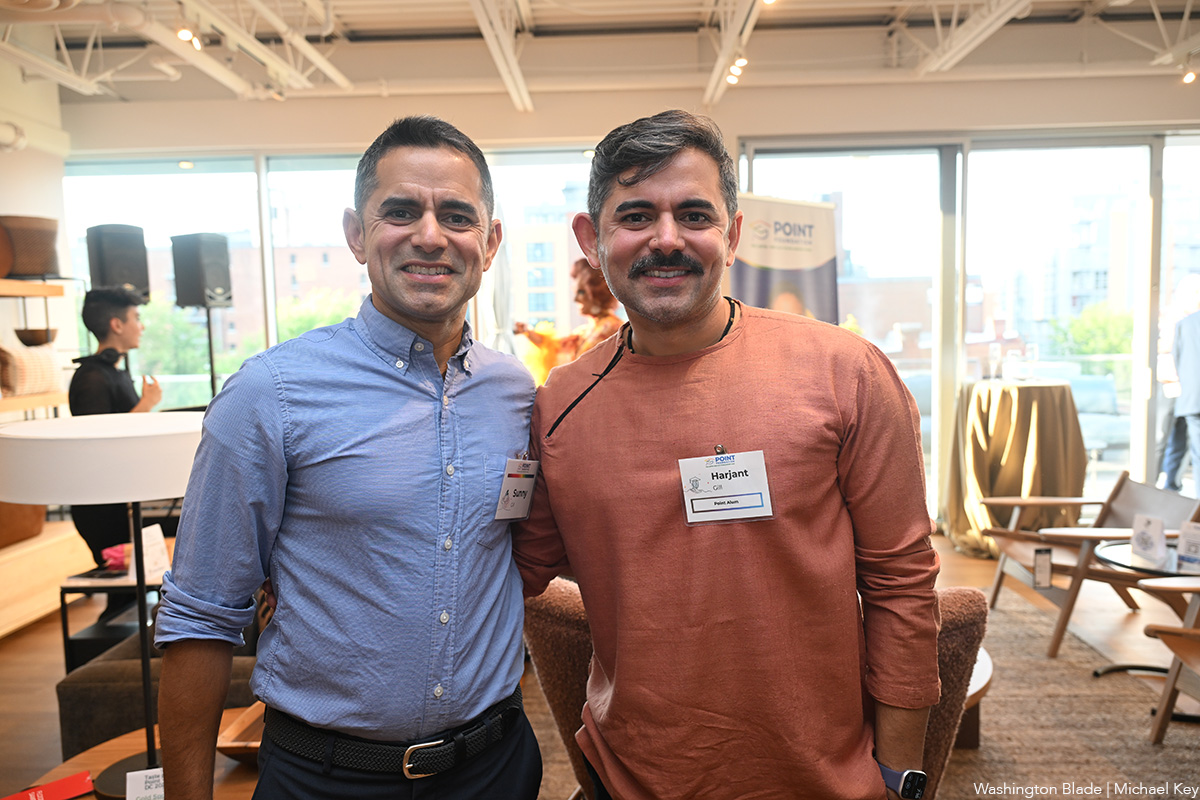
https://www.washingtonblade.com/?p=98979733
Extensions
Celebrated performer Rose Levine plays Rehoboth on May 15
Rehoboth BeachCherry GroveDelawareFire IslandFreddie's Beach BarRose Levine

Freddie’s to host Fire Island legend

The post Celebrated performer Rose Levine plays Rehoboth on May 15 appeared first on Washington Blade: LGBTQ News, Politics, LGBTQ Rights, Gay News.
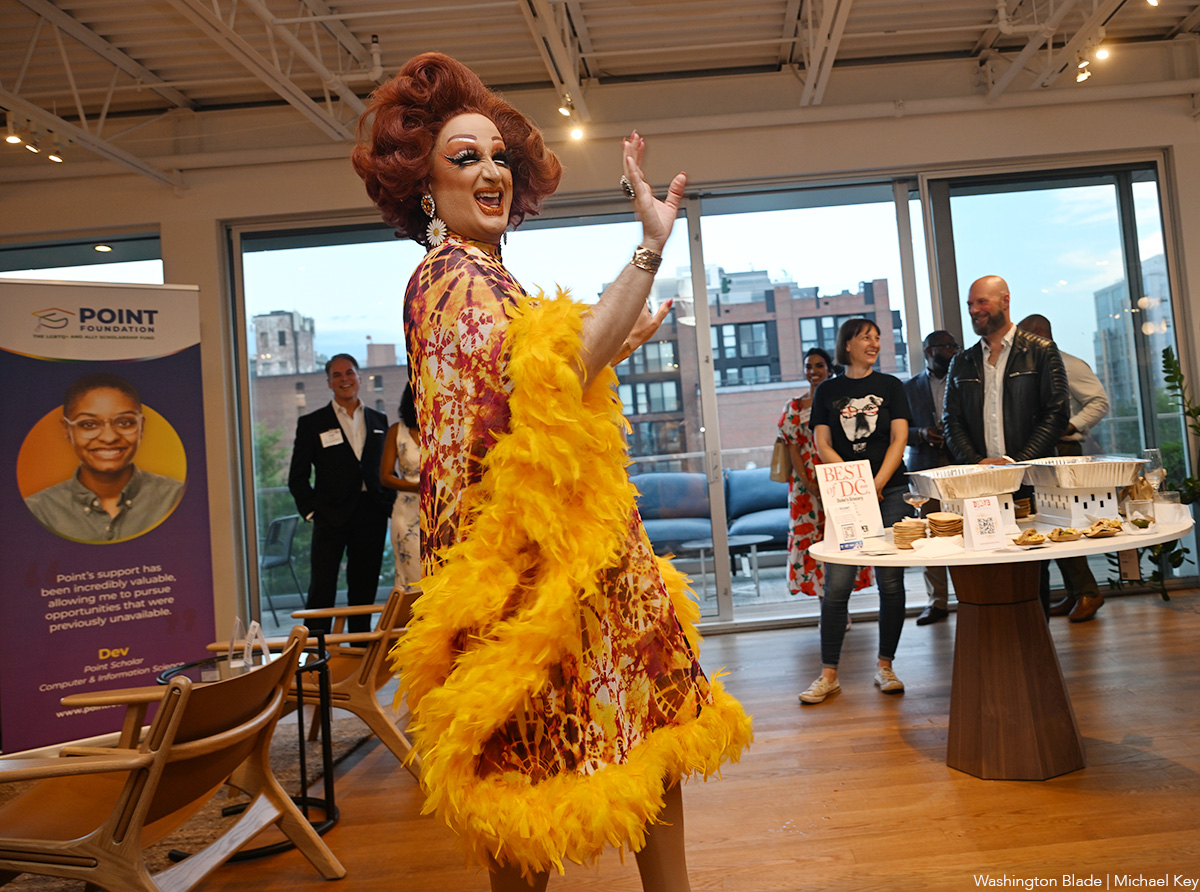
Show full content

Rose Levine is a celebrated entertainer best known for her longstanding performances in Cherry Grove, Fire Island, since 1955 where she has become a beloved fixture of the community’s vibrant arts and nightlife scene. With a career spanning decades, Levine has captivated audiences with her cabaret singing shows full of charisma, classic numbers, humor, and unmistakable stage presence—proving that some stars don’t fade, they simply get better lighting.

Levine is also closely associated with the legendary Fire Island Invasion of the Pines, the annual Fourth of July spectacle in which performers and revelers make their grand (and gloriously over-the-top) entrance by boat from Cherry Grove to Fire Island Pines, now a 50-year tradition. Her role in launching and sustaining this tradition has helped make it one of the most iconic—and entertaining—events of the summer season.

A consummate storyteller, Levine brings audiences along for a glittering ride through entertainment history. Rose will sing her Broadway melodies by Jerry Herman, Irving Berlin, Cy Coleman, Cole Porter, and others. With music direction by Mark Hartman the one-night-only event will celebrate Levine’s legendary life in drag, featuring signature crowd-pleasers and celebrity stories. A friend of Broadway composer Jerry Herman, she shares delicious stories of legends like Ethel Merman and recalls a young Barbra Streisand before she became Barbra Streisand while both performing at the famed singing contests at Greenwich Village’s famed Lion nightclub before her big break at the Bon Soir. Her shows are a mix of music, mischief, and memories of old New York and Fire Island — back when Cherry Grove didn’t even have electricity, but somehow still had better nightlife than most cities today.

Her legendary Fire Island home, Roseland, has hosted its fair share of unforgettable gatherings (and likely a few stories that can’t be printed in a family newspaper), making it a cornerstone of the community’s social scene. Levine splits her time between Manhattan and her summer perch on Fire Island—though audiences across the country are grateful she travels.

In fact, she performs at The Green Room and 54 Below in Manhattan, Cherry Grove in Fire Island, Act 2 and The Palm in Puerto Vallarta, Red Dot Cabaret in Hudson, N.Y., and now Freddie’s in Rehoboth Beach—because retirement, frankly, sounds boring. Her place in the Guinness Book of World Records as the oldest continuously performing drag queen in the world only adds to the legend and gives her bragging rights she fully intends to use.

And now, Rehoboth—consider yourself warned.

Don’t miss Rose Levine live on May 15 at Freddie’s Beach Bar. Dinner begins at 6:30 p.m., with the show at 7 p.m. Come for the cocktails, stay for the stories, and leave wondering how one person can have that many fabulous decades.

Levine’s legacy is defined not only by her remarkable career, but by her ability to connect with audiences across generations—usually while making them laugh, gasp, and occasionally blush. Don’t miss this show.

The post Celebrated performer Rose Levine plays Rehoboth on May 15 appeared first on Washington Blade: LGBTQ News, Politics, LGBTQ Rights, Gay News.

https://www.washingtonblade.com/?p=98979724
Extensions
The rise of accidental landlords
Real Estateaccidental LandlordsD.C.D.C. housing marketDistrict of ColumbiaNew York TimesReal estateRedfintenant protectionsZillow

How changing market conditions are impacting property management

The post The rise of accidental landlords appeared first on Washington Blade: LGBTQ News, Politics, LGBTQ Rights, Gay News.

Show full content

Why are there more “accidental landlords” renting out their properties in the Washington, D.C., metro area? 

The answer, according to The New York Times and other sources, is the current state of the real estate market. A growing number of accidental landlords are emerging as homeowners rethink their options in a challenging sales market. Rather than accept lower offers than they feel their properties deserve, many are choosing to rent instead of sell. 

This shift reflects both financial caution and changing market dynamics, where holding onto an asset and generating rental income can seem more appealing than locking in a perceived loss.

A Market in Transition

The D.C. housing market remains fundamentally strong, but it has clearly shifted from the frenzied seller’s market of prior years. Inventory has increased significantly, and according to Redfin, active home listings in the Washington, D.C., metro area have increased significantly, with reports indicating a rise of roughly 33% to 50% year-over-year in late 2025 and early 2026. 

This surge in inventory, coupled with falling demand, has shifted the market in favor of buyers, with roughly 22% more homes for sale than interested buyers. At the same time, homes are taking longer to sell. Buyers are still active, but they’re more selective, more price-sensitive, and less likely to engage in bidding wars.

This combination of rising inventory and longer selling timelines has created a key tension: sellers are no longer guaranteed the price they want. What’s a homeowner to do? Rent.

Why Homeowners Are Choosing to Rent

Rather than reduce their asking price, many homeowners are choosing to hold onto their properties and rent them out. National data confirms this shift. According to a report from Zillow, the share of rental listings made up of homes that failed to sell has climbed to near-record levels, with these accidental landlords accounting for a growing portion of rental supply. The number of these homeowners nationwide is at a three-year high.

The underlying psychology is simple: most sellers are not under immediate pressure to sell. And instead of accepting what they perceive as a discounted price, they opt to generate rental income and wait for more favorable market conditions.

For many homeowners, renting offers a way to “pause” the sales process without exiting the market entirely.

The Ripple Effect on the Rental Market

This influx of accidental landlords is reshaping the rental landscape. And this could be you!

  1. This trend is increasing rental supply. When unsold homes are converted into rentals, they add inventory to a market that has already seen new apartment deliveries and multifamily expansion. This is one reason rent growth has cooled in recent months, with national increases slowing to modest levels. 
  1. Additionally, it is changing the type of available rental housing. Accidental landlords are more likely to offer single-family homes, townhouses, or condos; properties that differ from traditional apartment stock. Zillow notes that single-family homes make up the largest share of these rentals now.

For renters in D.C., this means more choices, particularly in neighborhoods where rental inventory was previously limited.

Operational Challenges for Accidental Landlords

While renting may seem like a straightforward fallback strategy, many accidental landlords quickly discover that property management is a complex, operationally intensive business. Some of the most common challenges include:

  • Tenant screening and leasing compliance. D.C. has robust tenant protections and rent control regulations, particularly for older multifamily buildings. One wrong step can create legal complications home owners are not prepared for.
  • Maintenance and repairs. Deferred maintenance can quickly erode profitability and tenant satisfaction. And tenants do have the power to cut into your monthly profit when certain livability standards are not met.
  • Cash flow management. Not all rental income covers mortgage payments, especially for owners with higher interest rates. 
  • Regulatory compliance. Licensing, inspections, and rent stabilization rules can create administrative burdens.

In short, many homeowners underestimate the complexity involved in the transition from owner-occupant to landlord. What begins as a temporary strategy can evolve into a long-term operational commitment.

Property Management Firms Are Stepping In

As a result, property management companies across the D.C. metro area are seeing increased demand, particularly from first-time landlords. These owners often lack the infrastructure, systems, and expertise required to manage a rental property effectively. Professional management firms provide an array of solutions including marketing and leasing services, tenant screening and placement, rent collection and financial reporting, maintenance coordination, and compliance with D.C.’s evolving regulatory environment. For accidental landlords, outsourcing these functions can turn a reactive decision into a more structured investment strategy.

Green Renting: A Strategic Advantage in D.C.’s Rental Market

One often overlooked opportunity for accidental landlords—especially in Washington, D.C.—is the growing demand for “green renting.”

Energy efficiency is no longer just a lifestyle preference. For many renters, particularly in a high-cost city like D.C., it is a financial decision. Utility costs in the District can be significant, especially during peak summer and winter months. Properties that offer lower monthly energy expenses immediately stand out in a competitive rental market.

Installing solar panels, where feasible, can meaningfully reduce or even offset tenant electricity costs. For renters comparing similar properties, the difference between a standard utility bill and a reduced or stabilized energy cost can be a deciding factor. This is particularly true in D.C., where tenants are often highly-informed, environmentally-conscious, and sensitive to total monthly living expenses, not just base rent.

For landlords, the benefits extend beyond tenant appeal. Solar installations can help reduce vacancy, support longer lease terms, and create a premium perception that differentiates a property from competing listings. In some cases, landlords may also benefit from local incentives, tax credits, or increased property value tied to energy improvements.

In a market where many accidental landlords are competing on similar housing stock—single-family homes, condos, and townhouses—energy efficiency can become a key differentiator. It is not just about sustainability; it is about positioning a property to perform better financially.

A Local Market With Unique Dynamics

Washington, D.C., is a housing market shaped by federal employment, policy changes, and macroeconomic uncertainty. Recent developments, including fluctuations in the federal workforce and return-to-office mandates, have influenced both housing supply and demand. In some cases, these shifts have contributed to increased listings and more cautious buyer behavior. At the same time, D.C.’s high cost of entry continues to support rental demand. This dual dynamic creates ideal conditions for the rise of accidental landlords. Are you ready for this seismic shift? 


Scott Bloom is owner and Senior Property Manager of Columbia Property Management.

The post The rise of accidental landlords appeared first on Washington Blade: LGBTQ News, Politics, LGBTQ Rights, Gay News.

https://www.washingtonblade.com/?p=98979722
Extensions
Senate Democrats press DOJ over anti-trans prison directives
Federal Government“Defending Women from Gender Ideology Extremism and Restoring Biological Truth to the Federal Government”“Management of Inmates with Gender Dysphoria”American Civil Liberties UnionBOPCapitol HillDepartment of JusticeDistrict of ColumbiaDonald TrumpExecutive Order 14168featuredFederal Bureau of PrisonsHomepage HeadlinesJoe BidenPrison Rape Elimination ActSen. Edward MarkeySen. Jeffrey A. MerkleySen. Mazie K. HironoShana KnizhnikThe Marshall ProjectTodd BlanchetransgenderWashington BladeWilliam Marshall III

Markey joins other lawmakers in demanding reversal of policies

The post Senate Democrats press DOJ over anti-trans prison directives appeared first on Washington Blade: LGBTQ News, Politics, LGBTQ Rights, Gay News.

Show full content

U.S. Sen. Edward Markey (D-Mass.) is urging acting Attorney General Todd Blanche and William Marshall III, director of the Federal Bureau of Prisons, to reverse a policy affecting transgender inmates that lawmakers say is “endangering” their “health and safety.”

Markey, along with U.S. Sens. Jeffrey A. Merkley (D-Ore.) and Mazie K. Hirono (D-Hawaii), sent the letter that the Washington Blade verified on Monday.

The letter is a direct response to a change in prison policy that went into effect in February 2025, rolling back Biden-era protections for trans inmates. The senators described how President Trump’s Executive Order 14168, titled “Defending Women from Gender Ideology Extremism and Restoring Biological Truth to the Federal Government,” forced a policy shift they argue is rooted more in political rhetoric than in medical research or evidence-based correctional practices.

In the letter, the lawmakers wrote “On Feb. 21, 2025, the BOP issued a memo to implement President Trump’s EO, requiring BOP staff to ‘refer to individuals by their legal name or pronouns corresponding to their biological sex,’ banning the use of funds for any ‘items that align with transgender ideology,’ and suspending clothing accommodations, pat search accommodations, and support programs offered to transgender individuals.”

“In a second memo, issued one week later, the BOP banned the use of federal funds for ‘any medical procedure, treatment, or drug for the purpose of conforming an inmate’s appearance to that of the opposite sex.’ These changes have resulted in the denial — or threatened denial — of hormone treatment and gender-affirming accommodations for transgender individuals in BOP custody.”

“On Feb. 19, 2026, the BOP escalated its attacks, issuing a program statement titled, ‘Management of Inmates with Gender Dysphoria.’ It prohibits incarcerated people from receiving gender-affirming care, even if paid for with private funds. This practice forces incarcerated people to discontinue care, regardless of medical recommendations.”

The senators continued, “The agency has repeatedly enacted policies that strip transgender individuals of their gender identity and dignity. This includes requiring staff to refer to transgender individuals by pronouns that ‘align with their biological sex’ rather than gender identity and to confiscate gender-affirming items, such as undergarments, clothing, cosmetics, and wigs.”

“These policies risk triggering mental health crises, including increased suicidality, among incarcerated people with gender dysphoria. The BOP’s repeated guidance to roll back gender-affirming protections — despite a federal court order finding that the BOP’s actions to discontinue gender-affirming care are likely unlawful — generate confusion about the current state of regulations and convey the BOP’s indifference to court orders and the rule of law.”

“By stripping away appropriate medical and psychiatric care, safety protections, and measures to provide dignity, the BOP is exposing transgender individuals to significant harm.”

The Marshall Project, a nonprofit newsroom focused on the U.S. criminal justice system and immigration enforcement through data-driven reporting, also reported on the policy change. The outlet spoke with Shana Knizhnik, an attorney with the American Civil Liberties Union, about the impact of the changes.

“It’s clear that this new policy is a ban on gender affirming healthcare,” Knizhnik, who works for the nationwide chapter of the ACLU said. “This is a policy that disregards the medical needs of our plaintiffs.”

The letter also asked the BOP and the DOJ specific questions regarding why the policy went into effect, as lawmakers suggested the changes appear politically motivated rather than based on new medical evidence regarding treatment for trans inmates.

The senators requested answers to these trans policy-specific questions by May 21, including:

“Does the BOP plan to monitor and assess the impacts of recent policies that eliminate gender-affirming medical and psychiatric care?”

“Since January 20, 2025, how many transgender, nonbinary, intersex, and gender-diverse individuals have been transferred to a different facility to meet the EO’s goal of housing individuals ‘according to their biological sex?’”

“Given that the BOP has stopped enforcing Prison Rape Elimination Act regulations related to gender identity and collecting data on gender identity, how will the BOP protect the physical and emotional health and safety of incarcerated transgender individuals?”

“How does the BOP plan to monitor and assess the impact of eliminating protections against sexual violence for this population?”

“Does the BOP plan to institute a specific process by which transgender individuals may seek assistance or lodge complaints regarding harms they experience from the recent BOP policies and actions implementing President Trump’s EO?”

“Describe the specific criteria the BOP intends to use to determine whether it will allow a ‘social accommodation’ for gender dysphoria.”

Markey also included a personal statement to the Blade explaining why he is using his position on Capitol Hill to push for more information and advocate for reversing the policy.

“This administration continuously shows their contempt for trans people and a total disregard for their rights and humanity. As part of this cruel campaign, the Bureau of Prisons has systematically stripped health care access and basic protections from trans people, abandoning its duty to the people in its custody. I won’t stop fighting until this administration’s hateful anti-trans policies are reversed and trans people’s rights are secured.”

The Blade reached out to the DOJ and the BOP for comment but had not received a response at press time.

The post Senate Democrats press DOJ over anti-trans prison directives appeared first on Washington Blade: LGBTQ News, Politics, LGBTQ Rights, Gay News.

https://www.washingtonblade.com/?p=98979711
Extensions
Washington Blade’s Pride on the Pier returns June 13 to kick off D.C. Pride week
Arts & EntertainmentLocalCapital PrideDistrict WharfPride on the Pier

Pride on the Pier officially launches Pride Week in D.C.

The post Washington Blade’s Pride on the Pier returns June 13 to kick off D.C. Pride week appeared first on Washington Blade: LGBTQ News, Politics, LGBTQ Rights, Gay News.

Show full content

The Washington Blade’s annual Pride on the Pier celebration returns to The Wharf on Saturday, June 13, 2026 from 4-9 p.m., bringing thousands of LGBTQ community members and allies together for an unforgettable waterfront celebration to kick off Pride week in Washington, D.C.

Now in its eighth year, Washington Blade Pride on the Pier extends the city’s annual celebration of LGBTQ visibility to the bustling Wharf waterfront with an exciting array of activities and entertainment for all ages. The District Pier will offer DJs, dancing, drag, and other entertainment. Alcoholic beverages will be available for purchase for those 21 and older.

“Pride on the Pier has become one of the signature moments of Pride in D.C.,” said Lynne Brown, publisher of the Washington Blade. “There’s nothing like watching our community come together on the waterfront with live music and incredible energy as we kick off Pride week.”

Pride on the Pier is free and open to the public, with VIP tickets available for exclusive pier access to the Dockmaster Building. To purchase VIP tickets visit www.prideonthepierdc.com/vip

Additional entertainment announcements, sponsor activations, and event details will be released in the coming weeks.

Event Details:

📍 Location: District Pier at The Wharf (101 District Sq SW, Washington, DC)
📅 Dates: Friday, 13, 2026 

⏱ 4-9PM
🎟 VIP Tickets: www.PrideOnThePierDC.com/VIP

The post Washington Blade’s Pride on the Pier returns June 13 to kick off D.C. Pride week appeared first on Washington Blade: LGBTQ News, Politics, LGBTQ Rights, Gay News.
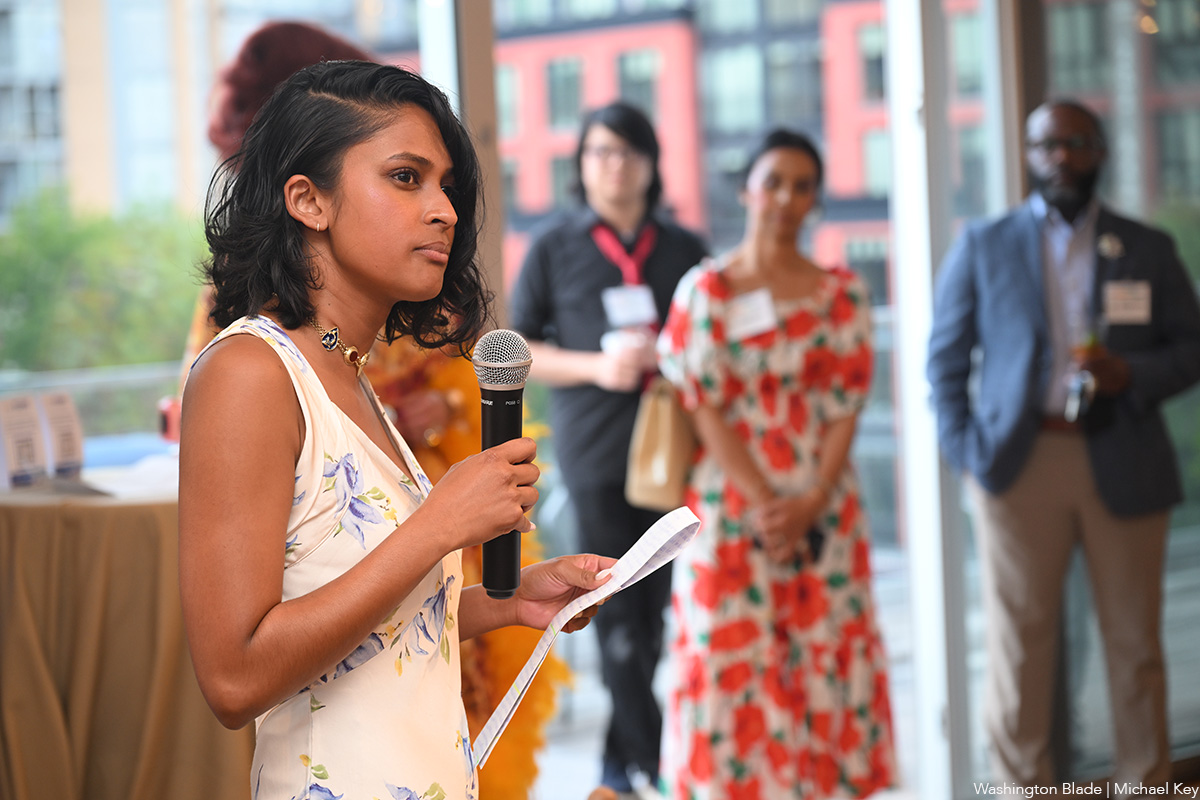
https://www.washingtonblade.com/?p=98979714
Extensions
National tour of ‘Gatsby’ comes to National Theatre
TheaterEdward StaudenmayerF. Scott Fitzgeraldthe Great Gatsby

Out actor Edward Staudenmayer talks playing the show’s gangster

The post National tour of ‘Gatsby’ comes to National Theatre appeared first on Washington Blade: LGBTQ News, Politics, LGBTQ Rights, Gay News.

Show full content

‘The Great Gatsby’
May 12-24
The National Theatre
1321 Pennsylvania Ave., N.W.
$59-$196
Thenationaldc.com

Often dubbed “The Great American Novel” for its depiction of ambition and self-invention alongside the reversals of success, F. Scott Fitzgerald’s “The Great Gatsby” says it all in a fast read. 

Set against the excesses and energy of the Roaring Twenties, “The Great Gatsby,” novel and now the same-titled hit Broadway musical with a jazz/pop original score by Jason Howland and Nathan Tysen, tells the story of Nick Carraway and his friendship with Jay Gatsby, an enigmatic millionaire intent on reuniting with ex-lover, Daisy Buchanan. 

It was during a four-month 2025 run in Seoul, South Korea, that out actor Edward Staudenmayer first played the show’s heavy, Meyer Wolfsheim, a gangster who helped Gatsby make his murkily acquired fortune. As Meyer, Staudenmayer opens the second act with, appropriately enough, “Shady.”  

Now three months into a year-long North American tour, the show is poised to enjoy a brief run at Washington’s National Theatre (5/12-5/24). 

While putting on his eyeliner prior to a recent Wednesday matinee at Chicago’s Cadillac Palace Theatre, the upstate New York-based actor shared about Gatsby and a life in theater. 

WASHINGTON BLADE: Despite your good looks and terrific voice, you’re rarely the leading the man. How is that?

EDWARD STAUDENMAYER: I’m definitely a character man. I’ve been painting lines on my face to play old men since I was in high school. I was the youngest freshman in college playing old Uncle Sorin [in Chekhov’s “The Seagull”]. 

There have been many villains. Some darker than others. Meyer Wolfsheim is a very bad guy, but he doesn’t haunt me once I’m offstage. I play a lot of pickleball. 

BLADE: Is it true that like so many of Fitzgerald’s characters, Wolfsheim is famously based on someone the writer encountered in life. 

STAUDENMEYER: That’s true, Wolfsheim is pretty much a direct portrayal of real-life mobster and 1919 World Series fixer [Arnold Rothstein].

BLADE: When did the 1925 novel first surface on your radar? 

STAUDENMAYER: Like many of us, I was assigned “The Great Gatsby” in high school. It was short, and filled with sex and illicit activities. I thought it was great. Definitely wasn’t a Judy Blume novel. 

Interestingly, the book wasn’t originally a huge a success for Fitzgerald, but because it was about war and having the girl at home, they gave it to GIs leaving for WWII. After returning, a lot of those guys went on the GI Bill and became English teachers. They assigned the book to their students. 

BLADE The idea that the book’s first-person narrator, Nick Carraway, is gay and enamored with Jay Gatsby is long discussed among readers and scholars. Does the musical touch on that?

STAUDENMAYER: Yes, there’s conjecture about Jay and Nick, and it’s implied in our show. It’s also implied about Jordan Baker, Jay’s fleeting romantic interest. Ultimately, she’s a confirmed bachelor, and a professional golfer who only wears pants.  

Our performers are really good. Josh Grasso who plays Nick is fantastic. I’ve had to stop watching him in his last scene; it’s not good for Meyer Wolfsheim to take his curtain call crying. Our Gatsby, Jake David Smith, is good too. He’s gorgeous like Superman and sings like an angel. 

BLADE: Do you ever imagine backstory for your characters whose sexuality is undefined?

STAUDENMAYER: I do, but not with Wolfsheim. I don’t see it. I’m trying to be as butch as possible with this ruthless killer. 

BLADE: Have you had to do that in your career?

STAUDENMAYER: For a long time, I wore a mask to hide my gayness. I worked hard on being believable, that I was into the girl or that I was a tough guy. 

It’s a different world now, and it’s so refreshing to be around the younger actors today; they’re remarkably open and comfortable.

BLADE: What was your coming of age like?

STAUDENMAYER: I played high school football in Palm Springs [he chuckles, alluding to the arid gay mecca], and I was pretty good too. But much to the chagrin of my parents and coaches, I quit the team to act in our senior year play. My super butch dad played semi-pro football and he was an ex-cop. I’m named after him. While I didn’t become my dad, I’ve played him often on stage. He was a true Gaston [the bumptious rival in “Beauty and the Beast”]. And like Gaston, he used antlers in all his interior decorating. 

BLADE: Did he live to see your success in theater?

STAUDENMAYER: He did. Life was challenging growing up but the last 10 years of his life we couldn’t get off the phone with each other [his voice catches with emotion]. He accepted me entirely, and we became very close. 

BLADE: Looking ahead, is there a part you’d especially like to play?

STAUDENMAYER: Like all baritones I’d love to play Sondheim’s “Sweeney Todd.” I’ve come close but it hasn’t happened yet. There’s still time. 

The post National tour of ‘Gatsby’ comes to National Theatre appeared first on Washington Blade: LGBTQ News, Politics, LGBTQ Rights, Gay News.
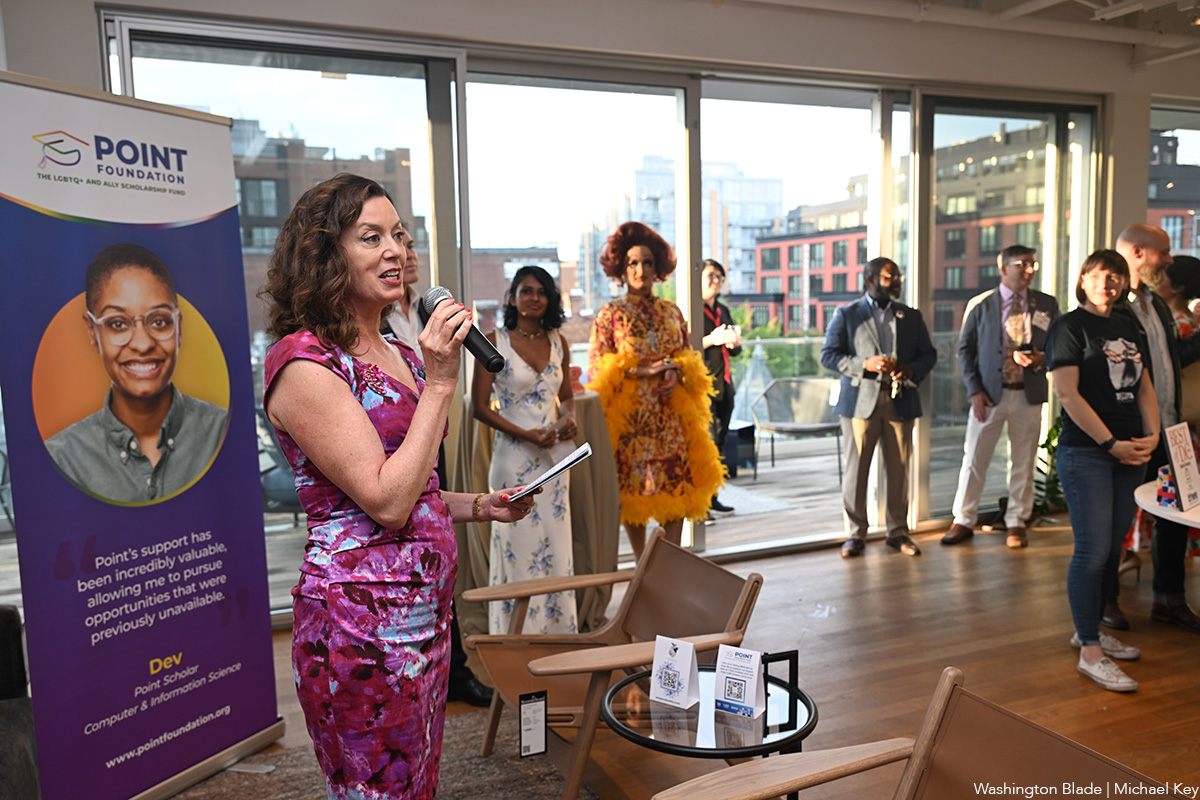
https://www.washingtonblade.com/?p=98979702
Extensions
DJ Chanel Santini is bringing the heat and some gender-fluid diversity to XBIZ Miami
Music & ConcertsChanel SantiniMiamiXBIZ

Pool party celebrates most charismatic personalities, creative artists in adult entertainment

The post DJ Chanel Santini is bringing the heat and some gender-fluid diversity to XBIZ Miami appeared first on Washington Blade: LGBTQ News, Politics, LGBTQ Rights, Gay News.

Show full content

Chanel Santini has crossed over to being a DJ, performing at clubs all over the country. Now known as Santini, they will be making music and hyping the pool party, DJ-ing at XBIZ, the conference for adult creators and digital players, in Miami.

Taking place on Monday to Wednesday, the event honors the most charismatic personalities and creative artists in entertainment.

“I am honestly so excited — getting to DJ in Miami Beach is literally a DJ’s dream!” Santini told the Los Angeles Blade. 

“I thought it would be a good opportunity because I haven’t been around my industry peers in a long time. It’s a great event to network and show off the new me!” said Santini.

While Santini is unsure what music they will be playing, they want everyone to have a good time. “My goal is to ignite the dance floor and play great music that everyone will vibe to. My sound includes house music, bass house, tech house, and I always like to throw a little bit of hip-hop in my sets.” 

Santini loves how DJ-ing brings people together. 

“Music really ignites us all! It is so universal, no matter what language you speak. I think it’s the best high in the world when you play a banger track, and everybody on the dance floor screams loudly. You can’t describe that feeling until you’re up there on that stage.”

 Santini describes DJs as the “modern rock stars” in today’s world. 

“I always feel like such a superstar when I’m up on that stage. The best feeling is after my set when I have people come up to me and say, ‘Thank you for sharing that amazing music.’ That’s how you know that you’re a good DJ — I love when I get those types of compliments!”

DJ Chanel Santini / Photo courtesy of Miss Lainie PR

While sometimes it’s hard to please everyone’s musical tastes, Santini endeavors to try! “You just have to go out there and give it your all and be the best DJ that you can be,” he noted.

Santini, who had previously identified as transgender, recently decided to transition back to being gender fluid.

“It’s definitely been a journey, but I’m definitely happier in my own skin now than I was. I don’t go by he/him pronouns. I don’t go by they/them either. I guess I just really don’t have a preference. Whatever you see me as is your opinion. I’ve learned over the years that I’m not trying to be one specific thing. I’m just Santini. I’m just me.” 

Santini acknowledged they felt respected more when dressed as a woman.

“I think it’s just because femininity runs the world. When I started to de-transition, I felt like I had to just be a boy all the time. But I’ve realized over the years that I don’t need to stick to one specific thing. I am always gonna be feminine, and that’s OK.”

Recently, Santini has been embracing their feminine side more.

“I definitely feel more comfortable in female presentation, and more powerful when I’m on stage dressed as Chanel. I love DJ-ing in drag because there are so many straight male DJs in the world. It’s almost like a superhero when he puts on his cape! I think it makes me confident and stand out more as an artist.” 

And because Santini loves makeup and fashion, they can incorporate that into their sets. “I’m not just bringing you good vibes and good music. I’m bringing you a show/ production!”

DJ Chanel Santini / Photo courtesy of Miss Lainie PR

Santini is already working on big plans for the future.

“I’m opening up for a huge Pride block party in my hometown, Albuquerque, N.M., on June 12 and 13. It’s a two day festival and I’m super excited for this opportunity. I’m even hiring backup dancers and a choreographer.”

Santini plans to go “all out” for this show. 

“It’s gonna be the biggest crowd that I’ve ever played for,” Santini enthused. “I’m putting my heart and soul into this performance, especially because it’s Pride in my hometown, and that means so much to me. I know the younger me would be so proud.”

Santini remembers going to Pride when they were younger and telling themself they couldn’t wait to be up on that stage.

“I’m truly living my dream right now, and I’m so excited for the future. The last 10 years of being in the adult entertainment business have been great and have given me major success. But I always knew that I didn’t want to be in this industry for long.”

Santini acknowledged that, in the recent past, it was a struggle.

“I’ve been trying to find myself and figure out what I wanna do next with my life. Now that I’ve found this passion for DJ-ing, it makes me want to go far in this business.”

In addition to being a DJ/artist, Santini is starting college next semester. 

“I’m gonna get my degree in audio engineering,” Santini enthused. “I can’t wait to start producing my own tracks. I especially can’t wait till the day I’m headlining a major festival! I know with a little bit of patience and hard work that I can get there! I just have to continue believing in myself.”

Santini wanted to thank all of their fans for their support. “Truly, if it wasn’t for them, I wouldn’t be able to fund my art in the way that I have. I’m truly grateful. And I’m excited for the future!”

The post DJ Chanel Santini is bringing the heat and some gender-fluid diversity to XBIZ Miami appeared first on Washington Blade: LGBTQ News, Politics, LGBTQ Rights, Gay News.

https://www.washingtonblade.com/?p=98979697
Extensions
New Hungarian prime minister takes office
HungaryEuropean CommissionEuropean UnionfeaturedJD VanceUrsula von der LeyenViktor Orbán

Péter Magyar's party defeated anti-LGBTQ Viktor Orbán last month

The post New Hungarian prime minister takes office appeared first on Washington Blade: LGBTQ News, Politics, LGBTQ Rights, Gay News.

Show full content

Hungarian Prime Minister Péter Magyar took office on Saturday.

Magyar’s center-right Tisza party on April 12 defeated then-Prime Minister Viktor Orbán’s Fidesz-KDNP coalition. Vice President JD Vance less than a week before the election traveled to Budapest, the Hungarian capital, and urged Hungarians to support Orbán.

Orbán had been in office since 2010. He and his government faced widespread criticism over its anti-LGBTQ crackdown.

The European Commission in 2022 sued Hungary, which is a member of the EU, over the country’s anti-LGBTQ propaganda law. The European Union’s top court, the EU Court of Justice, on April 21 struck down the statute.

The EU while Orbán was office withheld upwards of €35 billion ($41.26) in funds to Hungary in response to concerns over corruption, rule of law, and other issues.

Hungarian lawmakers in March 2025 passed a bill that banned Pride events and allowed authorities to use facial recognition technology to identify those who participate in them. MPs later amended the Hungarian constitution to ban public LGBTQ events.

Upwards of 100,000 people last June defied the ban and marched in Budapest’s annual Pride parade.

“Congratulations to [Péter Magyar] on becoming prime minister of Hungary,” said European Commission President Ursula von der Leyen on X.

“This Europe Day, our hearts are in Budapest,” she added. “The hope and promise of renewal is a powerful signal in these challenging times.”

“We have important work ahead of us,” noted von der Leyen. “For Hungary and for Europe, we are moving forward together.”

The post New Hungarian prime minister takes office appeared first on Washington Blade: LGBTQ News, Politics, LGBTQ Rights, Gay News.

https://www.washingtonblade.com/?p=98979694
Extensions