During the first weekend of May, dozens of people filed into a River North co-working space for what was billed as a hands-on, phone-free experience.
After slipping their devices into small cloth pouches stamped with the words “Fulfillment Center,” visitors made their way over to a pair of industrial shelves stacked with activity boxes labeled “make,” “play,” “read” and “write.” Inside the boxes, they found crafts, readable materials and games – plenty of things to do instead of scrolling endlessly on their mobile phones.
Meanwhile, up in Edgewater, theater leaders from [producingbody] are introducing audiences to magnetically locking Yondr pouches starting this week with the Chicago premiere of “Spaceman.” Audiences can sit with their phones in the pouches — but they won’t be accessible for the length of the 100-minute show.
If you want a deep dive into Chicago arts and culture, check your phone at the door: The “unplugged” trend is growing locally among arts groups responding to a collective desire for more phone-free experiences. Organizers say they aim to deepen human connection and offer spaces for creating art.
Chicagoans enjoy a variety of hands-on activities at the Fulfillment Center pop-up.
Grace Coudal
For some Chicago cafes and lounges, such as Kibbitznest Books, Brews & Blarney and Verzênay in Lincoln Park, the unplugged trend is nothing new. These cafes are intentionally Wi-Fi free, opting for board games and books instead of a sea of silent and disconnected remote workers.
Major musicians such as Phoebe Bridgers and David Byrne have enforced no-phone zones at their events, too, using similar phone pouches or, in the case of Byrne’s “Theater of the Mind” theater installation in River North, requiring fans to place their devices in lockers.
The idea for the phone-free Fulfillment Center — a pop-up for people of all ages — started with a simple question, event creator and Little Council marketing co-founder Jessa Fuller said: “What if we took up a little bit of space in our communities with a center that was geared toward personal fulfillment?”
Fuller said she kept hearing from clients of her immersive marketing company about the desire for unplugged spaces, where people could engage with each other in meaningful and accessible ways.
The Fulfillment Center organizers give attendees small cloth pouches to place their phones inside of during the duration of their unplugged events.
Grace Coudal
“I think there really is a trend [of] people trying to be like, wait a minute, I want to look at this directly through my eyes and not through my screen,” Fuller said.
After guests picked one of the four boxes, they took the box over to a table dubbed the “line” and unpacked it. Inside, the materials and packing slip described the activity: “play” boxes included classic games like Uno and Jenga, while “make” boxes contained magazines and other supplies for collage-making.
One box contained supplies for a game of “exquisite corpse” — a drawing game invented in the 1920s, where artists come together to create a character without seeing the previous contributions. The result is usually something like a “magical creature,” Fuller said.
The boxes are filled with things that people “might not always make time for, like creating or writing or reading or just playing,” Fuller said.
“Read” boxes included articles from Chicago-based publications, such as copies of “The Pub” (which is print-only), or The Poetry Foundation’s poetry magazine. And inside the “write” boxes, attendees received bios of senior citizens (through the group Love For Our Elders), and were inspired to write letters to friends and family. In the background, the party offered free beverages from Hopewell Brewing and Buenos Days Coffee and a soundtrack by DJ Ray Mora and local singer-songwriter Kaina, who curated sounds from the Sooper Records catalogue in a listening room.
Audiences are asked to store their phones and other personal belongings in lockers before walking through David Byrne’s immersive “Theater of the Mind” in River North.
Todd Rosenberg
Up north at the theater, [producingbody] founders Amy Carpenter and Taylor Dalton said their aim with the phone-free push is to restore the communal intimacy of traditional theater.
The phone-free expectations are set early, with a note on the ticket sale page and confirmation messages. The only exceptions that theater administrators will consider are related to accessibility concerns, especially for individuals whose medical devices are connected to their phones.
“We're not trying to reinvent the wheel here,” Dalton said. “We have lived and engaged with theater and the arts without our phones for longer than we have with our phones.”
Plenty of humans are “addicted” to their phones, even if just a little bit, Carpenter said. Though reminders to silence or power off phones are ubiquitous with pre-show warmups across Chicago theaters, devices are still a problem, she added.
Audiences who attend performances of “Spaceman” by [producingbody] are asked to put their phone in Yondr pouches for the duration of the performance.
Courtesy of [producingbody]
“It's tough because you want to believe that people will follow instructions and then we just see time and time again that they don't,” Carpenter said.
“Spaceman,” written by Brooklyn-based playwright Leegrid Stevens, is a solo show about an astronaut who’s traveling to Mars with the sole task of laying the roots for a Martian colony. All that alone time gives the astronaut plenty of time to sit with her own thoughts and fears about life on Earth and what might await her when she arrives on the red planet.
Carpenter and Dalton want the phone-free experience to mirror the protagonist’s isolation. Upon check-in, guests will receive a Yondr pouch and sit, without the comfort of doom-scrolling, for at least 15 minutes before the show starts.“That will inevitably give the audience a taste of our protagonist's experience,” they said.
Still, phone-free rules can be risky for businesses, especially when social media is the top source for information and news about cultural events.
Taylor Dalton (left) and Amy Carpenter, co-creators of [producingbody] theater company, on the set of their upcoming phone-free show “Spaceman.”
Candace Dane Chambers/Sun-Times
The Fulfillment Center team considered alternative methods for documenting their events and hired a professional photographer to capture candid images. But at a theater performance like “Spaceman,” Carpenter and Dalton hope the show gives attendees something to post about after the curtain closes.
They’re handing out physical programs and will include a few fun photo-ops in the theater lobby to encourage fans to take their own pre- or post-show pictures for social media.
“It is a risk. But I think the hope here is to ultimately make it worth it for [audiences],” Dalton said. “We wanna make the experience so special inside the theater that they forget that they don't have access to their phones.”
World Goth Day is going to feel very different for Pixel Grip this year. The international celebration of dark culture — held every year on May 22 — is a holiday fit for the Chicago synth pop act who takes heavy cues from the city’s Wax Trax era with vibe music that could be played at Neo, if it was still around.
This year, there’s even more reason to celebrate the holiday, though: It’s the same weekend Pixel Grip will perform at Salt Shed’s Warm Love Cool Dreams Music and Arts Festival. And it’s also the day the band is expecting to finally get paid by Travis Scott.
Last July, the Logan Square/Humboldt Park trio — singer Rita Lukea and producers Tyler Ommen and Jonathan Freund, all of whom initially met as high schoolers in Crystal Lake — were plucked out of the local circuit and thrust into national headlines after calling out the rapper for sampling the song “Pursuit” in his 2025 track “Kick Out” without proper clearance or permission.
Warm Love Cool Dreams Music and Arts Festival When: May 23-24 (doors at 1 p.m.) Where: Salt Shed, 1357 N. Elston Tickets: $75.20 for 1-day pass; 134.75 for 2-day pass Info:warmlovecooldreams.com
“My cousin texted me and he was like, ‘Hey, am I tripping or is this ‘Pursuit’?” Lukea said of how the band first found out about the placement, which she had mixed feelings about. “So many songs I love are based on samples, and I can't really say that I don't appreciate or respect sampling in music. It's hard for me to be mad because it's a cool song. But just give me my bread. That’s all I f------ care about.”
As legal teams on both sides worked out the details and with the matter now settled, Freund said, “I think it was the best press we could have gotten for our album.”
Just weeks prior, Pixel Grip had announced its self-released third album, “Percepticide: The Death of Reality,” and a flurry of interest followed — and hasn’t stopped since. On Spotify, the band’s latest darkwave singles “Reason to Stay” and “Stamina” are nearing 2 million streams. This fall, Pixel Grip will open for nu metal stalwarts Korn in Europe. Even Trent Reznor requested a meeting last summer when Nine Inch Nails stopped by United Center.
Playing Warm Love Cool Dreams feels like an important next step for Pixel Grip — it’s the band’s first time taking the Salt Shed stage (or really any stage of that size).
Giacomo Cain/Sun-Times
“Someone really close to him is a fan of what we do and was sharing our music, and Trent took an interest. He invited us to say hi and chat a little bit,” said Ommen. But not just chat, Reznor also asked Pixel Grip to contribute a remix of “As Alive As You Need Me To Be” for the “TRON: Ares Divergence” companion album that dropped in February.
“I literally almost walked away,” Lukea joked about her reaction to Reznor suggesting the collaboration. “I was like, ‘I can’t handle this right now.’” It was also meaningful that the Pixel Grip song that drew Reznor into the group’s orbit in the first place was the “Percepticide” track “Jealousy Is Lethal,” which Lukea wrote in 2022 after the overturning of Roe v. Wade.
At the time, Pixel Grip had also just come off a tour with fellow locals Dehd and Lukea was inspired by bassist and vocalist Emily Kempf’s “folky, lullaby-esque songwriting,” she said. “I was also thinking about the power of having a womb and creating people and how much power it actually is to be the gender that births your soldiers and your consumers and the people who are going to vote for you. It comes down to women.”
Pixel Grip’s newfound success brings a feeling of vindication that has eluded the band for a decade. Before “Percepticide,” Pixel Grip even pondered breaking up after toiling through the challenges that come with being a self-funded indie DIY band.
Giacomo Cain/Sun-Times
The brazen track “Stamina” also came from a similar place of “experiencing a lot of sexism and patriarchal bullshit in the music industry,” said Lukea, who likes to sum up the band’s hard-hitting music, visuals and stylized clothing as “confidence core.”
“These guys in suits were trying to make or break me, and that song came out of believing that it doesn't matter how many times you f--- me over. If that's the best you got, you're gonna have to try harder,” she said. “I am not going out of this industry. I deserve to be here.”
Pixel Grip’s newfound success brings a feeling of vindication that has eluded the band for a decade. Before “Percepticide,” Pixel Grip even pondered breaking up after toiling through the challenges that come with being a self-funded indie DIY band.
“We work extremely hard at what we do,” said Freund who is proud of the fact the band has never had to cancel a date, even when he broke his finger last year before the kickoff of the “Percepticide” tour and the band had a friend fill in. “I think that speaks to the amount of effort we put into it. We've been dedicated to this project, the three of us, for years,” he said. “It's what we do and it's what we will continue to do.”
Playing Warm Love Cool Dreams also feels like an important next step — it’s the band’s first time taking the Salt Shed stage (or really any stage of that size).
“Pixel Grip was a no-brainer,” said 16 on Center Director of Music Brent Heyl who booked the festival lineup as part of the Empty Bottle Presents portfolio.The weekend also includes The Jesus and Mary Chain, Courtney Barnett and locals Whitney and Tortoise with an aim to “amplify boundary-breaking artists,” according to press materials.
“I needed something visceral and high energy and Pixel Grip just hits on so many levels,” he added. “It’s been rad seeing them develop. We've been booking them since they were playing Empty Bottle and now it really feels like they've developed into where you see them going places. This was a great opportunity to put them on a bigger stage and showcase them.”
This is the second year of the event, though it’s been expanded to utilize the full venue with both indoor and outdoor stages, as well as DJs outside Elston Electric Arcade and smaller performances at the Three Top Lounge. There’s also the Oddball Market and Arts of Life attractions and the festival is partnering with a local pontoon provider to offer free boat rides along the river to festival attendees for even more entertainment.
For the members of Pixel Grip, though, they’re just pinching themselves that they get to play alongside heroes like The Jesus and Mary Chain. “I love ‘Psycho Candy.’ It's just such a good album that was so important to me as a teenager,” said Freund. “If you’re reading this, Reid brothers, I love you both.”
“I'm also a huge fan of Smerz and Kumo 99, I listen to both of those artists regularly,” added Lukea of the electronic duos performing earlier in the day. “I'm beside myself that we get to share a bill.”
At the conclusion of an October 2020 “What’s That Building?” segment, we said it was going to be hard — but not impossible — to find a new use for an Ontario Street building that had been home to a fine-dining restaurant for more than 45 years.
The structure, part of which dates to the 1890s and part to the 1940s, had started out as a mansion before becoming a casino, then a smorgasbord and puppet theater and later the restaurant Lawry’s the Prime Rib. Lawry’s served its last meal on New Year’s Eve 2020. Over time, the building had become a hodgepodge of dozens of rooms.
That setup was exactly what Glen Tullman needed to build his dream: a venue where guests would come each night to wander among the rooms and find different magicians performing, as well as have dinner and drinks. In April, a little more than five years after Lawry’s the Prime Rib closed in the building at Ontario and Rush streets, Tullman’s The Hand & The Eye opened in April.
As Mariah Rush reported in the Chicago Sun-Times at the opening, Tullman is a serial entrepreneur in the healthcare business, 66 years old and a magic enthusiast since he was 8. The Hand & The Eye is Tullman’s $50 million passion project, an ambitious effort to attract guests — paying at least $225 and dressing up for the evening — to a night full of magic.
Because the building is layered with history, WBEZ’s “In the Loop” asked Tullman for a tour of the transformation for a rare return to a past What’s That Building subject.
“This isn’t a theme restaurant,” Tullman said. “You’ll come here to see things you wouldn’t see elsewhere, and we wanted [a place with] authenticity and history for that.”
One of the restored sit-down theaters.
K’Von Jackson for WBEZ
The performance spaces include smaller, clubby rooms.
K’Von Jackson for WBEZ
One of the stone bar tops.
K’Von Jackson for WBEZ
It’s a rich, sumptuous look, with soft, luxurious wall coverings, carved fireplaces, dramatic glass chandeliers and colorful stone bar tops. It’s a mix of small, clubby rooms and larger sit-down theaters, all designed for performance. There’s a pub room with steel braces supporting the ceiling, “a reference to the El,” Tullman pointed out, and a wall of memorabilia that salutes past Matt Schulien, who hosted a memorable Chicago magic venue. Schulien turned his family’s saloon into a showcase of what’s known as “Chicago-style magic,” performed up close where you can see the magician’s hands, rather than a big spectacle a la David Blaine, who has done acts such as lie in a box suspended above the Thames River for 44 days.
“Chicago-style magic” is performed up close, including around a table.
K’Von Jackson for WBEZ
In some of the lounges at The Hand & The Eye, Tullman pointed out the audience will sit around a small table where the performer works, with a spotlight focused on the performer’s hands. “That’s Chicago-style magic,” he said, “very interactive.”
There are also artifacts from the history of magic performance that Tullman has collected. In one lounge, along the wall above a row of seats, hangs a flower-patterned cloth. A plaque below identifies it as part of 19th-century magician Alexander Hermann’s decapitation trick. In a stairwell sits a big metal milk jug used by famed escape artist Harry Houdini in a famous trick where he would be handcuffed and put inside under a locked lid, only to appear again outside the can.
The original milk can used in an act by famous magician Harry Houdini sits on display.
K’Von Jackson for WBEZ
Speaking of escapes and reappearances, there are secret passages and other spaces built into The Hand & The Eye that Tullman happily showed us on the tour but asked us not to reveal, to keep the element of magic for customers to discover. Suffice it to say, not every wall or door is what it seems.
Also unseen are the 80 steel beams sunk 60 feet into the ground to secure the antiquated structure.
Historical interiors have mostly been made over, but there are a few remnants still intact. One is the grand staircase and interior balcony that dates back to the 1940s. And in a less-fancy staircase, you get a glimpse of the built history of the place, where an 1895 brick house was engulfed in 1947 by the castle-inspired limestone building we see today.
The restored grand staircase.
K’Von Jackson for WBEZ
Carvings in the side of the staircase.
K’Von Jackson for WBEZ
You can see photos of the original staircase here.
The brick part, barely visible from Rush Street, was a mansion built in 1895 for Constance and Leander Hamilton McCormick. He was third generation of the McCormick family, which revolutionized farming with the McCormick reaper and built a vast family fortune, along the lines of the Pritzker and Crown families of today. Several family members built homes in the neighborhood, which came to be called McCormickville. One of them, built a little over a block north by Leander Hamilton McCormick’s father, Leander James McCormick, was used as the fancy restaurant in the 1980 movie “The Blues Brothers” and is for sale now for the first time in decades, Danny Ecker reported this month in Crain’s Chicago Business.
The homes built by both Leanders became restaurants. The father’s house was Chez Paul for three decades in the 20th century. The son’s has been a series of restaurants since 1935, when it became restaurant and club Pierre’s Continental Casino, with former owner Constance McCormick known to entertain friends there. Just two years later it became Kungsholm, a Swedish smorgasbord. After a fire in 1947, Kungsholm rebuilt and expanded, creating the carved castle-like limestone walls present today.
The exterior wall is carved with crowns and quatrefoils, fans and other details, one of which now runs through the interior of The Hand & The Eye: a stylized daisy you’ll find carved into the center of many of the wood doors as you pass through the venue’s 39 rooms.
You’ll find this original carving throughout the space.
K’Von Jackson for WBEZ
Dennis Rodkin is the residential real estate reporter for Crain’s Chicago Business and In the Loop’s “What’s That Building?” contributor.
K’Von Jackson is the freelance photojournalist for In the Loop’s “What’s That Building?” Follow him@true_chicago.
LaPamela Williams was one of dozens who lined up early Monday morning to submit the signatures she gathered to run for a seat on what will soon be Chicago’s fully elected school board.
Williams, a realtor, is running to represent subdistrict 5A on the city’s West Side. She hoped being among the first to file nomination petitions with city officials would get her better placement on November’s ballot.
It's her first time running for office. Already, she said, the signature-gathering process has been “eye opening” because it allowed her to gauge which issues matter the most to her would-be constituents. Some of her own priorities include increasing financial literacy instruction and finding ways to keep students from missing too much school.
“If I am able to get onto the board I can take that and look for practical solutions for the community,” Williams said.
LaPamela Williams is running to represent a West Side subdistrict on the Chicago School Board. Increasing financial literacy instruction and curbing chronic absenteeism are top priorities for her as a candidate.
Anthony Vazquez/Sun-Times
Williams was among 50 people, including prospective school board candidates, incumbents and supporters, who waited outside the Chicago Voter Supersite in the Loop for the doors to open at 9 a.m. As they filed their petitions, it marked the official start of this year’s Chicago School Board races.
Many candidates said they planned to focus on increasing students’ reading and math scores, ensuring the board operates independently and improving the district’s financial transparency as part of their campaigns.
Whoever is elected will also have to tackle the district’s ongoing financial troubles, declining enrollment and federal probes by the Trump administration. Federal agencies have threatened to withhold funding for the district and launched investigations into CPS for its plan to improve academic outcomes for Black students and its policy that allows transgender students to use the bathroom that aligns with their gender identity.
The city held its first school board elections in 2024 but only 10 seats were up for grabs that year. This year, all 20 seats as well as the citywide board president position will be decided by voters.
Candidates for school board are required to submit at least 500 signatures, while those running for board president need at least 2,500. They have until May 26 to file their petitions. Each candidate in line Monday morning presented stacks of paper to election officials to confirm they had enough signatures.
Attorney Victor Henderson was first in line Monday morning to submit a petition to run for president of the Chicago School Board.
Anthony Vazquez/Sun-Times
Victor Henderson, a trial attorney who is running for school board president, was the first person through the doors. One of his campaign organizers had waited in line since 11 p.m. Sunday to save the spot for Henderson, who relieved the organizer around 20 minutes before doors opened.
Being first “speaks to our dedication, speaks to our commitment, speaks to the message we want to send,” Henderson said. For his campaign, that includes a focus on increasing students’ academic performance and improving the district’s financial transparency.
Other candidates for president — current board members Jennifer Custer and Jessica Biggs, as well as education consultant and former board member Sendhil Revuluri — also submitted their paperwork Monday morning.
At least a dozen other current school board members were also in line to submit their nominating petitions, including Yesenia Lopez, who represents subdistrict 7B on the city’s Southwest Side. Lopez, who came with her parents, hopes that the new crop of elected board members can build a rapport with one other.
“It's important that we develop relationships with one another, that we understand one another” and decide what the priorities are for the district, she said. For her, that means supporting English learners, students with disabilities and community schools, which provide support for families beyond academics, such as health services.
At least a dozen incumbents, including Yesenia Lopez, stood in line Monday morning to file their paperwork to run for a seat on the Chicago School Board.
Anthony Vazquez/Sun-Times
Ellen Sherratt, an education consultant, is also running for office for the first time. She’s vying to represent subdistrict 4A on the North Side. She wants to make sure the district’s budget is balanced and people know what’s in it, as well as invest more in teacher recruitment.
Gathering enough signatures was “hard work,” she said, but it gave her the chance to hear many community members want the board to be “operating in service of students and not in service of politics.”
“It was a really incredible experience that I think everybody who is a mission-driven person should do at some point in their life,” Sherratt said.
When it became clear Monday that Rush University Medical Center nurses had secured enough votes for union representation, two of Olivia Bouchard’s co-workers ran up and gave her a hug.
“You just won your union,” one of the women said to a beaming Bouchard, who helped organize the nurses.
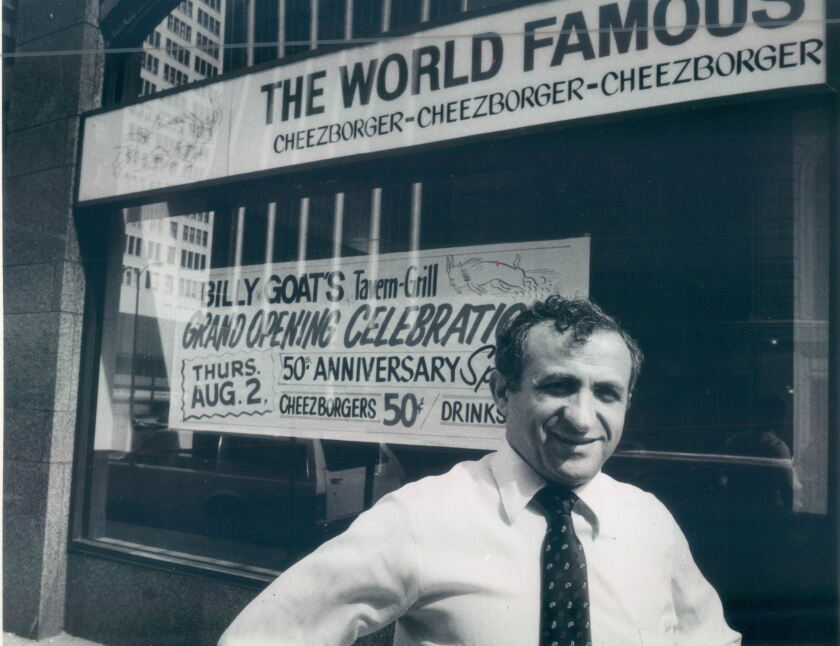
They were in a jubilant crowd of about 50 nurses gathered Monday at the Billy Goat Tavern in the West Loop for a watch party as the National Labor Relations Board tallied the union election votes.
Within two hours of the tally, the nurses had reached enough votes in favor of being represented by the National Nurses Organizing Committee, an affiliate of the larger National Nurses United. The final count saw 77% of nurses vote in support — a number the group chanted in celebration.
“We are united in our front,” said Bouchard, a nurse in the hospital’s labor and delivery unit. “And once you get a big group of powerful — mostly women — together, we make moves pretty fast.”
Labor and delivery nurse Olivia Bouchard (left) snaps a selfie with the winning vote count.
Candace Dane Chambers/Sun-Times
In total, 1,190 nurses voted to form a union while 350 voted against doing so, according to the group. The union is expected to include about 2,000 nurses at Rush University Medical Center in the Illinois Medical District on the city’s Near West Side, according to the National Nurses Organizing Committee.
The National Nurses Organizing Committee represents more than 6,500 nurses at other Chicago area hospitals including the University of Chicago Medicine, Cook County Health and the Jesse Brown Veterans Administration Medical Center.
There has been a wave of nurses unionizing across the country and locally. At four Endeavor Health hospitals, thousands of nurses recently went public with their efforts to form a union.
Rush nurses publicly announced their petition for a union election in April at a rally outside of Rush University Medical Center. In the weeks since, the nurses gained support from national figures such as Sen. Bernie Sanders, who posted on social media that the hospital could “afford to provide better working conditions for nurses & staffing levels that are safe for their patients,” because of how much Rush pays its CEO.
In a statement, Rush official Deana Sievert said the hospital will work to ensure the election results are promptly validated.
“Rush is reviewing the preliminary polling results from the union election among nurses at Rush University Medical Center,” Sievert said in the statement. “We deeply respect the right of our nurses to participate in the election and thank everyone who made their voices heard.”
Jennifer Pearl was among the Rush nurses at the watch party who became emotional as the election results were delivered. The numbers felt validating, she said, especially because of past unsuccessful attempts to unionize registered nurses at the hospital.
“All those emotions for the senior nurses to finally win union,” Pearl said. “It’s an emotion for me, for all the hard work — it wasn’t in vain, all the time away from my kids, my family, missing things. It validated that I made the right decision to do that.”
Pearl and other nurses said they had spent months talking to colleagues between shifts as part of the campaign to unionize.
Jennifer Pearl gets emotional after hearing the vote results.
Candace Dane Chambers/Sun-Times
Bouchard said nurses want their first contract to address nurse-to-patient ratios.
Conner Smith works in the emergency department, where she said she often juggles patients who are in critical condition who may need more individualized care than others.
Smith said pay transparency is another issue they want the contract to address.
“At Rush, nurses of the same work background [and] experience are making completely different salaries,” Smith said. “With the union, we are going to negotiate a pay scale so that way nurses will be paid fairly and transparently.”
Bouchard also said it’s important to her that each unit is equipped with an educator nurse “so that nurses are providing the best evidence-based practice to our patients.”
“Right now I educate others on our unit, so we want to have a nurse that’s designed to do that, that has the time and capacity to make sure nurses are well-prepared for their roles,” she said.
It’s not yet clear when the nurses will start bargaining their first contract. For now, they continued celebrating the results of the union election. Wearing bright red union T-shirts, one of the nurses passed out a round of Malört shots to the group.
“Union power,” the group chanted as they took the shots.
Rush nurses and organizers take shots to celebrate the unionization vote.
Good afternoon! It’s Monday, and piping plover eggs have been spotted at Montrose Beach and Waukegan. Fingers crossed this means we’ll get photos of their chicks this summer. Here’s what else you need to know today.
Three decades ago, Joliet was mostly prairie sprinkled with quiet subdivisions, my WBEZ colleague Cam Rodriguez writes. But the early 2000s ushered in the age of online shopping. Then came the rise of next-day delivery. America’s retailers needed warehouses quickly, and the area about 40 miles outside Chicago was flush with interstates and rail lines.
Few places in the nation have been transformed so completely so quickly. Since 2000, retail giants and developers have erected more than 146 million square feet of warehouse space in the Chicago area — equivalent in size to roughly 1,400 Home Depot stores.
On average, roughly 20,000 trucks pass through Joliet, a population of about 150,000 people, every day. Most stay on Interstate 80, but as many as 6,400 — more than five times as many as before the warehouse boom — use local roads and state highways.
Though the warehouses have brought jobs to the area, the trucks pummel roads, belch fumes and batter the pavement, contributing to road damage that requires millions of dollars of repairs paid for by local and state governments, according to budget and grant documents.
And crashes have become more common, according to a New York Times analysis that used satellite imagery, government documents and interviews with people who live in the areas, law enforcement officers and traffic safety experts to identify some of the largest clusters of warehouses in the Chicago area. [WBEZ/New York Times]
Fewer than 1% of Cook County residents have flood insurance, Brett Chase reports for the Chicago Sun-Times. Yet almost every community in the Chicago area is at risk of flooding, and powerful storms are expected to increase in the coming decades.
Major insurers, such as State Farm and Allstate, will not automatically cover sewer-backup basement flooding as part of a regular homeowner’s plan.
Your homeowner’s insurance policy will list a number of “exclusions,” including damage from water. You need to ask your agent about additional coverage, often referred to as an “endorsement” covering basement sewer backup that damages personal items and structural things, such as a furnace. It’s important to run through multiple scenarios with an insurer or agent to make sure you’re buying the right kind of coverage.
The federal government offers flood insurance plans for people in flood-prone areas through the National Flood Insurance Program. But that plan, available to everyone in Chicago and much of Cook County, can have limited coverage of basement damage. For example, it won’t cover personal items stored in a basement or any remodeling done to a finished area. [Chicago Sun-Times]
The National Labor Relations Board said the museum’s former president and former human resources chief started retaliating against employees after they voted to form a union last April, according to a news release from the American Federation of State, County and Municipal Employees Council 31, the union representing museum employees.
Immediately after the vote, HR fired four employees, disciplined four others and threatened all employees with termination because of the union effort, according to the NLRB complaint.
Later that month, employees wrote a letter to the museum’s board of trustees alleging that management retaliated against employees for organizing. But nothing changed, according to the complaint. Three employees were disciplined in May, and in July the museum’s former President Donald Lassere laid off two employees and converted four others from full-time work to part-time.
In response, AFSCME Council 31 filed five charges against the museum. Roughly a year later, the NLRB Chicago office issued its formal complaint against the museum — a rare step since the board only issues such complaints in 3% of unfair labor practice cases each year, according to AFSCME. [Chicago Sun-Times]
Mung Chiang, a first-generation immigrant from China, will be Northwestern University’s first Asian American president, my colleague Kalyn Belsha reports.
Northwestern officials said Chiang was chosen after an international search and stood out due to his research experience and reputation for supporting students and faculty and helping to prepare universities for the future.
Northwestern has been without a permanent leader since September, when former president Michael Schill resigned in the wake of a grilling before Congress over his handling of antisemitism, student protests and layoffs at the university.
Interim president Henry Bienen will continue to lead Northwestern until Chiang takes over on July 1. [WBEZ/Chicago Sun-Times]
The work headed to Broadway after a sold-out run in early 2024 and comes back Feb. 9 to March 14 as a highlight of Chicago Shakespeare Theater’s 40th season, my colleague Cassie Walker Burke reports.
“It was born at Chicago Shakespeare Theater, and because of the pressures of the onward life of it, it left very quickly,” Artistic Director Edward Hall said of the production, staged by a live band and dance chorus. “All of us felt that it was unfinished business.”
Tony Award-winning choreographer Justin Peck will direct, but casting has not yet been announced. Several high-profile local musicians, including Tasha Viets-VanLear and Shara Nova, performed in the Chicago staging in 2024.
The return of “Illinoise” from Broadway comes within days of a Chicago Shakespeare announcement that it is sending to Broadway its co-production of the horror-themed “Paranormal Activity,” written by Chicago’s Levi Holloway. [WBEZ/Chicago Sun-Times]
Here’s what else is happening
President Donald Trump dropped the $10 billion lawsuit he filed against the IRS over the leak of his tax returns, paving the way for a potential settlement amid worries of self-dealing. [NPR]
An American doctor is among the newly confirmed cases in an outbreak in Congo of a rare variant of the Ebola virus with no approved vaccines or therapeutics. [AP]
A jury rejected Elon Musk’s lawsuit claiming artificial intelligence company OpenAI, which he co-founded, put commercial gain over the public good. [New York Times]
Review: The century-old “An Enemy of the People” rouses in TimeLine Theatre’s new home, but its arguments fall flat at times. [WBEZ]
Oh, and one more thing …
Vocalo, WBEZ’s sister station, is refreshing its lineup after almost shutting down the broadcast signal in 2024, my Chicago Sun-Times colleague Stefano Esposito reports.
The Vocalo Hotline is a weekly show debuting at 8 p.m. May 29 both on WBEZ 91.5 FM and Vocalo 91.1 FM. It’s part of a major refresh for the music station, which has struggled in recent years to attract an audience and generate sufficient revenue to cover expenses.
Hotline is set to be a one-hour radio broadcast built around listener requests, shout-outs and conversation. Vocalo DJ Nudia Hernandez will host.
“The show is designed to come to life across digital experiences as well, capturing the energy of each episode through video, social clips, artist moments and real-time audience interaction,” according to a Chicago Public Media news release. “Each episode will feature a curated mix of genres spanning pop, hip hop, R&B, house, dance and independent music, alongside artist interviews, emerging local talent and a roundup of cultural events across Chicago.” [Chicago Sun-Times]
Tell me something good …
Memorial Day weekend hasn’t happened yet, but it sure feels like summer. So I’m wondering, what plans are you looking forward to this season?
I’ll be making s’mores around a campfire for only the second time in my life, and I’m hoping it’ll go better than the first time (when no one warned me they can easily catch fire).
Feel free to email me, and your response may be included in the newsletter this week.
The Cook County state’s attorney’s office announced a new task force Monday that will bring together officials from a swath of local, state and federal agencies to discuss how to improve safety on public transit.
The group will convene monthly to analyze violent incidents that have happened on or near public transit systems and work to bring charges.
“The task force mission is clear: promote public safety on transit systems by working in collaboration together,” Cook County State’s Attorney Eileen O’Neill Burke said at a news conference.
The task force will include representatives from Metra; Pace; the Chicago Transit Authority; the Chicago Police Department; the Cook County sheriff’s office; the U.S. attorney’s office; the Federal Bureau of Investigation; the Drug Enforcement Administration; and the Bureau of Alcohol, Tobacco, Firearms and Explosives.
On Monday, O’Neill Burke touted that violent crime on public transportation had dropped by 22% compared to May of last year.
“But that is not good enough,” O’Neill Burke told reporters. “This is not a job accomplished moment. In order to make this system as safe as possible, we need to continue to expand our work, so that everyone feels safe on public transit.”
The regional transit task force builds on the internal transit crime task force her office unveiled in March to bolster prosecutions of crime on the CTA.
That task force set out to train more than 30 prosecutors on how to track data on transit crimes, review CTA video evidence, and serve as liaisons with Chicago police and CTA on transit-related cases.
“That was so successful that we said we need to expand this to the entire region, and that's where the regional transit task force came from,” O’Neill Burke said.
The regional transit task force is set to meet for the first time next week.
The Chicago History Museum violated federal labor laws after management disciplined and fired employees for unionizing last year, the National Labor Relations Board alleges in a complaint filed last week.
The NLRB says the museum's former president and former human resources chief started retaliating against employees after they voted to form a union last April, according to a news release from the American Federation of State, County and Municipal Employees Council 31, the union representing museum employees.
In response, AFSCME Council 31 filed five charges against the museum. Roughly a year later, the NLRB Chicago office issued its formal complaint against the museum — a rare step given that the board only issues such complaints in 3% of unfair labor practice cases each year, according to AFSCME.
“It’s illegal to retaliate against workers for exercising their freedom to form a union,” AFSCME Council 31 Executive Director Roberta Lynch said. “Although these actions occurred under previous museum leadership, the organization is responsible for that conduct and must make it right.”
A spokesperson for the Chicago History Museum did not immediately respond to a request for comment.
Museum employees voted to unionize on April 1, 2025. Immediately after, Shatierra Parks, the former HR chief, fired four employees, disciplined four others and threatened all employees with termination because of the union effort, according to the NLRB complaint.
Later that month, employees wrote a letter to the museum’s board of trustees alleging that management retaliated against employees for organizing.
But nothing changed, according to the complaint. Three employees were disciplined in May. And in July the museum's former President Donald Lassere laid off two employees and converted four employees from full-time work to part-time.
Lassere stepped down in January after serving in the role for nearly five years, prompting calls from community members for leadership to reverse the cuts to staff.
Parks stopped working as the museum's HR head on May 4, according to an internal email obtained by the Sun-Times. It's not clear if she resigned or was fired.
Management fired, disciplined and demoted employees because the "employees formed and assisted the Union and engaged in concerted activities, and to discourage employees from engaging in these activities,” the NLRB complaint reads. That conduct means the museum violated the rights workers are guaranteed under the National Labor Relations Act.
The museum must respond to the complaint by May 29.
Northwestern University has named Mung Chiang, the current head of Purdue University, as its next leader.
Chiang, a first-generation immigrant from China, will be Northwestern’s first Asian American president.
Northwestern has been without a permanent leader since September, when former president Michael Schill resigned in the wake of a grilling before Congress over his handling of antisemitism, student protests and layoffs at the university.
Interim president Henry Bienen will continue to lead Northwestern until Chiang takes over on July 1.
Northwestern officials said Monday that Chiang was chosen after an international search and stood out due to his research experience and reputation for supporting students and faculty and helping to prepare universities for the future.
“I have long admired Northwestern for its dedication to interdisciplinary scholarship, artistic creation and impactful research, its tremendous healthcare system, and its palpable school spirit,” Chiang said in a statement.
Northwestern officials noted in their announcement that Chiang has “consistently prioritized free speech and free expression” in his leadership.
The issue is top of mind as some students and faculty continue to worry that Northwestern’s decision last year to sign a deal with the Trump administration to restore nearly $800 million in research grants and end several federal probes would limit free speech on campus.
In a letter to the Northwestern community, Chiang acknowledged it was a challenging time for higher education and that “many of us have been anxious about the uncertainties and distressed by the turbulence.” He said he hoped to continue on a path toward stabilization.
“My first priority is to listen to and learn about Northwestern’s distinct culture and this community of scholarly and creative minds, because what matters most is the ‘who’ before the ‘what,’” Chiang said in the letter.
Chiang has led Purdue for the last three years. Before that, he served as an executive vice president at Purdue and the dean of the engineering college.
He also spent 14 years as an engineering professor at Princeton University and has served as a science and technology advisor to the U.S. Secretary of State. He holds over two dozen U.S. patents and has won numerous awards for his engineering work, including a Guggenheim Fellowship.
It’s a typical weekday afternoon at the intersection of Route 53 and Laraway Road, 40 miles southwest of Chicago, and semi-trucks thunder by in a steady stream.
They start at the sprawling warehouse complexes on the fringes of Joliet, rumble alongside the fading polyester petals of a roadside memorial for someone who died in a truck crash and roll past the ballfields where youth teams play, carrying goods for Amazon, IKEA, Walmart, Target and Dollar Tree.
In the next 10 minutes, 150 trucks will pass through the intersection. If you lined them up end to end, they would stretch more than two miles.
Three decades ago, this area was mostly prairie sprinkled with quiet subdivisions. But the early 2000s ushered in the age of online shopping. Then came the rise of next-day delivery. America’s retailers needed warehouses, fast, and the area outside Chicago — flush with interstates and rail lines — was perfect.
Few places in the nation have been transformed so completely so quickly. Since 2000, retail giants and developers have erected more than 146 million square feet of warehouse space in the Chicago area — equivalent in size to roughly 1,400 Home Depot stores.
The warehouses have brought new jobs. Still, people who live nearby say what has happened around them is a cautionary tale for other communities hoping to cash in on the warehouse boom.
On average, roughly 20,000 trucks pass through Joliet, a population of about 150,000 people, every day. Most stay on Interstate 80, but as many as 6,400 — more than five times as many as before the warehouse boom — use local roads and state highways.
They pummel roads, belch fumes and batter the pavement, contributing to road damage that requires millions of dollars of repairs paid for by local and state governments, according to budget and grant documents.
And crashes have become more common, according to a New York Times analysis that used satellite imagery, government documents and interviews with people who live in the areas, law enforcement officers and traffic safety experts to identify some of the largest clusters of warehouses in the Chicago area. Then, using state data from January 2014 through December 2024, reporters counted the number of crashes involving trucks that occurred on the surrounding roads.
The number of truck wrecks on those roads increased by 8% from 2021 to 2024 compared with truck accidents from 2016 to 2019, the four-year period before the COVID-19 pandemic. This was even as the number of crashes involving other types of vehicles on these roads dropped sharply, and truck crashes across the state remained largely flat.
In recent years, an average of nearly 550 people a year were injured in truck crashes in those neighborhoods, and one person died every month.
An industrial building can be seen rising in the distance among old farmhouses and rows of corn near CenterPoint in Joliet The ongoing construction of CenterPoint’s massive logistics and intermodal facilities has drawn controversy for its placement in historically rural and agricultural areas, where residents have complained about increased truck traffic, environmental impact and the transformation of farmland into industrial zones.
Jamie Kelter Davis / The New York Times
Ian Hunnicutt was in line at the grocery store in the Will County town of Manhattan, southwest of Chicago, on a Monday evening last October, picking up frozen pizza and sushi rolls for dinner for his 13-year-old twin boys when his wife called.
She was hysterical. Something had happened to the kids, Ryder and Chance, while they were biking to the library. Find them, she told her husband through sobs.
He rushed through Manhattan, checking their usual haunts. Then, he rounded a bend and went around a police barricade.
He found Ryder holding a single Nike shoe — Chance’s shoe. It had flown off when he was struck and killed by a semitruck while riding his bike.
“This is what Ryder was holding when my life changed,” Hunnicutt said, holding up the sandal. “When my world fell apart.”
This makeshift memorial was put up at the intersection where Chance Hunnicutt was killed. He can be seen in the middle of the photo placed in the “In loving memory” memorial.
Cam Rodriguez
The warehouse boom
Around the country,warehouses have popped up outside major cities, where land tends to be cheaper. Exceptionally dense areas include Ontario, California, once dotted with dairy farms but now dominated by warehouses, and a stretch of Interstate 35 northwest of Dallas lined with distribution centers.
But Chicago is in a different league. The warehouse boom in the Chicago suburbs took off in earnest in the early 2000s with the construction of the CenterPoint Intermodal Center, the largest inland port in North America, where trucks and trains swap goods. It sits just outside Elwood, a Will County town of roughly 2,200 residents. In 2015, Amazon opened its first Illinois warehouse, in Joliet.
Intermodal container handlers at the CenterPoint Intermodal Center near Elwood. The facility is a massive freight hub where goods are transferred between rail and truck, serving as a key link in national and international supply chains. It is part of one of the largest inland ports in the United States, drawing significant truck and train traffic to the surrounding area, which includes several rural small towns.
Jamie Kelter Davis / The New York Times
For a study about warehouses and pollution, researcher Gaige Kerr examined real estate listings from the commercial data company CoStar and determined that there were roughly 6,800 warehouses in the Chicago area as of 2022. Their combined square footage eclipsed that of warehouse space in the Los Angeles metropolitan area — home to the nation’s two largest shipping ports — by 13%.
Of the nation’s 25 largest metro areas, Chicago had the most warehouse square footage per person, Kerr found.
According to 2024 data, the latest available from the Illinois Department of Employment Security, warehousing and transportation was the largest sector in Will County, employing nearly 37,000 people. Amazon is Will County’s largest employer.
“I think people have to look at this as an economic advantage,” said Mark Denzler, president and chief executive officer of the Illinois Manufacturers’ Association.
But for years, people living in the area have complained of miserable conditions. Some said they have given up on the promises from government officials that the boom would bring a renaissance of restaurants and shopping centers.
Some still drive two or three towns away for groceries even though they are surrounded by warehouses stocked with the things they need. In certain places, retailers and developers — many that get tax incentives from the state — have gobbled up much of the usable land and pushed up property values to levels that once would have been unimaginable.
And many of the new jobs that have been created are part-time or low-paying. In 2024, the majority of full-time employees at Amazon’s Joliet facility made an average yearly salary shy of $34,000, according to a report filed with the state.
Meanwhile, developers have continued to build.
This year, a 1.1 million-square-foot logistics facility is scheduled to open next to the only school in Elwood, just over a quarter-mile from home plate of the school’s baseball field. Thousands of trucks could pass by each day.
Trucks prompt ‘Die-80’ nickname
Unsurprisingly, the increase in traffic has led to more crashes.
Madison Rose Frost was 8 years old when she was killed in March 2014 after her family’s minivan was struck by a truck on Route 53. Ten years later, Robert Roach Jr., 32, died a few miles from Madison’s roadside memorial following a collision with a stalled semi.
A roadside memorial was erected near where Madison Rose Frost, 8, was struck and killed by a semitruck.
Jamie Kelter Davis / The New York Times
Such stories aren’t uncommon in the area of the warehouse boom. A truck driver, unaware that a vehicle had become lodged beneath his trailer, barreled down the Tri-State Tollway, dragging the car — and the woman inside — with it. Miraculously, she survived. A man was hit and killed in downtown Joliet minutes after he had been released from jail.
Sara Wittchen said she worries about crashes, something she never did while growing up in Joliet.
“Fatal accidents were reserved for 2 a.m. on the highway with a drunk driver,” Wittchen said. “It wasn’t Grandma Lucy in an Enclave going to Target.”
In the span of two months last fall in Will County, at least seven people died in accidents involving trucks. So far this year, at least 60 people have been injured in crashes, and two have died.
In 2002 (images at left from the U.S. Geological Survey), the far outskirts of the Chicago suburbs were mostly farmland. Today (images at right, from Vexcel), the growing demand for next-day delivery has seen warehouses dominate the landscape.
Daniel Wood / The New York Times
The crashes aren’t always the fault of the truck driver. But the hazards tend to be greater for the drivers in smaller vehicles.
And people have become increasingly wary of driving around this area.
Some even have a nickname for the stretch of I-80 that passes through Joliet: “Die-80.” More than 60,000 people have joined a Facebook group called “I-80 and I-55 Corridor DAILY DEATH TRAP.”
Bob Ilibasic, a terminal manager at a trucking company, was a close friend of Hart.
“He’s never going to see the grandkids,” Ilibasic said. “He’s never going to the kids’ weddings. All for a truck that didn’t stop.”
Bob Ilibasic was friends with Ryan Hart, who was killed in 2020 when a truck rear-ended the camper he was pulling. In it, Hart had camping supplies including a generator and a gas can that exploded in the crash. His car and four others were engulfed in flames, and another person also died. Ilibasic, terminal manager for American Marine Express, had warned his fleet of truck drivers that traffic was backed up from a crash on Interstate 80. It was only later that he learned Hart had been killed in the crash. Of his friend, an avid outdoorsman who loved to hunt and fish, he says: “He’s never going to see the grandkids. He’s never going to the kids’ weddings. All for a truck that didn’t stop.”
Jamie Kelter Davis / The New York Times
Residents fight back
Data from the Illinois Department of Transportation shows that the most hazardous places are the interstates, where truck crashes that cause traffic backups are common. But collisions occur on residential roads, too, even those that ban or limit trucks.
Trucks sometimes end up on these roads — and closer to residential areas — when the interstates get backed up. State data shows that more than 200 crashes from 2014 through 2024 involved damage to homes, playgrounds and schools. They flattened fences, tore through yards and smashed mailboxes.
Don Schaefer, president of the Mid-West Truckers Association, said drivers are forced onto a smaller number of routes as more municipalities try to restrict the use of local roads.
“There simply aren’t enough truck routes,” he said.
Many trucking companies don’t build in enough time for delays, said Zach Cahalan, executive director of the Truck Safety Coalition, an organization focused on reducing the number of deaths and injuries from truck crashes. Some truckers might feel pressure to make up lost time, he said.
“Truck drivers pay the cost,” Cahalan said. “And, of course, crash victims.”
Several police departments have added truck enforcement units to ticket drivers who violate weight and size rules. Joliet’s unit brought in $2.2 million in fines in its first 15 months, though city officials said many truck drivers have continued to break the rules.
Joliet is trying to divert trucks away from local roads, according to a city government official who said in a written statement: “Through recent agreements tied to major logistics developments,” the city “has required the use of a closed-loop truck network specifically designed to keep trucks off neighborhood streets.”
But community residents are skeptical that the designated loop will curb traffic from warehouses outside the NorthPoint development.
Joe Baez, a truck enforcement officer for the Manhattan police department, after pulling over a semi-truck that was longer than allowed. The Will County town used to be mostly farmland but in recent years has seen warehouses develop nearby. An intermodal facility in neighboring Elwood, called CenterPoint, has led semi-trucks to use farm roads and neighborhood streets through Manhattan as a shortcut even though that’s illegal. Many drivers consider the fines worth paying to avoid congestion on other routes.
Jamie Kelter Davis / The New York Times
A “no trucks” sign by a park in Elwood, which is home to part of the CenterPoint Intermodal Center — one of the nation’s largest inland ports, where cargo is transferred between trains and trucks, contributing to the heavy industrial traffic that moves through the area. Some communities have taken steps to ban or limit semitrucks on local roads, putting up signs and ticketing and fining truckers.
Jamie Kelter Davis / The New York Times
Some residents and local governments have taken steps to stop more development or try to reduce traffic near residential areas, with mixed results.
After Delilah LeGrett moved, in part because trucks would rumble past her front door, she found out that NorthPoint, a Kansas City, Missouri-based developer, wanted to move in, too. Her house is along the edge of a proposed logistics complex in Will County that, if completed, would be fivetimes the size of Midway Airport.
The complex has faced lawsuits filed by, among others, LeGrett and her neighbors, locking up development and construction. But a settlement last year ironed out truck route access, and the pending outcome of suits this year means the facility could soon break ground.
Delilah Legrett, a lifelong resident of Manhattan, started the group Just Say No to NorthPoint in 2017 and helped lead opposition to the proposed construction of a large intermodal facility. “We bought out here because, you know, it’s a great place to live,” she says. “We love the neighborhood, all of those things. But also, you know what? They’re not going to stick behind us a warehouse because we are nowhere near anywhere that would have a warehouse. And then NorthPoint comes along and says, nope, we’re going to put a million square feet directly behind your home.”
Jamie Kelter Davis / The New York Times
NorthPoint representatives wouldn’t comment.
According to Will County Executive Jennifer Bertino-Tarrant, the county government’s top official, the county is spending more than ever to alleviate traffic, make streets safer and reduce air pollution.
‘I just keep waiting’
Chance Hunnicutt (right) with his brothers Dylan and Ryder.
Provided
Manhattan, where Chance Hunnicutt died, has increased its number of officers on truck enforcement patrol over the past five years. from three to eight.
After Chance’s death, officials put stop signs at the intersection of U.S. Route 52 and North Street, where he was hit. But the signs are a temporary measure until a permanent solution is determined.
Ryan Gulli, Manhattan’s police chief, said the accident is under investigation. No charges have been filed.
Chance loved the Grateful Dead, Purdue basketball and reptiles. He and his twin brother wanted to open a pet shop when they grew up: Ryder would run the business, and Chance, who dreamed of becoming a veterinarian, would take care of the animals.
“I just keep waiting for him to come out of his room,” Hunnicutt said. “There’s a big part of me that just can’t swallow the fact that he’s gone.”
About two weeks before Hunnicutt lost his son, another son lost his father when a semi turned onto Route 53. The truck collided with a Dodge Dart, killing the Dodge’s driver, 40-year-old Adam Sigler.
His 2-year-old son, who was strapped in the back seat, survived.
Cam Rodriguez, a Chicago Public Media data reporter who grew up in Bolingbrook, reported this story as part of The New York Times’ Local Investigations Fellowship. This article was reported in partnership with Big Local News at Stanford University.
Contributing: Justin Mayo, Daniel Wood, Cheryl Phillips
ABOUT THE ANALYSIS The New York Times used satellite images, property records, government reports and other documents to identify 34 clusters of warehouse development in the Chicago area. Though not a comprehensive list, it includes the highest-profile complexes in the region.
Reporters drew a box around each group of warehouses, capturing the facilities and nearby major roads, intersections and interstate ramps. The boxes varied in size. Then, they counted accidents within those boundaries using a database obtained from the Illinois Department of Transportation, which included crashes from 2014 to 2024.
Reporters cross-referenced the department’s records with data from the Motor Carrier Management Information System to ensure that only accidents involving commercial trucks were included in the analysis.
The change in daily truck traffic was calculated using average daily traffic counts from the most recent year of available data in the 2002 and 2025 data releases, published by IDOT. This analysis used IDOT’s heavy commercial vehicle category, which includes single- and multi-unit trucks that have six or more tires.
Tony winning choreographer Justin Peck will return to Chicago early next year to remount “Illinoise,” his Tony Award-winning dance musical set to the genre-bending Sufjan Stevens album of the same name.
The musical, which headed to Broadway after a lightning fast run in early 2024, will return as a highlight of Chicago Shakespeare Theater’s 40th anniversary season, announced Friday.
Artistic Director Edward Hall told WBEZ/Sun-Times that the return of “Illinoise,” running Feb. 9-March 14, 2027, answers a demand from audiences who missed its sold-out premiere here in 2024 before the production decamped for Broadway and, just under the awards deadline, won a Tony for choreography.
“It was born at Chicago Shakespeare Theater and because of the pressures of the onward life of it, it left very quickly,” Hall said of the production, staged by a live band and dance chorus. “All of us felt that it was unfinished business.” Peck will direct the production, but casting has not yet been announced. Several high-profile local musicians, including Tasha Viets-VanLear and Shara Nova, performed in the Chicago staging in 2024.
Justin Peck, director and choreographer of “Illinoise,” poses with playwright Jackie Sibblies Drury in 2024 in Chicago as the production prepared to premiere at Chicago Shakespeare Theatre. The theater announced the dance musical will return in 2027.
Manuel Martinez/WBEZ
The return of “Illinoise” from Broadway comes within days of a Chicago Shakespeare announcement that it is sending to Broadway its co-production of the horror-themed “Paranormal Activity,” written by Chicago’s Levi Holloway.
The 2026-27 season also will feature the world premiere of a Pat Benatar-backed “Heartbreakers,“ based on the classic “Romeo and Juliet.” The show will pull from the rock catalog of Benatar and her creative and romantic partner Neil Giraldo — “known as the Romeo and Juliet of rock and roll,” said Hall – for a 1980s-themed musical set in a dance hall.
The starcrossed lovers get brought back to life a second time next season in the bilingual “Romeo y Julieta,” directed by Henry Godinez, in a show that builds on the theater’s momentum with Spanish-speaking audiences. “There’s a big appetite for bilingual Shakespeare on stage,” Hall said, nodding to strong sales of “Hamlet” by Peru’s Teatro La Plaza in March.
The theater’s 40th anniversary season will kick off in September with “Play On,” a Duke Ellington-themed retelling of “Twelfth Night,” created by Sheldon Epps. Starting in October, the theater will notch its first repertory staging with consecutive productions of “The Winter’s Tale” and “A Midsummer Night’s Dream,” starring the same 14-person cast under the direction of Hall.
The theater will offer at least five marathon days where audiences can see both productions back-to-back, Hall said. “The work that Shakespeare has made is so famous all over the world is rooted in the idea of an ensemble, and Chicago has such a strong relationship and tradition of ensemble acting,” he said. “We've never done this before at CST, and for our 40th anniversary, it seemed like a beautiful moment to do that.”
The theater will continue in the 2026-27 season to offer a “Short Shakespeare” program for student field trips, a multipart “Demystifying Shakespeare” course for curious adults and $30 tickets for audiences under 30.
“One of the things that's consistently important for us is that the work on our stages represent the breadth of Chicago’s 77 neighborhoods,” said Kimberly Motes, the theater’s executive director. “I think this season really does continue to demonstrate that commitment to our Chicago communities.”
Faith Hernandez waited a month for the Chicago Housing Authority to find her an apartment so she could get away from her abuser.
Then she waited a year for grab bars to be installed in the new home. Once installed, it took the city agency another two years to relocate her to a place closer to the hospital where she was getting treatment for multiple disabilities.
While she waited, her health worsened.
And she'd spend weeks stuck in her apartment with her infant son, unable to leave due to poor building conditions.
“I literally felt like I made a mistake, like I shouldn’t have left,” Hernandez, crying, said. “And that’s a horrible feeling, feeling like I shouldn’t have left my abuser for this situation.”
It can take years for CHA residents like Hernandez to move into another unit, after filing relocation requests with the agency over safety concerns. Some have been in limbo for as long as seven years. Some have died waiting, according to records.
Nearly 400 households currently are on waitlists to move, records show. About 150 of the requests are labeled an “emergency” by the CHA. And 241 of the transfer requests are to accommodate disabilities.
Among the other reasons CHA residents have sought emergency transfers: “infestation … mold … fire.” Records also show 103 transfer requests cite the Violence Against Women Act, and 24 are described by CHA as “not habitable.”
In February, a CHA employee filed a whistleblower complaint accusing the agency of failing to follow its reasonable accommodations process for residents with disabilities.
In a written response to questions, a housing authority official said: "The majority of CHA’s vacant units are pending comprehensive rehabilitation to ensure residents have the reliable housing that enables them, and Chicago communities, to thrive.” That work will cost tens of millions of dollars, according to the agency.
The agency supports 65,000 households, is the biggest owner of rental housing in Chicago and operates with a yearly budget of $1.4 billion.
When Hernandez moved away from her abuser to the CHA's Dearborn Homes in 2019, she questioned doing so, experiencing broken elevators and crime. Because of her disabilities, Hernandez can’t easily go up stairs, especially to her sixth-floor apartment.
“No domestic violence survivors should have to feel like: Should I leave?” Hernandez said. “They should feel like they have the support of CHA and not like they are the enemy. I felt like I was fighting them this whole time. If I didn’t have Legal Aid support, I would probably still be at Dearborn.”
With Legal Aid Chicago, Hernandez filed a complaint in 2020 to HUD against the CHA after months of inaction from the authority following her move to Dearborn. She accused the CHA of being in violation of Section 504 of the federal Rehabilitation Act of 1973, the Fair Housing Act and the Violence Against Women Act. Section 504 is part of the federal civil rights law that bars discrimination against people with disabilities in programs that get federal funds.
In a 2024 letter, HUD said the CHA had violated Section 504 and the federal Americans with Disabilities Act by failing to provide Hernandez with reasonable accommodations.
As a result, HUD told the housing authority to provide Hernandez with monetary relief, reform its reasonable accommodations policies and comply with federal law — steps to be outlined in a voluntary compliance agreement between the CHA and HUD, records show. The federal agency is still investigating Hernandez’s fair housing and domestic violence claims, according to Julie Pautsch, a Legal Aid Chicago lawyer who wouldn't discuss the status of the voluntary compliance agreement, citing ongoing negotiations.
In a 2024 decision, the federal Department of Housing and Urban Deveopment found that the Chicago Housing Authority had violated Section 504 and the federal Americans with Disabilities Act by failing to provide CHA resident Faith Hernandez with reasonable accommodations.
Anthony Vazquez / Sun-Times file
The CHA and HUD also have been negotiating a voluntary compliance agreement to resolve issues from a 2018 complaint similar to Hernandez’s, according to public records and sources involved in the negotiations. The CHA previously came under a compliance agreement from 2006 to 2013 for Section 504 and ADA violations.
CHA spokesperson Matthew Aguilar said no voluntary compliance agreements are currently in place and the agency hasn’t received new drafts from HUD. HUD officials wouldn't comment.
In February, the housing authority established what it calls a Reasonable Accommodations Task Force to review its practices and find ways to improve its process working with residents who have disabilities.
The housing authority has a long legacy of neglecting its properties and has pointed to a lack of federal funding to maintain its units. The CHA took austerity measures in its latest budget, citing existing and anticipated federal cuts. Historically, HUD funding hasn’t kept up with public housing authority needs.
The CHA, which is the third-largest public housing authority in the country, is in the midst of a significant transition. Keith Pettigrew recently came on as CEO after the agency had gone 17 months without a permanent leader. The agency has faced high turnover among its top ranks and frustrations from its residents over what they say are dire property conditions.
The Mayor’s Office for People with Disabilities declined to comment, referring the Sun-Times to the CHA.
At Dearborn Homes, Hernandez said the CHA repeatedly told her it would accommodate her needs but never did, leaving her feeling like she was “fighting them this whole time.”
When the housing authority offered her a different unit in 2020, she rejected it, saying it was near her abuser’s house and at least an hour by public transit from her hospital.
In December 2021, as a result of the negotiations over her HUD complaint, the CHA offered Hernandez an emergency housing voucher to use to find a privately-owned place to live, records show. She said it took about six months to find a landlord who would accept the government housing subsidy. Though it's illegal in Illinois to discriminate against a renter based on source of income, many property owners are reluctant to take housing vouchers.
Hernandez remembers standing in her doorway, where she got better cellphone reception, when she heard HUD had sided with her complaint. She said she cried.
“I couldn’t believe it,” she said.
But Hernandez is still waiting for the CHA’s negotiations with HUD to be resolved. For herself and others, she said, she wants complete accountability from the CHA.
She still faces consequences from waiting on the CHA. Hernandez said her back problems have gotten worse, making it harder to walk down the street to a park with her son, who is now 7.
“I can’t get back my health,” Hernandez said. “I am suffering even more now, and ... it takes away from my son.”
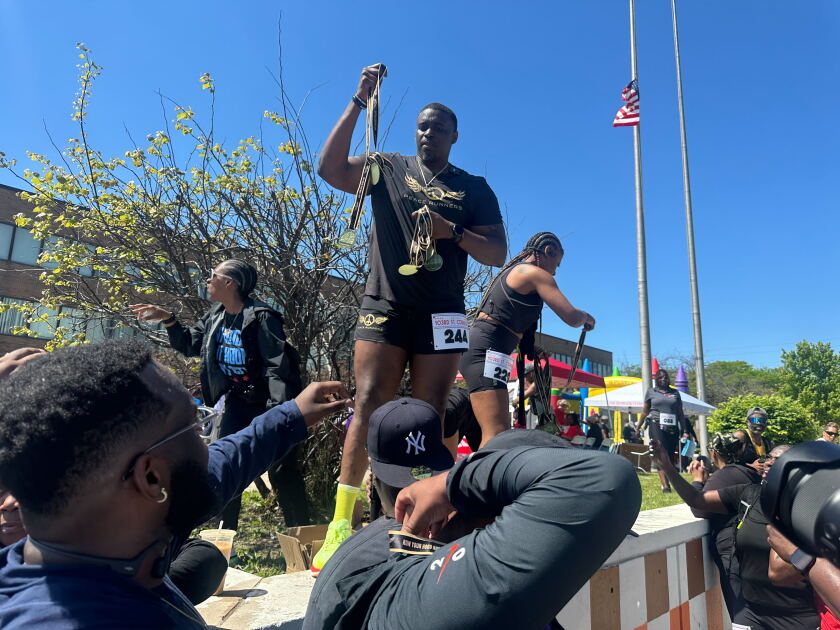
More than 360 Chicagoans from the West and South sides ran three miles Saturday along 103rd Street to exercise and reimagine what the corridor could become.
Runners gathered at Corliss Early College STEM High School in Pullman for the inaugural 103rd Street 5K Peace Walk/Run. The event ended at Percy L. Julian High School with a vendor fair and community conversation about how vacant lots could be transformed into businesses and community centers.
In April, the Chicago Transit Authority broke ground on the Red Line Extension Project, which includes a station planned for 103rd Street. Community organizations are now working to revitalize the corridor from Cottage Grove Avenue to Vincennes Avenue in anticipation of increased traffic and investment in the neighborhood.
In an effort to bridge communities across the city, West Side runners from Peace Runners 773 run club joined South Side residents to imagine new possibilities for the 103rd Street corridor — from restaurants and gyms to community centers.
“I didn't run past one grocery store within three miles, and it's the same thing on the West Side,” said Jackie Hoffman, founder and executive director of the Peace Runners.
“It's a lot of West Siders that have never been to the South Side until today, and a lot of South Siders that will be coming to the West Side, " Hoffman said. “As we keep uniting throughout the city, we create these really big movements that reclaim our spaces, and get the things that we need for our communities.”
Peacerunners 773 members cheer on participants as they finish their journey along the 103rd Street corridor.
Somer Van Benton/WBEZ
Hoffman co-organized the event with South Side community organizers Miranda Strandberry and LoLita Canady to highlight the shared impact of disinvestment in historically divided communities.
“Along this corridor are six schools, multiple businesses, but you can see visible disinvestment between two affluent neighborhoods, Beverly to the west and Pullman to the east,” Strandberry said. “This corridor can use a little bit more love.”
Organizers welcomed representatives from the Chicago Transit Authority to get direct feedback from community members about the project.
Tammy Chase, a spokesperson for the Red Line Extension Project, said the city is trying to correct decades of inequitable transit access that contributed to longer commutes for South Side residents.
“We keep hearing from constituents who want grocery stores, and they want barber shops and things that others of us around the city take for granted,” Chase said. “We're working with the City of Chicago to do transit-oriented development that makes sure that we help bring in the businesses that people want and do it in an affordable and sustainable way that doesn't displace people who have lived here forever.”
Shequira Hall noticed the vacant lots and abandoned buildings while running the inaugural 103rd 5K. Hall said the community support she received throughout the run inspired her to join more run club events in the future.
Somer Van Benton/WBEZ
Shequira Hall has lived in neighborhoods on both the South and West sides of Chicago. Though she doesn’t consider herself a runner, she said participants helped pace and encourage her through the 5K.
“There were people who were out here handing us waters and Gatorades, and people were driving down the street, honking their horns, and very supportive,” she said. “But I do feel like we need more businesses on the South Side, and down 103rd street, in particular.”
Pullman resident Mary Zehnder was born and raised on Chicago’s South Side.
“I was surprised at how much support was along the way,” Zehnder said. “We're going down the street and people are honking their horns and waving. That's how communities become really alive.”
West Side resident Therese Franklin said she had only ever driven along 103rd Street before the race. Running the corridor drew her attention to beauty shops and neighborhood stores along the route.
“There are a lot of small businesses that need community support to stay in business,” Franklin said. “Getting out here and seeing them makes me want to come back and actually support those businesses.”
The event was supported by organizations including Chicago’s Department of Cultural Affairs and Special Events and the Roosmoor Community Association. Public officials, including State Rep. Justin Slaughter and Democratic nominee Shantel Franklin, also attended.
Participants ranged in age from toddlers in strollers to older adults, leaving the event with gold medals to celebrate both their run and their commitment to the community.
Vocalo, the local music radio station that helped make Chance the Rapper and Vic Mensa household names, is set to launch a live call-in show in hopes of “shaping what comes next.”
The Vocalo Hotline, a weekly show debuting at 8 p.m. May 29 both on WBEZ 91.5 FM and Vocalo 91.1 FM, is part of a major refresh for the music station, which has struggled in recent years to attract an audience and generate sufficient revenue to cover expenses.
“We know the way people are interacting with radio shows is changing, and so we want to make sure we’re setting ourselves up to continue to remind people that we have streaming options and a newsletter and vertical videos as well as the radio signal,” said Melissa Bell, CEO of Chicago Public Media, the parent organization of WBEZ, Vocalo and the Chicago Sun-Times. “We feel really strongly that the team we have in place now supports this work, and it’s well worth the payoff of really creating a product that so many people across Chicago truly love.”
The call-in show is part of WBEZ’s renewed focus on Chicago-based programming, which includes the morning shows, “In the Loop” and “Say More.”
Hotline is set to be a one-hour radio broadcast built around listener requests, shout-outs and conversation, CPM said in a news release.
“The show is designed to come to life across digital experiences as well, capturing the energy of each episode through video, social clips, artist moments and real-time audience interaction,” according to the news release. “Each episode will feature a curated mix of genres spanning pop, hip hop, R&B, house, dance and independent music, alongside artist interviews, emerging local talent and a roundup of cultural events across Chicago.”
Vocalo DJ Nudia Hernandez will host the new show.
Hernandez, who has been with the station for four years, grew up listening to late-night dedication shows; she hopes to replicate that here — but with a “hyper-local factor.”
“Like someone calling about someone they saw on the 29 bus at State and Lake,” Hernandez said. “I want to be able to ask people the question: If you could dedicate any song to any person, what song would it be?”
So what if someone calls in to Chicago’s “Urban Alternative” and requests Taylor Swift?
“If someone is having a bad day and they want to hear Taylor Swift, well, you know what, we’re going to play Taylor Swift for you,” Hernandez said.
The show almost didn’t happen.
Two years ago, facing a worsening financial situation, CPM announced plans to discontinue Vocalo broadcasts, part of a broader series of cuts at the news organization.
“First launched in 2007, Vocalo’s radio audience has not grown, reaching just 11,000 listeners weekly, with the broadcast station running at a significant financial loss for many years. As a result, the radio music broadcast will be phased out by May 1st,” then-CPM CEO Matt Moog said in announcing the cuts.
But the radio station was not taken off the air.
“There were press stories that came out in 2024 that Vocalo was shutting down and that was incorrect. They were considering shutting down the [radio] signal, but we never did and we decided not to do it,” Bell said.
Still, staff at Vocalo was cut from five to two, leaving just Hernandez and Morgan Ciocca, who writes the station’s online weekly newsletter.
Vocalo currently has about 15,200 weekly listeners, according to Ariel Van Cleave, WBEZ’s managing director of audio. The newsletter has about 34,000 subscribers.
The new show is being made possible in part by a John D. and Catherine T. MacArthur Foundation grant, according to CPM.
“The grant is making it possible to breathe more life into this brand and all the music discovery that has always been a big part of what Vocalo is,” Van Cleave said.
Less than 1% of Cook County residents have flood insurance.
Intense storms, fueled in part by climate change, are expected to get worse in the coming decades. Heavy recent rainfall raises the question whether Chicago homeowners are covered by their existing insurance policy in the event their basement floods.
The answer is probably not.
“Most people do not know what is and is not covered,” says Douglas Heller, director of insurance at Consumer Federation of America.
Here’s what you need to know to figure out if you’re covered — and what to consider if you’re not.
Is flooding getting worse?
Big thunderstorms are becoming more frequent and dropping more rain in a short period of time. The streets and local sewers across Chicago and the Cook County suburbs are not designed to handle so much rain, and that’s sending water into streets and homes.
Basement flooding is chronic and widespread, especially in low-income communities of color, where streets and outdated sewer infrastructure have seen few improvements and green space is lacking.
Severe storms causing flooding, hail and tornadoes resulted in losses of $50 billion across the U.S. in each of the past three years, according to the industry research group Insurance Information Institute.
How do I know if I need flood insurance?
Almost every community in the Chicago area is at risk of flooding. Neighborhood sewers are designed to hold 2 inches of rain in a 24-hour period. Some storms are dumping four times that amount. The same goes for suburban Cook County.
The rain is landing so hard and so fast that it overwhelms the sewers and doesn’t allow the water to run through a massive flood-mitigation system known as Deep Tunnel.
Many homeowners are finding out that they don’t have the right insurance to cover losses from water in their homes.
How do I figure out if my existing homeowner’s insurance covers basement flooding?
Major insurers, such as State Farm and Allstate, will not automatically cover sewer-backup basement flooding as part of a regular homeowner’s plan.
Since 1968, the federal government has been the primary insurer for flooding across the country.
Allstate says it bluntly on its website: “No type of flood damage, no matter the source of the water, is covered by standard homeowners policies.”
Larry Quinn Jr. thought his homeowners insurance would cover damage from flooding. It didn’t.
Giacomo Cain/Sun-Times
Larry Quinn Jr., who lives in Austin, thought his State Farm homeowners insurance would cover flooding. In 2023, more than five feet of water flooded his basement through the sewer drains.
“The water was shooting up through the sewers. I mean literally shooting up,” Quinn says.
Water ruined two furnaces, several appliances, large power tools, an electric circuit board and so far has cost Quinn about $70,000 in total damages. His insurance didn’t cover the costs to repair or replace anything, he says.
State Farm says it encourages people to review their policies with their agents.
Here’s what to look for in your policy: Your homeowner’s insurance will list a number of “exclusions,” including damage from water. You need to ask your agent about additional coverage, often referred to as an “endorsement” that will cover basement sewer backup that damages personal items as well as structural things, such as a furnace.
It’s important to run through multiple scenarios with an insurer or agent to make sure you’re buying the right kind of coverage.
For example: Ask “am I covered in the case of sewer water backing up into my basement?”
If my insurer won’t issue flood insurance to me or doesn’t offer it, what options do I have?
Add-on insurance from private companies can be at least several hundred dollars but risk will be a big determinant whether you can even buy the coverage. Make sure you understand what a policy pays for either structural damage or for personal property.
The government offers flood insurance plans for people in flood-prone areas through the National Flood Insurance Program. But the federal government plan, available to everyone in Chicago and much of Cook County, can have limited coverage of basement damage. It won’t cover personal items stored in a basement or any remodeling done to a finished area.
Federal flood insurance can cost at least $700 a year. Estimated quotes can be calculated at https://www.floodsmart.gov. Property can be insured for up to $250,000 in damages.
This article was produced as a project for USC Annenberg’s Center for Health Journalism and Center for Climate Journalism and Communication 2025 Health and Climate Change Reporting Fellowship.
Students, parents and teachers at a private school run by the University of Chicago are rallying against a policy they say limits what students are exposed to at school and hurts teachers’ ability to support marginalized students.
A new policy at the University of Chicago Laboratory Schools, which serve around 2,000 students from preschool through high school, establishes “standards for viewpoint-neutral education” and gives teachers guidance on how to handle “contested issues.”
School administrators say the policy, which had gotten pushback since a draft was first shared in January, is meant to encourage students to become “independent thinkers” and support “open inquiry.”
“The purpose of viewpoint-neutral education is not to limit inquiry or discourage engagement with difficult, important, or contested topics,” the policy states. “Rather, the goal is to ensure that Lab classrooms and school spaces remain… places where students can encounter, explore, and evaluate important questions without being steered toward or away from particular conclusions by the authority of adults.”
But dozens of parents, many of whom are faculty at the University of Chicago, say the policy actually restricts conversations in the classroom and could prevent teachers from creating an inclusive environment for students.
Some faculty members, led by the university’s chapter of the American Association of University Professors, gathered on the school’s Hyde Park campus Friday to deliver a petition to administrators opposing the policy. Many wore shirts that read “free teachers raise thinkers” and held signs with the phrase “Love is love, neutrality enables hate, let our teachers advocate.”
“Usually rules that restrict what people can say are called censorship,” Patrick Morrissey, a professor of poetry at U. of C., said at the protest.
Dozens of Lab School parents and students and University of Chicago faculty gathered at the university on Friday to celebrate “the diversity of thought and experience” at the Lab Schools and to protest a policy they say is an “attempt to stifle” that.
Tyler Pasciak LaRiviere/Sun-Times
The University of Chicago and the Lab Schools didn’t respond to requests for a response to the protest.
The new policy has attracted attention because the Lab Schools are known for their academic rigor and experiential learning and some worry the policy will undermine that approach.
Other parents support the policy, saying that teacher advocacy had begun to overshadow academics in the classroom, according to reporting in the University of Chicago’s student newspaper, the Chicago Maroon. Some parents said the policy encourages multiple viewpoints on current events and sticky real-world issues.
“If you care about diversity, you should be delighted that there’s an emphasis now on diversity of viewpoints,” a parent who declined to be named told the Maroon.
The policy says teachers are allowed to take a stance on “widely settled historical judgments,” like denouncing slavery and the Holocaust, but taking a position on current debates is discouraged.
A “frequently asked questions” document related to the policy identifies several “active areas of disagreement in contemporary public debate” where teachers should remain neutral, including abortion, immigration laws and enforcement, policing and climate policy.
The policy says Lab School classrooms will still be welcoming to all students, but protesters worry some students’ identities and beliefs are tied up with ongoing political debates, and that could make them feel ostracized.
For example, some worry the policy is especially difficult for transgender students, as the Trump administration continues to put forward policies that target trans people. Federal officials are investigating Chicago Public Schools for allowing trans students to use the bathroom that aligns with their gender identity and other schools in Illinois over whether parents are allowed to opt out of lessons that talk about gender identity.
“Let’s be clear that neutrality that refuses to protect vulnerable children is not neutrality at all,” said Michele Friedner, a U. of C. professor who has a transgender child at one of the Lab Schools and felt like her child was already separated from other students when they were made to room with the only other trans student on a school field trip.
“Think about what this means for a child, for children, to walk into a school and understand that the institution is debating whether you deserve recognition, protection, or dignity at all,” Friedner said.
The debate at the Lab Schools takes place against the backdrop of the Trump administration’s attacks on diversity, equity and inclusion in K-12 and higher education and efforts to remove instruction about LGBTQ people and themes from school lessons. Some see this policy as similarly controlling classroom conversations.
“Let’s be clear, that’s what contested issues are: Anything that might upset the Trump administration, its collaborators, and those who wish to curry favor with him,” Morrissey said.
University of Chicago professor Jessica Darrow (center) said her seventh grader has seen how the new policy can limit classroom conversations and prevent teachers from taking a stance on issues, such as whether students should try to put a stop to bullying if they see it happen.
Ashlee Rezin/Sun-Times
And while the U. of C. takes a similar approach by not taking stands as a university on certain political and social issues, faculty members raised concerns that a similar policy could be adopted that would more directly affect how they teach. Jessica Darrow, a professor in the university’s Crown School of Social Work, said social justice is central to her work and a neutrality policy could go against her profession’s code of ethics.
“My students need to be able to learn to take a stand on social issues and not remain value-neutral on issues,” Darrow said.
Darrow has two sons who’ve attended the Lab Schools. She commended several parts of how the schools work, including their focus on experiential and play-based learning.
But she thinks administrators are overstepping with this policy.
Darrow’s younger son is in seventh grade at a Lab School, and he also takes issue with the policy, she said. He appreciates hearing his teachers’ thoughts and feelings during lessons, and he learns more about how to interact with others when his teachers aren’t worried about violating the policy.
Darrow said her seventh grader saw the policy’s negative effects during a recent classroom conversation about bullying. His teacher explained the difference between a “bystander,” someone who merely observes bullying or other harmful behavior, and an “upstander,” someone who tries to put a stop to it. Darrow’s son told her the teacher stopped short of recommending which path students should take because he didn’t want to be reprimanded for violating the policy.
“I think that’s where the problem lies,” Darrow said. “The chilling effect of these standards on our teachers’ ability to really do their jobs well.”
TimeLine Theatre opens its brand new $46 million Uptown playhouse with the classic 1880’s drama “An Enemy of the People,” written by Henrik Ibsen and adapted by Amy Herzog in 2024 for a Broadway remount.
Walking into the new theater, with its packed lobby bar, there is an air of celebration. In a precarious time for theaters across the country, due to cuts in national funding, shifts in philanthropic priorities, and diminished audiences, a new theater complex is something to cheer.
Green Room Newsletter
You’re subscribed!
Please check your inbox for your confirmation.
Stay ahead of what’s hitting Chicago stages, galleries, museums and more with Green Room, WBEZ’s weekly arts & culture newsletter!
According to chatter from fellow patrons on this night, TimeLine’s lobby area will serve as more than a theater-adjacent pub. It also has potential as a co-working space for Uptown residents, making it a theater that could function as a home away from home.
Ibsen's drama, which was nominated for five Tonys in its recent New York revival, is presented to a progressive Chicago audience that clearly understands the parallels between themes penned nearly 150 years ago and the current political climate.
Construction workers make the finishing touches on TimeLine Theater located at 5035 N. Broadway in March. The theater is staging its first production in its new home.
Tyler Pasciak LaRiviere/Sun-Time
In the play, Dr. Thomas Stockmann (Will Allan) has discovered a contamination in the water of a spa in his Norwegian town. It just so happens that Dr. Stockmann co-founded this spa with his brother, Peter Stockmann (Behzad Dabu), who is the town mayor. The mayor believes the spa is crucial to the financial health of the whole community.
And here lies the central conflict: the spa waters make people sick. In order to solve the problem, and save lives, they must shut down the spa — which will bankrupt the town.
“An Enemy of the People”
When: Through June 14 Where: TimeLine Theatre Company, 5035 N. Broadway Info: Tickets start at $62
Ibsen crafted a straightforward story of individual morality, and he masterfully portrays the difficulty of speaking truth to power in the face of widespread corruption. The storyline offers a stark reminder that human nature hasn’t changed much in the last 100 years as we still see powerful people putting profits before the well being of the public everyday (or at least every time we turn on the news).
Director Ron OJ Parson has a knack for working with talented ensembles while allowing space for individual performances to shine. Allan is excellent as Dr. Stockmann. He’s truly engaging as his social circle crumbles, and his friends evolve into foes. Dabu portrays a formidable antagonist as the powerful small town politician who, even as villain, truly believes he’s the hero.
The themes in the play feel more important than ever. But here is where I take my millennial heel turn. Sitting in an audience, where everyone around me is likely a generation older than I am, it feels safe. But I want the opposition to have a stronger voice. I wanted to question the stance I walked into the theater with to maybe dive deeper into my own sensibilities. Here, boundaries are not pushed. No risk is taken. Instead it feels like it expresses ideals that we all already mutually agreed upon.
That’s because the production offers little in the way of a counterargument. Allan portrays the hero doctor admirably, and at times he’s almost too compelling. As an audience, we are seeing science be attacked in real time in our real lives. This should easily resonate. But here, the arguments against science are farcical. Outside of Dabu, the rest of the characters pitted against the doctor feel flat.
In “An Enemy of the People,” Dr. Thomas Stockmann (portrayed by Will Allan, left) finds himself in conflict with his brother, Mayor Peter Stockmann (Behzad Dabu).
Photo by Brett Beiner
It’s too easy to root for the doctor when his adversaries are morally unequipped to spar with him. In the second act, when Dr. Stockmann presents his argument for spa closure to the town, he easily outwits each character standing in opposition. The staging is clever, and the decision to send actors into the aisles and seats to interact with the audience and pull us in as mock townspeople, adds an appreciated touch.
But in a show with so much potential to spark larger conversations, there’s no real substance for debate.
TimeLine has a reputation for staging historical dramas with contemporary connections. This worthwhile show, which argues the importance of free speech and social responsibilities, is a great choice for the inaugural opening. But with flat antagonists, the production comes off a little one-sided: a victory for the “enemy” but less compelling for the audience.
In a busy concert month with Bruno Mars, A$AP Rocky and Kid Cudi playing Chicago, the hottest ticket in town is for a local band that hasn’t been seen or heard from in six years.
When Twin Peaks announced a pair of reunion shows at Thalia Hall last November to celebrate the 10th anniversary of their signature album “Down In Heaven,” tickets sold out within minutes. The band then added six more shows — which also completely sold out — marking one of the biggest comebacks in Chicago rock history and the longest residency ever at the Pilsen venue.
It all kicked off Thursday night. Before the quintet even took the stage, the excitement inside the music hall was palpable. Some fans were one-upping each other on how many tickets they scored for the multi-night run. Others had their arms full of posters and vinyl. Some even huddled in a corner with a loud pre-show chant of “TPD! TPD!” (Twin Peaks Dudes). And on the screen behind the stage was a fitting visual of a “Down In Heaven” candle, symbolizing the eternal flame that’s been burning for the band, once the pinnacle of the beloved DIY rock scene in Chicago.
“These are some good years we are celebrating,” Ne-Hi’s Jason Balla said, perfectly summing up the feeling of the night during his band’s opening set. They, too, have been dormant for years and sounded crisp as ever.
Twin Peaks performs at Thalia Hall during the first day of their residency at the Pilsen music venue, Thursday, May 14, 2026.
|
Tyler Pasciak LaRiviere/Sun-Times
1 of 14
Twin Peaks performs at Thalia Hall during the first day of their residency at the Pilsen music venue, Thursday, May 14, 2026.
|
Tyler Pasciak LaRiviere/Sun-Times
2 of 14
Twin Peaks performs at Thalia Hall during the first day of their residency at the Pilsen music venue, Thursday, May 14, 2026.
|
Tyler Pasciak LaRiviere/Sun-Times
3 of 14
Twin Peaks performs at Thalia Hall during the first day of their residency at the Pilsen music venue, Thursday, May 14, 2026.
|
Tyler Pasciak LaRiviere/Sun-Times
4 of 14
Twin Peaks performs at Thalia Hall during the first day of their residency at the Pilsen music venue, Thursday, May 14, 2026.
|
Tyler Pasciak LaRiviere/Sun-Times
5 of 14
Twin Peaks performs at Thalia Hall during the first day of their residency at the Pilsen music venue, Thursday, May 14, 2026.
|
Tyler Pasciak LaRiviere/Sun-Times
6 of 14
Fans jam to Twin Peaks as they perform at Thalia Hall during the first day of their residency at the Pilsen music venue, Thursday, May 14, 2026.
|
Tyler Pasciak LaRiviere/Sun-Times
7 of 14
Twin Peaks performs at Thalia Hall during the first day of their residency at the Pilsen music venue, Thursday, May 14, 2026.
|
Tyler Pasciak LaRiviere/Sun-Times
8 of 14
Twin Peaks performs at Thalia Hall during the first day of their residency at the Pilsen music venue, Thursday, May 14, 2026.
|
Tyler Pasciak LaRiviere/Sun-Times
9 of 14
Twin Peaks performs at Thalia Hall during the first day of their residency at the Pilsen music venue, Thursday, May 14, 2026.
|
Tyler Pasciak LaRiviere/Sun-Times
10 of 14
Fans jam to Twin Peaks as they perform at Thalia Hall during the first day of their residency at the Pilsen music venue, Thursday, May 14, 2026.
|
Tyler Pasciak LaRiviere/Sun-Times
11 of 14
Twin Peaks performs at Thalia Hall during the first day of their residency at the Pilsen music venue, Thursday, May 14, 2026.
|
Tyler Pasciak LaRiviere/Sun-Times
12 of 14
Twin Peaks performs at Thalia Hall during the first day of their residency at the Pilsen music venue, Thursday, May 14, 2026.
|
Tyler Pasciak LaRiviere/Sun-Times
13 of 14
Twin Peaks performs at Thalia Hall during the first day of their residency at the Pilsen music venue, Thursday, May 14, 2026.
|
Tyler Pasciak LaRiviere/Sun-Times
14 of 14
When Twin Peaks finally emerged on stage a bit after 9 p.m., that wave of nostalgia climbed even higher. As deafening cheers filled the room, each of the individual members – guitarists Cadien Lake James and Clay Frankel, bassist Jack Dolan, keyboardist Colin Croom and drummer Connor Brodner – bounced in tandem with the crowd, visibly thrilled at the idea of performing again.
“This is a dream, man. I don’t know how else to describe it,” Dolan said during the set. “It means so much you still care about this little band.”
Twin Peaks called it quits in 2020 after burning out from touring and being bogged down by the COVID-19 pandemic.
But despite the six-year hiatus, the group wasted no time on Thursday ripping into a cross-career set that also sounded like no time had passed. What appeared onstage was a collective that was refreshed, polished and in sync on buoyant garage rock numbers like “Baby Blue” that started the night. In quick succession, they nailed the frenetic pacing of “Boomers” and lived up to expectation for fan favorites like “Walk To The One You Love,” “Wanted You” and “Butterfly,” the latter kicking off a rash of crowd-surfing that had security scrambling. They also offered a live debut of “On the Line.”
The members of Twin Peaks are now in their 30s with families and have filled their time with other ventures like album production and solo efforts, but their performance on Thursday hearkened back to the early days of their ‘round-town basement shows that brimmed with pent-up energy and sonic bedlam. It was a night of 2010s-core all over again with memories of that music epoch coming to the surface, like the Pitchfork Music Festival (RIP) where Twin Peaks had some of their best sets ever. For 85 minutes, it was fun to relive it all.
Fans jam to Twin Peaks as they perform at Thalia Hall on May 14, 2026.
Tyler Pasciak LaRiviere/Sun-Times
The set felt much longer than it actually was as the band packed in as much of their short and punchy material as possible, playing 21 songs in total. They brought along some Chicago musician friends to round out the layered arrangements and multi-part harmonies that still feel timeless. Joining on percussion was Justin Vittori (Divino Niño), while Sima Cunningham, V.V. Lightbody, and Sofia Jensen added backup vocals, tambourine and flute. Jensen (of Free Range) also guested center stage for a tender take of “Shake Your Lonely.”
In many ways, this residency isn’t just a celebration of Twin Peaks and their 10-year milestone, but also of the larger local music scene. The band is choosing to share the platform with a gathering of contemporaries, including different openers on each night. After Ne-Hi, subsequent nights offer Lifeguard, Neptune’s Core, Post Animal and proper sets from Free Range and V.V. Lightbody. The one outlier is Finn Wolfhard on May 20; the “Stranger Things” star is also a musician whose work has been produced by Lake James.
The only question left: What comes next? Will Twin Peaks continue making music and touring? For now, the band seems to just be taking it one day at a time – at least for the next week.
“Thank you Chicago,” said Dolan as the band wrapped up. “See you tomorrow!”
Twin Peaks returns to Thalia Hall May 15-21.
Twin Peaks’ set list for May 14, 2026 at Thalia Hall
Baby Blue Under the Pines Boomers Irene Walk to the One You Love Getting Better Keep It Together Butterfly Tossing Tears Come for Me On the Line Holding Roses My Boys Wanted You Shake Your Lonely (with Free Range) Above/Below In the Meadow Blue Coupe
Encore: Unfamiliar Sun Stand in the Sand Strawberry Smoothie
Good afternoon! It’s Friday, and I’m finally reading John Steinbeck’s “East of Eden” this weekend — just in time for Netflix’s adaptation coming later this year. Here’s what you need to know today.
Mr. Sianis opened the Billy Goat Tavern on Lower Michigan Avenue in 1964, three decades after his Uncle William “Billy Goat” Sianis opened its predecessor on West Madison Street, my colleague Mitch Dudek writes for the Chicago Sun-Times.
It was at this subterranean location on Lower Michigan that Mr. Sianis became famous for telling customers in his thick Greek accent, “Cheezborger, cheezborger, cheezborger. Cheeps, no fries, Coke, no Pepsi,” thanks to a 1978 Saturday Night Live skit that mimicked him.
“My dad was always a person who lit up the room when he walked in, always in a good mood,” said his son Bill Sianis, who, along with his brother Paul Sianis, have operated the family business since their father mostly retired about a decade ago.
Mr. Sianis’ uncle, William Sianis, was behind the legendary “Curse of the Billy Goat” that some believed plagued the Cubs for decades.
A goat had been William Sianis’ mascot since he found one outside his original bar, then named the Lincoln Tavern. It apparently had fallen off a truck and was injured. He took in and cared for the animal.
His customers got a kick out of it. So William Sianis, who lived above the bar — at the time at 1855 W. Madison St., where the United Center now stands — decided he’d keep at least one goat in a little pen behind the building. Not long after, he renamed the joint “Billy Goat Inn.” [Chicago Sun-Times]
Rookie sensation Murakami is ushering in “Mune mania” throughout Chicago, creating opportunities for small businesses and the team, from Japanese-inspired hot dogs and rice lagers to custom jerseys, Chris Casacchia reports for the Chicago Sun-Times.
“As soon as we signed him, we changed our thinking and moved our ticket sales targets up because we anticipated him bringing in more interest,” Sox chief revenue and marketing officer Brooks Boyer said.
Murakami, who signed a two-year, $34 million contract last year, is heading into this weekend’s three-game Crosstown Classic series with the Cubs with 15 home runs and is near the top of several other offensive categories.
On the South Side, the rising star is boosting Sox ticket, merchandise and concession sales. At the beginning of the season, the team introduced the Tonkatsu Dog, a Vienna Beef hot dog covered with Panko, Kewpie mayo, teriyaki sauce and Japanese bonito flakes. It’s a new crowd favorite, according to Boyer.
Meanwhile, Grandstand sells custom jerseys and fitted baseball caps at its store a few blocks from Rate Field. The retailer placed a big bet in November, ordering hundreds of Murakami gear, and has already had to restock inventory, including the top-selling custom-made, home pinstripe jersey with Japanese kanji font that costs $250. [Chicago Sun-Times]
The Illinois Prisoner Review Board held a clemency hearing for Hoover last month and confirmed this week its recommendations had been sent to Pritzker, my colleagues Frank Main, Tina Sfondeles and Tom Schuba report for the Chicago Sun-Times.
The board’s clemency recommendations are confidential. Under the law, the governor doesn’t have a deadline to review them. Hoover’s petition poses potential political costs and benefits for Pritzker as he seeks reelection this year and mulls a possible run for the presidency in 2028.
The Rev. Michael Pfleger, pastor of St. Sabina Church on the South Side, said he’s among Hoover’s supporters who have written to the prisoner review board and governor in favor of his release.
Pfleger said he doesn’t think the 75-year-old Hoover would be able to “come out here and solve the gang problem.” But he thinks Hoover is a changed person and “if he can influence one person or two people in their lives, that’s a win.” [Chicago Sun-Times]
After declining by about 65,000 during the pandemic, Chicago’s population has grown for a third straight year, according to new data released yesterday by the U.S. Census Bureau.
Those new figures show Chicago with 2,731,585 residents in 2025, an increase of 5,253 residents compared to 2024. Chicago needs to grow by roughly another 16,700 residents to fully recover the population lost since the start of the pandemic in early 2020. It remains the third-largest city in the United States.
The Illinois community gaining the most people after Chicago was far west suburban Plainfield, with 1,218 new residents in 2025. Right behind Plainfield was Oswego, near Aurora, also in the far west suburbs, with 1,210 new people in 2025, according to the Census Bureau. [Chicago Sun-Times]
As Chicago prepares for the opening of the Obama Presidential Center on June 19, one mile south, artist Theaster Gates will launch two new hospitality concepts created with entrepreneur and longtime friend Heiji Choy Black.
Opening on June 5, Korean-inspired high tea salon Han Cha and Yunomi, a companion cocktail bar and lounge, are the latest addition to Gates’ nearly two-decade ambition to build a cultural corridor on the city’s South Side, arts contributor Elly Fishman reports.
Choy Black said she hopes the two new concepts will boost the South Side’s profile for dining and serve as “a welcoming gateway into the neighborhood.” The Obama Presidential Center will also have a fine-dining restaurant and cafes spearheaded by chef Cliff Rome.
What started in 2009 with a handful of rehabilitated buildings on Dorchester Avenue in the Greater Grand Crossing neighborhood has expanded into a constellation of properties owned by Gates. Nearby, the Arts Bank on 67th Street, which houses the Johnson Publishing library, has long hovered between a public and private site, operating with sporadic public hours and programming. [WBEZ]
Here’s what else is happening
Harvey Weinstein’s third sex crimes trial ended in a mistrial. [NPR]
The Eurovision Song Contest finale takes place tomorrow in Vienna. [AP]
A veteran Chicago firefighter died after being injured during a training exercise in West Ridge. [Chicago Sun-Times]
Ford City Mall, on Chicago’s Southwest Side, will close next month. [Block Club Chicago]
Oh, and one more thing …
A quick WBEZ programming update:
Starting tomorrow, my colleagues are excited to bring two new shows to the WBEZ weekend lineup: “Go Fact Yourself” on Saturdays at 1 p.m. and “This Old House Radio Hour” on Sundays at 2 p.m. Both programs are new to WBEZ — and to public radio. We look forward to sharing them with you!
I just learned the restaurant that made Maxwell Street Polish sausage famous is moving, meaning there’s another famous Chicago spot I need to try ASAP. But that also has me wondering, what are your favorite places to get a hot dog in the Chicago area?
Lisa writes:
“I can’t believe Paradise Pup in Des Plaines hasn’t gotten a mention yet! Their char dog paired with their raspberry shake is one of my favorite summer lunch memories from back when my husband and I were dating over a decade ago. We live further west now, but if we ever find ourselves in the area, it’s worth the wait in line!”
Pam writes:
“Henry’s Hot Dogs in Cicero on Ogden Ave./ Route 66. Even the sign is worth the trip.”
And Rachel writes:
“It’s not the place to get a hot dog on a bun with all the fixins, but it IS the place to buy your hot dogs for your own barbecue: Romanian Kosher Sausage, still at Clark and Touhy and a kosher butcher institution since 1957. They have a variety of dogs to choose from, but the best is the Polish-style garlic hot dog.
Serve that on a poppyseed bun by S. Rosen's (kosher and no dairy!) with all the condiments and you’ve got the perfect Chicago hot dog.”
Thanks for all the responses this week! I couldn’t fit all of them in the newsletter, but it was great hearing from everyone.
Sam Sianis, legendary owner of the Billy Goat Tavern, died Friday from natural causes at Endeavor Health Swedish Hospital. He was 91.
"My dad was always a person who lit up the room when he walked in, always in a good mood," said Mr. Sianis' son Bill Sianis, who, along with his brother Paul Sianis, has operated the family tavern since their father mostly retired about a decade ago.
"I think he became a part of Chicago because of how he was, a hard working person but also with a big heart," Bill Sianis said.
Mr. Sianis opened the Billy Goat Tavern on Lower Michigan Avenue in 1964, three decades after his Uncle William "Billy Goat" Sianis opened its predecessor on West Madison Street.
It was at this subterranean location on Lower Michigan that Mr. Sianis became famous for telling customers in his thick Greek accent: “Cheezborger, cheezborger, cheezborger. Cheeps, no fries, Coke, no Pepsi,” thanks to a 1978 Saturday Night Live skit that mimicked him.
Mr. Sianis became an icon who could be found behind the bar or at the grill, often taking pictures with customers.
Mr. Sianis' uncle, William Sianis, was behind the legendary "Curse of the Billy Goat" that some believed plagued the Cubs for decades.
A goat had been William Sianis’ mascot since he found one outside his original bar — then named the Lincoln Tavern. It apparently had fallen off a truck and was injured. He took it in and cared for the animal.
His customers got a kick out of it. So William Sianis, who lived above the bar — at the time at 1855 W. Madison St., where the United Center now stands — decided he'd keep at least one goat in a little pen behind the building.
Not long after, he renamed the joint “Billy Goat Inn.”
On the 50th anniversary of the business, Billy Goat Tavern owner Sam Sianis feeds beer to a goat.
Sun-Times file
William Sianis brought his billy goat named Murphy to Wrigley Field for Game 4 of the 1945 World Series, Cubs vs. Tigers, with the Cubs leading the series two games to one.
He and the goat were kicked out, legend has it, when the animal began to stink during a rain delay.
According to legend William Sianis threw up his arms and exclaimed, “The Cubs ain’t gonna win no more. The Cubs will never win a World Series so long as the goat is not allowed in Wrigley Field.”
William Sianis died in 1970. His nephew, Sam Sianis, who just passed away Friday, was a Cubs fan who continued the legacy of his uncle's curse.
Weeks before the Cubs won the 2016 World Series, the Sianis family held a "Reverse the Curse" ceremony on Oct. 6 — the 71st anniversary of the goat getting booted from Wrigley Field.
To “awaken the spirits,” the family hung the same trokani — a Greek goat bell — that the original Murphy had worn around its neck to Wrigley around the neck of a new goat.
Mr. Sianis, who lived in Park Ridge, previously had tried to break his uncle's curse multiple times, including in 1984 when he brought a goat onto Wrigley Field on opening day.
Mr. Sianis came to the United States from Greece in 1955, first staying with family in San Francisco before moving to Chicago in 1960 to work at his uncle's tavern.
There are now a total of seven Billy Goat locations in Chicago.
The Billy Goat's location on Lower Michigan near the former offices of the Sun-Times and Chicago Tribune made it a favorite watering spot for reporters and columnists.
Columnist Mike Royko was a regular and became close with Sam Sianis.
"He felt like they were brothers," said Mr. Sianis's son.
Mr. Sianis is survived by his wife, Irene, his sons Bill Sianis, Tom Sianis, Paul Sianis and Ted Sianis, his daughters Patty Sianis and Jenny Constantinou and 12 grandchildren.
As Chicago prepares for the opening of the Obama Presidential Center on June 19, one mile south, artist Theaster Gates will launch two new hospitality concepts created with the entrepreneur Heiji Choy Black, his longtime friend.
Opening on June 5, Han Cha, a Korean-inspired high tea salon, and Yunomi, a companion cocktail bar and lounge, are the latest addition to Gates’ nearly two-decade ambition to build a cultural corridor on the city’s South Side.
Choy Black said she hopes the two new concepts will boost the South Side’s profile for dining, but also serve as “a welcoming gateway into the neighborhood.” The Obama Presidential Center will also have a fine-dining restaurant and cafes spearheaded by chef Cliff Rome.
Gates’ suite of South Side properties has been the site of many spaces and ideas over the years. What started with a handful of rehabilitated buildings on Dorchester Avenue in the Greater Grand Crossing neighborhood in 2009 has expanded into a constellation of properties. Nearby, the Arts Bank on 67th Street, which houses the Johnson Publishing library, has long hovered between a public and private site, operating with sporadic public hours and programming.
The artist Theaster Gates, pictured here preparing for a 2025 exhibition at the Smart Museum of Art, has long envisioned a cultural corridor on the South Side.
Manuel Martinez/WBEZ
Late last year, Gates announced the opening of the Land School, a 40,000-square-foot arts space inside a former Catholic elementary school where Gates’ foundation, Rebuild, now hosts regular public events.
But it was the impending opening of the Obama Presidential Center just north in Jackson Park that spurred a conversation between Gates and Choy Black last summer about how to reimagine the Arts Bank space and bring more foot traffic.
“Theaster wondered aloud to me whether I would be interested in partnering with him in re-envisioning what the Arts Bank could be,” Choy Black said. “I got very excited about the possibilities, and how Stony Island as an avenue could be transformed with this major new institution coming in. It just seemed like a really exciting opportunity.”
The tea salon and lounge will open in the Arts Bank on 67th Street, a Gates project that houses the Johnson Publishing library.
Photo by Tom Harris
The timing was also fortuitous for Choy Black personally. In 2024, she shuttered Jeune Otte, the environmentally conscious fashion label she co-founded with Elise Bergman. Choy Black and her husband are investors in Bergman’s distillery, Judson & Moore, and her husband, Brian, is one of the founders of Half Acre Beer Company. Hospitality, she said, has long interested her — particularly the possibility of creating the kind of open-ended gathering spaces she remembers from her childhood in Seoul.
Tea, she said, offers a kind of meditative quiet that both she and Gates are drawn to.
The aesthetic of the new tea room reflects that philosophy. Choy Black describes the space as serene, textile-heavy and deeply intentional — “escaping to a space in Seoul,” as she put it.
The Han Cha tearoom will offer a carefully choreographed two-hour tea service inspired by Korean cafe culture.
Photo by Noah Sheldon
Inside Han Cha, guests will encounter a carefully choreographed two-hour tea service inspired by Korean cafe culture. “This is not like a coffee house or tea space where you’re bringing your laptop and looking at your phone,” she said. “This is really more of an experience.”
The prix fixe menu, priced at $75 per person, will feature teas from the Chicago company Spirit Tea alongside pastries and savory bites by former Momotaro pastry chef Jessica Vasquez and collaborator Marguerite Singson. Choy Black described the offerings as a play on English high tea filtered through East Asian flavors: black sesame cookies, ginger-miso tea cakes and Korean-influenced savory dishes.
The bar next door, Yunomi — named after a style of Japanese tea cup — will serve cocktails built around spirits from Judson & Moore and beer from Half Acre.
Choy Black, who invested equally with Gates in the venture, will also serve as the Arts Bank’s creative director and operator, overseeing hospitality, merchandise, installations and broader programming throughout the building. Visitors will be able to enter the Arts Bank, she said, through a ticketed reservation system with a suggested $10 donation, half of which will support Rebuild Foundation programming.
The new Arts Bank’s public hours will mirror the hospitality program: Thursday through Saturday from noon to 8 p.m., with tea service seatings throughout the day, and Sundays from noon to 6 p.m.
The Arts Bank houses the Johnson Publishing Company library and archive. Visitors to the tea salon and cocktail lounge will be able to enter the Arts Bank through a ticketed system with a suggested $10 donation, half of which will support Rebuild Foundation programming.
White Sox rookie sensation Munetaka Murakami is ushering in "Mune mania" throughout Chicago — teeing up new business opportunities for the city's small businesses and the team, from new offerings like Japanese-inspired hot dogs and rice lagers to custom jerseys.
“As soon as we signed him we changed our thinking and moved our ticket sales targets up because we anticipated him bringing in more interest,” Sox chief revenue and marketing officer Brooks Boyer said.
But the team, and the rest of the league for that matter, didn't expect fireworks this early in his career.
Murakami, who signed a two-year, $34 million contract last year, is heading into the three-game Crosstown Classic series with the Cubs with15 home runs — three behind Phillies designated hitter Kyle Schwarber for the major-league lead — and is near the top of several other offensive categories.
His on-field success is also drawing new sponsorship interest from Japanese companies, according to Boyer, who declined to discuss specifics.
“There has been a significant increase in interest in the White Sox and that’s why we’re working so hard to make sure we're introducing our brand to a Japanese fan base,” he said. “We’re constantly in conversation with Japanese companies.”
Chicago White Sox’s Munetaka Murakami catches a throw from shortstop to get Kansas City Royals batter Maikel Garcia out at first base during the eighth inning at Rate Field, Tuesday, May 12, 2026.
|
Ashlee Rezin/Sun-Times
1 of 27
A fan shows off her Munetaka Murakami sign after the White Sox beat the Kansas City Royals 6-5 at Rate Field, Tuesday, May 12, 2026.
|
Ashlee Rezin/Sun-Times
2 of 27
Chicago White Sox’s Munetaka Murakami celebrates on the field after the Sox beat the Kansas City Royals 6-5 at Rate Field, Tuesday, May 12, 2026.
|
Ashlee Rezin/Sun-Times
3 of 27
Chicago White Sox’s Munetaka Murakami hugs Miguel Vargas on the field after the Sox beat the Kansas City Royals 6-5 at Rate Field, Tuesday, May 12, 2026.
|
Ashlee Rezin/Sun-Times
4 of 27
Chicago White Sox’s Munetaka Murakami celebrates in the dugout with Derek Hill after Hill hit a tie breaking pinch-hit home run in the eighth inning against the Kansas City Royals at Rate Field, Tuesday, May 12, 2026.
|
Ashlee Rezin/Sun-Times
5 of 27
The Mune City Connect mural hangs near Gate 3 as the Chicago White Sox take on the Kansas City Royals at Rate Field, Tuesday, May 12, 2026.
|
Ashlee Rezin/Sun-Times
6 of 27
Chicago White Sox’s Munetaka Murakami takes a pitch before walking during the third inning against the Kansas City Royals at Rate Field, Tuesday, May 12, 2026.
|
Ashlee Rezin/Sun-Times
7 of 27
Chicago White Sox’s Munetaka Murakami prepares to run to second base after walking in the third inning against the Kansas City Royals at Rate Field, Tuesday, May 12, 2026.
|
Ashlee Rezin/Sun-Times
8 of 27
Fans can buy the Tonkatsu dog from the Lucky’s concession stand as the Chicago White Sox take on the Kansas City Royals at Rate Field, Tuesday, May 12, 2026.
|
Ashlee Rezin/Sun-Times
9 of 27
Chicago White Sox’s Munetaka Murakami gets a batter out at first base against the Kansas City Royals at Rate Field, Tuesday, May 12, 2026.
|
Ashlee Rezin/Sun-Times
10 of 27
Chicago White Sox players salute during the National Anthem before taking on the Kansas City Royals at Rate Field, Tuesday, May 12, 2026.
|
Ashlee Rezin/Sun-Times
11 of 27
Munetaka Murakami warms up before the Chicago White Sox take on the Kansas City Royals at Rate Field, Tuesday, May 12, 2026.
|
Ashlee Rezin/Sun-Times
12 of 27
Fans wear Munetaka Murakami t-shirts as the Chicago White Sox take on the Kansas City Royals at Rate Field, Tuesday, May 12, 2026.
|
Ashlee Rezin/Sun-Times
13 of 27
Munetaka Murakami greets teammates in the dugout before the Chicago White Sox take on the Kansas City Royals at Rate Field, Tuesday, May 12, 2026.
|
Ashlee Rezin/Sun-Times
14 of 27
Munetaka Murakami greets teammates in the dugout before the Chicago White Sox take on the Kansas City Royals at Rate Field, Tuesday, May 12, 2026.
|
Ashlee Rezin/Sun-Times
15 of 27
Fans can buy Japanese script jerseys as the Chicago White Sox take on the Kansas City Royals at Rate Field, Tuesday, May 12, 2026.
|
Ashlee Rezin/Sun-Times
16 of 27
Chicago White Sox’s Munetaka Murakami watches from first base as Tyler Schweitzer pitches against the Kansas City Royals at Rate Field, Tuesday, May 12, 2026.
|
Ashlee Rezin/Sun-Times
17 of 27
Chicago White Sox first baseman Munetaka Murakami catches a throw, but Bobby Witt Jr. of the Kansas City Royals is safe at first base in the third inning at Rate Field, Tuesday, May 12, 2026.
|
Ashlee Rezin/Sun-Times
18 of 27
Chicago White Sox’s Munetaka Murakami strikes out during the first inning against the Kansas City Royals at Rate Field, Tuesday, May 12, 2026.
|
Ashlee Rezin/Sun-Times
19 of 27
Chicago White Sox’s Munetaka Murakami walks off the field after striking out during the first inning against the Kansas City Royals at Rate Field, Tuesday, May 12, 2026.
|
Ashlee Rezin/Sun-Times
20 of 27
Chicago White Sox’s Munetaka Murakami takes off his gloves in the dugout after striking out during the fifth inning against the Kansas City Royals at Rate Field, Tuesday, May 12, 2026.
|
Ashlee Rezin/Sun-Times
21 of 27
A fan wears a Munetaka Murakami jersey as the Chicago White Sox take on the Kansas City Royals at Rate Field, Tuesday, May 12, 2026.
|
Ashlee Rezin/Sun-Times
22 of 27
Chicago White Sox’s Munetaka Murakami watches teammates bat against the Kansas City Royals at Rate Field, Tuesday, May 12, 2026.
|
Ashlee Rezin/Sun-Times
23 of 27
Chicago White Sox’s Munetaka Murakami prepares to make a play at first base against the Kansas City Royals at Rate Field, Tuesday, May 12, 2026.
|
Ashlee Rezin/Sun-Times
24 of 27
Chicago White Sox’s Munetaka Murakami chats with teammates on the field before the start of an inning against the Kansas City Royals at Rate Field, Tuesday, May 12, 2026. | Ashlee Rezin/Sun-Times
|
Ashlee Rezin/Sun-Times
25 of 27
A fan wears a Munetaka Murakami t-shirt as the Chicago White Sox take on the Kansas City Royals at Rate Field, Tuesday, May 12, 2026.
|
Ashlee Rezin/Sun-Times
26 of 27
A fan wears a Japanese baseball jersey as the Chicago White Sox take on the Kansas City Royals at Rate Field, Tuesday, May 12, 2026. | Ashlee Rezin/Sun-Times
|
Ashlee Rezin/Sun-Times
27 of 27
On the South Side, the rising star is boosting Sox ticket, merchandise and concession sales.
At the beginning of the season the team introduced the Tonkatsu Dog, a Vienna Beef hot dog covered with Panko, Kewpie mayo, teriyaki sauce and Japanese bonito flakes. It's a new crowd favorite, according to Boyer.
And more Murakami game day promotions at Rate Field are in the works, following the immediate sell out of special tickets for the July 12 game against the Athletics when fans will receive a limited World Baseball Classic Japan team bobblehead in his likeness.
The team plans to announce another gate giveaway tied to Murakami for July 26.
Since the start of the MLB season, Murakami’s home jersey is the team’s top selling product across Fanatics' network of retail sites, a spokesperson from the Jacksonville, Florida-based company said.
Boyer said Murakami jerseys account for 57% of its team jersey sales, and 30% of those feature Japanese letters on the back. A replica pinstripe white jersey in kanji font starts at $164.99 and limited editions are slightly more expensive.
“Certainly, we're seeing more Japanese fans. We're seeing people bringing Murakami signs,” he said.
A Munetaka Murakami hat is on display at Grandstand in Bridgeport on the South Side, Tuesday, May 12, 2026.
|
Candace Dane Chambers/Sun-Times
1 of 8
Sox fan and Northwest Indiana resident Lou Avila regularly makes the drive to shop at Grandstand in Bridgeport on the South Side, Tuesday, May 12, 2026.
|
Candace Dane Chambers/Sun-Times
2 of 8
Munetaka Murakami jerseys are on display at Grandstand in Bridgeport on the South Side, Tuesday, May 12, 2026.
|
Candace Dane Chambers/Sun-Times
3 of 8
A wide array of Chicago sports merchandise is in stock at Grandstand in Bridgeport on the South Side, Tuesday, May 12, 2026.
|
Candace Dane Chambers/Sun-Times
4 of 8
Manager Miguel Lozano sells a Munetaka Murakami tee to a customer at Grandstand in Bridgeport on the South Side, Tuesday, May 12, 2026. | Candace Dane Chambers/Sun-Times.
|
Candace Dane Chambers/Sun-Times
5 of 8
Sales associate Luis Rubio wears a Munetaka Murakami tee at Grandstand in Bridgeport on the South Side, Tuesday, May 12, 2026.
|
Candace Dane Chambers/Sun-Times
6 of 8
Owner Stephanie Ganal sits atop the register at Grandstand in Bridgeport on the South Side, Tuesday, May 12, 2026.
|
Candace Dane Chambers/Sun-Times
7 of 8
Manager Miguel Lozano stands in front some of his hat designs at Grandstand in Bridgeport on the South Side, Tuesday, May 12, 2026.
|
Candace Dane Chambers/Sun-Times
8 of 8
‘No. 1 seller’
Grandstand sells custom jerseys and fitted baseball caps at its store a few blocks from Rate Field. The retailer placed a big bet in November, ordering hundreds of Murakami gear.
“We took a gamble on all this before we had even watched him play,” Grandstand Store Manager Miguel Lozano said. “This gamble has been solid and people love him. No question, Munetaka Murakami is the number one seller right now.”
Grandstand has already had to restock inventory, including his top selling custom-made, home pin-stripe jersey with Japanese kanji font that costs $250.
"All of our items sold out by the end of April," Grandstand owner Stephanie Ganal said.
Business at sports retailers like Grandstand are often tied to the success of local teams. For Grandstand, it’s boom time with the store also seeing an influx of new Japanese customers and media attention.
“We end up with a big boost when there’s love and crazy fandom for a guy like that,” Lozano said. “It’s the same kind of spurt we felt with the Bears this year.”
On opening day, Adams Street Brewery released a Japanese rice lager called Southside Sama, a play on his Japanese nickname Murakami Sama.
The light beer, available on draft and in decorated four-packs, is drawing new customers to the Loop brewery inside the iconic German restaurant The Berghoff.
After the beer was mentioned during a recent Sox pregame broadcast, the brewery’s social media accounts were flooded with inquiries and demand.
Adams Street Brewery released a Japanese rice lager called Southside Sama in April to honor White Sox rookie Munetaka Murakami.
Provided by Adams Street Brewery
“People were literally coming in yesterday just to get the cans,” Andrea Serrano, Adams Street Brewery's social media and marketing director, told the Sun-Times last week. “We had to restock the fridge twice.”
The brewery has released beers with other Chicago tie-ins. A few years ago it launched Moonlight Showgun, an award-winning Sake beer produced in partnership with The Art Institute of Chicago.
Southside Sama was developed by lead brewers Mark Buchow and Jim Riggs, two die-hard Sox fans. And it's helping drive food sales at the restaurant.
“Our sales are increasing,” Serrano said. “And with the warmer weather, I think Southside Sama is definitely one of our staples.”
The vibes are certainly different than the last three years when the Sox lost at least 100 games each season, including a modern-day major-league record of 121 losses in 2024.
They enter Friday's game with a 22-21 record, 1½ games behind the AL Central-leading Guardians and in possession of the second AL Wild Card playoff spot.
“We’re going into every game feeling like we’ve got a shot to win,” Boyer said. “That hasn't happened the last few years.”
The founder of a West Ridge company has been accused of running a massive nationwide scam that netted tens of millions of dollars from over 100,000 consumers, according to a lawsuit filed by the Federal Trade Commission and the state of Illinois.
Owner Yosef Bernath, 34, and his company B.E.S.T. GDR, operating as Premium Home Service, created more than 15,000 fake businesses that would appear on search engines, such as Google, to entice consumers needing home repairs, according to the complaint filed Monday in U.S. District Court for the Northern District of Illinois. Minnesota's attorney general filed a similar lawsuit against the company earlier this week.
Premium Home Service is accused of violating consumer protection laws. Records show the company's primary address, 6723 N. Sacramento Ave., is a home owned by Howard and Jeanne Bernath, also known as Chaim and Rivkah Leah Bernath, who purchased the home in 1994. The owners didn't answer the door when contacted by the Sun-Times.
Bernath didn't respond to requests for comment.
Since at least 2018, Bernath has operated fake business profiles — with at least hundreds in the Chicago area — that would appear as local companies offering same-day services for plumbing, HVAC or electrical work. The profiles — like Ron's Plumbing and Rodding near Roseland or Levine Heating and Cooling in Buffalo Grove — would appear as a small business located near the consumer, with an address, local phone number and five-star rating.
A search result that displays one of Premium Home Service’s fake businesses, Levine Heating and Cooling, in a lawsuit filed by the Federal Trade Commission and Illinois Attorney General Kwame Raoul.
Courtesy of Federal Trade Commission complaint, with annotation added by Subrina Hudson/Sun-Times
"When consumers call one of Defendants’ over 7,600 telephone numbers in over 250 area codes across the United States, Defendants route the calls to their customer service representatives, who typically have been located outside of the United States," the complaint states.
The agent would schedule the requested service, usually within a three-hour window, and require customers to pay a service fee ranging from $49 to $149. Customers could instead sign up for an annual membership for about the same price as the service fee, receiving benefits such as no service fees on additional visits. Once booked, Premium Home Service would attempt to find subcontractors to perform the work.
But customers reported no one would show up. In some cases, an unlicensed technician would appear or someone unqualified to perform repairs — forcing the customer to hire another company to correct or complete the work.
The lawsuit said one Illinois customer needed to repair a thermostat for their floor heating system. They contacted what they believed was a local electrical company, but what was in fact a fake business created by Premium Home Service. Besides paying the membership fee, that particular customer also was charged $175 for about 10 to 15 minutes of work.
"Shortly after the technician left, however, the consumer smelled something burning from the basement where the service provider had been working. The consumer discovered the basement wall where the floor heating system thermostat was located was hot to the touch and emitting smoke. The consumer had to hire another company that charged him hundreds of additional dollars to correctly complete the repairs," the complaint stated.
Premium Home Service’s website touts its “essential services” as being done “in house," without subcontractors.
Disgruntled customers trying to visit one of the fake business would find a different business — or in some instances, an empty site — at that address.
For example, the address listed for Premium Home Service's "Mason Heating & Air Conditioning" is the site of the historic Woodstock Fountain in Woodstock, about 50 miles northwest of Chicago. The address provided for Adani Electrical Services in Round Lake, west of Waukegan, is a wine bar.
A residence near Roseland was used as the address of a fake business, Ron’s Plumbing and Rodding, created by Premium Home Service.
Manuel Martinez/WBEZ
Similar cases were found in other states, the complaint stated. The location of a New Jersey garbage collection business, created by Premium Home Service, was a yarn and needlepoint boutique, and a Florida electrical company was a building with an Arby's and a Verizon store.
Online groups have formed over the years to spread the word about Bernath and Premium Home Service, including one website dedicated to warning other consumers. The website lists more than 3,000 fake businesses by Premium Home Service in Illinois, with over 200 in Chicago.
One online review for Duncan Heating & Air Conditioning in Oak Park said they spent a night freezing in their home, after being assured someone would arrive to fix their heat. Out of 64 reviews, Duncan has 19 one-star reviews and 45 offering rave reviews.
Bernath said he knew “there were reviews created by some third parties which were not legitimately produced by customers,” according to the complaint. The fake five-star reviews were posted by Bernath, employees and relatives. They sometimes used images of real people — like a professor at a North Carolina university — paired with fictitious names.
“Premium Home Service spent years establishing fake businesses with fake reviews to lure in customers who were in need of home repairs,” Illinois Attorney General Kwame Raoul said in a news release. “Individuals who scam the unsuspecting public have no place in our communities, and I appreciate the partnership of the Federal Trade Commission and the Department of Justice in working to hold this company accountable.”
Have you worked with or been billed by Premium Home Service?
Tell your story to reporter Mariah Rush.
Email me
The founder of a West Ridge company has been accused of running a massive nationwide scam that netted tens of millions of dollars from over 100,000 consumers, according to a lawsuit filed by the Federal Trade Commission and the state of Illinois.
Owner Yosef Banath, 34, and his company B.E.S.T. GDR, operating as Premium Home Service, created more than 15,000 fake businesses that would appear on search engines, such as Google, to entice consumers needing home repairs, according to the complaint filed Monday in U.S. District Court for the Northern District of Illinois. Minnesota's attorney general filed a similar lawsuit against the company earlier this week.
Premium Home Service is accused of violating consumer protection laws. Records show the company's primary address, 6723 N. Sacramento Ave., is a home owned by Howard and Jeanne Bernath, also known as Chaim and Rivkah Leah Bernath, who purchased the home in 1994. The owners didn't answer the door when contacted by the Sun-Times.
Banath didn't respond to requests for comment.
Since at least 2018, Banath has operated fake business profiles — with at least hundreds in the Chicago area — that would appear as local companies offering same-day services for plumbing, HVAC or electrical work. The profiles — like Ron's Plumbing and Rodding near Roseland or Levine Heating and Cooling in Buffalo Grove — would appear as a small business located near the consumer, with an address, local phone number and five-star rating.
A search result that displays one of Premium Home Service’s fake businesses, Levine Heating and Cooling, in a lawsuit filed by the Federal Trade Commission and Illinois Attorney General Kwame Raoul.
Courtesy of Federal Trade Commission complaint, with annotation added by Subrina Hudson/Sun-Times
"When consumers call one of Defendants’ over 7,600 telephone numbers in over 250 area codes across the United States, Defendants route the calls to their customer service representatives, who typically have been located outside of the United States," the complaint said.
The agent would schedule the requested service, usually within a three-hour window, and require customers to pay a service fee ranging from $49 to $149. Customers could instead sign up for an annual membership for about the same price as the service fee, receiving benefits such as no service fees on additional visits. Once booked, Premium Home Service would attempt to find subcontractors to perform the work.
But customers reported no one would show up. In some cases, an unlicensed technician would appear or someone unqualified to perform repairs — forcing the customer to hire another company to correct or complete the work.
The lawsuit said one Illinois customer needed to repair a thermostat for their floor heating system. They contacted what they believed was a local electrical company, but what was in fact a fake business created by Premium Home Service. Besides paying the membership fee, that particular customer also was charged $175 for about 10 to 15 minutes of work.
"Shortly after the technician left, however, the consumer smelled something burning from the basement where the service provider had been working. The consumer discovered the basement wall where the floor heating system thermostat was located was hot to the touch and emitting smoke. The consumer had to hire another company that charged him hundreds of additional dollars to correctly complete the repairs," the complaint said.
Premium Home Service’s website touts their “essential services” as being done “in house," without subcontractors.
Disgruntled customers trying to visit one of the fake business would find a different business — or in some instances, an empty site — at that address.
For example, the address listed for Premium Home Service's "Mason Heating & Air Conditioning" is the site of the historic Woodstock Fountain in Woodstock, about 50 miles northwest of Chicago. The address provided for Adani Electrical Services in Round Lake, west of Waukegan, is a wine bar.
A residence near Roseland was used as the address of a fake business, Ron’s Plumbing and Rodding, created by Premium Home Service.
Manuel Martinez/WBEZ
Similar cases were found in other states, the complaint said. The location of a New Jersey garbage collection business, created by Premium Home Service, was a yarn and needlepoint boutique, and a Florida electrical company was a building with an Arby's and a Verizon store.
Online groups have formed over the years to spread the word about Banath and Premium Home Service, including one website dedicated to warning other consumers. The website lists more than 3,000 fake businesses by Premium Home Service in Illinois, with over 200 in Chicago.
One online review for Duncan Heating & Air Conditioning in Oak Park said they spent a night freezing in their home, after being assured someone would arrive to fix their heat. Out of 64 reviews, Duncan has 19 one-star reviews and 45 offering rave reviews.
Banath said he knew “there were reviews created by some third parties which were not legitimately produced by customers,” according to the complaint. The fake five-star reviews were posted by Banath, employees and relatives. They sometimes used images of real people — like a professor at a North Carolina university — paired with fictitious names.
“Premium Home Service spent years establishing fake businesses with fake reviews to lure in customers who were in need of home repairs,” Illinois Attorney General Kwame Raoul said in a news release. “Individuals who scam the unsuspecting public have no place in our communities, and I appreciate the partnership of the Federal Trade Commission and the Department of Justice in working to hold this company accountable.”
Have you worked with or been billed by Premium Home Service?
Tell your story to reporter Mariah Rush.
Email me
After declining by about 65,000 during the pandemic, Chicago's population now has grown for a third straight year, according to new data released Thursday by the U.S. Census Bureau.
Those new figures show Chicago with 2,731,585 residents in 2025, an increase of 5,253 residents compared to 2024. It remains the third-largest city in the United States.
Beginning with Census Bureau estimates of Chicago's 2023 population, the city has steadily bounced back from a pandemic population loss. However, it still hasn't matched its pre-pandemic population. In the 2020 census, Chicago had 2,746,388 residents. Its population then dropped for two years in a row, hitting 2,680,609 by 2022. Chicago needs to grow by roughly another 16,700 residents to fully recover the population lost since the start of the pandemic in early 2020.
“As we continue to build safer communities and Chicago remains more affordable than other major American cities, it’s no surprise that more people are choosing to visit, invest in, and call Chicago home,” a spokesperson for Mayor Brandon Johnson told the Chicago Sun-Times. “This data is just the latest in a string of milestones."
Last month, O’Hare Airport reclaimed its status as the world’s busiest airfield, tallying the most takeoffs and landings.
Within the six-county Chicago metro area, Cicero lost the most people, 266, with Waukegan close behind at 250.
The community gaining the most people after Chicago was far west suburban Plainfield, with 1,218 new residents in 2025. Right behind Plainfield was Oswego, near Aurora, also in the far west suburbs, with 1,210 new people in 2025, according to the Census Bureau.
Every one of Chicago’s 22’s police districts will have access to an alternate response team to assist nonviolent people with mental health challenges, under a long-awaited expansion unveiled Wednesday that may or may not last.
For now, Mayor Brandon Johnson is using $5.2 million from the final chunk of federal stimulus funding delivered to Chicago during the pandemic to check another key item off his progressive to-do list.
After that, the mayor is counting on revenue from his controversial social media tax — and he's assuming the innovative source of revenue not only survives an ongoing court challenge but continues to grow so the program, confined for now to daytime hours on weekdays, can expand.
If a coalition of the world’s largest tech companies succeeds in overturning the tax — 50 cents per user after the first 100,000 Chicagoans who log onto Snapchat, Reddit, Instagram and other popular sites — the modest expansion could be short-lived.
“We can’t speculate about what could or couldn’t happen. We’ll cross that bridge when we come to it,” said Griffin Krueger, Johnson's deputy mayoral press secretary. “We’re confident we have a strong [legal] position. If we didn’t, Gov. [JB] Pritzker wouldn’t have followed the mayor’s lead” by proposing a statewide tax.
Johnson made no mention of the funding challenges during a news conference at Daley Center Plaza that hailed what he called “the start of a new chapter for safety and healthcare” in Chicago.
“For too long, too many people experiencing trauma and mental illness were met with punishment instead of support,” the mayor told a crowd of supporters.
“With the announcement of our CARE program expansion today, we solidify our commitment to prioritize compassion over criminalization, treatment over trauma, and to meeting our people where they are with the support that they need. … It is a promise that we made and a promise that I kept.”
The highly touted alternate response plan is currently confined to six of Chicago’s 22 police districts. Four vans, each staffed by one mental health clinician and one emergency medical technician, respond to non-violent people in mental health crises on weekdays, from 10 a.m. and 4:30 p.m.
The expansion will double the number of alternate response vans to eight staffed by 20 employees, including two alternates. The city will be divided into two zones, north and south, with four vans in each.
The daytime hours and weekdays served won’t change, though there is hope for a future expansion. The city already has "expanded the size and scope" of when it's CARE teams can respond.
“Crises happen at 2 in the morning. Crises happen at 9 in the morning. Crises happen when they’re stressed trying to get their kids out the door,” said Alexa James, former longtime CEO of the National Alliance on Mental Illness Chicago.
James said Chicago has “historically not partnered” with other mental health organizations to “fill gap coverage” during the many hours when alternate response vans are not available.
“They have decided that they are going to do this work … but they are not able to do the work in full because they have a restriction both on time and temperament of an individual in crisis,” she said. “Who is filling the gaps during the other 12 hours of the day? And are they … connecting with those organizations so that people are not being left without the help that they need when they call?”
Legal experts have told the Sun-Times the social media tax is on shaky legal ground, largely based on a 1983 U.S. Supreme Court decision that blocked a Minnesota state tax on newspapers for paper and ink purchases beyond a $100,000 yearly threshold.
At the time, then-Justice Sandra Day O’Connor wrote for the court that the tax “singled out the press for special treatment” without justification. Such precedent is "not limited to the journalistic press," according to the NetChoice suit, which cites another Supreme Court ruling that First Amendment protections extend to "every sort of publication which affords a vehicle of information and opinion."
“What is their contingency plan if it doesn’t get upheld?” James said. “We would never say if we don’t have the 911 tax, then we’re closing 911.”
Johnson campaigned on a promise to reopen Chicago's shuttered mental health clinics and dramatically expand an alternative response program that frees Chicago police officers from a responsibility to respond to mental health emergencies.
Former Mayor Lori Lightfoot also promised to reopen city clinics but kept them closed. She launched a "Treatment Not Trauma" pilot before being eliminated in the first round of the 2023 mayoral election.
The court’s order allows women seeking abortions to continue obtaining the drug, mifepristone, at pharmacies or through the mail, without an in-person visit to a doctor. Access is likely to remain uninterrupted at least until into next year as the case plays out, including a potential appeal to the high court.
The justices granted emergency requests from makers of mifepristone, who are appealing a federal appeals court ruling that would require women to see a doctor in person and halt delivery of mifepristone through the mail. The federal Food and Drug Administration, which first approved mifepristone for use in abortion in 2000, stopped requiring in-person visits five years ago.
Justices Clarence Thomas and Samuel Alito dissented, with Thomas writing that the two companies, Danco Laboratories and GenBioPro, are not entitled to the court's action to spare them “lost profits from their criminal enterprise.”
Anti-abortion groups, frustrated with President Donald Trump’s administration, are pushing the FDA to move faster with a review that they hope will result in restrictions on mifepristone, including blocking its prescribing via telehealth platforms. The Republican administration says the work takes time.
Earlier this week, FDA Commissioner Marty Makary resigned after months of criticism from Trump’s political allies, including abortion opponents.
Susan B. Anthony Pro-Life America and similarly aligned groups had called on Trump to fire Makary over the slow pace of the mifepristone review.
The court is dealing with its latest abortion controversy four years after its conservative majority overturned Roe v. Wade and allowed more than a dozen states to effectively ban abortion outright.
The case before the court stems from a lawsuit Louisiana filed to roll back the Food and Drug Administration’s rules on how mifepristone can be prescribed. The state claims that the policy undermines the ban there, and it questions the safety of the drug, which has repeatedly been deemed safe and effective by FDA scientists.
Alito, who wrote the opinion overturning Roe, agreed that the state's efforts have been thwarted by medical providers and private organizations that mail the pills to women in Louisiana, despite the abortion ban. Danco and GenBioPro “are obviously aware of what is going on yet nevertheless supply the drug and reap profits from its felonious use in Louisiana,” he wrote.
Thomas said those who mail the pills are in violation of the Comstock Act, a 19th-century law that has long gone unenforced and bans mailing any “article, instrument, substance, drug, medicine, or thing which is advertised or described in a manner calculated to lead another to use or apply it for producing abortion.”
Lower courts concluded that Louisiana is likely to prevail, and a three-judge panel of the 5th U.S. Circuit Court of Appeals ruled that mail access and telehealth visits should be suspended while the case plays out.
The drug is most often used for abortion in combination with another drug, misoprostol. Medication abortions accounted for nearly two-thirds of all abortions in the U.S. in 2023, the last year for which statistics are available.
The current dispute is similar to one that reached the court three years ago.
Lower courts then also sought to restrict access to mifepristone, in a case brought by physicians who oppose abortion. They filed suit in the months after the court overturned Roe.
The Supreme Court blocked the 5th Circuit ruling from taking effect over dissenting votes by Alito and Thomas. Then, in 2024, the high court unanimously dismissed the doctors’ suit, reasoning they did not have the legal right, or standing, to sue.
In the current dispute, mainstream medical groups, the pharmaceutical industry and Democratic members of Congress have weighed in cautioning the court against limiting access to the drug. Pharmaceutical companies said a ruling for abortion opponents would upend the drug approval process.
Debate over the safety of mifepristone has churned for more than 25 years. The FDA has eased a number of restrictions initially placed on the drug, including who can prescribe it, how it is dispensed and what kinds of safety complications must be reported.
Despite those determinations, anti-abortion groups have filed a series of petitions and lawsuits against the agency, generally alleging that it violated federal law by overlooking safety issues with the pill.
Trump’s administration has been unusually quiet at the Supreme Court. It declined to file a written brief recommending what the court should do, even though federal regulations are at issue.
As my WBEZ colleague Sarah Karp reports, the congressional hearing will be about “attacks on parental rights” and “legal abuses” in connection with how school districts, such as Chicago Public Schools, address issues related to gender identity and sexual orientation.
The request comes as the federal government continues to investigate whether the school district is breaking federal law by having a Black Student Success Plan and for having policies that allow transgender students to use facilities that match their gender identity.
The June 10 hearing will discuss several pieces of legislation, including the Say No to Indoctrination Act and the Stop the Sexualization of Children Act.
These bills would prevent federal education funding from being used to “teach or advance concepts related to gender ideology” — the term the Trump administration uses to refer to gender identity — or provide materials to children that include “sexually-oriented material.” The bill says that would include exposure to nude adults or “lewd” dancing.
Two other superintendents, Aaron Spence of Loudoun County Public Schools in Virginia and Maria Su of San Francisco Unified School District, are scheduled to testify at the same hearing. [WBEZ]
The average monthly residential bill is $107, according to ComEd, but that charge will increase to at least $120 as more high-tech operations suck up electricity. A credit related to nuclear power and renewable energy that was a temporary relief from high rates is also set to end at the end of this month, Brett Chase reports for the Chicago Sun-Times.
The majority of the monthly increase is due to the credit expiring, but as much as a quarter of that jump is due to the high demand of power and prices set by a multistate grid operator known as PJM Interconnection. The estimated power use for those proposed operations, which may not always move forward, is far more than the electricity currently being produced, ComEd said.
To illustrate its point, the utility said in last year’s filing that the amount of electricity being estimated for use by a single large commercial operation, such as a data center, is enough to power an average of 1,400 big box retail stores.
Data centers are needed as the biggest tech companies in the world, including Google, Meta, Microsoft and Amazon, race to develop artificial intelligence for as many uses as possible.
Older, dirtier and uneconomical sources of power, such as coal plants, have been closing while new sources, like wind and solar, are not being developed fast enough to meet the rising demand. One option is to put the cost of new power on tech companies, making them pay the bills for new electricity sources. [Chicago Sun-Times]
Eighteen people caught up in last fall’s notorious raid took a key step this week toward holding the federal government legally accountable for “brutalizing and racially profiling” the building’s residents, attorneys said.
The MacArthur Justice Center and other legal groups announced yesterday they had submitted administrative complaints against the Department of Homeland Security in pursuit of relief under the Federal Tort Claims Act, which offers a path to suing the feds.
The 18 residents are seeking $5 million each, in addition to property damages, according to the justice center. If the federal government denies the claim or fails to respond within six months, attorneys can then move forward with a lawsuit.
On Sept. 30, agents descended on the 130-unit complex at 7500 S. South Shore Drive from helicopters, used flashbang grenades to burst through doors and pointed guns at residents, according to the new filing. Residents reported seeing men, women and children dragged out of their apartments and zip-tied. Some U.S. citizens reported being detained for hours. [Chicago Sun-Times/WBEZ]
Starting in fall 2027, students whose families earn less than $250,000 per year will be able to attend tuition-free, and students whose families make less than $125,000 a year will also get free housing and meals plus other fees waived. The offer is meant for families with “typical” assets, which can include modest savings and a home, Mary Norkol reports for the Chicago Sun-Times.
The cost of attendance for undergraduates is creeping toward $100,000 a year. This school year’s cost of tuition, housing and other fees totaled $98,300, up 3.5% from the previous year. Tuition alone was around $71,000.
The average undergraduate student at the university receives around $75,000 in financial aid. In total, the school gives out around $225 million annually in aid.
Other prestigious universities have taken similar steps, including Harvard University, Columbia University and the Massachusetts Institute of Technology. [Chicago Sun-Times]
For her fourth and final commission, Hubbard Street leaders gave Barton free rein — no strictures or parameters of any kind, arts contributor Kyle MacMillan reports.
“That’s the beauty here. Make what you want to make,” said Barton, who has worked with everyone from Mikhail Baryshnikov and Cyndi Lauper to the English National Ballet.
There are plenty of quirky, unexpected sights in the piece: a dancer being dragged on the floor at the end of a snaking chain of performers. Spasmodic jerks of the body. A male dancer shuffling haltingly along in a kind of squat position, with another seated dancer wrapped over one of his legs.
The work’s predominantly electronic score combines the music of three composers – Jlin, a Chicago-based musician who has worked with everyone from Bjork to multimedia artist Nick Cave; Kara-Lis Coverdale of Montreal and Norwegian folk fiddler Susanne Lundeng. “I felt this heart-pull from all three,” the choreographer said.
The 25-minute show, featuring all 15 company dancers and one guest artist, will be one of two world premieres featured as part of Hubbard Street’s May 14, 15 and 17 performances at the Harris Theater for Music and Dance. [WBEZ/Chicago Sun-Times]
Here’s what else is happening
President Donald Trump said Chinese leader Xi Jinping offered to help broker peace with Iran. [AP]
U.S. Border Patrol chief Michael Banks announced his resignation in a Fox News interview. [AP]
Researchers identified a new species of dinosaur in Thailand, the largest found in Southeast Asia. [NPR]
The CTA is touting a drop in serious crime two months into its security surge, but violent attacks remain at a historic high. [Chicago Sun-Times]
Oh, and one more thing …
You may remember there’s now Nutella Peanut, a variant of the famous hazelnut spread. It’s also made in the Chicago area.
But how does it taste? A few of my colleagues went on camera to try it out.
Their responses range from “It’s not bad; it’s just not Nutella” to “I would eat all of this.”
I just learned the restaurant that made Maxwell Street Polish sausage famous is moving, meaning there’s another famous Chicago spot I need to try ASAP. But that also has me wondering, what are your favorite places to get a hot dog in the Chicago area?
Jill writes:
“Wolfy’s! The hotdog in the sky! Consistently good hot dogs and fries for decades. And if you’re feeling like a change, the gyros chopped salad is actually quite good too.”
Jerry writes:
“I’ve eaten many variations of the Chicago hot dog (surprisingly, Copenhagen and Reykjavik have excellent versions). But for me Superdawg sets the standard. And their crinkle-cut fries are tops. Locations in Chicago and Wheeling. For the full experience use the carhop service and get it delivered to your car. Mustard is best, but ketchup allowed.”
And Clara writes:
“Favorite place to get a hotdog is Wrigley Field! It has to be the steamed Vienna Beef version in the foil, not the grilled. Those are two totally different experiences. Grilled onions if they are available and mustard only.”
Feel free to email me, and your response may be included in the newsletter this week.
Mayor Brandon Johnson on Thursday ruled out school closings to help the Chicago Public Schools dig out of a $732 million hole, and he said it’s up to the Illinois General Assembly to approve progressive revenue measures he believes it will take to avoid classroom cuts.
A moratorium on school closings expires at the end of the 2026-27 school year, but Johnson said he won’t consider the possibility — even though scores of public schools are operating with more empty seats than students.
As a former middle-school teacher and paid organizer for the Chicago Teachers Union, Johnson helped to mobilize teachers and parents against former Mayor Rahm Emanuel’s decision to close 50 schools in one fell swoop in 2013.
The lessons he and Chicago learned from those mass closings — and the community resentment that still lingers — have informed his decision-making as mayor.
“Didn't we do that already? I believe the Emanuel administration made the same argument, right? And here we still are. Why are we continuing to ask working people of this city to embrace the same policies of old that continue to fail us?” Johnson asked Thursday during a wide-ranging interview to mark the end of his third year in office.
The mayor talks often about having “taken an arrest” while protesting Emanuel’s decision to close Dyett High School on the South Side before he reversed course. The school has since undergone a renaissance of sorts that culminated in the boys basketball team capturing the Class AA state championship, the first in Dyett's history.
“It's a clear example … that if you invest in a community school and you provide support with community organizations along the way, a school can be a thriving, working environment where champions can be produced,” Johnson said. “Imagine if we would've taken that same frame with Dyett High School 10 years ago. We would've never experienced what those children on the South Side are experiencing right now.”
Earlier this week, CPS told principals that classroom cuts in the form of fewer teachers and higher class sizes will be necessary to erase a $732 million shortfall for the next school year. The district had projected a deficit of $520 million, but the figure was adjusted upward to align with declining enrollment.
CPS used an avalanche of federal pandemic relief funds to add 8,000 staff positions, but the COVID-19 money has dried up.
Johnson used a record $1 billion tax increment surplus to bail out CPS and bankroll a new teacher’s contract in his third city budget. He told the Chicago Sun-Times and WBEZ that his hope for staving off threatened classroom cuts is for Gov. JB Pritzker and state lawmakers grappling with their own budget crisis to ride to the rescue with what he calls progressive revenue.
That’s a long shot at best with only two weeks to go in the spring session.
“The last I checked, the state of Illinois has a moral responsibility to ensure that the most vulnerable … are prioritized,” he said. “And so, whether it's a digital ad tax, whether it's a billionaire's tax, there is still time in Springfield to ensure that our children are prioritized.
“There's only really one answer here. Are we going to fully fund our schools or not?”
Another veto to help tipped workers?
Earlier this week, rookie 27th Ward Ald. Walter “Red” Burnett negotiated a compromise that would give restaurants more time to phase out the subminimum wage for tipped workers. Burnett went around Johnson to deny the mayor a hard-fought political victory that allowed him to check off one of the key items on his progressive to-do list.
The compromise — two extra years for large restaurants and four additional years for small ones — appears to have broad support. But Johnson appears to be considering what would be his fourth veto to preserve a pay raise in an industry dominated by Black and Hispanic women.
“I still believe that workers deserve raises, and my belief is not going to waver," he said.
A defense of United Center tax break
The City Council will also be asked at its meeting next week to give final sign-off on a $54.7 million tax break for the owners of the Bulls and Blackhawks to subsidize their plan to turn the sea of parking lots around the United Center into a massive mixed-use development.
Johnson defended the United Center tax break, even though he’s trying to block a separate property tax break that could pave the way for the Bears move to Arlington Heights by arguing that owners of billion-dollar sports franchises shouldn’t receive handouts.
“There's two different things here. ... This is not about payment in lieu of taxes. This is about incentivizing corporations to build out more affordable housing,” Johnson said about the planned development around the United Center, known as the “1901 Project.” The Bears’ plan is a “much different dynamic,” Johnson said.
Will he run again?
Mayoral candidates can begin circulating nominating petitions July 28. They must be filed by Oct. 26. Johnson has $813,125 political cash on hand, compared to $18.3 million for Illinois Secretary of State Alexi Giannoulias.
Johnson has yet to say definitively that he’s running for reelection to a second term. On Thursday he continued to fend off questions about mayoral politics.
“I'm not thinking about elections that are a year out,” he said. “I will say that I'm very focused on the midterms because we have to change the trajectory at the federal level if we're going to make sure that cities across America are protected.”
In addition preparing for his third-year anniversary, Johnson is preparing to deliver the commencement speech at his eldest son’s graduation from Kenwood Academy High School. He recently celebrated his 50th birthday. The Johnson nest is starting to empty with his son’s forthcoming departure to Eastern Illinois University, where he will play Division 1 soccer.
The commencement address is foremost on his mind.
“I'm going to do my best to keep those emotions in check. But ... it's very sobering," the mayor said wistfully. “You are hustling and running around and changing diapers and trying to find childcare and trying to get them situated in swim classes, and before you know it, you're ordering a cap and gown and putting a suit on him. Life certainly does move quickly.”
The U.S. House education committee is compelling CPS Supt. Macquline King to testify next month at a congressional hearing about “attacks on parental rights” and “legal abuses” in connection with how school districts like CPS are addressing issues related to gender identity and sexual orientation.
The committee subpoenaed King Wednesday. Chicago Public Schools did not immediately comment on the subpoena.
The demand to testiify comes as the federal government continues to investigate whether the school district is breaking federal law by having a Black Student Success plan and for having policies that allow transgender students to use facilities that match their gender identity.
These bills would prevent federal education funding from being used to “teach or advance concepts related to gender ideology” — the term the Trump administration uses to refer to gender identity — or provide materials to children that include “sexually-oriented material.” The bill says that would include exposure to nude adults or “lewd” dancing.
Two other superintendents, Aaron Spence of Loudoun County Public Schools in Virginia, and Maria Su of the San Francisco Unified School District, are scheduled to testify at the same hearing.
In a letter sent Wednesday to CPS, U.S. Rep. Tim Walberg, the Republican chair of the House education committee, said King declined to participate in a similar hearing originally scheduled for April.
Walberg said that since then, a CPS lawyer has provided excuses, such as “undefined” scheduling conflicts, for why King could not testify on future dates.
In the letter, Walberg states that the committee is trying to determine whether CPS is complying with the two bills introduced by Republicans and federal civil rights and privacy laws. He states that King’s testimony “will help the Committee to determine whether and, if so, what further changes in law may be needed to ensure children are protected and federal funds are spent responsibly.”
CPS gets about $1 billion from the federal government, or 10% of its revenue.
CPS has been in the crosshairs of the Trump administration and conservative groups and lawmakers ever since the president took office last year.
In February 2025, Defending Education, formerly known as Parents Defending Education, filed a complaint with the U.S. Department of Education over Chicago’s Black Student Success plan. The plan was created to try to improve academic outcomes of Black students who lag behind their peers on several measures.
A month later, the Trump administration said it was opening an investigation into CPS for allowing transgender students to change in the locker room that aligns with their gender identity.
And last fall, the Trump administration canceled an $8 million federal grant that CPS got to support magnet schools. The top-ranking Education Department official for civil rights specifically called out the Black Student Success Plan as rationale for canceling the funding, calling the plan “textbook racial discrimination.”
Director Joe Sedelmaier, a giant in the world of television commercials whose style was as identifiable as spotting a Wes Anderson film, died of natural causes at home in Lincoln Park Friday in his favorite chair. He was 92.
Mr. Sedelmaier often preferred casting regular people who naturally oozed character, like Clara Peller, a manicurist and beautician from Hyde Park.
Mr. Sedelmaier placed her in a Wendy's commercial in which she looked at a competitor's skimpy burger and asked in a gravelly voice: "Where's the beef?"
After the ad hit the airwaves in 1984 the phrase became part of the lexicon, uttered by anyone questioning the substance of something.
Shortly after the commercial aired, presidential candidate Walter Mondale used the line on Gary Hart, one of his opponents for the Democratic nomination, during a televised debate: "When I hear your new ideas, I'm reminded of that ad: 'Where's the beef?'"
Mr. Sedelmaier discovered Peller years earlier on the set of a different commercial when, in need of a manicurist, a crew member ran across the street to a salon and came back with Peller in tow.
"First thing, she looks up at me and gives me this 'How ya doing, honey?' That big voice coming out of that little lady. What I can do with that!" Mr. Sedelmaier recalled in a documentary about his career that was made by his longtime producer Marsie Wallach that's available on YouTube.
Copywriter Cliff Freeman, who worked for the ad firm Dancer Fitzgerald Sample, developed the concept for the Wendy's commercial.
Before taking on a job, Mr. Sedelmaier, who only did humorous commercials, insisted on total control over every aspect.
His signature style became recognizable in the '70s and '80s as he shot commercials for brands including Jartan Truck Rentals, Alaska Airlines, Southern Airlines, Mr. Coffee and Valvoline motor oil.
Mr. Sedelmaier's ads showed scenes of common people dealing with problems while maintaining their dignity — glamorous and cool were not part of the equation.
The late Sun-Times critic Roger Ebert, in a '60 Minutes' interview, praised Mr. Sedelmaier for using regular-looking people in ads.
"I think that thanks to commercial filmmakers like Sedelmaier we now have movie actors who look like real people, including Gene Hackman and Dustin Hoffman. Movie stars that 20 years ago would have been playing characters are now playing the lead because it's now permissible to look like somebody other than Robert Redford," Ebert said.
Another commercial that cemented his place in advertising history was a 1981 FedEx spot known as the "fast-talking man" ad.
It featured actor John Moschitta Jr., known as the world's fastest talker, as a mile-a-minute business executive.
Sedelmaier's commercials spawned imitators — and their own media attention. He was featured in the New York Times, Newsweek and made the cover of Esquire.
His production company, Sedelmaier Film Productions, was located at 610 N. Fairbanks Court.
Mr. Sedelmaier often filmed at his own studio and other locations around Chicago. The business shuttered when Mr. Sedelmaier retired in the late '90s, said his son Adam Sedelmaier, a manager with Lettuce Entertain You Restaurants.
Mr. Sedelmaier was inducted into the Art Directors Club Hall of Fame and the Advertising Hall of Fame and his work won numerous Clio Awards, known as the Oscars of advertising.
Mr. Sedelmaier was born May 31, 1933, in Orrville, Ohio, to Joe and Anne Sedelmaier.
He was an aspiring cartoonist when he came to Chicago in 1950 to attend the University of Chicago and study at the School of the Art Institute of Chicago.
Mr. Sedelmaier worked at several ad agencies in Chicago, including Young & Rubicam and J. Walter Thompson, where he worked as an art director and producer, before starting his own business.
"He wore sneakers before everyone started wearing sneakers, along with jeans and a white button down shirt, and he walked very fast and kind of bounced when he walked. He was very spry," said Wallach.
"He made me a Superman outfit when I was about 8," said his son J.J. Sedelmaier, who runs an animation studio in New York and loved reading his dad's old comic books. "It was wonderful watching him mellow as he got older. His family was his whole life."
Mr. Sedelmaier's wife, Barbara Sedelmaier, died in 2012.
In addition to his sons, he is survived by his daughter, Rachel McElroy, six grandchildren and three great-grandchildren.
“Just out of curiosity . . . ” Aszure Barton said on a recent afternoon, as she asked a couple of dancers to switch places during a Hubbard Street Dance Chicago rehearsal. The swap was an attempt to balance out heights and get just the right look in a row of performers.
Surveying the results, she liked what she saw: “There, perfect.”
Green Room Newsletter
You’re subscribed!
Please check your inbox for your confirmation.
Stay ahead of what’s hitting Chicago stages, galleries, museums and more with Green Room, WBEZ’s weekly arts & culture newsletter!
It was just one small moment as the internationally recognized, Canadian-American choreographer put the finishing touches on her final work of a three-year residency with Hubbard Street.
The 25-minute piece, featuring all 15 company dancers and one guest artist, will be one of two world premieres featured as part of Hubbard Street’s May 14, 15 and 17 performances at the Harris Theater for Music and Dance.
This season-ending appearance back in the contemporary company’s hometown comes just weeks after a high-profile two-week run at the Joyce Theater in New York, one of this country’s most important dance venues.
For her fourth and final commission, Hubbard Street leaders gave Barton free rein – no strictures or parameters of any kind. “That’s the beauty here. Make what you want to make,” said the choreographer, who has worked with everyone from Mikhail Baryshnikov and Cyndi Lauper to the English National Ballet.
Aszure Barton has worked with everyone from Mikhail Baryshnikov and Cyndi Lauper to the English National Ballet.
Courtesy of Brandon Jones
Barton began working on this piece during a two-week visit in December. The result is non-narrative and titled “LubDub,” drawing on a medical term that describes the familiar pattern of the human heartbeat.
Asked to discuss the movement vocabulary she employs here, Barton demurred. But when the descriptor “unruly” was suggested, she was quick to embrace it.
“That’s a good word for it,” she said. “I really feel I’m at that place right now where I want to scream it out loud and share. I’m so pissed off at the way the world is right now, and I see how dancers work together, and I’m so inspired by their willingness to work as a collective. And I’m wanting to share that energy.”
Hubbard Street Dance ChicagoWhen: 7:30 p.m. May 14 and 15 and 2 p.m. May 17 Where: Harris Theater for Music and Dance, 205 E. Randolph Tickets: $23-$128.80 (including fees) Info: (312) 850-9744; hubbardstreetdance.com
There are plenty of quirky, unexpected sights in the piece: A dancer being dragged on the floor at the end of a snaking chain of performers. Spasmodic jerks of the body. A male dancer shuffling haltingly along in a kind of squat position, with another seated dancer wrapped over one of his legs.
The work’s predominantly electronic score combines the music of three composers – Jlin, a Chicago-based musician who has worked with everyone from Bjork to multimedia artist Nick Cave; Kara-Lis Coverdale of Montreal, Quebec, and Norwegian folk fiddler Susanne Lundeng. “I felt this heart pull from all three,” the choreographer said.
There are plenty of quirky, unexpected sights in Barton’s piece “LubDub.”
Courtesy of Brandon Jones
Barton thinks of herself almost as much as a composer as a choreographer and assembled the score from pre-existing works with the help of her long-time collaborator, Jonathan Alsberry. He serves as Hubbard Street’s senior rehearsal director and artistic associate with the choreographer’s New York company, Aszure Barton & Artists.
The Alberta native and now Seattle resident first started making dances when she was a 15-year-old dance student at Toronto’s National Ballet School. But it was a commission in 2003 from Hubbard Street 2, the company’s then-apprentice group, that set her definitively on her path as a full-time choreographer. That project established an ongoing bond with the company that has climaxed with her current three-year residency.
When Linda-Denise Fisher-Harrell took over as Hubbard Street’s artistic director in March 2021, she quickly asked Barton to return to stage “Busk.” The new company leader had long admired Barton’s dreamlike 2009 work, which is set to Gypsy and choral music with the dancers in layered black costumes, including hoods at one point, and thought it would be ideal for Hubbard Street.
That collaboration went so well that Barton approached Fisher-Harrell about the possibility of a residency. The artistic director jumped at the chance. Fisher-Harrell said she recalls thinking: “Really? Am I dreaming? She wants to do a residency with us? No brainer.”
Barton said she enjoys the nomadic lifestyle that goes with her job, but she has found that being able to build an ongoing bond with a group is more satisfying.
Courtesy of Brandon Jones
So, in 2023, Barton became the company’s first artist-in-residence in several years, a position that was supposed to end after this season but could be extended. “It’s been an incredible collaboration with her,” Fisher-Harrell said. “The dancers know her, and the second she goes, ‘Let’s change this, and let’s do that,’ they go right with her.”
For the choreographer’s part, Barton said she enjoys the nomadic lifestyle that goes with her job, but she has found that being able to build an ongoing bond with a group in this way is more satisfying. “You’re able to go deeper into the work you’re doing and build relationships,” she said. “I live on the road, so it’s great to have a sense of home when I am away from home.”
School board members and union leaders called on Chicago Public Schools Wednesday to pressure the state for more funding as the district faces a projected $732 million budget deficit.
The calls came a day after CPS officials outlined plans to cut regular teachers and more than 100 assistant principals in the 2026-27 school year.
Kia Banks, the president of the Chicago principals union, said that the budgets presented to school leaders were “disappointing” and “frustrating” and will lead to more instability for schools.
She said the union will take “all legal action” to keep assistant principals from losing their positions, and called on the school board to lobby state lawmakers for more funding.
“When are you all going to Springfield, when are you going to find new sustainable revenue, when are you going to ensure that we’re not back at this space every year fighting the same problems, where the needs are growing and the resources are shrinking?” Banks said at Wednesday’s board meeting.
Several board members have traveled to Springfield in recent months to discuss school funding.
CPS said Wednesday that while it adjusted funding for assistant principals at schools with fewer than 250 students, those schools can still use discretionary funds to staff those positions if they want to keep them. A district spokesperson said in a statement that CPS is actively talking with the principals union about “the impact of these budgetary decisions.”
Six board members held a news conference before the meeting to sound the alarm about what they called a funding crisis “unlike anything” the district has faced before.
They urged Illinois lawmakers to pursue increased taxes on the wealthy and corporations and take other steps to fully fund public schools in the state.
The state has revamped its school funding formula in recent years in an attempt to make it more equitable, but CPS still gets only 73% of what it needs to provide an “adequate” education.
“If the state can engineer a 40-year property tax framework for one of the largest developments in the state's 207-year history, it can engineer a path to adequacy for the children of working families,” they wrote in a letter with four other board members to state lawmakers.
School board members are also considering a resolution that calls on Illinois lawmakers to pursue taxing the state’s wealthiest residents and large corporations. They’re expected to vote on the resolution later this month.
Kia Banks, the president of the Chicago principals union, said the union will take “all legal action” to keep assistant principals from losing their positions, and called on the school board to lobby state lawmakers for more funding.
Ashlee Rezin/Sun-Times file
Board members asked legislators to consider passing other bills currently before the state senate, such as a wealth tax for billionaires and a digital advertising tax.
“CPS has historically suffered from chronic underfunding rooted in an over-reliance on local property taxes, creating profound inequities between high-wealth and low-wealth school districts,” the resolution states. “A robust progressive revenue solution” could address that, the resolution continues, “by generating new, stable, and equitable streams of funding for public education.”
Board member Anusha Thotakura led the drafting of the resolution. Thotakura, whose district includes the Near North Side, said the measure is the only tool for board members to advocate for measures to increase the district’s funding.
Property taxes are CPS’ largest source of revenue and the district has routinely sought to collect as much as allowed by state law, which dictates that tax hikes for education can’t exceed the rate of inflation.
“We cannot get out of this hole by continuing to raise property taxes on our communities,” Thotakura said.
Karen Zaccor, who represents parts of the North Side, said giving CPS more funding would pay dividends for the state.
“The students sitting in our classrooms today are the small business owners, public workers and taxpayers who will keep that engine running tomorrow,” Zaccor said. “Investing in their education is the longest return investment Illinois will ever make.”
Several board members expressed support for the resolution, but Jennifer Custer and Ellen Rosenfeld questioned why the matter wasn’t on the board’s legislative agenda, which sets the district’s priorities in Springfield. Rosenfeld said resolutions like this don’t usually lead to change and likened them to “performative governance.”
Debby Pope, whose district is on the North Side, said the resolution is only part of an overall strategy to lobby Springfield for more money for the district.
“Nobody is saying that resolutions are the answer,” Pope said.
School board members Emma Lozano, Zaccor and Pope said they are already hearing from principals in their areas about how CPS cuts will affect staffing and services for students.
Michilla Blaise, who represents the West Side, said CPS’ financial difficulties threaten the loss of counselors, bilingual coordinators, interventionists, teachers and academic coaches across the district.
“Without action from Springfield, these resources will vanish,” Blaise said.
On Wednesday, CPS said the preliminary budgets schools received do not affect staffing levels for school counselors, bilingual coordinators or sports staff. Coordinators for schools with certain offerings, such as college-prep International Baccalaureate and science, technology, engineering and math programs, aren’t affected either, a CPS spokesperson wrote in a statement.
Chicago Teachers Union President Stacy Davis Gates said the budget announced on Tuesday was “dead on arrival,” and there weren’t enough cuts the district could make to overcome a structural deficit that stems from too little state funding.
She urged the board to unite behind the effort to convince state lawmakers for progressive revenue sources to fully fund the district.
“How do you have school without teachers, how do you have clean schools without custodial staff?” Gates said. “That’s what you have to ask Springfield. And that’s what we have to do in chorus.”
ComEd electric customers will see at least a 12% jump in monthly charges starting in June as big data centers increase demand for power and an unrelated consumer credit ends.
The average monthly residential bill is $107, according to ComEd, but that charge will jump to at least $120 as more high-tech operations suck up electricity. A credit related to nuclear power and renewable energy that was a temporary relief from high rates is also set to end at the end of this month.
The majority of the monthly increase is due to the credit expiring, but as much as a quarter of that jump in cost is due to the high demand of power and prices set by a multistate grid operator known as PJM Interconnection.
The upcoming increase follows a double-digit spike in electric bills a year ago that was credited almost entirely to the rise of data centers, most of which are powering artificial intelligence applications.
ComEd says there are more than 80 data centers in Northern Illinois that use massive amounts of power. In a state filing last year, the utility said there were another 75 proposed commercial projects in the region that would also be large electricity users.
The estimated power use for those proposed operations is far more than the amount of electricity currently being produced, ComEd said. It’s not clear how many of those proposed operations will actually go forward.
To illustrate its point, the utility said in last year’s filing that the amount of electricity being estimated for use by a single large commercial operation, such as a data center, is on average enough to power 1,400 big box retail stores.
Data centers are needed as the biggest tech companies in the world, including Google, Meta, Microsoft and Amazon are in a race to develop AI for as many uses as possible.
The problem with electricity demand in Illinois and across the U.S. is that older, dirtier and uneconomical sources of power, like coal plants, have been closing while new sources, like wind and solar, are not being developed fast enough to meet the rising demand.
That means major fixes are going to be needed as the number of data centers explode and require more energy. One option is to put the cost of new power on the tech companies that will use the data centers, putting the onus on them to pay the bills for new electricity sources.
Electric bills "are on track to keep rising unless data centers are required to bring their own new clean energy and fully fund the infrastructure they depend on,” said Madeline Semanisin, Illinois policy director for climate and energy at Natural Resources Defense Council.
The rapid growth of AI and the data centers needed to keep the momentum going is creating concerns not just over the use of power but also for the huge amounts of water needed for cooling.
A bill being considered by lawmakers in Springfield aims to provide oversight and more transparency around the explosive growth in data centers, but time is running out this legislative session, which wraps up at the end of this month.
One of the problems with the growth of data centers, according to a proponent of the bill, is that development deals with local governments are cloaked in secrecy and have few checks on potential impacts from the use of power, water and other resources.
“Right now there are no guardrails. Big tech is running the show,” said Jennifer Walling, executive director of the Illinois Environmental Council. “Illinois at a turning point, and we’re heading in the wrong direction.”
For its part, ComEd notes that it doesn’t produce the energy and says the prices it pays for electricity are driven by the anticipated future demand and set by Pennsylvania-based grid operator PJM. That operator has drawn the ire of Gov. JB Pritzker and other politicians because of resulting high costs for consumers.
“We recognize that these increases – which ComEd does not set, control or profit from – place real pressure on households already managing rising expenses,” the utility said in a statement.
Reducing electricity use
Electric customers can try to limit their power use with energy-efficient practices and home improvements that range from better insulation to appliances that use less electricity. Go to ComEd.com/HomeSavings for more information.
Getting help with utility bills
The state of Illinois offers utility bill assistance. The Low Income Home Energy Assistance Program can help people reduce the cost of heating or electric bills. Call (833) 711-0374 for more information, or go online.
The University of Chicago is joining other top universities in offering free tuition for undergraduate students whose families make under $250,000 a year, the school announced Wednesday as part of an initiative to make the college affordable for middle- and upper-middle income families.
Starting in fall 2027, students whose families earn less than $250,000 per year will be able to attend tuition-free, and students whose families make less than $125,000 a year will also get free housing, meals and other fees waived. The offer is meant for families with “typical” assets, which can include modest savings and a home.
The cost of attendance at U. of C. for undergraduates is creeping toward $100,000 a year. This school year’s cost of tuition, housing and other fees totaled $98,300, up 3.5% from the previous year. Tuition alone was around $71,000.
“The University of Chicago is proud to sponsor a learning environment characterized by intellectual curiosity, ambition, and rigor,” University President Paul Alivisatos said in a news release. “By deepening our commitment to affordability, we are helping to ensure that the brightest minds can join us.”
The average undergraduate student at U. of C. receives around $75,000 in financial aid, the release said. In total, the school gives out around $225 million annually in aid.
In the Chicago area, Northwestern University offers free tuition to most students from families making less than $150,000 a year, and most students whose families bring in less than $70,000 a year attend the school free of charge.
The announcement is the latest in a series of steps to expand access to U. of C. in recent years.
The UChicago Promise program, for example, offers full-tuition scholarships to certain graduates of Chicago Public Schools and City Colleges of Chicago. Children of CPS educators and Chicago police and firefighters are also eligible for full-tuition scholarships under the program.
Eighteen people targeted in last fall’s notorious military-style raid on a South Shore apartment complex took a key step Wednesday toward holding the federal government legally accountable for “brutalizing and racially profiling” the building’s residents, attorneys say.
The MacArthur Justice Center and other legal groups announced that they’d submitted administrative complaints against the Department of Homeland Security in pursuit of relief under the Federal Tort Claims Act, which offers a path to suing federal agencies.
“We should not live in a country where the federal government can use violations of the Constitution as propaganda and get away with it,” Jonathan Manes, senior counsel at the MacArthur Justice Center said Wednesday. “This raid was a nightmare turned into reality. It put federal agents’ abuse of power on full display while leaving the Chicago community traumatized. We are proud to fight for our clients and hold those responsible to account.”
The 18 residents are seeking $5 million each, in addition to property damages, according to the justice center. If the federal government denies the claim or fails to respond within six months, attorneys can then move forward with a lawsuit.
The Sept. 30 raid, overseen by then Border Patrol Cmdr. Gregory Bovino, became an early flashpoint of Operation Midway Blitz, the weeks-long deportation campaign that tore through the Chicago area last year.
Agents descended on the 130-unit complex at 7500 S. South Shore Drive from helicopters, used flashbang grenades to burst through doors and pointed guns at residents, according to the new filing. Residents reported seeing men, women and children dragged out of their apartments and zip-tied. Some U.S. citizens also reported being detained for hours.
DHS later released a highly produced, Hollywood-style propaganda video of the raid that didn't show how residents felt terrorized.
Federal officials initially claimed the area surrounding the building was a hub for Venezuelan gang activity. But arrest reports for two of the 37 people detained that night showed the raid was based on intelligence that “illegal aliens were unlawfully occupying apartments in the building.”
The building’s owner, Trinity Flood, and property manager, Corey Oliver, gave “verbal and written consent” for feds to search the building, according to those reports.
Agents allegedly only checked units “not legally rented or leased at the time,” the reports said.
Tenants have said they experienced squalid conditions in the building for years before the raid. They said the landlord and property management company failed to take care of the property, leading to broken elevators, lack of security and a host of plumbing and pest control issues.
According to housing organizer Jonah Karsh, with the Metropolitan Tenants Organization, the conditions “made it the kind of building that would be more appealing for the federal government to target in the first place.”
He said many tenants who ended up there were low-income Black people and immigrants whose asylum seeker rental assistance had run out.
“A lot of those folks ended up in the building because there were a lot of empty units, in part, because of the disrepair in the building,” Karsh said. “They didn’t have anywhere else to go; they were there because it was a last resort.”
The lack of security at the building also left it open to squatters. Some residents suspected building managers called the feds as a way of clearing the building of tenants without leases.
Personal items and trash in the hallway of the apartment building at 7500 S. South Shore Drive that was raided by federal agents early Oct. 1, 2025.
Anthony Vazquez/Sun-Times
One resident previously said he saw someone taking pictures of the units “where the Venezuelans lived” before the raid.
WBEZ and Sun-Times reporters also found a crumpled map of the building on a hallway floor days after the raid. The map marked each unit as “vacant,” “tenant” or as having “firearms.” The units marked “vacant” on the map had clearly been raided. Most units marked as “tenant” appeared intact, though not all.
In December, the remaining residents moved out of the building after a Cook County judge ordered it vacated, citing dangerous conditions.
Karsh said the tort claim could address the treatment of some tenants impacted by the raid, but there are dozens more who were displaced in the aftermath.
“Everyone who's been affected by the really awful, unjust activity perpetrated in this building deserves justice,” Karsh said.
Both leaders said Chicagoans’ response to the Trump administration’s targeted immigration operations serve as proof of the city’s Democratic values, my colleague Tina Sfondeles writes.
This time, the Democratic National Committee asked cities to submit bids for both the 2028 and 2032 conventions — mirroring a process Republicans have for their conventions. Chicago, Atlanta, Boston, Denver and Philadelphia are finalists.
The DNC has been held back-to-back in Chicago before: in 1940 and 1944, when President Franklin Delano Roosevelt was nominated, as well as 1952 and 1956, when Adlai Stevenson received the nomination.
The Chicago 2028 Host Committee is wrapping up a three-day visit to Chicago, which included a site visit to the United Center, where the 2024 DNC took place. They also saw Chicago’s 360 Observation Deck, an architectural boat tour and the Obama Presidential Center, which opens to the public on Juneteenth.
Gov. JB Pritzker was largely credited with helping to land the 2024 convention and seemed to enjoy a huge spotlight brought on the city as its social chair of sorts. Pritzker is exploring his own 2028 presidential bid and said he would once again contribute if Chicago secured the convention, but he would not specify an amount. [Chicago Sun-Times]
As my colleagues Sarah Karp and Emmanuel Camarillo report, this is the first time in three years the district is proposing cuts directly hitting classrooms. Chicago Public Schools has been flush with federal COVID relief funding and did not face big shortfalls.
A WBEZ/Chicago Sun-Times analysis shows between 700 and 800 classroom teachers could be laid off under the new staffing formula. Based on the average teacher’s salary of about $100,000, that would reduce spending $70 million to $80 million. CPS also said some small schools will lose their assistant principal position, but officials did not say how many jobs would be cut or what enrollment constitutes a small school.
Meanwhile the district plans to increase spending on special education teachers, classroom assistants, physical and occupational therapists and speech pathologists, but officials didn’t say how much those increases would be.
Because the district only provided broad outlines of what schools are getting, other cuts may surface once spending plans are finalized by Local School Councils. Schools must submit final budgets by June 9. [WBEZ/Chicago Sun-Times]
A Winnebago County resident was likely exposed to the virus through rodent droppings while cleaning a home, the Illinois Department of Health announced yesterday. The person has since recovered from mild symptoms that did not require hospitalization, the department said in a statement.
State health officials said the person has not traveled internationally or made contact with any of the patients from the cruise ship. The person’s case is a different strain of the virus.
“Unlike the Andes strain of Hantavirus responsible for the cruise outbreak, the North American strains are not known to spread from person-to-person,” the agency said in a statement. “The risk of contracting Hantavirus of any kind remains very low for Illinois residents.”
The agency is awaiting lab results from the Centers for Disease Control and Prevention to confirm it is hantavirus. The test can take up to 10 days. [Chicago Sun-Times]
The cruise ship outbreak has grown to 11 reported cases. The World Health Organization said confirmed and suspected cases have only been reported among passengers or crew. [AP]
The decision comes after immediate backlash from theater companies and artists after the 52nd annual Non-Equity Jeff Awards in March, when the committee of judges honored Invictus Theatre’s artistic director Charles Askenaizer as best director. Askenaizer is under investigation by the theater company’s board after recent allegations of abuse surfaced on social media from actors.
In the days after the ceremony, a growing number of theater companies announced they would cut ties with the Jeffs, citing Askenaizer’s award and reports of unprofessionalism on behalf of Jeff committee members, which include judges sleeping through performances.
“As we got into this work, we realized how complicated it was for the non-equity community,” said Suzanne Ross, communications chair for the Jeff Awards. “In order for us to be in touch with the community of non-equity theaters, we just need more time. And the best way for us to do this is to take a pause and connect with them.” [WBEZ]
Chefs Jimmy Bannos Jr. and Kevin Stack, along with managing partner Audrey Witte, have put together a unique menu of shareables, classic entrees, handmade pastas, cocktails and wines that incorporate seasonal and local ingredients, as well as a curated selection of more unique imports from Greece.
As a fourth-generation restaurateur, Bannos Jr. is the first in his family to open a Greek restaurant. The Niles eatery is his most personal project yet, he said.
Bannos Jr. and his father have worked together at many restaurants. But for this venture, Bannos Sr. mostly takes the back seat as a consultant and to keep an eye on things as an industry veteran.
“Literally every single person in my dad’s family that’s been to the U.S. has been in the restaurant business. There’s no way I’d be in this business if it wasn’t for [my family] and what they’ve done since the early 20th century,” Bannos Jr. said. “It’s like a celebration of our heritage.” [Chicago Sun-Times]
Here’s what else is happening
The U.S. Senate confirmed Kevin Warsh to lead the Federal Reserve. [Axios]
The health condition PCOS is now called PMOS, a change researchers hope will help patients receive better care. [AP]
Joe Sedelmaier, the legendary director of TV commercials such as Wendy’s “Where’s the beef” ad, died at 92. [Chicago Sun-Times]
The Balbo Monument, named for a fascist leader, has fueled debate for at least eight decades and still stands in the shadow of Soldier Field. Controversial past aside, it has other problems to worry about, WBEZ’s Curious City reports.
“This monument needs a lot of work,” Andrzej Dajnowski said while reviewing the Balbo Monument in Burnham Park on a recent Friday. Dajnowski is a world-renowned sculpture conservator who has refurbished many monuments and artworks in Chicago, including the Art Institute lions in 2022.
The centerpiece of the Balbo Monument is an ancient Roman column made of breccia, an ornamental stone used frequently in Roman architecture. It sits atop a large travertine base with marble components in between, and it has many small cracks from freeze and thaw damage. That’s because the column spent about 2,000 years in a lush Mediterranean climate and its last 90 years outdoors in Chicago — or what one might call “the opposite.” [WBEZ]
Tell me something good …
I just learned the restaurant that made Maxwell Street Polish sausage famous is moving, meaning there’s another famous Chicago spot I need to try ASAP. But that also has me wondering, what are your favorite places to get a hot dog in the Chicago area?
Paul writes:
“Carl’s red hots. Southeast side of Chicago. In ‘68 (I’m old!) you could get a dog with all the fixens, fries and a small coke for a buck!”
Beth writes:
“When I was going through chemotherapy at St. Joseph’s in Lakeview we’d stop at Flub A Dub Chubs for a dog and tots after treatment. The $5 special would be my last good meal before the side effects kicked in. We’re still regulars.”
And Susan writes:
“For great hot dogs in an unlikely location, get going to Fixin’ Frank’s at the Home Depot at 350 E. Kensington Rd. in Mt Prospect. Cheap and wagyu beef is delicious, Polish sausage too!”
Feel free to email me, and your response may be included in the newsletter this week.
Gov. JB Pritzker and Mayor Brandon Johnson are once again wooing top Democratic leaders this week as they try to position Chicago to land one of the next two Democratic National Conventions.
This time around, the Democratic National Committee asked cities to submit bids for both the 2028 and 2032 conventions — mirroring a process Republicans have in place for their conventions. Chicago, Atlanta, Boston, Denver and Philadelphia are finalists.
The Chicago 2028 Host Committee is wrapping up a three-day visit to Chicago, which included a site visit to the United Center — where the 2024 DNC took place — as well as Chicago’s 360 Observation Deck, an architectural boat tour and a pre-public visit to the Obama Presidential Center, which opens to the public on Juneteenth.
DNC Chair Ken Martin appeared with Pritzker and Johnson for a Wednesday morning press conference, but jetted off before taking questions. It’s unclear whether the committee might favor another Democratic city for political reasons. Martin said the process is “a deliberative one,” and called it “an important decision.” Martin said he's laser-focused on the midterm elections, but would then switch gears to the convention.
The 2024 DNC generated $371 million in economic impact — and the host committee raised $97 million in cash or in-kind contributions and spent $83 million. Pritzker gave $2.6 million and First Lady MK Pritzker donated $3 million. Of the $83 million reported in expenditures by the host committee, Development Now for Chicago, a total of $49 million was paid to Chicago-based businesses. Another $7 million went to firms based elsewhere in Illinois. The 2024 convention carried no debt to the city, the state or the DNC, and that's being viewed as a big selling point for Democratic leaders involved in the process.
Pritzker was largely credited with helping to land the 2024 convention, and seemed to enjoy a huge spotlight brought on the city as its social chair of sorts. Sen. Tammy Duckworth and former Chicago Mayor Lori Lightfoot were also instrumental in securing the bid — but Johnson won his mayoral bid a mere week before Chicago won the convention. Johnson has not yet announced whether he's seeking reelection, so it's unclear whether he'll be in office for a potential 2028 convention.
Pritzker, who is exploring his own 2028 presidential bid, said he would once again contribute if Chicago secured the convention, but he would not specify an amount.
“I’m sure that I will contribute. I don’t know what the amount would be. I mean, I’m a supporter of the convention," Pritzker said. "By the way, I'll probably contribute some amount to, as I do always, to the DNC. But I want this convention here, and I want to support it when it comes here.”
Pritzker on Wednesday also downplayed the role either his presidential bid — or that of former Chicago Mayor Rahm Emanuel’s — would play in a 2028 convention.
“I think the convention, as you know, is long after any Democratic primaries, so I don’t think it plays any role at all,” Pritzker said. “But I also think that, once again, you know, being from the greatest big city in the entire country is an advantage for anybody that comes from this city.”
The Democratic has been held back-to-back in Chicago before — including in 1940 and 1944 when President Franklin Delano Roosevelt was nominated, as well as in 1952 and 1956 when Adlai Stevenson was nominated.
Both Johnson and Pritzker said Chicagoans’ response to the Trump administration’s targeted immigration operations, including Operation Midway Blitz, serve as proof of the city’s Democratic values.
“We’ve developed the blueprint to resist the Trump administration, and we are providing the model for the rest of the country to follow,” Johnson said. “...By organizing, advocating, and holding true to our values, we’re providing and proving that when ordinary people stand up with courage, conviction and compassion to fight for what is right, there’s nothing this country cannot achieve.”
Pritzker said the city doesn't let "invaders harass and kidnap our neighbors, our friends, our families."
"We [Chicagoans] don't bend the knee to any kings, and we don't sit idly by while our constitutional republic is under threat," Pritzker said. "To turn this country and win the White House, we need to reintroduce American families to a Democratic Party that is ready to stand up and fight for them."
Chicago Federation of Labor President Bob Reiter said there are lessons learned from the 2024 DNC, including how to efficiently build tents, structures and staging and "to make sure that there's the least amount of disruption to the people who live in the city as possible."
"We look at the NASCAR Chicago street race. Every year, that build got quicker and more efficient," Reiter said. "And I think we'd want to make sure that we did the same thing for the DNC."
Jimmy Bannos Jr.’s earliest memories are of working in his father’s restaurant.
After spending plenty of time at Heaven on Seven, his dad Jimmy Bannos Sr.’s now-closed Cajun restaurant in the Loop, he’d always dreamed of opening a restaurant. At the tender age of 25, Bannos Jr. made that dream happen with The Purple Pig. There, Bannos Jr. won the 2014 James Beard award for rising star chef.
Now, Bannos Jr. has accomplished another longtime dream: opening a Greek restaurant. The chef returns to his roots with the new Kouklas Greek Eatery at 7620 Milwaukee Ave. in Niles.
Kouklas Greek Eatery, a modern Greek restaurant in Niles, offers a contemporary take on traditional Greek dishes.
Heidi Zeiger/For the Sun-Times
He left the Pig in Streeterville a decade after that, taking chef Kevin Stack and a few others with him to work on Kouklas. Stack, who’d been dreaming of becoming a chef since around sixth grade, “understood exactly what it takes to get to the next level,” Bannos Jr. said.
As a fourth-generation restaurateur, Bannos Jr. is the first in his family to open a Greek restaurant. The Niles eatery is his most personal project yet, he said.
Bannos Jr. and his father have worked together at many restaurants, including the Pig. But for this venture, Bannos Sr. is mostly taking the back seat. Dad is around as a consultant and to keep an eye on things as an industry veteran.
“Literally every single person in my dad's family that's been to the U.S. has been in the restaurant business. There's no way I'd be in this business if it wasn't for [my family] and what they've done since the early 20th century,” Bannos Jr. said. “It's like a celebration of our heritage.”
Kouklas has become a gathering place for Mediterranean food and culture. It’s taken over the 9,000-square-foot former site of the iconic Amici Ristorante. Bannos Jr. and Stack, along with managing partner Audrey Witte, have put together a unique menu of shareables, classic Greek entrees, handmade pastas, cocktails and wines that incorporate seasonal and local ingredients, as well as a curated selection of more unique imports from Greece.
Audrey Witte, general manager at Kouklas Greek Eatery in Niles, chats with wine distributors during a tasting.
Heidi Zeiger/For the Sun-Times
Originally set to open in late summer 2025, the team experienced a few unexpected delays. The more than 70-year-old building was fully gutted, with a new plumbing system installed and the electrical system was updated, but Kouklas finally opened on Dec. 30 for dinner service only.
Many of the dishes are inspired by the traditional Greek cuisine Bannos Jr. grew up with. But these aren’t “fusion” dishes, Bannos clarifies. They’re “interpretations,” he says.
“It's not like your grandma's cooking,” Stack said. “I mean, the pastitsio recipe we're doing is [Bannos Jr.’s] grandma's recipe. But we're just taking it up an extra level. We're searing it in a pan, crisping it up.” The Greek “bolognese” dish is served with a dollop of béchamel foam.
They’ve brought notable touches of The Purple Pig to Kouklas, including a “refined” version of their famous whipped feta dip.
Kevin Stack, left, and Jimmy Banos Jr., chef-partners at of Kouklas Greek Eatery in Niles, prepare whipped feta.
Heidi Zeiger/For the Sun-Times
Instead of using just any feta cheese, Kouklas chefs use the French brand Valbreso. The cheese, made from 100% sheep’s milk, is much softer than traditional feta, making it easy to blend with the other base ingredients for the desired consistency: cream cheese and plain Greek yogurt.
Kouklas’ whipped feta, or tirokafteri, is spiced up with charred Fresno chiles and served with slices of grilled Greek sesame sourdough. But the base recipe offers up “insane possibilities,” Bannos Jr. said.
Bannos Jr. and Stack’s whipped feta recipe is pictured with cucumber, olive oil and Greek oregano garnishings.
Heidi Zeiger/For the Sun-Times
“You could smear it on a bowl and put a Greek salad on top of it,” Bannos Jr. said. “You could smear it on a sandwich with tapenade and put lamb in it.”
The recipe entails using a standard blender, and it can be dressed up with ingredients such as oregano, olive oil, cucumbers or sweet peppers.
Approximately four months after opening, every night has been busier than the last, Bannos said. Orders of lamb chops, half-brick chicken, octopus, crispy pork belly and grape leaf-wrapped whitefish are slapped onto a custom-built live-fire grill — the star of the restaurant build — every night. The “mammoth” grill was built in Texas, and each night it is loaded up with olive and oak wood sourced from Arizona and California.
Bannos Jr. and Stack cooked up an order of their famous lamb chops on a recent visit with a Sun-Times reporter. The chops receive a generous dousing in lemon, Greek oregano, and, of course, olive oil (Bannos Jr. calls the concoction a “Greek bath”), before hitting the flames.
Kouklas Greek Eatery, a modern Greek restaurant in Niles, serves lamb chops brushed with olive oil, lemon and Greek oregano, accompanied by tzatziki and salsa verde.
Heidi Zeiger/For the Sun-Times
The chops are served atop a spread of Bannos Jr.’s “world-famous” tzatziki and embellished with an anchovy and parsley-based salsa verde.
Another star dish is Kouklas’ hilopites, which are square-shaped, hand-crafted noodles. Their hilopites are larger than the ones you’d find at a “typical” Greek restaurant, and are egg-free for “better texture,” Bannos Jr. said.
The hilopites are served with a creamy vodka sauce, which uses vodka distilled from milk for a creamier taste. The sauce’s base also includes tomato paste and more high-quality Greek olive oil. It’s served with tender lamb shank and topped with bread crumbs.
Vodka sauce isn’t traditionally used in Greek dishes, but Stack and Bannos wanted to create a dish that called on their Purple Pig days, when one of their signature dishes was milk-braised pork shoulder.
Kouklas’ hilopites, a dish of braised lamb shank, homemade pasta and vodka sauce.
Heidi Zeiger/For the Sun-Times
Staff gave the bright and bustling restaurant the nickname “Madhouse on Milwaukee,” with more than 200 covers on an average weeknight, and nearly double that on weekends.
But after the end of every night, according to Stack, “we look at the menu again, and we're like, ‘What’s next?’”
With spring underway and patio season just around the corner, more changes are expected to hit the Kouklas menu soon. Stack, in particular, was recently very excited about receiving a shipment of Greek truffles.
Kouklas is likely the first Chicago-area restaurant to source truffles directly from Greece, he added. They’re bringing in a variety of Greek beans, high-end olive oils, honeys, volcanic sea salt and wines, too.
But acquiring those items isn’t as easy as sourcing Italian ones, Bannos Jr. said. The demand for Greek products just isn’t as high, so Kouklas is priding itself on its ability to source seemingly more exclusive ingredients.
“We want to, you know, stick to Greek,” Stack said. “We're dealing with a lot of people that are excited that we're bringing their product in, and it's cool to support a bunch of different people.”
Bannos and Stack’s meals are complemented with cocktails and Greek wines, such as the lamb chops or hilopites, which naturally pair up with a glass of wine made from agiorgitiko grapes, Greece’s most popular red wine varietal. Wines made from this grape are typically medium-bodied with notes of ripe fruit like cherries, raspberries and strawberries, which have an affinity with rich dishes with lamb or cream.
For those who favor craft cocktails, drinks like the Kouklas Old Fashioned, with chocolate cookie syrup and tobacco bitters, or the Greek Martini, garnished with decadent whipped feta-stuffed olives, offer unique twists on the classics.
Ever since meeting at The Purple Pig in 2009, at ages 20 and 25, Stack and Bannos Jr. have been on the “same wavelength.” The two are always in “sync” and share “the same mentality” when it comes to the kitchen.
Every week, the two send each other a text quoting Tom Cruise's character in the 1996 film “Jerry Maguire.”
“You complete me,” they remind each other.
Jimmy Banos Jr., left, and Kevin Stack, are chef-partners at Kouklas Greek Eatery in Niles.
Harold Washington College freshman Zaure Bakytbekova has been worried about more than assignments and test scores lately.
She replays the months last fall when federal immigration agents, often masked and armed, dragged people off the streets in Chicago and tear gassed protesters who criticized the Trump administration’s mass deportation campaign.
Colleges were not immune. Agents detained an Elgin Community College student in a campus parking lot in September. A few weeks later, agents detained a woman just off the University of Illinois Chicago campus, sparking a student protest.
Those threats haven’t materialized, but to be safe, Bakytbekova has continued the habits she picked up when U.S. Border Patrol boss Gregory Bovino and his agents were stomping through the city, detaining immigrants like herself by the thousands.
“This could happen to everybody,” she says.
Bakytbekova, who is in the U.S. on a student visa, carefully prepares all her routes before leaving her apartment, vigilantly carries her ID and other documentation everywhere and asks her brother or sister-in-law to drive her around to lessen her chances of being stopped on foot.
“I always had this stress every day going out of my apartment,” she says.
Though some schools did this on their own before and other states like California have issued guidance, Illinois is perhaps the only state that legally requires public colleges to have policies surrounding immigration enforcement on college campuses. Immigrant rights advocates have touted the law as a model that other states could adopt.
But a Chicago Sun-Times and WBEZ investigation found that four months after requirements for public colleges went into effect, many fell short of meeting its conditions.
The Sun-Times and WBEZ reached out to all 12 public universities in the state and a dozen community college systems in the Chicago region and found most failed to spell out their protocols for documenting interactions with immigration agents and notifying students and staff if immigration agents are looking for them.
Three colleges failed to list a contact on their website to report immigration agents on campus, perhaps the most useful piece of the law for students. And many college students said they had no idea their school was supposed to have these protocols in place by Jan. 1.
That has some students and immigration rights advocates, like the Latino Policy Forum’s higher education director Jennifer Juárez, concerned that the law isn’t protecting immigrant students as much as lawmakers intended.
“That is pretty alarming,” she said about the Sun-Times and WBEZ’s findings. “[This is] the safety of our students. And I know our students were very vocal about not feeling safe going to campus or not feeling that their institution had the right protocols.”
Many public colleges lack protocols required under new state law
Many students and staff say their college or university didn’t do much to inform people on campus about updated policies or other ways they’d responded to the passage of the bill, HB1312.
Emilia Mancero is a senior at the University of Illinois Urbana-Champaign who grew up in Chicago’s Belmont Cragin neighborhood. Despite being heavily involved in immigration advocacy on campus, she said she didn’t know about the law or her school’s procedures until a Sun-Times reporter informed her.
Emilia Mancero is heavily involved in immigration advocacy at the University of Illinois Urbana-Champaign, where she is a senior. But she didn’t know about a new state law meant to protect immigrant students or how her college had complied with it.
Provided by Emilia Mancero
“I think that there definitely needs to be more materials distributed to students,” said Mancero, who is the president of an on-campus group called Illinois-Coalition Assisting Undocumented Students’ Education. “I knew that the school was doing something, and I think that that was OK, but I think there just needs to be more transparency, and I’ve been advocating for that.”
Across Illinois, there are more than 27,000 undocumented college students and more than 64,000 international students who need a visa to study in the U.S., according to a data tracker maintained by the Presidents’ Alliance on Higher Education and Immigration, a nationwide group of college leaders that advocates for immigrant students. Together they represent around 1 in 10 college students statewide.
Though federal immigration activity is quieter and less visible right now, Mancero says the undocumented and other immigrant students she works with are still fearful, and would benefit from hearing more about their school’s protocols.
“It can be really hard to already deal with everything that you have to deal with being undocumented, but on top of that, adding that layer of political pressure and just animosity in the world toward your own existence as a student, as a person,” Mancero said. “We don’t know when it’s going to go away, if it’s going to come back, but we know that what you do have right now is this education.”
Illinois lawmakers hoped to relieve some of that pressure when they passed HB1312.
Under the law, public colleges are required to identify a person or department that will handle reports of immigration agents on campus and consult with lawyers. Public colleges are barred from disclosing a student or employee’s immigration status unless required by a warrant signed by a federal judge. Colleges also have to keep records on interactions with agents, notify students or staff if immigration agents are looking for them and display a contact on their website that students and staff can reach if agents are spotted on campus.
But many schools aren’t doing all of that.
Of the 24 schools that provided their procedures, only the University of Illinois Urbana-Champaign, the University of Illinois Chicago, Illinois State University and Elgin Community College followed all four requirements for how to handle immigration agents on campus, according to a Sun-Times/WBEZ review of the schools’ websites and internal procedures.
Alex Hagan, a graduate student and teaching assistant at UIC, said he’s noticed a shift on campus since the law went into effect.
UIC handed out cards that encouraged students to call the university’s police department if they saw immigration agents on campus, said Hagan, who is also an organizer with Sanctuary for All, which advocates for UIC’s immigrant students.
He also noticed more immigration know-your-rights sessions held on campus, though he wants them to be mandatory for students and offered in several languages. HB1312 says schools can’t block students and staff from participating in immigration-related training, but the law stops short of requiring them.
“While posting things on a website is in compliance with this, we really think there should be more of an effort [by UIC] to be bringing people in,” Hagan said.
Gioconda Guerra Pérez, the interim vice chancellor for access, civil rights and community at the University of Illinois Urbana-Champaign, said the school built on its existing procedures for handling immigration enforcement to comply with HB1312.
Last fall’s Operation Midway Blitz taught administrators more about what students and staff needed to feel safe, she said, and they incorporated those takeaways into the updated policy.
Before, administrators generally knew how to handle immigration enforcement concerns. But the Trump administration’s aggressive and fast-moving enforcement tactics made Pérez realize faculty, staff and students needed more information, she said. So administrators shared an infographic with key points and offered workshops to employees and students about how the college was handling enforcement.
She also wanted to make sure students knew their privacy was protected by the federal Family Educational Rights and Privacy Act and the school wouldn’t share their immigration status, Social Security number, address or other private information with immigration agents. That was posted alongside other immigration information on the college’s website.
“The safety of our students, making sure that our campus is a welcoming and accessible environment for all,” were the priorities, said Pérez, who is also an undocumented student liaison.
Some schools went beyond the law and provided help that wasn’t mandated, like a “frequently asked questions” section and resources in Spanish and other languages. Some schools, like Waubonsee Community College, used language that was especially sensitive to vulnerable students and others, like the College of DuPage, offered extra tips for staff working with immigrant students.
On the other hand, the City Colleges of Chicago, Oakton Community College and Harper Community College in the northwest suburbs and Western Illinois University in Macomb each failed to meet three of the four key requirements.
City Colleges, which runs seven community colleges across the city and enrolls around 70,000 students, designated the security director to handle reports of immigration agents on campus. But the procedures provided to the Sun-Times and WBEZ don’t lay out how staff will document interactions with immigration agents or notify staff or students if agents are looking for information about them. And there’s no contact specifically for reporting sightings of agents on the school system’s website.
Veronica Resa, a spokesperson for City Colleges, pointed to the general phone number on each campus’ website for the safety and security office. But there’s no indication students and staff should call that number to report immigration enforcement activity.
“As a welcoming college community, City Colleges follows city and state laws regarding immigration enforcement,” Resa said in a statement “City Colleges has kept its messaging simple: security takes the lead. Students, faculty and staff should contact college security if they encounter immigration enforcement.”
At Harold Washington, which is part of the City Colleges system, Bakytbekova said she wasn’t aware of a way to report immigration agents on campus. She’s often had to seek out information from her school about being an immigrant on campus because it isn’t readily available.
Zaure Bakytbekova says her school, one of the City Colleges of Chicago, could have been more proactive in sharing information with students about how the college would handle immigration agents if they came on campus.
Giacomo Cain/Sun-Times
“They would give out some information, but only if I was the one who was approaching [and] researching about this information,” Bakytbekova said. “But I know many students are not aware that these resources are available.”
Oakton and Harper community colleges both listed a phone number on their websites to call if an agent showed up on campus.
But the procedures they shared with the Sun-Times/WBEZ don’t mention how the college would document interactions with immigration agents or inform students and staff if agents were looking for them. There’s also no department or team designated to handle reports of immigration agents on campus and consult with lawyers.
Harper administrators disagreed with the Sun-Times and WBEZ’s findings. A spokesperson said the college has processes “embedded in established roles and standard operating practices” that comply with the requirements in HB1312.
“Harper College remains committed to maintaining a safe, supportive and welcoming environment for all students, including our immigrant and undocumented students, with support including ‘Know Your Rights’ programming, free immigration legal services, targeted support and access to counseling, wellness and basic needs resources,” a spokesperson wrote in an email.
Oakton said the requirements are met in its internal policies, which a spokesperson wouldn’t share, citing security concerns.
A Western Illinois University spokesperson said the college had met the four requirements analyzed by the Sun-Times/WBEZ by listing the Office of Public Safety’s phone number on a webpage listing supports for undocumented students.
Meanwhile, Morton College in west suburban Cicero provided information through an open records request in March that met three of the four requirements tracked in the Sun-Times/WBEZ analysis. But as of Tuesday, several protocols were no longer available on the college’s website. A public information officer did not respond to questions about where the information had gone.
Colleges should step up communication about law, students say
Students and experts said while Illinois’ law may help some immigrant students feel better protected, there’s more work to be done, particularly around getting the word out about what information students are entitled to and how to find it.
Mancero, for example, says the climate at U. of I. has improved since the fall, when she and other students worried federal agents would come to campus so they posted signs on classroom doors indicating they were private spaces and agents couldn’t come inside.
She applauds the state for requiring public colleges to have procedures in place, but she wants schools to do more to communicate what they are to students and staff.
“Had I received that in an email or a public announcement about it, I think it would have come across so much better to so many people,” Mancero said. “I’m frustrated that I didn’t hear about it before.”
That’s a known hurdle, said Juárez at the Latino Policy Forum. To help, her organization is making videos breaking down the law to share with students.
And while the law doesn’t require colleges to mark which parts of campus are considered private and therefore off-limits to federal agents, Hagan and others would like colleges to hang more signage that makes it clear which spaces are private, such as classrooms or buildings that require a student ID to enter.
UIC grad student Alex Hagan says since the state law passed, he’s noticed cards being handed out on campus letting students know who to call if they see a federal agent.
Pat Nabong/Sun-Times
There’s others ways colleges could improve: Some schools buried important information, like who to contact if agents are seen on campus, deep on their sites. Others provided information that was unclear or unhelpful.
For example, some colleges referred to federal agents from U.S. Immigration and Customs Enforcement or ICE, the most conversational and ubiquitous term. But others used terms that could be confusing like “external law enforcement” or “non-WIU law enforcement agent.”
Many colleges designated their own police department as the point of contact that handles reports of agents on campus. Under the Illinois TRUST Act, campus police forces are prohibited from working with federal agents.
But many students don’t know that, and students of color can have fraught relationships with police stemming from decades of police brutality and racial discrimination, said Hagan, the UIC grad student. So having police respond to a situation involving immigration agents can feel “contradictory,” he said.
“It certainly seems like there might be better resources or a better department that could be formed that is more community-based and student-centered,” he said.
Some schools, like Elgin Community College, offered an alternative number if students didn’t feel comfortable calling the police.
Hagan said while a law like HB1312 is a good first step, schools need to follow the requirements, and be held accountable if they don’t, to offer meaningful protection for international and undocumented students.
The law says students and employees can file a civil lawsuit against their college if the school fails to follow certain parts of the law. And the state legislature, which controls public university budgets, could choose to withhold funding from colleges that fail to comply, said Fred Tsao, the senior policy counsel at the Illinois Coalition of Immigrant and Refugee Rights, which advocated for parts of the law.
There’s still time for schools to tweak their procedures. The state higher education boards will compile and release them publicly by July 1, according to the law.
But Juárez said it’s in the schools’ best interest to implement these policies — not just because it’s legally required, but because they could lose students if they don’t. Several students left school during Operation Midway Blitz because they didn’t feel safe, she said.
Mancero said it’s comforting to be at U. of I., one of the schools that best complies with the law. But that doesn’t mean her work as an advocate for immigrants on campus is done.
“I’m thankful that we’re one of the better ones,” Mancero said. “But I think there’s always more to do.”
Mary Norkol and Lisa Kurian Philip cover higher education for the Chicago Sun-Times and WBEZ, in partnership with Open Campus.
Replacing or altering controversial monuments is not new for the city of Chicago. Think of the two statues of Christopher Columbus, removed permanently in 2020, or the Haymarket Police Memorial Statue, which officials have moved over a half-dozen times.
Another marker, the Balbo Monument, has fueled debate for at least eight decades and still stands in the shadow of Soldier Field. Controversial past aside, it has other problems to worry about.
“This monument needs a lot of work,” Andrzej Dajnowski said while reviewing the Balbo Monument in Burnham Park on a recent Friday. Dajnowski is a world-renowned sculpture conservator who has refurbished many monuments and artworks in Chicago, including the Art Institute lions in 2022.
The centerpiece of the Balbo Monument is an ancient Roman column made of breccia, an ornamental stone used frequently in Roman architecture. It sits atop a large travertine base with marble components in between, and it’s not in good shape.
The inscription on the Balbo Monument has faded over the decades its spent outside in Chicago weather.
Justin Bull/WBEZ
“When you get up there, you will see that there are many tiny cracks that you don't see,” Dajnowski said, pointing to damages from top to bottom. “Freeze and thaw damage did all of this.”
The column spent about 2,000 years in a lush Mediterranean climate and its last 90 years outdoors in Chicago — or what one might call “the opposite.”
So, what should be done? In 2022, a city task force recommended the Balbo Monument be moved to storage. Some say the major feat of aviation it commemorates is enough to keep the monument around. But if the subject’s role as a key political leader in Fascist Italy is a disqualifier, is the monument’s other identity as an ancient Roman artifact enough to preserve it?
More than just a commemoration
Italian dictator Benito Mussolini gifted the Balbo Monument to the city during the 1933-1934 “A Century of Progress” World’s Fair. It commemorates a historic transatlantic flight by Italian Air Marshal Italo Balbo, who led a squadron of 24 Savoia-Marchetti seaplanes from Italy to a spectacular landing on Chicago’s lakefront.
Balbo was a sensation when he arrived in 1933, so in 1934, Mussolini sent the city an ancient Roman column. It was placed in front of the Italian Pavilion at the World’s Fair, which had been extended for a second year.
The fanfare meant a lot to Chicago’s Italian immigrant population at the time, according to author Don Fiore, who wrote a 2023 book about Balbo’s flight. Fiore said prejudice and stereotypes about the Italian community were commonplace at the time.
“The immigrants who came here, they were really the lowest of the low in the eyes of American society,” said Fiore, whose own father attended Balbo’s landing on the Chicago lakefront. “But Balbo, he gave them such enormous pride.”
General Italo Balbo’s plane skimming the water of Lake Michigan before a large crowd at the Century of Progress International Exposition in Chicago, Illinois, July 1933. Balbo, official air minister of Italy under Benito Mussolini, organized and led the Italian air armada in a formation flight from Rome to Chicago to New York and back to Rome. The formation flight consisted of 24 Savoia-Marchetti-S.55X hydroplanes, which landed in Chicago on July 14, 1933.
Chicago Daily News, Inc./DN-0011316, Chicago Sun-Times/Chicago Daily News collection, Chicago History Museum
The man for which the monument is named was full of contradictions. Balbo, a world-famous aviator, would later oppose antisemitism and urge Mussolini not to ally with the Nazis, according to his biographer Claudio Segré. But Balbo also led brutal, punitive expeditions against socialist sympathizers during the Fascist Party’s early Blackshirt days and served as one of four principal architects of Mussolini’s March on Rome, which swept the eventual-dictator into power.
Author David Hanna, who wrote a book about Balbo’s flight to the World’s Fair and the rise of fascism, said there is no evidence that Balbo directly participated in some of the more heinous crimes of Italy’s early Fascist era — including sexual violence against fascism’s opponents, the murder of a prominent critic, and, later, the regime's use of chemical weapons on civilians in Ethiopia — but Balbo ultimately hitched his star to Mussolini to advance his career.
“He was an enabler,” Hanna said. "There's no way that he didn't know this stuff was going on.”
After Chicago, Mussolini made Balbo colonial governor of Libya, where Balbo positioned himself as a more compassionate modernizer following the “horrific” actions of his predecessor, according to University of New England professor Ali Abdullatif Ahmida, author of “Genocide in Libya: Shar, a Hidden Colonial History.”
“This fascist state was genocidal, and Balbo is just trying to give it a spin and a positive image,” Ahmida said. “It's like putting lipstick on a pig. The pig is going to be a pig no matter what.”
In the run-up to World War II, Balbo disagreed with Mussolini’s turn toward Hitler and told him as much, but he never risked his position to break with the regime. Balbo biographer Claudio Segré compared fascism at that time to a “slowly sinking ship” and Balbo “chose to stay aboard, bail, and from time to time shout advice to a deaf captain.”
At the start of the war in 1940, while serving as supreme commander of Italian forces in North Africa, Balbo and his plane were shot down by friendly fire, killing him a year after Mussolini allied with Hitler.
What to do with the monument
For some, the history of the monument itself is more ripe for discovery than one man’s controversial past.
“[The monument] was a promotion, of course,” said Onur Öztürk, a specialist in Roman architecture and a professor of art history at Columbia College Chicago. “They wanted to really push this idea that with the Fascist regime, Italy really turned things around.”
Öztürk, who is writing a book about the monument, said the gift served multiple purposes. It was a reminder of the technological achievement of Italy’s flight to Chicago, but also a tourism ad and a piece of propaganda. Evidence of Chicago’s obsession with Greco-Roman architecture was already everywhere — see Soldier Field (1924), the Chicago Cultural Center (1897) or the Field Museum (1921) — and Mussolini wanted viewers of the column to link the Fascist era with the Roman era.
Mayor Kelly and Italo Balbo in 1933.
Chicago Daily News, Inc./DN-A-2262, Chicago Sun-Times/Chicago Daily News collection, Chicago History Museum
“[It’s] basically suggesting that […] you have these amazing structures in Chicago, but here's the real thing,” Öztürk said. “And by the way, you can keep it.”
Opinions on what to do with the monument vary widely. Some see displaying a monument named for a fascist and gifted by a fascist as an embarrassment, including Edward Muir, a professor of history and Italian at Northwestern University.
“It should be taken down,” Muir said. “I don't think it has any part to be in a public park in Chicago.”
Others care less about the Balbo Monument than they do about Balbo Drive, formerly 7th Street, which Mayor Edward Kelly named for Balbo in 1933.
“A street name is an honor,” said Bill Savage, a professor of instruction in the English department at Northwestern University who’s writing a book about Chicago’s grid system.
Savage points to a notable example of Chicago renaming a street after the honoree became politically toxic: Before it was Ida B. Wells Drive, Congress Parkway was named for John Tyler.
“The 10th president of the United States, who was a traitor, who joined the Confederacy and was a member of the Confederate House of Representatives before he died,” Savage said. “In 1868, after the Civil War, there's no record of exactly why the name was changed, but we erased Tyler and put in Congress.”
Chicago Mayor Edward Kelly renamed 7th Street after Italo Balbo in 1933.
Justin Bull/WBEZ
When the Balbo Monument was first installed, it was a point of pride for many in the Italian community. Today, Ron Onesti, president of Chicago’s Joint Civic Committee of Italian Americans, sees the monument as a relic and a celebration of an aeronautic feat. He would like to see it preserved and the area around it turned into an exhibit.
“There's nobody here that says Mussolini was a good person. Nobody here saying fascism was good. [...] And there’s also nobody here saying we should keep this monument as a monument to fascism, as a remembrance of Mussolini,” Onesti said. “That’s not what this is.”
Some take issue, at a minimum, with the lack of related signage, including the Ethiopian Community Association of Chicago. Balbo was governing Libya in 1935 when Fascist Italy started a brutal war with Ethiopia, where historians say Italy used chemical weapons on civilians. In a written statement, the group said, “The continued public honoring of a figure closely associated with that regime, particularly without clear historical context, raises serious concerns about how this past is remembered and represented.”
The city has taken steps toward contextualizing its monuments.
Years ago, the park district wrote contextual information for Chicago monuments but decided to put the information on its website to reduce visual clutter, according to Julia Bachrach, who worked on the project during her long career at the Chicago Park District.
The district also approached local museums in the 1990s to see if they would be interested in taking the monument, she said, but they declined because it did not fit in their collections.
Bachrach herself prefers leaving controversial monuments where they are and reinterpreting them.
“I just wouldn't want to say anything that would spur vandalism,” she said. “I don't feel like destroying art is the answer.”
Chicago’s Department of Cultural Affairs and Special Events put out a report in 2022 that recommended moving the Balbo Monument into storage. Asked whether the city is planning to follow that recommendation — now four years old and from a previous mayoral administration — the Chicago Park District said in a written statement that there are no plans for removal as the district is focused on a number of other, related projects.
Those projects include the Monument Response Project, launched in April, which stages artistic events at controversial monuments with the goal of reimagining public narratives. Another is the Sculptural Diversification Project, which is commissioning new art to better reflect the “diversity, history, and cultural narratives of our community.”
Additional security has been added to the monument in recent years, including a fence.
Justin Bull/WBEZ
But as for relocation or restoration, no decision is a decision in itself.
Dajnowski recommends a restoration of the Balbo Monument and the installation of a glass shelter, similar to Chagall’s “Four Seasons” artwork downtown. He admits the project would likely cost many hundreds of thousands of dollars but would be easier and safer than trying to move it.
For Dajnowski, the Balbo Monument is worth preserving, and its continued exposure to the elements puts it at risk of “catastrophic failure.”
Does he think it can withstand 10 more Chicago winters?
“Perhaps, but I wouldn't push it much farther,” Dajnowski said.
Justin Bull is a producer for Curious City.
More about our question-asker
Susie An/WBEZ
Larry Arroyo gives ghost and cemetery tours for Chicago Cemetery Crawlers and Chicago Hauntings. He occasionally tells customers about the haunted nature of the Field Museum, but laments that he can’t take people inside at night because it’s closed. So he takes them to the Balbo Monument instead.
“It’s such a little forgotten, shady past of Chicago with convoluted history,” Arroyo said, “Like, it’s cool, but it’s uncool.”
Larry wondered why, when people were protesting the statue of Christopher Columbus in Grant Park, Balbo was largely spared from public ire.
“I just think that this should be preserved, but shouldn’t be preserved here,” Arroyo said, referencing the ancient Roman column at the center of the tribute. “This would be better off in one of the museums to talk about its complicated history, instead of just kind of hidden away from everyone, with bushes, fences and a camera on it the whole time.”
Chicago Public Schools told principals Tuesday that the district is planning to cut the number of regular teachers who work in schools next year, a change that will result in bigger class sizes.
CPS is raising the student-to-teacher ratio it uses to provide funding to schools by 1 for every grade. For example, high-poverty elementary schools will get one teacher for every 23 students in the coming school year, up from one for 22 students this year.
It marks the first time in three years that CPS, facing a deficit, is proposing cuts that will directly hit classrooms. Prior to that, the school district was flush with federal COVID relief funding and did not face big shortfalls.
CPS officials refused, in a media briefing, to provide an estimate of how much less money schools will receive, how many total teachers will be laid off or how much the district stands to save.
But an analysis by WBEZ and the Chicago Sun-Times shows that between 700 and 800 classroom teachers could be laid off under the district’s new staffing formula. Based on the average teacher’s salary of about $100,000, that would reduce spending by $70 million to $80 million. CPS also said some small schools will lose their assistant principal position, but they did not say how many AP jobs would be cut or what enrollment constitutes a small school.
The district is planning to increase spending on special education teachers, classroom assistants, physical and occupational therapists and speech pathologists, but officials didn’t say how much those increases would be.
Because the district only provided broad outlines of what schools are getting, other cuts may surface once spending plans are finalized by Local School Councils. Schools must submit final budgets by June 9.
CPS officials said they are projecting a $732 million deficit next school year and that, to reduce costs, they are adjusting the staffing in schools to align with a continued decrease in enrollment. The district had projected a deficit of $520 million for next year, but its latest figure is based on an updated analysis.
CPS has 45,000 fewer students this school year compared to 2019, but still has around more than 8,000 additional staff positions, many of which were added with federal COVID relief funds.
Macquline King, the district’s CEO and superintendent, said the additional staff was needed at the time and helped the district counter pandemic-related learning loss. But she said “the relief funding is now gone and it’s difficult for the district to support and sustain that same level of staffing.”
CPS CEO/Superintendent Macquline King said the budget for next school year is trying to balance declining student enrollment and the loss of pandemic relief funding that helped cover higher staffing levels.
Ashlee Rezin/Sun-Times file
She also noted that in recent years, CPS is serving a greater number of students who require special education services and who are English language learners.
King said the budget for next year tries to balance these factors.
“Despite all of these challenges, we have a budget that successfully meets the moment,” she said. “It acknowledges our financial reality and our full responsibilities to our highest need learners, and it protects the resources and supports that have the most direct impact on our students’ daily learning experience.”
CPS officials said they didn’t want to provide estimates of how many staff could be cut because principals, working with LSCs, can choose to use discretionary money to keep teachers and assistant principals.
CPS officials also stressed that the information shared on Tuesday was just for school-level budgets. They won’t announce CPS’ entire budget, including what the district plans to spend on central office and operations, such as custodians and building engineers, until mid-summer. As was the case last year, the final budget approval might not happen until the August school board meeting.
CPS deficit could change if city, state kick in more funds
The projected $732.5 million deficit could change, depending on a number of factors. The calculation assumes CPS will receive $100 million dollars in revenue from special taxing districts called TIFs. How much can be pulled out of TIFs is determined by the mayor’s office and approved by the City Council as part of the budget.
It also does not include the cost of reimbursing the city for a pension payment for non-teaching CPS staff. While CPS’ refusal to make this payment has been controversial in the past, the city is not expecting it as part of its budget.
The payment is solely the responsibility of the city but former Mayor Lori Lightfoot shifted some of that responsibility to CPS. Whether to reimburse the city or not was a big point of contention in CPS’ budget process last year.
The mayor’s office called CPS’ new TIF estimates “in line with the conservative approach CPS has used in their prior budgets.” But the exact amount available won’t be clear for months .
The district says its budget gap is driven by higher costs, including maintenance of the district’s aging facilities, labor agreements and CPS’ debt payments. That’s in addition to the growing expenses for students with disabilities and students who are learning English.
The deficit could shrink if CPS gets more money from TIFs than it anticipates. Mayor Brandon Johnson pulled a record $1 billion out of these special taxing districts last year and some think he will do it again. CPS gets 52% of all money taken from TIFs.
The district also could get more money from the state. King and CPS board members have traveled to Springfield to lobby lawmakers for more school funding. Even after state funding reform, CPS gets 73% of what it needs to provide an “adequate” education, according to the state’s formula.
“CPS is facing a billion-dollar deficit for one reason alone – the governor and the general assembly have refused to enact the evidence-based funding formula that Illinois law demands,” Jackson Potter, Chicago Teachers Union vice president, said in a statement on Tuesday. If the state truly followed its evidence-based model, he said, CPS would have a surplus and “would not be staring down cuts right now.”
King said lawmakers need to know what’s at stake, but the district has to make plans as if it won’t get additional funding.
“We have to make decisions based on the revenue sources that we have, and not the revenue we wish we had,” she said.
CPS plans to cap teacher cuts, but other staffing levels still unclear
Two years ago, CPS switched from a funding model that gave schools a set amount of money for each student enrolled to one that allocates positions, so every school gets a minimum number of administrators, support staff and specialty teachers, such as art and physical education teachers.
But regular classroom teachers are still allocated based on student enrollment, while factoring in the needs of the students.
Karime Asaf, the chief education officer, said any teacher losses will be capped, with a maximum of four teachers per elementary school and six for high schools.
The cap “will help to minimize the impact on the student experience and ensure that we are still providing a strong foundation for every school regardless of size or enrollment trends,” Asaf said.
Asaf added that even though staffing levels will change, they will not go above the limits set in the most recent Chicago Teachers Union contract.
That 2025 agreement caps kindergarten classes at 25 students per teacher, first through third grade maxes out at 28 and fourth through eighth grade goes up to 30. High school classes are not supposed to go over 28 students.
CPS officials said funding will also be set aside to allow schools to hire additional teachers or assistant teachers if they’re needed to meet the class size limits in the CTU contract.
It’s unclear what the allocation for other positions looks like. For example, after the COVID-19 pandemic, CPS provided each school with an interventionist teacher, whose job was to help struggling students.
Some schools lost their interventionist position last year, but nearly 400 schools still had at least one.
CPS officials noted that, like last year, the district plans to make cuts to its central office and the networks that oversee groups of schools. And they’ll continue to look at other areas where they can save money.
“Just really everything is on the table,” King said.
Chicago Public Schools told principals Tuesday that the district is planning to cut the number of regular teachers who work in schools next year, a change that will result in bigger class sizes.
CPS is raising the student-to-teacher ratio it uses to provide funding to schools by 1 for every grade. For example, high-poverty elementary schools will get one teacher for every 23 students in the coming school year, up from one for 22 students this year.
It marks the first time in three years that CPS, facing a deficit, is proposing cuts that will directly hit classrooms. Prior to that, the school district was flush with federal COVID relief funding and did not face big shortfalls.
CPS officials refused, in a media briefing, to provide an estimate of how much less money schools will receive, how many total teachers will be laid off or how much the district stands to save.
But an analysis by WBEZ and the Chicago Sun-Times shows that between 700 and 800 classroom teachers could be laid off under the district’s new staffing formula. Based on the average teacher’s salary of about $100,000, that would reduce spending by $70 million to $80 million. CPS also said some small schools will lose their assistant principal position, but they did not say how many AP jobs would be cut or what enrollment constitutes a small school.
The district is planning to increase spending on special education teachers, classroom assistants, physical and occupational therapists and speech pathologists, but officials didn’t say how much those increases would be.
Because the district only provided broad outlines of what schools are getting, other cuts may surface once spending plans are finalized by Local School Councils. Schools must submit final budgets by June 9.
CPS officials said they are projecting a $732 million deficit next school year and that, to reduce costs, they are adjusting the staffing in schools to align with a continued decrease in enrollment. The district had projected a deficit of $520 million for next year, but its latest figure is based on an updated analysis.
CPS has 45,000 fewer students this school year compared to 2019, but still has around more than 8,000 additional staff positions, many of which were added with federal COVID relief funds.
Macquline King, the district’s CEO and superintendent, said the additional staff was needed at the time and helped the district counter pandemic-related learning loss. But she said “the relief funding is now gone and it’s difficult for the district to support and sustain that same level of staffing.”
She also noted that in recent years, CPS is serving a greater number of students who require special education services and who are English language learners.
King said the budget for next year tries to balance these factors.
“Despite all of these challenges, we have a budget that successfully meets the moment,” she said. “It acknowledges our financial reality and our full responsibilities to our highest need learners, and it protects the resources and supports that have the most direct impact on our students’ daily learning experience.”
CPS officials said they didn’t want to provide estimates of how many staff could be cut because principals, working with LSCs, can choose to use discretionary money to keep teachers and assistant principals.
CPS officials also stressed that the information shared on Tuesday was just for school-level budgets. They won’t announce CPS’ entire budget, including what the district plans to spend on central office and operations, such as custodians and building engineers, until mid-summer. As was the case last year, the final budget approval might not happen until the August school board meeting.
CPS deficit could change if city, state kick in more funds
The projected $732.5 million deficit could change, depending on a number of factors. The calculation assumes CPS will receive $100 million dollars in revenue from special taxing districts called TIFs. How much can be pulled out of TIFs is determined by the mayor’s office and approved by the City Council as part of the budget.
It also does not include the cost of reimbursing the city for a pension payment for non-teaching CPS staff. While CPS’ refusal to make this payment has been controversial in the past, the city is not expecting it as part of its budget.
The payment is solely the responsibility of the city but former Mayor Lori Lightfoot shifted some of that responsibility to CPS. Whether to reimburse the city or not was a big point of contention in CPS’ budget process last year.
The mayor’s office called CPS’ new TIF estimates “in line with the conservative approach CPS has used in their prior budgets.” But the exact amount available won’t be clear for months .
The district says its budget gap is driven by higher costs, including maintenance of the district’s aging facilities, labor agreements and CPS’ debt payments. That’s in addition to the growing expenses for students with disabilities and students who are learning English.
The deficit could shrink if CPS gets more money from TIFs than it anticipates. Mayor Brandon Johnson pulled a record $1 billion out of these special taxing districts last year and some think he will do it again. CPS gets 52% of all money taken from TIFs.
The district also could get more money from the state. King and CPS board members have traveled to Springfield to lobby lawmakers for more school funding. Even after state funding reform, CPS gets 73% of what it needs to provide an “adequate” education, according to the state’s formula.
“CPS is facing a billion-dollar deficit for one reason alone – the governor and the general assembly have refused to enact the evidence-based funding formula that Illinois law demands,” Jackson Potter, Chicago Teachers Union vice president, said in a statement on Tuesday. If the state truly followed its evidence-based model, he said, CPS would have a surplus and “would not be staring down cuts right now.”
King said lawmakers need to know what’s at stake, but the district has to make plans as if it won’t get additional funding.
“We have to make decisions based on the revenue sources that we have, and not the revenue we wish we had,” she said.
CPS plans to cap teacher cuts, but other staffing levels still unclear
Two years ago, CPS switched from a funding model that gave schools a set amount of money for each student enrolled to one that allocates positions, so every school gets a minimum number of administrators, support staff and specialty teachers, such as art and physical education teachers.
But regular classroom teachers are still allocated based on student enrollment, while factoring in the needs of the students.
Karime Asaf, the chief education officer, said any teacher losses will be capped, with a maximum of four teachers per elementary school and six for high schools.
The cap “will help to minimize the impact on the student experience and ensure that we are still providing a strong foundation for every school regardless of size or enrollment trends,” Asaf said.
Asaf added that even though staffing levels will change, they will not go above the limits set in the most recent Chicago Teachers Union contract.
That 2025 agreement caps kindergarten classes at 25 students per teacher, first through third grade maxes out at 28 and fourth through eighth grade goes up to 30. High school classes are not supposed to go over 28 students.
CPS officials said funding will also be set aside to allow schools to hire additional teachers or assistant teachers if they’re needed to meet the class size limits in the CTU contract.
It’s unclear what the allocation for other positions looks like. For example, after the COVID-19 pandemic, CPS provided each school with an interventionist teacher, whose job was to help struggling students.
Some schools lost their interventionist position last year, but nearly 400 schools still had at least one.
CPS officials noted that, like last year, the district plans to make cuts to its central office and the networks that oversee groups of schools. And they’ll continue to look at other areas where they can save money.
“Just really everything is on the table,” King said.
A coalition of community and advocacy groups is urging the Cook County Board of Commissioners to reject a proposed contract to use artificial intelligence-powered surveillance technology at the county jail, arguing officials should first address the number of deaths at the facility.
In a letter to commissioners, the Illinois Network for Pretrial Justice and 80 community, faith and policy organizations framed the conditions at the Cook County Jail as a “human rights crisis.” They urged the officials to delay a vote on a three-year contract with BriefCam until a review of the jail is completed.
Nine people died there last year, according to the Cook County sheriff’s office. Among them was Martinez Duncan, whose death was ruled a homicide by the Cook County medical examiner’s office.
A spokesperson for the sheriff’s office told WBEZ the jail generates more than 1.8 million hours of video footage a month and the “overwhelming volume of data makes it impossible to have a human monitor every camera at all times.” The spokesperson said BriefCam will enable the jail staff to respond faster to medical emergencies and speed up investigations.
Stephen Ragan, a policy and advocacy strategist with the ACLU of Illinois, said he is skeptical the data collected by the technology will remain private. He added that “object identification for things like gender, clothing, weight, height, gait and other identifying characteristics are ways to work around biometric identification like facial recognition but nonetheless raise similar concerns around accuracy and bias.” [WBEZ]
The county will need to pay back potentially millions of dollars to people who lost their homes in annual property tax sales, three years after the U.S. Supreme Court ruled the system unconstitutional, my colleagues Violet Miller and Nicole Jeanine Johnson report.
Since 2020, nearly 2,500 homeowners not only lost their properties but also the equity they had built in those homes after their delinquent property taxes were sold.
Under that system, if taxes went unpaid, counties sold tax certificates to buyers to recuperate money from properties with unpaid taxes. Those tax buyers often tacked on fees and interest in addition to the existing rent, which homeowners have 2½ years to pay off before the tax buyer can go to court to get the deed to their home, forcing the owner to vacate.
The majority of homes lost this way since 2019 were taken after an initial property tax debt of $1,600 or less, according to an investigation by the Investigative Project on Race and Equity and Injustice Watch. The initial debt that cost people their homes was collectively $2.3 million, but the homes had a total market value of more than $108 million. Many cases involved the transfer of homes from Black neighborhoods like Roseland and Englewood to wealthy investors. [Chicago Sun-Times]
The order, issued last week, stems from a lawsuit filed in February claiming the U.S. Department of Justice and U.S. Department of Homeland Security coerced Facebook and Apple into removing a Chicago-area immigration enforcement agent-sighting group on Facebook and a similar mobile app.
Kassandra “Kae” Rosado said her ICE Sighting-Chicagoland group aimed to keep residents informed about where U.S. Immigration and Customs Enforcement agents were seen in the Chicago area.
Also joining the lawsuit was Mark Hodges, an Indiana resident who created the mobile app Eyes Up, which allowed users to record, securely store and view videos of ICE officers committing potential civil rights violations. The lawsuit alleges Apple removed Hodges’ app from the App Store in October — during the height of the Trump administration’s “Operation Midway Blitz” deportation campaign — after pressure from the federal government. [Chicago Sun-Times]
The Near South Planning Board, a nonprofit community development organization, awards the prize annually at a September dinner that kicks off the Printers Row Lit Fest. The 41st edition of the free outdoor literary festival will be held Sept. 12-13.
Smith was born in Chicago before her family moved to New Jersey when she was a young child. At 79, she is known for her work across genres, including her seminal 1975 album, “Horses,” and her 2010 book, “Just Kids,” which chronicles her relationship with photographer Robert Mapplethorpe and her early years in New York. It won the 2010 National Book Award for Nonfiction.
Smith’s other books include “Woolgathering,” “M Train” and “Year of the Monkey.” Last year, she released another memoir, “Bread of Angels,” which picks up in many ways where “Just Kids” left off, with the relationship with her late husband, Fred “Sonic” Smith. The Harold Washington selection committee called it “among her most intimate and revealing works.” [WBEZ]
The previously hard-to-find book, rereleased by the owners of the Graveface Museum, is the latest unboxed cultural artifact in the seemingly never-ending fascination with the prolific serial killer, WBEZ contributor Zachary Nauth reports.
The cold case counts five unidentified victims and is still open under the jurisdiction of Cook County Sheriff Thomas Dart. The book’s publication date of Sunday is also notable: 32 years to the day after the 52-year-old Gacy was executed following his murder conviction in 1980. The book was originally titled “The 34th Victim.”
There’s not much new, other than an introduction by Karen Gacy, who remained close with a brother she nonetheless believed was guilty of murder (she died in 2024). The book does have several lengthy excerpts from the trial transcript, which is not publicly available. [WBEZ]
Here’s what else is happening
Inflation jumped to its highest level since 2023, largely driven by the cost of fuel and housing. [NPR]
U.S. Food & Drug Administration chief Marty Makary is resigning after months of complaints from health industry executives. [AP]
President Donald Trump is headed to Beijing for a summit in which he’ll try to convince China’s leader to help the U.S. reach an agreement with Iran. [AP]
For many editors and writers, “The Devil Wears Prada 2” serves as an elegy for fashion journalism. (I watched the movie last weekend and did not expect to think so much about work on a Friday night.) [New York Times]
Oh, and one more thing …
Have you watched last week’s surprise episode of “The Bear,” set in Gary, Indiana? Koney King, one of the city’s best-kept secrets, made a brief cameo in the flashback story, my colleague Michael Puente reports for WBEZ. The restaurant is famous for its hot dogs, chili dogs, hamburgers and more served behind a double-horseshoe counter with old-school swivel stools.
“A lot of people are coming in and saying, ‘We saw you on “The Bear”’! A lot of people now want to come in and try us out,” said 44-year-old Elisha Evans, who’s worked at Koney King on Broadway for seven years and makes an appearance in the episode.
Combined with the release of the recent Michael Jackson biopic “Michael,” Evans said it’s nice to see Gary get some positive exposure.
“Instead of always something negative, or when you hear Gary, you just think of the bad,” Evans said. “I’m kind of glad that we have good things happening that’s going to draw people. We’re not as bad as people think. … Come check us out for yourself.” [WBEZ]
Tell me something good …
I just learned the restaurant that made Maxwell Street Polish sausage famous is moving, meaning there’s another famous Chicago spot I need to try ASAP. But that also has me wondering, what are your favorite places to get a hot dog in the Chicago area?
Yolanda writes:
“My favorite childhood hot dog stand is Byron’s Hot Dogs in Wrigleyville. My favorite memory is my father taking me and my siblings to eat their delicious hot dogs prior to a Cubs game. Today, I continue and share that tradition with my family, and friends.”
Roger writes:
“You’re not going to believe this, but my favorite place for a hot dog in Chicago is Home Depot on North Avenue in the city. Notably, this location features excellent Chicago-style, fully-loaded hot dogs. In nice weather, you can enjoy your hot dog on the display picnic tables for sale right outside the door in the parking lot. I'm sure this draws trades people to get their building supplies there, and a great hot dog at the same time.”
And Birdy writes:
“Please no one bother arguing. Waste of time. There is no place better to get a hot dog than Gene and Jude’s in River Grove. I’ve been going there since I was a very little girl, starting probably 70 years ago. Every generation of family and friends is hooked. When folks move out of state, they always want to go to Gene and Jude’s as soon as they get back here. I’m sure other places are good, but not the best!”
Feel free to email me, and your response may be included in the newsletter this week.
The Jeff Committee, the nonprofit all-volunteer organization behind Chicago’s Jeff Awards, announced Tuesday that the Non-Equity Jeff Awards will pause all awards consideration of non-equity productions opening on or after June 1, 2026.
“As we got into this work, we realized how complicated it was for the non-equity community,” said Suzanne Ross, communications chair for the Jeff Awards. “In order for us to be in touch with the community of non-equity theaters, we just need more time. And the best way for us to do this is to take a pause and connect with them.”
This decision arrives on the heels of immediate backlash from theater companies and artists following the 52nd annual Non-Equity Jeff Awards in March, when the committee of judges honored Invictus Theatre’s artistic director Charles Askenaizer as best director. Askenaizer is under investigation by the theater company’s board after recent allegations of abuse surfaced on social media from actors.
In the days after the ceremony, a growing number of theater companies announced they would cut ties with the Jeffs, citing Askenaizer’s award and reports of unprofessionalism on behalf of Jeff committee members, which include judges sleeping through performances.
The committee was tasked to review the awards' judging and voting practices and incorporate what it learned from outreach to the community and report its findings by July 1 and said Tuesday more time was needed.
“I don’t think the theater community wants us to be the ethics police,” said Ross. “The challenge for us is that we were established as an organization to evaluate artistic and technical aspects of what is on stage. We would never know what is going on behind the scenes to get that artistic work to the stage. We don’t have the knowledge or the expertise to be monitoring or intervening with things happening in the theaters.”
“We want to be supportive in any way possible to help ensure those things are happening,” Ross said.
After six weeks of outreach — six working group meetings, surveys of over 75 award eligible non-equity theaters and research into best practices of regional, national and global awards’ agencies and theater service organizations — the Jeff Committee decided to halt the non-equity awards at this time. The annual awards recognize Chicago’s storefront scene and other theaters that are non-unionized.
Moving forward, the committee plans to continue the work of understanding the needs and concerns of Chicago’s theater community. It said it will address this goal through ongoing outreach to theater companies, continuing the assessment of its non-equity framework and strengthening its advocacy through collaborative dialogue within the Chicago theater community in seeking safe professional work environments.
“We’ve been doing research and outreach to theater awards around the country,” said Ross. “We found out that this is so complicated and nuanced and this incident last fall was just the tip of the iceberg. We want to make sure we are having conversations with theaters so we understand their position and their ideas about what they are asking us to do. And that’s why we just need more time.”
Non-equity companies that have already received a Jeff Awards Recommendation in 2026 will continue to be listed on the committee’s website and will be eligible for award consideration in the future.
The 58th Annual Equity Jeff Awards, currently scheduled for this fall, will continue as planned.
Ross anticipates the Jeff Committee will have more information on the future of the non-equity awards in the fall.
A federal judge ruled Monday that Cook County is liable to pay back potentially millions of dollars to people who lost their homes in the county’s annual property tax sales, three years after the U.S. Supreme Court ruled the system unconstitutional.
Since 2020, nearly 2,500 homeowners not only lost their properties but also the equity they'd built in those homes after their delinquent property taxes were sold.
Under that system, if taxes went unpaid, counties sold tax certificates to buyers to recuperate money from properties with unpaid taxes. Those tax buyers often tacked on fees and interest in addition to the existing rent, which homeowners have 2½ years to pay off before the tax buyer can go to court to get the deed to their home, forcing the owner to vacate.
U.S. District Judge Matthew Kennelly wrote in his decision Monday that the county was “deliberately indifferent to the need to address the … violations that occurred from property tax sales."
Cook County Treasurer Maria Pappas’ office, a defendant in the case, wouldn't comment.
The majority of homes lost this way since 2019 were taken after an initial property tax debt of $1,600 or less, according to an investigation by the Investigative Project on Race and Equity and Injustice Watch. The initial debt that cost people their homes was collectively $2.3 million, but the homes had a total market value of more than $108 million. Many cases involved the transfer of homes from Black neighborhoods like Roseland and Englewood to wealthy investors.
In 2023, the U.S. Supreme Court ruled it is unconstitutional for property owners to lose the surplus equity on property foreclosed due to delinquent taxes. Last December, a federal judge ruled the county’s tax sale system unconstitutional. And in February, state lawmakers passed a law delaying the tax sale process to Dec. 1 to give legislators time to bring the state into compliance with the Supreme Court ruling.
Illinois is the only state not in compliance with that ruling.
John Bouman, the lawyer for the plaintiffs, said Monday’s ruling confirmed that Cook County could have intervened.
“Today's ruling basically said, 'Yes, the county knew about it. Yes, they could have done something to stop it. But they didn't,'” Bouman said.
In the proposed tax-sale system, the county will petition the court for a tax deed if homeowners don't settle their property tax debt within three years. After that, the property could go to a foreclosure auction at which owners could still bid on their own homes.
While the judge acknowledged that Pappas’ office’s work to push reform on the issue, he still ruled in favor of relief for the homeowners.
But there are questions about how that will be paid.
Pappas has maintained that fully compensating victims of the violation would cost “hundreds of millions of dollars” and “ruin one of the largest counties in the country."
Kennelly called that a “wild overstatement” given that only 0.02% of county homeowners qualified and that the average loss was about $70,000. That would leave the county to pay $15.4 million a year.
A coalition of community and advocacy groups is urging the Cook County Board of Commissioners to reject a proposed $1.12 million contract for the use of AI-powered surveillance technology at the county jail, arguing that officials should first address the number of deaths at the facility.
In a letter to commissioners, the Illinois Network for Pretrial Justice and 80 community, faith and policy organizations framed the conditions at the Cook County Jail as a “human rights crisis.” They urged the officials to delay a vote on a three-year contract with BriefCam until a review of the jail is completed.
Nine people died there last year, according to the Cook County sheriff’s office. Among them was Martinez Duncan, whose death was ruled a homicide by the Cook County medical examiner’s office.
A spokesperson for the sheriff’s office said the jail generates more than 1.8 million hours of video footage a month, and that the “overwhelming volume of data makes it impossible to have a human monitor every camera at all times.” The spokesperson said BriefCam will enable the jail staff to respond faster to medical emergencies and speed up investigations.
“If a person is found unresponsive due to overdose, jail staff could prompt BriefCam to identify all video footage of the victim for the past 12 or 24 hours in order to greatly reduce the amount of time needed to try to identify whether the victim was supplied narcotics by another individual in custody,” the spokesperson said.
“BriefCam’s object identification will be able to analyze the victim’s physical attributes and comb thousands of hours of video in minutes to produce the requested footage, saving valuable time.”
But advocates worry that BriefCam could also lead to jail staff misidentifying criminal activity.
“We're really concerned about this technology creating situations where [deputies] are entering a highly charged environment, misconstruing what is actually happening at any point in time, and putting people's lives at risk,” said Matthew McLoughlin, of the Network for Pretrial Justice.
Detainees sit inside the Cook County Jail.
Cook County sheriff’s office
Concerns about data collection
Facial recognition is a built-in feature of BriefCam. But the sheriff’s spokesperson said the office doesn’t plan to connect the technology to any biometric database, which the spokesperson said is necessary for facial recognition.
The spokesperson said all the data collected by BriefCam, and the servers on which it will be stored, will remain under the “sole control of the sheriff’s office and will not be accessible to or stored by any third-party entity.”
That assurance is drawing skepticism from critics like Stephen Ragan, a policy and advocacy strategist with the ACLU of Illinois.
“‘In light of the tech's ability ‘to analyze the victim's physical attributes,’ I don't know how this is done without collecting biometric information and creating a database against which to match images with little oversight or accountability,’” said Ragan.
Stephen Ragan, policy and advocacy strategist at the ACLU of Illinois
Sun-Times
Ragan added that “object identification for things like gender, clothing, weight, height, gait, and other identifying characteristics are ways to work around biometric identification like facial recognition, but nonetheless raise similar concerns around accuracy and bias.”
Illinois law requires companies collecting biometric data to provide written notice, obtain written consent and develop a publicly available retention and destruction policy.
But Ragan said “those protections don’t apply in the same way when companies contract with government agencies, where you’re left relying on self-regulation.”
“Like, is this going to be the creation of a biometric database that law enforcement agencies can use to do facial recognition when individuals are no longer in jails?” Ragan said.
The sheriff’s office said all video footage would be stored for 30 days, unless it’s connected to an ongoing administrative or criminal investigation, and only authorized personnel would have access to the system.
BriefCam didn't immediately respond to a request for comment.
Potential for misidentification
Ragan said platforms like BriefCam have the potential to lead law enforcement officials astray. He points to a case in Baltimore in which police responded to an AI-generated alert that misidentified a teenager’s bag of chips for a gun.
Ragan said real-world environments — including poor lighting or obstructed views in correctional facilities — can increase the likelihood of someone being misidentified by a facial recognition technology. Research shows that such tools misidentify Black faces at higher rates than other races, he said.
McLoughlin, of the Network for Pretrial Justice, said that’s problematic given that over half of the people incarcerated at the Cook County Jail are Black.
A spokesperson for the sheriff’s office said all alerts made by the BriefCam system would require human review before they are acted upon by the jail staff. They added that BriefCam “cannot be prompted to identify skin tone or color.”
But Ragan said he doesn’t see how adding a human into the loop will solve the inaccuracies that the technology is riddled with.
“It doesn't necessarily make a whole lot of sense to spend taxpayer money on speculative technology, in particular when there are real civil rights and liberties at stake,” Ragan said.
A committee of the Cook County Board of Commissioners will consider the proposal Wednesday.
A meeting of the Cook County Board of Commissioners.
A federal judge has ordered the Justice Department and U.S. Department of Homeland Security not to pressure Facebook and Apple from banning ICE-monitoring apps and social media groups.
The preliminary injunction ruling, issued last week by U.S. District Judge Jorge Alonso, stems from a lawsuit filed in February by Kassandra “Kae” Rosado against former U.S. Attorney General Pam Bondi and U.S. Secretary of Homeland Security Kristi Noem.
Rosado alleges that both federal agencies coerced Facebook into removing her “ICE Sighting-Chicagoland” group, which aimed to keep residents informed about where U.S. Immigration and Customs Enforcement agents were seen in the Chicago area.
Mark Hodges, an Indiana resident who created the mobile app Eyes Up, which allowed users to record, securely store and view videos of ICE officers committing potential civil rights violations, also joined the lawsuit. The lawsuit claims Apple removed Hodges’ app from the App Store in October — during the height of the Trump administration’s “Operation Midway Blitz” deportation campaign — after pressure from the federal government.
The judge’s order says Justice Department and DHS officials can no longer take actions to demand or pressure Facebook to suppress Rosado’s Facebook group or pressure Apple to suppress Hodges’ app.
The Justice Department and DHS were given until Tuesday to notify its employees, Facebook’s parent company Meta, and Apple of the order, and to file a status report documenting the agencies’ actions to comply.
"The First Amendment protects our right to share information about our government, including reporting on what law enforcement does in public," Colin McDonell, a lawyer for the plaintiffs, said in a statement. "This is a very encouraging ruling, and we look forward to fully vindicating our clients’ rights as the case progresses."
Rosado’s group had nearly 100,000 members in October and had thousands of posts and comments per day about immigration-related arrests and violent interactions with immigration agents across the Chicago area.
On Oct. 12, right-wing activist and Trump ally Laura Loomer tagged the Justice Department and DHS leaders in a post claiming that the Facebook page and others like it “are getting people killed.” The next day, Loomer said in a post that a Justice Department source told her that they had contacted executives at Meta, “to tell them they need to remove these ICE tracking pages from the platform.”
The company that operates online learning system Canvas said it struck a deal with hackers to delete the data they pilfered in a cyberattack that created chaos for students, many of them in the middle of finals.
Instructure, the parent company of Canvas, said in an online post that it “reached an agreement with the unauthorized actor involved in this incident.”
The company didn’t provide any details on the agreement, including whether it involved a payment, and didn’t elaborate who was behind the hack. Instructure temporarily took the system offline while it investigated, locking out students and faculty.
The University of Illinois Urbana-Champaign was forced to postpone final exams last week. Those originally scheduled for Friday were moved to Sunday, on Mother's Day. Even after the platform came back online, however, Provost John Coleman told students, faculty and staff over the weekend to "be aware of increased risk associated with phishing and social engineering."
“We all understand this solution is not ideal,” Coleman wrote in an email to the university community. “Some students, faculty, and staff have religious observances on Sunday. And Sunday, May 10, is Mother’s Day. However, this course of action has emerged as the best option among a list of potential solutions, each of which had complications and downsides.”
A hacking group named ShinyHunters claimed responsibility for last week's breach, threatening to leak data involving nearly 9,000 schools worldwide and 275 million individuals if schools did not pay a ransom by May 6. The group then extended the deadline, indicating some schools had engaged with them to negotiate.
As part of the deal, the data was returned to Instructure. The company said Monday that it also received “digital confirmation" that the hackers destroyed any remaining copies, in the form of "shred logs.” The company acknowledged that there was no way to be sure that the data was erased for good, and said it took action because of concerns about potential publication of the data.
“While there is never complete certainty when dealing with cyber criminals, we believe it was important to take every step within our control to give customers additional peace of mind, to the extent possible,” Instructure said.
The data breach appeared to involve student ID numbers, email addresses, names and messages on the Canvas platform, Instructure’s chief information security officer, Steve Proud, said earlier this month.
The company found no evidence that passwords, dates of birth, government identification or financial information were compromised, it said. The company said it was working with "expert vendors" to do a forensic analysis, “further harden” its systems, and carry out a “comprehensive review of the data involved.”
The disruption caused panic last week among students and faculty members when they were locked out of a platform they rely on to manage grades and access course notes and assignments. Schools and universities use Canvas to manage nearly all aspects of instruction. The platform acts as a gradebook, a hub for digital lectures and course materials, a discussion board for classroom projects, and a messaging platform between students and instructors.
Some courses also give quizzes and exams on the platform, or use it as a portal where final projects and papers are submitted on deadline.
For more than a hundred years, Koney King has been one of Gary’s best-kept secrets, famous for its hot dogs, chili-dogs, hamburgers and more served behind a double horseshoe counter with old-school swivel stools.
But after its brief cameo last week in a surprise episode of the FX smash-hit show “The Bear,” the word is now out, and one of its workers has even become a minor celebrity.
“A lot of people are coming in and saying we saw you on ‘The Bear’! A lot of people now want to come in and try us out,” said 44-year-old Elisha Evans, who’s worked at Koney King on Broadway for seven years and makes an appearance in the episode.
In the special, standalone flashback episode entitled “Gary,” the character of Michael (Jon Bernthal), older brother to Chef Carmy (Jeremy Allen White) and family friend Richie (Ebon Moss-Bachrach), aka “Cousin,” travel to Gary to pick up a package.
The episode shows Michael and Richie taking the Chicago Skyway, crossing over the city’s Southeast Side, onto the Indiana Toll Road where they exit at Broadway near Gary City Hall.
To kill time in the “Magic City,” as Gary was once dubbed, Michael and Richie make a few pit stops including at the Koney King, a nondescript, one-story brick building, a few blocks from Indiana University Northwest.
Elisha Evans (left) and Raven Hotchins at Gary’s Koney King Monday afternoon. Evans was featured in a surprise episode of FX’s “The Bear” that dropped May 5 entitled, “Gary.”
Michael Puente/WBEZ
In the short scene, Evans, a lifelong resident of Gary, is seen serving Richie.
Evans said the scene was filmed more than a year ago and only took 20 minutes to shoot but required several hours of production set-up.
“When they (Bernthal and Moss-Bachrach) came in here, they were really cool. I really enjoyed filming with them. They were really down to earth,” Evans said. “Everything went just so smooth. Nothing was scripted. We just sat there and had a normal conversation. They had a Koney Dog, a pizza puff and a chili-cheese burger.”
In the episode, Michael and Richie also play a game of pickup basketball by Gary’s historic and now closed Roosevelt High School, and are seen stopping by a dive bar, and a house across the street of the boyhood home of Michael Jackson.
Scene from “The Bear” special episode entitled “Gary,” shows characters Michael (Jon Bernthal, left) and Richie (Ebon Moss-Bacharach) at the Koney King in Gary, Indiana.
Courtesy of FX
Combined with the release of the recent Michael Jackson biopic “Michael,” Evans said it’s nice to see Gary get some positive exposure.
“Instead of always something negative, or when you hear Gary, you just think of the bad,” Evans said. “I'm kind of glad that we have good things happening that's going to draw people. We’re not as bad as people think. … Come check us out for yourself.”
Koney King owner James Hendricks purchased the business seven years ago and also owns the barbershop next door.
“I grew up in this neighborhood. I came here as a child all the time. I had a real connection with the place just automatically. When the opportunity presented itself to buy it, it was an honor and pleasure to keep the legacy alive,” said the 50-year-old Hendricks, who is now the fourth generation to own the business that opened in 1920.
Koney King owner James Hendricks said there has been a noticeable uptick in customers since the episode of “The Bear” dropped last week.
Michael Puente/WBEZ
He said the longevity of Koney King is what attracted the show’s producers.
“The initial phone conversation was that they were looking for a place with some history, some nostalgia, some type of legacy. I guess that’s the direction that they were interested in going in,” Hendricks said. “Koney King fit the bill for the movement that they were trying to transition into.”
Hendricks said business has always been solid but after the airing of the “Gary” episode, there’s been an increase in foot traffic.
“There are people that have shown up that haven't been here in 30 years, and they find it open and they are surprised,” Hendricks said. “There’s an uptick. A lot of people are now able to experience what Koney King is. It was a great opportunity for Koney King to be exposed.”
Elisha Evans speaks with customer Wayne Mahn of Hammond on Monday afternoon. Mahn arrived after hearing about “The Bear” episode and said he wanted to try their hot dogs.
Michael Puente/WBEZ
Wayne Mahn of Hammond arrived Monday to visit the shop after reading about “The Bear” episode.
“I came to try the hot dogs. I like hot dogs,” Mahn said. "If this place has been here for [106 years], I thought I’d have to try it.”
Like Evans, Hendricks is happy to see his city shown in a different light.
“Gary has always been a special place in the world. Gary has history and it’s on a comeback,” Hendricks said. He added that he would love for Michael and Richie to swing by the Koney King for seconds.
“‘The Bear’ is always welcome here. I wouldn’t mind being part of another episode.”
Rocker Patti Smith will receive the 2026 Harold Washington Literary Award, the Near South Planning Board announced Tuesday.
The nonprofit community development organization awards the prize annually at a September dinner that kicks off the Printers Row Lit Fest. The 41st edition of the free outdoor literary festival will be held Sept. 12-13.
Green Room Newsletter
You’re subscribed!
Please check your inbox for your confirmation.
Stay ahead of what’s hitting Chicago stages, galleries, museums and more with Green Room, WBEZ’s weekly arts & culture newsletter!
Smith was born in Chicago before her family moved to New Jersey when she was a young child. At 79, she is known for her work across genres, including her seminal 1975 album “Horses” and her 2010 book “Just Kids,” which chronicles her relationship with photographer Robert Mapplethorpe and her early years in New York. It won the 2010 National Book Award for Nonfiction.
“Patti Smith is unparalleled in her ability to create deeply literary work across mediums,” said Anne Ream, co-chair of the award selection committee. “While her musical career is widely celebrated, her body of writing is equally profound — marked by moral clarity, artistic rigor, and deep empathy. She exemplifies the spirit of the Harold Washington Literary Award.”
Smith’s other books include titles like “Woolgathering,” “M Train,” and “Year of the Monkey.” Last year, she released another memoir, “Bread of Angels,” which picks up in many ways where “Just Kids” left off, with the relationship with her late husband, Fred “Sonic” Smith. The Harold Washington selection committee called it “among her most intimate and revealing works.”
At an event co-sponsored by WBEZ in March, Smith appeared in conversation with Wilco frontman Jeff Tweedy. There, she said, writing is part of her daily routine.
Smith last appeared in Chicago in March in conversation with Wilco frontman Jeff Tweedy at a WBEZ-sponsored event.
David T Kindler for WBEZ
“I like to work. I like communicating with people,” Smith said. “I’ve lived alone for a long time now, so I have a lot of time on my hands. I’m compelled to write every day. I get up and I have my coffee, and I write. I’m keeping in contact with the world and keeping in contact with like minds, or helping people who don’t have like minds look at things in a different way.”
Smith, who is also a poet and visual artist, is the latest in a distinguished list of writers to win the Harold Washington prize, named for Chicago’s first Black mayor. Past winners include Sandra Cisneros, Ray Bradbury, Gwendolyn Brooks, Saul Bellow, Kurt Vonnegut, Studs Terkel, Doris Kearns Goodwin and Ralph Ellison.
The prize will be awarded on Sept. 10 at the Union League Club of Chicago.
Courtney Kueppers is an arts and culture reporter at WBEZ.
Cook County is known as the wrongful-conviction capital of America.
The National Registry of Exonerations includes 215 murder cases that have been cleared here since 1989 — far more than in any other U.S. county. Brown University sociologist Nicole Gonzalez Van Cleve is out next week with a book about them called "Crime Fictions." Van Cleve writes that wrongful convictions stem from something more pernicious than shoddy law enforcement.
She discussed her findings in a recent interview with WBEZ, which has been edited for clarity and length.
You began your research with a hypothesis: The main problem behind wrongful convictions is the prevalence of false confessions. What is a false confession?
Nicole Gonzalez Van Cleve: False confession is just admitting to a crime that you didn’t do. Most people think that could never happen to them but, what they don’t realize, is that the police have techniques and ways of making it happen. One is the tacit threat of violence. But it’s more about psychological manipulation, isolation and just literally breaking people. The people most vulnerable to false confessions include children. We can start with Lee Hester in 1961. At age 14, he was profiled at school for killing his teacher, but he was learning disabled. He was very poor and, when the police took him from school, they isolated him in a jail cell, took his clothes, gave him a gown, and took his toys. And they used Black officers as lures to make sure he felt comfortable, but then broke him. The Black officers would say that the white officers were going to throw his head through that wall: "You better tell them what they want you to say." This child really endured so much and he just admitted guilt to get out of the room. And many of the targets of these false confessions are disabled. Some have limited reading ability. They still were able to place words in their mouths and make them sign these confessions to make them look all real.
Lee Hester (left) was exonerated of the 1961 murder of his elementary school teacher when he was just 14 years old.
Sun-Times file
Of the 215 exonerations in Cook County murder cases, 113 involved false confessions. You found that some of those confessions, on their face, were preposterous. Some defendants confessed despite solid alibis — even evidence they were in police custody during the crime. And you wrote that some of the defendants were young children.
Van Cleve: Yes. Romarr Gibson was only 7. He was nonverbal. In 1998, Chicago police officers questioned him and his friend, Elijah Henderson, who was only 8. It was about the sexual assault and murder of an 11-year-old girl named Ryan Harris in Englewood. At first, these officers treated Romarr and Elijah as witnesses. But they isolated them from their families and interrogated them in close proximity. The lead detective was a guy named James Cassidy. He was a specialist. He held Romarr’s hand. He told him things like, ‘We’re all friends here. You can tell me anything.’ And this nonverbal child supposedly admitted to the murder and sex crime, which was absurd because it was years before he would hit puberty and he had these profound disabilities. But the boys faced a murder charge for weeks — until a lab analysis confirmed that semen had been found on the girl’s clothes. It couldn’t possibly have been from these pre-pubescent boys.
Eileen O’Neill Burke, elected Cook County state’s attorney in 2024, worked in the office in the 1990s. Back then, she prosecuted a murder case that involved Cassidy, that same detective. She argued the killer was a 10-year-old. Because he was so young, officials called him by the initials A.M.
Van Cleve: Yes, A.M. was a young boy. His neighbor, a woman named Anna Gilvis, was murdered. A.M. wanted to be helpful to police, and that actually made him vulnerable. We had asked kids to help the police all the time, but the officers turned on this little boy. They brought him into an interrogation room, and Detective Cassidy led the way, doing like he did to Romarr in that later case, holding A.M.’s hands and saying that, if he just admitted his guilt, the police would forgive him the way God would forgive him. Then he promised A.M. that he could go back to a birthday party if he just said what the police wanted him to say. This was a horrendous manipulation of a child that was so vulnerable. But, ultimately, Eileen O'Neill Burke supported this detective. She said Cassidy was “the nicest, slightest man,” and “that’s why they have him interview kids.”
As you studied wrongful convictions in Cook County, your hypothesis — that the main problem was false confessions — didn’t seem to be holding up. In your book, you wrote that one case in particular altered your thinking.
Van Cleve: Yes, it was the George Jones case. He was a Black, middle-class 18-year-old in Roseland. He was known as Bookworm because he was so studious and he looked like Clark Kent. He was the kind of kid who wore a tweed coat and glasses. And his father was a Chicago police officer. And when police officers didn’t have a suspect in the murder of Sheila Pointer, they pinned the case on George Jones.
The cover of sociologist Nicole Gonzalez Van Cleve’s new book, “Crime Fictions,” which explores the root of wrongful convictions in Cook County.
Penguin Random House
They had exonerating evidence and they buried it so it couldn’t be found. “Street files” like these were a type of bureaucracy that kept the system moving efficiently, so they could wrongfully convict more and more people. This case also revealed that race was a factor in who was being targeted for wrongful conviction. George had all the middle-class protections. He was an honor student and a track star. His dad was a Chicago police officer. And what you see in these hidden documents was that the police were going after George even though they had enormous amounts of evidence showing he was not the perpetrator. Worse yet, in those secret files, you can see the Chicago police disparaging Black victims and Black families. That is the crushing piece of it: Here was a good Black officer doing what he’s supposed to be doing, and his son is being targeted by the Chicago Police, his own employer.
If the fundamental problem behind these wrongful convictions is institutional racism, not just sloppy policing, how about the fact that roughly 70% of Chicago murder victims are Black, and presumably most of the perpetrators are too. Wouldn’t we expect wrongful convictions to mostly affect Black defendants?
Van Cleve: One of the most important things is that we don’t think about wrongful conviction as a problem with public safety. In all these cases, when there was a wrongful conviction, the killer was free, the rapist was free. These were violent people who could continue perpetrating. So, we need to start thinking of wrongful conviction as an issue of public safety because, every time the police got it wrong, there was a perpetrator still out there, victimizing other people.
Ryan Manon has been collecting John Wayne Gacy “murderabilia” for decades. He has spent hundreds of thousands of dollars, and much of his 44 years, amassing more than 300 original paintings, letters, logbooks and other ephemera connected to Gacy, who raped and murdered 33 young men and boys before burying them in a subterranean crawl space on the Northwest Side.
Manon’s holdings include a lengthy, unpublished death row manuscript Gacy wrote going back to his earliest memories. Manon estimates his collection at 30,000 items, which includes the killer’s brain in a jar in the Chicago suburbs.
“I am definitely sort of the foremost authority on Gacy,” said Manon from his Savannah, Ga. museum-gallery. “Literally I own everything and I know everything.”
It’s an obsession, he says, and it may yet break him.
Ryan Manon estimates his collection of John Wayne Gacy “murderabilia” is at 30,000 items, including hundreds of original paintings and the killer’s brain in a jar.
Anthony Vazquez/Sun-Times
This week Manon, along with his wife, Chloe Manon, 30, are releasing the first-ever reprint of Gacy’s own 1993 book, “A Question of Doubt.” The book is part of their true crime and oddity empire, which spans two “Graveface” museum-galleries in Chicago and Savannah, Ga. Inside the museums, visitors can find a cornucopia of other items that are weird, strange, awful, fascinating and revolting.
Copies of the book will be available for sale for $40 at 1829 N. Milwaukee Avenue, and online at their website, GravefaceMuseum.com.
The 352-page book, with a press run of 500 copies, is the latest unboxed cultural artifact in the seemingly never-ending fascination with the prolific serial killer. The cold case counts five unidentified victims, and is still open under the jurisdiction of Cook County Sheriff Thomas Dart. The book’s publication date of Sunday is also notable: 32 years to the day after the 52-year-old Gacy was executed following his murder conviction in 1980. The book was originally titled “The 34th Victim.”
“The case just never ends,” one of Gacy’s death row attorneys, Karen Conti, said in 2021. “There will always be a fascination with John Wayne Gacy. Always.”
Conti was prophetic. Peacock last fall released a dramatized mini-series “Devil in Disguise”, starring Michael Chernus. It follows the network’s excellent five-part documentary of the same name from 2021, which is largely the work of two Chicagoans, journalist Alison True and producer Tracy Ullman.
The reprint of “A Question of Doubt” will include an introduction by Karen Gacy (right), John Wayne Gacy’s sister, who died in 2024. Here, she’s pictured before her death with Chloe Manon (left) and Ryan Manon (center).
Courtesy of Ryan Manon
The Graveface franchise hopes the book will be “a piece of the puzzle” to what they say are unanswered questions. Having wrangled the book back to life after five years of work, the two sound almost apologetic. Chloe Manon calls the book “annoying”; Ryan Manon calls it full of the convicted killer’s “ramblings.”
But Ryan believed the book rerelease is important so that the legions of Gacy aficionados, amateur sleuths and voyeurs wouldn’t have to shell out more than $2,000 for one of the 500 original copies, he says.
“I’ve never viewed true crime as a way to make money,” he said.
Admittedly, for the few who’ve been able to get their hands on a copy of the original, there’s not much new, except for an introduction by Karen Gacy, who remained close with a brother she nonetheless believed was guilty of murder (she died in 2024). The most interesting things about the book, Ryan said, are the several lengthy excerpts from the trial transcript, which is not publicly available.
The most interesting things about the book, Ryan said, are the several lengthy excerpts from the trial transcript, which is not publicly available.
Courtesy of Zachary Nauth
The museum proprietor views the book as a bridge to a more lofty goal: his own documentary drawing on extensive materials he bought from the estates of other Gacy confidants, and obtained from Karen Gacy. The highlight is an unpublished 400-page autobiography the convict wrote during his 14-year death row sit at Menard prison on the banks of the Mississippi River in southern Illinois. Ryan said that Rudolph Herzog, a documentarian and son of Werner Herzog, has shown interest, although a finished product awaits sufficient funding for editing.
But for now the Manons find themselves struggling to avoid running out of money, even while they work to open a third museum location in Pine Bluff, Ark.
“We’re in kind of a pickle right now,” Chloe said. “It’s a constant hustle.”
Besides selling and renting a large collection of hard to find underground and cult horror films and vinyl, the Graveface Museum has several small rooms with displays on circus sideshows, cults, the occult, taxidermy, psychiatric wards and other serial killers.
Anthony Vazquez/Sun-Times
The Bucktown museum, open seven days a week and staffed by an enthusiastic aspiring 23-year-old actress from Kentucky named Shaylee Bowman, is a small window into the offbeat interests of the pair. Besides selling and renting a large collection of hard to find underground and cult horror films and vinyl, the museum has several small rooms with displays on: circus sideshows, cults, the occult, taxidermy, psychiatric wards and other serial killers.
The Gacy room is kitted out as his death row jail cell, with bars and a cot. Gacy paintings, photos and letters cover the walls, while a small monitor silently plays a death row interview. A page from Gacy’s prison logbook shows a jam-packed schedule of phone calls, letter-writing and personal meetings with people like criminology instructor James Sparks.
Gacy ran a virtual mail-order business out of his prison cell and spent hours each day churning out new paintings on commission. He painted an estimated 2,400 canvases during his life and even had a 1-900 pay-per-call phone number. Watching all this money come in, the state of Illinois tried to recoup some of the costs of his prison stay, though it eventually gave up.
Gacy ran a virtual mail-order business out of his prison cell and spent hours each day churning out new paintings on commission.
Anthony Vazquez/Sun-Times
But that long residence produced a lot of collectible materials, which appeals to Ryan Manon’s "classic hoarder” instincts. Ryan, whose obsession with the serial killer began as a Chicago teenager, bought his first Gacy painting, a “skull clown” for $500, and later bought the estate of a Gacy collector for $700, which included a cache of audio cassettes.
Watching the market accelerate for Gacy paintings, including bootlegs, Ryan has added to his menu of services authentication of originals using the prison logbook he got from Karen Gacy.
Interest in Gacy does not seem to wane over the years. Cook County Sheriff Dart reopened the case in 2011 and using new DNA technology was able to identify three of the eight remaining unidentified victims, the most recent in 2021.
For his part, Manon believes questions still remain, claiming that there are over 100 Gacy victims, including in other states, and at least seven accomplices who have not been held to account, as well as a much larger pedophile ring that authorities failed to fully investigate.
Cook County Sheriff’s Officer Commander Jason Moran, a 28-year veteran who came up with the idea of reopening the cold case and has been directing the work ever since, said he has investigated those claims and never found sufficient evidence of other Gacy victims, accomplices or connections to a pedophile ring. The DNA work continues to unfold slowly but Morgan says he hopes to identify some or all of the remaining Gacy victims before he retires in a few years.
A man who says Chicago police beat him into confessing to the 1992 murder of 7-year-old Dantrell Davis is a step closer to finding out whether he’ll get a new trial.
One of Anthony Garrett’s attorneys battled a Cook County prosecutor in closing arguments Monday afternoon at the Leighton Criminal Courthouse.
The attorney, Jennifer Blagg, argued that retired Detective Richard Zuley, 79, coordinated her client's torture. She tied the case to alleged Zuley-led coercion in a string of cases from 1987 to 2003, including four murder convictions that were later thrown out.
“He’s never in the room when the worst stuff happens, but he doesn’t have to be [because the officers] are all working together,” Blagg said.
She also likened Garrett’s case to torture that happened when Zuley was a U.S. Naval reservist at Guantánamo Bay, Cuba. She recounted November testimony by Mohamedou Ould Slahi, 55, who appeared via Zoom from Rotterdam, the Dutch city.
Slahi, a Sept. 11 terror suspect, alleged that Zuley subjected him to months of torture in 2003 at the notorious detention camp at Guantánamo.
Slahi wrote a memoir about the experience that formed the basis of a 2021 film drama starring Jodie Foster and Benedict Cumberbatch.
“The real Dick Zuley, I would submit to the court, is the one Mohamedou Ould Slahi saw,” Blagg said Monday.
But the prosecutor, Armando G. Sandoval, urged Judge Adrienne E. Davis to disregard claims against Zuley in other cases, calling them “allegations, not findings,” and saying they “have no connection to Garrett.”
“I’m not saying everything Slahi says is false,” Sandoval said. “But the court should be careful of treating the book … or the movie as objective.”
Sandoval also cast doubt on claims by Garrett that two large men wearing sports jerseys beat him at Zuley’s behest while he was shackled to an eyebolt, and that the two men focused many of their blows on a part of his leg where physicians had implanted a rod after a gunshot wound.
The prosecutor pointed to testimony that Garrett, after his interrogation, was not limping and did not seem to be injured.
Sandoval also noted Garrett’s initial claim that the beating took place with a rubber hose. The story changed years later, Sandoval said, when Garrett claimed it was carried out with the hose and a phone book.
Dantrell was killed on Oct. 13, 1992, as he walked to school with his mother in Cabrini-Green, a former North Side public housing complex. Police said a sniper shot him from an upper floor of a building.
Dantrell Davis
Sun-Times file photo
A jury convicted Garrett in 1994. Now 67, he’s imprisoned at downstate Centralia Correctional Center. He’s not scheduled for release until 2039, according to the Illinois Department of Corrections.
Monday’s proceedings stem from a 2023 referral by the Illinois Torture and Relief Commission that detailed an “overwhelming” history of “lengthy and consistent” complaints alleging psychological and physical torture involving Zuley. He was hired by CPD in 1970 and worked more than three decades for the department.
Slahi, who knew Zuley as Capt. Collins, testified the detective led “enhanced interrogation techniques,” including isolation, temperature extremes, beatings, sexual humiliation, sleep deprivation, waterboarding, barking dogs, a mock execution at sea, and round-the-clock mistreatment with strobe lights and a looped recording of the U.S. national anthem.
After 70 days of torture, Slahi testified, the detective convinced him that U.S. authorities were allowing his mother to be kidnapped and raped. Slahi admitted he never saw Zuley lay a hand on him but added that he wouldn’t know because he was usually blindfolded.
Slahi testified he eventually confessed to anything his interrogators fed him, starting with plans to attack Toronto’s CN Tower. He said he also falsely confirmed that many individuals had Al Qaeda links.
Slahi was held at Guantánamo for 14 years without charges before he was released to his native Mauritania in 2016. His memoirs about those years were published as a book that led to the film, “The Mauritanian,” directed by Kevin Macdonald.
At a November hearing, a prosecutor pressed Slahi about visits to Afghanistan in the early 1990s. Slahi answered he was working for U.S. allies there and cut Al Qaeda ties years before the Sept. 11 terrorist attacks.
Zuley testified at Feb. 18 and April 1 hearings in Garrett’s case. The former detective said he didn’t know of anyone at the police station handcuffing Garrett to the eyebolt or subjecting him to any physical or mental abuse.
Zuley testified he left other detectives in charge of Garrett overnight. The next morning, the former detective said, Garrett said he had fired at members of a rival gang near Dantrell. Garrett later signed a handwritten confession.
Anthony Garrett is imprisoned at Centralia Correctional Center.
Illinois Department of Corrections
Threats and physical abuse, Zuley testified, were less reliable than “rapport building” for extracting information from suspects.
Judges have vacated at least four murder convictions involving Zuley. The exonerees are Lathierial Boyd, Lee Harris, Carl Reed and David Wright.
President Donald Trump’s administration blocked Garrett’s attorneys from questioning Zuley about his work at Guantánamo.
Judge Davis set the next hearing for July 14. She didn't say when she would rule on Garrett’s petition for a retrial.
A five-year stadium odyssey could finally come to a head this spring for the Chicago Bears.
The team has secured a sweetheart deal from Indiana lawmakers that would help them build a new dome in Hammond, leaving it up to Illinois legislators to decide on property tax incentives that could at least keep them in their home state, if not their home city.
Here’s what’s at stake with the political football sitting at the goal line as the clock winds down on the legislative session in Springfield.
Why do the Bears want to move?
To make more money. Soldier Field is the smallest stadium in the NFL, and the Bears rent it from the Chicago Park District. Owning a bigger dome would allow the team to sell more tickets and rake in more revenue from concerts and other events.
Where could the Bears go?
Arlington Heights or Hammond, Indiana, are the only choices at this point, according to the team. But they’ve waffled on their preferred destination over the past few years.
The Bears explored a bevy of options across the suburbs and made a full-court press for a new lakefront dome near Soldier Field that was soundly rejected by Illinois lawmakers. Then they leaned heavily toward Arlington Heights but, absent legislative support, announced last fall they were seriously considering crossing the state line to Indiana.
But they’re definitely leaving Chicago?
Yes, barring a sudden change of heart. Mayor Brandon Johnson cheered alongside Bears president Kevin Warren for their lakefront proposal in 2024, but Gov. JB Pritzker and legislative leaders threw cold water on that expensive pitch before the Bears’ press conference even ended. It would’ve required about $900 million in taxpayer funding and at least as much in other infrastructure spending.
Cook County Board President Toni Preckwinkle and other local leaders wanted the Bears to build on the old Michael Reese Hospital site in Bronzeville, but the team says it’s too narrow for an NFL stadium, and they haven’t identified any other workable sites within city limits.
Johnson is still working on a Hail Mary pitch to keep the Bears in the city, but he hasn’t built up much Springfield clout in his term.
Bears President Kevin Warren and Bears Chairman George McCaskey listen to Chicago Mayor Brandon Johnson as he speaks during a news conference about the proposed Bears stadium at the United Club at Soldier Field, Wednesday, April 24, 2024.
Pat Nabong/Sun-Times
Why would the Bears move to Arlington Heights?
The team paid $197.2 million for the shuttered Arlington International Racecourse in 2023, and there’s no shortage of money-making opportunities across its 326 acres. A new stadium would take up less than half the site, which they’ve envisioned as a mixed-use development with retail, restaurants and residential areas.
It’s also closer to their Halas Hall training facility, which the Bears renovated in 2019 at a cost of more than $100 million. And while Chicago is a Bears town across the board, a huge portion of their fan base lives in the northwest suburbs.
So why haven’t they built a stadium in Arlington Heights already?
Their property tax bill would be astronomical. The team already isn’t thrilled with the $3.6 million they’re paying annually on the vacant Arlington site, and without a change to state law, they’d easily owe upwards of $150 million in property taxes each year when it’s fully developed.
That’s why they want Illinois lawmakers to pass so-called megaproject legislation, which allows companies to negotiate discounted payments in lieu of taxes (PILOT) with local taxing bodies, saving them hundreds of millions of dollars over the next four decades.
A rendering of an aerial view of the stadium site in Arlington Heights was released by the Chicago Bears on Tuesday, Sept. 6, 2022.
Provided by Chicago Bears
What’s on the table in Indiana?
A tantalizing deal for the McCaskey family. Hoosier lawmakers authorized a new stadium authority that could put at least a billion taxpayer dollars into a dome in Hammond, backed by a slew of new taxes on admissions, hotel stays, food and beverages, plus a toll hike.
The Bears, who have committed to spending $2 billion on stadium construction wherever they end up, would retain all revenue generated by the dome and have the option to buy it for a buck once 40-year bonds are paid off by taxpayers.
While many Springfield observers view the Indiana threat as a leverage play for the team to get what it wants in Illinois, the bottom line makes it a tempting proposition.
So why haven’t they left for Indiana already?
The Bears are still going through their due diligence evaluating the Hammond site at the Lost Marsh Golf Course. It’s built over an old industrial dump within sniffing distance of an oil refinery, and situated near a Superfund site flagged by environmental regulators for toxin-tainted soil.
Logistical hurdles aside, the team would also face public blowback for leaving behind not only Chicago but the state that has supported a franchise now valued at nearly $9 billion.
Will the Bears get their megaproject legislation from Springfield?
That’s the billion-dollar question. The megaproject bill that passed the Illinois House last month marked the first significant legislative win for the team after four fruitless years of lobbying Springfield, but it’ll have to be significantly overhauled to pass the Illinois Senate or become palatable for the Bears. The bill sponsored by state Rep. Kam Buckner, D-Chicago, included a number of late additions without consulting the team, Senate leaders or Pritzker’s office.
The main sticking point is a provision calling for half of PILOT payments to be directed toward property tax relief for average homeowners. The governor’s office says that relief would be negligible, and from the Bears’ perspective, it would wipe out much of their potential PILOT savings.
State Sen. Bill Cunningham, the South Side Democrat leading talks in his chamber, said he’s optimistic they’ll find common ground in the next few weeks.
Gov. JB Pritzker (left) stands with Senate President Don Harmon (center) and House Speaker Emanuel “Chris” Welch (right) during the signing ceremony for the Northern Illinois Transit Authority Act at Union Station in The Loop, Tuesday, Dec. 16, 2025.
Candace Dane Chambers/Sun-Times
What are the political stakes?
No Chicago legislator wants to be held responsible for letting the team leave the city, and the progressive wing of the Democratic supermajority are wary of giving any help to a multi-billion dollar corporation while everyday costs rise for average residents.
Pritzker doesn’t want to be remembered as the governor who lost the Bears, and while he’s long pushed for megaproject incentives, he also doesn’t want to be viewed as securing a handout for a lucrative pro sports franchise.
Nor does Johnson want to go down as the mayor who lost the Bears, although he can pin much of the blame on his predecessor, Lori Lightfoot. The question for Johnson is whether his effort to tank the Arlington Heights deal is worth pushing the Bears across the border.
What will it cost taxpayers?
Indiana taxpayers would be on the hook for a whole suite of new taxes to build the Bears a stadium, but it’s harder to pin down the full cost for Illinoisans.
An estimated $855 million in public dollars would be needed to install sewers, water mains, traffic upgrades and other infrastructure to support the Arlington Heights development. But a lot of those projects have already been earmarked and will be done regardless of whether a dome gets built, Pritzker has argued.
Beyond that, megaproject legislation would save the Bears hundreds of millions of dollars that would otherwise be going to local school districts and other taxing bodies. But officials from the team — and other big businesses that might be incentivized to make big investments and create jobs — are quick to point out that schools are missing out on even more money without big projects raising property values.
Onetime Bears cornerback Nahshon Wright, now with the New York Jets, hypes up the crowd after warm-ups before the Bears take on the Green Bay Packers in their NFC wild card game at Soldier Field Jan. 10.
Ashlee Rezin/Sun-Times
What will happen to Soldier Field?
The Chicago Fire will play at Soldier Field until their new, privately funded stadium is finished in the South Loop in 2028.
Soldier Field is still the city’s premier summer concert venue, and Johnson’s administration is looking to secure $630 million from the state for renovations to keep it viable even without 10 or so Bears games on the calendar.
Taxpayers are still footing the bill for the field’s 2003 renovation, with some $467 million in bonds still outstanding.
When will the Bears make a decision?
Soon ... probably. Warren has said they’ll name their destination in late spring or early summer. That’s coming from the executive who previously said he wanted shovels in the ground by the end of 2024, and again in ‘25.
But with Indiana’s offer in hand — and under pressure from the NFL to pick a lane — the stadium saga finally appears to be nearing a climax. The team won’t make any announcement until after they see what they get from Illinois lawmakers, whose spring session concludes May 31.
Bills can still move in Springfield after that date, but with a higher threshold for passage that would suggest season-ticket holders should start mapping out their Indiana commutes.
Good afternoon, and happy Monday! WBEZ’s Curious City is partnering with stations in Milwaukee and Detroit for a new miniseries. Drop your questions for the team in this link. Here’s what else you need to know today.
When the Obama Presidential Center opens next month and its funders are honored and congratulated, two major financial contributors deserve a bow or two: Chicago and Illinois taxpayers.
As Chicago Sun-Times architecture columnist Lee Bey writes, the Chicago Department of Transportation said it has spent $123.3 million since 2022 on remaking the roadways and green space in Jackson Park and around the center. Funding came from a $174 million pot the state created for the center’s benefit in 2018.
One major change included ripping up a half-mile of Cornell Drive between Midway Plaisance and Hayes Drive. The center’s landscape architecture firm, Michael Van Valkenburgh Associates, turned what was an obtrusive six-lane highway into walkable green space linking the campus to the park’s historic lagoon to the east.
Other projects included adding a third southbound lane on DuSable Lake Shore Drive between 57th and Hayes drives; reworking Hayes Drive east of Stony Island Avenue by reconfiguring intersections at Cornell, Richards and DuSable Lake Shore drives; and adding a pump station to help fix flooding at the 59th Street pedestrian underpass.
There’s still more work to be done, and final public infrastructure costs could approach $200 million. The costs are not part of the presidential center’s privately funded $850 million price tag. [Chicago Sun-Times]
When customers use credit cards, businesses typically pay credit card companies an interchange fee on each transaction, including sales tax and workers’ tips, ranging from about 2% to 4%.
In 2024, Illinois passed a first-in-the-nation law to end credit card fees on sales tax and tips businesses pay. The Interchange Fee Prohibition Act was set to take effect July 1, but banking associations sued the state. A federal judge upheld parts of the law in February, but the plaintiffs appealed.
It’s unclear whether the law will go into effect as scheduled, my colleague Amy Yee writes.
As more customers use credit cards, swipe fees are a growing expense for business owners. A decade ago, credit card payments were less than half of the transactions at 2Bears, which owns Marty’s Martini Bar in Andersonville. Today, credit card payments make up nearly 99% of sales, 2Bears President Mark Robertson said. This year, the restaurant group expects to pay more than $200,000 in credit card fees.
Credit card fees are “essentially totally uncontrollable other than passing them on to customers or not accepting card payments,” Robertson said. “More and more businesses are choosing to pass on those costs to customers by charging a fee at checkout.” [Chicago Sun-Times]
While the effort has been quietly building for about a year, nurses are now openly organizing at work and have launched a public campaign on Instagram under the name teamsternurses. That’s a nod to Teamsters Local 743, the union that would represent them, WBEZ’s Kristen Schorsch reports.
So far, the effort only includes Endeavor’s so-called legacy hospitals in Evanston, Skokie, Glenbrook and Highland Park, said Tricia Poreda, one of the Endeavor nurses leading organizing efforts. Those hospitals were part of the system when it was known as NorthShore University HealthSystem, before it became much bigger through mergers. The ultimate goal is to organize nurses across Endeavor, Poreda said.
Nurses have received pay cuts of $5 to $22 an hour, amounting to thousands of dollars a year, and pay is capped for the most experienced nurses, Poreda said. That’s as executives at Endeavor get bonuses, she added.
Poreda, who works in the emergency department and in intensive care with the sickest patients, said what many nurses are most concerned about is being short-staffed, putting patients at risk. For example, in the ICU, there’s typically one nurse treating two patients unless a patient is very critical, but without enough staff, nurses are often forced to take on more, Poreda said. [WBEZ]
As Courtney Kueppers reports for WBEZ, the Chicago Arts Census initially grew out of the COVID-19 pandemic and was organized by a coalition of arts workers seeking to put real numbers to their experiences. More than 1,200 people across arts disciplines took the 120-question survey.
The census also found arts workers are significantly less likely to be homeowners than most Chicagoans, even though 44% of respondents report having begun or completed a master’s degree program.
Local government officials have repeatedly touted the arts as a driver of Chicago’s economy; last year, Choose Chicago reported a record-setting summer of tourism, citing the city’s “festivals, concerts, and Chicago’s world-renowned cultural and culinary scene.” But an arts career lacks stability, artists reported in the survey. [WBEZ]
The Illinois native honed his songwriting chops here, and a who’s who of Americana musicians will pay tribute at his 80th birthday concert at the Chicago Theatre in October.
The Downtown event will come six years after the Illinois native died of COVID complications in 2020. Organizers, including the Old Town School of Folk Music, have curated a lineup reflective of his legacy, my colleague Selena Fragassi writes. Expect more events to be announced around the date.
Hosted by actor and musician John C. Reilly, the Oct. 8 concert includes Steve Earle, Amos Lee, Josh Ritter, Margo Price and Joy Oladokun. Several acts with Chicago ties will perform including Ratboys, Shemekia Copeland, Hurray for the Riff Raff’s Alynda Segarra and Jon Langford.
The musicians will perform selections from Prine’s 18-album songbook while backed by his longtime band. Tickets go on sale Friday, with presales beginning Wednesday. [Chicago Sun-Times]
Here’s what else is happening
One U.S. cruise passenger, currently in biocontainment at the University of Nebraska Medical Center, tested positive for hantavirus. [NPR]
President Donald Trump wants to suspend the federal gas tax as the war with Iran keeps fuel prices sky-high. [NPR]
Trump also said the ceasefire is “on massive life support” after the U.S. rejected Iran’s latest proposal to end the war. [CNN]
Chicago’s Navy Pier is getting a roller-skating rink. [Block Club Chicago]
Oh, and one more thing …
Ben Kim and Eddie Hwang launched their first KFire location in Logan Square in July 2020, at the height of the COVID-19 pandemic. They weathered government lockdowns, soaring inflation and supply chain delays — and now have a second location and a bustling catering business, Amy Yee reports for the Chicago Sun-Times.
Customers want Korean barbecue, especially KFire’s signature dish: kalbi, or beef short ribs. Korean food and kalbi have special significance for Hwang, who grew up in Morton Grove, and Kim, who’s from New Jersey.
“Some of my fondest memories as a child are family gatherings for special occasions,” Kim said. “Those were the times we’d bring out the kalbi. It was a special meal we shared when everyone was together like at a family picnic or camping trip.”
KFire also offers barbecued pork belly and chicken with Korean red pepper hot sauce, as well as vegan offerings like marinated mushrooms. Special items include a risotto-inspired kimchi fried rice ball and bokki “fries” — KFire’s take on tteokbokki, a street food of stir-fried rice dough, typically with Korean chili paste. [Chicago Sun-Times]
Tell me something good …
I just learned the restaurant that made Maxwell Street Polish sausage famous is moving, meaning there’s another famous Chicago spot I need to try ASAP. But that also has me wondering, what are your favorite places to get a hot dog in the Chicago area?
Feel free to email me, and your response may be included in the newsletter this week.
A battle over credit card transaction fees continues after a federal appeals court on Friday sent the case about a new Illinois law seeking to limit so-called swipe fees back to District Court.
When customers use credit cards, businesses typically pay credit card companies an interchange fee on each transaction, including sales tax and workers’ tips, that ranges from about 2% to 4%.
In 2024, Illinois passed a first-in-the-nation law to end credit card fees on sales tax and tips that businesses pay. The Interchange Fee Prohibition Act was set to take effect July 1. But banking associations sued the state. A federal judge upheld parts of the law in February, but the plaintiffs appealed.
Oral arguments were scheduled for Wednesday but were canceled when the 7th Circuit U.S. Court of Appeals sent the case back last week to a lower court.
“This is standard operating procedure given the credit card companies’ attempt to insert a new issue at the appellate level,” Rob Karr, CEO of the Illinois Retail Merchants Association, said in a statement on Friday.
The plaintiffs, including the Illinois Bankers Association, said in a statement on Friday, “We welcome the opportunity to resume our legal challenge to the Illinois Interchange Fee Prohibition Act in district court.” They argued it “conflicts with federal law, and recent regulatory actions only reaffirm that fact.”
The case was sent back to consider a recent order from the U.S. Office of the Comptroller of the Currency — part of the U.S. Department of the Treasury. In April, the OCC’s order exempted national banks from the law but not Illinois credit unions and community banks.
“Banks and credit card companies will stop at nothing to protect their ability to charge outrageous swipe fees, going so far as to recruit the Trump administration to block an Illinois law that was recently upheld by a federal judge,” Karr said in an April statement.
The Electronic Payments Coalition, which represents Visa, Mastercard and banks, applauded the OCC’s order in a statement. The lobby group called for Illinois to repeal the law, saying it “introduces significant uncertainty in the marketplace, where some credit and debit cards may work and others may not.”
It’s unclear whether the law will go into effect as scheduled.
Ben Jackson, executive vice president of the Illinois Bankers Association, said the law will disrupt customer transactions, cause confusion and burden small businesses with upgrading payment systems.
Karr, of the Illinois Retail Merchants Association, said there will be “chaos” only if credit card companies and banks "intentionally" cause it.
He said credit card companies can comply with the law since they already manage different taxes in every state. “They have to do all of that. It’s moving a percentage from one line to another line,” Karr said.
If the law takes effect, 2Bears Tavern Group, which owns five North Side bars, doesn’t expect to change its payment system because it already delineates fee information clearly.
“The law could be implemented without issue, delay or cost,” Mark Robertson, 2Bears’ president, said.
Mark Robertson, co-owner of 2Bears Tavern Group, at his company’s Marty’s Martini Bar in Andersonville.
Tyler Pasciak LaRiviere/Sun-Times
‘The money is not ours’
As the legal battle over the law continues, many small businesses deal with credit card fees every day.
Minyoli, a family-owned Taiwanese restaurant in Andersonville, stopped letting customers split the bill with multiple credit cards. The business gets charged a percentage of the bill, as well as a flat fee for each swipe.
“With already razor-thin margins in the restaurant business, swipe fees have a huge financial impact,” Minyoli General Manager X Wang said. “Since almost 100% of our transactions are credit card based, this essentially becomes a permanent cost for the restaurant.”
Swipe fees are yet another challenge for Potash Markets, which struggles with soaring inflation and stiff competition from supermarket giants. The 75-year-old family business has three grocery stores in the Gold Coast.
Swipe fees are “a hindrance that adds to the cost of doing business. It factors into the prices we charge,” Art Potash, owner of Potash Markets, said. “If more customers knew we are paying fees on taxes and it contributes to the cost of their groceries, I think they'd be in favor of the law.”
Potash said it’s unfair retailers pay credit card fees on sales tax that goes to the state.
“We’re doing something for the state of Illinois. We’re collecting the tax for them. It’s not our money,” he said. “We do the right thing and get penalized. It makes sense that Illinois would want to make it right.”
As more customers use credit cards, swipe fees are a growing expense for business owners.
A decade ago, credit card payments were less than half of the transactions at 2Bears, which owns Marty’s Martini Bar in Andersonville. Today, credit card payments are nearly 99% of sales, Robertson said. This year, 2Bears expects to pay more than $200,000 in credit card fees.
2Bears Tavern Group President Mark Robertson stands behind the bar at Marty’s Martini Bar in Andersonville.
Tyler Pasciak LaRiviere/Sun-Times
Businesses often pay credit card fees on workers’ tips. They're allowed to deduct the fees from workers’ tips, though 2Bears doesn’t do that.
“The money is not ours. We are just the conduit to other parties, our employees and the government,” Robertson said.
But he points out with wages for tipped workers rising rapidly, businesses like his may have to consider deducting swipe fees from tips.
Credit card fees are “essentially totally uncontrollable other than passing them on to customers or not accepting card payments,” Robertson said. “More and more businesses are choosing to pass on those costs to customers by charging a fee at checkout.”
Robertson emphasized that high inflation has been unrelenting since the COVID-19 pandemic. Meanwhile, customers seem to be cutting back on spending.
Those pressures, combined with “a regulatory environment in Chicago that is decidedly unfriendly to small businesses in the last several years, makes for a less than optimistic view for the economy locally,” Robertson said.
Illinois’ swipe fee law “was one of the few positives that have come out of state and local government for the hospitality industry in the last six years,” he said.
Many small businesses like 2Bears are “reaching a breaking point with inflationary pressures,” Robertson said. “This law is attempting to draw a line in the sand around these costs.”
Chicago taxpayers should help bankroll development of a “cultural and entertainment district” around the West Side’s United Center, a key city panel said Monday.
The City Council’s Committee on Economic, Capital and Technology Development voted unanimously to provide $54.7 million in tax breaks for the first phase of the massive development planned by the owners of the Bulls and the Blackhawks. The measure still needs full City Council approval.
The $7 billion “1901 Project” is meant to transform surface parking lots around the United Center into an entertainment district with a 6,000-seat music hall, public parks, a hotel and residential units.
The tax abatement — which would be applied over 12 years — would be the first infusion of public funding for the privately-owned stadium and came as “a surprise to some of us,” said Ald. Nicole Lee (11th), since it wasn’t part of the initial announcement of the project.
The tax relief would come in the form of a 7(b) incentive for the first phase, which allows the property to be assessed at a lower percentage than it would be otherwise.
That type of incentive is only for projects that would not be viable without the tax assistance, and where the project is located in an economically depressed area in need of development. The measure advanced Monday also requires the developers to invest $500 million into the first phase.
The measure was approved despite some pushback from members concerned about diversity, who were angered to learn that none of the construction firms tapped for the first phase of the project thus far are Latino-owned.
In response, a lawyer representing the owners of the United Center vowed that “there will be Latino… participation in this project.”
“We haven't started construction yet, and so we haven't identified some of those sub[contractors],” said Katie Jahnke Dale, with the firm DLA Piper. “But I, just, none of us here have the answer on how the first three [contractors] were selected.”
Committee chair Derrick Curtis (18th) said that questions about representation should be answered before he calls the measure for a full council vote.
Mayor Brandon Johnson introduced the tax assistance plan in March and has defended it since, even as the city remains cash-strapped and Johnson has railed against tax incentives being considered at the state level for the Chicago Bears and a proposed stadium in Arlington Heights.
Johnson said in March that the project would bring much needed jobs and development to the West Side.
“This is a project that is going to create thousands of jobs and opportunities for the people across the city, but particularly for development on the West Side,” Johnson told reporters.
The project will be the first major development in the area in decades.
It will be overseen by freshman Ald. Walter “Red” Burnett (27th) who succeeded his father last year and grew up near the United Center.
“When people think about West Loop and Fulton Market, they assume that the United Center, Near West Side, is a part of that. It's not the case. We've seen more buildings deconstructed west of Ashland than we have in any other part on the West Side of Chicago,” Burnett said.
“I remember personally going to Popeyes on Ashland and Madison growing up, because that was the closest restaurant that we had. That was demolished 10 years ago.”
Have you ever walked around the Milwaukee Art Museum and had a familiar feeling, “Haven’t I seen this back in Chicago?" Or have you ever gone dancing in Detroit and thought, “Hey, this is Chicago-style stepping. Or is it?”
There’s no question that Chicago has some obvious links to these Midwest cities, but how deep do they go? WBEZ’s Curious City is joining with WUWM in Milwaukee and WDET in Detroit for a mini-series, “Curious Midwest.” We want to hear from you. What questions do you have about the connections between these cities: the histories, the commonalities, the differences, the rivalries? We want to hear them all.
Drop a question below or fill out this Google Form. We may contact you to be part of the story.
Chicago will host a large fall celebration in honor of musician John Prine, who began building his iconic career as a singer-songwriter in the city’s folk scene.
Announced Monday, the Prine family and an extended family of musicians will honor the beloved musician Oct. 8 with a tribute concert at the Chicago Theatre called “Souvenirs: 80 Years of John Prine,” timed to the late performer’s 80th birthday two days later.
If there was something John Prine loved as much as music, it was birthdays, said his wife, Fiona Prine, explaining why she couldn’t let his 80th come and go this fall without a proper fete.
“Birthdays were huge for John, his own and everybody else's. He celebrated everyone with abundance. It was just a part of his wonderful attitude toward life.”
The Chicago event will come six years after the Illinois native died from COVID-19 complications in 2020, and organizers, including Old Town School of Folk Music, have curated a lineup reflective of his legacy. Expect more events to be announced around the date.
The Maywood-born Prine influenced a generation of singer-songwriters.
Photo by Rett Rogers
SOUVENIRS: 80 YEARS OF JOHN PRINE When: Oct. 8 Where: Chicago Theatre, 175 N. State St. Tickets: Presale May 13; onsale May 15 via Ticketmaster
Hosted by actor/musician John C. Reilly, the October concert will bring together a who’s who of Americana music, including Steve Earle, Amos Lee, Josh Ritter, Margo Price and Joy Oladokun. Several acts with Chicago ties will perform including Ratboys,Shemekia Copeland,Hurray for the Riff Raff’s Alynda Segarra and Jon Langford.
The musicians will perform selections from Prine’s 18-album songbook while backed by his longtime band. Tickets go on sale Friday, with presales beginning Wednesday.
The event takes its name from Prine’s 1972 song “Souvenirs,” which harkens back to his humble career origins. Born in 1946 in Maywood to a family with Kentucky roots, Prine was working as a mail carrier in the western suburb when he started crafting lyrics on his routes about the everyday people and commonplace life he’d come across.
By night, he had a presence at the Old Town School in Lincoln Park, and that gig spilled over to the nearby folk club Fifth Peg. After taking a friend’s dare to perform on that stage during an amateur night, Prine unexpectedly found himself with a regular set and needed more material.
“The club owner was like, ‘We're going to give you a job.’ And John thought, I can't get up there and sing the same songs again because it's probably going to be the same people. So, he literally wrote ‘Souvenirs’ while driving from his home in Maywood down to the city,” Fiona recounted. “It’s a beautiful song, and there's a lot of resonance to that word. Not to mention, he was somebody who literally bought souvenirs everywhere he went. My house is full of them, real and metaphorical, so it felt like the right name for this event.”
Fiona Prine is helping organize the concert.
Provided
The right place also had to be Chicago, she said. While there have been tributes in other cities, like the star-studded 2022 event “You’ve Got Gold: A Celebration of John Prine” in Nashville (also released as a concert film), it only felt right to go back to Prine’s roots for this 80th birthday bash, said Fiona, and to fill it with a good number of fellow homegrown talents.
“John was always drawn to Illinois; he had a very close affinity to it, and we definitely wanted to have Illinois represented,” Fiona said of intentionally settling on a largely local talent pool. One of those acts is indie rock group Ratboys. Singer/guitarist Julia Steiner wrote WBEZ/Chicago Sun-Times over email that Prine “ was simply the best storyteller on the planet, and that legacy lives on and shines bright through his songs. We can’t wait to be a part of this celebration, to play one of our favorite Prine songs and enjoy so many others and pay tribute to a man who’ll inspire us forever.”
Proceeds from the Oct. 8 event will benefit the Hello In There Foundation, a nonprofit that the Prine family established in 2021 to continue giving back to the communities John long lifted up. To date, the foundation has given nearly $1.5 million in grants to veterans, immigrants, refugees and those needing support for food and housing, mental health challenges and addiction recovery.
“Our mission is based on how John operated in the world,” said Fiona. “I think part of why John still resonates today is that he was so uninterested in fame or in celebrity, but he did believe in his music. And every song he ever wrote showed you who he is and how he empathized with people, whether it's a veteran in ‘Sam Stone’ or a frustrated housewife in ‘Angel From Montgomery.’
“While he didn't expect a whole lot, I think he would be very pleased to know that he has left a legacy that has kept us all going.”
On a recent day, KFire owners Ben Kim and Eddie Hwang had 13 catering orders for lunch and not enough delivery drivers at their fast-casual Korean barbecue restaurant in Old Town. So Kim made an unexpected delivery to the University of Chicago Law School in Hyde Park.
“Everyone wants lunch at the same time,” he said.
For the two friends, it was just another day of navigating the challenges of running restaurants. But KFire’s existence was tested even before opening.
Kim and Hwang launched their first KFire location in Logan Square in July 2020, at the height of the COVID-19 pandemic. Many restaurants struggled when government lockdowns crashed business. They grappled with challenges including soaring inflation and supply chain delays.
KFire weathered the turbulence, and in 2023 opened its Old Town location, where much of its catering business is now based. Last year, Grubhub, the Chicago food-delivery company, awarded KFire $5,000 in recognition of restaurants that started during the pandemic.
KFire's catering business is growing at double-digit rates and accounts for one-third of sales besides takeout and dine-in.
"We were surprised at how big it got,” said Kim, who previously worked as a financial analyst in New York.
May, recognized as Asian American and Pacific Islander Heritage month, is KFire’s busiest time of the year. It’s booked solid with catering orders from companies, medical offices and universities for workplace AAPI celebrations, parties and weddings.
The growth of its catering business might be driven by employer incentives to used food to lure employees back to the office following the pandemic, Kim said. But orders continue to swell. In the past eight months, weekend catering has tripled.
Whatever the reason, customers want Korean barbecue, especially KFire’s signature dish: kalbi, or beef short ribs. Korean food and kalbi have special significance for Hwang, who grew up in Morton Grove, and Kim, who's from New Jersey.
A plate of KFire’s kalbi with rice and vegetables.
Tyler Pasciak LaRiviere/Sun-Times
“Some of my fondest memories as a child are family gatherings for special occasions," Kim said. "Those were the times we’d bring out the kalbi. It was a special meal we shared when everyone was together like at a family picnic or camping trip.”
Hwang has fond childhood memories of waking up on Saturday mornings to his grandmother pounding raw short ribs to tenderize them and the floor covered with newspaper.
“Korean food is everything to me," Hwang said. "The flavors and smells of Korean barbecue ignite many core memories of my life.”
His father grilled kalbi at Sunday picnics after Mass.
“Kalbi was not an everyday meal," he said. "It’s expensive now and was always the more expensive cut back in the day as well."
KFire also offers barbecued pork belly and chicken with Korean red pepper hot sauce as well as vegan offerings like marinated mushrooms. Special items include a risotto-inspired kimchi fried rice ball and bokki “fries” — KFire’s take on tteokbokki, a street food of stir-fried rice dough, typically with Korean chili paste.
Kim said KFire doesn’t make bowls, dishes for which ingredients are mixed like a salad. And whileKorean food has become more mainstream in recent years, he doesn't know of any other fast-casual Korean barbecue in Chicago or anywhere else.
He also points out that Hwang loves to barbecue. “He has five grills at home. He’s always grilling something,” Kim said.
“People love the primal side of cooking in fire and the unique smoky flavors,” Hwang said. “Grilling definitely relaxes me and takes me to my happy place.”
KFire co-owner Eddie Hwang grills kalbi, Korean beef short ribs, at his Old Town restaurant.
Tyler Pasciak LaRiviere/Sun-Times
Business planning with strollers
Kim moved to Chicago in 2018 and met Hwang through friends. Later, at a friend’s poker game, Hwang joked that they should start a restaurant together, and the idea took off.
Hwang was then executive sous chef at catererTruffleberry Market. In a restaurant career spanning two decades, with training from Le Cordon Bleu in Chicago, he had also worked at Nomi Kitchen and Charlie Trotter’s. He started Ch’ava Café near Uptown in 2009.
Kim graduated from the University of Chicago with an economics degree and worked in finance for 16 years, initially at Citigroup. But he had an entrepreneurial side, inherited from his father who owned a corner deli in Philadelphia that sold cheesesteaks.
“While I enjoyed working in finance, I just felt like I had another calling in life,” Kim said. “I always wanted to build something of my own, but I didn’t have an idea or product to sell until I met Eddie.”
After the idea of a restaurant hatched, the friends spent months planning. They would meet at a Dunkin’ Donuts in Glenview, after putting their young children to bed. On weekends, the two talked business while pushing their kids in strollers at the Northbrook Court mall.
But Kim had never worked at a restaurant. His wife suggested he get some experience, so he applied for entry-level restaurant positions. Kim had interviewed for plenty of finance positions but never a restaurant job, so Hwang coached him. He got only one interview — at a suburban fast-casual Mediterranean restaurant— and worked there for eight months, making minimum wage.
“I was motivated to learn,” saidKim, who did everything, including preparing food, assembling meals, serving customers, washing dishes and cleaning bathrooms.
“It was a great way for me to train and learn how to operate a restaurant," Kim said. "It also helped me see things from an entry-level worker’s perspective and learn how managers communicate expectations clearly."
He said he learned how an effective, well-respected managerruns a restaurant.
In early 2020, as Hwang and Kim were getting ready to open in Logan Square, news of a mysterious virus began to make headlines. That March, they got the keys to their space. Days later, COVID-19 lockdowns went into effect.
In spite of fear of the virus and shifting safety policies, the friends “never seriously thought about walking away. We had spent so much time working on it,” Kim said.
At KFire’s launch, “We couldn’t even let customers come inside our restaurant, so we would take orders through our takeout window while everyone wore masks,” Kim said. “It was a crazy feeling that here we are celebrating our grand opening but not being able to let anyone walk inside.”
If life wasn’t already busy enough, Kim’s third child was born one month after KFire’s opening.
“It was very difficult, to be honest,” he said. “And, yes, we didn't get much sleep at all.”
Inside KFire’s Old Town location at 1241 N. Clybourn Ave., which opened in 2023.
Tyler Pasciak LaRiviere/Sun-Times
No beef?
Kim said KFire’s concept is “repeatable and scalable” and that he hopes to open more locations.
“The way it’s been growing gives some confidence,” he said.
Still, inflation never eased after the pandemic, and tariffs added to higher costs from suppliers. “Even vegetables, such as cucumbers, cost 60% more than in 2020,” Kim said.
Now, the biggest headache is skyrocketing beef prices, which have roughly tripled since KFire opened.
“We talk about it every day,” Hwang said.
Beef has become more expensive because of smaller cattle herds due to drought, pricier feed and other factors.
KFire had to raise its kalbi price from $15 in 2020 to $24 in November 2025.
Hwang said the partners have discussed whether to “kill kalbi,” their bestselling item. Restaurants that serve bowls can substitute ingredients to control costs. “We don’t have that option,” Hwang said.
Asked whether it would have been easier to stay in finance, Kim said, “Sometimes, I question it. But, at the same time, it’s something that I’m passionate about. I’m proud of what we’ve built so far. It gives me the energy to keep going on this journey. It’s something we can call our own.”
Hwang is used to the challenges of restaurant life. “Things always break at the same time,” he said.
Recently, KFire’s air conditioner, circulator and water heater all broke within two days.
Two years ago, the oven broke when they had a 600-person catering order to prepare.
“Eddie was on the ground trying to fix it when he dislocated his shoulder and started screaming,” Kim said.
Hwang yelled at his friend to pop his shoulder back in, and Kim did just that.
They said they figured out how to get the oven working temporarily and cooked for four hours.
“Problems happen all the time,” Kim said. “COVID made us pretty resilient.”
Nearly two-thirds of arts workers in Chicago reported earning less than $40,000 annually in a new survey that takes stock of the sector. Those earnings fall below the city’s overall average income per capita for the years surveyed.
The Chicago Arts Census initially grew out of the COVID-19 pandemic and was organized by a coalition of arts workers seeking to put real numbers to their own experiences. More than 1,200 people who work across arts disciplines took the 120-question survey; the project received funding from major culture philanthropists including the Walder Foundation and the John D. and Catherine T. MacArthur Foundation.
The census also found that arts workers are significantly less likely to be homeowners than most Chicagoans, even though 44% of respondents report having begun or completed a master's degree program.
“We have all lived these data points, and so seeing them is not surprising,” said Kate Bowen, one of the census’ lead organizers. “But what feels exciting and hopefully feels powerful to folks is that it's together in one place, and it is reflecting what we've experienced as arts workers.”
The survey findings were released last month after years of analysis, which was done, in part, by data scientist Leonardo Figueiredo of the Rila Group. The respondents represent all 77 Chicago neighborhoods, although there were concentrations in areas like Logan Square.
Slightly more than half of the respondents identified as women and about 60% were white.
Still, local government officials have repeatedly touted the arts as a driver of Chicago’s economy. Last year, Choose Chicago reported a record-setting summer of tourism, citing the city’s “festivals, concerts, and Chicago’s world-renowned cultural and culinary scene” as key factors in attracting visitors. Plus, a report from the Chicago Loop Alliance found that the arts have played a major role in drawing foot traffic Downtown after the pandemic.
The census organizers said this report gives the sector actual data to bring to conversations with policymakers and better advocate for the field, which has faced funding cuts in recent years.
Tyler Pasciak LaRiviere/Sun-Times
But an arts career lacks stability, artists reported in the survey. The census found that 88% of arts workers strongly believed their work was valuable. However, fewer than half felt that they had a strong sense of job security. And while nearly all of the respondents (95%) said they were compensated for their work in the field, only 57% said they typically receive payment promptly. About 37% said they are only occasionally or never paid on time.
“Artists are frequently [contract] employees, and I think it's part of the practice of the people who are paying artists, you aren't paid until after the project, so that means you are fronting your own money for that thing,” said Bowen, who is the executive director of ACRE, a Chicago nonprofit artist residency and exhibition program.
Bowen worries that if Chicago becomes unaffordable, the city's artistic talent will leave the sector or move elsewhere. “It means that the industry isn't going to have as much talent, as much of that economic driver,” she said.
Respondents completed the survey before Donald Trump’s reelection in 2024, so the impact of cuts to national arts funding are not reflected. But, the organizers say that as they have started to present the data, they continue to hear about the changes in arts funding, not only from the government, but also from foundations whose priorities have shifted in recent years.
“There's been a contracture there, and people are reprioritizing because there's a lot more emergencies that are not the arts,” said Bowen. “We understand that the arts feel like a luxury to folks when we're talking about people starving or losing their SNAP benefits. But I think what we're also saying is the arts is a really powerful group of people that can advocate alongside the rest of workers who also might benefit from things like SNAP.”
The survey organizers worry that if Chicago becomes too unaffordable, the city’s artistic talent will leave the sector or move elsewhere.
Manuel Martinez/WBEZ
The census organizers said this report gives the sector actual data to conversations with policymakers.
“It might not be a surprise to see how low the incomes of many of our respondents are, but often, when we are going to policymakers or grant makers or folks with resources, we can tell them about our lived experience, but they often need numbers to back that up,” said Anthony Stepter, ACRE’s program director, who has worked closely on the census project.
“Now we have information about income, we have information about resources related to childcare, we have information about education and all sorts of things that people can use in a really practical and specific manner.”
Beyond advocating for direct funding for the arts at the city and state level, the census organizers say investments in affordable housing and public transportation are also investments in the city’s arts community.
“Artists and arts workers are an incredibly resilient group who want very badly to see things be better for each other, not just themselves,” said Bowen.
A series of live events is planned to present the findings. The group will also soon launch the report in Spanish.
Courtney Kueppers is an arts and culture reporter at WBEZ.
When the Obama Presidential Center opens next month, and its funders are honored and congratulated, there are two major financial contributors worthy of a bow or two: Chicago and Illinois taxpayers.
The Chicago Department of Transportation said it has spent $123.3 million since 2022 on capital projects aimed at remaking the roadways and green space in Jackson Park and around the center.
And there's still more work to be done. The final public infrastructure costs are likely to approach $200 million.
The costs are not part of the presidential center's privately-funded $850 million price tag.
"The Chicago Department of Transportation has delivered a series of roadway and mobility improvements in and around Jackson Park in coordination with the Obama Presidential Center," CDOT said in a statement to the Sun-Times.
One major change included ripping up a half-mile of Cornell Drive between Midway Plaisance and Hayes Drive. The center's landscape architect, Michael Van Valkenburgh Associates, turned what was an obtrusive six-lane highway ripping through Jackson Park into walkable green space that links the Obama campus to the park's historic lagoon to the east.
Other projects included adding a third southbound lane on DuSable Lake Shore Drive between 57th and Hayes drives; reworking Hayes Drive east of Stony Island Avenue that involved reconfiguring intersections at Cornell, Richards and DuSable Lake Shore drives; and adding a pump station to help fix flooding at the 59th Street pedestrian underpass.
CDOT also built three pedestrian underpasses in the park. The department widened a three-block stretch of Stony Island Avenue that runs by the Obama Center and gave the thoroughfare a tree-lined median.
A tree-lined median runs down South Stony Island Avenue in front of the Obama Presidential Center at 6001 S. Stony Island Ave. in Jackson Park.
Anthony Vazquez/Sun-Times
The funding comes from a $174 million pot created for the center's benefit by the state back in 2018.
"Bringing the Obama Presidential Center to Chicago took leadership and vision, and we are gratified that our partners in Springfield also saw the potential for what this means for all of Illinois," then-Mayor Rahm Emanuel said in a statement at the time.
CDOT said it's planning additional work in Jackson Park south of 64th Street, including building a pedestrian underpass at Jeffery Boulevard and South Shore Drive. This will cost millions more, but the agency doesn't yet have the funding.
Brenda Nelms, co-founder of Jackson Park Watch, a nonprofit that has opposed constructing the Obama Center in Frederick Law Olmsted-designed greensward, said the widened and reconfigured roads risks "slicing and dicing" the park.
"There had long been problems about it being a coherent park [as the roadways previously existed], and it's completely true now," she said. "It's really cut horizontally where it had been more vertically."
Not included in the $123.3 million expenditure is a new half-acre park just west of the presidential center on Midway Plaisance, between Stony Island and the Metra Electric District tracks. The Obama Foundation covered the $4.4 million cost of the green space.
"It's really one of our first universally accessible playgrounds where we're putting in play equipment and design elements that are for different types of physical [abilities]," Chicago Park District Director of Planning and Development Heather Gleason said.
A Chicago Public Library branch has been built inside the Obama Center, but the facility's construction was funded by a $5 million MacArthur Foundation grant, not taxpayers.
"We are thrilled that the Obama Foundation’s $850 million investment in the South Side is sparking needed infrastructure improvements for the community," the president's foundation said in a statement.
In the recreation yard at 2700 S. California Avenue on Friday afternoon, there were women of all ages seated at plastic dining tables. There was live music and speeches. There was celebration and contemplation. There were burgers and hot dogs, flowers and pink tablecloths.
What was missing were the kids.
This is the reality of spending Mother’s Day weekend behind bars at the Cook County Jail.
Dr. Mica Battle knows firsthand how difficult the holiday can be; she was once incarcerated at this jail herself. That’s why her faith-based re-entry organization, Bridge to Freedom, held this Mother’s Day event Friday for about 80 people detained in the jail’s women’s division.
“I know what it's like to be away from my children on Mother's Day,” said Battle. “They're grieving because they're not with their own family during this time.”
But Friday’s event wasn’t a day of mourning. Several parents at the jail saw the upcoming holiday as motivational.
Mother Sonia Rivera raises her hand and sings at the Bloom Again event on Friday, May 8, 2026, at the Cook County Department of Corrections in Little Village. | Anastasia Busby/For the Sun-Times
Anastasia Busby/For the Sun-Times
“I’m just learning my lesson now, so I don't have to miss next year with my children,” said Sonia Rivera, who said she has six kids.
The Vera Institute of Justice estimated in 2021 that nearly 80% of women in local jails had minor children. Incarcerated parents say they stay in touch with their kids through visits, phone calls, art projects, watching cartoons, or even subscribing to the same children's magazines.
But parenting from afar can take a toll on you, said one mother at the jail, Tanisha Baity.
Baity doesn’t want her 14-year-old to visit her while she’s in handcuffs. “I don't want her to come here and see me like this,” she said.
Several hours into Friday’s program, some of the incarcerated people gathered at the front of the basketball court for a group prayer. Latonia Gipson emerged with a single tear streaming down her cheek. She’s been in the jail 13 months, but says she’s scheduled to go home Monday.
“I'm not coming back to jail,” said Gipson. “I know I’m not coming back. This is it.”
Gipson says she’s a mother and a grandmother. And she already has plans for her first day on the outside: “Go get my grandkids,” she said. “We’re gonna go out and eat.”
Heather Vasil talks to Dr. Mica Battle before the Bloom Again event on Friday, May 8, 2026, at the Cook County Department of Corrections in Little Village. Vasil is a mother of two girls. | Anastasia Busby/For the Sun-Times
Anastasia Busby/For the Sun-Times
Lauren Frost is WBEZ’s audio engagement producer and the executive producer of Prisoncast!, a radio show made with and for incarcerated Illinoisans and their loved ones.
Two board members, Ellen Rosenfeld and Che “Rhymefest” Smith, refused to participate in the investigation, while the other 18 board members swore to investigators that they were not the source of the leaks, the law firm hired to conduct the investigation wrote in the report. The investigators did not have subpoena power.
Rosenfeld told WBEZ in response to questions Friday that she didn’t participate because she did not leak information. “I knew it wasn’t me,” she wrote in a text. Smith said he didn’t leak information, either. He previously told WBEZ that he thought it was inappropriate for board members to share confidential information.
One of the leaks under scrutiny was the revealing of the finalists for the Chicago Public Schools CEO position to a WBEZ reporter. The other leak was to Fox-32 Chicago reporter Paris Schutz, who posted a communication sent to the board about a special meeting to raise property taxes. Schutz has since moved to NBC-5 Chicago.
Board President Sean Harden said he was disappointed that the investigation that he launched didn’t reveal the source of the leaks. But he said he still thought the review was important.
“There was clear evidence that people were perpetuating their own agendas, and it was just counter to board business,” said Harden, who was appointed by Mayor Brandon Johnson and is not seeking to be elected to the post in November. Sharing the confidential information, he said, is not in the best interest of the board or the community.
The law firm, Salvatore Prescott Porter & Porter, has been paid $59,202 so far this school year, CPS records show.
Several board members were unhappy with the investigation.
Rosenfeld said she doesn’t think communicating with the press warrants an investigation as the “press is one of our greatest allies.” She said the process was “a distraction and a waste of taxpayer money.”
“The people of Chicago sent me here to ensure their kids receive a high quality, rigorous joyful education not to sit in closed door interrogations,” she wrote in a text.
Jessica Biggs, who represents a South Side district, called the investigation “petty politics.” Biggs is running for school board president.
“This Board should be focused on student achievement and growth,” she said. “This ‘investigation’ is an example of everything that is misguided about our current leadership.”
While Biggs and other school board members wanted to keep the CEO finalists confidential, many school districts release their names and qualifications to allow the public to vet them.
Board members had signed a non-disclosure agreement to keep the CEO search confidential. But as investigators acknowledged in the report, other people outside the board knew the finalists’ names, and it was unclear whether board members were the source of the leak.
Within hours of WBEZ and the Chicago Sun-Times publishing the names of the finalists, one of them withdrew from consideration. That resulted in the search process dragging on for many months. Eventually, the board hired CEO Macquline King, who initially was not a finalist and was serving as the interim leader.
Meanwhile, public notice about the special school board meeting that was the subject of the other leak was posted 12 hours after Schutz published the communication. News of the special meeting drew ire because it was held a few days before Christmas, and some critics accused the mayor and his allies on the board of trying to sneak in the vote when no one was paying attention.
In discussing why these leaks might have occurred, the report points to the current makeup of the board. Currently, it is a hybrid board with 10 elected members and 11 appointed by the mayor.
“Whatever the motivation of the leaks, all witnesses agreed that the leaks made the Board look divided and untrustworthy,” according to the report. “Relatedly, many witnesses commented on the tension and distrust within the Board between the appointed and elected members.”
Members of the Chicago Sinfonietta are facing an uncertain future following the organization’s public announcement Thursday that it will pause programming until 2027 and lay off administrative staff amid financial challenges.
Some musicians say they were blindsided by the decision when they were informed on Wednesday. They will play their final concerts this weekend in Naperville and Evanston.
Represented by the Chicago Federation of Musicians union, the approximately 60 instrumentalists had a four-year contract with the orchestra that was due to end on Aug. 31, and they do not know if they will be re-hired. Beyond taking a financial hit, some in the group say they are concerned about the direction of the orchestra, which played a vital role in supporting diverse musicians and composers, and in reaching underserved audiences.
“It was a shock to everyone,” said Bobby Everson, of Elgin, who has played timpani with the orchestra since its inception nearly 40 years ago. “There have been rumors floating for months that the orchestra had financial problems. But management never said this is a problem.”
“I don’t know if it was the pieces we were playing or the marketing or the fact that our venue kept changing,” said Chicago Sinfonietta timpanist Bobby Everson, who has played with the orchestra since its inception nearly 40 years ago. “I don’t know why audiences didn’t come back, but they didn’t. The sinfonietta hasn’t found its spot yet.”
Jamel W
Also a board member of the Chicago Federation of Musicians, Everson said the musicians should have been given an opportunity to work with management on a stabilization plan.
“We could have played fewer concerts or played each concert with fewer rehearsals,” he said. “Instead, they just canceled everything.”
In the past, the orchestra has played concerts and offered classes and other programs in schools. The Chicago Federation of Musicians, the local 10-208 branch of the American Federation of Musicians, has plans to meet with Chicago Sinfonietta management next week. President and CEO Sidney Jackson is the sole full-time employee following the layoffs.
“As a musician myself, I feel deeply what these musicians are going through after hearing this news,” said Jackson in a statement to the Sun-Times. “The choice to take the renewal period was only decided upon last week. It’s not a decision we took lightly, and recognize that it may have come as a surprise.”
He said he was looking forward to the return in 2027: “We know how important this organization and its mission is to the city of Chicago, and we need this time to be able to return in a stable and sustainable way to protect that mission.”
“It's really devastating for the community,” said BJ Levy, president of the Chicago Federation of Musicians. “The Chicago Sinfonietta is unique amongour local orchestras in that it makes a point to both hire from underrepresented communities and perform the works of composers from underrepresented communities. There’s social justice work associated with musical performance.”
Levy said the arts sector was under threat “more than ever,” given cuts to federal arts funding and economic strain on potential audiences.
“This particular ripple effect in underrepresented communities is particularly concerning,” he said. “Many times, those communities get hit first when we see these types of changes in the economy.”
Edward Kelsey Moore is pictured rehearsing earlier in the year for a world premiere of an orchestral suite that traced back to his life as a writer.
Ashlee Rezin/Chicago Sun-Times
Longtime Chicago Sinfonietta cellist Edward Kelsey Moore said the organization is a leader in championing diverse voices.
“The Sinfonietta is a great step ahead of all of the other classical music organizations in the city in terms of representing minority and women composers, and having diverse personnel on the stage," he said. "[It] has been a part of my life for most of my life, and it’s heartbreaking to see it go. I sincerely hope that they’ll find some way to bring it back for the new generation of players and for the new generation of audiences.”
Chicago Sinfonietta violist Vannia Phillips praised the organization's support of diverse talent through programs like its Freeman Fellowship, which develops emerging musicians, conductors and administrators.
“The Sinfonietta has helped to launch the careers of a lot of young musicians with these projects to diversify the world of classical music,” said Phillips, of Evanston, who has played with the orchestra for more than 25 years. “It's so great to play for an orchestra that looks like the city of Chicago. The diversity that you find in the city, you find with us.”
“We’re all devastated about this,” said Chicago Sinfonietta violist Vannia Phillips, who has played with the orchestra for more than 25 years. “This just took us by surprise.”
Courtesy of Vannia Phillips
Phillips said she will try to supplement the loss of income with teaching opportunities.
“We're all devastated about this,” she said. “This just took us by surprise.”
In a statement, Chicago Sinfonietta leadership said its concert attendance and audience contributions had not returned to pre-COVID-19 pandemic levels. After moving its concerts from Orchestra Hall at Symphony Center to The Auditorium, a larger venue, the orchestra drew a “meager” audience, Everson said.
“If we're playing to a couple of hundred in a room that holds several thousand, the optics are bad,” he said. “This audience is not generating the amount of money needed to sustain an orchestra like this.”
Decades ago, the orchestra decided to offer more experimental programming, such as combining classical pieces with hip-hop or tap dancing, Everson said. Though some of that experimentation waned, it may have had a lasting effect, he said.
“I don’t know if it was the pieces we were playing or the marketing or the fact that our venue kept changing,” he said. “I don’t know why audiences didn’t come back, but they didn’t. The Sinfonietta hasn’t found its spot yet.”
Everson said the other groups he plays with, including the Elgin Symphony Orchestra and the Chicago Philharmonic, have fared better playing traditional pieces or accompanying pop artists and films.
“They're both playing full houses and seem to be thriving,” he said.
Everson said he was worried when the Sinfonietta’s leadership said “future seasons and programming may look different” in its public statement. He is also concerned about the financial effect on his colleagues.
“We all took a lot of pride in being in the Sinfonietta,” he said. “I have other work. But for a lot of people, this is one of their only jobs. This is going to impact them, big time.”
The orchestra said in a release Thursday that it plans to relaunch public programs in 2027, which marks its 40th anniversary. It will also present a fundraising event tied to MLK Day.
A year ago today, Chicago-born Cardinal Robert Prevost became Pope Leo XIV — the first U.S.-born pontiff — and began his papacy with four words that would come to define much of his first year: “Peace be with you.”
During President Donald Trump’s deportation campaign in Chicago, which began last September, the pope said he was troubled by the violent and at times “extremely disrespectful” ways migrants have been treated in the U.S.
In late November, Leo championed a two-state solution between Israel and Palestinians while on his first foreign trip as pope, saying it was the only way to resolve the conflict. On the same trip, Leo urged Turkey to act as a force for stability and peace amid the Israel-Hamas and Russia-Ukraine wars. He also traveled to Beirut and praised Christian and Muslim coexistence in Lebanon.
Meanwhile, the pope said he was “very disappointed” Illinois approved a law allowing medical aid in dying after “explicitly” urging Gov. JB Pritzker to “respect the sacredness of life.” Pritzker said he signed the bill because he had been moved by stories of patients suffering from terminal illness.
Most recently, the pontiff has gone toe-to-toe with Trump, continuing to speak out against the U.S.-Israeli war on Iran and calling for peace. And after Trump posted a now-deleted AI-generated image depicting himself as Jesus healing a sick man, Leo responded directly. [Chicago Sun-Times]
Residents of south suburban Dolton, the pope’s hometown, said the changes in the village since his election have been mostly for the better. [Chicago Sun-Times]
Bartholomew, 38, was fatally shot last month at Endeavor Health Swedish Hospital, allegedly by a robbery suspect he and his partner had brought in for an evaluation. The other officer was critically wounded. Bartholomew was a 10-year veteran of the Chicago Police Department.
Mayor Brandon Johnson, Chicago police Supt. Larry Snelling and other officers, wearing their dress blues and pins with Bartholomew’s pictures on them, waited outside St. Andrew’s Greek Orthodox Church in Edgewater to welcome Bartholomew’s family and pay their respects at the funeral this morning.
Bartholomew’s family was welcomed into the church with the sounds of bagpipes and officers riding horses. Blue ribbons were tied to nearby trees and an American flag hung over the church at the end of a fire truck’s ladder.
The shutdown forced the University of Illinois Urbana-Champaign to postpone all final exams and assignments scheduled for today, tomorrow and Sunday, school leaders told students in a message sent last night.
As my colleague Kalyn Belsha reports, thousands of K-12 school districts and colleges use Canvas nationwide, including U of I and Northwestern University, to manage classes, post assignments and communicate with students. Chicago Public Schools said it does not use Canvas and the district was not affected by the platform going offline.
Instructure, which runs Canvas, said the platform is back online today. But some colleges still caution against using it.
Instructure said last week that it had experienced a “cybersecurity incident perpetrated by a criminal threat actor” that exposed users’ names, email addresses and student ID numbers, as well as internal messages. [WBEZ/Chicago Sun-Times]
Johnson’s 48-hour lobbying trip included a dinner with members of the legislative Black Caucus, meetings with House Speaker Emanuel “Chris” Welch and Senate President Don Harmon, a Latino Unity Day event and a news conference with the Metropolitan Mayors Caucus.
Much of the attention focused on a megaprojects bill that would allow the Chicago Bears to negotiate payments rather than paying property taxes to help them build a new stadium in Arlington Heights. Johnson aims to thwart that bill as he pushes to keep the Bears in Chicago.
But the mayor remained tight-lipped about an alternative plan. He referenced a detailed, $4.7 billion domed lakefront stadium plan he endorsed in 2024 but would not tell WBEZ if he wants lawmakers to take up that specific proposal or give him time to craft a new one. [WBEZ]
A spokesperson confirmed the group will lay off its seven administrative staffers, leaving President and CEO Sidney Jackson as the only full-time employee. The orchestra will still play this weekend’s concerts, including a rendition of Gershwin’s “Rhapsody in Blue,” a tribute to Miles Davis and a performance of William Dawson’s “Negro Folk Symphony” in Naperville and Evanston.
As my colleague Erica Thompson reports, the orchestra plans to relaunch public programs in 2027, which marks its 40th anniversary. It will also present a fundraising event tied to MLK Day.
Concert attendance and audience contributions have not returned to pre-COVID-19 pandemic levels, according to a statement. As a result, the organization will focus on fundraising and sustainability planning during a “strategic renewal period.” [Chicago Sun-Times]
Here’s what else is happening
In a major blow to Democrats, the Virginia Supreme Court struck down the party’s redrawn congressional maps. [AP]
The Court of International Trade ruled against a second round of Trump tariffs. [NPR]
U.S. employers added a surprisingly strong 115,000 jobs last month. [AP]
A Chicago-area woman finally received a kidney transplant, thanks to a Chicago Sun-Times reader, after years of searching. [Chicago Sun-Times]
Oh, and one more thing …
Chicago Cabaret Week is expanding in 2026, bringing intimate, engaging and eclectic shows into more venues and neighborhoods, my colleague Erica Thompson reports.
Starting today and running until May 17, the festival features more than 50 artists across multiple locations, including four new spots: Stars & Garters, Bughouse Theater, The Labyrinth Club and The Redhead Piano Bar.
This year’s lineup promises to be as diverse as ever, with vocal groups, burlesque performances, a play about the Equal Rights Amendment and tributes to Carol Burnett, Linda Ronstadt and Tony Bennett. The event is organized by the nonprofits Working in Concert and Chicago Cabaret Professionals, and tickets are priced at $30 or less to keep the shows accessible.
You can see three standout performers in the link. [Chicago Sun-Times]
Tell me something good …
A lot of changes are coming to Chicago-area malls, from Lincolnwood Town Center’s imminent closure to Water Tower Place’s upcoming revamp. So I’m wondering, what are your favorite mall memories?
Lisa writes:
“As a child visiting my grandmother in Homewood, my brother and I would beg to go to Lincoln Mall. I distinctly remember the completely unique McDonalds with its lime green and black brocade walls. I have tried to find pictures, but no luck so far.”
Charlie writes:
“When we first visited Lincolnwood Town Center coming in on the upper level, our young boy immediately took notice of the animal-shaped cars below kids could rent and drive around the mall. He was a bit too small to ride solo so I had to squeeze in behind him. He then attempted to steer us into columns, store windows, and unsuspecting shoppers, and shake violently enough to nearly knock us over, all while laughing maniacally. Thankfully no harm was done and he thoroughly enjoyed it, even if it did earn me extra grey hairs. We came back multiple times before he grew out of it.
Also, as a Blues Brothers movie fan, I can’t help think about Dixie Square Mall down in Harvey (RIP). ‘This mall has everything!’ ‘Do you have a Ms. Piggy?’ and ‘They broke my watch!’ are some of the quotes from that iconic scene. It was demolished just before I moved to Chicago.”
Ethan writes:
“Growing up in the Northwest Suburbs in the 80s and 90s, Woodfield Mall was our playground and home away from home. I have fond memories of the now removed aquarium, the now removed slide and play area, the now removed movie theater, both in the mall and the two just outside the mall. I saw many of the formative movies that cultivated my love of cinema at the various Woodfield theaters.
Perhaps the element of Woodfield I miss the most is the dearly departed John’s Garage restaurant. Casual dining to be sure, but a step up from the fast food in the mall. I’m sure most people my age have first date and early courtship memories of John’s Garage, not to mention maybe the best French Onion soup the Schaumburg area ever had on offer.”
Thanks for all the responses this week! I couldn’t include them all, but it was great hearing from everyone.
Lori Dimun is stepping down from her role as president and CEO of the Harris Theater for Music and Dance after nearly six years.
Dimun, who’s worked at the Harris Theater for 15 years, will join the Richard H. Driehaus Foundation later this year, the theater announced Friday via press release.
Michael McStraw, current president and CEO of the Chicago Dance History Project and a longstanding trustee on the Harris Theater board, will lead the theater as interim CEO while the board searches for a permanent successor.
Michael McStraw, left, the incoming interim president and CEO of the Harris Theater, is pictured at a 2024 Chicago Dance History Project event with local business owner Cameron Heinze.
Anderson Photography
Under Dimun’s leadership, the Millennium Park theater brought landmark performances to Chicago, including Akram Khan's “Jungle Book” and “Creature” with the English National Ballet. She also recruited the New York City Ballet to the Harris after a nearly two-decade absence from the city. Dimun could not be reached for comments by press time.
While McStraw is taking on a temporary role, he said his main goal is to continue helping audiences “find the gift that the arts bring.” He will be moving away from his role at the Chicago Dance History Project to focus on the Harris Theater “full-time.” Chicago Dance History Project is “looking at how the organization moves through this transition,” McStraw added.
Last weekend, the Harris Theater hosted its annual Icons and Innovators Gala, honoring co-founder Joan Harris. The event exceeded its fundraising goal with nearly $1.4 million raised.
Dimun and McStraw have worked together professionally for nearly 16 years.
Lori Dimun, current president and CEO of The Joan W. and Irving B. Harris Theater for Music and Dance, is leaving for a role at the Richard H. Driehaus Foundation.
Pat Nabong/Sun-Times
“[Dimun] knows the Harris Theater backward and forward,” McStraw said. She's done amazing things prior to and through and after the pandemic. She is to be celebrated, and I am so appreciative that she will be working with me throughout this transition, however long it takes.”
McStraw didn’t explicitly state whether dance would become more of a centerpiece to the theater, but he emphasized his support for all forms of performing arts, especially as an artist himself.
McStraw has a background as a professional dancer, arts educator, musician and non-profit executive in Chicago going back to 1984, when he moved to the city from Pennsylvania.
He became executive director of Giordano Dance Chicago in 2010, leading one of the Harris Theater's earliest resident companies, or local performing arts organizations that partner with the venue at a subsidized rental rate.
He said his interest in music and dance began at a young age. His fifth grade teacher also worked as a violinist with the Erie Philharmonic Orchestra and the youngster went to see them perform one night.
While McStack can’t remember quite exactly what he heard, it’ll stick with him for the rest of his life. “It was something lush and grand like [Johannes] Brahms. But I was transformed in that moment.”
Now, he regularly plays the trombone, sings with the Chicago Master Singers and is a self-proclaimed patron of the arts.
“I am an advocate for the performing arts in Chicago. I believe strongly in its value, its economic benefits to the city, to the state, to the country. I believe that the arts are often taken for granted,” McStraw said.
During an annual week celebrating nurses across the U.S, nearly 3,000 nurses at Endeavor Health in the Chicago area are working to unionize over pay cuts and what they say are unsafe working conditions.
While the effort has been quietly building for about a year, now nurses are openly organizing at work and have launched a public campaign on Instagram under the name teamsternurses. That’s a nod to the Teamsters Local 743, the union that would represent them.
“Once upon a time the nurses of North Shore were HAPPY,” one post on Instagram reads. “It was not long ago they were even called HEROES. Sadly, the nurses experienced changes as they became ruled under a new name Endeavor. It didn’t take long for the nurses to realize they were disposable to Endeavor.”
So far, the unionizing effort only includes Endeavor’s so-called legacy hospitals in the suburbs — Evanston, Skokie, Glenbrook and Highland Park hospitals, said Tricia Poreda, one of the Endeavor nurses leading organizing efforts. Those hospitals were part of the system when it was known as NorthShore University HealthSystem, before it became much bigger through mergers. The ultimate goal is to organize nurses across Endeavor, Poreda said.
Nurses have received pay cuts of $5 to $22 an hour, amounting to thousands of dollars a year, and pay is capped for the most experienced nurses, Poreda said. That’s as executives at Endeavor get bonuses, she said.
Endeavor CEO Gerald Gallagher made just over $5 million in 2024 at the non-profit health system, including a $1.4 million bonus, as well as retirement and other “deferred” compensation, Endeavor’s most recent tax return shows. That same year, the health system had a $494 million operating loss, much of it from legal settlements, an audited financial statement shows.
Tricia Poreda is one of the Endeavor nurses who is leading organizing efforts.
Tyler Pasciak LaRiviere/Sun-Times
Poreda, who works in the emergency department and in intensive care with the sickest patients, said what many nurses are most concerned about is being short-staffed — putting patients at risk. For example, in the ICU, there’s typically one nurse treating two patients unless a patient is very critical, but without enough staff, nurses are often forced to take on more, Poreda said.
“It’s so stressful,” she said. “I make it a point to care for each and every one of my patients the way that I would want my family taken care of. … When I can’t do that, I worry about them … The last thing in the world I want is for something bad to happen because I am too bogged down with too much workload.”
WBEZ obtained fliers administrators are circulating at work that say nurses don’t have to sign a card or petition from a union.
In a statement, an Endeavor spokesperson did not comment on pay cuts or understaffing nurses but said: “Nurses are at the heart of organization."
“We also recognize the challenges in providing safe, seamless patient care when a union acts as the intermediary between our nurses and hospital leadership,” the statement said.
Endeavor has had to grapple with safety issues recently after a patient at Swedish Hospital on Chicago’s North Side shot two police officers, according to prosecutors. One of the officers died, and the other was gravely wounded. Swedish is one of nine Endeavor hospitals across Chicago and the suburbs.
Endeavor is one of the biggest hospital systems in the Chicago area, treating more than 1 million patients a year and employing more than 27,000 people, according to the health system. It generated about $6.4 billion in revenue in 2025, its most recent annual financial statement shows.
Poreda is one of several nurses who sued Endeavor last year, alleging the health system understaffs nurses to save money, compromising patient safety and requiring nurses to routinely work beyond their shifts without pay, according to the federal lawsuit.
The lawsuit describes several instances where patients were allegedly hurt or died because of understaffing. One patient fell and broke their hip while waiting in the emergency room, while another was given the wrong blood type during a transfusion and died, court records show.
One of the nurses alleged she was berated by a manager for helping a patient who was covered in feces, bleeding, crying and screaming, instead of discharging other patients. The same nurse alleges a human resources officer “involuntarily snatched” her cell phone and searched it after she talked with other nurses about unionizing. Then she was fired, the lawsuit said. The lawsuit is ongoing.
There’s a wave of nurses unionizing across the country. Nurses at Rush University Medical Center on Chicago’s West Side recently rallied about trying to unionize.
A year ago Friday, Chicago-born Cardinal Robert Prevost became Pope Leo XIV — the first U.S.-born pontiff — and began his papacy with four words that would come to define much of his first year: “Peace be with you."
In Illinois, there was pride about his Chicago roots, excitement for his White Sox loyalty and eagerness to hear stories from friends and family who grew up with him.
As the months progressed, Pope Leo spoke on many issues, particularly regarding President Donald Trump's immigration crackdowns and, later, the war in Iran.
Pope Leo XIV celebrates Mass on Corpus Christi Day in St. John Latheran Archbasilica, in Rome, just weeks after becoming pontiff.
Andrew Medichini/Associated Press
Elected as first U.S. pope
The election of Pope Leo XIV left Chicago abuzz for months.
Born in Chicago and raised in Dolton, Pope Leo leaned into his Windy City roots.
Almost a month into his papacy, the pope delivered his first address to a U.S. audience, via video link to a Mass held at Rate Field, home of the Sox.
“As you offer your own experience of joy and of hope, you can discover that you, too, are indeed beacons of hope,” the pope said to the 30,000 worshippers.
There was also speculation about restoring and even reopening his childhood church, St. Mary of the Assumption on the Far South Side.
Furthering the plans of his predecessor, Pope Francis, Leo canonized the first millennial saint, Carlo Acutis, who died at 15 from leukemia.
Besides teaching catechism in a parish in Italy, Acutis had used his tech skills to create an online exhibit of more than 100 eucharistic miracles recognized by the church over many centuries.
Folks at Blessed Carlo Acutis Parish in Chicago, now renamed St. Carlo Acutis Parish, celebrated the official canonization in September. The Bucktown parish is the only one in North America named after the young saint.
During Trump’s deportation campaign in Chicago, which began last September, the pontiff said he was troubled by the violent and at times "extremely disrespectful" ways migrants have been treated in the U.S.
"We have to look for ways of treating people humanely, treating people with the dignity that they have,” Leo told a group of reporters in November. “If people are in the United States illegally, there are ways to treat that. There are courts. There's a system of justice.”
Gov. JB Pritzker and his wife, MK, met with the pope after those statements. The Pritzkers gave him a piece of artwork from an incarcerated immigrant woman, as well as beers labeled “Da Pope.”
Pope Leo XIV wears a White Sox cap as he meets newly wedded couples during the weekly general audience in St. Peter’s Square at the Vatican in June 2025.
Filippo Monteforte/Getty Images
Calls for peace abroad
During his first foreign trip of the papacy in late November, Leo championed a two-state solution between Israel and Palestinians, saying it was the only way to resolve the conflict.
On the same trip, the Holy Father urged Turkey to act as a force for stability and peace amid the Israel-Hamas and Russia-Ukraine wars. Leo also traveled to Beirut and praised the Christian and Muslim coexistence in Lebanon.
Riccardo Muti, an Italian-born maestro, spent more than 10 years as Chicago Symphony Orchestra’s music director, becoming music director emeritus in 2023.
Pope Leo awarded Muti the Ratzinger Prize, also known as "the Nobel Prize of Theology," both for his musical achievements and in celebration of Muti's friendship with Pope Benedict, who established the theology, philosophy and arts award in 2011.
The pope said he was “very disappointed” that Illinois approved a law allowing medical-assisted suicide after “explicitly” urging Pritzker to “respect the sacredness of life” and not sign the bill.
Pritzker said he signed the bill because he had been moved by stories of patients suffering from terminal illness.
This photo illustration shows a picture of President Donald Trump and an AI-generated picture he posted on his Truth Social platform depicting himself as Jesus Christ after criticizing Pope Leo XIV. The White House later took the post down.
Mandel Ngan/Getty
Feuds with Trump over war
Most recently, the pontiff has gone toe-to-toe with Trump, continuing to speak out against the U.S.-Israeli war on Iran and calling for peace.
In April, Trump took to social media, writing that Leo was “WEAK on Crime, and terrible for Foreign Policy.”
The pope said the president’s threat to wipe out “a whole civilization” was “really not acceptable.”
After Trump posted a now-deleted AI-generated image depicting himself as Jesus healing a sick man, the pope responded directly.
“I’m not afraid of the Trump administration or of speaking out loudly about the message of the Gospel, which is what the Church works for,” the pope said. “We are not politicians. We do not look at foreign policy from the same perspective that he may have.”
Trump later said the image portrayed himself as a doctor.
Many Illinois colleges and schools are scrambling after the online learning platform Canvas went offline Thursday following a cyberattack on its parent company.
The shutdown forced the University of Illinois Urbana-Champaign to postpone all final exams and assignments scheduled for Friday, Saturday and Sunday, leaders told students in a message sent Thursday night.
Thousands of K-12 school districts and colleges use Canvas nationwide, including U. of I. and Northwestern University, to manage classes, post assignments and communicate with students. Chicago Public Schools said Friday it does not use Canvas and the district was not affected. City Colleges of Chicago does not use the learning platform either.
Instructure, which runs Canvas, said the platform is back online Friday. But some colleges are still cautioning against using it.
Instructure said last week it had experienced a “cybersecurity incident perpetrated by a criminal threat actor” that exposed users’ names, email addresses and student ID numbers, as well as internal messages.
In an update, the company said it took Canvas offline Thursday when it detected unauthorized activity related to last week’s data breach “to contain the activity, investigate, and apply additional safeguards,” before bringing it back online the next day. The company said it had temporarily shut down all free-for-teacher accounts, as those were the source of the breach.
A hacking group known as ShinyHunters claimed responsibility for the data breach, according to reporting by The New York Times, and is threatening to release “billions of private messages among students and teachers” if Instructure doesn’t meet its ransom demands.
It is unclear exactly what information hackers were able to access from local schools. Illinois State University officials said Friday they were still “working to determine if data such as enrollment or activity contained in our Canvas courses were compromised.”
The University of Chicago’s student newspaper, the Chicago Maroon, reported Canvas users at the university briefly saw a message from the hacking group on Thursday that said affected schools could reach out and negotiate a settlement before May 12, when they threatened to release private data.
Northwestern University provided suggestions for professors to stay in touch with students and accept student work while Canvas was offline.
Maya Masuta, a sophomore at U. of I., said she and her friends were studying in the library Thursday afternoon when they discovered the Canvas breach. A friend tried to hand in a quiz, but as she hit “submit” the ShinyHunters notification popped up.
“Within seconds, I got, like, eight texts from different people,” she said. “Everyone was experiencing it.” The first official email from the university that she received arrived two hours later around 4:30 p.m.
The business major said her accounting final exam, scheduled for 7 p.m. Friday, was postponed. She won’t know the new date for the final — or if it will be canceled — until Sunday, when the university has said it will provide the next update.
“Everyone’s unsure whether to keep studying or assume finals might be canceled,” she said.
U. of I. officials urged students not to open Canvas or click on any links if they saw a message from the platform related to the cyberattack because they could contain malware or be otherwise compromised. John Coleman, the university’s provost, told students U. of I. was talking with other colleges about next steps and acknowledged the situation had added “stress and uncertainty” to the end of the academic year.
A spokesperson for Bradley University in Peoria said Canvas was down for about six hours on Thursday but final exams and end-of-semester activities are proceeding as planned after the system came back online. The Illinois Mathematics and Science Academy, a public magnet high school in west suburban Aurora, said it was monitoring the situation, but the data breach didn’t affect the school’s daily operations.
Cybersecurity incidents are common in schools, according to research conducted by the nonprofit RAND Corporation.
In 2024, about 60% of K-12 principals said on a nationally representative survey their school had experienced at least one cybersecurity incident in the previous two school years, mostly compromised emails and phishing attacks.
But 14% percent said they experienced a data breach and 10% said they experienced a ransomware attack, which can be especially disruptive if hackers demand payment for the release of school data.
Instructure said it had notified the FBI and federal cybersecurity officials about the incident, and it had found no evidence that passwords, birthdates, Social Security numbers or student financial information were taken.
Luke Connolly, a threat analyst with the cybersecurity firm Emsisoft, said hackers can rely on less sensitive data such as private messages between students and teachers for financial gain.
“They can use that confidential information to extort either the school board or the teacher or the student or the parents,” Connolly said.
Instructure has advised students and families to be cautious of unexpected emails or messages, and to report anything unusual to their school’s IT or security team.
Connolly said it’s a good idea for students who may have been affected by the data breach to take precautions, such as changing their passwords and enabling multi-factor authentication, which requires users to verify their identity with more than a password.
Mayor Brandon Johnson says he feels “determined” after a 48-hour lobbying trip in Springfield where he pushed for more revenue from the state and aimed to stymie a megaprojects bill sweetened with tax incentives to keep the Bears in Illinois.
“We still have a little ways to go as it relates to ensuring that our budgets are not balanced on the backs of working people. ... But [I’m] determined,” Johnson told WBEZ Thursday on his drive back to Chicago.
Johnson’s Springfield sprint included a dinner with members of the legislative Black Caucus, meetings with House Speaker Emanuel “Chris” Welch and Senate President Don Harmon, a Latino Unity Day event and a news conference with the Metropolitan Mayors Caucus.
The mayor did not meet with Gov. JB Pritzker, who paused public events this week while recovering from a routine outpatient procedure.
Much of the attention around Johnson’s statehouse trip was on a megaprojects bill that would allow the Chicago Bears to negotiate payments rather than paying property taxes to help them build a new stadium in Arlington Heights. Johnson aims to thwart that bill as he pushes to keep the Bears in Chicago.
But Johnson remained tight-lipped Thursday about his ideas for an alternative plan. He referenced a detailed, $4.7 billion domed lakefront stadium plan that he endorsed in 2024, but would not say if he wants lawmakers to take up that specific proposal or give him time to craft a new one.
“What I want is a real, fair opportunity for the city of Chicago to be able to ensure that as we compete for massive development, that we have the tools that we need,” Johnson said. “Remember, the Bears shifted their energy because there was no reciprocity coming from the state of Illinois.”
Johnson’s non-Bears policy pitches to lawmakers this trip were perhaps the most detailed yet in his three major visits to the state capital, which thus far haven’t yielded the types of progressive revenue he campaigned on winning.
Johnson’s main priority this trip was to block a proposed cut to the amount of state income tax revenue that flows to local governments — from 6.47% to 6.28%, according to Pritzker’s office. That would mean a $12.7 million loss for Chicago, Johnson’s team said.
After meeting with Johnson Tuesday, Democratic state Sen. Lakesia Collins, of Chicago, said she’s sympathetic to funding needs for local governments. But “it's just all about like, can we get it done right now? We're reeling in toward the end of session,” she said.
Meanwhile, a Pritzker spokesperson disputed the $12.7 million figure, saying that although the percentage share is decreasing, projected revenue has grown, so dollar amounts will remain flat.
Johnson also wants the state to expand Chicago’s “home rule” authority to enact new forms of what he considers progressive revenue, including a tax on deliveries that aren’t groceries or medicine.
Additionally, Johnson wants to see a payroll expense tax on businesses, which would require authorization from Springfield before what likely would be an uphill battle at City Hall.
That tax, similar to Johnson’s head tax proposal that the City Council rejected, would be paid by businesses, not employees. But instead of a flat rate per employee, which was a sticking point in head tax negotiations, the tax would be determined by wages and would be paid by “large employers with high-wage payrolls.”
Johnson’s push for a head tax last fall is what ignited Council opposition led by a group of business-backed, mostly conservative and moderate Council members who united to oppose Johnson’s budget. That coalition tweaked the mayor’s spending plan to exclude the head tax.
Johnson said he still sees the payroll tax as a viable option.
“There's no secret that Michael Sacks has actively worked against challenging the ultra rich,” Johnson said, referring to the CEO of a private equity firm and Democratic billionaire who helped fund commercials criticizing tenets of Johnson’s spending plan. “Our effort to make sure that we're working to protect working people, that will be the effort, regardless of those interests that try to stand in the way of it.”
In response, Sacks teed off on Johnson, accusing the mayor in a written statement of making false claims about him and saying he “never opposed the mayor’s head tax” and supports “smart progressive revenue.”
"He needs to look at himself and his senior staff to explain why 57% of Chicagoans say they are definitely voting to replace him. Lying about me isn’t going to help him,” said Sacks, who declined to say through a spokesperson whether he supports a payroll tax.
The effect of Johnson’s lobbying efforts, which he says don’t start or end with a trip to Springfield, remain to be seen, with the Legislature scheduled to wrap up its spring session by May 31.
Johnson, who has yet to earn major legislative wins from the statehouse, recounted lessons learned from his earlier experience at Illinois’ Capitol.
“You have to be steady and consistent. If you remember, Richard M. Daley, I think, went to Springfield for 17 years to try to get gun control passed. I think it happened 17 years after he was elected. You have to be consistent. You have to remain engaged,” he said.
Chicago Cabaret Week is expanding in 2026, bringing intimate, engaging and eclectic shows into more venues and neighborhoods.
Running from May 8 to 17, the festival features more than 50 artists across multiple locations including four new spots: Stars & Garters, Bughouse Theater, The Labyrinth Club and The Redhead Piano Bar.
This year’s lineup promises to be as diverse as ever, with vocal groups, burlesque performances, a play about the Equal Rights Amendment and tributes to Carol Burnett, Linda Ronstadt and Tony Bennett. The event is organized by the Working in Concert and Chicago Cabaret Professionals nonprofits, and tickets are priced at $30 or less to keep the shows accessible.
Chicago Cabaret Week is designed to keep the spotlight on the niche art form, even as local venues like Davenport’s close their doors, and others struggle to remain profitable.
“I'm feeling like the future is looking up,” said Anne Burnell, the festival’s managing director, who is also performing a tribute to singer Julie London. “We've got some boots on the ground making relationships with these clubs. The venues are keeping their minds open to having a lot of different offerings.”
Given the affordable ticket price, Burnell hopes that audiences will attend multiple shows as a way to explore both the venues in their neighborhood and experience the “joy of music.”
“I feel that music can speak to even the most hardened heart,” she said. “Especially in an intimate setting, and when you're face to face with these performers, that can really change people. When they all have a shared experience, there's more harmony in the world.”
Here are three standout performers in this year’s lineup.
Singer and self-proclaimed “history nerd” Lou Ella Rose Cabalona has spent several years researching Filipino composers and their ties to Chicago.
Courtesy of Lou Ella Rose Cabalona
Exploring ‘The Great Filipino Songbook’
After years of researching Filipino music, self-proclaimed history nerd Lou Ella Rose Cabalona has made a delightful discovery.
“There is a profound connection between Chicago and the Philippines when it comes to music,” said the Filipino American singer and Norwood Park resident.
That link was formed when influential Filipino composers Francisco Santiago and Nicanor Abelardo migrated to the city in the 1920s and 1930s, respectively. Both studied at the Chicago Musical College, which is now known as Roosevelt University’s Chicago College of Performing Arts. The men were pioneers of the kundiman, a genre of traditional Filipino love songs that also doubled as patriotic odes amid colonial rule.
Cabalona will expose local audiences to the musical style while telling cultural stories during “The Great Filipino Songbook” on May 15 at the Epiphany Center for the Arts.
“It's heart-wrenching,” she said of the music. “It's sad. It's always about unrequited love. And unrequited love can also be parallel to longing for freedom and independence of a people.”
Accompanied by guest artists and her band, the SamaSama Project, Cabalona will also perform folk songs in Filipino languages. She said she is excited to share her heritage with the audience.
“I think the cabaret stage is perfect for that, because it is very welcoming of all genres, styles and kinds of people,” she said.
Before moving to the U.S. to pursue a career in IT, Cabalona was a musician and musical theater performer in the Philippines. Though she was exposed to traditional Filipino music, her recent studies have deepened her understanding of its origins and development. She even received a fellowship from the Asian Cultural Council to conduct research in the country last summer.
“I feel like I have to have that foundation as an immigrant musician,” she said. “That’s where I get my inspiration for my artistry.”
Ava Logan will pay homage to jazz singers Josephine Baker, Bricktop and Ella Fitzgerald during Chicago Cabaret Week.
Courtesy of Ava Logan
Honoring jazz legends, from Josephine Baker to ‘Bricktop’
Like Cabalona, singer Ava Logan also traced the history of her musical influences. Last year, she traveled to France with Working in Concert’s cultural exchange program, Chicago Paris Cabaret Connexion. In Dordogne, she visited the chateau of iconic Black performer Josephine Baker.
“It was so emotional for me,” said Logan, of Orland Park, who is a veterinarian by day and a performer by night. She said she was inspired by Baker’s decision to move and build a life abroad at a young age.
On May 16 at Haven Entertainment Center, Logan will perform Baker’s signature song, “J'ai deux amours,” which is about her “two loves” — the U.S. and Paris. Titled “Jazz Zing!,” Logan’s show will also feature selections by Ella Fitzgerald, Alberta Hunter, Sarah Vaughan, Nancy Wilson and Dinah Washington.
“I want to highlight some of our pioneers who got us all started in jazz,” Logan said.
That list also includes singer Ada “Bricktop” Smith, another U.S. expat who grew up in Chicago and moved to Paris, where she operated several clubs. Logan will sing a rendition of Bricktop’s saucy “Insufficient Sweetie.”
“I don't get an opportunity to perform things like that, so I'm really excited to do it,” she said.
Logan said her background in drama will come in handy for the performance; the D.C. native acted in theater productions in high school and later portrayed Fitzgerald in “Ella: The First Lady of Song” at the Black Ensemble Theater. She will also sing a number from that show, “Why Was I Born?" at the Haven, one of many historic jazz venues in the neighborhood.
“It’s very inspiring to perform in Bronzeville,” she said. “It’s an amazing history we have here in Chicago.”
Logan said she hopes Chicago Cabaret Week will bring some “healing” to audiences.
“We definitely need to have a fun side to our lives with all that's going on in the world right now.”
May 16: “Ava Logan — Jazz Zing!": 7 p.m. at the Haven Entertainment Center, 932 E. 43rd St., $30.
Members of the Beaus (from left: Kyle Hustedt, Kyle “Kiki” Russell and Olin Eargle) are pictured onstage. The “man-band” will perform a mash-up of pop hits and Broadway tunes during Chicago Cabaret Week.
Jantzen Loza
Mash-ups by a ‘man-band’
Cabaret performer Kyle Hustedt also stressed the need for escapism, especially as people have become increasingly addicted to scrolling on their phones.
“People are socially starved, and they rely on these windows to other worlds that they don't actually get to participate in,” said Hustedt, a flower designer by day who owns Bukiety Floral on the Near West Side. “In a cabaret, you do. There's a different type of fulfillment that comes from a live performance in an intimate room.”
TheLake Viewresident creates engagingexperiences as part of the Beaus, a “man-band” of professional singers that includes Kyle “Kiki” Russell, Olin Eargle, Dustin Lansbury and Justin Harnar. Along with special guests, they will bring a “Mashups and More” show to Stars & Garters on May 12.
The setlist will include Broadway tunes and blended pop hits. For example, one medley combines One Republic’s “Love Runs Out,” Dolly Parton’s “9 to 5,” Gloria Estefan’s "Turn the Beat Around,” the “Will & Grace” theme song and RuPaul’s “Supermodel (You Better Work).” Another merges James Brown’s “I Got You (I Feel Good)" with Tommy James and the Shondells’ “Mony Mony” and “I Think We’re Alone Now.”
Hustedt said the group will ask the audience to vote on artists they want to hear before the show.
“This is making us all very uncomfortable, because we have to be up on so many songs,” he said, laughing. “But we thought it would also be tremendously exciting.”
Hustedt formed the Beaus nearly a decade ago after studying opera at Northwestern University and transitioning into a career as a cruise ship singer. He formed a performance company called the Cabaret Project, and opened his own cabaret venue, the Monocle, in St. Louis. He even appeared in a Super Bowl commercial with Jennifer Hudson in 2015.
Through it all, the Beaus offered respite during the ups and downs of his career.
“The Beaus are a staple in my life,” he said. “We're there for each other, more than just comrades on the stage.”
A year ago, Christine Hernandez and Eileen Kerlin Walsh were total strangers. Now, Hernandez is hoping to one day visit Kerlin Walsh’s family in Ireland.
Hernandez, 51, had spent the past eight years doing everything she could to find a kidney donor — from passing out business cards with her story to showcasing her search on billboards along highways. She had been among more than 3,700 people in Illinois waiting for a kidney transplant.
Kerlin Walsh read about Hernandez's efforts last fall in a Chicago Sun-Times story. She was struck by the idea that Hernandez was searching for a miracle and that Hernandez still held out hope despite having experienced so many setbacks.
“And I just thought, ‘What an opportunity, what a privilege to be somebody’s miracle,’” Kerlin Walsh said.
So she decided to donate a kidney to Hernandez. The transplant took place in April.
Hernandez sees the connection she now has with Kerlin Walsh as a “lifelong sisterhood.”
People sometimes give a nickname to their donated organ. Hernandez decided to call her kidney “Miracle.”
“I didn’t know if I was ever going to have a chance to have a life again,” Hernandez said, “and to be able to enjoy life like I used to.”
Christine Hernandez had searched far and wide for years to find a living kidney donor.
Zubaer Khan / Sun-Times
‘Held my own feet to the fire’
Kerlin Walsh’s late mother believed in miracles. Before her death in 2021, the two had gone on pilgrimages to healing apparition sites from Rome to the Knock Shrine in Ireland. The trips were a way for Kerlin Walsh to spend time with her mother. Being one of 12 children meant she didn’t get very much alone time with her.
She thinks her mother played a role in her decision to become a kidney donor.
“I never felt that I lived up to her faith,” she said, tearing up. “Something about this … gives me the opportunity to maybe be my mother’s daughter.”
Eileen Kerlin Walsh holds a photo of her mother Mary Kerlin, whose lessons inspired her to donate her kidney.
Anthony Vazquez / Sun-Times
That wasn't all that convinced Kerlin Walsh to become Hernandez’s donor. They had the same blood type. Both were mothers with kids around the same ages.
And she read about Hernandez and what she was going through a month after turning 60. The milestone had her reflecting on her own life. She made a video about her accomplishments and about how she wanted to spend the next part of her life giving back.
“I watched it and rewatched it and really asked myself what I meant by that,” she said. “Held my own feet to the fire.”
More challenges than finding a donor
Kerlin Walsh contacted UI Health in October to apply to become a kidney donor for Hernandez. She eventually got a letter in February confirming that she was a match. She told her husband and children about her decision but held off on telling others.
Finding a donor was only one of Hernandez’s hurdles. She had a rare form of kidney disease — MUC1. And she had extremely high levels of antibodies, which brought a higher risk that her body might reject a donated organ.
After years of waiting for a kidney transplant, Christine Hernandez is recovering at home following surgery in April.
Provided
Doctors used a medication called Imlifidase that has helped patients like Hernandez successfully undergo a transplant by breaking down antibodies. The drug has been approved for use in Europe, the United Kingdom and Australia. But its maker, the Swedish company Hansa Biopharma, is still in the process of getting approval through the U.S. Food and Drug Administration.
Dr. Lorenzo Gallon, director of UI Health's Abdominal Organ Transplant Program, said it took about three months to get two vials of the medication through a process known as compassionate use. Gallon said he believes Hernandez is the first person in Illinois to get a transplant with Imlifidase.
‘I just loved her instantly’
About a week before the transplant, Kerlin Walsh was sitting in the waiting room of UI Health when she heard Hernandez’s name called. They hadn’t met before.
“This lady in front of me just walks up and away, and my heart was pounding,” Kerlin Walsh said. “And I thought, ‘Oh, my God, oh, my God, oh, my God, that’s her. She’s right in front me. Should I say something to her?’”
She asked a nurse if donors and recipients typically meet. The nurse said not usually, unless it happens by accident. Kerlin Walsh told the nurse she'd seen Hernandez in the waiting area. The nurse spoke with Hernandez and then brought the women together.
Hernandez and Kerlin Walsh hugged. They cried. They talked about their families. They exchanged phone numbers. The women started occasionally texting.
“I just loved her instantly, and I know she loved me, too,” Kerlin Walsh said.
Doctors administered one of the Imlifidase vials on April 9, and the worrying antibodies no longer could be detected, Gallon said. That provided a short window to perform the transplant.
Hernandez prayed with her children before surgery, worried she wouldn't make it.
“It was scary,” she said. “You are going to go into this big surgery, knowing that I was high-risk. But I was going to go through with it. Just put all my faith in God and my doctors — I trusted them.”
Kerlin Walsh said reality didn't set in until about 10 minutes before the surgery.
“I just started sobbing because the fear really kicked in and then also the relief,” Kerlin Walsh said. “Because I didn’t want to leave the hospital that day not having made this donation.”
‘I never lost my faith’
Nearly a month after the operation, Hernandez is back home in River Grove. She’s wearing face masks to minimize exposure to anything that could derail her recovery. She still goes to the hospital for checkups every other day.
It could take another three to six months before she’s considered cleared. In a year, she can start to think of traveling outside of the United States, Hernandez said.
Gallon said Hernandez is being closely monitored and is “almost out of the woods.”
Eileen Kerlin Walsh, who donated a kidney to Christine Hernandez, is recovering at her home in Oak Lawn.
Anthony Vazquez / Sun-Times
Kerlin Walsh is also home now, in Oak Lawn, recovering from the surgery. The days after the operation, she said, were a bit painful, but she slowly returned to feeling like herself. She took time off from work to recover, though she planned to spend some of that time working on her book.
“I just realized this was the final chapter of my book, and this was my final story of miracles and pilgrimages and faith and family and my tribute to my mother,” she said.
Hernandez is hopeful she will feel well enough soon to grab coffee with Kerlin Walsh and get to know her better. She wants to take a vacation with her children, maybe to visit family in Puerto Rico or go to Disneyland. She's eager to get back into advocacy, to become a champion for others seeking organ donations.
“I feel like I have a calling to help people get out of this nightmare called dialysis,” she said.
Hernandez thinks her positive attitude helped her after so many years of searching for a donor.
“I never lost my faith,” she said.
Hernandez’s family took her to dinner recently. They went to her favorite Peruvian restaurant to celebrate her birthday. One of her sons gave her a framed painting depicting the moment Kerlin Walsh checked on her after the transplant. In it, the women are looking at each other, holding hands.
Christine Hernandez named her new kidney “miracle.” She was recently given a picture showing the moment after the transplant when she and her donor embraced.
Good afternoon! It’s Thursday, and remember when I shared the live cam of baby eagles in Iowa? Chicago now has its own eaglets, which you can help name. Here’s what else you need to know today.
Building on lessons learned from last year in Chicago and Minneapolis, these new strategies include tapping new dispatch systems to speed responses when agents are spotted and encouraging hyperlocal communication. And some groups train people to prepare for more aggressive enforcement tactics and to deal with the obstacles immigrants might face if detained, my colleague Adriana Cardona-Maguigad reports for WBEZ.
Some rapid responders focus on a narrower, block-by-block strategy to speed their responses to reports of immigration enforcement. The aim is to use targeted text chains and group chats to instantly alert neighbors.
Meanwhile, a lot of the previous focus had been on how to document an arrest or ask for a warrant. Now, training also includes planning for what to do after someone is arrested and taken to a detention center.
Immigration enforcement hasn’t ended. A WBEZ/Chicago Sun-Times analysis of data from the Deportation Data Project, a collective of lawyers and academics, found 580 people have been detained in the Chicago area from Jan. 1 through mid-March.
Community leaders and rapid responders said they are seeing more targeted arrests rather than the large, highly visible sweeps of last fall. For example, multiple agents may try to arrest one person, meaning people who weren’t the original targets but are nearby might also get arrested. [WBEZ]
The Chicago Teachers Union said it would file a lawsuit against Chicago Public Schools over what the union’s lawyers say is the delayed payment of about $300,000 in stipends for high school athletic directors.
On Monday, an attorney representing the union sent the district a letter saying “to avoid a lawsuit,” CPS should distribute the $7,525 stipends to athletic directors at 41 high schools who haven’t been paid for their work during the fall athletic season. The union’s lawyer gave the district a deadline of today.
Illinois law requires wages to be paid no later than 13 days after the pay period in which they are earned, and “we are now months past that deadline,” attorney Josiah Groff wrote. The fall sports season typically ends by December. Prior to this school year, Groff wrote, athletic directors typically got paid within two months of their season ending.
According to the letter, the district also hasn’t paid stipends for nearly 70 athletic directors for the winter season, which concluded at the end of March. The union said it would take legal action if those aren’t paid soon too.
A CPS spokesperson said the district is reviewing the claims and about half of the athletic directors mentioned are scheduled to receive their payment on May 15, though it was unclear what season that work was for. [Chicago Sun-Times]
Over the last two decades, the lifetime risk of a stroke for adults has increased by 50%, according to the World Health Organization. Former Mayor Richard M. Daley, Chicago’s longest-serving mayor, was hospitalized recently after his third stroke.
Some patients have no warning signs before an aneurysm. But doctors at the University of Chicago Medical Center said balance abnormality, eyesight changes, facial droop or difficulty speaking all could be signs of a stroke.
They also usually see a link between a stroke and existing conditions, especially hypertension. Cedric McKoy, a nurse practitioner for the hospital’s stroke program, said that’s one reason he urges people to focus on getting their high blood pressure under control and improving their diet to reduce the risk.
While the number of strokes across the country has fluctuated, McKoy said he continues to see a rise in stroke patients among the patients — predominately people of color — they serve on the South Side. [Chicago Sun-Times]
A three-block stretch of Edgewater’s Bryn Mawr Avenue, home to some of the most stylish Victorian and Jazz Age residential buildings in the city, will take a likely step toward landmark status today, Chicago Sun-Times architecture columnist Lee Bey writes.
The city’s Department of Planning and Development will ask the Commission on Chicago Landmarks to approve a preliminary designation to create the Bryn Mawr Avenue Landmark District.
The proposed three-block, 15-building district between Sheridan Road and Broadway would include some already individually landmarked structures, such as the eight-story cream-and-green Belle Shore Apartments, the Tudor-styled Manor House and the “sunset pink” Edgewater Beach Apartments.
While Bryn Mawr Avenue has been listed on the National Register of Historic Places since 1995, a city designation would help protect the corridor’s buildings from demolition and unsympathetic alterations. [Chicago Sun-Times]
The slide is part of “Powering the Future,” a new permanent exhibit opening tomorrow at the South Side museum, Mitch Dudek reports for the Chicago Sun-Times.
The exhibit, included in the admission price, explores the different forms of energy that power our lives. Kids move through the slide as if they are electrons moving through the power grid.
“It’s huge, huge, huge — what is there to say? I mean, it’s incredible,” said Patricia Ward, the museum’s head scientist. “We’ve been testing it, and it really is kind of thrilling.”
There are circular windows on the ceiling of the tube and snaking lights on its exterior that light up as kids descend. A spiral staircase that follows the path of the slide is available for anyone who doesn’t want to cruise down on their backside. [Chicago Sun-Times]
Here’s what else is happening
Jeffrey Epstein’s purported suicide note was released. [AP]
Republicans want to add $1 billion for President Donald Trump’s ballroom security to an ICE funding plan. [NPR]
Health officials are tracking dozens of people who left a hantavirus-stricken cruise ship before the outbreak was detected. [AP]
When Pope Leo XIV tried to change his phone number and address at his South Chicago bank, customer service hung up on him. [Chicago Sun-Times]
Oh, and one more thing …
Composer Florence Price’s 1939 piece “Rainbow Waltz,” originally written for piano, was arranged for orchestra and conducted by Yannick Nézet-Séguin in a recent Vienna performance. But the piece played that day was so heavily stylized and reharmonized, online commentators erupted in criticism that has not ebbed in the months since the concert.
Scholar Alexandra Kori Hill, who co-edited the new Cambridge companion on Price’s music, described “Rainbow Waltz” as rooted in 20th-century “Afro-American pastoralism.” That atmosphere, she said, is lost in the arrangement played in Vienna.
I shared this story earlier this year, but now you can listen to how the Vienna version compares to the original. Hear it on Spotify and Apple.
Tell me something good …
A lot of changes are coming to Chicago-area malls, from Lincolnwood Town Center’s imminent closure to Water Tower Place’s upcoming revamp. So I’m wondering, what are your favorite mall memories?
Dave writes:
“Growing up on the Southwest Side, along the boundary of the city (living just inside or just outside), (the now-derelict) Ford City Mall of the 1980s was a world of wonders for young teen and his friends. The food court was newly rebuilt, but the original movie theater was there (saw ‘Mannequin’ there!), the Ford City Bowling alley (with a free game on a red head pin) was still there, and the ‘very cool to us’ ‘Peacock Alley’ underground passageway and had a surfeit of oddball stores and the epic ‘Wizard of Games’ arcade. Close enough to walk or bike it, we learned how to be in public without ‘parents,’ people watch, (mostly fail to) meet girls and spend whatever money we scrounged in the couch cushions. Still friends with most of those guys. A time capsule of a lost era.”
Feel free to email me, and your response may be included in the newsletter this week.
The Chicago Sinfonietta will pause artistic and educational activities at the end of its 2025-26 season this month amid financial challenges, the organization announced Thursday.
A spokesperson confirmed that the group will lay off its seven administrative staffers, leaving President and CEO Sidney Jackson as the only full-time employee. The orchestra will still play this weekend’s concerts, including a rendition of Gershwin’s “Rhapsody in Blue,” a tribute to Miles Davis and a performance of William Dawson’s “Negro Folk Symphony,” in Naperville and Evanston.
Sidney Jackson Jr., President and CEO of Chicago Sinfonietta poses for a portrait along the Chicago River in downtown Chicago on February 26, 2026.
Manuel Martinez/WBEZ
The orchestra plans to relaunch public programs in 2027, which marks its 40th anniversary. It will also present a fundraising event tied to MLK Day.
Concert attendance and audience contributions have not returned to pre-COVID-19 pandemic levels, according to a statement. As a result, the organization will focus on fundraising and sustainability planning during a “strategic renewal period.” Patrons can visit chicagosinfonietta.org/give to make donations, which will be matched up to $25,000 by an anonymous donor.
“While we have made significant mission-driven and programmatic progress in recent years, we cannot be sustainable if we don’t make changes to our operating model,” said Chicago Sinfonietta CEO Sidney Jackson in a release. “This strategic pause will allow us to reimagine future artistic and educational programs that will also be financially positive. Future seasons and programming may look different but will be rooted both in our mission and a growth mindset, operating from a position of strength and sustainability.”
Janice MacDonald, left, and Dileep Gangolli, right, of the Chicago Sinfonietta play outside at the Back of the Yards Coffeehouse at 2059 W 47th St in Back of the Yards, Thursday, Aug. 5, 2021.
Anthony Vazquez/Sun-Times
Paul Freeman founded the Chicago Sinfionetta in 1987 with a mission to advance equity in classical music by developing diverse talent and reaching underserved audiences. The organization’s pause in programming is happening during a precarious time for the arts sector. In the last year, President Donald Trump has criticized the Smithsonian for “divisive, race-centered ideology” and made cuts to federal arts funding for organizations that fail to prohibit programs supporting diversity, equity and inclusion.
“Securing the future of this organization is crucial,” Music Director Mei-Ann Chen said in a statement. “Being entrusted with its musical identity by Maestro Freeman himself and the board 15 years ago is an artistic responsibility I treasure, especially for the unique mission championing DEI through innovative programming. I am proud to stand by and honored to work with Sinfonietta’s musicians — without their shared passion and talent, Maestro Freeman’s vision would not exist today.”
A three-block stretch of Edgewater's Bryn Mawr Avenue, home to some of the most stylish Victorian era and Jazz Age residential buildings in the city, will take a likely step toward landmark status Thursday.
The city's Department of Planning and Development will ask the Commission on Chicago Landmarks to approve a preliminary designation to create the Bryn Mawr Avenue Landmark District.
The proposed three-block, 15-building district between Sheridan Road and Broadway would include some already individually-landmarked structures, such as the eight-story cream and green Belle Shore Apartments, the Tudor-styled Manor House and the elegant princess painted in “sunset pink,” the Edgewater Beach Apartments, at 5555 N. Sheridan Road.
"Constructed between 1897 and 1929, the proposed district's 15 contributing buildings form a distinctive and remarkably intact group designed in a range of architectural styles," city staffers wrote in their report to the commission.
While Bryn Mawr Avenue has been listed on the National Register of Historic Places since 1995, a city designation would help protect the corridor's buildings from demolition and unsympathetic alterations. Well, except for 5614 N. Winthrop Ave. and 1106 W. Bryn Mawr Ave. More on that later.
A portion of the “sunset pink” Edgewater Beach Apartments are seen beyond the Manor House (right) at 1021-1031 W. Bryn Mawr Ave. in Edgewater.
Pat Nabong/Sun-Times
A 15-minute city
A century after its creation, the thoroughfare is still a nice little strip with retail space at the bases of many of the street's residential buildings, with the Bryn Mawr stop on the CTA's Red Line right there.
There's a lot of talk lately about the 15-minute city, a recent urban planning idea that would put everything a resident would need — work, medical care, shopping and the like — within a quarter-hour walk, or transit journey, from home.
Bryn Mawr Avenue — dense, walkable — had the beginnings of that back when people were barely out of horse-and-buggies. So did spots like South Chicago's Commercial Avenue on the Southeast Side, Six Corners in Portage Park and the Madison and Pulaski retail node in West Garfield Park. The more the city, business and philanthropic community can do to lift these places up, the better.
"From its earliest period of development, Bryn Mawr Avenue has served as a neighborhood commercial corridor, a street where residents of the surrounding community could access shopping and professional services in a walkable setting close to home," the city's report said.
Bryn Mawr fell on hard times with vacancies and crumbing buildings in the 1970s and 1980s, "but the street had a bit of a renaissance 30 years ago," Edgewater Historical Society President John Holden said.
"It went from pretty bad to pretty good, but then the last seven to 10 years have been kind of rough between COVID and the reconstruction of the Red Line," he said. "So there's really been a lot of focus, especially amongst the people who live right along the street, to try to get the street back to its former glory."
To help this along, the city in 2025 created the Broadway Land Use Framework, which seeks to improve the intersection of Bryn Mawr and Broadway and "celebrate the unique history and culture of the corridor," according to the plan.
And a permanent landmark designation for Bryn Mawr, if approved by the City Council, would make buildings within the district eligible for property tax incentives that could help write-down renovation and restoration costs.
But not for 5614 N. Winthrop and 1106 W. Bryn Mawr. The city staffers' report said the two buildings have been altered so much that it recommends the commission approve demo permits for the structures.
Extra, extra!
The landmarks commission will also vote on whether to recommend the City Council approve a permanent landmark designation for Holabird & Root's former Chicago Daily News Building, 400 W. Madison St.
This mighty fine 26-story riverside slab of Art Deco — with its beautifully chiseled and sculpted exteriors and fine 1920s bottom floor spaces — represents the best of Chicago architecture and should have been landmarked decades ago.
The former Chicago Daily News Building, 2 N. Riverside Plaza.
Lee Bey/Sun-Times file
But the structure's long-time and clout-heavy former owner, Sam Zell, forbade it.
Zell died in 2023 and the building’s new owner, 2 N. Riverside Venture, is embracing the landmark designation. The group plans a $70 million renovation that would preserve the structure's historic exteriors, riverfront plaza, first- and second-floor lobby spaces and that 200-foot-long concourse that leads to the Ogilvie Transportation Center pedestrian bridge.
And what about the kinetic-looking, 180-foot John Warner Norton mural that once adorned the concourse's concave ceiling?
The work, titled "Gathering the News, Printing the News, Transporting the News," went into hiding after Zell snatched it down decades ago — but the new owners have deed to the masterpiece.
A permanent landmark designation would make the developers eligible for a $29 million real estate tax break, spread out across 12 years.
With that kind of taxpayer cash at play, the Daily News Building's owners should do the public a solid in return: Restore the mural and put it back in the concourse — where it belongs.
Lucas Wittwer was bouldering at a climbing gym when he fell and passed out.
It was 2022. He was only 27 years old, and when he regained consciousness he felt fine.
“I was very annoyed that they were not letting me just go,” Wittwer said recently. “I felt fine. I was slightly confused.”
He was taken to Mount Sinai Hospital and later to the University of Chicago Medical Center, where he was treated for a hemorrhagic stroke from an aneurysm. He still has no memory of two of those days, during which doctors performed an aneurysm embolization.
Wittwer joined the University of Chicago Medical Center and Philips, a health technology company, on Wednesday on a behind-the-scenes day held as part of National Stroke Awareness Month. Over the last two decades, the risk of a stroke has increased by 50%, according to the World Health Organization. Former Mayor Richard M. Daley, Chicago’s longest-serving mayor, was hospitalized recently after his third stroke.
Some patients, like Wittwer, had no warning signs before an aneurysm. But doctors at the University of Chicago Medical Center said balance abnormality, eyesight changes, facial droop or difficulty speaking all could be signs of a stroke.
They also usually see a link between a stroke and existing conditions, in particular hypertension. Cedric McKoy, a nurse practitioner for the hospital’s stroke program, said that’s one reason he urges people to focus on getting their high blood pressure under control and improving their diet to reduce the risk.
While the number of strokes across the country has fluctuated, McKoy said he continues to see a rise in stroke patients among the patients — predominately people of color — they serve on the South Side.
Another reason for more stroke patients is improved treatments like reperfusion therapy, which helps restore blood flow after a heart attack, said Dr. James Siegler, medical director of the hospital’s Comprehensive Stroke Center.
“We’re restoring healthy brain function, getting patients mobilized, but they still have those underlying vascular risk factors, and they’ve had those vascular risk factors build up over time,” Siegler said.
Dr. Tareq Kass-Hout explains the process of removing a blood clot. He was speaking Wednesday at a look behind the scenes at the UChicago Medicine Center for Care and Discovery in Hyde Park.
Giacomo Cain/Sun-Times
The technology doctors use to treat stroke patients has also vastly improved even in the last couple of years, said Dr. Tareq Kass-Hout, a stroke neurologist who treated Wittwer. The hospital is also using a room known as an intervention suite to bypass the emergency room for certain patients who rate higher on a stroke scale.
The room has a machine that rotates around a person to scan them, allowing doctors to immediately start a procedure rather than waiting for a CT scan and moving the patient around the hospital, Kass-Hout said. Doctors say they consider every second critical when treating a stroke patient.
The procedure usually involves using tiny wires and catheters inserted through a person’s wrist or groin to extract a blood clot or repair an aneurysm.
It’s considered a less invasive procedure and sometimes can take as little as six minutes. Kass-Hout said he thinks technology, including artificial intelligence, will continue to improve so much he could one day conduct these types of procedures remotely, providing wider access to patients who live in more rural areas.
“I always joke with my kids that they sit on their phone playing FIFA, one day I’m going to be sitting playing stroke. They’re doing their thing, I’m doing my thing at the same time,” Kass-Hout said. “This is, again, not science fiction. We’re going to see it in the next few years.”
Lucas Wittwer, 31, in one of the University of Chicago Medicine Center for Care and Discovery operating rooms on Wednesday
Giacomo Cain/Sun-Times
In Wittwer’s case, the procedure took about 30 minutes because it was considered more complex, and that also meant that he spent more time in the hospital than other patients. But he's back to feeling how he felt before the aneurysm.
“I’m really lucky,” he said — and he's bouldering again.
A calm has settled over the Chicago area this spring after months of chaos last fall, when masked federal immigration agents roamed neighborhoods, often deploying tear gas and other aggressive tactics while arresting people.
Groups of U.S. Border Patrol agents no longer are making surprise visits to Michigan Avenue or marching through Little Village, Back of the Yards and other neighborhoods.
But immigration enforcement hasn’t ended. A WBEZ/Chicago Sun-Times analysis of data from the Deportation Data Project, a collective of lawyers and academics, has found that 580 people have been detained in the Chicago area from Jan. 1 through mid-March.
Organizers and other rapid responders who try to warn people about immigration enforcement activity say they remain on high alert and are shifting tactics.
“This is going to be the new normal at least for the next couple years, and we just have to be always ready and always prepared,” said Mimi Guiracocha, a lead organizer with Pilsen Unidos por Ñuestro Orgullo, known by the acronym PUÑO, a rapid response coalition based in the Lower West Side community.
Guiracocha is planning training sessions and deploying volunteer responders to verify immigration enforcement when she receives an alert. She and other organizers say they aim to be better prepared if large numbers of agents return to Chicago.
Building on lessons learned from last year in Chicago and Minneapolis, these new strategies include tapping new dispatch systems to speed responses when agents are spotted and encouraging block-by-block, hyperlocal communication. Also, some groups are training people to prepare for more aggressive enforcement tactics and to deal with the obstacles that immigrants might face if they are detained.
Cristóbal Cavazos of Casa DuPage Workers Center drives around Chicago’s west suburbs in 2025, responding to alerts about immigration enforcement activity.
Ashlee Rezin / Sun-Times
Faster alert system
Community leaders and rapid responders say they are seeing more targeted arrests rather than the large, highly visible sweeps seen last fall.
Cristóbal Cavazos, executive director of Casa DuPage Workers Center, an organization that documents immigration enforcement in the west suburbs, said the shift makes it harder for volunteers to track enforcement operations and get there quickly when they hear of them.
Cavazos said he’s seen as many as seven agents trying to arrest one person. That means people who weren't the original targets but are nearby might also get arrested.
Last year, Cavazos said he helped organize about 300 volunteer rapid responders, who patrolled in Elgin, Villa Park and other suburbs. He said they used WhatsApp and then Signal messages to send people alerts about immigration enforcement. Those tools were helpful but not as practical when federal agents were spotted and rapid responders needed to sound the alarm in real time, according to Cavazos, who said that, at times, the chats had too many comments, which slowed response times.
To alert people more quickly, Cavazos said his team is moving to a dispatch system using cellphone apps. Responders use the apps to provide live updates from their location, aiming to cut response times from the current 10 to 15 minutes to as few as five.
Cavazos got the idea for the dispatch system from the time he spent volunteering as a rapid responder in Minneapolis in January.
U.S. Immigration and Customs Enforcement agents "would be there, and people would be [on location] within one or two minutes,” Cavazos said. “They were just all over ICE like a cheap suit. That's community power.”
Some rapid responders also are focusing on a narrower, block-by-block strategy to speed their responses to reports of immigration enforcement. Guiracocha said the aim is to use hyperlocal text chains and group chats for people to instantly alert their neighbors.
<img src="https://public.flourish.studio/visualisation/28855661/thumbnail" width="100%" alt="chart visualization" />
More training
“Migra watch” and “know your rights” training sessions have been around for years, but such sessions grew in popularity and evolved as federal enforcement escalated last fall.
Previously, a lot of the focus had been on showing people how to document an arrest or to ask for a warrant. Now, the training also includes planning for what to do after someone is arrested and taken to a detention center.
Data analyzed by WBEZ and the Sun-Times shows 1,341 people who were detained in the Chicago area from the start of Operation Midway Blitz through mid-March voluntarily agreed to self-deport.
Cavazos said he wants people to know they don't have to self-deport.
“Don’t talk, don’t sign; ask to speak to a lawyer” is the advice Cavazos gives. His training sessions cover habeas corpus petitions, a legal process used to challenge the legality of a detention.
Participants also learn about the Castañon-Nava case, a 2022 settlement restricting federal immigration agents' authority to make warrantless arrests in Illinois and five other states. Agents are supposed to have probable cause that someone is in the country unlawfully and provide evidence that the person is a flight risk. Recent violations of this court order led a federal judge to order the release of immigrants who were illegally detained, and 343 people have benefited from the case.
“Even up to now, people are getting released,” Guiracocha said. “We see those stories, and we put them in the training to say, this is why this matters.”
Training to face aggressive tactics
Organizers said they try to convey the level of violence that immigrants and activists could face by role-playing difficult arrest scenarios and teaching new de-escalation tactics.
Those "really shifted from ‘these are the things that you can do if you see ICE’ to ‘ICE is unpredictable, and your safety is the No. 1 priority,’” said Rey Wences, senior director of deportation defense for the Illinois Coalition for Immigrant and Refugee Rights.
Wences said participants in training are told to follow protocols if shots are fired. They also learn how to protect themselves against chemical agents like tear gas and pepper spray, with an emphasis on using personal protective equipment. The training also shows people how to create an emergency plan in case they get hurt, arrested or deported.
During simulations, role-play participants act as agents and shout aggressive remarks to test a volunteer’s ability to remain firm without escalating the situation.
Some trainers describe the sessions as a “taste” of reality because it mirrors the chaos and crises that unfold when immigrants are being arrested. The sessions conclude with volunteers talking about their mental and emotional reactions to foster awareness and help people stay focused in case they find themselves facing aggressive tactics.
“There is no limit [to] the violence that these agents and this administration has on the community,” Guiracocha said. "I think [that] has been an awful lesson for us to learn, but something that we can now use to prepare to equip ourselves."
The Chicago Teachers Union is threatening to file a lawsuit against Chicago Public Schools over what the union’s lawyers say is the delayed payment of some $300,000 in stipends for high school athletic directors.
On Monday an attorney representing the union sent the district a letter saying “to avoid a lawsuit” CPS should distribute the $7,525 stipends to athletic directors at 41 high schools who haven’t been paid for their work during the fall athletic season. The union’s lawyer gave the district a deadline of Thursday.
Illinois law requires wages to be paid no later than 13 days after the pay period in which they are earned, and “we are now months past that deadline,” attorney Josiah Groff wrote. The fall sports season typically ends by December. Prior to this school year, Groff wrote, athletic directors typically got paid within two months of their season ending.
According to the letter, the district also hasn’t paid stipends for nearly 70 athletic directors for the winter season, which concluded at the end of March. The union said it would take legal action if those aren’t paid soon, too.
A spokesperson for CPS said the district is reviewing the claims made in the letter and that about half of the athletic directors mentioned are scheduled to receive their payment on May 15, though it was unclear what season that work was for.
“The others have either already received payment or do not meet the eligibility requirements for the stipend at this time,” the spokesperson said in a statement. “The District is focused on processing these payments and is addressing the issue through the appropriate labor-management channels.”
The district has been dealing with ongoing financial troubles. CPS is projected to end the school year with a $45 million deficit and may have to contend with a $529 million deficit next year. Recently, CPS was caught up in a disagreement with the Archdiocese of Chicago over whether the district was holding back federal funding meant for students with disabilities who attend private schools.
In the letter, Groff attributed the stipend delay to an “internal disagreement within CPS” about whether the pay should come from the district’s centralized budget or individual school budgets.
Wendy Weingarten, the sports committee liaison for the CTU, said every athletic director should be getting the stipend and that should come from the district’s central budget. Weingarten and some athletic directors say CPS officials have recently told the union that athletic directors at large high schools aren’t eligible for the stipend.
According to the CTU’s lawyer, the 41 high schools where athletic directors have not been paid are some of the district’s largest, including Lane Tech, Whitney Young, Amundsen, Jones and Curie.
According to the latest agreement between CPS and CTU, the district is responsible for funding a full-time athletic director for large and extra large high schools, in addition to setting aside at least $3 million per year to use for stipends for part-time athletic directors and elementary school athletic liaisons, which are like athletic directors for earlier grades.
“If the board is providing that $3 million, I don't know why small and medium schools” have to use their own budgets to pay, Weingarten said.
The contract also states that the $7,525 athletic director stipends are intended for high schools without a full-time athletic director position.
Emily Crawford, who is the full-time athletic director at Chicago Academy High School, is among those who haven’t gotten their stipend for the fall season. She’s responsible for many tasks, such as scheduling buses to games, coordinating payments for tournaments, uniforms and equipment and tracking athlete eligibility.
Crawford doesn't have an assistant, so she's responsible for coordinating the school’s 300 athletes by herself. “We’re on the smaller end of large,” Crawford said. The stipend helps compensate for the extra hours she puts in, she said.
“I think last week I didn’t leave the school multiple days until 8 p.m.," Crawford said.
She thinks all athletic directors should get a stipend, and the idea that only smaller schools get one is backwards.
“The larger schools are doing substantially more work than a school that only has eight athletic programs. We have more students, more athletes, more coaches, more staff doing more work,” Crawford said. “I think it is really invalidating and disheartening that work is not being valued.”
Anjanette Young, a social worker who became a police reform advocate after an infamous botched raid on her home in 2019, is one step closer to becoming a bureaucrat with sway over police policy.
That’s after the Chicago City Council’s Police and Fire Committee lauded Young’s reform work and voted 14-2 Wednesday to confirm her as one of seven commissioners on the Community Commission for Public Safety and Accountability.
In 2019, Young stood naked and handcuffed for nearly 10 minutes before officers allowed her to get dressed as they carried out a search warrant on what turned out to be the wrong home.
“It was violating. It was life-altering, but it did not break me. It actually shaped my purpose,” Young told committee members. “It strengthened my resolve to help rebuild trust between community and law enforcement through meaningful, lasting change.”
Since 2019, Young has pushed for state- and city-level bans on no-knock warrants, so far to no avail. A state measure dubbed the Anjanette Young Act that would ban no-knock warrants and largely prohibit police officers from pointing guns at children sits in the House Rules Committee.
In Chicago, Police Supt. Larry Snelling has opposed a ban on no-knock warrants, and in 2024, a judge who oversees the federal consent decree bounding CPD declined to impose certain search warrant restrictions.
But outcry after the raid and Young’s efforts have led to a new CPD search warrant policy that stipulates police should only execute search warrants between 6 a.m. and 9 p.m., unless there’s an emergency. It requires officers to delay entry to give residents reasonable time to respond. It also acknowledges that search warrants can be “traumatic and intrusive” and requires officers to minimize trauma in various ways, such as “avoid[ing] intentionally pointing firearms at children.”
In her remarks, Young appeared to appeal to more conservative committee members who might feel her reform work makes her an enemy of the police.
“Over the past seven years, part of my healing journey has included collaborating with and learning from top officers within CPD,” Young said. “That work has reinforced my belief that accountability and collaboration are not opposite forces… My lived experience does not compromise my ability to be fair.”
Ald. Chris Taliaferro (29th), a former Chicago police sergeant and chair of the council’s police and fire panel, commended Young for her conciliatory tone.
“One of the things that I so respect about you is that you never took a moment to talk bad of our police department,” Taliaferro said. “After you've gone through the horrific situation that you did… you chose a path that is so much identifiable in your character, and that's to look at policies: How can we change policies to make sure that this does not happen again?”
Alds. Silvana Tabares (23rd) and Anthony Napolitano (41st) voted against Young’s appointment.
Tabares, a staunch opponent of police oversight reform, took a sharp tone and raised her voice to admonish Young and appeared to partially blame violence against police on Young’s reform efforts.
“You're before the committee today seeking an appointment to a commission borne out of the same movement that also saw the skyrocketing of attacks on police since its creation,” Tabares said. “We need individuals who are avoiding dangerous, anti-police rhetoric that incites violence.”
Mayor Brandon Johnson, who campaigned on passing an ordinance in Young’s name to outright ban no-knock warrants, selected Young for the nomination. Her appointment still requires full council approval.
If approved, Young would be one of seven commissioners responsible for drafting and reviewing policies for the police department, as well as the policies of two other agencies involved in police oversight.
She would also have some sway over who leads CPD, with the ability to recommend a police superintendent’s hiring or firing.
Anjanette Young, who was a victim of a botched raid by the Chicago Police Department in 2019, tears up as she speaks to the press outside the Chicago Police Department headquarters Dec. 16, 2020.
Pat Nabong/Sun-Times
If she wins full council backing, Young would assume her role after the current commissioner’s term expires in June.
Angelique Guzman, a senior in high school and intern for 40th Ward Ald. Andre Vasquez, was also nominated to fill one of two required youth commissioner positions on the police oversight panel.
Guzman was raised by her grandparents after her father died when she was 2. Her uncle also died due to “cartel violence,” she said.
“I want to serve the people of this city by helping to ensure that our police department and our public safety systems represent the best ideas based on evidence, research and community interest,” Guzman said.
Good afternoon! It’s Wednesday, and while I won’t get to see my mom in person this Mother’s Day, I’m saving these brunch recipes for another year. Here’s what you need to know today.
Now in its 30th year, the event draws more than a thousand local gardeners to snatch up plants for just $4 each, my colleague Juanpablo Ramirez-Franco reports.
For decades, Chicagoans flocked to pick up tomatoes, cucumbers and some annuals — the standard starter kit for backyard gardeners. But this year, the park responded to a relatively new demand: Nearly 1 in 5 plants for sale are native plant species that have adapted to local climate and wildlife and are generally low maintenance.
Local plant sales have incorporated native species at a pace surprising even veteran horticulturalists who remember when they couldn’t give these plants away. That relatively new mainstream demand has been driven in part by concerns about dramatic declines in insect species — the caterpillars of the monarch butterfly, for example, depend on native milkweed as a food source. And backyard gardeners face climate change-powered extreme heat, drought and flooding.
“Native plants have been adapting to change for thousands of years,” said Tiffany Jones, who leads habitat education throughout the Great Lakes region for the National Wildlife Federation. “They need less water, less maintenance, and they’re incredibly resilient — not to mention they help flood prevention with their deep root systems and provide habitat for all kinds of crucial species and pollinators. They’re practical and beautiful.” [WBEZ/Grist]
As my colleague Sophie Sherry reports for the Chicago Sun-Times, this is the most high-profile independent inquiry into Operation Midway Blitz, during which federal agents also shot Marimar Martinez in Brighton Park and routinely used pummeling force and chemical irritants.
Villegas González, a father and cook from Mexico, was fatally shot “at close range” on Sept. 12, 2025, according to an autopsy report. The feds say he allegedly attempted to flee the U.S. Immigration and Customs Enforcement agents who tried to stop his car.
The investigation launched amid a legal push to install a special prosecutor in the Cook County state’s attorney’s office to target the federal agents who carried out the campaign.
Yesterday, that office said prosecutors were contacted by state police and will play a “supportive role” in the investigation, following its guidance for handling cases involving federal agents.
Last week, a state commission released a damning report detailing the actions of federal agents during President Donald Trump’s aggressive deportation campaign in the Chicago area last year. The report urged Illinois law enforcement agencies to investigate and prosecute alleged crimes stemming from Midway Blitz. [Chicago Sun-Times]
Though paying at the lots isn’t new, the park district said recent changes “simply modernize how payment is managed and enforced” and the new gates will help with park security.
Visitors will be allowed 15 free minutes that can be used for pickup, drop-off or unloading supplies. After that, a parking fee will apply.
Rates haven’t increased with the upgrades, vary slightly by location and start around $4.07 for up to one hour, maxing out at $24 for vehicles parked longer than nine hours. The park district said it expects to generate $9.4 million in revenue that will “directly support parks and park programming citywide.”
You can see the list of beaches affected in the link. [Chicago Sun-Times]
Local and international musicians will take the stage at the Jay Pritzker Pavilion on Monday and Thursday nights from June 15 to Aug. 6, the Department of Cultural Affairs and Special Events announced today.
The musical lineups for each night include strong local ties, including Stanford-educated Puerto Rican rapper Linda Sol opening for Arrested Development on June 15 and Chicago-made alternative band La Rosa Noir opening for the legendary and eccentric Colombian psychedelic rock duo Aterciopelados on July 27. DJs from Ed Marszewski’s Bridgeport-based Lumpen Radio will kick off the night.
Also announced today, Millennium Park’s Summer Film series will honor late director Rob Reiner with a double feature. Other screenings include the Oscar-winning “Sinners” and the movie version of the Lin-Manuel Miranda-fronted “Hamilton.” [WBEZ]
Trumpets with a Civil War–era vintage. A piano dating to George Washington’s second term. A parlor tune by a signer of the Declaration of Independence.
No, these relics aren’t behind glass at the Smithsonian, WBEZ arts contributor Hannah Edgar writes. From tomorrow through Sunday, all will feature prominently in up-close-and-personal concerts by the Newberry Consort, a local period music ensemble, across multiple Chicago venues.
Like so many of the group’s projects, “Revolution!” — a collection of tunes written or circulated in the U.S. between 1776 and 1865, the close of the Civil War — came about not just through practice but fastidious musical sleuthing. More than a dozen contributors are credited in the concert program as researchers, arrangers and language coaches.
Music from African American, Sephardic Jewish, Mohican and Choctaw traditions appear across the program, as do abolition songs, musical parodies, military band tunes and light music. [WBEZ]
Here’s what else is happening
The hantavirus on a cruise ship off the Atlantic coast of Africa was confirmed as a rare type that can spread human-to-human. [NPR]
CNN founder and cable TV news pioneer Ted Turner died at 87. [CNN]
Obama Presidential Center tickets went on sale today. (I’m excited to take my mom when she visits this summer.) Former President Barack Obama said he hopes the museum will put his accomplishments in context. [CNN]
The final season of FX’s Chicago-set “The Bear” will premiere June 25. [Chicago Sun-Times]
Oh, and one more thing …
Ever notice a branded stamp in the sidewalk? Some signify Depression-era infrastructure projects by the Works Progress Administration, WBEZ’s Erin Allen reports for “Curious City.”
The work relief program, created in 1935 as part of President Franklin D. Roosevelt’s New Deal, included projects in writing, painting, academic research and domestic work. But the vast majority was so-called “shovel-ready” work, such as paving roads, developing city parks and installing sidewalks.
If you see WPA sidewalk stamps today, a bridge or overpass likely protected it from the elements or it’s on a less trodden path, because the city doesn’t preserve sidewalk stamps. The history they symbolize is lost with each new sidewalk installed in their place.
But a history of burden and resilience behind the concrete remains intact. After years of unemployment, WPA workers could earn wages. And as the New Deal era ushered in unprecedented protections for union organizing, workers could fight for fair conditions and dignity while building the city. [WBEZ]
Tell me something good …
A lot of changes are coming to Chicago-area malls, from Lincolnwood Town Center’s imminent closure to Water Tower Place’s upcoming revamp. So I’m wondering, what are your favorite mall memories?
Joe writes:
“My mall growing up was River Oaks Center, a magnet for the south suburbs, in Calumet City. Even though CC was not a high income suburb, the mall had some high end stores: including Marshall Field’s and E.C. Minas, a tony local department store. It was built as an open air mall and was comparable to Oakbrook Center. However, since Sears and Minas closed, Marshall Field’s turned into Macy’s and it became an indoor mall, it is sadly a shell of what it was.”
Christina writes:
“One of my mall memories is going to the old Hillside Shopping Center and picking up a copy of the WLS Silver Dollar Survey in the record store. And checking out the bin of oldies.”
Beth writes:
“I remember going to The Plaza in Evergreen Park (Southside of Chicago) to see Santa or the Easter Bunny and there was a big decorated area in the middle of the mall that seemed huge to me. It was in between Mrs. Field’s Cookies and The Gap. If you were lucky and the line was long enough, your mom might buy you some cookies from Mrs. Field’s.”
Feel free to email me, and your response may be included in the newsletter this week.
Some might get a queasy feeling looking over the railing at the top of the 33-foot-high slide that anchors a new exhibit at the Griffin Museum of Science and Industry
Others will begin thinking "Wheeeeee!" before even entering the mouth of the snaking steel tube.
It takes about 10 seconds to reach the bottom, enough time to sing "Happy Birthday" on the way down.
"It's huge, huge, huge — what is there to say? I mean, it's incredible," said Patricia Ward, the museum's head scientist. "We've been testing it, and it really is kind of thrilling."
The slide is part of "Powering the Future," a new permanent exhibit opening Friday at the South Side museum. It's included in the price of general admission.
The exhibit explores the different forms of energy that power our lives. Kids move through the slide as if they are electrons moving through the power grid, Ward said.
The 33-foot-high slide is part of ‘Powering the Future,’ a new permanent exhibit opening Friday at the Griffin MSI.
Manuel Martinez/WBEZ
There are circular windows on the ceiling of the tube and snaking lights on its exterior that light up as kids descend.
Children must be at least 44 inches tall and at least six years old to go down the slide — and they must go feet-first.
"It provides a visceral sense that energy is in everything and is everywhere, including you," said Ward, who says she has gone down the slide herself.
A handlebar above the mouth of the slide gives kids something to hold onto as they lower themselves into the tube, or it can be used to fling oneself into the ride.
"I would make sure that you grab the handles and you pull yourself and you go really fast," said Hannah Holt, 13, whose family bid at a charity auction to be the first to go down the slide before it opens to the public.
Kids can grab the bar above the mouth of the slide to lower themselves into the tube — or use it to fling themselves into the ride.
Manuel Martinez/WBEZ
A spiral staircase that follows the path of the slide is available for anyone who doesn't want to cruise down on their backside.
"I can say that I don't really like heights, but it was very fun," Ward said.
She concedes many kids will rush past other cool stuff in the exhibit — like an electric car from 1923 and a nuclear fuel rod assembly — to get in line for the slide.
"But that's OK. That's OK," she said with a smile during a recent tour.
The slide is definitely worth a try but don't miss the opportunity to touch the Ice Wall — yes, a wall of ice — as an infrared camera captures your thermal footprint and projects the real-time image on a nearby monitor. It's cool.
Chicago’s free summer concert series is back, and highlights include Chicago DJ Ca$h Era, Atlanta hip hop ensemble Arrested Development and Prince collaborator Sheila E., often dubbed the “Queen of Percussion.”
The Department of Cultural Affairs and Special Events announced Wednesday that this year’s summer music series will take place on Monday and Thursday nights from June 15 to Aug. 6. Local and international musicians and DJs will take the stage at the Jay Pritzker Pavilion over five weeks at Millennium Park.
The musical lineups for each night include strong local ties, including Stanford-educated Puerto Rican rapper Linda Sol opening for Arrested Development on June 15 and Chicago-made alternative band La Rosa Noir, opening for the legendary and eccentric Colombian psychedelic rock duo Aterciopelados on July 27. DJs from Ed Marszewski’s Bridgeport-based Lumpen Radio will kick off the night.
On the eve of citywide Juneteenth celebrations (which include the official opening of the Obama Presidential Center), renowned percussionist Kahil El’Zabar’s Ethnic Heritage Ensemble stops at Millennium Park as part of the “Let the Spirit Out” tour.
Chicago-based Black chamber music collective D-Composed joins in on the night of celebration, and the iconic, 81-year-old funk vocalist Nona Hendryx (one third of the iconic girl group of the 60s and 70s, Labelle) and master saxophonist David Murray also are slated to appear.
Chicago’s own Melody Angel and DJ Larz Natural open for Sheila E on June 22. The Oakland-native musician has collaborated with and performed alongside iconic musicians such as Prince, Gloria Estefan and Whitney Houston.
Chicago’s own Melody Angel will open for Sheila E on June 22.
Manuel Martinez/WBEZ
Indie-alternative sounds take over the Pavilion on June 29 with performances by Sir Chloe and Venus & the Flytraps. Chicago musician, pop culture critic and DJ Jill Hopkins will set the mood with an opening set.
After about two weeks off, the summer concerts pick up again on July 16 with an enchanting night of samba, jazz, funk and bossa nova from Brazil’s Marcos Valle — the man often credited for popularizing the latter genre throughout the 1960s.
Drummer Daniel Villarreal and Chicago-based multimedia artist and vinyl dealer Clark Nelson, aka DJ Clark Quente, will also perform that night. The Budos Band, a funky Staten Island group specializing in “doom rock,” and Zeshan B, a Chicago native who sings in English, Urdu, and Punjabi, perform on Aug. 3. A five-person a cappella group from Chicago known as Radius opens.
The festival culminates on Aug. 6 with a night featuring South Side-born and bred rapper Matt B, who won a Grammy for his studio album “Alkebulan II,” featuring London’s Royal Philharmonic Orchestra. That night also features forward-looking performances from rising stars Lila Iké, a Jamaican singer-songwriter whose debut album “Treasure Self Love” was nominated for a Grammy in 2025, and Blair Elise, an up-and-coming multi-hyphenate artist from New Orleans.
The Grant Park Music Festival previously announced its return this season on Wednesday, Friday and Saturday nights in Millennium Park starting June 10. The second season under Artistic Director and Principal Conductor Giancarlo Guerrero will feature a heavy dose of music from American composers, as the country marks its 250th birthday. Highlights also include a performance by singer-songwriter Ben Folds, the one-time frontman of the rock trio Ben Folds Five, who makes his festival debut on July 29.
Here’s the full 2026 Millennium Park summer music lineup:
June 15: Arrested Development, Linda Sol, DJ Ca$h Era
June 18: Let the Spirit Out! A Jubilant Celebration of Juneteenth with D-Composed and Kahil El’Zabar’s Ethnic Heritage Ensemble, with special guests Nona Hendryx and David Murray
June 22: Sheila E., Melody Angel, DJ Larz Natural
June 25: Patrice Rushen, Sparklmami, DJ Shon Dervis
June 29: Sir Chloe, Venus & the Flytraps, DJ Jill Hopkins
July 16: Marcos Valle, Daniel Villarreal, DJ Clark Quente
July 27: Aterciopelados, La Rosa Noir, Lumpen Radio DJs
Aug. 3: The Budos Band, Zeshan B, Radius
Aug. 6: GRAMMY Legacies and Looking Ahead feat. Lila Ike, Matt B, DJ Blair Elise
More summer fun at Millennium Park:
A Rob Reiner double feature, the Oscar-winning “Sinners” and the movie version of the Lin-Manuel Miranda-fronted “Hamilton” will all be screened for free as part of Millennium Park’s Summer Film series.
The park is also presenting a summer workout series every Saturday starting May 16 through Sept. 5. The 45-minute classes include pilates at 8 a.m.; yoga at 9 a.m.; cardio kickboxing at 10 a.m.; and Zumba at 11 a.m. at Wrigley Square and the Great Lawn.
The Grant Park Music Festival will perform Wednesdays, Fridays and Saturdays this summer in the Pritzker Pavilion. Here’s what’s planned, including a performance from Ben Folds of Ben Folds Five.
Millennium Park’s Summer Film series returns in full force in 2026 with a lineup of free movies, including a double feature on July 14 of films (“When Harry Met Sally” and “This is Spinal Tap”) directed by the late Rob Reiner.
Otherwise, the park will screen one movie every Tuesday (with one exception, on July 21) starting June 30 through August 18 on a 40-foot LED screen.
Got a little one who is a Disney fanatic? “Ratatouille” will screen on July 7. The Ryan Coogler-directed flick “Sinners,” which earned actor Michael B. Jordan his first Oscar, will close the outdoor film series on Aug 18.
Millennium Park will screen one movie every Tuesday (with one exception, on July 21) starting June 30 through August 18 on a 40-foot LED screen.
Walter S. Mitchell III/City of Chicago
Here’s the full 2026 film schedule at Millennium Park:
June 30: “Independence Day” July 7: “Ratatouille” July 14: Rob Reiner double feature of “When Harry Met Sally” and “This is Spinal Tap” July 28: “Hamilton” Aug. 4: “The Lord of the Rings: The Fellowship of the Ring” Aug. 11: “The Devil Wears Prada” Aug. 18: “Sinners”
All screenings will be at the Jay Pritzker Pavilion in Millennium Park starting at 6:30 p.m. All are free to attend.
More summer fun at Millennium Park:
The city is bringing lots of free music to the park this summer, from DJ sets to full-blown fests. Check out the full lineup here.
The park is also presenting a summer workout series every Saturday starting May 16 through Sept. 5. The 45-minute classes include pilates at 8 a.m.; yoga at 9 a.m.; cardio kickboxing at 10 a.m.; and Zumba at 11 a.m. at Wrigley Square and the Great Lawn.
The Grant Park Music Festival will perform Wednesdays, Fridays and Saturdays this summer in the Pritzker Pavilion. Here’s what’s planned, including a performance from Ben Folds of Ben Folds Five.
Trumpets with a Civil War–era vintage. A piano dating to George Washington’s second term. A parlor tune by a signer of the Declaration of Independence.
No, these relics aren’t behind glass at the Smithsonian. From May 7 to 10, all will be featured prominently in up-close-and-personal concerts by the Newberry Consort, a local period music ensemble, across multiple venues around Chicago.
Green Room Newsletter
You’re subscribed!
Please check your inbox for your confirmation.
Stay ahead of what’s hitting Chicago stages, galleries, museums and more with Green Room, WBEZ’s weekly arts & culture newsletter!
Like so many of the group’s projects, “Revolution!” — a collection of tunes written or circulated in the U.S. between 1776 and 1865, the close of the Civil War — came about not just through practice but fastidious musical sleuthing. More than a dozen contributors are credited in the concert program as researchers, arrangers and language coaches.
And lest you think their interpretation is strictly colonial, music from African-American, Sephardic, Mohican and Choctaw traditions appear across the program, as do abolition songs, musical parodies, military band tunes and light music.
“The music, to the extent that we can, represents as many viewpoints as we could fit into an hour and 45 minutes, including intermission,” Consort artistic director Liza Malamut said.
Newberry Consort’s “Revolution!”Where and When: May 7 at 7:30 p.m. at First Presbyterian Church of Evanston (1427 Chicago Ave.); May 8 at 7:30 p.m. at First Unitarian Church of Hyde Park (5650 S. Woodlawn Ave.); and May 10 at 4 p.m. at Roosevelt University’s Ganz Hall (430 S. Michigan Ave.); streamed on-demand at newberryconsort.org June 1–22. Info: Tickets from $25 at newberryconsort.org/revolution
Among them is a contemporary one. For the first time in its history, the Newberry Consort is premiering a new work. Composer and bass-baritone Jonathan Woody’s “When Shall America” leans on an arsenal of 17th- and 18th-century musical styles to accompany the words of three prominent, if undersung, Americans: Phillis Wheatley, a Black female poet; Lemuel Haynes, the first Black American to be ordained as a minister; and Samson Occom, the first Native American to write an English-language memoir.
Together, their words represent “Americans whose freedom was not guaranteed at the time of the Declaration of Independence,” writes Woody in his program note.
Jonathan Woody’s premiere work “When Shall America” leans on an arsenal of 17th- and 18th-century musical styles to accompany the words of three prominent, if undersung, Americans.
Manuel Martinez/WBEZ
Malamut and her colleagues planned “Revolution!” to coincide with the national America 250 commemorations this year. But as the National Endowment of the Arts narrowed its eligibility for semiquincentennial grants, the group assumed its application would be rejected out of hand.
Instead, to the artists’ surprise, the Consort received $20,000 to support “Revolution!” — the ensemble’s first allotment from the NEA. (In all, 20 Illinois groups received $660,000 for programming that will mostly unfold this summer.)
“We were really forthright about what the project was,” Malamut said, “so, I have to say, we were surprised and gratified.”
Figuring out what to say for America 250 — if anything — is a daunting task for an arts organization. When asked what kind of America the Consort sought to depict in “Revolution!” Malamut described the group’s vision as “a complicated tapestry.”
“In addition to just enjoying the music, I'd love people to be thinking about what makes us, us,” she said.
“In addition to just enjoying the music, I’d love people to be thinking about what makes us, us,” Liza Malamut said.
Manuel Martinez/WBEZ
Music from African-American, Sephardic, Mohican and Choctaw traditions appear across the program, as do abolition songs, musical parodies, military band tunes and light music.
Manuel Martinez/WBEZ
One standout part is a selection of three hymns that commemorate the Indian Removal Act of 1830 and the uprooting of the Choctaw tribe, despite their efforts to receive, rather than reject, Presbyterian missionaries in their communities.
The hymns were unearthed by research into the Choctaw hymnal by local Baroque violinist Brandi Berry Benson, who teaches Native American music at Northwestern University.
“The reason they did that is because they wanted to learn English, so that they could negotiate with the government,” Benson said.
She’s spent the past few years researching the music of not just her own tribal tradition — Benson is a Chickasaw citizen — but those of the Choctaw and the other nations forcibly removed from their ancestral lands during the Trail of Tears.
To commemorate the tragedy, Benson picked three hymns: “Meditation on Death,” typically sung at a loved one’s grave; “Give me Christ, or else I die,” said to have been sung on the Trail of Tears; and “Wayfaring Stranger,” a variation on the Appalachian tune of the same name.
“That's what makes it really remarkable,” she said. “The Choctaws had a huge influence over the early American hymn that emerged as a result.”
One standout part is a selection of three hymns that commemorate the Indian Removal Act of 1830 and the uprooting of the Choctaw tribe, which were unearthed by research into the Choctaw hymnal by local Baroque violinist Brandi Berry Benson.
Zubaer Khan/Sun-Times
Benson arranged “Wayfaring Stranger” to prominently feature a violin, a nod to the Choctaw fiddle tradition. She included the same arrangement in last year’s “The Story of Pa I Sha,” a narrated instrumental work inspired by the stories of her Choctaw ancestors.
The concert also features historical brass instruments, such as keyed bugles. One of the keyed bugle’s foremost exponents is the Syracuse, N.Y.–based Jeff Stockham, joining the Consort for these performances. His expertise in period American brass instruments has even landed him cameos in the 2012 Steven Spielberg movie “Lincoln,” Netflix’s “House of Cards” and HBO’s “The Gilded Age.”
An avid collector, Stockham estimates he’s amassed well above 300 instruments, scouring everything from antique shops to eBay.
“My favorite instrument is the next one,” he told WBEZ.
“My favorite instrument is the next one,” Jeff Stockham said. Here, he holds a keyed bugle made in 1810.
Manuel Martinez/WBEZ
In its 19th century heydey, the keyed bugle was an exciting alternative to the keyless natural horn. It inspired the proliferation of regional brass bands all over the country.
Stockham describes the keyed bugle as “a little bit warmer and a little paler” than modern brass instruments. They’re also much much more temperamental and harder to tune.
For the Consort performances, he’ll play music for keyed bugle that was popular in the early 19th-century United States. One of them, the “Wood Up Quickstep” by Joseph Holloway, refers to “wooding up” a steamboat burner — in the same way we “gas up” when we refuel our cars. The piece was a signature of the bugle virtuoso Edward "Ned" Kendall, who formed the Boston Brass Band in the 1830s.
This coverage is made possible through a partnership between WBEZ and Grist, a nonprofit environmental media organization.
Renee Costanzo cranked on the rusty pulley with both hands, watching the greenhouse roof creak open in sections. A breeze of spring air swept over 12,000 seedlings lined up in plastic trays in the Kilbourn Park greenhouse.
Costanzo, the Chicago Park District’s only full-time employee at the North Side greenhouse, spearheads a monthslong effort to grow more than 15,000 plants including vegetables, greens and flowers that will be ready in time for the 30th annual Kilbourn Park plant sale this weekend.
The massively popular sale draws upward of 1,100 people every year, with local gardeners lining up around the park waiting to snatch up plants at $4 a piece.
“We generally start these annuals at the end of February,” said Costanzo, pointing to rows of popular annual flowers like zinnias, marigolds and geraniums, which provide bright blooms all summer long before dying at the end of the season. "So we've been coddling and loving these babies for months now, and we just want to get them into happy homes.”
Kilbourn Park’s annual plant sale is now in its 30th year.
Manuel Martinez/WBEZ
For decades, Chicago gardeners flocked to the Kilbourn Park sale to pick up tomatoes, cucumbers and some annuals — the standard starter kit for backyard gardeners. But this year, the park responded to a relatively new demand: Nearly 1 in 5 plants for sale are native plant species that have adapted to local climate and wildlife and are generally low maintenance.
“Just in the last five years, people have asked for more natives, which is why we've been increasing our production,” Costanzo, who experimented with 30 different native species back in November ahead of the plant sale this year, said.
Other local plant sales across Chicago and the country are incorporating native species at a pace surprising to even veteran horticulturalists who remember a time when they couldn’t give them away.
That relatively new mainstream demand has been driven, in part, due to concerns about dramatic declines in insect species. The caterpillars of the monarch butterfly, for example, depend on native milkweed as a food source. Even backyard gardeners are also facing looming concerns about climate change-powered extreme heat, drought and flooding.
Volunteers at Kilbourn Park prepare for the Mother’s Day plant sale.
Manuel Martinez/WBEZ
"Native plants have been adapting to change for thousands of years,” said Tiffany Jones, who leads habitat education throughout the Great Lakes region for the National Wildlife Federation. “They need less water, less maintenance, and they're incredibly resilient — not to mention they help flood prevention with their deep root systems and provide habitat for all kinds of crucial species and pollinators. They're practical and beautiful."
For a long time, native plants were seen as little more than weeds, but their value has grown significantly.
“I've watched this for 44 years, from almost zero to now,” said Neil Diboll, the president of Prairie Nursery, a Wisconsin-based nursery that grows and ships native plants across the country.
“It's not a fad,” Diboll said. “This is a long, steady climb.”
Last year, Diboll said his nursery experienced a 7% increase in plant sales. This year, they’re shipping out about 500,000 native plants and even more seeds. Back in 1982, when Diboll first started selling plants, business was tougher: The company grossed just over $13,000. These days, he said, “you can add a few zeros on there.”
Still, he said that a drive through any American suburb will quickly reveal that the green turf lawn still reigns supreme. “So, it's just getting started,” Diboll added.
Lourdes Valenzuela works on transplanting young plants before Kilbourn Park’s annual plant sale.
Manuel Martinez/WBEZ
As the native plant business continues to grow, the annual Kilbourn Park plant sale is hoping to help meet some of that demand. To make it happen, it means a team of local volunteers coming out on a weekly basis to help sort, pot and move seedlings.
“It's going to be down to 30-something tonight, so everything has to go in, and then the next day everything comes out,” said Lourdes Valenzuela, a retired schoolteacher who has volunteered at the North Side plant sale for 12 years. “But it's completely worth it.”
Valenzuela is part of the Friends of Kilbourn Park Greenhouse, a dedicated group of local volunteers that works to raise funds that help expand resources for the nursery. With help from funds collected at previous plant sales, they’ve been able to buy benches, a shed and even a patio — increasing the footprint of the educational center.
“This year, we're looking a little bit bigger,” Valenzuela said. The goal is to raise $25,000, about half of the total projected cost for a new outdoor learning center. The hope, in part, is that the surge in enthusiasm for more ecologically grounded gardening also helps power fundraising.
“We're not fighting against the climate here. We're working with it, and because it's what's native to this area,” Valenzuela said. “And they're beautiful.”
Kilbourn Park's annual plant sale will run from 9 a.m. to 1 p.m. on Saturday and Sunday.
Three decades ago, Dr. Gary Slutkin took on Chicago’s violence problem with a solution he called CeaseFire, which he said would inoculate the city from the “disease” of shootings as he did with public health emergencies like AIDS.
Now he’s applying the same thinking to an even broader problem: government authoritarianism.
Slutkin was scheduled to speak about his theory Monday night at the University of Chicago’s Harris School of Public Policy.
In an interview beforehand, the epidemiologist turned international violence prevention expert says his concept of authoritarian violence as a disease is a natural extension of his earlier CeaseFire work, which he and others credit with decreases in violence in Chicago and elsewhere.
Many other anti-violence groups in Chicago have been based on the CeaseFire model of having "interrupters" negotiating truces on the street.
According to Slutkin, crackdowns, political intimidation and dehumanizing rhetoric spread in waves, just like the epidemics of gun violence, AIDS and tuberculosis.
He says authoritarian leaders are like “superspreaders” who use their power and platforms to “infect” their populations on a mass scale. State violence and imprisonment are symptoms of those diseased regimes, he says.
He says his book isn’t political in the sense that he’s not focusing on specific world leaders. He says he mentions President Donald Trump only once — in a section of the book about the Jan. 6, 2021, attack on the U.S. Capitol.
Still, many examples of the authoritarian violence Slutkin highlights have occurred during Trump’s most recent administration.
They include: Department of Homeland Security agents shooting and roughing up protesters and immigrants; U.S. military attacks on Venezuela, Iran and other countries; U.S. threats of taking over Greenland; and even cutbacks in U.S. food and health programs that he says will lead to a surge in deaths here and abroad.
“This was done in a very cruel way,” he says.
But he insists his focus isn’t on any one political figure.
“This isn’t about a person,” he says. “It’s about the disorder.”
Authoritarianism, he adds, is rising worldwide — not just in the United States, and in some places far more deeply entrenched.
In Chicago, long before formal “violence interrupter” programs took hold, communities relied on public education campaigns, neighborhood mobilization and social pressure to push back against violence.
During recent DHS immigration enforcement efforts, similar community responses surfaced in Chicago, Minnesota and other cities, where public backlash helped shape broader political reactions, including the Trump administration pulling back on its most aggressive immigration strategies, he says.
Change, he suggests, often starts at the ground level — with ordinary people questioning behavior, rejecting dehumanization and holding others accountable.
“It filters upward,” he says, describing how community pressure can influence institutions and even elected officials.
But sustaining that energy is difficult.
He points to “epidemic fatigue” — exhaustion that sets in when crises pile up, from economic uncertainty to immigration enforcement to the threat of war. The confusion, he says, can paralyze people.
The solution, in his view, is disciplined concentration on the problem: “Focus on the violence." That means educating the public, calling out harmful actions and challenging those who encourage or tolerate them. It also means rethinking protests not as attacks on individuals but as broader rejections of violent behavior itself.
Even those at the center of violence, he argues, often want to change. From gang leaders in U.S. cities to cartel figures in Latin America, many are trapped in what he calls a “stuck” system. Without alternatives, he says they remain locked in cycles of harm.
Authoritarian leaders may face a similar bind. With grim odds — exile, imprisonment or assassination — many act out of fear, he says, clinging to power as a means of survival.
“They need a way out,” Slutkin says — one that offers both safety and a path to save face.
A 2002 story in the Chicago Sun-Times about the impact of CeaseFire in Chicago.
On a warm spring day, there’s plenty to take in: birds chirping, flowers budding and neighbors out for a stroll. But Chicago’s more obscure details may go easily unnoticed. Look down and you may see that every few sidewalk squares are branded, either with an imprint or a metal plate.
Some keen-eyed Chicagoans have found sidewalk stamps that date back to 1904, like one that reads “Young and Olmsted” in the Rogers Park neighborhood. Another, on the 7000 block of N. Hamilton Ave., reads “Arthur Bairstow” from 1906.
At the turn of the 20th century, local U.S. governments made it a requirement for sidewalk contractors to sign their work. And Chicago’s municipal code still requires it so the city knows who did the (good or bad) job.
While many sidewalk stamps today are dated within the last 50 years, some read “WPA 1938,” calling back to desperate times in the city and country.
Arthur Bairstow sidewalk stamp at the 7000 block of N. Hamilton in Chicago’s West Ridge neighborhood.
Courtesy of Bill Savage
At the height of the Great Depression, national unemployment reached as high as 25%. People needed jobs, and the Works Progress Administration (WPA) was there to provide them. It was a work relief program, created in 1935 as part of President Franklin D. Roosevelt’s New Deal. The program included projects in writing, painting, academic research and domestic work. But the vast majority of WPA employment was so-called “shovel-ready” work, like paving roads, developing city parks and installing sidewalks.
If you see WPA sidewalk stamps today, a bridge or overpass has likely protected it from the elements, or it’s on a less trodden path. Unlike the writing, murals and propaganda posters created by artists of the WPA, the city of Chicago does not preserve sidewalk stamps. The history they symbolize is lost with each new sidewalk installed in their place.
But a history of burden and resilience behind the concrete remains intact. After years of being unemployed, WPA workers could earn wages. And as the New Deal era ushered in unprecedented protections for union organizing, workers could fight for fair conditions and dignity while building up the city.
The workers behind the Works Progress Administration
The WPA needed all the positive PR it could get. People criticized the program for being expensive and creating useless jobs for lazy workers. So the WPA used branding to counter that narrative.
The work program was one way to reestablish the dignity of earning a living, according to Tom Dorrance, a historian of the New Deal. Because so many Americans were unemployed (roughly every fifth person of working age wasn’t working), the program was implemented quickly and somewhat haphazardly, making it difficult to place people in roles that matched their skills. The majority of WPA employees worked on infrastructure and construction projects.
“You had people there who were really not prepared or able to do that kind of work, and are a little bit left in the lurch in terms of being given this job but not really having the physical capacity to do the work,” Dorrance said.
According to records from the Newberry Library, Illinois unemployment rates were so high that it was among the first states to get New Deal funding. In 1935, Chicago Mayor Edward Kelly had just been elected on a “work and wages” platform hitched to the New Deal. He then ushered in $150,000,000 in WPA dollars.
Poster titled Story Hours depicting a woman reading to a child, 1935-1939. The poster was created for the WPA Art Project.
Weisberg, Shari/Chicago History Museum, ICHi-092859
WPA jobs were often hierarchical; your race, gender and citizenship influenced where you were placed.
Women and immigrants were barely hired for WPA work. Women were often relegated to gendered labor, such as childcare, sewing projects and domestic work. Immigrants like Italians and Poles were placed in menial and low-paying jobs until 1939, when the WPA barred all noncitizens from the program.
When it came to race, Black workers in Chicago disproportionately held jobs with the lowest wages. Dorrance said African Americans tended to be the most in need: “There were far more Black applicants for WPA relief than there were white applicants.”
According to the Newberry Library, one-third of WPA workers in Chicago were Black, even though they made up roughly 7% of the population.
Black WPA workers were often given the most menial and difficult tasks, though some were skilled and educated in other areas. They were likely the ones stamping sidewalks across the city.
Chicago’s WPA workers unionized against the odds
By the mid-1930s, Chicago had long been a union town. When the WPA program took effect, tensions arose between public workers and privately contractedworkers, who were largely represented by the Chicago Federation of Labor. Though their skills were comparable, WPA workers earned lower wages than their unionized counterparts.
Dorrance said the WPA did this intentionally.
Mayor Edward Kelly and others meet with President Franklin D. Roosevelt in 1933.
DN-A-2977, Chicago Sun-Times/Chicago Daily News collection, Chicago History Museum
“They didn't want to incentivize people staying on WPA jobs if there's private sector jobs available,” he said. “So they at least initially kept the wages below whatever the prevailing rate would be for equivalent private sector jobs.”
Normally, when unemployment rates are high, unionization is harder. Employers can easily replace defiant workers with the many unemployed people waiting in line. WPA workers risked it anyway.
“People work for the WPA long enough and have enough opinions about improving their conditions that sometimes they form unions,” said Eric Rauchway, a history professor at the University of California, Davis. ”Sometimes they go on strike against the WPA. And at one point, Franklin Roosevelt even meets with one of these union leaders.”
In 1933, two years before the WPA was established, the National Industrial Recovery Act was implemented, protecting collective bargaining. Rauchway said this encouraged unionization, even in the depths of the Depression.
In Chicago, the main organizing body of unemployed people was the Illinois Workers Alliance, who also represented WPA workers. Dorrance said early on, workers mostly disputed misaligned assignments, like manual labor they couldn’t do.
Then, “In 1937, with another funding act for the WPA, the wages were brought up to be on level with private sector jobs,” Dorrance said.
WPA workers went on strike in Chicago on July 30, 1936.
Herald and Review
But getting fair wages was a constant fight. In 1939, the Woodrum Act cut the WPA’s budget and required employees to work more hours per month for less pay. Workers across the country resisted this. In Chicago, protesters picketed outside a WPA administrative meeting on Michigan Avenue.
In 1936, the percentage of unemployed people hired for WPA jobs peaked at almost 40%. Hundreds of artists were hired to document and portray the country’s history and community life. WPA conservation projects like the lagoons near Chicago’s North Shore are still intact today. Workers built thousands of roads, buildings, bridges and parks.
The WPA commissioned authors to write state guidebooks, including one for Illinois. “The WPA Guide to Illinois” may have captured the spirit of the laborers when describing Chicago as vibrant and noisy but more than its “youthful swagger”: “There is a legitimate sense of triumph for achievements in the past, a boundless self-confidence as it faces the future, in the challenging ring of its civic motto, I WILL!"
More about our question-asker
Courtesy of Bob Goldman
Bob Goldman is a lawyer living in the Edgewater neighborhood of Chicago.
One cold winter morning, he was walking his dog with his gaze to the ground.
“I was looking at the sidewalk, and I noticed for the 100th, 1,000th time those little stamps that are on the sidewalk,” he said. ”For whatever reason, this time, I thought, ‘That’s an old stamp.’”
The stamp read “WPA 1938” and it got him wondering: “Why are there stamps, and when did they start? And is the 1938 WPA stamp among the oldest?”
Goldman is a fan of Chicago’s many history buffs. He loves the idea that just taking a stroll on a regular day, there’s literal history underneath your feet.
Good afternoon! It’s Tuesday, and we may be able to see the peak of a meteor shower tonight (if the clouds cooperate). Here’s what else you need to know today.
Whitney LaMora and Zoe Schor, known for the subterranean lesbian cocktail lounge Dorothy Downstairs in West Town, are building the city’s first lesbian-owned hospitality group solely focused on queer gathering places. Their ambitions stretch beyond Chicago, WBEZ food contributor Maggie Hennessy reports.
Between real estate negotiations, fundraising, buildouts, hiring and permitting, it took more than two years for LaMora and Schor to open Fathom from their first glimpse of 1622 West Belmont Ave. The couple’s business venture, Friend of Dorothy Bars, is backed by 30 mostly local investors who’ve bought into the vision.
“We are really showing that the queer community wants and deserves these beautiful spaces,” LaMora said. “Hopefully that is also translating to more investors taking what we’re doing and our vision seriously. Because that’s what holds so many women, queer people, people of color and trans people back. They don’t always have the resources or investment behind them, nor can they get it from banking institutions. I really do feel like that’s changing.”
Fathom arrives when prominently queer spaces are blossoming in the city. Tryst Hospitality is developing a luxury boutique LGBTQ+ hotel called Tryst in the Northalsted neighborhood. The sober, queer social club Everywhere is coming to Uptown this summer, according to reporting from Block Club Chicago. And the former home of beloved queer nightclub Berlin is transforming into a craft cocktail bar called The Belmont and a late-night dance club called Decibel. [WBEZ]
Illinois maintained a nearly 97% vaccination rate against the measles among school-aged children, according to new data from public health officials.
As my colleague Elvia Malagón reports for the Chicago Sun-Times, the U.S. Centers for Disease Control and Prevention reduced the number of recommended vaccines, but Illinois health officials were determined not to change local guidance.
Dr. Sameer Vohra, director of the Illinois Department of Public Health, said nearly all the vaccines met the state’s goal of having at least 95% coverage rate. Last month, Vohra told the Sun-Times that Gov. JB Pritzker and the state’s advisory immunization committee were ensuring residents had transparent and science-based information about vaccines as federal changes started to unfold.
The state did experience a slight slip in the number of school children vaccinated against hepatitis B after federal health officials stopped recommending the vaccine for newborns in 2025, according to the Illinois Department of Public Health; the rate decreased to 97.2% this year from 97.3% last school year.
State data also shows there has been an increase in the number of vaccine exemptions due to religious reasons. There were 17,460 for this school year compared to 2,425 a decade ago, according to state data. [Chicago Sun-Times]
Mayor Brandon Johnson today mounted the legislative equivalent of a goal line stand against the Chicago Bears’ quest for the property tax break needed to pave the way for a domed stadium in Arlington Heights, my colleague Fran Spielman writes.
Johnson questioned why any lawmaker from Chicago would even think about providing a massive tax break for a professional sports team valued at nearly $9 billion while ignoring the need for what the mayor calls progressive revenue to increase school funding and help working people struggling to make ends meet.
Hours before joining fellow Chicago-area mayors in Springfield, where he has had little success, Johnson made it clear he would use whatever political muscle he has to block the so-called megaprojects bill now before the Illinois Senate after it cleared the Illinois House last month. [Chicago Sun-Times]
An analysis by Pritzker’s office found “negligible” property tax benefits for homeowners in the stadium bill passed by the Illinois House. [Chicago Sun-Times]
The goal of UCP Workers Guild is to push for fair wages, better work conditions and protections from artificial intelligence, Amy Yee reports for the Chicago Sun-Times.
“The university’s financial crisis has tightened spending in several of the press’s departments, slowed hiring and created a sense of uncertainty about the future for many UCP workers,” Adrienne Meyers, senior promotions manager at the press and a UCP Workers Guild member, said in an emailed statement. “As of right now, the press has not experienced any layoffs due to the budget, and we hope our union will help protect and secure the stability of our workers.”
The press was founded in 1890 as one of the three main divisions of the University of Chicago. It’s one of the country’s oldest and largest university presses and has published titles such as “The Chicago Manual of Style” and “A River Runs Through It” by Norman Maclean. [Chicago Sun-Times]
All the elements came correct for the fifth annual Chicago Does the Met Gala thrown by The Chicago Fashion Coalition in a Streeterville event venue and timed to coincide with the Jeff Bezos and Lauren Sánchez Bezos-fronted fashion gala in New York.
While the Bezos connection dominated headlines in the days running up to the Met Gala’s 78th year, themed “Fashion is Art,” Chicago offered its own twist on the theme. Here, the assignment was to choose an artwork by a Chicagoan and translate it into the look for the night: “formal to conceptual, playful to profound.”
Without access to multimillion-dollar fashion archives like so many celebrities, guests chose to dig into their creativity. You can see photos of their outfits in the link. [WBEZ]
Here’s what else is happening
Here’s what to watch in today’s elections in Indiana, Ohio and Michigan, including whether Democrats will sweep another special election. [AP]
A cruise ship off the Cape Verde coast in the Atlantic Ocean is waiting for help after three people died in a suspected hantavirus outbreak. [AP]
“The Lost Boys” and “Schmigadoon!” earned 12 Tony Award nominations each to lead the field, along with nominees for theater excellence with Chicago ties. [AP/WBEZ]
In a banner month for book publishing, these 12 picks stand out. (I’ve already ordered two of these, and my TBR pile won’t be thrilled the other 10 also sound interesting.) [NPR]
Oh, and one more thing …
When your elementary school is named Forrestal, it makes sense the building resembles a forest, including trees holding up the lunch room’s ceiling and deer, dragonflies and hummingbirds painted on the walls.
As WBEZ contributor Dennis Rodkin reports, that’s the experience about 400 kids will have in the fall after the new Forrestal Elementary School opens in North Chicago, 38 miles north of the Loop.
In the gym, the forest theme gives way to big blue waves on the walls, a suggestion not only of Lake Michigan a little over a mile east but also of nearby Great Lakes Naval Training Center. About 1 in 4 of Forrestal’s students are from families attached to Great Lakes, the U.S. Navy’s largest installation and where all Navy recruits attend boot camp.
That’s the impetus behind construction of this new school building. Part of the federal Public Schools on Military Installations effort to upgrade out-of-date local public schools that children of U.S. military personnel attend, the new Forrestal will replace the next-door building it has been in since 1957. [WBEZ]
Tell me something good …
A lot of changes are coming to Chicago-area malls, from Lincolnwood Town Center’s imminent closure to Water Tower Place’s upcoming revamp. So I’m wondering, what are your favorite mall memories?
Marina writes:
“Going to Old Orchard Mall in Skokie in the mid to late ‘80s as preteens and grabbing a bite at Wag’s, a restaurant owned by Walgreens! I distinctly remember that they had a separate smoking section.
Savoring a tall paper cup of cheese fries from Boardwalk Fries in the food court of Golf Mill.”
Feel free to email me, and your response may be included in the newsletter this week.
There were high fashion hijabs, towering hair pieces, stilettos and chunky boots. Ball gowns, feather collars — both handmade and bespoke.
All the elements came correct for the fifth annual Chicago Does the Met Gala thrown by the Chicago Fashion Coalition in a Streeterville event venue and timed to coincide with the Jeff Bezos- and Lauren Sánchez Bezos-fronted fashion gala in New York.
Green Room Newsletter
You’re subscribed!
Please check your inbox for your confirmation.
Stay ahead of what’s hitting Chicago stages, galleries, museums and more with Green Room, WBEZ’s weekly arts & culture newsletter!
And while the Bezos connection dominated headlines in the days running up to the Met Gala’s 78th year, themed “Fashion Is Art,” Chicago offered its own twist on the theme. Here, the assignment was to choose an artwork by a Chicagoan and translate it into the look for the night: “formal to conceptual, playful to profound.”
Suggestions included painter Kerry James Marshall’s “School of Beauty, School of Culture,” graffiti artist Sentrock’s “I’m Still Listening,” multimedia artist Nananko Kono’s “Hangry” and Nick Cave’s soundsuits. And while in Chicago, the event did not have the same celebrity co-chairs as in New York — Anna Wintour, Beyoncé, Nicole Kidman and Venus Williams — tickets for the local event were more accessible to obtain than their namesake and started at $50, the original price to attend the 1948 Met.
The more than 300 tickets sold out days in advance, and among the first to arrive was Terry Verdoscia, 65, of East Lake View, dressed in a hand-painted canvas and petticoat with paint splatter as accessory. Verdoscia, a fine artist and designer of BellaChō sleeves said, “I am art, I do art, this is me. I took it fairly literally.”
Terry Verdoscia wore a hand-painted canvas and petticoat.
Tyler Pasciak LaRiviere/Sun-Times
Danny Dunson, 50, of Hyde Park, who is the director of curatorial affairs and arts education at the DuSable Black History and Education Center, wore a shirt from the brothers Jack and Nick Cave’s 2022 “Color Is Fashion” exhibition. Dunson curated that show.
“The art theme is really great because we have such amazing artists,” he said.
To further explore artists' impact on our world, Dunson recommended making a visit to the ongoing “Paris in Black” exhibition that he curated at the DuSable. It explores the “profound journeys of Black artists, writers, performers and intellectuals who found freedom, inspiration and transformation,” he said, “establishing Paris as an essential site of the Black Renaissance.”
Partygoer Lauren Lein, of Streeterville, made her outfit to reference famed late designer Karl Lagerfeld, complete with a matching fluffy white stuffed animal. “You know he left his whole estate to the cat,” quipped Lein, a fashion designer with more than 25 years experience selling to retailers such as Neiman Marcus and Marshall Field’s.
Sherrill Bodine wore a dress designed by her friend Lauren Lein.
Tyler Pasciak LaRiviere/Sun-Times
Lein also made her friend Sherrill Bodine’s dress. Bodine remarked that her dress reminded her of a Monet flower. The tiny hummingbirds in her updo were a nod to her late husband, Sean.
Daniella Ashibuogwu, 32, of Streeterville, the chief operating officer of the coalition, also took influence from canvas, but hers was raw, unpainted and ready to become something new. “I feel a blank slate at this point in my life. I took on this new leadership position, started business school, got a new job, I’m transforming,” she said.
Daniella Ashibuogwu, the chief operating officer of the Chicago Fashion Coalition, wore a dress inspired by a raw canvas.
Tyler Pasciak LaRiviere/Sun-Times
The at-capacity Chez Event Venue was draped in rich hues of red and designed by Jacob Lee, Chicago Fashion Coalition art director. Sheer red fabric marked a cozy sitting area, red roses cascaded from the glass staircase, and red Chicago stars dotted the walls.
“Red has been a really important color to me this year,” said Lee, who’s 28. “We’re in a time period when we need to reflect on things in the world. Red is intensity, danger. I don’t want to shy away from that. It’s my role as an artist to speak out.”
Fashion Coalition President Marquan Jones, 28, of Austin, wore a custom suit of diverse patterns and finishes made by local upcycling designer Jen Restyle.
“I’m repping [Chicago artist] Theaster Gates and the Japanese concept of wabi-sabi,” said Jones. “We don’t get to choose our bodies, but we get to choose how we decorate them.”
Chicago Fashion Coalition President Marquan Jones wore a custom suit of diverse patterns and finishes made by local upcycling designer Jen Restyle.
Tyler Pasciak LaRiviere/Sun-Times
The hallway and stairs ascending became a makeshift photo studio, and guests graciously tiptoed around each pop-up shoot, noting when to take an extra-long step to miss a hem.
Every few feet, a new photo shoot erupted, ecstatically cheered on by friends and strangers alike. Influencers and subscribers traded contact details and design inspiration.
Although the New York City event was broadcast on larger-than-life screens within the venue, the attendees here only had eyes for their fellow Chicagoans.
The coalition has been making a marked effort to inject life into the fashion scene in the city since its founding by Taylor Naughton in 2021, including creating the inaugural fashion awards.
Without access to multimillion dollar fashion archives like so many celebrities, guests chose to dig into their creativity.
Kendall Hicks, whose outfit was inspired by the ‘Lizzie McGuire Movie’ made her entire outfit.
Tyler Pasciak LaRiviere/Sun-Times
Kendall Hicks, 24, of Beverly, made her entire outfit herself.
“The top is cotton that I manipulated with epoxy. I was inspired by the [2003] ‘Lizzie McGuire Movie’ igloo dress and wanted to take that down to the bare bones but elevate it," said Hicks.
Married couple Darnell E. Nolin and Tiffany McPherson-Nolin incorporated color blocking into their outfits.
Tyler Pasciak LaRiviere/Sun-Times
Married couple Tiffany McPherson-Nolin and Darnell E. Nolin, both 37, of Frankfort, said they didn’t initially plan on coordinating their outfits, but various aspects of color blocking took form in both their ensembles.
Many also took the chance to have fun with their fashionwear. Raymond Dinh, 24, of Edgewater, said, “I decided to come as my most authentic self, a couch potato. All recycled and thrifted materials that I dirtied up, musty but glamorous.”
Milliner Weather Clark (left) was inspired by the dinosaurs at the Field Museum. Kelcie Beene asked painter Chistopher Trejo to paint her dress with influences from multimedia print artist Swoon and Frida Kahlo.
Tyler Pasciak LaRiviere/Sun-Times
Milliner Weather Clark, 40, of Bridgeport, completely teal with matching fascinator and dino handbag thought about her favorite place in the city, the dinosaurs at The Field Museum. Her friend and neighbor Kelcie Beene, also 40 and of Bridgeport, asked painter Chistopher Trejo to paint her dress with influences from multimedia print artist Swoon and Frida Kahlo.
Showstopper Kiara Bond said she “wanted to look like a big hairball, but fun.”
Tyler Pasciak LaRiviere/Sun-Times
All night, wherever Kiara Bond stopped, a crowd gathered. From shoulder to knee, she was enveloped in kanekolan and high-gloss gold, soft curves and coiled curls. Bond, 35, of the South Loop, had created her outfit in the last 24 hours. No matter — she became a showstopper. Inspired by her career as a barber, she “wanted to look like a big hairball, but fun. ... Hair can be anything!”
When DJ Ndulgnce cued up hometown heroes Rufus and Chaka Khan’s "Ain't Nobody (Loves Me Better),” groovers descended on the dance floor, including a man in a Chiquita Banana costume. The city’s most fashionable — and the banana — kept grooving into the night.
The fashion assignment of the night was to choose an artwork by a Chicagoan and translate it into the look: “formal to conceptual, playful to profound.”
Tyler Pasciak LaRiviere/Sun-Times
The coalition has been making a marked effort to inject life into the fashion scene in the city.
Tyler Pasciak LaRiviere/Sun-Times
The city’s most fashionable — and the banana — kept grooving into the night.
NEW YORK — “The Lost Boys" and “Schmigadoon!” each earned a leading 12 Tony Award nominations Tuesday, as nominators also made June Squibb the oldest Tony-nominated actor in history at 96. Danny Burstein is now the most-nominated male actor in Tony history.
“The Lost Boys,” an adaptation of a 1987 teen movie vampire thriller, and “Schmigadoon!,” an adaptation of an Apple TV series that gently mocks Broadway musicals, were followed by a revival of "Ragtime,” a big, soaring musical celebrating early 20th-century America, with 11 nominations, and “Death of a Salesman,” Arthur Miller's masterpiece that looks at the unraveling of the American Dream, starring Nathan Lane, which nabbed nine nods.
Chicago actress Carrie Coon garnered a nomination for best leading actress for her performance in “Bug.” The play, written by her husband and fellow Steppenwolf ensemble member Tracy Letts in 1996, was revived on Broadway this winter. This marks the second Tony nomination for Coon, who also made headlines last year for her performance in HBO’s “White Lotus.”
Chicago actress Carrie Coon got a supporting acress nod for season three of “White Lotus.”
Fabio Lovino/HBO
Other local nominees include Steppenwolf ensemble member Laurie Metcalf, who had a big year on Broadway. The former television star (she notably portrayed Jackie on hit sitcom “Roseanne”) had a lead role in “Little Bear Ridge Road.” The show premiered at Steppenwolf in 2024, before transferring to Broadway. Penned by Samuel D. Hunter, the production is up for best new play. Metcalf also starred in the revival of “Death of a Salesman,” and is nominated for best featured actress for her portrayal of Linda Loman.
Chicago native Whitney White nabbed her second Tony nomination for “Liberation,” the Pulitzer Prize-winning dramedy examining new-wave feminism through the lens of six women in the 1970s Ohio.
Twenty-four shows got at least one nomination across the 26 Tony categories, a revival of “Chess,” the Cold War-set love triangle between two chess grand masters and the woman who loved both, and “Cats: The Jellicle Ball,” which reimagines the 1980s classic feline musical into a celebration of queer ballroom culture.
“I'm over the Jellicle moon about this!” said Bill Rauch, who secured his first Tony nomination for co-directing the reimagined “Cats.” “I've spent my whole career trying to connect the dots between classics and the place and time we're living in, and so to have 'Cats' have this life on Broadway right now just really feels like an affirmation of everything I've been trying to do for decades.”
Best new musical and play nominees
The best new musical crown will be between “The Lost Boys,” “Schmigadoon!,” “Titanique,” a camp musical comedy that reimagines the 1997 megahit movie “Titanic,” and “Two Strangers (Carry a Cake Across New York),” an opposites-attract rom-com set during a New York City weekend.
Ali Louis Bourzgui, nominated for best featured role in a musical playing a seductive vampire in “The Lost Boys,” took a bite on why his show was so well received: “I think that people, including myself, love a villain that they can care for,” he said. “Some of my favorite performances are technically villains on paper, but the person who's playing them actively makes them a full 3D person that you can root for. I think that's the most interesting kind of character.”
The best new play nominees are the John Lithgow-led “Giant,” which explores accusations of antisemitism against children's author Roald Dahl; “Liberation,” about a consciousness-raising women's group in 1970s Ohio that won the Pulitzer Prize for drama on Monday; “The Balusters,” a wry comedy about a small-town neighborhood association that descends into chaos over whether to install a stop sign; and “Little Bear Ridge Road,” about a struggling writer who returns to his rural hometown to settle his dead father's estate.
Playwright Mark Rosenblatt conceived of “Giant" in 2018 and started writing it in 2020, and it seems remarkably relevant in 2026, following the fallout from the war in Gaza and the spotlight on antisemitism in America.
“The ideas in the play, the concerns in the plays, the pain in the play, is perennial,” he said. “But I could never have imagined that it would, when it finally was produced, would be playing against the backdrop of what's happening now.”
“The Fear of 13,” the true story of a man who spent more than two decades on death row, didn't get any acting nods, despite starring Adrien Brody and Tessa Thompson in their Broadway debuts. Former “Glee” star Lea Michele will still be seeking her first Tony nomination after having missed out for her work on “Chess.”
Squibb is now the oldest Tony-nominated actor in history, besting the record set by Lois Smith, who was 89 when she was nominated in 2020 for “The Inheritance.” Squibb's Broadway resume reaches back to a stint in the original production of “Gypsy” in 1960 with Ethel Merman.
Burstein becomes the most-nominated male actor in Tony history with nine nods after his work in “Marjorie Prime,” beating the record set by Jason Robards. Kelli O'Hara got her ninth career nomination for a revival of the comedy “Fallen Angels,” tying her with Rosemary Harris for third on the all-time acting nominations list.
Who lost out?
A trio of actors from the hit TV series “The Bear" struck out in their Broadway debuts this season — Ayo Edebiri in a revival of “Proof” and Jon Bernthal and Ebon Moss-Bachrach who both appeared in “Dog Day Afternoon,” an adaptation of Sidney Lumet's 1975 bank robbing drama. Daniel Radcliffe secured a nomination for “Every Brilliant Thing,” a one-person show that explores the antidotes to depression.
The best play revival category is stacked with well-received work: “Every Brilliant Thing;” “Death of a Salesman;” “Oedipus,” a modern retelling of Sophocles' classic tragedy set on election night in a modern campaign office; “Becky Shaw,” Gina Gionfriddo's dark comedy about a newlywed couple who decide to play matchmaker; and “Fallen Angels,” Noël Coward's alcohol-fueled competition between two upper-crust ladies over the attention of a former lover.
Rose Byrne, the “If I Had Legs I'd Kick You” star who plays one of those upper-crust ladies in “Fallen Angels,” secured a nomination for best actress in a play, becoming the 22nd actor in history to be Oscar- and Tony-nominated in the same year. Her co-star, Kelli O'Hara, also secured a nod, as did Lesley Manville for “Oedipus,” Susannah Flood for “Liberation” and Carrie Coon for her work in her husband Tracy Letts' play “Bug.”
Lithgow, who has two Tonys already, will get his third if he beats leading actor in a play nominees Lane, Radcliffe, Mark Strong in “Oedipus” and Will Harrison from “Punch,” which looks at restorative justice following the death of a man from a physical punch.
Best actor in a musical nominees include Joshua Henry and Brandon Uranowitz, both from “Ragtime,” Sam Tutty in “Two Strangers,” Nicholas Christopher in “Chess” and Luke Evans from “The Rocky Horror Show.”
On the women's side, the nominees are: Caissie Levy from “Ragtime,” Marla Mindelle for “Titanique,” Christiani Pitts from “Two Strangers,” Sara Chase from “Schmigadoon!” and Stephanie Hsu in “The Rocky Horror Show.”
Others who missed out this year include Bobby Cannavale, Byrne's partner, who starred in a revival of “Art” with Neil Patrick Harris and James Corden that was snubbed by the nominators. “Bill & Ted” stars Keanu Reeves and Alex Winters reuniting for a revival of “Waiting for Godot,” were also left off, although Brandon J. Dirden was nominated for a featured role.
The Tony Awards will be handed out June 7 at Radio City Music Hall during a telecast hosted by Pink. The awards will air live on CBS and stream on Paramount+.
Last year's show — hosted by “Wicked” star Cynthia Erivo — drew 4.85 million viewers to CBS, its largest broadcast audience in six years, according to Nielsen.
When Fathom, the nautical-lite queer neighborhood bar in Lake View, debuted in early April, it became the first official joint project of married business partners Whitney LaMora and Zoe Schor.
Between real estate negotiations, fundraising, buildouts, hiring and permitting, it took 2½ years for LaMora and Schor to open Fathom from their first glimpse of 1622 W. Belmont Ave. (formerly Flagship Tavern). The bar was a few days out from officially throwing open its doors when Schor’s thoughts began straying elsewhere — to Milwaukee. More specifically, about the untapped potential of a “disgusting,” albeit “charming,” old bar there that was still on the market a year after the couple looked at it.
Green Room Newsletter
You’re subscribed!
Please check your inbox for your confirmation.
Stay ahead of what’s hitting Chicago stages, galleries, museums and more with Green Room, WBEZ’s weekly arts & culture newsletter!
“Well, my wife never stops looking for real estate,” LaMora said archly. “She’s always hungry for the next project.”
The couple, who also own the subterranean lesbian cocktail lounge Dorothy Downstairs in West Town, have higher ambitions that stretch beyond Chicago as they build the city's first lesbian-owned hospitality group solely focused on creating queer gathering places.
So far, their business venture — called Friend of Dorothy Bars — is backed by 30 mostly local investors who’ve bought into their vision, too.
“We are really showing that the queer community wants and deserves these beautiful spaces,” LaMora said. “Hopefully that is also translating to more investors taking what we’re doing and our vision seriously. Because that’s what holds so many women, queer people, people of color, and trans people back. They don’t always have the resources or investment behind them, nor can they get it from banking institutions. I really do feel like that’s changing.”
Fathom arrives at a time when more prominently queer spaces are blossoming in Chicago.
Manuel Martinez/WBEZ
Fathom arrives at a time when more prominently queer spaces are blossoming here; new census data reveals a 70% increase in same-sex couple households in Chicago since 2005.
Tryst Hospitality is developing a luxury boutique LGBTQ+ hotel called Tryst in the Northalsted neighborhood. The sober, queer social club Everywhere is coming to Uptown this summer, according to reporting from Block Club Chicago. Last fall, Nora McConnell-Johnson opened women’s sports bar Babe’s in Logan Square with help from a crowdfunding campaign that raised $75,000. The multilevel sports bar Levels Sporting Club in Wrigleyville is backed by six women investors. The latter’s founder, Clarissa Flores, also co-founded Lesbian Social Club, the popular roving party series that draws hundreds to LGBTQ+ events at venues like Tao.
Elsewhere, the former home of beloved queer nightclub Berlin is transforming into an inclusive club: a craft cocktail bar called The Belmont, and a late-night dance club called Decibel.
Even as more LGBTQ+ spots pop up increasingly outside of historically queer neighborhoods to mirror the meandering path of social progress, Schor emphasized the prevailing need for dedicated safe spaces.
“Even though there is, theoretically, more acceptance, even though queer people have spread out in more places around the country, we still do need a place to gather and that’s still really important,” she said. “What's really interesting is, there have always been gay bars, right? But what’s a gay restaurant? What’s a gay hotel? What’s a queer neighborhood bar? How do we determine and define what these things are?”
She and LaMora have been slowly unpacking these questions in the nine years since they met at Split-Rail, the now-closed upmarket fried chicken restaurant where Schor was the chef and the co-owner alongside Michelle Szot.
A week after Split-Rail opened in the summer of 2017, Schor declared she was ready to open a lesbian bar. Six months after that, LaMora — then a prospective gallery owner — walked in to interview for a server assistant job.
Schor and LaMora met at Split-Rail, the now-closed upmarket fried chicken restaurant where Schor was the chef and the co-owner alongside Michelle Szot.
Tyler Pasciak LaRiviere/Sun-Times
Schor and LaMora fell in love and built a working partnership over the ensuing decade, which came with plenty of transition, heartbreak and renewal. LaMora opened a gallery, The Martin, first in Humboldt Park then adjacent to Split-Rail. About a month after the team opened Dorothy, the pandemic shut it down — ultimately twice. Schor and LaMora reopened it in 2022.
The pair married in the fall of 2023, the same weekend Split-Rail was broken into — a memory that haunts them whenever they hear a sound like the phone alarm that awoke them that night. In November 2023, they shuttered Split-Rail and The Martin, morphing the space into the queer wedding and events venue Villanelle, which closed in October 2025, the 10-year mark of the lease on the ground floor of 2500 W. Chicago Ave. Schor still carries the burden of Split-Rail’s financial failure, even as she evolves in her notions of what success and failure look like.
“The money part will never sit right for the rest of my life; people gave me money for that and it all got lost,” she said. “But if you remove that part of it, it feels much more organic. I don't feel like a chef anymore; that’s just something I did for a couple of decades. When you’re young and learn you could be good at something and want to do it with your life, you don't know all the different ways you could apply that idea.”
Building Dorothy into a cultural homebase — one packed to the gills for events ranging from karaoke and immersive theater to a senior LGBTQ+ storytelling panel — solidified the couple’s prowess as queer bar owners. The place has the kind of employee buy-in such that requests to fill shifts render Schor’s inbox overflowing.
“We do so many different types of events, it’s not a monotonous kind of bar at all,” said Jasmine Santiago, bar manager at Dorothy since November 2024. “It’s exciting to come to work everyday.”
Building Dorothy into a cultural homebase solidified the couple’s prowess as queer bar owners.
Courtesy of Tracy Conoboy
Previously the general manager at Moneygun, Santiago worked with the hospitality group 16 On Center (The Salt Shed, Mariscos San Pedro, Longman & Eagle, All Well) for nearly six years before departing amicably, eager to fully assert herself as a manager without apologizing as a woman of color. In the year and a half since joining Dorothy, Santiago has felt herself “change profoundly” as a professional, embracing the nurturing style of hospitality she inherited from her grandmother. It owes partly to conversations with Schor and LaMora affirming her past experiences and encouraging her to stand in her power, she said.
"While at Dorothy, I’ve learned that softness is a power and there’s a way to really harness it so it doesn't feel like I'm muting myself,” she said. “I’m a mom, so you can be motherly, you can have those maternal qualities and also say, I need this to happen. I can be more firm and soft at the same time.”
The couple are increasingly empowering staff to take the lead on social media and to oversee events, like the bimonthly trans- and nonbinary-focused Trans / Enby Night at Dorothy, spearheaded by Dorothy’s product manager, Lou Neimerg. Santiago aims to keep growing in her own role and is open to how that might look.
“For now, let’s get those standard operating procedures down; let’s open the second bar; let’s open the third,” she said.
“Even though there is, theoretically, more acceptance, even though queer people have spread out in more places around the country, we still do need a place to gather and that’s still really important,” Schor (right) said.
Manuel Martinez/WBEZ
Meanwhile, the couple’s vision of a multiconcept future that won’t burn out them or their employees is taking shape.
“We’re both very devoted to this idea of professionalizing this very unregulated industry with safe spaces where nobody who’s working is drinking, where people are taken care of, where they don't have to beg for vacation pay if they’re leaving the job,” Schor said. “It’s also a great transition moment for us out of being in the spaces all day everyday. One of us is in her 40s, one of us is on her way.”
Buying the property that houses Fathom was a key piece of securing a future on their terms.
Unlike its sapphic, '70s speakeasy sibling with a packed dance card of events, Fathom positions itself as a “simpler, more casual gathering place,” with easygoing packaged beer, wine and nonalcoholic drinks and classic cocktails that tip a tricorne hat to rum. (Think pineapple rum daiquiris and lush, mutedly tropical rum old fashioneds.) A nautical term to measure depth, Fathom also refers to the average wingspan, nodding to the open arms that initiate an embrace.
The couple tapped Siren Betty Design to design the bar, which subtly nods to the sea-worn East Coast joints of Schor’s native Massachusetts via oceanic blues, brass and dark wood accents, luffing linen fabric draped above the bar and porthole-style mirrors in “the boat lounge.” Schor’s mom even handed over 100 seashells from her extensive collection, which adorn the bar’s fireplace.
The couple tapped Siren Betty Design to design Fathom, which subtly nods to the sea-worn east coast joints of Schor’s native Massachusetts via oceanic blues, brass and dark wood accents.
Manuel Martinez/WBEZ
Drawing on nautical themes required the team to confront some gendered design baggage. Take the wallpaper in the third bathroom, whose early pattern mock-up featured the prevailing imagery of buxom, white and blonde sailor women. When they noted this, Siren Betty designer Susan Yong Williams happily offered to do a custom design. After a bit of back-and-forth, they settled on a pattern that depicts a diverse range of bodies, many of them tattooed, swimming, diving, toasting and posing in swimwear.
The same custom wallpaper adorns the interior of Fathom’s photobooth, a vestige LaMora and Schor rescued from Berlin back when they opened Villanelle; “so, you know, it’s still in the family,” LaMora said. This small artistic gesture has a deeper mission, much like the friendly neighborhood bar it adorns.
“What’s most important to us is to show a wide variety of bodies, and a wide variety of people who could, for the first time, see themselves in a wallpaper,” she said. “It’s for anyone who’s been othered.”
JJ Qaiyum, aka “JJQ,” has the stage strut down: the requisite snarl when he spits rhymes; a loose-limbed bounce; a mop of honey-gold hair to flop along with his favored “golden era” boom bap beats.
What JJ lacks right now is sleep. Stretching out on the carpet in his family’s Lincoln Square basement recording studio on a recent afternoon, he yawns expansively, a big-cat kind of yawn.
Rappers need sleep too — especially 11-year-old ones who have homework, piano practice, and, last week, preparations for an album-release party at Martyrs’ in North Center.
“I am not good at this part of parenting,” Jeffrey Qaiyum, JJ’s dad, says sheepishly when asked about his 6th-grade son’s bedtime.
You perhaps know Jeffrey Qaiyum, aka JQ, from the Q Brothers Collective, Chicago-based artists who have done for Homer, Shakespeare and Dickens what Lin-Manuel Miranda did for early American history — only decades earlier.
Now JQ is navigating the tricky terrain of guiding a kid eager to follow in his dad’s footsteps, one whose dinosaur-themed rap at the Austin City Limits Music Festival late last year drew a combined 10 million views across various social media sites.
Not surprisingly, JJ has become something of a celebrity among his classmates at Waters Elementary School.
“My best friends are repeating my lyrics to me,” JJ says.
They also let him know when a new video of his work pops up online. JJ can’t check for himself because he isn’t allowed to have a phone.
That’s part of the go-slow approach his parents want for a kid whose adult teeth are still coming in.
“This viral moment happened. We’re trying to take it slow. This is the kind of house where it’s going to be led by [JJ], if he wants to do it,” says JQ, blending a smoothie of celery, spinach, avocado and a host of other super foods for JJ and siblings Cora, 9, and Amina, 7.
JJ’s Austin City Limits stage debut was actually kind of a last-minute thing.
“I was just brainstorming and I said, ‘JJ, do you want to take some of these songs? Then, I could fill this set out,’” JQ says.
JJ pumped his fist in the air when he learned it would also mean missing two days of school, his dad said.
The rap, written by his dad, blew up on social media with verses that include: “Tyrannosaurus rex had all the fame, but I like a little dino with a really long name … It’s a micropachycephalosaurus … “
And now, JJQ features prominently on the Q Brothers’ latest album, “Notice and Wonder.”
“It’s my dream come true,” JQ says. “I get to rap with my kids. We try to set up a house here, where art is not just something you cherish and love, but it’s something you participate in — and everybody does.”
That includes JJ’s sister Cora, another natural.
“Before I get on the stage, I’m just a little nervous. … When I’m on the stage, I barely even notice people are watching me,” she says.
Cora is also on hand to remind her brother that he’s not yet a household name.
To a visitor, JJ looks fly in Adidas olive-and-tangerine training gear.
“This tracksuit is becoming his signature look,” Cora says, eyes rolling. “He wears it every single day now.”
Okay, so maybe not quite the lived-in cool of their dad, who sports springy silver locks on top, hair shaved on the sides, and a long silver chain around his neck.
All of which makes one wonder what it must be like to have a pre-teen kid who doesn’t cringe when their dad opens his mouth.
Well, mostly …
“The most embarrassing thing he does, is when he tries to use slang or say memes that my friends and I use to joke with each other,” JJ says.
A little later that morning, another member of Q Brothers stops by — Postell Pringle, aka Pos. His two kids are also on the new album.
“This whole culture was started by kids their age, and maybe a little bit older, in the Bronx looking for something to do walking among burning buildings,” Pos says. “It all comes from the youth trying to find a voice, and that’s still true. That’s in the DNA of hip hop.”
Pos is 50, JQ is 46.
“We’re grandpas in hip-hop years,” JQ says.
He talks about passing the baton.
The mood in the basement turns a bit somber.
“I feel like it’s just sad because I want you to keep rapping,” JJ says.
JQ’s face brightens.
“I’m saying you’re the new generation coming up and you’re actually starting to write your own rhymes and starting to perform, and people like it,” he says to his son. “It’s cool. When I say, ‘pass the baton,’ It doesn’t mean you can’t pass it back. We’re on a team.”
Greater Union Baptist Church has one of the city's most breathtaking sanctuaries, with its semicircular ranks of pews that sit beneath muscular, richly-detailed hammer beam wooden ceiling trusses and bronze chandeliers.
The church, 1956 W. Warren Blvd., is just north of the routinely packed-out United Center, next to the stadium's parking lot B.
Undoubtedly, scores of United Center patrons and passersby have noticed 140-year-old Greater Union's imposing red brick Romanesque Revival exterior.
The church's interior is a different matter.
Greater Union has been closed for services since 2022, due to a faulty HVAC system. Gas service to the building is also shut off because of an unpaid $14,000 gas bill.
Built for a congregation of 600, the church has about 40 members now, said the Rev. Walter Arthur McCray, Greater Union's pastor.
"The church has not been able to meet and open our doors," he said. "We have been more cash-strapped than we have been. We are struggling, but we are faithful."
Worshippers haven’t met at Greater Union Baptist Church on the Near West Side since 2022 due to a faulty HVAC system. Gas service to the building also shut off because of an unpaid $14,000 gas bill.
Anthony Vazquez/Sun-Times
But the church, a protected city landmark since 2023, is on the north edge of the area covered by The 1901 Project, the United Center owners' $7 billion plan to convert the acres of parking lots around the stadium into a new community of residential, retail, park space and entertainment.
Since much of the neighborhood that once supported Greater Union was wiped away by years of callous demolition — and in more recent decades, residences closest to the stadium were bulldozed to create parking — it would be only fitting that the historic church somehow benefit from the new neighborhood that will rise around it.
"There's great potential," McCray said. "Great problems and great potential."
Built in 1886 as Church of the Redeemer, Second Universalist, the building was designed by pioneering architect William Le Baron Jenney.
Exterior terra cotta details of Greater Union Baptist Church, 1956 W. Warren Blvd., designed by pioneering architect William Le Baron Jenney.
Anthony Vazquez/Sun-Times
Jenney's 10-story Home Insurance Building from 1885 — that once stood at 125 S. LaSalle St. — is credited with being the world's first tall structure built with a steel frame, earning him the moniker "father of the skyscraper."
But Jenney went old school with Church of the Redeemer, giving the building 20-inch thick load-bearing brick exterior walls.
The result is a great pile of architecture, done up in dark red brick and matching terra cotta detailing.
The real treat is the expansive, column-free worship space perched on the church's second floor.
In addition to the trussed ceiling and curved seating, the sanctuary's other significant features include a trio of large, colorful stained glass windows designed by the Chicago studio McCully & Miles: the Sower, the Madonna and Charity.
Charity, which shows a mother feeding her children, is among a trio of large, colorful stained glass windows designed by the Chicago studio McCully & Miles for what was the Church of the Redeemer, Universalist, when it was built in 1886. The building now houses Greater Union Baptist Church.
Anthony Vazquez/Sun-Times
"The glass is gorgeous in this building," said Adam Rubin, senior director of public engagement for the Chicago Architecture Center. "And showing a peasant farmer sowing wheat — what we're seeing in choosing imagery like that of poor farmers is that [Church of the Redeemer was] a church of fairly humble people. It's an expressive church and it makes the most of the ornament that it has, but ... it's still very kind of connected to the earth and the people who are building it."
Church of the Redeemer was also a predominantly white and progressive church. According to the city's 2023 landmarks commission designation report, "the church hosted events and lectures that reflected Progressive Era concerns such as temperance, women’s right-to-vote, and the welfare of children."
The congregation also raised funds for Wilberforce University, an historically Black university in Ohio.
Greater Union, a predominantly Black congregation, bought the church in 1928 and has been socially active over the last century, involved in issues of civil rights, helping the unhoused and feeding the hungry.
Church services have been held online since 2022.
Greater Union completed $750,000 in exterior masonry repairs this year, funded by the Chicago Department of Planning and Development's Adopt-a-Landmark program.
"The chimneys were rebuilt, the terra cotta [and brick were] repointed and whole bunch of other technical things were done," McCray said.
McCray wants to look at the church's interior next. In addition to sorting out the HVAC problems, other work he wants to tackle includes making the building more accessible and restoring the stained glass windows.
"They are major," he said. "And we're talking about upwards of $250,000, $300,000 or more."
But that's hard to do with a congregation of 400 people, let alone 40.
Still, in a city where old churches are always subject to decay and demolition — especially as of late — it's within the public good to help this important building hang on, especially as the neighborhood around it gets redeveloped.
A spokesperson for The 1901 Project didn't respond to a request for comment. But McCray said the group has generally "made moves to protect legacy folk" in the area.
"The neighborhood is being gentrified — which is good and bad, so to speak," McCray said. "The church needs to be positioned to reach and serve."
When your elementary school is named Forrestal, it makes sense the building looks like a forest, with tall trees whose limbs you walk beneath to get inside, more trees holding up the ceiling of the lunch room and deer, dragonflies and hummingbirds on the walls.
The new building includes a brand new cafeteria design with more natural light and a nature theme.
K’Von Jackson for WBEZ
That’s the experience about 400 kids will have in the fall when the new Forrestal Elementary School opens in North Chicago, 38 miles north of the Loop. The new school’s grand opening was May 1, and the building will fill up with kids and teachers in August.
Outside, the brick building starts with a lot of brick at the bottom near the earth and gets lighter as it goes up toward the sky. The walls are punctuated with big, brightly colored window frames, most of them yellow to suggest the black-eyed susan flower on Illinois prairies, said Cara Kranz, Forrestal’s principal.
Pass beneath the giant orange limbs of a tree at the main entrance, and pretty soon you reach the library, with a big circular reading area designed to look like a ring around a campfire, with the light fixtures above suggesting smoke rings rising into the sky.
Views of the surrounding neighborhood.
K’Von Jackson for WBEZ
Every hallway ends at a big wall of glass with views over surrounding houses and trees. Every classroom has tall windows too, with a reading nook inset into one of those yellow, orange or green window frames seen from outside.
In the gym, the forest theme gives way to big blue waves on the walls, a suggestion not only of Lake Michigan a little over a mile east but also of Great Lakes Naval Training Center, also just east of the school.
The new gym features waves painted on the walls.
K’Von Jackson for WBEZ
About 1 in 4 of Forrestal’s students are from families attached to Great Lakes, the U.S. Navy’s largest installation and where all Navy recruits attend boot camp.
That’s the impetus behind construction of this handsome new school building. Part of the federal Public Schools on Military Installations effort to upgrade out-of-date local public schools that children of U.S. military personnel attend, the new Forrestal will replace the next-door building it has been in since 1957. The school, operated by North Chicago School District 187, sits on federally owned land and is surrounded by a neighborhood of housing for naval base personnel.
Tall windows can be found throughout the new building.
K’Von Jackson for WBEZ
At the old building, set to close and be demolished, “we can’t drink the water because there’s lead in the pipes,” Kranz said. “There’s limited air conditioning because the electrical system can’t handle the load, and we only have three adult restrooms for 65 staff members.”
When the federal government looked into the quality of more than 160 U.S. public schools serving military children, “this was the 71st worst in the country,” said John Price, superintendent of North Chicago School District 187.
Of the $72.1 million cost of the new Forrestal, the U.S. Department of Defense is contributing 80%, or about $57 million, Price said. One of the goals of rebuilding schools is to minimize the transitions military kids experience as they get moved around the country. At Forrestal, the addition of grades 4 and 5 to what has been a K-3 school will mean less moving around while a family is stationed in North Chicago.
The 98th worst is also part of the North Chicago district, a school building on the Great Lakes base, and the design of its replacement is getting started, Price said.
Like the new Forrestal, the new Nimitz will be the work of the Chicago office of Perkins Eastman.
Although it’s a New York-based firm, Perkins Eastman has roots in Chicago. Founder Bradford Perkins’ father and grandfather were Lawrence Perkins and Dwight Perkins, influential Chicago architects of the 19th and 20th centuries.
“We think school design should be joyful and playful,” said Josh Bergman, the Perkins Eastman associate principal who led the firm’s work on the new Forrestal. Fairytales and other stories for children, Bergman said, “often start by going into the forest,” and so does the story of this school.
One of the classrooms in the new Forrestal Elementary.
K’Von Jackson for WBEZ
Officially, the school is named for James Forrestal, who in the 1940s was first U.S. Secretary of the Navy and then U.S. Secretary of Defense, but it’s hard to turn that connection into a story kids can relate to.
And besides, Bergman said, parents and other community members on the committee to plan the new Forrestal rejected ideas to make the school look like a naval ship or make other military references. The idea, he and Kranz said, is the school kids get enough military references from their parents.
“This should be their own place,” Bergman said. “Their own story.”
Dennis Rodkin is the residential real estate reporter for Crain’s Chicago Business and In the Loop’s “What’s That Building?” contributor.
K’Von Jackson is the freelance photojournalist for In the Loop’s “What’s That Building?” Follow him@true_chicago.
Shaka Rawls, the principal at Leo Catholic High School in Auburn Gresham, knew something was up on Monday when he saw all the cars in the school’s parking lot.
What he didn’t know was that all those visitors, including friends, family and elected officials, were there to congratulate him for winning the Golden Apple Award for Excellence in Leadership, one of the most prestigious honors for Illinois principals.
Visitors and students, many wearing orange Leo High School hoodies over their ties, filled the school’s auditorium for the surprise. They let out a joyous roar when Rawls walked through the doors. Blue pom-poms shook in the air. A wide smile spread across Rawls’ face when he realized what was happening.
Students celebrate with a chant during a surprise announcement of the Golden Apple award to Principal Shaka Rawls at Leo High School.
Anthony Vazquez/Sun-Times
“The most important thing is to experience this with the students,” Rawls said. “The award is for leadership, but essentially the award is for the work that we’ve done. I’m sharing this award with my students and the faculty at Leo High School.”
Rawls, principal at Leo since 2016, was selected as one of the leadership award winners from among nearly 100 nominees. Golden Apple winners, which will also include teachers, are being surprised with awards this month. All winners get a cash award of $5,000, and leaders also get $5,000 for their school.
Under Rawls’ leadership, Leo seniors have a 100% college acceptance rate and the share of ninth graders who are on track to graduate within four years has increased by 20 percentage points, according to the Golden Apple Foundation, which awards educators the prestigious prizes each year.
But he isn’t being recognized only for academic achievements.
Principal Shaka Rawls used his Golden Apple award as a teaching moment for his students: He told him that he had applied for the prestigious honor in the past, but hadn’t won. He kept trying.
Anthony Vazquez/Sun-Times
Rawls also spends time mentoring students. He sits with them at lunch and lets them know that he is available if they need someone to talk to. Rawls’ role as a leader at the school feels personal to him because he once walked its halls as a student. He graduated from Leo in 1993 and wants to give the students access to the kinds of resources and relationships he has now, but didn’t back then.
“When I look at every student in this building I see me,” Rawls said.
Rawls had to be persuaded to step in as principal a decade ago. He was then an assistant principal at a Chicago charter school and was hesitant to make the leap because he knew the pressures of the job. But his love for the school won out.
“He understood that there was a need for the type of skill that he could bring,” said Dan McGrath, the former longtime president of the high school. McGrath credits Rawls for helping turn around the school, noting that around the time he was hired the community was concerned it would be closed due to low enrollment.
“We don’t hear that much anymore,” McGrath said, adding that enrollment has doubled under Rawls’ tenure at a time when other local Catholic schools are losing students. There are 250 students at Leo, and they are predominantly Black.
McGrath most appreciates Rawls’ rapport with the students and what he represents for them.
“He’s from the area, he’s a Leo graduate, they look at him and they see a young, dynamic, energetic Black man in this position of authority,” McGrath said. “I think it rings a bell that if he can do that, I might be able to do that.”
That relationship was apparent in the auditorium. As Rawls spoke to the crowd, some students yelled out “you the man!” Rawls and the students belted out the school fight song together to close out the ceremony.
Andre Rawls, mother of Leo High School Principal Shaka Rawls, smiles as her son receives a leadership award Monday from the Golden Apple Foundation.
Anthony Vazquez/Sun-Times
Rawls’ mother, Andre Rawls, said her son is continuing a legacy that made her enroll her boys at Leo in the first place.
“Leo had a reputation for graduating young men that were leaders, that would do well in the community,” Andre Rawls said. “We wanted that for our children, as well.”
The award came with a lesson in perseverance, too. When he addressed his students, Rawls told them he applied in 2022 and didn’t get it.
“It doesn’t matter if you fail,” Rawls said, “never ever give up.”
Despite a federal effort to decrease the number of vaccines required for children, new data shows vaccination rates remain high among school-aged children in Illinois.
The measles vaccination rate is 96.8% across the state, according to the newly released data from the Illinois Department of Public Health. The dashboard uses data from the Illinois State Board of Education that is collected from school districts across the state.
Other parts of the country have experienced measles outbreaks recently, including in South Carolina where nearly 1,000 people contracted the highly contagious disease since October. For months, Illinois officials have pushed back on efforts led by Robert F. Kennedy Jr., the U.S. Secretary of Health and Human Services, to limit childhood vaccinations.
“Our latest school immunization numbers validate our efforts to make vaccines more accessible,” Gov. JB Pritzker said in a prepared statement. A court order blocked federal efforts to limit the vaccines in March as a result of a federal lawsuit. Last week, the Trump administration filed an appeal last, according to the AP.
Dr. Sameer Vohra, the director of the Illinois Department of Public Health, said nearly all of the vaccines met the state’s goal of having at least 95% coverage rate. In April, Vohra told the Sun-Times that Pritzker, along with the state’s advisory immunization committee, was working to ensure residents had transparent and science-based information about vaccines as changes started to unfold on the federal level.
“I think one of the core tenants of the work in the department of public health and under Gov. Pritzker’s leadership has been to ensure that for health-related information, that it’s being credible, transparent and following gold-standard scientific processes,” Vohra said in an interview with the Sun-Times in April. “What we’ve seen from the federal government has been a push against some of those processes that many residents, healthcare providers, like myself, a general pediatrician, really counted on.”
Across the state, the vaccination rate for measles is slightly higher than in the past two school years but lower than it was during the 2020-2021 school year, according to the data.
In Chicago, the vaccination rate is 95.8%, lower than the state’s rate, according to the data. In suburban Cook County, the vaccination rate is 97% and officials there had rolled out a measles inoculation program at the start of the school year.
Pulaski County, located in the southern part of the state, was the only county that had a measles rate under 90%.
The state did see a slight decrease in the number of school children who were vaccinated against hepatitis B, according to the Illinois Department of Public Health. The rate decreased slightly from 97.2% this year from 97.3% last school year.
Last year, federal health officials stopped recommending the vaccine for newborns, but Illinois officials soon reaffirmed their recommendation to continue the practice of administering the vaccine to healthy and stable infants.
The hepatitis B vaccine is typically given to infants within 24 hours of birth to prevent liver infection and chronic disease.
The state’s data also shows that there has been an increase in the number of vaccine exemptions due to religious reasons. There were 17,460 for this school year compared to 2,425 a decade ago, according to the state’s data.
Good afternoon! It’s Monday, and May the Fourth be with you. This is how my cats would react if I made them wear “Star Wars” costumes. Here’s what you need to know today.
In a shooting at Endeavor Health Swedish Hospital that killed a Chicago police officer and left another gravely wounded, the presence of a gun on a patient exposes the potential security fail points when a detainee arrives for treatment, my colleagues Kade Heather and Elvia Malagón write.
The shooting was the second at an Endeavor Health hospital in the Chicago area in less than a year. In last week’s incident, prosecutors accuse Alphanso Talley of using the same 10 mm handgun from a dollar store robbery that morning to kill Chicago Police Officer John Bartholomew and wound his partner.
Chicago Police Department policy laid out at least two searches in this scenario: after Talley’s initial arrest and before Talley was transported to the hospital. Officers — not the ones who were shot — searched Talley after his arrest and found stolen cash in his pockets but no gun, according to prosecutors, who said Talley “had been concealing [the gun] from the moment he was arrested.”
It remains unclear if anyone, either Chicago officers or hospital security, patted Talley down again once he was at the hospital. However, security experts say a wand used correctly should have picked up the gun, even if it was concealed on the body.
CPD policy allows officers to conduct a strip search, meaning an arrestee removes some or all of their clothing, in cases involving a firearm or drugs and when there is “reasonable belief” they are concealing a firearm or drugs. It’s unclear what type of search officers conducted after Talley’s initial arrest. A Chicago police spokesperson declined an interview request, saying the “entire incident” is under investigation. [Chicago Sun-Times]
The campaign, spearheaded by Mayor Brandon Johnson and the Chicago Department of Transportation, aims to improve rider behavior, reduce sidewalk riding and strengthen parking compliance ahead of peak riding season.
It includes new rider safety messaging across the city, expanded scooter parking and bike infrastructure, and stronger compliance requirements for operators and riders that will include stronger parking standards and expanded sidewalk riding detection technology.
So far, more than 1 million Lime and Divvy e-scooter trips have been taken throughout Chicago in 2026, city officials said. Last year, more than 7 million trips were taken — a record in e-scooter usage for the city.
At least two trips taken on e-scooters have ended tragically this year. Seventeen-year-old Astrid Alexandra Carrillo Noguera and 15-year-old Violet Harris were killed after being hit by vehicles while riding e-scooters roughly a month apart on the South Side earlier this spring. [Chicago Sun-Times]
The 36-year-old plaza just outside Chicago’s northern boundary has been on a downward slide for years, with ever-rising store vacancies. It’s expected to close in a few months as a developer — with the village of Lincolnwood’s blessing — pursues a new plan for the tract at 3333 W. Touhy Ave.
Lincolnwood officials told the Chicago Sun-Times operations will wind down over several months. Smaller stores still in the mall will have to close soon, but questions remain about the future of Kohl’s, the mall’s biggest draw and last department store.
Lincolnwood Town Center sits on property once belonging to the Bell & Howell projector company. Original anchors were Carson Pirie Scott and Madigan’s, a local department store that closed there just a year later. The center, an investment of mall kingpin Melvin Simon, once had 90 stores and restaurants and pitched itself at a middle-income crowd.
Carson’s lasted until 2018. Like other malls throughout the Chicago area, Lincolnwood’s has been overrun by the Amazon ecosystem and the spread of bare-bones apparel stores with quick inventory turnover, such as Marshalls and Ross Dress for Less. [Chicago Sun-Times]
As my colleague Mitchell Armentrout reports, the amount is part of a nationwide $7.4 billion settlement agreement that took effect Friday, marking the state’s latest payout from companies that systematically addicted generations of Americans to opioids.
The money will be doled out over the next 15 years, mostly in the next three, under the deal reached last spring by a coalition of state attorneys general, including Illinois’ Kwame Raoul. Settlement funds are dedicated to addiction treatment, prevention and recovery programs.
Overdoses spiked in Cook County during the COVID-19 pandemic to a staggering high of 2,001 deaths in 2022, with 91% of those cases tied to fentanyl. Fatal opioid overdoses have declined since then, with 1,822 deaths countywide in 2023, 1,169 in 2024 and 687 last year, according to the Cook County Medical Examiner’s Office. [Chicago Sun-Times]
Starting in 1984 and up until recently, Aadam Jacobs brought tape recorders to thousands of indie, rock and punk shows, capturing full audio sets of everyone from R.E.M. at the UIC Pavilion in 1986 to Nirvana (twice) in 1989.
“I began doing it after learning that I could sneak a tape recorder into concerts from a friend of mine. I was 17 at the time and I’d only just gone to concerts or listened to them on the radio,” he recalled. “And it snowballed. At first, it was just a teenage kid who just loved to go to shows, but then it felt like my job to capture everything that was important to me. It was an obsession.”
Jacobs’ collection — which up until recently was largely stored in his Hermosa basement — has naturally been a point of curiosity for music fans, especially after the release of a 2023 documentary on Jacobs, called “Melomaniac,” from producers Charles Cotterman and Katlin Schneider. Word trickled into the “tapers” community, and soon Jacobs had offers to help digitize the collection for posterity’s sake. With a good chunk of those files now online at the Internet Archive and accessible for free, interest has been soaring with the project in the news again.
Currently, there are 2,500 shows available online with roughly 10 new ones added daily. Upcoming entries include James Brown, George Clinton, Jane’s Addiction, Built To Spill, Broken Social Scene and “a lot of emo.” [Chicago Sun-Times]
Here’s what else is happening
The U.S. Supreme Court gave the abortion pill mifepristone a one-week reprieve from new regulations saying the drug cannot be prescribed via telehealth or sent through the mail. [NPR]
President Donald Trump’s political retribution powers will be tested in this week’s Indiana primary. [NPR]
Here are the winners of the 2026 Pulitzer Prizes. [New York Times]
This year’s Met Gala takes place tonight with a “Fashion is Art” theme. [AP]
Oh, and one more thing …
Biking is slow enough to expose riders to things they would miss by car but covers enough ground to keep the adventure from stalling, WBEZ contributor Elaine Glusac writes.
The birthplace of the rails-to-trails movement, the Midwest offers numerous diverting trails. Built on abandoned railways largely using crushed stone, these routes tend to be flat, attracting both recreationalists — riding gravel, mountain or hybrid rather than road bikes — and those fit enough to do 100-mile “century” spins.
For cyclists seeking breakaways to rural areas and small towns linked by scenic cycling routes, here are five destinations cyclists can take their bikes for a weekend of memorable rides in the Midwest. [WBEZ]
Tell me something good …
A lot of changes are coming to Chicago-area malls, from Lincolnwood Town Center’s imminent closure to Water Tower Place’s upcoming revamp. So I’m wondering, what are your favorite mall memories?
Feel free to email me, and your response may be included in the newsletter this week.
Aadam Jacobs has been thinking a lot about the late Chicago photographer Vivian Maier.
“Remember how she took a million photos and after she died, they were all found … and now she’s famous?” he said about the local nanny/prolific street photographer who never got to see her life’s work celebrated before she died in 2009.
“My tapes aren’t going to last forever, and neither am I, and I didn’t want this collection to be discovered long after I die.”
Aadam Jacobs started bringing a tape recorder to shows when he was 17, and “it snowballed. At first, it was just a teenage kid who just loved to go to shows, but then it felt like my job to capture everything that was important to me,” he said.
Zubaer Khan/Sun-Times
Jacobs is talking about his collection of 6,000 cassette and DAT tapes that — not unlike Maier’s unassuming archiving — capture a unique slice of life and culture. In his case, an epoch of live music.
Starting in 1984 and up until recently, Jacobs brought tape recorders to thousands of indie, rock and punk shows, capturing full audio sets of everyone from R.E.M. at the UIC Pavilion in 1986 to Depeche Mode at the Aragon in 1985 to Nirvana (twice) in 1989, once at Metro and once at the now-defunct Club Dreamerz. And the list goes on.
“I began doing it after learning that I could sneak a tape recorder into concerts from a friend of mine. I was 17 at the time, and I’d only just gone to concerts or listened to them on the radio,” he recalls. “And it snowballed. At first, it was just a teenage kid who just loved to go to shows, but then it felt like my job to capture everything that was important to me. It was an obsession.”
Once a month, Brian Emerick (left) drives to Aadam Jacobs’ house to pick up about 10 to 15 boxes full of 50 to 100 tapes each, brings them home, rips them to digital files, and then sends them off to a team of about 10 fellow volunteers around the world.
Zubaer Khan/Sun-Times
Jacobs’ collection — which until recently was largely stored in his Hermosa basement — has naturally been a point of curiosity for music fans, especially after the release of a 2023 documentary on Jacobs titled “Melomaniac,” from producers Charles Cotterman and Katlin Schneider. Word trickled into the “tapers” community, and soon Jacobs had offers to help digitize the collection for posterity’s sake. With a good chunk of those files now online at Internet Archive, and accessible for free, interest has been soaring with the project in the news again.
“One of the volunteers in our group knew someone at Associated Pressand got in contact with them, and they wanted to do an article,” said Brian Emerick of Des Plaines, one of the main coordinators in the project who has also been taping shows since 2002 and found out about Jacobs’ project through the online community board at Taperssection.com. Emerick is the liaison between physical to digital, meaning that once a month, he drives to Jacobs’ house to pick up about 10 to 15 boxes full of 50 to 100 tapes each, brings them home, rips them to digital files, and then sends them off to a team of about 10 fellow volunteers around the world, many of whom also found out about the project on the same forum. They then mix and master the audio, upload it to Internet Archive and add pertinent background details of the who, where and when of each show, much of it pulled from Jacobs’ copious journals.
Emerick estimates he spends about 60 hours a week on the project, when he’s not working as a database administrator for a law firm. He handles the project with incredible care, including a detailed Excel spreadsheet where he logs everything.
“I have about 10,792 rows on it,” he said, breaking down the numbers. “Aadam’s given us about 6,000 tapes, and there’s somewhere in the range of about 1,500 digital files as well. I know a lot of the articles have said there’s 10,000 concerts, but it’s really 10,000 sets, two sets a night, two different bands.”
Aadam Jacobs’ collection of 6,000 cassette and DAT tapes that capture an epoch of live music.
Zubaer Khan/Sun-Times
Currently, there are 2,500 shows available online with roughly 10 new ones added daily. Emerick teases upcoming entries from James Brown, George Clinton, Jane’s Addiction, Built To Spill, Broken Social Scene and “a lot of emo.”
While there is still a long way to go, there is also an endpoint.
“I haven't recorded anything in about three years,” Jacobs said. “It’s not to say that I won't in the future, but I just don't have that feeling right now. It’s just not fun for me anymore, unfortunately.”
Today’s landscape doesn’t help matters — now anyone can record a show with video and slap it onto YouTube, which takes the magic and rarity out of the process.
Jacobs was unique in his approach, always doing his recordings without any financial gain in mind and “99% aboveboard,” done with the blessings of artists and their teams (as opposed to bootlegs, which are done in secret for a profit). Even so, there were some challenges.
Brian Emerick estimates he spends about 60 hours a week on his music project. He handles it with incredible care, including a detailed Excel spreadsheet where he logs everything. “I have about 10,792 rows on it,” he said. “Aadam’s given us about 6,000 tapes, and there’s somewhere in the range of about 1,500 digital files as well.”
Zubaer Khan/Sun-Times
“I got in big trouble with the Metro in 1990 and wasn't allowed in there for five years,” he admits, marking a significant gap in the collection. “I missed Britpop! There’s no Oasis.”
But there are also great stories, pulled from across the globe, since Jacobs traveled to record shows all over the Midwest, New York, Tennessee, Portland, Oregon, and even as far away as England and New Zealand.
“I had a lot of adventures, usually involving me getting there and getting back or finding a place to sleep or whatever,” Jacobs said, remembering a particular moment of riding the bus with Stereolab from Chicago to Minneapolis. Or the time that he was literally the only person at The Nobodies show at Fireside Bowl in 1995.
“There were a lot of bands like that, a lot of local bands too, where Aadam might’ve caught their only live recording ever,” Emerick said.
“You could say there was a fear of missing out,” added Jacobs of how they found all these acts. “For most of the ’90s I bought records on a weekly basis or CDs. And I would just go through them all, constantly in search of something new and exciting. A band would put out one 7-inch and decide to come play Chicago, and I'd show up with my equipment and they'd be like, how do you even know who we are?”
That curiosity still lives in him today. Jacobs makes a living selling records at record shows and through consignment at High Voltage in Rogers Park, estimating he has an inventory of 12,000 vinyl albums in addition to a personal collection of 15,000. And he’ll have more special titles to add soon. Jacobs is working with an unnamed label for a full-scale physical release of selections from his recorded archives. Though he can’t reveal too much yet, he said, “details will follow.” That, too, goes back to the same mission: wanting to share the wealth with fellow music fans.
“I figured I might as well allow these tapes to be heard by everyone who wants to hear them because they’ve just been sitting in my home all these years doing nobody any good,” he said. “Now I‘m able to make a lot of people happy. There have been so many who have told me, ‘I’m so glad this exists.’”
The Murphy Auditorium inside Chicago’s Driehaus Museum is an unusual room with a lot of churchy touches. Choir stalls line the back wall, a pipe organ console sits parked at the side of the balcony, and a large stained-glass window identifies the space’s former owner, the American College of Surgeons.
The artist Brendan Fernandes first saw the space during its renovation. The Driehaus’s executive director, Lisa Key, showed it to him with a new-toy glee — the museum had recently acquired the building that houses it. Fernandes read the hint and asked if he could make something here.
Green Room Newsletter
You’re subscribed!
Please check your inbox for your confirmation.
Stay ahead of what’s hitting Chicago stages, galleries, museums and more with Green Room, WBEZ’s weekly arts & culture newsletter!
“She was like, ‘What are you thinking?’” Fernandes recalled. “And I was like, ‘I’m thinking a lot.’”
Although couched modestly, “a lot” neatly summarizes what Fernandes does. He brings many arts to his art, including dance, visual arts, design and textiles, and he collaborates with other artists and performers across genres, making him a popular name this month as the city’s largest art fair and several satellite events unfold across the city.
He is a subverter of forms, determined to work across and through any restrictions that might bind him or categories that might bound him. Unbound and unbounded, Fernandes is in the broadest sense an artist.
Take his work unfolding at the Driehaus, where he is now artist in residence. The residency takes the name “In the Round,” referring — typically — to many things at once, such as theater in the round, where the audience surrounds the actors, and sculpture in the round, where a piece of visual art is intended to be viewable from all 360 degrees of perspective.
Performers dance around 12 mirrored benches arranged in a dodecagon, designed to occupy the center of the auditorium’s main level.
Brendan Fernandes: In the Round, Driehaus Museum, 2026. Photo by Robert Chase Heishman for Bob. Dancers: Hanna DiLorenzo, Nick Kearns, Xenia Mansour. Courtesy of the artist, Monique Meloche Gallery (Chicago), and Susan Inglett Gallery (New York).
Dancers leave handprints, footprints and humidity marks on the surfaces of 12 mirrored benches arranged in a dodecagon.
Courtesy of Bob
Periodically from this week through November, the space will be prepped for performances of “Score for the Murphy Auditorium.” At a recent preview, seven dancers performed semi-improvisatory contemporary dance, part of which followed a flocking pattern, where a lead dancer created a short series of steps that the others learned and mimicked, and then the lead rotated to another dancer.
The dancers danced around 12 mirrored benches arranged in a dodecagon, designed to occupy the center of the auditorium’s main level. They left handprints, footprints and humidity marks on the surfaces, prompting murmurs in the audience about whether there’s a Windex budget. The dancers sometimes wielded quilted textiles, and original music was piped in alongside.
Brendan Fernandes: Score for the Murphy AuditoriumWhere: Driehaus Museum, 50 E. Erie St. When: May 6 and periodically through November Ticket info: Included with museum admission, free–$23. Tickets at driehausmuseum.org.
Although few artists work in this hyperintersectional way, for Fernandes, 46, it feels more like a continuation of the childhood sense of curiosity and experimentation. “As a young kid, I was always dancing and drawing and painting,” he said. He was born in Nairobi, Kenya, and moved while still a child to the suburbs of Toronto. His high school offered extensive arts opportunities, and he studied ballet.
Doing his BFA at York University in Toronto, he did both visual arts and dance. “I was always told you can’t do both. You have to pick one or the other.”
A hamstring injury meant he really couldn’t do both. For an MFA program at the University of Western Ontario, he practiced only visual art. But then post-MFA he enrolled in the Whitney Museum of American Art’s famously cross-disciplinary Independent Study Program, where he realized the falseness of the binary of visual art on one side and dance on the other.
Brendan Fernandes brings many arts to his art, including dance, visual arts, design and textiles.
Anthony Vazquez/Sun-Times
He cites “Encomium” as a breakthrough work for shattering this binary. In it, Fernandes loosely choreographed instructions for two male dancers to assume poses they hold until they cannot any longer. The instructions quote Phaedrus’s speech on love in Plato’s “Symposium,” creating a symbolic register about Fernandes’s relationship to dance.“It was sort of like a breakup letter to myself,” he said.
In Chicago, where he is now based, he continued to play with the idea. In “72 Seasons,” created for the Lurie Garden in Millennium Park in 2021 during the COVID-19 pandemic, Fernandes placed ballet dancers in the gardens and cued their steps with placards embedded in the soil like plant identifiers. The choreography was inspired by the Japanese calendar of microseasons.
“There were people coming to the garden, not expecting a contemporary art or dance experience, but stumbling upon these cues,” said Stephanie Cristello, a curator who works often with Fernandes. “It has been a constant of our collaborations together — how can we infuse these small unexpected moments of dance or contemporary art into the everyday?”
“It has been a constant of our collaborations together,” said Stephanie Cristello, a curator who works often with Fernandes, “how can we infuse these small unexpected moments of dance or contemporary art into the everyday?”
Courtesy of Michelle Reid
Cristello is also the curator for In the Round. She said the performance-installation in the Murphy Auditorium blurs these boundaries as well, not hewing to the conventions of a dance show — the audience doesn’t come at a designated time, doesn’t sit in a seat, and doesn’t see a beginning, middle and end. “You’re walking into essentially a moving sculpture,” she said.
“I call this thing queering architecture or queering space,” Fernandes said. “So within the moniker of queer — outside of gender and sexuality binaries — it’s this idea of being a nebulous kind of entity that is constantly in flux and in change that is self-evolving. It’s always becoming something else.”
As Fernandes’s residence unspools, museum visitors during the active weeks in May, September, October and November can visit the space even outside of the performance times and potentially see rehearsal or projects produced by subsets of the dance corps, a cadre of freelancers Fernandes has worked with several times.
And because of the improvisatory elements, it’s always different. Or put another way, it’s never totally bounded.
Steps from the Red Line , sandwiched between a cheese-based bar and a mobile phone repair shop, the new nightclub Decibel is quickly filling up.
It is Saturday night of the club's opening weekend. Free entry ended at 10 p.m. and the line stretches down the block, past what is affectionately called “piss alley,” for reasons you may assume, and continues to the Taco Bell.
They wait in hopes of rekindling the flame that went out Nov. 19, 2023 — the day the historic Berlin nightclub closed after more than 40 years serving the North Side LGBTQ community . Many wondered: Could new life settle in at 954 W. Belmont Ave.?
Pierce Le’Ville, 23 (left) and Lola, 38, (right) pose with Detox, a former contestant on “RuPaul’s Drag Race,” outside of Decibel.
Brittany Sowacke/For the Sun-Times
That new life is a dual-bar concept, The Belmont/Decibel, announced last year by HV Entertainment. The Belmont is a relaxed cocktail bar early in the evening, but after 10 p.m., a curtain is pulled back to reveal the revamped dance floor. The transformation into Decibel is complete.
Flyers for the weekend asked: “deja vu? experience the new…” A sign inside echoes the sentiment: “Welcome to the new era of DB, be sure to dance like you did at Berlin.”
A sign welcomes newcomers and returnees alike to Decibel, which opened in the former Berlin club, located at 954 W. Belmont Ave.
Brittany Sowacke/For the Sun-Times
HV Entertainment also owns the queer establishments Fantasy Nightclub, Bobby Loves, The Closet, and Chicago Eagle, most within walking distance of each other in the Boystown neighborhood.
Friday, on opening night, DJs Austin Neff, Club Chow and iambrandon performed. On Saturday, it was Nevin Sounds, Greg Haus and Boy Alberto. All chosen artists had ties to the shuttered club, making their return to the booth a full circle moment.
Berlin opened in 1983, owned by friends Shirley Mooney and Tim Sullivan. After Sullivan’s death, Mooney transferred ownership to Jim Schuman and Jo Webster, who owned the club until its closing. Host to themed nights, drag shows and thousands of local performers, Berlin was the living, breathing heart of the queer and alternative community.
Riley Rogers, 37, (left) and Loki, 23, both of Rogers Park, dance on Saturday at Decibel.
Brittany Sowacke/For the Sun-Times
After a months-long unionization effort by employees was unsuccessful, the owners cited rising costs and Schuman’s cancer diagnosis when they announced its closure.
“It’s kinda surreal to be back here,” said Andrew Rogers, 34, of Rogers Park on Saturday. “I never thought I’d return to the space. Thankfully it still has the same energy.”
His friend, Riley Rogers, 37, also of Rogers Park, agrees. “Having the sense of community is very important to me. Berlin brought so many queer and alt people together.”
Outerwear starts to be peeled off around 9:30 p.m., the floor becoming harder to navigate as it fills with bodies. Miss Kitten Pawcolypse, 36, of Edgewater, a local burlesque performer, almost immediately heads to the front elevated stage, making it her home for the night. She even has an outfit change planned.
After initial plans for a male strip club in the space were announced in 2024 , community reaction was poor. More than 1,500 signed a petition opposing it, concerned about “toxic masculinity,” the hiring requirements and exclusion of female patrons. HV Entertainment declined to move forward with purveyor Matt Colunga and instead, formed its own plan to revitalize the bar.
Berlin's enclosed DJ booth, glass blocks and mirror wall are gone. In their place, a second bar flanks the dance floor. There's also an additional elevated dance stage, more seating options, redone bathrooms, a better sound system and new lights.
Marcus Devins, a manager at Decibel, started coming to Berlin in the ‘90s, sneaking in on his first visit at age 17. Programming manager Austin Neff, who also DJ‘d on Friday, is another longtime partier at Berlin and promises the “retro vibes” will continue.
Gabriela Molina, 25, of Rogers Park, (right) hypes up her friend, Kim Dunkerley, 23, of Bridgeport, (left) for “being hot!” “We used to come all the time,” said Molina, “we missed it but this has been amazing.”
Brittany Sowacke/For the Sun-Times
Bartender Derek Stuch, 31, of Edgewater, didn’t come often before the new bar opened but knew Devins and Neff.
“It’s not about the name,” he says. “It’s about the vibes.”
Norma Ferrel, 24, of Logan Square, and Mo Pagano, 26, of Edgewater, found an isolated spot near the window to talk despite the loud dance floor around them. Dating for eight months now, the two agree they’re still adjusting to the location but the music has been better than expected.
Gabrielle Perry, 25, (center) of Chatham, and Eve Means, 26, of Lake View, embrace while dancing at Decibel’s opening weekend on Saturday. “I live in walking distance and for me, Berlin was always more queer than all the other bars on Halsted and I’m happy it’s back,” said Means.
Brittany Sowacke/For the Sun-Times
By 10:30 p.m. body heat fogs the windows and sweat passes from person to person, a dance floor ritual. Under the neon lights, Josh Purkeypile, 41, of Old Town, is handed a shot and jokes “this is where we come to feel young again.”
Outside, Moises Bernal, 25, of Berwyn, James Arnold, 28, and Art Thomas, 27, both of Logan Square, take a cigarette break and note the drinks were cheaper than they expected.
Local drag stars Denali Foxx, who competed on “RuPaul’s Drag Race,” and Pierce Le’Ville, currently featured on the show “Haus Queens,” made appearances, as well as Detox, another queen popularized by “RuPaul’s Drag Race.”
Deep bass music and a whiff of amyl hang in the air. Ghosts are said to haunt many buildings in this white city but the ancient presence lingering at Decibel may just be joy.
Antoine “Twan Twan” Humphries got his start dancing as a kid in 1985 to the jukebox in his great-grandmother’s Bronzeville restaurant.
Inspired by Michael Jackson and his older cousin, Humphries said, he would dance and earn money from the gangsters who once hung out at Lele’s Grill on 47th Street and Indiana Avenue.
He went on to become a member of the Chicago footwork scene’s first generation of dancers. Now, he hopes to create a hub in Roseland at the home of his nonprofit, The Urban Ark, to preserve that history. He also seeks to raise money to keep the dance going.
Antoine “Twan Twan” Humphries planned and worked with a friend to paint this Roseland mural.
Tyler Pasciak LaRiviere/Sun-Times
“When we come to Chicago, where do we go?” Humphries remembers tourists asking him, hoping for a hub to learn about the city’s unique dance style. “We don’t really have a place.”
Now, the beginnings of that place are easily identifiable by a two-story mural at 111th Street and Wentworth Avenue that details the history of footwork in Chicago. Humphries acts as a historian, describing the individuals and groups as well as the buildings and addresses where some of what he calls culture’s “best memories” were made in the 1990s. He designed the mural himself and painted it with help from a friend in 2020.
“This was a beginning of a movement,” Humphries said. The heart of the mural is a building representing the now-demolished Robert Taylor Homes that once sat along State Street in Bronzeville — and where footwork was celebrated.
A mural that celebrates Chicago dance culture at Urban Ark, 149 W. 111th St. in Roseland, by artist Twan Twan, is shown April 14.
Anthony Vazquez/Sun-Times
This was before cellphones and social media, and the weekend parties weren’t advertised. Instead, Humphries said, “You knew where the party was because of the music,” and once when you got close, you followed the sound. “The synergy of the culture surged from the project buildings."
Across the center of the project building are the presidents of the early footwork groups, like Ronnie, Will and Tish. Some still dance today. In the two towers on the sides of the building, faces of people who, Humphries said, "pushed the culture further” look out the windows, like Marnie, Adonis and Kenyatta.
Above the project building are faces of DJs who spun the music for the dancing, like Slugo, Deeon and Spin. Names of the early crews stretch across the steel beam that stretches horizontally across the top, like House-O-Matics — to which Humphries belonged — and Phase2. In the middle of the project building is Twan Twan, dancing with his eyes closed.
A mural celebrating Chicago dance culture at Urban Ark, 149 W. 111th St. in Roseland, is shown April 14.
Anthony Vazquez/Sun-Times
The Sears Tower rises on the left side of the mural, with names of DJs stretching across every floor. The John Hancock rises on the right side, holding the names of dance crews from the 1990s. A map on the bottom half of the mural shows some of the buildings where dancers practiced and partied, like Mr. G’s, Grand Ballroom and Jackson Park Field House.
Dancers seem to move all throughout the streets.
Along the bottom of the mural stretches the event that all of them worked toward: the Bud Billiken Parade, which has been held every summer for nearly 100 years. Footwork dancers, gymnasts, drill teams and more march across the bottom of the mural as part of the celebration.
“This is what kept people off the street,” Humphries said. It kept folks from being killed and from joining gangs.
The mural shows faces of DJs who spun the music for the dancing, like Slugo, Deeon and Spin.
|
Anthony Vazquez/Sun-Times
1 of 7
Along the bottom of the mural stretches the event that all of them worked toward: the Bud Billiken Parade, which has been held every summer for nearly 100 years.
|
Anthony Vazquez/Sun-Times
2 of 7
The mural celebrates Chicago’s dance culture.
|
Anthony Vazquez/Sun-Times
3 of 7
The mural shows faces of DJs who spun the music for the dancing, like Slugo, Deeon and Spin.
|
Anthony Vazquez/Sun-Times
4 of 7
A mural celebrating Chicago dance culture at Urban Ark, at 149 W. 111th St. in Roseland, is seen April 14.
|
Anthony Vazquez/Sun-Times
5 of 7
A mural celebrating Chicago dance culture at Urban Ark, at 149 W. 111th St. in Roseland, is seen April 14.
|
Anthony Vazquez/Sun-Times
6 of 7
A mural celebrating Chicago dance culture at Urban Ark, at 149 W. 111th St. in Roseland, is seen April 14.
|
Anthony Vazquez/Sun-Times
7 of 7
While the parade continues, Humphries said many of the people who started the footwork culture have moved on, whether from age or financial necessity or both. Not as many young people are rising up to take their places. That worries him.
So Humphries hopes to raise money for the groups to buy their costumes and rent the safe practice space they need to prepare for the parade, instead of standing at traffic stops all summer asking drivers for money. He estimates they will need about $20,000 for costumes, and about $250,000 to rent all the equipment, space, floats and other support needed to perform. With the time they save they could take classes, become financially literate, and do other things to further their ambitions, he said.
He calls it a start.
“The only thing you can do is put a plan together to start making change.”
Muralist Twan Twan stands next to his mural titled “Chicago Footwork History” celebrating Chicago Ghetto House and Footwork culture on the side of Urban Ark at 149 W. 111th St. in the Roseland neighborhoodon April 17.
Tyler Pasciak LaRiviere/Sun-Times
Murals and Mosaics Newsletter
Chicago’s murals and mosaics sidebar
Chicago’s murals & mosaicsPart of a series on public art in the city and suburbs. Know of a mural or mosaic? Tell us where, and email a photo to murals@suntimes.com. We might do a story on it.
As a means to explore, biking is slow enough to expose riders to things they’d miss by car but covers enough ground to keep the adventure from stalling.
The birthplace of the rails-to-trails movement, the Midwest offers numerous diverting trails. Built on abandoned railways largely using crushed stone, these routes tend to be flat, attracting both recreationalists — riding gravel, mountain or hybrid rather than road bikes — and those fit enough to do 100-mile “century” spins.
The nonprofit Rails To Trails Conservancy counts more than 2,400 rail trails in the United States. TrailLink, its search engine, lists scores of them in and around Chicago alone ranging from the mile-long Northwestern University lakefill in Evanston to the 61-mile Illinois Prairie Path spanning Cook, DuPage and Kane counties.
For cyclists seeking breakaways to rural areas and small towns linked by scenic cycling routes, here are five destinations where cyclists can take their bikes for a weekend of memorable rides in the Midwest.
Linking coastal South Haven to inland Kalamazoo in western Michigan, this 34-mile route creates a tunnel of trees. Thirtysomething panels en route explore history of the former rail route and its whistlestop towns but nature is the draw (attention fall foliage fans).
“One of the benefits with woods on both sides for 80% of the trail is that it blocks the wind,” says Terry Hutchins, a Kalamazoo-based cyclist who formerly served as the director of the Kal-Haven Trail Run.
“May is my favorite month on the trail,” he adds, noting that wild trillium lines the trail just over a mile from its eastern end.
A duplex for rent through Kal-Haven Outpost in South Haven, Mich.
Next Door Photos
Bell’s Eccentric Cafe in Kalamazoo, Mich.
Provided
How to do it: Most users choose between trail anchors, which are about 38 miles apart by car. The eastern trailhead links up with a seven-mile paved connecting trail to downtown Kalamazoo. Near the trail, the Kal-Haven campground offers cabins, glamping tents and lodging in a converted school bus (500 CR 687, South Haven).
Beyond the trail:South Haven offers Lake Michigan beaches and famed sunsets. On the other end, the Kalamazoo Institute of Arts (314 S. Park St.) will hold its 75th art fair June 5-6. Kazoo’s thirst-quenching Bell’s Eccentric Café (355 E. Kalamazoo Ave.) from Bell’s Brewery includes a restaurant, beer garden and live music venue.
2 HOURS 20 MINUTES’ DRIVE FROM CHICAGO
The 17-mile Pumpkinvine Nature Trail slices through the heart of northern Indiana’s Amish country.
Between Goshen and Shipshewana, the 17-mile Pumpkinvine Nature Trail slices through the heart of northern Indiana’s Amish country.
“Especially between Middlebury and Shipshewana, it’s quite idyllic because the Amish use it for transportation,” says Mitch Barloga, the president of the nonprofit Greenways Foundation, which advocates for trail development in Indiana. That seven-mile section, he adds, “is a time warp.”
Das Dutchman Essenhaus in Middlebury, Ind.
Peter Ringenberg
How to do it: On the eastern end, Shipshewana, famed for its Amish-flavored tourism industry and weekly antiques auction, is a popular place to start out for Middlebury and double back for a 14-mile round trip. But Middlebury is generally less congested, offering riders a convenient midpoint to tackle the trail in both directions. Das Dutchman Essenhaus (240 U.S. 20, Middlebury) offers bike rentals as well as rooms and hearty dinners.
Beyond the trail: In addition to its Wednesday auction, the Shipshewana Trading Place (345 S. Van Buren St.) holds a flea market Tuesdays and Wednesdays (May through Sept.). The 90-mile Heritage Trail audio driving tour visits area attractions including 17 quilt gardens (May 30-Sept. 15). From Goshen, the Pumpkinvine connects to the Mapleheart Trail, adding another 11.6 miles en route to Elkhart.
4 HOURS’ DRIVE FROM CHICAGO
Tunnel #3 on the Elroy-Sparta State Trail in Wisconsin.
With the Illinois Prairie Path in Wheaton, the 32.5-mile Elroy-Sparta State Trail shares honors as the first rail-to-trail openings in the country. The rural route links five towns and transits three rock tunnels (open May through Oct.) in the central Driftless region.
“It’s the crown jewel of the Wisconsin state trail system,” says Kirsten Finn, the executive director of the Wisconsin Bike Fed, a cycling education and advocacy organization, describing the longest tunnel at nearly a mile as pitch black. “Even in the hottest months, it’s 20 degrees cooler.”
The Paul Bunyan log cabin at the Justin Trails Resort in Wisconsin.
Jumping Rocks Photography
How to do it: Get a trail pass ($5 a day) at trail headquarters in Sparta (111 Milwaukee St.). The longest tunnel, Tunnel 3, lies within about seven miles of the trailhead. Cyclists can schedule a drop off anywhere along the trail and ride back to Sparta with Dave’s Shuttle Service (call 608-487-3271; rates vary with a shuttle for two from Sparta to Elroy costing $80). The 200-acre former farm Justin Trails Resort (7452 Kathryn Ave.) offers trail access from its cabins, cottages and suites.
Beyond the trail: Sparta, the self-proclaimed “Bicycling Capital of America,” hosts a museum devoted to cycling as well as local astronaut Deke Slayton (200 W. Main St.). The 22-mile LaCrosse River State Trail connects Sparta to LaCrosse on the Mississippi River.
Slicing through southern Illinois’ Shawnee National Forest from Harrisburg to Karnak, Tunnel Hill State Trail extends 45 miles through a 543-foot-long tunnel and over 23 restored train trestles — including the 90-foot-tall Breeden Trestle — providing thrilling views over the forest canopy.
“It goes through the prettiest part of southern Illinois with big bluffs and creeks and beautiful wooded areas for 90% of the trail,” says Shawn Gossman, the founder of Friends of Tunnel Hill State Trail and the guide service Hiking with Shawn.
How to do it: Most Tunnel Hill highlights lie on the southern end. A base in the small trailside town of Vienna and its 14-room Perkins House Inn (504 W. Vine St.) allows riders to head north to hit Breeden Trestle and the tunnel in a roughly 20-mile round trip. Riders heading south eight miles will go through the Cache River State Natural Area (Belknap) home to cypress-tupelo swamp and 1,000-year-old trees.
Beyond the trail: Paddlers can canoe on the Lower Cache River with rentals or tours from Cache Bayou Outfitters (240 Dean Lane, Ullin). Hiking in the popular Garden of the Gods Recreation Area (Karbers Ridge Road, Herod) offers stunning panoramas over sandstone bluffs.
Unlike many arrow-straight rail trails, the wiggly Root River State Trail follows every curve of the meandering Root River in southern Minnesota for 42 miles from Houston west to Fountain, linking a series of small towns — none with more than 2,000 residents — that have largely been revived by cycling traffic.
In addition to river access, the trail offers scenic views of limestone cliffs, particularly along the western half of the trail from Peterson to Lanesboro.
Rhubarb pie at Aroma Pie Shoppe in Whalan, Minn.
Provided
How to do it: Each Root River town has its own charm but Lanesboro, near mile marker 11 counting west to east, offers a concentration of accommodations, shops and restaurants as well as rides in either direction. Peddling east, cyclists will hit Whalan in five miles and can indulge at the seasonal Aroma Pie Shoppe (618 Main St.). Another eight miles on, Peterson salutes its Scandinavian heritage with gnomes stationed around town. West to Fountain, cyclists will enjoy bluff views and the only steep section of the trail, with grades up to 8%. Lanesboro is also loaded with historic inns including the Stone Mill Hotel & Suites (100 Beacon St. East).
Beyond the trail: In Houston on the eastern end of the trail, stop at the International Owl Center (126 E. Cedar St.) to see resident great horned, eastern screech and barn owls. Several kayak and tube companies such as Root River Outfitters in Lanesboro (101 Parkway Ave. South) offer rentals. A southern biking spur, the hilly Harmony-Preston Valley State Trail extends 22 miles, nearly to the Iowa border.
The emergence of a gun at Endeavor Health Swedish Hospital on Saturday in a shooting that killed a Chicago police officer and left another gravely wounded exposes the potential security fail points when a detainee arrives for treatment.
The shooting was the second at an Endeavor Health hospital in the Chicago area in less than a year. Last summer, a man who had been taken to Evanston Hospital for a psychiatric evaluation reached for a gun in his backpack after he became agitated, striking a security guard trying to restrain him, according to prosecutors. Criminal charges against the man are still pending.
In last week’s incident, prosecutors accuse Alphanso Talley, 26, of using the same 10mm handgun from a dollar store robbery that morning to kill Chicago police officer John Bartholomew, 38, and wound his partner in a shattering scene in what was supposed to be a safe and protected environment at Swedish Hospital.
Talley was arrested after the alleged robbery and claimed he had swallowed drugs, prompting the hospital trip, prosecutors have said. Between the arrest and the shooting inside a CT scan room a few hours later, the gun surfaced. Prosecutors say Talley allegedly “reached under a blanket and pulled out a 10mm semi-automatic handgun,” causing the fatal security break in a chain that is meant to protect law enforcement, hospital staff and patients.
Chicago Police Department policy lays out at least two searches in this scenario: after Talley’s initial arrest and before Talley was transported to the hospital. Officers — not the ones who were shot — searched Talley after his arrest and found stolen cash in his pockets but no gun, according to prosecutors, who claimed Talley “had been concealing [the gun] from the moment he was arrested.”
It remains unclear if anyone, either Chicago officers or hospital security, patted down Talley again once he was at the hospital.
CPD policy allows officers to conduct a strip search, meaning an arrestee removes some or all of their clothing, in cases involving a firearm or drugs and when there is “reasonable belief” they are concealing a firearm or drugs. It’s unclear what type of search officers conducted after Talley’s initial arrest. A Chicago police spokesperson declined an interview request, saying the “entire incident” is under investigation.
Endeavor Health, which owns Swedish Hospital, previously said that Talley “was wanded upon arrival” as part of the hospital’s safety protocols.
Endeavor Health and Swedish Hospital declined an interview request to talk about the shooting. In a statement, the hospital did not address how a gun got into its facility, but said it shared in the grief and concern for everyone impacted, particularly for the loss of Chicago police officer John Bartholomew.
“We are conducting a comprehensive review of what we can do both internally and in partnership with law enforcement to advance our ongoing commitment to keeping our patients and team members safe, which is always our top priority,” read the statement shared with the Sun-Times.
Security experts say a wand used correctly should have picked up the gun, even if it was concealed on the body.
“I think the question is, ‘was the [wand] device used properly? Was it turned on?’ This all goes back to training and all that. There’s a protocol for how to search people,” said Bill Marcisz, a former hospital security executive and current president and chief consultant for Strategic Security Management Consulting.
Bill Marcisz is the president and chief consultant for Strategic Security Management Consulting.
Provided
The Illinois Department of Public Health said this week it was reviewing the shooting as the state’s hospital licensing agency.
The Illinois Health and Hospital Association did not comment on last week’s shooting, but said an increase in violence highlighted by staff reports has led hospitals to hire additional security, train staff on de-escalation techniques and work on internal safety policies, said Paris Ervin, the association’s spokesperson.
The alleged shooter at Evanston Hospital last June arrived at the hospital via ambulance after the Evanston police crisis team had been dispatched to respond to a call about a man in distress. The police crisis team does not have authority to search any individuals, according to the communications manager for the City of Evanston. It was unclear if the man, Christian Haywood, was patted down or screened for weapons before or when he arrived at the hospital without police escort.
An Evanston police car sits outside Endeavor Health Evanston Hospital after a security officer was shot in the emergency department on June 5, 2025.
Tyler Pasciak LaRiviere/Sun-Times
‘It would be preferable ... that someone has eyes on them at all times’
There are several areas of high security risk involving a patient who is detained by law enforcement, experts say. Officers should always notify the hospital before arriving, and both the officers and hospital staff should understand each agency’s policies, Marcisz said.
Jennifer Taylor, a professor at Drexel University who researches first responder health and safety, said the handoff of a patient — from law enforcement or medical staff — is the area most ripe for policy intervention because that is when errors can occur. There has been a reluctance to enact policies that allow first responders to restrain individuals because it could be done improperly or end up hurting someone, Taylor said. But when dealing with someone suspected of being violent, it’s important to have the person undergo a full pat down.
“We need to have policies where the individual who’s responsible for escorting the patient can say, ‘Look, I want to take a moment and timeout, and before we take this person and hand them off to people in the emergency department,’” Taylor said, “let’s give them a full pat down, or when they are undressing.”
Moving the detainee throughout the hospital is another high risk, Marcisz said.
Police tape covers a sign at Swedish Hospital after the shooting on April 25.
Anthony Vazquez/Sun-Times
At Swedish, Talley’s left arm was cuffed to a bed and his legs were restrained. He was given privacy to undress and provided a gown and blanket, prosecutors said. Surveillance footage showed him fidgeting under the blanket as they moved him from one room to another.
Ashley Ditta, president-elect of the International Association for Healthcare Security and Safety, which maintains security guidelines and recommends hospitals adopt their own security policies, said the goal is for detainees to change into a gown for security purposes.
She said it is typical to provide an arrestee a blanket, but “we always want to see hands. That’s a big piece.”
“It would be preferable that no patient who is on a watch of any sort — whether it’s homicidal, suicidal or if they’re in [police] custody — that they’re ever changing alone, that someone has eyes on them at all times,” Ditta said.
“Most hospitals have their individual policies, but we would really prefer handcuffs are never taken off, except in like laboring patients, because they are in custody,” Ditta added.
When Bartholomew removed the restraints from Talley’s arm and legs, Talley reached under the blanket, pulled out a handgun and fired, prosecutors said.
The overlap of law enforcement and healthcare workers can be challenging, security experts say, because the professions have different goals when interacting with individuals, especially when deciding to unrestrain a detainee.
Removing Talley’s handcuffs for a CT scan is appropriate since metal is not allowed, but Marcisz said it was up to law enforcement to decide if another type of restraint was appropriate.
“He should have been supervised and monitored by the law enforcement agency. That’s their prisoner, not the hospital’s,” Marcisz said.
Samantha Chao is a clinical assistant professor in the department of emergency medicine at Michigan Medicine at the University of Michigan.
Provided
CPD policy directs officers to “provide secure detention of prisoners awaiting … transfer to some other jurisdiction or entity,” including hospitals.
Dr. Samantha Chao, clinical assistant professor in the Department of Emergency Medicine at the University of Michigan, co-authored an article in the Journal of the American College of Emergency Physicians that detailed best practices for evaluating patients in police custody in emergency rooms. This includes draping techniques for sensitive examinations.
Emergency departments have been grappling with an increase in violence, though not typically from people in custody, Chao said. More often it comes from patients with impaired decision-making, due to substance abuse, psychiatric reasons or because they are confused. That has led to a greater use of metal detectors and wands to screen anyone coming into emergency rooms, though Chao is unsure of how effective those efforts have been.
Medical staff typically relies on police officers to ensure security when patients arrive who are in custody, said Chao, who had not reviewed details about the Swedish Hospital shooting.
“Typically, we defer to the police as being … the experts at security at that point, and to have removed any potential threats,” Chao said. “And so if there was a weapon on this person that is in police custody that was missed, in my mind that seems like it was an issue on the police and law enforcement side of things.”
Illinois is receiving $148.8 million from Purdue Pharma and the Sackler family as part of a nationwide $7.4 billion settlement agreement that took effect Friday, marking the state’s latest payout from companies that systematically addicted generations of Americans to opioids.
The money will be doled out over the next 15 years, mostly in the next three, under the deal reached last spring by a coalition of state attorneys general including Illinois’ Kwame Raoul.
“No amount of money will ever put right the devastating effects of Purdue’s and the Sacklers’ prioritization of profits over people’s lives and the welfare of our communities,” Raoul said in a statement. “I will continue to ensure settlement funding is distributed equitably throughout the state to help support programs that are trying to mitigate the opioid addiction crisis.”
A nationwide investigation of Purdue Pharma was launched in 2016 over the company's role in fueling the opioid epidemic through the over-prescription of painkillers like Oxycontin, and the downplaying of risk for addiction.
Illinois sued Purdue and its owners in the Sackler family in 2019, when Purdue filed for bankruptcy.
The overarching settlement agreement, which permanently bars the Sacklers from selling opioids in the U.S., calls for the family to pay $1.5 billion and Purdue to pay $900 million in the first payment. They’ll also pay $500 million in a year, the same amount in two years and $500 million in three years.
Opioid settlements with other companies linked to the nationwide crisis have totaled more than $58 billion, with Illinois so far earmarked for $1.6 billion.
More than $531 million of that has already been paid out to the state from various distributors and pharmaceutical companies.
About 725,000 people died of opioid overdoses across the country from 1999-2022, according to the U.S. Centers for Disease Control and Prevention.
Overdoses spiked in Cook County during the COVID-19 pandemic, to a staggering high of 2,001 deaths in 2022, with 91% of those cases tied to fentanyl. Fatal opioid overdoses have declined since then, with 1,822 deaths countywide in 2023, 1,169 in ’24 and 687 last year, according to the Cook County Medical Examiner’s Office.
Settlement funds are dedicated to addiction treatment, prevention and recovery programs. For more information on treatment for opioid addiction, visit helplineil.org or call 833-2FINDHELP.
At home Friday morning, Flor Ramirez moved between chores and preparations for the afternoon May Day march — packing tamales and cleaning out the family van to make sure there was enough room for the kids plus a friend she planned to pick up. Yessari, her 8-year-old daughter, said she especially liked watching her mother figure out how they’re going to dress up for the rally.
Last year, Flor Ramirez made butterflies for Yessari and her sister Saori to wear on their heads. “The butterflies symbolize freedom,” Yessari said. This year, using a stencil and glitter, their mom painted “ICE OUT” across the girl’s cheeks, one word on each side.
Flor Ramirez wasn’t always able to join the annual May Day rallies and marches that take place on May 1, a day recognized across the globe in defense of workers’ rights and in Chicago for immigrant rights as well.
In 2006, Ramirez, who’d recently arrived in the United States from Puebla, Mexico, wanted to join the May Day immigrant rights march but didn't know anyone who could take her. She was 18 years old and working at a Chipotle in Niles, IL.
Ramirez said the manager at Chipotle laughed when she requested the day off. He told her there were other ways to help. But Ramirez wanted to go.
“Fine,” she recalled him saying. “Go, but you don’t come back.”
Back then, she said, she used to listen to El Pistolero on the radio, a program urging workers and immigrant families to show up for their rights as debate grew over a federal bill that would have criminalized immigrants without legal status.
Now, nearly two decades later, Flor Ramirez along with her husband, Armando, and their 16-year-old son, Uri and daughters Saori, 10, and Yessari, 8 attended the May Day rally and march held at Union Park.
Twenty years ago, the threat was a bill that would have criminalized immigrants without legal status. Flor Ramirez says the threat now feels greater where even people with legal status, residency or citizenship are at risk.
Like many immigrant families, the Ramirez family is split across legal status and experiences: some of them were born in Mexico, some in the United States; some carry work permits or residency, or are U.S. citizens.
Flor and her husband, Armando, did not have legal status for years before receiving temporary protection from deportation and work authorization through Deferred Action for Labor Enforcement, or DALE, a 2023 Biden-era process created for immigrant workers involved in investigations of labor violations. The future of the program is now uncertain. The Trump administration stopped processing DALE requests last year, though workers who already received deferred action may remain protected until their protections expire.
Flor Ramirez leads protesters in a chant at the May Day march that began in Union Park.
Anthony Vazquez/Sun-Times
The Ramirez family arrived at Friday’s May Day march ready to make a lot of noise. Armando had fashioned home made drums from buckets he bought at Home Depot. The girls banged on tambourines while marching through Union Park. The music blared as the afternoon turned chilly and the girls bundled into blankets inside a wagon they had brought with in case they got tired.
Being at the May Day rally together with the whole family feels especially important to Ramirez this year because of what her family experienced during Operation Midway Blitz.
In the fall her son Uri, a U.S. citizen, was waiting to be picked up from school when he got a text from his older brother that federal immigration agents were at a gas station near his school. So instead of leaving through the usual exit, Uri left through a different one, hoping the agents wouldn’t see him.
Flor later told him he had nothing to worry about.
“Mom,” he told her, “have you seen my face?”
“I was born here but…I still sort of felt afraid,” Uri said. “I still felt like I would be taken away from my family, my friends, my own home."
For the people who ask ‘ What is the point of marching on May Day? What has been accomplished?’ Flor Ramirez has an answer: “I have never heard of any right being won from home or from under the bed,” she said. That is the lesson she wants to pass down to her kids: that silence will not protect them.
If her children learn anything from marching on May Day, she wants it to be the belief that they belong here, they do not have to make themselves small to be safe and they are not alone.
“Even if they don’t want us, our roots are already here. We are already a well-planted tree.”
After clashes between fans and security at an all-ages show at Chop Shop, the venue owner said he will implement new measures, including a barrier to prevent crowd-surfing.
The pledge comes after a sold-out emo show on April 26 at the Wicker Park venue ended with several attendees being expelled by security for crowd-surfing. The event was shut down early and led to ardent pushback from performers and fans on social media.
Green Room Newsletter
You’re subscribed!
Please check your inbox for your confirmation.
Stay ahead of what’s hitting Chicago stages, galleries, museums and more with Green Room, WBEZ’s weekly arts & culture newsletter!
The concert attracted more than 500 attendees and was headlined by the Chicago screamo band Your Arms Are My Cocoon. While the venue’s ownership said that crowd-surfing is forbidden, fans and performers said the venue was unprepared, and that security behaved overly aggressively.
The situation comes at a trying moment for local independent venues. Earlier this year, a report found that nearly 3 out of 4 indie venues in the city are not profitable, as they navigate rising artist fees, higher taxes and soaring labor and production costs.
The event also unfolds in a city where all-ages shows are increasingly rare. With seemingly fewer venues holding events open to all, younger music fans don’t have as many options.
During the headlining set, the band’s lead singer, Tyler Odom, stopped the show to address security directly as they were removing a crowd member. In a tense exchange, captured in a video posted to social media, Odom says, “Listen, I’m not trying to start a fight with you.”
“This is how we dance to this music,” an audience member can be heard saying. “This is how we dance to this music, they’re right,” Odom responds from the stage.
“People are getting hurt,” a security guard says from in front of the stage, as captured in the video.
From there, the situation between the fans and security intensified, according to Chop Shop owner Nick Moretti, who was not on site during the show. Around 9 p.m., the venue turned on the house lights and canceled the rest of the show.
After the show shut down, some fans and performers spilled out to the neighborhood’s namesake park, where Odom performed an acoustic set from inside the park’s empty fountain.
In the days after, the bands on the bill — which include Porcelain Stars, Dead Butterflies and STOMACH BOOK — and the local DIY record label Black Dice, which helped promote the show, have taken to social media to criticize what they call the “horrendous behavior of the venue's security.”
After Sunday’s show, an Instagram commenter said they saw people being “groped and man handled for crowd surfing.” Another wrote that, “security yelled at the band and all the attendees.” Yet another Instagram user, who said they were there with their 17-year-old daughter, commented that “it was very clear that venue security had NO IDEA how to handle a punk/metal crowd.”
According to Moretti, Chop Shop has a zero-tolerance policy for crowd-surfing. Fans who do it are removed on the first offense. But Moretti concedes that Chop Shop could have done more to communicate this policy and will do so going forward.
Fan safety has been a concern for local venues. Here, crowd-surfers make their way to the photo pit as Knock Loose performs on Day 1 of Riot Fest in 2025.
Tyler Pasciak LaRiviere/Sun-Times
Crowd-surfing can cause injury. In 2017, a fan sued Riot Fest after alleging she was crushed when a crowd-surfer fell on her during a set by local band Knuckle Puck. In the suit, the injured party said security should have stepped in to stop the crowd-surfing.
During Sunday’s show, Chop Shop did not have a metal barricade between the fans and the stage, said Moretti, adding that the venue typically did not use such a barricade. Rather, at the front, there were security guards and a retractable belt barricade.
Sam Taffet, of Black Dice, said in an interview that the barricade was insufficient in holding fans back and preventing stage-diving and crowd-surfing. Taffet, who uses they/them pronouns, said while they don’t think people should have continued to crowd-surf after security began removing people, they viewed security’s tenor as aggressive toward both the performers and attendees.
“From my standpoint, the venue had a lack of preparation for the show, and then didn't really handle it adequately there and turned it into aggression, instead of trying to deal with it in a calm manner,” said Taffet, who is a junior at DePaul University. “Security should be able to de-escalate situations, and to me, they were just escalating it even more.”
Venue owner Moretti said that going forward, it will be standard practice for the venue to have a barricade set up, unless both the venue and performer agree not to use it.
“At the end of the day, we didn't have a barricade for the show,” Moretti said. “And I think that kind of set us up to fail.”
Vivian Weeks, the singer for STOMACH BOOK, which performed ahead of the night’s headliner, said she didn’t notice any issues during her set. However, Weeks said it felt like Chop Shop was unprepared overall for a crowd at an emo show.
“We mosh, we crowd-surf,” Weeks said. “This is what we do.”
Moretti said that Chop Shop’s security team is employed directly by the venue, as contract employees, and, like many night-time security guards around town, some are off-duty police officers and firefighters. On Sunday, Moretti said the venue had about seven security personnel on site, which he said is standard for a show of this size.
In a note sent to staff this week, Moretti said the allegations of wrongdoing by security personnel were unfounded.
“If there were any truth to the allegations we would investigate and suspend or terminate any staff members who didn’t follow our policy,” Moretti wrote. “After reviewing the footage, there is no evidence to support these allegations.”
Moretti told staff in the note that Chop Shop will increase communication to ticket holders, both at the time of purchase and on site, regarding venue policies and will implement the use of a barricade.
Courtney Kueppers is an arts and culture reporter at WBEZ.
Chicago Public Schools reached an agreement with the Chicago Teachers Union to make May 1, also known as International Workers’ Day, a districtwide day of civic engagement and provide buses to an afternoon rally in Union Park. Some students took field trips during the school day, while others received civics lessons at school, my colleague Emmanuel Camarillo reports.
At Orozco Academy in Pilsen, a few dozen students filed out of the main entrance this morning and headed to nearby Harrison Park to learn from local organizations and businesses, such as the American Red Cross, Pilsen Wellness Center, Family Focus and the Pilsen Neighbors Community Council. The school also planned to host an afternoon rally on the playground.
For 11-year-old Ricardo Juarez, the day also included hearing more about the history of May Day and how the labor movement led to better working conditions for workers and higher pay.
Orozco’s rally will be his first protest, he said. He plans to read a poem, though he was still working on the piece. And while he’s too young to participate in an election, he thinks children have a greater ability to bring about change than they did in the past. [Chicago Sun-Times]
May Day stems from the 1886 Haymarket Affair, in which police shot striking workers in Chicago. For decades prior, workers had been pushing for an eight-hour work day across industries, leading workers to come together across language, ethnic and racial divides.
You can hear more about this history, along with how Chicagoans are coalescing around immigration rights and calling for a general strike, on WBEZ’s “Say More.” [WBEZ]
When the 17-year-old let Isabel Conde visit, he and his sisters had been on their own for nearly four weeks. The boy and the girls, ages 14 and 6, had been fending for themselves in the family’s Southwest Side apartment since immigration agents arrested their mother and moved her to a detention center in Kentucky.
Conde heard the kids were living alone from a relative who came from the mother’s hometown in Puebla, Mexico. The mother had entered the United States as a teenager in 2006. All three of her children were born in Chicago. The mother had no criminal record, but immigration agents arrested her on Oct. 12 near their Chicago Lawn home.
During President Donald Trump’s second term, immigration agents have taken away the parents of thousands of U.S.-born children. The people who have opened their homes to care for these children often don’t know how long they’ll be needed or what emotional fallout they’ll face when the kids leave.
Conde cared for the children and took charge of getting their mother out of detention — all while starting grad school. She received help from her own parents, community networks, mutual aid funds and a pro bono attorney. [WBEZ]
You can listen to Conde share her experience in the audio version of this story on Spotify and Apple.
Chicago’s average price for a gallon of regular gas on Thursday was $5.01, up from $3.75 a year ago, according to AAA. Since the U.S. and Israel launched a major attack on Iran on Feb. 28, gas prices have increased by nearly 50%. The last time gas prices reached an average price of $5 a gallon in Chicago was in August 2022.
The recent increases are tied to Iran’s closure of the Strait of Hormuz in the Persian Gulf — the narrow mouth of the Persian Gulf. About a fifth of the world’s oil passes through the strait. But negotiations to end the war between the U.S. and Iran have stalled, and Iran’s chokehold on the vital waterway has shocked global oil supplies and prices.
It’s the largest disruption the oil industry has ever faced, according to Sam Ori, executive director of the University of Chicago’s Institute for Climate and Sustainable Growth.
Melissa Griffin, a 45-year-old Near North Side resident, tends to fill up near home because the Lake View stations she passes while taking her son to activities have higher prices. Griffin said gas was more than a dollar cheaper last week, which is why she doesn’t let her tank fall below three-quarters. She also is considering spending less on other items, including food, to help recoup the money spent on gas. [Chicago Sun-Times]
Nationwide, passenger railroads are seeing a sharp jump in ridership amid rising fuel prices. [NPR]
As my colleague David Struett reports, the federal limits are meant to pare down recent flight expansions between rivals United and American Airlines, which have been adding flights to control more gates. The Federal Aviation Administration last month demanded airlines cut 12% of flights at O’Hare to maintain safety and avoid potentially massive delays.
Less than 60% of flights at O’Hare were on time last summer, according to the FAA, and the potential for delays increases as construction gets underway for the Terminal 1 expansion.
United said its revised summer schedule of 650 daily departures — reduced from around 780 — is still 11% higher than in 2025. Meanwhile, American Airlines has not announced its specific flight cuts but expects to trim about 40 daily arrivals and departures, a company spokesperson said. [Chicago Sun-Times]
Last night’s show at the Lyric Opera House, streamed globally, included an appearance by Gov. JB Pritzker, a performance by Buddy Guy, a tribute to Quincy Jones and remarks read on behalf of Pope Leo XIV.
As my colleague Erica Thompson writes, a generous audience of passionate music-lovers of all ages and backgrounds took in the celebration, led by International Jazz Day co-founder Herbie Hancock. The Chicago native also served as co-artistic director with local jazz legend Kurt Elling, who affectionately called himself “Herbie Hancock’s wingman” when he took the stage.
In his remarks, Pope Leo praised the event for underscoring music’s ability to “foster dialogue, mutual understanding and solidarity,” according to a letter submitted by Cardinal Christophe Pierre and read aloud by singer Dee Dee Bridgewater.
“As the world continues to yearn for peace and fraternity, occasions such as this offer a valuable reminder of the power of culture and the arts to build bridges,” the letter stated. [Chicago Sun-Times]
Here’s what else is happening
The Trump administration told Congress the Iran war has “terminated,” though U.S. forces are still present in the region. The interpretation allows the White House to avoid seeking congressional approval for the conflict. [AP]
Spirit Airlines is preparing to shut down after failing to negotiate a $500 million lifeline from the federal government. [New York Times]
Experts say we should start using passkeys instead of passwords for online security. [New York Times]
A full-scale re-creation of Anne Frank’s family hideout during World War II in Amsterdam is the stunning centerpiece of a new exhibition that opened today at the Griffin Museum of Science & Industry, Stefano Esposito writes for the Chicago Sun-Times.
“It is meticulously re-created. It is what it was when they were in hiding,” explained Ronald Leopold, executive director of the actual hideout in Amsterdam, which has been preserved as a museum.
Even the annex’s gloomy light, falling on stark wallpaper and narrow cots with scuffed metal frames, feels like it has somehow time-traveled from the Nazi-occupied Netherlands. The spartan furnishings are not original but are from the World War II era.
But sprinkled among them, visitors will find, behind clear plastic cases, genuine artifacts belonging to the Frank family, including Anne’s first photo album. [Chicago Sun-Times]
Tell me something good …
Chicago has no shortage of music events throughout the year. So I’m wondering, what is your favorite annual concert or festival?
Carrie writes:
“My favorite annual concert is Mucca Pazza’s celebration of International Tuba Day, which is always the first Friday in May. If you’ve never seen this band, grab a ticket for their show at Martyr’s this Friday if you can. They are like nothing else you’ve ever seen: a punk-marching-performance-art band comprised of world-class musicians and composers. Always an unforgettable experience!”
And Zack writes:
“It’s almost Ravinia season! My aunt takes me to as many CSO pavilion shows as we can fit into our schedule, sometimes it’s a couple nights in a row! It’s exposed me to so much amazing music, some of which I find myself cycling through in obsessive fits of playing on repeat at home—Rimsky-Korsakov’s Scheherazade; Beethoven’s Symphony No. 3 ‘Eroica’; or from last summer’s program, Tchaikovsky’s Symphony No. 6 ‘Pathétique’ 😭 My relationship with my aunt as well as orchestral music have deepened over the years. Not to mention additional evenings on the lawn with friends, a blanket, camping chairs, and whatever we brought to eat and drink (o and some lovely live music of course). Ravinia is hallowed grounds, magic happens there.”
Thanks for all the responses this week! It was great hearing from everyone.
![Taylor Dalton (left) and Amy Carpenter are among local cultural organizers who are asking audiences to surrender their phones. This week the [producingbody] theater company co-creators open a new play](https://cst.brightspotcdn.com/dims4/default/b24dc47/2147483647/strip/true/crop/8192x5464+0+0/resize/840x560!/quality/90/?url=https%3A%2F%2Fchorus-production-cst-web.s3.us-east-1.amazonaws.com%2Fbrightspot%2F5f%2Fdf%2F06484c354aae9b5e3eaf24dd3fd6%2Fphonefree-260519-005.jpg)


![Yondr Image [producingbody] SPACEMAN Yondr Announcement.png](https://cst.brightspotcdn.com/dims4/default/540c5a6/2147483647/strip/true/crop/3624x2034+0+145/resize/980x550!/format/webp/quality/90/?url=https%3A%2F%2Fchorus-production-cst-web.s3.us-east-1.amazonaws.com%2Fbrightspot%2F00%2Fcc%2F545e1aea4fe2b90933c44e9d6586%2Fyondr-image-producingbody-spaceman-yondr-announcement.png)
![Taylor Dalton (left) and Amy Carpenter, co-creators of [producingbody] theater company, on the set of their upcoming phone-free show "Spaceman."](https://cst.brightspotcdn.com/dims4/default/5b210ea/2147483647/strip/true/crop/8192x4598+0+433/resize/980x550!/format/webp/quality/90/?url=https%3A%2F%2Fchorus-production-cst-web.s3.us-east-1.amazonaws.com%2Fbrightspot%2F5f%2Fdf%2F06484c354aae9b5e3eaf24dd3fd6%2Fphonefree-260519-005.jpg)