An exhibit in the museum’s Northwest Coast Hall repeats the false claim that the bodies of ‘215 Indigenous children’ were found at Kamloops, B.C. in ‘unmarked graves.’
Show full content
To:
Peter Whiteley Curator, North American Ethnology American Museum of Natural History New York City
Professor Whiteley —
I recently had the pleasure of visiting the Northwest Coast Hall of the American Museum of Natural History in New York City, where I observed a number of impressive exhibits pertaining to the material culture of Indigenous Nations of the Pacific Northwest. According to your museum’s website, you have served as the Hall’s co-curator, along with Haa’yuups/Ron Hamilton, a Nuu-chah-nulth artist from the Hupacasath First Nation in (what is now) British Columbia. (As I have been unable to find contact information for Haa’yuups, I would ask that you pass this message on to him.)
I generally found these exhibits to be highly informative and visually impressive. However, I noticed an important factual error contained in an exhibit element pertaining to the former Kamloops Indian Residential School, which operated on traditional lands claimed by the Tk’emlúps te Secwépemc First Nation in the B.C. interior.
Tk’emlúps te Secwépemc (formerly known as the Kamloops Indian Band) is geographically removed from the Northwest Coast Nations that otherwise comprise the subject of your co-curated exhibit. Its main reserve, Kamloops 1, is a four-hour drive from the coast. As is clear from context, your purpose for including a reference to this outlying First Nation was to highlight the cruel treatment of Indigenous children in Canada’s network of Residential Schools.
Art and CultureMedia AnalysisSocial MediaDouglas MurrayBret WeinsteinJoe RoganmisinformationBlog
What we lose when the rigour of science and journalism gives way to an aural and visual narrative culture.
Show full content
This article was originally published at The Dispatch on 9 May 2025. Read it here.
An outbreak of measles—a disease once declared eliminated in the US—has hospitalised 91 people in Texas, killing two unvaccinated school-aged children. It is a horrific disease: In severe cases, a child’s immune system collapses, and they suffer seizures and brain damage from encephalitis or drown as fluid fills their lungs.
And any outbreak of measles is entirely preventable. The first vaccine was introduced 62 years ago, and vaccination saved an estimated 60 million lives between 2000 and 2023 alone. Measles epidemics once represented a public health crisis, but today the disease represents a different kind of affliction—one that is both psychological and cultural in nature, and one that is surprisingly resistant to intervention.
On a recent episode of the Joe Rogan Experience, British author Douglas Murray challenged the world’s most popular podcaster over his penchant for hosting “armchair experts” who promote ideas outside of the mainstream. Specifically, Murray cited Rogan’s interviews with Daryl Cooper, a podcaster who has argued that Winston Churchill was the “real villain” of World War II, and comedian Dave Smith, who appeared on the podcast with Murray, and whose taste for criticising Israel has never inspired him to pay a visit. Murray faced significant backlash from right-wing influencers on social media, while writers at the Atlantic,UnHerd, and Quillette rallied behind him. Yet despite the lengthy conversation, which spanned hours, some crucial concepts were left unaddressed.
Mental health isn’t just about avoiding illness—it’s about learning how to thrive. In this episode, mental health researcher Dr Matthew Iasiello explains the “dual-continuum” model: a framework that sees mental illness and well-being as distinct but connected. With insights from his podcast Researching Happy and his work at SAHMRI and Be Well Co, Matt joins Zoe to unpack the idea of languishing, why we need better ways to measure well-being, and how culture shapes our mental health.
Zoe Booth: So Matt, everyone is talking about mental health at the moment. We’re obsessed with mental health. But what really is mental health? How do we define that?
Matt Iasiello: It’s a really good question, and that’s an active part of our research—getting to the bottom of what we actually mean by mental health. At the moment, so often when you see “mental health,” it’s really mental illness that people are talking about. For a long time, there’s been this assumption that when you say mental health, you mean mental illness. As a result, we’ve overlooked the positive sides of our mental health. What does it actually mean to live a good life?
There’s been an emerging field in the last twenty years or more—based on years of research and even ancient Greek philosophy—asking: What does it mean to live a good life? That’s become quite formalised and empirical, as people have been collecting data on how we measure wellbeing, how we define it, and how we improve it.
ZB: So are there different definitions depending on the school of thought?
MI: Absolutely, yeah. There are lots of issues. I don’t know how many academics you’ve met—a lot, probably—they don’t often agree. They often assume their approach is the right and only one. Over the years, people have come up with different models of what they mean by wellbeing. We don’t even agree on what to call it: well-being with a hyphen, wellbeing without a hyphen, wellness, positive mental health, mental wellbeing.
What I generally mean by mental wellbeing—these are all essentially synonyms—but there are different philosophies around it, and different disciplines involved in this work ... They also measure what they mean by wellbeing differently. In a medical or physical health environment, wellbeing is often equated with quality of life—how well you’re functioning, whether you’re able to do what you want to do in a day. From a philosophical background, there are different ideas about what it means to live a good life—whether it’s about enjoyment and pleasure (hedonic wellbeing) or about virtue and character development (eudaimonic wellbeing). So it gets pretty messy, pretty quickly.
ZB: Yeah, because it seems quite subjective, right? My idea of a good life could be different from someone else’s. For example, there are people who, by all accounts, are successful and rich, with incredible lifestyles—they travel, they have beautiful clothes—but they’re not happy. Whereas I’ve heard that the World Happiness Index often shows higher happiness in countries that are less developed and where people have less money. Do you have any comments?
MI: Yeah, again, it comes down to what it is you’re actually measuring. This is where it gets complicated. When you ask what a good life is, you have to define what “good” means.
ZB: Complicated, yeah.
MI: So if your standard of good is material wealth, that’s a totally different outlook on happiness compared to measuring it by warm, trusting relationships, a sense of autonomy, or a sense of purpose. These things are quite different, although sometimes they do overlap.
There’s an entire field around this. I’m about to speak to someone on my podcast about the Easterlin Paradox. Have you heard of it?
ZB: Easterlin—yeah.
MI: It’s named after someone who just passed away, a giant in the field. The paradox is this: As average income goes up in a country, happiness increases—up to a certain point, so the question is, what’s the story there?
ZB: So, Be Well Co is the company you work at. You’ve just done some really interesting research on languishing. Just the name alone is interesting—it’s not a word we use all the time. Could you tell us a little bit about what languishing is?
MI: Yeah, I’ll walk you through it. I can also go through our work defining mental health—whatever you think is best.
ZB: Whatever you think is best. Maybe let’s start with defining mental health.
MI: All right, cool.
So the issue with mental health—as we’ve said—is that it’s defined so poorly. It’s a personal frustration for me that you walk through the supermarket and see “wellbeing” plastered everywhere. It’s on tissue boxes, on yoghurt—“take this supplement to improve your wellbeing, only $12.99!” So where’s my money best spent for my wellbeing, right?
That starts with the academic world, because we don’t even agree amongst ourselves on what wellbeing actually means. So anyone can just pick up the language and use it however they like.
We set out on a series of projects to get to the bottom of whether we could reach a consensus on what we mean by wellbeing. We pulled together a team of academics from around the world—some from Australia, some from the US, and Dorota [Weziak-Bialowolska], who’s at Harvard but currently in Poland. A great team of people with different perspectives on wellbeing: clinical psychologists, economists, sociologists, public health experts, and measurement economists.
Our first study—interrupt me if I’m going too fast—was a review of what’s already out there in terms of wellbeing measurement.
We looked at how the WHO defines mental wellbeing—they describe it as multi-dimensional. A state of wellbeing that includes this and this and that. It draws from the wellbeing space, the quality of life literature, and ideas like resilience and coping—being able to manage adversity.
So we did a broad review of wellbeing measures, resilience literature, and quality of life literature to see what they actually include. Long story short, we found 155 different survey tools. That’s already too many—how do you choose the right one?
But more to the point, those 155 tools claimed to measure 400 different things. Are there really 400 aspects we need to work on for our wellbeing? Hopefully not.
We started synthesising the data—some measures referred to energy, others to vitality, but when you look closely, they’re basically the same. So we reduced it down to a set of 21. We mapped those back to their sources.
What the diagram shows is that concepts like meaning and purpose were just as common in wellbeing literature as they were in quality of life and resilience literature. The things in the middle—positive emotion, autonomy, optimism, community, meaning and purpose, self-acceptance—were very consistently measured across all three fields.
But each field introduced other unique elements. Quality of life focused more on physical health and personal circumstances. Resilience and coping brought in calmness, and coping styles like avoidance-focused and problem-focused coping.
So this was our starting point—a map of everything out there. We weren’t saying what’s in or out, but we wanted to show what exists.
That led us to the next study. Skipping some detail, but the key bit is we ran what’s called a Delphi study. That’s where you bring together a panel of experts and invite them to vote on a topic. The goal is academic consensus.
We used findings from our first and second studies (too much detail to get into) to present a set of dimensions of positive mental health to the panel. We asked: Are these essential, important, peripheral, or irrelevant?
We invited 150 experts across eleven disciplines—quite large for a Delphi study. They were from all over the world, and the most cited academics in each field.
The group was highly experienced—most had worked in the field for over ten years, many between ten and forty years. On average, participants had 12,000 academic citations, which is a decent indicator of how influential their work is.
The Delphi process goes over three rounds. In round one, we asked whether the 26 dimensions we identified were “in or out”. If 75 percent agreed, it was in. Anything less moved to round two. They also had the chance to suggest new dimensions we might have missed.
Over those rounds, we ended up with a set of nineteen dimensions—similar to where we started, but with some key differences. We clustered these into four themes:
How satisfied you are with your life;
How satisfied you are with yourself;
How good you’re feeling;
How well you’re functioning.
ZB: These categories are all quite similar, aren’t they? Feeling good might be more—yeah, as it says here—like happiness, vitality, calmness. “Functioning well”—I would’ve read that more as physical functioning.
MI: That’s right, yeah. It’s very much about how you’re functioning in a mental capacity. So, wanting to feel engaged with your life, to feel competent—meaning you can achieve the goals you set out to do—to have a sense of meaning and purpose, to have warm and trusting relationships. Those sorts of things.
ZB: Cool.
MI: What we’re trying to do here is get some agreement on what the puzzle pieces are. Obviously, you don’t need to be ten out of ten on all of these dimensions to feel well. This is where your first comment comes in—around an individual’s value system. You might value some of these things more than others. In my opinion, I think you feel well when you’re satisfied with the things you personally care about.
ZB: Judging by your own standard.
MI: Exactly. That’s hopefully the next direction for us. We were really fortunate that this work was funded by the Department of Health in Victoria. It’s going to inform a lot of their policy going forward because they’re very focused as a state on promoting the mental wellbeing of their people—which, frankly, is enviable for other states around Australia and even internationally. The idea of having a clearer roadmap is really exciting.
ZB: Pulling on that thread a little—why do you think it’s important for states or governments to care about how we’re feeling?
MI: Well, that takes us straight to the languishing question. The idea is that low levels of wellbeing—low levels of the dimensions we’re talking about—come with significant costs. These costs are not necessarily the same as those associated with mental illness rates in a population.
ZB: Yeah, great. Because I think we all understand why society would be concerned about rates of schizophrenia, for example, or depression or anger issues. But I think a lot of people might wonder, why should I care if the guy down the road is just feeling a bit “meh” about life?
MI: Sure, and that’s an interesting one. It comes with costs if you don’t have wellbeing—but it’s also valuable in its own right. Feeling good, feeling well, having a sense of optimism and life satisfaction—these are intrinsically worthwhile. We should want citizens who feel this way.
The other side is the cost side. People with low wellbeing are at greater risk of future mental illness, greater risk of physical illness, they use health services more often, they’re less productive at work—there’s a whole world of consequences. It just depends on what argument you find most compelling.
MI: Here’s the full definition the group came to, if you’d like me to read it?
ZB: Yes, let’s do that.
MI: So, we also got the Delphi panel to vote on a definition that we had been working on, along with Beyond Blue in Australia. It came from a big review of how people were defining mental wellbeing. We also got them to vote on what we should even call it—positive mental health, wellness, and so on. They landed on “positive mental health.” Here’s how we defined it:
Positive mental health is a personal and subjective experience where we are content with our lives, we feel good, function well and view ourselves favourably. Our level of positive mental health may vary over time and is influenced by the way we adapt to the problems and opportunities that we face. It is impacted by many factors such as our environment, life experiences, cultural background, biology, and behaviours. Many people have some level of positive mental health, and we can improve it by taking action using a variety of means—even when we experience a mental health condition.
ZB: Pretty concise, yeah.
MI: Thank you. You have to be pretty brave, I think, to give a definition to 100 experts and say, “What do you think?” They let you know, and it’s improved drastically as a result. That was a great process.
ZB: So when we talk about languishing—can we go into that in more detail?
MI: Yeah, absolutely. When we talk about languishing, we’re talking about a kind of “blah” feeling. That’s how Adam Grant described it in the New York Times—his article was the most read piece of 2021, which tells you something, given what that year was like.
ZB: Exactly—so much languishing.
MI: Right. Grant described it as this feeling of blah, and people really resonated with that. Especially those in lockdowns, or who couldn’t live the life they’d planned. Stepping back, we define languishing as having a low level of wellbeing without having a diagnosed mental illness. It’s this middle ground between flourishing and mental illness.
Our mission is to shine a light on languishing because it comes with significant costs, but also because people in this state just fly under the radar. They can languish for a long time before showing up in any systems. From a proactive standpoint, that’s a huge opportunity—to reduce future illness, reduce costs, and help people live better lives.
ZB: That really aligns with Quillette’s values—around human flourishing. Speaking personally, if I can feel better or do better, why not attempt to improve?
MI: Yes, absolutely. There’s always an ongoing discussion: Should improvement come from the individual or from the environment? I think the answer is both. Academics will always debate that. But essentially...
ZB: That’s interesting—we need to reframe how we think about mental health. There is no single mental health spectrum.
MI: Exactly. That was the subject of my whole PhD. The prevailing approach has been to think of mental health as a spectrum—from mental disorder through languishing, up to flourishing. This comes from Felicia Huppert, who sadly passed away this year. She was based in Sydney.
The idea is: If you imagine a normal curve of how wellbeing is distributed in the population, if you can shift that curve a bit to the right, toward flourishing, you reduce the number of people in the mental disorder category. Roughly twenty percent of the population is in that clinical space; the rest are in the non-clinical space. So clinicians focus on that twenty percent, and the rest is left to wellbeing professionals.
But here’s the problem: this model assumes mental illness and mental health are on the same spectrum. It suggests you move from negative ten (disorder) to positive ten (flourishing). And that’s not accurate.
ZB: Are you saying you can be mentally ill but still have a good sense of wellbeing?
MI: Yes, that’s exactly what I’m saying. That’s where the dual-continuum model comes in. It’s based on the work of Professor Corey Keyes—he coined the term “languishing” and was the focus of that Adam Grant article.
He proposed that we shouldn’t see mental illness and mental wellbeing as opposite ends of the same continuum, but as two separate ones. You can have high or low wellbeing, and high or low mental illness severity. That creates four quadrants.
For instance, someone could have high wellbeing while managing a mental illness. Or someone might have low wellbeing without any diagnosable condition—that’s the languishing group. There’s strong evidence for this model, especially in workplaces, where 5–10 percent of employees fall into that high wellbeing plus mental illness category. That doesn’t make sense on the single-continuum model.
ZB: What do you mean by “lived experience”? That term kind of triggers me.
MI: Yeah, it can be misused. Here, I’m referring to the experience of those with mental illness. Their stories often reflect a dual-continuum understanding more than a single spectrum. There’s this idea of clinical versus personal recovery. Clinical recovery is when a clinician tells you you’re no longer ill. Personal recovery is when the individual defines what recovery looks like for them.
They often talk about things like connection, hope, identity, meaning, and empowerment—the CHIME model.
ZB: Is addiction classed as a mental illness?
MI: It often is, yes. I’m not focusing on addiction here, but it’s frequently included under the broader umbrella of mental illness.
ZB: That part about how someone can be technically mentally ill but still experience wellness—that’s really interesting.
MI: Yeah, and it’s still a debated topic. For depression in particular, it can look like a single continuum. Some people really struggle with the idea that someone with deep depression could feel well. But we’re not saying someone with a mental illness feels well at all times. It’s about the timeframe. In the middle of a depressive episode, no, you might not feel you have purpose. But over a week or two, you might have moments where you do.
ZB: Isn’t it also true that people with depression might actually spend more time happy than they think? But they don’t notice it because their mood clouds their perception?
MI: Exactly. That’s a big part of it. That’s why this is an exciting place to work—because these are still live questions. We have colleagues in the Netherlands doing EMA—Ecological Momentary Assessment—where you ping someone randomly during the day and ask how they’re feeling.
MI: Even in those in-the-moment analyses, there’s still support for the dual-continuum model. But perspective plays a huge role, as you said. That clouds the measurement, especially since all our tools are self-reported. If your perspective is clouded, it affects the data.
ZB: That’s the word I was looking for—perspective.
MI: Exactly. There’s not much more to say about that, except that it’s an issue with all studies relying on self-report. We’re trying to improve those tools.
MI: Coming back to languishing—what’s critical for us is this group of people with low wellbeing and no mental illness. We jokingly use a ninja emoji to describe them because they’re hidden—yet they make up nearly twenty percent of the population in our workplace data.
ZB: Yeah.
MI: We recently published a characterisation of this group. And when you see the data, they feel very familiar—you probably know someone in this category, or maybe you are one of them. It’s about twenty percent of the population, and we see similar rates in other countries too.
We care about this group because wellbeing is valuable in itself, but also because they’re 4–8 times more likely to develop a future mental illness. And we can reduce that risk by improving their wellbeing.
When we analysed this group, the thing that really stood out was social wellbeing. People who are languishing report much lower satisfaction with their social lives. They feel they don’t contribute to society, don’t belong, and don’t believe society is a good place.
MI: So my challenge to Quillette is that these are all cultural issues. There are things that public health, government, and psychology can do to improve them, but in my opinion, these are cultural phenomena.
You see huge differences. I think your parents are probably about the same age as mine, and they’d say, “In my day, we played on the streets until the lights came on,” and the whole neighbourhood would be full of people. Now, neighbourhoods are deserted. Everyone’s inside. These are rapid, massive shifts in the way we conduct ourselves.
ZB: Yeah, from what I hear about the past, there’s definitely been a big change—especially for children. Jonathan Haidt, who I know we both appreciate, and Jean Twenge, they’ve done so much work on this, some of which Quillette has published, about how drastically children’s lives have changed. I don’t think you’ve studied children specifically—you’ve looked at adults—but even for my generation, I think I’m on the cusp, born in 1995.
I grew up in this new world of technology and social media, not interacting so much with my local community, but more with online communities halfway around the world. Technology has definitely changed our lifestyles—and I’m sure it’s not just that, but a whole combination of things.
MI: Yeah, and to me that’s still a big question. There’s often a bias when looking back—we tend to idealise the past. But there was plenty of languishing and misery then too. Still, I think it raises the question: What are the cultural levers we could pull to promote mental wellbeing? Because it’s not just psychological or physical.
This is where we see a stark difference between languishers and flourishers—those with high levels of wellbeing.
ZB: So those are on the same axis?
MI: Exactly. To make it easier to interpret, we looked at what percentage of languishers versus flourishers said they never feel certain ways. We used the Mental Health Continuum–Short Form by Corey Keyes, and we asked how frequently people felt specific aspects of wellbeing.
There are three areas where we saw huge differences. For example, nearly thirty percent of people who are languishing said they never or rarely feel that society is a good place or is becoming a better place. That’s huge. And it’s directly in Quillette territory.
ZB: One hundred percent. And I think a lot of people are familiar with the term “black pill”—this idea from internet culture that you see the truth of the world, and the truth is bleak. It’s very topical.
MI: Right. You go down the line and see things like 20–23 percent of languishers saying they never feel that society makes sense to them, or that they have anything important to contribute to society. That they belong to a community. These are major indicators of suffering.
ZB: So why should we care about languishing? Because it is a form of suffering.
MI: Exactly. And when you look further, eleven percent of languishers say they never feel like their life has a sense of direction or meaning. That’s suffering. People saying, “I don’t feel confident expressing my ideas or opinions”—it’s a big issue. I think Quillette has addressed many of these topics, which is why it’s such a pleasure to have this conversation.
ZB: Because people who do have a good sense of where they stand in the world, who feel the world is good, are much less likely to... I mean, I don’t want to imply that languishers are dangerous or anything, but when you read manifestos from people involved in extreme events, like some recent attacks in the US, those kinds of hopeless sentiments often appear—“The world is a terrible place, I don’t belong, I have nothing to contribute.”
MI: Yeah, definitely not suggesting that languishers are violent or dangerous. But it is important to recognise that people who feel this way—whether or not they have a diagnosed mental illness—are still part of society. Our data includes over 16,000 Australians, most of it gathered in workplaces and universities.
ZB: What kind of workplaces? Were they mostly professionals?
MI: A broad range, but probably skewed towards working professionals, yes.
ZB: I wonder sometimes whether more intelligent or more intellectual people are more prone to suffering mentally?
MI: I don’t think we’re in a position to say that. What we’re doing is identifying where people are. The why is the hard question. And that’s the challenge I’m putting to Quillette, because it’s not an easy one for researchers to answer—but it’s an important one to ask.
ZB: It would be fascinating to track rates of languishing decade by decade, and map them to cultural changes. But it sounds like this is a relatively new field?
MI: Yeah, Corey Keyes started it about twenty years ago, but it really entered the mainstream with Adam Grant’s article in 2021. And a lot of academics talk about the pandemic as the “wellbeing experiment nobody asked for”—suddenly everyone was forced to confront their own levels of wellbeing.
MI: You think about how quickly our sense of autonomy disappeared during lockdown. That sort of attention to wellbeing has really accelerated since then.
ZB: So, what do we do about wellbeing? That’s the next question.
MI: That’s where the other side of our work comes in. What can we do to promote wellbeing? Languishing is a real issue, but what do we do about it? Of course, there are cultural, economic, and environmental factors at play—but there are psychological drivers too. That’s where we focus.
We take a very pragmatic, applied approach. We can’t do much about poverty or interest rates, but we can translate psychological evidence into programmes that communities can use.
ZB: That makes sense.
MI: We’ve done a lot of systematic reviewing—reading through thousands of studies to see what’s been tried and what works. Our meta-analysis was published in Nature Human Behaviour. We reviewed 20,000 papers over a couple of years to find out which psychological interventions improve wellbeing.
We looked at interventions like acceptance and commitment therapy, compassion-based methods, cognitive-based therapies, expressive writing, mindfulness, positive psychology, and reminiscence. We assessed how effective each was for the general population, for people with mental illness, and for people with physical illness.
The results are shown in a forest plot—when a dot and its error bars touch the central line, it means no effect. The further away the dot is, the greater the effect. The larger the dot, the more participants it included, so we’re more confident in the result.
ZB: Thanks for explaining—I only did general maths!
MI: No problem! I hope it’s not coming across as mansplaining.
ZB: How dare you! (laughs)
MI: (laughs) The takeaway is: if a result gets to 0.2 or higher, we can confidently say it improves wellbeing. Anything below that—there may have been an effect, but it’s not strong enough. And yes, interventions can sometimes have negative effects, although we didn’t see much of that in our analysis.
ZB: That’s interesting, especially given the anti-therapy sentiment that’s emerged—this idea that therapy might do more harm than good.
MI: We didn’t see much harm, but it’s worth noting that our results are at the group level. We can’t detect individual harm in this data. But one big finding was about CBT—cognitive behavioural therapy. In the general population, CBT didn’t significantly improve wellbeing. It did help in populations with mental illness. So if your goal is improving wellbeing—not preventing illness—CBT may not be the best tool in non-clinical groups.
ZB: And languishers are in that general population?
MI: Exactly, yes. This classification depends on where the study participants came from—whether they were accessing services or not.
ZB: Okay. That’s interesting—I always thought CBT was the gold standard.
MI: It is effective, especially for treating symptoms of illness. But we want to move towards more tailored approaches for wellbeing—recommendations that actually match the needs of specific groups.
ZB: Like a wellbeing “personal trainer.”
MI: Exactly! That’s the analogy we use. At a gym, a trainer helps you figure out what you want to work on and what fits your lifestyle. We’re applying that same logic to psychological skills in a group setting. Over five weeks, people explore different activities, see what works for them, and try to form real habits.
ZB: One of my questions was: How do you even get languishers to know that they’re languishing?
MI: Great question. I’m not sure. I think many of them do know, because languishing is its own form of suffering. But it’s subtler—easier to distract yourself from. That’s why Adam Grant’s “blah” framing resonated. People said, “That’s how I feel.” Corey Keyes calls it “ghosting through life.”
ZB: That’s such a good metaphor. I love that emoji—the melting face one. Hard to explain, but it says so much.
MI: Yeah, my wife and her mum friends use it often. It captures that sense of “I’m doing okay, but this is hard.” So yes, in an ideal future, we’d have tools to detect languishing better—even at a GP visit. The diagnostic criteria don’t currently capture it. So we want to expand the kinds of questions we ask.
ZB: And having that word in the zeitgeist helps—it raises awareness.
MI: Absolutely. That’s actually how we’re approaching things at Be Well Co. We spun out of Samary because funding in this area is hard to get. So we became a company, offering services that also fund our research. We were recently acquired, and the marketing team who came with that acquisition said, “This is a brand awareness problem.”
MI: We’d been promoting flourishing—how good it is to feel well—but marketers pointed out that sounds like a luxury. Flipping the script to focus on languishing as a serious problem engages people much more.
ZB: Totally. We’re constantly bombarded with “feel good” messages—tissue boxes, yoga, supplements—but we rarely hear about the cost of not flourishing. People might even think, “Do I deserve to feel better?”
MI: There’s a researcher in South Korea, Mo Shin Joshin Lee, who studies “fear of happiness”—exactly what you’re describing. Cultural differences in how people respond to the idea of flourishing are massive.
ZB: Were there any sex differences? More female or male languishers?
MI: It was quite flat across gender. But there were big differences by age. Traditionally, happiness followed a U-shape: people were happy when young, dipped in middle age, then got happier again later in life. But now, younger people are less happy, and the curve is flattening—or even slanting downward.
ZB: That makes sense. I’m emerging from that 25–35 range, and I can see why people in it are struggling. Housing, job security, financial stress—culturally, the world feels pretty unstable.
MI: Yes, and we’re also just swamped with information.
ZB: TheBelgian philosopher Maarten Boudry—who writes for Quillette—wrote The Seven Laws of Pessimism. One of his points is that we’re constantly exposed to negative news. You’re in Sydney and hear about a bombing in Uganda—it chips away at you. That’s exactly how I feel. It’s like your emotional energy gets drained little by little. We carry all this global suffering in our pockets.
MI: Right—and it’s not imagined suffering. These are real problems. Yes, perception and perspective matter, but the challenges themselves are often very real—especially for young Australians trying to buy a home, for example.
ZB: I know you’re not here to give advice, but if someone is languishing—or knows someone who is—what could they do?
MI: There’s a great report that my colleague Laura Lowe and I wrote for Beyond Blue called A Guide to What Works for Mental Wellbeing. It’s a user-friendly version of our systematic reviews, with a thumbs-up rating system.
MI: There are eight interventions that earned three thumbs up—meaning we’re very confident they’re effective for improving wellbeing. They’re often low-cost and widely accessible. They include:
Social prescribing interventions (getting out and being social)
Art interventions
Acceptance and commitment therapy
CBT (primarily in clinical contexts)
Mindfulness-based interventions
Positive psychology interventions
Reminiscence interventions
Physical activity
ZB: That first and last one—social interaction and physical activity—really resonate with me. They help so much. But I’m intrigued by the art intervention—what does that look like?
MI: It’s really about being intentionally creative. In our utilitarian mindset, creativity often gets deprioritised. But it’s so valuable. One of our campaigns is called “Meaningful Pictures”—we ask people to go through their phone and find something in their recent photos that supports their mental health.
MI: It’s often surprising. People find social moments, creative hobbies—things that matter. And they realise they’ve been treating these like luxuries, when really, they’re essentials. That shift in perspective is powerful.
ZB: That’s great. I hope we get to a point where there are more flourishers than languishers. If people want to learn more, where should they go?
MI: Check out our website—bewellco.io. I’m also on LinkedIn. And I have a podcast calledResearching Happy, where I chat with other academics about these issues.
ZB: Highly recommend it—very interesting. Thanks so much for joining me today, Matt.
Why nuclear must be part of Australia’s energy future.
Show full content
In this conversation, Zoe Booth speaks with Will Shackel, an eighteen-year-old energy advocate and founder of Nuclear for Australia, a youth-led campaign pushing for the inclusion of nuclear power in the country’s energy mix. They discuss the rising cost of electricity and the structural challenges facing the national grid. Shackel makes the case for nuclear energy—particularly small modular reactors—as a reliable, low-emission solution. Together, they explore the history of Australia’s nuclear ban, the political divisions surrounding the issue, and the need for a science-based, bipartisan approach to energy policy.
Zoe Booth: With the election approaching, cost of living and energy are top of mind—power bills alone have surged by $300–500 a year. What’s driving these rising costs?
Will Shackel: Firstly, I’m quite fortunate as an eighteen-year-old not to have to pay these significantly increased power bills. Observing the situation in Australia, we’ve been promised cheaper power through renewables, yet as more renewables enter our grid, electricity prices continue to climb.
This contradiction, I believe, highlights the shortcomings of our current approach of aiming for 100 percent renewables. From my perspective, all clean energy options, including nuclear power, should be considered, looking at what the rest of the world is doing by incorporating nuclear power into a balanced energy mix. This approach can help reduce prices, ensure energy security within the grid, and simultaneously allow us to lower emissions.
Currently, Australia faces numerous challenges, from sustaining the economy and industry to keeping power prices down, ensuring a reliable electricity supply, and reducing emissions. These goals cannot be achieved with renewables alone, which is why I passionately advocate for nuclear power.
ZB: Could you explain our current energy mix and when renewable sources began to be integrated into it?
WS: At present, Australia’s grid incorporates around 45 percent renewables. Significant progress has been made in renewable energy investments. Historically, Australia’s grid was dominated by coal, with the uptake of renewables increasing dramatically more recently.
However, this rise in renewable energy integration has coincided with higher power bills and resistance in regional communities towards renewable projects, accompanied by concerns about jobs and the long-term viability of these regions. Moreover, we are not seeing substantial progress in lowering emissions, certainly not at the pace required to seriously address climate change.
While Australia has made advancements with renewables, and we have assets to leverage, there is a critical and as yet untapped role for nuclear power if we aim to resolve all these interconnected issues.
ZB: What precisely is the grid, and how does this energy mix function within it?
WS: I also lack a science and engineering background, so it’s prudent to heed the experts on this. However, the grid stands as one of the most intricate systems in Australia and likely the Southern Hemisphere.
Specifically, the National Electricity Market serves as the grid covering most of eastern Australia—Queensland, New South Wales, Victoria, my home state of the ACT [Australian Capital Territory], Tasmania, and South Australia—an interconnected network linking generators, be they coal-fired power stations, solar farms, wind farms, gas peaking plants, and energy storage and firming solutions like batteries.
This network connects these generators via distribution lines to the communities where power is consumed. The power is then circulated through transmission lines to reach individual homes and businesses. It’s an exceptionally complex system requiring numerous inputs.
I believe it’s becoming increasingly evident that the inherent variability of renewables is making grid management more and more challenging. It’s already a complex system, but the lack of consistent supply due to unpredictable weather—sunshine and wind availability—introduces significant unpredictability.
This necessitates considerably more firming capacity, whether through costly batteries, pumped hydro, or gas peaking, the latter being a somewhat contentious aspect of the energy transition discussion. So, we face a truly complex problem.
This complexity will only escalate as we move towards electrifying our society further, with more electric vehicles, the electrification of heavy industry, and the rise of AI and data centres, which some predict could consume fifteen percent of Australia’s power by 2030. Even AEMO, the Australian Energy Market Operator, forecasts that Australia’s electricity demand could double by 2050.
Consequently, we not only need to decarbonise and transition our current grid to renewables but also face the additional hurdle of transitioning a new grid and potentially implementing an entirely renewable-based system. The energy transition was never going to be straightforward, and current trends suggest the present approach is not proving effective, making it crucial to consider all available options.
ZB: You mentioned “firming” and “firming the grid.” I’ve heard the term, but could you explain its precise meaning?
WS: Certainly. When the sun isn’t shining and the wind isn’t blowing, often during periods of high energy demand—for instance, at night when solar panels are inactive—how do we secure our power supply?
This gap must be filled by technologies we categorise as “firming,” such as batteries or pumped hydro storage. Pumped hydro involves pumping water to an elevated reservoir when excess electricity is available, and then releasing it to flow through turbines, generating electricity to meet demand when there’s a shortfall.
Lastly, there are technologies like gas peaking plants, which can rapidly adjust their output to cover these demand peaks when renewable sources aren’t producing. A significant challenge with renewables is their capacity factors, which for solar panels and wind turbines are around twenty to thirty percent. This means they typically produce their maximum output only twenty to thirty percent of the time. The remaining capacity needed must be provided by firming technologies.
Many of these technologies face substantial hurdles. For example, while batteries are often envisioned as a primary solution, their actual capacities often provide only around two hours of maximum output. Pumped hydro also presents considerable challenges. The Snowy Hydro 2 scheme, currently under development, is expected to take over a decade and cost more than $10 billion Australian dollars. And gas peaking, being a fossil fuel, doesn’t address the climate change imperative.
So, while we can hope for advancements, the current difficulty lies not necessarily with renewables themselves but with all the supplementary infrastructure required to make a renewable-based grid function effectively. This intricate aspect of the energy transition is currently causing significant problems, impacting energy bills and the livelihoods of people in regions where this infrastructure is being developed—a matter I believe requires more thorough discussion.
ZB: Uranium is a finite resource. How much uranium do we have? And what is the estimated lifespan of Australia’s uranium reserves?
WS: Like many resources, uranium has a finite supply. A key point regarding nuclear power, often raised in the context of it not being renewable, is that global uranium supplies are estimated to last around 300 years at current consumption rates.
However, there are various methods for sourcing fuel for nuclear power stations, including the reprocessing or recycling of uranium fuel. In its initial use in a nuclear power plant, approximately ninety percent of the energy in the uranium remains. While typically considered waste after this initial use, some countries recycle this spent fuel to extract the remaining energy for multiple uses, making uranium sourcing more sustainable.
For instance, France derives ten percent of its electricity from recycled nuclear fuel and reprocesses all of it. Interestingly, Australia sends the spent fuel from its multi-purpose reactor to France for recycling, allowing France to generate power from our recycled material, returning the waste products. Thus, Australia technically already participates in nuclear fuel recycling, making it a viable option.
Additionally, uranium can be extracted from seawater, with oceanic concentrations estimated to be 4,000 times greater than terrestrial reserves. Thorium, of which Australia also has significant deposits, presents another alternative. These various options indicate that nuclear power can be a sustainable energy source.
Furthermore, I would argue that no energy source is truly renewable. The materials used in solar panels, for example, are not renewable. While increased recycling is hoped for, the majority of solar panels and wind turbines are not currently recycled. Unlike used nuclear fuel, there is no practical way to recycle burnt coal, and fossil fuels pose numerous other environmental issues.
A significant advantage of nuclear power is its high energy density. A single uranium pellet can produce as much energy as a tonne of coal. This pellet is remarkably small, about the size of a fingernail or a gummy bear. Therefore, while uranium supply is finite, long-term options such as reprocessing, using thorium, and extracting uranium from seawater offer potential for future generations if they choose to continue using nuclear power.
Additionally, nuclear fusion and other advanced technologies will likely emerge in the future, potentially offering newer energy solutions that might eventually supersede nuclear power. Therefore, nuclear power is incredibly viable for Australia. There are no immediate concerns about uranium availability, and long-term alternatives exist for future generations.
ZB: Could you give a brief explanation of nuclear fusion?
WS: Nuclear fission, which is currently used in nuclear power plants worldwide, is the process of splitting atoms. This process generates a significant amount of heat, which can then be harnessed to produce electricity or used for industrial process heat.
Nuclear fusion, on the other hand, involves the merging of atoms, using elements like helium in next-generation power plants. Currently, nuclear fusion is not commercially viable, but there is considerable research and development underway, which I believe is important to monitor. Australia is already contributing to some of this research through its involvement in the ITER project in France, which is developing an experimental fusion reactor.
There are also several startups in Australia exploring fusion. For example, UNSW has a student-led fusion reactor project called Atom Craft. While these developments are interesting, fusion is still predicted to be several decades away from being a commercially viable method of mass electricity production. Therefore, our immediate focus should be on fission-based nuclear power plants, utilising our existing uranium resources, while we await the availability of fusion technologies.
ZB: The Coalition has promised to lift state and federal bans on nuclear energy. Why do you think Labor is so hesitant to do the same? Why have they outright refused nuclear energy?
WS: It makes very little sense to me because the labour movement traditionally represents workers and includes various unions. Globally, some of the strongest proponents of nuclear energy are unions, such as in the UK and the US.
Visiting nuclear power plants, you see union stickers everywhere because these jobs are high-paying. In the US, a nuclear job pays on average fifty percent more than in any other energy industry and provides the most jobs per unit of electricity. So, the opposition seems illogical.
Unfortunately, I believe it stems from an ideological aversion to the word “nuclear.” There has been a long-standing taboo within the Australian labour movement, dating back to the Vietnam War and weapons testing in Australia’s history, which is obviously unrelated to civil nuclear power. This is disappointing because, globally, there is often bipartisanship on nuclear energy.
For instance, in the politically divided UK, both Labour and the Conservative Party strongly support nuclear power. Keir Starmer recently announced intentions to reduce red tape hindering nuclear power and to invest more in it. They have also joined a global pledge to triple nuclear power, similar to the US, where both the Biden and Trump administrations, despite their vast political disagreements, strongly support nuclear energy.
The US Energy Secretary has openly advocated for a global nuclear renaissance, particularly in the US, and has specifically urged Australia to consider nuclear power’s role in our grid. Therefore, the opposition from the Australian labour movement is perplexing and inconsistent with the rest of the world. Even some Green parties, like in Finland, support nuclear power.
Nuclear energy offers solutions that should appeal to a broad spectrum, including lowering power bills, ensuring energy security, sustaining industry, providing high-paying unionised jobs for energy workers, reducing emissions, and protecting the environment. The current ideological fear campaign against nuclear power in Australia simply doesn’t hold up. However, I anticipate an inevitable shift at some point; the question is when.
ZB: Yes, it’s a shame that it’s such a partisan issue. I have friends on the left who immediately dismiss any discussion of nuclear power as something Peter Dutton advocates, and therefore, because of this association, they automatically reject it without understanding the science. The conversation quickly descends into tribal politics rather than focusing on the scientific facts, which is a great pity.
WS: It’s ironic because in the UK, it was the Labour Party that initially proposed nuclear power, not the Conservatives. So, it doesn’t make sense why a technology perfectly suited to lowering emissions and protecting the environment would be immediately linked to conservative politics.
This has been a real problem in Australia, leading to a toxic environment for discussing nuclear power due to significant disinformation from our politicians. It’s a really unfortunate debate. When I speak to nuclear experts and advocates in other countries, they are shocked by Australia’s stance.
Even at climate conferences and other events, world leaders express confusion about Australia’s position. For example, at COP28, I interviewed French President Emmanuel Macron, who urged Australia to lift the ban on nuclear power, stating it was essential for reaching net zero. Many other leaders have also expressed similar bewilderment.
For instance, the US and UK approached Australia at COP29, expecting our participation in the Gen 4 agreement for nuclear technology knowledge sharing, but Australia simply declined. This made headline news because Australia was rejecting this collaboration offer purely for political reasons.
Leaders worldwide are perplexed by Australia’s position: we’re pursuing nuclear submarines but won’t even consider civil nuclear power. It simply makes no sense.
ZB: I appreciate that Nuclear for Australia maintains a non-partisan stance, but could you compare the energy policies proposed by Labor and the Coalition?
WS: Nuclear for Australia is indeed non-partisan. We haven’t endorsed the Coalition’s policy and believe it’s important to maintain a position where we can critique any energy policy presented.
We would certainly welcome a nuclear power policy from the Labor Party or any other party for public scrutiny, to provide more options for Australians. However, currently, only the Coalition has a nuclear policy, which proposes installing, I believe, 14 gigawatts of nuclear power into the grid alongside renewables and gas to achieve net zero by 2050.
They predict that nuclear power will lower costs by 25 percent in both their progressive and step-change scenarios, as modelled under the Australian Energy Market Operator’s Integrated System Plan.
ZB: Do we know where they propose these reactors will be located?
WS: Yes. The proposed power plant locations are generally on the sites of existing or recently closed coal-fired power plants. Specifically, they include Collie in Western Australia; Callide, near Rockhampton, and Biloela in Queensland; Tarong in Queensland; the Hunter and Lithgow regions, and the Latrobe Valley in New South Wales; and Port Augusta.
These are all coal-mining communities with high energy literacy, existing transmission infrastructure, and established water supplies. The Coalition’s rationale is that as coal plants cease operation, nuclear power plants can be built in their place.
This approach is generating interest in other countries. For example, in Wyoming, in the US, a small modular reactor is being developed by Bill Gates at the site of a former coal-fired power plant. The US Department of Energy estimates that this could result in a 35 percent saving in construction costs.
ZB: Have other countries adopted this approach?
WS: Yes, utilising the sites of existing coal-fired power stations offers several advantages. These areas have an established industrial workforce and infrastructure, including transmission lines and other necessary utilities to support a nuclear power plant. Water supply, crucial for nuclear power plants using water cooling, is also typically available at these locations.
This is the Coalition’s current proposal for Australia. On the other hand, the Labor Party is currently proposing an 82 percent renewable energy target, although recent research suggests they are seventeen percent short of achieving this by 2030. Their plan aims for a predominantly renewable energy system in the long term, supplemented by solutions like green hydrogen, gas peaking, batteries, and pumped hydro.
As we discussed earlier, these solutions can be complex, and technologies like green hydrogen, which the current plans heavily rely on, have shown limited commercial viability in many instances, both in Australia and globally. It is concerning that Australia’s energy transition is so dependent on such unproven technologies.
ZB: Is any country currently running on 100 percent renewables?
WS: Certainly not at the scale of a country like Australia. While smaller nations might claim to be powered by 100 percent renewables, this often includes significant hydroelectric power. Australia does not utilise hydro power extensively due to past environmental concerns and protests, so that’s not a significant option here.
Examining countries that have made substantial progress in decarbonisation, they typically rely heavily on either hydro or nuclear power. If Australia is not going to embrace hydro, then nuclear power should be seriously considered.
For example, France’s grid is currently almost 100 percent clean, with around 65 percent nuclear energy and the remainder primarily from renewables and some gas. This balanced energy mix is something we should draw inspiration from, and there are other similar examples globally.
The real challenge lies with the intermittent nature of renewable sources like solar panels and wind turbines. While hydro is renewable, it offers the reliable baseload power that nuclear energy also provides, unlike weather-dependent sources like solar and wind, which Australia is uniquely trying to rely on almost exclusively.
ZB: Is there any movement within the Labor Party that is advocating for nuclear energy?
WS: Yes, there have certainly been pro-nuclear voices within the Labor movement. For example, the Australian Workers’ Union, under its former secretary Dan Walton, was very supportive of nuclear power. Other proponents include individuals like Joel Fitzgibbon, a former defence minister, and historically, prominent Labor figures like Jenny George and Bob Hawke advocated for nuclear power as a vital component of Australia’s energy mix.
So, it’s not a universally anti-nuclear stance within the Labor movement. I personally know many within the party who are pro-nuclear and are concerned by the current anti-nuclear rhetoric and fear campaigns.
I believe progress is inevitable, particularly with the younger generation, who tend to be more open-minded and understand that much of the fear-mongering about waste and safety is unfounded. I am hopeful for bipartisan support for nuclear energy in Australia because, ultimately, it will be very challenging to build nuclear power plants in a politically toxic environment.
Our politicians currently serve relatively short three-year terms, so even if the Coalition were to implement nuclear power, any progress could be reversed if a future anti-nuclear Labor government were elected. This is a key concern for us, and it underscores why a non-partisan organisation like Nuclear for Australia is so important—we believe bipartisanship is crucial and achievable, as demonstrated in other countries where support for nuclear power transcends political divides. I sincerely hope we see this shift in Australia soon.
ZB: Great. Me too. And if people want to learn more about Nuclear for Australia and the very important work that you do, where should they go?
WS: Nuclear for Australia has a presence on all major social media platforms, so please follow us there. Additionally, you can visit our website at nuclearforaustralia.com, where we have more facts and fact sheets about nuclear power. You can also sign our petition to lift the ban on nuclear power and make a contribution if you’d like to support our work.
Scientists may have discovered a new weapon in the fight against mosquito-borne diseases.
Show full content
Few creatures are as deadly as the mosquito. These small insects are responsible for transmitting malaria, dengue fever, Zika virus, and other diseases that collectively kill over a million people every year. While insecticides have long been the main tool for controlling mosquito populations, they have significant drawbacks: They can harm other insects, contribute to environmental damage, and are becoming increasingly ineffective as mosquitoes develop resistance.
But what if we could turn the tables on these pests and make their favourite food—human blood—a lethal weapon against them?
A groundbreaking recent study shows that mosquitoes can be poisoned by the blood of people taking a specific medication. The drug, nitisinone, is already approved by the US Food and Drug Administration for treating certain rare genetic disorders, and researchers have now found that it is also highly effective at killing malaria-carrying mosquitoes.
The concept of poisoning mosquitoes through their blood meals isn’t entirely new. In the past, scientists have investigated ivermectin, a widely used antiparasitic drug, as a potential mosquito-killing agent. The idea is simple: When a mosquito bites a person or animal treated with ivermectin, the drug enters the mosquito’s system and ultimately kills it. However, ivermectin has limitations—it works relatively slowly, taking up to four days to kill mosquitoes, and its effects wear off quickly in the bloodstream.
Nitisinone presents a more promising alternative. Unlike traditional insecticides, which typically target the mosquito’s nervous system, nitisinone disrupts a crucial enzyme (HPPD) that mosquitoes need to digest their blood meal. Without this enzyme, mosquitoes experience a metabolic shutdown, leading to death within 24 hours—far faster than with ivermectin.
Perhaps most excitingly, nitisinone appears to be effective at much lower doses than previously expected. Even blood from people taking small amounts of the drug proved lethal to mosquitoes. This means that individuals in malaria-endemic regions could potentially take a safe low dose of nitisinone, turning their blood into a mosquito-killing agent without significant side effects.
Since nitisinone targets a completely different biological pathway from traditional insecticides, mosquitoes have no pre-existing resistance to it. In addition, it is just as lethal to older mosquitoes as to younger ones and this is important since malaria is primarily transmitted by older female mosquitoes that have lived long enough to pick up the parasite from an infected person. Finally, nitisinone stays in the bloodstream for much longer than ivermectin. According to pharmacokinetic modelling, a person taking three daily doses of nitisinone (1 mg/kg) would maintain mosquito-killing levels in their blood for up to sixteen days—six days longer than ivermectin. This extended protection could reduce the frequency of dosing, making it easier to implement as a public health strategy.
Although the results of this study are very promising, further research is needed before nitisinone can be widely used for mosquito control. The drug is currently approved for treating certain rare metabolic disorders, but its long-term safety in healthy individuals needs to be carefully studied. Researchers must also ensure that nitisinone does not interfere with other malaria treatments.
If it does prove safe and effective, nitisinone could be used in a variety of ways. People in malaria hotspots could take the drug during peak transmission seasons to reduce mosquito populations. It could complement bed nets, insecticide sprays, and antimalarial medications to create a multi-pronged strategy against malaria and it could be given to livestock to reduce mosquito populations in rural areas.
The fight against malaria has been an arms race, as mosquitoes have developed insecticide resistance and changed their behaviour to evade destruction. Nitisinone offers a potentially revolutionary new way to combat this deadly disease.
An honest conversation with the hard-hitting Israeli historian Gadi Taub.
Show full content
On 9 March, Pamela Paresky sat down with Gadi Taub in Tel Aviv to discuss the war in Gaza, the failures of Israel’s security establishment, and the ideological forces—both inside Israel and across the West—that have undermined the country’s ability to defend itself. Their wide-ranging conversation covers everything from 7 October and the erosion of Israeli deterrence to the rise of postcolonial ideology, the crisis of liberalism, and the battle for narrative power in a media-saturated world.
I. Israel’s Security Threats and Western Denial
Gadi Taub: Our last conversation happened during some of the darkest days—probably the darkest. I felt like our blood was in the water, that we might not recover our deterrence. And in this neighbourhood, as you can now see in Syria, without deterrence—if you’re not strong—sooner or later, you’re dead.
That’s how it felt. We had a hostile American administration, something people are only now beginning to understand. Those of us who follow American politics already knew it was hostile. Biden was hugging Netanyahu over the table while kicking his shins under it. But we didn’t know the full extent. They were stepping on our oxygen supply—cutting off ammunition. It wasn’t just the large bombs. The army was even complaining about D-9 bulldozers—the armoured bulldozers that let you approach buildings without risking soldiers’ lives. If you can’t bomb from the air due to civilian risk, you use D-9s. We had bought 150 of them, but we weren’t allowed to receive them. I heard from people in the army that the lack of those bulldozers was costing us lives—daily.
It was a very dark time. If you remember, I said we were facing a decade of wars to break the noose Iran had been tightening around us—just like the noose Nasser tied around us in the mid-1950s. It took 25 years to break that pan-Arab effort to destroy Israel. Happily, I may have been wrong about the timeline. This war—we don’t really understand it here in Israel, partly because of the poisonous press—but we’ve almost destroyed “the Shi’ite axis of evil,” as the Prime Minister called it. That’s something I thought would take a decade.
I’d predicted the next war would be with Hezbollah, and it would be terrible—more terrible than any war we’ve experienced. We believed it was coming once Gaza was dealt with. There were 150,000 missiles pointed at us, and we knew we couldn’t allow this monster to sit perched on our northern border, driven by a Nazi-inspired ideology. We had to fight, even at the cost of 15,000 civilian casualties, as some papers predicted. No one anticipated the beepers.
I remember sitting in my studio doing the Israel Update podcast with Mike Doran, who called it the “Grim Beeper.” No one imagined we could turn the tide like this. What Netanyahu managed to do—facing a hostile US administration—was unprecedented. No Israeli Prime Minister has managed to continue a war for long under American resistance. Whenever we didn’t finish a war quickly—like the Six-Day War or the destruction of the Syrian army in two days—eventually an American administration would say “enough,” and we had to obey. But this time, we didn’t.
Netanyahu escalated very carefully. He targeted individuals already wanted by the US—people with bounties on their heads and the blood of Marines from Beirut on their hands. The US couldn’t criticise us for those strikes. That allowed Israel to escalate gradually and destroy key Hezbollah capabilities. We toppled the Assad regime through proxies, took out air defences in Iran—and now, the question is: Will we finish the job?
Finishing the job means taking out Iran’s nuclear program. Most people don’t know this, but when Biden was elected, Israel’s existence was in real danger. Back then, Iran had around 500 centrifuges enriching uranium. Now, under Biden, they have over 13,000. That’s just in four years. If Kamala Harris had won this next election, Iran would have had the bomb—unless Israel defied everyone and took action. But doing that without US backing is almost impossible.
We pundits talk about this, but the truth is, we don’t know what Israel’s actual military capabilities are. Taking out Iran’s nuclear program would require a sustained campaign. Without US support, it would be extremely difficult, if not impossible. Still, we are in a better place now. Things are changing daily, and while I don’t know if the next US administration will help, it’s clear they won’t protect Iran’s nuclear program the way this one has.
But Hezbollah is still there, and we haven’t finished the job. I worry we’ll end up with half-measures in Lebanon and a problematic situation in Syria, where Iran has been expelled, but Turkey is now dominant.
Pamela Paresky: Talk about what’s happening right now in Syria. We’ve seen some disturbing images coming out of there.
GT: Yes. If you look at the press now, everyone’s talking about this “new” Jolani—he’s showing up in a tie and tuxedo. But these jihadists all share the same murderous ideology. We shouldn’t expect Western values or behaviour from people aligned with Al-Qaeda or ISIS. And we shouldn’t assume the same kinds of incentives and deterrents we use in the West will work.
That was our big mistake with Gaza. All our intelligence said Hamas wouldn’t want to jeopardise their economic progress. But they are religious zealots. They take their religion very seriously—so seriously that it includes a horrifying sadism. Just look at the pictures. This isn’t a conflict you can manage with Western logic.
Yes, we’ve weakened Iran significantly, including kicking them out of Syria. But now Turkey is close to our border. And Turkey is more serious than Iran. It’s a stable state with a real economy and a real army. Iran has missiles, but not much of an army.
We’re now in a totally different situation. We thought we were about to be suffocated by Iran. But the world’s willingness to accommodate Iran has been a sobering reminder of how the West has lost its immune system. It doesn’t recognise threats. It doesn’t recognise the forces that can destroy it. It’s obsessed with its own conscience instead of confronting reality. Saying the right thing has become more important than doing the right thing. Grandstanding now trumps moral action.
I can give you a concrete example. Igal Carmon, head of MEMRI—the Middle East Media Research Institute—collected sermons from imams across North America. He found that about 95 percent of them were wildly antisemitic. Some even incited violence against Jews. He assumed Jewish organisations would raise the alarm. They didn’t.
Many were more concerned about seeming Islamophobic than about protecting their own communities. Carmon said he managed to get a hearing with the Conference of Presidents. But the focus of the meeting wasn’t the content of the sermons—it was how he collected them. Did he eavesdrop? Was it legal? But it was all public content, all online. He just speaks Arabic.
Nobody would touch it—except a few ultra-Orthodox groups and some on the political right. The Centre and Left wouldn’t go near it. And this wasn’t new. Back in 1994, when Yasser Arafat arrived under the Oslo Accords, Carmon was one of the first to sound the alarm. Arafat gave speeches in Arabic calling for jihad against Israel—while telling Western audiences he was committed to peace.
He compared it to the Prophet Muhammad’s treaty with the Jews of Khaybar—an agreement he later broke. Arafat was essentially saying, “Don’t worry, this isn’t real peace—it’s just a phase in the war.” Carmon translated those speeches and took the videotapes to journalists. One of Israel’s top journalists—Nahum Barnea—refused to publish them.
According to Carmon, Barnea told him, “There is no such thing as truth. Every story serves some ideological purpose—and yours serves the enemies of peace.” (Barnea denies saying that. When I republished it, I was threatened with libel—but nothing came of it.)
Back then, the press and political elites believed the public was too hysterical and untrustworthy to hear the truth. They thought they could bridge a temporary period of confusion until everyone came around to peace. So they hid the truth. They thought democracy’s problem was the citizens—that without citizens, everything would work fine. Give them only what the elites think they can digest—a vegan diet of news.
PP: Is that what happened before October 7?
II. Israel’s Failures on 7 October
GT: I think the peace mentality had penetrated so deeply that it created a mindset where the overarching assumption was: Everybody ultimately wants peace. One of my friends puts it like this—“In every terrorist, there’s a small inner Jefferson just struggling to get out.” So if we just create the right conditions, if we let them prosper economically, then everyone will come to see that we all share the same goals. That assumption misled our intelligence services into believing that economic betterment would naturally lead to peace. It went so far that on the night between October 6 and 7—when all kinds of warning signs were popping up of an imminent attack—they still didn’t act. One of those signs was the sudden activation of Israeli SIM cards.
PP: Most people probably aren’t aware of this. Hundreds of Israeli SIM cards were activated in Gaza that night. What would the purpose be? Communication once they crossed into Israel?
GT: Yes. There are two Palestinian cellphone companies, but reception inside Israel isn’t reliable. So if you’re planning an invasion, you’d need access to the Israeli network. When a large number of Israeli SIM cards were suddenly activated, it was a clear sign of preparation. They had done it before—it could have been a rehearsal—but there were other signs too. For the first time, senior Hamas leaders, including Mohammed Deif, went into the tunnels. The only exception was Yahya Sinwar. Intelligence knew they had gone underground.
Shabak—the Shin Bet, which is responsible for intelligence in Gaza—interpreted this the wrong way. They thought Hamas was preparing for an Israeli invasion, not launching one. And here’s the thing: Shabak had become addicted to technology like the rest of the army. As my colleague Mike Doran puts it, we were thinking in terms of Star Wars, and they beat us with Mad Max—low-tech versus high-tech. We thought we had it figured out, but Sinwar knew us well. He had studied us from inside our prisons. All operational orders were communicated through written notes. He used his phone only to feed us disinformation.
PP: But even with low-tech methods, how do you hide thousands of people preparing to invade?
GT: Exactly. You can’t. But Shabak’s obsession with signals intelligence meant they neglected human sources. We had none in Gaza—believe it or not, zero. While the Mossad could track Nasrallah’s every sneeze in Lebanon, Shabak was blind in Gaza. And it wasn’t just the over-reliance on tech—it was also the Western peace-process bias that shaped their interpretation of the data.
Getting oneself labelled ‘conservative’ in this country typically has little to do with ideology. It’s more about one’s willingness to state unpopular facts and break unspoken rules of political etiquette.
Show full content
What follows are notes from a 4 April 2025 presentation in Kelowna, British Columbia, at The Future of Canadian Conservatism, a conference hosted by the Philosophy, Politics, and Economics Student Association of the University of British Columbia.
There are several famous people around the world who share my name. These include Jonathan Kay, a doctor at the University of Massachusetts who ranks as a renowned expert in rheumatology. I know this because every once in a while, I get mistakenly emailed an invitation to speak at a rheumatology conference. I’ve considered accepting one of these invitations for the sake of performance art, and then regaling my audience by reading aloud from the Wikipedia entry for rheumatology (a branch of medicine that concerns inflammation, apparently). But I decided that would be a mean thing to do to Jonathan Kay, MD.
When the organisers of today’s conference asked me to speak about the “Future of Canadian Conservatism,” I worried that this might be a similar case of mistaken identity. As many of my right-wing critics on social media frequently point out, my conservative credentials are weak. I live in a left-wing Toronto neighbourhood alongside retired university professors and media types. As far as I’m aware, I’m aligned with these CBC-tote-bag neighbours on pretty much every political issue imaginable—except two.
The first is that I don’t think men can magically transform into women (or vice versa) by changing their pronouns on LinkedIn.
Pamela Paresky speaks with Israeli political scientist Dr. Dan Schueftan about Israel’s resilience after October 7th, the moral imperative of defeating Hamas, and the shifting alliances reshaping the Middle East.
Show full content
On 2 March, Pamela Paresky spoke with Dr Dan Schueftan, a leading Israeli political scientist and national security expert who has advised multiple Israeli prime ministers.
They discuss Israel’s resilience after October 7, the necessity of defeating Hamas, and the shifting alliances reshaping the Middle East. Schueftan critiques the influence of ideological extremism on Western democracies and urges a return to pragmatic, civic-minded liberalism.
The conversation also touches on leadership, minority rights, immigration in Europe, and the need for meaningful—not symbolic—social progress.
I. Israel is Winning
Pamela Paresky: What’s happened over the last seventeen or eighteen months? Where are we now?
Dan Schueftan: Well, now we know we’ve won the war. I always believed we would, but I didn’t know it would be this decisive. I’m delighted to say we’ve practically won. Yes, there’s still more to come—there will be pain, and Israel will be hurt again. But if you look at the big picture, it's more positive than I expected.
PP: That might surprise people—given the devastation in Gaza, that not all the hostages are back, and Hamas still holds power. How can you say Israel has won?
DS: Because I agree with what my grandmother used to say: it’s better to be rich, healthy, and young than old, sick, and poor. Sure, things aren’t perfect—but the real question is whether, overall, we are winning. If you understand what this war is about, I believe we are winning in a very major way.
Let me explain. This war is about whether civilised people can defend themselves against barbarians—even when those barbarians hide behind their own civilians. And many on the liberal side argue: “If defending ourselves means harming people who aren’t personally guilty, we can’t do it.” That’s exactly what the barbarians are counting on. Their main weapon is our values.
So, we need to demonstrate—and we have demonstrated—that we can defeat barbarism without losing our moral compass. That we can be like Sparta toward our enemies, while remaining like Athens among ourselves and with others who are civil and can be negotiated with.
Now, this has become much harder in the last forty to fifty years, especially since the collapse of the Soviet Union. Why? Because after that collapse, the West assumed liberalism had won, and we could afford to tie not just one, but both hands behind our backs.
Liberals used to believe that you fight with one hand tied so as not to become like your enemy. But progressives went further—they said you shouldn’t be allowed to fight at all, especially if your enemy has darker skin. If your enemy is black or brown, then he must be right, and you must be wrong. It’s one of the most racist attitudes I can imagine: If you’re white, you’re guilty; if you’re not, you’re innocent.
And it excuses barbarism. “Well,” they say, “he suffered from slavery or colonialism, so his behaviour is understandable.” This thinking ignores that it was white people who ended slavery, which had been a global norm. And colonialism? That’s just a new name for something that has defined most of human history: the strong seeking to dominate the weak. What changed was that we decided to stop.
So this distorted, sick, progressive ideology has weakened us and strengthened our enemies.
And then there’s technology. Today, a bunch of primitive tribes in Yemen can launch ballistic missiles. Think about that: thirty or forty years ago, only superpowers had that kind of weapon. Now you can buy off-the-shelf tech, modify a toy, and turn it into a precision-guided munition.
This means we, the stronger side, are denied two critical tools:
The ability to ignore the enemy—to say, “this is unpleasant, but not an existential threat.”
The ability to destroy the enemy’s capacity to hit us back. Even if we destroy most of their capabilities, what remains can still strike at our population centres.
And this is only getting worse. With advances in biotechnology, enemies could soon produce dangerous pathogens in their kitchens and wage biological warfare. That means we can’t ignore them. We can’t fully destroy them. So the question becomes: can we fight them successfully?
Hamas believed it could win—not because it was stronger, but because Gaza had become the most fortified place in history. Fortified not just with missiles and tunnels, but with CNN, The New York Times, the BBC, the courts in The Hague, Amnesty International—every institution dominated by the autocratic, dictatorial, or barbarian-majority world.
These institutions undermine democracy while pretending to defend it. When countries like Libya, Syria, North Korea, and Venezuela define “human rights” at the UN, the result is absurd.
So Hamas gained power through media, international courts, and ideological corruption. We, on the other hand, became weaker because progressives prostituted liberalism.
Let me step back and make a broader point: the worst enemy of something good is the pursuit of something perfect in the same direction.
You can’t have democracy or human rights without nationalism. Why? Because solidarity—beyond family or tribe—only works at the national level. People say, “I’ll sacrifice something for someone else, because in the long run it benefits all of us.” Nationalism is necessary.
Who is the enemy of a patriot? A hyper-patriot. A fascist. Just like too much nationalism kills nationalism, too much liberalism kills liberalism.
If, in a war, we say: “Let’s try to reduce civilian casualties, even on the enemy side”—yes, that’s a good liberal instinct. But if we say: “The moment civilians are harmed, we must stop”—then we hand victory to the barbarians. Because they want civilians to be harmed—it’s their shield and their strategy.
If that’s our rule, then Western civilisation is finished.
In Gaza, Israel understood: If we don’t respond forcefully, we’ll spark a regional war. Arab leaders—those who aren’t radicals and are willing to accept Israel—will lose public support. The message will be: “You can rape Jewish women, decapitate civilians, burn babies, and get away with it.”
The only way moderate Arab governments can withstand public pressure is to point to Gaza and say, “Do you want that in Cairo or Amman?” That’s their defence.
So to preserve even relative Middle Eastern stability—which is rare—we had to defeat Hamas decisively. We’re not finished yet. We’re still waiting for more hostages to be released and for Hamas’s military capacity to be fully dismantled. But we have won.
And we’ve won on three levels:
Regionally
Internationally
Domestically (hopefully)
Let me describe each of these.
In the Middle East, our position is stronger than ever. Most Arab states not only accept Israel’s existence—they’ve realised they need Israel. Why? Because their enemies are the same as ours: Iran, the Muslim Brotherhood, and the strategic ignorance of the United States.
The US is much more powerful, but Israel is more dependable. America might elect a president like [Barack] Obama, who sides with enemies over allies. But Israel doesn’t have that luxury. We fight because we have no choice—and we’ve shown we can fight. We can defeat Hamas. And we will.
Hezbollah, once a strategic threat with no clear Israeli response, is now just a serious nuisance. A problem, yes—but before this war, we had no answer to it.
Then, against American advice, Israel dropped 84 tonnes of bombs on Beirut in seconds. That’s how you deal with barbarians. They go after our people—we go after their sanctuaries. They must understand: They can run, but they can't hide—not behind the UN, not behind the BBC, not behind CNN.
We’ve severely damaged Hezbollah. We’ve also shown how vulnerable Iran is. We destroyed key parts of its air defences. When they threw everything they had at us—ballistic missiles, drones, cruise missiles—the result was unpleasant but barely consequential.
Iran is weaker now. Its proxies have been hammered. And Arab states saw that Israel could do this without losing US support.
What Saudi Arabia and the UAE want is this: good relations with Washington, but without having to follow Washington’s strategic advice—because that advice is consistently wrong.
When Biden took office, he removed the Houthis from the terror list, gave them humanitarian aid, and pressured Saudi Arabia and the UAE to ease up. His administration thought, “If an alligator attacks you, give it a banana.”
But what happened? The Houthis attacked US, Israeli, and British ships. They disrupted fifteen percent of global trade in the Red Sea. They starved Egypt of Suez Canal income. Egypt now only survives on tourism (which is low) and the Suez Canal (which is blocked).
So the Saudis and Emiratis want to keep ties with America—but ignore its strategic guidance.
PP: So what is it about Washington’s advice that misses the mark so completely?
Zoe interviews her colleague Jonathan Kay, who once ghostwrote for Trudeau, about his time working with the Canadian soon-to-be ex-Prime Minister.
Show full content
Quillette Senior Editor Jonathan Kay reflects on his time ghostwriting Justin Trudeau’s memoir and shares his take on Trudeau’s political trajectory—from golden boy to polariser-in-chief. We get into the highs of his early leadership, his pivot to hardcore social progressivism, the fallout from the truckers’ protest, and the growing anxiety around immigration. Kay also weighs in on the rise of Pierre Poilievre, the new conservative contender shaking up Canada’s political scene.
Zoe Booth: Maybe to start, Jon, could you explain a bit about your background? I didn’t know until I read your piece that you were asked to ghostwrite Trudeau’s memoir. So you know him quite well.
Jonathan Kay: Yeah, this takes us back to 2014 when you were about a wee lass. This was the year before Trudeau got elected as Prime Minister. He was already a big deal as leader of the Liberal Party. Canada’s political system is similar to Australia’s, so you get how all this parliamentary stuff works.
Explaining it to Americans is trickier. But like many politicians, he wanted to write a book that contextualised his life. In his case, there was a lot to explain because his dad, Pierre Trudeau, was a former Prime Minister. That gave him famous name recognition, but it also made him a target—especially for conservatives, who liked to frame him as a silver-spoon nepo baby.
Editorial assistant was the formal term in the publishing contract—ghostwriter isn’t used in those agreements. The liaison from Trudeau’s camp said they didn’t want a typical liberal fanboy perspective. They wanted someone who could push back during the editorial process, which I did because they wanted the book to appeal to a mainstream audience—not just Trudeau enthusiasts.
It’s very hard to extinguish a fire under these conditions.
Show full content
Powerful Santa Ana winds, with gusts reaching hurricane strength, swept down the mountains outside Los Angeles and spread wildfires into several neighborhoods starting Jan. 7, 2025, creating a terrifying scene.
Jon Keeley, a research ecologist in California with the U.S. Geological Survey and adjunct professor at UCLA, explains what causes extreme winds like this in Southern California, and why they create such a dangerous fire risk.
What causes the Santa Ana winds?
The Santa Ana winds are dry, powerful winds that blow down the mountains toward the Southern California coast. The region sees about 10 Santa Ana wind events a year on average, typically occurring from fall into January.
When conditions are dry, as they are right now, these winds can become a severe fire hazard.
Santa Ana winds blow down the mountains toward the coast, drying and warming as they descend.USGS
The Santa Ana winds occur when there is high pressure to the east, in the Great Basin, and a low-pressure system off the coast. Air masses move from high pressure to low pressure, and the more extreme the difference in the pressure, the faster the winds blow.
Topography also plays a role. As the winds rush downslope from the top of the San Gabriel Mountains, they become drier and hotter. That’s a function of the physics of air masses. By the time the winds get to the point where the Eaton Fire broke out in Altadena on Jan. 7, it’s not uncommon for them to have less than 5 percent relative humidity, meaning essentially no moisture at all.
Canyons also channel the winds. I used to live in the Altadena area, and we would get days during Santa Ana wind events when the wind wasn’t present at all where we lived, but, a few blocks away, the wind was extremely strong. These strong, dry winds are often around 30 to 40 mph. But they can be stronger. The wind gusts in early January 2025 were reported to have exceeded 80 mph.
Why was the fire risk so high this time?
Typically, Southern California has enough rain by now that the vegetation is moist and doesn’t readily burn. A study a few years ago showed that autumn moisture reduces the risk of Santa Ana wind-driven fires.
This year, however, Southern California has very dry conditions, with very little moisture over the past several months. With these extreme winds, we have the perfect storm for severe fires.
Dark smoke from the fires was evident from the Santa Monica, Calif., pier on Jan. 8, 2025.AP Photo/Richard Vogel
It’s very hard to extinguish a fire under these conditions. The firefighters in the area will tell you, if there’s a Santa Ana wind-driven fire, they will evacuate people ahead of the fire front and control the edges – but when the wind is blowing like this, there’s very little chance of stopping it until the wind subsides.
It’s very hard to extinguish a fire under these conditions.
Other states have seen similar fires driven by strong downslope winds. During the Chimney Tops 2 Fire in Tennessee in November 2016, strong downslope winds spread the flames into homes in Gatlinburg, killing 14 people and burning more than 2,500 homes. Boulder County, Colorado, lost about 1,000 homes when powerful winds coming down the mountains there spread the Marshall Fire in December 2021.
Have the Santa Ana winds changed over time?
Santa Ana wind events aren’t new, but we’re seeing them more often this time of year.
My colleagues and I recently published a paper comparing 71 years of Santa Ana wind events, starting in 1948. We found about the same amount of overall Santa Ana wind activity, but the timing is shifting from fewer events in September and more in December and January. Due to well-documented trends in climate change, it is tempting to ascribe this to global warming, but as yet there is no substantial evidence of this.
California is seeing more destructive fires than we saw in the past. That’s driven not just by changes in the climate and the winds, but also by population growth.
More people now live in and at the edges of wildland areas, and the power grid has expanded with them. That creates more opportunities for fires to start. In extreme weather, power lines face a higher risk of falling or being hit by tree branches and sparking a fire. The area burnt because of fires related to power lines has greatly expanded; today it is the major ignition source for destructive fires in Southern California.
Firefighters work to extinguish burning homes in the Pacific Palisades neighborhood of Los Angeles on Jan. 8, 2025. AP Photo/Damian Dovarganes
The Eaton Fire, which has burned many homes, is at the upper perimeter of the San Gabriel Basin, at the base of the San Gabriel Mountains. Fifty years ago, fewer people lived there. Back then, some parts of the basin were surrounded by citrus orchards, and fires in the mountains would burn out in the orchards before reaching homes.
Today, there is no buffer between homes and the wildland. The point of ignition for the Eaton Fire appears to have been near or within one of those neighborhoods.
Homes are made of dried materials, and when the atmosphere is dry, they combust readily, allowing fires to spread quickly through neighborhoods and creating a great risk of destructive fires.
Universities should operate for the benefit of students and society-at-large—not the well-paid administrators and senior academics who serve as their gatekeepers.
Show full content
Donald Trump has an opportunity to lead the higher-education reform movement that his country desperately needs. To succeed, he’ll have to tackle colleges’ deep-rooted tendency to resist change. Demands that colleges eliminate programs such as gender studies might appeal to conservatives. But even if successfully implemented, such populist diktats would simply prompt institutions to repackage their content under different labels, thereby ensuring that the same form of underlying ideological indoctrination persists. Real reform must be implemented in a way that anticipates such tactics, and should be informed by the following broad goals:
Streamline Undergraduate and Professional Education
Using its funding leverage, the US federal government should push colleges to adopt a three-year undergraduate model for most programs—shortened from the current four-year structure—and allow direct entry into professional schools from high school, as is common in Europe. Such changes would save students both time and money, allowing them to enter the workforce sooner and with less debt. They would also extend the careers of doctors, lawyers, and other professionals, allowing them to bypass redundant coursework. Those seeking additional specialisation could still pursue postgraduate degrees, while colleges—now facing excess capacity—would lower tuition to remain competitive.
Such reforms would also help counterbalance potential labour reductions resulting from enhanced enforcement of immigration laws under Trump: By accelerating educational pipelines, the US could replenish its labour force with qualified non-immigrant workers who enter the job market sooner, and remain professionally active for longer.
Critics may counter that shortening standard undergraduate programs by 25 percent would sacrifice educational breadth. And it is true that some programs (engineering, for example) would be difficult to compress into just three years. Yet in an era of artificial intelligence-driven, on-demand learning, this argument has lost some of its force in regard to most academic disciplines. Modern technologies have shifted the focus to adaptability and career readiness, while reducing the value of internalising large volumes of information that may be dated by the time a student graduates.
Implement Objective Entrance Exams to Eliminate Discrimination
Subjective admissions criteria have long provided cover for discriminatory practices. For example, some schools have required higher SAT scores from Asians, while justifying the rejection of otherwise qualified applicants on the basis that they lack interpersonal skills such as “likeability.” Replacing these subjective processes with objective, standardised exams would help eliminate such biases.
Allowing colleges wide discretion over admissions invites abuse, as institutions will inevitably exploit loopholes as a means to favour certain groups over others. A merit-based admissions system centred on standardised tests would prevent these distortions while freeing high school students from many aspects of the oppressive college-prep “arms race.”
Currently, ambitious students feel compelled to pad their resumes with extracurricular activities designed to cater to admissions officials. These arbitrary requirements drain time, money, and mental well-being. Objective criteria would let students focus on genuine academic achievement.
Introduce Rigorous Exit Exams
Mandatory discipline-specific exit exams would ensure that degrees signal genuine competence rather than mere attendance. In some cases, these exams should also be open to self-taught individuals, allowing non-traditional learners to demonstrate mastery without paying for years of college.
For example, a prospective elementary-school teacher could pass an education-department exit exam as a means to earn certification—in combination with performing an in-class practicum—without enrolling in courses that cover material he or she already knows. (Rigorous standards would be critical: If all Harvard students passed Harvard’s exit exams, the credential would become worthless.)
Strengthen Oversight Through Effective Boards of Trustees
Boards of trustees have the authority to appoint college presidents, make significant policy decisions, and hold administrators to account for questionable practices. But they often fail to exercise their power effectively. One new reform measure might require a trustee to certify, under penalty of perjury, that (to their knowledge) his or her institution hadn’t discriminated against Asians (or any other group) in admissions during his or her tenure. If members refused to sign, such colleges might be put at risk of losing their federal funding.
Recognise the Limits That Free-Speech Protections Offer
Enshrining free speech on campuses is a necessary but insufficient step toward protecting intellectual pluralism, academic freedom, and viewpoint diversity. Peer pressure, biased grading, and subjective evaluations of “collegiality” often do more to stifle dissent than official top-down censorship. Boards of trustees and administrators must actively counter these pressures. If they fail to do so, students and professors should have meaningful institutional channels that permit them to report their concerns to oversight officials.
Adapt to the Changing Educational Landscape
The rise of artificial intelligence (AI) necessitates a reimagining of higher education. AI can now provide instant, personalised feedback on written work, allowing students to improve their materials in real time—a significant advantage over delayed instructor responses. Advanced AI voice modes also offer students real-time discussions that simulate one-on-one interactions with experts.
These tools democratise access to high-quality intellectual engagement, and open the door to new forms of self-directed education that are just now beginning to emerge—and which will inevitably challenge the business model of established universities. (Author’s Note: The submitted draft of this article was itself refined with AI assistance.)
Incentivise Parenthood Through Admissions Preferences
In the long run, declining birth rates may become the greatest long-term threat to social stability in many advanced societies—the United States included. Elite colleges, which shape cultural norms within academia and society-at-large more generally, should play a role in addressing this challenge by elevating the status of parenthood and offering direct incentives for family formation.
For instance, federal rules might provide incentives to institutions that reserve a substantial portion of their undergraduate admissions slots to young, married parents—an exception to the above-described policy of non-discrimination.
Many young couples delay having children due to the financial and logistical burdens associated with higher education. In the case of those who attend graduate schools or professional programs, this can mean putting off family formation until their 30s. Admission preferences would help encourage ambitious young people to start families earlier.
The reforms proposed here comprise my own suggestions for making higher education in the United States more efficient, meritocratic, and accountable, while aligning it with the needs of the country. Many other educators no doubt have their own ideas to offer. But the overall goal should be to reimagine a system that operates for the benefit of students, families, and society—not the well-paid administrators and senior academics who now serve as its gatekeepers.
Subscribers: Gained 42,800 new subscribers—a 795 percent rise from last year.
Many of the videos delve into our comprehensive coverage of 7 October, examining its aftermath, as well as the political and cultural factors underlying the attack and the ensuing Israel–Hamas war. Other videos tackle topics such as the influence of postmodernism and Australia’s domestic violence crisis.
We extend our gratitude to Pamela Paresky for her insightful interviews with Israeli academics and officials, which greatly enriched our coverage of 7 October and the Israel–Hamas war. Additionally, we commend Quillette Cetera host Zoe Booth and Managing Editor Iona Italia for their exceptional narration of many other videos featured on this list.
As some of you may already know, I grew up in the charming small city of Adelaide, in South Australia. In 2011, I left Adelaide to discover new pastures, and I met my future husband, Harry Lehmann, at an Australia Day party held in a backyard in our nation's capital—Canberra.
Since that time, Australia Day parties have fallen out of fashion. Australia Day is no longer seen as a holiday worthy of celebration, and in fact, for many the day has become a day in which to perform a public self-flagellation. I've never bought into this trend. Not just because it's a special day for me personally, but because I believe that Australia is a great nation—and that the arrival of the First Fleet in Sydney Cove in 1788 was a pivotal moment in creating it.
Join us in bringing back the tradition of celebrating Australia Day.
We've secured exclusive use of a sophisticated gin bar for an intimate gathering in Adelaide on Sunday afternoon, January 26th, 2025. The afternoon will feature distinguished guests, live comedy, and speeches. We have limited capacity, so early booking is essential.
With the holiday gaming season almost upon us, now is a good time to dispel some of the widely embraced misconceptions that inform her analysis.
Show full content
Of all the fine pieces on sex and gender we’ve published at Quillette, few matched Kathleen Stock’s fastidiously argued manifesto, Ignoring Differences Between Men and Women Is the Wrong Way to Address Gender Dysphoria. That article appeared back in 2019, at a time when it required real courage to push back against faddish claims that men can become women by announcing as much on Twitter and Tumblr. And during the five intervening years, the former University of Sussex philosophy professor has staked out a prominent role in the fight to (as she puts it on Substack) “claw feminism back from the idiots [who] ruined it.”
But the human condition is a house with many rooms, and not even the brightest bulb can illuminate all of them—a principle well-illustrated by Ms Stock’s recent (and very unkindly titled) Unherd essay, Are You a Board Game Loser? Real Life Is Leaving You Behind. With the holiday board-gaming season almost upon us, now is a good time to dispel some of the widely embraced misconceptions that inform her analysis.
Ms Stock tips her bias right from her first line, which asks, “What is your most shameful memory of an argument over a board game?” This is like beginning a meditation on Mexican cuisine by urging readers to reflect on the last time they threw up after eating a taco.



 QuilletteMaarten Boudry





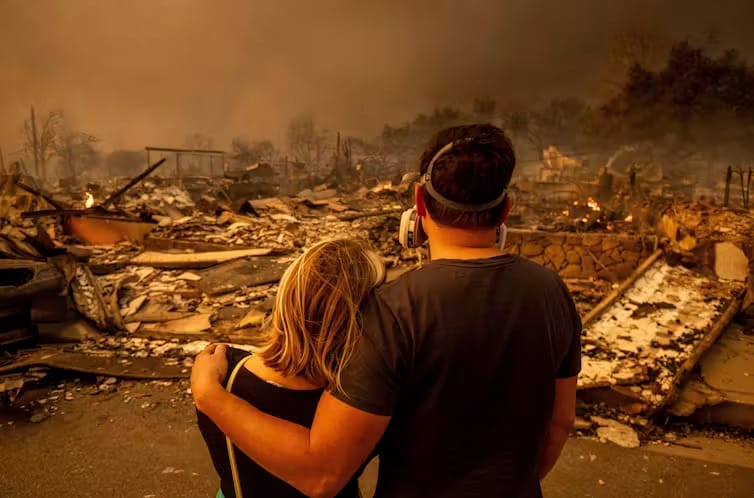












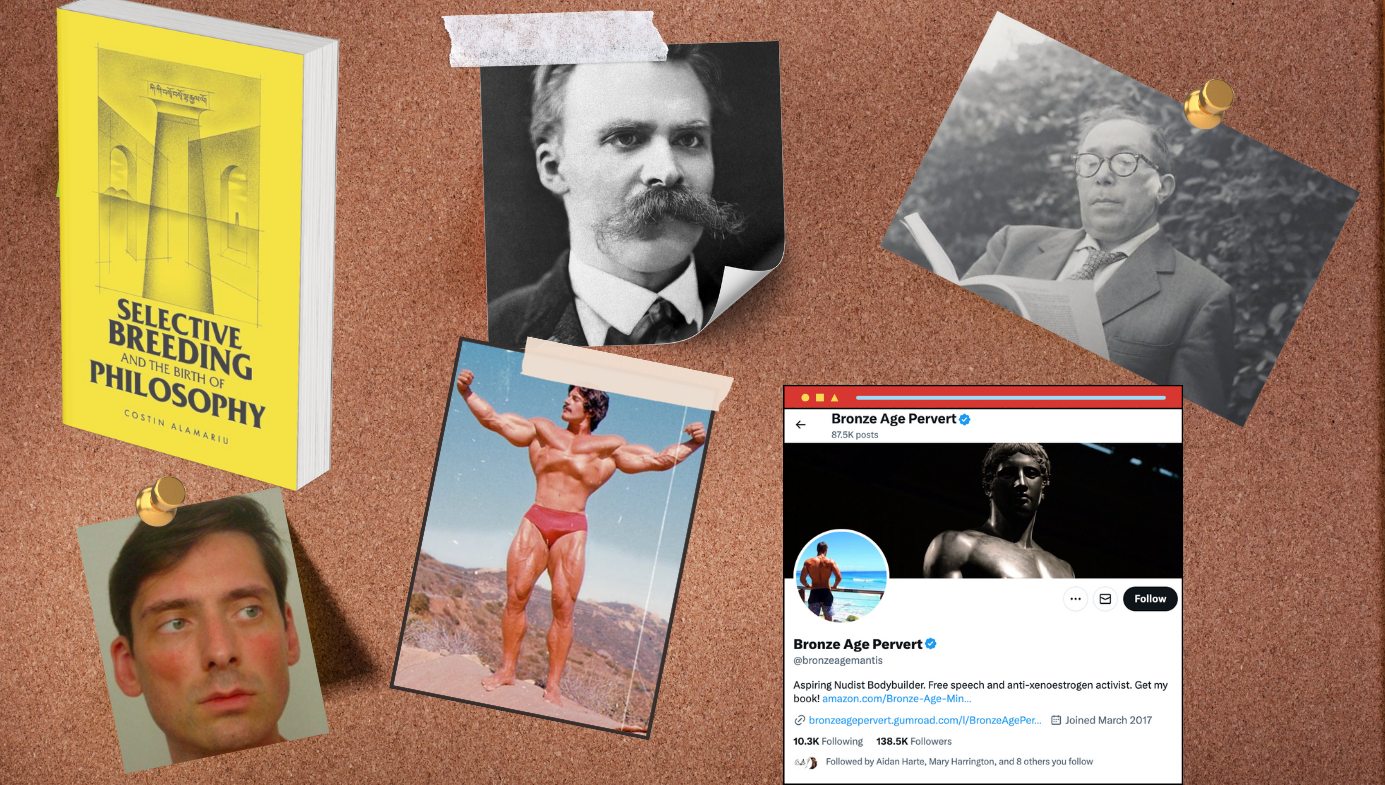
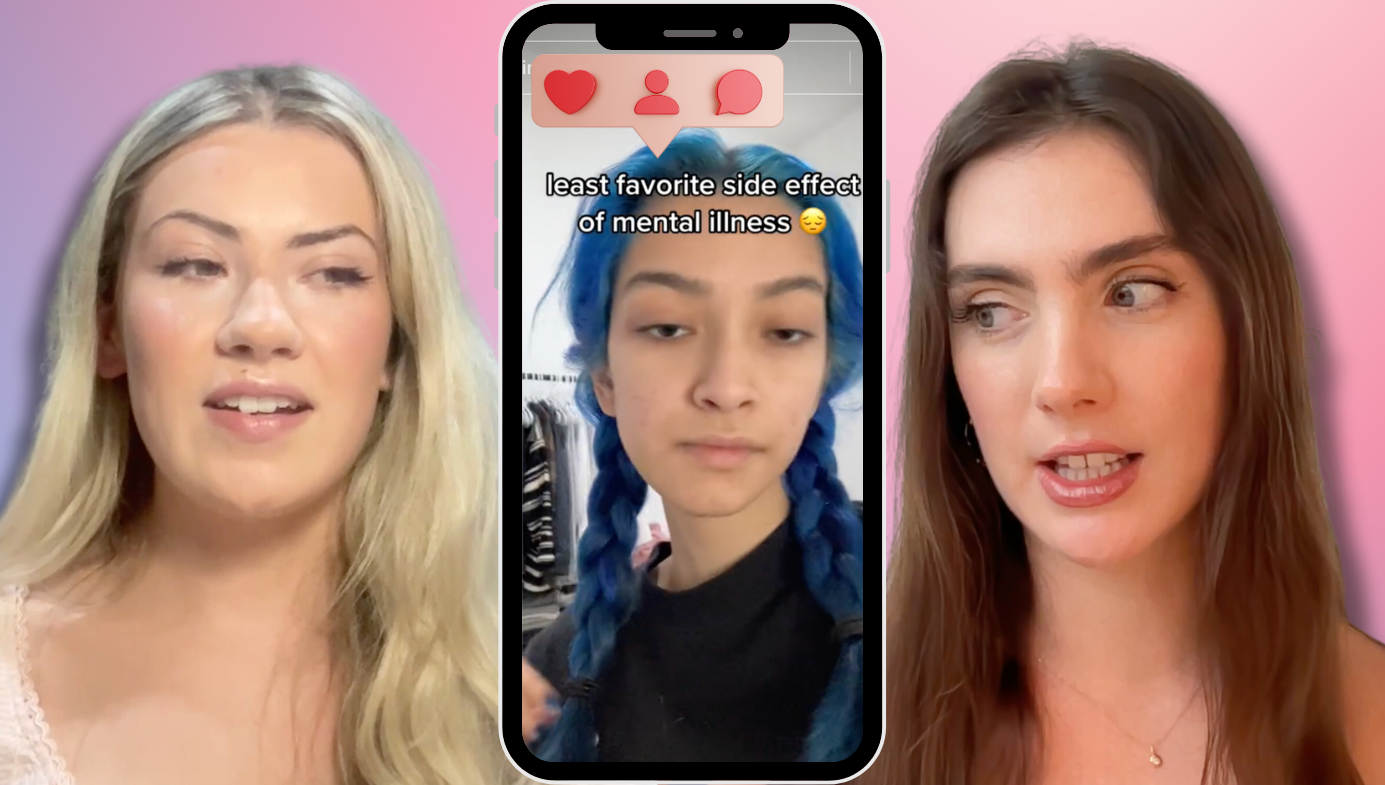




 Quillette's Australia Day Party