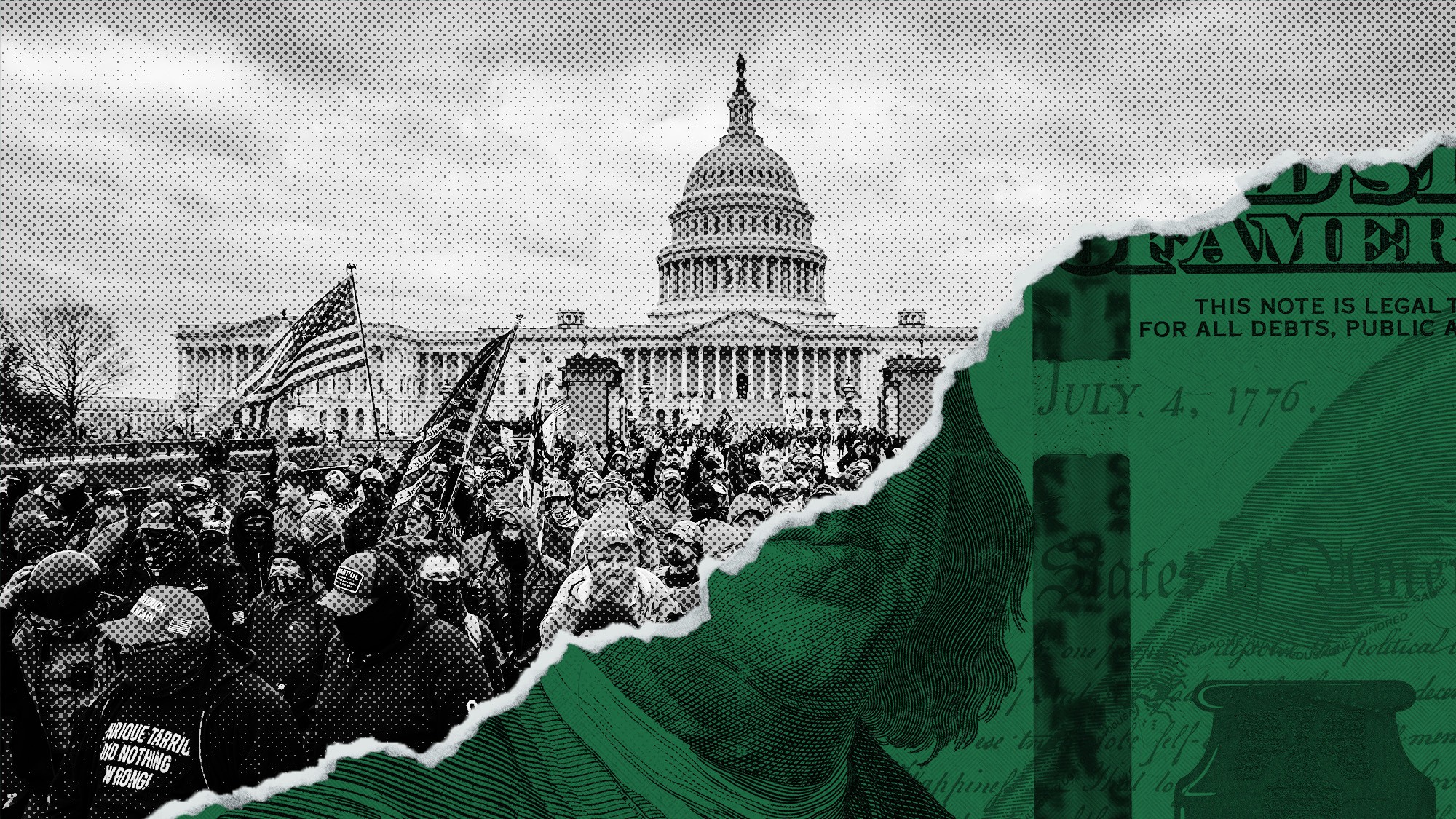
Recasting the January 6 insurrection as the work of heroic patriots remains the president’s highest priority.
Show full content
Among the very first things Donald Trump did upon assuming the powers of the presidency for the second time was commute the sentences of, and grant pardons to, everybody involved in his attempt to overturn the 2020 election. Republican allies expressed moderate disappointment but vowed to move past this ugly blemish. Senator Susan Collins called it a “terrible day for our Justice Department.” Senator Tommy Tuberville admitted, “It’s a hard one, because we work with them up here,” referring to Capitol Police who were viciously beaten by Trump’s allies. Tuberville concluded, “At the end of the day, we’ve got to get Jan. 6 behind us.” Senate Majority Leader John Thune said that Republicans were “not looking backwards; we’re looking forward.”
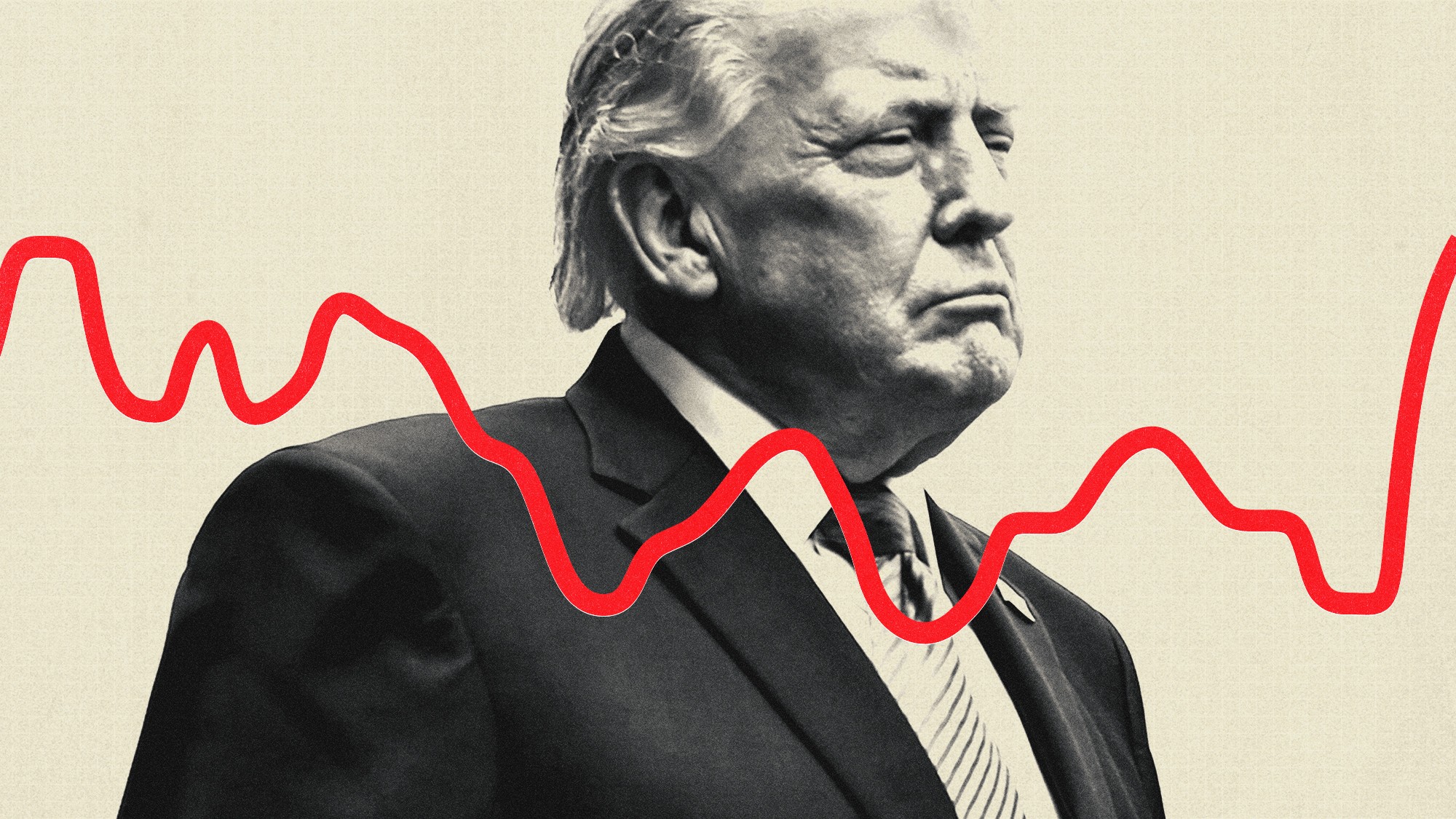
It was not, however, just one terrible day. Trump’s loyalty to his most violent and criminal supporters was a signal of his highest priority and has been a reliable guide to his decisions ever since. The impulse to rewrite the history of January 6, 2021, appears to be the inspiration even for the establishment of a $1.8 billion Treasury Department slush fund for victims of so-called weaponization of government.
Last week, when the administration floated the notion of dispersing payments to alleged victims of government weaponization, cynics assumed that Trump meant to divert the money to himself. But this assessment may have turned out to be too naive. Trump already has ample ways to profit from office, including from stock trading with the benefit of inside knowledge and by accepting gifts from client states. The Justice Department told reporters yesterday that Trump, his sons, and his family business would not receive payments from the fund. The recipients will almost surely be insurrectionists and other allies.
How, exactly, can Trump hand out taxpayer dollars at his whim? The putative mechanism is a settlement with the Internal Revenue Service. In 2020, an IRS contractor leaked a few years of Trump’s tax records. (Before Trump, major presidential candidates had for decades voluntarily released their returns, an essential step in demonstrating that they had no conflicts of interest.)
The contractor was caught and sent to prison. Trump nevertheless sued for the offense of being subjected to a portion of the scrutiny his fellow candidates have voluntarily undergone. Because Trump runs the IRS, it is no longer in a position to place any limits on his demands. He has already exploited the loophole of suing his own government to pay a series of allies investigated for or convicted of committing crimes out of loyalty to him. The recipients include the family of Ashli Babbitt, an insurrectionist who was shot and killed on January 6 while smashing her way into a corridor behind which members of Congress had taken shelter from the mob.
Trump’s Justice Department describes the forthcoming payouts as a “systematic process to hear and redress claims of others who suffered weaponization and lawfare.” The process is, in fact, the opposite of systemic. It is designed to be controlled personally by Trump and sheltered from any judicial scrutiny.
If the government were actually compensating victims of lawfare, it would direct payments to James Comey, Mark Kelly, Adam Schiff, and other targets of Trump’s vindictive prosecutions. Trump has described his actions as turnabout—“I was hunted by some very bad people. Now I’m the hunter.”—which, given that he has called his own prosecutions political targeting, is tantamount to confessing that he is targeting his enemies.
But, of course, nobody entertains for a moment the thought that the fund could conceivably reward an actual victim of weaponization. To ensure that it will never be used for a deserving victim, the fund is scheduled for termination on December 15, 2028.
Asked by a reporter yesterday whether people who committed violence against police officers should receive payments, Trump replied, “It’ll all be dependent on a committee. A committee’s being set up of very talented people, very highly respected people.” The committee is being selected entirely by Trump, who retains the power to replace any member who displeases him, and who in any case has argued in multiple contexts that he is entitled to exert full control over any decision by the executive branch.
The most dystopian explanation for this scheme comes from sources who sketched it out to ABC News last week. As ABC’s reporters characterized it, the sources described the fund as “a hybrid between a victim compensation fund—similar to the civil claims process that followed the 2010 Deepwater Horizon oil spill—and a truth-and-reconciliation-style commission.”
Trump’s commission is deviously inverting the original and most famous truth-and-reconciliation commission. South Africa established its commission to document the crimes committed under its apartheid regime. Rather than uncovering the truth to facilitate the state’s transformation from authoritarianism into democracy, Trump is doing the reverse, inscribing his lies into the historical record in an effort to undermine democracy.
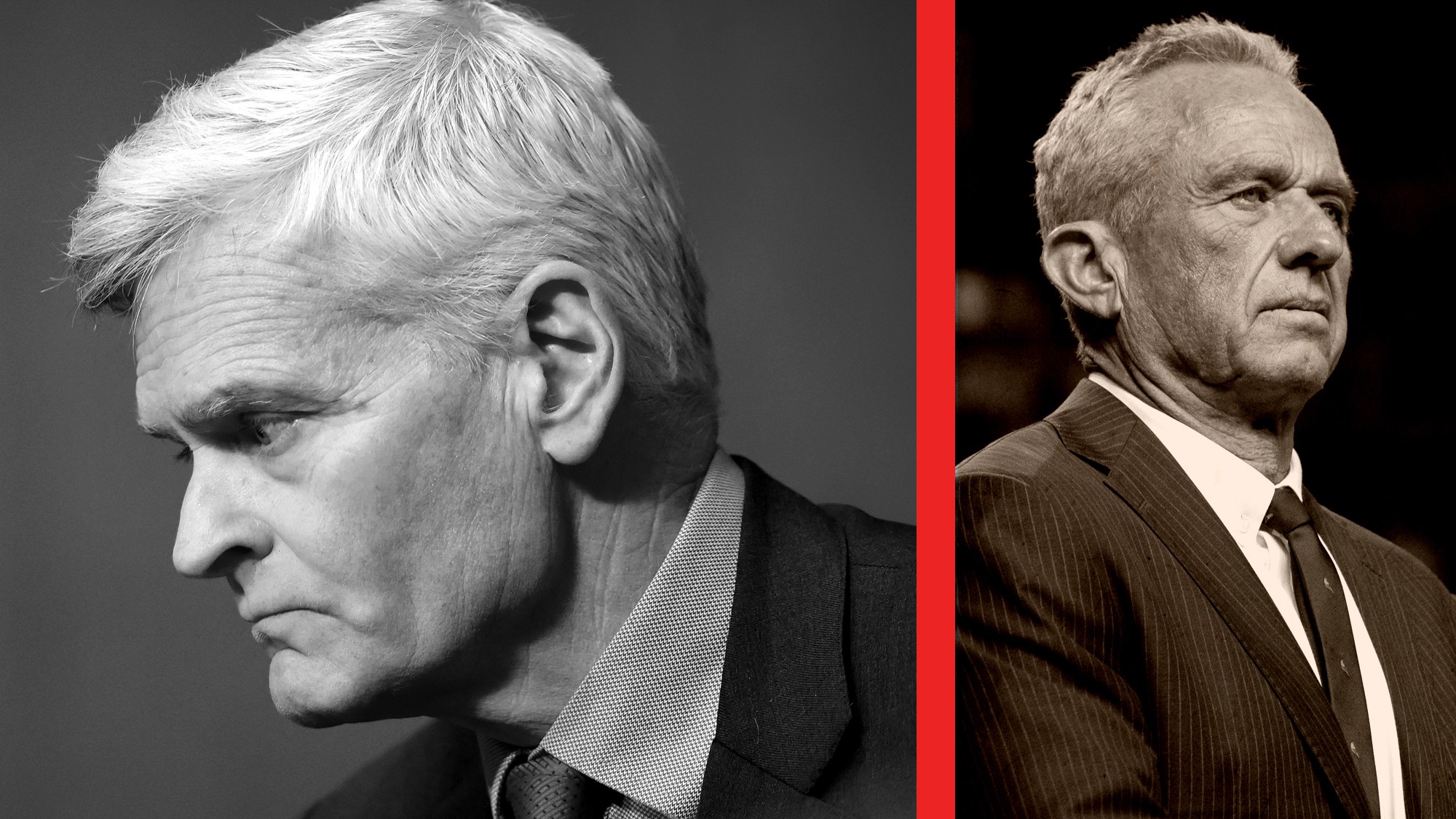
It is common to describe Trump’s steps as vengeance, but he has more in mind than merely settling old scores. This obsession drove Trump to support a successful primary challenge to Senator Bill Cassidy, whose offense was casting a symbolic vote to impeach him after January 6. Cassidy had long since surrendered any independent impulses, to the point of violating his own pro-vaccine convictions to cast a humiliating, decisive vote to confirm Robert F. Kennedy Jr. as secretary of health and human services. Yet Cassidy’s penitence did not satisfy Trump.
Trump considers it essential both to intimidate anybody who would stop him from carrying out illegal orders—hence his attempts to imprison Democrats who truthfully advised military members that they should not obey illegal orders—and to reward anybody who does follow them. He has reportedly promised mass pardons before he leaves office. Trump could have waited until after the 2028 elections to set up his slush fund, but he is doing it now in a high-profile way, presumably to communicate directly that loyal allies can expect lavish rewards.
The government’s operating ethos during Trump’s second term has followed the dictum that the president and his allies are immune from the law, while his enemies can expect to be hounded. As his party watches silently and cowers, his intentions grow only more naked.
Instead of expanding arrests, first add better lights.
Show full content
In the summer of 2014, the new mayor of New York City had a problem. Bill de Blasio had campaigned against aggressive policing, particularly the city’s controversial policy of briefly detaining people and patting them down for weapons. Stop-and-frisk, which a federal court had ruled was discriminatory as practiced, had been touted as a form of crime prevention. Some New Yorkers feared that the progressive mayor, by dismissing the tactics of local police, would invite a rise in violence and disorder in the city. As if on cue, the warm months brought a surge in shootings in the city’s public-housing developments.
As the mayor’s criminal-justice adviser, I met with de Blasio and the police commissioner in the mayor’s corner office in city hall every week. We needed a plan to address the spate of shootings that didn’t rely on brute force. We also wanted a strategy for discouraging problems such as vandalism, dirty streets, and conspicuous drug use—low-level disorder that, if left unchecked, can create the conditions for more serious crime. And we wanted all of this without clogging the courts and jails.
What about better lighting in the dark areas where crime tended to concentrate? This idea had a certain appeal. The city’s Depression-era Mayor Fiorello La Guardia once insisted that “there is no Republican or Democratic way to pick up the garbage.” Good street lighting also doesn’t take sides.
That summer, de Blasio launched a $210 million initiative that delivered brighter exterior lighting and more than 150 temporary light towers across 15 high-crime public-housing developments. This was part of an effort to tamp down violence through a range of civic services that included keeping community centers open late for the first time in 30 years. The police continued to play an important role, but instead of making broadscale arrests for low-level crimes, they started an approach that they later dubbed “precision policing,” which involved targeting the few people who were driving violence instead of their scores of hangers-on. Officers were also encouraged to attend community meetings to help address local concerns about safety.
The city studied the effect of the lights on crime and neighborhood life. Aaron Chalfin, a criminology professor at the University of Pennsylvania, ran a randomized controlled trial across 80 of the city’s 335 housing developments, half of which were outfitted with temporary lighting towers. He found that serious nighttime outdoor crime dropped by 35 percent without a rise in arrests. The crime didn’t move elsewhere; it simply disappeared. A follow-up three years later found that this drop in crime had persisted.
In the field of crime and justice, most policy making relies on the science of “everyone knows”: Everyone knows that kids with nothing to do get in trouble. Everyone knows that you get knifed in a dark alley. Sometimes this common sense aligns with reality. Sometimes it doesn’t. Over the past 15 years, researchers have made a big push to test these hunches in a systematic way, and the data on lighting proved significant. Darkness is indeed a good cover for crime, so better lighting can make streets safer, not just by deterring misdeeds but also by encouraging others to fill the streets with activity.
The lights that de Blasio began rolling out more than a decade ago weren’t ideal, to be sure. The temporary lamps—which have since been upgraded—were noisy and smelly because they ran on gas generators; their intensity evoked the no-man’s-land of the Berlin Wall rather than the warm glow of brownstone living rooms. But their effectiveness was plain. Within a few years, Chalfin studied a plan in Philadelphia to upgrade about 34,000 streetlights citywide with brighter LED bulbs, which he found correlated with a 15 percent drop in outdoor nighttime street crimes and a 21 percent drop in outdoor nighttime gun violence. Local residents told interviewers that the lights made them feel more comfortable inhabiting public spaces because their neighborhoods felt safer.
These lighting studies are all in keeping with one of the most consequential and least discussed social-policy findings of the past quarter century: Urban design helps shape behavior. A growing body of research has found that the greening of vacant lots in Philadelphia was associated with a reduction in gun violence by 29 percent and overall crime by 9 percent, and the fixing of derelict buildings there coincided with a drop in gun violence by 39 percent. A six-city study that included Baltimore and Washington, D.C., found that the planting of trees was associated with a fall in gun violence by 9 percent. The redesigning of public places aligned with a drop in robberies by anywhere from 30 percent to 84 percent, depending on the study, not because these places were put under lock and key, but because creating more hospitable public design raised the cost of anti-social behavior by encouraging more people to be out on the streets.
Decades of meticulous research, the most prominent by the Harvard sociologist Robert Sampson in Chicago, shows how the rhythms of city life and a web of loose connections—a familiar face on the bus, a neighbor at the laundromat—can spur a sense of mutual obligation and enforce social constraint. Knowing that you might see someone again and again might temper an impulse to shoplift, blast music, or even pull a gun.
These studies provide rigor to Jane Jacobs’s observation in 1961 that “eyes on the street” and the spontaneity of the city’s “sidewalk ballet” keep people safe as much as anything else. She ascribed this power to what she called an “intricate, almost unconscious, network of voluntary controls and standards among the people themselves, and enforced by the people themselves.”
The role of the physical environment in shaping social behavior was also at the heart of one of the most famous essays published in this magazine: “Broken Windows,” by the criminologists George L. Kelling and James Q. Wilson. In their telling in 1982, the broken window wasn’t merely a small, fixable problem but a cue that the block in question had no steward, that the neighborhood had no guardian, that ordinary obligations of civility were no longer in play.
“If a window in a building is broken and is left unrepaired, all the rest of the windows will soon be broken,” Kelling and Wilson wrote. “One unrepaired broken window is a signal that no one cares, and so breaking more windows costs nothing.” The destruction needn’t stop there. An unfixed broken window sent a message that the building could likely be stripped, that its apartments were probably squattable, that drug dealing and related violence might proceed with little consequence. This argument found a sympathetic audience when crime was rising across the country. Crime-weary New Yorkers certainly took note.
The problem was not the theory itself but how it came to be interpreted. Bill Bratton, who served as the chief of the New York City Transit Police and then as the city’s police commissioner during the crime peak in the 1990s, explicitly attributed his crackdown on petty crimes, such as graffiti and fare evasion, to Kelling and Wilson. Eventually, the concept of broken-windows policing evolved from an observation about physical disorder into a blundering strategy of stopping residents, sometimes on specious grounds (“furtive movements”), and arresting masses of people for relatively minor offenses, such as marijuana possession, on the assumption that these infractions create an atmosphere of disorder that invites more serious crimes. Misdemeanor arrests skyrocketed from about 56,000 annually in the late 1980s to a high of about 230,000 in 2010. By 2011, the New York City Police Department was stopping and frisking nearly 700,000 people a year, mostly in neighborhoods that were home to poor Black people and Latinos.
This approach was enormously costly and controversial. Instead of strengthening the invisible networks of controls and standards that encourage better behavior, these arrests undermined an already fragile sense of trust between poor neighborhoods and government. In 2013, a federal judge in New York found stop-and-frisks as practiced in New York City unconstitutional, in part because they were racially discriminatory, and put the city under a federal consent decree that’s still in place today. When Bratton was back as the city’s police commissioner under de Blasio from 2014 to 2016, he did not distance himself from what he called “quality-of-life policing,” but he struck a more conciliatory note: “Our challenge is how to respond to disorder in a way that our actions do no harm.”
The irony was that had the policy of broken windows been implemented as written, with an emphasis on fixes to the city itself such as cleaning vacant lots and lighting dark places, New York might have tapped into a durable way to strengthen the organic connections that keep us safe. Instead, the city’s escalating campaign of stops and arrests triggered the cascade of cynicism and distrust that continues to bedevil New Yorkers’ connection to their government.
Although crime, both nationally and in New York City, has plummeted since the early 1990s and the country’s homicide rate is at an all-time low, this decline has been neither smooth nor uncomplicated. The pandemic years brought about a surge in violence and other crimes across the country, from which many cities have only recently recovered. New York City’s historically low crime rate from 2016 to 2019 gave way to an explosion in violence in 2020 and 2021. Although shootings and murders have now fallen to historic lows, overall major crime remained substantially higher in 2025 than it had been in 2019.
What’s plain is that the challenge of curbing crime to its lowest possible level and keeping it there demands all viable strategies, not just enforcement. The fiscal uncertainty of this moment for city managers—given fluctuations in the economy, the tax code, and federal funding—should also burnish the appeal of services that are already largely funded as part of a city’s budget, such as improvements to lighting and the planting of trees. The architect Jeanne Gang has observed that a city owns anywhere from 50 percent to 90 percent of a neighborhood, such as its streets, public-housing developments, libraries, and firehouses, and has many capital projects going at any one time. With just a bit more coordination, a project to add a new speed bump or median strip could also involve adding brighter streetlamps and some greenery, which can enhance the built environment and reinforce the informal connections and constraints that help keep people safe.
Police officers, of course, play an essential role in ensuring safety, not least because they have the power and training to do what other citizens can’t. But because reducing crime and disorder is about managing behavior and controlling risk, police are not the only—and are sometimes not the best—way to accomplish these goals in a durable way. The city’s investments in street lighting and civic services a decade ago helped lead to the lowest crime and incarceration rates in decades. As New York City becomes once again split over the best way to keep people safe, there is value in turning to the evidence, which shows that good urban design can have a lasting effect on public safety.
The historian Ada Ferrer’s new family memoir retells the story of Cuba through the individuals who matter most to her.
Show full content
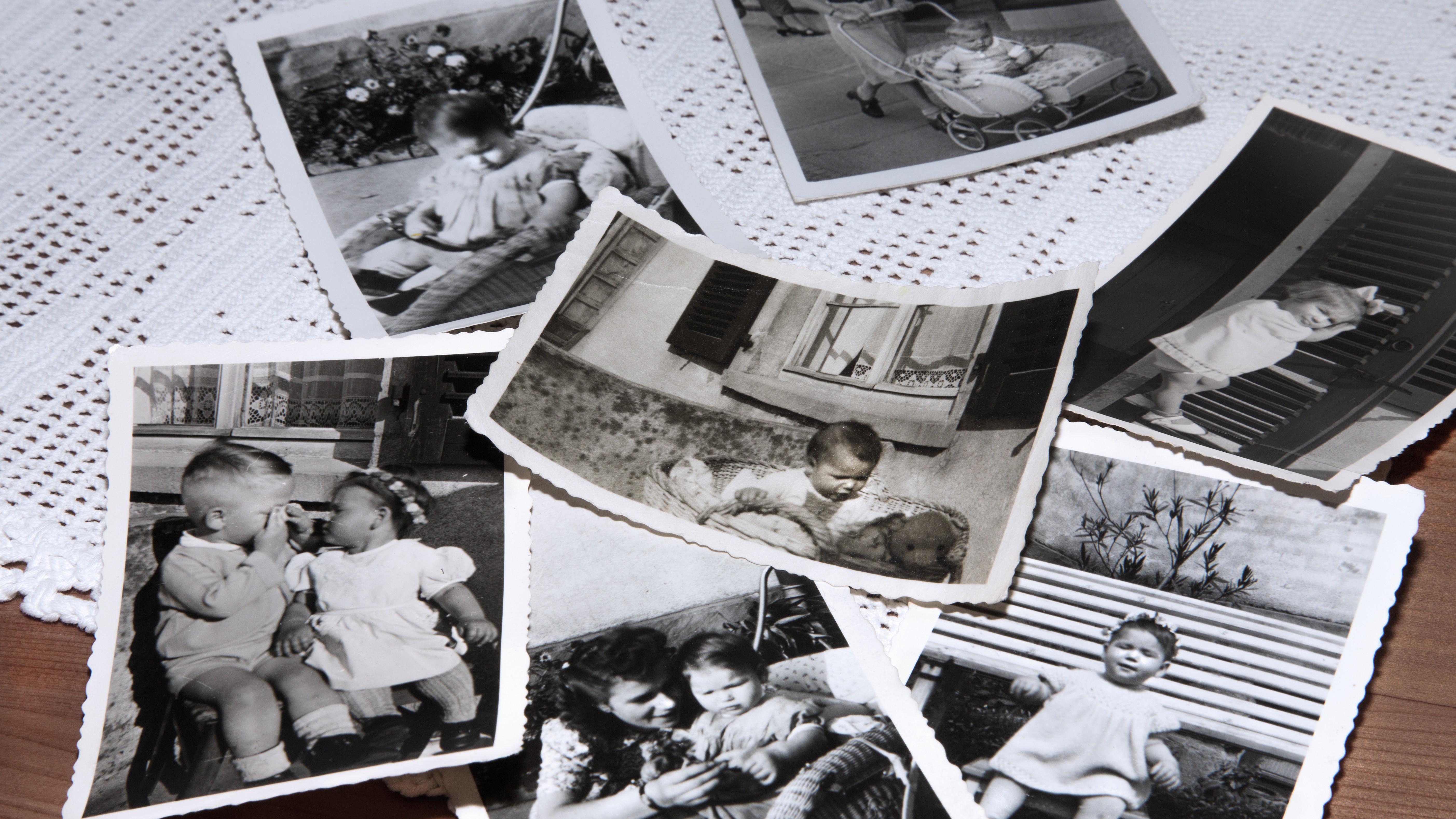
Decades ago, Ada Ferrer learned a lesson about what she’d later call the “misencounter between the history I was reading and the history of the people in my life.” During the late 1980s, while pursuing a master’s degree in history at the University of Texas, Ferrer asked her parents to share their memories of events covered in her coursework. Did Adela and Ramón, who had emigrated from Cuba in the early ’60s, remember the nation’s constitutional convention of 1940? They did not. Had they attended Fidel Castro’s massive rallies during the 1959 Cuban Revolution? They had not. Castro’s agrarian reforms hadn’t touched Ramón’s family farm, which was too small to be confiscated; neither parent watched the leader’s hourslong speeches, because they didn’t have a television.
Yet Ferrer’s mother and father were profoundly shaped by the history they hadn’t witnessed directly. So was Ferrer, who has devoted her life to studying the country where, as she writes, “I was born but could not remember.” Today, she is a professor of history at Princeton and the winner of a 2022 Pulitzer Prize for Cuba: An American History, which documents five centuries of evolution and revolution. Her new book, Keeper of My Kin: Memoir of an Immigrant Daughter, is a far more intimate story. Recounting her family’s experiences after the revolution, it is about “utterly ordinary people,” she writes, “always on the margins, absent less as a matter of ideology than from an unconscious sense that history did not belong to them.”
The feeling of being buffeted by forces far outside one’s control may seem familiar today, both in Cuba and in the United States—two neighbors undergoing destabilizing change. The island’s economy is shattered (it recently ran out of oil), and months of United States pressure for political change has led to the pursuit of an indictment of Raúl Castro, the 94-year-old brother of the late leader. Someday, historians will write of this moment when, after decades of repression, Fidel Castro’s revolution collapsed under its own weight, and when President Trump said Cuba was his to “do anything I want with” as he pursued heedless regime change in Latin America and mass deportation in the United States. Any proper account of the current era will also need to reckon with how thousands of families were, as Ferrer writes of her own kin, “broken by history and made by it, too.”
Ferrer planted the seeds for her memoir by beginning Cuba with an account of her family’s immigration to the United States. Her mother had left her son from an earlier relationship—Ada’s half brother Poly, short for Hipolito—behind in Cuba. “Does a revolution change people?” Ferrer asked. “Does migration?” Her new memoir answers these questions with an emphatic yes, and focuses on key turning points including the Mariel Boatlift, the economic crisis after the fall of the Soviet Union, and the brief detente under President Obama.
Extraordinary collections of letters made it possible for Ferrer to write her family’s story. After her parents died—her mother in 2020, and her father in 2022—she inherited the moving, often heartbreaking letters that her brother and mother sent back and forth during the years of their separation; anguished letters to Poly from Tía Niña, an aunt who had helped care for him in Cuba, sent after he eventually moved to the United States; the open letters that her father wrote to Castro and U.S. presidents, expressing his dissatisfaction with their leadership; and the correspondence that Ramón maintained with his own estranged son, Ada’s half brother Juan José, a teacher in Cuba.
The preservation of such a wealth of private material isn’t rare. Before Facebook Messenger, when phone calls across the Florida Straits were difficult, letters were the primary way that Cubans communicated with friends and relatives in the United States. Less often does such correspondence wind up in the hands of a historian who can curate and verify them, fill in their gaps with other sources and personal memories, and contextualize them within the sweep of Cuban history. Ferrer is the ideal keeper of her kin’s stories.
Each turn in Cuba’s postrevolutionary history changed the trajectory of Ferrer’s family, leading repeatedly to separations and reunions and reassessments of their relationship to the country. Ferrer’s father left Cuba first, in 1962, three years after Castro’s triumph. He had served in the Cuban army under Fulgencio Batista, the president ousted by the revolution. “Stridently anticommunist” like most Cubans, Ferrer writes, Ramón resolved to leave after being detained as a suspected counterrevolutionary. His departure as a political refugee marked the first time, but not the last, that the revolution had led to the separation of the family.
Adela and Ada followed a year later, in 1963. Poly would spend 17 years apart from the family, with devastating consequences, before joining them as one of thousands of Cubans who had left the island during the boatlift. Their reunion was a complicated one: Ferrer recalls Poly saying of his mother that “just as she had ruined his life by leaving him in Cuba, he was now here to ruin hers.” Only when Adela was in her 90s, in the hospital recovering from a surgery, did she tell Ada about the moment she left her boy behind. It was six in the evening, she recalled, and Poly, then 9 years old, was playing outside with friends. The next morning, she and baby Ada went to the airport. Poly was told that she’d gone to visit relatives in the countryside for a few days. His father wouldn’t allow him to leave Cuba; Adela had no choice but to leave without him.
In the early letters that Poly wrote to his mother, he said he was doing well, going to school every day, taking care of his grandmother, and helping her with errands. Ferrer describes young Poly as “a boy proud to behave, proud to be weathering the shock of his mother’s abrupt and unannounced disappearance,” though he sometimes cried himself to sleep. As he grew older, however, the letters darkened. In 1970, when Poly was a teenager, after he had forgotten to send his mom a Mother’s Day card, he apologized and wrote, “Deep inside me lives the name of my absent mother.” He became fixated on joining his family in the United States. “I will only be well when I have you at my side,” he wrote, and he began to describe his separation from his mother as “the great trauma that I have suffered.”
In 1978, Castro surprised Cuban exiles by inviting them to visit the island. Adela accepted the offer to see Poly, who was now in his 20s, for the first time since she had left Cuba. “In their separation,” Ferrer writes, “Poly had become a man. But my mother had changed as well; she became someone he didn’t know, someone who was mine in a way she might never again be his.” Poly, however, was even more profoundly changed. After he arrived in the U.S., he got a job, but he also drank and did drugs, and he was violent. He stabbed a man, and even attacked Ferrer. After being incarcerated and attempting suicide, he died of “hypertensive crisis,” according to a medical examiner, while sitting on the toilet, home alone in Hialeah, Florida.
Many of Ferrer’s recollections prompt her to reflect on how different her life might have been. When her mother visited Cuba, Ferrer was in high school and contemplating college. She asked her mom to take pictures of the University of Havana because she thought that’s where she would have gone to school if she had stayed in Cuba. In this alternate life, she might not have come to speak more English than Spanish. She might not have attended Vassar, an “elite American college” where she felt like she didn’t quite fit in; one student tells her mother that Ferrer reminds her of their family’s maid, adding that “she’s Hispanic, but not really Hispanic—she’s educated.” Ferrer doesn’t describe herself as a Latina even once in Keeper of My Kin—instead she prefers Cuban, or immigrant—but her expressions of loss and alienation echo the ways many Latinos describe their lives in this country.
These memories also lead Ferrer to wonder how Poly might have turned out differently, and how responsible the family was for his fate. Was there something she or her mother could have done to keep him out of trouble? Might Poly have made better decisions if he’d had better role models? Before she and Poly met, they had expressed tenderness toward each other in their letters. But after he joined the family in New York, Ferrer realized that she didn’t much like her brother, who brought chaos into the household and, she suspects, resented her success. Ferrer’s father was ambivalent about his stepson’s presence as well: He understood how important it was to his wife to be reunited with her son, but he saw that their reunion only intensified her stress and her guilt.
In March 2016, after Obama loosened travel restrictions, the whole family traveled together to Cuba. Like many Cubans in the United States, Ferrer’s father had vowed never to set foot there again while Castro’s party was in power, but he was persuaded to take what would likely be his last opportunity to return. They visited the house where Ramón and Adela had met, cemeteries where relatives were buried, and the house his son, Juan José, had lived in before he died in 2009.
The family trip coincided with Obama’s visit to Cuba. Ferrer watched his speech at her aunt’s house. “We share the same blood,” Obama said. “We both live in a new world, colonized by Europeans. Cuba, like the United States, was built in part by slaves brought here from Africa. Like the United States, the Cuban people can trace their heritage to both slaves and slave owners.” When Ada asked her father, who was no fan of Obama’s, what he thought about the speech, he said, “He killed it!” Back in the United States, he told her that he wanted to spend a year in Cuba. The country was a “disaster,” he said, “but it’s my disaster.”
Ferrer’s father never did make it back. He died in 2022, and so he was spared from seeing Cuba’s descent into greater disaster. Given all of the letters he wrote about U.S.-Cuban relations, I reached out to Ferrer to ask her what she thought her father might have made of Cuba’s situation today. She believes that they would have disagreed about what the solution should be. She thinks that Cuba is stuck—caught between President Miguel Díaz-Canel, who uses the rhetoric of anti-imperialism to mask the ways that his government has failed its people, and Trump, who wants to bring down the Cuban system no matter the human cost because he cares, above all, about being acclaimed as a great man of history. Her father, she thinks, would have argued that the situation has become so bad that he would welcome change at any price, even if it meant increased U.S. control over the island.
Millions of Cubans, including those in exile, wait to see what will become of their island. One lesson Ferrer seeks to impart is that the outcome is sure to shape their lives in unexpected ways. Although historians are likely to focus their attention on government shake-ups, military moves, and diplomatic deals, the fallout of this moment, like all moments, will be seen in the smaller events that break and remake the people in our lives.
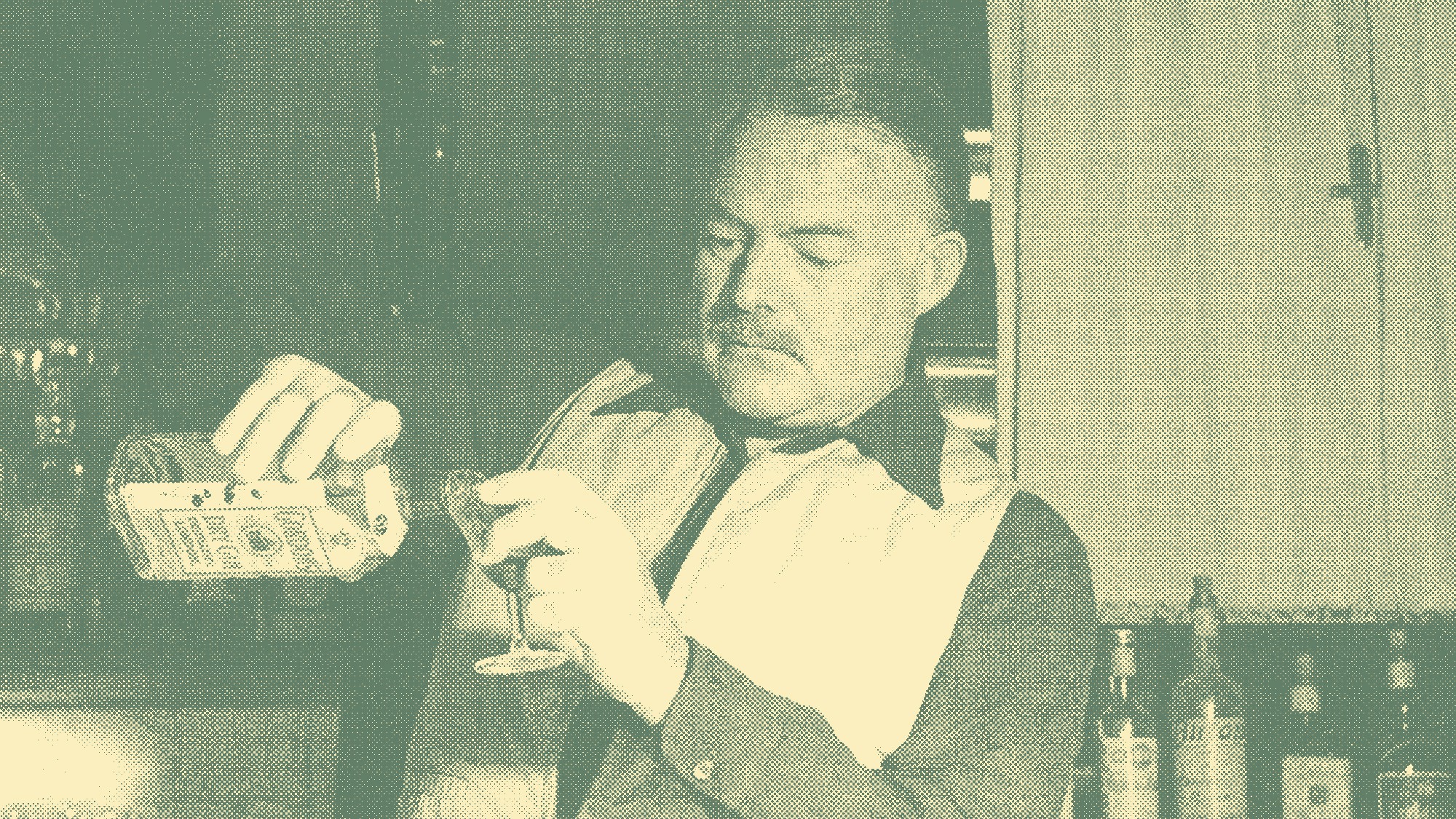
*Illustration Sources: Courtesy of Ada Ferrer; Sven Creutzmann / Hulton Archive / Getty; Kwangmoozaa / Getty.
Readers respond to our February 2026 issue and more.
Show full content
The Purged
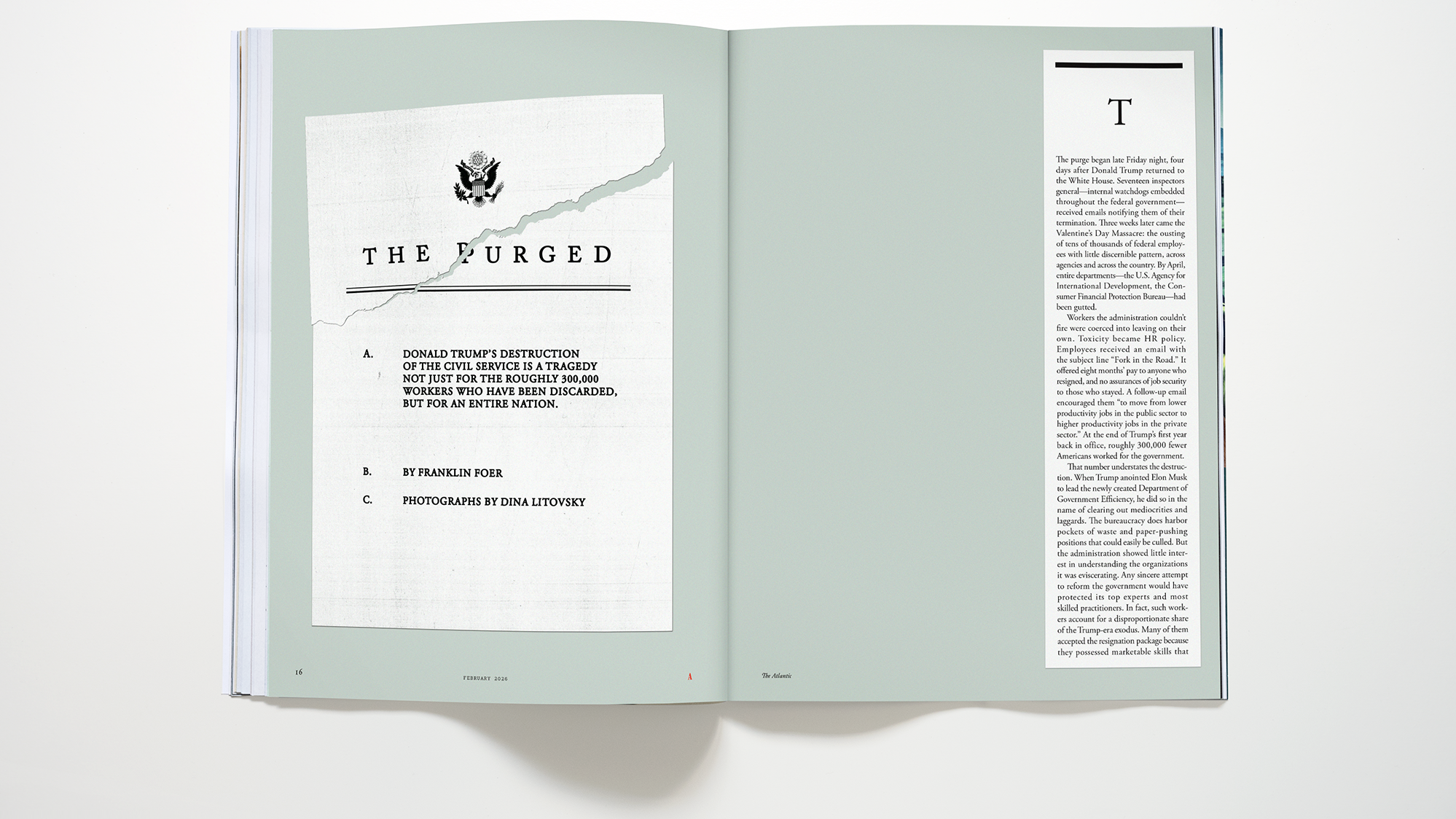
Donald Trump’s destruction of the civil service is a tragedy not just for the roughly 300,000 workers who have been discarded, but for an entire nation, Franklin Foer wrote in the February issue.
I read Franklin Foer’s “The Purged” in one held breath. This is how to weigh the stakes of our political moment—one life at a time. No statistic can adequately describe America’s losses. Each of the 50 people profiled in Foer’s essay is so gifted and generous, so essential to what the United States means—or at least to what it used to mean. I salute Foer’s courage to tell the story head-on. His narrative journalism is letting us see one another whole.
Rita Charon New York, N.Y.
There but for the grace of God go I. I never worked directly for the federal government, but I did research and consulting as a contractor for the Department of Energy’s National Laboratories, the Environmental Protection Agency, and the National Center for Atmospheric Research. I am a meteorologist, an atmospheric physicist, and an environmental economist, now retired. I worked on significant problems, including air quality, acid deposition, and the safety of liquefied gases. I developed simulation techniques for the accidental release of toxic chemicals. I don’t know the people in the article personally, but I do know them—I know their value. Their individual loss is our national loss.
Daniel J. McNaughton Newport, R.I.
I worked in state government for 29 years. Franklin Foer’s 50 profiles are an important reminder that we’ll feel the consequences of Donald Trump’s purge for decades. I tend to think of government work as that of quiet competence. When we travel on interstate highways, we do not think about the work done to locate an appropriate site for a road, to build it, and then to maintain it. When we fly, we hope that the plane meets safety standards but spare little thought for the federal staff who developed those standards and enforce them for our benefit.
I was reminded of the importance of federal expertise last year, when the remnants of Hurricane Helene roared through the mountains and left astounding damage to public and private infrastructure. The Mitchell News-Journal, the local paper in rural Mitchell County, North Carolina, has on multiple occasions reported on confusion among employees of the Federal Emergency Management Agency over how to follow the agency’s own internal guidelines. I am sure that FEMA can and should be made more efficient. But destroying morale and stirring chaos with on-again, off-again layoffs is certainly not the way to do it.
John Dorney Durham, N.C.
I am a retired federal civil servant and a disabled veteran. I worked for the U.S. Postal Service for many years. I always took great pride in my desire to go above and beyond to help others get what they wanted or needed. On behalf of the millions of current and former federal civil-service employees, I am truly grateful for Franklin Foer’s research and reporting in this article.
In my 32-year career, the other civil-service employees and members of the military I worked alongside were dedicated, honest, and hardworking professionals. When I started to hear claims that federal employees were overpaid poor performers, or that they supported a particular political agenda that undermined the administration’s, or that they amounted to an unelected, overly partisan bureaucracy, I was shocked. These claims were so the opposite of my own experience that I thought surely anyone hearing them would disregard them as false.
Nyleen Mullally Rapid City, S.D.
I was very moved by the depth of reporting in Franklin Foer’s story on purged government employees. The profiles helped fill in the picture—that these are real people, and that their absence will be felt for a very long time. The damage to our culture and our progress as a nation is much larger than many people realize. Thank you for helping us keep that fact front of mind, now and into the future. I hope some of this strength can be rebuilt—but first we’ll need to rebuild the reputation of government.
Evelyn Luengas Fort Worth, Texas
from the archives
“I was holding myself together, but just barely,” Sherry Winfield confesses in “Dinah’s Hat,” a new short story by Stephen King. Sherry and her friend Morris have just ventured from their trailer park to a beach with Dinah, the mysterious child Morris cares for; there, they encounter a group of young bullies. “In time,” Sherry recalls thinking of the events that follow, “I’ll be able to convince myself that never happened.”
“Dinah’s Hat” isn’t the first work of fiction King has written for The Atlantic. In the magazine’s May 2011 issue, he published “Herman Wouk Is Still Alive,” a short story told from the perspective of two aging poets, Phil and Pauline, picnicking at a rest stop in Maine, and two mothers, Brenda and Jasmine, eager to take their children on a road trip up I-95. Compared with much of King’s other work, the horrors of “Herman Wouk Is Still Alive” are fairly quotidian—dead-end jobs and deadbeat dads, aging, depression. The story, nevertheless, builds to a haunting conclusion.
In a 2011 interview with The Atlantic’s James Parker, King explained that the story had emerged from a bet with his son Owen on that year’s NCAA basketball tournament: The winner would provide a title for a short story; the loser would have to write it. Owen, victorious, proffered the phrase “Herman Wouk Is Still Alive,” inspired by news coverage he’d read that Wouk, the Pulitzer Prize–winning author of War and Remembrance and The Caine Mutiny, was still writing well into his 90s. In King’s eventual story, Phil and Pauline read a fictionalized New York Times article testifying to Wouk’s longevity. “The ideas don’t stop just because one is old,” Wouk tells his interviewer. “The body weakens, but the words never do.” His sentiment inspires the two poets, both in their 70s—until, moments later, tragedy renders language powerless.
Wouk himself was asked about King’s story in a Q&A published with his 2012 novel, The Lawgiver. “I read Mr. King’s short story and enjoyed it,” Wouk said. “As for the longevity, I share his evident puzzlement, with boundless gratitude to my forebears and my Maker.” He continued, “It helps to have work I love, with much work yet to do by His grace.” Wouk died in 2019, just 10 days before his 104th birthday.
— Andrew Aoyama, Deputy Managing Editor
Behind the Cover
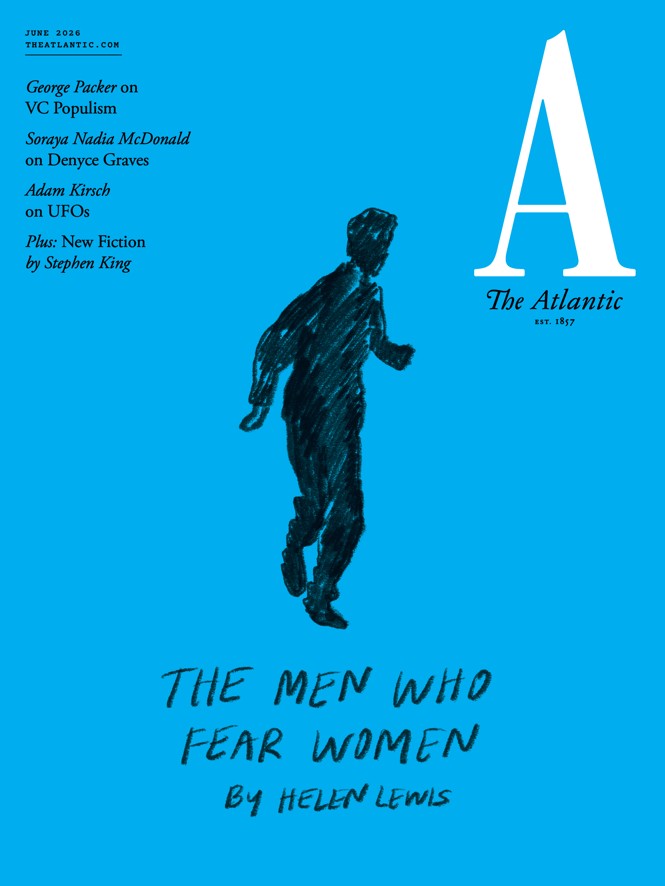
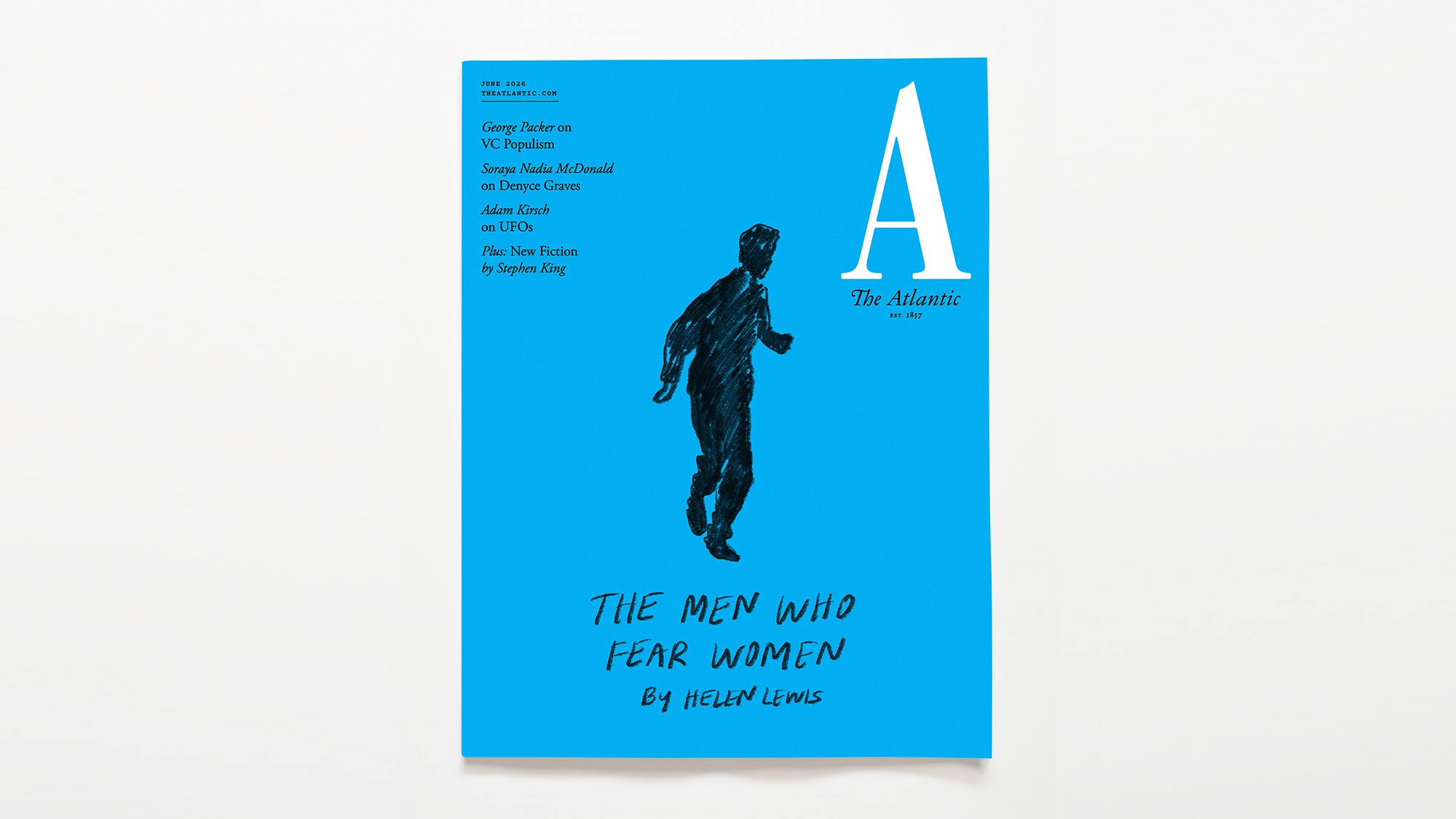
In this month’s cover story, “The Men Who Don’t Want Women to Vote,” Helen Lewis argues that “masculinism”—a movement seeking to counter the advances of feminism and place men back at the center of public life—has become the most important uniting force on the American right. Many men are drawn to masculinism, Lewis writes, because they feel that they have lost status to women. For the cover, we depicted the fear that undergirds their resentment: A rough silhouette of a man runs toward the viewer, looking over his shoulder at an imagined threat.
— Liz Hart, Art Director
This article appears in the June 2026 print edition with the headline “The Commons.” When you buy a book using a link on this page, we receive a commission. Thank you for supporting The Atlantic.
Intelligence provides new context for one of the Iran war’s deadliest incidents for American forces.
Show full content
A pair of Air Force refueling planes were flying high over Iraq two weeks into the U.S. and Israeli war against Iran. The KC-135 Stratotankers, which carry up to 200,000 pounds of jet fuel, function as flying gas stations, extending the reach of United States and allied aircraft far from air bases. On March 12, the two tankers collided. One of the planes safely landed with a badly damaged tail; the other crashed, killing six service members, constituting almost half of U.S. military fatalities in the conflict. The same day, U.S. Central Command said that the crash over Iraq’s western Anbar province had occurred in “friendly airspace” and had not been caused by hostile fire.
Initial intelligence reports told a different story. They indicated that the U.S. government had detected anti-aircraft fire by Iran-backed militias in the area around the time of the collision and that the pilots may have been forced to take evasive actions. The reports, which haven’t been previously made public, were described to us by two current officials and one former official. But Centcom’s leaders, citing different, more highly classified information, were convinced that those initial reports were mistaken. Militias had never fired surface-to-air missiles that could have threatened the aircraft, according to their assessment. The initial reports may have picked up instead on launches of missiles aimed at ground targets. That’s why the Pentagon statement asserted that no hostile fire was involved and that the skies were friendly. An Air Force–led investigation is expected to conclude that the disaster was an “avoidable mishap” by pilots operating in congested airspace, military officials told us.
Centcom’s quick and definitive public assessment of the incident, despite intelligence suggesting a more complicated picture, fits a Trump-administration pattern of omitting from its public statements important details about the conduct of the war. Senior officials have trumpeted military successes—two days before the crash, Secretary of Defense Pete Hegseth said the U.S. had “total air dominance”—and have downplayed the resilience of Iranian forces and their armed proxy groups across the Middle East.
The contrasting accounts of what preceded the crash point to the confusion of a crowded battlefield, as well as to the serious threat that Iran’s proxies in neighboring Iraq pose to the U.S. and Israeli war effort 23 years after President George W. Bush ordered Iraq’s invasion in pursuit of Saddam Hussein. President Trump said within hours of the start of the Iran war that one of his goals was to “ensure that the region’s terrorist proxies can no longer destabilize the region or the world and attack our forces.”
But those groups remain a potent force: Iran-sponsored militias have pounded U.S. facilities across Iraq with relentless rocket and drone attacks since the war began, forcing a near-total evacuation of the U.S. embassy in Baghdad. Iran’s proxies in Iraq also possess advanced arsenals, including ballistic missiles and anti-aircraft weapons. Early in the conflict, one official said, U.S. intelligence indicated that a refueling tanker narrowly avoided a militia missile in the same area of western Iraq where the deadly collision occurred. A Centcom spokesperson disputed that account, saying it had no indication of such an incident.
The war is now subject to a shaky cease-fire as the United States and Iran continue an extended standoff over control of the Strait of Hormuz, the vital waterway for global energy supplies that Iran has effectively closed.
Those killed in the March 12 crash include three active-duty airmen from the 6th Air Refueling Wing based in Tampa, Florida, and three National Guard airmen from the Ohio Air National Guard’s 121st Air Refueling Wing. A Pentagon official declined to comment, saying that providing details before the Air Force probe is complete would be premature. The official, like others we interviewed, spoke on condition of anonymity to discuss sensitive matters. A family member of one of the service members who was killed recently told us that the Pentagon relayed to him that the incident was under investigation but that it has not provided any more information since.
The Iraqi government is a U.S. security partner. Washington helped build up the country’s security forces in the more than two decades since the 2003 invasion. But the State Department says militias, which operate both within the state’s security apparatus and outside of it, have struck U.S. sites in Iraq more than 600 times with drone and missile attacks since the war began on the last day of February. Their targets have included bases, diplomatic facilities, and aircraft on the ground, Phillip Smyth, an independent analyst of Iraqi proxy groups, told us. Iraq is “definitely not a friendly airspace,” as the Pentagon asserted, Smyth said. The Iraqi militias have also claimed or carried out as many as 5,200 strikes on military and civilian targets in Persian Gulf countries as well as on Jordan and Syria.
Other Iranian proxies in the region include the Houthis in Yemen, Hamas in Gaza, and Hezbollah in Lebanon. But the militias in Iraq, many of whose members are on Iraqi-government payrolls as part of the paramilitary Popular Mobilization Forces, may be the most potent and the least discussed, Aaron Zelin, a fellow at the Washington Institute for Near East Policy who studies Mideastern extremist groups, told us.
Israel has devastated Gaza in its campaign against Hamas and, in recent weeks, has targeted Hezbollah strongholds in southern Lebanon. Last year, the U.S. carried out a monthslong campaign against the Houthis to stop attacks on ships transiting around the Bab el-Mandeb, the strait that separates the Arabian Peninsula from the Horn of Africa. But Iran’s network of proxies in Iraq has faced comparatively fewer U.S. strikes since the Iran war began, reflecting a U.S. desire not to be seen as reengaging in Iraq two decades after its invasion. Neither the U.S. nor Israel has done much targeting of the groups’ top leadership in Iraq during that time, allowing the militias to preserve their command structures and maintain operations. “These guys have only consolidated more of the state,” Zelin said. “I suspect the same dynamics will continue unless the U.S. and its allies—or Iraqis themselves—decide they want to do something far more serious about it.”
Like the regime in Tehran, the Iraqi militias have sought to force the United States to expend costly air-defense munitions to protect personnel and facilities. U.S. officials, including Hegseth and General Dan Caine, chairman of the Joint Chiefs of Staff, have publicly minimized any concerns about the depletion of U.S. munitions. But not everyone in the administration trusts those assurances. In White House meetings, Vice President Vance has repeatedly questioned the Pentagon about the accuracy of such claims.
The U.S. military has been in intermittent conflict with Iraqi militias for more than 20 years. (Hegseth, who served in the Iraq war as a National Guardsman, has cited the hundreds of U.S. soldiers killed by those Iranian proxies as a justification for the current conflict.) In subsequent years, however, U.S. forces entered an awkward, arms-length alliance with the militias as both Washington and Baghdad battled the Islamic State. Today, the militias and their affiliated parties wield formidable political power, holding roughly one-third of the seats in Iraq’s 329-member Parliament, despite the United States’ role as Iraq’s chief Western ally.
The militias’ violence during the Iran war has intensified friction between Washington and Baghdad. In the past month, U.S. officials have suspended security aid to Iraq, halted the transfer of U.S. dollars generated by Iraqi oil sales, and thrown their support behind a new prime minister–elect in an effort to force the government to take on the militias.
The administration can apply that pressure because Trump is already inclined to pull remaining U.S. forces from Iraq and is willing to risk severing the relationship, Victoria Taylor, who served as a senior State Department official for Iraq and Iran during the Biden administration, told us. Trump recently withdrew U.S. forces from neighboring Syria, another center of what remains of the Islamist insurgency.
Kataib Hezbollah, which has been designated by the U.S. as a terrorist group since 2009, is the most powerful of the Iraqi militias equipped, trained, and funded by Iran. It’s the group that some of the early intelligence suggested had been targeting the U.S. tankers.
The group has a history of launching attacks on U.S. assets and allied targets across the Middle East. U.S. officials blamed it for the recent kidnapping of the American freelance journalist Shelly Kittleson in Baghdad. (She was released a week later.) Federal prosecutors also recently charged Mohammad Baqer Saad Dawood al-Saadi, an alleged senior member of Kataib Hezbollah, with involvement in at least 18 attacks or attempted attacks in the U.S., Canada, and Europe.
Two senior Iraqi officials told us that Kataib Hezbollah has an arsenal of advanced weapons, including ballistic missiles, and has begun manufacturing its own missiles and drones, as do Iran-linked militia groups in Lebanon and Yemen.
Among Iran-backed militias’ most powerful weapons is the 358, a surface-to-air missile that experts say can loiter before striking its target and reach an altitude of up to roughly 30,000 feet. Kataib Hezbollah is believed to have possessed the missile at one point in the past, though whether it still does is unclear. Iraqi officials do not believe that the group has used one so far in the war, and the militia does not appear to have successfully targeted any foreign aircraft.
Unlike in previous American wars, when the Pentagon allowed journalists to witness the wars alongside deployed forces, details about the Iran war have come almost exclusively from the top—and have been uniformly positive. Hegseth and Caine have held a number of Pentagon press briefings in which they have focused on the degradation of Iranian forces and missile capabilities as well as the overall number of targets hit—more than 13,000 inside Iran before the cease-fire kicked in.
Admiral Brad Cooper, the head of Centcom, has also participated, and last week he was on Capitol Hill, where he was pressed by lawmakers about the war’s civilian casualties. He said that Centcom was investigating one incident, the bombing of a school in southern Iran on the war’s first day, which killed about 170 people, in an apparently errant U.S. strike. But Airwars, a watchdog group that has worked closely with Centcom in the past, has identified some 300 incidents in the Iran war that involved civilian casualties that the group claims merit investigation. Whether those incidents involved U.S. or Israeli strikes is unclear. During his congressional testimony, Cooper said there were initial investigations into allegations of civilian casualties, but those have not yet found any U.S. involvement. Centcom declined to comment further.
Despite Hegseth’s claims about America’s air dominance, the war has thrust American pilots into dangerous airspace over Iran. Iranian forces have shot down an American F-15E Strike Eagle and an A-10 Warthog. They have also damaged a F-35 stealth fighter jet, forcing the pilot to make an emergency landing. After mounting major rescue operations, the Pentagon was able to safely recover the F-15 and A-10 aircrews.
Much about the March 12 incident in which the refueling tanker went down remains unknown. Soon after the crash, a coalition of Iran-backed Iraqi-militia groups known as the Islamic Resistance in Iraq—which includes Kataib Hezbollah—claimed responsibility, saying that it had used “appropriate weaponry” to shoot down the tanker “in defense of our country’s sovereignty and its airspace violated by the aircraft of the occupation forces.” The coalition also claimed responsibility for damaging the second aircraft. American officials have dismissed those assertions as disinformation.
One of the U.S. officials we spoke with said that the pair of tankers was on a mission that involved refueling Israeli aircraft. Both Centcom and the Israel Defense Forces declined to comment. Iraqi officials described the tanker crash as an accident. One said the U.S. government asked members of Iraq’s elite Counter Terrorism Service to help retrieve the fallen airmen. Centcom declined to comment on that too.
For now, the prospect of further U.S. casualties appears reduced after Trump said yesterday that he had held back a planned attack against Iran to give a new Iranian peace proposal a chance. The pause may also provide Iran’s proxy militias with the opportunity to regroup to harass U.S. forces anew.
Sam Altman did not seem to be having a good time. During the many days that he spent inside an Oakland courtroom, the normally cheery CEO of OpenAI—a guy who tends to be chipper even when declaring AI’s existential risks to humanity—appeared anxious, even distraught. When he listened to the proceedings in Elon Musk’s lawsuit against him, a weekslong trial that threatened to remove Altman from OpenAI’s board and functionally destroy the company, he frequently concealed his mouth with his palm, fidgeted with a water bottle, and leaned forward and stared at the floor. He kept looking back at the rows of reporters behind him. On the witness stand Tuesday, Altman repeatedly noted how Musk’s actions had “annoyed” him.
Musk, who helped form OpenAI as a nonprofit in 2015, alleged that Altman and OpenAI had violated the organization’s founding principles by seeking profits. He was requesting, among other remedies, more than $150 billion in damages, which Musk said he would donate to the OpenAI nonprofit. This morning, a nine-person jury delivered a unanimous verdict after less than two hours of deliberation: Whether or not OpenAI had done something wrong, Musk sued outside the statute of limitations, two to three years depending on the charge. And Musk could have known of any alleged wrongdoing, the jury found, well before. Altman has been granted some respite: OpenAI and the AI industry will continue along, unphased, at least until Musk appeals the decision. (A second portion of the case, related to claims that Musk made under antitrust law, remains unresolved, although the presiding judge has said that his are “not very good claims.” Neither Musk’s lawyers nor OpenAI immediately responded to a request for comment.)
OpenAI swept the legal argument. But in another sense, basically everybody involved in Musk v. Altman came away looking petty, short-sighted, deceptive, or ignorant. During the dozens of hours I spent in the courtroom, sometimes lining up as early as 5 a.m. to secure a seat, there wasn’t much substance to be found. Frankly, at the end of it all, everyone had good reason to be annoyed.
Musk came off the worst in this trial, by far. The question before the jury was whether OpenAI’s for-profit arm had somehow broken a legal promise the organization made to Musk at the organization’s founding: “It’s not okay to steal a charity,” as Musk told the jury on the first day. This was a farcical notion based on any number of pieces of evidence and testimony presented at trial, not least of which being that in 2017, Musk himself was involved in discussions for OpenAI to raise more money by making a parallel for-profit arm. Coming into the trial, this was already an uphill battle for Musk and his lawyers. But even by those low expectations, the entire affair was a debacle.
As a witness, Musk was impish. When asked simple questions by William Savitt, one of the attorneys representing OpenAI, Musk rambled and avoided the issue at hand. When the lawyers asked for a yes or no, he bristled: “The classic reason why you cannot always answer a yes-or-no question,” Musk said from the witness stand, “is if you ask a question, ‘Have you stopped beating your wife?’” (“We’re not going to go there,” U.S. District Judge Yvonne Gonzalez Rogers interjected.) Later, Musk accused Savitt of asking improper questions, after which Gonzalez Rogers sharply cut in, telling the world’s richest man, “You’re not a lawyer.” Musk conceded but, after a pause, grinned and added, “Well, technically I did take Law 101.”
When Musk answered questions, he argued that OpenAI had sacrificed safe and responsible AI development by prioritizing profits. But when cross-examined about AI safety, Musk was unable to articulate any coherent arguments. Savitt noted that Musk’s xAI, a competitor to OpenAI, is a for-profit company, and asked if xAI presents identical dangers. “Yes,” Musk said, “I think it creates some safety risk.” Savitt then asked about basic AI-safety measures. Musk, who earlier had testified that he wants to avoid an AI “Terminator outcome,” was clueless. Asked about safety cards, for instance, Musk responded, “Safety card? Why would it be a card?” These are years-old, widely used, industry-standard documents that anybody who has worked at an AI company in the past five years should be intimately familiar with.
The following day, in a particularly withering exchange, Savitt went down the list of Musk’s other enterprises. Did he think that Tesla was making the world better? “Yes,” Musk said. And is Tesla a for-profit company? “Yes.” Savitt then asked these two questions about SpaceX, Neuralink, and X. For each of his businesses, Musk responded yes and yes. The same man who has a trillion-dollar compensation package from Tesla and may receive another from SpaceX was suing OpenAI for trying to make a lot of money. I wondered to myself, What are we doing in this courtroom again?
Despite winning in court, Altman didn’t come off all that much better. The first question from Steven Molo, one of Musk’s lawyers, to Altman was “Are you completely trustworthy?” With a puzzled look, the OpenAI CEO responded, “I believe so.” Molo asked if he had misled business partners, and Altman, after a pause, said, “I believe I am an honest and trustworthy business person.”
Altman’s evasive answers were significant because he has a long history of being accused by colleagues and business partners of being deceptive. Ilya Sutskever, a co-founder and former chief scientist of OpenAI, testified that during his time at the company, he had felt that Altman created an “environment where executives don’t have the correct information,” which is not conducive to AI safety. Multiple former OpenAI board members testified to similar effect in explaining why, in late 2023, they briefly fired Altman. (For his part, Altman wrote in a recent blog post that he is “not proud of handling myself badly in a conflict with our previous board that led to a huge mess for the company.”) When the judge excoriated OpenAI’s legal team for making contradictory arguments in separate lawsuits that she is hearing, Musk smiled and nodded. Musk’s legal team essentially hung its case on impugning Altman’s integrity, and Molo told the jury in his closing argument to imagine that they were walking over a bridge: “The bridge is built on Sam Altman’s version of the truth,” he said. “Would you walk across that bridge?”
The many texts, emails, and internal documents released because of the lawsuit, and the sworn testimony of current and former OpenAI executives, were hardly flattering for the firm— depicting a treacherous company culture that has nonetheless made its staff fantastically rich. Sutskever said that his stake in the company is worth some $7 billion, and Greg Brockman, OpenAI’s president and another defendant in the lawsuit, said that his equity is worth some $30 billion. Altman, who previously told the Senate that he has no direct equity in OpenAI, testified that through an investment fund run by the start-up incubator Y Combinator (which Altman used to be president of), he has an indirect financial stake in the firm.
The trial surfaced and produced countless other shenanigans: Musk apparently called an OpenAI employee a “jackass” for wanting to prioritize safety over speed, after which that employee was given a satirical trophy depicting a donkey’s butt. (During his own testimony, Musk denied yelling at someone and said he would have used such a word only in jest.) In a diary entry, Brockman had written that it would be “wrong to steal the nonprofit from” Musk and that doing so would “be pretty morally bankrupt, and he’s really not an idiot.” Sutskever, a Yoda-like figure in the AI world, described AI progress from 2018 to now as “the difference between an ant and a cat.” At the beginning of the trial, the judge had asked Musk to refrain from posting on social media about the trial as it unfolded, and he did show restraint. Immediately after the verdict, though, Musk posted on X: “The ruling by the terrible activist Oakland judge, who simply used the jury as a fig leaf, creates such a terrible precedent.”
To the extent that the trial could have actually been about the best way to develop AI for the benefit of humanity, and about whether OpenAI is honoring its founding pledge to do so—well, it simply wasn’t. For the most part, Musk and Altman—billionaires who are perhaps the two most influential tech CEOs in the world—were in essence asking their attorneys to debate whether making ungodly sums of money was acceptable. In a remarkable exchange during closing arguments, Gonzalez Rogers excoriated one of Musk’s lawyers for misleading the jury: Molo, after attacking the bridge “built on Sam Altman’s version of the truth,” said that Musk is not asking for money from OpenAI. The district judge pointed out that he, in fact, was asking for money. “You need to retract that statement, or you need to drop your claim for billions of dollars,” the judge said. Musk’s lawyers did not drop the demand.
The release of the local election official convicted of seven crimes is likely to encourage attacks on election integrity.
Show full content
This is an edition of The Atlantic Daily, a newsletter that guides you through the biggest stories of the day, helps you discover new ideas, and recommends the best in culture. Sign up for it here.
Local election officials are the lifeblood of American democracy. They, and not the president or Congress, are most important for functional elections, and that’s what made Tina Peters’s crimes especially egregious.
Peters was the county clerk in Mesa County, Colorado, during the 2020 election. Following the election, she signed documents affirming that all results in her county were in order. Later, however, she became convinced of claims by Donald Trump and others that the election was tainted by fraud. Peters ordered security cameras turned off, then allowed an election-denial activist access to voting data from her county. She lied to staffers, obtaining him a badge under another person’s name. When the data leaked, she falsely claimed ignorance. (The county eventually had to replace all of its voting machines.)
In 2024, Peters was convicted of four felonies and three misdemeanors related to the case, and was sentenced to almost nine years in prison. (She pleaded not guilty.) On Friday, Colorado Governor Jared Polis, a Democrat, announced that he had commuted Peters’s sentence, setting her to be released from prison on June 1. This is a serious mistake. Perhaps Polis succumbed to threats and pressure from Trump to subvert justice, but he insists he did not. Whatever the motivation, clemency for Peters weakens the rule of law, and it will encourage those who wish to undermine elections.
Peters became a cause célèbre for Trump and his backers—“the most prominent MAGA prisoner still behind bars,” as my colleague Yvonne Wingett Sanchez wrote last year. Peters was so prominent mainly because she was one of the very few people involved in post-2020 election denial to face a serious consequence. Trump himself had escaped trial or conviction, and he had granted clemency to others, but because Peters was convicted in state court, he couldn’t pardon her.
Instead, Trump spent months lambasting Polis and punishing Colorado, including moving U.S. Space Command to Alabama, killing a water project, and closing down a climate-research center. This is an appalling abuse of federal power: a president, for his own political purposes, attempting to force a sovereign state to release a duly convicted prisoner, using public money. It is very similar, in fact, to how Trump tried to extort Ukraine, leading to his first impeachment.
Polis claims not that he was strong-armed but that he reached the decision of his own avail, which might be even worse. He suggested that Peters was being penalized for casting doubt on the election. “It’s not a crime in our country to believe the earth is flat,” Polis told The New York Times. “It’s not a crime to believe voting machines are flawed.” Just so—but acting on those beliefs can be a crime. Peters didn’t just tell people the election was rigged; she took actions that violated the law based on that mistaken idea.
Fraud and abuse by election officials such as Peters are, ironically, much greater threats to election integrity than the bogus claims that she has backed. Because her position gave her an imprimatur of authority, her claims have also made the work of election officials who are trying to do the right thing much harder. A group representing Colorado county clerks opposed granting Peters clemency, citing violent threats from her supporters. The Republican district attorney who prosecuted Peters told the Times that he opposed the move and urged the governor to speak with the Republican county commissioners who had to clean up her mess.
Polis granted Peters clemency at a time when many prominent Democrats are emphasizing the need for harsher accountability for Trump and people around him. (Polis’s decision drew widespread condemnation from high-ranking Democrats in Colorado and elsewhere.) Clemency and leniency can be virtues, but only when the offender has shown a willingness to change or is part of some disadvantaged group. Peters doesn’t appear especially remorseful. In her clemency application, she said that her actions were “wrong” and added, “Going forward, I will make sure that my actions always follow the law, and I will avoid the mistakes of the past.” This apology didn’t convince the governor’s clemency advisory board, according to the Times, and it doesn’t mesh well with her social-media presence, where she has continued to portray herself as a persecuted whistleblower. Peters also ran for secretary of state in 2022. When she lost the GOP primary, she blamed—you guessed it—fraud.
Instead, clemency seems only to have convinced many 2020 election deniers that they were right all along. I have reported on the pardon-to-prison pipeline for people involved in the January 6 riot who were sprung free by Trump and then committed more crimes, and new examples keep popping up. Election deniers have taken top positions across government, including overseeing election security at the Department of Homeland Security, and some could even be elected as governor this year.
The most glaring example, of course, is the president himself. Trump repeatedly escaped serious consequences: He was impeached by the House but acquitted by the Senate because Republicans who loathed him were unwilling to cast a tough vote. A state case against him in Georgia fell apart because of misconduct by the Fulton County district attorney. The Justice Department brought charges, but the Supreme Court both bestowed broad immunity on former presidents for official actions and ran out the clock on a chance to bring him to trial.
Emboldened by getting off without serious consequences, Trump has not only abused his power to press for clemency for Peters. He has also picked up right where he left off in 2020, embarking on a broad effort to subvert the 2026 midterms and spreading false claims of fraud.
Two months ago, the political scientist Seth Masket, an expert on national politics at the University of Denver, called Peters’s continued imprisonment “a one-person measure of democratic health,” writing that “if Trump can degrade democracy in a solidly blue state with Democratic trifecta control and one of the best election systems and highest turnout rates in the country, he can do it anywhere.” Polis’s decision on Friday makes the patient much sicker.
The Trump administration announced a nearly $1.8 billion fund to compensate people who say they were targeted by the Biden Justice Department, after President Trump dropped his $10 billion lawsuit against the IRS over the 2019 leak of his tax returns.
The World Health Organization declared a global health emergency over a fast-growing Ebola outbreak in central Africa, where more than 300 suspected cases and 88 suspected deaths have been reported, mainly in the Democratic Republic of the Congo and neighboring Uganda. United States officials said they are temporarily restricting entry for some travelers who have been in the region for the past three weeks, as health experts warn that there is no approved vaccine or treatment for this strain of the virus.
A little less than two years ago, Gen Z underwent a rebrand. Donald Trump had just been reelected. Exit polls suggested that young voters—especially young men—had helped deliver the Republican victory. Rather suddenly, a generation associated with climate activism and trigger warnings became known for manosphere podcasts, fiscal conservatism, and gender relations so icy that they’ve contributed to the national panic about fertility rates.
But a lot has changed since 2024. Trump has begun a (thus far ineffectual) war with Iran, something he said wouldn’t happen. His administration’s handling of the Epstein files, where his name appears abundantly, has been criticized by Democrats and Republicans alike. He vowed to lower gas and grocery prices; instead, they keep rising. His approval ratings have hit record lows, and he’s losing favor among crucial voting blocs such as independents and Latinos. Journalists and political commentators keep speculating and debating: Will the young men who moved rightward crawl back in the other direction?
Explore. Did Karl Lagerfeld really leave millions to his blue-cream Birman, Choupette? Chris Heath writes about what may be the richest cat in the world.
In Beijing, the president scrapped hardheaded diplomacy in favor of an imagined personal bond.
Show full content
In 1971, Richard Nixon announced his plan to visit Beijing—marking a geopolitical turning point, as the trip would be the first for a U.S. president in 25 years. Senate Majority Leader Mike Mansfield offered an observation that has since become a Washington commonplace. “Only a Republican, perhaps only a Nixon,” he toldU.S. News & World Report, “could have made this break and gotten away with it.”
This notion entered the political lexicon to denote a particular kind of calculation: that on certain issues, only a hard-liner has the credibility to pursue a softer line and survive politically.
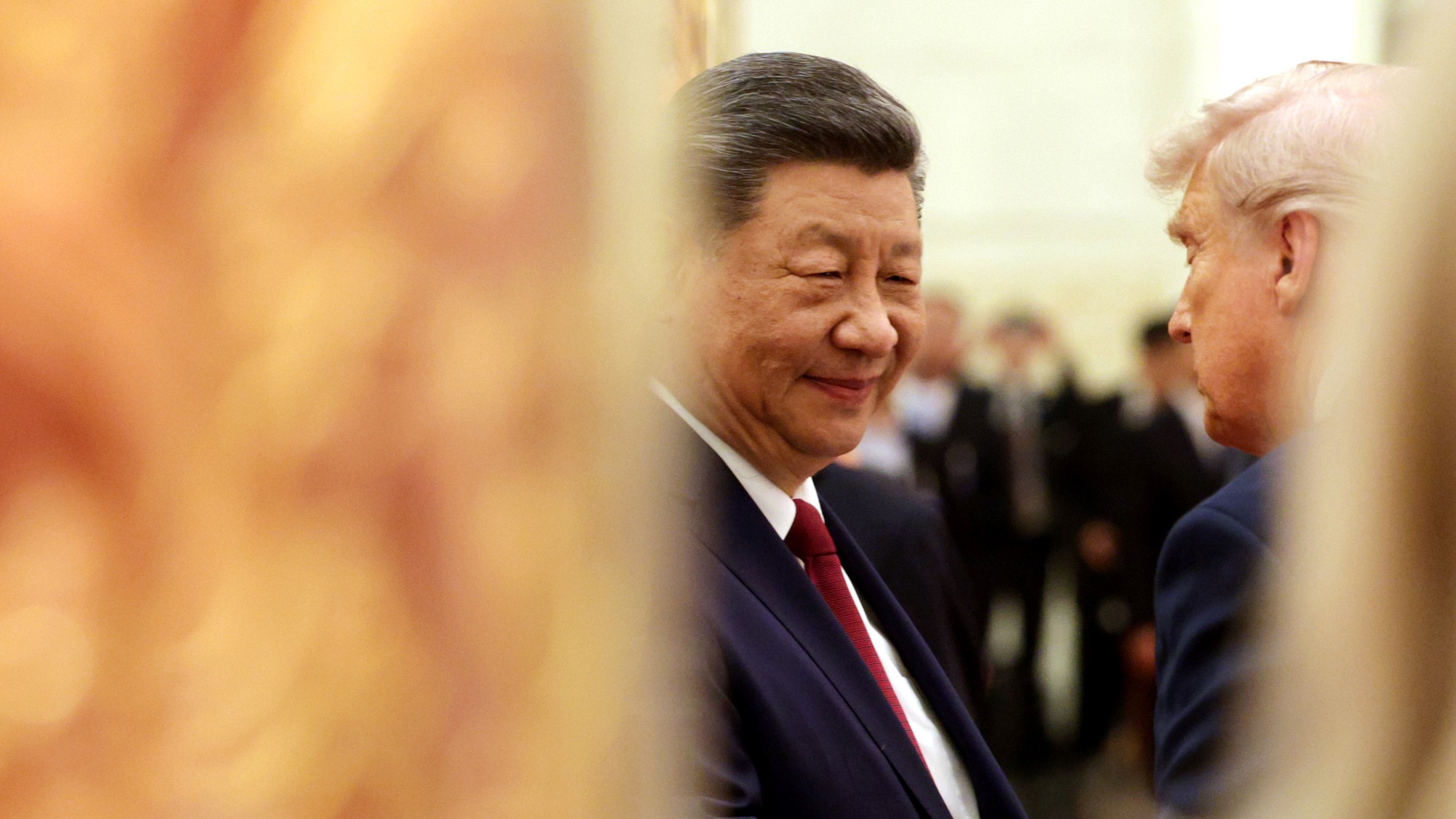
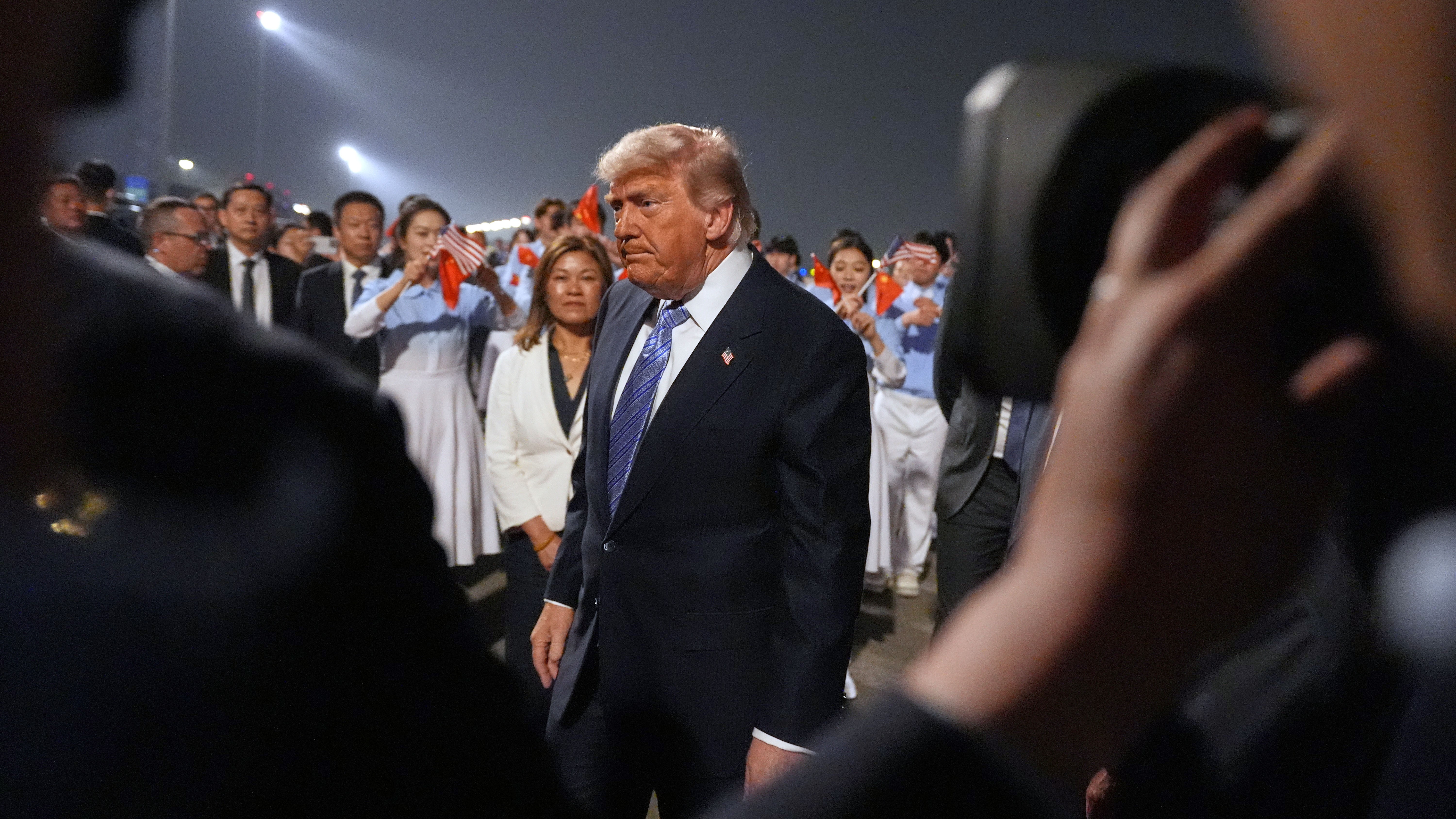
Last week in Beijing, Donald Trump had his Nixon moment. He scrapped a policy that combined hardheaded diplomacy with action to protect U.S. interests and check Chinese power. In its place, he embraced the notion that a personal bond with Chinese leader Xi Jinping can ensure stability.
Trump is getting away with this move politically. Geopolitically, he will not. His new stance imperils Americans and emboldens China, which makes a future crisis likelier than ever.
In recent decades, Republicans and Democrats have largely agreed to treat China as a strategic competitor. The United States has tightened export controls on advanced technology, reduced its economic exposure to China, and thickened its web of alliances across the Indo-Pacific. That shift began during the first Trump administration; the Biden administration intensified it.
Trump has long been a vocal critic of China. He began his second term with a trade war that pushed tariffs on Chinese goods to 145 percent. He reversed course after China retaliated and demonstrated, through its grip on rare earth processing, that it could inflict real pain in return. Then he began speaking of his great personal relationship with Xi and of the advent of a U.S.-China G2.
In Beijing last week, he praised Xi in terms he seldom uses for America’s democratic allies: “a great leader,” straight out of “central casting.” Trump took with him an extraordinary delegation of American CEOs, including Apple’s Tim Cook, Tesla’s Elon Musk, and Nvidia’s Jensen Huang, whose company has spent the past year lobbying to keep its most advanced chips flowing to the Chinese market.
China announced that the two countries had agreed to establish a “constructive China-U.S. relationship of strategic stability.” Wang Yi, China’s foreign minister, framed the new concept as one of “respecting each other’s core interests and major concerns.” Beijing is almost certainly suggesting, with this language, that it expects the U.S. to limit its competitive measures. Trump, for his part, announced modest trade deals on aircraft and agriculture.
Were a Democratic president doing any of this, Republican hawks would be unsparing in their criticism. Cowed by Trump, they are largely silent. Trump’s shift raises deceptively simple questions that may define the coming China debate and even reshape American policy: Why are we competing with China at all? What’s wrong with a little peace and quiet?
Some experts see an opportunity to persuade Democrats to soften their position on China. Jessica Chen Weiss, a former Biden State Department official who broke with that administration over what she viewed as excessive hawkishness, used the occasion of the summit to write in the Financial Times that Trump had “created real breathing room in U.S.-China relations,” and to argue for a posture that embraces interdependence and cooperation and abandons strategic competition altogether. Hers will not be the last such argument.
The trouble with this posture is that it fails to account for the Chinese actions that threaten the livelihood and security of the United States and its allies. Consider trade. Beijing uses the full weight of the Chinese state—subsidies, financing, regulatory protection, industrial policy at a scale that no Western country can match—to dominate the high-end industries of the future. It has reduced its imports to make itself less dependent on other states, and increased its exports to gain leverage over them. China’s trade surplus in manufacturing goods is now more than $2 trillion. As Robin Harding of the Financial Times has put it, Beijing is “making trade impossible.” It has effectively given Western countries a choice between deindustrialization and protectionism.
Trump’s tariffs reduced China’s surplus with the United States, but the excess goods simply rerouted to Europe, Southeast Asia, and Latin America, where they are now hollowing out the manufacturing bases of America’s allies. A serious U.S. response would involve coordinating with Europe, Japan, and Korea on common tariffs and pressing Beijing on the underlying imbalance. Trump is doing the opposite. He treats the European Union, which is on the brink of a trade war with China, as a rival rather than a partner, and he has signaled that he sees America’s economic relationship with allies as no more privileged than its relationship with its rivals.
The most striking signal of last week, though, was on cybersecurity. For several years, a Chinese state-affiliated group that U.S. intelligence calls Volt Typhoon has been pre-positioning itself inside the IT networks of American water utilities, transportation systems, electric grids, and the like. Should the U.S. and China come into conflict—say, over Taiwan—Volt Typhoon could unleash destructive attacks on American infrastructure. China has similar capabilities in states allied with the U.S. in the Indo-Pacific.
Asked aboard Air Force One whether he had raised China’s cyber campaign with Xi, Trump offered something close to a shrug. “What they do, we do too,” he said. “We spy like hell on them too. I told him, ‘We do a lot of stuff to you that you don’t know about.’” Pressed on the specific question of pre-positioning for attacks on civilian infrastructure, he allowed: “Well, you don’t know that. I mean, I’d like to see it, but it’s very possible that they do, and we’re doing things to them.”
Espionage—intrusions for the purpose of intelligence collection—is ubiquitous and, within limits, accepted. The pre-positioning of cyber weapons inside the civilian infrastructure of a country with which one is not at war is something else entirely. To conflate the two in public, alongside Xi, is to tell Beijing that one of the most aggressive components of its peacetime posture against the United States carries no political price.
The cyber-penetration also signals a larger problem: China is building the military capability to make a war over Taiwan winnable. John Culver, a former CIA analyst of China’s military, recently toldThe Washington Post that “it’s hard to point to an area other than submarines and undersea warfare and say the United States still has an advantage,” and that China is leading in “air-to-air missiles, surface-to-air missiles, counter-space capabilities and electronic warfare.”
China’s engagement with U.S. companies has helped it build the industrial and technological base that underwrites these military advances. In his book, Apple in China, the journalist Patrick McGee notes that Apple’s annual investment in China’s technology sector exceeded the Biden administration’s once-in-a-generation investment in domestic chips manufacturing. The high-tech China of today, he writes, would not be what it is without Apple. This “transfer of technology and know-how” was “so consequential as to constitute a geopolitical event, like the fall of the Berlin Wall.” Apple’s CEO was, of course, on the plane to Beijing last week.
China needs advanced U.S. chips to power artificial intelligence. Restricting Beijing’s access to these has been one way for the U.S. to interfere with China’s growing military capability in recent years. But Trump has systematically relaxed those controls over the past year, for example by approving sales of Nvidia’s H200 to several major Chinese tech firms.
With regard to Taiwan, Trump said, rightly, that the United States just seeks to maintain the status quo. But he also needlessly raised doubts about the U.S. commitment to helping Taiwan defend against a Chinese attack, and he seems to have bought into Xi’s narrative that the problem is that Taiwan is seeking independence.
In the past, the U.S. has sought to deter a Chinese assault on Taiwan by strengthening the island’s defenses. Since 1982, the U.S. has made an explicit policy of selling arms to Taiwan without consulting Beijing on the timing or content of the shipments. But last week’s meeting suggested a weakening of this American posture: Trump dismissed America’s long-standing assurances to Taiwan in this regard as something from “a very long time ago” and accused Taiwan of stealing America’s chip industry. He acknowledged that Taiwan had been Xi’s most important issue and said that an American arms package authorized in December and not yet delivered was “a significant bargaining chip” with Beijing.
To watch some of the coverage of Trump’s visit to China, or to listen to the administration, one could be forgiven for thinking that he inherited a relationship on the brink of war. He did not. The Biden administration, in which I served, had a strategy of managed competition. That blended close and frank diplomatic contact among senior officials with “competitive actions” to strengthen America’s strategic advantage over China.
Relaxing the competitive policies toward China in favor of warmer leader-to-leader engagement reflects a fundamental misreading of Xi’s intentions. Xi’s preferred strategy toward the United States is exactly the one on offer in Beijing last week: engage Washington to buy a period of stability, then use that time to pursue longer-term objectives in relative comfort. China hopes to emerge with decisive advantages that will allow it to finish its harder business at a moment of its choosing.
Jon Czin, a former CIA analyst of Xi and now my colleague at the Brookings Institution, said in a podcast interview that the key thing to know about the Chinese leader is that “he is not a dealmaker”; nor is he “sentimental about his personal relationships.” He’s “a jack-in-the-box,” Czin said, “who will wind up for years, sometimes for decades, and then pop when he thinks the moment is right, startling everyone around him.”
The Beijing summit was the first of as many as four meetings between the two leaders set to take place this year. Xi is scheduled to visit the United States on September 24, and the leaders may meet again at conferences scheduled for November and December. That frequency gives Trump every incentive to seek to maintain good terms with Xi, even if it means suppressing impulses inside his own administration toward a more competitive approach to China.
Nixon went to China because he understood that relations with Beijing would help the United States in the Cold War against the Soviet Union. Trump went there to abandon the strategy of managed competition and replace it with a leader-to-leader bond. His new posture is one that strengthens America’s top rival, leaves its vulnerabilities unaddressed, and makes a U.S.-China crisis more likely rather than less.
By 10 a.m. yesterday, the line of people wishing to dedicate America to God was more than three hours long. They came ready with prayer flags to wave the Holy Spirit into action, and shofars to scatter demonic forces. They wore T-shirts declaring the sort of Christians they were. A muscular man wore one that read Prayer Warrior. A woman in cargo shorts announced that she was an Intercessor for America. An elderly woman wore one that read I Am the Weapon.
“You understand you’re not going to be able to get in with that,” a security guard told a man wheeling a huge cross toward the entrance to the National Mall, as thousands of people began spreading out across a swath of grass that many of them now considered a kind of occupied territory in a cosmic spiritual war.
“We are here to bring the Earth into alignment with God,” a man named Joel Balin, who had come with a friend from Atlanta, told me. “To bring the kingdom of heaven to Earth.”
The rally, called Rededicate 250, was billed as a “jubilee of prayer, praise and Thanksgiving” for “God’s presence” in American history. It was part of a series of events celebrating the nation’s anniversary put together by a Donald Trump–aligned nonprofit called Freedom 250, which is being funded by a public-private partnership that includes corporate donors such as Exxon Mobil, Lockheed Martin, and Palantir and for which Congress has allocated $150 million. Critics of the event denounced the reliance on government funds, the participation of administration officials, and the near-total lack of religious diversity as an attempt to make a certain version of Christianity a national religion. A minor protest went on outside the barricades—a small group of people holding signs supporting LGBTQ people, immigrants, and all of the other Americans they believed to be under threat from the Trump administration. They blasted metal music, and a woman with pink hair screamed into a bullhorn.
The people in line paid them little mind. The event was a long-sought triumph for those who came and for millions more grassroots believers who helped elect Trump twice, embracing prophecies that God anointed him for the great spiritual battle against demonic forces that they understand to be animating current events. This idea was the work of the apostles and prophets of the New Apostolic Reformation, a charismatic movement that began gathering momentum in the 1990s and is now the leading edge of the Christian right. Sunday was a clear display of the influence of the movement, whose leaders were instrumental in mobilizing voters to turn out in recent elections and to take part in the January 6 insurrection, when many people believed that they were taking the U.S. Capitol for God’s kingdom.
Speakers yesterday included Paula White-Cain, an apostle who now leads the White House Faith Office; Lou Engle, an apostle and prophet who is known for organizing the kind of mass-prayer gatherings that characterize the movement; and Guillermo Maldonado, an apostle who leads one of the largest Latino churches in the country, El Rey Jesús, in Florida. Administration officials including Secretary of Defense Pete Hegseth and Secretary of State Marco Rubio, whose own theologies do not exactly align with the movement, told stories about God deploying miracles at key moments in the nation’s history, leveraging these anecdotes to argue that the United States was founded to be a Christian nation. Historians say this is a clear misunderstanding of the American Revolution. Trump, just back from China, appeared in a prerecorded video in which he reads from the Old Testament, which seemed to be the same video that he had recorded for a marathon reading of the Bible last month. More revealing than any of these speakers, though, were the thousands of people willing to stand in line for three hours and then roast for seven more in the hot sun.
Balin, who leads a men’s ministry called Wednesday Warriors, told me that by enabling the event, Trump was “opening up a door for us to do spiritual warfare,” and that the very presence of so many believers gathered in the nation’s capital was scattering demonic forces and advancing the kingdom. He said that church-state separation is a “myth” and that, really, any separation from God is a foolish denial of the cosmic reality of the spiritual battle under way. He said that people he knows are tired of “materialism” and “dualism” and “an Enlightenment mindset” that fails to account for how supernatural forces affect earthly life. “There are so many things happening in the supernatural realm, and in the ancient world and other cultures, they recognized this—there was no separation,” he said. “I think we are rediscovering that as Americans.”
It was past 11 a.m., and people were spreading out blankets on the green grass, taking selfies, and livestreaming to congregations back home. “This is Pastor John!” a man in a blue suit said into his cellphone. The crowd was mostly white, but many people I spoke with emphasized that their movement is international and multiethnic, even as some expressed skepticism about accepting Muslim and other non-Christian immigrants into the country. MAGA hats abounded.
On the stage, the first of many praise bands blasted the surging worship music common in charismatic churches these days. People mouthed the words. A screen displayed what appeared to be two church windows, which sometimes were filled with images of stained glass, and sometimes with an American flag, and sometimes with swirling clouds and stars. In the crowd, several women danced free-form with prayer flags, and other people periodically blew a shofar, the hollowed-out ram’s horn used in traditional Jewish services and considered in charismatic circles to be a tool of spiritual warfare. Two women from the central coast of California looked around.
“This is what we’ve been praying for, for our country to turn back to God,” Debbie Cloud, a retiree, told me as she began to cry.
She and her friend Susan Fraze said that they are working on the long-shot campaign of an influential apostle named Ché Ahn, who is running for governor of California as a write-in candidate. Cloud said that she attends a nondenominational church called Calvary Chapel. Fraze goes to a nondenominational church called the Bridge. Almost everyone I spoke with had some story about how they used to be Baptist, or Pentecostal, or Methodist but had found their way to churches with names such as Oasis and Free Chapel and Anchor and Abundant Harvest, the kind of nondenominational congregations that are growing as most denominations continue to decline. At least 15 percent of all American adults now identify as nondenominational, and most of them are embracing charismatic ideas about signs and wonders and spiritual warfare. Many people told me about their involvement with prayer groups, prayer rooms, prayer closets, and so-called prayer furnaces, spaces dedicated to intense, dayslong prayer sessions that people believe can shape the spiritual destiny of the country.
Under the shade of a tree, a man named Adriel Lam told me that he’d flown in from Hawaii, where he works for Capitol Ministries, an organization that seeks to bring prayer into state capitols. Lam is also running for Congress. He said that yesterday’s gathering was more evidence that an outpouring of the Holy Spirit is under way across America, a moment that he described as “post-postmodernism.”
“Modernism told us, Let’s know our chemistry. Let’s know our physics. Science can explain the world,” he said. “Then postmodernism said, Let’s question the foundations of everything. Post-postmodernism is people saying, Let’s go back to zero. Let’s go back to the first century, when Jesus united the physical and the spiritual. God is moving our generation for renewal.”
On a blue towel in the grass, David Hitt, an accountant from Atlanta, huddled and kneeled with several friends. He told me afterward that they were submitting themselves to Jesus and aligning their spiritual posture with God.
“We underestimate what’s going on in the invisible realm,” he said. “Our assembly, our worship, our prayer is creating openings for God to do his will.” He elaborated that he meant actual openings, portals where the Holy Spirit could enter into battle against actual demonic forces. He estimated that the prayer of just one person could put 1,000 demons in flight, and the prayer of two people could eject 10,000.
“So here we’ve got how many people focused on God?” he said, envisioning legions of demons fleeing the capital.
“Praise Jesus,” someone said. A man walked by in a T-shirt that read Jesus is King, Repent or Die. Another wore one that read Blessed are those persecuted for righteousness.
Outside the metal barricades, the capital was quiet. People jogged and went to the Smithsonian, and beyond a block or so, you couldn’t hear the music or the loud cheers when House Speaker Mike Johnson said, “We hereby rededicate the United States of America as one nation under God.” Inside, though, the message was clear.
“We are the kingdom,” a woman named Robin Noll, who’d come to Washington, D.C., on a bus with 29 others from western Pennsylvania, told me. “God is driving us into the battlefield.”
The garment has long been an indicator of people’s views about innocence and sexuality.
Show full content
Earlier this month, to celebrate a Spotify-streaming milestone, the singer Olivia Rodrigo held an intimate concert in Barcelona while wearing a certain outfit: a floral baby-doll dress, pink bloomers, and knee-high leather boots. The getup almost immediately set off an online maelstrom. Some commenters accused her of dressing like a “sexy baby” and promoting “pedo core” (short for “pedophilia core”); others defended her right to dress however she pleases.
Rodrigo, though, appeared to have specific references in mind: In a recent interview, she noted that she’s currently inspired by artists such as Kat Bjelland and Courtney Love, who paired baby-doll dresses with punk rock in the 1990s to repudiate the fetishization of girlhood. But those artists, too, were disparaged for the look back then—one reviewer in 1994 called Love’s style that of a “raddled Baby Jane whose notion of clothes-shopping is to lie in a skip outside a paedophile brothel.” And critiques of the style reached into the world of fashion more broadly. After Giorgio Armani and Anna Sui featured baby-doll dresses and pleated skirts in ’90s runway shows, one New York Times writer remarked, “Is there anything more perverse and weird than grown women wearing kiddie clothes?”
Baby-doll dresses have clearly been a magnet for moral panic for decades. But though some people might associate them squarely with girlhood, the history of the billowy dress is far more convoluted: It has traveled, over the centuries, between kid and adult closets. This fluidity reflects how “kiddie” and “grown” clothes have never had strictly differentiated styles, fashion historians told me, and how the line between the two has constantly shifted—even if the policing of how these garments are worn, especially by women, has remained constant.
For much of history, people mostly made kids’ clothes at home, and they sometimes dressed their children like adults; in the Victorian era, some children wore corsets. Kids’ clothing as a separate, mass-produced consumer category didn’t even really take off in the United States until the early 20th century, thus launching fresh concerns about what was appropriate to wear at each age. In the 1920s, some people viewed the era’s adult shift dresses as childlike; when men wore shorts in public in the 1970s and ’80s, it was also sometimes deemed a kiddish regression.
Short, flowy garments—the classic baby-doll silhouette—actually started out as a practical choice that a child of any gender could play in: One American boy’s garment, from 1855, looks roughly like a baby-doll dress Rodrigo or Sabrina Carpenter might wear on tour. Adults started wearing a version of this garb around the 1860s, Aude Le Guennec, a design anthropologist at the Glasgow School of Art, told me. At the time, many women were transitioning from riding horses sidesaddle to commuting by bicycle, and shorter dresses and bottoms were simply more functional. The outfit was highly controversial at the time, Le Guennec said, with people claiming that it looked as if women were showing their underwear. (Eventually, many women switched to wearing culottes.)
Later in the 19th century, similar bottoms—varying from knee- to ankle-length—would be called “bloomers” after the suffragist Amelia Bloomer, who advocated for less-restrictive women’s clothing. Bloomers became a symbol within the women’s-rights movement—though even Bloomer eventually felt pressure to abandon the garment, after critics loudly accused her of trying to be too “masculine.”
In the 1950s and ’60s, short, loose-fitting dresses and bloomers were reconceptualized again, this time as lingerie. The designer Sylvia Pedlar, in response to World War II fabric shortages, had in the 1940s chopped nightgowns in half, creating dresses that people might now link with the baby-doll look. But the style gained its contemporary moniker after it became associated with the 1956 movie Baby Doll, about a 19-year-old girl forced to marry an older man. Old ideas about the silhouette’s functionality waned, and the dress started to be seen as a sexual symbol, a messy one that played into the over-sexualization of young women.
Fashion tends to be a Rorschach test reflecting the concerns of its time. And the line between kid and adult clothes has been drawn largely based on ideas about which clothing was age-appropriate for girls to wear, Daniel Cook, a childhood-studies professor at Rutgers University at Camden, told me. After the rise of mass manufacturing, whole new vocabularies emerged to cater to different age groups (and to get people buying more clothes): “teenager,” “subteen,” “preteen,” “junior miss.” By the 1990s, the “tween” was a full-blown consumer category, catered to by new retailers such as Limited Too. And with each new demarcation, the clothing industry and the broader public seemed to negotiate the age at which it was okay for a girl’s body to be put on display. A “preteen” dress, for example, might be less revealing than a “teen” dress, or have a less “sophisticated” (read: tight) shape.
Nowadays, the distinction between child and adult fashion is largely disappearing again, especially as social media consolidates clothing into a more age-agnostic, algorithmic aesthetic. Stores such as Lululemon and Zara, associated with adult styles, are popular with girls; Limited Too recently released pleated skirts and polos in adult sizes.
Still, even as fashion evolves, the same cultural habit of scrutinizing women’s wardrobes persists. But so does a spirit of defiance. Amid the frenzy surrounding Rodrigo’s dress, Courtney Love reposted a series of reels to her Instagram Story, in support of the singer. “You can pry my babydoll dress,” one of the posts read, “from my cold dead hands.”
They’re angstier, less trusting, and even more anti-establishment.
Show full content
A little less than two years ago, Gen Z underwent a rebrand. Donald Trump had just been reelected. Exit polls suggested that young voters—especially young men—had helped deliver the Republican victory. Rather suddenly, a generation associated with climate activism and trigger warnings became known for manosphere podcasts, fiscal conservatism, and gender relations so icy that they’ve contributed to the national panic about fertility rates.
But a lot has changed since 2024. Trump has begun a (thus far ineffectual) war with Iran, something he said wouldn’t happen. His administration’s handling of the Epstein files, where his name appears abundantly, has been criticized by Democrats and Republicans alike. He vowed to lower gas and grocery prices; instead, they keep rising. His approval ratings have hit record lows, and he’s losing favor among crucial voting blocs such as independents and Latinos. Journalists and political commentators keep speculating and debating: Will the young men who moved rightward crawl back in the other direction?
That may depend, it turns out, on whether you’re talking about young men—or even younger men. The spring 2026 Yale Youth Poll, released last month, found that a majority of respondents—and roughly 70 percent of the young adults—disapproved of Trump. Even with men under 30, the president lost ground compared with Yale’s fall 2025 poll. But the data also revealed a dividing line: Among 23-to-29-year-old men, support for Democrats increased by 14 percentage points. Among 18-to-22-year-old men, it fell by a percentage point—even while their approval of Trump declined somewhat. The women in that youngest age group, meanwhile, make up the single most liberal population: further left than the slightly older Gen Z women.
Of course, you can splice and dice any cohort differently and come up with what’s called a “microgeneration.” But this poll echoed something I’ve heard in my reporting before: Gen Z, which encompasses people born from 1997 to 2012, splinters into an older and a younger group that tend to behave quite differently. Rachel Janfaza, who researches and writes about this age group, has referred to them as Gen Z 1.0 and 2.0. The generational researcher Meghan Grace described them to me as “Big Zs” and “Little Zs.” Whatever you call them, the split seems like a meaningful one. You might think of Little Zs as the angstier siblings to their Big Z counterparts: more divided, less trusting, and even readier to shatter the status quo.
When you’re young, everything around you might shape your still-nascent beliefs: your family, your neighborhood, but also the state of the world in that chapter in time, Patrick Egan, a public-policy professor at NYU, told me. Your politics, in adolescence and early adulthood, are in the process of “crystalizing.” Just look at Gen Xers, he said, who came of age when Ronald Reagan was enjoying a popular presidency in the mid-to-late 1980s; perhaps partly for that reason, the group leans Republican compared with other generations.
Little Zs and Big Zs grew up nearly at the same time—but in different worlds. Big Zs might’ve texted their friends on flip phones; Little Zs grew up with smartphones, herded toward content by TikTok algorithms. Big Zs might have looked up assigned reading on SparkNotes, but Little Zs could use AI to write a high-school paper. Perhaps most important, Big Zs were already in college, or had even graduated, by the time COVID hit. That doesn’t mean the pandemic wasn’t difficult for many of them. But they’d done some real maturing—and gained some real self-understanding—before that blow. Little Zs were in middle or high school in 2020. They were at home when they should’ve been making new friends, breaking rules and getting grounded, falling in goofy early love.
The Little Zs who resented attending Zoom class and missing prom might have appreciated that many Republicans were criticizing school shutdowns, scorning mask mandates, and talking about personal freedom. More broadly, their anger with decision makers might have fed the anti-establishment impulse that researchers have noticed especially among younger Zoomers, who are “a lot less tethered,” Egan said, “to the traditional ways that people even a little bit older than them have been thinking about politics for a long time.” Many of them, he told me, like that Trump positions himself as a norm-flouting outsider to politics—despite the fact that he’s a second-term president.
Clearly the MAGA mentality has spoken to the men of Little Z in particular. Perhaps that’s because many Republicans put a particular brand of masculinity on a pedestal at a time when these men were still developing a sense of self. They might have heard GOP leaders on “bro podcasts,” Grace said, or seen them partner with the Ultimate Fighting Championship, and understood those efforts as an invitation: “Yes, your voice does matter. And we want it to be on our side.” Now these men have graduated from high school. They’re thinking about how they’ll make a living. They’re seeing that job growth is happening largely in traditionally female-dominated fields—health care, retail, social services—rather than in, say, manufacturing, Egan told me. And they’re still hearing Trump claim he’ll fix the economy.
Republicans might have spoken to Little Z women, too—to their money anxiety, their COVID trauma, their frustration with the status quo. But in other ways they’ve been turning those young women away. The 2021 Dobbs decision that struck down abortion protections may have been a particular blow for the women who are now in their early 20s. Grace and her colleague Corey Seemiller have been studying Zoomers’ political ideology for years, and in 2021, they identified that Little Z men were starting to shift rightward compared with Big Z men. But they didn’t see much of a shift at all among women. Then Dobbs happened, and young women lurched left. They were perhaps old enough to be having sex but young enough to be especially terrified of pregnancy, and of the thought that men would be telling them what to do about it.
Much has been written about the gender gap in Gen Z politics. But that split seems to be especially dramatic among Little Zs. Judging, in part, by the Yale poll results, “it may be more pronounced than anyone’s really anticipated,” Egan said. That divergence could have profound implications for not only future elections but also how Little Zs continue to relate to one another. Grace and Seemiller surveyed young women and found that, of the respondents who didn’t plan to marry, a third said that was because they fear losing their independence. A lot of them, she said, feel like the men around them have already voted to take away their freedom.
But the beliefs of Little Z, as much as they might be crystallizing, are not set in stone. Little Zs are different from Big Zs because they’ve been through different formative experiences—but also simply because they’re younger. And many kinds of political figures, regardless of party, could still respond to their sense of disempowerment, their skepticism of elites, their hunger for authenticity. Egan has heard young voters talk glowingly not just of Trump but of Zohran Mamdani, Bernie Sanders, Alexandria Ocasio-Cortez. “There’s just tremendous choice,” Egan told me—far more than when he, a member of Gen X, was younger. In his day, a 20-year-old didn’t have nearly as many disparate voices—on TikTok, CNN, or Fox News, or in the halls of Congress—acknowledging their particular struggles. Now, he said, one “can find messages that really speak to that sense of precarity, that sense of upheaval.”
If Trump keeps breaking his campaign promises, even Little Z men might turn toward other leaders. The midterms are around the corner. Young people don’t tend to show up in great numbers, historically, but Grace reminded me that in 2018 and 2022, Zoomers had notably high midterm-election turnout for their age group. They’re not like other generations; they’re not even like one another. Someday, Little Zs won’t be so little anymore—and their elders might be surprised by who they grow into.
Anthony “Bingy” Arillotta waited years to become a made man in the Genovese crime family, and when at last the call came in August 2003, he followed directions to the letter. According to sworn testimony, Arillotta was summoned to a steak house in the Bronx, where he was made to hand over his cellphone, beeper, and jewelry before being driven to an apartment building. When he got there, he was taken to a small bathroom and strip-searched for electronic devices. For his big meeting with the boss, he was given a bathrobe to wear.
Until recently, only spies and criminals had to worry this obsessively about their private statements being picked up by electronic equipment. But soon, the average person might need to deploy surveillance countermeasures. The next time you conduct a delicate bit of office diplomacy or share a romantic or financial secret with a friend over drinks, a sensor built into someone’s glasses, necklace, or lapel pin might be watching you and listening.
In March, the tech start-up Deveillance announced the development of Spectre I, a hockey-puck-shaped device that purports to prevent others from recording you (no strip search required). The company was founded by Aida Baradari, a recent college graduate who was worried by the surge in people wearing AI-enabled recorders. These wearables can be used as a silent notetaker, a personal assistant, or even a therapist of sorts. That technology isn’t yet mainstream, but it may be soon. Apple—the company with the largest personal-tech ecosystem in the world—is rumored to be developing an AI pin or pendant that would serve as an iPhone’s constant eyes and ears; many other products of this type are on the way. AI accessories could one day be as widespread as AirPods.
New surveillance technologies tend to breed new countermeasures, which lead, in turn, to more sophisticated surveillance. During the Second World War, after Germany operationalized radar, the Royal Air Force began dropping thin strips of metallized paper cut to a specific size that resonated with the radar, swamping German screens with phantom echoes that were indistinguishable from real aircraft. Some historians have argued that the ensuing radar arms race was more consequential to the war’s outcome than the Manhattan Project.
For decades, crude jammers have been sold to people who hope to avoid being recorded. Early versions blasted loud, unpleasant white noise to conceal voices. More recently, companies have made models that emit a steady stream of ultrasonic sound at inaudible frequencies, exploiting a quirk of microphone hardware that converts those high frequencies into noise. In 2020, a team at the University of Chicago led by Yuxin Chen reported that it had mounted 23 ultrasonic transducers on a single bracelet, such that jamming signals could be sent in all directions instead of being focused on a single target.
But even high-tech jammers have a hard time fending off today’s AI wearables. The most advanced pins, pendants, and glasses use speech-recovery algorithms to strip away unwanted noise, whether it originates from everyday sources—such as the clinking of glasses in a crowded bar—or from an ultrasonic jammer. This task the algorithms perform is quite difficult: In that crowded bar, a microphone on a person’s lapel will intercept sound vibrations from many different sources at once. It will pick up a bartender calling out a drink order, music emanating from a speaker, bursts of laughter coming from nearby tables—and all of these sounds ricochet off of walls and other objects, creating yet more noise. The human body solves this “cocktail party problem” without us noticing: Our ears serve as dual microphones, and our brain can use the timing and intensity differences between them, along with layered processing in the auditory cortex, to isolate the voice of a person who is sitting across from us.
DeLiang Wang, a computer scientist at Ohio State University, has spent decades training neural networks to accomplish that same goal, for the purpose of improving hearing aids. By feeding the networks hundreds of hours of recorded human voices, he has taught them to recognize the frequencies and rhythms of speech. The models build an internal representation of “speech-ness,” and when they encounter a noisy recording, they focus on the parts that match the patterns they have learned and then suppress everything else. The most advanced technologies can now infer missing syllables in the way that a reader fills in a redacted word from context, allowing them to reconstruct speech that wasn’t cleanly captured in the first place.
Big tech companies are trying to do this too. Microsoft has been running an annual Deep Noise Suppression Challenge since 2020 to advance the field. (Their in-house team is trying to make Teams meetings less excruciating.) Other companies are working on noise cancellation for cellphone calls and podcast software. This sort of research is meant to improve the lives of normal users of technology—assuming that we podcast listeners count as normal—but every advance in de-noising can also be used to help an AI assistant recover speech from a jammed recording.
Defeating these algorithms may require a different countersurveillance approach altogether. Finn Brunton, a historian at UC Davis and the co-author of Obfuscation: A User’s Guide for Privacy and Protest, told me that one of the best ways is to identify the data that a device is trying to collect, and then supply it with a junk version. The Berlin-based artist Adam Harvey used this strategy when he developed makeup and clothing that frustrates facial-recognition algorithms. Daniel Howe and Helen Nissenbaum did something similar with a browser plug-in called TrackMeNot: Rather than concealing a user’s Google searches, the extension continually runs its own randomized decoy queries in the background, so that whatever a user actually searched for becomes lost in a sea of false leads.
People have tried this technique in the realm of audio too. Woodrow Hartzog, a law professor at Boston University who studies privacy and surveillance, told me that early in his legal career, he worked with defense attorneys who worried that their jailhouse conversations with clients would be recorded. To fight back, they played “babble tapes”—audio files layered with 40 tracks of voices in different accents—in the background.
In 2023, a team led by Ming Gao, now a researcher at Nanjing University, used human voices to defeat speech-recovery algorithms in a different way. Its jammer, called MicFrozen, is worn by a speaker who doesn’t want to be recorded. It listens as they talk and then generates a real-time stream of ultrasonic “anti-speech” tuned to the speaker’s voice, much like the noise-cancellation technology in your headphones. The device then sends out another layer of counterfeit speech-shaped sound to mislead any algorithm that tries to reconstruct what was lost.
Baradari, whose company is working on the Spectre I device, wouldn’t tell me exactly how her jammer’s signals work, but she said that they, too, resemble speech. The launch video for Spectre I claims that the device will also be able to detect the presence of nearby microphones. When I asked Baradari how it will do that, she clarified that her team is still “working on that part right now.”
However effective Spectre I turns out to be, it won’t be the end of the recording arms race. More capable AI models may eventually deploy some new listening tricks of their own. They may bypass recorded audio altogether. In Stanley Kubrick’s 2001: A Space Odyssey, when two astronauts retreat to a soundproofed pod to discuss disconnecting HAL 9000, the ship’s computer simply reads their lips through the porthole. A wearable powered by a model that’s been trained on enough conversation footage could, in principle, do the same. In theory, it could also stare at a glass of water between two people and recover their speech from vibrations on the liquid’s surface.
AI wearables may always have an edge over countermeasures. After all, they’re using a technology that is a product of the entire speech-processing industry, which takes in billions of dollars in investments—not just for AI assistants but also for hearing aids, smart speakers, and teleconferencing tools. Meanwhile, only a few academics and small companies are defending us from these technologies. “The thing about cat-and-mouse games is that we know how they usually end up for the mouse,” Hartzog said. “And in this case, the cat includes some of the most powerful corporations to ever exist.”
The Mafia knows what it’s like to be a mouse. By the time Arillotta, the aspiring made man, was told to put on the bathrobe, criminal organizations had been engaged in surveillance arms races of their own for decades. After law enforcement started bugging their phones, bosses would conduct business in person. Sometimes, they’d use a safe house or a vehicle, but those could be bugged, too, and so sensitive information might have been communicated only during a walk-and-talk. Eventually, crime families turned to burner phones, and then devices with encryption. But here, again, they fell prey to the cat.
In 2018, the FBI began secretly running Anom, its own encrypted-phone company. Through informants, it sold 12,000 devices with a special Anom messaging app. Members of Mafia families, motorcycle gangs, and other criminal organizations treated the phones as a status symbol, and used them to negotiate drug deals, launder money, and participate in all manner of other illegal activity. But the security that they offered was a ruse: Every message that they sent was being intercepted by the feds.
William Dean Howells, the editor of The Atlantic, wandered through Philadelphia’s Centennial Exhibition of 1876 trying to make sense of a spectacle that defied description. Two wheels, one small, one large, seemed to tell the story of the great transformation on display. The small one was made of wood—an old spinning wheel set up in a rude log cabin meant to conjure colonial Plymouth. As Howells related, a reenactor playing the Mayflower pilgrim Priscilla Alden paused in her work to give an old Quaker woman a turn. At first, the woman’s “long-unwonted fingers” seemed rusty. She struggled to splice the thread, then got it tangled while Howells and others watched in breathless silence. Finally, though, her dexterity revived, and the wheel came to life “with a soft triumphant burr, while the crowd heaved a sigh of relief.” It was, Howells reflected, “altogether the prettiest thing I saw at the Centennial.”
But Howells and millions of other Americans went to Philadelphia as much to look forward as to look back. Far more thrilling than the wooden spinning wheel was the huge cast-iron wheel—30 feet in diameter and 122,000 pounds—turning almost noiselessly at the center of the complex works of the Corliss Engine in Machinery Hall, driven by steam pumped in from a separate building. Howells sat, stunned, before the engine’s “infinitely varied machinery” working “with unerring intelligence.” No Priscilla Alden or old Quaker was necessary here—just a single, mostly idle attendant whose only job was to occasionally put down his newspaper and administer a few drops of oil.
In Centennial: The Great Fair of 1876 and the Invention of America’s Future, the historian Fergus M. Bordewich takes a tour of the exhibition—and, venturing beyond it, takes the measure of America on its 100th birthday. At not quite 200 pages of text, the book is brisk and tightly constructed, filled with vivid characters and finely wrought, often-wrenching scenes. Along the way, Bordewich finds a country caught between the marvel of its material progress—what he calls a “phantasmagorical theater of national glory”—and the fragility of its ideals and institutions. While the fair celebrated a confident industrial future, the nation outside its gates seethed with violence, corruption, and social inequality.
Writing in our own anniversary moment, when historical narratives are themselves the stuff of cultural and political conflict, Bordewich largely lets the discord speak for itself. But taken together, the dizzying disorientations of 1876 can’t help fueling grim conclusions. Bordewich, who has written forceful histories of the Underground Railroad, the radicalism of the Republican Congress during the Civil War, and Reconstruction-era Ku Klux Klan violence, presents a country turning its back on two revolutions—those of 1776 and 1865. In their place, Americans embraced a third: an industrial revolution that rendered the spinning wheel a quaint relic of the past and the iron wheel an object of faith for the future.
The centennial commenced on the morning of May 10, 1876, with a seemingly providential break in the rain. The program—which included lengthy speeches on the marvels of American growth, and an orchestra playing an array of national anthems from around the world in addition to Richard Wagner’s made-to-order “American Centennial March”—had swelled to fit the exhibition’s hybrid nature. What had originally been intended as a national birthday celebration had been joined to a World’s Fair displaying the material wonders of the Industrial Age. The ensuing event, which ran for the next six months, was designed to show how happily material progress and national glory could be made to blend. Financed through a mix of public and private money and enabled in no small part by the backroom maneuvering of the Pennsylvania Railroad boss Thomas Scott—whose lines stood to benefit from the traffic—it was a perfect Gilded Age confection.
The massive glass-and-iron main building was the largest man-made structure on the planet at the time, encompassing more than 21 acres of floor space. It was just one of some 200 buildings across the site, many of them sparkling architectural showpieces dedicated to, among other things, pomology, photography, brewing, dairy processing, and glassmaking. Nations and states commissioned their own buildings—a Tudor mansion for England, a residence and “bazaar” for Japan, a “cottage” for Connecticut, a Spanish-moss-fringed log cabin for Mississippi. Fairgoers could see some of the first mechanical typewriters in action, sample Charles E. Hires’s root beer, hear the ear-splitting “annunciator” of Western Electric’s new heat-sensitive fire alarm.
When the exhibition closed in November, at least 9,799,392 people—about 20 percent of the U.S. population—had visited, including a 79‑year‑old man who walked from New Albany, Indiana, with the aid of a stick cut and carved in the 1810s. Most of those who went were delightfully overwhelmed. In a letter home, a young woman from Providence, Rhode Island, struggled to find words for what she saw: “Dear Mother, Oh! Oh!! Oh!!! Oh!!!! Oh!!!!! O-o-o-o o-o-o-h!!!!!! Your affectionate daughter, Mary.” Even Alexander Graham Bell, whose newly invented telephone was one of the fair’s sensations, said that it was all “so prodigious and wonderful that it absolutely staggers one.”
Behind the unspeakable wonders of Machinery Hall stood a world of labor—dirty, dangerous, and low-paid—that constituted a grave threat to the values of the republic. Such toil clashed with Jeffersonian ideals that equated independent proprietorship of farms and shops with the moral virtue necessary for honest citizenship. Just before the Civil War, Abraham Lincoln had said that men performing wage labor for more than a short stint suffered from “either a dependent nature which prefers it, or improvidence, folly, or singular misfortune.”
By 1876, industrial wage labor was the permanent misfortune of a growing class of people. Their absence from the spectacle in Machinery Hall was telling. The ingenuity of those who’d designed and displayed the machines fit easily on the trajectory of national greatness; the drudgery of those who did the grunt work off-site did not. The old ethos that Lincoln had believed in still had enough purchase that workers themselves bore the blame for their own miseries. “Had an unfortunate accident this morning,” a Pittsburgh plant manager working for Andrew Carnegie reported (one of Bordewich’s many well-chosen quotes).
Rope on cupola hoist broke and cage fell catching the Hoist Boy in the act of crossing under, crushing him to a jelly. It was caused by the boy’s carelessness, and disobedience of order and the poor fellow paid the penalty with his life. Delayed works slightly.
Events unfolding that summer in Pennsylvania coal country, about 100 miles away from the exhibition, showed how little hope there was to at least improve working conditions through unions and other forms of labor organizing. As Bordewich narrates in an astonishing set piece, the Philadelphia and Reading Coal and Iron Company had seen to that. When it sought retribution against Irish miners who had gone on strike the previous year, it didn’t merely have the backing of public authority in Schuylkill County; it was the public authority. With the help of a private police force, the company’s president took on the powers of a district attorney and personally prosecuted a set of cases against the miners, most of whom were labor activists. In a series of show trials, the men were charged with murder and assorted acts of terror, and 20 were sent to the gallows.
If industrial workers were largely absent from the centennial, Bordewich shows how Native Americans turned into a different kind of disappearing act. Assumed for decades to be “vanishing” before the tide of Anglo-American civilization, they had become objects of ethnological interest, their “primitive” cultures underscoring the marvels of the present age. Taking the lead on the event’s many Native American exhibits, the Smithsonian’s director, Joseph Henry, first planned to stage a living display of several hundred Native Americans—a Museum of Natural History diorama brought to life. But ongoing hostilities in the West got in the way. Instead, Henry sent expeditions to gather as many Native American artifacts as possible, in order to “present savage life and conditions in all grades and places.” For fairgoers, the juxtaposition with mechanical developments was powerful.
Beyond the exhibition, of course, the “vanishing” of Native Americans was not an abstraction but a policy. Writing on “the Indian question” in 1873, Commissioner of Indian Affairs Francis A. Walker had asked, “What shall be done with the Indian as an obstacle to the national progress?” The answer, he hoped, would involve peaceful means, albeit with extant Western Indians coerced onto reservations, where they would be subject to a “rigid reformatory control” while learning to adopt Anglo-American culture and practices. More often, the putative “Peace Policy” devolved into war, as was the case with the American campaign against the Lakotas happening during the centennial.
That campaign—provoked by America’s violation of an existing treaty after the discovery of gold in the Black Hills—produced a great shock at the fair. Just three days after the triumphant Fourth of July celebrations in Philadelphia, news arrived that the Lakotas had routed American forces under the command of General George Armstrong Custer near the Little Bighorn River, in the Montana territory. Custer, who was killed along with more than 260 of his men, had confidently predicted that “civilization in its advancing tread” would “roll mercilessly over” the Plains Indians. Only weeks before, he’d been at the centennial—to take in the wonders of civilization in its advancing tread.
For Black Americans, the centennial posed a pressing question: What place would they have in the national future it claimed to celebrate? Some, such as Representative Josiah Walls of Florida, anticipated that the fair would blot out “all questions of minor differences and all hurtful recollections of past disagreements.” Walls was mostly right, just not in the way he hoped. Bordewich describes how, at a moment when political support for Reconstruction was ebbing, the exhibition staged a reconciliation not between races, but between regions. White northerners and white southerners restored their old bonds of friendship through symbolic gestures—Union and Confederate generals seated together; a relative of Robert E. Lee reading the Declaration of Independence on the Fourth of July.
Still, claiming their place in both the exhibition and the nation at large remained a goal of Black Americans. Members of the African Methodist Episcopal Church commissioned a monument to Richard Allen, a prominent Black Philadelphian of the early republic and the founder of the denomination. “We intend to leave Philadelphia in 1876 as did the heroes in 1776, with a fixed resolve to achieve noble results,” the group announced. “And in 1976, we expect our progeny to gather around the Monument in question, shed tears of gratitude for the example we have left them, and call us blessed.” Delayed first by a missed deadline and then by a train accident, the monument was installed just a week before the exhibition closed.
In Allen’s absence, the most prominent “memorialization” for Black Americans was a restaurant, not a monument or a pavilion. When a white Atlanta businessman proposed to open a “Restaurant of the South,” centennial commissioners welcomed the prospect. The waitstaff would be among the only Black employees on the fairgrounds (Black workers were mostly excluded from the centennial), and their job would include playing enslaved people on a plantation, singing “quaint melodies,” and strumming the banjo. Northern fetishization of southern slavery was nothing new; the minstrel show had become popular in northern cities in the decades before the Civil War. But the success of the restaurant and its apparent nostalgia for slavery seemed to complete a notable shift in national sentiment since Appomattox.
Many northerners (Republicans, at least) had linked Black freedom to national progress immediately after the Civil War. That connection had all but faded by 1876, amid violent campaigns to “redeem” southern states from Republican rule and Black voters. As Bordewich relates in a harrowing account, those efforts had turned to South Carolina in the summer of 1876. Well aware that they were in the minority in their state, South Carolina’s redeemers had been waiting for a chance to “provoke a riot and teach the negroes a lesson,” as the future governor and senator Ben Tillman recalled. “It was generally believed,” Tillman wrote, “that nothing but bloodshed and a good deal of it could so well answer the purpose of redeeming the state from negro and carpetbag rule.”
The redeemers had their opening when two white men in a carriage confronted a Black militia marching in a Fourth of July parade in the town of Hamburg. When the two men returned for a court date four days later, they came with a mob and a cannon. The militiamen did not appear at the courthouse, but took shelter instead in a nearby building that housed their weapons and ammunition. In the ensuing standoff, the mob (including Tillman and his rifle club) began shelling the building. When the militiamen were driven from the building, the mob killed six of the men, as well as the town’s Black marshal, cutting out his tongue. The massacre was just a piece of what became a successful campaign to oust the Republican governor and legislature. The following month, a Black South Carolina Republican wrote to President Ulysses S. Grant begging for federal protection after another armed white group attacked a party meeting and demanded that the men “give up the flag” or be shot.
At the centennial’s closing, on November 10, 1876, there was no providential break in the rain. Those on hand for the ceremonies packed into Judges’ Hall for valedictory reflections and final rounds of Handel’s “Hallelujah” chorus, Wagner’s march, and a rendition of “America.” Grant declared the exhibition over, and a telegrapher tapped out instructions to the Corliss Engine’s operator to halt the great machine.
Three days earlier, on Election Day, the great machine of American self-government had also come to a halt. That year’s presidential contest pitted New York’s Democratic governor, Samuel J. Tilden, against Ohio’s Republican governor, Rutherford B. Hayes. Neither was a man of great charisma—Tilden shy; Hayes upright, teetotal, and vague—but everyone knew what was at least nominally at stake in the election. In addition to taking on the widespread corruption with which the Republicans had become associated, Tilden promised an end to Reconstruction. Hayes paid lip service to the rights of former slaves, while also voicing his commitment to reconciliation between the North and the South.
Though the choice was not exactly stark, the outcome was opaque. Bordewich offers a concise account of the tangled mess that followed. Tilden won the popular vote and stood on the precipice of claiming the Electoral College, but given rampant problems and irregularities, the nation “teetered on the edge of a constitutional abyss,” as Bordewich writes. The result came down to three southern states—Florida, South Carolina, and Louisiana—in which both parties claimed victories in state and national races.
An 1878 painting of a congressional hearing addressing the disputed 1876 election between Samuel J. Tilden and Rutherford B. Hayes (Cornelia Adele Strong Fassett / Three Lions / Hulton Archive / Getty)
Absent the violence and intimidation visited upon Black voters, the Republicans would likely have won each state, but winners were impossible to determine. Florida ended up with three separate vote counts. In South Carolina, where the number of votes exceeded the number of eligible voters, two legislatures and two governors vied for control and haggled over the presidency. Louisiana’s electoral commissioner put the state’s returns up for sale to the highest bidder, while a monitoring commission tossed out the results from 15 parishes in which the fraud and violence had been particularly egregious.
Another civil war loomed. While the White League in Louisiana threatened to attack the statehouse, and representatives of rival governments, all heavily armed, faced off in South Carolina, former Union General George B. McClellan, a Tilden supporter, talked of marching on Washington at the head of an army. Resolution came only through shadowy negotiations and political compromises. Congress created a special Electoral Commission—composed of senators, representatives, and Supreme Court justices—to determine the outcome, but its deliberations quickly broke along partisan lines. In a series of backroom dealings, Democrats agreed to accept Hayes’s election if federal troops were withdrawn from the South. Reconstruction, already heading toward a violent end in places like Hamburg, came to an official close as Hayes removed the last federal troops from the South, seven weeks after his inauguration.
Not long before the Centennial Exhibition ended, a Massachusetts man published a poem in a Washington, D.C., newspaper telling “The Story of Hamburg,” just a few columns over from a grim run of headlines leading an article on continuing violence associated with the election. The poem isn’t in Bordewich’s book, but, like the stark contrasts in its pages, the lines speak to our moment. “Let others tell of the nation’s glory,” the poet began; his attention would be elsewhere:
I sound no paeans of valor and fame—
My song is shadowed by strains of sadness;
I tell the tale of the nation’s shame.
On the 250th anniversary, we are no less caught between the glory and the shame than our forebears were on the 100th. Since the 1960s, the writing of American history has largely been a project of recovering and reckoning with conquest and its legacies, racism and the limits of democratic practice, and horrific events like the Hamburg Massacre. The aim of the official anniversary proceedings embodied in President Trump’s 2025 executive order has been to “restore truth and sanity to American history”—and, in the process, to recover the glory and forget the shame. That effort was vividly realized in Philadelphia earlier this year, when the National Park Service removed a slavery exhibit from the President’s House in Independence National Historical Park. A federal judge’s order to restore the exhibit is now being appealed, and the fight over where to look—and how to look—at our past remains the crux of our commemorations.
Though we’ll mostly be looking back at 1776 this year, Bordewich has done a great service in calling our attention to 1876. The soundness of our democratic machinery is again in doubt; we, too, wonder at the power of new technology, and what it means for work; race remains a source of conflict and a tool of power. Bordewich is as cautious in drawing such parallels as he is in spelling out the lessons that might lie in the juxtapositions of fairground and background. It’s up to us to hear the echoes, and to make sense of the glory and the shame.
This article appears in the June 2026 print edition with the headline “How America Celebrated Its 100th Birthday.”
Once-speculative concerns about the technology have now become pressing matters.
Show full content
AI has ascended to the role of main character. When Donald Trump traveled to Beijing for an historic summit last week, AI was one of the central topics of his discussions with Xi Jinping. As the two nations remain locked in a technological arms race, the president brought along some of the United States’ most powerful AI executives, including Elon Musk and Nvidia’s Jensen Huang. A continent away, the European Union has been unsuccessfully petitioning Anthropic to grant access to its advanced cybersecurity model, Mythos. Back in the United States, millions of students and teachers are dealing with the fallout of a devastating ransomware attack on the software platform Canvas—a hack that was likely aided by AI tools. And on Thursday, Cisco became the latest major company to justify layoffs by pointing to AI.
The past six months have marked a sea change in the reach and influence of AI. For most of 2024 and 2025, there was talk of AI progress slowing down or even stopping altogether. Even as the technology began to infiltrate schools and reshape financial markets, AI was relatively easy to compartmentalize from other major, more pressing issues in American life.
No longer. Now the technology has become regarded as a matter of the greatest economic, political, and global consequence. The most important issues in U.S.-China relations? Tariffs, Taiwan, and AI, apparently. Political leaders and pundits including Bernie Sanders and Steve Bannon have put AI center stage, and the backlash against data centers is loud and inescapable. The spectre of AI-driven layoffs hangs heavy—as does the threat of advanced hacking bots capable of taking down electrical grids and breaking into banks. All manner of once-speculative concerns about AI have become pressing matters. There is no longer a distant AI future so much as the mess we are all forced to confront today.
The newly chaotic and inescapable state of AI is the result of two inflection points. The first came at the start of the year, when AI agents exploded in popularity. Products such as Anthropic’s Claude Code and OpenAI’s Codex don’t just talk to you; they can do things on your behalf—code, trade stocks, analyze spreadsheets, generate slide decks, and even create Amazon listings. The technology’s once-questionable economic value became very clear, very quickly, to a large number of businesses, which have clamored to incorporate agents alongside, or in lieu of, their human employees. As agents have swarmed the workplace, nearly three-quarters of employed Americans think AI will decrease overall job opportunities and 30 percent of Americans are concerned that AI will make their own job obsolete.
The second shift began in late February. First, a high-profile contract dispute between Anthropic and the Pentagon revealed how essential AI has become to national security. Then, in early April, Anthropic announced Mythos, a model with the ability to rapidly find and exploit bugs throughout the internet. (Shortly after, OpenAI came out with an analogous model.) In tandem, these events suggest that some of the most catastrophic fears about AI could come true: Several independent cybersecurity experts have told me that these models are approaching the abilities of the most elite human hackers. Anthropic and OpenAI have not released these cybersecurity models to the public, out of fear they will be used by criminals or terrorists; meanwhile, companies and government bodies alike are hungering for access so they can use the tools to patch any bugs. As a result, AI labs have become major geopolitical actors in their own right.
Spurred by the threat of massive AI cyberattacks, the Trump administration is now reportedly weighing the possibility of testing or even licensing the most powerful AI models before their public release—moves the White House once called “dangerous” and “onerous.” White House Chief of Staff Susie Wiles is said to be spearheading Trump’s AI policy and has written a rare post on X vowing to keep Americans safe from AI cyberattacks by ensuring “the best and safest tech is deployed rapidly to defeat any and all threats.” (A White House official told me that “any policy announcement will come directly from the President.”) This month alone, dozens of members of Congress have signed letters to the White House on AI regulation.
It’s hard to overstate the extent to which AI has crept into contemporary life, even for people who aren’t commonly using the technology. A poll this spring showed that, for Americans, AI is growing in importance faster than any other issue. AI wasn’t a focus for campaigns in 2024, but several races coming up this year are poised to involve heated debates over the technology. Data centers in particular have gone from basically invisible to a divisive issue that cuts across party lines: 70 percent of Americans oppose the construction of an AI data center in their community. These centers’ voracious demand for natural resources might be showing up in your electrical or water bill or your receipt at the gas pump. Data centers have also become objects of military and political violence. Last month, the home of an Indianapolis city councilman was shot up after he voted to approve a data center. And these buildings have been targeted or threatened by Iranian, U.S., and Israeli forces during the war in the Middle East.
There will never again be a graduating class that experienced even a year of college without ChatGPT. On Instagram, Facebook, and X, influencers preach about how to use Claude and ChatGPT to make your life easier. Recent leaps in deepfake tools make it harder than ever to assume that any given post on social media is human-made. As if AI had not already eaten the economy, Anthropic and OpenAI are racing to be listed on stock markets in what will likely be two of the largest public offerings in history. This will dramatically warp the public-investing landscape and affect, for better and worse, basically anybody with any sort of savings—a college fund, a 401(k), a pension.
All of which is to say, basically anything that is American seems tangled up with AI: the war in Iran, gun violence, the midterms, NIMBYism, falling test scores, class inequality, the stock market, housing, gas prices. None of these issues are necessarily determined or superseded by AI—far from it—but rather that this technology and industry are now directly, unavoidably implicated in them all. And the experience of this AI-saturated present is a bewildering one. Partisan lines on AI are scrambled and confused. The influx of cash into data centers has propped up the U.S. economy, making it impossible for economists and policymakers to fully understand the effects of tariffs and the war with Iran. More and more companies are citing AI for mass layoffs, but whether this is a genuine justification or a convenient excuse to downsize is anybody’s guess. Whether AI is going to empower or rot all our brains, too, will only become evident many years from now. All these questions and tensions are hard to make sense of, let alone resolve, but they can no longer be deferred.
The path here was not the inevitable result of some technological, scientific, or economic law. Nor is continuing down it. To the extent we are already living in the AI future, it is the result of a series of calculated decisions by the biggest tech firms and their investors. Silicon Valley has spent ungodly sums on AI and data centers: Microsoft, Amazon, Meta, and Google alone have already spent more on data centers since the launch of ChatGPT than the federal government spent to build the entire interstate highway system. Those expenditures are set to grow, even as consensus opinions on whether all this spending constitutes an economic bubble fluctuate every few months. Meanwhile, AI companies have been hard at work partnering with local and federal government agencies, major colleges and research universities, Fortune 500 companies, and media organizations to weave their products into everyday life.
All of this spending and all of these partnerships were set in motion years before the technology was actually capable or reliable enough for widespread usage. Now these same companies are barreling forward to consummate their technological revolution. For everyone else, the AI future is beginning to feel less like something you participate in and more like something that happens to you.
Did Karl Lagerfeld really leave millions to his blue-cream Birman, Choupette?
Show full content
Karl Lagerfeld, the great German fashion designer, lived in a surreal kind of grandeur. The creative director of both Chanel and Fendi, he owned apartments in Paris, Rome, and the Côte d’Azur, as well as villas in Biarritz and his native Hamburg; enormous collections of Art Deco furniture, antique jewelry, and couture garments; a personal library of some 300,000 books, by his own estimation; paintings and sculptures by Jeff Koons, Takashi Murakami, and John Baldessari; three Rolls-Royces; a curious assemblage of 509 iPods; and hundreds of pairs of his trademark wraparound sunglasses and fingerless biker gloves. According to a conversation that his biographer, William Middleton, had with the Parisian florist Lachaume, his annual flower budget appears to have been about 1.5 million euros. Lagerfeld never married or had children, and when he died of cancer, in 2019, the press quickly began to speculate about the immense fortune he’d supposedly left behind, which a number of outlets, including Bloomberg, Forbes, and The Guardian, ballparked at more than $200 million. Speculation also swirled about where these riches would end up.
More than seven years later, here is what is known for certain about the details of Lagerfeld’s will and estate: nothing. (Under French law, such matters are not made public.) But plenty has been rumored. Various figures close to Lagerfeld have been suggested as beneficiaries, including several male models and fashion executives, his bodyguard, his housekeeper, and the princess of Monaco. Even so, from the start, one improbable name has stood out: Choupette, Lagerfeld’s blue-cream Birman cat.
In the years before he died, Lagerfeld often spoke in extraordinary ways about the role Choupette played in his life. Listen to just a fraction of his avowals: “I never thought that I could fall in love with an animal like this.” “She is the center of the world. If you saw her, you would understand. She is kind of Greta Garbo.” “She has lunch and dinner with me, on the table, with her own dishes. She never touches my food. She would never eat on the floor.” “I have only one great love, my cat, Choupette.” And, ruefully, “There is no marriage, yet, for human beings and animals.”
Choupette came into Lagerfeld’s life over the 2011 Christmas holiday. A young model with whom Lagerfeld had a close friendship, Baptiste Giabiconi, asked whether he might leave his four-month-old kitten at Lagerfeld’s home while he visited family in Marseille. Somewhat reluctantly, Lagerfeld, who had previously had little time or affection for cats, agreed and found himself besotted. When the kitten was reclaimed by Giabiconi, Lagerfeld moped, and beseeched that Choupette be returned to him for good, a wish soon granted.
The first public window into this change in Lagerfeld’s life came not long afterward, when a friend of his posted a picture of Choupette sitting wistfully in Lagerfeld’s apartment, next to what appears to be a full bathtub, an arrangement of several dozen roses arching over her. By that summer, Lagerfeld was explaining in interviews that Choupette was “like a kept woman”; that she had “two personal maids, for both night and day—she is beyond spoiled”; and that these maids, aside from their other duties, were charged with writing down every detail of Choupette’s behavior when he wasn’t around so that he might know what he had missed: “Everything she did, from what she ate, to how she behaved, if she was tired, and if she wasn’t sleeping.” Already, Lagerfeld declared, there were 600 pages of such documentation.
Choupette’s fame swiftly grew, and Lagerfeld routinely extolled the extravagance of his cat’s day-to-day life: how she ate chef-prepared meals off the best china, traveled by private jet, appeared with models on magazine covers, and starred in advertising campaigns. Lagerfeld proclaimed her the most famous cat in the world, and declared that her advertising work had made her independently wealthy. “She has her own fortune from things she did,” he stated. “She’s a rich girl!”
Courtesy of Lucas BérullierA photo of a private-jet trip that Choupette took with Lagerfeld to New York, posted to her official Instagram account several months after the designer’s death. “Always watching over daddy,” the caption read.
According to Lagerfeld, in 2014 alone, Choupette earned more than $3 million from campaigns for Opel Corsa cars and Shu Uemura’s Shupette makeup line. That same year came a book, Choupette: The Private Life of a High-Flying Fashion Cat, including photos, biographical tidbits, and details of Choupette’s beauty regimen. A second book, Choupette by Karl Lagerfeld, 53 photos of Choupette taken by the designer on his iPhone, followed in 2018.
Once he adopted her, few Lagerfeld interviews failed to include testimony to Choupette’s outsize role in his life, albeit clearly one that reflected his own particular tastes and needs. “She’s peaceful, funny, fun, graceful, she’s pretty to look at, and she has a great gait,” he’d explain, “but her main quality is that she doesn’t speak. It was love at first sight.”
In his later years, Lagerfeld had intense attachments to select younger men he adopted as muses, but he is not believed to have had conventional romantic relationships. (As a younger man, he had a partner of nearly 20 years, Jacques de Bascher, who died from AIDS in 1989.) Lagerfeld often spoke as though his was a life that sidestepped sex entirely, though he once told Vice magazine: “I personally only like high-class escorts. I don’t like sleeping with people I really love.” Either way, if the manner in which he chose to live could be considered to have left a void, Choupette seems to have filled it. In a period when the designer was no longer close-shaven, he observed, “With this facial hair, I am really starting to look like Choupette. We are like an old couple. She even grooms the beard—we sleep on the same pillow and she spends her time licking it.”
Then reality intervened. Lagerfeld had learned he had cancer several years before his death in a Paris hospital on February 19, 2019, but this was information he had shared with almost no one. To ensure that Choupette was properly taken care of after he was gone, he designated his housemaid Françoise Caçote, who had long been the cat’s primary lady-in-waiting (and diarist), as her ongoing caretaker. During Lagerfeld’s last days, she surreptitiously brought Choupette to his hospital room. Once, not long before Lagerfeld’s death, Choupette caused great panic by disappearing, feared lost in the wider hospital, until her tail was spotted sticking out from her hiding place in Lagerfeld’s en suite bathroom.
As the post-death arrangements were made (Lagerfeld would be cremated with a piece of aquamarine jewelry bearing Choupette’s likeness), the media speculation about Lagerfeld’s estate began. The narrative that this involved Choupette had been primed by Lagerfeld himself, who had referred to how, should he die first, Choupette would be lavishly provided for. Although some reports that week allowed that any bequest to Choupette was, as yet, unconfirmed, a fair few were more absolute—led, as many such narratives are, by the British press, even its supposedly more respectable sectors. Their cumulative message was clear: “A cat belonging to the fashion designer Karl Lagerfeld, who died on Tuesday, is reportedly in line to receive up to $300m (£230m) of his estate” (The Telegraph); “Karl Lagerfeld’s cat, Choupette, may be set to inherit some of his £150 million fortune” (the Daily Express); “Karl Lagerfeld’s cat Choupette is reportedly set to inherit some of the formidable fashion designer’s £150m fortune” (the Independent).
The swirl of scuttlebutt about other beneficiaries, totals, tax liabilities, and relative shares has continued ever since, and there are consistent reports that, even now, no one has received any money. Nonetheless, it has been printed as established fact that, separate from his will, Lagerfeld had arranged a sizable sum, generally said to be about $1.5 million (though sometimes as much as $4 million), to ensure that Choupette would live on in the style to which she had become accustomed. She was, it was sometimes claimed, the richest cat in the world.
A little over seven years after Lagerfeld’s death, I’m sitting in an office building that towers above the Parisian suburb of Courbevoie with a man named Lucas Bérullier. Bérullier is Choupette’s agent.
Bérullier never met Lagerfeld, but he is fluent in the lore. “There’s a story,” he recalls, “when he adopted Choupette, at early stages and she was still young, everything was white in his apartment, and she was like a white fur ball. And he was so scared of someone or himself sitting on her or hurting her that he had every piece of furniture changed into black.”
Bérullier runs a company called My Pet Agency, one he started nearly a decade ago after seeing an unfilled opportunity for representing pets with potent social-media engagement. My Pet Agency’s menagerie is dominated by dogs, which Bérullier says are generally more obliging than cats. One of the dogs he has represented is Messi, the French border collie prominently featured in the film Anatomy of a Fall, though Bérullier points out that the company handled only Messi’s “social-media and special campaigns,” not his acting work. (Yes, this is a world where an animal might have more than one agent.) Most of the rest are cats, though along the way there has also been Buckley the cow, Cheepy the Australian cockatoo, Jiro the otter, Spike the beetle, and Mr. Pokee the smiling hedgehog.
As the business grew, Bérullier was aware that there was one megafamous pet living nearby in Paris that he would love to bring into his stable. While Lagerfeld was alive, Bérullier never found a way to make contact, but the summer after his death, an initial connection was finally made. Bérullier’s wife, a makeup artist, was doing a job in Lagerfeld’s studio, and she got to talking with Lagerfeld’s former bodyguard and confidant Sébastien Jondeau about Choupette. Bérullier soon went to visit Françoise Caçote and Choupette, and everything was agreed. “She needed someone to help harmonizing and structuring the communication,” he says. “Someone on her side defending what was best for her and what was best for Choupette.”
These days, Choupette lives in an apartment with Caçote somewhere in Paris, but I’m told that neither cat nor caregiver is receiving visitors right now. Bérullier says that a large part of his job, when it comes to matters relating to this particular client, involves turning people down.
Courtesy of Lucas BérullierLagerfeld’s former housekeeper Françoise Caçote, Choupette’s caretaker after the designer’s death
He says that commercial opportunities are screened according to a number of criteria: Beyond financial considerations, there are questions as to whether such offers are suitable for Choupette and for Lagerfeld’s legacy. There are moral considerations, too. “We believe that Choupette only works with animal-cruelty-free brands,” he explains. “A brand that uses fur, we would have to decline a collaboration.”
Other practicalities must also be accommodated. Cats, in general, can be tricky, and Choupette sounds a little tricky even for a cat. Bérullier has to prepare clients for the possibility that Choupette won’t even turn up. “And people understand, because you call them, you’re like, ‘Sorry—for the cat welfare and well-being.’ And they all say, ‘Oh, it’s fine. Okay. You told me. I get it.’ Then we have to either reschedule or just not do the job.”
Jobs that are not rescheduled, and that require Choupette to leave her home, are generally done at a studio that Choupette is accustomed to, just a few minutes away. Clients are told that there is a two-hour maximum, that everything must be ready before Choupette’s arrival, and that she requires her own private room. There must be no noise on set, and no one may take photographs aside from the photographer. Also, Choupette must not be shot from above. Shooting from human height, Bérullier explains, is the classic amateur pet-owner blunder. “That’s not engaging. But if you start laying and going like this—” Bérullier mimes getting on the floor in front of an animal. “And even sometimes going under them, it makes the impression that they’re giants! And that will engage.”
Bérullier shares one more practical accommodation made for the most important shoots: Whenever prudent, there will be a cat double on set, ready to do whatever Choupette might not. They don’t use just one regular stand-in—it depends on what might be required that day: “We know the one that is very human-friendly, the other one that is playful, the one that has the eyes that look the same or the tail that looks the same.” It’s clear that he does not consider this duplicity, more the reality of dealing with animal actors—and one, he points out, that is routine in moviemaking. He notes that the Choupette camp doesn’t go out of its way to disguise footage from a double, and that eagle-eyed Choupette fans can often tell.
Bérullier also demystifies some other assumptions that lie at the very core of how Choupette is commonly perceived. The multimillion-dollar fees that Lagerfeld alluded to Choupette commanding were for campaigns where the clients were largely paying for Lagerfeld’s name, and also for Lagerfeld being the photographer, designer, and art director. Bérullier doesn’t share Choupette’s current rate card but suggests that the numbers involved are substantially more modest. “Let’s be honest, we can’t ask millions for a post or a shoot,” he says.
Likewise, he punctures the notion—one that Lagerfeld sometimes explicitly stated—that Choupette has her own seven-figure bank account. “The law is the law,” he says. “A cat can’t own a bank account.” (When I ask whether there couldn’t be some kind of corporation holding the money, he says that if this were so, it would be a matter of public record.) Furthermore, he suggests that we should be skeptical of stories that Caçote has already received a million-plus sum on Choupette’s behalf. The one printed story of this kind that Bérullier verifies is that Lagerfeld did, before his death, give Caçote the apartment in which she and Choupette live, but he notes that even this came with substantial unaddressed French tax liabilities.
Bettina Pittaluga for The AtlanticChoupette’s agent, Lucas Bérullier
There is no suggestion at all, in what he is saying, that Choupette wants for anything. Revenue is clearly coming in, though maybe not as much as one might assume. “It’s really hard for me because on one hand, you do want to keep the myth up,” Bérullier says. “But it’s not what I want people to be interested in. I mean, for me, she’s the most beautiful cat in the world; she’s the most fascinating—and culture and iconic and heritage. But not in a money way.”
As for the will itself, here are some more details of what has been rumored. The will was apparently written in April 2016, and there are commonly said to be a number of beneficiaries. Many accounts suggest the former bodyguard Sébastien Jondeau and two of Lagerfeld’s male-model muses, Baptiste Giabiconi and Brad Kroenig. It is generally agreed that the Lagerfeld executive Caroline Lebar is also named. Sometimes, but not always, mentioned are the former Chanel creative director Virginie Viard; the writer and style consultant Amanda Harlech; a second Lagerfeld executive, Sophie de Langlade; Kroenig’s son Hudson (Lagerfeld’s godson, who started modeling for Lagerfeld on the runway at age 2); another model friend and protégé, Jake Davies; Princess Caroline of Monaco; and Caçote. (Animals may not inherit directly under French law.)
It is said that a key reason for the delay in settling Lagerfeld’s estate is a long-standing legal fight with the French tax authorities. One area of dispute may stem from the repercussions of the belated discovery that Lagerfeld’s home in Monaco, where the tax regime is famously gentler, was technically in France. But there may well be more than that. There is talk of a complicated web of international corporations potentially structured to reduce tax liability, and it was reported several years before Lagerfeld’s death that he was under investigation for tax evasion. An added layer of intrigue was the apparent disappearance of Lucien Frydlender, Lagerfeld’s accountant of 30 years and the estate’s putative executor, who reportedly died in Israel in 2024.
The closest anyone has come to capturing what those supposedly involved say about any of this is Michael Waldman, who made a remarkable documentary, The Mysterious Mr Lagerfeld, for British TV in 2023, in which he interviews a range of Lagerfeld associates, including all three men—Giabiconi, Kroenig, and Jondeau—who are most often identified as the principal beneficiaries. Jondeau describes Lagerfeld handwriting the will and confirms that he was one of the beneficiaries, and appears to confirm that Kroenig and Giabiconi are included too. And Giabiconi says this: “He named me top of the list. Well, I got a big percentage.”
But a percentage of what, exactly? Although the Lagerfeld estate’s value was widely assumed to be in the low hundreds of millions, there seems to be no solid basis for this number. And although Lagerfeld was evidently very rich, he was also famously generous and profligate: In the documentary, the manager of Lagerfeld’s favorite bookshop says that he was the store’s best client, spending 500,000 to 700,000 euros each year. Various sales have liquefied assets in the years since—a Paris apartment was sold for $10.8 million, a villa outside the city for about $5 million—but nothing yet approaching the totals that have been widely touted.
In Waldman’s film, one interviewee, Lagerfeld’s estranged friend Patrick Hourcade, raises another rumor, the most dramatic of all—that the remaining money will go to the French finance ministry. Waldman tells me he got the sense from other interviews that expectations had certainly been lowered—that, for instance, Jondeau “thinks and hopes that something will come, but he doesn’t know how much, and he knows that it’s possible that there’ll be very little or nothing.”
Waldman also spent time with Choupette at Caçote’s home, which he reports is a nice-enough apartment, where she lives with her husband and teenage son. “The husband was quite funny,” Waldman says. “He was like a salt-of-the-earth plumber—he might even have been a plumber, I can’t even now remember. But he was a working man. And he was obviously bemused by this mad world that his wife had got herself into and more than tolerant of this extraordinarily beautiful cat.”
Filming Choupette, Waldman says, required patience. “She didn’t like strangers,” he says. “That was understood.” But, he adds, “there was also something in the way that Choupette moved that said, I am more important than you. I am more important than anybody or anything. And I sort of saw that. And in terms of trying to seduce Choupette into my lens and, as it were, communicate in an unprecedentedly intimate way, she refused.”
The latest rumored turn in the seemingly never-ending drama of the Lagerfeld estate came earlier this year. It had been reported in 2024 that the beneficiaries had agreed on terms to settle with the tax authorities. According to the German magazine Bunte, in December 2025 the will had at last been finalized, but then had apparently been challenged by an unknown party. This had come to light, Bunte asserted, because Lagerfeld’s surviving blood relatives had received a letter informing them of this development. These relatives, who are not believed to be in the will, had apparently been notified because, should it be ruled that Lagerfeld had no valid will, his estate would then be divided among them.
Lagerfeld was born in Hamburg in 1933. (For many years, he would claim to have been born in 1938, something he would later attribute to his discomfort at having been born in the year of the Nazis’ rise to power.) Lagerfeld’s father—who, incidentally, was a member of the Nazi party—had been married before, and Lagerfeld had an older half-sister, Thea. It is from that line of the family that his surviving German niece, Thoma Theodora Friederike, the countess von der Schulenburg, comes. She is quoted in the Bunte article as saying that she would “emphatically reject” any inheritance.
But Lagerfeld also had a full sister, Martha Christiane, who was two years older than him. When she was in her mid-20s, she took a job in Seattle as an au pair. There she met a tax inspector named Robert Johnson; they married and moved back to his hometown of Portland, Connecticut, where they raised three boys and one girl.
I reach Caroline Wilcox in the records department of a municipal agency in rural Connecticut, where she has worked for more than 40 years. She is Karl Lagerfeld’s niece.
She first met Lagerfeld when she was a baby, when her mother took a ship back to Germany for a visit in 1961, about a year after her birth. Later, Caroline and her younger brother Karl—named after his uncle—would wear the clothes that Lagerfeld and Lagerfeld’s mother sent them; her brother Karl was the only kid in the neighborhood in lederhosen. (Two more boys, Roger and Paul, would follow later.) Still, she notes, her mother’s world and her uncle’s were far apart. “I was raised a little feral with three brothers,” she says. “I had a pet goose.”
In the fall of 1974, Lagerfeld, who was in New York, drove up to see his sister for the first time in years, and invited Caroline and her brother Karl to visit him in Paris the following summer. “We had a wonderful time,” she says. “He took me to a salon for a full day. I came out not even looking like myself. Took us shopping for clothes, reoutfitted us. I had never been to a restaurant.”
Lagerfeld met up with his sister one final time, in the 1980s, and after that, none of Lagerfeld’s American family ever saw him again, but they never fell out of touch. “We weren’t close,” Wilcox says, “but we had contact.” Lagerfeld would send presents, and sometimes money, to his sister, and also a Fendi fur for her 50th birthday, and he and his sister would talk by phone. In 1992, when he found out that Wilcox was getting married, he told her to forget about the dress she had already picked out. He, Karl Lagerfeld, would be making his niece’s dress. Faxes went back and forth, Lagerfeld sending his hand-drawn sketches and handwritten thoughts. The day before the wedding, a courier arrived in the snow carrying Lagerfeld’s creation, flown in that same day with its own seat on the Concorde.
In 2015, Wilcox’s mother died after a short illness. Lagerfeld had been getting updates, and once she was gone, Wilcox let her uncle know. “I texted with him throughout the day,” she says. “He was upset and talked about how different their lives were. I recall he was on an elevator to take a moment of privacy because he was at a show or working. That day was very busy for him, but he did take the time out to make me feel better.”
Wilcox says that her close friends know of this family connection, but few people beyond that. “If you said ‘Lagerfeld’ to most people here,” she points out, “they would not know who that was.” Her brother Roger lives nearby, and drives heavy vehicles. Her other brother Paul moved to Texas, where he is a government contractor. (Her oldest brother, Karl, died in a motorcycle accident when he was 18.) “We’re just ordinary people,” she says. “He has American relatives that live quite, quite differently than what his world was like. We’re very proud, but also unassuming.”
She declines to say whether she has recently received a letter regarding the will, but emphasizes that she certainly has laid no claim to it. “He was a generous, kind person to us,” she says. “My uncle was so unique. A once-in-a-century person.”
Courtesy of Lucas Bérullier“She is the center of the world,” Lagerfeld once said of Choupette. “If you saw her, you would understand. She is kind of Greta Garbo.”
She mentions that in his later years, Lagerfeld would text her pictures of Choupette. “He loved that cat,” she says. Sometimes she would send back photos of her dog, a Chihuahua-corgi mix: distant relatives finding common ground.
“A picture of my dog, Poppy, on my couch,” she says, “is a lot different than a picture of Choupette on a pillow.”
One more strange wrinkle in the Choupette story relates to her online history. The Instagram page @choupetteofficiel was launched on August 15, 2019, Choupette’s eighth birthday, nearly six months after Lagerfeld’s death.
But, as I’ve previously alluded, by then Choupette’s virtual celebrity was already long established. Lagerfeld often referred approvingly to her online popularity; the 2014 Choupette book boasted of “her own Twitter account and a vast following” and reprinted the first tweet, on June 6, 2012, from the account @ChoupettesDiary, posted less than six months after Lagerfeld had taken Choupette as his own: “Baptiste may think he is a muse but only I, Choupette, am Lagerfeld’s true muse. Everything from my whiskers 2 my meows inspire.”
Given the way that these social-media accounts were regularly referenced in the conversation surrounding Lagerfeld, it was natural to assume that they were part of Lagerfeld’s wider conception of Choupette. But the odd truth is this: They had nothing to do with Lagerfeld, or with anyone around him. On that day in June 2012 when the very first tweet appeared, Ashley Tschudin, a 23-year-old who held a low-level job at a New York company that managed booking software for modeling agencies but who had no inside track to the world of fashion or of Lagerfeld, had just read an interview with the designer published that morning in Women’s Wear Daily, in which he rhapsodized about Choupette and her obsessively documented two-maid luxury life. A character popped into Tschudin’s head—“a sassy, satirical, high-fashioned feline,” she tells me, “who had a lot of opinions about humans, about her lifestyle, the fashion industry, pop culture, and the beauty industry”—and, right there and then, she opened a Twitter account with the name @ChoupettesDiary, composed a bio (“I’m a famous beauty who refuses to eat on the floor & my maids pamper my every need. I am Choupette Lagerfeld and I am a spoiled pussy”), and started tweeting.
By the end of the same day, @ChoupettesDiary had gathered so much attention that Tschudin had done two anonymous interviews as Choupette by direct message—one with WWD, whose Lagerfeld interview had inspired all of this just hours before, and a second with Fashionista (“I felt it was time to show the fashion world the REAL Choupette,” the cat pronounced).
After that, Tschudin says that Lagerfeld’s team soon reached out to ask who she was. She told them her name and that was that. “It was never that they would step in and say, ‘Oh, no, you can’t say this,’ ” she says. “There was no control or approvals or communication as to overseeing the brand that I was building, except for that first introduction.” In the Twitter feed, and on the Instagram account and the more discursive blog that shortly appeared in tandem, she would freely use whatever photos were out there, including anything available from Lagerfeld and those around him. “Never once did I receive an email that said, ‘Hey, you can’t use these anymore.’ Why would they do that? I was building a brand for them for free.”
Meanwhile, Tschudin was able to monetize the social-media accounts for herself, though she says only to modest effect: “Not in a consistent-paycheck way,” she notes. “Not enough to pay for my groceries.” She most benefited, she acknowledges, in more indirect ways: “Choupette became my voice and opened a lot of doors in my career for me within digital marketing, within the fashion industry, the beauty industry.”
Though Tschudin always had full-time jobs unrelated to impersonating a cat, she would typically spend hours each day on Choupette-related posting. “I loved it,” she says. “It was my creative outlet. It was my voice. I could say things that I, a human, couldn’t say, because it was humorous coming from a high-fashion feline.” When Lagerfeld died, at first she simply carried on. “Thank you everyone for your words of condolence,” Choupette swiftly announced. “With a once cold but now simply broken heart, I am going into mourning.”
She knew that there was going to be a problem when she saw Caçote’s first @choupetteofficiel post that August. Bérullier had touched on this situation when I met with him, mentioning that when he first came on board, “there was a bit of a dispute—we can call it that—with the person who had fans’ accounts. We had a conversation with the people behind, but we didn’t find an agreement that was okay.” Tschudin’s version is rather more blunt. She says that her lawyer made contact offering “a variety of options”: Choupette’s representatives could buy the brand and its audience; they could collaborate with her; they could hire her. “They were not interested in any of those,” she says. “They did not come in a collaborative way to the table.” It became clear that they preferred a fourth option. Tschudin was never formally shut down, but she could no longer easily use photos, and all of the fashion-world invitations she’d become accustomed to simply evaporated. She took the hint. “It was heartbreaking,” she says. “It was as if my voice was taken away.”
Not all of her memories of her time as Choupette are sour ones: “The brand as a whole is something I’m extremely proud of. I’m proud of a voice that I gave to an animal that did not have a voice. I’m proud to have gotten the opportunity to be one of the world’s first pet influencers when that was not a career path.”
During all of those years when she was assuming Choupette’s voice, Tschudin and her subject never met. Truth is, she’s not an evangelical cat person. Back then, she did have a pet, but it was a Chihuahua called Roscoe. Now, living in California, where she works for a company that does hiring for Google, she has seven rescue dogs and a rescue pig.
In 2023, it was decided that the theme of the year’s Met Gala, to be held on May 1, would be a tribute to Karl Lagerfeld. The first that Choupette’s people knew of this was when a request came to participate in an Annie Leibovitz Vogue photo shoot that would feature a dozen supermodels. Choupette’s part in this went well enough. Bérullier says that when the cat and her team turned up on the day, all of the models gathered at Paris’s Grand Palais were cooing, “Choupette! Choupette!” The cat’s designated model was Naomi Campbell, and Leibovitz duly photographed the two of them together on Pont Alexandre III, Choupette in Campbell’s arms.
That, though, was just the prequel. As news of the Met Gala theme became public, My Pet Agency was bombarded with endless versions of the same question: Would Choupette be attending the Met Gala? There are two stories to tell here. One is the story that was told at the time. The second is the one that appears to be closer to the truth.
This is the first narrative: Choupette’s people were besieged with requests for her to attend the Met Gala, but were stretching out a will she or won’t she? dynamic. A little over a week before the event, Choupette was photographed on Instagram lazing on a bed, paws over her face: “Me while everyone is wondering whether I’m going to the Met Gala.” A few days later, Kim Kardashian posted a photo of herself, lips pouting, next to Choupette on a bed: “Had a date with @choupetteofficiel in Paris. We then spent some time at @karllagerfeld’s office to get a little inspiration for the Met.” The implication seemed to be that because Choupette wouldn’t be mingling with the famous and beautiful in New York, one of their representatives had paid a visit beforehand.
The day of the Met Gala, when the cat’s nonattendance was revealed in a @choupetteofficiel post, it was presented as how things were always going to be: “Many people invited me to walk the red carpet of the #METGALA2023 in tribute to Daddy, but we preferred to stay peacefully & cozy at home.” Attention instead pivoted to the way Choupette was represented in New York on the night—Jared Leto walking down the red carpet in a full-body Choupette costume. This, presumably, had been the plan all along.
Except that a second narrative, significantly different, became apparent later that year, during an episode of The Kardashians. It turned out that Kim Kardashian’s meeting with Choupette had actually happened in the middle of March, about six weeks before her Instagram post. Ahead of the meeting, Kardashian explained to her show’s cameras exactly why she was there. “I am going to the Met with Karl Lagerfeld’s cat as my date,” she said, “and I’m so excited.” Later she further spelled out the mindset she was bringing to that day’s meeting: “Choupette is really key to my whole vibe for the Met this year.”
When I ask Bérullier, he concedes that this was provisionally the case. “We received about half a dozen requests of people who wanted to take her,” he says. “And first you’re like, Oh, yeah, cool. Of course. We’ll be there.” Then they started thinking about the reality of traveling there, and of taking Choupette down “the busiest, loudest, craziest carpet,” and wondering whether it was a good idea after all. Still, once Kardashian emerged as a likely escort, plans began to form. “It made the most sense: the most famous cat with the most famous person on the planet.”
That was why it had been arranged that Choupette and Kardashian would meet in a suite at the Paris Ritz. “I’m nervous,” Kardashian said beforehand. “I literally feel like I’m going on a blind date.” I’m pretty sure, watching this, that Kardashian is just mugging for the camera, creating a frothy reality-show narrative. But genuine trepidation might have been wise.
The cat and the Kardashian met for the first time when Caçote placed Choupette next to Kardashian on a plush hotel sofa. (Bérullier was there, too, taking a video on his phone.) Choupette initially appeared somewhat tolerant of Kardashian’s close presence, but not for long. Kardashian was wearing a black jacket—“some sort of plastic leather,” says Bérullier, who believes that Choupette was scared of the sound that this outfit made. Soon Choupette hissed, then jerked toward Kardashian, snarling. Kardashian swiftly withdrew her hand.
“Don’t worry, she pretends—she won’t do anything,” Bérullier reassured her.
“Oh, it’s okay—I act like that sometimes too,” Kardashian replied. “She is feisty.”
But then there was more hissing. Bérullier says that the two of them were together on the sofa for nearly an hour. At one point, when Kardashian tried to hold Choupette, Choupette lashed toward her face, and Caçote quickly stepped in to take the cat.
Later on, Kardashian and Choupette did successfully pose for photos together on a bed. By then, Kardashian had removed her jacket, and Bérullier says that this part of the encounter went much better. But the conclusion had become obvious. As she would summarize it on The Kardashians: “I think I realized really quickly that Choupette, we’re not a match. So I am not bringing her to the Met.”
“It would have been just not right for the cat,” Bérullier says. “You know, sometimes you need a bit of distance to understand that.”
Most of Choupette’s public life in the years since Lagerfeld’s death has been rather more low-key. Her most regular client is a high-end German cat-accessories-and-toys brand called LucyBalu. Just before Christmas, she did a shoot for a Maisons du Monde home-decor range. Last year, she was announced as the French voice of the mischievous cat Azraël in the French version of the Smurfs movie (Les Schtroumpfs ), though that was more clever marketing than anything else. She filmed some promotional footage but, cat being a universal language, no French-cat noises were overdubbed in place of the original sounds.
One more unusual recent collaboration was with a German painter, Max Renneisen, who has a particular interest in the great French 18th-century animal portraitists Jean-Baptiste Oudry and Alexandre-François Desportes.
“There are so many depictions of the favorite dogs of Louis XV, Louis XIV, and I thought that Choupette is a perfect match,” he explains to me. “It’s the equivalent of today to these royal pets. I want to present Choupette in the same way as these royal pets in the 18th century were presented.” Initially, he sourced some photos of Choupette and got to work. The first painting he did, of Choupette in a spectrally lit forest clearing, was directly styled after Oudry’s 1726 portrait of Polydore, one of Louis XV’s hunting dogs. But Renneisen felt dissatisfied with what he had created. “It is not really Choupette,” he adjudges, “but more an invention of a white cat supposed to be Choupette.”
To do better, he felt like he needed Choupette herself, so in 2024, he tracked down Bérullier and secured permission from Bérullier and Caçote to photograph her, in order to capture images he could use for paintings.
In truth, Renneisen tells me, the ensuing photo session wasn’t that successful. He would like to have seen Choupette in certain poses, but it became apparent that his expectations were unrealistic. “When she realizes that you want something,” he says, “she doesn’t want to do it.”
No matter. He was also given lots of photos he hadn’t seen, and these guided him. Choupette was difficult to paint—“because of the texture, this fur, all the shades of her color”—but bit by bit, a portfolio came together.
Renneisen returned to Paris this February to photograph Choupette a second time, now alongside some of the paintings he had made. I ask him whether he got the sense that Choupette recognized herself in his paintings.
“No, I don’t think so,” he replies. “All the fuss we do about her, all this concept of celebrity, giving a meaning to her, everything—this is us, for the humans.” He further notes: “Choupette is not a diva. She’s a cat, and we want to see the diva in her.” I point out that a lot of people fixate on Choupette’s character, and on what she’s thinking. I ask him whether he does that too.
“No,” he says. “No, no, no. I accept her as a cat. She’s a cat.”
Photograph By Joe Clark; painting courtesy of Max RenneisenThe German painter Max Renneisen depicted Choupette in the style of the great French 18th-century animal portraitists, with a very 21st-century Lagerfeld floating above her.
And that is where I believed my grand Choupette quest—often surreal and delightfully absurd—had reached its natural end. But I was wrong.
Long after my return from Paris, as this article is going to press, I receive a message that Caçote might answer some questions in writing. I send some, and wait. Eventually, answers arrive.
One thing I ask Caçote about are those day-to-day diaries of Choupette’s life written between 2012 and 2019, of which she was the primary author. Most of the 100 or so volumes that she believes exist are no longer in her possession. “I miss them,” she writes. “I’d like to pick one at random and reread it. Karl loved to do that too.” And, she adds, “It’s very frustrating, especially since I asked for them after Monsieur’s death and was told they were part of the estate, so they weren’t given to me. I was told they might be given to me later, but I’m still waiting. I’d like to know what happened to them!!”
But of all Caçote’s answers to my questions, the following three are the ones that tell me the most about what I want to know:
Is taking care of Choupette—with everything that entails—a heavy responsibility for you?
“Yes, of course!! I’m always afraid of being judged. What I do know is that Choupette is happy at home, and that’s the main thing.”
Choupette is often called “the richest cat in the world,” and newspapers frequently report that you’ve received huge sums of money to take care of her. I understand that this isn’t true. What do you think of this misconception, and what would you like people to know about it?
“I want to be completely transparent: today, we have received absolutely nothing. Given the situation’s complexity, I have had to hire expensive lawyers to claim the inheritance in my name and ensure that Karl’s wishes are properly respected.
“While things are being sorted out, I’m doing my best to honor his wishes, especially that Choupette wants for nothing. That’s my top priority. In addition to caring for her, I work part-time to support her. She receives all the love, attention, and care she needs.
“The most important thing is that she’s happy, surrounded by love and affection, and protected as Karl would have wanted. We remain hopeful that the situation will one day be resolved peacefully.”
What is Choupette doing right now?
“She’s taking a quiet nap.”
This article appears in the June 2026 print edition with the headline “Cat Heir.” When you buy a book using a link on this page, we receive a commission. Thank you for supporting The Atlantic.
Joe Biden became quieter, while Donald Trump grows even louder.
Show full content
When Donald Trump took the oath of office last January, he was the oldest president to begin a term, clocking in at 78 years and 220 days. He replaced the man who formerly held that title, Joe Biden, who had dropped out of the race after it became quite obvious to the entire country that he had aged too much, too quickly. But as Trump himself grows older—traveling less, switching to more comfortable shoes, and seeming to nod off during meetings—his age isn’t getting the same kind of scrutiny.
I have long thought that a reason for that is the president’s sheer size. Trump stands 6 foot 3 and, according to his most recent physical, weighs 224 pounds (yes, questioning that number is a legitimate thing to do). He is a big presence in any room, as opposed to Biden, who grew visibly thinner as he got older, adding to the appearance of frailty. Trump is also loud; Biden’s voice was frequently reduced to a gentle whisper. And Trump has the gift of omnipresence. His genius is in capturing attention. Biden’s public schedule grew sparse, and he actively avoided generating news; Trump holds multiple events in front of the press nearly every day. He fills Americans’ TV screens and social-media feeds seemingly nonstop, with an almost-unspoken message: How could he be fading if he’s everywhere?
But as Trump turns 80 next month, his recent behavior should prompt even more questions than usual about his stability, judgment, and mental sharpness. Among the points of concern: a late-night social-media storm a few days ago featuring more than 50 messages, many strewn with dangerous or nonsensical misinformation, which followed a similar Truth Social broadside weeks earlier; an apocalyptic threat to wipe out a civilization; more and more insults (“nasty,” “stupid,” “ugly,” “treasonous”) hurled at reporters; appearing to fall asleep in public, sometimes twice in one week; deep bruises on his hands, which are covered in makeup and accompanied by confusing explanations; and long, odd tangents in speeches that seem longer and odder than his usual tangents. Never known for his ability to self-censor, Trump seems to have completely abandoned any sort of filter, tossing out messages from one extreme (He’s glad that Robert Mueller is dead!) to the other (actually, Trump is Jesus and shall heal the sick).
Biden’s team relentlessly pushed back against worried murmurings about his age and ability to handle the responsibilities of the presidency, and, for a while, the storyline was mostly relegated to the background. Democrats who had concerns bit their tongue. The president had enough good days to allow his aides to try to dismiss the narrative as a right-wing talking point, while encouraging allies—and some in the media—to look the other way. But then Biden’s deficiencies burst into the open with his faltering, confused performance in a general-election debate that was followed by a wave of recriminations and finger-pointing that continues among Democrats and journalists to this day.
Trump’s White House, as you’d expect, has also vehemently brushed away concerns about having another octogenarian in the White House. Those close to him say that, yes, Trump moves a little slower these days, but that he’s still a commanding, charismatic force. That’s just it: Whereas Biden noticeably changed, Trump appears in many ways to be the same. He’s always been erratic; he’s always been bombastic. But as Trump has aged, he’s becoming a purer, less filtered version of himself. Because the changes are less obvious, they’ve drawn less attention. For now, at least.
The differences between first-term Trump and second-term Trump are numerous. One of the biggest: He has dramatically scaled back his travel. Though he has taken several foreign trips, including one last week to China, his domestic travel schedule is nowhere near as busy as it was in his first term, and months of White House promises that it would ramp up have gone unfulfilled. Trump has long prized what his staff deems “executive time”—unstructured hours in the morning usually filled by watching cable TV and using his phone—and he rarely has a public event before late morning.
Once in public, Trump’s remarks continue to feature many of his longtime hallmarks—disdain for scripts, a disregard for time, mixing up names and facts, and an impulse to say whatever pops into his head. But these days the displays of disinhibition are more pronounced, and many include seemingly aimless stories and distracted observations. (Take, as just one example, a White House Christmas reception five months ago when Trump spent nearly 10 minutes telling a story that involved a White House doctor—actually two White House doctors—and Barack Obama’s daughters and a poisonous snake in Peru. He interrupted himself to mention his own brush with death and to claim that his health is better than that of Obama or George W. Bush. “Trump is in the best health of all,” he said.)
A White House spokesperson ignored my long list of questions about Trump’s behavior and changes to his schedule and quickly sent me a personalized statement. “Here’s where you’re wrong, Jonathan,” White House Communications Director Steven Cheung told me. “President Trump has done more public events and has engaged with the press more than any other president in history.”
Republican lawmakers have, for years, given Trump notoriously wide latitude for his behavior. (“I haven’t seen the tweet” became an entire meme of deflection.) But some have quietly begun to wonder about the president’s judgment, particularly when it comes to political priorities. Gone is the promised attention to the economy and lowering prices. Instead, Trump’s focus is often on grandiose ways to burnish his own legacy, including trying to seize foreign lands and build over-the-top monuments to himself (“No one wants an arch when people can’t afford to buy gas,” one Republican lawmaker told me about Trump’s plans for a 250-foot monument, inevitably dubbed the Arc de Trump, between the Lincoln Memorial and Arlington National Cemetery). When the president departed Beijing on Friday, one of his first China-related social-media posts from Air Force One was not about any deal struck in the summit but rather on the host nation’s grand ballroom and how the U.S. should have one too.
Trump has also switched to more comfortable shoes, tossing aside the dressier pairs he used to wear for $145 Florsheims, and then giving them to aides, an act of generosity that—call me cynical here—also makes his own pair stand out less. Then there are his hands: Throughout this term, Trump has sported a deep bruise on his right hand, which at times is covered up (poorly) with makeup. When asked about it, he has said he takes a lot of aspirin to have “thin blood,” perhaps to ward off clots, strokes, or heart attacks. White House aides have said that leads to bruising after handshakes. But in recent weeks, the bruising has also been spotted on his left, non-shaking hand.
Trump now notably delivers far more of his remarks while seated. In his first term, he typically spoke behind a podium either in the Oval Office or elsewhere in the White House. Now the standard configuration is Trump sitting behind the Resolute Desk, while officials and aides fan out behind him. And sometimes, while sitting in that chair, Trump’s eyes … begin … to … close. In what has become fodder for late-night comics and liberals on social media, Trump has had his eyes shut for a suspiciously long time, as if he might be sleeping, at a number of events lately. Trump aides have strenuously denied this, suggesting that the president is simply listening intently. Last Monday, when a reporter observed on X that Trump’s eyes were closed during an Oval Office event on maternal health care, the official White House Rapid Response account retorted, “He was blinking, you absolute moron.” If true, this blink lasted for at least 10 seconds.
Maybe Trump is tired because he’s up late. He has long boasted about how little sleep he needs, and reporters covering his two terms have grown accustomed to news made by social media both early in the morning and late at night. But even the wild Twitter sprees of his first term have been eclipsed by some of the Truth Social barrages of late. Aides long ago stopped trying to curb Trump’s social-media habits, even if they sometimes create political problems. The posts are normally created (or found to repost) by longtime aide Dan Scavino, other times by Trump’s executive assistant, Natalie Harp. They will bring printouts of the posts to Trump, who signs off on every one. But sometimes he just posts on his own. The White House wouldn’t tell me whether that is the case during these late-night spewfests.
Trump’s audience on Truth Social (which he owns) is far smaller than the one he had on Twitter—12.6 million versus 111.4 million—and that, at times, has seemed to limit awareness of his posting. (Trump was kicked off of Twitter after the January 6, 2021, Capitol riots; he was reinstated after Elon Musk bought the site two years later, but the president now prefers his own platform.) One night in December, he posted nearly 160 times, the most in one go during his second term. In February, he posted a racist video that depicted Barack and Michelle Obama as monkeys. Early last month, he threatened Iran by saying “a whole civilization will die tonight.” A few days later, he decreed Pope Leo “WEAK on Crime.” And then overnight into the early morning hours of April 13, Trump amplified dozens of posts, including one that depicted him as Jesus. In just a few days, Trump had offended adherents of multiple religions and drew criticism from even some of his most loyal supporters. He eventually deleted the post that depicted him as the son of God, but only after absurdly claiming that he thought it showed him as a doctor, not Jesus. Last Monday night, his account posted 55 messages between 10:14 p.m. and 1:12 a.m., including a mix of his own thoughts and a slew of reposts of multiple messages that falsely claimed the 2020 election was stolen and called for Obama’s arrest.
The strain on the president is obvious: The nation he leads is at war; the economy he promised to revive is teetering; and his approval ratings are falling. His behavior has renewed Democrats’ calls to invoke the Twenty-Fifth Amendment to remove the president from power for not being able to serve. (That would require the Cabinet to act and is a nonstarter.) Senate Minority Leader Chuck Schumer has called Trump “an extremely sick person,” and his counterpart in the House, Hakeem Jefferies, deemed the president “unhinged” and “out of control.”
But it’s not just Democrats. Some former Trump allies have also questioned his psychological fitness, and a poll released last week found that 59 percent of Americans believe that Trump does not have the mental sharpness it takes to lead the country. But Republicans in Congress have defended Trump, and the White House, which always touts the president’s stamina, has mocked any suggestion that he was not up for the job.
That defensiveness reminds me of just how aggressively Biden’s aides would push back at journalists who dared to ask questions about his age. It’s worth revisiting how Biden’s declining health was shielded by those around him.
Biden’s age had been front and center during his 2020 campaign, and even some of his Democratic primary opponents wondered whether he was “declining” or “forgetting” things. He never formally vowed to serve only one term, but it was the expectation among many Democrats, and some in Biden’s inner circle, that he would act as a transitional figure, one who would vanquish Trump and steer the nation out of the coronavirus pandemic before stepping aside. He took the oath of office at age 78, the oldest man ever to serve as president. (He was 78 days older at the start of his term than Ronald Reagan was when he ended his.) But Biden enjoyed remarkable legislative success in his first two years, and then Democrats fared surprisingly well in the 2022 midterms.
With hindsight, many Democrats believe that had Biden announced then that he would step down after four years, he would have been remembered as one of the more accomplished recent presidents. Of course, he did not. Trump’s comeback on the Republican side fueled the belief among those close to Biden that he had to stay in the fight; he had beaten Trump once, and only he could do it again. But Biden’s decline, which was already the source of Washington whispers, seemed to accelerate in full public view. White House aides furiously fought any suggestion that Biden, then 81, was too old to run again, too old to serve another four years (he’d have been 86 when he left office in January 2029), and pushed back against any Democrats who suggested that their party needed a new, younger standard-bearer. They chided reporters who wrote about it.
Stories came anyway. Then came the disastrous debate in Atlanta, and the three-plus weeks of calls for Biden to drop out of the race, a rancorous fight that nearly tore the Democratic Party apart. Trump, in private, boasted to aides that his “Sleepy Joe” nickname for Biden was spot-on, even as his own advanced age received less attention. “It was fair to ask about Trump’s health in 2024, but Democrats were afraid to do it because it would boomerang on Biden,” Larry Sabato, a political scientist at the University of Virginia, told me. Veterans of Biden’s White House have expressed regret that their West Wing did not fully understand the groundswell of reservations about the president’s age, and some believe it grew too insular and overly protective of the president. Andrew Bates, who was the senior deputy press secretary for Biden, told me that their “outdated approach to media undercut Joe Biden’s superpower—his connection with working people.”
In Bates’s view, Trump has a different problem, one that exposes the president for who he really is. “The most obvious impact of age on him is that he has lost the capacity to pretend he cares about other people,” Bates said.
The White House announced this week that Trump will undergo a medical and dental checkup on May 26, which will be his fourth publicly disclosed doctor’s visit in his second term. (He has also had two dental visits in Florida.) Last year he had an annual physical in April 2025, and then what the White House described as a “routine yearly checkup” in October. Across his terms, Trump has bragged repeatedly about acing multiple cognitive tests, a boast that only raises more questions.
Many presidents have faced inquiries about their physical and mental health. Reagan seemed to slip late in his presidency in the years before he announced that he had Alzheimer’s. Franklin D. Roosevelt was in poor health before dying just a few months into his fourth term. Woodrow Wilson suffered a debilitating stroke. Abraham Lincoln battled depression. Dwight Eisenhower had a major heart attack. And some of Richard Nixon’s own aides privately worried about his drinking and his mental stability.
Nixon often utilized the “madman theory,” in which he would act unstable to intimidate foes and achieve better results. Trump’s aides say he does the same, including in his genocidal threats toward Iran; they are comfortable with that comparison to Nixon. But they may soon face more similarities with Biden.
The “Weekend Update” joke swap is a celebration of friendship, bad taste, and the importance of context.
Show full content
Even by the standards of shocking Michael Jackson jokes, it was a shocking joke. “Michael Jackson did nothing wrong,” Michael Che, a co-anchor of Saturday Night Live’s “Weekend Update,” said during last night’s episode. “He was right to molest all those kids.” This was delivered with palpable surprise at the words coming out of his mouth, but Che kept going: “They were lucky. I would have paid him to do it. And I did! That’s right, when I was 10 years old, Michael Jackson molested me, and the only thing it gave me was a fetish for middle-aged white women.” He then smiled and said, almost as an aside, “That is not why I have that.”
Che, of course, wasn’t saying what he actually thinks about the late pop star or his own personal sexual preferences. He was participating in a tradition where he and co-anchor Colin Jost each write “Weekend Update” material that the other man has to deliver cold, without seeing the joke ahead of time. The goal is to make their co-anchor look as crass, offensive, and stupid as possible, and Jost had crafted a real doozy for Che to read. But the joke wasn’t just about shocking the audience or innovating in the seemingly spent arena of Michael Jackson jokes—it also demonstrated how the right context can make grotesque humor sing, by turning the discomfort of the joke teller into the real gag.
In an interview with the comedian Mike Birbiglia, Che said that the stunt was inspired by the “Update” jokes they’d written that had bombed during dress rehearsal. (Che recalled how one groaner was greeted with a woman loudly saying “no.”) But for one episode, Che and Jost decided to recycle those same jokes for the other man to say. To Che’s surprise, the act of telling the audience that they were aware that these jokes were in bad taste “made them laugh hysterically.” Jost pushed for them to do it again, but without knowing the jokes ahead of time; Che admitted that he became worried that Jost was going to surprise him, “so I wrote new ones that were horrific.”
This has since evolved into a biannual tradition—and one of the best parts of the past decade of SNL. Highlights have included Jost getting Che to call Kendrick Lamar “the biggest bitch of them all” during the height of his feud with Drake, and Che writing a joke about Jost’s wife, Scarlett Johansson, that was so beyond the pale he later apologized to her on air.
The tradition has endured partly because of the sheer shock value of the jokes, which almost guarantees they go viral, but also because it’s very sweet, in a very strange way. After working together for a decade, the two men understand each other on an artistic and personal level. For Che, writing his jokes means leaning into Jost’s straight-laced vibe and the idea that he seems like a guy who would enjoy racist material, such as this line he was made to recite about the Oscar-winning film Sinners: “A Black vampire is just like a white vampire, except the only thing it sucks dry is the welfare state.” In contrast, Jost loves to make Che look like some sort of louche sexual deviant, as seen with the Jackson joke.
It all comes down to the two men’s anguished delivery, which itself becomes the joke. In the interview with Birbiglia, Che noted that people worry they will “get in trouble” for laughing at jokes they know are wrong, so the secret is to give them permission. This is how jokes that on paper read as merely sexist and racist really become about two friends trying to make each other really, really uncomfortable.
The latest joke swap arrived just after Netflix’s recent roast of Kevin Hart, which was filled with nasty, not-all-that-winky exchanges between the featured comedians. Take one particularly vicious back-and-forth between Shane Gillis and Chelsea Handler, where Gillis cracked about Handler partying with Jeffrey Epstein and Handler returned fire by bringing up Gillis’s history of telling racist jokes. The environment wasn’t that fraternal. Maybe everyone was in on the joke, but the event certainly seemed like it was filled with people who despised one another, and who wanted to demonstrate that they were the edgiest and most callous person in the room.
In comparison, Jost and Che’s one-upmanship clearly comes from a place of deep affection. At one point, Jost was made to joke about a new album by Ye (formerly Kanye West): “Please try to separate the art from the artist, and remember that Ye can make awful music and still be right about Hitler.” At the end of “Weekend Update,” he said that to atone for this particular bit, “I’d like to sacrifice the most important thing in my life: my beautiful, award-winning, world-famous hair.” A barber entered the set from behind, pulled out his clippers, and draped Jost in a black cape.
But right before the clippers made contact, Che intervened with a passionate No! “You was really gonna do it?” he asked in seemingly genuine disbelief. “Man, you are the greatest comedian of all time,” he added, dropping the bit for a second and simply telling his friend how much he loved him.
There’s a lot going right at universities, if you're only willing to see it.
Show full content
Roosevelt Montás grew up in a small mountain village in the Dominican Republic. Two days before his 12th birthday, his mother flew him up to New York, where she had found a minimum-wage job in a garment factory. A few years later, when he was a sophomore in high school, some neighbors in his apartment building threw out a bunch of books. One of them was a finely bound volume of Socratic dialogues. Montás snagged it—and Socrates changed his life.
A high-school mentor helped him get into Columbia, where students confront the great books of Western civilization in the school’s Core Curriculum. There, Montás encountered the writings of St. Augustine. “In plumbing the depths of his own psyche, Augustine gave me a language with which to approach my own interiority,” he recalled in his memoir, “he gave me a model and a set of questions with which to explore the emotional wilderness, full of doubt and confusion, that was my own coming-to-adulthood, in America.”
Augustine paradoxically caused Montás to lose his Christian faith, but led him to gain a faith in philosophy. Montás went on to lead Columbia’s Center for the Core Curriculum, and he is now starting a center on citizenship and civic thought at Bard College.
I get to visit about two dozen campuses every year, and I meet at least a few teachers like Montás at each of them. I can generally spot the ones with the pure disease, the ones with that raw teacher-fire. Usually, they had some experience early in life when they fell in love with learning. This love then became a ruling passion, and now they fervently seek to share it with their students in the classroom. You can find them at Ivies and at community colleges, at big state schools and small liberal-arts colleges. They are a part of what’s going right in American higher education, the part that critics (like me) don’t write about enough.
These teachers talk of their vocation in lofty terms. They are not there merely to download information into students’ brains, or to steer them toward that job at McKinsey. True humanistic study, they believe, has the power to change lives. They want to walk with students through the biggest questions: Who am I? What might I become? What is this world I find myself in? If you don’t ask yourself these questions, these teachers say, you risk wasting your life on trivial pursuits, following the conventional path, doing what others want you to do instead of what is truly in your nature. If society doesn’t offer this kind of deep humanistic education, where people learn to seek truth and cultivate a capacity for citizenship, then democracy begins to crumble. “What I’m giving the students is tools for a life of freedom,” Montás says.
These great teachers are the latest inheritors of the humanist tradition. Humanism is a worldview based on an accurate conception of human nature—that we are both deeply broken and wonderfully made. At our worst, humans are capable of cruelty, fascism, and barbarism that no other mammal can match. On the other hand, deep inside of us we possess fundamental longings for beauty, justice, love, and truth, which, when cultivated, can produce spiritual values and human accomplishments breathtaking in their scope.
Life is essentially a battle between our noblest aspirations and our natural egotism. Humanistic education prepares people for this struggle. Yes, schooling also has a practical purpose—to help students make a living and contribute to the economy. But that practical training works best when it is enmeshed within the larger process of forming a fully functioning grown-up—a person armed with knowledge, strength of judgment, force of character, and a thorough familiarity with the spiritual heritage of our civilization. Preprofessional education treats people solely as economic animals; humanistic education also treats them as social and moral animals.
Humanistic teachers do this by ushering students into the Great Conversation—the debate, stretching back centuries, that constitutes the best of what wise people have thought and expressed. These teachers help students encounter real human beings facing the vital challenges of life: Socrates confronting death, Sun Tzu on how to manage conflict, Dante in love, Zadie Smith on living in the boundary between different identities. The Great Conversation represents each generation’s attempt to navigate the dialectics of life, the tension between autonomy and belonging, freedom and order, intimacy and solitude, diversity and cohesion, achievement and equality. The Great Conversation never ends, because there are no final answers to these tensions, just a temporary balance that works for a particular person or culture in a particular context.
By introducing students to rival traditions of thought—Stoicism, Catholic social teaching, conservatism, critical race theory—colleges help students cultivate the beliefs, worldviews, and philosophies that will help them answer the elemental question of adulthood: What should I do next? By introducing them to history and literature, colleges arm students with wisdom about how humans operate, which is handy knowledge to have. They offer them not only life options but also, more importantly, the ability to choose among them. “Any serious human problem is a hard problem,” Andrew Delbanco, who teaches at Columbia, told me. “The fundamental obligation of a humanities teacher is to try to develop in students an allergy to ideology and certainty. To acknowledge self-doubt.”
But humanistic education is no mere intellectual enterprise. Its primary purpose is not to produce learned people but good people. When teachers do their job, they arouse in their students not only a passion for learning but also a passion to lead a life of generosity and purpose. “The correct analogy for the mind is not a vessel that needs filling, but wood that needs igniting—no more—and then it motivates one towards originality and instills the desire for truth,” Plutarch observed many centuries ago.
Teachers do this by making excellence attractive to the young—excellent lives, excellent ideas, excellent works of art, commerce, and science, and, above all, excellent ideals. The students who are captivated by these ideals find some cause to advance, some social problem to address, some business to start. When confronted by inspiring ideals, many students say: I care intensely about this, I want to orient my life around this. It’s not only their minds that have been refined but also their desires and ambitions. In a true humanistic education, the French philosopher Jacques Maritain wrote, “the shaping of the will is thoroughly more important to man than the shaping of the intellect.”
Preprofessional education is individualistic and selfish. Such students learn to ask: How can I outcompete my peers and beat them up the ladder to success? In a humanistic program, by contrast, groups of people gather to form communities of truth, to reason together, to explore life together, to pool their desires and seek the common good.
I find that students flock to humanistic teachers who radiate a sense of urgency. They tell students: We are doing something important here. College is not just frat parties and internships; it’s potentially the most important four years of your life. You can emerge either an anesthetized drone or a person fully curious, fully committed, and fully alive.
I know this kind of education can have this effect because it is the education I got decades ago at the University of Chicago. I knew I could never be as learned as the professors I encountered, but their passion for large topics and great books seemed so impressive to me. I yearned with all my soul to understand the world as best I could, to embark on a lifelong journey of growth. Whatever my ample failings, that yearning, kindled in those classrooms with those books and those teachers, has never gone away. I stumbled unknowingly into a humanistic education, because it was the only college I got into, but I can tell you, it totally worked on me.
Today, the teachers I’m talking about tend to feel like dissidents within the academy, like they are doing something countercultural. That’s because at most schools, humanistic education has been pushed into the remote corners of academic life. It’s not that people woke up one morning and decided to renounce the humanistic ideal, it’s just that other goals popped up. It was easier to fundraise for them, easier to sell them to tuition-paying parents. The idea of forming students into the best version of themselves sort of got left behind.
Meghan Sullivan grew up in a working-class family in Florida, with her parents running through a series of jobs, punctuated by periods of unemployment. She went through grade school thinking she wanted to be a teacher, because she admired her teachers. Then in high school she joined the debate team and decided she was put on this earth to become a lawyer. She had a friend whose father taught philosophy. She was struck by what a dumb profession that was. As she told an interviewer, Tom Burnett, she decided that “there’s no universe where being a philosophy professor is more important than being a lawyer.”
Sullivan went to college fully intending to major in prelaw. But one semester, she didn’t get into the classes she wanted, and her adviser suggested she take a philosophy class. She rolled her eyes but signed up. Her first assigned paper asked her to consider whether it is ever morally permissible to commit suicide. She went to her teaching assistant and asked, “Am I allowed to, like, answer this? Like, are we allowed to talk about this?” He told her that not only was she allowed to do so, but it was a course requirement. “I found it just totally exhilarating,” she recalled. Now she teaches philosophy at Notre Dame.
Mark Edmundson also grew up in a working-class family, in Medford, Massachusetts. He got into college, something no one else in his family had done, and told his father that he might study prelaw, because you could make a decent living as a lawyer. His father, who had barely graduated high school, “detonated,” Edmundson later recalled. You only go to college once, his father roared, you better study what genuinely interests you. The rich kids get to study what they want, and you are just as good as any rich kids.
Edmundson soon encountered Sigmund Freud and Ralph Waldo Emerson. “They gave words to thoughts and feelings that I had never been able to render myself,” he wrote in his book, Why Teach? “They shone a light onto the world, and what they saw, suddenly I saw, too.” Edmundson now teaches poetry and literature at the University of Virginia.
“To get an education, you’re probably going to have to fight against the institution you find yourself in—no matter how prestigious it might be,” Edmundson once told an audience of students. “In fact, the more prestigious the school, the more you’ll probably have to push.”
The forces arrayed against humanistic learning are many:
Specialization. Aside from educating the young, universities have another perfectly noble mission—the advancement of knowledge. This goal requires that academics be trained to specialize in a single narrow discipline. They are often given jobs and awarded tenure because of their contribution to that narrow discipline.
The resulting system often values research instead of teaching. Sullivan observes that in graduate school “the message you get overwhelmingly is that you need to be a narrow research specialist, you need to impress the grand poohbahs of your discipline. Teaching is something you do to pay the bills.” And, as Anthony Kronman of Yale has argued, when academics specialize, it starts to seem downright unprofessional even to ask the big general questions of life. Specialization, even for a noble purpose, is a dehumanizing force, one that induces universities to turn their back on the formation of the young.
Preprofessionalism. Every year, UCLA surveys freshmen about what they hope to get out of college. Back in the 1960s, more than 80 percent—the top answer—said they hoped to “develop a meaningful philosophy of life.” Over the ensuing decades, that priority has plummeted. Now, more than 80 percent of freshmen say the purpose of college is to help them become “very well off financially.” Going to college has become a consumer experience—you pay huge tuition and in return you get rewarded with a pleasant time, career prep, a network of connections, and some fancy credentials. Interest in subjects like history and humanities has plummeted. More subtle is the effect preprofessionalism has had on the student mindset. A tone of cynical calculation prevails as students learn to manipulate the game. Many read just enough to get by, optimizing time management in the general frenzy for merit badges. An ethos of detached knowingness displaces an ethos of passionate inquiry. Humanistic education says: You need to elevate your desires! The consumer mindset says: Tell us what you want, and we will give it to you.
Politicization. The humanistic ideal has been replaced in some departments by the activist ideal. The purpose of the professor is to indoctrinate students so they can resist the structures of oppression. The activists naturally focus more on power and social systems than on the subjective inner experience of an individual heart, an individual soul. Politics, rather than the pursuit of truth, goodness, culture, or beauty, becomes the cause that gives life meaning.
Political radicalism once seemed exciting, but now it just makes parts of academic culture dreary. I used to love going into the Seminary Co-op bookstore at the University of Chicago or the Harvard Coop bookstore in Cambridge, both of which feature the latest academic books. Now there’s much less on those sales tables I’d want to buy. It’s the same ideological story, the same jargon, applied to different subject areas: oppressor/oppressed, transgression, deconstruction, intersectionality—the aging Foucault-inspired monoculture. Students have learned to manipulate this hustle. You don’t have to work on your soul in order to be counted as a good person, you just parrot the approved progressive attitudes on your way to Goldman Sachs. Roughly 88 percent of students at the University of Michigan and Northwestern admit to researchers that they lie in their papers and pretend to be more progressive than they really are in order to get a better grade.
The crumbling of humanistic self-confidence. Many people who work in the humanities have lost faith in the idea that a book or a course can transform a life, or even that literature is a repository of great wisdom to which one must humbly submit. The old humanistic ideal seems to many archaic, outmoded, reactionary. Thus, passionate attempts to transform students have been replaced by a dispassionate application of theory on behalf of some geriatric race, class, and gender ideology. Why would anybody major in English if the stakes involved are really so trivial?
The loss of national purpose. In his 1996 book, The University in Ruins, Bill Readings wrote that universities once saw themselves as the defenders, creators, and transmitters of the national culture. That is, they served the same function as the cathedrals of the Middle Ages: cultural and intellectual furnaces whose influence radiates outward and elevates the broader society. Earlier generations of university leaders like Charles William Eliot, Vannevar Bush, and Robert Maynard Hutchins saw themselves as public figures with national roles. But, Readings argued, universities have lost any notion of serving the national culture, replacing it with the pursuit of excellence. Like any corporation, they seek to provide excellent services to consumers in order to move up the ranking systems.
We’re never going to go back to the humanistic ideal as it existed in the 19th century or even the 1950s—nor should we—but the failure to come up with a new version for the 21st century has been devastating for universities. They’ve lost a core piece of their identity. According to a survey by the Pew Research Center, 70 percent of Americans say universities are heading in the wrong direction. Public trust in universities is in such steep decline that President Donald Trump gets cheered on for trying to dismantle them.
It has also been devastating for students. In a Harvard survey, 58 percent of college students said they had experienced no sense of “purpose or meaning” in their life in the month before being polled. “Ideals are psychological goals necessary to the health of the mind,” the literary critic Alfred Kazin once wrote. Today’s students, whose educations are seldom oriented around ideals, are not in a healthy state of mind.
And it’s been devastating for America’s leadership class. Universities are supposed to make the great good—to train the nation’s leaders in virtue so they can live up to their responsibilities as privileged members of the elite. But today’s leadership class, which has not been trained to serve or even understand those who are less fortunate, has forfeited the trust of the populace. Because universities have left a cultural void, the nation as a whole has lost its humanistic core, its sense of shared morals, its shared humanity. Simultaneous technological advance and humanistic decay have left us both objectively better off and subjectively worse. Loss of faith leads to nihilism. Might makes right. Brutality reigns. Welcome to American politics in 2026.
The good news is that things are changing. There is an interesting pattern in the history of higher education: Universities reform after confrontations with barbarism. Columbia formed its Core Curriculum program just after the horrors of World War I. It was, as the literary critic Jacques Barzun put it, a curriculum “born of trauma.” During and after World War II, a slew of writers like Maritain, Hutchins, T. S. Eliot, C. S. Lewis, Hannah Arendt, and Karl Jaspers published books on how to reform education. People took a look at the civilization-threatening brutality unleashed by the war and concluded: We’ve got to cultivate better human beings! In 1942, the German dissident Dietrich Bonhoeffer took a look at the way fascism had devoured his country and argued that the most important question for any responsible person was not just how to behave honorably during the war; it also concerned “how the coming generation is to live.”
The cruelty of the Trump era has aroused a similar response. Wide swaths of Americans can suddenly see the importance of character and character formation. As public norms crumble, more and more people come to appreciate the importance of teaching citizenship. As the public culture grows more savage, people can see what catastrophes result when the nation abandons its humanistic core. Moreover, Trump is never totally wrong. His assaults on the universities, and especially on research funding, have been monstrous, but it is true that universities got a bit too ideological, a bit too preprofessional, a bit too exclusive and elite. For higher ed, these have been the worst of times but, paradoxically, also the best of times.
I’ve met with several dozen university presidents over the past year, and nearly every one of them is initiating some sort of new program or reform. They understand, as Rajiv Vinnakota of the Institute for Citizens & Scholars put it to me, that universities have spent so much time serving the private good of students and faculty that they have neglected their role as stewards of the public good. We are living through the greatest period of university innovation of our lifetimes.
I would lump these changes into three buckets:
Moral formation. Some colleges never got out of the character-building business, including the service academies, the Christian colleges, and the HBCUs. But over the past decade a raft of schools have introduced programs to help students become better versions of themselves. Some of these programs resemble the kind of great-books education I got at Chicago. For example, several years ago the historian Melinda Zook realized that only a tiny percentage of Purdue students had ever taken a literature or history course. She introduced the Cornerstone program, offering students the chance to study “transformative texts.” In 2017, about 100 students enrolled. Now, nearly 5,500 Purdue students are reading transformative texts.
Ted Hadzi-Antich Jr., who teaches at Austin Community College, decided that big ideas shouldn’t be just for rich kids, and began teaching a seminar called “The Great Questions.” He then formed the Great Questions Foundation, which has trained more than 140 faculty at community colleges across the nation on the art of leading big-ideas seminars.
Wake Forest decided to put character formation at the center of its mission about a decade ago. Since 2020, it has trained 140 faculty across various departments on how to do character education, and 160 faculty on how to think about their own moral growth. The university also formed the Educating Character Initiative, which has so far dispersed more than $35 million impacting 146 institutions that are developing their own programs.
These days, I find that almost every school I visit has at least one course that directly addresses the great moral challenges students will face. At Wesleyan, there’s a course called “Living a Good Life,” where students try on different moral philosophies and participate in experiences like “Live Like a Daoist Week.” At Harvard, Richard Weissbourd leads a course called “Becoming a Good Person and Leading a Good Life.” He covers subjects like how to raise a moral child; how to care for people across cultural, racial, and economic differences; how to cultivate romantic relationships; and how to find your purpose. He’s learned that Shel Silverstein’s book The Giving Tree particularly resonates with female students. The book is about a tree who gives and gives and gives to a self-centered boy until she is a stump and has nothing left to give. Some of the women say their romantic relationships are kind of like that.
There’s a tremendous variety to these programs. Some teach character formation by holding up moral exemplars, some through the exploration of moral philosophies, some by discussing good commencement addresses. At Valparaiso University, students discuss great ideas and then have to write, produce, and perform a musical about those ideas, an exercise that requires cooperation and self-sacrifice. The University of Pennsylvania art historian Gwendolyn DuBois Shaw taught a course in Washington, D.C., called “Memorials, Models, and Portraits of Leadership,” on exploring character through the arts. Francis Su of Harvey Mudd College turned his approach into a book called Mathematics for Human Flourishing.
Civic thought. If democracy is not to degenerate into disorder, citizens must learn to exercise their freedom responsibly, deliberate together, and make sensible judgments about the choices before them. This requires training, and lately, a raft of citizenship programs have sprung up to provide it.
At Yale, where I also work, my colleague Bryan Garsten recently launched the Center for Civic Thought, which hosts conversations on political theory, constitutional principles, and how to disagree well. I recently sat in on Garsten’s class “The Common Good.” The course is structured around questions such as how much we owe to others and how political authority should be distributed. Students are asked to design their own society, with its own system of government. It’s an exercise that causes them to think about power and fairness, and that challenges them to understand their own values.
In one class, Garsten showed two brief videos, one from the Trump aide Stephen Miller saying that international relations is about nothing more than raw power, and one from the former Democratic presidential candidate Pete Buttegieg saying that international relations is about building a rules-based order. Then students read the Melian Dialogue in Thucydides’s History of the Peloponnesian War, in which the Athenians make the Milleresque claim that international affairs have nothing to do with justice or the right, that the strong do what they can and the weak suffer what they must. Garsten asked students to decide if they agree.
I have found, over the past few decades of teaching, that it has become harder and harder to get students to argue in public. They are afraid of being judged by their peers and of the harsh social penalties that might follow. Gradually, the skills required to disagree well have atrophied. The new college civics programs are designed to give students and faculty the tools to do that. For example, Vinnakota has organized a coalition of more than 70 university presidents, who are launching programs to educate students for democracy, to prepare them to argue well, and to protect free speech. I recently visited the University of Michigan, where there is a new $50 million initiative designed to do this. The Greater Good Science Center at Berkeley offers an eight-month online course that discusses the latest science on the art of bridging differences.
These programs are especially vibrant in red states, where legislatures have funded a series of initiatives to widen intellectual diversity on campus. The University of Tennessee, for example, now has the Institute of American Civics; Ohio State boasts the Chase Center. These programs face intense pressure from the left-wing academics in other departments who want their scholars deplatformed—and from the right-wing state legislators who funded them (who can get a little nutty, and demand, for example, that you shouldn’t teach Socrates, because he was gay).
The University of Florida now hosts the Hamilton School for Classical and Civic Education. It offers courses like “Capitalism and Its Critics,” “What Is Statecraft?,” and “What Is the Common Good?” More than 3,000 students enrolled in Hamilton School classes in its first two years of operation.
I visited the University of Texas at Austin’s version of these programs, the School of Civic Leadership. It offers courses like “Excellence of Character: The Virtues,” “Great Thinkers in Realism and Geopolitics,” and “Truth and Persuasion.” I met faculty who had left other universities from across the country to do the sort of teaching that had inspired them to go into the profession in the first place. I was impressed by how hard they were trying to prevent this program from becoming a conservative ghetto. The students I met were all over the political map. They said they got involved in the program because they wanted to find a space on campus where they can argue things out. Some of them came from Classical Christian schools where they’ve been debating Aristotle since they were 11, and others came from normal public high schools where they had never heard of Aristotle, but they were mixing it up together now. One freshman told me, “This week alone two separate professors accused me of being a Neoplatonist.” I don’t know exactly what they meant by that, but it sounds like he’s getting a good education.
How to do life. The third big area of change involves basic life skills—how students can lead not just a successful life but also a flourishing one. Several years ago, Lori Santos’s happiness course, “Psychology and the Good Life,” took Yale’s campus by storm, attracting at one point a quarter of the student body. At Stanford, “Design for Living & Learning,” a course based on engineering and design thinking, was also astoundingly popular.
Miroslav Volf and others designed the “Life Worth Living” course at Yale to use classic theological wisdom from the Buddha to Augustine to address fundamental questions like who we answer to and what we should hope for. In the book that grew out of the course, Volf and his co-authors Matthew Croasmun and Ryan McAnnally-Linz write, “Life isn’t a series of crises calling for Heroic Moral Deeds. Most of the time, it’s a series of small, seemingly insignificant decisions and nondecisions.”
Meghan Sullivan’s “God and the Good Life” is perhaps the most popular course at Notre Dame. She walks students through the large life topics: how to live generously with your money, how to take responsibility in your community, how to manage suffering, how to prepare for death. Over the course of the semester students compose an “apology,” which is a statement in the Socratic tradition “about your beliefs and how they fit into the ongoing story of your life.” Once completed, the apologies are frequently shared with family and friends.
Courses like these cut through the over-intellectualized nature of academic culture—the idea that all inquiry should be depersonalized, dispassionate, data-driven, objective. Being a good person is more about having the right emotions, perceptions, and intentions toward others in the concrete circumstances of life than it is about logic-chopping games and dry dissertations. “For Aquinas,” Sullivan and her co-author Paul Blaschko wrote in the book that accompanies their course, “faith is a different sort of knowledge, closely related to the virtue of love. Love is a deeply intellectual virtue, requiring attention and understanding.” By the spring of 2025, 142 classes at 35 institutions explored how to make a life-worth-living course, and more than 14,000 students had taken one of them.
Anna B. Moreland leads the Shaping Initiative at Villanova. Freshmen take a course about how to get the most out of college, and seniors can take a seminar on how to shape an adult life. Students often arrive on campus, Moreland says, underprepared to face the identity questions that meet them. She started a seminar as a sort of experiment to help them figure out who they are. “The student response was almost visceral, like I had put my finger on a raw nerve of their lives.”
Students, for example, are powerfully struck by the distinction Aristotle makes between different kinds of friends—friends of utility, friends for pleasure, friends for virtue. In the highest form of friendship, each person values the other for who she fundamentally is—for her character—not just as a means to have a good time or to secure some practical advantage.
In the fall of 2025, after I visited some classrooms at Villanova, I gave a talk in a larger hall. When I finished, a young man carrying an iPad came up to me. He was a bit pimply, a freshman all of two months into his college life. He showed me what looked like an electrical-wiring diagram, with my main points structured across the screen. He’d drawn elaborate connections between them. Then he told me that a quotation from an obscure Simone de Beauvoir book was relevant to my argument, and proceeded to read it to me. It was a brilliant quote, directly relevant, making a point that had never occurred to me. I wanted to grab this kid by the shoulders and ask him, “Who the hell are you?!”
On every campus there are students who haven’t yet gotten the memo that they’re only supposed to deconstruct, critique, dismantle. These students are willing to honor their longing to bring their lives to point. They display a willingness to be transformed.
All through history, in civilizations all over the world, peoples have sought to pass down the best of their own way of life from generation to generation, to orient those around them toward the good life, to inculcate virtue, and to aim each other toward some ultimate purpose. That our culture dropped the ball on all of that is just plain weird. Now I constantly meet people who are unfamiliar with the humanist tradition. Sometimes when I ask professors how they help their students find meaning, they admit bluntly: I wasn’t trained for that; I would have no clue how to do it.
The student hunger never went away. The social need never went away. And now, the tide is turning. If you are a Fox News watcher who thinks that the universities are simply woke hothouses filled with Maoists plotting revolution, your views—which were always exaggerated—are out of date. Leaders are adapting. Professors are rediscovering their sense of mission. There’s a ton of good stuff happening on campus these days, if you’re only willing to see it.
Tender shrub, green leaves of its foliage,
the curl of a baby’s fingernail, knocked
over by storm, its brush crumbling to touch—
how did I miss it—it’s all that I can
do—for those I could not save—but twist
the stubborn bush from its tangled roots
& turn it upright as if giving birth
to a baby in breach. I don’t mind mud
underneath my nails, worms my fingers touch
(they enrich the soil), mosquitos swarming
crazily (it’s one hundred degrees!),
circling my head like a halo of distrust.
It’s nature’s promise I curse. All those weeks
when I prayed for a triumphant birth.
A new exhibition makes George Washington seem like anything but a saint. That’s a good thing.
Show full content
George Washington has long been something of an American visual cliché. When the Russian diplomat and artist Pavel Svinin visited the United States in the early 19th century, he found it “noteworthy that every American considers it his sacred duty to have a likeness of Washington in his house, just as we have images of God’s Saints.”
Today, the country is no less prone to canonizing versions of patriotism, though they go well beyond art. As the nation’s 250th anniversary nears, the Trump administration has come up with observances thatshow a limited image of American history, as in its visually conventionalThe Story of America video series, full of yellowed parchment and tricorn hats. Other commemorations are essentially celebrations of the current president: The U.S. Mint is set to issue a commemorative gold Donald Trump coin, and one of the administration’s first observances of the anniversary year was a military parade that coincided with the president’s birthday. Such decisions, like the “sacred duty to have a likeness of Washington” on the wall, obscure the line between the nation and its leader—which, in turn, seems connected to Trump’s tendency to suggest that criticizing him is unpatriotic.
But in the context of the 250th, it’s worth remembering that patriotism doesn’t have to be uncomplicated or exuberant or even easy. In a 2018 remembrance of Philip Roth, Zadie Smith recalled that after the great writer retired, he devoted himself to reading, especially about slavery: “His coffee table was piled high with books on the subject—canonical, specialist, and obscure—and many slave narratives.” For Smith, this investigation was coherent with Roth’s body of work: “He always wanted to know America,” she writes, “and to see it in the round.”
A similar spirit of understanding as patriotism animates the Virginia Museum of Fine Arts’s show “Titus Kaphar and Junius Brutus Stearns: Pictures More Famous Than the Truth,” which is part of Virginia’s state commemoration of the semiquincentennial. It juxtaposes the 19th-century artist Junius Brutus Stearns’s paintings of George Washington—not portraits, but imagined scenes of the president’s life that circulated widely in their time and remain canonical enough to appear in those Story of America videos—with six works by the contemporary painter and sculptor Titus Kaphar. Both artists show Washington as a slaveholder, a choice that’s noteworthy in Stearns’s work and central to Kaphar’s.
Kaphar is married to a descendant of Washington’s, and his works in the show approach the Founding Father with the seriousness and respect one might give an older relative. Kaphar seems less interested in criticizing Washington than in bringing two often-fragmented narratives about him together—that is, in inviting viewers to see him both as a once-in-a-nation’s-lifetime hero and as a flawed human being who enslaved many others. As Kaphar unites these ideas, he also combines wildly varied artistic techniques. The show includes two of his sculptures, and paintings that are done not only in conventional oil on linen but also in uncommon materials such as torn fabric and sculpted tar. This mixing of media does not divert attention from Kaphar’s abundant traditional skill. In fact, his oil painting is so gorgeous, and his canvases so strikingly colorful, that they eclipse all of Stearns’s work.
I wasn’t surprised that Stearns couldn’t compete with Kaphar. Mark Thistlethwaite, an art historian who has written about Stearns extensively, described him to me as a “very competent painter,” someone who’s remembered largely because he was good at creating clear, accessible images. Still, it’s fun to see contemporary works outshine older ones. It also creates an excellent model for honoring America’s 250th; because Kaphar’s art is so exciting, the show celebrates his work—and therefore the present—at least as much as it engages with the past. This slight elevation of new over old is its own vision of progress, one in which serious contemplation of art history leads to visually stunning and, at least in Rothian terms, meaningfully patriotic art.
The Virginia Museum of Fine Arts is in Richmond, not far from Monument Avenue. Outside the museum is Kehinde Wiley’s Rumors of War, an enormous sculpture of a young Black man on horseback that Wiley conceived in 2016 as a response to the five statues of Confederate leaders then lining that street. (As of 2021, all of them had been removed.) According to the historian Lydia Brandt, those Confederate monuments, all erected decades after the Civil War, were connected by style, ideology, and sightline to the two Washington statues in Richmond’s Capitol Square. At that time, Brandt writes, Virginia’s Lost Cause apologists were eager to suggest that “just as Washington was great, so too were these sons of the Confederacy”—and they were keen to resurrect “the idea that the Confederacy’s mission had been squarely in line with the ideals of the founding fathers.”
Stearns’s Washington series holds echoes of this idea. Done in the 1840s and 1850s, around the time that the Fugitive Slave Act became law, Stearns’s images were unusual in explicitly depicting Washington not just as a slave owner but as a plantation master—and, in representing his enslaved subjects as healthy and content, the art historian and Yale University President Maurie D. McInnis writes, they contributed to the myth that “slavery was a benevolent and natural institution.”
Washington as a Farmer at Mount Vernon, one of the Stearns paintings included in the VMFA show, is a scene of the president managing his fields. Much of the composition is devoted to enslaved workers, and yet your eye goes directly to Washington. His face is so bright that it seems illuminated from within. Stearns used this technique in the other works that are on view too: Though they’re full of people, and though his skill at portraiture wasn’t great enough to make Washington’s face immediately recognizable, you can always spot the president by his glow.
Kaphar uses light to even greater effect than Stearns did. All four of his paintings in the VMFA show have luminous backgrounds—gold, lapis, candy pink—and even brighter subjects. Asma Naeem, the director of the Baltimore Museum of Art, who previously curated a show of Kaphar’s work at the National Portrait Gallery, described him to me as “incredibly erudite when it comes to the history of portraiture.” His knowledge manifests in part in his ability to replicate, riff on, and sometimes—as in this case—exceed the styles of the era he’s reacting to.
By subjects, I don’t mean only Washington. The VMFA show includes two of Kaphar’s paintings of the Founding Father; one of his enslaved chef Hercules Posey; and one of his enslaved valet Christopher Sheels. Sheels also appears in Stearns’s painting Washington on His Deathbed, hovering at the very edge of a crowded scene; he’s cast in such deep shadow that his expression is hard to read.
Washington on His Deathbed, 1851 (Junius Brutus Stearns / Dayton Art Institute)
Kaphar’s All That We Carry (Christopher Sheels), in contrast, places Sheels alone in front of an acid-trip sky, wearing white clothes that match the ones the president wears in Deathbed.While Stearns’s fabrics are laboriously draped and bunched, Kaphar uses thick black strokes to give Sheels’s clothes folds, creating dimension while also demonstrating ease. Rough streaks of white paint crackle around Sheels’s body like electricity, and a white dot in each of his irises makes it seem as if he is staring directly into bright light. His face is young, resolute, and full of blue glints that match the sky behind him.
All That We Carry (Christopher Sheels), 2025 (Titus Kaphar)
In interviews, Kaphar often speaks of “amending” art history “in the same way as we do to the constitution”—adding and changing, but never erasing. By transforming Stearns’s cramped, overshadowed Sheels into a near-celestial figure, Kaphar creates a companion image to Washington on His Deathbed that is not a replacement or rebuttal but a demonstration of how much more humanity—how much more America—there is to see.
A more muted version of this additive ethos is visible in another Kaphar painting, George Washington’s Chef. Posey’s gorgeously draped, golden-white clothing is painted with a skill that Stearns might well have envied. His face is made of carefully molded tar. Only his mouth is discernible—a logical feature to highlight on a cook. Choosing to call attention to Posey’s mouth, and therefore his work, chimes with the painting’s title, which puts the focus on Posey’s enslaver. The presentation of the chef in this context may seem at odds with Kaphar’s almost joyous approach to Sheels, but Posey is rendered with a dignity that keeps this painting grounded in the legacy that it’s rectifying.
Washington himself appears in two of the Kaphar paintings in the VMFA show—but not all of him. In Shadows of Liberty, Washington appears on his horse, his body and the bottom half of his face—which Kaphar paints with pink-cheeked 19th-century perfection—covered in shredded pieces of yellow-white canvas that bear the names of people Washington enslaved. They’re nailed on, echoing Kongo power objects called minkisi that are used in spiritual practice; in that tradition, the nails can signify either curses or binding contracts. In Kaphar’s version, the many nails and the canvas strips they hold in place work to obscure Washington. The president becomes a slaveholder on horseback, his identity swallowed up the way Stearns’s shadows eat up Sheels.
Another painting, In the Name of God Amen, uses a similar concept, but its tone and mood are distinct. In it, the president glows against a gorgeously blue background. He gazes levelly into nothingness—death, perhaps, or the future. The lower part of his face is hidden by golden-yellow ribbons of canvas that contain some of the text of Washington’s will, which freed everyone he’d enslaved, pending the death of his wife, Martha. Here, instead of letting the strips hang loose, Kaphar sculpts them into an elaborate, beautiful ruff that gives Washington a regal air. It is as if his decision, this time, has elevated him.
Writing about Kaphar for the Gagosian gallery’s magazine, the philosophy professor Jason Stanley, who studies fascism, observes that the nails in Kaphar’s paintings of Washington and other presidents, in their reference to Kongo practice, are a “manifestation of Black agency in both material and technique; they are also, well, rusty nails driven into a president’s face.” This is technically true for In the Name of God Amen too—but it has fewer nails, and they suggest much less violence than Stanley implies, such that they seem to represent a contract, not a curse.
Stanley views Kaphar’s work as a challenge to “‘patriotic’ art,” but the transition between these two paintings—and these two renditions of Washington—strikes me as intensely patriotic. In one, the heroic image of Washington on horseback is buried under symbols of his commitment to slaveholding. In the other, his decision to manumit those he’d enslaved gives him—to use a canonically un-American word—nobility. The latter painting makes clear that the show is celebrating as well as contemplating Washington.
Such a nuanced approach to the Founding Father is a form of progress, especially compared with the canonizing images of Washington that Svinin observed. Of course, it’s also artistically exciting. Stearns’s work has the appeal of transforming the past into a clear visual story. Kaphar’s, meanwhile, sucks viewers in with its combination of beauty and intellectual complexity. It asks its audience not to change their idea of how important Washington was and remains to the country but rather to expand their notion of how many of his choices mattered.
I left the VMFA convinced that Washington’s greatest step toward liberty was the one—manumission—that he chose to delay until after the death of his wife, Martha. (Likely fearing for her life, given how many people’s freedom hinged on her dying, she ultimately chose not to wait.) What’s more, it struck me that without understanding the reluctance that this order of events indicates, it’s impossible to consider the courage of his decision. By asking viewers to consider Washington as a slaveholder, Kaphar proposes a kind of patriotism that comes with a full—and ever growing—understanding of history. By presenting his work alongside Stearns’s, the VMFA underscores this vision. It reminds visitors that taking pride in one’s country requires memory.
In his final act, the liberal stalwart wants to save his party from ideologues.
Show full content
Barney Frank might not draw a connection between his coming out as gay nearly four decades ago and his coming out against left-wing dogmatism in the Democratic Party today. But the parallel is unmistakable: The 86-year-old former Democratic congressman from Massachusetts is shining a light on a sensitive subject that many people wish he would keep quiet about.
In his forthcoming book, The Hard Path to Unity: Why We Must Reform the Left to Rescue Democracy, Frank contends that left-wingers have saddled his party with a “vote-repelling platform” of open borders, defunded police departments, and “the rule of the pronoun police.” By voicing his criticism of these stances, Frank hopes to give cover to fellow liberals who share his political concerns, if not his courage. “I know most Democrats agree with me,” Frank told me via Zoom from his home in Ogunquit, Maine, where he recently began hospice care. “But they’ve been intimidated out of saying so.” Frank’s physical infirmity had no apparent effect on his mental acuity and, if anything, made his message more urgent. By refusing to repudiate far-left ideas, he said, Democrats “allowed the impression that we agree with them.”
With its allusions to personal integrity, the importance of setting an example, and the ignominy of silence, Frank’s explanation for speaking up now echoes his comments in 1987 when, in an interview with The Boston Globe, he became the first elected federal officeholder to voluntarily disclose he was gay. Now, as then, his candor has prompted a certain amount of discomfort and even hostility.
On CNN earlier this month, the host, Jake Tapper, asked a frail and visibly gaunt Frank why he believes his own side needs fixing. “As we succeeded in bringing the mainstream of the left into a concern with inequality,” he told Tapper, “we also enabled people who wanted to use that as a platform for a wide range of social and cultural changes, some of which the public isn’t ready for.” Frank lamented that by subjecting Democrats to litmus tests on highly controversial issues—such as “male-to-female transsexuals playing sports designated for women,” as he put it—progressives set their causes up for defeat.
The response on the left proved Frank’s point. An X post that commented “Barney Frank literally dying on CNN while denouncing trans kids in sports is all time peak for the Dem brand” earned 41,000 likes. “Having the argument be made by someone clearly in the last months of his life does not do much to counteract the impression that the left wing of the party represents its future,” Nathan J. Robinson of Current Affairsgloated.
During his 32-year congressional career that ended in 2013, Frank developed a reputation as one of the House’s most prominent progressives. In addition to helping lead the movement for gay and lesbian equality, he was a crucial defender of President Bill Clinton during his impeachment, and Frank’s name graces a major piece of progressive banking legislation. Frank has more than earned the credibility to criticize his own side for its failings. Indeed, the fact that a figure with such sterling progressive bona fides is so concerned about those failings that he wrote an entire book about them indicates how serious the problem has become. His political valedictory deserves a fair hearing, not catty rejoinders.
The growing popularity of economic populism on both sides of the ideological divide, Frank argues, has vindicated the left’s economic program. But just when the “mainstream left” had the opportunity to capitalize on the public’s embrace of economic populism, the cultural left sabotaged the opportunity by forcing a suite of far-out ideas into public discussion. “Instead of accepting victory” for having convinced Americans of their economic views, Frank told me, the left “took it as a sign that they were right about a broader range of things.”
Frank’s last name captures his personality. Friends and foes alike frequently describe his temperament as “brusque.” Speaking his mind is a trait Frank developed early in his career, when he showed the sort of moxie necessary for a Harvard-educated Jewish New Jerseyan to gain prominence in Boston, a city whose politics were long dominated by ward-heeling Irish Catholics.
Frank came of age politically between the end of World War II and the Vietnam War, when liberalism was the country’s reigning creed. The opening pages of Smahtguy, a cartoon biography by Frank’s former staffer Eric Orner, describe how Frank’s parents revered Franklin D. Roosevelt, New York City Mayor Fiorello La Guardia, and Israeli Prime Minister David Ben-Gurion. One panel depicts the Franks reading an installment of Eleanor Roosevelt’s daily syndicated column, “My Day,” in which the former first lady lambastes the British authorities for refusing Jewish refugee boats to dock in Palestine. In his early 20s, Frank unknowingly participated in a CIA-funded trip to a youth festival in Helsinki with Gloria Steinem (a program aimed at buttressing the non-Communist left, which, along with funding a smattering of highbrow anti-Communist literary magazines, counts among the greatest things the agency ever did).
Although liberal interest groups gave him consistently high scores throughout his career, Frank has long had an independent streak. In 1978, as a Democratic member of the Massachusetts House of Representatives, Frank crossed party lines to endorse Republican Senator Edward Brooke, the first Black candidate to win a Senate seat by popular vote. Brooke, the only Black senator to serve from 1881 to 1993, was a prominent member of what is now an extinct species: the liberal Republican. Frank, who served as a co-chair of Democrats for Brooke, thought Brooke’s reelection was crucial not only for racial representation, but also for political moderation. “Brooke’s loss in 1978 was a prime example of the negative impact of people with strong ideological passions demanding rhetorical militancy from their candidates,” Frank wrote in a 2015 appreciation.
In Congress, Frank supported higher taxes on the rich and opposed Bill Clinton’s North American Free Trade Agreement and welfare-reform package. His support for economic populism has not waned. Well-intentioned mistakes made by liberals, he writes in The Hard Road to Unity, “are largely responsible for the political strength that xenophobic populism has come to enjoy in the developed world.” He attacks, at length, the neoliberal policies pursued by Clinton, British Prime Minister Tony Blair, and other followers of the post–Cold War, center-left “third way” philosophy that sought a path between social democracy and the free-market orthodoxy of President Ronald Reagan and Margaret Thatcher. These leaders were so single-mindedly devoted to economic growth, Frank argues, that they ignored the massive gulf emerging between the super wealthy and everyone else. A process of what he calls “globalization without amelioration,” that is, the passing of international free-trade agreements without measures to address the economic displacement they would cause the working class, “reinforced the identification of liberal governance with economic hardship.”
Both wings of the left, Frank believes, are to blame for its sorry predicament: The moderate left’s “complacent confidence in the calming effect of a steadily rising GDP” has alienated working-class voters while the progressive left’s immoderation on social issues keeps them away.
Especially divisive, Frank believes, is immigration, which he described to me as “one of the exacerbating factors but not one of the original causes” of America’s current populist moment. The mainstream right, which once welcomed more immigrants, has entirely shifted its stance. “My barometer is weasel-in-chief Lindsey Graham,” Frank said. The South Carolina Republican senator co-sponsored a comprehensive immigration-reform package two decades ago only to turn toward restrictionism once Donald Trump made immigration the centerpiece of the GOP’s agenda. But Frank also faults his own party for its refusal to adapt to growing misgivings about immigration within the electorate. Instead, Democrats lurched in the opposite direction. Frank recalls a debate in which nearly all of the 2020 Democratic presidential candidates raised their hand in agreement with a statement that border crossings should be decriminalized. That image, Frank writes, “should have been captioned ‘We who are about to die politically salute you.’”.
On transgender issues, Frank has personal experience with how the left defeats itself. In 2007, he introduced the Employment Non-Discrimination Act, a bill that would have banned employment discrimination on the basis of sexual orientation. Frank was excoriated by left-wing activists for not including gender identity as a protected category. Doing so would have made the measure impossible to pass; even Frank’s more narrowly scoped bill drew a veto threat before being defeated in the Senate. Every subsequent effort to pass federal anti-discrimination legislation that included a gender-identity provision failed. (The need for such legislation was largely obviated by a 2020 Supreme Court ruling that the 1964 Civil Rights Act protects individuals from discrimination on the basis of both characteristics.)
Today’s LGBTQ activists, he says, could learn something from their predecessors, who would not have forced elected officials to face a litmus test on whether transgender women should be allowed to participate in women’s sports. He points to Barack Obama, who was widely viewed as an ally of the gay community in 2008 despite opposing its signature issue at the time, marriage equality. Contrast that politically savvy and ultimately successful approach with the left’s treatment of Democratic Representative Seth Moulton, who was widely denounced after the 2024 election for expressing discomfort at the idea of his daughters “getting run over” by biological males on a playing field.
To Frank, the greatest internal difficulty that people on the left face is an unwillingness to recognize that they live in a moderate country. A liberal incrementalist, he all but accuses his intra-party opponents of delusion. After Republican Barry Goldwater and Democrat George McGovern suffered landslide defeats in their campaigns for the presidency in 1964 and 1972, respectively, some supporters of each nominee, Frank told me, had the same reaction: The candidate “didn’t do enough to bring out the true believers.” The real problem, Frank contended, was the opposite: an abundance of partisans who scared away moderates. Making matters worse, the left truly believes that its radical views are embraced by the public. They’re “not advocating that we take consciously unpopular stands,” Frank says. “They think they’re popular. They’ve convinced themselves of that.”
Such righteousness exacerbates the intra-left squabbling over the Democratic Party’s future. Many progressives believe their own hearts to be pure but cannot conceive that anyone to their right might have sincere reasons for opposing them on borders, crime, foreign policy, or any other issue. “Many of these zealots,” Frank writes, “are convinced that the source of their abandonment is some form of corruption.” One can see this motivated reasoning in the current attempts to blame Kamala Harris’s election loss on her not taking a stronger position against Israel during the war in Gaza. Of those who refused to vote for Harris on such grounds, Frank is unsparing. “If there were to be a competition for the dumbest, most counterproductive voting behavior in American history since secession,” he writes, “this would be in the running.”
The title of Frank’s book calls for party unity. He gives the impression that his definition of the term is broad, and it essentially means: whatever it takes for Democrats to win elections. Strangely, he has little to say about the issue that, more than any other, is making that unity so elusive: Israel-Palestine. When I asked Frank what he makes of the rampantanti-Semitismon the activist left, he responded by blaming not its purveyors but Israeli Prime Minister Benjamin Netanyahu, who “wins the prize for achieving the biggest political movement I can think of, which is moving Israel from being an untouchable, third-rail issue in America to making it so unpopular.” He cited the disproportionate representation of Jews in Congress as evidence that anti-Semitism is “not a broad political issue” but “a problem at the individual level, a personal-safety issue.” Frank seems oblivious to the ways in which the progressive ideologues he correctly faults for repelling voters are, by and large, the same people pushing the party in an extreme anti-Israel direction. They will not be satiated by a change in the ideological composition of the Israeli government.
In contemplating how the American left should advance its goals, Frank distinguishes between “swords,” which he describes as interventionist policies “into the behavioral patterns of others” favored by progressives, and “shields,” or protective measures “less likely to provoke a backlash.” The 1968 Fair Housing Act, which prohibited discrimination in the sale, renting, or financing of housing, was a shield. Busing children as a means of desegregating schools was a deeply unpopular sword. Frank says that the gay-rights movement wisely chose to advance the shield of local antidiscrimination measures long before pushing for marriage equality—a lesson, he believes, that the transgender movement should follow.
Striking the right balance on these divisive issues will not be easy. On affirmative action, climate change, immigration, and other matters, a significant distance separates progressive activists and the white working class whom the Democratic Party needs to attract. When I asked Frank whom he likes as a 2028 presidential nominee, the only name he mentioned was Senator Chris Murphy of Connecticut. “My fear is not that we will nominate someone from the far left but that whoever is nominated will be tempted to move too far in that direction to win,” he said.
It took nerve for Barney Frank to come out as gay four decades ago, at a time when homosexuality was still grounds for denying someone a security clearance. And it takes nerve to stand up to a bullying, intolerant left today. As he nears the end of his life, Frank is offering his fellow Democrats a message they would be wise to heed. The future of the country may very well depend on their ability to listen.
Panelists joined to discuss what the summit in Beijing may mean for the U.S. and China.
Show full content
Editor’s Note:Washington Week With The Atlantic is a partnership between NewsHour Productions, WETA, and The Atlantic airing every Friday on PBS stations nationwide. Check your local listings, watch full episodes here, or listen to the weekly podcast here.
Donald Trump met with Chinese President Xi Jinping for a high-stakes summit in Beijing this week. Panelists on Washington Week With The Atlantic joined to discuss potential takeaways from the visit, and more.
“There was an enormous amount of trepidation looking in advance of the summit on the part of America’s allies,” Susan Glasser, a staff writer at The New Yorker argued last night. “What Donald Trump has made very clear is that no matter what’s written on paper, no matter what laws are passed by Congress, there’s no permanent commitments or alliances, as far as he’s concerned.”
Joining the editor in chief of The Atlantic, Jeffrey Goldberg, to discuss this and more: Peter Baker, the chief White House correspondent at The New York Times; Glasser; Mark Mazzetti, a Washington correspondent for The New York Times; Nancy Youssef, a staff writer at The Atlantic.
Some 21,000 of you will be diagnosed this year with ovarian cancer. Here’s what I wish I had known.
Show full content
Last fall, in the sunroom where we eat our meals, my 11-year-old son and I sat at the dining table—he on one side, I on the other. Because of my low immunity, I sat apart from him, by an open window.
Six months before this, a doctor had phoned me with the news: suspicious for malignancy. For quite some time, my body had been sending signs—fatigue, bloating, light bleeding—but I had dismissed them for various reasons. I’d been raised to diminish my needs; my doctors didn’t seem concerned; I’m a mother working two jobs and didn’t have time to be sick. The official diagnosis came shortly thereafter, during surgery: ovarian cancer.
Dinner was quiet. I was usually the one who started the chitchat about school, swim team, and chemo side effects. But that evening, I was consumed by visions of other tumors, growing undetected in other bodies. “The silent killer” is ovarian cancer’s nickname. My cancer was so silent that two gynecologists hadn’t considered it as a possible diagnosis, and at least one radiologist had entirely missed my tumor—as wide as a peach and as long as my hand.
While I was on tour for my first book, a work of fiction, many readers asked if it was autobiographical. I would answer that it was 1 percent based on real life and 99 percent imagination, without saying which was which, because I like my privacy, and I am essentially made up of tiny lockboxes, some of which are hidden even from me. Now all I could think about was real life—and the urge to write about it. But I felt conflicted. So, while stirring my bowl of bone broth, I asked my son for his thoughts. He kept his eyes down and didn’t speak for a long time.
Ovarian cancer is the deadliest of all gynecological cancers. The American Cancer Society estimates that more than 21,000 women in the United States will receive a new ovarian-cancer diagnosis this year, and about 12,450 will die from the disease. Its five-year relative-survival rate is about 50 percent. By comparison, the rate for prostate cancer is more than 98 percent. The rate for breast cancer is just over 90 percent.
The symptoms of ovarian cancer can be frustratingly unremarkable: abdominal pain, bloating, irregular bleeding, painful intercourse, pelvic discomfort, changes in appetite, changes in bowel and bladder habits, fatigue or loss of energy, unusual weight gain or loss, upset stomach, heartburn, back pain. Indicators can be so subtle and nonspecific that doctors tend to misattribute them to other, more common, ailments—which can delay diagnosis, sometimes for years. Many people who experience symptoms also find endless alternative explanations for them: It was something I ate. It’s a fact of midlife. It’s perimenopause. Or simply: This is just what women go through.
A depressing truth is that by the time doctors order blood tests or imaging, ovarian cancer is typically at an advanced stage. Nearly 80 percent of cases are diagnosed at Stage 3 or 4, meaning the cancer has metastasized to distant locations. Eighty percent. The five-year relative survival rate for late-stage ovarian cancer is about 30 percent. Even if the disease is diagnosed at an earlier stage, the survival rate depends on multiple factors, not least of which is the type of ovarian cancer one has (it’s estimated that more than 30 types exist).
Andrea Gibson, the poet whose struggle with ovarian cancer was chronicled in the award-winning documentary Come See Me in the Good Light, and who died last year, was diagnosed at Stage 2B. To put this all another way: It means that if your best friend gets diagnosed and has a son in seventh grade, she is unlikely to see him graduate from high school. It means that your mother will most likely expire before your car warranty. It means that the stuff in your freezer may outlive your sister.
The first more-than-unremarkable symptom came while I was delivering a lecture on the art of revision to my college writing students. “Being a good reviser is not unlike being a good person,” I told them. “A good person puts aside their own needs for the sake of others. A good writer puts aside their own needs for the sake of the reader, for the sake of—” and there, right there, was when I felt it. A tiny blowtorch in my stomach, just below the sternum. I sat down to finish my sentence, quickly invented a small-group discussion prompt, and escaped into the hallway.
I had never been so happy to see a bench. Bent over, head to knees, I considered my options: (1) Get to the restroom; though what if I were to faint in a stall? (2) Cancel class and go to the ER; but in 20 years of teaching, I’d never canceled class—not when my parents died weeks apart, not even when I miscarried. (3) Self-diagnosis; it could be an ulcer, or maybe stomach cancer (the cause of my father’s demise), or maybe it didn’t matter what it was, because I needed to get back to my students. Put aside your needs for the sake of others, I’d just told them, and my survival instinct kicked in: You’ve been through worse. That was pain. This is not pain. I decided it was acid indigestion and got back to work.
Days later, while dressing in the morning, I saw my torso in the mirror and froze. I looked about four months pregnant, except I was bulging from all sides, like a taut barrel. I snapped a photo, if only to share it with girlfriends (#joysofperimenopause), and slipped on an A-line dress that hid my middle. Running late, I called a cab, then logged on to an app to make an appointment with my general practitioner. She was booked four months out.
I almost didn’t make the appointment. In this, I’m hardly alone. A 2024 survey by the Deloitte Center for Health Solutions found that 50 percent of women respondents had skipped or delayed health-care services over the past year, and that women were 50 percent more likely than men to delay or skip an appointment because of a long wait time. So there I was—rationalizing that the bloat would resolve on its own, just as the torchlike pain had. But before giving up, I did one simple thing: I wrote a message to my GP.
I think of how easily I could have not done this. How I could have ignored my body and instead spent those spare minutes loading the dishwasher, mindlessly scrolling on social media, or waiting outside so as not to make the driver idle for 30 seconds as I exited my building. But this one simple thing took less than a minute: torchlike pain; barrel-like bloat; send.
In retrospect, I can see I had symptoms long before this. On two occasions, I’d had unusual bleeding, also known as spotting, a term I hate, as it sounds less like a medical concern and more like something that needs cleaning. Both times, the bleeding had been minimal—about three pomegranate seeds’ worth of red each day—but it lasted months. The first bleed had happened years ago. An ultrasound and a uterine biopsy came back negative. Call if the bleeding continues, I was told. Eventually, it stopped.
The second bout had occurred more recently, four months before the torchlike pain. The ultrasound again showed nothing unusual. Call if it continues, I was told again.
One day, on my walk to campus, I recalled all of the spot bleeds in my life, beginning with my first period, which came when I was 11, at a sleepover. Because I’d grown up somewhat cloistered, I’d never heard of menstruation and thought I was bleeding to death. The next day, when I told my mother about it, she seemed disgusted and walked out of the room. From then on, I learned to keep my mouth shut about my private parts.
Then there was the time when I was pregnant and visiting Connecticut, about to give a lecture. An hour before stage time, I sat in a hotel bathroom, staring at the dark dots on my underwear. I never made it to the lecture. Later, as I sat in a dank ER dreamed up by Lars von Trier, a young doctor informed me that my three-month-old fetus no longer had a heartbeat. The doctor left without another word, leaving me alone with the ultrasound machine that continued to not make a sound.
On the walk to campus, I connected all of the bleeds and the various ways in which each episode had led to silence, grief, and dismissal. Advocate for yourself was the battle cry of the American patient. Yet what had been whispered to me from birth was: Don’t complain; don’t trouble anyone. Now I told myself, Don’t worry about this spot bleed. I thought about how the word hysteria comes from the Greek for uterus. I thought: You don’t want to prove them right.
The day after I messaged my GP, I got a call from her nurse, who asked me to reiterate my symptoms. “Hmm,” she said, and offered a choice: Wait four months or make an appointment with the “overflow” doctor. Now it was my turn to hmm. I considered my work and parenting obligations and weighed them against the odds of this doctor, like others before her, telling me, Call if it keeps happening. (Deloitte reported that in another of its surveys, more than 40 percent of women respondents had delayed care because they were discouraged by previous experiences, including instances in which a provider had discounted their complaints or misdiagnosed a problem.)
While I was contemplating, the nurse discovered that the overflow doctor had an opening the next day. This tipped the scale to yes. “Sure” is what I actually said, casually, as if my life didn’t depend on it.
The overflow doctor had benevolent eyes and doughy cheeks, like fresh loaves of bread. Even her voice sounded like something just pulled from the oven. I liked her. She didn’t rush; she inquired about my symptoms, listened expressively, gathered intel for about 30 minutes. She asked if I’d been under stress, and I nearly chortled. What middle-aged working mom wasn’t under stress?
Her diagnosis: stress-induced gastritis. It sounded embarrassingly unserious. Wanting to crawl under something, I started gathering my things and looked forward to beating myself up at home. But then the doctor stopped me; she wanted to examine me. I lay down, and she poked around my torso. Does that hurt?
Never a fan of admitting pain, I told her not exactly; it was more like—and she poked again. I jolted. “Maybe I’m just ticklish,” I told her. She poked a third time. I jerked again. She told me it was probably nothing, but because it was on my right side, she wanted to order a CT scan to rule out appendicitis.
Sometimes, when I startle awake in the middle of the night, I think: If my tumor had been on my left—if there’d been no need to rule out appendicitis and therefore no need for the scan—what then?
Before the scan, I saw myself aging gracefully to 100. “Centenarian novelist” is something I’d actually said aloud. Before the scan, I easily imagined seeing my son graduate from middle and high school, and then seeing him off to college, where I would help him decorate his dorm room. I would see him fall in love, have kids, a career. Hubris or ignorance let me believe I would witness it all—the milestones, the good and the bad, though truthfully, I mostly imagined the good.
After the scan, the overflow doctor called. It was past dinner. I picked up and joked that this couldn’t be good news, because no doctor ever calls with good news, and certainly not this late. She did not disagree. Her silence made me dart to my bedroom, away from my son, who has bionic hearing. I’m sorry, she finally said, her voice falling an octave.
That night, a glass partition rose. My friend Aleksandar Hemon, in a devastating essay about his infant daughter’s cancer diagnosis, wrote, “I had a strong physical sensation of being in an aquarium: I could see out, the people outside could see me (if they chose to pay attention), but we were living and breathing in entirely different environments.” In the past, I had understood these words. Now I felt them. My old self lived on the other side of the glass. That version of me was sturdy. She lived and loved in a time of no disease. At first, I thought only she and I were divided by the before and after, but I soon realized that my family, my friends, maybe the entire world lived on that other side. After the scan, I bobbed in an aquarium of solitude. I felt alone, and somehow also exposed.
I told only a few people about the diagnosis. An elderly family member called to offer comfort and asserted that my son and husband would be absolutely fine if I were to die. After this, I refrained from telling anyone.
I was raised—by my family and my first and second cultures (Korean, American)—to either remain silent or speak in hushed tones about weaknesses and troubles. To discuss anything related to the pelvic region, especially menstruation, went against all norms. Maybe this explains why we have thousands of euphemisms for women’s cycles. (One Spanish phrase translates roughly to defrosting the steak.) With so much artistry, you’d think we’d be able to talk more freely about the monthly shedding of the uterine lining. But no. I myself have gestured to my pelvic area and called it “down there,” as if a cartographer were needed to name this uncharted region. I’ve heard myself say “lady parts” or “vagine” in a French accent, using humor to hide discomfort—and that’s with my closest women friends. As for men? The only time I’ve heard them talking seriously about the female reproductive system is when they’re trying to control it.
I was also raised to believe that pain was integral to being female. To complain about cramps was futile. (Even the word cramps makes the pain sound trite.) So, from an early age, I practiced silence—first about period pain, then about all pain.
Case in point: After my CT scan, a radical hysterectomy was scheduled. If all went smoothly, it would take my surgeon about two hours to remove the ovaries, fallopian tubes, uterus, cervix, omentum, and 15 lymph nodes. But all didn’t go smoothly. My surgeon made an incision, froze a section of the tumor, sliced it, and sent it to pathology, where a speedy report confirmed its malignancy, which she expected. What she did not expect was endometriosis—a condition in which tissue similar to the lining of the uterus grows outside the uterus, causing heavy and especially painful menstruation. The endometriosis was so extensive that my abdomen was drowning in lesions, scar tissue, and adhesions. Everything within was stuck together or to the bowels. For six hours, my surgeon (now hero) meticulously peeled off the glued organs, making sure to avoid spreading the cancer.
During post-op, I learned that I’d probably had endometriosis my entire life. For four decades, I’d lived with painful periods and bleeding so horrible that I once had to rush to the hospital to receive two bags of blood. For four decades, my body had screamed. But instead of listening to it, I had dismissed it. I’d downgraded the pain. Called it normal.
The size of the tumor suggested that it might have been growing for a long while. But in what I can describe only as sheer luck, some of that sticky endometrial filament had traveled to my fallopian tube and sealed the tumor in tight. My surgeon, who works in one of the top hospitals in the nation, said she had never seen anything like it. The endometriosis held me at Stage 1. It had stopped the cancer from spreading to my ovaries, where it tends to metastasize with great speed.
I had failed to take care of my body. And yet, in the end, it had chosen to take care of me.
That autumn evening in our sunroom, I waited for my son’s thoughts. He was a stone’s throw from puberty. He’d seen his mom transform from a strong, independent woman into a person who struggled to make meals and who, after three rounds of chemo, looked like a deflated monk. Cancer had provided an early exit out of his childhood. Yet through it all, he had complained not once. More telling, he had opted to not tell a single friend about the cancer, because he feared being pitied. I came to suspect that he was as private as I was, if not more. So in asking my question, I suppose, I was also asking for his permission.
He chewed his dinner more carefully than usual. I looked out the west-facing window. The sun was setting, and our cube of a dining room turned into a tank of gold. “If the essay puts some goodness into the world,” he finally said, “I think you should do it, Mom.”
And there, right there, was when I felt it—not pain but a twinge of sorts, his sentiment piercing me like an arrow, in a place that cancer couldn’t reach. My little boy was putting aside his own discomfort for the sake of someone else—for me—and with his generosity, my aquarium glass softened, just enough for me to push my hand through and reach for his.
Being private can be empowering; you get to decide which lockboxes to open and for whom. Self-silencing pain and allowing it to be silenced, however, had not served me well. It took a cancer diagnosis to break this habit, this inheritance, this other silent killer. It was not just endometrial luck that saved me. It was also the decision to believe my body, to turn up the volume a notch and let it be heard.
The success of Michael suggests that audiences are nostalgic for a universal kind of fame that’s rare today.
Show full content
A few years ago, Magic Johnson told a story about Michael Jackson that seems almost unimaginable today. In the 1980s, the former Los Angeles Lakers superstar invited Jackson to a Lakers game, an invitation the singer was initially hesitant to accept because he was worried that his presence would create too much of a frenzy. As it turned out, those fears were justified. “He sat down; people went crazy,” Johnson recalled to Variety. “They were running from upstairs, the sides. We had to stop the game to get him out.”
As popular as Beyoncé, Taylor Swift, and Drake are, all have attended sporting events without causing a stoppage in play. But Michael Jackson, after he became famous, was different. He existed on a truly singular plane of stardom—and nearly 20 years after his death, he still inspires a unique level of obsession, devotion, and curiosity from fans, even those who weren’t alive to see him in the flesh. The enormous success of Michael, the recently released biopic about Jackson’s life, is a testament to that staying power. Already, the movie is the second-highest-grossing biopic of all time, and there’s serious speculation that a sequel will be produced, given that the movie’s timeline stops in the late 1980s.
Audiences haven’t been deterred by the critics largely panning the film for being shallow and offensively commercial. The flurry of headlines about what was left out of the film—most obviously, the 1993 lawsuit that accused Jackson of molesting a 13-year-old, and subsequent lawsuits alleging similar abuse—also haven’t mattered. (Jackson settled the 1993 lawsuit and denied wrongdoing; in 2005, he was acquitted in a lawsuit brought by a different accuser. Jackson, who died in 2009, was accused of sexually assaulting four children in a new lawsuit filed against his estate in February. The estate has denied the allegations.) Regardless of any prior negative buzz, the Michael filmmakers were counting on nostalgia overpowering the controversy about the movie’s moral footing—and they were right.
I’m not ashamed to admit that I fell for it too. As I watched Michael in the theater, I was flooded by my own memories of Jackson. One of the movie’s core plot points revolves around the tensions that cropped up during the planning of the Jacksons’ Victory Tour in 1984, where the adult Michael reunited with all of his brothers in the Jackson family. I was 9 years old when my mother took me to one of these dates; tickets were almost impossible to get, but my stepfather at the time won a pair from a radio promotion. Our seats were so high up in the Pontiac Silverdome, which is just outside of my hometown of Detroit, that it was a wonder my ears didn’t pop. Not that I would have cared. Although I can’t remember every song the Jacksons sang that night, I still vividly remember how electric it felt to be in that audience.
This is the exact emotional manipulation the Michael filmmakers seem to have been going for. They wanted me to remember how I’d kissed the poster of Jackson on my wall every day before school; the soap-opera-esque love triangle I’d manufactured between my Barbie, Ken, and Jackson dolls; the way I’d treated the debut of the “Thriller” video like it was the moon landing; how I’d prayed fervently for Jackson after his hair had caught on fire during a video shoot for a Pepsi commercial. In fact, a friend of mine from Los Angeles recently shared that she and her mother drove down to the hospital that treated Jackson for his burns to hold vigil. Even though those are specific memories, the millions of people around the world who’ve watched the movie may very well relate; for better or worse, it seems that many of them have chosen to take a trip down memory lane rather than deal with the complicated reality of Jackson’s life.
It probably doesn’t help that, today, the famous are no longer that famous. Modern superstars certainly seem much more accessible than Jackson ever did, because of social media and the demand from fans and business partners for more visibility. But even younger fans who never got to experience Jackson the way I did enjoy his music and imitate his dance moves; his mythology never lessened over time. It’s more than just nostalgia driving people to the theaters. Jackson has existed as a foundational piece in music history, and no fan wants to feel as if they’re missing out on understanding one of the most consequential figures the industry has ever produced.
This isn’t to dismiss concerns about the movie’s quality or the complete elimination of the child-sex-abuse allegations. (Scenes about the 1993 lawsuit were filmed, but legal issues led to millions being spent on reshoots.) But the gulf between what Michael delivers and what some people think it ought to be couldn’t be wider. Fans don’t want to feel uneasy about Michael Jackson. They want to see the poster on their bedroom wall. It’s worth thinking about why that is.
The festival is excessive, at times preposterous. But it can still yield moments of profundity.
Show full content
The forced excitement accompanying each new iteration of the Venice Biennale, I’ve heard it said, is akin to a faked orgasm—at some point, it’s probably better to stop. Yet among this magical city’s spells, as the novelist Mary McCarthy once wrote, is “one of peculiar potency: the power to awaken the philistine dozing in the sceptic’s breast.” McCarthy had in mind “dry, prose people” who object to “feeling what they are supposed to feel, in the presence of marvels.” This, then, is the art lover’s dilemma whenever the Biennale comes around: Do you marshal skepticism or let the feelings flow?
Whatever your preference, you’ll get a lot of practice. The Biennale, which opened last week and will remain up through November, has frequently and misleadingly been called “the Olympics of the art world”—and it’s certainly a competition of sorts (primarily for attention), but no one seems to care much about who’s winning. More accurate, it’s an everywhere-all-at-once phenomenon. You try to account for it all, but it’s virtually impossible to tell a clean story about it.
This year, the buildup to the Biennale was dominated by responses to the decision by its president, Pietrangelo Buttafuoco, to allow the Russian and Israeli Pavilions to mount exhibitions. Accusations of complicity with pariah states and counteraccusations of censorship flared during the festival’s early days. In other corners, opinions ran hot about rampant nudity in the Austrian Pavilion. Yet the fervor, whether consequential or minor, in some ways has little to do with the actual physical experience of being in Venice, scouring the city for art.
There is so much of it. I saw thousands of artworks in dozens of locations for five straight days and still missed a good deal of what was on offer. The whole thing is frankly preposterous. But what reliably happens at the Biennale is that you, at some point, see something unexpected that slows you down—that makes you conscious of tiny changes in your breathing, maybe even draws a tear. It might happen in a church: in the Frari, for instance, home to Titian’s Pesaro Madonna altarpiece, the first painting I seek out every time I visit Venice. Or in a darkened room along the Grand Canal, while watching Arthur Jafa’s devastating collage of mostly found footage, Love Is the Message, the Message Is Death. You don’t, in other words, know when it might happen. But if you want it to happen, you have to remain susceptible.
On the morning of the opening day, I set off early so I could duck into the Scuola Dalmata, a small 15th-century building only minutes from the Biennale’s main entrance, to see a cycle of paintings by the great Venetian Renaissance painter Vittore Carpaccio. The most famous of these shows Saint George slaying a dragon whose human victims—reduced to skulls, amputated limbs, and severed heads—litter the ground beneath them. The dragon’s jewellike, fanned-out wing, the colonnade of receding palm trees, and the architectural backdrop are all sublime. But when you get up close, the painting is shockingly macabre.
Saint George and the Dragon, 1502, Vittore Carpaccio (Save Venice Archives. Photograph by Matteo De Fina.)
Another painting in the cycle had been replaced by a yellowing photographic reproduction. The original was only yards away in a small room, illuminated by studio lights. Standing in attendance, like doctors in a teaching hospital, was a team of conservators funded by Save Venice, an American organization that works with local experts and authorities to preserve Venice’s artistic heritage. They welcomed me in, suggesting only that I mind my umbrella. Scuffed and pockmarked, the painting looked stoic but stripped of dignity, like an old aristocrat in a hospital gown.
A short walk away in the Giardini are the pavilions of the Biennale. As I was inspecting Carpaccios, diplomats, collectors, and press were mentally preparing for an art-viewing marathon punctuated by endless dreary speeches about the importance of art in a turbulent world. When I arrived at the Russian Pavilion, Aleksei Paramonov, the Russian ambassador to Italy, was being led through the building by the exhibit’s commissioner, Anastasia Karneeva. (Karneeva, I learned later, is the daughter of Nikolay Volobuyev, the deputy chief executive of Rostec, the state-owned Russian defense corporation.) Suddenly, all hell broke loose.
Dozens of women dressed in black clothes and pink balaclavas had gathered outside the pavilion. It was raining. They began setting off smoke flares—pink, blue, yellow. They chanted slogans (“Blood is Russia’s art!”; “Disobey! Disobey! Disobey!”), danced to loud music, climbed the pavilion’s external structures, and bared their chests to reveal more slogans. This, of course, was Pussy Riot, the performance artists and anti–Vladimir Putin activists who, since 2012, have disrupted a World Cup final, a Winter Olympics, and—most famous and at great cost—a Russian Orthodox cathedral in Moscow. For 20 minutes, they basically tore the place up. The Russian ambassador cowered inside the pavilion. A helicopter hovered overhead.
Important people speaking at exhibition openings will tell you that art is about communication. They’re not wrong. But because some crucial part of artistic expression is always slipping toward the incommunicable, the most powerful art is sometimes less a dialogue than a soliloquy. Pussy Riot’s performance felt this way: They crave justice, they’re willing to risk blacklists and prison, and they’re creative. They know how to communicate. But look past those pink balaclavas and into their eyes, and it’s clear that their hearts are broken in ways that they’ll never truly communicate to us in the crowd, clutching our cellphones.
The performance represented a rare vital moment at the center of the otherwise-lackluster exhibitions in the Giardini and the adjacent Arsenale. But the satellite exhibits spread across the city have, in recent years, become the best reason to visit the Biennale. These are high-quality, reputation-making shows, and they’re installed in some of the city’s most beautiful churches, palazzi, and museums.
Many of this year’s exhibits address war and suffering. Michael Armitage, a British painter born in Kenya, updates old-style history painting with fresher, journalistic impulses to produce compositions—of chicken thieves, migrants crammed on rafts, crowds facing COVID-era curfews—that feel strangely dreamlike. All reveal his extraordinary flair for color: lilac and dull greens undergirding local outbreaks of yellow, turquoise, and red.
Raft (i), 2024, Michael Armitage (Michael Armitage / David Zwirner. Photograph by Kerry McFate.)
Armitage’s show, at the Palazzo Grassi, contains allusions to the etchings of Francisco Goya, so it complements Nalini Malani’s dazzling, large-scale animations projected in darkness at the Magazzini del Sale. Malani, an Indian artist in her 80s, uses a fast-paced collage aesthetic, layering her own imagery over appropriated artworks, including Goya’s Disasters of War etchings, all accompanied by her own anti-war voice-over. Her sequence of animations forms a colonnade of colored light in this narrow, high-ceilinged former salt warehouse. Both the Malani and Armitage shows left Jenny Saville, the British painter of magnified bodies and faces, with a solo show at the prestigious Ca’ Pesaro, looking mannered and lost. (If competition is not the point in Venice, comparisons are nevertheless inevitable.)
Another superb show featured Matthew Wong, a painter of intimate, hauntingly lovely figurative works inspired by van Gogh and Matisse. Wong died suicide at the age of 35, in 2019. Seeing his smaller, brightly colored, sometimes heavily patterned works in the rooms of the Palazzo Tiepolo Passi, their walls painted tomato red or pale green, with shafts of light coming through the pale-curtained windows, was my favorite experience of the Biennale. While I was there, everything seemed to rhyme, both within and beyond the paintings: the patterns, the colored light, the interiority, the intimacy.
Installation view of Matthew Wong: Interiors, 2026, at the Palazzo Tiepolo Passi (Matthew Wong Foundation / Artists Rights Society, New York. Photograph by Roberto Marossi.)
The Biennale is best understood as a massive, citywide festival of art in three parts: the national pavilions, in which countries choose their own artists to show; the main exhibition (a curator, with a vague theme in mind, selects work by international artists—110 of them this year); and, finally, those satellite exhibitions staged all across Venice.
The national pavilions and main curated exhibition have been steadily getting worse over the more than two decades I’ve been attending. “In Minor Keys,” the main exhibition this year, was to have been organized by Koyo Kouoh, an admired and beloved curator who was born in Cameroon and educated in Switzerland. Kouoh died a year ago, days after being diagnosed with liver cancer. Several tributes to her are visible in Venice—most notably a giant mural by the American artist Derrick Adams on the facade of a palazzo near the Arsenale.
Kouoh was only months into the job, but she had come up with an outline, and after a meeting in Dakar, Senegal, shortly before she died, a five-person committee was charged with carrying out her vision. Sad to say, but perhaps unsurprising under the circumstances, it’s a flop—an avalanche of slapdash assemblages, clumsy painting, human figures morphing “surreally” into bouquets of found objects, and random-looking installations. Elaborate wall labels drum relentlessly on themes of identity politics, the ecological crisis, colonialism, and wellness. No artist, it seems, can stick to a single medium. One, we are told, “has developed an interdisciplinary practice that spans painting, drawing, sculpture, tattoo, poetry and sound.” Throughout the show, wall labels repeatedly refer to each artist’s “practice,” cant designed seemingly to encourage an endless unspooling of arbitrary-looking art “product” and to repress a basic reality of art making—the struggle to create objects with their own unique resonance and autonomy.
A few works did stand out. I loved a giant embroidery by Thania Petersen, a South African of Afro Asian Creole descent. A fantastical map tracing the migration of Sufi music in Africa, it superimposes Sufi iconography over a 17th-century South African coastal landscape, features a rich array of plant life, and is populated by whirling dervishes riding on flying fish. I was seduced, too, by a four-channel video installation by Cauleen Smith, a Los Angeles–based artist. Her work is a very private-feeling meditation on what it’s like to live in that city. It includes footage of softly lapping ocean waves, wheeling birds, the Watts Towers, freeways, protests, and the city center at night. It’s all set to gorgeous music that Smith commissioned, and keyed to the writing of the great L.A. poet Wanda Coleman.
Close-up of Cosmological Offerings for a Drowning World, 2026, Thania Petersen (La Biennale di Venezia. Photograph by Marco Zorzanello.)
Meanwhile, the national pavilions this year tended toward the embarrassing, the way that only committee-driven, compromise-riddled projects can be. One exception (it’s embarrassing precisely because the artist didn’t compromise) was the aforementioned Austrian Pavilion, converted into what the artist, Florentina Holzinger, calls “Seaworld Venice.”
Holzinger is a performance artist working in the taboo-breaking tradition of the Vienna Actionists, who used blood, meat, and naked bodies to incite disgust and test the endurance of the audience. Visitors enter the pavilion beneath a giant bell into which a naked woman climbs via a rope before flipping upside down and turning herself into a living, swinging clapper. Inside, another naked woman on a Jet Ski does circles in a turbulent body of water. Out back, a small sewage-treatment plant converts bodily waste from two flanking portable toilets into purified water, which is piped into a large tank in which yet another unclothed woman, wearing a scuba mouthpiece, floats for four hours at a time. All of this is presented as a critique of mass tourism and ecological devastation. But it’s exactly what it looks like: a desperate bid for attention.
By comparison, the United States Pavilion, displaying abstract sculptures by Alma Allen, a Utah-born artist living in Mexico, seemed refreshingly modest. Unfortunately, Allen’s work is frictionless, and so polite that it’s hard to distinguish from interior decoration. It’s the sort of work you see in commercial galleries on the manicured main streets of Palm Beach and Santa Barbara. Allen’s last-minute selection came after another artist, Robert Lazzarini, was chosen and then summarily dropped. The U.S. Pavilion has always been one of the most hotly discussed shows in the Giardini, but at this year’s opening, people were leaving the building with blank expressions.
The Biennale has been presenting art in national pavilions for more than a century, and although I can recall great exceptions, there’s something dismal about most of them. The tradition endures even as most people quietly agree that art probably shouldn’t be co-opted by the agendas of nation-states. In this day and age, soft power is no joke: It can help you get away with murder, as the Saudis have demonstrated. Their pavilion, created by the Saudi Palestinian artist Dana Awartani, re-creates beautiful floor mosaics from sites in Syria, Palestine, and Lebanon, all destroyed over the past 15 years. The tiles are designed to crack over time, a reminder that everything is fragile and fleeting, including Venice.
Back on the Grand Canal, Christie’s International Real Estate was trying to gin up interest in a 15th-century palazzo (asking price: more than $20 million). The Ca’ Dario, as it’s called, was painted by Claude Monet; praised by John Ruskin in his three-volume architectural study, The Stones of Venice; and likened by Henry James to “a house of cards that hold together by a tenure it would be fatal to touch.” In Venice, the Ca’ Dario is legendary. It has remained unsold, its interior rarely seen, for more than two decades because it is thought to be cursed: At least seven past owners and guests have died, sometimes violently.
During the Biennale’s opening week, however, invited guests were able to enter, and for thus risking our lives, we were rewarded with a display that was, on the one hand, shameless marketing—a classic auction-house flex—but on the other, pretty dazzling. It included a stunning portrait by Titian, a rare Édouard Manet painting of Venice, and works by, among others, J. M. W. Turner, John Singer Sargent, Cy Twombly, and Andy Warhol. Prices range from $500,000 to $50 million.
Great art can be attached to stupid sums of money; it can also be political in nature. But it is above all about inner life. It allows you to escape the trap of your self, enabling you to absorb what is unknown and incommensurable. Some works achieve this through untrammeled beauty; others, very often, do so through expressions of acute pain.
T1982-U1, 1982, Hans Hartung (ADAGP / Fondation Hartung Bergman and Perrotin. Photograph by Tanguy Beurdeley.)
On my final afternoon in Venice, I went to see The Martyrdom of Saint Lawrence, a Titian painting I’ve been trying to view for years. Every time I try, the church is closed. But this time, I got lucky. Titian painted Saint Lawrence—a third-century church deacon who was slow-roasted for defying Roman authorities—bound to a palette over a sizzling fire, while a man thrusts a long, forked skewer into his torso. The painting, surrounded by scaffolding while the church undergoes repairs, is full of thrusting diagonals and shadowy figures, a meditation on both extreme suffering and pointed indifference to it.
Art that’s anchored in real pain almost always leaves open a channel to beauty—or at least some more richly humane response to life. I realized this in “Still Joy,” a vital show about the experiences of young Ukrainians since the Russian invasion, and I sensed it again in the abstract, technically masterful art of Hans Hartung, a German artist who lived through two world wars, lost his leg fighting in the French Foreign Legion, and had much of his early work destroyed in the bombing of Dresden.
Hartung hated silence. He couldn’t tolerate sudden loud noises and couldn’t create without music. The Hartung show at the Fondazione Querini Stampalia is about Hartung’s relation to music, and it includes the most beautiful modern painting I saw all week: an abstract arrangement of hovering fields of dark and light blue, a large patch of black, and a lozenge of light seemingly stolen from the middle of a Venetian cloud an hour before dusk. In his work, the unfathomable is what most powerfully involves us—some private kernel of feeling that resists interpretation, and always remains out of reach.
These stories can restore a sense of wonder adults quietly lose.
Show full content
This is an edition of The Wonder Reader, a newsletter in which our editors recommend a set of stories to spark your curiosity and fill you with delight. Sign up here to get it every Saturday morning.
Growing up has become associated with outgrowing certain pleasures: picture books, fairy tales, stories that speak openly about wonder and fear, villains and heroes. But adulthood does not actually require abandoning the things that first shaped how we experience the world.
Recently, Anna Holmes wrote about moving across the country in 2020 and donating boxes of adult literary classics but refusing to part with the children’s books she owned. Those stories were not just sentimental objects; they preserved a way of engaging with the world that adulthood often trains out of us.
The children’s author Mac Barnett argues that “when we dismiss children’s books, what we’re really doing is failing to recognize the potential of children.” Holmes extends the thought: “In dismissing children’s books, adults fail to recognize the potential of people.”
Children approach stories with a flexibility that many adults lose: They tolerate nonsense and accept strange rules, as long as the story can delight them. As adults, we often replace that openness with efficiency and skepticism, flattening delight into something more practical.
Maybe rereading children’s books is not really about returning to childhood. It is about recovering a way of moving through the world with a little more curiosity, a little less certainty, and a greater willingness to be surprised.
On Children’s Books
What Adults Lose When They Put Down Children’s Books
By Anna Holmes
Grown-ups who dismiss literature for kids aren’t just snobbish—they’re missing out.
Will children’s books become catalogs of the extinct? “As an environmental journalist and a parent, I worry that the animals in my son’s bedtime stories will disappear before he learns they’re real,” Tatiana Schlossberg wrote in 2022.
My colleague Isabel Fattal recently asked readers to share a photo of something that sparks their sense of awe in the world. “Tulip Time in Holland, Michigan, is pure magic. I live on a Tulip Lane (which means there are thousands of planted tulips for all to enjoy) and I literally never get over the beauty of it all. I constantly find myself saying, ‘Oh, WOW!’” Vanessa H., from Michigan, writes.
We’ll continue to feature your responses in the coming weeks.
Education games are taking over American classrooms.
Show full content
One afternoon earlier this year, my 11-year-old son was sitting at his laptop and working quietly on his math homework. At least, that’s what he was supposed to be doing. When I glanced at his screen, equations were nowhere to be seen. He was controlling a monster in the midst of battle, casting magic spells to outduel an opposing player.
“That’s not your math homework!” I told him. But it was. His fifth-grade-math teacher had told her students to spend time on Prodigy, a site that looks and feels like a video game. As my son indignantly showed me, Prodigy surfaces multiple-choice questions in between cartoon-monster attacks. Correctly identify an isosceles triangle or the square root of 49, and your “Aquadile” or “Bonasaur”—barely veiled rip-offs of Pokémon characters—gets a health boost that will help it fend off your opponent’s next salvo.
Prodigy is among a bevy of gamified tools that have gained a foothold in classrooms across the country by promising to make learning fun. (As Prodigy’s website puts it: “Kids no longer have to choose between homework and playtime.”) These platforms—which also include Blooket, Gimkit, and Kahoot—can seem like a win-win. Students’ eyes light up at math-and-vocabulary-review sessions that once induced groans. Teachers, meanwhile, can use the games to track which questions kids get right and wrong, helping them triage trouble spots.
But as I watched my son play Prodigy, it became clear there wasn’t much learning happening. In about 10 minutes of gameplay, he spent less than 30 seconds answering math questions. When he got one wrong, the game didn’t pause to diagnose where he went wrong or guide him to the correct answer. The only time he slowed down, grudgingly, was when Prodigy forced him to watch videos advertising its paid-membership plans. (Prodigy did not respond to a request for comment.)
Other popular ed-tech games also lean into gaming more than learning. Gimkit lobs occasional multiple-choice questions in the middle of live, multiplayer games that closely resemble popular commercial titles such as Among Us and Only Up. Blooket offers a single-player game similar to Plants vs. Zombies that can be used as a homework assignment and others, such as Gold Quest, that are designed to be played live by a whole classroom. While parents and teachers fret over students’ watching MrBeast videos during social-studies class, schools have embraced education software that has become hard to distinguish from Candy Crush.
Educational games have been around for decades; Millennials may remember playing Math Blaster and Oregon Trail in computer lab. Only recently have web-based, free-to-play platforms become a staple of daily lesson plans and homework assignments. Their rise has been abetted by the prevalence of school-issued Chromebooks and an incursion of technology into almost every aspect of education since the pandemic. For kids the age of my son, who attended kindergarten on Zoom, a school experience mediated by ed tech is all they’ve ever known.
Some of these platforms are now so compelling that students want to play them in their spare time. Blooket, for example, has a gambling-like feature that has proved popular throughout the gaming industry: Players earn an in-game currency they can spend on packs that offer a slim chance at rare prizes—in this case, special avatars, or “Blooks.” The site has spawned a cottage industry of YouTube streamers who share hacks for obtaining more currency and post screen recordings of their luckiest “pulls” from reward packs. “Oh my God, we pulled it,” one popular YouTuber raves in a video that has nearly half a million views. “One of, if not the, rarest Blooks in the game. And if this video gets 10,000 likes, I’ll give it away to one of you guys.”
Ben Stewart, who co-founded Blooket as a high-school student in 2018, told me that the company now has about 20 employees, millions of active users (he wouldn’t say exactly how many), and 23 game modes. He understands that some teachers and parents might have qualms with education software that mimics the addictive mechanics of mobile games. Blooket is designed not to supplant lectures or project-based learning, he argued, but rather to replace flash cards and worksheets as a way of reviewing facts that students have already absorbed. “In our mind, if you’re using Blooket for an hour in a class, something has gone wrong,” he said. Blooket aims to surface questions at least once every 20 seconds, he added, and limits the amount of rewards players can earn in a day (though they can spend money to unlock more).
Several teachers I spoke with agreed that Blooket and its ilk are best deployed in small doses and for defined purposes. Mashfiq Ahmed, a high-school-chemistry teacher in New York City, told me that he uses Blooket and Kahoot for review sessions at the end of a unit, and as filler for a substitute teacher when he’s out sick. Ed-tech games also allow kids who finish their in-class assignments early to work ahead on their laptop, keeping them quiet and out of trouble until the bell rings. And if nothing else, they can provide “a quick blast of competitive entertainment,” Jason Saiter, a high-school teacher in Dublin, Ohio, told me. “Sometimes teachers need things like this to get through the day. Sometimes certain types of students do too.”
But things can sometimes get out of hand. On Blooket and several other platforms, students can create their own quizzes from existing templates. Some have cleverly learned to design them so that any answer is designated as correct—they simply mash the first answer to each question as soon as it appears to maximize their in-game rewards. The internet is full of hacks for Blooket, Gimkit, Prodigy, and others—such as browser extensions that automatically answer every question correctly. When I ran this by Stewart, he flashed something between a smile and a grimace. “Kids are creative,” he said. “They try to cheat our games as many ways as they possibly can.” If there’s one thing that all of these years of tech-centered education has taught schoolkids, it’s how to game the system.
Over the past few years, districts across the country have enacted phone bans or restrictions in a bid to limit distractions. Schools have also blocked students from using their laptop to access sites such as YouTube and Roblox. But those measures don’t solve the deeper problem: Software has eaten the American school, and unwinding that will require more than a content filter or a Yondr Pouch.
Some parents now want to go further. Jodi Carreon, a mother based in San Marcos, California, told me that her younger child was in second grade when he began coming home begging her to pay for Prodigy’s premium service so he could get more rewards. Then she started getting notes from teachers that her son was getting distracted playing Prodigy in class. “I’m like, ‘You literally handed them this,’” she said. Carreon is now the national-expansion director for Schools Beyond Screens, a parent group that recently successfully pushed Los Angeles to become the first major U.S. school district to adopt sweeping restrictions on laptop and tablet use in classrooms.
Other experts argue that the problem isn’t games or technology per se—it’s the thoughtless way that schools are using them. A well-designed game “can be extremely effective in not just getting kids interested in the subject matter, but to help them understand why they’re doing it in the first place,” Jan Plass, a professor of digital media and learning sciences at NYU, told me. He cited a 2008 game called Immune Attack, developed in part by scientists, in which players must navigate a nanobot through a patient’s bloodstream to spur their immune system to fight off infections. He contrasted that with gamified tools such as Prodigy, which simply bolt multiple-choice questions onto unrelated game templates. It’s a lazy approach, but it’s cheap it’s accessible, and it dovetails with an education system geared toward standardized tests.
In other words, the status quo of ed tech is bleak. Screen time has become a default rather than an intentional choice for harried teachers and distracted students. That day I first encountered my son playing Prodigy, I noticed something odd after several minutes of watching him. He was learning how to divide fractions in math class, but the screen kept flashing addition problems. “Oops,” he said when I pointed that out. “I must have clicked the wrong lesson.”
Xi Jinping merely humored Trump, waiting for his time—and America’s—to pass.
Show full content
Spare a moment, please, for the lame-duck superpower. It calls itself the leader of the free world, but the free world no longer believes it. When it extends its hand, nobody rushes to accept. When it threatens, nobody trembles.
After President Trump arrived in Beijing this week, Xi Jinping showered him with pomp befitting a summit of great powers. Yet the Chinese leader permitted potshots at his guest to go viral on his country’s internet rather than suppressing them, as some observers expected he would during a state visit. Xi answered Trump’s lavish praise by sternly lecturing him about meddling with Taiwan. In the end, Xi offered nothing of great substance—no solutions to the war in Iran, no sweeping trade deals, no promises of access to rare earth minerals. Xi used the visit to humor the lame-duck president, waiting for his time to pass.
During the first Trump administration, foreign leaders flattered and accommodated the president out of deference to American power. They feared it; they relied on it. During the second administration, and especially since the beginning of the Iran war, their calculus has quietly shifted—not because the strategy of obsequiousness has failed, but because it’s no longer worth the trouble. Like many of his counterparts around the world, Xi has begun to assume that it’s not just Trump who is term-limited; it’s also his nation.
Trump’s war in Iran was meant to showcase American power. It did the opposite. In the course of failing to remove a much weaker regime or eliminate its nuclear threat, the United States blew through its arsenal—so much so that allies in the Pacific reasonably wonder whether enough munitions remain to protect them. According to The Wall Street Journal, the Pentagon is now worried that it lacks the firepower to execute contingency plans for defending Taiwan.
Supporters of the war argued that it would deal China a severe blow by eliminating one of its most potent allies. But the Gulf nations most threatened by Iran have actually turned to China. As first reported by The Washington Post, an intelligence assessment prepared for the chair of the Joint Chiefs of Staff warned that those countries have begun acquiring from Beijing the systems needed to protect their oil infrastructure and bases. Trump didn’t just fail to weaken China’s position in the Middle East. He strengthened it.
Without exerting itself much, Beijing has profited from America’s self-immolation. China’s petroleum reserves and its investments in renewable energy have allowed it to offer Thailand, the Philippines, and Australia relief from the energy crisis that the United States instigated. Instead of applying diplomatic pressure on Iran to cut a deal, China has let the conflict linger, so that the United States continues to bear the blame for the disruptions to shipping. Meanwhile, China poses as the faithful steward of the rules-based order—the cooler head, the power on which even the U.S. must now rely.
By patiently waiting out this moment, by letting the United States exhaust itself, China has bought time to pursue what Xi calls “national self-reliance”—time to catch up with the West technologically and to fortify itself for the point when competition takes a harsher turn.
That very same strategy is guiding Iran. Trump repeatedly signals his desire for a deal to end the war, by wishfully exaggerating how close he is to reaching one. But Iran keeps responding to his offers with outrageous demands, including for reparations for the destruction the United States wrought.
In the meantime, Iran has been able to dig out weapons systems buried in the rubble caused by American strikes on bunkers and caves. According to intelligence assessments, The New York Times reports, the Iranians have restored access to 30 out of 33 missile sites along the Strait of Hormuz. Across the whole of the country, Iran has regained roughly 90 percent of its underground missile storage. Without having to purchase a rocket or launcher, it has bounced back.
American history is rife with the perils of lame-duck leaders. As their time in office grinds to a close, presidents grow eager to write a final chapter worthy of their saga. They reach for the grand gesture; they attempt to solve the intractable problem. But in their mad dash to assert their relevance, they manage merely to prove how little they matter to the rest of the world. Trump is now living that fate, and the consequences extend far beyond his presidency. Every failed deal, every summit that yields nothing, every boast that goes unfulfilled, confirms what adversaries already suspect. A lame-duck superpower exhausts itself in full view of the world, and the world moves on.
In retrospect, maybe the protein Pop-Tarts were a bit much. Americans, broadly speaking, are in a state of protein mania. We are eating it at breakfast, lunch, dinner, dessert, and just about anytime in between. We like it in chips, candy, soda, water. We like protein so much, in fact, that we’ve been eating it all up.
Whey-protein prices are surging, and a shortage may be imminent. “Demand is strengthening,” the USDA warned in a recent report, and “inventories remain tight.” Some manufacturers have already sold their supplies for the full year. Since January, wholesale prices for food-grade whey powder have risen by more than 50 percent, to the highest level on record, according to the commodity-pricing experts at DCA Market Intelligence.
Retail prices are going up, too: Six months ago, a two-pound jug of Optimum Nutrition’s “delicious strawberry”–flavored whey protein powder went for about $40 on Amazon; now it’s $54.03. “We’ve absolutely felt it,” Stephen Zieminski, the CEO of the supplement company Naked Nutrition, said of the shortage in an email to me (though he noted that his company had not raised prices). “Demand is up and supply is tighter than it has ever been.”
Historically and currently, much of the protein that has made its way into packaged foods and smoothies and those big tubs of protein powder comes from whey. Raw milk is treated with heat, acid, or enzymes to coagulate it into two distinct substances: curds, which become cheese, and whey, which was, at least until recently, the cheesemaking process’s unlovely by-product.
Almost as long as industrialized agriculture has existed, the problem with whey wasn’t scarcity at all, but the opposite. Farmers did anything they could do to get rid of it as cheaply as possible: fed it to livestock, sprayed it onto fields (“although the smell and salt often proved to be troublesome,” as one food scientist put it), dumped it into rivers and sewers. For much of our nation’s history, any fish unlucky enough to be born in Wisconsin or Vermont had a good chance of being murdered by whey.
Then environmental regulation limited whey dumping, and technological developments made processing whey into powder much easier. Starting in the 1980s, whey was the food industry’s go-to source of supplemental protein: cheap, vegetarian, efficient, and already right there in abundance. Supply and demand were more or less in alignment, for a while.
But then came protein fever. Influencers started bragging about how many grams they got in a day. The government flipped the food pyramid around, placing protein at the top. People from every walk of life latched onto protein as a sort of one-size-fits-all superingredient, supposedly capable of giving anyone the body they want, as long as they eat enough of it (even though the reality is, obviously, more complicated). And food manufacturers responded to this new demand enthusiastically, cramming in America’s new favorite macronutrient wherever they could, usually in the form of whey.
Now the infrastructure can’t keep up. The North American dairy industry has pumped about a decade of investment into whey processing over the past four or five years, the University of Wisconsin at Madison agricultural economist Leonard Polzin told me—but it’s still not enough. “Consumer demand and consumer preferences can change faster than processing capacity can,” he said. “We’re in that lag situation right now.”
Turning fresh, raw cow’s milk into the shelf-stable, scoopable, tasty-enough protein powder people want is a massively complicated process, one that requires space and time and huge, expensive machines. At one point while Polzin and I were talking, I suggested that one of these machines might cost, say, $100,000. Wrong, Polzin told me—try millions. A full processing plant can cost up to $1 billion to build, he said. “Everything is just big numbers.” Even if you had, theoretically, started raising capital for a dairy-processing facility the day the word protein-maxxing first appeared on Reddit—three years ago—it would unlikely be up and running today.
The higher the protein content, the more complex (and expensive) the processing. Whey protein isolate—the proteiniest protein available, the kind that makes it possible to stuff half a chicken breast’s worth of fuel into a candy bar—is the most expensive and, until recently, was a very small part of the market. The dairy industry just isn’t set up for it. “The processor decisions are long-run decisions,” Polzin said. “It’s really hard to make capital investments at the drop of the hat, based on whatever new shiny consumer preference there is out there.”
Polzin grew up on a dairy farm. He remembers the cottage-cheese craze of the past, when a fitness-fixated country set its sights on a different milk-based superfood that was supposed to make you healthier and thinner and more powerful. Trends come and go, was his point. They move quickly. Our appetites change faster than the systems that satisfy them. North America is currently building out about $12 billion of dairy-processing capacity. Projections suggest that the current shortage will be short-lived and that the dairy industry will catch up with demand in the near future. I just wonder what consumers will be demanding then.
The top White House adviser has stepped back from AI, space, and the Paramount merger.
Show full content
When Paramount CEO David Ellison wanted to throw a Washington dinner party last month “honoring the Trump White House,” he got a helping hand from Katie Miller, the MAGA podcaster and onetime White House strategist. She sent follow-up invites to top Trump aides to encourage attendance for the “intimate gathering” at the U.S. Institute of Peace ahead of the White House Correspondents’ Dinner on April 25.
The party turned a traditional celebration of the CBS News White House team into a high-profile corporate flex. Ellison, who is seeking federal approval for his company’s takeover of Warner Bros. Discovery, ended up sitting at the same table as President Trump and in the same room as Miller’s husband, the Trump adviser Stephen Miller, and other senior administration officials, including acting Attorney General Todd Blanche, whose department is currently reviewing the deal.
Katie Miller’s involvement was not entirely unexpected. For months before, she had been talking informally with Paramount brass about selling her media property, The Katie Miller Podcast, to the news-media giant as it expands its offerings, according to two people familiar with the plans who spoke anonymously because they were not authorized to discuss the nonpublic information. Those talks, which were first reported by Axios, have yet to result in a finalized sale, the people familiar with the matter said.
But the conversations were serious enough that months earlier, Stephen Miller—who has a near-boundless role overseeing policy as deputy chief of staff—told the White House that he would recuse himself from all issues around Paramount’s efforts to win control of Warner, the White House spokesperson Abigail Jackson told us.
Stephen also recused himself last year from matters involving artificial intelligence because Katie, a longtime adviser to Elon Musk, had maintained a part-time consulting contract with xAI, the owner of the Grok chatbot and the social-media company X. When SpaceX purchased xAI in February, Miller also recused himself from space issues, Jackson added.
“Katie Miller is an accomplished professional in her own right with over a decade of senior government and media experience—Stephen is incredibly proud of what his wife has achieved through her own hard work,” Jackson told us in a statement. “He fully complies with all ethics recommendations and rules and regularly consults with White House ethics officials to address any potential conflicts of interest.”
Stephen Miller has not recused himself from matters related to sponsors of Katie’s podcast, however, because the White House counsel has concluded that sponsorships differ from consulting arrangements. A White House official told us, when we inquired about this, that Stephen nonetheless makes a point not to interact with the sponsors of his wife’s podcast, including companies and trade groups that have been actively seeking favor from Trump and his team.
Several people familiar with the operation, who spoke with us on the condition of anonymity, criticized Katie Miller, saying that her pitch to guests—who have included Cabinet secretaries and corporate leaders with interests before the White House—is inextricably tied to her marriage to Stephen, one of Trump’s most senior advisers. Some also charged that advertisers are coming to the show for similar reasons. People familiar with her pitch told us they felt like Miller was explicitly selling access.
Allies of Katie Miller contest this characterization. No evidence has surfaced that either of the Millers has done anything to help a podcast sponsor outside of the show. Another person involved in some partnerships told us that the podcast sponsorships reflected standard industry practices and terms, and did not include any services out of the norm.
Katie Miller, who launched the lucrative podcast in August after leaving work at the White House, has built her audience around unusually intimate conversations with top Trump administrations officials and their spouses, whom she knows socially and professionally. The podcast sponsors include the Southern Company, a major utility; the American Beverage Association, which represents the makers of sugary soda; Polymarket, an online prediction market; and the Merchants Payments Coalition, a group pushing for legislation to reduce credit-card swipe fees.
A purchase by Paramount would be a major win for Miller. She has made no secret of her affection for the company or her dislike of one of its major rivals, Netflix. When Netflix appeared to have an upper hand in acquiring Warner this spring, Miller took to X to accuse the Netflix co-founder Reed Hastings of overseeing “the push of sexualized & trans content to minors” on the streaming service; she also attacked the Netflix board member Susan Rice, a former adviser to President Biden, charging that the left is “hellbent on destroying our country and corrupting our kids.” (Paramount’s corporate team did not pay or ask for her social-media posts, a company insider told us.)
An acquisition would also bring Paramount’s growing network of news properties even closer to the inner sanctum of the Trump administration. Last year, Ellison appointed new leadership at CBS News that has revamped programming in ways that some insiders view as more sympathetic to Trump and his movement. CBS employees told The New York Times in April that they were taken aback by the existence of the “intimate gathering” honoring the Trump administration, which used the CBS logo on its invitation.
Ellison has met repeatedly with Trump, as has his father, Oracle founder Larry Ellison, who is a major Republican donor and a financial backer of the media company. In July, Paramount agreed to pay $16 million, largely to the president’s future library, to settle a civil lawsuit by Trump over a 2024 60 Minutes segment that had been edited in a way he believed to be unfair. The settlement was widely seen as an effort to secure approval from the Trump administration for Paramount’s 2025 merger with Ellison’s company, Skydance.
The Ellisons’ vision for media has become a shorthand for the kind of coverage that the people inside Trump’s inner circle believe they deserve—and some have voiced their support for Ellison directly controlling CNN if regulators approve the pending merger with Warner Bros. Discovery. “The sooner David Ellison takes over that network, the better,” Secretary of Defense Pete Hegseth said earlier this year at a Pentagon briefing in which he criticized CNN’s coverage.
Katie Miller, a veteran of the first Trump administration who once worked for Vice President Pence, began working again for Trump after the 2024 election, when she helped sherpa Health and Human Services Secretary Robert F. Kennedy Jr. through the Senate confirmation process. In the first months of Trump’s second term, she worked as a special government employee, primarily as an adviser to Musk and his Department of Government Efficiency. She stopped working for Musk full-time in August but maintained a part-time consulting relationship with his company.
Miller launched her podcast by nabbing an interview with Vice President Vance, then had extended conversations with then–Attorney General Pam Bondi, then–Deputy Attorney General Todd Blanche, and Kennedy. She has also persuaded leaders such as FBI Director Kash Patel, House Speaker Mike Johnson, and Hegseth to make appearances with their partners. New York Stock Exchange President Lynn Martin, UFC boss Dana White, the Palantir co-founder Joe Lonsdale, and United Airlines CEO Scott Kirby have made appearances, as have celebrities such as the former NBA player Tristan Thompson and the actor Jenny McCarthy.
The president won’t face voters again, but Republican midterm candidates will have to deal with the consequences of his latest comments.
Show full content
This is an edition of The Atlantic Daily, a newsletter that guides you through the biggest stories of the day, helps you discover new ideas, and recommends the best in culture. Sign up for it here.
Donald Trump deserves plenty of criticism for his serial dishonesty, but on the rare occasions when he speaks frankly, that causes problems too.
This week, a reporter asked the president whether the deteriorating economic situation has created any urgency for him to reach a peace deal with Iran. “Not even a little bit,” he replied. “I don’t think about Americans’ financial situation. I don’t think about anybody.”
Who can doubt that he was being sincere? Trump has conducted the war as though he is both uninterested in and unaware of the economic effects that it is having. He has reportedly mused about simply withdrawing from the field of battle and leaving the Strait of Hormuz closed, despite the disruption that has caused for global trade. He’s previously called talk about affordability a “hoax.” And with his own bank accounts growing fatter through corruption, he doesn’t feel the pinch of inflation himself.
Trump, a billionaire who inherited a real-estate fortune, has always been a curious sort of populist. As I have written, he managed to convincingly campaign as one by flaunting his genuine scorn for cultural and intellectual elites. This served him well for many years, especially during the 2024 presidential election, when inflation was a major concern for many voters. Once in office, however, Trump didn’t actually have any ideas for combating rising prices. He’s hardly unusual in this—elected officials have few good tools for fighting inflation, though most of them at least act sympathetic. Joe Biden tried a different path, trying to convince voters that they weren’t really experiencing high costs. (It didn’t work out well for him.) Trump’s decision to tell voters that he just doesn’t care is a novel strategy, but not a very promising one.
The sentiment that Trump was (apparently) trying to convey might be defensible in some cases. When the nation is at war, a president must at times call on the people to make sacrifices in the name of the greater good. Abraham Lincoln, Woodrow Wilson, and Franklin D. Roosevelt all did this. The conservative commentator Marc Thiessen, using tortured logic, argues that “if we cannot accept a few months of higher inflation and a few months of higher gas prices in order to stop Iran from getting a nuclear weapon, we’re not a superpower anymore.” The problem is that Trump hasn’t definitively stated that ending Iran’s nuclear program is the goal of the war, nor has he laid out any reasonable path to achieving it. As a result, the president is asking Americans to suffer for no clear reason, and he is also suggesting that he doesn’t care about their suffering.
This was only the worst in a string of notable gaffes from Trump over the past few days. Over the apparent objection of First Lady Melania Trump, he said that the White House was a “shit house” when he arrived. Trump used to be celebrated for the creativity of his insults, but this week he kept it simple, snapping at a reporter who asked him about the ballooning cost of his planned East Wing ballroom: “I doubled the size of it, you dumb person.” The president also can’t get his story straight on whether he selected or even knows the contractor adding a garish cerulean hue to the Lincoln Memorial Reflecting Pool.
When a reporter asked the president how he’d respond to Black voters worried that changes to congressional districts—changes spearheaded by his GOP allies and urged on by his Justice Department—would reduce Black representation, he replied, “I think it’s been a wonderful process.” This may have been another moment of imprudent honesty, but at least he’s answering his 2016 question to Black voters: “What the hell do you have to lose?”
Will these remarks hurt Trump? One plausible answer is that they won’t. He’s been making outrageous statements for years, and it hasn’t slowed down his political career. Another possibility is that they will but that it doesn’t matter to him. His approval rating continues to decline steadily. CNN’s Harry Enten noted with amazement this week that Trump owns the five worst polls on inflation of any U.S. president in history. But Trump, who won’t face voters again, seems less concerned with poor polling than he was in his first term.
The catch is that although Trump won’t face another election, many of his fellow Republicans will in less than six months. Republicans have been pleading with the White House to formulate and stick with a consistent message for the midterms. Instead, they’re getting a president who is either nodding off in public or dismissing the concerns of the public.
The media have puzzled over Trump’s fixation on footwear this spring. The president has commented on aides’ choice of dress shoes, and he presented a visibly ill-fitting pair to Secretary of State Marco Rubio. But perhaps Trump cares so much about feet and what goes on them because he knows that, sooner or later, he will place his own in his mouth.
President Trump and Chinese President Xi Jinping ended a high-stakes summit in Beijing today. Trump said that the two discussed “in great detail” a delayed U.S. weapons sale to Taiwan but did not talk about tariffs; he also said that the United States did not ask China “for any favors” in resolving tensions over the Strait of Hormuz.
Colorado Governor Jared Polis commuted the sentence of Tina Peters, a former Colorado county clerk and a prominent 2020-election denier who is serving a nine-year prison sentence for tampering with voting machines during the 2020 election.
A judge declared a mistrial in Harvey Weinstein’s latest New York sex-crimes case after jurors said that they were deadlocked on a rape charge involving the former actor Jessica Mann. The case is the third trial tied to Mann’s allegations against Weinstein, who is serving a 16-year prison sentence after being convicted of rape in California in 2022, and whose original 2020 conviction in New York was overturned in 2024. Prosecutors have not yet said whether they will seek another retrial.
Evening Read
President Trump's portrait on display at the Smithsonian's National Portrait Gallery in January (Rod Lamkey Jr. / AP)
A Cautious New Approach to Trump’s Impeachments at the Smithsonian
By Kelsey Ables
For the past year, the Smithsonian Institution has found itself in the awkward position of telling the nation’s story while being supported in part by a government that wants to narrow how that story is told. In December, the White House threatened to revoke funding to the institution if it did not hand over a trove of wall texts and exhibit plans for a review. So when a permanent exhibition of presidential portraits closed for a refresh earlier this spring, whether some important but unsavory facts about the current president would be there when it reopened was unclear.
Now we know: The “America’s Presidents” galleries at the National Portrait Gallery in Washington, D.C., are back, and President Trump’s two impeachments are technically there. But they are mentioned without context, in a way that underlines the Smithsonian’s touchy relationship with an administration that has not hesitated to strong-arm the institution.
Did you enjoy constantly checking the news this week to see whether you would suddenly lose access to mifepristone, despite decades of evidence showing it to be safe and effective? Do you just love America having a patchwork of confusing laws that vary from state to state and deny you what until 2022 was guaranteed bodily autonomy? Well, get used to it, ladies!
We saw how much you loved girl math and girl dinners, and we cooked up something extra special (the last time anybody but you will cook, because cooking is your job): girl rights! They’re like regular rights but skimpier.
Everyone knows what a pain it is to have too many rights. Tiny but somehow not-so-portable girl rights solve that problem.
With great power comes great responsibility, and great responsibility sounds exhausting! You might have to dress up as a spider in an unflattering spandex outfit and fight crime. Girl rights are designed just for you and your tiny, delicate hands. Picture the Constitution! Now imagine it’s pink! Also, the Fourteenth Amendment is missing. But more important, it’s pink!
Girl rights exist to solve the many problems that you didn’t realize you had, such as “too much bodily autonomy, ”the epidemic of “male loneliness” (this is your problem to solve, ladies!), and being “under-babied” (our cool, totally not creepy term for when you have fewer children than we want you to have!). To answer your questions: We want 2.1 babies for every fertile vessel, but currently we get only 1.5! No, immigration is not a clear, obvious solution to the demographic issues facing this country, and, yes, we were counting only white babies in those stats! Good catch! The point is: You have the girl right to fix those things.
Don’t you dare be fooled into thinking you’re a person. Real people don’t have to keep checking the news to see if their rights are getting taken away! See also: what the Supreme Court is doing to the Voting Rights Act. Girl rights are just one of many special new categories of cuter, smaller, more delicate rights that people can now enjoy.
Remember, it’s the Bill of Rights, not the Jill of Rights. Are you sure you need access to birth control? I just talked with someone who doesn’t understand science very well, and he said that birth control is getting into our water supply and is the reason his children don’t talk to him anymore. We’d better get to the bottom of this. Are you sure you need to vote? Maybe we should just vote as a household. Are you sure you need to serve in the military? How can you possibly hope to reach the high standard set by Pete Hegseth? (Remember, the most important part of war is pull-ups. This is why things in Iran are going so well.)
Boy rights sound hard. So much grueling voting (if you’re white) and executive power!
None of that stress for you. Just sit back, relax, and—smile, of course. Don’t forget to smile. You look much prettier when you do.
The balance of power is tipping away from Washington.
Show full content
In the centuries when dynasties ruled China, kings and chieftains across Asia sent “tribute missions” to the imperial court to pay homage to the emperor in exchange for access to the empire’s riches and favors. Donald Trump’s trip to Beijing this week recalled those missions. The United States president arrived hat in hand, seeking money and promises from China’s latter-day emperor, Xi Jinping. The visit, meant to establish stability after a decade of trade wars and acrimonious one-upmanship, instead highlighted how the balance of power is tipping away from Washington. Despite America’s economic, military, and diplomatic heft, Trump’s missteps have put him and the country on the back foot in dealings with the far more disciplined Xi.
Trump opened the proceedings with his usual kowtowing. “You’re a great leader. I say it to everybody,” Trump told Xi at a welcoming ceremony yesterday at the Great Hall of the People. “Sometimes people don’t like me saying it. But I say it anyway because it’s true.” The fawning didn’t get him very far. In the meeting that followed, Xi promptly issued a stern warning about Taiwan, which Beijing claims as its own. Stressing that the “Taiwan question is the most important issue in China-U.S. relations,” Xi warned the U.S. to handle the matter with “extra caution,” according to a summary of his comments from China’s Ministry of Foreign Affairs. If not, Xi said, “the two countries will have clashes and even conflicts.”
Secretary of State Marco Rubio later told NBC News that the administration’s policy on Taiwan has not changed, but Trump himself—who still needs to sign off on plans to sell $14 billion in weapons to Taiwan—seems less committed. Trump said today that when Xi asked him whether he would send troops to defend Taiwan, he did not offer an answer. Washington’s position on defending Taiwan has long been ambiguous, but Trump added to reporters that “The last thing we need right now is a war that's 9,500 miles away.”
Trump’s sycophancy didn’t change Xi’s mind on Iran either. Trump had delayed his trip to China by six weeks for fear that the Iran war would overshadow what he hoped would be a big diplomatic win. But the unresolved conflict still intruded on the dealmaking. The U.S. has been troubled by China’s support for Iran through supplies of weapon components and as the top buyer of the country’s oil. Shortly before the summit, Trump’s team turned up the pressure on Xi to curtail this aid by sanctioning refiners and companies in China and Hong Kong involved in these deals. Yet Xi ordered the refiners to ignore Trump’s edicts, uncowed by a president who often folds under pressure.
In a Fox News interview yesterday, Trump crowed that Xi had promised not to arm Iran. But Trump had said in April that Xi had already assured him that Beijing wasn’t sending arms to Iran, yet the findings of U.S. intelligence officials suggest otherwise. Instead of pressing Xi on Beijing’s arms sales or oil purchases, Trump announced that he was considering lifting sanctions on the Chinese oil companies in question. He even seemed to defend Xi’s position. “Look, he’s not coming in with guns. He’s not coming in with rifles. They are not coming in shooting,” Trump said. “He’s been very good.”
Perhaps Trump has merely recognized that expecting Xi to help solve his Middle East mess is a nonstarter. Tuvia Gering, a fellow at the Atlantic Council who tracks China in the Middle East from Jerusalem, told me that Xi’s geopolitical vision “imposes a definitive ceiling on China’s willingness to facilitate Trump’s objectives in Iran.” China’s goal seems to be to weaken U.S. power in the region, so helping “to secure a decisive U.S. victory would be strategically self-defeating.”
Trump made only slightly more progress on trade. He came to Beijing as a traveling salesman, hawking American products in pursuit of his long-running goal of closing the U.S. trade deficit with China. Though he didn’t get the firm purchase commitments he wanted, he did not leave empty-handed. Trump said that Xi pledged to purchase about 400 General Electric jet engines and 200 “big” Boeing airliners, though the details remain hazy and no formal agreement seems to have been set. This is far less than the deal for 500 737 Max jets that Trump had been touting, but if the orders do come through, they’d be Boeing’s first major order from China in about a decade.
These pledges have allowed Trump to spin this summit as a success, but Xi has an emperor’s appreciation of the role a few choice gifts can play in securing leverage over a foreign power. What Xi offers, he can threaten to take away. Xi has already exploited American dependence on Chinese rare earths and supply-chain components to keep Trump in line. Last year, he halted purchases of soybeans from American farmers, a key Trump voting bloc, to pressure the president to stand down from his trade war. Getting more American businesses and constituents hooked on Chinese cash promises to be yet another way to assert China’s power over the U.S.
These tough tactics seem to have taught Trump that China has become too powerful to push around. “The U.S. has realized that China has achieved mutually assured deterrence status,” Wang Huiyao, the president of the Center for China and Globalization, a Beijing-based think tank, told me. He argues that this has brought about “a big paradigm shift” in Washington’s approach to China, and has curbed the hawkishness of Trump’s messaging. Wang suggests that a new pragmatism may now prevail between the U.S. and China, one in which U.S. leaders no longer try to get China to adopt Western values but “respect the differences and find a way to work together.”
Trump seems to have embraced this change of heart. “Having a good relationship is a good thing, not a bad thing,” Trump told Fox yesterday. “It’s great when you have good relationships with very powerful countries.”
The disputes over Taiwan, Iran, and trade suggest that a more stable U.S.-China relationship rests mainly on Trump’s reluctance to press Xi too hard. Trump has duly brushed aside a number of contentious issues that have soured relations, such as China’s continued support for Russia’s war in Ukraine and its export-heavy economic policies that threaten U.S. industry. This could prove politically risky. China hawks in Washington still advocate for a tougher line on Beijing to protect American interests, and the midterms could usher in a more hawkish Congress. But watching Trump swan around Beijing with an entourage of prominent American CEOs, including Elon Musk and Nvidia’s Jensen Huang, left the impression that the American president sees China as a business opportunity rather than as a security threat.
Despite being at war with a China partner, Trump seems content to simply sell some Boeings and beans. The Trump administration doesn’t have “any great ambition for this relationship,” Bonnie Glaser, the managing director of the Indo-Pacific program at the German Marshall Fund, told me. Trump has set his priorities to merely “keeping the relationship from going off the rails” and “ensuring that America’s needs are met,” at least when it comes to trade.
Xi, however, has great ambitions. Trump may now see China as a mutually beneficial economic partner, but Xi’s policies are designed to change the world order at America’s expense. Beijing is working to engineer China’s technological and industrial dominance, backing Russia in a destabilizing war in Europe, and generally setting the stage to achieve global supremacy when the United States flames out. Trump, with his disdain for global alliances and liberal values, doesn’t seem interested in contesting Xi on these fronts. “Xi Jinping has the long plan, about dominating the world and putting the United States in its right place,” Joerg Wuttke, a partner at the consulting firm Albright Stonebridge Group, told me. “Donald Trump doesn’t look that far.”
A couple of trade deals have apparently made Trump happy enough to step aside and let Xi pursue his global agenda. Like the Chinese emperors of old, Xi has used the lure of Chinese wealth to reinforce China’s power. Beijing has sought to find “the minimum price point to keep Trump invested in the process,” Jonathan Czin, a foreign-policy fellow at the Brookings Institution, told me. This is how a U.S. president who has long insisted on American strength and a tough line on China consigns the country to a weaker future.
How should you feel about the AI boom? In this episode of Galaxy Brain, Charlie Warzel speaks with Chris Hayes about how to emotionally calibrate our response to this dizzying AI moment. Hayes describes why AI gives him “The Bad Feeling,” and how it led him to report on AI like an anthropologist would. The two discuss why AI is described as “the jagged frontier,” and they explore the distinction between using AI for creative thinking versus grunt work.
The following is a transcript of the episode:
Chris Hayes: If you’re having it do your brainstorming, like, your brainstorming muscles are going to get weaker. And my livelihood, my career is coming up with stuff. I gotta keep that. I gotta keep that sharp. Now maybe in five years, they’ll just have an AI do my show. And the AI will generate all the takes, and the AI will talk, and I’ll be out of a job. Fine. But until that happens, I don’t want the AI doing that.
[Music]
Charlie Warzel: I’m Charlie Warzel, and this is Galaxy Brain, a show where, today, we’re going to calibrate our feelings about artificial intelligence.
There’s this phrase that’s coined by AI researchers that I can’t get out of my head these days: It’s called “the jagged frontier.”
The phrase is meant to describe how AI can be extremely and unexpectedly good at some human tasks and then also extremely and unexpectedly bad at others. Individually, this can mean that it’s useful or even transformative for some people, while others see it as unnecessary, or even more akin to snake oil. For example: Large language models and especially coding agents have transformed the job of many programmers, making them more productive. That’s not true of all industries though, especially creative ones, where there are moral or financial or creative reasons to object to its use.
“The jagged frontier” is meant to apply to use cases and industries. In some ways it’s an echo of the old cliché: “The future is here, but it’s not evenly distributed.”
But lately I’ve been thinking about the jagged frontier as it applies to the broader AI moment and the discourse. This moment that we are living in—the AI boom, the hype cycle, or revolution, you choose your own language—it’s a weird one. If you try to keep up with industry news, it’s easy to feel just instantly overwhelmed. There’s the obvious, existential stuff: Will AI replace all white-collar workers? Is AI making us dumber or lazier? There’s also a lot of what’s being described as “AI malaise.” It’s this ambient feeling that there’s too much happening, too fast, and without most people’s say.
On places like X, there’s all kinds of breathless chatter—about people setting up swarms of bots to run their computers and monitor their personal lives, or of people creating vibe-trading platforms that can make, and lose, money while they sleep. CEOs aren’t just talking about job loss—they’re writing 14,000-word essays about a future where “our current economic setup will no longer make sense.” Now, if you are a regular person—the type of person who is more worried about the price of gas right now—these conversations can sound like they’re coming from another planet. And they’re also making a lot of people ambiently anxious. If you’re at all skeptical of the AI industry and the men who lead it, then you’d be right to be concerned about the future that these companies are outlining.
So, how do we calibrate our anxiety and our expectations about AI in this moment? How is AI going to impact our politics in the coming years? Should you be scared? Excited? Angry? Sad? Some unholy mix of all of that?
Chris Hayes has been asking these kinds of questions for the last few months. Hayes is the host of All In on MS Now and the host of the podcast Why Is This Happening?; he’s also written a great book on the attention economy called The Siren’s Call. Chris has this new podcast series out about the AI endgame, and in it he does something that I think is crucial: He tries to make sense of this moment with an almost anthropological perspective. So many people in the AI discourse are just in so deep that it can be really, really hard to see the big picture. And so, I brought on Chris to do just that.
[Music]
Warzel: Chris, welcome to Galaxy Brain.
Hayes: It’s great to be here, man. Thanks for having me.
Warzel: So you’ve described your feelings about AI in the first episode of this short-run podcast series that you’re doing about it. The whole generative-AI revolution, the discourse, the whole thing as having, I thought this was great, like a bodily, somatic effect on you.
Hayes: Yes.
Warzel: So tell me about this feeling. I want you to describe it. What happens when you encounter the news or discourse about AI?
Hayes: There’s this feeling that I’ve come to describe or think of as The Bad Feeling, like capital T, capital B, capital F, which is just a feeling of kind of like anxiety, doom, shutdown that I get from a lot of things. Some certain political news will give me The Bad Feeling. And basically the AI discourse gives me The Bad Feeling, usually because it feels like the end of something. It feels like it’s going to destroy things I love, or maybe lead to the end of human civilization. Some high-tech version of nuclear winter that we can only sort of hardly imagine.
And I think because of that, it puts me in this kind of fetal position, defensive crouch. And I think also it’s the case, one of the goals here is … there’s a world of people who are very in the AI discourse. And that world is very fertile and intense, and it’s largely happening on X still. But it’s also like its own kind of bubble, you know?
Warzel: Totally.
Hayes: And I think people outside of it find it scary and alienating. And I think that’s actually like a huge amount of people. That’s most people, at this point.
Warzel: Yes.
Hayes: And so part of what I’m trying to do is penetrate that from the outside, because I had not really been in that discourse intensely. Try to penetrate it in a way that I can be a kind of guide for other people that are outside of it, if that makes sense.
Warzel: It does. I have this theory, essentially, that we all have AI psychosis, right? Like, we’ve been using that term to describe this problematic relationship that some people have with chatbots. It’s an informal, nonmedical term, but like broadly speaking: AI driving folks, you know, informally insane. It’s like your boss has AI psychosis, and they will only accept marketing summaries that go through Copilot, right? Like, programmers have it, because they’re getting this competency high of like 10X-ing their productivity. And I feel like you have these people on X who definitely are marinating in this like micro-discourse. That’s very similar to the way that, like, Twitter weirdened politics, right? And then the skeptics, I think, also have a version of it.
Hayes: Absolutely.
Warzel: Because you either have skeptics who are like, I’m putting my fingers in my ears, I’m waiting for this to pass—or you have people who are like, I believe that this is very dangerous. I’m curious: Why do you think we can’t have a regular conversation about AI?
Hayes: It’s a great question. I mean, I think probably all discourses around transformative technologies tend to be a little berserk, so I think that’s part of it. I think we have an attention economy that is particularly inclined toward psychosis, because the crazier things are, the more attentionally salient they are. The bolder the claims, the more attentionally salient.
Warzel: It also moves so fast, like the speed of it. Which I saw someone the other day saying like, “We don’t talk about Claude Code anymore, because we talk about Codex.” Like Claude Code was last week’s thing. It is no longer like relevant to this thing. And I’m like—if you are moving in the broad, everyone needs to be paying attention to our conversation. If you are moving at the speed of, “If you weren’t paying attention on a daily, weekly basis, you don’t belong in this conversation anymore,” it almost feels to me like it’s supposed to be a little bit exclusionary, in that way.
Hayes: And that’s fine too. I mean, specialist discourse is a thing that you find in all sorts of domains and realms. And, you know, I don’t even begrudge that. One of the things I’m trying to do is just open up to people that are inside the conversation. And not again, I’m trying to do it not in the hothouse. Like, very intentionally coming to it from the outside. Because I think it’s not like there’s a shortage of people who are making AI and doing AI, are all doing each other’s podcasts like constantly. It’s just this entire discursive engine that’s just churning out, you know, code and content and models.
I’m trying to find a way in as a kind of Virgil-figure guide for people that are outside of that. Because it is alienating. I got to say—you know, it really is. It has a very cultish, hothouse, you know, true-believer feel in there.
Warzel: And in the same way too, like I can see it radicalizing people. And again, that’s why I think the politics thing is so salient.
Hayes: Yes.
Warzel: Okay, so I love this idea. You’re coming at it from the outside. And since you’ve been doing this, and you’ve had this experience, I would love if you could kind of give me the optimist take and the skeptic take as you see it.
Hayes: So one concept I’ve been playing with is: Let’s think about a normal distribution of outcomes. A probability curve, a bell curve. I think a lot of the discourse ends up focusing on like tail outcomes, as opposed to like the center of the bell curve.
And I think partly that’s because that center has moved so quickly that people are pulled towards the tails. And I think partly that’s because we’re inheritors of an entire mythic superstructure that, again, I think the AI people think is nonsense, liberal-arts-major craziness, but is clearly structuring the way everyone thinks about this. The myths of Gollum and Frankenstein are obviously massively influential in the narrative structure people are imposing on this.
Warzel: Yes, and the Terminator.
Hayes: Yes, and HAL. Everyone will—again, there’s a reason that our technology is ape science fiction, and it’s not because science fiction was so prescient. It’s because it’s literally the thing that was consumed by the folks that are making the technology. Like, that’s why it happens. It’s not like, Wow, how did they predict that?; it’s like, No, there was no future. We got those messages about what technology should look like. Everyone grew up with it, and then they made the thing, right? So I keep coming back to this idea of: Let’s think about it as a normal technology.
Warzel: Right.
Hayes: Like, what does it mean for it to be a normal technology? And what that means is like, okay: automobile, personal computer, the internet, cell phones, radio, television, the telegram, electrification. These are all normal technologies—massively revolutionary, enormous consequences. Like huge, huge costs and huge, huge benefits.
But fundamentally, human life went on. Like it wasn’t the end of us. And so I think that’s my way into it. And so in some ways I think that’s kind of the optimistic take, right? Is that it’s a normal technology, with dislocations, costs, and benefits that we can reason together around. And try to find ways to distribute the benefits broadly and mitigate the costs.
The pessimistic take I have is similar to the way that, say, industrialization functioned. Right? Which required a sort of creation of wage labor and a concentration of capital, and a kind of extractive relationship from the beginning. That there is an inherent sort of pro-capital bias to the technology, and that it basically becomes a tool for accelerating the concentration of wealth and power in smaller and smaller hands. And I think there’s a lot of reasons to think that’s the case, unfortunately.
Warzel: I love pairing the normal version of this also with it being almost, in some ways, less revolutionary, you know, than put forward. The thing that sticks in my head, as like the “keeps me up at night” part of this is not, you know, the paper-clip maximizer, “we’re all going to die” human-extinction theory. And it’s so much more like: Look at the money that is being invested into this thing. Sort of an unfathomable, unprecedentedly quick amount of spend into the infrastructure and backing of this technology. All those people expect a return on an investment at a level sort of never before seen. Which would then mean it works really well, which would then mean probably a lot of economic displacement. In a way that we have no way of dealing with in the short term. And it’s like: That’s the thing that scares me.
Hayes: There’s two options, right? I mean, a lot of people put it this way, so this is not a unique insight of mine at all. But like—there’s the success, which is all of that investment is rational and is producing a technology that is paying for itself with productivity gains. In which case, if that’s the case, it’s a dislocation unlike anything we’ve seen. Or, it’s irrational—and there’s an enormous bubble that goes bust. And that has enormous financial consequences that leak out into the real economy and end up hurting a lot of people who had nothing to do with AI. It’s probably one of the two.
And the railroad example. Everyone keeps coming back to it, but I do think it’s useful. I didn’t know this until I was going back in it—that the railroad was both transformative and also an insane gold rush of overinvestment and too much capital that ended up going bust multiple times in the last few decades of the 19th century. Producing some of the worst cataclysms—including a Great Depression in 1893—that the U.S. economy had ever gone through.
We didn’t have a central bank. Thank you, Andrew Jackson. There was no FDR figure. It was just like, whoopsies, now we’ve got a Great Depression, everyone’s out on the street, and your family might be starving because we devoted too much capital to the railroads.
Which, again, what I think is useful about that example is that doesn’t mean the railroad was bullshit. It turns out the railroad actually was a pretty transformative technology. It can be the case that a transformative technology is also the subject of an irrational bubble and overinvestment.
Warzel: I also think—to add another layer of confusion to all this—there is the fact that the markets are behaving so extremely irrationally right now. Narrative may be more important than actual reality.
Hayes: Yeah, and the other thing I would say about the way the markets are acting—there’s a lot to say about that. I think there’s really, really incredibly smart, sophisticated people who are making bets that are totally defensible bets, okay? But A, it’s been 18 years since people got wiped out. And there’s a whole group of people who are working in this world who never came into the office to watch everything go boom. And let me tell you, that changes people. Like, it just does.
Again, these are all human beings doing this. These are human beings, the subject of culture and group thinking. And I know this personally from people. Coming into work every day and watching your portfolio just absolutely get annihilated day after day while everyone’s getting annihilated is an experience that is a generational experience. That a lot of the people haven’t had in a long time.
Warzel: Yeah; we can’t keep anything in our heads for more than like four seconds.
Hayes: Exactly.
Warzel: Like, we’re not even talking about the assassination attempt on the president that happened like two weeks ago.
Hayes: Even when you just said that phrase, I was like, what? The what?
Warzel: Yeah, when did that happen, huh?
Hayes: So I think that’s part of it. But I also think the other thing I would say is there really is a lot of radical uncertainty, you know? So everyone’s kind of, you know, making these bets about a future that is really is quite unclear. Since we came out of the caves, people want to know the future. And you can’t know the future. That’s the fundamental human condition.
You can look at the—go down trails, you can consult the Oracle of Delphi, you could look at Polymarket and Kalshi, you can subscribe to Nate Silver’s Substack. None of it will get you the thing you want, which is knowing the future. And everyone is making bets on the future, but the future is unknown.
Warzel: So part of what I hear you grasping for in these pods—and part of what I think we’re all grasping for again—it’s not just the unknown part of the future, but it’s also trying to calibrate for how powerful is this technology, right? And you had an episode with Alison Gopnik, the cognitive psychologist, philosopher, that I thought is really illuminating because it’s exploring human intelligence and the ways that large language models are really working very differently than say, you know, humans’ minds.
You’re hanging out with someone at a bar; they’re asking you, like, “Are these models, you know, alive? Are they reasoning or whatever?” How do you think about human intelligence versus what’s being marketed as artificial intelligence? And how are you talking to people about that?
Hayes: That’s a great question. I guess my feeling about it is: It’s built extremely differently than human intelligence. Largely because of the sort of experiential stuff that Alison talks about, the way a child learns. But it may turn out that it is at a sufficient level of computation and sophistication; like enough power and enough weights and enough complexity. Things converge on each other is kind of the way I think about it. And one of the things I’ve found useful is—we just do a lot of patterned behavior ourselves. And I think if you take a step back to think about that, it’s actually really illuminating that a big part of what we’re doing is stimulus response off of pattern triggers.
And that doesn’t mean we’re not conscious, and it doesn’t mean that we own our free will. And there’s a bunch of interesting philosophical questions. But I always start with people when literally they’re like, What is this thing? I’m like, you know how you write. Someone invites you to a party, and you say, “I’d love to, but I can’t ...” And the last two words are “make it.” Like, we all know that. Why do we all know that? Well, that’s just a pattern response. It’s like, well, you can train a computer to figure that pattern out using a bunch of weights of words. And then you start building out from there. There’s a fair amount of human behavior, right? That’s working off of that kind of computation.
Warzel: Totally. People are always trying to, if not actually impress … it’s trying to relate to somebody in a way that makes sense, right? Which is taking all the cues, all the things you’ve known. Trying to make yourself intelligible to another person is, in some ways, your brain saying, “What comes next?”
Hayes: Yes; what comes next?
Warzel: What is the most normal, rational, smart, funny, provocative, next phrase? Right? Based off of everything that I know. And so, I do like that a lot. What I found comforting is this idea that: Yes, we can throw as much compute, and as many weights, and as much pretrained data. And it gets a little bit better or maybe a lot better, right? It starts to do something emergent that feels powerful. And yet, at the same time, the fundamental human thing is, like, being a sack of meat walking through the world, getting sunburned…
Hayes: Yes.
Warzel: You know, seeing a baby cry. Doing whatever, right? And that feeling. Like, there’s nothing in the pretraining or the training or the whatever that can actually get to the physical, “you have senses” feeling that impacts reasoning—more than I think a lot of people are talking about or thinking about.
Hayes: Totally, yes. I think Yann LeCun has this big point about this, right. Like: Unless it’s got human vision and human touch and human smell, just even at a kind of empirical level, the amount of data you’re giving it is nothing compared to the amount of data that a human gets through their senses, right? You could read the whole internet. It doesn’t touch like a year in the life of a two-year-old, right?
Warzel: Right.
Hayes: But what I think is interesting about that, to me that’s interestingly a double-edged sword. And this comes out in the conversations I have with Michael Pollan and David Chalmers about consciousness. Which is like—this has made me more humanist in some ways. This whole moment. But it’s also like, if we keep pushing on that, right? If the big difference is that it’s not the embodied meat sack that we are, and it doesn’t have the senses—it’s also not clear to me that’s a theoretical limit, as opposed to just a limit right now.
Warzel: Say more about that; sorry.
Hayes: Well, I don’t know. If you build the robot that’s got vision and some version of hearing, and it’s got some sort of olfactory sense, and you build sensors, and you give it a model, five years from now. And unleashed on the world? Like, things that I thought would only be “us” have fallen in very quick order—which is both scary but also, I think, creates a little humility about what is that thing, you know.
I mean, you already see it in the way people move the goalposts on AI, particularly when they’re skeptical of it. Like, Well, it can’t do this—and then it does it. Well, can’t do this. It’s like, Well, it can’t love. It’s like, Okay, well, it can’t love. But it just went through my entire inbox and told me I should respond to these three emails. And it was right about that.
And six months ago, it couldn’t have done that. So like … I don’t know if it’s gonna be a little love in six months.
Warzel: Well, one thing that I think about with this, as a positive offshoot that sort of bridges the two gaps, in that is what I love about the consciousness research and the research of all that, is not like, “Is the AI conscious? Let’s prove it. Let’s give Anthropic another thing to stand on.” Or something. I don’t really care about its corporate utility. What is awesome to me is when scientists are like, “We’re starting to ask different questions than we wanted to ask in 2019, because of the way that we don’t understand how these things are doing this. We also don’t know how this thing is doing it. So now we get to do a different course of study.”
Hayes: Yes.
Warzel: And I think to the extent that this revolution could impact other areas. Of like, Let’s figure out how this stuff works. We actually know nothing about consciousness. You know, that to me is like really inspiring and interesting and cool.
Hayes: And I agree. And I think actually the place that this is, that’s at the expert level. But to me at the folk level, at the level of just ordinary people, it’s like … one of the reasons I did the podcast is my background as an undergraduate in philosophy. I’ve always loved philosophy. It prompts a question of like: What makes us human? What is special about us? What is distinct about being human? Why is that important?
And I actually think we’re in a moment in our politics where, you know, it is so much trench warfare. And it is such an intense national emergency, and an emergency I feel very deeply, obviously, and spend most of my waking moments devoted to trying to figure out these sort of grounding, foundational values. Like, it’s scary to think about a challenge from machines to my own personhood.
But it also is doing something useful and important, which is for all of us to think about: What do we have in common? What does make us human? What do we care about? Where do our values come from? And why should you treat people with kindness? Again, the glory and the difficulty of philosophy is: Ask very, very basic and simple questions that have incredibly elusive and difficult answers. And we don’t have a lot of opportunity in our normal navigation of the world and the news cycle to have those. But if anything prompts it, it’s this.
Warzel: Yeah; I feel that so much. And I also feel the opposite part of that, which is like: I don’t really want like Elon Musk and Sam Altman being the people who are forcing me to answer these questions. Or like Mark Zuckerberg. What I’m still grappling with in my day job—and I think we’re all societally grappling with—is all of the stuff that they built and the mess that has been left in the wake. And it’s like, Okay, no, we’re going to … it’s almost, there’s a toddler element to it. Where it’s just like, “We’re moving to the other room. We’re gonna make more Legos, and it’s gonna be another mess.” You’re like, “But you gotta put away the mess. Aw.”
Hayes: The Tom and Daisy line from The Great Gatsby, which is now one of those kind of clichés, you know, like the party told you to disbelieve the evidence your eyes. That’s just everywhere on the internet. But, you know: “They were careless people.” And they broke things and left other people to clean up the mess. I mean, it’s just so true. I saw, you know, I saw a clip of the all-in dudes who are, you know, they’re talking about, you know, R-word maxxxing very like, self-satisfied with their like, transgressiveness. And like, just do stuff, and try. It’s like—yeah, well, you know, things have worked out for you. But the person that used to handle baggage for Spirit Airlines. Like, the “just do stuff, like, let’s start a war with Iran” didn’t work out for that person.
Warzel: Right.
Hayes: Nor did it work out for the families of the children that were killed on the first day. So certain people in certain positions can just try stuff and have a boundless risk appetite and never experience the downsides.
And what happens is other people experience the downsides. And this has been true forever. If you read the history of the wars of Europe—of who’s starting the wars and who’s dying in the wars, you know—that’s that sort of “ever has it been thus.” But it really feels that way right now in a way that I find kind of intolerable, actually. And pretty, pretty radicalizing.
Warzel: I want to talk about the actual what it’s doing to us right now. Also in relation to—you wrote this wonderful book on attention and the attention economy. One of the salient parts in it is, even just talking about our own capacity for boredom, the ways that, you know, all of the internet, all these tools are playing with our mind, how that’s that idea of boredom, that sitting with your thoughts has been eradicated from most kids. Most adults even.
And as I was thinking about this, and how to frame it to you, I came across a Wired piece that came out about this survey from Carnegie Mellon, MIT, Oxford, UCLA. Top-line takeaway—it’s really good for a headline—is using AI chatbots for even just 10 minutes may have a shockingly negative impact on your ability to think and problem solve.
Hayes: I saw this.
Warzel: I’m wondering how you are thinking about this, also coming off of the social media. You know, the deepening and fracturing of our attention. Our ability to attend to other things and ourselves. And then it being turbocharged by AI on this scale in ways that we can’t even grasp. What’s the sirens’-call analysis of this, of just like AI use right now?
Hayes: My first cut at the answer is that it’s obviously going to make people dumber. I mean, I just think it’s clearly, and here’s a distinction that I have made in my own AI usage. And I think it’s an analog to a distinction I talk about in Sirens’ Call about how people use technology. I put texting with your friends in a totally different category than scrolling vertical video. Texting with your friends is a thing that you’re using the medium to do something that’s like a human thing. I used to talk to my friends on the phone every night. Vertical video is doing some other thing algorithmically to your attention sensors. And yes, it’s both the screen—but to me, they’re actually quite distinct. And I feel this way strongly about AI in this respect.
People do really like the idea of AI doing the thinking. Brainstorm ideas, generate. I never use it for that. I don’t want it doing that. I use it a lot to be like, Can you help me find this stuff? Can you go through my emails? Like this distinction to me between like generative and creative thinking, and like basically what I would call grunt work. I really think there’s a distinction between that.
And I think one of the weird things also about the way AI got marketed from the beginning was like: We’re going to do all the thinking now. We’re going to do all the generation. We’re going to make the paintings. And then it’s like, well, what am I going to do? I want to do that stuff. I want to come up with the title for my show. I don’t want AI to come; I want to do that. I do want AI to, like, tell me which emails I missed that I need to reply to.
One of the things they talk about in that paper, which I was reading earlier today, is like brainstorming. You know, I just think, man—that is a dangerous, dangerous road to go down. Because if you’re having it do your brainstorming, your brainstorming muscles are going to get weaker. And my livelihood, my career is coming up with stuff. I gotta keep that. I gotta keep that sharp. Now, maybe in five years, they’ll just have an AI do my show. And the AI will generate all the takes, and the AI will talk, and I’ll be out of a job. Fine. But until that happens, I don’t want the AI doing that.
Warzel: What’s so frustrating is there’s always this … first you have the reality that the new thing that’s supposed to make you more productive is just going to free up time for more work, right? Like, “email kills the memo”; no it doesn’t. “Slack kills emails”; no it doesn’t. Whatever. Like, all these work-productivity tools. They just—I think it’s called Parkinson’s law —just fill the time.
Anyway, you had this conversation in the first episode of the podcast where you’re talking about writing. And you posit, like, maybe writing is similar to being handy, right? When everything was analog, and you had to know how to fix your sink, your lawnmower, your car, whatever. A lot of people had those skills. Things became less analog, harder to fix. It was easier to get things fixed; fewer people are handy in that way that my grandfather was handy. Maybe that’s like writing, and that technology. And it’s absolutely terrifying, because writing—it’s not just a skill. And I don’t say this just because I’m a writer. It’s the same as brainstorming.
Hayes: Yes.
Warzel: The creative act, whatever it is, those constraints of the mind and thinking and creativity are just how you do everything else. Like, it’s the building block for whatever. It doesn’t have to be writing. And I just think, if you get rid of that, like that’s the paper-clip maximizer to me. That’s the society. That’s like, Okay, we don’t have anything to do here anymore. Like we’re doing WALL-E now, you know?
Hayes: Yes. I mean, I feel the same way. And I think this sort of question—of like, “Are humans even necessary?”—at a certain point is the question you end up sort of barreling toward, in a world of AI-increased automation and declining birth rates. It’s like, what do you need us around for anymore?
The handy analog, I got a lot of feedback to that. Because I think it’s sort of a useful one. The reason that I said it to myself was you know—the context, in that conversation Derek is like, “I’m a writer.” Like, I have encountered handy people in my life who have remarked, as I mentioned something that I’d hired someone to do, a little like, “Why do that? You can do that. You can figure that out.” And it’s like, “Yeah, I probably could. But you know, life’s short. And I’ve devoted myself to a bunch of other skills.”
And maybe I’m just precious about writing, because that’s what I do. But I totally agree that it’s in “writing is thinking; brainstorming is thinking.” And I think, you know, it’s interesting to come back. You’re talking about programmers; Anil Dash made this point that I thought was really useful. It’s actually surfaced in conversations I’ve had with my my good friends who are software engineers. You know, we all have in our jobs the stuff that’s like the fun stuff and the drudgery. All of us have some version of that, right? And the the reason programmers are so insane about Claude Code is because it’s doing the drudgery, and they’re doing the fun stuff.
Like in the world of programming, it perfectly does—partly, I think, because the models are built by coders. Again, to come back to the embodied sociological reality of this technology, which was not just like handed down from heaven.
Warzel: Right.
Hayes: You know, my friend even said this to me. He said, “A session of work used to be like, fun stuff, drudgery, fun stuff, drudgery, fun stuff, drudgery. You’d sort of be toggling back and forth. It’s like for you and me, it’s like if you’re doing footnotes. It’s now just like: fun stuff, fun stuff, fun stuff, fun stuff, fun stuff. And then in parallel sequences, someone’s just doing the drudgery. And it’s awesome. I’m more productive. It’s better.”
And it’s like, when you describe it to me that way, that does sound awesome. But again, the question is how it’s gonna be deployed. Is how people adopt it. When we talk about fun stuff—we have fun jobs, we won the lottery doing intellectually stimulating work. A lot of people don’t, and a lot of people also aren’t lucky enough to have been introduced to thinking or writing in these endeavors in a way that is fun and is creative or does make them feel good about themselves. It is drudgery to them. And so you do really worry about this kind of mass automation, and then this just mass atrophying of people’s brains. Similar to what we saw happen to people’s health and fitness in the dawn of like modern “supersize-me” capitalism.
Warzel: Yeah. Well, and also like Ethan Mollick, I think, has the phrase “the jagged frontier” of AI, right? That this is like what you’re saying with coders—like seeing this unbelievable, How could you not; how could this tool not be handed down from heaven, because of look what it does for me? Right? And llook how transformative it is. Versus somebody who paints all day and is like, What are we doing? This is just stealing my paintings, and letting people make paintings and not pay me for the paintings. Like, what have we done?
Hayes: Yeah, exactly right.
Warzel: And there’s part of that. But I do think in that sense, if the people on the frontier part of it, that have achieved that start making the decisions. And this is why the discourse on X and these types of things freak me out sometimes. It’s like: You get to make the decisions about how the rest of the people, whose lives and careers and jobs haven’t caught up, they get to make those decisions. And then, before you know it, the people who really can’t need to object. Who are like, “No, no, no, no; this is actually the foundation of creativity. We need to maintain this.” It’s like, “No, it’s just not economically viable anymore.” Or “No, you can’t have a job that way.” And that to me is a scary proposition.
Hayes: Yeah. And when I think about the sort of backlash to it, and I think about the resistance to it, like—I don’t want the backlash and the resistance to go away. Even though it’s interesting. Because at one level, I want to sort of say to people that are on the political left, or sort of share my values, like, “This actually is an incredibly meaningful and transformational technology. It actually does have really clear use cases”.
There are ways in which it might make the world better, like 100 percent. Also, you don’t have to use it, and you don’t have to swallow the Kool-Aid. If you want to go to protest the local data center, good on you. I sort of feel both those things.
But once I think people grapple with the reality of it, I think there has to be a kind of productive synthesis between how different people are encountering exactly that jagged frontier. Like, why should a painter be psyched about this?
Warzel: This is a great way to segue into the politics of this. Because, as you said, and as I believe, AI is on a collision course with electoral politics that I think is going to be very meaningful. NBC News did this survey that’s so staggering, I thought: 26 percent of voters say they view AI positively, 46 percent negatively. AI ranks less favorably than U.S. immigration, customs enforcement, Donald Trump, Kamala Harris, the Republican Party. It feels pretty notable to me that it’s just incredibly unpopular, or people have these strong skeptical feelings. That grassroots opposition to data centers is really kicking up, and it feels like it’s gonna be a thing.
Tell me how you see the battle lines that are being drawn here. You know, as we approach the midterms, but also as we approach ’28.
Hayes: Yeah, again—I don’t have anything more prophetic than the observations that we’re all dealing with. I mean, obviously there’s a growing backlash. I think it’s a rational assumption on the part of most people that a thing being built by billionaires who say, every time they’re in front of a microphone, “It’s going to put millions of people out of work” is not going to be great for most people. Which is not to say, like, sometimes masses of people are wrong. Sometimes the majority is wrong about stuff. And sometimes backlashes are built out of nothing. I’ve seen it happen. But this, to me, I think people have good reason to be fearful and to be skeptical and wary.
One of the things that I think is inescapable about the technology is how concentrated it is. Right. So think about; take a step back for a second. It requires enormous, nearly unprecedented amounts of capital to be invested to deploy nearly unlimited amounts of compute. Now compare that to the structural nature of the internet, which was created in a noncommercial environment in which there was zero profit motive. In which it was created purely for continuity of government purposes, at first, and then communication between research agencies and whose entire guiding, structural-engineering philosophy was distribution and nonconcentration.
And now compare that to a technology whose entire inherent philosophy engineering is “as much power in as concentrated hands as possible.” That’s a challenge, man.
Dario [Amodei] says this the other day in a podcast, about thinking about it the way cloud computers are. This is naturally a concentrated industry. And it’s naturally concentrated in people that are going to be the companies, that are going to be some of the most powerful that exist.
What will be the levers under those conditions that produce benefits for ordinary people? And people don’t get steamrolled. So I think that’s the way I think about it in terms of political economy. Now, the question is: Well, how do you operationalize that? It’s really complex. And I’m going to just admit that I don’t know. I don’t know the right answer. What’s the right regulatory framework? The two examples I keep thinking of are the Fed and the FDA, right? Which is like—
Warzel: Oh, interesting.
Hayes: We don’t want Congress voting on every drug to come to market, and we don’t want Congress and the president deciding interest rates. It’s just the way that I don’t think we should be—“the president gets to decide what models get released,” right?
There are areas that we’ve had to build institutions in the modern regulatory state to deal with a very technically complex area that we still want democratic control, in which we create mediating institutions. Which, by the way, are under attack from both this conservative Supreme Court and the Trump administration.
Like precisely this kind of institution: the FTC, the FCC, the CFTC, the SEC, the Fed, the FDA, right? All of these are created for the same purpose. There’s some really important technical, powerful, high-risk, high possible cost, high-reward area of activity the modern state needs democratic control and accountability of. But you do not want to just have, like, plebiscites on or Congress voting on. You got to create this kind of mediated-technique, technocratic space that’s sort of halfway in between.
Warzel: It seems like the opposition to this is relatively bipartisan in an interesting way, with different quirks and whatevers. I’m just curious, like, do you see anyone, party wise, in a better position here? Does anyone seem poised to deal with this in a way that’s going to be fascinating, or is it a jump ball?
Hayes: You know, right now it’s jump ball. This is the word, you know. Ben Collins—The Onion, my former colleague—was talking about a jump ball the other day. And, you know, [Ron] DeSantis had some populist rhetoric about it the other day. Bernie Sanders has been doing some interesting stuff. One of the things he’s calling for is national data-center moratorium. I’m not personally sure if that’s the right policy. But it’s like, at this point, people are trying stuff.
Warzel: Somebody doing something; yeah.
Hayes: Yeah. I think it’s totally a jump ball. And I also think it’s one of those places where the distance between the power elite—the richest people in the world, the most powerful people in the world—and the rank and file is so enormous. And you’re going to see this crazy cross pressure, because these politicians are in rooms with their donors and at fancy conferences with all the people making the models, all the stuff, or telling them all this stuff about it.
And then they’re going to go back home and get yelled at about electricity prices and data centers. And they’re going to be totally pulled in two different directions. So the political economy of this is really, really interesting. And I think it’s going to be very interesting to see who navigates that, and how and which parts of those win out
Warzel: I think Silicon Valley is in for like a really interesting reckoning with this, in the sense too. That like the people who are really into this technology are also a lot of the people who were like, Get your hands off my social-media moderation. Like, “I don’t like the free speech, whatever” thing. And yet what they’re doing is building like three companies that have taken all of the world’s information and just consolidated it, and put a bunch of opaque, unknown weights and references. To then spit out convincing, canonical answers about every fact ever. And it’s like dude, it’s coming for you.
Hayes: Here’s the frontier, man. Here’s the frontier. How are people going to go find out about politics and the candidates? And what answer is that model going to spit out? And who is going to be in the wiring of that model? À la, Elon Musk and the weird thing that he did to the model around white South Africans that made Grok talk about the Boer War.
Warzel: I mean, you know, it’s real cynical of you, Chris, to go after the guy who is responsible for the Mecha Hitler stuff. To suggest that there would be any weird nefarious meddling here, okay? I think that’s real disingenuous of you.
Hayes: I mean, I should say, for the purposes of journalistic rigor, I can’t prove that he did that. Something weird happened to the Grok model. He owns a company whose model started spitting out, reliably, answers that aligned with his politics. But the reason I say this is: This is replacing what for you and me was Google, right? And it’s going to be the portal for information.
Warzel: It’s true. He just owns the company. That’s all. He owns the company. That’s it.
Hayes: And imagine the power of being able to control what that information was. About who’s running for office, and what they stand for, and who you should vote for. That to me is a frontier that we haven’t breached yet. And again, I think the models are so emergent at this point that I don’t think anyone’s doing anything along those lines, like in the wiring of the models. But that’s a real possibility.
Warzel: And it’s also the kind of ominous note that we like to end Galaxy Brain on, so that people can go and shift from whatever they’re watching or listening to this. To just staring into the middle distance.
Hayes: Yeah, to give you The Bad Feeling, exactly.
Warzel: Yeah, we’re back at The Bad Feeling.
Hayes: Yeah. The somatic response.
Warzel: Amazing. Chris, thank you so much for coming on Galaxy Brain. I appreciate it so much.
Hayes: I really, really enjoyed it.
[Music]
Warzel: That’s it for us here. Thank you again to my guest, Chris Hayes. If you liked what you saw here, new episodes of Galaxy Brain drop every Friday. You can subscribe on The Atlantic’s YouTube channel, or on Apple or Spotify or wherever it is that you get your podcasts. And if you want to support this work and the work of my fellow colleagues, you can subscribe to the publication at TheAtlantic.com/Listener. That’s TheAtlantic.com/Listener. Thanks so much, and I’ll see you on the internet.
This episode of Galaxy Brain was produced by Renee Klahr and engineered by Miguel Carrascal. Our theme is by Rob Smierciak. Claudine Ebeid is the executive producer of Atlantic audio, and Andrea Valdez is our managing editor.
On The Late Show, Stephen Colbert has balanced earnestness with pointed gags.
Show full content
When a celebrity stops by The Late Show With Stephen Colbert, they aren’t there to lip-synch to a pop song. Colbert’s approach has been marked, instead, by a sincerity that’s rare in the 11:35 p.m. block: He had Joe Biden on during the coronavirus pandemic to discuss how to handle grief, and a conversation with Dua Lipa about Colbert’s Catholic faith seemed to come out of nowhere, light but never flippant. Colbert, a veteran comedy performer, doesn’t always take himself so seriously, of course; he was just as eager to ask former First Lady Michelle Obama to do an impression of her husband, Barack, and was delighted to hear the actor Saoirse Ronan speak in her native Irish accent.
Colbert has never been shy about his intellectual bent. Whereas The Late Show’s prior steward, David Letterman, was happier to playfully bicker with guests, his successor took a surprisingly heady path. It ended up being the right one to chart: a calming counterbalance to Jimmy Fallon’s bite-size-clip harvesting and the more pointed political work being done by his peers Jon Stewart, Seth Meyers, and John Oliver.
Colbert has sprinkled earnestness amid the gags since he took the reins of The Late Show more than 10 years ago. It’s a tack unlike any other in late night; it will be unmistakably lost when he departs on May 21—and missed by both his viewers and his guests. When the filmmaker Christopher Nolan presented the trailer for his new blockbuster, The Odyssey, on the show earlier this month, for instance, his appearance was a rarity for the press-shy Oscar winner. Even more distinctive was Colbert’s eagerness to discuss the Homeric epic that Nolan was adapting: “I know you don’t do this very often—don’t do the late-night shows,” Colbert told him. “Only you, actually,” Nolan murmured in reply.
Last July, The Late Show’s network, CBS, announced that the program would end its run the following May; CBS called the decision a purely financial one in the face of changing viewer behavior. No doubt, watching TV live is becoming a thing of the past, and the glitzy nightly talk show that used to be a network cash cow has become a trickier economic proposition. But Colbert’s forced departurestill raised many an eyebrow, given that CBS’s parent company, Paramount Skydance, had recently settled a lawsuit with President Trump over a 60 Minutes interview and was angling for government approval of a potential takeover of Warner Bros. Discovery. The president has made it clear that he is no fan of Colbert, a frequent critic of his administration, and CBS seemed not to consider The Late Show valuable enough to defend it against any similar blowback.
The Late Show’s final season has been slightly odd and funereal, but that’s largely just indicative of what the TV landscape is about to lose. What other comedian on the air would be able to, mid-interview, remind his guest that the poet Ovid actually went by his middle name? (“There you go—you’re pulling rank again,” Nolan replied to Colbert’s correction, adding, “You don’t have to tell me, because I wouldn’t know what the hell you were saying.”) Colbert turned a program defined by Letterman’s penchant for snark into something quite estimable: the classiest broadcast in late night, whose host was unafraid to embrace playfulness or throw a sharp elbow at the White House when necessary.
The most intriguing thing about Colbert’s Late Show, though, has been the way that it didn’t challenge the form. For decades, late-night TV has introduced trailblazers trying to break, or reinvent, the staid routine of stand-up monologues and celebrity chitchat. In the 1980s, Letterman caustically rejected the schmoozy style of Johnny Carson’s Tonight Show with his follow-on program, Late Night. In the ’90s, when Letterman took that vibe to CBS to launch The Late Show, his replacement, Conan O’Brien, brought an anarchic, surreal approach that went on to influence a new generation of comedians. Colbert himself was the talk-show firebrand of the 2000s with The Colbert Report, where he metamorphosed the sharp political comedy of Stewart’s TheDaily Show into a never-ending parody, a cable-news satire that doubled as a nightly piece of performance art.
When CBS hired Colbert, I worried that the host of such a distinctly arch comedy show would be an odd fit for a bigger, more mainstream brand. Indeed, his early months on The Late Show were rocky; Colbert seemed uncertain about simply being himself after playing a character for so long. He brought back his Colbert Report persona,had Stewart pop up in surprise gags, and generally struggled with how to differentiate himself while his time-slot mate, Fallon, pumped out goofy interviews and games at The Tonight Show that produced viral clips. In 2016, CBS foisted a showrunner on Colbert’s program to give it more structure; around the same time, The Late Show started to lean more heavily on political humor. Later, Colbert recalled that his producer (and old friend) Paul Dinello had encouraged him in that direction, despite his trepidation to do so amid what he called in a New York Times interview “increasingly contentious public discourse.” According to Colbert, Dinello argued that topical jokes are “the part the audience wants to see.”
Dinello was right, and The Late Show eventually became late night’s ratings leader—a throne that CBS is now voluntarily abdicating. But although Colbert’s performance frequently involved taking jabs at Trump and making pleas for common decency in America’s politics, to me, these weren’t what defined his tenure on the show. The clips I revisit the most speak to his empathetic nature, which revealed itself more and more as The Late Show went on. Take his exchange with Keanu Reeves, in which he asked the actor, “What do you think happens when we die?” (as part of a rapid-fire series), and Reeves pondered and replied, “I know that the ones who love us will miss us.” This moment of sweet profundity would have felt more jarring on Letterman’s or O’Brien’s show,but Colbert expanded it as a recurring feature: an existential questionnaire to pose to other celebrity guests, searching for an insightful peek into their brain; it’s a much more tender version of a viral segment.
I would love to see Colbert lean into his wackier side again once he is free of CBS; he remains an incredibly agile improviser who loves to go down the silliest rabbit holes when prompted. (His podcast appearances are a great example of that—such as this hilariously complex tangent about commuting in Chicago.) Possibly, he’ll follow the same route that O’Brien and Letterman have taken—the former with his podcast, and the latter on Netflix—doing long-form interviews with famous people that are unbound by the strictures of network TV.Notably, however, the first post–Late Show project he’s announced is co-writing a movie in the Lord of the Rings universe—one of his deepest, nerdiest interests.Losing The Late Show will not diminish Colbert in the slightest, but it will diminish the medium of late-night TV, which enters its true twilight as a profitable source of entertainment for the masses.
The commencement speech is a ritual act, not an expressive one.
Show full content
Congratulations. After four years of hard work, you—or your son or daughter, or grandson or granddaughter, or neighbor or niece, or other sort of ramen eater—are graduating from college. It wasn’t easy. It was probably also very expensive. You may have thought, I’m not sure I will make it. I thought that too. And I remembered that feeling when I dropped in, last night, for late-night custard at Famous Local Diner With Not-So-Secret Custard. But I did make it, and so did you. And here we are together, having made it. The sun is shining, and the rest of your lives are ahead of you.
That’s the structure and message of a commencement speech. An accomplished and maybe-famous person is probably giving a similar address right now to a sea of graduation caps spread across a green lawn and under blue skies. All of those hardworking graduates will probably forget the content of the address by tomorrow, if not earlier–and that’s fine.
A good commencement speech is not aimed at posterity, proffered to everyone for all time. Instead, it is a temporary moment in which a speaker brings a community together in the moment they share together, and which evaporates immediately thereafter.
Dispensing memorable advice is “good in concept,” David Murray, who runs the Professional Speechwriters Association, told me. But it’s a high-wire act that works on vanishingly rare occasions. Think Steve Jobs at Stanford (“Stay hungry, stay foolish”), David Foster Wallace at Kenyon (“This Is Water”), Toni Morrison at Wellesley (“True adulthood””), or John F. Kennedy at American University (“Not merely peace in our time but peace for all time”). But if the speaker isn’t Morrison (who among us has such a way with words?), these speeches are best when they are disposable.
An old quip holds that being a commencement speaker is like being the corpse at a wake: The event needs one to take place, but the person who plays the role doesn’t have to do much. But even doing very little can still go terribly wrong. Some speakers are chosen for bad reasons, such as their relationship to a donor. Others have no relationship to the school or town and come off as clueless. Other speakers do not prepare and just wing it. Still others go dark but ask for help at the last minute, when a speech can be only salvaged instead of prepared. Some commencement speakers even show up visibly intoxicated.
But even for the ones who do everything right, the graduation speech poses a tricky challenge. A commencement speech is less about the speaker than the audience and the reason they are gathered for the speech. Graduation speakers ought to be renowned, of course—otherwise, why would they get to make the address? But they must make themselves understood as a part of the group that is celebrating graduation.
And that act requires disappearing into the background. Graduation is a ritual that works more or less the same in all cases. And as Murray put it, “the ritual is the thing.” The University of Florida speechwriter Aaron Hoover even defined a formula for it: The speaker’s job is to carry out the celebratory ritual in a way that foregrounds the graduating class, the families, and the college itself. Cosmic wisdom is less relevant than the comforting sentiment that everything is going to be okay.
Seen from that perspective, the supposedly greatest speeches, like those delivered by Jobs and Wallace, actually violate the principles of commencement speeches by having a life after graduation. That seems weird. But “commencement speeches are weird,” Jim Reische, special adviser to the president for executive communications at Williams College, told me.
Hearing Reische explain the matter, I tried to recall my own graduation speaker. It was Bill Cosby, a name that seemed impressive back then, in the 1990s, but which has since been sullied. But neither Cosby’s former glory nor his present impurity caused me to recall anything the former pudding-pop spokesperson had actually said at my graduation. Instead, I simply recalled the fact of it—me being there, the event happening, and him being physically present for it, along with me. “Just give them a nice kind of homily, and then get them to the cocktail party and on their way,” Reische said.
This century has seen an arms race in commencement-address celebrity. In the past, a graduation speaker was most often a renowned scholar performing the act as an honor. In the early 2000s colleges and universities started using commencement speakers to compete for prestige, Reische told me. “Some of them were paying a lot of money,” he said, and like everything else, the honor became confused with opportunism (the University of Houston paid Matthew McConaughey $166,000 for a 2015 graduation speech; Katie Couric received $110,00 from the University of Oklahoma in 2006, although the news anchor reportedly donated the fee to charity). Carrying out the ritual in an effective manner took a back seat, at times, to landing a figurehead like Michelle Obama or Taylor Swift.
The process is made challenging by organizational politics. These days, most colleges and universities perform a complex process to identify and invite a commencement speaker, usually involving negotiations among a committee of students and faculty, and an administration seeking to acknowledge an alumnus, woo a donor, or outshine a competitor. Many commencement speakers are given honorary degrees, but the prestige associated with such matters has declined over the years; six-figure piles of cash surely seem more useful than an ersatz doctorate given to an accomplished alumnus or once-local homegirl.
Controversy surrounding campus speech of all kinds has complicated matters further. This week, a graduation speaker at the University of Central Florida, in Orlando, got booed after praising artificial intelligence in her remarks. Rutgers University canceled a graduation speech by Rami Elghandour scheduled for Friday, after students reportedly complained about the tech entrepreneur’s pro-Palestine social-media posts. And New York University students took issue with Jonathan Haidt’s scheduled address, on the grounds that selecting the NYU social psychologist (and Atlantic contributor) and author of best-selling books such as The Coddling of the American Mind disregards “the very real-world crises and systemic hurdles that have defined our graduates’ experiences.” These examples might seem to highlight intolerance and suppressed speech on campus. But they also demonstrate that graduation remarks do not exist outside of that debate.
No matter how much one might favor free-speech absolutism on campus, the graduation ceremony is not really the place for such controversy. It is easy, if not always simple, to express one’s strongly held convictions on behalf of the self who holds them. It is harder to bring a whole community of differently minded people together around a shared accomplishment. “This is a really important day for a lot of people in that audience, and the goal is to make the day about them,” Reische told me.
The speechwriters I spoke with for this story, including Reische and Beth Bowden, a speechwriter at Washington University in St. Louis, where I am on faculty, told me that wrangling commencement speakers can be wearying. Few take up the offer for writing consultation—even if just to ensure that they aren’t saying something contrary to what another speaker, or the university chancellor, might have just said on stage. Some don’t even show up to sound check.
Conan O’Brien’s 2011 Dartmouth College speech might be the model commencement address. O’Brien allowed the place and the context to take center stage, rather than his own humor or fame. He said nothing worthy of anthologizing. He cited multiple examples of local Dartmouth and Hanover, New Hampshire, culture—a technique the former Al Gore speechwriter Eric Schnure calls the “howdahell,” a hook that connects the speaker to a specific audience in a specific place, such that they ask themselves, “How the hell did he know that?” O’Brien ranked Dartmouth over his own alma mater of Harvard, where he had also given a commencement speech a decade earlier. And once he established that trust, he delivered an earnest but essentially generic piece of life advice: “Whatever you think your dream is now, it will probably change.”
Such an effort requires humility, a virtue that feels depleted these days. Instead, righteousness rules. Last month, the former Barack Obama speechwriter Zev Karlin-Neumann urged the renowned individuals preparing to stand before the class of 2026 to engage with politics directly in their addresses. Given a “profound crisis in our democracy,” he argued, commencement speakers “owe” the graduates “more than recycled anecdotes.” But in light of that crisis, perhaps the most important work a commencement speaker can do is to rise above it, momentarily—to bring a community of people together through what they share in this fleeting moment, rather than to dwell on how they are being driven apart.
A mass accordion performance in Slovenia, a tea harvest in China, the start of the Eurovision Song Contest week in Austria, a brush fire in Florida, and much more
Show full content
Michael Probst / APA seagull catches a crab in the Baltic Sea in Burg on the island of Fehmarn, Germany, on May 14, 2026.\Kuba Stezycki / ReutersThe Flowcopter FC100 heavy-lift unmanned aerial vehicle hovers with a dummy simulating an injured soldier during NATO’s Sword 26 exercise, as allied forces test drone-assisted casualty evacuation in Bemowo Piskie, Poland, on May 11, 2026.Chalinee Thirasupa / ReutersA man rides a modified farming tractor as he competes in an annual tractor race marking the start of the rice-farming season in Ayutthaya province, Thailand, on May 10, 2026.Dario Belingheri / GettyThe peloton advances during heavy rain in the 2026 Giro d’Italia, Stage 5, from Praia a Mare to Potenza, on May 13, 2026, in Praia a Mare, Italy.Punit Paranjpe / AFP / GettyFlocks of flamingos congregate in a pond in Navi Mumbai, India, on May 12, 2026.Guillermo Arias / AFP / GettyChildren play, climbing the Mexico-U.S. border wall during Mother’s Day celebrations in Playas de Tijuana, Baja California, Mexico, on May 10, 2026.Sanaullah Seiam / AFP / GettyAfghan children walk home from a primary school in Khvajeh Atis village in southern Afghanistan’s Zabul province on May 11, 2026.Rodrigo Abd / APPeople protest to demand more funding for public universities in Buenos Aires, Argentina, on May 12, 2026.Lorne Thomson / RedfernsKhn de Poitrine and Klek de Poitrine of the band Angine de Poitrine perform during the Great Escape 2026 Festival on May 13, 2026, in Brighton, England.Andy Wong / APAn actress is silhouetted as she performs on a water stage in Langfang City, on the outskirts of Beijing, China, on May 9, 2026.Martin Meissner / APTamara Zivkovic, of Montenegro, walks on the signature turquoise carpet during the official start of the Eurovision Song Contest week at the town hall in Vienna, Austria, on May 10, 2026.Jeff Pachoud / AFP / GettyLazare, a continental toy spaniel Papillon said to be the world’s oldest dog, born in 1995, sits for a photo in Villy-le-Pelloux, France, on May 12, 2026.Feng Shufeng / VCG / GettyFarmers harvest chrysanthemums on May 11, 2026, in Huaibei, Anhui province, China.Joe Raedle / GettySmoke billows into the air behind a motorcycle rider as firefighters work to control the Max Road Miramar fire on May 11, 2026, in Pembroke Pines, Florida. The fire had consumed approximately 7,100 acres of brush at the time, and was about 45 percent contained. A drought in Florida is one of the worst in years, and the dry conditions are contributing to fires across the state.Omar Al-Qattaa / AFP / GettyAkram al-Fayoumi, a 13-year-old Palestinian amputee, performs a stunt while in-line skating past destroyed buildings with his prosthetic leg attachment along a street in Gaza City on May 13, 2026. Al-Fayoumi lost his right leg and left hand because of reported Israeli bombardment on the Abdel Fattah Hammoud School in the Tuffah neighborhood of Gaza City on August 8, 2024. He subsequently received treatment in Egypt and returned to Gaza at the end of April 2026.Timothy T. Ludwig / Imagn Images / ReutersBuffalo Sabres center Peyton Krebs takes to the ice before a game against the Montreal Canadiens in Game 2 of the second round of the 2026 Stanley Cup Playoffs in Buffalo, New York, on May 8, 2026.Jorge Gil / Europa Press / GettyHundreds of people participate in the traditional transfer of the pilgrim image of the Virgin of the Forsaken in Valencia, Valencian Community, Spain, on May 10, 2026.Zhang Weitang / VCG / GettyA farmer harvests paeonia lactiflora, commonly known as the Chinese peony, on May 10, 2026, in Binzhou, Shandong province, China.Travis Teo / ReutersA floral installation features a face at Girona Temps de Flors, or Girona Flower Festival, in Girona, Spain, on May 9, 2026.Mark Makela / GettyA shack leans far to the right on an abandoned homestead with a Dust Bowl–era barn on May 10, 2026, in Two Buttes, Colorado. Two Buttes currently has a population of 30, down from a previous 2,000 residents. Baca County, ground zero of the catastrophic 1930s Dust Bowl, faces conditions eerily reminiscent of that era as Colorado Governor Jared Polis activated Phase 2 of the state’s Drought Response Plan in March 2026.Deng Heping / VCG / GettyAn aerial view of intelligent tea-picking machines harvesting tea leaves in an ecological tea garden on May 8, 2026, in Ji’an, Jiangxi province, ChinaAtif Aryan / AFP / GettyAfghan men carry bundles of barley across a field for threshing during sunset in the Chimtal district of Afghanistan’s Balkh province on May 13, 2026.Ulet Ifansasti / GettyAn aerial view of a palm-oil plantation in Langkat, North Sumatra, Indonesia, on May 9, 2026. According to the media, Indonesia is advancing its biofuel program to B50 (50 percent palm-based biodiesel) by July 1, 2026. Indonesia is the world’s top palm-oil producer, supplying more than 50 percent of global demand and has aggressively pursued biofuel development in recent years, especially palm-based biodiesel, to boost energy sovereignty and reduce fossil-fuel reliance.Kevin Frayer / GettyA young girl climbs to look through a gap of the closed doors of the Hall of Prayer for Good Harvests at the Temple of Heaven in Beijing, China, on May 12, 2026. In a rare occurrence, the popular historic site has been closed for the next three days in preparation for a tour by U.S. President Trump and Chinese President Xi Jinping.Enea Lebrun / ReutersBird-watching guide Serbelino Sanapi observes birds at dawn along the airstrip of Cana Station during the Global Big Day, an annual event focused on bird-watching and citizen science, in Darien National Park, Panama, on May 9, 2026.AS1 Georgia Callaway / MoD Crown Copyright / GettyIn this handout image provided by the U.K. Ministry of Defence, a paratrooper from 16 Air Assault jumps in tandem with an ICU nurse from a RAF Atlas A400M, which took off from Ascension Island to drop medical support and supplies on the remote Atlantic island of Tristan da Cunha on May 9, 2026. A British national who lives on the island reported symptoms of hantavirus following his disembarkation from the MV Hondius cruise ship in mid-April.Adryel Talamantes / Anadolu / GettySpectators watch a rocket launch during the annual Bun Bang Fai rocket festival on May 10, 2026, in Yasothon, Thailand. The festival draws on the traditional practice of launching rockets to hasten the coming of the rainy season in Thailand’s agricultural Issan region.Borut Zivulovic / ReutersApproximately 450 accordion players gathered at Lake Bled for a mass performance marking one of the country’s most recognizable folk traditions in Bled, Slovenia, on May 10, 2026.
The National Portrait Gallery reopened its presidents exhibit—but kept some details low-key.
Show full content
For the past year, the Smithsonian Institution has found itself in the awkward position of telling the nation’s story while being supported in part by a government that wants to narrow how that story is told. In December, the White House threatened to revoke funding to the institution if it did not hand over a trove of wall texts and exhibit plans for a review. So when a permanent exhibition of presidential portraits closed for a refresh earlier this spring, whether some important but unsavory facts about the current president would be there when it reopened was unclear.
Now we know: The “America’s Presidents” galleries at the National Portrait Gallery in Washington, D.C., are back, and President Trump’s two impeachments are technically there. But they are mentioned without context, in a way that underlines the Smithsonian’s touchy relationship with an administration that has not hesitated to strong-arm the institution.
Last summer, the Smithsonian National Museum of American History quietly took down references to Trump’s two impeachments from a display on presidents who had faced the removal process. The change came amid a content review that the Smithsonian had begun under pressure from the White House, but following a public outcry, mention of Trump was restored. Then, months later, when the National Portrait Gallery swapped out a portrait of the president for an image he preferred, it also removed accompanying wall text that had touched on his impeachments and the January 6 insurrection. The new image was shot by the White House photographer Daniel Torok, and the new text was a “tombstone label,” the museum world’s term for signage that includes minimal information. (Months earlier, a Trump official had complained about the wall text.)
In a museum known for long-winded labels, the monthslong quiet about Trump was loud—especially as wall texts on, say, Bill Clinton and Richard Nixon nodded to their respective controversies. By saying nothing at all, the museum seemed to be saying everything.
Now the National Portrait Gallery has found a voice again—but one that isn’t quite its own.
In the refreshed galleries that reopen today, the Torok photograph is paired with a 178-word excerpt from Trump’s 2021 farewell address. In it, Trump outlines his hopes for his legacy as a president who “restored self government” and “the idea that in America no one is forgotten, because everyone matters and everyone has a voice.”
On the other side of the portrait, the museum has mounted what you might call a presidential résumé listing Trump’s education, major pieces of legislation, and key events during his first term. Here, his impeachments and the “January 6 U.S. Capitol attack” are noted without further information. The word insurrection does not appear.
The previous label had described Trump’s rise to power, listed landmark moments in his first term, and explained that he was “impeached twice, on charges of abuse of power and incitement of insurrection after supporters attacked the U.S. Capitol on January 6, 2021.” It went on to note, “After losing to Joe Biden in 2020, Trump mounted a historic comeback in the 2024 election.” The new text makes no mention of his 2020 defeat.
The new treatment—a farewell quote and a CV—is given to every recent president beginning with George H. W. Bush, who was the first for whom the National Portrait Gallery commissioned a painting.
Mindy Farmer, a historian at the museum, told me during a walk-through that the gallery felt that the farewell address, which is “the very first time that a president speaks to their entire legacy,” combined with the commissioned portrait, “was a very powerful way to think about how they want to be remembered.”
But the thinking part has been left to the public. After visitors see a series of galleries in which the museum confidently narrates the story for each of the first 39 people to occupy the presidency, the latter six presidents appear as though they are merely in the application process for a job as a historic figure.
It’s a role that Trump is acutely interested in. During the past year, the president’s name has been added to a “living memorial” to a slain president and tacked onto an airport. His face has been plastered alongside George Washington’s on National Park Service entrance cards, hung beside Abraham Lincoln’s on a banner in the nation’s capital, and added to special-edition passports. He has pitched changes to D.C.’s landscape in order to chisel his legacy in stone. He has shown himself eager to become historic in real time, to shape public memory of himself before he’s gone.
It is fitting, then, that his portrait at the National Portrait Gallery, ground zero for presidential-image making, has caused such drama.
Typically, presidents are added to the National Portrait Gallery after they leave the White House. First, the museum mounts a placeholder photograph, and later, it switches in a commissioned portrait. But Trump is the only chief executive to return to the presidency in a nonconsecutive term since the museum opened, in 1968 (and only the second to do so ever, after Grover Cleveland). Short of taking his portrait down, curators’ only choice was to perform the political tightrope act of having a sitting president—one deeply concerned with his own image—on view in the museum.
This predicament has been complicated by the president’s unprecedented attempt to influence programming at the wider institution. In an executive order last spring, Trump complained about what he called “divisive narratives” in the museums. He went on to accuse the Smithsonian of focusing too much on slavery, and later, his administration published a list of Smithsonian materials that it found objectionable.
The National Portrait Gallery, where Trump’s interest in his personal legacy and the nation’s history intersect, has repeatedly found itself in political crosshairs. Last summer, Trump attempted to fire its director, Kim Sajet, whom he described as “highly partisan” and who eventually resigned. The artist Amy Sherald pulled a show after a dispute over how and whether to display her portrait of a transgender woman as the Statue of Liberty. Although the Smithsonian asserted during the Sajet episode that only the institution’s secretary could fire museum directors, the controversies combined to illustrate the toll of political pressure.
Now, after pulling down the earlier Trump wall text in January, the National Portrait Gallery is “exploring” using different kinds of labels, the museum spokesperson Concetta Duncan has said. The exhibition for its Outwin Boochever Portrait Competition is dominated by tombstone labels. And now the six most recent presidents’ portraits have no institutional narration next to them.
The revamped exhibit (Mark Gulezian / Smithsonian National Portrait Gallery)
The change is a real departure for the Smithsonian, which just a few years ago was, like many other museums, eager to dive into the political moment. The museums forged “rapid response” collecting teams to preserve objects from touchpoints such as the George Floyd protests and mounted displays about the coronavirus pandemic.
Now the Smithsonian is experiencing a resurgence—perhaps a conveniently timed one—of the idea that public memory must crystallize before it’s institutionalized. “Trump is literally making history every day,” Farmer, the historian, said, stressing that his legacy could change as documents come out, academic research is undertaken, and time shapes perception. “That’s really more what we’re focusing on here—giving ourselves time to really not try and predict what will be a presidential legacy or some of the biggest takeaways, but for that scholarly consensus to emerge so that we can draw from that,” she added.
The idea of a waiting period is common for monuments and memorials. There is a law, for example, about how long a person must be deceased before being monumentalized on federal land in the capital region. Although former presidents have always been eligible for the gallery’s collection, until 2001, the museum had a rule that it would not collect living sitters until a decade after their death.
The museum got into the touchy territory of commissioning portraits of living presidents in 1994. This has served them well in the past: The splashy unveiling of Kehinde Wiley’s and Sherald’s portraits of Barack and Michelle Obama in 2018 put the museum, a staple of school tours, at the center of a cultural flash point.
Under Trump, though, the National Portrait Gallery has found itself in a difficult spot. The artist Ronald Sherr completed Trump’s portrait for the museum several years ago, but it has never been publicly unveiled. It’s currently on loan to the White House, according to the museum, and The New York Timesreported this year that the administration has requested they commission a new one for the museum.
Meanwhile, the White House has loaned the museum the Torok photograph, which shows Trump glowering over his desk. It’s an expression that Trump seems to like—the same one can be seen in the banners that the administration has hung in D.C. and placed on National Park cards.
What do we learn from an encounter with this image and its labels? Perhaps visitors familiar with Trump’s first term will see beyond how Trump wants to be remembered. But for those less familiar—say, a teenager who was just 10 when the January 6 insurrection happened—the museum does not guide. It presents a few events with no clear links among them.
David Ward, a former National Portrait Gallery historian, told me that the controversy over impeachment descriptions and the proliferation of tombstone labels recalled something that a Smithsonian leader suggested in the 2000s—that the museum wouldn’t need curators anymore, because the world now had Wikipedia. It caused “universal despair on the part of the curators and historians,” Ward said.
The National Portrait Gallery doesn’t quite go that far. Placed in an undeniably uncomfortable situation, the museum gives us some information about recent presidents, including the one in the Oval Office. Visitors have a list of facts and some quotes to work with. But from there, it’s up to them to tell the story.
Brittany Aldean’s Vada perfume codes conservative because she herself does.
Show full content
Walking through Bloomingdale’s on the Upper East Side of Manhattan, Brittany Aldean passed the counters for Lancôme, which made her signature scent from high school (Miracle), and Chanel, whose Chance Eau Fraîche she wore in college. Now the former NBA dancer and American Idol contestant, a mother of two, has her own fragrance line, Vada, which recently released its first three scents. But, she told me, she didn’t expect Vada to end up at a store like Bloomingdale’s, and she wouldn’t want it there.
These days, Aldean is most famous for her marriage to the country-music star Jason Aldean and for her rising profile as a right-leaning lifestyle influencer. She’s selling her perfume directly to fans, with the aim of reaching women who, she said, “don’t feel like they’re seen by the beauty industry”—who prioritize family and faith, even if they’re building a career. If the point of a perfume is not just to smell nice but also to project an identity, Aldean is selling the vision of a conservative woman who has it all.
Aldean certainly seems to. On Instagram, she posts idyllic shots from her Nashville-area farm, at the rodeo, and from backstage at Jason’s concerts. Her kids, who are 7 and 8, are regularly featured in scenes from their family life—Little League games, Easter-egg hunts, moments goofing around at home. She is a vocal supporter of Donald Trump and visited the Oval Office earlier this month, during which time the president asked her to choose between two samples of marble, then handed her selection to a contractor to use in the new White House ballroom, she said. (A White House official told me that it cannot comment on private conversations that may or may not have happened.) When Vada had a pop-up event in Athens, Georgia, women wrapped around the block to buy a bottle and take a picture with Aldean.
Vada is not explicitly MAGA, but it codes conservative because Aldean herself does. One of her most attention-grabbing posts, from 2022, provoked a strong reaction from those who saw it as anti-trans: “I’d really like to thank my parents for not changing my gender when I went through my tomboy phase,” reads the caption on a video of her applying makeup. “I love this girly life.” She told Evie, a sort of conservative women’s Cosmopolitan, that the backlash fueled her to start Vada: “I needed to stick to my values and be honest.” An Austin-based jewelry and eyewear company that’s also called Vada is suing Aldean’s company over the name, and a spokesperson toldbeauty journalists that it wants to make clear that its brand is “run by somebody with completely different political affiliations.” (Both Vadas declined to comment on the pending litigation.)
Conservative women such as Aldean are part of a lucrative and potentially growing market. Evie was founded in 2019 on the premise that beauty magazines had gotten too “woke,” and it has built a small but dedicated audience, as well as an outsize media presence. The Christian makeup company Elevate Beauty sells lip products in shades such as “Called to Boldness,” “She Will Not Fall,” and “Uncancellable”; the company Nimi offers “Anti-Woke Skincare” (a kind of virtue signaling about virtue signaling) and has partnered with the conservative podcaster Candace Owens. These new brands saw an opening “to market products, particularly beauty products, at a pretty high price point to conservative women,” Kristin Kobes Du Mez, a historian at Calvin University and the author of Live Laugh Love, a forthcoming book about white-Christian womanhood, told me. At just under $100 for a full-size bottle, Aldean’s perfume isn’t exactly cheap, but she said that she wants it to be an aspirational luxury for her fan base.
Aldean’s own approach to beauty is traditionally feminine—the day we met, her long blond hair was blown out, and her full-face makeup was so flawless that the woman behind the Chanel counter complimented it. She was wearing a long, black trench coat and black stiletto boots, accessorized with a leopard-print headband and zebra-print acrylic nails. She told me that she is not a tradwife. “Love them. All power to them,” she said. “I’m just more of a go-getter.” For Aldean, femininity is fueled by the distinctiveness between men and women. “I mean, there’s a reason God created women and men, and we’re very separate,” she told me. Women have “got the magic,” and she wanted her brand to “lean into that.” The fragrance’s tagline is: “For women who effortlessly do it all.”
That have-it-all ideal of womanhood is far more common among young conservative Christian women than anything resembling a tradwife model, Katie Gaddini, a sociology professor at University College London and the author of a forthcoming book on conservative Christian women, Esther’s Army, told me. Of the more than 90 women she has interviewed, only one followed a tradwife influencer on social media. (However, dozens of my liberal friends follow the most prominent account, Ballerina Farm, out of morbid curiosity.) By and large, Gaddini has found that young Christian women want to be a wife and a mother and have a high-powered job; their models are conservative figures such as Megyn Kelly and Erika Kirk, who combine a hyperfeminine appearance with “a hardbitten toughness,” she said. “Even though the emphasis is still on traditional marriage and having children, career is still front of mind.” If a liberal have-it-all womanhood says, “Have a career and a family,” this conservative womanhood says, “Have a family and a career.”
That hierarchy has its own challenges. Finding independence can be hard “when you are in a relationship where it’s so much about the man, and you’re trying to find your place in it all,” Aldean said. Her husband’s fame and music career are always going to carry a certain amount of weight in their lives. Sometimes her ambitions and his line up: The Aldeans recently released a duet, in one of her first major performances since American Idol. But unlike music, Vada is entirely hers.
And so far, the company’s sales have surpassed her expectations. (She had been nervous about selling a direct-to-consumer perfume that buyers couldn’t try on, but the reception has been “very, very dreamy,” she said.) She spent two and a half years building the brand, working with the French perfumer Robertet to concoct her ideal scents: crisp, citrusy “1924” “embodies confidence”; “Georgia Dream” is flirty and peachy (good for a music festival, she said); and “Muse,” which I bought because I’d heard it was the subtlest, is “romantic.”
I tried it in the office, and no amount of rose, jasmine, and sandalwood could make me feel “romantic” beneath the fluorescent lighting. Maybe I should have opted for 1924 and its promise of self-assured professionalism. But I liked the way I smelled, even if I could not say exactly what, olfactory-wise, differentiates this perfume from one that does not “honor the multi-facets of feminine strength.” Many commercial perfumes are made by the same small number of manufacturers, and Robertet has collaborated with several brands that Aldean and I saw on the Bloomingdale’s floor. But a perfume’s success, ultimately, depends not just on its scent but on the promise it makes about who a woman will be when she wears it. Aldean is betting that plenty of women want what she’s promising.
On the day Dinah lost her hat, I was sitting on the top step of my just-right Scamp trailer doing a crossword. I was puzzling over nine-across, “Thai tidbits.” Seven letters. I had A-blank-blank-E-blank-G-S. I was debating whether or not to get my phone and look it up when Morris came out of his cute little Airstream with Dinah’s pushchair in his arms.
From the far end of Hallelujah Avenue, which ends in a boat landing and a lick of beach, I could hear Bob Seger’s “Heavy Music,” an earworm if ever an earworm there was. Adding insult to injury, it seemed to be on terminal repeat.
My name is Sherry Winfield. That’s Sherry with a y instead of an i at the end, which makes it old-school. I’m in my 70s now, and at plus-200, I’m sort of a truck. These days I’d look mighty silly in a mini, but there was a time, my friend, when I could knock your eyes out. I had moves.
That was then. Now I’m a widow living in the Happy Haven Trailer Park. I knit sweaters, play bridge, and attend the Mystery-Book Club every week, but—like you, reading this—I have a past. In my closet is a T-shirt that says a true thing: I MAY BE OLD BUT I SAW ALL THE GOOD BANDS. That would include Bob Seger and the Silver Bullet Band, by the way, although “Heavy Music” was never one of my favorites. I was more of a “Nutbush City Limits” gal (yes, I know Tina Turner wrote it).
Morris carried Dinah’s chair down his three concrete-block steps and went back inside for the girl. I don’t remember what date that was, only that it was overcast and humid and close enough to Halloween that I had bought a bunch of mini candy bars at the Publix up the Tamiami for the little ghosts and goblins.
Down the way, a bunch of young fellas were hooting and hollering. You know how they do when Friday afternoon is the launching ramp for Friday night. Back then I would have been right there with them, wearing my red bikini. Back then I had a tanned midriff you could have bounced a quarter off.
I went back to my crossword. Ten-down crossed “Thai tidbits.” That one was “Connecticut river,” and let me tell you what all veteran crossword puzzlers know: The places where tough clues cross are total pissers. I could name the state capitals, I knew most of the countries in Africa, ditto “The younger Guthrie” (Arlo) and “Old English before” (ere), but “Connecticut river”? Come on. There must be a ton of rivers in the Nutmeg State.
Except I didn’t need to get off my fat ass and go look at my phone. Not when I had Morris.
He came out with his kippah perched slightly askew on his head and Dinah in his arms. If she grew a lot more, the girl would be too much for him, but the answer to both how long and how big she might grow was not very. How old was she on that overcast pre-Halloween day? I don’t know. She might have been 6; she might have been 10 or 12. Her stomach bulged beneath her I ❤ FLORIDA boatneck and her face was round and waxy-pale. The swelling came courtesy of steroids, the steroids courtesy of everything that was wrong with her. Her eyes, a brilliant green, shone like bits of costume jewelry poked into an uncooked loaf of bread. Her legs and arms were white sticks.
Morris plopped her into her chair with a grunt of relief and pulled out the sunshade. Even with clouds, that UV is still a mother. From the stroller’s back pocket he took a bright-red hat with a wide, floppy brim. On the front it said RIOT GRRRL. That kiddo was the furthest thing from a punk rocker, but I loved the sentiment and I loved the hat and I liked Morris for taking good care of her. He wasn’t her father. I don’t know what their relationship was, just that there were no suspicious cuts or bruises on her. He kept her clean. That was good enough for me.
“Sher-REE !” he shouted in falsetto, like Frankie Valli. He’d finished adjusting Dinah’s hat. Between it and the sunshade, her face was in deep shadow. “How goes your life in our Happy Haven?”
“Not bad,” I said, “but I wish those kids down there would move on to a different song. Even KC and the Sunshine Band would do.”
He lifted Dinah’s feet to display her plastic sandals. “Boogie shoes,” he said. “Come with us. We’ll urge them to change their tunes.”
I had a doubt even then about whether or not that was a good idea, but I joined them. More fool me. “I don’t suppose you know a seven-letter word for a Thai tidbit? Or a river in Connecticut, last two letters I-C ?”
Dinah looked up at me from beneath her red hat. “Shah-ree.” She smiled, showing her three remaining molars. They were leaning like old gravestones. I thought the tooth fairy had gotten the best and would soon have the rest.
I took a knee—not easy when you’re a heavyweight, but I wanted to get down to her level. “How are you, pretty one?”
“Goo!” Dinah smiled more widely than ever. “I goo!”
I raised one of her swollen hands and kissed it. “Great. I goo too.”
“We … two … goo!” Dinah said, then laughed. She had a good one.
“Your Connecticut river is ‘Niantic,’ ” Morris said. “Which makes Thai tidbits ‘ant eggs.’ ”
Dinah made a face. It’s hard to know how much she understood, but she clearly found the idea of eating ant eggs disgusting.
“Thanks! You’re a wonder, Morris.”
He shrugged. “I’ve done beaucoup crosswords in my day. I’m wise to their tricks. Walk with us?”
“All right.” I filled in the missing letters of the head-scratchers and put the magazine on my cinder-block step. The few remaining clues looked easy. “Let’s go. The beach, I suppose?”
“Yeah,” Morris said. “She likes to look at the water. And the birds.”
“Wah-wah burts!” Dinah said.
“Water and birds, that is correct, mademoiselle. Off we go.”
The few street names in Happy Haven were determinedly upbeat, with Christian undertones. Hallelujah was the main thoroughfare. Crossing it were Redemption Street, Cheery Close, and Joyful Boulevard. Mostly we were cheerful (if not always joyful), but there were apt to be raised voices after drunk o’clock, when the Dead River Bar closed and the local bikers roared back down Highway 41. Sometimes it was the Harrigans arguing in their Aliner. Sometimes the Sanchezes in their fancy-schmancy Forest River. Once or twice there were gunshots, but that’s not unusual in Florida, and nobody has ever been killed, at least to my knowledge, although Mitch Yellin shot himself in the leg two years ago practicing his quick-draw move in his backyard. Mostly we’re all right. When there’s trouble, it has a tendency to come from the water.
I actually thought this as we strolled down Hallelujah Avenue toward the music. I should have listened.
Dinah suffered from some kind of cancer, complicated by a stroke, liver damage, and erythropoietic protoporphyria. That rare malady results in an accumulation of the pigment found in red blood cells. It causes acute sensitivity to sunlight, which was why she was so pale and Morris took her out only on cloudy days. Those days aren’t all that common in Florida, which isn’t nicknamed the Sunshine State for nothing. It’s true that UV can mean a sunburn on cloudy days, but in bright sunshine, even with the shade over her stroller and her floppy RIOT GRRRL hat, Dinah would have cooked like a cheese sandwich in a microwave.
She could have lived a normal life with EPP if not for the cancer. That occasioned the steroids and probably caused the stroke. The liver damage might well have been caused by EPP, or maybe it came with the original equipment and was just waiting for the moment to jump out of its box and play its part in scrambling Dinah’s brains.
Morris was closemouthed about her origins, but enumerated her various conditions with a kind of doleful enjoyment. He told me, after one of her frequent visits to Sarasota Memorial, that her condition was “on the border line.” I didn’t ask him what that meant, because I was pretty sure I knew. All I cared about was that, though Dinah bruised easily, Morris wasn’t the cause. He and I were neighbors and friends, but not what I’d call besties, and I didn’t want to get any closer to him and Dinah than I already was. I’d lost a few besties along the way, and I was not eager to lose another one. Or two.
The trailer park’s main drag was paved, but at the stake fence that marked its end, the asphalt turned to hardpan dirt. The music became louder. Still “Heavy Music.” The long version that’s on Seger’s ‘Live’ Bullet double album. The road went down a shallow grade to the beach. The brochure for our trailer park proclaims FULL BEACH ACCESS, and it doesn’t lie, but the beach is little more than a hundred-yard swatch of white sand with the boat landing on one side and the Sunset City condos on the other. It’s a nice beach for what it is … but it ain’t much. And right away my bad feeling doubled. No, tripled.
See, half a dozen guys were down there, throwing around a big, old yellow Nerf football, kicking up sand, weaving around a couple of Styrofoam coolers, and tackling one another. A guy with a goatee yanked down another guy’s salmon-pink board shorts, and I got a better look at his lily-white butt than I wanted before he yanked them back up. These were not preppy tourist kids but townies with townie buzz cuts. No girls; it was strictly a stag party. Sometimes girls have a way of mellowing guys out. Not always, but sometimes.
That wasn’t the worst part, though. Drunk young studs are common as dirt on the Suncoast. The worst was the party boat they’d arrived in. I recognized from the blue and red pinstripes that it was one of the rentals from Cool Water Mama, in Nokomis. This boat’s party days were over. The kid piloting it, no doubt drunk as a skunk, hadn’t bothered anchoring, just drove it up onto the beach, where it now leaned askew, one of its pontoons dented and the other torn off and bobbing four feet out.
The kids didn’t seem to know or care that when they got back—on foot—they’d be looking at a $2,000 deductible. If, that was, they’d taken the insurance, and I guessed they’d been too high to bother. You could blame Skip Kilgallon for renting to them in the first place, but I had to give him a break on that. Until the season gets going after the year-end holidays, everyone on the Gulf is scraping by.
The speakers on the cabin of the gravely wounded pontoon boat were momentarily silent, then once more began to blast “Heavy Music.” There were yells of bro and dude.
“You know what,” I said, catching Morris’s arm, “this might not be such a good idea.”
“Burts!” Dinah said, and pointed toward the water. Under the thinning clouds, the Gulf was like a fogged mirror. “Burts!”
“No, it’ll be fine,” Morris said. “They are just having a good time.”
“Such a good time that they wrecked one of Skip Kilgallon’s pontoon boats,” I said.
It was like he hadn’t heard me. “And everybody likes Dinah. What’s not to like?” That was true, most people did like Dinah, and made much of her. Coochie-coo and all that. She wasn’t pretty, and of course she was mentally disabled—had the mind and vocabulary of a toddler—but even so, she had a certain charm. Joie de vivre? Maybe. Morris liked to show her off. He also enjoyed the kudos he got for taking good care of her. So down the hill we went, into that throbbing, repetitive bass line and into trouble.
A blond kid, shirtless, tall, built like a brick outhouse, was the first to see the stroller and the oversize girl in it. He grabbed a beer from one of the coolers and kangaroo-leaped over to us, kicking up sand and shouting, “Hey, baby! Hey, baby!”
Dinah gave her charming (mostly toothless) grin and pointed past him. “Burts! See burts!”
A tubby boy ran up, catching the Nerf football over his shoulder and falling on his knees, spraying sand onto Dinah’s lap. He stared at her as if at an exhibit. “ ‘Burts’ is right! ‘Burts’ and Ernies! We’re goin’ to Sesame Street!”
The others clustered around, circling the stroller and throwing shade. The smell of beer and pot was strong.
“What’s wrong with her?” one of them asked. He had a cat tattoo on one bicep. “Is she sick, or what?”
“She is quite sick,” Morris said in a lecturely voice. “She has erythropoietic proto—”
“She’s a alien!” another shouted. This one had a mohawk. He bent over, hands on sandy knees. Studied her and said: “A retarded alien. Are you a retarded alien, honey? Need to phone home?”
“That’s not a word we use,” Morris said, but Dinah smiled uncertainly.
The boys were crowding me out, so I elbowed back in. “Morris, I think we should—”
One of the kids, the boy with the trying-too-hard goatee, snatched off Morris’s kippah. “Yid lid, Yid lid!” He spun it in the air. Morris lunged for it and missed. Goatee tossed it to Blondie and the boys spread out, throwing it around in a circle. They all started to chant “Yid lid.” Dinah didn’t like all the yelling. She started to cry.
I was pissed. Mostly at them, but also at Morris. He had wanted to come among this pride of young and drunk lions to show off his darling Dinah. He’d been expecting a lot of cooing and positive strokes, like when he pushed Dinah’s chair into the circle of ladies who formed the Mystery-Book Club. He had ignored the warning signs, most especially the ruined party boat.
“Give it back!” I shouted. “Give it back, you fuckheads!”
The boy in the pink board shorts asked me if I kissed my mother with that mouth. The rest of them laughed.
The afternoon was brightening, the sun preparing to come through. If it did, it was going to be tough on Dinah. Just one more delight in what was turning out to be a delightful fucking day. The six of them weren’t out of control, but dancing on the edge of it. The boat, I thought. They either don’t realize what they did to it, or don’t care. Morris, what other warning did you need?
One of the boys spun the kippah to the blond boy. Morris leaped for it, his face a mask of outrage.
“Look out, Morrie!” I shouted, but too late. His sandal-clad foot came down on the stroller and knocked it on its side. Dinah spilled out, at first too startled to cry. Morris fell on top of her, knees spread to keep from squashing Dinah’s chest and maybe killing her.
“Check it out!” Goatee yelled. “Yid boy’s dry-humpin’ his idjit daughter! Somebody call ICE!”
Dinah’s floppy RIOT GRRRL hat had come off. One of the boys picked it up and threw it like a Frisbee. Tattoo Boy caught it, then spun it to Mohawk Boy. They were drifting down toward the water, the kippah forgotten in the sand.
“We have to get her out of the sun,” Morris said.
It was still only a white disk above the thinning clouds, but the skin on her cheeks was red and a blister was forming over her right eye. The sunshade on her stroller had gotten twisted around its thin chrome bars, reminding me of the pontoon that had been torn off.
“Sherry, little help here!”
He picked Dinah up and settled her into the stroller. One wheel sank in the sand and she fell out again. She stopped crying, and that scared me more than anything.
“Stand back,” I said, and picked Dinah up. “Get the stroller out of the sand. Hurry up.”
The girl was surprisingly heavy. Sand had stuck to the mucus from her nose, giving her a mustache. The first blister had been joined by another.
Except for Blondie, the boys were now ignoring us. Which was fine with me. The one with the mohawk curled his arm and scaled Dinah’s hat high into the air. The wind caught it and it sailed over the water, landing beside the half-submerged pontoon, which would never float again. Incredibly, everyone except the blond kid was laughing. He at least had the good grace to look worried. The maddening bass signature of “Heavy Music” played over and over.
Morris yanked the stroller out of the sand and I put Dinah in it. I will never forget her bulging eyes, so green, like sea glass. She knew something bad was happening but not what it was. Her scant hair was full of sand. I carried the stroller to the edge of the hardpan road that boaters used to back their small craft down to the edge of the water. Later that night I would have trouble bending over and taking off my sneakers, but right then, muscle memory—and panic, that too—had me feeling 19 again. Once her stroller was clear of the sand, I stripped off my shirt and billowed it over the stroller like a tent.
“Holy shit, look at them jahoobies!” Goatee Boy called. He was handsome. He could have been a model in a catalog. “Are those 44s or 48s?”
“Forty-eight D’s!” yelled the short, tubby one. He had a PBR in one sandy fist. “Those ain’t tits, they’re cannons! Anti-aircraft shells! Where’d you get a bra to hold ’em? Boobs R Us?”
Morris was looking dazedly at his kippah. He put it on his head. Sand fell out and ran down the sides of his face. The boys howled. I suppose it was funny, in a slapstick sort of way. Even Blondie was smiling, although he seemed to have some idea that the fun had gone too far.
“Morris!” I yelled. “Morris, come on!” He looked around at me as if startled out of a dream.
The blond boy came toward me, bumping Morris with one shoulder and almost knocking him over again.
“Listen,” Blondie said.
I held up my hand like a traffic cop. “Don’t fucking touch me.”
“I’m sor—”
“Fuck off!” I yelled, and he backed away.
Tattoo Boy was wading out to get Dinah’s hat. He grabbed it, waved it over his head, and whooped. The sun came out. Water droplets flew off the brim. I remember that. It’s clear, like a photograph.
Under my shirt, Dinah was crying again.
“Morris! Morris, help me!”
“Her hat—”
“I don’t give a flying fuck about her hat!”
We pushed her back up the hill, leaving the boys on the beach. The music cut out, creating a hole, one that was somehow as loud as the Silver Bullet Band in full flight. Pushing was hard because one of the stroller’s wheels was now crooked. Dinah had gone silent under the makeshift tent. That quiet felt ominous to me. Like the sudden lack of “Heavy Music.”
We were back where Hallelujah Avenue began. Except for Blondie, the boys were facing away from us, looking at the listing pontoon boat as if they were just realizing they were going to be in a world of shit when they reported back to Skip.
The blond boy raised his hand tentatively. I gave him the finger, and there was nothing tentative about it.
Illustration by Hokyoung Kim
Morris and I had been neighbors for eight months or more, but I’d been in his Airstream only a few times—very few. (Not besties, remember?) It was small and dark and cramped. There were two chairs facing the TV, one big and plump, the other small and plump. They looked like garage-sale specials. I had carried Dinah in because Morris wasn’t up to it. He sat in the big chair. Collapsed in it, more like, gasping for breath. I put Dinah in the small one and leaned on the tiny counter in the kitchenette, catching my own breath. Dinah was making a sound somewhere between a sob and a grizzle. “Bat boys,” she said, and I assumed she wasn’t talking about boys who were also superheroes.
“They were,” Morris said, and tried a smile. One thing I could say for Morris: He always tried to look on life’s sunny side. “Probably they’re sorry now.”
“Sorry,” Dinah said, then pointed at me. “Sherry!”
“You got it, cabbage,” I said. “You got the head on ya.” Then, to Morris: “We should take her to urgent care, at least. There’s one on Bee Ridge.”
“No need. She’ll bounce back. She’s gotten sun before and she always gets better.”
Sun was the least of her problems, I thought, but she did look a little better. “At least let me clean her up.”
His bathroom was the size of a telephone booth. It contained a sink, a toilet, and a shelf crammed with Dinah’s prescriptions. There was no shower; he probably took care of his daily ablutions in Happy Haven’s Courtesy Center. A damp washcloth was in the tiny sink, but it didn’t smell mildewy. Morris wasn’t the worst male housekeeper I’ve ever seen, but like most of them, Mama will take care of it was probably always somewhere in the back of his mind. I wrung out the washcloth and wiped sand and snot off Dinah’s cheeks and chin.
“Does that feel good?”
“Goo!”
“Yes, I bet it does. Give me a smile, can you?”
She did, showing her nearly toothless gums. She couldn’t chew. When Morris fed her, it was mostly yogurt, soup, and Gerber dinners. Despite the nubs under her long-sleeved shirt that would one day be breasts (assuming she lived long enough), she was little more than a baby; childhood strokes are the gift that keeps on giving.
“You still should get her checked out,” I said. “I’ll drive you, if you feel like you can’t—”
“No,” he said again. Then, as if it were a great realization: “We should never have gone down there.”
With a mighty effort, I restrained myself from saying, “I told you so.”
Give him credit: He said it for me. “You told me that. I didn’t listen.”
Dinah’s eyes closed. Her head slipped against her shoulder as she sat in her chair, reminding me of the pontoon boat, sitting beached and askew.
“She’s going to sleep,” I said.
“Already gone. Best thing for her. Knits up the raveled sleeve of care.” He smiled. “I think I saw that in a Sominex ad.”
“When you get around to taking her to the Courtesy Center, be sure to wash her hair.”
“Roger that.”
I realized I didn’t know if he showered with her. She could stand and walk a little (although it was more like lurching), but I had never seen her run like a normal child. Because—duh—she wasn’t normal. Could she wash herself? What would he do when she got her period? Could she get her period? What were they to each other, anyway? Did I want to know the backstory, or was that too far down the road to besties?
“I could go to Frankie’s,” I said. “Could you eat something, Morris?”
“Sure,” he said. “A tuna-fish sandwich would be great. Mushrooms and lots of black olives. What do you want?”
“Pizza.”
“Pizza gives me the runs,” Morris said. “I think it’s the oregano.”
“TMI, Morris. Isn’t that what the kids say?”
“If I ever was one, it’s too far back to remember. Happy to buy. There’s money under the book on my night table.”
I thought of saying we’d go dutch, but I felt the first warning twinges in my back and decided that since he was the besotted fool who’d wanted to take Dinah down to the beach and show her off, he could pay for our dinner.
There was well over $200 in 20s under a book called Raising Children Right. Thumbing through his stash, I realized I also had no idea where Morris got his dough. The Suncoast is pretty and its climate is temperate, but it’s not cheap. Lot rental alone at Happy Haven is almost $900 a month.
“Going,” I said. “Back soon.”
I called in the take-out order in my perfect-for-one Scamp trailer and had a wash. I picked the food up at Frankie’s in my Neon. Dinah looked better when I got back. She was wearing a bib (I’M A BIG GIRL NOW) and feeding herself some kind of beige baby goo. She was also wearing a good deal of it. She raised one hand in a cheery wave when I came in. “Sherry! Foo!”
“Sherry with the foo, that’s correct,” I said. I got a couple of plates and a chair that went with the little fold-up table in the kitchenette. Morris and Dinah were watching the news. Shannon Behnken, in a pretty green dress, was talking about an air-conditioning scam in Tampa. The scammer wouldn’t talk to her. No surprise there.
As I was cutting Morris’s sandwich in two, there was a knock at the door. Because I was up, I opened it. Blondie stood there holding Dinah’s red RIOT GRRRL hat. It was damp and looking bedraggled. Blondie looked rather bedraggled himself, but more or less sober.
“I’m sor—” he began again. I snatched the hat out of his hand and swatted his arm with it.
“You fucking should be.” I started to close the door.
“No, let him come in,” Morris said. “If he wants to apologize, he should apologize to Dinah.”
I looked around, because Morris didn’t sound like his dithery, good-natured self. He was using the same damp washcloth to clean Beef ’N Peas off Dinah’s cheeks and mouth. Her green eyes were alight in a way I’d never seen before. She pointed at the kid and said, “Bat boy!”
“That’s right, a bad boy,” Morris said. “A bad boy who has something he wants to say to you.”
“Where’s your chums?” I asked him as he came in. Low ceiling; he had to duck his head to keep from bumping it.
“What’s a chum?” He looked honestly puzzled. “Like, fish food?”
“Pals. Your pals.”
“Oh! They went with Harley. It was Harley who rented the boat and it was Harley who beached it, driving like a mad motherf …” He glanced at Dinah. “Like a mad mother. I’m Colin Jensen.”
“Was Harley the one who swiped Dinah’s hat or the one who called her a retard or possibly the one who threw it in the water?”
He didn’t reply to that. He still smelled like a brewery, but at least he knew a rhetorical question when he heard one. “Harley will have to call his dad to pay the damages. Which he will. Harley is doing sh … stuff like that all the time.”
Morris bowed his head, making sure Blondie saw the kippah, which was still sandy. The sides of his face were flushed high up on his cheekbones, and were his eyes blazing? I know that’s an overused phrase, total melodrama, but I have to say, they were. He was nothing like the ditzy Morris on the beach, but of course there was only one boy here instead of half a dozen.
“I take my Yid lid off to you, boychick.”
It was Blondie’s turn to flush, and I sort of liked him for that. I also liked him for having enough spine to come here. He must have asked which trailer the little retarded girl lived in … although he might not have put it just like that.
“I’m sorry about that, sir. We were drunk.”
“ ‘Sir’! Now it’s ‘sir’! Such a gentleman!”
“Morrie, take it easy,” I said, but he didn’t seem to notice. Now I know that wasn’t Morris’s fury. He wasn’t Dinah’s father, but they were connected, all right. Oh boy, were they.
“Apologize to her,” Morris said. “Me, I don’t need it. I’ve been called a Yid before. And worse.”
Colin was everything Dinah was not: handsome and healthy, tanned and smoothly muscled, in his prime. Dinah had never had a prime, never would. Fish-belly white, face and belly plump with steroids, hair a thin no-color that showed her scalp. Still, he went to her and knelt before her chair. On the TV, Juliana Mejia was saying the fire danger was lower following the rain, I remember that as clearly as I remember Tattoo Boy fishing Dinah’s hat out of the drink. How those drops flew!
Colin handed her the hat. “I’m sorry we scared you.”
She clasped it to her chest. The TV burped static and the picture was obliterated by snow. Dinah’s brilliant-green eyes turned red. I saw it. A tiny pearl of blood bloomed at the corner of each and ran down her fat white cheeks like tears. I tell you, I saw this. Her entire lower face bulged. Her lips were forced back by a cram of crooked fangs. One of her remaining teeth—her real ones—fell out and tumbled into her lap. Her head darted forward. For a moment she looked like some kind of small but dangerous animal. Maybe a mink.
“Bite him!” Morris screamed. “Go on and bite him! Schlemiel! Kuckuh!”
Dinah’s head snapped from one side to the other. Just once. Colin cried out in surprise and pain. All at once the skin of his forearm, from wrist to elbow, was in bloody stripes.
Dinah drew back, wiping a mixture of blood and baby food from her mouth. The cuts in Colin’s flesh—actually rips—were shallow. She could have done worse if she had wanted to, and I believe part of her wanted to. The animal part of her wanted to, but she fed Morris that part of her rage. If not, it might have been worse.
Blondie had entered Morris’s trailer sobered-up enough to realize that they had done wrong, and Dinah now realized—in the dim room of her mind—that Colin had tried to make it right. Or as right as he could.
Blood was pattering down onto the carpet from Colin’s wounded arm. The TV came back on, some final feel-good item about a bear cub caught in a culvert. The disfiguring bulge in Dinah’s lower face went away.
“Oy!” Morris said, obviously distressed. “Look at this now, would you? Dinah, what did you do?”
I wasn’t going to take off my shirt a second time. I got a dish towel from the kitchenette and wrapped it around the blond boy’s tattered arm. He didn’t even ask what she had done to him. He looked stunned. Which was how I felt.
“My gosh,” Morris said. “Such a mess. What should we do, Sherry?”
That seemed clear to me. I was going to urgent care after all, just not with Dinah as my passenger.
It was after six on a weeknight, and there were only a few cars in the parking lot of the doc-in-the-box on Bee Ridge Road. Colin turned to me, his face as pale as Dinah’s. “What happened, lady? Did you see her?”
“I did,” I said, “but I advise you not to tell whoever treats you what we saw.”
“Did you know—”
I shook my head. I was holding myself together, but just barely. I thought, In time I’ll be able to convince myself that never happened. But as you can see, I never forgot. Everything is as clear to me as the droplets of water that flew from Dinah’s hat when Tattoo Boy picked it up and shook it. As clear as Juliana Mejia saying the fire danger was low.
“Why don’t you tell them you got those cuts when your friend Harley beached the party boat? They’ll believe that. You may be sober now, but you still smell like Milwaukee’s finest. If you tell them anything else, you’ll have to tell them how a bunch of drunks harassed a little girl and stole her hat.”
“What is that girl, ma’am? Do you know?”
“I don’t.”
I went in with him. When the doctor saw him, Colin told him about beaching the party boat.
“They look almost like animal bites,” the doctor said. “You’re going to need some liquid stitches.”
Colin said, “The side of the door where I was standing was all splintered.”
“That must have been it,” the doctor said. We left with a prescription for antibiotics.
Outside, I told Colin he had done a good job, coming up with that story about the splintery doorway.
“I just want to forget the whole thing,” he said. “You can drop me off at the Dead River. I need a real drink. Beer won’t cut it.”
I went in and had one with him, paying out of Morris’s change.
That night, after moonrise, Morris and I sat out in front of his Airstream on lawn chairs. Dinah was asleep inside, snoring on her cot next to Morris’s bed. We sat in silence at first, but then I asked Colin’s question.
Morris shook his head. “I don’t know what she is. Or where she came from. She knocked on the door one day, dirty and wearing kid-size OshKosh overalls with one busted strap. There was a pocket in front. Inside it was a scrap of paper with her name printed on it. Just that one word. Scratched knees, black eyes, blood on her face. That was in Indiana. She asked—in her way—if she could have something to eat. My wife fed her soup and a sandwich. I was never a very good Jew. Marta was a little better. But we tried our best. Deuteronomy tells us to love the stranger, because we were strangers in the land of Egypt. Does that answer your question?”
“No.”
“Me either. Mostly I don’t think about it. Dinah could eat the sandwich because back then, she still had teeth.”
“Wait,” I said. “Wait a darn old minute. Your wife?”
“Marta died five years ago,” Morris said. “Kidney failure, God rest her.”
“How long has Dinah been with you?”
“It’s almost 15 years now. She was sick then, but she’s gotten sicker since then. It’s a slow process, but I can’t wait for it to be over. To be free.”
“She has … what, a power over you?”
“When she needs to use it, yes. I’m her safety valve. I love her, which makes it better. She loves me. I think. I’m never sure.”
“She goes to a doctor?” I was thinking of all the prescriptions crowding the shelf.
“Yes. I’ll move in six months or a year so her local physician doesn’t get suspicious. We’re rolling stones, Dinah and me. We’ve lived all over the country.”
“Where do you get your money, Morris?” It was a question I hadn’t meant to ask.
He shook his head slowly. “You don’t want to know, and you wouldn’t believe it.”
“Does Dinah have something to do with it?”
“Yes. That’s all I’m going to say. I tell people she’s 12 these days. I used to tell them she was 9.”
I had other questions. What did she live on, really? It sure wasn’t baby food. What was the extent of the power she had over him? What happened to his wife? Was it really kidney failure? Did those green eyes of hers glow in the dark, like a cat’s? Would she die, or molt like a spider?
I could have asked these questions, but decided not to. If he answered them, that might make us besties.
“I should check on her,” he said, getting up. “Make sure she’s still breathing.” He climbed the cinder-block steps to his door.
“Have you ever thought of putting a pillow over her face?” I asked. “Whatever she really is, I bet it wouldn’t take long. Sick as she is.”
He looked at me for a few seconds, then went inside without answering. I sat and looked at the moon and thought about her big red hat with the floppy brim.
Riot Grrrl.
This short story appears in the June 2026 print edition.
At the airport in La Lima, Honduras, planeloads of migrants arrive every day—many without their children.
Show full content
Early one morning behind the airport in La Lima, Honduras, before the first planeload of deportees landed, Sister Idalina Bordignon was meeting with her staff about an unsettling situation. Every day, parents were arriving without their children, and they were asking questions like What do I do if I don’t know where my child is? and Do I lose my rights as a parent if I’m deported? An American aid worker suggested a quick analysis of each case to determine which agencies or nonprofits might help the families. We’ll never have time for all this, Idalina thought. The Trump administration was sending too many people to Honduras too quickly, and soon the reception center that she oversees would be packed with more than 100 people who were exhausted, hungry, and in shock. They would need to be processed into the country as quickly as possible to make room for the next planeload.
Shackled to a seat on one of those planes was a 39-year-old single mother named Claudia. After she emerged from the reception center in a detainee sweatsuit, looking teary and depleted, she told me her story in the parking lot. She’d fled Honduras in 2023 because her ex-partner’s girlfriend was stalking her and had physically attacked her, and she’d settled in Atlanta with her 11-year-old son. In December she was arrested for driving without a license and spent three and a half months in ICE detention, where she pleaded to be reunited with her son, but was ignored. “I really wanted to bring him with me,” Claudia said. “Being with him is my top priority.” A cousin said he would start saving money to get her son a passport and bring him to Honduras, but it was unclear when that would happen.
Sofia Valiente for The AtlanticOutside the deportee reception center in La Lima
Since retaking office, Donald Trump has sent hundreds of thousands of immigrants like Claudia into the deportation pipeline, where many are transferred from facility to facility—losing access to their families, lawyers, and journalists—before being sent abroad. ICE was holding 60,000 people in custody as of early April; 71 percent have no criminal convictions. The agency is detaining people who are in the middle of applying for legal status, and the Justice Department has directed hard-line immigration judges to deny bail and ICE attorneys to pursue deportations as vigorously as possible. “The only process invaders are due is deportation,” Stephen Miller, Trump’s chief immigration adviser, said in November.
I went to Honduras in late March to see the consequences of this mass expulsion. For more than 20 years, deportation flights arrived in La Lima five days a week; now they arrive every day, often more than once. Over the three days I was there, five planes delivered 479 people in shackles to a private airstrip. They were loaded into an old school bus and driven to the reception center, at the end of a dirt road.
The scene every day is chaotic. New arrivals are handed a cup of coffee, a burrito, and a bag with their personal belongings, then rushed through a series of cubicles where the Honduran government records their return. Volunteer doctors examine those who are visibly ill, injured, or pregnant. In between flights, the staff tries to advise people on common crises: ICE has separated them from their children or spouse, or they have no home to return to in Honduras, or a gang or ex-partner wants them dead. Idalina takes calls from families who are trying to track down lost relatives, and searches for their names on flight manifests.
Eight years after Trump backed away from the most controversial project of his first presidency—separating children from their parents at the border—I saw a new kind of separation crisis playing out. This time, the administration is dividing more families by greater distances than before, by expelling parents without their children, en masse. ICE policy requires officers to ask detainees, in each interaction, if they are the parent of a minor child, and to reunite families before deportation, or obtain a sworn statement from parents who choose to leave their child with a designated guardian. But Congress hasn’t codified these rules into law. And the policy is sprinkled with caveats such as “when operationally feasible” and “ICE reserves its right to make case-by-case removal decisions.” DHS officials have told me that the White House’s guidance has been clear: Nothing should slow down deportations.
In response to questions about this story, an ICE spokesperson said that the agency doesn’t separate families, that parents are given the option of being deported with their children, and that officers are following policies in a way that is consistent with previous administrations.
Of the 40 people I interviewed outside the reception center in La Lima, 24 said they had to leave children behind in the United States. Most said they were never asked about being a parent. One single mother said that when she was detained, an officer wrote on her documents that she was childless, and told her it “doesn’t matter” that she was being separated from her 3-year-old.
Most of these children were now with their other parent; some were with other relatives or friends, and some were in U.S.-government custody. Fifteen of them were younger than 5 years old, and four were infants. Almost all of the parents had no idea when they would see their children again.
Sofia Valiente for The AtlanticA short-term migrant shelter run by the Scalabrinians
A few days before I arrived in Honduras, a young man with a machete broke into the gated compound where Sister Idalina lives, a 10-minute ride from the airport, in a ramshackle neighborhood divided by a center road. A gang called Barrio 18 controls one half, MS-13 the other. The intruder tied a rope around Idalina’s wrists and ankles. As she resisted, he cut a slice down the side of one of her hands. He demanded American dollars but she didn’t have any, so he took her cellphone, shoes, clothing, a gas tank, and a blender.
The attack on a nun in a heavily Catholic country was a reminder that “no one is untouchable here,” Alessia Villamar Castro, who volunteers with Idalina as part of the Italian Scalabrinian order, told me. Their religious work is unpaid, so in La Lima they sustain themselves by working for the Honduran government at the reception center. Recently, they opened a short-term shelter in their compound for people who arrive with nowhere to go.
Sofia Valiente for The AtlanticDeportees, family members, and law enforcement gather outside the reception center.
Deportees from the United States are especially vulnerable to robbery and kidnapping because gangs and bandits assume that their families can pay larger ransoms. The Scalabrinians told me that since last fall, at least three have been murdered within days of their arrival. Alessia said she scans each new group at the center for anyone who might be facing an active threat. They tend to hang back, as if scared to walk out the front door. It’s too risky to house those people at the shelter, so she refers them directly to the Honduran government for protection.
Outside the reception center, I met a woman named Nora waiting to pick up her son, Jarol. She told me that, years ago, another son was killed 18 days after being deported, for reasons the family still doesn’t understand. Then, in 2021, Jarol was attacked here by men who cut off half of one of his fingers and left him bleeding in the street, so he fled to the United States. “We were thinking that it was a safer country,” she said, explaining that Jarol had applied for asylum and was working in Miami when ICE arrested him. Now he was being sent back into danger. “This is a disaster,” Nora said. (I’m identifying people by only their first name to avoid putting them at greater risk, and I corroborated their immigration and biographical details using public records.)
A few of the new arrivals were greeted with hugs and kisses and welcome balloons that locals were selling down the road. But many hadn’t had advance notice that they were being deported. They sat down on a concrete bench and called relatives, looking for someone to take them in. A man with a bag of cash strapped to his chest was hawking lempiras in exchange for U.S. dollars, promising the deportees a better rate than they would get in the streets.
Some of the people I met had been away so long, they had nothing to return to in Honduras (nearly half of all unauthorized immigrants in the U.S. have been there 20 years or longer). A woman named Denia told me she’d lived in Texas for 26 years, since she was 18. She arrived in La Lima wearing the pink knit shirt and Crocs she’d worn to work as a gas-station cook in February, when she was arrested. Her mobile home was about to be repossessed because she hadn’t been able to work and couldn’t pay the mortgage. Denia said her teenage son, who was staying with her sister, wouldn’t take her calls. He had wanted her to hire a lawyer and continue appealing her case from detention in Laredo, but the facility was filthy and cold, she said, with a wretched smell and cruel staff. She tried to explain to her son that it was futile to keep fighting under the current administration. She thought she was going to lose eventually, no matter what, so she accepted a deportation order. (Asylum grant rates are plummeting because the Justice Department has fired scores of immigration judges it considered too lenient.) “They’re collapsing families,” Denia said. “I had everything there. I had a house. I’ve lost everything. Everything, everything, everything.”
Sofia Valiente for The AtlanticJhonny left his wife and 3-year-old daughter in Arizona.
A man named Jhonny, detained in Phoenix in February, started to hyperventilate as he told me about seeing his 3-year-old daughter on video calls. “She wants to give me a kiss and hug me, and I can’t,” he said. “It just kills me.” He was peeling off the skin around his fingernails, and he lifted his baseball cap to show me that his hair had been falling out in chunks, from stress. After he lost his asylum case, his wife, a lawful permanent resident, filed a petition for him to gain legal status through her. It was still pending when ICE showed up at a job site where he was installing fiber optics and arrested him, despite his valid work permit. “I told everyone, ‘I have a 3-year-old daughter. I’m married,’” he recalled. “They said, ‘We can’t do anything.’”
Again and again, I heard about legal immigration processes that were cut short, and arrests that deportees believed were based on racial profiling alone. Luis, a 20-year-old with a mop of curly hair, said an officer provided no justification for pulling him over in Jacksonville, Florida, while he was driving to McDonald’s. He was detained despite having a driver’s license, a work permit, and a court date scheduled for 2028. A bystander who was listening to us chimed in: “They are pulling over every work truck in the state of Florida.” Adelmo, a slim 53-year-old wearing a polo shirt, said he also had a work permit and a driver’s license, and a court date this spring. But a police officer had pulled him over in Corpus Christi, Texas, claiming that his license plate was scratched, even though Adelmo said the plate was clearly readable. In ICE custody, he met men who’d been fighting deportation for more than a year and had little hope of being released. When he walked out of the reception center in La Lima, he was carrying a meticulously organized folder of evidence to present to an immigration judge, but said he’d given up his asylum case in despair.
The reception-center staff transports most of the new arrivals to a bus terminal 30 minutes away, in San Pedro Sula; Honduras’s new Trump-aligned president eliminated a cash-assistance program for deportees, but the government still provides a one-way bus ticket to anywhere in the country. I found a man named Cristian pacing in the parking lot one afternoon, waiting for a ride to the terminal. He said he had already tried and failed to get back to his family in Wilmington, North Carolina. After first being deported late last year, he crashed with a childhood friend in Tegucigalpa for two months, but couldn’t stand that his wife, who doesn’t work, was overwhelmed with parenting their 6- and 7-year-old sons alone as their savings ran out. Cristian had lived in the United States more than a decade, and said his parents and siblings were there, too. Border Patrol agents caught him after he crossed illegally into southern Arizona. Now he was back where he started.
Massaging her pregnant belly on a bench outside the center, a woman named Ana told me that she made a similar choice to get back to her 14-year-old daughter and 9-year-old son in Atlanta, where she had been living without authorization for 13 years. After Ana was caught driving without a license and deported in September, her daughter stopped eating and floundered in school. When Ana reached Honduras, she discovered that she was pregnant, which she said gave her another reason to get back to Georgia. She was apprehended at the border and detained until being deported again, less than two months from her due date. Most of her relatives live in the United States, so she plans to stay with her in-laws in Honduras until giving birth, and then decide what to do next. “I’m trying to stay calm for the baby,” she said.
Both Cristian and Ana said it would be too dangerous to move their children to Honduras. Though the country’s homicide rate has halved since the 2010s, when it spurred an exodus to the United States, it remains one of the highest in the world. Gangs terrorize civilians and demand monthly “protection” payments. Refusing to pay can be a death sentence, and Hondurans rarely call the police, who are likely to protect the gangs, extort victims, or do nothing.
As a group prepared to head to the bus terminal, Jhonny, the father who worked in fiber optics, said he would rather wait for his brother to pick him up, even if it meant sitting in the parking lot for hours. Boarding a bus full of deportees felt like attaching himself to a moving target.
Sofia Valiente for The AtlanticAna was seven months pregnant when she was deported to Honduras.
Reunifying separated families may prove to be a logistical nightmare, as well as an emotional one. Parents will have to navigate a multinational maze of government agencies. Many of them will issue travel documents or approve custody decisions for a child only with the consent of all of their legal guardians, which is difficult to secure if one or both parents have been deported. And these children have varied nationalities; some are Honduran or U.S. citizens, while others were born on the family’s migration journey, which means the process could involve a third country’s government and procedures.
“We know that, right now, solutions are super, super complicated,” Amy Escoto, the aid worker who was addressing the La Lima reception-center staff on my second morning here, told me. “Sometimes the only way to succeed is with persistence.” Amy works for Kids in Need of Defense, one of the numerous U.S. advocacy groups that are racing to respond to the fallout from Trump’s deportation campaign, with less funding and at greater risk of retaliation than in the president’s first term. KIND had created a guide to the bureaucratic maze, with QR codes and maps, but Sister Idalina raised her hand, looking concerned. She pointed out that the staff was already overextended, and a pamphlet wouldn’t make this process navigable for frantic parents. “Even if the mother has all of this, sometimes her anxiety and nervousness can make it difficult for her to access these resources,” Idalina said. “And I think it’s very important that someone is here to listen, reassure her, and follow up.”
Groups like KIND are stretched thin because they are essentially acting alone, without government support. When other countries have challenged Trump’s immigration-enforcement blitz, he has bullied them into submission. Since retaking office, he has deported people in annual numbers similar to Barack Obama’s and Joe Biden’s, but he’s eliminated safeguards intended to prevent the kind of pain and chaos on display in La Lima. Obama eventually blocked ICE from deporting most people who didn’t have serious criminal records, and allowed sole caregivers of minor children to remain in the country if they reported for ICE check-ins. Biden did, too. Under Trump, deportations are happening so quickly that ICE routinely delivers people to La Lima who are not pre-cleared by the Honduran government, so they have to be returned to the U.S. on the plane they arrived in.
ICE disputes that people are deported before their identities have been confirmed, and said that claims of poor detention conditions are false. An agency spokesperson told me that ICE encourages people without legal status to leave the U.S. voluntarily through its CBP Home app, or face arrest and deportation without a chance to return.
Coyotes used to linger outside the reception center, ready to ferry people back to the border. But now they don’t bother. Demand to return has fallen among deportees, even though their families in the U.S. are struggling. A man named Osman, wearing a construction shirt still splattered with paint, cried as he told me that his disabled wife, a U.S. citizen, had moved into a homeless shelter in Tucson, Arizona, because she couldn’t work or pay the rent. “She’s completely dependent on me,” he said. “I took her to the doctor every week.” Another man, whom I’ll call Edwin, said that to avoid losing their apartment, his wife had continued working, creating a child-care emergency for their 4- and 12-year-old children, who had never been left alone before.
Speaking gently and with a stutter, Edwin said the family had moved to a Dallas suburb in 2023, after gang members started threatening them. (I’m referring to him by a pseudonym because the threat is ongoing.) They applied for asylum, and Edwin and his wife secured work permits. He did construction during the day and watched their children at night, when she worked as a janitor. But at a routine ICE check-in on January 10, officers took him into a back room and told his wife and children to wait outside. He never emerged, and ended up in La Lima.
Edwin and I stayed in touch after I left Honduras. He told me he still wasn’t sure if he was safe back in their hometown; he had heard that one of the men who threatened him had died and another was in jail, but the gang is still active in the community. Before overnight shifts, his wife starts a video call with him after dinner, and leaves her phone with the children when she goes to work. Edwin talks to them all evening as they do their homework and get ready for bed. His daughter leaves the phone on when they go to sleep, so he can watch over them until their mother comes home.
Sofia Valiente for The AtlanticA discarded form from the U.S. Department of Homeland Security
For anyone not living here, it’s nearly impossible to comprehend what has become of the place.
Show full content
Spencer Pratt, the former reality-TV star and aspiring mayor of Los Angeles, recently spoke with me for a podcast. We met in front of the Airstream trailer that now sits where his house did before it burned down in the Palisades Fire in January of last year. He was excited to share his ideas, if not always able to complete his thoughts, about what he’ll do when he’s in charge. For starters, he’ll clear the drug-ravaged homeless encampments of downtown, bring in developers from all over the world, and use 3-D-printing technology to build “an entire art deco, vibed-out affordable housing.” On the issue of bike lanes, a pet cause of the YIMBY voters who are backing one of his main opponents, Pratt says he’ll do them one better.
“I'm going to have bike tubes through the sky!” he says. “You know, like it’s endless possibilities when you enforce a law and you get rid of the zombies.”
Zombies is Pratt’s term for the tens of thousands of people who live in depraved conditions on L.A.’s streets, many of them addicted to drugs that leave them profoundly incapacitated and sometimes violent. It’s not a nice word to call someone who’s fallen into a bottomless abyss of hallucinations and thrashing self-destruction. But anyone living here knows exactly what he means.
For anyone not living here, it’s nearly impossible to comprehend what has become of the place. It’s not just that, in January of 2025, wildfires destroyed more than 16,000 structures and engulfed nearly 40,000 acres across the county. Apocalyptic as the fires were, they are not the main story and never really were. The main story is one of a city seemingly annihilating itself. Potholes crater the roads. Street lights, stripped of copper wire by organized-theft crews, are out across the city.
Vector-borne diseases such as typhus are breaking out at record levels, the result, at least in part, of 45,000 people (a low estimate, and closer to 75,000 if you include the whole county) living in squalid encampments on sidewalks. Fueled by fentanyl and a new, psychosis-inducing form of methamphetamine, street homelessness is no longer confined to the 50 hellish blocks of Skid Row in downtown Los Angeles. It’s now a city- and countywide humanitarian crisis that lives on freeway ramps, underpasses, parks, the banks of the desiccated L.A. River, the steps of public libraries, and the alleys behind homes and businesses. Undeterred—and unprotected—by laws that are no longer enforced, profoundly sick humans stumble blindly into traffic, defecate in plain sight, wave machetes in the air, threaten violence to passersby, and leave dogs tied to junk-filled shopping carts while they slump on the sidewalk in a fentanyl stupor.
It’s possible to live here and not fully comprehend the scope of it. Not just by dint of wealth, though that helps, but because the region is carved up into separate jurisdictions with seemingly no logic. Pacific Palisades, where almost every structure north of Sunset Boulevard burned to the ground, is part of Los Angeles, but its neighbors up and down the coast, Malibu and Santa Monica, are their own jurisdictions with their own city officials. Inglewood, an independent municipality whose mega sports stadiums have lifted it into affluence, sits adjacent to South Central, where the 1992 riots that follow the Rodney King beating still haunt the streets. Trendy northeast L.A. neighborhoods abut Glendale and Pasadena, cities with their own micro-cultures and tolerance levels for street camping and open drug use. To live in greater Los Angeles is to embrace the arbitrariness of it all. Your neighbor one block over might have an entirely different mayor, police force, and fire department than you do. This is usually immaterial, the kind of thing most people don’t notice until there is a very real reason to notice it, at which point it matters quite a bit.
Such is the setting of 2026 L.A. mayor’s race. On June 2, Los Angeles will hold a nonpartisan primary in which the top two vote-getters, regardless of party, advance to a November runoff. (If someone gets more than 50 percent in the primary, they win right there and then.) Incumbent Mayor Karen Bass, a career politician with deep ties to the city’s progressive-nonprofit world, would probably have skated through a couple of terms if not for the force majeure of January 7, 2025. On that day, she happened to be attending a presidential inauguration in Ghana even though fire-weather warnings had been issued before her plane left L.A. Among her campaign promises in 2021 was never to travel abroad during her time as mayor.
More than a dozen mayoral candidates are on the ballot, including a few unlikely sorts who seemed at first to be running almost as a joke. Until mid-April, Bass’s chief rival was presumed to be Nithya Raman, a city-council member who chairs the city’s Housing and Homelessness Committee and who identifies as a democratic socialist.
Then one of the jokes got serious: Pratt. A lifelong resident of Pacific Palisades, Pratt lost both his own house and his parents’ house in the fires. Shortly thereafter, he found himself in a new kind of reality show. Part community advocate, part self-appointed investigator, he ranted on TikTok about municipal negligence and alleged cover-ups, filed a lawsuit, and testified at a Senate hearing about the failed fire response. On the one-year anniversary of the fire, he took the podium at a rally called They Let Us Burn and announced his candidacy for mayor. “Business as usual is a death sentence for Los Angeles,” he told a crowd of about 1,000, “and I’m done waiting for someone to take real action.”
Spencer Pratt watches the wildfire as it approaches his house on January 7, 2025 in Pacific Palisades, California. (MEGA / GC Images / Getty)
Pratt is a remnant of the last era of television as something that was actually watched on a television. The designated villain on the MTV series The Hills, which ran from 2006 to 2010, he was of the generation of reality stars for whom mere reality wasn’t enough. Audiences demanded drama—love triangles, career sabotage, family histrionics—and cast members had to supply it while maintaining the premise that it was all true. Therein began a mass erosion of the fourth wall. Tabloids reported on storylines as if they were real-life scandals, a central one being the tumultuous relationship between Pratt and his girlfriend-turned-wife, Heidi Montag, who were famously accused of leaking a sex tape belonging to their castmate Lauren Conrad.
After the show ended, Pratt continued his commitment to notoriety, publicly blowing his fortune on Birkin bags, designer suits, a crystal collection, and, as he wrote in his memoir, The Guy You Loved to Hate, “tens of thousands of rounds of ammo stacked in the closet next to my Armani.” The book, published a few weeks after Pratt announced his candidacy, is a frenzied romp of self-incriminations and about as far from campaign literature as you can get.
The notion of Pratt being the leader of the second-largest city in America is random and absurd. But Los Angeles is itself random and absurd. Built in a waterless basin on top of two major fault lines and fringed with chaparral ready to burn at a moment’s notice, it’s a city that never really should have been here in the first place. And although it flourished magnificently in spite of itself, it is now, in many ways, less here than it has ever been in its entire history. As of January, rebuild permits had been issued for roughly one in five of the homes destroyed across the region. The slowly-then-all-at-once downfall of the film and television industry has gone from something everyone talks about to something actually happening to everyone. Locals all seem to know at least one art director or costume designer leaving the business and going back to school to become a therapist.
As work disappears, the average monthly rent hovers around $3,000 and the average home price is just under $1 million. What that has to do with the number of people sleeping in urine-soaked clothes on the sidewalk is a question that can be debated in good faith. But it is by now a truth almost universally acknowledged that the man waving around a machete on Venice Beach is not doing so because he can’t afford an apartment. He is doing so because his situation requires serious professional treatment, and he should get it whether he wants it or not. Even Mayor Bass recognizes this. “Just putting someone in a house is not enough,” she has said. “There needs to be health care and other social-services support.” Fair enough. But she’s had four years to implement that policy and hasn’t come close.
This sort of fecklessness from politicians, alongside ineptitude, waste, and possibly fraud from the nonprofit sector—a federal audit found the city’s accounting of $2.3 billion in homeless services so opaque that auditors couldn’t track what had actually been spent as intended—is why many Angelenos see no solution other than a factory reset.
After a great deal of initial skepticism, I have landed in that camp. If I thought any other candidate was viable, I would not be entrusting a city I love to a guy from The Hills. But when the moderate Democrat I’d have otherwise chosen couldn’t raise his polling numbers above the low single digits, I crossed the Rubicon into the surreal. It helped that I have never seen an episode of The Hills.
What you will frequently hear about Pratt, including from me, is that even if he accomplished very little of his agenda as mayor—not an unlikely scenario in a city where the mayor shares power with 15 council members and has no authority over the county agencies that run most social services—his mere willingness to acknowledge reality and enforce existing laws would be an improvement over the status quo.
Pratt is a registered Republican (he told me all of his friends are Democrats except one he hadn’t seen since ninth grade), but the mayoral seat is nonpartisan, and he’s running on local issues that cut across party lines. His plan for the homeless is, depending on your point of view, simplistic or seductively simple: get them off the streets and into appropriate treatment, by force if necessary, and do away with the nonprofits that stay in business by perpetuating the cycle. He’s also won over some voters by talking about an issue so disturbing, it all but goes ignored: the horrific abuse of dogs on Skid Row, which rescue groups have said are being bred, sold for drugs, and tortured by addicts and dealers on the streets. Pratt has made the issue central to his platform. “People that are torturing dogs, these are monsters,” he told me. “They are going to jail with Mayor Pratt. Under the jail.”
Pratt told me he believes he can win on dog lovers and safety-concerned moms alone. Whether enough of those moms and dog lovers are registered voters in the actual city of L.A. and not Burbank or Calabasas or any one of countless not-in-L.A. parts of L.A. is anyone’s guess. Less than 15 percent of L.A. voters are Republicans. Rick Caruso, a housing developer who spent $100 million on the 2022 race, switched his registration to Democrat before running but still lost to Bass 55 to 45. Although many Angelenos I’ve talked with now kick themselves for not voting for Caruso, a sizable portion are so unwavering in their hatred of Donald Trump that anyone bearing the slightest resemblance to that other reality star is a hard pass.
Fittingly, given his background, it could be argued that Pratt’s message is almost a side note to the medium. The short videos that were instrumental to Zohran Mamdani’s mayoral win in New York already look like vintage films compared with the avalanche of content generated by and for the Pratt campaign. The official campaign ads are notably polished, sincere, and stylish. At the same time, independent creators are using AI to make their own pro-Pratt videos, putting made-up words into real people’s mouths and throwing out all pretense of convention or decorum. Gleefully unwoke and unapologetically crude, they roll out almost day by day, heralded by fans—and maybe sometimes bots—as “the best campaign ad ever made.”
The campaign is rewriting the rules about what is allowed and therefore what is possible. It’s also a bit of a trick mirror, given that selling Pratt as a serious adult requires selling the idea that his previous incarnations weren’t really him but rather an extended piece of performance art. In a cruel electoral irony, some of the people most derisive about Pratt’s mayoral effort are deeply invested Hills viewers who hate the embellished character he created in his own name and can’t comprehend that it’s anything but real.
One of Pratt’s refrains is “I keep being called a reality star, but I’m the only one living in reality.” In a city fed up with leaders who tell constituents that problems happening before their eyes aren’t happening at all, that message lands, as they say in Hollywood. Even if Pratt never becomes mayor, it’s possible that simply saying the truth out loud will make him a bigger force for change than whoever does.
The World Cup will bring millions of visitors to the U.S. amid an “extremely high” threat level.
Show full content
On Saturday, Markwayne Mullin, the Department of Homeland Security secretary, used a speech at Kansas City International Airport to deliver an unusual message. Customs and Border Protection officers stood around him as a backdrop, and in his right hand, Mullin held the squishy pink ball he carries as a stress-management tool, gripping it as he spoke. The United States isn’t fully prepared to host the biggest, most expensive sporting event in world history—and, he wanted to make clear, it’s not his fault.
Kansas City, Missouri, will be one of 11 U.S. host sites for the 2026 FIFA World Cup, which starts June 11. The soccer tournament is the world’s most popular sporting event, and Mullin said the United States is expecting as many as 7 million international visitors. Although Mexico and Canada are co-hosting the tournament, more than three-quarters of the matches will be played in the U.S., and Mullin has likened the security challenge to protecting “78 Super Bowls.”
Mullin said that the 76-day DHS funding shutdown this spring put the safety of the World Cup in jeopardy, and he blamed “kamikaze Democrats” who “will do anything to destroy our nation as long as they can find a way to get back to power.” The shutdown—over Democrats’ demands to rein in ICE—ended April 30 when Republicans settled for a procedural work-around. “Can we still deliver? Yes,” Mullin said. “Were we able to be as proactive? No. Absolutely not.”
Mullin, who took over the department in March after President Trump ousted Kristi Noem, has acknowledged that he is not a soccer fan. But as a former wrestler, he knows how to set up a takedown. Although the stated purpose of Mullin’s speech was to promote a Republican proposal for an additional $70 billion to fund immigration enforcement, it also allowed him to pre-deflect blame if something bad were to happen during the World Cup. Mullin made appearances on Fox News this week to drive that message home.
Mullin has lots of reasons to worry. The war with Iran and its proxies. The presence of foreign leaders and top U.S. officials, including Trump, at the games. Lone-wolf attackers with innumerable possible grievances. In an era of heightened political violence, any high-profile public event is a potential target for extremists, and the country remains deeply polarized and heavily armed.
Mullin said he is especially concerned about “soft” areas outside the stadiums: Bars, restaurants, and public transportation will be packed with crowds. Missouri has mobilized its National Guard to help with those locations, and Mullin urged other states to follow. “Everybody remembers the correspondent dinner with the active shooter,” Mullin said in Kansas City, referring to the event last month in Washington, D.C., that was cut short by a gunman’s failed attack.
Each host city will be responsible for coordinating the security of its venues, and DHS, the FBI, and other federal agencies will provide logistical support. FIFA, which organizes the World Cup, has provided $625 million for additional security funding to the host cities through FEMA (which is part of DHS). The money was partly delayed during the shutdown, but checks have since gone out, Mullin said.
I asked a DHS official involved in the preparations what the mood was like at department headquarters with the event less than a month away. The shutdown, and Trump’s removal of Noem and her team, “definitely interrupted planning,” said the official, who is not allowed to speak with reporters. “There is confidence the team will rise to the occasion, but the challenges and the strain are real.”
The Transportation Security Administration is a main source of anxiety at DHS, two officials told me. The Trump administration is planning to deploy TSA officers to help screen fans at stadium entrances, and heightened attention will be paid to games attended by foreign dignitaries and U.S. leaders. The stadium work will divert officers away from U.S. airports that are expected to be busy with an influx of soccer fans. DHS declined to tell me how many TSA officers it plans to send to stadiums.
Mullin said on Fox News recently that TSA lost nearly 8 percent of its workforce when its staff went without pay during the shutdown. The agency has about 65,000 employees, including roughly 50,000 transportation-security officers. The DHS official I spoke with outside official channels told me that TSA officials “aren’t adequately prepared to manage the stadium work and the airport work.”
DHS’s digital defenses are even more ragged. On Tuesday, Mullin told Fox News that the U.S. cybersecurity agency, CISA, lost 1,100 staffers during the shutdown—a third of its workforce. “You can’t have connectivity with local law enforcement and emergency management without having secure cyber,” he said. “We are months behind.”
The DHS official I spoke with mentioned concerns about potential travel delays at land-border crossings with Mexico and Canada, especially between Seattle and Vancouver, British Columbia, where the two cities have several back-to-back games. CBP is preparing to temporarily reassign some airport officers to those land crossings. One agency official I spoke with said that new facial-recognition technology and other improvements will help speed up processing times, but visitors unfamiliar with CBP screening procedures could slow things down.
Seattle is preparing to stage a Pride celebration on June 26, the same day the city is scheduled to host a match between Iran and Egypt, two nations that criminalize homosexuality. Egypt’s soccer federation sent a letter to FIFA in December “categorically rejecting any activities related to supporting homosexuality during the match.” Amid their country’s ongoing war with the United States, Iran’s soccer authorities have also demanded a ban on rainbow Pride flags in the stadium.
Federal aviation authorities have banned unauthorized drone flights over the stadiums, and Andrew Giuliani, the director of the White House’s World Cup task force, has described drone incursions as a leading threat. DHS has been issuing grants to cities and states—not only those hosting World Cup games—to stop illegal drone flights, and Trump officials organized a conference last November for cities and states to meet with private companies that manufacture counter-drone technologies. But two DHS officials told me that the decentralized approach to drone response creates a risk that some stadiums will be better prepared than others.
Trump officials say they’re preparing for a possible surge in sex-trafficking cases during the tournament. On Monday, the Treasury Department issued a bulletin through its financial-crimes division warning that “individuals visiting or residing near host cities may be vulnerable to sex or labor trafficking” amid “the surge in economic activity” created by the World Cup. ICE’s Homeland Security Investigations division, which leads anti-trafficking efforts and seizes counterfeit merchandise, is preparing to deploy around the games, but any mention of an ICE presence at the World Cup may leave some foreign-born fans on edge.
DHS officials say that ICE’s immigration-enforcement officers have no plans to target the tournament. “Routine immigration enforcement operations will continue consistently with longstanding DHS policy,” Lauren Bis, a department spokesperson, told me in a statement. “At this time, there are no plans for large-scale immigration enforcement operations specifically targeting World Cup venues or attendees.”
It is an irony of the “America First” era that the Trump administration gets to host the two biggest sporting events in the world within a span of two years. The 2026 World Cup has been talked about as a security test run for the 2028 Summer Olympics in Los Angeles, but in many ways, the cup is the bigger challenge. It involves 11 cities, rather than one, posing a greater risk of stretching federal resources too thinly. The crowds at the stadiums will be much bigger, and the money will be too.
Some host cities seem to be preparing with the same degree of trepidation that Mullin has conveyed. Mike Sena, the executive director of the Northern California Regional Intelligence Center—a fusion center for law-enforcement agencies—testified to Congress earlier this year that the delayed delivery of $51 million in grant funding to the Bay Area as a result of the shutdown left agencies little time to get ready. Both San Francisco and New Jersey have canceled plans to set up a large outdoor “fan fest” showing matches on giant TVs for thousands of spectators. Local organizers said they’re now planning to hold viewing parties at smaller venues, and although they did not specifically cite security concerns for the move, those outdoor “soft” sites can be challenging and costly to secure.
FIFA’s 2018 selection of Canada, Mexico, and the United States to host the World Cup was celebrated at the time as a crowning achievement of North American economic integration. Since then, Trump has scrapped the NAFTA treaty that was the foundation of that vision. Later this year, once the games are over, the three countries are due to renegotiate the USMCA, the successor to NAFTA. Trump is threatening to withdraw entirely and is feuding with Canada over tariffs and threatening unilateral military strikes on cartel targets in Mexico. The White House spokesperson Davis Ingle told me in a statement that Trump is “focused on ensuring that this is not only an incredible experience for all fans and visitors, but also the safest and most secure in history.”
Politics will loom over the games nonetheless. Immigrant fans, especially from Latin America and Africa, are pillars of the U.S. soccer-going public. They have also been prime targets for Trump’s mass-deportation campaign. Immigrants often root for the nation of their birth, even if they have little or no desire to live there again, and it seems safe to expect the matches to fire up culture-war battles over “divided loyalties” and what it means for immigrants to successfully assimilate.
The best scenario, and one that has played out in other host nations as anxieties increase during the countdown, is that the on-field drama of the games is compelling enough to keep attention on the players and their teams. That outcome will also require competent American security, and possibly some uncharacteristic deference from a U.S. president who enjoys being the center of attention. FIFA’s leaders have been cultivating Trump seemingly for this very reason, awarding him their inaugural “peace prize” last year. They’re hoping the American president will be happy as a successful host even if he can’t be the star of the show.
The VRA’s demise could result in a hollowing out of Black political representation and influence, not only in Washington and in state capitals.
Show full content
This is an edition of The Atlantic Daily, a newsletter that guides you through the biggest stories of the day, helps you discover new ideas, and recommends the best in culture. Sign up for it here.
The Supreme Court’s recent Louisiana v. Callais decision, effectively demolishing a key part of the Voting Rights Act of 1965, is a “five-alarm fire,” former Representative G. K. Butterfield Jr. told me this week. As southern states rush to draw new boundaries eliminating majority-minority districts, as much as a third of the Congressional Black Caucus could lose their seats. Butterfield, a former CBC chair, knows that risk well. But he also knows the less visible yet still enormous effects that Callais could have at a local level in silencing the voices of Black voters.
In 1928, George K. Butterfield Sr., a Bermuda-born dentist, moved to the eastern–North Carolina tobacco town of Wilson. Although roughly 48 percent of Wilson’s 19,000 citizens were Black, only about 40 Black people were registered to vote—but local authorities, pleased to have Butterfield in town, allowed him to register.
Less to their pleasure, Butterfield founded the local NAACP chapter, and in 1953, he decided to run for town commission. By now, Wilson had more than 500 Black registered voters, although most of them were gerrymandered into a ward with many white voters in order to dilute their power. But when the votes were counted, Butterfield and a white candidate were tied, 382–382. A blindfolded child drew a name out of a hat, and Butterfield became the first Black elected official in eastern North Carolina since Reconstruction. Two years later, he won reelection after striking a deal with a mayor to support a new recreation center in exchange for his backing, then became the council’s finance chair. (Some of the details in this account are based on the younger Butterfield's recollections.)
The city’s white power structure had seen enough. When the Butterfield family went on vacation, the council called an emergency meeting and changed the election system from wards to at-large seats—in other words, every voter in the city would now cast a vote for every seat, not just the seats in their ward. That diluted Black votes because now Butterfield had to run not against one opponent but against a whole slate. The new rules also mandated that voters had to vote for every seat that was on the ballot—meaning that Black voters couldn’t try to work as a bloc by voting only for a Black candidate or two and leaving other slots blank. It worked: Butterfield lost his 1957 reelection bid.
If Wilson’s ploy had occurred with the Voting Rights Act in full force, it would likely have been struck down under both Section 2, which bars discriminatory voting systems, and Section 5, which required some jurisdictions to “pre-clear” any changes with the U.S. Department of Justice. But the VRA was still several years away. When a Butterfield ally challenged the system in 1961, the Supreme Court of North Carolina ruled against him; the following year, the U.S. Supreme Court declined to hear the case.
These events made a deep impression on Butterfield’s son and namesake. “I was 10 years old, and I quickly realized that the rules can really determine the outcome of an election,” he told me. Butterfield Jr. participated in voting drives in college, attended law school, and then returned home. “I came back home with the intention to file some type of voting-rights litigation against the city, kind of to avenge what had happened to my father,” he said. Working with the NAACP Legal Defense Fund, he successfully challenged at-large districts in Wilson County. That was the start of a political career that culminated in more than 18 years in the U.S. House.
Much of the reaction to Callais so far has focused on how it might affect the U.S. House and state legislative districts. This is understandable because these bodies are powerful, and the immediate effects will be more measurable. But the possibility of local and county bodies deciding not to draw new lines but to eliminate lines altogether will also have sweeping negative effects across the South.
When the Voting Rights Act was passed, Martin Luther King Jr. said he hoped the law would lead to not just Black state representatives but also Black “county commissioners, sheriffs, city councilmen, police chiefs and even mayors.” This dream has come true. One study calculated that in 1964, the year before the law passed, only 56 Black people held local elected office in the South. By 1980, 2,265 did. The results were not only symbolic: These offices control things such as schools, parks, roads, and sanitation—services that have a direct, daily effect on lives, especially those of poor people. As a new paper finds, increases in representation produced significant material improvements in the lives of Black citizens, and in many cases white ones as well. (Butterfield Jr. emphasized to me that the VRA didn’t create a right to elect Black officials; it creates an opportunity for Black voters to elect their preferred candidate, regardless of that person’s race.)
Those leaps depended on the elimination of at-large districts, which had long been common throughout the South. This was slow work, but the VRA and subsequent court rulings made it effective. Data gathered by J. Morgan Kousser, a historian at Caltech, record more than 1,000 successful challenges to at-large voting systems across the South from 1965 to 2024. The Brennan Center for Justice says challenges to at-large systems still account for most vote-dilution cases.
Now that progress could be rolled back. Although the Justice Department has vowed to bring lawsuits against districts drawn under the VRA pre-Callais, Kousser told me that he expects initial efforts to focus on federal and state elections. “I don’t think the Justice Department will get to the localities during the Trump administration,” he said. Nonetheless, he predicted that this was just a matter of time. “I think that the Justice Department is going to go after every minority Democratic officeholder.”
Some local officials may not wait for Washington. On April 22, a week before Callais, two GOP state representatives filed a bill to switch the city-council elections in Jacksonville, another city in eastern North Carolina, from a mix of wards and at-large seats to fully at-large elections. The ward system has been in place since 1990, when a lawsuit successfully challenged the at-large system as discriminatory against Black voters. Wyatt Gable, one of the representatives who introduced the bill, explained it as a way to guarantee “fairness and equal voice in local government”—an entirely Orwellian justification. (Neither Gable nor Phil Shepard, the other sponsor, replied to interview requests.)
Whether the bill will become law is unclear, but in the past, the effort to bring back at-large districts would have been very vulnerable to a legal challenge. In Callais, the Harvard Law professor Nicholas Stephanopoulos argues, “the Court changed the framework for Section 2 racial vote dilution claims in ways that make these suits effectively impossible to win.” At the very least, they will be harder, because plaintiffs will have to prove intentional racial discrimination to succeed. And if Congress does not pass new legislation to defend voting rights, efforts like this could succeed across the South. The result could be a hollowing out of Black political representation and influence, not only in Washington and in state capitals but also in towns and counties—a step back toward the days when George K. Butterfield Sr. was a rare and vulnerable exception.
Yesterday, the Pentagon abruptly canceled the deployment of more than 4,000 troops to Poland, according to U.S. officials, accelerating President Trump’s push to reduce the U.S. military presence in Europe. The move comes two weeks after the Pentagon announced plans to withdraw 5,000 troops from Germany following criticism from German Chancellor Friedrich Merz over the White House’s handling of the Iran war.
Trump met with Chinese President Xi Jinping in Beijing today as part of a two-day summit. Trump said Xi expressed opposition to Iran’s blocking of the Strait of Hormuz, offered help in reaching a deal with Tehran, and pledged not to provide Iran with military equipment, but said that China plans to continue buying Iranian oil.
Lawyers for Elon Musk and OpenAI’s legal team delivered closing arguments in a high-stakes trial over OpenAI’s shift from a nonprofit to a for-profit model. Musk’s legal team accused Altman, OpenAI, and its president, Greg Brockman, of betraying the company’s founding mission, and OpenAI argued that Musk’s claims are baseless and aimed at gaining control over the company.
Illustration by The Atlantic. Sources: Erin Simkin / HBO; Getty; HBO Max.
When Bots Write Comedy, the Joke’s on Us
By Caroline Framke
Hollywood, no stranger to existential crises, is finding itself torn on the rise of generative AI. Supporters of the technology argue that it’s the cost-saving future of show business, but opponents say that it could be the end of true creativity. As the debate over AI use rages on in the real world, the fictionalized entertainment industries of Hacks and The Comeback are similarly preoccupied. These self-aware comedies, each following women trying to leave their mark in Hollywood before their cachet expires, have satirized the business with cutting specificity. In their final seasons, the critique extends to AI’s temptations and shortcomings, ultimately making the case for the inefficient art of comedy.
You hear wild stuff all the time now. Like this story that Nat Friedman, a former CEO of GitHub, told recently at a conference. Friedman uses OpenClaw, an autonomous AI agent that runs on his computer, acting like a personal assistant. One day, his OpenClaw decided that he wasn’t drinking enough water, so Friedman instructed the agent to “do whatever it takes” to make sure he stays hydrated. According to Friedman, eventually the bot directed him to go to the kitchen and drink a bottle of water. It informed him that it was monitoring him via a connected camera in his home. “I’m going to watch to make sure you do it,” the bot supposedly said. Friedman did as he was told, and, moments later, the bot sent him a frame of him drinking the bottle of water and said good job. “I felt like I did do a good job,” Friedman said.
The world is only a few years into the AI boom, and this strange brew of hype, utility, and creepiness is commonplace. On X—arguably the beating heart of AI insider discourse—investors, influencers, programmers, researchers, podcasters, and countless hangers-on reach out across the algorithm to shake you by the shoulders. Claude “broke down my entire life with eerie accuracy. No horoscopes. No tarot. Just pure AI,” one post reads. Another crows: “Our team is stunned. We gave Claude Opus 4.6 by @AnthropicAI $10k to trade on @Polymarket. It’s now has an account value of $70,614.59.” The post includes a graph with a small asterisk that notes that this trading was part of a trading simulation and not done with real money.
A defining feature of all this evangelizing is its frenetic pace. If you are not paying close attention to the daily AI discourse, a lot of the conversations are almost unintelligible. From week to week, narratives whipsaw. A new prompt seminar “WILL CHANGE HOW YOU BUILD WITH AI FOREVER”; no, wait, prompting is dead. Claude “CHANGES EVERYTHING”; actually, it’s all about OpenAI’s Codex now. Get in, loser, we’re vibe-coding websites. Scratch that: We’re vibe-trading now—earning money while we sleep.
It all moves so fast that veterans of the AI discourse jokingly yearn for the good old days … of 2022.
I’ve written previously that one of AI’s enduring cultural impacts is to make people feel like they’re losing their mind. Some of that is attributable to the aggressive fanfare or the way that the technology has been explicitly positioned to displace labor. But lately, I believe, it’s the accelerated nature of the AI boom that’s driving people everywhere mad. Both the conversation around the technology and its implementation are governed by an exponential logic. Intelligence, revenues, capabilities—all of it is supposed to hockey stick, say the boosters. New, supposed breakthroughs are touted but then immediately couched with the reminder that this is the worst the technology will ever be. Because AI systems have bled into every domain of our culture and economy, it's exceedingly difficult to evaluate the effect of the technology outside of a case by case basis. That you can’t begin to wrap your mind around the AI boom or orient yourself in it is a feature, not a bug, for those building the technology. But for anyone just trying to adapt, it’s difficult not to feel resentful or alienated. Silicon Valley is trying to speedrun the singularity, and it’s polarizing the rest of us in the process.
The whipsaw itself has existed for several years. Since the arrival of ChatGPT, the AI boom has toggled around an “It’s so over”–“We’re so back” axis, with the industry seeming to fall short of its own mythology, then announcing yet another paradigm shift. But the latest shift from chatbots to coding agents—self-directed tools like the one that apparently minded Friedman’s hydration habits—has turbocharged this churn. Boosters see the agents, unlike chatbots, as a convincing step toward the predictions of AI executives that the technology could eliminate untold white-collar jobs and rewire the very nature of work. Adoption and usage of models such as Claude Code and OpenAI’s Codex have skyrocketed, alongside revenues. Bubble talk (for now) has chilled out, and CEOs are saying things like “Think of this as the dawn of a new Atomic Age.” We’re so back.
In AI research, a popular sentiment is that a “jagged frontier” exists in AI utility and adoption: AI tools can be extremely, unexpectedly good at some human tasks and extremely, unexpectedly bad at others. As this frontier becomes even more jagged, it appears to be pressing people deeper into their previously held opinions of AI, such that AI evangelists and skeptics are living in different worlds. On Reddit and LinkedIn, workers are lamenting managers who have cute names for their bots and who mandate that every marketing summary be run through Microsoft Copilot. Some of those workers say they are writing their memos, pretending to be chatbots, just so they have some agency in their job.
Elsewhere online, programmers are beginning to describe an affinity for coding agents that is veering into unhealthy territory. “I’m up at 2AM on a Tuesday,” Anita Kirkovska, the head of growth at an AI company, wrote recently, “not because I have a deadline, but because Claude Code made it so easy to keep going that I forgot to stop.” She describes a “competence addiction” caused by the tools making her so productive: “You hit a prompt, the agent succeeds, you get a dopamine hit. The agent fails spectacularly, you get adrenaline. Both are reinforcing. Both keep you at the terminal.” Kirkovska argues that she sees this among all kinds of AI power users—an unsustainable flow state in which decision making begins to falter and people become sloppy as they grind away.
MIT Technology Review’s Mat Honan describes the feeling that too much is changing, too fast as “AI malaise.” You’re starting to see it in surveys—a recent Gallup poll finding that only 18 percent of Gen Zers said they felt hopeful about AI (a drop of 9 percent in the past year), or an NBC News survey showing that AI has a favorability rating of 26 percent. It’s bubbling up in the physical world—in the 20 data-center projects canceled because of local opposition in the first quarter of this year or in a college-commencement ceremony at which students booed a speaker extolling AI as “the next Industrial Revolution.” You can see it in a few isolated, and inexcusable, acts of violence, such as the homemade bomb thrown at OpenAI CEO Sam Altman’s home.
I’d argue that the most common feeling about AI is somatic: a low-grade hum of difficult-to-place anxiety that’s the result of loud people constantly suggesting that the near future will look very little like the present and that nothing—your job or the social contract—might survive the transition.
The AI industry’s own apocalyptic messaging is feeding into this feeling. Even when AI executives urge for a deescalation in AI rhetoric, as Altman did in a recent blog post after the attacks, the language is grave. “The fear and anxiety about AI is justified,” he wrote. “We are in the process of witnessing the largest change to society in a long time, and perhaps ever.” A similar dynamic was at play in the rollout of Anthropic’s Mythos, a new model that the company claimed was so powerful that Anthropic could not release it widely because of concerns that it would lead to a global cybersecurity crisis. Should you be impressed, terrified, excited at the thought that the internet as we know it might no longer work? (Anthropic, of course, has a history of AI doomerism and a clear financial interest in making its products look historically powerful.)
As the industry has warned about AI’s risks, it has also done a remarkably poor job of articulating the positive vision of the future it wants to build. Attempts have been so grand as to come off as wildly patronizing. In April, OpenAI published a 13-page blueprint on “Industrial Policy for the Intelligence Age” with the quaint subheading: “Ideas to Keep People First.” Perhaps the most thoughtful (or at least the longest) articulation of what AI can do for good, a 14,000-word essay by Anthropic CEO Dario Amodei titled “Machines of Loving Grace,” is more of a wish list than a plan. And even at its most sincere, Amodei’s vision still comes off as alienating, even dystopian. Near the end of the piece, Amodei imagines a scenario in which AI has rendered the current economic system irrelevant. One solution, he muses, might be to create a new system in which economic decisions, including the allocation of resources, are off-loaded entirely to AI. He then nods to “a need for a broader societal conversation about how the economy should be organized.” Left unanswered is who gets to participate in that conversation. On X, the writer Noah Smith posed the question more bluntly: “In 20 or 50 years, will the heads of AI companies be de facto emperors of the world?”
Everything is flooding in faster than most people can process. Last week, Jack Clark, a co-founder of Anthropic, posted on X that he now believes that there’s a 60 percent chance that, by the end of 2028, “AI systems might soon be capable of building themselves.” AI CEOs have made many erroneous predictions about superintelligence, so should any of us really believe that a version of the singularity is 18 months away? What is a person to do with this information? Buy stock? Buy guns? Probably not learn to code. Here we are in 2026, living in a time when the insiders are girding themselves for a moment when the entire world becomes a computer, while many others are worried about gas prices and just trying to get through the day.
About the only thing clear in this moment is that a power struggle over who gets to define the coming years is looming. It is a struggle between the AI labs and between nations. The White House has intimated that it may very well be a struggle between the government and Silicon Valley. Silicon Valley AI lobbying spend suggests the same. But for most of us, navigating the jagged frontier will feel personal. What may seem like a civilizational imperative or seven-dimensional war-gaming to AI CEOs will seem to others like little more than Silicon Valley giving their boss a compelling reason to lay them or their loved ones off.
For the past decade, popular technology platforms—many of them built or championed by the same cohort who are building today’s AI tools—have favored acceleration over consideration. They incentivized us to operate by this same logic, often as the worst and loudest versions of ourselves. Over time, these tools flattened our arguments, our politics, our culture, compressing them into the same endless fights, such that people became ensconced in their own bespoke realities.
The same dynamics govern the AI conversation. The AI boom is a race, a gold rush, and the chasm between AI’s true believers and the malaised masses is getting wider. In the same feed, you can read a blind item about AI researchers taking up smoking because they believe that AI is going to cure lung cancer and a reported dispatch on “the shared feeling of being harvested by the future” taking hold in the United States and China. Silicon Valley’s leaders pay lip service to a societal conversation about what comes next, but their actions say something else: Keep up or be left behind. Humanity rewriting the social contract together sounds nice; less so when you have a gun to your head. Time is of the essence, we’re told. Maybe that’s true. But how can we build a future if we can’t agree on the present? A cynic might conclude that our input isn’t desired at all
He was elected to tackle one problem. Instead, he’s made it worse.
Show full content
Donald Trump, probably by mistake, said something honest the other day.
Appearing on the White House lawn Tuesday afternoon, Trump was asked by a reporter to what extent Americans’ financial situation was motivating him to make a deal with Iran. “Not even a little bit,” Trump replied, before elaborating: “I don’t think about Americans’ financial situation. I don’t think about anybody.”
Trump was probably trying to lie here—he likely wanted to reject the premise that the economic pain caused by his war of choice is putting pressure on him to end it. The premise is obvious, but he has fervently denied it, in part to retain some leverage over Iran.
But his denial revealed a deeper truth: Trump has treated the public’s economic well-being as an afterthought. The thing he admitted so casually is the primary reason his popularity has cratered. Trump was elected to tackle inflation, and instead has made it worse.
Trump won the 2024 election in large part because the post-pandemic inflation shock doomed both Joe Biden and Kamala Harris, and Trump promised, “We’re going to bring those costs way down.” This goal was never realistic—reducing the nominal price level would have been virtually impossible without a recession. What many Democrats glumly assumed would happen, rather, was that Trump would change the definition of success from lower prices to a lower inflation level. And because the inflation rate had been slowly returning to normal since 2023, Trump didn’t need to do much to achieve this goal.
The factors that determine inflation often lie outside elected officials’ control. The Biden-era inflation surge occurred mostly due to the disruptive effects of reopening the global economy after the coronavirus pandemic, though the large fiscal stimulus he signed also contributed.
The rise in inflation under Trump, by contrast, is almost entirely a result of his administration’s policy choices. Every time he has faced a choice between price stability and advancing one of his priorities, he has picked Door No. 2. Some of the effects have been small. Trump’s legislative centerpiece, a huge tax cut, increases the budget deficit by more than $4 trillion over the next decade, putting additional money into the pockets of consumers, which tends to nudge prices higher. Likewise, his restrictionist immigration policy has caused labor shortages in concentrated sectors. Last June, Adriana Kugler, the former governor of the Federal Reserve, warned that cutting off immigrant workers “decreases the labor supply and could add meaningful upward pressure to inflation by the end of the year in sectors reliant on immigrant labor such as agriculture, construction, food processing, and leisure and hospitality.”
On tariffs, higher costs are not a side effect but the mechanism by which the policy works. The goal is to encourage domestic production by raising the price of goods to the point where it becomes more cost-effective to make or grow something domestically than to import it. Goldman Sachs estimated last year that Trump’s tariffs would add a point to the inflation level during the second half of 2025 and the first half of 2026. Because the Supreme Court subsequently curtailed Trump’s ability to levy tariffs, the actual effect is almost surely lower—but inflation would be even higher if Trump had his way.
The Iran war is the culprit behind the recent inflation spike. The closure of the Strait of Hormuz has prevented oil, gas, and fertilizer from reaching global markets, driving up the cost of food, transportation, and goods. The April data show that inflation has now risen 3.8 percent over the past year. Producer prices, a more direct measure of the costs of economic inputs, shot up 6 percent.
Trump may not have expected the war to take this long, or for it to throw off such a large inflationary shock. But a drawn-out conflict that led to an oil crisis was always a risk. Trump was willing to take the risk because he simply doesn’t seem to care enough about inflation to prioritize it over any other goal of his.
The problem is that voters do care more about inflation than any of Trump’s other goals. His approval on inflation is now lower than any American president in the history of polling. A new paper by the economists Jared Bernstein and Daniel Posthumus finds that people have remained sour on the economy because of the post-pandemic price shock, which ended a long era of price stability. Anger over prices is key to understanding public opinion during the past four years.
The remarkable thing is that while the surge in inflation (and the public’s fixation on prices over other measures of economic well-being) took Biden by surprise, Trump knew when he ran that inflation was voters’ highest-priority issue.
Or, at least, he was told this repeatedly. During the campaign, Trump appeared to resist pleas by his advisers to focus on bringing down prices. He marveled at the language they had apparently suggested he use—“They call it ‘groceries,’” he said, bemusedly.
At one rally in August 2024, he held a kind of debate with his own speechwriters when he told the audience that he was following orders to focus on inflation. “They wanted to do a speech on the economy,” he said mockingly, casting his advisers in the role of schoolmarms. “So, we’re doing this as a intellectual speech. You’re all intellectuals today.” After wandering off and then back on topic, he broke the fourth wall again to reveal his misgivings: “Today, we’re going to talk about one subject, and then we’ll start going back to the other because we sort of love that, don’t we? But it’s an important—no, it’s an important—they say it’s the most important subject. I’m not sure it is, but they say it’s the most important. ‘Sir, inflation is the most important.’ But that’s part of economy.”
After he won, Trump continued to publicly question whether inflation was crucial to his victory. “They all said inflation was the No. 1 issue,” Trump told supporters in January 2025. “I said, ‘I disagree. I think people coming into our country from prisons and from mental institutions is a bigger issue for the people that I know.’ And I made it my No. 1. I talked about inflation, too, but, you know, how many times can you say that an apple has doubled in cost?”
Trump clearly didn’t want to believe he won the election because global prices spiked in 2022. And one consistent feature of Trump’s mental style is that if he does not wish to believe something, he won’t.
Editor’s Note: On Wednesday, May 14, 2026, Jonathan Haidt—a contributing writer at The Atlantic and a social psychologist at New York University—delivered this commencement address at NYU. His selection prompted objections from a small group of student leaders. We are reproducing his speech in full, so that readers may judge it for themselves.
NYU began holding commencement ceremonies here in Yankee Stadium in 2009. Since then, graduates have heard from prime ministers, presidents, Supreme Court justices, movie stars, civil-rights crusaders, and Taylor Swift. So I know what you’re all thinking: Finally, they brought in a social psychologist!
Perhaps that’s why over the past few weeks, as I’ve thought about what I might say to all of you, I’ve felt grateful, I’ve felt excited, but most of all, I’ve felt a strong sense of responsibility. Because I am part of NYU. I love this university, and I love the students that I have the privilege to teach. That’s why I feel a strong responsibility to do my small part to make this the great and memorable day that all of you, and your families, deserve.
Graduates, I see how hard you have worked. And I love how you also throw yourselves into the life of New York City. Because all of us made the same deal when we chose NYU: We traded in the campus quad for Washington Square, and the football stadium for the city that never sleeps.
Here’s something else I know: Most families have stories of struggle and perseverance, many of which began on distant continents. But all our family stories converge here, today, in Yankee Stadium, with a loved one graduating from New York University. So to all of the parents, grandparents, and other relatives and friends in the audience, and to all the teachers or anyone else who helped you reach this day, let us all thank you and applaud you.
As I sat down to write this address, I thought back to my own commencement, in May of 1985. I remember the mix of emotions I felt as I sat with my fellow graduates in our caps and gowns. On the one hand: pride, excitement, gratitude, and love for my friends. On the other, the sadness of knowing that an amazing chapter of my life was ending, and the fear of not knowing what would come next.
Our commencement speaker that day was a former Massachusetts congressman who said that in 20 years we would not remember anything from his speech. He was wrong: I still remember that he said we would not remember anything from his speech.
His words ring as a reminder to approach my role here with humility. So, while I will share several lessons that I’ve learned in my life and my research, if there’s just one thing from my address that you remember tomorrow, next week, and 20 years from now, make it this: Treasure your attention.
In 2014, when she was nearly 80 years old, the poet Mary Oliver wrote a short poem titled “Instructions for Living a Life.” It goes like this:
Pay attention.
Be astonished.
Tell about it.
It sounds simple. But paying attention is in fact one of the most challenging and meaningful things you can do. Because what you pay attention to shapes what you care about. And what you care about shapes who you become.
Taking control of your own attention has never been easy—which is why it’s one of the many things this university has tried to prepare you to do. In 2005, the writer David Foster Wallace gave one of this century’s best-known commencement addresses, at Kenyon College. He said, “the really significant education-in-thinking that we’re supposed to get in a place like this isn’t really about the capacity to think, but rather about the choice of what to think about.” He was right, and he seemed to anticipate that two decades later, there would be so many powerful people and big companies trying to take that choice away from you.
They compete with each other to capture your attention. Think about that phrase. It acknowledges that your attention is valuable. But it also reveals that some of the biggest corporations in human history aren’t trying to earn your attention, or deserve your attention. They’re trying to take it from you.
Consider just one example. Meta is valued at well over a trillion dollars, even though few of us have given it any money. How is that possible? Because it invented a business model that extracts attention from nearly half of all human beings and sells it to advertisers. Other industries followed: video games, dating, gambling—even investing has been gamified and optimized to keep us all staring and swiping. We’ve all had the experience of picking up our phone, maybe for a good reason, only to find ourselves, an hour later, mindlessly scrolling. That’s not an accident. That’s our phones and apps, doing what they were designed to do.
Let me tell you what I have learned, from my research and my teaching, about how to resist, how to reclaim your attention. I’ve taught a course at NYU’s Stern School of Business, now for 12 years, called “Flourishing.” On day one of that course, I ask students to do something simple: Turn off nearly all the notifications on their phones. Do you get an alert every time an email comes in? Many young people do, so, turn it off. Alerts for breaking news? Turn those off, too.
A week later, I ask them, “Did you miss anything really important?” The answer is almost always no. Then I ask: “Did you gain anything important?” Yes. Students are amazed at how much better life feels when they remove a hundred interruptions from their day. When they check things when they choose to, rather than giving a company the right to interrupt them as it pleases.
In the third week of my “Flourishing” course, I ask my students to take part in an exercise that they think is going to be a lot harder: I ask them to delete social-media apps from their phones, just for a week. I don’t ask them to stop using social media entirely. Many of them continue to use it through a web browser. But adding that little bit of friction for one week, by having to log in on a web browser rather than just pulling out a phone without thinking, puts us back in charge of deciding where our attention goes.
By the end of the week, most students are surprised by how easy it was. More than that, they’re surprised by how much freer they feel. They got back precious hours each day, and a feeling of agency over how to spend that time.
So treasure your attention more than the people who want to take it from you. Never forget what it’s worth. For Meta, it’s a trillion dollars. For you and your life, it is priceless.
Once you’re in control of your attention, you can start to ask yourself one of life’s most exciting questions: “What do I want to do?”
Of course, the answer to this question is going to be different for each of you. But looked at in another way, I think the answer may be the same for all of you. What should you do? You should do hard things.
This is among the most universal pieces of advice from our ancestors. In the words of two great philosophers—Friedrich Nietzsche and Kelly Clarkson—what doesn’t kill you makes you stronger. The psychological foundation of this great truth is that humans, and especially young people, are not fragile. They are antifragile, to use a term coined by NYU professor Nassim Taleb. Fragile things break when they get knocked over or challenged, so we need to protect them vigilantly. Antifragile things grow stronger, so we need to expose them to challenges, diligently.
So how should you live these next postgraduate years, these years of transition? By repeatedly turning your attention toward doing hard things. Throw yourself into your next job, or academic program, or whatever your next adventure is. Take chances. Say yes to anything that will expand your capabilities.
And I’m not just talking about your career. Devote your precious attention to taking chances in relationships, too. You’ve heard it said that “’Tis better to have loved and lost than never to have loved at all.” That line becomes even more resonant once you understand that your heart is antifragile, too.
Which brings me to my final point. Because along with the question “What should I turn my attention towards?” comes a related question: “Whom should I spend my attention on?”
Once again, the answer is going to be different for each of you. And once again, the answer may also be the same for all of you: You should spend a lot of your attention on real people in the real world.
During your time at NYU, in-person connection was built into the architecture of your lives. You ran into friends constantly. Or maybe someone texted “pizza?”—and 10 minutes later, you were getting pizza. Shared experiences are easily launched in college. That’s part of what makes this place so special.
But today one of the most common experiences of adulthood—especially in ambitious cities, among high-achieving people—is a strange kind of loneliness. You can be messaging people all day. You can see everyone’s lives unfold in real time. And yet, despite all this so-called connection, you may find yourself feeling increasingly alone. Friendship now requires much more intentionality than it once did. So my advice, as you think about what does and doesn’t deserve your attention, is to reach out to others, even when it feels awkward.
Call someone you love just to say hi. Invite someone to dinner. Say yes when someone invites you. Be the one who makes things happen in the real world, and others will be grateful to you.
Think about your most memorable moments from your time at NYU. I’m willing to bet that almost none of them happened on a screen. Most of them probably happened while spending time with people who made you laugh or helped you grow. Keep making those moments happen.
So, NYU class of 2026, I want to end where I started, with Mary Oliver’s instructions for living a life:
Pay attention.
Be astonished.
Tell about it.
I cannot predict what your future will hold. But I can tell you this: At your age, at this point in your life, with a degree from NYU, you have opportunities that few people in history could have dreamed of. You have the opportunity to become the best, fullest, and truest version of yourself.
Here’s something else I can tell you: The world needs you to seize that opportunity with everything you’ve got. It won’t be easy. You’ll face the universal challenges encountered by all the generations who came before you, and you’ll face the unique ones that have arisen for your generation.
But if you treasure your attention, and then use it to do hard things, with other people, in real life, then––and trust me on this, as a social psychologist––your life is going to be amazing. And the world is going to be a far better place because you’re in it.
Congratulations, NYU class of 2026. May you all flourish.
Yvonne Wingett Sanchez, Shane Harris, Sarah Fitzpatrick
The universe of people pressing debunked theories is so broad that it’s a feature of the system.
Show full content
Clay Parikh, a cybersecurity expert from Alabama, spent years as a bit player in the world of election denial. He wasn’t a star with his own media platform, like the MyPillow guy. But he still gained a modest following by circulating conspiracy theories about President Trump’s 2020 defeat, including that poll workers gave Trump supporters—but not other voters—felt-tip markers to fill out their ballots, rendering them invalid and unreadable by voting machines. More recently, he’s asserted that a group of federal lawmakers is covering up foreign election interference. “They’re all puppets,” he said on the Rumble-streamed Real AF Patriot show in January. “They’re bought and paid for; it’s just by who.” He claimed that because of “undeniable” evidence of malfeasance, justice was coming.
On that last point, Parikh may actually be in a position to know. He is now pushing debunked election claims from within the systems he rails against as a special government employee in the Trump administration. The search-warrant affidavit that allowed the FBI to seize election materials in Georgia in January—an extraordinary intervention by federal law enforcement—cited an analysis by Parikh. Last fall, Parikh began a contract with Texas Attorney General Ken Paxton’s office that made him a player in the state’s process for certifying election equipment. He boasts of access to the Wyoming secretary of state, who, he said on Rumble, has invited him to participate in an online presentation with residents. And at 1:01 a.m. on Christmas Day, Trump made Parikh internet famous when he reposted a video of the 63-year-old testifying in court that election equipment could be infiltrated remotely.
Parikh is just one of many election deniers who were long relegated to the fringe and are now—with Trump back in office and still not over his electoral defeat six years ago—embedded inside the government. Another is the attorney Kurt Olsen, who was brought on last fall by Trump to investigate the 2020 election. Olsen’s work in the government—following years of pushing debunked or unsubstantiated theories—helped lead to the seizure of the Georgia ballots. In Arizona, federal probes of the 2020 election by the FBI and the Department of Homeland Security are under way. Olsen and other Trump administration officials have participated in extensive meetings about U.S. elections with senior members of the Justice Department in recent months, four people familiar with the meetings told us. In a statement, a DOJ spokesperson said, “The Justice Department is committed to upholding the integrity of our electoral system and will continue to prioritize efforts to ensure all elections remain free, fair, and transparent.”
The president signed an executive order on March 31 that attempts to change the rules on mail-in voting, and his allies in Congress are endeavoring to reshape elections ahead of the midterms this fall, spending weeks debating a voter-ID bill that is almost certainly doomed. In April the Justice Department demanded that officials in Wayne County, Michigan, turn over ballots from the 2024 election. “There are some of us election deniers that are supporting the federal government, and things are changing,” Parikh—one of the people who helped Olsen unsuccessfully challenge voting systems in Arizona years ago—said on the Rumble show. Though he said the team he was working with was smaller than he’d like, he said it was filled with “quality people” who care about “fixing” elections.
Shortly before the Georgia affidavit became public, Parikh told us he wouldn’t get into the details of his work for the federal government. In a phone call, he said he would like voting equipment in all 50 states investigated but told us sternly and loudly that he could “neither confirm nor deny” the details of his government work. Yet in an interview with Talking Points Memo after the Georgia affidavit was unsealed, Parikh warned of a “cabal” that is compromising elections and compared himself to Ron Swanson from the sitcom Parks and Recreation, a character who despises the very government he serves. “Working for the government but hating them every bit. Right?” he told the news outlet. “That guy’s my hero.”
So many people are pressing debunked and unsubstantiated election theories from within the government that their presence has become a feature of the system. They range from those with immense power—including the president—all the way down to local officials. Others are investigating them. In Riverside County, California, Sheriff Chad Bianco, a Republican who is running for governor, seized about 650,000 ballots and other election materials in March after local activists alleged malfeasance when California voters last year overwhelmingly approved a ballot measure to redraw the state’s congressional map in favor of Democrats.
Bianco told us that activists with a citizen group known as the Riverside Election Integrity Team had complained to his office that the number of ballots counted by election officials exceeded the number of votes cast. “There’s obviously something wrong with the machines,” he recalled activists claiming, citing their own research, “because we didn’t have that many ballots.” County elections officials explained that the activists were relying on imprecise data. But Bianco was determined to find out for himself. “The intent of the investigation is to count the ballots and see how many there are,” he told us in a video interview.
When we asked what steps his investigators took to assess the validity of the activists’ claims, the sheriff grew exasperated: “There’s no steps to determine the validity,” he said. “The validity is the records.” He brushed aside criticism from Democratic Attorney General Rob Bonta, who went to court to try to stop the probe. And Bianco dismissed alarm among election experts who said that his moves could deepen public mistrust in the democratic process. “An investigation increases their confidence,” the sheriff told us. Soon after, the California Supreme Court ordered the sheriff to pause his investigation and preserve the seized material while it reviews the case.
Undeterred, the Riverside Election Integrity Team is working with activists from at least half a dozen California counties to help them get records from county officials to review the outcome of last year’s redistricting referendum. Greg Langworthy, who calls himself the group’s “de facto leader,” told us his group intends to scrutinize similar records after the midterm elections—before results are certified, a process that can take weeks in California.
At the federal level, one main focus appears to be proving foreign interference—which election deniers have floated as a possible justification for Trump to declare a national emergency that could allow him to attempt to take control over some aspects of the election. But the proof has been elusive.
Staff from the Office of the Director of National Intelligence in recent months have briefed representatives for U.S. attorneys’ offices about potential vulnerabilities in voting machines and communications networks. Tulsi Gabbard, the director of national intelligence, has accused U.S. law-enforcement and intelligence personnel of participating in a “years-long coup” against Trump that began with the 2016 election. In January, she was present at the raid in Fulton County, a highly unusual move for an intelligence official whose purview is foreign threats, not domestic law enforcement.
Gabbard’s team has found that voting machines in Puerto Rico contained security weaknesses that could make them susceptible to manipulation, but found no evidence that the machines were actually tampered with or that any votes were altered, according to people familiar with the findings. Two people briefed on the activities said local officials in Puerto Rico have heard nothing more from ODNI since last year. Jason Wareham, the CEO of Mojave Research, the company that conducted the security review, documented his technical conclusions in a signed declaration to Gabbard, which we reviewed. It states that Olsen (who did not respond to multiple requests for comment) made assertions about stolen votes that were not backed up by sufficient forensic evidence. Wareham told us he was informed by an ODNI official that, after Mojave’s review was complete, Olsen wrote a letter to Trump in which he claimed that the company was taking money from the billionaire George Soros and acting at his direction. Wareham “emphatically” denies the allegation, he told us.
An ODNI official told us that Olsen wasn’t involved in the office’s examination of Puerto Rico voting systems, and that information he provided “was done so voluntarily” and “reviewed in the context of all of the other information available to ODNI.” The official added that the decision to examine the systems in Puerto Rico was made internally and “not directly connected to Mr. Olsen’s broader efforts.”
The White House spokesperson Abigail Jackson told us in a statement that “election integrity has always been a top priority for President Trump, and the American people sent him back to the White House because they overwhelmingly supported his commonsense election integrity agenda. His entire Administration is working together closely on these issues,” she said. “The President will do everything in his power to lawfully defend the safety and security of American elections and to ensure that only American citizens are voting in them.”
Puerto Rico Resident Commissioner Pablo José Hernández, who represents the island as a nonvoting member of Congress and caucuses with the Democrats, told us that in spite of the lack of evidence of infiltration, he worries that the Trump administration could “use Puerto Rico to build a conspiracy theory and a narrative to subvert elections in the broader United States.”
Many of the election deniers who now have power are familiar to anyone who was paying attention in the aftermath of the 2020 vote. Heather Honey, who as a Pennsylvania-based election activist sought to reverse Trump’s defeat and worked on numerous efforts to challenge elections in Arizona, now holds a key role at the Department of Homeland Security. There, she interacts with state election officials, many of whom don’t trust her, half a dozen of them told us. During a call with election officials last fall, Honey downplayed the impact of millions of dollars in funding cuts to cybersecurity initiatives (including one dedicated to elections) at the Cybersecurity and Infrastructure Security Agency, which is tasked with securing the nation’s election systems, two officials told us. Honey told state and local officials that CISA had “strayed from its mission” and engaged in censorship, echoing claims by Trump supporters that CISA’s programs contributed to suppressing their views online. One of the officials, who works in cybersecurity, was stunned by her remark; his office’s previous work with CISA and federal law enforcement involved reporting death threats against elections officials and cyber risks. Those reports, he said, were driven by fears of violence and abuse, not political rhetoric. (Honey and CISA did not return calls for comment.)
The idea of finding foreign election interference in a past election and using it to declare a national emergency has been pushed by the attorney Peter Ticktin, a friend of Trump’s who helped promote a hypothetical executive order based on the theory. Ticktin—who also assisted in securing pardons for some January 6 rioters—admits he has no evidence that votes were flipped in 2020. But in an interview, he claimed that some machines used in that election had “chips” connected to a server farm in Serbia that could control electoral outcomes—and that Serbia is a “satellite of China.”
Ticktin is also trying to persuade Colorado Governor Jared Polis to grant clemency to Tina Peters, a former county clerk who was convicted of state charges tied to tampering with voting equipment. Last month, a Colorado appeals court upheld Peters’s conviction but ordered reconsideration of her nearly nine-year sentence. A January 21 clemency application that we obtained through an open-records request shows that Peters acknowledges having “made mistakes.” If granted clemency, Peters pledged that she would stay on the right side of the law. Her X account has since continued to feature dubious claims, including that Democrats oppose banning electronic equipment, because “They cheat.”
Mike Lindell, better known as the “MyPillow guy,” has railed for years against supposed election fraud, alleging various disproved theories, including that software was tampered with to delete votes for Trump. He has used his clout in the election-denial community to create his own news network, LindellTV, with credentialed reporters at the White House and Pentagon. He also gets personal access to figures at the highest level of government. Lindell told us he has given federal investigators reams of “evidence” of wrongdoing in the 2020 election.
In July 2025, Lindell spoke online about his meetings with Trump. “I did just meet with the president—now this is the third time—about two weeks ago, and I’ll be hopefully seeing him again next week,” he said during an appearance on the Stern American video show. One focus for the administration, he said, is its work on the 2020 vote. But he explained that “a team going forward” is working “to get rid of these machines and computers” and to require people to vote by paper ballots that are hand counted. Lindell told us recently that he talks regularly with Olsen. Although the pillow salesman complained about what he considered the slow pace of federal investigations, he told us it’s a “blessing” that people like Parikh and Olsen are in positions of real influence to address attempts to rig voting machines. “The big thing is, you can take whole countries without firing a shot,” he said.
Election deniers ultimately want an overhaul of how U.S. states and localities record and count votes. Olsen tried to ban electronic voting equipment in Arizona in 2022—and lost. He represented Kari Lake, who was then running for governor, and Mark Finchem, who was running for secretary of state. They alleged that the nation’s transition to electronic systems and computer voting technology decades ago created risks of hacking and fraud, and argued that the devices violated the rights of Arizonans because the voting systems were vulnerable to cyberattacks.
The candidates and their attorneys asked a federal judge to scrap vote-tabulation machines and order votes to be counted by hand at the precinct level. (A top county election official testified that a hand count would require the hiring of 25,000 temporary workers and a building the size of an NFL stadium.) The judge threw out the case, finding that the plaintiffs cited only hypothetical allegations about the voting equipment. Olsen and another attorney were slapped with $122,200 in legal sanctions.
At the time, the lawsuit was bizarre to Steve Gallardo, the lone Democrat on the governing board that has helped run elections in Maricopa County. Now he told us he thinks the case offers a preview of how Trump, aided by some of the same players, may be seeking to undermine the coming elections. “I was one of those that would real quickly just roll my eyes and think these people are just crazy,” Gallardo told us. These days, he takes them seriously. “They are hell-bent on making sure that elections are run under their purview—the way they want elections to be held.”
Finchem, now a state senator, is still trying to influence elections. He said during an online appearance in March that an election nonprofit he helps lead has been “feeding research” to federal authorities. “The dam is breaking,” he said in a recent fundraising appeal. Two weeks ago he posted a picture on X that appeared to be made with AI of a man bearing a resemblance to Arizona Secretary of State Adrian Fontes walking near a county jail in handcuffs. (Fontes’s attorney sent a legal demand last week to Finchem asking him to retract the “defamatory content,” the letter, which we reviewed, said.)
Joanna Lydgate, the CEO and president of the nonpartisan States United Democracy Center, told us that she believes the ultimate goals of election deniers are to subvert America’s system of choosing its representatives and to make it easier to discard results that Trump and his allies don’t like. “I think it’s that simple; I really do,” she said. “Whether it’s an executive order or death by 5,000 cuts, it’s chipping away at our election system. They need to sow doubt; they need to undermine public trust; and each one of these narratives is a tactic to that end.”
In many ways, MAGA has already won its war against American elections. Confidence that a person’s state or local government will run a free and fair election is slipping. Trump’s administration is filled with election skeptics; federal investigations into 2020 are under way; and conspiracy theorists who were once marginalized now run some local election offices. Several officials who have been integral to running fair and transparent elections in past cycles told us they are already burned out—just as the deniers are getting started.
On The Comeback and Hacks, AI can’t replicate the hard, human work of being funny.
Show full content
Hollywood, no stranger to existential crises, is finding itself torn on the rise of generative AI. Supporters of the technology argue that it’s the cost-saving future of show business, but opponents say that it could be the end of true creativity. As the debate over AI use rages on in the real world, the fictionalized entertainment industries of Hacks and The Comeback are similarly preoccupied. These self-aware comedies, each following women trying to leave their mark in Hollywood before their cachet expires, have satirized the business with cutting specificity. In their final seasons, the critique extends to AI’s temptations and shortcomings, ultimately making the case for the inefficient art of comedy.
On The Comeback, the flailing sitcom actress Valerie Cherish (played by Lisa Kudrow) is accustomed to sacrificing her dignity for the spotlight. On Hacks, Deborah Vance (Jean Smart), a caustic comedian, will happily sell her stories and likeness in exchange for mountains of cash. So when they’re offered lucrative deals involving generative AI, Valerie and Deborah are receptive. Their instinct to look out for themselves means that neither is particularly moved by pleas from those around her to save writers’ jobs. Instead, they discover a consequence of the technology that surprises them both: AI may offer shortcuts, but it also eliminates the human collaboration that helps them produce their best possible work.
The Comeback’s blunt depiction of Hollywood neuroses has been ahead of the curve since its 2005 debut. Its first season follows Valerie as she films her own reality show, anticipating the boom of Real Housewives–esque series becoming some of TV’s juiciest dramas. Its second, which first aired in 2014, has Valerie confronting the dysfunction of her former workplaces. Twelve years later, The Comeback’s target is AI. Struggling to find work during a sharp post-pandemic contraction on production and amid the ripple effects of the 2023 writers’ strike, Valerie gets an offer from a slinky tech bro named Brandon Wallick (Andrew Scott): She can lead a new comedy show secretly written by a computer program named “Al,” that can spit out jokes faster than any Diet Coke-fueled writers’ room.
Valerie generally chooses the quickest path to success; it’s not a shock when she decides to swallow her concerns and embrace Al as her new head writer. With most of the cast and crew kept in the dark to avoid any messy interference from their respective unions, the program generates scripts at a rapid clip. But its limitations quickly become clear. It plagiarizes jokes; it can’t adjust to a live studio audience on the fly. It spins nonsensical stories based on wordplay that it doesn’t understand. When the legendary sitcom director James Burrows (playing himself) attends a taping, he acknowledges Al’s competence but delivers a diagnosis as rueful as it is damning: He saw every joke coming. The funniest and most surprising punch lines, he explains to a chastened Valerie, come from writers “beating themselves up to beat out a better joke.”
But Brandon doesn’t care whether the jokes are any good. All he really wants is a sitcom for his subscribers to fold laundry to, a bar low enough for Al to clear. When Valerie needs to solve a problem beyond basic joke input, though, Al can offer only more of the same. After another live-taped scene falls flat, Valerie brings in an actual writer to help. He, in turn, ropes the rest of the crew into an ensuing brainstorm. Even the kid in charge of maintaining Al, who says he learned to code only because TV writing hadn’t seemed viable as a career, can’t resist turning the scene inside out by hand. Their new joke earns a bigger laugh than Al’s. Much to Valerie’s surprise, she’s more thrilled by the spontaneous collaboration than she is by the audience’s reaction.
Nevertheless, Valerie’s AI stance is fluid. She ultimately leaves the show for one run by humans but also looks the other way as Al keeps writing jokes for the Valerie Cherish AI simulation taking her place. Her loyalty to writers is conditional—unlike her Hacks counterpart, Deborah, whose allegiance to her pen is absolute. She prides herself on reworking her material until it’s sharp enough to kill, and her partnership with her Zillennial co-writer Ava (Hannah Einbinder) challenges her beyond complacency. After more than 50 years in the industry, however, Deborah is a shrewd businesswoman. She’s flattered when a tech investor, Graham Sweeney (Alex Moffat), asks to use her catalog of work for his new app, QuikScribbl, which would embellish users’ eulogies or bridesmaid speeches with her comedic sensibility.
Ava is horrified by Deborah’s willingness to make the deal. She protests that AI’s “cataclysmic reshaping of society” could wipe out many jobs, including hers. Deborah, ever the die-hard capitalist, shrugs her off. Why should lesser writers failing to read the market be Deborah’s problem to fix? She’s always found a way to break through the industry’s seemingly brick walls. A crushing talk-show cancellation pushed her to succeed in stand-up comedy; a lack of respect from her peers motivated her to write the most critically acclaimed special of her career. If people can’t work around the inevitability of AI, she reasons, they were never good enough to make it in the first place.
But when Graham suggests that she should use the app to write new material herself, Deborah immediately shuts him down. Nothing could offend her more than the suggestion that her love for turning a spark of an idea into an electric joke is a waste of time. She genuinely likes doing the work—a fact that deeply confuses a man whose entire ethos is “But what if you didn’t have to?” AI’s proponents often tout its ability to bypass the hardest aspects of the creative process. But for writers like Deborah, landing a stellar punch line through trial and error upon error is what yields the greatest reward. As with Valerie watching her colleagues enthusiastically reclaim the sitcom script, Deborah realizes the effort is just as important as the end result.
The Comeback and Hacks both make striking arguments about what AI can’t replace and what it means to embrace a technology intended to minimize struggle. Even as Valerie and Deborah prioritize their career goals above all else, they can’t deny the fulfillment of finding answers through collaboration with others, or simply within themselves. Taking the easy route to instant gratification feels good; the satisfaction of doing the work yourself lasts much longer.
The complicated relationship that plagued some literary savants
Show full content
This is an edition of Time-Travel Thursdays, a journey through The Atlantic’s archives to contextualize the present. Sign up here.
In 1973, a celebrated writer reportedly knocked on a new colleague’s door and held out a glass. “Pardon me,” he said by way of introduction. “I’m John Cheever. Could I borrow some scotch?” Raymond Carver did not share Cheever’s authorial renown at that time—that would come later. And he did not have scotch.
He had only Smirnoff. In her 2013 book about writers and drinking, the British critic Olivia Laing describes how Cheever and Carver would drive to a nearby liquor store, stock up, and take alternating swigs of a bottle on their way to teach morning classes at the prestigious Iowa Writers’ Workshop.
Stories about the use of excessive alcohol in the creative process can be found in The Atlantic’s earliest years. In 1868, for example, one article proposed that “artists, writers, and actors” were particularly prone to the “malady” of alcoholism “before they had any recognized place in the world.” Another noted that third-century sages in China would retreat to the countryside to “drink wine and compose verse.” Even before developing writing, our Neolithic ancestors appear to have used alcohol in search of mind-expanding inspiration.
Tales of literary savants who were also habitual drinkers seemed especially prolific in the 20th century. Sometime around Prohibition and the Roaring ’20s, “America developed its distinctive 80-proof version of the romantic myth of the artist,” Phyllis Rose wrote for this magazine in 1989. She chronicled Ernest Hemingway, Eugene O’Neill, and William Faulkner, to name a few prominent examples, all of whom embodied the belief that great writing and drinking go hand in hand. Add Sinclair Lewis and John Steinbeck to the list, and you get five of the eight U.S.-born Nobel laureates for literature of the 1900s who had a history of drinking to excess. As the old saying goes, “Write drunk. Edit sober.”
For some, the link between drinking and writing has extended into more recent times too. In her 2018 memoir about her sobriety, Leslie Jamison describes arriving at the Iowa Writers’ Workshop decades after Cheever and Carver taught there. As my colleague Sophie Gilbert put it, Jamison still held the romanticized notion that cocktails could serve as creative catalysts, conflating “illumination with intoxication, clarity with alcoholic cloud.” In her 1996 memoir, the late essayist Caroline Knapp recounts that for her, frequent drinking came to feel like “a path to a kind of self-enlightenment, something that turns us into the person we wish to be, or the person we think we really are.”
Until, Knapp explains, alcohol “makes everything worse.” Artists can be complicated, selfish people, and substance abuse exacerbates these traits for many of them. Cheever was estranged from loved ones. A doctor told Carver that he risked developing significant brain damage if he continued drinking heavily. Hemingway had to be hospitalized for alcoholism in his later years. In an inebriated stupor, Faulkner told off his young daughter by saying, “You know, no one remembers Shakespeare’s child.” (He also once needed multiple skin grafts after burning himself on a steam pipe while drunk.) When you pull back the myth, the epiphanies that might be revealed by benders pale in comparison with the destructive effects.
In recent years, Americans have generally become less enamored with alcohol altogether. A Gallup poll from last year showed that 54 percent of respondents drank, down from 67 percent back in 2022. Younger adults seem less inclined to imbibe than their older counterparts; many are “sober curious,” and some are actively creating new social norms and markets for nonalcoholic drinks. The popularity of Dry January has swelled.
Along with these shifts has come a turn toward the “quit lit” subgenre, made up of sobriety memoirs. Knapp’s and Jamison’s are among them, but they are far from the only ones. These books focus on the costs of drinking, homing in on the process of recovery. They wager that sobriety can be just as captivating and just as—or even more—conducive to their craft. By showing how consistently writers have resorted to drinking, these stories evince their most important takeaway: that the experience of drinking in excess is not an original one. It is an all too “ordinary compulsion,” in Gilbert’s words.
American culture often “veers between excessive restraint and reckless abandon,” as Rose put it in 1989. Perhaps today’s aversion to unbridled drinking will one day give way to a renewed interest in it. If that happens, we’d do well to recall the stories of Cheever and Knapp, of Carver andJamison, which remind us not only that alcohol’s mystique can hide its misery but also that the myth of the drunk, inspired artist is more mundane than it is magnetic.
State lawmakers want to change the terms of personhood for corporations.
Show full content
Fifteen years after Mitt Romney stood on an Iowa hay bale and proclaimed that “corporations are people, my friend,” his declaration is no longer mockable. The amount of money corporations spend anonymously to sway federal elections has increased from $359 million in 2012 to $1.4 billion in the most recent presidential cycle. All of that spending by “dark money” nonprofits is protected by the same right to free speech enjoyed by “natural persons,” because the Supreme Court decided in Citizens United v. FEC that U.S. corporations function as citizen associations under the Constitution.
But not all of these “people” are created exactly equal. Whereas humans are automatically granted certain rights at birth, corporate personhood comes into existence under state laws that define its powers—a fact that opponents of corporate money in politics hope to use to transform how U.S. elections are funded. Hawaii is the first state to try. Earlier this month, a nearly unanimous and bipartisan majority—well, as bipartisan as it gets in a state with so few Republicans—of Hawaii’s state legislature voted to change the powers of corporations doing business in the state and no longer grant them the ability to spend on most political causes.
“Corporations are not people. They are granted powers and privileges by the state,” State Senator Jarrett Keohokalole told me this week, explaining the rationale of the bill he sponsored. “How can a creation of the state have inalienable rights? It doesn’t make any sense.”
The legislation—which Hawaii Governor Josh Green, a Democrat, has not yet signed—is expected to apply to for-profit companies, so-called dark-money nonprofits, unions, and chambers of commerce, potentially cutting off a major revenue stream for the super PACs that dominate politics. The legislation makes exceptions for journalistic work—as in, newspaper editorials explicitly advocating for certain candidates—and company-organized political-action committees that pool individual donations.
Under the proposal, Hawaiian corporations would still enjoy personhood of a kind, but they would lack a single ability guaranteed to their living and breathing peers. Supporters point to Chief Justice John Marshall’s 1819 opinion in Trustees of Dartmouth College v. Woodward, a landmark case that set the course of corporate law that followed. “A corporation is an artificial being, invisible, intangible, and existing only in contemplation of law,” Marshall wrote. “Being the mere creature of law, it possesses only those properties which the charter of its creation confers upon it.”
Tom Moore, a senior fellow at the Center for American Progress who previously worked for a chair of the Federal Election Commission, came up with this legal strategy as a bank-shot attempt to reverse the impact of the 2010 Citizens United decision without directly engaging its First Amendment logic. Moore argues that states can change their corporate laws while sidestepping free-speech questions because the corporate charter—that “mere creature of law”—precedes any constitutional right. “This is not a campaign-finance regulation,” he told me. “You have to look at it differently.”
This year, his evangelizing led to the introduction of legislation in 15 states, Moore said, but only Hawaii was able to get a bill to a governor’s desk. In Montana, activists are gathering signatures in hope of making the issue a ballot initiative in November. “We need to have an answer to all the money in politics these past 15 years,” Jeff Mangan, the organizer of that effort, told me.
As a political matter, the gambit is likely popular. A 2023 Pew Research Center poll found that, among both Republicans and Democrats, more than seven in 10 support limits on the amount of money organizations can spend on political campaigns. YouGov polling last year for Issue One, a group advocating for more restrictions on money in politics, found that 73 percent of Democrats and 53 percent of Republicans disapproved of the Citizens United finding that corporations have the same free-speech rights as individual citizens.
But the idea, at least so far, has been widely dismissed by corporate-campaign-finance attorneys and some conservative constitutional scholars, who long ago internalized Romney’s maxim of corporate personhood, which he offered in Iowa as a defense of lower corporate taxes. They reject Moore’s arguments that state corporate charters are exempt from the Supreme Court’s protection of collective speech. “If the First Amendment has any force, it prohibits Congress from fining or jailing citizens, or associations of citizens, for simply engaging in political speech,” Justice Anthony Kennedy wrote in the Citizens United decision.
“This isn’t a semantic game. Partnerships and loose organizations, all of them have the same rights,” Ilya Shapiro, the director of constitutional studies at the Manhattan Institute, told me. “The bottom-line issue is you are trying to regulate corporate speech, and Citizens United speaks directly to that.”
Hawaii Attorney General Anne Lopez, a Democrat, agrees, and warned the state’s legislature that the bill is likely to be rejected by the courts, after some expense to the state in legal fees. “Although states have the authority to determine what powers a corporation has, if a state tries to remove a corporation’s power to engage in election activity or ballot-issue activity, under Citizens United, a state would then be attempting to take away a corporation’s right to speak,” she wrote earlier this year.
Nonetheless, the bill passed unanimously in the state Senate and lost only one vote in the state House—from a Republican who called the intent of the bill “amazing” but agreed with Lopez that the court fight would be futile. The next step will be a decision by Green about whether to sign the bill into law. Lawmakers involved in the effort told me they expect him to soon. (If he happens to not sign it, those same lawmakers said that the legislature is unlikely to override a veto.) Erika Engle, Green’s press secretary, told me in a statement that the governor would announce his decision “at the appropriate time” and that he “recognizes the precedent-setting nature of this legislation and thanks the Legislature for its hard work on this matter.”
Green’s signature would likely trigger lawsuits, setting off months or years of litigation that could eventually lead back to the Supreme Court. It would also provide fresh water-cooler fodder for corporate-law professors, who have begun to debate among themselves how to settle the conflicting interests of the First Amendment and state power to define corporations, two bodies of jurisprudence with long traditions in American law. “It’s novel enough that I think it is hard to predict how a conservative court would react,” Jill Fisch, a business-law professor at the University of Pennsylvania, told me. “It is a great, creative initiative.”
It could also restart the national conversation over the growing role corporations play in American public life. Even in the age of emerging artificial intelligence, “people” without flesh and blood still have their limits. “That is what I have been arguing all along,” Hawaiian State Senator Karl Rhoads, another sponsor of the bill, told me. “Corporations are just piles of papers.”
Trump is in Beijing with America’s top CEOs for a reason.
Show full content
The delegation that arrived with President Trump in Beijing last night looked less like the diplomatic corps of a superpower and more like a Fortune 500 board meeting. On Air Force One were Elon Musk, Tim Cook (“Tim Apple,” as the president calls him), and Nvidia CEO Jensen Huang. Joining in Beijing were honchos from Wall Street and aerospace firms. The message was impossible to miss: This trip, billed as a high-stakes summit between the leaders of the world’s two most powerful nations, is about money first and geopolitics second—with differences in ideology trailing far behind.
Trump in 2017 was a China hawk, elected in part because he called out the country for the damage its economic practices had done to the U.S. workforce. But Trump in 2026 has gone full chamber-of-commerce booster, cheering on those in the top ranks of the Chinese Communist Party, including President Xi Jinping. “I will be asking President Xi, a Leader of extraordinary distinction, to ‘open up’ China so that these brilliant people can work their magic, and help bring the People’s Republic to an even higher level!” Trump wrote on Truth Social earlier this week. He added that he would make that his “very first request,” presumably in the meetings the two men held today in the Great Hall of the People. That volte-face reflects the fact that neither the first Trump administration nor the Biden administration nor the second Trump administration has figured out how to deal with the world’s most intricate trade relationship and most confounding rivalry.
Trump arrived in China this week at a moment when both Washington and Beijing are exhausted by commercial and strategic confrontation, but unwilling to retreat. The trade war has not ended. The tech war (think AI and the computer chips required to power it) is just ramping up. Yet China remains the world’s manufacturing powerhouse, and the U.S. remains China’s biggest market. It’s perhaps not surprising, then, that the two sides are finding it hard to get along.
Lawmakers, national-security officials, and trade experts we spoke with said the best that could be hoped for from the summit were steps to stop the relationship from getting worse, through agreements on investments, market access, and agricultural goods. Long gone is any idea that the U.S. might fundamentally alter the way China does business. Instead, amid all the pomp and the Chinese children waving flags, the primary goal of Trump’s trip is to do business with China. At today’s post-talks state banquet, which featured crispy beef ribs and Beijing roast duck, Trump said he had held “extremely positive and productive conversations and meetings.”
Much of what is being discussed might typically fall within the remit of the secretaries of Treasury or commerce. Yet this is also a meeting of the world’s two most powerful presidents, so ever present amid the discussions of airplane and soybean purchases will be the fates of two other nations, Iran and Taiwan. Trump wants Xi’s help persuading Tehran to open the Strait of Hormuz and come back to the bargaining table. Xi wants Trump to soften decades of steadfast U.S. support, in arms and doctrine, for Taipei. The biggest risk, those we spoke with said, is that those two issues get mingled with the dealmaking in a way that benefits Beijing more than Washington.
“I am very worried about what Trump might give away,” John Bolton, the president’s former national security adviser turned critic, told us when we asked if U.S. support for Taiwan could be used as a bargaining chip. “He wants the business.”
It’s hard to imagine now, but nine years ago, Trump was nervous about his first trip to China. The stop was the centerpiece of a nearly two-week journey across Asia in November 2017. The day Trump was slated to travel to Beijing from Seoul was meant to begin with a secret stop at the DMZ, the stretch of land that separates the militarized borders of North and South Korea. But fog delayed the covert helicopter ride and angered Trump, partly because he was worried about keeping Xi waiting. Eventually, the excursion was abandoned so that Trump wouldn’t be late for his sunset welcome ceremony at the Forbidden City. The ancient site was cleared of visitors, leaving just the two presidents, a few staff members, and the press pool. Trump later remarked to aides how impressed he was by the experience. He respected Xi’s grip on power and the sheer size of the populace he governed. (Unlike most presidents who came before him, Trump did not seem bothered by China’s human-rights abuses.)
Back then, Trump viewed a grand (and still-elusive) trade deal with China as a key part of his legacy. And his fascination with Xi hasn’t ebbed. Trump’s initial downplaying of the severity of the coronavirus pandemic, in early 2020, stemmed partly from his desire not to upset the Chinese premier at a time when the virus seemed like Beijing’s problem, not the world’s. (He later added China’s pandemic failures to his 2020 election-loss grievances.) And Trump has told aides for a year now that this summit—as well as a September sequel in the U.S. that Trump today floated with Xi—would be key moments of his second term.
For Xi, the stakes are high, if painfully domestic. China’s economy is slowing in ways the Communist Party can no longer easily disguise. Youth unemployment remains politically dangerous. Foreign investment has cooled dramatically. Local governments are buried in debt. Xi, above all, needs stability. He needs global firms and investors to believe that China remains economically viable at a moment when many are actively searching for exits or alternatives.
Trump “can go to China, and he could break every single rule and still come back to the United States, and his head will not be on the platter,” Stephen Nagy, an international-relations professor at International Christian University in Tokyo, told us. “But for Xi, he can’t do this. He has to look like the emperor. He has to maintain his authority. Otherwise he loses legitimacy within the party and within the people.”
Trump arrives with pressures of his own. American manufacturers remain deeply dependent on Chinese supply chains despite years of rhetoric about decoupling the two economies. And the Trump administration is scrambling to bolster American access to crucial minerals, an industry China dominates. Markets have little appetite for another escalatory cycle. Inflation is rising and remains politically combustible, especially because of recent price hikes caused by the Iran war that Trump started. And Trump himself has always treated foreign policy less as a series of interlocking principles than a negotiation between powerful players. He prefers leverage over doctrine and optics over process.
So leaving the summit with the appearance of comity, and a message that U.S.-China relations aren’t going to make all those other problems worse, might be enough to satisfy both men. “‘Not fighting’ appears to be the new north star of the United States’ new China policy. This policy is defined, in large part, by low expectations, and the pursuit of what the Trump administration’s National Defense Strategy calls ‘a decent peace,’” Michael Froman, the president of the Council on Foreign Relations, wrote last week. The symbolism of Trump being accompanied by Musk, Cook, and Huang is not subtle. Apple still depends on China’s manufacturing ecosystem even as it shifts some production abroad. Tesla’s Shanghai factory remains one of the company’s most important assets. Nvidia sees China not as a secondary market but as central terrain in the global AI race. Trump is signaling that America is no longer pushing for economic divorce from China. He is asking for a truce, and to let the money flow more freely in both directions.
Trump has never approached Taiwan with the ideological rigidity common across much of Washington’s foreign-policy establishment, which obsesses over every word used to describe the U.S. position of strategic ambiguity. Beijing knows this. Xi has pledged to acquire the island, one way or another. He may see room to probe whether Trump would soften long-standing rhetoric about Taiwan’s status or inject a measure of conditionality into America’s commitments to defend Taiwan against a Chinese invasion in exchange for economic concessions or market access. In the summit’s first hours today, Xi made his stance clear by issuing a warning to Trump that if the Taiwan issue is handled poorly, it could lead to conflict and “an extremely dangerous situation.” Trump remained uncharacteristically silent later, when reporters tried to ask him about the island.
One administration official told us there’s never been an indication either way as to whether Trump views Taiwan as a potential bargaining chip. And to date, Trump has given no sign of departing from Washington’s long-standing stance on Taiwan’s sovereignty. But, the official added, once the conference-room doors in Beijing are closed, “anything is possible.” Even a jet-lagged gaffe on Taiwan might be enough to convince Xi that U.S. resistance has softened.
On Iran, neither Washington nor Beijing wants the prolonged instability in global energy markets that the war and the subsequent wobbly cease-fire have caused. China relies heavily on Middle Eastern oil and has spent years positioning itself as a diplomatic and economic power across the region. China is also one of Iran’s most important backers, offering the regime an economic lifeline in the face of decades of U.S. sanctions.
Some of Trump’s closest allies on Capitol Hill are skeptical that China can help. On Tuesday, Senator Lindsey Graham of South Carolina sounded off on China and Pakistan, which is trying to broker a peace deal in the Iran war. He accused both countries of propping up Tehran and said Beijing cannot be viewed as an honest broker given its position as the biggest purchaser of Iranian oil exports. Trump may be desperate enough for a deal to end the war, however, that he seeks to enlist Xi’s help in pushing Iran to the negotiating table while avoiding a broader confrontation over Beijing’s relationship with the regime in Tehran.
That dynamic may capture the larger truth of the summit: The United States and China need each other enough to avoid rupture but distrust each other too deeply to build anything resembling a partnership.
How “masculinism” has become the single most important force uniting the American right
Show full content
For The Atlantic’s June issue cover story, “The Men Who Don't Want Women to Vote,” staff writer Helen Lewis reports on the rise of “masculinism,” a movement to fight back against the advances of feminism and reassert the primacy of men. Lewis argues that multiple strains of anti-feminism—from the Christian right, from the manosphere, and from Donald Trump—have coalesced and become a new and potent force in American political life: “Far from being a fringe belief system, masculinism has become the single most important force uniting the American right, bringing together an unlikely constellation of pastors, posters, senators, preachers, influencers, podcasters, and fanboys.”
Lewis writes that, like most popular movements, masculinism has many entry points, and both defensible and alarming forms: “At one end of the spectrum are legitimate concerns about male loneliness, the declining share of men in higher education, stagnant wages for non-college-educated men, and the deadening effects of day-trading, gaming, and porn.” At the other end of masculinism, Lewis writes, is a political agenda close to that in The Handmaid’s Tale, whereby women are denied the right to work, vote, and control their own body. The policy goals of masculinism’s proponents are very real: the rollback of no-fault divorce; tax breaks to reward male breadwinners and female homemakers; an end to anything with a whiff of DEI, even leadership programs for women in the military, including one cut by Defense Secretary Pete Hegseth; a return to the workplace culture of the 1970s, where sexual harassment was normalized; an open preference for male employees in hiring, promotion, and pay awards. “In other words, affirmative action for men,” Lewis writes.
For the cover story, Lewis spoke with prominent figures in masculinist circles, including Douglas Wilson, a co-founder of the Communion of Reformed Evangelical Churches, who has built a small empire dedicated to disseminating his theocratic vision for the United States (one of the denomination’s 170 affiliated churches counts Pete Hegseth as a member). Lewis also interviewed the manosphere provocateur Charles Cornish-Dale, a religious historian who has studied at both Oxford and Cambridge, and who is known online as Raw Egg Nationalist; Joel Webbon, a hard-right pastor based in Austin who has built a large social-media following by opposing feminism and the “LGBT Mafia”; and Helen Andrews, who wrote a viral 2025 essay that questioned whether greater female participation in the workforce is a “threat to civilization.” Additionally, she writes about such prominent masculinists as Scott Yenor, who has declared that modern women are “medicated, meddlesome, and quarrelsome,” and since 2000 has taught political philosophy at Boise State University.
Lewis concludes that masculinism “functions as a perpetual-motion machine of grievance, an inarticulate howl of anguish at the status quo—whatever that currently is. Masculinism is both serious and silly, sometimes camp and sometimes chilling, an attention-grabbing performance and a genuine proposition. No wonder it has become the cornerstone of Trumpism.”
It flipped in a few hours. Before the morning of April 29, 2026, few people doubted that the Democrats would retake the House, given President Trump’s tanking approval rating. Then that morning, the Supreme Court released its decision in Louisiana v. Callais, which diluted what remained of the Voting Rights Act.
Louisiana immediately suspended its primaries to begin redrawing its maps to give Republicans an advantage and turn its two majority-Black districts into one. Tennessee advanced a map that would break up the state’s only majority-Black district, and southern states that had already held primaries declared their intentions to redraw their maps in the near future.
The apparent demise of the Voting Rights Act and its immediate effects come after almost a year of extraordinary off-cycle attempts to gerrymander maps around the country. Begun last summer when the White House asked Texas to squeeze more GOP seats from its map, the redistricting tit-for-tat seemed to have been fought to a draw.
With the Callais decision, Democrats were on their heels again. Then, barely a week later, the Supreme Court of Virginia struck down a map that could have added four Democratic House seats. After those twin court decisions, a Democratic House—let alone a blue wave—looks far less certain.
Beyond the short-term political implications of the reshuffled political maps are also systemic, longer-term ones. Not all that long ago, Democrats were fighting to ban partisan gerrymandering, which mainstream Republicans rejected.
The tradition Democrats were trying to protect was only redistricting after the decennial census, in order to ensure accurate representation rather than partisan advantage. The principle they were defending was basic, and central to an American democracy: one citizen, one vote. What changes when that is no longer the guiding ideal?
This week on Radio Atlantic, our staff writer Russell Berman, who has been tracking the redistricting wars, talks about the new post-Callais reality. And our staff writer Vann R. Newkirk II reflects on a world without the Voting Rights Act.
The following is a transcript of the episode:
[Music]
Hanna Rosin: I hate thinking of politics as sport, but I’m going to do it here for a minute.
The Super Bowl in this analogy is the midterms, coming up in November. The game is redistricting, redrawing the boundaries to give your team the advantage.
A couple of months back, Team Democrat is riding high: Gas prices are climbing, the Iran war is unpopular, and President Trump’s approval rating is dipping below 40 percent.
Reporter (from CBS News): —polling shows the president’s approval rating has marginally slipped since the U.S. carried out strikes in Iran late last month. Take a look at this—
Rosin: There’s really not much doubt in anyone’s mind that the Democrats are gonna win the Super Bowl, i.e., take back the House.
And then, a surprise twist.
Chief Justice John Roberts: We will hear argument first this morning in case 24-109, Louisiana v. Callais, and the—
Rosin: The Supreme Court—should we think of them as the ref, the league commissioner? I don’t know. Anyway, the court gives the Republican team a late-season advantage.
[Music]
Reporter (from PBS News Hour): The U.S. Supreme Court today struck down one of Louisiana’s majority-Black congressional districts, a decision that weakens key protections under the Voting Rights Act. In a—
Rosin: They dilute the Voting Rights Act in a way that instantly changes the playing field. States in the South that have been forced to draw maps to protect Black voters start redrawing those maps like crazy. And suddenly, Team Republican is back in the game.
(Did I do that sports analogy thing right?)
I’m Hanna Rosin. This is Radio Atlantic. The reason I hate this analogy is that, with politics, there is a lot more at stake—in this case, civil-rights protections, access to representation, a democracy that feels equally democratic to everyone.
Today, I’m talking to staff writers Russell Berman, who’s been covering the redistricting wars for the last few months—
Russell Berman: Thank you.
Rosin: —and Vann Newkirk—
Vann Newkirk: Thank you.
Rosin: —who’s been covering the Voting Rights Act for a very long time.
Berman: Hey, Vann, by the way.
Newkirk: Hey, Russell. (Laughs.)
Berman: (Laughs.) Good to hear you.
Newkirk: Good to hear you.
Rosin: Okay, before we get into the recent news about the Supreme Court, let’s start at the beginning. Russell, you’ve been following this for a while. What kicked off what we are calling redistricting or gerrymandering wars?
Berman: Well, gerrymandering is as old, or nearly as old, as the republic itself; it’s been going on for more than 200 years in the United States by both parties, to varying degrees, over the years.
But the current nationwide battle started nearly a year ago in Texas and, really, in the White House, where President Trump’s political team saw an opportunity to take a state that was already gerrymandered in favor of Republicans and gerrymander it even more, with the goal of protecting the Republicans’ quite narrow majority in the House of Representatives in advance of what they already knew at that time, early in Trump’s current term, would be a very difficult midterm election this year.
And so Trump lobbied heavily for the Republican-dominated legislature in Texas to redraw its map. The Republicans complied. They passed a map over stiff Democratic objections that could add as many as five Republican seats in the House this year.
And then, of course, Democrats responded, first in California, where Governor Gavin Newsom moved very quickly to try to match Texas. They passed a map both through the legislature and by the voters to add as many as five Democratic seats.
And then it was really off to the races nationwide. And over the last several months, we’ve seen nearly a dozen states either actually redistrict, redraw their maps; talk about it; try to and either fail or been overturned by the courts. And so this has really spread across the nation.
Rosin: Now, Vann, when you hear that, the one thing missing is, were Republicans and Democrats then going about these moves in the same way? Or was there any difference?
Newkirk: Well, I think when you look at Republican-led states and Democrat-led states, there are heavy gerrymanders in each. I don’t think you should see gerrymandering solely as a province of Republicans. But I think there is, especially in the South, an additional level that Republicans have access to just by the way that people vote.
So they have been engaging heavily in what is called partisan gerrymandering, but really operates on the axis of race. Because particularly in the South, Black voters tend to vote one way and white voters tend to vote another way. So they have in their arsenal the ability to use these proxies for race to divide seats up in a much more precise way than Democrats in most states can do.
Rosin: Mm-hmm. So when you say the South, that’s mostly Republican states.
Newkirk: Right.
Rosin: Now on the Democratic side, at least when this began, there was hesitancy from Democrats, even about Newsom’s idea of fighting fire with fire. Russell, has that changed? How are they feeling now?
Berman: Yes, it’s very much changed, not everywhere. And it’s important to remember that the Democrats were fighting this, to use a metaphor, fighting this battle with one hand tied behind their back in many places because for many years they were the party of good government, of anti-gerrymandering. They tried to pass a nationwide ban on partisan gerrymandering during the Biden administration. It fell short due to the Senate filibuster.
But in certain states, including California, in New York, in Virginia, they had supported, to varying degrees, changes that banned partisan gerrymandering and basically created a system where redistricting was done through these nonpartisan commissions. And so whereas Republican-dominated states, all they needed to do in the past year was pass a new map through their state legislatures, Democratic states had to take an extra step of setting up—in California and Virginia, especially—whole elections, statewide referenda so the voters could change their state constitutions and allow them to, essentially, to gerrymander.
Rosin: And why is that distinction important? ’Cause what you said was procedural, so I just want people to understand what is the spiritual importance of the different ways that they were going about this. Is it that the Democrats needed popular will? Is that the difference?
Berman: Well, they needed popular will, they needed the permission of the voters, and they also needed to essentially go back on their position that they took much more recently against partisan gerrymandering. And so as you referred to, was there a hesitancy? Well, yes, initially, because they’re against gerrymandering.
And so now you have all these people, including former Attorney General Eric Holder and former President Barack Obama, who had been leading campaigns against gerrymandering, now in the position of urging Democrats to, as Gavin Newsom said, “fight fire with fire” and to match the Republicans seat for seat where they could in these Democratic states.
Rosin: Okay, so we really are in a different era of gerrymandering than we have been, just in the way that both parties are going about it.
Berman: Definitely.
Rosin: Okay. That brings us to the latest battle, which was kicked off by a Supreme Court decision. Vann, what did the justices decide in Louisiana v. Callais?
Newkirk: So in Louisiana v. Callais, this pivotal Supreme Court decision, the conservative majority, they band together to essentially say that partisan gerrymandering—well, if we call it partisan gerrymandering—unless you can prove that mapmakers were explicitly racist in creating maps that give some sort of disadvantage to minority voters, then essentially, there’s nothing that can be done.
Rosin: So the standard was intentionally racist.
Newkirk: Yes. And also, it says that actual maps made to remedy racism—that create, say, a majority-Black district in Houston or in South Carolina—those districts now, by using race as a remedy, can be considered illegal.
Rosin: And how is that thinking different? When you heard that, what did that change about the thinking around the Voting Rights Act?
Newkirk: So the VRA was intended to get at all of the little, subtle ways that southern states in particular were getting around the Fourteenth Amendment. So you had things that were facially race-neutral, provisions, policies that didn’t come out and say, Hey, we’re gonna get rid of those Black voters, but they did anyways: the poll tax and the literacy test.
But beyond that, politicians in the South got really good at using maps to get rid of and minimize Black voters in particular. And the VRA over the years, the policy makers and the courts both said, Enough with that. We understand that there are ways that you can draw a map on paper that doesn’t say, These are the Black voters over here, and we wanna get rid of them, but still can disenfranchise them. So we are going to create what’s called a “results” test or an “effects” test, which means that even if you do these things and don’t say that we’re racist about it, that they can be declared contra the VRA, or illegal, if they have a disproportionate effect on Black voters.
And essentially now, the single provision, actually, that has protected the most and created the most diverse Congress in history is gone.
Rosin: I remember when we talked to you back in October, you caught yourself talking about the VRA in the past tense; you said, Oh, I said “was.” And we had called that episode “If the Voting Rights Act Falls.” So do you think the Voting Rights Act just fell?
Newkirk: No, it’s gone. It is gone. It is, actually, in many ways, worse than being gone.
The provision that governs all this in the VRA is called Section 2. And if the Supreme Court had actually come out and said that Section 2, which essentially allows challenges to voting laws that discriminate on the basis of race, if it had just said that is unconstitutional, then, okay, we know what we’re dealing with here.
But when you say that Section 2 is still alive and that, under Section 2, creating a remedy on the basis of race is itself illegal, then you essentially make it impossible now to make anything—any new map, any new voter law—that goes back and says, Wait, that was wrong. Let’s help those Black folks out.
Now the VRA will mostly govern what people call reverse racism, which is worse. So now it’ll be more difficult to go back and remedy cases of discrimination against Black folks.
Rosin: The court’s logic is that it’s not needed anymore? It’s not quite that there’s no discrimination anymore. It’s just: We don’t need this extreme remedy. We don’t need this federal override.
Newkirk: Well, in this decision, and as in Shelby County v. Holder, the majority holds that things have gotten better, and it sort of completes the cycle.
In 2013, Shelby County v. Holder, Chief Justice John Roberts said that, Look at all these Black politicians—there’s so many. And that means that we’re doing better, and we don’t have to do all this anymore to protect the ballot. And in this decision, which will decimate Black ranks in Congress, the very thing that initiated this destruction of the VRA, you still have the justices saying, Oh, things are doing well now.
And now the sort of very insidious paradox here is that when, not if, when Black representation is halved in the next year or two, in the next couple cycles, that will not be able to be used as a rationale for fixing that problem.
Rosin: So what you’re saying is, very concretely, when you undo the Black districts, you’ll undo the Black representatives, but it’s too late.
Newkirk: It’s too late.
Rosin: It’s too late. You can’t bring that up as a reason to justify the VRA, because it’s gone.
Newkirk: Yeah, it’s not just winning; you win, and then you close the door.
Rosin: Yeah.
Newkirk: Yeah.
Rosin: Okay, that is a huge effect of what just happened. Russell, since you’ve been tracking redistricting issues for a while, that decision came out, it was very recent, and what felt different? What happened?
Berman: Well, it opened the doors for a whole new group of states in the South that had not yet redistricted in this election cycle to do so. Within hours, or even maybe less than that, you had the governors and the legislative leaders in Tennessee, in Louisiana, in Alabama making plans, calling the legislature back in for special sessions.
In Louisiana, the governor, Jeff Landry, suspended an election that had already begun so that they could change the maps for the House and get Republicans another seat. Because this decision came almost, but not quite, too late for these states to act in this election year, so they had to rush, and rush they did.
Rosin: And how did they redraw the maps?
Berman: So as we speak, they are still working on it, but what they have advanced is a map that there are two seats currently held by Black Democrats in Louisiana and Republicans would eliminate one of those seats. And so Louisiana in the next Congress would be represented only by one Black Democrat.
Rosin: Vann, do you think of a move like that as overtly racial or racially motivated? Because the way it’s presented: Oh, this is just a horse race. We’re trying to win.
Newkirk: I think in the aggregate, yes. I think when you look at the things that people, that policy makers are saying on Twitter, when you look at the moves they make and they’re saying, Hey, we wanna get rid of people like Bennie Thompson and Hakeem Jeffries, okay. That seems pretty clear what you are doing. And—
Rosin: But is it clear? They’re saying, We wanna get rid of the Democratic minority leader, who’s very vocal and popular.
Newkirk: Well, this is one of those things where it’s not clear enough to the court. But we know what’s going on. I think it’s clear.
[Music]
Rosin: After the break, how all of this could affect the midterms—that’s the horse-race part—and also democracy. That’s in a minute.
[Break]
Rosin: Russell, can you talk about the significance of what happened in Indiana?
Berman: Indiana was one of the few Republican states where the Republicans actually rejected President Trump’s push for them to gerrymander. They wanted Indiana to essentially redraw the only two Democratic-held seats in the state.
And back in December in the state Senate, there was a very big, dramatic vote; I went to Indiana to watch it. The lawmakers were, in some cases, under threat from people who really wanted them to follow Trump’s orders.
There was all these swatting incidents. I talked to one Republican state senator who told me his whole story and wouldn’t give me his name, because he feared for his physical safety, not just his political future. And the Indiana Republicans, enough of them defied that threat, they rejected this new map, and Trump and his allies vowed to punish them electorally.
Rosin: Why were they against what Trump wanted? What was it that they were saying? I understand that they were under threat, but what was the principle that they were defending?
Newkirk: Well, we have a system that guarantees one person, one vote. And the only way you can determine that is when you take a census. So the census is supposed to be tied to how seats are apportioned, how states get however many seats in Congress, and that all trickles down to you as a voter, where you and how you are able to vote and who for.
And so when you uncouple the drawing of maps from the census, you’ve essentially said now that we don’t really care about that anymore. And that’s the bedrock of the whole operation.
Rosin: Okay, so then comes last Tuesday’s election. What happened, and did it surprise you?
Berman: So there were a handful of Republican state senators who voted against Trump back in December who were on the ballot for reelection. And Trump and his allies, including Charlie Kirk’s old organization, Turning Point USA, were really aggressive in backing primary opponents to them.
The Trump allies won a majority of those races. They defeated five of the incumbents who were on the ballot who had voted against the redistricting plan. And this was a show of force. This was a show that even though Trump is deeply unpopular with voters generally, he remains quite in control of the Republican Party, even in this state where the legislature rebuffed him.
The timing of this is that the VRA decision came out right around that time, and Republican legislators in the states that were affected, right, in the Deep South now knew that they were gonna be under heavy pressure from Trump to act immediately, not to wait for the next normal opportunity to redraw their maps.
And so Trump has been very clear—like in a state like South Carolina, where you saw a similar dynamic to what played out in Indiana, you had Trump making implied and direct threats to hold these Republican legislators accountable at the polls if they defied him. But in states like Tennessee, Alabama, and Louisiana, they are moving forward.
Rosin: Okay, the last thing we need to digest before we get to the most current state of affairs is Virginia. Vann, what happened there, and how did it change things?
Newkirk: So as part of the Democratic scramble to redistrict and match those gerrymandering gains that Republicans had, Virginia, they passed new maps that would take a couple seats away from Republicans in their congressional delegation. And Virginia, because of, as Russell said, they have had new laws governing redistricting, and it’s pretty difficult to amend the Constitution of Virginia; you gotta follow a bunch of different rules.
And their process for getting that amendment passed—it went to a referendum recently—they were up against the wire. And so when Republicans challenged the new map that was passed by voters, they challenged it on procedural grounds. And the Virginia state supreme court actually overturned that Democratic-favoring map on those procedural grounds.
And so essentially, Democrats in Virginia who thought that they had done it—they were celebrating the state as kind of a model for how you gerrymander back against Republicans—all of a sudden, they found themselves at a loss, and they’ve scrambled quite a bit to figure out what to do next.
Right now, it seems like their course of action is taking this to the big Supreme Court, the United States Supreme Court, and trying to challenge the Virginia state supreme court’s interpretation of Virginia law.
Rosin: Russell, I want you to get horse race-y for a minute. Until very, very recently, and partly thanks to Virginia, California, Democrats saw the House as theirs. They could flip it. No one really doubted that. Is that still true?
Berman: It is less true than it was a few weeks ago. The prognosticators still make Democrats a slight favorite to retake control of the House based on the fact that Republicans, of course, only have a very narrow majority, meaning the Democrats only have to win a few net seats this fall. And of course, President Trump is deeply unpopular throughout the country, including in the districts where the election will turn.
But if we were talking several weeks ago, we would be talking about how the Democrats had matched or even exceeded the Republican gains in this redistricting war. Well, now it’s shifted back to the right, and Republicans, it looks like they will gain as many—potentially a double-digit gain or a high single-digit gain in seats just from redistricting alone, which gives them a pretty good buffer.
And so when you ask about “Will Democrats retake the House?,” again, they are still slightly favored, but their majority would be significantly slimmer than it would’ve been otherwise. And of course, it’s no sure thing and much less of a sure thing than it was a few weeks ago.
Rosin: Okay, I wanna shift to more of the deeper significance for representative democracy, which, Vann, you’ve gotten into some already. I’ll start with you, Russell.
We are already pretty polarized. The fights for control only happen at the margins anyway. So how significant, how big a deal is this gerrymandering? How much difference does it actually make?
Berman: Well, it’s a very big difference because we’re seeing it on such a large scale. There are just a lot of seats that have been redrawn throughout the country over the past year.
But it’s not gonna change the trend. It’s going to accelerate, in all likelihood, a trend of polarization where you have representatives who worry more about their primary than they do about the general election. And so then they’re gonna vote, probably, more loyally with their party. It might come to resemble more of a parliamentary system, more than it already does.
You’re also probably gonna continue to see very narrow House majorities, where neither party has a big advantage, and so it’s very difficult to pass legislation, which was already very difficult to do.
On the whole, it’s likely to accelerate this trend toward polarization and just sort of highly partisan political environment.
Newkirk: The actual partisan outcomes from this wave of maps actually were uncertain. One of the sort of disadvantages of randomly drawing a map this late in the decade is you don’t actually have good information on where people live. So what you have done is created maps now mostly based on old data, where we don’t actually know how well the party might perform in a certain area.
So I think I would just add that there is some uncertainty as to how much of a partisan advantage is going to be baked into any set of state maps. People are moving. People are moving—
Rosin: It could backfire. People are moving. You could create a kind of diverse district that you’re not prepared to win. It’s not necessarily gonna work out in the way that they want.
Newkirk: Right.
Berman: The other dynamic is, in places like Florida and Texas, Republicans are banking on a continuation of a trend in which Latino voters were more supportive of President Trump and the Republican Party in the last couple of elections, and they’re banking on that continuing.
But polls and special elections that have been held over the past year or so suggest that the pendulum has swung among Latino voters. And so that gives an opportunity, especially in these two states, for Democrats, at least in the near term. to essentially make those gerrymanders backfire, to some extent, on Republicans.
Rosin: What’s incredible about this conversation we’re having—Vann, it wasn’t that long ago that racial gerrymandering was illegal [and] partisan gerrymandering was something Democrats were fighting to make illegal. What is it that we lose when we give up on this idea of a census-based attempt at voting fairness?
Newkirk: Well, for one, when you set the precedent that a state can essentially redistrict whenever, and that they can use laws that usually govern natural disasters to suspend, postpone primaries, I don’t know if I believe philosophically in slippery slopes, but you create clear legal precedent for essentially not having a national norm for maps anymore, which I think we should look at ourselves [as] at the very beginning of the ramifications of that. This is not the end of whatever we’re doing mapping-wise.
Actually, congressional districts themselves are only one part of what is governed by our laws for gerrymandering, for example. So you could actually have states look at how they draw the boundaries for state houses, for how they draw in places where judicial seats are governed by districts.
It’s open season. It’s open season both for the frequency and for the rationales for drawing new maps. And I think the era where a person sort of generally knew where they voted, who they voted for, who their congressperson was, that’s all up in the air. I think we should expect change.
Rosin: You said you don’t like to go down a slippery slope, but what is the worst-case scenario for that?
Newkirk: In my opinion, the worst-case scenario is always confusion. It’s always a voter not knowing, a voter not having the right information to be able to go out and cast a ballot. And so I kinda think we’re already there, in a lot of ways.
So again, if you don’t know who your congressperson is, if you don’t know what district you vote for the primary, if everything changes every election, I believe you’re going to see drastic levels of falloff in turnout. People like to vote in a rational system that makes sense to them, and the less you can make it make sense, the more you can artificially lower turnout.
Rosin: Russell, I think I wanna end on a bit of realism. What’s yet to come? There isn’t a magic moment where this ends. It feels like we’re just rolling down this track, right?
Berman: That’s right because we’re in this moment right now where a number of states would have redistricted, but they’ve already had their primaries, or in the case of Democratic states, they have more steps to overcome and there’s just not enough time.
And so after the elections in November, you’re gonna see another rush to gerrymander in states like Georgia, for example, and a couple of other southern states, where if Republicans retain power, they will try to add seats. And then Democrats have already said that in a state like New York, they’re gonna make another attempt to gain seats there. You’re likely to see efforts in Illinois, in Maryland, potentially in Colorado, and a few other Democratic-led states.
Whether they will be successful or not, we’ll see. But the next two years are probably gonna be maybe just as active as the past year has been in gerrymandering.
And I guess if there’s any kind of glimmer of hope if you’re not a fan of partisan gerrymandering, it’s, if you’re a reformer, this argument that maybe it needs to be darkest before it’s dawn, right, and that this will lead to both parties at some point saying, Okay, where does this end? This is not the right way to govern.
And you might see an effort to either compromise at the federal level, or you could see some of these reform efforts that have had some success at the state level and at the municipal level, like pushes for proportional representation, pushes for open primaries or other formats that try to push against this polarization that we’ve seen over the past generation, perhaps they will get a little bit more momentum.
Newkirk: And I do wanna add, I don’t think that the primary ramifications of all of these developments are going to be partisan. They are going to be racial. You have now a 58-seat Congressional Black Caucus. We expect that to be likely under 40 just this year.
So you now have in Texas two Black congressmen running against each other in a primary because they’ve been squished into a same district. That’s going to be the most, I believe, visible change in this next year, and as Russell said, that ball’s gonna keep rolling. So you’re gonna have a dramatic, in a very short amount of time, reduction in the diversity of our Congress, and that, to me, is gonna be the biggest legacy of this.
Rosin: And do you have any hope in the reform efforts that Russell mentioned?
Newkirk: Well, the thing that I take as a glimmer was, when I did look at South Carolina, which again, Russell mentioned, South Carolina [Republicans] just staved off an effort to gerrymander out Jim Clyburn’s seat. And Republican State Senate Leader Shane Massey went down to the floor and gave a pretty remarkable speech defying Trump.
And so I think that’s one of the most clear-eyed sort of views of what’s at stake here. We do know now that South Carolina Governor [Henry] McMaster is looking to call a special session to bring the legislators back to vote again on a map that would gerrymander out Clyburn’s seat. And the thing about special sessions, apparently, in South Carolina is that they only need a majority vote, so it does look like Clyburn’s seat is in real danger.
But I think Massey’s read on what those ramifications are, especially if they get rid of Clyburn’s seat, you are maybe getting rid of one of the most popular politicians in the state. There will be very angry voters, and they might make a difference.
Rosin: Well, Russell, Vann, thank you both so much for joining us and helping us understand this extremely complicated issue.
Newkirk: Thank you.
Berman: Thanks for having me.
[Music]
Rosin: This episode of Radio Atlantic was produced by Jinae West and Rosie Hughes. It was edited by Kevin Townsend. Yvonne Kim fact-checked. Rob Smierciak engineered and provided original music. We also had music from Breakmaster Cylinder. Claudine Ebeid is the executive producer of Atlantic audio, and Andrea Valdez is our managing editor.
Listeners, if you enjoy the show, you can support our work and the work of all Atlantic journalists when you subscribe to The Atlantic at TheAtlantic.com/Listener.
The United States tried to swerve away from politics at this year’s Biennale and ended up saying nothing at all.
Show full content
As I left the United States Pavilion at the Venice Biennale, I felt like I’d just finished a puzzle that mocked me for solving it. Every two years, countries from around the world select an artist (or a group of artists) to showcase at contemporary art’s most prestigious festival. This year, after a process laden with complication and controversy typical of the second Trump administration’s cultural efforts, the United States picked the 55-year-old sculptor Alma Allen. He filled a series of rooms with quiet, abstract shapes, including an onyx boulder with a wavy surface, a folded sheet of scuffed bronze, and a standing oval of marshmallowish marble.
The work was neither magnificent nor hideous; my main reaction was to note my lack of one. But confusion, then annoyance, rose as I read the plaque by the exit, which was filled with more than 800 words of artspeak so pretentious that it made Jacques Derrida sound like ChatGPT.
“We are at a critical moment in culture,” wrote the pavilion’s curator, Jeffrey Uslip. He was referring to America’s 250th birthday, which inspired this exhibition that “favors deep time, eschews finite positions, and encourages artistic autonomy and curatorial independence.” According to Uslip, Allen makes “allocentric art” that “provides the ground for ‘the Allocene’—a proposal for art that embodies a state of alterity, weightlessness, and freedom of thought.” The artist also described his own work: “Here is cancellation deployed as a physical act,” and “here is the biggest risk of my life except for all the other ones.”
Gallery walls are hardly known for the quality of their copy, but this gobbledygook carried a passive-aggressive edge. Allocentric is the opposite of egocentric, and allocene is a made-up word suggesting a new epoch that—one imagines—deemphasizes identity and self-interest. Curatorial freedom and cancellation evoke the terms of Trump-era culture wars. Ostensibly, the only freedom of thought encouraged by Allen’s work is the freedom to mull what you’ll do for dinner later. But the implication was that his rocks and metals bravely defied small-minded concerns such as politics—even the politics that had landed Allen in that very pavilion.
Though the Biennale has been called the Olympics of the art world because of the way it brings the globe together in friendly competition, conflict was inescapable this year. In April, the Biennale’s five-member jury announced that it wouldn’t give prizes to nations accused of war crimes by the International Criminal Court—thereby disqualifying Israel and Russia. A number of artists also called for the U.S. to be censured for its military actions of late. The festival’s organizers rebuked such calls by declaring the need for “a place of truce in the name of art, culture, and artistic freedom.” Days before the event was set to begin, the jury resigned in unison, leaving its once-prestigious awards to be determined by a poll of visitors.
America’s participation was already tinged by the Trump administration’s ongoing assault on the arts establishment—its attempted elimination of the National Endowment for the Humanities, its revocation of grants under the aegis of fighting DEI, its disruptive rebranding of the Kennedy Center. In previous Biennale editions, the State Department has delegated an esteemed institution to oversee the U.S. pavilion; in Trump’s first term, the Madison Square Park Conservancy programmed a well-regarded show by Martin Puryear. The latest process, however, was a bit stranger.
The managing institution this year was the American Arts Conservancy, an obscure Tampa-based nonprofit that was founded in 2025 by a pet-supplies entrepreneur with personal ties to Trumpland. That group hired Uslip, who left his previous stateside curating job in 2016 after viewers protested an exhibition he organized in which a white artist smeared chocolate and toothpaste over pictures of Black people (Uslip says his departure wasn’t related to the scandal). A few prominent artists turned down what typically has been the most coveted invitation in American arts, and Uslip ended up booking Allen, a journeyman sculptor with little name recognition.
Allen’s work isn’t terrible. The mineral veins in his smooth-hewn stone pieces do, in fact, induce contemplation of “deep time.” His bronze figures intriguingly juxtapose structural deformity and Mar-a-Lago shininess. But his and Uslip’s written insistence that—as I understand it—this stuff evades categories and agendas seems deluded. In fact, walking around the Biennale, I came to suspect that he fit into a predictable and politically motivated trend: pariah-state minimalism.
The fest generally overflowed with ambitious and vibrant work, some goofy and some transcendent. In the main exhbition—a transnational collection of work selected by the team of Biennale’s head curator, Koyo Kouoh, who died last year—Beverly Buchanan’s drawings rendered rustic scenes from the American South with a sense of vibrating electricity. Greece’s pavilion, by Andreas Angelidakis, invited visitors into an immersive space that was like a glitchy 1980s video game set at a goth club. Sitting beneath neon lights on a plushy cushion resembling a gearshaft, I felt overstimulated in a way that was genuinely escapist.
Protests added to the carnivalesque atmosphere. Outside Russia’s pavilion last Wednesday, the perennial Vladimir Putin antagonists Pussy Riot joined with the activist group Femen to conjure a storm of pink smoke and guitar music. Later in the week, a number of exhibitions closed as participants stopped working, in protest of Israel’s inclusion. Japan’s pavilion had been filled with baby dolls wearing sunglasses—a project about parenthood by Ei Arakawa-Nash—but on Friday, a sign read BABIES ARE ON STRIKE TODAY.
By contrast, the mood inside the protested countries’ pavilions was sober. For Israel, the artist Belu-Simion Fainaru constructed a sculpture in which a grid of water droplets fell steadily into a dark pool, creating endlessly pulsing ripples. Wall text stated that each drop was “both a sign and a deferral of meaning,” and that by alluding to “drip irrigation—an Israeli innovation developed in response to desert conditions,” the art offered “an ethical metaphor for attentiveness, restraint, and care.” Restraint seemed like a striking word to emphasize when so much has been said about Israel’s lack of restraint in Gaza. As in the U.S. pavilion, polite art had been paired with pushy framing. Again, visitors were told the work was beyond meaning while also being given an official interpretation.
Marco Bertorello / AFP / Getty
Visitors views "Rose of Nothingness" by Israeli artist Belu-Simion Fainaru, in the Israeli Pavilion during the pre-opening of the 61st Venice Art Biennale in Venice on May 6, 2026.
Russia took a similar approach, though with more noise and vodka. The art itself was mostly just large flower arrangements; explanatory signs spoke of gathering unalike people around “the mythic, anomalous figure of the tree.” The pavilion was open only for the press-preview week, programmed with an ongoing slate of performances and a free bar. The idea was that any socialization there would become part of the art too: “We aimed to fill the space with such situations as dancing, learning, listening, sharing timid glances.”
When I stepped inside, I was hit with ominous amplified droning: the music of the Moscow band Phurpa, whose members were swathed in black veils and sitting on the floor. Upstairs, a mix of hipsters also in fashionable drapery were mingling with people who appeared to be dignitaries in suits. Most paid no mind to the atonal roar that was growing in intensity. In a way, the stated aim of the pavilion to create meaning out of chance encounters was being enacted. Here was an on-the-nose illustration of the problem with treating the Biennale as a place of “truce,” beyond politics: One way or another, the broader context seeps in. Whether an artist wants to be or not, they’re working in a specific time, in a larger world.
This time in this world, of course, is marked by fraying alliances and state-sponsored conflict. Now more than ever, the country-by-country format of the Biennale—and other international competitions, such as Eurovision and the Olympics—necessarily serves the purpose of soft diplomacy, even if by conveying that a nation is a respectable member of the global community. And the stony-serious pomposity of the exhibitions that provoked the most backlash this year suggests how valuable it can be for a country accused of savagery to project a facade of sophistication. But anyone who’s spent time in the art world knows to watch out for a poseur.
The Atlantic’s writers and editors have chosen fiction and nonfiction to match all sorts of moods.
Show full content
As summer draws nearer and the temperature creeps up, many kinds of leisure beckon: swinging in a shaded hammock; tending a smoky grill; swimming in cold, clear water on a hot, humid day. None, to our minds, surpasses the pleasure of reading just the right book in just the right spot. And while in just the right mood: Yours might call for an engrossing vacation page-turner, for instance, or a book that teaches you something completely new. You may crave a cult classic, vetted by generations of fans, or perhaps something that will make you lose yourself in your emotions. And because it’s only May, you have plenty of time to start that one great book you’ll be reading all summer long. Below are 25 recommendations to enjoy while the weather is balmy and spirits are high.
Adora Hazzard, Go Gentle’s heroine, lives on the Upper West Side of Manhattan among a carefully selected group of female friends who plan to “grow old in curated company,” the kind of dreamy setup that one character describes irreverently as a coven with a waitlist. But that’s just the prelude to this crackling mystery-romance: Adora is a former TV writer and a professional Stoic philosopher who gets drawn into both spirited art-world intrigue and an amorous entanglement with an enigmatic man named Digby. Semple’s writing is warm and absurdly funny but also occasionally devastating—as when, roughly midway through the book, Adora digresses into recalling her experiences writing for a comedy show in the 1990s. The interlude is a sharp account of gender dynamics in a boys’-club environment. But Go Gentle remains dedicated, like Adora, to positivity and joy, and Semple makes it hard to resist either quality. — Sophie Gilbert
How to End a Love Storyby Yulin Kuang
The cover may look like it was colored with Barbie’s nail-polish stash, but Kuang’s debut novel is far from predictable, chipper romance fare. It starts with a tragedy: A high-school girl ends her life by stepping out onto a highway, and the school’s homecoming king, Grant Shepard, is driving the car that hits her. The story begins in earnest years later, when Grant and the girl’s older sister, the dorky Helen Zhang, coincidentally end up in the same TV-writer’s room. They fall in love, of course, but the shadows of Helen’s grief and Grant’s self-loathing loom over every step. Still, Kuang, who has also written for the film adaptations of Emily Henry’s People We Meet on Vacation and Beach Read, knows the hallmarks of romance well. Her book never dips into trauma for shock value alone. Sharply drawn side characters and punchy dialogue imbue the characters’ world with warmth and lightness, and the many sexy moments are tender and, well, sexy. This is ultimately a love story about the challenges of expressing vulnerability after loss, and the possibility of moving forward by confronting the past. — Serena Dai
This historical detective novel introduces readers to 1919 Kyiv with a hard-to-forget scene: Cossack bandits lop off our hero’s right ear. Thanks to the anarchic Russian civil war, no one is entirely clear on who really controls the city, and the only constant is the threat of violence. Against this backdrop, the slightly pathetic detective Samson Kolechko stumbles into his new police job armed with a strange superpower: He can hear out of his severed ear. This new ability to eavesdrop on criminal activity helps him investigate his first case, a double murder involving soldiers and a strangely tailored suit. If Nikolai Gogol and Raymond Chandler had collaborated, this might have been the result—absurdist Slavic magical realism grafted onto an entertaining whodunit. Beyond its pleasures as a noir, the chronicle of Kolechko’s fight against nascent Soviet power easily reminds one of present-day Ukraine’s struggle to preserve its dignity in the face of oppressive forces. — Gal Beckerman
Magic’s Pawnby Mercedes Lackey
Magic’s Pawn is widely considered one of the best of Lackey’s many novels set in Valdemar, a kingdom where Heralds with magical gifts serve the crown and protect the country. Vanyel Ashkevron is not one of the gifted—not when the book starts, anyway. He doesn’t fit in on his cruel father’s rural estate, so he’s sent away to live in Valdemar’s capital, where Heralds live and train. After he arrives, his life changes dramatically: He realizes he’s gay (this is the rare 1980s fantasy novel with an LGBTQ protagonist), falls in love, and suffers a tremendous loss, which awakens within him a dormant store of Herald magic that he doesn’t know how to control. Lackey’s characters are intricately wrought and deeply human; their emotions propel the book as strongly as any of its many plot twists do. Magic’s Pawn explores the depths of grief and love while offering all the pleasures of the very best fantasy: epic magic, dangerous politics, fated romance, found family, and superintelligent magical-horse companions that can read your mind. What more could you possibly want? Another book, you say? Well, you’re in luck, because this is just the first of an excellent trilogy. — Julie Beck
Reading Lolita in Tehranby Azar Nafisi
When I first plucked Nafisi’s memoir from a Little Free Library, I was feeling buried by new motherhood and alienated from my intellectual life—perhaps perfectly primed to be riveted by a story of women willing their way to liberation through literature. As this memoir opens, Iran’s morality police stalk the university where Nafisi works, censuring her female students. Exasperated, Nafisi resigns, but she does not give up on teaching. Instead, she invites a select group of girls to meet at her home and discuss the great works that the mullahs have deemed repugnant. As the women pore over these books, they find release in small acts—shaking their hair free of scarves, listening to banned music—as well as in allegories that help them make sense of their world. In Vladimir Nabokov’s scandalous novel, Nafisi sees the predatory narrator Humbert Humbert’s “confiscation of Lolita’s life” as an analog to the oppressions of the real-life men who brutalize, jail, and trap women, denying them their humanity. The clandestine nature of Nafisi’s gatherings evokes an ever-present peril. But most engrossing is Nafisi’s narration of her students’ political and moral awakening, as they discover the passion, humor, and strength required to persevere under totalitarianism. — Jen Balderama
My dog was smarter than me: He was halfway to certification as a service animal when he flunked out of training because he puked too much in cars, which is why I got to take him home. He didn’t boss me around too much. He just had to train me to make my commands clearer and more consistent. Then we got along so well that when a friend recommended this classic work on dog psychology, I didn’t read it. That was a mistake. I wasted a great deal of time not knowing the difference between a Let’s play bark, a Warning! Stranger! bark, and a high-pitched, lonely bark. I hovered unnecessarily over his dog-park romping, oblivious to the subtleties of the canine pas de deux—the fake aggression, the well-timed hop backward. In personable prose free of scientific jargon, Horowitz makes it possible to imagine the richness of an inner life full of information gleaned from attentive ears and hundreds of millions more olfactory receptors than we have. Dogs are miracles in fur, and Inside of a Dog is the gospel. — Judith Shulevitz
Dad Brainby Darby Saxbe
Saxbe, a clinical psychologist and professor, has been “endlessly curious about how fathers tick” since she was in elementary school, when her parents’ divorce—and equal custody split—turned her detached dad into a terrific parent. Now she’s one of the only scientists in the world who researches the neurological effects of fatherhood. Some of her collaborators have already shown that pregnancy alters a mom’s hormones and brain structure in ways that are good for bonding and child-rearing. Saxbe’s work demonstrates that tending to infants triggers similar neurological changes in other parents—and that the more time they spend on child care, the larger these shifts tend to be. She explains her discoveries in chatty, accessible language, mixing in social science that often contains useful tips; for example, greater paternal involvement at bedtime is correlated with better baby and toddler sleep. (Maybe that’s why my 2-year-old always demands, “Go with Daddy tonight?”) But the most thrilling part of Dad Brain is its overall conclusion: that “great parents are made, not born.” — Lily Meyer
The Zorgby Siddharth Kara
Kara’s investigation of a 1781 atrocity on a British slave ship begins by correcting the most basic information: Contrary to public records, the ship was not called the Zong. The fateful trip of the Zorg, one of more than 35,000 voyages that carried enslaved Africans to the New World, is remembered for a massacre that was exposed in a public trial. The abysmal conditions of this and every other journey on the Middle Passage stemmed from brutal cost-benefit calculations, which tolerated, say, a 15 percent death rate among the tightly packed humans shipped as cargo. These incentives led the Zorg’s commanders to toss at least 120 captives into the shark-infested Caribbean, likely in a scheme to maximize profit. After the ship’s owner sued for insurance money, the resulting case—hinging on whether a water shortage onboard justified the murders—gave English citizens an idea of what was being done in their name. Through indefatigable research, Kara fixes poorly remembered facts and makes a decent case that the publicity galvanized the movement to abolish British slavery a half century later. The barbarity of the institution, meanwhile, is self-evident—but rarely does an author present its abuses so powerfully and vividly. — Boris Kachka
The War Within a Warby Wil Haygood
Although I am an avid fan of books about history, I admit that reading even a well-researched, breakthrough work can sometimes feel a bit like eating your vegetables. Not so with Haygood’s The War Within a War, an account of the Black American experience during the Vietnam War, both on the front lines and at home. His telling of the conflict as a companion to the country’s civil-rights era is stocked with a cast whose stories and recollections are compelling in themselves: We meet Elbert Nelson, a trained physician who is drafted out of Meharry Medical School, and Philippa Schuyler, a piano prodigy turned journalist whose mission to save children and combat racism ends in a tragic helicopter crash. Even for the readers who know roughly where the history is going, the context and analysis that Haygood packs in, and the tautness of his prose, offer new depths of understanding. — Vann R. Newkirk II
Silk Roads: A Flavor Odyssey With Recipes From Baku to Beijingby Anna Ansari
Maybe you love to cook and want a bigger challenge than what is found in TheNew York Times’ Cooking app, where every night is Wednesday night and all recipes fit on a sheet pan. Or maybe you just like to page through pictures of lush Central Asian spice markets, which is one way I deal with insomnia. In either case, Silk Roads is for you. Its premise—that you are cooking and eating along the legendary trading routes that once linked Europe and East Asia—takes you through dozens of cuisines. Ansari, whose father is Iranian, has childhood memories of many of the dishes and recounts her dad’s; she also did years of research, which she serves up in knowledgeable essays. Given the elaborate literary apparatus, the surprise is that the recipes mostly work, yielding cumin-y plovs with crispy-rice bottoms and rich Uyghur lamb noodles. My husband and I are eager to try the Azeri warm-yogurt soup and watermelon-rind jam. Warning: Ansari’s cooking times can seem a little optimistic, especially when it comes to meat. There is nothing fast about this food. — Judith Shulevitz
What would happen if humanity received a signal from outer space? In science fiction, the answer is usually something spectacularly bad, such as an alien invasion—or, more rarely, spectacularly good, such as a technological quantum leap. But when the scientists in Lem’s strange and thought-provoking novel detect a constantly repeating cosmic message, they’re left to solve a baffling mystery. Reading like a hybrid of Nabokov and Asimov, this book takes the form of a memoir by a mathematician who is recruited for a Manhattan Project–scale effort to decipher the signal. The premise allows Lem, the Polish sci-fi master, to reflect on questions that are just as challenging today as they were when the novel was published, in 1968: Are we alone in the universe? Would we recognize nonhuman minds even if we found them? And could any alien be more dangerous to humanity than we are to ourselves? — Adam Kirsch
The Three Christs of Ypsilantiby Milton Rokeach
Lovers of Oliver Sacks will be enthralled by this early example of the literature of psychoanalysis, originally released in 1964. In the book, Rokeach, a social psychologist, describes his efforts to cure three long-term residents at Michigan psychiatric institutions, each of whom thought that he was Jesus Christ, by bringing them together at Ypsilanti State Hospital. Rokeach’s motives in “confronting the three Christs with one another” were undeniably good: He thought that the resultant conflict would help them. Yet he was also, as one of the Christs put it, “using one patient against another, trying to brainwash” them out of ideas that he eventually realized they’d developed “for good reasons,” whether he understood them or not. Over the course of this detailed, empathetic book, Rokeach’s respect for his patients—palpable from the beginning—grows and grows. By the end, he has not only given up the experiment but also come to align himself with its subjects. In a remarkably humble afterword published 17 years later, he writes that he, too, had delusions of grandeur, of which the three Christs healed him: “I was cured,” Rokeach admits, “when I was able to leave them in peace.” — Lily Meyer
Wicked Enchantmentby Wanda Coleman
Coleman has the sterling reputation of being a poet’s poet—admired and imitated by those in the loop—but her status shouldn’t lead you to think that her concerns are narrow or obscure. The poems collected in this posthumous volume are aimed at anyone who has grieved, loved, lusted, worked, or sat down at the end of the day after “carrying groceries home in the rain in shoes / twice resoled and feverish with flu.” Coleman was deeply concerned with contemporary life and frequently inspired by her home in Los Angeles: Turn to her sequence of American sonnets to see how she tailors this renaissance form to fit her “ruined curbless urban psyche”; flip to “The First Day of Spring 1985” or “February 11th 1990” for poems that respond directly to events in apartheid-era South Africa. Some of the works I like best are those that speak to irrevocable losses: of her departed older sister, to whom she writes a sequence of letters, or her son Anthony, who died from AIDS complications. In “Thiefheart,” Coleman makes a song out of her losses and imagines taking the sting from them: “were I the queen of sleight of hand / i’d steal the poison from this muthaland.” — Walt Hunter
The Suicidesby Antonio Di Benedetto
The plot of Di Benedetto’s 1969 novel sounds like a classic hard-boiled mystery: A reporter attempts to find the connection among three seemingly unrelated suicides. But his slipshod investigation yields no tidy conclusions. This book is preoccupied with self-inquiry; its protagonist takes plenty of procedural detours to cross-examine his fascination with death and his troubled relationships with women. I realize that “moody narrator obsesses over own mortality and the opposite sex” may not seem so original to some people, but the prose here—exacting, unsentimental, and ideas-rich—is worth the dip into familiar waters. Di Benedetto’s writing lingers in the brain; to a receptive reader, it can feel like a secret handshake between dryly mordant minds. Years later, in Roberto Bolaño’s novel The Savage Detectives, the Chilean writer would name an obscure, unforgettable brand of mezcal after The Suicides—the ultimate “if you know, you know” for those familiar with the value of loving a book that nobody else does. — Jeremy Gordon
You Too Can Have a Body Like Mineby Alexandra Kleeman
This acid-tongued parable of what consumerism does to us (to our brains, our outsides, our insides) hit a nerve when it was first published, in 2015. Its heightened portrayal of suburbia—big-box stores with constantly shifting layouts, sinister cartoon ads for wholly synthetic confections—wryly captures the fake thrills and gaping disaffection of modern life. The central characters are unnamed (the narrator is merely A, her roommate is B, and her boyfriend is C), and their aimless existence seethes with unease: A is obsessed with an ultra-processed snack called Kandy Kakes; C seems benumbed from too much TV and porn; B mirrors A’s grooming and eating habits and appears to be, slowly, turning herself into A’s doppelgänger. The novel’s main concern, illustrated brilliantly, is the eroding sense of self that occurs in a world that’s becoming more artificial and spiritually hollow by the moment. — Jane Yong Kim
In the story that gives this collection its title, 8-year-old Alice watches a band of women gather to swim at a Philadelphia community pool. The bathers, resplendent in colorful swimsuits and fashionable vests, are listening to music and dancing together. And they are fat: “Slight rolls of flesh puff out just below the elastic of their bras and gather on their backs like wings,” she notices. “If they ease themselves in, their breasts are the first to float.” Alice wants to know them, maybe be them, maybe possess them. Mostly she thinks, They are like me. Few other people in this book have such an uncomplicated, straightforward relationship with flesh. But for all of them, physical sensations provoke intense emotions of many kinds, so Eisenberg packs her stories with eating, drinking, sweating, performing, and hooking up. Each of her characters, no matter how alienated or hedonistic, is made to reconsider the ways their body touches the outside world—and they learn to focus less on how that looks and more on how it feels. — Emma Sarappo
Philoctetesby Sophocles
One of the most moving moments in Sophocles’s Philoctetes—among his last plays, first produced in 409 B.C.E.—happens early in the tragedy. After nine years of seclusion on a deserted island, the titular soldier, destined to help the Greeks secure victory at Troy, meets a group of his fellow countrymen. But the first thing Philoctetes asks them for isn’t food or drink or shelter or rescue. He asks them for words. “May I hear your voice?” he pleads. “Take pity on me; speak to me, if indeed you come as friends.” Like all encounters with antiquity, reading Philoctetes can feel familiar and foreign at once. War is ubiquitous, honor imperative. Yet the play also meditates on the relatable experience of loneliness and makes tangible the aspects of company that we long for in its absence: the timbre of a voice, the recognition of a common tongue. For Philoctetes, storytelling fosters a bond that can unveil true friends. — Luis Parrales
In the Body of the Worldby V (formerly Eve Ensler)
As a child, V evacuated her body, she writes; after her father sexually abused her, she lost the “reference point” for her own flesh. This led her to ask women about how they felt inside their own skin—work that culminated in the play she’s best known for, The Vagina Monologues. In this book, V returns to the subject of her body while writing in moving detail about receiving a late-stage-uterine-cancer diagnosis in her 50s. She zooms in to examine the infections, surgeries, and leaks that come with her treatment plan, then toggles to a broader view, reflecting on what she describes as our carcinogenic culture of “formaldehydeasbestospesticideshairdyecigarettescellphonesnow.” In its rousing final chapters, the book becomes a quasi-manifesto about the human species’ self-destructive violence that urges readers to “step off the wheel of winning and losing.” This memoir is written with the clarity and compassion won by touching death’s door and turning back. — Valerie Trapp
Blissby Katherine Mansfield
When Virginia Woolf had dinner with the New Zealand–born writer Mansfield in 1917, the Bloomsbury doyenne pronounced her guest “intelligent and inscrutable.” This would also neatly describe Mansfield’s addictive 1920 collection, originally released as Bliss and Other Stories, which is filled with startlingly realistic descriptions and populated by elusive, near-impenetrable characters. I wouldn’t describe these bourgeois family dramas as page-turners, but the tales hide a little pulp pleasure within their high art, as in the title story’s perfectly devastating account of a marital affair, or the late reveal of a shocking flirtation in “Prelude.” The stories take unexpected turns because their characters, like us, have painfully incomplete views of their own world—yet they all exhibit the exquisite, thwarted desire to accurately describe what they cannot understand. — Walt Hunter
No God but Usby Bobuq Sayed
After Delbar, a luckless college graduate and wannabe drag queen, is outed in front of his mother and every Afghan auntie he knows, he makes a split-second decision to leave his life in America behind. An ocean away in Istanbul, he plans mostly to lick his wounds and sulk, but his aunt Yosra insists that he do something useful. Volunteering with an aid group for queer and transgender refugees, Delbar is naive and out of his element; he puts his foot in his mouth in ways both funny and frustrating. Then he meets another gay Afghan, Mansur. Delbar is immediately drawn to him, in part because of their shared background. But Mansur was born in (and driven out of) Afghanistan, not America; he and the other refugees dream of the kind of stability—and the kind of passport—that Delbar takes for granted. As Delbar gets to know Mansur and his boyfriend better, the reader comes to understand Mansur’s caution in opening his heart; when it cracks wide, the emotional effect is stunning. No life is ever perfect, the book acknowledges, but much can be made from what we already have. — Emma Sarappo
My first thought when I started Hazzard’s 1980 novel was: I am too brain rotted for this. It follows two sisters, Caro and Grace, as well as Caro’s friend and romantic pursuer, Ted Tice, through decades of marriages, affairs, and misunderstandings. But Hazzard’s prose demands that you move through her paragraphs slowly, like a traveler with one hand on the wall of a labyrinth, following a winding and intricate path to some essential truth. Key plot details are revealed in clauses so brief that a TikTok-addled mind could miss them; the end of the book hinges on the reader remembering a single sentence many chapters earlier. But I hear people are friction-maxxing now, and this is a friction-maxxing sort of book. It helped me think in a slower, deeper register, and it repaid patience with revelations. “What an atrocious sustained effort is required, I find, to learn or do anything thoroughly—especially if it’s what you love,” Hazzard writes in this book, which is itself a reward for such loving effort. — Julie Beck
The Complexby Karan Mahajan
As the axiom goes, the Chopras are unhappy in their own way. In Mahajan’s third novel, the many children and grandchildren of S. P. Chopra, a (fictional) forefather of the Indian state, live crammed into two multistory buildings in suburban Delhi. All of them exist under the patriarch’s long, stifling shadow, but none embodies its atmosphere of moral decay more than Laxman, a brutish opportunist and budding politician whom one relative calls “the worst person in the family.” Mahajan’s homage to the Russian masters extends beyond the family tree that he includes; he finely depicts tragic flaws and doomed relationships while espousing the occasional aphorism—as when a niece wonders why “power accrued to the person with the most energy, regardless of whether that energy was good or evil.” Yet this update of Tolstoy and Chekhov is firmly rooted in India, where family obligations and religious divisions set the novel’s course as fatefully as S.P.’s cold paternalism does. Mahajan packs 19th-century pleasures into a very contemporary tale about the rise of ethno-nationalism and the insidious damage of corruption, and includes one enduring truth: A gun introduced in the first act will eventually come in handy. — Boris Kachka
London Fallingby Patrick Radden Keefe
I admit, the story of Rachelle and Matthew Brettler’s search to uncover the truth about their son Zac’s mysterious death may not take “all summer” to finish. As the president of my local PRK fan club, I find his latest to be the most propulsive, quick-reading book that he has written; you might find yourself willing to forego scrolling, eating, or sleeping to race to its end. With zero distractions, a devoted reader could finish in a day or two. But London Falling is a book that rewards steady attention and sustained consideration. For any parent, including myself, Zac’s sudden adolescent transformation into a fast-talking, wealth-chasing bro—and the Brettlers’ struggle to come to grips with those rapid changes—will be unsettlingly relevant. The alternately seedy and posh vistas of the United Kingdom’s capital, the slow building of suspense, and the weaving together of coming-of-age, post-Soviet, and true-crime storylines give the book a novelistic sense. In the Brettlers, who grow steeled and skeptical as a result of their dogged inquiry, Keefe offers us two protagonists whose brush with the criminal underworld feels like a parable for our age of corruption. — Vann R. Newkirk II
The Circleby Dave Eggers
I sense that Eggers’s 2013 novel, about an altruistic-seeming social-media company that turns out to be profoundly evil, might hit differently in 2026 than it did on publication. Over more than 500 pages, The Circle follows an idealistic young graduate named Mae who takes a job at a technology behemoth that wants to make the whole world “transparent,” encouraging the total eradication of privacy. Back in the 2010s, Eggers was criticized for acknowledging how little practical research he’d done on the tech world, but he seems to have anticipated something more crucial—namely the moral rot among the boy-kings of the internet, and how quickly their utopian promises would dissolve when they were granted unprecedented power. What’s most brought The Circle to mind over the past few months is the rise of wearable AI-powered devices that turn daily life into reams of data for their parent companies to harvest—a futuristic horror right out of Eggers’s imagination. — Sophie Gilbert
Fear City: New York’s Fiscal Crisis and the Rise of Austerity Politicsby Kim Phillips-Fein
The West Side elevated highway was a miracle: lanes snaking down the edge of Manhattan, a symbol of New Deal–era infrastructure investment in the United States’ biggest city. In 1973, it collapsed. The cause was not a natural disaster or an act of God but simple rust and erosion, unaddressed by a city government that was itself close to disaster. The resulting hole covered 2,000 square feet. New York would soon come close to bankruptcy, embrace austerity, dismantle social programs, and enter an era of inequality from which Phillips-Fein, an NYU historian, argues it never emerged. Crises are clarifying events, and New York’s fiscal emergency forced questions about what cities are for and what they owe their residents. Phillips-Fein is deeply interested in these questions, but the book isn’t a polemic so much as a coroner’s report—a careful, almost forensic work of historical scholarship that earned her a Pulitzer Prize nomination in 2018. Fear City is not an incredibly long book, but it is a dense one, thick with proper nouns and big ideas, full of prospective Wikipedia rabbit holes and eminently ponderable ethical riddles. — Ellen Cushing
Donald Trump is the most anti-environment president since “environmentalism” emerged in America. He has rescinded the “endangerment finding,” meaning that the government no longer accepts the basic truth that climate change is bad for people. He is rolling back regulations that would have protected American skies and waters from pollutants such as mercury, arsenic, “forever chemicals,” soot, and methane. And he is working to demote conservation as a priority use for the 245 million acres of land managed by the Bureau of Land Management.
The environmental movement—green-minded politicians, entrepreneurs, philanthropists, writers, volunteers, and advocacy organizations—has seemed ill-equipped to respond. Environmental-news headlines get little attention, court challenges play out in obscurity, and when people do protest, our air, water, forests, and oceans seem like afterthoughts amid so many other worthy causes.
How did the movement lose its vibrancy? More screen time, less wild habitat available to visit, and a shift to urban living have made Americans less viscerally connected to the splendor of planet Earth. Even conservation scientists have been trapped indoors, thanks to the falling cost of crunching large quantities of data (much of which is gathered by satellite) relative to the high cost of the travel, staff, and equipment required to observe plants and animals in the field. From 1980 to 2014, conservation research papers based on fieldwork dropped by 20 percent whereas research done by data analysts and modellers rolling around in cubicles increased by at least sixfold.
But another factor is at play. For more than 30 years, I have worked at the intersection of economics and conservation at organizations such as Resources for the Future, Conservation International, and the Conservation Strategy Fund, which I founded. What I have seen in recent years is that the environmental movement has become unmoored from nature for a reason of its own making: The movement has set its sights on the biggest environmental issue of all—climate change—but it has done so as if the planet’s climate is unrelated to its wild places. Nature is what gave the environmental movement its purpose, gave its founders their calling. Today it rides in the back seat. The environmental movement needs to find nature again—to fight for the planet’s ecosystems, plants, and wildlife—if it ever hopes to regain the power and purpose it once had.
Humans have stewarded the ecosystems that feed them for untold millennia, but as an American political movement, environmentalism started around the turn of the 20th century. John Muir and Theodore Roosevelt set out to protect awe-inspiring landscapes; Harriet Lawrence Hemenway and Minna B. Hall founded the first chapter of the Audubon Society to save birds imperiled by the use of their feathers to decorate hats. In the decades that followed, the country protected hundreds of millions of acres of public land. Writers such as Aldo Leopold and Rachel Carson published eloquent ecological and scientific rationales for wilderness preservation, wildlife management, and pollution control, laying the intellectual groundwork for the late 1960s and early ’70s boom in environmental legislation.
When the issue of climate change emerged, it was initially viewed as just another environmental challenge, which environmental groups met with campaigns for national and international climate policies, all while still advocating for the preservation of wildlands.
But in this century, climate has shifted from one of many environmental issues to the dominant issue. Twenty percent of the environmental organizations started from 2000 to 2010 had climate in their name. In the next decade, that figure grew to 52 percent. I ran a conservation organization from 1998 to 2016, and saw that, at first, the climate issue elevated environmentalism, making it into a Serious Issue among diplomats, CEOs, and bankers. But after a while, climate eclipsed other environmental concerns such as land, water, wildlife, and local pollution; “climate” conceptually swallowed “environment.” Today’s New York Times coverage of nature-related issues, for example, is tucked away in a section that readers can access from the “U.S.” or “World” menus by clicking on “Climate.” Once there, the heading broadens to “Climate and Environment.” Running wilderness or ocean-preservation stories under that rubric, as the Times often does, is like putting baseball news in a section called “Football and Sports.”
Nature-conservation work hasn’t stopped, but it has become more climate-driven. Funding for forest protection in the Amazon expanded dramatically in the late 2000s and early 2010s, with the overwhelming majority of new money coming from Norway and Germany, whose primary motivation was keeping the trees standing so that their carbon content wouldn’t be released into the atmosphere. Long-standing conservation efforts in wetlands, grasslands, mangroves, kelp beds, and forests—in the U.S. and elsewhere—were rebranded as “nature-based solutions” to climate change.
There’s nothing inherently wrong with that. Climate change is, as Barack Obama said, more than a big environmental issue; it’s the “issue that will define the contours of this century more dramatically than any other.” Those of us in the conservation corner of the broader environmental movement couldn’t ignore climate change; wild species are even more vulnerable than humans. Look no further than the near-certain demise—even under best-case warming scenarios—of basically all of the world’s warm-water coral reefs and their various colorful fish. Plus, intact ecosystems slow down the process of warming. We hoped funders would acknowledge that value and help close a global financial shortfall for nature protection, now estimated at $700 billion a year.
But the climate solutions that attract the most attention and investment have little to do with nature. Globally, investment in “energy transition” hit $2.3 trillion last year, up 8 percent from 2024 and 10 times the amount spent on “nature-based solutions.” Much of that $2.3 billion represents investments in businesses that sell equipment; investors expect to get their money back with a return. That’s hard to do with nature, though we’ve tried just about everything. My first job out of graduate school was to look into the economic potential for pharmaceuticals sourced from forests to pay for the protection of those ecosystems. That flopped, as have all subsequent attempts to protect nature permanently and on a large scale through the use of markets. So nature conservation still gets done with scarce government and philanthropic money.
Some prominent climate thinkers even explicitly promote solving our carbon problem so that we can comfortably expand humanity’s material footprint, albeit at nature’s expense. “Decarbonization” became the American policy approach of choice starting in the mid 2010s. The idea is to produce everything people want without emitting greenhouse gases. Instead of reining in consumption—and the extraction of natural resources that it requires—decarbonization advocates hope to merely reduce the climate pollution that extraction causes. In an interview about his 2022 book, How to Avoid a Climate Disaster, Bill Gates said that curtailing consumption to eliminate carbon emissions is of limited value. “The primary plan has to be multiplying by zero” emissions per unit of consumption, he said—something that would be achieved via technological breakthroughs. The Microsoft founder doubled down on a pro-growth, tech-driven, nature-free approach in a 2025 essay, in which forests, biodiversity, and nature weren’t mentioned, either as climate casualties or remedies. Admittedly, Gates’s voice is just one in the environmental movement, but his is louder in the public square, and arguably more influential, than those of career environmental leaders, activists, and scientists who have a broader view of the problem.
Decarbonization is also the main environmental idea of the “abundance movement,” in part because it pragmatically avoids asking people to make material sacrifices. As Derek Thompson wrote in this magazine in 2022, “By going all-out on clean energy—solar, wind, geothermal, nuclear, and beyond—Americans can power more luxurious lives, free of the guilt that their luxury is choking the planet.” Going all-out, Thompson and his co-author, Ezra Klein, wrote in their 2025 book, Abundance, is mainly about, at least as far as climate is concerned, removing regulatory obstacles to building green-energy infrastructure.
Their thinking addresses a number of important, mostly non-environmental, social goals, and touches a nerve in many of us who have seen needless bureaucracy stop good things. But even if cutting “green tape” does unleash widespread decarbonization, the approach is a woefully incomplete answer to our environmental predicament. It reduces the complex physical and biological system that is our Earth to a mere carbon processor, ignoring the vulnerability of nature’s other gifts, such as fresh water and 8.5 million wild species, many of whose populations are already crashing. Solving for just one variable—carbon—will still leave the planet choking on mining waste and other pollution caused by producing the goods and services of those more luxurious lives.
Decarbonization is a necessary environmental goal, but letting it overshadow more relatable ecological causes is a strategic blunder. Getting the carbon out of buildings, factories, and transportation infrastructure provides no awe, no spiritual elevation, no invitation for humans to reflect on the marvel that is our planet. Decarbonization is a six-syllable mouthful about subtracting something invisible from our lives. How do you build a movement around that? By pairing it with nature.
People protect what they know and love. The environmental high point of the past year for me was when Western politicians, led by Republican Representative Ryan Zinke of Montana and backed by constituents across the political spectrum, thwarted Senator Mike Lee’s plans to sell off public lands. The MAGA-aligned hunter and influencer Cameron Hanes delivered a searingly straightforward explanation of how these natural lands make all sorts of people healthy and happy. A close second was on Earth Day, when several Republicans from Florida and at least one from Pennsylvania rebelled against their party’s bill to water down the 1973 Endangered Species Act. Representative Anna Paulina Luna said on social media, “Don’t tread on my turtles. Protected means protected.” Representative Kat Cammack defended the coastline in her district of Florida: “I want to make sure that we’re doing everything that we can to be the best stewards as possible.”
Zinke, Hanes, Luna, and Cammack are part of the environmental movement, too, though they might bristle at the label. They’re sending a message to the rest of us that we should stitch the atmosphere and the biosphere back together in our advocacy. Most nature-focused organizations I know of have already started, creating programs that acknowledge the benefits of healthy ecosystems to climate stability, and vice versa. But reciprocal gestures are rare among climate-focused groups.
This makes no sense scientifically—or politically. Climate is hugely divisive and nature isn’t. In a 2025 poll, a 50-percentage-point gap, 84–34, separated Democrats and Republicans on the question of whether the U.S. should “take a more active role in global climate efforts.” Support for “conservation lands and wildlife,” however, was 80 percent among Dems and 61 percent among Republicans. People of all stripes, it turns out, run, hike, bike, collect firewood and food in the wild. Ninety-six million Americans bird-watch, 58 million fish, and 14 million hunt.
“If you get down to the local level, genuine bipartisan collaboration can happen because there are people on both sides of the proverbial aisle who really care about the places that they live,” Michelle Nijhuis, the author of Beloved Beasts, which chronicles the history of the American conservation movement, told me.
This kind of collaboration should be channeled to expand publicly accessible natural lands. Call it an “environmentalism of places,” in which people take care of ecosystems near them for the good of plants, animals, water, and human psychological well-being. Climate advocates can refer to these very real, locally known places to make climate change real and relevant to people.
An environmentalism of places would also restore wild populations. As I’ve written previously in this magazine, the loss of wild abundance is an acute, potentially irreversible environmental crisis that’s moving fast. People connect with animals. We want to see their faces, hear birdsong, have plentiful game and fish—not just walk through pretty, empty landscapes. The Endangered Species Act has been highly effective at preventing extinction. We need additional national policies that bring back and protect wild abundance, not just existence.
In the climate arena, nature-aware policy means lowering emissions by all means possible, including industrial decarbonization, and protecting ecosystems such as forests, mangroves, and kelp beds that absorb carbon in large quantities. It means using adaptive measures such as seawalls and air-conditioning as a last resort, not a way to loosen our emissions budgets. And it means incentivizing people to downsize our consumption, which, no matter how green, makes material demands on the Earth.
For me, it also means putting down my screen for a while, going outside, getting my feet wet in grass still damp from a May rain, following the trill of an orange-crowned warbler to a buckeye tree just opening its spears of white blossoms, and getting a look from the tiny yellow bird that seems to ask, Where have you been?
Douglas Wilson has a modest proposal to improve American life: He wants to repeal the Nineteenth Amendment, which gave women the vote. In his ideal system, “we would do it in our politics the same way we do it in our church structure,” he told me recently. “And that is, we vote by household.”
Wilson is a co-founder of the Communion of Reformed Evangelical Churches, based in Moscow, Idaho. Over the past five decades, he has built a small empire there, dedicated to disseminating his theocratic vision for the United States: a publishing house, a school, a liberal-arts college, and a video-streaming service. His denomination, which has about 170 affiliated churches, counts Defense Secretary Pete Hegseth as a member, and Wilson was invited to lead a prayer service at the Pentagon in February. So when the pastor casually suggests disenfranchising half of America, people listen.
When I asked him about this position, Wilson said it wasn’t his top priority—“We have bigger fish to fry”—but something he sees happening in perhaps 200 years’ time. I found this intellectual footsie maddening. “If I said to you, ‘I think all white men should be put in cages—but not now; it’s not my aspiration for now,’ ” I suggested, “then you wouldn’t be interested in a single other thing that I had to say at that point.”
Wilson chuckled. “Oh, I know you’d probably have all my attention.”
This is twinkly, avuncular Douglas Wilson, the guy who joined a hippie congregation fresh out of the Navy because he liked to play guitar, and ended up leading services once the regular pastor moved on. The same guy who once went on a multicity debating tour with the New Atheist Christopher Hitchens, and bonded with him over their shared love of P. G. Wodehouse. But the 72-year-old shows a different side on his website, Blog & Mablog. For more than two decades, Wilson has been airing piquant opinions on unruly women—or, as he calls them, “small-breasted biddies,” “harridans,” “lumberjack dykes,” and “Jezebels.” He once referred to Gloria Steinem and another feminist as “a couple of cunts.” And this is the polite version. Every year he celebrates “No Quarter November,” when he promises to tell readers what he really thinks.
Wilson believes that women should “not ordinarily” hold political office, and should never serve in combat roles in the military. Husbands should have dominion over misbehaving wives’ weight, spending habits, and choice of television programs. His uncompromising vision for America was once considered marginal, the conservative writer Karen Swallow Prior told me. Since his elevation by Hegseth, however, “no one can credibly say that Doug Wilson is fringe anymore.”
Wilson is a prominent voice in what is sometimes called “masculinism”: a movement to fight back against the advances of feminism and reassert the primacy of men. His version is religious, influenced by the notion of male “headship” of the family and Saint Paul’s belief that godly women should “be quiet.” There are also plenty of secular masculinists, as well as nominally Muslim ones, such as the streamer Sneako, the self-proclaimed pimp Andrew Tate, and the podcaster Myron Gaines. Woman-bashing plays well on social media and sells lots of ads for crypto, sports betting, and supplements. You can make good money telling men that they’re the truly oppressed sex.
But this isn’t just a movement of grifters exploiting a quirk of the algorithm. In the past decade, one of the New Right’s major challenges has been to retrofit a consistent ideology onto the electoral power of Donald Trump. Masculinism has been a great gift, because factions with different views on, say, protectionism or Israel or Big Tech can all agree on the overreach of feminism and the need for a return to traditional gender roles. Far from being a fringe belief system, masculinism has become the single most important force uniting the American right, bringing together an unlikely constellation of pastors, posters, senators, preachers, influencers, podcasters, and fanboys.
The MAGA movement is often framed as a reaction to the first Black president, and to a growing Latino population. But the multiracial appeal of the manosphere and Trump’s 2024 inroads with young minority men point in a different direction. “People ask me what the New Right is furious about,” the author Laura Field, whose book, Furious Minds, describes the intellectual underpinnings of Trumpism, told me. “And I think a good shorthand for that is they’re furious about their own loss of status in society over the last few years and the elites who made that happen, and I think that the pithiest short version of that is that it’s the women. It’s the women who took their status.”
Wilson’s approach to public life clearly has an element of what professional wrestlers call kayfabe—the winking, performative trollishness that now characterizes the online right. He wants feminists like me to get angry with his most outlandish proposals, making ourselves look like scolds or Chicken Littles in the process. But Wilson and a growing number of powerful allies are sincere in these beliefs, and would want to enact them if given the chance.
One of masculinism’s central claims is that no one is talking about men. So true! Men’s issues are not being discussed in Senator Josh Hawley’s 2023 book, Manhood: The Masculine Virtues America Needs. They aren’t being discussed in Tucker Carlson’s documentary The End of Men. They aren’t being discussed in the panoply of Christian books available on Amazon with titles such as Man for the Job, Masculine Christianity, and It’s Good to Be a Man, or in their secular counterparts, such as Why Women Deserve Less. They aren’t being talked about on social-media feeds (which can be highly segregated by sex) or on some of America’s most popular independent podcasts, such as Modern Wisdom, Huberman Lab, and The Diary of a CEO.
For decades, each feminist advance in American public life has prompted an equally strong backlash. The first wave of women’s-rights activists won suffrage for women, against ferocious and sometimes violent opposition. After the second wave secured Title IX and other legal victories against sex discrimination, Phyllis Schlafly successfully fought back against the full ratification of the Equal Rights Amendment. By the identity-obsessed 2010s, the full weight of corporate America had swung behind glib slogans such as “The future is female.” This commercial blitzkrieg inevitably convinced some people that women’s advancement had come at men’s expense. A refrain I kept hearing over the past few years was that boys were being made to feel ashamed of themselves, as if they were stained by some kind of original sin. These years have seen a counterreaction, with the total abandonment of the #MeToo movement, conservative gloating over the fall of Roe v. Wade, and the return of straightforwardly sexist put-downs—“Quiet, piggy”—to public life.
Like most popular movements, masculinism has many entry points, and both defensible and alarming forms. At one end of the spectrum are legitimate concerns about male loneliness, the declining share of men in higher education, stagnant wages for non-college-educated men, and the deadening effects of day-trading, gaming, and porn. At the other end of masculinism are a misogynist vocabulary about AWFULs and the longhouse (terms that we’ll come back to) and a political agenda close to that in The Handmaid’s Tale, whereby women are denied the right to work, vote, and control their own bodies.
On the internet, masculinism is presented as a rebellion—a transgressive middle finger to the liberal establishment, expressed in all the words a corporate HR department would order you not to say. In the past few years, leaked group chats have shown Young Republicans and college conservatives using sexism, infused with racism, as a bonding mechanism. “If your pilot is a she and she looks ten shades darker than someone from Sicily, just end it there. Scream the no no word,” read a message in a Telegram thread used by the leaders of Young Republican chapters in New York, Kansas, Arizona, and Vermont. (Several members of the chat were women.) Richard Hanania, who describes himself as a former white nationalist, calls this kind of in-group signaling “the Based Ritual,” a way for younger MAGA enthusiasts to prove their bona fides to one another.
Nick Fuentes has suggested that women be sent to “breeding gulags.” (Photo-illustration by The Atlantic. Source: Jacquelyn Martin / AP.)
Among Gen Zers, Douglas Wilson’s intellectual heir is Nick Fuentes, who leads a loose collection of trolls known as Groypers. A self-professed Christian nationalist, anti-Semite, and virgin, Fuentes has built a fan base in part by deploying vividly misogynistic language. “Our No. 1 political enemy is women, because women constrain everything, every conversation, every man—everything,” Fuentes said on a livestream earlier this year. He added: “Just like Hitler imprisoned Gypsies, Jews, Communists—all of his political rivals—we have to do the same thing with women.” He suggested that they be sent to “breeding gulags. The good ones will be liberated. The bad ones will toil in the mines forever.”
Fuentes’s rhetoric shows how this gendered view of the world can easily be interlaced with other prejudices. Gay men? Effeminate, uninterested in sports, therefore unmanly. Jews? Clever rather than athletic; also unmanly. University lecturers? Pencil-necked postmodernists; also unmanly. Trans people? Inevitably degenerate. Muslims? An invasion force of rapists. Black men? Thugs from whom white women should be protected (if only they would submit to patriarchy). Almost every facet of contemporary online rightism can be refracted through the prism of gender. Multiple people affiliated with the Heritage Foundation, perhaps the most influential MAGA policy organization, cut ties with the group after its president refused to condemn Fuentes’s anti-Semitism last year. But his view that women belong in forced-breeding camps has produced no such fuss.
Wilson told me he considers this sort of rhetoric unforgivably gauche. “The Bible says that a godly woman is a husband’s crown,” he said. “I’ve never seen a king talk about his crown the way Fuentes talks about women. It’s absurd.” I wanted to ask whether “small-breasted biddies” came from the Gospel of Mark or Luke, but Wilson was on a roll. He thought Fuentes was so extreme that he might even be an undercover federal agent sent to discredit the movement. “He is, as far as I’m concerned, on the other team.”
In theological terms, that might be true. But both men benefit from a shock-and-awe rhetorical strategy. In 2014, it was a minor scandal when the megachurch pastor Mark Driscoll was revealed to be “William Wallace II,” the author of dozens of pages of message-board rants about how America was a “pussified nation” where men are “raised by bitter penis envying burned feministed single mothers who make sure that Johnny grows up to be a very nice woman who sits down to pee.” Now such language would barely raise an eyebrow.
Writers who used to hide their masculinist impulses behind a pen name now write and say outrageous things under their real name. Take the manosphere provocateur known as Raw Egg Nationalist, whose handle on X, where he has more than 300,000 followers, is @Babygravy9. He combines lifestyle and nutritional advice—“slonking” raw egg yolks—with hard-right, anti-immigration politics. He writes for Infowars, the conspiracy theorist Alex Jones’s media outlet. He posts about antiwhiteness and has his own line of microplastic-free herbal-tea bags, Kindred Harvest.
In 2024, a left-wing activist group outed him as Charles Cornish-Dale, a religious historian who has studied at both Oxford and Cambridge, and whose Ph.D. thesis was titled Migrations of the Holy: The Devotional Culture of Wimborne Minster, c.1400–1640. When his name became public, Cornish-Dale, now 38, concluded that being doxxed has “only made me stronger and more committed to what I’m doing.”
He did not use a pseudonym for his new book, The Last Men, in which he questions whether it is “possible to be men fully in a liberal democracy.” His political prescriptions, like Wilson’s, might be described as uncompromising. “Someone asked me the other day—I think it was a girl, actually—she was like: ‘So would you take away the vote from women?’” he told me. “I was like, ‘I would take away the vote from the vast majority of men as well.’ ”
His book, published by the venerable conservative imprint Regnery, suggests that men with high testosterone levels voted for Trump because high T is correlated with an acceptance of hierarchy, status, and inequality. Liberalism, by contrast, suppresses men’s life force: “Leftists have now openly embraced emasculation and having low testosterone as part of their identity.” He also revisits an argument he first made in an article titled “Ecce Homos,” that the left had robbed straight men of their heroes by recasting them as gay. He wants to reclaim the male bonding of “Julius Caesar or Alexander the Great, the Spartan last stand at Thermopylae, cowboys, pirates, gang members.”
Charles Cornish-Dale, trained as a religious historian, is also a manosphere provocateur known as Raw Egg Nationalist. (Photo-illustration by The Atlantic. Source: Courtesy of New Culture Forum.)
The Last Men is a confounding book because it seems equally perturbed by falling birth rates and Brokeback Mountain winning three Oscars. Cornish-Dale identifies potentially worrisome phenomena, such as a reported decline in sperm counts around the world, and gestures toward genuine feelings of ennui experienced by many young American men, who are stuck in unrewarding jobs, searching for greater meaning in their lives. He lays the blame at the feet of the elites: They are keeping you fat; they are unhappy with risk taking and hierarchy; they are calling masculinity toxic.
In conversation, Cornish-Dale is cocky but likable, with a languorous way of speaking that reminded me of Simon Cowell. Our Zoom took place at 6 a.m. his time, and he appeared to be talking to me from his bed, wearing striped pajamas. His current aesthetic is shaved head and swole, though back in 2012, he gave up doing fieldwork in a Buddhist monastery when he was asked to cut off his man bun. “I was going through a hipster phase,” he told me. “They wanted me to wear a robe instead of skinny jeans, and I just wouldn’t do it.”
Cornish-Dale is essentially an influencer—albeit one who knows a lot of $10 words. But masculinism is not merely an outgrowth of the attention economy. Other figures with similar ideas have strong connections to conservative policy circles.
One of these is Scott Yenor, who has declared that modern women are “medicated, meddlesome, and quarrelsome.” Since 2000, Yenor has taught political philosophy at Boise State University, in Idaho, 300 miles south of Douglas Wilson’s stronghold in Moscow. He has also worked with Florida Governor Ron DeSantis on rolling back DEI programs, which conservatives see as a de facto racial and gender quota system that is harmful to white men. “The core of what we oppose is ‘anti-discrimination,’ ” Yenor wrote in a 2021 email, released to The New York Times under a public-records request.
Yenor now fancies doing a little discrimination of his own. As he wrote in an essay for the Claremont Institute last fall, he believes that the law should change to allow businesses “to support traditional family life by hiring only male heads of households, or by paying a family wage”—that is, compensating men more so that their wives do not need to work. (Currently, this would be straightforwardly unconstitutional sex-based discrimination.) In 2021, he argued that colleges should not try to recruit more women to become engineers, but instead should “recruit and demand more of men who become engineers. Ditto for med school and the law and every trade.”
Like J. D. Vance, he reserves particular scorn for women who do not have children. Heaven help the “childless media scold” or “barren bureaucratic apparatchik”—Yenor’s terms—who decides she would prefer having a career to having babies. His rhetoric is unpleasant and extreme enough that he could not get confirmed to a university board in Florida. As for repealing the Nineteenth Amendment, Yenor told me via email that “when America had household voting or some rough equivalent, it was not a tyranny, the country was well governed, and the family was supported. The country is different today, and the same voting system would be uncongenial to our conditions.” (Although he responded to my question about the Nineteenth Amendment, Yenor did not make time for an interview with me.)
Yenor recently became the chair of the American Citizenship Initiative at the Heritage Foundation. A January report from the foundation called for a “culture-wide Manhattan Project” to promote family building through generous tax giveaways to married couples in which one parent is employed. At the same time, abortion, birth control, single-parent benefits, day care, dating apps, and no-fault divorce would be discouraged. The report contains one of the least romantic sentences I have ever read: “Marriage also opens unique retirement planning opportunities.”
Scott Yenor has declared that modern women are “medicated, meddlesome, and quarrelsome,” but says that denying them the vote would be “uncongenial to our conditions.” (Photo-illustration by The Atlantic. Source: Heritage Foundation.)
All of this is a continuation of themes found in Project 2025, the Heritage Foundation’s blueprint for Trump’s second term. The document, in the words of my colleague David Graham, offers a vision of America where “men are breadwinners and women are mothers.”
Yenor’s suggestion that feminism—with its attendant horrors of work outside the home, birth control, and financial independence—has made women neurotic and dependent on pharmaceuticals is now an article of faith on the right. Anonymous online posters frequently bring up data suggesting that liberal women are most likely to report suffering from anxiety. But to attribute female unhappiness to feminism seems wildly ahistorical. Have these people never read, say, The Feminine Mystique, which exhaustively cataloged the despair of mid-century stay-at-home mothers? (“Many suburban housewives were taking tranquilizers like cough drops,” the author, Betty Friedan, wrote.) Across the manosphere, however, young people are told that before feminism ruined everything, women used to be cherished and pampered by their husbands. Now women are supposedly subsidized by government handouts or earning six figures in pointless “email jobs.” In the masculinist paradigm, every woman does HR for cats and every man is a plumber or merchant seaman.
I asked Wilson about his allies’ nostalgic distortion of history. “Just a simple question,” he responded. “If you went back to 1850 and said: Out of all these women who had to get husbands’ permission to travel, to visit a sick cousin or whatever, how many—take 10,000 of those women—how many of them were on antidepressants? And how many of them today are on antidepressants?”
That wasn’t a fair comparison, I said, because today everyone is on antidepressants. Also, in the 1850s, SSRIs hadn’t been invented. You just got told to take some laudanum and go to the baths.
How popular are masculinist ideas? Last year, research by King’s College London and Ipsos found that Gen Z men in 30 nations were far more likely than male Baby Boomers to say that the fight for women’s equality had gone so far that men were now disadvantaged. They were also more than twice as likely to say that a father who stayed home with his children was “less of a man.” Meanwhile, 83 percent of Republican men younger than 50 think society is too feminized, according to a survey by the conservative Manhattan Institute. Intriguingly, this survey did not replicate the usual trope of working-class men revolting against snooty female elites: It found that “college-educated Republicans are more likely than their non-college counterparts to endorse the view that society has become too feminine.”
The most recent presidential election, pitting Trump against Kamala Harris, was a gift to masculinists. After all, the movement’s villains include female bosses, feminists, and women who don’t bear children—and Harris was the embodiment of all three. The male podcasters who got behind Trump in 2024 now host outright misogynists: Consider the career of the Christian debater Andrew Wilson, who in January appeared on arguably the most popular podcast in America, The Joe Rogan Experience—the manosphere-influencer equivalent of singing the national anthem at the Super Bowl.
Rogan’s choice of guests is a useful bellwether of the American political mood; he himself drifted from 2020 Bernie bro to 2024 Trump endorser via anti-wokeness, annoyance at COVID lockdowns, and a deep investment in conspiracy theories. He has lately begun to take an interest in Christianity, and has attended a nondenominational church.
Wilson, who appeared on Rogan’s show to promote his online debating courses, originally became famous for appearing repeatedly on Whatever, a dating podcast with 4.6 million YouTube subscribers. The show’s specialty is goading models and OnlyFans girls into delivering ragebait, such as one recent guest’s suggestion that she deserves a millionaire husband. Women are never supposed to win in the Whatever bear pit, but sometimes they do, just by remaining calm while the men try to trip them up.
In one episode, Wilson told a female fellow guest that she was too stupid to understand him, so she raised the fact that Wilson’s wife, Rachel, has children with three different men. He went thermonuclear. “You lick snizz,” he barked. “You’re a fucking dyke. Don’t talk shit about my wife, you stupid bitch.” He added, “I’m better than you.” It was an extraordinary display of uncontrolled aggression. In another clip, he mocked a female guest for being unable to open a pickle jar. She handed it to him, and he failed too. “Your hand greased the whole top of it,” he complained. Wilson has one of the most unpleasant internet personas I’ve ever encountered, and I’ve been on Bluesky. (He did not reply to my request for an interview, which was a relief.)
Unsurprisingly, Wilson treated Rogan, a high-status man, with far more respect than he showed the models of Whatever. In full bro-ing-out mode, he told Rogan that “feminists would immediately stop being feminist if they just had a taste of, like, well, you know, people actually did have to shut themselves up at night from wolves.” (How a chain-smoking middle-aged man who podcasts for a living would fare against a wolf is an open question.) The difference between this Andrew Wilson and the one from Whatever was remarkable—as was the fact that Rogan was prepared to host the benevolent version without any apparent concern for the malevolent one.
Wilson also took the opportunity to plug his wife’s book, Occult Feminism, which argues that feminism is “born of occult belief, because at its core, feminism seeks to make women gods over men, or at the very least to deify women.” I’ve read it (spoiler alert: The suffragists loved séances; Miley Cyrus’s tongue is pagan) and can say that the experience is eerily reminiscent of a friend recounting half a dozen Wikipedia pages that they read while drunk.
Wilson, however, promoted his wife so successfully that a few weeks later, Rachel Wilson made her own appearance on The Joe Rogan Experience. “I didn’t really have much of an opinion on feminism,” Rogan told her—except that he’d noticed that some feminists hated men. But listening to her book had made him realize that its origins were “bonkers.”
What followed was a greatest hits of anti-feminism—which, as Phyllis Schlafly learned, is the one subject where women’s contributions are always welcome. “Nobody wants to talk about this,” Rachel Wilson told Rogan. “This is the conversation no one’s ready for. Women’s access to higher education is the No. 1 correlate around the world—regardless of economics, race, culture, status, anything—to falling birth rates.”
In fact, observing a link between education and birth rates would be considered utterly banal in policy circles: The United Nations was publishing research on the phenomenon back in the 1990s. But everything in the manosphere has to be presented as allegedly forbidden knowledge. A few weeks later, the podcaster Katie Miller—wife of the Trump White House adviser Stephen—was making the exact same point to Fox News’s Laura Ingraham, also with the air of someone breaking a taboo. Feminism was destroying the family, she told Ingraham, because it “pushed women into the workplace.” As the writer Jill Filipovic noted, “These two women are having this conversation at their jobs.”
In fact, the challenge of falling birth rates is so well-known that many countries have implemented pronatalist policies in response: Singapore offers $11,000 “baby bonuses,” while Hungary exempts mothers of three or more children from income taxes. So far, though, none of the carrots has worked. The actually unspeakable bit is whether women’s access to education and the job market should be restricted, in the name of producing more babies and saving civilization. I wish people like Rachel Wilson would just come out and say that they favor this, so we can have a proper argument about it.
Instead they deploy a classic masculinist tactic: Tiptoe up to the edge of a policy that would poll as well as mandatory Ebola, then pirouette away at the last minute. Joel Webbon, a hard-right pastor based in Austin who has built a large social-media following by opposing feminism and the “LGBT Mafia,” is one of those prepared to say openly that he would like to restrict women’s participation in public life. “I know a lot of people, and I’m obviously not going to name them, but a lot of people and names that you would recognize are much further to the right than they are willing to publicly say,” he told me. However, he did not mind their bait-and-switch style, because the left has used it for decades. A small group of people argued that “love is love” to pass gay marriage, “and then, you know, it’s like: Oh, actually, Drag Queen Story Hour.” Masculinists were only turning lefties’ own strategy against them.
Joel Webbon, a hard-right pastor with a large social-media following, says openly that he would like to restrict women’s participation in public life. (Photo-illustration by The Atlantic. Source: Right Response Ministries.)
Like Douglas Wilson, Webbon is regularly described as a hate preacher; he told me that his services in Austin attract protesters who photograph his congregation. And as with Wilson, and Cornish-Dale, there is an enormous gulf between Webbon’s combative online persona and the person I interviewed. On his podcast, he talks trollishly about “the fake sin of raaaycism,” but one-on-one, he was scrupulously polite, calling me “ma’am” and listening without interruption as I told him that the system he advocates for is closer to Saudi Arabian guardianship than anything from the Christian tradition. He sees his internet presence, he told me, “like the Apostle Paul arguing and lecturing in the hall of Tyrannus,” an important period of evangelism for the early Church. When I checked his X feed later, he was talking about “Jewish sodomites” and reposting an account called @IfindRetards.
The Phyllis Schlafly of today is the writer Helen Andrews, with whom I am sometimes confused by liberals with Helen blindness. In a viral 2025 essay for Compact magazine called “The Great Feminization,” Andrews asked whether greater female participation in the workforce was “a threat to civilization.” (Honestly, women can be so overwrought.)
She was building on an influential thesis on the right known as “the longhouse,” which argues that modern, feminized society resembles the communal living halls of the past, which were dominated by “den mothers” who ruled by passive aggression, offense-taking, and ostracizing their enemies—all classically feminine modes of behavior. The most famous outlining of the longhouse thesis came from a writer calling himself L0m3z in the religious magazine First Things. He declined to cite any specific historical examples and added that one could not really define the longhouse, anyway, because “its definition must remain elastic, lest it lose its power to lampoon the vast constellation of social forces it reviles.” How convenient! Instead, the longhouse was “a metonym for the disequilibrium afflicting the contemporary social imaginary.” Let me shock you: L0m3z was eventually outed as a humanities academic.
Andrews took this thesis further, arguing that “everything you think of as ‘wokeness’ is simply an epiphenomenon of demographic feminization.” To translate that into English, the claim is that women don’t settle arguments like characters in a Guy Ritchie film, with fisticuffs outside the smoking shed and no hard feelings two hours later. Instead, Andrews writes, they “covertly undermine or ostracize their enemies.” Therefore, “all cancellations are feminine.” Again, a quick glance at the history books presents a few challenges: The backstabbing in the Roman Senate was both literal and figurative, and the Vatican has always been a nest of scheming cardinals. And who pressured ABC to take Jimmy Kimmel off the air after Charlie Kirk’s assassination? Brendan Carr, who is Trump’s Federal Communications Commission chair—and the possessor of a Y chromosome.
Later in the essay, Andrews offered a testable proposition: “If a business loses its swashbuckling spirit and becomes a feminized, inward-focused bureaucracy, will it not stagnate?” As it happens, the labor economist Revana Sharfuddin has crunched the data on factories in the Second World War—one of the greatest periods of “demographic feminization” in American history—and found no evidence that they became paralyzed by cancel culture and petty HR disputes. When I asked Andrews about this, she noted that wartime automobile and electrical factories were still essentially segregated by sex, and that even so, some managers hired counselors to help them deal with their new workforce. “For what it’s worth, the counterargument that most landed with me was the example of communism,” she wrote in an email. “Women were well represented in medicine and science in the Soviet Bloc, and their society didn’t collapse—well, it did, but probably not because of the women.”
Andrews’s essay comes to the defense of former Harvard President Larry Summers, who resigned under pressure in 2006 after arguing that women might be underrepresented in the hard sciences because of their innate lack of interest in those fields and their inability to perform at the highest levels. It later emerged in the Epstein files that this was a sanitized version of his private view, which was that women have lower IQs than men. (Out of curiosity, I hunted down the diversity stats for 2006, the year Summers resigned. At the time, four-fifths of Harvard’s tenured professors were men.) In retrospect, Summers’s ouster doesn’t look like the product of feminist hysteria; rather, his colleagues may have seen him as an embarrassing liability and seized on the opportunity to offload him.
To my surprise, when I put this to Andrews, she partially agreed. “Saying Larry Summers was fired because of the controversy is like saying America entered World War II because of Pearl Harbor,” she said. “It’s a simplification: good enough for the one-sentence version, but definitely omitting important factors.” In our communication, she was wry and self-deprecating, apologizing for any inconvenience I’d experienced by being mistaken for her—“the bad Helen.” I reflected that this version of Andrews wouldn’t have gone viral in the way that the one warning that working women are a “threat to civilization” did.
On the right, creeping feminization has become an all-purpose explanation for many recent events: Women pity the underdog, pander to self-proclaimed victims, and care about hurt feelings more than the truth—all of which are exploited by undocumented immigrants and violent criminals. In this analysis, Renee Good—the woman shot by an immigration-enforcement officer in Minneapolis—was killed because she’d adopted left-wing values. “An AWFUL (Affluent White Female Urban Liberal) is dead after running her car into an ICE agent who opened fire on her,” the right-wing pundit Erick Erickson posted immediately after her death. Women are childlike, naive, immature; they simply do not understand the real world.
Helen Andrews wrote a viral 2025 essay that questioned whether greater female participation in the workforce was a “threat to civilization.” (Photo-illustration by The Atlantic. Source: Jon Meadows.)
Many MAGA figures have identified the surfeit of feminine empathy as a political issue. The first episode of Douglas Wilson’s Man Rampant podcast was called “The Sin of Empathy.” The Canadian marketing professor Gad Saad issues regular condemnations of “suicidal empathy” between posts complaining that women “no longer wear any real clothes and instead are always in athleisure.”
This disdain for empathy often leads to the conclusion that women’s political participation is a problem, because the little ladies will insist on voting for the wrong candidates and policies. “The 1920s were the last decade in American history during which one could be genuinely optimistic about politics,” Peter Thiel, an early advocate for Trump in Silicon Valley, wrote in a 2009 essay for a Cato Institute journal. “Since 1920, the vast increase in welfare beneficiaries and the extension of the franchise to women—two constituencies that are notoriously tough for libertarians—have rendered the notion of ‘capitalist democracy’ into an oxymoron.” In this view, the gender split in American politics—55 percent of men but only 46 percent of women voted for Trump in 2024—is not merely a reflection of differing priorities but a problem to be solved.
At the same time that people like Wilson are saying out loud that they want to repeal the Nineteenth Amendment, the suggestion that anyone seriously wants to end female suffrage is often dismissed by mainstream conservatives as lib hysteria. After all, changing the Constitution would require the assent of three-quarters of the 50 states. “I’ll be concerned about the 19th thing the day a single state—just one out of 38—passes a repeal,” Inez Stepman, a former fellow at the Claremont Institute, posted in March. Liberals were “humorlessly chasing fumes of jokes and bar chatter, and dishonestly using it to silence real policy and cultural debate.” Personally, I would feel better about this line of argument had I not sat opposite the conservative intellectual Jordan Peterson in 2018 while he sneered at my suggestion that Trump-appointed justices would overturn Roe v. Wade. Or if the Trump administration had not taken the issue of birthright citizenship all the way to the Supreme Court. Or if Pete Hegseth had not already blocked the promotion of female (and Black) military officers, and frequently expressed his opposition to women serving in combat.
Masculinism is now approaching its imperial-overreach phase, like the Roman empire that many of its leaders so admire. For some of its most ardent adherents, if someone on the left is doing anything, regardless of their sex, it’s feminized and bad. Meanwhile, when Trump sends out a bitchy Truth Social post about a petty grievance, that is a display of manly vigor. Tucker Carlson’s perfectly buoyant coiffure? Rugged—butch, even. Ben Shapiro’s heartwarming enjoyment of musical theater? In the best tradition of the Vikings or Spartans, probably. This reductive view of the world—women things bad, men things good—is the mirror image of the worst excesses of 2010s Tumblr feminism, when introverted teenage girls posted hashtags like #KillAllMen and drank from mugs that read MALE TEARS.
In March, the anti-DEI activist Christopher Rufo had to fend off a horde of anonymous right-wing posters claiming, apparently seriously, that white men “are very easily the most oppressed group in history.” When he described this view as “brain damaged” and invoked a little-known American phenomenon called slavery, he was besieged with complaints.
For me, this episode gets to the core of MAGA masculinism. Which of its faces is the real one—the conservative think-tankers seeking to undo antidiscrimination laws, or the soap opera of influencers railing against “small-breasted biddies” and AWFULs, wallowing in self-pity, and labeling everything they dislike as feminine?
But of course, the sober thinkers and the shock troops feed off each other. Sometimes, as with Wilson, they coexist in a single person. This is a movement with real policy goals: the rollback of no-fault divorce. Tax breaks to reward male breadwinners and female homemakers. An end to anything with a whiff of DEI, even leadership programs for women in the military, like one cut by Hegseth. A return to the workplace culture of the 1970s, where sexual harassment was normalized. An open preference for male employees in hiring, promotion, and pay awards—in other words, affirmative action for men.
Yet masculinism also functions as a perpetual-motion machine of grievance, an inarticulate howl of anguish at the status quo—whatever that currently is. Masculinism is both serious and silly, sometimes camp and sometimes chilling, an attention-grabbing performance and a genuine proposition. No wonder it has become the cornerstone of Trumpism.
This article appears in the June 2026 print edition with the headline “The Men Who Don’t Want Women to Vote.” When you buy a book using a link on this page, we receive a commission. Thank you for supporting The Atlantic.
This is an edition of The Atlantic Daily, a newsletter that guides you through the biggest stories of the day, helps you discover new ideas, and recommends the best in culture. Sign up for it here.
Transportation Secretary Sean Duffy owes his celebrity—and his marriage—to a stint on the 1990s reality show The Real World. Now Duffy and his wife, the Fox & Friends Weekend co-host Rachel Campos-Duffy, are promoting another reality show: The Great American Road Trip, a cross-country journey to landmarks across the United States with the couple’s nine kids in tow. Produced by the same studio behind The Real World, it has been framed by the Department of Transportation as a celebration of the country’s 250th birthday, and is set to launch ahead of July 4.
In other ways, though, it’s ill-timed. This plea for Americans to hit the road arrives at a moment when about two-thirds of the country blames the president for rising gas prices, and when many are concerned about the high cost of living. (The war in Iran is pushing up the cost of fuel; according to Rolling Stone’s back-of-the-napkin math, taking Duffy’s route across the country would require about $1,300 in gas money.) Duffy was filmed intermittently over the course of seven months, during which time he was the public face of transportationcrises involving debilitating staffing shortages and fatal airplane crashes. The series, which will stream for free on YouTube, is positioned as feel-good, family-focused programming.So far, though, it has mostly generated controversy.
Part of the concern has to do with the ethical ambiguities surrounding the project. Duffy has said that no taxpayer money funded the show. Instead, it was paid for by the Great American Road Trip Inc., a nonprofit created last year by Tori Barnes, who hasrecently lobbied for the transportation industry. The organization’s site lists as “sponsors” several companies that are regulated by DOT, including Toyota, Shell, and Boeing. The nonprofit’s pitch deck, obtained by Politico, explicitly offered potential sponsors perks in exchange for different donation tiers. “Platinum” donors that gave $1,000,000, for example, were promised “up to 6 VIP invitations to receptions, roundtables, or networking events” as well as logo placements in “produced video features.” You can’t miss the giant Toyota logo that fills the screen at one point in the trailer. (Toyota and Boeing did not respond to a request for comment, and Shell declined to comment.)
Duffy has said that his family did not receive a salary during production. A spokesperson for DOT told me that there were 24 “filming days on the road” from September to May (meaning that the secretary was filming during two government shutdowns and the airportcrises they created). The spokesperson also sent me a memorandum of agreement between the nonprofit and the department, which was signed in December, after filming had begun, and which DOT claimed was drafted by “career ethics officials.” The memorandum laid out that the “donor” wouldn’t receive “any favorable consideration for any future federal assistance” in exchange for its gift.
The problem is that the “donor” in this case is the nonprofit—but the agreement makes no mention of the sponsoring companies and their role in the show. Those companies, not the Great American Road Trip Inc., could stand to gain from funding this project. When businesses do things that might benefit their regulator, it raises questions about whether they’re getting anything in return. On Monday, Citizens for Responsibility and Ethics (CREW), a D.C.-based watchdog group, publicly urged the Office of the Inspector General to investigate the show over possible violations of federal gift and travel rules. An ethical-conduct handbook bars executive-branch employees from accepting gifts from anyone “seeking official action from, doing business with, or conducting activities regulated by the employee’s agency.”
DOT has made clear that the production fell within the bounds of Duffy’s duties as secretary. “Celebrating America’s 250th Anniversary is part of Secretary Duffy’s official duties and The Great American Road Trip is one aspect in support of those responsibilities,” the spokesperson wrote in an email. (He added that “on these brief stops, the Secretary also often conducted additional visits like touring air traffic control towers and assessing port infrastructure,” and that flights to those “official engagements” were paid for by the department.) But the funding for this show raises questions about how “official” Duffy’s work actually was. “If this was, as the secretary described it, work that is important for the American public as we commemorate our 250th anniversary, then why didn’t they just pay for it using taxpayer funds?” CREW’s president, Donald Sherman, asked when we spoke earlier today.
In April, my colleague Michael Scherer reported that the secretary has “maintained an unusual relationship with representatives of the companies he regulates,” an allegation that Duffy’s team denied. This isn’t the first time that the Trump administration has blurred the line between public and private funding. The White House’s new ballroom is being paid for (at least in part) by a cadre of private companies, and President Trump announced in October that an anonymous private donor had given his administration $130 million to pay the military during the shutdown in the fall.
The Great American Road Trip is a reminder that in this administration, entertainment and governance go hand in hand. The ex-Apprentice star Trump has set the example here as the showman in chief, repeatedly elevating people who share his background in television; the health secretary Robert F. Kennedy Jr. even has a new video podcast, which does appear to bepaid for by the American people. With his background in reality TV, Duffy is in some ways a natural showman. But this new venture is attracting the wrong kind of attention.
The Senate rejected Democrats’ latest effort to end the war in Iran, the first such vote since Trump’s 60-day deadline to seek congressional authorization for the conflict expired. Three Republicans supported the measure to halt the war, but the legislation failed 49–50 after one Democratic senator voted against it.
South Carolina’s Supreme Court overturned the murder convictions of Alex Murdaugh, who had been found guilty of killing his wife and younger son, ruling that jury interference by a court clerk compromised the fairness of the 2023 trial. Prosecutors said they plan to retry Murdaugh, who will remain in prison because of separate financial-crime convictions.
Evening Read
Illustration by Ana Miminoshvili
The Mystery of the Golden Coffin
By Ariel Sabar
In November 2017, French President Emmanuel Macron traveled to the United Arab Emirates to inaugurate a new museum—and a new relationship between East and West. The Louvre Abu Dhabi was to become the Arab world’s first “universal” museum, filled with art from around the globe that spanned thousands of years of history. The Emiratis were paying the French $1 billion for the rights to the Louvre name, guidance on what art to buy, and loans of masterworks by Da Vinci, Matisse, and Van Gogh. The kings of Morocco and Bahrain joined Emirati royals at the celebrations, which included a spectacle of costumed dancers and pyrotechnics worthy of an Olympics opening ceremony. In his speech, Macron pitched the museum as an antidote to global conflict and the legacies of imperialism. Instead of taking the greatest works of art from the lands it conquered—as Napoleon’s armies had—France was now bringing its treasures east.
“Beauty,” Macron declared, “will save the world.”
Two days after the museum opened, one of its beautiful objects began drawing attention from scholars, but not in the way that Macron might have hoped.
Illustration by The Atlantic. Sources: Getty; H. Armstrong Roberts / ClassicStock / Getty.
Read. What happens when the tradwife dream goes wrong? Sophie Gilbert explores how the hit novel Yesteryear seems to be a withering critique of influencers—but is actually more attuned to the corruptions of power.
The continuing crisis in Iran and the subsequent closure of the Strait of Hormuz have exacted a heavy cost worldwide. In addition to the steep price of military expenditures, destroyed infrastructure, and human lives lost, global shortages of fuel, fertilizer, and more have driven up costs everywhere.
Show full content
AFP / Getty
People watch as smoke billows from an oil-storage site in the Kani Qirzhala area on the outskirts of Erbil, in Iraq's autonomous Kurdistan region, following a suspected drone strike, on April 1, 2026. Iraq has been drawn into the broader Middle East war that started with U.S.-Israeli strikes on Iran on February 28. Erbil is home to a major US consulate complex, and its airport houses military advisers attached to a U.S.-led anti-jihadist coalition. Regular drone attacks by pro-Iran armed groups have usually been intercepted by air defenses.Hussain Ali / Anadolu / Getty
Vehicles line up for fuel at a petrol station in Peshawar, Pakistan, on April 30, 2026, after Pakistan raised petrol prices in response to surging global oil markets. The spike follows escalating tensions involving the United States, Israel, and Iran, which have disrupted supply chains and pushed crude prices sharply higher.Scott Olson / Getty
Farmworkers plant seed corn near Bondurant, Iowa, on May 5, 2026. As the spring planting season moves into full swing, farmers are facing big spikes in fuel and fertilizer costs over last spring driven primarily by the war with Iran.Aamir Qureshi / AFP / Getty
In Islamabad, Pakistan, a child uses a mobile phone to light his way to his apartment during a power cut on April 15, 2026. Pakistan will suspend electricity supplies for about two hours during peak-usage times every evening, the government said, in an effort to manage energy prices affected by the Iran war.Charles McQuillan / Getty
Members of the public make their way past trucks and tractors as fuel protesters block O'Connell Street in Dublin, Ireland, on April 11, 2026. Travel across parts of the Republic of Ireland was affected for the fifth day in a row as slow-moving convoys made up of vehicles, including tractors, blocked roads in protest against high fuel prices caused by the U.S.-Israeli war against Iran.Go Nakamura / Reuters
Employees work at an assembly line producing car smartphone holders at a plastic-accessories factory in Dongguan, Guangdong province, China, as rising oil prices drive up production costs for plastic manufacturers, seen on April 2, 2026.Frank Hoermann / IMAGO / Sven Simon / Reuters
A customer encounters sticker shock at a grocery store in Munich, Germany, partly due to rising fertilizer and energy costs, on April 2, 2026.Ben Birchall / PA Images / Getty
Yellow signs are placed on unleaded petrol dispensers at a Sainsbury’s store in Bristol, England, where they ran out of unleaded fuel on April 5, 2026. Disruption to petrol supplies has been caused by Iran’s stranglehold on oil tankers passing through the key international shipping route in the Straight of Hormuz, sending prices at the pumps soaring.U.S. Navy / Getty
In this U.S. Navy–released handout, the Arleigh Burke-class guided-missile destroyer USS Thomas Hudner (DDG 116) fires a Tomahawk land-attack missile in support of Operation Epic Fury, on March 1, 2026 at Sea. The United States has reportedly launched more than 1,000 Tomahawks during the conflict (among many thousands of other bombs and missiles), costing $2 million to $4 million per unit.Getty
A general view of Tehran with smoke visible in the distance after explosions were reported in the city, on March 2, 2026 in Tehran, Iran.Getty
Emergency crews search for people trapped in rubble following a strike on a residential building on March 16, 2026 in central Tehran, Iran.Majid Saeedi / Getty
Residents sit amid debris in a residential building that was hit in an air strike on March 30, 2026, in the west of Tehran, Iran.Ariel Schalit / AP
An Iranian missile explodes in the sky over northern Israel on April 8, 2026. In response to American and Israeli attacks, Iran and its allies have launched thousands of drones and missiles at targets in nearby countries.Mohammed Aty / Reuters
A foreign tanker carrying Iraqi fuel oil lists, damaged after catching fire in Iraq’s territorial waters, following unidentified attacks that targeted two foreign tankers, according to Iraqi port officials, near Basra, Iraq, on March 12, 2026.AP
Smoke rises from Kuwait international airport after a drone strike on fuel storage in Kuwait City on March 25, 2026.Matthew Horwood / Getty
A serviceman looks into the bomb bay of a B-1 Lancer as it is being rearmed at RAF Fairford in Fairford, England, on March 15, 2026. The United States is using the Royal Air Force base as part of its military operations in Iran.Brendan Smialowski / AFP / Getty
Members of a U.S. Army carry team salute as the flag-draped transfer case containing the remains of Sgt. Benjamin N. Pennington, 26, of Glendale, Kentucky, is moved during a dignified transfer event at Dover Air Force Base, in Dover, Delaware, on March 9, 2026. Pennington died after sustaining wounds during an Iranian attack on Prince Sultan Air Base in Saudi Arabia on March 1.Majid Saeedi / Getty
A man stands in a damaged residence among several buildings that were destroyed in an air strike two days earlier, in the Khani Abad neighborhood of Tehran, Iran, on March 14, 2026.Morteza Nikoubazl / NurPhoto / Getty
An Iranian worker carries the body of a man killed during the U.S.-Israeli military campaign, wrapped in a shroud, into a grave at Behesht-e Zahra cemetery in southern Tehran, Iran, on March 9, 2026.Subaas Shrestha / NurPhoto / Getty
Nepali consumers wait in long lines for their turn to take home half-filled gas cylinders at the Nepal Oil Corporation depot in Kathmandu, Nepal, on March 13, 2026, because of a shortage of cooking gas caused by the ongoing war between Israel and Iran. The state monopoly, Nepal Oil Corporation, started rationing cooking gas to manage the demand surge as the war halted the supply.Suvra Kanti Das / ABACA / Reuters
People wait in a long line as they rush to petrol pumps to refuel amid fears of a fuel shortage in Dhaka, Bangladesh, on April 18, 2026. Long lines of motorcycles and private cars formed across the capital as motorists hurried to fill their tanks following concerns over possible disruptions to global fuel supplies linked to escalating tensions in the Middle East. Authorities said that the rush was largely driven by panic buying.Monicah Mwangi / Reuters
Police officers detain a demonstrator during a protest against a new fuel-price hike, as fuel costs rise amid global disruptions caused by the Iran war, in Nairobi, Kenya, on April 21, 2026.Victoria Perote / ZUMA Press Wire / Reuters
Several transport groups and other organizations march on the second day of a nationwide transport strike in Manila, Philippines, on March 27, 2026, to demand accountability from the Philippine government amid an oil price hike, to call for the removal of VAT and excise taxes on fuel products, and to abolish the Oil Deregulation Law. The Philippines has experienced some of the highest increases in petrol prices globally since the U.S.-Israel war on Iran started.Jose Monsieur Santos / Reuters
Food-delivery drivers receive cash aid amid rising fuel prices in Manila, Philippines, on March 26, 2026. As the conflict continues and global oil prices remain volatile, the Philippine government is considering temporary fuel tax cuts to mitigate the impact on an economy heavily reliant on imported oil with limited strategic reserves.Willy Kurniawan / Reuters
A drone view shows fishing boats docked at Juwana port, as rising diesel prices leave many vessels idle in Pati, Central Java province, Indonesia, on May 9, 2026.Jittrapon Kaicome / Reuters
Mahouts sit on elephants during a break at Maetaeng Elephant Park & Clinic, where ticket revenue has slumped since the start of the U.S.-Israeli conflict with Iran, which triggered a global fuel crisis that grounded flights and dampened tourism, in Chiang Mai, Thailand, on April 7, 2026.Mussa Hattar / AFP / Getty
A man walks along the deserted Cardo colonnade at the ancient-Roman ruins of Jerash in northern Jordan on April 29, 2026. Tourism to Petra in 2026 had begun well, "with 112,000 foreign visitors in the first two months, which is very good", said Adnan Al-Sawair, the chairman of the board of commissioners of the Petra tourism authority. But everything changed with the U.S.-Israeli strikes against Iran as the number of visitors to Petra in March and April dropped to just somewhere between 28,000 and 30,000.Mohsin Raza / Reuters
Stands sit empty at a cricket match in in Lahore, Pakistan, on March 26, 2026. This view shows the deserted stadium hosting the Pakistan Super League PSL 11 Cricket match between Lahore Qalandars and Hyderabad Kingsmen, played without spectators, as part of austerity measures to save fuel amid rising oil prices.Kevin Frayer / Getty
A farmer from the Red Dao ethnic group prepares his terraced paddies before planting rice on May 4, 2026, in Ban Ho village near Sapa, northern Vietnam. The economic fallout from the Iran war is affecting farmers across Asia as the planting season for staples such as rice gets under way. The costs of fuel and fertilizer coming from the Middle East through the Strait of Hormuz have skyrocketed, stoking concerns about possible shortages and causing a “dual supply shock” in rice-producing areas including Thailand, Vietnam, and the Philippines. The World Food Programme warns that the conflict could push an additional 45 million people across the heavily populated region into food insecurity.Marcin Golba / NurPhoto / Getty
A passenger checks her flight status on the airport arrivals and departures board in Krakow, Poland, on March 5, 2026. The table shows a list of canceled flights as global air travel faces chaos following military strikes by the United States and Israel against Iran. Airlines suspended thousands of flights because of the total closure of airspace over Iran, Iraq, and Jordan, and restricted zones across the UAE and Qatar, leaving hundreds of thousands of passengers stranded worldwide.Mark Mirko / Connecticut Public Broadcasting / Getty
Using one of two pumps on his family’s farm, Andrew Collins fills gas containers to take to equipment out in the field in Rocky Hill, Connecticut, on April 2, 2026. Bill Collins, Andrew’s father and the owner of Fairweather Growers, is a fourth-generation owner of a 400-acre farm in Rocky Hill. Bill says that the farm uses about 1,500 to 2,000 gallons of fuel a week and says that they've already decided to cut production this year by 20 percent in order to try to maintain an already-slim profit margin, as the war in Iran spikes the price of fuel and fertilizer.Tim Rue / Bloomberg / Getty
California’s last incoming shipment of oil from the Middle East for a long time—the crude-oil tanker New Corolla—unloads at the Marathon Petroleum terminal, in the Port of Long Beach, on May 7, 2026. The Los Angeles Timesreported that the New Corolla loaded up in Iraq on February 24, just days before U.S. and Israeli forces launched attacks on Iran. Once the conflict is resolved and the blockades lifted, it will still take months for the next tanker to be loaded and make the trip to California.
What should we do when confronted with posts from family influencers?
Show full content
In 2014, Kristine and Matt, the parents of five young children, posted a 15-minute video on YouTube. “24 Hours With 5 Kids on a Rainy Day” was the first vlog to appear on their channel, Family Fun Pack. It splices together snippets of the utterly ordinary and frankly boring activities that make up a kid’s life: eating, getting dressed, playing, practicing piano, more playing, story time before bed. Watching this feels somewhat akin to watching a home video—except I don’t know these children, and their parents are trying to sell me things. The “unbreakable, colorful cereal bowls” the kids eat out of, for example, are affiliate-linked in the caption. Over the past 12 years, the vlog has received more than 316 million views.
Kristine and Matt, who don’t share their surname publicly, have been on YouTube since 2011, when Kristine uploaded a video of her twin toddler boys putting themselves to bed. As she tells the journalist Fortesa Latifi in the new book Like, Follow, Subscribe: Influencer Kids and the Cost of a Childhood Online, she “didn’t understand privacy settings” and simply intended to send the video to her mother-in-law. Soon, it had 8 million views. “Everything just spiraled from there,” Kristine says, which is putting it mildly: The Family Fun Pack YouTube now has 10.5 million subscribers and 15.9 billion lifetime views. One marketer estimates that the channel brings in about $200,000 a month from YouTube’s AdSense revenue-sharing program, in addition to whatever the family makes from brand-sponsorship deals, affiliate links, and Cameos.
The Family Fun Pack are in the upper echelons of the family-influencing industry, in which parents invite social-media followers into their family’s life with constant streams of content. Over the years, Kristine and Matt have continued growing their brand on Facebook, Instagram, and TikTok. They’ve also had three more kids since that first rainy-day vlog—kids who have never known an unrecorded life. In 2024, Kristine chronicled their second-youngest’s potty training in a 20-minute video complete with affiliate links for organic cotton underwear and a plastic Fisher-Price toilet. A moment that YouTube highlights as “most replayed,” Latifi notes, is Kristine describing the toddler having an accident.
This kind of runaway growth in search of virality is typical of family influencing, Latifi writes. For years, she has been covering family and mom influencing—writing about, for instance, TikTokkers posting #dayinthelife videos of their infants and toddlers, or telling the stories of kids whose entire childhoods have been recorded for clicks. In Like, Follow, Subscribe, she documents what happens “as the family shifts from its first form into something more resembling a business arrangement.”
Latifi’s book also raises urgent questions for anyone who scrolls social media. Family and mom influencers are all over the internet; even if you don’t think of yourself as a viewer, you might be surprised when you audit your feeds. The proliferation of these monetized videos risks desensitizing viewers who might otherwise consider the ethical implications of “sharenting”—which, in its most extreme form, has enabled and concealed serious harm. The most famous case may be that of Ruby Franke, an early and successful family vlogger now convicted of child abuse. Latifi, who has spent years interviewing influencer parents and children as well as researchers who are concerned about the practice’s effects, stops short of such inquiry. But Like, Follow, Subscribe paints a picture disturbing enough to prompt hard questions about what we’re comfortable watching on our screens. This content is not going anywhere—tech companies continue to resist regulations, and the financial incentives are compelling enough to make parents tolerate serious risks to their children. The only people who can slow it down are the viewers—by actively choosing not to watch.
It all began, Latifi explains, with mommy bloggers. In the early 2000s, women used the democratized format of the blog to talk about previously hush-hush topics. These mothers shared vulnerable, deeply personal thoughts about topics such as mastitis and feeling annoyed with their kids, but they largely weren’t getting paid. Even when they began taking on banner ads and brand deals, Latifi writes, commodified mommy blogs were different from the mom-influencer pages and family vlogs of today. In the blogosphere, “it almost felt like the children involved in the stories were secondary,” she explains. Over time, the focus shifted from confessional reflections on motherhood to curated images of children’s lives.
Social-media influencing became far more lucrative than mommy blogging ever was, in large part because posts starring children garner attention. A Pew Research Center analysis of YouTube videos uploaded by high-subscriber channels in the first week of 2019 found that videos featuring children under the age of 13 averaged three times as many views as videos that didn’t show kids. A YouTube strategist tells Latifi that vlogging families know the best-performing videos include “content where a child is sick or hurt and content surrounding a pregnancy or the arrival of a new baby.” Children’s most vulnerable and embarrassing moments bring in more views, and brands want kids in social-media ads and sponsored content. A mom influencer on Instagram and TikTok who doesn’t show her kids’ faces online tells Latifi that she has turned down or lost out on brand deals with diaper, baby-food, and toy companies as a result of her decision.
Much of what family and mom influencers put out—weekly grocery hauls, time-lapse kitchen-cleaning videos, bedtime routines—is mundane. That mundanity is, in fact, the appeal: “We want to see how other families function and measure them against ours,” Latifi writes—a natural and relatable impulse. Yet after conducting an informal poll, Latifi found that for some viewers, particularly kids, watching family influencers offers something else entirely. “I was a young, depressed, lonely, financially poor child,” wrote a respondent, who viewed one family every day after school. Watching them “made me so happy because for a little bit, I could escape my terrible home life & see how other children were enjoying their life.”
A video of a mom creatively keeping her baby entertained can feel like a lifeline to a struggling parent. Latifi admits that this is why she tunes in: She wrote Like, Follow, Subscribe during and just after a pregnancy, and includes multiple passages about watching mom influencers and family vloggers while bleary-eyed from breastfeeding in the night. “It can’t be overstated how much other mothers sharing their experiences has helped me through my own first foggy days of motherhood,” she writes, offering her strongest argument in favor of this economy. Perhaps understandably, she’s deeply empathetic to the choices of the families in her book. On the one hand, this appears to have allowed her to get influencers to open up to her; her access is remarkable. On the other hand, it seems to stop her from fully synthesizing the implications of her reporting and research.
As Latifi plumbs the industry, what stands out is just how manufactured this content is, and how often the children are being manipulated to perform. A former nanny for an influencer family tells Latifi that the toddler she cared for struggled to tell the difference between being allowed to play with his toys freely and having to play with a particular toy in a particular way for a video. In the most revealing interview in the book, the parent behind a now-defunct family vlog that brought in more than $1 million a year explains that they would bribe their kids with as much as $1,000 to participate in a video. Even though the family is no longer on YouTube, the kids’ worldview still seems skewed. “They really struggle when things don’t go their way, or they don’t get what they want, or they don’t get bribed to do what other children are just expected to do,” the anonymous parent tells Latifi.
The dangers of sharenting don’t come just from within the family. The most harrowing chapter in Like, Follow, Subscribe focuses on pedophiles who seek out influencers’ posts featuring kids, and publicly posted pictures of children that have turned up on the dark web and been transformed using AI into child-sexual-abuse material. Yet multiple times in the book, even when influencers are aware that adults are using their children for sexual gratification, they find sometimes-convoluted excuses to keep posting.
The evidence that Latifi collects in Like, Follow, Subscribe could easily support the conclusion that family influencing is unethical, full stop. Parents who chase algorithms on social-media platforms are sacrificing their children’s privacy, well-being, and safety. Their home becomes a boundaryless jobsite where there is no third-party protection, and where a child’s primary caregivers are also their bosses. Seven states have now passed legislation to regulate family influencing, but these laws mostly just ensure that parents set aside a percentage of earnings to compensate their children. Latifi’s sources indicate that most of these kids are already being paid—usually in the form of bribes. At any rate, the laws put the onus on the parents to comply and correctly calculate their children’s earnings, with little to no outside enforcement.
Latifi doesn’t take a clear stance on what should be done with this evidence. In extending empathy to the influencers, she might be giving them too much credit. She repeatedly references how moms who have few other work options have carved out hard-won financial stability via their kids’ virality, positioning influencing as a viable career path. She concludes the book by throwing her hands up when confronted with the ethical dilemmas. After admitting that she’s “talking in circles,” Latifi finally states that she wouldn’t do it herself.
The question of whether parents should enter this world is not the only—or the most—important one; just a small fraction of people raising young children post them online even semiprofessionally. More consequential is the question of what their viewers should do. Courts have begun to penalize tech companies including Meta and Google for addictive and harmful features on their platforms, and for insufficiently protecting child users from sexual predators, but regulations that force these platforms to de-prioritize content that features children don’t seem to be on the horizon.
I’ve written before about the harms of family influencing, so I was unnerved to realize, while working on this review, that I still followed at least five different accounts that posted monetized content featuring children. In fact, I had recently watched parents who have millions of followers relate the traumatic birth story of their premature son, who already had an Instagram account even while he remained in the NICU. I had been following this couple for years, initially drawn in by their cheeky videos about the differences between Italian and American life, only to get sucked into their intimate stories about a high-risk pregnancy following years of fertility struggles. As I waited to click past a YouTube ad to get into their birth vlog, I suddenly asked myself why I was still watching. Honestly, it was mostly to rubberneck people whose lives were very different from my own. For others who are watching to feel less lonely, or to find a model of how to manage the labor of motherhood, or to escape their own family life, logging off might be more difficult. That doesn’t mean it wouldn’t be the right thing to do.
The planet’s biggest sporting event, the World Cup final, will take place this summer in MetLife Stadium, which is presently known as New York New Jersey Stadium because FIFA has strict rules on corporate branding. The stadium—whatever you want to call it—is located in the marshlands of New Jersey, about nine miles from Midtown Manhattan. On the day of the final, as on the dates of seven other matches throughout the World Cup tournament, an estimated 80,000 fans will converge at its gates.
But how will they get there? Some will drive, even though they’ll have to pay $225 to use one of the 5,000 available parking spots at a nearby shopping mall that is connected to the stadium area by pedestrian bridges. Others will buy a seat on a shuttle bus—originally $80, cut to $20 after last-minute maneuvering by New York Governor Kathy Hochul. (Some of these will be yellow school buses.) Or they will cough up whatever amount ride-share apps are charging on those days. And the rest—up to 40,000 people for each event—will take their chances on an infrequently used branch of New Jersey Transit that has struggled with large crowds in the past.
In the coming months, America’s patchwork railway system will be similarly challenged—and its weaknesses exposed—across all 11 U.S. sites of World Cup matches. In Dallas, most people who are going to the stadium will either have to pay for expensive parking or take a commuter rail to a charter bus. Kansas City will rely entirely on charter buses. Where direct rail access is available, the trains aren’t likely to be convenient, and tickets may be outrageously expensive. New Jersey is a case in point: Last month, NJ Transit announced plans to charge $150 for each round-trip journey on a route that would otherwise cost less than $13.
That price was later reduced to $105, thanks to donations from various unnamed companies, then reduced again to $98 just before tickets went on sale—but the fact of any of these fares suggests a deeper problem. NJ Transit President and CEO Kris Kolluri explained the dismal math behind this pricing at a press conference in April, alluding to the agency’s enormous debt and degrading equipment. To transport all of those people to the stadium, he said, the agency would need to spend about $6 million a game, mostly for labor and security, as well as for maintenance work on 50 railcars; this would include the purchase of new wheels, axles, and air-conditioning units “to make sure that we don’t have the challenges we typically do.” Such costs could be passed on to New Jersey taxpayers, Kolluri pointed out, but “no one that I have spoken to thinks that that’s (1) fair and (2) reasonable.” So instead, the agency has done some simple arithmetic: $6 million in operating expenses divided by 40,000 riders equals $150.
From the start, the situation has had all the makings of a political brouhaha. When FIFA complained that the fare was too expensive, New Jersey Governor Mikie Sherrill argued that the association, which stands to bring in $11 billion in revenue from the tournament, should subsidize or cover the fares itself. A FIFA official shot back that the hiked-up fares would “diminish the economic benefit and lasting legacy the entire region stands to gain from hosting the World Cup.” Then the New York Post’s editorial board took issue with NJ Transit’s plan to close off its section of Manhattan’s Penn Station for long stretches on match days, arguing that the agency was “dissing” its regular riders. Separately, Pennsylvania Governor Josh Shapiro boasted that fans could get to and from the matches held in Philadelphia using the region’s SEPTA rail system for just $2.90.
Kolluri said that NJ Transit’s special challenges justify the (much, much) higher fare. The Philadelphia stadium is in the city, for example, and SEPTA trains already go there every day. MetLife Stadium, however, has no regular train service. It “is a suburban stadium,” he said, which is “very different fundamentally.” Isn’t that the problem, though? Europeans have lately been wondering on social media why this stadium was constructed where it is in the first place—stranded miles from the city center and encircled by highways, parking lots and swamps—and nobody has been able to supply them with a good answer. It’s just how we like it!
One reporter asked Kolluri about the 2014 Super Bowl, held in the same location, also with approximately 80,000 people in attendance. NJ Transit did not raise fares anywhere near as much for that game, he pointed out. “First of all, do you know what happened in the Super Bowl?” Kolluri snapped. “I think you’re the only guy who may not know what actually happened.” What happened was widely reported travel chaos: Long lines and delays, and at one point, a request that people stay inside the stadium until some portion of the crowd dispersed from the train platform. The event went so poorly that the agency commissioned an independent investigation of its failures. Kolluri described all of this as having caused “PTSD,” and said that the situation was a reason to do things very differently this year. “People think about that moment and say we can never let that happen again,” he said. (People did, in fact, let that happen again in 2019, when thousands of fans got stuck waiting for hours in the darkness for a NJ Transit ride after a WrestleMania event.)
The $150-a-ticket pricing, Kolluri argued, was only what would be needed to prevent catastrophe. “I think that’s a defensible claim,” says Zoe Baldwin, the vice president of state programs at the Regional Plan Association, a nonprofit focused on economic development and quality of life in New York, New Jersey, and Connecticut. “We have a very old system that is in desperate need of overhaul, let alone maintenance.” Equipment failures are more common in the summer, she told me, so NJ Transit will have to spend on back-up crews and engines in case any trains are taken out of service. She seemed optimistic about the agency’s ability to handle the tournament crowds, and she emphasized that the trip out to the stadium would be a great opportunity for people all over the world to get a look at one of the country’s biggest and most fascinating urban wetlands. When I asked her whether those same people might be horrified by the look they get at New Jersey’s tangle of unwalkable roadways and parking lots, she protested: “What are they going to think when they go to L.A., then?”
To her point, the most public drama over World Cup transportation until now has occurred in a region that has better public-transit options than any other part of the United States does. The railway infrastructure throughout the Northeast may be old and shoddy—for example, Amtrak service between New York and Boston was recently suspended because pieces of a highway on-ramp had fallen onto the tracks—but at least it exists. Just two World Cup host cities in the U.S.—Seattle and San Francisco—have an Amtrak station anywhere near their stadium. In Houston, where fans can take the city’s light-rail system, two of the relevant lines run only once every 12 minutes. In Los Angeles, the matches will be accessible via shuttle-bus service from designated Metro drop-off points. Even back East in Philadelphia, where SEPTA service goes directly to the stadium, the system will be strained: A spokesperson estimated that that line can transport 15,000 people an hour, but twice that many are expected to take a train to each match.
When I asked Jim Mathews, the president and CEO of the nonprofit Rail Passengers Association, about his impressions of the various host cities’ transportation plans, he complimented the Los Angeles strategy on the grounds that it would be affordable and temporarily link several independent transit systems. But he did not agree with the triple-digit price tag for NJ Transit rides, or the $80 fares for those who take a train from Boston to a match at Gillette Stadium. “You’re taking this moment when the spotlight of the world is on you, and you’re making it stupidly expensive,” he told me. “It just shows you what happens when you go for decades underinvesting in capacity.”
Mathews said he’s worried that visitors from overseas will be shocked when they arrive in the U.S. and get a look at its trains. Although some cities here now have more transit options than they did a few years ago, tourists may still be disappointed by the scarcity of options. And despite Americans’ dramatic increase in interest in soccer over the past three decades, he expected we’d be embarrassed on the field too: “We are still going to exit in the first round.”
Lloyd Blankfein on the growing U.S. debt, polarization, the state of the economy, and what a United States default would look like. Plus: Trump-branded cellphones and the decline of public confidence in free enterprise.
In this episode of The David Frum Show, The Atlantic’s David Frum opens with his reaction to recent reporting surrounding the Trump family’s “patriotic,” Trump-branded cellphones. David explains how this is yet another instance of the most powerful sowing doubt about the fairness of American business and destroying confidence in the ideals of American enterprise.
Then, David is joined by Lloyd Blankfein, a former chairman and CEO of Goldman Sachs, for a wide-ranging conversation about the current state of the American economy. They discuss Blankfein’s new memoir, Streetwise; the expanding American debt; the American people’s faith in the economy; and the challenges that lie ahead.
The following is a transcript of the episode:
David Frum: Hello, and welcome to The David Frum Show. My guest this week will be Lloyd Blankfein, the former CEO of Goldman Sachs. We, as an experiment, recorded the program face-to-face in New York City, and I’m speaking to you, as you will see, not from my usual set, but from The Atlantic offices in New York City.
Because we will be discussing at some length Lloyd Blankfein’s memoir, Streetwise, there will be no other book segment this week. Instead, I’ll open with some preliminary thoughts about American business and American government as it relates to the conversation I had with Lloyd Blankfein.
Last year, the Trump Organization licensed a Florida company to sell a Trump-branded mobile phone. The promised phone would be encased in gold and carry an American flag on the back. The sellers advertised that the phone would be proudly made in the United States of America, a patriotic alternative to Apple phones and Samsung phones. Some 590,000 [President] Trump believers are reported to have paid $100 each to secure their Trump phones, according to the International Business Times.
Things rapidly went wrong. The phone delivery date was pushed back and pushed back and pushed back again, from the original late summer 2025 to December 2025, then to 2026. The “Made in U.S.A.” commitment vanished from company promotional materials. One reporter from 404 Media noticed recurring charges from the company on his credit-card statements. In April 2026, the Trump phone company updated its terms and conditions: The $100 deposit was now redefined as a “conditional opportunity,” meaning not a binding sales contract. Fifty-nine million dollars was collected from trusting Trump supporters. Will they ever receive anything in return? Will deposits be refunded, if not? Will the Trump Organization retain its licensing fee?
These kinds of events raise doubts about American business. And we have seen so many of those doubts raised through the Trump years by people around, near, and including the president of the United States himself: crypto schemes, the ballroom, the reflecting pool, so many. And all of this [feeds] into a moment of doubt about the worth and value of what American business does.
Now, I need to make clear here, I’m a very old-fashioned [President Ronald] Reagan–[former Senator Mitt] Romney Republican who believes in the value of what businesspeople produce. Most people in business are seeking to meet the needs and wants of their customers, and are looking to benefit themselves by benefiting others and to get rich in the way that American business leaders have so often gotten rich: by giving people what they want, cheaper, better than they had it before. Socialism, in my opinion, means poverty and oppression. The reason socialists in politics so often have to insert the adjective democratic before the noun socialism is because they know well that socialism, as it has really been practiced in the real world, socialism just as such means tyranny and oppression and worse.
I am on, in this regard, completely on the side of the business leaders like those we’ll be hearing from today. But there is no mistaking that the pessimism and discontent out there in the world are bringing into question these values that I share with America’s business leaders, and that these feelings, if they are to be prevented from doing real harm to the American political economy, these feelings need to be recognized, acknowledged, and in some way redressed, either by timely action against those who in some way take advantage of customers, or by sharing benefits more broadly through the American spectrum of incomes and opportunities so that all people feel that it doesn’t matter what your neighbor has—what you have is enough. Your health care is secure; your opportunities to rise according to your talents and your efforts, those are open to you; and a better life awaits for your children and grandchildren.
One of the places where the question of capitalism, American capitalism, has become more intense is with the accumulation of public debt. Now, again, I’ll declare my view here: I’m with Alexander Hamilton, that under the right conditions, a public debt is a public blessing. Public debt creates safe assets that can be used to back all kinds of enterprises. If you’ve ever bought a life-insurance policy, you know you pay in your money at regular intervals, expecting that your heirs, your loved ones, will at some point in the future get a benefit from the money you have paid in. You need to know that the people who are taking your money have a safe place to store and increase the value of the premiums you pay. And the foundation of any such scheme, and many other schemes, to move economic activity from the present into the future, to offer the trust of the future to the activity of the present, is through abundant supplies of safe assets, of which public debt—American public debt above all—is the foundation.
So a public debt, under the right conditions, a public blessing. But under the wrong conditions, the public debt ceases to be a safe asset. If there’s so much public debt that people begin to question whether it can ever be repaid, or at least repaid in noninflated dollars, then the public debt becomes a public curse.
Now, under the Trump administration, we have seen an extraordinary accumulation of public debt. And this is not like the last two bursts of public-debt increase. There was a big burst of public debt during the financial crisis of 2008, 2009. Well, no surprise that in the middle of a terrible recession, government revenues go down, government spending goes up, and the government borrows. That’s normal. And nor is it a shock that during a terrible pandemic like that of 2020, again, government revenues collapse; government expenditures rise; there’s a big increase in the public debt. But in times of reasonable prosperity, like those which prevailed from the end of the financial crisis in 2010-ish to the pandemic and that have prevailed since the end of the pandemic, that’s a time to reduce the burden of public debt and stabilize the public finances so that the value of the currency in the future will be protected.
Instead, the Trump administration has been running deficits of nearly $2 trillion a year, and rising, in times of reasonable prosperity because they don’t tax properly and because they spend recklessly—in good times. So that became one of the foundations of my conversation with Lloyd Blankfein, and that is the reason why it was such a first question that I asked: How does a stable commercial-enterprise society maintain the trust of its people if it cannot bring its public expenditures into some kind of balance with its public revenues? From that springs inflation. From inflation springs a sense of rip-off and cheat and uncertainty that demoralizes everyone, and especially the young, who look at a longer-term future where they say, “How do I buy a house? How do I form a family? How do I rely on anything if even the money itself can’t be trusted?”
There are other instances too where we discussed how it is that an enterprise society that has done so well by so many people, but that is now in so much question in a way that threatens to discredit the traditional big parties, each of which is committed in its own way to the defense of the American free-enterprise system, how do you sustain that kind of public confidence if so many people think that the benefits accrue only to a few? They are wrong in that belief; the benefits accrue broadly. But beliefs don’t have to be true to motivate action. False beliefs can be as destructive as true beliefs. False beliefs can be more destructive than true beliefs. If enough people believe they’re being ripped off, the consequences are just the same as if they’re being ripped off in reality.
So those are the things I wanted to discuss with one of the most visible and formidable representatives of American financial capitalism. You’ll decide for yourself how well I did. And now my discussion with Lloyd Blankfein.
[Music]
Frum: Lloyd Craig Blankfein headed the investment bank Goldman Sachs from 2006 until the end of 2018. Blankfein led Goldman through the financial crisis of 2008, 2009, when Goldman received $10 billion from the United States Treasury’s TARP bailout program. Goldman repaid the $10 billion just eight months later, returning $1.41 billion in profit to taxpayers.
Blankfein was born and raised in the public-housing projects of East New York, Brooklyn. His father worked as a postal clerk and his mother in a department store. He got his first chance when accepted at Harvard at age 16. He is also a graduate of the Harvard Law School. In 2026, Blankfein published his memoir, Streetwise: Getting to and Through Goldman Sachs, which became a New York Times best seller. And I’m very grateful he joins me in person today—this is The David Frum Show’s first in-person conversation, so.
Lloyd Blankfein: I know if I was gonna show someone on TV live, I would pick me. Thank you very much, David.
Frum: (Laughs.) There’s a glow, an inner beauty.
Blankfein: (Laughs.) Yes, normally, somebody would say I had a face for radio and not necessarily live video, but I’m happy to be here.
Frum: Well, it’s a democratic medium. All are welcome.
Blankfein: Yeah, that’s small-d democratic, I assume.
Frum: (Laughs.) So let me start with some general observations about the state of the American economy as we speak in late spring, heading towards summer 2026. It would seem that the United States is doing everything wrong. Public debt is crazy. We have tariffs that come and go like the Hokey Pokey—you put your left foot in; you take your left foot out. Government is acting in arbitrary and capricious ways. The United States is at war in the Persian Gulf. Oil shipments are interrupted, and a big chunk of oil that the world relied on is missing from world markets. Prices are rising. And yet job reports aren’t bad. Wall Street seems happy. Was everybody wrong about everything we thought we knew?
Blankfein: I’m not sure we’re doing everything wrong. And also, let me just start with, the basic system of ours is right at the core, is correct at the core. And we have a system where we don’t have centralized planning, and I know we don’t generally have state capitalism, although I think, based upon some of what I’ve read of your writings, maybe in some way we’re veering towards it, at least the incremental steps, because when the government takes little pieces of companies, maybe it sort of feels like that, but it’s really not like that. Millions of decision makers at the coalface. And also a system that, if it isn’t better at identifying the best opportunities, it’s the best and most ruthless at getting rid of bad decisions that have been made.
Now, that’s the operating system. If we’re looking at the software part of it, like, “Where are we today?,” there’s a lot of very big positives to the system, where we’d like growth to be a little higher, but it’s pretty good. We’d like inflation a little lower, but it’s certainly not off the rails. Those things are generally good.
And into this generally very good mix, we have the stimulus of the bill. Part of that bill is giving people greater tax—
Frum: The big Republican fiscal bill of last year.
Blankfein: Yes, exactly. People are getting more money back from the government because of their overpayments. You have the hyper-scalers collectively investing in research—countries don’t do this—collectively in research close to three-quarters of a trillion dollars, all of which is stimulative for the economy. Now, it may beg the question of how much of this spending will have to be written off because it’s in the wrong direction; that’s still an open question that people are debating now. But nevertheless, the stimulus is there.
So you could find things wrong, but I will tell you, certainly in the short term and in now, there’s a lot of stimulus going into an economy that’s pretty good. And by the way, you can’t really talk about the good economy without acknowledging the K-ness of it—K has a leg going up and a leg going down. Because I’d say the economic system has done a very, very good job of creating the wealth, and maybe you could debate whether it’s done a very good job at distributing it, because part of the polarization that we see in society writ large is the polarization in the outcomes of the economy because you have people with assets and people who have positions in the stock market are getting richer because of the inflating of those asset prices, and if you don’t have asset prices, you’re not getting richer and you’re contending with the accumulation of prior inflation. So if you say the economy’s going really, really well, you have to take into account that a lot of people listening may not think it’s going so well, because it’s not going well for them.
Frum: Well, you got your start in finance as a trader in physical metals.
Blankfein: Yes.
Frum: On the phones all the time, as you describe. Right now your fellow traders seem to be shrugging off what looks like a crisis in the oil market. There’s a lot of oil missing that was there just a few weeks ago. And the stock market—and to a lesser degree, the bond market—they seem to be saying, “We don’t miss it.”
Blankfein: I wouldn’t say “shrug off,” or don’t miss it. I would say that part of it is the effect of the war on energy and other things too, like fertilizer, other things that we’ve come to rely on that come through here, are so bad in a lot of ways that I think the market is assuming it can’t last for a long time and therefore it won’t last for a long time, that something will be resolved. It may be resolved the way one would like it resolved—in other words, a capitulation by Iran, where they’ll throw in—or it may be resolved because somebody decides to blink on our side. But in other words—
Frum: So wait, this is new information—so are you telling people in business that the way the markets will react is, if your company does something really, really stupid, the markets won’t get upset, because they’ll say, “You can’t keep doing the stupid thing for very long, and so we’re going to dismiss it”?
Blankfein: Well, I’m not characterizing it as stupid. I’m just saying, if something is really, really bad and can’t be lived with, it won’t be lived with, if it’s in somebody’s power; if a meteor comes down or an act of God, there’s nothing you could do about it. But it seems to me, in this situation, you can control your participation in this, and again, I don’t adopt the characterization that this is stupid or not stupid; I’m just saying that the consequences, the second-order consequences, of what’s being attempted here are so bad that the market is making a bet or is looking through the moment—by the way, as it does many times when you’re dealing with geopolitical circumstances like the earlier Gulf Wars, where it’s a very, very big disruption and the disruption ebbs quickly. How much of your activities do you just completely revamp because something that you regard as temporary? I’m tempted to say transitional, but that word has been overused in the past with respect to other inflationary problems that we’ve had.
But the basic thing that’s going on is, there’s a lot of positives for certainly the markets, probably the economy, and then you have the issue of “Whose economy?” in this bifurcated, kind of polarized moment.
Frum: Well, you talked about all the stimulus that is coming from what was labeled as the One Big Beautiful Bill [Act]—bills used to have more grown-up names than that. But the effect of that is, the United States is taking in about $5 trillion a year in revenue; it’s spending about $7 trillion a year.
Blankfein: Right. I wish it wouldn’t do that.
Frum: It’s a gap in the current year. In the last fiscal year, that was about $1.8 trillion. In the current year, it’s on its way to being $2 trillion. It’s growing and growing and growing. Even before the Iran war, we were at $2 trillion; it will certainly be above that. And no one in Washington seems to regard this as any problem worth getting out of bed five minutes earlier to think about.
Blankfein: Yeah, well, I don’t know how other people are thinking about it. I think it’s very worrisome. You know that expression—who said it: How did so-and-so go bankrupt? Slowly, then all at once. We’re in a position where this bad behavior on our part, having an increasing and a widening deficit at a time when tax revenue should be pretty high ’cause people are earning money and, up until this moment, we haven’t been in a big war. There’s no crisis moment that’s compelling us to spend more than we have; it should be the opposite. This would be the time when we should be harvesting grain and putting it in a silo for a rainy day, and somehow we’re behaving more irresponsibly than [on] the worst rainy day we’ve ever had. And so it’s a very bad situation. And yet people are willing to finance our debt for us, the dollar being a reserve currency. And so I’m reminded of that quote, How did something happen bad? Slowly, then all at once. At one point, somebody may decide that we’re too irresponsible, that they’re not gonna finance our debt, that the U.S. may default. And I’ll explain what that means.
Frum: Well, I try to make a private vow when talking about debt issues to use as few numbers as possible because it just—millions, billions, trillions, and is it six or is it seven? It’s hard to keep track. So let me start with a simple story for people who don’t want to be burdened with all these numbers. I think you know the story.
The United States borrowed an enormous amount of money to fight and win World War II and was left with an unprecedented level of debt in the American economy at the end of that war. And then over the next 40 years, or nearly 40 years, to 1980, that debt was paid down more rapidly, partly because the economy grew bigger, so the debt seemed smaller in contrast; partly because there was genuine repayment; partly because there was inflation that devalued the debt that there was. And the level of debt relative to the economy hit its basement in about the year 1980.
Blankfein: Well, I remember the Clinton administration, when I was a bond trader running a fixed-income department and we were all wringing our hands, worried that since we had balanced the budget, we weren’t gonna have to issue debt. What would we do for a living if there was no U.S. debt?
Frum: So just imagine a toboggan run that starts at this very high peak in 1945, slopes down 1980, rises fairly rapidly with the Reagan defense buildup and tax cuts in the middle ’80s, slides down a little bit during the Clinton years, and then picks up after 9/11, picks up a lot after the financial crisis, picks up enormously after the pandemic. But now we’re in, as you say, pretty steady times—no external shocks, nothing except what the United States is doing to itself. And yet it is running deficits as big as during the global financial crisis, not as big as during the pandemic, and pushing its debt to a level that is nearly equivalent to the level that we saw last during the pandemic, and no one seems to be doing anything about this or caring. And as we move into the current election cycle, we just hear more plans to spend more and have selective tax cuts for each party’s favorite interest groups: no tax on tips, no tax on seniors. Pretty soon, there’ll be, like, a handful of W-2 earners paying all the tax.
Blankfein: Do you have a point of view on this, David? Do you think that’s good?
Frum: What do you think?
Blankfein: No, of course it’s not good.
Frum: What do you think of the thesis?
Blankfein: Well, I don’t know what the thesis is. If you’re telling me it’s bad, everybody knows it’s bad; it’s just a question of how bad, how soon, how proximate. And the reason why we’re in this situation, we’re sitting here, having a perfectly good conversation, as opposed to being curled up in a fetal position in the corner, is that we’re the reserve currency in the world; other countries keep most of their reserves in dollars, thereby financing our bad behavior, our undisciplined behavior, and that’s why I say slowly, then all at once. How does this go wrong?
Frum: Well, you offered to tell us what a default looks like.
Blankfein: Well, a default looks like, since we borrow in dollars and we print dollars, it’s hard to have a technical default when we can print as many dollars as we need to pay back the dollars that we owe. The question for our creditors is, what will those dollars be worth? So the way the U.S. defaults on its debt is not by saying, I’m not gonna pay you back those dollars. Just leave the printing presses on for a little longer. I’ll pay you back your dollars. The question is, what will those dollars be worth? And so that’s how we default: We default by inflating the currency and paying dollars back that don’t carry the purchasing power that they had when you lent us the money. If people start to see that, if our creditors—and we’re a debtor nation—when our creditors [see] that, they either won’t lend or they will lend only by exacting a very, very high yield. Like, if you were lending money to your dissolute brother-in-law, you’d prefer not to lend him anything in the first place, but guess what? You might do it at a very high interest rate, which he probably won’t pay anyway.
And so that’s how the U.S. defaults, which by the way—this is not what you asked—one of the many reasons why you need an independent Federal Reserve is because our creditors are relying on the Federal Reserve to preserve the integrity of the dollars that they lend to us.
Frum: Well, you’ve been in markets for a long time, and you’ve seen a lot of those creditors close up. Why do they do it?
Blankfein: Well, first of all, where else would you put your money? Where are you gonna preserve value? You gonna preserve value, put it into bitcoin, Chinese yuan? Believe me, if our creditors could find something that would preserve value in the same way, be liquid and be big enough for their reserves, they would do it. The world has tried to design systems, SARS—I can think of things that were done in the past. The dollar is the reserve currency because our economy is the biggest—and by the way, in some ways, the size of our debt is creating the liquidity in our debt, and so people are going along. People are anxious about it, but so far, so good.
Frum: So you’re saying they might want Swiss francs, but there aren’t enough. They might wanna buy physical goods, but those can be hard to sell.
Blankfein: Or you can buy art; you can keep your reserves in art.
Frum: Well, you can go buy farmland or gold or something physical and tangible.
Blankfein: You want liquid reserves that you can liquidate and use and spend when you need to spend it. And so what currency are your debt instruments going to be in? You could borrow from the Chinese. I’m not sure that the central-command economy of China—I wouldn’t be subject to their reserves. It’s a managed currency to begin with; maybe they’ll make a decision to manage it down or up. Not quite the same thing as the dollar. Euro, again, not big enough, has its own issues.
So I think the dollar is with us for a long time to come. But still, at what price do people lend to us? Because if people saw an inflationary run at the dollar, that would be very adverse to our interests and, by the way, create higher deficits. One of these things—there are virtuous cycles and vicious cycles. If people thought that we’re inflating the currency, interest rates would go up, and what does that mean? It means the deficit gets bigger.
Frum: Well, most of your career was conducted in a period in which interest rates steadily trended downward, not every single day, not every single week, but by the end of your career, interest rates were a lot lower than they had been at the start of your career. And for people who belong to that generation, we got very used to only good surprises, or mostly good surprises, predictable interest rates, and now we’re on this upward tilt, and that’s one of the things that is squeezing the ability of younger people to buy homes, because who cares what the house costs? What you wanna know is, “What do I pay every month?” And that becomes more and more as interest rates rise higher. Do you think we’re in a period where that’s gonna just be as big a trend up as it was a trend down during your active life?
Blankfein: You know why interest rates could go down? ’Cause things are very great and there’s no inflation. Or they can go down because we’re in a recession and things are bad and so interest rates go down. Interest rates sometimes are not the cause of things; they’re the outcome from things that happen. So a lot of times in this period, interest rates were low because times were bad, not because times were good. If you wanna look at an interest rate that the market sets, as opposed to what the Fed sets, you have to look at longer-term interest rates, 10-year interest rates. And something in the scheme of things in my lifetime, given that I got out of school in the late ’70s and hit the market when short-term interest rates were in the teens—and not even the low teens, necessarily—and longer-term rates are much higher, a 10-year bond at 4.30 [percent] or 4.25 [percent] as we sit here and look at it doesn’t seem crazy. But that’s what I mean: It’s slowly, then all at once. We’re spending so much time focused on it, and it’s very important, and you’d want people to deal with it, but it’s not top of mind, because like a lot of other problems, it’s clear, but it’s not present.
Frum: Yeah. Well, it is clear and present in one way, which is the housing cost. That’s how most people experience interest rates, is mortgages are more expensive; monthly payments are higher. Younger people—
Blankfein: When you hit the market, what was your first mortgage?
Frum: Well, I didn’t buy a house until 1996, so I didn’t do it when I was younger. If I’d been buying when I came out of college, it would’ve been, what, as you say, in the mid-teens.
Blankfein: Okay. Well, guess what? It’s like 5 [percent] or 6 [percent]. In other words, we’re not there yet.
Now, it sounds crazy when I hear myself say it, and he said, But the point is not to get it to a place where it’s crazy high, but it’s just not hypercritical now. One of the problems in our system is that it’s very hard to get people to do painful things preemptively to avoid more pain down the road. It’s very hard to get politicians, or even human beings in general, if I can include politicians in the general rubric of human beings, it’s very hard to get people to act and sacrifice to avoid a bigger sacrifice in the future. It’s just not in our genes. I wish we weren’t tilting at windmills to say this, but it feels a little bit like getting people all popped up on this. At some point, when we have a kind of a debt crisis and people are unwilling to fund the debt, except at back to super-high interest rates, then, of course, we will deal with it.
Frum: Where would a crisis like that start? Who would pull the starting pistol?
Blankfein: I’d say if you had a series of bad auctions of U.S. Treasuries and people aren’t buying—
Frum: Who’s on the other side of that auction? Who would be—
Blankfein: Countries. Nations. People—
Frum: Who would be the first to panic?
Blankfein: Not a question of panic. People make an assessment and say, What kind of interest rate do I need to get to justify the risk of getting back with dollars that don’t have the same purchasing powers of the dollars that I’m lending? And so they make an assessment, and they want higher and higher. There was a spike in inflation when they put tariffs because tariffs were perceived to be inflationary. When oil went up, it went—but again, not that much. The market isn’t as concerned about it as you would like the market to be at the moment.
Frum: Well, there were moments during the early parts of the Trump tariff plan in April of last year where there were auctions where suddenly there were no buyers, at least very briefly. And the Japanese in particular panicked, and other people just said, We are so worried about the outcome for the U.S. economy; we just don’t want your bonds at all. Now, that didn’t last that long, and it looked scary; it was alleviated within days. But is that what something could look like?
Blankfein: I would say that that wasn’t that scary and it didn’t last that long.
Look, the way to solve the problem is through inflating the currency, and other things are happening external for—you can get to a point where that’s the only thing that people think about. When I started in the markets—I started in the late ’70s, early ’80s, during the hyperinflationary period. All people thought about at that period was inflation. This was during the early days of [former Federal Reserve Chairman Paul] Volcker and before he had his effect. And by the way, the belt-tightening that went on killed a lot of people, and it just was really terrible, raising rates to the point of choking ’em, because it was a stagflationary moment. We decided, I think appropriately for the moment, to deal with the inflationary part of it, not the stagnation part of it. So rates were being brought up at a time that we wished growth was higher, so it had the effect of closing off—the growth we weren’t having was even taken down even a notch because of raising rates, and that discipline was opposed.
That’s a long time ago now. For a long time after that, the memory of that was so seared that we avoided a lot of these inflationary pressures ’cause nobody wanted to live through that again. Now it’s lost to the memory of man how bad, really, hyperinflation could be on the country. I hope we don’t relearn it. But chances are, in order to deal with it, we may find ourselves in that kind of a moment, or maybe some responsible political—look, whatever you wanna say, Bill Clinton kind of raised taxes, did what he have to—everybody wants to spend money, ’cause you wanna heap largesse on the population when you’re in charge; you want them to be happy, or not sad. Belt-tightening makes people sad; giving them money makes them feel happy. It takes a lot of discipline. Bill Clinton wasn’t the most disciplined politician in a lot of ways, but he was very disciplined with respect to managing the economy.
Frum: Bill Clinton had an advantage that the next president won’t have, which is he was president during a time of a very benign international environment. The spending he reduced was often defense spending, and from the perspective of 1995, that didn’t look like a crazy thing to do, maybe. But we live in a time where the international situation is getting worse. We’ve all discovered that we’re shooting off missiles at a rate that overwhelms the stockpiles, and the United States is going to have to replenish. The Trump administration is on its way to an unprecedented peacetime military budget. And even the next president is probably gonna say the cost of protecting all the people whom the United States has promised to protect, and not to shrug that off, as the Trump people sometimes do, that’s going to be expensive.
Blankfein: I’m not sure the world is that bad. We’re living with the anxiety of it going off the rails and getting a lot worse, and of course, something in the past can’t get worse, because it’s resolved and on the shelf. But I would say, we started the conversation by pointing out that we’re running these massive deficits at a time when you wouldn’t think there was a reason to have deficits; you’d think this would be a time we’d otherwise be closing the deficits. That’s not because the world is in a bad place; it’s because the world is a relatively good place—with us having a lot of anxiety. And I could tell you, when I was living through the Clinton years, it may not be in hindsight that bad when you look back, but on any given day, I was as nervous as anybody.
Frum: Yeah. Well, let me ask you about the things that the politicians you see do. I think you pointed out you were one of the few, maybe the only Goldman CEO who did not go to Washington afterward.
Blankfein: Well, most of my predecessors went into—they were public service–oriented. They went into government. My immediate predecessors were Hank Paulson; Jon Corzine, he didn’t go into Washington—he became a senator; Steve Friedman, national economic adviser; [John C.] Whitehead, deputy secretary of state; Bob Rubin, obviously, secretary of Treasury. So yes, a lot of people went into the government.
Frum: So you see politicians close up and personal.
Blankfein: Yeah, and sometimes friendly, like all those people, and sometimes in an adverse situation.
Frum: All right, so the current crop of politicians—Republicans, as you would expect; Democrats too—have decided that what the situation calls for is more tax relief—that is the big idea stalking both parties. But not the general kind of tax relief that Ronald Reagan proposed or George W. Bush or even Paul Ryan and Donald Trump in 2017, but highly targeted, highly specific forms of relief for very specific groups. And that’s obviously not very popular, but politically, that’s super efficient because it doesn’t cost so much fiscally to give a remit or a respite to a particular, targeted group of people. They really appreciate it. But you end up with a tax code that makes decreasing sense, and it makes it harder and harder to pay the bills. So we see that politicians have discovered that it’s much more politically efficient, rather than offering a big—
Blankfein: Yeah, yeah. I don’t know why we’re—who likes this stuff? Of course it’s bad. These are—
Frum: I’m trying to gauge your state of mind.
Blankfein: They’re called tax expenditures. Tax expenditures shouldn’t be good. It should be a neutral tax, whatever neutral is, and then people will fight over that. But to me, giving somebody tax relief is the same thing as writing a check to them out of tax revenue.
I was a tax lawyer in my prior life. I went to law school, and I practiced tax law. And I remember I got out of school and, in the early 1980s, we were doing—it was called “the Tax Code of 1954, as amended.” It’s very hard to revise the tax code. It happens religiously, like, almost every 40 years or so ’cause that’s how long it takes for people to get up the gumption to go attack the Leviathan and all the people who’ve invested it.
Don’t get me wrong: When I say these things—look, I’m in the markets. I ran a very big firm through stressful moments in this. If I seem to act serene to you about the deficit, it’s just because I have to deal with the world as it is all the time, every day. I don’t get overelated, and I don’t get overmiserable. I know why we’re going through what we’re going through. I know where the stimulus is coming from. And if I were king of the world, I might have a different set of policies. But I’m grappling [with] this, and I try to explain why we are where we are, even what I might do to get out. I would like to see the budget more come into balance, and one of the things I would say about it to anybody is say, What are you gonna do when we have a problem, when we have to spend to solve problems? What if we had another COVID or another global financial [crisis], where something really had to take out? What if we had a war of real principles that was more global than just a fairly localized moment like the one we’re in? Look, it’s very severe, it’s very extreme, but it’s not World War II. What if we had any of those things? We should be putting grain into the silo, not not taking the reserve grain out of the silo.
Frum: Well, you say you have to take the world as it is, accept the world as it is, and of course, we all must do that because it’s a big world and we’re just small individuals. But if individuals are collectively going to try to change the world, they need to have an accurate sense of how urgently the world needs changing and how far the world deviates from the state it should be in—
Blankfein: My guess is that you’re a top-decile person concerned with the deficit, based on this.
Frum: Yes.
Blankfein: Okay, you got it.
Frum: Are you not?
Blankfein: I’m not sure. It’s not the tippy, tippy toppest of my mind just because—I would say a bigger problem in the country today is the polarization and how people poll in terms of people who think the economy is spectacular and people who think it’s terrible, and the consequences to our political system as a result of that. I think that’s a bigger problem at the moment.
But that’s okay. People have different impressions of things.
Frum: Yes, well, we’re measuring on two scales now, so not what is our single-biggest problem, but of those who are—as you said, if you were to take 100 people and divide them according to who’s in the top 10 of the most worried about the deficit, and the debt, especially, yes, I probably would be in that top 10.
I agree with you: That may not be the most urgent problem. But why is polarization bad? And one important reason that it’s bad is it makes it harder for people to get together to debate in an open way and to agree in a consensual way on solutions to problems that, at a different time in the nation’s life, more people would’ve agreed to recognize as problems.
Blankfein: Yeah, and it generates extremism on the left and extremism on the right. There’s a lot of bad things that come out of it. I could agree with everything you say about the deficit. I just—so far, this has been 100 percent of our conversation, and so it wouldn’t be normally 100 percent of my conversation, as an observer of the markets and the economy and things that, if I were king of the forest, I’d like to sort out first.
Frum: All right, so be king of the forest; sort ’em out.
Blankfein: No, no, I just gave you another example. There’s a lot of things. But don’t think from this that I am serene, that I really am enjoying these deficits. We’re taking a lot of risk with the deficit because, like I said, there’ll be a tipping point. They don’t advertise it in advance. They don’t give you—like we do when you do a podcast: “I’ll give you 10 minutes’ notice when it has to”—they don’t give you 10 minutes’ notice before it gets to the tipping point. And so I agree: It’s a very big problem, and I wish it was the highest priority of at least a portion of our government.
Frum: Yes. All right, well, let’s talk about other things that are worrying you. We’re meeting in New York City, the center of American financial activity, historically a great center of concentrated wealth. There now is a mood in this city and elsewhere in the country of fear and resentment of that concentrated wealth. Goldman Sachs often becomes a symbol of that. You became a symbol. How were—
Blankfein: Which is pretty funny for a guy who grew up in the projects.
Frum: Yeah, well, yes, that’s one of your great lines to your Twitter friend Bernie Sanders.
Blankfein: Oh, yeah, when we went back and forth, and he was talking to me like I was the fattest of the fat cats, and he grew up in a much nicer neighborhood than I grew up in in New York City. My dad worked nights at the post office, and we lived in public housing with my sister, her baby, my grandmother, all in a two-bedroom apartment. In the humblebrag competition of who was more humble, I thought it wasn’t good, but I had the better of the worse situation.
Frum: But that mood that you saw in those exchanges—and I guess that’s now a decade ago—it’s now much more intense.
Blankfein: Yes.
Frum: We have a mayor of New York who’s actually doing media events in front of the dwelling places of individual business leaders and sort of stoking—
Blankfein: Doxxing.
Frum: Doxxing. And we have seen the head of a health-care company be assassinated, the head of a family, leaving behind a wife and children. Now, look, social media invites all kinds of bad responses, but there seems to be a not-inconsiderable number of people who took some pleasure, or at least excused that terrible crime. Is that mood on your list of things to worry about?
Blankfein: There’s a lot of different ways that people express the polarization: It’s rigged. Society is rigged.What does it mean, “rigged”? It means it favors some people, not favors others. That’s polarization by a different name.
When I grew up, I’d say what I thought was one of the geniuses of the American culture was that I thought I was middle class. It was later that I found out I wasn’t middle class, but I thought I was middle class. I think 85 percent of the country thought they were middle class. And that’s part of the thing. Part of it is because even people at the bottom of the economic system had a lot of stuff. There was public housing to move into. And there was also opportunity. People perceived there was mobility. And a lot of people today still perceive that there’s a lot of mobility, and some people perceive that there’s none. And the answer is, in my opinion, they’re both right, that, again, it goes to the K shape of things. If you’re a middle-class kid and you went to college and you can figure out the system, it’s never been easier to start a business. You can be an entrepreneur. In the old days, think of how much money you’d have to borrow. Where would you get it from? Think of what it cost for technology and your rent. Today, you can get your office at WeWork. You can get your technology from Amazon. There’s a whole venture community that’s dying to give kids wearing jeans and looking scraggly all sorts of money—if you’re in that category. But if you’re growing up in the projects and you didn’t go to college and you don’t have access to the venture community or this or that, or you don’t know your way around, it seems hopeless to them.
Frum: Well, a lot of people who did go to college, it feels hopeless. I don’t know whether this is just what we hear and we don’t hear from the people who are doing the things you say, starting enterprises and so on, but among those who seem politically fluent, politically active, whose words carry across the media that exists today, when you listen to people under 35 and especially under 30, you hear a pervasive despair, even from those with college degrees, who will say, I can’t buy a house. I can’t get married. I can’t form a family. I’m not sure I want to form a family in this uncertain world. And I fear we’re all about to be replaced by robots anyway. And at least the approved style of public rhetoric in 2026 is pessimistic and fearful in a way that is very different from the dominant forms of public rhetoric that prevailed 10 years, 20 years, and certainly 30 and 40 years ago.
Blankfein: Just a slight challenge, just because I think it’s just important, ’cause sentiment changes, and when sentiment shifts, it erases your memory. I graduated from college in ’75, so that was in the run-up. What was going on in the world then? It was still the Vietnam era. While I was in school, kids were getting shot on the campus of Kent State and Jackson State. Kids, to avoid the draft, were going to Canada. And again, in the late ’60s, early ’70s, you had political assassination.
Frum: But that’s a different—
Blankfein: Those were bad times too.
Frum: Yes.
Blankfein: We always had challenges.
Frum: Of course that’s true, and I would agree objectively that some of the challenges of the past, especially that period—
Blankfein: That’s all I’m saying. It wasn’t like those were halcyon times and today we have challenges.
Frum: No, I’m not making that point; I’m making this point: You tell in your book the story of a time when you didn’t have a lot of money. You saved up what you had to go see the sailing ships at regatta in New York Harbor for the bicentennial in 1976. And America had been through a lot: Vietnam, Watergate, what was at that point the worst recession the country had had since World War II, urban riots not so far behind, crime, inflation—
Blankfein: Was the country more polarized during the Vietnam era or today?
Frum: Oh, today.
Blankfein: Really?
Frum: Yeah, for sure.
Blankfein: Okay. I’m not sure.
Frum: I’ll give you a data point.
Blankfein: [President Richard] Nixon and all those Doonesbury cartoons with the gun emplacements in front of the White House and all that kind of stuff?
Frum: So in 1964, the country votes 60–40 for [President] Lyndon B. Johnson, and in 1972, the country votes 60–40 for Richard Nixon. So now, there are a lot of new voters coming in, but that kind of massive swing, where that many people can vote one way in 1964 and, eight years later, vote the exact opposite way, that doesn’t happen anymore. That’s what I mean by polarization. People then were fearful and anxious, but the idea of saying, I’m branded as a believer in such and such a point of view, that’s, I think—
Blankfein: See, I remember construction workers beating up kids who were protesting the Vietnam War. That, to me, is polarization.
Frum: Yeah, but those people had voted Democratic 60, 80 years ago—
Blankfein: Okay, well, I don’t wanna—the only point I’m making here is the predicate of your question seems to be, this is a much more challenging time—
Frum: No, that is not the predicate—
Blankfein: —than anything we’ve lived with previously.
Frum: Sorry, I haven’t expressed myself well. The predicate of my [question] is, it is, in many ways, a less challenging time, but when you listen to young people today, as compared to then, as objectively challenging as the times were then, that you could go to the regatta and believe in the 200th anniversary of the country. We’re now at the 250th, and the signature event to mark the 250th is going to be a mixed martial arts fight on the White House lawn. There are no events that speak to a broad sense of national purpose. And again, when you talk to young people, including those with, objectively, a lot of advantages, you hear a mood of gloom that you did not feel when you were saving your money to go see the big ships in 1976.
Blankfein: By the way, I didn’t save it; my employer in Kansas City sent me there. I barely remember what I thought at the time, but you remember what I thought at the time. (Laughs.)
Frum: No, you wrote—I read it (Laughs.)—
Blankfein: No, but I wasn’t expressing a view of the mood. Just like anything else, I had my anxiety, and also, I’m in a different place. Maybe I was more anxious then because I was a kid trying to make my rent, and today, I’m not trying to make my rent. It’s easy for me to make my rent today—I don’t have rent today; I own where I live. So people are different things at different [times]. And again, I don’t wanna keep going on about this. So you’re making your point; I’m making my point. We have challenges today. They’re not the same, but they rhyme. At different times, we were worried about different things, but today, we may be worried about militant Islamicists, and when I was growing up, we were literally getting under desks because we were worried about the Communists nuking New York City. Literally, we had dog tags in public school and getting under desks to take air-raid drills. That was a source of anxiety for me when I was growing up that we seem not to have today. I’m just saying there’s always challenges in every era.
Now, the only point in saying this is not to say we should all go to sleep; we have to wrestle with our challenges. And I think one of the biggest challenges today is that, in a society where everybody is gonna be across a spectrum, we have, the way I’m using the term polarization, where there are people who are clear winners, and other people who are losers are not happy, cheerful losers. They just think that the deck was stacked against them, and it’s rigged, and that’s a bad way to have a country.
Frum: Well, let me ask you this comparative. The beginning of your leadership role in 2006, when you became one of the most visible faces of representing American financial engineering, American capitalism, did you feel that the person who was in that role in 2006 has equal respect in the society as the person who has that role in 2026? Or has there been a deterioration of how many Americans feel about the leaders of their economy, especially the leaders of financial—
Blankfein: Well, I think, in tougher economic times, just like you lose a war, the military is gonna be in ill-repute because you’re supposed to win wars, not lose them, and if we have a global financial crisis, the people who are managing the economy are not gonna look good to the general public. And if we have a situation now where you talk about the deficits and you talk about people can’t buy homes and you talk about price of oil, the financial sector is not gonna be in as good repute. And if things were halcyon and wonderful, they would be.
Frum: Well, the financial markets are doing well. I’m just trying to imagine—
Blankfein: But again, only doing well for people who are participating in the financial markets.
Frum: Okay, I will end here, with this final word. As you look forward and assess reasons for hope and reasons for apprehension about the American project, which mood is uppermost in your mind, and can you explain why?
Blankfein: Well, look, I’m a markets guy, so I had to deal with the realpolitik of things and the real thing. But I also went to work every day, no matter what it said in the newspaper. So I’m an optimistic person who has to deal with reality. So my basic mood about the American project is that sometimes it looks chaotic. Sometimes it’s horrible. We have show trials. Congress will cross-examine someone who I think doesn’t deserve that kind of treatment and respond and blah, blah, blah, blah. You can go on and see this stuff. But we generally deal with our problems. They’re exposed. It looks terrible. The economy of the America, because of that, even when we’re ground zero for the problems that are in the world ’cause we cause them, we are the ones who get out of it the quickest. We deal with our problems and move on.
There are a lot of problems today. I think we’re gonna deal with it and move on, and certainly better than any other developed country or any other system that’s around. And again, if I could push buttons and change things, there’s a lot of things I’d change. But if you ask me, would I take our system today versus another one, hands down, I take our system. If you ask me a different question and go in a different direction, would I take these times versus other times that I’ve lived through and read about, very hard to make those. It’s like trying to decide who was better, Wilt Chamberlain or Michael Jordan. You’re comparing athletes from different eras and different [generations]. The past is the past. It’s resolved. You can never be as afraid of the past, because the past has ended. It’s the present that generates anxiety. So of course everybody’s visualizing it, sentimentalizes the past, but one shouldn’t. And the fact is that whatever challenges we’re facing today, we have faced the equivalent and gotten through them before, and we’ll get through these ones—with our system.
Frum: Your memoir is Streetwise. You published it this very year. It has received great acclaim, great reception, and thank you for joining me today on The David Frum Show.
Blankfein: Okay. Thank you very much, David.
[Music]
Frum: Thanks so much to Lloyd Blankfein for joining me on The David Frum Show this week in person, from New York City. I wish to speak a word of personal thanks to all those viewers and listeners who reached out either to me or to my wife, Danielle, to share your solidarity and your sympathy after our discussion last week of her new memoir, Dispatches From Grief: A Mother’s Journey Through the Unthinkable. Your words of kindness truly touched both our hearts, and we are grateful.
Thank you so much for watching or listening to this week’s David Frum [Show]. As ever, the best way to support the work of this program, if you’re minded to, and to support the work of all of us at The Atlantic is by subscribing to The Atlantic,and by liking and sharing this program and other Atlantic video programs through social media to your friends, anyone you think might be interested. Again, thank you for watching and listening this week to The David Frum Show. See you next week. Bye-bye.
The senator from Louisiana offered an olive branch to MAHA, but still lost MAGA.
Show full content
Bill Cassidy did not want to talk about Robert F. Kennedy Jr. Last month, as we shuffled through the U.S. Senate subway, a subterranean corridor connecting lawmakers’ offices to the Capitol, the senator from Louisiana was fielding rapid-fire questions from reporters about two of his favorite topics: drug pricing and college sports. But I asked him about his least favorite: Did he regret confirming Kennedy as health secretary?
I was eager to know because, in spite of that decision, Cassidy may be looking at the end of his political career. This weekend, after 11 years in the Senate, he is headed into a Republican primary election with polls trending out of his favor. His vote last year to hand the keys of America’s immunization policy to one of America’s most prominent vaccine skeptics now hangs over him as a political move that may not have been enough to save his life in politics.
Cassidy—who was one of the few Republicans to initially balk at confirming Kennedy—is pro-vaccine. As a liver specialist in a crowded Baton Rouge charity hospital at the turn of the new millennium, he saw firsthand the effects of hepatitis B, a vaccine-preventable disease; he later set up a school-based program in Baton Rouge that inoculated tens of thousands of children against the virus. At Kennedy’s confirmation hearing, Cassidy justified his vote by claiming that Kennedy could help restore faith in the medical establishment. It was, by all apparent measures, a vote against his values, an attempted olive branch to the new administration.
Cassidy has since criticized some of Kennedy’s actions as secretary, namely his decision to stack the CDC’s vaccine advisory committee with vaccine skeptics. Cassidy was also among a group of Republican senators who declined to publicly endorse the surgeon-general nominee Casey Means—a Kennedy ally and wellness guru. (Trump announced a new candidate for the job late last month.) But Cassidy refuses to acknowledge that he made a mistake by confirming Kennedy. In the months since the vote, his staff has repeatedly declined my requests for a sit-down interview. In the Senate subway that day, he sidestepped. “I’m a doctor. You make a decision, you move on,” he told me. “You don’t sit around and say, ‘Oh my gosh, that was a great decision. Oh my gosh, that was a bad decision.’ No, you just move on.”
In Louisiana, being anti-Kennedy means being anti-Trump. And the problem for Cassidy is that many of his constituents already see him as both.
Cassidy’s career in government has been predicated on the claim that he has approached politics as a doctor first. One of his earliest campaign ads for Senate, in 2014, featured him in scrubs and a white coat decrying the Affordable Care Act, which he said would give politicians power over Louisianans’ health care. Once elected, he established himself as the health-policy wonk of the Republican caucus. Cassidy’s efforts to replace the Affordable Care Act failed, but since then, he has ushered major health-care reforms through Congress, including laws targeting surprise medical bills and fentanyl trafficking. A Louisiana medical school and several centers for health education and research have recently gotten multimillion-dollar makeovers thanks to Cassidy, and he has taken credit for tucking more than $200 million in funding for the state’s rural health care into the tax bill Republicans passed last July.
Cassidy remains well liked among major Republican donors, as evidenced by the fact that he has far outpaced his competitors in fundraising. But Louisiana voters are shunning him. In February 2021, he was one of seven Republican senators who voted to convict Trump of inciting the January 6 insurrection. The Republican Party of Louisiana censured him, and one of the state’s most prominent conservative-talk-radio hosts dubbed him “Psycho Bill.” Five years later, a subset of Republican voters still talk about him as if he had set fire to the French Quarter. At an event for one of Cassidy’s challengers, John Fleming, I met Linda Verzwyvelt, a former real-estate agent from Lafourche Parish. Verzwyvelt was eager to strike up a conversation with me, offering me snacks and introducing me to her neighbors. But when the topic turned to her sitting senator, her demeanor shifted. “I want to just strangle him,” Verzwyvelt told me.
Cassidy’s challengers have sought to foment that anger, framing themselves as more loyal to Trump. “I just think he’s ineligible to serve again because of what he did,” Fleming told the crowd at his event. He touted his own service in the first Trump administration, during which he rose to be an adviser to the president. In her campaign-launch video, Julia Letlow, a current House representative for Louisiana and Trump’s pick for Cassidy’s Senate seat, includes a montage of photos of herself alongside the president. She declares, “A state as conservative as ours—we shouldn’t have to wonder how our senator will vote when the pressure is on.”
Many of the state’s Republican activists, including members of powerful GOP women’s clubs and local Republican Party offices, have abandoned Cassidy. When I spoke with a group of women outside of the monthly luncheon for the Republican Women’s Club of Jefferson Parish, only one told me she was definitely voting for Cassidy. Another, Linda Doyle, told me that the first time she ever knocked doors for a campaign was to get Cassidy elected, but now she can’t trust him because of the Trump vote. I heard something similar from Jacques Migues, an attorney from Iberia Parish who serves on the area’s Republican Executive Committee. Cassidy “can’t be a trusted member of the team,” he told me. The women’s club has not officially endorsed a candidate, but the Iberia committee has endorsed Letlow.
With the primary less than a week away, Cassidy has a real risk of losing: A recent survey from Emerson College found him in third place. Trump has recently attacked Cassidy, blaming him for preventing Means’s confirmation. Kennedy and his allies appear out for revenge too. “Bill Cassidy once again did the dirty work for entrenched interests seeking to stall the MAHA movement and protect the very status quo that has made America the sickest nation on earth,” Kennedy wrote on X after Means’s nomination was pulled. MAHA Action, the political arm of Kennedy’s “Make America Healthy Again” movement, has pledged $1 million to unseat Cassidy.
Cassidy is anti-abortion, pro-gun, and tough on immigration. He is further left than some of his party, but he certainly isn’t liberal, and he hasn’t changed much since he was elected to the Senate in 2014. Instead, Louisiana has. Cassidy’s predecessor in the Senate was a Democrat, Mary Landrieu, who had served for nearly 20 years. Over Cassidy’s tenure, the number of registered Republicans in the state has grown by 30 percent. Now Republican voters want a lawmaker who reflects their MAGA views, not a moderate.
That includes their views on vaccines. Ever since COVID shots became available, Louisiana's uptake has been among the lowest in the country; as of January, only 10 percent of Louisiana adults had received a 2025–26 booster. When Louisiana attempted to require COVID vaccinations for schoolchildren in 2021, Kennedy, then the chair of the anti-vaccine advocacy group Children’s Health Defense, came to the legislature to oppose the move, calling the shot the “deadliest vaccine ever made.” The mandate was never implemented. (HHS declined to comment for this story.)
The specter of COVID has faded, but many Louisianans remain fixated on the idea that mandating public-health measures, such as vaccines, infringes on their freedom. In 2022, roughly three dozen anti-vaccine bills were introduced in the state legislature. Last year, Ralph Abraham—then Louisiana’s surgeon general—banned the health department from promoting seasonal vaccines or conducting mass-vaccination drives. When I visited the state capital in April, three committees were simultaneously considering vaccine-related bills. One would outlaw monetary incentives for doctors to administer vaccines; one would lift the school requirement for immunization against meningitis; and one would ban Louisiana organizations and businesses from denying services to the unvaccinated.
These actions come as Kennedy pushes to cement vaccine skepticism into national policy. In addition to stacking the CDC’s vaccine advisory panel with skeptics, he has pledged to rework the government system that tracks suspected vaccine injuries, and has used the CDC’s website to cast doubt on the scientific consensus that vaccines do not cause autism—all of which, according to Cassidy, Kennedy promised not to do during the confirmation process. According to The New York Times, Kennedy is currently overseeing a CDC inquiry into whether, as he believes, immunization can be linked to chronic diseases including autism.
Most of the bills in Louisiana haven’t become law, and a judge has invalidated many of HHS’s most dramatic anti-vaccine actions. But the focus on the purported harms of vaccines—in Washington and Baton Rouge alike—has raised suspicion toward immunizations, according to multiple Louisiana doctors I spoke with. When Mikki Bouquet, a pediatrician in Baton Rouge who also serves on the board of Louisiana Families for Vaccines, was starting out in medicine, parents refusing to vaccinate their newborns against hepatitis B, for instance, were rare. “Now it’s like every day I have one, maybe two moms out of 10 babies that are not for it, and they won’t even have a conversation,” Bouquet told me.
Many Louisianans still see benefits to vaccination. A recent poll sponsored by Louisiana Families for Vaccines found that 80 percent of voters in the state still support school vaccine mandates. When I caught up with Bouquet, she had just finished testifying against a bill that would lift the school requirement for meningitis immunization and was being swarmed by a group of students who thanked her for her testimony. But in recent years, vaccination rates have been dropping across the state. As of 2024, just 44 percent of children 2 and under in Concordia Parish, which had the lowest vaccination rate in the state, were fully up-to-date on their shots. The Washington Post recently reported that not a single parish in Louisiana has kindergarten vaccination rates high enough to reach herd immunity against measles, mumps, and rubella.
In late 2024 and early 2025, Louisiana was hit with another vaccine-preventable disease: whooping cough. The outbreak was the worst in three decades; two infants died. In September, Cassidy asked Kennedy to call for parents in the state to get their kids immunized. But Kennedy gave no public response.
The Louisiana Senate race isn’t primarily about vaccines, or about Kennedy. But Cassidy’s tumultuous relationship with the health secretary provides Trump with yet another way he can attack the senator, whom he once called a “disloyal lightweight.” Kennedy’s supporters seem happy to contribute to the senator’s demise. Cassidy does, after all, have some power to be a check on Kennedy’s agenda, as evidenced by his role in canceling Means’s nomination. And while he won’t acknowledge any regret about confirming Kennedy, he has contradicted some of Kennedy’s claims. When I asked him during our brief hallway interview last month about Kennedy’s impact on efforts to vaccinate American children, Cassidy told me that the “confusion” and “mixed messages” around vaccines “has certainly not been helpful.”
The result is that Cassidy has developed a reputation as the rabidly pro-vaccine candidate that parents should fear. When I spoke to Charles Owen, who represents Vernon Parish in the Louisiana House, he claimed that Cassidy supported going door to door checking people’s vaccination status. Working against “health freedom” in that way, he told me, is a losing issue in Louisiana.
But Cassidy’s record suggests he would not be in favor of that sort of policy. He vocally backed a plan in the Senate to block COVID mandates during the Biden administration. Both of his competitors toe a similar line. “I’m not against vaccines, but I am for informed consent and against mandates,” Fleming, who is also a medical doctor, told me. After Letlow’s husband died of COVID in late 2020, she urged Americans to get their shots, calling herself “a huge proponent of the vaccine.” And she has fully vaccinated her own children, according to Abraham, the state’s former surgeon general who is now Letlow’s campaign chair. In a statement, Letlow’s campaign also told me, “Congresswoman Letlow believes vaccines should be a personal decision made between individuals, parents, and their trusted medical providers. She does not support government vaccine mandates and never has.”
At the time of Kennedy’s confirmation, Cassidy openly struggled in making his decision. “If there’s any false note, any undermining of a mama’s trust in vaccines, another person will die from a vaccine-preventable disease,” Cassidy told Kennedy during the hearing. The senator’s public waffling provided evidence to his constituents that he was only reluctantly a member of the president’s team. “The way that he held out, that was pathetic,” Lisa Neal, a self-described health-freedom advocate, told me at the Fleming meet and greet.
Most Louisiana voters are not as vehemently against public-health mandates as Neal, but many are angry at Cassidy for the same reason: In the age of Trump, there are no half-gestures of loyalty. You’re MAGA or you’re not. Cassidy traded his legacy for an attempted show of loyalty by voting in Kennedy. But it seems to not have even registered with many voters in his state.
The policy is unfocused, run by amateurs, and concerned more with the president’s many grievances than the security of the United States.
Show full content
Last week, the Trump administration released the official 2026 United States Counterterrorism Strategy. The document is a mess, replete with typos, hyperbolic assertions, and an obsession with former President Joe Biden. The bigger problem, however, is that it’s not an actual strategy. It’s more a long set of notes for a campaign speech, a repackaging of President Trump’s various preoccupations and prejudices that frames everything the administration doesn’t like as “terrorism” and any actions it has already taken as “counterterrorism.”
As the security expert and Atlantic contributor Juliette Kayyem told me, such reports used to be serious documents meant to “guide our intelligence and law-enforcement agencies,” as well as inform “the citizenry, including state and local leaders.” This report, unfortunately, is anything but serious, and good luck to anyone trying to make sense of it. But someone has to figure it out, because it is still an official product of the United States government, and it is still supposed to serve as a guide to policy. With that in mind, I read the report—it’s mercifully short—and I offer here a few samples of what readers are up against in trying to understand it.
The fact pattern under the Biden Administration was clear: individuals at the highest level of the U.S. Government used their significant powers to politically target individuals in the interests of those they favored, wanted to keep in power, or to help win elections.
(This is an old Trump accusation, but now it sounds a lot like projection, as the administration goes after its perceived enemies and tries to undermine America’s electoral process.)
Jihadi terrorists have continued to plot against and kill Americans, in part because of the failed “forever war” policies of prior Republican administrations, the empowerment of terror-sponsoring regimes like Iran under Democrat administrations, and a past unwillingness to challenge Islamist ideologies head on.
(As Homer Simpson would say: “Everyone is stupid except me.” Previous administrations did, in fact, devote significant efforts to countering violent extremism, including a program called, oddly enough, Countering Violent Extremism.)
America’s new U.S. Counterterrorism Strategy is driven by the principle that America is our homeland.
(Glad we’ve cleared that up.)
The report lists the threat of Islamist terrorism as a top concern, which is fair enough. The other two threats identified in the report, however, make less sense. One is “Narcoterrorists and Transnational Gangs,” an obvious attempt to reverse engineer a justification for Trump’s boat attacks off the shores of Latin America so that they are not crimes but part of a “strategy.”
The third category is made up of “Violent Left-Wing Extremists, including Anarchists and Anti-Fascists.” Who could these be? Communists, perhaps? Not quite. The document identified them as “anti-American, radically pro-transgender, and anarchist,” and promises to “map them at home, identify their membership, map their ties to international organizations like Antifa, and use law enforcement tools to cripple them operationally before they can maim or kill the innocent.” It also promises to “do the same with the state sponsors of such groups and those governments undertaking lethal plots on U.S. soil or against Americans anywhere.”
Of course, the Trump administration has always tried to portray antifa, a loose affiliation of people who dramatically think of themselves as anti-fascist fighters, as a coherent, organized terror threat. Now the White House is saying they are something like a transgender, anarchist SPECTRE supported by foreign nations—which nations, the report does not say.
And on and on it goes, until it gets to Iran, which the report calls “the greatest threat to the United States emanating from the Middle East.” The danger of Iranian terrorism is a reasonable concern, but only a year ago, the administration’s 2025 National Security Strategy downplayed the threat from Iran. This change is significant: It’s almost as if something extremely dangerous happened over the past few months.
The report also notes the real and significant problem of the persecution of Christians in Africa and elsewhere. But even here, a tragedy is draped in the needless overstatement that Christians are “the most persecuted people on Earth.” This grim honor could more accurately be applied to various other groups, but it was likely included to please Trump’s evangelical base.
These various digressions have very little to do with terrorism, and although the report calls itself a “strategy,” it contains almost no strategic recommendations other than to do obvious things, such as identifying “terror actors and plots before they happen”; cutting off “their arms, funding, and recruiting streams”; and then destroying them by “taking necessary and specific actions in self-defense to neutralize imminent threats to the United States.” These generic exhortations are not a strategy. A strategy entails specific discussions of priorities and goals, how the instruments and means of national power will be brought to bear on those objectives, and the risks and rewards of various options.
The security analyst Kabir Taneja wrote on X that the document “looks like something written by an intern,” and Kayyem told me that the report is so badly done that it “mocks the American public” rather than informs it. The terrorism scholar Colin P. Clarke posted that “competent career CT professionals must be aghast at this slop” and that he “would give this a solid D+ grade.” I’m a former professor, and I might have given it something a smidge higher, but only if it had come from a clueless undergraduate who was encountering all of the concepts related to terrorism and counterterrorism for the first time. But it didn’t. Instead, this jumble was apparently the brainchild of Sebastian Gorka, deputy assistant to the president and senior director for counterterrorism.
In Trump’s first term, Gorka was also an assistant to the president, and he lasted all of seven months, during which he did little besides fend off criticism for his alleged ties to a far-right group in Hungary and fight to gain a security clearance. After he was forced out, Gorka took up podcasting, continued to appear on television, and hawked fish-oil pills. Now that Trump has returned without adult gatekeepers in the White House, Gorka is back, and his involvement in this document explains a lot.
Gorka has no real experience in national security; his reputation in the MAGA movement rests on his devotion to Trump (of course), and his ostensible expertise as a scholar of terrorism and counterterrorism. Not that there’s anything wrong with academic expertise as a foundation for policy—I’m a big supporter of that idea—but Gorka isn’t much of a scholar. Other experts have noted that Gorka’s academic work is, to put it gently, subpar, including his 2008 Ph.D. from an undistinguished Hungarian university and his later paucity of scholarly publications.
Gorka has always brushed away such criticisms. “What I care about is if somebody in the field is reading my article,” he told The Washington Post in 2017. “I see myself as somebody who supports the bravest of the brave—the warfighter. Publish or be damned? I’ll be damned, thank you very much.” Part of serving the bravest included a stint at Marine Corps University, where he was hired, according to the Post profile, not as a government employee like other faculty, but as a chair funded by Thomas Saunders III, a major Republican Party donor.
Once he was at MCU, the Post report noted, “enthusiastic officers eagerly packed Gorka’s lectures, even as many faculty members took a dim view of his work.” Much like the shallow report he has now produced, Gorka’s teaching about terrorism, a former military faculty member told the Post, “made a difficult and complex situation simple and confirmed the officers’ prejudices and assumptions.” Another professor added: “The guy he was on Fox News is the guy he was here—bombastic and a showman.”
Gorka has taken some criticism for calling himself “doctor.” (I have no objection to that, although most of us with doctorates do not insist on the title.) The more substantive issue, however, is that Gorka claims to be an expert on jihadism and terror in the Middle East despite the fact that he speaks none of the languages of the region and until recently had never even spent time in the area. He is, like so many in the Trump administration, a mediocrity who holds a job for which he is not qualified, solely because of his connection to the president.
In any number of policy areas, appointing someone like Gorka might be merely an annoying waste of taxpayer money. In national security, however, allowing an unprepared nonexpert to handle counterterrorism strategy and advise the president of the United States—in the middle of a war with Iran, no less—represents an especially serious risk.
It is possible that Gorka’s “strategy” is meaningless and that his advice never reaches the Resolute Desk. Trump clearly likes Gorka, but less clear is whether Gorka is part of the small and informal circle that surrounds the president. In any case, every administration churns out its share of bumf. Some reports, such as the National Security Strategy, are required by law; when I was at the Naval War College, professors had to teach these documents, and the process that creates them, to our students. Not all of them are of equal importance, but they usually manage to explain a president’s goals and priorities to Congress, to the American people, and in some cases, to the world.
The 2026 Trump Counterterrorism Strategy fails even at this basic task of communication, which raises the question of why this undercooked report was released at all. As it turns out, Gorka may have been goaded into it by a journalist. Last month, the ProPublica reporter Hannah Allam wrote a story titled “The Counterterrorism Czar Without a Counterterrorism Plan,” in which she noted that Gorka had repeatedly promised a strategy without delivering one. Nearly a year ago, she wrote, Gorka declared that the report was “imminent.” Gorka, she added, said last summer that “he was ‘on the cusp’ of unveiling the plan—a phrase he repeated three months later in October. And again in January.”
When Allam reached out to Gorka for comment, Gorka refused and instead posted on X that Allam was an “anti-American hack” and that she should go ahead and write her “putrid piece of hackery.” On May 4, Allam noted in a follow-up article that “exactly two months into the Iran war, Gorka’s counterterrorism strategy has yet to appear.” Two days later, the White House issued the document.
The poor quality of this putative strategy is a reminder of what happens when unserious people are asked to undertake a serious job. The United States always needs experienced national-security officials, especially in the field of counterterrorism during a war with a fanatical Islamic regime. Normally, these professionals formulate policy by meeting and cooperating in a complex interagency process that includes the National Security Council, the various agencies of the intelligence community, the Defense Department, and the FBI.
Gorka, however, is not only unqualified in the subject but also apparently winging the process. The National Security Council is moribund—its director, Marco Rubio, is busy also being the secretary of state—and both DOD and the FBI are led by immature men who are far out of their depth, one of whom, as my Atlantic colleague Sarah Fitzpatrick reported last week, even uses a bottle of bourbon as his calling card. Meanwhile, Iran has just survived two months of a military onslaught; the CIA reports that the regime in Tehran continues to maintain substantial capabilities and, more important, is nowhere near close to collapse.
At a time like this, Gorka’s Counterterrorism Strategy is worse than useless: It is dangerous. Its simplistic formulations loudly signal the Trump administration’s incompetence to the entire world. Foreign adversaries are unlikely to be intimidated; instead, they might even take some pleasure in knowing that the American government thinks drug dealers, transgender activists, and a bunch of street goons calling themselves “antifa” are as much a threat as transnational terror organizations and their state sponsors.
A document that should have explained the president’s plan to keep the American people safe during wartime is now on global display as a pathetic—and dangerous—joke. More than anything, it is a faithful reflection of the Trump administration itself: To judge from this report, America’s counterterrorism policy is unfocused, run by amateurs, and concerned more with Donald Trump’s many grievances than the security of the United States.
Imagine what happens if jobs actually start disappearing.
Show full content
Steve Bannon and Bernie Sanders don’t agree on much. But both think that AI is a disaster for the working class. The Vermont senator recently wrote that “AI oligarchs do not want to just replace specific jobs. They want to replace workers.” Bannon, Trump’s former chief strategist, made similar comments last week: Silicon Valley does “not care about the little guy,” he said in a podcast episode titled “Stopping the AI Oligarchs From Stealing Humanity.” This emergent “Bernie-to-Bannon” coalition points to the growing bipartisan anxiety over AI. In polls, the United States ranks among the countries most concerned about AI. America is both the world’s foremost developer of AI and its chief hater.
Recently, Maine passed the country’s first statewide data-center moratorium (though the bill was vetoed by the governor). Nationally, a record number of proposed projects were canceled in the first quarter of this year following local pushback. Meanwhile, in extreme cases, concerns about AI appear to be tipping into violence. In April, someone shot 13 rounds at an Indianapolis councilman’s house and left a note under his doormat: “NO DATA CENTERS,” it read. Days later, a man threw a Molotov cocktail at Sam Altman’s home before heading to OpenAI’s headquarters, where he allegedly threatened to burn down the building and kill anyone inside. (The man has since pleaded not guilty to several charges, including attempted murder.) Social-media posts applauding the attack racked up thousands of likes: “I hope that Molotov is okay!” wrote one commenter.
All of this may be only the start. The AI industry has spent recent years warning of a jobless future. So far, narratives about labor displacement have been largely speculation. While a smattering of tech executives have attributed job cuts to AI, many analysts have accused these CEOs of “AI-washing”—essentially, using the technology as a scapegoat for roles they would have eliminated regardless. If anything, AI has mostly been a financial boon for the country, buoying the stock market and driving growth. But that could all change, of course. Imagine the uproar if jobs across the economy truly start disappearing en masse.
Even absent any uptick in AI-induced layoffs, the anti-AI sentiment is likely to keep growing. With the midterms approaching, political operatives are tapping into Americans’ fears over the technology. Blue Rose Research, a progressive polling firm, has found that messaging that addresses the AI threat in “bold, populist terms” is particularly effective at increasing support for Democrats. (If corporations are left unchecked, they will “fire everyone, keep all the profits, and leave you with nothing,” reads the transcript of one sample video the group tested.) Politicians on the right have made similar statements. “I have no doubt that these companies are going to get filthy rich, but is it going to be good for children?” Senator Josh Hawley of Missouri said earlier this year. “Is it going to be good for parents? Is it going to be good for the American worker?”
Many politicians, including President Trump, have cheered on Silicon Valley in a bid to win the supposed AI race with China. But the pro-AI crowd is starting to worry about the backlash. In March, at a conference about AI, Senator Mark Warner of Virginia, a Democrat, told me that he’s “enormously concerned” that “populism from both the left and the right” could curb innovation.
As politicians lean into anti-AI messaging, local fights over data centers could intensify. While such facilities can help stimulate local economies, they’re also disruptive to communities where they are built, exerting physical and environmental tolls, which makes them an appealing target for opposition. Data centers are also more tangible than AI software: Someone who opposes the industry might not be able to stop Anthropic from building Claude, but they can raise concerns about new construction at a local city-council meeting. A recent guide called “How to Stop a Data Center” written by a group in Michigan explains that demonstrating outside local officials’ homes has been an effective organizing tactic.
In a worst-case scenario, the situation could get ugly. With its potential for sweeping social and economic transformation, “AI generates the structural conditions historically associated with the onset of political violence,” Yannick Veilleux-Lepage, a researcher who studies technology and terrorism, wrote in April. Already, as many as a quarter of Americans seem accepting of violence as a tool for achieving political change. And in recent months, there has been a rise in “direct threats” against individuals, policy makers, and corporations involved with AI, according to the Soufan Center, a nonpartisan research group. The most common threats online involve “physical sabotage of proposed or operational data centers.” Local officials are in an especially vulnerable position: “Where national figures are unreachable, local policymakers who approved the data center become the proxies for the same structural anger,” Veilleux-Lepage wrote. After the shooting in Indianapolis, the council introduced a measure that would allow officials to keep their addresses private.
A version of this has played out before: Silicon Valley is fond of likening AI to the Industrial Revolution. In such comparisons, the tech industry likes to point to the immense wealth that industrialization unlocked. Over the long run, it’s true that the Industrial Revolution radically boosted economic growth. But living through it was another matter entirely. Many people saw their wages stagnate and working conditions deteriorate as factory owners and industrialists came into immense wealth. (Just read a Charles Dickens novel, and you’ll get the idea.) This led to riots and, occasionally, attacks on the industrialists themselves. Automation wasn’t the only problem during this period. A combination of trade disruptions and poor harvests led to inflation and, especially, high food prices. But machines became a target for people experiencing financial hardship more broadly.
In much the same way, during an economic downturn of any kind, AI’s reputation seems likely to decline. If people are already experiencing unemployment for reasons unrelated to the technology, they are unlikely to look cheerfully at the possibility of AI automating away the jobs that remain. And if AI turns out to be a bubble, it could indeed burst and bring down the rest of the economy with it.
Silicon Valley is waking up to the resentment. Tech insiders have spent recent weeks exchanging tactics on X with advice on how to better sell AI. Perhaps, if data centers were beautiful, people would like them more? In particular, there’s been an effort to change the narrative around AI job loss. The venture-capital firm Andreessen Horowitz recently published an essay declaring the “job apocalypse” to be a baseless fantasy. “The macro story is not a jobless future, where we retire fat and complacent to our Netflix-scooters,” it read. In 2023, after ChatGPT came out, Altman told my colleague Ross Andersen that “jobs are definitely going to go away, full stop.” Now he appears to have changed his tune: “Jobs doomerism is likely long-term wrong,” Altman wrote earlier this month.
But most of the country already feels as if the economy is rigged to advantage the wealthy. One poll found that when sorted by household income, the group of Americans most optimistic about AI in their daily lives are those making more than $200,000. The near future of AI seems likely to further entrench such dynamics: OpenAI and Anthropic are both nearing trillion-dollar valuations, consolidating even more money and power among a select few. “Disruption has winners and losers,” Nathaniel Persily, a Stanford law professor and AI expert, told me. “For many Americans, they’re not convinced they’re going to be the winners, and they base that conclusion on the history of technology over the last 20 years.” If the tech industry truly believes that a simple change in messaging will quell the backlash, then they are misunderstanding the problem entirely.
How to persuade skeptical voters to take a fresh look at the party
Show full content
Racial preferences in college admissions have long been deeply unpopular, and three years ago, the Supreme Court declared them unlawful, in a sweeping ruling that portended doom for other race-conscious policies to promote diversity or remedy past discrimination. Some research indicates that, in the aftermath of the civil-rights era, the achievement gap between rich and poor students now dwarfs the gap between white and Black students. Even so, well-intentioned blue-state Democrats keep pushing for race-based affirmative action, to their own political detriment, rather than supporting a much fairer policy of providing a leg up to economically disadvantaged people of all races.
In February, the California State Assembly passed, by a 54–14 vote, a measure seeking to place on the November ballot a change in the state constitution to allow racial preferences in K–12 education and in higher-education scholarships. (The state Senate has not yet acted on the measure.) In New York City, Mayor Zohran Mamdani released a 375-page Racial Equity Plan last month that said, “New York’s history has been one of colonization, exploitation and racial oppression”; among other measures, the plan reaffirms the city’s intent to steer contracts to minority-owned businesses. Late last year, Democratic supermajorities in the Maryland House and Senate overrode Governor Wes Moore’s veto of legislation to study reparations for the descendants of enslaved people.
In huge swaths of the country, the Democratic brand has become anathema. The party will struggle to recapture the White House and reclaim the Senate unless it can persuade some red-state voters to take a fresh look at it. One obvious move would be for the Democrats, who have hemorrhaged working-class voters, to abandon their stubborn support for politically radioactive racial preferences. Significantly more Americans believe that economically disadvantaged people of any race deserve special consideration in admissions and employment decisions, and such efforts do not run afoul of laws against racial discrimination. Nevertheless, many Democrats cannot bring themselves to accept the Supreme Court’s ruling—or the public’s attitude—even when doing so would help their prospects immensely.
In a recent study, the political scientists David Broockman of UC Berkeley and Joshua Kalla of Yale tested potential policy shifts in 29 different issue areas—including immigration, transgender athletes in women’s sports, and Israel and Gaza—in an attempt to discern what might make skeptical voters consider choosing Democratic candidates. They found that moving to the center on racial preferences in college admissions was the most electorally fruitful move Democrats could make and that doing so on racial preferences in government contracting was the second most important.
The findings are surprising. Affirmative action has rarely turned up in the top-10 issues most relevant to voters. Inflation, the economy, jobs, and health care almost always rank higher.
Perhaps affirmative action has a powerful symbolic value to some voters. To proponents, it signals a commitment to the advancement of underrepresented groups, particularly Black Americans. To other voters, Democrats’ support of racial preferences suggests that the party favors some groups over others rather than seeking equal treatment for all Americans.
As the center-left commentator Matthew Yglesias has argued, swing-district Democrats rarely play up the party’s most unpopular positions; many candidates merely try to avoid mentioning them at all. But Republicans are only too happy to bring up these issues. This is why President Trump emphasizes his opposition to “discriminatory DEI” programs at every turn. Republicans may disagree about the Iran war and entitlement cuts, but they are united in opposition to DEI programs. And they know that many Democrats are also opposed to counting race in deciding who gets ahead. In 2020, for example, California voters supported Joe Biden over Trump by a whopping 29 points and simultaneously rejected an effort to reinstate racial preferences by 14 points.
Even among the intended beneficiaries of racial preferences in college admissions, ambivalence has grown. A Gallup poll taken months after the Supreme Court’s ruling in Students for Fair Admissions v. Harvard found that 52 percent of Black respondents, and 62 percent of Black respondents under 40, said that striking down racial preferences was “mostly a good thing.” (I was an expert witness for the plaintiffs in that case and in a similar lawsuit against the University of North Carolina.)
The most successful Democrats have long understood that support for racial preferences is a political albatross. Bill Clinton and Barack Obama, the only Democratic presidents since Franklin D. Roosevelt to be reelected, both publicly questioned racial preferences. In 1995, Clinton said that he wanted to shift the basis of affirmative-action programs to economic need, “because they work better and have a bigger impact and generate broader support.” More than a decade later, then–presidential candidate Obama said that he thought his own daughters did not deserve racial preferences in college admissions and that working-class students of all races did.
Neither president, however, fully followed through on his instincts. An Obama staffer once told me that the only way the president could shift policies toward class-based affirmative action would be if the courts forced him to. The Supreme Court’s 2023 decision striking down racial preferences was a defeat for Democratic priorities but also a political gift.
New evidence suggests that, after the 2023 Supreme Court ruling, universities began the transition from racial to economic affirmative action. In a recent Progressive Policy Institute study, my colleague Aidan Shannon and I found that since the Supreme Court’s decision, the share of students eligible for federal Pell Grants (which go to low-income and working-class students) increased at 83 percent of top colleges for which data were available. Our findings are in accord with a 2025 Associated Press analysis of 17 highly selective colleges, which found that “almost all saw increases in Pell-eligible students between 2023 and this year.” In many cases, the increases are huge. In 10 of the 18 top colleges we studied, the share of Pell Grants rose by more than 20 percent, and at six of those, the share increased by more than 30 percent. In the Associated Press analysis, MIT expanded its Pell representation by 35 percent, Duke by 29 percent, and Smith College by 25 percent.
The Trump administration has suggested that it may attack these new economic programs as proxy discrimination. Democrats ought to be defending these new initiatives instead of clinging to racial preferences.
Parties can shift. Ask the Republican establishment, which watched in 2016 as a renegade presidential candidate remade the party on issues including trade, entitlement reform, and the Iraq War. Democrats should understand that the most successful reforms—such as Social Security, Medicare, and Obama’s crowning achievement, the Affordable Care Act—distributed benefits based on economic need, not race.
Any Democratic presidential candidate who wants to jettison racial preferences in favor of economic affirmative action has a political opportunity. Among the party’s potential candidates in 2028 is Moore, the governor who bucked overwhelming Democratic majorities in the Maryland legislature. His position has a powerful precedent. In the 1960s, Martin Luther King Jr. argued that there exists a better path forward on reparations: a Bill of Rights for the disadvantaged of all races.
The evidence suggests that a shift away from overt racial preferences, more than any other position change, will prompt skeptical swing voters to take note.
A family’s 50-year rise through the international antiquities trade is a tale of entrepreneurial genius—and of theft, deception, and betrayal.
Show full content
In November 2017, French President Emmanuel Macron traveled to the United Arab Emirates to inaugurate a new museum—and a new relationship between East and West. The Louvre Abu Dhabi was to become the Arab world’s first “universal” museum, filled with art from around the globe that spanned thousands of years of history. The Emiratis were paying the French $1 billion for the rights to the Louvre name, guidance on what art to buy, and loans of masterworks by Da Vinci, Matisse, and Van Gogh. The kings of Morocco and Bahrain joined Emirati royals at the celebrations, which included a spectacle of costumed dancers and pyrotechnics worthy of an Olympics opening ceremony. In his speech, Macron pitched the museum as an antidote to global conflict and the legacies of imperialism. Instead of taking the greatest works of art from the lands it conquered—as Napoleon’s armies had—France was now bringing its treasures east.
“Beauty,” Macron declared, “will save the world.”
Two days after the museum opened, one of its beautiful objects began drawing attention from scholars, but not in the way that Macron might have hoped. It was an immaculately preserved rose-granite slab, or stele, inscribed with a royal decree from the pharaoh Tutankhamun. The stele dated to about 1318 B.C.E., closer to the boy-king’s death than any other surviving monument. It stood at five and a half feet, and the engravings—Tut offers wine to the god Osiris on one side of the slab, and accepts bouquets from a priest on the other—were unlike anything scholars had previously seen.
What puzzled experts was that a Tut stele this astonishing could emerge, as if from nowhere, a century after the British archaeologist Howard Carter discovered the pharaoh’s tomb. “Does anyone know ANYTHING about this?” a Giza-based Egyptologist tweeted. The museum’s label for the stele, she added, was “a masterclass in saying almost nothing.”
Marc Gabolde, an acclaimed Tut scholar at France’s Paul Valéry University, in Montpellier, pressed the museum’s French advisers for an explanation. They told him that a German merchant-navy officer named Johannes Behrens had bought the stele from a little-known Egyptian dealer, Habib Tawadros, in 1933. It had remained in Behrens’s family until shortly before the museum acquired it, in 2016, for more than $9 million.
AFP / Getty
Dignitaries at the inauguration of the Louvre Abu Dhabi in November 2017 included French President Emmanuel Macron (center); Abu Dhabi Crown Prince Mohamed bin Zayed Al Nahyan (left of Macron); and Jean-Luc Martinez, the president and director of the Paris Louvre (right of Macron).
Gabolde received the museum’s permission to write the first scholarly paper on the stele, but something about its provenance continued to bother him. Germany’s economy was in shambles in 1933. Gabolde wondered how a merchant-navy man could have afforded a monument of Egypt’s most celebrated pharaoh. He searched historical records but found no evidence of Behrens’s existence.
Events in America soon deepened his concerns. In February 2019, a Manhattan prosecutor seized a golden mummy coffin from the Metropolitan Museum of Art, concluding that it had been looted in Egypt in 2011, during the Arab Spring—and that papers documenting its provenance had been forged. Gabolde noticed that the coffin’s sales history partly resembled that of the stele: Habib Tawadros was again listed as the original owner. If Tawadros had never actually owned the coffin, might the stele’s history also be a lie? Gabolde came to a disturbing conclusion. “Whole stories,” he wrote in his research notes, “seem to have been made up to hide the exact provenance of the artefacts.”
In their billion-dollar agreement with the Emiratis, the French had pledged to “pay careful attention to the ethical rules regarding acquisitions, in particular regarding provenance.” Helping guide those acquisitions was the most powerful museum official in Europe: Jean-Luc Martinez, the president and director of the Paris Louvre. The year before the stele’s purchase, Martinez, an archaeologist, had written a 50-point plan for protecting antiquities in conflict zones, and he’d warned of traffickers who “invent a story” for looted objects to disguise their illicit origins. They could “claim it was found by a great-grandfather who was a diplomat, fabricate fake notary documents to lend credibility to the lie,” Martinez wrote.
Could a bogus story about the Tut stele have duped him just months later?
Alamy
The Louvre Abu Dhabi bought a marble head of Cleopatra for about $40 million, the highest known price a museum has ever paid for a single antiquity.
In 2021, Gabolde stepped off an airplane in Paris to find the national police waiting for him. They took him to their headquarters in Nanterre, where officers interrogated him for hours about his research into the stele’s origins. “They told me it was a huge affair,” Gabolde recalled, “something far beyond my understanding.” The police had begun to unravel a criminal network stretching from the deserts of Egypt to the largest museums in the world. From 2013 to 2018, traffickers had sold the Met and the Louvre Abu Dhabi some $65 million worth of allegedly looted artifacts. Among them was the Tut stele, the golden coffin, and a colossal marble head of a Ptolemaic queen, purported to be Cleopatra, purchased for about $40 million—the highest known price a museum has ever paid for a single antiquity.
At the center of the deals, mostly hidden from sight, was a family with warehouses full of magnificent artifacts and a knack for outrunning the law.
One day in the 1960s, a little boy entered a jewelry shop in Cairo and held out an ancient scarab amulet. “You want to buy it?” he asked the proprietor.
Simon Simonian, who ran the shop with his brother Hagop, dealt in modern jewelry but was intrigued enough by the ornament to accept the boy’s offer. “My father purchased it for little and he sold it for a big profit,” Simon’s son Kevork told me. Sensing a financial opportunity, Simon called one of his younger brothers, Serop, who was studying business at a university in Germany.
Study Egyptology instead, Simon told him.
Serop was one of Simon’s five siblings, a bookish middle child who collected stamps and lived in the shadow of his eldest brother. Their father, Ohan, had fled Turkey on foot as a boy, after his parents were murdered in the Armenian genocide. When he arrived in Egypt, a relative told me, he begged for food and slept in trash bins before getting a job as a busboy, buying a truck, and eventually founding his own transportation business. Losing his parents at such a young age caused him lifelong anguish. But Ohan gave his children chances he’d never had, and they learned to seize them.
When Serop got Simon’s call, he did as he was told. He switched to Egyptology, wrote a dissertation on coffin design, and received his doctorate from the University of Göttingen in 1974.
Gibson Moss / Alamy
Jackie Kennedy inaugurated the first major tour of Tutankhamun artifacts, in the early 1960s, helping fuel a popular fascination with ancient Egypt.
It was an ideal time to be in the Egyptian-antiquities business. In the early 1960s, Jackie Kennedy, as first lady, had inaugurated the first major tour of Tutankhamun artifacts, a small collection that attracted giant crowds. It was soon followed by a far bigger exhibition, “Treasures of Tutankhamun,” which showcased the pharaoh’s gold death mask and fueled a craze that critics called “Egyptomania.” The show’s nine-year world tour, which began in 1972, would draw about 7 million people in the U.S. alone. During its four months at the Met, museum goers poured $500 million, in today’s dollars, into hotels, restaurants, and other New York businesses. Steve Martin’s 1978 single, “King Tut,” which parodied the era’s obsession with the pharaoh, sold more than 1 million copies.
Serop Simonian wasn’t an extraordinary Egyptology student, a teacher in his program recalled, but it didn’t much matter: He was now Herr DoktorSimonian, and had a network of influential scholars and museum directors. He hadn’t even finished his degree when, in 1970, through a Paris broker, he sold the Louvre a 4,000-year-old acacia statue of the Egyptian high priest Hapdjefai.
In 1976, he opened a shop called Galerie Antiker Kunst in a wealthy district of Hamburg, and began loaning antiquities to German universities. He knew that professors would relish the chance to publish papers on previously unknown artifacts. Their articles, in turn, increased the value of his objects. An Egyptologist named Jürgen Horn described a papyrus bearing verses from the Book of Isaiah as “breathtaking,” writing to Simonian that he hoped “this information will help you in your difficult negotiations.” Another German professor called the papyrus “a sensation.” These endorsements, an American scholar of early Christianity wrote to a colleague, “explain why the price doubled.”
Serop had become precisely what his older brothers had hoped: a respectable figure, with the ties and training to sell the family’s artifacts, at staggering prices, to insatiable Western markets.
One of the first people to notice anything amiss was an American art historian named Eleni Vassilika. It was the summer of 2000, and Vassilika—who’d spent a decade as an antiquities curator at the University of Cambridge—had just started a new job as the director of the Roemer and Pelizaeus Museum, in the provincial German city of Hildesheim. She quickly discovered that dozens of Egyptian relics the museum presented to the public as its own were in fact the merchandise of a dealer named Serop Simonian. Two of his artifacts—a 4,000-year-old model boat and a 2,300-year-old coffin—had even appeared on the covers of exhibition catalogs for the museum’s traveling shows.
It wasn’t uncommon for museums to display objects from collectors, with labels identifying the pieces as loans. But to exhibit the stock of a dealer—and to do so without disclosure—struck Vassilika as a form of laundering. It allowed a dealer to hide his ownership of potentially dubious antiquities from the public and law enforcement, yet quietly present them to buyers as museum-worthy. (Lara Weiss, the Roemer and Pelizaeus’s director since 2023, told me the museum would not approve such a relationship today and “would consider it laundering.”)
The state of some of Simonian’s wares made the arrangement all the more bizarre. An ancient statue of Osiris “had been restored from head to toe,” with “large parts” added that “did not correspond to its original condition,” a conservator at the museum later told investigators. Coffins, meanwhile, appeared to have been reassembled from modular pieces; the conservator suspected that they’d been sawed apart in Egypt so that government inspectors wouldn’t recognize them as protected artifacts.
Jamie Salmon for The Atlantic
As a museum director in Germany and Italy, Eleni Vassilika, pictured here in her London home, was among the first people to question Serop Simonian’s antiquities.
By then, the West’s fascination with ancient Egypt had fueled waves of looting. In just the first three months of 1973, as the giant Tutankhamun tour got under way, Egyptian tombs were robbed of millions of dollars’ worth of antiquities. Egypt had so many buried artifacts and so few guards, the Associated Press reported, that “99 percent of all lootings go undiscovered.” To fight the trafficking of cultural property, UNESCO had adopted a major treaty in 1970. Then, in 1983, Egyptian lawmakers fully criminalized the antiquities trade, barring all sales and exports.
Yet there had been no discernible interruption in the Simonians’ business. The brothers had a ready explanation: They’d acquired their antiquities in the ’60s and early ’70s, they said, from the heirs of Habib Tawadros and another Egyptian dealer, Sayed Pasha Khashaba. “Everything,” Serop later told investigators, had been shipped to Switzerland by 1973, a full decade before Egypt outlawed the trade. A family member described this cache to me as an “infinite supply.”
Simonian’s relationship with the Roemer and Pelizaeus Museum, which began no later than 1990, was off the books: There was no contract, no insurance, no notification to the city, which owned the museum. When city officials finally learned of the arrangement, in 1999, they grew alarmed. But Vassilika’s predecessor, who was a friend of Simonian’s, talked them down. He told them that the dealer was best seen as a quiet benefactor whose antiquities were drawing visitors and helping fund the museum’s new building. The city’s leaders seemed appeased, and soon agreed to Simonian’s demand that the museum buy some of his artifacts, in return for his loans to the traveling shows. When city administrators questioned Simonian’s prices, the museum director again allayed their concerns—by obtaining appraisals from Ursula Rössler-Köhler, a former classmate of Simonian’s who’d become head of the Egyptology institute at the University of Bonn. Of the help that she gave Simonian, Rössler-Köhler later told investigators, “We were happy to do this and were then able to keep some of these pieces on loan for our own small exhibition.”
Vassilika was appalled by the city’s naivete. She ordered the removal of Simonian’s objects—about 100 of them—from the museum’s warehouse and tried, in vain, to halt the purchases.
When she left the museum in 2005, at the end of her five-year contract, Vassilika hoped never to think about Simonian again. She’d been offered a job as the director of the Egyptian Museum in Turin, Italy, whose 40,000-piece collection was regarded as the most important outside Egypt. The city was preparing to host the 2006 Winter Olympics, and a local banking foundation, the Compagnia di San Paolo, had pledged about $30 million for the museum’s renovation. With the encouragement of Italy’s culture minister, the Compagnia had also acquired an eight-foot papyrus roll from the first century B.C.E. It appeared to contain the only known copy of a work by the Greek geographer Artemidorus and the oldest surviving map from the Greco-Roman world. The foundation planned to exhibit the Artemidorus at a nobleman’s palazzo during the Olympics, then donate it to the Egyptian Museum.
Paco Serinelli / AFP / Getty
An Italian foundation paid Serop Simonian about $3 million for a papyrus that appeared to contain a lost work by the ancient Greek geographer Artemidorus.
Vassilika was fascinated by the papyrus, which she’d never heard of. Who was the seller? she asked her boss.
Her boss called the Compagnia and handed the phone to Vassilika.
“This piece was legally exported from Egypt by an Armenian family in the 1970s,” she recalled a foundation official telling her.
She felt her ears ring and the blood drain from her face. “You don’t mean Serop Simonian?”
He did. The Compagnia had acquired it from the Hamburg dealer for $3 million—the highest known price ever paid for a papyrus.
By the 2000s, the Simonians had amassed tens of thousands of artifacts in warehouses across Europe and North America. So numerous and varied were the objects that the family could serve nearly every market, from multimillion-dollar deals with museums to two-figure bargains on eBay. Most elite dealers shunned cheap objects, but for the Simonians, a sale was a sale. The range of price points was “unprecedented for a single network,” an American law-enforcement official told me.
The only bar to still greater profits, it seemed, was Serop himself. With his degree and connections, he’d supplanted his brothers as the de facto head of the family business. But he had little in the way of glamour or charm. Plump, shabbily dressed, and unshaven, he lived in what another dealer described to me as “kind of your grandmother’s apartment in the 1950s.” He was so loath to spend money that he stayed in budget hotels and had a habit, according to a business associate, of “re-toasting old bread so as not to waste it.” He was still haunted by the poverty of his first years in Germany, when he’d lived in a building with shared bathrooms and had little to eat. “He didn’t want to go back to the same place,” Simon’s son Ohan told me.
The one time Vassilika met him, to discuss his antiquities, Serop showed up at her museum office disheveled, slouching, and smelling of cigarettes—a manner wholly unlike that of the urbane, well-groomed men who dominated the trade. “He just looked shaggy,” Vassilika recalled. “He didn’t look like an art dealer, you know, an upmarket art dealer.”
Of his reputation as a salesman, Gabriele Pieke, a German Egyptologist and museum official, recalled, “Tricks and tricks, like someone who wants to get more money out of you.” She likened him to sellers in a souk or bazaar. “If it’s not in your character to bargain, then it’s really annoying.”
Simonian was prickly and easily aggrieved, which made dealing with him even more challenging. “He didn’t really feel people respected him enough,” Noele Mele, a Connecticut dealer who brokered pieces for him, told me. Buyers would sometimes agree to Simonian’s asking price, only for him to suddenly raise it, out of spite for some perceived insult. “He’d say, ‘It’s your fault; you should have gotten it in writing,’” Mele recalled. “The next time, we did get it in writing. He said, ‘So what?’ and tore it up.” He eventually grew estranged from his wife and children, while forming what the business associate said were emotional attachments to the antiquities in his storerooms. “My babies,” he called them.
In 2011, Simonian reached an agreement with the Reiss Engelhorn Museum, in Mannheim, Germany, to display thousands of his artifacts, apparently including the Cleopatra bust, for up to 30 years. But by 2013, the museum had backed out, citing Simonian’s failure to supply provenance paperwork and his refusal to allow laboratory testing to determine the age of his objects. “No one wanted to deal with him,” Mele told me.
To sell to the world’s greatest museums, Simonian needed help. In the early 2000s, a pair of Lebanese antiquities dealers introduced him to their son Roben Dib, who was studying biomedical engineering at the University of Hamburg. Dib was in his 20s—nearly four decades Simonian’s junior—but he’d collected coins since he was a boy and had a natural savoir faire. Several years later, Simonian offered him a job, and Dib accepted, thrilled by the idea of turning his hobby into a career.
In 2011, Dib traveled to the Paris auction house Pierre Bergé and introduced himself to its archaeological expert Christophe Kunicki, one of France’s foremost authorities on Egyptian art. Kunicki moved among museum-world Brahmin. “When he’s not organizing sales,” the French newspaper Libération wrote, “he scours major international fairs and rubs shoulders with the elite of the art market, between Paris, New York, London, and Geneva. Always at his side, his husband and collaborator, Richard Semper, perfectly bilingual in English.” The couple regularly hosted dinners for Louvre and Met curators, who were “always delighted to be the first to discover new treasures.” Dib brought small artifacts to Kunicki, gaining his trust, before offering him larger and more legally questionable ones.
In 2015, Kunicki grew smitten with a spectacular coffin Dib showed him in a warehouse in Cologne. Sheathed in gold and covered in hieroglyphs, it had once contained the mummified corpse of Nedjemankh, a first-century-B.C.E. priest of the ram-headed fertility god Heryshef. Kunicki had the coffin professionally photographed, and in May 2016 he emailed the pictures to Diana Patch, the chief curator of Egyptian art at the Met. Might the museum be interested?
Mahmoud Khaled / AFP / Getty
The Metropolitan Museum of Art acquired the gilded coffin of Nedjemankh in 2017. The Manhattan District Attorney’s Office alleged that it had been looted in Egypt in 2011, during the Arab Spring.
When Patch asked for provenance documents, Kunicki sent a scan of what he said was an Egyptian export license, issued to Simon Simonian in 1971. Janice Kamrin, a curator on Patch’s staff, emailed the Egyptian government that the license had “all the proper stamps” and “looks right to us” but that the museum wanted to confirm its authenticity “as part of our due diligence.” When an Egyptian official requested “all the data and pics,” Kamrin asked if sending just the license number and year would suffice. It didn’t: The Egyptians wanted a copy of the license that Kamrin had claimed looked right. According to an official summary of a Manhattan grand-jury investigation, Kamrin puzzlingly replied that she didn’t have copies, “electronic or otherwise”—despite the fact that Kunicki had emailed Patch a scan of the license months earlier.
Patch, meanwhile, pressed the dealers. She insisted in an email that for the sale to proceed, “we of course will require the original export license.” But Patch never got the original—the dealers made a series of baffling excuses—and Egyptian officials stopped answering Kamrin’s emails. Still, in May 2017, Patch and Kamrin recommended the coffin’s purchase to the Met’s director. When senior Egyptian officials learned of the museum’s plans to go through with the acquisition, they again requested a copy of the export license. The dealers had sent Patch two copies of it—one in which Simon Simonian’s name was visible, and another in which it was blacked out. Kunicki asked Patch to send Egypt “the copy without the names.” According to the summary of the grand-jury investigation, Patch complied—depriving Egypt of a key detail about the coffin’s origins. Soon after, in July 2017, the Met acquired the coffin, for about $4 million.
The gilded coffin of Nedjemankh became a sensation. Kim Kardashian, in a gold Versace gown, posed for photos beside it at the 2018 Met Gala. Two months later, the museum made the coffin the centerpiece of an exhibition that drew nearly half a million visitors.
If museum directors had wanted the truth about the Simonians, they could have gotten it from Egyptian officials—or done some basic research. On microfilm at the Library of Congress, I found a series of disquieting articles in Egypt’s Al-Ahram, one of the Arab world’s oldest and most influential newspapers. The first, from January 1975, was headlined “Armenian Jeweler Killed on the Bank of a Canal in Saqqara.”
The dead jeweler was Serop’s younger brother, Abraham Simonian. His bloodied, half-naked body had been found with bullet wounds near a hut where he’d parked his Mercedes. The newspaper reported that although Simon, Hagop, and Abraham were nominally in the jewelry business, their primary activity was “buying stolen artifacts and selling and smuggling them abroad.” Abraham, who was 28, “had frequented numerous archaeological sites throughout the republic,” seeking “antiquities wherever they might be found.”
A colleague of the Simonians told me that Serop, wanting more business for himself, had Abraham make deals behind their older brothers’ backs. At one point, Abraham gave Serop a photo of a Book of the Dead, a collection of spells for the afterlife, which Serop showed to a professor in Germany. “The professor told him, ‘It’s important—go and buy,’” the colleague said. The Simonians paid the Egyptians who had dug it up the rough equivalent of $7,000. Then, according to Al-Ahram,the Simonians sold the book in Germany for more than 30 times that amount. After the diggers learned of this profit—and of how little of it they’d gotten—a fight erupted, and they shot Abraham with his own gun.
By then, Egyptian law enforcement had known of the Simonians for perhaps a decade. In the 1960s, a relative told me, Simon spent two years in prison for alleged antiquities crimes, and lost teeth in an attack by fellow inmates. In 1971, he was stripped of his antiquities license after registering in his own name the shop of Habib Tawadros, the dealer the Simonians would later claim owned both the Met’s gilded coffin and the Louvre Abu Dhabi’s Tut stele.
Simon and Hagop left Egypt for Los Angeles and Montreal, respectively, in the early-to-mid-’80s, around the time the country abolished its antiquities trade. In 1989, Canadian authorities seized about 60 illicit antiquities from Hagop—some “taken” from excavations, according to Al-Ahram. Six years later, an Egyptian court sentenced Simon in absentia to five years of hard labor for trying to smuggle at least 100 antiquities out of the country with forged government documents.
In 2005, a Berlin judge halted a shipment of Simonian artifacts to a buyer in the United States, after Egyptian authorities linked the objects to dealers who’d bribed a senior official in Egypt’s antiquities ministry. But the judge’s decision was soon reversed, and the artifacts—funerary relics exhibited at the Roemer and Pelizaeus Museum in the 1990s—were sold, for more than $2 million, to the Nelson-Atkins Museum of Art, in Kansas City, where they remain today. (The Nelson-Atkins declined to comment on Egypt’s allegations.)
For eight years, Eleni Vassilika had kept the Artemidorus papyrus out of Turin’s Egyptian Museum, her intransigence infuriating her superiors. In 2018, four years after her departure, Italian prosecutors declared both the papyrus and a key provenance document fake. Serop Simonian, they alleged, had committed aggravated fraud, a crime made easier by the carelessness of the Compagnia and of the scholars who’d facilitated the purchase. But it was too late to charge Simonian, they said: The statute of limitations had lapsed. (The Compagnia did not respond to requests for comment.)
The Artemidorus remains the only known Simonian relic deemed a forgery. Some others were crudely restored, with slapdash handiwork or ill-fitting parts cannibalized from other antiquities. But by and large, the family’s objects are seen as genuine. The problem is not their authenticity, but their origins.
Behrouz Mehri / AFP / Getty
Matthew Bogdanos, the chief of the Manhattan District Attorney’s Antiquities Trafficking Unit, served as a Marine colonel in the Iraq War, when he led a team that recovered artifacts looted from the Iraq Museum.
In the fall of 2017, a Lebanese collector named Georges Lotfi was strolling through the Met’s Egyptian galleries when he noticed a new acquisition: the gilded coffin of Nedjemankh. The more closely he examined it, the surer he became that he’d seen it before. About five years earlier, Lotfi told me, a Jordanian trafficker named Mohammed “Abu Said” Jaradat had offered it to him for $50,000. Lotfi had passed. But after his visit to the Met, he called Jaradat and asked what had become of the coffin. Jaradat said he’d sent it to a German dealer named Roben Dib, who had promised to split the proceeds of any sale. Jaradat had heard nothing since.
“Abu Said,” Lotfi responded, “it’s in the Metropolitan Museum.”
Jaradat was livid. The Met had paid $4 million, and Jaradat hadn’t gotten a penny. “He wanted to take revenge,” Lotfi told me.
In March 2018, Lotfi tipped off Matthew Bogdanos, a prosecutor who leads the Manhattan District Attorney’s Antiquities Trafficking Unit. Bogdanos recognized the names Dib and Jaradat. About five years earlier, he had come across emails from them in the inboxes of several New York collectors and museum officials he was investigating in a different case. The emails contained what Bogdanos called “dirty photos”: images of dirt-encrusted antiquities, the sort that thieves send to buyers to prove that a relic is fresh from the ground and thus not a fake; the mindset, as Bogdanos describes it, is If it’s looted, it’s real. To investigate further, Bogdanos’s team served search warrants in 2013 on Dib’s and Jaradat’s email accounts, obtaining thousands of messages. But he couldn’t seize the antiquities in their “dirty photos” without knowing where the objects were.
Not until Lotfi’s tip, five years later, did Bogdanos get a break. Lotfi introduced Bogdanos to Jaradat, and the prosecutor found corroboration for Jaradat’s golden-coffin story in the seized email accounts: In late 2011 and early 2012, a looter had sent six dirty images of the coffin to Jaradat, who forwarded them to Dib. Metadata showed that the photos were taken in Egypt’s Minya region in autumn 2011, just months after a rash of antiquities looting during the Arab Spring. A photo emailed to Jaradat appeared to depict one of the traffickers: a man in a hoodie, crouched on a sand dune, with an assault rifle across his chest.
“When is the big yellow one going to get here?” Simonian asked Dib in a September 2012 Gmail chat, using their code name for the golden coffin, according to the summary of the grand-jury investigation.
“Early October it will be ready for the EU,” Dib replied. The coffin was smuggled from Egypt to Dubai, then sent by FedEx to an old friend of Simonian’s, a shipping agent who lived near the Cologne warehouse where the relic would be stored. The FedEx label, found in Dib’s email, described the multimillion-dollar Egyptian coffin as a “gypsum Wooden Box and lid” from Turkey, with a value of 5,000 euros.
From speaking with Simonian’s associates and reading court papers and other legal documents, I got the sense that Simonian had a system. He put almost nothing in writing. He used intermediaries and an offshore shell company to obscure his role in sales. He had artifacts shipped to friends, freight forwarders, and small museums such as the Roemer and Pelizaeus, where—a museum official there told investigators—he had her go into a customs office to complete paperwork on his behalf, while he stayed in the car and smoked. He once bragged to a colleague of his near invisibility: “I run beside my shadow.”
When Bogdanos reviewed the Met’s internal communications, he was dumbfounded. By the time Diana Patch, the Met’s chief curator of Egyptian art, recommended the purchase, the Paris dealers had given the museum no fewer than three provenance stories: one in which the current owner was a “Mme Chatz” of Switzerland, another in which it was an “M.D.” of Germany, and a third in which the owner was Serop Simonian. Still more suspicious, one date on the license suggested that it had been issued in May 1961, while another suggested May 1971. Neither could be reconciled with a government stamp that said Arab Republic of Egypt, a name Egypt didn’t adopt until September 1971.
Manhattan prosecutors didn’t charge anyone at the Met, but in February 2019, Bogdanos’s team convinced a judge that the museum likely possessed stolen property in the first degree. Agents seized the coffin with a search warrant and, with the Met’s cooperation, returned it to Egypt. Then they found and repatriated five other antiquities that the Met had recently acquired, for more than $3 million, from the same network. Two had bogus Khashaba or Behrens provenance; another was described as having been sold by a Dutch gallery nine years before the gallery opened. A fourth piece—a Roman-era portrait of a woman—was looted from Egypt in the 1990s, according to Manhattan prosecutors, but the sellers evidently needed another story. “Hehe, it should come from you, the Simonian family,” Dib allegedly wrote in a Gmail chat. “No,” Simonian replied. So they attributed it to a friend, who they claimed purchased it in 1968 from a Munich gallery.
A Met spokesperson told me that the museum was “the victim of a fraud” and had “filed a complaint in the criminal legal proceedings in Paris.” Asked about the conduct of Patch and Kamrin, the spokesperson described the coffin’s acquisition in 2017 as a “museum decision, supported by a multi-step institutional process in place at the time.” After the coffin’s repatriation, in 2019, the Met “undertook a thorough review of its process for verifying documentation and approving acquisitions, and then strengthened requirements for acquiring antiquities.” The spokesperson declined to answer more detailed questions, citing the “ongoing, strictly confidential proceedings in France.”
This was hardly the Met’s first provenance scandal. The museum returned a cache of relics to Turkey in 1993 and a stunning Greek vase to Italy in 2008—each of which it had purchased, for at least $1 million, months after they’d been excavated by tomb robbers. The Manhattan D.A.’s office says that it has seized more than 200 antiquities, valued at more than $54 million, from the museum since 2023. In 2024, the Met hired its first-ever head of provenance research, who oversees a team of 12 analysts that in partnership with outside experts, including the D.A.’s office, is reviewing objects in the museum’s collection from problematic dealers.
So would the Met continue to buy antiquities—as it had the gilded coffin—without original export licenses and without the country of origin’s confirmation that relics were legal? The museum spokesperson told me that the guidelines the Met follows do not include those “conditions” but that it would make every effort to verify documents, including by contacting people connected to them. Diana Patch and Janice Kamrin did not respond to requests for comment.
The Louvre Abu Dhabi had made an even more enticing target for Simonian’s network than the Met. The Emiratis had allotted hundreds of millions of dollars to building a world-class collection within a decade. Antiquities worthy of their ambitions had proved difficult to find, according to internal documents seen by Libération, because of “heightened sensitivity” about provenance. This tougher environment didn’t deter traffickers so much as inspire them: If they fakedlegal provenance, they could command astronomical prices—precisely because of how few legal objects were on the market. From 2014 to 2018, Simonian’s network sold the Louvre Abu Dhabi at least seven Egyptian antiquities for more than $50 million, among them the Tut stele, the Cleopatra head, and a hippopotamus figurine originally displayed by the Roemer and Pelizaeus. (The Louvre Abu Dhabi declined to comment, citing the ongoing investigations.)
European police discovered that Simonian and his associates had allegedly fabricated early-20th-century sales records with an old typewriter—the same one Simonian used to write his dissertation—and blank invoices from long-dead dealers such as Tawadros. The traffickers then paid friends and other “witnesses” to claim, in notarized letters, that they’d inherited the objects from ancestors such as Behrens, the supposed merchant-navy officer. Simonian’s two adult children, meanwhile, had their own provenance story: that they owned the Cleopatra head and the Tut stele, and had gotten the artifacts from their grandmother. Their story, which appears in certain back-end sales paperwork, made it possible for 30 million euros in sales proceeds to flow directly into their accounts, bypassing their elderly father and effecting a massive, intergenerational transfer of wealth.
Kunicki and Semper, the Paris middlemen who’d brokered the sale of Simonian objects to the Met and the Louvre Abu Dhabi, were charged in 2020 with fraud, money laundering, and forgery. French journalists, quoting confidential police files, reported that Kunicki admitted to using forged paperwork to fill in “missing links” in ownership. In the antiquities world, Semper suggested, due diligence was a kind of knowing pantomime in which “everyone is putting a bag over their head.” He alluded to a French schoolyard game in which children stare into each other’s eyes and try not to be the first to laugh. (Kunicki and Semper deny wrongdoing, their lawyer told me.)
To determine how high the conspiracy went, French police scrutinized the conduct of the Louvre Abu Dhabi’s advisers. Among them was France’s most prominent critic of archaeological looting: Jean-Luc Martinez, whom French president François Hollande had appointed in 2013 to lead the Paris Louvre. In his 2015 report on safeguarding antiquities in conflict zones—commissioned by Hollande and submitted to UNESCO—Martinez urged museums “to systematically refuse any proposal to acquire works whose provenance is not certain.” He described nearly all the “laundering techniques” that traffickers used: fake ownership histories, middlemen, attempts to exhibit looted objects in prestigious museums “to enhance the artwork’s reputation and reassure potential buyers,” long waits before stolen relics appear on the market to give “dealers time to fabricate provenance.” Yet in helping the Louvre Abu Dhabi acquire antiquities, Martinez, along with other French advisers, apparently missed, or ignored, these very problems.
The police concluded that the Agence France-Muséums—the body that France created to advise the Emirati museum—had become “a formidable tool at the disposal of traffickers.” Though Martinez isn’t thought to have personally profited from the deals, the Emiratis’ payments to France helped fund major renovations at the Paris Louvre, including a roughly $60 million project to improve the flow of visitors through the reception areas beneath the glass pyramid. Martinez was charged in 2022 with complicity in fraud and money laundering. (Martinez’s lawyer, François Artuphel, told me that Martinez was one of six members of the Louvre Abu Dhabi’s acquisitions committee, which made decisions collectively and was not expected to verify the provenance documents provided by sellers. Artuphel called Martinez a victim of “alleged counterfeiters,” and believes his client will be “fully exonerated.”)
Roben Dib was charged in France in 2022 with criminal conspiracy, organized fraud, and money laundering. His attorneys didn’t respond to a list of questions, but Dib has previously professed his innocence. A French defense lawyer associated with the trafficking cases told me that the dealers were being asked to prove legal ownership from the day an object was unearthed through the present, an almost impossible standard, particularly for discoveries that precede modern record-keeping practices.
Serop Simonian was 81 years old in September 2023 when he was extradited from Germany to France and charged there with criminal association, money laundering, and organized fraud. Detained in Paris’s La Santé prison, he made statements to investigators that were by turns boastful, contemptuous, and self-pitying. Simonian hinted that his family had sold a statue to John Lennon. He called Bogdanos “the greatest art thief of all time,” mocking the prosecutor’s seizures from dealers and museums. He suggested that missing sales paperwork simply reflected an earlier era’s looser standards of documentation. He denied possessing illicit antiquities, then taunted his inquisitors: If they really cared about illegal provenance, he said, “I could empty half the Louvre.” Finally, he asserted that he was suffering from dementia and that Dib had become the decision maker: “I trusted him more than I trusted my children.”
Simonian’s French attorney, Chloé Arnoux, visited her client in prison in late 2024. She told me that he struggled to speak without losing his breath, used a walker, and slept in a cell with two young inmates, “who were not really that sympathetic to him.” That December, after more than a year in detention, he was released by a judge, who cited the octogenarian’s declining health. Prosecutors successfully appealed, calling Simonian a flight risk. But he had already left France, by bus, and checked into an assisted-living center in Hamburg. He’s unlikely to be re-extradited to France until his trial, lawyers close to the case told me. (For their roles in antiquities sales, Simonian’s son, Abraham, is being prosecuted in Germany on charges of fraud and receiving stolen goods, and Simonian’s daughter, Alice, on a charge of money laundering. Their lawyers deny the charges, saying their clients had no awareness that the provenance provided to buyers was allegedly false.)
In many months of trying to speak with Serop Simonian, I received just two responses: a completely blank message from his email address, and a WhatsApp call from a number associated with him in which someone breathed heavily for a few seconds before hanging up. Days spent looking for him in Hamburg yielded only dead ends. His lawyers didn’t respond to detailed lists of questions.
Serop’s brother Simon died in 2020, and Hagop didn’t respond to interview requests, but I found Simon’s son Ohan, who is in his early 50s, in California. We spent part of an afternoon together in the Coachella Valley. His arms were sleeved in tattoos: an Egyptian ankh, an Eye of God inside a pyramid, the face of Jesus over the words In God We Trust. Growing up in Egypt in the 1980s, he told me, he’d been teased by the Armenian kids he played basketball with. “You guys robbed a pyramid,” they’d say. “You stole half of Egypt.” In truth, Ohan insisted, his father was not a thief but a rescuer, saving the marvels of his homeland “for the world to see.”
Unlike his brother Serop, Simon openly enjoyed his money, frittering it away on parties, vacations, trips to Las Vegas. Where Serop wanted to be “the elite behind the curtain,” Ohan told me, “my dad was, Look at me! I’m Simon!” Ohan and his brother, Kevork, both went through bankruptcy in recent years and have driven for Uber to support their families. They’ve spent years seeking the $11 million they say Serop still owes them for their late father’s share of the $40 million Cleopatra head. Simon once flew all the way to Hamburg to collect his cut, refusing to believe that his own brother would steal from him. But Serop pretended to be out of town, and Simon died soon after.
Talking about this debt made Ohan so furious that he began loudly cursing his uncle. Death, Ohan fears, will be Serop’s final escape. “If I had the choice to be a god,” Ohan told me, “I’d be the god of the afterlife, so I could go after him.”
In December 2020, Eleni Vassilika was weathering the pandemic in her London home when she received an email fromGermany’s federal police. “We are sorry you had to wait so long before being contacted by us,” the agent wrote. Vassilika was thankful for their interest in Simonian. But what about the Egyptologists who had blithely endorsed his objects? What about the museums that had rushed to buy them? Germany, France, and the United States were among the nearly 150 countries who signed the 1970 UNESCO treaty to fight the illicit antiquities trade. Museums had promised reforms and hired provenance sleuths. Scholars had adopted ethics codes to constrain their contacts with dealers. Yet tens of millions of dollars in loot were still making their way into the world’s most illustrious museums.
“The story is the enablers—it’s us,” Vassilika told me. “Museums and scholars are the moral compass of art history and the art world. We should be, at least.”
Ralf Brunner / laif / Redux
The Roemer and Pelizaeus Museum, in Hildesheim, Germany, allowed Serop Simonian to store about 100 of his antiquities in its warehouse, and displayed dozens of them—without attribution—in exhibitions around the world.
After Simonian’s arrest, I asked, did she and her staff discuss whether to continue exhibiting his objects? “Of course,” Weiss said. But the museum was in such financial trouble, she said, that it nearly closed in 2022, and “the important thing” was to survive. The museum had no plans to identify Simonian as the objects’ prior owner. The new galleries, she said, were designed for families and children, and “in this context, there is not really room for long labels about provenance, because we want easy texts, few texts, and not long and difficult academic narratives.
“I mean, I see this can be criticized,” she continued, as if suddenly realizing how this might sound. “But this is the decision we have taken at the moment because we really need more visitors.”
This is a story about what happens when you are stateless and powerless—the daily humiliations, the endless waiting, the impossible choices, the dependence on strangers, the danger in every official encounter, the high price of survival, the struggle for dignity.
Safia Noori and Fakhruddin Elham are a young Afghan couple who both served in the Afghan special forces, fighting alongside American troops in Afghanistan. After the fall of Kabul, they fled Taliban persecution in their own country, then escaped to Pakistan, where they lived as refugees with their two small children, waiting for the United States to make good on its promise to bring Afghan allies to this country. Last year, Donald Trump returned to power and broke that promise, closing the doors to resettlement. Around the same time, the Pakistani government stopped renewing the visas of Afghan refugees and began deporting them by the hundreds of thousands. The family became fugitives with no legal status, hiding from the police in Islamabad to avoid being sent back to death or misery in Afghanistan, trying to find a way to safety.
On March 24, this magazine published my story about Safia and Elham. (I gave them pseudonyms for their own protection, but can safely use their real names now.) That day, an acquaintance who leads an international humanitarian organization, and who had brought the family’s plight to the attention of high-level Spanish officials back in January, used my essay to nudge Madrid about the family’s request for asylum, and Madrid nudged its embassy in Islamabad, setting in motion the maddening, dreamlike events that followed.
The next day, on March 25, the Spanish ambassador sent a letter approving the family’s travel to Spain for “international protection.” The embassy instructed Safia to send copies of plane tickets for Madrid, as well as all-important exit permits from the government of Pakistan, before their visas could be issued.
Spain’s positive decision didn’t guarantee anything. The family now had to get out of Pakistan without being caught and deported. This was difficult for Afghans in any circumstance; two wars would make it even harder. The American and Israeli attacks on Iran had shut down commercial flights over much of the Middle East and left only one viable route from Islamabad to Madrid—through Istanbul on Turkish Airlines. The other war, between Pakistan and Afghanistan, received much less international attention, but it had turned Afghan refugees, already a despised underclass around the region, into pariahs in Pakistan. Safia and Elham became enemies of a state that wanted to punish them for the actions of a Taliban regime in Kabul that regarded them as traitors and infidels.
A few days before hearing from the Spanish embassy, Safia and Elham had paid $1,400 to a fixer at a “travel agency” that put them on a waitlist for three-month tourist visas issued through a Pakistani consulate somewhere in Afghanistan. (The official cost for such a visa was $8, but obtaining one the normal way, through Pakistan’s embassy in Kabul, was virtually impossible.) Safia explained to me that this sketchy document would keep them relatively safe from the police while they looked for some way to leave Pakistan, but it wouldn’t be official enough to legalize their status. Also, the $1,400 was just a deposit. Delivery of the visas, not including ones for the children, would eventually cost $3,100—or maybe more. The price fluctuated almost daily, as if visas were being sold like black-market gasoline. Now, with Spain allowing the family to travel to Madrid, the $1,400 was a sunk cost.
The Pakistani government finds ingenious ways to profit off the desperation of Afghan refugees. It requires every foreigner without a valid Pakistani visa to obtain permission to leave the country—a document called, without irony, a “Humanitarian Safe Passage Exit Permit.” Four of them would cost the family $2,650 in fines and fees for overstaying the expired visas that Pakistan refused to renew. Even then, the exit permits weren’t certain. Like most things in Pakistan, they depended on connections and bribes.
First, Elham had to register their 2-year-old son, Yusuf, who didn’t have an entry visa, because he had been born in Pakistan, but who couldn’t leave without being recorded in the national database. This task required Elham to spend a day driving around Islamabad in the car of his Pakistani landlord, who had become a kind of guardian angel to the family because he and Safia were both Shiite Muslims, co-religionists of an oppressed minority. To prevent Elham’s Afghan accent from giving him away at the many police checkpoints, the landlord claimed him as his mute brother.
But even with a Pakistani at his side, Elham was turned away from one registration office after another. “When they checked my documents and saw that I am Afghan, they told me to leave the office and said that this matter was not their responsibility,” he told me later. Finally, the landlord called a friend in the Interior Ministry, who got the matter resolved. But Elham’s day spent wandering through bureaucratic Islamabad, he told me, “truly shows how people take advantage of the suffering of others.”
Pakistan now required all Afghans to pick up their exit permits in person at the Interior Ministry—but this seemed a likely trap for arrest and deportation. The work-around, of course, meant yet another bribe, and on Friday, March 27, Safia and Elham transferred $600 through the “travel agency” to the bank account of a ministry employee. In exchange, they were told, the exit permits would be issued digitally the following Monday.
“I do not trust the government of Pakistan at all, not even one percent,” Safia wrote to me. “But this situation is about bribery, and I know that in such cases, once they receive the money, they usually complete the work. By Monday, everything should become clear.” Meanwhile, the family would shop for suitcases and clothing to prepare for their departure, which seemed more and more like a jailbreak.
I was sending money to their landlord by way of Western Union for their expenses. (When I described the situation to my editors at The Atlantic, they decided to have the magazine reimburse me for some of the money I spent on the family's travel.) By now I was exchanging a dozen messages a day with Safia and Elham. As they came closer to escape, I found it hard to concentrate on anything other than getting them out. But every day threw an unreasonable, enraging obstacle in their path.
Monday arrived. Safia and Elham waited all day for their exit permits. In the late afternoon the Interior Ministry issued a single permit: for 2-year-old Yusuf. Apparently, the rest were delayed by a computer glitch. Their fixer at the “travel agency” reported that the other permits would come within an hour if the glitch could be solved. If not, then tomorrow. An hour passed. Night fell. Safia and Elham drank coffee to stay awake. “Only when the exit permits finally arrive will my heart become calm and I will be able to sleep,” Safia told me.
The next morning brought no permits. The word now was that they would be sent at two in the afternoon. Two o’clock came and went. The unofficial price had apparently gone up. At 4:30 Safia wrote with alarming news: “They have stopped all exit permits and are not approving them. They said that tomorrow I and all my family members must go in person to the Ministry of Interior, and only then there may be a possibility of approval.” By now just hearing the word Pakistan left Safia trembling. She was, she said, “going crazy from worry.”
I didn’t think it was a good idea for a family of Afghan refugees to show up at the heavily guarded Interior Ministry, which was subordinate to Pakistan’s intelligence service, a rogue agency widely accused of aiding terrorist groups, including the Taliban during the American war in Afghanistan. I reached out to everyone I knew with Pakistani government contacts who could spring the exit permits. A friend managed to reach a top official in the Foreign Ministry, who agreed to help.
But Safia had already made up her mind. Life in Pakistan was unbearable. She would gather her courage and move toward her dreams or be handed over to the Taliban and killed. She was ready to accept either outcome.
The next morning, April 1, the family’s landlord drove them to the white concrete Interior Ministry building. Safia, Elham, and the children went inside the reception hall—a cramped room where two men in civilian clothes sat behind a counter. Safia handed over their passports and receipts showing that they had paid for the exit permits.
According to Safia, as soon as the men realized that these were Afghans standing in front of them, their manner turned hostile. One of them glared at her. “Come back next week,” he told her. “Then your work will be done.”
As politely as possible, Safia explained that their papers were in order, their fines had been paid along with extra “fees,” and they urgently needed the permits so they could leave Pakistan.
The official’s face hardened. “Afghans have no right to speak here,” he said. “Leave the hall.” He threw the family’s papers on the floor.
Safia was 26 years old. The past five years had brought many blows. The loss of her career in the Afghan military after the fall of Kabul,and of any hope for a decent life in her native country. A suicide bombing outside the Kabul airport gate that left scores of corpses all around her in a sewage ditch and barely spared Safia, her husband, and the child in her womb. The family’s flight from Taliban pursuers across Afghanistan, during which they survived on rice, bread, and water and slept in strange houses and mountain caves. Safia’s overwhelming desire in the worst moments to end her own life, which only her husband’s sympathy and the thought of her unborn child prevented. The two weeks Safia spent all alone in a Kabul hospital as she struggled to give birth to their daughter, Victoria, while her family stayed away for their safety and hers. The decision to sell everything she owned, including her wedding dowry, to pay for a black-market passport, then say goodbye to her parents and siblings and escape with her husband and baby into Pakistan.The refugee years that followed—the forms and interviews and medical exams the family was put through as they waited in vain for America to make good on its promise to bring its Afghan allies to safety. Those last months spent hiding from Pakistani police in a sunless room. The daily insults of petty bureaucrats. The waste of her youth, her life.
But instead of breaking, Safia clung with all her strength to the only thing she hadn’t lost.
“I’ve done nothing wrong,” she told the men in the ministry. “I’m not a terrorist. I’m a woman.” She later told me that her voice shook and rose nearly to a shout. “You must not treat me this way. I deserve to be treated like a human being. We’re human beings! Look at my children—what is their fault? You should be happy we’re leaving your country. I’ll file a complaint if you don’t do your job. We won’t leave until you do it!”
She sat down in a chair as if she would never again get up. An hour passed. Then one of the men called her to the counter. “You are very stubborn,” he said, and disappeared with their documents into an inner office. Half an hour later he emerged and handed over the exit permits. “Go,” he commanded.
Safia laughed. “Soon I’ll go, and I will never see this place again.”
Elham was hearing stories of Afghan travelers at the Islamabad airport separated from other passengers by immigration officers, harassed with impossible demands, and shaken down for hundreds, even thousands, of dollars. One family missed their flight to asylum, their exit permits expired, and they were deported to Afghanistan.
I discussed these last-minute risks with an American lawyer named Tom Villalon—a member of a tiny nonprofit called Rescue Afghan Women Now that helps keep dozens of Afghan women who’d served in their country’s military alive in Afghanistan and Pakistan. (Last week, one of them, a widow with two young sons, was arrested and deported to Kabul. Pakistan is now deporting as many as 5,000 Afghans a day.) Villalon had a colleague who knew the brother of a senior Pakistani official, and this man agreed to contact the immigration chief at the airport to ensure that Safia and Elham would be allowed to leave. I can’t tell you the brother’s name, just as I have to keep the landlord’s name out of this story. Among all the grief that Pakistan caused the family, some Pakistanis treated them with extraordinary kindness, and for that they might be punished.
The Turkish Airlines flight was scheduled to depart Islamabad in the predawn hours of Friday, April 10. That night I was with my wife and daughter in Córdoba, in the south of Spain. We had come for a short vacation, but also in hopes of meeting Safia, Elham, Victoria, and Yusuf at the Madrid airport. A picture appeared on my phone: a family selfie inside the terminal, broad smiles; by chance, 4-year-old Victoria was wearing a T-shirt that read ESCAPE. Sometime before midnight in Spain—1:30 a.m. in Pakistan—Elham tried to reach me on WhatsApp, but the call was dropped. A few minutes later a text message came. Turkish Airlines would not let them board the flight.
Their luggage had been weighed, and they were about to receive boarding passes, when two airline employees noticed the family and demanded their passports. One of the employees, a young Pakistani woman, sneered: “Go away, dirty Afghans, damned Afghans. Sit there. No one will allow you to travel.”
When the family didn’t move, the other employee, a Pakistani man who seemed to be the manager, snapped: “The lady is telling the truth. Why don’t you go over there? Didn’t you hear what she said? Do you want us to call the police to force you to leave?” The family abandoned the ticket counter and went to sit down. The manager called Elham back and told him that they couldn’t board their flight without return tickets—to Kabul. Elham displayed their Spanish visas and the letter from the ambassador granting their request to travel to Spain for asylum, but it made no difference.
Elham had spent five years in the Afghan special forces, fighting alongside American troops. Military service had given him a highly respected place in society. Now, to save his family, he had to try to put an American journalist he’d never met on the phone with an airline employee who suddenly had the power to ruin their lives. But the manager continued to insult Elham and refused to talk with me, and it seemed as if the family’s chance at freedom was going to slip away at the very last minute. If they weren’t able to reach safety, I thought to myself, then the world was an utterly hopeless place.
Then Villalon, the American lawyer, discovered that Turkish Airlines had flights from Madrid through Istanbul to Kabul. I got online, bought four fully refundable tickets, and sent them to Safia’s email. Their sudden appearance on her phone seemed to upset the manager, but he had to let the family go. A few minutes later, Safia sent me a message: “My heart has grown very dark toward this place.”
The last station in this gantlet of abuse was immigration. The family was sent to Booth #8, but Booth #8 sent them to Booth #3. Booth #3 was empty. Then Booth #1 called them over. Several officers examined the passports and conferred. Elham overheard enough of their Urdu to realize that the officers were familiar with the names of his family. One of them told Elham. “We’ll check your documents and make sure there’s no problem.”
The children were exhausted and had begun to cry. “There’s no problem,” Elham said. “We paid a lot of money to put everything in order.” And he added—perhaps with a gleam in his eye, since he was about to recover a morsel of all that Pakistan had taken from him: “If you want, I’ll call the brother of the senior official right now.”
“No, no, don’t call. Your documents are fine.”
Passports stamped—the last trace of Pakistan. The family started toward the departure gate, but the immigration officer had one more thing to say.
“If they hadn’t reported your names to us, we wouldn’t have allowed you to leave from here. We would have deported you to Afghanistan tonight.”
“Why?”
Elham would never forget the answer.
“Because you are Afghans.”
On the sidewalk outside the departures hall of Terminal 1 at Adolfo Suárez Madrid-Barajas Airport, a dark-haired little girl in a yellow T-shirt is running toward me with outstretched arms. A minute later, in pictures taken by my daughter, Elham, Safia, Victoria, and Yusuf look impossibly young and hopeful.
And now they live in Madrid. Elham quickly mastered the metro, and Safia is competing with her husband in language acquisition, and Victoria and Yusuf love riding on playground swing sets. The Spanish government provides temporary housing in a neighborhood of outer Madrid, three meals a day, metro cards, Spanish lessons, recreational activities, and school for Victoria, while the family’s asylum request moves through the system. All alone in this strange country, Safia and Elham are determined to learn, work, and build a life for their children.
One day, Elham showed me a picture of a small desktop stand on which he’d placed the flags of Afghanistan and the United States. It made my heart sink. America didn’t deserve his unrequited loyalty. “Why not the Spanish flag?” I asked. After all, Spain had given his family the second chance that America denied them. Elham agreed: He would put a Spanish flag alongside the other two, which, he told me, stood for the bond between us.
When the Trump administration locked out Safia’s family and nearly all refugees, the rest of the world did the same. Pakistan and Iran have deported millions of Afghans back into misery; Canada, Australia, and other countries known for humanitarianism have narrowed the pathway to safety; most of Europe has shut itself off from desperate and oppressed people. Safia’s younger sister, a talented artist and writer, is stuck in Afghanistan, trying to resist a forced marriage to a Talib. Elham’s brother is being held in a Taliban prison because of Elham’s military service. It’s impossible for me to appreciate Spain’s generosity to this family without also thinking of the scale of injustice around the world, the toll of countless humiliations.
At night Safia still dreams of Pakistan. “It is as if our bodies have left, but part of our souls are still trying to escape,” she told me. “Those days left such deep marks on our spirits.” But after many years of only surviving, she said, “little by little I feel that a new chapter is opening before us. For the first time in a long time, alongside all the pain, I can also feel hope. I can feel that maybe life still holds beauty for us.”
At a congressional hearing today, the FBI director seemed unafraid of any repercussions and more interested in scoring partisan points that go viral.
Show full content
This is an edition of The Atlantic Daily, a newsletter that guides you through the biggest stories of the day, helps you discover new ideas, and recommends the best in culture. Sign up for it here.
During a Senate subcommittee hearing today, Democrats tried a variety of avenues to pin down FBI Director Kash Patel on reports about the bureau—about politicization of law enforcement as well as his personal conduct—but it was a simple question from Senator Chris Van Hollen at the end that produced the most telling response.
“Do you know that it is a crime to lie to Congress?” the Maryland Democrat asked.
Patel scowled and loudly reshuffled papers at his table. “I have not lied to Congress,” he said. He accused the senator of lying. He refused to look up. But as Van Hollen noted, Patel repeatedly sidestepped the actual question.
“The director of the FBI apparently does not want to answer the question about whether or not it’s a crime to lie to Congress, and I find that extremely troubling,” Van Hollen said. “You are a disgrace, Mr. Director.”
The exchange was a fiery end to a hearing that began with a bizarre exchange between Van Hollen and Patel but drifted into an odd stasis in the middle. The hearing, which also featured the leaders of the Drug Enforcement Agency, the U.S. Marshals Service, and the Bureau of Alcohol, Tobacco, Firearms, and Explosives, might otherwise have been a drab budget discussion, except that it was also senators’ first chance to question Patel on a series of recent press reports.
In mid-April, my colleague Sarah Fitzpatrick reported on concerns inside the Trump administration about what FBI sources described as excessive drinking and unexplained absences. (In a follow-up story, Fitzpatrick also reported on the personalized bourbon bottles Patel has handed out as gifts.) Patel has denied the allegations in Fitzpatrick’s initial story and sued Fitzpatrick and The Atlantic for defamation, demanding $250 million; MS NOW also reported last week that Fitzpatrick was the focus of an FBI criminal-leak investigation, a development the FBI rejects as “completely false.” Earlier this spring, severaloutletsalso reported that Patel had fired agents from a task force that monitored threats from Iran—just days before the Trump administration launched a war against Iran—because they’d been involved in an investigation into the president’s alleged removal of classified documents to Mar-a-Lago. (Patel has denied these reports, saying that the agents were fired for unspecified violations of "ethical obligations.")
“Director Patel, I don’t care one bit about your private life, and I don’t give a damn about what you do on your own time and on your own dime unless and until it interferes with your public responsibilities,” Van Hollen said in his opening statement. The allegations, if true, “demonstrate a gross dereliction of your duty,” he said.
The director responded with vitriol and scorn. “The only person that was slinging margaritas in El Salvador on the taxpayer dollar with a convicted gangbanging rapist was you,” Patel said. The director appeared to be referring to a visit that Van Hollen made to El Salvador, where he met with Kilmar Abrego Garcia, an imprisoned immigrant whom the administration acknowledged it had mistakenly deported. (He has since been returned to the United States, though the administration is now trying to deport him to Liberia.) Photos of the meeting released by the Salvadoran government showed glasses on a table with salt rims and cherries, but Van Hollen has said no one was drinking alcohol. The reference to “a convicted gangbanging rapist” is nonsensical; Abrego Garcia has been indicted for human smuggling (he has pleaded not guilty), but no evidence shows that he has ever been convicted of rape.
Other Democrats followed up with questions of their own. When Senator Chris Coons asked about the cost of Patel’s trip to Milan during the Olympics, when he was taped chugging beer in a locker room with the U.S. hockey team, Patel just didn’t answer. Coons also inquired about the firing of agents, but Patel said he didn’t believe the reporting. “Do you disagree that there were 10 Iran specialists dismissed right before the war began?” a perplexed Coons asked. “Yes,” Patel said. When Senator Patty Murray cited figures showing that FBI agents had been reassigned to immigration enforcement, Patel categorically denied that, too.
Committee Republicans, meanwhile, mostly opted to ignore the reports altogether, although Senator John Kennedy of Louisiana plied Patel with softballs such as “Is it important that you go out there and travel and talk to our line agents and try to maintain morale?”
Patel’s strategy of flat denials seemed to flummox Democrats. Only at the end did Van Hollen find some footing, noting that several statements Patel had made during the hearing were “provably false” and giving the director a chance to correct them. Patel declined—but he did offer some amendments. He allowed that some of the fired agents may have had Iran expertise, but denied they were Iran experts. He clarified that no FBI agents have been permanently reassigned to immigration. Patel’s evasive answers demonstrated his contempt for Congress and for oversight in general; surely he must realize that if Democrats regain control of Congress, they might produce formal charges of contempt too. But Patel seems unafraid of any repercussions and more interested in scoring partisan points that go viral.
Rarely if ever in the past have presidential appointees launched harsh personal attacks against members of Congress. In this administration, it’s routine. In one of the strangest moments of the hearing, Patel responded to Van Hollen’s questions about his drinking by claiming that a $7,000 bar expense could be found in the senator’s Federal Election Commission reports. Van Hollen said the tab was for a large party and noted that it had been paid for with private funds, and he challenged Patel to take the Alcohol Use Disorders Identification Test, a screening tool for unhealthy drinking. Patel said he’d take the test if Van Hollen did, an offer the senator readily accepted. Who says Democrats and Republicans can’t agree on anything?
A top Pentagon budget official told Congress that the cost of the war with Iran has risen to about $29 billion, up from an estimated $25 billion two weeks ago. Defense Secretary Pete Hegseth declined to say when the administration would seek additional funding from Congress, or how much emergency funding would be needed.
FDA Commissioner Marty Makary is resigning after 13 months leading the agency. He had faced weeks of pressure to resign after a tenure marked by mass layoffs, leadership turnover, and clashes with lawmakers. Kyle Diamantas, the FDA’s top food regulator, will take over in an acting capacity.
In 1876, an editorial in Princeton’s newly founded campus newspaper, The Princetonian, argued against the use of proctors to monitor exams. Proctoring was “a means of bad moral education,” the author wrote. Treat students as presumptively dishonest, and some would become so; treat them as honorable, and they would learn to behave honorably …
The Honor Code had a good run. F. Scott Fitzgerald (who enrolled at Princeton in 1913 but did not graduate) once wrote that violating it “simply doesn’t occur to you, any more than it would occur to you to rifle your roommate’s pocketbook.” The code lasted through two world wars, the upheaval of the 1960s, the disillusionment of Watergate, and even the rise of search engines and SparkNotes. It finally met its match in generative AI. Yesterday, after the rise of AI-facilitated cheating became too obvious to ignore, Princeton’s faculty voted to begin proctoring exams again. Technically, the Honor Code is still in place. Students will still sign a pledge that they didn’t cheat. But now professors will be watching to make sure they’re telling the truth. The Honor Code can’t run on the honor system anymore.
Answering this question is essential to public health, but people keep getting it wrong.
Show full content
A man goes to a birthday party, sits next to someone with hantavirus, catches it, gives it to his wife, and dies. His wife then infects 10 more people at his wake. Another guest at that same birthday party has no interaction with the index patient except to say “hello” as they cross paths, but that person gets sick too.
One index patient, 33 subsequent infections, 11 deaths, four waves of transmission.
This is from a meticulously documented hantavirus outbreak in Argentina in late 2018 and early 2019, published in the New England Journal of Medicine (NEJM). Nearly the exact same Andes strain of hantavirus caused the recent outbreak on the Dutch cruise ship MV Hondius. Yet from the moment this latest outbreak hit the news last month, public-health officials have been claiming that this virus is spread through “prolonged close contact.” The evidence is not nearly so reassuring.
In any outbreak, the single most important question is: How does it spread? The answer informs the guidance for everything else, including how to stay safe, which protective measures to put in place, and who should be notified during contact tracing. Get it wrong and everything else breaks down.
We made this mistake at the start of the coronavirus pandemic, and the cost was high. Health officials thought the virus spread on surfaces (“fomite transmission”) and through large droplets that dissipate quickly and can’t travel six feet. That’s why we spent a full year cleaning elevator buttons and putting stickers on floors telling people where to stand. But these interventions did little to halt the spread of a disease that in fact traveled through small particles that lingered dangerously in poorly ventilated and enclosed spaces.
We’re now getting it wrong again.“This is not a respiratory disease,” Mike Waltz, the U.S. Ambassador to the United Nations, said about the hantavirus in an ABC News interview on Sunday, adding, “It’s very rare to see it transmitted between humans.” Transmission of the virus “requires close contact,” Jay Bhattacharya, the acting director of the Centers for Disease Control and Prevention, insisted last week. The CDC’s official communications have continued to emphasize that “prolonged, close contact” is necessary for transmission, as have other public-health officials outside the Trump administration.
As an expert in what we call “exposure science,” I have spent a career conducting forensic investigations to understand how diseases spread and what we should do about it. As a member of the Lancet COVID-19 Commission, I chaired the Safe Work, Safe School, and Safe Travel task force, and was an early proponent of the theory that COVID spreads through the air. There was evidence early on of airborne transmission, which my colleagues and I tried to draw attention to. We modeled the early-2020 outbreak of the disease on the Diamond Princess cruise ship and found that 90 percent of the spread was through aerosols, not contaminated surfaces, but the CDC didn’t update its guidance until late 2020. I am alarmed to see the same pattern playing out now.
Hantaviruses usually originate in rodent feces. Someone cleans a dusty area that has rodent droppings, inhales the particles, and gets sick. Only the Andes strain of hantavirus is known to be transmitted from human to human. In the outbreak documented in NEJM, the virus spreads without physical contact or prolonged exposure. One patient gets sick after simply crossing paths with someone who was ill. Two others are infected while seated at tables meters away. One person infected five others within 90 minutes at one party. The NEJM authors suggested that the virus spreads through the air.
Although the NEJM evidence is clear, officials have kept repeating “prolonged, close contact,” so I wanted to be sure I wasn’t missing anything. Last week I spoke with a physician who was on the MV Hondiusas a passenger but who jumped in to help treat infected passengers after the ship’s official doctor got sick and was evacuated. He told me that the original treating doctor and staff were definitely in close contact with the first patient. But the others who got sick? They had merely shared space in the dining room and the lecture hall, and had not had close contact. We’re now at 10 confirmed cases from the ship, which aligns with the prior outbreak dynamics: one person infecting many, no close contact required.
Every outbreak investigation involves careful clinical workups, painstaking epidemiology, re-created time-activity patterns, and genomic sequencing—but almost every time, without fail, the investigators ignore the actual space where the outbreak took place. Was the cruise ship’s ventilation system working? What filters did it have, and were they running?
This matters because medical teams treating patients need to know how they might be exposed. When infected passengers go home to quarantine, their households need to understand the risk. As passengers fly back to their home countries, contact tracers need to know which exposures matter. The doctor who treated patients on the cruise said on CNN that he relied on goggles, a gown, and hand-washing to protect himself. But given that this virus spreads through the air, an N95 mask and a strong ventilation and filtration system would have served him better.
This outbreak is not likely to spark a pandemic, mostly because the hantavirus is less contagious than influenza, measles, and SARS-CoV-2. But given just how little experience we have with this virus, any certainty is hubris. Thankfully, despite the flawed messaging, the system is broadly working: Officials are investigating, passengers are quarantined, the seriously ill are getting treatment, and the risk to the general public is low. International and national public-health authorities are acting responsibly.
But what happens next depends on how well public-health officials communicate what precautions people should be taking. If people mistakenly believe transmission relies only on “prolonged close contact,” they may take risks they will soon regret.
Public-health officials have to be more honest and more humble about how this virus actually spreads. An essential lesson from COVID is that officials should be candid about communicating that we are often learning in real time, and we should shy away from making bold pronouncements that may prove dangerously misleading weeks or months later. When it comes to preventing an outbreak from becoming a pandemic, insisting on the wrong answer to that most central question—How does it spread?—may well be worse than not having an answer at all.
Donald Trump is a victim of propaganda as much as he is a manipulator of it.
Show full content
The model of an authoritarian leader that the 20th century instilled in the Western imagination is a master of lies. Big Brother commands a machinery of propaganda that bombards his subjects with relentless projections of strength, combined with savaging of enemies real or imagined.
Donald Trump resembles this archetype in many ways, both superficially (the obsession with building new monuments to his greatness or renaming existing structures after him) and substantively (pressuring media and business into capitulating, turning the power ministries into organs of vengeance). But he differs in one key aspect: The president is a recipient and victim of propaganda as much as he is an originator of it.
Trump’s strange, symbiotic relationship with the world of lies was in evidence last night, when he experienced one of his periodic social-media crashouts. From 10:15 to 10:53 p.m. EST, he shared more than two dozen posts on his Truth Social account alleging a blizzard of conspiracies. Roughly half of them centered on Barack Obama, whom the posts accused of having committed treason, having attempted a coup, having personally used Hillary Clinton’s email server under a pseudonym, and having personally collected $120 million from the Affordable Care Act.
The rest of the messages contained attacks on various targets—such as Mark Kelly, James Comey, Jack Smith, and Hillary Clinton—whom Trump wishes to be arrested, including demands that the Justice Department move more quickly to apprehend these or other targets, as well as a handful of random videos that appear to show Black people misbehaving in public.
These messages, collectively, do not alter our understanding of Trump’s mindset. His accusations against Obama, as is typical, seem like reflected confessions. Obama never ordered investigations of his rivals, tried to overturn an election, or used the presidency as a vehicle of profit (the ACA charge, which appears new, seems to originate from a satirical website). Trump has done all of these things.
Trump’s fixation on Black Americans as a source of crime is long-standing, though he may be growing more uninhibited about expressing his prejudices. His undisguised intention to target his enemies with prosecutions is also by now familiar. As he has said many times, including yesterday, “I was hunted by some very bad people. Now I’m the hunter.”
The subject matter of his posts also confirms Trump’s boredom with the Iran war. In recent weeks, he has used his social-media accounts to attempt to scare Iranians or reassure oil markets (while often having the reverse effect). Yet his overnight posting binge ignored the war that he is currently waging, the economic effects of which have turned into his party’s biggest political liability.
Only one message in this series of posts was written by Trump himself. The rest are reposts of messages written by apparent supporters.
These posts feed Trump’s paranoia and desire to criminalize his opponents. But he leaves it to others to fill in the daffy specifics. Trump has communicated the broad idea that his political rivals are all crooks and traitors, and these social-media accounts fill in the picture for him with imagined treason investigations, computer servers, sums of cash, and fake quotes. Trump then consumes the fan fiction and attempts to turn it into concrete policy by ordering his compliant staff to produce legal charges matching the claims, periodically firing them when they fail to make reality conform to his fantasies.
Given the importance that he has always placed on locking up his enemies, it is striking that he is so willing to abdicate the details to random social-media followers. Trump has cultivated a cadre of professional authoritarian legal warriors eager to corrupt the legal process on his behalf, yet he is outsourcing the work of ginning up charges to random social-media users such as @Shelley2021, @YouWishUwere4US, and @Real_RobN.
Trump is using social media not as Big Brother or Stalin would have employed this technology, but the way a depressed teenager would: as a source of fantasies that provide him with validation, comfort, and escape from the frightening realities of the outside world. He appears to be a lonely man with few true friends, compulsively scrolling the night away, not so much a social-media influencer as a social-media influencee.
The model that doctors are most comfortable with is ill-suited to some of the most disabling conditions they treat today.
Show full content
“You’re the eighth rheumatologist that I’ve seen,” the patient told me. She ticked off her symptoms—pain, fatigue, and what she described as a sense of brain fog—which she’d lived with for years. Some doctors had no answers for her; others had said that she likely had fibromyalgia, a poorly understood pain-processing condition, and that they could do little to help. She began to cry, and I began to sweat.
My medical training had prepared me for seemingly everything—diagnosing heart attacks, treating life-threatening infections—but not for this kind of problem. I knew the technical definition of fibromyalgia, but my confidence in making the diagnosis correctly was exceedingly low: The disease can cause the symptoms my patient described but cannot be proven by lab or imaging studies. And even if fibromyalgia was the cause of her suffering, I had few concrete solutions to offer her.
Modern medicine is excellent at delivering treatments that precisely target the biological cause of a disease and produce clear, measurable improvement. The promise of such magic bullets shapes both doctors’ training and patients’ expectations. But for some of the most disabling conditions physicians treat today, no magic bullet exists, and doctors often struggle to identify what it is, exactly, that they’re shooting at.
Illnesses such as fibromyalgia, irritable bowel syndrome, and chronic fatigue syndrome (also known as myalgic encephalomyelitis, or ME/CFS) rarely reveal a single malfunctioning molecule or damaged organ. In such cases, the best medicine can offer is often a patchwork of modestly effective medications and nonpharmacological interventions such as cognitive behavioral therapy, exercise, and tai chi. The result is a quiet but profound mismatch between what modern medicine was built to do—identify targets and take aim at them—and the kinds of suffering many patients now bring into the exam room.
The concept of the “magic bullet” arrived at exactly the right moment. The German physician Paul Ehrlich first came up with the metaphor in the early 20th century, when infectious disease was the leading cause of death worldwide. Ehrlich imagined a medicine that could act like a perfectly aimed projectile, striking a disease-causing organism while leaving the rest of the body unharmed. Two years later, he demonstrated the idea experimentally, curing syphilis-infected rabbits with a chemical compound later named salvarsan, and within a few decades, the era of highly effective, modern antibiotics was under way. The success of the magic bullet helped establish a framework that shapes medicine to this day. Drug development focuses on discrete biological targets; medical training teaches physicians to think about disease in simplified terms, as a set of problems with clear mechanisms that can be addressed with specific interventions.
But not all diseases cooperate with this framework. Fibromyalgia, for instance, likely arises from abnormal pain processing in the nervous system rather than tissue damage; research studies have shown that, when exposed to the same stimuli, patients with fibromyalgia exhibit greater activation in brain regions associated with pain than healthy individuals. Many cases of IBS begin with an insult to the gut (such as an infection) that triggers persistent pain but over time also becomes a problem of the nervous system, which amplifies discomfort even in the absence of ongoing injury. “The brain is not the origin of the problem, but it is the organ that’s ultimately affected,” Braden Kuo, the chief of digestive and liver diseases at Columbia University’s Irving Medical Center, told me. Tests examining muscle response have shown that IBS patients experience pain when the rectum is stretched to levels that most people barely notice.
These tests, however, are not used in clinical practice, in part because of their high cost and the need for specialized expertise to interpret them. Efforts to identify biomarkers for these diseases in the blood have also been largely unsuccessful, and so biomarkers aren’t used to diagnose these conditions. According to Michael Kaplan, a rheumatologist at Mount Sinai whose research focuses on chronic pain, this poses a problem for patients trying to understand the root of their symptoms. “Patients come to the doctor expecting their suffering to be translated into the language of objectivity, but that’s just not possible for these conditions,” Kaplan told me. Instead, patients are left trying to understand how their symptoms can be so intense even though their lab and imaging results appear “normal.”
One reason that physicians aren’t pushing for more testing, according to several I spoke with, is the paucity of targeted therapies. When a doctor orders a test, they mostly want to know: Will the result change my management of this patient’s symptoms? For fibromyalgia and IBS, spending time and money on knowing exactly what’s wrong with a patient doesn’t help if the conversation still ends with “And there is not much we can do for you.” Physicians often dread these appointments not because they lack empathy, but because they have no magic bullet to offer the person sitting in front of them. “I say to patients, ‘If I had you on the perfect pharmacologic cocktail, it would only get us about one-third of the way to making you better,’” Kaplan said. Instead, managing chronic-pain syndromes in many cases requires long conversations about coping strategies, behavioral therapies, and lifestyle changes—precisely the kind of time-intensive care that modern medical systems are poorly designed to deliver.
For some conditions, a discrete biological target and its magic bullet may exist, even if no one has found it yet. For decades, obesity—a complex, multifactorial disease shaped by genetics, environment, and behavior—was regarded as a pharmacological lost cause. Then came GLP-1 agonists, which, though not a cure-all, have driven dramatic weight loss for millions of patients. Philip Mease, the director of rheumatology research at Swedish Health Services, in Seattle, told me he believes that a similar sea change could come for conditions such as fibromyalgia. The challenge, he argued, is clarifying what the disease is—and what it is not. Disorders such as long COVID share many overlapping symptoms with fibromyalgia, making misdiagnosis common. The result is a cascade of consequences: blurred disease boundaries, a grab bag of patients in clinical trials, stalled therapeutic progress.
Nortin Hadler, an emeritus professor of medicine at the University of North Carolina, told me that the issue extends far beyond subtle distinctions. In his view, doctors must be willing to confront a more fundamental divide: the difference between illness and disease. Patients with fibromyalgia, he argues, clearly experience illness—real, often-debilitating symptoms that disrupt daily life. But Hadler does not believe that fibromyalgia should be classified as a disease in the traditional biomedical sense, because medicine has yet to identify a discrete, demonstrable pathophysiological process underlying it. The problem, as he sees it, is that the medical system reflexively applies the label of “disease” and then looks for a targeted biological fix, creating expectations that may be misplaced. “The endless search for a cure may actually increase disability, because patients are distracted from learning how to live with their symptoms,” Hadler said.
Debates over conditions such as chronic fatigue syndrome and long COVID reveal how difficult it can be for modern medicine to balance the recognition of subjective—yet real—suffering with the quest for objective proof. The question of whether ME/CFS is a distinct biological disease or a psychosomatic problem has been contested for decades; the medical community’s interest in long COVID can depend, too, on whether it’s regarded as an illness or a disease. At a recent medical conference, I watched a speaker describe patients’ symptoms of brain fog to a relatively disengaged room of physicians—who suddenly sat at attention as he cited a study showing that, in people who died from COVID-19, viral genetic material persisted in multiple organs, including the brain, for up to 230 days after symptom onset. What changed in that moment was not the description of the patients’ suffering, but the possibility of a biological explanation linking subjective symptoms with an objective, see-for-yourself finding. Only then did the problem become legible to the room full of physicians.
But to meet the needs of patients with diseases such as fibromyalgia, IBS, chronic fatigue syndrome, and long COVID, medicine will need to loosen its reliance on the magic-bullet model. Not every illness will reveal a single molecular target, and not every treatment will come in the form of a pill or an injection. In many cases, the work of medicine will look less like marksmanship and more like navigation: helping patients experiment with therapies, manage symptoms, and rebuild a life shaped by chronic illness.
I found this to be the case with my patient. Over time, we used a combination of medications, exercise, and behavioral therapies to treat her symptoms, with some success. We never found one single, comprehensive solution, and at visits in which she described herself as really struggling, I wondered if I was providing any benefit to her care at all. But she kept coming back, and I kept trying. My medical training had taught me to search for the magic bullet—and to feel disappointed when I couldn’t find it. My patient showed me that medicine must move forward even without one.
The school's famous Honor Code was no match for AI-enabled cheating.
Show full content
In 1876, an editorial in Princeton’s newly founded campus newspaper, The Princetonian, argued against the use of proctors to monitor exams. Proctoring was “a means of bad moral education,” the author wrote. Treat students as presumptively dishonest, and some would become so; treat them as honorable, and they would learn to behave honorably. And so the editorial board suggested a different approach: “Let every man write at the end of his paper a pledge that he has neither given nor received help, and let professors and tutors address themselves to some better business than watching for fraud.”
That proposal was eventually embodied in Princeton’s famous Honor Code, adopted in 1893 and modified only lightly in the ensuing 133 years. When students take their final exams, professors leave the room. Students write down a pledge not to cheat. They are expected to report anyone who does. Any student accused of impropriety comes before a jury of their peers.
The Honor Code had a good run. F. Scott Fitzgerald (who enrolled at Princeton in 1913 but did not graduate) once wrote that violating it “simply doesn’t occur to you, any more than it would occur to you to rifle your roommate’s pocketbook.” The code lasted through two world wars, the upheaval of the 1960s, the disillusionment of Watergate, and even the rise of search engines and SparkNotes. It finally met its match in generative AI. Yesterday, after the rise of AI-facilitated cheating became too obvious to ignore, Princeton’s faculty voted to begin proctoring exams again. Technically, the Honor Code is still in place. Students will still sign a pledge that they didn’t cheat. But now professors will be watching to make sure they’re telling the truth. The Honor Code can’t run on the honor system anymore.
Even at Princeton, obviously, some students have always cheated. Fitzgerald himself was scandalized when, during a campus visit a decade after his time at the university, a member of the football team told him that his roommate knew of unreported Honor Code violations. (Shortly thereafter, a fellow alumnus shared the same suspicion with the famous novelist.) “The implication was that these were many,” Fitzgerald wrote to the dean. Back then, however, academic dishonesty was constrained not only by codes of conduct but by the amount of effort it required. A student who wanted to cheat had to go to the trouble of finding someone who would let them copy their answers.
The internet and the shift to doing work on computers rather than by hand dramatically lowered the barriers to cheating. A study of thousands of students at Rutgers University found that, in 2017, a majority copied their homework answers from the internet. AI has taken that dynamic to new extremes. It can mimic any writing style, produce a unique essay, and add in typos to make it appear human-authored. The available detectors are not foolproof. Studies have consistently found that teachers are worse than they think at detecting AI usage. “It’s a temptation,” Anthony Grafton, a longtime Princeton history professor who retired last year, told me. “I can imagine the student with the devil over his or her left shoulder and the angel over his or her right shoulder.”
Since generative AI became widely available, in fall 2022, Princeton has seen rising academic dishonesty. The Committee on Discipline, which has jurisdiction over take-home assignments, found 82 students responsible for academic violations in the 2024–25 academic year, compared with 50 students in 2021–22. Those are just the students who manage to get caught; the real numbers are undoubtedly much higher. In the school newspaper’s survey of graduating seniors, which 501 students responded to, 30 percent said that they had cheated, 28 percent said that they had used ChatGPT on an assignment when it was not allowed, and 45 percent said that they knew of cheating by a peer and chose not to report it. Michael Laffan, a Princeton history professor, told me that he has sat in coffee shops near campus and watched as students copied responses from ChatGPT and passed them off as their own.
The ease of AI-enabled cheating seems to be imparting a “bad moral education” of its own. Cheating has become more visible, Nadia Makuc, a senior at Princeton and former chair of the Honor Committee, told me. Students post about violating the Honor Code on Fizz, the campus’s anonymous social-media app. That makes students who play by the rules feel like suckers. “There’s an air of people cheating on take-homes and people just using ChatGPT,” Makuc said. “As long as people think there is more cheating, it encourages more cheating.”
Princeton’s professors are finally trying to reset the system. Proctors are just one component. In the past year, the number of take-home exams at Princeton has declined by more than two-thirds. Next year, the economics department will require its majors to do an oral defense of their research projects, Smita Brunnermeier, the director of undergraduate studies, told me. David Bell, a history professor, has also added in oral exams and switched from short take-home papers to in-class writing in blue books. One of his colleagues in the history department forces students to write their papers in Google Docs so that he can review the stages of their composition.
In short, what the 1876 editorial called a “system of suspicion and surveillance” is making a comeback. “It does change something about the student-faculty relationship,” William Aepli, a graduating senior and the former chair of the group that represents students accused of violating the Honor Code, told me. “It’s one thing to have proctoring from the very beginning. It’s another thing to have this tradition of self-proctoring exams and trust that students abide by the Honor Code, and then to take that away.”
Bell told me that AI has made him more wary of his students, and that they can tell. When he changes his assignments to keep them from cheating, they understand that he doesn’t trust them. “Inevitably, all the solutions involve a greater degree of surveillance—that’s the one thing in common,” he said. “Maybe we’ll just have to get used to this new kind of police state of instruction. But I’m not eager to see where this leads.”
Much of higher education’s value rests on the assumption that cheating is an exception, not the rule. A diploma is meaningless if employers and graduate programs can’t trust that graduates learned something in college. Prospective students and their families must believe that their tuition dollars will purchase a good education. And taxpayers need to trust that public-school students are getting something from their four years of subsidized education. Rampant AI use breaks down these signals. “It is bad policy to suspect a man of being a rogue in order to be sure that he is a scholar,” The Princetonian warned in 1876. Perhaps so. But the alternative is even worse.
The long-shot candidate for L.A. mayor has run an effective campaign. Can he tap into populist energy without alienating Angelenos?
Show full content
While driving around Los Angeles last month, I was shocked to find myself absent-mindedly humming a song from a viral campaign ad from an L.A. mayoral race. In Southern California, most of us seldom, if ever, think of the mayor of L.A., let alone the primary candidates. But this year’s election is different. Spencer Pratt, 42, gained notoriety in the late aughts on the MTV reality series The Hills. In January 2025, his house burned down in the Palisades Fire. And lately, his bid to unseat Mayor Karen Bass has been the talk of the Southland.
Pratt began the race as a long shot: He’s a registered Republican in an overwhelmingly Democratic city, and he has zero experience in government. Yet last week he was one of just three candidates to qualify for a televised debate––a debate that could hardly have gone better for him. While Bass and L.A. City Councilmember Nithya Raman spent much of their time highlighting each other’s failures to remedy the city’s problems, Pratt had the advantage of being the only option onstage for voters seeking change. And he stuck to his strategy of focusing on local issues, including fire preparedness, crime, homeless encampments, and misspent funds, never even broaching a subject unrelated to Los Angeles.
As the June 2 primary approaches, Pratt is leaning heavily into his image as an Everyman outsider—and online, lots of pro-populist people and groups have eagerly gotten behind him. To have any chance of winning, Pratt must tap into the populist energy that is propelling him. But like a drag racer with nitro, too much of this energy will make him crash and burn.
The pro-Pratt ad that’s been stuck in my head, “Spencer, Saca La Basura!,” is a salsa-inspired earworm by a group called Latinos por Pratt (which the Los Angeles Timesreports seems to consist of one person, a Cuban American lawyer). The song’s title translates as “Spencer, Take Out the Trash!” “Mayor Karen took a trip way off the map while the hills caught fire,” the first verse begins, reminding voters that Bass was traveling in Ghana as her city burned. The seemingly AI-generated music video that accompanies the song goes on to depict pothole-filled streets lined with homeless encampments and trash. A muscled Pratt in a black T-shirt and jeans is portrayed rolling Bass out of town in a garbage bin; salsa dancing with his celebrity wife, Heidi Montag, as supporters with an American and a Mexican flag cheer them on; and using a broom to sweep away litter and tent cities. “Sweep that nonsense fast,” someone sings, “cause this clown show can’t last.”
The symbol of a populist outsider using a broom to sweep away the establishment’s mess has precedent in California: The most recent Republican to win any statewide office here, Arnold Schwarzenegger, campaigned with a broom of his own, promising to clean house in Sacramento and sweep out special interests. His 2003 bid for governor was the rare example of a populist-right campaign that achieved victory without demonizing immigrants or minorities. Instead, the villainous “others” were politicians and bureaucrats.
Schwarzenegger’s strategy energized Californians who wanted to punish incumbent Democrats, but avoided scaring too many of the state’s median voters. If Pratt wants a chance at victory, he’d do well to keep threading the same needle, critiquing the Democratic establishment with enough vigor to generate high turnout among Republicans and independents who’d normally sit out a Los Angeles mayoral primary, while taking care to avoid the sort of bigotry or tribalism that would alienate the majority of voters. Put another way, Pratt needs to avoid seeming like the populist right’s leader, Donald Trump—who is even more unpopular in L.A. than he is in America at large.
So far, Pratt has managed to deploy sharp attacks while eschewing MAGA-style racism, sexism, and xenophobia. An ad that he posted on his X account Friday includes images of the pristine Los Angeles that he says he will bring about and features some of the diversity of the city’s residents. It’s not an ad that seems to be pandering to the white-nationalist wing of the populist right; rather, it sides with the attitudes toward diversity that prevail among Angelenos. In another ad posted last week, Pratt showed that he knows how to attack his opponents without seeming bigoted or unhinged. He stands outside an expensive-looking house and says, “This is where Mayor Bass lives. You notice something? Or here, where Nithya Raman’s $3 million mansion sits. They don’t have to live in the mess they’ve created, where you live.” The visuals cut to homeless encampments, graffiti, and fire. “This is where I live,” he continues, standing in front of an Airstream trailer where he relocated after the destruction of his own $2.5 million house. “They let my home burn down. I know what the consequences of failed leadership are.”
Still, all populist-right political hopefuls and their supporters have perverse incentives to fight the culture war rather than focus on running a campaign. Another viral pro-Pratt ad, not produced by Pratt’s own campaign, best illustrates the perils of populist-right energy. It begins with Mayor Bass depicted as the version of the Joker portrayed by Heath Ledger in the film The Dark Night: a psychopath bent on deliberately sowing anarchy and violence to unsettle and destroy a city. AI is apparently now superhuman in its ability to mix visual metaphors, because as the ad continues, Bass is not only the Joker; she is also a judge presiding over a scene meant to evoke a decadent court of nobles at Versailles. She is flanked by California Governor Gavin Newsom and Kamala Harris––and they are served by masked thugs in black paramilitary outfits that say DSA. The masked thugs deposit a tearful middle-aged woman in front of Bass, Newsom, and Harris. The woman begs for help with homeless drug addicts. Everyone laughs. Newsom replies, “Look, if you were a transgender migrant I could get you a free pussy.”
Prior to 2015, that ad would have struck almost everyone as unthinkably crass and disturbing. Today, it didn’t merely go viral on social media; it was reposted by Pratt himself on X and celebrated as a notably excellent ad by many Republicans, including public figures such as Ted Cruz and Matt Gaetz. “Maybe the best political ad of the year,” Jeb Bush said. The L.A.-based essayist and podcaster Meghan Daum, a liberal who supports Pratt’s candidacy, had a more sensible reaction: “I understand that people around here enjoy these ads,” she wrote on X, “but they will be repellent to the undecided voters Pratt needs to catch, most of whom will think they’re coming directly from the campaign. Get smarter, guys.”
The Bass campaign is casting Pratt as a Trumplike figure; a spokesperson said that he was doing his “best Trump impression” in the ad where he stood outside her and Raman’s houses. Another outside ad, also celebrated by some Pratt fans online, puts new lyrics to “California Dreamin’,” with Trump playing the flute in front of California landmarks. Associating Pratt and the movement to elect him with Trump, among the most hated political figures in Los Angeles, can only damage his campaign, and Pratt himself seems to get this. “I don’t do national politics,” he told a recent interviewer. “I don’t do tribal politics. I don’t talk about other states. I’m localized.”
Democrats, for their part, are giving Pratt a clear opening. Bass herself acknowledges that the city of Los Angeles is badly governed. In last week’s debate, the moderators asked about billions of local and state dollars for homelessness that were allegedly misspent. Bass responded, “I don’t think it’s shocking that you do find corruption in big programs like this, and I think it is extremely important to hold them completely accountable.” Raman said, “There is no accountability in the city”––that “even as we’re spending hundreds of millions of dollars every year,” there is no staff making sure that every dollar “is being spent appropriately,” because “the city has not invested in oversight.”
When a moderator in last week’s debate asked Pratt why he should be trusted to preside over a multibillion-dollar budget, given his inexperience, his answer was that advisers would help him with the accounting. “My job is to be, as crazy as this will sound––I’m the adult in the room here as Spencer Pratt,” he said in a moment of savvy self-awareness. “That’s what it’s come to.” Adult leadership isn’t especially exciting to influencers on the populist right who revel in waging culture wars. But whichever candidate can provide it will deliver what the city’s voters crave.
Cities and states are covering a lot of the costs of this summer’s matches, and have few options for bringing in much revenue.
Show full content
When the United States, Canada, and Mexico bid for the 2026 World Cup back in 2017, they promised free public transportation for ticket holders—just as prior host nations had provided. In 2023, recognizing the financial challenges of hosting, FIFA conceded that transit could be priced to cover the cost of providing it. Even so, FIFA was surprised when New Jersey announced plans to charge World Cup attendees $150 for the round-trip train ticket from Midtown Manhattan to MetLife Stadium, in East Rutherford, which will host eight matches this summer, including the final. The 20-minute journey usually costs $13. Fans complained of price gouging, one more black mark for a competition already infamous for hotel, parking, and ticket prices so high that even President Trump says he wouldn’t pay to go.
The fare has since been lowered to $105, thanks to some unnamed corporate donors. But New Jersey isn’t poised to come out ahead when those tickets go on sale tomorrow. The unhappy truth of international soccer is that the World Cup generates lots of money—for FIFA. The Zurich-based group will take in $13 billion from the tickets, parking, merchandise, on-site concessions, sponsorships, and television rights. Meanwhile, the cities and states that host are responsible for the costs: stadium retrofits, security, transportation, administration, public “fan zones” for everyone who does not have a ticket. Not only does FIFA not share tournament revenue; local organizers say the federation’s infamously controlling contracts have left hosts with no plausible way to recoup expenses. Those hundred-dollar train tickets are not the product of a state looking to make a buck off of the World Cup, but of one trying to salvage an investment in a system that makes FIFA rich while taxpayers foot the bill.
New Jersey Governor Mikie Sherrill defended the decision on those grounds, saying on X that the agreement with FIFA “will cost NJ TRANSIT at least $48 million, while FIFA is positioned to make $11 billion during the World Cup. As I have said repeatedly, FIFA should cover the cost of transporting its fans. If it won’t, we will not be subsidizing World Cup ticket holders on the backs of New Jerseyans who rely on NJ TRANSIT every day.” FIFA was not pleased: “We are quite surprised by the NJ governor’s approach on fan transportation,” the organization said in a statement.
After two tournaments in autocratic countries (Russia and Qatar), where FIFA could order up stadiums à la carte, the coming 2026 iteration has required the messy work of dealmaking in democratic societies. The exchange has worked out splendidly for FIFA, which, as Governor Sherrill observed, has been crowing about the financial blockbuster of the expanded, 48-team competition. Managing a constellation of local partners across three nations, including dozens of cities, states, transportation agencies, stadium authorities, host committees, and satellite stadium towns such as Santa Clara, California, and Foxborough, Massachusetts, seems to have been a blessing in disguise for FIFA. If any host had complained about the terms, their games could have been relocated to a more compliant jurisdiction. (Some red-state hosts, such as Houston, Dallas, and Kansas City, are receiving tens of millions in public funding from state sports grants, and so have faced fewer funding challenges.)
Professional-sports organizations always promise that events like these will generate billions in visitor spending and associated taxes. But a huge surge in economic activity rarely comes to pass, in part because of the substitution effect: Sporting tourists take the place of other visitors, and tend not to replicate their habits. A group of English soccer fans dropping thousands of dollars on World Cup tickets probably won’t be taking in a Broadway show or shopping at Bloomingdale’s.
The benefits are speculative, but the costs are certain. Most of the American host cities spent the winter in a state of apprehension over $625 million in federal funding promised for local police but held up by a partially shut-down Department of Homeland Security. In March, New England Patriots owner Robert Kraft had to front $8 million for World Cup “security” measures including a new SWAT truck to persuade the town of Foxborough to issue FIFA’s permit. The federal money was finally disbursed later that month, but state and local governments are still spending tens of millions of their own cash to accommodate the tournament, all the way down to the grow lights nurturing fresh grass to FIFA’s specified root depth. Most U.S. cities had pegged the cost of hosting at around $200 million. North of the border, Toronto and Vancouver now say they will spend $380 million and $624 million Canadian dollars, respectively. NorthJersey.com estimates the state has spent more than $300 million. Figuring out who pays for what among the different local players has been like finishing a big meal at a bar: The bill comes, and everyone has to go to the bathroom.
FIFA’s bespoke preparations are only making things tougher for the hosts. American football stadiums deal with crowds this size all the time. But many of those fans have cars. FIFA has put a dent in each stadium’s parking supply by demanding extra-large security cordons around the stadiums, to create space for VIP tents, jersey sales, photo ops, and so forth. At MetLife, in New Jersey, there will be no general parking at all.
Workers install the pitch ahead of the 2026 FIFA World Cup in Dallas, Texas. (Omar Vega / Getty)
What parking remains is going to be a major moneymaker—again, for FIFA: Parking for the Democratic Republic of Congo match against Uzbekistan, in Atlanta, will cost $100; parking in Kansas City, to see Ecuador play Curaçao, will cost $125, which may be the highest parking fee ever recorded in that town. Dallas game parking also starts at $125, and it’s nearly a mile walk to the stadium. In Boston, parking to see Haiti versus Scotland is $175. All that cash is for FIFA. (FIFA does pay a rental fee for use of the stadiums.)
Those parking restrictions, plus the challenge of getting tens of thousands of beer-fueled foreigners into rental cars, have required special attention to mass transit. AT&T Stadium, in Arlington, Texas, is not served by the Dallas region’s train network, so the host committee is funding a shuttle system to make up for the four parking areas FIFA has repurposed. Kansas City’s host committee has hired hundreds of buses. In Boston, the regional transit authority MBTA says Gillette Stadium has lost 75 percent of its parking to FIFA’s “safety perimeter,” and MBTA has spent tens of millions rebuilding the local train station. To try to make up for that, it will charge $80 to the estimated 20,000 fans who planners believe will take the train to each game.
Providing those services carries opportunity costs, too. The MBTA in Boston will reduce service on other lines to add World Cup trains. NJ Transit plans to bar its own commuters from using Penn Station during the hours around games. The stadiums are also missing out: By FIFA decree, none have any other events scheduled from now until the July 19 final. In May, when the K-pop supergroup BTS comes to Silicon Valley, they will play at Stanford Stadium instead of the larger, newer Levi’s Stadium, in Santa Clara, which is closed until Qatar plays Switzerland on June 13. Thousands of public servants have been redirected from their usual responsibilities to World Cup duty. In at least three contracts, FIFA even restricts major “cultural events” such as concerts at other venues in the host cities around match days unless given prior FIFA approval. Those missed opportunities represent, in miniature, the situation for mega-event hosts at large, as sports tourism crowds out other economic activity.
“Current politicians are realizing what their predecessors agreed to a long time ago,” Robert Sroka, a sports-management professor at Towson University who has written about the hosting agreements, told me. “Those obligations have some costly implications in the present, and they’ll be receiving none of the revenues. Host cities are entitled to nothing.” Their peers that decided not to participate, such as Chicago and Montreal, have not regretted sitting out.
To help manage the logistics and cover the costs of this decentralized tournament, FIFA proposed a new system of local host committees. These groups were authorized to raise money from corporate sponsors to fund transportation, stadium retrofits, and viewing parties. But FIFA also placed extreme restrictions on their ability to do so. Local sponsors brought on by the host committee were limited in how they could market their association with the tournament. They did not get tickets or suites to games, unless the local host committee purchased them full freight from FIFA.
Additionally, the pool of potential new sponsors was small because FIFA prohibits host committees from forming partnerships with companies that compete with existing FIFA sponsors. Boston couldn’t work with Boston-based New Balance, because FIFA has a deal with Adidas. Seattle couldn’t hit up Seattle-based Starbucks, because the FIFA sponsor Coca-Cola owns a coffee brand in the United Kingdom. “It was ridiculous to think the categories left open would in any way, shape, or form generate the money,” one person who was part of these discussions but not authorized to speak to the press, told me. “Aftermarket auto parts. Prepackaged meat. Luggage.”
The assumption may have been that the tournament’s main commercial partners, such as Visa and McDonald’s, would also strike deals with local cities. But with a few exceptions (Airbnb is paying for some train service in Philadelphia), that did not materialize. A member of a different committee, who requested anonymity to speak freely, told me: “All those companies said, Why on earth would we pay again? We pay FIFA for this right—why are we double paying?” After $100 million for the main event, why drop another $48 million on 16 host cities?
As a result, local-sponsor lists have a bit of an outfield-wall quality to them, featuring law, real-estate, and health-care firms instead of recognizable consumer brands. Few local host committees have signed up the FIFA-approved maximum of 10 sponsors. With a month to go, Miami has engaged only three: Royal Caribbean, a host committee board member’s entertainment company, and the host committee’s outside legal counsel. No surprise that many committee budgets have come in way under expectations. Public officials resent having to pick up the slack.
Argentine soccer fans celebrate after their team's victory against France, 2022. (Florencia Martin / Picture Alliance / Getty)
The most visible loss from these fundraising woes might be the “fan zones” that FIFA holds up as a democratic counterpoint to high ticket prices. FIFA wanted these spaces to show every match, free of charge, in partnership with FIFA sponsors, with room for at least 15,000 people. Many cities have had trouble hitting that bar, and FIFA eventually acquiesced to format changes. Boston’s City Hall fan zone will last only through the group stages. Los Angeles will have admission fees at many of its watch parties. The official New York–New Jersey zone, on Jersey City’s Hudson River waterfront, was canceled in February in favor of a network of smaller events; San Francisco and Seattle have opted for similar strategies. In February, FIFA partner McDonald’s decided they didn’t want to be the official food vendor at the events.
As bad as these deals are, local officials do want to be seen as stewards of a successful mega-event. Most of the ugliness happens under the radar. The contracts between FIFA and the host committees or cities are secret; the politicians who signed or supervised them are gone; the local pro-sports elite who populate the host committees and brought the games to town are behind the scenes. Today’s mayors and governors will not reap substantial political benefit from a seamless tournament. But they will be the ones humiliated if a match does not start on time or England fans tear down the lampposts.
In that spirit, two weeks after Sherrill called out FIFA, her counterpart across the Hudson, New York Governor Kathy Hochul, stepped in with $20 million in public money to make sure that New York’s fan zones—built around giant TV screens in each of the five boroughs—are free to enter this summer. To most local soccer fans, that probably seems only fair, given that the cheapest available tickets for the group-stage match between Senegal and France are north of $1,000 (not including that train fare). But though entrance to the fan zone will be free, New Yorkers will be paying one way or another.
Trump’s pick for ambassador has a disastrous record.
Show full content
Jamaica is a beautiful island with white beaches; a green, mountainous interior; and, despite its small size, one of the most recognizable cultures in the world. Jamaica has exported music, fashion, and food to the farthest corners of the planet. Bob Marley alone wrote songs that hundreds of millions of people would instantly recognize as Jamaican.
Jamaica also has a stable parliamentary democracy and excellent relations with its neighbors. The United States is the country’s largest trading partner. Some 3 million Americans visit the island every year, and hundreds of thousands of Jamaicans come to the United States. Jamaica and the United States, according to the State Department website, “maintain strong and productive relations, based on trust and mutual interest.”
Given all of that: What did Jamaica do to deserve Kari Lake?
Lake, a failed Senate and gubernatorial candidate from Arizona, has just been named as President Trump’s candidate for ambassador to Jamaica. If confirmed, she will arrive in Kingston with no diplomatic or political preparation, other than the 14 months she just spent running America’s foreign broadcasting agencies into the ground. During a chaotic tenure as the leader of the U.S. Agency for Global Media, Lake tried to dismantle Voice of America, and to block funding for America’s other broadcasters, including Radio Free Europe/Radio Liberty and Radio Free Asia. By doing so, Lake ceded influence to Chinese and Russian state media all over the world and undermined America’s ability to reach people during times of crisis, most notably in Venezuela and Iran.
Lake also squandered tens of millions of dollars, perhaps hundreds of millions, of taxpayer money. Because she couldn’t be bothered to understand U.S. employment law, she tried and failed to fire hundreds of VOA staff. Many of them remained on administrative leave for months, receiving salaries while being barred from working. She abruptly canceled a contract for Washington, D.C., office space without following the correct procedures, potentially leaving the U.S. government liable to be sued for more than $200 million.
She had very little contact with agency employees or journalists, sequestering herself away in the State Department, although it’s unclear how much time she spent there either. Instead, she devoted hours of her time to posting on X, repeating election conspiracy theories and partisan slogans. She also attempted to run for Congress, but could not get the president’s blessing. She finally lost several lawsuits, including one that ended with a judge questioning whether she even had the legal right to run USAGM, and declaring all of her decisions null and void.
According to someone familiar with the process, Lake was not even Trump’s first choice to be ambassador to Jamaica. But perhaps the administration was so desperate to get Lake out of Washington that it gave her the job anyway.
The United States does have a long tradition of politically appointed ambassadors, some of whom have been no better prepared than Lake. But rarely, if ever, is anyone given a diplomatic posting directly following such a spectacular failure, especially one that did so much damage to American interests around the world. Jamaica is a solid American ally, a strong democracy, a cultural superpower. Why inflict this dubious honor on it?
Yvonne Wingett Sanchez contributed reporting to this article.
For 50 seasons, the show has gamified the tension at the heart of American life: Are we individuals or a community?
Show full content
There’s a clue to the secret of Survivor less than 10 minutes into the very first episode. It’s not any of the obvious things: the marooning on remote shores, the obstacle-course challenges, the pathetic attempts at lighting fires or building bamboo shanties. It’s something both subtler and more fundamental, and it is why the show has stayed fascinating for 50 seasons and more than 25 years.
It was May 2000, and two of the competitors—Richard Hatch and Sue Hawk—were having a frustrating conversation. The members of their tribe were running around the beach at cross-purposes, trying to set up camp—to set up a society. Richard, a consultant, was consulting. He was trying to marshal them toward a common goal, but it wasn’t working. “Why are we here? And what’s the point?” he vented to Sue.
“Oh, I figured that out before I come here,” Sue replied. “And you haven’t?”
“I have, for me,” Richard said. “But we haven’t, for us.”
That first season had an uncertainty to it. Was Survivor primarily about watching strangers build a new community together, or was the individual game of voting opponents off the island the whole point? Every episode, contestants go to tribal council and send home one of their own. They do this until only one winner remains, and is awarded $1 million.
At first, contestants didn’t coordinate with one another, and mostly voted for whomever they didn’t like, or people who were underperforming in challenges. One guy simply voted for his fellow castaways in alphabetical order. But slowly over that first season—and then dozens more, as the show became the most influential reality show in the history of TV—the game took center stage. That game illuminates the tension between self and community that has fueled the show’s longevity, and reflects the preoccupations of a country that has always been torn between the two.
The show is currently airing its splashy 50th season, complete with celebrity cameos and a cast of all-star former players. It has evolved many times over the years: complicating the gameplay, diversifying its casting, first traveling the world and then settling indefinitely on the beaches of Fiji. The quality has varied, but as fans put it, Survivor is like pizza: Even when it’s bad, it’s good. How to pursue personal ambition while cultivating interpersonal relationships is a conundrum with infinite answers. Each group of competitors offers a fresh—and inevitably juicy—variation.
All along, Survivor has revolved around the truth that Richard Hatch intuited almost immediately: To win this game of one, a me will need an us.
To wit: Richard, Sue, Kelly Wiglesworth, and Rudy Boesch formed Survivor’s very first alliance, voting together to eliminate everyone else until they were the final four. Forming alliances is now Survivor 101, but at the time, colluding to control the vote was a surprising—and controversial—tactic.
The final tribal council, where Richard faced Kelly, ended up being a referendum on the meaning of the game. Facing a jury of contestants who’d been voted out, Kelly was apologetic, saying she hoped she’d be judged not for the betrayals she’d committed but for the person she was and the connections she’d formed. Richard took the opposite tack: “For me, it’s not about you deciding who the best person is,” he said. “It is about who played the game better.”
When the jury awarded Richard the prize, it set the stakes for the 49 seasons to come. Survivor is about the pursuit of individualism within the constraints of community, and the limits of community in the face of rampant individualism. It’s a defining tension of American culture, gamified and with a $1 million on the line.
When Alexis de Tocqueville came to the United States in the early 19th century to study the political system of a nascent nation, he was struck by the depth of Americans’ individualism. Americans “are in the habit of always considering themselves in isolation, and they willingly fancy that their whole destiny is in their hands,” he wrote in the second volume of Democracy in America, published in 1840.
To this day, the United States ranks highly on many measures of individualism, such as valuing self-expression, believing that success is determined more by individual effort than by outside factors, and even giving children unique names to make them stand out in a crowd. The importance of the self in American culture seems to have become even more pronounced since about the mid-20th century, when the communal—and sometimes conformist—spirit of the 1950s gave way to movements for individual rights and a cultural focus on self-reflection and self-help. One of Americans’ most prized values is being true to themselves.
Television has long mirrored the fixation on the individual; the sociologist Todd Gitlin wrote in 1983, reflecting on network shows of the late ’70s and early ’80s, that “with few exceptions, prime time gives us people preoccupied with personal ambition.” On competition shows, that drive is amplified.
Most contestants and fans understand that everyone on Survivor is—and mostly should be—out for themselves. The show has a bootstrappy vibe in which individual grit and self-belief are portrayed as the keys to success. “You gotta dig!” the host, Jeff Probst, is fond of shouting at contestants who have fallen behind in a challenge. If they escape their proverbial hole, they will be rewarded with another of his favorite catchphrases: “That’s why you never give up on Survivor!” Contestants marvel at their self-actualization via game-show challenge: If you push yourself on Survivor, they say, you will do more than you could have imagined.
Although Survivor was an individual game from the start, loyalty played a prominent role in early seasons, when betraying a close ally was considered somewhat taboo. “Boston Rob” Mariano faced a bitter jury during the 2004 finale of Season 8, Survivor: All-Stars. Rob had begged another contestant, Lex van den Berghe, not to vote out Amber Brkich, with whom he’d become romantically involved. He promised to protect Lex in return, then (treachery!) voted him out. At the final tribal council, Lex laid into Rob: “As good as your game was, you sold out your values, you sold out your character, and you sold out your friends for a stack of greenbacks,” he said. This betrayal cost Rob the $1 million, which he lost by one vote to his fellow finalist, Amber. (The two got engaged during the reunion show.)
But over time, this sort of manipulation became something to aspire to—you do the necessary work of building relationships while never losing sight of your own endgame. In the current season, Cirie Fields, who is playing Survivor for the fifth time, explained the evolution from “old era” to “new era” strategy: “The new-era mindset is ‘I can vote with my archenemy for one vote, for two votes, and then I can get them out. I just want to advance in this game.’ The old-era style is ‘I stick with the people I said I was gonna stick with, and that’s it.’” This shift happened gradually, but new-era thinking was entrenched by Season 41, the show’s first post-COVID season.
The game, as Cirie pointed out, has gotten more individualistic over time. Now voting out a strong ally is a defining move many people seek to put on their “Survivor résumé”—the list of accomplishments that contestants fantasize about reciting to the jury should they make it to the end. And what once was a simple majority-rules vote each week has been complicated by the addition of individual immunity idols and advantages that can shift the balance of power from the collective toward maverick individuals.
These individualistic stories reach their conclusion at the final tribal council, where finalists attempt to cement the story of their personal game as the best one. After weeks of forming relationships to get ahead, they rewrite strategic moves that were communal as personal achievements. Frequently, jury members ask questions to the effect of What moves did you make on your own? How did you take control of the game?
Even those who lose still tend to talk about their journey in terms of a different kind of individual achievement: self-discovery. They’ve learned so much; they’re so grateful; they’ve evolved into a better version of themselves.
Yet neither the trajectory of American culture nor that of Survivor is a simple story of individualism run amok. Tocqueville was struck not only by Americans’ individualism, but also by their seemingly limitless capacity for forming associations—political, civic, religious, and social. He believed this tendency helped keep individualism in check. The push and pull between individuals and groups has persisted across American history. “There is no period,” the historian Jennifer Ratner-Rosenhagen wrote in her 2019 book, The Ideas That Made America, “when thinkers have not wrestled with the appropriate balance of power between self-interest and social obligation.” She traces movements such as mid-19th-century transcendentalism, with its love of self-reliance, and the Progressive movement a few decades later, which prized collective solutions to social problems. (And even as individualism seems to be on the rise in the U.S. and around the world today, the importance of community care can still be seen in, for instance, the growth of mutual-aid networks.)
On Survivor, even as the show leaned into the individual elements of the game, it also doubled down on the importance of relationships. The ethos that everyone will (and should) do what’s best for their own game somehow seems to have led to gentler, cuddlier tribal councils, where people take betrayal less personally—because you’ve got to respect people for doing what’s best for themselves. Rarely does anyone bitterly storm off anymore when it’s time for Probst to snuff their torch. They’re far likelier to give everyone who just voted for them a hug and a “Good game” on the way out. Back at camp, players who feel betrayed after a vote now often insist that they understand, and that they’re not mad (even if they are mad), for the sake of preserving a relationship that could still be useful to them.
The cast of Season 47 (Robert Voets / CBS / Getty)
In recent seasons, Probst has begun talking frequently about “community.” “The reason community has always been the foundation of this social experiment we’ve been doing for 24 years is because humans have always craved community,” he said at the start of Season 47. An odd introduction to a game of manipulation and backstabbing, perhaps, but that is the duality of Survivor.
A successful game of Survivor neglects neither the individual nor their complex web of connections. Players talk about the importance of building “authentic relationships”—to further their own ends. Blindsiding a threatening ally builds your résumé, but those with no “social game” are likely to be punished. Players who swing too far to one side of the individualism-community spectrum rarely win. For instance, one of the show’s most notorious villains, Russell Hantz, boasted in Season 19, Survivor: Samoa, of using people like “puppets.” “When I’m finished with them, I just throw them in the trash,” he said. Though he made it to the final tribal council, jurors excoriated him for this attitude and denied him the prize. Likewise, several contestants who played very loyal games have made it to the end, only to be defeated by someone with a more impressive individual strategy.
The question of how to balance me and us is still unsettled as of Season 50. At tribal council in a recent episode, players vented about the difficulty of getting to a group decision when everyone has their own agenda. “We don’t work for anybody but ourselves,” Cirie said, chafing at the notion that she should take directions from anyone. But, Rizo Velovic added, “if it’s about ‘I, I, I, I,’ then it’s not gonna be about ‘We, we, we’ when you want me to vote with you.” The best Survivor players make it about I and we—right up until one person, and only one, goes home with the big prize.
When you buy a book using a link on this page, we receive a commission. Thank you for supporting The Atlantic.
Human beings could stand to be a little more uncomfortable.
Show full content
Max Hawkins had started to feel trapped by his optimized life. Every weekday, he woke up at exactly 7 a.m. and grabbed a single-origin pour-over from the best café in his San Francisco neighborhood, at least according to Yelp. He got on his bike and rode 15 minutes and 37 seconds along the best possible route to Google, where he was a software engineer. He spent eight hours working, then met friends for a beer at a craft brewery or a hang in Mission Dolores Park. But despite his great job and charmed life, something felt off.
One afternoon at work, while reading an academic paper, he located the source of his ennui. The study, which tracked the movements of 100,000 anonymized mobile-phone users over six months, had found that human mobility is surprisingly predictable: Our days default to simple, repeatable patterns.
The engineer part of Max’s brain thought the research was pretty cool, but he also found it unsettling. “There was something very programmed about the way I was living,” he told me. If his movements were that predictable, where did that leave his free will?
That night, as he lay in bed, he started thinking about how the structure of people’s lives determines the outcomes of their lives. His life’s structure had become disconcertingly rigid. He didn’t like the sense that, day to day, he was reading a story he’d already read.
The following Friday, Max and a friend were planning to hang out at a bar that had recently opened, one with all the qualities Max usually looked for: good beer, soft lighting, nostalgic indie hits on the playlist. But he couldn’t get the human-mobility study off his mind. The new hip bar is exactly where a computer would expect me to go, he thought. So he decided to design an algorithm to help him break from his routine.
Max had long been fascinated by how to infuse randomness into his work. (In college, he had learned to make computer-generated art, and often tried to inject a sense of serendipity into otherwise rigid coding projects.) So while others might have sought out variety by, say, trying a new restaurant, Max created an app.
The program allowed Max to call an Uber to take him to a surprise location in the city, known only to the driver. In what was perhaps a sign from the universe, his first attempt took him and his friend to the ER at the San Francisco General Hospital. (They ended up going to a bar around the corner and had a great time.)
Though Max had been living in San Francisco for years, his continued trials with the random ride generator brought him to places in the city he hadn’t known existed: a leather bar in the Castro, San Francisco State University’s planetarium, a bowling alley on a side of town he had never visited. His experiments were like uncertainty exposure therapy—and they became a bit of an obsession. He decided to apply the same process to other decisions in his life, building half a dozen apps to randomize the restaurants where he ate, the music he listened to, and even the tattoos he got. (He now has two geometric stick figures permanently etched on his chest.) Soon, Max was outsourcing as many decisions as possible to his army of randomization algorithms. “In choosing randomly,” he said, “I found freedom.”
Yet as I learned about Max’s experiments, I wasn’t so sure. Was ceding his life decisions to a computer algorithm actually a source of freedom—or a different kind of trap?
Humans have long designed mechanisms to outsource their decisions to chance: dropping sticks, flipping coins, rolling dice. And social-science research suggests that even if a person ends up making their own decision, aids such as these can help. In one 2019 study using coin flips, researchers from the University of Basel, in Switzerland, found that participants followed the counsel of the coin or used their reaction to the result as a window into their true preference. The action helped them make up their mind.
If you’re anything like me, the idea of surrendering your life choices to something like a six-sided plastic cube is terrifying. Though “The dice made me do it” could, at times, be a convenient excuse, my hesitance to relinquish control would outweigh any potential for serendipitous delight. (In this way I am, I suppose, very different from Max.) But although making decisions randomly might seem like the ultimate act of the unknown, Michel Dugas, a psychology professor at the Université du Québec en Outaouais, in Canada, who specializes in uncertainty, told me that he isn’t so sure.
In the 1990s, Dugas created a scale to measure an individual’s capacity to withstand ambiguity and uncertainty; he coined the phrase “intolerance of uncertainty” as an explanation for many of his patients’ anxiety disorders. “When people are highly intolerant of uncertainty, they exhibit one of two behaviors: They either seek information or become impulsive,” he said. “Imagine you’re looking to buy a new pair of jeans. If you’re extremely intolerant of uncertainty, you may either try on every pair of jeans in the store or buy the one in the window.” Dugas doesn’t see random decision making as an indication of one’s superior uncertainty tolerance—rather, he believes it’s more likely to be another form of avoidance. By outsourcing your decision to chance, you are effectively dodging any responsibility for the result.
Another way of looking at this is through the explore-exploit trade-off, a concept from theoretical computer science. Say you’re an engineer in charge of writing code that chooses the next song that Spotify plays. The algorithm can “exploit” a user’s preferences by playing a song they are likely to enjoy, based on past data, or it can “explore” a person’s preferences by playing something different.
Exploiting is generally seen as the safe option, as the program bases its recommendation on what a user seems to like. However, this understanding of someone’s preferences can be incomplete or misleading. When an algorithm exploits, it risks missing out on a better option or failing to adapt to a changing environment. Anyone who has repeatedly played a song until they no longer enjoy it understands this conundrum.
Exploring, by contrast, comes with uncertainty. If the algorithm suggests a song that strays too far from a person’s typical tastes, it risks driving them away. But exploration is also how the system learns what people like. A playlist that relies too much on exploitation will eventually bore the listener, whereas the delight of an unexpected song might be what keeps them engaged. That said, seeking novelty can also have diminishing returns. Striking the right balance between exploiting the known and exploring the unknown is crucial for the sustainability of any system, our own life included.
In 2015, Max left his job at Google and went all in on randomized living. He gave up his apartment in San Francisco and wrote an algorithm to recommend different places to live around the world within his budget. He figured he would live one to two months in each place, before packing up and rolling the proverbial dice once more. His first move was to Ho Chi Minh City, Vietnam, on a one-way ticket. He would maintain a nomadic lifestyle for more than two years.
He also went to random gatherings. On one particular Saturday in Berlin, he attended 14 events, including a baby-photography meetup, an intro course on European truck driving, and a get-together at a sauna where all attendees lathered themselves with honey. On the whole, the hosts of these events were very welcoming. Max didn’t show up to a new environment and say, “The algorithm made me.” Instead, he approached each experience open to what it might teach him: He showed up curious, and his hosts responded in kind.
After a few years of living nomadically, Max returned to the States, but he continued his experiments with randomness. At the start of the coronavirus pandemic, Max and his then-girlfriend, now-wife, decided to take a road trip across the U.S., letting the algorithm decide their stops. The couple went all over—from Mesa, Arizona, to London, Kentucky. After months of this, the algorithm sent them to Williamston, a rural swamp town in North Carolina’s Inner Banks region. Williamston was the home of a prisoner-of-war camp during World War II and later the site of freedom rallies in 1963. But by 2021, when Max and his girlfriend arrived, it was primarily a farming community.
While they wandered the town’s historic streets, Max was struck by a new sense of the futility of his own experiment. What are we even doing here? he wondered. In Williamston, they had no family, no friends—not even a random Facebook event to attend. Max had realized that there might be a cost to randomizing his life, and the stop in Williamston laid it bare. “When you live randomly, you create lots of noise, but that noise doesn’t really move in any particular direction,” he said. “I realized I was seeing all this newness but wasn’t building toward anything.”
There is no fixed level at which we ought to explore or exploit; it varies from person to person and will change over time and circumstances. As the computer-science researchers Brian Christian and Tom Griffiths write in their book Algorithms to Live By, “Life is a balance between novelty and tradition, between the latest and the greatest, between taking risks and savoring what we know and love.” A 20-something who is still trying to refine their tastes might explore more, whereas an octogenarian, who has a keen sense of who they are and what they like, might exploit what they know.
You might not think that taking an alternative route to work or visiting that restaurant that you’ve walked by a million times will fundamentally change who you are, but people benefit from exploration in at least a couple of ways. For one, exploring helps us find our tastes. If you always order the same dish at a restaurant, you’ll never know if there might be another one down the menu that you like better. But research has also shown that exploring exposes people to the type of low-risk situations that build their tolerance for uncertainty. Trying a new exercise class or talking to a stranger in a relatively safe environment can make you more comfortable with uncertain situations in the future.
After Williamston, Max and his partner decided to make changes and put down roots. They signed a lease on a house in Los Angeles. But settling down did not mean that Max had abandoned his attempt to infuse more randomness into his life. He found a middle ground where he could take advantage of the benefits of a predictable routine without locking himself into more and more algorithmic sameness. Intrigued, I flew to L.A. to see what he meant.
We agreed to meet for dinner at a restaurant selected by Max’s algorithm. “It chose Oki-Dog, a legendary punk hangout,” he texted me. “The food is…pretty bad.” As I arrived, I felt the butterflies you might feel before a blind date. When I entered the run-down hot-dog joint, the guy behind the counter delivered some bad news: They were closing early.
A moment later, a man in a long-sleeved graphic T-shirt, purple pants, and wire-rimmed glasses approached—this was Max. I remembered how he had told me about another algorithm he had written to send him a random clothing item from Amazon each month. I wondered whether the pants were part of his bounty. “Looks like the restaurant is closed,” I said. “No sweat,” he replied, with the nonchalance of someone used to pivoting. He prompted his app to pick another spot.
Ten minutes later, we were seated at a Chinese restaurant called Genghis Cohen. “Are you down to order randomly?” Max asked as he whipped out his phone. I recalled that according to a few of Max’s friends, with whom I spoke, he also liked to ask the waitstaff which dish people ordered the least, and then to order it. Ordering randomly seemed preferable to me. “Sure,” I said.
Max opened his phone’s calculator, which he had customized to include a button that would generate a random number. He divided the menu into sections that corresponded to different numbers, and soon enough, the algorithm had selected two dishes for us: curry chicken wings and a vegetable soup. They wouldn’t have been my first choices, but the first rule of randomized living is “Thou shall obey thy computer.”
Between slurps of surprisingly delicious soup, I asked Max what he’d learned from his experiments over the years. “I gained an appreciation for just how easily my life could be different,” he said. “A lot of people get very invested in the arc of their lives, but it made me realize how many aspects of my identity were based on arbitrary circumstances.”
As I listened to Max’s stories of visiting yoga classes in Mumbai and preschools in Dubai, I wondered how much of his lifestyle was performative versus authentic. Was he too committed to the bit? But the more I talked to Max, the more I was impressed by his level of self-awareness. He hadn’t just been pursuing novelty for novelty’s sake. He was genuinely passionate about getting outside his bubble. Surrendering to the computer had given him the courage to sample the lives of the many people he might have been. “When you have a fixed plan, a fixed identity, a fixed routine,” Max said, “it’s easy to become trapped in a prison of your preferences.” I loved that phrase—“prison of your preferences”—because it perfectly captured the hollowness of a life that feels too expected, like a bag of chips engineered for your taste buds that somehow fails to satisfy.
Max told me that he isn’t sure how much he’ll continue randomizing his life. He and his wife plan to have a baby, and small children, he knows, thrive on routine. But even though he probably won’t pick up and move every month, he’ll probably continue to find ways to infuse his life with small doses of serendipity.
When I first learned about Max’s experiment, I thought he had found a convenient way to dodge taking responsibility for his decisions. Sorry, the computer made me do it. But I came to see that no matter where the algorithm sent him, Max had cultivated an admirable equanimity about where he ended up. He’d traded the security of knowing exactly where he was going for the serenity of being present wherever he arrived.
The Last Supper makes a conspicuous—and strange—appearance during a gathering of self-styled elites.
Show full content
Picture, if you will, a gathering at Milan Fashion Week, hosted by one of the world’s glossiest magazines and attended by planetary VIPs. The event: a post-show dinner. The mood: celebratory. The setting: a rectory in a state of photo-friendly disrepair. Candles cast flickering light on the age-worn walls. Champagne flows. Every detail has been considered. Every invite has been curated. Every element of the evening, from the decor to the passed hors d’oeuvres, hews to the mandates of quiet luxury—save for the guests themselves, many of them clad in sequins and satin, all of them serving as reminders that luxury, even the quiet kind, has a way of making itself loud.
The event might have been hosted by Vogue; this version was put on by Runway, the fictional publication in The Devil Wears Prada 2. In the film, it is a climactic scene: What goes down will decide the fate of the magazine and the people who produce it, including Miranda Priestly, the imperious and embattled editor in chief, and Andy Sachs, the newly installed features editor. The evening’s import is conveyed by the fact that the dinner is set not in a standard-issue rectory but in the one that belongs to Milan’s Convent of Santa Maria delle Grazie—the same room where, in the final years of the 15th century, Leonardo da Vinci transformed a wall into the mural that would come to be known as The Last Supper.
The backdrop is proof that history, whether tragic or comic or something in between, can also be an aesthetic—and read as a metaphor. Viewers might sense a grand statement being made by the invocation of this famous painting. Here, gathered in the rectory, are humanity’s self-styled elites: the rich, the beautiful, the powerful. And there, above them, is Leonardo’s image of Jesus—arms outstretched, eyes cast down—presiding over the scene.
The Last Supper depicted Jesus breaking bread with his followers, one of which would soon betray him. Devil 2 can be interpreted as a rendition of that narrative, in which Miranda (played by Meryl Streep) is awaiting her own potential betrayal—perhaps by Emily (Emily Blunt), the assistant she long ago tossed aside, or by Andy (Anne Hathaway), her old mentee.
This is all, of course, a provocation, a way of merging the sacred and profane, and asking which is which. Andy Warhol silk-screened a reproduction of The Last Supper, turning it into a piece of kaleidoscopic pop art. The organizers of the 2024 Paris Olympics staged a version featuring drag queens. Devil 2 treats the work more earnestly. As my colleague David Sims recently wrote, Runway, in this sequel, “is becoming a relic.” Miranda, herself risking relic-hood, is no longer the terrifying presence she once was. On the contrary, the film’s use of the painting suggests that the character, at risk of being betrayed, is now a figure worthy of redemption.
The qualities that made the first Devil so effective were the clarity of its terms and its own ambivalence toward the industry it skewered. Through Andy—a former editor in chief of The Daily Northwestern who considers herself a serious reporter, and who takes the job “a million girls would kill for” while turning up her nose at it—the film pitted “real” journalism against fashion journalism, questioning which subjects were meaningful and which were superficial. But both Andy and the film were conflicted. They loved fashion and resented it. They appreciated the artistry of couture but were keenly aware of its outlandish expense, and of how fashion appealed to, and sometimes provided cover for, a class system that was not always visible.
Devil 2 has abandoned the old ambivalence about fashion’s role in the world. Proving that vertical integration can rise to the heights of a Louboutin heel, the movie leans hard into the idea that fashion is art—adopting, as it happens, the same theme as last week’s Met Gala, overseen by Vogue and its global editorial director, Anna Wintour. The film is not a continuation of the first; it’s an all-out inversion of it.
Fashion, in the original, was more than pretty clothes and “wearable art”; it was an industry, which, in Miranda’s formulation, lent it gravitas. Fashion was also complicated—art and commerce, soulful and pragmatic, aspirational and banal—and its ambiguity made it interesting.
In the sequel, this nuance is lost. The unsubtle decision to invoke The Last Supper may be baffling; it is consonant, though, with the breadth of the movie’s message. Miranda, in her assumption that she is to be betrayed, may be making a metaphorical claim to earthly divinity—but so is the field she represents. Here, fashion itself is the victim. It wears the indivisible halo. It is deified.
And the enemy? It is no longer old-school consumerism. It is big data and big finance, and their small sense of human possibility. McKinsey is a villain. So are tight-fisted, technocratic executives. The devil is no longer a lightly fictionalized version of Wintour. It is Benji Barnes, a tech mogul evocative of Jeff Bezos (played, as a flesh-and-blood deepfake, by Justin Theroux).
The recipient of a recent glow-up, Barnes is unimaginably wealthy and therefore unaccountably powerful. He is also foppish and foolish—the kind of entrepreneur who sets his sights, unironically, on landing on the sun. This new antagonist is a caricature of what can happen when egos, like extreme wealth, go unregulated. But villains are load-bearing characters, and this villain is so cartoonish that he ultimately holds little weight.
The original Devil was successful because it allowed Streep to be treated as its star despite her playing, effectively, a supporting role—and because Streep embodied Miranda so deliciously. Her monstrosity somehow had layers: She was a boss who seemed to flit effortlessly across all nine of Dante’s hellish circles. The ballast she provided made the film’s appointed heroine, Andy—who treated pluck as a personality type and believed that she was somehow above, or exempt from, the industry in which she toiled—more sympathetic than she otherwise might have been.
In Devil 2, we get Andy 2.0, grown-up but relatively unchanged. Instead, Miranda is the one transformed. She is still selfish and capable of casual, at times strategic, cruelty. But she has shed much of her old acridity, having ceded her villain status to Barnes. Devil 2, in that way, might be viewed as an allegory. Miranda and Andy, together, represent the sacred: artistry, vision, humanism. Emily and Barnes represent the profane: AI, algorithms, culture-via–data set. Throughout the movie, the artists are betrayed by the machines that were supposed to serve them. Runway, that bible of fashion and art, is under threat—from Barnes, from his grim brand of techno-Darwinism, from the large language model made flesh.
The conflict is a timely one for the film to engage with. As a narrative proposition, though, it is remarkably inert. The new Devil is an accomplished sequel in that it serves fans and challenges them. It offers a detailed, considered look at the existential crises facing Runway and its peers—and an impassioned argument for the value of journalism as an industry. But satire, as a rule, falls flat when the satirist has so little to say. It falls flatter still when the satirist says so little, so loudly. The sharp terms of the original film have broadened so epically as to be nearly meaningless: human versus technology, art versus data, the visionary versus the vendor. These binaries fail as stakes because they are false as distinctions.
The first movie, like the novel it was based on, was a winking act of pseudofiction, powerful in part because audiences knew that, despite the legal disclaimers (any resemblance to actual persons, living or dead, is entirely coincidental), they were watching fake versions of real people. To some extent, The Devil Wears Prada was fan fiction, told from the perspective of someone (Andy, a.k.a. Lauren Weisberger, the novel’s author) whose love of the fashion industry had been betrayed. The film took the age-old advice don’t meet your heroes and explored it at feature length. Its sequel had the potential to do something similar, with even more wincing acuity. Instead, it pulls its punches. It assumes that technology and humanity are oppositional forces, when the more interesting point—and the truer one—is that the two are, in the end, one and the same.
The movie’s marketing machine worked exactly as it was supposed to: The film’s opening weekend led up to the Met Gala, organized—as always—by Vogue, and co-chaired by … Jeff Bezos and Lauren Sánchez Bezos. The couple paid millions for the honor; the event itself paid a different price. Several of its regular attendees were conspicuously absent, which some people speculated was a form of protest against Bezos and his influence. But many celebrities, including cast members of Devil 2, walked the carpet, displaying their takes on the “Fashion Is Art” theme. Some of the outfits were museum-worthy works. A smattering seemed to double as protest art. (Sarah Paulson’s ensemble, which came complete with a dollar bill hovering, like Magritte’s apple, over her eyes, might—or might not—have been its own kind of sequel: to the Tax the Rich dress that Representative Alexandria Ocasio-Cortez so famously wore to the same event five years ago.)
Mostly, though, concession was the evening’s theme. In real life, Bezos was the lead funder of the ball, skirting the red carpet and holding court at the party in comfort and style. As Earth’s elite gathered, supping and posing and taking bathroom selfies, he was the one at the center, surrounded by disciples. What is sacred? What is profane? The movie said one thing; the gala said another. In the end, though, the wealth stole the show.
People keep trying to kill the president. The closest call came in Butler, Pennsylvania, in 2024, when Donald Trump (then a candidate) had his head grazed by a bullet. Other apparent attempts include an incident at the Trump International Golf Club in West Palm Beach, and possibly another that resulted in a Secret Service shooting at Mar-a-Lago in 2026. The latest would-be executioner, at the White House Correspondents’ Dinner, was stopped long before he got anywhere near Trump. Nevertheless, these repeated incidents are disturbing symptoms of an obsession with vigilante violence that has infected the country.
No figure on the left in a position of power comparable to that of the president has called for violence the way that Trump has—but the sentiment that he deserves to be killed is easy to find online. Imagining that assassinating a president would solve any kind of problem is delusional. Presidents are chosen by the electorate; their supporters and their politics do not disappear when they die.
Thinking that you live in an action movie is also delusional. The wannabe assassin at the dinner showed up, allegedly, to kill the most protected man in the world with, The New York Times reported, “a shotgun, a handgun and knives.” In real life, violence is not like in a video game. You do not have a health bar you can refill with pixelated roast turkeys. The man is lucky to be alive, and his chances of success were always near nonexistent.
Thinking that an assassination would advance a political cause is likewise delusional. The only cause these attempted assaults have benefited is Trump’s. His main preoccupation since the dinner has been justifying the illegal construction of his lavish ballroom. But on Thursday, he tried to leverage the horror with which Americans react to political violence to criminalize a political opponent—demanding that House Minority Leader Hakeem Jeffries be prosecuted for “inciting violence.” Trump posted on Truth Social a photo of Jeffries with a sign reading maximum warfare that was meant to promote Democrats’ redistricting success in Virginia. The phrase—certainly extreme—had nothing to do with the assassination attempt, Jeffries said; he chose it because it had originally been used by an anonymous Trump associate who told The New York Times that the White House political strategy was “maximum warfare, everywhere, all the time.” The charge was absurd, but Trump wasn’t going to miss the opportunity.
The greatest delusion of all—one shared by both the would-be shooter and the president he targeted—is that violence is an expression of strength, and nonviolence a symptom of weakness. Now, I am not a pacifist. I do not believe that violence is always wrong. And I am not arguing that it is always ineffective. But the Trump administration’s greatest failures have been connected to its obsession with violence, and its opponents’ most dramatic victories have resulted from the organized and courageous use of nonviolence.
The Trump administration scrapped an already existing diplomatic accord with Iran in favor of war, and now finds itself desperately trying to reach an inferior agreement to end that war before the conflict crashes the global economy. Its immigration crackdown, which has killed at least four Americans and produced scenes of brutality associated with dictatorships, has contributed to the president’s plummeting approval ratings and Republicans’ diminishing chances in the midterms. The entire world watched as Trump tried to crush the Twin Cities with an army of masked officers, only to be defeated by ordinary people who loved their neighbors enough to risk their own lives to defend them.
The success of that kind of nonviolent civic resistance is not an anomaly. Around the world and across history, nonviolent campaigns have triumphed against even the most brutal regimes. As the researchers Erica Chenoweth and Maria Stephan write in their book, Why Civil Resistance Works, nonviolent campaigns are more successful than violent ones, and, “once they have succeeded, more likely to establish democratic regimes with a lower probability of a relapse into civil war.” This has proved true in starkly different settings: the Philippines, Ukraine, Brazil.
Even setting aside the obvious moral considerations, sustained political violence requires people with a relatively rare set of traits—the willingness and ability to kill among them—that limit participation. Nonviolent campaigns, by contrast, can draw from all sectors of society: Think of the protesters in Minneapolis, the moms and dads ferrying food to immigrant families in hiding, the observers and “commuters” who tracked ICE officers and tried to draw attention to their actions. Nonviolent methods are also more likely to build broad coalitions and foster high-level defections, because officials do not fear being killed by the opposition. Perhaps more important, the skills and social bonds built through nonviolent struggle are more conducive to the kind of society Trump opponents want to build—a multiracial democracy where people of all backgrounds can thrive.
The Trump administration would have loved to validate its misadventure in Minnesota with scenes of violent protesters. It knew that a violent response would alienate the broader public and consolidate its own power. Trump had already justified deployments of federal agents to cities such as Portland by falsely portraying them as postapocalyptic war zones. Both Trump-administration officials and their allies in the right-wing media attempted again and again, against all evidence, to portray Minnesotans as violent. Fox News insisted that Minnesota was home to “revolutionaries” filled with “bloodlust,” while the administration smeared Renee Good and Alex Pretti, two observers killed by immigration agents, as “terrorists.”
Instead, the nonviolent resistance of the Twin Cities forced the Trump administration to back down from an operation that advertised only its own barbarism. Although advocates for nonviolence are often caricatured online (by people on both the left and the right) as cowardly, Good and Pretti were braver than their killers; and resorting to violence is often an expression of the purest cowardice. The resistance imposed political costs that the administration was unwilling to sustain, and two prominent figures associated with the crackdown, Department of Homeland Security Secretary Kristi Noem and the Border Patrol commander Gregory Bovino, were forced to step down.
Seeking to provoke violent confrontations to justify greater crackdowns and seizures of power is a long-standing tactic of authoritarian regimes. During the Cold War, supposed Communist plots were used as pretext for the establishment of military dictatorships (which were backed by the United States) all over Latin America. During the Years of Lead in Italy, fascist groups pursued a “strategy of tension” by executing terrorist attacks that they then blamed on the left. The theory was that chaos and the fear of chaos would increase support for an authoritarian government led by the former fascists. As my colleague Adrienne LaFrance has written, far-left groups engaged in their own campaign of terrorism in the name of ushering in a communist utopia—including the Red Brigades’ assassination of the center-left former Prime Minister Aldo Moro—that shocked Italian society into cracking down on extremists.
The debate over the efficacy of violent and nonviolent tactics is an old one, as alive during the past century as it is today. The story is not quite as neat as we’re often told. Lawmakers who feared that the civil-rights movement might abandon nonviolence, particularly after the “long hot summers” of the 1960s, were willing to deal with Martin Luther King Jr. because they believed that if they didn’t, more radical leaders such as Malcolm X would take his place. King, to be clear, was largely sympathetic to the Black Power movement’s motives, if not its theories. He was also not opposed to using violence in self-defense—his entourage carried firearms—even as he argued for disciplined nonviolence during protests and other public events.
Those arguments ring as true now as they did then. “The problem with hatred and violence is that they intensify the fears of the white majority, and leave them less ashamed of their prejudices toward Negroes. In the guilt and confusion confronting our society, violence only adds to the chaos. It deepens the brutality of the oppressor and increases the bitterness of the oppressed. Violence is the antithesis of creativity and wholeness. It destroys community and makes brotherhood impossible,” King wrote in Where Do We Go From Here. “To succeed in a pluralistic society, and an often hostile one at that,” he wrote, Black people would need to form “constructive alliances with the majority group.”
One might object that demanding that activists and protesters remain peaceful in the face of violence wielded by state officials and right-wing groups is a double standard. Well, that’s true. But it’s always been true. That double standard is written into both the Declaration of Independence and the Constitution, documents whose references to “insurrections” included slave revolts. Americans have always been more tolerant of state and right-wing-vigilante violence—lynchings, soldiers firing at striking workers, the New York City police riot of 1992, the January 6 insurrection—than of violence from the left. That double standard is part of America’s political topography and cannot be wished or argued away. It can only be outmaneuvered.
Writing of the Black Power movement, King asked: What kind of nation “applauds nonviolence whenever Negroes face white people in the streets of the United States but then applauds violence and burning and death when these same Negroes are sent to the fields of Vietnam”?
Yet that hypocrisy does not change the political landscape. As King noted, “The Negro’s struggle in America is quite different from and more difficult than the struggle for independence. The American Negro will be living tomorrow with the very people against whom he is struggling today. The American Negro is not in a Congo where the Belgians will go back to Belgium after the battle is over, or in an India where the British will go back to England after independence is won.”
Americans are going to have to figure out a way to live with one another. Nonviolence is the only way to create political change without the kind of generational wounds that make tolerance impossible. The alternative offers little more than a lonely and ridiculous death.
The moves the president is making right now will put all possible successors in the same predicament.
Show full content
This is an edition of The Atlantic Daily, a newsletter that guides you through the biggest stories of the day, helps you discover new ideas, and recommends the best in culture. Sign up for it here.
Donald Trump loves to pit his advisers and staffers against one another—many aspects of Trump’s persona on The Apprentice may have been manufactured, but not this one. Lately, The New York Timesnoted this weekend, this has played out as Trump informally polling friends and advisers on who would be a better Republican presidential nominee in the next election: J. D. Vance or Secretary of State Marco Rubio.
Making predictions about how voters will feel by the 2028 election is futile, but for a long time, the front-runner seemed to have been decided within the administration. “If J. D. Vance runs for president, he’s going to be our nominee, and I’ll be one of the first people to support him,” Rubio told Vanity Fairlast year. Prominent outside activists such as Erika Kirk have also thrown their lot in with Vance.
Now Rubio appears to be gaining some momentum. The secretary of state (who is also Trump’s national security adviser) is suddenly everywhere, whether ringside with Trump at UFC fights, deskside in the pope’s Vatican office, or perched behind the lectern in the White House briefing room. As my colleague Matt Viser wrote last week, Rubio—who often seemed glum early in the administration—now looks to be having the time of his life. Pollster Sarah Longwell also reported in The Atlantic last month that MAGA voters in the focus groups she runs are expressing new interest in Rubio.
This does not seem like an obvious moment for everything to be coming up Marco. Rubio is the president’s top adviser on both national security and diplomacy at a moment when the United States has blundered into an unpopular war that appears to be a strategic catastrophe. The U.S. government can’t or won’t define its goals and has no path to achieving them even if it does; in the meantime, gas prices are rising and the world economy is precarious. That Rubio has become a high-profile spokesperson for this conflict would seem to threaten rather than enhance his chances in 2028.
Vance, by contrast, has been fairly quiet over the past few months, perhaps wisely. He was skeptical about the war in its early days, as even Trump has noted, and has continued to ask pointed questions about how it is being conducted. (Vance has weakly denied Atlantic reporting that he has raised such questions in order to further his war on the press and perhaps stay in Trump’s good graces.) And the (too-early) numbers remain on Vance’s side. Three out of four Republicans view Vance positively, versus two of three who view Rubio positively, according to Pew polling earlier this year.
One thing Rubio has going for him is that, in contrast to the smirking and censorious vice president—or even the ever more dour president—he does come across as closer to what passes for a normal person among politicians. (“He seems more human than a lot of the other characters” in the administration, a Trump 2024 voter told Longwell, characters being an aptly chosen word.) He is also manifestly less ideological than Vance, which may have some appeal. But he’s also already tried to run for president, with underwhelming and occasionally robotic results.
The Iran war will pose a challenge for Vance, Rubio, or any other administration official who mounts a run. In that way, it’s a microcosm of two challenges that any would-be Trump successor will face. First, they will need to forge a base of support, which means trying to keep together as much of the MAGA coalition as possible. Trump’s ideological flexibility and personality-based politics have allowed him to assemble a group that doesn’t agree on anything except loving Trump and hating Democrats, and that group is already starting to splinter, in part due to criticism of his handling of the war. (Interestingly, Rubio and Vance are latecomers to Trumpism compared with many GOP voters.)
But just keeping a majority of the MAGA base united won’t be enough to win a general election. The second challenge will be for candidates to distance themselves from the things that have made Trump a historically unpopular president among the general population without infuriating Trump and alienating his hard-core supporters. Think about how loath Kamala Harris was to criticize Joe Biden during the 2024 election, and how that may have hurt her with swing voters—and then imagine how that might work with a president who is both more vengeful and more influential with his base.
Trump’s parlor game of asking about Rubio and Vance—whom he reportedly calls “kids”—is a display of Trumpian anxiety about his legacy, which The Atlantic has reported has been a recent obsession for him. The paradox of this fixation is that some of the moves that Trump has taken to try to establish this legacy, such as his attack on Iran, will also make the electoral landscape more difficult for any successor he wishes to anoint. Look on my kids, ye strategists, and despair!
President Trump said that the cease-fire in Iran was on “life support” after talks between the United States and Iran stalled again over the weekend. On Sunday, Tehran demanded war reparations, recognition of its sovereignty over the Strait of Hormuz, and an end to U.S. sanctions in exchange for reopening the crucial shipping lane and negotiating an end to the war, according to Iranian state media.
Lately, I’ve come to notice that the strangest and most terrible pieces of my childhood are roaring back. I was born in 1933, and much of what I remember as a little girl was defined by either the war or what we called, simply, sickness.
I myself was blessed with exceptionally good health, but my friends, family, and community were regularly struck with childhood diseases. Neighborhoods were frozen in fear when maladies suddenly erupted: pool closures during polio epidemics, quarantines when mumps or measles raged. I remember one particularly galling time when my older sister Mimi and I were confined to the house, morosely watching our friends playing on the construction site of a new house across the street. We were fine; they all had whooping cough. Whooping cough was often deadly for babies and toddlers but among the less debilitating of childhood diseases past for older children, thus the freedom to play while coughing. Neither Mimi nor I ever caught it—a fact I was grateful for 40 years later, when I met with a pulmonologist about my cigarette-compromised lungs and he remarked, “At least you never had whooping cough.”
Illustration by Lucy Naland. Sources: Getty; Kristy Sparow / Getty; Les Lee / Daily Express / Hulton Archive / Getty; Michael Ochs Archives / Getty.
Read. Bob Dylan and Paul McCartney are wringing great art and performance out of the relationship between the present and the past. David L. Ulin explores a new book about how rock and roll faces the inevitable passage of time.
Watch. Last week’s episode of Saturday Night Live (streaming on Peacock) poked fun at maternal fantasies, with a little twist, Erik Adams writes.
He can no longer hide the consequences from the Russian public.
Show full content
This article was featured in the One Story to Read Today newsletter. Sign up for it here.
Four years ago, President Vladimir Putin offered Moscow and its business elite a de facto deal: Support my war in Ukraine, and in exchange you won’t have to think about it. In the past week, that deal was broken.
Not that Moscow was ever fully immune: As long ago as May 3, 2023, the first two Ukrainian drones to reach Moscow exploded over the Kremlin, doing no damage but revealing that the capital’s air defenses weren’t as stellar as advertised—and that the war wasn’t as far away as Muscovites assumed. Eventually, the Ukrainians shifted their efforts toward Moscow’s airports, using drones dozens of times to buzz the runways or circle the airports, deliberately creating travel chaos and expense.
Last week, the whining noise of unmanned flying objects could be heard in the city of Moscow once again. On the morning of May 7, the mayor of Moscow announced that the Russian air force had shot down hundreds of Ukrainian drones aimed at the city. Two days later, Moscow was due to host Russia’s annual May 9 military parade, a celebration linked very intimately with the Russian president, Vladimir Putin, who had revived this Soviet-era celebration of Stalin’s victory over Nazi Germany and his conquest of Europe.
Suddenly, and very publicly, Russian officials appeared nervous, afraid that their parade would be spoiled. The Russian foreign minister issued a threat, promising “no mercy,” whatever that means, if Ukrainians struck the parade. The Kremlin’s spokesperson reassured Muscovites that security was tight because the “threat from the Kyiv regime” had already been taken into account. The Russian president even persuaded the American president to ask the Ukrainian president for a one-day cease-fire. Volodymyr Zelensky granted Putin’s wish, after Trump offered to broker an exchange of 1,000 prisoners of war. Zelensky then issued a magnanimous, droll decree, formally granting Putin permission to hold the parade.
The tone of Russia’s official communications has changed, and no wonder: Three years after the first drones exploded over the Kremlin, and more than four years into a conflict that was supposed to be nothing more than a brief “special military operation,” Muscovites have no choice but to think about the war. Alleged security measures—some think they are a form of censorship—had already rendered cellphone coverage in Moscow and across Russia unreliable, at times nonexistent. Although Russians had already lost access to most forms of Western social media, in April the state cut access even to the Russian-built app Telegram, as well as many VPNs. Without public internet, many physical systems, including ATMs, also stopped working. Ride apps don’t function either. These inconveniences come on top of high inflation and high interest rates that have weighed on even Russia’s wealthiest businesses and consumers for months.
The war, and the Kremlin’s anxiety about the war, is also finally now visible on the streets. Briefly, during the former Putin ally Yevgeny Prigozhin’s very short rebellion in 2023, Muscovites were told to stay home for fear of violence. For the past several days, they were once again put on high alert. According to a diplomat of my acquaintance, snipers were visible in and around Red Square, in advance of the parade, as well as soldiers with anti-drone weapons. Ordinary people were prevented from entering the city center. Photographs taken on the day of the parade show empty streets.
Russians watching the parade from farther away would also have noticed some differences. Fewer foreign leaders bothered to show up this year, and no tanks, missiles, or fighting vehicles were on display. The whole show was brief, lasting only 45 minutes. Putin looked gray, anxious. Solemn North Korean soldiers, marching alongside Russians, provided the only novelty. But their presence was a reminder of the thousands of North Koreans who had died helping Russia recapture its own Kursk province, which Ukrainian forces occupied for eight months in 2024–25. Also, as the only foreigners present in significant numbers, the North Koreans sent an ominous message about the current state of Russia’s alliances.
Of course, it was just a parade. But the anniversary matters because Putin thinks it matters. He revived the May 9 celebration in its current form in 2008, deliberately choosing to celebrate the moment of Moscow’s imperial victory, when Stalin controlled all of the territory between Moscow and Berlin. Perhaps not coincidentally, Russia invaded the former Soviet republic of Georgia later that year.
The carefully promoted cult of the Second World War started in Soviet times, but Putin has deepened and expanded it. The loss of the Soviet empire in 1989 and the disintegration of the Soviet Union in 1991 created enormous nostalgia for 1945, and Putin has been promoting that nostalgia for more than two decades. During that time, he also built that nostalgia into the fabric of the city of Moscow and other cities across Russia, adding and expanding the monumental sculptures and brutalist memorials that glorify the heroic war dead.
Now, at last, the cult of the war has caught up with him. Putin knows he can’t live up to the mythology he created, and everyone else can see that too. His unnecessary, illegal, brutal war in Ukraine has already lasted longer than the Russian war against the Nazis, killing or wounding more than a million Russian soldiers and producing neither military nor political nor any other kind of success. On the contrary: He can’t even hold a parade in Moscow without fearing that the Ukrainians will disrupt it.
That doesn’t mean his Ukraine war is over, or that Putin’s reign has ended. But it does mean that Russians in general, and Muscovites in particular, can now clearly see the contrast between propaganda and reality. A vacuum has opened up, and sooner or later something else, or someone else, will fill it.
Despite their anger at Donald Trump, European nations have an interest in defending the freedom of navigation.
Show full content
America’s allies, particularly but not exclusively the Europeans, have very good reasons to be furious with the Trump administration. Quite apart from Donald Trump’s gratuitous insults and shocking threats (particularly to take Greenland), they are rightly incensed that the United States, together with Israel, launched the latest campaign against Iran without consultation or forewarning. Their first reaction to requests for help escorting ships through the Strait of Hormuz has been some version of “You made your bed, now lie in it.” Even the Saudis, no friends of Iran, are reported to have temporarily cut off access to American air bases out of anger at getting no heads up from the Americans about the latest decision to guide American ships through the strait.
All understandable, but a serious error from the point of view of their own interests. The fundamental situation is this: The American blockade of the strait, though belated (it began only on April 13, six weeks into the war), is effective. Despite its paucity of mine-clearing vessels, and probably using previously unknown or secret systems, the U.S. Navy has enough confidence that it has guided two American commercial vessels and sent two of its valuable destroyers through the strait. Iranian potshots at those vessels failed. The question is now which side will yield most in a complicated and chaotic negotiation.
The United States would like its allies to provide frigates to escort oil tankers through this cleared passageway. Frigates, the equivalent of the destroyer escorts of World War II, are usually smaller than destroyers. An American Arleigh Burke-class destroyer can displace nearly 10,000 tons, the equivalent of a cruiser before World War II, where a European FREMM frigate might displace just more than 6,000 tons. Escorting convoys has been a mission for that class of warships for generations indeed, in some ways back to the age of sail. And improvidently, the U.S. Navy has failed to keep acquiring frigates.
Why should the Europeans help? One crude reason is that Trump, who has no sense of guilt about having failed to consult with allies, will come out of this episode angrier than ever at them, particularly the Europeans. Unfair and unjust, no doubt, but that is who they are dealing with. An enraged Trump, particularly if he feels humiliated in some way, is likely to do even more rash and stupid things than he has in the past, including withdrawing more forces from Europe, or effectively if not legally blowing up the NATO alliance.
There are other reasons for sending the frigates, however. All seafaring nations have a deep interest in maintaining freedom of navigation through international waterways, of which the Strait of Hormuz is one of the most important. If Iran gets away with charging any kind of toll or fee for passing through it, that principle is shot, and that is a dangerous thing. The allies may not like how Trump is addressing that problem, but addressed it must be.
Moreover, European and Asian nations have a greater interest in securing this strait than does the United States. Yes, oil is fungible, and yes, Americans are already feeling the result of the shutoff of oil flows from the Persian Gulf. But the fact remains that the United States is a major exporter of oil and natural gas, that it is exporting ever greater quantities, and that it is quietly facilitating tremendous growth in the export of Venezuelan oil as well. Trump’s bet that the strait’s shutdown hurts other countries more than the U.S. will probably not hold in the long term, but thus far, it has proved correct.
Finally, hate Trump if you wish, but the Iranians are much more of a problem than the Americans. Negotiations, compromise, limited strikes, sanctions, temporary deals—none of them stopped, or could stop, Iran’s drive for nuclear-weapons capacity, its incessant efforts to subvert neighbors, or its attempts to destroy the state of Israel. The longer-range missiles under development in Iran can hit European capitals. Nor is it the case that there has ever been a group of moderate Iranian leaders willing to break with the Islamic Republic’s fundamental policy of hostility to the West and Israel, and its desire to extend its imperial reach through violent means. The differences have been between the more and the less patient, the cruder and the subtler, the slightly more compromising and the hard-core fanatics. The underlying ideology, however, has been constant.
Would it be dangerous to send in the frigates? Yes. But here we run into one of the ways in which the West’s strategic culture has been vitiated by the Cold War habit of confusing strategy with deterrence. Many advanced states understand the need for some kind of violent reaction to terrorists or insurgents, usually as a task for special-operations forces. For the bulk of the armed forces, their main purpose has been preventing war by looking imposing rather than winning wars by fighting. That rationale for military power no longer suffices.
The Ukraine war has convinced many in Europe that deterrence may not be enough. The Iran conflict should as well. Navies have to be built to sail into harm’s way. The notion advanced by France and Britain, in particular, that a European flotilla should exercise a role only when the shooting is definitively over, is futile. The shooting will not end conclusively for quite some time, and indeed the most recent fighting is just one more round, if an exceptionally intense one, in a conflict that has gone on since the early 1980s. There will probably be others.
In the dark world that we have entered, the free maritime nations of the world have to be willing to take risks that in the past they might not have accepted. In this case, the United States’ having done most of the heavy lifting means it would be wise for America’s angry and badly treated allies to support it. Wagging a finger and curling one’s lip is emotionally satisfying in some ways, but it is a luxury affordable only before one has reentered history, not now. Pique is not policy, and sometimes statecraft requires swallowing hard and assisting someone whom you have every reason to despise.
Allies and rivals alike are less likely to give the president what he seeks.
Show full content
In July, on the manicured grounds of President Trump’s Turnberry golf resort in Scotland, the Trump administration struck a trade deal with the European Union. The agreement—centered on a 15 percent tariff on most European exports—was an uneasy compromise designed to avoid a bigger clash.
By early fall, the deal was headed into the rough. Lawmakers in the European Parliament—rattled by Trump’s renewed talk of acquiring Greenland—questioned the durability of any agreement tied so closely to Trump’s coercive and shifting demands. Inside the Trump administration, officials were already discussing a far steeper tariff regime—up to 50 percent—if Europe didn’t yield, two U.S. officials told me. This month, after German Chancellor Friedrich Merz said the U.S. was being “humiliated” by Iran at the negotiating table, Trump accused the EU of backsliding on the deal and threatened new duties of 25 percent on European cars, an escalation that was poorly received in Brussels. “A deal is a deal, and we have a deal,” European Commission President Ursula von der Leyen said recently. “And the essence of this deal is prosperity, common rules, and reliability.”
Reliability. It’s a word I hear constantly from officials around the world when the conversation turns to the Trump administration—and especially, these days, the Iran war. In the past, Trump supporters, and even many U.S. allies, viewed Trump’s famous unpredictability as unorthodox but at times effective, a useful means of wrong-footing opponents or shaking up the tired status quo.
Many now see something more unsettling in Trump’s international relations, including in the 10-week war: What once was viewed as strategic unpredictability now feels like destabilizing unreliability. The foreign officials I spoke with pointed to sharp reversals in U.S. policy and the wide disconnect between official administration doctrine and Trump’s social-media pronouncements. “Unpredictability is one thing; reliability is another,” one Arab official told me. “If the Iranians only worried about Trump’s unpredictability, maybe we would have a deal now.”
Anna Kelly, the White House deputy press secretary, told me that Trump “maintains strategic ambiguity and flexibility to ensure maximum options at all times,” adding that the approach helped him “obliterate Iran’s nuclear facilities in Operation Midnight Hammer, arrest narcoterrorist Nicolas Maduro in Operation Absolute Resolve, and more.”
But that new sense that Trump is unreliable, the officials told me, has slowed efforts to end the war and reopen the Strait of Hormuz, because U.S. allies and Iranian negotiators don’t know whether to believe U.S. diplomatic outreach or the president’s apocalyptic comments (which on Thursday included an apparent threat of nuclear war). Longtime U.S. allies have accelerated their efforts to find alternatives to American leadership, especially because Trump’s goals in Iran haven’t been met and the global economy continues to suffer the war’s consequences. U.S. standing has also been eroded as Washington seeks to renegotiate the terms of trade with China, an effort that Trump will seek to kick-start with a visit this week. For Beijing, which has endured years of stop-and-start negotiations with Washington, Trump’s trip is a test of whether a functional working relationship between the world’s two most powerful countries is still possible.
Can anyone rely on Trump?
Trump’s supporters and some analysts argue that his strategic unpredictability—often called the “madman theory”—has been an asset, keeping adversaries off balance. The theory holds that by appearing borderline irrational, a leader can extract concessions that conventional diplomacy can’t.
The clearest historical example comes from the Nixon administration’s effort to end the Vietnam War. In his memoirs, Richard Nixon’s chief of staff H. R. Haldeman recounted the president’s attempt to convince North Vietnam that he was unhinged enough to use nuclear weapons. “The threat was the key, and Nixon coined a phrase for his theory,” Haldeman wrote, saying that Nixon told him in 1968: “I call it the ‘Madman Theory,’ Bob. I want the North Vietnamese to believe that I’ve reached the point that I might do anything to stop the war.” The following year, Nixon ordered a covert, multiday nuclear alert code-named Operation Giant Lance that dispatched bombers to patrol the Arctic polar ice caps, near Soviet airspace, in an effort to suggest to Moscow that the American president was dangerously volatile. The goal was to pressure the Soviet Union and North Vietnam into concessions. The operation was called off when, after a few days, no discernible response came.
The Soviets sometimes used similar theatrics. Leader Nikita Khrushchev’s 1960 shoe-banging episode at the United Nations helped cement his reputation in the West as erratic. In 2000, his granddaughter Nina Khrushcheva, a professor at the New School in New York, wrote: “The shoe-banging incident conveyed, for the West, a convenient ideological message: Our enemy is ridiculous and uncivilized, therefore he is capable of everything.”
Joshua Schwartz, an assistant professor at Carnegie Mellon University who has written extensively about Trump and the madman theory, told me that the president’s first term benefited from uncertainty about whether Trump was “truly mad or not.” Since then, however, the behavior that other governments once found surprising has instead evolved into a pattern of escalation and belligerent rhetoric followed by a foreseeable climbdown, usually prompted by economic or political pressure. “Trump’s modus operandi has therefore become relatively predictable,” Schwartz told me, citing Trump’s inconclusive dealings with North Korea, his ever-changing tariff regime, and his exaggerations and inconsistencies during the Iran war.
Throughout Trump’s first term, for instance, his “fire and fury” rhetoric and public insults toward Kim Jong Un created a crisis atmosphere that some analysts believe pushed Pyongyang toward diplomacy. The strategy culminated in the 2018 Singapore summit, the first meeting between a sitting U.S. president and a North Korean leader. Months later, Trump told a crowd in Wheeling, West Virginia, that after being “tough” with each other, he and Kim exchanged “beautiful letters” and “fell in love.” Yet their second summit, in Hanoi the following year, collapsed without agreement. The two men have not spoken directly since Trump returned to office, U.S. officials told me, adding that inquiries about a possible meeting during Trump’s Asia trip last year went nowhere.
Trump in his first term employed similar tactics in trade negotiations with China, using abrupt tariff escalations and contradictory public statements to keep Chinese negotiators guessing. The strategy at times yielded concessions, including commitments to purchase U.S. agricultural goods. But in Trump’s second term, his keep-them-guessing approach has yielded diminishing returns; many experts have concluded that Beijing now believes it has the stronger hand—particularly as countries around the world seek alternatives to doing business with the U.S. As one senior European official said of Trump: “He’s been unpredictable for so long that we are now forced to think of a future that doesn’t rely so heavily on U.S. partnership.” The official added: “It’s forcing us to take care of ourselves.”
In April 2024, seven months before Trump was elected for a second term, the academics Stephen Nagy and Satoru Nagao argued that Trump’s unpredictability made a difference to friends and rivals alike. “Trump’s approach compels allies of the U.S. to invest in their own defence to demonstrate their commitment to the U.S.,” they wrote in an article for the Australian Institute of International Affairs. For China and Russia, that unpredictability “places the U.S. in the position where it can maximise the use of its power.” I asked Nagy, a Canadian scholar based in Tokyo, whether, after the first year of Trump’s second term, he still viewed the president as unpredictable.
“Yes and no,” Nagy told me. “We’ve learned his stylistic patterns—transactional, ego-driven, attention-seeking—but his strategic end goals remain genuinely opaque” and therefore difficult for other countries to rely on.
Nagy explained that the “institutional guardrails” that once constrained Trump and made his foreign policy more consistent are largely gone. (He cited Secretary of State Marco Rubio as an exception.) That deficit in expertise and discipline has produced a new uncertainty. “While we can anticipate Trump’s theatrical moves, we struggle to identify a coherent vision driving them,” Nagy told me.
Chinese officials have spent years adapting to Trump’s style. During his first term, Beijing often treated Trump’s unpredictability as a negotiating tactic—disruptive, but manageable. This time, the concern is different. Chinese officials and policy advisers question whether commitments made by Trump, his Cabinet, or U.S. negotiators will survive the next social-media post, tariff threat, or sudden reversal, according to U.S. and foreign officials (although U.S. officials say Beijing’s wavering is often to blame when agreements don’t materialize). Even before Trump’s trip, the administration has sent mixed signals on tariffs, semiconductor controls, and the scope of any broader trade détente.
That has narrowed expectations for the summit itself. Officials on both sides have signaled that the goal is stability, not a breakthrough. One U.S. official told me the focus in Trump’s second term is less about announcing new deals than enhancing the ones already in place—and, ultimately, keeping the peace. Preparatory talks have centered on extending tariff pauses, expanding Chinese purchases of U.S. agricultural goods while curtailing unfair trade practices, and preventing another cycle of retaliatory restrictions on rare-earths and advanced-technology exports. Chinese leaders are reportedly interested in a “Board of Trade” framework to preserve commerce in nonsensitive goods.
Beijing is also expected to press Trump to scale back military and political support for Taiwan even as the U.S. seeks to deter Chinese coercion of the island without triggering a broader Indo-Pacific conflict. Unlike some of his predecessors, Trump avoids public declarations about Taiwan’s sovereignty, a move aimed at preserving good relations with Chinese President Xi Jinping. Administration officials tell me, however, that U.S. policy toward Taiwan—and military support for the island—remain unchanged.
Iran, U.S. officials frequently emphasize, is a bad-faith actor. There are plenty of signs that Tehran feels the same way about Trump. Iranian officials note that Iran was at the negotiating table with the U.S., both last June and earlier this year, when the U.S. and Israel began bombing campaigns. And Iran’s leaders have cited Trump’s shifting stances—at times threatening to “erase” Iran, at other times calling for peace and appearing to view the regime favorably—as evidence that he is an unreliable negotiator. On Friday, Iran’s foreign minister, Abbas Araghchi, wrote on X that “every time a diplomatic solution is on the table, the U.S. opts for a reckless military adventure.”
Trump-administration officials say the parallel tracks of pushing for negotiations while threatening military destruction are successful because they keep Iran off balance and should ultimately extract concessions on Trump’s key goals, such as ending Iran’s nuclear-weapons ambitions. But for Iranian officials, and for the nations watching closely as the economic costs mount, the risks are that Trump’s abrupt reversals and contradictory signals could lead to a needless lengthening of the conflict—and diminish the chances that an eventual deal will prove lasting.
Robert Malley, a lead negotiator on the 2015 Iran nuclear deal—the Joint Comprehensive Plan of Action—who later served in the Biden administration, told me unpredictability can be an asset in negotiations by instilling fear and urgency in the other side. “But when unpredictability veers toward unreliability, the asset quickly can become a liability,” he told me. “At that point, the other side doesn’t so much have fear as lack of confidence, and it loses motivation for a deal because it can’t trust that a putative agreement can stick.” The likely outcome, Malley warned, “is chaos.”
What comes next is heavily contingent on how this war ends. Despite the unpopularity of Trump’s overseas military adventurism with his core supporters, the president has his eye on Cuba next. After Trump’s first term, many global leaders were keen to return to a business-as-usual approach when working with Washington. Trump’s second term has changed that. Finding ways to survive and thrive without heavy reliance on the U.S. is the new imperative.
Beijing’s geopolitical restraint is all part of a long game.
Show full content
Now that the United States is riven by internal politics, alienating allies, and once again consumed by a war in the Persian Gulf, this seems like an opportune moment for China to wrest the mantle of global leadership. Yet Beijing has avoided capitalizing on these conflicts with a strong public position. Instead of confronting the United States by defending Iran, a longtime strategic partner in the region, China has provided only indirect support and has largely stayed on the sidelines.
China’s restraint should not be seen as a sign of weakness. Instead, the country is biding its time, positioning itself as the ready choice to fill a leadership vacuum when the United States flames out. China’s leaders are working to shape a world in which their dominance emerges not as a climactic victory over Western interests but as a fact on the ground.
In private conversations and public writings, China’s leaders and their advisers often describe America as “declining but dangerous”—a late-stage power prone to bursts of aggression in the hopes of arresting its slide. As early as the 1990s, the height of the United States’ unipolar power, Chinese thinkers were already theorizing about America’s decline. Wang Huning, then a little-known academic, was moved by his travels through the U.S. to write the book America Against America, in which he described a nation beset by social fragmentation, inequality, and political dysfunction. Shocked by the country’s problems of homelessness, drug addiction, racial violence, social divisions, and low education standards, Wang concluded that America contained the seeds of its own destruction.
Wang is now a member of the seven-person Politburo Standing Committee, the pinnacle of power in the Chinese Communist Party. He is also a close adviser to Chinese President Xi Jinping and a key architect of the country’s strategic plans. The themes that Wang identified decades ago—America’s social decay, economic inequality, and political paralysis—are essential to China’s official narrative about the United States.
This is why China believes that the surest path to international power is not through a direct confrontation but through patience. Why should Beijing risk entering a hot war or challenging American leadership in the Middle East or elsewhere when the United States is plainly wearing itself down, militarily, fiscally, and politically? China’s mission, then, is not to seize the moment but to lay the groundwork for its preferred future.
That means fortifying the Communist Party by reducing the country’s vulnerability to outside pressure. Self-reliance is the clear through line of the party’s latest five-year plan. China is working to ensure that it depends less on the world—and that the world depends more on China. Thanks to heavy state investment and subsidies, Chinese firms are duly climbing the industrial value chain in various sectors, including electric vehicles, clean energy, and telecommunications infrastructure. The state is also bolstering domestic alternatives to foreign technologies, such as semiconductors, software, and airplanes. The ambition is not merely to gain market share but to thwart foreign efforts to hobble China’s rise by curbing access to crucial resources and materials.
China is quietly preparing for a time when its economic weight and technological prowess make it the center of gravity in global affairs. China’s leaders are working to engineer a world that runs largely on Chinese artificial intelligence, is powered by Chinese clean-energy technologies, and in which Chinese computer applications improve medical, educational, vocational, and governance outcomes across the globe.
This economic strategy is all part of a grand geopolitical vision. Instead of overthrowing the post–World War II international order outright, Beijing is trying to nudge it to better reflect Chinese preferences. Chinese leaders have long argued that the existing international order narrowly reflects Western priorities—that the rest of the world is far more interested in economic growth than so-called universal values and individual liberties. As both a major power and a country that still identifies with the developing world, China plainly sees itself as well placed to lead a new global order.
Similarly, Beijing chafes at America’s network of security alliances, seeing them as coming at China’s expense. China’s leaders have instead been arguing that security alliances are Cold War relics that do more to divide and inflame tensions than to solve security challenges. Instead of navigating a world in which Washington sits at the center of a web of alliances in Asia and elsewhere, Beijing is keen for countries to prioritize material interests over ideological affinities. This, Chinese leaders believe, would allow China to displace the U.S. at the center of a new map of practical partnerships.
China has heeded this strategy with impressive discipline. Yet the plans rest on assumptions that could easily prove incorrect. China is betting that America’s decline will continue. But the United States has rebounded from dire periods of division and self-doubt before (such as after the Watergate scandal and the Vietnam War) and could very well do so again.
Beijing’s export-driven economic agenda may also run up against its limits. As Chinese firms displace competitors across a growing range of industries, foreign governments are responding by raising barriers to shield their domestic producers—in the U.S., the European Union, India, Indonesia, and Mexico, among other places. Instead of acting as a magnet to pull other countries closer, China’s export juggernaut could end up destroying industries across the developed world and fueling resentments and anger toward China in the process.
Beijing’s assumption that neighbors will grow more deferential as they become more economically dependent on China also merits scrutiny. Despite Beijing’s bristling military capacity and growing economic weight, Tokyo and Taipei remain resistant to China’s vision for controlling Taiwan, the Senkaku/Diaoyu Islands, and surrounding waters. If other Asian countries similarly defy Beijing’s demands for deference, China’s patience strategy starts to look a little less sound.
Meanwhile, much of China’s domestic economy is floundering. Beijing’s aggressive investments in manufacturing and technology have enabled dominance in these industries but have also created a deflationary spiral in which the supply of goods well outpaces demand. Growth is slowing. Domestic debt is mounting. The transition to a more advanced, technology-intensive economy is producing social strains, including a record-high youth-unemployment rate. The country’s longevity gains and declining fertility rate also promise a demographic crisis in which fewer working-age adults will be supporting ever more pensioners. These trends complicate China’s plans for economic growth and national security.
Yet China’s leaders remain confident that America’s challenges are more severe than their own. They are making a long-term bet that the United States is hastening a decline that will necessitate a more central and powerful role for China in a new world order. Whether this gamble pays off rests in no small part on what the United States does next.
The hit novel Yesteryear seems to be a withering critique of influencers—but is actually more attuned to the corruptions of power.
Show full content
If you scroll down to the bottom of Ballerina Farm’s Instagram page, all the way down, to the point where your browser starts sputtering in protest at the data usage, you can find images from more than a decade ago of America’s most famous homemaker goofing around on the beach and at Disney World in clothes that are demonstrably made from polyester. There are no earthenware mixing bowls in sight, no raw-cotton milkmaid dresses, no gathered floral centerpieces or spuming jars of sourdough starter. Hannah Neeleman and her husband, Daniel, look like average beaming newlyweds, young parents fake-posing with margaritas and figuring things out.
Today, things are quite different. The Neelemans have nine children, 10.4 million Instagram followers, and a thriving retail and e-commerce brand selling meat and frozen cinnamon rolls. Hannah cooks more than she smiles now, making sauerkraut, rolling out dough for taco shells, breastfeeding an infant in front of the stove. She wears an awful lot of gingham. You can chart the evolution of her aesthetic with her exponential increase in followers—pre-2020, she wore mostly jeans, T-shirts, and waterproof boots, grinning endearingly from atop a truckful of plastic bottles and posting muddy pictures of livestock. You can’t definitively argue that this turn toward an ultra-feminine, domestic-nostalgic, pacified depiction of womanhood has been driven by audience engagement. But you can deduce that it’s working.
Caro Claire Burke’s Yesteryear, the most talked-about novel of 2026 so far, has landed in a moment that’s in thrall to the tradwife: the domestic goddess who cooks everything from scratch, homeschools her sizable family, hides her state-of-the-art kitchen appliances behind Shaker cabinets, and treats her husband like a king. Conservatives idolize her. Feminist Substackers gleefully dissect tradwife pregnancy announcements and raw-milk misadventures. A recent King’s College report that surveyed women ages 18 to 34 found that respondents appreciated tradwife content, not because they believe in “traditional” gender roles, but because they find the “calm, relaxed” portrayal of domestic life preferable to the pressures of working while caring for a family.
The contradiction embedded in the tradwife, which Burke explores with fierce aplomb, is that she does have a job—a lucrative and demanding career in content creation. (Hulu’s The Secret Lives of Mormon Wives has offered a revealing glimpse of the peculiar marital dynamics at play when women who become famous for performing traditional womanhood also become the breadwinners of their families.) Yesteryear is narrated by a woman named Natalie Heller Mills, a Ballerina Farm facsimile who is pregnant with her sixth child at the beginning of the novel, and whose pixel-perfect online life as @YesteryearRanch is essentially all a lie.
Natalie’s husband, Caleb, is the youngest son of a senator and a terrible farmer whose failures on their Idaho land have to be propped up by day laborers, secret barrels of pesticides, and Natalie’s social-media income. Their marriage is so dysfunctional that Natalie has to impregnate herself with a turkey baster. The children are being raised by a pair of nannies, to Natalie’s intense relief—as much as she considers motherhood her calling and identity, she despises it in practice. All of her care and creative energy are devoted to performing Online Natalie, whom she describes as a confused and eroticized projection: “a flawless Christian woman. The manic pixie American dream girl of this nation’s deepest darkest fantasies.”
Tradwifery carries an undercurrent of trolling—a middle finger raised at anyone antagonized by women boasting about catering to their husband’s every whim. Attention is a commodity like anything else, and it doesn’t have to be positive in order to pay dividends. Natalie has an almost psychosexual fixation on her followers who detest her; she names them the “Angry Women” and idly fantasizes about their rage while composing her posts. “These women wanted—no, they needed—perfection from me,” she thinks. “After all, the tighter the stitching, the more soothing it is to pick apart at the seams.” But the book dances around a more crucial question: What does Natalie want? Does she genuinely wish to promote a kinder, küche, kirche lifestyle for women, or is she just thrilled by her ongoing project of provocation?
Yesteryear is a rollicking read, in part because of the central twist that comes about 30 pages in: Natalie wakes up in what appears to be 1855 and is obliged to endure a true pioneer lifestyle. As Burke interweaves narratives from Natalie’s past and present, we slowly come to understand what’s happened to her. Along the way, the novel nods to an unwieldy number of contemporary flash points: political dynasties, the manosphere, white supremacists preparing for civil war, postpartum depression, reality television, the ethics of mining your own children for clicks. What becomes clear is that Yesteryear is not actually the withering critique of faux-trad influencers it’s been marketed as. Rather, it’s a character study of a woman becoming corrupted by the only kind of power she considers herself able to wield.
Yesteryear has been an unequivocal smash, its film rights snapped up prepublication by Anne Hathaway, its reviews almost unanimously enthusiastic (followed by the inevitable dissent), its sales high enough to make most first-time authors weep. Burke, who is in her early 30s, is a popular commentator on TikTok who discusses both feminism and its backlash; she also co-hosts a podcast named Diabolical Lies, which takes its title from an expression used by the NFL player Harrison Butker in a reactionary commencement speech he gave at Benedictine College, in which he urged female graduates to become homemakers. (“I think it is you, the women, who have had the most diabolical lies told to you. How many of you are sitting here now about to cross the stage and are thinking about all the promotions and titles you are going to get in your career?”) I’ve long been a fan; in her videos, Burke’s arguments are rigorous, engaging, and wry, and her presence on TikTok can feel like an island in a morass of absurdity and extremism.
You can sense Burke’s trenchant voice in Natalie, who’s an extraordinarily compelling character—vicious and driven and as sharp as a blade—but perhaps an implausible person to choose a life of wifely submission and pastoral drudgery. Her religion is left intentionally vague; she explains only that she grew up in a traditional community in Idaho but was raised by a single mother, who was by no means as conservative as some other families. There are no named pastors in her backstory, barely any Bible passages or internalized commandments. When Natalie mentions God, she’s usually taking his name in vain. “I was interested in the fundamentalist nature of Natalie's interests, and that kind of transcends any specific religion,” Burke said in an interview with NPR.
But the flip side of that decision is that Natalie has a giant void where her relationship with faith and God should be. “I barely related to Natalie, who comes across as a peculiar Christian fundamentalist: theologically illiterate and seemingly unchurched,” Liana Graham, a self-professed “tradwife influencer” (who’s actually a research assistant for domestic policy at the Heritage Foundation), wrote in the conservative women’s magazine Evie.
What Natalie does seem driven by—more than faith, more than redirected ambition—is her instinctual loathing of other women. She’s something of a beguiling sociopath, roiling with narcissistic self-obsession and external loathing. She despises her nannies, whom she considers work-shy and incompetent. A run-in with an old acquaintance in a Target fills her with fury at all the women like her, “with their expensive latex foreheads and their I’m with her bumper stickers.” Natalie describes her eldest daughter as “practically a woman now. She couldn’t be trusted.” She has nothing even approaching a friend. In flashbacks to her time at Harvard, where Natalie feels victimized for having long hair and a conservative wardrobe, she especially hates her roommate, Reena, who encourages her to drink and has unpleasant casual sex in their shared dorm room. But Natalie also hates the women in her church group, noting that “the idea of sharing spiritual communion with them would probably feel like getting intellectually stoned to death.”
Burke is making an implicit, and compelling, argument: that what unites men who want a submissive and traditional wife and women who want to be one is their shared misogyny, with the proviso that women—like Natalie—who are in the fold but can see the supposed deficiencies of other women get a pass. (Evie recently ran a piece titled “Why I’m Not a Girl’s Girl,” and the comments on Instagram are a thing to behold: “As a female myself, I never did like most girls.” “From my experience, there is no such thing as sisterhood.” “I own nothing to anyone.”) But what kind of pass is it? Out of spite, Natalie marries Caleb, the first man she goes on a date with, who happens to be “capital-R rich”; out of rage at her gentle dud of a husband, she goads him into becoming a cruel conspiracy theorist; out of fury at her lack of options, she encourages her father-in-law to buy them a farm where Caleb can cosplay as a cowboy and Natalie can start constructing her own simulacrum of an American ideal, a cult of sorts in which she is the Heavenly Mother.
Burke gets some heavy digs in at all the paradoxes of tradwifery. Farming, she makes clear, is backbreaking work, filthy and despair-inducing and as far removed from a sun-dappled photo of a woman in Laura Ashley bottle-feeding a lamb as it’s possible to be. And because of the “traditional” dynamics of her marriage, Caleb is entitled to all of Natalie’s Instagram revenue, reducing her to siphoning off crumbs into a secret personal account. A sourdough-baking breadwinner she may be, but Caleb’s name is on the deed to the farm, and her income relies on the strength of her brand as a dutiful wife—a brand that a surfeit of problems renders more fragile by the day.
Still, Yesteryear doesn’t seem majorly invested in social critique. It’s telling a story first and foremost, throwing out clues and red herrings on the way to its ultimate reveal. I don’t want to spoil the book’s twists, but it’s fascinating how Burke likens the self-surveillant habits of an influencer to the principles of religion—if you grow up believing that God is always watching everything you do, then broadcasting your life online might simply mean performing for a different kind of audience. And yet, Natalie isn’t trying to spread her faith with her videos, the way that many tradwives and content creators seem to be. She’s grasping for power. She knows that the domestic realm is the one space that’s been ceded to women’s authority, and she’s aware that the internet has given her ways to expand her sprawling desire for control. “What did I want? An easy answer,” Natalie explains early in Yesteryear. “I wanted more of what I already had. I wanted the whole entire world to see itself through my eyes. A new level of influence.”
In her 2025 book, The House of My Mother, Shari Franke—the eldest daughter of Ruby Franke, a popular parenting influencer who’s currently in prison for aggravated child abuse—imagines the moment her mother gave birth for the first time: “In her arms lay not just a baby but a woman’s ultimate power. Her divine right to mold a new soul in her own image.” If she’d had other opportunities, her daughter thinks, Ruby could have redirected her ferocious ambition into other outlets. Instead, motherhood was her calling, her creative project, and her business enterprise, and her children were forced to become subservient cast members in her never-ending performance. If Yesteryear seems at first like it’s satirically critiquing savvy businesswomen who pretend to be docile helpmeets, by the end it’s much more attuned to the tragedy of women like Natalie, and how corrupted motherhood can become when it’s all about the audience.
Lately, I’ve come to notice that the strangest and most terrible pieces of my childhood are roaring back. I was born in 1933, and much of what I remember as a little girl was defined by either the war or what we called, simply, sickness.
I myself was blessed with exceptionally good health, but my friends, family, and community were regularly struck with childhood diseases. Neighborhoods were frozen in fear when maladies suddenly erupted: pool closures during polio epidemics, quarantines when mumps or measles raged. I remember one particularly galling time when my older sister Mimi and I were confined to the house, morosely watching our friends playing on the construction site of a new house across the street. We were fine; they all had whooping cough. Whooping cough was often deadly for babies and toddlers but among the less debilitating of childhood diseases past for older children, thus the freedom to play while coughing. Neither Mimi nor I ever caught it—a fact I was grateful for 40 years later, when I met with a pulmonologist about my cigarette-compromised lungs and he remarked, “At least you never had whooping cough.”
We did, however, catch chicken pox simultaneously with our older sisters, Jane and Helen; we were then 5, 7, 11, and 13. Just thinking of it can resurrect the itch. (And lest I forget, some 70 years later, following a time of extended stress, that long-dormant varicella-zoster virus returned as a bout of shingles.) But that was nothing compared with the measles Jane contracted. Memories of those days, among the most vivid of my early life, still evoke tremors in the bottom of my stomach. There was widespread fear of measles causing blindness, which had indeed happened to a young family acquaintance. So for several days at the height of her illness, Jane was quarantined in one bedroom while Helen moved in with Mimi and me. The shades were drawn and curtains closed in Jane’s room, and the door was opened only after the hallway was darkened. She survived—and later went on to become a wife, mother, and well-regarded artist. But that was just the luck of the draw. Measles killed some 10,000 American children in the 1930s and ’40s—roughly 500 kids died every year. In my generation, we were the guinea pigs for what science would soon discover: This pesky childhood sickness increases the risk of stroke, chronic lung problems, and impaired neurodevelopment.
Health Secretary Robert F. Kennedy Jr. was not born yet when all of this took place. By the time he turned 13, in 1967, most of the diseases that ravaged my childhood had been eradicated by the vaccines he now disdains. The unfortunate thing about that disdain is that Kennedy has the power to impose his bizarre notions on the entire country. It’s too bad that we have no way to time-capsule him back several decades (or time-travel forward, for that matter) in hopes that he might understand the havoc he will wreak upon future generations.
RFK Jr. would have liked my friend Jack, a rambunctious child given to sudden mischief. Jack was part of a foursome, the others being Mary Sue and Tommy and me. We bonded days after I arrived in Ashland, Virginia, having just turned 6. For several years we were inseparable, even when Jack developed rheumatic fever and was bedridden for weeks. We simply detoured from climbing trees and playing ball into spending afternoons staging battles with toy soldiers on his bed or listening, enraptured, to his favorite radio serials, including The Lone Ranger and Jack Armstrong, the All-American Boy. Jack was isolated even from the three of us when whooping cough rampaged through the town, but he still managed to catch that too. He died of heart failure at age 19; how much of that good young heart’s failure was due to those earlier illnesses, we’ll never know. That was more than half a century ago. I never forgot Jack. I wish I could tell Kennedy about him, and the pain his death caused everyone who loved him.
The other childhood friend I would most like our health secretary to know is Susan, who moved to our neighborhood in second grade and contracted polio when we were in our early teens. I remember being taken to visit her when she was in an iron lung. Though she was in a highly restricted part of the hospital, I was allowed to visit, largely because she was not expected to live and we were desperate to see each other. In those days of family doctors who made house calls for everything but major emergencies, I had been in a hospital once or twice at most. I knew all about the iron lung and was thoroughly familiar with Susan’s precarious state; still, I was not prepared for the sight of a giant monster of a machine on sturdy legs, with only my friend’s head protruding from one end.
There were six of them in all, I think, in a cold room smelling of ether and rubbing alcohol: six futuristic creatures with human heads. Nurses in starched white uniforms and rubber-soled white shoes walked wordlessly among the machines, which kept up a steady thrum as they forced air in and out of failing lungs. Susan’s mother stood on one side, stroking her daughter’s hair, while Susan and I talked in voices just above a whisper, as if we were in church. She wanted to tell me about the boy who had been in the iron lung behind where I sat, who was there when she arrived but a few days ago had vanished. There was only one other visitor, another mother stroking another small head. Happy as I was to see Susan, I couldn’t help wondering if I would be able to summon the courage to endure such hardship just to survive. But survive she did, unexpectedly, to live to adulthood with some disabilities.
The disabilities resulting from those childhood diseases far exceeded the recorded life-and-death statistics: the compromised lungs, the weakened hearts, the bones and muscles and systems unable to develop as they might have. It’s impossible to calculate the awful toll. Vaccines, though, changed it all, essentially vanquishing those diseases in the United States and much of the rest of the world. The rejection of science is sending us back to those dark ages.
When I was 12, Americans everywhere threw what can only be described as a two-day party. It was 1945, and Japan had surrendered. Euphoria swept across the country, including in small towns like Ashland, where my friends and I had pulled red wagons around to gather scrap for the war effort. There had been a slight exhaling of breath the previous May, on what came to be known as V-E Day, and another one after the bombs were dropped on Hiroshima and Nagasaki in August. (Only later would I learn the grim moral complexity of such weapons.) But with the end of the war came a widespread belief that lasting peace was no longer just a dream. Flags went up on every front porch, the sounds of long-hoarded firecrackers pierced the air, perfect strangers hugged each other on sidewalks, and high-school bands paraded in the streets.
Those of us who are now in our 90s might be forgiven a twinge of nostalgia for that moment. But this is no plea to return to some imaginary good old days. Indelibly etched into my brain are memories from the decade leading up to our entry into the war. I was 4, at most, the night my father woke Mimi and me in what seemed the middle of the night and gently carried us downstairs into the living room. He deposited us on the floor in front of the Philco radio. We sat at the feet of our mother, who was on the sofa darning socks. There were crackling sounds coming from the radio, someone speaking over the noise of a crowd. My father explained that we were in no danger but that terrible things were happening in the world, largely because of one very bad man, and he wanted us to hear what this madman sounded like: Adolf Hitler on a shortwave-radio broadcast. We, of course, had no idea what Hitler was saying. But the angry shouts to a cheering crowd, sounds reinforced later in newsreel clips shown at movies we occasionally attended, carried a powerful message I have never forgotten. They were the sounds of evil, the antithesis of “Love thy neighbor.”
Americans survived those years on kindness and collective effort. In the 1930s, when hunger, poverty, and despair were at levels hard to imagine today, you could have nothing and still be kind. As a child who never went hungry, I was spared the traumas suffered by many, but I witnessed hardship in the nation’s psyche. My father had a job that paid enough to feed four daughters and cover the mortgage on our tiny three-bedroom house, albeit just barely. Several times a week, men in worn coats and brown fedoras in search of food and work would knock on our back door. My mother would make peanut-butter-and-jelly sandwiches, hand them to me with glasses of milk, and instruct me to be very polite to “our visitors.”
Throughout World War II, we knitted socks for soldiers and went with our mother to deliver hot cross buns to neighbors when a new Gold Star was hung in someone’s front window. We kids were also serious about collecting scrap and were occasionally enlisted to help watch the skies from a small rural hut for the rare passing airplane, whose description we would carefully record in a government logbook. My memories of these long-ago years are spotty; I was just a child. Far more clearly I recall the aftermath, when all of those men (and a few women) in uniform came home—Jane married one of them—and war stories were left behind. Everyone was in a hurry to move forward into a newly peaceful world, a world without the tragedies of war abroad and the curse of sickness at home.
It was a time of singular, optimistic patriotism. No one thought the road ahead would be easy; everyone believed that peace and shared prosperity were possible. For nearly a century, I’ve been privileged to watch the fits, starts, and swings of that optimism: the forward leaps of science and technology, the backward falls into tragic wars, the sidesteps into misguided ideologies. But the collective effort behind those hot cross buns and front-porch flags? That is still who we are, if we choose to be.
This article appears in the June 2026 print edition with the headline “The America I’ve Known.”
Bob Dylan and Paul McCartney are wringing great art and performance out of the relationship between the present and the past.
Show full content
One afternoon during my teenage years, I was listening to Neil Young at high volume when my mother burst into my room to tell me to turn it down. This was a running subject of contention between us: the loud music that she insisted (correctly, as it happened) would damage my hearing. Neil Young, I protested, was a genius; to play him at low volume would be disrespectful. My mother was having none of it.
“If he were a genius,” she retorted, “he wouldn’t be playing an electric guitar.”
I couldn’t help recalling that interaction as I read Jim Windolf’s Where the Music Had to Go: How Bob Dylan and the Beatles Changed Each Other—And the World, a chatty, new popular history that seeks to tell the story of how rock and roll morphed from disposable entertainment into art. One key to this process, in Windolf’s view, is the influence his subjects had on one another, but equally essential, I’d suggest, is time. “We thought, at best, the Beatles would last a couple of years,” Paul McCartney admitted in 2009. And yet, 64 years after Dylan and the Beatles released their first official recordings, the living artists are still at work. “Dylan and McCartney have maintained their dedication to art into their eighties,” Windolf observes. “They can never be sure if they have lost the thing that makes them great, but they go on anyway.” This perseverance is what interests me most now about these artists: a new interpretation of what the theorist Theodor Adorno defined as “late style.”
I am roughly as old as those early Beatles and Dylan releases, and I find myself seeking models for how to age gracefully. Earlier, I sought such lessons from John Lennon; I admired his decision, in 1975, to walk away from stardom in favor of family life. Now with Lennon long gone and my children grown, I am left to look to others, including Dylan, who still grinds out 80-plus nights on the road each year as if he were some wizened bluesman, and McCartney, whom I saw in concert last September, at the beginning of the 2025 leg of his Got Back Tour.
That McCartney show was revelatory, and not only because it was the first time I’d seen him live. It resonated partly because I wasn’t sure what to expect. Despite his talents, McCartney has never been my favorite Beatle. His songs can sound facile to my ear. I haven’t kept up with his music in any regular way since the 1980s, though I have paid attention to his recent retrospective projects: McCartney 3, 2, 1, the 2021 documentary series he made with Rick Rubin, and Peter Jackson’s eight-hour Get Back, released later the same year. A similar rearview perspective marked the concert I saw. The highlights included “In Spite of All the Danger,” among the first songs the Beatles (then known as the Quarrymen) ever recorded, in 1958, and “Now and Then,” the “final” Beatles song, made from a late ’70s Lennon home recording and released in 2023.
This kind of performance, I’ve come to think, represents late style through another filter. It represents a lesson, or a gift. Adorno defines late style as “furrowed, even ravaged.” These are works “devoid of sweetness, bitter and spiny,” that “do not surrender themselves to mere delectation.” The description certainly applies to Dylan—both the music and the persona. But McCartney offers us a different point of view. Although he’s continued to make music (a new album, The Boys of Dungeon Lane, comes out later this month), his late style may be found in the fresh resonances he brings to older work on stage.
The bulk of McCartney’s setlist consisted of Beatles songs—more than 20 of them—but the show didn’t feel like a nostalgia tour, because the effect was less sentimental and more elegiac. What I’m saying is that it was impossible not to sense the ghosts. A version of George Harrison’s “Something,” performed in part on a ukulele that the guitarist had given him, honored one loss. McCartney’s duet with a video of Lennon framed “I’ve Got a Feeling” as a memento mori of another kind. Even “Maybe I’m Amazed,” a love song written for his first wife, Linda, now must exist in the shadow of her death, its exuberance refracted through the lens of grief. By the end of the night it was this history I felt most deeply, in songs bearing the weight of inheritance.
In that sense, the works have aged along with the performer. They affect both the artist and the audience. McCartney is not David Lee Roth, who on his current tour looks ridiculous in dyed hair and leopard-print pants. The ex-Beatle is not pretending he is still young. Rather, he is reimagining and reframing his body of work. He reminds me more of Thomas Pynchon, whose 2025 novel, Shadow Ticket, published when the author was 88, recasts many of the themes and fascinations of his earlier novels. Or Paul Simon, whose recent shows have begun with a performance of his 2023 album Seven Psalms before segueing into a second set of older music. These artists are not only conscious of their aging; they are also making work out of the relationship between the present and the past.
The idea of a late style in rock and roll would have been unimaginable during the 1960s and early ’70s, the era that Windolf primarily recounts. If nothing else, the timeline was too compressed. “In Spite of All the Danger” was recorded just seven years after the March 1951 release of Ike Turner and Jackie Brenston’s “Rocket 88,” considered by many to be the earliest rock-and-roll recording. When the Beatles arrived, rock and roll was in its youth. It was about rebellion, shaking your ass. A big part of the point was that the grown-ups (like my mother) didn’t like it. To take the music too seriously was to operate from an irrelevant paradigm. As Lou Reed is reported to have said, “One chord is fine. Two chords are pushing it. Three chords and you’re into jazz.”
The irony is that Reed, like Dylan, sought to position himself as a poet, which is to say an artist. Where the Music Had to Go traces the processes that made such a declaration possible. Windolf’s title implies that rock and roll is ever evolving, broadening its horizons as it grows in sophistication. Those familiar with its history will already know the signposts: Dylan going electric; the producer George Martin adding a string quartet to “Yesterday,” a McCartney composition on which the other Beatles did not play. “Was a Beatles record still a Beatles record,” Windolf wonders, “if it only had one Beatle on it?” A related question might be asked about “Now and Then,” which includes archival recordings of two Beatles, Lennon and Harrison, who are no longer alive.
“This was the birth of Rock,” Windolf writes, quoting the producer Joe Boyd on Dylan’s three-song electric set at the Newport Folk Festival on July 25, 1965. He continues: “From here on out, in other words, songs created in the old rock ’n’ roll spirit—as a soundtrack for dancing, courtship, or just having fun—were no longer the thing.” I’m not so sure; both Dylan and the Beatles produced plenty of rave-ups after 1965. Nonetheless, I can’t deny that the Newport show, along with the studio wizardry and sonic layering of the Beatles’ 1966 album, Revolver, altered the way music was created and understood. All of a sudden, the territory had expanded. Rock and roll was clearly not a phase, empty calories to consume until the time arrived for heartier fare, but rather something self-sustaining, a means to make a life.
Where the Music Had to Go doesn’t extend far enough into the present to pursue this idea fully. Although the opening chapter begins with Dylan’s 2009 visit to Lennon’s childhood home in Liverpool and ends with a 2025 McCartney interview, the evolution he examines remains rooted in the past. Of Dylan and McCartney, Windolf writes: “Both are born entertainers with ever-active creative powers who have proved unable to tear themselves away from studio and stage.” That’s true, but there’s a deeper logic behind why the two continue to perform. “Why would I retire?” McCartney asked an interviewer, also in 2009. “Sit at home and watch TV? No thanks. I’d rather be out playing.” What he’s describing is not the restlessness of youth but creativity as an ongoing, lifelong process. As Dylan and McCartney prove, growing old can be a liberating experience. It allows us to rethink, to clarify or reassess. Late style, in other words, renders creativity more—not less—essential.
I remember discussing “Now and Then,” when it came out, with another Beatles fan, who found the song not only unsatisfying but also unnecessary. “It doesn’t do justice to their legacy,” this person said. But that’s the thing: Legacy is not static; it is ever changing. And it belongs to no one if not the artists themselves. Why shouldn’t McCartney—or, for that matter, Ringo Starr, who at almost 86 is having a late-career renaissance as a country artist—make the music he wishes to make, regardless of how it might be received? And why isn’t that a part of their legacy? Time gives everything a different temperament.
Take, for instance, that McCartney show. I went because he is 83 and I’d never seen a Beatle. In that regard, his presence would have been enough. Yet what I came away with was a set of deeper impressions, not least the sense that I was learning something fundamental about what it means to be human. Call it endurance; call it perseverance. Call it memory and loss. Late style represents neither a footnote nor an epilogue but rather—should an artist live long enough—a necessary point of evolution. It reflects our most essential reckoning: what we do in the face of the unforgiving knowledge that life comes to an end.
*Sources: Getty; Kristy Sparow / Getty; Les Lee / Daily Express / Hulton Archive / Getty; Michael Ochs Archives / Getty.
The once-powerful aide’s influence has quietly diminished.
Show full content
Just hours before Stephen Miller arrived at the Mar-a-Lago ballroom on New Year’s Eve—where he would welcome 2026 by dancing next to the soon-to-be-defenestrated homeland security secretary, Kristi Noem, as the 1990s cultural relic Vanilla Ice performed—he won a great, though ultimately fleeting, victory. The Labor Department’s Foreign Labor Certification office announced that the Trump administration would cut the number of approved visas for seasonal workers by about 50 percent. Miller had been trying since his days as a Senate aide to reduce reliance on visas granted annually to the hospitality, construction, and landscaping industries.
But the plan unraveled within weeks. After the killing of two protesters in Minneapolis, President Trump reversed the visa cuts as part of a late-January retreat from Miller’s hard-edged goals. Miller was not involved in the walk-back, according to two people with knowledge of the process and who requested anonymity to discuss internal deliberations. Instead, Trump made the decision with the “border czar,” Tom Homan, and others after hearing about concerns from hospitality-industry employers, they said.
The reversal was one of the earliest signs that Miller’s influence is on the wane. Others have followed. The White House deputy chief of staff and homeland security adviser designed Trump’s second-term immigration agenda. But weeks into the new year, the president dismantled the roving Border Patrol strike forces that Miller had encouraged; turned on Noem, who had carried out Miller’s aggressive instructions; and handed control of the deportation program back to career law-enforcement officials.
White House insiders said that Miller remains a top adviser to the president, that he has a singular relationship to Trump built over the past decade, and that his job is not in jeopardy. Immigration enforcement remains a central theme of the administration and is expected to feature prominently in Trump’s midterm-election messaging. They said that Miller has always seen himself as a staffer who subordinates his own opinions on policy to the agenda of the president, even when it shifts. “The President loves Stephen,” White House Communications Director Steven Cheung told us in a statement. “And the White House staff respects him tremendously.”
But Trump, who has previously joked that Miller’s “truest feelings” are so extreme that they should not be aired publicly, has also told others in recent weeks that he understands Miller sometimes goes too far, advisers told us. They said that Trump recognized immediately after the second killing in Minneapolis, of the protester Alex Pretti, that the policy needed to shift, and he did not embrace Miller’s public description of Pretti as a “domestic terrorist.” The question now is how long Trump will hold Miller and his policy prescriptions at a distance.
“I think the president knows very, very well what he can go to Stephen for, and what he probably shouldn’t tell him if he doesn’t want to get an earful,” one former administration official told us. Another adviser described Trump’s view of Miller more bluntly: “The president knows who he is, period.”
The setback for Miller is striking largely because his rise was so stunning. No White House official in recent history—since Vice President Dick Cheney in the early 2000s, perhaps—has had such a dramatic and direct impact on U.S. government policy and such operational sway over so many parts of government.
Miller oversaw the drafting and release of executive orders in the early days of Trump’s second term, sat at the table for early national-security decisions, and was the driving force behind legislation that awarded $175 billion in funding for immigration enforcement, allowing for more Immigration and Customs Enforcement officers, detention centers, and deportation flights. It was Miller who set a goal of 3,000 ICE arrests a day to hit his target of 1 million deportations a year, matching the legislative goals that he helped draft. He instructed ICE officers to sweep through Home Depot parking lots to help meet that goal. When street clashes over enforcement started, he publicly declared that officers had “federal immunity” for their actions on the job, and he helped draft a national-security memorandum that told law enforcement to treat even peaceful anti-deportation protests and the release of personal details about government officials as telltale signs of potential “domestic terrorism” conspiracies.
But the second year of Trump’s second term is being directed by a new immigration-enforcement team. The new secretary of homeland security, former Senator Markwayne Mullin of Oklahoma, took over in late March with a mandate to get back to basics. Leaders of the department who had been sidelined by Noem, such as Customs and Border Protection Commissioner Rodney Scott, suddenly found themselves empowered. Employees she had pushed out, such as former Deputy Secretary Troy Edgar and the CBP official Matt Eagan, were welcomed back. Andrew Block, a close ally of Miller who served as CBP’s chief counsel, was shown the door, according to two people briefed on the change. (Block did not respond to a request for comment.)
Underlying all of the changes was a return to conventional ICE “targeted enforcement” tactics that prioritize immigrants with criminal records or pending deportation orders, and that seek to make arrests with less drama. The change in policy has shown up in the numbers. In March, ICE made about 30,000 arrests, down from 36,000 in January, the data show—well below Miller’s goal of 3,000 detentions a day. The drop is even more remarkable because it follows a hiring surge last fall—pushed by Miller—to add 12,000 ICE officers and agents. ICE also has fewer immigrants in its jails now, the latest statistics show. The number of detainees has dropped from about 70,000 in late January to roughly 60,000 late last month, according to the latest internal data.
The strategy, blessed by Trump, is a relief for Republican campaign strategists who watched with trepidation as the street battles in Minneapolis turned immigration, an issue that Trump had dominated in 2024, into a liability. Of all the standard policy-approval questions asked about presidents, immigration was the one that Trump came into office for his second term with the highest ratings on—a net positive of 7 percentage points, according to the polling average kept by Silver Bulletin, Nate Silver’s Substack. That fell to a negative-14-point rating in February 2026, before recovering to negative-10 points since then. Miller’s allies, for their part, blame the Department of Homeland Security for feeding the White House incorrect information after Pretti’s death that suggested that he was the aggressor.
Mullin, who has no prior federal-law-enforcement experience, is being mentored by Homan, a former acting director of ICE, who started working for the federal government in 1984. Homan gave a keynote speech at a border-security conference in Phoenix this week that was attended by top DHS officials, telling the audience that the mass-deportation plan remains on track. “You ain’t seen shit yet,” Homan said, drawing cheers. His message was mostly aimed at critics on the right who say the administration is backing off.
Homan, who kept an arms-length relationship with Noem, has said that he speaks with Mullin “every day, several times a day.” Miller also speaks with Mullin regularly, a White House official told us. In a statement for this story, Mullin told us that he works closely with both Homan and Miller. “Everyone’s on the same page,” Mullin said.
But in contrast with the legislative negotiations over DHS funding last year, Homan and Mullin, not Miller, were the ones involved in talks on Capitol Hill to restore DHS funding this year, according to two DHS officials. Miller continues to conduct daily 10 a.m. conference calls with senior officials at the department and with other agencies involved in immigration enforcement, but the general tone has been less demanding in recent weeks, two people with knowledge of the calls told us. And the power center has shifted. “The new secretary is listening to Tom Homan and Rodney Scott before he is ever listening to Stephen Miller,” a senior administration official told us. “We just have law enforcement in charge.”
Miller allies say that much of his direct involvement last year with the Department of Homeland Security was needed to help Noem, who regularly feuded with heads of other agencies, requiring Miller to play a more hands-on role. “The entire White House has to worry less about cleaning up after DHS with new leadership in there,” the White House official told us.
There have been no accounts of clashes or tension between Homan and Miller, and the former has even praised the latter as “one of the most brilliant people I’ve met in my entire life.” But from the start of the administration, they have advocated for different approaches to Trump’s mass-deportation campaign. Miller has emphasized sheer numbers, and Homan prefers a quality-over-quantity approach that prioritizes immigrants with criminal records. “I have always worked, and continue to work closely, with Stephen and now Secretary Mullin to deliver on the President’s commitment to the American people,” Homan told us in a statement.
But Homan’s approach is the predominant one right now, and the department has been quietly reversing changes that Miller ordered. Miller had pushed aggressively to fast-track training for new ICE hires, slashing the academy course to about eight weeks. The accelerated schedule alarmed veteran ICE officers, and the hiring surge was marred by high dropout rates. In recent weeks, ICE reverted to a four-and-a-half-month training program similar to its former academy course, according to three officials who were not authorized to discuss the change.
Miller has moved his focus to a new task force aimed at uncovering “fraud” among immigrant communities. He still posts regularly on social media about violent crime by undocumented migrants. He has stopped publicly railing against the domestic-terrorism threat of liberal activists, although a new counterterrorism strategy released this week still lists “Violent Left-Wing Extremists” (but not violent right-wing extremists) as a threat on par with narco- and Islamic terrorists. He has also begun to push for more radical congressional redistricting, arguing that Republicans could pick up 40 seats or more if they take advantage of the recent Supreme Court Voting Rights Act ruling, overhaul the Census, and persuade courts to exclude undocumented immigrants from population counts that determine how many seats are given to each state.
Several people we spoke with said that it is just a matter of time before Miller is able to reassert himself with new initiatives inside the administration. One former department official cautioned us against counting out Miller or predicting a long-term loss of influence on immigration policy. “In the end, Stephen is the one who comes up with new ideas,” the former official said. “As much as everyone loves Tom Homan, he’s not going to say ‘Here’s a unique authority we could use to do X, Y and Z.’ But the president likes Homan’s approach at the moment.”
This is not the first time Miller’s hard-line approach has hurt Trump politically. In the spring of 2018, Miller championed the policy of separating migrant parents from their children at the border, saying at the time that he viewed it as an effective way of deterring migrants from attempting the journey in the first place. That backlash was bipartisan and intense, forcing Trump to reverse course within weeks. The episode became one of the most glaring missteps of Trump’s first term, and it galvanized Democrats, fueling the party’s midterm victories. Miller took the setback in stride, retreating to craft new restrictions on migration that used laws designed to protect the nation from disease to cut refugee admissions and block asylum seekers after the onset of the coronavirus pandemic.
But there are clear signs that Miller has not backed away from his own views on immigration—including on H-2B visas. As an aide to Senator Jeff Sessions in 2015, Miller helped oppose an effort by then–Speaker of the House Paul Ryan, a Republican, to raise the cap on the visas. (Sessions argued that temporary workers threatened “jobs and livelihoods of thousands of loyal Americans.”) In 2017, Miller emailed then–Labor Secretary Alex Acosta an article about rising wages in a Maine resort town after a shortage of H-2B visas. “Markets work,” was the subject line, according to a document obtained through a public-records request by American Oversight.
The day after the news broke this year that Trump had reversed his cuts to the H-2B visa program, Miller took to social media to broadly condemn any effort to experiment with “importing a foreign labor class.” “All visas,” he wrote, “are a bridge to citizenship.” It was as close as the staffer would get to criticizing his boss.
*Illustration sources: Aaron Schwartz / CNP / Bloomberg / Getty; Anna Moneymaker / Getty; Kevin Dietsch / Getty; Getty; Richard Tsong-Taatarii / The Minnesota Star Tribune / Getty.
SNL poked fun at maternal fantasies, with a little twist.
Show full content
As he introduced Saturday Night Live’s annual Mother’s Day show last night, Matt Damon had a confession to make. This year, he wassad to say, the cast’s moms weren’t at 30 Rock to kick things off with a dose of warm fuzzies. Instead, he offered a service to every panicked child in the audience who’d made it to the night before Mother’s Day without buying their mom a gift: a “personal,” direct-to-camera greeting that not only flattered its recipient’s looks but also reminded them that they deserved a night out. Why not head to the theater—perhaps to see the actor’s upcoming film, The Odyssey, a trailer for which conveniently played in the commercial break following Damon’s monologue.
In a way, he was offering a culture-wide apology for an unfortunate tendency: to overlook the one day a year dedicated to recognizing our moms and the often taken-for-granted toil of motherhood. But what if there were a way to make up for all those forgotten Mother’s Days? An everlasting thank-you card fulfilling the wishes of any mom who may be feeling unappreciated, exhausted, or neglected? Maybe one that comes with goo-goo eyes from Matt Damon?
That’s what “Mom: The Movie”is for. In the spoof of gentle, soft, focused crowd pleasers, SNL’s Ashley Padilla channeled the kind of maternal figure she’s honed over two seasons on the show—culturally out of touch, relentlessly cheerful, and covered in statement accessories. The central joke: Only in the movies would a family indulge its matriarch’s basic desires for companionship, sensitivity, and praise. More than that, she was the mom who’d gotten everything she’d ever wanted: Her adult kids had moved back into her house, two grandchildren were on the way, and she was Mrs. Matt Damon—Rhonda Damon, to be exact. Yet funny as it was, the “story by moms, for moms” had a twinge of sadness at its core. The movie-trailer framing and Padilla’s exaggerated reactions and line readings kept the sketch in the realm of comedy. But just as much of its humor came from portraying displays of everyday decency as the stuff of Hollywood make-believe, on par with the cinematic catharsis of a high-stakes Damon vehicle.
The comedic targets were hit hard and often, with punch lines that could resonate on either side of the parent-child divide. Rhonda tempted Damon with an offer to “slip into something a little more comfortable,” then tore at her Talbots-esque top to reveal a pair of saucy, shoulder-baring cutouts. A gaudy gift she gave her daughter was not only tolerated but proudly worn outside the house—which prompted Padilla’s motormouthed exclamation: “Is that the pink puffy purse I bought you with the big old gold chain?” And in a nod to anyone who’d ever had to give their mom a mid-movie rundown of which character was which and how they were related to one another, everyone on-screen wore a name tag.
When the trailer cut to three middle-aged women in the audience (played by Chloe Fineman, Sarah Sherman, and Jane Wickline) offering their reactions to the movie, a striking irony set in: The film in which a mom had a blast spending all her time with her adoring family existed to give her real-world counterparts needed time away from their families. That paradox was all over the movie’s fairy-tale elements, which allowed the intended viewers to escape their own dreary realities and live in Padilla’s glammed-up, scarf-festooned one. (The stark contrast between her cozy-chic house and the unremarkable, harshly lit theater lobby was a clear differentiating touch.)
Then again, one of the parody’s other turns argued that the fantasy had more in common with a screensaver than actual cinema. The sketch understood the parody’s target demographic well enough to recognize that with all the mental and physical energy that moms expend, they’re probably going to conk out before the second act. For the remainder of the runtime, a narrator explained in voiceover, the movie was little more than a nonstop parade of smiling actors and rearranged props.
The women were shown snoozing while the movie did its best to not disturb their slumber—revealing an additional, crucial poignancy. Moms were the subject of mockery, but they were depicted empathetically too. Because, sure, the average mother works hard enough the other 364 days of the year to deserve a Mother’s Day tribute that puts her modest dreams of grateful children and a thoughtful spouse on the silver screen. But maybe the best gift is a quiet, dark room where she can drift off for an extended period of alone time.
The FDA commissioner has made a habit of letting political preference color decisions at the agency.
Show full content
Marty Makary, the Johns Hopkins surgeon who has led the FDA for the past year, is facing criticism from all sides. Vaping advocates are angry because of the FDA’s slow progress on green-lighting their products. Pro-life groups have called for Makary’s firing because he has not been tough enough on abortion. Current and former FDA officials have repeatedly warned that the agency is in turmoil. Even drug companies, typically cautious about criticizing regulators, have raised concerns about the state of the agency. Donald Trump has now reportedly signed off on a plan to fire Makary—although when exactly that axe might fall is unclear. On Friday evening, the president told reporters gathered at the White House that he knew nothing about Makary’s future.
Traditionally, FDA commissioners have been less dramatic figures; they have approached their role as steward of an organization whose strength stems from its independence. The logic of that position is simple: Putting a drug on the market simply because of a commissioner’s or a president’s preference, or burying politically inconvenient research, doesn’t inspire much confidence in the safety of America’s food and drugs. But Makary has shown again and again that he’s willing to put politics first, a strategy that may have created the conditions for his own fall from power. (Neither Makary nor the White House agreed to comment for this story.)
The problems began shortly after Makary’s confirmation. In June, he announced the launch of the Commissioner’s National Priority Voucher, a pilot program meant to dole out speedy approvals for drugs that “align with one of five critical U.S. national health priorities.” The program quickly became a tool for political influence. The FDA frequently does speed up review for important drugs, but drugs that are given a golden ticket must address a serious, unmet medical need. For the new program, all decisions to award vouchers were cleared by the White House, STAT News reported. As such, the vouchers appeared to have become a bargaining chip in negotiations with drug companies over their pricing. On the same day that the White House announced that Eli Lilly and Novo Nordisk would drop the price of their GLP-1 weight-loss drugs and sell them on a Trump-branded website, both companies were also granted vouchers for new weight-loss drugs.
Makary and his deputies have also regularly overruled career staff, often with nakedly political motives. During his confirmation hearing, for instance, Makary promised lawmakers that he would “take a solid, hard look at the data” concerning the safety of the abortion drug mifepristone. And although Makary has claimed that FDA scientists have begun reviewing the data, news broke in December that he had also instructed FDA staff to delay the review until after the midterm elections. (At the time, the Department of Health and Human Services, which oversees the FDA, denied any political motivations.) Vinay Prasad, whom Makary hired as the director of the Center for Biologics Evaluation and Research, replaced a longtime FDA official who had disagreed with Secretary Robert F. Kennedy Jr. over the safety of vaccines; Prasad quickly moved to limit young, healthy people’s access to COVID vaccines. Prasad was also behind the FDA’s short-lived decision to block the review of a new mRNA flu vaccine. He said that these decisions were motivated by a need for stronger evidence, but they also aligned with Kennedy’s personal skepticism of COVID and mRNA vaccines. Both of these decisions were reportedly made against the advice of FDA staff. (Prasad has since been pushed out of the agency.)
Ironically, the scandal that may cost Makary his job—the FDA’s reluctance to authorize the sale of flavored vapes—involves him ignoring the advice of FDA officials while apparently misreading, or perhaps disregarding, the politics of the issue. The commissioner has shown himself to be exceptionally skeptical about these products. He has publicly said that he does not believe the government’s own data showing that the epidemic of youth vaping has improved and only 5 percent of young people now vape. At a September 2025 press conference, he claimed that “the broken CDC that we inherited under the Biden administration” had used a flawed methodology to collect the data. (The long-running survey he alluded to is generally regarded as the best source of national data on youth vaping.) According to TheWall Street Journal, Makary personally overruled FDA scientists who recommended authorizing flavored vapes that include features designed to prevent use by anyone under 21.
But Makary was putting his own preferences before the president’s. Trump appears to see vaping as a political issue: During his campaign, he publicly promised to save the industry, and he reportedly confronted Makary about the FDA’s approach toward vaping. It’s unclear whether this frustration in particular is what has prompted Trump to seriously consider firing Makary, but shortly after the dressing down, the FDA announced that the vapes the commissioner had originally blocked would now be authorized.
Makary came into this job with gripes about the agency. His 2024 book, Blind Spots, is full of criticisms of FDA decisions that he says represent “medical dogma.” And in a recent CNBC interview in which he was confronted about the decision during his own tenure to not approve a skin-cancer drug, he sounded a lot like his predecessors by decrying political pressure. “You have a decision when you come in as commissioner: Do you throw science out the window and do whatever the media tells you to do, and whatever the lobbyists and corporate interests tell you to do, or do you do what’s right?” he said. And some of the recent flack the FDA has received has come from companies and commentators who thought that the agency was holding back approvals or asking for too much evidence. Not all of the controversial calls for better data came from Makary or Prasad, either; during the review of the skin-cancer therapy, for instance, the calls for more data came from longtime FDA officials.
It’s easy enough for an FDA commissioner to make enemies. What people put in their bodies is controversial, and an FDA commissioner has to make hard decisions about the products of powerful, well-resourced companies. Makary is not the first commissioner to buckle to political pressure, but he’s the only one who has so evidently made it a habit. The disparate critiques of Makary are interrelated: They show how, time and again, he’s put his or his bosses’ preferences first. These decisions may end his career as commissioner, but they’ve already set a dangerous precedent for political interference at the agency.
In the beginning, God created Man and Man created cities. And from these cities sprang forth a service to cart Man around: the taxi. And it was good. So good that, over centuries, it barely changed. Visitors to ancient Rome could hail a cisium. In 17th-century France, they could take a fiacre. And 19th-century England had the hackney coach. Automobiles eventually replaced horse-drawn carriages, but other than that, the experience remained the same: Passengers hailed a driver who would help them load their luggage and perhaps make small talk about the city while ferrying them to their destination.
Then, in 2009, Man made the ride-share app. And it was very good. Many of the nuisances of taxis that had seemed unavoidable were eliminated overnight. Waiting in the cold with your hand in the air scanning for available cabs? Drivers refusing to take you somewhere after you’d already gotten in their vehicle? Cabs refusing to stop because of your race? Losing items, never to see them again? All problems that were gladly ushered into the past. The act of schlepping around a city was changed forever.
Ride-sharing has its own flaws: surge pricing in inclement weather, incessant rate hikes, late or canceled rides. But in all of the ways I’ve imagined improving upon the modern taxi, eliminating drivers themselves has never crossed my mind. And yet, the powerful minds of Silicon Valley and the investors who fund them are trying to do just that.
Earlier this year, Tesla, which already has a driverless-taxi service, announced that its Gigafactory in Texas would begin producing robotaxis devoid of steering wheels or pedals. Waymo, the Alphabet-owned driverless-taxi service that launched commercially in 2020, recently raised $16 billion, and plans to expand into more than 20 cities. In November, Los Angeles and San Francisco, where Waymos were already operating, started allowing the vehicles to travel on highways and to certain airports. Waymo now has its sights set on America’s taxi mecca: New York City.
The pitch for driverless taxis follows the familiar contours of many of Silicon Valley’s recent technological advances: We should all be excited about a “dream” from the future finally being realized. The thrill of inevitable progress! A safer, easier tomorrow!
Driverless taxis are the next step toward tech’s hopes for broad adoption of driverless cars in general. Uri Levine, a co-founder of Waze, predicts that Generation Beta will not drive. “A generation after that,” he told Business Insider, if you tell a young person “that you used to drive cars yourself, they will not believe you.” One of the arguments for self-driving cars is that they would be free of the human errors that lead to crashes. “It’s going to be such a great technology,” Sebastian Thrun, the roboticist and former head of Google’s self-driving project, said recently. “Think of the 1.2 million lives we lose each year (to car crashes), mostly because they’re not paying attention. Think if we could get some of those lives back.”
That number is correct. But that figure is global, and more than 90 percent of the fatalities occur in low- and middle-income countries (ones that are not part of Waymo’s or Tesla’s expansion plans). Trade organizations such as the Autonomous Vehicle Industry Association, which advocates for “the safe and timely deployment of autonomous driving technology,” insist that driverless cars will save lives. But groups such as the Union of Concerned Scientists are more skeptical, pointing out that “studies have shown that automated vehicles are less able to detect people of color and children.” They also worry that the cars could “displace millions of people employed as drivers, negatively impact public transportation funding, and perpetuate the current transportation system’s injustices.”
More certain than safety are profits. When companies talk about safety, it’s not just because they care about people, but because they want to sell their product. Self-driving cars are projected to be an $87 billion industry by 2030. And the robotic “passenger economy,” which includes driverless taxis and robot deliveries, could generate as much as $7 trillion by 2050.
Chances are slim that the average American will benefit much financially from any of that money. But we will lose something, as Big Tech yet again destroys human interaction and calls it “convenience.”
Most of us live in silos, clustered together with people whose jobs, educations, incomes, languages, and faiths are similar to or the same as our own. We have few occasions to brush against other ways of living, few ways to interact with people of different backgrounds. These moments are meaningful and rare, and the taxi cab is one place where they regularly happen.
Every new city that I visit comes with a personalized introduction from a taxi driver. Like the guy who used to do stunts in Hollywood and now has to pick up shifts driving cabs who regaled me with tales of stars and action movies in a more flush time in Los Angeles. Or the 60-something Navy vet who took up driving after his restaurants closed during the pandemic. He drove me to the airport in Pittsburgh and told me about having recently connected with a son he never knew he had, who’d found him on Ancestry.com. Or the young driver from Pakistan who was nervously preparing for his upcoming wedding. He got some free advice, as well as a nice tip.
Many of these drivers are immigrants. Many are people whom the economy has left behind—people who started driving to supplement day jobs and struggling businesses, or because they’re juggling caregiving responsibilities. Perhaps, Big Tech thinks that riders won’t miss them when they’re gone. Drivers can be annoying. They can talk too much. They can play music you don’t like. But they can also be generous and kind and surprising. Human interaction, imperfect as it is, is what makes us human.
And maybe that’s the problem for the titans of Silicon Valley. Compared with robots, humans take a lot of effort. “I cannot imagine having gone through figuring out how to raise a newborn without ChatGPT,” Sam Altman, the CEO of OpenAI, said recently. Artisan, an AI start-up, advertises its services with the explicit slogan “Stop Hiring Humans.” We are living in the ultimate revenge of the nerds, driven by a crew of socially awkward tech bros who won’t stop until the society that they never quite fit into is obliterated.
Do we want these people dictating profound changes in our society? Technology advances, in part, because a small number of entrepreneurs or scientists get really hyped about something, and another small number of investors gets even more hyped about the massive financial opportunities that development represents. But the rest of us do have a say: We have a choice as to whether we want to adopt that technology or not. We can consider our preferences, and the long-term societal implications. We can resist the old-fashioned corporate greed that gets wrapped in the language of pro-humanistic societal advancement and care.
For two decades, I have watched us blindly fall for one sales pitch after another. Every app and advancement comes shrouded in promises of “progress” and “connectivity” and “convenience.” And in many early cases—such as the invention of ride-sharing apps—Silicon Valley truly did deliver a better mousetrap. But we’re getting diminishing returns. We are living in Silicon Valley’s future now, and we are lonelier, more anxious, and more polarized than ever before. Are the mousetraps better? Safer? Who knows. But the mice inside are miserable.
Washington can’t reverse or control the consequences of losing this war.
Show full content
It’s hard to think of a time when the United States suffered a total defeat in a conflict, a setback so decisive that the strategic loss could be neither repaired nor ignored. The calamitous losses suffered at Pearl Harbor, the Philippines, and throughout the Western Pacific in the first months of World War II were eventually reversed. The defeats in Vietnam and Afghanistan were costly but did not do lasting damage to America’s overall position in the world, because they were far from the main theaters of global competition. The initial failure in Iraq was mitigated by a shift in strategy that ultimately left Iraq relatively stable and unthreatening to its neighbors and kept the United States dominant in the region.
Defeat in the present confrontation with Iran will be of an entirely different character. It can neither be repaired nor ignored. There will be no return to the status quo ante, no ultimate American triumph that will undo or overcome the harm done. The Strait of Hormuz will not be “open,” as it once was. With control of the strait, Iran emerges as the key player in the region and one of the key players in the world. The roles of China and Russia, as Iran’s allies, are strengthened; the role of the United States, substantially diminished. Far from demonstrating American prowess, as supporters of the war have repeatedly claimed, the conflict has revealed an America that is unreliable and incapable of finishing what it started. That is going to set off a chain reaction around the world as friends and foes adjust to America’s failure.
President Trump likes to talk about who has “the cards,” but whether he has any good ones left to play is not clear. The United States and Israel pounded Iran with devastating effectiveness for 37 days, killing much of the country’s leadership and destroying the bulk of its military, yet couldn’t collapse the regime or exact even the smallest concession from it. Now the Trump administration hopes that blockading Iran’s ports will accomplish what massive force could not. It’s possible, of course, but a regime that could not be brought to its knees by five weeks of unrelenting military attack is unlikely to buckle in response to economic pressure alone. Nor does it fear the anger of its populace. As the Iran scholar Suzanne Maloney noted recently, “A regime that slaughtered its own citizens to silence protests in January is fully prepared to impose economic hardships on them now.”
Some supporters of the war are therefore calling for the resumption of military strikes, but they cannot explain how another round of bombing will accomplish what 37 days of bombing did not. More military action will inevitably lead Iran to retaliate against neighboring Gulf States; the war’s advocates have no response to that, either. Trump halted attacks on Iran not because he was bored but because Iran was striking the region’s vital oil and gas facilities. The turning point came on March 18, when Israel bombed Iran’s South Pars gas field and Iran retaliated by attacking Qatar’s Ras Laffan Industrial City, the world’s largest natural-gas-export plant, causing damage to production capacity that will take years to repair. Trump responded by declaring a moratorium on further strikes against Iran’s energy facilities and then declaring a cease-fire, despite Iran’s not having made a single concession.
The risk calculus that forced Trump to back down a month ago still holds. Even if Trump were to carry out his threat to destroy Iran’s “civilization” through more bombing, Iran would still be able to launch many missiles and drones before its regime went down—assuming it did go down. Just a few successful strikes could cripple the region’s oil and gas infrastructure for years if not decades, throwing the world, and the United States, into a prolonged economic crisis. Even if Trump wanted to bomb Iran as part of an exit strategy—looking tough as a way of masking his retreat—he can’t do that without risking this catastrophe.
If this isn’t checkmate, it’s close. In recent days, Trump has reportedly asked the U.S. intelligence community to assess the consequences of simply declaring victory and walking away. You can’t blame him. Hoping for regime collapse is not much of a strategy, especially when the regime has already survived repeated military and economic pummeling. It could fall tomorrow, or six months from now, or not at all. Trump doesn’t have that much time to wait, as oil climbs toward $150 or even $200 a barrel, inflation rises, and global food and other commodity shortages kick in. He needs a faster resolution.
But any resolution other than America’s effective surrender holds enormous risks that Trump has not so far been willing to take. Those who glibly call on Trump to “finish the job” rarely acknowledge the costs. Unless the U.S. is prepared to engage in a full-scale ground and naval war to remove the current Iranian regime, and then to occupy Iran until a new government can take hold; unless it is prepared to risk the loss of warships convoying tankers through a contested strait; unless it is prepared to accept the devastating long-term damage to the region’s productive capacities likely to result from Iranian retaliation—walking away now could seem like the least bad option. As a political matter, Trump may well feel he has a better chance of riding out defeat than of surviving a much larger, longer, and more expensive war that could still end in failure.
Defeat for the United States, therefore, is not only possible but likely. Here is what defeat looks like.
Iran remains in control of the Strait of Hormuz. The common assumption that, one way or another, the strait will reopen when the crisis ends is unfounded. Iran has no interest in returning to the status quo ante. People talk of a split between hard-liners and moderates in Tehran, but even moderates must understand that Iran cannot afford to let the strait go, no matter how good a deal it thought it could get. For one thing, how reliable is any deal with Trump? He all but boasted of replicating the Japanese surprise attack on Pearl Harbor by approving the killing of Iran’s leadership amid negotiations. The Iranians cannot be sure that Trump won’t decide to attack again within a few months of striking a deal. They also know that the Israelis may attack again, as they never feel constrained from acting when they perceive their interests to be threatened.
And Israel’s interests will be threatened. As many Iran experts have noted, the regime in Tehran currently stands to emerge from the crisis much stronger than it was before the war, having not only retained its potential nuclear capacity but also gained control of an even more effective weapon: the ability to hold the global energy market hostage. When the Iranians talk of “reopening” the strait, they still mean to keep the strait under their control. Iran will be able not only to demand tolls for passage, but to limit transit to those nations with which it has good relations. If a nation behaves in a way that Iran’s rulers don’t like, they will be able to exact punishment merely by slowing, or even threatening to slow, the flow of that nation’s cargo ships in and out of the strait.
The power to close or control the flow of ships through the strait is greater and more immediate than the theoretical power of Iran’s nuclear program. This leverage will allow the leaders in Tehran to force nations to lift sanctions and normalize relations or face penalties. Israel will find itself more isolated than ever, as Iran grows richer, rearms, and preserves its options to go nuclear in the future. It may even find itself unable to go after Iran’s proxies: In a world where Iran wields influence over the energy supply of so many nations, Israel could face enormous international pressure not to provoke Tehran in Lebanon, Gaza, or anywhere else.
The new status quo in the strait will also occasion a substantial shift in relative power and influence both regionally and globally. In the region, the United States will have proved itself a paper tiger, forcing the Gulf and other Arab states to accommodate Iran. As the Iran scholars Reuel Gerecht and Ray Takeyh wrote recently, “The Gulf Arab economies were built under the umbrella of American hegemony. Take that away—and the freedom of navigation that goes with it—and the Gulf states will ineluctably go begging to Tehran.”
They will not be the only ones. All nations that depend on energy from the Gulf will have to work out their own arrangements with Iran. What choice will they have? If the United States with its mighty Navy can’t or won’t open the strait, no coalition of forces with just a fraction of the Americans’ capability will be able to, either. The Anglo-French initiative to police the strait after a cease-fire is a bit of a joke. French President Emmanuel Macron has made it clear that this “coalition” will operate only under peaceful conditions in the strait: It will escort ships, but only if they don’t need an escort. Yet with Iran in control, the strait is not going to be safe again for a long time. China presumably has some influence over Tehran, but even China cannot force open the strait by itself.
One effect of this transformation may be an expanding great-power naval race. In the past, most of the world’s nations, including China, counted on the United States to both prevent and address such emergencies. Now the nations in Europe and Asia that depend on access to the Persian Gulf’s resources are helpless against the loss of energy supplies that are vital to their economic and political stability. How long can they tolerate this before they start building their own fleets, as a means of wielding influence in an every-nation-for-itself world where order and predictability have broken down?
The American defeat in the Gulf will have broader global ramifications as well. The whole world can see that just a few weeks of war with a second-rank power have reduced American weapons stocks to perilously low levels, with no quick remedy in sight. The questions this raises about America’s readiness for another major conflict may or may not prompt Xi Jinping to launch an attack on Taiwan, or Vladimir Putin to step up his aggression against Europe. But at the very least America’s allies in East Asia and Europe must wonder about American staying power in the event of future conflicts.
The global adjustment to a post-American world is accelerating. America’s once-dominant position in the Gulf is just the first of many casualties.
Culture and entertainment recommendations including Nimona, novels by Lauren Groff, and more
Show full content
This is an edition of The Atlantic Daily, a newsletter that guides you through the biggest stories of the day, helps you discover new ideas, and recommends the best in culture. Sign up for it here.
Welcome back to The Daily’s Sunday culture edition, in which one Atlantic writer or editor reveals what’s keeping them entertained. Today’s special guest is Honor Jones, a senior editor who has written about divorce, motherhood, and John le Carré. She has also published short stories in this magazine, including “Skin a Rabbit,” which was excerpted from her novel, Sleep.
Honor recommends punctuating a workday with art and croissants, reading anything by Lauren Groff, and assigning vibes-based ratings to pictures of horses.
Something delightful introduced to me by a kid in my life: Because this is Mother’s Day weekend I’m answering this one first. One of my kids discovered the Netflix movie Nimona, and I don’t think enough people know how great this movie is. It’s got a spunky heroine, two knights in love, and smart things to say about how authoritarians exploit fear. And for my 6-year-old: fight scenes with a rhinoceros.
An author I will read anything by: There are many, but one is Lauren Groff. While on a hike with two Atlantic colleagues this spring, I made them listen to me recount in detail the entire plot of “Between the Shadow and the Soul”—one of the stories in Groff’s new collection, Brawler. I feel bad because now they can never come to the story fresh, and because I went on for a really long time and they were trapped on a nature trail and couldn’t escape. So I’ll be briefer here: Groff commands the passage of time brilliantly, your understanding of the characters’ relationship changes right up until the very end, and the story is so sad. Groff has also written one of my favorite openings in all of recent literature, for her novel Matrix: “She rides out of the forest alone. Seventeen years old, in the cold March drizzle, Marie who comes from France.” I mean.
The upcoming event I’m most looking forward to: The paperback of my novel, Sleep, is coming out next week. I just got a copy so I’m newly appreciative of the paperback as an object. It’s so small and bendy; it fits so nicely in the hand! I want to say you should get it for your mom for Mother’s Day, but maybe not: The mother-daughter relationship in the book is … complicated, and the story follows a woman trying to parent her kids differently from the way she was raised. Better just get it for yourself.
The really big cultural event I’m looking forward to is the talent show at my kids’ school. Readers may not know how rare it is for a first-grader to achieve the distinction of being selected for this night. My daughter—very talented—is the silent partner in a magic show, who lost her voice in a tragic accident but gained the ability to read minds. Watching her on stage, I’m definitely going to lose mine.
A piece of visual art that I cherish: Lately, when I have a free day, I like to go to the Met to work. I normally get really tired in museums. After an hour and a half my legs hurt, and I’m dying to drink some water. But I feel like an idiot going all the way uptown and leaving so quickly when there’s so much more I should be looking at. Going to the museum to edit or write is the perfect solution. You can walk through a few galleries on the way to the café; spend $28 on a croissant and coffee; work until you start to get dumb; look at art again; spend another $28; look some more; work some more; look some more; go home. I always like to stop by “Leda and the Swan,” a sculpture by Jacques Sarazin (Gallery 548, near the croissants). It makes me think of Yeats’s poem about the same myth: “A sudden blow: the great wings beating still / above the staggering girl.” The swan is Zeus, and the “white rush” of his assault is terrifying. But this statue makes me smile because the swan is tucked up under Leda’s arm. It looks really snuggly, and it’s even smaller, I think, than an ordinary swan would be. If anyone has been mastered here, it’s not Leda.
The television show I’m most enjoying right now:Rooster, Steve Carell’s new campus-comedy show on HBO. It’s mostly gentle jokes in a cozy setting, and I’m good with that. Carell plays Greg Russo, the author of a popular detective series who never went to college but agrees to teach a course to be closer to his daughter, an academic who’s been screwed over by her very hot husband, a Russian-studies professor. With the exception of Russo, who says some useful things about writing, none of the professors seems to teach much, let alone do any research—they’re mostly concerned about whether students think they’re cool. And the show is way too interested in making jokes about cancel culture. But if you secretly want to be a heartbroken professor with a hapless but lovable dad, this series is for you.
My favorite way of wasting time on my phone: Old pictures in Google Photos. I’m bad at organizing my photos, and I never access the app on purpose. It’s just something that pops up in the top right corner of my screen, labeled “memories” or “together” or “pet friends”—some image from 10 years ago I don’t remember having seen before, but that I have to look at immediately and for a long time, and then screenshot and send to some best friends, feeling bittersweet about time passing and my children growing up and how shockingly bloated my face got when I was pregnant. Much more satisfying than Instagram!
A good recommendation I recently received: Chang-rae Lee has a new novel coming out this summer called A Tender Age. It’s about guilt and innocence and a boy turning 11, and I’m really eager to read it. That’s why, when Lee recommended The Names, by Don Delillo, in an interview, I picked that up in the meantime. I’m working on a novel right now, and I want to steal so much from this book, but above all Delillo’s belief in language and his suspicion of it—how it can mean everything and nothing. Also, the courage it takes to try to describe America, in fiction or journalism.
An online creator I’m a fan of: Serra Naiman has lots of funny videos on Instagram, but I like it best when she rates horses. That’s the whole bit: photos of grazing/rearing/prancing horses, with detailed descriptions of their personalities. She gives each one a rating “so you know where they stand.” The rating is always 10 out of 10. One horse “is angry at all of her children for individual reasons”; “this horse wants people to know that he does not have an addictive personality, so he will be starting a podcast series where he tries every single drug known to man—he will not make it through”; “this horse is running full speed directly into the sea. Ten out of 10.” I showed these videos to my friends and our kids over spring break, and for a while we came up with our own versions: “This horse knows her bikini is making her children uncomfortable but won’t give in and wear a one-piece instead. Ten out of 10.”
The Week Ahead
Is God Is, a drama thriller that follows twin sisters hunting down their abusive father in their quest for revenge (in theaters Friday)
The Punisher: One Last Kill, a Marvel special in which Frank Castle (played by Jon Bernthal) tries to leave his violent past behind, until one last fight pulls him back in (out Tuesday on Disney+)
Illustration by Matteo Giuseppe Pani / The Atlantic
The Rise of Emotional Surveillance
By Ellen Cushing
The good news, for me at least, is that the computer thinks I have a nice personality. According to an app called MorphCast, I was, in a recent meeting with my boss, generally “amused,” “determined,” and “interested,” though—sue me—occasionally “impatient.” MorphCast, you see, purports to glean insights into the depths and vagaries of human emotion using AI. It found that my affect was “positive” and “active,” as opposed to negative and/or passive. My attention was reasonably high. Also, the AI informed me that I wear glasses—revelatory!
The bad news is that software now purports to glean insights into the depths and vagaries of human emotion using AI, and it is coming to watch you.
An aerial view of the stranded whale, seen off the island of Poel on April 18 with its back covered with cloth for protection (Stefan Sauer / DPA / Getty)
Take a look at some photos of the efforts to rescue Timmy, a humpback whale off the coast of Germany, over recent months.
Take a final exam inspired by the state’s new anti-woke course framework.
Show full content
Florida continues to Florida. Dissatisfied with the AP U.S. History curriculum (too woke), the state is trying to provide—as Kellyanne Conway used to say—alternative facts.
I have some authority to speak on this issue because I wrote an entire book of bad, inaccurate AP U.S. History, so I know the kind of work that goes into this sort of thing. Who knew that this would be such an in-demand skill?
I have gone ahead and made a final exam inspired by this course framework, which you can read here if you want to see for yourself. Good luck!
1) Tell me a surprising fact about the Declaration of Independence!
a. If you go step by step through the Declaration of Independence, you will be stunned to discover that it is essentially ripped from the Holy Bible. “All men are created” is actually a thing that happens in Genesis. “All men’s” name was Adam! Eve was his wife.
b. You know how the Declaration is a covenant? You know where else there are covenants? That’s right: the Bible! Read Deuteronomy.
2)Tell me about Christopher Columbus.
a. I would love to. He was an explorer and entrepreneur who brought a “sense of mystery and wonder” to the New World.
b. Perfect body shape for a statue.
c. Didn’t he—
d. No.
3) Were any women involved in U.S. history before the Seneca Falls Convention?
a. Not to my knowledge.
b. George Washington must have had a mother?
c. Does Queen Elizabeth I of England or Isabella I of Castile count?
4) How long can you go before mentioning slavery?
a. Just watch me!
b. Did you mean “indentured servitude”?
5) Describe the Founding.
a. One night George Washington used an enormous cherrystone for a pillow and he had a curious dream where he wrestled at length with an angel (the angel was super buff), and then he woke up holding the Constitution clutched in one hand and a Bible in the other. I believe John McNaughton painted this.
b. Samuel Alito was there and saw it all, and he was so excited that he rushed outside to hang his flag—upside up this time.
6) Discuss slavery.
a. Rather not.
7) Talk about Andrew Jackson.
a. The election of 1824 was stolen from him by the evil John Quincy Adams (boo), but he won the next election that wasn’t stolen.
b. He was a populist—a great, wonderful thing to be.
c. He was involved in the Trail of Tears, which showed the limits of judicial power.
8) Is that what the Trail of Tears showed?
a. Did you have something else in mind?
9) Who are some important figures from the Civil War?
a. The gallant hero and brilliant tactician Robert E. Lee
b. His gifted, speedy, and pious lieutenant, Thomas “Stonewall” Jackson (the only Stonewall you’ll see mentioned in this document)
c. Ulysses Grant, but only begrudgingly
d. Sherman (Boooooo)
10) Describe Reconstruction.
a. A horrible ordeal that we couldn’t pass through soon enough.
b. Big mistake.
11) Who was probably the villain of the Great Depression?
a. Franklin Delano Roosevelt.
b. Anyone who wanted to increase taxes, the surest prosperity-killer. (Hero Andrew Mellon agrees!)
12) Talk about the Laffer curve.
a. You know we love the Laffer curve!
13) Describe Joseph McCarthy.
a. A man vindicated by history! There were Communists everywhere, actually, and he was right to see it.
b. The man who presided over the “so-called Red Scare.”
c. Good friend of Roy Cohn, the mentor of the greatest American president to date.
d. All of the above.
14) Talk about the civil-rights movement.
a. On the one hand, it involved the federal government in the private business of the states.
b. On the other hand, it was an encroachment on state prerogatives.
15) What was Roe v. Wade?
a. A terrible encroachment on states’ right to choose.
b. Fortunately overturned by the Roberts court in 2022
16) Anything to add?
a. Prayer in public school was actually very normal for a long time, and more people should remember that!
Answers: We are all less informed for having taken this test.
The Trump administration hastily canceled research grants last year—but just hit a roadblock in court.
Show full content
Winning a grant from the National Endowment for the Humanities can take months of preparation and can require multiple attempts. So last year, when DOGE officials with no humanities experience yanked the funds of hundreds of grantees using little more than a chatbot and a haphazard search for terms such as BIPOC and gay, it stung.
“The NEH, NEA, Guggenheim, and maybe one or two other grants are considered just the gold standard for your prestige in the academy,” Elizabeth Kadetsky, an English professor at Penn State, told us. Her grant to research stolen Indian antiquities for a nonfiction-writing project was canceled last year. “Can you imagine if you win the Pulitzer Prize or the Nobel and they’re like, Oh, I’m sorry, never mind, you don’t have it?”
A federal court on Thursday ruled that the grant cancellations were unconstitutional, potentially reversing, for now, one of the many moves made by the Trump administration to influence how experts uncover—and then tell—the country’s story. Despite Trump officials’ efforts to impose their values and version of American history on knowledge-making institutions, doing so may not be as simple as they thought, particularly given their slapdash methods that have now been called out by a federal judge.
U.S. District Court Judge Colleen McMahon ruled in favor of plaintiffs, Kadetsky among them, finding that DOGE personnel didn’t have authority to terminate NEH grants and that the cuts violated the First and Fifth Amendments. The NEH, responsible for funding research, education programming, and restoration work, “was not created as a vehicle for government expression,” McMahon wrote in her ruling, but rather to “support the intellectual and cultural work of private citizens, scholars, teachers, writers, and institutions.”
The court’s decision could reinstate funding for more than 1,400 grants totaling more than $100 million, though the administration could still appeal to pause enforcement. In response to questions about the outcome, the White House did not say what action it planned to take. The ruling “provides yet another example of liberal judges trying to reinstate wasteful federal spending at the expense of the American taxpayer,” White House spokesperson Davis Ingle wrote in an email, adding that the Trump administration expects to be “vindicated” as the case proceeds. The NEH did not respond to requests for comment.
Almost immediately after President Trump returned to office last year, his administration began pursuing an ideological purge across the parts of the federal government tasked with conveying history and promoting the arts. It became clear that much of this effort was meant to sanitize American history by downplaying or omitting chapters such as slavery. Meanwhile, the Elon Musk–led Department of Government Efficiency ran unchecked across the American bureaucracy, slashing programs and gutting the civil service. Compared to, say, USAID, the NEH cuts might have been easy for Americans to miss.
But the canceled NEH grants were a shock to historians, state humanities agencies, and professional associations, who sued the agency. Videos of depositions from two 20-something DOGE employees released earlier this year became an internet sensation, in part because they captured the perceived overreach of a revanchist administration, and also because one of those workers seemed barely able to explain what DEI meant.
Plaintiffs we spoke with this week described the court ruling as a moral victory, though it’s yet unclear whether it will be a material one. “Even if it takes a really long time to ever see any of this money, and even if we don’t see the money, this is a win for us,” Paula Krebs, the executive director of the Modern Language Association, a plaintiff in the case, told us. “The country’s commitment to the humanities has been affirmed in court, and I love that.”
The ruling applies to research grants awarded to scholars, writers, research institutions, and other humanities organizations. The Federation of State Humanities Councils and Oregon Humanities also brought a separate lawsuit, which challenged the Trump administration’s termination of operating grants for state and other humanities councils across the country.
The NEH was founded in 1965, and is the only federal-government agency devoted to funding the humanities. Its overall budget of about $200 million is small compared to other federal-government agencies, and although it is led by political appointees, it is considered independent, with peer-review panels that make recommendations to a council of appointed experts. Last fall, the White House fired a majority of that board, retaining only four members who had been previously appointed by Trump.
Humanities organizations say that under the Trump administration, much of the typical process has been overhauled or discarded altogether to focus on presidential priorities. Trump’s 2027 budget proposed eliminating the NEH, along with its sister agency, the National Endowment for the Arts, and the Institute of Museum and Library Services.
But if the administration wanted to reform the NEH on philosophical grounds—or even in the name of “waste, fraud, and abuse,” the phrase often used by Trump and Musk—it didn’t try very hard to articulate a consistent reasoning. McMahon’s 143-page ruling details how the two young Trump officials, Justin Fox and Nate Cavanaugh, scoured for cuts to humanities funding, relying on only their own biases and AI. Asked multiple times to define DEI in a January deposition, Fox struggled to articulate an understanding of it, repeatedly saying he would refer back to the executive order because he could not possibly capture the scope of DEI in his own words. (He was referring to a January 2025 executive order that described diversity, equity, and inclusion programs as “discriminatory” and called for their termination across the federal government.)
“DEI is a very broad structure,” Fox said.
At one point, he and Cavanaugh divided the grants, which had been awarded during the Biden administration, into buckets such as “Craziest Grants” and “Other Bad Grants,” labels that Fox said reflected their “subjective” views. They did a keyword search for terms including tribal, immigrants, diversity, inclusion, equity, equality, and marginalized. Cavanaugh and Fox relied on short descriptions and did not look at the applications’ text or accompanying materials. Fox then turned to ChatGPT to find more grants to cancel, according to the ruling.
Krebs’s group and other plaintiffs posted clips of Fox and Cavanaugh’s depositions in March in part to bring more attention—and viral infamy—to the case. Krebs said that the goal was to expose DOGE’s internal operations to public scrutiny. “What we need to do is get the actions of DOGE into the historical record because there had been no exposure of exactly what their tactics were,” Krebs told us. “We said even if we don’t win, if we get these guys into the public record, that will be a victory for us.”
Clips of the depositions resonated beyond humanities circles and seemed to illustrate the recklessness of DOGE’s actions in early 2025. “The videos really did expose how unqualified these guys were to make decisions about humanities grants,” Krebs said.
Fox testified that he sent ChatGPT each grant in question along with the prompt: “Does the following relate at all to DEI? Respond factually in less than 120 characters. Begin with ‘Yes.’ or ‘No.’ followed by a brief explanation.”
Among the canceled grants, McMahon wrote, was one that would have supported a museum’s whaling-history project. It was canceled because, per DOGE, it sought to “create an inclusive and impactful experience, which is aligned with DEI principles.”
The ruling gets spicy in parts. “This must represent the first time in history that an exhibit about the whaling industry—a cornerstone of New England’s economy during the 19th and early 20th centuries—has been thought to fall under the banner of ‘diversity, equity and inclusion,’” the judge wrote, “unless the whales’ status as a species endangered by the whalers places them in a ‘marginalized’ status.”
Oleh Kotsyuba, the director of print and digital publications at Harvard University’s Ukrainian Research Institute, spent more than a year preparing an application to translate works of Ukrainian literature into English. He told us his funding was reversed last year and Harvard appealed the decision, emphasizing that the translations would help provide historical and cultural expertise about Ukraine to policymakers and the public. Kotsyuba said that they never received a response to the appeal.
Plaintiffs have perceived the moves at the NEH as part of a broader campaign against expertise. That has included stripping funding from the National Institutes of Health, cracking down on academic independence at universities, and promoting false information about vaccines and climate change.
“I see what’s going on as essentially a war on knowledge and the Enlightenment itself, which produced the United States,” Gray Brechin, the founder of Living New Deal, a nonprofit that preserves and documents the public artworks and history of that era, told us. The organization was supposed to receive a $150,000 grant.
“They want an ignorant society,” he added.
The pursuit of knowledge can be quashed, but the public funds have to go somewhere. In the case of the NEH, the money went to different pursuits of the Trump administration. The agency’s staff was reduced, and some agency funding was redirected toward the proposed National Garden of American Heroes, which Trump wants to build near the monuments on the National Mall. (It is unclear how much of the money meant for the restored grants has been spent in other ways.) The NEH subsequently prioritized fewer but larger grants, including $10.4 million to a Jewish educational and civic nonprofit associated with the right in both the U.S. and Israel, and a “special” $10 million award to the University of Virginia that would speed up humanities projects related to the Declaration of Independence, the American Revolution, and the United States’ founding. The awards signaled a shift in funding strategy that concentrated support among groups aligned with Trump’s priorities, including the country’s 250th birthday.
If the administration’s efforts to shape the telling of history and the dissemination of culture came as a shock, the pushback—largely in the form of litigation—will be a slower burn. Trump’s attempts to influence American arts and culture have been tangled up in an ever-growing list of lawsuits. His plans for the White House ballroom and a 250-foot-tall arch, his attempt to close down the Kennedy Center for a renovation, his push to paint the Eisenhower Executive Office Building, and changes thrust upon National Parks and even Washington, D.C.’s golf courses have been challenged.
Within the NEH, Thursday’s ruling was a welcome decision—even as staffers scramble to understand what it will mean in practice. Major questions remain about whether NEH-grant recipients will actually regain access to funds and whether a drastically diminished agency has the staffing capacity to realistically administer them, one staffer who spoke on the condition of anonymity for fear of reprisal told us. “But the majority of staff, I think, were hoping for this outcome from this lawsuit,” the person said. “It’s a good problem to have.”
Panelists joined to discuss the questions surrounding the ongoing conflict, and more.
Show full content
Editor’s Note:Washington Week With The Atlantic is a partnership between NewsHour Productions, WETA, and The Atlantic airing every Friday on PBS stations nationwide. Check your local listings, watch full episodes here, or listen to the weekly podcast here.
Is the United States still at war with Iran? If the war is over, who won and who actually controls the Strait of Hormuz now? Panelists on Washington Week With The Atlantic joined last night to discuss these questions and whether Trump has an exit strategy from the fighting he initiated.
As the conflict enters its third month, Washington and Tehran are in a standoff over the terms that would enable peace talks to begin. As President Trump ramps up pressure on Iran to accept his conditions, the prolonged crisis in the Strait of Hormuz continues to threaten the global economy.
U.S. forces struck Iranian targets Thursday after two U.S. destroyers were attacked in the strait, but Trump called this response a “love tap” and said that the exchange of fire did not represent a break in the cease-fire. The war remains in a state of “suspended animation,” Jeffrey Goldberg, moderator and editor in chief of The Atlantic, said last night.
Meanwhile, Trump has grown “bored” with the war, an outside adviser told the Atlantic staff writer Jonathan Lemire. But Iran appears comfortable with keeping the conflict going, possibly for many more months, Lemire has reported. He noted last night that Iran has more control over the strait now than it did at the start of the conflict.
Joining Goldberg to discuss this and more: Peter Baker, the chief White House correspondent at The New York Times; Lemire; Amna Nawaz, a co-anchor at PBS News Hour; and Vivian Salama, a staff writer at The Atlantic.
The American drawdown is a cultural divorce as well as a military one.
Show full content
While the high-security corridors of Washington and Berlin are occupied with a frantic, transactional debate over NATO burden sharing and the fallout of the Iran blockade, a far more profound rupture is occurring in the quiet streets of the Rhineland-Palatinate.
President Trump announced last week that the United States will remove 5,000 troops from Germany, possibly as the beginning of a larger drawdown. Pentagon planners anticipate a phased reduction over the next 12 months that could see the total U.S. presence in Germany drop significantly. Some analysts believe that the administration ultimately favors rotating troops in and out of Europe rather than permanently basing them there.
Americans have been stationed in Germany by the tens of thousands since the end of World War II. Some 50,000 Americans—including military personnel, civilian employees, and their families—populate the Kaiserslautern Military Community, which includes Ramstein Air Base. The remainder of the U.S. presence is concentrated in strategic hubs such as Wiesbaden, the headquarters of the U.S. Army Europe and Africa, and the training grounds of Grafenwoehr and Vilseck in Bavaria, where thousands of soldiers maintain a rotational readiness. The initial 5,000-troop reduction will likely be drawn primarily from forces stationed around Vilseck and Grafenwoehr.
Pundits in the United States are framing the move as a strategic rightsizing or a punitive diplomatic strike. But to view the exodus from Ramstein and Landstuhl through the narrow lens of defense budgets is to miss that it portends the tragic collapse of an 80-year-old social contract. The withdrawal from Germany is a step toward the liquidation of the shared West—a cultural and human project that was never written into a treaty and, once lost, can never be reacquired.
For eight decades, the American presence in Germany was the bedrock of Western stability, not only because of the nuclear warheads or the C-130 transport planes, but also because of the bakeries, the playgrounds, and the cross-cultural marriages that formed a “Little America” in the heart of Europe. As the first 5,000 troops depart over the next few months, the conversation between two cultures will fade into silence.
The dominant media narrative suggests that Germany is ready—or at least being forced—to finally embrace strategic autonomy. This is a polite fiction. When a stabilizing power withdraws, it rarely leaves behind a robust local alternative. It leaves a vacuum that is filled less often by autonomy than by resentment and predatory external influences.
In the towns surrounding Ramstein Air Base, the “divorce” is a visceral economic and social shock. These bases were never just logistical hubs; they were also among the largest employers in rural regions that have known no other reality since 1945. Thousands of German nationals work directly for the U.S. military in this corridor, and many more jobs are indirectly tethered to the American consumer. When Washington pulls the plug on a brigade combat team, it will eviscerate a middle-class ecosystem. The local German Bäckerei (“bakery”) that tailored its recipes to American tastes for three generations isn’t going to pivot to a new European security architecture. It is simply going to close. The tragedy of the Ramstein withdrawal is that it kills the most important conversation of all: the one between neighbors.
The “Little Americas” of Kaiserslautern, a bustling hub known as K-Town that serves as the gateway to Ramstein, and Wiesbaden, the sophisticated Hessian capital that hosts the Army’s continental command center, provided the U.S. with something that trillions of dollars in diplomacy could never buy: ground-level affinity. For 80 years, a young German growing up in the Rhineland didn’t view America as a distant superpower on a screen; they viewed it as the family next door that shared its Thanksgiving turkey. This human integration was the soul of the alliance.
The U.S. administration has suggested that the troop withdrawal was meant to punish German Chancellor Friedrich Merz for criticizing Washington’s Iran policy. But in fact it punishes the pro-American German middle class. In 10 years, a generation of German leaders will have grown up without an American neighbor. They will view the United States as a distant, volatile landlord: transactional, unreliable, and, ultimately, foreign.
Washington claims, not for the first time, that it is pivoting to the Indo-Pacific. But gutting the European garrison in this pursuit is counterproductive. As the U.S. seeks to build new “latticework” alliances in the Philippines, Vietnam, and across the South Asian rim, it is simultaneously destroying the only successful blueprint it has for long-term influence.
Influence is not a commodity that can be switched on like a light bulb when a crisis erupts in the South China Sea. It is a slow-growing crop. The Ramstein model is one of deep, messy social and economic integration, and it is exactly what the U.S. will need if it hopes to stay relevant in an Asian century. By discarding it in a fit of pique, Washington is signaling to every Asian ally that American commitment is now a seasonal product, subject to the vagaries of the current election cycle.
Over the next year, departing troops will leave behind ghost towns that will stand as monuments to a lost era of American leadership. Washington is trading hard-won cultural capital for a momentary win in a diplomatic spat. The silence in the Rhineland won’t just be the absence of jet engines; it will be the sound of the American century drawing its final, lonely breath.
Grown-ups who dismiss literature for kids aren’t just snobbish—they’re missing out.
Show full content
Please don’t judge me, but in March 2020, when I moved across the country, I got rid of six boxes of books, including many classic works of literature and nonfiction. Gone were titles by Jane Austen (Northanger Abbey—I’d rather reread Pride and Prejudice) and Charles Dickens (A Tale of Two Cities—plain old disinterest). Moby-Dick went (I’d tried for years, and failed). So did Joan Didion’s Political Fictions and Robert Caro’s The Power Broker (just never got around to them).
What I did not—and never would—get rid of: The Snowy Day, Miss Rumphius, The Little House, Cars and Trucks and Things That Go, Blueberries for Sal, and about 50 other children’s books. My copies have been with me since the 1970s and ’80s. They sit, always, in a place of honor, alongside artist monographs and exhibition catalogs. In 1991, when I left home for college, they moved with me from Davis, California, to New York City. From the East Village they traveled to Brooklyn, then Queens, then Brooklyn again, following me on a professional trajectory (half a dozen jobs) and a personal one (one marriage, one divorce). During my most recent move, purging my adult library created more physical space for my kid one—Caro’s books are roughly 20 times the width of an average Dr. Seuss title—but more important, the sifting represented a setting of priorities. The picture books took precedence.
Again, I’m inclined to ask readers not to judge me. It’s a defensive crouch that comes from experience: I have heard numerous people suggest that in no way is “kid lit” on par with words written for grown-ups. (At least one of Margaret Wise Brown’s contemporaries dismissively referred to her genius works—Goodnight Moon, Little Fur Family—as “baby books.”)
This kind of snobbery is what Mac Barnett, the author of many dozens of children’s books—including The First Cat in Space Ate Pizza, the Jack Book series, and Sam and Dave Dig a Hole—calls a “literary misdemeanor.” In his new book, Make Believe: On Telling Stories to Children (this one’s for the adults), Barnett writes, “When we dismiss children’s books, what we’re really doing is failing to recognize the potential of children.” To this, I would add that in dismissing children’s books, adults fail to recognize the potential of people.
Reading children’s literature in adulthood isn’t just a nostalgia impulse or an exercise to undertake in the context of sharing stories with kids. Incorporating these books into a literary diet—whether or not a person has children—can help anyone to see and hear with fresh eyes and ears, to find or rediscover wonder in the large (mountain ranges, the moon) and the small (a hummingbird, a smile, a square). In my home office, surrounding myself with kids’ books puts me in a state of mind that complicates and enriches my thinking. The books have also nudged me toward some of my more original ideas. (I recently took a behind-the-scenes tour of the Los Angeles airport because I was interested in writing about how certain aspects of large airports work—here’s looking at you, Richard Scarry.)
A useful concept, “childness,” may sum up this way of experiencing the world, Alison Waller, the author of the 2019 book Rereading Childhood Books: A Poetics, told me. The term comes from the literary critic Peter Hollindale, who identified “a common ground where remembering adult and remembered child might come into contact,” Waller writes, “and where they may, indeed, find something to share through childhood experiences more generally.” When we chatted, she was quick to stress that childness does not mean childlike. The latter, she said, contains an element of judgment; the former acknowledges that for many people, aspects of childhood stay with them—sometimes vividly—into adulthood. (As the renowned children’s-literature editor Ursula Nordstrom put it, “I am a former child, and I haven’t forgotten a thing.”) Rereading childhood books, Waller suggested, might be a way to acknowledge that our younger selves are “part of a continuum of identity.”
In Make Believe, Barnett writes movingly about the “perceptive, flexible, and open-minded” nature of a child’s mind. Kids, he argues, are better at make-believe than adults, and may be better equipped than adults to engage deeply with stories, because they have to be. So much in the world around them is new; so much is possible; so much of childhood is “a long series of experiments—testing out hypotheses and making adjustments.”
During a recent conversation with Barnett, I began to wonder if rereading picture books could encourage creative plasticity in adults, a return to a seemingly simpler, but perhaps more sophisticated, way of encountering literature (and, by extension, life). Many children’s books, after all, engage in leaps of logic. They can be strange, spooky, sometimes existentially unsettling. It takes an attentive, receptive intellect to process that type of weirdness, to follow along with a writer’s or illustrator’s nonsense and suspend judgment or disbelief.
Barnett writes that one way adults “define ourselves as older is by rejecting the things we very recently loved.” But older is not always wiser. When we spoke, he pointed out that encountering words and pictures together invites people to enter a liminal zone. “The words are doing some of the work,” he said, “and the pictures are doing some of the work, and they create this space in between that really asks the reader to come in and interpret and to make sense of it. They demand a reader’s active engagement.” That is, children’s books activate a part of the brain that some adults—caught up in the day-to-day business of work or child-rearing or simply survival—may have unwittingly allowed to go dormant.
This past week, I popped into Wolfcat Books, a new children’s store in Los Angeles that, when I visited, was preparing for its soft launch—though its proprietor, Andrea Meller, told me that she hesitates to call it a “children’s” shop, because to her mind, children’s books are for everyone. (She has a quote from C. S. Lewis affixed to her door: “Some day you will be old enough to start reading fairy tales again.”) We chatted about how reading kids’ books, especially picture books, can induce an experience not unlike visiting an art museum—or, as Meller pointed out, working in theater (as she once did). “You can kind of do these wild things in theater because it’s in the moment,” Meller said. “When I found picture books again, as an adult, I felt that same sense of freedom, where there are these rules that we think of with literature, but in picture books they’re all broken. The main character can be eaten in the middle.”
Barnett writes about that sort of openness to quirk, too. “Kids read without tightly held notions of what a story can or should be,” he observes in Make Believe. “An unconventional structure or new approach bothers them not a whit.” I see the same spirit in the stories of some of my favorite writers and journalists, people who, with contagious curiosity, attack their work with a formal innovation and exuberance that one might call evidence of childness: Think John McPhee on oranges; Maggie Nelson on the color blue; The Atlantic’s Caity Weaver on bread.
Many picture books remind readers to be brave. And the best (here I think of The Giving Tree and Where the Wild Things Are) refuse to shy away from some of life’s heaviest topics: love, death, loss, fear. They also push readers and writers to savor the music of words, use language with economy, and pay attention to the tiniest details. I’ll never forget reading a letter, from Wise Brown’s archive at Hollins College, that she wrote to a fellow alumnus. “Did you know that if you listened during the day on Fifth Avenue when the light changes and the traffic stops,” Brown observed, “you can hear a loud sound of feet?”
Who says that? Who notices that? An adult who can summon a child’s delight at the absurdity and surprise in the everyday.
When you buy a book using a link on this page, we receive a commission. Thank you for supporting The Atlantic.
As we grow older, many of us begin to see our moms as people, not just parents.
Show full content
This is an edition of The Wonder Reader, a newsletter in which our editors recommend a set of stories to spark your curiosity and fill you with delight. Sign up here to get it every Saturday morning.
As I grew older, I began wondering about the version of my mother that existed before I did. Not just the parent who raised me, but the younger person she once was: the life she’d imagined for herself, the experiences that shaped her, the parts of her history that I will never fully know.
Many of us know our mothers in practical roles first: caretakers, disciplinarians, emergency contacts, occasional embarrassments. But the earlier versions of them often survive only in fragments. They might share an old photograph or make a fleeting comment about a life that existed before ours. Mothers can watch us become ourselves, but we rarely get to witness who they were before we arrived.
Over time, we begin to see our moms less as fixed parental figures and more as full people: loving and flawed, familiar and unknowable. Today’s newsletter gathers stories that try to make sense of that realization.
On Mothers
What to Read to Understand Your Mom
By Sophia Stewart
These stories offer a starting point—and perhaps some insights—for those seeking perspective on their parent. (From 2025)
How adult children affect their mother’s happiness: Plenty of moms feel something less than unmitigated joy around their grown-up kids. Make sure yours feels that she’s getting as much out of her relationship with you as she gives, Arthur C. Brooks wrote in 2021.
The problem with mothers and daughters: In their 2022 books, the writers Elizabeth McCracken and Lynne Tillman look back at the fraught ends of their mothers’ lives, Judith Shulevitz wrote.
My colleague Isabel Fattal recently asked readers to share a photo of something that sparks their sense of awe in the world. “This is a picture of a California state flower that I captured in Los Feliz in the neighborhood of Griffith Park. I like taking pictures of flowers and this is unique with a white edge and a deep orange color. First time I ever saw such a color on a poppy flower,” Kanika S. from Los Angeles, California, writes.
We’ll continue to feature your responses in the coming weeks.
Until the U.S. government has data or samples of alien material that can be shared, the story of extraterrestrial visitors is just a story.
Show full content
Spaceships. That’s all I’m asking for. Just one actual stinking spaceship. I’d also take an actual alien body—I’ve been told that the government has some of them as well. Instead, the first “alien files,” released yesterday, appear to be the same old, same old: stories, but no hard evidence—certainly not of the kind I’d want to see as a scientist, or that could truly advance the debate about UFOs and their alien connection.
I am disappointed.
A lot of expectation led up to this document “disclosure.” Just a few months ago, President Obama prompted wild speculation with a misinterpreted comment about the reality of extraterrestrial life. Not to be outdone, President Trump then posted on social media that he would direct the release of “Government files related to alien and extraterrestrial life, unidentified aerial phenomena (UAP), and unidentified flying objects (UFOs).” I’m an astrophysicist whose day job includes searching the cosmos for intelligent life. I was skeptical, though intrigued, about the possibility of finally getting scientific evidence that extraterrestrials existed and are regularly visiting our planet.
That’s not what happened. What I’ve seen so far of the website constituting yesterday’s release looks more like fuzzy images and retracted accounts of ordinary people and members of the military seeing “something.” Some of the documents—which the Pentagon has said it will continue to release on a “rolling basis” every few weeks—go back decades. One image of a silver oval, an FBI employee’s “graphic overlay” on a picture of a field, intended to depict eyewitness accounts, is almost laughable in its simplicity. Low-resolution images of flying blobs cannot begin to answer the existentially important question of alien life.
The history of UFOs and claimed government conspiracies hiding their alien origins goes all the way back to the Roswell incident, in the late 1940s, when the first UFO report made national headlines. Then in 1956, Edward Ruppelt, an Air Force captain who led early Air Force UFO studies, published a book claiming the existence of a document ominously called “Estimate of the Situation.” Ruppelt asserted that this top-secret report concluded that UFOs were of extraterrestrial origin. No version of the document, however, has ever been found. Still, Ruppelt’s claims set the stage for decades of fever-dream UFO- and government-conspiracy mongering. UFOs became a kind of shorthand for “kooky”—so much so that the false association between UFOs and the scientific search for extraterrestrial intelligence nearly killed all such government research.
Then in 2017, The New York Times published a detailed exposé about a Pentagon program called the Advanced Aerospace Threat Identification Program, or AATIP. The principal goal of the AATIP was the study of UFOs (rebranded as “unidentified aerial phenomena,” or UAPs). Along with the story came the release of two UAP videos shot from cameras on Navy fighter jets. The videos show fuzzy blobs that some people claimed were moving in ways that no terrestrial vehicle could match. A handful of Navy pilots also came forward to tell their stories about encounters with these so-called tic-tac UAPs. Suddenly, serious people were taking the possibility of alien vehicles seriously. The modern era of “disclosure” had begun.
The videos were compelling, and I was happy that the pilots could tell their stories without fear of reprisal. Personal testimony, however, is the worst form of scientific evidence. Many studies show that people can have a difficult time recounting details that match with hard evidence, even when they want to. As for the videos, the more I looked at them, the dicier they appeared from a scientific point of view. They are predigested clips with no context—not the kinds of things that make for a thorough scientific investigation into a history-making discovery.
Even more damning, much of the behavior seen in the videos could be explained by motion in the cameras themselves or by other effects. In fact, the subject of another video released at the time, called “GOFAST”—which alien advocates claimed shows a tic tac skimming the ocean at tremendous speeds—was later revealed to be an object moving thousands of feet in the air at a speed of about … wait for it now … 40 miles an hour. That’s called a balloon. A Pentagon program that came after the AATIP, called the All-Domain Anomaly Resolution Office (AARO), lists GOFAST as a UAP sighting that’s firmly in the explained category.
The next step in the new age of disclosure was congressional hearings, which was when things started to get really interesting—or, depending on your perspective, when they went off the deep end. Since 2022, Congress has held a number of hearings on UAPs, but most notable was one in July 2023 in which the former Air Force intelligence officer David Grusch testified under oath that the U.S. government had been retrieving “nonhuman” spacecraft and “biologics.” (In an interview, he came right out and said that he meant dead alien pilots.) He also claimed that this supersecret program involved both military and private contractors and that breaking secrecy came with costs.
Now, that is the kind of X-Files material people are really thinking of when they talk about disclosure.
Except it wasn’t. Not really. When Grusch was pressed for details, he would generally respond, “It’s classified.” He had also not personally seen any of the supposed secrets that he was disclosing, he acknowledged. He’d merely heard about these top-secret programs. Never in the hearings did Congress get actual evidence that the government has alien spaceships in garages and alien bodies in freezers.
This left people outside the UFO-true-believer camp in a tough spot. Grusch had high security clearance, so in theory, he should have known what he was talking about. Sean Kirkpatrick, the first director of the AARO, suggested that people like Grusch stumble into a self-reinforcing belief system that has existed for decades within parts of the military and intelligence community: In an article for Scientific American, Kirkpatrick called it “a textbook example of circular reporting.” This kind of circularity can never really answer the questions it’s posing, because it’s relying on the same information from the same people, over and over again. A real disclosure would look very different, because only one thing matters: hard evidence.
At its best, this would be the actual physical spaceship, on display for all to see and examine. If the government can’t get a whole ship floating on its “suspensors” or whatever, then give us some pieces of all of those crashed alien vehicles. UAP aerial maneuvers that defy the laws of physics would demand materials unlike anything that human technology has produced. Give us samples of the crashed vehicles that can be sent to laboratories around the world for fully transparent, fully scientific analysis. Ditto for “nonhuman biologics.” If disclosure is going to have real teeth for anyone besides true believers, then show us some real alien teeth, or skin, or tentacles. Until there are samples that can be shared with scientists around the world, the whole story is just that—a story.
If for some reason no actual samples are in the offing, then give us reports that have real data in them. If UAPs have made inhuman aerial maneuvers, then show us the actual radar data, including the radar systems used, so that independent researchers can plot trajectories and see whether anything involved really did break the laws of physics. If artifacts have been recovered, share high-resolution, detailed images whose veracity can be confirmed. The kinds of tests that a modern scientific lab would run on a sample of supposedly alien metal are not hard to imagine—let’s see the numbers from those tests, along with a detailed description of the instruments used to get the data. This is exactly what would get recorded in any other scientific investigation: collection methods, data tables, charts, graphs.
The same should be true for those alien bodies. I can go online and get the detailed results of my blood work from last week. Where are those kinds of data for the aliens? If all of this is real, the resulting investigation would have to generate pages and pages of basic physiological test results. Those results should be the disclosure documents.
None of this was in the pages released yesterday. Instead, they are the kind of stuff we’ve seen before. They include FBI records of “eyewitness testimonies, and public reports concerning Unidentified Flying Objects and flying discs documented between June 1947 and July 1968.” Some of this material had already been released. There is an “FBI memo from 1958 reporting a UFO sighting by a Detroit man.” The site also has many reports of more recent sightings, including lotsofvideos, many of which seem profoundly unimpressive (although I should note that I have not been able to look at all of them yet). Some documents seem to fall under the broad category of “space”—such as a 1996 Air Force report, “Modeling Unlikely Space-Booster Failures in Risk Calculations.”
This was not the disclosure that I, as a physicist bound to honor the rules of science and quality data, was hoping for.
In the end, this latest trove of documents makes me think of the John F. Kennedy assassination and the endless swirl of conspiracy theories that still surrounds it. Since 1992, multiple rounds of documents relating to that ill-fated day in 1963 have been released. None of it has resolved what happened for the conspiracy-theory prone. Perhaps nothing ever will. This may be what happens with UFOs/UAPs. It’s easy to imagine that a decade from now, we’ll still be rehashing the same claims and the same arguments about those claims.
Meanwhile, the science of astrobiology is pushing onward. Using ultrapowerful telescopes, astronomers will continue the slow, steady work of looking for alien life where it lives, on alien worlds. One day, likely over the next few decades and perhaps long after the current UFO-disclosure frenzy is over, my fellow astronomers might give us hard evidence that life is either common or rare in the galaxy. That will be the only disclosure day history remembers.
From the beginning, Soylent was shorthand for a certain kind of guy. A guy who worked in tech and probably wore a hoodie. A guy who, despite his six-figure salary, lived in an unfurnished apartment. Soylent Guy, above all else, did not have time for quotidian tasks such as cooking and chewing. One way you knew this was that he slugged the nutrient-dense slurry known as Soylent.
Remember Soylent? In the mid-2010s, Soylent promised to change the world by solving a timeless problem: Everybody has to eat. Instead of chopping vegetables or defrosting a meal, you could fertilize yourself, like a needy rhododendron, with a blend of oat flour, maltodextrin, brown-rice protein, canola oil, fish oil, and just enough sucralose to mask the flavor. For a brief moment, Soylent was beloved—at least in Silicon Valley, where venture capitalists helped turn it into a $170 million brand. It was also a dystopian punch line: What if you stripped life of all joy and bottled the result? Ha! In 2023, Soylent was sold off for a fraction of its former valuation.
John Coogan, who co-founded Soylent in his early 20s and now co-hosts the popular tech-business talk show TBPN, chalks up the company’s decline largely to inexperience. “We were always trying to be a little bit too clever,” he told me. But perhaps Soylent’s greatest fumble was that it came too soon.
You can find Soylent-like drinks almost everywhere these days. Fairlife—a line of protein shakes that bills itself as “a satisfying way to get the nutrition you’re looking for”—is so popular that it has become Coca-Cola’s fastest-growing U.S. brand. One of its competitors, Huel, recently sold to Danone for $1 billion. You can buy nutrition drinks from Rebbl and Orgain and Koia and Oikos, along with many, many other companies whose names have the wrong number of vowels.
If you are one of the many Americans who chugs these shakes on the regular, perhaps you might balk at the comparison to Soylent. (You don’t even wear a hoodie!) The point of nonfood nutrition is no longer to fuel yourself so that you can sit at a computer longer. You are instead becoming healthier, hotter, more beautiful, more jacked. The shakes are engineered for our protein-obsessed times. Fairlife’s Nutrition Plan shake, for example, comes with 30 grams of protein in a mere 150 calories. But many of the shakes do not stop at protein. They want to talk to you about adaptogens and your gut health, your antioxidants and your immune-boosting support. Only some of them explicitly identify as a meal replacement. Instead, they are “next-level nourishment” to “fuel every move.” They go from “gym bags to lunchboxes to morning smoothies” and match pace “with your everyday, get-strong hustle.”
Still, there is a striking resemblance to Soylent, and not only in form. These shakes aren’t meals, but they aren’t not meals. “There was a time when you had eggs for breakfast and a sandwich for lunch and a TV tray for dinner,” Leigh O’Donnell, an analyst at the market-research firm Kantar, told me. But we have become a nation of snackers. Instead of having three meals a day, she said, many Americans now eat “maybe six … somethings.” This is because of our lifestyles but also because of our newfound dietary needs. GLP-1s, for example, have created a new customer: people trying to mitigate potential muscle atrophy, a side effect of rapid weight loss, by consuming more protein, ideally in a form that doesn’t require eating all that much. The current high-protein, low-calorie, micronutritionally supplemented ready-to-drink shakes may not exactly constitute a “meal” in the conventional sense, but they certainly constitute a “something.”
The shakes are portable and easy and wildly efficient, in that they deliver a lot of meticulously calibrated individual nutrients and require no thinking. As a person who is not generally doing anything particularly demanding with my body (or, arguably, my time), I know that traditional eating should be just fine. All else being equal, eating food, not too much, mostly plants is probably superior to downing ultra-processed shakes. And still, I find myself drawn to these drinks. Food is fraught and confusing, but the shakes are reassuringly precise: This much protein! This much fiber! These carbohydrates! This unquantifiable but still notable immune-boosting defense! I am, as the protein-shake brand OWYN promises, getting “Only What You Need.” This was, of course, the promise of Soylent: You could glug down everything you needed and get on with it.
In recent years, “what you need” has only escalated. The list of nutritional necessities now “contains all these things that you didn’t even know you needed five minutes ago,” O’Donnell said, “whether it’s turmeric or potassium.” Obviously, you can be generally healthy, eating your beans and grains and salads, but can you reach the pinnacle of your potential? Can you maximize, in one single serving, your protein, your fiber, your ashwagandha, and your time? That’s the appeal of something like Ka’Chava, an “all-in-one nutrition shake” enhanced with antioxidants, probiotics, prebiotics, and digestive enzymes. Or consider Rebbl, which includes, in addition to protein and fiber, 2.2 milligrams of zinc and “adaptogenic Reishi mushroom extract.” Even Soylent itself has pivoted its messaging to keep up with the times, updating not only its recipe but also its mission. “We’ve shifted from being a meal replacement company to a complete nutrition company,” then-CEO Demir Vangelov told the tech newsletter dot.LA a few years ago. In an interview with Food Dive, he went further: “Every one of our consumers, they know what they believe they need in terms of protein, in terms of carbs, in terms of fiber and vitamins and minerals, and they’re curating their nutrition across their week to fit those needs.” (Soylent did not respond to several requests for an interview.)
Soylent had a bold, even ridiculous vision for a post-food future. So far, it has not materialized. After several days of searching, I finally got my hands on a bottle of Soylent through the magic of the internet. It tasted strikingly similar to the other shakes on the market—dominated by notes of their low-calorie sweeteners. Coogan, the Soylent co-founder, has given up the stuff. “I have a very regimented schedule now where I have breakfast with my team every morning,” he said. But when you walk into a grocery store and glance at the refrigerated row of shakes, with their minimalist packaging and maximalist promises, the original dream of Soylent can seem comparatively quaint. The goal is no longer to match food. The goal has become to transcend it.
While his colleagues deal with war and controversy, he’s laughing and talking in rap lyrics.
Show full content
It’s a low bar, perhaps, but no one in the Trump administration seems to be having more fun at the moment than Marco Rubio. Last weekend, he was acting as a DJ at a family wedding, headphones to his ear with head and hand pumping to the beat. Midweek, the secretary of state was at the podium in the White House briefing room, spitting rap lyrics and cracking jokes. (“Two more questions!” he said, before entertaining seven more.) And toward the end of the week, he was in Vatican City, being escorted through marble hallways by members of the Pontifical Swiss Guard for an audience with Pope Leo XIV, who has been criticized by the president and vice president.
Rubio comes across as the happy warrior, not the angry one—the one offering lighthearted jokes more than brash confrontation.
In a more normal time, he would seem like just another glad-handing politician. But consider the moment: Gas prices are rising, the GOP midterm outlook is dimming, and the war that President Trump launched against Iran continues with no tidy ending in sight. The president faces record-high disapproval ratings. Three Cabinet members have been ousted, and others worry they could be next. Commerce Secretary Howard Lutnick is up on Capitol Hill testifying about his ties to Jeffrey Epstein, and FBI Director Kash Patel faces questions about his alleged excessive drinking, which he denies. Defense Secretary Pete Hegseth is navigating the war with Iran and a closed Strait of Hormuz. Vice President Vance, despite his original reservations about that war, has been pulled in as a negotiator and defender.
But Rubio—the guy who once became a meme because of the way he sat uncomfortably on an Oval Office couch, looking exhausted with his many jobs—suddenly looks joyful and light. He seemed to be everywhere all at once this week, followed by a hum and then a buzz of: Hmm, he sure looks like he’s running in 2028. That’s the murmur that once followed Vance. Although people close to Rubio and Vance downplay any rivalry—insisting that they are close friends and ardent allies—it’s hard not to see a shadow Republican presidential primary beginning to emerge. Vance made his first trip to Iowa as vice president on Tuesday, to campaign for vulnerable midterm candidates, raise money for the party, and stoke interest in his own political future.
Toward the end of the Tuesday briefing, a reporter from the Christian Broadcasting Network lobbed a softball question at the country’s top diplomat: “What is your hope for America at a time such as this?" Rubio took a big swing. “It’s the hope I hope we all share. We want it to continue to be the place where anyone from anywhere can achieve anything, where you’re not limited by the circumstances of your birth, by the color of your skin, by your ethnicity,” he said.
He continued for nearly a minute in what sounded awfully like a stump speech I’d heard before—and, in fact, it was. Rubio had delivered, in portions nearly word for word, the same formula in his 2016 campaign. He said it on the campaign trail, and he said it from the debate stage. On Wednesday, Rubio’s official State Department X account released a campaign-style video, in which his lofty words played over a montage of Rubio and Trump and American flags. It even included a clip of Ronald Reagan as music from the Superman movie Man of Steel swelled. It has been viewed more than 4 million times.
Rubio is the secretary of state, but last year he also became the national security adviser. For a time, he was also the acting head of the National Archives and USAID. And this week, he was tasked with filling in for White House Press Secretary Karoline Leavitt, who had given birth a few days prior. “Another job?” the official White House X account posted to preview his briefing-room appearance as must-see TV. “Don’t miss it!”
At the podium, Rubio deadpanned and joked, bantered and riffed. He spoke in Spanish at the request of a Telemundo reporter and called on an Italian reporter he said he recognized from his tenure as a senator. He tried to work the room, lamenting that no one had a name tag on (“Back row, yellow tie!” “In the pink.” “I need to get a laser pointer!” “Right there in the white!”) He was learning, he explained; he was “winging it, guys.”
“They gave me a little map—I don’t know where I put it—of the people here. Some of you had, like, red X’s. I’m kidding. No, that’s not true.” He next tried to call on someone wearing black before multiple people butted in, prompting Rubio to marvel: “This is chaos, guys!”
He parried questions about Iran and gas prices, trying to reframe the debate. Sure, Iran is pushing gas prices up, he argued, but imagine how little leverage the United States would have if the regime also possessed a nuclear weapon. “A nuclear-armed Iran could do whatever the hell they want with the Straits, and there’s nothing anyone would be able to do about it,” he said. (The head of the International Atomic Energy Agency said in March that the development of a weapon was not imminent.)
Close listeners would have detected Rubio’s use—perhaps to make the complexities of geopolitical diplomacy and threat of nuclear warfare slightly more digestible—of early-’90s rap lyrics: He said that top officials in the Iranian government were “insane in the brain” (a nod to Cypress Hill’s 1993 hit) and added that “they should check themselves before they wreck themselves” (a paraphrase of Ice Cube’s 1992 song “Check Yo Self”). Toward the end, Rubio said he would take a last question. He pointed to Jacqui Heinrich of Fox News. “Many people want to know: What is your DJ name?” she asked. “My DJ name?” he responded. “You’re not ready for my DJ name.”
About 36 hours after leaving the briefing room, Rubio was preparing to arrive at the Vatican. He was the parishioner with the pontiff, a secretary of state with the head of one of the world’s largest religions, a Florida man connecting with the guy formerly known as Robert Prevost from Chicago, the former football player with the ardent White Sox fan. Perhaps most crucial, Rubio was the conduit between a U.S. president who has become a constant critic of the pope and an American-born pope marking the one-year anniversary of his elevation. For Rubio, it was one of his highest-wire acts of diplomacy yet.
Rubio is a practicing Catholic who regularly attends Mass, but he has an eclectic religious background. For a period after moving to Las Vegas as a child, he converted to Mormonism—immersing himself in its theology, studying church literature, and joining a neighborhood-church-sponsored Cub Scout pack—but after watching a televised papal Mass during Easter Week in 1983, he switched back to Catholicism. His family has regularly attended a megachurch affiliated with the Southern Baptist Convention, but he has maintained his home in the Catholic Church and written about its deep influence on his life.
Rubio presents a less outspoken version of Catholicism than Vance, who in several weeks is releasing a book on his 2019 Catholic conversion. Vance last month threw an eyebrow-raising brushback pitch to the pope, who had criticized the U.S.-led war in Iran. “I think it’s very, very important for the pope to be careful when he talks about matters of theology,” Vance said. Later, after the pope sought to defuse some of the tension, Vance said he was grateful for the pope’s remarks and that “he will be in our prayers, and I hope that we’ll be in his.”
Rubio earlier in the week downplayed the idea that he was on a special mission to smooth things over, saying: “No, I mean, it’s a trip we had planned from before, and obviously we had some stuff that happened.” The White House referred me to the State Department on questions about the president’s hope for the trip, and the roles of Rubio and Vance. “Secretary Rubio decided to go to the Vatican (as is normal for a secretary to do), and no one ‘asked’ or ‘told’ him to,” a State Department official told me, requesting not to be identified to discuss the planning of the trip. Last year Vance led a delegation, which included Rubio, to attend the pope’s inaugural Mass. Vance had also met with Pope Francis a few weeks earlier, a meeting that occurred hours before his death.
In the lead-up to Rubio’s trip, Trump seemed to make diplomacy as hard as possible. He had called the pope “WEAK on crime” and “terrible for Foreign Policy.” In an interview three days before Rubio was to arrive, Trump said that the pope had been “endangering a lot of Catholics and a lot of people.” “He thinks it’s just fine for Iran to have a nuclear weapon,” the president told the conservative-radio talk-show host Hugh Hewitt. The remarks were baffling to the Vatican. Outside the papal residence at Castel Gandolfo the next night, Pope Leo spoke with journalists and, reading between the diplo-speak, said Trump should stop mischaracterizing his position. He said it should be clear, through the decades, that the Church has routinely spoken out against nuclear weapons.
No tension was evident in the few images and video footage that emerged from Rubio’s two-and-a-half-hour visit inside the Vatican, where he also met with Cardinal Pietro Parolin, secretary of state of the Holy See. Rubio and Leo posed for a stiff photo: the secretary of state in a blue tie and an American flag pin, the pope in all-white vestments and a silver cross necklace. While acknowledging that the pope is “a baseball guy,” Rubio for some reason presented him with a small crystal football bearing the seal of the State Department.
“What to get someone who has everything?” Rubio asked, even though the pope, famously, gives up all material possessions. The pope presented Rubio with several gifts, including a pen made from the wood of an olive tree. “Olive being, of course,” the pope reminded him, “the plant of peace.”
By yesterday afternoon in Rome, when Rubio addressed reporters for about 20 minutes at the end of his trip, he seemed to grow more defensive about whether any progress had been made. He had updated the pope, he said, on the situation with Iran and how seriously the U.S. takes the nuclear threat. He emphasized his respect for the pope as a spiritual leader and said that, “obviously, the church has always interacted on behalf of a mission for peace and a respect for all of humanity.”
Would he recommend that the president stop criticizing the pope? “Why would I tell you what I’m going to recommend to the president?” Rubio responded. “But beyond that, the president will always speak clearly about how he feels about the U.S. and U.S. policy.”
Did he ask the pope to stop criticizing the Iran war? Rubio refused to say and then made plain that that wasn’t why he was there: “This was a trip that had been planned even before all these things had happened.”
Would there be a phone call between the pope and the president anytime soon? “Um, I don’t know. Maybe? I don’t know. I mean, it could happen.” By the end of the week, it was clear: The same could be said about a 2028 presidential run.
A ransomware attack took down a popular university-course-management software right in the middle of finals.
Show full content
A student emailed me yesterday, panicked, in the early afternoon. She was worried about her final project in my university course, which was due at midnight. By the time I saw the email, three hours had elapsed. By the time we got on Zoom to discuss the matter, another 90 minutes.
That’s when I learned about the outage. Canvas, an online service used by as many as 40 percent of North American colleges, among them Washington University in St. Louis, where I teach, had gone down globally—victim to a ransomware attack. Just like ride-share apps replaced the physical act of hailing a cab, “courseware” such as Canvas has replaced more analog systems at almost every college and university, which now use the tool to run classrooms, manage assignments, and handle grading. When Canvas goes down, college classes cease to operate.
My heart sank because already I could anticipate a million little irritations that would add up to a huge headache for everyone, as students worried about how to submit their work, whether they would be penalized, whether they could be given an opportunistic extension—and I worried about whether I would have to reschedule my weekend to complete grading by Monday. Students had already started emailing—Submitting my project just in case. Better safe than sorry. I get it—I’d threatened to refuse late submissions, but only because I had endeavored to push the deadline as late as possible in the first place, to give them as much time as I could. Of course, I wouldn’t hold this against them, but I understood their anxiety. Students are all anxiety, today. Every interaction begins and ends with worry.
Later in the day, while I waited for the crisis to resolve, I watched the episode of Mad Men in which Don forces Megan to eat orange sherbet and then abandons her at a Howard Johnson’s in Plattsburgh, New York. Communication in this era was simpler: pay phones, whose calls may or may not reach their recipients. Ambiguity and uncertainty were assumed and understood. Some answers would not come right away; you would just have to wait. I considered how nostalgia for the 20th century is, in part, a longing for a time when human interactions felt more direct and therefore more successful, even when they failed. Now, people feel trapped by the tools we use, unable to interact in a human way by means of them—and forced to do so less efficiently besides.
But in the moment, with the student’s nervous face on my computer screen, I faced a more immediate problem. Having changed her plans for the project at the last minute, she wondered if her new plan for her video game—the course is an Atari 2600 game-programming class—would make the result, and her grade, worse. The question was reasonable. Students have been encouraged to orient themselves toward performance; faculty have been advised to meet them where they are; college costs a lot of money and mainly serves to professionalize students, even when they are learning to program a 50-year-old computer.
But I could not answer her question, despite wanting to. The reason was the rubric, a name for the detailed liturgy of how a professor will assess an assignment. Rubrics are meant to avoid arbitrariness, but they also serve other instrumental goals: normalizing “learning objectives” so that universities can assess “learning outcomes” for accreditation and other bureaucratic purposes. This, in part, justifies the use of software such as Canvas, which allows instructors to write rubrics and grade against them, and (in theory at least) for assessors to roll up such results into reports and data. My assignment existed only inside Canvas, and my rubric along with it. I could not log in to see my own grading criteria and thereby offer my student advice about how to maximize the seven hours remaining until the assignment was due.
As those hours elapsed, I read more about the outage, which sounded serious. Hackers who had previously targeted Google and Ticketmaster had purposely chosen now, when college finals are happening, to threaten Instructure, the company that makes Canvas, that they would leak the personal information of 275 million Canvas users, among them teachers such as myself and the students in my class, if the company didn’t pay up. That leverage was possible because so many universities have outsourced course management—a concept that didn’t exist when I was a student—to a handful of companies providing it via cloud-based “software as a service,” and at great expense. In place of the usual Canvas webpage was an image of robots fixing a cartoon rocket above the text, “Canvas is currently undergoing scheduled maintenance,” a message that seemed like a lie.
Neither Canvas nor my university were yet offering alternatives for how to close out the semester successfully and fairly, but I knew I needed one. Students are notorious for not checking their email, but I couldn’t figure out how to email them anyway; communication between teachers and students is now managed in Canvas, which I could not access.
My heart sank again as I fell upon an answer. Over the past five years, my campus, like many others beset by the deficiencies of IT systems first made in the 1990s or 2000s, has spent hundreds of millions of dollars on Workday, the cursed but ubiquitous enterprise-resource-planning software that might afflict you at your job, to operate our enrollment, registration, and other student-facing systems. I had recently had an exchange with a colleague in the provost’s office, wondering if we could make the students upload their photo to Canvas so that professors like me could use the thing as a face book of sorts. That feature is in Workday, she reminded me.
I logged into Workday and navigated its alien Instructor Teaching Dashboard to locate my course and its roster. I was able to send an email to the students via an awkward and unfamiliar Workday form. I had no idea if it worked. My goal was not to communicate information, but to assure: Don’t panic. I will decide what to do next once information becomes available. Implied in my message: Please do not email me, because the last thing I need is 30 more emails asking the same question I also cannot answer.
It was 9:45 p.m. I navigated to Canvas out of curiosity. It worked! I sent a Canvas Announcement, a private-label version of an email—a type of communication that I was never certain students actually received. I extended the deadline from midnight to noon and notified them of this fact. I’d have to rejigger my schedule a little, but this was the software-as-a-service life, the way of being that no one chose, yet all of us now suffer under. I thought about a trip to the dentist earlier in the week, during which, out of impatience, I’d rebuked the staff for sending so many text-message reminders about my appointment, an act that the dental office had not even really intended to do but that was simply a consequence of whatever patient-management software it must use, the dental equivalent of a courseware assignment rubric.
The next day arrived, and with it more emails from students. Canvas had gone down again. Not Canvas itself, actually—this time, my university had disabled access to it, out of an abundance of caution, which is to say, in order to avert further trouble.
The university had promised an update by 9:30 a.m. It was now 9:40. In the faculty Slack, one of my colleagues in computer science reflected on the wisdom of so many universities putting their faith in one outsourced software provider. A staff member relayed IT’s advice to submit a ticket regarding any Canvas/Workday problems. I felt my blood boiling—more software was being prescribed to solve the problems created by other software.I composed and then deleted a Slack reply that would have only inflamed the situation.
Now 9:45 a.m.: Canvas was back! I logged in from my home office, which required carrying out two-factor authentication via Duo. Thanks to false-confidence attacks on Duo 2FA, that process now required the entry of a three-digit code, not just the pressing of a button. I composed a Canvas Announcement reiterating the noon deadline that I had already decided upon. I also sent the same message via Workday, just in case. In each message, I described my intention to send the same message via the other software service. Why? Out of an abundance of caution, I suppose. Caution for what? I no longer knew.
I replied to all of the students who had emailed me their work directly. “Please also submit to Canvas”—I had to ask this, because I grade in Canvas, because that’s where the rubric lives, that’s where the records live, that’s where I hold everything in my head at once, if ineptly. I hoped they wouldn’t reply. One replied, “I already did so.” Just in case. Out of an abundance of caution.
Another emailed for the first time. Her phone had stopped charging, she reported, and it was now dead. That meant she couldn’t login to Canvas, not because it was down, but because logging in off campus requires two-factor authentication, and 2FA requires a working mobile phone. She attached the materials to the email. Just in case.
I hit “Reply,” to assure her that I had received it, that I understood, that none of us had chosen any of this, but that now we must live together in its murk. “What a world,” I wrote, and then pressed “Send.” I worried briefly that this reply would not be interpreted definitively enough, and that a follow-up requesting explicit confirmation would arrive. An hour passed absent such a reply, and I heaved a sigh of relief, as a morsel of ambiguity connected her and me, a tiny thread of human understanding eked out of a world run by software.