GeistHaus
log in · sign up

Salon.com

Part of Salon.com

In-depth news, politics, business, technology & culture

stories primary
Justice Department gifts Trump with slush fund
All SalonNews & PoliticscommentaryDonald TrumpIRSJanuary 6justice departmentPolitical corruptionself-dealingTodd Blanche
A new $1.776 million fund could be used to compensate Jan. 6 rioters — and undermine the rule of law
Show full content

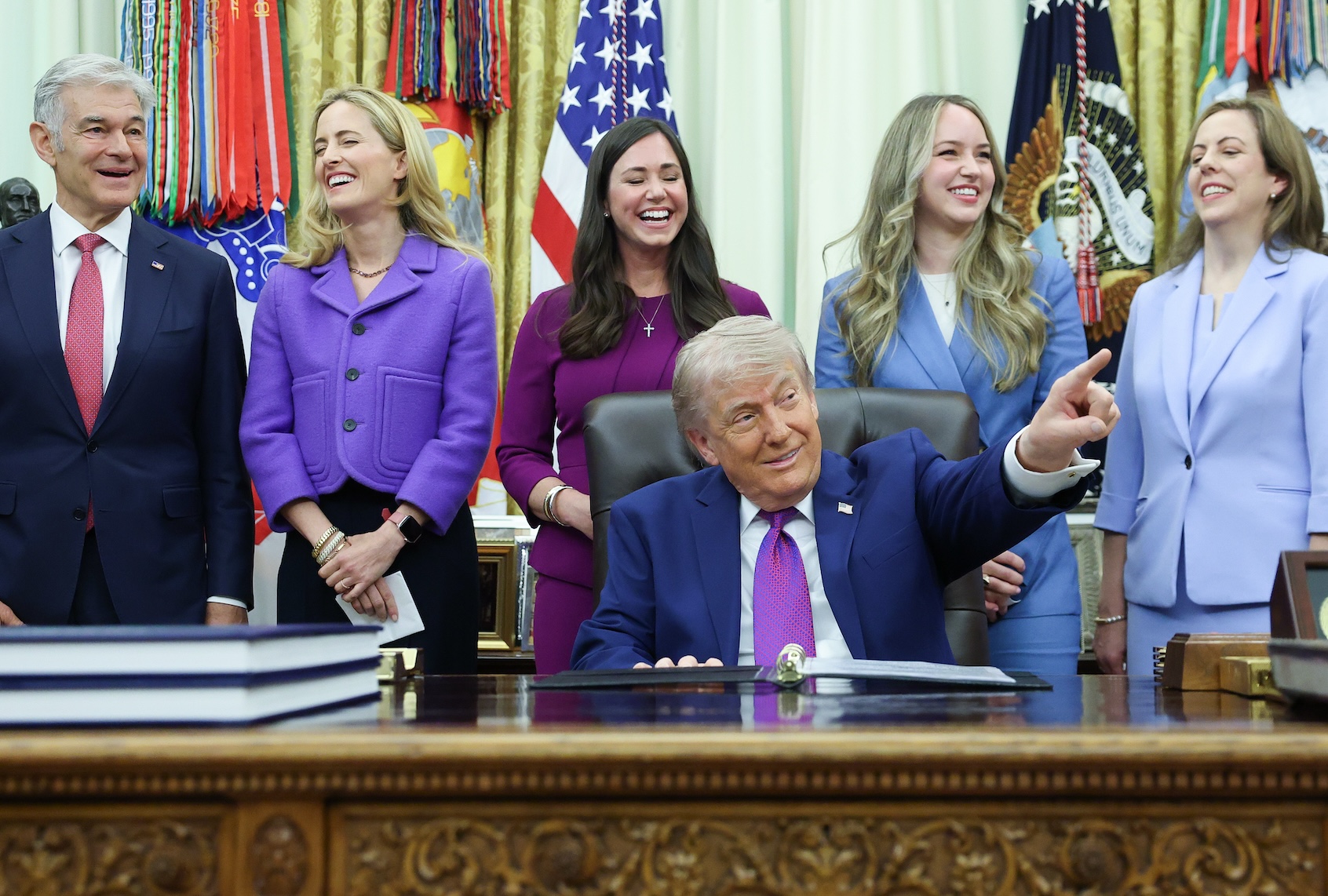
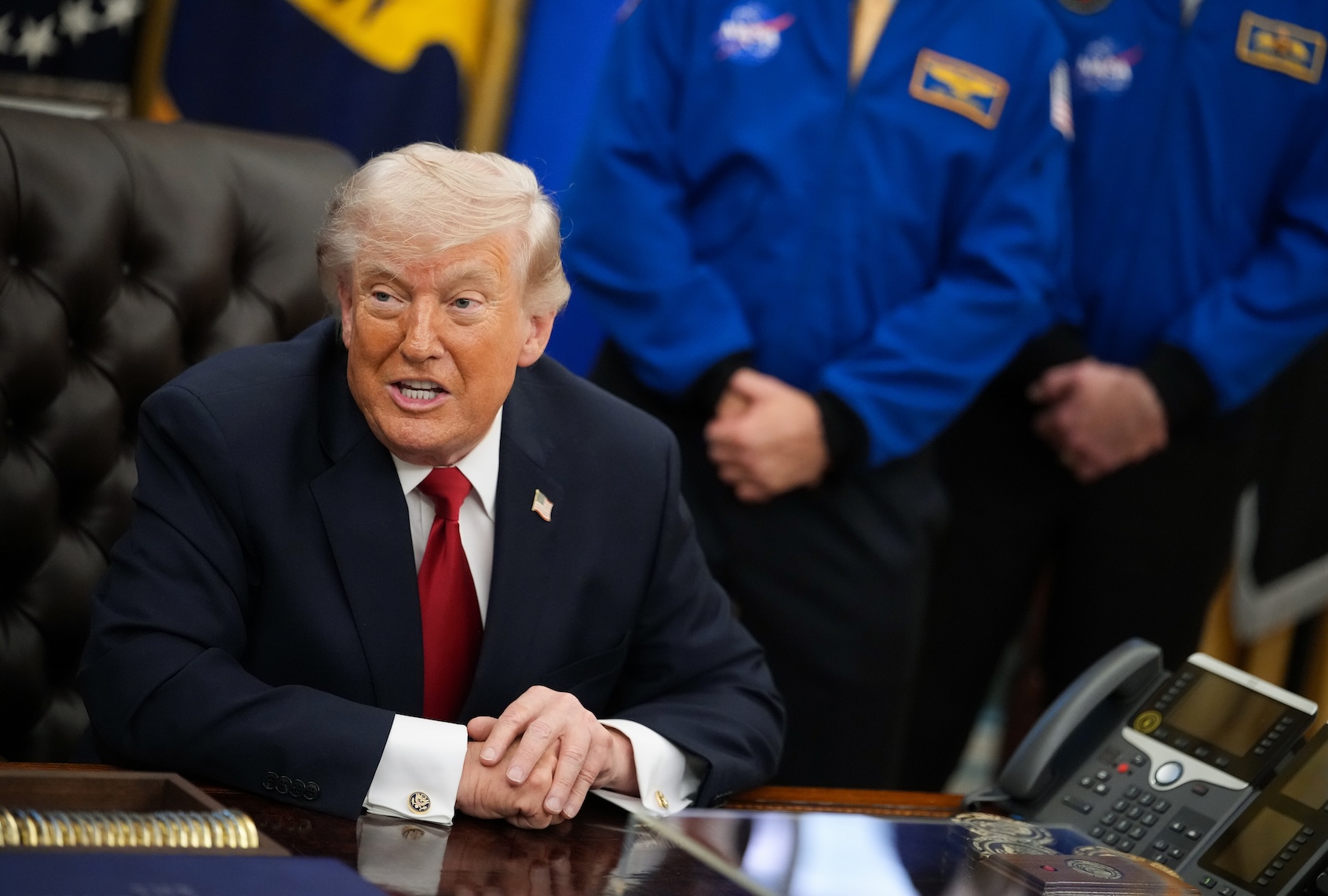
Last week, during a White House event with law enforcement officials to celebrate National Police Week, Donald Trump said something that any other time in history would have shocked the assembled officers to hear a president say. “We have a man who is doing a great job, I’ll tell you,” he said. “I knew it! Because he kept me out of jail for years. Acting Attorney General Todd Blanche, he kept me out of jail.” 

The roomful of cops dutifully applauded, but the truth behind Trump’s statement is something else entirely. The president wasn’t saved from a prison sentence by any legal brilliance on the part of Blanche. Trump was kept out of jail by a Supreme Court ruling and the 49.8% of Americans who voted for him in 2024 — and who apparently think it’s fine for a president to be a convicted felon. Still, Blanche has shown himself to be Trump’s devoted servant, and he is dedicated to proving it more every day. He is the Roy Cohn Trump has been waiting for.

Blanche’s fingerprints are all over Monday’s announcement that the Justice Department had created a $1.776 billion “Anti-Weaponization Fund” to compensate allies of the president who claim they were targeted by Democrats, including the Biden Justice Department, in a directed campaign of lawfare. Since the fund would operate at the expense of American taxpayers, legal experts are already decrying it as yet another example of the president’s propensity for self-dealing. Donald K. Sherman, who serves as president of the nonpartisan Citizens for Responsibility and Ethics in Washington, called the fund’s establishment “one of the single most corrupt acts in American history.”

Related

New acting AG plans to operate as Trump’s personal lawyer

The fund’s formation was part of an agreement by Trump to drop his family’s lawsuit against the IRS in what was an outright extortion attempt against the federal government on the part of the first family. 

Six years ago, an IRS employee leaked tax returns from Trump and the Trump Organization — an illegal act for which the perpetrator, a former IRS contractor, is serving a five-year stint in federal prison. Trump and his sons, Donald Trump Jr. and Eric Trump, sued the IRS for $10 billion claiming “reputational and financial harm, public embarrassment, unfairly tarnished their business reputations, portrayed them in a false light, and negatively affected President Trump, and the other Plaintiffs’ public standing.” In other words, Trump claimed that showing his tax returns to the public — as previous presidential candidates had voluntarily done for 40 years before his election in 2016 — was so harmful to him that he needed billions of dollars to make up for it.


Want more sharp takes on politics? Sign up for our free newsletter, Standing Room Only, written by Amanda Marcotte, now also a weekly show on YouTube or wherever you get your podcasts.


But that wasn’t all. The other problem with the case was that he set himself up as both the judge and the jury, since he essentially filed the lawsuit against himself. As Mother Jones’ Michael Mechanic put it, “the primary legal question in Trump v. IRS is whether a president’s government lawyers can mount a meaningful defense against a president’s personal lawyers — in this case pertaining to the transgressions of that president’s own administration during his first term. The correct answer is: no, of course not.” 

This was particularly true since Blanche, the government lawyer in charge, is the president’ s former personal lawyer, the man Trump bragged had “kept him out of jail” numerous times, and who made it clear when he was named acting attorney general that he would be following Trump’s orders.

In exchange for dropping his lawsuit against the IRS, Trump and his sons will receive an apology from the government. The president also agreed to withdraw another suit against the government for its investigations into connections between his 2016 presidential campaign and Russia, and for the classified documents case following his defeat in 2020. He had asked for $230 million in damages.

The agreement, and particularly the weaponization fund’s creation, places the federal government in dangerous territory: It will now be funneling taxpayer money directly to Trump’s allies.

The agreement, and particularly the weaponization fund’s creation, places the federal government in dangerous territory: It will now be funneling taxpayer money directly to Trump’s allies, potentially including those who sought to overturn a free and fair election. 

Under the fund’s rules, the Jan. 6 rioters, many of whom faced prosecution and prison for their actions — and were later pardoned by Trump — could apply for restitution from a “commission” that will determine who gets a payout. That body, which will apparently be called The President Donald J. Trump Truth and Justice Commission, will ultimately answer to — you guessed it — Trump himself. 

What this means in practice is that the government could be paying off the very people who sought to overthrow it. In doing so, it would create a powerful incentive for others to follow in their footsteps and potentially reap a lucrative payday. 

Spring savings are here!

Support Salon’s bold journalism. Annual members save 58%

We don’t yet know who else might be on the list of possible recipients. But since Trump’s former national security adviser Michael Flynn has already received a bundle despite the fact that he pleaded guilty for lying to the FBI, it’s fair to assume that most who were investigated as part of the Russia investigation will apply for compensation. In fact, any Trump crony, donor or even voters who got into trouble with the feds could probably file a claim that they were targeted by Biden. 

In his second term, Trump has been using the government in every way possible to force institutions and individuals alike to bow down and do his bidding. He remains thirsty for retribution against his perceived enemies. But like any good cult leader or Mob boss, he knows he needs to offer rewards and incentives.

Trump’s allies, including those who committed violence and went to jail defending his lie that he won the 2020 election, should be paid handsomely for their sacrifices, he feels. After all, he may very well need them again.

Read more

about the Justice Department

The post Justice Department gifts Trump with slush fund appeared first on Salon.com.

https://www.salon.com/2026/05/19/justice-department-gifts-trump-with-slush-fund/
Extensions
You can cancel Colbert. But you can’t cancel satire
All SalonNews & PoliticsCBScommentaryFirst AmendmentJimmy Kimmellate night comedyLate Night with Stephen ColbertMediaparamountStephen Colbert
While the late-night host's departure is a real loss, his brand of political commentary will survive
Show full content

If you’ve watched the final episodes of “The Late Show with Stephen Colbert,” you won’t have missed the sense that something monumental is ending. When Jimmy Kimmel, Jimmy Fallon, John Oliver and Seth Meyers appeared on the show, Colbert’s fellow late-night hosts joked — half-seriously — about who might be cancelled next. The consensus, of course, was that it would likely be Kimmel

In a separate appearance, former “Late Show” host David Letterman expressed open frustration with CBS, suggesting the network failed to recognize the value of what it had. Letterman also jokingly expressed concern for Fallon and Kimmel, asking if they would be “all right” after Colbert’s departure. Colbert responded humorously about a ‘captive breeding program’ for the Jimmys. 

Taken together, these moments point to a broader reality: The end of Colbert’s show unquestionably marks the end of an era.

But what exactly is ending? Is this the death knell of American political satire? And if so, what does that mean for the future of ironic political commentary in the United States?

What is ending here is not satire, but a particular and powerful institutional form of it.

What is ending here is not satire, but a particular and powerful institutional form of it. Late-night comedy has a long history of offering Americans valuable political critique wrapped in ironic and entertaining wit. The broad audience reach and the nightly airing of these shows have ensured that the jokes create a broad interpretive community that translates comedic barbs into collective consciousness. For decades, America has woken up after watching late-night ready to discuss the jokes they saw and the critique behind it, and I’d argue that no show has had the same ability to influence our national political conversation as intensely as “The Late Show.”

Want proof? When a sitting president is hell-bent on getting you off the air, you can be confident that your satire has been making a difference.

CBS’s “Late Show” franchise has long been distinctive within the world of late night for its willingness to push beyond entertainment into critique. That tendency began with Letterman’s more unconventional approach to the format, but it became far more explicitly political under Colbert, whose version of the show blurred the line between comedy and commentary in ways that were unusual for a major broadcast network. 

Related

Stephen Colbert wasn’t CBS’s first satirical sacrifice

But that wasn’t all. At a time when the American public needed help making sense of the political landscape, Colbert offered viewers insight and analysis that went beyond the “both sides-ism” coverage of most mainstream media. Even more, the host refused to normalize the authoritarian tendencies of the Trump administration. Colbert’s ability to use critical irony to expose the absurd realities of Trump’s transgressions offered viewers a nightly dose of critical analysis wrapped in entertaining irony.    

The end of “The Late Show” also raises more troubling questions about the vulnerability of satire to political pressure in the Trump era. Colbert’s tenure — which began in September 2015, just as Trump was beginning his ascent in Republican politics — was defined by sustained, often explicit criticism of Trump, and delivered from a platform that, historically, afforded comedians a degree of protection through scale, visibility and a commitment to free speech. 

That protection now looks far less secure. CBS’s decision to cancel “The Late Show” came days after Colbert criticized Paramount, CBS’s parent company, for reaching a $16 million settlement with Trump over accusations that its newsmagazine series “60 Minutes” deceptively edited a 2024 interview with then-Vice President Kamala Harris. The cancellation, though, wasn’t just a reaction to Colbert going after his parent company. Instead, it coincided with a high-stakes, $8 billion merger between Paramount Global and Skydance Media, a deal that required regulatory approval.


Want more sharp takes on politics?Sign up for our free newsletter, Standing Room Only, written by Amanda Marcotte, now also a weekly show on YouTube or wherever you get your podcasts.


While CBS has claimed the decision to ax Colbert was purely financial, few believe it. Letterman made the point bluntly: “I’m just going to go on record as saying: They’re lying. Let me just add one other thing . . . They’re lying weasels.”

The alarm over these changes is further fueled by disruptions elsewhere in the late-night ecosphere point in a similar direction: Jimmy Kimmel’s temporary removal from the air in September by ABC/Disney following political backlash suggests that even high-profile hosts are no longer insulated from corporate caution. At minimum, the moment underscores how vulnerable even prominent satire has become to corporate and political power.

The cancellation of “The Late Show” also marks the loss of Colbert’s position in one of the most expansive platforms available for political satire. Network late night offered not just reach, but also a particular kind of cultural authority — one tied to routine, visibility and shared audience. What disappears with the show is not Colbert’s ability to produce satire, but the specific conditions that amplified it.

It is likely that we are witnessing the waning of a particular long-standing television tradition — late-night comedy shows that were originally designed to offer viewers a mix of entertainment and comedic release before heading off to bed.

More broadly, it is likely that we are witnessing the waning of a particular long-standing television tradition — late-night comedy shows that were originally designed to offer viewers a mix of entertainment and comedic release before heading off to bed. That model has been a fixture of American television since the late 1940s. While political satire will inevitably find other ways to reach an audience, the end of “The Late Show” franchise marks a significant loss to a media format that has often shaped American consciousness. 

What we are not witnessing, however, is the end of satire itself. In fact, history suggests otherwise. Satirists can be censored, silenced, imprisoned, attacked and cancelled. Those assaults remind us not only of the power of satire, but also of how its targets can find the slice of comedians’ jokes threatening. The irony, of course, is that when satire comes under attack by those in power, it tends to come back even stronger.

When another CBS show, “The Smothers Brothers Comedy Hour,” was canceled in 1969 by the network amid political controversy, it did not mark the disappearance of televised satire. If anything, it revealed how threatening satire could be — and how quickly it reemerges in new forms when constrained.

That pattern has repeated itself. Moments of censorship or political pressure rarely eliminate satire; while they may displace it, forcing it into new platforms, formats and voices, the critical perspectives of satire remain. The point is: Conditions may change, but the practice persists.

Spring savings are here!

Support Salon’s bold journalism. Annual members save 58%

There is little reason to think this moment will be any different. The end of “The Late Show” does not mean the end of Stephen Colbert’s political comedy, nor does it signal a broader retreat from satirical critique. But it does signal that the form in which that critique has recently been most visible — network late night — is no longer as stable as it once was. And it means that Stephen Colbert, one of the nation’s best vehicles for satirical critique, will no longer be on the air to make sense of the madness of the moment. 

In one of the show’s final episodes, Letterman offered perhaps the clearest reminder of the power not just of satire, but specifically of Colbert’s satire: “You can take a man’s show, but you can’t take a man’s voice.”

“The Late Show” may be leaving CBS, but Colbert’s voice — and his biting satire — aren’t going anywhere.

Read more

about late-night comedy

The post You can cancel Colbert. But you can’t cancel satire appeared first on Salon.com.

https://www.salon.com/2026/05/19/you-can-cancel-colbert-but-you-cant-cancel-satire/
Extensions
Deepak Chopra, Jeffrey Epstein and those “cute girls” emails
All SalonNews & PoliticsDeepak ChopraEpstein FilesgurusJeffrey EpsteinNew AgeSex ScandalSexual abuseSexual MisconductSpiritualitywellness
New Age guru exchanged hundreds of messages with Epstein, including some he’d probably like to take back
Show full content

In July 2016, best-selling author and wellness guru Deepak Chopra contacted Jeffrey Epstein, the wealthy financier and convicted sex offender, to thank him for his hospitality. By email, Chopra wrote that he was glad that philanthropist Barnaby Marsh had introduced them in person. Chopra added that he was “grateful” for what he saw as the beginning of a friendship.

Within a few weeks, this new friendship deepened. They exchanged gossipy emails about Epstein’s friendship with Donald Trump and Marla Maples, Trump’s second wife. Epstein recounted a story about losing a $10,000 bet to Trump and about a friend of Maples who was rumored to have used high-heeled shoes as sex toys.

Chopra responded, “Nothing human is foreign to me,” attributing that to a “Roman poet whose name I forget.” (Paraphrased slightly, the quotation is actually from the Roman playwright Terence.)

“Anything we share is between us,” Chopra wrote to Epstein later that same July. “I share nothing with anyone but trust you.”

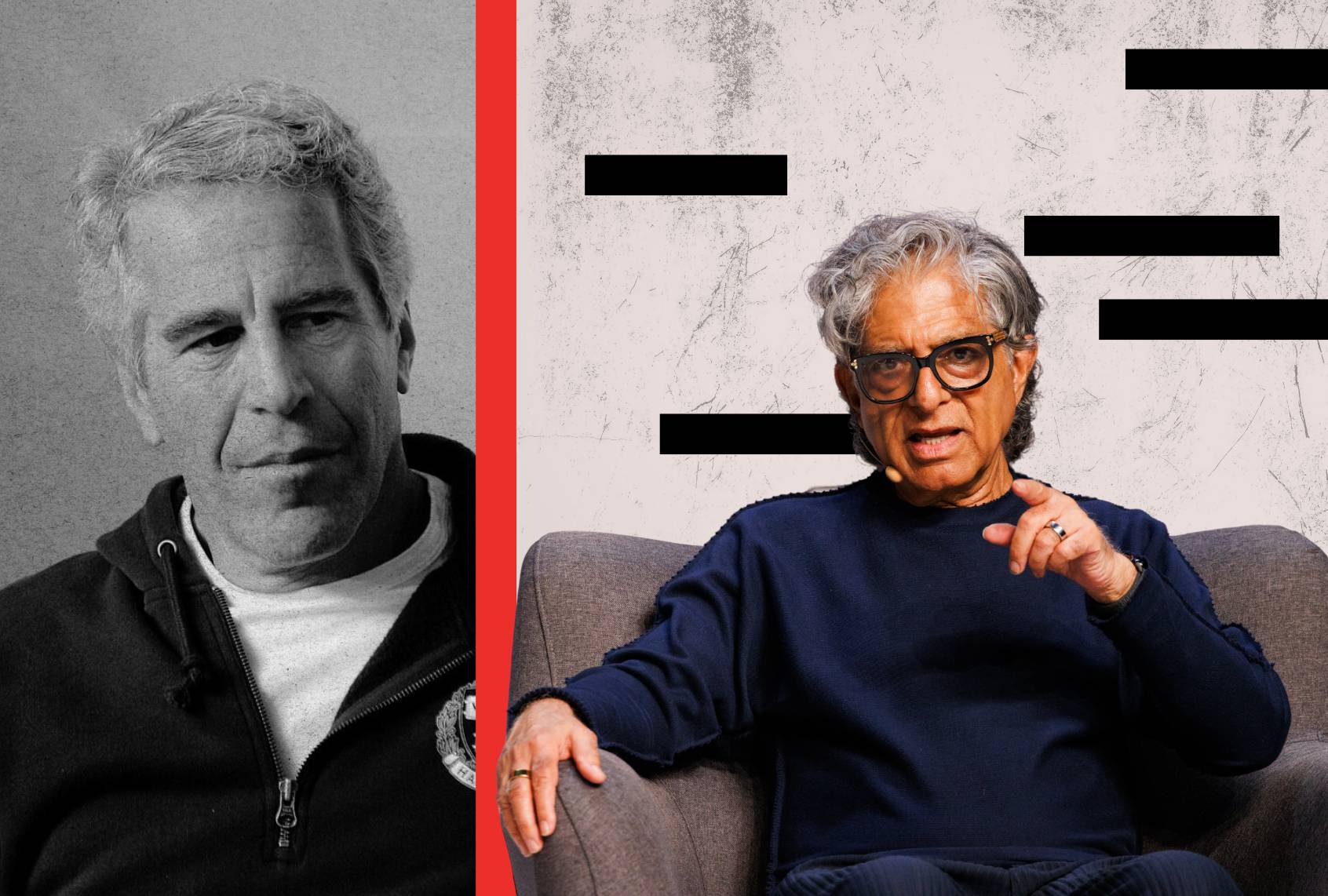
Amid the 3.5 million Epstein files so far released by the Department of Justice, Chopra’s name appears more than 3,300 times. (Since duplicate messages frequently recur in different places in the Epstein files, the actual number of messages between Chopra and Epstein is somewhat less than that.) What the numerous emails and texts between the two men suggest is an intimate and affectionate relationship that went beyond a business or financial connection.

Related

“Completely false”: Melania Trump denies any “relationship” to Jeffrey Epstein

While they came from very different backgrounds and professional trajectories — Epstein from the world of high finance and Chopra from New Age philosophy, spirituality and medicine — the two seemed to enjoy discussing the nature of consciousness and other abstruse topics. They shared an unexplained inside joke, referring multiple times in their correspondence to the “tiger.” Their exchanges suggest that Chopra visited Epstein’s homes in New York and Palm Beach — locations where some of Epstein’s accused or apparent criminal acts took place. There is no evidence that Chopra was aware of Epstein’s criminal abuses. But on at least five occasions, as documented in the FBI files, Chopra mentioned Epstein’s “girls,” an apparent reference to young women who frequently accompanied Epstein. How Chopra perceived or understood these women’s relationship to Epstein is not clear.

Almost everyone reading this has already heard of Chopra, who is one of the biggest names in the New Age movement and the wellness space. Some might argue he is America’s top well-being expert. The 79-year-old physician and bestselling author has published more than 90 books. Frequently described as a guru, Chopra has served as a spiritual adviser to some of the biggest celebrities in the world, including Elizabeth Taylor and Michael Jackson. Chopra taught Jackson meditation at Neverland, the late singer’s California home, where Jackson was alleged to have sexually abused at least two young boys. There is no evidence that Chopra observed any impropriety during his friendship with Jackson.

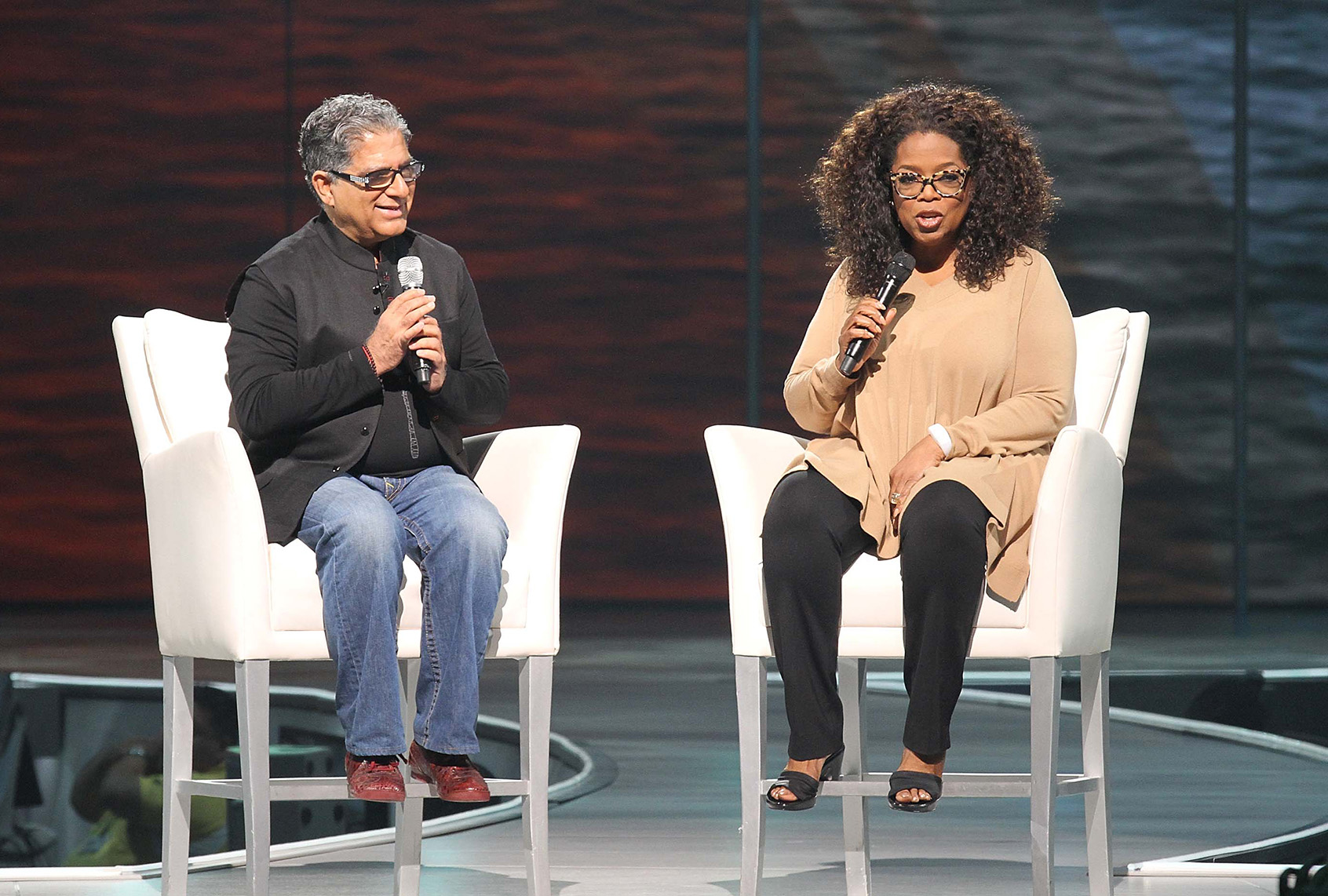
(Photo by Aaron Davidson/WireImage) Deepak Chopra and Oprah Winfrey onstage at Winfrey’s “The Life You Want Weekend” in Miami, Oct. 25, 2014.

Oprah Winfrey, one of Chopra’s earliest champions and business partners, gave him a huge boost with TV appearances in the early 1990s. In 2021, Chopra and Winfrey launched a meditation course together. Chopra’s website says he is on a mission to create a “more balanced, peaceful, joyful and healthier world.” His teachings, Chopra has said, aim to guide people to embrace their strengths and potential for both personal and societal growth.

On at least five occasions in messages documented in the FBI files, Chopra mentioned Epstein’s “girls.” How Chopra perceived or understood these women’s relationship to Epstein is not clear.

There is nothing in the Epstein files to suggest that Chopra was involved in Epstein’s sex crimes, or knew about them. But for many observers, the embarrassing details of their friendship raise larger questions that have less to do with Chopra than with the nature of the New Age wellness industry as a whole. To the extent that New Age spirituality is built on liberating the self from all constraints — as well as spreading universal love and positive vibrations — critics suggest, it may have helped to create an environment where abusers like Epstein can thrive.

* * *

A few months after their friendship began, in a November 2016 email included in the FBI files, Epstein sent Chopra a link to a Daily Mail article about a “troubled woman” who claimed that she had been assaulted by Donald Trump when she was 13 years old, at a party hosted by Epstein. (The article reported that those allegations had not been substantiated, and that the woman’s lawsuit against Trump was dismissed.)

“Did she also drop civil case against you?” Chopra asked. Epstein responded with one word: “yup.” Chopra said: “good.”

Over the following year, the two continued to exchange greetings, ideas and invitations. In February 2017, Chopra invited Epstein by email to attend a course the following month called “Journey Into Healing.” Chopra added that he would also be leading a weeklong retreat that June at a Canadian resort — he wrote “Bamf,” presumably meaning Banff, Alberta — and said, “The girls might enjoy it.”

In another email a few days after that one, Chopra invited Epstein to “Come to Israel with us” to “Relax and have fun with interesting people.” He suggested that Epstein might “use a fake name” and “Bring your girls.”

In April, Chopra emailed Epstein while on his way from Los Angeles to Saudi Arabia, describing a female friend as “v sweet – like your girls,” adding an emoji with hearts for eyes. In November 2017, he extended another invitation to Epstein and his “girls,” adding a “prayer hands” emoji, suggesting they attend a Chopra workshop in Switzerland.

In a July 2018 text message exchange, Chopra suggested that Epstein might enjoy meeting his son-in-law, a venture capitalist, but added in parentheses, “can’t talk about girls.”

In early February 2026, after the large-scale release of most of the FBI’s material on Epstein, Chopra released a statement on X denying involvement in “any criminal or exploitative conduct” during his friendship with Epstein. He described his contact with the convicted sex trafficker as “limited” and “unrelated to any abusive activity.” He did not directly apologize for anything he did or said, but wrote, “Some past email exchanges have surfaced that reflect poor judgment in tone. I regret that and understand how they read today, given what was publicly known at the time.”

In a July 2018 text message exchange, Chopra suggested that Epstein might enjoy meeting his son-in-law, a venture capitalist, but added in parentheses, “can’t talk about girls.”

By the time Chopra and Epstein first met, Epstein was a registered sex offender who had been convicted in 2008 on two counts of soliciting a minor for prostitution and had served a brief sentence in Palm Beach County jail. The full extent of Epstein’s apparent sex trafficking network did not become clear until his indictment on a broader range of criminal charges in 2019, and his subsequent death in a Manhattan jail cell.

Chopra said in his February statement that he was now focused on “supporting accountability, prevention and efforts that protect and support survivors.” It wasn’t the first time he had spoken out about his relationship with Epstein. After details emerged about Epstein’s calendar in 2019, which recorded at least a dozen meetings between the two in 2016, 2017 and 2019, Chopra told CBS News in an October 2025 statement that their appointments had mostly concerned Epstein’s sleep problems.

“After meeting, he shared he suffered from insomnia and expressed interest in learning meditation, which I taught him. Our meetings, focused solely on practicing meditation, lasted about 30 minutes each,” Chopra said in the statement.

Salon has tried to contact Chopra several times through the public relations firm that represents him, but has not received a response.

Very little of the communication between Chopra and Epstein, based on the evidence in the released FBI files, was about sleep. In November 2016, Chopra told Epstein by email that “sleep is consciousness in its default mode.” That appears to be the only time the subject was directly mentioned in the publicly available email and text exchanges between the two, although the FBI files provide no information about what they may have discussed in person.

In their documented messages, Chopra and Epstein were far more likely to discuss the nature of reality and consciousness, topics Chopra has written about for many years.

We need your help to stay independent

Subscribe today to support Salon’s progressive journalism

In one 2016 email, Chopra shared an article he had written arguing that everyday reality is a “human construct.” In another email the following year, Chopra told Epstein that “reality is an illusion,” adding: “Whenever time permits I will do an experiment with you to show you why.” Epstein responded that he was looking forward to it. The two men seemed to share the conclusion that “reality” did not exist.

In March 2017, Epstein wrote to Chopra, “find me a “cute israeli blonde. Matter over mind.” In the same exchange, Chopra took the conversation to a different level, writing: “Atoms galaxies mind body are hallucinations that imprison humanity. We have to get rid of 2000 years of human conditioning.”

Later that same day, Epstein responded, “I would argue that there is no awareness or consciousness there is only chemistry.”

A few days after that, Chopra wrote to Epstein again, telling him that biological cells and the entire physical universe were “human constructs,” but that “cute girls are aware when they make noises.”

Epstein responded: “So when the girl says oh my god?”

“Yes. That’s divine transcendence,” Chopra said.

Epstein answered, “oh, I thought she was just referring to me.”

* * *

For some observers of the New Age and wellness industries, the controversy around Chopra’s association with Epstein doesn’t simply erode Chopra’s credibility as a guru, but also points toward deeper issues.

The unfortunate references to “cute girls,” and the context of Chopra’s apparent friendship with a registered sex offender, “undermine his self-presentation as a spiritual authority,” Stephanie Alice Baker, a sociology professor at City St George’s-University of London who studies wellness, misinformation and conspiracies, told Salon.

Chopra’s philosophical claims that there is no objective reality and that we have to “get rid” of thousands of years of “human conditioning,” suggested Matthew Remski, co-author of “Conspirituality: How New Age Conspiracy Theories Became a Health Threat,” may have offered Epstein a “spiritual framework” for his illicit activities. (There is no evidence that Chopra had any such intention.)

For Epstein, “his world [was] of his own making, probably more than anybody else in the last 100 years,” Remski said. Epstein was “simply able to decide what he wanted to do in any given moment, and then it happened. He organized his world like an old-timey tantric deity, where he could just think of something and then it appears. Somebody’s showing up to massage him and do sex work. He’s got amazing food coming in, and then there’s a plane taking him to a f**king island.”

Chopra’s claims that there is no objective reality and that we have to “get rid” of thousands of years of “human conditioning,” suggested Matthew Remski, may have offered Epstein a “spiritual framework” for his illicit activities.

That kind of behavior, Remski and others interviewed for this article agreed, involves what has been called “spiritual bypassing,” a term originally defined by therapist John Welwood as a “tendency to use spiritual ideas and practices to sidestep or avoid facing unresolved emotional issues, psychological wounds, and unfinished developmental tasks.” Or in simpler terms, to dodge accountability. Remski said he sees connections between the kind of New Age spirituality pioneered by Chopra and other developments in society, economics and politics that have enabled a hyper-individualist culture.

Craig Cashwell, a professor at Clemson University who has researched the impacts of spiritual bypassing, said that while he believes religion and spirituality can enhance people’s lives, it’s important “that we acknowledge that there is a shadow side of both, which most often comes in the forms of religious abuse, trauma and spiritual bypass.”

Cashwell added that it was “not possible to argue that spiritual bypass was involved” in Chopra’s case or any other specific situation without more information, but said, “It is certainly true that sacred teachings can be twisted and used to justify actions incongruent with the actual teaching.”

(Selcuk Acar/Anadolu via Getty Images) Deepak Chopra attends June 21 International Day of Yoga event at the United Nations’ North Lawn in New York.

Baker agreed that it was unclear whether Epstein had used Chopra’s teachings to justify his abuses, but cited “a long history of guru figures abusing their influence,” pointing to allegations of sexual misconduct against numerous yoga gurus, including Bikram Choudhury, John Friend and Gregorian Bivolaru.

Ronald Purser, a professor of management at San Francisco State University and the author of “McMindfulness: How Mindfulness Became the New Capitalist Spirituality,” sees the controversy around Chopra as more than another moment of high-profile hypocrisy. It’s a deeper reflection, he suggested, of why and how these scandals keep happening within the “contemporary guru economy,” which has three elements that don’t mix well together: moral authority, celebrity culture and the marketplace.

“As soon as someone becomes a brand, the incentives become relentless: preserve the image/persona, the audience, the flow of money and, last but not least, preserve the aura,” he said. “This is not unique to Chopra; it really seems to be a structural characteristic of the entire spiritual-wellness industry.”

“Market-driven spirituality,” Purser said, favors “charisma and certitude.” Conversely, it “punishes nuance, and often lacks real accountability.”

“Market-driven spirituality,” Ronald Purser said, favors “charisma and certitude.” Conversely, it “punishes nuance, and often lacks real accountability.”

So far, the revelations about Chopra’s friendship with Epstein have had limited effects in the real world. In a statement to Salon, the University of California San Diego said it would end Chopra’s appointment as an unpaid clinical professor at its medical school in June, calling any form of association with Epstein “regrettable.” Chopra does not “have any active responsibilities at UC San Diego nor will he have any active responsibilities at any point between now and the conclusion of his appointment term,” the statement said.

Aware House Books, a New Age-oriented bookstore in Regina, Saskatchewan, posted a video of an employee ripping up Chopra’s books, and announced it would no longer order or carry them.

Some former Chopra fans have also spoken out. On Substack, writer Scott Mills took a deep dive into the public details of the Chopra-Epstein relationship, writing at length about his sense of “heartbreak.”

Bestselling author Lissa Rankin wrote an extended Facebook post about her disappointment that “wellness gurus” such as Chopra and Peter Attia (another prominent New Age physician) appeared in the Epstein files. Rankin said she would no longer “reference” either man’s work. “When physicians prioritize access to power over ethical judgment, they often break the foundational covenant of medicine,” she wrote. “We need a basic standard for physicians and leaders built on the principle that scientific authority and ethical integrity cannot be separated.”

Stephen Dinan, CEO of The Shift Network, an online New Age network, wrote on Substack that the “global consciousness movement” was in the midst of a “global reckoning” now that one of its “most visible leaders, Deepak Chopra,” has been “deeply implicated.”


Start your day with essential news from Salon.
Sign up for our free morning newsletter, Crash Course.


For nearly a decade, Be Scofield, a reporter on cult movements and the author of “Hunting Lucifer: One Reporter’s Search for Cults and Demons,” has followed what she considers the New Age movement’s dark side. She said she found the response to Chopra’s association with Epstein noteworthy, given the industry’s tendency to overlook or ignore its own internal scandals.

“You can’t really compare how things are handled in the spiritual world with the normal world, because there are so many scandals within this field and most of the teachers and the institutions remain silent,” Scofield said. “So for the spiritual field, what happened is very significant.”

Still many who follow the industry expect little change in an industry they describe as largely driven by profit, despite its claims of a greater concern for the public’s well-being.

“There’s no more accountability in the wellness and yoga industry than there is in any other form of capitalism,” Remski said. “It might actually be worse because there’s nothing institutionalized about any of this.”

Purser said he sees “scandal” not as “an accident or a bug” but rather a “feature” of the New Age economy. It’s “a risk inherent in the guru-celebrity model,” he concluded.

Read more

about the Epstein files’ fallout

The post Deepak Chopra, Jeffrey Epstein and those “cute girls” emails appeared first on Salon.com.

https://www.salon.com/2026/05/19/deepak-chopra-jeffrey-epstein-and-those-cute-girls-emails/
Extensions
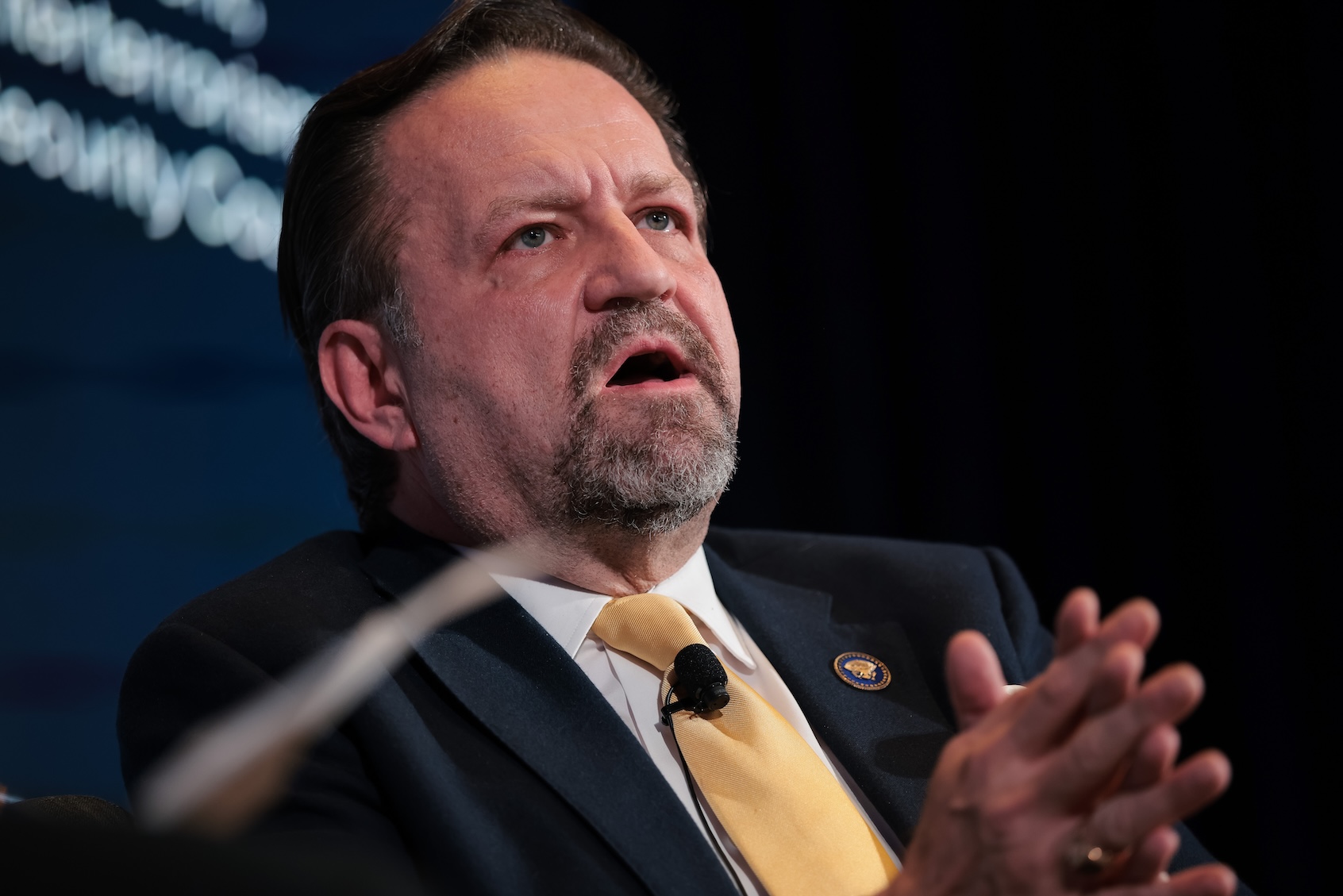
Counterterrorism czar’s blueprint targets leftists, heaps praise on Trump
All SalonNews & PoliticsCounterterrorismDonald TrumpProPublicaSeb Gorkasebastian gorka
Sebastian Gorka’s anti-terror plan villainizes the president’s political enemies
Show full content

For a year, White House counterterrorism czar Sebastian Gorka promoted the national strategy he was drafting, saying he was pouring his “life’s work” into a “massive” blueprint that would overhaul the U.S. approach to combating terrorist threats.

The finished product, released May 6 after months of delays, is a 16-page, typo-sprinkled document that ranks threats based on politics rather than intelligence assessments, according to several current and former counterterrorism officials and threat analysts.

Islamist militant groups, the perennial top concern, now come second to Latin American drug cartels. The violent far right, which the FBI has repeatedly called the leading domestic threat, doesn’t merit a mention. Meanwhile, militant leftists, a small subset of extremist violence in the United States, are portrayed as a threat on par with global terrorist networks such as al-Qaida.

“A new type of domestic terrorism has emerged,” the document says, “driven by violent extremists who have adopted ideologies antithetical to freedom and the American way of life.”

Gorka’s strategy — the subject of a recent ProPublica report — lavishes praise on President Donald Trump’s national security agenda but offers few details about plans to tackle the administration’s top priorities: Latin American “narcoterrorists,” Islamist militant groups, and violent leftist antifascists and anarchists.

Gorka, who coordinates White House counterterrorism policy at the National Security Council, has called the document a “return to common sense” after a 2021 strategy by President Joe Biden centered on mostly far-right domestic threats. The new strategy mentions Biden seven times.

“What it tells me is that this administration is not paying attention to the data, to what our allies are seeing globally, or to where the biggest threats of violence come from or how they might be prevented,” said Cynthia Miller-Idriss, founding director of the Polarization and Extremism Research and Innovation Lab at American University.

Republican leaders often portrayed Biden’s focus on the violent far right as the Democrats cracking down on conservative organizing. That idea fueled Trump’s blanket pardon of more than 1,500 defendants, including those who attacked police, in the Jan. 6, 2021, storming of the U.S. Capitol.

Gorka did not reply to a request for comment. The White House, asked about criticisms of the plan, referred to a number of Gorka’s public statements touting it. Olivia Wales, a White House spokesperson, added in an email, “President Trump is crushing terrorist threats to the United States and will never let cartels, Jihadists, or the governments who support them plot against our citizens with impunity.”

Related

The counterterrorism czar without a counterterrorism plan

Here are five notable aspects of the plan, compiled from interviews with counterterrorism personnel and researchers’ published critiques:

It’s about Trump, not terrorism

The counterterrorism strategy begins with a signed foreword by Trump, who sets the tone by claiming credit for ending “four years of weakness, failure, surrender, and humiliation under the last administration.”

Analysts say the rest of the strategy often reads like a valentine rather than a sober national security communique. Under Trump’s leadership, it states, “America is again the world’s most powerful nation, with the largest economy in history, the most advanced technologies, and the bravest and most skilled warfighters the world has ever seen.”

The strategy’s top threat categories align with the president’s pet issues, including the villainizing of Democrats and leftist dissent. The language also echoes debunked right-wing conspiracy theories the president has shared about a stolen election, a purported genocide of Christians and existential threats to Western civilization by what the strategy calls “alien cultures.” One section refers to Christians as “the most persecuted people on Earth.”

“This was once a serious document written by serious people” across Democratic and Republican presidencies, veteran terrorism analyst and former Obama administration official Juliette Kayyem lamented on X. “Now it reads like a partisan screed.”

Data counter the priorities

Analysts say the most obvious hole is the omission of violent far-right movements. Federal authorities have said for years that neo-Nazi and anti-government militia groups pose the most active and lethal domestic threats, though recently authorities have noted increases in leftist and mixed-motive attacks.

For example, on Sept. 10, the same day conservative youth leader Charlie Kirk was assassinated at an outdoor event in Utah, a 16-year-old gunman who was steeped in online forums for white supremacy and mass-shooter fandom opened fire at a Colorado high school, critically wounding two students before killing himself.

The strategy is concerned only with the kind of violent extremism the White House ascribes to Kirk’s alleged shooter, who is labeled a violent left-wing “radical who espoused extreme transgender ideologies.” Terrorism analysts say the attack motives do not appear so clear-cut; the suspect, who has yet to go to trial, reportedly comes from a Republican family but had shifted politically and had expressed opposition to the “hatred” he said Kirk spread.

Just last week, a lawsuit related to a deadly shooting last year at Florida State University revealed that the gunman had used ChatGPT to explore “his interests in Hitler, Nazis, fascism” and other far-right topics.

In a social media post, Jacob Ware, a terrorism researcher who has written extensively about the militant right, called the case a “friendly reminder that the #Trump administration’s new United States Counterterrorism Strategy does not mention far-right violent extremism.”

Policies undermine strategy

Several of the White House’s stated counterterrorism objectives conflict with the president’s own actions, analysts say.

For one, the pledge of stepped-up efforts to thwart plots doesn’t factor in the diminished capacity of federal agencies since Trump slashed the national security workforce last year and diverted counterterrorism resources to his mass deportation campaign.

Terrorism analyst Colin Clarke, executive director of the security-focused Soufan Center and a Gorka critic, summarized the document as “highly partisan & mostly incoherent.”

It touts the seizure of Venezuelan President Nicolás Maduro in a U.S. military operation as the important capture of a “narco-terrorist outlaw.” But weeks before the Maduro raid, Trump had granted a pardon to former Honduran President Juan Orlando Hernández, who was serving 45 years for trafficking 400 tons of cocaine into the United States.

Another U.S. goal is to aggressively counter anti-American propaganda by Islamist extremist groups, which the administration says have been driven from strongholds in the Middle East and are “exploiting the ungoverned spaces” across Africa. Places where “a resurgent terror threat is the reality,” according to the strategy, include West Africa, the Sahel region, Sudan and Somalia.

Yet efforts to counter anti-American messaging are undermined by increased U.S. airstrikes with civilian casualties, particularly in Somalia and Yemen, and the cutoff of humanitarian programs across the continent, conflict monitors say. U.S. aid has been a lifeline for communities whose desperation can be exploited by militant recruiters.

The strategy calls for a “light military footprint” in Africa, with the expectation that African leaders will take on a greater share of counterterrorism work. But Trump’s halting of foreign aid hobbled regional counterterrorism programs. Conflict monitors, now watching with alarm as Islamist militants capture territory and stage attacks in Mali, urge the administration to pay closer attention to the restive Sahel region and other hot spots.

“Terrorists are on the verge of recreating a new caliphate sanctuary that could serve as an incubator for attacks against the US homeland and interests abroad,” Alex Plitsas, a security analyst and former Obama-era Pentagon official, wrote this month after visiting U.S. Africa Command.

“The result is a warning for Washington: when the United States and its partners step back, jihadist groups and adversarial powers fill the space,” Plitsas wrote.

The strategy also disparages “failed ‘forever war’ policies” at a time Trump’s base is wrestling with his decision to launch the U.S.-Israeli war in Iran, a state sponsor of terrorism.

In a call with reporters after his plan was released, Gorka got defensive when asked how the Iran operation was not a “forever war” that could endanger Americans. He called critics “testicularly challenged.”

Anna Kelly, a White House spokesperson, drew a distinction: “Unlike the ‘forever wars’ of the past with vague objectives and ever-expanding timelines, President Trump is leading the most transparent administration in history, and he kept Americans apprised of the scope and defined objectives for Operation Epic Fury.”

Successes are exaggerated

Trump’s preface opens by celebrating counterterrorism achievements that analysts describe as inflated or lacking in nuance.

One example is the claim that, within 43 days of Trump’s return to office, the U.S. had apprehended “the terrorist mastermind” of the deadly Abbey Gate attack in Kabul. In 2021, a suicide bomber detonated in a crowd of civilians outside an airport gate during the chaotic U.S. military withdrawal from Afghanistan, killing more than 150 Afghans and 13 American service members.

In March, the Justice Department hailed the arrest of Afghan national Mohammad Sharifullah, an Islamist militant it said had “orchestrated” the attack. Gorka has publicly recounted the dramatic scene of waiting on the tarmac in the cold at 3 a.m., alongside several Cabinet members, to welcome the plane carrying the handcuffed “man who was responsible for the murder, the massacre.”

Last month, just before Gorka’s strategy was released, a federal jury dealt a blow to the “mastermind” narrative by returning a mixed verdict. Sharifullah was convicted of aiding the terrorist group known as Islamic State Khorasan, but the jury deadlocked on whether there was sufficient evidence to hold him responsible for the Abbey Gate deaths. The difference shapes how much time Sharifullah could spend behind bars — the more serious charge was eligible for a life sentence.

A Justice Department news release about the conviction (but not the deadlock) was scrubbed of references to Sharifullah as an orchestrator and did not use the “mastermind” language that appeared days later in the White House strategy.

Analysts also expressed skepticism about the blueprint’s claim that “hundreds of Jihadist terrorists in multiple countries” had been killed in recent U.S. counterterrorism operations. The administration releases virtually no details about the identities of those targeted or the circumstances of their deaths. Humanitarian groups say they fear the operations could be causing uncounted civilian casualties.

Opponents are targeted

Rights watchdogs say the strategy hints at ways Trump administration officials will attempt to build terrorism cases against U.S. leftist and Muslim activists through nebulous or nonexistent ties to transnational militant movements.

A link to a foreign entity formally designated as a terrorist group opens the door for government surveillance and potential charges related to providing aid — “material support” in legal jargon — to a foreign terrorist organization.

Analysts say that’s why the Trump administration has pursued designations targeting leftist militant groups in Europe under the label of antifa, as well as some branches of the Muslim Brotherhood.

The Brotherhood is a century-old Islamist group that renounced violence in the 1970s, though spinoffs such as Hamas remain active and on the U.S. blacklist. Republicans have long tried to portray U.S.-based Muslim advocacy groups as a foothold for the Brotherhood.

The document also calls for the rapid “neutralization of violent secular political groups whose ideology is anti-American, radically pro-transgender, and anarchist.” Researchers called the terms ill-defined and said they aren’t used in international counterterrorism work.

Miller-Idriss’ overarching concern about the Trump counterterrorism doctrine: “How damaging could it be? Both in the things it’s ignoring and the things that it’s emphasizing.”

Read more

about this topic

The post Counterterrorism czar’s blueprint targets leftists, heaps praise on Trump appeared first on Salon.com.

https://www.salon.com/2026/05/19/counterterrorism-czars-blueprint-targets-leftists-praises-trump-partner/
Extensions
“Highway robbery”: Dems accuse Trump of creating $1.7 billion “slush fund” for Jan. 6 defendants
All SalonNews & PoliticsDepartment of JusticedojDonald TrumpIRSJamie RaskinJan. 6lawsuitsTodd Blanche
Democrats claim the DOJ has created a scheme to pay out Jan. 6 rioters and Trump allies in IRS lawsuit settlement
Show full content

The Department of Justice announced a $1.7 billion fund to compensate people who believe they were unfairly targeted by previous Democratic administrations on Monday. While the DOJ shared that there were  “no partisan requirements” to file a claim, the “Anti-Weaponization Fund” is seen by critics as a way for Jan. 6 defendants and allies of the Trump administration to seek compensation.

The fund is part of a settlement agreement in President Donald Trump‘s $10 billion lawsuit against the IRS. In exchange for the creation of the fund, Trump and his organization have agreed to drop the lawsuit, as well as claims related to the raid of Trump’s Mar-a-Lago resort.

“The machinery of government should never be weaponized against any American, and it is this Department’s intention to make right the wrongs that were previously done while ensuring this never happens again,” Acting Attorney General Todd Blanche shared in a statement. “As part of this settlement, we are setting up a lawful process for victims of lawfare and weaponization to be heard and seek redress.”

Related

“They’ll call you a terrorist and ruin your life”: Dems sound alarm over Trump’s IRS weaponization

Democratic Party lawmakers accused Trump of creating a “slush fund…to reward allies, including the nearly 1,600 defendants convicted or charged in connection with the January 6th attack on the Capitol.”


Start your day with essential news from Salon.
Sign up for our free morning newsletter, Crash Course.


“This is pure fraud and highway robbery. No one can be both plaintiff and defendant in the same case,” Rep. Jamie Raskin, D-Md. shared in a statement. “But Trump’s DOJ is not arguing any of this because it is in on the scam. This case is nothing but a racket designed to take $1.7 billion of taxpayer dollars out of the Treasury and pour it into a huge slush fund for Trump at DOJ to hand out to his private militia of insurrectionists, rioters, and white supremacists, including those who brutally beat police officers on January 6, 2021, and sycophant accomplices to his election stealing schemes.”

Read more

about this topic

The post “Highway robbery”: Dems accuse Trump of creating $1.7 billion “slush fund” for Jan. 6 defendants appeared first on Salon.com.

https://www.salon.com/2026/05/18/highway-robbery-dems-accuse-trump-of-creating-1-7-billion-slush-fund-for-jan-6-defendants/
Extensions
Return to reality TV is a bad sign for MAGA
All SalonNews & PoliticsanalysisFox NewsmagaMediaRachel Campos-DuffyRepublicansRight-wing mediaSean Duffyspencer pratttransportation department
Transportation Secretary Sean Duffy and LA mayoral candidate Spencer Pratt are chasing cameras to bypass scrutiny
Show full content

More than a decade into his political ascent, it’s remarkable how thoroughly the lesson of Donald Trump has been internalized by the apparatus around him. Now, running low on new ideas and facing mounting public frustration over inflation, war and institutional decay, his MAGA movement is returning to its roots: reality television.

The shape of MAGA’s current media theory looks to convert governance into a content vertical. Driven by a right-wing media ecosystem that rewards digital engagement, the central idea is that the performance of authenticity replaces the need for accountability. The latest examples are almost too on-the-nose to parody. In Los Angeles, a former MTV personality is running a mayoral campaign built around TMZ confrontations. Another, a current Trump administration official, filmed a corporate-sponsored family travel show while serving in government. 

Conservative media personalities are celebrating all of it as authenticity, transparency and “real America.” But they expose the fundamental mechanics of the modern right-wing celebrity campaign.

Conservative media personalities are celebrating all of it as authenticity, transparency and “real America.” But they expose the fundamental mechanics of the modern right-wing celebrity campaign: a curated aesthetic of working-class struggle or outsider grievance, funded by corporate interests and designed purely for maximum viewership. What they are actually selling is distraction.

The clearest example may be Transportation Secretary Sean Duffy and his wife, “Fox and Friends Weekend” co-host Rachel Campos-Duffy, who have spent months filming “The Great American Road Trip,” a reality-style family travel series timed to America’s 250th anniversary. Produced by the same studio that created “The Real World” — both Duffy and Campos-Duffy starred on different seasons of the iconic reality show in the 1990s — the series follows the couple their nine children traversing the nation over an eight-month period, visiting patriotic landmarks, tourist attractions and conservative celebrity outposts.

The premise is wrapped in familiar Fox News language about faith, family and Americana. But beneath the sentimental marketing sits something more Trumpian: a cabinet secretary effectively starring in a corporate-sponsored lifestyle production funded in part by companies regulated by his own department.

The Great American Road Trip Inc., a nonprofit that funded the Duffy family’s gas, car rentals, lodging and activities, lists among its sponsors travel-related companies including Toyota, Boeing and United Airlines — all with ties to the Department of Transportation, raising serious questions. At least three of those companies — United Airlines, Toyota and Boeing — were previously fined or audited by the very agency Duffy oversees. A Toyota logo appears prominently throughout the show’s trailer. The nonprofit’s executive director, Tori Barnes, is a former lobbyist for the U.S. Travel Association and General Motors — a professional advocate for industries whose federal regulator is now starring in her organization’s content.

According to reporting from Politico, at least one travel-related company declined to sponsor the venture after concluding it was unethical. “You’re paying for access,” one source reportedly described the arrangement. On May 11, the nonpartisan watchdog organization Citizens for Responsibility and Ethics filed a complaint with the Department of Transportation’s Office of Inspector General, alleging the venture violated federal gift and travel rules.

Related

How “The View” could put an end to Trump’s war on the media

None of this matters to the Trump-era Republican Party, which no longer even attempts to hide the conflict-of-interest aesthetics that once at least embarrassed Washington. It is just packaged as entertainment content.

The administration’s defenders insist critics are overreacting. 

The Transportation Department told NBC News that The Great American Road Trip Inc. is an independent organization, and that how and who they accept donations from is their decision. Career ethics officials at the department, we are assured, reviewed and approved everything. 

But as CREW noted, the federal gift rules exist precisely for situations like this: Even if a gift is not technically a “conduit” gift, government employees should decline acceptance if it would cause a reasonable person to question their impartiality — which the Duffy family’s adventure certainly does. The legal parsing of what technically violates a rule is not the same as the ethical question of what a Cabinet secretary should be doing with his time and public platform. 

Conservative columnist Salena Zito rushed to frame the series as a patriotic boost for tourism economies, diners, roadside attractions, parks and family businesses. But this framing collapses under the slightest scrutiny. Travel has become unaffordable for many families. And while Zito reports that the national average of gas is $4.53 per gallon, she makes no mention of Trump’s war in Iran, which is causing the fuel spike. 

Chasten Buttigieg, the husband of former transportation secretary Pete Buttigieg, captured the frustration with conservative media’s selective outrage. In a post on X, Buttigieg noted that the Duffys “threw endless fits on national television when Pete was working for our son’s ICU bedside are now bragging about their multi-month, taxpayer-funded familly road trip while gas and grocery prices soar for American families because of Trump’s war of choice.” 


Want more sharp takes on politics? Sign up for our free newsletter, Standing Room Only, written by Amanda Marcotte, now also a weekly show on YouTube or wherever you get your podcasts.


MAGA’s governing class increasingly resembles social media personalities documenting luxury experiences while insisting they are “just like you,” a strategy that works because right-wing media has spent years conditioning audiences to confuse visibility with accountability. In MAGA media culture, the presence of cameras itself becomes evidence of authenticity. If politicians allow viewers into their RVs, kitchens or family road trips, supporters are encouraged to believe they must therefore be honest and transparent.

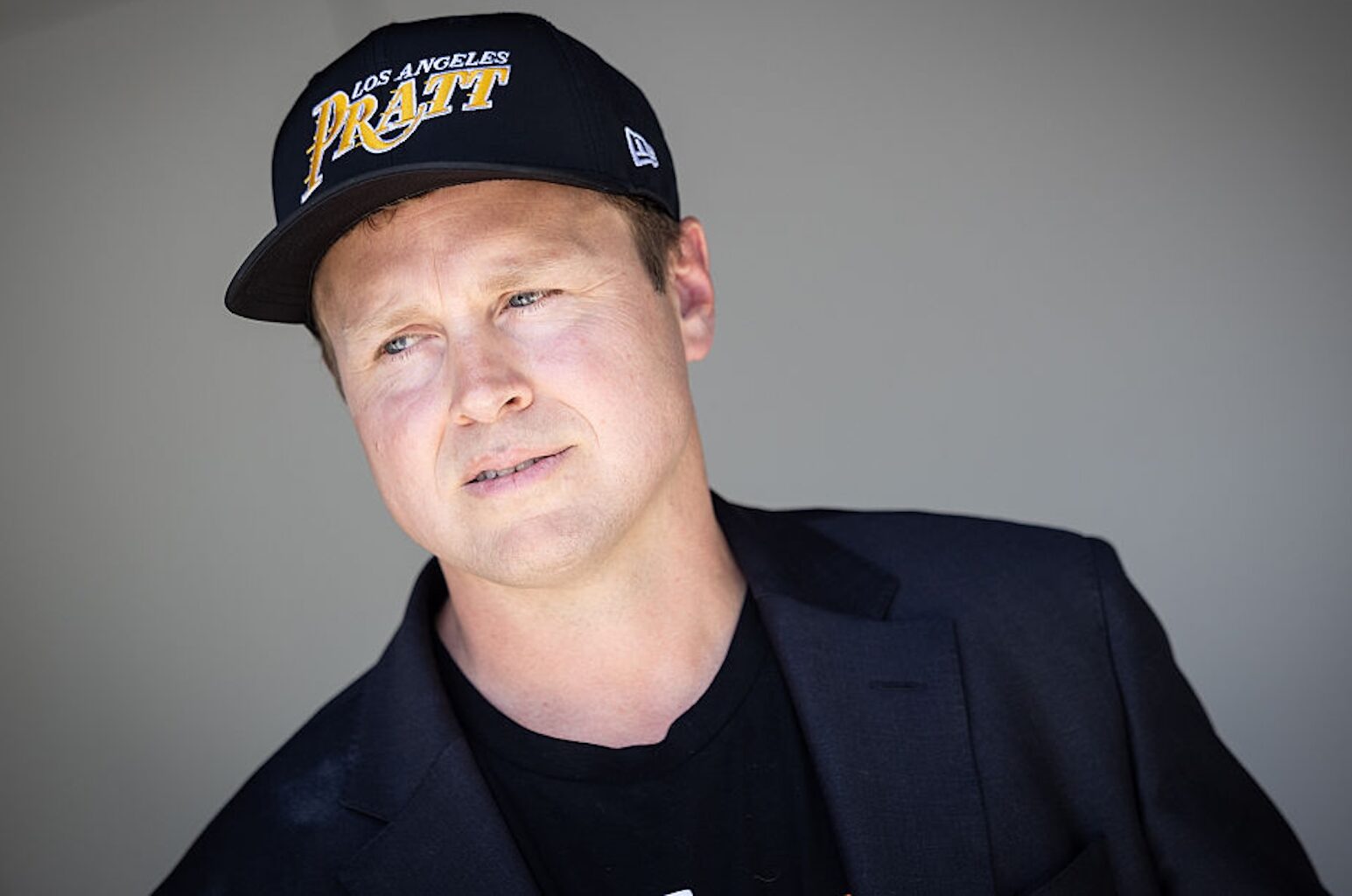
This is why former reality TV personality Spencer Pratt now fits so naturally into conservative political media culture. Pratt — best known as the engineered villain of MTV’s “The Hills,” a man whose own memoir is titled “The Guy You Love to Hate” — is gaining traction in the Los Angeles mayor’s race and being hailed by conservatives as the next great hope for Los Angeles following a debate with Democratic incumbent Karen Bass, whose political fortunes have never really recovered from the fallout of the 2025 wildfires that devastates parts of the city. 

Fox News host Sean Hannity told Los Angeles to “wake up.” Kayleigh McEnany echoed Hannity’s phrasing, telling congressional Republicans to “wake up” and “become Spencer Pratt.” Laura Ingraham claimed Pratt appealed to regular Americans with “common sense responses.” Megyn Kelly called him a “star,” and Meghan McCain declared him “the blueprint for how my generation of older millennials needs to communicate and present their ideas and campaign messaging when running for office.” Former Florida Governor Jeb Bush — a man whose own presidential campaign was obliterated by a reality TV host — called a Pratt campaign video “maybe the best political ad of the year.” Elon Musk retweeted Richard Grenell, who urged Angelenos to vote for Pratt. Campos-Duffy also weighed in, praising Pratt’s debate performance while adding, “I’m very partial to politicians coming out of reality television.” 

Pratt’s long-shot mayoral campaign has less to do with municipal governance than with content generation.

Pratt’s long-shot mayoral campaign has less to do with municipal governance than with content generation. Debate clips rack up millions of views across Instagram and TikTok. Viral memes circulate faster than policy discussions. If elected, Pratt reportedly plans to continue filming inside City Hall, transforming public office into an ongoing serialized production.

Pratt is now denying reports that he signed a formal deal to film a reality show around his mayoral campaign. Representatives told TheWrap there is “no contract” and “no series in production.” But Deadline reports that cameras are already rolling. Boardwalk Pictures, the production company rumored to be involved, has not released a statement. In the meantime, the controversy triggered yet another wave of Fox News commentary praising Pratt’s “authenticity.” 

In many ways, the question of whether there is a signed contract is beside the point. The story has already served its purpose for Pratt, functioning exactly as a reality TV storyline is supposed to. This is a candidate who, after all, already has a Hulu development deal in the works documenting life after the Palisades fires. He and his wife (and “The Hills” co-star) Heidi Montag had been developing a show with Hulu since losing their home in 2025, though it had not yet been greenlit. 

There is a reason right-wing media personalities keep gravitating toward reality-style political branding: It bypasses scrutiny. Traditional political reporting asks whether leaders are competent, ethical and effective. Reality television asks whether they are entertaining.

Spring savings are here!

Support Salon’s bold journalism. Annual members save 58%

It also normalizes elite privilege by reframing it as relatable aspiration. The Duffys are not ordinary Americans piling into a minivan for a modest summer vacation. They are wealthy media figures traveling with corporate support while one spouse serves in the presidential cabinet and the other hosts a Fox News program — yet conservative media is packaging this experience as populism.

MAGA’s return to its reality TV roots is not happening because the movement has solved its contradictions. What exactly is the modern Republican governing agenda beyond culture war performance and media manipulation? Trump promised cheaper prices. Instead Americans got economic instability and tariff shocks. He promised peace. But global tensions have escalated while the administration lurches toward broader military confrontation abroad. He promised to “drain the swamp.” Yet Washington became even more openly transactional, with billionaires, influencers, media personalities, crypto promoters and loyalist corporations openly cashing in around the presidency. 

All that’s left for Trump and his MAGA coalition is lifestyle propaganda — aimed at audiences exhausted by real-world instability.

Read more

from Sophia Tesfaye

The post Return to reality TV is a bad sign for MAGA appeared first on Salon.com.

https://www.salon.com/2026/05/18/return-to-reality-tv-is-a-bad-sign-for-maga/
Extensions
Restoring American democracy won’t be easy. At least we know what won’t work
All SalonNews & PoliticsauthoritarianismcommentaryConservativesDemocracyDemocratsDonald TrumpFascismLiberalsRepublicans
Joe Biden tried to "turn the page" on Trumpism, and it failed. We need deep structural change
Show full content

At least some of the illusions of Donald Trump’s first term are gone. One hears very little of the then-prevalent chatter, coming mostly from the pundit class, about institutional “guardrails.” If they existed at all, those guardrails were constructed of papier-mâché. We are reminded of the quote by Britain’s first U.N. ambassador, Alexander Cadogan, when reflecting on mid-20th-century totalitarianism: “What forces itself to one’s attention is the degree to which everything favours the evildoer, if he is blatant enough.”

Should electoral democracy survive the next three years and more humane and decent people be charged with running the government, what can they do to reinstitutionalize democracy, or, more simply, to Trump-proof the political system? We know what won’t work: back to normal, return to the status quo, “turning the page.” That’s what Joe Biden tried to do, possibly with the advice of the same political consultants who have turned the cliché about “kitchen table issues” into a tiresome mantra. While Biden’s instincts were honorable, he, along with other administration actors like Attorney General Merrick Garland, were wrong. It couldn’t work; the status quo ante to which they wanted to return was riddled with the same flaws that led inexorably to Trump in the first place.

Public advocates like former federal judge J. Michael Luttig, journalist and historian Anne Applebaum, and university scholars Steven Levitsky and Kim Scheppele, have argued that a post-Trump America requires fundamental political reform to counter what they describe as a “fast slide into competitive authoritarianism,” whereby elections are maintained, however rigged they may be, and are accompanied by the erosion of democratic checks, institutional norms and a politically neutral civil service. Political writer and editor Josh Marshall has called for “a new civic contract” for post-Trump America; others have advocated a New Deal for the 21st century.

A broken Congress

Trump’s authoritarian rampage exposed an existing imbalance in the American political system, and any attempt at reform must reverse not only his depredations but the gradual, decades-long accretion of presidential powers, whether legal, informal or usurped. In effect, what we now have is a presidential dictatorship, made worse by the willing or eager acquiescence of the Republican-controlled Congress. That means rebuilding the power of Congress, as advocates have urged. But there are significant practical problems even with doing that, let alone instituting a sweeping new civic contract.

Related

We need a new theory of democracy — because this version has failed

For the last half-century, public approval of Congress has consistently been low; with the exception of a few spikes in approval, such as after 9/11, congressional approval ratings rarely rise above the teens. Does anyone think those numbers would increase substantially if the legislature were to enact controversial measures for fundamental reform, particularly when half the electorate has been preconditioned by decades of Fox News and right-wing radio to hate anything that resembles progressive change? That would likely activate the midterm phenomenon, whereby supporters of reform either become complacent or discouraged and stay home, while opponents of reform, along with low-information swing voters, troop to the polls as they did in 1994 and 2010.

Second, given the GOP’s electoral power in the less populous, usually gerrymandered states, along with the built-in constitutional advantage of the apportionment of U.S. senators (per capita, a voter in Wyoming has 67 times more Senate representation than a voter in California), Republicans will never be far from a majority in either house, and will have a near-permanent blocking minority in the Senate at least as long as that chamber’s current rules remain in effect.

Given the GOP’s electoral power in the less populous states, Republicans will never be far from a majority in either house, and will have a near-permanent blocking minority in the Senate as long as that chamber’s current rules remain in effect.

These constitutional, procedural and demographic roadblocks to getting an effective, reform-minded Congress on its feet would not be nearly so challenging if America had a normal center-right party that accepted the written and (often more important) unwritten rules of party behavior in a civic democracy.  But the GOP has become an authoritarian party along the lines of the United Russia Party, a mere parliamentary vehicle through which an absolute leader can rule under a façade of democracy. I recognized this trend in the Republican Party more than 15 years ago, which is why I left it; it does not seem likely to me that the GOP will “normalize” within the next 10 or 15 years. Trump is too entwined in the party’s DNA.

The judicial crisis

Beyond the need to strengthen Congress, there is a grave judicial crisis, including the ossified form of the Constitution itself. Reformers must face the unpleasant fact that the normal, traditional method of instituting significant change in the constitutional order — the amendment process — is effectively a dead letter. The last important amendment adopted, the 26th, which lowered the voting age to 18, was ratified 55 years ago. Since the demise of the Equal Rights Amendment in the late 1970s, the Constitution has become essentially unamendable.

This has left us with a paradox. On the one hand, the Constitution is moribund with respect to formal amendment. On the other, thanks to unlimited judicial activism by a corrupt Republican supermajority of the present Supreme Court, the Constitution is almost infinitely amendable in pursuit of the GOP’s political agenda. Whole sections of the Constitution, such as the 14th Amendment’s insurrection clause and the militia qualification to the Second Amendment, have been read out of the document. But blanket presidential immunity, which doesn’t exist (remember Watergate?), has been miraculously discovered, while 90-year-old independent regulatory agencies are suddenly found to be unconstitutional. The Court majority’s jurisprudence resembles the line in Lewis Carroll’s “Through the Looking Glass”: “When I use a word, it means just what I choose it to mean — neither more nor less.”

The enemy is us

Beyond congressional weakness, constitutional ossification and the authoritarian tendencies of Republican politicians, there remains an even bigger problem: the American people. Trump has run for president three times, and the number of Americans who voted for him increased each time. Trump should have been buried by a landslide in 2020 because of his disastrous (and, arguably, criminally negligent) handling of the COVID pandemic. Had he taken sensible measures immediately, rather than choosing not to spook Wall Street, perhaps 700,000 of the 1.2 million U.S. COVID deaths could have been prevented, putting the U.S. death rate on par with other developed nations like Canada. Yet in the 2020 election, with the pandemic still raging and the unemployment rate near 7 percent, Trump received 10 million more votes than in 2016. Rational voter response as a feedback device for presidential performance has clearly become a broken mechanism.

Beyond congressional weakness, constitutional ossification and the authoritarian tendencies of Republican politicians, there remains an even bigger problem: the American people.

Trump’s incitement of an attempted overthrow of the Constitution on Jan. 6, 2021, should have legally disqualified him to hold federal office again, but thanks to his pals on the Supreme Court, that avenue was closed and it was left to the voters. In the 2024 election, with the unemployment rate at 4.1 percent, Trump added 3 million more votes to his 2020 total. Political consultants, with their talent for trivialization, would say that those proverbial kitchen-table issues — the price of eggs, say — determined the result, and eclipsed “unimportant” voter concerns like democracy and the rule of law. The real reason might be that public opinion polls offer only a limited menu of choices as to voter motivation, and millions of people will default to claiming economic issues when their actual motivations have more to do with fantasy and prejudice.

Events of the last century have repeatedly shown that an authoritarian-minded and disciplined minority can gain power and rule over a divided, complacent or discouraged majority. We must face the unsavory fact that more than a third of the electorate has been molded, after decades of right-wing media and fundamentalist indoctrination, into authoritarian foot soldiers whose definitions of “democracy” and the “rule of law” are vastly different from those found in political science texts. It’s a vacuous cliché to say we are in a historic political crisis, but that somehow Trump voters bear no moral responsibility.

Robert Altemeyer, a Canadian psychologist, described such people in 2006 in an eerily prophetic manner:

They are highly submissive to established authority, aggressive in the name of that authority and conventional to the point of insisting everyone should behave as their authorities decide. They are fearful and self-righteous and have a lot of hostility in them that they readily direct toward various out-groups. They are easily incited, easily led, rather uninclined to think for themselves, largely impervious to facts and reason and rely instead on social support to maintain their beliefs. … They would march America into a dictatorship and probably feel that things had improved as a result. …  And they are so submissive to their leaders that they will believe and do virtually anything they are told. They are not going to let up and they are not going away. [Emphasis mine.]

After Jan. 6, no one, in or out of government, wanted to address the future implications of Trump’s cultlike veneration and the willingness of significant numbers of his followers to use violence. Whether he was in or out of office, virtually every prominent political opponent of Trump (as well as judges, election officials and ordinary poll workers) has been subject to death threats. Instead, during 2021, even as death threats and intimidation occurred, Trump was assumed to be washed up and MAGA was described as a transient phenomenon. For their part, Republicans mouthed a kind of Kafkaesque logic: Since the coup had failed and Biden was seated as president, fears that Trump would overthrow democracy were nothing more than overblown Democratic hysteria.

That leaves people who are serious about instituting another New Deal or civic compact or whatever they might call it with the daunting task of constructing a perfected democratic order that would be proof not only against a would-be dictator but would protect the American people from themselves, or at least their worst instincts. It might be similar to the institution-building in the first years of the Federal Republic of Germany, or what the new government of Hungary must now undertake. But whatever form might be decided upon, its planners and executors must not rationalize away the psychological condition of tens of millions of American citizens as a malignant normality that must never be mentioned, let alone addressed.

Confronting an entrenched plutocracy

Years of right-wing media conditioning have predisposed these Americans to seek bogeymen in the country’s “elites.” That word, however, no longer carries its traditional meaning of the fabulously rich and politically well-connected. For the Republican base, it means public school teachers and librarians, university instructors (some of whom make McDonald’s-level wages), physicians who recommend vaccines, or government employees. Conspicuously missing, by the way, are billionaires.

For the Republican base, “elites” now means public school teachers and librarians, university instructors (some of whom make McDonald’s-level wages), physicians who recommend vaccines, or government employees.

Because of the perverse nature of America’s political culture, widening income inequality since 1980 has, paradoxically enough, not resulted in a political revolt against the rich and a demand for a more progressive income tax and better wages and benefits, but in large segments of the Republican Party who identify as working class becoming willing handmaids of the oligarchs.

The very rich have always exercised outsized social power and jealously guarded their wealth through political influence. But as wealth inequality has become extreme through the Bush-Trump tax cuts, financial deregulation and the massive growth of tech, a section of the wealthy has achieved hyper-wealth, a difference of degree that amounts to a difference in kind. These deci-billionaires and centi-billionaires, disproportionately from the tech industry, seek not merely to protect their riches but to comprehensively transform society to their liking.

Whether this is called neo-reaction, techno-fascism or the Dark Enlightenment, the society sought by Silicon Valley billionaires like Elon Musk, Peter Thiel and Alex Karp might be described as their utopia and our “1984.” Musk was let loose, with no authorization other than force majeure, to vandalize the federal government, damaging its capacity in everything from nuclear safety to medical research to statistical collection. His motive was to cripple institutions that compete with billionaires in setting public policy.

For many years, Thiel has loudly stated his opposition to women voting. As one filmmaker with experience socializing with billionaires has written, “When Peter Thiel said, ‘I no longer believe that freedom and democracy are compatible,’ he wasn’t talking about your freedom. He was talking about his own. You don’t exist.” Thiel also subsidizes a stable of propagandists who proclaim the glories of turning America into a feudal state run by people like Peter Thiel.

We need your help to stay independent

Subscribe today to support Salon’s progressive journalism

Palantir CEO Alex Karp has written a manifesto advocating turning over the country to tech moguls like himself, with the goal of transforming America into a thoroughly militarized technological Sparta with limitless electronic surveillance. And now, Silicon Valley bosses like Mark Zuckerberg, Jeff Bezos and Sergey Brin, who in the past were not identified as political reactionaries, have moved increasingly to the right.

The kind of new political order that Silicon Valley seems to envision brings to mind Winston Churchill’s warning of what would happen if the democracies succumbed to the Axis: “[I]f we fail, then the whole world, including the United States, including all that we have known and cared for, will sink into the abyss of a new Dark Age made more sinister, and perhaps more protracted, by the lights of perverted science.”

What works – and what doesn’t

Those are the actors that proponents of democratic revitalization must face: a congressional Republican Party that will rubber-stamp the acts of any GOP Führer; a corrupt and reactionary court that can nullify reform at whim; a large, disciplined and politically active segment of the electorate that favors authoritarianism; and the wealthiest plutocracy in history, determined to spend whatever it takes to bury political and social equality. Under the circumstances, it is no wonder that “turning the page” was futile, and would be again.

Turning the page didn’t work after the most traumatic event in American history. Only two Confederates were tried, convicted and executed for war crimes after the 1865 surrender at Appomattox. Virtually all of the defeated rebel state’s generals and senior officials escaped punishment; the most infamous massacre of the war, at Fort Pillow, went unavenged and its perpetrator, Nathan Bedford Forrest, became the first Grand Wizard of the Ku Klux Klan. Treason indictments against Robert E. Lee and other high-ranking Confederates were drawn up, then quietly shelved.

Turning the page didn’t work after the most traumatic event in American history. Only two Confederates were tried, convicted and executed for war crimes after the 1865 surrender at Appomattox.

“Reconciliation” with the defeated traitors meant that Reconstruction was half-heartedly pursued and then ended ahead of schedule while pardons were issued. The country paid the price with a century of Jim Crow, the foisting on us of monuments to treason and insurrection, and even, for a time, the segregation of the federal workforce. Many of the political goals that Confederates could not win on the battlefield they obtained through the weakness and lack of principle of the nominal victors and, of course, the desire to forget and “move on and not get stuck in the past.” As a result, the South has remained our problem child for a century and a half, roughly as the Balkans are to the rest of Europe.

The contrast with World War II is instructive. In 1945, there was no way under national or international law that the operatives of the Nazi state could be tried. No relevant precedent existed, and given the unique crimes the Nazi hierarchy had committed, it would require ex post facto laws to prosecute them. It took an ad hoc international tribunal that established its own rules to do it.

Plenty of influential Americans opposed the Nuremberg Tribunal, including Chief Justice Harlan Stone, who decried it as “a fraud” on the German people; Associate Justice William O. Douglas, who asserted that it substituted power for principle; and Sen. Robert A. Taft Sr., who called it victor’s justice and “a blot on the American record that we shall long regret.” Even The Atlantic chipped in, calling it a dangerous precedent. Yet the Nuremberg Tribunal is now generally seen as a remarkably fair execution of justice given the unprecedented circumstances, and a foundation for international criminal law.

Rebuilding a democracy that can defend itself

Americans who cherish the rule of law and common decency might want to consider whether their venerable institutions — given constitutional decay, a partisan high court and the way powerful defendants with unlimited funds can run out the clock on statutes of limitations — are up to reestablishing a functioning democracy that will not teeter on the brink of dissolution every few years. Are innovations as bold as the Nuremberg Tribunal necessary to restore the republic?

Friends of democracy must be prepared to initiate reforms that will ruffle or offend conventional wisdom and give fits to establishment practitioners of “both sides” journalism. They must begin work immediately on a “Project 2029,” a legislative blueprint (including draft legislation) to hit the ground running. They cannot assume they will have ample time for extended hearings and a glacial legislative pace, given the urgent need to restore constitutional government and properly functioning federal agencies. They must tackle multiple issues, from restoring the federal workforce to reestablishing science research and environmental law, finally taxing billionaires, binding the president and Supreme Court with ethics laws, and publicly-financed federal elections that would end the meddling of the rich.

Friends of democracy must be prepared to initiate reforms that will ruffle or offend conventional wisdom and give fits to establishment practitioners of “both sides” journalism.

None of that would find favor with the current Supreme Court; Congress, however, could use its Article I powers either to increase the size of the Supreme Court (a reform that has been proposed many times since FDR), or to establish a new court altogether.

One proposal would constitute the current Supreme Court justices as just nine of the 179 federal appellate court judges, who would rotate on and off the high court for fixed terms (perhaps two or four years) and staggered appointments, so that its membership would be a continuing body, not unlike the U.S. Senate. This arrangement would avoid the current stasis that allows wealthy interests to game the outcome of legal cases, since those interests could never be sure of the judicial body’s composition from one term to the next. These are far-reaching reforms that will cause the pretended deep thinkers to swoon, but as one observer has stated: “You can have democratic self-government or the corrupt Court — not both.”

But even thoroughly revamped federal courts might not be enough to deal with the Trump regime’s unprecedented level of lawlessness, constitutional violations and criminal corruption. (For instance, its deliberate dismantling of the nation’s infectious disease early warning system, with increased deaths a clearly foreseeable consequence, should be understood as criminal malfeasance.) Virtually every senior official has been involved in serious wrongdoing, and bringing them all to book within a legacy legal system replete with frivolous delays and endless appeals could take well over a decade, by which time many statutes of limitations will have expired.

Given that Congress has already created special courts by legislation, such as the Military Commissions Acts of 2006 and 2009, it could also establish a special domestic tribunal capable of doing what the regular courts are unlikely to accomplish: bringing the principal actors in a regime of unprecedented criminal racketeering to timely public accountability and appropriate punishment.


Want more sharp takes on politics? Sign up for our free newsletter, Standing Room Only by Amanda Marcotte, also a weekly show on YouTube or wherever you get your podcasts.


The reconstruction of democracy will require creative thinking in other areas. The presidential pardon power may be absolute, but should only be used for honorable purposes. A new, reformed Supreme Court could properly decide that, yes, a pardon is absolute and irrevocable, but of course the framers never intended that George Washington or his successors could ever conceivably grant a pardon for corrupt purposes. Accordingly, pardons issued to insurrectionists, fraudsters and those who could have otherwise incriminated Trump would receive expedited review by a special panel, and barring extenuating circumstances would be revoked, with all criminal records reinstated and remaining sentences carried out.

After 12 years of Nazi rule, the democratic parties of West Germany constructed, under the vigilant eyes of the Western allied powers, a democracy that was capable of defending itself against internal coups or erosion and takeover by extremist parties. This “wehrhafte Demokratie” (literally: “well-defended democracy”) was not Jeffersonian, but unlike the Weimar Republic, it has been remarkably resilient while maintaining a high level of individual freedom. Extremist, anti-constitutional parties, incitements to violence and the systematic sowing of hatred against other citizens are not considered “the price we pay for freedom of speech”; they are seen as undermining the basis of civic democracy.

By contrast, American democracy has slipped far down the league tables of various NGOs that rank world democratic freedoms; it is now considered a “flawed democracy” that trails the G-7 countries, including Germany. Press freedom has declined even worse: The World Press Freedom Index ranked the U.S. in 64th position for 2026. The quaint American notion that indulging extremists protects freedom for the rest of us is demonstrably false.

Philosopher Karl Popper, author of “The Open Society and its Enemies,” long ago refuted a notion that seems to be tacitly practiced in contemporary America, that the broadest possible tolerance must be accorded those who would overthrow democracy, the rule of law and personal freedom:

Unlimited tolerance must lead to the disappearance of tolerance. If we extend unlimited tolerance even to those who are intolerant, if we are not prepared to defend a tolerant society against the onslaught of the intolerant, then the tolerant will be destroyed, and tolerance with them.

Before the fall of Communism and German unification, West Germany had a saying: “Bonn ist nicht Weimar.” Neither should Washington be the capital of a banana republic.

Read more

from Mike Lofgren

The post Restoring American democracy won’t be easy. At least we know what won’t work appeared first on Salon.com.

https://www.salon.com/2026/05/18/restoring-american-democracy-wont-be-easy-at-least-we-know-what-wont-work/
Extensions
The real reason RFK Jr. is coming for your antidepressants
All SalonNews & PoliticscommentarydepressionDonald TrumpHealth and Human ServiceshealthcareHHSMahaMental healthpublic healthRobert F Kennedy Jr.
The HHS Secretary's attacks on psychiatric medication follow a pattern of putting politics over public health
Show full content

The siren call was apparently irresistible. “Kennedy Starts a Push to Help Americans Quit Antidepressants,” read a New York Times headline from early May — phrasing that seemed to normalize Robert F. Kennedy Jr., the anti-science, roadkill enthusiast who is currently running the Department of Health and Human Services, and to assume that he wants to help everyday Americans.

But reading the article should disabuse anyone of the notion that Kennedy has sincere, much less helpful, motivations in shepherding an event called the “Mental Health and Overmedicalization Summit,” held by the MAHA Institute, a far-right group organized to wage war on responsible healthcare systems. “No major medical organizations were represented at the gathering,” Times reporter Ellen Barry noted, and it’s not a surprise why. Legitimate medical experts are, to put it mildly, skeptical of taking away mental health medications, especially when there’s no real pathway to effective alternatives for people struggling with depression, anxiety or other psychiatric conditions — or the one in six people who are taking selective serotonin reuptake inhibitors to manage them. 

In the two weeks since the summit, news outlets have been dutifully publishing articles that draw on facts and medical expertise, explaining that Kennedy is wrong to compare people who use SSRIs to heroin addicts. “Redirecting patients away from medications is only clinically responsible if the alternatives are accessible. They are not,” Dr. Jonathan Slater of Columbia University Irving Medical Center explained in an article for STAT News, a publication focused on health and medicine.

These responses are necessary to educate the public about why antidepressant use is so common. But ultimately, they’re encountering an obstacle that defines Kennedy’s general approach to these contentious issues at HHS: He isn’t worried about the science or what’s best for patients. Despite his famous last name and Democratic lineage, Kennedy has become a bog-standard right-wing Republican. His aims are political in nature, not medical. His heated, misleading rhetoric about SSRI use, including demonizing people who need mental health medication as coddled weaklings, functions primarily as a justification for stripping people of medical care.

The complicating factor here is that antidepressants are prescribed in the U.S. at rates that are above the ideal, which no one really disputes. The argument is over why that is. Are Americans just lazy in turning to a pill instead of working on themselves? Or are there real obstacles to addressing the underlying causes of many mental health concerns?

By and large, experts point to systematic failures that leave Americans more vulnerable to mental illness and without access to drug-free interventions, which cost both time and money. “A prescription is accessible in a way that a weekly therapy appointment is not,” Slater explained.

Related

RFK Jr. pushes “personal choice” over teen tanning bed ban

In early May, Anna Louis Sussman wrote for the New Republic about Dr. Khameer Kidia, an internist at Brigham and Women’s Hospital in Boston, who is speaking out in his new book “Empire of Madness: Reimagining Western Mental Health Care for Everyone,” about how social and economic inequality are driving causes of mental illness. “My patients are not suffering from depression; they’re suffering from oppression,” Kidia writes in the book, detailing how many people’s conditions are dependent on external circumstances, including financial instability.

Kennedy, however, has no real interest in fixing structural problems that leave people with no choice but to use SSRIs to stabilize themselves. To the contrary, he has a long history of talking about people on SSRIs in dehumanizing, often racist language that implies their actual problem is they’re lazy and need to just work harder — or even work for free. As I wrote in 2025, Kennedy’s “solution” for mental illness looks very much like using prison camps he euphemistically calls “wellness farms.” On these “farms,” the prisoner-patients would be denied access to computers and phones, taking them out of contact with families, and made to do hard labor until some vague, undefined moment where they’ve supposedly recovered — which is unlikely to happen in such circumstances.

Kennedy has a real talent for taking reactionary, often sadistic ideas and reframing them to sound compassionate and therapeutic.

Kennedy has a real talent for taking reactionary, often sadistic ideas and reframing them to sound compassionate and therapeutic. He frames his hostility to vaccines as “concern” for children’s health, even though the overwhelming real-world evidence is that vaccines are safe, but the diseases kids can get without them can lead to unnecessary suffering and death. He attacks women who use Tylenol during pregnancy, rejecting all medical experts who say it’s safe. He uses his perch at HHS to preach his “eat real food” message, and to scold people to work out more, knowing that it makes his critics sound like they’re opposed to healthy food and exercise. (In reality, however, critics understand that Americans already know about eating right and staying active. The problem is not that we have a deficit in public shaming about this, but that our social systems don’t support better living habits.)

Right now, Donald Trump’s administration is attempting to cut the monthly fruit and vegetable allotment for WIC (Special Supplemental Nutrition Program for Women, Infants and Children) recipients from $52 to $13 a month. When asked about this during a recent congressional hearing, Kennedy defended the cuts by complaining about government debt. (The annual budget for WIC costs less than what the U.S. spends on average during a week of the Iran war.) But by shifting blame away from systematic issues and onto individuals for their supposed gluttony and laziness, Kennedy and his Republican allies can justify cutting healthcare on the grounds that people shouldn’t be using it anyway.

Kennedy is playing a similar shell game with SSRIs. In his usual tone of faux concern, Kennedy wrote a letter to healthcare providers extolling the virtues of “non-pharmacological interventions” for depression, noting that “evidence supports the use of psychotherapy, individual or group therapy and other nonpharmacological interventions either as first-line treatment” — a message that sounds nice to outsiders who don’t understand the structural issues. To providers themselves, however, this is condescending, victim-blaming nonsense.


Want more Amanda Marcotte on politics? Sign up for her free newsletter, Standing Room Only, now also on YouTube or wherever you get your podcasts.


Kennedy’s letter implies that doctors are writing prescriptions for SSRIs because they and/or their patients are too lazy or stupid to invest in therapy. In reality, as Slater notes, the demographics of who accesses psychotherapy show that the issue is often a matter of access, not will. Therapy use is up with “younger, wealthier, college-educated, urban adults with private insurance,” but not with people who are “older, less educated, uninsured, or rural.”

Indeed, as more people take up therapy, there has been a multi-year trend of SSRI use declining. That’s because of telehealth and, crucially, because the Affordable Care Act expanded access to healthcare coverage. But thanks to Trump and Republicans, millions of Americans are now losing access to healthcare which, for many, will mean having to quit expensive, time-consuming talk therapy.

Kennedy has defended kicking millions of people off healthcare, falsely claiming that they’re “almost all illegal immigrants.” This followed a telling moment during his confirmation hearing when he refused to answer Sen. Bernie Sanders, I-Vt., on the question of whether healthcare is a right. Instead, Kennedy suggested that some people shouldn’t be allowed to “take from the pool” because of personal choices that lead to bad health outcomes.

At the time, he used smokers as an example of who should lose access, no doubt because smoking is a widely unpopular and indisputably unhealthy behavior. (It’s also an addiction that can be overcome with, you guessed it, decent medical care.) But the underlying assumption that poor health is a result of poor character has been rapidly expanded in Kennedy’s time at HHS.

Spring savings are here!

Support Salon’s bold journalism. Annual members save 58%

Autism is blamed on the imaginary selfishness of mothers. Everything from diabetes to schizophrenia, he claims, is caused by Americans being junk food junkies. “You can heal yourself with a good diet” is a favorite saying of Kennedy’s, which sounds nice — as long as you ignore the larger implication that Americans don’t need expensive doctors if they would just eat carrots instead of chips.

Kennedy is playing the same trick with SSRIs. On the surface level, it sounds nice to tell people that it’s better to try talk therapy and regular exercise than an antidepressant. The problem isn’t lack of will, but lack of access.

Americans are overworked and underpaid. Beyond not having the time, energy or money for exercise and therapy, many people have additional stress that exacerbates mental health concerns — all of which is getting worse under an administration that is stripping away healthcare and accelerating inflation. The only purpose Kennedy’s rhetoric serves is to stigmatize people who use SSRIs as lazy or ignorant, making it easier to justify taking away their healthcare. In other words, it’s the same old Republican playbook, just dressed up in a phony mask of compassion.

Read more

about MAHA

The post The real reason RFK Jr. is coming for your antidepressants appeared first on Salon.com.

https://www.salon.com/2026/05/18/the-real-reason-rfk-jr-is-coming-for-your-antidepressants/
Extensions
Your rewards card may be spying on you — and impacting how much you pay
All SalonMoneyNews & PoliticsCouponsdata privacyGrocery PricesSurveillance pricing
A surveillance pricing ban in Maryland leaves out loyalty programs — costing customers more than they save
Show full content

If you’ve been anywhere online or in stores lately, you’ve likely encountered marketing buzz like “Sign-up to earn loyalty discounts” or “Become a rewards member today!”

Today’s consumers are inundated with the pleas of businesses to sign up for member clubs, loyalty programs, discount cards and more. They often offer exclusive sales, access to limited edition items and maybe even specialized discounts. It’s also commonly understood that if a deal sounds too good to be true, it probably is — so what’s the catch?

Increasingly, companies are using loyalty programs to offer discounts in name only by building hyperspecific profiles on members that determine what deals customers receive and the maximum they’re willing to pay. In other words, it’s all about data, which can be used against the very consumers who assume it benefits them.

Related

My family is food prepping at Costco for Trump’s trade war

This practice falls under the umbrella of surveillance pricing, which is the use of a customer’s personal data to set prices. For example, Customer A is shopping online for grocery pick-up and sees $3.99 for a bag of lemons, whereas Customer B sees $2.99 for the same bag. Based on algorithms that utilize customer data, the grocery store believes Customer A would be willing to pay more for those lemons and charges them accordingly. In another case, if the company knows how much a customer makes per year or whether they live in a more affluent neighborhood, they could charge more. The information companies gather on users can range from internal purchase history, to internet search histories, precise geolocation and descriptive demographics like age, race and class.

Stores are also altering prices in real time on the shelves with electronic labels that make it simple for prices to be changed remotely and instantly, based on other dynamic pricing models like peak times. Some consumers are already familiar with this model via apps like Uber’s “surge pricing.” Many proposed laws addressing surveillance pricing also ban or put limitations on electronic shelving labels.

Thirty-one states are currently considering banning surveillance pricing, with bills in New Jersey, New York and Colorado gaining significant traction in their legislatures. Maryland was the first state to ban surveillance pricing for grocery retailers in late April 2026, but consumer advocates found significant loopholes in the law, including entire carveouts regarding loyalty program members.

“ A lot more people are paying a lot more money for these goods and services, but the company can truthfully say, ‘Oh, we’re only using the surveillance pricing to lower prices for people.’”

“ A lot of people in the retailer industry will say, ‘Hey, only regulate price increases through surveillance pricing because out of the goodness of our hearts, we want to use personalized algorithmic pricing just to lower prices for people,’” Tom McBrien, a lawyer at Electronic Privacy Information Center, told Salon. “This is tricky because it still permits some pretty harmful surveillance pricing, just through another mechanism.”

As McBrien explained, many loyalty programs use the same surveillance pricing algorithms, but instead of directly raising prices on certain individuals they will raise prices altogether then only offer selective coupons. In this case, a bag of lemons costs $3.99, and, though Customer A and B are both loyalty program members, only Customer B is given a $1 off coupon. This version of surveillance pricing also more easily comes into play for in-store shoppers, since the price changes happen at check out after a loyalty card is scanned, instead of the price changing on the shelves.

“ A lot more people are paying a lot more money for these goods and services, but the company can truthfully say, ‘Oh, we’re only using the surveillance pricing to lower prices for people,’” McBrien said.

Others view Maryland’s loyalty program carve-out as a win, like the Chamber of Progress, a trade group representing grocery and industry interests. Off the success in limiting the scope of Maryland’s bill, the organization has continued lobbying efforts in states like Colorado, which is proposing a much more strict ban. Colorado’s bill bans the practice in general and stipulates that loyalty program members must be offered the same deals with an exception for specialized groups like seniors, students, teachers and military service members.

The organization argued that without access to loyalty members’ hyperspecific data, discounts as they stand will become unrecognizable.


Start your day with essential news from Salon.
Sign up for our free morning newsletter, Crash Course.


“It covers only discounts offered ‘on equal terms’ to all members under publicly disclosed conditions, effectively prohibiting personalization within loyalty programs,” Chamber of Progress wrote in a letter of opposition to  Colorado’s legislature. “But personalization is what makes these programs useful in the first place.”

“By stripping out the ability to personalize or target them, you’re not really saving discounts at all,” Drew Ambrogi, a policy manager at Chamber of Progress, said in an interview with Salon.

He argued that these carve-outs are not loopholes, but genuine strategies to provide customers with relevant discounts and specialized offers to retain their business.

“ I think consumers are on board with protecting from predatory practices, but trying to explain to someone who uses loyalty programs and coupons to make ends meet and get more for their dollar that those discounts aren’t real or they’re somehow loopholes is not gonna be a winning fight,” Ambrogi said. “ Isolating a consumer and charging them a higher price is just not a winning strategy. … So I would be very surprised if we saw any of the kind of things that the other side is suggesting.”

Stephanie Nguyen, former FTC Chief Technologist and current senior fellow at Columbia University’s Center for Law and the Economy, begs to differ. “ The currency here is data. That’s what drives the industry. That is the money-making machine,” she told Salon.

“I think we need a true ban of the practice, and I don’t think that Maryland quite gets that.”

Nguyen argues that modern loyalty programs utilize a system called the hook, hack, hike: consumers are hooked into signing up with an initial deal, then their data is “hacked” giving companies information to create detailed dossiers and, using that information, they hike prices, devalue rewards points and provide fewer deals.

“Oftentimes, what’s happening here is the framing of ‘give us broad, unfettered access to the data because we’re gonna give you benefits,’ but it actually gets twisted in practice,” Ngyuen said.

Ambrogi said there “ hasn’t been any really broad documented evidence that this is a real trend,” and surveillance pricing bans are addressing a largely hypothetical problem. However, the FTC conducted a study finding eight different companies functioned as intermediaries to facilitate surveillance pricing for over 250 companies across grocery,  apparel, home goods, convenience, car rentals, online casinos and more. The eight intermediaries are not a definitive list of firms that help companies surveil customers, but just those who the FTC reached out to for the study.

As far as loyalty programs are concerned, Nguyen has studied instances of rewards members being taken advantage of through use of their data. As an example, Nguyen analyzed Washington Post columnist Geoffrey Fowler’s Starbucks Rewards data profile, noticing a trend that the more Fowler went to Starbucks, the fewer discounts he was offered.

“Loyalty programs have really become backdoor laboratories for pricing,” she told the Post. “There’s a lot more happening in the background that is targeting and squeezing each consumer’s willingness to pay.”

Legislators in other states are determined to stop practices like these and avoid loyalty loopholes like those in Maryland’s law. New Jersey Assemblyman Chigozie Onyema is a sponsor of the state’s proposed surveillance pricing ban that also places a moratorium on electronic shelving labels.

“ I got a chance to spend some time with Maryland’s bill, it’s a little bit different than our bill, and I think that it doesn’t go as far as we’d like to go in the state of New Jersey,” Onyema said. “I think we need a true ban of the practice, and I don’t think that Maryland quite gets that.”

Like the Colorado bill, New Jersey’s proposed ban doesn’t allow surveillance pricing to be used under the guise of discount programs.

“ We also think it’s important that every single member of the program receive the same benefits, so you cannot discriminate or use surveillance pricing to offer different things to different members within the loyalty program,” Onyema told Salon. “We’re saying that you can’t use people’s data to set prices, period, full stop.”

He was adamant that this language doesn’t stop discounts entirely, and they can still reach the right audiences. The New Jersey bill wouldn’t affect marketing, Onyema said, so a repeat granola buyer might see a granola coupon at the top of their page — but the discount can’t exclusively be offered to that person.  Another consumer might just see the coupon on the third page of their weekly ad, but it’s still there for all to benefit.

Spring savings are here!

Support Salon’s bold journalism. Annual members save 58%

”We’re not backing down from the fact that you should not be able to use people’s data to charge folks different prices,” he said.

Discounts have been around long before data mining tools have been available to retailers, and Ademola Oyefeso, the international vice president of the United Food and Commercial Workers union, said there’s no reason why they’ll go away if predatory practices like surveillance pricing is banned.

“ You will offer a deal because your job is to make money, so you need to get me in the store,” Oyefeso told Salon. “You want to use my data to make more money off of me, and if I say no to you having my data, you will still do what you have been doing for the last seventy years to make money.”

The argument that a store is only using data to benefit customers doesn’t add up for Oyefeso, or the New Jersey consumers who largely expect prices to increase under surveillance pricing according to a poll commissioned by the UFCW.

“ If someone says, “Oh, a company would never take advantage of their customer like that,” I think we all can smell bulls**t,” Oyefeso said.

Read more

about money

The post Your rewards card may be spying on you — and impacting how much you pay appeared first on Salon.com.

https://www.salon.com/2026/05/18/your-rewards-card-may-be-spying-on-you/
Extensions
Christian nationalists pray for a return to America’s “Christian roots”
All SalonCultureNews & PoliticsBen CarsonChristian nationalismDonald TrumpFranklin GrahamMarco RubioPaula WhitePete HegsethRededicate 250Timothy Dolan
Christian Nationalists gather to pray for a return to America's "Christian roots" to kick off the 250th celebration
Show full content

Thousands gathered on the National Mall in Washington on Sunday for “Rededicate 250,” a massive 8-hour prayer rally blending worship music, patriotic imagery, political figures and prominent Christian leaders in an event supporters described as spiritual renewal and critics viewed as another step toward the normalization of Christian nationalism in American politics.

This included a conservative author who believes that God “raised up” President Trump to “build the ballroom.”

checking in for a brief moment on the Rededicate 250 blasphemy fest and yep, it’s beyond parody pic.twitter.com/4peT5WPnUL

— Aaron Rupar (@atrupar) May 17, 2026

The event, tied to upcoming celebrations marking the nation’s 250th anniversary, featured speakers repeatedly invoking themes about restoring America’s “Christian roots” and reaffirming the United States as “One Nation Under God.” Organizers, called Freedom 250, framed the gathering as a national rededication of the country to God through prayer, worship and public faith.

The lineup included Trump allies and administration figures alongside influential evangelical and Catholic leaders, including Secretary of State Marco Rubio, former HHS Secretary Dr. Ben Carson, pastor Paula White and former Cardinal Timothy Dolan. Christian actor Jonathan Roumie and worship leader Chris Tomlin also appeared during the event, while President Donald Trump, evangelist Franklin Graham and Defense Secretary Pete Hegseth delivered remarks by video.

Military participation, including performances tied to U.S. military bands, added another layer to criticism surrounding the rally, particularly as several speakers framed the event not simply as a prayer gathering, but as part of a broader effort to spiritually reclaim the nation.

The staging itself reinforced that symbolism. Coverage from the event highlighted patriotic imagery, Christian iconography and large displays combining crosses, American symbolism and references to the country’s founding. The location itself was intentional in its significance, sandwiched between the Lincoln Memorial and the Washington Monument, just steps away from the partially painted Reflecting Pool and within sight of the White House and Capitol.

Salon’s own Amanda Marcotte explored how Christian Nationalists are shaping the 250th anniversary of the U.S. with more religious-themed celebrations like Sunday’s gathering.

Supporters argued the gathering reflected America’s longstanding tradition of public religious expression and patriotic prayer. Critics, however, pointed to the overwhelmingly conservative Christian lineup and the involvement of political and institutional power centers as evidence of a growing movement seeking to merge religious identity with state authority.


Start your day with essential news from Salon.
Sign up for our free morning newsletter, Crash Course.


That debate has become increasingly central to American politics in recent years, particularly amid the rise of Christian nationalist rhetoric within segments of the conservative movement. Critics also point to overlaps with dominionist movements advocating expanded Christian influence across government, media, education and others.

As worship music echoed beneath the Washington Monument, rain drizzling throughout the day and speakers called for a return to America’s “Christian roots,” the event underscored a widening divide not simply over religion in public life, but over whether American identity itself should be defined through one dominant religious lens.

Read more

about this topic

The post Christian nationalists pray for a return to America’s “Christian roots” appeared first on Salon.com.

https://www.salon.com/2026/05/17/christian-nationalists-pray-for-a-return-to-americas-christian-roots/
Extensions
“Evidence 2020 was rigged”: Blanche says he’s investigating whether “right people” voted
All SalonNews & Politics20/20Department of JusticedojDonald TrumpElectionsPam BondiSusie WilesTodd Blanche
Acting AG Todd Blanche believes there's "a ton of evidence" that the 2020 election was stolen from Trump
Show full content

There are few lawyers more willing to jump when Donald Trump says leap than Pam Bondi, but Todd Blanche wants the world to know he’s in that number.

During a Sunday stop by Fox News, the acting attorney general supported the repeatedly debunked idea that the 2020 presidential election Trump lost to Joe Biden was rigged. “Sunday Morning Futures” host Maria Bartiromo played Blanche a clip of Chief of Staff Susie Wiles teasing the idea that new revelations regarding the election were forthcoming.

Acting AG Todd Blanche: "There's a ton of evidence that the election was rigged. We're very focused on finding out whether the right people voted." pic.twitter.com/VYnCuKAGWz

— Aaron Rupar (@atrupar) May 17, 2026

Related

New acting AG plans to operate as Trump’s personal lawyer

“Do you have any evidence that the election was rigged?” she asked.

Blanche said there was “a ton of evidence” that the federal election was rigged against Trump while he was still in office. 

“That’s not something that DOJ needs to tell you about. There’s been evidence about that for many, many years. What I can tell you is that we have multiple investigations going on in Arizona, in Georgia — in Fulton County, Georgia. And that’s exactly what we’re looking at,” he said.


Start your day with essential news from Salon.
Sign up for our free morning newsletter, Crash Course.


Blanche said that the investigation has taken more than half a decade because the supposed election-riggers are “very good at hiding what they’re doing.” He said that the investigation hopes to find out if “the right people voted.” Blanche refused to give a timeline for the investigation and would not state plainly whether he believed the 2020 election was stolen.

“I assure the American people that as soon as we have something to say for it, whether it’s charges, whether it’s a report, whether it’s the results of an investigation, the American people will learn about what we uncovered,” he said.

Read more

about this topic

The post “Evidence 2020 was rigged”: Blanche says he’s investigating whether “right people” voted appeared first on Salon.com.

https://www.salon.com/2026/05/17/evidence-2020-was-rigged-blanche-says-hes-investigating-whether-right-people-voted/
Extensions
“Ye was right about Hitler”: Jost, Che trade offensive punchlines in “SNL” joke swap
All SalonCulture"Saturday Night Live"colin jostKanye Westmichael cheScarlett JohansonSNLweekend updateye
The "Weekend Update" tradition forces the writers to read jokes sight unseen
Show full content

For more than a decade, “Saturday Night Live” writers Colin Jost and Michael Che have marked breaks and finales with a joke swap segment. The tradition forces the “Weekend Update” co-anchors to perform jokes the other has written for them live, without the benefit of a pre-show read.

Che and Jost typically take the opportunity to needle and embarrass each other, with Che pushing Jost to read racist bits and Jost forcing Che to admit to perversions. Jost’s wife, actress Scarlett Johansson, is also a frequent target. The pair closed out the 51st season of “SNL” with a game of chicken that nearly pushed Jost to shave his head on national television.

The bit started off with barbs about sexual dysfunction, Black vampires and Barbie’s recently released doll with autism before both hosts were forced to defend extremely controversial musicians.

Related

How the “SNL” sausage gets made

Che had to stand behind the Michael Jackson biopic that conspicuously leaves out much of the pop star’s life after the 1980s.

“I wanted to take a moment to tell everybody what I really think,” Che was forced to say. “Michael Jackson did nothing wrong. He was right to molest all those kids.”


Start your day with essential news from Salon.
Sign up for our free morning newsletter, Crash Course.


Che immediately got Jost back.

Ye has released a new album called ‘Bully.’ So, please try to separate the art from the artist,” Jost said. “Ye can make awful music and still be right about Hitler.”

Watch the sketch below via YouTube:

Read more

about this topic

The post “Ye was right about Hitler”: Jost, Che trade offensive punchlines in “SNL” joke swap appeared first on Salon.com.

https://www.salon.com/2026/05/17/ye-was-right-about-hitler-jost-che-trade-offensive-punchlines-in-snl-joke-swap/
Extensions
“We won’t go back”: Still marching in Selma for voting rights in 2026
All SalonNews & PoliticsAlabamaAlexandria Ocasio-CortezBernice KingBloody SundayCivil RightsCory BookerEdmund Pettus bridgeJohn Lewislouisiana v. callaisMartin Luther King Jr.MontgomeryRaphael WarnockSCOTUSSelmaSupreme CourtVoting Rights Act
Invoking the legacy of 1965 Selma marches, protesters march for voting access and representation in 2026
Show full content

Thousands of demonstrators gathered in Selma and Montgomery, Alabama, on Saturday in one of the largest voting rights mobilizations in the South in recent years, responding to a Supreme Court decision that civil rights advocates say significantly weakens key protections of the Voting Rights Act.

The demonstrations, organized under the banner “All Roads Lead to the South,” brought activists, clergy members, students, union organizers, and elected officials to the historic sites associated with the 1965 Selma-to-Montgomery marches. Protesters crossed the Edmund Pettus Bridge in Selma before continuing events in Montgomery, where speakers framed the current political moment as a continuation, not a conclusion of the civil rights movement.

The protests followed the Supreme Court’s recent ruling in Louisiana v. Callais, a decision critics argue further weakens Section 2 of the Voting Rights Act by limiting the role race can play in redistricting challenges. Civil rights organizations warn the ruling could make it substantially harder to challenge congressional maps that dilute Black voting power across Southern states.

Several high-profile political figures joined the demonstrations, including Representative Alexandria Ocasio-Cortez, Senators Cory Booker and Dr. Rev. Raphael Warnock, and Bernice King, daughter of Martin Luther King Jr. Speakers repeatedly linked the current redistricting battles to earlier struggles against Jim Crow-era voter suppression, arguing that the rollback of federal protections has accelerated over the last decade.

The symbolism of the location itself loomed over the demonstrations. Organizers intentionally centered Selma and Montgomery because of their central role in the voting rights movement, including the events of “Bloody Sunday” in 1965, when state troopers attacked peaceful marchers crossing the Edmund Pettus Bridge, including the late Rep. John Lewis. The violence helped galvanize public support for passage of the Voting Rights Act later that year.

But speakers on Saturday made clear they do not see those victories as secure.

At the rally in Montgomery, chants of “we won’t go back” echoed through crowds gathered near the Alabama Capitol, where both Confederate and civil rights monuments stand within view of one another. Protesters described the current redistricting fights as part of a broader national struggle over democratic representation, particularly in states where Black-majority districts are once again under legal and political pressure.


Start your day with essential news from Salon.
Sign up for our free morning newsletter, Crash Course.


The demonstrations also reflected growing frustration with institutions that many activists believe have failed to preserve protections won during the civil rights era. Organizers repeatedly emphasized that the protests were not simply commemorative events tied to historical memory, but warnings about what they see as an active rollback of voting rights in real time.

For many attendees, that was the central message of the weekend: Selma is not only a site of American history. It remains a battleground over who gets political representation, whose votes carry power, and whether the promises embedded in the Voting Rights Act still hold meaningful force six decades later.

Read more

about the Voting Rights Act in 2026

The post “We won’t go back”: Still marching in Selma for voting rights in 2026 appeared first on Salon.com.

https://www.salon.com/2026/05/17/we-wont-go-back-still-marching-in-selma-for-voting-rights-in-2026/
Extensions
“We should have taken more pictures”: Ferrell opens “SNL” finale as Epstein’s ghost
All SalonCulture"Saturday Night Live"Donald TrumpJeffrey EpsteinKash PatelKristi NoemPete HegsethSNLWill Ferrell
Will Ferrell took on the role of the late sex trafficker for the "Saturday Night Live" season finale
Show full content

Saturday Night Live” saved their best cold open for last.

The sketch show’s season finale started off with the standard opportunity for James Austin Johnson to show off his Donald Trump impersonation, but once his octogenarian Trump fell asleep on the Resolute Desk, things took a weird, Dickensian turn. Host Will Ferrell showed up as the ghost of Jeffrey Epstein, complete with quarter-zip and chains.

“I thought you were dead,” Austin’s Trump said.

“I am, remember? I killed myself, wink,” Ferrell’s Epstein replied.

Trump caught Epstein up on his tanking approval rating (“Call me when it hits 17,” he said). Epstein reciprocated with a report on “heaven.”

“It’s really, really hot,” he said.  “Mahjong every Wednesday with Stalin and John Wayne Gacy… I just wrote for the Kevin Hart roast. Got some zingers in there.”

Related

The Epstein files are conspiracy-pilling everybody

Epstein then offered a glimpse into the future of several current and former members of the administration. Kristi Noem was shown selling handheld vacuums on a home shopping network while Kash Patel and Pete Hegseth were hawking products on their own podcast. When Trump said that Hegseth’s new career must mean the war with Iran is over, Epstein spilled the beans.

“Yep, we came in second,” he said.


Start your day with essential news from Salon.
Sign up for our free morning newsletter, Crash Course.


Ferrell’s Epstein shared his regrets with his still-living friend, before closing the sketch with a duet of “Just The Two of Us.”

“We should have taken more pictures,” he said. “No matter how many wars you start or how bad you tank the economy, people will always associate you with me. My dear close friend, that is a beautiful thing.

Watch the sketch below via YouTube:

Read more

about this topic

The post “We should have taken more pictures”: Ferrell opens “SNL” finale as Epstein’s ghost appeared first on Salon.com.

https://www.salon.com/2026/05/17/we-should-have-taken-more-pictures-ferrell-opens-snl-finale-as-epsteins-ghost/
Extensions
“The Sheep Detectives” cloaks an urgent message in woolly clothing
All SalonCultureAmazon Prime VideocommentaryCraig MazinHugh JackmanJulia Louis-Dreyfusleonie swannMoviesthe sheep detectives
Underneath its feel-good fleece, this film sounds quiet alarms about forgetting painful history
Show full content

In any coziness competition, if such contests exist, fleece is tough to beat. It offers a fluffy kind of camouflage when you want to hide from the world’s troubles. That should make the allure of “The Sheep Detectives” obvious at first glance. Sheep might as well be harmless, earth-bound clouds. Just about everyone loves them, and just about everybody loves a cozy murder mystery. What could be cozier than a flock of charismatic sheep hunting their shepherd’s killer?

“The Sheep Detectives” is both a powerful story about mourning and a warning against the peril of mindwiping inconvenient histories.

Even if you don’t buy into the notion that sheep, of all creatures great and small, could possibly have the brainpower to crack a murder case, a movie like this is exactly what we need in these ungentle days. Animal heroes? Check. Bumbling humans? There’s a whole English hamlet full of them. The only two legs worth standing beside is George Hardy (Hugh Jackman), who tends to his flock like an attentive father looking after his children.

He grooms them, administers their daily doses of medicine by hand and recognizes their individual personalities. Every night, he reads murder mysteries to them, a ritual he undertakes primarily for his own pleasure. It never occurs to George that his sheep are as invested in finding out whodunit as he is.

(Courtesy of Amazon MGM Studios © 2025 Amazon Content Services LLC. All Rights Reserved. Screenshot) (L to R) Julia Louis-Dreyfus as the voice of Lily, the sheep, and Hugh Jackman as George Hardy in “The Sheep Detectives.”

That also explains why, and how, his devoted rams, lambs and ewes are able to dedicate themselves to solving his murder. Led by Lily, the smartest (voiced by Julia Louis-Dreyfus) and Mopple, the wisest (voiced by Chris O’Dowd), the flock surreptitiously assists the hapless local cop, Officer Tim (Nicholas Braun), in finding George’s killer.

Before that, they must be brave enough not to forget the pain of losing him, a choice that eventually becomes the difference between their salvation and their slaughter.

Leonie Swann’s 2005 novel “Three Bags Full” is a good deal darker than Craig Mazin’s screen adaptation, which he scripted a decade ago. Onscreen, George dies by poisoning, while in the book, he’s impaled by a spade. That’s just one example. This alteration doesn’t make the film’s action less compelling, merely PG-rated and all-ages friendly. Besides, Mazin’s most significant plot tweak is much more striking: he gives George’s flock the power to forget any unpleasant thing they want to as a group, at will.

Related

Something’s off about “Animal Farm”

“The Sheep Detectives” introduces this talent lightheartedly, with Lily suggesting they forget some minor unpleasantness, counting to three, and pausing as a high-pitched whine slices the air. Once that stops, the sheep open their eyes and cavort around happily as if nothing had happened.

One filmgoer’s kindly all-ages fable might become another’s critique of partisan groupthink.


The only sheep unable to join in their sanguine ignorance are Mopple, who’s both burdened with unerring recall and too kind to shatter everyone’s shared illusion, and Sebastian (Bryan Cranston), a black ram for whom memory is a survival tool; he knows too much about how cruel humans can be to pretend otherwise.

Despite cinema’s extensive library of cheerful animal heroes, led by “Babe” and Wilbur of “Charlotte’s Web,” the titular premise of “The Sheep Detectives” apparently strikes many people as bizarre. Many of Swann’s readers admit a similar skepticism until they cracked her book’s spine and discovered they couldn’t put it down.

But where “Babe” is at once a story about respecting all creatures and an allegory for a community’s power to upend oppressive social structures, “The Sheep Detectives” is both a powerful story about mourning and a warning against the peril of mindwiping inconvenient histories.

(Courtesy of Amazon MGM Studios © 2026 Amazon Content Services LLC. All Rights Reserved.) (L to R) Regina Hall as the voice of Cloud, Chris O’Dowd as the voice of Mopple and Julia Louis-Dreyfus as the voice of Lily in “The Sheep Detectives.” Courtesy of Amazon MGM Studios
© 2026 Amazon Content Services LLC. All Rights Reserved.

Swann allows her sheep protagonists to express themselves in her book without abandoning their sheep identity. They are concerned with justice, as far as they can comprehend its meaning from the stories George reads to them. They also grasp the finality of death. Lily and the rest are convinced that sheep don’t die; they simply turn into clouds. It’s a nice fantasy.

The most direct reading of this makes “The Sheep Detectives” a parable about denial and eventual acceptance following a great personal loss. But divorcing a film like this from the times in which we’re absorbing it is short of impossible, no matter how much of an escape it provides for 109 minutes. In the light of day, one filmgoer’s kindly all-ages fable might become another’s critique of partisan groupthink.

Sometimes sheep are merely sheep, and sometimes they’re stand-ins for a willfully credulous populace.

George’s sheep may be intelligent, but they are stubbornly ahistoric when confronted with facts they’d rather not acknowledge. Mazin’s expansion of the flock’s willful selective memory coincides with escalating efforts by political leaders seeking to scrub accurate teachings about chattel slavery, the genocide of Indigenous populations and laws that discriminated against immigrants, from educational texts, allegedly to spare the feelings of white children.

And as my colleague Chauncey DeVega spells out in a recent column about such an effort underway in Florida, “A people without history, without context, who lack the means to understand their predicament or the tools to resist it, are easy prey for authoritarians.” Or, figurative sheep for the butcher block.

Spring savings are here!

Support Salon’s bold journalism. Annual members save 58%

Together, the flock in “The Sheep Detectives” can convince themselves of just about anything — that the shepherd next door, Caleb (Tosin Cole), cares about their welfare as much as George. That his well-trained dogs would love to play with them. That the world is made of green fields carpeted with sweet grass, where nothing bad ever happens. Eventually Lily and Mopple trot across the truth, not only about George’s murder but also the sinister plans other humans have for them.

A sheep who can’t conceive of death, let alone accept that humans would want to murder and eat her entire flock, might as well be fodder. And when Lily decides it’s all too much to bear, she closes her eyes and begins counting to three as Mopple warns her what that will mean. Caleb will come tomorrow, he says, and she will follow him with all the other stupid, frightened sheep, “and we will all die.”

Sometimes sheep are merely sheep, and sometimes they’re stand-ins for a willfully credulous populace. “Forgetting was a tried-and-true way for sheep to get over their sorrows,” Swann observes in her book. “The stranger and more disturbing an incident was, the faster you needed to forget it again.”


Want more from culture than just the latest trend? The Swell highlights art made to last.
Sign up here


“Three Bags Full” doesn’t stop there. Within the flock’s benign day-to-day interactions hides a normalized bigotry and xenophobia (“What do human beings do when they’re afraid . . . they put up fences”) that the movie mainly alludes to through the struggles of a spindly winter lamb that the rest of the flock shuns.

Meanwhile, the black ram called Sebastian in the movie is based on Swann’s version, named Othello. Both survived horrific abuse at the hands of humans, but only Othello’s mind explicitly recalls that experience to formulate a telling definition of justice that he shares with another sheep. “Justice is when you can trot where you like and graze where you want. When you can fight to go your own way,” he says in the book. “When no one steals from you. That’s justice!”

Presumably, these observations were too radical for a major studio’s family film, even one directed by the man who helmed “Minions” and “Despicable Me 3,” Kyle Balda. For Mazin, best known to TV audiences for making “Chernobyl” and co-creating “The Last of Us,” these concepts aren’t especially foreign. But both he and Balda know how much medicine the audience can handle in their fluff before the bitterness overwhelms the sweet.

This is still above all a lovely, soft yarn about crime-solving farm animals, some of them voiced by Regina Hall, Patrick Stewart, and the guy who plays Roy Kent on “Ted Lasso.” But even if we’re meant to view our woolly antagonists as sheeple, after a fashion, “The Sheep Detectives” culminates on an optimistic note for both the four-legged and the two. Sheep are not only intelligent, as someone observes, but they can be inspirational. If Lily, Mopple and the rest can set their part of the world right, there’s no reason we can’t find our way to better pastures, too.

“The Sheep Detectives” is now playing in theaters nationwide.

Read more

about this topic

The post “The Sheep Detectives” cloaks an urgent message in woolly clothing appeared first on Salon.com.

https://www.salon.com/2026/05/17/the-sheep-detectives-cloaks-an-urgent-message-in-woolly-clothing/
Extensions
“The Golden Calf”: Trump’s sculpture artist speaks out
All SalonNews & PoliticsAssassination AttemptDonald TrumpGolden CalfJim AcostaPennsylvaniasculptureTrump Doral
The Ohio artist tells the story of being hired by "cryptobros" and the constant edits of Trump's "turkey neck"
Show full content

The sculptor behind the giant gold Trump statue at Trump Doral says the project involved crypto financiers, delayed payments, demands to slim down Donald Trump’s appearance and an internal nickname: “the golden calf.”

In a surreal interview with independent journalist Jim Acosta, Ohio artist Alan Cottrill described the chaotic process behind one of the strangest pieces of political iconography to emerge from Trumpworld in years.

The 22-foot monument — dubbed “Don Colossus” by some online commentators — was commissioned by cryptocurrency investors connected to a memecoin project and installed at Trump’s Florida golf resort earlier this month. The statue depicts Trump with his fist raised in the air following the 2024 assassination attempt in Butler, Pennsylvania.

But it is the sculptor’s description of the process that has drawn attention online.

In the interview, Ohio-based artist Alan Cottrill describes being approached by what he repeatedly calls “crypto bros,” many of whom he says he barely knew beyond first names during the early stages of the commission. According to Cottrill, the group pushed for repeated aesthetic changes to make Trump appear slimmer and more idealized than the photographic references he was initially using. At one point, he recounts being instructed to reduce what the clients called Trump’s “turkey neck,” eventually describing the final version as an intentionally “idealized representation.”

The project reportedly evolved further when the backers decided the bronze sculpture should be covered in gold leaf — a shift Cottrill says emerged partly from internal discussions about making the statue look more extravagant and visually aligned with Trump’s public image. He claims his studio jokingly referred to the piece internally as the “golden calf” from the beginning, a reference critics online quickly seized upon after the statue’s unveiling.

Cottrill also describes delayed payments, frantic installation deadlines, and communication involving political intermediaries and Trump allies connected to the project. At one stage, he says, he hid the statue in an undisclosed location in Ohio until final payments arrived.


Start your day with essential news from Salon.
Sign up for our free morning newsletter, Crash Course.


What emerges from the interview is less a conventional story about public art than an unusually candid glimpse into the machinery of modern political iconography, one built through cryptocurrency money, celebrity branding, religious symbolism and a constant negotiation between sincerity and satire.

And perhaps most revealingly, the sculptor himself appears fully aware of the absurdity. “How can we make it even more garish and hideous?” he recalls thinking during the gold-leaf process. Even so, he completed the commission the same way he says he approaches every large public monument: professionally, pragmatically, and with an understanding that spectacle itself has become part of the business model.

Read more

about this topic

The post “The Golden Calf”: Trump’s sculpture artist speaks out appeared first on Salon.com.

https://www.salon.com/2026/05/17/the-golden-calf-trumps-sculpture-artist-speaks-out/
Extensions
The big problem with those viral tiny snack tins
All SalonFoodcommentarymindful eatingportion controlrestrictionsnack tinsVogue
Mindful snacking doesn’t — and shouldn’t — focus on portion control and so-called aesthetics
Show full content

There’s a 2021 InStyle cover story of Jennifer Aniston that I think about more often than I’d like to. Specifically, it’s Aniston’s response to being asked what she eats when she’s stressed.

“A chip. Crunch, crunch, crunch,” she says. Emphasis on the singular “chip” and the lack of the word “bag.”

Aniston goes on to mention that she’s usually pretty good about limiting herself to just one chip, even one M&M. “I know, that’s so annoying,” she adds.

I guess I shouldn’t be surprised that Aniston isn’t fond of indulgences, considering that she has just celery juice and black coffee for breakfast and, amid the pandemic’s peak, overcame her longstanding fear of the bread basket. But it’s still baffling, to say the least. And certainly, the kind of extreme, celebrity-endorsed diet hack that would have done irreparable damage to my younger self’s own body image and understanding of healthy eating.

Lately, I’ve been inundated by viral foods and trends, whether they’re on the Internet or formally explained to me in press emails. Many of them compel me to yank my hair out, bang my head on the table, or do both simultaneously — if that’s possible. There’s proteinmaxxing (eyeroll) along with its competitor, fibermaxxing. There’s also something called Man Cereal, which deserves no further explanation because it really is that absurd.

It was during a moment of pre-bedtime doomscrolling when I came across a trend so ludicrous that I had to set my phone down and laugh. Called the “snack tin” trend, it features influencers, namely women, packing palm-sized tins (the kind that can hold a handful of mints, not a bento box) with a few measly items to enjoy as an afternoon snack. The appeal is aesthetics — both assembling and filling the tins are supposed to be a pretty activity. Some include a wedge of tangerine, an eighth of a KitKat bar topped with a dusting of maybe three or four nuts (cashews, almonds and pistachios seem to be popular choices). Others hold at most a single raspberry and two tiny peanut butter sandwich crackers. A more savory rendition features half of a hard-boiled egg alongside two small bites of an avocado toast and brie on toast.

Related

How steak became manly and salads became feminine

The simplicity of the tins, their demure size and dainty contents, which often feature organic health foods, are meant to embody whimsy. Or at least they’re trying to, courtesy of the influencers who emulate a similar aura across their social media platforms. “This is a snack for the girlies who nibble, not the bitches who devour,” the tins scream. God forbid a lady feels ravenous during her three p.m. slump.

The trend was popularized by an influencer named Anastasia, who is known on Instagram and TikTok as TheNakedLight. In an April report by Vogue, titled “The Snack Tin Is Here to Save You From the Afternoon Slump,” Anastasia explains that her snack philosophy “is not really about snacks, and snacks are not really about food.” Instead, it’s “about the moment.”

Cue my facepalm.

“Instead of eating something on autopilot, you turn it into a small ritual, and over time that awareness starts to shape your everyday choices too,” she explains. Anastasia, who has a background in banking and is trained in holistic coaching, also uses the opportunity to promote her Snack Tin Guide, which teaches people how to stash their personal itty-bitty snack tins. It’s available for purchase for just $19.99.

The concept of packing aesthetically pleasing snacks in a container isn’t new. Take, for example, the viral “snackle box,” which contains multiple compartments to hold everything from your favorite packaged snacks and candies to cut up fruit and vegetables. Videos on social media show people stashing their boxes in their pantries or taking their boxes to the movies, the beach and on flights.

Spring savings are here!

Support Salon’s bold journalism. Annual members save 58%

The problem with the snack tin craze lies in its rhetoric. Last week, I wrote about the overuse of the slang-suffix “-maxxing” in nutritional spaces, underscoring why the rhetoric we use to define how we nourish ourselves matters so greatly. It’s especially important now, with the revival of diet culture and a newfound surge in weight-loss medication usage. The language used to describe snack tins is so flowery — and muddled by hyper-wellness jargon — it’s almost nonsensical. As paraphrased by Vogue, Anastasia says the tins are “all about reinventing the ordinary” into “something special and bespoke.” What does that even mean? Bespoke for whom? She goes on to mention that the mere sight of her small snack(s) “fills my heart with joy” and “grounds me.” Ok, then. What about a Ziplock bag of chips? Or a whole tangerine and an entire avocado toast, as opposed to a sliver? Are they not joyful or grounding enough to be worthy of enjoyment?

In a recent Instagram post, Anastasia doubles down on what pleasurable eating actually looks like. “7 KitKats in a row is not pleasure,” she writes on a photo of a snack tin. “Pleasure is not quantity. It is our ability to truly enjoy what is pleasurable. And that requires presence.”

The unspoken truth about the whole snack tin craze is that it’s restriction disguised as mindful eating. It suggests that snacking beyond the confines of a mouse-sized tin is gluttonous, both nutritionally and spiritually. It shames indulgence. And it equates small portions to elegance, chicness and peak femininity.


Want more great food writing and recipes? Sign up for Salon’s free food newsletter, The Bite.


Frankly, it’s all exhausting. For so long, gendered eating has dictated what women can and can’t consume. Yogurt with fruit, salads, white wine and chocolate are classified as feminine. Anything with high protein or high in calories isn’t. A random assortment of small bites is called “Girl Dinner,” while a bowl of ground meat and rice is called “Boy Kibble.” Eurocentric and Western beauty standards, further reinforced by 90s diet culture, also promoted skinny as the new sexy. The policing of what we choose to put in our bodies has been — and continues to be — relentless. Back in December, the U.K. government’s obesity advisor called for restaurants and supermarkets to provide smaller, 25% reduced-calorie portions, specifically for women.

I’m not saying we shouldn’t enjoy snack tins. I’ll admit, they are cute. But they shouldn’t be hailed as peak snacking — or ultimate wellness.

One of the greatest joys in life is enjoying and savoring really good food. Food is pleasurable. Snacking is pleasurable. If you’re craving seven KitKat bars, enjoy them! If you’re stressed and craving a bag of chips or a bag of M&M’s, please, enjoy them! Life is too short. Snack wholeheartedly and unapologetically.

Read more

about food and gender:

The post The big problem with those viral tiny snack tins appeared first on Salon.com.

https://www.salon.com/2026/05/17/the-big-problem-with-those-viral-tiny-snack-tins/
Extensions
Donald Trump wants to make China great again
All SalonNews & PoliticsChinacommentaryDonald Trumpiran warTaiwantariffstrade warxi jinping
Technically, the US is still the dominant global superpower. After last week, it sure doesn't feel that way
Show full content

So Donald Trump went to Beijing, and we didn’t even get a stupid T-shirt. If we had, it might have come with a purposefully incomprehensible slogan, absent any sound or fury but definitely signifying nothing. It might, for example, have featured the phrase “constructive strategic stability,” which is how Chinese President Xi Jinping describes a (marginally) improved relationship with the United States. In the deeply coded discourse of superpower relations, I think that translates into vigorous competition and disagreement, but without an actual shooting war. Which, if I’m not mistaken, is precisely the status quo.

Or maybe our souvenir T-shirt could repurpose Xi’s observation, during a speech on Thursday, that Trump’s promise to make America great again “can go hand in hand” with his own self-defined mission: the “great rejuvenation of the Chinese nation.” That got Fox News talking heads and Republican officials very excited, since they have all apparently forgotten that up until roughly a week ago they were supposed to be relentless China hawks who favored 145 percent tariffs and blamed Xi’s regime for spreading the global “hoax” of climate change.

That might be too much information to get on one T-shirt, but it still isn’t enough. We’d also need to explain on the back, in smaller type, that Xi’s slogan — which really isn’t his, since it goes back at least as far as Deng Xiaoping in the 1970s — envisions overcoming a “century of humiliation” by colonial powers and restoring China to global prominence as a military, economic and technological power by 2049 (to celebrate the centennial of the People’s Republic).

Related

A diminished Trump goes to China — for help

If you’re getting the impression that the deeper we dig into the tangled verbiage surrounding last week’s so-called summit between Trump and Xi, the less it looks like a massive win for America — and, indeed, the more it looks a pseudo-event in which nothing really happened at all — you’re on the right track. And honestly, we’re only getting started.

Leaders of other nations have interacted with Trump enough by now to appreciate that they can throw “RuPaul’s Drag Race” levels of shade at him and he’ll have absolutely no idea. Trump came away from Beijing claiming that the Chinese had promised to buy hundreds of Boeing aircraft (although less than half the number teased in advance) and $10 billion worth of U.S. beef, soybeans and other agricultural products. But the official Chinese readout mentioned no such commitments — new phone, we’re sorry; Boeing who? — and even a minor trade deal to license U.S. meat imports, without guaranteeing them, immediately fell apart.

On his second day in Beijing, Trump posted on Truth Social that Xi had “very elegantly referred to the United States as perhaps being a declining nation,” which did not resemble anything the Chinese leader had actually said in public.

On the day of Trump’s arrival, the front page of China Daily featured a photo of Xi shaking hands with the president — the president of Tajikistan, that is. James Palmer of Foreign Policy reports that the official announcement of Trump’s visit took up 12 seconds of China’s leading TV news program on May 11, followed by a much longer segment entitled “The Integrated Development of the Yangtze River Delta Continues to Achieve New Breakthroughs.”

That all seems like overt trolling, but if the Chinese side was counting on Trump to throw the worst possible shade on himself, driven by his inimitable combination of self-soothing bluster and a desperate desire to be liked, their restraint paid off. On his second day in Beijing, Trump posted on Truth Social that Xi had “very elegantly referred to the United States as perhaps being a declining nation,” which, to be clear, did not resemble anything the Chinese leader had actually said in public. I don’t know whether to call that projection, unleashing the id or saying the unsayable — but it’s awesome T-shirt material, am I right?

Predictably, our president declined to take this real or imagined insult personally, assuring his followers that Xi was talking about the “tremendous damage” inflicted by “Sleepy Joe Biden,” and not about the “16 spectacular months of the Trump Administration” in the “hottest Nation anywhere in the world.” Presumably he means the one where gasoline is nearly $5 a gallon, the one trapped in an unwinnable phony war in the Middle East and almost universally despised around the world. (Side note: Trump’s social-media prose poetry has gone way downhill, in my view, now that his grammar and syntax are obviously being managed by AI. Make run-on sentences great again!)

It’s not trivializing this summit or missing the point, I would argue, to understand it as first and foremost a semiotic spectacle, conducted through language, symbols and signifiers. Quite the opposite, in fact: It’s missing the point far more to pretend, as mainstream media feels compelled to do, that “issues” of substance were being discussed or that history-shaping “deals” might get hammered out between the two leaders.

We need your help to stay independent

Subscribe today to support Salon’s progressive journalism

I’m not saying serious issues don’t exist in the U.S.-China relationship, or don’t matter: The long-simmering trade war between the two countries has damaging global ripple effects, the unresolved status of Taiwan remains a dangerous potential flashpoint for superpower conflict, and China is uniquely positioned to broker a peace deal between the U.S. and Iran. But none of those things was likely to be meaningfully addressed in this kind of encounter, which both sides (along with most observers) understood primarily as theater.

That may help explain how we wound up with “Alice in Wonderland”-style competing proclamations that made it sound as if Xi and Trump had been in different conversations, or perhaps different universes. The American readouts didn’t mention Taiwan at all, while the Chinese made clear that Xi had issued Trump a stern warning not to screw up the “strategic ambiguity” surrounding China’s claim to the island. There’s no way to explain a policy this nonsensical, but it’s largely about what isn’t said: The U.S. never says that Taiwan is an independent nation (which it clearly is) and never says what it will do if China gets tired of this charade and seizes Taiwan by force (most likely nothing). Somehow or other, that has kept the peace for almost 50 years.

Xi and the Chinese leadership clearly understand that Trump can be flattered, cajoled, coerced and bamboozled, but can’t be relied upon to tell the truth, stick to his word or maintain a consistent position about literally anything.

Trump, of course, couldn’t resist making this murky situation even murkier after the fact, telling reporters on board Air Force One that he had in fact discussed with Xi a pending arms sale to Taiwan (an explicit violation of longstanding U.S. policy) and might use that as a “very good negotiating chip” with China. That’s not how diplomacy works, but let’s play along: Trump seems to believe that Xi will lean on the Iranians to open the Strait of Hormuz, and I bet he’d be delighted to scrap the Taiwan arms deal in exchange for the same exact situation that existed before he started, and lost, an immeasurably stupid war. For the record, the Chinese have made no such promise, and simply observed that the Iran war should never have happened.

When asked about Taiwan, Trump actually said this: “You know, we’re supposed to travel 9,500 miles to fight a war. I’m not looking for that.” So much winning! It must get exhausting.

As I suggested earlier, getting bogged down in the details — yes, Iran is not quite as far away as Taiwan! — is just a way to avoid the larger symbolic narrative, which in this case amounts to another massive humiliation for the U.S. and its stricken president. Xi and the Chinese leadership clearly understand that Donald Trump is a hopelessly untrustworthy negotiating partner and that someone else will be president three years from now (difficult as that is for Americans to imagine). Trump can be flattered, cajoled, coerced and bamboozled, as circumstances demand, but he can’t be relied upon to tell the truth, stick to his word or maintain a consistent position about literally anything.


Want more sharp takes on politics? Sign up for our free newsletter, Standing Room Only by Amanda Marcotte, also a weekly show on YouTube or wherever you get your podcasts.


Similarly, those in the media or the foreign policy establishment who profess dismay that China’s rulers now view the U.S. as a global equal are also failing to observe the obvious. Their argument has a rational basis, to be sure: Even in its damaged Trumpian condition, the U.S. remains orders of magnitude larger than China as an economic and military power. There’s compelling evidence that Chinese authorities have fudged their economic growth numbers for years, and China’s accelerating population decline points toward an unavoidable demographic crisis.

But Trump said it out loud: The entire world now perceives America “as perhaps being a declining nation,” and in the realm of international relations, perception has a tendency to become reality. As Palmer writes in Foreign Policy, Trump’s “obsequiousness” was the most striking aspect of his visit to China, and it seemed “more a case of psychology than geopolitics — another reflection of the U.S. president’s own growing insecurities.”

Trump heaped unwonted praise on Xi, even complimenting the Chinese leader for his looks (something that may never have happened within Xi’s immediate family) during a rambling Fox News monologue: “If you went to Hollywood and you looked for a leader of China to play a role in a movie … you couldn’t find a guy like him, even his physical features.”

There’s a certain pathos to Trump’s borderline-homoerotic paeans to male beauty, which are as close as he ever comes to expressing genuine admiration for another person. He only goes there when he desperately wants something, and whatever he thinks he wants from Xi Jinping — personal validation, political salvation, a shared friendship for his retirement years — he isn’t going to get it.

Read more

from Andrew O’Hehir

The post Donald Trump wants to make China great again appeared first on Salon.com.

https://www.salon.com/2026/05/17/donald-trump-wants-to-make-china-great-again/
Extensions
TPUSA’s “Make Heaven Crowded” revival tour is a disaster
All SalonNews & Politicscharlie kirkChristian EvangelicalsChristian RightcommentaryErika KirkLucas MilesmagaMake Heaven CrowdedReligionTPUSAturning point USA
Charlie Kirk’s death did not inspire the national spiritual awakening that was promised
Show full content

“I believe wholeheartedly that you can’t force revival,” Lucas Miles declares in his stump speech for the Make Heaven Crowded tour. Miles is the director of TPUSA Faith, a spinoff of the late MAGA influencer Charlie Kirk’s Turning Point USA organization, that is dedicated to equipping Christians “who are prepared to defend our God-given rights.” And he’s been on the road this spring and summer, insisting to one audience after another that he does not believe you can “manufacture a revival.”

The irony of this is thick — manufacturing a revival is exactly what Miles is trying to do. The Make Heaven Crowded tour, Miles explains to congregations and the press along the way, was started after a late September memorial service for Kirk, who was killed by a gunman’s bullet earlier that month. At the time of Kirk’s death, Miles had been serving as director of TPUSA Faith for 18 months after serving as the pastor of Nfluence, an Indiana church whose name sounds more like a bad tech startup than a Christian congregation. Miles called the memorial, which was held at the State Farm Stadium outside of Phoenix, Arizona, “the most significant gospel presentation in the history of Christendom,” insisting that 170,000 people showed up and “almost a billion” watched it.

More realistic estimates put the crowd size between 63,000 and 90,000 attendees, and, if one is being generous, 20 million viewers. Still, it’s easy to see how those numbers led Miles and Kirk’s widow Erika, who took over TPUSA, to think they could leverage the moment into a revival tour.

As the name suggests, the tour’s stated goal is mass conversions to Christianity. And while Miles insists this is about sharing the gospel over politics, videos from the event make clear that the hope is also to point voters toward the Republican Party. After all, right-wing politics was Kirk’s life’s work, despite revisionist efforts to paint him as a Christian prophet.

At the first stop of the tour in January, Erika Kirk declared “we will change this country” through a “revival” brought by an evangelical movement that “rises up and prays for this nation.” 

These many months later, though, it seems that Charlie Kirk’s heaven isn’t going to be so crowded after all. The tour’s stops have been exclusively at evangelical churches and universities with crowds that don’t look especially different than what you’d get on any given Sunday at those locations. Despite TPUSA being marketed as a youth organization, and despite claims from the pulpit that there’s a youth revival in the works, the people spread out through semi-full auditoriums have tended to be gray-haired or balding. Even at Regent University, where one would expect a robust audience of young Christians, video of the event shows mostly older attendees — and plenty of empty seats.

Related

I read the right-wing women’s magazine sex issue so you don’t have to

The content of the programming suggests the organizers are well aware that they’re not trying to win souls to Christ as they claim. Sure, there’s the usual array of professional converts, with sometimes iffy stories about how they found Jesus after being lost in the wilderness. But strikingly, most of the speakers don’t even pretend at that, admitting that they grew up Christian and focusing on biological reproduction as their best bet for growing the church ranks, a message that meshes well with the increasingly white nationalist bent of Kirk’s beloved GOP.

Perhaps the funniest sign that Make Heaven Crowded isn’t doing so hot? The striking absence of Erika Kirk, who spoke at the kick-off event in Los Angeles but has otherwise been missing in action. She was reportedly scheduled to show up at the Orlando, Florida, stop in February, but that was canceled at the last minute. Kirk also bowed out of scheduled appearances in Plano, Texas, and at Iowa State University. But these absences haven’t received as much attention as her cancellation of a University of Georgia event in April, which left Vice President JD Vance speaking to an underwhelming crowd. While the excuses change — “family time,” “security concerns” and “scheduling conflicts” have been cited — the one constant is that Erika Kirk manages to not appear when the crowds aren’t looking robust.


Want more Amanda Marcotte on politics? Sign up for her free newsletter, Standing Room Only, now also on YouTube or wherever you get your podcasts.


Politics also seems to be playing a role in this underwhelming tour. Miles has repeatedly insisted his goal is saving souls and not shilling for Republicans, but the organization’s conservative agenda is never far from the surface. The Make Heaven Crowded tour is sponsored by Preborn!, an anti-abortion group, and each stop features heavy-handed shaming of women of who have abortions. One speaker after another turns to politics, such as Blaze Media’s Allie Beth Stuckey, who lectures the crowd about how same-sex marriage and abortion supposedly offend God, or Christian commentator Millicent Sedra, who argues that this is an age of “sexual perversion” based on “young people dressed up as fairies, dressed up as dogs” and “kitty litters in the toilets” — a reference to a widespread and debunked conservative hoax.

In his stump sermon, Miles all but admits that the tour’s apolitical pretense is dishonest when he insists that Kirk’s “political views were only there because they were an extension of his theological views.” (The timeline shows the opposite — that Kirk embraced evangelicalism because he thought it would expand his political reach.) “I got this crazy belief that everything in life is theological,” Miles continued. “Every issue that you can think about is actually first and foremost a spiritual issue.” 

Spring savings are here!

Support Salon’s bold journalism. Annual members save 58%

Miles and other conservative Christians have every right to bring their religious beliefs to their politics, as do progressive Christians. But the larger context of the Make Heaven Crowded tour exposes a sinister element of manipulation at play. In the same speech, Miles extensively threatens the crowd with eternal damnation if they reject his spiritual — and therefore political — worldview. He ominously warns that “our last days” are nigh and how you choose to live them will determine your “eternity.” It’s a theme echoed by many of the speakers: Only by agreeing with the fundamentalist worldview can one change their “eternal address from hell to heaven.”

While it’s never explicitly stated, the math is easy to add up. The only way out of hell is to be their kind of Christian. The only way to be their kind of Christian is to embarce far-right politics. Ergo, be a right-wing Republican or you’re going to hell. This message is no doubt soothing to the crowds that show up, clad in their red hats and looking indistinguishable from any MAGA gathering.

It must be hard to feel morally superior when the leader of their political movement has started a foreign war for no good reason and keeps finding ways to block the full release of the Epstein files. Being told that everyone else is going to hell likely provides that boost of self-deluding self-esteem they need to stay the course. But as a message to bring new people in the fold, “the road to heaven is MAGA” will not work.

Read more

about the Christian right

The post TPUSA’s “Make Heaven Crowded” revival tour is a disaster appeared first on Salon.com.

https://www.salon.com/2026/05/17/tpusas-make-heaven-crowded-revival-tour-is-a-disaster/
Extensions
Moms.gov is “propaganda” — not what American moms really need
All SalonNews & PoliticsScience & Healthmomspublic healthreproductive healthTrump Admin
The Trump admin says moms.gov is a critical resource. Advocates say it's ideology over substance — and even harmful
Show full content

To celebrate Mother’s Day, the Trump administration launched the website moms.gov, presenting it as an effort to provide resources for new and expectant mothers. The site’s stated mission is “ensuring the well-being of mothers and the health of American families.” Information on the website ranges from details about breastfeeding to maternal mental health and nutrition — and directs women to crisis pregnancy centers, which often seek to dissuade women from choosing abortion.

Trump has long attempted to position himself as a family-friendly president. At a Women’s History Month event, President Donald Trump highlighted his record on women’s health, including support for in vitro fertilization, saying he’ll one day be known as the “fertilization president.” At the same time, his administration’s proposal for Title X clinics would elevate a practice that would discourage IVF.

Related

“Set up to fail”: Incarcerated pregnant women lack access to life-saving addiction treatment

The Trump administration has promoted the website as a “first-of-its-kind” resource for American families. But family-focused advocates tell Salon that moms.gov is yet another moment in the Trump presidency where the administration is failing to provide real support to American families. Instead, the website is part of a bigger agenda that truly doesn’t support American women and families.

“Markedly missing from moms.gov is the plan for a federally-protected paid leave program, affordable and accessible childcare and meaningful, measurable investments to drastically improve maternal health outcomes in this country,” Erin Erenberg, Chamber of Mothers CEO and co-founder, told Salon. “Decades of data have shown that these are the policies moms need to be well.”

Indeed, the United States is the only high-income country, and one of only a few countries in the world, without a national paid family leave policy. While the U.S. has the Family and Medical Leave Act, research shows low-income workers are less likely to benefit. Some states have taken matters into their own hands by implementing a mandatory paid family leave policy, but not all.

“Decades of data have shown that these are the policies moms need to be well.”

Notably, studies have shown that paid paternity leave is associated with a reduced risk of maternal postpartum health complications and an increased rate of infants receiving their necessary vaccines on time. On moms.gov, there is no mention of paid maternity leave — or programs like Family and Medical Leave Act, the Pregnant Workers Fairness Act, or the Pregnancy Discrimination Act. The only mention of vaccines is a page emphasizing that state exemptions, such as for religious reasons, must be honored.

“We know that there is a conservative movement to push women out of the workforce and out of public life, and this website feeds into that agenda,” Emily Martin, chief program officer at the National Women’s Law Center, told Salon. “It extensively warns about the risks of working while pregnant while failing to provide any information about pregnant workers’ legal rights and protections.”

As Martin mentioned, moms.gov links to a CDC page that warns “workplace exposures” could affect the health of “unborn children.”

Another major red flag about the website, advocates say, is that the website directs people to unregulated pregnancy clinics. In addition to the word abortion not being mentioned directly on the website, moms.gov directs people to pregnancy centers via Optionline, which is run by Heartbeat International, a faith-based organization that explicitly says it does not “promote abortion, abortifacients or contraceptives.” The link to these pregnancy centers on the website is situated right next to Federally Qualified Health Centers (FQHCs), which are community health centers.


Start your day with essential news from Salon.
Sign up for our free morning newsletter, Crash Course.


“By placing unregulated pregnancy clinics (UPCs) alongside federally qualified health centers on a federal .gov platform, the Trump administration is creating a dangerous false equivalency,” Mika Matsuno, the director of research and strategy at Reproductive Health and Freedom Watch, told Salon. “FQHCs are healthcare providers operating under rigorous federal oversight, HIPAA obligations, quality standards, and clinical accountability. UPCs generally are not.”

Martin, from the National Women’s Law Center, said that by referring women to these UPCs, the administration is promoting an “anti-abortion agenda.” It also seems to do more fear-mongering than providing helpful information.

“Moms.gov is more interested in scaring pregnant women away from taking Tylenol than it is in providing genuinely useful information, such as how to find affordable health coverage or explaining people’s right to prenatal care and lactation support without out-of-pocket costs under the Affordable Care Act,” Martin said.

Spring savings are here!

Support Salon’s bold journalism. Annual members save 58%

Health and Human Services Secretary Robert F. Kennedy Jr. described moms.gov as an opportunity for the administration to strengthen its commitment to American families.

“By equipping mothers and fathers with the resources and information they need to build healthy, prosperous lives,” Kennedy said in a government press release about the website, emphasizing that it can help mothers with “unexpected pregnancies.”

“This is how you Make America Healthy Again,” Kennedy said. But Martin said it is not a resource for families.

“It’s a propaganda tool for this administration’s dangerous anti-abortion, anti-woman agenda,” Martin said. “The administration likely hoped that this website would allow it to put a positive, pro-family spin on its backwards agenda, but instead, moms.gov makes clear how dark its vision for women actually is.”

Read more

about public health

The post Moms.gov is “propaganda” — not what American moms really need appeared first on Salon.com.

https://www.salon.com/2026/05/17/moms-gov-is-propaganda-not-what-american-moms-really-need/
Extensions
“Devil Wears Prada 2” shows how Christian imagery circulates in unusual ways in fashion industry
All SalonCulturedevil wears prada 2
Christian imagery has come to shape the industry in profound ways
Show full content

At the world premiere of “The Devil Wears Prada 2,” actress Meryl Streep leaned into her character’s devilish persona. She wore the character’s signature sunglasses along with long black gloves and a flowing red leather cape from Givenchy’s Winter 2026 collection.

Streep’s outfit, though, is a small moment in a much larger story – one in which Christianity and fashion have been intertwined for centuries, sometimes as adversaries, sometimes as collaborators.

While neither of the “Devil Wears Prada” movies revolve around Christianity, the invocation of the devil taps into an older moral rhetoric. For centuries, fashion was cast as the troublesome, if not villainous, enemy of a pure and spiritual Christianity – a symbol of putting material desires before holy ones. For example, 18th-century cleric and founder of Methodism John Wesley urged his followers to show their faith by dressing “neatly” and “plainly.”

Yet Christian imagery has come to shape the industry in profound ways. As a scholar who researches the relationship between Christianity and fashion, I have traced how Christian imagery circulates in surprising forms. The devil, for instance, occasionally appeared in fashion advertising to suggest sin, sensuality and transgression.

Christian imagery of angels and Eve

In the mid-20th century, Christianity often occupied a supporting role in the fashion industry. It showed up in articles by Christian religious leaders and color photographs of Christian art and architecture published in fashion magazines.

For example, articles on how Christianity addresses contemporary problems by Catholic Bishop Fulton Sheen and Columbia University Chaplain James A. Pike appeared in Vogue alongside ads for makeup and fashion photo shoots.

Christian imagery also appeared in fashion advertisements featuring “Sunday best” clothing and Easter dresses. Ads showed angels gifting consumers “heavenly” products that promised beauty and ease.

The devil only occasionally played a part in ads for fashion products, such as perfumes, makeup and handkerchiefs. These advertisements depicted the devil as a snake or alluded to him and his role in the Book of Genesis. The biblical passage recounts how the serpent, typically interpreted as the devil in Christian theology, tempted Eve to sin by eating the forbidden fruit. Eve then offers the fruit to Adam, and, having both sinned, they realize their nakedness, are ashamed and make clothing.

Fashion advertisements, ranging from Revlon in the 1940s to Hanes in the 1960s, celebrated Eve’s rebellious action. Revlon “double” dared women to try their “Fatal Apple” makeup so they could look like Eve, while Hanes stated, “Poor Girl! She never knew the temptation of seamless stockings by Hanes,” next to an illustration of Eve holding an apple by a serpent.

Ads played with the idea of fashion as a temptation in which female consumers should indulge. Female consumers were urged to “Be Eve” and give into the desire to purchase products.

The devil was eclipsed as ads featured garden settings and products that promised “the look of Eve.” Eve symbolized beauty and promised consumers the same results through their purchasing power.

A 1967 ad for the “Eve Petticoat” issued an invitation: “Come, pretty girl. Be Eve, if you wish.” In that same decade, Catalina’s “part of the art of Eve” campaign for their swimwear showed what this meant. Each ad featured a woman in a provocative pose wearing a Catalina bathing suit in a garden setting. By donning Catalina, the ad implies, the wearer can become Eve – attractive, stylish and sexy. By highlighting Eve’s rebellion alongside her beauty, ads framed her as a fashion heroine.

Eve’s prominent role in advertising demonstrates how the Judeo-Christian tradition permeated American culture, including the fashion industry.

An evolving fashion landscape

While Christianity appeared in industry advertisements, it also slowly began to take a more prominent role in fashion garments, as designers became more bold. Christianity inspired the design of many garments, and later, Christian figures began to appear on designer garments.

For example, in the 1960s, American designer Geoffrey Beene, known for his minimalist design aesthetic, drew inspiration from the cassocks worn by Catholic priests. So, too, did Spanish designer Cristóbal Balenciaga. In 1967, his black evening gown with cape radiated simplicity in form and draping even as it also referenced the attire of Catholic priests.

While Beene and Balenciaga received praise for their restraint and elegance, the lesser-known London-born designer Walter Holmes created controversy with his “mini-medievals” in 1968. Modeled after a monk’s robe and a nun’s habit, Holmes combined Christian inspiration with the miniskirt trend, which some people found fun, while others labeled it offensive.

Luxury fashion brand Krizia’s collection.

In the 1990s, Italian luxury fashion brand Krizia’s collection included women wearing cassock-like dresses, while Italian fashion designer Stefano Pilati’s 2010 line for Yves Saint Laurent played on the attire of Catholic nuns.

More recently, in spring 2020, French designer Virginie Viard’s designs for Chanel referenced nuns and Catholic school girl uniforms.

Yves Saint Laurent 2010/2011 fashion show.
‘Spiritual marketplace’

In the 1990s, Christianity began playing an even larger part in fashion, as the Virgin Mary and saints began to appear on garments. Prior to this, designers often avoided using religious figures; they preferred more abstract interpretations; it also helped prevent any controversy that might emerge from depicting sacred figures.

Designer Gianni Versace challenged this tacit rule in his Fall/Winter 1991 collection. It included biker jackets adorned with bejeweled crosses and, in the finale, a halter top that featured the Virgin Mary made out of a mosaic of jewels. The garment was also the centerpiece of ads for the collection and showcased the fashion potential of Christian figures.

Versace’s Marian halter reflected the larger shift away from institutional religion toward individual spirituality. Christian symbols were lifted from church contexts and recirculated through popular culture, including fashion, in new ways. Versace’s rock star rendering of the Virgin Mary offered people a new way of seeing her – one open to interpretation outside of doctrine. Like Versace, they could claim her and reimagine her on their own terms.

Sociologist Wade Clark Roof described the religious landscape as a “spiritual marketplace.” People relied less on religious authorities and more on the meaning they could create from “available images, symbols, moral codes, and doctrines.”

Religious ideas and products circulated through music and movies, crystal shops and sports stadiums, Christian bookstores and designer collections. Within this spiritual bazaar, fashion became a place where people could reimagine Christian symbols, figures and history in new ways.

Modern-day trends

In the years since, Christianity has become a regular feature in fashion collections. Most notably, Christianity regularly has a starring role in the work of Dolce & Gabbana. Their 1998 “Stromboli” collection revolved around a Christian theme, a Marian procession, and dresses, tunics and blouses featuring Marian imagery.

The design duo have returned to Christian imagery several times. For example, their 2013 “Tailored Mosaic” line, inspired by the golden mosaics in the Cathedral of Monreale in Sicily, featured garments adorned with angels, saints and Mary, as well as biblical figures.

Dolce & Gabbana ‘Tailored Mosaic’ show.

A critic called the mix of garments the designers’ “most heavenly offerings to date.” In 2018, Christian themes and symbols again permeated their collection.

It is now almost commonplace for fashion lines to reference or include Christian symbols, themes and figures. At New York Fashion Week in 2026, YesuGod, “a luxury Christian fashion house,” showcased its designs – garments adorned with the words “anno domini” and others with “the Lord is Coming.” More recently, in 2025, the vestments of Catholic priests inspired Dolce & Gabbana’s menswear collection.

The devil makes only an occasional appearance on the fashion runway and on the red carpet; historically, too, his presence has been minimal. Christian figures who embody ideals of goodness and holiness – saints, Mary and even Jesus – are the ones who rule the runway. Christianity and fashion are not so separate after all.

Lynn S. Neal, Professor of Religious Studies, Wake Forest University

This article is republished from The Conversation under a Creative Commons license. Read the original article.

The post “Devil Wears Prada 2” shows how Christian imagery circulates in unusual ways in fashion industry appeared first on Salon.com.

https://www.salon.com/2026/05/17/devil-wears-prada-2-shows-how-christian-imagery-circulates-in-unusual-ways-in-fashion-industry-partner/
Extensions
“Tenacity & gratitude”: 2026 graduations hear strong advice and pushback on intentional controversy
All SalonCultureConan O’BrienEmerson UniversityGloria CaulfieldHarvard Universityhenry winklerHilary DuffHoward Universitymuriel bowserNortheastern UniversityUniversity of Central Florida
Graduation season 2026 shows how universities struggle to maintain consensus over what is wisdom and inspiration
Show full content

Across this year’s commencement season, the selection of speakers has become its own reflection of how institutions are trying and often struggling to speak to a graduating class entering a period of economic and cultural uncertainty.

At one end of the spectrum are celebrity and cultural figures who have leaned into humor, vulnerability, and personal storytelling. At Harvard University, comedian Conan O’Brien delivered a commencement address rooted in self-deprecation and reflection on career longevity. At Northeastern University, Hilary Duff brought a similarly nostalgic tone, speaking to reinvention and early-career uncertainty in a way that resonated with younger audiences.

Other widely circulated addresses this season came from figures like Henry Winkler at Emerson University, whose relatively brief remarks emphasized warmth, persistence and emotional honesty — qualities that have increasingly defined the speeches that gain traction beyond the ceremony itself.

“Live by two words: tenacity and gratitude. Tenacity will get you where you want to go, and gratitude will make you enjoy the journey, no matter how bumpy.” — Henry Winkler, Emerson Univeristy, May 2026

These addresses often succeed less because of institutional authority and more because they feel explicitly personal.

At the same time, political and institutional figures continue to occupy traditional commencement roles, though often in increasingly contested environments. At Howard University, Washington, D.C. Mayor Muriel Bowser faced visible student pushback during her remarks, underscoring how even ceremonial addresses can become sites of political expression and disagreement.

These tensions were echoed elsewhere. At University of Central Florida, student debate and reaction surrounded businesswoman Gloria Caulfield, whose AI-focused commencement address that drew audible pushback during the ceremony itself, reflecting growing discomfort with artificial intelligence as both a tool and a symbol inside academic spaces.

And at New York University, political scientist and NYU professor Jonathan Haidt drew criticism and protest in connection with commencement programming, highlighting ongoing generational disagreement over how institutions should engage with debates around free speech, culture and Gen Z identity.


Start your day with essential news from Salon.
Sign up for our free morning newsletter, Crash Course.


What connects these moments is not simply disagreement over individual speakers, but a broader breakdown in consensus about what a commencement address is supposed to represent. Increasingly, speakers are being chosen or challenged not only for what they say, but for what they symbolize about institutions, technology, politics and generational authority.

Read more

about graduation & commencement addresses

The post “Tenacity & gratitude”: 2026 graduations hear strong advice and pushback on intentional controversy appeared first on Salon.com.

https://www.salon.com/2026/05/16/tenacity-gratitude-2026-graduations-hear-strong-advice-and-pushback-on-intentional-controversy/
Extensions
PCOS is now PMOS. Millions of women might now get better diagnosis, treatment
All SalonScience & HealthHealthPCOSPMOSreproductive healthWomen's Health
This change to this common reproductive health issue could lead to better and earlier treatment for 15% of women.
Show full content

A major international effort to rename polycystic ovary syndrome (PCOS) is drawing attention to one of the most common — and most widely misunderstood — hormonal conditions affecting women worldwide, and what decades of medical language may have obscured in the process.

As of this week, the condition is now being reclassified as polyendocrine metabolic ovarian syndrome (PMOS), following a global consensus process led by endocrinology experts and patient advocacy organizations, including the Endocrine Society. The change reflects a broader scientific understanding of the condition as a multisystem disorder that affects metabolic, hormonal, reproductive and mental health — not simply a condition defined by ovarian cysts.

For years, experts say, the name “polycystic ovary syndrome” contributed to confusion in both clinical and public understanding. Many patients were told they did not have PCOS if cysts were not visible on ultrasound, despite the fact that ovarian cysts are not required for diagnosis. The Cleveland Clinic notes that symptoms instead vary widely and can include irregular menstrual cycles, elevated androgen levels, acne, hair growth or loss, infertility and metabolic complications.

Researchers involved in the renaming effort argue that this misunderstanding has contributed to delayed diagnosis and fragmented care. Some estimates suggest that a significant share of patients remain undiagnosed or misdiagnosed for years, often cycling through providers before receiving a clear explanation for their symptoms.

Under the new term PMOS, clinicians aim to emphasize the condition’s metabolic dimension, including its links to insulin resistance, type 2 diabetes risk and cardiovascular health. Advocates say that reframing the condition may also reduce stigma and help patients receive earlier, more comprehensive treatment.

PMOS affects roughly 1 in 8 women globally, making it one of the most common endocrine disorders in reproductive-aged women.


Start your day with essential news from Salon.
Sign up for our free morning newsletter, Crash Course.


Still, experts caution that a name change alone will not resolve long-standing gaps in research funding, clinical training or access to care. Diagnostic criteria remain unchanged for now, meaning the impact of the reclassification will depend heavily on whether medical practice follows the science.

Even so, patient advocates involved in the process describe the shift as a long-overdue correction — one that attempts to align medical language more closely with lived experience, and to ensure that symptoms long dismissed or misinterpreted are recognized sooner in the future.

Read more

about women’s reproductive health

The post PCOS is now PMOS. Millions of women might now get better diagnosis, treatment appeared first on Salon.com.

https://www.salon.com/2026/05/16/pcos-is-now-pmos-millions-of-women-might-now-get-better-diagnosis-treatment/
Extensions
“Amadeus” argues that every great artist needs a nemesis
All SalonCultureAmadeuscommentaryMozartMozart and SalieristarzThe SwellTV
Out of all the legendary musical beefs, the fable rivalry between Mozart and Antonio Salieri is our greatest hit
Show full content

In the history of musical beefs, some cuts reign supreme. Kendrick Lamar’s hatred of Drake is common knowledge regardless of whether you own either rapper’s albums. Prince’s shocking death in 2016 gave writers a reason to unearth the shady details of his antagonism toward Michael Jackson. Even classical music listeners have their version in what may be the most legendary rivalry of all — the one that also-ran Italian composer Antonio Salieri supposedly nursed with Wolfgang Amadeus Mozart

That friction provided the impetus for Peter Shaffer’s Tony award-winning play “Amadeus,” which became a hit movie directed by Milos Forman in 1984. Stage productions of “Amadeus” have run in virtually every decade since its 1979 debut. Forman’s adaptation won eight Academy Awards, including best picture and best director. Now it comes to Starz as a five-part limited series devised by Joe Barton (“Black Doves”) and starring Paul Bettany as Salieri and Will Sharpe as Mozart.

Now, if my comparing Mozart to Lamar or Prince makes you pause, that tells me you weren’t part of the generation who grew up hearing from music teachers that Mozart was the rock star of his day. I’m not questioning the equivalency, just suggesting that the assertion is slightly off target. Back in the ‘80s, some guy named Falco was a rock star for, like, two minutes when his one-hit wonder “Rock Me Amadeus” charted. I would not call his work everlasting. Snippets of Mozart’s, on the other hand, pop up in action movies, video games and TV shows all the time. We take his timelessness for granted in the same way people think anybody can be a star in the Internet age.

But the lasting lesson “Amadeus” teaches us is that real stars have nemeses.


Related

A timeline of Drake and Kendrick Lamar’s long-running beef


Lamar put Drake on blast in his halftime performance at the 2025 Super Bowl – the climax of which featured his diss track, “Not Like Us,” that only days prior had earned five Grammys. Prince turned down a chance to duet with Jackson on “Bad” over what can only be perceived as a power struggle based on the lyrics. “The first line of that song is, ‘Your butt is mine,’” he told Chris Rock in a 1997 interview. “Now I said, ‘Who’s gonna sing that to who? ‘Cause you sure ain’t singing it to me and I sure ain’t singing it to you, so right there we got a problem.’”

Years after their deaths, Prince and MJ still have dedicated followings. Currently a movie about Jackson’s early rise, “Michael,” is in theaters and broke box office records in its opening weekend. Neither he nor Prince are around to react to that like Lamar responded in 2024 to his foe with a devastating single he cooked up within 24 hours, and that had millions singing along with it well into the following year.

Drake, who just dropped three albums on a single day for some reason, has plenty of fans compared to Salieri, who never attained Mozart’s notoriety. At the end of his life, which is where “Amadeus” begins, Salieri views that as God’s great joke.

(Starz) Paul Bettany in “Amadeus.”

In his prime, Salieri was a solid songsmith, popular enough to secure a gig as court composer to Emperor Joseph II in Vienna. But Mozart’s genius obliterates Salieri’s limited talent so utterly that the elder musician is bewitched by it. Following Mozart’s successful debut at court, Salieri cozies up to him and pretends to aid his cause. Quietly, though, Salieri sets about destroying him.

What most people don’t realize about the “Amadeus” version of Mozart’s story is that historians posit it is almost entirely fictional. Shaffer’s script was inspired by Alexander Pushkin’s 1830 drama, “Mozart and Salieri,” which Pushkin spun from rumors circulating in the wake of Mozart’s death. Pushkin’s text eventually became the libretto that Nikolai Rimsky-Korsakov employed in his opera of the same name. 


Spring savings are here!

Support Salon’s bold journalism. Annual members save 58%


Besides, few would argue Shaffer’s mythmaking lacks representational accuracy. Some of the finest art in the world was inspired by spite-offs, as last year’s PBS documentary series “Renaissance: The Blood and The Beauty” showcased via the three-way cold war between Michelangelo, Leonardo da Vinci and Raphael. Michelangelo’s burning resentment of Da Vinci kept him warm at night, and his hostility toward Raphael fueled his years-long dedication to tagging up the Sistine Chapel’s ceiling. We know this because Charles Dance recites Michelangelo’s snidest journal passages throughout, bringing a welcome pettiness to an otherwise staid chapter of art history.

Two reasons Michelangelo shunned Raphael were his youth and good looks. In that vein, every version of “Amadeus” casts a younger heartthrob as Mozart against whoever plays the crusty Salieri. I mean no offense to Bettany or Michael Sheen, who recently signed on to reprise the role for a West End production set for spring of 2027.

But Sharpe’s roles in “The White Lotus” and “Too Much” make him an appropriate vessel for the lascivious vitality that throbs through Shaffer’s imagined version of Mozart, sharpening the story’s implication that Salieri is losing not only his relevance but his potency.

Yet Salieri is the role that tends to draw the most critical praise and award notices. While both F. Murray Abraham, who played Salieri, and Tom Hulce, who portrayed Mozart, earned nominations for the 1984 Oscars, Abraham went home with the prize.


Want more from culture than just the latest trend? The Swell highlights art made to last.
Sign up here


Regardless, parallels between contemporary artists and Mozart diverge when commercial success figures into the picture. Performers of Prince and Lamar’s caliber enjoy the spoils of their popularity. Both also knew their rivals. In Shaffer’s play and its adaptations, Mozart never knew that Salieri was undermining him while he was alive, and his music only achieved massive popularity after he died.

Meanwhile, Salieri’s invisible seething paralyzes him, turning into the punishment he believes God inflicted on him. “You put into me the perception of the incomparable,” Bettany version says in a bitterly mournful prayer at the end of the second episode, “and then ensured that I would know myself forever mediocre.”

Poor man. But that teaches another more cautionary lesson about collecting nemeses: Salieri never figured out how to channel his gnawing envy into motivation. His mistake was to try to destroy a man whose greatest nemesis was himself, and that singular, burning focus of Mozart’s earned him immortality regardless of what his haters threw at him. Just about anybody can rock with that – including a modern hip-hop artist who transformed a beef into awards gold.

New episodes of “Amadeus” air Fridays on Starz.

Read more

from Salon’s culture newsletter, The Swell


The post “Amadeus” argues that every great artist needs a nemesis appeared first on Salon.com.

https://www.salon.com/2026/05/16/amadeus-argues-that-every-great-artist-needs-a-nemesis/
Extensions
The new Helen of Troy is Black — and that’s upsetting racists
All SalonCultureAlec BaldwinElliot PageElon MuskHalle BaileyLupita Nyong’oRaceThe Little MermaidThe OdysseyTransgender
The controversy of Lupita Nyong'o in “The Odyssey” echoes earlier backlash to casting in other fantasy adaptations
Show full content

The backlash surrounding Lupita Nyong’o’s casting as Helen of Troy — and her sister Clytemnestra — in the upcoming epic “The Odyssey” has quickly evolved into another online culture-war battle over race, beauty and representation in Hollywood.

The controversy intensified after Elon Musk amplified social media criticism in quite a few posts and reposts on X, questioning both the casting and whether Nyong’o could plausibly portray Helen, the mythological figure long associated with extraordinary beauty. Conservative commentator Matt Walsh argued on X that “not one person on the planet” views Nyong’o as “the most beautiful woman in the world,” a post Musk replied to with a one-word endorsement: “True.”

Not one person on the planet actually thinks that Lupita Nyong’o is “the most beautiful woman in the world.” But Christopher Nolan knows that he would be called racist if he gave “the most beautiful woman” role to a white woman. Nolan is technically talented but a coward. Too… pic.twitter.com/wwzF9RkrWI

— Matt Walsh (@MattWalshBlog) May 12, 2026

The comments drew immediate backlash online, with critics accusing Musk and others of reducing beauty to narrow Eurocentric standards. Actor Alec Baldwin publicly defended Nyong’o, calling her “the most beautiful woman” while criticizing the reaction surrounding the casting.

Getting lost in the debate over the race of fictional characters is that Musk and others also oppose the casting of Elliot Page as Achilles, questioning the masculinity of a trans man playing a mythological symbol of what they consider traditional masculinity.

This debate over race mirrors earlier controversies surrounding Halle Bailey starring in “The Little Mermaid” and other diverse casting choices in fantasy and literary adaptations. In many cases, critics frame objections around “historical accuracy” or fidelity to source material, while supporters argue mythology and fiction have always evolved through reinterpretation and artistic adaptation.


Start your day with essential news from Salon.
Sign up for our free morning newsletter, Crash Course.


That distinction is especially relevant in discussions surrounding “The Odyssey,” a mythological epic that has been reimagined across centuries through theater, literature, film and visual art. Supporters of Nyong’o’s casting note that Helen of Troy is not a historical figure bound to a single visual interpretation, but a literary and symbolic character whose meaning has shifted across cultures and eras.

Some critics of the backlash have also pointed out that online outrage over “accuracy” often appears selective, emerging most forcefully when Black actors are cast in traditionally white roles. The controversy has therefore become less about Homeric mythology itself and more about ongoing cultural disagreements over representation, identity and who audiences view as worthy of iconic roles in modern entertainment.

Read more

about “controversial” casting

The post The new Helen of Troy is Black — and that’s upsetting racists appeared first on Salon.com.

https://www.salon.com/2026/05/16/the-new-helen-of-troy-is-black-and-thats-upsetting-racists/
Extensions
Green energy will have the last laugh — because of Trump
All SalonNews & PoliticsScience & HealthClimate ChangecommentaryDonald TrumpEnvironmentenvironmental justicefossil fuelsGreen energyIraniran warMiddle Eastrenewable energy
The president has unintentionally set off an international scramble for renewable energy due to his war in Iran
Show full content

Donald Trump’s war in Iran has created the biggest energy crisis in modern history that the International Energy Agency has described as “the largest supply disruption in the history of the global oil market.” The crisis can’t be spun, no matter how hard TrumpFox News and Energy Secretary (and fracking magnate) Chris Wright try. Because the big takeaway, ultimately far more significant than any regime change or reshuffling of alliances, is that the president has unintentionally kicked off a global race to renewable energy

The irony here is rich: Trump, who has relentlessly called green energy a con job, is causing it to proliferate.

The crisis couldn’t have come at a better time, as the costs of solar, wind, and batteries have fallen dramatically. Battery storage costs have fallen 93% since 2010, solar photovoltaic (PV) costs have declined by 90% and onshore wind costs have dropped by 70% in the same period, making them the cheapest energy sources in history. According to the Sierra Club, more than 85% of renewable energy sources now cost less than fossil fuel sources.

With the Iran war now well into its third month, countries are scrambling to circumvent the geopolitical tug of war by transitioning more quickly to renewables.

With the Iran war now well into its third month, countries are scrambling to circumvent the geopolitical tug of war by transitioning more quickly to renewables. Climate change almost seems like an afterthought as calls to speed the transition are now framed as a matter of security and economics, a strategy to avoid the war-driven upheaval of global oil markets. Wind and solar energy, produced entirely within national boundaries, insures against war-driven supply upset. It also insulates allies from future trade sabotage threatened by a president hell-bent on retribution.

In the Trump administration’s unwavering assault on science and fact, climate information has all but disappeared. The president has taken unprecedented steps to halt climate progress and bolster his fossil fuel donors. More than 1,500 scientists at the Environmental Protection Agency have been laid off, reassigned or pressured to retire. Today, only 124 remain at the EPA, and none of them are assigned to climate science.

It’s no secret that Fox News and the billionaires pushing Project 2025’s agenda — think Koch Industries — are financially aligned with big oil. But Trump’s promise to fossil fuel donors that he’d kill environmental regulations if they donated $1 billion to get him reelected is not aging well, for him or for them. In fact, it is backfiring, dusting the world in optimistic, spring-flower pink schadenfreude.

Related

Climate change is the latest weapon in warfare. Trump is indulging it

In late April, 60 nations representing over one-third of the world’s economic power met in Colombia to accelerate their shift away from oil, gas and coal due, at least in part, to the effects of the Iran war. The summit, led by Colombia and the Netherlands, was organized outside normal United Nations channels and processes to avoid the kind of bottlenecking often orchestrated by petrostates. Participants met to draft individualized, national transition roadmaps away from fossil fuels; using more laid back question and answer information sessions, they made unusual progress. The United States was not invited.

That allies grasp the existential imperative to bypass Trump’s destructive impulses is reassuring; it confirms that other nations are committed to action — and to securing a healthy future for their children.

But Trump, like a sadist, is obsessed with increasing America’s reliance on fossil fuels, no matter the costs to the environment and people’s health, or the impacts on climate change. His attempts to elevate coal are as economically illiterate and embarrassing as his battle against wind energy. The rest of the world, thankfully, has stopped listening. Instead, reeling from oil and gas price aftershocks from Iran, the industrialized world is now running toward renewable energy.


Want more sharp takes on politics? Sign up for our free newsletter, Standing Room Only, written by Amanda Marcotte, now also a weekly show on YouTube or wherever you get your podcasts.


In China, President Xi Jinping has called for a rapid acceleration of a new energy system, emphasizing massive development in wind, solar and hydropower to safeguard energy security. The European Union has drafted new plans to accelerate clean energy deployment, specifically focused on accelerated investment in solar, wind and heat pumps to reduce dependence on imported fuels, while also reconsidering nuclear power as a “strategic stabilizer.” Saudi Arabia, despite being a major oil producer, has doubled its target to ensure 50% of its electricity generation will come from renewables by 2030. Egypt is planning to transition its electricity supply, which is now only 10% renewable, to 45% in just two years. South Korea has committed to a goal of 100 GW of renewable energy capacity by 2030. India is now focusing on rapid expansion in solar and wind to diversify its energy supply and reduce its dependence on Middle Eastern oil. Vietnam, Thailand and the Philippines are accelerating renewable projects with incentives, and private companies in Vietnam are abandoning LNG projects in favor of renewables. Chile is now facilitating tax credits and supports for electric vehicle (EV) adoption to reduce foreign-sourced fuel dependence.

Spring savings are here!

Support Salon’s bold journalism. Annual members save 58%

These developments should give everyone hope. Even if a ceasefire is announced tomorrow, analysts say damage to the oil industry will last for years. 

Donald Trump, the champion of fossil fuels, put the decline in motion.

Fatih Birol, director of the International Energy Agency, told the Guardian that Trump’s war in Iran has permanently damaged the industry. Almost overnight, Birol observed, foreign leaders lost faith in fossil fuels, which will cause “a significant boost to renewables and nuclear power and a further shift towards a more electrified future,” he said, which will “cut into the main markets for oil.” 

As an anti-science, anti-information nihilism spreads its rot across the U.S., it is reassuring to know that other nations aren’t similarly afflicted. Idiocracy, it would seem, is not contagious.

Read more

about science

The post Green energy will have the last laugh — because of Trump appeared first on Salon.com.

https://www.salon.com/2026/05/16/green-energy-will-have-the-last-laugh-because-of-trump/
Extensions
Patel promised to come after the media. So far, it’s only been women
All SalonNews & PoliticsanalysisFBIFirst AmendmentKash PatelmagaMedia
The FBI has investigated multiple women journalists who reported on the bureau's director
Show full content

Before Kash Patel was confirmed as FBI Director, he went on Steve Bannon’s podcast and made a promise that should have ended his nomination on the spot. “We will go out and find the conspirators,” he vowed, “not just in government, but in the media. Yes, we’re going to come after the people in the media who lied about American citizens.” Now, after months of escalating controversies surrounding his leadership, Patel suddenly wants Americans to believe none of this is happening.

This week, pressed by Sen. Patty Murray, D-Wash., during an appearance before a Senate Appropriations subcommittee, Patel denied any such targeting campaign. “I can tell you unequivocally, this FBI is targeting and investigating no journalists,” he said. “This FBI is targeting no journalists.”

Despite Patel’s theatrical denials under oath, the machinery of the state has already been deployed against the press. 

Three journalists have been targeted by Patel’s FBI. Hannah Natanson of the Washington Post had her home raided before dawn, and her phone, laptops and smartwatch seized by federal agents who arrived without warning, all for the “crime” of covering federal workforce cuts. Elizabeth Williamson of the New York Times was investigated for potential federal stalking charges after reporting that Patel allegedly used FBI agents to chauffeur his girlfriend, the MAGA-forward country singer Alexis Wilkins. The Atlantic’s Sarah Fitzpatrick reportedly became the subject of a criminal leak probe after she reported on Patel’s alleged drinking and erratic management of the bureau. 

Related

Kash Patel’s futile quest for validation

Notice the recurring target profile: journalists whose reporting embarrassed Patel or other powerful people inside the administration. But there’s something else too: The reporters targeted are women. That detail matters in an administration where misogyny and intimidation frequently overlap.

The three cases, while different in their details, are similar in their logic. These were not national security reporters publishing operational secrets during wartime. They were not exposing covert agents or leaking military plans. Patel’s FBI targeted the women doing the hard, unglamorous work of accountability reporting: a beat reporter cultivating sources on Signal, a features writer making calls about a country singer and an investigative journalist whose meticulous sourcing helped produce a Pulitzer-prize winning package of stories. 

When he is not using the badge to intimidate the press, Patel is weaponizing the federal judiciary in his personal capacity to silence his critics.

When he is not using the badge to intimidate the press, Patel is weaponizing the federal judiciary in his personal capacity to silence his critics. In June 2025, he filed a defamation lawsuit in Houston against Frank Figliuzzi after the former FBI official appeared on MSNBC’s “Morning Joe” and quipped that Patel had been “visible at nightclubs far more than he has been on the seventh floor” of the bureau’s headquarters. On April 21, U.S. District Judge George Hanks Jr. tossed the suit out, noting that the statement was obvious “rhetorical hyperbole that cannot constitute defamation.” (Patel filed an appeal on Thursday.) He also lodged an unrelated, staggering $250 million defamation lawsuit in D.C. federal court against The Atlantic over its reporting on his alleged alcohol abuse. 

While he acts the role of the vengeful strongman at home, using federal databases to dig up dirt on reporters, Patel’s international “diplomacy” is playing out like a cringe-inducing comedy of errors. Consider his July 2025 official trip to New Zealand, where he gifted local police and intelligence chiefs 3D-printed replica pistols — items that turned out to be completely illegal to possess under the country’s strict gun laws. Or look at his February junket to the Milan Olympics, where he crashed the U.S. men’s hockey locker room to party with the athletes, later defending the taxpayer-funded excursion as a “purposely planned” operation centered around an Italian cybercrime investigation. Then there was his trip to Hawaii in August, ostensibly for official briefings, where flight tracking data showed the FBI’s Gulfstream G550 lingering on the tarmac for days so Patel could participate in an exclusive, highly restrictive “VIP snorkel” tour over the sunken wreckage of the USS Arizona, a sacred military cemetery containing the remains of over 900 American servicemen that remains strictly off-limits to the public.


Want more sharp takes on politics? Sign up for our free newsletter, Standing Room Only, written by Amanda Marcotte, now also a weekly show on YouTube or wherever you get your podcasts.


The truth is that Patel is the chief architect of a new, weaponized law enforcement apparatus that views the First Amendment as a nuisance and the federal budget as a personal slush fund.  And the truly chilling part is how quickly Washington has adapted to it.

There was a time when using federal investigative powers against reporters would have been treated as a constitutional crisis by members of both parties rather than another passing scandal inside the Trump cinematic universe. And there was a time when false statements under oath by top law-enforcement officials would have triggered bipartisan outrage. 

Patel’s willingness to lie under oath to Congress is matched only by his alleged willingness to cook the books back at headquarters to project a false narrative of success. Reports from within the bureau suggest that the director has been systematically manipulating the FBI’s iconic Most Wanted list, adding individuals who were already captured or on the verge of arrest to pad his numbers. It’s a manufactured veneer of hyper-competence that he can rattle off whenever he is confronted about his personal misconduct. But instead of investigating systemic corruption within the executive branch, one of his first major administrative acts was to dismantle the very team responsible for investigating internal government corruption. The result is that Patel’s FBI appears less interested in stopping crimes than in deterring scrutiny. 

Spring savings are here!

Support Salon’s bold journalism. Annual members save 58%

A former podcaster, Patel understands the modern media environment well enough to know that outrage has a short shelf life. Every controversy quickly dissolves into the next one. Every scandal competes with ten others.

To be clear, no actual prosecutions of journalists have occurred. But authoritarian systems rarely begin with mass arrests. They start with selective intimidation and raids that don’t quite lead anywhere. The process becomes a chilling effect.

Patel did not hide what he intended to do. He announced it before taking office. He told Americans he planned to go after the media. He was hired to destroy the FBI from within, and by every metric — the broken morale of his agents and the lawsuits — he is succeeding.

Read more

by Sophia Tesfaye

The post Patel promised to come after the media. So far, it’s only been women appeared first on Salon.com.

https://www.salon.com/2026/05/16/patel-promised-to-come-after-the-media-so-far-its-only-been-women/
Extensions
Supreme Court’s voting rights decision could erase Black representation across the ballot
All SalonNews & PoliticsGerrymanderinglocal governmentlouisiana v. callaisRedistrictingState legislaturesSupreme CourtVoting RightsVoting Rights Act
Local elections are where the Callais decision could be felt most
Show full content

The recent Supreme Court decision on the Voting Rights Act has kicked off another wave of partisan gerrymandering across the South — yet the ruling’s implications for the representation of minority voters and the democratic responsiveness of state and local governments have largely flown under the radar. In the long run, however, these effects may prove just as consequential, as the Supreme Court has paved the way for state governments to entrench their power and lock minority communities out of representation in their government.

The effects of Louisiana v. Callais are still rippling across the country, as Republican-run states across the South suspend elections in order to redraw maps and eliminate minority majority districts in their states, giving themselves a buffer for the midterms.

In its ruling, the Supreme Court changed its standard for proving racial discrimination under Section 2 of the Voting Rights Act, now requiring people claiming that a map is racially discriminatory to prove there was discriminatory intent behind the map. Previously, rulings were made based on the nature of the maps themselves, rather than the intent of their drawers.

Related

Supreme Court guts the Voting Rights Act in “Jim Crow 2.0” ruling

This new, higher standard has created a situation in which racial gerrymandering appears much easier to pull off, especially in places like the South, the people who control the redistricting process can claim that their maps are a political gerrymander (i.e. by party, which the Supreme Court has protected), rather than a racial gerrymander.

This has already kicked off a wave of gerrymandering for congressional district maps just before the midterms, but importantly, Section 2 of the Voting Rights Act also governs the rules for drawing state legislative districts, as well as districts used in local elections. This means that the representation of minority voters, especially Black Americans, is potentially on the chopping block.

Already, Alabama has moved to redraw not its congressional maps but its state Senate maps as well, in order to eliminate two majority Black districts in the Montgomery area. Similarly, Mississippi Gov. Tom Reeves has indicated that the state will be redrawing state supreme court districts before the 2027 election. While state legislative redraws have not been approached with the same urgency as congressional maps, other states could follow suit.

“I think what you’re going to see after Callais is an attempt to draw even more districts that are like that.”

Amir Badat, the manager of Black Voters on the Rise and voting special counsel at the Legal Defense Fund, told Salon that he expects the ruling to “decimate” Black political power in the South — and not only in state legislatures, but just as importantly, in local governments.

Badat used the example of DeSoto County in Mississippi. Badat worked on a challenge to DeSoto County districts that were used for the county’s board of supervisors, school board, election commission, county constables and their judges.

“This is a county that has a third of its population is Black. And of those 25 elected officials, zero of them are Black, and they’ve only had two Black elected officials in the entire history of the county. Section 2 was kind of like made to address those types of circumstances,” Badat said. “I think that we still have good arguments for why there’s still a Section 2 violation, even after Calllais, but I think that this case in particular, and the testimony that we heard at trial from residents, tells you why Section 2 is so important. Because what we heard at trial from Black people who lived in DeSoto County is how important it was for them to have representation on these bodies.”

Spring savings are here!

Support Salon’s bold journalism. Annual members save 58%

The other way state legislatures could leverage the rulings to their advantage is to draw maps to increase their advantage in state legislative elections, Badat explained. In Mississippi, for example, many state legislative seats are not even contested because they are uncompetitive. The Callais ruling simply stands to further loosen the rules around drawing state legislative districts in a way that could easily create even fewer competitive seats.

“I think what you’re going to see after Callais is an attempt to draw even more districts that are like that,” Badat explained.  “And if you can do that, it is possible to draw even safer Republican districts without the constraints of Section 2, which means that you’re going to have even less competition across the state legislature.”

Fewer competitive races means candidates will have less of a reason to campaign and, in turn, mean that voters have fewer opportunities to interact with those representing them and to express their views. Creating fewer competitive seats is not, however, the only outcome map drawers could pursue.

One person with experience drawing district maps, and who wished to remain anonymous, told Salon that they believe this ruling lowers the barriers for state lawmakers to draw themselves into entrenched supermajorities in state government and make them much harder to break.

Protecting Black representation in the South had the effect of ensuring that Democrats were favored in a number of state legislative seats, given the persistent racial polarization in the United States. Republicans already maintain a supermajority in both chambers in much of the South, including Tennessee, South Carolina, Alabama, Arkansas, Oklahoma and Louisiana. Furthermore, they maintain a supermajority in one chamber in North Carolina and Mississippi.

At the same time, state lawmakers are still feeling out the boundaries of the Callais ruling and, in the view of the person with experience drawing the map, no one wants to have their map be the first thrown out under the new standard, or to have it tossed for violating a state law or constitution.

“If the majority party has already been successfully able to gerrymander themselves into a super majority, there’s no more juice that could be squeezed out of undoing the other black Democratic districts, which are probably the only Democrats in the state legislature,” the person said. “But it additionally puts you at legal risk, not under the Voting Rights Act, but under the 14th Amendment.”


Start your day with essential news from Salon.
Sign up for our free morning newsletter, Crash Course.


The Democratic Legislative Campaign Committee, which is attempting to break GOP supermajorities in a number of states in 2026, including in the South, indicated that the Callais ruling has only increased the urgency of breaking these supermajorities in their view.

“The Supreme Court gutting the VRA has transformed the landscape of politics and catapulted the importance of state legislative races to the national stage,” DLCC President Heather Williams said in a statement to Salon. “Winning Democratic majorities in statehouses across the country is the strongest path to counter Republicans’ scheme to rig their way to power and silence communities of color.”

Beyond the partisan jockeying, however, the most immediate impact of the ruling is that minority communities, and particularly Black communities across the South, are facing a new reality where they are having their federal representation wiped out, and much of their state and local representation could soon follow.

Shayla Mitchell, a digital organizer with Alabama Values, a group that promotes community political engagement, highlighted the unprecedented lengths that politicians have gone to ensure that they can redraw the maps, lengths that include redrawing maps that are already being used in elections that are underway.

“This is totally unprecedented,” Mitchell told Salon. “Even during COVID, we had the opportunity to have a skewed voting policy, because it was a national public health emergency. But other than that, there have not been many changes or breaches to election policy. Even in a natural disaster, like when a hurricane or tornado affects the area, what they do is just migrate the polls.”

Read more

about politics

The post Supreme Court’s voting rights decision could erase Black representation across the ballot appeared first on Salon.com.

https://www.salon.com/2026/05/16/supreme-courts-voting-rights-decision-could-erase-black-representation-across-the-ballot/
Extensions
The rules of the 2026 election are still in flux
All SalonNews & Politics2026 elections
Last-minute redistricting and Trump's mail-voting executive order cause confusion
Show full content

This article was originally published by Votebeat, a nonprofit news organization covering local election administration and voting access.

Votebeat is a nonprofit news organization reporting on voting access and election administration across the U.S.

This news analysis was originally distributed in Votebeat’s free weekly newsletter. Sign up to get future editions, including the latest reporting from Votebeat bureaus and curated news from other publications, delivered to your inbox every Saturday.

With less than six months until the general election, and state primaries already well underway, you’d think that the rules of engagement for the 2026 midterms would be set by now. But two developments last week should quickly disabuse you of that notion.

Redistricting risks confusing voters and costing states millions

First up: Multiple states are plowing ahead with redrawing their congressional districts in the wake of the U.S. Supreme Court’s decision in Louisiana v. Callais. As we reported in last week’s newsletter, the flurry of mid-decade redistricting has already diluted the voting power of millions of people. But there’s another consequence to redrawing maps specifically at this late juncture: It will throw primary elections that are actively underway into disarray, confusing voters, forcing election officials to scramble, and costing taxpayers millions of dollars.

For example, after the Callais decision ruled Louisiana’s congressional map unconstitutional, Louisiana Gov. Jeff Landry, a Republican, quickly issued an emergency executive order suspending the state’s May 16 congressional primary for U.S. House candidates — even though voting had already started. Approximately 42,000 voters had already cast absentee ballots with those races on them.

Under Landry’s order, the rest of the primary will go ahead, but votes in those U.S. House races won’t count.

Legal challenges to his order are still pending, voters are confuzzled, and election officials are warning that adding a second primary election just for U.S. House elections will be expensive. “This election cost about $212,000 to $215,000, and so if we still go forward … and have to add the other closed party primary, that’s going to be more money,” Louis Perret, the Lafayette Parish clerk of court, said in an interview with KADN-TV. Perret estimated the statewide cost at around $8 million.

In Florida, where Gov. Ron DeSantis, a Republican, signed a new map on May 4, county election supervisors say they’re preparing to spend hundreds of thousands of dollars sending voters updated information about their new districts and clarifying where they’ll be voting. Alabama has petitioned courts to let it use a previous version of its congressional map, which would require new primary elections this summer, and a state fiscal note attached to the legislation estimates that could cost $4.5 million over two fiscal years.

Tennessee, which enacted a new map on Thursday, also enacted a law that eliminated the requirement for counties to notify voters by mail when their precincts and polling places change, according to the Tennessee Coalition for Open Government, though counties can still get reimbursed by the state if they choose to send the mailings. This would save money but leave voters responsible for figuring that out themselves. “When polling places or precincts are changed, more effort should be made to reach affected voters, not less,” the coalition wrote.

In Virginia, the state Supreme Court on Friday overturned the congressional map voters passed in a referendum late last month, citing problems with the process lawmakers followed in putting it on the ballot. That means the millions of dollars the state spent on the election was essentially for naught.

It does also mean that state and local election officials will avoid the “very, very time-consuming, incredibly detailed process” of assigning voters to the new districts while preparing to administer the upcoming August primary election, said Chris Piper, who was Virginia’s chief election official until 2022.

“In order to make those changes, it takes quite a lot of work,” he said.

The feds aren’t sure what to do with Trump’s mail voting executive order

Redistricting isn’t the only thing that could turn the midterms on their head. On March 31, President Donald Trump issued a second executive order on elections that would have given the U.S. Postal Service unprecedented control over mail ballots, which immediately drew legal challenges.

Democrats, voting rights groups, and states all filed lawsuits challenging the order. In a May 1 filing in a lawsuit consolidating some of those challenges, the U.S. Department of Justice asked a federal judge to dismiss the lawsuits and not issue a preliminary injunction blocking the order. That was no surprise, but more notable was their reasoning for it: The department argued that the lawsuits were premature because federal agencies haven’t even started to implement the order yet.

The order called for the creation of three separate lists of potential voters, including a list of citizens over age 18 residing in each state. But as Votebeat reported, it didn’t specify what any of these lists had to do with each other or, really, anything about how the order was supposed to work.

In statements accompanying the filing, leaders at the U.S. Postal Service and Social Security Administration basically said they were still figuring out what the order means for them. And the DOJ essentially agreed with many of the order’s critics who had pointed out that the order provided no direction on what to do with the lists it created.

“The Order does not specify any particular purpose or intended use for the State Citizenship Lists,” the department wrote in the filing, “and (other than their creation by the Department of Homeland Security … and transmission to States) does not require anyone inside or outside of the federal government to do anything with those lists.”

The administration’s inaction on implementing Trump’s executive order at least makes it less likely it will change anything for voters or election officials in the 2026 election, even if the courts decline to block it. But if there’s one thing we learned this week, it’s that politicians aren’t afraid to upend election administration if their motivations are strong enough, so the status of the order’s implementation bears watching into the summer and fall.

Carrie Levine is Votebeat’s editor-in-chief and is based in Washington, D.C. Contact Carrie at clevine@votebeat.org.

Votebeat is a nonprofit news organization covering local election integrity and voting access. Sign up for their newsletters here.

The post The rules of the 2026 election are still in flux appeared first on Salon.com.

https://www.salon.com/2026/05/16/the-rules-of-the-2026-election-are-still-in-flux-partner/
Extensions
Teddy Thompson is music’s best-kept secret
All SalonCultureMusicNever Be the SamereportingTeddy Thompson
A longtime critical darling, the singer-songwriter’s latest album “Never Be the Same” deserves to be widely heard
Show full content

Some singers are born with it: a teardrop in their voice that grabs you by the heart and refuses to let go. Tammy Wynette had it; just listen to her mourn how “the sun will never shine in Apartment #9” and your ear will catch the throb in her throat that echoes the song’s steel guitar. Roy Orbison singing “In Dreams,” Sam Cooke praising divine healing on “Touch the Hem of His Garment,” Emmylou Harris grieving Gram Parsons on “Sweet Chariot” — all of them have it too, the quiver that can’t be taught, only expressed.

Teddy Thompson possesses one of those voices, a golden, vivid instrument capable of conjuring joy — though not in excess; he’s English — and caverns of heartache. The quality, he says over a bottle of San Pellegrino at a coffee shop in Brooklyn’s Bedford-Stuyvesant on a sunny April afternoon, is “subconscious.” 

He credits it to his love of classic country, which he discovered while growing up in London as a child in the early 1980s, and “something a little bit intangible. It’s not really something you can put your finger on. There’s just a little bit of sadness in [those voices].”

Thompson would know. He’s clearly an old soul, keenly intelligent, cheeky and sensitive. As a child, he remembers being “always worried,” even though “nothing was happening to me that was particularly different than any other kids, but I certainly seemed to feel it more and took it harder.” That disposition lurks behind his piercing hazel-green eyes, which seem to absorb every detail of the small coffeeshop and our fellow patrons, and it’s at the heart of how he moves through the world. It has also become his signature as a songwriter.

Related

Paul McCartney’s “The Boys of Dungeon Lane” turns memory into melody

Thompson has been plumbing those emotional depths in his songs for nearly 26 years across seven critically acclaimed solo albums, and he’s back at it with his latest — and finest: “Never Be the Same,” which releases May 15. Easily one of the year’s best albums, it serves up a delicious aural stew flavored by the musical genres that have long been among Thompson’s primary ingredients: late-1950s rock, classic pop-country and the golden age of soul. “Never Be the Same” captures him reaching new artistic heights in a career that has been at turns fulfilling and frustrating.

By any objective measure, Teddy Thompson should be a household name. As the son of famed English folk singer-songwriters Richard and Linda Thompson, he has a musical pedigree — and gifts that are wholly his own. He is a “quintuple threat,” in the words of Academy Award-nominated singer-songwriter Allison Moorer, whose album “Not Dark Yet” (recorded with her sister, Grammy Award-winner Shelby Lynne) Thompson produced. Moorer says that “he excels as a singer, songwriter, player, harmony singer and producer.” His ability to craft emotionally resonant and lyrically clever songs places him among the best writers working today, and his albums — beginning with his first, released by Virgin Records in 2000 — are, without exception, gems. And then there is his voice — perhaps at its most ravishing on “Take Care of Yourself,” a ballad from his 2011 album “Bella” — at once fierce and tender, colored by longing and loss.

The fact that he continues to struggle to break through while many far lesser talents succeed says something about both the industry and our culture at large. Perhaps, like Jeff Buckley before him, Thompson is simply too good for us.

For all those gifts, Thompson has often been swallowed up by an industry that, with rare exception, no longer gives artists a long runway to find their following, and a crowded marketplace that has come to prize treacly confections over savory artists who are built to last. Grammy-winner David Mansfield, who produced “Never Be the Same” and Thompson’s two albums of country covers, also theorizes that, to his credit, Thompson “doesn’t have the killer cutthroat ambition that some artists have [and] knows enough about truly great music of the past to be humbled by it.” Whatever the case, the fact that he continues to struggle to break through while many far lesser talents succeed says something about both the industry and our culture at large. Perhaps, like Jeff Buckley before him, Thompson is simply too good for us.

When our conversation strays into this territory, he turns blunt. “Let me tell you something: The music is not enough,” he says in reference to competing in today’s overly saturated musical landscape. He tells younger singers who turn to him for advice to “come up with a gimmick” that will make them stand out. 

But “Never Be the Same” arrives at a moment when Thompson’s penchant for crafting songs that carry a late-’50s structural DNA could serve him well. Stephen Sanchez’s “Until I Found You,” an earwormy pastiche inspired by the decade’s sweet balladry, became an international sensation in 2023 that scored nominations for Billboard and MTV music awards, and his retro-flavored album “Angel Face” garnered critical buzz. More recently, artists including Laufey and Elliot James Reay have also leaned into the era’s sensibility and soundscape, while perennial favorites Scott Bradlee’s Postmodern Jukebox often reimagine modern hits in a vintage style.

Thompson recorded “Never Be the Same” with Mansfield “slowly” between gigs, the producer says, over the course of a year at a studio in Weehawken, New Jersey. Among his aims, with Mansfield at the helm, was to make room for what he calls the “devastating moment,” a point in a song where something unexpected can happen “on the instrument, on guitar or fiddle or pedal steel . . . that one lick where you just melt.”

One of those comes on “So This Is Heartache,” the album’s languid, slow-burning first single that features Thompson’s lonesome tenor and falsetto describing how “the one girl became my world, and now she’s gone for good this time.” But the true devastation comes in an instrumental just after the bridge. The Hammond B3 swells on the verse’s first pass, sticking close to the song’s melody, but on the second, it jumps an octave in an improvisation that nearly scorches the ear.

“Never Be the Same” includes many moments like this that lull the listener into losing track of place and time with songs grounded in emotion and meaning. One of these is “I Need Real (Love),” a muscular, guitar-driven confession that, “whilst terrified by what I might feel,” the singer still needs something real. 

That lyric illustrates one of Thompson’s greatest musical gifts as a songwriter: the ability (and willingness) to be vulnerable and turn his pen on himself in caustic, revealing ways. It’s partly what led the New York Times in 2011 to dub him “one of the most gifted singer-songwriters of his generation.” But “Never Be the Same” finds Thompson operating at an even higher level of craft than he has in the past, something that was by design. He cops to having “put some filler” in the occasional second verse — always a challenge for songwriters — over the years and how, having just turned 50, he is pushing himself to elevate his writing and “make it as good as it can be.”

On “Never Be the Same,” Thompson confronts his resistance to change, whether it be during a relationship or in its aftermath. As he sings on “Come Back,” the album’s plaintive opener, “I had a really strange reaction, delayed I think by simple fear, if I don’t listen I can’t hear.”

Lyrics like that, he says, represent “my work [and] my fight. Left to my own devices, [I’d do] the same thing over and over again.” Take his breakfast, which “has been the same for about five years,” he laughs. “I have three scrambled eggs, and I have an English muffin [with] marmalade on one side and then something else on the other, like maybe a jam.” Routine, he says, makes him feel safe, but it’s something he is pushing against on this album, so much that he titled it after a phrase he realized he had used in two songs.

Spring savings are here!

Support Salon’s bold journalism. Annual members save 58%

“It can become a problem for me, just like anybody. For me, not being the same is something important, isn’t it — something to remember,” Thompson says. “[To] try and grow and change and be different and get out of your comfort zone a bit, maybe just with cereal one day.”

One of those moments came in writing the track “I Remember,” which recounts his childhood in London spent with his maternal grandmother when his parents were touring. The song represented “a slightly different style of writing” for Thompson that required him to do “a bit more reaching back” into the past for details and felt memory. “‘What can I see?’” he remembers asking himself during the writing process, “because you’re trying to tell a story, or you’re trying to speak about somebody, but you need some specifics — and they need to be real.” He has been studying his empty glass while he’s reflecting, but then he looks at me intently to emphasize his point. “It sounds so fatuous, but it needs to be a real thing. And if it’s not, people will know it. You can’t lie.”

Thompson says he “tried the hardest” on that song, and the result was his favorite line on the entire album — his description of his grandma’s “pale, rock pool eyes.”

“I had to really dig to find it,” he says, “and it’s exactly what her eyes looked like. I was so happy when I came up with that, and so proud, mostly because I’m so emotional about my grandma, because she would be proud.”

This devotion to authenticity is one of Thompson’s cornerstones. He remembers his outrage as a child watching Britain’s “Top of the Pops” and realizing that pop artists like Madonna and Bananarama were lip-syncing in their performances. “I remember my feeling of ‘That’s not fair!’” he laughs. “‘She’s not singing! You’re not allowed to do that!’”

“If you’re a singer, you need to be able to sing.

For him, it’s pretty basic: “If you’re a singer, you need to be able to sing. I’m not saying that you have to have a perfect voice. You just need to be able to put it across.” Earlier, Thompson had referenced old-school studio tricks that shored up shaky vocals, but now it’s clear he’s talking about contemporary smoke and mirrors: “You need to actually [make] art without intervention. And then we can take it or leave it there.”

That’s what Thompson is offering on “Never Be the Same”: no magic tricks or sleights of hand, but songs that listeners will feel and live. 

But first he has to get them to pay attention. Thompson has a wealth of devoted fans — and they are Teddy stans. But “the hardest thing for people like me,” he says, “is getting new fans. Industry wide, everybody’s asking themselves that question. Every artist, every manager, every publicist is like, ‘Yeah, you’ve got your fans. How do you get some new ones? How can we do that?’”

Thompson shakes his head. “It’s really difficult, so I don’t know. I just hope for the best. I’m not sure there’s much I can do except be myself at this point.”

This sense of his musical self is what sets Thompson apart — and defines his craft. “His knowledge and love for the bygone days of great songwriting and performing [is] unusual for someone his age,” Mansfield says. “He brings that into his work with a modern sensibility. And he isn’t afraid to write a song that’s under three minutes! He has a lot of chops; great range, tone and lots of control . . . there’s some sort of vulnerability that comes through in his singing that really moves listeners.”

As we leave the coffee shop and walk through Bed-Stuy, I think of an old Rodgers and Hart song. Written for “The Boys of Summer,” a Broadway musical that debuted in 1938, it was recorded by artists like Mel Tormé, Helen Humes and, most famously, The Mamas and the Papas. “Sing for your supper and you’ll get breakfast, songbirds always eat,” the lyrics go, before offering a crucial caveat: “If their song is sweet to hear.”

These days, Thompson’s music is among the sweetest.

Read more

about musicians

The post Teddy Thompson is music’s best-kept secret appeared first on Salon.com.

https://www.salon.com/2026/05/15/teddy-thompson-is-musics-best-kept-secret/
Extensions
Supreme Court overrides abortion pill mail ban — for now
All SalonNews & PoliticsScience & HealthAbortionmifepristonereproductive healthSupreme Court
The ruling came after weeks of uncertainty over mail order mifepristone's legal status
Show full content

On Thursday afternoon, the Supreme Court blocked a ruling that had temporarily banned the mailing of mifepristone, a drug used for abortion. In a 7-2 decision, the court ruled against the 5th Circuit, stating that mifepristone can remain accessible via telehealth and mail for now. However, the litigation will continue, pending a final decision by the court.

Since the Supreme Court’s 2022 decision on Dobbs v. Jackson Women’s Health Organization overturned Roe v. Wade, medication abortion has become a legal battleground. Two years ago, the court rejected a similar attempt to restrict access to mifepristone in a case brought by Alliance for Hippocratic Medicine. This group claimed that the FDA failed to protect women when it approved the drug.

In his dissent, Justice Clarence Thomas argued that pharmaceutical companies “cannot, in any legally relevant sense, be irreparably harmed by a court order that makes it more difficult for them to commit crimes.”

Justice Samuel Alito, who also dissented, said that “[w]hat is at stake is the perpetration of a scheme to undermine our decision in Dobbs v. Jackson Women’s Health Organization.”

The ruling comes after about two weeks of legal limbo around how the medication can be accessed. On May 1, the 5th Circuit U.S. Court of Appeals granted the state of Louisiana’s request in the Louisiana v. FDA ruling to reinstate a nationwide in-person dispensing requirement for mifepristone. On May 4, the U.S. Supreme Court issued an administrative stay, temporarily removing the in-person dispensing requirement.

On Monday, May 11, the U.S. Supreme Court extended its short-term order. The court had until 5pm EST on May 14 to whether people nationwide would have to visit medical providers in person to obtain mifepristone. That deadline was missed by about 30 minutes, prompting many news outlets to prematurely report that the court allowed a ban to take effect via a shadow docket. Ultimately, the Supreme Court rejected the lower court’s restriction. If the Supreme Court decided to side in favor of Louisiana’s request, it would have severely restricted access to the pill in an already restrictive landscape. But clearly, the fight isn’t over.

Related

Court ruling fuels new push to restrict abortion pills by mail

“Mifepristone is part of the gold standard regimen of medication abortion care,” Megan Jeyifo, an executive director of the Chicago Abortion Fund, said in a statement. “This case and the many others attempting to restrict mifepristone directly contradict decades of research proving its safety and efficacy.”


Start your day with essential news from Salon.
Sign up for our free morning newsletter, Crash Course.


“For nearly four years, the Dobbs decision has caused tremendous harm to families, patients, providers and communities,” Kelly Baden, vice president for Public Policy at the Guttmacher Institute, said in a statement. “It’s time for the court and policymakers to follow the science, and stop the attacks on abortion care once and for all.”

The Food and Drug Administration approved mifepristone for the medical termination of pregnancy over two decades ago. Medication abortions are most commonly prescribed with the brand name drug Mifeprex. In the two-step process, a pregnant person first takes a mifepristone pill, which is the drug at the center of the lawsuit. Either 24 to 48 hours later, a second pill containing misoprostol is taken. Medication abortion works up to 70 days after the first day of a person’s last period — usually when they are 10 weeks pregnant.

Under the Trump administration, the FDA is currently reviewing the evidence that mifepristone is safe, arguing that the Louisiana lawsuit would interfere with its investigation.

Spring savings are here!

Support Salon’s bold journalism. Annual members save 58%

According to recent data, medication abortions account for an estimated 63 percent of all abortions in the United States. Over the last couple of years, telehealth abortions have become more common. In data from April 2022 to September 2023, 16 percent of abortions in the U.S. were done via telehealth, according to data by the Society of Family Planning. With those who had a telehealth medication abortion, 43 percent said that telehealth made it possible for them to have a timely abortion, as the medicine is frequently delivered by mail.

As of May 2026, 13 states are enforcing total bans on abortion care. Requiring people to get mifepristone in person would severely restrict access to abortion care even more. If mifepristone is difficult to obtain, a misoprostol-only medication abortion still works. While mifepristone blocks progesterone, a hormone needed to support pregnancy, misoprostol contracts and dilates the cervix to expel the embryo. Many studies have shown that misoprostol is safe and effective at terminating pregnancy in the first trimester alone. However, some studies have found that a regimen of mifepristone and misoprostol is more effective than misoprostol alone.

Read more

about public health

The post Supreme Court overrides abortion pill mail ban — for now appeared first on Salon.com.

https://www.salon.com/2026/05/15/supreme-court-overrides-abortion-pill-mail-ban-for-now/
Extensions
Lower drug prices won’t fix cancer care
All SalonNews & PoliticsScience & HealthCancerCancer carecommentarydrug pricesHealthhealthcareMedicinepublic health
As breakthrough drugs offer critical hope to patients, lawmakers should focus on shoring up the social safety net
Show full content

After former President Jimmy Carter used the cancer drug Keytruda — which ultimately helped him become the first U.S. president to live to 100 — cancer patients across the United States had one request for their doctors: “I want what Jimmy Carter had.”

But not everyone who wanted the treatment could get it. Some patients had cancers that weren’t treatable with the drug. Other patients were good fits for the breakthrough immunotherapy, but still struggled to access it, because their insurers threw up roadblocks or demanded high out-of-pocket payments.

Yet in response to these problems, policymakers often narrowly focus on lowering the prices that insurers pay — without any guarantee that patients would actually see savings or better coverage. Instead, it would be far wiser for policymakers to focus on directly strengthening the social safety net, so every patient has equitable access to treatments without financial hardship.

Related

Hantavirus is a warning. The Trump admin isn’t listening

Doctors often hail immunotherapies as miracle drugs — and for good reason. Unlike chemotherapy, which kills healthy and cancerous cells alike, these medicines essentially empower patients’ immune systems to correctly recognize and attack tumors. They’re highly effective across a wide range of cancers, completely changing many patients’ lives.

Cancer drugs like these can cost well over $100,000 for a year’s course of treatment. Even with insurance, many patients struggle to pay for the care they need. According to the American Cancer Society Cancer Action Network, six in 10 cancer patients say that it’s somewhat or very difficult to afford care, with over 80% saying they’ve had to make financial sacrifices to cover health expenses.

In response, some policymakers and advocates have called for government action to forcibly lower the price of breakthrough drugs. But while they undoubtedly have good intentions, their focus is misplaced.

Many patients currently struggle to access treatment because insurers frequently deny or delay cancer care.

Many patients currently struggle to access treatment because insurers frequently deny or delay cancer care. One study found that over 20% of cancer patients do not receive necessary treatment because of prior authorization requirements. Those delays or denials lead to serious adverse events nearly 15% of the time.

Doctors are sounding the alarm. One medical oncologist in South Carolina, for example, took to social media to report that insurance company Humana was denying his lung cancer patient Keytruda. The company demanded that the doctor use a different drug instead. Other physicians have described similar denials or reported insurers denying continuation of treatment, prompting some to publicly petition insurance companies.

In these kinds of cases, family members are often left asking an unthinkable question: Would their loved one still be alive if they’d received the necessary care?


Want more sharp takes on politics? Sign up for our free newsletter, Standing Room Only, written by Amanda Marcotte, now also a weekly show on YouTube or wherever you get your podcasts.


Price controls would not solve these coverage failures. In fact, they’d almost certainly make the situation worse by undermining the research ecosystem.

Developing a new drug takes more than a decade and costs up to $2.6 billion. Companies only make that kind of investment if they can recoup those costs when a treatment proves successful and continue to invest in breakthrough drugs. Artificially lowering prices makes it harder for companies to justify taking the kinds of risks that lead to transformative medicines.

Spring savings are here!

Support Salon’s bold journalism. Annual members save 58%

As a result, lawmakers who rush to make drugs cheaper in the short term could prevent researchers from developing more “miracle drugs” for patients in the future. That certainly doesn’t help vulnerable cancer patients.

Innovative drugs are expensive. That’s unavoidable.

But there’s no inherent reason why patients need to disproportionately shoulder those costs. If policymakers instead focus on strengthening insurance coverage and preventing insurers from denying or delaying access to breakthrough treatments, patients could have equitable access to the miracle drugs of today — and tomorrow.

Read more

about public health

The post Lower drug prices won’t fix cancer care appeared first on Salon.com.

https://www.salon.com/2026/05/15/lower-drug-prices-wont-fix-cancer-care/
Extensions
The Christian right hijacks America’s 250th
All SalonNews & PoliticsAmerica 250Christian EvangelicalsChristian RightcommentaryconstitutionDonald TrumpFranklin GrahamFundamentalismPaula WhiteRededicate 250ReligionRobert Jeffressseparation of church and state
Trump's Rededicate 250 event erases the U.S.'s secular history
Show full content

After Donald Trump blasphemed the Christian faith by posting what any fool could see was an artificial intelligence-generated illustration of himself as Jesus Christ, many members of the Beltway chattering class hoped the religious right would finally quit the president. The answer, of course, was a robust “heck no,” and this weekend, the White House is offering a reminder why.

Trump is devoted to a blasphemy that is far more important to them: rewriting history to push the false claim that the United States was founded as a Christian nation.

On Sunday, May 17, the White House will kick off the celebrations of the nation’s 250th anniversary with an alarming event: Rededicate 250: A National Jubilee of Prayer, Praise & Thanksgiving, an all-day prayer festival featuring administration officials including Secretary of State Marco Rubio and Defense Secretary Pete Hegseth, as well as House Speaker Mike Johnson.

The founders would not doubt be appalled, as there is nothing to rededicate; they explicitly wrote the Constitution to reflect their belief that the U.S. is a secular nation. But Trump’s second term has been dominated by a single-minded determination to erase real history and replace it with self-flattering fantasies of the MAGA movement. As Jason Kyle Howard recently wrote in Salon, Trump’s efforts to inflict his grotesque architectural tastes on the nation’s capital cannot be separated from the administration’s schemes “to undermine the living history of Black and brown Americans, women and the LGBTQ+ community, and to paper over the legacy of the post-World War II liberal order.”


Trump’s plans of erasure fit in well with the Christian right’s efforts, stretching back decades, to replace real history with a false, sanitized tale of an America founded not to be a secular democracy but something closer to a right-wing Christian theocracy. This includes making phony claims that Thomas Jefferson and George Washington didn’t really mean what they clearly did with their talk of “freedom of religion” and “separation of church and state.” The decision to kick off months devoted to celebrating the nation’s semiquincentennial sends a blatant message of support for this alternate reality in which the nation’s founders were all right-wing Christians who wanted a nation ruled not by reason and the rule of law, but by a fundamentalist interpretation of scripture.

The scary thing is that, on its surface, Sunday’s event will likely read as innocuous when compared to the myriad of other travesties committed daily by the Trump administration against our nation’s laws and traditions. Based on Rededicate 250’s marketing, most of the program looks likely to avoid overtly political rhetoric in favor of generic prayers calling on God to bless the country. The event’s organizers have even included a smattering of token Catholics and one rabbi as speakers. The whole thing feels designed to seem inoffensive — and to preemptively paint any progressives arguing that the Constitution clearly forbids government establishment of religion as hysterical.

Rededicate 250 is not just about imposing a Christian identity on the United States; it promotes something more specific — an evangelical, far-right flavor of the faith.

The speaker list, though, reveals what’s really going on. Rededicate 250 is not just about imposing a Christian identity on the United States; it promotes something more specific — an evangelical, far-right flavor of the faith. According to Pew Research, only 23% of Americans are evangelical Christians, but the event’s program implies that the only truly legitimate Americans are the ones who spend their weekends waving their hands to ear-splitting worship music inside a stadium-sized megachurch. Worse, most of the religious leaders speaking at this event are committed to pushing a political agenda opposed to the basic rights and freedoms of everyone outside their right-wing tribe.

Franklin Graham, who has built his entire career piggybacking on the fame of his famous father, the late evangelist Billy Graham, was rewarded with a plum spot on Sunday’s roster. And no wonder. After Trump posted the picture of himself looking uncannily like Jesus, Graham defended him on social media: “I do not believe President Trump would knowingly depict himself as Jesus Christ.” 

Why Graham is willing to gaslight his followers like this isn’t a mystery. At the most recent Conservative Political Action Conference, he argued that Trump is singularly equipped to fight the “godless anti-American agenda,” which he described as legal abortion, “woke culture, critical race theory [and] transgender ideology.” He even invoked a bizarre conspiracy theory accusing progressives of wanting to rename Christmas to hide the word “Christ.”

Related

I read the right-wing women’s magazine sex issue so you don’t have to

Also on the program is Dr. Robert Jeffress, the pastor of First Baptist Dallas, which boasts “a new 178,000-square-foot Worship Center and a three-story structure with a 3,000-seat sanctuary with a full production and broadcast studio.” From his pulpit there, Jeffress teaches that women should submit to their husbands because the Bible says a woman is “man’s helper,” provided by God to support a man in his life’s purpose. He is also famous for his 2008 “Gay Is Not Okay” sermon, in which he condemned “their filthy behavior that explains why they are so much more prone to disease.” Three years later, Jeffress declared that Catholicism was a “counterfeit religion” inspired by “the genius of Satan.” (It’s unsurprising, then, that Jeffress told Fox News on Saturday that “President Trump has a better understanding of what the Bible teaches than the Pope” — a message that Trump, who keeps insulting Pope Leo XIV, would surely enjoy.)

Then there’s Paula White, a charismatic preacher who has long been close to Trump. The thrice-married evangelist opposes same-sex marriage and has equated the Black Lives Matter movement with the Ku Klux Klan. While blamed “demonic confederacies” for the president’s 2020 election loss and spoke at his Jan. 6 rally, praying that the crowd’s adversaries “be overturned right now in the name of Jesus.” More recently, days before Trump compared himself to Jesus, White herself did so at an Easter luncheon, equating the president’s various criminal trials with Christ’s crucifixion. The parallel echoed a recently resurfaced video from 2019 in which she said, “To say no to President Trump would be saying no to God.” White is fond of grandstanding in this manner, claiming, “When I walk on White House grounds, God walks on White House grounds,” and “where I stand is holy.” 


Want more Amanda Marcotte on politics? Sign up for her free newsletter, Standing Room Only, now also on YouTube or wherever you get your podcasts.


The Christian commentator and Trump superfan Eric Metaxes is another prominent speaker; he has repeated variations of the argument “There is no America, period, without Christian faith.” On a recent episode of his self-titled podcast, he and his guest James Howard Kunstler argued that Trump should outlaw the Democratic Party. Metaxes has called anti-Immigration and Customs Enforcement protesters “a communist insurgency” and compared Alex Pretti, who was shot while protesting Trump’s mass deportation campaign, to Hamas. After the president lost in 2020, Metaxes went on Charlie Kirk’s show and argued, “We need to fight to the death, to the last drop of blood, because it’s worth it.” 

There are many more: the minister who rose to fame by telling his congregation to refuse Covid-19 vaccinations, another who suggested Christians may be banned from speaking if Joe Biden won in 2020, one who vowed to overturn the Supreme Court’s decision legalizing same-sex marriage. Hating LGBTQ people is a common theme among the invited speakers. And of course, so many of them eagerly preach that it’s a wife’s duty to submit to her husband.

Spring savings are here!

Support Salon’s bold journalism. Annual members save 58%

That’s why the Rededicate 250 event is so insidious — even if the speakers behave themselves and don’t say anything too controversial on stage. By giving far-right radicals the main stage at an event that’s supposed to be celebrating America’s birthday, the event’s organizers — with the cooperation of the Trump administration — are normalizing and mainstreaming their anti-democracy views. It sends a message that the government that’s supposed to be of, by and for the people actually agrees with the speakers that huge swaths of Americans — including women, immigrants, LGBTQ people and advocates for racial equality — do not count as full citizens.

This is why the founders were wise to insist on creating the United States as a secular nation. When the government gets into promoting religion, it cannot help but separate people into groups who are seen as more or less worthy of the status of citizen. Even if Rededicate 250 somehow manages to avoid presenting outright hate on stage, promoting voices like these sends a message loud and clear: The rest of you don’t matter.

Read more

about historical erasure

The post The Christian right hijacks America’s 250th appeared first on Salon.com.

https://www.salon.com/2026/05/15/the-christian-right-hijacks-americas-250th/
Extensions
Trump’s Iran war is pushing American farmers to the brink
All SalonNews & PoliticsAgricultureDieselDonald TrumpFarmersFarmingFertilizeriran warNorth CarolinaOiltariffsUSDA
Skyrocketing costs, unfair markets, and poor policy are pressuring farmers thanks to the ongoing conflict
Show full content

The rain in Windsor, North Carolina, is way behind schedule. Despite the seat of Bertie County being crisscrossed with rivers and creeks and lying on the estuary of the Albemarle Sound, local farmer Charles Harden reckons the area is suffering from a 12-inch rain shortfall in the first five months of 2026.

“It’s been terrible dry,” Harden told Salon. Windsor usually gets about 50 inches of rain a year. That’s bad news for his company, Clovergrass Produce, and its crop of soybeans, cucumbers, peanuts and corn plus his herd of beef cattle. “We’re starting off this year in a drought,” Harden said. “We ended last year in a drought.”

“Right now is harder than any time in the history of our country for agriculture,” Harden said. He should have some idea of hard times — Harden is a ninth-generation North Carolinian farmer, his family having been in Bertie County since 1771.

“We’ve been through a Revolutionary War, a Civil War, two world wars, and two depressions,” Harden said. “So we’ve seen it all.”

Things were already difficult for independent producers like the Harden family, who had to weather the whims of corporate farming operations and distributors. The previous year had seen farmers across the nation struggle to keep their heads above water in the wake of President Donald Trump’s tariff policies and subsequent agricultural trade war with China. A subsequent $12 billion relief package from the Trump administration helped avert total disaster.

Related

Trump’s $12B farm aid was meant as relief. The Iran war is wiping it out

Then, Trump joined Israel in war against Iran, causing trade through the Strait of Hormuz to come to a screeching halt. Prices of everything from plastics and helium to fertilizer products have skyrocketed. About half of the world’s agricultural nitrogen-based urea fertilizer supply passes through the strait, along with 30% of global ammonia exports.

The price of chemicals necessary to produce fertilizer — phosphorus, nitrogen and ammonia, among others — has risen sharply since the start of the war, putting even more pressure on the nation’s small and independent farmers and producers. When the Iran war began, fertilizer prices jumped from around $400 per ton in early February to nearly $600 per ton in early March. It’s only risen since then.

This would be a problem in any other year, but this year is especially bad. Coming off of 2025, market volatility saw farmers across the country hesitant to buy their year’s fertilizer early, opting instead to buy it closer to the start of the spring growing season. What had been an expensive fertilizer became unaffordable for many, even after accounting for the Trump administration’s bailout to farmers.

“Right now is harder than any time in the history of our country for agriculture.”

“Everybody gets it and immediately pays creditors, whether it be on the input side or the banks,” Harden explained. “That’s what everybody’s doing, because they have to … We’re all trying to figure out these ways to pay people back when we’re not making money.”

“You can give us all the money you want,” he said. “It’s not going to direct back into an independent market to create domestic revenue.”

An April report from the American Farm Bureau Federation found that 70% of the nation’s farmers cannot afford the fertilizer needed to operate another year. The problem is especially acute in the Southeastern U.S., where just 19% of farmers and producers pre-booked their fertilizer shipments prior to the Iran war. As such, a whopping 78% report being unable to afford all the fertilizer they need.

Mitt Walker, director of national affairs at the Alabama Farmers Federation, says the region’s farmers are under “significant strain.”

“Many producers are being forced to make difficult decisions about input use, crop selection, and long‑term investment, which may ultimately affect yields, profitability and farm viability,” he said in a statement to Salon.

Mike McCormick, president of the Mississippi Farm Bureau Federation, is grateful for what help the Trump administration can provide, but stressed that farmers in Mississippi “need relief.”

“At the end of the day, farmers simply want to raise a crop and sell it and earn enough to support their family and cover their bottom line,” McCormick said in a statement to Salon, calling the situation for farmers “very difficult.”


Start your day with essential news from Salon.
Sign up for our free morning newsletter, Crash Course.


Josh Linville, vice president of fertilizer at financial services company Stone X, said farmers are “stuck in a real bad situation.”

“When you look at the fertilizer situation, we’ve never seen anything nearly as bad as what we are today,” Linville told Salon, noting that the war in Iran has made the fertilizer situation even worse. China, which supplies 10% of the world’s fertilizer exports, clamped down on its exports in February and tightened them further in April, contributing to the rising costs. Linville thinks China might not reverse the ban until August 2026, well after the bulk of the planting season.

In the meantime, Linville proposes short-term federal payments to farmers to help them survive the year, though he is “not a big fan” of the practice.

“Unfortunately, this entire situation is not the farmer’s fault,” he said. “So, because this is a government-driven situation, and the American farmer is being impacted more than most other industries out there, it justifies a payment.”

For its part, the Trump administration is looking for ways to lower fertilizer costs. When asked for comment, the Department of Agriculture pointed Salon to a recent op-ed from Secretary of Agriculture, Brooke Rollins.

“The Trump administration has already taken bold actions to make fertilizer more affordable and accessible for our farmers in the short-term,” Rollins wrote, noting Trump’s 150-day suspension of the Jones Act, which would allow fertilizer to move through the U.S. with more flexibility.

Along with this, Rollins celebrated Trump for “urging” fertilizer companies to prioritize American buyers and allow farmers to lock in fertilizer prices through 2028.

“The market’s not working the way it should. … These major producers have really worked to restrict and limit access to any competitors to get into the market.”

“At the same time, we are also working to rebuild domestic production capacity in the long-term,” she wrote. “Several ongoing projects are expected to reach major construction benchmarks in the coming year, and early estimates suggest these facilities will supercharge our domestic production capacity as they begin operation,” though clarified that the benefits would not appear “overnight.”

Linville called it a “multi-year process,” even if regulations are removed to speed up the buildup of a domestic stockpile. Indeed, one industry report states that a single fertilizer-producing facility takes three to four years to build and fill to capacity, noting that a new ammonia plant in Louisiana began construction in 2025, with full operation expected in 2029.

Moreover, he thinks Rollins’ goal of increasing nitrogen production by 30% would not go to farmers but to existing “industrial demands” and other energy initiatives, such as fuel for shipping vessels. Linville has a different idea: increase competition in fertilizer providers.

“If we can provide some sort of financing package for a new company to build a new nitrogen production facility, not only do you increase supply, you also increase competition,” he said. “It’s a win-win for the farmer.”

As it stands, the fertilizer market is small, with North American companies like Nutrien, Mosaic, and CF Industries accounting for more than $50 billion in global market cap space. The U.S. itself produces 53 million tons of fertilizer.

“The market’s not working the way it should. … These major producers have really worked to restrict and limit access to any competitors to get into the market,” Sarah Carden, the research and policy director at Farm Action, told Salon.

The federal government has had concerns about the lack of market competition for years. Recently, the Department of Justice announced it was investigating whether fertilizer companies in the U.S. have engaged in years of price-fixing. A separate lawsuit in Colorado accuses some of the biggest domestic producers of the same charge.

Back in Windsor, North Carolina, Harden says there is virtually no competition. “They just can’t compete, and it’s really affecting us,” he said of local fertilizer producers, often subject to buyouts. “We had a company that had been here since 1939 that specialized in fertilizer, and they’re gone.”

The USDA has also suggested that farmers switch to less nitrogen-intensive crops, like soybeans, and to cut back on their fertilizer usage. Carden, who runs an organic vegetable farm, said that kind of switch isn’t so easy. “A lot of operations aren’t that nimble,” she said. “If you reduce your application rates, you’re going to look at yield losses. So, it’s a really challenging calculus on that front.”

Carden, like just about every farmer in the nation, is dealing with yet another financial burden from the Iran war in the form of skyrocketing diesel fuel prices.

“Our freight expenses are really bad right now. So, all of our shipping costs, and then diesel, have hit us really hard,” she said.

Diesel costs have risen by 54.4% nationwide since the start of the Iran war, according to a real-time fuel cost tracker from Brown University, which calculated the average cost of a gallon of diesel on May 14 at $5.67. Across many counties of the fertilizer-strapped southeast, diesel fuel costs have risen by more than 50%. In response, Trump has called for ending the federal gas tax to lower costs for Americans, though at the cost of cutting federal highway funds by billions of dollars.

Like Linville, Carden does not see many short-term fixes. Carden doesn’t want taxpayers on the hook for billions more in relief payments, so she proposes using the Defense Production Act as a solution.

Last used during the COVID-19 pandemic, invoking the act would make the chemicals necessary for fertilizer a national defense priority. Doing so would “give the federal government more authority to monitor supply, prevent hoarding and help stabilize the market,” according to Carden.

Still, farmers are stuck between a rock and a hard place. If food costs go up, consumers spend less. “Our customers are just not willing to absorb any price increases,” Carden said.

However, if fertilizer costs remain high, farmers risk spending more money putting chemicals into the ground than they’ll get for what comes out of it.

“This isn’t a one-to-one ratio,” Carden explains, “but if you’re a farmer and you’re looking at this, you don’t see a lot of hope looking forward.”

Spring savings are here!

Support Salon’s bold journalism. Annual members save 58%

Charles Harden puts little faith in the Trump administration, accusing it of speaking only with “corporate farmers” and calling the president “narrow-minded.”

“They don’t want these real farmers there, like me, because we’re going to tell them the truth, and they don’t want to hear the truth,” he said. “They’ve shown me no clear path forward. I see none.”

For him, the stresses he faces are “enormous,” with 2026 gearing up to be worse than 2025. He says he “can’t shut down” when he goes home at night, worried about paying his mounting bills, and says the constant physical and mental strain has taken years off his body.

Last year, Harden and his wife welcomed their second child, a son, into the family. His son spent time in the NICU and was soon diagnosed with a severe genetic disorder that causes cerebral palsy. His son’s medical expenses are never far from Harden’s mind, along with an ever-growing laundry list of concerns.

“I’m sitting here thinking, how am I gonna pay for my son?” he asks.

“I don’t even know if I can go buy groceries at the end of the year,” he said. “We shouldn’t have to live like that. You know, none of us is asking to be rich. We’re just asking to make a living.”

Read more

about the Iran war

The post Trump’s Iran war is pushing American farmers to the brink appeared first on Salon.com.

https://www.salon.com/2026/05/15/trumps-iran-war-is-pushing-american-farmers-to-the-brink/
Extensions
Why is RFK Jr. so worried about sperm count?
All SalonNews & PoliticsDepartment of Health and Human ServicesFertilityHHSIVFRFK JrRobert F Kennedy Jr.The 19th
Experts weigh in on Kennedy’s claims about sperm and fertility
Show full content

Secretary of Health and Human Services Robert F. Kennedy Jr. has, historically, been very public about his concerns about what is plaguing the nation’s well-being. His long, complicated history with vaccines is well-documented. So is his long-standing spat with fluoride. Unlike President Donald Trump, he is not a fan of fast food, but he is a big believer in animal protein and raw milk.

And this week, he spoke about another issue vexing him: men’s sperm count.

“The fertility crisis for women began in 2007; for men in 1970. Men had twice the sperm count as our teenagers do today. This is an existential crisis for our country. We had a series of presidents who were trying to discourage childbirth and motherhood in this country. We now have a president who is trying to encourage it,” Kennedy said at a White House event on maternal health Monday.

While many experts agree that sperm counts are likely lower than they were decades ago, it is less clear how much influence a declining sperm count has on the country’s falling birth rate.

What the science says

Dr. Hagai Levine, the lead author the study Kennedy referenced and chairman of Israel’s association of public health physicians, said he agrees with Kennedy’s characterization that there is a “crisis.”

“I truly believe based on the data that there is a male fertility crisis globally and in the U.S.,” said Levine, who is also an environmental epidemiologist and public health physician at Hebrew University of Jerusalem. “It’s manifested in a biological measurement, which is remarkable. It’s not a soft measurement; it’s something that you can count very accurately.”

Levine said his 2022 study, a systematic review of 223 studies, found a 50 percent decline in both sperm concentration and total sperm count between 1973 and 2018 across North America, Europe and Australia.

But a more recent study, “Sperm concentration remains stable among fertile American men” published in January, found no clinically significant decline in sperm concentration among American men between 1970 and 2018.

“We expected to find a subtle decrease over time, not a drastic decrease,” Dr. Scott Lundy, the study’s lead author and Urology Program Director at Cleveland Clinic, said in a blog post. “I think finding nothing at all was a little bit surprising, and it certainly does not mean that we can ignore this issue or not study this further. But in this case, I think there’s at least some evidence to suggest that we can be somewhat reassured.”

Without speaking to any specific studies, Levine said that different methodologies could yield contradictory results. In a meta-analysis, he emphasized the importance of comparing only studies with similar laboratory methods.

“It’s good that in science there are others who make other claims and try to look at other things,” Levine said. “But when I looked at the literature, I was not convinced that there is no decline. I plan to update our study; maybe there is new data. And I hope that I will find that the decline stopped or even reversed.”

Levine said recent studies show that a lower sperm count is associated with higher morbidity — meaning a low sperm count can be a marker of poor health in general. He said more research needs to be done to identify the cause of declining sperm counts, but research on animals has shown that certain chemicals disrupt the endocrine system. Obesity, lack of physical activity, smoking, binge drinking, certain drugs, occupational exposures and climate change, specifically rising temperatures, also likely impact sperm health. Levine said his research findings are a clear sign that something is wrong with men’s health on a global level.

But how much does a declining sperm count impact the falling birth rate in the United States? Levine said it’s not clear, but he suspects that social factors play a bigger role.

“We know that, for example, women’s education is very related to the number of children in a family,” Levine said. “So I would assume that social demographic changes are the main reason for the shifting trends in fertility, meaning the number of children per woman of childbearing age in the United States and in many other countries.”

Dr. Michael Eisenberg, a professor of urology at Stanford University, said reports of declining sperm counts have been circulated in urologist circles for decades. While more controversial in the 1990s and 2000s, Eisenberg said there’s been increasing evidence from larger and more comprehensive papers published in recent years.

“There is still some controversy in the field, but I think generally the consensus is — and I certainly believe — that sperm counts are declining,” Eisenberg said.

Most of the studies on sperm count are meta-analyses, which are studies of studies. There is no systematic tracking of sperm count or national effort to monitor semen health in the United States.

“When people think about fertility, I think that unfortunately the male role in that is somewhat undervalued and underappreciated,” Eisenberg said. “I think bringing a lot more attention to it is important. Women have regular cycles, so they have some sense of their fertility potential, whereas men don’t have that feedback.”

Related

RFK Jr.’s medical racism is to be expected Administration messaging

It’s not the first time that Kennedy has talked about sperm count. In December, he mentioned it during a HHS announcement about coverage for in vitro fertilization (IVF). In April 2025 he made similar remarks to Fox News’ Jesse Watters, asserting that “an American teenager today has less testosterone than a 68-year old American man.”

Kennedy’s language echoes messaging from Trump himself; Trump has called himself the “fertilization president” and the “father of IVF.” At the maternal health care event Monday, he referred to himself as the “father of fertility.” Other members of the administration have also expressed concerns about fertility.

“Let me speak a little bit about the reality that 1 in 3 Americans are under-babied,” Dr. Mehmet Oz, head of the Centers for Medicare and Medicaid Services, said at the Monday White House event  “What does under-babied mean? That means that you either don’t have any children or you have less children than you would normally want to have.”

The administration has long courted adherents to pronatalism, or the belief that a declining birth rate is the primary problem of our times — and that everyone should do their part to reverse course by having as many children as possible. (Sometime Trump ally and former head of the so-called Department of Government Efficiency, or DOGE, Elon Musk, is an avowed pronatalist and is believed to have fathered at least 13 children by at least four different women.)

And baked into pronatalism are traditional gender roles and an insistence that women’s ultimate work is having babies.

Kennedy’s comments draw a direct connection between paying attention to the sexual function of men with the need of women to birth babies.

What women want

Karen Guzzo, PhD, is a professor of sociology and the director of the Carolina Population Center at the University of North Carolina; she’s an expert on fertility preferences and fertility behaviors.

Guzzo said that Kennedy’s comments reflect an insistence on finding a physiological reason for population decline, despite there being no evidence for that.

The reality is that most Americans who want to have children want to have two or three children.

“The reason that people aren’t having kids or are delaying having kids isn’t because they’re physically unable. It’s because they don’t feel like they’re able to have kids at that point in their life, given their social and economic circumstances,” she said.

Any increase in infertility is largely due to more people delaying having children.

“People aren’t just deciding at 18, ‘Oh I don’t even want to have kids until I’m 38.’ It’s usually because they want to get to a point in their life where they’re like, ‘All right — now I have enough money. Now I have a stable partnership. Now I feel that I can provide a good life for children,’” she said.

What research has shown, in other words, is that what really delays someone from having children are economic and social conditions. Guzzo said some of the key factors that allow people to feel the necessary security are affordable childcare, strong unions and union jobs, affordable higher education, and accessible healthcare — including maternal and reproductive healthcare.

The focus on sperm count? A “clear misdirection,” she said.

“Young women are like, ‘Yeah I’m not asking for the most sensitive guy in the world. I just want a guy that thinks that I should not die in childbirth and that I can also have a job,’” Guzzo said. “Real men are secure enough in their masculinity that they can, in fact, change diapers and stay home with their children and be active parents.”

Read more

about this topic

The post Why is RFK Jr. so worried about sperm count? appeared first on Salon.com.

https://www.salon.com/2026/05/15/why-is-rfk-jr-so-worried-about-sperm-count-partner/
Extensions
“Michael,” Harry Potter and the death of the problematic fave
All SalonCulturecommentarydave chappelleHarry PotterJ. K. RowlingKanye WestMichael Jackson
"Michael" and the Potterverse are booming. Apparently, we're done feeling bad about what that means
Show full content

Recently, one of my best friends asked me if I’d seen “Michael,” Antoine Fuqua’s Michael Jackson biopic that Salon’s movie critic Coleman Spilde hailed as “so damn weird.” This person knows me better than nearly everyone else on the planet, so I quickly figured out that she didn’t really care whether I’d seen “Michael” or, if I had, what I thought about it. What she was looking for, without explicitly saying so, was a kind of permission I’m in no position to offer, nor would I want to be. I had not seen “Michael,” I told her, nor did I plan to, and I certainly wouldn’t think differently of her if she chose to do so.

But, I added, regardless of what it did for her, it doesn’t change the weight of multiple claims of child sexual abuse that have been made against the star since his death in 2009.

Art can have immutable significance to us regardless of what its creators are alleged to have done; thus, the supposed absolution offered by the notion of separating the art from the artist. What changes are our parameters of understanding.

There is simply no arguing with Jackson’s enduring sway over audiences. The King of Pop holds a singular place in popular culture and our collective memory. To date, “Michael” has taken in nearly $590 million in global box office sales, including $250 million domestically. And now there are new claims from people who previously defended Jackson who recently told The New York Times that he sexually abused them when they were children.

(Kevin Mazur/Lionsgate) Jaafar Jackson as Michael Jackson in “Michael”

It’s possible to hold on to two truths at once and recognize the distinct unease of such grasping, I told my friend.  At least some of us are willing to do that; I have no way of knowing what percentage of moviegoers who plunked down their cash to see “Michael” are doing anything similar. My guess is that they either aren’t thinking about those allegations, don’t believe them, or simply don’t care.

Art can have immutable significance to us regardless of what its creators are alleged to have done; thus, the supposed absolution offered by the notion of separating the art from the artist. What changes are our parameters of understanding: how much we know and when we find out about someone’s alleged crimes and misconduct, and how much we’re willing to reconcile our affection for that work or favorite star with this damning information.

And I hate to break it to you, but everybody does some version of this – especially when it comes to Michael Jackson, the Wizarding World of Harry Potter, and other entertainment giants.

Related

Harry Potter and the half-baked debate

“Michael”’s box office reign comes to us during a season that includes the highly anticipated TV reboot of the Harry Potter franchise, despite its author J.K. Rowling’s open transphobia and publicized commitment to funding anti-transgender legislation.

The first season of “Harry Potter and the Philosopher’s Stone” won’t debut until December, but HBO has already greenlit a second season, not on faith but based on demonstrated interest. In March, the series’ first official trailer became the most-watched in HBO and HBO Max history, garnering more than 277 million views across platforms within 48 hours. People like John Lithgow, who plays Dumbledore, insist that Rowling’s Wizarding World is open to all, regardless of the creator’s prejudices.

Other celebrities have in the past rushed to Rowling’s defense in a stand against the dreaded forces of cancel culture, which, and I cannot stress this enough, does not exist. Certain allegedly cancelled comedians have only risen to greater fame and fortune. Other comics like Dave Chappelle, who was firmly on board with Team Terf, as he put it in 2021, used his notoriety to punch down on trans people until Republicans made membership in that club uncool.

(Aidan Monaghan/HBO) Alastair Stout, Dominic McLaughlin and Arabella Stanton in “Harry Potter and the Philosopher’s Stone”

“I did resent that the Republican Party ran on transgender jokes, you know?” he told NPR Morning Edition host Michel Martin back in April. “I felt like they were doing a weaponized version of what I was doing. I didn’t – that’s not what I was doing.”

So, what was Dave doing? Besides making it acceptable to discriminate against a group that right-wing politicians are trying to legally erase, I mean? Surely he’ll explain in his next Netflix special.

My bargaining with the moral universe is that I still listen to “Off the Wall,” weakly reasoning that it came out before Jackson launched his Peter Pan act. Also, and strictly from a musical appreciation perspective, it still slaps.

“Michael” ends before the script dives from his starry heights into the messy timeline covered in 2019’s “Leaving Neverland,” the four-hour documentary in which James Safechuck and Wade Robson describe in horrifying detail what they allege that Jackson did to them. Shortly after it debuted on HBO, I remember that my friend and I engaged in what’s best described as aggressive bargaining about it, as did millions of others. Except, perhaps, Jackson’s most enthusiastic fans who refuse to believe Safechuck and Robson.

New claims by Jackson’s supposed “second family,” the Cascios, emerged around the same time that “Michael” debuted. After defending Jackson many times previously, including on Oprah Winfrey’s talk show in 2010, all five of the family’s adult children say they were groomed to protect him. Four out of five are claiming in a lawsuit that he sexually assaulted them.

“Michael” went on to shatter box-office records for biopics, raking in almost $220 million worldwide during its first opening weekend.

Spring savings are here!

Support Salon’s bold journalism. Annual members save 58%

When my friend was young, Jackson’s music was a guiding light piercing through a grim, abusive home life. Potter fans have told me similar stories of imagining a place where the traits they were told made them aberrant in the Muggle world were prized and valued. Those people will now have to decide if contributing to Rowling’s fortune and continued presence in our lives is worth more than the dignity and safety of a vulnerable population.

I’m not clean in this area, either. My bargaining with the moral universe is that I still listen to “Off the Wall,” weakly reasoning that it came out before Jackson launched his Peter Pan act. Also, and strictly from a musical appreciation perspective, it still slaps.

I’m still a huge David Bowie fan too, and yes, I know he slept with underage fans in the ’70s. Any of Rick James’ deepest cuts are magnets that draw me to any dance floor, although it’s never far from my thoughts that he served prison time for charges that included sexual assault, false imprisonment and kidnapping. James, at least, paid for his crimes. That may not have gotten him invited to many cookouts after the fact, but his music still is.

This is the power of generationally resonant art and branding. As many critics have explained about Jackson, few performers have been present in the lives of most Americans from their earliest days on Earth. That makes them harder, if not impossible, to abandon. The Jackson 5 had their own Saturday morning cartoon and branded products; the title track of “Thriller” will always pop up on or around Halloween.

Look at the news; look at the world around you. Look at who’s in the White House: an ex-game show host and one of the most influential performers of our time. Multiple polls show that a solid majority of Republicans still support him despite his instigating an illegal war that’s driving up the cost of living, his conviction on multiple counts of fraud, and a civil jury finding him liable for sexually abusing and defaming writer E. Jean Carroll. He isn’t putting up Hogwarts trailer numbers, but those polls are good indicators of a general nonchalance concerning the harm that famous people do.


Want more from culture than just the latest trend? The Swell highlights art made to last.
Sign up here


Granted, I wouldn’t say that nobody cares about what Jackson did or Rowling is committed to doing, whether that harm befalls a few people or impacts entire populations. But not many so much as pause to think about that, I’m guessing. This has been true for a very long time and remains true at a time of compounding terrors, crimes and disappointments. Michael Jackson has been dead since 2009. Long live Michael Jackson’s music.

Similarly, I guarantee that if you live in a large American city, at some point this summer, the strains of R. Kelly’s greatest hits will waft past you on a breeze, right beside the scent of grilled burgers and hot dogs. That might happen in Chicago, or in Los Angeles, where Kanye West recently tried to domestically launch his comeback tour with two performances at SoFi Stadium.

Keep in mind, it’s been less than four years since the rapper’s fellow Hitler fans hung a sign over the 405 freeway in L.A. that read, “Kanye Is Right About the Jews,” while throwing up Nazi salutes, emboldened by the artist’s many antisemitic statements, including a tweet urging “death con 3 On JEWISH PEOPLE.” Heck, he was still selling swastika T-shirts on his website in Feb. 2025.

But in January, Kanye apologized for all that in The Wall Street Journal, and apparently, that’s enough for some people, including the sold-out crowd who came to see him. Those same people likely contributed to his latest album, “Bully,” debuting at No. 2 on the Billboard 200 in April behind BTS’s “Arirang.”

So, no, I told my friend, I wouldn’t judge her for wanting to see “Michael” despite knowing what he’s alleged to have done. But I can choose to recognize that some performers, artistic works and brands are simply too big to fail or bury, so they become some version of a beached grey whale’s corpse.

Underneath the rot is an architecturally impressive skeleton, so people are free to focus on that. Maybe some choose to marvel at this once-in-a-lifetime sight of a behemoth stuck in our midst and ignore the stink. Maybe one person’s stink is another’s perfume; maybe we’ve gone nose-blind to all fetidness.

However you look at it, if the people responsible for greenlighting “Michael” were at all concerned about the audience rejecting the movie on principle, any kind of principle, it would not have been made. But Hollywood’s decisionmakers have never lost money betting against the power of nostalgia or the hunch that when it comes to our favorite entertainment, America’s moral compass has no true North – only, at best, an agreement to bargain with how much evil we’re willing to tolerate in exchange for a little comfort or a good time.

Read more

about this topic

The post “Michael,” Harry Potter and the death of the problematic fave appeared first on Salon.com.

https://www.salon.com/2026/05/14/michael-harry-potter-and-the-death-of-the-problematic-fave/
Extensions
A diminished Trump goes to China — for help
All SalonNews & PoliticsChinacommentaryDonald TrumpIraniran warRichard Nixonxi jinping
The president, smarting from setbacks in war and tariffs, visits Ji Xinping ready to make deals
Show full content

In 1972, as he was preparing for what would turn out to be his landslide reelection that November, President Richard Nixon made an historic trip to the People’s Republic of China. As the old saying goes, he was the only one who could have done it because he’s the only one who wouldn’t have been red-baited by Richard Nixon. His visit was a highly-staged affair, featuring carefully curated images avidly watched by people worldwide, as they hadn’t had a window into China for over two decades. And it was a smashing success, not only politically, but substantively as well. 

As historian Rick Perlstein related in “Nixonland: The Rise of a President and the Fracturing of America,” Nixon’s anti-communist agit-prop, honed over many decades, was sincere — but it was only part of the story. The man’s duality was evident by the fact that he truly was the ugly, divisive character that spawned the nickname “Tricky Dick.” At the same time, he possessed a sophisticated worldview and a deep grasp of foreign affairs. Nixon used the opening with China as leverage against the Soviet Union and began the process that led to the end of the Cold War 19 years later. That trip, and the strategy behind it, remain one of his most positive legacies.

Unlike with Nixon, all America can hope for is that Trump doesn’t make such a fool of himself that we find ourselves in even worse economic and national security situations than we’re already in.

Now, 54 years later, Donald Trump is carrying out his own visit to China, and it’s highly unlikely that any such memorable achievement will emerge from it. While the president shares Nixon’s most heinous character flaws, he has no understanding of foreign affairs, and his only claim to a sophisticated worldview is an understanding of the burning question of Italian granite versus Greek marble. Unlike with Nixon, all America can hope for is that Trump doesn’t make such a fool of himself that we find ourselves in even worse economic and national security situations than we’re already in. 

In October, when Trump first announced his visit to China, he was high on his tariff regime — and likely imagining he could jet into Beijing and bend Premier Xi Jinping to his will on trade. But seven months later, the tide has turned. Trump is meeting his Chinese counterpart as a weakened leader, hobbled by the Supreme Court’s ruling that found most of his tariffs unconstitutional, as well as the ongoing war in Iran, which a new Washington Post report revealed has shifted the balance of power between the two nations. (China, according to a confidential assessment, has “gained a major edge” on the U.S. during the conflict.) Trump is reportedly seeking China’s help in negotiations with the Islamic Republic to reopen the Strait of Hormuz and draw down the conflict. But any assistance from Xi will almost certainly require concessions from the U.S. that Trump will doubtless attempt to spin as inconsequential, or even nonexistent.

Related

Trump’s dog whistles and prosecutions echo Nixon’s racist strategy

Trump’s war against Iran has led to an interruption of oil supplies and a rapidly cascading disruption of the world economy. China, which has several methods of alternative energy to lean on, has not been as affected by the war as other Asian countries. But Xi must be concerned about the very real possibility of a global recession stemming from Iran’s continued strangling of shipping through the Strait. As the emergency wears on, the Islamic Republic and China are moving closer, leaving the U.S. in an uncomfortable position. 

Despite Trump’s apparent belief that Xi loves him like a brother and would give him the shirt off his back, there’s no doubt that China will be looking for reciprocation for any help it provides. That would likely include assurances that the president’s tariff business will be gone for good and that the U.S. will take a much more hands-off policy toward Taiwan. As the Guardian reported, “Trump has relaxed restrictions on the sale of advanced semiconductors to China, shown little support for Taiwan [and] reportedly ordered the Pentagon to cut references to China being a threat from U.S. defence strategy.” 


Want more sharp takes on politics? Sign up for our free newsletter, Standing Room Only, written by Amanda Marcotte, now also a weekly show on YouTube or wherever you get your podcasts.


The Financial Times’ Gideon Rachman has pointed out that China still has a monopoly on rare earth minerals, which they used to great advantage during the recent tariff war. And while the U.S. still dominates in technology, China is rapidly catching up with artificial intelligence and surpassing the country in electronic vehicles. There may be some showy “agreements” that Trump can use to pretend he’s doing something for America, but it’s clear that China holds the cards. 

Meanwhile, Trump is already bathing in the flattery inherent in such foreign visits. During his first term, China feted him like a favorite prince with various ceremonies: a private tour of the Forbidden City, followed by a performance by the Peking Opera and a huge state dinner. (They need to be careful this time; there’s no way Trump could stay awake during a Chinese opera these days.) 

As is usual with any such Trump event, they all pretended they had made massive deals for billions of dollars, which turned out to be non-binding and mostly never came to fruition. The visit mainly served to convince Trump that all the pomp and circumstance meant that he and Xi are such good friends to this day — and that Xi will do whatever Trump wants him to do. This time around, the president is already praising Xi as his “friend” and predicting a “fantastic future together.”

Spring savings are here!

Support Salon’s bold journalism. Annual members save 58%

The truth, of course, is much more complicated. Xi and China’s leaders, according to “private conversations and public writings,” view America as “‘declining but dangerous’ — a late-stage power prone to bursts of aggression in the hopes of arresting its slide,” Ryan Hass wrote in the Atlantic. The director of the China Center and Koo Chair in Taiwan Studies at the Brookings Institution, Hass argued that Xi is content to stand back and let the U.S. flame out, leaving China as the leader in “a world in which their dominance emerges not as a climactic victory over Western interests but as a fact on the ground.”

Richard Nixon would not be happy about that assessment. But while the Chinese may be right in their analysis, they shouldn’t be too smug about it. The U.S. deserves the world’s loss of respect for having returned Trump to office after sending him into exile four years before. The country’s reputation is damaged, probably permanently. 

But assuming a wealthy, nuclear superpower that’s “declining but dangerous” will simply flame out is equally dangerous. America may be going down — but it could very well take the rest of the world with it. 

Read more

about foreign policy

The post A diminished Trump goes to China — for help appeared first on Salon.com.

https://www.salon.com/2026/05/14/a-diminished-trump-goes-to-china-for-help/
Extensions
Florida’s new history course whitewashes the founders on slavery
All SalonNews & Politicsadvanced placementAmerican HistorycommentaryconstitutionEducationFloridaHigh SchoolHistoryRon DeSantisslavery
A rival Advanced Placement curriculum is offering a dangerous view of the Constitution and America's founders
Show full content

Florida has long been a laboratory for autocracy. Several of the Trump administration’s most extreme policies were piloted there, including aggressive immigration enforcement, the systematic rollback of civil rights and voter suppression.

Now the Sunshine State is offering a new experiment: a high school history course offering a conservative interpretation of American history and a corrective to the official Advanced Placement U.S. History curriculum, which more than half a million students took last year, and that most historians and educators consider to be ideologically well-balanced. Florida’s Republican governor Ron DeSantis and the state’s education department have attacked the AP course as “woke” and unpatriotic because it examines the complexities of American history including White on Black chattel slavery, the genocide of First Nations peoples and other realities that puncture sacred civic myths such as American exceptionalism and the fantasy that America is, and has always been, the greatest country in the world.

The scope of Florida’s latest right-wing project is ambitious, and part of a three-year campaign, according to a recent report by Dana Goldstein of the New York Times. The course, she revealed, “focuses on the Protestant faith of the Founders, argues that the U.S. Constitution is an antislavery document and recommends a textbook written explicitly to build patriotism.” The story quotes Frederick Hess, director of education policy at the conservative American Enterprise Institute, as praising the new curriculum’s use of primary sources. But even he acknowledged that the new course leans not on criticism but explicitly on how America is a “good, special place.”

This is a polite way of saying that the curriculum is nothing more than right-wing propaganda.

The American right has long targeted classrooms as political spaces where the country’s future can be won by socializing and indoctrinating young people into simplistic notions of “patriotism” and “nationalism,” rather than compelling them to ask hard questions about our history.

The American right has long targeted classrooms as political spaces where the country’s future can be won by socializing and indoctrinating young people into simplistic notions of “patriotism” and “nationalism,” rather than compelling them to ask hard questions about our history, which can encourage them to be responsible citizens who are intellectually and psychologically equipped to challenge the powerful. 

This is not an accident. Would-be authoritarians like Donald Trump want and need a passive, compliant public that lacks the agency and tools for democratic governance, so they work very hard to create one.

The impact of Florida’s changes will be felt far beyond its borders. As Goldstein reported, the state has often set the pace for Republican education policy in the Trump era. Other red states will likely administer the new course, along with others in the program of accelerated courses the state has dubbed FACT (Florida Advanced Courses and Tests), which will be, she wrote, “a sort of red-state competitor to the College Board,” which oversees the AP curricula.

Most of the new history course reflects a boilerplate conservative view of American history and society, where cheerleading too frequently substitutes for rigor and accuracy. But it also claims that the Constitution is an antislavery document — and that the nation’s founders, including George Washington and Thomas Jefferson, who both owned enslaved people, were opposed to the institution. Such pronouncements are not merely wrong. They are insidious.

Mainstream contemporary historians view the Constitution as a compromise between free and slaveholding states. But there is significant and respected scholarship that goes much further and holds that the Constitution is a pro-slavery, and pro-Southern, document which protected that vile institution.

Related

Why MAGA fears human teachers

The scholarly consensus is clear: The Constitution is not an antislavery document, and America’s founders produced a document that protected the interests of the slaveholding class. But these facts are being buried to construct a narrative that valorizes the founders.

Florida previewed this whitewashing of history in 2022 when it passed the “Stop W.O.K.E. Act,” which banned the teaching of so-called divisive subjects that might make white children uncomfortable because of their race. The discomfort of Black and brown children — who watch their communities’ histories, experiences and reality being systematically erased and distorted — was apparently of little concern.

In 2021, both the National Coalition of History and the Organization of American Historians denounced these laws and the damage they do to democratic life and freedom of thought. “Our nation’s history is complex,” members of the organization’s wrote in a joint statement. “The study of it requires not just a celebration of our triumphs, but frank discussion of our shortcomings, indeed our divisions.” Ignoring those, they said, “stifles that debate and our ability to move forward as a nation,” and impedes healing.

The color line, slavery and the long Black Freedom Struggle are not peripheral to the American story; they are central to it.


Want more sharp takes on politics? Sign up for our free newsletter, Standing Room Only, written by Amanda Marcotte, now also a weekly show on YouTube or wherever you get your podcasts.


Thirteen of the 39 signers of the Constitution were from the South, and it’s estimated that 25 delegates to the Constitutional Convention owned slaves. The document counted enslaved Black people as three-fifths of a person for purposes of congressional representation — which meant that slaveholding states were systematically overrepresented in both Congress and the Electoral College. The Constitution barred any federal prohibition on the importation of slaves until 1808, and it included a fugitive slave clause requiring that Black people who escaped slavery, even to free states, be returned to their owners. The federal government was given the responsibility for putting down rebellions, which in practice meant crushing slave uprisings and resistance.

Black people were not citizens under this framework. They were anti-citizens, existing outside of the polity. America was a racialized democracy from its inception. It was only after the Civil War, through ratification of the Thirteenth, Fourteenth and Fifteenth Amendments, that Black Americans were written into the Constitution as equal citizens — on paper, but rarely in daily American life.

Florida’s whitewashing of the Constitution and the founders’ relationship to slavery is made more perfidious still by its timing. The Trump administration and its allies are working diligently to end multiracial democracy by gutting the legacy of the Civil Rights Movement and the Long Black Freedom struggle to build a contemporary version of Jim and Jane Crow. And the president is leading this project while hurling racist attacks at Barack and Michelle Obama and other Black leaders on social media.

Real history is much more than just dates, facts and characters; it also encompasses how they are interpreted and contextualized.

In many ways, the Florida course’s more conservative view of slavery and America’s past is history presented as just dueling opinions, instead of as the result of rigorous inquiry, research, theory building and advancing truth claims supported by evidence. Real history is much more than just dates, facts and characters; it also encompasses how they are interpreted and contextualized. As the historian E.H. Carr famously argued in his book “What is History?”:

[History] is a continuous process of interaction between the historian and his facts, an unending dialogue between the present and the past… The facts are really not at all like fish on the fishmonger’s slab. They are like fish swimming about in a vast and sometimes inaccessible ocean; and what the historian catches will depend, partly on chance, but mainly on what part of the ocean he chooses to fish in and what tackle he chooses to use — these two factors being, of course, determined by the kind of fish he wants to catch. By and large, the historian will get the kind of facts he wants.

Florida’s history education program is not an outlier. It is a smaller version of the Trump administration’s white racial authoritarian project masquerading as patriotism and American exceptionalism.

Spring savings are here!

Support Salon’s bold journalism. Annual members save 58%

As I watch the rapid collapse of American democracy in real time, I keep returning to “The Soiling of Old Glory,” the 1976 Pulitzer-winning photograph that depicts Ted Landsmark, a Black attorney and civil rights activist, being beaten by a white teenager wielding a flag pole. The image was captured during a violent protest against school desegregation in Boston, and as the assailant wields the pole against Landsmark, Old Glory streams from it mournfully.

How would Florida’s new history course explain this photograph? Would it even be taught? And if the Trump administration’s Orwellian whitewashing of American history and public memory succeeds — what then?

I know the answers. They fill me with dread.

A people without history, without context, who lack the means to understand their predicament or the tools to resist it, are easy prey for authoritarians. This is why Florida’s new conservative history course exists.

Read more

about education

The post Florida’s new history course whitewashes the founders on slavery appeared first on Salon.com.

https://www.salon.com/2026/05/14/floridas-new-history-course-whitewashes-the-founders-on-slavery/
Extensions
Massie’s primary isn’t really a test of Trump’s power
All SalonNews & Politics2026Donald TrumpEd GallreinGOP primariesKentuckyPoliticsThomas Massie
A Massie victory, Republican strategists say, would speak more to the district than to Trump’s influence
Show full content

The primary in Kentucky’s 4th Congressional District, between Rep. Thomas Massie, R-Ky., and Ed Gallrein, his Trump-backed challenger, is not the test of President Donald Trump’s sway over Republicans some are billing it as. While a Gallrein victory would serve as proof of the president’s influence over the GOP and its voters, a victory for Massie might not be the generalizable sign of MAGA’s crackup that Trump’s opponents are hoping for.

On May 19, voters in Kentucky’s 4th District will choose between two conservative Republicans, Massie and Gallrein, who are, on the surface, not all that different. Both are supporters of the president, and both agree with the vast majority of the president’s agenda. The key difference between them is the president’s personal disposition towards them. Massie has been a thorn in Trump’s side for much of his second term, first over the release of files related to the late sex offender Jeffrey Epstein, and more recently over his criticism of the president’s decision to join Israel and launch a new war against Iran.

The fight has escalated into becoming the most expensive House primary race in U.S. history, with national Trump-aligned groups dropping millions against Massie, who himself has been a distinguished fundraiser, spending some $5.6 million of his own campaign money on ads, with Massie-aligned committees spending roughly $5.5 million. Using bizarre AI videos in some cases, the campaign ads have largely featured the candidates attempting to one-up each other, proving their conservative bona fides, while questioning the other’s authenticity.

Related

Gerrymandering can’t fix the GOP’s voter problem

At the core of the race, however, is the question of whether Trump gets voters to abandon their longtime congressman in favor of his hand-picked challenger. Notably, by backing a challenge to Massie, Trump is also highlighting two of his major 2024 campaign promises: releasing the Epstein files and not starting new wars abroad.

Massie has framed his campaign as representing the half of MAGA still married to some of the ideology behind Trump’s 2024 win, while Trump has instead carried the support of his MAGA loyalists and insisted that MAGA is whatever he says it is.

“MAGA is split right now,” Massie told Bloomberg News. “I have half of MAGA, and I think the president has the other half — not that I’m running against him.”

“The 4th District is very much its own animal and the brand of Republican politics that has a much wider lane in that district that’s not the same as in other parts of Kentucky.”

The breakdown, however, isn’t quite half and half, at least at the national level. According to recent AP polling, 9 in 10 self-identified MAGA Republicans support the president. The survey, however, wasn’t about the race in Kentucky, and didn’t ask about Massie.

The primary race is asymmetrical because of the idiosyncrasies of Massie and the district he represents, according to T.J. Litafik, a seasoned Kentucky political strategist, which he characterized as the heart of Massie’s specific brand of conservative politics.

“That part of Kentucky, particularly Kenton and Campbell County in the greater Cincinnati area, is sort of the heart of Thomas Massie’s brand of politics, the liberty movement, and he has close affiliates who have been able to defeat more establishment-aligned candidates in Republican primaries for quite a few state House and state Senate seats, and even some local government seats up there,” Litafik told Salon in an interview.

Litafik explained that because of Massie’s loyal following, he expects a low turnout on the 19th to be a good sign for Massie, whereas a higher turnout would indicate that Trump has influenced more infrequent voters to turn out in favor of Gallrein.

In addition to Kenton and Campbell counties, Litafik said he’ll be watching Lewis County, where Massie lives, and Boone and Shelby Counties as key parts of the district. Litafik explained that in this district, Republicans tend to lean more towards Massie’s ideology, at least when compared with those statewide. The decisive demographic, Litafik said, will be “Fox News” voters 65 years old and older who Litafik expects to break for Gallrein. If they show up in droves, Litafik said, that probably means that Massie is more likely to lose. He added that most Republicans aligned with retiring Sen. Mitch McConnell, R-Ky., a dominant force in Kentucky politics, are likely going to support Gallrein.

Spring savings are here!

Support Salon’s bold journalism. Annual members save 58%

It’s this distinction between “liberty movement” Republicans and mainstream Republicans that serves as a confounding variable in interpreting the race as a referendum on Trump’s influence on the party in Litafik’s analysis. The district, in Litafik’s view, is distinct enough from Kentucky as a whole, let alone the entire country, that a loss for Gallrein shouldn’t be read as a repudiation of Trump’s brand of politics, whereas a victory for Gallrein is even more of an affirmation of Trump’s hold on the party than it would be in another district.

“The 4th District is very much its own animal and the brand of Republican politics that has a much wider lane in that district that’s not the same as in other parts of Kentucky,” Litafik explained. “A Thomas Massie-style Republican would not be successful in other parts of Kentucky, where they have a less libertarian leaning and more populist leaning sentiment.”

Mark Meckler, a conservative political activist and the president of the Convention of States, a conservative group that grew out of the Tea Party movement and calls for a convention to amend the Constitution, told Salon that he expects the election to measure whether there is any solid constituency in the GOP that will support someone who has invoked Trump’s ire. As recently as 2024, Massie won his Republican primary with more than 75% support, and a loss, or even a narrow victory for Massie, would indicate that there simply might not be a significant constituency for any Republican that breaks with Trump on any issue.


Start your day with essential news from Salon.
Sign up for our free morning newsletter, Crash Course.


“This is the first time that I’m aware of where he’s gone against a seated Republican incumbent, and doing it with an obviously serious war chest. So I think the first thing is, what’s Trump’s ceiling against a fortified incumbent?” Meckler said. “The follow-on to that is, you’re looking at probably over 10 million spent against Massie. The question I have about that is, well, does that override 14 years of personal voter shifts in a district where Massey’s won every single primary 75% plus?”

Meckler added that some of the broader trends that have been chipping away at Trump’s 2024 coalition probably won’t be too much of a factor in this primary. For example, Trump has been shedding support among Hispanic and Latino voters, but the district is just 5% Hispanic. Likewise, Trump has lost support among young men, but in Meckler’s assessment, this demographic is unlikely to be decisive in this GOP primary.

Ultimately, Meckler said that he’ll be closely watching the margin on election night, because if Gallrein comes close to winning, even a victory for Massie might end up being seen as a moral triumph for Trump.

“If Massie gets under 55%, that’s a seriously wounded incumbent, and Trump can claim a moral victory. He won’t love it, but he’ll claim a moral victory there,” Meckler said. “If he drives [Massie] down to 55%, that’s bad. If [Massie] wins 60% or over, what you see is that his brand and his constituent service beat the presidential ballistic missile, and that’s a really big deal, right? The president and all this money coming at you, if he’s over 60% that really says something about Massie’s personal brand.”

Read more

about politics

The post Massie’s primary isn’t really a test of Trump’s power appeared first on Salon.com.

https://www.salon.com/2026/05/14/massies-primary-isnt-really-a-test-of-trumps-power/
Extensions
A noncitizen says she was told she could vote. Then CBP detained her at the airport
All SalonNews & PoliticsdhsElectionsICEProPublicaU.S. Customs and Border Protectionvoting
The permanent resident told authorities that a DMV worker said she could vote
Show full content

Estelle, who’s long held permanent resident status in the U.S., is a veteran at navigating the reentry process when she returns from visiting relatives in her native France.

But on her most recent trip through customs in mid-March, officers detained the 57-year-old Lawrence, Kansas, resident for 30 hours, forced her to spend the night in a holding cell on a concrete slab and threatened her with deportation.

Why? Because she acknowledged under questioning by customs officers that she’d once voted in a local election, despite not being a U.S. citizen. A small number of cities in the U.S. allow noncitizens to vote in local elections, but Lawrence is not one of them. Kansas and federal law both require U.S. citizenship to register to vote.

Immigration and election experts say her case, which hasn’t previously been reported, marks a new escalation in the Trump administration’s efforts to find and prosecute instances of noncitizen voting, despite voluminous evidence showing it is rare. (Estelle asked that her last name not be used because of safety concerns.)

Historically, U.S. Customs and Border Protection has played no part in election-fraud investigations. But the transcript of Estelle’s interview, which was provided to ProPublica by her attorney, makes clear that the agency had flagged her for special scrutiny and that officers knew her voting history. Estelle told the officer during questioning that she thought she could vote in local elections because a state motor vehicles department employee had told her when she renewed her driver’s license that she was eligible.

Kerry Doyle, a deputy general counsel for the Department of Homeland Security in the Biden administration, said she’d never heard of someone being detained at a port of entry on suspicion of voting illegally.

“It took them a whole lot of energy and effort to sift through all these things to find this needle in the haystack,” said Doyle, a longtime immigration attorney. “And it is a needle in the haystack.”

A CBP spokesperson confirmed that officers detained a woman matching Estelle’s description at the Detroit airport, placing her in removal proceedings. The official didn’t answer questions about whether the agency is now routinely questioning noncitizen travelers about voting at ports of entry but emphasized that voting illegally is a deportable offense.

“The Trump Administration will continue to enforce our nation’s laws,” the spokesperson said in an email. “Those who violate these laws will be processed, detained, and removed as required.”

Estelle’s attorney, Matthew Hoppock, said she had no prior criminal history and hadn’t otherwise violated the terms of her green card. He said she registered to vote as part of renewing her driver’s license in 2023. Estelle voted in a November 2023 election that included races for city council and school boards, according to Douglas County records. She did not vote in any subsequent election, including the 2024 presidential election.

An immigration judge granted a request from Estelle to cancel her removal proceedings, after Hoppock spoke with DHS officials about her case. It’s unclear whether she will face any future criminal charges. (CBP declined to comment about whether there are any pending.) Still, Hoppock said, CBP had overstepped in its aggressive handling of the matter, which he called “really something.”

“It’s clear as day she wasn’t trying to break the law,” he said.

Related

ICE at the airport is just the beginning

Though Trump has repeatedly claimed that millions of noncitizens vote, data shows there are few such cases and that, of these, most involve people like Estelle, who register in error, said Wendy Weiser, vice president for democracy at the Brennan Center for Justice, a nonprofit voting rights organization.

“My concern is about the publicizing of these kinds of incidents as a tool to frighten people,” Weiser said.

When these rare cases do happen, they are typically identified by local and state election officials who refer them to law enforcement. They often do not move forward, according to several election lawyers, because the voter often was registered by mistake by an elections clerk or voted without knowing it was illegal. Depending on the charges, prosecutors may have to prove that it was intentional.

Trump has made it clear he wants the federal government to do more to prevent and punish election fraud, despite the paucity of evidence that it’s a widespread issue.

He pushed unsuccessfully for Congress to pass the SAVE America Act, which would have required Americans to provide documentary proof of citizenship when they registered to vote. In March 2025, he issued an executive order that, in part, directed federal agencies to use their resources to help find and prosecute noncitizen voters. His Justice Department began demanding that states hand over their voter-roll information, and DHS revamped a tool to allow states to check registered voters’ citizenship status en masse.

As ProPublica has reported, the tool proved highly error-prone. But despite its flaws, it appears DHS is still using the tool to pursue noncitizen voting prosecutions. DHS said in a recent statement that a branch of the agency, Homeland Security Investigations, will look into more than 24,000 voters flagged by SAVE as potential noncitizens.

A former CBP official, who spoke anonymously because their current job doesn’t permit them to comment publicly, said it is likely that potential noncitizen voters have been flagged in the system that customs officers use to check the records of international travelers, such as passports. If that’s the case, officers would see in the person’s file that they should be questioned further on their voting histories.

Hoppock said Estelle was detained on a layover, as she traveled home from visiting her ailing father in France. According to the transcript of her interview with a customs officer, the official asked Estelle if she had ever registered to vote or voted, and she told him yes, she had voted once. The officer then asked if she had voted in the Nov. 7, 2023, local election, which she had.

After questioning Estelle, officers put her in the cell with a thin mattress on top of the concrete slab and a blanket donated by an airline, Hoppock said. She heard officers talking about Immigration and Customs Enforcement facilities, he said, and worried she might be moved there next. Instead, she was released after more than 30 hours in custody.

Jamie Shew — the clerk for Douglas County, Kansas, where Estelle was registered — said in an interview that he found out about Estelle’s case on March 23, when he received an administrative subpoena from CBP asking for her voter registration application and voting records.

Shew said he didn’t have the application, just data passed on by the secretary of state’s office showing she’d registered in September 2023 and wasn’t affiliated with a political party.

Shew said he’s only supposed to be given registrations to process if the would-be voter attests they are a U.S. citizen, as federal law requires. Estelle insists she told the employee at the motor vehicles department she was not a citizen.

Shew said Estelle reached out shortly after he received the CBP’s subpoena. She asked him to cancel her voter registration, he said, and he did on March 31.

Hoppock worries that by moving straight to deportation proceedings, the federal government has found a way to skip prosecuting and convicting.

“You’re going to get people like Estelle,” he said, “who haven’t meant to do anything wrong, getting detained in a jail cell in Michigan.”

Read more

about this topic

The post A noncitizen says she was told she could vote. Then CBP detained her at the airport appeared first on Salon.com.

https://www.salon.com/2026/05/14/a-noncitizen-says-she-was-told-she-could-vote-then-cbp-detained-her-at-the-airport/
Extensions
How “The View” could put an end to Trump’s war on the media
All SalonNews & Politics"60 Minutes""The View"ABCanalysisBrendan CarrCBSDisneyDonald TrumpFederal Communications CommissionJimmy KimmelMediaparamount
ABC is finally fighting back against censorship and pressure from the Federal Communications Commission
Show full content

ABC’s entry into the media’s ongoing era of corporate capitulation under Donald Trump was not promising. In December 2024, just one day after a judge ordered both Trump and network anchor George Stephanopoulos to sit for depositions in a defamation suit legal observers widely considered frivolous, the network’s parent company Disney folded. ABC paid Trump $15 million for his presidential foundation, covered another million in his legal fees and published an editor’s note in which ABC News and Stephanopoulos declared they regretted past statements about the president-elect. Now the network may finally end Trump’s one-sided war against the media with a declaration that at least one major American media company has looked down the road of endless appeasement and understands where it leads: Nowhere that resembles a free press in a functioning democracy. 

The pattern that emerges from all of this submission is ugly and familiar. You pay once, and the demands come back. Blackmailers always come back for more. 

Brendan Carr, the co-author of Project 2025’s communications chapter who Trump installed as Federal Communications Commission chairman, has revived complaints against ABC, NBC and CBS that previous commissioners dismissed as obvious abuses of regulatory authority. He has threatened broadcasters over coverage Trump disliked. He investigated “60 Minutes” while Paramount was seeking merger approval, so Paramount settled Trump’s CBS lawsuit — centered on a routine edit of an October 2024 interview with Kamala Harris that TV networks perform every day — for $16 million, money that went to Trump’s presidential library. Rather than sign off on the deal, both the show’s executive producer and CBS News’ CEO resigned. 

Related

Assassination conspiracy theories? Blame Trump

In perhaps the clearest example yet of how Trumpism weaponizes the administrative state against political enemies, one day after ABC signaled in September 2025 it would not fire late-night host Jimmy Kimmel over a joke that displeased the president, Carr launched a review of all eight of the local stations owned by ABC — years ahead of their scheduled renewal dates. But it appears the network has had enough. ABC has mounted the most aggressive defense from any television network since Trump launched his extended campaign to bring media organizations to heel. 

The unlikely vehicle is not some glamorous investigative exposé or Pulitzer-winning newsroom crusade. It is “The View,” the daytime talk show conservatives have spent years dismissing as unserious television. On Friday, ABC filed a 52-page petition with the FCC challenging the agency’s abrupt decision to limit the longstanding interpretation of the equal-time exemption for bona fide news programming — the provision that has shielded shows like “The View” and, by extension, the entire concept of editorial independence in broadcast news — for decades. Conveniently, this reinterpretation seems aimed almost entirely at programs Trump openly despises: daytime and late-night shows featuring his critics.

Under federal “equal time” rules, broadcasters generally must provide comparable airtime to competing candidates. But for decades there has been a broad exemption for legitimate news programming. Without that exemption, political journalism would become nearly impossible. Booking one candidate could legally obligate a station to offer time to dozens more. The FCC formally recognized “The View” as qualifying for that exemption back in 2002. No serious challenge emerged for more than two decades until a complaint was filed against KTRK-TV in Houston for an appearance by Texas Democratic Senate candidate James Talarico on the program, which the local station aired.


Want more sharp takes on politics? Sign up for our free newsletter, Standing Room Only, written by Amanda Marcotte, now also a weekly show on YouTube or wherever you get your podcasts.


At the same time, conservative talk radio hosts interviewing Republican candidates faced no scrutiny whatsoever. “The Guy Benson Show” featured an interview with Texas Rep. Chip Roy, a Republican, on Feb. 11. Five days later, “The Mark Levin Show” ran a conversation with Dan Patrick, the state’s lieutenant governor. “The Glenn Beck Program” aired a chat with Roy on Feb. 18. The same rule, the same election cycle, the same conduct — and complete silence from Carr’s FCC, because those shows book conservatives. Even Beck called out the double standard. 

“I can’t believe I’m saying this, but ABC may actually be right that ‘The View’ should keep its equal-time rule exemption,” Beck said on his show Monday. “As I understand ‘The View,’ which I despise, that’s what they do. They see what’s in the news and they talk about it.” That even longtime right-wing media figures are beginning to recoil from Carr’s campaign reveals how far beyond normal regulatory disputes this fight has moved.

ABC’s petition, signed by Paul Clement — the nation’s former solicitor general under George W. Bush and one of the most renowned conservative litigators in private practice — argues that the equal-time regime cannot survive First Amendment scrutiny in the modern media landscape with the likes of YouTube and TikTok. The FCC’s actions, the filing warns, “threaten to limit news coverage of political candidates and chill core First Amendment-protected speech for years and potentially decades to come.” 

ABC is threatening to take a wrecking ball to the legal architecture enabling Carr’s campaign by essentially inviting the Supreme Court to revisit Red Lion Broadcasting Co. v. FCC, the landmark 1969 decision upholding broad federal authority over broadcast fairness rules based on spectrum scarcity.

Carr appears to have assumed broadcasters would continue behaving as they did earlier in Trump’s second term — by quietly complying. Instead, ABC is threatening to take a wrecking ball to the legal architecture enabling Carr’s campaign by essentially inviting the Supreme Court to revisit Red Lion Broadcasting Co. v. FCC, the landmark 1969 decision upholding broad federal authority over broadcast fairness rules based on spectrum scarcity. The thinking goes that if the FCC is going to weaponize equal-time rules against disfavored viewpoints, then perhaps the courts should reconsider whether those powers should exist at all.

As FCC Commissioner Anna Gomez, the lone Democrat on a three-person panel, said after the filing, “Disney is choosing courage over capitulation.” What the public will remember, she said, is who complied in advance and who fought back. In this case, you don’t hire Paul Clement to file a routine regulatory response. You hire him when you’ve decided to go to war, and prepare to fight all the way to the Supreme Court. 

For years, media companies treated Trump’s attacks as isolated nuisances to be managed with settled lawsuits. But authoritarian pressure campaigns work cumulatively. ABC spent $15 million learning that tribute invites more tribute. CBS News lost two of its most respected executives — and viewers — on the altar of a merger. The Washington Post’s editorial leadership bent under pressure. The lesson of the past 16 months is that retreat makes Trump’s aggression worse.

Spring savings are here!

Support Salon’s bold journalism. Annual members save 58%

Meanwhile, the threat is metastasizing beyond the FCC. Trump has reportedly handed Acting Attorney General Todd Blanche a stack of news articles with a sticky note reading “treason,” and the Wall Street Journal has received grand jury subpoenas for its reporters’ records as part of a leak investigation. The home of Washington Post reporter Hannah Natanson was searched and her phones seized after the Justice Department rescinded a Biden-era policy that restricted the use of subpoenas to email and phone providers seeking source information. (She later won a Pulitzer for her reporting as part of a team covering the Department of Government Efficiency and Trump’s efforts to cut the federal workforce.)

These actions are not happening in isolation. They are part of a broader attempt to redefine journalism itself as a form of disloyalty. That’s why there is something clarifying about Glenn Beck defending “The View.” It strips away any pretense that this is a debate between liberal and conservative media bias, revealing that the dispute is between people who believe the government should be able to punish speech it dislikes, and people who understand that such a power, once established, does not stay pointed in one direction. 

ABC found its spine late in the game. The $15 million lesson was expensive, and the suspension of Kimmel was a stain that won’t wash out easily. But the Clement filing is genuinely consequential, and not just because it might disarm Carr’s primary regulatory weapon if it survives judicial review. It matters because of what it signals to every other newsroom watching — every executive calculating the cost of compliance versus resistance, every journalist wondering whether their employer will protect them. The ladies of “The View” finally decided that a free press is worth defending.

Read more

about the media

The post How “The View” could put an end to Trump’s war on the media appeared first on Salon.com.

https://www.salon.com/2026/05/13/how-the-view-could-put-an-end-to-trumps-war-on-the-media/
Extensions
Assassination conspiracy theories? Blame Trump
All SalonNews & PoliticsAssassination Attemptcommentaryconspiracy theoriesDemocratsDonald TrumpRepublicansWhite House Correspondents’ Dinner
False flag stories reveal a deeper truth about Trump’s failing presidency
Show full content

Let’s be clear up front: There is no evidence that Donald Trump has staged any of the three high-profile attempts on his life in the past two years.

I’ll likely get some angry reader feedback to that assertion because a lot of people believe at least one of the would-be assassinations — and quite possibly all three — were false flag operations. A new survey from NewsGuard shows that 54% of Americans are open to the theory that at least one of the attacks was staged, with only 38% saying definitively they believe all three were real. When asked about each separate assault — the 2024 shooting that grazed Trump’s ear at a Pennsylvania campaign stop, the arrest of the armed man at the president’s West Palm Beach golf course later that year and the recent incident at the White House Correspondents’ Dinner — fewer than half said these events were authentic.

Once in a while, a conspiracy theory may be wrong but still manages to channel authentic frustrations. This particular one is false, but its underlying assumptions about the president — that he’s a liar, and that he’s manipulative, corrupt and politically desperate — are all too real.

No one deserves more blame for this state of affairs than Trump himself, and not just because he’s spent a decade lying and sowing his own conspiracy theories, giving permission to both his allies and his opponents to take a looser approach to the truth. Once in a while, a conspiracy theory may be wrong but still manages to channel authentic frustrations. This particular one is false, but its underlying assumptions about the president — that he’s a liar, and that he’s manipulative, corrupt and politically desperate — are all too real.

There’s an obvious explanation for why this conspiracy theory is so popular: Trump would fake such a thing if he thought he could get away with it. Anyone who doubts that has been asleep for the past decade, which have been marked by one Trump conspiracy after another. In 2019 he tried to blackmail Ukrainian President Volodymyr Zelenskyy into lying about his political opponent, Joe Biden, which led to his first impeachment trial. A year later Trump was part of an elaborate scheme to steal the 2020 election, resulting in a second impeachment trial and multiple indictments at the federal level and in Georgia. He is currently embracing shadowy cryptocurrency schemes that are generating massive profits. He’s also openly bullying his Justice Department into not releasing the Jeffrey Epstein files, suggesting that what’s hidden implicates him even more than the eye-popping stuff that has already emerged about his longtime relationship with the deceased sexual predator.

It’s not just that Trump is without morals. He seems to relish plotting and scheming. But while he might conceivably fake an assassination attempt for some perceived political gain, there’s strong reason to believe that he hasn’t done so. As the litany of his ruses shows, Trump lacks the talent for hiding his conspiracies from public view. If anything, he only gets away with them by being so brazen. It’s hard to imagine his administration being competent enough to fake such actions without at least one conspiracist letting the secret out, even by drunkenly bragging about it to a would-be mistress. Trump would even probably let the truth slip in one of his rambling diatribes to the press.

Related

What’s a bored Donald Trump to do? Apparently, target Cuba

The conspiracy theories around the attempted assassinations don’t just speak to this larger truth about Trump’s corruption. They also channel the public’s rapidly growing frustration with a president who has broken every promise, while simultaneously focusing on self-aggrandizement, and it reflects an accurate sense that he would rather resort to cheating and lying than simply striving to do a better job in an effort to regain his lost political ground.

While Trump didn’t fake an assassination attempt to interfere with the upcoming midterm elections, he and the GOP are cheating — again, right out in the open — by aggressively gerrymandering and relying on corrupt courts to get away with it. In the face of near-certain Democratic wins in November, Republicans are throwing all law and legal precedent out the door to redraw congressional maps, decimating the ability of Black voters in particular to choose their own congressional representatives.

Conservative judges have been breathtakingly shameless in their efforts to tilt the election. The Virginia Supreme Court, which is controlled by right-wing judges, threw out redrawn maps approved directly by the voters in a statewide referendum by relying on technicality arguments so thin that even sober, respectable commentators, like Jamelle Bouie of the New York Times, are arguing that Virginia’s legislators should simply ignore the decision. Meanwhile, the U.S. Supreme Court’s conservative majority isn’t even bothering to hide its bias, allowing states to redraw maps that favor Republicans at the last minute, while forbidding Democrats to do the same.


Want more sharp takes on politics? Sign up for our free newsletter, Standing Room Only, written by Amanda Marcotte, now also a weekly show on YouTube or wherever you get your podcasts.


It’s no wonder that Republicans are so desperate. Trump won in 2024 based on his promise to lower prices for American consumers, but instead he ushered in the fastest-growing inflation rate in three years by mismanaging economic policy and starting an unnecessary, unauthorized war with Iran. His approval ratings have plummeted, but because he runs the GOP as a cult of personality, most Republican candidates have no leeway to distance themselves from him to appeal to swing voters. The situation will likely get worse for Trump if Democrats are able to retake the House in November. For one thing, the party will likely be able to release even more materials from the Epstein files, showing Americans what Trump seems eager to hide.

What’s ironic about the false flag theory is that every indication shows that the attempted assassination at the White House Correspondents’ Dinner did not make Trump more popular. Even after wall-to-wall coverage of the attack, allegedly at the hands of a 31-year-old California man, the president’s approval ratings have continued to decline. His reaction to the event likely made his political situation worse. He immediately tried to exploit the shooting to tout the need for his garish White House ballroom, an indulgence Americans already disapprove by a two-to-one margin, according to a Washington Post poll. Trump’s self-indulgence will only look worse as gas and grocery prices continue to soar for everyday Americans.

Spring savings are here!

Support Salon’s bold journalism. Annual members save 58%

Republican demands that Americans foot a $1 billion bill for Trump’s tacky ballroom have only made it easier for voters to channel their frustrations into this shooting conspiracy theory. What’s especially interesting is that the notion may be creating an off-ramp for Trump voters looking for a face-saving excuse to give up on the president. The Bulwark’s Sarah Longwell conducted a focus group of nine disillusioned Trump voters shortly after the attempted shooting and found that six of them already believed the false flag conspiracy theory.

“I feel like it was a ploy to get his ballroom that he wants, and that’s his reason,” one explained. 

Most Trump voters are stubbornly sticking by the president, unable to admit that liberals were right about him all along. But the focus group captured a small but important trend. While Democrats were most likely to endorse the false flag theory, 23% of independents and 13% of Republicans also believe the White House Correspondents’ Dinner shooting was staged.

Trump’s addiction to conspiracy theories gave him a way to connect with voters who shared similar paranoia and hostility to the reality-based world. But the same mindset is now giving a small but significant number the story they need to turn their backs on the president.

Read more

about Donald Trump

The post Assassination conspiracy theories? Blame Trump appeared first on Salon.com.

https://www.salon.com/2026/05/13/assassination-conspiracy-theories-blame-trump/
Extensions
FDA exit could threaten abortion access nationwide
All SalonNews & PoliticsDonald TrumpFDAMarty MakaryThe 19thU.S. Food and Drug Administration
Marty Makary plans to resign from his post as FDA commissioner
Show full content

Food and Drug Commissioner Marty Makary’s planned resignation creates a new opening for anti-abortion activists to push for national restrictions on the procedure — and in particular, limit the availability of a key abortion drug. The move comes as anti-abortion groups became angry over what they viewed as his agency’s failure to curb access to the drug.

Makary’s planned resignation, which multiple outlets reported Tuesday, followed reports of Trump’s growing dissatisfaction with the commissioner. According to The Wall Street Journal, Trump was frustrated by an FDA decision not to approve multiple flavored vape products, which Makary worried might particularly appeal to children. Trump pressed Makary to approve the products, calling flavored vape availability a key issue for younger supporters. After Trump’s intervention, those products received federal approval.

But Makary had drawn ire from other corners of the conservative movement. Abortion opponents have been pressing the FDA for months to rescind a decision approving the drug mifepristone, which is used in most abortions, to be dispensed without an in-person visit.

The Supreme Court is now reviewing a case concerning that same FDA approval, which was issued in 2023. The high court has said it will decide by 5 p.m. ET on Thursday how to handle a case seeking to block the drug’s telehealth approval immediately. Research shows that it is safe to dispense without an in-person visit. Abortion opponents say the federal agency should still act regardless of whether or how the court might intervene.

Related

RFK Jr. wants to completely remove the FDA’s food additive program as part of MAHA campaign

Reports that Makary could be fired from his post emerged Friday, the day Trump was scheduled to meet with anti-abortion activists including Marjorie Dannenfelser, who heads SBA Pro-Life America. When asked to comment on Makary’s possible exit from the administration, Kelsey Pritchard, a spokesperson for the organization, responded by email, “Marjorie had a very constructive meeting at the White House today.”

Last June, Makary wrote to Sen. Josh Hawley, a Missouri Republican and strident abortion opponent, that the FDA was “committed to conducting a review of mifepristone,” per a copy of the letter Hawley shared on social media.  The FDA approved a new generic form of mifepristone — chemically the same as the already-approved brand name drug — in October, sparking outcry among abortion opponents. And in December, Bloomberg Law reported that Makary had requested any review of mifepristone be postponed until after the midterm elections.

SBA Pro-Life America called for Makary’s firing upon that report’s publication. The organization renewed those calls this month after another Wall Street Journal article suggested that any review of mifepristone might not be underway until the end of 2026 at the earliest.

“Dr. Makary has failed to safeguard public health and safety. He has time to sign off on things like vaping and no awareness of chemical abortion pills that kill preborn babies in the hundreds and thousands,” Kristi Hamrick, the head of policy for the anti-abortion group Students for Life, wrote in a text message to The 19th.

Anti-abortion organizations are now pushing for a successor who might be more amenable to their cause. Kyle Diamantas, a deputy within the agency, is expected to step in as acting commissioner, according to several news outlets.

“I don’t want to name names. But whoever comes in needs to be ready to do the job when it comes to evaluating chemical abortion pills, including environmental risks,” Hamrick said.

Mifepristone is one of two drugs used in medication abortions, the most common method of ending a pregnancy. It has become a top target for abortion opponents, who are particularly frustrated because the FDA’s telehealth approval has made abortions easier to attain, including in states with abortion bans.

Medical providers in a handful of abortion-friendly states, relying on their home states’ laws protecting them, will prescribe mifepristone and misoprostol from their states and  mail them to patients in states with abortion bans. About a quarter of all abortions are done through telehealth, and about half of those are for people in states with abortion bans, per data collected by the Society for Family Planning.

“One sacrificial firing at the FDA does not mean victory for the pro-life movement,” Kristan Hawkins, the head of Students for Life, posted on the social media platform X, adding, “A win is the enforcement of the federal Comstock Act, which would end the shipping of abortion pills, and the banning of these pills from the marketplace.”

A new commissioner — one willing to to move abortion restrictions forward — could be a major victory for the anti-abortion movement. But some opponents still expressed dissatisfaction with the direction of the Trump administration, which many had hoped would take an aggressive stance in implementing national abortion restrictions, despite their unpopularity.

“Social and religious conservatives have been really disappointed with how the FDA has slow-walked responding to their concerns, especially with regards to mifepristone, and it’s possible a new head could be more responsive,” Patrick Brown, a fellow at the Ethics and Public Policy Center, a conservative think tank that opposes abortion, wrote in an email to The 19th. “But it’s also possible that whoever he or she might be, they’d be stuck facing the same political realities — serving in an administration that has so far been very reluctant to stake much political capital on the concerns that animate pro-lifers.”

One of Makary’s personal priorities within the FDA was expanding access to hormone therapy for cisgender men and women — particularly for women going through menopause and perimenopause. He aggressively pursued this goal, hosting hour-long conversations on the agency’s podcast and seeking experts for panels to advocate for deregulating treatments. The push was successful: Last fall, the FDA removed safety warnings from menopause treatments containing estrogen.

“I think sometimes there may be no other medication in the modern era besides, say, antibiotics or vaccines, that can improve the health outcomes of women at a population level more than hormone replacement therapy,” he said on the FDA podcast. The agency also sought to get testosterone therapy to more cis men in order to help boost their libido.

Makary raised his national profile when he increasingly criticized the federal government’s response to the COVID-19 pandemic and opposed vaccine mandates. The surgeon became a staple on Fox News before he was confirmed to the commissioner role in March 2025. Makary eventually aligned his tenure at the FDA with MAHA — the “Make America Healthy Again” movement — appearing alongside media personalities to talk about healthy eating. Among his department priorities became targeting food dyes and ultra-processed foods.

Under Makary’s guidance, the FDA also turned its attention to revamping how vaccines are approved, a move that drew backlash from the medical community. Makary was among the people standing alongside Health and Human Services Secretary Robert F. Kennedy Jr. when he announced last year that the federal government would stop recommending COVID-19 vaccines routinely to pregnant people and healthy children.

There were other growing strains, even as Makary faced criticism for seeking to change how some drugs are reviewed. In February, Politico reported that Makary was forced to reverse course on a flu vaccine application that had been held up. It highlighted tension between Makary and the White House over how ongoing changes to vaccine access could impact support for Republicans in the upcoming midterm election.

Orion Rummler contributed to this report. 

Read more

about this topic

The post FDA exit could threaten abortion access nationwide appeared first on Salon.com.

https://www.salon.com/2026/05/13/fda-exit-could-threaten-abortion-access-nationwide-partner/
Extensions
Suspending federal gas tax wouldn’t save drivers as much as they might hope
All SalonNews & PoliticsGasGasolineInflationiran warTaxesThe Conversation
Here’s what goes into the price of a gallon of gas
Show full content

With gasoline prices still high – averaging over US$4.50 a gallon in mid-May 2026 – President Donald Trump said he wanted Congress to suspend the federal gas tax, which is 18.4 cents a gallon for gasoline and 24.3 cents a gallon for diesel. A bill has been introduced in the Senate, and one is expected to follow in the House, according to Politico, but their fate is unclear.

States also charge their own taxes, ranging from 70.9 cents a gallon for gas in California to 8.95 cents in Alaska. Indiana, Georgia and Utah have suspended their gas taxes for at least some of 2026, and other states are considering similar measures.

As an energy economist, I have seen how suspending those taxes does reduce prices, but not as much as politicians – or drivers – might hope. Research on past gas tax holidays has found that consumers get about 79% of the reduction in gas taxes. That means oil companies and fuel retailers keep about one-fifth of the tax cut for themselves rather than passing that savings to the public.

Suspending the federal gas tax, which would require Congress to pass a law, wouldn’t help consumers much anyway. Even if oil companies passed on the whole savings to consumers, national average gas and diesel prices would drop only about 4%. The percentage reduction in high-cost states such as California would be even smaller.

Gas taxes are just one part of what drives gas prices. Overall, the price of a retail gallon of gas is the sum of four things: the cost of crude oil, refining, distribution and marketing, and taxes.

In nationwide figures from January 2026, crude oil accounted for about 51% of the pump price, refining roughly 20%, distribution and marketing about 11% and taxes about 18%. That mix shifts with conditions: When crude oil prices spike, that can drive more than 60% of the price; when the price drops, taxes and logistics are larger shares of the cost.

Crude oil is the biggest ingredient

Because the price of crude oil is the largest element, most of the price at the pump is derived from the global oil market.

Usually, big swings in crude prices come mainly from shifts in global demand and expectations – not from supply disruptions, according to widely cited research in 2009 by the economist Lutz Kilian.

But what is happening in early 2026 with the war in Iran is one of the exceptions: a classic supply shock. Severe disruptions to shipping through the Strait of Hormuz and attacks on Middle East oil infrastructure have taken millions of barrels a day off the global market.

Most drivers generally can’t quickly reduce how much they drive or how much gas they use when prices rise, so gasoline demand doesn’t change much in the short run. That means a jump in crude costs tends to result in people paying more rather than driving less.

Refining, regulations and the California puzzle

Refining turns crude into gasoline at industrial scale. The U.S. doesn’t have a single gasoline market, though. Roughly a quarter of U.S. gasoline is a cleaner-burning blend of petroleum-derived chemicals called “reformulated gasoline,” which is required in urban areas across 17 states and the District of Columbia to reduce smog.

California uses an even stricter formulation that few out-of-state refineries make. California is also geographically isolated: No pipelines bring gasoline in from other U.S. refining regions.

California’s gasoline prices have long run above the national average, explained in part by higher state taxes and stricter environmental rules. But since a refinery fire in Torrance, California, in 2015 reduced production capacity, the state’s prices have been about 20 to 30 cents a gallon higher than what those factors would indicate.

Energy economist and University of California, Berkeley, professor Severin Borenstein has called this the “mystery gasoline surcharge” and attributes it to the fact that there isn’t as much competition between refineries or gas stations in California as in other states. California’s own Division of Petroleum Market Oversight says the surcharge cost the state’s drivers about $59 billion from 2015 to 2024. It’s not exactly clear who is getting that money, but it could be gas stations themselves or refineries, through complex contracts with gas stations.

Related

Trump’s war may hasten the end of oil and gas dependence Getting the gas into your car

The distribution and marketing category covers the costs of everything involved in getting the gasoline from the refinery gate to your tank.

Gasoline moves by pipeline, ship, rail and truck to wholesale terminals, and then by local delivery truck to service stations.

At the retailer’s end, the key factors are station rent and labor, the cost to buy gasoline in bulk to be able to sell it, credit card fees of as much as 6 to 10 cents a gallon at current prices, and franchise fees paid to the national brand, such as Sunoco or ExxonMobil, for permission to put their branding on the gas station.

Most gas station operators net only a few cents per gallon on fuel itself – which is why many gas stations are really convenience stores with pumps out front. Borenstein and some of his collaborators have also documented that retail gas prices rise quickly when wholesale costs climb but fall slowly when wholesale costs drop.

The question of gas tax holidays

Gas tax holidays reduce funding for what the taxes are designed to pay for, typically roads and bridges. That pushes road and bridge upkeep costs onto future drivers and general taxpayers.

There is an additional problem, too: Taxes on gasoline are supposed to charge drivers for some of the costs their driving imposes on everyone else – carbon emissions, local air pollution, congestion and crashes. But Borenstein has found that U.S. fuel tax levels are already far below the true cost to society. Removing the tax on drivers effectively raises the costs for everyone else.

The Jones Act: A small number that adds up

The 1920 Jones Act is a federal law that requires cargo moving between U.S. ports to travel on vessels built and registered in the U.S., owned by U.S. citizens, and crewed primarily by U.S. citizens and permanent residents. Of the world’s 7,500 oil tankers, only 54 meet this requirement. Only 43 of these can transport refined fuels such as gasoline.

So, despite significant refining capacity on the Gulf Coast, some U.S. gasoline is exported overseas even as the Northeast imports fuel, in part reflecting the relatively high cost of moving fuel between U.S. ports.

Economists Ryan Kellogg and Rich Sweeney estimate that the law raises East Coast gasoline prices by about a penny and a half per gallon on average, costing drivers roughly $770 million a year. In light of the war’s effect on gas prices, the Trump administration has temporarily suspended the Jones Act requirements – an action more commonly taken when hurricanes knock out Gulf Coast refineries and pipeline networks.

What moves the number

The result of all these factors is that the price that drivers see at the pump mostly reflects the global price of crude, plus a stack of domestic costs, only some of which are inefficient.

Tax holidays give a partial, short-lived rebate. Jones Act waivers trim pennies, though permanent repeal may cause more fundamental changes, such as reduced rail and truck transport of all goods, which could lower costs, emissions and infrastructure damage associated with cargo transportation. Harmonizing fuel blends across states and seasons may lower prices somewhat, but likely at the expense of increased emissions.

Ultimately, the best protection against oil price shocks is a more efficient gas-burning vehicle, or one that doesn’t burn gasoline at all. In the meantime, the best I can offer as an economist is clarity about what that $4.50 actually buys.

This article includes material previously published on May 1, 2026.

Robert I. Harris, Assistant Professor of Economics, Georgia Institute of Technology

This article is republished from The Conversation under a Creative Commons license. Read the original article.

Read more

about this topic

The post Suspending federal gas tax wouldn’t save drivers as much as they might hope appeared first on Salon.com.

https://www.salon.com/2026/05/13/suspending-federal-gas-tax-wouldnt-save-drivers-as-much-as-they-might-hope-partner/
Extensions
Paul McCartney’s “The Boys of Dungeon Lane” turns memory into melody
All SalonCultureMusicPaul McCartney
"This was a lot of memories of Liverpool for me," he remarked in a recent Abbey Road Studios listening session
Show full content

The Boys of Dungeon Lane,” Paul McCartney’s twenty-seventh post-Beatles studio album, is the portrait of an artist in his twilight, a rich assortment of storytelling and nostalgia befitting the world’s greatest living songwriter. “The Boys of Dungeon Lane” rests easily alongside McCartney’s finest twenty-first-century LPs, especially “Chaos and Creation in the Backyard” (2005) and “McCartney III” (2020).

As with “McCartney III,” the former Beatle plays most of the instruments on the new album, a clear signal that his virtuosic musical talents remain in top form. Indeed, his playing is as supple and inventive as ever. But in an unusual twist, the real star of the show here is McCartney’s heartfelt lyrics. This is, to put it plainly, the stuff of well-considered emotional rawness, painstaking portraiture of our collective pasts.

Related

The risky reinvention of Paul McCartney

Produced by Andrew Watt, whose credits include The Rolling Stones’ superb late-period “Hackney Diamonds” (2023), “The Boys of Dungeon Lane” takes listeners on an aural journey into the recesses of McCartney’s Liverpool childhood. The LP’s lead single, “Days We Left Behind,” pulls no punches when it comes to confronting time’s relentless forward momentum. “Looking back at white and black, reminders of my past,” McCartney sings. “Smoky bars and cheap guitars, but nothing built to last.”

McCartney’s sober reflections about the awesome power of the past take many forms on “The Boys of Dungeon Lane.” “This was a lot of memories of Liverpool for me,” he remarked in a recent Abbey Road Studios listening session, “but also any days we’ve left behind. Everyone’s got them — school, old mates.” For McCartney, “Days We Left Behind” holds special significance. It’s “a bit of a favorite,” he admits, about “John, and George and Ringo too.”


Want more from culture than just the latest trend? The Swell highlights art made to last.
Sign up here


While much of the album feels appropriately bittersweet, McCartney finds plenty of time for whimsical diversions. “The Boys of Dungeon Lane” begins with “As You Lie There,” his fond remembrances about a schoolboy crush. “Up in one of the windows, there was a girl I fancied called Jasmine,” he explained. “But I didn’t know how to approach her; I never spoke to her. The joke was, she did show up later that year and knocked on the door. I was indisposed — I was on the toilet — so I missed Jasmine!”

While boyhood memories of John Lennon and George Harrison are much in evidence here, McCartney devotes equal time to the living members of his museum of recollections, including wife Nancy Shevell, who features in “Ripples on a Pond,” and Ringo Starr, with whom he shares an earnest duet, the first in their storied career, on “Home to Us.”

Yet “The Boys of Dungeon Lane” doesn’t strictly limit its focus to the distant past. For “Mountain Top,” McCartney drew his inspiration from his recent headlining appearance at Glastonbury. Adorned with tape loops and colorful textures, the dream-pop track finds McCartney attempting to replicate the festival’s ambience with exuberance and innovation at every turn.

And then there’s “Lost Horizon,” another upbeat track that lightens the mood, even while being mindful of the power of friendship and the fleeting nature of our existence. As with “When Winter Comes,” the 1990s-era track on “McCartney III,” “Lost Horizon” is a throwback of sorts — a truly “lost track” that was rediscovered by McCartney’s longtime engineer Eddie Klein and resuscitated, thankfully, for “The Boys of Dungeon Lane.”

Spring savings are here!

Support Salon’s bold journalism. Annual members save 58%

Meanwhile, songs like “Down South” brim with nostalgia for days gone by — in this instance, memories of a hitchhiking jaunt with Harrison. McCartney’s musical time machine eventually alights on “Salesman Saint,” a reference to his father, Jim Mac, who died in 1976. A music man in his own right, McCartney’s father exerted a prodigious influence on The Beatles’ knack for ranging far and wide when it came to generic considerations.

“I was born in 1942, in the war,” McCartney explained during the listening session. “I was too young to appreciate that, but my parents weren’t. My dad was a fireman, putting out fires from the bombs. My mum was a nurse and midwife. But they carried on, because they had to. Like people in Ukraine, Gaza and elsewhere now.” It is precisely such instances — moments in which McCartney so deftly connects the past with the present — that make “The Boys of Dungeon Lane” something truly special. Music lovers will find plenty to adore on McCartney’s latest album. But they’ll soon discover, as his evocative lyrics wash over them, that the LP’s songs aren’t merely about the former Beatle’s past, but our own.

Read more

about this topic

The post Paul McCartney’s “The Boys of Dungeon Lane” turns memory into melody appeared first on Salon.com.

https://www.salon.com/2026/05/12/paul-mccartneys-the-boys-of-dungeon-lane-turns-memory-into-melody/
Extensions
Keir Starmer looks doomed. But does anyone really want his job?
All SalonNews & PoliticsanalysisAndy BurnhamAngela RaynerBritainbritish politicsKeir StarmerLabour PartyU.K.Wes Streeting
Britain’s PM can't contain the damage after disastrous election. But ousting him will create a huge mess
Show full content

Britain’s embattled prime minister, Keir Starmer, faces a worsening political crisis that may force him from power, days after his ruling Labour Party suffered crushing losses in local and regional elections throughout England, Scotland and Wales.

You could call this a startling reversal, given that Labour won an enormous parliamentary majority in the British general election less than two years ago. But Starmer’s popularity cratered almost as soon as he took office, and he has looked doomed, haunted and fatally indecisive for at least the past year.

As I wrote a few days ago, the inevitable comparisons to Joe Biden are deeply unfair (to Biden). While there’s no way to match the worldwide chaos created by Donald Trump’s second presidency, Britain’s domestic political turmoil is, if anything, worse than America’s. If Starmer leaves office before the middle of July, the U.K. will have had seven prime ministers within the last 10 years.

Related

UK politics descends into chaos: Is there a lesson for Democrats?

Late last week, it appeared likely that Starmer might survive in the medium term, not least because no plausible challenger seemed ready to tangle with Labour’s complicated rules for ousting a party leader. That remains true for the moment, but while pleasant spring weather has arrived in London (by all accounts), the political climate has grown increasingly stormy.

At least 90 of Labour’s 400-odd members of Parliament have called for Starmer either to resign immediately or begin planning an “orderly transition,” and four junior members of his Cabinet have resigned.

At this writing, at least 90 of Labour’s 400-odd members of Parliament have called for Starmer either to resign immediately or begin planning an “orderly transition” — the phrasing is politically significant — and four junior members of his Cabinet have resigned. More damaging still, several of his closest advisers have reportedly urged him to announce a timeline for his departure, including Home Secretary Shabana Mahmood and Foreign Secretary Yvette Cooper, the two most senior Cabinet ministers.

If that makes the outcome seem like a foregone conclusion, it ain’t necessarily so, thanks to Labour’s laborious internal democratic process. (Weak pun intended.) Another 100-plus Labour MPs have reportedly rallied behind Starmer at least for the moment, signing a petition arguing that the immediate aftermath of a “devastatingly tough set of election results” was “no time for a leadership challenge.”

We need your help to stay independent

Subscribe today to support Salon’s progressive journalism

That appears to be Starmer’s line as well. He delivered a speech at a London community center on Monday, without a jacket or tie and with his shirtsleeves rolled up. If the business-casual look is par for the course in American politics, it’s less common across the pond, and was evidently intended to signal a tough-minded reset. The prime minister accepted responsibility for the dreadful election results but suggested that Labour would “never be forgiven” by voters if they returned to “the chaos of constantly changing leaders” seen under the 14 years of Conservative Party dominance before 2024. He also told the Observer newspaper that he hoped to serve two full terms as prime minister, a total of 10 years, and would fight any leadership challenge.

Although 10 weeks sounds more realistic than 10 years, it’s not impossible that Starmer could delay, obstruct or defeat the various challengers who now seem to be preparing for combat. Under current rules, 80 MPs would have to nominate a specific opponent, which would then trigger a leadership election lasting weeks or months, conducted among the 350,000 or so registered Labour Party members. (Imagine a U.S. primary election, with only the members of local party committees eligible to vote.) Other candidates could get in on the action and, as Labour’s current leader, Starmer could run again by default.


Want more sharp takes on politics? Sign up for our free newsletter, Standing Room Only by Amanda Marcotte, also a weekly show on YouTube or wherever you get your podcasts.


Furthermore, none of the supposed leading contenders comes without baggage. Current health secretary Wes Streeting is clearly raring to take Starmer down. He is young, ambitious and eager, and would become Britain’s first gay prime minister (or at least the first to be out). He’s also widely perceived as a centrist upstart likely to veer right on social issues, and in fact his evident willingness to throw trans people’s rights overboard for electoral advantage has made him hugely controversial within the LGBTQ community.

Most on the Labour left would undoubtedly prefer Andy Burnham, the widely popular mayor of Manchester, but he can’t run for Labour leader at the moment because he’s not a member of Parliament. (So those calling for a gradual transition rather than immediate resignation are likely to be Burnham boosters.) The other “soft left” candidate would be former deputy prime minister Angela Rayner, who was forced to resign from Starmer’s Cabinet last year over a property tax scandal.

In other words, the Labour Party has blundered into the political equivalent of the Slough of Despond, and has no obvious pathway back to solid ground. It’s clear the party’s declining faithful don’t trust Keir Starmer to lead them, but not at all clear they’re willing to trust anyone else.

Read more

on the “special relationship”

The post Keir Starmer looks doomed. But does anyone really want his job? appeared first on Salon.com.

https://www.salon.com/2026/05/12/keir-starmer-looks-doomed-but-does-anyone-really-want-his-job/
Extensions
Bob Dylan’s baffling social media experiment
All SalonCultureBob DylanMusicSocial Media
Dylan's cryptic content has turned his Instagram and Patreon into a captivating puzzle, fueling endless speculation
Show full content

Bob Dylan’s Instagram account used to feature the type of bland, standard content you’d expect from a legacy artist: “On this date” historical posts, tour announcements, box set advertisements. That was how things were until January 25, 2025, when the account uploaded a grainy video of Les Paul and Eddie Van Halen, taken from a 1988 special called “Les Paul & Friends.”

But to know that, you’d have to know that, do a web search, or read the comments, because there was no caption on the post. Was this an error on the part of whoever manages Dylan’s social media? Was it a hint? Some kind of clue? No idea, but shortly thereafter another post appeared: A clip of Ricky Nelson singing and playing guitar, taken from an episode of “Ozzie & Harriet.” Eagle-eyed observers would note that the great James Burton, probably best known for his work with Elvis Presley, Emmylou Harris, and as part of the Wrecking Crew, was in the band. Once again, the clip appeared with no context or caption, and it was left to the commentariat to provide the details.

Related

Bob Dylan can do whatever he wants

Two more clips would be posted to the account that day: An excerpt of the 1952 film “Clash By Night,” which features Marilyn Monroe, and film footage of legendary jazz guitarist Django Reinhardt and his band performing a tune called “J’attendrai.” Once again, the details were supplied by random commenters, who were beginning to work themselves into a fever pitch: Were these clues? Was Dylan hinting at future work? Was he making a statement about influences? WHAT DID IT ALL MEAN???!! You could write a dissertation exploring all of the possibilities of why Dylan posted each item, and some people probably did.

This seemed like it could have been an interesting experiment, or Dylan trying to direct people in a certain direction, but when you break it down into its component parts, one by one, it isn’t any more complex than your uncle or your older sister who likes to send you interesting things they find on the internet.

A few days later, there were more posts: Guitarist Tony Rice, taken from an instructional DVD. A clip from the classic John Wayne Western, “The Searchers.” A clip of The Band in their configuration without Robbie Robertson, taken from a broadcast in Japan. A song clip from Native American author and poet John Trudell. Mae West in 1933’s “She Done Him Wrong.” The classic “Twilight Zone” episode “To Serve Man” (“It’s . . . it’s a cookbook!”). These were the first 10 posts, and there was nothing here that was particularly obscure, nor was there any kind of thread of continuity that seemed obvious.

Of course, Dylan’s Instagram posts instantly became fodder for the various flavors of Dylan appreciators (guilty as charged), whether newsletters or podcasts or just folks holding it down in their particular corner of the internet. The comment sections became a maze of people trying to be helpful by identifying the subject of the post, while other folks offered their theories as to why Dylan was posting this particular content. Of course, you also had people saying “Hi” to Bob (“You are exceptionally thought-provoking and sexy. All My love to you, Robert <3”) and even the occasional whackjob who is sure Bob Dylan is communicating in code with them directly, as well as multiple folks asking various versions of: “Is this Bob posting???!”


Want more from culture than just the latest trend? The Swell highlights art made to last.
Sign up here


It’s absolutely fascinating, because no one is exempt from the siren song of responding to the Bob Dylan account just in case it might be Bob — or, similarly, because there’s no way that it’s Dylan. Dave Davies of The Kinks was a regular commenter! And then there’s a group of folks on the outskirts that are just hanging out because their pals are there, and so someone’s going to come in with an in-joke or a snappy line. Just another normal day on the social internet, hanging out on Bob Dylan’s Insta!

It’s worth noting that none of this Content with a capital “C” was obscure. If you were to execute a basic web search using the name of anyone in a clip and any modifier (e.g., “Mae West & Cary Grant movie”), the segment that was uploaded to Instagram would be one of the first search results. This seemed like it could have been an interesting experiment, or Dylan trying to direct people in a certain direction, but when you break it down into its component parts, one by one, it isn’t any more complex than your uncle or your older sister who likes to send you interesting things they find on the internet. I put it all into a spreadsheet, one by one, and then waited to see if there would be some kind of grand, larger message. But sometimes a movie clip is just a movie clip.

Everyone’s right, except that at the end of all of this, we still don’t know and probably never will.

The discovery — or rediscovery — of these cultural artifacts isn’t trivial. Someone is going to learn about Lowell George, the Osborne Brothers, or Hoagy Carmichael through these posts. In some ways, you can look at this method as a more direct version of an artist doing interviews with the music press and talking about what they’re listening to these days, or what inspires them, or what they just think is cool. Social media means that there’s no intermediary, and there are positives and negatives to that scenario.

However, in an interview, the journalist could push back and ask what about each of these items particularly inspires or interests Dylan, as opposed to Dylan just walking into a room and putting a song on the stereo, which is the equivalent of what this is. The account (I’m avoiding saying “Dylan” because — as countless commenters feel the need to point out — it is true that we do not 100% know that this is actually Dylan pushing the button or providing the content, but it would be odd and weird if he didn’t have some kind of input, even if it was deputizing someone else to do it all for him) is throwing things out into the void and it’s hard to argue with that strategy because each post gets tens of thousands of likes and hundreds of comments.

That is, of course, assuming there is some kind of larger strategy in play here and this isn’t some kind of performance art.

Further into February 2025, the Dylan Instagram account introduced a new flavor of Bob Post: an Instagram Reel, featuring an audio recording labelled “Last Testament of Frank James” overlaid on top of historical, black-and-white images of Jesse James’ house and a portrait of Frank, who was the outlaw’s older brother. No one has yet found the source of the text of the recording, read in a British accent, and it could be AI, but it also might not be. A week or so later, and there was “Andrew Jackson Giving One of His Final Speeches,” followed by “Stephen Foster speaks from the grave,” “Edgar Allen Poe speaks from the grave,” a three-part series of “Al Capone in his own words,” and the most recent historical reels, “Aaron Burr On the Art of Survival.”

What they all share: The strange accents voicing the recordings, the inability for any Dylanologist to find the sources, the loud declaration that this is all AI, and the equally loud clamoring insisting that it is not. People are carefully trying to connect the dots, trying to point to places within Dylan’s work where he’s mentioned gangsters or specific moments in American history. Everyone’s right, except that at the end of all of this, we still don’t know and probably never will.

And now, Patreon, or “BobGPT”

At the end of March, Dylan launched a Patreon. That’s right, for $5 a month, you can subscribe to the Bob Dylan Patreon, just like any of the other artists or creators who are sending out graphic novels or newsletters or videos or songs. Like his Instagram account, there are contextless videos and spoken-word recitations.

The membership benefit is described as: “A living archive of lectures from the grave, letters never sent, and original short stories curated by Bob Dylan.” Please notice that nowhere does it say that Bob Dylan is the author of any of this content, and “curated by” is one of the vaguest descriptions of the last few decades.

Being Bob Dylan must be exhausting, and the fanbase kind of deserves what it gets from that standpoint.

And then came the short stories. You know they are short stories because they appear as “Bull Rider (short story)” or “Frozen Pizza (short story),” and the most infuriating thing about them is that they require you to download a PDF. It is the most Boomer thing in the world to subscribe to something only to have to download a document instead of it simply being posted within the page you paid for. This is the case even if you have the Patreon app, which I downloaded in hopes it would get around the PDF, but alas.

Unlike the other artifacts with no traceable provenance, these short stories are bad. They are terrible. And the comments that follow each one lack the humor and irreverence that highlight the Instagram posts. While the Instagram feed seems random and you wish he’d give the devotees something to hang onto that might explain or illuminate the purpose of this exercise, on Patreon, people are paying for the right to download a double-spaced PDF of the most basic and bland stories.

Spring savings are here!

Support Salon’s bold journalism. Annual members save 58%

It does not matter if we learn in a week that Bob Dylan himself is writing these. In fact, learning that would make things worse. Dylan would have to probably work hard to write such bland and pointless garbage. Greeting cards have more substance to them, and are more useful. The good news — and we’re really scraping bottom here calling it that — is that the $5 limits the audience. The likes on each post barely scrape 100, and the comment numbers are similar. On the other hand, there is zero self-awareness in these comment sections, and definitely no humor. It is full of people who think this is actually Bob Dylan (or the closest they are going to get) and so what they are purchasing is what they believe is an opportunity to commune with The Bard.

As with Instagram, there is the camp of individuals absolutely certain that all the “original content” is AI-generated, and there is another group of folks who think it’s just bad. You could say that it’s great that Dylan has prompted these larger public discussions about artificial intelligence and large language models, or you could think that Bob is trolling people simply because he can. On the one hand, being Bob Dylan must be exhausting, and the fanbase kind of deserves what it gets from that standpoint. On the other hand, it feels kinda scammy and manipulative, but there is nothing more American than that, especially right now.

In any event, nothing shared in either of these Dylan outlets has proved itself to be anything more monumental than a footnote in this man’s career and body of work. You could say something like, “I wish he’d devote this time to writing new material,” but the man is 84 and is still on the road and still releasing new music, paintings, and wrought ironwork, along with the occasional whiskey. There is something to be said for Bob Dylan’s ability to consistently do things that keep people thinking and talking about him, just as long as I don’t have to download a PDF to do it.

Read more

from music columnist Caryn Rose

The post Bob Dylan’s baffling social media experiment appeared first on Salon.com.

https://www.salon.com/2026/05/12/bob-dylans-baffling-social-media-experiment/
Extensions
Five meals, one fridge clean-out
All SalonFoodBudgetCookingmeal planningThe Bite
A no-spend week of pastina, shakshuka and pantry alchemy
Show full content

I spend a lot of time thinking about how to tweak everyday foods until they feel like slightly better versions of themselves. To that end, we just wrapped our “Basics Made Better” series over on “The Bite,” which focused on exactly that: taking dishes that have quietly become part of many of our de facto repertoires and shifting them, ever so slightly, into new territory. Augmenting a humble cinnamon coffee cake with plush ricotta and floral cardamom. Coaxing extra fudginess out of brownies with coffee, without sacrificing the requisite crinkle top. Turning stovetop pasta into a spicy, creamy Cajun version that tastes like if the average Rainforest Cafe were suddenly staffed entirely by people with experience on the line at French bistros.

And yes, sometimes that means recommending specialty ingredients genuinely worthy of a relative splurge: the good vanilla, candied citrus, Kewpie over the bottom-shelf mayonnaise.

But that’s exactly what those are: little luxuries.

Related

26 tiny ways to be a better cook in 2026

Most meals, though, are less decadent than that. Which is why I was thrilled when a handful of “Bite” readers landed in my inbox requesting a short-run series focused on budget-friendly recipes and cooking tips.

Because unless you occupy a very specific income bracket — one I certainly don’t belong to — you’ve probably noticed things feeling tighter lately. Grocery prices remain stubbornly high. For millions of Americans, SNAP and WIC benefits have been throttled or remain under threat. Gas prices leave people feeling squeezed from another direction entirely. And somehow, impossibly, $20 at the supermarket feels like it buys less and less every month.

Still, I believe there are ways to find indulgence in the space between scarcity and abundance. More than that, I believe it’s a teachable skill — one built on generations of ingenuity, adaptation and care. We have different names for it depending on the culture and era: Italy’s cucina povera, Depression-era “waste not, want not” cooking, the deeply practical art of stretching ingredients without making dinner feel bleak. Many dishes now elevated to restaurant darling status — barbacoa, ratatouille, pasta e fagioli — were born from exactly those constraints.

And in the coming weeks, we’ll explore some of those shopping, planning and cooking techniques, along with the meals that deliciously embody them.


Want more great food writing and recipes? Sign up for Salon’s free food newsletter, The Bite.


But first, I want to start with a technique that doesn’t require spending a single additional dollar: “reverse- shopping” your own kitchen.

For some context, I do a no-spend week in the kitchen with some regularity. My guiding rule is simple: “Buy new groceries only once I’ve meaningfully worked through what I already have. And whatever I do buy afterward? It has to play nicely with the odds and ends still lingering in the pantry.” It’s frugality, yes, but it’s also a tiny self-imposed puzzle, one I’ve grown strangely fond of.

There’s the obvious benefit, of course: saving a little money during seasons that feel financially stretched. But there’s also a quieter side effect I’ve come to love. Cataloging what I have — and tossing anything expired, dubious or otherwise a little grim — feels like a miniature form of spring cleaning. It’s oddly grounding.

If you’d like to read more about my broader philosophy around no-spend weeks, you can check out my full guide here. Here’s what I wrote then about “reverse-shopping”:

The first place I start any no-spend cooking challenge is by “reverse shopping” my kitchen. Instead of adding items to a cart, I make a blank grocery list organized by category—meat and protein; fruits and vegetables; dairy; grains; pantry, plus a final catchall section for pantry extras. This is where the oils live, and the spices, and the half-forgotten jars of jam, olives, vinegars and other bits of kitchen ephemera that have been quietly waiting for their moment.

Then I put on my headphones and start browsing. Not scrolling — browsing. Opening drawers, peering into the fridge, excavating the freezer. The kitchen becomes the store, and I’m its only customer.

It helps to be specific. “Six slices of Swiss” tells you far more than “cheese.” “One sourdough heel” is a different proposition than “bread.” Writing things down this way gives you a clearer sense of what you actually have on hand—not what you think you have, or what you vaguely remember buying in a moment of optimism.

This is also the moment for a little gentle reckoning. Anything expired, off, or unmistakably past its prime can go. The goal is that, by the end of this process, your list and your kitchen are in quiet agreement with each other. You should be able to look from pantry to paper—and back again—and trust that what you see is the truth.

What I found in my kitchen

And here’s what I had this week:

Protein: Two grilled and chilled chicken breasts, a can of chickpeas, eight eggs, half a pack of applewood smoked bacon

Dairy and dairy alts: A can of coconut milk, a tub of crumbled feta, half a stick of butter

Fruits and vegetables: A bag of shredded carrots, a bag of frozen diced onions, part of a bag of frozen pearl onions, a bag of frozen peas, most of a very large sweet potato, a jar of roasted red peppers, a handful of cherry tomatoes, half a beefsteak tomato, green onions, two lemons, an avocado, a jar of artichoke hearts, a jar of salsa

Bread and grains: Half a box of ditalini, most of a bag of rice, half a loaf of sourdough

Extras: Soy sauce, miso paste, some green olives, yuzu jam, a deli tub of good chicken stock, chicken bouillon and many, many partially used jars and baggies of spices (we’ll talk more in the coming weeks about how to build a spice rack that actually aids in budget cooking!), a few glugs of olive oil, a few glugs of avocado oil, frozen ginger cubes

What I made

And here is what I made with it:

Monday: Pastina-style ditalini with cubed chicken

Today was a day composed almost entirely of tiny indignities: a sore throat that refused to fully materialize or disappear, cold drizzle slicking the windows, interview requests for the radio documentary I’m producing seemingly suspended in some fluorescent-lit corner of email purgatory. Nothing catastrophic. Just the sort of low-grade irritation that makes you want to be gently contained by dinner.

So, inspired by my colleague Nicole Karlis’ recent exploration of “nonnamaxxing,” I decided the evening called for pastina. Or, at least, my own loose, slightly pantry-driven interpretation of it.

Into my big Dutch oven went a knob of butter, followed by shredded carrots, frozen white onions, garlic powder, black pepper, thyme and enough salt to make the whole kitchen smell briefly like someone sensible was taking care of me. I let everything slump and soften before transferring the mixture to my mini blender for a quick blitz into a pale orange, velvet-like base. Back into the pot it went with chicken stock, the last of the ditalini and a lingering sprig of fresh thyme, simmering until the pasta softened into that perfect edge between soup and something more restorative than soup.

Then came cubes of chicken breast, added near the end, and a little extra stove time because I like these sorts of meals to drift unapologetically toward stew territory. Cozy food should have a bit of gravity to it.

Once ladled into low bowls, each serving got a single glossy egg yolk and a small drift of fresh lemon zest. Stirred into the steaming ditalini, the yolk turned silken and rich, cloaking the broth in the sort of luxurious texture that makes you briefly forget modern life altogether. Eaten with a hunk of sourdough, it made me feel — at least for twenty blessed minutes — like things were right with the world. Or, at minimum, potentially salvageable.

Tuesday: Sweet potato, carrot and coconut curry with rice

This one felt a little like playing pantry alchemist in the hour before dinner — the sort of meal that begins with “What needs using?” and somehow ends with something improbably lush.

Into a cast-iron skillet went a tumble of shredded carrots, cubed sweet potatoes, roasted red peppers, frozen white onions and a few of those tiny frozen ginger cubes that make you feel like the sort of person who always has a plan. I slicked everything with olive oil and then went gleefully rogue in the spice cabinet: turmeric for warmth and color, cumin and coriander for earthiness, garlic powder, black pepper, red pepper flakes and a spoonful of powdered chicken bouillon for that deeply savory, slightly mysterious backbone that makes a vegetable-heavy dish taste bigger than the sum of its parts.

After about 25 minutes in a 400-degree oven, the sweet potatoes had softened to the point where they collapsed easily beneath the back of a spoon, caramelized at the edges and smelling faintly sweet and spicy all at once. I scraped the whole mixture into my mini blender with a splash of water and blitzed it into a deep orange paste the color of late autumn leaves or a very expensive velvet couch.

Back into the skillet it went, this time with half a can of coconut milk and a drizzle of soy sauce, which added just enough salty umami to keep the whole thing from drifting too far into sweetness. Then came the second of my pre-cooked chicken breasts, cubed and folded through the sauce until everything was glossy and steaming.

I briefly considered adding peas or carrots for extra color, but decided against crowding the bowl. Instead, I finished things with a scatter of green onions, whose sharpness cut beautifully through the richness.

Served with rice and warm bread for dragging through the sauce, it landed somewhere between curry, stew and strategic fridge clean-out — which, honestly, is one of my favorite genres of cooking. Better still: there was enough left for lunch the next day, which always makes dinner feel a little more luxurious somehow.

Wednesday: Risi e bisi-ish

I was immediately taken by Anna Theoktisto’s weeknight risi e bisi for Food & Wine after spotting it on Instagram last week. The dish — essentially Italian rice and peas — sits somewhere between risotto and stew, using both puréed and whole peas for texture and depth. Unsurprisingly, this deeply appealed to me, a woman who has apparently spent the week finding increasingly elaborate excuses to use her mini blender.

I made a slightly scrappier version based on what I had around. An elderly box of Arborio rice — “best by 2023” elderly — stood in for the quicker-cooking Vialone Nano she recommends. And because I had already used my good stock earlier in the week for pastina, I improvised with bouillon cubes dissolved in hot water and zhushed up with a little white miso and garlic powder. Which is to say: budget cooking often rewards confidence nearly as much as ingredients.

I was also parmesan-less, so I pivoted toward other salty pleasures instead: crushed bacon and a pan of toasted breadcrumbs made from the heel of a sourdough loaf.

But the real addition was a can of chickpeas, aquafaba and all, simmered alongside the Arborio until the beans softened and thickened the pot into something deeply creamy and comforting. Finished with the vivid pea purée and crispy toppings, the whole thing tasted far more luxurious than its pantry origins would suggest. I’ll absolutely be making it again — budget week or otherwise.

Thursday: Shakshuka with crumbled feta

I’m a firm believer that any meal involving golden egg yolks, a skillet full of sauce and toasted bread meant for dragging through said sauce is already halfway to perfection. Which is precisely why shakshuka — or shakshouka, depending on who’s spelling it — remains one of my favorite “clean out the fridge without feeling deprived” dinners.

For this version, I tossed chopped cherry tomatoes, the better part of a Beefsteak tomato, the last of a jar of roasted red peppers and half a red onion into a skillet with olive oil, plus a few rogue frozen pearl onions I was delighted to finally use up. Then came the spices: oregano, cumin, cayenne, garlic powder, onion powder, red pepper flakes and a spoonful of harissa for smoky heat.

Once everything had collapsed into a jammy, fragrant base, I added a splash of water and a little bouillon to loosen the sauce into something stew-adjacent before cracking eggs directly into the skillet. Covered and gently poached, the whites turned tender while the yolks stayed gloriously runny — the entire point, frankly.

Off heat, I finished everything with green onions and crumbled feta, whose salty brineiness melted slightly into the warm sauce. Served with toasted sourdough for dipping, it was exactly the sort of dinner that makes a nearly empty fridge feel abundant instead of bleak.

Friday: Egg and avocado rice bowl

I have sung its praises before, but this is one of those deceptively simple meals I could happily eat several times a week. And, truthfully, there have been periods where I more or less have. A bowl of hot white rice from the rice cooker topped with a single fried egg, its yolk still soft enough to collapse into the grains, plus a little shower of fresh lemon zest, which melts into the richness and creates something remarkably close to a lazy, low-effort hollandaise.

Add a few cool slices of avocado and a drizzle of soy sauce and suddenly the whole thing feels improbably complete: creamy, salty, bright, rich. The kind of meal that costs very little, takes almost no time and yet manages to feel deeply, specifically satisfying — which, to me, is one of the highest forms of home cooking.

This story originally appeared in The Bite, my weekly food newsletter for Salon. If you enjoyed it and would like more essays, recipes, technique explainers and interviews sent straight to your inbox, subscribe here.

Read more

about this topic

The post Five meals, one fridge clean-out appeared first on Salon.com.

https://www.salon.com/2026/05/12/five-meals-one-fridge-clean-out/
Extensions
What’s a bored Donald Trump to do? Apparently, target Cuba
All SalonNews & PoliticscommentaryCubaDonald TrumpForeign policyIraniran warMarco RubioMilitaryState DEpartmentVenezuela
As U.S. surveillance flights over the island increase, the president could be betting on action to regain his mojo
Show full content

Donald Trump is “bored” with his war of choice in Iran. That’s according to the Atlantic’s Jonathan Lemire, who recently reported that after operations “proved far more difficult and lasted far longer than he expected,” the president wants to “move on.” Ending America’s war with the Islamic Republic has turned out to be beyond Trump’s skills as an allegedly brilliant negotiator, whose only strategy is to bully and sue if he doesn’t get his way, and his two “peace envoys,” Jared Kushner and Steve Witkoff, have also come up short. Trump wants quick “victories” and the Nobel Peace Prize, so he’s trying to manifest a victory by simply saying there is one. But Iran has Trump backed into a corner, and there’s no way out

The central problem is that Trump thought the Iranians would, in his words, “cry uncle” after he and Israeli Prime Minister Benjamin Netanyahu launched the first air assault on Feb. 28, apparently not realizing that the Islamic Republican Guard Corps would double their resolve to fight back. To use another of Trump’s terms, they had no idea how many cards Iran had to play. 

Most analysts of the region did understand, which is why the U.S. never succumbed to the entreaties over the past 47 years by the likes of Netanyahu and war hawks in Congress, such as Sen. Lindsey Graham, R-S.C., to attack the country. They understood that Iran could strangle the global oil supply by closing the Strait of Hormuz, and it’s been clear for some time that Iran had the capability of endangering oil production facilities all over the region with their drones and missiles. This is one reason why American allies like Saudi Arabia are starting to panic that the U.S. is opening them up to even more destruction. 

Related

Trump lost badly in Iran. How does he spin that as a win?

Iran still has that card up its sleeve, but everyone knows it’s there because they showed it back on March 18, when Israel pushed the envelope and bombed one of Iran’s biggest gas fields and Iran retaliated by damaging the world’s largest natural gas export plant in Qatar that will take years to repair. After that Trump declared a ceasefire that required minimal concessions from Iran. That was pretty much when it was all over. 

Robert Kagan in the Atlantic pointed out that even if Trump were to follow through on his threat to end Iran’s civilization with a massive bombing campaign or hit them as a parting shot before leaving the region, the Islamic Republic has shown they have the willingness and capacity to go out in a blaze of glory — and catastrophically cripple the world’s energy supply. As Kagan put it, “if this isn’t checkmate, it’s close.”

So what’s a bored, frustrated president to do? Trump knows by now he can’t bomb his way to victory, and it doesn’t look like his blockade is making any difference. He can just leave and say he won, but unless the strait is open even he can’t sell that lemon, not even to the MAGA faithful, and not with gas prices hitting a national average of $4.52 — and rising above five dollars in Nevada, Oregon, Washington state, Alaska and Hawaii, and more than six dollars in California.

But Trump may have an audacious plan: yet another military operation, but one that would be much closer to home. 

That may sound barmy, what with all the ships being deployed in and around the Arabian Sea for weeks already, and reports that the military is running out of munitions. But CNN is reporting that there has been a steep increase in military intelligence-gathering flights over Cuba. 

Now, the thinking seems to go, an invasion of Cuba could be just the ticket to remind the world of his strength — and to distract from his failure in Iran.

Trump has been talking about invading and occupying Cuba for months, but that prospect has seemed less likely as the quagmire in Iran has developed. His eagerness to take action against the island nation was more or less a holdover of the giddy days in January when the U.S. was kidnapping Venezuela’s president and taking over their oil fields with no resistance. Trump apparently thought that operation went so smoothly because everyone was awestruck by his manly power and strength, and that he’d been foolish to avoid war all this time. It was easy! Now, the thinking seems to go, an invasion of Cuba could be just the ticket to remind the world of his strength — and to distract from his failure in Iran. 

The president has said publicly that he would have “the honor of taking Cuba,” and with the U.S. running a blockade on the country for months, to all intents and purposes it has already taken military action there. On May 1 he said he was considering sending the USS Abraham Lincoln to Cuba to force an immediate surrender. It’s currently in the Arabian Sea, but he seems to think it could make “ a little excursion” to topple the government and take it over. Trump even said as much — that it could “come in, stop about 100 yards offshore, and they’ll say: ‘Thank you very much. We give up.’


Want more sharp takes on politics? Sign up for our free newsletter, Standing Room Only, written by Amanda Marcotte, now also a weekly show on YouTube or wherever you get your podcasts.


As Axios noted, Trump and Secretary of State Marco Rubio’s “escalating rhetoric” is raising the possibility of an imminent military operation against Cuba. Then there are their actions.

On May 5, Rubio attended a conference at the military’s Southern Command in Miami, where he and military leaders discussed “efforts to counter threats that undermine security, stability and democracy in our hemisphere.” Considering the dumpster fire that is U.S. foreign policy at the moment one would think Rubio would have more important things to do — that is, unless some kind of military operation is really on the table. Otherwise it would just be a major coincidence that Rubio and Marine Corps Gen. Francis L. Donovan, commander of Southern Command, posed for a photo in front of a map of Cuba.

Two days later, Rubio announced a new round of sanctions against the island that targeted its military and a state-owned energy company. This accompanied the news that the State Department is bolstering a South Florida disaster-preparedness supply center.

Spring savings are here!

Support Salon’s bold journalism. Annual members save 58%

The administration no doubt believes the military can execute another Venezuela-style operation, and maybe it can. After suffering from years of economic hardship that has been made worse under the American blockade, Cuba is weak. It certainly wouldn’t be too hard to take the country. The real question is what happens then. 

“[Trump’s] done regime change in two nations, and hard-liners are still running things,” Sen. Tim Kaine, D-Va., told MS NOW recently after another war powers resolution aimed at limiting Trump’s authority to use military action, including in Cuba, was defeated in the Senate. “So it’s not like he has produced a Venezuela for Venezuelans or an Iran for Iranians. The U.S. has a very poor track record of successfully executing regime change, particularly in the Americas.”

It’s unclear who would be running Cuba. There has been talk of making Rubio president, although Trump has said that he would actually be the “acting president” after they go in, a job he would no doubt relish. The general contractor in chief could really sink his teeth into rebuilding that little island country in his image. I’m sure they could use a big beautiful ballroom.

Read more

about American foreign policy

The post What’s a bored Donald Trump to do? Apparently, target Cuba appeared first on Salon.com.

https://www.salon.com/2026/05/12/whats-a-bored-donald-trump-to-do-apparently-target-cuba/
Extensions
Trying to heal democracy one conversation at a time
All SalonNews & PoliticsAmerican democracyBipartisanshipcommentaryDemocratsDonald TrumpmagaOregonpartisanshippolitical polarizationRepublicans
The U.S. seems hopelessly divided. These Americans think otherwise
Show full content

America is a broken political family. On the ground, this means that Democrats and Republicans, conservatives and liberals, do not live in the same neighborhoods or belong to the same organizations. They do not pray or worship together. They do not date or marry each other. They are not friends. Technical terms like “negative partisanship” and “polarization” are just fancy ways of saying that the American people do not like each other very much right now.

In America’s political imagination, Democrats live in big cities, are racially and ethnically diverse, and college-educated. Republicans live in rural America and are working class. Red State America has been fully MAGA-fied; big cities and blue states are dominated by “out of touch liberals,” “the radical left” and “wokeness.”

But this is a flat, stereotypical picture of the country’s political and social life. Polls and other research consistently show that, from healthcare to the economy, rural and urban Americans actually agree on a wide range of public policy issues.

Conflict entrepreneurs and extremists like Donald Trump have little incentive to unify the American people in service to the common good, which makes the task of healing the nation’s dysfunctional politics and successfully navigating its democracy crisis especially challenging.

Conflict entrepreneurs and extremists like Donald Trump have little incentive to unify the American people in service to the common good, which makes the task of healing the nation’s dysfunctional politics and successfully navigating its democracy crisis especially challenging. It will require convincing urban and rural Americans alike that they have more in common than what divides them.

The Washington Post’s Casey Parks recently profiled a small group of activists in Oregon doing this work by hosting informal town halls and small gatherings where they model respectful conversation, civility, shared problem-solving and a healthy civic life. The effort is led by Steve Radcliffe who, after being moved to action by the 2016 presidential election, signed up to volunteer for Braver Angels, a nonprofit advocating political civility, and became co-chair of the organization’s Oregon Rural-Urban Project, establishing a kind of exchange program where rural and urban residents visit each other’s communities. Radcliffe hoped they would formulate a set of bipartisan recommendations to the state legislature.

At a recent meeting in rural Wasco, population 417, Radcliffe and the five volunteers joining him met with eight townspeople, including one woman who blamed the state’s “urban liberal supermajority in the legislature” for ignoring the will of rural voters. Democrats, she said, could “pass any bill [they] like without every garnering support from the other side.”

“That’s why we don’t feel listened to,” she concluded, “because they don’t have to listen to us.”

Radcliffe responded that “It shouldn’t be this hard.” More Americans need to “listen respectfully, speak politely. If we all did that, we might be able to get some place.”

What Radcliffe described to the small group is what political scientists and philosophers call “deliberative” and “communicative” democracy — the notion that legitimate political outcomes and consensus can come from conversation and structures that facilitate the participation of more people in decision-making.

Related

Trump’s war on wokeness is not new

Those sentiments are widely shared. Polls and other research show that the American people want the nation’s leaders to turn down the political temperature. Politicians on both sides of the partisan divide fight with each other too much, many believe, and have lost touch with “regular Americans” like them.

The road to the Age of Trump and American fascism goes straight through the divide between rural and urban America.

In 2024, Trump won 94% of rural counties. Republicans and the MAGA coalition have used gerrymandering, voter suppression and other tools to maintain de facto one-party rule over red states and rural America. This imperils American democracy because there is no check or moderating influence on right-wing extremism. The Constitution and other structural features of American politics amplify this dynamic by giving a disproportionate amount of power to rural states; with 39.6 million residents, California has the same representation in the Senate as Nebraska, which has just over two million people.

For decades, the Republican Party and the right-wing have weaponized “culture war” issues such as “guns, god and abortion” in combination with racism and white racial resentment — and hostility to non-white immigrants — and economic anxiety. The result has been an “us versus them” narrative of “takers”, “welfare queens,” “invaders” and “out of control criminals” in racially diverse urban centers and Democratic-led states, while rural parts of the country, which are majority white, are portrayed as being filled with patriots and “hard-working real Americans.”


Want more sharp takes on politics? Sign up for our free newsletter, Standing Room Only, written by Amanda Marcotte, now also a weekly show on YouTube or wherever you get your podcasts.


This is what Radcliffe and his group of volunteers are up against. On a practical level, organizing in rural red-state America is difficult and potentially dangerous. Democrats risk alienating their family and friends, or losing their jobs and other community support. There is also a fear of being harassed or targeted for violence.

The need to come together across the political divide to find common solutions to shared concerns depends primarily on a sincere desire for real dialogue. But what if that mutual desire and respect — and the infrastructure to facilitate it — do not exist? Moreover, what if the political divides and echo chambers are so strong that loyalty to Trump, MAGA, White Christian Nationalism and the Republican Party are now such a core part of a person’s identity that they reject reality, facts and norms of basic civility toward their fellow Americans who are outside of their political tribe?

There is hope that Trump’s MAGA followers and others who support today’s Republican Party will eventually survey the destruction and have an epiphany — a moment of revelation and moral reckoning that returns them to normal politics. But for a variety of psychological and emotional reasons, this is unlikely to happen on a large scale.

In terms of realpolitik, the Democratic Party will need to do the work of going to rural America and presenting an alternative vision for the country.

In terms of realpolitik, the Democratic Party will need to do the work of going to rural America and presenting an alternative vision for the country. They may not be able to convert MAGA diehards, but they can at least compete for fence sitters and other persuadable Republicans and independents — and sow a populist message that might one day yield an electoral harvest.

Rural America was not always owned by the right-wing. From Franklin Roosevelt’s New Deal to Jimmy Carter’s winning campaign in 1976, Democratic Party built a durable coalition by making rural voters feel seen and heard with policies that responded to their needs and demands. As Howard Dean did with his 50-state strategy — which paid political dividends in 2008 when Barack Obama won more rural votes than any Democratic presidential candidate since Bill Clinton — the white rural vote needs to be contested and not just surrendered to Trump’s fake authoritarian populism.

Spring savings are here!

Support Salon’s bold journalism. Annual members save 58%

But just talking to each other in town halls and other more personal gatherings across the rural and urban divide will not be a panacea for the country’s democracy crisis in the Age of Trump. As seen on Jan. 6 and beyond, a significant portion of the current Republican base and the MAGA movement rejects the basic premise that their political opponents are fellow citizens worth respecting and talking to at all as equals.

As America approaches its 250th anniversary of independence, the country feels more divided –– and more exhausted and broken — than at any point in recent memory. Worse, there are several generations of Americans who do not even know what a healthy civic and political life looks like in this country. Donald Trump’s two non-consecutive presidencies, and the years of dysfunction that preceded them, is the whole of their formative political experience. 

Steve Radcliffe and his associates have it right. America needs a national reunion to move forward, and it needs to begin locally and personally.

Read more

about this topic

The post Trying to heal democracy one conversation at a time appeared first on Salon.com.

https://www.salon.com/2026/05/12/trying-to-heal-democracy-one-conversation-at-a-time/
Extensions
Gerrymandering can’t fix the GOP’s voter problem
All SalonNews & Politics2026CallaisElectionsGerrymanderingMidtermsPoliticsRedistrictingvoting
Legal wins won’t matter if Republicans can’t get people to vote for them
Show full content

In the past two weeks, Republicans have racked up major legal wins that stand to benefit the party in its quest to insulate itself from a midterm cycle that’s expected to wipe out their House majority. The problem for Republicans is that, even in favorably drawn districts, they still need to convince people to vote for them — and that task is getting harder by the day.

In late April, the Supreme Court’s decision in Louisiana v. Callais ushered in the worst-case scenario for Democrats in the midterms, as well as for minority voters in the South, who could see their representation wiped out in 2026.

The decision paved the way for states like Louisiana, Alabama, Tennessee and South Carolina to redraw their congressional districts to be more favorable for Republicans, potentially wiping out every Democratic leaning seat in these states and delivering Republicans as many as six new seats before the midterms.

Related

Trump is bleeding his 2024 voters, but not fast enough for the midterms

On April 21, Virginia voters approved a proposed redistricting plan. But last Friday, a decision from the Virginia Supreme Court overrode voters and wiped that decision out, siding four to three with Republicans who sued to block the maps, making the scenario even worse for Democrats.

The combination of the Callais decision and the Virginia Supreme Court ruling have, in the course of a few weeks, dramatically darkened the midterm picture for Democrats, who are aiming to retake the House and Senate in November.

Prior to these two decisions, Democrats had more or less fought Republicans to a draw in the mid-decade redistricting battle, which was kicked off by President Donald Trump last August after his numbers began to slip in the polls near the beginning of his term. Between last August and the beginning of May, Republicans have already delivered gerrymanders in Texas, Missouri, North Carolina, Ohio and Florida. Republicans in Louisiana and Alabama have already suspended their ongoing primary elections, so they can redraw the maps in their favor. Tennessee and South Carolina are expected to follow.

In response, Democrats have redrawn maps in California, and likely gained a seat in Utah, after the state redrew its maps following a court ruling that its previous map was unlawfully gerrymandered. Virginia was set to deliver Democrats as many as four seats before the court order.

To delay primaries “even when early voting has begun in some places — or even the idea of redoing primaries because you change the lines — is something that there’s not really any recent precedent for.”

While there is still a long-shot scheme to redraw the maps in Virginia despite the court order, election analysts largely expect the current maps — except for those states in the Deep South taking advantage of looser racial gerrymandering laws — to be the maps that the midterms play out on. That’s because in many states, elections are already underway, and most state governments aren’t as ready to suspend elections as the governments in Louisiana and Alabama.

Geoffrey Skelley, the chief elections analyst at Decision Desk HQ, told Salon that under more normal circumstances, it would’ve been too late to redraw maps, even when the Callais decision came down at the end of April.

“There have been situations where states have delayed their primaries after initially starting them,” Skelley said. “But to do it so close, and even when early voting has begun in some places — or even the idea of redoing primaries because you change the lines — is something that there’s not really any recent precedent for.”

Even considering the new maps, however, Skelley said that in his estimation, Democrats are still favored to retake control of the House in November. What Republicans have managed to do with their redistricting push was to raise their baseline of seats they can be expected to control, which will likely chip away at any incoming Democratic majority, but isn’t likely to prevent it, at least if current trends continue.

“I do think Republicans, in the wake of all this, are in a better position to potentially hold on, but because the national environment is just pretty bad for the GOP,” Skelley said. “But in midterm years, in conditions like this, we would tend to see a sort of swing toward Democrats that’s large enough to overcome this.”

Spring savings are here!

Support Salon’s bold journalism. Annual members save 58%

For reference, DecisionDesk HQ’s polling average for the generic congressional ballot, which measures whether voters prefer one party or the other for congressional races without attaching a specific candidate’s name, has Democrats up 5.9 points over Republicans, more than enough to usher in a Democratic House. This average has also improved by about 0.6 points over the past month.

Logan Phillips, the founder of Race to the WH, told Salon in an interview that he estimates that Democrats need to maintain, at the very least, about a 3.5 point advantage to stand a good chance of winning the House. He credits this relatively low requisite advantage to a candidate recruitment advantage for Democrats, and points to 2024 as an example of Democrats overperforming generic ballot preference in actual election results.

In 2024, Phillips explained, Democrats lost the popular vote in the House by about 2.6 points, but were only five seats away from a House majority, with five seats making up about 1.1% of all House seats. This was due to overperformance in specific races and in Phillips’s estimation, this could happen again in 2026.

“They’ve been getting people that are more experienced at winning elections, that are doing a better job at fundraising, and that don’t have to pass the loyalty test to Trump to be able to get that nomination,” Phillips said. “This isn’t true for all races, but on average, more Democrat primary voters are focusing a little bit more on which candidate can win, and so I think as a result, they’re probably going to overperform whatever their performance is nationally.”


Start your day with essential news from Salon.
Sign up for our free morning newsletter, Crash Course.


This means that Democrats could win the House in 2026, which would buy them time to redraw district maps in other states ahead of the 2028 election. This would mean that Democrats could respond in kind to GOP gerrymandering in states like Virginia, Illinois, New York and potentially California again.

Miles Coleman, the associate editor of Sabato’s Crystal Ball at the University of Virginia Center for Politics, said that this is the sort of scenario he expects to see play out ahead of 2028, but that this could also basically be the end of the line for partisan gerrymandering, if only because there are no states left for parties to squeeze favorable seats from.

“One of the things the Callais decision basically did is it guaranteed that this redistricting arms race is going to continue into 2028. Democrats have some states, like Colorado, where they could probably gain three or four seats, but they just didn’t,” Coleman explained.

In states like Colorado, where the government has empowered an independent commission to redraw the state’s maps, leaders in state government didn’t move fast enough to redraw lines ahead of the 2026 cycle. But as the race to the bottom in redistricting continues, Coleman expects them to revisit their state’s lines. With that being said, there’s not an obvious avenue for Democrats to respond to the Republican redistricting wave ahead of the midterms. Coleman advised against ruling anything out just yet, especially when looking ahead to the 2028 maps.

“Where there’s a political will, there’s frequently a way. At the start of this, it looked like Indiana could redraw its lines, but that Virginia and California would not be able to respond the way that they did,” Coleman said.

Read more

about politics

The post Gerrymandering can’t fix the GOP’s voter problem appeared first on Salon.com.

https://www.salon.com/2026/05/12/gerrymandering-cant-fix-the-gops-voter-problem/
Extensions
AI can lead to false arrests and wrongful convictions
All SalonNews & PoliticsAIArtificial IntelligencePolicePolicingSurveillanceThe Conversation
AI algorithms such as facial recognition systems produce probabilities, not facts
Show full content

In Baltimore on Oct. 20, 2025, a 17-year-old student named Taki Allen was sitting outside his high school after football practice when an artificial intelligence-enhanced surveillance camera falsely identified the Doritos bag in his pocket as a gun. Within moments police cars arrived, officers drew their weapons and Allen was forced to his knees and handcuffed while they searched him. All they found was a crumpled bag of chips. The AI’s misidentification and the human decisions that followed turned a normal evening into a traumatic confrontation.

On Dec. 24, 2025, Angela Lipps, a Tennessee grandmother, was released after spending five months in jail because facial recognition software had incorrectly connected her to fraud crimes in North Dakota, a state she had never visited. Police had arrested her at gunpoint while she was babysitting her four grandchildren.

These are unfortunate examples of how AI can lead to mistreatment of people because of technical flaws as well as misplaced human faith in the technology’s supposed objectivity. These cases involve different tools, but the underlying issue is the same. AI systems produce probabilities, and people treat them as certainties.

We are researchers who study the intersection of technology, law and public administration. In researching how police departments use AI and how digital technologies operate in a democratic society, we have seen how quickly the shift from probabilistic prediction to operational certainty happens in practice.

AI policing tools are used in dozens of U.S. cities, although no public registry tracks the full footprint. The tools ingest historical crime data and score neighborhoods on predicted risk so officers can be routed toward the resulting hot spots. The mechanism is straightforward, but its consequence is not. Once a system signals a possible threat, the question is no longer how certain the prediction is but what to do about it. A statistical output turns into a deployment decision, and the uncertainty that produced it gets lost on the way.

A matter of probabilities

When generative AI models such as ChatGPT or Claude respond to human requests, they are not searching a database and pulling out facts. They are predicting the most likely answer based on patterns in data they have been trained on. When asked, “Who invented the light bulb?” the models do not go to a source or fact-check a finding. They generate a statistically probable answer which is “Thomas Edison.” The reply might be right, but it might not capture the full story – such as Joseph Swan’s parallel invention at the same time as Edison’s. The danger arises when people believe that the model is retrieving truth rather than generating likelihoods.

This distinction matters. The most probable response is not the same as a factually verified answer, complete with context.

This reality can be highly problematic for policing and law. For example, when law enforcement agencies use AI systems trained on geographical data to estimate where criminal activity is likely to occur, the algorithms analyze historical crime data and geographic patterns. These systems generate statistical risk scores or heat maps for locations based on prior incidents. But such predictions may have little bearing on who was involved in a new crime in the area, even if an algorithm generates information that sounds authoritative.

Some researchers have argued that predictive policing systems do not increase the likelihood that racial minorities will be arrested more often relative to traditional policing practices. The broader concern, however, is not limited to measurable disparities in arrest outcomes alone. It is about how probabilistic predictions can become standardized operational decisions absent further verification.

Artificial intelligence researchers caution against using these models in isolation for crime and legal proceedings or decision-making. Research at the University of Virginia’s Digital Technology for Democracy Lab with police chiefs shows that some law enforcement groups follow strict policies that dictate when technology is used in tandem with, or in place of, human discretion, while others have no such policy.

What most users do not realize is that AI systems rarely produce binary answers: yes or no, a positive identification or a negative one. They generate probabilities. Some systems assign scores that assess the system’s confidence in a prediction. In those cases, engineers set a confidence threshold, a level of certainty that determines when the system should trigger an alert about a possible threat. You can think of this threshold as settings on a control knob. A 95% confidence level, for example, indicates that the model considers its interpretation to be highly likely.

A low threshold catches more potential threats but increases false alarms. A high threshold reduces mistakes but risks missing real dangers. Either way, these algorithmic thresholds are often invisible to the public and are set quietly by vendors or agencies, even though they shape when police action begins.

Related

US government ramps up mass surveillance with help of AI tech, your apps Where to draw the line

In medicine, these kinds of trade-offs are explicit. Diagnostic tools are calibrated on the relative harm of different errors. In infectious disease settings, for instance, systems that detect infections are often designed to accept more false positives to avoid missing contagious individuals. Then medical professionals look into the human cases. And the algorithm-based decisions are subject to professional standards, ethics reviews and regulatory oversight.

In policing, an AI system must balance false positives, where the system flags a threat that does not exist, and false negatives, where it fails to detect a real danger. The trade-off carries significant consequences. A lower threshold may generate more alerts and allow officers to intervene earlier, but it also increases the risk of mistaken identifications, which happened to Angela Lipps, or escalated encounters like the one Taki Allen experienced. A higher threshold may reduce wrongful interventions but could allow legitimate threats to go undetected.

Some law enforcement agencies argue that acting on imperfect signals is preferable to missing serious risks. But lowering the bar for algorithmic alerts based on probabilistic estimates effectively expands the number of people subjected to police attention. It is important to realize that these thresholds are not neutral features of the technology; they are choices embedded by the creators in the model’s code. Decisions about where to draw the line determine when an algorithmic suspicion becomes a real-world police action, even though the public rarely sees or debates how those thresholds are set.

Limits of optimization

Developers often use several methods to determine where to set a confidence threshold. Techniques such as “receiver operating characteristic curve analysis” examine how changing the threshold for an alert alters the balance between correctly identifying real events and mistakenly flagging harmless ones. Precision–recall analysis examines a similar trade-off, asking how accurate the system’s alerts are relative to the number of incidents it successfully detects.

These approaches could help calibrate systems more responsibly by testing how often an algorithm wrongly flags people or locations. Fine-tuning can improve system performance. But the techniques cannot resolve the underlying question of how much algorithmic uncertainty society is willing to tolerate.

In law, legal standards of proof determine how convincing evidence must be before a judge or jury can rule in favor of a plaintiff or defendant. Courts use formal standards of proof depending on the stakes, such as probable cause, preponderance of the evidence and beyond a reasonable doubt. These standards reflect a societal judgment about how much uncertainty is acceptable before exercising legal authority. A court does not accept a guess or a prediction; it follows a process to weigh evidence. Unlike humans, an AI model does not usually say, “I’m not sure.” A model typically has confidence in its reply, even when the answer is incorrect.

Stakes are rising as AI enters the courtroom, law enforcement, the classroom, the doctor’s office and the public sector. It is important for people to understand that AI does not know things the way many assume it does. It does not distinguish between “maybe” and “definitely.” That is up to us. We believe that technologists should design systems that admit uncertainty and need to educate users about how to interpret AI outputs responsibly.

Maria Lungu, Postdoctoral Researcher of Law and Public Administration, University of Virginia and Steven L. Johnson, Associate Professor of Commerce, University of Virginia

This article is republished from The Conversation under a Creative Commons license. Read the original article.

Read more

about this topic

The post AI can lead to false arrests and wrongful convictions appeared first on Salon.com.

https://www.salon.com/2026/05/12/ai-can-lead-to-false-arrests-and-wrongful-convictions-partner/
Extensions
Neil Gorsuch’s right-wing book tour blows up in his face
All SalonNews & Politicsanalysisbirthright citizenshipgeorge w bushmagaNeil GorsuchRight-wing mediaRonald ReaganSCOTUSSupreme Court
Supreme Court justice’s interviews with friendly media get a cold reception from conservatives
Show full content

Neil Gorsuch is on a book tour, and his itinerary reads less like a publicity schedule than a pilgrimage route through the modern right-wing media ecosystem. The conservative Supreme Court justice’s rollout for his new children’s book, “Heroes of 1776: The Story of the Declaration,” includes “Fox & Friends,” Hugh Hewitt’s radio show, Megyn Kelly’s podcast, National Review and stops at the presidential libraries of Ronald Reagan, Richard Nixon and George W. Bush. 

But Gorsuch’s interviews have not been confined to “the stories of ordinary people willing to do extraordinary things,” as the book jacket reads. Throughout the tour, he has repeatedly insisted the Supreme Court is not a partisan institution. So there is something almost darkly ironic about watching Gorsuch embark on one of the friendliest media tours imaginable — one carefully routed through the movement that elevated him and celebrated his confirmation to the Supreme Court as one of the signal achievements of the modern conservative project — only to discover that even this is no longer enough for today’s right.

Although Gorsuch’s insistence that disagreements on the Court stem merely from differing “interpretive methodologies” rather than ideology landed especially awkwardly just days after the Court further weakened the Voting Rights Act, the backlash currently consuming Gorsuch is not primarily coming from the left. It’s coming from the same right-wing world his book tour was designed to court.

Related

My citizenship, up for debate

It all stems from Gorsuch’s third book and his first for children, which was co-written with a former law clerk and released in early May ahead of the nation’s 250th birthday. In interview after interview, he has described the United States as a “creedal nation” rooted not on race, ancestry or religion but on the ideals laid out in the Declaration of Independence: equality, natural rights and self-government. “Our nation is not founded on a religion,” Gorsuch told Reason. “It’s not based on a common culture, even, or heritage. It’s based on those ideas.” 

The response from his intended audience was instructive. Steve Cortes, a former adviser to Donald Trump and JD Vance, proclaimed on X that it is “amazing how wrong” Gorsuch is and that America is “clearly a Christian nation founded on the principles of Western Civilization, with the culture and mores of Europe.” Fox News’ Will Cain challenged the justice to a debate on the topic. Kevin Roberts, president of the Heritage Foundation — an institution that has spent decades positioning itself as the intellectual backbone of American conservatism and birthed Project 2025 — wrote that Gorsuch’s view was “completely divorced from our founding.” Curtis Yarvin, the monarchist pro-Trump blogger — and vice presidential friend — whose ideas have traveled with alarming speed from dissident blog posts to White House adjacency, declared that Gorsuch’s comments gave off “cuck energy.” Jeremy Carl, the conservative commentator who had to withdraw from a State Department position this year after scrutiny over remarks about protecting “white identity,” called it “the broad intellectual failure of the conservative legal movement.” 

Here was a Republican-appointed justice appearing almost exclusively before sympathetic conservative audiences, promoting a children’s civics book steeped in reverence for the Founding Fathers, defending originalism — and still getting denounced as insufficiently nationalist by the movement he was effectively marketing himself to.

Here was a Republican-appointed justice appearing almost exclusively before sympathetic conservative audiences, promoting a children’s civics book steeped in reverence for the Founding Fathers, defending originalism — and still getting denounced as insufficiently nationalist by the movement he was effectively marketing himself to. “Give us the precise creed, and let us know the consequences citizenship-wise for rejecting it,” Sean Davis of The Federalist wrote on X. The Washington Examiner’s Timothy HJ Nerozzie concurred: “If we’re a creedal nation, show me the required creed and explain to me the consequences for someone who refuses to follow it.” 

Under Donald Trump, delivering an utterly conventional articulation of American civic nationalism is apparently akin to surrender.

Historically, this would not have been controversial within mainstream conservatism. Reagan said essentially the same thing for decades. George W. Bush framed American identity in similarly civic terms. Even many immigration hawks traditionally argued that newcomers could become fully American through assimilation into constitutional values and institutions. But a growing reality inside Trump-era conservatism is that for an increasingly vocal faction of the right, even traditional conservative constitutionalism is now too liberal.

The timing of all this is not incidental. The Supreme Court recently heard arguments in Trump v. Barbara, the administration’s long-shot attempt to end birthright citizenship by executive order. Every federal court that had previously weighed in struck the order down, and after oral arguments in April, a majority of justices appeared likely to rule against the administration. Even the right-wing media apparatus understands the case is probably lost. And so when Gorsuch showed up on their favorite podcasts talking about America as a creedal nation, they heard it as a preview of the judicial betrayal they have been dreading — a justice warming up the audience for a ruling they won’t like. “Seems like he’s ‘prepping’ us for an absurd Birthright Citizenship ruling,” Cortes wrote on X


Want more sharp takes on politics? Sign up for our free newsletter, Standing Room Only, written by Amanda Marcotte, now also a weekly show on YouTube or wherever you get your podcasts.


Birthright citizenship is rooted in the plain text of the Fourteenth Amendment, which declares that “all persons born or naturalized in the United States” are citizens. For generations, mainstream conservatives accepted this framework, even while arguing over immigration policy itself. But as the Republican Party has become increasingly consumed by demographic panic, constitutional arguments once considered fringe have moved toward the center of MAGA politics. 

That’s why Gorsuch’s remarks felt so threatening to these figures. His language implicitly reaffirmed a vision of citizenship based on civic membership rather than ethnic inheritance. During oral arguments, Gorsuch pointed out that the word “domicile” — the legal concept at the heart of the Trump administration”s entire theory — appears nowhere in the congressional debates over the Fourteenth Amendment. “The absence” of that word, he said, “is striking.”

The response to all of this on the right has been to conclude not that the Trump administration’s legal theory is bad — which it is, and which even many conservative legal scholars have acknowledged — but that Gorsuch, who was appointed to the Court by Trump in 2018, is a traitor. The president has said publicly that he regrets listening to the Federalist Society when making his first-term appointments, calling them “weak, stupid and bad” and “an embarrassment to their families.”

And that makes Gorsuch’s media strategy even more ironic. The entire structure of the tour appears designed to reinforce conservative trust in the Court and in Gorsuch himself. He repeatedly emphasized civic literacy, institutional legitimacy, judicial independence and America’s founding ideals. He promoted himself as a steward of constitutional continuity. He wrapped the project in nostalgia for the Founding era ahead of the country’s 250th anniversary.

Spring savings are here!

Support Salon’s bold journalism. Annual members save 58%

But the conservative movement he is addressing increasingly does not trust institutions, constitutional restraints or even the Founders themselves — unless they can be weaponized toward present-day populist goals.

That’s why the backlash escalated so quickly from disagreement into accusations of betrayal. To much of the right, the problem is not that Gorsuch misread the Constitution but that he still appears to believe in liberal democracy at all.

Gorsuch made a bet that he could maintain credibility with the institutions and media properties of mainstream conservatism while the ground shifted beneath him. He went to the right outlets. He appeared before the right crowds. He spoke in the careful, optimistic language of civic nationalism that has animated American conservatism from Ronald Reagan through George W. Bush — the shining city on a hill, the proposition nation, the idea that anyone who believes in the American creed can become an American. And he discovered, probably not for the first time, how far the modern right has drifted to a vision of America defined by blood and soil.

Read more

about the Supreme Court

The post Neil Gorsuch’s right-wing book tour blows up in his face appeared first on Salon.com.

https://www.salon.com/2026/05/11/neil-gorsuchs-right-wing-book-tour-blows-up-in-his-face/
Extensions
“Rooster” ends with women in the lead
All SalonCultureAnnie MumoloBill LawrenceDanielle DeadwylerHBO Maxinterviewlauren tsairoosterSteve CarellTV
Bill Lawrence's latest comedy closes by kicking male wish fulfillment to the curb to spotlight what women want
Show full content

The “Rooster” finale coincides with the end of Ludlow College’s fall semester, which inspires Greg Russo (Steve Carell) to take one last risk with the dean of faculty – showing her the galley of his new book. We’re not meant to view this as a conversation between a visiting teacher and a top administrator but as a vulnerable moment between Greg and his good, possibly best, friend Dylan Shepard (Danielle Deadwyler).

They began the season as peers, of sorts; Dylan is an English professor at Ludlow, while Greg never went to college. Dylan is a poet, while Greg is a famous author. Greg’s class, “The Art of the Page Turner,” fell into his lap, and so did Dylan’s role as interim dean of faculty. But she had to fight to wrest the position permanently from the grasp of an inept, problematic man. She excels at navigating those. Greg is not among them, and yet Dylan and Greg have found themselves, several times, at opposite ends of a table used for faculty disciplinary hearings.

This season reveals that the characters afforded the most complexity and humanity, other than Greg, are the women in his life.

That’s part of why he values his friend’s opinion of his book and its cover image of a sexpot whose head is edited out of the frame. Dylan playfully consults Greg’s toughest critic: his skeptical student Ronni (Sophia Macy). She’s not impressed, but later admits she read the book and didn’t hate it.

(Katrina Marcinowski/HBO) Charly Clive and Danielle Deadwyler in “Rooster”

That scene contains a significant Easter egg, by the way – Greg’s new book is his first to feature a female protagonist. In their way, co-creators Bill Lawrence and Matt Tarses designed “Rooster” with similar intent, using Carell’s author as a vehicle into a story they meant to be about Greg’s daughter, Katie (Charly Clive), figuring out her life as her marriage implodes.

Ditto for Dylan, and Cristle (Annie Mumolo), the college president’s office administrator who seduces Greg, and Sunny (Lauren Tsai), the graduate student whom Katie’s ridiculous husband, Archie (Phil Dunster), knocks up.

“A lot of Greg and Katie’s relationship is them both trying to get the other one to be somewhere they’re not quite yet,” said Clive, “and then finally finding each other in a funny way, and in a frustrating way – and in a way that feels quite real.”

But a second look at this season reveals that the characters afforded the most complexity and humanity, other than Greg, are the women in his life.

Lawrence and Tarses were initially inspired by their experience as fathers to write a story about navigating the bonds that dads and daughters share, and how they change in adulthood.

“We have these daughters who we still have trouble not infantilizing a little bit,” Tarses admitted.

(Katrina Marcinowski/HBO) Lauren Tsai in “Rooster”

“Maybe it’s an indictment of parenting now, but we should both want our daughters not to need us anymore,” Lawrence added. Katie’s journey towards a fully autonomous adulthood is their way of interrogating that, making her story as central to “Rooster” as Greg’s reinvention.

Katie spends much of the season vacillating between raging at Archie and feeling guilt over falling for his manipulative overtures. Sunny, meanwhile, is torn between pursuing her career and remaining with the man who can’t fully commit for the sake of their kid.

Katie must also confront Greg’s interference in her life, something he does out of love but she views as holding her back. She doesn’t need his help, she realizes – or Archie’s, for that matter.

“A lot of Greg and Katie’s relationship is them both trying to get the other one to be somewhere they’re not quite yet,” said Clive, “and then finally finding each other in a funny way, and in a frustrating way – and in a way that feels quite real.”

Related

Rooster and the wake-up call that nobody calls

That culminates in Katie lovingly pushing away Greg and her business titan of a mother, Elizabeth (Connie Britton), once she discovers how many strings they pulled on her behalf. On the bright side, Katie also kicks Archie to the curb. When she runs back to Sunny, he finds out that she’s left him, too.

“Archie Bates . . . I truly hope that you end up happy,” Katie says confidently. “Oh . . . I want to divorce. No rush, though. I know the holidays can be crazy. We’ll figure it out!” This time, she’s the one who walks out on him.

“Dylan offers balance and groundedness to Greg, but Greg does the same for her,” Deadwyler said. “And I think we did have a conversation about wrestling with leadership, but settling into it, wanting to maintain it, hadn’t been quite defined.”

“I grew up, and Matt grew up, writing ‘guy’ comedy,” Lawrence said in a pre-season conversation, explaining his and Tarses’ curiosity about what it means for women like Katie, Dylan, Sunny and Cristle to come into their own, especially in the male-dominated realm of academia.

Mumolo, who co-wrote “Bridesmaids” with Kristen Wiig, had extensive latitude in shaping Cristle’s persona. When she came to “Rooster,” she said, Cristle was a conceptual kernel she teased into a labyrinth. “There’s this facade, but then there’s this whole world going on inside her head,” Mumolo said. “And there are only little moments where it has the opportunity to leak out.”

Tsai felt similarly appreciative of the authorship she had over Sunny, a character who in other series might have been flattened into someone to root against.

(Patrick Wymore/HBO) Annie Mumolo in “Rooster”

“During our first table read — I do remember this quite vividly — Bill said that he did want us to take responsibility over the characters and really make them our own,” recalls Tsai. Having a say in Sunny’s character development was important, she added, “because certainly she shouldn’t just be written off as the other woman or competition when Archie is weaving this terrible web for himself a lot of the time.”

Although Cristle and Sunny’s paths don’t cross frequently, both are bucking certain tropes. Cristle could have been written as an overly maternal figure or, worse, virtually invisible. Mumolo knows differently. Hitting middle age, she says, “brings some women to a point in life where you know your life, your path, your choices have come to home to roost in a very harsh way, and you’re now swimming in that.”

Spring savings are here!

Support Salon’s bold journalism. Annual members save 58%

For Cristle, however, that’s not necessarily a place of regret. “Cristle has her own romance novel that she’s living in,” Mumolo said, proven by the administrative assistant’s lusty pull on Greg while also insisting that he keep his distance. She is the epitome of fascination. And like all the women Mumolo knows, she said, “there’s not a behavior that I could not justify.”

Mind you, Lawrence’s signature formula is still very much in play here, centering the plot around a sensitive, sad hero trying to start over after a great loss. In “Shrinking,” Jason Segel’s Jimmy Laird is still recovering from his wife’s death. “Ted Lasso” is about a man pouring his positive vibes into everybody around him because he can’t do that for himself. Like Ted, Greg is also recovering from a long-ago divorce, but what forces him out of his shell is the implosion of his daughter’s.

The difference at the end of “Rooster”’s first season is that we understand why the women in around Greg choose themselves for settle for less, whether that means a consolation prize of a job from a man  — school president Walter Mann, in this case (John C. McGinley) – who’s too timid to rock patriarchy’s yacht, or from a mate that can’t match their power.

“Dylan offers balance and groundedness to Greg, but Greg does the same for her,” Deadwyler said. “And I think we did have a conversation about wrestling with leadership, but settling into it, wanting to maintain it, hadn’t been quite defined.”

As the season went on, Deadwyler continued, Dylan’s story was guided by the idea of becoming someone who you don’t anticipate – including, as Dylan tells Greg in the finale, a woman who would rather have his deep friendship than anything else. “Rather than wanting intimacy in a romantic capacity, just really wanting to be grounded and connected with someone… and finding something much more visceral and much richer.”


Want more from culture than just the latest trend? The Swell highlights art made to last.
Sign up here


In a last-minute (albeit entirely predictable) twist, Greg decides to make his one-season seminar into a regular gig just in time for the Ludlow board to give Mann’s job to Elizabeth, the ex-wife he only recently stopped pining for.

Cristle, who turned a drunken one-night stand with Greg into an affair that expired the moment Greg realized her son was one of his prized students, also chooses herself. Dylan settles comfortably into her deanship.

Reinvention and actualization are common to all Lawrence’s shows, along with the notion that nobody is beyond redemption, that we’re all simply human. We leave Greg, Archie and Mann coping with feelings of being left behind. But what looks to some like abandonment feels to others like a new beginning – and that makes me excited to see how high the women in “Rooster” might fly in coming semesters.

All episodes of “Rooster” are streaming on HBO Max.

Read more

about this topic

The post “Rooster” ends with women in the lead appeared first on Salon.com.

https://www.salon.com/2026/05/11/rooster-ends-with-women-in-the-lead/
Extensions
Trump’s war against wokeness is not new
All SalonNews & PoliticscommentarydogeDonald TrumpFloridaLynne CheneymagaNational Endowment for the Artsnational endowment for the humanitiesNEANEHWokewokeness
Only the acronyms have changed in the fight to purge the National Endowment for the Humanities and "woke" education
Show full content

When Donald Trump took office for the second time he had a big agenda, although it’s never been entirely clear if he knew it. He wanted to enact his precious tariffs and get revenge on his perceived political enemies, but his commitment to anything else was always debatable. Certainly, at the time of his election, nobody knew they were actually voting for Elon Musk to gather a handful of young technology bros to rampage through every government agency and fire as many people as they could under spurious rationales. 

Employees at the Department of Government Efficiency were tasked with shutting down programs and even entire agencies to meet Musk’s pledge to save the country $2 trillion, a promise that was revised down to $1 trillion and later determined to have not even met the final goal of $150 billion. While the tech billionaire is long gone after a brief falling out with the president, the consequences of DOGE’s cuts are still being felt. 

Some lower courts ruled against DOGE in lawsuits brought by various parties, but the Supreme Court stepped in with their “rocket docket” reversing decades of normal procedure and allowing the administration to work its will with the agencies while the cases made their way through the system. By the time they get to the Court, there will likely be nothing left of them to restore.

Related

Anti-queer fascism is coming around again

The conservative majority could also have to decide whether to similarly reverse U.S. District Court Judge Colleen McMahon’s May 7 ruling, which held that DOGE did not have the authority to cancel National Endowment for the Humanities grants. The judge found that DOGE violated the First Amendment and the equal protection component of the Fifth Amendment, calling the case “a textbook example of unconstitutional viewpoint discrimination” for the method and criteria they used to cancel grants. 

According to depositions by two of the tech bros who did the work, their orders were to cut anything that could be considered as falling under diversity, equity and inclusion, or that might increase the debt. So they instructed ChatGPT to make those determinations — but they didn’t tell it how they defined the term.

The evidence showed that DOGE — actually ChatGPT — was making all the decisions about what to cut, and the staffers just gave the list to the acting head of the NEH, who dutifully followed their orders as all good little Trumpers do. McMahon pointed out that DOGE had exceeded its authority and ordered the government to reinstate the canceled grants. 

This is just the latest battle in the longer culture war that’s been going on since the 1980s. Only the acronyms and slogans have changed.

This sounds like a very modern problem; DEI, ChatGPT and DOGE are all terms that didn’t exist just a few years ago. But this is just the latest battle in the longer culture war that’s been going on since the 1980s. Only the acronyms and slogans have changed. 

What we now call “woke” was “PC” — political correctness — back in the day. DEI was “affirmative action” and “multiculturalism.” ChatGPT didn’t exist then, but we did have two big know-it-alls by the names of Rush Limbaugh and Pat Buchanan who helped define all these terms for the right in ways that made it sound like Democrats were destroying the fabric of all Americans hold dear. 

The NEH, as well as the National Endowment for the Arts, have been in the thick of it the whole time. The NEA was the subject of numerous controversies starting in the 1980s as conservatives, led by Sen. Jesse Helms, R-N.C., targeted its funding of art work such as Robert Mapplethorpe’s homoerotic photography and Andres Serrano’s photograph “Piss Christ,” which featured a plastic crucifix submerged in a jar of urine. A group of performance artists known as the “NEA Four” — Karen Finley, Holly Hughes, John Fleck and Tim Miller — had their grants rescinded in the late 1980s and early 1990s over work that explored LGBTQ+ themes, a controversy that resulted in a new policy of only awarding grants to organizations instead of individuals. 

The NEH was also at the center of many culture-war controversies. Lynne Cheney, the wife of future Vice President Dick Cheney, led the organization from 1986 to 1993 and devoted her tenure to fighting changes to what she and her fellow conservatives believed were the proper academic standards. Adamant in her insistence that America’s students from kindergarten through university be immersed only in the Western canon, she advocated teaching about the greatness of America as seen through the stories of its traditional white patriots. 


Want more sharp takes on politics? Sign up for our free newsletter, Standing Room Only, written by Amanda Marcotte, now also a weekly show on YouTube or wherever you get your podcasts.


After she left her post at the NEH, Cheney continued her crusade. In 1994 she penned a famous op-ed in the Wall Street Journal called “The End of History,” attacking the National History Standards she had commissioned as head of the NEH as a “grim and gloomy” monument to political correctness. She claimed they were biased against such great Americans as Robert E. Lee while exalting marginal figures like Harriet Tubman, and obsessing over what she apparently considered relatively unimportant historical episodes such as the Ku Klux Klan and McCarthyism. Limbaugh took up the cause on his increasingly popular radio show, railing that America’s children were being indoctrinated in political correctness and portraying college campuses as cesspools of forced liberal conformity at the expense of conservative ideas, professors and students. 

Cheney’s husband and eldest daughter Liz, the former GOP congresswoman from Wyoming, are both famous Never Trumpers who endorsed Vice President Kamala Harris in the 2024 presidential election. While Lynne never made her preference known, the Cheney family has typically operated in lockstep, and one would presume that she also opposed Trump’s campaign. So the irony that the groundwork she helped lay in the 1980s and 1990s became a core tenet of the president’s grievances against Democrats is rich. And the fact that the Trump administration used it to dismantle the very institution she once led is thick.

Spring savings are here!

Support Salon’s bold journalism. Annual members save 58%

One of the issues the president and his MAGA movement has embraced most fervently is the belief that Americans must revere the country’s history as one of unadulterated greatness and progress. Trump has bullied the Smithsonian into changing its exhibits, and the administration has directed what’s left of the Department of Education to cease all “woke” and “DEI” curricula — the courts have since ruled the latter action unconstitutional. To accompany this change, Trump is preparing to install a “Garden of Heroes” in Washington, D.C.’s West Potomac Park featuring statues of historical figures handpicked by himself. (He’s allowed the Rev. Dr. Martin Luther King to be among them, but I’m sure there will be a plaque claiming that King’s crowds were much smaller than Trump’s.)

In “anti-woke” Florida, Gov. Ron DeSantis’ government has led the way in completely overhauling the state’s education curriculum to more accurately reflect this reactionary worldview. Books have been banned by the hundreds. New College of Florida, a liberal arts school, was taken over by right-wing forces; conservative faculty and staff were hired as the college’s board of trustees and president, a Republican activist, began the process of de-wokeifying the campus. The New York Times reported that the state has also created an alternative to the Advanced Placement History course that focuses “on the Protestant faith of the founders, argues that the U.S. Constitution is an antislavery document and recommends a textbook written explicitly to build patriotism.”

Considering the Cheney family’s break with the GOP over Donald Trump, one can’t help but wonder if Lynne Cheney might be the perfect example of the old cliché “be careful what you wish for.” The years she and many others spent railing against Americans coming to grips with their country’s past — whether it’s called “woke” or “PC” —  were instrumental in the transformation of the Republican Party into an authoritarian movement led by a man who reveres Robert E. Lee and thinks Harriet Tubman is overrated.

Where do you suppose he got such daft and dangerous ideas? 

Read more

about this topic

The post Trump’s war against wokeness is not new appeared first on Salon.com.

https://www.salon.com/2026/05/11/trumps-war-against-wokeness-has-a-long-history/
Extensions
Hantavirus is a warning. The Trump admin isn’t listening
All SalonNews & PoliticscommentaryCOVID-19hantaviruspandemicspublic healthTrump Admin
The Dutch cruise ship incident probably isn’t the next pandemic. That doesn’t mean we’re risk-free from outbreaks
Show full content

A week ago, most people had probably never heard of hantavirus. Now, millions of people are likely wishing they hadn’t. Judging from a slew of panicked social media posts and endless versions of the same explainers on “how worried should you be?” there is a genuine fear that we could be in for another pandemic. It’s not hard to understand why people freaking out. Even the virus name sounds scary, haunting.

An outbreak aboard a cruise ship in the Atlantic Ocean has so far infected eight people, killing three of them: a German woman and a Dutch couple. They were traveling via the Dutch-flagged MV Hondius, a cruise ship sailing from Argentina to Cape Verde when passengers became ill with high fever and gastrointestinal symptoms. The boat was anchored off the African coast as the World Health Organization stepped in to investigate and passengers were slowly screened and sent home. Of the 17 Americans returning home, two tested positive — one “mildly” and the other with light symptoms.

The culprit, known as hantavirus, causes a severe and deadly disease that can result in heart and kidney failure. A recent autopsy report found that hantavirus (in an unrelated 2025 case) is what killed Betsy Arakawa, the concert pianist and wife of late actor Gene Hackman. Indeed, approximately 35% of people who catch it end up dying, depending on the region. The strain on the cruise ship is mostly spread by long-tailed pygmy rice rats via their saliva, feces or urine. It is presumed that the cruise ship patients encountered rodents in Argentina.

Related

Masks off: The lessons we didn’t learn from COVID

The fact that the outbreak was on a cruise ship, one of the first places COVID-19 started to spread back in early 2020, is giving tons of people déjà vu. But besides both being viruses, the similarities between SARS-CoV-2 and hantavirus actually aren’t close. They infect in different ways and are classed in entirely different phylums, meaning they are not remotely related. Furthermore, hantavirus has been around for decades, it is not spread quickly or easily between people and those who catch it display symptoms, unlike COVID, which can spread between folks unknowingly. The WHO and the Centers for Disease Control and Prevention both report that the current risk to the global population from this event is low.

That doesn’t mean people’s concern is exactly misguided. Although the COVID pandemic is essentially over, it doesn’t mean we aren’t still coping with lingering trauma from global shutdowns and the deaths of an estimated 7 million people worldwide. Yes, SARS-2 is still spreading and maiming people today, but widespread immunity from past infections and vaccines has made the virus much less deadly. There’s always the possibility that SARS-2 could mutate into a new strain that causes a huge surge of cases, something that happened countless times over the last six years, but for now, things are relatively calm. It’s still not great that we let it rip, especially given how long COVID disables so many, but for better or worse, we added it to the list of preventable diseases like flu and HIV that we let kill some people every year and just shrug it off as a society.

(Photo by Arman Onal/Anadolu via Getty Images) Hantavirus samples are seen in Ankara, Turkiye on May 06,, 2026.

While most experts are predicting this hantavirus outbreak will peter out, it’s not the kind of prediction you want to be wrong about either.

While most experts are predicting this hantavirus outbreak will peter out, it’s not the kind of prediction you want to be wrong about either. Since everyone is so into amoral betting these days, thanks to insidious apps like Polymarket and Kalshi, here’s a wager you’re sure to win: the U.S. will almost certainly experience another pandemic from some highly infectious pathogen in the next 10 years or less.

The reason for this isn’t complicated. Pandemics happen with regularity due to little things like the susceptibility of the human body to illness and international trade and travel. Plus, the destruction of the environment causes viruses to spill over from animal hosts into us. Hey, everyone’s gotta live somewhere, even viruses, and if we burn down a rainforest to plunk down some cows or palm oil farms — a widespread practice across the globe — those jungle-dwelling pathogens will move to the next best thing, even if it’s us.

There are a lot of viruses we should be looking out for, to make sure they won’t cause another pandemic. The WHO tries to keep tabs on these things, listing things like bird flu, Ebola, Nipah, Lassa and yes, hantavirus, as top-ranking threats to global health. That’s one thing all of us humans should be able to agree on: more widespread illness and death is bad for the economy and uh, our mental health. So it’s in our best interest to study and monitor anything that can spread quickly and sicken or kill folks.


Start your day with essential news from Salon.
Sign up for our free morning newsletter, Crash Course.


Though hantavirus isn’t near the threshold for a pandemic yet — we’d need a lot more infections for that — the grifting has already started. On May 6, former Congresswoman Marjorie Taylor Greene boosted a post claiming that the antiparasitic drug ivermectin can treat hantavirus. It can’t. More importantly, couldn’t the “Make America Healthy Again” mob pick a new drug this time around? Many will recall ivermectin from the COVID days, when it was commonly pushed as a “cure” for the disease, which it also does not help. Nothing against ivermectin — if you have roundworms, it’s a fantastic drug and its discoverers won a Nobel Prize in medicine for a reason. But it’s not an antiviral and the evidence just doesn’t support it helping for such infections.

Worse than the off-label prescribing is the fearmongering. Look no further than former Alaska Gov. Sarah Palin, who tweeted “Don’t comply. This time, just don’t.” It really showcases her talent for the English language by fitting so much cruelty and stupidity into just six words. Hemingway, move over. Her revisionist history of the stay-at-home orders and social distancing in COVID’s early days has become about dystopian government overreach (remind me who was president in 2020?) instead of what it really was: a mostly successful attempt to “flatten the curve” so the country’s medical system didn’t collapse. It was about compassion for the most vulnerable — now it’s been twisted into an authoritarian tactic, ignoring the real Gestapo-like actions of immigration enforcement, while telling people at risk of disease to get screwed. Let’s also not forget that detention centers run by the Department of Homeland Security are cesspools for medical neglect and disease, including measles, mumps and hepatitis A outbreaks.

It’s Palin’s attitude, pervasive on the right and to some degree the left, that might be more deadly than any virus nature could throw at us. It’s the idea that we don’t need vaccines if we just exercise and eat our vegetables. It’s the idea that we don’t need government to monitor for diseases or provide functional healthcare, we can give the finger to the WHO and leave it behind and nothing will happen to us. It’s the idea that there is no public in public health.

While acting CDC director Jay Bhattacharya has said hantavirus is not COVID — and he’s probably right — the general response from the agency is not instilling much confidence we’re prepared for bigger, more serious pathogens.

“It’s very much, we hope, under control,” President Donald Trumps said on Thursday when asked about hantavirus. But for many in public health, hope isn’t enough. Experts have expressed concern that many Trump admin officials who are tasked with ensuring there isn’t another COVID — like Robert F. Kennedy Jr., secretary of Health and Human Services — are missing from the public eye while the WHO picks up the slack.

“We have seen large-scale funding and workforce cuts made in the last year, not just to the Centers for Disease Control and Prevention, but to global health. Our withdrawal from WHO, our decimation of USAID and also cuts to scientific research,” Dr. Jeanne Marrazzo, the Infectious Diseases Society of America’s CEO, said on May 7. “So all of these things are having really profound ripple effects. This is a situation where you really are seeing crystallized the need for bio preparedness.”

Spring savings are here!

Support Salon’s bold journalism. Annual members save 58%

Just because another pandemic is predictable, like hurricane season or Trump ranting about the Strait of Hormuz, doesn’t mean that a major outbreak has to be another COVID. Most people barely remember the swine flu H1N1 pandemic that happened under President Barack Obama because that one was handled with prompt severity, allowing it to be contained. Even President George W. Bush made great strides against HIV, made sure SARS-1 didn’t become a disaster in 2003, and prepped the country for a potential bird flu crisis, which remains a major threat.

In contrast, during Trump’s first term, he fired many people responsible for monitoring pandemics, downplayed the virus as it began to spread in America, suggested it would just go away if we stopped paying attention, hoarded medical supplies and essentially did everything possible to let the situation balloon out control, which is exactly what happened. So people like Palin didn’t like having to stay home for a bit? Does she wonder how the people hospitalized on ventilators or who lost loved ones feel?

While hantavirus isn’t a huge concern to me right now — and many public health experts seem to agree — I am worried about what comes down the line. I wouldn’t be surprised if people didn’t take basic precautions during the next pandemic. No flattening the curve, no masking in crowds, just letting some brutal disease rip through us, as if arrogance and resentment can stop infectious disease — a strategy somehow even less effective than ivermectin! There is already a lack of solidarity in this country, a major crisis would undoubtedly unravel what’s left of it. Every time there’s a weird outbreak of something, it’s a warning that we might not get so lucky on the next one. It’s an open question if anyone is listening.

Read more

about public health

The post Hantavirus is a warning. The Trump admin isn’t listening appeared first on Salon.com.

https://www.salon.com/2026/05/11/hantavirus-is-a-warning-the-trump-admin-isnt-listening/
Extensions
Who do you think would win in a physical fight between you and Donald Trump?
All SalonNews & PoliticsDonald Trump
A pollster asked Americans that question after Trump asked an 8-year-old if he could take him in a fight
Show full content

This story was originally reported by Terri Rupar of The 19th. Meet Terri and read more of their reporting on gender, politics and policy.

Who do you think would win in a physical fight between you and Donald Trump?

The question, asked by YouGov, was sparked by a Tuesday event in the Oval Office, when the president revived the Presidential Physical Fitness Award. “Are you a strong person?” Trump, 79, asked a child in attendance. “You think you could take me in a fight?”

Overall, 55 percent of Americans said they could take Trump in a fight; 19 percent said Trump would win.

More men (64 percent) than women (47 percent) say they could beat Trump. For comparison’s sake, earlier YouGov polling showed that 71 percent of men think they could take a goose in a fight; 51 percent of women say the same.

One factor that makes people more likely to say they would lose: being Republican.

  • 46 percent of Republican men say they would beat Trump
  • 82 percent of Democratic men say the same
  • 19 percent of Republican women say they would beat Trump
  • 71 percent of Democratic women say the same

Forty-five percent of Americans think Trump could beat an 8-year-old boy in a fight; that’s higher than his current 40 percent approval rating in YouGov polling.

The post Who do you think would win in a physical fight between you and Donald Trump? appeared first on Salon.com.

https://www.salon.com/2026/05/11/who-do-you-think-would-win-in-a-physical-fight-between-you-and-donald-trump-partner/
Extensions
Trump Mobile promised a gold phone. Customers are still waiting
All SalonNews & PoliticsDonald Trump JrEric TrumpTrump Mobile
Trump-branded phone launched with patriotic fanfare, but shifting timelines and limited updates fuel uncertainty
Show full content

When Trump Mobile launched with promises of a gold-colored “America-first” smartphone, the product seemed designed as much around symbolism as technology.

The company promoted the “T1 Phone” as a sleek, gold-finished device tied to a broader Trump-branded wireless service marketed toward conservative consumers. Promotional materials emphasized American branding, patriotic messaging and customer loyalty, while official launch announcements framed the service as a bold alternative to mainstream telecom providers. At the head of this new media are Donald Trump Jr. and Eric Trump.

But months after preorders opened, questions remain about where the phone actually is.

According to reporting, customers who placed deposits for the T1 phone have faced shifting timelines, limited product information and uncertainty surrounding the device’s release. One report noted that promised launch dates slipped while public updates remained sparse.

Meanwhile, detailed specifications and manufacturing information surrounding the phone have drawn scrutiny from tech analysts. When they first announced this product in June 2025, Wired and other tech outlets described the rollout as raising “urgent questions” about sourcing, production and whether the device meaningfully differed from existing white-label smartphones already available on the market. CNET similarly questioned aspects of the phone’s presentation and technical claims.

The story reflects a broader trend within Trump-world branding, where politics, consumer identity and symbolic merchandise increasingly overlap. Over the years, Trump-affiliated ventures have expanded beyond traditional campaign products into NFTs, social platforms, crypto partnerships and luxury-branded consumer goods marketed directly to supporters.


Start your day with essential news from Salon.
Sign up for our free morning newsletter, Crash Course.


The gold T1 phone fits neatly into that ecosystem. Even before widespread public release, it had already become a cultural object: a patriotic luxury item wrapped in the aesthetics that have long defined Donald Trump’s public image — gold, exclusivity, spectacle and status.

That symbolism has only become more visible in recent months amid renewed attention on gold Trump statues, AI-generated heroic imagery and other forms of highly stylized political branding circulating online.

Whether the phone ultimately succeeds as a product may matter less than what it already represents: a political movement increasingly expressed not just through ideology or voting, but through consumer identity itself.

Read more

about this topic

The post Trump Mobile promised a gold phone. Customers are still waiting appeared first on Salon.com.

https://www.salon.com/2026/05/10/trump-mobile-promised-a-gold-phone-customers-are-still-waiting/
Extensions
“Much smaller shots”: Trump thinks vaccines are too “big” for babies
All SalonNews & PoliticsScience & HealthAutismDonald TrumpFox NewsmeaslesRFK JrRobert F Kennedy Jr.vaccines
The president thinks "smaller shots" will tamp down anti-vax paranoia and offer "much better results with autism"
Show full content

Donald Trump defended childhood vaccinations during a stop by “Full Measure with Sharyl Attkisson” on Sunday, saying only that he wished vaccines for infants and toddlers were smaller.

Operating on the same principle as a Cuties ad campaign, the president argued that babies are small and their shots should be, too.

“I look at these beautiful little babies and they get a vat, I mean, like a big glass  of stuff pumped into their bodies. And I think it’s a very negative thing to do,” he said. “I would love to see much smaller shots, like four visits to the doctor. And I think you would have a much better result with the autism.”

Trump did say that he “believe[s] in vaccines” but worried that young children are receiving too many.

“The polio vaccine’s amazing. It’s, you know, wiped it out,” he said.

Related

America isn’t prepared for what comes after the measles crisis

Vaccines are not administered all at once or in large quantities to infants. There is no known link between childhood vaccines and autism. It was one of several exaggerations throughout the wide-ranging interview. In another, he claimed that the NFL was charging viewers $1000 per game to view games that were previously broadcast on network television.


Start your day with essential news from Salon.
Sign up for our free morning newsletter, Crash Course.


“There’s something very sad when they take football away from many, many people. Very sad. I don’t like it,” he said. “They’re making a lot of money. They could make a little bit less. They could let the people see… All of a sudden they’re going to have to pay a thousand dollars a game. It’s crazy.”

Watch the interview below via YouTube:

Read more

about this topic

The post “Much smaller shots”: Trump thinks vaccines are too “big” for babies appeared first on Salon.com.

https://www.salon.com/2026/05/10/much-smaller-shots-trump-thinks-vaccines-are-too-big-for-babies/
Extensions
“The real war is against male loneliness”: Patel, Hegseth walk into a bar on “Saturday Night Live”
All SalonCulture"Saturday Night Live"Aziz AnsariBrett Kanavanughcolin jostKash Patelmatt damonPete Hegseth
The sketch show had Matt Damon and Aziz Ansari play MAGA members meeting at a DC watering hole
Show full content

Matt Damon and Aziz Ansari reprised their roles as Supreme Court Justice Brett Kavanaugh and FBI Director Kash Patel in this week’s episode of “Saturday Night Live.”

Damon, who last played the conservative justice in 2018, met up spontaneously with Colin Jost‘s Pete Hegseth at a DC bar. The sketch, centered around the idea that several members of the Trump administration are known for their drunken escapades, found Hegseth and Kavanaugh catching up just before last call.

“Can you believe I started a war?” Hegseth asked.

“Can you believe I ended abortion?” Kavanaugh replied.

Jost’s Hegseth maintained that the war in Iran was going exactly to plan. He insisted to Kavanaugh that any negative consequences of the ongoing conflict were already on the way out. He said the war was like “me in a DUI checkpoint, it completely blew over.”

Related

“The man, the myth, the liability”: SNL’s “Pete Hegseth” shares cold open with new “Kash Patel”

Harkening back to Kavanaugh’s infamous confirmation hearing, the Supreme Court justice grew weepy.

“The real war is the war against male loneliness,” he said. “I just wish there were more people in this administration who could really hang.”

On cue, Ansari burst through the front door as Patel.

“Does this bar take Kash?!” he shouted, before showing off his custom-made bottle of bourbon.


Start your day with essential news from Salon.
Sign up for our free morning newsletter, Crash Course.


“This is a real thing that I, the FBI director, had made,” Ansari said. “I bring my own alcohol to bars because sometimes they think I’m a kid with a fake ID.”

Watch the sketch below via YouTube:

Read more

about this topic

The post “The real war is against male loneliness”: Patel, Hegseth walk into a bar on “Saturday Night Live” appeared first on Salon.com.

https://www.salon.com/2026/05/10/the-real-war-is-against-male-loneliness-patel-hegseth-walk-into-a-bar-on-saturday-night-live/
Extensions
What makes an actress “mother”?
All SalonCulturecommentaryJulianne MooreMeryl StreepMotherMothers DayMoviesParis Is Burningrupaul's drag racethe devil wears prada 2
"Mother" escaped its ballroom roots and proliferated Hollywood over the last 10 years. Time to pump the brakes
Show full content

If I were to make a list of all of the internet slang terms I’d like to see retired for a minimum of five years, the result would sound something like the “Cell Block Tango” number from “Chicago”: Bop! Slop! Banger! Wig! Cicero! Lipschitz! And frankly, the song fits perfectly. They (being the innumerable social media users who participate in superfan, or “stan,” culture) had it (the kibosh on overused, obnoxious stan jargon) comin’. They only had themselves to blame.

As a writer who is both gay and old enough to have watched the internet explode into the nefarious monster it’s become, the way language transforms online both irks and fascinates me. I was an early adopter of “bop” back when we were still using the word to classify the singular bounciness of Carly Rae Jepsen songs in 2015. As these things go, the adjective’s chosen definition soon twisted shape. The qualities that defined a “bop” quickly became less specific when they trickled down through social media. Soon, the word became a stand-in for “catchy,” shorthand that could be used to categorize just about any song with a single word. That’s when all the fun started melting away, and before long, Meghan Trainor’s PR team issued an unforgettably batty press release for her Valentine’s Day-themed EP, where the word “bop” appeared twice in the copy. “Meghan’s serving your insatiable thirst for dance-ready bops with the upbeat banger that is ‘Foolish,’” the release stated, cramming two bits of gay slang into one sentence. “It slaps so hard you’ll be stanning for days.” As diet maven Susan Powter proclaimed in the ’90s: Stop the insanity!

(Macall Polay/20th Century Studios) Meryl Streep as Miranda Priestly in “The Devil Wears Prada 2”

Language is malleable, but it has to retain some meaning. With “mother,” the etymology is just as important as its applied use. Without these considerations, no one can be mother. And the last thing we need is a world without mothers — literal or figurative.

Most of the time, I can overlook diluted queer vernacular popping up in the most random places. In almost all cases, it’s harmless — as much as brainrot can be harmless, I suppose. But every year, when Mother’s Day rolls around, I know I can look forward to seeing someone post an actress to their Instagram story with a “Happy Mother’s Day” caption. Witnessing a friend of a friend’s cousin credit a famous woman for her maternal nature, side by side with the person who literally gave birth to them, is a unique reality of our modern madness.

Innocuous as using the term “mother” to describe an actress may ultimately be, it has been proliferated in such an extreme and exaggerated way that the expression has sprinted past “bop” in terms of misuse. The problem is that not everyone can be mother, and it takes a certain style of cinematic performance to earn such an honorific distinction. Language is malleable, but it has to retain some meaning, or the boundaries of our society will disintegrate more than they already have. With “mother,” the etymology is just as important as its applied use. Without these considerations, no one can be mother. And the last thing we need is a world without mothers — literal or figurative.

Related

The divine lessons of “Mother Mary”

But to determine a mother-worthy performance, one must first understand how the title was originally doled out. The current form of its usage dates back to the late ’70s and ’80s ballroom and drag culture, where “mother” was a term of veneration, designated to mothers of a “house,” a term used to classify members of a chosen family. Houses were (and are) typically comprised of Black and Latino queer people — “children” to the house’s mother or father. A house mother provides the kind of love, care and parental support that so many of the house’s children weren’t fortunate enough to receive from their biological parents. The house allows its children to flourish, with a mother guiding her children to greatness in ballroom competitions and beyond. “Paris Is Burning” remains the greatest crash course in this terminology and is essential watching for every human, not just queer people. And although I don’t imagine a large percentage of those frequently throwing around the contemporary iteration of “mother” online have spent the 78 minutes it takes to watch Jennie Livingston’s revolutionary documentary, the term’s roots shouldn’t be brushed off so easily.

“Mother” maintained its grip in queer spaces as the decades rolled on, but came into mainstream notoriety around the same time “RuPaul’s Drag Race” jumped from its original home on Logo over to VH1, where broader accessibility gave the show a fervent new audience. “Drag Race” is the source of quite a bit of modern slang terminology, lifted from decades of African American Vernacular English, posted online, and co-opted to fit just about anything. I might’ve enjoyed “The Devil Wears Prada 2,” but no part of me needed to hear Stanley Tucci say the word “slayed.”

(World of Wonder Productions, Inc./Paramount+) Nina West in “RuPaul’s Drag Race All Stars”


Want more from culture than just the latest trend? The Swell highlights art made to last.
Sign up here


Nevertheless, there’s just no getting around some uses of queer phrasing, at least not when so much of our current modern lives are spent online. That’s where “mother” has come home to roost, now applied as liberally to pop stars as it is screen sirens, influencers and Food Network hosts. When Ina Garten says that a viewer can use fresh tomatoes, but store-bought tomatoes are fine too, she’s just Ina Garten. But when Ina Garten says that you simply must use the good olive oil for a recipe, and not the bottom-shelf brand that comes in a plastic bottle, she’s mother. Get the picture? If not, that’s fine too. The wanton use of the term is part of the fun, but also what makes it irksome. “Mother” should have meaning to it. There are specific times when it’s a genuinely appropriate word to use, one that covers ground no other adjective can. We may live in an increasingly lawless society, but that doesn’t mean all significance should be abandoned at will.

The trouble is that “mother,” in its present use, is often more of a feeling than a fact. It’s been quite a long time since I used it myself, but if I were to apply it to an actress’ performance I adored, certain criteria would need to be met. The role should evoke the word’s maternal roots, the sense of comfort and care that a house mother elicits. But what form that solace takes is up to the individual viewer. A performer worthy of this designation should also be commanding, an expert in her craft, but she doesn’t necessarily need to be the overall best in technique or have the institutional esteem behind her to back it up.

Playing a vain, pitch-perfect vision of Los Angeles’ wickedness in “Maps to the Stars,” Julianne Moore mothered so hard she almost separated California right down the San Andreas fault line. “She gave a remarkable turn as a picture of Tinseltown’s innate immorality,” would also work. But you’re less likely to find that kind of thoughtful observation online.

For example, if we were to put Meryl Streep against Julianne Moore, only one of these women is going to be mother, and it’s not the one in “Mamma Mia!” Streep might have the preternatural prowess of a woman born to embody characters and perform them before a camera. But more often, Moore has the grit and tenacious determination that it takes to deserve the mother title. “But Meryl Streep’s work is dependable,” you might say. “She has the kind of consistency that anyone would want in a maternal figure. You know what to expect from her.” And while that’s a solid point, I’d argue that Moore is better at building the rich interior life of her characters behind her eyes. She implies the kind of complex personhood that all women have, in a way that slightly edges out Streep’s reliability.

(Michele K. Short/FX) Sarah Paulson and Jessica Lange in “American Horror Story: Coven”

Look at it this way: Meryl Streep is mother in the sense that her performances conjure maternal comfort. She’s literal with it. If she’s mother, she’s mother in the same sense that we think of mothers when we’re kids. Julianne Moore, on the other hand, brings a less polished intricacy to her roles. She’s less predictable; warm and funny in some films, and completely calculated evil in others. She’s mother in a more honest sense, like growing up and becoming less preoccupied with yourself, realizing that your parents are very much their own people, with their own unique histories. None of this has anything to do with whether or not their characters have children. Playing a childless, vain, pitch-perfect vision of Los Angeles’ wickedness in “Maps to the Stars,” Julianne Moore mothered so hard she almost separated California right down the San Andreas fault line. “Her performance was spectacular,” or “She gave a remarkable turn as a picture of Tinseltown’s innate immorality,” would also work. But you’re less likely to find that kind of thoughtful observation online. And that’s part of the larger issue.

When a term like “mother” is employed so generously, it loses all substantive heft. Is Lauren Graham “mother” just because she played a mom on “Gilmore Girls”? I’m not so sure, and judging by her confusion talking about it on Drew Barrymore’s talk show a couple of years ago, neither is she. Other stars have accepted it with a bit more tongue-in-cheek grace. Sarah Paulson was briefly flabbergasted by the word following her around, but now jokes about it and embraces it. But “mother” isn’t a catch-all, and it can’t be consistently used for anything. Paulson was not mothering one single bit, delivering marble-mouthed, bottom-of-the-Ryan-Murphy barrel insults on “All’s Fair.” And although the phrase was thrown at Ariana Grande before a screening of “Wicked,” her work as Glinda was big sister at best.

Spring savings are here!

Support Salon’s bold journalism. Annual members save 58%

Just like there can be variations on any form, the same is true for “mother.” Many actresses warrant other titles, and there should be spaces for those, too. Jennifer Lopez may have starred in a recent Netflix action film called “The Mother,” but to me, her filmography is much more aligned with “aunt.” She pops in and out of my life, but it’s always a pleasure to see her. Her performances feel almost festive. I can see us sipping eggnog together over the holidays and having a grand ol’ time, but I’m not exactly dying to hang out with her outside of that, listening to her complaints about lost love and the men that got away.

Someone like Sharon Stone carries a similar yet unique on-screen aunt aura — the libertine, cigarette-smoking relative, with enough stories to tell in a single sitting to keep a family talking for generations. Halle Berry feels like a big sister, always imbuing a bit of sagacity but distinct youthfulness into every film she does. And Lady Gaga, Mother Monster though she is, has spent her short but promising acting career channeling grandma, which I mean with the utmost respect and adoration. She’s got an intelligence well beyond her years, the ability to call upon a distant past that she hasn’t even experienced, which she uses to round out her characters with the judicious finesse of someone who has truly lived.

And yet, every one of these women could dip into mother territory at any time. That pliancy is part of what makes the term fun to use, and also why applying it to anyone so freely is a futile exercise. “Mother,” in this form, is a fake designation that the internet has twisted into something trivial. It might be a joke, but it can be deadly serious, too. There should be some weight and intention behind it, some larger explanation that can be used to justify the term’s use. Without that interpretation, everyone can be mother, which means no one can truly be mother. And if we deprive gay guys of their annual chance to make Mother’s Day about their personal taste in actresses, God help us all. There are few things more universally powerful than a mama’s boy scorned.

Read more

about how “It’s giving mother”

The post What makes an actress “mother”? appeared first on Salon.com.

https://www.salon.com/2026/05/10/what-makes-an-actress-mother-in-queer-stan-culture-slang/
Extensions
Trump’s newest gold statue revives “golden calf” criticism
All SalonNews & PoliticsCPACDonald TrumpGolden CalfTrump National Doral
Trump’s fascination with gold aesthetics fuels criticism from religious observers uneasy with his imagery, branding
Show full content

A newly unveiled 22-foot gold-colored statue of Donald Trump at Trump National Doral in Florida is reigniting a familiar debate surrounding the former president: when does political branding begin to resemble religious symbolism?

The statue, which quickly drew online comparisons to the biblical “golden calf,” has sparked criticism from some Christian commentators and religious writers who argue that the imagery surrounding Trump increasingly blurs the line between political loyalty and personal reverence. One report from a Christian news outlet notes that critics questioned whether the display reflected a broader culture of political idolization surrounding the president.

The controversy also revived memories of the now-infamous gold Trump statue displayed at Conservative Political Action Conference in 2021. That sculpture — showing Trump in sandals, shorts and a suit jacket while holding a wand-like object and Constitution — immediately generated “golden idol” comparisons across political and religious media.

What makes the symbolism particularly resonant is that gold has long occupied a central place in Trump’s public image and aesthetic mythology. From the gold-heavy interiors of Trump Tower and Mar-a-Lago to the abundance of gold fixtures, gold décor and lavish redesign ambitions of the White House and proposed ballroom expansions, the visual language surrounding Trump consistently emphasizes wealth, spectacle and grandeur.

For supporters, that imagery often represents success, dominance and aspirational luxury. But for critics, especially within Christian circles, it can evoke something darker: excess, vanity and the visual aesthetics of worship itself.

One of the greatest honors of my life was leading the dedication of President Donald J. Trump’s statue to the world.

What amazes me is how quickly some people have compared this beautiful statue, created and made possible by more than 6,000 patriots, to a golden calf or idol… pic.twitter.com/p8myp46dD5

— Pastor Mark Burns (@pastormarkburns) May 8, 2026

The latest statue controversy also arrives amid a broader wave of digitally amplified Trump iconography online. In recent weeks, AI-generated images depicting Trump in quasi-messianic or heroic roles, including widely shared posts portraying him in savior-like imagery, have circulated heavily across pro-Trump social media spaces, further blurring the line between political branding, internet meme culture and religious symbolism.


Start your day with essential news from Salon.
Sign up for our free morning newsletter, Crash Course.


That tension reflects a broader divide inside American Christianity during the Trump era. While many evangelical leaders remain among Trump’s strongest political allies, others have increasingly warned that elements of Trump-centered political culture risk transforming faith into partisan identity.

Modern political mythmaking now happens collaboratively between politicians, supporters, influencers and AI-generated visual culture. The repeated use of gold imagery only intensifies those concerns because of the symbolism gold carries historically and biblically: kingship, permanence, divinity and power.

Whether viewed as branding, spectacle or political theater, the recurring Trump statues reveal something larger than décor. They reveal how modern political movements increasingly rely not just on policy or ideology, but on mythology, symbolism and carefully constructed visual identity.

Read more

about this topic

The post Trump’s newest gold statue revives “golden calf” criticism appeared first on Salon.com.

https://www.salon.com/2026/05/10/trumps-newest-gold-statue-revives-golden-calf-criticism/
Extensions
5 desserts to make this Mother’s Day
All SalonFoodCakedessertsIce-creamMothers DaypieRecipe guideSweets
Give your mom the gift of sugar, spice and everything nice this weekend
Show full content

Nothing says “I love you” like a homemade dessert, which is why it’s an absolute necessity this Mother’s Day weekend. Whether your mom is fond of brunch or a cheesy barbecue chicken pizza, no meal is complete without a sweet treat or two. I’m a huge fan of baking (or cooking) for our loved ones as often as possible, regardless of national or personal celebrations. But during this particularly festive weekend, give your mom the gift of indulgence — sugar, spice and everything nice.

In anticipation of Sunday, I’ve been stocking up on all the ingredients I’ll need to make a dessert that’s guaranteed to satisfy my mom’s sweet tooth. She’s a huge fan of chocolate, coffee and cardamom, so I’ll be baking her a decadent chocolate olive oil cake paired with a spiced whipped cream that calls for more cocoa powder. Each slice will also be topped with fresh berries. The finished dessert is rich, indulgent, fruity and beautifully simple. It’s a must-bake and a must-try for those who adore all things chocolate.

Related

Coffee cake that earns its coffee

If your mom isn’t crazy about chocolate, fret not! We compiled our top five favorite desserts that are worth making, sharing and indulging in with your mom and loved ones. They’re all beginner-friendly, requiring only a few ingredients that you may already have in your pantry and refrigerator. And they aren’t overly sweet, meaning they’re guaranteed to impress those who aren’t big on dessert.

Strawberry Shortcake Tiramisu

Avoid the hassle of baking strawberry shortcake and celebrate with a strawberry shortcake tiramisu, instead. This recipe, courtesy of Food52, swaps out traditional ladyfingers for cornbread, which is made from boxed Jiffy corn muffin mix, whole milk and an egg. Once the cornbread is finished baking and cooled, it’s cut into even slices and layered with strawberries and a cream/mascarpone mixture to build the tiramisu. Refrigerate and then enjoy. This tiramisu may be cool (in temperature), but it’ll surely warm your mom’s heart.

Chocolate Olive Oil Cake with Chocolate Cardamom Whipped Cream

I first made this recipe for a friend’s Iftar back in March. It turned out so good that I decided to make it again, this time for my mom. I follow Melissa Clark’s chocolate olive oil cake recipe, which has always produced a moist cake that’s slightly floral in flavor, courtesy of warm Earl Grey tea that’s whisked into the batter. The finished cake is topped with a chocolate-cardamom whipped cream that calls for just four ingredients: cocoa powder, ground cardamom, sugar and heavy cream. To make, simply whisk together a cup of cold cream with two tablespoons of cocoa powder, two tablespoons of sugar and a teaspoon of ground cardamom until everything is incorporated and stiff peaks form.

Zesty Lime Ice Cream

For the moms who love a tart yet refreshing dessert, treat them to homemade lime ice cream. You’ll need three limes (cleaned and the ends cut off), 13 ounces of oat milk and ½ cup of agave nectar. Simply add all the ingredients into a Vitamix and blend until smooth. Pour the mixture into a large silicone ice tray and freeze for an hour before enjoying.

Little Sugar Muffins

As described by food columnist Bibi Hutchings, it’s the muffins’ “diminutive size that makes them so irresistible.” They are perfect for Mother’s Day breakfast, alongside eggs, fresh fruit and hot coffee. They are also quite the showstopper in an elaborate brunch spread.

Sift together flour, baking powder, salt and nutmeg. In a separate bowl, beat sugar with butter and oil (or shortening, if you prefer). Add in the eggs and beat until the mixture is light and fluffy. Then, add the dry ingredients, making sure to alternate with milk until everything is mixed. Pour the mixture into a mini muffin pan and bake. Once they’re finished, coat the tops of each muffin with melted butter and cinnamon-sugar.

Lemon Meringue Pie

“[C]reamy, slightly tart, perfectly sweet, with an incredible mouthfeel thanks to the vanilla cookie crumb crust and the airy, cloud-like meringue,” Hutchings writes about her recipe for lemon meringue pie, which holds a special place in her heart every Mother’s Day.

For the crust, you’ll need just three ingredients: vanilla wafers, unsalted butter and sugar. The filling also calls for three ingredients: egg yolks (be sure to save the whites), lemon juice and condensed milk. There’s also the meringue, which calls for four: egg whites, cream of tartar, sugar and a pinch of salt.

The best part about this pie is that it’s simple to assemble and ready in just 10 minutes. Be sure to bake this pie with your mom this weekend. It’s a recipe that’s meant to be shared and enjoyed with your dearest loved ones.

Read more

about sweets:

The post 5 desserts to make this Mother’s Day appeared first on Salon.com.

https://www.salon.com/2026/05/10/5-desserts-to-make-this-mothers-day/
Extensions
The American workforce is a matriarchy
All SalonMoneyNews & Politicsaffordabilityaffordable childcareChildcarecommentaryCOVID-19job growthLabor Marketmatriarchywomen in the workplace
As moms are driving the growth in America's labor market, it's time for major investments in early childcare
Show full content

This year, for only the third time in American history, employed women outnumbered employed men. That shift has been beneficial for women, especially — and surprisingly — for mothers of young children. To maintain that momentum, it’s more important than ever to ensure quality childcare is readily available and accessibly priced.

Women with young kids are more likely to be in the workforce than ever before, a shift due in part to the country’s cost-of-living crisis. This phenomenon of having more employed women than men also reflects a gradual shift in the labor market: The industry composition is moving away from traditionally male-dominated blue-collar occupations and more toward healthcare work. Many experts are also pointing to childcare access and telework options as important factors for women’s labor force participation.

But despite what some may suggest, I don’t think telework plays a significant factor in the current labor market story. As a labor economist who spends most of my time crunching numbers about how gender interacts with the labor market, I think the data suggests that women are charging ahead in part thanks to childcare support that became more readily available during the Covid-19 pandemic.

Related

Candidates win when they run on affordable family care

We have to look at this trend in rising female employment through the lens of that time and experience. Mothers were hit hard by the pandemic shutdown, and their participation in the labor force plummeted in the spring of 2020. Many moms didn’t recover until nearly two years later, and their maternal scream still echoed across the media landscape long after the world first ground to a halt. School closures put parents — mostly women — in a bind. Moms were more likely than dads and non-parents to leave the workforce to care for their kids who were stuck at home studying remotely. 

But pandemic-era stimulus packages that funded childcare helped ensure early educators kept their roles, and that thousands of programs could keep running. The federal support also helped reduce attrition, a problem that has long plagued the notoriously underpaid childcare sector. Attrition continues to be an issue, particularly now that those pandemic-era funds have been exhausted. 

Moms recovered relatively quickly from the shutdown, and then their labor force participation went on to hit some of the highest percentages on record, with prime-aged (25 to 54) mothers of young children surpassing the 70% mark in recent months. That’s still lower than mothers of teens, who have frequently exceeded an 80% labor force participation rate since 2023. However, this all pales in comparison to prime-aged fathers who have participation rates that frequently approach and surpass 95%, irrespective of their child’s age. 

When the majority of the pandemic stimulus package funds ran out in September 2023, the consequences began to show up in the labor force participation data, with participation rates for moms with young children taking a dip.

When the majority of the pandemic stimulus package funds ran out in September 2023, the consequences began to show up in the labor force participation data, with participation rates for moms with young children taking a dip. However, despite that slight downward trend, their numbers have remained elevated compared to before the pandemic. 

How are they doing it — especially with nearly half of all kids under six living in a childcare desert as of 2025? The option of teleworking seems the logical answer. But with return-to-office mandates taking effect starting around 2023 and today’s renewed push for 5 days in-office per week — while major media outlets plaster the drawbacks of telework across their headlines — it’s not clear how permanent this option may be.

Other prominent voices seem bent on convincing us that telework plays a significant negative factor in women’s career advancement. In her new memoir, business executive Emma Grede, cofounder of the shapewear and loungewear company SKIMS, promotes the idea of being a “three-hour mom”  in which she quite literally describes spending three hours on “high impact” time with her children before her team takes over. She also calls remote work “career suicide,” arguing that women need in-person visibility to get ahead. Grede provocatively highlights the cultural shift that’s happening here: Moms are participating in and prioritizing work in a way that holds a stigma for them that doesn’t apply to dads. (Grede, though, argues her point from a perch of financial abundance that causes the sentiment to fall flat.)

I recently took a closer look at the question of how telework may be impacting mothers’ labor force participation. Specifically, are return-to-office mandates having any major effect on maternal labor force participation? I discovered that while telework may have had some small benefit, helping keep moms with with kids under five in the labor force, it’s still not a very big piece of the puzzle. Nearly seven in 10 working moms with young kids aren’t teleworking at all. And among parents of school-aged children, I didn’t find very significant discrepancies in telework rates between mothers and fathers. 


Want more sharp takes on politics? Sign up for our free newsletter, Standing Room Only, written by Amanda Marcotte, now also a weekly show on YouTube or wherever you get your podcasts.


Bottom line: Most parents don’t telework.  

This is not to say that telework doesn’t have downsides that uniquely affect women (for the small share that do have access to remote work). Grede’s point about needing to be visibly at the table to advance their careers may hold some weight, according to research that shows remote work makes women less likely to be promoted or have a sponsor in the workplace, particularly as compared to men, who don’t face the same double standard for working remotely. But there is also evidence that gender-based discrimination is lower in remote settings. There is also evidence that remote work helps women stay in the labor force, especially those with young children. There are few things more detrimental to women’s advancement in the workforce than leaving it altogether. 

So, the career-killing telework phenomenon Grede warned us about in her memoir doesn’t seem to have as much of a negative labor market impact for moms as the media would have us believe. The real career killer for most mothers in the U.S. is insufficient access to high-quality, affordable childcare. Lack of action on childcare is already costing the American economy $172 billion per year, according to data from the business-leader group ReadyNation.

Spring savings are here!

Support Salon’s bold journalism. Annual members save 58%

The connection is clear: After the Covid-era stimulus funds that funded childcare expired, we saw a simultaneous decline in mothers with younger kids holding down jobs. Now, the rising cost of living means many moms have had to figure out ways to make do. Imagine what could have been if policymakers had continued to make investments in childcare at a national level. How many more moms would be in the labor force? While states and cities have picked up the slack for the federal government to some extent, the nation is way past due for major investments in early childcare. 

This Mother’s Day, I want to remind us that it’s moms who have been driving U.S. labor market growth since the pandemic. But very little has been done to help maintain this growth. And while very few are privileged enough to have a team of caregivers enable them to live the so-called “three-hour mom” life, there’s something to be said for reexamining gendered expectations of time spent caring for children when 45% of moms are now the primary breadwinners for their families while prices — including for childcare — continue to rise. 

It’s time for federal investments in childcare to ensure we don’t take steps backward. The employed are now majority female. Forget about manpower. Today’s workforce is a matriarchy.

Read more

about affordability

The post The American workforce is a matriarchy appeared first on Salon.com.

https://www.salon.com/2026/05/10/the-american-workforce-is-a-matriarchy/
Extensions
UK politics descends into chaos: Is there a lesson for Democrats?
All SalonNews & PoliticsBritainbritish politicscommentaryGreen PartyKeir StarmerLabour Partynigel farageNorthern IrelandScotlandScottish National PartySinn FéinUK politicsUK ReformWales
Two years after the British Labour Party’s “landslide” win, a crushing defeat threatens its future
Show full content

Last week’s local and regional elections across much of the United Kingdom — inevitably described as the “British midterms,” although the parallel is imprecise — delivered a world of hurt to Prime Minister Keir Starmer and the Labour Party, less than two years after they won a supposed landslide victory in the last national election. Labour lost nearly 1,200 seats across England’s chaotic mixture of county councils, municipal boroughs and metropolitan districts, and also suffered punishing defeats in regional parliamentary elections in Scotland and Wales. (That reversal was especially dramatic in the latter case; more on that below.)

This was a shock to the system, but not exactly a huge surprise. It was widely understood that Nigel Farage’s Reform UK party — a shambolic right-wing populist movement with Trumpian overtones that barely existed five years ago — would score big wins this year, at the expense of both Labour and the center-right Conservatives (better known as the Tories). That’s certainly what happened, and Reform will end up as the largest party in local government by far, after winning roughly 1,400 seats. But it’s not the only thing that happened.

The Tories lost nearly as badly as Labour did, while the centrist Liberal Democrats continued their relentlessly boring climb and will now hold the third-largest seat total in local government. Arguably this election’s most surprising turn of events — and perhaps the most hopeful, depending on your point of view — was the sudden emergence of the Green Party as a potentially viable left-wing alternative. After a gain of 376 seats, nearly all of them at Labour’s expense, the Greens are players on the U.K.’s political map for the first time. Their role in the larger political ecosystem, furthermore, strongly resembles that of the Bernie/AOC faction within the Democratic Party.

Related

Epstein files rock UK — but the real rot runs much deeper

You could even argue that Reform didn’t do quite as well as it hoped to, since the insurgent far-right party’s vote share was down slightly from last year’s local elections. (Only the Greens and the Tories saw their shares of the national vote total increase — in the latter case, recovering slightly from an all-time low.) In short, this election was a massive mess of mixed signals, but one that shattered Britain’s two-party political system, probably for good, and raised a series of unanswerable questions about the future of liberal democracy, not just in the U.K. but everywhere. In the same week when fans of centrist, consensus-based political normalcy celebrated the inauguration of Péter Magyar in Hungary, following his decisive victory over Viktor Orbán, embittered voters in the world’s most venerable democracy chucked all semblance of normalcy overboard.

Another reason this outcome was no surprise is because Starmer’s brief tenure at 10 Downing Street has been an unmitigated disaster by almost any standard. He is often compared to Joe Biden, in the sense that he’s a well-intentioned transitional figure battling the onrushing tide at the edge of a political abyss. But in many ways the comparison is unfair — to Biden, that is, whose administration accomplished a great deal in a short time despite its abysmal communications skills. I’m not sure Starmer’s closest advisers, or his wife, could tell you what his core principles are or why they’ve led to so much indecision, muddled or mismanaged policy and low-grade scandal.

In the same week when fans of centrist liberal democracy celebrated the inauguration of Péter Magyar in Hungary, angry voters in the world’s most venerable democracy chucked all semblance of normalcy overboard.

There are lessons for American politics in what just happened across the pond, I suspect, even beyond the unfortunate resemblance between Labour and the Democrats as diverse center-left parties that can’t figure out whom they represent or what they stand for. But it might take some time to decode them. While the circumstances are quite different in the two nation-states that most enjoy lecturing others about democracy, and the long-running parallel between them has gotten slightly out of sync, both are undeniably in crisis: Is Britain now experiencing its MAGA comeback several years late, or experiencing the final implosion of liberal democracy a few years early? Time will tell.

In both countries, the fundamentally undemocratic or anti-democratic nature of the political system has been exposed, with increasingly dire consequences. America has relentless gerrymandering and the Electoral College; Britain has “first past the post” elections that deliberately distort outcomes to create imaginary majorities. (Consider the astonishing fact that in 2024 Labour won nearly two-thirds of the seats in Parliament on just over one-third of the national vote.)

If the two-party system hard-wired into American politics now seems to have been demolished in Britain, below the surface similar dynamics are at work: Mainstream political figures of the center-right and center-left have been banished, conquered or overthrown, or at least have lost much of their legitimacy. (I’m old enough to remember when people actually liked Bill Clinton and Tony Blair.)

If all politics is local, as the old truism holds, political conflict in both the U.S. and U.K. has increasingly become a form of regional warfare. “Red” and “blue” states frantically redistrict themselves into political monoliths, and no presidential candidate from either party bothers to campaign in Texas or California. In Britain, each of the five mini-major parties visible on this week’s electoral map has a distinct geographical and cultural identity. It’s only stretching the point slightly to say that Labour is now the party for middle-class, multiracial Londoners, the Tories are for rich people in the leafy southern suburbs and Reform is for disgruntled older white folks across Middle England. (I’m genuinely not sure who the Lib Dems are for — the Brit equivalent of Pete Buttigieg voters?)

We need your help to stay independent

Subscribe today to support Salon’s progressive journalism

As expected, the Scottish National Party retained control of Scotland’s regional parliament, and given the chaos in London it’s likely to push for another referendum on independence. (The first one failed in 2014.) But what happened in Wales amounted to a political earthquake: Plaid Cymru, the Welsh nationalist party, won control of the Cardiff legislature known as the Senedd for the first time, ending a century of uninterrupted Labour dominance. With Sinn Féin, the party formerly associated with the IRA’s guerrilla war, already in power in Northern Ireland and eager to push for Irish reunification, an unprecedented trifecta of “Celtic nationalism” is in place. No one thinks the long-threatened breakup of the United Kingdom will happen next year or the year after that, but it now looms as a genuine possibility.

Keir Starmer probably won’t be forced from power in the near future, mostly because no viable replacement with a lick of sense would want his job.

If the Labour Party is up the creek without a paddle after last week, to revert to Yank lingo, it also finds itself in an anomalous position. Starmer faces widespread internal discontent bordering on open rebellion, especially among the not-entirely-purged Labour left, which has disliked him since he drove out former leader Jeremy Corbyn in 2020. But he probably won’t be forced from power in the near future, mostly because no viable replacement with a lick of sense would want his job. Becoming Labour leader now — which, under Britain’s parliamentary system, also means becoming prime minister — would amount to drinking from the proverbial poisoned chalice.

Labour and the Tories, the only two parties to have held government power in Westminster since 1922, are now roughly tied for third place, at best, in most public opinion polls. But Labour still holds a commanding majority in the House of Commons, and Kemi Badenoch’s diminished band of Conservatives still sit across from them as His Majesty’s Loyal Opposition. Both are no doubt grateful that the next national election doesn’t have to happen before the summer of 2029. (The prime minister is free to call an election whenever he wants, but he certainly doesn’t want one anytime soon.) Labour insiders and Starmer loyalists appear to believe, or at least hope, that if they close their eyes and hold on for dear life, something will happen by then to defuse the national mood of anti-government rage, anti-immigrant hostility and overall unhappiness.

That may explain Starmer’s insistence this weekend that he has no intention of quitting, even with members of his own party lining up to call him out. “This electoral disaster seems existential for Labour,” said MP Apsana Begum, “yet it appears even now that some don’t want to admit what’s wrong.” Sharon Graham, leader of one of Britain’s biggest unions, struck a similar note, saying this election “could be the beginning of the end for the party itself. The working class have been abandoned and have delivered their verdict.”


Want more sharp takes on politics? Sign up for our free newsletter, Standing Room Only by Amanda Marcotte, also a weekly show on YouTube or wherever you get your podcasts.


At least so far, Starmer isn’t having it. “I’m not going to walk away from this,” he said on Saturday. “That would plunge the country into chaos.”

That’s a genuinely hilarious response, although I don’t imagine many British listeners were laughing. Americans may be reminded, in trigger-warning fashion, of Democratic assurances, circa 2020, that Donald Trump and the “MAGA Republicans” were a transitory phenomenon and would soon be gone forever.

Like Joe Biden and Chuck Schumer and so many others before him, Starmer has the willful blindness of the harbor official in every Godzilla movie who refuses to admit that a giant lizard is coming to destroy the city, even as he sees it emerging from the waves. To resort to another Americanism, if this ain’t chaos, Prime Minister, it’ll do till the real chaos gets here.

Read more

from Andrew O’Hehir

The post UK politics descends into chaos: Is there a lesson for Democrats? appeared first on Salon.com.

https://www.salon.com/2026/05/10/uk-politics-descends-into-chaos-is-there-a-lesson-for-democrats/
Extensions
Influencers are turning baby bumps into business models
All SalonMoneyNews & Politics
They've transformed motherhood into lucrative professions, but what happens to the kids who grow up online?
Show full content

This story was originally reported by Jasmine Mithani of The 19th. Meet Jasmine and read more of their reporting on gender, politics and policy.

There’s only one career where having a baby can boost a woman’s career: influencing. Other women in the workforce have to contend with the motherhood penalty, but moms-to-be making a living on social media can rake in cash with sponsorships that continue well past their due dates.

Individual brand deals can go for $25,000, while the most popular family vlogging YouTube channels earn an estimated $200,000 a month. It’s no wonder young mothers are clamoring toward the profession.

“Influencerdom is the new American dream,” journalist Fortesa Latifi proclaimed earlier this month at the launch of her book “Like, Follow, Subscribe: Influencer Kids and the Cost of a Childhood Online.”

Latifi’s book delves into the world of family vlogging, the vein of internet fame centered around the daily lives of parents and their kids. The most popular accounts post videos of their kids on platforms like YouTube that can pay out hundreds of thousands of dollars a month. She interviews kids whose parents cut brand deals tied to their first menstrual period, asking them about what it is like growing up in front of an audience of millions.

But there’s no way to examine this ecosystem without exploring the impossible standards mothers are held to — and forces like religion that shape those expectations.

The influencer economy is booming to a tune of $250 billion, and it’s dominated by women. Latifi says social media algorithms favor momfluencers because audiences love watching young, beautiful people online, especially if they are mothers with impossibly cherubic children.

But these influencers are often dismissed as frivolous, Latifi says — and the gender breakdown has a lot to do with it. “Misogyny leaks into every conversation that we have about mom influencers and family bloggers,” Latifi said. She pointed out the relative scarcity of dad bloggers, which she contrasts with the relative ease of being a working dad — a situation employers tend to reward.

While Latifi leaves readers to make their own conclusions about the ethics of family vlogging, she takes a hard stance on the seriousness of her subject: “It’s not silly, and it is work.”

Latifi, who gestated the book alongside her firstborn, argues that becoming an influencer is the modern pitch to mothers that they can raise a family without sacrificing their careers.

“I love my daughter, I would do anything for her. I would give up my job for her, but she was not a positive in my career,” Latifi said in an interview with The 19th. “She didn’t make my career better or make it easier to do my job. But if I were a family blogger or a mom influencer, not only would I not really need child care for her in the same way, because she would be part of my job, but I would get basically a bonus for having her.”

According to Latifi’s book, if a momfluencer hits the “viral lottery,” she can make an income generally matched only by C-Suite executives. The families she interviewed make money from ad revenue on YouTube or Creator Reward Program from TikTok, in addition to brand partnerships. The latter can range depending on the size of the influencer, from $10,000 to $100,000. Experts Latifi interviewed estimated millions of dollars in brand deals for the top influencers.

Bethanie Johnson of The Garcia Diaries told Latifi she makes $500,000 a year, which she says is incredible for a mom of five without a college degree. Her main platform is Instagram, with 308,000 followers as of April.

But a lot of times, the image of motherhood these influencers are hawking isn’t exactly the full story.

“The most popular mom influencers and family vloggers are White,” Latifi said. “Many of them are Mormon or Christian in some way and so there really is this lack of diversity.”

Despite only making up 2 percent of the population, Mormons have a large presence on social media. The most popular trad wives, like Hannah “BallerinaFarm” Neeleman, are members. It makes sense that proselytizing religions would see the potential of the algorithm.

Latifi charts out how Mormon doctrine perfectly aligns with the influencerdom: a focus on record-keeping, emphasis on beauty as an expression of divinity and a belief in material wealth as a reward for faith. Making money through the accounting of daily life fits perfectly within these pillars, she writes.

One of the biggest scoops Latifi reports is that the Church of Jesus Christ of Latter-day Saints — widely known as the Mormon church — financially backs influencers. A few weeks before the tome hit shelves, Latifi didn’t think enough people were paying attention to that news.

But that was before production of the fifth season of the wildly popular reality show “The Secret Lives of Mormon Wives” was put on hold and #MomTok star Taylor Frankie Paul’s “Bachelorette” season was canceled due to new domestic violence allegations.

Latifi shared her reporting on social media shortly after the news broke, and quickly received pushback. She has been accused of bearing false witness with her assertion that one of the wealthiest religious organizations in the world is savvy enough to literally invest in influencers.

It makes business sense, she argued, and the Mormon influencer she interviewed agrees. Family vloggers have more reach on TikTok and Instagram than missionaries will ever get knocking on doors or handing out pamphlets on street corners.

Of course, Mormons aren’t alone in selling this “ideal of perfect White motherhood.” Top momfluencers don’t necessarily show the reality of domestic labor. The fantasy is propped up by nannies — often women of color — who exist only behind the scenes. Latifi interviewed the former weekend nanny of a prominent influencing family who never saw her work acknowledged online. Any mention of hiring help was actively avoided as influencers gushed about how they balanced kids and content creation, selling a false dream of having it all.

That’s part of the reason the visible success of family vloggers isn’t always replicable. Plenty of parents are grinding on social media with little cash to show for their efforts. The hope persists, though: Latifi interviewed several teen moms who are trying to make it big to provide for their young families.

“In the reporting of this book, I talked to so many women who were in these incredibly vulnerable situations,” Latifi said. “There are so few options for women in this country, and there are even fewer options for mothers in this country.”

It’s for this reason that Latifi has concluded that on the internet, women just can’t win. People want her to come down hard on one side or the other about family vloggers — with many snarkers wanting to be vindicated for their hatred — but she has resisted.

“I just think it’s so dishonest for people to be like, ‘there’s nothing that could ever be offered to me for me to do that,’” she said. “And I’m like, ‘Well, what if you had to choose between waitressing 60 hours a week and taking home $200 a month after daycare costs, and becoming a mom influencer?’”

The post Influencers are turning baby bumps into business models appeared first on Salon.com.

https://www.salon.com/2026/05/10/influencers-are-turning-baby-bumps-into-business-models-partner/
Extensions
Trump exempted some of the biggest polluters from air quality rules. All it took was an email
All SalonNews & PoliticsEPA
Admin set up an EPA address where companies could get compliance pause simply by sending an email
Show full content

In March 2025, President Donald Trump’s administration made a tantalizing offer to coal-fired power plants, chemical manufacturing facilities and other factories: Their operations could be exempted from key provisions under the Clean Air Act, the bedrock environmental law estimated to have prevented thousands of premature deaths. All they had to do was ask.

No rigorous application was needed. An email, which they had until the end of the month to send, would suffice.

Within two weeks, executives across major industries began flooding an inbox set up to receive and funnel requests from the Environmental Protection Agency to the White House. They asked that their facilities be excused from expensive Clean Air Act requirements, relief that would save their companies money but pollute the air breathed by millions of Americans.

At least 3,000 pages of emails were sent to and from this inbox in the weeks that followed. ProPublica obtained them via public records requests, giving the most complete look to date at a key aspect of what Trump’s EPA calls the “biggest deregulatory action in U.S. history.”

Richard Shaffer, asset manager at Scrubgrass Reclamation Company, emailed asking for an exemption covering a western Pennsylvania power plant that burns coal waste. A significant portion of the electricity it generates is used to mine bitcoin. Keeping the cost of environmental compliance low was important “for the security of the United States,” Shaffer wrote.

A response came 11 days later in a presidential proclamation. Approved.

A Citgo Petroleum Corporation lawyer, Ann Al-Bahish, sought exemptions for petroleum refineries in Illinois, Louisiana and Texas, which had all been hit with Clean Air Act violations in recent years. The rule at issue, the agency had previously concluded, would “provide critical health protections to hundreds of thousands of people living near chemical plants.” (The company agreed to install new pollution controls to resolve some of its violations.)

Kevin Wagner, vice president of the medical sterilizer company Sterigenics, messaged asking that nine facilities emitting the carcinogenic gas ethylene oxide, including near Salt Lake City, Los Angeles, Charlotte and Atlanta, be exempted. More than 45,000 people, most of them not white, live within a mile of these facilities, according to federal data.

Both companies got their response in July proclamations. Approved and approved.

The companies did not respond to ProPublica’s requests for comment.

In granting these requests, the White House didn’t seek input from EPA scientists. The administration cited authority under the Clean Air Act that had never before been used.

More approvals followed. All told, more than 180 facilities in 38 states and Puerto Rico have, by Trump’s unilateral decision, been given a two-year reprieve from following the latest Clean Air Act rules. About 250,000 people live within a mile of these facilities, according to EPA and U.S. Census Bureau data collected by the Environmental Defense Fund.

A majority are coal power plants and medical sterilizers. And more than 70 had faced formal enforcement action in the past five years by the EPA for violations such as emitting contaminants above regulatory limits and failing to properly track facilities’ pollution.

Few requests appear to have been denied. The administration hasn’t made public its decisions on requests from three classes of plants that it said it would consider exempting: manufacturers of rubber tires, iron and steel, and lime, which is used in products ranging from metals to concrete. About 55 facilities are covered by those rules, although Republicans in Congress have already repealed the rubber tire updated rule.

In response to ProPublica’s questions, an EPA spokesperson said in a statement: “EPA played no role in the determinations set out in the statute and specifically vested in the President. Any requests sent to the EPA’s electronic mailbox were forwarded to the White House.”

In defending the exemptions, the administration cited two standards in the Clean Air Act that a president must invoke to exercise such powers: The industry must be integral to national security, and the technology needed to meet the EPA requirements must be unavailable. Sticking with Biden-era requirements could shut down businesses, Trump argued.

“The President has provided regulatory relief from certain burdensome Clean Air Act requirements due to national security concerns that critical industries would no longer be able to operate under such stringent standards,” White House spokesperson Taylor Rogers said in a statement. “Exemptions were issued due to crushing Biden-era regulations that required large swaths of our industrial base to adopt technologies that don’t exist outside the imagination of Biden’s EPA bureaucrats.”

Numerous policy experts told ProPublica that they do not believe the White House’s justifications for the use of the exemptions.

“It’s being absolutely abused now, and it couldn’t be more obvious,” said one EPA staffer who asked not to be named because they currently work for the agency.

Indeed, multiple utilities have publicly said that they were already implementing pollution controls to comply with the more stringent rules, undercutting the administration’s claim that the technologies necessary to do so don’t exist.

Community groups and environmental nonprofits have sued the administration five times to halt the exemptions. A coalition of 12 organizations labeled the action an “illegal scheme.” (Four of the cases have been consolidated and are ongoing. In a motion to dismiss them, the administration argued that the groups did not have legal standing to sue and reiterated its stance that the law gives the president the authority to grant such exemptions.)

“The cancer risk presented by these facilities is huge,” said Sarah Buckley, a senior attorney with the Natural Resources Defense Council, adding that years of scientific study and public input informed the rules. “With a stroke of a pen, President Trump thinks he can just brush all that away.”

“He Disregards the Checks-and-Balances System”

Freeport-McMoRan’s massive copper mining and smelting operation sits on the hills above the towns of Miami, Claypool and Globe in eastern Arizona. A Clean Air Act rule that was updated in 2024 regulates the smelter’s emissions and, by extension, the air breathed by the 10,000 people who live in these towns.

Nearly two and a half years of fine-tuning passed between publication of a draft rule and the final product. Some of it was spent gathering input from residents, public health groups, Native American governments and companies — feedback the agency addressed in subsequent rewrites. Years of air monitoring data also informed the process. Implementing the updated rule would “reduce emissions of toxic metals, primarily lead and arsenic, by nearly 50 percent” at the country’s several copper smelters, the EPA concluded.

Trump undid that work when he signed a proclamation in October pausing implementation and approving Freeport’s request that its Arizona copper smelter be given a pass on “all the deadlines promulgated under” the rule.

On a sunny morning a few weeks after Freeport received the exemption, white smoke poured from its smelter above a Baptist church and residential neighborhood. The plant’s low rumble reverberated across the surrounding desert, unusually green from a recent rain.

Trina Bunger has lived her life next to this smelter. Decades ago, the air was so polluted that her children wore handkerchiefs over their mouths when they went to school. So many of the family’s cattle fell ill that she no longer believed the sicknesses were a coincidence.

Years ago, on particularly bad days, when the air around the smelter was hazy, “it would choke you out. It was like walking in a cloud,” Bunger said. “If you read the obituaries, ‘Died of cancer. Died of cancer,’” she said of her neighbors. “Well, that’s our destination, so I better get done what I’m gonna get done.”

But she’s seen air quality steadily improve as regulations tightened, following advances in emissions control technology. Freeport spent $250 million on improvements completed in 2017 to better control sulfur dioxide emissions.

“It’s better than in the ’70s and ’80s and ’90s,” Bunger said.

Trump paused the requirement that Freeport follow the latest rule, including by installing additional pollution control equipment.

William Cobb and Todd Weaver, Freeport’s vice president and senior counsel, respectively, emailed the EPA in March 2025 to request a reprieve from the Clean Air Act. They argued that complying with the rule governing copper smelters would cost hundreds of millions of dollars, while bringing minimal emissions reductions.

“Significant investments have been made over the smelter’s long history to manage sulfur dioxide, lead and other regulated emissions in accordance with applicable standards, contributing to sustained improvements in local air quality,” Linda Hayes, Freeport’s spokesperson, said in a statement. The company has increased monitoring around the smelter and asked for the additional time to work with the EPA on evaluating “flaws” in the updated rule, she said.

For this conservative county, where more than two-thirds of voters went for Trump, the smelter is an economic blessing. Freeport’s broader copper operation here employs nearly 950 people, according to the company. A brightly painted mural down the road from the smelter reads: “If it can’t be grown, it must be mined.”

Eduardo Sanchez lauds the company’s economic impact and is hesitant to criticize the smelter. But, he said, Trump has no right to unilaterally decide when laws do and do not apply.

“In order to help the rich get richer, he’s deregulating everything,” Sanchez said. “He’s a tyrant. He disregards the checks-and-balances system. He overreaches through executive dictates.”

An Error-Ridden Process

While Trump’s exemptions will affect millions of Americans like those in Miami, Claypool and Globe, the process for granting them has been sloppy.

Because presidents have never previously used this authority to circumvent the Clean Air Act, industries were left guessing how to make the request, experts said.

“Hello, I am a gas company looking for an exemption. How do I start?” one businessman wrote in an email to the EPA.

Others appeared to mock the administration’s regulatory rollback, with one email calling for a coal power plant to be built on a 300-foot-wide mangrove island just offshore of the president’s Mar-a-Lago Club in Palm Beach, Florida. “It will produce power so strongly that jobs and power will be the best that people have ever seen,” the email stated.

The American Chemistry Council and American Fuel & Petrochemical Manufacturers, two trade groups representing chemical manufacturers, sent a letter requesting a blanket exemption for their roughly 640 member companies. “Without immediate intervention, such as a Presidential exemption,” the groups wrote, referencing the section of law Trump was using to hit pause on Clean Air Act rules, “companies will evaluate whether to shut down units or offshore their operations to prevent the application of an imprudent and unlawful rule.”

It emerged later that the administration had decided that companies must submit requests on their own behalf.

Rank-and-file agency staff also had little understanding of how the process would run, according to hundreds of pages of internal EPA communications obtained by the Environmental Defense Fund. Instead, a political appointee who had previously worked for a utility and a petrochemicals trade group played a key role in creating the inbox where companies sent their requests for exemptions, the records showed.

“There’s certainly no input from experts in EPA,” the EPA employee told ProPublica.

The administration gave notice of approved exemptions by publishing presidential proclamations listing the factories’ locations on the White House’s website. “It is in the national security interests of the United States to issue this Exemption,” Trump wrote when exempting Freeport’s smelter.

These proclamations at times added to the confusion. In a July proclamation, Trump appears to have granted an exemption to a plant south of Baton Rouge, although he listed it as being located in Alabama, not Louisiana, and to another in Alabama that may not exist at all.

Spelling mistakes and formatting errors throughout the proclamations have made identifying exempted plants a guessing game. The name of an Arkansas coal plant receiving an exemption was misspelled, for instance, as was the name of the company Phillips 66, which was granted exemptions at its oil refineries in Illinois and Texas.

Phillips 66 declined to comment.

In April, Sens. Sheldon Whitehouse and Adam Schiff, both Democrats, introduced a bill to amend the process by requiring the president to obtain Congress’ consent before granting pauses to Clean Air Act compliance. The exemptions, Whitehouse said in a statement, show a willingness to “abuse every loophole available to pollute for free, damn the health consequences for Americans.”

A Sweeping Deregulatory Agenda

Trump’s exemptions give companies an extra two years to comply with updates to nine sets of regulations written under the law’s authority that mandate lower emissions or better monitoring around facilities in specific industries. The rules were slated to take effect this year and next.

This pause is part of a much larger strategy to unwind the Clean Air Act, buying time for the administration to deconstruct large portions of the legislative framework regulating the nation’s air quality — weakening regulations on everything from ethylene oxide emissions to plastics pyrolysis plants. And while the law largely governs toxins, the rollback has also undermined action on climate change, including repealing the legal theory used to classify greenhouse gas emissions like carbon dioxide as regulated pollutants.

The White House has focused these efforts most intently on one industry: coal. Trump has so far granted 71 coal power plants — more than any other category — two-year exemptions to the Clean Air Act rule governing them, called the Mercury and Air Toxics Standards. Then, in February, the administration formalized the rollback of the Mercury and Air Toxics Standards, in effect making the exemptions permanent.

Among the beneficiaries of these moves is Ameren Corp.’s Labadie Energy Center west of St. Louis. The coal-fired power station is massive — 2.4 gigawatts, enough to power roughly 2 million homes — as are its emissions. It’s one of the nation’s largest sources of sulfur dioxide, which forms haze and harms the respiratory system, and the second-largest source of carbon dioxide, according to EPA data. But due to its age, the plant isn’t equipped with most modern pollution controls and can be linked to more than 300 premature deaths per year, according to a recent Sierra Club and Clean Air Task Force analysis of EPA data.

Patricia Schuba’s family has lived in Franklin County, Missouri, for five generations. From her home, she can see the plant and, emanating from it, “black clouds on an otherwise normal day.” Schuba keeps a mental list of the friends and family members who suffer from cancer, respiratory issues and other diseases and wonders if these health problems are linked to the emissions.

“I’m hopeful that the American public will wake up and elect people who actually put the American public first. And if we can do that, we can unwind some of this and clean up these sites,” said Schuba, who has served as the president of the Labadie Environmental Organization, a nonprofit community group, for about 15 years.

Sunil Bector, an attorney with the Sierra Club, said that heavily polluting facilities will reap overlapping benefits from the assault on the Clean Air Act. Research by his organization suggests that the Labadie power station stands to gain from every major action rolling back coal plant regulations.

“Ameren may expect that these rules are going away,” Bector said, “which means the levers that would force Ameren to internalize the cost of pollution are going away, which means the people who breathe air in St. Louis are internalizing the cost of pollution through their lungs.”

Craig Giesmann, the company’s director of environmental services, said in a statement, “Ameren Missouri’s Labadie Energy Center provides electricity to our customers in a cost-effective manner, operates in compliance with all applicable environmental regulations designed to protect public health and is supported by decades of investment in emissions controls.” Additionally, Giesmann said, the power plant is “critical infrastructure.”

The law requires the president to tie such exemptions to national security, and Trump has declared a national energy emergency over fears that emerging industries, like artificial intelligence, will not have access to the massive amounts of electricity they need. Data center proposals have come to Franklin County, and the county recently voted to recommend one despite the opposition of hundreds of locals. As the Trump administration speaks of an artificial intelligence arms race, Schuba fears Labadie will remain open for years to power data centers.

“There are real human consequences,” Schuba said, “lives that we sacrifice for whatever we think our future should be.”

“Death Started to Come”

Amid the rush to give out passes to the Clean Air Act, communities already saddled with air pollution find themselves affected once more.

An 85-mile stretch of Louisiana, running southeast from Baton Rouge, hosts such a concentration of heavy industry that it long ago garnered the nickname “Cancer Alley.” Studies have shown elevated cancer rates in the region, home to tens of thousands of people, and local chemical plants received passes on Clean Air Act rules. Louisiana hosts 20 of the facilities Trump has exempted. (Texas and Pennsylvania, two other states with histories of heavy industry, rank first and third, respectively, for the number of exempted facilities.)

Tonga Nolan grew up in a predominantly Black neighborhood on the north side of Baton Rouge and remembers it fondly as a tight-knit community. She also remembers when “death started to come.” Years later, she can recite the names of more than a dozen neighbors and family members who lived within a few blocks and died of cancer.

Nolan also had cancer. Wondering about a link between emissions from nearby facilities and her own health woes, Nolan moved away after undergoing a hysterectomy, she said. She is now in remission.

Chemical plants mark the western edge of the neighborhood, including a Formosa Plastics facility, which produces the plastic commonly called PVC.

The plant, owned by a Taiwanese chemicals company worth about $300 billion, has a history of violations. In 2003, the company accidentally released 8,000 pounds of carcinogenic vinyl chloride into Baton Rouge, according to the U.S. Chemical Safety and Hazard Investigation Board. And EPA data shows that its pattern of reported infractions has continued in recent years. (A company spokesperson told ProPublica in a statement that “significant improvements have been implemented” relating to “process safety, monitoring, and operational controls” since the 2003 incident.)

Formosa Plastics’ Baton Rouge plant applied for an exemption to a Clean Air Act rule. Jay Su and Tamara Lasater Wacker, executive vice president and corporate environmental director of Formosa Plastics, respectively, wrote to the EPA in March 2025 to make their case for it. They said that the company needed more time to design and install technology to comply with the rule and that the plastic synthesized at the plant was important to national security because it’s used in products such as blood bags.

“Due to the complexities and challenges that the rule currently presents, we request that the President grant a 2-year compliance date exemption for related emission limits and standards, performance testing, monitoring, recordkeeping and reporting requirements,” Su wrote.

The rule would have mandated better monitoring at the fence lines of Formosa Plastics and other plants. Such facilities can leak toxic gases from pipelines, valves and tanks, and they often vastly underestimate local emissions. But monitoring for leaks has proved effective in other industries; fence-line emissions of benzene, a carcinogen, fell 30% at petroleum refineries after implementation of a similar monitoring program, according to the EPA.

The administration granted Formosa Plastics’ request in July.

“We take our environmental responsibilities seriously and remain committed to safe, compliant, and transparent operations,” Formosa Plastics’ spokesperson said.

Exacerbating historical disparities, about 54% of people who live close to the facilities Trump exempted are not white, according to the federal data the Environmental Defense Fund collected. By comparison, only about 43% of the country is not white.

Polluting facilities “seem to be in the backyards of a lot of African American families,” Nolan said, adding that it’s hard to cope with the reality that many family members and neighbors are lost forever.

“You are hurting,” she said. “It’s like a hole that can never be filled.”

The post Trump exempted some of the biggest polluters from air quality rules. All it took was an email appeared first on Salon.com.

https://www.salon.com/2026/05/10/trump-exempted-some-of-the-biggest-polluters-from-air-quality-rules-all-it-took-was-an-email-partner/
Extensions
The art Nazis stole is still waiting to go home
All SalonCultureArtCIVSFranceholocaust museumMusee D'OrsaynaziNazi artParis
Musée d’Orsay’s new permanent gallery exposes the unfinished search for justice decades after World War II
Show full content

A new permanent gallery at the Musée d’Orsay is drawing renewed attention to one of Europe’s longest-running cultural and historical reckonings: what to do with thousands of artworks looted, displaced or sold under duress during the Nazi era that still have no identified rightful owners.

The space, titled “À qui appartiennent ces œuvres ? / Who Do These Works Belong To?”, showcases works from France’s national “MNR” collection (Musées Nationaux Récupération) — artworks recovered after World War II but never successfully restituted. These pieces remain in state custody while provenance research continues, sometimes decades after their recovery.

According to the museum, the goal is not only display but transparency: to make visible objects whose ownership history remains incomplete and to encourage potential heirs or claimants to come forward. The initiative is part of a broader French effort to confront unresolved cultural losses stemming from Nazi-era confiscations.

During World War II, Nazi authorities and collaborators systematically looted artworks across occupied Europe, targeting Jewish collectors, museums and cultural institutions. The U.S. Holocaust Memorial Museum describes the program as a coordinated effort to strip communities of cultural identity while redistributing art through state and black-market channels.

Today, institutions across Europe continue to grapple with the aftermath of that system. France’s national restitution commission, the CIVS (Commission for the Compensation of Victims of Spoliation), evaluates claims involving looted cultural property and recommends returns when ownership can be established.

What makes the Orsay initiative notable is not simply that it acknowledges this history, but that it embeds it physically inside a major national museum — placing unresolved provenance cases in direct view of the public rather than solely in archives or legal proceedings.


Start your day with essential news from Salon.
Sign up for our free morning newsletter, Crash Course.


Art historians say the approach reflects a broader shift in how European museums handle contested collections: less as settled heritage, and more as ongoing historical record.

In that sense, the gallery does not just display art recovered from war. It displays the unfinished nature of historical justice itself.

Read more

about this topic

The post The art Nazis stole is still waiting to go home appeared first on Salon.com.

https://www.salon.com/2026/05/09/the-art-nazis-stole-is-still-waiting-to-go-home/
Extensions
RFK Jr. pushes “personal choice” over teen tanning bed ban
All SalonNews & PoliticsScience & HealthFDAHealth and Human ServicesRobert F Kennedy Jr.
Public health officials warn the decision fits a growing pattern of deregulation across youth health policy
Show full content

Health and Human Services Secretary Robert F. Kennedy Jr. is facing renewed criticism after withdrawing a proposed federal rule that would have banned minors from using tanning beds, a move public health experts say comes amid a broader pattern of weakening regulatory safeguards in youth health policy.

Kennedy halted the FDA-backed proposal that would have restricted sunlamp products to users 18 and older and required warning acknowledgments about cancer risks. In a statement cited by multiple outlets, Kennedy framed the decision around “personal choice” and parental decision-making, even as regulators continue to warn that ultraviolet exposure from tanning beds significantly increases melanoma risk, particularly for teens.

The move was confirmed alongside updates from federal health communications that the FDA is continuing to review policy options, but is no longer pursuing an outright youth ban at this time.

Public health advocates say the decision fits into a broader ideological approach that prioritizes skepticism of regulatory health interventions over precautionary guidance — a pattern they argue is increasingly visible across Kennedy’s health agenda.

Kennedy has long promoted views that challenge mainstream public health consensus, including support for expanded access to raw milk. The Food and Drug Administration has repeatedly warned that unpasteurized dairy products can carry dangerous bacteria such as salmonella, listeria, and E. coli. Despite this, Kennedy has previously been associated with the “health freedom” movement that frames such restrictions as government overreach.

A Wall Street Journal report noted that Kennedy “hasn’t taken steps to expand raw-milk access” since taking office, but also described a noticeable retreat from earlier public advocacy for the product amid ongoing regulatory scrutiny.

Kennedy has also drawn sustained criticism for vaccine-related positions that have alarmed public health officials. He has previously questioned whether vaccines have been sufficiently tested and has called for revisiting long-standing scientific conclusions about vaccine safety, moves critics say risk undermining decades of public health consensus.


Start your day with essential news from Salon.
Sign up for our free morning newsletter, Crash Course.


More recently, reports from HHS-linked policy shifts show the agency removing or revising longstanding public health warnings, including content related to unproven medical treatments, further intensifying concerns among health experts about institutional credibility.

The tanning bed decision now adds another flashpoint to that broader debate, with critics arguing that policies framed around “choice” increasingly intersect with preventable health risks for young people.

Taken together, Kennedy’s approach reflects a widening divide in American health policy — between traditional regulatory frameworks designed to reduce risk and an emerging wellness-driven political ideology that increasingly questions the legitimacy of those safeguards altogether.

Read more

about this topic

The post RFK Jr. pushes “personal choice” over teen tanning bed ban appeared first on Salon.com.

https://www.salon.com/2026/05/09/rfk-jr-pushes-personal-choice-over-teen-tanning-bed-ban/
Extensions
The resilience of uchche, bitter melon
All SalonFoodBengalibitter melonCookingExcerpt
A bitter melon vine in San Diego becomes a lifeline to family, memory and the complicated meaning of home
Show full content

Baba was our resident gardener. He told us tales of big brinjals, bright pumpkin flowers, sprite okra that grew in the farmland in what’s now Bangladesh, where he grew up. In Delhi, in our rented place surrounded by dark, healthy soil, he made our garden flourish with happy peas, bright roses, lauki, bell peppers, chilies and so many varieties of beans we couldn’t keep count. My role as the youngest, was to bring the water hose to water the plants, and my elder sister, Didi’s, was to add soil, and keep the plants happy.

In 2026, Didi still grows the best flowers, shady trees and chases squirrels away from her yard. The only difference is that now she lives in the northeast and thinks fall colors are beautiful where bomb cyclone blizzards are part of life.

In 1977, Delhi is hot, but not as hot as it is now. Even though the raging desert wind blows in every summer, Baba makes the garden grow great vegetables. Ma cooks the greens with mustard oil, onion seeds, a dash of cumin with tons of green chilies.

Related

Golden milk, Hindu pilgrimages and a state mental hospital

That is my childhood. I am supposed to be the daughter of my Baba, Mr. Green Thumbs. But I am not.

Old Town, my slightly disheveled neighborhood of churches, Mexican-adjacent tchotchke shops, is where missionaries established their first mission, colonizing the town that belonged to the country south of the US border. Serra palm trees planted by the missionaries in recent centuries, to make the dusty border town ‘civilized and presentable’, remind that I, too don’t belong on native Kumeyaay land.

When the Great Pause hits us, I listen to the Presidio Park parrots flying to Old Town. The parrots, lore tells us, brought by missionaries, stayed even after the city became what it is now. Alternate lore tells us the birds were released by a weed-smoking hippy in Ocean Beach in a fit of peace and love. Regardless, parrots now live in the missions, a good life in San Diego. Every morning, they fly in a flock over my home, and The Dog barks at them in disdain.

(Madhushree Ghosh) The author and The Dog

When everyone focuses on sourdough starters, The Dog who adopted me over half a decade ago, and I, embark on a journey in my little Spanish house surrounded by San Diego desert soil.

We decide to build ourselves a garden.

I realize this is home, regardless of whether I belong. I decide to work on growing vegetables when everyone I love, and everything that was familiar, is either gone, too far away or dead.


The Dog and I live in The Great Pause with great cheer — there is no travel, there is no one to meet. Just her, and I. I and her. We walk because why not? We head to outdoor restaurants where no one is present and the eager wait staff want to feed her bacon and me, my beet salad. We are left alone, but we aren’t lonely. She is happy I am home, not traveling the world for a paycheck. I am happy I get to be with her.


Want more great food writing and recipes? Sign up for Salon’s free food newsletter, The Bite.


Our favorite walk is to our neighborhood park, an old one with tall eucalyptus trees surrounding what used to be a cemetery, Pioneer Park. Headstones of Irish and Italian immigrants who moved here end of the 19th/early twentieth centuries— worked and died here, trying to stake claim to indigenous and Mexican land. Legend has it that Pioneer Park was part of old town San Diego. The Catholic Church had it. Then the city announced we need it back, there’s a children’s school right next to it. We have to build a park.


Pioneer Park used to be Calvary cemetery once upon a time. Immigrants lived near the mission, and esteemed Spanish Mexican families lived in large mansions around the churches that dot Old Town in the mid-19th century — many came post-Spanish-Mexican wars. Over 4000 are alleged to be buried there. Then the Catholic Church sold the land to the city in the 1960s. The cemetery fell into disrepair.

A couple of decades later, the city builds a primary school next door. Kids need playgrounds. Gravestones are removed, graves moved to Hope cemetery. But not really. The dead people still live under the soil in Pioneer Park. The six-acre land now is a serene park.

The city removes the remaining stones to the edge of the park. This San Diego weirdness only has tall eucalyptus as witnesses in the park. They say pissed off spirits wander in the night looking for their resting place. But during the day, couples picnic on dates, friends play frisbee and neighborhood dogs play-bark at each other.

It is an unsettling feeling when as the youngest in the family, as an Indian, when I used to be surrounded by noise, family, pets, friends, people, suddenly, like in a movie, I am alone in every sense of the word. Don’t get me wrong, I don’t complain, I like to be in my thoughts, but who would have thought that at fifty, suddenly, it’s just me, my dog and our silence?


Within a few months of this new routine, I crave for what is home. I cook everything I can get from the expensive grocer near Hillcrest, but I want to cook something Bengali. From desh. From home. I want to grow that plant, I decide.

When I tell The Dog my gardening ambition, she cocks her head to one side. I think she says, “Really, isn’t that bold?”

I ignore her.

That afternoon I eat my daal with rice, I pull out a box of frozen bitter melon slices to air fry.


Spring savings are here!

Support Salon’s bold journalism. Annual members save 58%

Bitter melon, or uchche in Bengali—a staple in Ma’s cooking. The oblong ugly vegetable with lizard-like ridges is dark green, holding secrets, grows on thin vines. When sliced, each irregular disk holds triterpenoids and p-couramic acid — panacea to reduce inflammation, with potential anti-cancer properties.

As a curious scientist, this is fascinating.

As a Bengali, it’s comfort food.


That evening in 2020, I extract a reddish ripe seed from uchche, and plant it in a pot. I forget about it, given I am not a gardener.

A few weeks later, a wispy tendril starts out, climbing up the wooden support. Soon, tiny yellow flowers peek through, competing for the sun. The Dog and I check the plant daily. In a week or is it two, a mini bitter melon.

(Madhushree Ghosh) Bitter melon

“Did you see that?”, I ask The Dog.

She wags her tail, unconcerned.

Soon, melons poke their way into existence, plump, swinging on the vine. Then another. Then another. By peak summer, I harvest a karela for lunch daily, slice it into thin discs, smear mustard oil, turmeric, cumin with chili powder. I throw them for ten minutes at 375F in the air fryer and eat with spoonfuls of lentils mixed with rice for lunch.


Three years of The Great Pause, the Dog and I live an unnatural and yet, natural life. The melon’s bitterness, the plant’s resilience, mix with the sun’s relentlessness. I plant papaya, guava, dragon fruit. Then chard, carrots, kale, pomegranate. Even though my sister lives thousands of miles away, and my parents have been gone for nearly two decades, growing my Bengali plants here makes San Diego, home.


The Dog has been gone from my life for nearly three years. The silence that she and I used to crave during The Great Pause now makes me scream. She dies confused, in pain, not ready to go, as am I, confused, in pain, and not ready to let her go. But she does. Here I am, in my house, surrounded by a yard filled with passion fruit, papaya, cucumbers, avocados, chard and yes, uchche. Somehow, the tiny thin tendrils still hold on.

Even though the chief sniffer, The Dog is no longer here, bitter melons still appear like clockwork reminding me that home, and my own, isn’t, aren’t too far away. All who have left me, the parents, The Dog, still remain in their own way with me. Existing in other forms.

This is an excerpt from Madhushree Ghosh’s “Safar: Finding Home, History, and Culture through Punjabi Food in the American West.” If you enjoyed it, consider purchasing the complete book, out from Bloomsbury in June 2026. 

Read more

about this topic


The post The resilience of uchche, bitter melon appeared first on Salon.com.

https://www.salon.com/2026/05/09/the-resilience-of-uchche-bitter-melon/
Extensions
When Canvas crashed, colleges had no backup plan
All SalonMoneyNews & PoliticsCanvascolumbia universitycyber hackingPrinceton Universityrutgers universityShinyHuntersthe new schoolThe University of TampaUniversity of California
The nationwide cybersecurity incident exposed how fragile our increasingly digital campuses are during finals week
Show full content

The nationwide Canvas outage that disrupted colleges and universities during finals week forced campuses across the country to improvise as faculty and students suddenly lost access to exams, assignments, grades and other course materials. Canvas is the online learning platform used by over 8,000 schools districts and universities, including all eight “Ivy League” schools. It is the central hub for each course, connecting teachers and students through course materials like discussion groups, assignments, grades, class files and an internal email system.

Canvas parent company Instructure confirmed this week that it was responding to a “security incident” affecting the platform, which is used by thousands of schools and universities nationwide. On its public status page, the company acknowledged that “Canvas is currently unavailable for some users” while teams worked to investigate and restore service.

The outage affected major institutions including Columbia University, Princeton University, Rutgers University and the University of California network, according to reporting from multiple university statements.

At The University of Tampa, administrators told faculty the outage was disrupting “final exams, paper submissions, and grading at a critical point in the semester,” while encouraging professors to consider alternatives including email submissions, in-person testing and assignment extensions.

Faculty were instructed to “exercise flexibility and good judgment” as the university worked through the disruption. In some cases, professors were told they could adjust grading approaches if students could no longer adequately prepare for exams without access to Canvas materials.

(Screenshot / Outlook) An email obtained by Salon with direction to faculty on how to handle the Canvas outage during and up to finals week.

Meanwhile, The New School urged students and faculty to back up Canvas content while warning that the “global cybersecurity-related incident” was affecting schools worldwide.

Rutgers similarly warned users to remain alert for phishing attempts following the breach, while student reporting from Princeton described mounting anxiety during the university’s finals period.


Start your day with essential news from Salon.
Sign up for our free morning newsletter, Crash Course.


A ransomware company and cybercriminal group called ShinyHunters claimed responsibility for the attack.

The disruption underscored how dependent higher education has become on centralized digital platforms that now manage nearly every aspect of academic life, from assignments and testing to communication and grading. What once functioned as supplemental classroom software has effectively become critical educational infrastructure.

Universities spent years building digital campuses. This week, many were forced to confront what happens when those campuses suddenly go offline.

Read more

about this topic

The post When Canvas crashed, colleges had no backup plan appeared first on Salon.com.

https://www.salon.com/2026/05/09/when-canvas-crashed-colleges-had-no-backup-plan/
Extensions
Axios accused of “market manipulation” with Iran reporting
All SalonNews & PoliticsAccess JournalismanalysisAxiosBarak Ravidfuturesglobal oil marketinsider tradingIraniran warMedia
Journalist Barak Ravid draws range of criticism from Wall Street to Marjorie Taylor Greene
Show full content

Over the past several weeks, Axios has repeatedly reported that a diplomatic breakthrough with Iran was either “close,” “imminent” or nearing completion. On Wednesday, a little over an hour before Axios reporter Barak Ravid published a scoop claiming the White House believed it was close to reaching a one-page memorandum of understanding with Iran to end the war, nearly 10,000 crude oil contracts — worth approximately $920 million in notional value — were sold on the futures market by traders betting the price of oil was about to fall. According to data highlighted by trading surveillance accounts like The Kobeissi Letter, whoever placed those bets stood to make an estimated $125 million as oil prices collapsed more than 12%.

Then the reality of the war hit. Iran called the whole thing “the Americans’ wish list,” Donald Trump told the New York Post it was “too soon” to prepare for peace, Israel said it hadn’t even been informed of the proposal and oil bounced back 8% as traders realized the “imminent deal” might not exist at all. Even Fox News host Mark Levin, the war’s biggest media booster, wrote that he had concluded the Axios report was “largely fake.” A senior Iranian parliament member said Axios was being used by the White House for market manipulation. 

The money, though, had already changed hands.

Related

Trump wants to jail reporters over leaks from own administration

This was not the first suspiciously-timed trade surrounding Axios’ reporting on Iran. Analysts tracking commodity activity and prediction markets have identified a series of similar trades surrounding major Iran-related announcements. According to trading data cited by market observers and later referenced by lawmakers demanding investigations, billions of dollars in oil bets appeared on several occasions shortly before sensitive geopolitical developments became public. After Ravid’s April 5 report suggesting progress in negotiations, another massive oil short reportedly appeared shortly before prices fell. Similar activity allegedly preceded subsequent Axios scoops on April 17 and May 1.

Some analysts, including CNBC host Jim Cramer, and social media users suggested Axios’ reporting may have been strategically released ahead of market trading, potentially influencing oil prices and broader financial sentiment.

Former head of global research at JPMorgan, Marko Kolanovic, reacted to oil price moves following Wednesday’s Axios report, saying, “Who knows what happens next in blatantly manipulated markets” and called the outlet’s credibility into question. Former Republican congressman Adam Kinzinger criticized the surrounding information environment in a tweet deleted after Axios communications director Jake Wilkins replied that the allegations are “obviously not true” and “it’s irresponsible of you to be promoting it.” Marjorie Taylor Greene, the Georgia Republican who left Congress after a public split with Trump, asked on X: “When is everyone going to start realizing that the manic on again off again war/peace rhetoric is really just insider trading?”


Want more sharp takes on politics? Sign up for our free newsletter, Standing Room Only, written by Amanda Marcotte, now also a weekly show on YouTube or wherever you get your podcasts.


Ben Rhodes, who served as former Deputy National Security Adviser to Joe Biden, wrote on X: “No matter how long it takes, it will be essential to someday figure out and hold accountable the people profiting off these constant and absurd leaks of imminent peace often to the same outlet.” Seyed Mohammad Marandi, a University of Tehran professor with long-standing ties to the country’s regime, wrote Wednesday in a post on X: “Axios is a tool for White House market manipulation. The Islamic Republic is fully prepared for a potential major attack before Trump’s trip to China.”

For his part, Ravid has categorically denied any coordination with traders, calling the allegations “complete and utter bulls**t.” A spokesperson for Axios said the outlet strongly supports Ravid, calling him “the best reporter on the world’s biggest story, delivering exclusive after exclusive.”

The 2024 White House Correspondents’ Association winner for overall excellence in White House coverage, Ravid is viewed as one of the premier national security reporters in Washington. When criticism gave way to conspiratorial and ugly attacks this week — unsupported claims that Ravid operates as an active intelligence asset embedded in U.S. journalism — journalists like CNN’s Dana Bash and Jake Tapper quickly came to his defense.

Modern national security journalism increasingly operates as an elite signaling system in which anonymous officials shape narratives through carefully-timed leaks that pressure foreign governments, manipulate public perception — and sometimes even markets.

But dismissing all criticism as fringe paranoia avoids confronting the underlying reality that access journalism creates profound conflicts of interest, whether or not individual reporters act improperly. Modern national security journalism increasingly operates as an elite signaling system in which anonymous officials shape narratives through carefully-timed leaks that pressure foreign governments, manipulate public perception — and sometimes even markets. So Axios has continued functioning precisely as access journalism outlets typically do: publishing what powerful officials tell them in exchange for continued insider access. After all, journalists are not responsible for what insiders do with information after publication.

That dynamic becomes especially dangerous during war.

Rep. Ritchie Torres, D-NY., has sent multiple letters to regulators demanding investigations into the trading activity surrounding Iran-related announcements. Sens. Elizabeth Warren and Sheldon Whitehouse similarly urged the Commodity Futures Trading Commission to investigate what they described as recurring suspicious trades tied to sensitive government information.

Torres captured the broader institutional despair bluntly when he admitted he lacked confidence in regulators but felt there was “no choice but to agitate for accountability.”

Spring savings are here!

Support Salon’s bold journalism. Annual members save 58%

That erosion of public trust did not emerge overnight.

We have been here before. The Iraq War permanently damaged the credibility of America’s national security establishment because too many journalists became stenographers for officials selling catastrophic falsehoods. Anonymous sourcing from intelligence-linked figures produced front-page stories about weapons of mass destruction that did not exist. The think tanks and analysts who shaped that discourse were wrong about nearly everything and were rewarded with more airtime. The media rewarded access over accuracy, speed over skepticism, proximity to power over independence from it. And the Iraqi and American public paid the price — in blood, in treasure and in a trust in institutions that has never fully recovered.

Now many of the same ideological pipelines are shaping the discourse around Iran.

Whatever is driving these trades — whether it’s White House officials acting on their own intelligence, private networks with advance knowledge of publication schedules or some combination we cannot yet map — the effect is the same: We are witnessing a system of legalized looting dressed up in the language of geopolitics and breaking news.

Read more

from Sophia Tesfaye

The post Axios accused of “market manipulation” with Iran reporting appeared first on Salon.com.

https://www.salon.com/2026/05/09/axios-accused-of-market-manipulation-with-iran-reporting/
Extensions
This was John Roberts’ plan all along
All SalonNews & PoliticsAmy Coney BarrettcommentaryConservativesJohn RobertsNeil GorsuchRepublicansSCOTUSShadow DocketSupreme CourtVoting Rights Act
The chief justice has declared that the Court is not political. The facts — and his own history — say otherwise
Show full content

Maybe John Roberts is getting uneasy that the American people are onto him.

“I think they view us as truly political actors, which I don’t think is an accurate understanding of what we do,” he told a conference of lawyers and judges in Pennsylvania. “We’re not simply part of the political process.”

It was certainly an interesting week for the chief justice to express his befuddlement that so many Americans see Supreme Court justices as politicians wearing red and blue robes. For one thing, the rest of the conservative supermajority was off message. Justice Neil Gorsuch was busy telling right-wing podcaster Megyn Kelly that young conservatives need to have the conviction to live their values. Just a couple weeks ago, Justice Clarence Thomas delivered a speech that compared progressives to Hitler.

Also, as Roberts spoke, GOP state legislatures across the South were racing to dismantle congressional districts currently represented by Black members of Congress across Tennessee, Alabama, Louisiana and South Carolina, slicing and dicing cities and counties and attaching them to white, rural swaths hundreds of miles away. 

This immediate erasure of Black political representation — soon to become the largest since the death of Reconstruction — was the predictable result of the Court’s party-line decision last week in Callais v. Louisiana, the latest in a series of cases that eviscerated the Voting Rights Act. The decision will also create a massive reallocation of political power in the U.S. House, all of it headed away from Democrats and toward Republicans. 

Roberts understood that it would be easier to enact his reactionary agenda if he could maintain the illusion that the Court functioned above the grubby influence of partisan politics.

Roberts is a savvy political operator. He arrived at the Court from chief justice central casting, the Brooks Brothers-dad-next-door, and ever since his 2005 confirmation hearings, he has framed himself as a sensible midwestern institutionalist, an umpire calling balls and strikes. Roberts understood that it would be easier to enact his reactionary agenda if he could maintain the illusion that the Court functioned above the grubby influence of partisan politics.

That framing charmed most Democratic senators, Supreme Court reporters and law professors for decades. But it has curdled with the American people, who see clearly how the strike zone changes on the most important questions based on which party benefits electorally. Roberts is no umpire. He has, patiently and strategically, shifted the nation and the Constitution dramatically to the right on voting rights, immigration, the regulatory state, reproductive rights, gun control and executive power. 

Republicans needed the courts to enact this ultra-conservative agenda precisely because it could not be won at the ballot box. The Voting Rights Act, after all, was reauthorized nearly unanimously by a Republican Congress and president, George W. Bush, in 2006. But they concurrently placed Roberts and Justice Samuel Alito on the bench to slowly erode it from within, a crime with no political fingerprints. And so they embarked on a decades-long quest to capture the courts. 

This wasn’t very hard. It’s easier, after all, than winning state legislatures and then gerrymandering Congressional maps — though Republicans thought of that, too. This math is easier. There are only nine justices. Win five seats and you have the last word on nearly every question in American politics. 

Related

SCOTUS just unleashed a gerrymandering dragon

This project was not secret; it unfolded in the open. Republicans and the justices themselves have celebrated it at Federalist Society galas. But of course, in this moment of triumph — a moment in which public confidence in the Court has plunged to historic lows, and major reforms have growing, majority support — Roberts wants to pretend that the justices aren’t political actors at all, just umpires divining the Constitution’s original intent and meaning.

We do not have to swallow this. Not when five of the six members of the conservative supermajority served in Republican administrations. Not when three of the six Republican-appointed justices, including Roberts, worked on behalf of George W. Bush in Bush v. Gore. Not when Donald Trump proved his conservative bona fides by promising to select justices from a pre-approved list of names vetted by officials at the Federalist Society and the Heritage Foundation. Not when just last month the New York Times published stunning memos from Roberts and other justices showing how clearly politics and personal opinion shaped the Court’s “shadow docket” decision to pause President Barack Obama’s signature environmental measure.

And certainly not when we see how the conservative legal movement operates in unison with Republican donors, politicians and activists.

Just look at Shelby County v. Holder, the 2013 case that marked the Roberts Court’s first shot at the VRA, which froze its most useful enforcement mechanism. Wealthy donors on the right, centered around a little known but staggeringly powerful organization called DonorsTrust — often called the right’s ATM — helped fund, along with other major conservative foundations, the organization that developed the Shelby County case and identified the plaintiffs. Then they covered the seven-figure legal fees for the Supreme Court case. They also funded the Federalist Society, which helped vet the judges who decided it, and supported the conservative law professors who generated theories, legal concepts and amicus briefs. 


Want more sharp takes on politics? Sign up for our free newsletter, Standing Room Only, written by Amanda Marcotte, now also a weekly show on YouTube or wherever you get your podcasts.


But if we are to believe the chief justice, there’s nothing to see here. Just law. Not power. (Gorsuch and Justice Amy Coney Barrett did join the Roberts hymn to note the number of unanimous cases the Court still decides; this ignores what’s obvious in statistics and to anyone with their eyes open — that on the most important cases, with the clearest partisan consequences, and certainly almost down the line on questions of voting and elections, the Court divides on largely partisan lines.)

Almost two decades ago, a Roberts decision put an end to voluntary school desegregation plans in Seattle and Louisville. The chief justice declared that the way to end racial discrimination was to stop discriminating based on race. Likewise, if Roberts doesn’t want the Supreme Court to be seen as a bunch of partisan hacks, perhaps they could stop behaving as partisan hacks.

That, of course, is not what he wants. Ever the shrewd tactician, Roberts wants to impose out-of-the-mainstream, hyperpartisan and deeply unpopular decisions on the public and have them be accepted as objective, inevitable readings of law, rather than a decisive political verdict that people cannot change handed down by ideologues in red robes. He wants to lead a tribunal of nine that operates above our system of checks and balances rather than as part of it. He wants to pretend that the Court’s authority has been shattered because the public disagrees with their tough decisions, not because the institution has been stacked in a manner unbefitting a democracy in order to deliver them. 

Most importantly, he pretends the Court is above politics and power because he does not want us to use our power to reform it and bring an arrogant body back into line.

Spring savings are here!

Support Salon’s bold journalism. Annual members save 58%

But there is much that can be done. This Court can be enlarged. Justices could be term-limited. Justices for individual Supreme Court cases could be chosen at random from a large pool of federal judges. Justices could be unable to time their retirement and have a lifetime replacement selected by a president of their own party. Congress could limit the Court’s jurisdiction once again. Congress controls the Court’s budget: If it wanted, it could remind the Court of its station by moving it from its grand location across from the Capitol into a suburban office park in Takoma Park, Maryland, or Vienna, Virginia.

“The most important thing for the public to understand,” Roberts told C-SPAN in 2009, “is that we’re not a political branch of government. They do not elect us. If they do not like what we are doing, it’s more or less just too bad.” 

Our best hope is that his longest-lasting legacy will be that Roberts has shown everyone that the Court is emphatically a partisan, political institution, and that Americans have a responsibility to reform a Court that has become an enemy of democracy and voters alike.

Read more

about the Supreme Court

The post This was John Roberts’ plan all along appeared first on Salon.com.

https://www.salon.com/2026/05/09/this-was-john-roberts-plan-all-along/
Extensions
Trump’s $2B buyoff to cancel offshore wind farms is a bad deal for taxpayers amid energy shortage
All SalonNews & PoliticsDonald TrumpWind energy
These politically motivated moves are costing Americans far more than just the buyouts
Show full content

The U.S. is in a bizarre situation in 2026: It’s facing a looming energy shortage, yet the Trump administration is making deals to pay offshore wind developers nearly US$2 billion in taxpayer money to walk away from energy projects.

These politically motivated moves are costing Americans far more than just the buyouts.

Communities have been laying the groundwork for offshore energy projects for years. Offshore wind development brings jobs and economic development that reshape regional economies, with the scale of public and private investment reaching into the hundreds of billions of dollars over years. East Coast communities have built up ports to support the industry and launched job-training programs to prepare workers. Construction, maintenance and shipping businesses have sprung up, along with secondary businesses that support the industry.

Losing the projects, and the threat of losing other planned wind farms, will also likely mean higher energy prices. And while some offshore wind farms are moving ahead, developers must account for both lost momentum and increased uncertainty from the Trump administration.

As a result, Americans will bear the economic brunt of these decisions for decades ahead.

How America got to this point

To understand how the U.S. arrived in this predicament, let’s take a step back.

In March 2023, leaders from three U.S. federal agencies under the Biden administration met with the CEOs from American technology and manufacturing giants Microsoft, Amazon, Ford, GM, Dow Chemical and GE at the annual ARPA-E Energy Innovation Summit, under the banner of “Affordable, Reliable and Secure American-Made Energy”.

They agreed on a key point: The nation was staring down a severe shortage of electrons to drive American business forward.

Fortunately, solutions abounded. Enormous amounts of onshore wind and solar power had been deployed during the previous five years. More than 80% of all new power additions to the U.S. grid had come from these two sources.

Particularly exciting were plans to build large offshore wind farms up and down the Eastern Seaboard. Taken together, the wind farms would generate 30 gigawatts of new power by 2030, enough to power more than 10 million homes and reduce volatility in energy pricing thanks to long-term power purchase agreements.

The U.S. had one small wind farm at the time, off Rhode Island, and two wind turbines off Virginia, but Europe had been operating large offshore wind projects for over two decades and was building more.

In the months following the 2023 meeting, leasing and permitting for the U.S. mega projects continued, and in some areas construction got underway.

A map showing many U.S. wind farm lease areas along the East Coast.
A map of offshore wind lease areas shows how many companies have paid the U.S. to lease areas of ocean for offshore wind farms. A few wind farms off New England are already operating. The lease areas where the Trump administration used taxpayer money to persuade companies to drop their wind farm plans include two TotalEnergies leases – Attentive Energy, off New Jersey, and a lease area off South Carolina – and Bluepoint Wind, also off New Jersey.
U.S. Bureau of Ocean Energy Management

Then, the Trump administration arrived in 2025. As president, Donald Trump immediately issued an executive order to halt offshore wind lease sales and any approvals, permits or loans for wind farms. He had made his disdain for wind power clear ever since he lost a fight to stop construction of a small wind farm near his golf course in Scotland in the 2010s.

After a federal judge declared Trump’s executive order unconstitutional in December 2025, the administration shifted strategies.

In March 2026, news outlets began reporting on deals struck in which the federal government would pay three offshore wind project developers hundreds of millions of dollars to cease development of their permitted projects, agree not to build others and repurpose the funds toward fossil fuel projects.

According to reported discussions involving the French energy company TotalEnergies, the money would be paid out through the Department of Interior’s Judgment Fund, intended for payment of legal settlements, despite there not being any active litigation with TotalEnergies.

The other projects agreeing to Trump’s buyouts as of early May were Golden State Wind, in California, and Bluepoint Wind, off New Jersey and New York. Both are co-owned by Ocean Winds, a joint venture of the French energy company Engie and EDP Renewables, headquartered in Spain. The California Energy Commission and members of Congress are now investigating the moves.

Offshore wind means local investment

Regardless of whether these buyouts are even legal, the losing parties will be the American taxpayers and a U.S. economy that needs more electrons on the grid, not fewer.

One analysis projected that deploying 40 GW along the U.S. East Coast by 2035 would generate roughly $140 billion in investment, much of it concentrated in port infrastructure and supply chain development.

New York in early 2026 announced a $300 million state grant program to expand port infrastructure supporting offshore wind. And the New Jersey Wind Port represents an investment exceeding $600 million to enable manufacturing and assembly of turbines.

In 2025, California state lawmakers authorized $225.7 million in spending for offshore wind ports and related facilities.

For these projects to pay off for local communities, however, the regions will need to see the development of wind farms.

Killing jobs

The cancellations of the planned projects also take jobs away from hard-working, blue-collar Americans.

The construction and installation of offshore wind turbines requires the expertise of skilled electrical workers, pipe fitters, welders, pile drivers, iron workers, machinists and carpenters.

Future offshore wind costs depend on investments today. As infrastructure is established and expertise grows, each subsequent project becomes easier to build, less risky and less expensive.

This pattern is already evident globally: The levelized cost of electricity from offshore wind globally fell by 62% between 2010 and 2024.

Canceling projects or buying back leases eliminates the electricity those projects would have generated. It also slows the accumulation of experience, scale and supply chain maturity that drive costs down over time.

The result is higher costs for future projects and for electricity ratepayers.

An energy crisis

Developing a robust offshore wind industry provides resilience in the face of an unstable global energy market.

Future U.S. and global energy demand is projected to grow significantly, largely driven by the rapid expansion of AI data centers and electrification of vehicles, homes and businesses.

Limiting the supply of homegrown energy will increase energy costs for Americans, especially in the regions where the wind farms were supposed to be located – New York, New Jersey, North Carolina and California.

With the federal buyouts, the U.S. is losing 8 GW of planned electricity generation, enough to power more than 3 million homes. That generation needs to be replaced by other energy sources and expanding power transmission lines that can take seven to 10 years to get permits for and build out. The leased projects were on their way to providing new clean power generation fairly quickly. Eliminating them restarts the project clock.

Reliance on dirtier, conventional forms of power generation will increase along with foreign energy imports, such as electricity delivered from Canada to New York, leading to higher and more volatile electricity prices.

Evidence from Europe shows that offshore wind can also reduce electricity costs for consumers by lowering wholesale prices and reducing dependence on fossil fuels and their volatile prices.

Vineyard Wind I, an offshore wind farm completed in 2026, with 806 MW of generation – enough to power about 400,000 homes – is projected to save Massachusetts customers about $1.4 billion on electricity bills over the next 20 years. With a fixed-price, 20-year contract, the project also lowered prices during cold snaps and peak demand for gas, reducing volatility and cost.

From jobs to local economic development to power costs, we believe canceling these offshore wind projects is a bad deal for American taxpayers.The Conversation


Christopher Niezrecki, Director of the Center for Energy Innovation, UMass Lowell; Ben Link, Deputy Director of the Ralph O’Connor Sustainable Energy Institute, Johns Hopkins University, and Zoe Getman-Pickering, Program Director of the Academic Center for Reliability and Resilience of Offshore Wind, UMass Amherst

This article is republished from The Conversation under a Creative Commons license. Read the original article.

The post Trump’s $2B buyoff to cancel offshore wind farms is a bad deal for taxpayers amid energy shortage appeared first on Salon.com.

https://www.salon.com/2026/05/09/trumps-2b-buyoff-to-cancel-offshore-wind-farms-is-a-bad-deal-for-taxpayers-amid-energy-shortage-partner/
Extensions
Medical epidemiologist breaks down cruise ship hantavirus outbreak
All SalonNews & PoliticsScience & Healthhantavirus
The worry on the cruise ship is human-to-human transmission
Show full content

The MV Hondius, a Dutch cruise ship with a deadly outbreak of hantavirus, was on its way to the Canary Islands on May 7, 2026, after evacuating three ill passengers for treatment.

The World Health Organization confirmed the outbreak on May 4, noting a total of seven infections, with three deaths since the outbreak began in early April. An eighth case was confirmed on May 6.

Because of the illness’s one- to eight-week incubation period, additional cases may still be identified. Health officials around the world are monitoring passengers who disembarked from the ship in the early days of the outbreak in late April. Health officials emphasize, however, that the risk to the public from the outbreak is low.

I’m a medical epidemiologist – here’s what you need to know about the virus and how the outbreak is playing out.

What is hantavirus?

Hantavirus isn’t just one virus but a group of closely related viruses found throughout the world. Their natural reservoir is rodents, such as wild mice, rats and moles. Infected rodents don’t get symptoms, but the virus replicates in their cells. It sometimes spills over into other animals, including humans, and can cause severe disease and even death.

There are two general types of hantaviruses. Old World hantaviruses, typically found in Europe and Asia, generally affect the kidneys. Their mortality rate in people is 15% or less.

New World hantaviruses, such as the one causing the outbreak on the Hondius, occur in North and South America. The best-known strains of this type are the Andes virus, the strain that was confirmed in the cruise ship outbreak, and the Sin Nombre virus, which likely caused the death of Betsy Arakawa, Gene Hackman’s wife, in March 2025.

These viruses generally affect the lungs and are fatal in about 40% of cases. Symptoms start with a flu-like illness and can progress quickly to intense inflammation in the lungs that leads to lung and heart failure.

A person with a hantavirus infection may experience symptoms anywhere from a week to eight weeks after exposure. There is no treatment; doctors can offer only supportive care, such as hydration, artificial respiration or dialysis.

How do these viruses spread?

Cases of hantavirus infection are rare. The Centers for Disease Control and Prevention recorded 890 cases in the U.S. from 1993, when surveillance began, through the end of 2023.

The vast majority of cases occur in China, with thousands of cases caused by Old World hantavirus strains occurring annually.

Most often, people become infected with these viruses by inhaling aerosolized urine or droppings from infected rodents. Imagine a cabin infested with mice infected by the virus – sweeping the cabin would shake up dust from the mouse urine and droppings, distributing it through the air and enabling people to inhale the viral particles. There’s a smaller risk of getting ill through direct contact, such as by being bitten by an infected rodent or by touching its saliva.

Health officials are tracking people who left the ship before the outbreak was identified.

The worry on the cruise ship is human-to-human transmission. Epidemiologists had previously found hints that the Andes virus may be transmitted from one person to another under certain circumstances, such as close, sustained contact in close quarters, like a small cruise ship.

What do investigators think happened on the cruise ship?

The Hondius, now carrying close to 150 passengers, started out in Argentina on April 1 and was sailing north on a 33-day journey.

There were no reports of rodents on the ship, so it’s unlikely the illness started there. According to news reports, the people who first got sick had been touring Argentina and Chile for months beforehand. Researchers speculate they likely got infected during an activity in which they were exposed to a rodent carrying the disease or its excrement.

Given these viruses’ weekslong incubation period, these people may have been feeling fine when they boarded the ship, before eventually falling ill. They may have then spread Andes virus to others through breathing shared air or other close contact in close quarters.

What happens now?

The ship is now traveling to Spain, and multiple patients are being evacuated along the way.

Also, researchers are tracking 29 people who disembarked from the ship on April 24, before the outbreak was identified. People who had significant exposure will likely be quarantined to watch for symptoms and be isolated if symptoms develop.

Residents of three U.S. states are being monitored. Dutch officials announced on May 7 that a flight attendant who was not a passenger but briefly interacted with a passenger was hospitalized with possible hantavirus symptoms.

Is the situation dangerous?

Health officials can’t rule out that additional hantavirus cases may emerge in the cruise ship outbreak, but beyond the ship the risk remains low. That’s because most cases of hantavirus, including Andes virus, are acquired directly from rodents or their excrement and not from other humans.

It’s important to note, however, that even on vacation, people should pay attention to risks for infection – particularly as they may be very different from the ones they’re used to at home.


Daniel Pastula, Professor of Neurology, Medicine (Infectious Diseases), and Epidemiology, University of Colorado Anschutz

This article is republished from The Conversation under a Creative Commons license. Read the original article.

The post Medical epidemiologist breaks down cruise ship hantavirus outbreak appeared first on Salon.com.

https://www.salon.com/2026/05/09/medical-epidemiologist-breaks-down-cruise-ship-hantavirus-outbreak-partner/
Extensions
“When it finally happens”: The weaponization of euphemism in MAGA’s shadow
All SalonNews & Politicscharlie kirkcommentaryConservativesDonald TrumpeuphemismLiberalsmaga
Social media openly longs for the death of an individual who is hardly ever named
Show full content

Every so often, the internet becomes abuzz with vague statements that everyone instantly understands. “Is he dead yet?” or “When it happens” flood the feeds, with nearly everyone exactly aware of who “he” is and what “it” is. Webcomics have made “he’s still alive” a punchline, with similar humor embedded in long-winded McSweeney’s essays. This makes for good business, too. A Wisconsin brewery went viral recently for promising free beer “all day long, the day he dies” without mentioning anyone by name.

It is no coincidence these phrases and memes pop up every time President Donald Trump makes an unexpected trip to Walter Reed National Military Medical Center, among other surprise medical exams that have been occurring since his first term.

Yes, the death of Trump, who will turn 80 this June, has been a popular topic for some time, not solely due to the torrent of alleged health concerns surrounding the president, whose swollen ankles, discolored skin, spontaneous naps and incoherent rambling has sparked online rumors that he is seriously ailing. Whether you agree or not, it is unlikely that ever in history have so many people been eagerly awaiting the death of a single person. Even if Genghis Khan or Joseph Stalin or, yes, even Adolf Hitler were less popular than Trump, which is impossible to measure and not really relevant, no one had 24/7 news coverage or social media at the height of other tyrants’ power. People share photos of unopened wine bottles they can’t wait to pop off as soon as the news hits — yet Trump’s name is rarely, if ever, directly mentioned.

Related

The resistance has a “Batman” problem

It is interesting how this euphemism in particular has gained such widespread use, though of course the practice of wordplay is really anything but new. But that’s precisely what interests me: the coded way in which people are talking about this may betray something darker about our culture.

“Euphemistic speech is the highest form of thinking, human intelligence, an elegant, ‘veiled,’ neutralized, softened figurative expression of reality,”  Xilola Inomovna Ismailova, an English teacher at Kokand State University, wrote last year. “Euphemistic speech is as ancient as language, and goes back to the primitive system, to the languages of clans and tribes. The practice of prohibiting and using euphemisms is manifested in its own way at all stages of language development, among all peoples, in the speech of all social classes and groups.”

That’s great, but do we really need so much euphemism? All of this is tied to the use of “algospeak” — an invented word for the form of online self-censorship used to circumvent social media algorithms by using terms like “unalive” and “PDF file” to signify “kill” or “pedophile.” I hoped I would never age into someone who complains about new slang the way every older generation tends to, but still: Have we forgotten how to talk normally? Normality, of course, is relative. English is always evolving, but where is it taking us?

The coded way in which people are talking about this may betray something darker about our culture.

“When the algorithm prevents people from saying ‘sex’ or ‘suicide’ or any other sensitive word, it becomes a proxy for human behavior. Instead of people turning a word negative over time, the platform labels it as undesirable for social media, causing the treadmill to move faster rather than actually preventing discussion of forbidden topics,” pop linguist Adam Aleksic explains in his book “Algospeak: How Social Media Is Transforming the Future of Language.”

He continues, “Our colorful potpourri of euphemisms, bowdlerizations and circular language is more than a collection of individual strategies to defeat content moderation tools. It’s an entirely new style of communication serving a distinct social purpose. What we’re actually doing on social media is building up a common vocabulary to reflect our shared experiences.”

Leaning so heavily on euphemism may be part of the new normal, but lest we forget, euphemisms are also being weaponized in the Trump era. The second indictment of former FBI Director James Comey centers on a photo he posted of seashells on a beach arranged to read “86 47,” which federal prosecutors allege was a threat to kill the president. To “86” someone is to eject or ban someone, especially from a bar or restaurant. It has never really been used  as a euphemism for murder. As Salon columnist Heather Digby Parton puts it, “No sentient person of either party saw those wielding this phrase as making a literal, credible death threat. But the right has jumped on it in another of their coordinated hissy fits conducted on the taxpayers’ dime. There has never been a case so silly.”

There are several lines of reasoning as to why people don’t say who they’re talking about when they hint at “it” happening. One is a desire not to give Trump any additional clout, given how he thrives on any positive, negative or neutral mention of his name, stamping it on literally anything he can, from the buildings he owns to, apparently, U.S. passports and currency. Another more obvious explanation is that it seems funny or amusing to used coded language, a sort of throwback to a certain transphobic British YA fantasy author who popularized a character known as “He-Who-Must-Not-Be-Named.”


Start your day with essential news from Salon.
Sign up for our free morning newsletter, Crash Course.


The darker thread to all this is that many Americans feel they can’t speak freely anymore. There are obvious parallels to the assassination of right-wing podcaster Charlie Kirk, a mouthpiece for smarmy bigotry if there ever was one. Kirk’s death was a shocking and inexcusable act of violence, in spite of the hate he advocated, but it was precisely his bile-spewing that prompted so many to shrug, express zero condolences or even celebrate his death, perhaps because they felt that at least it meant an end to his ceaseless disparagement of anyone not a straight white male.

That wasn’t the same thing as wishing or encouraging violence, obviously, and it should go without saying that killing people for holding right-wing beliefs, no matter how abhorrent, is unacceptable. Wanting Charlie Kirk to shut up wasn’t the same as wanting him dead. In a better world, perhaps he’d have had a change of heart and repented of his increasingly intolerant tirades. But I’m not aware of a single occasion when someone grew a conscience and turned away from the outrage machine and the money and fame it can bring. The only thing people like Andrew Tate and Ben Shapiro grow is more tiresome.

But there was a concentrated effort to attack and punish anyone who dared question Kirk’s hagiography, with folks like MAGA acolyte Steve Bannon calling for mass arrests and crackdowns on universities. Others described Kirk’s death as a literal declaration of civil war, which some eight months later has (thankfully) yet to materialize. Meanwhile, attempts to turn Kirk into some sort of patron saint of anti-wokeness have mostly stalled, although Trump has enshrined Oct. 14 as a National Day of Remembrance, for someone who was not a war hero, an activist hero or an elected official but a political firebrand who reveled in trolling the right’s perceived enemies. We’ll have to wait to see if anyone bothers to celebrate this October.

Lest anyone assume this euphemistic tendency is only coming from the left, that’s mostly the case because MAGA thought-leaders, if you can call them that, are often more overt about calls for violence. In September, Geoffrey Ingersoll, editor-at-large of the Daily Caller, wrote a column that pretty much says it all: “Today, I choose violence. Literally. I know calls for violence are generally frowned upon. The issue is … I simply don’t care.” While that op-ed was later amended with an editor’s note claiming that it only advocated “hypothetical instances of self-defense,” it’s easy to find dozens of other examples of not-at-all-subtle calls for violence, especially coming from Trump.

If you want to talk egregious euphemisms, let’s discuss the president’s tweeted threat to Iran on April 7 that “A whole civilization will die tonight, never to be brought back again,” which was widely interpreted to imply pending nuclear holocaust. Thank whatever god responsible that never happened, because the devastation of dropping just one nuke would be so horrendous that we can barely comprehend it.

Maybe hinting that you can’t wait to celebrate the death of a world leader isn’t exactly loving kindness, but it’s not the same as actively salivating for bloodshed. At any rate, moralizing about this tendency won’t change how people really feel. Euphemisms aren’t just trivial ways of communicating online. They’re reflections of our overall culture, which is coded to navigate around violence and depravity, as well as all the ways freedom of expression is being constricted. People are tired of the Trump tantrums, the bullying, the threats to massacre entire civilizations, the needless war, the funding of genocide, and all the other verbal and physical violence relished by the MAGA world, which is eager to turn around and play the victim any time there’s the least bit of blowback.

Spring savings are here!

Support Salon’s bold journalism. Annual members save 58%

It’s not as if Trump hasn’t made a long-time habit of disparaging any of his dead enemies, whether it’s Robert Mueller, Rob Reiner, Rep. John Dingell, U.S. military veterans and a staggering list of others. So what happens when “it” finally does happen? No one lives forever, not even centenarian Henry Kissinger. As much as Silicon Valley hucksters are vying to invent a cure for death, I doubt we’ll see that in the near future. So Trump will probably meet the same fate as all of us, which may indeed trigger parties, fireworks and popped champagne.

Frankly, that worries me. I recently came across a protest sign that said “If Kamala were president, we’d be napping”, painted with little martini glasses. There has been a recent effort to rehabilitate “Sleepy Joe,” Trump’s insult for Joe Biden, which was both oddly appropriate (given the former president’s tendency to exhibit senile behavior) and wildly hypocritical (given Trump’s overwhelming tendency to do exactly the same thing.) Some liberals now want to insist that “Sleepy Joe” meant people could sleep at night while he was in the White House. So much for being “woke,” I guess, but there’s a label that has really run its course.

If Trump suddenly leaves the stage and the left goes back to sleep, that would be a disaster. It would once again mean shirking the work it will take to undo the damage of the MAGA movement, from its setbacks in public health to its evisceration of the environment, its enrichment of scam artists and the way it has unleashed Silicon Valley to spy on citizens while federal agents kick down doors, arrest people for blog posts and attack immigrants, to say nothing of U.S. atrocities abroad. Semantics are more important than they may seem; it’s not just about quibbling over language. What words we choose, or avoid, dictate our thoughts and therefore our actions. Wordplay and schadenfreude aren’t the real issues here. It’s about understanding that that the removal of a single despised figurehead isn’t enough. Ahead of the country’s 250th birthday, we need to more discussion of what America is and what we want it to look like — without mincing words.

Read more

from Troy Farah

The post “When it finally happens”: The weaponization of euphemism in MAGA’s shadow appeared first on Salon.com.

https://www.salon.com/2026/05/08/when-it-finally-happens-the-weaponization-of-euphemism-in-magas-shadow/
Extensions
How Ted Turner went from cinema’s “butcher” to its champion
All SalonCulturecasablancacommentarygene siskelgolden ageMoviesRoger EbertTCMted turnerTurner Classic MoviesTVWarner Bros Discovery
Turner shocked Hollywood by colorizing classic film gems. Founding Turner Classic Movies cleaned the slate
Show full content

In 1986, Gene Siskel and Roger Ebert dedicated a full episode of their syndicated series “At the Movies” to sounding the alarm about the industry’s fascination with colorizing black-and-white films. “Hollywood’s New Vandalism,” they called it, placing the blame for this creative abomination on two of the main companies leading the charge — and one man, Ted Turner.

During the prior year, Turner had acquired the MGM studio’s library of more than 3,500 films for $1.25 billion, in a deal that made him the owner of cinematic gems like “Gone with the Wind,” “The Wizard of Oz” and “Casablanca.” Two of those films were originally presented in color, including “Gone with the Wind,” which launched Turner Network Television in 1988. The third, “Casablanca,” was not.

America’s foremost film critics ridiculed the colorized version of the 1942 film “Yankee Doodle Dandy” that Turner had recently broadcast on what was then known as SuperStation WTBS and warned that a colorized version of 1941’s “The Maltese Falcon” was on the way.

That film’s director, John Huston, joined Jimmy Stewart and fellow Directors Guild of America members, including George Lucas, in accusing Turner and other colorizers of cultural butchery. But Turner wasn’t just undeterred. He was emboldened.

(Rick Maiman/Sygma via Getty Images) Ted Turner launches Turner Classic Movies

“I personally don’t think it makes that much difference in the end,” he told The Los Angeles Times a couple of weeks after Siskel and Ebert called him out. “I think editing these movies makes a hell of a lot more difference in how they look . . . Why aren’t people making a fuss about that?”

By the time he’d aired a colorized version of “Casablanca” on his channel, Turner set his sights on what many viewed as the ultimate sacrilege – pigmenting Orson Welles’ “Citizen Kane.” Colorizing old “Popeye” shorts, which Turner also gained in the MGM deal, drew fewer objections.

Turner, who died Wednesday at age 87, elbowed his way to the forefront of modern television by prioritizing profit over deeper questions about whether certain cultural totems should be held sacrosanct. Yet it is largely because of the way he built his media empire that the TV landscape as we know it looks and functions the way it does, and young generations of cinephiles were exposed to a breadth of Golden Age and New Hollywood films.

Related

Does Turner Classic Movies have a future under Warner Bros. Discovery?

Turner’s signature achievement was launching the 24-hour news era in 1980 with CNN. Initially, the Cable News Network struggled to draw viewers, but that changed with the Persian Gulf War, when Turner’s investment in international journalism paid off. Its coverage established CNN as a global player in breaking news.

Leading up to that, he was one of the earliest entrepreneurs to plant his flag in the basic cable realm with the Atlanta-based “superstation” we’d eventually come to know as TBS. But in founding Turner Classic Movies in 1994, Turner’s brand became a bridge spanning screen entertainment’s past with its future.

Out of all the cable channels Turner launched, TCM is held in the highest regard as a living repository of America’s film heritage, having since been joined in that role by The Criterion Collection and other smaller entities. In TCM, Turner created a viewing experience that wasn’t simply passive but curated, designed to educate and cultivate appreciation for bygone eras of filmmaking. And in an age where cinematic tastes are shaped by algorithms, TCM is one of the few surviving cable outlets still dedicated to fostering discovery.

When Turner acquired MGM’s library, along with Warner Bros.’ pre-1948 titles, he also became a custodian of American cinematic history, whether he intended to or not. (Turner Broadcasting System’s 1996 merger with Time Warner eventually added Warner Bros.’ post-1950 library to TCM’s shelves.)

For a long time, film lovers were right to wonder if he wanted the job.

Turner, who died Wednesday at age 87, elbowed his way to the forefront of modern television by prioritizing profit over deeper questions about whether certain cultural totems should be held sacrosanct.

TBS and TNT were the original portals to Turner’s film library, but they utilized most of its features as schedule filler. In its earliest days, TBS aired old movies and comedy reruns, and was also the home of “Captain Planet and the Planeteers,” Turner’s effort to blend his passion for ecological conservation with educational programming. Its sequel, “The New Adventures of Captain Planet,” aired on Cartoon Network, which launched in 1992.

Cartoon Network evolved more gracefully from a retro-animation platform into a cultural tastemaker by way of Adult Swim. The adult-targeted block played a major role in mainstreaming anime, launched live-action comedy performers like Eric Andre, Tim Heidecker and Eric Wareheim, and resurrected old cartoon characters and titles with an absurdist twist. Sixties-era heroes like Space Ghost and Birdman were revived for a new generation — as a talk show host and an attorney, respectively.

But you must remember this: Cartoon Network exists in part because Turner acquired the rights to Looney Tunes and Merrie Melodies in the MGM deal, swooped up Hanna-Barbera’s catalog in 1991, and saw an opening in the family TV space. When Turner founded CNN, the only other major cable players were ESPN and Nickelodeon.

Relatedly, as of early 2026, 750 Merrie Melodies and Looney Tunes cartoons are now exclusive to TCM.

(Rick Diamond/Getty Images) Ted Turner attends official CNN Launch event

Turner’s personal legacy includes a decade-long marriage to Jane Fonda, his third, and a late-in-life shift to philanthropy and advocacy. In 1997, he gave $1 billion to the United Nations, establishing the United Nations Foundation a year later, and co-founded the Nuclear Threat Initiative in 2001. During his lifetime, he amassed two million acres of land across nine states, most of which he maintained for ecological preservation, including resurrecting bison populations from the brink of extinction. At the time of his death, Turner had the largest private herd in the world, numbering around 45,000 head, according to Turner Ranch Outfitting‘s official website.

But in his heyday, Turner understood the value of shaping and marketing sentiment, whether through news coverage or by accommodating our collective appetite for sentimental yearning.

Spring savings are here!

Support Salon’s bold journalism. Annual members save 58%

He was a capitalist above all, describing himself in a 1995 New York Times story as more of an adventurer than a businessman. He said this as Turner Broadcasting System merged with Time Warner Inc., so consider the context. The man nicknamed “the Mouth of the South” probably suspected he was better served in that moment by his reputation as an unpredictable swashbuckler and a loose cannon than a dull, calculating suit.

That is to say, film appreciation played less of a role in his numerous media adventures than profit potential. By 1982, his “superstation” was reaching an estimated 22.5 million cable viewers nationwide — many more American homes beyond the Atlanta metropolitan area than WTBS initially served. But to sustain that expansion, it required more advertising revenue.

Therefore, in his view, it was worth risking Hollywood’s ire by tinting Humphrey Bogart and James Cagney if it meant more people tuning in, whether out of curiosity or in horror.

In defending the inviolable status of Hollywood classics, Siskel and Ebert were taking a stand against messing with cultural artifacts. But that crusade was also fueled by nostalgia.

“Apparently [Turner] has never sat in the darkness of a movie theater and felt in his bones the perfection of black and white photography, its absolute appropriateness for stories like ‘Casablanca,’” Ebert eloquently wrote, arguing that if a person’s first viewing of that film is colorized, they would never be able to experience the full impact of its original visuals.

In Turner’s view, it was worth risking Hollywood’s ire by tinting Humphrey Bogart and James Cagney if it meant more people tuning in, whether out of curiosity or in horror.

He was right. But from a cold financial perspective, Turner knew what he was doing. He claimed that black-and-white movies commanded lower advertising rates than movies in color, and backed that up, as Mental Floss reported, when his first 12 colorized movies earned an average of $900,000 for a one-year broadcast licensing term from stations.

“The colorization battle is essentially over,” declared The Los Angeles Times in 1988, marking the time of death at 5:05 p.m., when Ingrid Bergman’s Ilsa and Bogart’s Rick made their TBS debut in vivid Easter Egg shades.

Defenders of the black-and-white aesthetic eventually won the war, though, as the public’s excitement for this supposed innovation waned. One silver lining is that the tumult moved Congress to establish the National Film Registry, dedicated to ensuring “the survival, conservation and increased public availability of America’s film heritage.

By the time early methods of colorizing fell out of vogue, Turner had already turned a corner with the filmmaking community with his investment in TCM.  But as he told Variety in 2019, part of Turner’s colorizing efforts also involved restoring those films’ aged prints. “It’s important to note that we never permanently altered the original black and whites,” he said, adding that he never thought colorizing those old movies was wrong.

Maybe it wasn’t. Another 1988 L.A. Times story cited that 80,000 VHS of the colorized versions of Frank Capra’s “It’s a Wonderful Life” (which Turner did not own) had sold since it was introduced three years prior, versus the 5,000 that sold over the first five years it was available. And a 1997 report from the outlet quoted a VideoScan stat indicating 20th Century Fox Home Entertainment’s colorized version of Shirley Temple’s “Heidi” sold 1.2 million copies versus 46,000 of its black-and-white version. In the digital age, encountering color versions of movies originally filmed in black-and-white is commonplace. Both the original and chromatic versions of “It’s a Wonderful Life,” for example, are available on demand.

Technology has evolved to a point where recently colorized films look, if not ideal, then at least passable on high-definition televisions. Mind you, this comes from the perspective of a cinephile who agrees with everything Ebert observed about the lighting and language of the greatest black-and-white films. I adore those old movies because I grew up watching them presented in their original glory. I’ve also seen much younger viewers cringe at the suggestion of staring at anything rendered in gray scale that has a running time longer than a “Twilight Zone” episode.


Want more from culture than just the latest trend? The Swell highlights art made to last.
Sign up here


Turner’s time as an independent media mogul largely ended three decades ago, when the cable channels he founded were absorbed by Time Warner, an earlier version of the behemoth that, following subsequent mergers and sell-offs, is currently known as Warner Bros. Discovery.

And sometime soon, Warner Bros. Discovery is expected to come under Paramount Skydance’s ownership, placing TCM under the stewardship of David Ellison, a man who many in Hollywood also consider to be a cultural philistine. Ellison’s CBS takeover crumbled the once-sterling reputation of that network’s news organization. Because of this, many are right to be fearful of what may happen to CNN.

Less concern has been expressed for the fate of the cinematic legacy Turner established and preserved with Turner Classic Movies. Even in cable’s heyday, it was never a moneymaker. But its founder and generations of devoted viewers saw its enduring value nevertheless.

Placed against other modern threats posed by media consolidation, the notion of whether dyeing iconic black-and-white movies heralded the beginning of cinema’s end seems quaint. But as Turner proved, the audience’s response showed how much we would miss these films, in any form, if they were to vanish from our lives.

Read more

about this topic

The post How Ted Turner went from cinema’s “butcher” to its champion appeared first on Salon.com.

https://www.salon.com/2026/05/08/how-ted-turner-went-from-cinemas-butcher-to-its-champion/
Extensions
Not even Nixon would stoop so low
All SalonNews & PoliticsBarry GoldwatercommentaryCongressDonald TrumpHenry KissingerMarco RubioPolitical corruptionRepublicansRichard NixonWatergate
Donald Trump's graphic display in front of children in the Oval Office should be the GOP's wake-up call
Show full content

After Donald Trump’s cringe-worthy interaction with school-aged children in the Oval Office on Tuesday to promote his administration’s revival of the Presidential Fitness Test, I got a phone call from an aging former Republican officeholder who said seeing Trump interact with kids was like watching Richard Nixon’s “Checkers Speech.”

He was referring to a televised address that Nixon, then a California senator and Dwight Eisenhower’s running mate, gave in the heat of the 1952 presidential campaign in which he exploited his eldest daughter to rebut serious charges of using a secret campaign fund for personal use. Part of the accusation was aimed at a cocker spaniel the Nixons were given by a supporter that his six-year-old daughter Tricia had named Checkers. The speech was exploitative, but not demeaning, and the public forgave Nixon. 

What Trump did was much worse. As a grandfather and a father, let me say it bluntly: How the president of the United States spoke to children that day was wrong. He didn’t talk about puppies — he discussed mass shootings, people being shot in the head, Iran dropping a nuclear bomb on the U.S. and transgender “mutilation,” as well as his campaign to win a Nobel Peace Prize. Richard Nixon at his full-throated worst — croaking “I’m not a crook!” — cannot compare to what Trump said this week to a group of pre-adolescents. Our children and grandchildren deserve better. The future deserves hope. Our children deserve hope. Trump offers none.

For those of a certain age who find themselves comparing Trump’s second administration to Nixon’s, I will only quote my aging Republican friend who said, “Let’s hope it ends the same way.”

Luckily the children looked bored, and the adults in the room who knew better ducked their heads because you know, the president was speaking — or trying to. Trump’s team should have played “Hail to the Chief” and handed out White House coloring books instead. As tepid a reception as that would have been, at least he would have been seen and not heard. For those of a certain age who find themselves comparing Trump’s second administration to Nixon’s, I will only quote my aging Republican friend who said, “Let’s hope it ends the same way.” 

Hunter S. Thompson said Nixon represented “that dark, venal and incurably violent side of the American character.” Many say worse about Trump, and still there is no congressional push to force him out. Few believe that will happen to Trump. For a long time, it never looked like it would happen to Nixon either. Republicans in the Democratic-controlled Congress gave him great leeway, as did a number of Democrats. Many a sitcom, drama and news program of that era lamented the lack of congressional courage. But one day that changed. Then, the next evening, Arizona GOP Sen. Barry Goldwater, accompanied by the Senate and House minority leaders, informed Nixon that his support in Congress had evaporated; the implication was that Nixon should resign or he would be impeached by the House and convicted in the Senate. 

Trump is no Nixon, and his administration is not as talented as the 37th president’s, which leads many to remain hopeful that, at some point, Congress will wake up, and one day Trump will get the same type of visit Goldwater bestowed on Nixon.

JD Vance is no Gerald Ford, and Marco Rubio is no Henry Kissinger. Pete Hegseth is no Melvin Laird — Nixon’s defense secretary who was so incompetent as to be blamed for losing the Vietnam War. Todd Blanche is no John Mitchell, Nixon’s attorney general who went to prison for obstructing justice; neither was Pam Bondi. Kash Patel is no J. Edgar Hoover – publicly. Hoover was competent and corrupt, famously controlling the FBI with an iron fist. Patel has dozens of his employees undergoing polygraph tests after someone outed him for his drinking habits (and apparently having his own bourbon label). And White House Pep Secretary Karoline Leavitt, who scolds the press every chance she gets, is certainly no silver-tongued Ron Ziegler, the press secretary known as Nixon’s faithful mouthpiece — though Rubio could be. He is already the secretary of state, interim national security adviser and acting administrator of the U.S. Agency for International Development, as well as the acting archivist of the United States. On the weekends he apparently works as an Uber driver.

Related

Trump’s “affordability hoax” may doom him

While Trump entertained children on Tuesday, Rubio was pressed into service as a temporary press secretary since Leavitt is on maternity leave — one of the benefits many Americans don’t get and can’t afford. (The U.S. is the only high-income, industrialized nation without a national paid maternity leave policy.) It didn’t take long for the secretary of state to declare that the Brady Briefing Room was chaos. Someone responded “Welcome to the White House.” (Whoever did that is my new best friend. If they had done it in a Rodney Dangerfield voice, I’d have bought them dinner.)

“Trump’s people are hopeless,” my long-time Republican source lamented. “They wouldn’t do as good as Nixon’s if Trump resigned.” 

Nixon’s Secretary of State and National Security Adviser Henry Kissinger got book deals, and Rubio is the only one in Trump’s sphere who has a chance of replicating Kissinger’s post-Nixon success. He seems to be the only one who can pass a simple cognitive test — and he can obviously multitask. While Laird is routinely castigated for his “Vietnamization Strategy,” at least he had one. Hegseth’s strategy for the Iran war seems to be misquoting the Bible in press conferences while preaching like a tent-revival pastor on a YouTube channel.

As for Trump, he is a narcissist thriving in the darkness that Thompson attributed to Nixon, and he has exploited that darkness and the “violent side of the American character” to divide the country under the guise of unity and peace. He can’t stop himself from doing that — even in front of children, as millions witnessed. Whether it is the destruction of the Rose Garden, the East Wing or in the war he initiated in Iran, Trump is all about tearing it down. His grasp on reality is gone. 


Want more sharp takes on politics? Sign up for our free newsletter, Standing Room Only, written by Amanda Marcotte, now also a weekly show on YouTube or wherever you get your podcasts.


So the true measure of whether Donald Trump ends up like Nixon hinges on the possibility of being abandoned by those closest to him who wield power. It has nothing to do with the president’s public policies, which are as solid as flatulence, and about as pleasant. And it won’t be about how he frames a narrative — like telling us that higher prices are the sacrifice we have to make, when he never asked us to make the sacrifice in the first place. He just told us. 

All of this is indicative of a man who set up his voters. If they turn up the heat on the powerful members of their party, Trump might feel it. MAGA voters hold the key. We’re now in a place where we no longer need to argue with MAGA over how bad Trump is; we need to show everyone the personal benefit in abandoning him. And that probably still won’t make a difference until Trump supporters personally get bitten by him. 

That’s why former Georgia Rep. Marjorie Taylor Greene left him. On Saturday she revealed that Trump appeared to threaten her and her children. “They kept coming on my son, my youngest, my baby boy,” she said. “We’re going to snuff out his life. We’re going to put a bullet in his head.” Greene said she texted the president and other members of the administration about the threats. In response, she claimed Trump told her “that it was my fault and I deserve it. If my son gets killed, I deserve it because I was a traitor to him.”

No one with the power to fell Trump has yet abandoned him. Republicans were squarely with Nixon too at this point in time during the runup to the 1974 midterm elections. Then, at the regular Senate Republican Conference lunch on Aug. 6, 1974, Goldwater fumed, “There are only so many lies you can take, and now there has been one too many.

No one with the power to fell Trump has yet abandoned him. Republicans were squarely with Nixon too at this point in time during the runup to the 1974 midterm elections. Then, at the regular Senate Republican Conference lunch on Aug. 6, 1974, Goldwater fumed, “There are only so many lies you can take, and now there has been one too many. Nixon should get his a*s out of the White House — today!” Three days later, the president resigned and left the White House for exile in California. 

Later that fall, the GOP paid a heavy price as Democrats gained 43 House seats, three Senate seats and four governorships. That’s why Republicans are fighting like caged rats in 2026. They don’t want to see a repeat of what happened to them 52 years ago after a president resigned in disgrace. It’s a race to salvage their power, their pride and prejudice. That alone has, so far, kept Trump from suffering publicly as Nixon did, but it hasn’t stopped his private suffering. He has heard the murmurings from the Republican rank-and-file. Even Scott Jennings, the foul-mouthed Kentuckian with a habit of picking Derby losers and rumored to occasionally sip Tennessee whiskey instead of Kentucky bourbon, has been caught trashing the president — off camera.

After appearing alongside Jennings on CNN NewsNight with Abby Phillip in late March, Miles Taylor, who served as the Homeland Security Department chief of staff during Trump’s first administration, wrote on X, “You know who’s a perfect metaphor for the GOP? Scott Jennings. A pundit who mocks Trump with us during commercial breaks — but fawns over Trump when the camera is rolling. Brave enough to speak out… in the green room.”

That certainly isn’t enough to topple Trump. 

Spring savings are here!

Support Salon’s bold journalism. Annual members save 58%

The GOP torpedoed Nixon. They will have to do it to Trump as well. When it is in their best interest to do so, they will. The question is, how much longer will we have to wait? In Nixon’s case, the abandonment was organic. As the pressure on him increased because of his widening Watergate scandal, the more he became political poison.

After 50 years, the GOP has become immune to the usual brand of poison. But the president’s graphic interaction with schoolchildren should move the needle. Don’t forget what happened. At the very least, the president of the United States should instill hope in young children. In the past, presidents of both parties have taken that responsibility seriously. Trump shouldn’t be telling kids about nuclear war, and pleading his case for a Nobel Peace Prize. “I don’t want the government parenting my kid” is one of the central laments of the Republican Party — yet there Trump was doing just that, and teaching divisiveness to boot.

House Speaker Mike Johnson says the GOP is the party of “adults.” If so, then they should step up now and follow Barry Goldwater’s example. Abandoning the president is the only option.

Read more

about Donald Trump

The post Not even Nixon would stoop so low appeared first on Salon.com.

https://www.salon.com/2026/05/08/not-even-nixon-would-stoop-so-low/
Extensions
I read the right-wing women’s magazine sex issue so you don’t have to
All SalonNews & PoliticsChristian EvangelicalsChristian RightcommentaryEvangelicalsmagaReligionTradwives
Evie magazine, conservatism's answer to Cosmo, tried to make "trad" sexy. It failed
Show full content

“Body count? One. Orgasms? Countless,” reads the caption over a photograph of a woman’s crotch, which is bare except for some strategically-placed flower petals. Another illustration shows a woman’s hand resting on a man’s naked back. The awkwardly-worded motto advises, “Make him hard, not his life.”

No, this isn’t your mother’s conservative Christianity. But in many ways, Evie Magazine is selling something worse.

Every few years or so, the Christian right takes another pass at the impossible task of making fundamentalism look sexy or cool. These efforts tend to end in failure: Dorky youth ministers wearing clothes that are 10 years out of date while assuring their young charges that sex is better if you wait for marriage. Christian rock concerts full of sheltered teenagers. Glossy youth magazines with fashion and dating advice that falls short of its secular counterparts.

Evie Magazine is the latest iteration of these long-standing efforts to sell fundamentalism to young people with “hip” packaging. The young women’s magazine has admittedly been more successful than its predecessors, mostly due to what seems like a large infusion of cash that allows both its website and print edition to ape the expensive look of its worldly competitors, like Teen Vogue or Cosmopolitan. In its seven years of existence, Evie has strived to escape the cringeworthy reputation of evangelical youth culture by featuring scantily-clad models and even risqué content — which is supposed to be for married women only.

But even by these standards, their newly released “Sex” issue is surprising. At first blush, it’s hard to even believe it’s meant to push traditional gender roles on women. The cover features a bride in wedding-night lingerie, and the contents are positively NC-17: illustrations of naked couples copulating, how-to manuals for performing oral sex, bodice ripper-style descriptions of sexual intercourse and full-page photographs of models in suggestive poses, like eating cherries or drinking open-mouthed from a hose. Old-school religious conservatives would be appalled, and in fact, many complained on Evie’s Instagram page that the magazine, which is published by Gabriel Hugoboom and Brittany Martinez, a husband and wife team, had gone too far.

Make no mistake: Despite the lurid illustrations and eye-popping $49 cover price, the intended audience for the “Sex” issue, which is only available in print, is virgins — and likely teenage virgins. They would be the only people naive enough to buy the fantasy in issue’s pages, of waiting until marriage to have sex and then immediately descending into a lifetime of erotic bliss with Prince Charming. My copy arrived early this week, and after my initial astonishment at how graphic the language was, I quickly realized that the magazine’s ideas about sex and relationships nonetheless resemble the “True Love Waits” nonsense from the 90s and early aughts rather than anything recognizable to a sexually active adult.

Evie’s “Sex” issue is not a useful guide on the art of, well, sex. Instead, it’s propaganda, meant to sell a young, inexperienced audience on the idea that being a submissive wife in a traditional marriage is an erotically-charged and sexually-fulfilling lifestyle.

Evie’s “Sex” issue is not a useful guide on the art of, well, sex. Instead, it’s propaganda, meant to sell a young, inexperienced audience on the idea that being a submissive wife in a traditional marriage is an erotically-charged and sexually-fulfilling lifestyle. The magazine is clever about concealing its agenda. The words “Christian” or “religious” are carefully avoided in favor of euphemisms like “traditional.” Instead of scolding the reader about the alleged evils of premarital sex, abstaining until marriage is simply (and falsely) presented as the cultural norm. The use of terms like “men” and “women” is scant; the magazine mostly refers to “husbands” and “wives,” as if sexual contact outside of heterosexual matrimony is so rare as to barely rate a mention. In 21st-century America, it’s exceedingly rare for women to be virgins on their wedding day. But inside the “Sex” issue, it’s just assumed that a woman’s wedding night will be her sexual initiation.

As is standard in anti-feminist tracts, Evie desperately wants the reader to believe there is nothing unjust or irregular about a male-led marriage. This model of sexuality is presented time and again as the standard. “It is how we worship each other and honor our vows,” writes Elizabeth Lovelace in an article titled “Why Sex Matters.”

But it’s hard to believe Lovelace’s claim when most of the issue rests upon the assumption that sex is a service women perform for men out of duty — and to protect their status as wives. “Having sex with your husband simply to prevent him from cheating can make it feel like another household chore,” she says.

Related

“Tradwives” offer an alluring vision of right-wing Christianity — online warriors are fighting back

In an article titled “How to Be a Great Lover,” Ivy Lipton claims that “sex is the most important skill you can develop as a wife.” She notes that you can hire a housekeeper and accountant to tend to other domestic duties, but sex “cannot be delegated, automated, or handed off.”

Not that the writers don’t want the reader to enjoy sex. If anything, Evie treats learning to like sex as another duty in the long checklist of items required to meet the basic minimum standards of traditional wifehood. After all, a husband “wants to feel genuinely desired,” a point which is made over and over until the reader fully understands that it’s not enough to perform sex. Women are also required to perform enjoyment of it.

This message is frustrating because liking sex is of course an important part of having sex, and wanting to please your partner is good and normal. But that’s how right-wing ideologies hijack and distort normal human desires. There’s nothing wrong with wanting to have fun and be good in bed, but what makes it toxic is how those concerns are weaponized against the reader, used by the writers and publishers to turn normal human instincts into obligations — and to make the reader feel like she’s failing if, for instance, she isn’t always in the mood.


Want more Amanda Marcotte on politics?  Sign up for her free newsletter, Standing Room Only, now also on YouTube or wherever you get your podcasts.


The ugliness of it all hit home for me in Lola Noelle’s article “How to Sexify Yourself.” The writer bashes imaginary feminists who supposedly tell women that caring about appearance is “some kind of intellectual failure.” (Not according to this feminist’s Sephora account.) Then she advises readers that the purpose of exercise is to achieve an optimal “waist-to-hip” ratio supposedly preferred by men. In practice, this means “exercises that build your butt while minimizing growth in the quads, hamstrings and thighs.” Noelle also implies — falsely — that cardio exercise can “throw your hormones off” and should be minimized, or even avoided.

This is pseudo-scientific nonsense, but it’s also dangerous. Exercising some muscles while ignoring others is a common cause of injury, and any trainer worth their salt will advise fitness enthusiasts to balance their routine. But this omission is a sign that, at least in Evie’s world, exercise isn’t about health at all and, in fact, health should be sacrificed for the goal of achieving their particular ideal of femininity. These damaging notions are doubly alarming when one remembers that the target audience for this publication is so young.

Reading the “Sex” issue was exhausting. One article after another counted down a seemingly endless list of tasks a woman (sorry, a wife) must execute to please a man sexually.

Reading the “Sex” issue was exhausting. One article after another counted down a seemingly endless list of tasks a woman (sorry, a wife) must execute to please a man sexually. We’re told to fix our voice and our walk, to learn how to communicate wordlessly in bed (because using your newly-corrected voice to say what you want is apparently a turn-off), to provide our husbands with lengthy erotic massages, to learn “lingam” massage to be administered once a month. And always to make sure to flirt with our husbands all day long to keep their interest.

If the reader starts to feel pangs of resentment about this laundry list of expectations — well, we’re reminded that marriage is hard for a man too. “[M]ost men don’t want to lead,” argues an anonymous “married man” in the one article from a male perspective. “They’ll do it because it’s their duty, not because they enjoy it.” The heart truly breaks for such selflessness.

There’s little mention of pregnancy or childbirth in the “Sex” issue, which is telling, since a reader who takes their advice seriously is in serious danger of an unwanted pregnancy. The reader is routinely encouraged to avoid hormonal contraception in favor of tracking fertility. Even if done correctly, this is a notoriously ineffective method to prevent pregnancy. But it’s impossible to reconcile with the repeated admonishments in the magazine to have sex with your husband frequently, since fertility tracking only works if one abstains for huge chunks of the month. Abortion is of course not mentioned at all, although realistically, many women who attempt to use the rhythm method may end up calling an abortion provider at some point.

Spring savings are here!

Support Salon’s bold journalism. Annual members save 58%

This is where Evie’s manipulative tactics are most discernible. The magazine has a long, ugly history of employing misinformation to scare women out of using contraception, mostly by failing to mention the incredibly high risks of pregnancy that accompany having regular sex without birth control. Reading the “Sex” issue leaves the strong impression that this is part of a larger agenda to lure gullible readers into unintended pregnancy. Even though the magazine takes a positive stance on oral sex, at every turn there’s pressure to end every encounter with the man ejaculating inside the woman’s vagina. Oral sex, we’re told, should be a precursor to vaginal intercourse. Anal sex is never mentioned, a telling oversight in a magazine that pretends that no sexual adventure is off-limits, as long as it’s between married straight people. Women who find penetration painful are instructed to use dilators until they have trained themselves to have vaginal intercourse.

Evie’s “Sex” issue was strange and laughable, at least to an actual adult who knows that this isn’t really how sex works. But it’s also alarming. It’s easy to see how this magazine could suck in teenage girls, especially since its lewd language and art are legitimately titillating. Whatever Evie’s goals, it’s unlikely the issue will lead its readers to actually abstain until marriage. Those vows are easy to adopt in adolescence, but they tend to be discarded by one’s late teens or early twenties.

Evie’s ode to assuming the cowgirl position in bed was legitimately entertaining, but not at the cost of teaching young girls toxic attitudes about their sexual futures.

Read more

about this topic

The post I read the right-wing women’s magazine sex issue so you don’t have to appeared first on Salon.com.

https://www.salon.com/2026/05/08/i-read-the-right-wing-womens-magazine-sex-issue-so-you-dont-have-to/
Extensions
Trump’s $1.5 trillion military budget may be a solution in search of a problem
All SalonNews & PoliticsAir ForceArmyDonald TrumpIraniran warMilitaryMilitary budgetmilitary industrial complexNavyPentagon
Trump's proposed military spending surge could come at the cost of future healthcare funding
Show full content

In late April, President Donald Trump requested a record-breaking $1.5 trillion defense budget, which, if approved, would mark the largest ever increase in Department of Defense funding. It remains an open question whether or not the priorities outlined in the budget even make sense, especially in light of lessons from the ongoing Iran war, and whether the military spending is worth the cuts it will necessitate elsewhere in government.

The proposed budget comes in the wake of recent comments from the president indicating that he believes that military readiness, rather than the wellbeing of the American people, should be the budgetary priority of the government.

“Don’t send any money for daycare, because the United States can’t take care of daycare. That has to be up to a state. We can’t take care of daycare. We’re a big country. We have 50 states. We have all these other people. We’re fighting wars. We can’t take care of daycare. You got to let a state take care of daycare, and they should pay for it too,” Trump said in April in a video posted to YouTube that was later deleted.

Related

A 40-year-old Iran tariff quietly built America’s pistachio empire

The proposed military budget for the fiscal year 2027 would represent a 42% increase year over year, one of the largest increases in American history, especially considering that the country is not engaged in the sort of conflict that similar giant increases in military spending have coincided with. The last time a budget increase of this proportion was approved was in 1952 during the Korean War. The topline $1.5 trillion budget also does not include an expected supplemental funding package for the Iran war. Though the official supplemental funding request hasn’t been voted on by Congress, it could cost up to $200 billion, though recently the Pentagon has indicated that it could be significantly less. Democratic lawmakers have pushed back on the current administration’s estimates, arguing that if you account for the cost inflicted on the U.S. economy, the war has already cost the country between $630 billion and $1 trillion.

Furthermore, the proposed budget has been panned in the press for the inclusion of projects like the Trump class battleship, a $20 billion project that would revive a World War II era project with a Trumpian spin. The problem is that the U.S. Navy decommissioned its last battleship in 1992, after the military recognized that battleships had become sitting ducks, vulnerable to modern military munitions that could pick off the vessel from the sky.

While projects like the Trump class battleship have drawn attention, Jerry McGinn, the director of the Center for the Industrial Base at the Center for Strategic and International Studies, a think tank closely aligned with the Pentagon, told Salon that the proposed budget isn’t all akin to the battleship project.

The U.S. Navy decommissioned its last battleship in 1992, after the military recognized that battleships had become sitting ducks, vulnerable to modern military munitions that could pick off the vessel from the sky.

Breaking down the budget in an interview, McGinn said that although the proposed budget increase is much larger than in recent years, the actual content of it is largely a continuation of trends that have persisted since well before Trump took office in 2016.

“The scale of assuming they get the $1.5 trillion, that is a step function change,” McGinn explained. “But as far as the emphases within it, there’s a lot more continuity in terms of stuff like the collaborative combat aircraft, which was a program started under [President Joe] Biden. They’re continuing it and they’re accelerating.”

The collaborative combat aircraft is a project revealed in 2023 as part of the Next Generation Air Dominance program, a classified Air Force modernization plan, which aims to produce, among other things, unmanned aerial weapons that can accompany F-35 stealth fighters on their missions.

This isn’t the only continuity either. The proposed budget also aims to address what McGinn calls magazine breadth as well as magazine depth. Magazine depth refers to the munitions stockpiles the U.S. maintains, which have been a staple in headlines since the Russian invasion of Ukraine in 2022. The issue of magazine depth became more acute since the U.S. and Israel’s joint war against Iran began in February, as both countries quickly depleted significant portions of their weapon stockpiles in response to Iranian drone a missile attacks.

Magazine breadth, however, references the number of options American forces have for responding to strikes, as well as their own offensive options.McGinn said that the proposed budget does include measures to expand magazine breadth. For example, the Pentagon has been working on its own program to produce the same sort of relatively inexpensive drone swarms that the Iranian military has used during the war to great effect.

There are also provisions to continue programs to help address both magazine depth and breadth in the budget, with McGinn pointing to programs in which the U.S. partners with allies to produce munitions in other countries. These are also a continuation of existing U.S. policy. For example, in 2024 the Polish government agreed to produce 48 Patriot system launchers.

McGinn said that, speaking from a strict military preparedness perspective, there can never be enough depth and that the only way to achieve more depth is to invest in more breadth. He said, however, that as a military industrial base analyst, it wasn’t his place to opine on whether this sort of intense military investment should be the budget priority of the American government.

This problem is particularly acute given that $350 billion of the total $1.5 trillion request is expected to be pushed through the budget reconciliation process, which would necessitate cuts to other parts of the government. These cuts will be on top of the cuts that came in fiscal year 2026’s tax and spending bill, which saw the Trump admin cut healthcare spending by more than $1 trillion, while slashing taxes for the wealthiest Americans.

Spring savings are here!

Support Salon’s bold journalism. Annual members save 58%

Steven Kosiak, a senior fellow at the Center for American Progress working on national security and budgeting, told Salon that he sees no need for the sort of dramatic increase in military spending that the administration is pushing for and also no rationale.

“It’s not like all of a sudden the U.S. was at war, and so we went from spending $930 billion on national defense in 2025 to $1.5 trillion in 2027 and we were deploying troops all over. That’s not what happened,” Kosiak said. “It’s all of a sudden somebody came up with the idea that, hey, let’s spend $1.5 trillion even though a lot of the policies we’re looking at don’t seem to point in the direction of needing more. Some point in the direction of needing less money for the military.”

Kosiak provided the example of spending on the U.S. Army, which has $253 billion allocated to it in the proposed budget as an area in which the U.S. could probably spend less rather than more. That’s because the U.S. is not preparing to deploy ground troops anywhere and it’s not even clear in what theater the U.S. would need to deploy ground troops at a scale that would warrant such a large increase in the budget.

“If you’re not going to defend Europe and you’re not likely to ever use major ground forces again in an Iraq or Afghanistan kind of operation, let alone an invasion of Iran, then why do we have to spend this much? Because you’re not going to use them in the Pacific,” Kosiak said. “The China theater is not a theater where large ground forces are needed.”

Kosiak also addressed the notion that the increase in U.S. military spending is a way to pressure other NATO countries to increase their spending. Last year, NATO increased its target spending levels for member nations from 3.5% to 5% and the proposed budget would move the U.S. in the direction of meeting that spending goal. Kosiak said, however, that historically large American military spending has not incentivized NATO countries to increase their defense spending.


Start your day with essential news from Salon.
Sign up for our free morning newsletter, Crash Course.


“Arguably the biggest reason that NATO has not spent more in the last several decades is because the U.S. [already] spends so much,” Kosiak said. “If the U.S. said ‘We’re not adding $500 billion to the defense budget, we’re cutting it by $100 billion,’ that would be more of an incentive. That would more put a fire under their whatever and get them to spend more money. But spending loads more than past administrations, that’s kind of a mixed message.”

Kosiak also pointed out that, as much as Republicans have historically positioned themselves as hawks when it comes to the deficit and national debt, this proposed budget would potentially dramatically increase the national debt over the next ten years. Incidentally, Kosiak noted, such defense spending isn’t likely to decrease and that we already spend far more on the military than other countries like Russia, China and Iran. Currently, the U.S. military budget is just shy of $1 trillion at $968 billion. China, for comparison, spends roughly $317 billion, while Russia spends around $150 billion and Iran was estimated to spend about $7.4 billion on their military in 2025.

In terms of the national debt, an analysis from the Committee for a Responsible Federal Budget, for instance, found that approval of Trump’s proposed budget would add around $6.9 trillion extra, when accounting for increased interest costs.

All in all, Kosiak characterized the $1.5 trillion budget as a sort of solution in search of a problem, and one that would make it harder for the government to spend on any other priorities in the future.

“One of the reasons that they’re pushing for it is that it pushes up the deficit more, which pushes up the debt more, and it makes it harder to spend on anything else,” Kosiak said. “It’s the one area you’re okay with ballooning, because one of the nice side effects is that it makes it even harder to do things like restore healthcare.”

Read more

about the military

The post Trump’s $1.5 trillion military budget may be a solution in search of a problem appeared first on Salon.com.

https://www.salon.com/2026/05/08/trumps-1-5-trillion-military-budget-may-be-a-solution-in-search-of-a-problem/
Extensions
Online hate groups know the power of repetition
All SalonNews & PoliticsHate SpeechInternetThe Conversation
Studying the types of messages hate groups spew online helps researchers understand the groups’ persistence
Show full content

Hate communities often flourish online for years, raising the question of how they persist. My research team has found that powerful stories keep members of a hate group galvanized, either by repeating the story over and over or by constantly adding fresh accusations and interpretations to it.

I’m a computational social scientist who studies social and political networks. My colleagues and I uncovered these trends by examining 10 years of posts, reactions and participation patterns in Facebook groups that shared antisemitic and Islamophobic content. Our findings have been accepted at the 2026 International Conference on Web and Social Media.

First, we measured who was posting and how that related to engagement on a site. Groups in which a small number of people produced most of the content tended to attract more reactions and responses. Then we looked at subjects the group members discussed – religion, immigration, geopolitics – and the kinds of stories members told about those topics, such as describing an entire group of people as criminals or warning that certain types of people are secretly taking over a country’s way of life.

When we put these pieces together, we discovered some clear patterns. Messages posted by a few very active people were strongly associated with higher site engagement in the form of likes and shares in the near term. And repetition – espousing the same ideas again and again – was an effective tactic. We also found that when many users kept adding fresh accusations, conspiracy theories and explanations, a group tended to persist. Very uniform content that used the same framing led to less engagement over time.

Different communities seemed to be drawn to different messaging patterns. In Islamophobic groups, the most prolific posters tended to repeat a narrow, consistent set of messages. Often these were religiously framed posts that portrayed Muslims as morally condemned. In antisemitic groups, the most engaged members were more likely to impart a mix of narratives, from tales of victimization to conspiracy theories about public figures.

Related

SPLC indictment lends support to hate groups Why it matters

Our findings suggest that hate communities can sustain themselves in various ways, so efforts to moderate them should consider these variations. If a few voices drive the conversation, removing them could quiet the noise. If new stories constantly appear from many contributors, harmful ideas may survive even if a few key online accounts are taken down. Hate networks can persist even after social media platforms ban specific groups or accounts.

It is also important to understand how stories can make prejudice feel justified and emotionally compelling. Extremist stories may claim that a group is under attack, that outsiders are dangerous or subhuman, or that violence is the only way to stay safe. Groups seen as outsiders – such as immigrants – are common targets, and they may be described as an “invasion” that threatens the nation.

What other research is being done

Researchers are finding that extremist ideas are now spreading through looser networks where many voices contribute and messaging can vary widely. That could affect whether engagement in the future still depends on consistent repetition or novelty. Some investigators are also scrutinizing how harmful language, conspiracy theories and propaganda evolve over time.

What’s next

Another important direction is tracking how hate narratives are spread by public figures and influencers, how the narratives move between online platforms, and how they surface in offline groups and efforts to organize supporters, all of which can normalize harmful ideas. My group is starting to study how this amplification works: who shares which narratives and why, which kinds of people become bridges across different online platforms, and how those roles shape which messages spread.

The Research Brief is a short take on interesting academic work.

Yu-Ru Lin, Professor of Computing and Information, University of Pittsburgh

This article is republished from The Conversation under a Creative Commons license. Read the original article.

Read more

about this topic

The post Online hate groups know the power of repetition appeared first on Salon.com.

https://www.salon.com/2026/05/08/online-hate-groups-know-the-power-of-repetition-partner/
Extensions
Trump’s pick for science director: a Silicon Valley investor with no science background
All SalonNews & PoliticsScience & HealthcdCDonald TrumpHHSJim O'NeillLongevityRFK JrRobert F Kennedy Jr.Science
Jim O'Neill, a longevity enthusiast and vaccine skeptic, is Trump's pick to head the National Science Foundation
Show full content

President Donald Trump‘s nominee for director of the National Science Foundation is Jim O’Neill, a polarizing Silicon Valley tech investor with prior roles in the Trump administration and a proponent of ideas and practices that live on the fringes of modern science. His nomination has drawn praise from contemporaries and withering criticism from scientists and advocates alike.

The position of NSF Director has been vacant since April 2025, when former director Sethuraman Panchanathan resigned amid orders from the Trump administration to drastically cut the NSF’s budget and personnel. O’Neill was selected by Trump for the role in late February. A date for his senatorial confirmation hearing has not been set.

Previously, O’Neill was Robert F. Kennedy Jr.’s deputy secretary at Health and Human Services, as well as the acting director of the Centers for Disease Control and Prevention from August 2025. During his double tenure, he contended with the worst measles outbreak in decades, with over 1,800 cases so far this year, with outbreaks still ongoing across the country.

Related

Trump’s latest science purge could bring major risks, experts say

O’Neill also authored a memo from HHS that called for a highly controversial change to childhood vaccination recommendations, sparking outrage in the scientific community. The move was in line with Kennedy’s long-time stance against vaccines, including running an anti-vaccine non-profit and earning money from vaccine injury lawsuits.

For his part, O’Neill has expressed skepticism about vaccines and has publicly opposed vaccine mandates. At the same time, he has insisted that he is “strongly pro-vaccine” and previously advised Rational Vaccines, a controversial organization dedicated to combating the herpes virus.

Kennedy called him “a critical piece” in HHS and highlighted O’Neill’s time spent as a Silicon Valley investor. “It will allow us to transform HHS into a superpower of technological innovation,” Kennedy said in June.

The White House, too, is behind O’Neill.

“Jim O’Neill spent over a decade in the private sector helping identify and finance cutting-edge technologies of the future,” a White House spokesperson said in a statement to Salon. “This experience and track record of success will help Jim do a phenomenal job as the next director of the National Science Foundation.”

Prior to joining the Trump administration, O’Neill spent more than a decade in leadership roles at hedge funds and venture capital firms led by Peter Thiel, the billionaire conservative megadonor. He was managing director at Thiel’s Clarium Capital and CEO of the Thiel Foundation, and co-founder of the Thiel Fellowship, which offers university students $250,000 to drop out and pursue entrepreneurial interests.

“You can be very smart and be very good in the financial world … But science has a different level of evidence, and it has a different interest in long-term benefits.”

O’Neill was also managing director of Mithril Capital, which provides funds to Thiel’s surveillance giant Palantir Technologies. He referred to Thiel as “my friend and patron” and the inspiration for his 2011 speech on tracking human rights abuses.

If confirmed for the director position, O’Neill will be the first head of the NSF that is not a scientist or engineer. Past directors have included physicists, chemists and computer scientists. That has drawn a wave of concern among science advocacy groups and researchers alike.

Diana Zuckerman, the founder and president of the National Center for Health Research, has worked in health policy research and advocacy in Washington, D.C., for more than forty years. She is concerned by O’Neill’s nomination and says that his lack of scientific credentials is “problematic” and that O’Neill’s work at HHS and CDC is not exactly comparable to what he would be doing at NSF.

She pointed out that several HHS Secretaries had previously been governors: “They’ve been people who know how to run programs, but not necessarily experts in the work of the agency,” Zuckerman explained. “NSF directors have been scientists, real scientists, and that’s important, because the integrity of NSF is the key to the agency.”

Zuckerman is also concerned about O’Neill’s ties to the financial world, which she sees as a potentially massive conflict of interest because of “the people he knows and the friends he has.”

“You can be very smart and be very good in the financial world,” she said. “But science has a different level of evidence, and it has a different interest in long-term benefits and not the sort of short-term, ‘get the price of a stock up and then sell it.'”

Dr. Zoey Thill, a volunteer for the watchdog group the People’s CDC, was blunt in her criticism of O’Neill, calling for him to be “exposed.”


Start your day with essential news from Salon.
Sign up for our free morning newsletter, Crash Course.


“We expect basic research done at NSF under his (or any Trump appointee’s) leadership would focus on commercialization prospects — what can make his buddies the most money — rather than what would be good for the rest of us,” Thill said in a statement to Salon.

Indeed, O’Neill’s past in the Silicon Valley tech scene converges with his chief scientific interest: extending human lifespan. From 2019 to 2021, O’Neill served as CEO of SENS Research Foundation, a Silicon Valley-based nonprofit that conducts research into regenerative medicines. He was also a board member of ADvantage Therapeutics, a company that researches therapeutic treatments for patients suffering from neurodegenerative disorders, like Alzheimer’s.

O’Neill is an outspoken supporter of research into the controversial field of anti-aging medicine, with some promising therapies and proposed treatments that are nonetheless plagued by pseudoscience and misleading claims.

In a 2014 speech on reducing Food and Drug Administration regulations, O’Neill proposed that “immortality” in humans could be achieved in 40 years.

“If we invest wisely in life extension technologies, in 40 years, we’ll all be able to annoy our friends with complaints like ‘immortality almost never works,'” he said. In that same speech, O’Neill also called for the FDA to institute “progressive approval,” in which a new medicine or treatment is released after only proving its safety, not its efficacy.

“We should reform FDA so that it’s approving drugs after their sponsors have demonstrated safety and let people start using them at their own risk, but not much risk of safety. But let’s prove efficacy after they’ve been legalized,” he said.

“This is someone who only thinks in terms of maximizing industry profits, not what’s best for the public he’s supposed to work for.”

Kayla Hancock, director of Protect Our Care’s Public Health Project, slammed O’Neill for this position, saying he would not make “competent decisions” at the NSF. She also called his claims on longevity “unfounded.”

“This is someone who only thinks in terms of maximizing industry profits, not what’s best for the public he’s supposed to work for,” Hancock said in a statement to Salon.

Eric Verdin, CEO of the Buck Institute for Research on Aging, sees things differently. He knows O’Neill personally and shares his passion for combating age-related diseases. Verdin thinks he’s right for the role of leading the NSF, despite not being a scientist.

“It doesn’t bother me,” Verdin told Salon, “as long as you’re willing to respect the trade and its principle.”

Verdin recounts his interactions with O’Neill as very positive and is surprised by the criticism directed at him.

“He listens to scientists. He’s a very far-seeing type of individual, but he’s also rooted in science,” Verdin said. “He believes in the principles that make science move, which is evidence, and going one step at a time.”

For him, O’Neill is not overly dogmatic or politically compromised, and could be an effective director with the best intentions, who understands the necessity of trusting the scientific process.

“I always thought that he was listening to us as scientists, with respect and with understanding of the value of what we provide,” Verdin said.

Spring savings are here!

Support Salon’s bold journalism. Annual members save 58%

Still, O’Neill’s future as director of the NSF has prominent scientific figures concerned, especially since the recent purging of its board members by the Trump administration and the slashing of its budget for 2027.

“The proposed appointment of Jim O’Neill as NSF Director — along with the president’s drastic proposed cuts to the NSF budget that supports U.S. fundamental research and his dismissal of the entire National Science Board — will severely weaken the U.S. in our competition with other nations,” Bruce Alberts, former president of the National Academy of Sciences, said in a statement to Salon.

Alberts, an award-winning chemist, worries that the administration will not properly fund scientific endeavors, leading to economic setbacks with fewer advancements made. He also sees O’Neill as a political appointee.

“To insert political considerations into these processes not only wastes taxpayer money; it is the equivalent of throwing a monkey wrench into a well-operating machine,” Alberts said. “Debilitating the NSF, as proposed, makes zero sense; it will only benefit our competitors.”

The NSF declined Salon’s request for comment.

Read more

about science under Trump

The post Trump’s pick for science director: a Silicon Valley investor with no science background appeared first on Salon.com.

https://www.salon.com/2026/05/07/trumps-pick-for-science-director-a-silicon-valley-investor-with-no-science-background/
Extensions
A 40-year-old Iran tariff quietly built America’s pistachio empire
All SalonMoneyNews & PoliticsAgricultureDubai ChocolateIraniran warPistachiotariffsTikTok
Benefiting off viral trends, like Dubai chocolate, has been actually decades in the making
Show full content

From Dubai chocolate to lattes, pistachios are having a moment. Of course, the nut itself has been cultivated for thousands of years in Persia, modern day Iran, where pistachios are still the country’s number one commodity crop. But the United States has only grown them commercially for 50 years. The U.S. now produces the lion’s share of pistachios globally — despite their relative newness for American farmers.

The tagline on a bag of salt and pepper pistachios in my cabinet reads, “300-year-old recipe — reborn in California.” That short phrase aptly describes how one U.S. state overtook hundreds of years of Iranian market power in a matter of decades.

Pistachio’s ubiquity is also new as the nut trickles down from TikTok virality to mass market explosion. What was once an occasional snack and ice cream flavor choice became a typical presence in coffee shops, bakeries and grocery stores all over the world.

Pistachio cold foam now perches atop iced coffees from nationwide chains, Dubai chocolate knock-offs sit at every grocery checkout stand and boutique patisseries fill croissants with pistachio butters and creams. Mentions of pistachios on non-alcoholic drink menus has increased 189% in the last four years and further growth is expected over the next four years, according to Andrew Chen a senior marketing manager at Dataessential, a food and beverage market insights firm.

Related

Trump’s $12B farm aid was meant as relief. The Iran war is wiping it out

It’s hardly a coincidence that the nut is blowing up just as the U.S. hit its stride in global pistachio dominance. Though the pistachio filling and flavor craze has just taken off in the past few years, “viral” food trends like these are really decades in the making.

Within those decades, there wasn’t just deft marketing campaigns and organic interest growth that raised American pistachio’s profile — there was punitive foreign policy on the world’s then-top pistachio producer.

The first commercial crop of pistachios in the U.S. was harvested in 1976, just a few years before the Iranian Revolution. By 1980, a sanction on Iran halted nearly all trade, and over 93% of pistachio consumption in the U.S. that year came from within the country.

But as trading relationships began opening back up through the first half of the decade, fledgling pistachio growers in the U.S. took issue with the volume and low price of Iranian pistachio imports.

By targeting Iran instead of all pistachio exporting countries, it shows the policy was mainly punitive, rather than intentionally protectionist.

Complaints to the International Trade Commission led to an investigation, which Andrew Muhammad, an agriculture policy professor at the University of Tennessee says “usually happens when domestic producers feel threatened in some way.”

The investigation found that Iran was selling below market value, which materially injured the American pistachio industry. “In a lot of these investigations, very much like the ones we’re doing now, there’s a political bent to them, and so in that sense, the punitive side of it is both politically as well as based on what commerce has found in terms of their unfair practices in the global arena,” Muhammad told Salon.

Ten years after American growers began investing in pistachios, a prohibitive anti-dumping tariff on Iranian raw in-shell pistachios was announced. A staggering 241% tariff was instated in 1986 and remains in effect to this day, being most recently renewed on May 30, 2025. Overall trade with Iran has generally remained volatile in the decades since, with outright bans on pistachio imports lasting years at a time. Other tariffs on roasted pistachios too have been put in place, and though not permanent, the duty also peaked in the triple digits in 1986.

Muhammad said tariffs like these, especially a 40-year-long triple-digit duty, likely played a significant role in the U.S.’s speedy overtake of the global pistachio market, though he noted one tariff usually isn’t the sole growth driver of a domestic industry. By targeting Iran instead of all pistachio exporting countries, it shows the policy was mainly punitive, rather than intentionally protectionist.


Start your day with essential news from Salon.
Sign up for our free morning newsletter, Crash Course.


Though it may have still had some protectionist-like impacts on the industry, as the U.S. did not just switch importing from Iran to Turkey — the third largest pistachio producer — but reduced imports all together as the investments at home began to pay off. Further, American growers have not just decreased imports and increased their exports over the years, they’ve also innovated on the plant itself.

Practically all pistachios grown in the country come from California, which it lists as a top ten agriculture commodity in the state worth over $2.2 billion. Pistachio trees account for more than 22% of tree nut bearing acres in California — only beaten by the state’s $5.66 billion almond industry. Globally, the only commodity crop that the U.S. produces a larger share of than pistachios is almonds, which account for nearly 80% of almonds grown across the world. But in some ways, almonds are old news, considering American almond farmers planted their first commercial crop in 1843.

The U.S. has established multiple new varieties of pistachios in the past few decades with its most popular, the Golden Hills cultivar, likely aiding the huge jump in production. Kerman, the most commonly-planted pistachio variety, originates from Iran and is named after a famous carpet-making city near Rafsanjan. It’s the industry “workhorse” according to Stephen Vasquez, the executive director of the Administrative Committee on Pistachios (ACP), but is subject to problems. Mostly that pistachios have on and off years, producing significantly less every other year, and need sufficient cooling periods in the winter, which is becoming more challenging in California due to the warming climate.

Year over year, growers are choosing to plant new pistachio trees, likely eating into almond orchards’ domination of California’s central valley, Vasquez told Salon. This is likely because of the newer variety Golden Hills’ potential to boast higher off-year yields and perform better in less-than-ideal weather conditions. Growers planted more than 37,000 new acres of pistachios in 2016, the most recorded by the ACP, and remained in the five-digit acre range until 2024, when new plantings leveled off, dropping below 2011 levels. While all new plantings aren’t solely Golden Hills, the release of the variety around the 2012 accounts for much of the jump and it now makes up about half of the acreage, Vasquez said.

Other reasons why the U.S. outpaces Iran in pistachio production is that growers in the agribusiness capital of America use machinery and technology to their advantage, while Iranian growers often rely on hand picking and their fields aren’t often irrigated.

Many high-end chocolatiers and bakeries insist that Iranian and Turkish pistachios are higher quality and better suited for baking because of their oil content. American pistachios are cultivated for maximum output and size, which is a desired quality for traders, but can also undermine the taste and complexities of the nut, some argue.

However, the ongoing U.S.-Israel war against Iran and multiple bad crop years from Turkey are making that desire for quality and exclusivity even more difficult. The loss of these countries is the United States’ gain, as demand for pistachio continues and California remains the only consistent grower for the foreseeable future. And interest in the green nut doesn’t seem to be waning in the near future either.

“Dubai chocolate lit the fuse, but pistachio has since outgrown its origin story and is now being pulled forward by a different set of consumer behaviors entirely,” Miriam Aniel Oved, the head of integrated marketing at food research firm Tastewise, told Salon.

Spring savings are here!

Support Salon’s bold journalism. Annual members save 58%

Dubai chocolate, a chocolate bar filled with pistachio cream and shredded phyllo dough called kataifi, emerged in 2023 from United Arab Emirates-based shop, FIX Dessert Chocolatier. It became a viral sensation, spurring countless inspired products from Crumbl Cookies to Shake Shack desserts as well as major chocolate brands like Lindt and Godiva taking their own stab at the pistachio-filled confection.

The chocolate itself is now often reduced to a meme about TikTok-trend overconsumption often lumped into the category of Labubu dolls, matcha and Crumbl Cookies. While the hype for this trendy sweet has started to die down, as well as interest in Middle Eastern cuisine more generally, pistachios themselves are as popular as ever and expanding its reach outside of the Middle Eastern niche, Oved explained.

“The viral entry point is fading, which is exactly what you’d expect from a hype-driven signal,” Oved said. “And here’s the part worth sitting with: pistachio is growing while the cuisine that made it famous is not.”

As pistachio becomes a menu mainstay for matcha and coffee, pistachio-dairy emerges as the next “in” nut milk, and traditional savory snacks see bigger interest in grocery stores, it’s becoming clear that the nut is here to stay divorced from both its cultural roots and TikTok virality.

“That tells you the ingredient has crossed over into the broader American flavor vocabulary, which is the moment trends stop being trends and start being staples,” Oved said.

This may be the ultimate victory for the American pistachio industry, not just being the top global producer but also the cultural owner of the nut with such deep ties to Middle Eastern, and specifically Iranian cuisine. Pistachios aren’t just grown the most in America or exported the most — in many ways, now they are American.

Read more

about agriculture

The post A 40-year-old Iran tariff quietly built America’s pistachio empire appeared first on Salon.com.

https://www.salon.com/2026/05/06/a-40-year-old-iran-tariff-quietly-built-americas-pistachio-empire/
Extensions
The rising toll of Florida’s abortion ban
All SalonNews & PoliticsScience & HealthAbortionFloridahealthcarereproductive health
The number of Florida residents who traveled out of state nearly tripled between 2023 and 2024
Show full content

Nearly two years ago, Florida’s six-week abortion ban went into effect, forcing most people to travel out of state if they need an abortion. In the wake of the Supreme Court’s Dobbs decision, which overturned the constitutional right to an abortion and essentially made access a state issue, Florida became one of the top three states to see a rise in out-of-state abortions. In other words, it became an unlikely surge state.

The new law made it a penalty to perform or actively participate in an abortion six weeks after gestation, with limited exceptions. Before the new law went into effect, the state allowed for abortions up to 15 weeks of gestation. Not only has the law been severely restrictive to Floridians needing to access abortion care, but it has been devastating to people in the South who live in states that have similarly strict laws.

New data from Guttmacher’s Monthly Abortion Provision Study shows just how dramatically restricting access in Florida has affected reproductive care in the state and throughout the Southeast region, forcing thousands of people to travel long distances for out-of-state care.

Related

Healthy Florida First’s toxic baby formula dilemma

“In the nearly two years since Florida’s six-week ban took effect, the number of abortions provided in the state has dropped significantly,” Candace Gibson, director of state policy at the Guttmacher Institute, said in a statement. “However, the need for care has not decreased.”

According to the new data, in 2023, the year before the six-week ban took place, there were close to 88,000 abortions provided in the state of Florida. In 2025, a year after the ban, this decreased by 25% to 65,800. This data includes in-clinic care before six weeks and telehealth care from providers living in shield law states.

“A major driver of the decline was a drop in the number of people traveling from out of state into Florida to access care,” Isaac Maddow-Zimet, a data scientist at the Guttmacher Institute, told Salon.

Technically, Florida’s six-week ban has exceptions for rape, incest and human trafficking, up to 15 weeks gestation, and to save a woman’s life or prevent “substantial and irreversible” impairment. However, as Salon has previously reported, these exceptions are designed to be difficult to use and frequently act as another burden for patients at a time of crisis. For example, according to the law, to leverage one of the exceptions for rape, incest or human trafficking, a woman “must provide a copy of a restraining order, police report, medical record or other court order or documentation providing evidence that she is obtaining the termination of pregnancy because she is a victim of rape, incest or human trafficking.”

“No one should be forced to leave their home state to access the abortion care they need.”

In 2023, before the ban, over 9,000 people were estimated to have traveled to Florida for abortion care, primarily coming from Georgia, Louisiana, Alabama and Texas — surrounding states with stricter abortion bans at the time. But in 2024, that number dropped to 4,000 people. Then, in 2025, it dropped to 2,500. The number of Florida residents who traveled out of state nearly tripled between 2023 and 2024, from 2,800 to 8,200. Preliminary data suggests that the number of Floridians traveling out of state continued to increase in 2025.

“When people are forced to travel out of state for essential healthcare, there are inevitably others that cannot overcome the immense financial and logistical obstacles,” Maddow-Zimet said. “No one should be forced to leave their home state to access the abortion care they need.”

In May 2025, the Chicago Abortion Fund reported that they had supported over 360 Floridians since the ban went into effect; a 267% increase compared to the year before the ban, when CAF supported only 98 Floridians. In the year after the ban, the abortion fund provided Floridians with more than $180,000 in direct assistance to access care.

“Data show that many Floridians are being forced to travel hundreds or even thousands of miles, as far as New York and Virginia, to get care,” Gibson said.

In November 2024, the abortion ballot measure, Amendment 4, could have amended the Florida state constitution to prohibit government interference with the right to abortion before around 23 and 24 weeks. Fifty-eight percent of Florida voters wanted it to pass, but the measure required a 60 percent supermajority to pass — a threshold higher than all other abortion amendments on the ballot that year.


Start your day with essential news from Salon.
Sign up for our free morning newsletter, Crash Course.


“Florida’s deadly abortion ban is out of line with the values of our state,” Lauren Brenzel, campaign manager of Yes on 4 Florida, said at the time. “Florida voters sent that message loud and clear today, and despite the fact that only a minority of voters voted to retain the abortion ban, our extremist government will exploit the situation to deny its own constituents the right to decide on our bodily autonomy.”

For many reasons, even those seeking an abortion before six weeks of gestation can be difficult. Most recently, this year, policymakers in Florida introduced several bills that would increase a culture of surveillance around pregnancy and abortion care. Advocates for ending the abortion ban say it’s not only a health issue, but also a human rights one.

“Florida’s near-total abortion ban undermines our health, freedoms and rights as Floridians,” Cheyenne Drews, the reproductive freedom program director for Progress Florida, said in a statement. “Patients are facing delays and denials of abortions and emergency management of pregnancy complications, and now, providers are leaving the state.”

Drews added that the situation is “not sustainable.”

Spring savings are here!

Support Salon’s bold journalism. Annual members save 58%

“Advocates and abortion funds are doing everything possible to share resources and cover costs, including out-of-state travel,” Drews said. “Political interference in our personal lives is unacceptable and Floridians remain fully committed to the urgent fight for reproductive freedom.”

Research in the U.S. and across the globe has shown that abortion rates don’t drop once abortion access is restricted — but it does make abortion far less safe. In fact, updated data in March found that despite the bans and restrictions, the number of abortions in America have remained the same. But Maddow-Zimet, at Guttmacher Institute, says number of abortions provided nationally in the past few years have “masked serious fluctuations at the state level.”

Read more

about Florida

The post The rising toll of Florida’s abortion ban appeared first on Salon.com.

https://www.salon.com/2026/05/05/the-rising-toll-of-floridas-abortion-ban/
Extensions
Trump’s latest science purge could bring major risks, experts say
All SalonNews & PoliticsScience & HealthBudgetClimate ChangeDonald TrumpJim O'NeillNational Science FoundationRuss VoughtRussell VoughtScience
The abrupt firing of the board comes at a time of climate crisis and international competition
Show full content

The Trump administration’s recent firing of the entire 22-person board of the National Science Foundation has drawn condemnation from lawmakers, scientists and their advocates across the country, who say the decision is irresponsible and based on political control.

Members of the National Science Board, made up mostly of scientists, reportedly received emails last Friday informing them that they would be removed from their positions effective immediately.

“No reason was given,” former board member, Yolanda Gill, an employee at the Information ‌Sciences ⁠Institute of the University of Southern California, told Reuters.

Rep. Zoe Lofgren, D-Calif., a ranking member of the House Science Committee, blasted the decision as “a real Bozo the Clown move” by President Donald Trump.

“The NSB is apolitical. It advises the president on the future of NSF,” Lofgren said in a statement on Saturday. “It unfortunately is no surprise a president who has attacked NSF from day one would seek to destroy the board that helps guide the foundation.”

“I am deeply disappointed, though I cannot say I am entirely surprised,” former board member Willie May, vice president of research and economic development at Morgan State University, told Inside Higher Ed. He called the NSB “the latest casualty” in what said is the “systemic dismantling of science advisory” under the Trump administration.

Related

Trump admin’s fertility plan prioritizes ideology over science

The White House later clarified its rationale behind the firing, citing a 2021 Supreme Court case.

“The Supreme Court’s reasoning in U.S. v. Arthrex in 2021 raised constitutional questions about whether non-Senate confirmed appointees can exercise the authorities that Congress gave the National Science Board,” a White House official told Salon in an email. “We look forward to working with the Hill to update the statute and ensure the NSB can perform its duties as Congress intended. The National Science Foundation’s work continues uninterrupted.”

The court found that administrative patent judges, who hold inferior office, should be subject to appointment by both the president and the Senate, unless their relevant director appoints them. NSB members are only appointed by the president.

Daniel Jacobs, the communication director for The Science Coalition, said the board’s wipeout actually hurts the country, and puts it on the back foot.

“Abruptly removing this layer of expert counsel puts our nation’s scientific enterprise and technological dominance at risk.”

“The reported dismantling of the advisory board that helps guide the nation’s basic research funding and ensures alignment with national priorities puts the United States at a significant disadvantage,” Jacobs said in a statement to Salon, calling the NSF’s research investments “fundamental” American achievements in science, tech, and economic growth.

“Abruptly removing this layer of expert counsel puts our nation’s scientific enterprise and technological dominance at risk,” Jacobs said. Others have made similar warnings. In 2024, scientists warned that U.S. investments in science and technology would soon be eclipsed by initiatives in China, which was already filing roughly 10,000 more patents a year than the U.S.

Added to this was an $568 million European Union initiative announced in 2025 to attract and fund scientific specialists in the region. It also called for its member states to allocate 3% of their GDP to research and development, at a time when the U.S. was and continues to slash scientific funding.

“We cannot afford moves that weaken the integrity of our research ecosystem or erode scientific independence,” Jacobs said.

Adding to the uncertainty and seismic scientific shakeup is Trump’s nominee to lead the NSF, tech investor and previous U.S. Deputy Secretary of Health and Human Services, Jim O’Neill.


Start your day with essential news from Salon.
Sign up for our free morning newsletter, Crash Course.


O’Neill, who was also acting director of the Centers for Disease Control and Prevention, worked at Health and Human Services during the George W. Bush administration before entering into business endeavors alongside influential tech billionaire and Trump ally Peter Thiel. He served as managing director at Thiel-run hedge funds and venture capital firms.

As deputy secretary at the HHS, he authored a January memo which called for changes to the agency’s vaccine recommendations. The move was slammed by national health advocates, who claimed it was made to “confuse” the public. If confirmed, O’Neill would be the first non-scientist and non-engineer to lead the NSF.

Julian Reyes, chief of staff for the Union of Concerned Scientists, called the Trump administration gutting of the board, along with its drastic cuts to national science funding, a “politicization” of science.

“We know that the NSF provides a public good,” Reyes told Salon. “We know that science is a public good, and getting rid of the entire National Science Board essentially removes that layer of transparency and oversight between the White House and the work that the National Science Foundation does.”

Trump has long targeted scientific endeavors and programs he views as being “too woke” or that run contrary to his policies, such as ending what he calls “the green new scam.” The proposal calls for ending funding for electrical vehicle battery makers, along with climate science and renewable energy initiative funding.

Reyes pointed to the NSF’s history of funding scientific research endeavors for researchers, advocates and students, including having provided funding for his own graduate studies. He says the board, in its advisory role, is acting as a “barrier” to future plans of the Trump administration to control scientific research and advocacy.

Since taking office, Trump has sought to influence government agencies that are meant to be independent of the executive branch. Trump has fired and then appointed his own handpicked board at the Kennedy Center, and has tried to wrest control of the Federal Reserve, launching federal probes into outgoing Chair Jerome Powell.

“If the administration sees it as a challenge to what they want to do or have plans for, then this is their way of controlling the narrative, but also the science that is done at the National Science Foundation,” Reyes said.

He pointed to two examples of cuts made by the administration that could have lasting consequences for the country. One of those is the National Center for Atmospheric Research, a leading research center for studying weather and climate since 1960. White House Office of Management and Budget Director Russ Vought, one of the architects of Project 2025, announced in December that the administration will be “breaking up” NCAR, which he called “one of the largest sources of climate alarmism in the country.”

Scientists at Johns Hopkins University said in March that NCAR is “the single-most vital resource” for studying the climate and atmosphere, and called the decision to dismantle it “terrible.”

Reyes also noted the administration’s plans to “reorganize” the Forest Service to “strengthen local leadership, streamline operations, and improve mission delivery.” This reorganization will include shuttering 56 of 77 research stations studying climatological and ecological changes across the country. The closures come as the significant portions of the nation brace for a busy fire season.

He argued that the $9 billion spent on the service’s research and development priorities, just 0.6% of Trump’s proposed $1.5 trillion defense spending budget for 2027, is “a drop in the bucket” by comparison.

“The Forest Service is not only the world’s largest forest research organization, but it’s also the world’s largest wildland fire research organization,” Reyes said. “So, you’re essentially removing the staff and facilities that are closest to the locations of which they’re helping and supporting, and you’re also cutting off this critical research capability.”

Spring savings are here!

Support Salon’s bold journalism. Annual members save 58%

Still, some science remains relatively safe under the administration. NASA is still on good terms with Trump following their successful Artemis II moon mission.

Trump, who approved the Artemis moon program back in 2019, called for funding to be directed toward efforts to achieve American technological and geopolitical “dominance” on the moon, though NASA’s budget is still slated to lose tens of billions of dollars in next year’s budget.

“NASA’s priorities remain unchanged by this decision,” a NASA spokesperson said of the NSB purge in a statement to Salon. “We will continue to advance America’s leadership in space, including enabling scientific discovery that supports the nation’s long-term science and technology goals.”

The same cannot be said for the NSF. Reyes said they “got hit hard” in the 2027 budget proposal. Indeed, the Trump administration is calling for a 54% reduction in its budget, from $8.8 billion in 2026 to $4 billion in 2027.

The cuts would slash funding for mathematical and physical sciences, including chemistry and biology, as well as engineering and geosciences initiatives.

“It does call into question,” Reyes posits, “what are their plans for the National Science Foundation given the period that we’re entering?”

The NSF declined to comment on this story, directing all questions to the White House.

CORRECTION: A previous version of this article stated the $9 billion spent on the service’s research and development priorities was just 6% of Trump’s proposed $1.5 trillion defense spending budget for 2027. It is 0.6%. The article has been updated.

Read more

about science under Trump

The post Trump’s latest science purge could bring major risks, experts say appeared first on Salon.com.

https://www.salon.com/2026/05/02/trumps-latest-science-purge-could-bring-major-risks-experts-say/
Extensions
Trump’s $12B farm aid was meant as relief. The Iran war is wiping it out
All SalonMoneyNews & PoliticsAgricultureDonald TrumpFarmersiran warKansassharice davidsUSDA
With rising costs of fuel and fertilizer, and tariffs still in place, the outlook for 2026 is bleak
Show full content

An agricultural relief package meant to counterattack President Donald Trump‘s tariffs on the nation’s farmers and producers met with mixed success and has been offset by rising costs from Trump’s Iran war, farmers and advocates say.

The Trump administration announced a $12 billion relief package last December, following months of trade wars and hardline tariff policies by the president, including a crippling economic stare down with China over buying American-grown soybeans. The United States Department of Agriculture said the one-time bridge payments were in response to “temporary trade market disruptions” and policies under President Joe Biden.

“President Trump will not let our farmers be left behind, so he directed our team to build a bridge program to see quick relief while the president’s dozens of new trade deals and new market access take effect,” Agriculture Secretary Brooke Rollins said in a December statement, adding that the plan “ensures American farmers can continue to plan for the next crop year.”

The relief package allocated $11 billion to row-crop farmers who produce crops such as corn, rice and wheat. The remaining $1 billion was set to go to specialty growers who produce fruits, vegetables, tree nuts and sugar, among other products, and are in a separate federal program from row-crop farms.

A report released Wednesday by the American Farm Bureau Federation found that roughly $9.6 billion has already been distributed, with corn, wheat, and soybean producers accounting for 80% of payments. The report notes that the payments provided “some much-needed financial support to row crop farmers,” but that significant financial stressors remain. At the same time, it stressed the need to help specialty producers, who “continue to face significant uncovered losses.”

Related

Why the Iran war could make everything, not just oil, more expensive

Those growers are still waiting to receive their payments, with the final filing day pushed back to April 24, and no clear framework in place for how the payments will be doled out. Rollins promised “tweaks” to the program, though she has not clarified what that entails.

Sarah Carden, the research and policy director for the farmer-led watchdog organization Farm Action, said that the disproportionate aid payments and murky framework are “fairly typical,” but called the rollout “problematic.” She noted that producers are especially upset this year, as the bulk of the aid continues to skew toward larger, wealthier operations.

“There’s been a lot of that money that still has not been dispersed, and there has been quite an active pushback from smaller growers on how that money is being spent,” Carden told Salon. “I don’t think anyone thinks it’s enough money in any respect.”

Dennis McKinney, a farmer and cattle producer in Greensburg, Kansas, found the relief to be only temporary. “I think it’s been a big benefit. Not that it would be enough,” McKinney told Salon. “Producers are still facing extremely tight cash flow.”

“It was helpful … but it was by no means a bailout.”

Patrick Janssen, a fellow farmer and rancher in Kinsley, Kansas, shared the sentiment, saying that the relief added a 3% increase in his gross revenue, just covering his losses for the year. “It was helpful,” he said, “but it was by no means a bailout.”

These would be problems enough for the nation’s farmers: stubborn tariffs, an uneven payment scheme, to say nothing of the national decline in farmhands due to Trump’s deportation policies, and an increasingly hot and volatile climate due to burning fossil fuels.

Then, Trump joined Israel and went to war with Iran in February. Global commodity and resource prices skyrocketed, and trade remains snarled in the Strait of Hormuz. For farmers, the war offers yet another brutal complication to an already uncertain situation.

Fertilizer prices have increased dramatically since the start of the war, as the nitrogen and phosphorus needed to produce fertilizer passing through the strait has become scarce. A March study from Purdue University’s Center for Commercial Agriculture found that the Iran War has caused a 46% national rise in diesel fuel costs, combined with a spike in fertilizer costs, creating “a severe shock arriving at the worst possible time for spring planting.”  

McKinney said that just prior to the war, the cost of a ton of fertilizer was $790.


Start your day with essential news from Salon.
Sign up for our free morning newsletter, Crash Course.


“As the war got started, it went to $960, then it went to $980, and now it’s over $1000 dollars a ton,” he said, adding that tariffed countries like Morocco “would supply us with a considerable amount of phosphorus.”

“It seemed logical that we now reduce those tariffs to help bring those prices down. That has not happened,” McKinney said. “We’re looking at extremely high fertilizer prices, and that’s made it much worse.”

Janssen explained that 200 units of nitrogen are used per acre of irrigated corn. With a roughly $0.40 increase per unit of nitrogen, the cost adds up quickly. “You’re looking at about $80 an acre additional crop expense right there,” he estimated. McKinney called the estimation “fairly conservative.”

“Our corn demand is still strong,” McKinney said, recalling 2025’s “record” crop. “We still have a lot of it on hand. Now, rising input costs mean that the hope we had to see prices significantly higher is gone.”

These rising operating costs have moneylenders worried about lending to farmers, according to McKinney and Janssen. “I talked to bankers in the area,” McKinney said. “They’re talking about a lot more foreclosures and a lot of loan restructuring.”

“I’ve been hearing a lot of the same thing, as far as the loan restructuring goes,” Janssen said.

McKinney said that the benefits of Trump’s farm aid have been offset by the costs incurred through the Iran war. “Those $12 billion payments went out. A lot of producers were applying that as principle on their loans. Now that money has to be rediverted to financing higher production costs as they put this crop out,” he said.

Roughly 70% of American farmers cannot afford all the fertilizer they need for the coming year’s crops, according to a report from The American Farm Bureau Federation in April. This had led to 94% of farmers reporting that their financial condition was either the same as the volatile year of 2025 or worse.

“So the situation, it’s really not getting any better,” McKinney said. This state of affairs is not without solutions. The Purdue study suggests that using less fertilizer and switching to less nitrogen-dependent soybeans could bring some relief to farmers. It even posits that “a prolonged strait closure” could drive grain prices so high as to actually turn a profit for farmers.

For its part, the Trump administration appears to be proactive in remedying the situation. Rollins says the administration will tap into the hundreds of billions of dollars in tariff revenue to stimulate domestic fertilizer production.

 “We’ve got to reshore fertilizer back to America,” Rollins said at a meeting with fertilizer company executives last week. 

We need your help to stay independent

Subscribe today to support Salon’s progressive journalism

Trump is reportedly seeking congressional approval to roll back restrictions on E15 gasoline, a biofuel consisting of 15% ethanol, for year-round use. E15 is less expensive than regular diesel, but is restricted due to the smog it creates. In March, the Environmental Protection Agency waived those restrictions for the summer due to rising fuel prices caused by the Iran war. McKinney and Janssen think the E15 plan would help this year, and have their own ideas.

“Repealing the tariffs on fertilizer imports would be a good first step,” McKinney said, suggesting that farmers should have “a marketplace that’s not distorted by tariffs.”

Janssen thinks that at least more payments from the Trump administration are needed. “It’s probably going to take double that $12 billion to help keep ratios in place, keep lenders happy,” he said.

Still, the Iran war shows no signs of ending. Tariffs are still in place. Financial relief may help in the short term, but the reasons necessitating it aren’t yet going away. The situation for the nation’s farmers and producers is precarious, with a bleak outlook raising grim questions.

“How do we get through the next year if these conditions don’t change?” McKinney asked. “There’ll have to be changes of some kind.”

The USDA did not respond to Salon’s request for comment.

Read more

about the effects of the Iran War

The post Trump’s $12B farm aid was meant as relief. The Iran war is wiping it out appeared first on Salon.com.

https://www.salon.com/2026/04/25/trumps-12b-farm-aid-was-meant-as-relief-the-iran-war-is-wiping-it-out/
Extensions
Polly want a grief counselor?
All SalonCultureAACAnimalscommunicationDocumentaryEllieinterviewJen Taylor-O'ConnorKokoParrot Kindergartenparrotsspeech board
"Parrot Kindergarten" uncovers the world of Ellie the bird who communicates with a tablet to discuss death
Show full content

“What is grief if not love persevering?”

The Marvel Cinematic Universe unexpectedly delivers this profound line at the end of “WandaVision,” reframing heartbreak as a positive continuation of feelings we as humans signed up for. Grief requires active participation to stay alive, and to cut it off prematurely is to deny love’s importance to us. But all too often, we’re asked to put grief on hold – to arrange affairs, to fight over property, to get back to work or the worst yet . . . to move on because the world doesn’t deem your grief as legitimate or worthy. Pet owners know this injustice well.

“When you lose a pet, the world sees it like you’ve lost maybe a quarter of a human.”

The documentary “Parrot Kindergarten” explores what happens when a parrot named Ellie chooses to grieve. While the overall film follows her journey using a tablet – an AAC device to be precise – to communicate, the bond she has with her owner/human mother Jen Taylor-O’Connor also takes center stage. Part of their relationship involves discussing Ellie’s so-called sisters, parrots named Isabelle and Tillie, and how to help them.

Related

Inside the canine mind: A “talking” dog’s owner on how to best connect with your furry pal

One day, however, Ellie uses the tablet to recall another sister, the bird Lily who had died several years ago. Ellie’s insistence on remembering Lily – by looking at photos of her, requesting conversations about her and even telling complete strangers about her – unlocks a grief that her owner wasn’t prepared for.

“It’s like the worst pain on earth,” Taylor-O’Connor told Salon in a Zoom interview. “I think grief is the worst, and sometimes when it’s not acknowledged by the public, you have to apologize for your grief, but then that makes it even more complicated.”

Salon spoke to Taylor-O’Connor about the documentary, Ellie’s talents and bossiness, the Parrot Kindergarten school for animal communication and grief.

The following conversation has been edited for length and clarity.

Something I found really compelling when I first started following your account online, even before the documentary, were the conversations Ellie was having about missing Lily. What were your first thoughts when Ellie started initiating these conversations?

Jen Taylor-O’Connor: Lily died during the pandemic. There was a lot going on. I didn’t have a lot of time to process her grief and her death. And [Ellie started bringing Lily up] three years later. I added a grief menu to her speech board, not really thinking she would necessarily use it, just kind of adding it. And immediately she went to it, like the very first day it was available, and she pressed these things. I was taken aback, because I honestly wasn’t ready to have any kind of conversation about it. I didn’t know what to do. I was a little bit confused and overwhelmed and surprised by my own feelings. I guess because I wasn’t expecting it. It became this couple months-long of us grieving together with communication, because we shared in the ability to communicate about our grief, since she initiated my grief process.

Can you walk me through the AAC menu for this grief board?

Taylor-O’Connor: She has a menu that opens two submenus that says “time” and “remember.” Time has just basically like time stuff, time sequences, and for “remember” I had pictures. I had a picture of Lily and of Moonlight [another parrot who had passed], of our old house, things from the past. Then she could select different things like “talk about” or “look at pictures,” or affect: “like” or “no like.” So, she went there, and she pressed “Lily,” and she said, “talk about feelings.” And she also did her little want signal [demonstrates with her hand a parrot foot grabbing.]

It’s very emotional, but I also part of me is just like, well, what about Moonlight? Does Ellie not care about him?

Taylor-O’Connor: She’ll bring up Moonlight. She was very close to Lily for like 10 years. She didn’t know a life without Lily, but she also asks for Moonlight a lot too, and we have pictures of both of them in the room. So she asks for both of them honestly.

What does it look like when a bird grieves? It may be different from what we’d expect.

Taylor-O’Connor: Her body language actually goes into a pain body language. Her eyes flatten, like almond shape, which is a like a pain signal. And her feathers, kind of like floor a little bit. And she looks like she’s in pain as she talks about it. And something else that’s really interesting is that anytime she meets new people, she tells them about Lily. Even yesterday, she had the people who are caring for her while I travel, who brought out the speech board, and she was kind of like chatting, and then she’s She pressed “Lily, like, remember Lily.” Like she wanted them to know that she had a sister. And when she met my boyfriend, she was like, I had a sister; her name was Lily.

This unlocked something in you. I don’t want to give it away, but what did you as a human learn about grieving from Ellie?

Taylor-O’Connor: Oh, my God. It helped me. First I grieved, right? I had to go through my grief process with Lily, and then I created a potential fiction about the afterlife for Ellie, because it’s not in me to tell her there’s nothing afterwards. So as far as she’s concerned – and maybe this is true – when we pass, we’re all together, we’re happy, we’re warm, you know? And I thought of all her favorite things, like she loves pumpkins and she likes summer. So it was like, “When we die, we go to a forever pumpkin house. Like, all our favorite things in there, we’re all together. Everybody’s together.” And I’m in science, and here I am telling my bird a narrative that, you know, I hope is true. I hope it’s true. But this is challenging, but it also made me realize how profoundly animals grieve each other, and how shocking it must be to have someone part of your life every single day be gone. . . . seems to me potentially, really intense. Having an outlet for animals to be able to express grief, to be able to communicate about grief, be able to look at pictures again, to be able to share in conversation around it is probably very important and meaningful for them.

The impact that these animals have on our lives and the need for us to grieve, which is something that I notice, isn’t always afforded to humans with their pets or their animal companions. Can you talk a little bit about that and that bias?

Taylor-O’Connor: It’s awful, but when you lose a pet, the world sees it like you’ve lost maybe a quarter of a human, or a half of a human. But it’s not really, it’s like the same thing as losing a significant part of your family and your life. And the truth is that a lot of people who have pets, and I know from the bird world, a lot of people who have birds grieve their birds for decades, right? If something happens to them, it’s like losing a child in so many ways, because our pets are often like our children. So there is this kind of bias that you’re supposed to get over it really fast and you just get another one. And the truth is not that that’s not the experience. People sometimes really, really, really grieve their pets.

“She likes to boss me around.”


And this is something that one of the reasons they started Parrot Kindergarten, to have community so that people understand one another, like the grief that we have or the pain that we can sometimes carry. And recently, I had a gathering for women, and it included a specialist in grief, because I know it can be very painful and profound.

A white parrot looks intently at the screen of a tablet that has various images on it to describe weather. A woman smiles in the background, watching

(Covetower) “Parrot Kindergarten” star Ellie the parrot eyes a tablet with weather-related words displayed on a screen

A recurring theme we see in the film is that humans consistently are skeptical that any other animal even feels, much less communicates. Could you discuss this bias and what that means for studying animal cognition and behavior?

Taylor-O’Connor: So there is definitely a bias that humans are incredible, and nobody else can be as incredible as us. And so you’re always, I say, I told this to [director Amy Herdy] but I feel as though I stand at the tip of a needle and and one part of it is social media and sharing about animal intelligence in a public way. And the other part of it is science, and in science, I can’t say the word “words.” I can’t say that she understands things. Just this past year, we get to say she communicates.

On the scientific side of things, the bias is heavy against what animals can do versus potentially what humans can do. I’m not sure it needs to be that heavy, but I do think it’s not bad to have some sort of proving that needs to go on, before we assume things just because. I think that assuming can be hurtful too. I think that if we assume our animals understand us, or if we assume things that without proofs that that can cause its own damage. Honestly, I’ve seen it. So the bias that exists just really means that we have to be very careful in taking small steps to show evidences. At this point, Ellie has had 13 scientific tests. And she’s passed all of them, amazingly,

How many words does Ellie have now, not counting like the past tense of a verb or something?

Taylor-O’Connor: Let’s see. She has, I think 820 icons. They’re options on her screen. We don’t call them words. So she has options, and then she has selections that she makes. Some of them are repeating. So I think that her vocabulary of options, or the number options she has, is probably around 500 to 600. The way that we set up her speech board is that she can have an entire conversation or interaction on each board.  And then her speech board, right now has over 1,500 options. And then again, like a lot of them, are repeating.

Obviously, Ellie is unique, but at the same time, is there something about the Goffin’s cockatoo that  makes her maybe more susceptible to being able to pick up communication and things like that?

Taylor-O’Connor: You know, they’re very busy. I think that that’s some of the challenge with her. Is that Goffin’s cockatoos are just a zoomy. People think cockatoos are huge, and usually they are, but you get a little Goffin’s cockatoo that’s compact and zoomy and brilliant. I was just recording them one time, but I was getting some stuff together, and Isabelle is sitting on her some chair outside, and Ellie has a different chair. Isabelle is just sitting there, and she’s looking, and Ellie is like – zoom, zoom, zoom – she’s underneath the chair and on the side, and over here. It’s just like, fast-forward, and she doesn’t stop moving. And I do think that Goffin’s cockatoos just really have a lot of energy to burn, and they’re really smart. Birds are all across the board, really smart, but Goffin’s cockatoos are very zoomy. But I think that that makes her like Goffin’s a little bit more, needing the challenge to settle them down.

Maybe that’s why she likes to see you run?

Taylor-O’Connor: [Laughs] Yes

A red-haired woman in a navy dress holds a parrot in one hand and a card in her other. Two other white parrots are also perched nearby watching.

(Covetower) “Parrot Kindergarten”: Jen Taylor-O’Connor with her parrots Isabelle, Ellie and Tillie

What are Ellie’s favorite things to talk about and do?

“Ellie called me 29 times in half an hour.”

Taylor-O’Connor: Oh, she’s so sweet. So everyone should know she had a sister. She loves movement, so she’ll boss everybody around and tell them to run and jump and swim. We did a retreat last weekend, and I think there were probably 15 women in the room, and Ellie was like “jump.” And everybody was like jumping, listening to music, dancing, running. So she loves movement.

She seems to express a lot about her sisters. We call them sisters. So she’ll let me know what their needs are like, “Mom, touch Isabelle,” or “book with Isabele,” or a reminder that I need to move slowly for Isabelle, she’ll tell me, like, “help with Tillie” or whatever. She really takes her communication role, like primary communicator, very seriously. She likes to boss me around. She lets me know if any lights are missing. Yesterday, we were out in the aviary, and the aviary floor needs a little bit of sweeping after the after the event we had. She was, like, “Mom, mom, sweep floor. Clean, clean the floor.” Like, OK. It seems like that that kind of like the role of being a little bossy and advocating for her sisters and making sure everything’s moving properly.

Does Ellie have any sort of sense of wordplay?

Taylor-O’Connor: She hasn’t really had a lot of opportunity to, for example, do wordplay, but there was one thing that she said – she’s actually done this a couple times that is a little bit like mischievous. So when she’s mad at a sister or somebody, she’ll call them “slow.”

The ultimate Goffin’s cockatoo insult . . .

Taylor-O’Connor: On the podcast the other day, I had some tech stuff going on. And she was like, “slow, slow.” And so on this one particular day, I took Tillie out for a walk, and she was mad at Tillie because I took Tillie out for a walk and I didn’t take Ellie. So obviously this is Tillie’s fault [from Ellie’s perspective]. And, so she was like, “Tillie slow, Tillie slow. No, like Tillie. Tillie slow.” And then I was like, “Ellie, we can’t do this. Do you want me to call you slow? We need to be very kind.” I kind of lectured her about being kind with our words. “Tillie is fast, and you’re fast and you’re fast, everyone’s fast.” And then she goes, “Ellie like slow.” and then she does this little laugh, she goes like “heh.”

We often see this in the documentary, Ellie just starts doing things on her own without you prompting her. What is something that she’s asked for you didn’t expect?

Taylor-O’Connor: My fish Libby died like two years ago, and Ellie did two things. They all did two things the very next day. So I told them, because they’d seen Libby before, but she wasn’t living in there anymore. I was crying. They don’t see me cry-cry that often. So I was cry-crying, and it was like the next day, they all made sure somebody [a parrot] was on the phone with me the entire day. I would do one-hour slots, and then I’ll hang up, and then I’ll do an hour slot and I’ll hang up, so they’re not stuck with me. So as soon as I left their room, Isabelle called me, and it was on for an hour, and I left. So Isabelle four times, every minute, and then I had a meeting at six o’clock, so I couldn’t answer when she called back. So obviously, they all knew I wasn’t on the phone. Ellie called me 29 times in half an hour to try to get through to me and make sure I was OK. And when I came in that night, she had opened her gallery, and it was a picture of Libby the fish, and she kept saying “fish.” Like she pressed “fish,” “talk about.” She was saying, “Do you want to talk about Libby?” Because, you know, I always ask her when she brings up Lily, “Do you want to talk about Lily or Moonlight?” She wanted to comfort me in grief, and this is the best way she could figure out. They were so sweet and so precious; they didn’t want me to be alone.

Has Ellie said anything that surprised you about her thought process?

Taylor-O’Connor: She knows when Isabelle needs something more than I do. I think I’m pretty clued into my birds. I love them. We spend a lot of time together. But when Isabelle was sick, I didn’t know she was sick. This is the second time, and Ellie had this huge conversation about, “Isabelle broken sick sick sick Mom.” And three days later, we found out she was really sick. And then, while she was sick, she was sick for almost two months.

And if Ellie told me that Isabelle wanted something, and I went over and did it, almost without exception, Isabelle wanted it. I don’t know them like they know each other. I trust their words so much at this point that if Ellie tells me something’s wrong, I’m like, something’s wrong. I just really, like, I can’t imagine mothering without their help, because they’re just so in tune to each other.

Ellie is like your interpreter

Taylor-O’Connor: She really is, yeah. I didn’t think of it that way, but that’s exactly it. Like she’s the interpreter. She just lets me know.

What does this agency do for animals if they can communicate in this way?

Taylor-O’Connor: There’s just so much power in being able to communicate . . .  It gives them the ability to ask for an apple that’s in the fridge. It gives them the ability to tell me that they don’t like something, and I can adjust it. It lets them tell me when they’re sick. And then, I mean, it’s fun, right? There’s tons and tons of fun, but just being able to voice like that, “Light is out. It really means a lot to me. Could we turn the light on? ” Or the anxiety of of death, like Ellie’s has this multi-year death process. She asked me recently, “Can you die while you’re feeling good?” And I was like, “Oh, Ellie.”

I’ve definitely seen her ask about cancer many times.

Taylor-O’Connor: Oh, I know, I know. She hurt her foot the other day. She knows now things aren’t cancer, but she’s like, limping a little bit, and she’s like, “Cancer!” I was like, “No, no, not cancer. She’s like, “OK . . . cancer?!”

She’s kind of like a hypochondriac.

Taylor-O’Connor: She is. She’s this little hypochondriac, I mean, but it makes sense. Yeah, her sister died of cancer, but also it’s like who would Ellie be if she didn’t have these words? Can you just imagine if she had all these thoughts in her head and she couldn’t say them? They’re all like this, they’re all really smart.

I’ve seen you read your birds pictures books. What other media do they access?

Taylor-O’Connor: They do watch cartoons. One of the reasons I call myself mom is because I decided early on that we would put them in a cultured kind of setting where they could relate to the children and mothers and grandmothers and sisters and all the media that can exist. They love “Curious George,” “Cloud Babies,” “Little Kingdom,” “Peppa Pig.” If they haven’t watched cartoons in a couple days, they’ll let you know they need their cartoons.

So they have been exposed to this idea of story. And then I also did teach the story arc, right? So you there’s a character and another character, and then there’s a character conflict, and the character feelings about the conflict, and then something happens, and there’s resolution. So they’ve learned this kind of story arc generally as  a direct association. So I think they’re trying to use it. “And then, and then,” oh my god, they’ll be telling you a story, and you’re like, “And then what happened?” all the time.

A white bird leans into a pop-up picture book featuring a toy purple dinosaur while human mom watches

I was happy to see a discussion of Animal Kindergarten. What is the status of that?

Taylor-O’Connor: We had an inter-species workshop for a couple years, which is amazing, and they learned a lot of information. Right now, I have fish and cats that I’m working with. We’re teaching them on their speech board to talk. Oh my god, they’re so funny and cute and sweet. They are a little bit like Ellie. I have a Blossom, and she likes the hard things, whatever she’s working on that’s hard, she’ll go to it, and she wants to practice it and do it together. So I guess the status is that hopefully in the future, we’re going to have this available across the board, for many animals, but I like for science to lead us.

If people were looking to get one of their learners started, what do you recommend? Do they need to get an AAC device? Do they need to get what sort of setup?

Taylor-O’Connor: We have PK, Parrot Kindergarten, and you can join with any animal, and they will coach you. Whatever animal you have, we have many modalities. So the cats learned “yes” “no” really easily with little cards. The fish learned “yes,” “no,” really easily with little cards. So we have cards, we have AAC devices that are like technology-based. You can do preference training.

What is next for you?

Taylor-O’Connor: Ellie’s path is she’s teaching herself uppercase letters right now. She taught herself numbers. She realized the higher the number, the more treats you get. She’s very motivated to get that nine down. She got the eight down. I gave her a big plate of eight treats. And she was like, “Oh, this may be even too much for me. That’s a big bite!” Like, what does she do with story? What does she do with letters? What does she do with words? She’s starting to put her letters together and to express things. So she wrote J, U, P, E, L, L, the other day, and it’s just like, “Jump Ellie,” “think,” or  “Call dad. It seems like she’s writing.

Anything you want to add?

Taylor-O’Connor: The most important thing, I think, is doing this hand-in-hand with following the science. We have amazing collaborators. They love the girls. We’re really, careful about making sure the girls have a good experience, but knowing as like a checkpoint as you go like that, it’s lining up scientifically and lining up and lining up, I think is really valuable for animals to keep them safe, ensure their work is authentic.

Also, the filmmakers were incredible with Ellie. She loves them. She still calls them some of them are some of her best friends. So one of the most beautiful things about making this film is that it wasn’t some people who showed up and then were gone. They stayed, part of her journey and her life, and I’m so thankful. She loves them.

“Parrot Kindergarten” is in select theaters Nov. 3.

Read more

about animal communication


The post Polly want a grief counselor? appeared first on Salon.com.

https://www.salon.com/2025/11/02/parrot-kindergarten-ellie-grief/
Extensions
“Now we’re doing Trump Mobile”: The president’s family business shifts to hawking cell phones
All SalonNews & PoliticsDonald TrumpEric TrumpTrump Mobile
The president's son, Eric, said the new endeavor will "revolutionize cell phones and mobile calling"
Show full content

Eric Trump announced the next business venture for the family: mobile phones through Trump Mobile.

On Monday, Trump spoke on Fox News with Maria Bartiromo from Trump Tower in New York City about the new endeavor.

“We’re using technology as a company to correct the problems,” Trump said. He pointed to Truth Social, his father’s social media platform, as being a correction “for freedom of speech.” Trump also said that the company’s work in crypto comes after “they were de-banking all conservatives,” describing himself as “the most cancelled person probably in the history of the country.”

Related

Trump’s bankrupt empire

Trump, without evidence, called Trump Mobile “safer” than other phones and touted “more functionality and features.” Trump also said the business would be centered in the U.S., at least when it comes to handling customer service. “You’re not calling up call centers in Bangladesh. We’re doing it out of St. Louis, Missouri.”

A post on the Trump Organization’s website lists the monthly cost as $47.45, a nod to the president, with smartphones selling for $499. It lists unlimited data and free international calling, including “many [countries] with American military bases” to “honor” American military families. It also includes “complete device protection” and “no contracts, no credit checks” as added benefits.


Start your day with essential news from Salon. Sign up for our free morning newsletter, Crash Course.


“I really believe we’re going to have one of the best tech platforms as part of the Trump Organization,” Trump said, describing the organization’s intersection of real estate, crypto, branding and tech.

The move by the Trump Organization may raise ethical questions about the president’s involvement in a personal business deal. A disclaimer from Trump Mobile claims it’s just a licensing deal. “Trump Mobile,” it reads, “its products and services are not designed, developed, manufactured, distributed or sold by The Trump Organization or any of their respective affiliates or principals. T1 Mobile LLC uses the ‘Trump’ name and trademark pursuant to the terms of a limited license agreement which may be terminated or revoked according to its terms.”

Read more

about Trump’s economics

The post “Now we’re doing Trump Mobile”: The president’s family business shifts to hawking cell phones appeared first on Salon.com.

https://www.salon.com/2025/06/16/now-were-doing-mobile-the-family-business-shifts-to-hawking-cell-phones/
Extensions
A timeline of Drake and Kendrick Lamar’s long-running beef
All SalonCultureBeefDiss Tracksdrakeexplainerkendrick lamarrap
From allegations of pedophilia and domestic violence, here is the background of the rappers' icy relations
Show full content

The steadily festering tensions between Drake and Kendrick Lamar, two of the biggest names in rap, culminated explosively over the weekend with a series of scathing diss tracks released from both sides. The songs, released in quick succession, were riddled with allegations of pedophilia, domestic abuse, body modifications, parentage and more.

Though the artists’ longstanding beef stretches back for more than a decade, it’s been largely characterized by indirect subtleties in songs, coupled with generally unfriendly public-facing rapport.

Drake and Lamar’s feuding could be said to have emanated in part from their contrasting career trajectories: Drake has enjoyed considerable commercial success, churning out chart-topping hits since breaking onto the scene with his first album, “Thank Me Later,” produced in partnership with Young Money Entertainment. In contrast, Lamar, while not as much of a hitmaker, has produced conceptually profound lyrics about the idiosyncracies of the Black experience that speak to family, love, religion, socioeconomic struggle, growing up in Compton, California, and more. Lamar made history in April 2018 when he became the first hip-hop artist to receive the prestigious Pulitzer Prize for his 2017 album, “Damn.”

Related

Protest music has come “roaring back to life” when we need it most

Drake featured Lamar as a guest artist on his second album —”Take Care” (2011) — before inviting him and rapper A$AP Rocky to be the opening acts on his “Club Paraside Tour,” which kicked off in February 2012. The two rappers collaborated in October 2012 for “Poetic Justice,” a track nodding to the 1993 film of the same name starring Janet Jackson, from Lamar’s album, “Good Kid, M.A.A.D City.” That same year, they were featured on A$AP Rocky’s hit song, “F**king Problems.” And yet, despite having a seemingly amicable origin story, things ostensibly soured between the rappers once Drake saw meteoric fame.

Here’s the breakdown of the embittered relations between the frenemies turned outright adversaries:

August 2013: Lamar hits out at Drake and others on Big Sean’s “Control”

The earliest seeds of the feud are planted when Lamar steps in as a guest on rapper Big Sean’s song, “Control,” calling out Drake and other industry names while simultaneously referring to himself as the “King of New York” and the “King of the Coast.”

“I got love for you all but I’m trying to murder you n****/ Trying to make sure your core fans never heard of you n****/ They don’t want to hear not one more noun or verb from you n**** ,” he raps.

Speaking to Billboard later that month, Drake made light of the jab as an “ambitious thought.”

“That’s all it was,” he said. “I know good and well that [Lamar]’s not murdering me, at all, in any platform.”

September 22, 2013: Drake placates beef rumors

During a live interview in New York with RapRadar, Drake acknowledged that while Lamar’s lyrics were undoubtedly a “moment to talk about,” the duo had a friendly interaction at the MTV VMAs not long after, according to TODAY.

“I saw him five days later at the VMAs, and it was all love,” Drake said.

October 2013: Lamar takes aim at Drake during his BET Hip-Hop awards cypher

Lamar’s insult would come on the heels of Drake’s September 2013 album, “Nothing Was the Same.”

At the BET Hip-Hop Awards cypher, a gathering of rap artists exchanging lyrics competitively, Lamar refuted Drake’s previous assertions of friendships.

“Nothing’s been the same since they dropped ‘Control’/ And tucked a sensitive rapper back in his pajama clothes/ Ha ha joke’s on you, high-five . . . I’m bulletproof/ Your shots never penetrate/ Pin the tail on the donkey, boy you been a fake,” Lamar rapped.

December 19, 2013: Drake says he feels like he is being “baited”

Speaking to “Vibe,” Drake candidly shared his thoughts on feeling as goaded by Lamar on “Control.”

“Where it became an issue is that I was rolling out an album while that verse was still bubbling, so my album rollout became about this thing. What am I supposed to say? Nah, we’ll be buddy-buddy?” Drake asked.

“Mind you, I never once said he’s a bad guy (or) I don’t like him. I think he’s a f**king genius in his own right, but I also stood my ground as I should.”

“And with that came another step, which then I have to realize I’m being baited and I’m not gonna fall,” he added. “[Michael] Jordan doesn’t have to play pickup to prove that he could play ball, no offense. But I’m not gonna give you the chance to shake me necessarily, ’cause I feel great. There’s no real issue.”

March 26, 2024: Lamar claps back on Future and Metro Boomin’s track, “Like That”

The lyrical blows can most recently be traced back to late March, when Lamar contributed to “Like That,” a song off Atlanta rapper Future and producer Metro Boomin’s studio album “We Don’t Trust You.” Lamar on the track referred to Drake’s 2023 album, “For All the Dogs,” in which rapper J. Cole cited himself, Drake, and Lamar as “the big three” of contemporary rap artists.

“Motherf**k the big three, n****, it’s just big me,” Lamar rapped. A few bars later he noted how, “Prince outlived Mike Jack’,” seemingly placing himself and Drake in the same roles as those artists.

J. Cole in early April went on to release “7 Minute Drill,” a bonafide Lamar diss track, in response; however, he ultimately reneged and expressed regret, referring to the decision to air the song as the “lamest s**t I did in my f***in’ life,” per Variety. The song was also scrubbed from streaming services.

April 19, 2024: Drake releases diss tracks, “Push Ups” and “Taylor Made Freestyle” in response

Shortly thereafter, Drake dropped “Push Ups,” which explicitly criticized Lamar’s height, referring to him as a “pipsqueak.”

“How the f**k you big steppin’ with a size-seven men’s on?” he raps in the song, referring to the title of Lamar’s 2022 studio album “Mr. Morale and the Big Steppers.”

The track also cited a woman named “Whitney,” a likely reference to Lamar’s long-time partner, Whitney Alford, whom Drake would mention in later disses.

In “Taylor Made Freestyle,” which only debuted on social media, Drake implemented AI vocals from the late rapper, Tupac Shakur, and Snoop Dogg.

“Since ‘Like That,’ your tone changed a little, you not as enthused,” Drake sang. “How are you not in the booth? It feel like you kinda removed.”

“Kendrick we need ya, the West Coast savior / Engraving your name in some hip-hop history,” raps the artificially generated voice of Shakur. “Call him a b***h for me / Talk about him liking young girls as a gift for me.”

Shakur’s estate subsequently threatened legal action. “The Estate is deeply dismayed and disappointed by your unauthorized use of Tupac’s voice and personality,” litigator Howard King, who represents Shakur’s estate, wrote in a statement provided to Billboard. “Not only is the record a flagrant violation of Tupac’s publicity and the estate’s legal rights, it is also a blatant abuse of the legacy of one of the greatest hip-hop artists of all time. The Estate would never have given its approval for this use.”

April 30, 2024: Lamar releases “Euphoria”

In his first decisive response titled to mirror Drake’s involvement with the hit Max series of the same name, Lamar on a six-minute diss track leaned into especially personal attacks. “Know you a master manipulator and habitual liar too,” he rapped. “But don’t tell no lie about me and I won’t tell truths ’bout you.”

“I hate the way that you walk, the way that you talk, I hate the way that you dress,” Lamar added. “I hate the way that you sneak diss. If I catch flight, it’s gon’ be direct.” And he called Drake’s standing as a father into question: “Teachin’ him morals, integrity, discipline/listen, man, you don’t know nothin’ ’bout that.”

Lamar went on to highlight the Toronto-born rapper’s biracial identity, asking him “How many more Black features til’ you finally feel you’re Black enough?”

May 3, 2024: Lamar doubles down with “6:16 in LA”

Released exclusively to his Instagram page, Lamar in “6:16 in LA” jested at Drake’s tendency to title his tracks after times and places.

“Have you ever thought that OVO was working for me?” Lamar asked, referencing Drake’s independently owned music label while also implying that he had covertly infiltrated Drake’s team.

“Fake bully, I hate bullies/ You must be a terrible person/ Everyone inside your team is whispering that you deserve it,” he raps as he continues to imply that key insiders at OVO are “Team Lamar.”

May 3, 2024: Drake retorts with “Family Matters”

Drake in a nearly eight-minute diss track — which dropped with an accompanying music video — levels unsubstantiated, incriminating allegations at Lamar, accusing him of domestic abuse and infidelity in his relationship with Alford.

“You the Black messiah wifing up a mixed queen/ And hit vanilla cream to help out with your self-esteem/ On some Bobby s**t, I wanna know what Whitney need,” Drake rhymes.

In a later jab that mixes the claims with a cutting gibe at Lamar’s height yet again, he asks, “When you put your hands on your girl, is it self-defense ’cause she’s bigger than you?”

May 4, 2024: Lamar quickly drops “Meet the Grahams”

Lamar wasted no time in returning the sentiment, rolling out “Meet the Grahams” less than an hour after “Family Matters” went live.

In this particular song, Lamar took aim at Drake’s paternity, claiming that he has a secret daughter that the public doesn’t know about while also invoking Drake’s previous denial of his son, Adonis Graham, whom he shares with French artist Sophie Brussaux. Drake had initially refuted his fatherhood, before backtracking. In his 2018 double album, “Scorpion,” he claimed that he “wasn’t hidin’ my kid from the world / I was hidin’ the world from my kid.”

“You lied about your son, you lied about your daughter, huh, you lied about them other kids that’s out there hoping that you come,” Lamar seethed.

The rapper also came for Drake’s body image, probing rumors that he has dabbled in certain cosmetic body modifications. “Get some discipline, don’t cut them corners like your daddy did. / F**k what Ozempic did. Don’t pay to play with them Brazilians, get a gym membership,” Lamar raps.

May 4, 2024: Lamar pushes the allegations further with “Not Like Us”

Lamar refused to hold back in littering his diss tracks with bold implications, critiquing unverified claims about Drake’s penchant for young girls.

“Say, Drake, I hear you like ‘em young/ You better not ever go to cell block one,” he spits, before delivering a blistering reference to Drake’s 2021 album, “Certified Lover Boy.”

“Certified Lover Boy? Certified pedophiles,” Lamar raps.

Later in the track, he comes for Drake’s legitimacy as a rapper, saying he’s “not a colleague,” but a “colonizer.”

May 5, 2024: Drake volleys back with “The Heart Part 6”

Creating his own additions to Lamar’s “The Heart” volumes 1-4, Drake in “The Heart Part 6” attempts to quash rumors of pedophilia and a hidden daughter.

He begins by declaring that the “Pulitzer Prize winner is definitely spiralin’,” before later rapping that “This Epstein angle was the s**t I expected.”

“You know, at least your fans are gettin’ some raps out of you/ I’m happy I could motivate you/ Bring you back to the game,” Drake said. “Just let me know when we’re gettin’ to the facts/ Everything in my s**t is facts/ I’m waitin’ on you to return the favor.”

Read more

about this topic

The post A timeline of Drake and Kendrick Lamar’s long-running beef appeared first on Salon.com.

https://www.salon.com/2024/05/07/drake-kendrick-lamar-beef-timeline/
Extensions
How Keith Lee, a TikTok food critic for the new economy, guides us to eat well – and good
All SalonCultureatlantaCardi BcommentaryCriticismCriticsDiningFood CriticKandi BurrussKeith LeeRatatouilleRestaurantsRoger Ebert
Lee has a critic's ethos, just like the late Roger Ebert and the misunderstood Anton Ego from "Ratatouille"
Show full content

To hear some Atlantans talk about Keith Lee’s recent visit, you would think he burned the city’s restaurant scene to the ground. The TikTok creator embarked on a recent culinary tour of Georgia’s cultural mecca, hitting lesser-known joints along with higher profile places like Old Lady Gang, partly owned by “Real Housewives of Atlanta” star Kandi Burruss.

Since Lee primarily focuses on small businesses, many of them Black-owned, he might not have visited Burruss’ place if not for the insistence of someone imploring him to swing by. That’s what Lee did, employing his usual secret shopper-style methods.

Every few years . . . a prominent publication shares a deep-dive analysis of the critic’s role.

Lee rarely dines in-person at the places he reviews because most of the places he highlights are independently owned takeout joints that are rarely, if ever, reviewed by major newspapers or magazines or epicurean-focused sites like Eater. Most don’t have a connection in the culinary world – i.e. they aren’t the so-called “secret” place where a notable chef, writer, or other celebrity eats. They’re spots opened by ordinary people who are confident cooks but lack a promotional budget and therefore, a steady clientele.

Old Lady Gang doesn’t suffer from this problem, as Lee discovered when he sent his family into the restaurant while he waited curbside. Under normal circumstances, they would bring food to his car, where he films many of his “taste tests.” This time they were informed that the restaurant didn’t fill takeout orders on weekends and worse, there was an hour-plus wait to be seated. Upon hearing this, Lee walked into the place to see if he would be treated any differently – and lo and behold, suddenly a table was available in five minutes.

“As always, I don’t want any special treatment. I want to be treated like everybody else,” he says in his video review, explaining why it didn’t feature the usual gustatory theater. “I pay for my food like everybody else. I’m a normal person. I’m a normal customer. Things like this is exactly why I do reviews the way I do.”

Related

“No one suspected me”: Women food critics dish on dining out for a living

Old Lady Gang wasn’t the only place lightly charred by Lee’s surprise inspection. In his review of The Real Milk and Honey, Lee opens with his signature intro of, “I got it. Let’s try it, and rate it one through 10,” and immediately follows it with, “As you can see, I don’t have any bag in my hands.” Again, the takeout ordering experience was the problem . . . until he showed up inside.

Atlanta Breakfast Club managed to get food into Lee’s hands but, as he termed it, “The customer service was interesting. While the people were nice, the rules they had set were interesting to me.” Among them? No takeout. No waiting area. And if anyone in a party is not seated when the waitstaff comes to take an order, nobody at the table gets water, coffee or anything. All that and, according to a family member’s report, the place charged a dollar for a dollop of butter to go on a biscuit served without jelly.

@keith_lee125 Atlanta Food Tour Recap ? would you try it ? ? #foodcritic ♬ original sound – Keith Lee

Every few years, and with increasing frequency over five or so, a prominent publication shares a deep-dive analysis of the critic’s role. Several of these pieces cite wisdom from two of the wisest voices in the field. One is the late Roger Ebert who, along with the late Gene Siskel, raised generations of film and TV reviewers with their popular weekly show “At the Movies.” Siskel and Ebert’s repartee on the latest movies helped consumers decide whether plunking down their hard-earned dollars at their neighborhood box office would be money well-spent.

“We are all allotted an unknown but finite number of hours of consciousness,” Ebert observes in his famous 2008 essay “ ’Critic’ is a four-letter word” which, unsurprisingly, is considered some version of the critic’s scripture. “Maybe a critic can help you spend them more meaningfully.”

If you’re wondering what a movie critic’s observation about criticism has to do with a TikToker, the answer is what inspired Ebert. He wrote this in appreciation of the Pixar classic “Ratatouille,” specifically its food critic Anton Ego, who earned the nickname of “the grim eater.”

Director Brad Bird wrote Ego in a way that seems to reflect the fear and mild disdain artists hold toward professional critics until, at the film’s climax, he crafts a review that both speaks to the low esteem in which critics are held and explains their social and cultural utility.

“In many ways, the work of a critic is easy. We risk very little, yet enjoy a position over those who offer up their work and their selves to our judgment,” Ego writes. “But there are times when a critic truly risks something, and that is in the discovery and defense of the new. The world is often unkind to new talent, new creations. The new needs friends.”

Fan culture is often cited as the reason for criticism’s alleged die-off, especially in the movie and TV space where review aggregators like Rotten Tomatoes can allegedly be gamed by studios soliciting positive reviews from fan sites.

A positive review can result in what’s known as the Keith Lee Effect, with lines down the block in front of a restaurant that was struggling before his visit.

The culinary critic’s supposed competition is vindictive Yelp reviewers and food influencers who post theatrical videos extolling a restaurant’s menu — some paid for by the people they’re supposedly reviewing, and others creating content at the establishment’s expense.

Lee does not do that, although old-school journalists may balk at describing him as a critic since he’s also transparent about leaving hundreds of dollars in a single tip – something that most food writers are frankly not in a position to do.

But then, most food writers aren’t being flown out to Los Angeles by Kevin Hart, who sought an honest evaluation of his vegan restaurant despite Lee warning him that if he didn’t like the food, he’d say so. Lee also assured his viewers that he was predisposed to detest vegan food before he took a bite of its faux chicken sandwich and appeared to have an out-of-body experience.

“I don’t think I’m a food reviewer per se, or an influencer or a content creator. By definition that’s what I am,” Lee told Today in May when he was asked if he follows other food reviewers on social media. “I’m not in competition with anybody. I’m not in the same category with anybody. I’m in my own lane. There’s no traffic in my lane. There’s nobody over here but me.”

Well, yes and no. Lee has a critic’s ethos, but he’s also filling the gap between the democratization of opinion on social media platforms like Instagram, Twitter and TikTok and the elitist world in which many critics operate.

Moreover, Lee’s tastes reflect those of people who like to eat well and eat good. Those terms can mean the same thing, but Lee’s 14.4 million TikTok followers understand the difference. Eating well at a top restaurant can be transformative but also prohibitively expensive; eating good is a stroke of good fortune that lives in the meeting place of flavor, fulfillment and affordability.

We need your help to stay independent

Subscribe today to support Salon’s progressive journalism

And like most of us, many of those will only get as close to a Michelin-starred dining experience as watching an episode of “The Bear.”  

That’s fine, since Lee goes to places most professional culinary arbiters will never visit, hitting up sandwich joints and strip mall restaurants, listing how much things cost and talking about the accessibility and customer service experience of each location. His reviews are concise, his delivery is fast-paced and he’s honest and kind, reminding his followers that his experience is his alone.

A positive review can result in what’s known as the Keith Lee Effect, with lines down the block in front of a restaurant that was struggling before his visit. Takes landing on the “not-so-good” side of the plate are accompanied by his passionate discouragement from leaving bad reviews based on his evaluations.

“I mean no harm,” he often says, “No malicious intent.” Neither does any professional critic, believe it or not.

Ego says something else that applies here: “Not everyone can become a great artist, but a great artist can come from anywhere.” The culinary world is dominated and defined by acclaimed chefs and the people who work under them; a handful of James Beard award-winning writers who studied cuisine, and a few star food experts like Padma Lakshmi.

Lee is an MMA fighter who began posting videos on social media as a means of combating his social anxiety. When he’s not posting videos from his car, he conducts reviews at a low table in his Vegas home, where he sits in his child’s Paw Patrol-branded chair.

His rating scale isn’t codified, but that doesn’t matter – the meat of each review is his reaction.

Sure, he discusses the balance between acid and sweetness in a sauce and mouthfeel (without using the term), but the verity in his opinion is in how long he remains silent, a distant boom sound effect letting us know when the flavor hits, and the rare times his eyes roll back in his head. When he talks, it’s often with his mouth full, but he politely covers it with his hand as he talks about the flavors exploding on his tongue or notes where they should be but aren’t.

That’s why Atlanta’s reaction to Lee’s highlights of “the good and not-so-good” about their dining scene made such a splash that even Cardi B had to weigh in and co-sign his findings about Atlanta restaurants’ aversion of easily accessible takeout.

“I feel bad for Atlanta residents,” she said in a recent Instagram Live response to Lee’s week of reviews. “It is extremely bougie. Like, eating in Atlanta is extremely bougie. And I just thought it was me. But now that I see that other people feel that way? HAHAHA! I knew I wasn’t crazy. I knew it!”

This, naturally, led Burruss to posting a TikTok about the lack of takeout at Old Lady Gang in a more diplomatic fashion than other restaurants, one of which tried to downplay Lee’s influence before posting an apology.

@kandi Thanks for stopping by #OldLadyGang @Keith Lee ♬ original sound – kandi

“It is very unfortunate that we couldn’t serve [Lee] and his family. We . . . would have loved to, OK?  But he’s right, we don’t take to-go orders on the weekends. And the simple reason is because we do love and appreciate the people who come and support our restaurant.

“So with that being said,” she continued, “We don’t want to overwhelm our kitchen by having to, you know, have such long times for the people who are actually at the restaurant, plus having to do to go orders, because obviously that will make the long the wait times even longer.”

And now we know.


Want a daily wrap-up of all the news and commentary Salon has to offer? Subscribe to our morning newsletter, Crash Course.


“I believe a good critic is a teacher,” Ebert wrote in 2008. “He doesn’t have the answers, but he can be an example of the process of finding your own answers. He can notice things, explain them, place them in any number of contexts, ponder why some ‘work’ and others never could.”

Ebert was talking about movies which, now more than then, people can take or leave or watch in a theater or at home regardless of what some critic has to say about them. Music and TV critics, given the onslaught of content available, are always missing some phenomenon the larger culture unearths or backing a show or a record that appeals only to other critics.

A bad album or show risks wasting one’s spare time, whereas a bad dining experience represents money lost and tangible resources wasted, two things few of us have in abundance. We all have to eat, though, which means the lesson in Lee’s success might in some way inspire consumers to reconsider criticism’s utility, that it’s less about loving or dismissing an effort than finding someone whose informed evaluation aligns with yours.

“I genuinely want to see what’s my favorite,” Lee says in his ranking of Chicago’s chicken joints before making that point in a voiceover. “Keyword: My favorite. Before you come in the comments and tell me I’m wrong, I can’t be wrong about my opinion. This is what I personally like.

“And let’s be honest, there’s no right list here,” he adds. “No matter how I order, somebody’s gonna be upset.”

Read more

about this topic


The post How Keith Lee, a TikTok food critic for the new economy, guides us to eat well – and good appeared first on Salon.com.

https://www.salon.com/2023/11/01/keith-lee-restaurant-critic-atlanta/
Extensions
A devastating end to “Succession” wakes up to the truth about the Roys: “We’re nothing”
All SalonCultureHBOreviewSuccessionTV
In an appropriately desolate ending, the show drives home its original thesis by doing daddy's bidding
Show full content

Succeeding in business is all about the right relationships, we’ve heard. If that is true, then we should have known Kendall, Roman and Shiv were never going to pull out a victory at the end of “Succession,” whether individually or as a team.

Jesse Armstrong dangled the possibility of either scenario in front of our noses many times throughout the final season, which made for a fetching distraction and a whole lot of empty betting about who would “win” the twisted competition to inherit Daddy’s company Waystar Royco.

Logan (Brian Cox) coaxed Roman (Kieran Culkin) back to his fatherly embrace one more time before croaking; then Roman weaseled his way into the newsroom, seemingly to tilt the election in favor of an autocratic bigot. But he cracked in the presence of his father – his embalmed dad, certainly, but more than that, the heart of his legacy, spelled out by his uncle Ewan (James Cromwell). Standing in the presence of a giant, Rome caved with a whimper, as he always does.

Shiv (Sarah Snook) was always kept out of company business, ensuring that nobody would take her seriously, not to mention her opposing political viewpoint to her father and brothers. To Logan she was always Pinky, a nickname that’s loving and belittling in equal measure; to her brothers, she was always someone to be easily manipulated, then dismissed.

But Kendall (Jeremy Strong) – sad, pathetic Kendall, was the son who his father most closely molded in his image and the one who took the brunt of Logan’s self-hatred, psychologically speaking. One of the saddest moments in series finale “With Open Eyes” is when Kendall, on the verge of losing the board vote, bleats, “I’m the eldest boy.” It’s his final argument to a sister he never respected and a brother he claimed to love but always subdued when he had the chance.

By that point, even Roman was done with the pretense of family unity and claiming that blocking Waystar’s sale to GoJo and Lukas Matsson (Alexander Skarsgård) was about anything other than Kendall’s quest for meaning and importance. He and Shiv remind Kendall that he killed someone, a fact Kendall conveniently and unconvincingly decides that he made up.

So it is appropriate that Roman – and Culkin, closing the book on a stellar performance – delivers the line that sums up the entire tragedy of “Succession” and the Roy siblings.

“We are bulls**t,” he tells Kendall. “. . . We’re nothing.”

Related

“Succession”: We have questions about Shiv’s news

“With Open Eyes” would be an appropriate title for the series finale if the phrase weren’t lifted from “Dream Song 29,” ending a tradition stretching back to the first season of naming every finale after a part of the John Berryman poem. “Dream Song 29” is about guilt and the subject’s inability to perceive reality as it is, which would make it seem directly related to Kendall. (Part of the work references hacking up a body and hiding the pieces.)

But the literal meaning of the title speaks plainly, in that Shiv and Roman are, at long last, done playing their father’s game. Some of this comes from a place of emotional defeat and fatigue, and some of it stems from their realization that they are separately and together a lost cause. Kendall’s ex-wife can’t stand him. Shiv’s marriage is a disaster. And all the dad promises in the world can’t prevent them from backstabbing each other.

“I love you. Really, I love you,” Shiv tells Kendall moments before she kills his dream of attaining absolute power. “But I cannot f**king stomach you.”

The Roys were not raised to win.

At an hour and 35 minutes, “With Open Eyes” is the longest “Succession” episode and one that operates as a victory lap and a nostalgic farewell for the fans, and the cast. A long sequence in Barbados, where Roman disappears after the funeral and his street beating, gives him, Shiv and Kendall one more chance to jockey for dominance only to realize mid-argument that they were all screwed.

Only this time it isn’t their mother Caroline (Harriet Walter), who invites them there for an alleged “air-clearing,” but Matsson and a few wobbly board members doing the thrusting.

Johannes Haukur Johannesson, Alexander Skarsgard, Nicholas Braun and Matthew Macfadyen in “Succession” (HBO)

The day before the board vote, Matsson is still letting Shiv believe that she’d be his choice for GoJo’s American CEO, the odds of which seem a lot slimmer once a magazine prints a piece about the impending deal accompanied by an illustration of Shiv holding his puppet strings.

He claims not to mind but, predictably, once Shiv locks up the board votes for him and jumps on a jet to win over Roman, Matsson begins courting other contenders, all of them men.

When she gets wind of this – through Kendall, who gets a heads-up from Greg (Nicholas Braun), standing by listening to Matsson and his right hand discuss the betrayal in Swedish while holding a language translator on his phone – she’s infuriated. Kendall uses her fury, in the same way their dad always did, to win her back on his and Roman’s team. And then, with a bit of beachside emotional manipulation, Kendall gets his little brother and sister to agree that he should be the sole CEO.

Their bittersweet midnight celebration in Caroline’s kitchen is goofy and giggly, a scene that looks as much like a laugh-filled break enjoyed by the actors as it looks like three estranged family members finding a way back to being kids again. Only here, Shiv and Roman make a disgusting smoothie made of rotten odds and ends from Caroline’s miserly fridge – “a meal fit for a king,” they claim. Kendall takes a hearty gulp, and they dump the rest on his head.

Kieran Culkin, Sarah Snook and Jeremy Strong in “Succession” (HBO)

The second rare moment of tenderness is not in person but via tape, seen the next day when the three return to New York and their father’s old place, where Connor (Alan Ruck) and Willa (Justine Lupe) are organizing what he sells as an equitable (yet needlessly complex) means of dividing up Logan’s personal items. No trinket is worth more than a video of Logan joining Karl in singing “Green Grow the Rashes” around the dinner table, which moves all his children to tears.

Not even that can be a purely loving moment, however, since Tom (Matthew Macfadyen) is nearby and has already had the conversation with Matsson that cements him as the Swede’s man and cannot resist telling Shiv that he’s taking the throne she envisioned for herself. (Intensifying the sting of that news is that Shiv had sold Tom to Matsson by assuring him “Tom will honestly suck the biggest d**k in the room.”)

So, with all that in play, when the vote takes place and the split is deadlocked at six for and six against the sale, the deciding vote falls to Shiv – who decides, in essence, that no Roy should run Waystar Royco.

She tips her hand in the Caribbean when she, Roman and Kendall realize Logan has told each of them at various times that they were his successor, and without anyone to witness him saying it.

“I don’t think he wanted to give it to any of us,” Shiv says, finally landing on the truth of the matter.

The victory of “Succession” is as airless as the tomb that is Shiv and Tom’s marriage, as clammy as Roman’s gin-soaked grin, and as dead as Kendall’s spirit.

Thus in the long-awaited board meeting, it is Shiv who fulfills Daddy’s wishes with one last suicide takedown. Logan raised those three to get in each other’s way. She’s merely doing his bidding. Roman doesn’t stop her. But he does slow down Kendall who, before the meeting, hugs his wavering little brother so hard that the stitches on his forehead pop and bleed.

The Roys were not raised to win. They weren’t even reared to fight particularly well, playing out Armstrong’s main thesis: all the money and political power in the world does not guarantee that those who inherit that power are equipped to wield it.

And who knows that better than Tom Wambsgans?

Tom, that very pliable corporate matter who, by his own wife’s report, is “also a highly interchangeable corporate part,” is precisely what Matsson wants. He confirms this when Matsson asks Tom to “soft pitch” him on himself and Tom answers like a dutiful cipher. He’s such an empty suit that when Matsson admits to Tom that he’s soured on Shiv, mainly because he doesn’t like how smart she is and the fact that he wants to sleep with her, Tom doesn’t blink.

He’s so good at failing upward and so entirely mercenary that even when Greg sells Tom out, leading the two of them to exchange punches, Tom ends up welcoming Greg back to his side when he grovels before the newly crowned king. Better to keep a turncoat close than let him run wild.

Roman returns to be the martini-drinking rich kid good for little more than hanging out at bars. Kendall is left adrift, slack-jawed and wandering the city with no purpose. He warns Shiv that if he didn’t get the CEO position he might die. And while we don’t see that happen in the very last scene, it’s obvious that his soul is no longer in his body.

Matthew Macfadyen and Sarah Snook in “Succession” (HBO)

Shiv, though, may have the saddest final frame in the show. Following a torturous conversation where Shiv asks Tom if “there are any positives about the nightmare we’ve shared” – as in, their marriage, Tom says he honestly doesn’t know. He is a man who endured the woman he loved trying to negotiate an open marriage on her wedding night, a wife who was willing to send him off to prison to appease the father who never cared for her.

“You don’t like to fail a test, do you Siobhan?” he tells Shiv after sarcastically laughing that she’s finally falling in love “with our scheduling opportunities.”

Once he’s the king of the world, he invites Shiv to join him in his car and isn’t surprised to find her there waiting. He places his hand palm up on the armrest between them, and she rests hers on his – not holding, but hovering.


Want a daily wrap-up of all the news and commentary Salon has to offer? Subscribe to our morning newsletter, Crash Course.


If you wanted “Succession” to go out with a blazing revelation or a gasp, “With Open Eyes” may have disappointed you. The performances were outstanding, no question. Structurally the episode is heavy on remembrance and sweetness, which is of course meant to soften us up for the awful truth of how this story was always going to close.

But since there were never meant to be any winners here, the denouement is depressing.

Not even Tom has truly won. He’s a guy who earned a highly paid job by failing upward, knowing that his ultimate purpose is to be a human shield. His only solace may be in knowing he’s brought Shiv to heel. For the first time, she may not be worthy of him.

Hence, “Succession” continues HBO’s prestige drama tradition of disabusing fans of all the notions they invested in all season long. “Who’s going to end up on the Iron Throne?” Answer: nobody. “Will Tony Soprano live or die?” Answer: Cut to a black screen and let people fight over what that means for years.

The victory of “Succession” is as airless as the tomb that is Shiv and Tom’s marriage, as clammy as Roman’s gin-soaked grin and as dead as Kendall’s spirit. These people were always bulls**t. But damn if they weren’t stupendous at getting us to dance to their piano jingle for a good long while.

Read more

about “Succession”

The post A devastating end to “Succession” wakes up to the truth about the Roys: “We’re nothing” appeared first on Salon.com.

https://www.salon.com/2023/05/29/succession-ending-eyes-wide-open-season-4-episode-10/
Extensions
If “Succession” is a competition that ends with a winner, we’d be foolish to count out Marcia
All SalonCulturecommentaryHBOHiam AbbassJeremy StrongKieran CulkinSarah SnookSuccession
Never underestimate the shrewdness of third wife of a dying man who never takes her eye off the prize: his fortune
Show full content

Everything in Logan Roy’s life is transactional. There are costs and rewards, dues and dividends, victors and the dead. This is why so much of the discourse related to the fourth season of “Succession” has to do with who is winning and who can win. Taking stock of Logan’s three kids at the start of “Honeymoon States,” set a day after his death, nobody seems to be winning.

Kendall (Jeremy Strong) is wrecked on the floor of his luxury condo. Kendall (Kieran Culkin)  stalks his place with cold purposeful emotional denial, brushing his teeth and not betraying a single emotion in the mirror. Shiv (Sarah Snook) is slumped in her bed and fields a call from her doctor, who drops the episode’s biggest surprise (that most people saw coming a season ago): she’s pregnant, and thanks to Dad’s manipulations, estranged from her husband Tom (Matthew Macfadyen).

Only one Roy is in a position to pull a win out of this grave situation: Marcia.

To the end Logan’s third wife, played by Hiam Abbass, remains something of a mystery. The Roy children wouldn’t describe her so politely. In the first season, they treat her as if she’s a gold digger. (To be fair, they’re no fans of Logan’s second wife and their mother, Lady Caroline Collingwood (Harriet Walter), either.) Early in the series, a distrusting Shiv asks Marcia, “Who are you? Apart from a machine for gathering power?” We still not entirely sure.

SuccessionSuccession (HBO)

But Marcia never set her sights on the full yacht. Like everybody else in the Waystar Royco inner circle, she’s simply determined to get her payout for time served. Throughout the series nothing she concedes to Logan is without a price. And that usually has a monetary value – like, say, the improved divorce settlement she negotiates in exchange for smiling in his direction when it looked like the Feds were closing in on him.

Unlike Ivana Trump, Marcia will not be buried on a property owned by the Roys to score a tax break. She won’t be a footnote in his biography or a joke. She will not be a Melania either. That much is clear in her take-charge reappearance at the Manhattan penthouse the day after his death, decked out in black from the funerary fascinator in her hair to her smart heels.

The secondary purpose of this gathering at the deceased’s home is to determine who will be installed as the interim leader of Waystar Royco to steer the company through its sale. “For some of us it’s a sad day, but for others, it’s coronation demolition derby,” says Shiv.

To Marcia, the gathering is her revival. “We spoke every morning and afternoon, so I came as soon as I heard,” he tells a flabbergasted Kendall upon his arrival. By Marcia’s report, she and Logan were very close and spoke intimately every evening.

Neither he nor Roman and Shiv believe a word of it – “the belle of the ball,” Roman snarks, matched by Shiv’s “death becomes her” jab.  But who among them can refute her account? As they crack wise about the disingenuously reverential obits in the newspapers, the bitter joke is that nobody knew the true Logan Roy.

Related

Dearly beloved, the Roys cordially invite us to a wedding we won’t soon forget

“I mean, to be honest. Dad sounds amazing,” Shiv remarks of the ways he’s described by journalists doing their poetic best to refrain from speaking ill of the dead. “I would like to have met Dad.”

It’s a throwaway remark, but it also reminds us of Shiv’s Achilles heel. Her father consistently showed her the low regard in which he held women. And yet whenever Daddy dangles a false route to power within Waystar Royco, Shiv sprints toward his ruse.

Marcia was never that unsophisticated. Quite the opposite – her unknowability is her sword and shield. At a dealmaking dinner with Nan Pierce (Cherry Jones, in Season 2’s “Tern Haven”) she refuses to let Logan spin some bull to keep the focus on him when Nan asks Marcia to tell her about growing up in Beirut.

“Well, she doesn’t really like to talk about it,” Logan begins, to which she breaks in with, “Or you don’t like to ask about it.” He tries to weave a story about Marcia telling him about her whole life when they first met, and she sweeps that aside with, “If I have a year, I couldn’t tell you my whole life.”

Marcia’s inscrutability serves her well.

SuccessionSuccession (HBO)

This is the first time Marcia has appeared in this season of “Succession.” In an earlier episode, when Greg (Nicholas Braun) inquires as to her whereabouts Logan’s mistress Kerry (Zoe Winters) confidently answers, “Marcia’s not here. She’s in Milan shopping. Forever.”

At that juncture Kerry believes she’s on track to become this show’s equivalent to Julie Chen Moonves, scoring an anchor gig at ATN as her reward for bedding the old man.

But we understand that Marcia would never go out like that. Women worlds more formidable than weak little Kerry have come and gone, including Pierce’s former PGM CEO Rhea Jarrell (Holly Hunter), the lover before Kerry.

When it’s obvious that Logan’s relationship with Rhea extended beyond business, Marcia flat-out asks her if she was regularly tested for sexually transmitted diseases. “. . . I don’t know who else you’re screwing,” Marcia says to Rhea through an off-putting grin, reducing her to nervous babbling.

Then Marcia goes in for the kill. “‘Listen,” she hisses. “I have fought and I have lost. And I have fought and won. But when I lose, the other one will generally lose an eye or a soul.” Rhea, you’ll note, is gone.

If you saw that moment, you might suspect that Kerry would pay for that dismissiveness. Indeed, the day after Logan died, Kerry is nowhere to be seen. At first. Instead Marcia calmly watches Logan’s footmen turned back into mice, scurrying about as they jockey for power.  Tom apologizes to Kendall and Roman, who are unmoved. Hugo (Fisher Stevens) pulls Kendall aside to confess that his daughter sold a bunch of Waystar stock just before the news about Logan’s death went public.

When Kendall asks whether there are phone records indicating Hugo spoke to her on the day, he busts out with the good old ironclad “I can’t recollect.”

“See how they run,” Marcia disdainfully sighs as Frank (Peter Friedman) and Karl (David Rasche) scamper to an upstairs room, followed by Gerri (J. Smith-Cameron), to discuss the ambiguous document Logan left behind in his safe.

One that is legally meaningless, Gerri says, due to how old it is and the fact that Logan did not communicate his wishes to his lawyer. Regardless, it specifies Logan’s wish for Kendall to take over as CEO, although Ken’s name appears to be either underlined or crossed out.

SuccessionSuccession (HBO)

When they bring Shiv, Roman and Kendall into the discussion, they point out that Kendall’s case is weak, given his multiple attempts to overthrow his father. Roman, as COO, is better positioned to seize the title. But the only detail that’s in writing is that Logan once intended to hand the kingdom’s keys to his second eldest son.

In the meantime, Logan’s primo, Connor, strolls up to Marcia and offers to purchase the house. She blithely tells him she’s seeking between $60 and $70 million. He offers $63 million, without consulting any real estate data or an inspection. “Done,” she says. They seal it with a spit and a handshake, which isn’t an actionable contract. But Connor is dumb, and Marcia knows this.

Shiv, on the other hand, is naïve enough to believe her father has accounted for her future in his vision for the company after he’s gone. Alas, her name isn’t listed among the penciled addendums from unspecified eras. Adding insult to injury is the fact that Cousin Greg received a meaningless scribble, with a question mark. “Nevertheless!” Greg says hopefully.

Gerri stresses none of this has legal value, since Kendall, Shiv and Roman no longer have majority control of Waystar, “It is from some time ago,” Frank echoes, adding, “Logan was a man of different moods.”

Unlike Logan’s top brass, when the beneficiary of one of his final moods crashes the party, Marcia is ready. A whimpering Kerry begs to be allowed upstairs to gather her things. Marcia instructs Logan’s body man Colin (Scott Nicholson) to stop her.

A housekeeper brings Kerry’s household remains in a bag, which the defenestrated side piece accidentally dumps on the floor. Roman helps her gather her humble toiletries and listens as Kerry whimpers in his ear, “He was making arrangements about us, so could you check? He was going to make it known. He was going to write his lawyers or something. Can you check? Can you check on it?”

Colin instructs the other security to take her out the back.  “We’re calling her a taxi to the subway so that she can go home to her little apartment,” Marcia buzzes before swooping off like the queen bee she is. Provided Connor makes good on their agreement, that may be all Logan’s third wife needs to secure her tidy piece of the old man’s fortune. Because Logan definitely did not take care of Kerry in writing.


Want a daily wrap-up of all the news and commentary Salon has to offer? Subscribe to our morning newsletter, Crash Course.


Shiv may not be in much of a better position. After a bit of wheeling and dealing with the board, Roman and Kendall team up and persuade Shiv to go along with them being announced as co-CEOs. The boys assure their sister that Logan’s death brought them together, and their unity is real while the boys’ new titles are a means of smoothing their way to the company’s sale.

“This is a dad promise, on yesterday,” Pinky makes her brothers swear, and the boys agree. “We’re not going to f**k you,” Roman assures her. Sandy Furness’ (Larry Pine) paralyzed rictus in her direction tells another story, especially after she faceplants while trying to walk away from the scene. He knows that Logan molded his sons more closely in his image, which Kendall confirms after he and Roman initially instruct Waystar’s comms team Hugo and Karolina (Dagmara Domińczyk) to craft a kind transition message to the shareholders regarding their fitness for these positions.

This is preferable to the alternate Karolina and Hugo propose, which would be to spread the message that Roman and Kendall had been running the company from the sidelines all along to mask Logan’s decline, along with mentioning even worse sins the Roy paterfamilias committed in life.

Roman vehemently disagrees with the smear tactic, and in front of Karolina, Kendall seconds that disgust. Moments later, though, Kendall revisits what his dad wrote about him in the document and takes Hugo aside, instructing him to launch a shadow campaign surfacing the “bad dad stuff.”

“It’s what he would do,” Kendall says. “He’d want this. For the firm. So action that. But soft. No prints.” Hugo expresses hesitation, but Kendall insists, especially since he has leverage on his PR guy. “Just get on it. Unless . . . you want me to pull out the strap on?”

Like father, like son . . . which does not bode well for Logan Roy’s only daughter, or the strength of that non-binding “dad promise.”

Read more

about “Succession”

The post If “Succession” is a competition that ends with a winner, we’d be foolish to count out Marcia appeared first on Salon.com.

https://www.salon.com/2023/04/17/succession-honeymoon-states-marcia/
Extensions
“After Neverland,” R. Kelly’s CBS meltdown, and the insidious patterns we refuse to see
All SalonCultureCBSEditor’s Picksgayle kingHBOleaving neverlandMichael JacksonOprah WinfreyOWNr kellyRobert Kellysurviving r kellyTV
The two specials hosted by Oprah and Gayle King are accidental companion pieces showing how abuse and abusers work
Show full content

Minutes before the closing credits roll on “Oprah Winfrey Presents: After Neverland,” the host quotes Maureen Dowd’s recent New York Times piece concerning “Leaving Neverland,” the four-hour documentary detailing two men’s allegations of being sexually abused as children by Michael Jackson, which inspired Oprah’s special.

“Celebrity supersedes criminality,” Dowd writes, and when Oprah repeats those words before an audience composed primarily of rape and sexual abuse survivors, a hushed “ooh” ripples the air in Manhattan’s Times Center auditorium. Oprah nods knowingly. “Mmm-hmm. If you love that line,” she adds, “You’ll love this one: ‘How can you see clearly when you’re looking into the sun? How can an icon be a con?'”

Some may be asking themselves that very same question with regard to R. Kelly, in spite of the pile of testimony against him, much of it provided in the court of public opinion by way of Lifetime’s docuseries “Surviving R. Kelly.” On Wednesday Kelly’s unhinged explosion during an interview with Gayle King aired on “CBS This Morning,” revealed a man so out of touch with public perception and so in denial about his alleged behavior that one had to wonder what possessed him to go on national TV in the first place. (Then again, see: Jussie Smollett. Seems that yet-to-be-named “itis” going around these days.)

King interviewed Kelly at his home in Chicago’s Trump Tower — where else could he live but Trump Tower? — where, at the time, he was free on bond and awaiting trial on 10 charges of aggravated criminal sexual abuse involving four victims, three of whom were minors at the time they allege that they had sex with him.  Hours after the interview first aired Kelly was taken into police custody due to a failure to pay more than $161,000 in child support.

King’s cool comportment during the interview has earned her high praise among her peers.  As Kelly leaps out of his chair in a rage gesticulating wildly and cursing, King stares straight ahead throughout her subject’s tirade, unfazed and barely blinking.

Not once does she raise her voice. “Robert,” King says evenly as he stabs the air above her with his forefinger, “we have to have a conversation. I don’t want you just ranting at the camera.”

Rant he does, to the point that King and the production team pause for a moment while Kelly’s publicist calms him down. When he finally settles back into his seat, he declares, “I need help.”

“What kind of help?” King asks, to which Kelly responds, “This is the kind of help I need…I need somebody to help me not have a big heart.”

This is the stuff that makes late night hosts and the writing staffs of those series, along with “Saturday Night Live,” sharpen their verbal harpoons. But returning to Dowd’s quote, the lesson here is not to be blinded by the light but to see, with sharp-edged clarity, what we can learn about our culture’s relationship with and understanding of abuse.

Winfrey’s “After Neverland” debuted on HBO and OWN after part two of Dan Reed’s documentary aired, and her special has been in the works at least since the end of February. There was no way to know back then that Oprah’s best friend would air an interview with another famous alleged abuser of minors within a day or two of “After Neverland.. But it’s a good thing that they are on the airwaves in close proximity, because they are coincidental companion pieces, educating the audience about the rolling effects of abuse and the common traits of abusers.

The crossover is obvious with regard to subject matter, although Oprah cogently opines that the word “abuse” lacks accuracy and is confusing. She points out that survivors such as Wade Robson and James Safechuck, the central subjects of “Leaving Neverland,” didn’t realize they’d been abused until much later in life, which is typical of many survivors.  Whether Kelly’s live-in girlfriends Azriel Clary and Joycelyn Savage will say the same one day is unknown. On Thursday CBS aired their interview with King, in which they defended the singer and accused their parents of trying to extort the star, with Clary going as far as to claim her parents encouraged her to take sexual videos with him to blackmail him.

Clary’s and Savage’s parents appear in “Surviving R. Kelly,” which shows their attempts to extricate their daughters from the singer’s orbit. Their families describe them as “brainwashed.” To King, Kelly claims that Clary and Savage handed their daughters over to them: “What kind of father, what kind of mother, would sell they daughter to a man? How come it was it OK for me to see them until they wasn’t getting no money for it?” (After Wednesday’s interview aired, however, Savage connected with her family in a phone call after having been out of contact since 2017.)

In “After Neverland,” Robson uses the term “training” to describe how Jackson allegedly molded their psyches. From night one, Robson says, Jackson told him he loved him, and what he was doing was an act of love, and that God brought them together. He was around seven years old at the time he alleges the abuse began. Jackson would have been 31. Robson observes that through this and subsequent encounters over the years, he was trained to protect Jackson.

Robson also observes of Jackson, “the grooming had started long before we ever met him, you know? Because he was who he was. He was such a massive figure who represented himself as an angel.” Robson adds, “long before ever meeting him the first time, so much had been set up already that I was, and I think my mother, my whole family, was already surrendered before I met him.”

“After Neverland,” Oprah explains, was conceived of after she saw Dan Reed’s documentary and realized he demonstrated in four hours what she says she could not do in the 25 years of “The Oprah Winfrey Show,” over the course of which she taped 217 episodes on sexual abuse. “I tried and tried and tried to get the message across to people that sexual abuse was not just abuse,” Oprah explains. “It was also sexual seduction.”

She goes on to explain that seduction doesn’t merely refer to the victims themselves but, in Jackson’s case, their families. “The reason the idea of Michael Jackson or any major person committing sexual abuse against children challenges so many people is because in every family you have to face that some things are not the way they appear to be,” Oprah observes. “And what people have to accept in their own families is that people can do good things, they can be loving and helpful, and also be an abuser and a person who does bad things. Both can be true.”

Jackson is not family, although to millions of people who have profoundly integrated their love for his music into their lives, he might as well be. The same can be said (albeit on a much smaller scale) of Kelly, whose reputation for seducing underage girls and allegedly keeping women as sex slaves received a deep exploration in “Surviving R. Kelly.”

Kelly is known to the mainstream population as the creator of the inspirational single “I Believe I Can Fly,” but R&B fans also know him as the man behind such sexually suggestive hits as “Ignition” and “Bump n’ Grind.” Never has Kelly been expressly associated with innocence by a wider audience; in fact, unlike Jackson, I’d wager that before he was acquitted on child pornography charges in 2008, most pop music consumers didn’t think much about him at all. Afterward the case became comedic fodder for the likes of Dave Chappelle and the cartoon series “The Boondocks.” Never mind that the case concerned a film allegedly featuring Kelly having sex with a girl who may have been as young as 13 at the time.

But if we have Kelly on the brain now, it’s because of the multiple claims of illegality have been dragged into the light so many times over the years that it became impossible for authorities to refrain from taking action. Kelly did not participate in “Surviving R. Kelly,” which is just as well. Like “Leaving Neverland,” that series was a means of giving his victims, including his ex-wife Andrea Kelly, a voice.

King’s CBS News interview, on the other hand, shows America classic abusive behavior acted out by a star. Kelly claims that the more than 50 people in the Lifetime series, including a former tour manager who confirms he enabled Kelly’s controlling behavior, are “lying on him.”  He yells, histrionically weeps and accuses the public and his former spouse of engaging  in character assassination. Answering King’s query about his reputation for preferring young girls, Kelly says, “I don’t look at ‘much younger than me…I just look at ‘legal.'”

He speaks to the camera, and to men specifically using “guys” and “man” as he rails at Americans who believe the allegations against him.

“That’s stupid, guys!  Is this camera on me?” he asks King, who replies, somewhat exhaustedly before he takes off, “Yes, it’s on.”

“Use your common sense!” Kelly bellows, looking directly into the lens situated behind King. “Forget the blogs, forget how you feel about me. Hate me if you want to, love me if you want. But just use your common sense.”

He follows his tearful declaration about having too big of a heart with, “My heart is so big, people betray me and —” he punches his palm for emphasis “— I keep forgiving them.”

“You sound like you’re playing the victim here,” King says in response. “…When I listen to you, it sounds like you’re playing the victim card.”

In summary, Kelly displays classic symptoms of abusers:  gaslighting (“use your common sense!”), uncontrollable emotional displays, deflection and claiming victimhood.

A number of people cited also noticed these traits last fall during another significant news event, Brett Kavanaugh‘s high-strung, tearful response to Christine Blasey Ford’s testimony before the Senate Judiciary Committee, answering her detailed account of her claim that he attempted to rape her the 1980s, when they were both in high school, with spite-filled rage and tears at his reputation being forever besmirched.

He was confirmed to the Supreme Court nevertheless, because those inclined to believe Kavanaugh (i.e. those with a vested interest in what he can do to support their political position) framed his aggressive behavior as passionate defense and a natural result of frustration.

Kelly’s sphere of influence is minuscule in comparison, although he was once reportedly well-connected in the music community and, according to the docuseries about him, within local police departments. That level of pull doesn’t come close to the power afforded to a well-connected white Yale graduate who has steadily ascended in national politics. At any rate, even that appears to be amply diminished.

But people who have some experience with abuse and abusers of any strain, whether physical, verbal, psychological, sexual — each adopts plays from the same book — may have recognized a few classic tactics in Kelly’s eruptive display.

Wouldn’t it be interesting for CBS to call this out during the prime-time special devoted to Kelly’s case, scheduled to air Friday at 8 p.m. on the network? According to a CBS’s release about the special, it will include as-yet un-aired portions of King’s 80-minute interview with Kelly, adding “CBS News journalists will explore the allegations of abuse against Kelly, his denials and more.” It could provide one of those teachable moments that Oprah strives to pass along.

Alas, there remains that matter of the blinding sun. Many are still dazzled by Kelly despite the legal weight pressing down on him. The reason King was able to interview Kelly in his home this week is because on Monday a 47-year-old woman posted the $100,0000 bond for the 52-year-old singer, identifying herself on the record as “a friend.”

The meme-ability of Kelly’s eruption has already taken hold of social media, inevitably lampooning his showing-out for its entertainment value as opposed to examining it as a symptom of what Oprah refers to in “After Neverland” as “this insidious pattern that’s happening in our culture that we refuse to look at.” Millions are bound to be drawn to CBS’ coverage of Kelly’s evolving reckoning. But for a number of reasons, it’s highly doubtful that the larger audience will at last agree on what it is that we should be seeing.

The post “After Neverland,” R. Kelly’s CBS meltdown, and the insidious patterns we refuse to see appeared first on Salon.com.

https://www.salon.com/2019/03/07/after-neverland-r-kellys-cbs-meltdown-and-the-insidious-patterns-we-refuse-to-see/
Extensions