GitHub - Azure/draft at vaidik.in
A day 0 tool for getting your app on k8s fast. Contribute to Azure/draft development by creating an account on GitHub.
A day 0 tool for getting your app on k8s fast. Contribute to Azure/draft development by creating an account on GitHub.
steen's online burrow
Ebitengine is an open source game engine for the Go programming language. Ebitengine's simple API allows you to quickly and easily develop 2D games that can be deployed across multiple platforms.
A tool for secrets management, encryption as a service, and privileged access management - hashicorp/vault
These go: instructions in the Go source code && go automation tools Developers have a strong tendency to automate repetitive tasks, and this also applies to writing code. Boilerplate code may include operations such as setting up a basic file structure, initializing variables, defining functions, or importing libraries or modules. In some cases, packages provide boilerplate code as a starting point for developers to build from, typically generated after the code behavior has been configured. Although boilerplate code may be necessary and valuable to application functionality, it can also be wasteful and redundant. For this reason, there are many tools that minimize boilerplate code. go generate is a command line tool for the Go programming language that allows automatic code generation. You can use go generate to generate easily modifiable code specific to your project, making the tool powerful at reducing boilerplate. go generate This command is usually used to automatically generate code before compilation. It can be used to create repetitive or patterned code, thereby saving time and reducing errors. Think about it, in what situations would this be particularly useful? 🤔
Automatic compile-time instrumentation of Go code. Contribute to DataDog/orchestrion development by creating an account on GitHub.

This is a smaller piece that I broke off from a larger article. It’s in the space of Go minutiae, but it’s worth considering if you plan on developing full mastery of the language ecosystem. So let’s start out with a question: what happens when you run go test? Very specifically in the time between when the go tool starts running and before your tests start running? If you’re like most people, I’ll wager you haven’t given it much thought; but it turns out there is a lot going on!
Contribute to imjasonh/imjasonh development by creating an account on GitHub.
Protoscope is a simple, human-editable language for representing and emitting the Protobuf wire format. - protocolbuffers/protoscope
Originally published on the Grab Tech Blog. Read the original post on engineering.grab.com. At Grab, we rely heavily on a large Go monorepo for backend development, which offers benefits like code reusability and discoverability. However, as we continue to grow, managing a large monorepo brings about its own

Go 1.21 adds a new port targeting the WASI preview 1 syscall API
Package build gathers information about Go packages.
Go 1.26 includes a new implementation of go fix that can help you use more modern features of Go.

Think about this: software engineers have modern code editors, parallel processing, continuous integration, and countless tools that make their work efficient. But hardware engineers? They’re often working with single-threaded tools, limited automation, and workflows that haven’t fundamentally changed in decades. Zoo is building the infrastructure to change that, creating a modern set of tools and APIs that will allow companies and engineers to build better hardware design tools and accelerate the development of physical products.
A day 0 tool for getting your app on k8s fast. Contribute to Azure/draft development by creating an account on GitHub.

Go's build system optimized for humans and machines: faster reproducible builds, smart caching, seamless CI/CD, and practical guidance to streamline modern developer workflows.
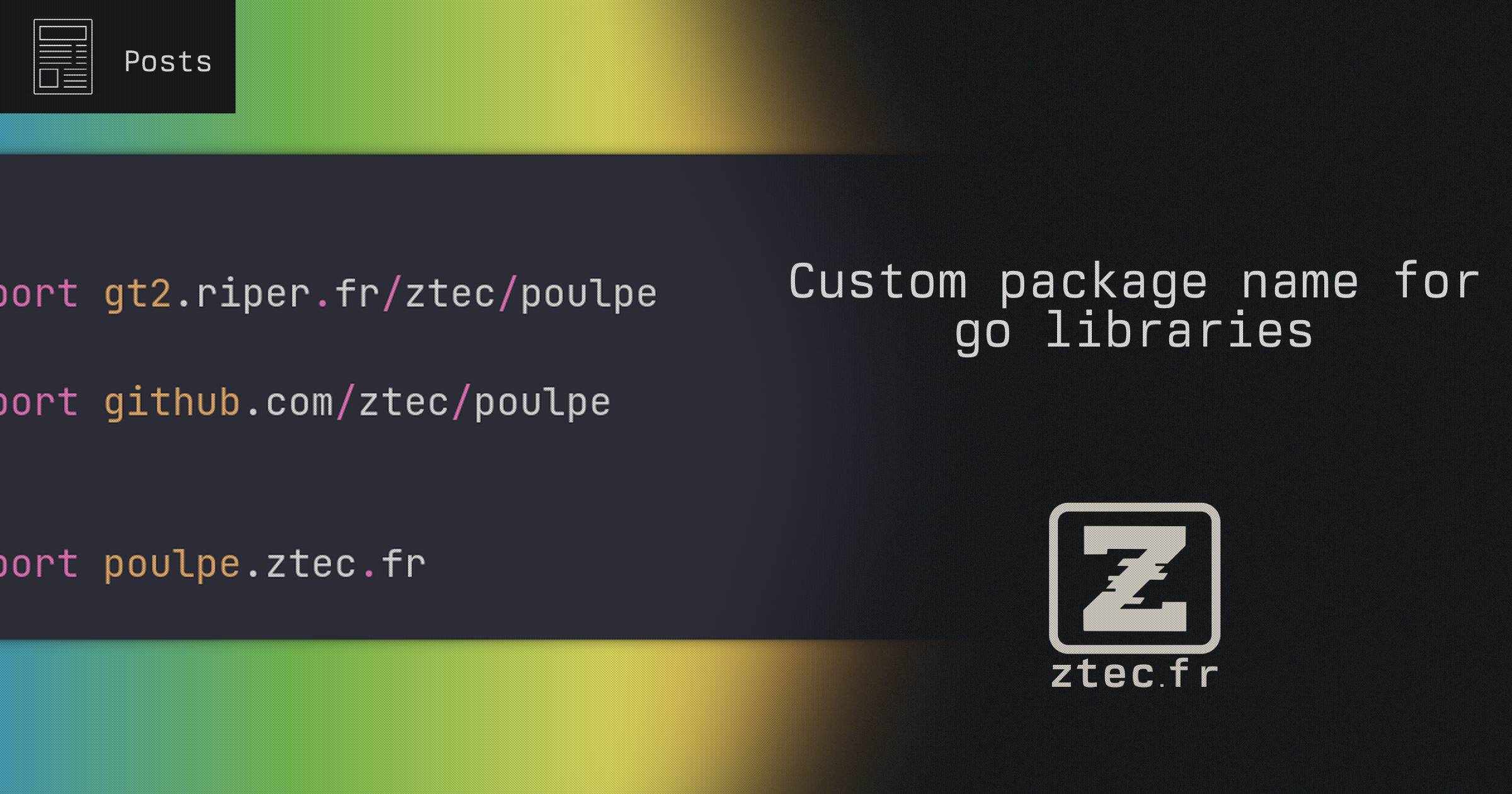
I recently released a small project called poulpe.ztec.fr. I personally use this repository as a library in one of my other projects. When I do so, my import statement looks like this:

Get an inside look at shrinking large Go binaries in the Datadog Agent through dependency and linker analysis.
Package testing provides support for automated testing of Go packages.
A day 0 tool for getting your app on k8s fast. Contribute to Azure/draft development by creating an account on GitHub.
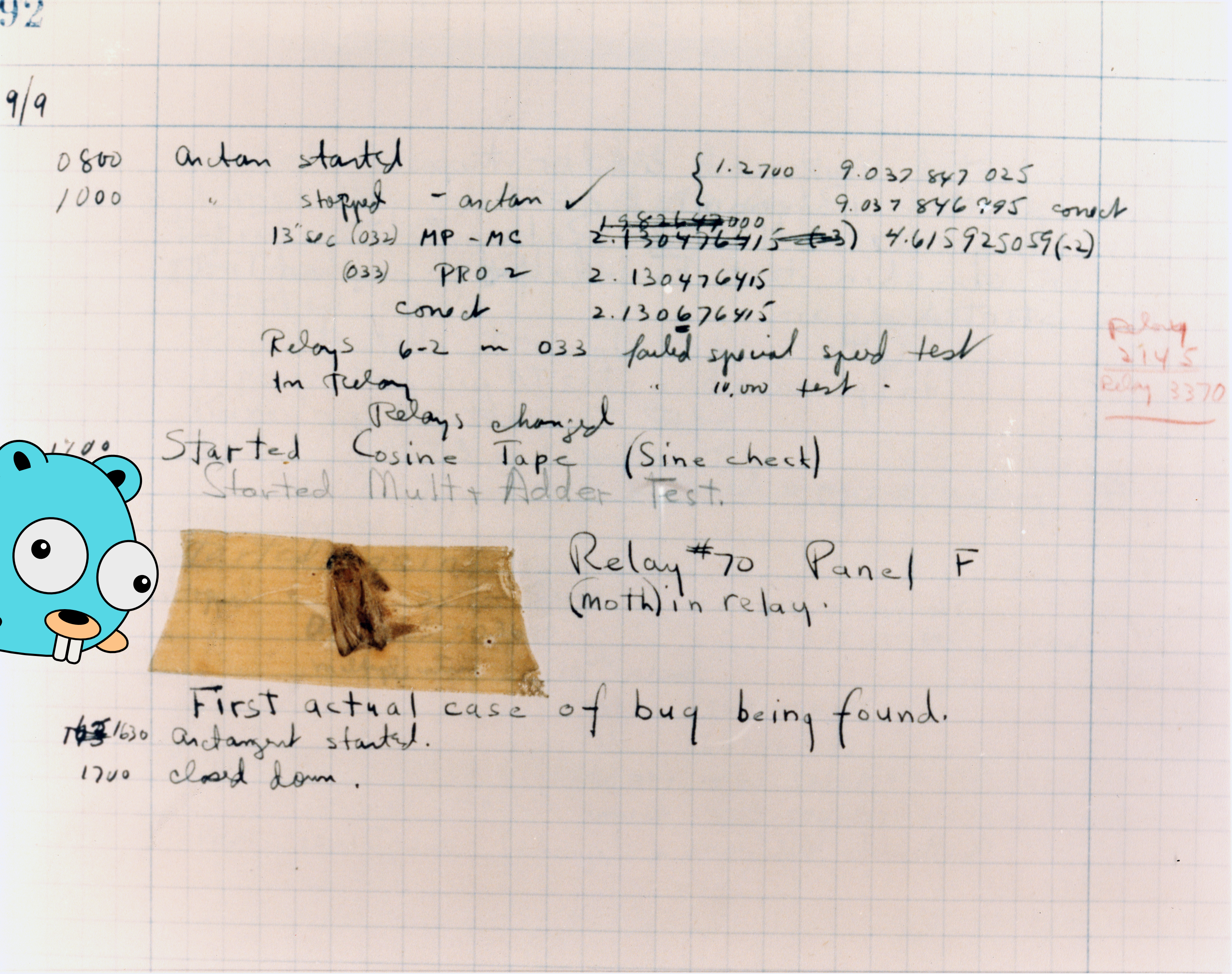
Debugging starts way before starting the debugger. Here is a rundown of debugging techniques for Go apps.
Setting up a CI with Go build and module caches in WoodpeckerCI
Performance Benchmarks with Go's testing Package and Statistical Tests with benchstat
Package testing provides support for automated testing of Go packages.