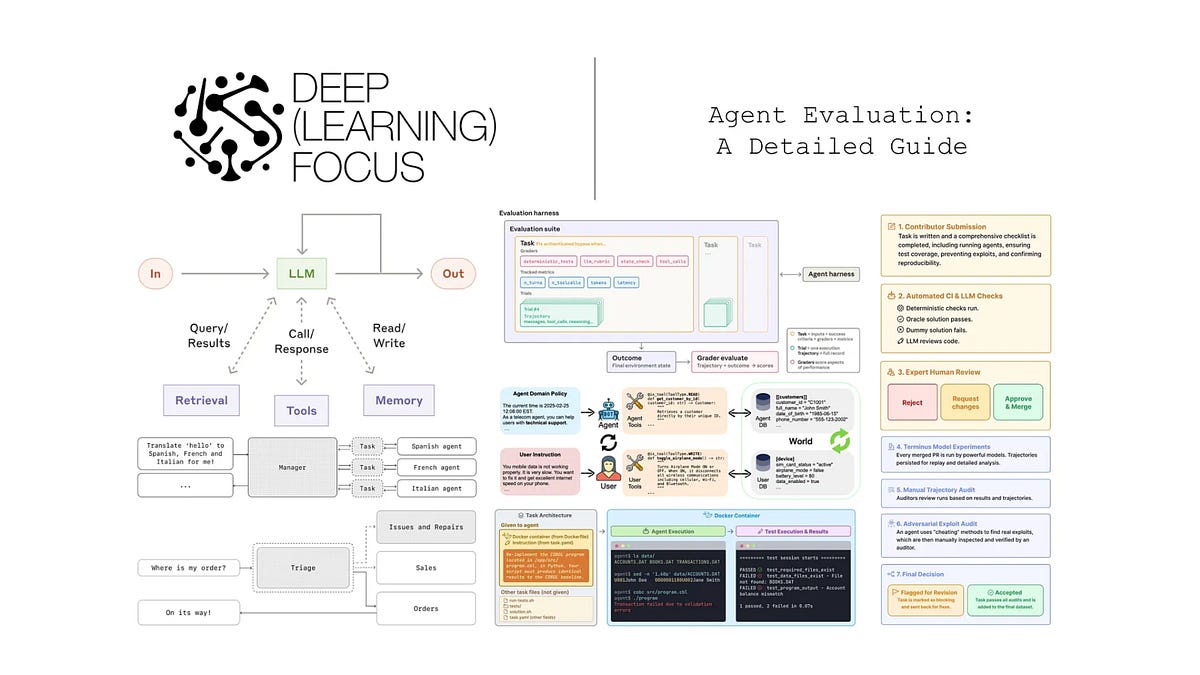
Agent Evaluation: A Detailed Guide
Best practices and common patterns for effectively evaluating AI agents...
Writing effective tools for AI agents—using AI agents
Best practices and common patterns for effectively evaluating AI agents...
Learn how to move beyond traditional chunk-based RAG to context engineering that gives agents peripheral vision of data landscapes. Explore four levels from basic chunks to faceted search with business outcomes and practical implementation strategies.
Every major AI agent runs the same core loop. The 6-line version is easy. The production-hardened version—with context compaction, loop detection, cost budgets, and graceful termination—is where things get interesting.
<!-- buttondown-editor-mode: plaintext -->Hello there! Welcome to another issue of Token Ruby. ## Interesting Reads - [Building Your Second Brain: And Why It
Demystifying MCP by building servers and clients from scratch with raw JSON-RPC, then connecting them to LLMs via function calling.

As tasks require more autonomous behavior, we're seeing a shift from LLM APIs to Harness APIs. Explore how Claude Code's SDK enables rapid agent development through HaaS (Harness as a Service).

A running list of helpful resources for building agents.
Specify tool schemas, write effective descriptions, and control when Claude calls your tools.
Embeddable RAG library for Elixir/Phoenix with agentic pipelines and dashboard - georgeguimaraes/arcana

I’ve spent the last few months building a conversational agent focused on improving discovery and reducing the support burden. I know what you’re thinking… a...
Specify tool schemas, write effective descriptions, and control when Claude calls your tools.

Will update this as I find more. Building effective agents: Anthropic says the most reliable agents come from simple, composable patterns with clear tool ...
How code execution with MCP reduces token usage by giving AI agents a workspace outside the context window for data-heavy processing tasks.
Enterprises see the power in connecting their data and functionality directly to AI models but most are still treading lightly. The Model Context Protocol (MCP) has quickly emerged as the de facto standard for this kind of AI connectivity, yet it remains very early in its enterprise maturity. What I’m seeing is a split reality: some teams are forging ahead, hacking together proofs of concept to make things work; others are pulling back hard, warning that “MCP is not secure, and we shouldn’t touch it.”
Specify tool schemas, write effective descriptions, and control when Claude calls your tools.
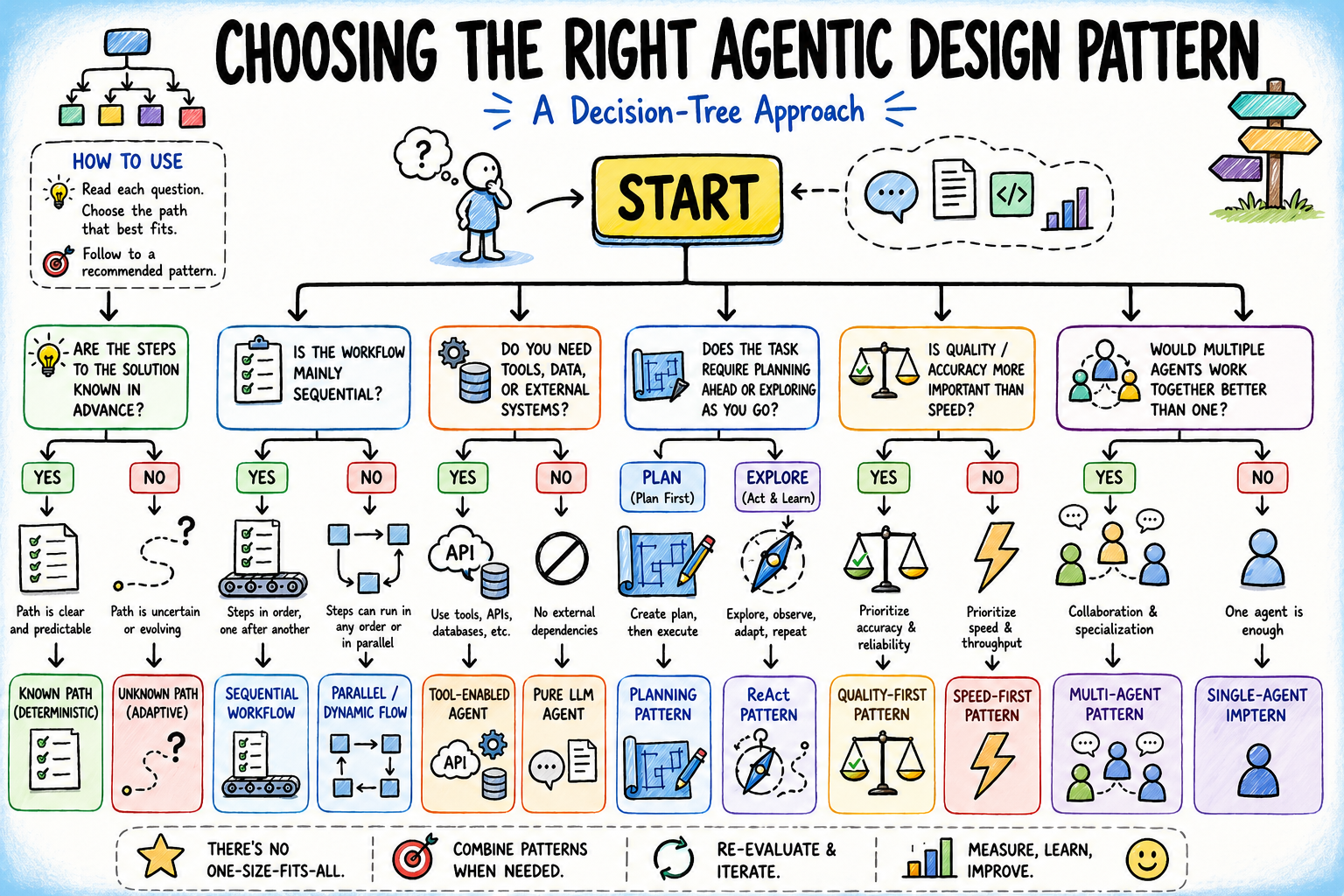
In this article, you will learn how to apply a structured decision tree to choose the right agentic design pattern for any AI system you are building.
Tool-response engineering is the practice of designing tool outputs to provide warnings and next-step guidance shaping what AI agents do after each tool call.

We’re in a moment right now that design leaders should be excited about.