GitHub - Salusoft89/planegcs: A webassembly wrapper for FreeCAD's 2D geometric solver.
A webassembly wrapper for FreeCAD's 2D geometric solver. - Salusoft89/planegcs
A webassembly wrapper for FreeCAD's 2D geometric solver. - Salusoft89/planegcs
A machine learning craftsmanship blog.

My rekindled interest in Machine Learning turned my attention to Neural Networks or more precisely Artificial Neural Networks (ANN). I started tinkering with ANN by building simple prototypes in R. However, my basic knowledge of the topic only got me so far. I struggled to understand why certain parameters work better than others. I wanted to understand the inner workings of ANN learning better. So I built a long list of questions and started looking for answers.
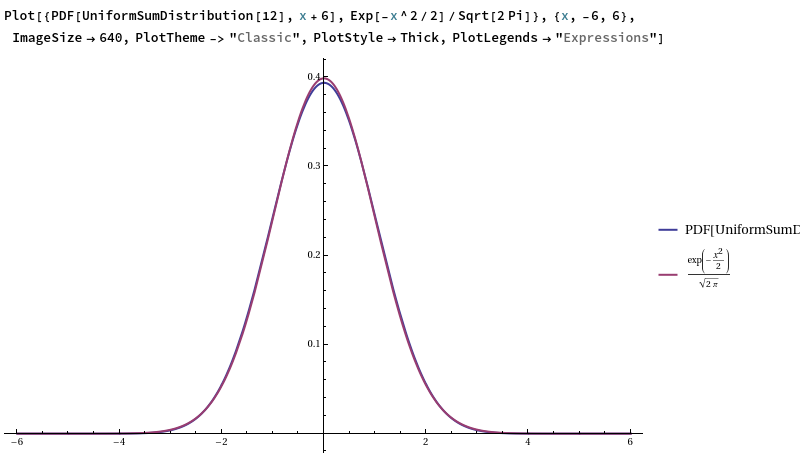
I’ve spent the last couple of months tackling the problem of designing an algorithm to rapidly generate high-quality normally-distributed pseudorandom numbers on a GPU. Whilst this may seem q…
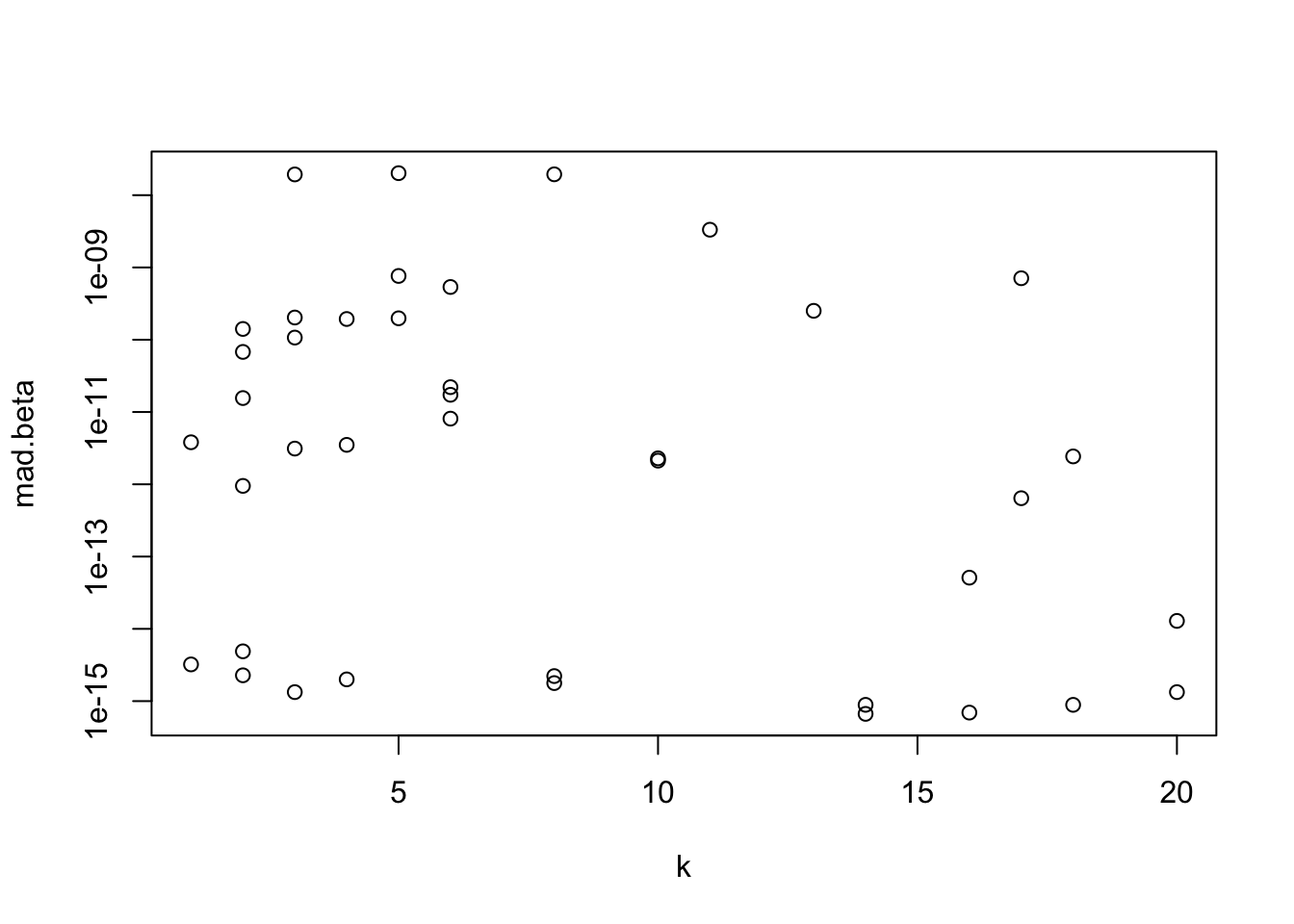
Maximum likelihood estimation (MLE) is central to estimation and development of predictive models. Outside of linear models and simple estimators, MLE requires trial-and-error iterative algorithms to find the set of parameter values that maximizes the likelihood, i.e., makes the observed data most likely to have been observed under the statistical model. There are many iterative optimization algorithms and R programming paradigms to choose from. There are also many pre-processing steps to consider such as how initial parameter estimates are guessed and whether and how the design matrix of covariates is mean-centered or orthogonalized to remove collinearities. While re-writing the R rms package logistic regression function lrm I explored several of these issues. Comparisons of execution time in R vs. Fortran are given. Different coding styles in both R and Fortran are also explored. Hopefully some of these explorations will help others who may not have studied MLE optimization and related statistical computing algorithms.

Introduction Now here is a blog post that has been sitting on the shelf far longer than it should have. Over a year ago I wrote an article about problems I was having when estimating the parameters…
The other day I presented a t-SNE plot to a software engineer. “But what isit”, I was asked. Good question, I thought...

Numerical Optimization course final project

Recently, the PyMC4 developers submitted an abstract to the Program Transformations for Machine Learning NeurIPS workshop. I realized that despite knowing a thing or two about Bayesian modelling, I don’t understand how probabilistic programming frameworks are structured, and therefore couldn’t appreciate the sophisticated design work going into PyMC4. So I trawled through papers, documentation and source code1 of various open-source probabilistic programming frameworks, and this is what I’ve managed to take away from it.