The Onion Architecture : part 1
jeffreypalermo.comThis is part 1. part 2. part 3. part 4. My feed (rss). I’ve spoken several times about a specific type of architecture I call “Onion Architecture”. I’ve found that it lea…
I believe we should look beyond libraries and frameworks and rediscover the value of patterns and principles, and I’d argue that it would lead us to have less breaking changes and add more longevity to the stuff we build.

A practical guide to Clean Architecture folder structure, project organization, and dependency...

In this article, we'll look at the various different versions of the "clean architecture", simplify it, and understand how we can use it to write more flexible Node.js code with TypeScript.

Don't ship when you have a minimum viable product. Don't ship a prototype to get feedback. Ship a blank page to your production servers on day one.

Next Generation Command and Message Bus for .NET
In this post, we'll look at how to apply the principles of The Clean Architecture to build a Xamarin.Forms Android app. This app will be based on a robust architecture that is loosely coupled and cleanly separates the important business or domain logic from other details and infrastructure like databases, UI frameworks, and network communications.
index page of ArchUnit's documentation
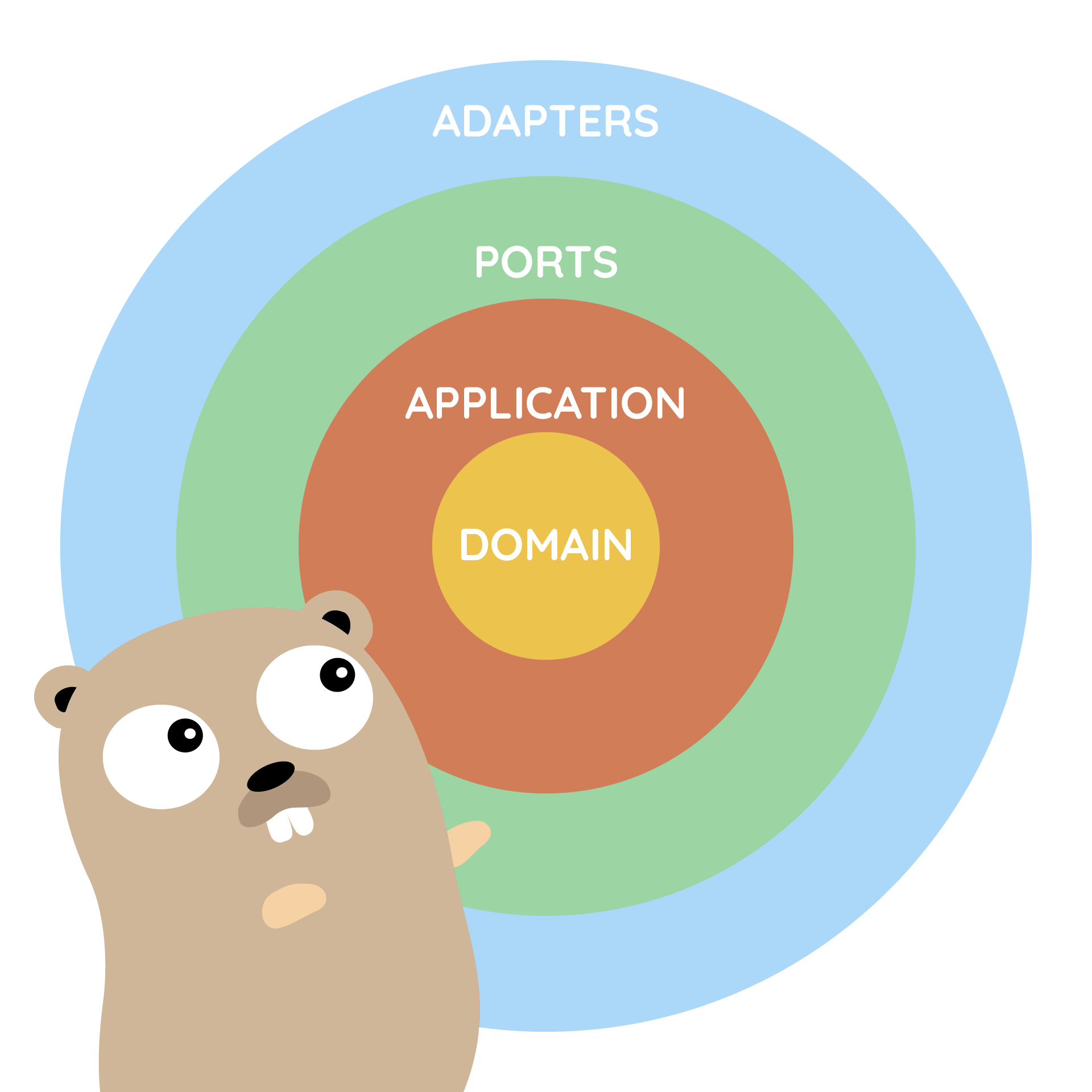
In this guide, we share our pragmatic approach to Clean Architecture in Go, refined through years of real-world experimentation. We demonstrate refactoring techniques on a live project, showing how to extract application logic, define interfaces, and improve testability. You'll learn how to apply Clean Architecture principles in an idiomatic Go way, balancing theory with practical implementation. Our battle-tested methods help you create loosely coupled, highly cohesive code that's easier to maintain and extend over time.

In this episode, we’ll take a look at redesigning an API that has been developed in a traditional layered way, moving to a more interesting onion/hexagonal/ports and adapters architecture (which is apparently very fashionable right now in .NET land).
Full Modular Monolith application with Domain-Driven Design approach. - kgrzybek/modular-monolith-with-ddd

This morning, AWS News had a minor production incident. The platform sends out a daily digest of the most popular AWS news articles, but today, it didn’t. The problem wasn’t hard to fin…

One of the most interesting aspects about software is that it is never done. In this article I will share how we used onion architecture to deal with uncertainty, and how a small investment in desi…

Programming, Coffee and Indie Hacking
TL;DR Architecting an application with a pure function at its core can be a first step towards the “functional-core imperative shell” ideal, which can simplify testing and lower an applications complexity bar.
If you're new to DDD and not sure where to start, this process will guide you step-by-step - ddd-crew/ddd-starter-modelling-process
If you're new to DDD and not sure where to start, this process will guide you step-by-step - ddd-crew/ddd-starter-modelling-process

1. Intro tl;dr Instead of forcing your application into a prescriptive template like Clean or Hexagonal Architectures, get back to basics and use patterns from Modular Software Design. Divide the application into independent modules, each containing business logic representing a specific process. For modules with complex business logic, extract the infrastructure-related code into separate Infrastructure-Modules. This will enable you to build an application characterized by low cognitive load, high maintainability, and high extensibility.

Hi, A week ago, Oliver Drotbohm published an expanded idea of the Onion Architecture: The Sliced Onion Architecture . Most software developers are familiar with Hexagonal Architecture and its extension, the Onion Architecture . The idea (simplified): One decouples their business code from infrastructure code using adapters. This makes it less likely to create the “Big Ball of Mud” . What do I see in practice? Most developers have understood that it’s a good idea not to mix business code with infrastructure code.

Clean Architecture is a way of structuring a solution such that dependencies and infrastructure concerns are kept separate from business logic and the domain model. It's frequently used with Domain-Driven Design and can easily be built with ASP.NET Core using a solution template described in this article.

This is the second part of a 3 or 4 part series where I’m formulating my thoughts about an ongoing initiative at MedeAnalytics. I started yesterday with a related post called On Giving Techni…

Make layers great again