
Building the most inaccessible site possible with a perfect Lighthouse score - Manuel Matuzovic
matuzo.atAn experiment that proves that automatic accessibility testing is only a first step and that manual testing is vital.
Les mythes de l’accessibilité
Un petit projet qui déboulonne les mythes les plus répandus sur l'accessibilité.

If you’re going to do a job, do it properly
I often hear the phrase “forward fix” used when referring to accessibility. It sounds fancy, but what it really means is “We’ll come back to the accessibility bit later”.
Why Automated Accessibility Testing Isn't Enough
Understanding all the human squishiness that goes into making digital products inclusive
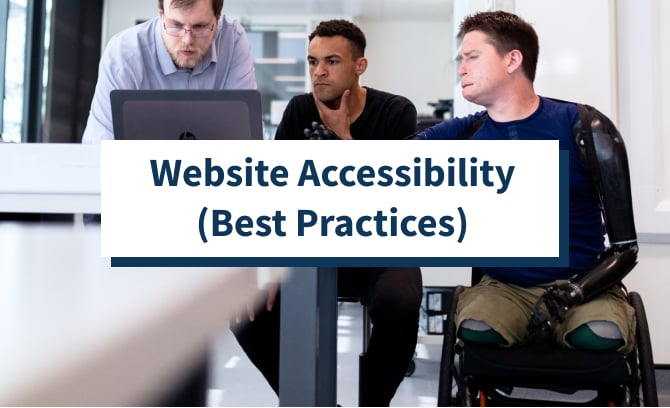
Website Accessibility (15 Best Practices)
When creating a website, there’s a lot of factors to consider. For example, it’s especially important to ensure your site is user-friendly for all people equally. This is where website accessibility practices come into action. So what exactly is website accessibility? It’s a practice of guaranteeing sites to be equally available to people with disabilities. […]
Accessibility auditing and ego
At its core, an accessibility audit is about determining if a disabled person can use a digital experience.

Automated Accessibility Testing Is a Good Start - But You Need To Test Manually Too
"Is there a tool that checks if my website is accessible?" is a question I get asked sometimes. (Answ...
The impact that high quality mark-up can have on accessibility, performance, and discoverability.
The impact that high quality mark-up can have on accessibility, performance, and discoverability.
Towards amazing accessibility - Matthew Deeprose
IT departments in the Higher Education sector and elsewhere know they must commit to accessibility, but how can we take this ambition and embed it within our operations? I attempt to show how we could start that journey through shifting left.
Making IT accessible for all!
Recent experiences have demonstrated that University staff and students expect to use online resources with a variety of devices, making full use of accessibility features such as reflow, captions, and text-to-speech. Such features benefit everyone, but especially the increasing proportion of university students who self-report a disability. University Information Technology departments know they must commit to accessibility; indeed, they have a legal obligation to do so, but how can they take this ambition and embed accessibility within their policies and processes?
Evinced is Pushing the Limits of Automated Accessibility Testing
Evinced has launched a suite of new testing tools that are pushing the limits of what's possible to test accessibility automatically. Read to learn about their approach and my consulting work with them.
Accessibility auditing and ego
At its core, an accessibility audit is about determining if a disabled person can use a digital experience.
Applying accessibility fixes with stealth for the greater good
This is not an article that Steve, the author, thinks should exist in a healthy industry, but the shape of our industry — especially right now — makes this sort of article very necessary and hopefully helpful to you in your job.

How To Hack Your Google Lighthouse Scores In 2024 — Smashing Magazine
Do perfect Lighthouse scores mean the performance of your website is perfect? As it turns out, Lighthouse is influenced by a number of things that can be manipulated and bent to make sites seem more performant than they really are, as Salma Alam-Naylor demonstrates in several experiments.
An Introduction to Web Accessibility | Dickson Tan's blog
Introduces Web Accessibility, how it can be measured, the importance of semantic HTML and practical suggestions to make your websites more accessible.
Overcoming Goodhart's Law
When a metric becomes a target, we've walked into a trap known as Goodhart's Law. Luckily this trap can be avoided. I'll show you how!
Accessibility checklist
A list of accessibility recommendations; covering typography, content, layout and interaction.
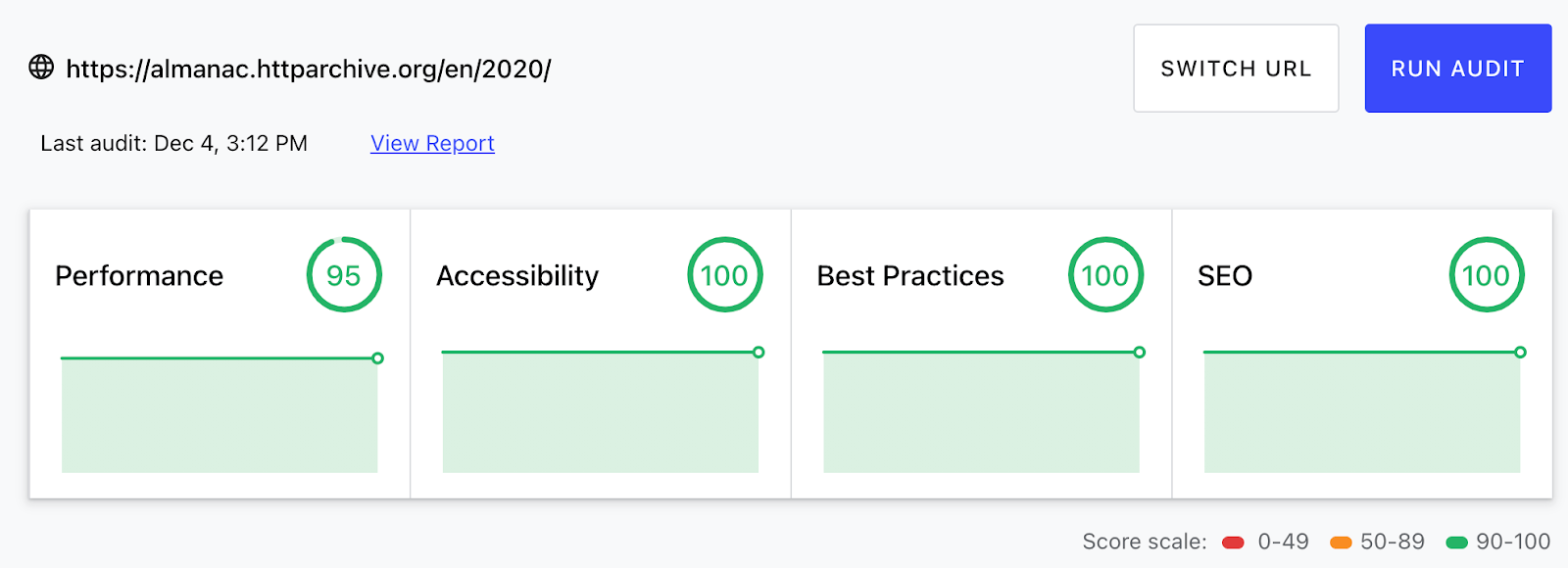
Running Lighthouse in GitHub Actions
How to set up automatic runs of Ligthouse audits on pull requests using GitHub actions.
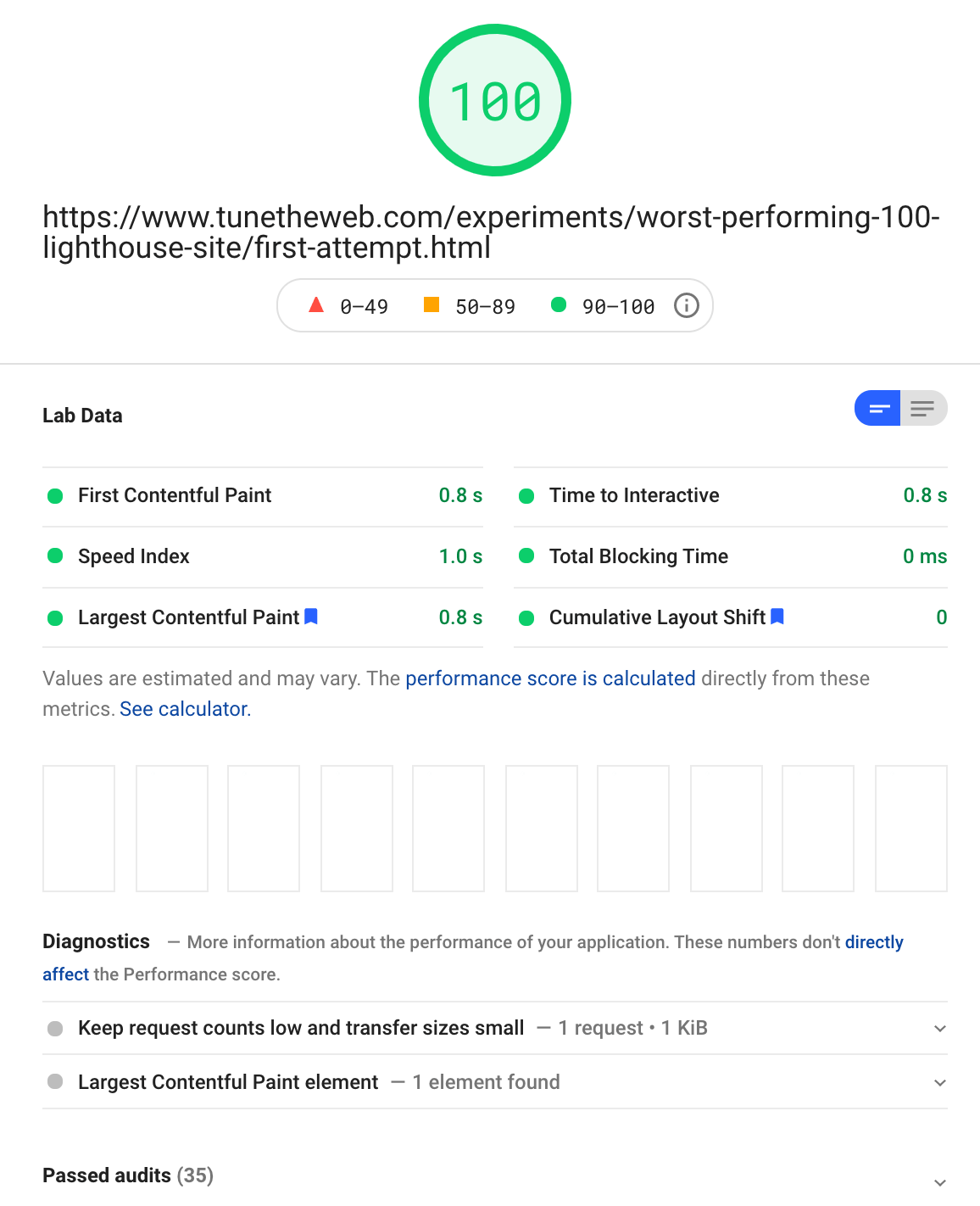
Making the slowest 'fast' page
Can you make a webpage which gets 100 score in Lighthouse and passes all the Core Web Vitals and still feels slow?
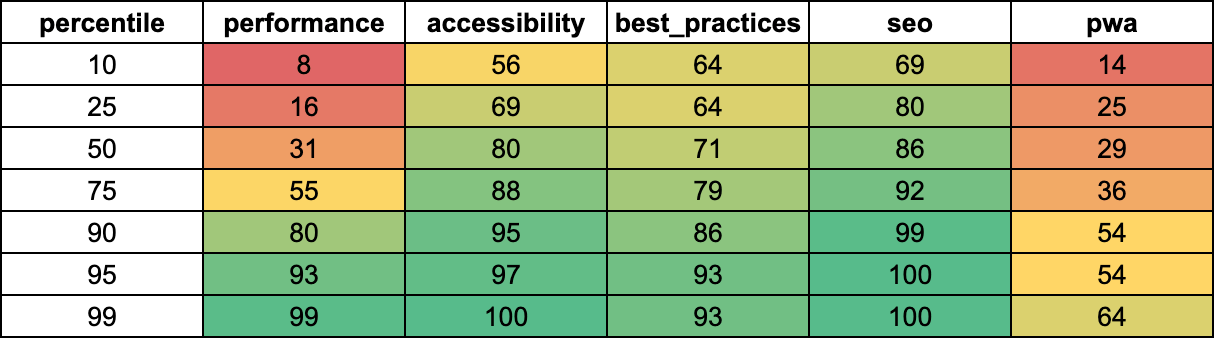
What do Lighthouse Scores look like across the web?
An in-depth look at Lighthouse scores across the 6.8 Million sites the HTTP Archive crawled in September 2020
The most accessible JavaScript framework /// Iain Bean
According to the WebAIM million survey it’s Gatsby, but can you trust automated accessibility tests?