Anthropic released Claude Sonnet 4.5 today, with a very bold set of claims: Claude Sonnet 4.5 is the best coding model in the world. It’s the strongest model for building …
Ronny ist zurück von der DjangoCon Europe 2024 in Vigo 🇪🇸 und hat einiges zu berichten. Zusammen mit Dominik und Jochen spricht er über die Highlights der Konferenz und seine Erfahrungen als Speaker 🎤. Besonders interessant waren diesmal die DEP 14 Background Workers, HTMX und komponentenbasierte Ansätze in Django. Außerdem gab Ronny Einblicke in seinen Vortrag über klassenbasierte E-Mails in mit seinem Projekt Django Pony Express 📧. Wir freuen uns sehr, endlich wieder mit ihm zu sprechen - das letzte Mal ist schon eine Weile her! 😁
Let’s overcome decision fatigue by building a decision tree app from thousands of images of bathroom fixtures, an off-the-shelf image embedding model, and a few command-line tools.
I’ve been exploring how small, open-source language models can fit into a local development setup to improve how I work day-to-day. There’s something satisfying about building a lightweight, responsive system that runs entirely on your own machine. This post is a practical guide to using tiny models with just enough tooling to throttle things locally, and run smarter without adding complexity. While the spotlight is on state-of-the-art frontier models, I am interested in exploring the capabilities of open-source models that I can run on my Macbook M2 Pro (10-core CPU, 16GB RAM). Working with open-source models locally is interesting and exciting for a few reasons:
I used VSCodium and Codeium to develop Python code. VSCode is my editor of choice and Codeium is a well integrated AI-tool that helps writing code. While it solved a lot of problems for me, especially writing boilerplate code, I became more and more frustrated using this setup. No longer I wanted to understand the actual problem or piece of code, but just to prompt out a solution. Often I was eagerly waiting for the auto-complete feature to fix my code. I copied pieces of code to LLM chats in the browser and then updated the code in the editor. This workflow didn’t feel right. This isn’t coding.
I've been thinking for a while it would be interesting to run some kind of HTTP proxy against the Claude Code CLI app to intercept its API traffic and take …
Last year I wrote about the superpowers text embeddings can give you and how I tried using them to compare the song lyrics of some music artists. Though the results failed to paint the picture I hoped for – this was due to the methodology, or rather lack thereof – it made me appreciate the importance of simple open source tools (OSS) in the currently booming AI/LLM space. To get to the point of displaying the embedding projections in the blog post I had to jump through some hoops and combine a lot of different Go modules before I could finally generate the nice interactive plots from the computed data. This wasn’t ideal I knew even back then but I wrote a blog post on a whim trying to quickly prove a silly point to a friend of mine. So at the time, I made do with whatever was necessary.
I’ve been building out a small suite of command-line tools for working with ChatGPT, GPT-4 and potentially other language models in the future. The three tools I’ve built so far …
I made numerous small fixes and improvements to django-cast. I also dabbled in Rust game development again and can now draw 2D maps in LDtk and load them into a game. It's just a small step forward, but I didn't struggle with the compiler as much as I anticipated - I'm starting to like Rust.
Useful links related from Generative AI, ML space Collections Gen AI- Collection of Articles on AI Code Generation and its pros and cons AI Guide by Mozilla Collection of resources related to Applied ML List of for MLOps Prompt Engineering Playbook for Programmers Free courses Fast AI by Jeremy Howard AI Canon - List of resources around GPT Free Deep learning course Articles AI native software Engineer in 2025 My LLM codegen workflow atm How to build your own perplexity for any dataset How a Machine Learns Machine learning is still too hard - Year 2022 Neural Networks from Scratch History of AI Machine Learning Algorithms: What is a Neural Network? What is Benford’s Law and why is it important for data science? Benford’s Law and Financial Statements Data Scientists Should Be More End-to-End Team Data science process (Microsoft) Traits of Good Data Scientist The First Rule of Machine Learning: Start without Machine Learning Deep learning is hitting wall Real world Recommendation System Videos Neural Networks Demystified Deep Learning: A Crash course Vector Embeddings, Vector Databases Storing OpenAI embeddings in Postgres with pgvector ChatGPT, LLMs A practical guide to building successful LLM products. Emerging Architecture for LLM Applications LocalGPT - Chat with your documents on your local device using GPT models Run LLMs from command line Resources on LLMs AI based Translation Lokalize - AI based translation of file Vibery - Semantic Search using embeddings and KNN Tools Genkit - An open-source framework for building AI-powered apps Markitdown - Convert PDF and Office documents to markdown to feed into LLM Aider - AI pair programming in your terminal An open platform for training, serving, and evaluating large language models. Release repo for Vicuna and Chatbot Arena Open source LLM engineering platform: LLM Observability, metrics, evals, prompt management, playground, datasets. Integrates with LlamaIndex, Langchain, OpenAI SDK, LiteLLM, and more. Vespa is an
Unless you've been living under a rock, you've probably heard of large language models (LLM) such as ChatGPT or Bard. I'm not one for riding a hype train but I do think LLMs are here to stay and eith
0 inbound linksarticleenCloudflareGPTJavascriptLangChainlarge language modelsLLMOpenAIQ&ACloudflareGPTJavascriptLangChainlarge language modelsLLMmathjaxOpenAIQ&A
For those who may not be aware, Neovim is to me what a lightsaber is to a Jedi. It forms an essential part of my routine, as I use it for nearly all my tasks involving text. Be it drafting an essay, sending an email, or coding, Neovim is my go-to tool. Moreover, I have a deep admiration for the UNIX philosophy and its command-line interface programs. It’s quite fascinating to observe how these small, uncomplicated UNIX programs, designed to do one thing flawlessly, interact effectively using piping mechanisms. Tools like sed, grep, awk, count, cut, and many others, often prove to be incredibly useful for text processing.
I recently came across Simon Willison’s post about Matt Webb’s Apple Watch dictation setup on Interconnected. He records voice notes while running with the Whisper Memos app, then cleans up the transcript with Claude when he gets home. Matt Webb dictates notes into his Apple Watch while out running (using the new-to-me Whisper Memos app), then runs the transcript through Claude to tidy it up when he gets home.
I just read a good piece by the Nilenso crew on AI-assisted coding for teams that can’t get away with vibes. Blog post title aside, it helped me synthesize my own thoughts better on a question that keeps coming up: will AI replace all software engineers?". Not only won’t it replace us, it’ll make the best engineers even more valuable. Here’s why.
Stop treating agent misses as bugs to fix and start treating them as gaps to close. Every mistake becomes a reason to add a test, document a pattern in a skill, or tighten the instructions. Free yourself to solve new problems instead of re-solving the same ones.
I’ve been a huge fan of Claude Code since it launched. Over the past few months, I’ve been using it extensively across all kinds of projects. Claude Code is still the best tool out there, though others (Gemini CLI) are catching up. I recently discovered OpenCode, an open-source model agnostic framework that supports local models, and used it to test gpt-oss-20b, qwen3-coder-30b — currently the best open source coding models with tool calling.
There’s a new release from Google Gemini this morning: the first in the Gemini 2.5 series. Google call it “a thinking model, designed to tackle increasingly complex problems”. It’s already …
In this post I’ll show you how I found a zeroday vulnerability in the Linux kernel using OpenAI’s o3 model. I found the vulnerability with nothing more complicated than the o3 API ̵…
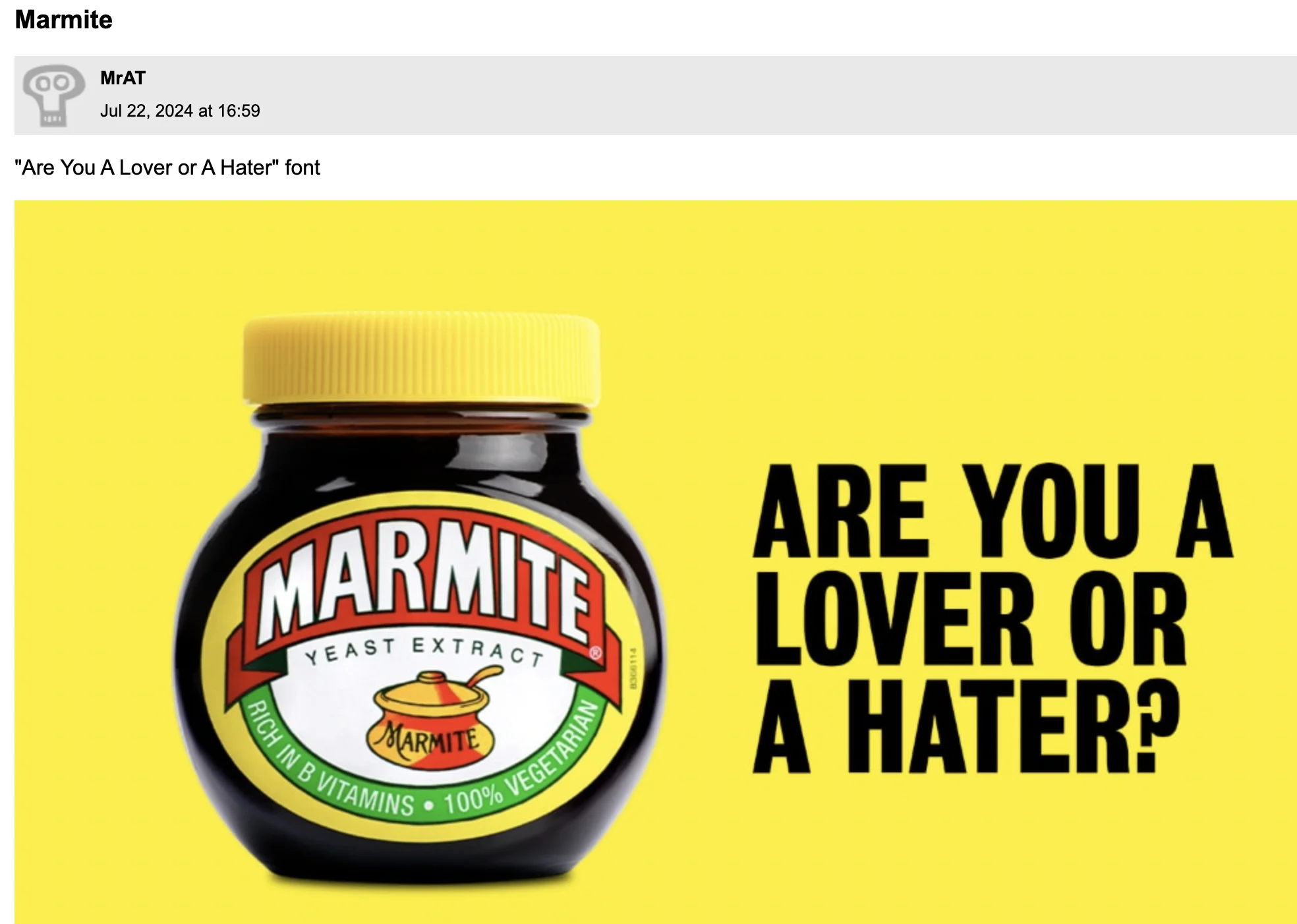
Spoiler: not really dafont.com is a wonderful website that contains a large collection of fonts. It’s more comprehensive and esoteric than Google Fonts. One of its features is a forum where …
I discovered a fun and strangely obvious trick for summarizing videos faster and reducing costs: just speed them up. Cheaper, faster OpenAI transcriptions with a little ffmpeg trick.
I had some very nice experiences with Claude Code recently, and I realized it would be fun to write down all the ways I use AI today (highly likely it will a...