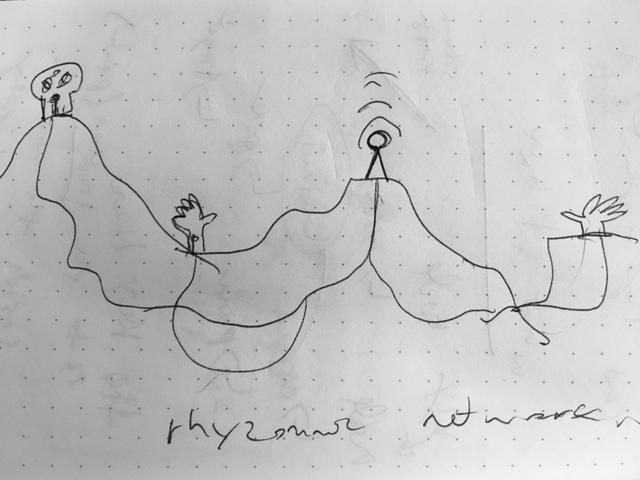
Permacomputing is a nascent concept and a community of practice centred around design principles that embrace limits and constraints as a positive thing in computational culture, and on creativity with scarce computational resources. As a result, permacomputing aims to provide a countervoice to digital practices that promote maximisation, hyper-consumption and waste. we now have what we may consider to be a foundational text on permacomputing. written for the limits 2023 conference. wiki: p...
Ever since I realized how beautifully simple and effective of a technology RSS is, I’ve been… well, I’ve been accumulating articles to read later on Pocket. This may the inevitable consequence of a hectic life, but I also want to blame myself for choosing to use Pocket a little bit. While having an easily accessible archive of good, already consumed web content makes sense (and would make even more sense if I wasn’t relying on Pocket’s servers and proprietary app to keep it going), my “Pocket saves” mostly consist of stuff that hasn’t been read yet, and that probably won’t even be opened as long as it stays on Pocket. Not only do I find myself much more prone to read on paper or on my e-reader, but the initially pretty good reading experience on Pocket has been steadily declining for the past few years, making it very unlikely for me to read anything that takes longer than five minutes on it. Also, Pocket is (mostly) LIFO, meaning that things that doesn’t get read almost immediately is bound to be forever forgotten in its depths.
[I have been away from the blog for a while. In the meantime, the ideas I want to write about have grown terrifyingly large. Rather than squeezing each in a ...
hello! in this first section of the uxn tutorial we talk about the basics of the uxn computer called varvara, its programming paradigm in a language called uxntal, its architecture, and why you would want to learn to program it.