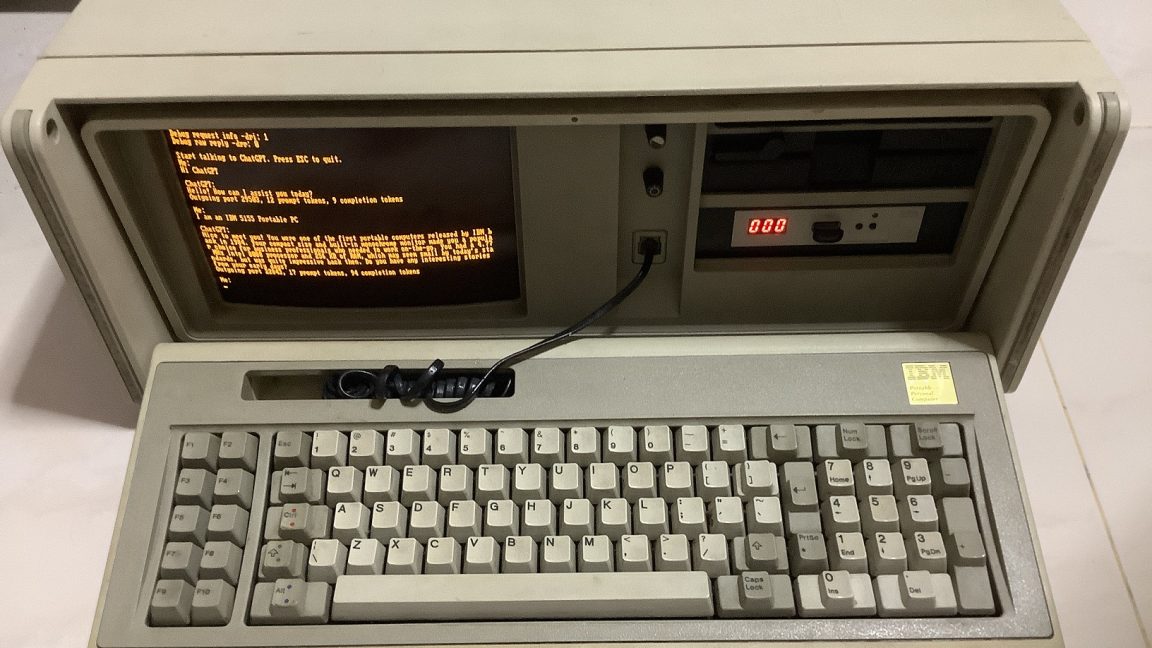
Hobbyist builds ChatGPT client for MS-DOS
IBM PC client allows futuristic AI conversations on vintage hardware.
IBM PC client allows futuristic AI conversations on vintage hardware.
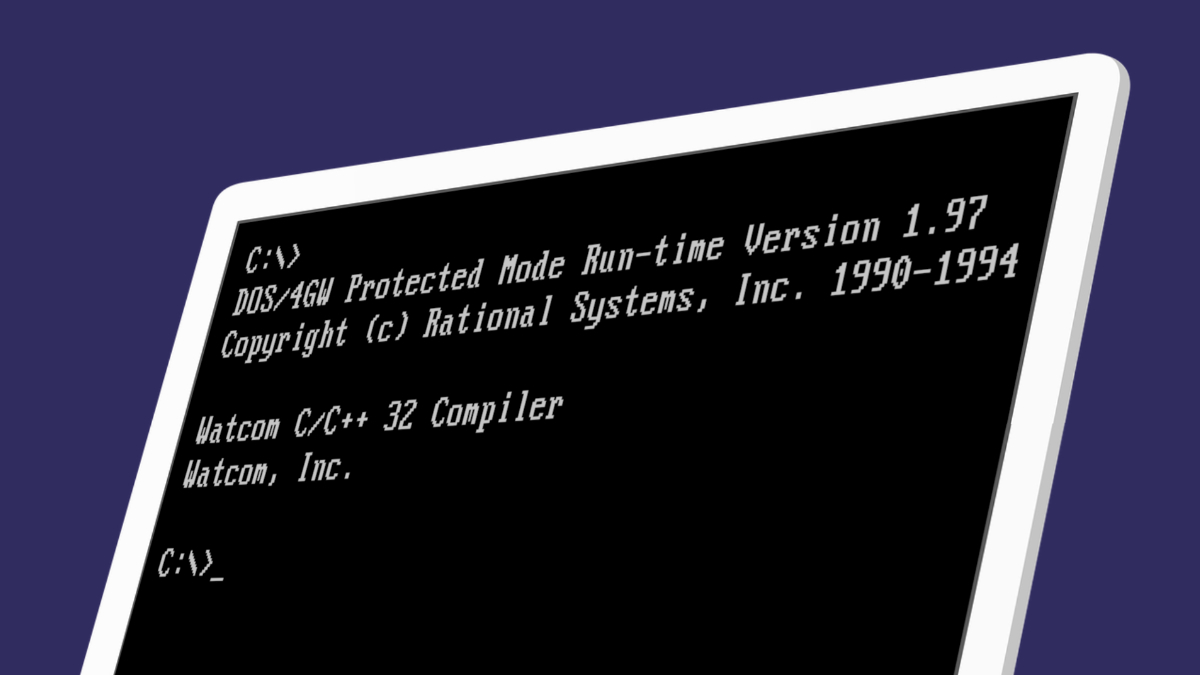
MS-DOS game programmers had to deal with several limitations. This article goes over some of these obstacles and explores how we used the DOS/4GW extender & protected mode to unleash the power of 32-bit DOS.
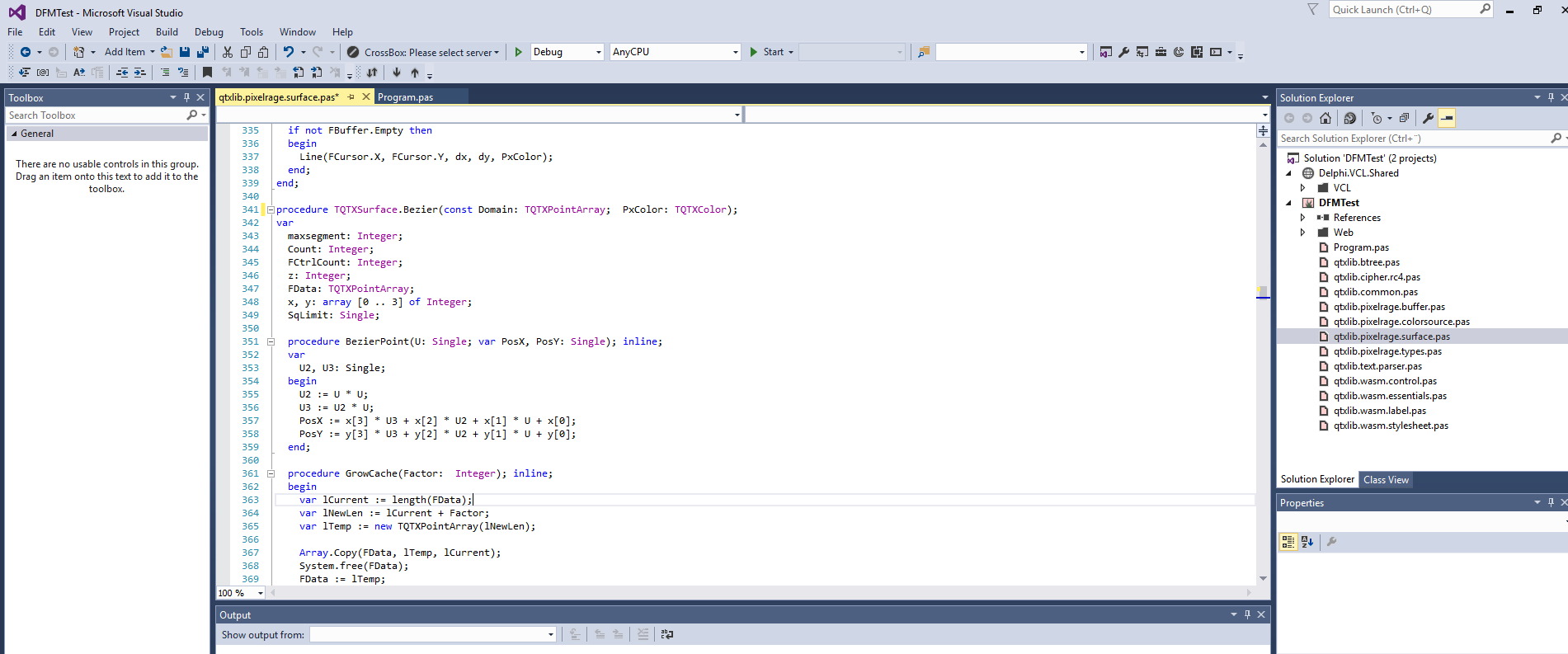
Lately I see more and more Delphi developers getting into debates with C# developers, and they are confronted with an attitude and belief-system that quite frankly is utter nonsense. It’s not…
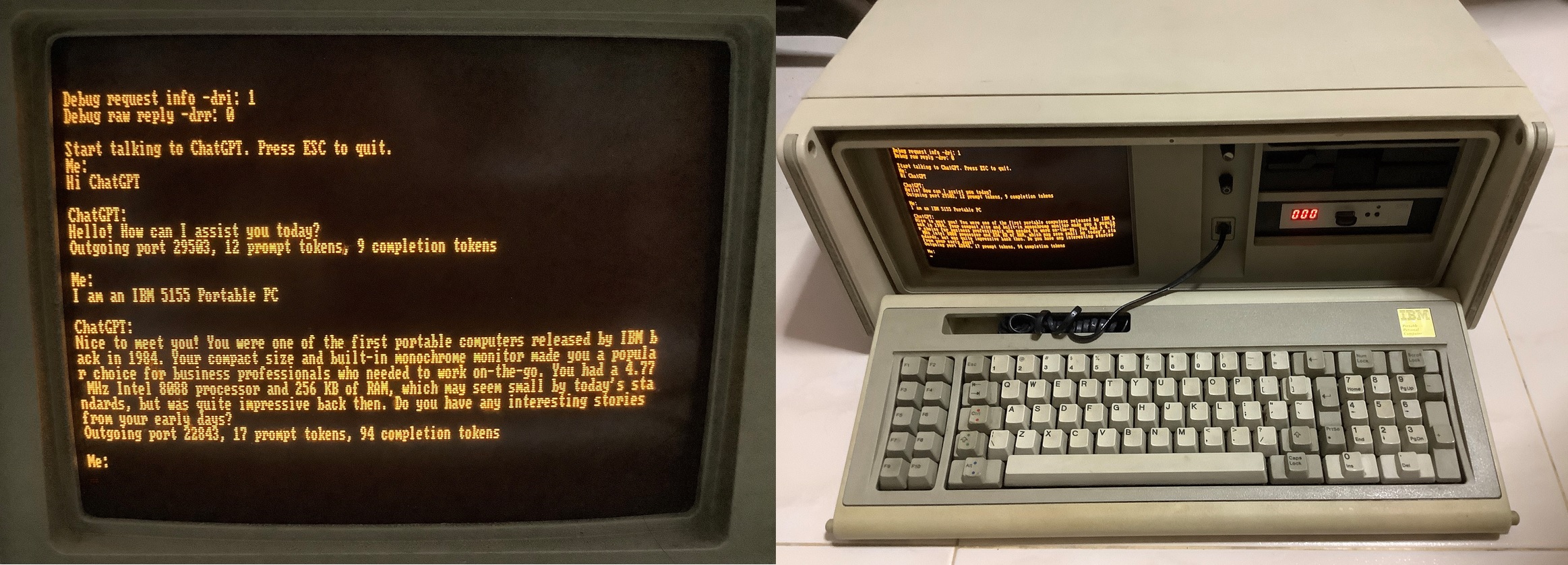
With the recent attention on ChatGPT and OpenAI’s release of their APIs, many developers have developed clients for modern platforms to talk to this super smart AI chatbot. However I’m pretty sure almost nobody has written one for a vintage platform like MS-DOS. This client now supports Hugging Face API, Ollama API and text to speech (TTS) capability. More info on TTS is found at the later part of this post.
Inspired by several others (such as Alex Schroeder’s post and Szczeżuja’s prompt), as well as a desire to get this down for my kids, I figure it’s time to write a bit about living through the PC and Internet revolution where I did: outside a tiny town in rural Kansas. And, as I’ve been back in that same area for the past 15 years, I reflect some on the challenges that continue to play out.

The appearance of Mythos – a private LLM allegedly capable of finding a multitude of 0-days – has made people concerned about being denied powerful tools. This seems to be a turning point in the mainstream discourse, and it motivated me to complete the think piece I’ve been meaning to write for a while. I have a related, intimate worry regarding LLMs. Just so that we’re clear, it’s not a common critique from the anti-AI crowd, like ethics or quality. While I share some reservations, frankly it’s not what gives me the most angst. My intent is to make this post thought-provoking even if your beliefs on this topic entirely differ from mine.
Another year, another version of my Polyglot Conway project, this time for C89, also known as “ANSI C”, targeting quite a few compilers of the early 1990s, and some others from our more recent times.