I hate software licenses. When I read a software license, what I see is a bunch of officious, mind-numbing lawyerly doublespeak. Blah, blah, blah... kill me now. If I had my way, everything would be released under the WTFPL. Over time, I’ve begrudgingly come to the conclusion that, like
3 inbound linksarticleensoftware development conceptslicensingopen sourcecode reuse
0 inbound linksennon-technical501c6copyleftdevopsfedorafreeipaglustergnomegplhelpwantedlegalmgmtmgmtconfigopenstackplanetfedoraplanetfreeipaplanetpuppetpuppetred hat
Free and Open Source, full-featured torrent client for Android. Mirrored from https://gitlab.com/proninyaroslav/libretorrent - proninyaroslav/libretorrent
Here are answers to questions we are frequently asked. If you have a question not addressed here, please contact us. Basics of Open Source Distributing and Using Open Source Software Commerce…
We can come together to build a better world for the artists and historians of tomorrow by protecting their right to do what they can with the ideas we create today.
Adapted from a talk and slide show I presented at the Open Knowledge Conference in Berlin on July 1, 2011. –NPCrossposted from ninapaley.com Free software is a matter of the users’ free…
<div class="wp-block-jetpack-markdown"><h3>Summary</h3> <p>As a developer and user of open source code, you interact with software and digital media every…
Memcached is an open source, distributed, in-memory key-value store. Learn how Memcached works and how you can use it as a cache or session store to speed up your applications.
Two tech workers discussed the achievement of the Claude C Compiler experiment, a research project by Anthropic that built a compiler with an autonomous agent team powered by a frontier AI model.
Recently I've started working on a small Ruby library. While I was sketching the architecture of it to I was listening to some lectures from Richard M....
Zac Brown's Nonsense is the source for all of Zac Brown's nonsense. If it's Zac Brown related, then it's probably nonsense. And if it's nonsense, then it's probably here!
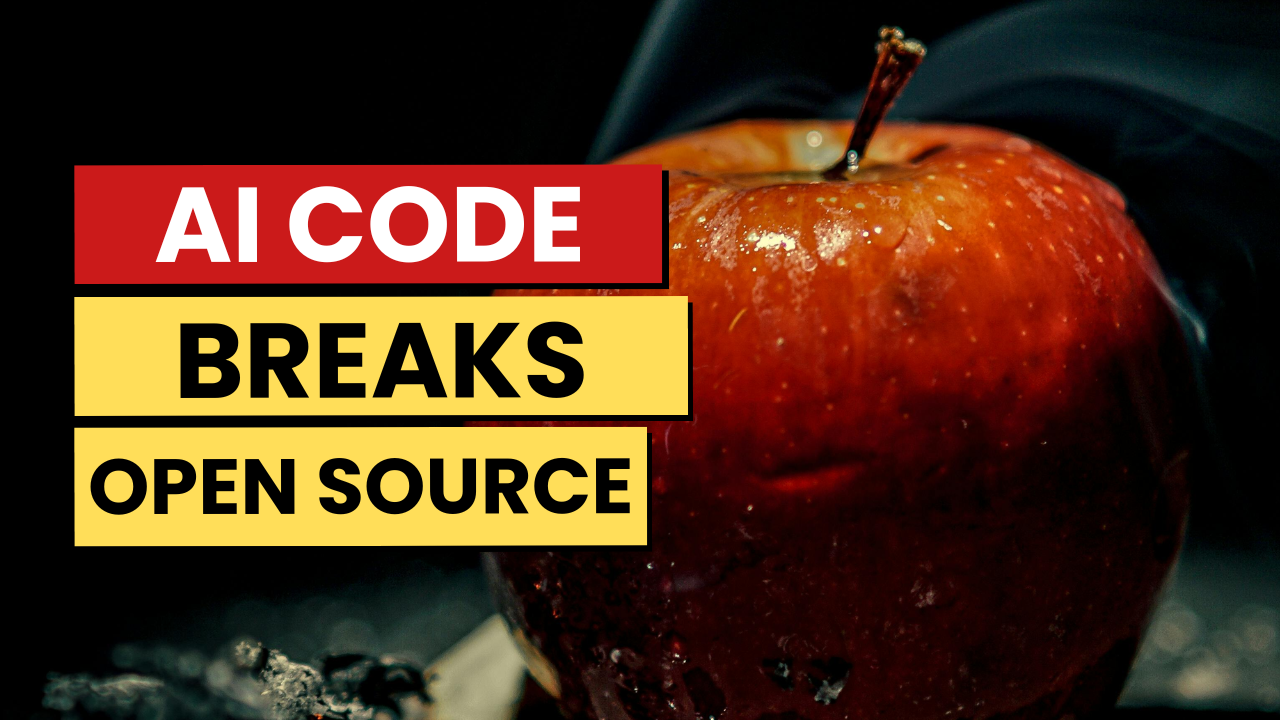
TL;DR: The advent of AI based, LLM coding applications like Anthropic’s Claude and ChatGPT have prompted maintainers to experiment with integrating LLM contributions into open source codebases.
Today is Public Domain Day, in honor of which I'm hereby relicensing (or more properly, unlicensing) all of my software into the public domain. As the public domain is these days unfortunately somewhat an obscure concept to many people, and disclaiming copyright interest in open-source software seems at present a relatively rare phenomenon, I will elaborate some on the rationale and implications.
I've been using GitHub since I was eleven years old. To be fair, I didn't really understand git at the time, but I was able to fumble my way through it...
Nowadays it is impossible to ignore, or even prevent open source from being active within the enterprise world. Even if a company only wants to use commercially backed solutions, many - if not most - of these are built with, and are using open source software. However, open source is more than just a code sourcing possibility. By having a good statement within the company on how it wants to deal with open source, what it wants to support, etc. engineers and developers can have a better understanding of what they can do to support their business further. In many cases, companies will draft up an open source policy, and in this post I want to share some practices I've learned on how to draft such a policy.
Why I'm Switching from MIT to AGPL and from CC BY-NC to CC BY-SA after a conversation with Dr. Matt Lee about copyleft licensing and protecting free software from corporate exploitation.
Today is Public Domain Day, in honor of which I'm hereby relicensing (or more properly, unlicensing) all of my software into the public domain. As the public domain is these days unfortunately somewhat an obscure concept to many people, and disclaiming copyright interest in open-source software seems at present a relatively rare phenomenon, I will elaborate some on the rationale and implications.
It's Public Domain Day again, and it's now been exactly a year since I first introduced the Unlicense.org initiative: an easy-to-use template and process intended to help coders waive their copyright and dedicate all their code to the public domain with no strings attached. It seems a good time for a brief recap of the happenings on this front over the last 365 days.