GitHub - scrapinghub/extruct: Extract embedded metadata from HTML markup
Extract embedded metadata from HTML markup. Contribute to scrapinghub/extruct development by creating an account on GitHub.
Extract embedded metadata from HTML markup. Contribute to scrapinghub/extruct development by creating an account on GitHub.

One of the goals of the IndieWeb is to be independent from centralized platforms without losing contact to friends. Besides of the POSSE principle the IndieWeb communityuses Microformats2 to create structured data with HTML and Webmentions to communicate with other websites.

James Simmons writes about some of the pros and cons of Microformats and RDF (with an extended discussion at InfoQ). On the benefits of Microformats (with which he means Microformats.org-style microformats) he mentions: Designed for humans first, machines second Modularity / embeddability Enables and encourages decentralized development, content, services A design principle for formats Adapted to current behaviors and usage patterns Highly correlated with semantic XHTML I am new to RDF and the semantic web (but have used microformats in previous web projects) but to me the advantages of RDF and RDFa (the “sprinkling” framework) are clear. Microformats may work for a limited set of use cases but I have not yet understood how to use microformats efficiently for the bulk of what I need. However, it is great that a lot of development is going on in the area of embedding machine readable data in documents. Without microformats the pace would probably have been much slower.


elle's hypertext stuff

The best ideas are often the simplest. (At least in hindsight.) The idea of globally-recognized avatar, or Gravatar, struck me from the first time I heard it. Of course I should be able to have my …

Tested new WP theme for my secondary blog with My WordPress. Learnt more about Git branches, merge/rebase, and cherry-pick. New router excitement becomes woes.

The BBC’s dropping of hCalendar because of accessibility and usability concerns demonstrates that we have pushed the semantic capability of HTML far beyond what it can handle. The need to cle…
microformats are extensions to HTML for marking up notes, people, organizations, events, locations, blog posts, products, reviews, resumés, recipes etc. Sites use microformats to publish a standard API that is consumed and used by search engines, aggregators, and other tools.

To integrate this website into the IndieWeb took me longer than I would have liked. The resources were fragmented and confusing. Should I do X or Y? Having too many options to choose from can lead ...

While browsing the web I often came across the term “indieweb”. I still don’t fully understand it, but I surely love its philosophy as well as the small web, Web 1.0, etc. That’s why I first created this blog on Bearblog. The Tech More recently I learned about microformats2 and how they could transform static websites like mine into precious gold mines. They can provide simple commenting systems with Fediverse integration, show the likes of a webpage, or just the mentions. About the latter, webmentions by Aaron are the ones that struck my attention first.
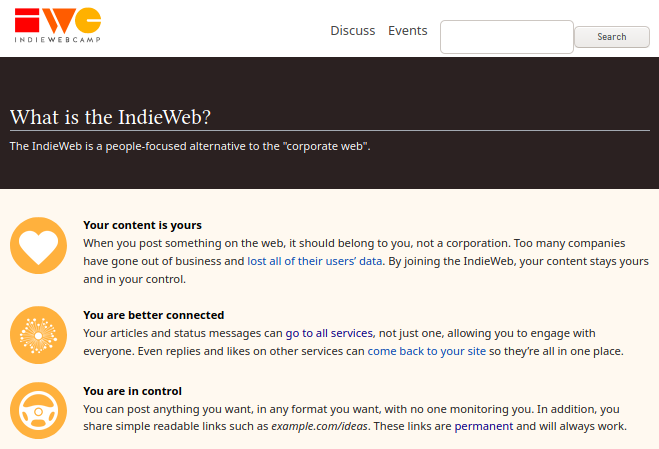
We should all own the content we’re creating, rather than just posting to third-party content silos. Publish on your own domain, and syndicate out to silos. This is the basis of the “Indie Web” movement.