Changelog
pip.pypa.io
On behalf of the PyPA, I am pleased to announce that the pip team has just released pip 26.1. Highlights The main new feature is experimental support for pylock.toml files as a requirements source. pylock.toml files or URLs can be provided with the -r / --requirements options to the commands supporting it. As conveyed by the experimental warning, keep in mind this feature may evolve significantly or even be removed in favor of another option or command in future pip releases. Please share yo...
Timely Project Versioning

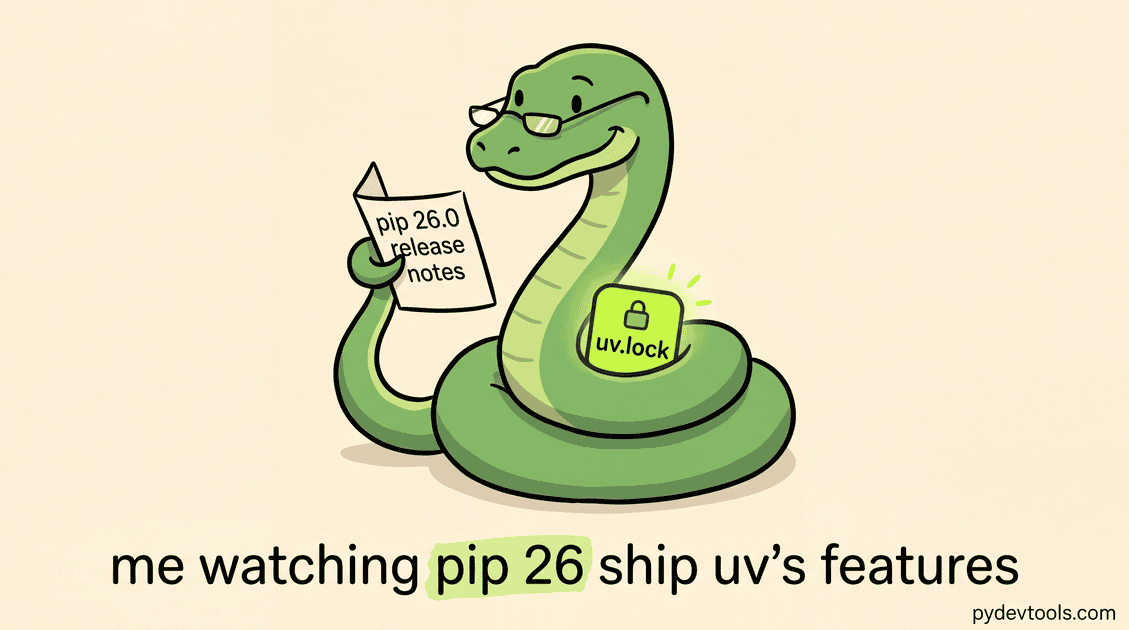
pip 26.0 shipped two flagship uv features in January 2026: PEP 723 inline scripts and --uploaded-prior-to. Here's where the actual gap sits in April 2026.
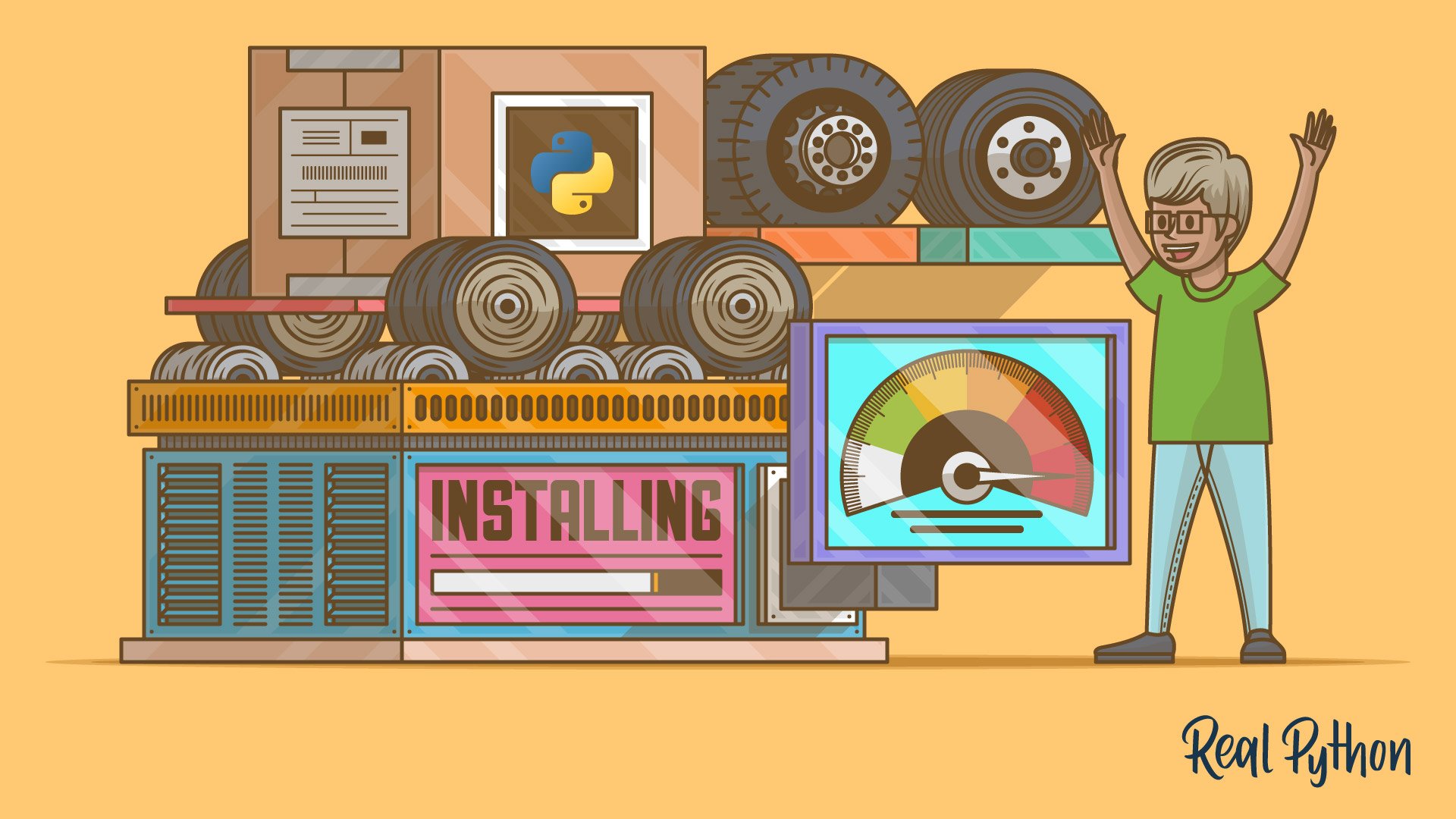
In this tutorial, you'll learn what Python wheels are and why you should care as both a developer and end user of Python packages. You'll see how the wheel format has gained momentum over the last decade and how it has made the package installation process faster and more stable.
TL;DR: I’m currently attempting to bridge the gap between the TensorFlow SIG Build group and the PyPA to try and determine the future for the manylinux spec. We’ve got a couple options and need to determine what makes sense for us and for interested stakeholders. The current status You might say: “Why are we talking about the next manylinux, when we don’t even have manylinux2010 yet?” The rollout for manylinux2010 has been long and painful, and in the meantime, the projects which are most ...
On behalf of the PyPA, I am pleased to announce that we have just released pip 20.2, a new version of pip. You can install it by running python -m pip install --upgrade pip. The highlights for this release are: The beta of the next-generation dependency resolver is available Faster installations from wheel files Improved handling of wheels containing non-ASCII file contents Faster pip list using parallelized network operations Installed packages now contain metadata about whether they were di...

Lessons learned from the rollout of PEP-517 and PEP-518 in pip, and the growing pains of changing Python's build system
Timely Project Versioning
This is a difficult post to write, largely because of the self-critique involved. Which is part of why I've been putting it off. For months, if I'm honest with myself. But putting it off has only made
Pip has a lot of problems (that I'll be discussing in future posts in this series), but the good news is that you don't have to resort to heavyweight third-party tools to improve your experience with
Pip 25.0 has been out for a bit over a month now; and we now also have an official blog post about the release, as well as a 25.0.1 patch for a regression. Pip 25.0 has what I consider a very serious
On behalf of the PyPA, I am pleased to announce that the pip team has just released pip 25.0. This is the first release of pip for the year 2025. You can read more about our versioning, deprecation policy, and release process here. Highlights This release adds support for PEP 639 License Expressions in pip show, pip inspect and pip install --report -, along with caching-related improvements, propagation of proxy and certificates CLI options to the installation of build dependencies, and seve...
Today I'm offering a sort of "side story" to my main series on Python packaging. The main thrust of the series has been that everything is broken or historically has been broken; but I've also been tr