Ruby on Rails: Compress the complexity of modern web apps
This version of Rails has been years in the conceptual making. It’s the fulfillment of a vision to present a truly full-stack approach to web development that tackles both the front- and back-end challenges with equal vigor. An omakase menu that includes everything from the aperitif to the dessert.
It's an exciting time in web development. After a decade's worth of front-end progress kept demanding ever more complicated setups, we're finally moving in the opposite direction. With simpler tools that are still able to hit those high-fidelity user interface notes, but at a sliver of the cost in complexity. The long expansion of enab...
I didn't much care for vanilla JavaScript prior to ES6. Through all of the 2000s, I chased different approaches to avoid writing too much of it. First there was RJS (Ruby-to-JavaScript). Then there was CoffeeScript. Both transpiling approaches that turned more enjoyable-to-write source code into the kind of JavaScript that browsers wou...
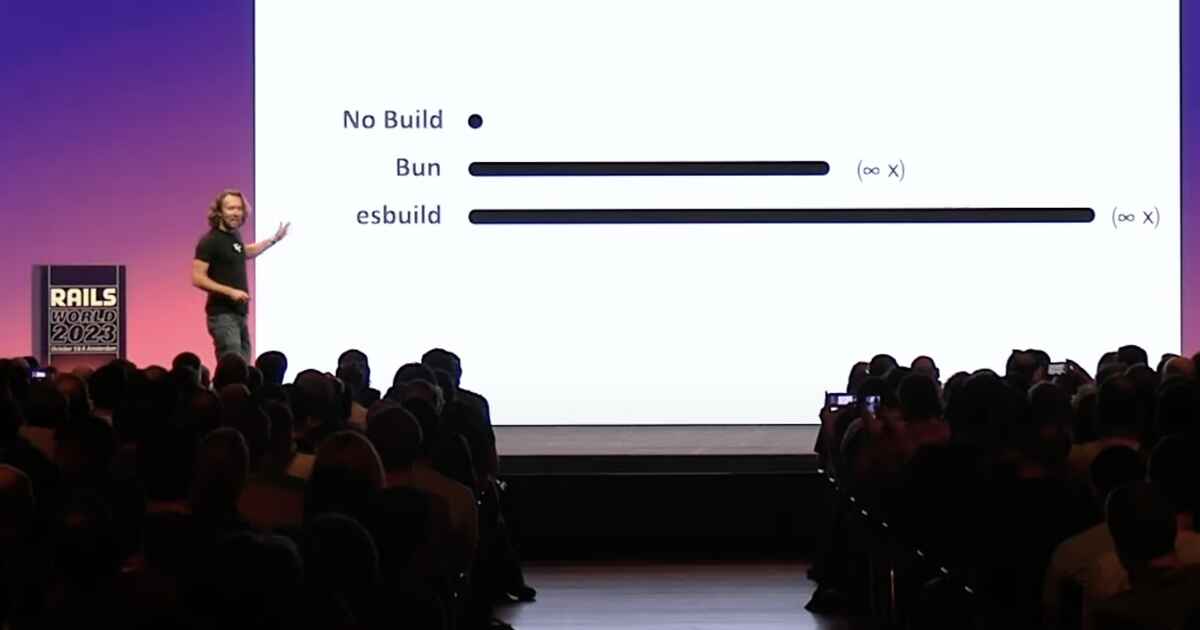
For the first time since the 2000s, I'm working on a new Rails application without using any form of real build steps on the front-end. We're making it using vanilla ES6 with import maps for Hotwire, and vanilla CSS with nesting and variables for styling. All running on a delightfully new simple asset pipeline called Propshaft. It's al...
Working with JavaScript in RailsThis guide covers the options for integrating JavaScript functionality into your Rails application, including the options you have for using external JavaScript packages and how to use Turbo with Rails.After reading this guide, you will know: How to use Rails without the need for a Node.js, Yarn, or a JavaScript bundler. How to create a new Rails application using import maps, esbuild, rollup, or webpack to bundle your JavaScript. What Turbo is, and how to use it. How to use the Turbo HTML helpers provided by Rails.
Rails has been unapologetically full stack since the beginning. We've continuously sought to include ever-more default answers to all the major infrastructure questions posed by modern web development. From talking to a database, to sending and receiving emails, to connecting web sockets, to rendering HTML, to integrating with JavaScri...
For the first time since the 2000s, I'm working on a new Rails application without using any form of real build steps on the front-end. We're making it using vanilla ES6 with import maps for Hotwire, and vanilla CSS with nesting and variables for styling. All running on a delightfully new simple asset pipeline called Propshaft. It's al...
If you have the luxury of starting a new Rails app today, here’s our recommendation: go vanilla. • Fight hard before adding Ruby dependencies. Keep that Gemile that Rails generates as close to the original one as possible. • Fight even harder before adding Javascript dependencies. You don’t need React or any other front-end frameworks,...
I am not a front end engineer – but I'm on a project right now with heavy front end requirements. This blog post documents how I got Font Awesome running on...
Rails has been unapologetically full stack since the beginning. We've continuously sought to include ever-more default answers to all the major infrastructure questions posed by modern web development. From talking to a database, to sending and receiving emails, to connecting web sockets, to rendering HTML, to integrating with JavaScri...
This guide covers the options for integrating JavaScript functionality into your Rails application, including the options you have for using external JavaScript packages and how to use Turbo with Rails.After reading this guide, you will know: How to use Rails without the need for a Node.js, Yarn, or a JavaScript bundler. How to create a new Rails application using import maps, Bun, esbuild, Rollup, or Webpack to bundle your JavaScript. What Turbo is, and how to use it. How to use the Turbo HTML helpers provided by Rails.
2021 was an incredible year for Ruby on Rails. We started it off still celebrating the third major version of Ruby, and left it with the accomplishment of the seventh major version of Rails. Together, these releases sparked a renewed enthusiasm for building modern web applications with Ruby on Rails, unlike anything I can recall since ...