Crypto Gotchas!
A collection of common (interesting) cryptographic mistakes and learning resources.
This document provides a gentle introduction to the data structures and formats that define the certificates used in HTTPS. It should be accessible to anyone with a little bit of computer science experience and a bit of familiarity with certificates. An HTTPS certificate is a type of file, like any other file. Its contents follow a format defined by RFC 5280. The definitions are expressed in ASN.1, which is a language used to define file formats or (equivalently) data structures. For instance, in C you might write:
A collection of common (interesting) cryptographic mistakes and learning resources.

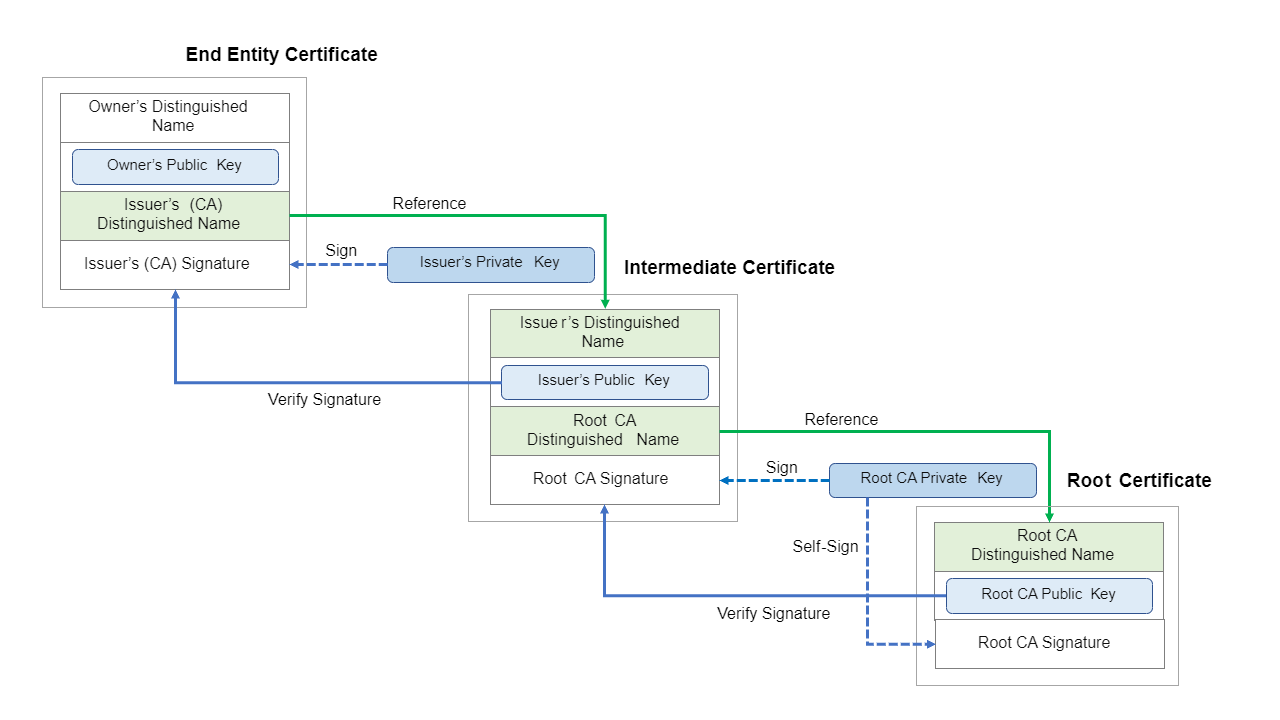
Below are two X.509 certificates. The first is the Certificate Authority (CA) root certificate, and the second is a leaf certifcate signed by the private key of the CA. ca.crt.pem -----BEGIN CERTIFICATE----- MIIBejCCASGgAwIBAgIUda4UvlFzwQEO/fD0f4hAnj+ydPYwCgYIKoZIzj0EAwIw EjEQMA4GA1UEAxMHUm9vdCBDQTAgFw0yNjAyMjcxOTQ3NDZaGA8yMTI2MDIwMzE5 NDc0NlowEjEQMA4GA1UEAxMHUm9vdCBDQTBZMBMGByqGSM49AgEGCCqGSM49AwEH A0IABKL5BB9aaQ2TtNgUymEsa/+s2ZlTXVll0N22KKWxh0N/JdgHcjrKfzqRlVrt UN2GXdvsdLOq15TxBq97WvE07lKjUzBRMB0GA1UdDgQWBBTAVEw9doSzY1DuPVxP EnwEp/+VJDAfBgNVHSMEGDAWgBTAVEw9doSzY1DuPVxPEnwEp/+VJDAPBgNVHRMB Af8EBTADAQH/MAoGCCqGSM49BAMCA0cAMEQCIHrSTk/KJHAjn3MC/egvfxMM1NpG GEzMB7EH+VXWz7RfAiAyhwy4E9hc8/qsTI+4iKf2o/zMRu5H2GNJOLqOngglbQ== -----END CERTIFICATE----- leaf.crt.pem -----BEGIN CERTIFICATE----- MIIBHjCBxAIULE3hvnYxU91g9c9H3+uGCSqXi4MwCgYIKoZIzj0EAwIwEjEQMA4G A1UEAwwHUm9vdCBDQTAgFw0yNjAyMjcxOTQ3NDZaGA8yMTI2MDIwMzE5NDc0Nlow DzENMAsGA1UEAwwEbGVhZjBZMBMGByqGSM49AgEGCCqGSM49AwEHA0IABKDZ21Yh +1AQp1TrxrS8FquIVEHrFRSXncX9xl5vVhZFqvblzTp2Tg7TER5x7rHG1TIqQL1z xDX4TB+nZOWkyAcwCgYIKoZIzj0EAwIDSQAwRgIhAMeo5t2d1RWL/SB0E+mvvIZP jFT0wDWX1Bm26MtxRcf9AiEApG96fs70WF1JliFgzkTiNvbG7Gj4SvErZ9nNX/Lr PnA= -----END CERTIFICATE----- If you downloaded these certificates, you could visually see that the latter references the former as its Issuer.
Learn how TLS secures the modern web by examining a real session, down to the byte level.

Designing schemas for large-scale data analysis for OLAP (e.g. BigQuery, Snowflake, Avro, JSON Lines, etc.) is different from designing data structures in code or schemas for relational databases. This post focuses on advice for creating schemas for large-scale data analysis. I use X.509 certificates as concrete example of a dataset in need of a schema because I’ve worked with it a lot in the last 10 years or so. When describing schemas, I represent types in protobuf format, since it’s a universal type language. I include field numbers to make the syntax valid, but their individual values are not important. Fields marked as repeated correspond to arrays or lists, which I use interchangably. Protobuf Message types are defined by the message keyword, and I consider the terms “message”, “type”, and “object” to be interchangable.

Sometimes hacking requires doing things that, while possible to do with some algorithm, simply aren’t supported by any existing implementation. Usually for good reason. A good example of this…