GitHub - pydantic/pydantic-ai: AI Agent Framework, the Pydantic way
github.comAI Agent Framework, the Pydantic way. Contribute to pydantic/pydantic-ai development by creating an account on GitHub.
Django Chat Podcast: E201
This week, I joined the Django Chat podcast episode discussing DjangoCon Europe, recent developments in Django, AI workflows, and shared recommendations for projects and books.
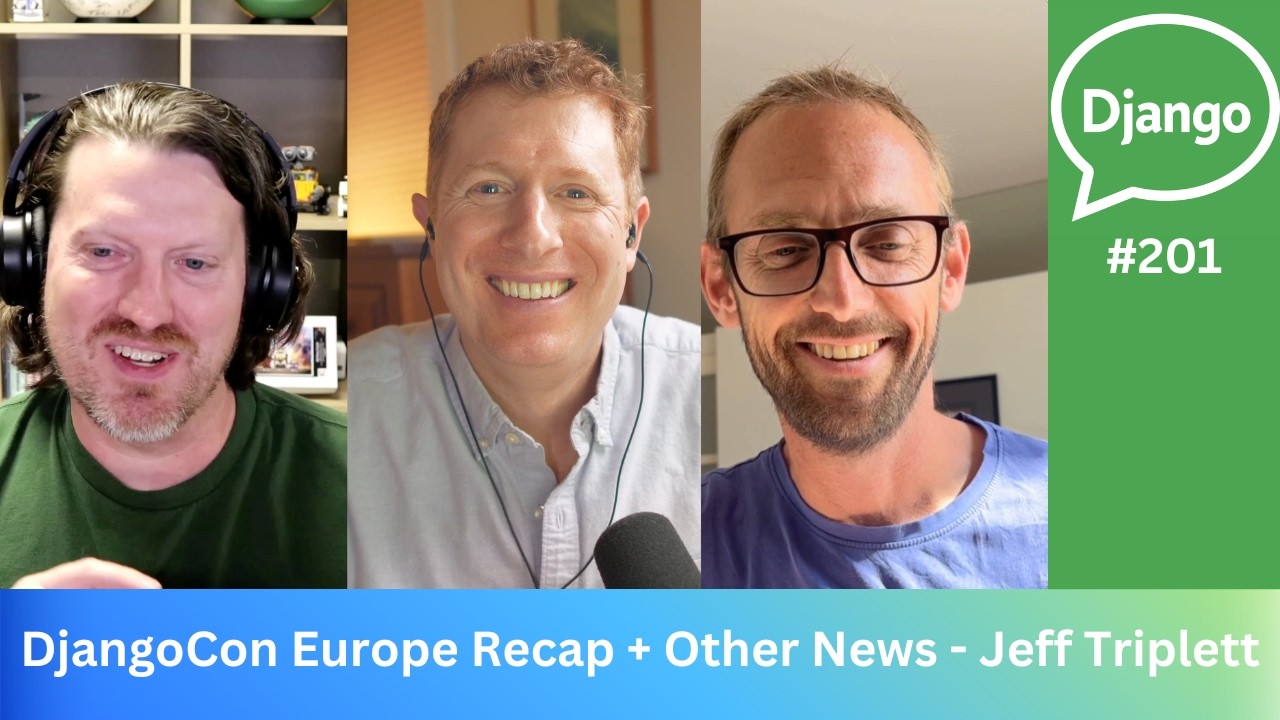
DjangoCon Europe Recap + Other News - Jeff Triplett
Jeff is President of the Django Software Foundation and a partner at REVSYS. We discuss the recently held DjangoCon Europe conference, existing Django news, and then share notes on current AI-powered workflows. 🔗 Links * 30% off PyCharm, 100% to Django promo: https://www.jetbrains.com/pycharm/promo/support-django/ * REVSYS website: https://www.revsys.com/ * Django News …
Jeff Triplett's Micro.blog
Follow <a href="https://micro.blog/webology">@webology on Micro.blog</a>.
Predictions 2025
Here are my predictions for 2025 along with my certainty / probability estimate: Agents, agents, agents We got nascent function-calling and JSON mode toward the end of 2023, which morphed into formal structured generation over the course of 2024. 1 2 Combined with an explosion of Agentic frameworks (LangChain, LangGraph, Semantic Kernel, AutoGen / AG2, CrewAI, PydanticAI, etc.), 2024 was the year AI Agents came into their own. We will see and even stronger push for Agents in 2025. If you’re not yet tired of seeing “agent” or “agentic” plastered all over everything, you will be.
How I Use AI (Apr, 2026)
AI tools change fast. This post is intended to snapshot how I use AI today and provide some context for how I arrived here. I do not anticipate keeping this post up-to-date, though I may revisit the idea with update posts in the future. Three years of history Tip


PydanticAI: Advancing Generative AI Agent Development through Intelligent Framework Design
PydanticAI: Advancing Generative AI Agent Development through Intelligent Framework Design
A Production Framework for LLM Feature Evaluation | Alex Jacobs
An empirical analysis of LLM application patterns that successfully scale in production systems, focusing on extraction, generation, and classification use cases