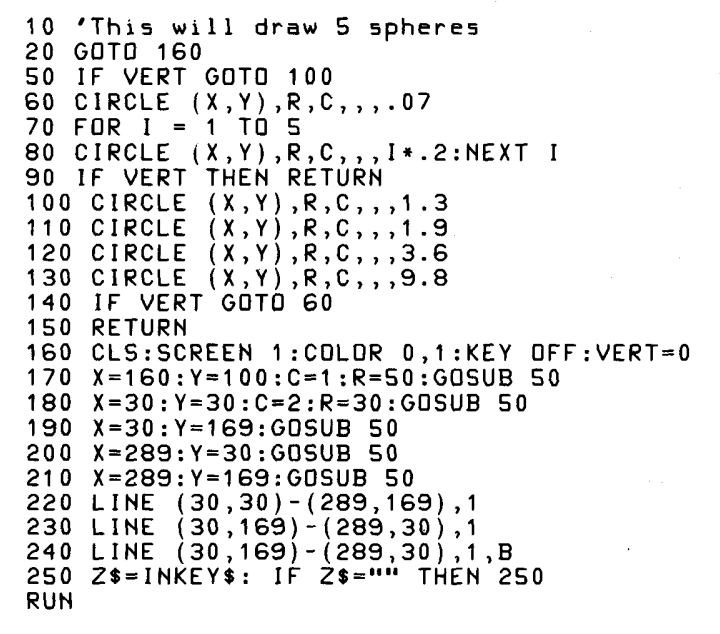
Purpose We describe the deciphering algorithm needed to unprotect source programs stored by GW-BASIC / BASICA.COM. History Microsoft BASIC interpreters were a common way of programming early IBM PC and compatible computers (1981 onwards). Several versions of Microsoft BASIC were used: first IBM...
Inspired by several others (such as Alex Schroeder’s post and Szczeżuja’s prompt), as well as a desire to get this down for my kids, I figure it’s time to write a bit about living through the PC and Internet revolution where I did: outside a tiny town in rural Kansas. And, as I’ve been back in that same area for the past 15 years, I reflect some on the challenges that continue to play out.
1 inbound linkenTechBooksEntertainmentEthicsHumorLifePhilosophyProseQuickPostWritingADHDComputingFOSS (Free and Open Source Software)HobbiesLifeLinuxNon-religious postProductivityRetrocomputingUNIXWritingMonth
Using open data collected over the past 12 months (March 2025 – February 2026), the most popular programming languages were identified. Some results of this analysis, covering more than 1,000 languages, are presented in this article and the accompanying video. The ranking was prepared using pagevie
Once upon a time, I spent multiple months implementing a graphing calculator using GW-BASIC (manual). Would I be able to do the same more quickly and effectively today using generative AI? ❦❦❦ Let’s give it a go, using Claude AI to start: Implement a simple graphing calculator in GW …
Below is the history of and my future plans for cardiosomnography (CSG). I will try to keep this post evergreen. 2009-2013 My self-initiated research began in the fall of 2009, and over the next 4 years I developed several devices, software, and an iPhone app. 2009 I started meditating and immediately began looking for an objective way to track my progress. In December, I built my first device for amplifying the heartbeat intervals using an off-the-shelf photoplethysmography finger-tip sensor (PPG) that was then connected to a laptop and analyzed with code I wrote in LabVIEW. 2010 Not content to be tethered to my laptop, and annoyed by how noisy PPG is, I soon built a biofeedback device using a microcontroller (Logomatic v2), screen (ST7565), and a Polar receiver (RMCM01) to wirelessly receive heartbeats from a Polar HR T31 strap (which sends a 5 kHz radio pulse each beat). "the device" (sorry, never named it) This is a short movie shows the device in action while I was wearing the HR strap. This early version of the interface lacked some of the later features. 2010 sleep interest That summer, I discovered that if I wore the strap while sleeping, I observed clear transitions and cycles. At this point I knew nothing about sleep stages or the research on them (and sleep wasn’t in the zeitgeist yet). However, this marked the beginning of my interest in sleep stages, and in the idea of measuring them with the heart. Recording HRV while sleeping This was recorded the night of July 11, 2010. I transformed the RR intervals into the frequency domain, and divided it into slices (Low: 0.01-0.11 Hz; Medium: 0.12-0.20 Hz; High: 0.15-0.40 Hz). You can see periods of time where one slice makes up the plurality of total power, with sharp transitions between these periods. I also began recruiting beta testers among my friends and coworkers. I wanted to see what the variations in data looked like, and how robust the device and algorithms were. At the time, I only had a single device
Growing up, I hated Apple the way only an arrogant teenager could. Who in their right mind would buy an overpriced toy instead of a “real computer”? Here’s how I switched to the Mac, and haven’t looked back… despite some recent reservations.