GeistHaus
log in · sign up

QuickCheck - Wikipedia

en.wikipedia.org
35 pages link to this URL
Formal Verification in the Age of AI

For decades, research in formal verification has been guided by a simple mental model that I recently coined the formal verification triangle. The triangle captures a trade-off between three desirable properties: Automation – the verification tool runs largely without human guidance Scalability – the technique works on large real systems Precision – the method can prove interesting properties, such as functional correctness Historically, verification techniques could reliably achieve two of the three, but not all three simultaneously.
0 inbound links website en
On Why Interfaces Matter

How can we save time switching from one approach to another? Ideally everything would be decoupled and independent, right? Just hide it behind an interface!

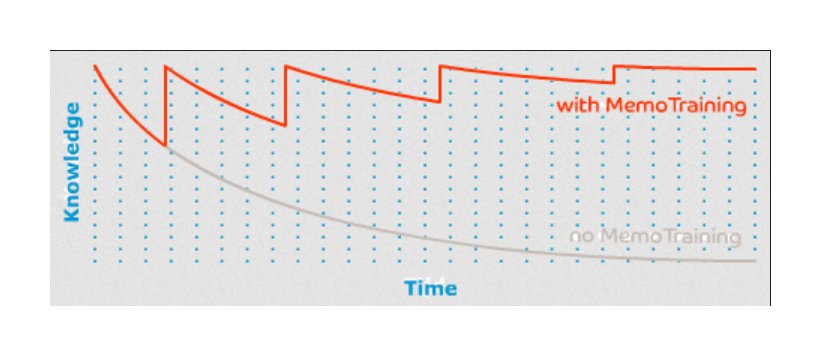
Spaced Repetition for Efficient Learning

Efficient memorization using the spacing effect: literature review of widespread applicability, tips on use & what it’s good for.

2 inbound links en cs/haskellnootropicpsychedelicpsychology/spaced-repetition
Spaced Repetition for Efficient Learning

Efficient memorization using the spacing effect: literature review of widespread applicability, tips on use & what it’s good for.

18 inbound links en cs/haskellnootropicpsychedelicpsychology/spaced-repetition
Principled testing | James Akl

Testing software-intensive systems involves more decisions than the standard vocabulary suggests. The conventional taxonomy (unit, integration, system, …

0 inbound links article en
Zero bug policy

Bugs are a tricky subject. We all write code with bugs and they have a considerable impact on our productivity and on the value added by our deliverables. So we come up with several strategies to handle the bug stream and have a ongoing effort to balance bug house keeping and new features. I’m a big advocate for a zero bug policy. This means that we should usually have 0 registered bugs. Whenever I present this idea I’m met with skepticism. This is seen as an utopia and not possible. My impression is that developers interpret in a way that would generate punishment when new bugs are added. But that is not the point. The point is to embrace that we’ll always have bugs, but also aim for a process that will minimize as much as possible the amount of bugs we produce. This will make us leave our comfort zone and question our beliefs. It’s not about “writing code that never has bugs”. It’s more about “what do we need to change in our day to day work to minimize bugs”.

0 inbound links article en war storiesramblingstechnical leadership engineering managementsoftware developmentengineeringleadershipmentoringinterviews
Spaced Repetition for Efficient Learning

Efficient memorization using the spacing effect: literature review of widespread applicability, tips on use & what it’s good for.

19 inbound links en cs/haskellnootropicpsychedelicpsychology/spaced-repetition
Making PL Ideas Accessible: An Open-Source, Open-Access, Interactive Journal

Academic communities have increased the reach and accessibility of their work by publishing interactive, open-access, open-source articles on the web that explain both core and emerging ideas in th…

1 inbound link article en academic writingAI safetyawardsclimate changecompilerscomputer securityconcurrencyconferencescorrectnesscovid-19diversityformal reasoningformal verificationfunctional programmingfuzzinggradual typinghardwarehistoryindustrial adoptionlanguage designmachine learningMeasurementsmentoringMIP awardneural networksopen accessoptimizationparallelismprogram analysisprogrammingprogram synthesisproof engineeringpublication processquantum computingresearchresearch highlightsruntimessecuritysoftware engineeringstatic analysissystemstestingtype systemsunconventional computingvirtual conferences
Cheap model-based testing with F# & FsCheck

This is a blog version of a talk that I did ~2015 in Auckland. Nothing in it is original or unknown, but there aren’t that many examples of doing this aside from in the FsCheck documentation. I also gave a talk which contains a very similar example to the Melbourne ALT.NET meetup in 2018. What is FsCheck? FsCheck is a library in the spirit of Haskell’s QuickCheck, which allows you to perform property-based testing. The main feature that it provides is the ability to generate arbitrary instances of any supported data type, and the ability to define your own generators.

0 inbound links article en software software-testingSoftware-Testing
Spaced Repetition for Efficient Learning

Efficient memorization using the spacing effect: literature review of widespread applicability, tips on use & what it’s good for.

5 inbound links en cs/haskellnootropicpsychedelicpsychology/spaced-repetition
On The Need For Understanding

I saw this Mastodon post from Andy Wingo recently: in these days of coding agents and what-not, i often think of gerald sussman's comm...

1 inbound link article en
First Make It Correct - Daniel Beskin's Blog

Way back in December, in the spirit of the times (it seems that everyone was either solving Advent of Code or looking for a job), like an elephant in a china shop, I found myself solving a…

0 inbound links article en software developmentfunctional programmingscalafpfunctional-programmingsoftware-designproblem-solving-skills