A whirlwind tour of systemd-nspawn containers
An introduction to systemd-nspawn, a simple containerization technology that enables lightweight “virtual machines” without a hypervisor, diving into how they might be set up.
An introduction to systemd-nspawn, a simple containerization technology that enables lightweight “virtual machines” without a hypervisor, diving into how they might be set up.

This tutorial takes you through the steps of setting up your own Java Edition server using the default server software that Mojang Studios distributes free of charge. The software may be installed on most operating systems, including Windows, macOS, and Linux. For a tutorial about installing Bedrock...
Redis is a in-built memory tool for loading server/webpages faster. Here, we will see how to install and use Redis on Linux system.

Read about why we built a resource-efficient alternative for Zookeeper from scratch in C++, what our next big step with it is, and how you can join the Keeper community.
Dockerized home automation via Home Assistant, MQTT and remote access via WireGuard VPN and ProxyJump SSH all deployed via Ansible.
All cheat sheets, round-ups, quick reference cards, quick reference guides and quick reference sheets in one page.

Last month I have been developing a Rust tool to create container images from Conda environments, without going through Docker. It was a wild trip down the rabbit hole of OCI images, so I thought I’d share part of the adventure here. Enjoy! But why? If you are used to building container images, you might be asking yourself why on earth someone would want to deviate from the well-trodden path of Dockerfiles.

Linux won the popularity contest. FreeBSD kept the philosophy. That distinction is starting to count.

Disclaimer: I did have to sign a NDA, so I can't go too in depth on certain things. But I'll do my best to capture the essence of it and my…
Fun with trying various compression algorithms on human genome data using Pareto frontiers, Docker and Gnuplot.
Run GUI applications and desktops in docker and podman containers. Focus on security. - mviereck/x11docker

This article explains how I stopped a software vendor and at least one of its customers from hemorraging $50K+ yearly due to unnecessary costs. ❦❦❦ A recommended best practice in Enterprise security is the “three R’s”: Repair, Repave and Rotate [1] [2] [3]. Repair means applying security patches as soon …

Learning in Public As I keep learning, DEV knows things. Ask them stuff. In this post, I...

I take a dive into the world of software and look at the problem of managing dependencies. From the Unix design, we've inherited many problems. Can we nix them with 'Nix'?
Thoughts on FOSS and fintech, layered by Mahmoud Hashemi
Benjamin Blundell, benjamin.computer. I make things with computers

Learn how to integrate Keycloak with your .NET 10 API using Docker, Swagger UI with OAuth 2.0 Authorization Code flow, and JWT validation.
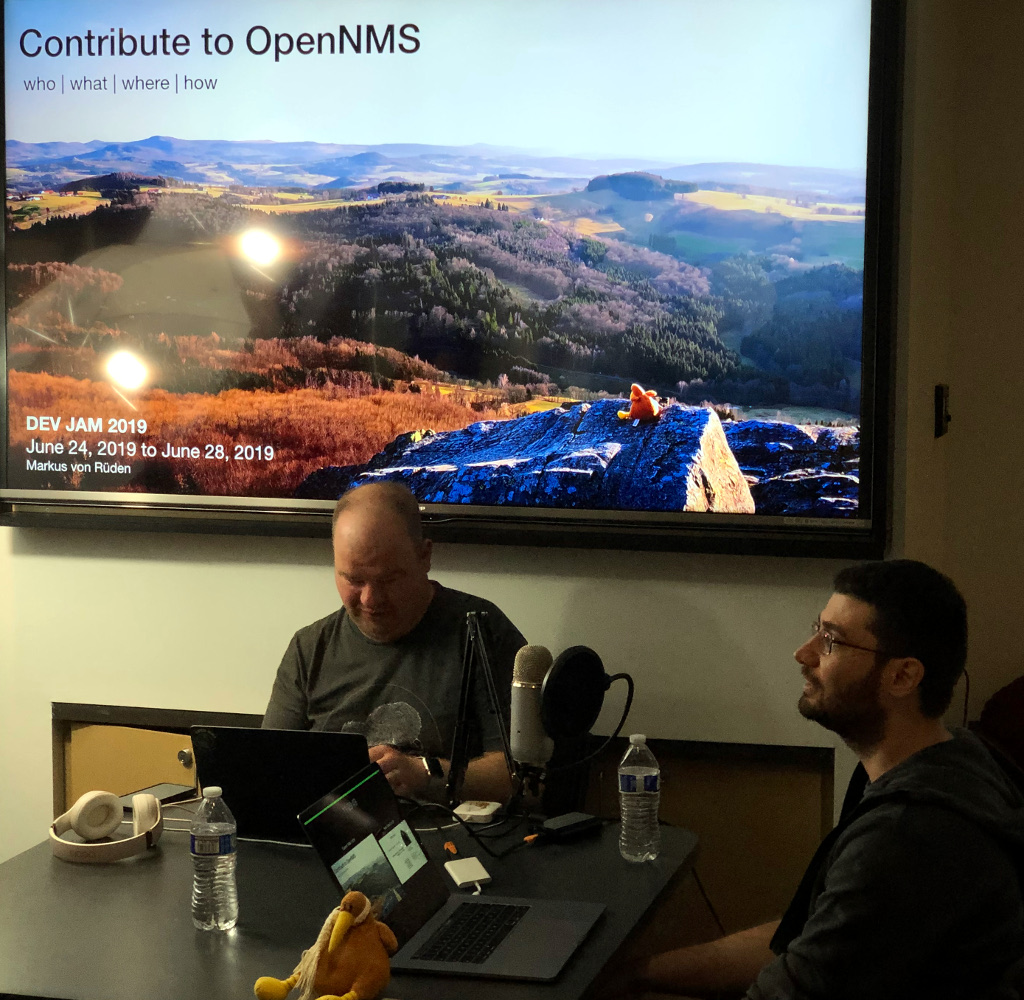
Dev-Jam officially got started Monday morning at 10:00.\nI usually kick off the week with a welcome and some housekeeping information, and then I turn it over to Jesse White, our project CTO. We do a roundtable introduction and then folks break off into groups and start working on the projects they find interesting.\nThis year we did something a little different. The development team scheduled a series of talks about the various things that have been added since the last Dev-Jam, and I spent most of the day listening to them and learning a lot of details about the amazing platform that is OpenNMS. While we had some technical difficulties, most of these presentations were recorded and I’ll add links to the videos once they are available.\n
NOTE: When I initially wrote this article I used “they/them” pronouns when referring to Hazel Weakly instead of the preferred “she/her” pronouns shared in her speaker notes. People have pointed out that this was a microaggression. This was not my intent, and I recognize I made a mistake and I’m sorry. I corrected her pronouns and promise to do better in the future. Thanks to everyone who informed me of my error.\n
One of my favorite TV shows of all time is The Big Bang Theory. It is somewhat divisive among my circle of friends, but I like it. One scene from the show has the character Leonard, a physicist, talking to his girlfriend Penny about his work. She asked what he did that day, and he said “I thought about stuff”. She asked if that was all he did and he said “I wrote some of it down.”\n

BlazingMQ is a message queue middleware system developed at Bloomberg which was opened sourced around a year ago. I think it has a lot of very useful features for some use-cases, so this series of articles looks at it in a bit more detail. In this third article I’m going to try to get a basic producer and consumer working with the broker to get some basic exposure to the APIs in C++ and Python.
The main test system in the MariaDB open source database project is the mariadb-test-run script (inherited from mysql-test-run). It is easy to run and does not require you to compile any source code.\n
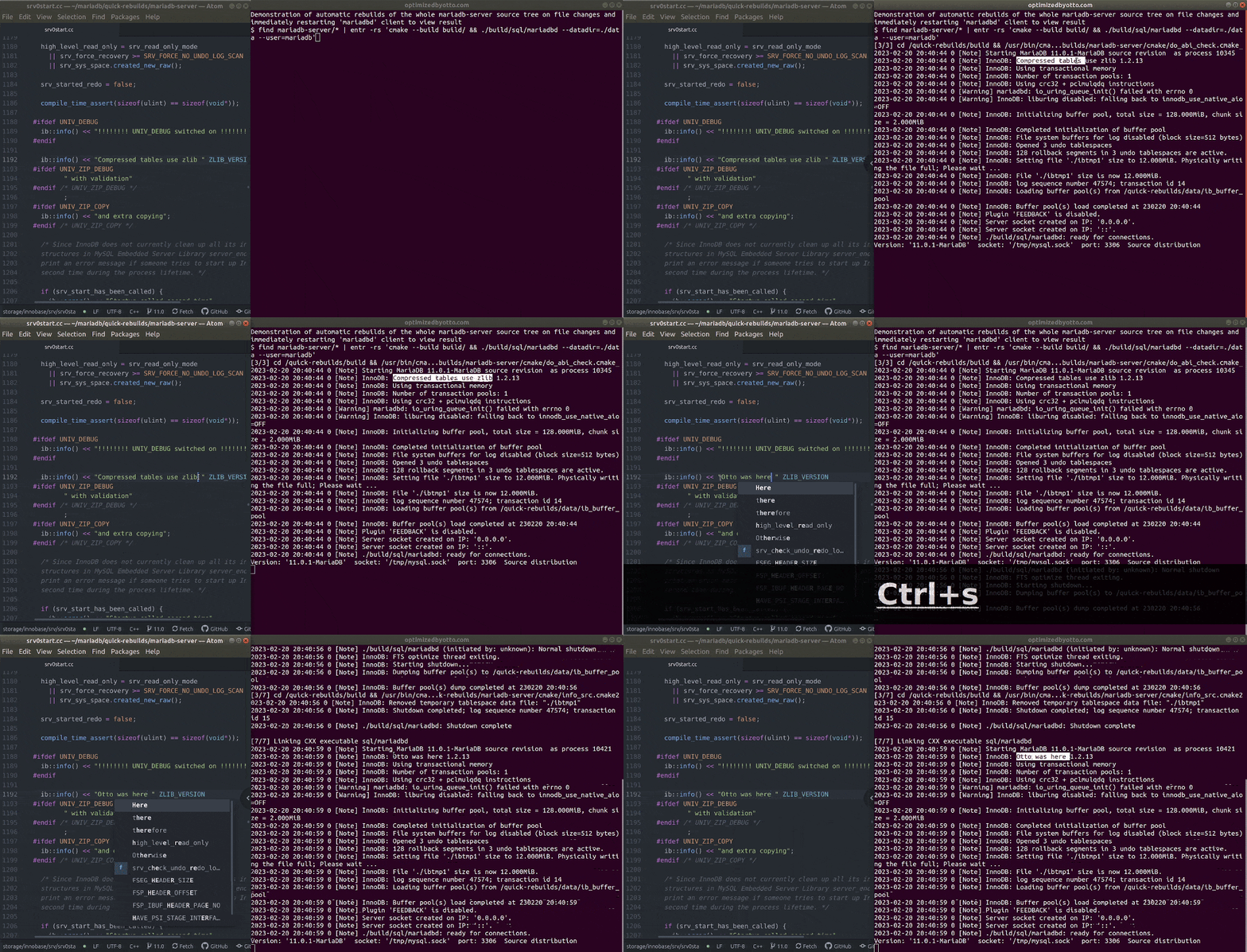
The MariaDB server has over 2 million lines of code. Downloading, compiling (and re-compiling), and running the test suite can potentially consume a lot of time away from actually making the code changes and being productive. Knowing a few simple shortcuts can help avoid wasting time.\n

In popularizing Linux containers, Docker brought about a new era of systems design based on these lightweight platforms, rather than heavy virtual machines. However, now that Docker is slowly declining, it’s time to learn about the next generation of Linux container tools.\n
The parking demand in Marburg is analysed quantiatively based on publicly available data. In addition, Gaussian Processes are used for spatial predictions.
I collected Nextbike data in Marburg and introduce my plan to evaluate the data in this article. Also, I present what the data is made up of and how it is obtained in detail. Lastly, a first temporal analysis of the bike usage in Marburg is presented.

Recently, I posted to Twitter: “why do people still use pm2?” The post garnered much more attention than I expected it to, and I was asked by several people: “what is your alternative?

UnplugTrump: How can you make yourself independent of US services, especially in the age of Donald Trump? The key points are self-hosting, decentralization and open source.
Apr 07, 2024 — Topic: personal Note: This is not prescriptive advice. It is not meant to be read as: "How to land a job at Microsoft." It simply cover…

To date, we’d been running Home Assistant on a Raspberry Pi 3A+, just because that was what we had rather than that it was really suitable. This post is about setting it up on a Radxa ROCK 3A that I recently acquired…
I've moved all of my personal, private projects over to [my own forgejo instance](https://git.coryd.dev). It's been reliable and an altogether simple transition — I even have it mirroring the [ai.robots.txt](https://git.coryd.dev/cdransf/ai.robots.txt) repo.

Group for Apps and Services on Exascale Research Infrastructure is a research, development, and teaching unit at FIDIT + MedRi.
We’re ironically searching for counterexamples to the Riemann Hypothesis. Setting up Pytest Adding a Database Search Strategies Unbounded Integers In this article we’ll deploy the application on a server, so that it can search for RH counterexamples even when I close my laptop. Servers and containers When deploying applications to servers, reproducibility is crucial. You don’t want your application to depend on the details of the computer it’s running on. This is a higher-level version of the same principle behind Python virtual environments, but it applies to collections of programs, possibly written in different languages and running on different computers.
TDD encourages deployment flexibility. Functional programming also helps.

A classic pattern in technology economics, identified by Joel Spolsky, is layers of the stack attempting to become monopolies while turning other layers into perfectly-competitive markets which are commoditized, in order to harvest most of the consumer surplus; discussion and examples.
A classic pattern in technology economics, identified by Joel Spolsky, is layers of the stack attempting to become monopolies while turning other layers into perfectly-competitive markets which are commoditized, in order to harvest most of the consumer surplus; discussion and examples.