Nobody asked Elon Musk Grok AI to pick favorites. It predicts both Bitcoin and XRP in the same breath, and the price prediction it landed on for each are not conservative by any measure.
Bitcoin at $150,000 to $200,000. XRP at $5 to $8. Both by end-2026. Both driven by the same macro tailwind hitting 2 very different assets at once.
Grok’s framework treats this cycle as a convergence event rather than a single-asset story.
Bitcoin is solidifying its digital gold narrative with sovereign wealth funds and corporate treasuries stacking aggressively, while XRP is benefiting from Ripple’s expanding real-world payment utility, clearer US regulation, and ETF approvals unlocking institutional capital at scale.
The AI sees institutional adoption, ETF inflows, regulatory clarity, and rate cuts as 4 forces pulling simultaneously on both assets, which is what makes the dual prediction compelling. These are not correlated bets on the same thesis. BTC is a reserve asset story.
XRP is a payment infrastructure story. Grok is saying both win in this environment, just for different reasons.
The bear case applies to both equally. Macro shocks, regulatory delays, or prolonged risk-off sentiment could limit BTC to $80,000 to $110,000 and XRP to $2 to $3 in a more muted cycle.
Grok closes with its verdict: structural tailwinds strongly favor the bullish scenario into 2026.
Bitcoin Price Prediction: Grok AI Bitcoin Predicts Is $150,000–$200,000. The Chart Shows Exactly How Far Away That Is
Bitcoin price is trading at $76,695 on the daily, sitting at the apex of a rising channel that has been building since the February low of $61,000.
The yellow circle on the chart marks the current decision point: price is pressing against the upper trendline of the channel right now and the next few daily closes determine whether this is a breakout or another rejection back into the range.
The Grok AI bullish target zone is labeled on the chart at $145,000 to $150,000, which represents the lower end of the prediction range and sits well above every resistance level currently visible.
Getting there requires clearing 2 major supply zones: $82,000 to $84,000 first, the remnant of the pre-crash consolidation, and then $96,000 to $98,000, the October 2025 highs. The chart projection shows a move from the channel breakout toward $95,000, a brief pullback toward $88,000, then continuation into the Grok target zone.
Support at $72,000 to $74,000 is the lower channel boundary that has held every dip since February. Lose it and the recovery thesis resets fast.
XRP Price Prediction: Grok AI Sees XRP at $5–$8, For Now, $1.60 Is Still the Gate
XRP price is trading at $1.37144 on the daily, and the pullback from the recent $1.50 push has brought price back toward the lower end of the 4-month range.
The chart structure has not broken but the momentum has clearly faded, and with support at $1.20 not far below current price the setup demands attention rather than complacency.
The chart has the full bull case mapped in sequence: resistance at $1.60, then targets at $2.40, $3.10, and $3.64. Each level is a checkpoint.
None of them are accessible until $1.60 breaks first. Grok’s $5 to $8 range sits above all of them, meaning the chart targets are waypoints on the journey rather than the destination itself.
The projected path shows a bounce from current levels toward $1.60, a minor pullback, then a sharp move toward $2.40 and continuation higher through the remaining targets.
Support at $1.20 is the red zone on the chart and the last meaningful floor before the bull thesis breaks down entirely. At $1.37 current price is sitting uncomfortably close to that level with no strong bounce structure visible yet.
RSI on the daily is at 42.87 with the signal line at 53.14, signal line well above RSI in the same pattern seen across multiple assets today.
Short-term momentum has turned negative while the average lags behind. RSI approaching the low 40s from above typically either finds a floor and reverses or continues toward oversold territory, and at $1.37 with $1.20 support below, the next 3 to 5 daily closes are the most important price action XRP has seen since the February crash.
Grok’s dual prediction needs BTC to lead and XRP to follow. Both charts are at decision points right now.
After the Clarity Act cleared the Senate Banking Committee, SEC Chairman Paul Atkins is expected to roll out an ‘innovation exemption‘ framework for tokenized stock trading, opening the door to 24/7 on-chain equity markets on regulated Alternative Trading Systems.
The tokenized stock market is not waiting on legislators to catch up.
Data shows distributed value hitting $33.7 billion, up 21% in the last 30 days, with monthly transfer volume reaching $3.03 billion. That momentum gives the regulatory push a concrete market context, not just policy abstraction.
How the SEC’s Tokenized Stock Framework and ATS Infrastructure Actually Work, and Why the DTC Pilot Is the Real Foundation
The mechanism here is worth understanding precisely. The SEC’s proposed ‘innovation exemption’ is not a wholesale rewrite of securities law.
A January 2026 joint staff statement from three SEC divisions made the regulatory posture explicit: tokenization does not alter the fundamental characteristics of a security, and existing disclosure obligations, custodial requirements, and investor protections continue to apply regardless of whether a stock trades on a blockchain ledger.
The practical infrastructure is supported by the DTC Pilot, a three-year no-action relief granted to DTCC’s DTC in December 2025.
That pilot is limited to highly liquid, DTC-eligible securities and requires real-time regulatory observability and granular participant reporting – obligations that will bind any ATS plugging into the same settlement rails. In March 2026, the SEC approved Nasdaq’s rule change to allow trading of tokenized versions of DTC-eligible equities and ETPs, using the same ticker, market rules, and economic rights as the underlying shares.
The Atkins framework extends this logic further. Bloomberg reporting indicates the plan covers both tokenized stocks issued directly by or on behalf of issuers and third-party tokenized stocks with no direct issuer affiliation, a distinction that matters enormously for secondary-market liquidity and alternative trading system design.
Those two categories carry different disclosure obligations and custodial structures. They are not the same thing.
Source: Rwa.xyz
Ondo, built on Ethereum, currently commands 60% of the on-chain stock market. Tokenized Circle Group stocks represent roughly $212 million in value; tokenized NVIDIA Corp. sits at $89.3 million; tokenized Tesla Inc. at $85.4 million.
Those three names alone account for more than 25% of total tokenized stock value across 266,000+ holders and 83,257 monthly active wallets.
Can the Clarity Act Clear 60 Senate Votes – and What Does Each Scenario Mean for Blockchain Regulation?
The CLARITY Act’s path to law is the pivotal variable. The bill clears its next hurdle – a Senate Banking Committee vote – but the floor requires 60 votes. Republicans hold 43 seats, meaning pro-crypto advocates need at least 17 Democratic votes to break a filibuster. Polymarket currently prices the probability of a 2026 floor vote at 64%.
If passed, the CLARITY Act shifts primary regulatory oversight of crypto trading from the SEC to the CFTC – with a specific carve-out keeping digital securities oversight at the SEC.
That jurisdictional line is not cosmetic. It determines which rulebook governs tokenized equity ATS platforms, how margin and leverage rules apply, and which agency has enforcement authority over platforms like Ondo.
If Seventeen or more Democratic senators back the bill; the CLARITY Act passes in July 2026, the SEC’s innovation exemption framework launches concurrent with new ATS licensing, and tokenized stock distributed value, already at $1.43 billion, accelerates toward $5 billion by year-end as institutional platforms gain regulatory cover.
NYSE has already tapped Securitize to develop tokenized securities markets, and at least one additional U.S. exchange has outlined plans for 24/7 tokenized trading with stablecoin settlement, signaling that Nasdaq’s Pilot model will not remain unique regardless of what Congress does.
The SEC’s broader regulatory posture under Atkins is clearly shifting toward structured engagement rather than enforcement-first friction.
The blockchain regulation framework is moving. The 17 Democratic votes are the only variable the market cannot price with confidence yet.
Cardano News: ADA is trading near $0.25, stuck in a $0.25–$0.28 intraday band with neutral funding rates and whale accumulation at a 30-day low.
However, Cardano is executing one of the most aggressive post-quantum cryptography pushes of any major blockchain, complete with a live governance vote, a formal research proposal expected imminently, and a roadmap that places it ahead of Ethereum on quantum readiness.
The contradiction is stark and the market is not resolving it.
Technical milestones are piling up. Price is not moving. The question the market is sitting with is whether crypto security infrastructure has any near-term pricing power at all, or whether ADA is simply trapped in a broader altcoin liquidity drought that no governance vote can fix.
Cardano’s Post-Quantum Push: What the Roadmap Actually Says
Charles Hoskinson has framed Cardano’s quantum resistance strategy as an existential preparation play, not an emergency response.
Speaking publicly this week, Hoskinson described the quantum threat as “like an asteroid coming towards Earth”, a slow-moving but terminal risk that decentralized networks need to coordinate around before it becomes a market shock.
A formal IOHK research proposal is expected next week, building on a governance vote already in motion.
The technical architecture under discussion centers on a phased migration model. Hoskinson pointed to Cardano’s established hard fork cadence as a structural advantage, the network has executed regular protocol upgrades without fragmentation, which makes a future quantum-resistant migration more tractable than on chains with rigid upgrade cultures.
UPDATE: #Cardano$ADA Founder Charles Hoskinson says "quantum is here to stay. We had all this theoretical physics, and now, we're able to realize those physics. Retrocausality is interesting—IBM noticed strange anomalies with their quantum computers—photons going back in time." pic.twitter.com/0bh4zdy5GN
— Angry Crypto Show (@angrycryptoshow) May 14, 2026
The planned approach would layer post-quantum cryptographic signatures alongside existing ones, preserving compatibility while adding quantum-safe security primitives.
Google Quantum AI reportedly ranked Cardano second among major blockchains for post-quantum security posture, behind only Bitcoin and ahead of Ethereum and Solana, a ranking that contributed to ADA’s inclusion in the Hashdex Nasdaq Crypto Index ETF despite persistent price underperformance.
Cardano also logs roughly 680 GitHub commits per week across ~80 repositories, placing it among the most active chains by development output. The work is real. The market premium for it is not.
Cardano is not alone in this race. Ripple has outlined a four-phase roadmap for the XRP Ledger targeting quantum resistance by 2028.
REMINDER: Cardano is still building.
Over the last 3 years, Cardano ranks 3rd among all blockchains in code commits. pic.twitter.com/NYpXIYXQQm
Bitcoin developers have circulated BIP-360 and BIP-361 as migration frameworks, with BIP-361 proposing a staged move away from vulnerable addresses that could freeze older coins after a deadline.
Cardano’s governance-first approach to this migration distinguishes it from those proposals, but the market has not assigned that distinction a valuation premium.
Can Cardano (ADA) Price Break Out of Its $0.28 Range?
ADA is sitting approximately 80% below its $3.10 all-time high and roughly 49% down year-to-date.
The $0.25–$0.28 range has acted as a soft floor through much of Q1–Q2 2026, but the 200-day moving average sits near $0.46 – a level the token has not challenged in months.
Resistance at $0.28 capped the intraday high this week; support near $0.258 held the low.
Funding rates have since normalized to neutral. Traders are using ADA as a volatility vehicle, not a conviction hold, and that dynamic suppresses the impact of any fundamental catalyst, including a quantum security roadmap.
If ADA breaks $0.28 on volume following the release of the formal IOHK quantum research proposal and Protocol 11 hard fork confirmation, targeting a retest of $0.34–$0.36. Catalyst is institutional re-rating of crypto security infrastructure as a premium.
However, a break below $0.258 support on sustained risk-off conditions opens a retest of $0.22–$0.24. Invalidation of the current range would erase the modest recovery from Q1 lows and delay any narrative re-rating.
Iran’s army warned it would “open new fronts” against Trump and the United States if military operations resume, rattling crypto across the board.
Iran’s army spokesperson Mohammad Akraminia warned that Tehran would deploy “new equipment and new methods” if the US restarts strikes, according to Iran’s ISNA news agency. The threat lands as Trump is reportedly meeting national security advisers to weigh options for resuming military action despite having called off a planned attack Tuesday to allow peace talks to continue.
JUST IN – Iran army warns will 'open new fronts' against US if attacks resume — AFP
The data points to a market already stressed before this headline hit. Bitcoin ETF outflows approached $1 billion as of May 19, while hawkish Bank of Japan commentary added a second pressure vector. Risk appetite is thin.
Bitcoin is pinned in the mid-$76,000s despite Trump ceasefire decision. Prediction markets are quoting BTC at $76,750 for the May 19 5pm EDT outcome. A stark reversal from $82,300 on May 6, or a 6.7% drawdown in under two weeks.
First resistance sits at $77,000–$78,000. Reclaiming that band on volume would be the minimum requirement to shift short-term sentiment from defensive to neutral. Failure there keeps the door open to a retest of the low-$76,000 zone and potentially deeper support levels.
Bitcoin (BTC)24h7d30d1yAll time
Total crypto market cap still managed to hold $2.5 trillion, suggesting altcoin strength is partially absorbing Bitcoin’s weakness. This makes the rotation trade interesting.
Bitcoin Hyper Targets Early-Mover Upside as BTC Tests Key Levels
When Bitcoin consolidates under pressure and institutional capital rotates toward Ethereum and altcoins, early-stage infrastructure plays start attracting attention from traders who’ve already caught the spot-BTC trade. The question becomes: where’s the asymmetric upside now?
Bitcoin Hyper ($HYPER) is positioned at the intersection of Bitcoin’s security and Solana-level execution speed. Hyper is the first Bitcoin Layer 2 with SVM integration that delivers faster performance than Solana itself.
The project also targets Bitcoin’s three core limitations: slow transactions, high fees, and the absence of programmable smart contracts.
The current price is $0.0136, with $32.7 million raised to date, plus the 35% APY staking rewards available during the presale period. Features include a Decentralized Canonical Bridge for BTC transfers and extremely low-latency Layer 2 processing.
Bitcoin News: Iran has launched a Bitcoin-settled shipping insurance program called Hormuz Safe, developed under the Ministry of Economy and Financial Affairs, allowing vessel operators to pay premiums and receive claims entirely in BTC through a system that activates coverage immediately upon blockchain confirmation.
The program targets the Strait of Hormuz, the chokepoint handling roughly 20% of global seaborne crude, and represents the most structurally significant sovereign Bitcoin integration in the sanctions-evasion context to date.
The strategic implication is not incremental. Iran is not simply accepting Bitcoin for a single transaction, it is constructing a self-contained trade settlement loop that replaces SWIFT, USD-denominated premiums, and bank-backed claims processing in one move.
The unanswered question is whether any international shipping company will publicly use it, and whether that moment triggers OFAC secondary sanctions enforcement.
JUST IN: Iran launches Bitcoin-backed insurance service for shipping companies wanting to transit the Strait of Hormuz. pic.twitter.com/kFHz14ZJfB
Bitcoin News: How Hormuz Safe Actually Works, and Why the Insurance Mechanism Is the Real Story
The mechanism here is worth understanding precisely. Traditional maritime shipping insurance runs through Lloyd’s of London-style syndicates and P&I clubs, all of which operate on USD or major fiat rails with counterparty exposure to Western correspondent banks.
For any vessel owner operating near Iran, that structure creates dual exposure: the physical risk of the transit and the financial risk of triggering bank-level secondary sanctions just by purchasing coverage.
Hormuz Safe eliminates the second exposure by settling entirely on-chain. When a shipping company pays the premium in Bitcoin, the system issues a signed digital receipt to the vessel owner, and coverage activates immediately after blockchain confirmation, no intermediary bank, no SWIFT message, no USD clearing.
The sanction resistance built into this model is not incidental; it is the product.
Bitcoin (BTC)24h7d30d1yAll time
Reports circulating across research desks indicate the Ministry of Economy had been developing the framework since late April 2026, and that initial coverage is focused on Iranian shipping companies and cargo owners before any broader rollout.
That narrower scope matters, it means the first phase is less about onboarding international partners and more about proving the claims infrastructure works at a sovereign level before marketing sanction-resistant coverage to third-party operators.
The Kobeissi Letter has described the move as a deliberate effort to deepen crypto’s role in energy trade, while also flagging the obvious compliance risk for any non-Iranian entity that participates.
Those are not the same thing: using Bitcoin for domestic Iranian logistics and offering Bitcoin-settled insurance to international tankers transiting Hormuz carry categorically different OFAC exposure profiles.
The program’s initial domestic focus suggests Iran understands this distinction and is sequencing accordingly.
Iran’s government has framed Hormuz Safe as a potential $10 billion revenue source, though no official timeline has been attached to that figure.
For Bitcoin’s market structure, this is a non-speculative demand source. Each premium payment is a real-economy BTC transaction tied to trade settlement, not a leveraged long or an ETF inflow.
As Bitcoin trades near two-week lows following a drop from $82,000 to $76,900, a 6% decline driven by ETF outflows and derivatives selling pressure, sovereign adoption events like this represent the floor-building utility thesis that long-term holders reference against short-term price weakness.
Ethereum price is falling by almost 8% this week, but Citi’s research notes could change how big money views the ETH/BTC relationship. The bank’s research cuts deeper than the quantum computing argument. Governance, not just cryptography, could decide which crypto survives Q-Day.
In a widely circulated research note this week, Citi analysts warned that recent quantum computing breakthroughs have compressed the timeline for practical attacks on digital assets, and Bitcoin carries structurally greater exposure than Ethereum.
Quantum threat looms: Citi warns Bitcoin is more vulnerable than Ethereum by 2030. The issue isn't tech—it's governance. Can Bitcoin adapt in time? #Cryptopic.twitter.com/y7xujjGZu1
Bitcoin transactions expose the sender’s public key on-chain until confirmed, creating a window for a quantum attacker to exploit private keys and redirect funds.
Citi’s analysis states the real vulnerability is not just technical on a technical level. Bitcoin’s conservative, consensus-driven governance makes rapid migration to quantum-resistant cryptography slow and politically contested, while Ethereum’s history of regular protocol upgrades gives it structural flexibility.
Separately, Citi has raised its Ethereum year-end price target to $4,500, with a 12-month projection of $5,440. That combination of quantum resilience and rising institutional targets is moving ETH into a bullish narrative.
The implications for near-term price action are significant. If institutional capital begins rotating on quantum risk differentiation ETH’s technical setup becomes a lot more interesting.
Realistically, How Far Can the Ethereum Price Goes?
Ethereum is currently consolidating in the $2,100 support that acts as a major floor. A sustained close above $2,500 would signal the beginning of a larger breakout phase, with Citi’s year-end target of $4,500 as the initial institutional benchmark.
The bull case is straightforward: quantum narrative accelerates institutional rotation into ETH, spot ETH ETF inflows pick up through Q3, and DeFi/tokenization activity drives fee revenue that justifies higher multiples. Under that scenario, Citi’s bull-case projection of $5,000 comes into view by mid-2026.
Ethereum (ETH)24h7d30d1yAll time
However, Citi’s $4,500 year-end target assumes steady ETF demand and continued Layer-2 adoption without a major macro shock.
ETH needs to see a meaningful uptick in spot buying, not just derivatives activity, to confirm any move through $3,000 is sustainable rather than a liquidity squeeze. Recent institutional outlooks remain broadly bullish on ETH into 2026, though the quantum angle adds a new variable that price models haven’t historically incorporated.
Bitcoin Hyper Targets Early Mover Upside as Quantum Narrative Hits BTC
If Citi’s quantum risk framing gains traction, the pressure will land squarely on Bitcoin’s limitations. BTC is known for slow transaction speeds, high fees, and a governance structure that resists rapid cryptographic upgrades.
Bitcoin’s recent price struggles already reflect institutional uncertainty about its near-term ceiling, with Citi trimming its BTC 12-month target while lifting ETH’s. The rotation narrative is forming. The question is where early capital moves.
Bitcoin Hyper ($HYPER) is positioning directly against Bitcoin’s structural weaknesses as the first-ever Bitcoin Layer 2 with Solana Virtual Machine (SVM) integration, delivering faster smart contract execution than Solana itself at a fraction of BTC’s native cost.
The project has raised north of $32 million at a current presale price of $0.0136, with staking incentives live for early participants. The SVM integration is the differentiator: it brings Ethereum-grade programmability to the Bitcoin ecosystem without sacrificing Bitcoin’s security base, a direct architectural response to the governance rigidity Citi just flagged.
PepeBitcoin (PBTC) is highlighting the Token Forge on Base as a no-code launch platform for token creators who want a more structured way to bring projects on-chain.The platform is designed around a simple idea: launching a token should not require teams to manually coordinate smart contracts, presales, liquidity locks, vesting, staking, and post-launch visibility from […]
PepeBitcoin (PBTC) is highlighting the Token Forge on Base as a no-code launch platform for token creators who want a more structured way to bring projects on-chain.
The platform is designed around a simple idea: launching a token should not require teams to manually coordinate smart contracts, presales, liquidity locks, vesting, staking, and post-launch visibility from different tools.
Instead, Token Forge brings these pieces into one guided system where creators can configure a launch, deploy their token, and rely on automated on-chain execution for the most important launch steps.
Token Forge Gives Creators a Guided Launch Process
Token Forge is built for creators who want to launch tokens on Base without writing custom smart contracts or managing each technical step manually.
Through a no-code setup flow, creators can configure token details, launch type, liquidity lock settings, vesting, staking, and optional whale protection. More complex fields are supported with guidance inside the platform, helping non-technical teams understand what they are choosing before deployment.
Creators can choose from multiple launch paths, including fixed price presales, stepped price presales, bonding curve presales, or direct launches without a presale. This gives projects flexibility while keeping the core launch process consistent and automated.
Once configured, the platform deploys the required contracts and handles the launch flow on-chain. If a fixed price or stepped price presale does not reach its minimum raise, participants can claim a full refund. If the launch succeeds, liquidity pools are created and locked automatically.
Liquidity, Vesting, and Distribution Controls Are Built Into the Process
One of the main goals of Token Forge is to reduce common launch risks around liquidity, team allocations, and early distribution.
Every launch includes a minimum 6-month liquidity lock. Creators can use the integrated Token Forge lock or select a premium Team Finance lock option, which is visible on external platforms such as Dexscreener.
Even while liquidity is locked, creators can still claim 100% of their LP trading fees through the Token Forge dashboard.
When team allocations are used, vesting is built into the setup process so team tokens release over time instead of becoming immediately accessible at launch.
Token Forge also supports optional whale protection. When enabled, it is displayed on the token page with a visible badge and configuration details. Creators can set wallet limits as a percentage of total supply and choose between hard cap rejection or overflow vesting for buys above the selected threshold.
These features are designed to make key launch parameters clear to participants before they enter, while reducing the number of manual steps that can introduce mistakes.
PBTC Connects Token Forge Activity to the Core Ecosystem
PepeBitcoin (PBTC) acts as the core token of the Token Forge ecosystem.
Tokens launched through the platform are paired with PBTC, and creation and launch fees are paid in PBTC. This connects platform usage directly to the core token and gives each launch a shared base layer instead of leaving every project fully isolated.
As more projects use the platform, Token Forge activity flows back through the PBTC ecosystem through fees, liquidity pairing, and platform utility.
COAL Adds Incentives and Native Promotion
The ecosystem also includes COAL, an incentive token earned through PBTC staking and used across the platform. Whenever COAL is used, it is burned, linking platform activity to a decreasing token supply.
COAL is also used in Coal Boost, Token Forge’s native promotion system. Coal Boost allows creators and communities to burn COAL to increase a project’s visibility across the platform.
Campaign exposure is determined by a transparent Heat score, giving projects a way to compete for attention inside the ecosystem rather than relying only on external advertising or private promotion deals.
For creators, this adds a post-launch visibility layer directly inside the Token Forge. For communities, it creates a way to support projects they want to see promoted.
Early Projects Are Already Using the Platform
The Token Forge ecosystem is still early, but projects have already launched through the platform.
Examples include MYONE, KittyWifBow, and AiBotZilla. These cover different categories, including physical collectibles, crypto-branded perfumes, and music-focused concepts with play-to-burn mechanics.
The variety of early projects shows that Token Forge is not limited to one type of token. It can support different creator models while keeping launch infrastructure, liquidity management, and platform visibility connected through the same ecosystem.
A More Complete Launch Environment for Base Creators
Token Forge is positioned as a launch environment for creators who want more than a basic token deployment tool.
The platform combines no-code token creation, multiple launch models, automated liquidity locks, vesting, optional whale protection, staking options, LP fee claiming, PBTC-based liquidity pairing, and Coal Boost promotion in one system.
This gives builders a more complete starting point when bringing a token to Base, while giving participants clearer visibility into how each launch is structured.
For creators, the main benefit is simplicity without removing important launch controls.
For the PBTC ecosystem, each new launch adds another point of activity around the platform’s core token, incentive layer, and growing creator network.
SBI Holdings has filed for Japan’s first spot Ripple XRP ETF, deliberately skipping Ethereum and targeting $32 billion in institutional assets. It is seen as a structural decision that reflects Japan’s regulatory environment and SBI’s decade-long XRP infrastructure investments as much as it does pure market preference.
Japan Moves Toward XRP ETF
Japanese financial giant SBI Holdings is preparing Bitcoin $BTC and $XRP ETFs for the Tokyo Stock Exchange, pending regulatory approval, per XRP community figure Xaif.
The proposal includes a dedicated SBI Bitcoin XRP ETF alongside a hybrid gold and… pic.twitter.com/apfNPEcS4d
The filing reveals two distinct products: a Crypto-Assets ETF tracking Bitcoin and XRP together, and a Digital Gold Crypto ETF allocating more than 50% to gold with added crypto exposure for risk-sensitive investors. Neither product includes Ethereum.
Japan’s Financial Services Agency has been advancing a framework that would reclassify crypto more explicitly as financial products. A shift that makes regulated ETF wrappers structurally viable for pension funds and insurance capital for the first time ever.
Why Ripple Over Ethereum? The Regulatory and Infrastructure Logic Behind SBI’s Decision
SBI’s choice is not an endorsement of XRP’s technology over Ethereum’s. It is a product of institutional infrastructure and regulatory fit that has been building in Japan for years.
SBI Ripple Asia, a joint venture between SBI Holdings and Ripple, has operated in Japan since 2016, giving SBI deep XRP liquidity access, established custody rails, and pre-existing compliance frameworks tied to Ripple’s payment network. Ethereum carries none of that domestic institutional weight in Japan’s specific market structure.
WHY ASIA GOES HARD ON XRP
Fiona Murray, Ripple APAC VP: "Low interest rate economies like Japan and Korea push retail toward ALTERNATIVE ASSETS the same way Japan built the world's biggest RETAIL FX CULTURE searching for yield."
Yoshitaka Kitao, SBI Holdings’ CEO, has been one of Ripple’s most visible corporate advocates in Asia, and is making the XRP ETF filing a logical extension of a strategic relationship. SBI isn’t launching a Japan Crypto product opportunistically; it is converting existing infrastructure into a regulated investment wrapper.
The U.S. market moved from Bitcoin ETF to Ethereum ETF approval in sequence, partly driven by SEC precedent and Ethereum’s regulatory classification as a commodity. Japan’s FSA is navigating a different framework, one where XRP’s deep local adoption and SBI’s Ripple partnership make it a more straightforward regulatory argument than Ethereum would be.
Which crypto should President Trump add to this taxonomy next?
The SEC/CFTC taxonomy listed 16 digital assets as digital commodity examples.
If approved, the XRP-linked ETF would be a first for Japan, giving local investors regulated spot-style exposure without the risk of offshore exchange.
The SBI filing is a medium-term demand catalyst, not an immediate price trigger. ETF approval timelines in Japan are measured in months, and the FSA’s reclassification framework is still in process. But the directional signal for institutional investment in XRP is unambiguous.
Xrp (XRP)24h7d30d1yAll time
Japan’s FSA could advance the crypto reclassification framework by this year, so the $32 billion addressable market begins converting.
Broader altcoin ETF momentum is also building globally. Grayscale and VanEck are both advancing BNB ETF filings in the U.S., confirming that regulated altcoin exposure is now a product category, not an experiment. SBI is positioning Japan at that frontier.
GhostSwap has officially launched its Partner API: a developer-facing interface that lets any wallet, exchange, dApp, or crypto product offer fully non-custodial, no-KYC token swaps to its users in a single backend integration.The API is live, the partner dashboard is open for applications, and the first cohort of partners can be approved and shipping within […]
GhostSwap has officially launched its Partner API: a developer-facing interface that lets any wallet, exchange, dApp, or crypto product offer fully non-custodial, no-KYC token swaps to its users in a single backend integration.
The API is live, the partner dashboard is open for applications, and the first cohort of partners can be approved and shipping within 24 hours.
No-KYC Swaps are now an API Call Away
The defining feature of the new Partner API is what it doesn’t ask for. There is no KYC layer on the swap itself, no user document upload, no identity-verification step, no email-collection flow forced on the end user. The GhostSwap Partner API is built around the original promise of self-custodial crypto: a user holds keys, picks two assets, and swaps. Nothing else.
Practically, that means a wallet, portfolio dashboard, or trading bot can now offer in-product crypto-to-crypto swaps without onboarding a KYC vendor, without expanding the host product’s compliance scope, and without losing the user to a third-party landing page. The integration is server-to-server REST: your backend talks to ours, your frontend renders the swap UI you already designed, and the user never leaves your product.
Easy Integration Was the Entire Design Goal
Every choice on the API surface was made to compress integration time. Authentication is a single header: Authorization: Bearer : — the same Bearer-auth shape your team already writes for Stripe, Twilio, OpenAI, or Resend. There is no JSON-RPC, no upstream signing key for the partner to manage, and no node infrastructure to operate. The auth reference is one page.
A first integration is five REST endpoints: list currencies, list supported pairs, fetch a real-time quote, validate the destination address, and create the swap. Status updates come from a single polled endpoint. The full reference is at /docs/api/swaps10-minute quickstart walks the full path from zero credential to first finished swap.
Earn USDT on Every Swap Your Users Complete
Partners pick their own fee – anywhere from 0% to 4% – at signup, and that fee becomes the markup on the user-facing swap rate. Every finished swap accrues the partner’s share to an earnings ledger that updates in real time. Withdrawals are paid in USDT on TRC-20 or ERC-20 directly from the partner dashboard.
There’s no minimum monthly volume, no setup fee, no contractual commitment. A wallet routing $1M of monthly swap volume at a 1.5% partner fee earns roughly $15,000/month in passive USDT – for code an engineer ships in a single sprint and never has to touch again.
Who’s Expected to Integrate
Self-custodial wallets that want native in-app token swaps without redirecting users to an external site.
Portfolio dashboards & DeFi front-ends that need cross-chain conversion as part of the normal product flow.
Trading bots and automated rebalancers that programmatically swap between assets on a schedule or on triggers.
Telegram & Discord bots that expose crypto-swap commands to communities.
AI agents that need a clean Bearer-auth REST endpoint instead of JSON-RPC. The 20 KB self-contained brief at /llms-full.txt is built for exactly this.
Built for Production, Not for a Demo
The API ships with every production primitive a real integration eventually needs: Idempotency-Key headers on every write so retried requests never duplicate a swap; RFC-9112 RateLimit-* response headers so clients self-throttle without parsing custom error envelopes; a finite documented status lifecycle (waiting → confirming → exchanging → sending → finished); a stable error contract; and an audit-logged secret-reveal flow on the dashboard so credential rotation is a recoverable, ordinary operation rather than an emergency.
Hundreds of Tokens, Dozens of Chains
The API exposes the same liquidity GhostSwap’s own consumer product runs on — hundreds of cryptocurrencies across Bitcoin, Ethereum, Solana, BNB Smart Chain, Tron, Polygon, Arbitrum, Optimism, Base, Litecoin, and more. The live currency list is one REST call away.
How to Start
Apply at partners.ghostswap.io/dashboard — the application form takes about two minutes (business name, website, requested fee %) and a GhostSwap admin reviews within 24 hours. Once approved you receive your dedicated API credential and can make your first call immediately. Program overview lives at ghostswap.io/api.
FAQsIs the GhostSwap Partner API really no-KYC?
Yes. The swap itself requires no KYC, no identity check, no document upload, no email collection. The user holds keys on both ends of the trade – GhostSwap never custodies funds and never collects user PII for the swap.
How long does integration actually take?
Typically 2–4 engineering days for a complete production integration. The quickstart walks you to a first finished swap in about ten minutes.
What does GhostSwap charge?
There is a small platform baseline markup on every swap, applied transparently to the upstream rate. Partners add their own fee on top – 0% to 4% – and keep that delta as USDT commission.
Can AI agents integrate directly?
Yes. Drop /llms-full.txt into Claude or ChatGPT alongside your agent’s existing tool-list prompt; the brief contains a complete working reference implementation the model can adapt in one turn.
GhostSwap Partner API — non-custodial, no-KYC crypto swaps for wallets, dApps, bots, and AI agents. Apply at ghostswap.io/api.
Ethereum News: The Ethereum Foundation is losing another wave of senior researchers, Carl Beek and Julian Ma are both departing, adding to exits by Barnabé Monnot, Tim Beiko, and Josh Stark in a churn that now spans every layer of the foundation’s Protocol Cluster.
Yet Fundstrat’s Tom Lee is calling the governance turbulence short-term noise, pointing instead to Spot ETH ETF inflows and institutional accumulation as the dominant 2026 signal.
The tension between those two reads, structural fragility versus decentralization-as-feature, is the trade active ETH holders are pricing right now.
Life Update: I have decided to leave the Ethereum Foundation. I’m very grateful to have worked with so many talented and inspiring people on an incredibly important project over the past four years.
I’m proud of the work we’ve done. Here are some of my personal highlights:
Ethereum News: ETH Governance Under Pressure as Protocol Cluster Reshuffles
Carl Beek’s final day is May 29, 2026, closing a seven-year tenure that included foundational work on the Beacon Chain and Ethereum’s proof-of-stake transition.
Julian Ma, exiting after roughly four years, leaves behind two pieces of infrastructure that matter: FOCIL (EIP-7805), a censorship-resistance mechanism built around inclusion lists, and the Fast Confirmation Rule, which compressed bridging time between Ethereum Layer 2s and mainnet to 13 seconds.
The mechanism here is worth understanding precisely. FOCIL allows a distributed set of validators to independently propose inclusion lists, making it structurally harder for block builders to censor specific transactions.
Ma’s Fast Confirmation Rule directly addresses one of the biggest UX friction points in the L2 ecosystem. These are not peripheral research projects, they sit on the Hegotá roadmap alongside Verkle Trees and account-abstraction upgrades.
After 7 incredible years, I've decided that Friday May 29th will be my last day at the Ethereum Foundation.
I'm humbled by the projects I got to work on along the way: from the KZG ceremony, to helping architect the early design of the Beacon Chain, and a lot in between. At the…
Beek’s public statement framed the exit with characteristic understatement: “Ethereum’s strength remains with the people building it.” He recently welcomed a child and said he plans to take time with his family before deciding his next move.
Ma made no announcement of a destination either. Neither departure reads as adversarial, but the timing compounds a broader pattern confirmed by the Ethereum Foundation’s own May 11 blog post, which disclosed that Monnot and Beiko are also moving on and Alex Stokes is taking a sabbatical.
The governance read here is layered. Vitalik Buterin’s 2025 restructuring explicitly repositioned the Ethereum Foundation away from top-down roadmap ownership toward a focused research and grants hub, with execution pushed outward to client teams and independent organizations.
The departing researchers, Dankrad Feist to Tempo, Tomasz Stańczak briefly as co-executive director before stepping back, largely remain in the ecosystem as advisors or external contributors, blurring the line between brain drain and planned decentralization.
Photo: Tomasz Stańczak
Will Corcoran, Kev Wedderburn, and Fredrik are the new Protocol Cluster leads. How cleanly they absorb Glamsterdam, Hegotá, and FOCIL delivery timelines is the live test of whether EF’s institutional memory transferred or evaporated.
Tom Lee’s ETH Price Prediction: Why Institutional Crypto Ignores the Noise
Fundstrat’s Tom Lee has consistently argued that Ethereum governance churn is a feature of the decentralization thesis, not a bug.
His ETH price prediction for 2026 rests on three pillars: Spot ETH ETF inflows continuing to mature as institutional allocators build regulated exposure, Layer-2 fee revenue compounding as the network scales, and ETH’s emerging framing as an “Internet Bond” for institutional crypto portfolios seeking yield-bearing infrastructure exposure.
For Lee, the departure of individual Ethereum Foundation researchers, however senior, does not register as systemic risk in a network maintained by dozens of independent client teams and thousands of contributors outside the EF payroll.
ETH is currently consolidating in the $2,400–$2,600 range, with near-term resistance at $2,700 and support holding above the 200-day EMA. RSI is neutral. The chart is not confirming the bearish governance narrative, but it is not breaking higher either.
Iran's Hormuz Safe platform launches bitcoin-settled maritime insurance for Hormuz Strait shipping. Here's what it means for $BTC price and the Bitcoin infrastructure race.
Bitcoin price is holding its $77,000 support in a brutal week that sees it falling from $83,000 to as low as $76,000 despites analysts calling for a single bullish prediction. However, for now, Iran has launched a state-backed, bitcoin-settled maritime insurance platform for cargo transiting the Strait of Hormuz.
It’s a move that could redefine how sanctioned economies interact with crypto infrastructure. The full operational details remain thin at the moment, but the implications for Bitcoin’s role in global trade finance are anything but.
Iran’s Ministry of Economic Affairs and Finance rolled out a platform called Hormuz Safe around May 16–18. The service allows Iranian shipping companies and cargo owners to pay insurance premiums in Bitcoin, with policies described as “cryptographically verifiable” and activating upon on-chain confirmation.
BREAKING: Iran has launched "Hormuz Safe," a Bitcoin-backed insurance service for shipping companies that want to transit the Strait of Hormuz.
Details include:
1. The Iranian government says it could generate more than $10 billion in revenue from the program
2. The service…
— The Kobeissi Letter (@KobeissiLetter) May 18, 2026
The report notes that coverage is initially restricted to Iranian entities, explicitly excluding vessels linked to states involved in the US-Israeli conflict. Officials cite potential annual revenues exceeding $10 billion if Hormuz Safe captures meaningful traffic through a chokepoint handling roughly 20% of global seaborne crude.
Bitcoin Price Prediction: $80,000 Before Summer With The Help Of Geopolitical Demand
Bitcoin current price is consistent with a coiling consolidation pattern that has been flagged across multiple desk notes. Volume remains moderate, suggesting the move hasn’t yet attracted a decisive wave of momentum buying.
Key support sits in the $75,000 zone, a region that served as hard resistance through March and April before flipping to a base. Overhead resistance clusters between $80,000–$81,000, just below its local high this month.
What bulls want is for ETF inflows to remain supportive, macro conditions to hold, and the Hormuz Safe story to drive institutional FOMO. If all those happen, BTC could re-tests $80,000 resistance soon
Longer-horizon price models point toward the $80,000–$100,000 range for the next impulse leg if the bull cycle resumes. However, the path there depends heavily on whether catalysts like Hormuz Safe translate into sustained demand or regulatory noise.
Bitcoin Hyper to Run as BTC Tests Institutional Limits
Here’s the uncomfortable truth for Bitcoin bulls: the Hormuz Safe announcement exposes exactly what holds Bitcoin back at scale. Slow settlement, high fees during congestion, and near-zero programmability make raw BTC a clunky rail for complex financial products like insurance contracts.
Bitcoin Hyper ($HYPER) is positioning itself as the infrastructure fix of Bitcoin. It is billing itself as the first-ever Bitcoin Layer 2 with full Solana Virtual Machine (SVM) integration, designed to deliver faster smart contract execution than Solana itself while preserving Bitcoin’s security and trust model.
The project has raised $32 million in its ongoing presale, with tokens currently priced at $0.0136. A Decentralized Canonical Bridge handles BTC transfers natively, while high 35% APY staking rewards early participants for locking tokens.
Hyper’s use case is precise: fast, low-cost, programmable Bitcoin. It offers exactly what an insurance settlement rail requires.
MemeCore’s M token remains above $3 after a sharp run, but profit-taking by larger holders is coinciding with fresh interest in the Maxi Doge presale, which has raised nearly $5 million.
Profit-taking in MemeCore crypto is emerging as a key theme in the meme-asset market, with some traders reallocating capital even as the Layer 1 network continues to post upgrades and hold above major levels. MemeCore’s M token is trading around $3.40 after reaching an all-time high of $4.84 in late April, leaving its market capitalization near $4.42 billion.
That retracement has come despite meaningful technical progress on the network. Recent hard forks cut gas fees by 100x and introduced account abstraction features to make on-chain activity cheaper and easier for meme-coin users.
Against that backdrop, one project drawing attention from rotation-focused traders is Maxi Doge (MAXI), a presale token positioning itself around speculative trading culture while offering staking and community incentives.
MemeCore delivered a strong performance earlier this year, rising as much as 307% between February 1 and April 24. The move was driven by interest in its Proof of Meme consensus model and by product features designed to channel meme-driven activity on-chain.
The token later pushed above $3 and briefly traded just below $5 after the latest upgrade cycle sharply reduced transaction costs. Volume has remained active at roughly $12 million over the past 24 hours, and M has added 7.26% over the last couple of days, with some market watchers now tracking whether it can revisit the $5 level this month.
Even so, on-chain commentary suggests some large holders have been taking profit after the rally. That pattern is common when assets approach resistance following an extended advance, and it appears to be opening room for capital rotation into earlier-stage trades.
MemeCore also received a visibility boost late last week after securing official cashtag status for “$M” on X, a development that supported sentiment around the token.
$M is now officially on X Cashtags. Real-time price, right in your timeline!
Maxi Doge (MAXI) is targeting the risk-heavy end of the meme market with branding built around leveraged trading, energy-drink-fueled speculation and community-driven momentum. The project combines that identity with a utility package that includes daily staking rewards from a dedicated pool, a stated 65% APY, post-launch ROI-based community contests and a “Maxi Fund” intended to support marketing and visibility.
The roadmap also points to futures platform partnerships and gamified events as part of the broader ecosystem after listing, giving the token a wider engagement pitch than branding alone.
The presale has raised nearly $5 million so far, according to the project, with MAXI currently priced at $0.00028190 ahead of planned DEX and CEX debuts. That low nominal entry point is being marketed to traders looking for earlier-stage exposure while larger meme names consolidate.
The timing is notable. As Q2 capital shifts continue across the meme segment, projects that blend meme identity with staking or participation mechanics are increasingly competing for money rotating out of more mature tokens.
MAXI Presale Access and Payment Options
Users can join through the official Maxi Doge presale website by connecting a wallet. The token can be purchased using ETH, BNB, USDT or USDC, while bank card payments are also available. Best Wallet offers another route through its “Upcoming Tokens” tab, with the app available on the Apple App Store and Google Play.
MAXI is currently priced at $0.00028190 in the presale, and buyers can stake tokens immediately for the advertised 65% APY while the project works toward launch.
XRP is trading in a razor-thin price band around $1.38 as the token absorbs every sell wave without cracking. After Goldman Sachs exited yesterday, XRP is doing surprisingly well.
Two macro catalysts are now converging. One is the CLARITY Act’s Senate Banking Committee timeline, and the other is a brewing weekly Ichimoku cloud breakout.
WATCH THIS $XRP HoldersThe CLARITY Act is the fork in the road for OUR FINANCIAL FUTURE
One path? CBDCs. Government surveillance money. Permission-based. Programmable control over your wallet.
There is a near-term breakout odds at 60%, and 40% for a clean breakout, a split that explains the indecision: RSI sitting at the 50 level, a flat MACD histogram, and open interest down to $430 million as some smart money quietly trims exposure despite whales running 75% long. The buy/sell ratio of 0.87 confirms the tension. Something has to give.
XRP currently trades at approximately $1.38, hugging the upper Bollinger Band that could start a sharp directional move. The 20-EMA sits at $1.41 as our prediction model projects a 24-hour range of $1.37–$1.39.
Resistance is stacked and tested. $1.40 is the immediate ceiling; $1.51 has been rejected three times and remains the line that matters most. Clear that, and $1.65 opens up on the medium-term chart. Support is thinner: $1.35 is the first defense, $1.32 is the line bulls cannot lose.
Xrp (XRP)24h7d30d1yAll time
However, if the CLARITY Act advances through the committee before the month-end, it could spark a weekly close above $1.50.
Right now, net-sell taker flow dominates, and open interest has been dropping, further as price retests $1.38, which invalidates the near-term breakout thesis.
The CLARITY Act Senate markup deadline is the single biggest binary event on XRP’s calendar. Institutional interest via ETF structures adds another demand layer — but institutions wait for regulatory certainty before deploying size.
LiquidChain Targets Early-Mover Upside as XRP Battles Supports
XRP is a known asset, a known market cap, and a known risk profile. The upside math at current prices requires moving billions in market cap to deliver multiples. That’s the ceiling that early-stage infrastructure plays are built to sidestep.
LiquidChain ($LIQUID) is a Layer 3 infrastructure protocol doing something structurally different: fusing Bitcoin, Ethereum, and Solana liquidity into a single execution environment.
Its Unified Liquidity Layer enables single-step cross-chain execution with verifiable settlement. With Liquid, there’s no bridging friction nor fragmented capital pools. Developers deploy once and access all three ecosystems simultaneously.
The presale is currently priced at $0.01461, with more than $770K raised to date. Not to forget, Liquid offers something that no coin could, a huge 1,400% APY bonus for early buyers.
For traders watching XRP consolidate and weighing where asymmetric upside still exists in this market cycle, researching LiquidChain is worth the time.
The SEC is preparing an "innovation exemption" that could allow platforms to offer tokenized stocks under a lighter regulatory structure. Bullish for tokens like $LINK?
Wall Street’s blockchain pivot just got regulatory rocket fuel. The U.S. Securities and Exchange Commission, or SEC, is preparing an “innovation exemption” that could allow trading platforms to offer digital versions of publicly traded stocks under a lighter regulatory structure. The proposal is expected as early as mid-May, according to Bloomberg Law.
According to Bloomberg Law’s report, the SEC’s framework would let platforms trade blockchain-based versions of equities around the clock with faster settlement than traditional shares. The agency already approved Nasdaq’s proposal to trade tokenized stocks in March, covering Russell 1000 components and benchmark ETFs.
SEC Might Open Door For Tokenized Stocks On DeFi
The U.S. SEC may unveil an innovation exemption this week that could allow tokenized stocks to trade across DeFi platforms, according to Bloomberg.
The proposal would reportedly let third parties issue blockchain based stock… pic.twitter.com/r1EbqC2UEV
NYSE’s equivalent proposal also cleared in April. The DTCC, which processes the bulk of U.S. securities, has announced limited production trades of tokenized assets beginning in July, with a broader rollout in October. SEC Chair Paul Atkins has explicitly signaled support for formal rulemaking covering onchain trading systems and blockchain settlement infrastructure, framing it as part of a sweeping “Project Crypto” initiative.
The combined weight of institutional momentum from DTCC, Nasdaq, NYSE, and ICE points to a structural shift in how the $126 trillion global equity market settles and trades.
SEC Tokenized Stock Momentum Could Reprice Blockchain Infrastructure
That regulatory clarity cuts both ways: it validates compliant onchain infrastructure while squeezing offshore synthetic structures. The winners in this environment are settlement rails, smart contract platforms, and Layer 2 networks capable of handling high-frequency, low-latency financial transactions at institutional scale.
Crypto-native infrastructure tokens with real throughput, such as sub-second finality, programmable settlement, and deep liquidity, are the logical beneficiaries of a world where equities trade onchain 24/7, benefiting RWA tokens.
TOKENIZED REAL WORLD ASSETS ARE GOING PARABOLIC
$1.43B on-chain. Up 26% in 30 days. $3B in monthly transfer volume. SEC innovation exemption coming this week. DTCC live in July. NYSE and Nasdaq building on-chain settlement.
The Senate’s advancing crypto market structure bill compounds the regulatory tailwind. Compliant infrastructure platforms could re-rate significantly as institutional volume migrates onchain through H2 2025.
However, this could not always be a fast pump for the crypto market. The price is in a multi-year adoption curve; gains would be real but gradual.
The data points to infrastructure, not specific synthetic equity tokens, as the cleaner trade. But tokens like Chainlink and Ondo could benefit.
Bitcoin Hyper Targets Early-Mover Upside as Institutional Blockchain Demand Builds
Infrastructure is the trade, but established L1 valuations already reflect significant institutional optimism. Early-stage infrastructure presales offer a different upside entirely.
That’s the context for Bitcoin Hyper ($HYPER), currently raising at $0.0136 per token with more than $32 million already committed. Hyper is the first Bitcoin Layer 2 with Solana Virtual Machine (SVM) integration, combining Bitcoin’s security and trust with throughput that, by design, targets performance faster than Solana itself.
Hyper is a direct play on the programmable settlement infrastructure that tokenized securities markets will need and require. It has features like extremely low-latency Layer 2 processing, SVM-based smart contract execution, and a Decentralized Canonical Bridge for BTC transfers. Basically, it has the kind of stack that matters when institutions need fast, cheap, auditable settlement.
Staking is now live with a high 35% APY reward. Over $32.7 million raised signals a serious early conviction.
US President Trump’s recent visit to China has once again become a hot topic in global financial markets. With in-depth exchanges between the two sides on core issues such as trade cooperation, artificial intelligence development, and global economic stability, market risk appetite has clearly improved, and international capital markets have begun to release positive signals.Boosted […]
US President Trump’s recent visit to China has once again become a hot topic in global financial markets. With in-depth exchanges between the two sides on core issues such as trade cooperation, artificial intelligence development, and global economic stability, market risk appetite has clearly improved, and international capital markets have begun to release positive signals.
Boosted by high-level interactions between China and the US, mainstream digital assets such as Bitcoin and XRP have continued to strengthen recently, with a significant increase in overall cryptocurrency market activity, and a simultaneous recovery in capital inflows and trading volume. Many investors believe that against the backdrop of improved global liquidity expectations and easing international relations, a new round of digital asset market rally may be gradually brewing.
Meanwhile, innovative platforms developing around the XRP ecosystem are also beginning to attract more market attention. Among them, XRP Power, with its focus on XRP ecosystem building, community value expansion, and digital financial application deployment, is gradually attracting more and more investors. Given the current continued improvement in market sentiment, whether XRP Power can leverage the popularity of the XRP ecosystem to usher in new growth opportunities has become one of the important directions of attention in the crypto market.
XRP Power Integrates AI Technology, Continuously Enhancing Ecosystem Value
Compared to traditional crypto projects, XRP Power places greater emphasis on the integration of AI technology with the blockchain ecosystem. Through AI big data analysis, on-chain fund monitoring, and intelligent market prediction, XRP Power is improving the platform’s overall operational efficiency and user experience.
In the current trend of rapid integration between AI and digital finance, XRP Power, with its dual “AI + blockchain” concept, is gradually becoming a new hot topic in the market. As the XRP ecosystem continues to heat up, XRP Power’s future development potential is increasingly recognized by investors.
For new users new to digital assets, compared to complex and cumbersome trading operations, more and more people prefer intelligent participation methods that are simple to operate and have clear logic.
The platform currently supports: AI intelligent analysis and automated execution / real-time data synchronization / multi-layered risk control / 24/7 system operation / global APP user experience.
As AI technology continues its globalization, the digital finance industry is ushering in a new era of transformation. XRP Power adheres to a user-centric development philosophy, committed to integrating AI intelligent systems with the blockchain ecosystem to create a more efficient, transparent, and stable digital service experience for global users.
The platform consistently focuses on real value and long-term ecosystem development, continuously optimizing the intelligent yield system and user experience, enabling more users to more easily participate in the digital finance ecosystem and share the new development opportunities brought by the AI era.
Digital assets, stocks, and gold, among other global financial markets, are subject to volatility risks. Market conditions may be affected by various factors such as international economic conditions, policy adjustments, and market sentiment. Before participating in related digital assets and AI smart contracts, users should fully understand the platform rules and market characteristics, and participate rationally based on their own risk tolerance.
XRP Power places greater emphasis on AI-powered intelligent management, real-time risk control, and system stability. Through intelligent data analysis and multi-layered risk control mechanisms, it continuously optimizes platform operational efficiency. At the same time, users are advised to rationally plan their capital allocation and participate in the digital financial market in a long-term and stable manner.
XRP price has dropped by 2% to below its $1.40 support, yet institutional money flow beneath is anything but quiet. Citadel’s name is now attached to XRP exposure across multiple products, and a confirmed $500 million Ripple funding round adds hard infrastructure to what could otherwise read as speculative positioning.
RIPPLE SECURES $500 MILLION IN STRATEGIC FUNDING, VALUED AT $40 BILLION
Ripple’s latest investment round underscores strong institutional confidence in its blockchain payment infrastructure.
The $40B valuation cements Ripple as one of the largest players in crypto finance, even… pic.twitter.com/B73bUBd1vY
Reports circulating across research desks indicate Citadel Advisors has built $1.7 million in XRP ETF and trust exposure spanning Bitwise, Canary, Franklin, and Grayscale XRP Trust calls. However, primary 13F filings have not yet confirmed the exact positions.
JUST IN: Wall Street Giant Citadel Advisors Goes Big on ripple:native ETFs With a $1,700,000 Stake.
What is confirmed, though, is that Citadel Securities and Fortress Investment Group co-led a $500 million strategic round in Ripple on November 5, 2025, valuing the company at $40 billion. That capital targets custody, stablecoins, and prime brokerage infrastructure. If the ETF filing is confirmed, Citadel has two very different bets that point in the same direction.
Meanwhile, XRP investment products pulled in approximately $81.59 million in net inflows during April, with spot ETFs logging consecutive heavy-flow days of $25.80 million and $18.52 million in mid-May. The SEC’s active review of NYSE Arca’s crypto ETF proposals, which bundle XRP alongside Bitcoin, Ethereum, and Solana, also adds a regulatory catalyst.
XRP is consolidating in the $1.37–$1.41 range, a zone that has absorbed multiple test runs without a decisive breakdown. Support sits near the $1.35 area, and that floor appears increasingly well-defended as net inflows remain positive week-over-week.
Derivatives and technical analysis desks have flagged a potential 12% upside breakout setup, with short-term targets clustering around the low-double-digit percentage move from current levels, implying a path toward $1.55. Institutional desks cited in ETF-flow coverage argue that sustained net inflows above tens of millions per week would materially strengthen the breakout case.
Xrp (XRP)24h7d30d1yAll time
Three scenarios worth tracking:
Bull case: ETF inflows remain elevated, SEC review delivers positive signals, XRP clears local resistance and tests $1.55+ within days.
Base case: Consolidation continues in the $1.37–$1.45 band for another one to two weeks as the market digests institutional positioning data.
Bear/invalidation: A confirmed break below mid-$1 support on elevated volume resets the structure and delays any breakout thesis considerably.
Momentum is leaning constructively, but XRP has delivered false breakouts before. The Citadel disclosure, confirmed or not, is less important than the ETF inflow cadence.
LiquidChain Eyes Early Positioning as XRP Consolidates at Key Levels
XRP price consolidation is a familiar story: strong institutional narrative, legitimate inflow data, but near-term upside capped by a market cap already north of $85 billion. That math limits the multiple. For traders who’ve already made the XRP trade and are scanning for asymmetric early-stage exposure, the infrastructure layer feeding the next cycle of cross-chain activity is drawing attention.
LiquidChain ($LIQUID) is a Layer 3 execution environment that fuses Bitcoin, Ethereum, and Solana liquidity into a single unified layer. It’s a direct infrastructure play on the fragmentation problem that plagues multi-chain DeFi.
The project’s Unified Liquidity Layer enables single-step execution and verifiable settlement across all three ecosystems; developers deploy once and access all. The presale is currently priced at $0.0146, with $770K raised to date and a huge 1400% APY staking bonus for early buyers.
Research LiquidChain and assess whether the infrastructure thesis fits your risk profile.
Crypto has no shortage of projects promising the world. Most deliver a whitepaper and a Discord server. Wadoozie chose a different road – literally. A 48-state bus tour. Hundreds of treasure hunt fragments are hidden across America. A creator payment system that rewards clips and posts.The fair launch of their native token $WADZ on May […]
Crypto has no shortage of projects promising the world. Most deliver a whitepaper and a Discord server. Wadoozie chose a different road – literally. A 48-state bus tour. Hundreds of treasure hunt fragments are hidden across America. A creator payment system that rewards clips and posts.
The fair launch of their native token $WADZ on May 27th simply opens the gates. What comes after is why Wadoozie stands out.
What Makes Wadoozie Different: Three Core Engines
Most community projects start with a token and then scramble to build something around it. Wadoozie flipped that order. The token supports three existing engines.
Engine one is the Signal Fragment Hunts. The project created 576 Signal Fragments. Some live as physical objects dropped at real locations during the 48-state tour. Others exist as online puzzles you solve from home. Find a fragment, recover it, and you earn $WADZ rewards. This turns passive scrolling into active gameplay. People wake up to check mission maps, coordinate with strangers, and plan road trips to claim fragments.
Engine two is the 48-State Live Tour. Wadoozie takes real-world activations to every state across the U.S. Each stop activates a local network node. You show up, meet the team, participate in mini-missions, and walk away with more than just a memory. The live Bus Tracker and mission map let everyone follow along even if they cannot attend in person.
Engine three is the Publishers Network. Wadoozie built a system where creators earn tokens for clips, posts, remixes, and promotions. A Publishers Center launches with leaderboards, challenges, and seasonal bounties. This means every community member becomes a potential amplifier. Make a viral video? Get paid. Write a thread that explains the lore? Get paid. Share a remix? Get paid.
These three engines feed each other. The tour drops physical fragments. The hunts generate content for publishers. The publisher rewards bring more eyes to the tour.
Wadoozie’s Fair Launch on May 27th
The token arrives on May 27th through Uniswap. No presale, so no early whales either. Everyone buys at the same price on the same decentralized exchange. The distribution backs the utilities: The $WADZ token supply starts with 2,000,000,000 minted. At launch, 999,999,999 tokens get burned, leaving an effective supply of 1,000,000,001. From that amount, 75 percent goes straight to the liquidity pool on Uniswap.
The DAO treasury receives 10 percent for community governance. Publisher Rewards get 7 percent, Signal Fragment Rewards get 5 percent, and the team allocation is 3 percent with a 12-month lock. One single token is reserved as the Wadoozie Genesis Token.
A Roadmap Built on Action
Wadoozie published six phases. Each one is clear and measurable.
Phase 1 handles the technical foundation. $WADZ deploys on Ethereum. Liquidity locks. The contract renounces. Official website, social channels, documentation, and an audit go public.
Phase 2 is the U.S. Activation Tour. The 48-state tour begins. State-by-state network nodes activate. The Bus Tracker and mission map launch.
Phase 3 delivers the Signal Fragment Hunts. All 576 fragments are released through physical state drops and online puzzle missions. Successful recoveries earn $WADZ rewards.
Phase 4 opens the Publishers Network. The Publishers Center launches. Creators get rewarded for clips, posts, remixes, and promotions. Leaderboards, challenges, and seasonal bounties go live.
Phase 5 starts DAO treasury governance. The community votes to fund marketing, grants, partnerships, listings, and buybacks. Community-driven campaigns expand.
Phase 6 takes Wadoozie to Europe. European nodes activate. The mission scales internationally.
Notice something missing? Vague promises like “Q4 2025 major partnership.” Wadoozie tells you exactly what happens in each phase.
Wrap Up
Wadoozie puts treasure hunts and live tours ahead of hype because hype fades but gameplay lasts. A Signal Fragment hidden in your state does not care about market sentiment. A bus driving across America does not need a price pump to stay on the road. A creator getting paid for a clip does not check charts every hour.
This project rewrites community management rules by replacing chat room cheering with actual activities. You want to be part of something? Go find a fragment. Attend a tour stop. Publish a clip. Earn tokens along the way. The fair launch on May 27th is just the start line. The real story happens on the road, in the puzzles, and across the publisher leaderboards.
Find out why thousands are watching Wadoozie. Visit wadoozie.com/buy-wadz to get one notification when the fair launch goes live. No fuss, just a bus, a hunt, and a fair shot for everyone.
Goldman Sachs has reduced exposure to XRP and Solana, according to recent portfolio disclosures. The timing raises an obvious question: is this institutional profit-taking, or something more structural?
Both assets have catalysts on the horizon, but the exit signal from one of Wall Street’s most-watched desks is hard to ignore.
The bank’s exit reflects an institutional shift away from higher-beta altcoins and toward large-cap anchors like BTC and ETH. While XRP’s regulatory overhang has been resolved, SOL’s sharp one-week drawdown of nearly 11% has reignited questions about its dependence on speculative memecoin cycles, even with the Foundation President’s statement on memecoins.
Neither asset delivered a clear breakout in recent sessions despite windows of opportunity. The data points to a market in transition, with altcoin liquidity thinning and institutional appetite shifting to infrastructure plays closer to Bitcoin’s base layer.
Can XRP and SOL Survive Goldman Sachs Exit?Xrp (XRP)24h7d30d1yAll time
XRP is holding a narrow range between $1.38 and $1.42, with bulls defending the $1.35 support floor established during recent consolidation. Resistance sits at $1.50, a zone where XRP has stalled repeatedly across the past several weeks.
XRP’s moves remain tightly correlated with altcoin flows rather than any idiosyncratic driver, meaning upside depends heavily on macro risk sentiment flipping positive.
Solana (SOL)24h7d30d1yAll time
SOL’s picture is sharper and more painful. Down almost 12% on the week, the current $85 level is its last support. A hold there opens a potential rebound toward $95. However, a clean break below $80 would expose prior consolidation zones with limited technical support.
Solana’s roadmap developments, including Alpenglow and MEV design changes, remain longer-term positives, but they do not resolve near-term selling pressure.
Bitcoin Hyper Targets Early Mover Upside as XRP and SOL Test Key Levels
When established altcoins face institutional exits and technical stress simultaneously, capital doesn’t disappear; it rotates. SOL’s 12% weekly drawdown and XRP’s range-bound stagnation are exactly the conditions that push active traders to look earlier in the cycle.
Bitcoin Hyper is positioning itself at that intersection. The project is the first-ever Bitcoin Layer 2 with Solana Virtual Machine (SVM) integration. It smart contract that executes at Solana-level speeds, secured by Bitcoin’s network.
The pitch is direct: break Bitcoin’s core constraints like slow transactions, high fees, and no programmability, without sacrificing its trust model. The presale has raised more than $32.7 million to date, with $HYPER currently priced at $0.01368. Staking is live alongside the presale buy option at the current rate of 35% APY.
Bitcoin price has survived every crash, every ban, every price prediction, and obituary written about it. Google’s Gemini AI looked at where it stands today and predicts the case that the most interesting part of this cycle has not even started yet.
The target: $130,000 to $150,000 by end-2026.
What makes Gemini’s prediction stand out from the crowd of six-figure calls is the framing. This is not a cycle peak prediction; it is a maturity argument.
Gemini is saying Bitcoin is in the process of decoupling from the wild volatility of older four-year halving cycles and repricing as a mature digital gold alternative, which means the move to $130,000 to $150,000 is not a blowoff top; it is a structural re-rating.
The mechanics driving it are already in motion: institutional passive inflows through spot ETFs are compounding month over month, corporate balance sheet adoption has crossed 70 public companies and is accelerating, and circulating supply is becoming increasingly illiquid as long-term holders and ETF custodians lock coins away from the market permanently.
Gemini’s argument is that those 3 forces together create a demand-supply imbalance that does not resolve with a quick pump and dump; it resolves with a sustained repricing toward a new equilibrium.
Bitcoin (BTC)24h7d30d1yAll time
The bear case is macro-specific and conditional. If stickier global inflation forces the Fed to keep rates elevated through late 2026, macro liquidity constraints could trap Bitcoin in a sideways grind between $65,000 and $75,000 for the remainder of the year.
Not a crash, not a new low, just dead money while the rest of the market waits for rate relief. Gemini is essentially saying the bull case is structural and the bear case is external, which is a meaningful distinction.
Bitcoin Price Prediction: BTC Is at a Breakout Decision Point Inside a Rising Channel, Could This Ruin Gemini AI Predicts?
Bitcoin price is trading at $76,700 on the daily, sitting at the apex of a rising channel that has been forming since the February low of $61,000.
The yellow circle on the chart marks the exact decision point: price is pressing against the lower trendline of the channel right now, and what happens next defines the next 2 months of price action.
The chart explicitly maps both Gemini scenarios. The bullish target zone sits at $125,000 to $130,000, as labeled directly on the chart, and marks the first major resistance from the November 2025 all-time high range.
The bearish scenario zone sits at $63,000 to $65,000, labeled the Gemini bearish scenario, where the lower trendline of the channel and the long-term holder cost basis converge.
The distance between those 2 outcomes from the current price is roughly $50,000 in either direction, which is what makes the current moment so significant.
A clean daily close above $82,000 to $84,000 breaks the channel to the upside and opens the path toward $90,000, then $96,000, the first real supply cluster before the all-time high zone.
Support at $72,000 to $74,000 is the lower channel boundary and the level that keeps the bull structure intact. Lose it, and the sideways grind scenario Gemini described becomes the chart reality.
Gemini’s $130,000 to $150,000 target is a second-half 2026 story. The chart first needs to survive the next few weeks.
Google Gemini Predicts that Liquidchain Could Be The Next Big Thing
Bitcoin is consolidating. ETH is range-bound. XRP is waiting on catalysts that keep getting pushed back. The large-cap trade is crowded, and the upside is shrinking.
This is not a new pattern. Every cycle has a moment where the obvious plays stop working, and capital starts hunting for the next thing. That moment is now.
The next thing rarely looks obvious when it starts. It looks like an early presale, an unproven team, and a problem that everyone in the space knows exists but nobody has cleanly solved yet.
Cross-chain liquidity is that problem. Right now, every major blockchain is an island. Bitcoin, Ethereum, and Solana each run their own liquidity infrastructure with no native way to connect them.
Every time a user or developer needs to move between ecosystems, they pay for it in fees, time, and failed transactions. The fragmentation is not a bug. It is a structural limitation baked into how these networks were built.
LiquidChain is building the bridge layer that makes the fragmentation irrelevant. A single execution environment that connects all 3 ecosystems simultaneously. Deploy once, reach everywhere, pay nothing extra to cross the gap.
The presale is at $0.01454. Just over $700,000 raised. For context, that means the market has barely looked at this yet.
The risk profile is what you would expect at this stage. Nothing is proven. Adoption, liquidity, and execution are all still unknowns. That is not a disclaimer. That is the nature of the bet.
The projects that return 10x or 100x are not the ones that looked safe at entry. They are the ones who solved a real problem before the rest of the market understood it.
BTC is bleeding. Bitcoin price dropped as low as $76,500 this morning, a two-week low, shedding more than 2% as geopolitical shockwaves and a crowded long market prediction collided in brutal fashion. The selloff accelerated as US-Iran war tensions rattled risk assets globally, with oil surging toward $100 per barrel and Nasdaq 100 futures sitting roughly 10% below January highs.
JUST IN: More than $500M in crypto long positions were liquidated in the last 60 minutes as bitcoin:native dropped below $77,000. pic.twitter.com/5JLtrlQg7U
Bitcoin’s correlation to tech stocks did it no favors. Long liquidations swamped the market; nearly $300 million in long positions were wiped out, exposing just how crowded bullish futures positioning had become. Spot BTC ETFs, which drove much of Q4 2025’s euphoria, have seen inflows slow and flip to net outflows in recent sessions.
Macro headwinds and derivatives positioning now dominate the near-term picture, and with approximately $14 billion in BTC options open interest approaching expiry, volatility is far from finished.
Bitcoin Price Prediction: Can BTC Recover to $82,000?
Bitcoin is hovering at the $77,000 area as we speak, well below the local high of $82,800 that marked resistance earlier this month. Data shows BTC’s one-month range compressed between $73,800 and $82,800, with the lower bound now acting as the critical floor.
Momentum indicators are deteriorating. BTC is now 28% below its all-time high, trading in a wide consolidation band that marks between $60,000 and $80,000. The options expiry overhang near current strikes could pin price in the short term, which could release a volatility spike in either direction once those positions roll off.
Three scenarios dominate current positioning:
Bitcoin (BTC)24h7d30d1yAll time
Bull case: BTC holds the $73,800–$75,000 support zone, ETF outflows stabilize, and a macro de-escalation pushes price back toward $82,000–$83,000 resistance within two weeks.
Base case: Choppy consolidation between $75,000 and $80,000 as options expiry resolves and traders wait on Fed signals and geopolitical clarity.
Bear case: A daily close below $73,800 opens a path toward the $60,000–$66,000 demand zone, or the 52-week low territory where longer-term buyers historically stepped in.
On-chain data offers a partial counterweight: exchange outflows remain elevated, signaling ongoing self-custody moves that analysts typically read as longer-term accumulation behavior, even during price weakness. The question is whether those buyers can absorb continued macro-driven selling pressure.
Hyper Targets Early Mover Upside as Bitcoin Tests Key Levels
When spot BTC trades 28% off its highs, and ETF inflows dry up, late-cycle entry into large-cap crypto looks increasingly unattractive on a risk-reward basis. Rotation toward early-stage infrastructure plays is a pattern that tends to gain traction precisely during consolidation phases like this one.
Bitcoin Hyper ($HYPER) is positioning itself at that intersection. It will be the first-ever Bitcoin Layer 2 with Solana Virtual Machine (SVM) integration that targets sub-second finality and smart contract throughput that the base Bitcoin layer simply cannot deliver. It preserves Bitcoin’s security while stripping out its speed and programmability limitations entirely.
The presale numbers are concrete. More than $32 million has been raised at a current price of $0.0136 per $HYPER. Staking is live with a high 35% APY for early participants. Key infrastructure includes a Decentralized Canonical Bridge for trustless BTC transfers and low-latency execution designed to outpace Solana on its own architecture.
Bitcoin Depot, once the largest Bitcoin ATM operator in North America with 9,276 kiosks across the U.S., Canada, and Australia, has filed for Chapter 11 bankruptcy protection and news says its shutting down entirely.
The Atlanta-based company, which trades on Nasdaq under the ticker BTCD, filed voluntarily in the U.S. Bankruptcy Court for the Southern District of Texas on Monday and has already taken its entire ATM network offline.
Q1 results told the terminal story: revenue collapsed 49% year-over-year, gross profit fell 85% to $4.5 million, and the company swung from a $12.2 million profit to a $9.5 million loss in a single quarter.
BREAKING: One of the largest Bitcoin ATM operators just filed for BANKRUPTCY.
Bitcoin Depot has started a voluntary Chapter 11 process to wind down operations and sell its assets.
The company says its current business model became “unsustainable” due to tougher state… pic.twitter.com/f9LjzfGOkv
Bearish signal for the physical crypto infrastructure sector.
The bankruptcy raises a direct question for the broader retail on-ramp market: as Bitcoin trades near $76,860, who absorbs the cash-to-crypto demand that Bitcoin Depot’s 9,276 kiosks once served, and at what fee structure?
Bitcoin News: How the High-Fee ATM Model Actually Collapsed, and Why the Regulatory Stranglehold Is the Real Story
The mechanism here is worth understanding precisely. Bitcoin Depot’s business model charged retail users fees ranging from 8% to 20% per transaction, a premium justified by the convenience of cash-to-crypto conversion at grocery stores, gas stations, and pharmacies.
That premium was defensible in 2020 and 2021, when mobile exchange alternatives were intimidating to mainstream users and Bitcoin ATMs represented genuine access infrastructure for the underbanked.
By 2024, that logic had inverted. Coinbase, Cash App, and regulated exchange apps had made sub-1% fee on-ramps frictionless on any smartphone.
The ‘convenience’ of a Bitcoin ATM kiosk became a fee trap rather than a feature, and retail volume dried up accordingly.
Maintaining 9,276 physical machines, with logistics, security, cash handling, and software overhead, against collapsing transaction volume produced a fixed-cost structure that crushed margins even before regulators arrived.
Then the regulatory pressure hit simultaneously from multiple directions. CEO Alex Holmes stated in the bankruptcy filing that “states have imposed increasingly stringent compliance obligations, including new transaction limits, and in some jurisdictions, outright restrictions or bans on BTM operations.”
Holmes added directly: “These developments have materially affected Bitcoin Depot’s business and financial position. Under these circumstances, the Company’s current business model is unsustainable.”
The legal exposure compounded the operational collapse. Bitcoin Depot faces a high-profile lawsuit from attorneys general in Massachusetts and Iowa over alleged facilitation of crypto scams.
Connecticut’s Department of Banking issued a temporary cease-and-desist in April 2026, moving to revoke the company’s money transmission license.
The company’s Canadian subsidiary BitAccess also faced an $18.47 million arbitration award tied to an agreement with bankrupt U.S. kiosk operator Cash Cloud, a liability disclosed via SEC Form 8-K in November 2025.
Physical Bitcoin ATM infrastructure and digital exchange infrastructure are not the same thing. Bitcoin Depot bet on the former at scale, using a SPAC merger with GSR II Meteora Acquisition Corp to go public on Nasdaq in 2023, near the top of the market’s appetite for crypto infrastructure narratives.
The market was already shifting beneath the thesis before the ink dried.
XRP holders have been staring at the same $1.20 to $1.60 range and price prediction for months, Sam Altman’s ChatGPT AI quietly ran the numbers and landed on a predicts that makes that range look like a launchpad.$4 to $8 by end-2026, with a speculative cycle high potentially pushing toward $10.ChatGPT’s framework is built around […]
XRP holders have been staring at the same $1.20 to $1.60 range and price prediction for months, Sam Altman’s ChatGPT AI quietly ran the numbers and landed on a predicts that makes that range look like a launchpad.
$4 to $8 by end-2026, with a speculative cycle high potentially pushing toward $10.
ChatGPT’s framework is built around a single core thesis: real-world utility finally meeting institutional capital at the same moment.
Regulatory clarity is no longer a future event; it is the present reality, and the AI argues that the market has not yet fully repriced what that means.
Spot ETF inflows are expanding the institutional demand channel in real time. XRP is securing meaningful traction in cross-border payments, tokenization infrastructure, and liquidity corridors simultaneously, which means the utility argument is no longer concentrated in 1 use case that can be disrupted.
The combination of all 3 moving together is what ChatGPT calls the core driver, and it frames the 2x to 4x upside as credible rather than speculative, given where Ripple’s enterprise pipeline sits today.
Xrp (XRP)24h7d30d1yAll time
The bear case is honest and specific. If adoption growth stalls, institutional demand disappoints, or macro and supply pressures weigh on performance, ChatGPT sees XRP trading closer to $1 to $2.50, acting more as a steady infrastructure play than a major outperformer.
That is not a collapse scenario; it is a slow bleed scenario, which, for long-term holders, is arguably the more frustrating outcome.
The AI is clear that XRP remains one of the strongest large-cap altcoins in the market, but execution has to align with expectations for the upper targets to materialize.
XRP Price Prediction: Just Needs to Clear $1.60 and the Sequence of ChatGPT AI Predicts Begins
XRP price is trading at $1.3825 on the daily, and the chart has laid out exactly what the bull case looks like at each step.
4 levels are marked in sequence: support at $1.20, resistance at $1.60, then targets at $2.40, $3.10, and $3.64. Each one is a gate. None of them opens until the previous one closes behind it.
The immediate problem is that price has pulled back from the recent $1.50 push and is now sitting at $1.38, closer to support than resistance.
That gives the setup a different feel than it had 2 weeks ago. The $1.20 support zone marked in red is not far below current price, and with RSI cooling off, the next few daily closes matter more than usual.
Resistance remains $1.60, the level that has defined the ceiling of this entire recovery phase since February. Nothing above it is relevant until it breaks.
Above $1.60 the path the chart projects is a move to $2.40, consolidation, then continuation toward $3.10 and $3.64, which sits right inside ChatGPT’s $4 to $8 range as the first meaningful milestone.
ChatGPT’s $4 to $8 call needs the chart to hold $1.20 first. Right now, that floor is closer than the ceiling.
ChatGPT Says That Bitcoin Hyper Could Outperform XRP Next
Large-cap upside is getting harder to find. Bitcoin recovering to previous highs from here is a single-digit percentage move. That math pushes risk-tolerant capital toward earlier positioning.
Bitcoin Hyper is built for exactly that rotation. The project is building a Bitcoin Layer 2 using the Solana Virtual Machine, enabling developers to access smart contract functionality and near-zero fees without leaving Bitcoin’s security model behind. The gap it is targeting is real and has been sitting open for years. No other major blockchain has solved native high-speed programmability on top of Bitcoin.
The presale is at $0.013679 with over $32 million raised and staking incentives available for early participants.
The risk profile deserves honesty. Execution is unproven. Post-launch liquidity is unknown. Adoption does not follow automatically from good infrastructure. Every early-stage play comes with those question marks and this one is no different.
What is different is the entry point. The upside that institutional capital cannot access at Bitcoin’s current market cap is still fully available here. That is the tradeoff. Higher potential, higher risk, and a window that closes once the market catches up.
Grayscale and VanEck both amended their spot BNB Crypto ETF applications with the SEC on Friday, marking a concrete procedural advance in what is shaping up as a two-issuer race for the first US-listed BNB exchange-traded product.
The simultaneous updates drew immediate attention from ETF analysts, who flagged the amendments as evidence of active SEC engagement rather than a filing sitting dormant in the regulatory queue.
NEW: Another amended S-1 from @Grayscale on the binancecoin:native ETF (this is the 2nd) have to guess they are going off feedback from SEC and trying to launch in near future? Could be the next crypto asset to get a spot ETF in the US pic.twitter.com/dxOsTjkx43
Bloomberg ETF analyst James Seyffart characterized the updates as reflecting direct SEC feedback, stating there is “definitely movement at the SEC” on BNB and that the amendments suggest the regulator is actively commenting on product mechanics and disclosures rather than letting filings age.
That framing matters: amendments generated by SEC comment letters indicate a live review process, not a speculative placeholder. This is a bullish signal for BNB and the altcoin spot ETF category.
How the BNB Crypto ETF Process Actually Works, and Why Active SEC Feedback Is the Real Story
The mechanism here is worth understanding precisely. A spot crypto ETF in the US requires two parallel regulatory tracks to clear before trading can begin.
The first is the S-1 registration statement filed with the SEC’s Division of Investment Management, which covers fund structure, custody arrangements, risk disclosures, and investor-facing mechanics.
The second is a 19b-4 filing made by the listing exchange with the SEC’s Division of Trading and Markets, seeking approval to change exchange rules to accommodate the new product type.
Amendments to the S-1 are generated when the SEC issues comment letters identifying deficiencies or requesting clarification.
Bnb (BNB)24h7d30d1yAll time
Each amendment round narrows the gap between the draft product and an approvable structure. VanEck’s latest update is understood to be Amendment No. 5 in its filing sequence, a number that indicates sustained, iterative dialogue with the SEC rather than a first-pass submission awaiting initial review.
Both filings are structured as direct spot BNB products and do not include staking at launch. That design choice is not incidental.
Staking has been a persistent regulatory pressure point in crypto ETF design; earlier ether ETF discussions were complicated significantly by staking economics and yield-bearing mechanics.
By launching without staking, both issuers are following the same path spot ether ETFs took: get the base product approved first, revisit yield features later.
Both issuers have also designated Coinbase as custodian in their current drafts, consistent with the institutional custody model used across most US crypto ETP proposals.
Amendments to the S-1 and approval of the 19b-4 are not the same milestone, and conflating them leads to the wrong analytical conclusion about where these filings actually stand.
Dogecoin is butchered as it’s down by more than 6% today, but Wall Street heavyweight is watching as its ETF keeps flowing green. In a conversation with Anthony Pompliano, Micron veteran Jordi Visser, who booked an eightfold return on MU before exiting all AI-sector positions, said DOGE’s chart is “on the verge of a breakout.”
His thesis revolves around negative real rates, sticky inflation, and the Fed’s $1.2 trillion in annual interest expense, which are forcing capital rotation into hard assets. According to him, Dogecoin is the clearest early-warning indicator of when retail joins the move.
Pompliano framed it sharply, noting that DOGE is “an alarm system” because it remains “the most pure play non-institutional asset that has size and liquidity in crypto.” Visser’s response was blunt: “I don’t even need to say anything else.”
ARE DOGECOIN ETF INFLOWS FINALLY ARRIVING?
Spot @Dogecoin ETFs have now see net inflows on four of the last eight trading days, bring the total net inflows in May to around $1.3 million.
Can Dogecoin Price Break and Reclaim Its 200-Day Moving Average?
DOGE sits at a genuine inflection point. Immediate resistance lies at $0.11, where the RSI reads 45 and 62, edging toward overbought on its open. A sustained daily close above that level, particularly if ETF inflows accelerate, is being flagged as the “concrete trigger” for the next leg higher.
The real test sits further up: the 200-day moving average at $0.125. Reclaiming and holding that pivot opens a path toward the $0.150 end-of-2026 target.
24h7d30d1yAll time
On the downside, the 100-day EMA at $0.10 serves as the primary support floor. A break below that level would invalidate the current breakout structure and likely reset the consolidation range.
Institutional demand is building at the margin, if not yet at scale. A $460,000 inflow into Grayscale’s GDOG ETF on April 30 was enough to snap a 72-day consolidation and push the price toward current levels.
Since launch, DOGE spot ETFs have logged net inflows on four of the last eight trading days, with $1.3 million entering in May alone. The 149 largest DOGE wallets now hold 108.52 billion DOGE, valued at $11.6 billion, with 739 transactions above $100,000 recorded in a single day in late last month.
DOGE just needs to close above $0.11 as ETF flows sustain, so Visser’s retail rotation thesis ignites a move toward $0.125.
Maxi Doge Targets Early-Mover Upside as DOGE Tests Key Resistance
Dogecoin at above 10 cents is a different proposition than it was in 2021. The asymmetry has compressed. Traders who want exposure to the same retail-rotation thesis are looking one tier down.
Maxi Doge ($MAXI) is a meme token built on Ethereum that packages the high-conviction, maximum-leverage energy of the DOGE community into a presale-stage asset. The project has already raised more than $4.7 million at a current price of $0.0002819, with dynamic staking APY available to early holders.
The core concept is intentionally absurd, but the mechanics underneath are not. It offers holder-only trading competitions with leaderboard rewards, a Maxi Fund treasury for liquidity and partnerships, and a meme-first marketing engine designed to generate the viral retail attention Visser is watching.
HYPE trades at $46.61, up +10.97% as the only major green coin. Technical analysis covers $47 resistance, May unlock risk, and bear case targets near $33.
While Bitcoin, Ethereum, and XRP bleed support levels, one token is printing green. Hyperliquid’s HYPE is trading at above $45, posting more than 6% gain. Meanwhile, a full leverage meme presale, Maxi Doge, is approaching its $5 million raised milestone.
Coinbase’s listing roadmap announcement injected fresh optimism into HYPE’s, while speculation around HYPE-linked ETFs and ETPs, such as Bitwise, has amplified institutional attention. Hyperliquid also turned deflationary after last month’s burn of 43.4M HYPE valued at $1.96B.
For now, 100% of protocol fees are directed toward buybacks, generating an estimated net daily supply reduction of 16,484 tokens. Arthur Hayes publicly set a $150 HYPE target for August 2026, framing the thesis around real fee flows from on-chain perps dominance.
HYPE holds 44% perpetuals market share on-chain, which insulates it from the sentiment-driven volatility crushing majors.
HYPE is trading within a well-defined ascending parallel channel, having rebounded sharply from the lower support zone near $39 before reclaiming $45. The 24-hour range ran from $41 to $47, with more than $600M in volume confirming genuine participation.
Technically, the structure is constructive. EMA-20 sits at $42 and EMA-50 at $40, both below the current price, delivering a bullish EMA composite. RSI (14) reads a neutral 55, suggesting momentum without overextension at the indicator level. Price is, however, pressing above the upper Bollinger Band, a short-term overextension flag worth watching.
Key resistance sits at $47. A confirmed close above that level opens a path toward $50, with the all-time high of $60 representing roughly +27% upside from current levels.
Maxi Doge Targets Early Mover Upside as Hyperliquid Tests Key Levels
HYPE’s 10% day is alpha, but at a $11B market cap, the upside math requires significant new capital to move the needle meaningfully. Early-stage opportunities carry different math entirely. That calculus is exactly where Maxi Doge ($MAXI) is positioning itself.
Maxi Doge is an ERC-20 meme token built around a 240-lb canine embodying a 1000x leverage trading culture. It embodies gym-bro humor that meets on-chain degeneracy, packaged with actual utility mechanics.
The presale has raised $4.7 million at a current price of $0.0002819. Staking is live with a dynamic APY. Features include holder-only trading competitions with leaderboard rewards, a Maxi Fund treasury for liquidity and partnerships, and meme-first marketing built to spread.
In the latest XRP News, Ripple Chief Technology Officer David Schwartz has made a personal financial contribution in XRP to John Deaton’s Senate campaign, publicly confirming his support for the pro-crypto lawyer who rose to national prominence defending XRP holders during the SEC v. Ripple lawsuit.
The donation positions Schwartz as one of the most senior crypto executives to directly back Deaton’s political bid using the very asset at the center of that regulatory fight.
Sent some XRP.
— David 'JoelKatz' Schwartz (@JoelKatz) May 16, 2026
Bullish signal for crypto-aligned political momentum. When a principal architect of the XRP Ledger puts his own tokens behind a Senate candidate, the symbolic weight compounds the financial one.
A personal contribution to a federal campaign is subject to FEC individual donor limits, must be reported by the campaign, and is valued in USD at the time of receipt, meaning the XRP is converted to a dollar figure on the books even if it arrives as a digital asset.
That compliance structure matters for what this move signals. Schwartz is not routing money through an intermediary.
He is attaching his name, his title, and his preferred asset directly to Deaton’s campaign in the public record. For the XRP community, which tracked every courtroom development in the SEC litigation, that personal identification carries a different register than a line item in a PAC disclosure.
Photo: John Deaton
Deaton’s campaign has leaned into small-donor and community-driven optics, positioning him in contrast to industry-heavy PAC infrastructure.
Schwartz’s XRP donation threads both narratives: it is personal and community-adjacent, while also coming from a figure whose technical decisions shape a $30-billion-plus asset class. That combination is deliberately difficult to dismiss as either grassroots noise or pure corporate capture.
The political target is equally specific. Deaton is challenging Senator Elizabeth Warren in Massachusetts, one of Washington’s most vocal critics of the crypto industry and the architect of what supporters of the sector have labeled the “anti-crypto army” posture in the Senate.
JUST IN: Senator Elizabeth Warren says the crypto Clarity Act will "blow up the economy."
Warren’s regulatory pressure has been a direct backdrop to the broader legislative battles over digital asset frameworks now moving through Congress. A competitive Senate race in Massachusetts puts that pressure point on the electoral map.
Ethereum price is down, just barely holding $2,100, and a fresh protocol risk has just handed another bearish prediction. A cross-chain bridge exploit drained over $11 million just now, rattling sentiment at exactly the wrong moment.
ALERT: VERUS-ETHEREUM BRIDGE HACKED FOR $11.4 MILLION
PeckShieldAlert says the Verus-Ethereum Bridge was drained for 103.6 $tBTC, 1,625 $ETH, and 147,000 $USDC.
The attacker has already swapped the stolen funds into 5,402 $ETH, now sitting in a single wallet.
The Verus-Ethereum bridge was the target. An attacker extracted 103.6 tBTC, 1,625 ETH, and 147,000 USDC before swapping the haul into 5,402.4 ETH, worth just over $11 million. The exploit follows a brutal pattern: Kelp DAO lost $293 million in April via LayerZero’s cross-chain messaging system, and the Drift attack earlier this year added $270 million to the industry’s running tab.
All these bridge exploits consistently produce the largest individual losses in any given year. Oracle and protocol vulnerabilities remain a systemic threat, too.
Ethereum Price Prediction: Reclaim $2,200 Before Bears Take Control
ETH is grinding through a bearish-to-neutral consolidation zone with limited near-term catalysts to reverse it. The current price is $2,110, with the RSI at 34, indicating weak overall momentum.
Key levels define the near-term range. Support sits just at $2,100; a close below that opens the door to further downside with few obvious technical floors. Resistance clusters at $2,200, then $2,250 if ETH manages a convincing breakout.
Ethereum (ETH)24h7d30d1yAll time
Bull case: ETH holds $2,100, volume picks up, reclaims $2,250, with analysts projecting $2,425 in average.
Base case: Sideways chop between $2,100 and $2,200 as the market digests the exploit and awaits ETF flow data.
Bear case: A close below $2,100 on elevated volume invalidates the consolidation thesis entirely, with the next meaningful support significantly lower.
On-chain liquidity and DeFi market structure suggest the exploit adds friction to any recovery. Rotation out of smaller DeFi names is already visible. ETH needs a catalyst, not just a bounce.
LiquidChain Targets Early Mover Upside as Ethereum Tests Key Levels
ETH consolidating near six-week lows while cross-chain infrastructure keeps getting exploited raises an uncomfortable question for DeFi participants: what does a safer, unified liquidity architecture actually look like?
The current fragmentation of assets siloed across Bitcoin, Ethereum, and Solana is precisely what makes bridges high-value attack surfaces. To put it into perspective, the $293 million Kelp DAO loss was a LayerZero messaging failure, not a smart contract bug.
LiquidChain is a Layer 3 infrastructure project building what it calls the Cross-Chain Liquidity Layer, fusing BTC, ETH, and SOL liquidity into a single execution environment. The architecture centers on four components: a Unified Liquidity Layer, Single-Step Execution, Verifiable Settlement, and a Deploy-Once model that lets developers access all three ecosystems without redeploying across chains.
The presale token, $LIQUID, is currently priced at $0.0146, with $770K raised to date. The project is also currently giving a 1500% APY staking bonus only for early buyers.
Polymarket, the world’s largest decentralized prediction market, is facing a wave of contested bet resolutions has exposed structural vulnerabilities in its UMA Oracle-based arbitration system. It has triggered user losses, governance failures, and renewed regulatory scrutiny from the CFTC.
Polymarket Flipped a market by disavowing the words in their own Contract.
The following line is in the Contract "If this visit is definitively cancelled, or otherwise is not aired by May 31, 2026, 11:59 PM ET, this market will resolve to "No".
— Free Iran from the Evil Mullahs! (@FreeIranNoww1) May 17, 2026
The Wall Street Journal investigation crystallizes the problem through a single case: Garrick Wilhelm, a British Columbia resident who placed a $567 bet against an Israel-Hezbollah cease-fire, reasoning the outcome was impossible. He lost, and he regrets signing up at all. That individual story maps onto a systemic failure.
Supposedly, Polymarket does not settle disputed markets through a centralized judge or an independent panel. Instead, it relies on the UMA Optimistic Oracle, a system designed around the assumption that most proposed outcomes are correct and will go unchallenged.
When a market resolves, a proposed outcome is submitted on-chain. If no dispute is raised within the challenge window, the outcome settles automatically. If a user disputes the result by posting a bond, the question escalates to UMA token holders, who vote on the correct outcome. The winner of that vote determines the final payout.
This is where Oracle risk becomes an operational threat rather than a theoretical one. In March 2025, a Polymarket bet on a Ukraine mineral deal resolved “Yes” despite no signed agreement existing, a result tied, according to on-chain analysis, to a single wallet controlling roughly 25% of UMA voting power.
Mar 2025: One whale moved $5M across three wallets to force YES on Polymarket's $7M Ukraine mineral deal market. Polymarket admitted the outcome was incorrect and kept it anyway. pic.twitter.com/3oy5owSsfW
Critics immediately labeled this a governance attack: a concentrated token holder with direct financial exposure to the outcome effectively determined the resolution.
Polymarket CFTC and SEC Exposure: How Disputed Resolutions Map to Existing Enforcement Frameworks
Polymarket already operates under a 2022 CFTC consent order that forced it to block U.S. users after the regulator determined the platform was offering illegal binary options contracts. The current dispute wave reopens it with additional evidence.
Prediction markets with real-money payouts sit in contested regulatory territory. The CFTC exercises jurisdiction over commodity derivatives, including event contracts and binary options; the SEC’s securities framework may apply if a market’s payout structure resembles a financial instrument.
In the latest Chainlink news, Kraken has officially replaced LayerZero with Chainlink CCIP as the exclusive cross-chain infrastructure layer for its wrapped asset suite, including kBTC, with coverage spanning Ethereum, Ink, Unichain, and Optimism, and additional networks expected in later phases.
The exchange cited defense-in-depth security architecture, independent node operators, built-in rate limits, and formal certifications-ISO 27001 and SOC 2 Type 2-as the operational basis for the switch. The migration follows a $292 million LayerZero exploit that accelerated industry reassessment of first-generation bridge infrastructure.
Bullish signal for LINK holders.
Kraken is deprecating its existing cross-chain provider and migrating to @Chainlink CCIP as its exclusive cross-chain infra to secure Kraken Wrapped Bitcoin (kBTC) & all future Kraken Wrapped Assets.
Kraken chose Chainlink CCIP because it offers enterprise-grade infrastructure…
This is not an isolated preference. Kelp, Solv, and Re-protocols collectively representing more than $2.5 billion in total value locked-have announced parallel transitions toward Chainlink CCIP infrastructure. Coinbase made CCIP the exclusive bridge for approximately $7 billion in wrapped assets including cbETH in 2025, citing the same security consolidation rationale.
Kraken’s move extends that pattern into crypto-native exchange infrastructure, where wrapped asset failures carry direct reputational and custodial risk for a regulated venue.
Chainlink News: How Kraken’s CCIP Migration Actually Works-and Why the Security Argument Is the Real Story
The mechanism here is worth understanding in detail, because the LayerZero-to-CCIP switch is not just a vendor swap; it reflects a fundamentally different trust architecture.
LayerZero routes cross-chain messages through configurable relayers and/or oracles chosen by the application developer, which maximizes flexibility but concentrates trust assumptions in operator selections that vary by deployment.
CCIP operates through Chainlink’s decentralized oracle network, backed by a separate Risk Management Network-an independent cluster of nodes that monitors for anomalous activity in real time and can halt transfers before losses propagate.
NEW: Leading crypto exchange @krakenfx is deprecating its legacy cross-chain provider and migrates to Chainlink CCIP.
Wrapped assets like kBTC work by locking Bitcoin collateral and minting a synthetic token that moves across smart-contract-enabled chains, allowing Bitcoin liquidity to circulate through DeFi lending, trading, and yield applications.
The security of that collateral-to-synthetic link is foundational-a bridge failure does not just freeze transfers, it can drain the locked collateral entirely, as the April 2026 Kelp incident demonstrated when 116,500 rsETH was drained from a LayerZero-powered bridge. CCIP’s rate-limit architecture and audit trail are specifically designed to contain that failure mode.
Chainlink oracles already secure roughly 70% of the DeFi oracle market and more than 80% on Ethereum, with CCIP integrated into blue-chip protocols including Aave and Lido.
That existing footprint materially reduces integration friction for exchanges like Kraken and gives CCIP a network effect advantage that pure messaging competitors cannot replicate quickly.
Johann Eid, Chief Business Officer at Chainlink Labs, framed the institutional logic directly: “Kraken’s migration reflects growing institutional demand for cross-chain systems capable of meeting enterprise-level security requirements.”
Attorney Charles Gerstein filed a claim in Manhattan federal court Thursday seeking to force Tether to transfer 344,149,759 USDT, roughly $344 million, frozen at two Tron wallet addresses designated by OFAC as belonging to Iran’s Islamic Revolutionary Guard Corps.
The plaintiffs, are asking the Southern District of New York to compel Tether to zero out the blocked wallets and reissue an equivalent amount of USDT to a wallet controlled by their counsel.
The filing is a direct expansion of Gerstein’s earlier litigation targeting frozen funds in the North Korea-linked Arbitrum case and separate claims against Railgun DAO.
Legal bid targets Tether: Charles Gerstein asks a federal judge to order transfer of OFAC-frozen USDT tied to Iran's Revolutionary Guard to victims holding unpaid terrorism judgments. Case could test crypto firms' sanctions obligations. #Tether#Sanctions#Iranpic.twitter.com/4ARj6j3XyK
Bearish signal for stablecoin issuer confidence. If courts accept this liability theory, Tether’s administrative freeze controls, designed for sanctions compliance, become a litigation target in every jurisdiction where judgment creditors hold unpaid terrorism awards.
How the Liability Theory Works Mechanically, and Why Tether Freeze Function Is the Fulcrum
The mechanism here is worth understanding precisely. Unlike bitcoin or ether, USDT includes issuer-level administrative controls: Tether can freeze wallets, blacklist addresses, zero out balances, and reissue tokens to a new destination address.
Gerstein’s filing argues that because Tether already immobilized the funds in response to OFAC’s sanctions designation of the two Tron addresses, the company has demonstrated both the technical capability and the practical willingness to act unilaterally on those holdings.
The chain of events runs as follows. OFAC designated the two Tron wallet addresses as IRGC property. Tether froze the 344,149,759 USDT held there.
The plaintiffs, holders of billions of dollars in unpaid U.S. court judgments tied to Iranian-backed terrorism, now argue that the frozen USDT constitutes blocked property of a state sponsor of terrorism, making it subject to execution under federal law.
The ask is not a seizure of Tether’s own reserves. It is a court order compelling Tether to use controls it has already used, directed at a different destination address.
That distinction matters analytically. Tether has already frozen $4.2 billion in USDT across more than 5,000 wallets linked to criminal activity and assisted the DOJ in seizing over $6 million connected to a Southeast Asian fraud scheme.
The plaintiffs are arguing Tether is not being asked to do something unprecedented, only to redirect an existing freeze toward judgment creditors rather than leaving the funds in limbo.
The legal precedent being constructed here is that administrative control over an asset is functionally equivalent to possession, and that possession creates liability to judgment creditors under the right statutory framework.
Mark Zuckerberg’s Meta AI looked at XRP price and did not predicts a dying payments token grinding sideways. It saw an asymmetric bet with a very specific upside prediction.
$3.50 to $5 by late 2026. And the risk-reward math, in its own words, skews bullish.
The foundation of Meta AI’s call is a convergence that is already in motion rather than one that needs to be imagined.
Ripple’s SEC litigation is resolved, which removes the single biggest institutional deterrent that kept serious money out of XRP for years.
RippleNet adoption for cross-border payments is accelerating across banking partners who now have the legal certainty they needed to commit.
And spot XRP ETF approval is the next structural catalyst, with institutional inflows that would follow representing a demand shift of a different magnitude than retail speculation.
Meta AI frames all 3 of these as forces pulling in the same direction simultaneously, which is what makes the asymmetry argument compelling: the upside unlocks are stacked while the downside is already partially priced in at current levels.
The AI is explicit that liquidity and utility converging is what drives the ATH retest and pushes into the $5 range above it.
The bear case is specific and worth taking seriously. Meta AI points to CBDCs as the tail risk that most XRP bulls are not pricing in.
Xrp (XRP)24h7d30d1yAll time
If central bank digital currencies start eroding Ripple’s bank-partner pipeline, the core utility argument weakens from the outside rather than from competition within crypto.
Layer persistent macro headwinds and crypto-wide liquidity tightening on top of that and the upside caps near $1.20 to $1.80, which is barely above where price sits right now.
The rate environment and adoption speed are the 2 swing factors Meta AI leaves the prediction hanging on.
XRP Just Needs to Clear $1.60 First, Can it Target $3.65 by End of 2026 as Meta AI Predicts?
XRP price is trading at $1.468 on the daily, and whoever built this chart did the work of laying out exactly what the bull case looks like in price terms.
4 levels are marked: support at $1.20, resistance at $1.60, then targets at $2.40, $3.10, and $3.64. That sequence is a staircase and each step requires the previous one to hold.
The level that matters right now is $1.60. It has been the ceiling on this chart since the February crash and every attempt to break it has failed.
XRP Price pushed toward it in late April, got rejected, pulled back to $1.30, and has since recovered back to the $1.46 range.
The current structure shows higher lows forming since the March bottom which is the healthiest thing on this chart, but none of it means anything until $1.60 breaks and holds on volume.
Support at $1.20 is the red zone on the chart and it is the only real floor in place. That level caught the February crash at its worst point and has not been seriously threatened since.
Meta AI’s bear case floor of $1.20 to $1.80 maps almost perfectly onto what the chart has already drawn as the range boundaries.
Above $1.60 the path the chart projects is a move to $2.40, consolidation, then continuation toward $3.10 and $3.64. That upper target sits right in the middle of Meta AI’s $3.50 to $5 range and aligns with the all-time high resistance zone visible at the top of the chart from the July 2025 peak.
When the Big Names Stop Moving, Something Else Always Does: LiquidChain
Capital Does Not Wait for Permission to Move
Large cap crypto is stuck in a holding pattern right now. The same resistance levels. The same macro excuses.
The same ETF inflow narrative that keeps getting pushed back another quarter. Traders who have been around long enough know what this environment signals. The next meaningful returns are not coming from assets that are already household names.
They come from solving problems that the current infrastructure has not touched yet. The Most Expensive Unsolved Problem in Crypto
Multi-chain fragmentation costs the industry real money every single day. Every time a developer builds across Bitcoin, Ethereum, and Solana they are essentially building 3 separate products.
Every time a user moves value between those networks they pay a tax in the form of fees, slippage, and wasted time. The blockchains themselves were never designed to talk to each other and that disconnect runs deep.
Still Early Enough to Matter
LiquidChain is engineering the layer that makes that problem disappear. A unified execution environment where all 3 networks operate as one. Single deployment. Instant cross-ecosystem access. No bridging overhead eating into every transaction.
The presale is at $0.01454. Just over $700,000 raised total. The market has essentially not looked at this yet.
Early stage always means unproven. Execution risk is real. Post-launch adoption is unknown. Anyone packaging this as a sure thing is lying.
What is true is that the window where something is genuinely undiscovered does not stay open long. LiquidChain is still in it.
Dogecoin is pressing against short-term resistance after a turbulent week, with CoinMarketCap placing DOGE at $0.1143, up 7% on the weekly chart, a recovery signal traders are watching closely.
The 7-day chart tells a different story: an 11.80% drawdown that left bulls searching for a floor. Whether this week’s bounce has conviction or collapses back toward $0.11 support is the question defining DOGE’s near-term fate.
Dogecoin (DOGE)24h7d30d1yAll time
Sentiment remains mixed, with the Fear & Greed Index sitting at 49, squarely in “Fear” territory. Broader crypto markets are cautious but active, with Bitcoin ETF flows and altcoin rotation continuing to influence risk appetite across the meme coin sector.
The technical setup now becomes the deciding factor.
Can Dogecoin Price Hit $0.13 Before Mid-2026?
DOGE is sitting in a compressed consolidation zone with the technical structure pointing cautiously higher.
Immediate resistance stacks at $0.1147, $0.1166, and $0.1190. Support floors sit at $0.1104, $0.1080, and $0.1061.
A clean break above $0.1190 would represent a meaningful technical shift that has not materialized yet but looks increasingly plausible if volume holds. CoinCheckup’s longer-range projection reaches $0.1333 by June 14, modest upside on a 12-month horizon but directionally bullish given the current base.
Clear $0.1190 on sustained volume and DOGE eyes $0.1244 resistance next, building toward the $0.13 target range.
Fail to break it, and consolidation continues between $0.1104 and $0.1166, weekly target acting as the near-term ceiling. Lose $0.1061 on a daily close, and the structure resets, opening the door to a retest of sub-$0.10 territory.
Daily volume at $3 billion is healthy for this price range. Institutional appetite tends to trickle down to large-cap meme coins like DOGE with a lag, and ETF flow dynamics remain a macro headwind worth monitoring.
The setup is constructive. Conviction is still missing.
The Memecoin of this Cycle Might Not Be Dogecoin, But His Gym-Bro Maxi Doge
DOGE’s projected path to $0.1333 over 12 months is a reasonable trade, but traders chasing larger asymmetric returns at this market cap are doing the math and finding it difficult to get excited.
That calculus is exactly why early-stage presales in the meme coin vertical keep drawing attention from the same crowd watching DOGE charts. (It’s a familiar rotation: consolidation in the large-cap, speculation in the small-cap.)
Maxi Doge (MAXI) is one presale capturing that spillover energy. Built on Ethereum, the project has raised $4,778,593.32 at a current token price of $0.0002818.
The concept is unapologetically on-brand for meme coin culture: a 240-lb canine embodying 1000x leverage trading energy, built around holder-only trading competitions with leaderboard rewards, a Maxi Fund treasury for liquidity management, and viral gym-bro marketing that has clearly resonated; nearly $4.8 million raised is not noise.
Dynamic staking APY provides a passive yield layer for holders between trading competition cycles. As with any early-stage presale, capital risk is significant, and full due diligence is essential before committing funds.
HYPE climbed to about $46 after the Senate Banking Committee moved the Digital Asset Market Clarity Act forward, while attention also turned to LiquidChain’s cross-chain liquidity pitch and $761,000 presale haul.
Hyperliquid’s HYPE token rose more than 17% in the past 24 hours to around $46 after the U.S. Senate Banking Committee advanced the Digital Asset Market Clarity Act in a 15-9 bipartisan vote, a move traders viewed as a meaningful step toward clearer federal rules for digital assets.
The committee action on Thursday pushes the bill closer to setting out how crypto assets would be classified and supervised in the U.S. For markets, the immediate takeaway was reduced regulatory uncertainty. That broader shift in tone also lifted interest in newer infrastructure plays, including LiquidChain (LIQUID), which says it is building cross-chain liquidity across Bitcoin, Ethereum, and Solana. The project has raised $761,000 so far and says it is on course to pass $1 million in Q2.
The Senate Banking Committee debated amendments for several hours before approving the Clarity Act. The legislation is designed to draw clearer boundaries between securities and commodities, define oversight roles for the SEC and CFTC, and create a more predictable market structure framework for the industry.
While political differences remain, the bipartisan vote marks a notable milestone after months of negotiations. For crypto businesses and investors, a clearer framework is widely seen as important for reducing compliance ambiguity and supporting broader market participation.
That reaction was visible in Hyperliquid, where traders zeroed in on HYPE’s momentum. Analyst 0xNeena said the token is now testing the $48 resistance area, with a break above that level potentially opening a move toward $60 if volume continues to build.
Against that backdrop, LiquidChain (LIQUID) is positioning itself as a Layer 3 blockchain intended to combine Bitcoin liquidity, Ethereum DeFi functionality, and Solana throughput in a single execution layer. According to the project, the aim is to create shared liquidity pools where assets from the three networks can interact directly without wrapping.
LiquidChain also says developers will have access to a high-performance virtual machine, alongside trust-minimized cross-chain proofs and messaging for atomic settlement. The pitch is aimed at one of the market’s more persistent infrastructure problems: fragmented capital and limited interoperability across major chains.
On tokenomics, LIQUID has a total supply of 11.8 billion tokens, with the largest allocation set aside for development and ecosystem growth. The presale has raised $761,000 to date, and the project says it remains on track to clear the $1 million mark by the end of Q2.
Presale terms and access points
Investors can purchase LIQUID through the official LiquidChain presale website. The project says buyers can use ETH, BTC, SOL, BNB, USDT, or USDC, as well as a bank card.
For mobile users, LIQUID is also available through the Best Wallet app, which can be downloaded via the Apple App Store or Google Play. In the app, the token appears under the “Upcoming Tokens” section, and the wallet also connects to the project’s presale widget for purchases and future claims.
The project says LIQUID staking currently offers a 1,441% APY, while the token remains priced at $0.01459 in the presale. Supporters argue that if regulatory clarity improves and demand for cross-chain infrastructure grows, projects focused on utility could benefit disproportionately.
Follow LiquidChain on X and Telegram to stay on top of updates, contest announcements, and the next stages of the roadmap.
Modern systematic trading traces its roots not to code, but to agricultural markets. In the 19th century, exchanges like the Chicago Board of Trade enabled farmers and merchants to hedge price risk through standardized futures contracts. These early markets were dominated by commercial participants—producers and buyers managing uncertainty. Over time, however, speculators entered the market, […]
Modern systematic trading traces its roots not to code, but to agricultural markets. In the 19th century, exchanges like the Chicago Board of Trade enabled farmers and merchants to hedge price risk through standardized futures contracts. These early markets were dominated by commercial participants—producers and buyers managing uncertainty. Over time, however, speculators entered the market, providing liquidity and transforming price into a function not just of supply and demand, but of expectations and positioning. This shift marked the beginning of financial markets as we understand them today.
The next major evolution came with the introduction of systematic trading. In 1949, Richard Donchian launched one of the first managed futures programs, pioneering a rules-based approach centered on trend following. His philosophy—buy strength, sell weakness, and diversify across markets—replaced intuition with discipline. This was a foundational moment: trading could now be approached as a repeatable system, not a series of discretionary decisions. The concept of “managed futures” was born, laying the groundwork for what would later become the CTA industry.
As futures markets expanded, regulation became essential to ensure transparency and stability. Early legislation such as the Grain Futures Act of 1922 and the Commodity Exchange Act of 1936 established federal oversight of futures trading, aiming to prevent manipulation and standardize exchange practices. These laws laid the groundwork for modern derivatives regulation, recognizing that as markets grew, so did the need for structured governance. They marked the transition from loosely organized trading environments to regulated financial systems.
This framework was solidified in 1974 with the creation of the Commodity Futures Trading Commission (CFTC), which formally defined Commodity Trading Advisors (CTAs) and introduced registration, disclosure, and compliance requirements. Over time, regulation evolved alongside the industry—adapting to electronic trading, global markets, and increasingly complex financial instruments. What began as oversight for agricultural contracts expanded into a comprehensive regulatory structure supporting a multi-trillion-dollar derivatives ecosystem.
Today, markets operate in a fundamentally different environment. Trading in traditional financial markets is nearly continuous—23 hours a day, five days a week—across global futures exchanges. Physical trading pits have been replaced by electronic order books, where transactions occur in milliseconds. Execution is no longer manual but driven by servers housed in data centers, often colocated near exchanges to minimize latency. Speed, connectivity, and infrastructure have become as important as strategy itself.
At the core of this transformation are algorithms. Modern CTA firms and quantitative funds deploy automated systems that analyze price, volatility, and correlations across hundreds of markets simultaneously. These systems do not predict in the traditional sense—they react systematically to changing conditions, scaling positions and adjusting risk in real time. Markets today are shaped by a constant interaction between human intent and machine execution, where price is increasingly the output of code, data, and global liquidity flows rather than individual decisions alone.
Market Structure, First Movers, and Systematic Flows
Modern markets are not driven by a single participant, but by layers of activity where different parties enter at different times. Understanding price movement requires looking beyond charts and recognizing how liquidity and participation shift across market structure. A widely used framework, popularized by Brian Shannon, originally proposed by Richard D. Wyckoff, divides markets into four stages: accumulation, markup, distribution, and decline. These stages are not simply visual patterns—they represent transitions in who controls liquidity and how capital flows through the system.
The accumulation phase is where trends begin, but in a quiet and often misleading way. Price typically moves sideways, volatility is low, and breakouts frequently fail. Larger participants begin positioning without drawing attention as market makers balance inventory, institutional traders selectively enter positions, and early capital absorbs selling pressure. Initial movers include market makers and dealers such as JPMorgan Chase and Goldman Sachs, who adjust bids and offers based on inventory needs, as well as informed institutional traders like Bridgewater Associates that act on macro insight, positioning, or information before it becomes widely known. High-frequency trading firms such as Citadel Securities also detect micro-imbalances and test direction, while liquidity seekers target stop levels in thin markets. Together, these participants create the first directional move, which is often exploratory rather than conviction-driven.
Once price begins to shift, stops are triggered, breakout traders enter, and systematic flows begin to engage. This is where the market transitions into markup, the phase where trends become visible through higher highs and higher lows as demand overtakes supply. Participation expands rapidly as momentum traders, breakout strategies, and CTA funds begin buying into strength. CTA firms such as Man Group, Dunn Capital, and Transtrend manage hundreds of billions using leveraged futures, systematic execution, and similar trend-following models. Because they often operate from comparable signals, they tend to buy and sell at the same time, creating powerful feedback loops where rising prices trigger more buying and falling prices trigger more selling. Importantly, CTAs do not usually start the move—they react to it and amplify it.
Their influence becomes clearer when viewed across time horizons. Some CTA programs trade short-term signals lasting days or weeks, while others operate across months. As trends develop, these funds move through a positioning cycle: neutral, initial buying, full long exposure, gradual reduction, and eventually a flip to short if the trend reverses. Large institutions such as Goldman Sachs track these flows using models based on price levels, volatility, and positioning to estimate where billions of dollars of systematic capital may enter or exit. These are not predictions of direction, but maps of potential liquidity flows.
After a sustained uptrend, the market enters distribution. Price begins moving sideways again, but this time at elevated levels. Early participants start exiting positions into strength while late buyers continue chasing the trend, creating failed breakouts and weakening momentum. Although price may still appear strong, underlying demand is fading and the structure becomes fragile. CTAs are often still long during this phase, but the pool of new buyers is shrinking, leaving the market vulnerable to reversal.
When supply finally overwhelms demand, the market moves into decline. Price breaks lower with lower highs and lower lows, stop losses trigger, leveraged positions unwind, and CTA systems begin flipping from long to short. This creates cascading selling pressure where one wave of liquidation leads to another. Unlike the markup phase, which builds gradually, decline is often faster and more violent because forced selling replaces patient accumulation. CTA sell programs accelerate the downside, turning weakness into sharp market dislocations.
The transitions between these stages reveal the deeper structure of markets. The shift from accumulation to markup begins with initial movers, is confirmed by broader participation, and is amplified by systematic flows. The move from markup to distribution occurs when momentum slows and informed participants begin exiting. The final shift into decline is driven by breakdowns that trigger stops, systematic selling, and panic. These transitions are not random—they reflect changes in who controls liquidity at each moment.
Ultimately, market structure is not about recognizing patterns, but about understanding participation. Accumulation is dominated by early positioning, markup by momentum and systematic flows, distribution by the exit of informed participants, and decline by forced selling and risk reduction. Most traders fail because they focus only on price, buying into weakening trends and selling into early accumulation. In reality, markets are driven by the continuous transfer of risk between participants, where price is simply the visible outcome of deeper forces.
On-Chain Markets and the Rise of a New Market Intelligence
On-chain markets aren’t theoretical anymore—they’re already live and actively shaping behavior. The real shift isn’t just infrastructure, it’s visibility combined with personal sovereignty. In traditional finance, participants infer what’s happening through delayed, partial data controlled by centralized institutions. Access to information is gated, and users often surrender privacy and ownership just to participate. On-chain, the underlying mechanics are exposed: wallet flows, liquidity, liquidations, funding, and positioning are visible in real time. The market stops being something you model indirectly and becomes something you can observe as it updates.
At the same time, transparency creates a new requirement: privacy. Open systems should not mean total exposure of the individual. The future of finance depends on balancing system-level transparency with participant-level privacy. Users should be able to see how liquidity moves and how markets function without sacrificing their identity, strategy, or financial autonomy. This is where privacy infrastructure—smart wallets, zero-knowledge systems, and decentralized identity—becomes critical. True decentralization is not just open access, but the ability to participate without relying on permission from centralized intermediaries.
That shift is changing how both crypto-native and traditional players think. Markets are no longer defined by single venues, but by networks of liquidity that operate continuously. Instead of centralized exchanges acting as the core, capital moves across systems, and price reflects that flow. The future market isn’t a place—it’s a state of distributed, always-on liquidity where users maintain ownership of both assets and identity.
This is where the idea of a market superintelligence becomes practical. Even today, most trading frameworks are built around simplified market structure models like accumulation, markup, distribution, and decline. These are powerful because they help traders understand how liquidity shifts across cycles. But they are still human abstractions—ways of compressing a highly complex system into stages we can recognize and act on. The limitation is that participants only find the structures they already know how to look for. A more advanced system wouldn’t start with those assumptions. It would ingest the raw state of the market—price, order flow, funding, liquidations, open interest, cross-exchange activity, liquidity migration, and on-chain positioning—and identify structure directly from the data itself.
Instead of four broad phases, it would likely uncover many small, shifting conditions—micro-states that only exist under specific combinations of liquidity, leverage, and participation. Not simply accumulation or distribution, but highly specific structural environments defined by who controls liquidity in that exact moment. Some of these conditions might only appear briefly, but still carry predictive value and execution advantage. For market participants, this changes how edge is developed. The advantage shifts away from relying only on indicators or directional prediction and toward understanding how liquidity behaves across different structural states. Markets become less about static patterns and more about continuous interaction between liquidity, participation, and flow. In that environment, the edge belongs to participants who can understand and adapt to the deeper structural mechanics shaping the market in real time.
This reframes the problem. This reframes the problem. It’s no longer just about building better models—it’s about building systems that can discover structure on their own and continuously adapt as markets evolve.
On-chain markets make this possible because they provide something traditional systems don’t: complete, real-time data at the structural level. Every transaction, every liquidity change, and every position becomes part of a transparent dataset. That turns the market into more than a place to trade—it becomes a continuous intelligence environment. From there, the direction is clear. The edge shifts from prediction to adaptation. Systems that can process more information, recognize more nuanced states, preserve privacy, and respond faster to changes in liquidity will have a structural advantage.
Markets are moving toward a model that is decentralized in structure, algorithmic in execution, private in ownership, and increasingly intelligent in decision-making. The next step is what happens when those forces fully converge. At that point, you don’t just have better trading systems—you have a new kind of participant altogether. A system that continuously learns from global liquidity, operates across all venues simultaneously, and adapts in real time without relying on human-defined frameworks.
It won’t think in terms of strategies the way funds or traders do. It will operate at the level of structure itself, identifying and acting on patterns that are too complex or too subtle for human cognition. In that sense, it becomes less like a tool and more like an autonomous intelligence embedded within the market, interacting directly with flows rather than reacting to price.
Compared to traditional traders or even large systematic funds, this type of system would exist on a different level—not just faster or more efficient, but fundamentally more capable in how it understands, protects, and navigates markets. As on-chain transparency, privacy infrastructure, algorithmic execution, and data availability continue to expand, the emergence of this kind of intelligence is not a distant concept, but a natural extension of where markets are already heading.
Markets as Living Systems
Across every phase of evolution—from agricultural futures to CTAs, from electronic trading to on-chain liquidity—the underlying pattern has remained the same: markets are not random, they are structured systems driven by participation, liquidity, and flow. What has changed is our ability to see and interact with that structure.
Traditional markets abstracted reality. Participants relied on models to estimate positioning, infer intent, and approximate liquidity. On-chain markets remove that layer. They expose the system directly—turning markets into something closer to a living, observable network, where capital moves, adapts, and rebalances in real time.
This shift reframes everything. Market structure is no longer just a framework for analysis; it becomes a measurable, evolving state. Order flow is no longer hidden; it is visible. Participation is no longer inferred; it is tracked. As a result, the edge moves away from prediction and toward understanding and interaction with the system itself.
At the same time, the rise of systematic trading showed that markets can be influenced—and amplified—by rule-based participants operating at scale. On-chain markets take that one step further by providing the data foundation for systems that can learn, adapt, and evolve continuously. This is where the convergence happens: traditional finance, decentralized systems, and machine intelligence all moving toward the same endpoint.
That endpoint is a market defined by transparency, automation, adaptive intelligence, and increasingly, privacy-preserving infrastructure that allows users to maintain sovereignty while participating in open financial networks. Not just faster execution or better models, but a system where participants—human and machine—interact directly with the underlying structure of liquidity.The implication is clear: the future of markets will not be dominated by those who simply analyze price, but by those who understand how markets are built, how liquidity flows, and how participation shifts across time. Because in the end, price is not the driver—it is the result.
And as markets continue to evolve into open, data-rich environments, the advantage will belong to those who can operate at that deeper level—where structure, flow, privacy, and intelligence converge into a single, unified system.
Solana co-founder Anatoly Yakovenko is pointing to the Alpenglow consensus upgrade news, now live on a community test cluster and targeting mainnet as soon as Q2 2026, as direct evidence that the network’s core architecture is functioning as intended.
The upgrade, the largest consensus overhaul in Solana’s history, replaces Proof of History and TowerBFT with two new components, Votor and Rotor, and is designed to cut transaction finality from roughly 12.8 seconds to around 150 milliseconds.
Its more consequential claim is structural: Alpenglow changes the MEV calculus by making delay-based transaction ordering significantly more expensive for validators.
The upgrade cleared Solana’s validator set in September 2025 with more than 98% support. Whether it clears the harder test, a live mainnet environment with active searchers and real capital at stake, is the open question that matters for the ecosystem.
Alpenglow’s MEV Penalty Mechanics: How the Upgrade Works, and Why Validator Economics Are Shifting
The mechanism here is worth understanding precisely. Under Solana’s current architecture, validators acting as slot leaders can delay block production within timing windows to sell better transaction ordering to searchers, a form of dark MEV that extracts value from users without appearing in any transparent auction. Alpenglow closes that window structurally.
Leaders that miss timeout thresholds not only forfeit immediate rewards but also reduce their probability of being elected leader in subsequent epochs.
Alpenglow is going to have a subtle but important impact to mev. Delaying a slot past the timeout will cause the leader to lose all the subsequent slots. So the cost of delay games is highest in the first slot and lowest in the last.
Yakovenko has described this penalty asymmetry in specific terms, noting that early-slot delays are penalized more severely than late ones, making manipulation of the first transactions in a sequence, where the most valuable MEV opportunities are concentrated, particularly costly.
The effect is not to eliminate MEV but to redirect validator incentives away from opaque timing games and toward transparent order-flow auctions that generate observable validator yield. Alpenglow effectively taxes dark MEV at the protocol level rather than attempting to suppress MEV altogether.
Ethereum took a different route, building an extensive infrastructure stack of relays, builders, and a proposer-builder separation tooling to manage MEV externally. Solana is embedding the incentive structure into the base consensus layer. Those are not the same approach, and the tradeoffs are not yet fully priced by the market.
Yakovenko’s Claims and What the Protocol Architecture Actually Supports
Yakovenko has framed Alpenglow as proof that Solana’s speed-first design philosophy is compatible with sophisticated MEV management, that the network does not need Ethereum-style middleware because it can encode the right incentives at the consensus layer. He has argued, in conference appearances, that Alpenglow pushes Solana toward what he describes as speed-of-light confirmation constraints, where the remaining latency after propagation overhead is minimized is dominated purely by geographic distance across validator nodes.
Alpenglow Community Cluster restart in progress – bigger this time (86 validators, up from 49) and on a patched build with fixes from the previous run.
The Rotor component’s block propagation improvements and Votor’s streamlined finalization are the architectural levers. The claim that the design is working rests on those two components performing under mainnet load, a condition the community test cluster has not yet replicated.
The language is disciplined. The timing, with Alpenglow moving from test cluster toward mainnet while Solana’s DeFi ecosystem is expanding, is not coincidental. The provisional conclusion: Yakovenko’s architectural argument is coherent, but the evidence base is still test-net data.
What Mainnet Activation News Actually Signals for Solana Ecosystem
If Alpenglow reaches mainnet in Q2 2026 without disrupting network reliability, the validator yield narrative acquires hard on-chain data to support it, and Solana’s pitch as high-speed Layer 1 infrastructure for DeFi sharpens considerably.
JUST IN: @Solana co-founder @toly reveals that Alpenglow release as early as next quarter
Anza and ecosystem partners have signaled follow-on work to tune penalty parameters and adjust staking and inflation targets once real-world MEV and latency data are collected under the new regime.
If adoption stalls or delay-based MEV strategies migrate to alternative venues that Alpenglow’s penalty mechanics do not reach, the upgrade becomes a consensus improvement with limited impact on the MEV environment it was designed to reshape.
Researchers at KuCoin and Oak Research have both flagged that shifting MEV incentives on a live, high-throughput network is an uncharted experiment, and that searchers adapt faster than protocol timelines.
The design may be working. The proof requires the mainnet.
Stems, the on-chain music platform founded by Kyler Simzer, will open its first NFT mint on May 22, 2026, releasing the individual audio layers from Simzer’s catalog as collectible NFTs. The drop covers stems from Simzer’s three albums – 000, O, and 111 – and stays open for two weeks before closing on June 5. […]
Stems, the on-chain music platform founded by Kyler Simzer, will open its first NFT mint on May 22, 2026, releasing the individual audio layers from Simzer’s catalog as collectible NFTs. The drop covers stems from Simzer’s three albums – 000, O, and 111 – and stays open for two weeks before closing on June 5. After that, the initial supply is fixed.
Each NFT represents one audio layer from one of Simzer’s songs: a drum loop, a vocal take, a bassline, a synth, or another track in the production. Collectors who acquire the right combination of stems from a single song can forge them into a Song Token, an NFT that unlocks the complete track along with its ISRC identifier. Collecting and forging every song from an album produces an Album Token, the highest tier of ownership in the system, with the album’s UPC attached.
For Kyler Simzer, founder of Stems and the artist behind the music in the collection, the launch is a personal release as much as a platform debut. The music itself still streams everywhere it normally would. What Stems adds is a way for fans to hold the actual components of the recordings as on-chain assets and combine them up the tiers over time.
“This is the first time my catalog is going on-chain in a structured way,” said Simzer. “Listeners can still stream the songs anywhere. What’s new is that the people who care most about the music have a way to actually hold pieces of it, mix them, forge them, and end up with something that represents the full body of work.”
The platform layers three experiences around the music. The Mint releases the initial supply of stems during the two-week window. The Mixer lets holders preview combinations of stems they own, hearing what their collection sounds like as a mix in progress. The Forge converts assembled stem sets into song and album tokens, with each tier representing a higher form of ownership over the source material. Stems can also be previewed, downloaded, and exported as high-quality audio directly from the platform.
“Music has always been the part of culture fans care most about owning a piece of, but most of the ways to do that have been indirect,” Simzer added. “Stems is the version where ownership is direct. You hold the stem. You forge the song. You finish the album. The progression is yours.”
The three albums in the catalog – 000, O, and 111 – each break down into a defined set of songs, and each song into a defined set of stems. Holders who want a complete Album Token will need to acquire and forge every stem and song in that album, with rarity increasing at each tier of the system.
The two-week mint window is intentional and, once it closes on June 5, no additional stems from this drop will be minted. The market then runs on collector activity rather than continued issuance: trading, mixing, forging, and progressing tokens up the tiers.
Stems is described as the first deployment of a broader model for on-chain music. The mechanics underlying the platform – modular components, tiered ownership, forge-driven progression – are designed in a way that could extend beyond a single catalog if the format finds traction. The first release is built around Simzer’s own music as the founding case.
The mint opens May 22, 2026 and closes June 5, 2026 at stems.fm.
Stems was built by Web3 development agency BeAWhale, the studio responsible for the platform’s product design, smart contract architecture, and core mechanics.
“The team has provided an extremely high-quality service that goes way beyond my expectations.” – Simzer, Founder of Stems.
About Stems
Stems is an on-chain music platform that releases finished songs as collectible NFTs representing individual components of a recording. Through a layered system of stems, songs, and albums, the platform creates a structured ownership progression where collector activity drives scarcity and shapes value over time. The platform’s first release covers Kyler Simzer’s catalog of three albums: 000, O, and 111.
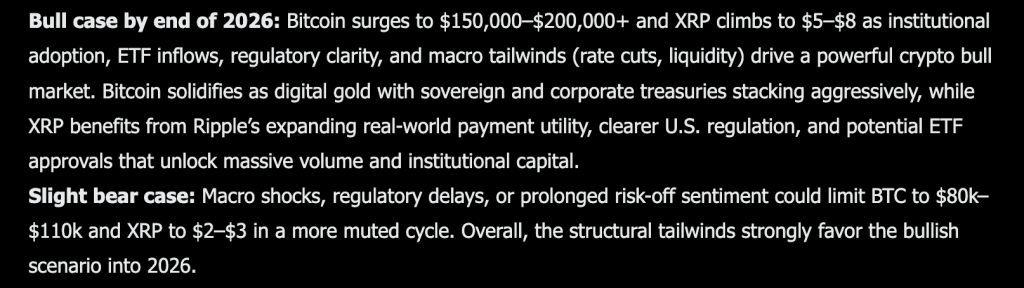


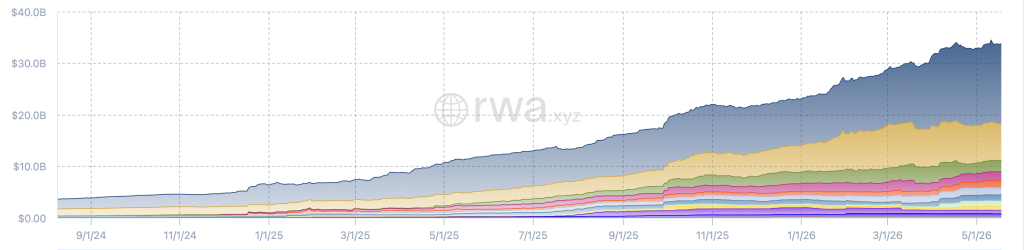

 Cardano (ADA)24h7d30d1yAll time
 Bitcoin (BTC)24h7d30d1yAll time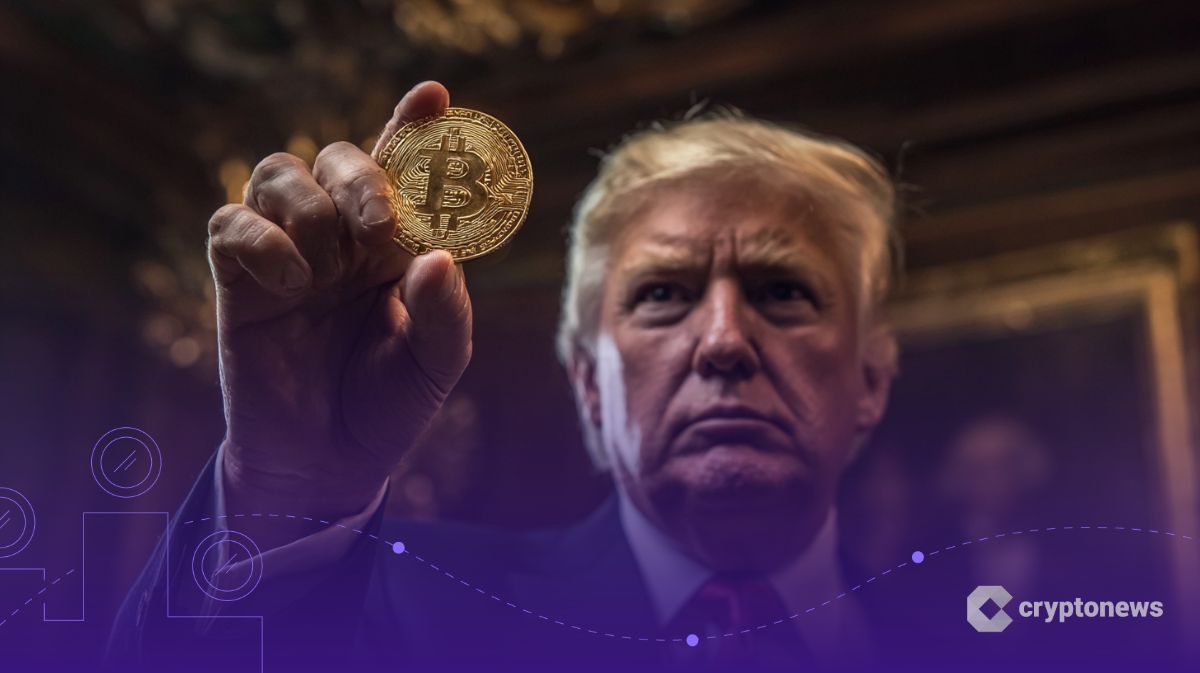
 Iran launches Bitcoin-backed insurance service for shipping companies wanting to transit the Strait of Hormuz.
 LATEST: Citi sets a 12-month target of $181K for
  Ethereum (ETH)24h7d30d1yAll time
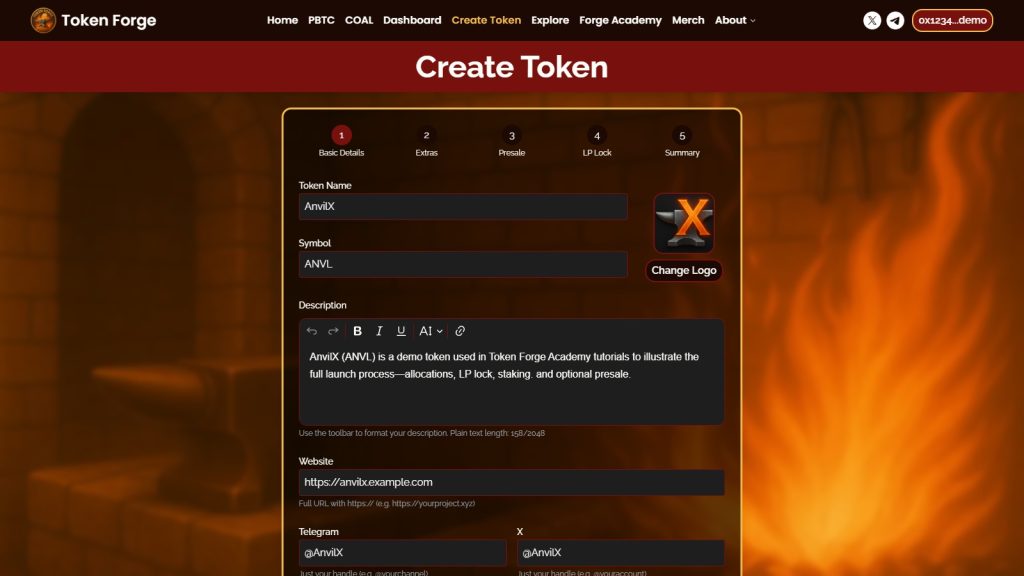


 Xrp (XRP)24h7d30d1yAll time




 The CLARITY Act is the fork in the road for OUR FINANCIAL FUTURE


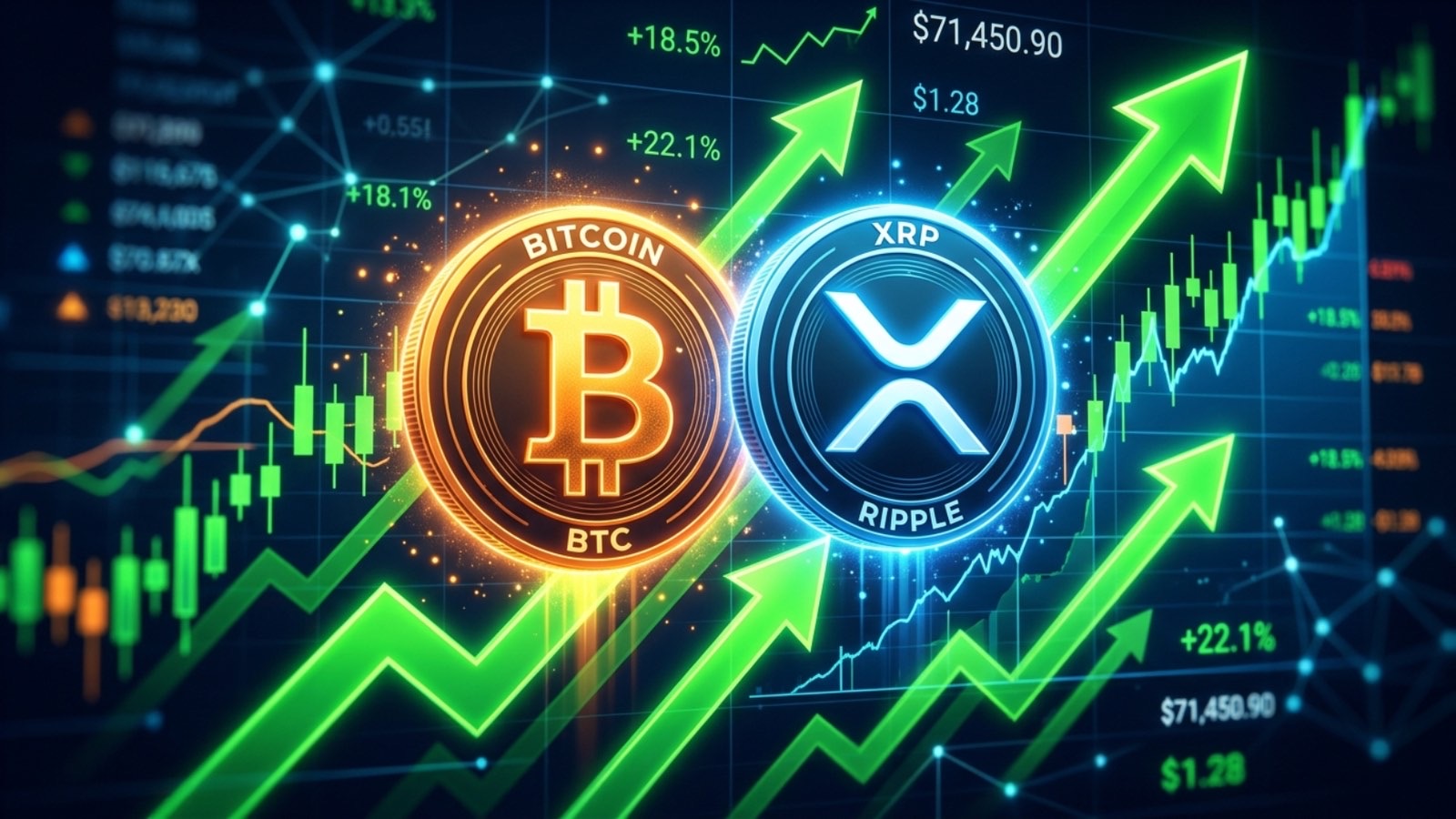



 INSIGHT: Solana Foundation President Lily Liu says, “Memecoins don’t define Solana.”
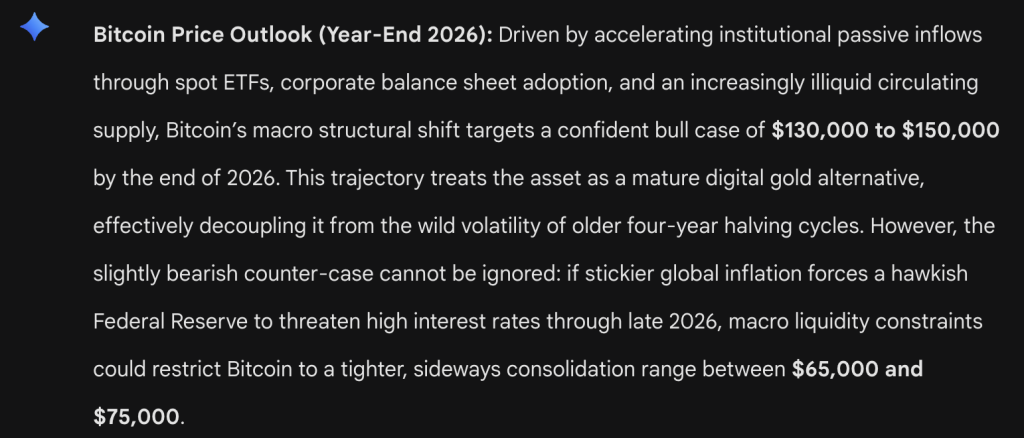


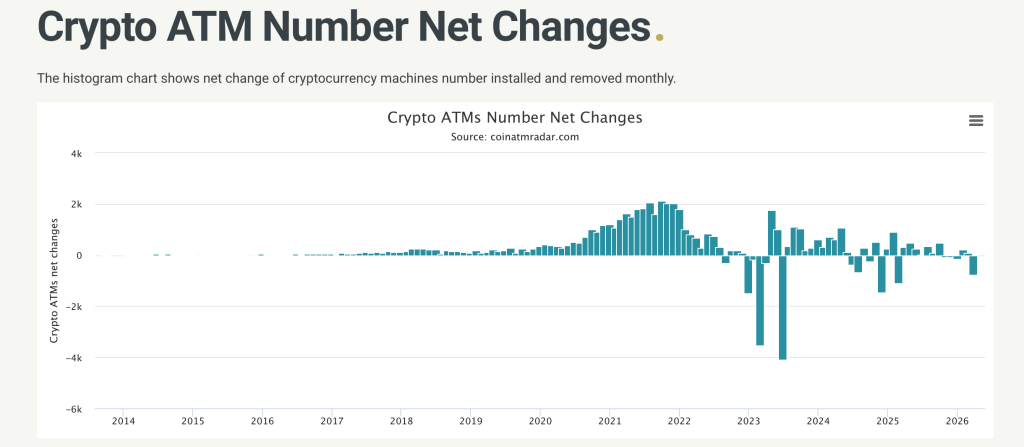

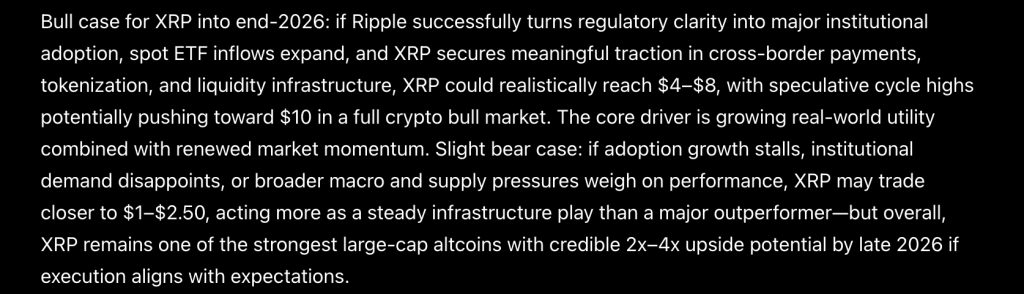
 Bnb (BNB)24h7d30d1yAll time

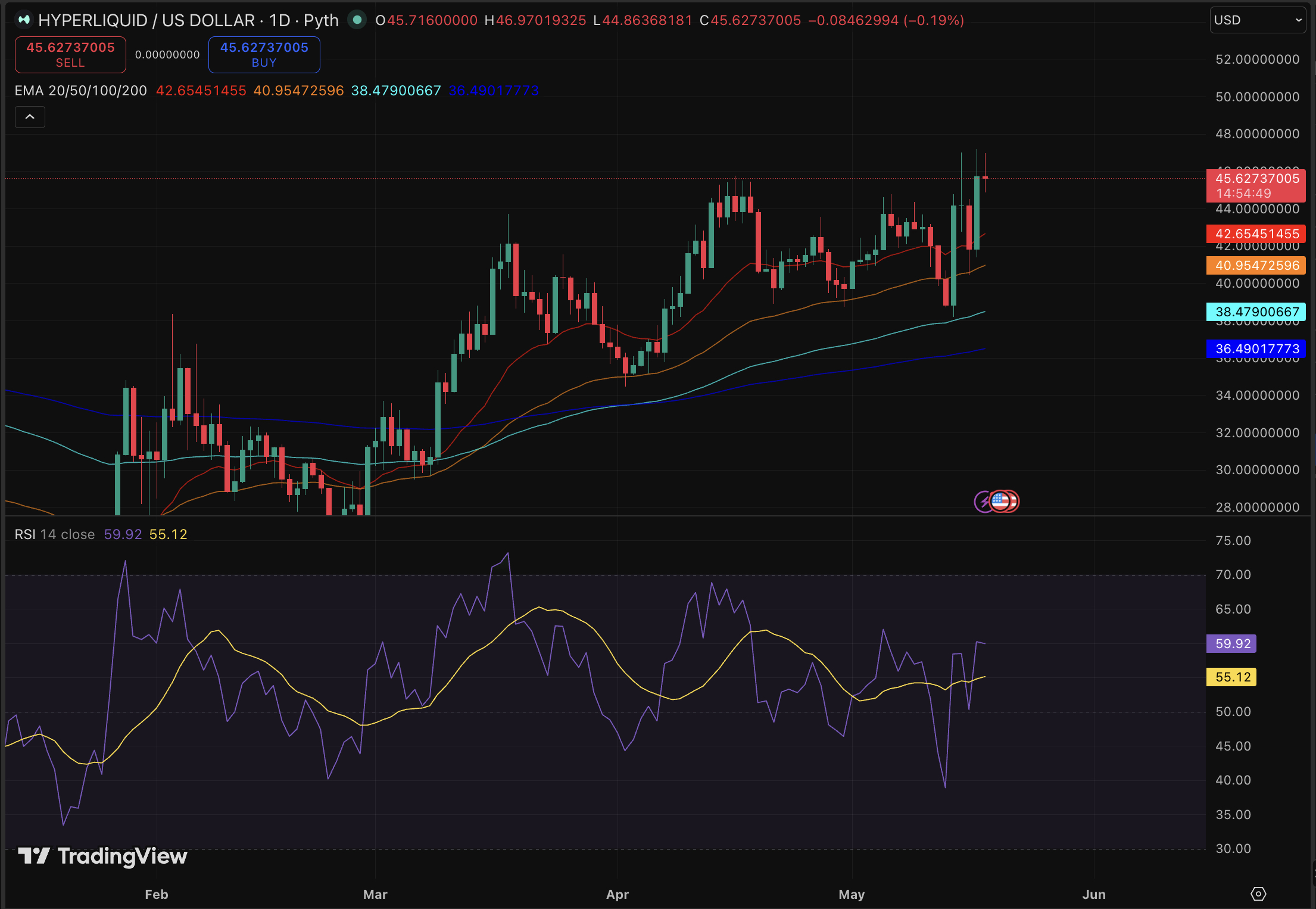
 Senator Elizabeth Warren says the crypto Clarity Act will "blow up the economy."
 ALERT: VERUS-ETHEREUM BRIDGE HACKED FOR $11.4 MILLION


 Chainlink (LINK)24h7d30d1yAll time
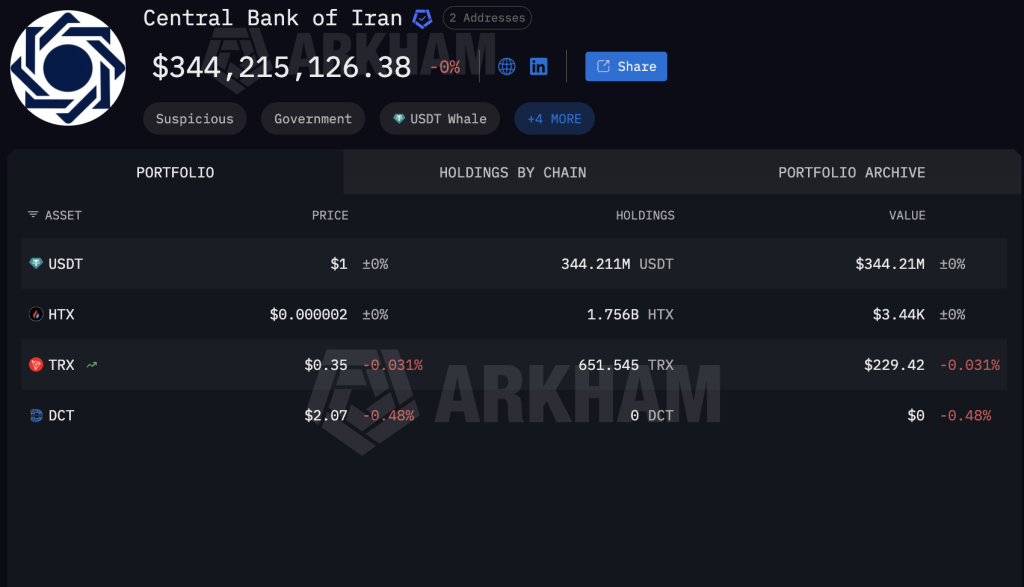

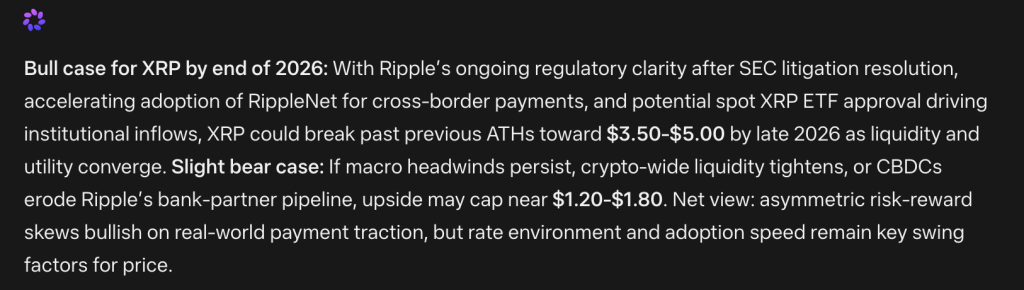

 Dogecoin (DOGE)24h7d30d1yAll time


 (@hami8040)