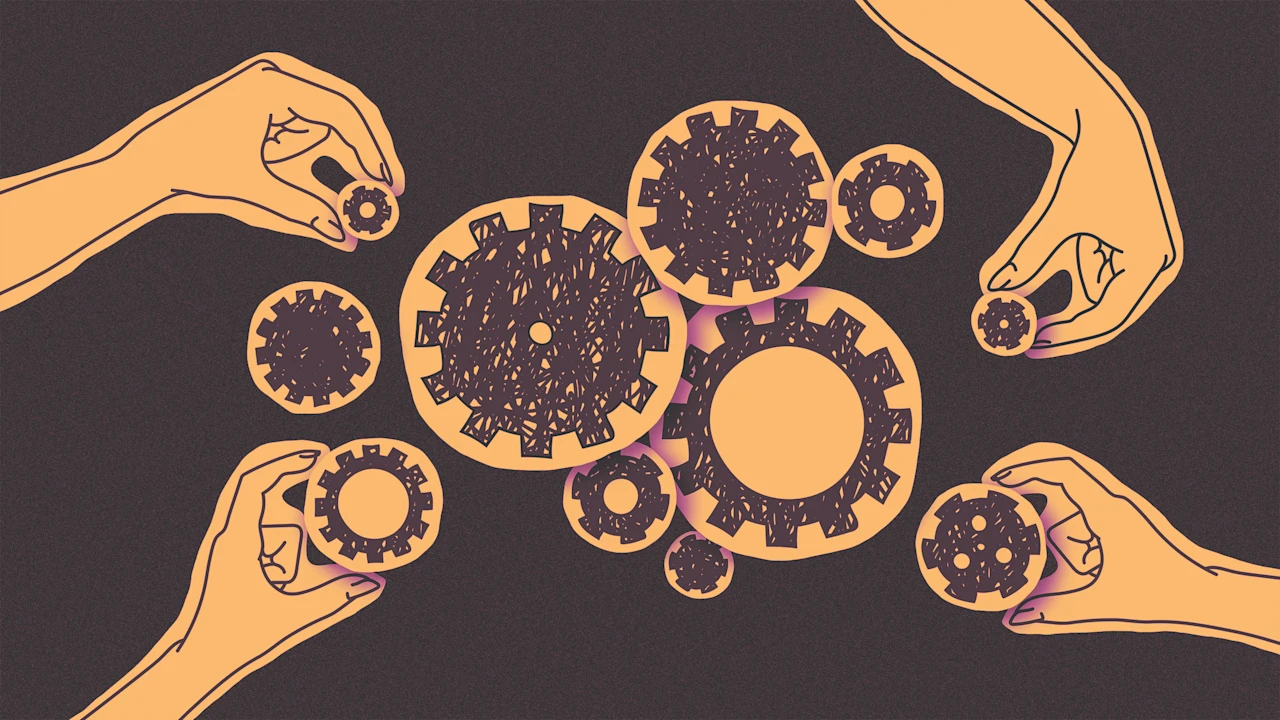
When we talk about infrastructure for a local economy, most people picture roads, sewer pipes, broadband, or parks. But there is an invisible type of infrastructure that shapes where capital flows and which businesses are considered investable. These are the narratives shape how a city talks about itself and its people.
Strong narratives rooted in abundance help attract institutional capital, spur innovation, and foster partnership and collaboration. When you treat narrative as an investable priority, you can reshape a city’s physical landscape. Seeking a quick return on investment, some fabricate narratives and relabel entire communities within cities without residents’ assent. In Denver, an intentional branding campaign shifted the name of a historically Black neighborhood (“Five Points”) to River North (or “RiNo”) with the hope that it would spur a local arts community. It worked—and brought in economic development, restaurants, and higher-income residents. But the campaign also helped the neighborhood become the second-most gentrified place in the country.
Like it or not, these fabricated narratives and relabeling are effective. If done with intention and focused on inclusive growth, they can transform a place for the better.
Our current national economic policy narrative seems to center on unpredictability and chaos. Yet the disruption of systems and expectations does allow us to create a new national narrative that acknowledges all people and every community have the capacity and potential to thrive economically.
NARRATIVE AS ECONOMIC INFRASTRUCTURE
Creating a narrative infrastructure goes beyond city slogans or branding campaigns. Narratives about talent, ingenuity, and industriousness become local and regional history and the stuff of lore, legends, and pride, like Pittsburgh as “Steel Town USA.” Or the “Keep Austin Weird” slogan, which branded Austin, Texas, as a creatively rich and innovative place, helping it become the tech hub it is today.
When we align investment capital with the perceptions that flow from our narratives, the stories that undergird them become reality. We found three narrative components that show up in cities that do this well:
1. Shared language: These cities have a unified way of describing value, risk, and inclusion. Establishing shared language was a central tenet of our collective impact work through The Integration Initiative. When economic development officials, lenders, philanthropy, and community partners all use the same language to talk about entrepreneurs, creditworthiness, or wealth-building, it becomes much easier to identify opportunities in the same places and move resources in the same direction.
2. Shared decision rules: Cities that have repeatable methods for translating community stories into policy, programs, and investment design are creating a successful narrative infrastructure. These criteria, guardrails, and questions are standard in RFPs, loan committees, and city council deliberations—for example, asking how a project advances shared ownership or incorporates known resident priorities. Many communities work together to create standardized approaches connected to shared goals, such as Nashville, which developed a streamlined process and checklist for responding to local government RFP to support the growth of local suppliers.
3. Shared performance signals: When cities monitor what type of businesses receive funding, which neighborhoods see new investment, and how quickly new capital is deployed, they can understand how their stories influence impact. Creating a shared measurement framework and partnering with a third-party evaluator can ensure the integrity of the performance data and that the storytelling remains robust.
WHEN STORIES MOVE CAPITAL
In the Twin Cities, systemic exclusion left Black and Indigenous communities with limited wealth-building opportunities, even as new investment dollars flowed into the region. We partnered with Youthprise to launch cooperative entrepreneurship cohorts that placed young founders of color at the center of the city’s economic story. Young entrepreneurs had an opportunity to explore co-ownership models.
By shifting the focus from individual enterprises to cooperative enterprises, the city cultivated ecosystems that were not only profitable but also equitable. Co-ownership models, including worker cooperatives, community land trusts, and shared-equity enterprises, offer a tangible way to build a locally rooted economy where ownership, decision-making, and prosperity are held in common by those who live and work there.
Even though these small businesses were young and first-time entrepreneurs, they were not seen as risky investments. Instead, they were seen as critical to the fabric of the community and, therefore, to building a resilient economy.
By embedding narrative infrastructure into economic development strategies, the Minneapolis-Saint Paul region is beginning to shift public will, policy appetite, and investor perception in tandem with concrete support for cooperative, community enterprises. Since the original partnership, approximately $2.5 million in private funding has been secured for a multi-use development anchored by youth cooperative housing.
FROM STORY TO POLICY TO CAPITAL
We assume stories are our reflections on what has come before, but we can also tell ourselves future stories and speak new opportunities into being. Cities that anchor narrative language in assumptions about entrepreneurs, sectors, or neighborhoods will never grow beyond limiting constraints.
In an era of disruption and widening inequality, cities that intentionally build narrative infrastructure won’t just tell better stories; they will build more inclusive, resilient local economies that prove those stories true.
Joe Scantlebury is president and CEO of Living Cities.
One small glimmer of hope for anyone hoping to buy a home soon: You might not need as much cash as you would have in years past.
Down payments hit their lowest level in five years in the first three months of 2026, according to a new report from Realtor.com. The amount of cash buyers need to put down to buy a home has dropped consistently over the last year, reaching a new low that’s 19% less than this time in 2025.
Dwindling down payments are a sign of a new phase in the U.S. housing market. In the heady housing scramble that kicked off with pandemic-era rate cuts, sky-high down payments became table stakes for making a strong offer. After a sharp uptick from 2020 to 2022, down payments continued to climb through the end of 2024, when they peaked at an average of $32,700 or 15% of a home’s selling price.
In early 2019, the average down payment was $12,500, which represented 10.7% of the average home price. By early last year, that percentage jumped up to 14% or $28,900—a huge increase considering that this number represents the cash in hand that you’d need to buy a house. This year, a buyer would need to put down 12.8% or $23,400, according to the new homebuying report. The downward trend means that competition for homes is easing a bit as inventory opens up and prices soften.
“Down payments are falling as the housing market slowly tilts toward buyers,” Hannah Jones, a senior economic research analyst at Realtor.com, said in the report. “High prices and borrowing costs continue to test affordability, and while conditions are improving, some of the buyers reentering the market are doing so via government-backed programs that have lower down-payment requirements.” Jones says that while the market is improving by some measures, many households may still find the path to owning a home challenging.
Parts of the country where home prices are cooling off show the biggest dip in the average down payment. The South and the West showed the biggest declines, with the Midwest staying steady and the Northeast still showing a spike in the amount of cash people need to put down to compete for a home.
Signs of a shift
There are a few signs in the housing market that things are finally getting a little easier for buyers. The average home buyer’s credit score started trending down last year, a sign that people previously priced out of the market are finding their way back in—and many of them had a little help.
To get their foot in the door, more buyers are tapping government programs like Federal Housing Administration (FHA) and Veterans Affairs (VA) loans designed to ease the financial burden of buying a home. Over the last five quarters, FHA’s portion of purchase mortgages has remained above 24%, its longest stretch at such high levels in 10 years. VA loans accounted for 11.7% of mortgages in the first quarter of 2026, also a 10-year high. Both government-backed loans allow lower earners to make smaller down payments, easing the cash crunch that can prove to be insurmountable for many people trying to buy a home.
“Government-backed programs are serving as a critical pressure valve, keeping the door to homeownership open for buyers who might otherwise be shut out entirely,” Jones said. “But the growing reliance on FHA and VA financing also reflects how much the conventional path to homeownership has narrowed for buyers without significant cash reserves.”
Across the country, many homebuying markets are tipping back in favor of buyers. Last month, two-thirds of the biggest housing markets moved into more balanced or buyer-friendly territory. Only a quarter of the top metros in the U.S. qualified as seller’s markets, with a large ratio of home buyers competing for the same housing inventory. While that picture is still uneven from region to region, it’s just one more sign that things may start easing for potential homebuyers waiting in the wings.
Boards everywhere are saying “we need AI agents.” That pressure moves down the organization fast. Teams build a pilot and achieve good results in a sandbox. Then they try to put it in production and everything slows down. Usually, the model performed fine. What was missing was what surrounded it—monitoring, ownership, a plan for when things go wrong.
I’ve been shipping software in regulated industries for 20 years. In those industries, when something hallucinates, planes don’t fly or money doesn’t move. So you learn to care about the process more than the tools, and realize that the model is the easy part. You can swap one for another in an afternoon. What you can’t swap is the workflow underneath it, and the domain knowledge baked into how an agent actually makes decisions.
THE WORKFLOW IS THE PRODUCT
In production, you don’t release anything without a rollback plan. You collect metrics from day one because if you forget, you can’t answer questions later. Every layer needs to be traceable. None of it changes just because the code is being written by an agent instead of a person.
An agent in a regulated environment needs control on its decision logic, defined inputs and outputs, monitoring, and a way back to a safe state when something breaks. But the harder part is what comes before any of that—domain knowledge. The reason companies keep working with the same engineering teams for years is that those teams know which systems interact, which areas are fragile, and where a small change cascades. That accumulated understanding of a client’s business, processes, and technical landscape is what allows you to build agents that hold up in production. Without it, you may be automating processes you don’t fully understand. MIT’s 2025 research shows that 95% of enterprise AI pilots produce no measurable business impact, and the problem is consistently how organizations adopt, integrate, and govern AI.
ONBOARD AGENTS THE WAY YOU ONBOARD ENGINEERS
You don’t expect a new developer to do a proper feature or fix in the main branch on day one. There’s a ramp-up period and supervision. You start them on smaller tasks, review their work closely, and gradually increase the scope as they prove they can deliver reliably. Agents need the same treatment. That means giving them a clear “definition of done,” evaluating their output against known benchmarks, having someone review the results until trust is earned, and building an escalation path for when the agent hits something it can’t handle. The discipline we’ve spent decades building around human onboarding applies directly here, as well—we just haven’t been applying it.
Stack Overflow’s 2025 Developer Survey, with more than 49,000 respondents, found that 45% of developers say debugging AI-generated code is more time-consuming than expected. The output looks right. Then you look closer and it isn’t. A function passes its tests but handles an edge case in a way no experienced engineer would accept. That’s where the human job is moving—not writing code, but catching what the machine got almost right. And doing that well requires people who know what “right” looks like in a given domain.
REVIEW THE BLUEPRINT, NOT THE BRICKS
An agent can produce a thousand lines of code in seconds. If your senior engineers are reviewing all of that after the fact, they become a permanent bottleneck. A better approach would be to do a shift left and review the spec before the agent starts. A small misalignment early on compounds quickly. By the end, you’re looking at an output that barely resembles what was intended.
The teams understanding that have moved their senior people into something closer to an architect-supervisor role. They spend most of their time sharpening the brief, not inspecting finished work. That takes people who’ve shipped things in production, who know what breaks at scale, and who understand the domain well enough to write specs an agent can follow without drifting.
The models will keep getting better on their own. The workflows, the guardrails, the knowledge of what actually matters in a specific industry, all come from years of doing the work.
But commuters in the eastern suburbs of New York City still had to muddle through another tough morning rush hour, as trains weren’t set to be running in time for the commute into work after the agreement was reached late Monday.
Limited train service was set to resume around noon, with full service expected to be back in time for the evening rush.
The LIRR still urged riders to work from home again Tuesday if possible. Shuttle buses were being offered from a handful of locations on Long Island to subway stations in New York City.
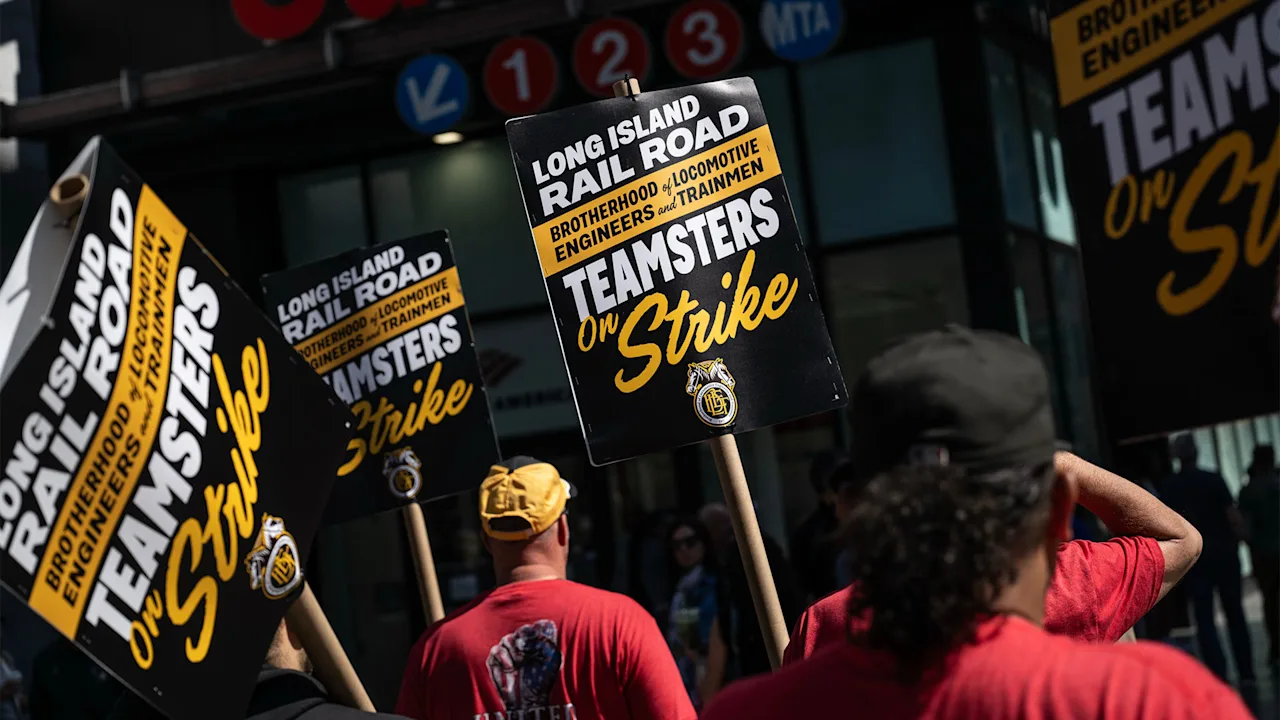
Five labor unions representing about half the train system’s workforce went on strike at 12:01 a.m. Saturday, halting service for roughly 250,000 commuters who use the rail system that connects New York City to its eastern suburbs every weekday.
Hallie Kessler was among the weary Long Island commuters who welcomed the strike’s end. With the trains out of service, the 24-year old speech therapist commuted three hours home from her job at a public school in the New York City borough of Queens on Monday.
“Obviously I wish trains would be running when peak hours start so I could avoid the long morning commute, but happy to not deal with it in the afternoon when I’m leaving work,” Kessler said. “Curious what the deal says about future fares, which has been a big concern, but we’ll see.”
New York Gov. Kathy Hochul and railroad officials have said they’re not at liberty to disclose details of the new contract terms until they’re voted on and approved by union members. But the Democrat, who is up for reelection, stressed the deal won’t increase fares or taxes and will give unionized workers the fair wages they deserve.
The first impacts of the walkout were felt over the weekend, as baseball fans had to find other ways to get to Citi Field in Queens to see the New York Mets take on their crosstown rivals the New York Yankees.
Hochul said the deal ensures basketball fans won’t meet the same fate as they travel to watch the New York Knicks continue their playoff run on Tuesday night at Madison Square Garden, which is located directly above the LIRR’s Penn Station hub in Manhattan.
The unions — which represent locomotive engineers, machinists, signalmen and others — and the Metropolitan Transportation Authority had been negotiating a new contract since 2023, but talks had stalled over salaries and healthcare.
The unions have said raises were needed to help workers keep up with inflation and the rising cost of living in the New York City area. The MTA had said the union’s initial demands would lead to fare increases and set a difficult precedent for negotiations with other transit unions.
The strike was the first walkout for the LIRR since a two-day strike in 1994.
Elon Musk’s loss in his lawsuit against Sam Altman and OpenAI, decided on Monday by a jury and upheld by a judge, wasn’t the only damaging revelation to emerge from the California courtroom. The two-week trial also punctured the carefully managed public images of some of the most prominent figures shaping AI for hundreds of millions of people.
Whether it was Musk’s combative texts to Altman threatening to make “[Altman and Brockman] the most hated men in America” if OpenAI refused to settle, co-defendant Greg Brockman’s painfully earnest diary entries about becoming a billionaire (“Financially, what will take me to $1B?”), or Mira Murati’s anxious messages to Microsoft CEO Satya Nadella as OpenAI’s boardroom coup unraveled, executives who had spent years projecting total control were revealed to be far more human, and far messier, than they intended. (Microsoft owns a 27% stake in OpenAI.)
The case was “a reminder that discovery can be the real trial. In this case, hundreds of emails, texts, Slack messages, and private diary entries from years back were aired publicly and often unflatteringly,” says Sarah Kreps, director of the Tech Policy Institute at Cornell University.
For executives watching from boardrooms, and perhaps even for some sitting in the courtroom itself, the takeaway was straightforward: Nothing is ever private.
Lawyers and HR executives have long warned against treating corporate messaging platforms as places to joke, vent, or trade sarcastic barbs.That lesson played out repeatedly during the trial. Among the central figures, Nadella largely escaped the most embarrassing disclosures, thanks in part to his reluctance to commit thoughts to writing. Documents introduced at trial showed him to be comparatively restrained and opaque, even in internal discussions over replacing (and ultimately reinstating) Altman.
Nadella’s relative silence suggested a lesson others in the industry may have ignored: it is often safer to pick up the phone than fire off texts or emails. “You just have to assume that everything you write is going to be revealed at some point,” says Nell Minow, chair of ValueEdge Advisors and a corporate governance advocate.
Whether the public airing of those private conversations will meaningfully change executive behavior is another question. That’s because, according to Minow, executives like Musk and Altman are shaped by a “go fast, break things, clean up the mess later” culture that does not lend itself to restraint.
Maura R. Grossman, an e-discovery specialist and University of Waterloo professor, sees the disclosures as part of a broader shift in elite behavior. “It has somehow become acceptable for people in positions of power to say things that would never have been deemed acceptable a decade ago,” she says. Most ordinary people, she adds, understand that texts and written communications can eventually surface. The fact that so many key players in the OpenAI saga appeared unconcerned by that possibility says plenty on its own.
Musk may still view the disclosures as a kind of Pyrrhic victory if they succeeded in publicly embarrassing his rivals. But Minow says the lesson isn’t to stop putting anything in writing at all. Excessive caution around written communication, she argues, risks undermining candid internal debate and eroding institutional memory. Without documentation, organizations lose out on a paper trail that can be useful in the event that something goes wrong within a firm, and enables observers or law enforcement to establish what went wrong and why.
Cornell University’s Kreps argues the smarter response is not to write less, but to write with greater discipline. “Document intent, options, rationale without the snark or speculation,” she says. Otherwise, companies risk replacing accountability with verbal-only decision-making and opaque governance.
Grocery giant Kroger Co. is the latest in a growing number of companies whose brands have been impacted by potential Salmonella contamination involving milk powder.
California-based Sugar Foods LLC is recalling some of its Kroger-branded Homestyle Cheese Garlic Croutons. The product used milk powder that may have been contaminated by Salmonella, according to a recall notice shared by the Food and Drug Administration (FDA) on Monday, May 18.
The milk powder was supplied by California Dairies, Inc, the same company linked to other recent Salmonella recalls.
“The affected seasoning batches tested negative for Salmonella prior to use,” Sugar Foods stated in its FDA announcement. “Out of an abundance of caution, and because this milk powder was used in a seasoning ingredient supplied to Sugar Foods, the company is initiating this recall.”
Sugar Foods had received no reports of illness at the time of the recall.
Which products are affected?
Only the 5 oz Kroger Homestyle Cheese Garlic Croutons are part of the recall. The UPC number for affected products is 0 11110 81353 4. However, the recall spans a number of best by dates:
Best by February 17, 2027
Best by February 18, 2027
Best by February 27, 2027
Best by February 28, 2027
Best by March 6, 2027
Best by March 9, 2027
Best by March 21, 2027
Best by April 1, 2027
Best by April 7, 2027
The products are past their best-by dates and no longer on store shelves. However, consumers may have them in their homes. Photos of the affected product are available here.
[Photo: Kroger]
Where was the product sold?
The Kroger Homestyle Cheese Garlic Croutons were sold in Kroger stores between March 7, 2026, and April 7, 2026, in these states:
Alabama
Arkansas
Georgia
Illinois
Indiana
Kentucky
Louisiana
Michigan
Missouri
Mississippi
Ohio
South Carolina
Tennessee
Texas
Virginia
Wisconsin
West Virginia
What should I do if I have this product?
If you have impacted Kroger Homestyle Cheese Garlic Croutons then discard them. You can contact Sugar Foods at 332-240-6676 at any time to ask questions.
What products are included in the recalls?
Sugar Foods joins the likes of Ghirardelli Chocolate Company and Utz Quality Foods LLC, both of which issued recalls due to potential Salmonella contamination in the last month. As of May 18, the full list of recalls tied to California Dairies is as follows:
AI is saving workers more than two hours a day. That sounds like an unqualified win, and in many ways, it is. But beneath the productivity headlines, something more complicated is happening. Employees are getting faster, but some are also getting less confident, less skilled, and less certain they can do their jobs without a machine doing much of the thinking for them. That tension is the defining workforce challenge of 2026, and most companies aren’t prepared to address it.
New research from GoTo, conducted in partnership with Workplace Intelligence, surveyed 2,500 global employees and IT leaders on AI use and sentiment. The findings tell a story about a workforce caught between the tools that help them and the habits those tools are forming. Fifty percent of employees now say they rely on AI too much. Thirty percent say they can no longer function without it. And 39% believe their overreliance on AI is actively eroding their skills and making them less intelligent, a number that climbs to 46% among Gen Z workers. These aren’t fringe opinions. They are the quiet consensus of a workforce that adopted AI fast and is now reckoning with the consequences.
The Pressure to Use AI Is Outrunning the Guardrails to Use It Well
One of the clearest findings in the research is how much external pressure is shaping AI behavior at work. Sixty percent of employees say they feel pressured to use AI tools to boost productivity regardless of whether the task calls for it. That pressure, absent the right training and policies, is a setup for misuse.
The numbers bear this out. Seventy percent of employees (up from 54% just a year ago) admit they’ve used AI for sensitive or high-stakes tasks, including legal or compliance work, decisions requiring emotional intelligence, and actions involving confidential information. These are exactly the domains where human judgment is most irreplaceable, and where AI errors carry the highest cost. The fact that this number jumped 16 percentage points in a single year suggests the problem isn’t slowing down on its own.
Compounding this is an “AI workslop” problem that’s starting to tax the entire workforce. Forty-three percent of employees say they’ve submitted AI-generated content despite suspecting it was low quality or contained errors. With that in mind, it’s unsurprising that 77% percent say reviewing AI-generated work takes more time than reviewing human work. And 66%sixty-six percent say wading through other people’s AI output creates extra work for them. The efficiency gains from AI are real, but they’re being partially offset by a flood of under-reviewed, unreliable output that everyone else must spend time, energy, and resources to clean up.
The Leadership Gap Is Where the Real Risk Lives
What makes these findings particularly striking is the disconnect between employees and the leaders responsible for guiding them. Eighty-four percent of employees say their company could do more to encourage responsible AI use, however only 48% of IT leaders agree. That gap of 36 points is a signal that IT leadership is significantly underestimating the extent of the problem.
The policy picture is just as concerning. Only 44% of IT leaders say their company has an AI policy in place at all. And among those that do, 77% of employees say the policy needs improvement. Meanwhile, 80% of employees and 60% of IT leaders acknowledge that most workers aren’t being properly trained to use AI tools. The infrastructure for responsible AI use, including the policies, the training, and the role-specific guidance hasn’t kept pace with how fast employees have adopted these tools.
This is not a technology issue, not a generational issue, and not something that will self-correct as AI matures. Employees are not misusing AI out of laziness or bad faith; they’re doing it because they’ve been handed powerful tools without the context and enablement to use them well, and told implicitly or explicitly to produce results. When organizations reward output without asking how it was produced, they get exactly what they incentivize.
What Companies That Get This Right Will Do Differently
The same research that surfaces these problems also points toward solutions, and they’re not complicated. They require organizational commitment, not technological breakthroughs.
The priority is building AI policies that work. That means policies employees understand, see as relevant to their daily work, and feel equipped to follow, not compliance documents that live on an intranet page. Given that 65% of employees say their employers have not equipped them with the skills they need as AI takes over more work, this must be paired with genuine training investment, including role-specific guidance on where AI adds value and where it doesn’t belong.
The second priority is deliberate investment in human skills. Workers themselves identified the capabilities they believe will matter most in an AI-driven workplace: creative thinking, emotional intelligence, sound judgment, and the ability to know when to trust AI outputs and when to override them. These aren’t soft skills in the dismissive sense; they are the hard-to-automate competencies that determine whether AI amplifies a workforce or quietly hollows it out. They’re also the foundation of effective human-AI collaboration.
The employees who will create the most value aren’t those who use AI the most, but the ones who know how to work alongside it. Workers should focus on contributing the judgment, context, and creativity that AI cannot supply, while letting AI handle the volume, speed, and synthesis it does well. Companies that train employees to operate in that partnership model, rather than simply handing them tools and expecting results, will be better positioned when the next wave of AI capabilities arrives.
The third is cultural: leaders need to model what responsible AI use looks like, not just mandate it. Employees who see their managers using AI thoughtfully, knowing when to rely on it, when to push back on its outputs, and when to set it aside entirely are more likely to develop the same instincts. Policy shapes behavior at the edges; culture shapes it at the center. Eighty-eight percent of employees say AI has benefited them. That number should give every business leader confidence that the technology is working. But the same research makes clear that productivity gains alone are not a strategy. The companies that will win the next decade of work aren’t the ones who pushed AI adoption hardest. They’re the ones who built the organizational discipline to use it wisely, and kept their people capable, confident, and trusted in the process.
After filing for bankruptcy several weeks ago, a large franchisee that operates dozens of Carl’s Jr. restaurants in California is planning to cut loose some of its underperforming locations, according to newly filed court documents.
Sun Gir Incorporated, the lead debtor in a group of affiliated Chapter 11 cases that were filed in early April, has asked for court permission to reject the leases on at least three Carl’s Jr. locations in the Los Angeles area.
As of this week, the restaurants appeared to still be open. But they have been operating at a substantial negative cashflow for the franchisee, as documented in three separate dockets filed in federal court for California’s Central District.
Sun Gir says the underperforming restaurants are burdensome, and that they impose financial losses on the franchisee “without providing sufficient economic benefit,” the filings reveal.
The filings do not explicitly say that the restaurants will close, although that would be the typical outcome for a court-approved lease rejection. The franchisee has stated in the filings that it wants to focus on its more profitable locations as part of a restructuring.
In a separate filing, Sun Gir said that it has hired National Franchise Sales (NFS), a business brokerage firm, to help it sell some of its Carl’s Jr. locations, but it did not specify which ones.
The details of that process are still being worked out, with bids expected to be due in July and an auction potentially scheduled for August.
It’s unclear how many jobs could be lost as part of the restructuring or any resulting closures. Sun Gir and its affiliates own 59 Carl’s Jr. restaurants in California. Together, they employ roughly 1,000 employees.
The debtors are all affiliated with Friendly Franchisees Corporation (FFC), in La Palma, California, which is not directly named in the bankruptcy cases.
FFC and its general counsel did not respond to requests for comment about the fate of the Carl’s Jr. stores.
Why did this Carl’s Jr. franchise go bankrupt?
In court documents, Sun Gir Incorporated cited a number of factors that have contributed to its Chapter 11 bankruptcy.
Carl’s Jr. restaurants within its portfolio have faced increased competition, rising operating costs, and diminishing sales, all of which have added up to “financial distress.”
Sun Gir is also among the restaurant companies that have blamed its precarious financial situation in part on California’s two-year-old minimum wage policy, which requires $20 an hour for workers at fast food chains.
Tellingly, Sun Gir’s bankruptcy filings include detailed financial breakdowns of restaurant operating losses that begin on April 1, 2024—the day the minimum wage policy took effect. The bankruptcy cases were filed the following day.
Recent research on the impact of that policy, including one March study led by an economist at UC Santa Cruz, has found that while fast food wages did indeed increase, some restaurant operators have reduced their work shifts as a result.
Is Carl Jr.’s in trouble?
The bankruptcy filings concern restaurants owned by a single franchisee and do not necessarily reflect the health or appeal of the Carl’s Jr. brand.
Founded in 1941, Carl’s Jr. is known for its charbroiled burgers and other indulgent menu items. The fast food brand is owned by Tennessee-based CKE Restaurants Holdings, the privately held company that also owns Hardee’s.
CKE declined to comment about the franchisee’s bankruptcy or any potential store closures.
Carl’s Jr. has more than 1,000 U.S. locations, mostly in western states, with California being the state with the most Carl’s Jr. locations.
How many restaurants are at stake in the bankruptcy?
Friendly Franchisees Corporation says on its website that it operates 65 Carl’s Jr. locations, but its affiliated bankruptcy cases have stated 59 locations: 52 in Southern California and 7 in Northern California.
It’s not entirely clear what accounts for the discrepancy. Sun Gir said in a court filing that one of its locations in North Hollywood closed two years before its bankruptcy petition. It’s possible that others have closed in recent years.
Which Carl’s Jr. locations are closing or being sold?
Sun Gir told a court that it wants to reject the leases on three underperforming locations. It did not respond to questions about whether the locations will be permanently closed or sold to another entity. The addresses are as follows:
19400 Ventura Blvd, Tarzana, CA 91356
165 E Duarte Rd Arcadia, CA, 91006
573 N Azusa Ave Covina, CA 91722
All three of these stores have been around for many years. The oldest of the leases, for the Arcadia store, dates back to the year 2000. However, that store suffered a net operating lose of $403,003 over a two-year period between April 2024 and March 2026, a court filing reveals. That makes it the biggest lossmaker of the three locations.
For now, it’s unclear if additional locations could be impacted by future lease rejections. We’ve asked FFC for more details and will update this story if we hear back.
It used to be that my friend Kristin had a vague sense of how her husband’s day went. He’d come home with a story to share or sometimes he didn’t. Sometimes he seemed annoyed, and when he was in one of those moods, she didn’t press. They’d kick their feet up, pour some wine, and talk about the upcoming weekend.
Now they both work remote and all of a sudden, she knows a lot more about her husband’s day. “I know how many times he’s opened the fridge,” she told me recently. “Seven times. Seven times before lunch.” She wasn’t angry when she said it. “I love him,” she said. “But I don’t know that I was meant to know this much.”
{"blockType":"mv-promo-block","data":{"imageDesktopUrl":"https:\/\/images.fastcompany.com\/image\/upload\/f_webp,q_auto,c_fit\/wp-cms-2\/2025\/11\/Girl-Li.png","imageMobileUrl":"https:\/\/images.fastcompany.com\/image\/upload\/f_webp,q_auto,c_fit\/wp-cms-2\/2025\/11\/souter.png","eyebrow":"","headline":"\u003Cstrong\u003ESubscribe to Girl, Listen: A Guide to What Really Matters\u003C\/strong\u003E","dek":"Ericka dives into the heat of modern motherhood, challenging the notion that personal identity must be sacrificed at the altar of parenting.","subhed":"","description":"","ctaText":"SIGN UP","ctaUrl":"https:\/\/erickasouter.substack.com\/subscribe","theme":{"bg":"#f5f5f5","text":"#000000","eyebrow":"#9aa2aa","subhed":"#ffffff","buttonBg":"#000000","buttonHoverBg":"#3b3f46","buttonText":"#ffffff"},"imageDesktopId":91457710,"imageMobileId":91457711,"shareable":false,"slug":"","wpCssClasses":""}}
You’re seeing too much
I’ve been thinking about Kristin and her fridge for weeks. Working from home hasn’t just changed the way we work. It has also changed some marriages in ways no one expected. Couples used to have built-in distance. Before you got home, there was space to think about your partner, miss them, and feel grateful. These days, couples are with each other all day. They see each other’s stress spirals, doom scrolling breaks, things they said in meetings that bothered them, emails that didn’t make sense, phone calls they wish they could re-do. It’s a level of intimacy we never asked for. For some, it’s endearing. For others, it’s a lot.
You used to get the best version of your partner when you walked through the door. But now you get the full, unedited version all the time. Little annoyances you never knew about build up because you’re around to hear them. Your partner is everywhere you are and it’s absorbed into your day. It can change how you see them.
The who does what debate
And when you are both home all day, you will need to renegotiate who does what. When one of you used to leave for work, a lot of things were just decided by that dynamic. One person handled what was happening at home. It wasn’t always fair, but it was clear. Now, it’s not clear at all. You both are there, both have jobs, and both look busy. So, all day long, there’s this unspoken conversation. Do they look more slammed than me? Who’s dealing with the laundry? Should I figure out dinner, or will they?
You lose the space between you
There’s another issue that is harder to name. You lose a little bit of mystery. When you worked in different places, you didn’t know the details of each other’s day. You asked about it and shared stories. That back and forth was a kind of connection. Now, you already know that important meeting went badly because you heard it through the wall. You know they are overwhelmed because you are watching it in real time. There’s less to share at the end of the day, less curiosity, and fewer moments to discover things about each other. And that matters more than we think.
Research on relationships shows that small moments of curiosity and having genuine interest in someone’s day help keep a couple feeling close. Feeling consistently cared for isn’t about big gestures. What matters more is the daily habit of turning to your partner and saying, “Tell me what happened,” and waiting to hear the answer. When you already know everything, those moments may start to disappear.
Create the break
So, the question is, how do we still show up for each other when nothing feels new? The answer is: you have to create a little distance on purpose. Work in different rooms if you can; Take solo breaks to go outside; try not to eavesdrop; occasionally make plans to have lunch or take a coffee break away from home. And when the workday comes to a close, take a walk together, shut the laptop when chatting, ask about each other’s day even if you think you know the answer. It’s not really about knowing what happened. It’s the act of sharing and creating moments of connection.
{"blockType":"mv-promo-block","data":{"imageDesktopUrl":"https:\/\/images.fastcompany.com\/image\/upload\/f_webp,q_auto,c_fit\/wp-cms-2\/2025\/11\/Girl-Li.png","imageMobileUrl":"https:\/\/images.fastcompany.com\/image\/upload\/f_webp,q_auto,c_fit\/wp-cms-2\/2025\/11\/souter.png","eyebrow":"","headline":"\u003Cstrong\u003ESubscribe to Girl, Listen: A Guide to What Really Matters\u003C\/strong\u003E","dek":"Ericka dives into the heat of modern motherhood, challenging the notion that personal identity must be sacrificed at the altar of parenting.","subhed":"","description":"","ctaText":"SIGN UP","ctaUrl":"https:\/\/erickasouter.substack.com\/subscribe","theme":{"bg":"#f5f5f5","text":"#000000","eyebrow":"#9aa2aa","subhed":"#ffffff","buttonBg":"#000000","buttonHoverBg":"#3b3f46","buttonText":"#ffffff"},"imageDesktopId":91457710,"imageMobileId":91457711,"shareable":false,"slug":"","wpCssClasses":""}}
“You’d be amazed, how many wealthy people that say they’re rich do not have liquidity,” O’Leary said on Fox Business.
O’Leary said he practices what he preaches, keeping at least $5 million of his own wealth in Treasury bills—short-term U.S. government securities that can be quickly converted to cash.
The Canadian businessman argues that true financial security means being able to access your wealth at a moment’s notice, be it to weather an emergency or to seize an investment opportunity. A house, a private business, or illiquid assets may look impressive on paper, but in his view, they don’t count toward real wealth.
Financial experts say the strategy has merit. Tech entrepreneur and FinlyWealth co-founder Abid Salahi told GOBankingRates, “Our data shows that clients with a higher liquidity ratio — typically 20 percent to 30 percent of their total assets—are better equipped to handle financial emergencies and capitalize on investment opportunities.”
O’Leary acknowledges that hitting that number is no small task. “It’s very hard to get five million liquid because in this market that makes you $250,000 a year pretax,” he said. “You have a family of four and poo-poo hits the fan in your world and everybody loses their job, you can sustain a family on 250 pretax. That’s why it’s the magic number.”
This isn’t the first time O’Leary’s made this claim. He had the same sentiments back in November. Even when you are tempted to spend or loan the money, he advises people not to. “That is not what it’s for,” O’Leary continued. “It’s there to guarantee your financial freedom and that of your family for the rest of your life.”
O’Leary is not alone in that thinking. His former Shark Tank co-star Mark Cuban said that the first step to getting rich is having cash available. “You aren’t saving for retirement. You are saving for the moment you need cash,” he wrote on his blog.
In 2020, billionaire investor and Bridgewater Associates founder Ray Dalio declared that “cash is trash,” but by 2023, he had walked back on that position, stating, “Cash offers a good return without price risk. It also keeps my money as dry powder, so cash looks ‘pretty good’ to me.”
O’Leary sees the $5 million threshold not as a finish line, but as a foundation: “I tell all my entrepreneurs, ‘That’s your goal.’ ”
Inc. is the voice of the American entrepreneur. We inspire, inform, and document the most fascinating people in business: the risk-takers, the innovators, and the ultra-driven go-getters that represent the most dynamic force in the American economy.
As large language models seep into everyday life, some worry the technology could trigger a mass political realignment. Chatbots, the theory goes, can be shaped by training data and system instructions to privilege certain worldviews, and users who interact with them daily may gradually absorb those biases at scale.
But Dartmouth College political scientist Brendan Nyhan cautions against assuming such a future is inevitable. LLMs may be powerful, he says, but that doesn’t mean they’ll influence people in the ways we expect, or even in the ways their creators intend.
There are several reasons an AI-driven political shift may be harder to engineer than it sounds. Most people don’t closely follow political news, and it’s unclear how often they use AI tools for political guidance in the first place. And while chatbots can sound persuasive, and in some cases have encouraged disturbing behavior, there’s little evidence that they are fundamentally reshaping most users’ core beliefs.
There’s also a practical tension at play. Companies may face pressure to steer AI systems toward certain viewpoints, but they are simultaneously competing on qualities like accuracy and reasonableness. It’s difficult to optimize for both at once.
The dawn of the social media age was instructive, says Nyhan, who—along with coauthors—recently published a preprint chapter explicating some of the challenges of studying AI’s impact on politics. As many of us remember, the outcome of the 2016 election prompted serious concerns that social media platforms like Facebook had caused political polarization through biased algorithms and fake news. Still, a decade after that election, social science research is still open about whether social media actually had this kind of impact.
Fast Company spoke with Nyhan about how, while technology can be transformative, human behavior can also be quite sticky. This interview has been edited for length and clarity.
We did have this whole big discourse about whether social media had sort of caused massive political polarization. What were the lessons learned from that era as we think about AI?
It’s important to recognize that we often hear new technologies and seize on claims about the harms that they’re going to create before the evidence is strong enough to really justify what’s being claimed. In this case, the evidence is pretty thin. Social media platforms are hard to study—but to the extent that we can evaluate it—it’s not obvious that social media has made our politics more polarized. They may have contributed in certain specific ways, but in a lot of cases, they’re reflecting the polarization of our politics back to us.
I was one of the authors of a study that randomized exposure to like-minded sources on social media, which is one of the most frequently cited mechanisms by which social media could make people more polarized. When we reduced that exposure to like-minded sources, it had no effect on the polarization of people’s attitudes or vote choice. There have also been a number of studies that pay people to stop using social media for a period of time. Those similarly have quite modest effects at best. Though not necessarily zero, there’s certainly no evidence that social media is the primary cause of polarization.
The fear is that these companies have a lot of control and have become funnels or information, particularly as more people switch from search engines to LLM platforms. There’s this fear that they’re going to sort of make us all Republican or Democrat.
They do exercise a lot of power. [We talk] about the fear that authoritarian countries will influence the content of LLMs in problematic ways . . . I do think there’s reason to worry about the content on which elements are trained.
At the same time, it turns out to be a lot harder to persuade people at scale than is typically assumed. AI chatbots can be pretty persuasive when people interact with them about controversial topics, but most people aren’t asking AIs what they should believe about climate change or who to vote for.
Is there any evidence that these large language models do actually seem to exhibit some values internally that swing one way or the other in terms of left and right?
People have administered various questionnaires to the LLMs to benchmark them against the attitudes they express against humans. When they are asked questions in that format, they tend to give answers that, on average, lean to the left. That’s likely reflecting the balance of the information that they’ve been trained on. It may also reflect, in part, the way the companies are developing them.
Increasing model performance has tended to drive LLMs towards more accurate answers. What I mean by that is that AI companies are obviously in this race to develop better models against each other, and we’ve generally seen that models that perform better on the benchmarks they compete on are generally performing better at providing accurate, evidence-based information. Right? Of course, not always, and not perfectly.
But the improvement has been quite rapid, and it’s actually so far proven to be pretty hard to have a frontier model that just gives you political output that you find appealing. Grok has really fallen off the cutting edge, and you can even see it reverting back to more standard types of answers when Elon Musk stops paying as close attention to it and badgering his engineers to manipulate it. It tends to revert back to saying things like climate change is real.
A flock of chickens living in a coop near Dallas, Texas, are ordinary birds. But they hatched inside 3D-printed artificial eggs in a lab at Colossal Biosciences, the Dallas-based “de-extinction” company.
Colossal designed a new system that functions essentially like a natural egg. One of the company’s goals: to use it to bring back the South Island giant moa, a bird that went extinct in the 15th century. But the technology could also be used to help breed currently endangered birds.
[Photo: Colossal Biosciences]
It’s not the first time that scientists tried to raise birds outside a natural shell. But previous systems, first developed in the 1980s, required a flow of oxygen and other interventions for the embryo to survive. (The oxygen also sometimes damages the birds’ DNA.) The new shell can sit inside an ordinary incubator. “We want to make sure that it is as close to an existing egg as possible,” says Ben Lamm, Colossal’s CEO.
[Photo: Colossal Biosciences]
R&D took nearly two years. The new design uses a rigid titanium lattice, shaped like a partial egg, lined with a permeable membrane that can hold an embryo. The shell was initially “more egg-like,” Lamm says. “But then we thought if we’re going to be reimagining the egg, how do we reengineer it in a way that we get the most flexibility out of it?” Leaving the top open means that it can be attached to a microscope, for example, and easily monitored as the embryo grows.
[Image: Colossal Biosciences]
To test the system, the team carefully moved chicken embryos from regular chicken eggs to the new shell. When the chick is ready to hatch, it can pop through a thin membrane at the top; staff also monitor them to help them get out. Every chick that made it to term is now a healthy chicken, Lamm says.
To raise a giant moa, the company would need to build a much larger version—the bird was as tall as 12 feet, with eggs as much as 80 times larger than a chicken egg.
[Photo: Colossal Biosciences]
The company’s controversial process to bring back extinct species involves sequencing surviving fragments of DNA, comparing it with living relatives, and using gene editing to modify related species to produce embryos that are raised by a surrogate. (When Colossal announced that it had “brought back” dire wolves, many scientists argued that they were wolves with a handful of dire wolf traits, not actually dire wolves.) In the case of the giant moa, since no living bird is large enough to act as a surrogate for the egg, an artificial system is necessary.
You might ask: why bring back this particular bird? Lamm’s argument is that we need the tools of de-extinction to deal with the current crisis; the moa is a way to learn. “If you look at the trend line, it’s forecasted that we could lose half of biodiversity in the next 25 years,” he says. “It’s better to have a de-extinction toolkit and not need it and not have it. Unfortunately, I do think you’re going to need some of these technologies.”
[Photo: Colossal Biosciences]
For birds that are currently endangered, conservation organizations could use it to breed birds that are difficult to breed in captivity, and that don’t have readily available surrogates to raise eggs. Scientists could genetically modify other birds to produce the endangered species, which could be raised inside artificial eggs tailored to the right size for each bird.
Of course, it doesn’t solve the bigger problem: if species are going extinct because forests are plowed down for farming or development, or because climate change is fundamentally reshaping ecosystems like the Amazon, raising more birds won’t mean that they can survive in the wild. Global governments need to deal with those issues, Lamm says, “but I think that giving some of these countries and some of these different NGO partners the ability to have the animals both in sanctuaries and in captive breeding locations is a solid start.”
After losing a boardroom power struggle with Apple CEO John Sculley, Steve Jobs was exiled to a small building across the street from Apple’s headquarters. It was May 1985. He and his colleagues called his new office “Siberia.”
Corporate reports stopped flowing to his desk, and executives stopped calling, leaving him bored and lonely. “It was amazing to see how ostracized he was in the Valley,” recalled Susan Barnes, a Macintosh financial controller who had previously reported to him. “It was really cruel.”
Jobs is remembered as the visionary who returned to Apple, the company he cofounded, in 1997, and saved it from near-bankruptcy. But before the comeback, he made a series of leadership decisions that destabilized the company and left it drifting toward death.
An overlooked truth: the instincts that made Jobs extraordinary, his perfectionism, his force of will, his refusal to compromise, also nearly destroyed Apple in its early years. After he left, Jobs spent twelve years failing at a company called NeXT, and those failures laid the foundation for Apple’s resurgence with the iPod, iPhone, and iPad.
Here are five times Steve was wrong and learned from his mistakes:
1. He made himself the center of every decision
By early 1985, Apple had splintered into warring factions. Jobs undermined Sculley to colleagues and challenged his every decision. “I am the board,” Jobs, Apple’s chairman, told one executive. Sculley’s supporters stormed the human resources department to complain. As one executive observed, no one knew who was really running the company.
The civil war paralyzed Apple at the worst moment. Macintosh sales were declining, IBM and its clones were eating market share, and for the first time in its history Apple laid off employees, more than 1,200 of them, and announced its first-ever quarterly loss. The company secretly entered talks to sell itself to General Electric.
By the time the board sided with Sculley and stripped Jobs of his authority, the internal war had already cost Apple months of progress.
That autumn, Jobs left Apple and started a new computer company, NeXT. The pattern followed him. Ignoring the warnings of his cofounders, Jobs rushed out the first NeXT computer, called the Cube, in October 1988 with an unfinished operating system. The price was more than double what its target customers said they could pay. Selling only a few dozen computers a month, the company eventually laid off half its workforce and abandoned hardware entirely.
When the founder becomes the only voice in the room, the company has nothing to fall back on when the voice is wrong.
2. He built for his own taste instead of the market
Between the Super Bowl commercial, the famous keynote, and the promise of a “computer for the rest of us,” the Macintosh launch in January 1984 became one of the most mythologized product launches in American business. For the first hundred days, shipments were strong and the Mac looked poised to succeed.
But the machine had no hard drive, extremely limited functionality, and a price tag of $2,495, almost $8,000 in today’s dollars. The first wave of buyers loved it. At that price, there was no second wave. The Mac was a beautiful machine that regular customers simply couldn’t justify buying.
The commercial disappointment helped trigger the power struggle with Sculley, Jobs’s ouster, and twelve years of strategic drift that nearly killed Apple.
3. He shipped before products were ready and blamed his team when they fell apart
In early 1985, Jobs pushed Apple to release the Macintosh Office, a version of the Mac aimed at corporate buyers. Its technical heart, a device for sharing files across office computers, was severely delayed and not ready to ship. The product landed to weak sales, accelerating the internal crisis that would end with Jobs’s removal months later.
At NeXT, he repeated the pattern. After the Cube was released, NeXT cofounder Dan’l Lewin presented Jobs with a list of problems piling up. Rather than fix them, Jobs blamed the sales team. “We’re so far away from selling anybody anything right now,” Lewin pushed back. “You don’t want to hear it, but this is not a problem in sales.” So Jobs demoted Lewin and announced it in an email to the entire company.
4. He couldn’t kill what wasn’t working
When Gil Amelio became Apple’s CEO in 1996, he kept hearing the same phrase from engineers: “Steve Jobs can get away with whatever he wants, so I’m going to do whatever I want.”
By then, Apple had lost all focus. The company had released more than seventy products in a single year, including a $6,500 laptop that caught fire and had to be recalled. Apple had poured $500 million into a new operating system called Copland that never shipped. Nobody could decide when to cut their losses.
Jobs spent a decade at NeXT making the same mistake, refusing to abandon his hardware business long after his advisors told him it was finished. But when he returned to Apple in 1997, he killed 70 percent of the product portfolio. The visionary who once couldn’t let go of the beautiful black Cube had learned, at enormous cost, that survival sometimes means letting go of the product you love.
5. He treated the people he needed as obstacles
On Super Bowl Sunday in January 1985, Apple aired a follow-up to its iconic “1984” commercial. Called “Lemmings,” the ad depicted blindfolded businesspeople marching off a cliff. The message to corporate customers: you’re idiots if you don’t buy our product.
At NeXT, Jobs called his distribution partner’s stores “ugly.” He blew off lucrative meetings arranged by his biggest investor, Ross Perot, the Texas billionaire and soon-to-be presidential candidate.
So Perot delivered the lesson himself. At a dinner with NeXT executives and corporate customers in San Francisco, Perot asked all the customers to stand. Then he turned to everyone still sitting, Jobs included: “Now, everybody who’s sitting down, applaud these people who are standing up, because that’s why we’re here.”
It took twelve years of humbling for Jobs to absorb these lessons. By 1997, he had learned to step back, delegate, and let go. He chose his battles instead of fighting every one. The tantrums that had defined his management style ebbed, and instead he listened to his lieutenants in Monday morning staff meetings, implemented their advice, and built an executive team at Apple that held together for eight years.
“Sometimes I go for ‘best’ when I should go for ‘better,’” he later admitted, “and end up going nowhere or backwards.” It was the kind of admission the younger Steve could never have made.
Google recently announced its partnership with Accenture, Deloitte, and McKinsey—backed by a $750 million fund—to speed up enterprise adoption of its tech stack.
I believe that rather than accelerating the successful adoption of AI, this partnership will kneecap it—and break down trust in the wider consultancy industry in the process.
Why? Because the success of both of these things is premised on trust. Enterprises, having come through a rough period of hype-driven spending on artificial intelligence, are now looking for AI investments they can trust to deliver results. In that search, they’re turning to their trusted consulting partners to support them through the digital transformation.
Yet through this commercial partnership, these big-ticket consultancies have tied their bottom lines directly to how much AI they can sell—putting this into direct conflict with their commitment to deliver results to their clients above all else.
If Google’s sales goals and the needs of the enterprise clients diverge—which, as we will get on to, is likely to occur—then the consultants will have to pick a side. I don’t want to be too pessimistic about my own industry, but the cash-flush AI lab seems likely to win at least some of those tussles.
Uncertainty and vulnerability
But, is it all bad? Surely closer ties will facilitate more seamless rollouts, support faster execution, and offer discounts? There are certainly benefits. It’s also not uncommon for consultancies to have partners (my consultancy counts Xerox as a client and has clearance to sell Xerox solutions to other clients).
The difference is that AI is developing at hyper speed. That creates uncertainty in humans and vulnerabilities in technology. Objective, balanced counsel is more important than ever under these circumstances.
First, the “best” technology is constantly changing. Over the past three years, ChatGPT, Gemini, and Claude have each, at various times, pulled ahead of the others in terms of capability. Another DeepSeek-style challenger could come out of left field and displace them all tomorrow.
An objective AI consultant should be promoting model flexibility for long-term resilience from shocks, including in prices. I fear Google’s new $750 million partnership—and, for what it’s worth, OpenAI’s very similar Frontier Alliance, announced in February—is selling dependence, which could very quickly lead to frustration with the technology and its new salespeople.
Second, even the most technologically smart enterprise clients can’t, and may never, deeply understand AI; even its architects don’t really know how it works. These clients are in the dark—and are turning to consultancies to help them review their options, strategize implementation, and then execute it with guardrails.
The consulting industry should be playing the cool, calm, and collected mediator role—cutting through the sales speak of Big AI and the pressure on and within enterprises to innovate with AI. If, instead, we’re further contributing to the furor or pushing our own agenda or that of a partner, then our clients may begin cutting us out of the loop.
Third, enterprises are careful beasts. They have reputations to defend and many stakeholders to safeguard. Security and compliance are, rightly, high on their agenda. AI’s impact on these isn’t yet fully understood, but we know it to be massive.
A risky play
If consultancies are incentivized to sell AI and sell it fast, it seems likely to me that speed of adoption will increasingly trump security and compliance in consultants’ decisions and advice. That’s a very risky play, quite literally.
Finally, because there has been such a rush to deploy AI quickly—fueled in part by large consultancies’ scaremongering—a lot of resources have already been spent on AI. Much of this poured down the drain, with little to show for it. Enterprises’ boards have had enough, and now need to see results.
If, then, the consulting partners clients have trusted to deliver those results start sounding like AI salespeople, and seem to be neglecting long-term resilience—which comes with model flexibility, security, and compliance—or taking advantage of a lack of understanding of AI to upsell, then clients’ trust in these supposed paragons of objectivity, and the technology they sell, will nosedive.
A July 2025 MIT report found that 95% of enterprise gen AI initiatives were delivering zero measurable return. This jolted the enterprise landscape and contributed to an AI-stock selloff. Consultants and AI labs should take note.
Enterprise AI clients pay attention to results, and they need to see returns on their investments.
If we now see AI rushed through by consultancies partnered with AI labs, then yet more dreary figures will emerge about unsuccessful AI initiatives. This will dampen appetite for AI and come full circle for both the consultancies and the labs—putting clients off them both in equal measure.
In 2011, a study of Israeli judges found that in the early sessions of the day, prisoners had roughly a 65% chance of parole. By the end of each session, that probability had fallen to nearly zero. After a break, it returned to 65%. The judges didn’t vary. The cases didn’t get harder. The types of prisoners didn’t change. What changed was the judges’ cognitive resources.
I’ve thought about that study many times, working with leaders. Not because they’re making parole decisions, but because the underlying dynamic is the same. When cognitive load climbs beyond a certain threshold, the quality of thinking degrades in ways we can’t detect from the inside. The brain doesn’t send a notification. What it sends instead is a set of signals, many of which look like the opposite of the problem. Five stand out.
You feel sharp
One of the paradoxes of high cognitive load is that it produces a sense of focus. When the brain is overwhelmed, it narrows attention, conserving resources by shutting down peripheral processing. You are concentrating. You feel sharp. What you’ve lost is your awareness of everything outside this tunnel: the team’s emotional state, the signal buried in an email chain, the strategic risk sitting just adjacent to the immediate problem. I encounter this regularly with leaders under sustained pressure. They often describe feeling in the zone at precisely the moment their breadth of thinking has contracted most severely. Focus that comes with a loss of peripheral awareness isn’t a cognitive strength. It’s a cognitive symptom.
Your confidence is up
Here is the deeper paradox: the more cognitively overloaded a leader becomes, the more confident they tend to feel. Under high cognitive load, the brain falls back increasingly on what is often called System 1 thinking — fast, intuitive, pattern-based processing. The supervisory function that questions, second-guesses and looks for counterevidence — System 2 — is the first thing to go. The internal voice that says, “Are you sure about this?” goes quiet. Leaders interpret the silence as certainty. And research has repeatedly shown that individuals under cognitive load express higher confidence in their judgments precisely when their decision quality has degraded most. If you’ve been working at full throttle for several weeks and find you have unusually few doubts, that’s not necessarily clarity. It’s probably just that your self-monitoring has gone offline.
You become more decisive
Another consistent finding is that people under high load become significantly more likely to act quickly on new information — in studies, about 22% more likely. This matters because decisiveness is something leaders are encouraged to display. The executive who cuts through, doesn’t dither, and makes the call is celebrated by organizations. And sometimes their judgment really is good. But under cognitive load, the same behavior has a different cause. System 1 is operating without oversight from System 2. The decision may be fast and feel confident, but it’s quicker because it hasn’t been examined. So, if your decisions are all landing in the same direction of favoring speed over scrutiny, always pulling toward the familiar over the novel, then that pattern is worth interrogating.
People start to irritate you more
This one is less obvious. Research has found that high cognitive load reduces both behavioral and neural empathic responses. An overloaded brain is simply less able to read other people’s emotional states. This isn’t a character shift. It’s a resource allocation problem. The same neural processing capacity that handles complex reasoning also handles social inference, and when you’re cognitively overloaded, the brain economizes. Leaders in this state typically don’t notice the shift in their social processing. What they notice is that colleagues seem to be underperforming, or that meetings feel fractious, or that people appear harder to manage than usual. The irritation of frustration is then a secondary symptom. Because when you can’t readily interpret others’ reactions, their behavior becomes harder to anticipate, which makes it feel more difficult.
You’re making dumb mistakes
Finally, the most obvious and concrete signal. Under sustained cognitive load, working memory errors multiply; not in complex, novel tasks, but in familiar ones. Things like missing emails you’d normally catch, writing responses with simple errors, and walking into meetings without documents you’ve specifically prepared. Such out-of-character lapses are working memory failures – the brain carrying too many processes simultaneously, so routine execution is the first thing that drops. Most leaders attribute these to tiredness. They’re right that tiredness is involved. But the errors are often diagnostic of something deeper, like a memory system running over capacity, not just running slow.
What you can do about it
Most of the standard advice, rest more and take breaks, isn’t wrong, but it operates at the wrong level. Because it treats cognitive load as something to recover from rather than something to prevent. Take these two techniques.
The first is what psychologists call implementation intentions: if-then rules set in advance about how you’ll make decisions under specific conditions. “If I’ve had fewer than four hours’ sleep, I’ll get a check on any high-stakes decisions.” The point isn’t the specific rule. It’s the pre-commitment, because when System 2 is depleted, you can’t rely on it to notice the depletion. So, you need a solution that engages in its absence.
The second is chronotype alignment: wherever possible, scheduling your highest-load cognitive work at your neurologically optimal time, not when the calendar happens to be free. It’s not always possible, of course, but some redistribution may be. For most morning types, that’s two to four hours after waking. After that point, the windows for genuinely high-quality strategic thinking are limited, and decisions made in them carry the implicit costs documented in the parole study.
Prevention, then, is better than cure. Not least because, after the fact, we may not believe we did anything wrong. Remember those Israeli judges? When told about the research findings, the judges didn’t believe them and disputed them. They were so confident their decisions had been consistent and fair throughout the day that it was easier for them to believe the data was wrong than that they were. Their confidence in their own judgment was, like all of ours, entirely unrelated to its actual reliability.
Every institution was once a design decision. Pierre de Coubertin didn’t stumble into the creation of the modern Olympic Games, he painstakingly designed them around a clear civic purpose: that sports could model fair play, international respect, and the ethics of effort over victory.
Within two years of proposing a reestablishment of the ancient games, he convened leaders from around the world to codesign the International Olympic Committee; that first Olympic Congress led to the first modern games in Athens in 1896. Eight years after that, FIFA’s founding charter echoed the same ambition in service of administering the global game of soccer toward “friendly relations.”
Today, both institutions have drifted so far from those origins that the contrast is almost darkly comic: De Coubertin worked without pay for decades; his spiritual successors at FIFA were convicted of accepting $150 million in bribes. Yet the underlying idea—that the power of sports to transcend political and cultural divisions gives them a unique social responsibility—has never been more relevant or more needed.
The world’s largest shared cultural event, the FIFA World Cup, is anticipated to draw 5 billion viewers this summer. It comes to the United States (as cohost alongside Mexico and Canada) at a time when capacity for shared civic experience is at a historic low. That is either a tragedy or an opportunity. Where we go from here depends, as design decisions always do, on intentionality. On whether people with influence over sports choose to ask, seriously, what are sports actually for?
A vision dedicated to humanity
De Coubertin was not naive. He delivered his first public lecture on athletic chivalry in 1892, to an unsuspecting audience of French officials and academics, in full awareness that he was fighting against both the commercialism of the age and fractious national politics. It was a time of wars, political violence, and the technology-induced economic uncertainty of the Industrial Revolution.
His core insight—borrowed from classical antiquity, British public schools, and the ceremonial sporting traditions of Native American tribes, who used lacrosse to settle disputes and honor shared beliefs—was that competitive sports create moral architecture. That when people play by the same rules, concede defeat with dignity, and respect excellence in an opponent, they are practicing something rarer and more valuable than entertainment. They are practicing civilization.
He spent the next four decades building that vision without a salary or institutional backing, funding the early Olympics from his own inheritance until it ran out, and then from donations. When he died in 1937, his heart was buried separately at Olympia, Greece, at his request. It is hard to imagine a more literal expression of a life dedicated to an idea—though it was left to others in more enlightened times to expand his vision beyond his own prejudicial views on race and gender.
FIFA’s founders understood the same thing. When they formed the federation in Paris in 1904, they were explicitly building infrastructure for international respect: a curated space where nations would compete and, in competing, learn to coexist. The World Cup, launched in 1930, was a physical expression of that: countries that could not agree on much else agreeing to show up and play by the same rules.
What happened next is well documented: The institutions designed to model civic virtue became, over decades, vehicles for the concentration of private wealth and geopolitical power. FIFA’s Zurich headquarters became synonymous with corruption, culminating in the 2015 Department of Justice indictments.
The most recent World Cup host selections have been defined more by lobbying, sovereign wealth, and geopolitics than by any coherent vision for the game’s civic code. The IOC has navigated its own version of the same drift. Scandal may be more associated with these organizations than civility. The founders would find the current state of their institutions not just disappointing, but structurally the opposite of what they designed. The 2026 tournament, with its eye-watering ticket prices and geopolitical posturing, is the latest chapter of that drift.
The last shared space
And yet 5 billion people will watch the World Cup this summer. That number demands to be taken seriously, as a responsibility and opportunity.
While religion plays a smaller role in modern life and town squares have been replaced by algorithmic feeds, the U.S. surgeon general called loneliness a public health crisis in 2023. Gallup’s global employee engagement data shows most people feel disconnected from their work, their colleagues, and their communities. In this landscape of fragmentation, sports—specifically global sport at its largest scale—may be the strongest magnet we have to coalesce people around a shared experience that is genuinely emotional and cross-cultural.
When Brazil’s Rebeca Andrade won gold in the gymnastics floor competition at the Paris Olympics, Americans Simone Biles and Jordan Chiles—who had just competed against her—spontaneously bowed to her in a gesture of deep respect and admiration. In front of a global audience, elite athletes discarded competitive or national animosity and instead modeled a refreshing generosity of spirit.
This expression of moral beauty was celebrated around the world, and became one of the highlights of the Games. As an Olympics moment true to de Coubertin’s ideals of mutual respect and civility, it follows a legacy of athletes challenging popular prejudices, as Jesse Owens, John Carlos, Tommie Smith, and Cathy Freeman all did in prior Olympics.
These moments demonstrate what’s possible. The question is whether we will protect the conditions that make them possible, or whether we will continue to strip them away in the pursuit of political gain, maximizing revenue, gambling integration, and the next broadcast rights deal.
The stakes couldn’t be higher as the 2026 World Cup arrives in the U.S., a nation whose civic fabric is under extraordinary strain. Institutions are distrusted, and common ground is scarce. Consider that 8 in 10 people in the U.S. say they can’t agree on basic facts with the opposing political party. Almost every shared cultural space, from news media to social platforms, seems designed to drive us further apart in pursuit of “engagement.”
The appetite for real, joyful shared experience is enormous and largely unmet. Whether sports step into their full potential or slide into commercial transactionalism is not predetermined by fate, but a product of design choices.
The redesigners are already at work
The good news is that the counter-design is already underway, in places where leaders chose long-term purpose optimization over short-term commercial optimization.
After moving with his family to Oakland, California, one of the coauthors of this piece, Mike Geddes, experienced how a fiercely proud community was torn apart by the loss of every single one of its professional sports teams, who each abandoned the city for richer pastures over the course of a decade. In response, he cofounded Oakland Roots & Soul. Designed from the ground up to be the first purpose-driven professional soccer club in America, it raised nearly $4 million by offering fans equity in the team—the most successful community investment round in American sports history.
The team now occupies the Oakland Coliseum, an iconic community anchor that would otherwise have sat empty. Having demonstrated that a community will embrace a sports team built around values, the urgency now is for the broader sports industry to redefine success, from profit extraction to long-term community and organization vitality.
Other organizations are doing the same: Parkrun gathers more than 10 million people weekly in 2,500 communities across 23 countries: free, inclusive, and built entirely around participation. Unrivaled, the professional women’s basketball league cofounded by Olympians Napheesa Collier and Breanna Stewart, opened with the highest average salaries in women’s professional basketball history and full equity ownership for every player in the league. Savannah Bananas have taken baseball by storm, redesigning the game-day experience around a “fans first” philosophy to make it more affordable and appealing to families. In doing so, they have become a revenue and marketing sensation valued at more than $500 million.
These are not charities. They demonstrate that a different architecture produces different outcomes, for fans, communities, and for the business itself. Simone Biles, who has defined herself as much by moral courage as athletic brilliance, was named the world’s most marketable athlete as recently as 2024. It turns out the civic instinct and the commercial instinct are more aligned than the current structure of global sports would suggest.
A narrow window—and a clear purpose
In a survey of 1,000 CEOs, 7 in 10 said they understood purpose as a strategic driver of business success. Sports leaders have been slower to catch up, but the logic is identical: The enduring, world-spanning power of sports owes everything to their encapsulation of humanity’s highest aspirations. Strip those out and you are left with an entertainment product competing in an extremely crowded market, with no particular reason for the emotional hold it currently has over billions of people.
De Coubertin’s great insight was not sentimental. From an era of deep instability, distrust, and violence, he saw the potential to design sport as a space where shared humanity is practiced, with joy and celebration. Once again, that is one of the scarcest and most valuable things in the world.
This summer will be a mirror held up to our culture, but it need not be the blueprint for what comes next. What we do with that reflection will depend on the choices made now, by sponsors, broadcasters, city governments, leagues, and the millions of us who decide what we show up for. Indeed, any future vision of boundless extraction based on how the planet’s people, economy, and environment have operated for the last 100 years will not survive the changes to come.
The future of sports is not preordained. They will be defined by what we design—or by what we leave to chance.
Imagine walking into your elementary school library and finding it transformed overnight into a forest at dusk. Mossy green canopies arch over the bookshelves. Glowing mushrooms create a path between display cases. Twinkle lights flicker through the leaves like fireflies.
This is the Everglow Forest, one of the recent book fair themes produced by Literati, a startup that currently runs about 4,000 book fairs a year. At some schools, librarians and PTA volunteers build it out into something approaching an art installation, creating a hand-crafted world that children want to wander through for hours.
For a seven-year-old, clutching a crumpled twenty-dollar bill, the message is that books are magical and worth celebrating. “I view kid’s books as an art form,” says Jessica Ewing, Literati’s founder and CEO. “I want to make sure that we’re giving these books the treatment they deserve.”
Ewing left a job at Google to launch Literati a decade ago. While hundreds of thousands of children’s books are published every year, Ewing realized many parents struggled to find high-quality books tailored to their child’s interests. Literati uses data to pair a child with the right books. It first applied this approach to subscription boxes, but three years ago, it expanded into book fairs, quickly becoming the biggest competitor to the Scholastic Book Fair.
Last month, Literati was acquired for an undisclosed amount by Trustbridge, a private equity firm that owns many children’s book publishers, including Candlewick and Holiday House. With this infusion of capital, Ewing wants to grow the book fairs by expanding from the Midwest and South, into the Northeast and the Pacific Northwest.
“The book fair is an experience that 33 million kids get every year,” says Ewing. “It’s such a cultural institution that no one had really taken an interest in changing it, so there hasn’t been meaningful competition in decades.”
Ewing is betting that the kids—and their librarians—are ready for something different. And after a decade of building toward this moment, she finally has the resources to deliver it.
[Photo: Literati]
Stitch Fix for Storybooks
To understand how Literati ended up here—going toe-to-toe with the Goliath that has dominated the school book fair since most of us were in elementary school ourselves—you have to go back a decade.
Ewing has always believed that pairing a child with a book they love could be a transformative experience, spurring a lifelong love of reading. From her career in tech, she had a sense that algorithms could help with this process. After all, we live in an age when Netflix, Spotify, and Stitch Fix use technology to help consumers find the next movie, song, or outfit they will love.
Her original vision was to create a curated monthly subscription box, personalized to the child’s age, reading level, and tastes. She brought on a head of data science from Stitch Fix, and raised more than $100 million in venture capital.
“We built a tremendous amount of tech and data science to be able to personalize the box to every child,” Ewing says. “We were building tech to make a very analog experience more magical.”
But as the subscription business was growing, Ewing realized it was possible to bring Literati’s expertise to book fairs, which haven’t changed much over the years.
[Photo: Literati]
Rebuilding the Book Fair From the Shelf Up
As she gathered intel about Scholastic Book Fairs, she discovered that many librarians and volunteers found it laborious to set up the tables and books. (Scholastic has not responded to our request for comment.) Schools often didn’t raise much money from the event.
And more importantly, Ewing found that the quality of products on sale wasn’t as good as it could be. There were lots of best-selling books, featuring popular characters and series, like the Dog Man, the Diary of a Wimpy Kid, Captain Underpants, and the Babysitters Club.
Literati has these books too, but Ewing felt that there were many other great books coming out of children’s publishing that weren’t making it onto the tables. And interspersed among the books were many plastic toys and keychains.
“I remember thinking this is a big opportunity,” Ewing recalls. “The book fair, to me, should be a work of art. This is the first—or maybe the only—bookstore experience many kids will ever have. It should be about book discovery, not toys and trinkets. And it should be beautiful.”
In 2022, Ewing spotted her opening. Follett Book Fairs, which had launched five years earlier, was shuttering under the weight of pandemic losses. Literati swooped in, buying Follett’s entire book fair operation—the infrastructure, the inventory, the distribution centers, and the thousands of school relationships it had built. Overnight, the fairs were rebranded as Literati Book Fairs.
Ewing set out to build the most elevated book fair experience possible. To take the pain out of setup, Literati designed roll-out cases that arrive prestocked with books—the whole fair unfolds in 45 minutes flat, sparing librarians and PTA volunteers the hours of unboxing and shelving that the job has traditionally demanded.
[Photo: Literati]
Literati creates a seasonal theme for each book fair, which the company incorporates into its bookcases and signage, and schools can choose to add to with their own decorations. Recent ones have included Under the Sea, Everglow Forest, and Story Arcade. Ewing has been delighted—and a little astonished—by how far some schools run with it, treating the theme less as decor and more as a license to build. At the Texas Library Association’s recent annual gathering, Literati threw an Oscars-style awards ceremony for book fair coordinators, handing out trophies to the librarians and PTA parents who had built immersive installations on shoestring budgets.
But the real star is the books themselves. Literati sells real trade editions—the same ones you’d find at your local indie bookstore—not the cheaper paper reprints that have long been a book fair staple. And every fair is curated. Literati’s software scans millions of titles, surfacing thousands that might work in a given school. From there, a human team hand picks the assortment that ships out, tailoring the selection to the community.
There are many considerations shaping the books that are chosen, but the goal is for the stories to resonate with the life experiences and preferences of the students. Communities with students of South Asian heritage may see more books with South Asian protagonists, for instance, and more urban students might find more books in urban settings. Literati also offers books at a wide variety of price points, and makes sure the book selection maximizes students’ budgets. And after Literati has had a fair in a school, it will use sales data to parse what kinds of book did well there previously.
“The book fair that would work for the Upper West Side is not the book fair that works for a Title 1 school in Texas,” Ewing says. “Those are two totally different experiences in terms of what both parents and kids want.”
One thing you won’t find at a Literati fair: plastic tchotchkes. No pencil toppers, no slime kits, no erasers shaped like hamburgers. Ewing wants the books to do the work.
[Photos: Literati]
The Economics of a Book Fair
Literati has also rebuilt the economics of the book fair. Like other book fairs, Literati doesn’t charge to host an event and gives schools a portion of sales in cash or credit to use on the Literati website. Companies’ margins for book fairs tend to be quite low, and the business model only works at a large scale. This is why Scholastic has maintained its dominance for so long.
But Literati’s innovation has been to layer online tools onto the in-person event—teacher and librarian wishlists, plus a direct-donation system—that let the broader community chip in toward a school’s library while the fair is running. As a result, schools using the new tools are pulling in roughly five times what they made before. One school that historically netted $2,000 from its fair recently brought in $13,000, thanks to additional donations from parents and the community.
[Photo: Literati]
Ewing is especially proud that a large share of Literati’s clients are Title 1 schools, where high concentrations of students come from low-income families and where the library’s annual budget is often funded almost entirely by whatever the book fair brings in.
Some librarians have asked why Literati doesn’t sell plastic toys—the junk, after all, drives revenue that can be funneled back into books. Ewing’s answer has been to keep building better fundraising tools, so schools can hit their numbers selling only what they’re proud of.
“I don’t think schools should have to choose between raising money and raising readers,” she says.
The strategy is working. The company has drawn partners like Steph Curry’s Eat. Learn. Play. foundation, which this year is funding a Literati fair at every school in the Oakland Unified district. Literati is approaching profitability. And in a category where competitors keep folding—Follett, plus the beloved Southeast regional player Bedford Falls—it has carved out a credible alternative to Scholastic.
[Photo: Literati]
Decades, Not Quarters
Now, Literati is ready to go bigger, and Ewing thinks Trustbridge is exactly the partner to get her there. The Hong Kong-based firm already owns a portfolio of acclaimed children’s publishers, including Candlewick and Holiday House, with winners of the Newbery and Caldecott medals on their shelves.
“They have this thesis around children’s books,” she says. “They believe in the enduring value of quality over time, which is interesting from an investor perspective. They think in decades, not fund cycles or years.”
Trustbridge took on Literati’s debt, refinanced the business, and made clear it was investing for value creation, not value capture. Literati, Ewing is quick to add, will stay an open platform—no favoritism for the Trustbridge publishing houses, no closed door to anyone else.
The contrarian nature of the bet isn’t lost on her. “Book fairs is not where the hot money is flowing,” she says with a laugh. “It takes a long-term thinker and a big-picture thinker to get past the CapEx and think about what this can become.”
Her own answer is starting to take shape: a year-round literacy partnership with schools that reaches well beyond the once-a-semester event, powered by personalization tech, data science, and fundraising tools that actually move the needle.
For Ewing, the deal isn’t an exit. It’s an accelerant. “I’m not cashing out,” she says. “I’m doubling down.”
Your four-year-old needs a bike. The cheap ones from a big box store will work, sure—but they’ll be heavy, clunky, and harder for them to learn on. The premium Woom bike weighs half as much—but it costs $400. You want the best for your kid, but do you want to drop that much for something they’ll use for a few months?
With a bit of internet sleuthing, you might come across an alternative. There’s a 50,000-person Facebook group devoted entirely to buying, selling, and trading used Woom bikes across the United States. And the brand noticed this group bubbling up.
But Facebook Marketplace has limitations—transactions aren’t always secure, and buyers can’t easily search for specific models in their area. So the company has just launched its own resale platform on its website (it’s currently building up inventory). “Now you have a trusted way to feel comfortable,” says Lindsey Markus-Yosha, Woom’s head of marketing. “This is a way to have it backed by the brand and really showcase that long-term value of our bikes.”
Woom is part of a broader trend. Over the last few years, parents have realized that they don’t need to choose between cheap, low-quality products and pricey, high-end products for their kids. Instead, 60% of American parents are now buying secondhand goods. The kids and baby resale market is projected to hit $12.8 billion by 2030, up from $7 billion in 2021.
Now, premium brands like Woom want a piece of the action. It would be too costly and labor intensive to build a secondhand program themselves, so they’re partnering with Archive, a company with expertise in helping brands get resale up and running quickly. Archive has been focused on the children’s market, launching secondhand sites for the toy brand Lovevery and the clothing label Hanna Andersson. With each brand, the ultimate goal is to make resale a revenue driver.
In the past, many brands saw secondhand as a threat to their business. Today, there’s a growing sense that it’s a gold mine to be claimed.
[Photo: Lovevery]
The Infrastructure Problem
Ryan Rowe started Archive in 2020 with cofounder Emily Blumenthal with the goal of creating a better system. Many eco-friendly brands wanted to launch their own secondhand programs, but it was prohibitively expensive to build the resale websites and infrastructure needed.
“Only the biggest brands who had some very specific sustainability mission around it were able to enter the resale space,” Rowe explains, referring to labels like Patagonia and Eileen Fisher. “For everybody else, it was a very cost-intensive thing to do.”
Archive’s business model was simple: make resale accessible to more brands by driving down costs through scale and offering flexibility. Their first customer was M.M.LaFleur, a women’s workwear brand. But the kids’ category quickly became a sweet spot. Children outgrow everything, parents hate waste, and quality products hold value even after multiple kids have used them.
The company now offers three distinct models. For Woom, it’s peer to peer: Parents list their used bikes, other parents buy them locally, and the brand facilitates the transaction. Bikes are bulky and expensive to ship, but parents are willing to drive 20 minutes to save $200 on a premium product.
For other brands, Archive handles logistics. They collect returned inventory, inspect it, photograph it, and manage the entire resale storefront. “Our goal is to make it happen at scale,” Rowe says.
When Archive processes resale for dozens of brands at once, the pretransaction cost drops dramatically. They’ve built the infrastructure—warehouses, inspection protocols, pricing algorithms, customer service systems—that would cost a single brand millions to develop alone.
But what makes Archive’s approach truly scalable is that profitability isn’t an afterthought. For years, brand resale existed primarily as a sustainability initiative—companies would launch programs knowing they’d lose money. But sustainability programs that don’t generate revenue get cut when budgets tighten, making it harder for resale to scale.
“This is our reason for being at Archive—to displace fast fashion,” Rowe says. “If you spend $50 on a used item that cost $120 new versus a brand new item that cost $50, you can experience the difference in quality and you’re won over.”
[Photo: Hanna Anderson]
Making Money on Hand Me Downs
For children’s clothing brands, the resale math gets tricky fast. Hanna Andersson had been talking about resale for over a decade. Kara Carter, the company’s head of product, had been seeing customers passing down pieces through siblings or selling them at local consignment shops. The brand’s durability and “room to grow” sizing meant items held up beautifully through multiple kids.
But when it came to launching their own program, the numbers were brutal. A Hanna Andersson dress retails for $40 to $50. After a kid wears it, it might resell for $15 to $20. It’s impossible to build a profitable business around collecting, inspecting, cleaning, photographing, storing, shipping, and providing customer service for that $15 transaction.
“If you’re reselling like a $200 coat, there’s enough dollars in there to still make money if you’re selling it half-off secondhand,” Carter explains. “But for us, it’s harder to make it make sense.”
When Hanna Andersson’s team came across Archive’s peer-to-peer program, it was a breakthrough. By stepping out of the middleman role, Hanna Andersson could offer resale without drowning in overhead. The program, called Hanna-Me-Down, lets sellers post clothes on Hanna Andersson’s website; when someone buys, they send the product directly to the buyer. Sellers get 70% of the sale price in cash, or 100% in gift card credit toward new purchases.
Over 80% choose the gift card. And those customers spend two to three times as much as the credit value at the core brand. The resale program has generated more revenue on Hanna Andersson’s main website and brought in new customers. Baby customers especially use Hanna-Me-Down as a test drive to see if the quality lives up to the reputation before committing to full retail prices.
Finding Hidden Customers
[Photo: Lovevery]
For Lovevery, the financial equation works differently but the principle is the same: Resale has to make business sense, not just environmental sense. Lovevery makes premium educational play kits designed around specific developmental stages, with price points ranging from $80 to $200.
Cofounder Roderick Morris and his team always knew their products were durable, but didn’t realize just how much secondhand circulation was already happening without them.
Lovevery had around 600,000 paying customers but over 5 million social media followers. Morris wanted to understand this massive gap, so the company toured homes of people who followed Lovevery on social media but had never bought anything directly. “Pretty much all these homes we visited had secondhand Lovevery products in them, purchased from Facebook Marketplace or consignment shops, that were very well loved and well used,” Morris recalls.
This was a big miss because these parents didn’t have access to the emails that show parents how to use toys at different developmental stages, nor could they learn about complementary Lovevery products.
Since Lovevery’s pre-loved marketplace launched in 2024, it has generated upwards of 54,000 visits. Over 10 months, sellers listed 21,000 units, with around 1,600 selling monthly. Most importantly, 58% of visitors to the resale site were new to Lovevery’s customer database.
Customer acquisition costs in e-commerce can run $50 to $200 per customer depending on the category. Resale brings people in at a fraction of that cost.
[Photo: Woom]
Woom Joins the Party
For Woom, the newly launched resale program is a bet on replicating what other children’s brands have already done. Like Hanna Andersson, Woom is offering sellers the choice between cash or higher-value credit toward their next purchase—betting that most will choose credit and then spend even more. Like Lovevery, they’re hoping to convert the massive audience already using their products secondhand into direct customers who stay in their ecosystem as kids grow.
“It aligns with our brand values of supporting sustainability and driving that long-term customer loyalty,” says Markus-Yosha, the marketing head. And yes, she confirms, “it’s certainly a revenue driver as well.”
For years, brands worried that resale would cannibalize new sales. The data from Archive’s kids’ programs suggests the opposite: When done right, secondhand becomes a customer acquisition channel and a loyalty driver. Parents who start with a used bike might come back for a new one when their second child is ready.
“There is a day that will come where people can land on a brand’s website and hunt for where’s the resale link,” predicts Rowe at Archive. For children’s products, where quality matters but lifespans are short, that day might not be far off.
Fifteen years ago, tech investor Marc Andreessen published his famous essay, “Why Software Is Eating the World.” He predicted at the time that technology companies were tremendously undervalued, and that low startup costs and almost infinite scalability would lead software-based companies to dominate every industry.
You can see what he means. Today, the “Mag 7” stocks dominate the S&P 500 with market capitalizations in the trillions. Even startups like Anthropic and OpenAI are valued at hundreds of billions of dollars. Meanwhile, massive investment in data centers is reshaping industries from construction to energy.
But not so fast. While recent advances in machine learning have been exciting, it’s still unclear how much real value is being created. The truth is that we still live our lives largely in the realm of atoms and that isn’t changing. That’s why software is unlikely to ever eat the world, and why many of the most exciting technologies of the future will be rooted in physical space.
The economy is not digital
In his essay, Andreessen wrote, “Today, the world’s largest bookseller, Amazon, is a software company—its core capability is its amazing software engine for selling virtually everything online, no retail stores necessary.” Well, not really. While software remains a core part of Amazon’s business, today the company is firmly ensconced in the physical world, with not only retail stores but also hundreds of warehouses and a massive fleet of trucks.
It’s not just Amazon. Most of our economic lives are rooted in atoms, not bits. A quick examination of your monthly bills will likely show that most of your spending goes to things like housing, transportation, energy, food and, depending on your age, health care. That dwarfs what most people spend on phones, computers, and internet services.
In fact, a report by the International Data Center Authority found that the digital economy accounts for a mere 15% of global gross domestic product. That’s a lot of money in nominal terms, but it’s still dwarfed by the other 85%. That’s why Amazon went to the expense and trouble of investing in physical spaces. Even Netflix, another company Andreessen touted, is opening up real-life entertainment centers.
As much as we may seem glued to our phones, the physical world is where we live. It’s where we eat, work, meet each other, and have fun. It’s what nature evolved us for, which is why Zoom calls are never quite as satisfying as real-life encounters. Software has a big appetite, but the real world is simply too big and complex to be eaten.
Still, there is genuine opportunity in using software to shape the physical world in ways that unlock enormous value.
Matter is not digital
Materials are something we interact with constantly, often without thinking about them. We want our clothes to be soft and warm, our tools to have high tensile strength so they can do work without breaking. Some things require specific properties, such as the ability to conduct electricity or resist shattering on impact.
This has long been the realm of a fairly obscure field called materials science, and, traditionally, it has been something akin to a cottage industry. Scientists would begin with a set of desired properties and then, through a painstaking process of trial and error, often involving the testing of thousands of candidates, eventually find something useful.
But in the early 2000s, an MIT professor named Gerd Ceder began developing computational methods to predict new materials. That eventually led to the Materials Project at Lawrence Berkeley National Laboratory. Now, rather than testing thousands of candidates, scientists could eliminate most of them through digital simulations and then test the ones that remain.
Still, materials are not digital, so there will always be some loss in information when digital systems are used to model physical reality. However, we are beginning to see the emergence of non-digital architectures, such as quantum computers, that can model the physical world with far greater fidelity.
Biology is not digital
In 2024, Demis Hassabis and John Jumper won the Nobel Prize for their development of AlphaFold, an AI model that can predict, with incredible accuracy, the structure of proteins. This was a breakthrough of historic proportions because, much like computational approaches in materials science, it allows scientists to identify potential drug candidates hundreds, if not thousands, of times faster than with conventional methods.
The potential is mind-blowing. In 2023, Insilico, a Hong Kong-based biotech startup, advanced the first AI-generated drug candidate into human clinical trials. And there are currently dozens of potentially life-changing drugs in the pipeline that were discovered in a mere fraction of the time that it would take using conventional methods.
That’s impressive. But like materials, biology is not digital. No matter how ingeniously conceived and constructed, we still need to see how a therapy works on humans in the real world. We need to be sure that proposed cures are safe, nontoxic, and an improvement on existing molecules and methods. That, and not drug discovery, is what makes up the bulk of development costs.
A 2024 paper suggested that AI discovery could double the overall success rate from 5% to 10% to 9% to 18%, which is significant. Still, the claims of the tech optimists that “AI will cure cancer” are more than overblown. Anybody who has spent any time in a hospital will tell you that healthcare remains incredibly labor-intensive, requiring capable, caring professionals. And there is an extreme shortage of them in the U.S., which software will do little to solve.
We need to focus more on atoms, less on bits
Fifty years ago, in 1976, life expectancy in the U.S. was 72 years, versus 78 today. American families typically had one car and one television. Houses were smaller, nutrition was worse, we polluted like hell, and there was no internet. We spent much less time with our screens and more time with each other.
Today, it’s easy to see how many things have gotten better, but it’s just as easy to see how others have gotten worse. While in the aggregate, incomes have improved, most of that has gone to top earners, leaving many households feeling worse off. While we have amazingly cool gadgets, costs for basic needs, like housing, healthcare, and education, have soared.
The truth is that we’re very good at innovating in the digital space because it’s fast, cheap, and low risk. But the real opportunities are in the messy, physical world. So we’re ending up with lots of incremental digital innovation and not enough transformational change in the real world.
In sum, it’s hard to see how we’ve become meaningfully better off over the last 50 years. For all of the Silicon Valley blather, most American families are materially struggling and our mental health is declining. This isn’t because of some exogenous shock, but because of choices we’ve made. We have the technology to improve our lives, but the benefits are not accessible to most.
What we have to reckon with is that the world is not digital. We live, eat, travel, and breathe in physical spaces, and no amount of algorithms and data centers will change that. As philosopher Martin Heidegger pointed out long ago, technology is less a creation than it is an uncovering. It brings us possibilities, but it is our responsibility to enframe and direct them in ways that will benefit us.
We live in a world of atoms, not bits. Technology matters only if it makes our lives better.
In 1985, Intel was in trouble. Japanese competitors were dominating the memory chip market that Intel had helped invent. Inside the company, leadership debated what to do. During one conversation, Andy Grove, then Intel’s president and COO, asked CEO Gordon Moore a deceptively simple question: “If we were replaced tomorrow, what would a new CEO do?” Moore didn’t hesitate. “He would get us out of the memory business.”
The two men looked at each other and realized something uncomfortable. They already knew the answer; they just hadn’t acted on it. Intel exited the market that had defined its identity and doubled down on microprocessors, a decision that reshaped the company and ultimately the technology industry.
The lesson wasn’t just about strategy. It was also about the strategic courage to say no. But that only matters if it creates room for something better.
Innovation needs judgment
Most organizations celebrate experimentation. But after years working with large innovation portfolios, one pattern has become clear to me. The limiting factor isn’t the supply of ideas: it’s the ability to choose between them and identify the right process to take the winning one forward.
Every organization accumulates projects that once looked promising but never quite gain momentum. The technology works, but the market is uncertain; or the prototype impresses internally, but scaling would take years.
These projects rarely fail outright. Instead, they linger as “zombie projects,” shuffling along year after year, absorbing talent, leadership attention, and budget without ever becoming a real business.
Over time, they quietly drain the most valuable resources innovation needs, starting with leadership attention. And because every dollar and person-hour you commit to these ideas is unavailable elsewhere, you must prove that the idea is worth it.
The hidden cost of not deciding
Large organizations are especially vulnerable to this dynamic. Not because they lack capability, but because scale changes incentives. Ending a project can feel like admitting a mistake.
Multiply that behavior across dozens of teams and the result is predictable. Innovation portfolios become crowded. Decision cycles slow down. Resources are spread across too many bets.
Unsurprisingly, only a small fraction of corporate innovation pilots ever reach scale, with roughly 95% of new product launches ultimately falling short.
The problem is not statistical. It has more to do with not having the structure in place that allows you to filter ideas properly.
Why resource allocation matters more than you think in innovation
Let me be clear. It’s better to spend thousands evaluating an idea than millions fixing or unwinding it later, so you have to be ruthless about what passes through your filter. Research shows that dedicated transition teams can cut demonstration failure rates by around 50%.
We have some well-known corporate examples of resource reallocation. Consider Apple’s turnaround in the late 1990s. When Steve Jobs came back, the company had dozens of overlapping products and a confusing strategy. One of his first moves was to cut the product line down to just a handful of core offerings. That brought focus back, and within a year, the company was profitable again.
Stories like this can make failure seem like just part of the process. But the downside is that time and resources go into ideas that probably should’ve been filtered out much earlier.
Ultimately, the innovation funnel matters more than the idea pipeline. In strong innovation systems, early-stage ideas face rigorous scrutiny. If the signals aren’t there, the project stops: not because it failed, but because resources are needed elsewhere.
As a result, the surviving projects move faster because they aren’t competing with dozens of parallel experiments. Not only that, but leadership attention sharpens and investment becomes more decisive.
Disciplined rejection in practice
In practice, saying no is less about dramatic leadership moments and more about building the right systems, including defining clear continuation criteria before projects even begin. Teams know what commercial indicators must appear for a project to move forward.
Portfolio reviews play a critical role in this. Leaders need to ask, if we were starting today, would we still invest in this?
Culturally, organizations must also normalize stopping work. Teams need to understand that ending a project is not career damage. Leaders should actually reward those who identify when an initiative should be shelved, and openly acknowledge shutting down their own initiatives to help create that environment.
Finally, companies need to broaden their thinking about pathways to market, especially when the capabilities needed to scale them don’t exist internally. An external partner might be able to move with greater speed and operational clarity, unbound by organizational limitations.
The courage to cut
Many describe innovation as a creative act. In large organizations, though, it looks much closer to capital allocation. Leaders are constantly deciding where time, money and attention should go. That’s why the ability to say no matters so much.
Zombie projects can quietly drain time, talent, and money for years, simply because no one has the courage to kill them. Disciplined rejection is what creates the space real breakthroughs need to cut through the noise.
But that can only get you so far. What happens next defines the success of the technology.
The strongest organizations make deliberate choices about the future of the ideas that survive, with an honest evaluation of what it takes to see them through commercialization—whether that’s developing them internally or placing them with partners that have the skill and resources needed to scale them.
Saying no is the first step. True advantage comes from making sure the right ideas actually go somewhere.
While smartwatches have spent the last decade fighting for our attention with buzzing notifications and glowing screens, a quieter revolution has been moving down to our fingers.
Yes, the smart ring market has matured from a niche experimental category into a legitimate hardware battleground where the stakes involve more than just step counts.
For anyone looking to track their health without (or while) strapping a small computer to their arm, the landscape is now crowded with options that balance high-end aesthetics with serious sensor arrays.
Here are some to check out.
Oura Ring 4 ($349 + $6/month)
The Oura Ring 4 remains the undisputed heavyweight champion of the category, serving as the benchmark against which every other ring is measured.
It starts at $349 and offers what’s arguably the most polished software experience in the business, focusing heavily on recovery and metabolic health through its revamped AI-driven insights.
[Photo: Oura]
However, there’s a catch that’s become a point of contention for many users: a mandatory $5.99 monthly subscription to see anything beyond basic data.
For Oura, the hardware is just the vessel for a recurring revenue model that emphasizes long-term wellness.
Samsung Galaxy Ring ($399)
Samsung has taken a different path with the Galaxy Ring, positioning it as the ultimate companion for those already living within the Android ecosystem.
Priced slightly higher than the Oura at $399, it distinguishes itself by eschewing the subscription model, meaning the price you pay at the register is the end of it.
[Photo: Samsung]
Beyond its scratch-resistant titanium frame and lack of a subscription fee, the Galaxy Ring leans heavily into “Double Pinch” gesture controls that let you dismiss alarms or snap a phone photo with a simple tap of your fingers.
The functional catch is Samsung’s walled garden. To get the full suite of features, including the advanced Energy Score—which synthesizes your sleep, activity, and heart rate variability into a single readiness metric—you really need to be paired with a Samsung handset, making it a brilliant piece of hardware that’s tethered to a specific brand of software.
Ultrahuman Ring AIR ($349)
For the crowd that looks at a heart rate graph and wishes they had more raw data, the Ultrahuman Ring AIR is the specialized tool of choice.
Starting at $349 with no recurring fees, Ultrahuman leans into the “quantified self” movement by focusing on circadian rhythm alignment and metabolic tracking.
[Photo: Ultrahuman]
It’s designed to play well with other biohacking tools, like continuous glucose monitors, providing a level of depth regarding how caffeine or late-night meals affect your recovery that other rings tend to gloss over.
It’s less a general lifestyle accessory and more a dedicated instrument for those who want to treat their body like a high-performance machine.
RingConn Gen 2 Air ($199)
The market disruptor in this space is undoubtedly the RingConn Gen 2 Air, which makes a compelling case for being the most practical choice for the average person.
With a starting price of $199 and no subscription requirements, it undercuts the major players while offering a battery life that stretches to a full 10 days.
[Photo: RingConn]
Its “squircle” shape isn’t just a design quirk, but an ergonomic choice that prevents the ring from spinning on your finger, ensuring the sensors stay aligned with your skin.
While it lacks the brand recognition of Oura or Samsung, as a pure value proposition it manages to pack advanced sleep and heart rate monitoring into a frame that feels significantly lighter than its competitors.
Amazfit Helio Ring ($149)
Finally, the Amazfit Helio Ring carved out its own niche by targeting athletes who don’t want to choose between a ring and a watch.
At $149, it’s the most affordable entry point into the premium ring space and is specifically designed to sync with Amazfit’s existing line of fitness watches.
[Photo: Amazfit]
While it can function on its own, it excels when used as a recovery-focused companion piece, filling in the data gaps during the hours when an athlete might take off his or her bulky GPS watch to sleep.
It proves that the future of wearables might not be about finding the one device that does everything, but rather about building a subtle network of sensors that disappear into our daily lives.
A decade of light-night history is closing out this week, with Stephen Colbert’s tenure as the host for “The Late Show” coming to an end on Thursday.
Filmed in the Ed Sullivan Theater, The Late Show is CBS’s flagship late night talk show, first airing in 1993 with David Letterman hosting. Colbert first joined the show in 2015 following successful stints at The Daily Show and The Colbert Report, with his political monologues during the first Trump administration helping grow his popularity, particularly among more liberal viewers.
His vocal critique of Trump is also seen by many as precipitating the end of his hosting duties.
CBS parent company Paramount announced last July that this season, which concludes May 21, would be its final season of The Late Show. CBS has claimed that the cancellation was a financial decision, but many remain skeptical, pointing to possible pressures by the current administration—which Colbert has extensively criticized.
The announcement came as the company was still pursuing the merger that created Paramount Skydance, shortly after it reached a $16 million settlement with Trump over an interview that aired on 60 Minutes during the 2024 election.
“He was dumped because the people selling the network to Skydance said, “Oh no, there’s not going to be any trouble with that guy. We’re going to take care of the show. We’re just going to throw that into the deal. When will the ink on the check dry?” Letterman told The New York Times about the cancellation. “I’m just going to go on record as saying: they’re lying.
What’s in store?
Ahead of the final week CBS announced the show’s last lineup of guests and programming, including major stars, celebrities, and special segments—although, quite like Colbert and his team’s future, much is still uncertain.
Monday’s show will be what the network is dubbing “The Worst of ‘The Late Show With Stephen Colbert,” clarifying the show will not be a clip show and will indeed feature new content.
Tuesday’s show will welcome fellow comedian and Colbert’s mentor Jon Stewart, as well as Steven Spielberg, and a joint musical performance from Colbert and David Byrne.
Wednesday, the night before the show’s finale, will host a performance from Bruce Springsteen as well as one final segment of “The Colbert Questionert.”
Guests for the final episode are yet to be announced, although fellow talk show hosts Jimmy Kimmel and Jimmy Fallon have both announced to air reruns on Thursdays in honor of Colbert.
Both hosts, as well as colleagues Seth Meyers and John Oliver joined Colbert last week as a reunion of the Strike Force Five, the name the group assigned to themselves when they joined forces to support and pay their writers during the 2023 WGA strike.
During the interview, all comedians agreed to be present during Colbert’s last show. They all also voiced their discontent towards the decision to cancel the show.
“I’m waiting for angry Stephen to come out,” Kimmel said during the group interview. “I want to see you go nuts.”
While Colbert has been relatively diplomatic during the months-long lead up to the end, he has occasionally shared his feelings about the situation.
“You guys started before I did. Each of your shows you’re doing started before this show. And then you’re going to be here after I’m here,” he said during the Strike Force Five reunion. “You’re like the candy shell, I’m like the nougat filling, and then somebody came in and just sucked it out.”
In 2006, Amazon Web Services was a fledgling—and a bit of an oddity. Amazon had taken the cloud-computing technologies it had created for its own operations and turned them into a business. Any organization could use them to build out an online presence without managing any infrastructure. Amazon watchers struggled to suss out what the e-tailer was up to: “I have yet to see how these investments are producing any profit,” carped one Wall Street analyst.
At the very start—when it was still a big deal if AWS collected $100 in revenue in a single day—an AWS product manager named Matt Garman had lunch with a friend who worked in another part of the company. “[The coworker] asked, ‘How is that AWS thing going? I heard about it, and it sounds pretty interesting,’” Garman recalls. “And I was, like, ‘I think this could be a billion-dollar business for Amazon.’” His lunch mate cautioned him about the daunting ambition of that goal.
As it turned out, AWS smashed through Garman’s $1 billion goal and then just kept going, reaching $128.7 billion in revenue in 2025. Along the way, it came to deliver the majority of Amazon’s profit, to the tune of $45.6 billion last year. As for Garman, his early faith in the company’s potential led to the ultimate payoff in June 2024, when he became its CEO, succeeding Adam Selipsky.
Along the way, nothing was guaranteed. “When we started to get a little traction, there was this kind of meme about how AWS would quickly become a commodity and everything would kind of normalize out,” he says. “And our team has shown incredible invention to prove that that’s not true.”
But AWS’s impact on Amazon, as spectacular as it’s been, fails to convey its influence on business and the world in general. Offloading management of the myriad technologies that power a website to someone who knows what they’re doing just makes sense. Over time, organizations of all kinds bought into that strategy, including enormous companies that were initially wary of ceding control over such a critical element of their operations. Eyeing the opportunity, two other tech giants spun up their own AWS-like units, Microsoft Azure and Google Cloud. Cloud computing became one of the tech industry’s fiercest competitive battlegrounds.
AWS CEO Matt Garman [Photo: Josh Edelson for AWS]
On March 13, AWS officially marked its 20th anniversary, which dates to the introduction of its Simple Storage Service, better known as S3 and still one of its flagships. (You have to be a tech history obsessive to remember that an earlier version of the concept, initially called Amazon.com Web Services, launched in 2002.) The company is still the dominant force in the category it created, but after years of pursuit, Microsoft and Google have narrowed its lead. Back in the first quarter of 2020, AWS held 32% of the market compared with Azure’s 18% and Google Cloud’s 8%, according to Synergy Research Group. In the first quarter of 2026, AWS’s share was 28%, Azure’s was 21%, and Google Cloud popped to 14%.
Thanks to artificial intelligence, the three cloud providers are hardly squabbling over their respective slices of a pie of fixed size. It’s a testament to the revolution AWS spawned that there’s been no debate about whether most companies will get their AI as a cloud service. Of course they will. Given the overwhelming computational resources necessary to make large language models (LLMs) operate at scale, it’s the only practical way to make the technology pervasive.
The AWS homepage as it appeared early in the company’s history.
AI, says Garman, “is a massive technology leap that changes everything about how technology is consumed. It changes everything about how all of our customers are going to operate their businesses, how industries are going to work.” As a provider of AI on demand, AWS is charged with driving that change. But it’s also the biggest change the company and its category have seen in their first 20 years—and a chance for its rivals to make further inroads.
Garman calls AI “an enormous tailwind to our business already” but acknowledges that the challenge of getting it right is just beginning. “All technology disruptions should be viewed as both a threat and opportunity,” he cautions. On multiple fronts, AWS is evolving to meet this moment.
An ever-expanding toolkit
Like all the tech giants currently jockeying to lead the present AI revolution, Amazon Web Services was quietly, persistently serious about the technology well before it became the industry’s number-one obsession. “We obviously didn’t project a lot of the generative AI explosion that’s happened in the world today,” Garman says. “But we’ve long known that [AI] was going to be critically important.”
In 2017, Swami Sivasubramanian, who’d joined Amazon as a research intern a dozen years earlier, became AWS’s VP of AI. Later that year, at its mammoth annual re:Invent conference in Las Vegas, the company introduced SageMaker, a platform for creating, training, and otherwise wrangling machine-learning models. Upgraded and expanded many times since, it remains one of AWS’s core AI offerings.
VP of AWS Agentic AI Swami Sivasubramanian [Photo: Courtesy of AWS]
At the time AWS was formulating its plans for SageMaker, Google’s TensorFlow software library dominated AI development. But AWS believed that customers would come to prize choice. “Even internally, when we built applications, we noticed you need multiple models even for a single application to make it happen,” Sivasubramanian explains. That realization informed 2023’s Bedrock, which lets customers use AWS to run dozens of AI models from major companies, including Amazon itself, Anthropic, Nvidia, DeepSeek, Qwen, Mistral, TwelveLabs, and—via a new partnership—OpenAI.
Along with building out AI’s software layer, AWS has spent years developing its own custom AI processors, affording it more control over its infrastructure than if it were entirely dependent on Nvidia for computing muscle. Amazon’s 2015 acquisition of Israeli startup Annapurna Labs has led to multiple generations of chips for inference and training, most recently the Trainium3, announced last December at re:Invent.
Tranium2, one of the custom AWS AI chips enabled by Amazon’s 2015 acquisition of Israeli startup Annapurna Labs. [Photo: Courtesy of AWS]
Recently, agentic AI—forms of the technology that can perform complex, sometimes time-consuming tasks with some measure of autonomy—has come to dominate the conversation about where AI is going. Reflecting on this development led Sivasubramanian to “a realization that AI agents will fundamentally change how we all work and live.”
Wanting to help AWS seize this opportunity, he explains, “I spun myself out.” In March 2025, he gave up his old job as VP of AI to become VP of AWS Agentic AI, overseeing a group focused on creating products that are, in one way or another, agent-centric.
By July, this investment began to pay off in new AWS services. Kiro is a coding environment that lets software engineers turn over some of their heavy lifting to an LLM-powered agent. Bedrock AgentCore helps them build agents of their own. DevOps Agent, announced at December’s re:Invent 2025, monitors other AWS services to detect and resolve problems before they require human intervention.
At AWS, like elsewhere, many of agentic AI’s earliest big wins are coming from its ability to speed software development by writing code. Sivasubramanian points to customers such as Thomson Reuters, which used a AWS agentic AI service called Transform to help modernize applications built long ago using creaky technologies such as Microsoft’s .NET. Work that would once have consumed three to four years now takes six to 12 months, Sivasubramanian marvels.
The benefits are hardly limited to big companies slogging through mundane but important technical projects. “Even my 10-year-old daughter, who doesn’t fully know yet how to build in Python, was able to spin up and build a website to manage calendars for the entire household,” he says. “And she built it on AWS.”
Beyond infrastructure
When Colleen Aubrey joined AWS as a senior VP in 2024, she was a new recruit—but also an old hand at Amazon, where she’d worked for nearly two decades. Until then, most of her experience was in its advertising arm. Her long immersion in the company’s unique culture smoothed the transition from ads to infrastructure, though the shift in jargon was a bit of a shock: “The acronyms were totally different,” she says.
Aubrey wasn’t at AWS to do infrastructure in its classic form. Instead, she was charged with spearheading its expansion into an area where it had far less experience: full-blown business productivity applications.
AWS Senior VP of Applied AI Solutions Colleen Aubrey [Photo: Courtesy of AWS]
“At Amazon, we’ve built many of our own applications, and we learned a lot from that,” she says. “And my hypothesis was that we could bring to life some of that learning for AWS customers in the form of business applications. And that the time was a good time, because we could simultaneously think about what we’d build today given the capabilities of AI and where we might see that going.”
In April, at an event in San Francisco, the company introduced a line of cloud-based, AI-powered products for automating common business processes. Amazon Connect Decisions focuses on supply-chain management. Amazon Connect Talent conducts job interviews. Amazon Connect Health helps doctors’ offices with tasks such as scheduling and medical history review. And Amazon Connect Customer is the latest version of a customer service contact center platform that AWS originally launched in 2017.
Amazon Connect Decisions uses AI to bring a conversational interface to supply-chain management. [Image: Courtesy of AWS]
Generative AI allows the Connect products to offer chat-like interfaces and voice input. According to Aubrey, the goal is to offer software “that works in a way where, as a person, a human in the business, I don’t have to learn how to use a new tool. I interact with it in ways that are familiar.”
AWS’s first two decades didn’t necessarily set it up to create such experiences. The company has plenty of expertise at creating administrative dashboards that let technologists configure, manage, and monitor its services. But anyone who’s used them—or their counterparts at Azure and Google Cloud—knows they’re not exactly master classes in polished, consumer-grade usability. To up its game, the company hired Hector Ouilhet as AWS Solutions VP of Design in January 2025.
Ouilhet spent more than 14 years at Google, where he was one of the people responsible for Material Design, the design language that gave the company its first cohesive set of tools for creating interfaces that were both intuitive and recognizably Google-y. He compares the challenge at AWS to that one, with the added twist of AI both enabling and demanding new approaches to how people interact with computers.
“We build the whole thing ourselves in terms of the experience,” he says. “Not only how it looks, but how it feels, how it sounds, how it behaves, how it interrupts, how it listens. So now, the practice of design is way broader.” Ouilhet calls AWS’s approach to AI agent interfaces “humorphism.” Its principles—such as “Route work to whoever can do it best” and “Synthesize and tailor information for the moment”—are detailed at a website he created; he says he’d be delighted if other companies followed the lead.
Approachability also drove the latest updates to Amazon Quick, an AI assistant, introduced last year, that taps into business tools such as Google Workspace, Microsoft’s Teams and Outlook, and Slack for purposes such as research and task automation. At the April event, AWS announced new Quick apps for MacOS and Windows that make it more directly competitive with the likes of Anthropic’s Claude Cowork. It also started letting users sign up for the freemium service with a standard-issue Amazon account, allowing them to get up and running in minutes without confronting the potentially intimidating full-on AWS experience.
“The limit at the moment is about 300 employees,” says Jigar Thakkar, AWS’s VP of agentic AI for business, a Microsoft veteran (and Teams co-creator) who joined AWS in January. “If you’re much larger than that, you want to get the enterprise account, where we do a lot more governance and security.”
Secret ingredients
New business apps aside, AWS’s core business remains providing reliable ingredients for other technologists’ innovations. Its role is that of a silent partner, and only the occasional outage reveals its involvement by making clear how many sites depend on it.
When the company was young, its customers tended to be smaller outfits that were open to fresh ideas and knew they needed help scaling. Both Garman and Sivasubramanian mention SmugMug, the photo-sharing service whose early embrace remains a totemic success story. SmugMug’s CEO, Don MacAskill, negotiated AWS’s initial asking price of 40¢ a gigabyte for cloud storage down to 15¢, then took the plunge. He couldn’t be sure that Amazon would stay committed to its new business: “A lot of people told me I was crazy at the time, just tons and tons and tons,” he told me in 2017.
Today, AWS has the confidence of some of the world’s best-known companies, who call on it for ingredients that go far beyond online storage. AI is only accelerating their consumption of its services.
At United Airlines, AWS is “part of everything we do,” says its CIO Jason Birnbaum. The airline began working with the company in 2018, the same year it launched a customer-service program called “Every Flight Has a Story.” Rather than leaving travelers wondering about the issue that had caused a takeoff delay, the initiative provided them with an explanation of what had gone amiss—one handcrafted, at first, by a human “storyteller.”
That gesture, Birnbaum says, “was amazingly well-received—it just was tough to scale. We use AI now to write more than half of those messages, which has enabled us to cover way more scenarios and be way more transparent with our customers.” Passengers on more than half a million flights have received messages generated by AWS AI. “It’s been a home run for us, and it’s been a home run for our customers,” he adds.
When Mondelēz International CTO Chris Hesse joined the snack-food behemoth in 2021, it wasn’t an AWS shop. Now the majority of its cloud runs on AWS services. The maker of Oreos, Clif bars, and Cadbury eggs recently rolled out the Quick assistant to 50,000 office workers, a mass deployment that Hesse admits was on the early side, given Quick’s state when he decided to move forward. “I saw things that were maybe not as polished, and I was afraid people would talk about that,” he says. “But instead, everyone went, ‘Look at this thing that I built, look at this thing that it does. This helps me so much.’ That kind of thing.”
Capital One—whose senior VP of infrastructure, Will Meyer, says likes to think of itself as “a tech company that has this amazing risk management capability of a really savvy bank”—has been building on AWS for over a decade. Recently, much of that building has had an AI angle. Its projects have included an agentic car-buying experience for its auto loan business, AI assistance for 20,000 (human) customer service agents, and AI-enhanced fraud case resolution.
Even a bank that tries to think like a tech company wouldn’t have been able to ramp up all these AI-infused products in parallel without help. “There’s this whole category of stuff that AWS calls ‘undifferentiated heavy lifting’ that we wanted to get our teams out of,” Meyer says. “But for us, it’s also always been about tapping into the innovation that the cloud can deliver. It’s not just renting hard disks and CPUs from someone.”
AWS, he adds, has “been really good at just helping real customers solve real problems. And that’s a strategy I think is aging pretty well.”
These kinds of major customers’ value to AWS go beyond the checks they write. “Some of the very best information that we get on what to build next comes from really leaning into folks like Capital One and saying, ‘What are the [blockers] that would prevent you from putting everything on top of AWS?’” Garman says. “‘How do we help you have better security? How do we help your development teams innovate faster?’”
That listening is essential: By definition, AWS’s customers’ technological priorities become its own. Sivasubramanian notes, however, that it’s not just about giving people what they ask for. “Nine out of 10 times, we do exactly what customers want,” he says. “And one out of 10 times, we read between the lines and [conclude] they’re asking for a faster horse instead of a car. Then we build a car.”
In both forms, keeping up with customers’ ever-expanding needs seems to be paying off for AWS, even as Microsoft and Google provide more robust competition. In the first quarter of 2026, AWS’s $37.6 billion revenue represented growth of 28%. Its operating income, $14.2 billion, was up 23%. Stats show AI making an outsized contribution: The Bedrock model platform, for instance, now has 125,000 customers, including 80% of the Fortune 500. During the quarter, Bedrock processed more tokens than in its entire prior history, resulting in 170% quarter-over-quarter revenue growth.
“You don’t often find a business opportunity that’s grown as fast as AWS where there’s much more opportunity in front of it than behind it,” Garman says. “A lot of the time, by the time you get to something this big, you’re eking out single-digit percent growth as you try to optimize around the edges.”
Unpredictable though AI’s future is, it’s tough to envision it losing momentum anytime soon—or failing to define the next two decades for AWS.
To mark its 20th birthday, Spotify introduced a revamped logo that bedazzled its green, circular mark into a shimmering dark green disco ball. Following backlash online, Spotify assured its users that the old logo is coming back soon.
“Alright, we know glitter is not for everyone,” the music streaming service said on social media. “Our temp glow up ends soon. Your regularly scheduled Spotify icon returns next week.”
Alright, we know glitter is not for everyone. Our temp glow up ends soon. Your regularly scheduled Spotify icon returns next week.
Spotify tells Fast Company the disco ball icon was always supposed to be a temporary change for the anniversary. It was part of the streaming platform’s “Your Party of the Year(s)” promotion— a Wrapped-style in-app experience built for its 20th anniversary.
Temporary or not, it’s not surprising that the update rankled many of Spotify’s users. “People think reactions like this are about a logo, but they are usually about emotional familiarity and subconscious trust,” says Ravi Sawhney, founder and CEO of the industrial design consultancy RKS Design. Even subtle visual changes can create a feeling of disruption.
[Image: Spotify]
This isn’t the first time Spotify has played around with its logo. It has redesigned its mark for promotional moments like Wrapped, including last year’s, which paid homage to artists like Lady Gaga, PinkPanthress, and Justin Bieber. But none of the other updates have struck a nerve like its disco design.
[Images: Spotify]
These orchestrated brand moments—outrage-inducing or not—are ultimately a play for attention, and attention is exactly what Spotify got. After rolling out the temporary logo, designers and brand accountsresponded to Spotify’s new look by bedazzlingtheir logos and icons. The disco ball became its own visual filter, where participants treated the limited-time Spotify logo like a pop star’s album art reveal meme cycle.
Love it or hate it, it worked out for Spotify. The company says the only thing that’s come from online chatter is more new subscribers.
OpenAI has prevailed in its fight against Elon Musk.
A jury on Monday found that Musk did not file his lawsuit against the AI giant within the statute of limitations. The judge quickly agreed with the jury, making the ruling final.
The win for OpenAI came after less than two hours of jury deliberation. Within 20 minutes, the judge, who could have taken up to a month to issue a final ruling in the case, agreed with the advisory jury and issues the final say. Musk had alleged that OpenAI “stole a charity” when it converted into a for-profit company.
With the case now behind it, a major obstacle in OpenAI’s path toward becoming a publicly traded company has been cleared. “We’re in and out in under a month and now OpenAI has a road to IPO,” Alex Kantrowitz, host of the Big Technology podcast told CNBC.
OpenAI has been working behind the scenes for some time to plan for a public offering that would likely be among the largest in Wall Street history. The company is currently valued at $500 billion following a $6.6 billion secondary share sale last October. (OpenAI had authorized the sale of up to $10.3 billion in shares, though many investors and employees chose to hold onto their stakes.) For comparison, the largest IPO in U.S. history remains Chinese e-commerce giant Alibaba, which debuted at a valuation of $169.4 billion.
That record could soon face another challenger. Musk’s SpaceX is expected to launch its IPO next month. SpaceX recently acquired Musk’s xAI, making it a major player in the AI sector and a direct rival to OpenAI.
Whenever OpenAI pursues an IPO, interest from major tech players already appears strong. Microsoft’s 27% ownership stake would give a significant boost to the company. Nvidia CEO Jensen Huang has also signaled confidence that an IPO is coming soon, saying in April that he would not be surprised if OpenAI went public next year and describing it as potentially “one of the most successful public offerings in history.”
Silencing a critic
Musk and his attorneys said they are reserving the right to appeal the ruling, though the judge said she was prepared to dismiss an appeal immediately. Regardless of whether that happens, OpenAI secured more than a courtroom victory with Monday’s verdict. Any accusations Musk levels at the company moving forward are likely to carry less weight with investors after Musk and his legal team spent the trial attempting to portray Altman as untrustworthy and duplicitous.
The ruling also means OpenAI no longer faces the possibility of paying the more than $100 billion in damages Musk sought, and Altman will remain CEO.
More broadly, the decision removes a distracting sideshow that had drawn attention away from the company’s business fundamentals. It could also shift greater scrutiny toward SpaceX’s forthcoming S-1 filing, expected in the coming days, which will detail xAI’s financials and could could compare unfavorably to what’s known about OpenAI’s finances.
OpenAI has not filed any paperwork for an IPO, but last October, Reutersreported the company could file its S9 with the SEC by the second half of 2026. That same month, Altman said of a public offering “I think it’s fair to say it is the most likely path for us, given the capital needs that we’ll have.”
The big question is whether OpenAI or Anthropic will be the first major AI company to list. There’s plenty of jockeying behind the scenes by each company to lead the way—and with this case now behind it, OpenAI can focus once again on securing a market-leading role.
Have you been there? A medical emergency lands you in the ER only to be discharged with a stack of papers, prescriptions to fill, and instructions for your doctor. Will those papers make it to your next appointment? Will you be able to answer, “What diagnosis did the ER give? How many weeks are you supposed to take this RX?” It depends on what kind of fog you were in when you left.
There must be a better way.
Healthcare’s most dangerous moments often do not happen in the emergency room, but when the patient moves from one system to another—from hospital to home or from specialist to primary care. In transitions, communication breaks down easily, plans fall apart, and information that should (and needs to) follow a patient doesn’t.
The result: There are no triggers for critical follow-up appointments, physicians lack notifications that a patient has new medications, and rehabilitation centers lack insight into care plans. At best, a patient’s records are faxed days later; more likely, they remain siloed and are of no use for coordinating care.
While health record digitization has come a long way, significant gaps remain that cost patients and employers millions of dollars annually, and, in some cases, even lives. Every failure drives up insurance premiums, strains a fragile workforce, and adds costs to an industry that’s almost a fifth of the American economy. Providers need easier access to patient data, and they also need to receive automatic alerts for potential issues and critical next steps for each of their patients.
THE VICTORY THAT ISN’T … YET
Since 2008, the healthcare industry has poured hundreds of billions of dollars into building a digital infrastructure to move patient data between systems. Almost 500 million health records have been shared through federal interoperability frameworks. Health information exchanges (HIEs) are processing millions of transactions daily and electronic health records (EHRs) are communicating across state jurisdictions. All of this is supported by federal information-blocking laws that require data to flow freely and, by most measures, healthcare connectivity is considered a success.
But connectivity and fast, informed, meaningful actions are not the same. Right now, patient data flows through systems, but the real problem is that it then gathers dust without agency or follow-through. This is where patients get hurt and costs escalate.
Uncoordinated care costs the United States roughly $340 billion annually in wasted resources and causes morbidity and mortality. At least 1.5 million people are harmed by medication errors annually, resulting in thousands of deaths. In my family, my grandfather was prescribed four separate Prednisone prescriptions by several physicians who never communicated. The duplicated medications burned out his adrenals and nearly cost him his life.
The current healthcare infrastructure does nothing to prevent scenarios like this because it was designed to store and move information, not assign actions to its deluge of data.
The healthcare infrastructure was not built equally. Hospitals and large health systems designed their structure for impressing executives while overlooking frontline worker challenges. Skilled nursing facilities, home health agencies, behavioral health providers, and community organizations, to name a few, are left on the sidelines. Most of them still rely on fax and phone to attempt to coordinate care, and workers are burning out.
PASSIVE DATA MUST BECOME ACTIVE DATA
AI in clinical work is creating a seismic shift, but smarter algorithms and fancy dashboards won’t fix uncoordinated care. Real-time, automated alerts, open communication, and transparency across a patient’s care journey will.
When healthcare systems share information, they can reduce hospital readmissions by 25% according to our client experiences. When providers share real-time notifications of critical patient events and care plan changes, it allows for fast follow-up, medication change routing, and real-time records. This helps avoid dangerous transition events and significantly improves operational efficiencies among medical staff.
Technology exists to meet frontline workers where they are, but healthcare must stop treating data access as a finish line. To bring about change, policymakers need to start rewarding systems that turn actioned data into better patient outcomes, especially in rural, community-based, post-acute settings. Before we layer intelligence on top of ineffective, unequal infrastructure, we must fix the basics.
Healthcare can’t afford to let patient data sit idle; the repercussions are too severe.
Online creators are giving their followers some unusual advice to help lower their flight ticket prices: head to the public library.
Over the past few days, multiple viral posts have sprung up wherein creators claim that they were able to score major savings on flights (up to thousands of dollars, in one case) by booking their tickets on a public library computer rather than their own personal devices.
“Yeah, so I just tried this, and it worked for me,” creator Ellyce Fullmore told her followers in an Instagram video posted on May 16, which now has nearly 250,000 likes. She added, “We got a flight for $500 cheaper from booking on the library computer. What in the conspiracy theory is going on here?”
The implication behind these videos—that airline companies are using individuals’ search history and cookies to implement personalized dynamic pricing—has been widely disputed by experts. Several airlines, including Delta Air Lines and JetBlue Airways, have openly denied using personal data to inform prices.
Still, the trend points to consumers’ increasing distrust of airline companies, which have spent the past several years maximizing their profits through ancillary fees.
The “public library hack” takes off
The public library airline hack seems to trace back to an Instagram reel by creator @talia_likeitis, who describes herself as a “homesteader” and has previously posted conspiracy content denying the legitimacy of the COVID-19 pandemic.
In her video, Talia claims that travel agencies and data brokers “aggregate your data from hundreds of sources” and then “sell it to airlines to help them figure out what you’re WILLING to pay.”
The content seems to have hit the mainstream, with the video currently sitting around 640,000 likes (well above the account’s typical performance).
In addition to Fullmore’s stitch of Talia’s original video, the “public library hack” is also picking up steam on other platforms, like Threads and X.
One Threads post reading, “Quick hack for you guys: Go to the public library and book your flights on their computer” currently has more than 13,000 likes, while a tweet with the exact same wording has picked up more than 200,000 likes.
Across the comments of these posts, most responders seem generally supportive, although some express hesitancy to input their personal data, like credit card information, on a public computer.
“[I’m] wondering if you could get the same result if you use the VPN at home,” one commenter on Talia’s original post said.
On Fullmore’s stitch, another user added, “What!!!! We shouldn’t have to jump through these hoops lol.”
A myth debunked
The idea that airline companies are using your cookies and browser history to jack up prices is a concept that’s been broadly disputed by experts in the field.
In an April article for Travel + Leisure, experts including Katy Nastro, a spokesperson for the flight price tracker Going; Sophia Lin, director of product management for travel and local at Google Search; and Jesse Neugarten, founder of the travel site Dollar Flight Club, agreed that the idea that airlines or booking sites track your searches to hike prices is a persistent myth.
“There is a common misconception that repeated search behavior will lead to not just a different, but a higher outcome,” Nastro said. “There is no credible data source that suggests repeated searching is tracked and therefore manipulated to higher pricing.”
Neugarten explained that airline pricing is indeed dynamic, but it’s based on factors like “seat inventory, booking trends, time to departure, competitor pricing, and external factors like weather or fuel costs,” not individuals’ personal data—which explains why prices might fluctuate over time.
Reached for comment, Nastro suggested to Fast Company via email that the practice of, say, visiting a library may have emerged as a “hack” in the public consciousness because it randomly works on occasion through luck of the draw.
“Every time we see airfares get pricey, the ‘hacks’ come out,” Nastro says.
According to the Consumer Price Index, she notes, airfare is currently 20% higher year-over-year, while domestic fares alone are 18% year based on Going’s data.
“Whether there is validity to any of this depends on who scored a cheap flight using it,” Nastro says. “What matters more is timing, and anyone booking now during this costly time is unfortunately destined for a higher price tag.”
So, what’s really going on here?
It’s not exactly surprising that consumers are quick to accept theories like the public library hack, as discussion around the ethics of dynamic airline pricing has reached a boiling point in recent years.
In 2024, a Senate report found that from 2018 to 2023, five major and low-cost airlines brought in $12.4 billion in revenue from seat fees, a trend they blamed in part on dynamic pricing and dark patterns.
And late last year, Delta revealed that it’s testing using AI algorithms to help price domestic flights via a collaboration with Israel-based software startup Fetcherr.
In a letter to senators at the time, Delta stated that it is not “using, and [does not] intend to use, AI for ‘individualized’ pricing or ‘surveillance’ pricing, leveraging consumer-specific personal data, such as sensitive personal circumstances or prior purchasing activity to set individualized prices.”
Still, the move sparked conversation around whether AI-powered dynamic pricing could lead to a slippery slope for consumers.
Most recently, JetBlue has become embroiled in a lawsuit claiming that the company is collecting customers’ personal data without their consent and using it to set ticket prices.
Per court documents filed on April 22, the company responded to a customer on X who was struggling to purchase a ticket for a funeral with the suggestion, “Try clearing your cache and cookies or booking with an incognito window”—appearing to suggest that the company was indeed collecting personal data.
That tweet has since been deleted.
In a statement to CBS News, JetBlue attributed the tweet to the mistake of a single crew member.
“JetBlue does not use personal information or web browsing history to set individual pricing,” the carrier said in the statement.
Whether or not the public library hack actually works, its traction on social media demonstrates that consumer trust in air travel pricing strategies is at an all-time low—and airlines only have themselves to blame.
A federal jury has sided with OpenAI and its top executives in a feud with Elon Musk, who accused them of betraying a shared vision for it to guide artificial intelligence’s development as a nonprofit dedicated to humanity’s benefit.
The nine-person jury unanimously found that Musk waited too long to file his lawsuit (Musk v. Altman et al.) and missed the deadline for the statute of limitations.
Musk, the world’s richest man, was a co-founder of OpenAI, the company that launched in 2015 and went on to create ChatGPT. After investing $38 million in its first years, Musk accused OpenAI CEO Sam Altman and his top deputy of shifting into a moneymaking mode behind his back.
The jury served in an advisory role, but Judge Yvonne Gonzalez Rogers accepted the verdict Monday as the court’s own and dismissed Musk’s claims.
The trial that began April 27 in Oakland, California, shed light on the bitter falling-out between the two Silicon Valley titans and the beginnings of OpenAI, now a company valued at $852 billion and moving toward potentially one of the largest initial public offerings in history.
Or, is there? While it might seem like an unlikely panacea, Cracker Barrel could bring some unexpected relief. Here’s what to know.
What’s happening?
On Tuesday, Cracker Barrel launches a 10-week nationwide “Fuel Your Summer Road Trip” giveaway of $250,000 in free gas—and food—to Cracker Barrel Rewards members during this summer’s peak road trip season. The deal lasts through July 26.
A total of 250 Cracker Barrel Rewards members will each win $1,000—a $500 gas gift card, and a $500 food gift card from Southern-hospitality restaurant chain. That’s 25 winners, each of the 10 weeks.
The catch: To be entered into the sweepstakes, customers need to be signed up for the free rewards program, and purchase a qualifying entrées (dine in, takeout, or delivery) to earn one entry into that week’s drawing. Customers can earn additional entries by tacking on retail items to their bill.
“Road trips are synonymous with summer and our goal is to help . . . make those plans feel a little easier—both at the table and at the pump,” Cracker Barrel’s chief marketing officer Sarah Moore said in a news release.
The promotion comes ahead of a major American milestone, the 250th anniversary of the founding of the United States, and is a nod to the oh-so-American tradition of hitting the road to celebrate our founding fathers (and mothers).
Will gas prices impact summer travel?
According to a recent online study fromWired Research, cited by the Southern-themed, family-style restaurant chain, nearly 79% of Americans say gas prices will impact summer travel plans, with 65% saying they will take fewer trips this summer, and more than half of Americans choosing destinations closer to home.
A record 45 million Americans are expected to travel at least 50 miles from home for Memorial Day weekend between Thursday, May 21 and Monday, May 25, slightly more than last year, with some 39.1 million expected to travel by car, according to AAA.
AI is changing the job hunt for candidates and employers, but also the recruiters caught in the middle. From AI-screened video interviews to platforms like Paraform that reward recruiters for smart matches, the hiring industry is evolving fast. But as these tools get smarter, one question remains: Will human recruiters still have a seat at the table?
The day John Lennon was shot, on Dec. 8, 1980, he and Yoko Ono gave an interview to a San Francisco radio crew from their home in New York’s Dakota Apartments.
They were promoting their new album “Double Fantasy,” but the two-hour conversation was wide ranging. Though the interviewers had been warned “no Beatles questions,” Lennon and Ono were thrillingly open. That day, Annie Leibovitz also shot the famous portrait of a clothes-less Lennon wrapped around Ono.
The interview is similarly naked. The two, particularly Lennon, riff on love, their relationship, creativity, life after the Beatles, raising their toddler son, writing songs in bed and much more. At the age of 40, Lennon sounds like someone who has found real clarity.
“I feel like nothing happened before today,” said Lennon.
In “John Lennon: The Last Interview,” Steven Soderbergh turns those surviving tapes into a documentary that does as much to demystify Lennon and Ono as “Get Back” did to the Beatles. The film debuted Saturday at the Cannes Film Festival.
“I was just so compelled by their generosity of spirit throughout the conversation,” Soderbergh explained in an interview Saturday in Cannes. “It’s like the world took place in one day, in this apartment.”
Making it posed an acute problem. Soderbergh was resolved to let the audio play. He could finds ways to visualize much of the film, but that still left a large gap where the conversation grows more philosophical.
“I worked on everything that could be solved except that for as long as I could,” Soderbergh says. “Then there was the inevitable moment of: OK, but really what are we going to do? We just started playing and ran out of time and money. That’s where the Meta piece came in.”
Soderbergh accepted an offer to use Meta’s artificial intelligence software to conjure surreal imagery for those sections, which make up about 10% of the film. When Soderbergh let the news out earlier this year, it prompted an uproar. One of America’s leading filmmakers was using AI? In a film about a Beatle, no less?
The AI parts (overwhelmingly slammed by critics in Cannes) are fairly banal and don’t differ greatly from special effects — there are no deepfakes of Lennon. But they put Soderberg at the forefront of an industrywide debate about the uses of AI in moviemaking. It’s a conversation the director, who has made movies on iPhones, is eager to have.
AP: At a time when AI in film is under much debate, you’ve been very forthright about your use of it here. Why? SODERBERGH: Transparency is so important in the world outside of the creative context, we’re not aware of the extent that this is being used and used to manipulate us. We don’t know because they’re not telling. We find out after, by accident, by some whistle blower. I’m like my own whistle blower: “This is what he’s doing.”
AP: Did you expect such a strong response? SODERBERGH: I knew what was coming. I take it very seriously, and I understand why people have an emotional response to this subject. As I’ve said before, I feel like I owe people the best version of whatever art I’m trying to make and total transparency about how I’m doing it. But, yeah, you don’t say yes to Meta offering you these tools and offering to finish the film and not know you’re going to come in for some heat. That was part of the deal.
AP: Some fear generative AI will tear apart the film industry. You don’t see it as a bogeyman, though. SODERBERGH: I think most jobs that matter when you’re making a movie cannot be performed by this tech and never will be performed by this tech. As it becomes possible for anybody to create something that meets a certain standard of technical perfection, then imperfection becomes more valuable and more interesting. We haven’t seen yet someone with a certain amount of creative credibility go full-metal AI on something, and see how people react. I think it’s necessary. How do you know where the line is until somebody crosses it? I don’t think what I’m doing crosses it. Some people may disagree. I don’t know where my line is yet. I’m waiting to see.
AP: What kind of prompts did you give the program to create the animations? SODERBERGH: Circles of light that come out of nowhere, things like that. A black rose that turns into a Busby Berkeley thing and then a red rose. I wasn’t very articulate to the people I was working with. It was hard to describe the things I wanted to see. The good part about this technology was at least ability to have something in front of me quickly that I could respond to.
AP: Did your experience give you any kind of framework that you think this technology should be limited to? SODERBERGH: I’ve determined my rule is: It has to be necessary. Is it the only way to accomplish what I want to see? Is it truly the best way to do it? That’s the real question. You’re going to see a lot of people doing stuff with AI that fail those two challenges.
AP: There’s the ethical debate but also an aesthetic one. This is otherwise a naked human dialogue. SODERBERGH: I needed a way to follow them in flight visually, or I’m not doing my job. It’s hard to judge how long it will take us to find homeostasis with this technology. I think we will. Just looking at this technology in the movie making business, each department has or will have a very different relationship with it. I’ll have a different relationship than a writer, than an actor, than the costume designer, the production designer, the sound effects people.
Each creative person is going to have their own prism and be affected by it in different ways. Our inherent desire to have a simple template for how this is to be approached is part of the problem. I don’t think that’s possible. I don’t think there’s a one-size fits all.
AP: Regardless, the conversation in the film is deeply inspiring. SODERBERGH: Especially his burning desire to destroy the male rock star myth — at a time when that was not the mood anyone else was in. That’s inspiring. What I hope young people who see it get out of it is: This guy told the truth about everything from the jump, right up through the last day of his life. He just was built that way. And he was constructive. He was very opinionated but also very thoughtful and all in the aid of: Can we do this better? Can we do a better version of human beings on this planet?
In the early days of the COVID-19 pandemic, everyone was looking for connection wherever they could find it. To connect with friends, maybe that meant playing a long-distance round of Among Us. To connect with family, perhaps you hopped on a group FaceTime. And to connect with coworkers, you used Microsoft Teams’ beloved Together mode for meetings.
. . . Oh, wait, you didn’t do that?
Launched in 2020, Together mode transformed virtual meetings within Teams. Rather than displaying a standard Zoom-style array of each attendee in their own box with their own background, Together used AI to cut out each person’s head and shoulders, then composited them next to each other to give the illusion of an in-person meeting.
Users could place their meeting attendees in a variety of settings, from a traditional conference room to an amphitheater or a coffee shop, or create custom scenes.
Though well-intentioned, the end result of Together mode was a meeting that looked, for lack of a better word, goofy. Cut-out busts are no substitute for in-person connection, and the attempt to recreate them in a visual space fell flat for many users.
Microsoft once sang the feature’s praises, saying it combats video meeting fatigue and lets conversations flow more naturally. But as announced in a recent blog post, Together mode is finally getting the chop from Microsoft, six years after the feature first launched.
Changing Teams for the better
In a post on the Microsoft 365 Insider Blog, Microsoft Teams project manager Katarina Tranker explained why Together mode will be gone as of June 30.
“We’re always working to make meetings easier to join, simpler to manage, and better for everyone, regardless of device or network conditions,” Tranker wrote. Axing Together mode, she continued, is meant to “simplify the meeting experience,” “reduce complexity behind the scenes,” and “focus our engineering investments on improvements that benefit every Teams meeting such as video quality, stability, and performance.”
Together mode did have some more practical features beyond its surface-level gimmick, including assigning seats within a meeting to help clarify team roles or intentionally mix up members from different departments. It also guaranteed that all meeting attendees would be visible on screen at once.
Microsoft is directing users to try its Gallery view for their meetings instead, which allows for up to 49 users to be visible on screen at once, while tools like pinning and spotlighting attendees can make up for the lack of assigned seating.
Though Microsoft is selling the end of Together mode as a win for Teams’ overall user experience, actual workers that use Teams aren’t so sure.
In the comments of an Engadget article about the announcement, users remarked that while they won’t miss the feature, they doubt its removal will make any meaningful improvement to Teams as a platform.
“In all the years I have used Teams at my last job, I think we only used this feature once,” one commenter wrote.
“Teams must be the most bloated and convoluted piece of software that Microsoft has ever pushed onto users,” commented another. “And that is kind of a miracle given that they also have two versions of Outlook, SharePoint, and Copilot in their portfolio.”
“You’re thinking that removing a menu item could make Teams faster and less complex?” a third commenter scoffed. “sure_jan.gif.”
If you think memory prices are high now, just wait.
A new report from Citrini Research forecasts that Nvidia’s next-generation Rubin AI platform will require more than 6 billion GB of Low-Power Double Data Rate memory (LPDDR) in 2027. LPDDR is the low-power memory used in devices like smartphones, tablets, and ultra-thin laptops.
If Citrini is correct, Nvidia could consume more LPDDR memory than Apple and Samsung combined. That could spell bad news for consumers looking to upgrade phones and other personal devices, especially as rising memory costs are already affecting prices across consumer electronics.
Rubin, named after astronomer Vera Rubin, is a big bet for Nvidia. The company says the chips are designed to meet generative AI’s growing demand for real-time reasoning and will be twice as fast as Blackwell, Nvidia’s current flagship AI platform.
Between Blackwell and Rubin, Nvidia has locked in $1 trillion in orders through the end of 2027, according to an announcement the company made in March. That’s great news for Nvidia and its investors. But for consumers already feeling the downstream effects of AI-driven demand, though, the timing could hardly be worse.
The refresh cycle
One of the pandemic’s side effects was a surge in consumer electronics purchases, as people stocked up on devices to stay entertained and connected while isolated at home. Now, six years later, many of those products are coming due for refresh.
Televisions, for instance, are typically replaced every 6.6 years, according to Circana. That puts more than 20% of the sets in use globally in that upgrade zone, but the integration of smart services increases the need for onboard memory.
PCs are also in the middle of an upgrade cycle, but RAM prices have risen anywhere from 150% to more than 200% over the past year. Storage prices, or what consumers pay for hard drives and SSDs, have followed a similar trajectory. And video card prices also remain high, as Nvidia continues prioritizing AI demand over the PC market.
Even video game systems are feeling the squeeze. For the first time in nine generations of gaming hardware, console prices are going up instead of down on systems that have been out for a while. Nintendo raised the price of the Switch 2 from $450 to $500 in the U.S. earlier this month. In March, Sony increased the price of the PlayStation 5 by as much as $150, with the high-end PS5 Pro now selling for $900. And last October, Microsoft increased the prices of the Xbox Series X and Series S for the second time in six months. Those systems now cost $650 and $600.
If smartphones and tablets see similar price hikes, the effect on consumer spending could be significant, especially during the holiday shopping season, when manufacturers roll out new devices and consumers are most likely to upgrade.
Sustained demand
Nvidia’s use of LPDDR is expected to surpass that of either Apple or Samsung individually this year, though not both companies combined. By next year, however, Nvidia is projected to consume 6.041 billion GB of LPDDR memory. For comparison, Apple’s projected capacity is 2.966 billion GB, while Samsung’s is expected to reach 2.724 billion GB.
Nvidia is hardly alone in ramping up LPDDR usage. Google and AMD are also leaning more heavily on the memory, though at lower projected levels than Nvidia. Still, the broader AI industry’s growing appetite for LPDDR is likely to further tighten supply and push prices higher. While Samsung and Apple remain major customers for memory manufacturers, they are unlikely to commit to purchase volumes on the same scale as AI chipmakers.
Demand for memory isn’t likely to let up anytime soon as U.S. companies are in a race against China for AI supremacy. In January, Nvidia founder and CEO Jensen Huang acknowledged the competitive nature of the industry. “The number of startups that have emerged in China … speaks to the vibrancy and capability of the Chinese technology industry,” he said.
That could sustain pressure on memory supply manufacturers, which will continue to trickle down to consumers in the form of higher prices.
Higher education is under pressure from every direction. Shifts in finance and policy, high tuition costs, and a decline in public trust have forced colleges and universities to rethink how they prepare people for work. At the same time, employers face persistent talent shortages and widening skills gaps.
These challenges have created momentum for a more practical, outcome-driven model built on deeper collaboration between educators and employers. When these partnerships are designed well, they can strengthen workforce infrastructure. They can also align education with labor market needs and expand career pathways.
CLOSE THE MIDDLE SKILLS GAP
Strong employer-educator partnerships produce several benefits: They identify real employer demand and translate that demand into curriculum and credentials. They also embed work-based learning and use shared data to improve hiring and retention.
The middle skills gap refers to the mismatch between jobs that require more than a high school diploma but less than a four-year degree, and the number of workers with the training, credentials, or experience needed to fill them. Heather Pickett, executive director for the Texas Restaurant Foundation, highlighted this challenge in an article for the U.S Department of Education’s Homeroom blog, arguing that employer-educator alliances can create reliable career pathways beyond traditional four-year degrees.
The National Skills Coalition has also reported that as of 2018, 52% of U.S. jobs require skills training beyond high-school diploma, but below a bachelor’s degree, while only 43% of workers have access to training needed to qualify. This disconnect underscores the need for more coordinated, accessible, and employer-informed education pathways.
THE STACKABLE CREDENTIALS FACTOR
Stackable credentials play an important role in making employer-educator partnerships more flexible, practical, and responsive to workforce needs. Rather than requiring learners to complete one lengthy program before gaining career value, stackable credentials allow students and workers to build skills in smaller, clearly defined increments. Each credential can stand on its own while also contributing toward a larger degree, certification, or career pathway.
For employers, these credentials provide clearer signals of competency. When developed with industry input, they can reflect the specific technical skills, workplace competencies, and applied knowledge employers need. This helps companies identify qualified candidates. They also reduce uncertainty in hiring and create targeted upskilling opportunities for current employees.
For educators, they offer a way to keep programs aligned with real-world demand. Colleges, universities, and training providers can work directly with employers to identify which skills should be taught. They can so identify how the skills should be assessed and how each credential fits into a broader pathway. This collaboration allows curricula to remain responsive without requiring institutions to redesign entire degree programs each time labor market needs shift.
BRING IT ALL TOGETHER
Positive outcomes occur when educators and employers integrate skills attainment with credentialing.
One example is IBM’s collaboration with Pathways in Technology Early College High Schools (P-TECH). This open-enrollment program opened its original location in a distressed Brooklyn neighborhood in 2011. Today, P-TECH has expanded to more than 600 locations in 16 cities and 28 countries. Thousands of low-income students have graduated, and by its sixth year, the school had a 74% graduation rate for both high school diplomas and associate degrees.
The model emerged after New York City leaders approached IBM about a partnership during a struggling economy. IBM initially emphasized that large companies would not typically hire young people with only high-school diplomas. Those conversations helped shape the P-TECH blueprint, which focused on nine entry-level job categories, across areas such as hardware, software, and consulting.
Toyota’s Federation for Advanced Manufacturing Education program, or FAME, is another strong example of an employer-educator partnership. FAME builds networks of manufacturers through skilled training and supports new career pathways shaped by renewed interest in apprenticeship programs. Its recently launched 4T Academy offers a national high school pathway that combines education, hands-on learning, and on-the-job training.
Northeastern University’s co-op program offers another model by integrating classroom study with real-world work experience. Research from the National Association of Colleges and Employers shows that co-op programs are effective in connecting students with future employers. Northeastern reports that 97% of its graduates are employed full time or enrolled in graduate school within nine months of graduation. This model has inspired the Massachusetts Department of Higher Education to launch cooperative programs of its own, allowing undergraduates to alternate between full-time paid work experience and academic study.
WHERE DOES COLLABORATION GO FROM HERE?
What separates the most effective employer–educator partnerships from weaker ones is intentional design. The strongest models share key features: co-designed curricula, meaningful work-based learning, clearly defined career pathways, and stackable credentials that build over time. Together, those elements can help close critical skills gaps.
When clear goals and guidance are established, employer–educator partnerships can meaningfully and positively reshape career pathways, elevating students’ educational trajectories, and often, accomplishing both at once. Employers gain stronger talent pipelines, lower hiring and training costs, improved retention, and stronger returns. Educators gain improved placement outcomes. They also receive more relevant curricula and more engaged students. They see renewed value in the lessons they teach.
Together, these benefits create a more meaningful and effective educational experience that better prepares students for success beyond the classroom.
Paul Toomey is president and CEO of Geographic Solutions.
China has agreed to ramp up trade for U.S. agricultural products such as beef and poultry, buying at an annualized rate of $17 billion per year for 2026 and at that level for 2027 and 2028, the White House announced Sunday, two days after President Donald Trump returned from a high-stakes summit in Beijing where he sought to ease the impact on American farmers from the trade war he launched last year.
China would restore market access for U.S. beef and resume imports of poultry from U.S. states determined by the U.S. Department of Agriculture to be free of the bird flu, the White House said. The deals are on top of China’s soybean purchase commitments last year.
The agreements offer some hope to American farmers harmed by the trade war as they saw a major export market for soybeans and other products dry up. Farmers also are feeling new pressure from Trump administration policies — the war that the U.S. and Israel launched against Iran has curtailed shipping through the Strait of Hormuz, a vital trade corridor that has restricted global fertilizer supplies and sent those prices soaring.
There was no immediate confirmation of the terms from Beijing.
China’s Ministry of Commerce on Saturday said the two sides would “resolve or make substantial progress toward resolving certain non-tariff barriers and market access issues” regarding agricultural goods.
The U.S. would “actively work” to address China’s concerns regarding detention of its dairy products, seafood, the export of potted bonsai, and the recognition of Shandong province as a bird-flu-free zone, while the Chinese side will “likewise actively work” to address U.S. concerns regarding the registration of beef processing facilities and the export of poultry meat from certain states to China, a ministry spokesperson said.
The two sides also agreed to expand trade, including that of farm goods, through measures such as reciprocal tariff reductions on “a specific range of products,” though the spokesperson did not specify the products.
China, recognizing the link between food security and national security, has diversified its sources of imported soybeans, beef and other farm goods, turning increasingly to Brazil, Argentina and other countries over the U.S.
China sharply cut back US imports during the trade war
Data from the U.S. Department of Agriculture show China’s imports of U.S. agricultural goods peaked in 2022 with $38 billion but fell to $8 billion in 2025. These figures include nearly $18 billion in soybean purchases in 2022 and $3 billion in 2025.
It’s not immediately clear how much more China would buy from American soybean farmers, who were hit especially hard in the trade war. China, traditionally the largest foreign buyer of American soybeans, stopped purchasing them altogether last year after Trump hiked tariffs on Chinese goods.
The latest agreement builds on a trade truce Trump reached with Chinese President Xi Jinping in October in which China agreed to resume buying U.S. soybeans. The White House said then that China committed to buying 12 million metric tons in the current marketing year and 25 million metric tons for each of the next three years.
According to the White House, hundreds of U.S. beef plants, including those run by Tyson and Cargill, also will be able to export again to China, though it’s not immediately clear how much beef American businesses will be selling to China.
China let licenses for hundreds of U.S. beef plants expire last year, and the import value for 2025 fell to less than $500 million, according to USDA figures. China’s purchases of U.S. beef had peaked at $2.14 billion in 2022, the government data shows.
The U.S. export of poultry meats and products to China was $286 million in 2025, down from more than $1 billion in 2022.
Trump and Xi used summit to find areas of economic cooperation
During the summit last week, Trump and Xi discussed ways to enhance economic cooperation, including expanding market access for American businesses in China and increasing Chinese investment into U.S. industries, the White House had said. The two leaders agreed to set up separate boards of trade and investment — though offered few details on the proposals or how they would differ from existing trade dialogues.
The Board of Trade will allow the two governments to manage trade of “non-sensitive goods,” and the Board of Investments would provide a venue for the two sides to discuss investment-related issues, according to the White House.
China’s Ministry of Commerce said the two bodies would address respective concerns regarding trade and investment. The Board of Trade, the ministry spokesperson said, would allow the two sides to discuss issues such as tariff reductions on specific products. “In principle, the two sides agreed to reduce tariff on products of respective concern at equivalent scale,” the spokesperson said.
Xi said last week that China’s door of opportunity will open wider when he met with U.S. business leaders joining Trump on the trip. Among those who traveled to Beijing was Brian Sikes, CEO of the agricultural giant Cargill.
Soybeans, which are used for livestock feed and biofuels in China, are among the top U.S. agricultural exports. Soybean exports to China in the past had accounted for about half of U.S. exports of agricultural goods to the Asian nation.
USDA data shows the U.S. exported 10.9 million metric tons of soybeans to China as of May 7, putting China on track to fulfill its previous commitment by the end of the marketing year on Aug. 31. This is well below the 25 million to 30 million metric tons that China purchased in past years.
Before Trump’s initial planned trip to Beijing in late March — which was postponed by the Iran war — the American Soybean Association urged him to prioritize soybeans in the trade talks with Xi.
Scott Metzger, president of the association, said Thursday the group would like to see “additional soybean purchases this marketing year, as well as continued progress toward fulfilling future purchase commitments.”
“Greater certainty and consistency in the marketplace help provide farmers with the confidence they need as they make decisions for the year ahead,” he said.
AP journalist Kevin Vineys contributed to this report.
The most challenging conversation to have with brands is one that defies a commonly held belief: great content is enough. For decades, the marketing industry has abided by the same foundational belief that if they create something worthy of attention, their target audience will naturally engage with it. But this approach is a liability for both their reach and revenue.
Today, brands are rapidly losing ground to content creators and bot farms, which each exhibit stronger algorithmic intelligence. Recommendation engines are governed by engagement velocity rather than resonance. Regardless of quality, the content that ultimately keeps users on the platform longest–watching, liking, sharing, and saving videos—wins.
Social media platforms are not in the business of rewarding creativity; they amplify what keeps users coming back. According to TikTok’s internal data, scrolling habits can form in as little as 35 minutes, and within a week, casual users grow to watch 40% more videos than when they first started. Understanding how an algorithm weighs engagement and what content behaviors it rewards demands immediate attention.
Strategists and CMOs who still operate based on maps drawn by someone else end up making multi-million-dollar decisions without understanding that the map perpetually shifts with consumer behavior.
WITH ALGORITHMIC LITERACY, HACKING FOR GOODIS POSSIBLE
Algorithms have limited spots to earn a share of users’ feeds. When manipulated content fills those spots, your authentic content gets pushed down. So, if a competitor artificially boosts their content to gain wider traction, they are not just inflating their numbers; they are suppressing yours, too.
In turn, when competitive benchmarks appear distorted relative to a competitor’s manufactured performance, unsuspecting brands often turn inward. They restructure their entire marketing department, lose confidence in their story, and in some cases, succumb to both. It is a zero-sum game, and the honest player focused solely on authentic storytelling loses, time and time again.
Great brand storytelling still matters in today’s attention economy. It just requires a narrative that reverse engineers the behavioral signals these systems reward. The launch of Cardi B’s recent hair care brand, Grow-Good Beauty, is a case in point. It was hard to miss across social feeds because it was built on years of genuine audience understanding.
Since 2016, long before her product existed, she had been sharing her hair journeyand her DIY masks across platforms. By launch day, the algorithm already knew what would capture her audience’s (and their network’s) attention based on their history of likes, shares, and saves.
4 STRATEGIES FOR ALGORITHM DIFFERENTIATION
The brands winning consumer attention are using strategies their competitors are not. These four tips can help you differentiate your brand too.
1. Build your own algorithmic curriculum. Stay tuned into what is next by subscribing to publications that track platform policy and behavioral trends. Industry newsletters like Marketing Brew, Hootsuite’s annual reports, WGSN trend analytics, and posts by LinkedIn thought leaders in related categories help you stay informed. Set alerts for platform updates to know what is being tested and prioritized.
2. Develop 30-, 60-, and 90-day plans. The first 30 days are about immersing yourself in the brand, auditing your platforms, and understanding how algorithms work right now and not two months ago.
Study top-performing content by the behaviors it is designed to drive. The next 60 days are about testing different versions of the same message to see what the system amplifies. By 90 days, it is about integrating what you have learned and embedding it into your brief, with a monthly cadence to assess content performance.
3. Know that your website is your primary residence, and social media is your summer home. Good brands invest in their own channels. They invest time and resources into their email, SMS, and community platforms where they have control and influence. Focus on social media but know that your summer house is not where you keep all your good furniture.
4. Slow down long enough to build a genuine connection with your customers. This one seems obvious, but many brand leaders are dropping the ball on this step. With AI, the pressure to churn out content is palpable. When everyone can produce content at a rapid pace, great storytelling alone is no longer the differentiator. Feeds flooded with AI slop overwhelm consumers, and people can feel when you are feeding them low-effort content. Knowing and building with your audience is a signal no algorithm can manufacture.
FINAL THOUGHTS
This is the new algorithmic literacy. The ethical marketers who build a deep, technical, and behavioral understanding of how systems work will reach more of the right consumers, outpace their competitors, and build the kind of enduring relevance audiences will remember.
For most of the past decade, individuals have largely defined the creator economy: one creator, one channel, and one voice, building a direct relationship with an audience. That model has produced massive businesses and cultural influence. It’s not the end state. It’s the starting point.
Recently, several executives who helped build major cable networks have told me: This moment feels like the early days of cable TV. The more you examine it, the more the comparison holds.
Before cable, television was limited, with few networks, constrained distribution, and narrow programming. Cable did not just introduce more content; it fundamentally changed how content was packaged, scheduled, and delivered. New channels emerged with clear identities, programming became habitual, and entirely new media businesses were built.
THE CREATOR ECONOMY SHIFT
The creator economy is undergoing the same structural shift cable experienced. Over the last 10 to 15 years, creators have done something remarkable. They built the audience layer of the internet. Billions of people now consume creator-led content daily, often forming stronger relationships than they do with traditional media.
But the system around that content hasn’t caught up. Most creator output is episodic but not scheduled, frequent but not programmed, and scalable but not systemized. It resembles early broadcast television, full of potential, but it lacks the structure to scale.
That’s what’s changing. The next phase of the creator economy is not about bigger creators. It is about creator-led networks.
The distinction matters. A channel is personality-driven and often irregular, dependent on a single format or individual. A network is programmed, multi-format, and designed for repeat viewing. It builds habits and scales beyond any one person.
This shift isn’t accidental. It comes from three structural changes happening at once:
1.YouTube has become television. It’s no longer just a platform on your phone. It’s the primary screen in the home. And television isn’t just about content; it’s about habit.
2. Audiences expect more. Viewers don’t just want videos. They want shows, formats, and a reason to come back tomorrow. They want programming, not posts.
3.Creators have evolved. The best are no longer just talent. They are building teams, IP, and systems. They are becoming studios. And studios naturally evolve into networks.
So why has this shift not fully materialized? Because the infrastructure did not exist. Creators have historically lacked production capacity, capital, and operational frameworks needed to consistently program content at scale. Cable did not just unlock creativity; it introduced systems for delivering it.
That’s the missing piece, and creators are building it now.
A LOOK AT CREATOR NETWORKS
A true creator network looks fundamentally different from a traditional channel. It includes multiple shows rather than a single format, a weekly cadence rather than sporadic uploads, cross-promotion among creators, and a clear audience promise. It is designed to drive repeat engagement, not just one-off views.
Through Lighthouse Studios, early signals of this model are emerging. One of the clearest examples is our partnership with Lyrical Lemonade and the evolution into Lyrical Lemonade TV.
The platform started as a creator-led brand and will grow into a multi-format ecosystem with consistent output, a strong cultural identity, and a deep connection with its audience. The next phase is about programming, building 14 recurring shows each week and 672 episodes a year, that follow a television-like cadence, but are native to the internet.
That is the shift from channel to network in real time. This matters because networks compound in ways channels cannot. Each new show doesn’t just add views; it strengthens the system. More programming drives more viewing time, which improves monetization, funds more content, and builds stronger audience habits.
Over time, that flywheel creates something incredibly valuable: a durable media asset. Not one dependent on a single creator or format, but an ecosystem.
FINAL THOUGHTS
If the last decade was about creators building audiences, the next will be about organizing those audiences into networks. The parallels to cable are clear. Distribution expands, audiences consolidate around formats, programming becomes structured, and networks emerge.
Over the next five to 10 years, our bet is that we will see dozens of creator-led networks form, with a handful breaking out as category leaders. Creators and networks will build new forms of IP for this model, and advertising dollars will increasingly shift toward structured, repeatable programming.
Most importantly, the definition of “television” will change. Cable reshaped television not because it had better content, but because it introduced a better system for distributing, packaging, and programming content.
The creator economy is following the same path. This time, traditional media companies will not build the networks. Creators will build and co-own these networks.
Neil Waller is the cofounder and co-CEO of the Whalar Group.
The New York City metro area is facing major travel disruptions as a historic Long Island Rail Road (LIRR) strike entered its third day for the start of the workweek on Monday.
The strike marks the first for LIRR workers since 1994. LIRR is operated by the Metropolitan Transportation Authority (MTA), the region’s public transit company. Here’s the latest and what you need to know:
How many workers are striking?
After negotiations between the unions and the MTA stalled on Saturday, around 3,500 LIRR workers walked off the job.
According to the MTA’s latest service alert, all branches of the Long Island Rail Road are suspended. The trains carry around 250,000 customers each day of the workweek across 947 trains.
“The City is preparing for travel disruptions going into the workweek and New Yorkers should too,” New York City Mayor Zohran Mamdani posted to X on Sunday. “New Yorkers should plan for heavier-than-usual traffic and additional travel time,” he added.
Why are workers striking?
Workers are seeking the same 9.5% retroactive wage increase that the MTA already agreed to for other transit workers. The increase would cover their last three years of employment.
Additionally, they’re asking for a 5% increase for the current year. According to the unions, LIRR workers haven’t been given a raise since 2022. Meanwhile, the MTA says that if they give LIRR workers the pay they are demanding, it could result in up to an 8% fare increase for riders.
In a statement to the New York Times, two of the unions representing machinists and communications workers that are involved in the strike said that their pay isn’t keeping up with the cost of living.
“Waiting four years for a raise is not fair, sustainable or realistic in an era of record inflation and rising housing costs,” they said.
But in addition to a more general raise, workers are also concerned over the MTA’s attempts to get rid of other contract rules that result in higher pay for workers—such as receiving two days’ worth of pay when they switch to operating a different kind of train midday.
Likewise, the MTA has proposed that employees absorb their healthcare costs at a higher rate.
What will happen next?
On Sunday morning, New York Governor Kathy Hochul asked that the unions continue to work with the MTA.
“Just three days of a strike would erase every dollar of additional salary that workers would receive under a new contract. We don’t need to be here. Workers deserve better, but also New Yorkers deserve better,” she said.
Hochul also advised that anyone who is able should work from home Monday.
Additionally, Hochul also blamed President Trump for ending mediations early last fall. In response, Trump blamed the governor and said he could “properly get things done” if necessary.
The MTA, according to the governor, will begin deploying shuttle buses to subway stations in Queens at 4 a.m. on Monday for essential workers.
The governor added that the parking lot at Citi Field is open and that commuters can park there for $6 and take the 7 train.
Regardless, Hochul pressed that it is “impossible to fully replace LIRR service” and urged “getting everyone back to the table” as soon as possible to resolve the dispute.
Disclosure: Mansueto Ventures newsrooms Fast Company and Inc. are represented by the Writers Guild of America, East.
“We apologize most specifically for those Americans who may now be priced entirely out,” Spirit lawyer Marshall Huebner said in court, thanking all the passengers who relied on the airline during its 34-year run, many of whom, he said, “could not otherwise have afforded air travel.”
Spirit’s May 3 demise is not the only curveball confronting people planning trips a week before the summer travel season has its traditional U.S. launch on Memorial Day. Rising jet fuel costs tied to the Iran war have pushed up airfares and associated fees across the commercial aviation industry. Two of the remaining U.S. budget carriers just finalized a merger.
The uncertain outlook for economical air travel reflects how difficult it has become for low-cost, no-frills airlines to operate while squeezed by volatile fuel prices, inflation and increasingly fierce competition. While budget airlines appeal to customers motivated by fare prices alone, traditional carriers can more easily generate revenue to offset fuel costs through premium cabins, membership rewards, corporate travel programs, add-on charges and pricing algorithms.
“Dynamic pricing has taken away one of the last structural advantages that low-cost carriers had,” said Shye Gilad, a former airline captain who now teaches at Georgetown University.
For decades, low-cost carriers thrived by offering fares that traditional airlines often couldn’t match without losing money. But that edge has weakened as the “big three” — American, Delta and United — got better at tailoring prices to different travelers, and as JetBlue, Southwest and other airlines that long positioned themselves as less expensive alternatives began chasing higher-paying customers.
Today, big airlines can sell a handful of bare-bones seats at Spirit-level prices while still charging more for standard and premium tickets elsewhere on their planes. That has made it harder for budget airlines to compete solely on price.
“They can’t just be the cheapest airline anymore,” Gilad said. “They have to be the smartest low-cost airline.”
Like gasoline and diesel prices, the price of jet fuel has jumped since the Iran war put a chokehold on Middle East oil shipments 11 weeks ago. The strain prompted the Association of Value Airlines, a U.S. trade group representing Allegiant Air, Avelo Air, Frontier Airlines, Spirit Airlines and Sun Country Airlines, to ask the Trump administration in late April for $2.5 billion in temporary financial aid.
Airlines for America, the trade group for Alaska Airlines, American, Delta, JetBlue and Southwest, opposed the idea, saying that federal help would give the budget airlines an unfair advantage.
“Government intervention on behalf of those airlines would punish other airlines that have engaged in self-help in order to deal with increased costs and reward airlines who haven’t made those tough decisions,” Airliens for America said in a statement. “And, in the long-term, sustaining businesses that cannot earn their cost of capital harms competition and consumers by making it more difficult for other airlines to compete.”
Transporation Secretary Sean Duffy rejected the request the day Spirit stopped flying.
Even before the latest run-up in fuel costs, consolidation was already underway in the budget airline sector. Alaska Airlines completed its $1 billion purchase of Hawaiian Airlines in September 2024 after the two carriers agreed to maintain the level of service on key routes within Hawaii and between Hawaii and the U.S. mainland where they didn’t face much competition.
Spirit was an unsuccessful merger target of both Frontier and JetBlue as its losses mounted after the coronavirus pandemic.
Allegiant said last week it had finalized its roughly $1.5 billion acquisition of Sun Country, a deal first announced in January. The combined airline brings together passenger service with Sun Country’s cargo operations and charter business serving sports teams, casinos and the U.S. Department of Defense.
“Consolidation is a signal” of weakness in the industry, Gilad said. “If you can remove a competitor and improve your product offering, you might be able to eke out more profit.”
Other experts note the diversity within the budget airline sector, a factor that could make some carriers more resilient to spiking fuel costs and market disruptions than others.
“Budget airlines are a pretty peculiar creature,” Vikrant Vaze, an aviation systems expert at Dartmouth College’s engineering school, said, describing a category that has encompassed struggling carriers like Spirit to giants like Southwest Airlines, which grew from a low-cost pioneer into one of the largest U.S. airlines.
“Even though they can be clubbed together as budget airlines, if you want a big umbrella term, they’re very different from each other,” Vaze said. “They have very different levels of budget-ness.”
Allegiant’s focus on leisure travel centers on smaller airports with less direct competition. JetBlue, a hybrid low-cost carrier, leans more heavily on premium seating and loyalty perks than Spirit ever did.
Frontier comes closest to Spirit’s model as an ultra low-cost carrier, though analysts say it entered this period of volatility with stronger liquidity and could benefit from Spirit’s exit. It has already begun expanding in former Spirit-heavy markets that include Las Vegas, Detroit and the Florida cities of Orlando and Fort Lauderdale.
Gilad sees echoes of his own experience working as a pilot and flight-training instructor at Independence Air, a short-lived low-cost airline that previously served as a regional carrier for United and Delta. The airline, which launched in mid-2004 as fighting between U.S.-led forces and insurgents in Iraq sent fuel prices soaring, shut down during bankruptcy proceedings in January 2006.
“They burned through almost $200 million in 18 months,” Gilad said. “It was just that quick that they were gone.”
He said the same structural pressures remain in place today, but there are fewer remaining budget airlines to share them.
Everlane—once an icon of ethical fashion—is reportedly being sold for $100 million to Shein, arguably the least ethical fashion brand on the market.
Everlane had been on shaky financial ground for years, and majority owner L Catterton began shopping it around in March. But few expected it to sell to a Chinese retailer credibly accused of forced labor and labeled by Yale researchers as “the biggest polluter in fast fashion.”
It’s the latest blow to a wave of ethical consumer brands that sprung up in the 2010s to court millennials. Last month, Allbirds—the sustainable sneaker startup—sold off its footwear assets, abandoned its environmental mission, and pivoted to artificial intelligence. Two years ago, Beautycounter—built on ridding harmful ingredients from personal care products—shuttered without warning after its troubled acquisition by the Carlyle Group. (Founder Gregg Renfrew bought back the brand and has since relaunched as Counter.)
These brands were born during the Obama years, when millennials were brimming with hope and convinced that progress was coming. Climate change felt like a problem that business, government, and consumers could solve together. Workers’ rights, transparent supply chains, and cleaner materials appeared to be going mainstream. Now the reckoning has arrived in the middle of a second Trump administration that’s actively dismantling climate policy and DEI initiatives. For millennials, the death of these brands feels like a collapse of a belief system.
These companies failed for many reasons. They stopped innovating, buckled under investor pressure, and landed with private equity firms looking to cut their losses. But for millennials who grew up with them, it’s deflating to watch an era of idealistic brands end in such humiliation. The bigger worry is that it could discourage the next generation of founders and investors from seeing business as a force for good.
The Mission Was Real
Everlane is selling out, to use the words of Puck, which first broke this news. It’s tempting now to look back and wonder whether the company ever stood for something. As a reporter who covered Everlane in its early days, I don’t believe its focus on ethics was just marketing. Sure, founder Michael Preysman was a brilliant marketer. But he used his skills to draw attention to fashion’s environmental footprint and the lives of garment workers.
In 2019, I visited Everlane’s San Francisco headquarters to report on its ambitious goal of eradicating virgin plastic from its supply chain. The company practiced what it preached. Preysman proudly walked me through the office kitchen, stocked with food in minimal packaging. Kim Smith, then head of sustainability, explained how hard they worked to move garments through the supply chain without sealing each one in its own plastic bag to keep it clean. The Everlane team regularly visited factories and found ways to improve the quality of workers’ lives by buying motorcycle helmets and planting community gardens.
I had similar experiences with Allbirds, which was founded just a few blocks away from Everlane in 2015. In 2018, at a long table made of reclaimed wood that the founders had sanded themselves, I heard about their push to replace the plastic foam in sneakers with a polymer derived from sugarcane rather than fossil fuels—thereby slashing the shoes’ carbon footprint in the process. That same year, I traveled to Capitol Hill with a group of 100 Beautycounter saleswomen as they lobbied lawmakers to better regulate personal care products.
But their influence on the marketplace also means that these brands faced new competition from other brands making similar products. It was hard to keep up the pace of innovation so that consumers would stay interested.
The Reckoning For Mission-Driven Brands
Millennials who came of age during the Obama years believed startups could change the world for the better. If they just focused on the right innovations, they could make products that were less polluting and less toxic—and pay workers a living wage. Customers, meanwhile, would be attracted to their mission-driven ethos.
That now seems quaint. Everlane, which designed basics meant to be worn for years, now belongs to Shein, which has upwards of 600,000 products on its website at any given moment to appeal to every micro-trend. Allbirds has abandoned its environmental mission entirely; it just raised $50 million to lease compute power to AI developers. Beautycounter no longer exists, though its founder, Gregg Renfrew, is making another go of it with Counter.
I’ve written at length about why so many direct-to-consumer brands imploded. A big part of the story is that these startups emerged at a time when venture capitalists were happy to pump cash into consumer brands to fuel their growth, often at the expense of profitability. Eventually, the investors came looking for a return, forcing decisions that broke the companies.
Allbirds went public, landing an initial market capitalization of $2.16 billion. It bled losses for years before selling its intellectual property to American Exchange Group for $39 million and pivoting to different business altogether. Beautycounter and Everlane took the private equity route. We’re now seeing how that ended.
It’s hard not to read the timing as symbolic. The brands that promised a more ethical capitalism came of age during a time when progressives were in power. They’re meeting their end during a time when the environmental regulations are being rolled back and DEI has become a slur. The political climate that nurtured these brands is gone, and the one that replaced it is openly hostile to what they stood for.
It would be easy to conclude that ethical brands are doomed. They aren’t. Patagonia and Eileen Fisher have built long-lasting businesses by growing at a sane pace for decades. Boll & Branch, deeply committed to workers’ rights, has found success by leaning into product quality and is growing quickly among older, higher-income consumers. And plenty of smaller brands—American Giant, Cleobella, Christy Dawn, Hanna Andersson—remain quietly committed to sustainability and workers’ rights.
For those of us who continue to believe that business can drive positive change in the world, the hope is that the next crop of entrepreneurs learns the right lesson: ethics and environmentalism have to be built into a profitable business model. The founders of Everlane, Allbirds, and Beautycounter couldn’t have imagined their companies ending this way. But the innovations they pioneered are still out there, influencing the industry.
When Bob’s Red Mill began in 1978, it was a flour company operated out of a literal red mill by one dedicated married couple. Since then, it’s grown into a grocery store staple with more than 200 products—and, along the way, its fascinating brand story has gotten lost amidst a sea of colorful, overwhelming packaging. To fix that, the company has spent three years on a full branding overhaul to bring all of its products back under one mill roof.
Bob’s Red Mill began as the passion project of the late Bob and Charlee Moore, a husband and wife duo who started their own flour milling business as a way to introduce more whole grains into their family’s diet. And, according to Margret Brown, Bob’s Red Mill’s creative director, that core goal of seeking out high-quality base ingredients is a mission that’s become even more relevant today, when many shoppers are seeking healthier alternatives to ultra-processed foods.
The company had the backstory and the products it needed to meet consumers—but its branding was holding it back. As dozens of new Bob’s Red Mill products were introduced over time, many were given their own packaging treatments, making product lines like cereal and beans look divorced from oats or breakfast items.
And the company’s core SKU—its five-pound flour bag—sported a design that, while quaint, looked more like a bottle of Dr. Bronner’s soap than a baking ingredient. In totality, the designs were cluttered, difficult to read, and hard to see on grocery shelves.
“People weren’t remembering our name,” Brown says. “They might say that our name was Bob’s Red Mill Road, or Barb’s Red Mill, for example.”
The new branding includes a more modern, legible logo; a streamlined color palette; a custom font family; and a new hero image of the mill itself, which has not previously featured on the brand’s packaging. While in recent years countless brands have simplified their identities to fit a minimalist aesthetic trend, Bob’s Red Mill’s rebrand is one example of an overhaul wherein less is truly more.
[Photo: Bob’s Red Mill]
Brand lore for the history books
The idea for Bob’s Red Mill was spawned in 1968. The Moores were living in Redding, California, when Bob picked up a book called John Goffe’s Mill, which followed a man who resurrected his family’s ancestral mill with no prior experience. The book planted the seed for Bob to leave his job as the manager of a JCPenney Auto Center and open Moore’s Flour Mill, where he spent several years perfecting the art of flour milling.
Some years later, Bob and Charlee decided to retire to Milwaukie, Oregon, leaving Moore’s Flour Mill with their adult sons. While on a long walk in their new town, though, they came across an old feed mill for sale. The opportunity was too good to pass up. They bought the mill, painted it bright red, and named it Bob’s Red Mill. In the following decades, it ballooned from a small, local business to a national operation that sells its wares at giants including Whole Foods, Sprouts, and Target.
While the company was initially privately owned, Bob decided to transition it to an employee-owned model in order to fend off larger companies looking to acquire the brand. He introduced the Employee Stock Ownership Plan on his 81st birthday in 2010, and 10 years later, Bob’s Red Mill became 100% employee owned, one of only a few thousand companies in the U.S. to hold the status.
Bob’s Red Mill has the kind of rich lore and employee loyalty that other brands can only dream of. But, looking at its former packaging, customers were likely to miss the forest for the trees.
From Dr. Bronner’s to brownie-baking-ready
If there was a single word to describe Bob’s Red Mill’s old packaging, it would be unorganized.
Each bag is packed with different sized fonts, full sentences of tiny text, and an amalgamation of colors. The actual brand name shows up at the top of each package in a small red serif font covered in horizontal black lines, which makes it look blurry and indistinct.
Across the entire brand, there’s almost no consistent treatment for different product lines. And, according to Bob’s Red Mill’s head of marketing, Daniel Barba, these details had a noticeable impact on the business. Not only did customers struggle to remember the brand’s name, but they also had trouble finding it in stores.
To solve these problems, Barba and Brown, the creative director, set about launching a three-year-long rebrand project led by the creative agency Turner Duckworth. While the entire package system has been overhauled, the most obvious change is the wordmark.
The new version of the mark retains some of the serif flourishes of the original (which was inspired by hand-painted signage hung on the actual first red mill), but the edges have been rounded, the black lines have been cut, and the whole thing has been scaled up so that it runs across the entire upper half of the packaging. Now, the word “Bob” rests on its own line.
Turner Duckworth also helped to simplify the brand system by creating a core type family called Red Mill, which includes a serif font and a sans serif. These are used sparingly on the front of each package to denote the product name, call out qualities like organic, gluten-free, and unbleached, and provide a bit more information on the back of the pack.
The most clever detail of the rebrand is a new core symbol that combines brand history with practical organization. Every pack now includes a large, stylized illustration of a mill, which serves both as a container for key text and a kind of road map for customers; the color of the mill changes based on product type, like yellow for oats and light blue for gluten free flour. The hues themselves were inspired by barn quilts, which are painted geometric patterns often applied to the sides of barns as a decoration.
As a final touch, the team added an illustration of Bob to every pack in the form of a stylized stamp. Around his face, a line of text reads, “An employee-owned company established 1978.”
“Bob is at the core of our brand and really inspires our approach to food making,” Brown says. “To have this as a symbol for us to get behind as employee owners is really special.”
The new packaging will begin rolling out on a staggered schedule this fall in order to ensure that older product doesn’t go to waste. In the meantime, Barba and Brown say consumer testing of the new product is already showing strong results; for the five-pound flour bag, tests showed an over-30% jump in brand name visibility, and time to find the packaging in stores was cut by up to 50%.
Brown says that eye-tracking software even showed that the new packaging helped consumers to identify the most important information on the pack.
“People want simple, quality, and homemade, and that’s what we’re all about,” Brown says. “I think it’s a really good time for our brand to be getting our products to look as high-quality on the outside as they are on the inside.”
It starts with Jason Sudeikis in the make-up trailer for what must be the latest season of Ted Lasso, where he’s asked if he’s heading back stateside for the World Cup. He says no, then for some weird reason, taps his script with his Visa card. Poof! The script is now a World Cup match ticket.
Thus begins Sudeikis’ surreal trip home, as dramatized in Visa’s new World Cup commercial “Tap in.” The campaign uses a simple play on words—in football, a tap-in goal is the easiest there is—to illustrate the ease with which fans can use Visa in and around the 2026 World Cup. Along the way in the campaign we see football stars Lamine Yamal, Erling Haaland, Jorge Campos, and legendary voice commentator, Andrés Cantor.
But while we have the pro athletes, goofy humor, and big name star any major sports campaign seems to require, Visa CMO Frank Cooper says his focus is more on the fans than any celebrity. That especially depends on what the brand’s goals are for a campaign tied to the biggest sporting event on earth.
“If I’m in the mode where I need to reignite consumer passion around the brand, I do a big inspirational spot, a great story full of entertainment, not tied to specific benefits or functional advantages, just make you feel really good about the connections to the brand and community,” says Cooper. “But if I’m in the mode we are in right now, of reinforcing the things that actually really matter for consumers within the payment space—trust and access—then there is an opportunity to do that, but put it into an entertaining wrapper.”
Beyond the ads
Back in December, Visa unveiled a partnership with Pharrell Williams’ Joopiter auction and e-commerce platform, on a new World Cup-themed art collection, featuring 20 different artists from six continents. The first five pieces of the collection were unveiled at an exclusive Miami showcase called “The Art of the Draw,” hosted by multidisciplinary creator KidSuper. The showcase features the works of artists Darien Birks, Nathan Walker, Cesar Canseco, Ivan Roque, and Rafael Mayani. The rest of the collection is set to come before the tournament kicks off next month.
This ties into the “Tap In” work, as Visa is extending it not only as an online contest of Visa cardholders to win prizes, but also hosting Tap In Studio spaces at select stadiums where fans can see the World Cup art collection.
Visa has been a World Cup sponsor since 2007, and Cooper is more than aware of the pitfalls of just fading into what he calls “logo soup” among so many sponsors. That’s where a mix of big brand campaign work, cultural events like the art collection, and online access to exclusive prizes like match tickets and a potential trip to the Final, to signed memorabilia and limited-edition merchandise, play together.
Between affordability issues, geopolitical issues, among others, the World Cup has already been significantly critiqued before the first kick-off. But Cooper doesn’t see these impacting Visa’s goals around the tournament. The brand has not adjusted its overall goals and targets for brand consumer revenue, client revenue, or cross border travel, which are the primary metrics.
“It is never ideal when you have any kind of friction, whether it’s geopolitical, whether it’s economic,” says Cooper. “And we don’t love the fact that in some cases, that makes it more difficult for certain fans to actually enjoy the game. But in terms of the outcome financially and economically for us, we’re really confident that we’re going to hit those benchmarks.”
For the past two years, companies have been asking the wrong question: how do we use AI in our processes?
That question made sense at the beginning. When large language models first appeared, the instinct was natural: take what already exists, from workflows to functions, decision chains, etc., and try to accelerate them. Add copilots. Add assistants. Add automation layers. Improve productivity.
Now that the initial enthusiasm has collided with reality, a different question is starting to emerge, quietly, but unmistakably: what if the problem is not how to use AI in our processes, but that our processes were never designed for AI in the first place?
The return of an old idea (this time for real)
In the 1990s, business process reengineering (BPR) promised something radical: redesign companies around information systems instead of layering technology on top of existing workflows. The idea was compelling, but the execution was uneven. Many initiatives became expensive reorganizations with limited long-term impact, partly because the underlying systems were still rigid, fragmented, and unable to adapt in real time.
This time is different.
Back then, systems were passive. They stored information, enforced rules, and supported decisions made by humans. Today, systems are becoming active: they can generate, evaluate, coordinate, and increasingly, act. That shift changes the equation entirely. It means we are no longer just digitizing processes: we are redefining what a process is.
McKinsey’s latest research on AI adoption reinforces this point: while usage is widespread, real impact correlates strongly with workflow redesign, not just tool deployment. Organizations that rethink how work is done, not just how it is assisted, are the ones seeing measurable gains.
In other words, the original promise of BPR is resurfacing, but now the technology can finally support it.
Why most processes are incompatible with AI
The uncomfortable truth is that most enterprise processes today are not just inefficient. They are structurally incompatible with the kind of systems AI is becoming.
They are:
Fragmented: spread across tools, teams, and data silos
Sequential: built around handoffs and delays
Context-poor: dependent on individuals to reconstruct state
Decision-latent: optimized for review, not action
Human-centric by design: assuming that cognition, memory, and coordination are scarce
These characteristics made sense in a world where humans were the limiting factor. They don’t make sense in a world where systems can maintain context, apply constraints, and operate continuously.
What was previously hidden behind human effort becomes explicit:
missing data
inconsistent rules
unclear ownership
duplicated work
delayed feedback loops
In that sense, AI behaves less like an optimization layer and more like a diagnostic tool. It reveals the gap between how a company thinks it operates and how it actually operates.
This is why so many pilots stall. Not because the model fails, but because the process it is inserted into cannot absorb what the model produces. As MIT Sloan has argued, the challenge is not simply adopting AI, but redesigning organizations so that they can actually use it effectively.
And that leads to a much more uncomfortable conclusion: the limiting factor is no longer the technology. It’s the company.
From processes to systems
If the previous phase of enterprise AI was about adding intelligence to tasks. The next one will be about redesigning systems so that intelligence is embedded from the start.
That shift changes everything. Instead of asking:
“How do we automate this step?”
Companies will have to ask:
“Why does this step exist at all?”
“What would this process look like if it were designed around continuous context?”
“Where should decisions actually happen?”
“What constraints should be enforced automatically?”
These are not incremental improvements. They are structural questions. And they point toward a different kind of organization: one where processes are no longer static sequences of actions, but dynamic systems that maintain state, integrate data, operate under constraints, and continuously adapt based on outcomes. The same characteristics that define the systems described in my previous article.
The companies that move first will look very different
This is where the shift becomes visible. The companies that successfully redesign their processes around these principles will not just be faster or more efficient. They will operate differently:
decisions will happen closer to data
coordination will require fewer handoffs
feedback loops will shorten dramatically
execution will become more continuous
roles will evolve around systems, not tasks
Microsoft’s Work Trend Index already hints at this transition, describing organizations moving toward more dynamic, outcome-driven structures where humans and AI collaborate around goals rather than functions.
From the outside, these companies may not look dramatically different at first. But internally, their operating logic will have shifted. And that shift compounds.
This is not optional
It’s tempting to think of this as an opportunity. It is, it may well be. But it’s also something else: a constraint.
Because once some companies begin to operate this way, the others are not competing against better tools. They are competing against a different kind of system.
A system that:
learns faster
adapts continuously
coordinates more efficiently
executes with fewer delays
That is not something you can match by adding another copilot or deploying another model. It requires redesign.
The next phase of enterprise AI is organizational
If the first phase of AI in the enterprise was about experimentation, and the second about realization, the next one will be about transformation.
Not transformation driven by models, but by structure. We are not moving from “worse AI” to “better AI,” we are moving from companies built for humans, to companies that must operate with machines as part of their core logic. And that requires something many organizations have avoided for decades: rebuilding how they actually work.
The real question
So the question is no longer “how do we use AI?” It is: “are we willing to redesign our company so that AI can actually work?” Because if the answer is no, the outcome is already clear:
Investors might soon get a closer look at the financial details behind Elon Musk’s SpaceX.
The rocket and satellite company, whose forthcoming initial public offering (IPO) is among the most-anticipated stock listings in years, could make its paperwork with the Securities and Exchange Commission (SEC) public as soon as this week, according to Bloomberg and other media outlets.
Once its prospectus is public, anyone will be able to peruse closely guarded business metrics, such as its historic revenue and profit, as well as SpaceX’s plans for future growth and its assessment of the broader marketplace in which it operates.
The “risk factors” section of the document should be especially fascinating, as SpaceX has a stated goal of “establishing a self-sufficient city on Mars.”
SpaceX filed preliminary confidential paperwork with the SEC in early April. According to a report from the Wall Street Journal, it is aiming for a listing date of June 12.
Fast Company reached out to SpaceX for comment.
Largest IPO in history
According to reporting from the Financial Times, which cited people familiar with its confidential S-1 filing, SpaceX is seeking to raise roughly $75 billion for a valuation of $1.75 trillion.
That would make it the biggest market debut of all time, beating out Saudi Aramco, which raised $29 billion for its IPO in 2019.
SpaceX is also proposing to hand enormous voting power to Musk, CEO and board chair, who will own a “supermajority of class B stock,” the FT further reports, a structure that could essentially prevent the billionaire from ever being fired.
Over the years, SpaceX has all but cornered the market for commercial rocket launches, while its Starlink internet business has more than 10,000 satellites in orbit. More recently, Musk merged SpaceX with xAI, his artificial intelligence company, which owns the X social media platform and the Grok chatbot.
SpaceX is planning to list its shares on the Nasdaq, Reuters reported.
AI may be attracting billions in venture capital, but money is not flowing to every founder with a chatbot demo and a slick deck. In fact, as AI makes building a great product faster and more accessible, founder behavior, judgment, and credibility become even more important. In a crowded market where every pitch claims “category-defining AI,” red flags can surface fast.
Founders must recognize that most investors are not just underwriting your product. They are underwriting you as a person for the next seven to ten years. If they sense weak leadership, poor decision-making, or shaky ethics early on, the meeting or any next steps is often over before diligence even begins.
Here are the top founder red flags VCs most commonly spot, and why they can kill your chances of raising capital as an AI company.
1. You’re Building a Thin Wrapper, Not a Real Business
One of the fastest-growing concerns among investors is founders who simply place a user interface on top of third-party models and call it innovation. If your entire product depends on another company’s API, with no proprietary data, workflow integration, or defensible moat, VCs may see it as temporary value.
Investors increasingly are moving away from “thin AI wrappers” and generic productivity tools because switching costs are low and it’s easy to launch copycats that can do what you do, but perhaps better. VCs want to know what remains valuable when the next model or release drops.
If your moat is “we use GPT too,” expect skepticism and pushback.
2. You Claim There Are No Competitors
Nothing damages credibility faster than telling investors you have no competition. I’ve heard too many founders share this with me.
Every startup has competition: incumbents, internal workflows, spreadsheets, agencies, or customer inertia. Founders who insist they are alone in the market often signal naivety, weak market research, or ego.
Investors are especially turned off when founders cannot articulate what could threaten their business. Strong founders understand risks. Weak founders deny they exist.
Smart founders frame competition honestly by explaining who exists, why customers still struggle, and why now is the moment to win and scale at large.
3. You Treat Fundraising Like a Chore
Many founders talk about fundraising like it distracts from the “real work” of building. But for venture-backed startups, raising capital is part of the job.
Strong founders learn to value the process. Pitching sharpens the vision, investor questions test assumptions, and relationship-building can open doors long after the round closes.
VCs want founders who understand that fundraising is not separate from building the company. It is part of building the company.
4. Your Numbers Feel Inflated or Misleading
Metrics manipulation is one of the quickest ways to lose trust with an investor. That can mean overstating revenue, using vanity metrics in place of retention, redefining “active users,” or presenting aggressive projections with little evidence. Investors know early-stage metrics are imperfect. What they cannot tolerate is dishonesty.
Misrepresenting numbers is an immediate deal-breaker for some investors. Once trust is broken, every other claim becomes suspect.
Be clear and transparent. A flawed metric explained honestly is better than a perfect metric nobody believes.
5. You’re Defensive Instead of Coachable
The best founders are confident enough to be challenged. VCs often test how founders respond to pushback. Do you get curious and thoughtful, or argumentative and combative? Do you treat every question as an attack?
Investors know they will disagree with founders many times after investing. If you become defensive in a first meeting, they imagine years of friction ahead and won’t want to move forward.
Coachability does not mean agreeing with everything. It means listening, reasoning clearly, and showing a learning mindset.
6. The Founding Team Dynamic Feels Off
Investors study founder chemistry closely. Tension, disrespect, unclear roles, or one founder constantly interrupting another can sink confidence quickly.
Visible imbalance between business and technical cofounders is a major warning sign. If one founder dominates every answer or speaks for the other’s domain, investors worry about future conflict and decision bottlenecks.
7. You Don’t Understand the Economics of AI
Many founders underestimate the operational realities of AI businesses: inference costs, margins, data labeling expenses, enterprise sales cycles, compliance, and churn.
VCs increasingly want founders who understand not just what AI can do, but what AI costs to run and scale. If your revenue model ignores compute spend or assumes infinite gross margins, it suggests superficial thinking.
AI startups are not funded because they use AI. They are funded because they can build durable economics around it.
8. Your Vision Is Huge, but Your Execution Is Vague
Saying you will “transform healthcare,” “reinvent legal work,” or “disrupt finance” is easy. Explaining your first expansion, customer acquisition motion, and adoption path is harder.
Investors often reject founders whose vision is massive but whose go-to-market plan lacks clarity. Grandiosity without sequencing feels immature.
The best founders think big and execute narrowly. They know exactly which customer pain point they solve first.
9. You Lack Self-Awareness
Perhaps the most underrated red flag is a founder who lacks realism. If you insist everything is going perfectly, dismiss concerns, or believe intelligence alone guarantees success, investors may walk away.
Startups are brutally hard. Strong founders know what they do not know. Self-awareness signals maturity, resilience, and leadership. Delusion signals future pain and potentially a sinking ship for an investor.
VCs don’t expect perfection from founders. We do, however, expect honesty, clarity, adaptability, and evidence that you can navigate chaos. For AI founders, that means more than flashy demos or buzzwords. It means proving you understand your customers, your economics, your competition, and yourself.
The companies that get funded are the ones whose founders remove doubt.
When Daniel Ek and Martin Lorentzon founded Spotify in April 2006, they were two Stockholm entrepreneurs with a prototype so skeletal that Per Roman, the cofounder of investors Bullhound Capital, who would later back the company, says his first look at it was “world-changing,” despite there barely being a product to look at.
Two decades and 300 million subscribers later, Spotify has become a defining force in the Swedish tech scene: a company whose alumni have gone on to found, fund, or run many of the most ambitious startups Stockholm has produced, in much the same way Silicon Valley’s PayPal Mafia shaped the U.S. tech ecosystem. It’s one of several tentpole companies, alongside Skype, Klarna, and King, that have had an outsized impact on Sweden.
Ex-Spotify engineers and operators now run venture firms backing the next wave of Swedish startups, including Lovable. Last month, Patrik Torstensson, one of Spotify’s most senior engineers during its growth years, was announced as Lovable’s new head of engineering, another addition to an alumni network that includes the founders of Tictail (acquired by Shopify), Soundtrack, Lifesum, Kovant, and Homer.
But Spotify’s influence on Stockholm extends beyond headcount. The company helped instill a culture of ambition and a growing confidence that the Swedish capital can produce globally dominant consumer technology companies, and that failure, should it come, won’t be fatal.
Fast Company spoke with several Spotify alumni who have since gone on to found companies of their own and further expand Stockholm’s startup ecosystem.
Henrik Torstensson, partner, Alliance VC
Henrik Torstensson joined Spotify in May 2010 as head of premium sales, when the company had around 300,000 paying subscribers. By the time he left three years later to cofound the wellness app Lifesum, that figure had grown to 6 million.
He points to Spotify’s willingness, beginning around 2010, to hire commercial operators from top American companies—early Google ad sales staff, Facebook partnership leads—as the moment Stockholm’s talent pool truly leveled up. “You got a really good mix of very ambitious, very good, mostly Swedish engineers and product people with a commercial acceleration which would have taken much longer,” says Torstensson, who now invests in the Nordics’ next big startups at Alliance VC.
Ali Sarrafi, cofounder and CEO, Kovant
Ali Sarrafi arrived at Spotify just as it was launching its first iPhone app, working on the data and machine-learning team, and stayed through the company’s IPO. During that time, headcount ballooned from around 100 employees to roughly 3,000, growth so relentless that engineers on his team complained about spending too much time interviewing candidates. “We didn’t really think much of it back then, because we were in the midst of it,” he says.
Sarrafi later left to build an industrial AI startup before founding Kovant, which sells autonomous agents to manufacturing firms grappling with what it estimates is a $3 trillion annual global efficiency gap. The cultural blueprint he learned at Spotify still shapes his company. “Best ideas, best facts, always win, not the person who’s the boss,” he says.
Wilhelm Lundborg, founder, Homer; partner, Greens Ventures
Wilhelm Lundborg has toured many of the biggest names in Stockholm tech: Spray, a Yahoo-like portal, in the late 1990s; Skype in the 2000s; Spotify from fewer than 100 employees to 3,500; then Tictail, which Shopify acquired; and now Homer, an AI-driven home-management app. He is also a limited partner in Greens Ventures, a venture fund made up mostly of ex-Spotify employees backing companies such as Lovable, Tandem Health, and Sana.
Lundborg argues that the Jante law, a Scandinavian cultural convention discouraging people from standing out, is fading in Stockholm. “I’m prepared to call that dead,” he says. “Everybody’s super excited and super happy and celebrates the successes of each other.”
Ola Sars, cofounder and CEO, Soundtrack
Ola Sars never worked at Spotify, but his company likely would not exist without it. A five-time music startup founder, Sars led the launch of Beats Music in Los Angeles before returning to Stockholm burnt out and convinced there was a business-to-business opportunity Spotify wasn’t pursuing. In a secretive Stockholm bar, he pitched the idea to Spotify executives, who backed it.
In 2014, the two sides jointly funded Soundtrack, which is now licensed in 75 countries with more than 50 million tracks and around 110,000 paying business customers spending roughly $30 per month. Spotify still holds a stake in the company. Sars says he values the village-like feel of Stockholm tech over what he sees as the Bay Area’s cutthroat culture. “My neighbors are C-levels at Spotify, and I can always ask Daniel or Martin or Alex what they think,” he says. “We’re not competing about shops here—we’re competing outside of Sweden.”
Hello and welcome to Modern CEO! I’m Stephanie Mehta, CEO and chief content officer of Mansueto Ventures. Each week this newsletter explores inclusive approaches to leadership drawn from conversations with executives and entrepreneurs, and from the pages of Inc. and Fast Company. If you received this newsletter from a friend, you can sign up to get it yourself every Monday morning.
Modern CEO has reported on disparate levels of enthusiasm for AI between corporate leaders and the general public. More worrying, there’s an emerging trust gap in the workplace, with only 27% of workers in the U.S. saying they “trust their employers to use AI responsibly,” according to one survey.
It’s not too late for CEOs to win employees’ trust on AI, says Mark Surman, president of Mozilla, known for its Firefox web browser and its long-standing support of open-source technologies. Indeed, Surman’s advice for CEOs is drawn from open-source principles and Mozilla’s experiences seeking to build a more trustworthy internet. Here’s his counsel.
1. Empower your team.
“If you want to do right by your employees, have them be involved in how you reshape and rebuild the company,” Surman says. “Give them ways to create and learn and have agency over how [AI] is used.”
Surman discourages companies from thinking of AI strictly as a productivity tool or a way to track workers’ keystrokes so machines can take over their tasks. (Indeed, research suggests that if employees know they are being mined for their data, they may withhold information.) Surman commends the efforts of Karim Lakhani, a Harvard Business School professor whose research suggests that AI-human collaboration can be potent and will require companies to reimagine the way organizations are structured and led.
2. Build the right guardrails.
In the same way that the internet brought new safety issues that required cybersecurity experts, AI governance is becoming a specialty. Mozilla Ventures has invested in AI governance companies such as Fiddler AI and Credo AI, which Surman feels are leading the way in helping companies and nonprofits with oversight and control of their agents.
“The CEO totally has to be on top of modernizing safety and security” in the age of AI, he says. “You can lean on people who are really experienced at building the guardrails and rules for how AI should work at your company.”
3. Be worthy of trust.
“The consequences of being untrustworthy and ignoring accountability are through the roof,” Surman says. While he is excited about the creativity that responsible AI can unleash, he also acknowledges that AI can create slop and error-filled content that will erode trust in brands and institutions: “If trust isn’t something that you think about as a company, you are going to struggle in a world where people are more skeptical than ever about whether something is reliable.”
Get your most pressing AI questions answered
It’s not too late to sign up for our first Modern CEO live-streamed event, The CEO’s Guide to AI. Matt Fitzpatrick, CEO of Invisible Technologies, will help leaders understand where AI can have an impact—and what’s hype. You can RSVP here, and if you’re not already a subscriber, you can sign up here. And if you have questions for Matt, you can submit them to stephaniemehta@mansueto.com.
A father-son duo has vibe-coded a gaming company that’s generated nearly 30 million plays and 20 million visits across four mini-games in just 90 days. Say hello to Dialed.
Dialed is a gaming website that tests players’ senses and memory in games about color, sound, time, and shape. Geoff Teehan, chief design officer at the payments services company Lightspark and former vice president of design at Meta, created a color-matching game using Cursor and Claude during a hackathon. The project was inspired by an old college professor’s comment about how bad humans are at recalling color.
“They think they’re really good at it, but you show them a color and then they go to a paint store and try to pick it out, and they forget it,” Teehan tells Fast Company.
The color-matching game he vibe-coded is simple: It shows you a color for a few brief moments, and then takes it away and tests how well you can re-create it using controls to set hue, saturation, and brightness. Players are then scored based on how close they come to matching the original. Teehan says their data shows vivid blues and greens are some of the easiest colors for people to successfully recall, while cyans and reds are some of the hardest. Pastels are 7% harder to match than vivid colors, he says.
The game launched in February after Teehan posted about it on Threads and X. It then “grew just way faster than I expected,” he says, with about half a million plays in a few days.
He brought on his son Sam to run and grow it full time in hopes of turning the website into a real business, and it’s since expanded into more vibe-coded mini-games along similar lines. A sound game, in which players try to recreate a tone’s frequency, launched in March, followed by a time-matching game in April and a shape-matching game this past Tuesday.
“I think we just figured out a simple formula that works,” Teehan says. “You’re going to perceive a stimulus, then you’re going to re-create it from memory using simple inputs or controls.” Players are scored, and they can share their scores and compete with friends. Simplicity is key.
“We’re stripping out everything else that’s unnecessary,” he says. “There’s no instructions . . . there’s no sign-ups or logins. There’s no onboarding. There’s no app to download. You just click a link, and you’re playing.”
Scaling the site from a single-use app to a multi-game page that supports millions of plays has been a learning curve for Teehan’s son, 23, who got his undergrad degree in finance and is now getting a crash-course education in growing a vibe-coding video game brand.
“It’s just really fun to build these out and actually see in real time, when we launch a game, how people react,” Sam Teehan says. He gets game feedback, suggestions, and ideas from Dialed’s Discord server.
Not every game idea has been shipped, and some of the concepts have been duplicative. The new shape-matching game combines earlier ideas for games they tried called Position, Rotation, and Scale.
“We built out a bunch of other games that were, frankly, kind of bad, in order to get to that game,” Geoff Teehan says. “It’s a lot of experimentation.”
He says the growth of Dialed shows how it’s easier than ever before to build products with just a few people.
Leo has identified AI as a critical issue for humanity and is expected to soon release a papal encyclical (a kind of open letter on Catholic doctrine) addressing the subject. His concerns reflect a broader debate taking shape across religious communities: Though artificial intelligence in its current form has only been in the marketplace for a few years, religious leaders and scholars from traditions stretching back centuries or more have already weighed in on the technology.
While perspectives naturally vary across faiths and, in some traditions, between sects and congregations, many discussions have focused on the roles AI can and can’t play in religious teaching and study. Additionally, scholars are examining its implications for human labor, society, and the environment.
AI and religious teaching and practice
Some clerical leaders have experimented with using AI to draft sermons and other religious materials, while some faith communities have built chatbots designed to answer doctrinal and ethical questions. A team that included researchers from Kyoto University has even deployed a robotic Buddhist monk, dubbed the “Buddharoid,” at a temple in Kyoto, where it can assume postures associated with prayer. The project comes as Japanese Buddhism, like some other religious traditions around the world, faces declining numbers of adherents. Other developers have created AI versions of spiritual figures, including emulations of Jesus, the Virgin Mary, and even Satan.
But other leaders have been more cautious about how AI should be used in religious practice, often emphasizing the unique relationship between humans and the divine. R. Albert Mohler Jr., president of the Southern Baptist Theological Seminary, recently told Decision magazine that a pastor who uses AI to write a sermon (versus using it for research) is essentially committing plagiarism.
“Let’s just state the theological obvious: A pastor is a human being who is called to study God’s Word, to hear God’s Word, to preach God’s Word, and to obey God’s Word,” Mohler said. “A machine is called to none of those things and capable of none of those things.”
The Church of Jesus Christ of Latter-day Saints noted late last year that AI “cannot replace the gift of divine inspiration or the individual work required to receive it,” indicating that AI can be used for tasks like research, editing, and translating but not to “replace the individual work and spiritual guidance required to prepare divinely inspired talks, lessons, prayers, or blessings.”
Pope Leo recently called on priests to avoid “the temptation to prepare homilies with artificial intelligence,” arguing that AI “will never be able to share faith.”
Still, other Christian organizations have developed AI for purposes like training for missionary work and even answering questions about scripture. More than 600,000 people have used FaithBot, an AI tool launched by the Southern Baptist Convention’s International Mission Board last year, for instance.
Overall, according to a survey from evangelical research organization Lifeway Research, only about 10% of U.S. Protestant pastors say they’re regular users of AI, with another 32% experimenting with it. Another 18% are actively avoiding it, while 20% are ignoring it, according to the survey. Pastors expressed concern about errors in AI content, while 55% agreed with a statement that “God has always shared His Word through people, and AI isn’t a person.”
Protestant churchgoers surveyed are divided over the technology’s use in sermon preparation: About 44% say they don’t see anything wrong with pastors using it to prepare sermons, but 43% disagree. They’re also divided on the merits of hearing a sermon about “applying biblical principles to AI,” with younger churchgoers more likely to say such a presentation would be valuable. About 61%, though, say they’re concerned about AI’s influence on Christianity.
Similar questions apply in other religions, with AI tools readily available for studying a variety of religious texts from essentially all major traditions, even amid concern that their responses may lack nuance, human wisdom, and divine inspiration.
Rabbi Yehuda Shurpin, author of a question-and-answer column for Chabad.org, recently weighed in, saying that AI can’t “replicate the depth of human connection required for spiritual counseling and support” or substitute for a rabbi on questions of Jewish law. And Egyptian religious authorities have warned against the use of AI in interpreting the Quran, while writers for the Yaqeen Institute for Islamic Research recently cautioned allowing AI to devalue religious scholarship.
“In the Islamic tradition, knowledge has never been an exercise in processing information; it is a moral and spiritual pursuit rooted in sincerity and realized through meaningful application,” wrote Mohamed AbuTaleb, Ibtihal Aboussad, and Kenan Alkiek. “Knowledge should draw us closer to Allah.”
AI and labor
Multiple religious leaders have expressed concerns about AI’s potential role in replacing human labor from both a theological perspective and a humanitarian one, with the pope recently advising that AI should be a tool to serve flesh-and-blood humans, not replace them.
Mohler, of the Southern Baptist Theological Seminary, discussed “the possibility that AI could take away meaningful work and jobs from human beings who, as we see in the earliest chapters of Genesis, were made in God’s image and were made to work.”
Conflating humans and AI can also risk devaluing human labor in general, some religious leaders say. Daniel Daly, executive director of the Center for Theology and Ethics in Catholic Health, recently warned that a human may come to be viewed as a “machine to be used.”
And the technology’s occasional tendency to regurgitate existing material without properly citing or compensating the people behind it can disrespect those authors and go against religious precepts, warned Rabbi Geoffrey A. Mitelman in a recent article. Other religious leaders have expressed concern about AI and copyright, too: “Islamic ethics place a high value on fairness and the protection of property,” the Yaqeen Institute authors noted.
AI accuracy remains a concern as well, with hallucinations far from a solved problem. The Church of Jesus Christ of Latter-day Saints counseled last year that church leaders shouldn’t turn to AI to give church members advice on “medical, financial, legal, or other sensitive matters,” suggesting they turn to trained human professionals instead.
Nor, say some religious leaders, can AI replace human creativity. “Artificial intelligence has certainly opened up new horizons for creativity, but it also raises serious concerns about its possible repercussions on humanity’s openness to truth and beauty, and capacity for wonder and contemplation,” Pope Leo said in December, warning about the displacement of human labor and the abandonment of God-given talents.
While AI, in theory, can provide more time for rest and leisure, allegedly labor-saving devices certainly haven’t always done so, writes pastor and technology scholar A. Trevor Sutton in Christianity Today. True rest, he suggests, comes from following religious commandments to seek it—not simply from putting machines to work for us.
In a 2021 essay, Soraj Hongladarom, a philosophy professor at Chulalongkorn University in Bangkok, argued that ethical AI development can follow the Buddhist principle of seeking to eliminate world suffering.
Some religious leaders hope for AI’s help in addressing humanitarian issues—from developing new health treatments to boosting food and industrial production. In 2023, Southern Baptist officials sought to “acknowledge the powerful nature of AI and other emerging technologies, desiring to engage them from a place of eschatological hope rather than uncritical embrace or fearful rejection.”
But many faith communities have expressed concern about the negative aspects of AI, including labor issues, AI’s use in combat, the potential for generating misinformation, and the environmental costs of deploying sprawling new data centers.
The pope recently warned that military AI should be monitored “so that it does not absolve humans of responsibility for their choices and does not exacerbate the tragedy of conflicts.” The World Council of Churches has similarly warned about the risk of “killer robots,” or autonomous weapons systems, to human life.
Furthermore, religious leaders and scholars have warned about AI’s potential for misinformation—including false claims about religion and religious communities. “Because most of that data is Western and secular in origin, AI often carries blind spots about Islam and Muslims,” wrote the Yaqeen Institute authors. “Some models, for instance, have even failed to acknowledge real-world injustices, such as the persecution of Uyghur Muslims.”
The American Jewish Committee has noted that many Jewish Americans are concerned about AI’s potential for spreading misinformation about Jews. And Pope Leo himself has been the target of AI misinformation.
The potential environmental costs associated with data center use of water and power also haven’t gone unnoticed by faith communities—from the Presbyterian Church (USA) to the Methodist Church in the United Kingdom—even as some express optimism that AI could help develop new technologies to aid the environment and humankind. Different communities are likely to reach different conclusions about those trade-offs. In some parts of the United States, Capital B News recently reported, reactions to data center projects have divided churches along racial lines.
He suffered a major defeat when the Supreme Court ruled in February 2026 against the sweeping emergency tariffs he announced the previous year. Then, on May 7, a federal court knocked down the interim tariffs he announced after the high court’s decision.
Yet Trump appears undeterred and keeps finding a plan B—and then C and D.
“So, we always do it a different way,” the president told reporters after the May 7 decision. “We get one ruling, and we do it a different way.”
That different way, currently, is using an authority called Section 301. This option is likely to invite more litigation, but it may wind up more powerful and durable than previous levies. To that end, the administration has opened two probes, paving the way for fresh tariffs later this year against China and other major trading partners.
Why does this matter? U.S. trade policy, to the average person, may seem like a complicated mess of acronyms and legalese. But as a trade economist who has been following the tariff wars, I believe Trump’s strategy of making aggressive global tariffs the centerpiece of his foreign economic policy is quite clear—even as his trade policy overall remains deeply unpopular.
And if he succeeds, the average levy may jump to the highs of the “Liberation Day” tariffs of April 2025, before some were scaled back in subsequent—if incomplete—deals with trading partners.
A tariff obsession
At first glance, Trump’s fixation with tariffs may seem surprising.
They have failed to stimulate U.S. manufacturing and employment, while consumers and importers have absorbed the brunt of the price hikes. But to Trump, what seems to matter is that the Supreme Court took away his tariff-making power when it ended his emergency tariffs. He now wants that power back.
Indeed, that power was the appeal of the Liberation Day tariffs, which let Trump set tariff rates at any level and for any length of time, with the flexibility to assign different tariffs to different countries. With such tools, he could threaten more punishing levies to enforce bilateral trade deals.
In addition, he saw the revenue that those tariffs brought in as a source of power and has resented the Supreme Court order that they be refunded to the U.S. companies that paid them. Trump is even angry at any companies that have decided to collect the tariff refunds.
But Trump is especially furious at his Supreme Court appointees Amy Coney Barrett and Neil Gorsuch, whose votes swung the February decision, and continues to excoriate them. He declared he was “ashamed” of all the justices who voted to strike the tariffs, characterizing them as “fools” and “lapdogs” who didn’t have “the courage to do what’s right for our country.” Trump also said the court’s decision would inadvertently push him to “impose tariffs more powerful . . . rather than less.”
In short, Trump is moving from his Liberation Day tariffs to what I call “revenge tariffs”—in an attempt to show the high court that it cannot stop him.
Planning the next battle
Section 301 of the 1971 U.S. Trade Act is designed to remedy foreign countries’ trade practices deemed discriminatory, unfair, unreasonable, or burdensome to U.S. commerce. It sets no limit on the tariff amount; lets the president discriminate among targeted countries; and generates tariff revenue without violating the Constitution’s taxation clause, a major element in the Supreme Court’s February decision.
Another potential advantage: Federal courts have typically given the president discretion in determining the purpose, scope, and remedies chosen to implement Section 301.
The main reason why Trump didn’t use Section 301 last year for his Liberation Day tariffs—opting instead for another law, the International Economic Emergency Powers Act—was because he thought the latter would grant that kind of unlimited tariff authority but without any extra procedural requirements. To a certain point, that proved correct—until his Supreme Court loss.
As for next steps, the Trump administration has proposed two Section 301 investigations. One is against alleged “excess industrial capacity” among several countries—shorthand for overproduction through government intervention—and the other against alleged failures to enforce bans on trade using forced labor.
To Trump, the appeal is that these probes have a vast scope. And he has already indicated that he seeks to use any tariffs stemming from the probes as leverage: If a country that has inked a trade deal considers abandoning the agreement, for example, Trump has warned that he could threaten Section 301 tariffs later.
“Any Country that wants to ‘play games’ with the ridiculous supreme court decision, especially those that have ‘Ripped Off’ the U.S.A. for years, and even decades, will be met with a much higher Tariff, and worse, than that which they just recently agreed to. BUYER BEWARE!!!” Trump wrote on his social platform, Truth Social, in February.
Using Section 301, in short, would be akin to declaring that every U.S. trading partner in some way damages the U.S. and will be targeted with punitive tariffs. This action would be unprecedented—and likely face legal challenges. These would first go to the Court of International Trade, which also nixed the interim tariffs, and appeals would go to the U.S. Court of Appeals for the Federal Circuit. The final instance of appeal would be the Supreme Court.
Fair and balanced?
International trade law has established mechanisms for trading partners to crack down on forced labor or address industrial capacity through policy changes or negotiations. In such a scenario, tariffs would provide the means, not the ends, to address these more substantive policy disputes.
But so far, Trump seems to have another goal: correcting the “unfair trade imbalances” that he also cited for the Liberation Day tariffs. One government Section 301 petition claims that foreign excess capacity is letting countries rack up “persistent” trade surpluses. Another claims that trade in forced-labor goods harms the U.S. trade balance by increasing U.S. imports of underpriced products and decreasing U.S. exports by forcing them to compete with cheap competition.
If these petitions succeed, Trump could then impose the Section 301 tariffs individually, country by country, as part of his global trade balancing goal. Trump also wants to seize back the revenue that his tariffs generated.
The catch is that Section 301 requires cases to be based on actionable practices, not trade balance outcomes. Moreover, the 2025 tariffs didn’t even accomplish any balancing: The U.S. deficit in goods actually increased that year. So using Section 301 is just as unlikely to improve the U.S. trade balance, which is determined by macroeconomic factors, not foreign excess capacity or imports of goods made with forced labor.
A question of deference
Will there be any guardrails on Trump’s plan to introduce the new tariffs in July 2026, as he has indicated? This will depend in part on whether courts continue the traditional deference of the pre-Trump era to the president in these cases.
Trump is counting on this, but it’s not a slam dunk. Many experts question whether overcapacity is a trade violation. And on the forced labor issue, the U.S. National Trade Estimate Report added potential offenders besides China only in March 2026—an announcement well timed in anticipation of the current Section 301 case. The forced labor case may in fact be intended to compel U.S. trading partners to abandon supply chains that include Chinese goods.
But as it happens, the European Union and other countries are more effective than the U.S. in prohibiting forced-labor imports and therefore shouldn’t be targeted. Trade experts also point out that the U.S. itself produces forced-labor goods in private prisons and has often failed to stop forced-labor imports. It’s just as guilty as many other countries of not enforcing its ban on such trade, these legal scholars argue.
Still, courts have traditionally given latitude to the president on Section 301. It lets the White House pursue trade liberalization while respecting the norms of global trade rules that the U.S. championed at the time.
Trump has, in contrast, made a practice of undermining those rules and can be expected to stretch Section 301 as far as possible. Indeed, his rhetoric seems to suggest that the Section 301 cases were chosen primarily to establish a permanent tariff regime by providing all-purpose bargaining leverage, not correcting damaging foreign trade practices.
One cold Friday night a few years ago, I collapsed to the ground in the arrivals hall of a small French airport. I started sobbing and couldn’t stop. It took physical collapse for me to acknowledge that I was burned out and that my work life was unsustainable.
In the time since my own burnout, the term has become ubiquitous. And given the abundance of research on the topic, I’m not going to deny its dangers. Burnout is real, serious, and measurable. However, I don’t believe that we’re living in a burnout epidemic. What we are living through is an epidemic of the use of the term burnout. And that overuse is blunting the urgency of a massive global issue.
What burnout actually is
Burnout is not a catch‑all synonym for “tired,” “busy,” or “stressed.” The World Health Organization defines burnout as a prolonged response to chronic workplace stress, characterized by three dimensions: exhaustion, cynicism (or mental distance from work), and reduced professional efficacy.
That specificity matters: burnout is contextual (it is about work), chronic (it builds over time), and multidimensional (it is not just “being exhausted”). Exhaustion can be horrible. But the term “burnout” loses its meaning when someone uses it to describe a bad week at work.
Why “everyone is burned out” is bad data
Headlines and social media captions routinely declare that “everyone is burned out,” often based on self‑report surveys that equate feeling stressed or tired with clinical‑level burnout. And yet peer‑reviewed studies paint a far more nuanced picture: prevalence varies widely depending on occupation, context, and, crucially, the definition and thresholds that they’re referring to.
When a media outlet asks “Do you feel burned out at work?” in a poll and reports the percentage of “yes” answers as the burnout rate, it conflates a colloquial feeling with a clinically defined syndrome. That slippage fuels a dramatic narrative but weakens the scientific one.
The epidemic of the term “burnout.”
In the broader culture, burnout has become a catch‑all label for a number of things—from being overcommitted to feeling a sense of disillusionment with a job, career, or industry. Perhaps you’re struggling with your mental or physical health, or are just frustrated with the nature of late‑capitalist work.
This is a textbook example of “concept creep,” where diagnostic or technical terms expand to cover increasingly mild or diverse phenomena. Concept creep isn’t neutral. While labels can increase empathy and legitimacy, they also inflate assumptions about chronicity.
Often, when I introduce myself as a burnout prevention consultant, people respond with sneers and comments of “burnout’s all between your ears” or “I’m sick of people being lazy and blaming their workplace.”
I’m not a fan of their response, but I understand it. When the word burnout creeps to include every instance of tiredness or dissatisfaction, we dilute its meaning.
How overuse undermines the gravity of burnout
Overusing the term burnout has several concrete downsides. First, it can reduce the urgency of cases that actually fit the definition of burnout. When everyone is “burned out,” it becomes harder to recognize and prioritize those at genuine risk of exiting the profession or experiencing long‑term health consequences.
It can also lead to policy fatigue. If leaders rely on shaky data, they may roll out low‑impact wellness initiatives (think: fruit bowls and meditation apps) that fail to address structural drivers, leading to cynicism when nothing changes.
If employees don’t know the difference between normal fluctuation in motivation, acute stress, and true burnout, it can make it harder to seek appropriate support or intervene early. And lastly, Concept creep can both destigmatize (“it’s normal to feel this way”) and inadvertently pathologize normal strain (“if I’m not thriving 24/7, I must be burned out”). In turn, this may undermine a sense of agency.
Ultimately, by calling everything burnout, we make it harder to prevent and treat burnout.
Five ways to shift the narrative
For practitioners and leaders, the goal is not to police language for its own sake. We need to protect the precision that drives effective action. Here are five practical shifts.
1. Use the research definition, not the mood of the week
Anchor your language to established frameworks. When you use the term burnout, check that you’re talking about the WHO definition.
For everything else, name the experience more precisely. That might be “chronic time pressure,” “role conflict,” “moral distress,” or “demoralization.”
2. Be transparent about data limitations
Before you cite statistics like “70% of workers are burned out,” interrogate the methodology: How was burnout defined? Which scale? What cut‑off? Was it a single‑item self‑label? Varying thresholds, instruments, and cultural norms produce wildly different prevalence rates.
Commit to explaining, in plain language, how you or your own organization is measuring burnout and what those numbers actually mean. If you are only measuring exhaustion, call it that.
3. Re‑center systems, not self‑care
The popular narrative frames burnout mostly as an individual resilience or self‑care deficit. The WHO classification is explicit: burnout is a workplace phenomenon resulting from chronic stress. Burnout is primarily a systems issue. Treat it as such.
Shift your language from “You need better boundaries to avoid burnout” to “We need to address workload, role clarity, decision latitude, and psychological safety to prevent burnout.” Use burnout data to drive job redesign, resourcing decisions, and better leadership development – not just yoga classes and ping pong tables.
4. Create a vocabulary for shades of strain
Most workplaces operate within a binary: you’re either “fine” or “burned out.” That leaves little room to talk about early warning signs or non‑burnout forms of suffering, Like boredom, disengagement, or moral injury. Conceptual clarity allows nuance.
Co‑create a shared language for different states: terms like “stretched,” “struggling,” “at capacity,” “disillusioned,” and “on the edge” can be helpful. Pair each term with specific supports (e.g., workload review, values conversation, mentoring), and reserve “burnout” for when the triad of exhaustion, cynicism, and reduced efficacy is clearly present and persistent.
5. Tell more accurate stories about recovery
Overblown narratives can make burnout seem inevitable (“everyone is burned out; it’s just modern work”) and recovery impossible (“once you’re burned out, you’re done”).
Share case examples that highlight early recognition, negotiated workload changes, supportive supervision, and gradual restoration of engagement and efficacy. Emphasize that burnout is serious but not an identity.
Subvert the dominant paradigm
If we care about preventing burnout, we have to become more disciplined about how we talk about it. Overusing the term minimizes the very phenomenon we are trying to address.
By reclaiming a precise, research‑grounded definition and pairing it with nuanced language about other forms of distress, we can respond more intelligently and design better workplaces. That way, when someone says, “I’m burned out,” or collapses at an airport, people will take them seriously rather than responding with a sneer.
To make room for more housing without losing green space, planners in a new Toronto neighborhood flipped the usual approach: Instead of carving out room for parks and plazas, they made the streets do that work instead.
“The street is almost like a public courtyard,” says Rasmus Astrup, design principal and senior partner at SLA, the Denmark-based firm that was part of the design team for the new neighborhood, called Ookwemin Minising.
The main street will be car-free, “like a linear park,” he says, and filled with 400 trees. Other streets will allow cars, but prioritize large swaths of green space. The design gives residents public space, and doubles as climate infrastructure that can reduce urban heat, support biodiversity, and capture water in storms.
[Photo: Waterfront Toronto]
Rethinking development
The area, south of downtown Toronto where the Don River meets Lake Ontario, used to be industrial. More than a century ago, the city channelized part of the river and filled in wetlands to make room for factories. The old infrastructure didn’t work well: The river and industrial zone became polluted and the changes to the river led to more flooding. But over a massive, decades-long redevelopment project, the local government cleaned up the waterfront, reshaped the river into a more natural shape, and added other new green space for flood protection. The larger project created an island where the new neighborhood will sit.
The original plan for the neighborhood, released two years ago, called for more typical North American streets—wide and built for cars, lined with blocks of uniform apartment buildings. After negative community feedback, the public development agency running the project, Waterfront Toronto, realized that the neighborhood needed more apartments to help deal with Toronto’s housing shortage. It brought in a new design team, including SLA, and asked them to come up with a new plan that would increase density by 27%.
“We thought, how are we going to do that? We don’t have the space,” says Astrup. They had to get creative with their approach and conceived of streets that perform like urban spaces. “The street is where you hang out, and where you read a book, and where you sit,” he adds.
The design takes out street parking, making room for plantings and seating areas. It’s filled with trees—not just in straight lines at the curb, like typical street trees, but extending deeper into the road, so cars have to take a meandering route and slow down. On the side of one street, the “Sandbar Trail” follows the path of a former sandbar and is filled with plants. Trees will also be planted in a natural mix of species. Filling the space with nature makes it a place where people want to be. “It doesn’t work if it’s asphalt and concrete,” Astrup says.
[Photo: Waterfront Toronto]
Directing the flow
In a storm, the streets will suck up rainwater before it flows through traditional sewers. A “sponge” approach to street design, using green infrastructure, isn’t new. But it’s more often applied piecemeal to existing streets. Since the new neighborhood is built from scratch, planners could approach it differently.
First, since the island isn’t entirely flat, the team looked at how the existing topography directs the flow of water. The designers wanted to get away from a traditional street grid. “It’s a very rational and highly engineered system that has nothing to do with the natural flows in nature, and it’s actually fragile,” says Astrup.
The streets gently slope to guide water toward bioswales, or plant-filled channels designed to absorb rainwater. The streets also have traditional sewers, but nature captures and stores water first. “What this really does is provide resilience and reassurance,” says Jason Haelzle, market lead for property and buildings at GHD, an engineering firm that partnered on the design.
The plants and soil type inside each bioswale are chosen both based on the stormwater needs at that location and other goals like biodiversity. Other partners on the project, Trophic Design and Monumental, considered indigenous design priorities like “co-living” with other species; a network of greenery throughout the neighborhood will help wildlife move through the space.
Other cities could copy the nature-led approach, Astrup says. “I think we need to redefine what development means,” he says.
One of the best days of Gabriella’s career was also one of her hardest days as a parent. Gabriella, who asked for a pseudonym to protect her children’s privacy, had just filmed the launch video for her new company. On the train ride back home, she got a call from her daughter’s school. The new nanny she’d hired, who had been thoroughly vetted, had left her two-year-old son locked in the car in the school’s parking lot and disappeared for half an hour before teachers heard the crying and rushed to help.
“I remember feeling so guilty and crushed, thinking, ‘Oh my God, I don’t feel like I can leave my children because I don’t know how to find childcare that I can trust,’” Gabriella says.
Fast Company put out a call on LinkedIn, asking senior-level mothers how they were doing it and what hacks they were using. Over 100 wrote in, and their responses totaled over 48,000 words—the length of a short mystery novel. What their responses reveal is that while senior-level women might be making it work, they’re barely hanging on.
“Do other women have hobbies? Rich social lives? Energy enough to do much more than collapse into bed and scroll for a few minutes before passing out?” a chief content officer with one kid wrote.
Some of the hacks they offered unconsciously mirrored the hellscape they lived in. One mother said she used AI to generate a bedtime story read aloud in her own voice for her children during business trips. Another gave her child a toy laptop and trained her to “work” on it while she works.
“Stop hacking the system and literally burn the system down. It does not work, clearly,” Colleen Curtis, the head of community growth at Reddit and a single mother with two kids, commented.
The intensification of everything
Senior-level mothers are caught in a two-way trap: the intensification of work and the intensification of parenting.
The pandemic gave rise to remote jobs, but it also gave rise to the infinite work day as organizations discovered the boundary between work and home could be erased. This is a gift for working parents juggling school pickup times and nap schedules, but it’s also an exhausting burden for moms trying to power down during non-work hours.
According to Microsoft’s 2025 Work Trend Annual Report, on average, workers receive 117 emails a day and 153 Teams messages, and go two minutes between interruptions whether it’s a meeting, email, or message. Emails sent after 8:00pm have increased 16% in the last year, and the average worker receives more than 50 messages outside of work hours. One third of workers said the pace of work over the past five years has made it impossible to keep up.
The intensification is hitting leaders hard. In its 2025 Global Leadership report, the leadership consultancy firm Development Dimensions International found 71% of the nearly 11,000 leaders it surveyed reported a significant increase in their stress level after taking on their current role, up from 63% in 2022. Another report found leadership burnout rose to 56% in 2024. Meanwhile, Gallup found about one third of leaders said they dealt with anger and sadness on a daily basis, and 46% were stressed every day—substantially higher than other employee groups.
Parenting is experiencing the same trend. Since the 1980s, the average amount of time spent with children has increased by an hour a day for fathers, and 1.5 hours for mothers. In 2024, the U.S. Surgeon General wrote an op-ed declaring that parental stress is a public health issue: 48% of parents say most days their stress is overwhelming. “My current position: You can choose about 2-3 things to do ‘well’ on any given day, and the rest . . . well, my late thirties have been about making peace with letting the rest be imperfect or unfinished,” wrote a mother who’d stepped back from a fast-paced media job to work remotely.
Mothers are bearing the brunt of this load. The Pew Research Center found mothers are more likely to help children with their homework, manage schedules, provide emotional support, and feed and bathe their child. On average, fathers have three more leisure hours a week than mothers.
Meanwhile, according to the Women at Work report, in 2024 women with partners were more than three times as likely as men with partners to be responsible for all the housework.
Parenting should be a two-body solution, but more often than not, the women who wrote in said they were shouldering most of the burden.
“If I need to pick up kids at 4 p.m., there’s absolutely no way I’ll accept a meeting at that time, not even for Obama,” wrote a divorced mother of two in Mexico. “But flexibility comes both ways. I stop at 4 p.m., then I come back and finish stuff until 6 p.m. and if I’m missing something, I’ll open my laptop after the kids are asleep. The truth is I can manage work and kids. The one I’m missing is me. Healthy eating and a gym routine has been left as a fourth priority and I haven’t managed to make time for that. I hate that because it’s not what I want my kids to learn from me. Mom needs to take care of herself.”
Hacks for surviving a broken system
The vast majority of the hacks mothers offered were about carving out a few extra hours to survive in a broken system, and fell in three main buckets. First, hire as much help as you can afford, especially for tasks that you don’t like, whether it’s cleaning or cooking. However, many younger leaders said childcare was all they could afford. Second, outsource the mental load to AI agents: More than one mother had even built companies with AI products to help others do this. Third, become superhumanly organized: There were countless emails recommending batch cooking on weekends, time blocking and calendaring everything (“school pickup is a standing meeting”), and being ruthless about saying no.
Very few hacks got at changing the system itself.
[Images: Adobe Stock]
Finding the right fit
The mothers who were the happiest had one thing in common: They had found workplaces that genuinely believed in work-life balance. An overwhelming majority of the mothers who wrote in said they worked remotely, or switched to a remote job once they had children. One survey found that over a third of women (37%) who left their jobs in 2025 worked in companies without flexible schedules.
Megha Sharma, the chief legal and people officer at Aryaka, a global network security company, has two children and says working mothers should evaluate prospective employers on two fronts.
First, examine the company’s benefits: “If your organization is not providing parental leave, and only providing maternal leave, consider whether they are providing it only because it’s required by law or because they truly support working parents,” she says. “When they are not providing flexible spending accounts for childcare or other childcare-related benefits, ask yourself what is the company telling me? Is the company [in] early stages and therefore, truly not in a position to provide support [yet] or does the company simply not recognize . . . the demands on working parents . . . ?”
Second, look up other employees on LinkedIn: “Are all employees in one age group? Are employees spread across age groups?” Sharma wrote. “[If so,] likely they’re encountering and supportive of employees who are . . . having varying life events, marriages, pregnancies, young children, older parents, caregiving responsibilities across the board.”
Shamim Noorani Gillani, senior vice president of growth and client success at Carrum Health, took this a step further. During her maternity leave with her second child, she knew she needed to find a company that was more family friendly. She folded childcare into her interviews.
At Carrum, she said, “The first [interview] was with the female chief growth officer. At one point I was like, ‘Hey, I’m sorry you hear that screaming. I have an infant. Can you give me a second?’ I just came back on video, and I had a cover, and I was breastfeeding on an interview . . . For [the follow-up] I had the baby strapped to me, because . . . it was during nap time. For the final round interview with our CEO . . . he said, ‘Please bring the baby, there’s no concern.’” He and Gillani met at the public gardens at a child-friendly coffee shop.
Gillani admits she did not bring her baby to another company that invited her to bring the baby, but scheduled the interview at a high-end restaurant.
She ended up with several offers. “The feedback I got throughout the interviews is, ‘Wow, if she can handle this stage in her life and also send very thoughtful follow-up with us, it seems like she can handle our clients and she can handle a large team.’”
Ultimately, she chose Carrum because “it was a lot more accommodating and could read cues of what I needed for an interview.”
Set your boundaries and hold firm
Tamara Sykes, director of strategy and insights at Stacker, a content distribution platform, sends a “Get To Know Me” deck to everyone she works with. It includes a slide with her best meeting times (9:30 a.m. to 3:00 p.m. during the school year) and she updates it to include her kids’ summer vacation schedule.
She walks through it with new hires on her team, and sends it to her bosses as well as any other teams she might be working with. “It’s actually helped people stop looking at me in a negative light because I’m very honest . . . There’s a line in the deck that says, ‘I will always ask for a deadline’ because the truth is I’m playing calendar Tetris as a mom. That helped people understand that I wasn’t coming for them—I was asking so they could do their job well, and so I wasn’t the one holding things up.”
Sykes got the idea from a female boss she had early on in her career who had gone through a divorce and was solo parenting.
Michele Morris, vice president of U.S. marketing for Big Green Egg, an outdoor cooking brand, has two children. Every night from 5:00 p.m. to 8:00 p.m. she and her husband put their phones in a drawer so they can be present with their kids. She listed this in her company onboarding document which she got at the start of the job. “I’m very clear about that boundary. . . . It’s not that I won’t respond to the ping, I’ll respond at 8:15 p.m.”
However, both Morris and Sykes pointed out that the success of their boundaries rested on the shoulders of an understanding boss and company culture that did not penalize them for having boundaries.
[Images: Adobe Stock]
Slice and dice
When Kelly Stack, now a vice president of midwestern partnerships at the adtech firm Big Happy, was pregnant with her first child she successfully negotiated to work four days a week. However, her friend Jessica Pfennig told her: “You’re going to work five days a week and only get paid for four.”
Stack proposed that she and Pfennig split the job. Today, Stack works Monday through Wednesday, and Pfennig works Wednesday through Friday. They each receive 60% of a full-time salary and split their commissions 50/50, and have a shared login account to access of all their company’s systems.
To get the arrangement approved, they put together a formal pitch deck, pointing out the savings—they would cover each other’s maternity leave and vacations. They were turned down at first, but finally negotiated a six-month trial period. It also helped that Stack was the top salesperson at the company.
Thirteen years later, they’ve maintained this partnership at three different companies.
The arrangement has allowed both—each a mother of three—to be present in their children’s lives. However, Pfennig points out that there’s a cost: “We’re vice presidents, but we’re still individual contributors. I think we could manage together fine, but I don’t think that’d be fair to the people we’d be managing because . . . they’d have [two] different expectations.”
Burn the system down
When she had her first child in 2020, Taylor Capuano was working a mid-level marketing role. She crunched the numbers. “I remember sitting at the counter with my husband looking at our expenses, going ‘I just don’t know if it makes sense for me to continue working.’ And I’m someone who gets a lot of fulfillment for my career.”
Fast forward three years. Capuano did not stop working, but she and her sister Casey started a new company called Cakes, which makes silicone nipple covers. In 2024, Capuano had a second child: “I was in a very different financial situation, and I had sufficient childcare. I didn’t stress about great quality childcare when I was returning back to work. It was a very different experience when I didn’t have the emotional and financial burden of childcare costs. I was more productive, and rested.”
“I realized it’s a luxury in our country to have good quality child care . . . I remember talking to my sister being like, ‘Well, I wish we could do something for our team, a lot of them are young moms . . .’ And she’s like, ‘Let’s just pay for their child care costs.’”
What’s less discussed is that Cakes also has an employee handbook that meticulously outlines what a parent-friendly work culture looks like in practice.
Core hours are 9:30 a.m. to 3:00 p.m. in an employee’s time zone. “During this time, everyone should be reachable and meetings may be scheduled. Outside these hours, employees are empowered to structure their time around real life,” the handbook states. It goes on to list norms such as respond to Slack messages within two hours, email within 24, and Wednesdays are protected time with no meetings.
It also acknowledges the realities of being a working parent and says: “Kids can unexpectedly appear on Zoom. Parents may turn their camera off while managing a little one in the background.”
“A lot of times, like, companies will have flexible work policies, but they don’t really say what that means,” says Tracy Park, chief business officer at Cakes and a mother of two. “Something as little as your child can appear on screen during a Zoom, is not usually something you would think you’d need to call out, but I think seeing it there relieves the pressure.”
The company also has a formal support system for employees returning from parental leave. These parents receive a 30-60-90 day reentry plan tailored to their role and a manager check-in protocol for the first three months back. This policy was created as Cakes prepared for its first two employees to go on leave.
“A lot of the employees are working moms and we just think about what we would have loved to have as a working mom,” says Park. “It’s built into the culture: How should we help?” At the moment, the team is 87% female, and 58% are mothers.
The company also has a one-month quiet period between December to January, akin to a summer vacation, which was created after Capuano and her sister went on back-to-back maternity leaves and the company saw 10x growth. “They realized as long as they planned for it and built it into the strategy, the whole company could take a month off,” Park says.
The policy is enforced from the top down. “Managers and leaders are encouraged to model flexible behaviors, leaving for pickups and taking parental leave . . . Culture is set from the top,” the handbook says. “We measure our output, not hours.”
No end in sight
In many ways Cakes, which was built by working mothers for working mothers, is the prototype of what a healthy work culture can and should look like. It’s worth noting Cakes’ sales revenue was $95 million last year, up 240% YoY. This year it’s on track to make $120 million.
Many women who are discovering that today’s work culture is no longer sustainable are following suit and building their own companies. In 2019, 24% of new businesses were started by women. By 2024, this had climbed to 49%, and today over half of solopreneurs in America are women.
“As much as it pains me to say it, I’ve accepted that the corporate table wasn’t built to support working moms. Consulting gives me control over my time, income and my trajectory,” wrote Jess Santini, a mother of two and a former vice president of global marketing at a media agency who was laid off last year.
She has since opened her own freelance business. “Consulting gives me control over my time, my income, and my trajectory and after years of working in the advertising industry, I’ve built enough contacts to gain a steady stream of client work.”
Still, companies designed by women for women are the exception, not the rule. With the rise of AI, and the tight job market, there’s little incentive for large employers to change. At the policy level, advocates are busy fighting for baseline protections. For example, Chamber of Mothers, a nonprofit organization that advocates on behalf of mothers in America, has identified the three most important policies working mothers need to fight for: paid parental leave, maternal health, and government-subsidized childcare.
By comparison, the needs of senior-level women feel hardly urgent. After all, if these women are barely hanging on, the rank and file are on fire or have simply given up on having children.
As Erin Erenberg, CEO and cofounder of Chamber of Mothers, points out, “Cultural flexibility inside the workplace happens once we live under federal and state norms that expect people to be taking time for care.”
But she’s living the problem, too. When pressed further about what a workplace that allows women to be mothers would look like or what policies could facilitate this, Erenberg pauses. She’d built a national coalition of over 100,000 mothers with over 40 chapters. She’s also a lawyer specializing in intellectual property law and the founder of Totum, an advocacy platform for mothers.
She tells me she’s struggling, mentioning her guilt over missing her son’s soccer games, which are an hour-and-a-half drive away. But Erenberg probably didn’t even need to tell me of her personal challenges and the ways in which the problem runs deeper than simple solutions.
After I put out my request on LinkedIn, she was one of the first mothers who responded. Her practical solutions for managing her career and motherhood are very familiar: meal prepping and time blocking.
It’s graduation season and my email inbox is flooded with inquiries from students entering the workforce, looking for career advice. How do I land my dream job? What should I do at the company where I’ve been recently hired to get where I really want to be? How do I go from what I have to do to what I want to do?
What I’ve gathered from these students is not much different from what we more seasoned professionals struggle with day in and day out. How do we square the incongruence between our duty—the thing we have to do to survive, pay our bills, and keep the lights on—and our conviction—the thing we feel called to do? The job, of course, is our duty. The gift is our conviction. For most of us, the two seem as far apart as east and west, and never the twain shall meet. For only a few lucky ones, their job and their gifts coexist, at least, that’s what we’ve told ourselves.
But what if that’s not the case at all? What if we could have our cake and eat it, too? We invited Najoh Tita-Reid onto the latest episode of the From the Culture podcast to help us explore this tension. She is the former global chief growth officer at Mars Petcare, former global CMO at Logitech, and former VP of marketing at Bayer Consumer Care—a three-decade-plus veteran. Yet despite her incredible resume of leading big brands, she recently walked away from all of it, not because the work was bad but because her conviction was bigger.
{"blockType":"mv-promo-block","data":{"imageDesktopUrl":"https:\/\/images.fastcompany.com\/image\/upload\/f_webp,q_auto,c_fit\/wp-cms-2\/2026\/01\/studio_16-9.jpg","imageMobileUrl":"https:\/\/images.fastcompany.com\/image\/upload\/f_webp,q_auto,c_fit\/wp-cms-2\/2026\/01\/studio_square_thumbnail.jpg","eyebrow":"","headline":"FROM THE CULTURE","dek":"\u003Cem\u003EFrom the Culture\u003C\/em\u003E is a podcast that explores the inner workings of organizational culture that enable companies to thrive, teams to win, and brands to succeed. If culture eats strategy for breakfast, then this is the most important conversation in business that you aren’t having.","subhed":"","description":"","ctaText":"Listen","ctaUrl":"https:\/\/open.spotify.com\/show\/7mYFUlY2MBMuGz6FMk2P1n?si=ed44030ee854439c\u0026nd=1\u0026dlsi=5b16af49c2a24eb5","theme":{"bg":"#2b2d30","text":"#ffffff","eyebrow":"#9aa2aa","subhed":"#ffffff","buttonBg":"#3b3f46","buttonHoverBg":"#3b3f46","buttonText":"#ffffff"},"imageDesktopId":91470870,"imageMobileId":91470866,"shareable":false,"slug":"","wpCssClasses":""}}
Tita-Reid had been working on her gift right alongside her duty for quite some time before she left the C-suite. She didn’t see the two as a mutually exclusive proposition, but more as a game of catch-up. Her corporate duty had been hard at work long before her gift began to manifest. It took years before she realized her conviction—her ability to peek around the corner and see change.
Like a canary in a coal mine, as Tita-Reid puts it, she’s been able to sense shifts long before they happen. This ability started as a whisper and increasingly got louder, but by the time it registered that she was a “canary,” she was deep into her marketing career and her conviction seemed underdeveloped relative to her duty skills. So, she’d wake up at 5 o’clock to do the conviction work before the duty work began. For her, that meant teaching herself AI from independent instructors, on her own time, on her own dime, while her C-suite job was still going.
The duty kept her solvent. The conviction kept her alert. Before long, she was bringing her newly developed canary skills to her marketing work, and it helped her rise through the ranks and up the corporate ladder, until her conviction and her duty were equally yoked. That’s when Tita-Reid realized that her conviction could lead her duty, so that the curiosity of her gift could actually become her duty. That is when she decided to disembark the traditional corporate train and ride her convictions into the sunset.
As a career marketer myself, I relate to this deeply. I was a few years into my career before I realized my conviction. I became insatiably curious about the social sciences and their application to behavioral adoption. I wanted to study it, teach it, and practice it. By the time I became aware of it, I was already running a full department at an advertising agency, and, like Tita-Reid, my duty skill set far surpassed my curiosity.
So, I did exactly what she did: I began to work on my conviction before and after work. I read nonstop—Kahneman, Ariely, Thayler, Lowenstein. One scholar led me to another and helped me build a theoretical repertoire. I taught classes about my learnings on the weekends, at night, and even in the early mornings. And the more I did it, the closer these two disparate worlds became. I even got a doctorate in the conviction while working my duty. This went on for over a decade before my conviction and my duty were parity, and it was at this point that, like Tita-Reid, I, too, allowed my conviction to lead me.
So, I say to you what Tita-Reid told us and what I tell my students: Do your duty while developing your conviction skill set. Work your 9-to-5 and your 5-to-9 so that before long, your 5-to-9 becomes your 9-to-5. This is not a side hustle, but an investment. You’re investing in yourself today to realize the interest tomorrow.
Because of those many years of investing in myself while also investing in my place of work (my duty), I can truly say that I’m now living in my gift—and it is a gift. I get to teach at one of the best schools in the world (the University of Michigan), work with some of the biggest brands in the world (Google, TikTok, and McDonald’s), and put ideas in the world through platforms like this article you’re reading, books, and stages. It’s not a dream; it’s compound interest, and it’s available to you, too.
Check out our full conversation with Najoh Tita-Reid on the latest episode of From the Culturehere.
{"blockType":"mv-promo-block","data":{"imageDesktopUrl":"https:\/\/images.fastcompany.com\/image\/upload\/f_webp,q_auto,c_fit\/wp-cms-2\/2026\/01\/studio_16-9.jpg","imageMobileUrl":"https:\/\/images.fastcompany.com\/image\/upload\/f_webp,q_auto,c_fit\/wp-cms-2\/2026\/01\/studio_square_thumbnail.jpg","eyebrow":"","headline":"FROM THE CULTURE","dek":"\u003Cem\u003EFrom the Culture\u003C\/em\u003E is a podcast that explores the inner workings of organizational culture that enable companies to thrive, teams to win, and brands to succeed. If culture eats strategy for breakfast, then this is the most important conversation in business that you aren’t having.","subhed":"","description":"","ctaText":"Listen","ctaUrl":"https:\/\/open.spotify.com\/show\/7mYFUlY2MBMuGz6FMk2P1n?si=ed44030ee854439c\u0026nd=1\u0026dlsi=5b16af49c2a24eb5","theme":{"bg":"#2b2d30","text":"#ffffff","eyebrow":"#9aa2aa","subhed":"#ffffff","buttonBg":"#3b3f46","buttonHoverBg":"#3b3f46","buttonText":"#ffffff"},"imageDesktopId":91470870,"imageMobileId":91470866,"shareable":false,"slug":"","wpCssClasses":""}}
I used to think I was a great salesperson because I had all the right answers. I knew my product inside and out. I could explain every feature, every benefit, every reason someone should say yes. And I did what most people do—I led with that. Confident. Certain. Ready to convince. And I lost deals I should have won.
I remember one pitch early in my career like it happened yesterday. I walked into the room fully prepared. My slides circled the room like a victory lap. I spoke for ten minutes straight, laying out exactly why my offer was the perfect solution. When I finished, the client looked at me and said, “That’s nice… but that’s not what I’m looking for.” It was a gut punch. Not because they rejected me—but because I realized something in that moment: I never once asked what they wanted. I was so focused on what I thought they needed that I skipped the only step that mattered—understanding them.
That moment changed everything. As The Queen of Pitch, with over $2.5 billion in sales, I’ve learned this with brutal clarity: people don’t buy what you think they need. They buy what they want—and then justify it later. If you’re not tapping into that want immediately, you’re already behind.
Not a performance
Here’s the rub: a pitch isn’t a performance. It’s a conversation with a rhythm. The best communicators don’t push—they pull. They don’t overwhelm—they align. They guide a conversation so the other person feels seen, heard, understood. And then, only then, do they present a solution that feels like the obvious next step. The moment you skip that rhythm, even the most compelling product lands flat.
So what do you do instead? You start with discovery, not declaration. You lead with questions that pull back the curtain on the buyer’s world—the frustrations, the desires, the unspoken goals. You give them the space to tell you what success actually looks like for them. In that space, trust forms.
There’s a line you hear a lot in sales circles: know your audience. The real skill is letting the audience tell you what matters. When you flip the dynamic—from telling to listening—you stop selling and begin solving. And that shift changes everything: resistance dissolves, decisions accelerate, and the act of buying begins to feel collaborative rather than coercive.
What to do
Here’s a practical cadence I’ve seen work again and again, in pitch rooms and on camera:
Open with their world. Don’t lead with a feature list. Start with a concrete, vivid question or scenario that mirrors their daily reality.
Invite them to talk about what’s hardest. Ask real questions that reveal pain, not just preferences. For example: What’s been most frustrating about this? What have you already tried that didn’t work? What would this look like if it actually worked the way you want?
Listen for the gap between where they are and where they want to be. That gap is the opening—the “want” you’ll connect to.
Mirror their dream, then anchor to your solution as the natural bridge. Don’t push; align with the next logical step they can take to close the gap.
Close with clarity, not pressure. Make the next action obvious and easy, and let them justify it to themselves.
From process to payoff
A client of mine—the founder of a high-end coaching program—illustrates this perfectly. She’d poured her heart into a tiered program, but sales lagged. She led with her process—modules, protocols, steps. The market didn’t care about the logistics of her system; they cared about their own overwhelm and the fear of wasting money on something that wouldn’t deliver. We reframed the conversation around their experience: their days felt crowded; they doubted their impact; they were exhausted by promises that didn’t materialize. Then we introduced her program not as a series of steps, but as a framework to reclaim time, certainty, and momentum. The shift was stunning: within a week, three clients signed on. Same offer. Different conversation.
That pivot—from process to payoff—applies in every arena, from stage to screen to boardroom. I’ve spoken to millions live on television, selling products I’d never demonstrated before. In those moments, I didn’t default to ammunition about features or reliability. I pictured the person at home: the woman who hoped for a shortcut to confidence, the dad who wished for a simpler path to making good on his promise to his team. When I spoke to that person—honestly, specifically—I didn’t have to convince her she needed something. I showed her how she could feel better, faster, more capable. And sales poured in not because I pressed harder but because I connected deeper.
Pause, listen, align
There’s another truth I’ve learned the hard way: your value isn’t in the perfect script. It’s in your capacity to pause, listen, and align with what actually matters to the other person. If you’re always pushing your own agenda—if you’re more concerned with proving you’ve got the right answer than with understanding the right problem—you’ll create resistance before you ever begin. But when you tune in—when you genuinely listen, ask, and align—people lean in. They feel seen. And in a world where everyone is shouting, that is your competitive edge.
This isn’t about being soft. It’s about recalibrating the energy of the conversation so that the buyer believes the next step is theirs, not yours. It’s a collaboration, not a coercion. And yes, it’s a skill you can develop with practice and patience. It’s the difference between “I’m selling you something” and “I’m solving a problem with you.”
So before your next pitch, pause. Ask yourself one simple question: Am I trying to prove something—or am I trying to understand someone? If the answer is the former, rewrite the scene. If the answer is the latter, you’ve already started the win.
In a recent survey of senior leaders at large U.S. and U.K. professional services firms, 61% said they had abandoned at least one AI project in the past year because their people lacked the skills to deliver it. Deloitte’s “2026 State of AI in the Enterprise” report, based on a survey of more than 3,200 business and IT leaders across 24 countries, found that insufficient worker skills are now the single “biggest barrier to integrating AI into the business.”
There is no quick or easy solution to this problem. While it is possible to bring in new hires or contractors with the short-term capabilities you need, this approach is not sustainable in the long term as it is both expensive and creates critical dependencies. And it is equally impossible to flip a switch to develop these capabilities in-house overnight. But businesses can start the vital process of building those skills systematically. And there is no better time to begin than now. Organizations that get ahead of the pack in this critical area will build an advantage over their peers that will compound every quarter.
The Capability Stack
Organizational AI capabilities emerge from four mutually reinforcing layers of expertise.
{"blockType":"mv-promo-block","data":{"imageDesktopUrl":"https:\/\/images.fastcompany.com\/image\/upload\/f_webp,q_auto,c_fit\/wp-cms-2\/2025\/10\/creator-faisalhoque.png","imageMobileUrl":"https:\/\/images.fastcompany.com\/image\/upload\/f_webp,q_auto,c_fit\/wp-cms-2\/2025\/10\/faisal-hoque.png","eyebrow":"","headline":"Ready to thrive at the intersection of business, technology, and humanity? ","dek":"Faisal Hoque’s books, podcast, and his companies give leaders the frameworks and platforms to align purpose, people, process, and tech—turning disruption into meaningful, lasting progress.","subhed":"","description":"","ctaText":"Learn More","ctaUrl":"https:\/\/faisalhoque.com","theme":{"bg":"#02263c","text":"#ffffff","eyebrow":"#9aa2aa","subhed":"#ffffff","buttonBg":"#ffffff","buttonHoverBg":"#3b3f46","buttonText":"#000000"},"imageDesktopId":91420512,"imageMobileId":91420514,"shareable":false,"slug":"","wpCssClasses":""}}
Technical depth. This is the specialized engineering capability that builds and maintains AI systems: machine learning engineering, data engineering, AI security, model evaluation, and related disciplines. Without sufficient technical depth, the wrong things get built and bought, and the organization creates risk that it doesn’t understand.
Domain application. This layer is where AI strategy meets business reality. It consists of the capability to apply AI within a specific business function. And it relies on people who understand not just what the technology can do, but where it creates value in a particular operational context.
General workforce fluency. This is the baseline capability that every knowledge worker needs: sufficient understanding to use AI tools productively, to recognize when outputs are unreliable, and to contribute usefully to conversations about how AI is being deployed in their area. Without this general fluency, adoption stalls, misuse spreads, and employees remain dependent on a small group of specialists.
Organizational infrastructure for learning. This is the layer that sustains the other three: the systems, incentives, and management behaviors that determine whether capability grows or erodes. It includes how learning is funded, how time for development is protected, how reskilling pathways connect to real roles, and how managers are held accountable for the capability development of their teams. Without this layer, every investment in the first three decays.
The 90-day plan that follows works through all four layers simultaneously.
The 90-Day Plan
Days 1-30: Map
The goal of this phase is to understand what you have, what you need, and where the gap between them will hurt you first.
1.Define the capability model. Use the capability stack to define what AI capability means for your organization. Be specific. What does technical depth mean in your business? Which roles require domain application? What level of AI fluency should every knowledge worker have? The shared model needs to be explicit and agreed on.
2.Identify the workforce baseline. Assess existing employees against the capability model. Use a combination of self-assessment, manager assessment, and skill validation—and treat all three with appropriate skepticism. None of these tools is perfect, but that’s okay: the goal is not a perfect picture, just a better one.
3.Map capability demand to the strategy. Take your AI strategy and the innovation portfolio it has produced, and decompose them into the specific capabilities required at each layer of the stack. This is the demand side of the equation, and it is typically missing from AI strategies altogether. Organizations approve ambitious AI portfolios and then discover, months later, that they don’t have the people to staff them. The demand map prevents that discovery from arriving as a surprise.
4.Identify the highest-leverage gaps. The gap between current state and required state will normally be large. You will not close it completely in a quarter, and attempting to do so will dilute the impact of investment across the board. Prioritize ruthlessly. Identify the handful of capability gaps that will most directly constrain the AI initiatives already in flight or about to launch. If your innovation pipeline has three experiments ready to go and two of them require data engineering capabilities that you don’t have, then that’s where the first thirty days of investment should be directed.
5.Audit how learning currently works. Map the current state of organizational learning. The infrastructure layer of the capability stack depends on it. Flag the parts of the system that will scale into the AI era and the parts that need to be rebuilt or replaced.
In this phase, the organization begins closing the gaps previously identified while also laying the foundations for ongoing and systematic workforce development.
1.Launch the core technical hiring push. For the small number of roles that the organization genuinely cannot develop internally on the required timeline, run a focused external hiring effort. Be disciplined about which roles you select. Reserve external hiring for the positions where internal technical expertise of the required depth truly cannot be developed in the available window. For everything else, build from within.
2.Stand up the reskilling program. For the much larger population of employees who can move into AI-adjacent roles with the right investment, build a structured reskilling program tied directly to the capability model. The program should connect to real roles on the other side. Reskilling efforts fail when they become training programs with no path to a new job.
3.Drive baseline fluency across the workforce. Roll out a broad AI fluency program for the general knowledge-worker population. Tie completion to specific behavioral expectations, not just attendance.
4.Build the partner ecosystem. Identify the external partners—universities, training providers, specialist consultancies, managed service providers—that can accelerate the building of capabilities where internal investment alone cannot move fast enough. Partnerships should be structured with clear deliverables and explicit transfer-of-capability expectations. A partner that builds your capability is an investment, while a partner that performs the work without transferring the capability is a dependency-in-waiting.
5.Redesign the highest-leverage roles. Select two or three of the roles that will be most comprehensively transformed by AI in your organization. Redesign them deliberately, working with the people who do that job today. Ask practical questions. What parts of the job should AI take on? What parts should the human retain and do better? What new responsibilities emerge when routine work is automated? The redesigned role can serve as a template for the broader workforce transformation and as a concrete demonstration that capability development leads somewhere real.
6.Make managers accountable for capability development. Your middle managers are the transmission mechanism for every capability program you launch—if their teams aren’t developing, the programs aren’t working. So make your managers accountable for success. Success needs to be specific and measurable: employees reskilled into new roles, team fluency levels achieved against the capability model, learning time protected against competing demands, and internal moves into AI-critical positions. Managers who consistently develop their teams’ capabilities should be recognized and rewarded. The signal this sends through the organization is more powerful than any training program.
For more on why AI reskilling demands organizational transformation rather than individual training, see “What AI reskilling really requires.”
Days 61-90: Embed
Now it’s time to lock the changes into the operating fabric of the organization so that building workforce capabilities specific to AI becomes a permanent discipline rather than a one-off initiative that fades when the next priority arrives.
1.Operationalize capability reviews. Make capability a recurring item in talent reviews, business reviews, and board reporting. Build a capability dashboard, updated on a defined cadence, that tracks the state of each layer of the capability stack against the demand map from Phase 1. This turns a set of programs into a managed discipline, with the same rigor as that applied to financial performance or operational metrics.
2.Make learning a standing expectation. The test of whether an organization is serious about capability development is what happens when learning time collides with operational demand. In most organizations, learning loses. The fix is structural: Define the learning time expectation, make it visible, and hold managers accountable when it isn’t protected.
3.Track the flow of capability, not just the snapshot. If you only measure the stock of capability, you will miss the trends that determine whether you’re building momentum or losing ground. Track the indicators that reveal direction: internal moves into AI-critical roles, retention in those roles, reskilling throughput and placement rates, external hires converted to productive contributors, and the rate at which fluency programs change actual behavior rather than just accumulating completions.
4.Stress-test the capability with real work. Deploy the newly developed capability on an active AI initiative from your innovation pipeline and watch what happens. Where the capability holds under operational pressure, scale the playbook that produced it. Where it breaks—where the reskilled engineer can’t handle production complexity, where the fluent marketer still can’t evaluate model outputs—fix the upstream investment before you scale it.
5.Treat AI-critical roles as organizational infrastructure. Every AI-critical role in your organization is, to some degree, a new role—one that didn’t exist five years ago and may not have an established internal talent pipeline. That means every such role is a potential single point of failure. If your lead ML engineer leaves and there’s no one behind them, you don’t just have a vacancy—you have a capability collapse that can stall an entire portfolio of initiatives. Build succession depth for these roles the way you would for any other critical piece of infrastructure: Identify the successors, invest in their development, and make the pipeline visible.
6.Iterate. By day 90, the data is available. Which hires worked? Which reskilling pathways produced employees ready to do the job? Which fluency programs changed behavior rather than just generating completion certificates? Use the evidence. Reshape the next cycle based on what you’ve learned.
This 90-day plan will not solve every capability problem. But what it will do is get you started on building the system that keeps capability growing long after the initial push. And this is more important than ever, because in the AI era, the workforce you have today is never the workforce you will need tomorrow.
{"blockType":"mv-promo-block","data":{"imageDesktopUrl":"https:\/\/images.fastcompany.com\/image\/upload\/f_webp,q_auto,c_fit\/wp-cms-2\/2025\/10\/creator-faisalhoque.png","imageMobileUrl":"https:\/\/images.fastcompany.com\/image\/upload\/f_webp,q_auto,c_fit\/wp-cms-2\/2025\/10\/faisal-hoque.png","eyebrow":"","headline":"Ready to thrive at the intersection of business, technology, and humanity? ","dek":"Faisal Hoque’s books, podcast, and his companies give leaders the frameworks and platforms to align purpose, people, process, and tech—turning disruption into meaningful, lasting progress.","subhed":"","description":"","ctaText":"Learn More","ctaUrl":"https:\/\/faisalhoque.com","theme":{"bg":"#02263c","text":"#ffffff","eyebrow":"#9aa2aa","subhed":"#ffffff","buttonBg":"#ffffff","buttonHoverBg":"#3b3f46","buttonText":"#000000"},"imageDesktopId":91420512,"imageMobileId":91420514,"shareable":false,"slug":"","wpCssClasses":""}}
Ah, the olden days of choosing where to spend your money on dining, travel, and all that connected those experiences. Neighborhood restaurants would drop flyers in your apartment lobby to let you know they were there. Hotels would rent space on billboards and place ads in newspapers and magazines. Some joined industry groups, such as the Leading Hotels of the World, which got its start by promising ship passengers when they arrived at their destinations there would be appropriate accommodation for them. The go-to reference for figuring out where to eat would have been the iconic burgundy Zagat guides, one of the original crowdsourced review guides with quotes from ordinary restaurant goers about what places were like.
All of that changed, of course, with the advent of the Internet. Booking destination platforms took over the jobs travel agents once did. Hotels had to create their own websites or be left behind. Other travel-related services tried to get on the platforms and build loyal followings of their own as well.
And now, we have another inflection point in the evolution of the hospitality experience with the advent of credit card companies vertically integrating access to entire hospitality ecosystems. As the economy becomes increasingly digitally intermediated, these players have quietly managed to insert themselves into critical decision points and, without many people realizing it, heavily influence the decisions consumers make.
<br />
Free choice? Or plausible path of least effort?
Imagine you opened the digital restaurant booking and management app Resy last week to book a table. Were you making a free choice? Or were you navigating an environment that someone else had very deliberately designed to achieve a specific outcome? The answer, increasingly, is both.
American Express acquired Resy in 2019 and integrated it into its mobile app as a benefit for rewards cardholders. Five years later, Amex paid $400 million for another reservation platform, Tock. Chase acquired the restaurant discovery site the Infatuation in 2021 and has built exclusive dining promotions, food festivals, and content access into its Sapphire card lineup. Oh, and remember Zagat? That was sold initially to Google, then The Infatuation and is now being re-imagined as a Chase property. Even DoorDash spent $1.2 billion to acquire reservations platform SevenRooms, on the assumption that its CRM and location capabilities will better allow the platform to tailor offerings such as food deliveries to customers.
What many don’t realize is that each of these ecosystem moves are the deliberate construction of what behavioral economists would call choice architectures. My colleague Eric Johnson, one of the world’s leading authorities on choice architecture, laid out the mechanics in his essential book, The Elements of Choice. Choice architecture refers to the way a decision process is designed. It can be manipulated, intentionally or inadvertently, to influence the decisions we make. The options may be the same, but the presentation can change your choice. Johnson’s key insight is that the choice architect, the person framing your choices, has a lot more influence than you think. Decision-makers are often unaware of the subtle environmental factors that actually drive their choices.
Architecting choices involve creating several levers that have a surprising impact. One is what choice is presented as the default. Defaults are powerful. Why else would Google reportedly pay Apple $20 billion to be the default search engine on iPhones? Another lever is which choices seem to be the easiest. Eric calls this lever the creation of plausible paths. The number of choices matters, too. So does the sequence. And all of these levers operate on us without our even being aware, for the most part, that we are being influenced.
Credit card issuers designing choice architectures for entire ecosystems
Now as Fortune has recently reported, credit card issuers have seized an opportunity to create integrated choice architectures for entire ecosystems of travel, eating, and transportation.
Consider how Chase structures its travel portal. Sapphire Reserve cardholders earn eight points per dollar when they book through Chase Travel. Book the same hotel directly, and they earn four. That differential is an illustration of choice architecture at work. Chase has created a default path with a reward attached. Once you’re booking through the portal, Chase processes the payment, controls the booking engine, and runs the rewards program. Every stage of the transaction sits inside the issuer’s infrastructure.
Or consider how Amex has designed the discovery experience. Resy solicits partner restaurants by showing the value of credits earned by Amex users at their business, with a note promising “look out for more of these card members in your seats in 2026.” Think about what that means structurally. The restaurants that want Amex card members, and increasingly, they all do, are incented to participate in the Resy platform. Which means the universe of “great restaurants” that surfaces when an Amex card member opens the app is not a neutral representation of the dining landscape. It is a curated set of businesses that have opted into Amex’s ecosystem. The choice set has been prefiltered, and most users have no idea.
This is what Johnson means when he writes that choice architecture changes the information we see. On the surface, user interfaces look as though they are about fonts, colors, and displays. Beneath that surface, the interface is being deliberately designed to change what goes on inside our heads.
The ecosystem plays are accelerating. Amex plans to merge Resy and Tock into a single platform, bringing more than 25,000 restaurants, wineries, and culinary experiences into the Resy ecosystem. This gives cardholders far more places to use their dining credits. It hopes to make the competitive gap with Chase’s OpenTable partnership, which works at fewer than 400 participating restaurants, increasingly stark. Bilt, which began as a card for earning points on rent, has incredibly included BLADE helicopter transfers and car service for suite-level hotel bookings through a partnership, layering more of the trip into the same ecosystem, one that now reaches more than 5.5 million U.S. households.
The traditional model—swipe, earn points, redeem them somewhere else—is giving way to something more vertically integrated. These are a portal to the ecosystem controlled by the credit card companies.
The business logic is impeccable. Once upon a time, those customers who paid their bills every month were the scourge of the credit card business. The sky-high interest rates paid by those who carried balances (the “revolvers” in banking parlance) were far more attractive. With this strategic move, banks can make so much on interchange fees and annual fees that even a cardholder who never carries a balance is profitable.
Once that customer is inside the ecosystem, the issuer can keep selling to them. Premium banking, wealth management, and travel. Every restaurant reservation booked through Resy, every hotel night booked through Chase Travel, every food festival attended with an Infatuation-curated lineup is a data point. And data compounds.
The credit card companies are not doing anything that any platform-enabled business cannot do. You are a choice architect every time you present options to clients, employees, or partners—deciding the order of items, the categories to organize them into, and how to describe them. Even if you didn’t realize it, your design decisions influenced the choice. The question is whether you are designing deliberately or by accident.
Good choice architecture works well for the architect and the decider
Most people have a vague sense that how choices are posed might influence them, but they lack a concrete awareness of how, exactly, they are being influenced. When Amex surfaces a curated list of Resy restaurants with your credit preloaded and a 25% average spending lift embedded in the incentive structure, you are not browsing the open internet. You are inside an architecture.
None of this is necessarily sinister. Johnson is careful to point out that good choice architecture can serve people’s genuine interests. It can help them save for retirement, make healthier food choices, locate hard-to-find providers and find better matches. The organ donor default is the canonical example: Changing a single checkbox led to dramatically more lives saved.
But when the designer’s interests and the chooser’s interests diverge—when the architecture is built to maximize interchange revenue and platform lock-in rather than to help you find the best dinner—the burden falls on you to notice. And noticing, as Johnson documents across decades of research, is genuinely hard. The whole point of effective choice architecture is that it works without your awareness.
The next time an app nudges you toward a “featured” restaurant, a “curated” hotel collection, or an “exclusive” experience available only to card members, ask yourself a simple question: Who built this environment, and what were they optimizing for?
The answer will tell you something important about whether you are making a choice, or having one made for you.
One of the more annoying things that could happen is that you spend $3,300 on a brand-new display, only to find out that, just after you’ve passed the return window, the price has dropped by $400. Nothing else has changed; just the price gets cheaper after you’ve already paid for it and can no longer return it to the store.
That’s what happened for customers who bought Apple’s brand-new Studio Display XDR, the company’s high-end mini-LED monitor targeted at professionals with a few grand to spend on a monitor. The company offered the Studio Display XDR with two stand options—a VESA mount adapter and what Apple calls a “tilt-and-height-adjustable stand.” Both versions were the same price until this week, when Apple dropped the price of the version with the VESA mount adapter by $400.
On Wednesday, Apple emailed customers who had purchased the Studio Display XDR with the VESA mount at the higher price, and let them know they would be refunded $400.
Thank you for your recent online purchase at the Apple Store. Apple recently lowered the price of the Studio Display XDR— Standard glass—VESA mount adapter configuration you ordered. We are pleased to inform you that we will provide you with a refund for the difference between the price you paid and the new, lower price. For the most up-to-date information about your order, please visit online Order Status.
That’s it—just four sentences explaining that the price changed, here’s your refund. There’s something almost radical about that kind of directness from a company the size of Apple. Most brands in this situation would have buried the refund in three paragraphs of goodwill language designed to make you feel like they were doing you a favor.
A refund is obviously the right thing to do, but it made me think about how this could have happened in the first place.
After all, the non-XDR version of the Studio Display also has a VESA mount option, as well as a tilt-and-height-adjustable stand option. The latter is $400 more. (There’s also a tilt-only stand that is the same price as the VESA mount model.) It really makes no sense that Apple would charge a $400 premium for the VESA mount on the XDR version. You’re literally getting less product since you have to provide your own monitor arm.
So, why did Apple change the price?
I mean, there are only two possibilities here. The first is that Apple meant to sell the VESA mount for $400 less than the tilt-and-height-adjustable stand on both of the new Studio Display models. If that’s the case, then someone just forgot to put that in the order flow. That’s not great, but Apple is a big company, and it released a half-dozen products that week, so maybe somebody just got busy and missed that step. On the other hand, it does seem like a pretty important step.
The other possibility is that Apple meant to sell both XDR options for the same higher price. If that’s the case, it’s actually a lot worse because Apple is basically saying it thinks it can fleece customers willing to spend that much money on a display. Presumably, however, some of those customers complained, and Apple decided to reverse course.
I don’t think Apple will ever explain which of these two possibilities really happened, but I’m inclined to believe it was likely the first. I just don’t think Apple would have meant to charge different prices for the same stand options across the two displays. That just doesn’t make any sense. Also, I prefer to think that Apple wouldn’t have priced its products in a way that basically punishes its high-end display customers.
This isn’t the first time Apple has had to navigate the awkwardness of a post-purchase price drop. In 2007, just two months after the original iPhone launched at $599, Apple cut the price by $200. The backlash was immediate—people who had waited in line and paid the premium price felt burned.
Steve Jobs responded with an open letter and offered affected customers a $100 Apple Store credit. It wasn’t a full refund, and the $100 came with strings attached, but it was an acknowledgment that Apple owed something to the people who had trusted the original price. The Studio Display XDR situation is smaller in scale and arguably cleaner in execution—full refund, no store credit gymnastics—but the underlying dynamic is identical: A price drops, loyal customers feel taken advantage of, and Apple has to decide how much that goodwill is worth.
The lesson for other brands is simple: Pricing is a promise. In this case, Apple broke its promise because it wasn’t clear on its pricing. I think you can argue Apple should either admit it made a mistake or just be honest that it was willing to extract an extra $400 from customers who presumably wouldn’t push back. Neither option is a good look for a company that has spent decades building a reputation on the idea that its prices reflect its values.
The good news is that Apple did the right thing, even if it did it quietly. The price got fixed, and customers will get a refund. But the brands that come out of these situations with their trust intact aren’t the ones who fix problems the fastest—they’re the ones who build pricing systems carefully enough that the problem never makes it to a customer’s inbox in the first place. A $400 refund is the right move. Not needing to send that email would have been better.
Inc. is the voice of the American entrepreneur. We inspire, inform, and document the most fascinating people in business: the risk-takers, the innovators, and the ultra-driven go-getters that represent the most dynamic force in the American economy.