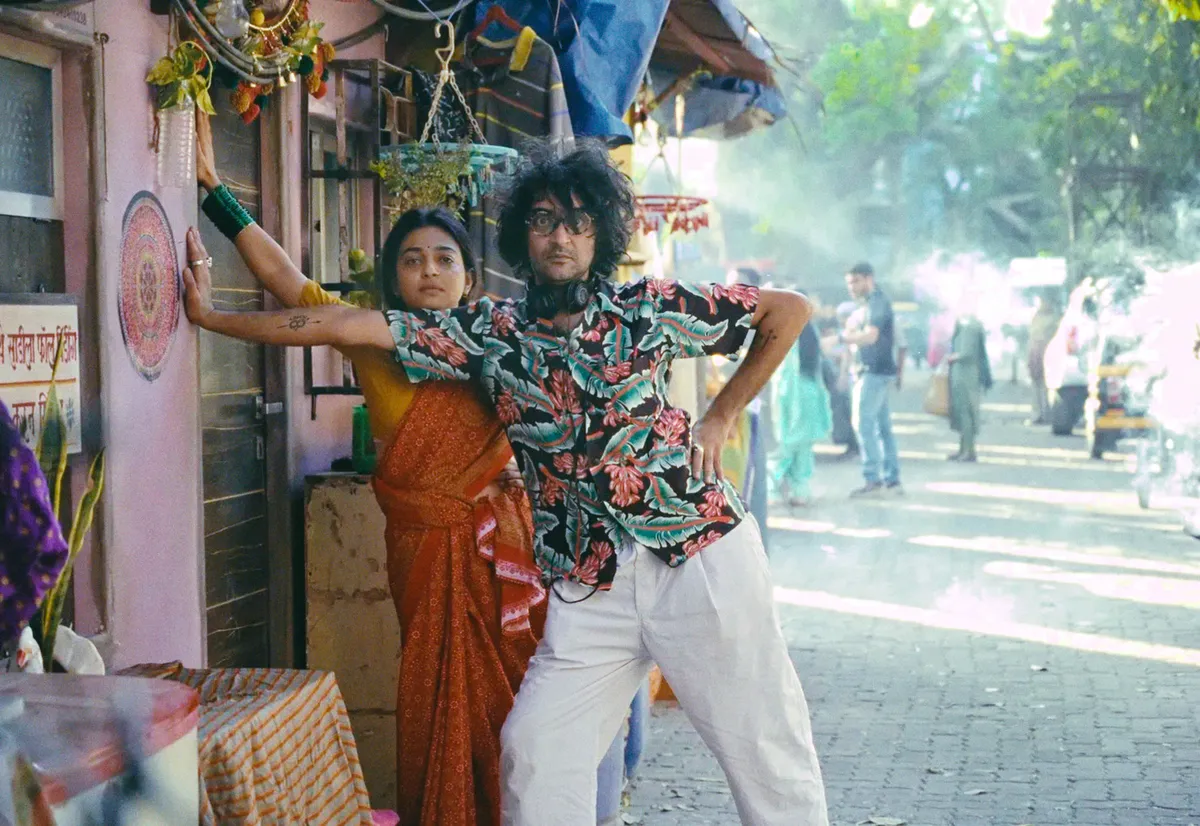
I dread the word “literally.” It once carried weight, but now it’s hollow noise. People toss it around when they can’t be bothered to articulate what they truly mean. Yet, thirty minutes in, I was literally bored.
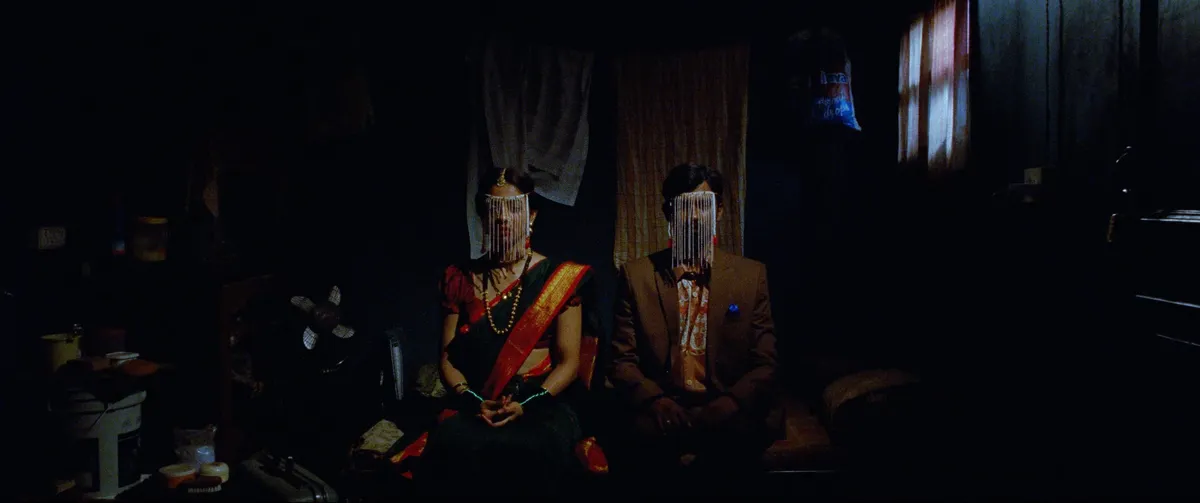
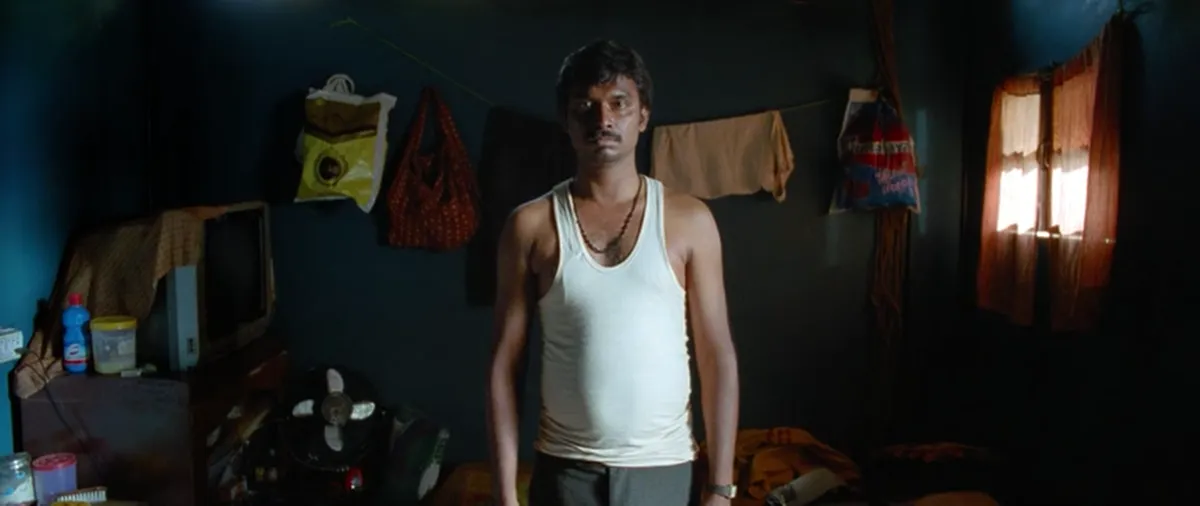
Just to be clear, this isn’t some deep, existential boredom. It’s the kind you get when you see potential gather dust. Still, I didn’t want to bail because I recognized the considerable effort invested in its making, and the audiovisual aspect is as important to me as the story. This is far from careless filmmaking.
So, I went back in, but this time I had gathered some reconnaissance on the director. Perhaps understanding his perspective would reveal new insights or cause a shift in my perception. Or, it might not.
Director's Statement
In the film's press kit1, writer and director Karan Kandhari offers the following excerpts:
I’m not interested in Society’s notion of of ‘heroism’. This is a story about a misfit who becomes an accidental outlaw. An Outlaw challenges society’s norms and conventions. They do so either consciously or unconsciously, by way of purpose or circumstance, informed by either intellect or intuition.
My character is informed by her intuition, as am I as an artist.
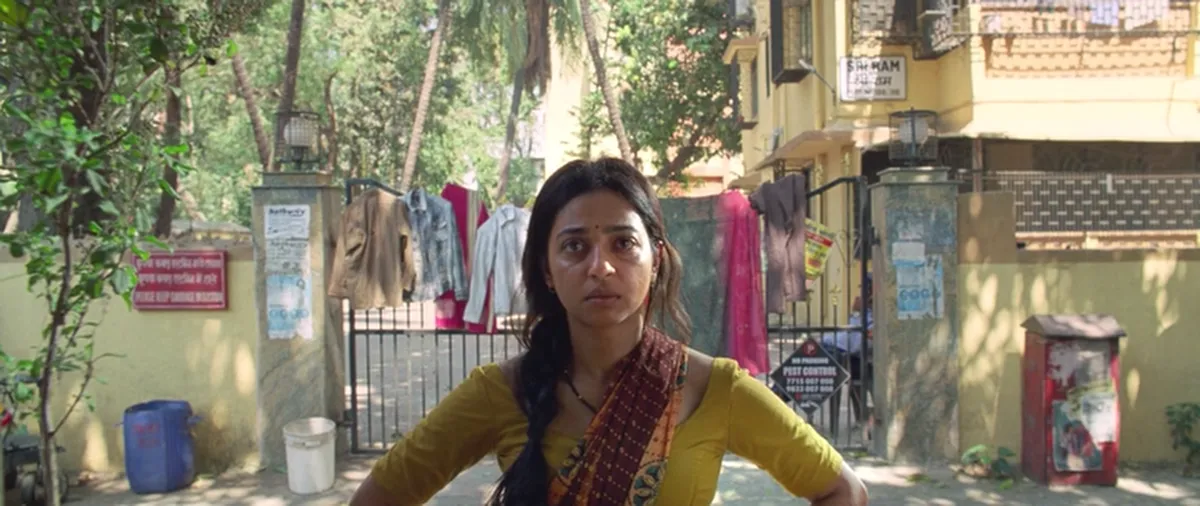
Emphasis is on the word ‘accidental’. Uma becomes an outlaw by circumstance and necessity, unconsciously. Late in the film she is ‘branded’ by the criss-cross bandage on her nose. She looks like a ‘character’ as this transforms her new appearance. She is a survivor...she looks pretty bad ass, like she could confront an army. But she got this ‘battle scar’ by tripping and falling flat on her face. She’s an outlaw because she’s a misfit. There is no manual for life, the film spun out from this seed of a notion. Life is a process.
I understand the intention behind calling her an “accidental” outlaw, but when you throw in “circumstance”, “necessity”, all that... the words start to lose their edges. Everything gets a little hazy. In multiple interviews, Kandhari echoes the phrase “a misfit who became an accidental outlaw” as if it were the film’s defining tagline.
I do not wish to judge his worldview based on press notes, as these materials might just be a required addition for a state-funded project. However, even as press material, the statement reflects an authorial position that he, as the director, has chosen to make public and that cannot be dismissed.
Maybe it works on paper. Maybe. But when it tries to live, it folds in on itself. The irony is that the more I learned about the director, the quicker I drifted away. The second time around, I barely made it fifteen minutes before my hands, almost on autopilot, reached for the remote.
I keep waiting for the story to tell me what it wants, but I don’t think it knows. I don’t think I do either. I keep asking: Is this about the ennui of an arranged marriage? A sexless union? Adapting to the gears of the metropolis? Or is it supposed to be about female liberation? After all, nothing screams irony quite like a man defining freedom for women.
He is sorta boring. She is kinda douche.
The film opens with Uma and Gopal, newlyweds bound by an arranged marriage. Gopal isn’t fighting it. He just sort of... exists. He works, wants to support, and tries to be useful. Though unspoken, if Uma chose to leave, he would let her go without the need to deliver a dramatic "வாழ்க்கை வானத்திலே புதிய பறவையாய்..." monologue.
Essentially, he is a living palimpsest of Chandru from Mouna Ragam — without the streamline moderne art-deco bungalow, without the circular atrium on the terrace, without the Premier Padmini, and without the shikibutons either. Just the two of them, orbiting each other in their mutual sorrow.
Uma is quite the opposite. She embodies the spirit of that Apple ad where Steve Jobs honors the crazy ones, the misfits, the square pegs. But unlike those mavericks, whose non-conformity were badges of honor, Uma can’t chop a courgette or pour flour without turning the kitchen into a blizzard. When their marital quarrels reach a peak, she simply calls him motherfucker. Swapping curses instead of arguments. That’s what defiance looks like, I suppose.
I keep circling around the word 'defiance' almost to an accusatory degree, but that’s not my intent. I like these two. I like the world they’re stuck in. I like that there’s nothing sparking between them. I can see the outlines, the scaffolding, the half-built anatomy, the bones, the muscles, of who they’re supposed to be, but Kandhari never really bothers to stitch it all together, nor steps inside the skin. She’s meant to be a badass, but he didn't bother to give her a brain.
Observed, Not Understood
“Men are dim. Just throw in enough chili and salt and they'll eat anything.”
“I'm tainted goods. I'm a dee-vor-cee. I'll wear this like a badge and go forth to the hills, form a manless nation and build a monolithic altar to the pussy.”
This is the level of dialogue the film operates on. I chuckle at these lines, not because they are clever, but because they have no meaning. It confuses the performance of defiance with its substance and then praises itself for being brave.
Maybe it’s just me, but whenever a male director sets out to make a film that engages with themes of female emancipation and transformation — to borrow a line from Tyler Durden — I instinctively brace for impact, calm as a Hindu cow awaiting a sermon. What troubles me is not their ideological hostility but the narrowness of their thinking.
Most of us remain strangers to ourselves. From that view, how can anyone claim to fully unravel the inner metaphysics of someone shaped by a different gendered experience? This is a difficult claim, especially while standing in the fog of our own design. Even after trying, the understanding remains partial at best.
I’ll never fully feel what it’s like to walk alone at night with danger humming in the background. It comes from years of warnings to watch your back, clutch your keys like a weapon, and cross the street when footsteps follow close behind. That’s not my world. Just as no woman can fully feel the pressure of having to ask someone out, to act confident, to swallow rejection, and to pretend it doesn’t cut deep.
It’s a modest example but reflects a broader pattern. The systems shaping us at home and the structures governing us embed these preconceptions deeply. The gap between men and women remains unbridgeable. I cannot fully become the other, but that does not absolve me from trying to understand.
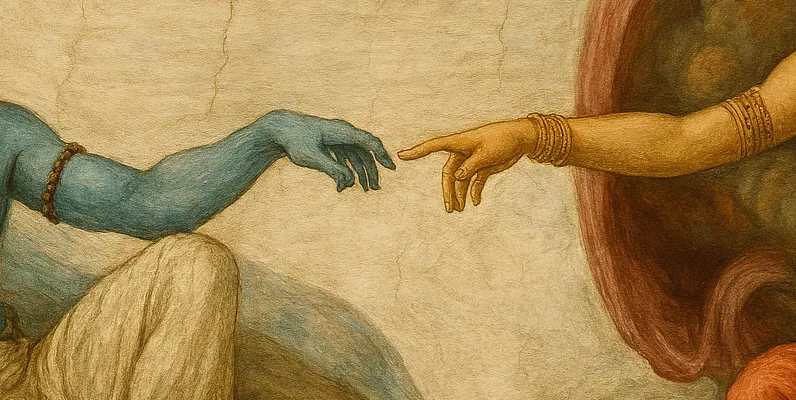
A director committed to understanding this gap leans into it, stretching toward it like Michelangelo’s Creation of Adam, fingertips nearly touching. In that reach, the contradictions, frustrations, humor, anger, and messiness of the human condition gain depth and meaning. The effort may be imperfect, but it counts. Grounded in that reality, the filmmaker can mock, provoke, or satirize any subject freely.
By contrast, Kandhari makes no real effort to reach out. Uma is tough because he says so. The dynamic slips into petty tit for tat, causing satire to collapse into caricature. Liberation hardens into aggression, empowerment twists into domination, and freedom becomes a mirror of the worst in men.
I believe Kandhari is sincere in describing a misfit rebel at the story's center and conveying defiance. I do not doubt his intention. Yet the incongruence between his aim and the film’s effect makes it feel unconvincing.
As I sit with these thoughts...
Lately, I've noticed a clear pattern of risk avoidance among new dirtcore directors. It seems they are unwilling to fully commit to their story or stylistic choices. In that context, the notion of an “outlaw” becomes a paradox. What does it mean to challenge norms when there is nothing left to challenge?
For someone who professes to reject social norms and follow intuition, I find Kandhari's conformity almost comical. Truth is, I like weird people. I like how their metaphysics twist and sprawl. There’s something poetic in the perversity of their psychic terrain. I’m drawn to the fuckedupness. But weird just for the sake of weird? That’s just static.
I also question how he perceives the bond in a between a man and a woman, specifically within a marriage. What did he observe and whom did he watch? Which model of intimacy does he reflect? Perhaps the more compelling question what escaped his view. What was absent?
Maybe this sums up Kandhari’s patchwork of borrowed inspirations. His pastiches draw from all corners: Uma’s quizzical, dumbfounded expressions, which he says echo Buster Keaton, though Keaton was always precise and never dull. Cambodian rock rhythms. Southern blues. A nod to Taxi Driver’s iconic poster. Wes Anderson’s entire toy box. Even a hint of Kurosawa.
His inspirations span the world. His work brims with passion and rich language, but the story’s core, rooted in his own soil, never fully speaks.
I’ve been thinking about my father lately. Not sure why. Maybe… probably… possibly because of watching Ad Astra has become part of my bedtime ritual, or because I just finished River, which could have stirred something I didn’t expect. Might be... I don't know.
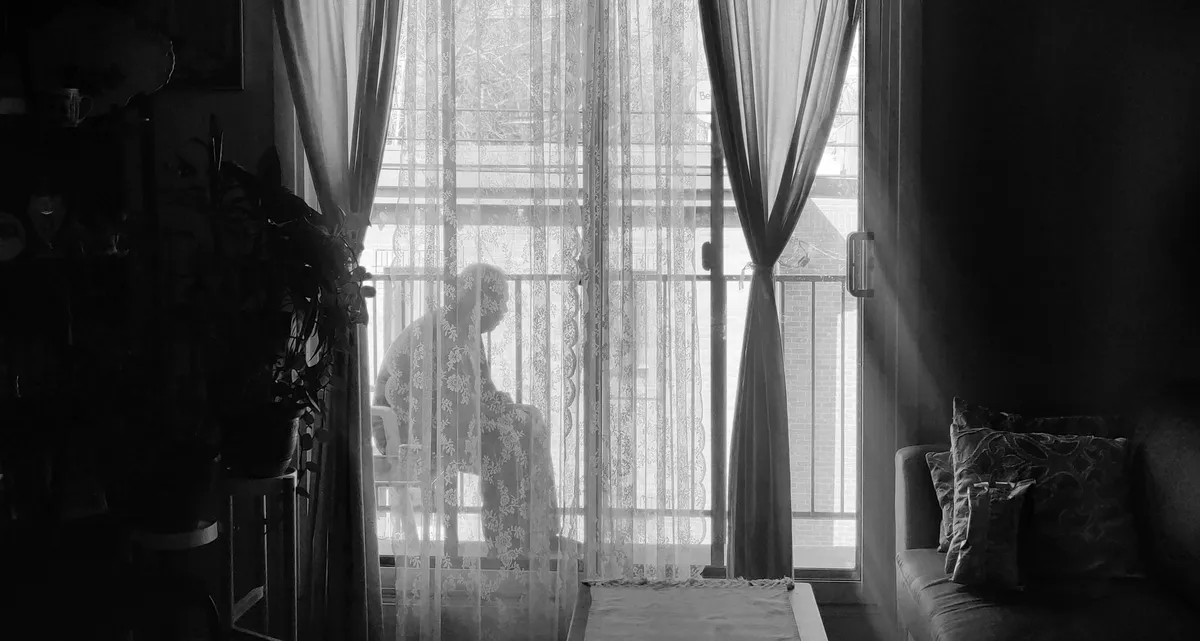
I think about the way he exist in my life, as a Draculia like shadow. Floating... hovering... he was never fully present, but never truly gone either. He occupies a strange purgatory in my heart... an emotional no man’s land.
In the movies of my mind, I watched his character drift from one reel to another, never quite anchored in any steady form. First he was somewhere between Frank Serpico and Carlito Brigante, then slid into the desperate schemes of Howie Ratner and Stu Shepard, later drifting between the chaotic ambitions of Lalin Miasso and Morris Kessler. In recent years, he lingers in the third acts of Blow and Donnie Brasco.
Lately, he inhabits the life of Marty Hart after the fallout with Rust and his family, still stuck with that egotistical head shoved so far up his own ass he can’t see the wreckage around him.
Weathered. Pot belly. Faux leather jacket. Counterfeit Oyster Perpetual. Studio apartment. TV dinners on a foldable plastic table. A cup of plain tea with sugar and stevia because fuck diabetes even after the doctor said otherwise. A pack of Rothmans Blue because fuck his heart, even after a scan that could be used as the updated version of those warning images on cigarette packs.
That's my father. My dad. My Ol' man. My pops. My guy. My Superman. Just... existing, I guess. A modern day Sisyphus. Rolling the boulder with an albatross swinging from his neck and dragging a cross all at once, yet somehow it’s never his fault. Responsibility is his Achilles’ heel, and accountability is his fucking kryptonite.
Despite his failings, I have always carried a soft spot for him... and it bothers me. Like a frame that is ever so slightly off axis by a couple of scanlines, no matter how often you try to straighten it. Why is it that I'm unable to summon the same decisive repulsion I feel toward my mother? After all, they were a "unit", even across the scattered stretches of separation. Why do I keep weighing mistakes against merits, as if life were some ledger that could ever be neatly tallied?
For all the light he brought into my life, he also cast shadows. He brought me to cinema, to songs, to music, to lyrics, to poetry, to art, to paintings, to instruments. He imbued me with the realms of creation, fragments of which I have bequeathed to my daughter.
And yet, he nudged me toward dark passages, and I walked them. Recklessness abound, fully committed and foolishly chasing a presence that was never there. Like a stray dog searching for a master, desperate to earn favor in exchange for filial loyalty. I searched every nook, every shadow, in every face, in every fleeting encounter for the father I never had... or a version of him. I don't know man. I stumbled often, learned to lick my wounds, and learned to keep it pushing.
What frustrates me most is that, unlike the other corners of my life, where I stand firm and make my choices, with my father I’m caught in his pull. He’s always somewhere between here and gone. He disturbs that clarity. The clarity I spent years building with the care of others, and somehow it shifts and bends when it comes to my father. He scratches at the parts of me I thought were solid, and for reasons I can’t fully explain, I just… can’t decide. I drift, stuck between anger and attachment, unable to land. Fuck.
I rarely look through my phone’s photo album. Like a junk drawer, it’s just there. But after my dog left this world into whatever realm comes next, I started to take a peek here and there. Again and again. Far more than I’ve ever stared at a screen for anything useful. I scroll through it on the bus, on the train, and anytime I have a few idle moments. I'm a junkie to that junk drawer.
At one point, I noticed a small icon in the corner of one of the photos, shaped like a target. I had never noticed it before. I did not know what it was until I touched it, and suddenly the static image started moving, a few frames of motion stitched into what I had thought was just a photo. And just like that... in a heartbeat, my throat closed and the tears came without warning, dragging me into a silence I could not escape. Seeing him like that makes me feel close to him again, as if he is nearby, but just out of reach. It felt as if he existed in that strange space between memory and code.
My wife explained that it’s a feature called “live mode” and that I didn’t bother to toggle it off. I’ll spare you the explanation, as I’m confident you’re already more familiar with it than I am.
That discovery, or rather my encounter with ‘live’ mode, compelled me to introspect on the relationship between memory and technology. I wonder if this is about innovation in technology itself, or the evolution of the camera as a tool, or the advancement of communication as a whole, or if we are deliberately re-engineering forgetting or, "the ability to forget."
Operating systems and software have the ability to purge their cache to stay efficient, yet the same humans who program this efficiency also code features that trap us in endless loops of recollection. We grant machines the ability to forget, while we deny ourselves that same grace, locking our minds in an unbroken cycle. It's an undeniable paradox.
I strongly believe memory is the legacy of being human, a benediction from the cosmos in the grand scheme of humanity. It binds us irrevocably to time and to the sum of our experiences. I also believe it carries a weight of unwritten responsibility that we all struggle to comprehend.
Forgetting allows us to sleep. It allows us to move on. It allows us to love again. And I think it’s often unappreciated for its wisdom because somewhere in humanity’s timeline (I think it was with the invention of apps, thank you, Mr. Jobs, and once again, no, there is not an app for everything, nor is there a need for one) we collectively decided it was uncool.
No one wishes to remain forever bound to an emotional umbilical cord. And yet, how does one learn to sever it? How does one discover the act of healing, when the machinery of our own invention, in its omnipresence, refuses to grant even the modest grace of forgetting?
Which brings me to a troubling thought, that we are training our minds to never forget and, in that very act, denying them the mercy of healing. The idea of infinite memory. A mind that never forgets. It sounds elegant...
But the truth is, we already have infinite memory. It’s buried in the architecture of our cognition. We just can’t reach most of it. What we’re chasing these days isn’t storage. No sir! We’re chasing access. We are chasing infinite recall or Total Recall, except it’s no longer sci-fi fantasy, but the horror of remembering everything, for-fucking-ever.
The evolutionary pressure valve that kept us in check is breaking down as we surrender ourselves to the tyranny of infinite memory. We are built to forgive and forget, to soften life’s blows and curveballs. But these days, we hold on. We replay every memory instead of letting mercy do its work. Every photo, every text we preserve clogs the emotional umbilical cord, turning it into a noose of grief that we choke on.
And the worst part is that it makes you feel guilty, as if forgetting even a detail of the love somehow diminishes its value. As if letting go meant the erasure of the relationship. The choking cuts off the oxygen required for healing, and as a result it dies in the dark, starved of mercy. A mind that forgets nothing… heals nothing.
While editing a draft for my next post, I came across a diary entry from nearly a year ago. Time did what it usually does. It moved everything around without asking.
Let me be upfront. I hadn’t watched any of Coogler's work. Not out of protest, just disinterest. Franchise reboots, spandex and pew-pew lasers forged from Video Copilot assets, that's background noise to me. On that note, I wasn’t planning to watch this one either. Frankly, nothing about it looked remotely interesting.
Then I stumbled on this opinion piece in The New York Times titled “The Movie Deal That Made Hollywood Lose Its Mind.”1 It's classic headline pornography dressed up as cultural critique. Ah well, that’s the state of legacy media. Clarity sacrificed for engagement.
The piece falls apart right after this nugget of modern rhetorical fog, "... and in fact his copyright arrangement is unusual, but not unprecedented.” You’re left scratching your head while journalism slowly bleeds out. Like a pensive man who consumes freeuse incest porn, convinced the plot will improve... and yet, I kept reading anyway.
Now, you may ask…
Unlike Gunasekaran, I’m no pro se hero. I’m simply questioning. My interest isn’t in the "deal" itself, but in the F word and the opacity surrounding it. The piece, like all its legacy media counterparts,2 stumbles through explanation, yet clings desperately to the words “final cut” as if repetition alone could summon clarity.
Simply put, final cut is a mantle, and Coogler has yet to claim it. That’s not a dismissal, it’s a fact. He might get there, but right now the filmography is thin and if Warner Bros. handed him the reins without guardrails, then something else was in play. And that, more than Coogler, more than the budget, more than ownership, more than the political signaling tied to hues other than #FFFFFF, was what I was curious about. அப்படி இதுல என்ன சிறப்பம்சம் இருக்குதுனு பாத்துருவோம்...
So there I was, firing up the media platform from that trillion-dollar orchard, boasting a logo that is emblematic of humanity’s expulsion from Eden. Dropped a hefty twenty. Clicked play. Skipped the trailer for The Studio because I have yet to experience even a flicker of comedy from anything involving Seth Rogen.
Logos. Fade in. And here we go...
Strike 1
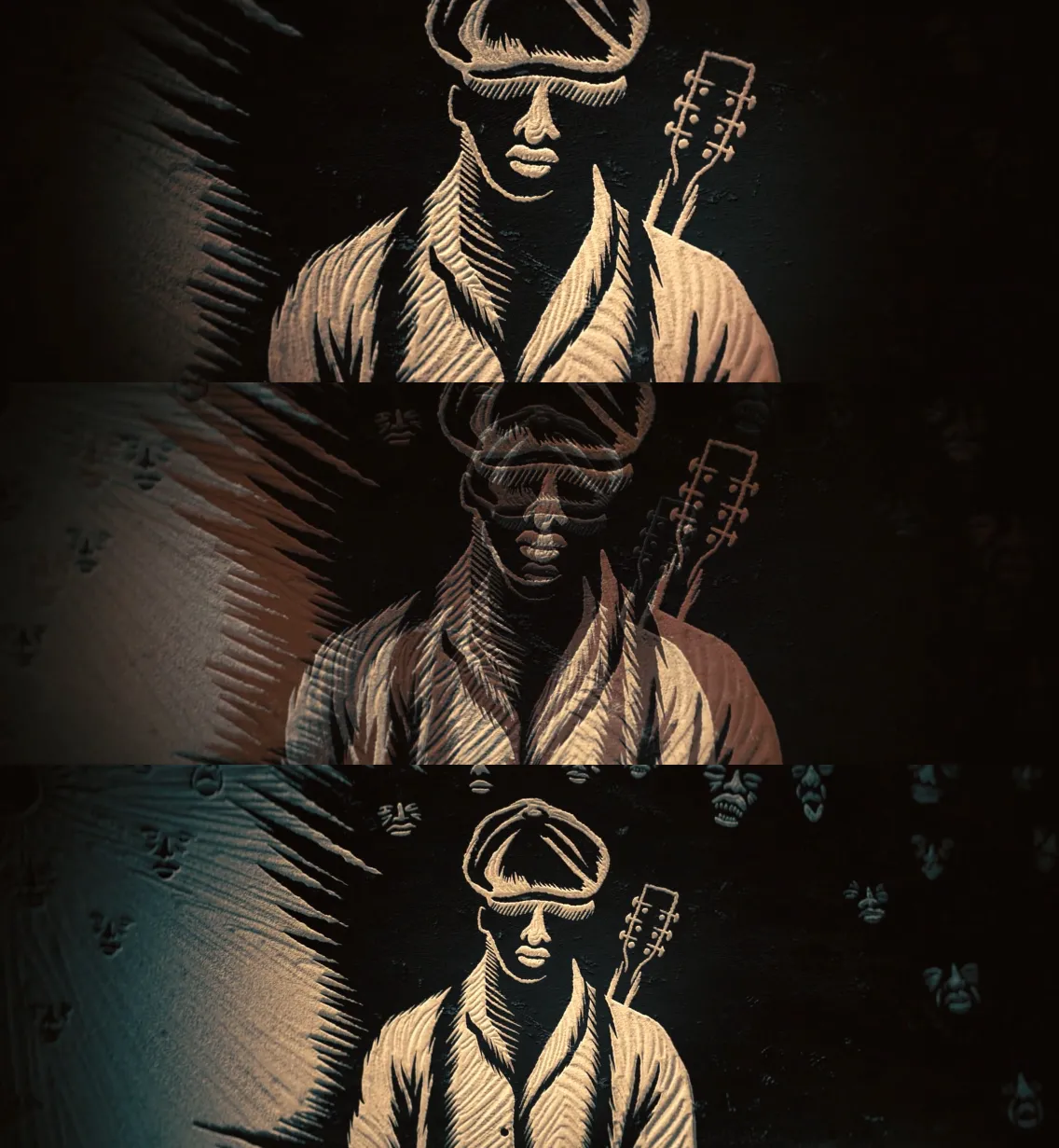
The film opens with a Ken Burns style slideshow, steered by a voice-over. Immediately, a quiet nasal puff escaped my nose. Fine, I said. Lazy, but fine. I say lazy, because there’s nothing in that slideshow you couldn’t stage live with half the effort. Then, the very first slide is split in two, bridged by a dissolve (Figs. 1.1 to 1.3). Now, the corner of my eye starts to twitch. Just shy of a frown, but from the inside. That dissolve feels unmotivated. Unnecessary. And I find myself asking, not out loud, but inside my head... why?
Figs. 1.1 to 1.3
The voiceover drones on top:
There are legends of people born with the gift of making music so true, it can pierce the veil between life and death, conjuring spirits from the past and the future.
That’s a cute and vague description, but why break the slide just for that one line? Why not let it stand on its own by adjusting the timing? You matched the timing for the later ones, though the push-ins on one slide and pull-outs on the others are jarring. But hey, for a director with “final cut” privileges, I guess it’s okay to forgive these basic visual communication messes. So I ask again, what makes this one so special?
My feeble, senile man shaking his fist at passing clouds guess would be: the “evil spirits” are placed farther away than the man with the guitar to reveal that quadrant of the frame before the line ends — or — the original narration was probably longer and, for some odd reason, got cut. That’s fine. These things happen.
So what did Mr. Coogler do? Well... the man with future ownership and the story he wanted to tell since he was in his mother’s womb, the one for the “culture,” and yes, the man with "final cut" privileges simply patched it with a dissolve. Got’emmmmmmmm!
This isn’t a technical compromise. This is a creative complacency by choice. I mean, you could have masked around the “evil spirits” and brought them closer, nested the slide as one, and then pushed or pulled, or dragged, or shoved — I don’t fucking care at this point. Or you could have just timed it properly, like I did here.
At that point, I paused the film, turned to my wife, and muttered, “He had the final fucking cut!”
Strike one my love.
Strike fucking one.
Moving on...
Strike 2
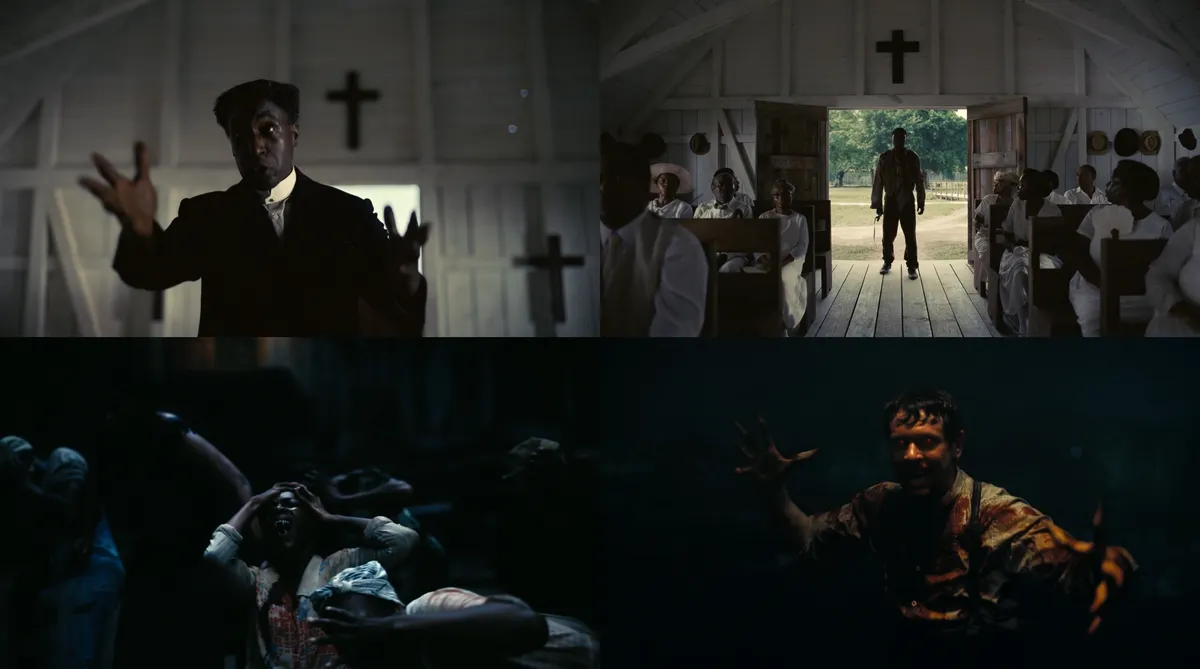
The opening sermon scene is designed to build tension by holding back just enough information to make you lean in. The bruises, the broken guitar, the silence. That was the hook. Cool. But just as it starts to reel in, it gets derailed by a burst of prematurely ejaculated insert shots (Figs. 1.4 to 1.7). They’re rapid, impossible to parse, and they come bundled with sound design straight from a free sample pack of “Extreme Trailer FX”. The kind you’d find in the starter kit of an influencer bro-turned-content-creator-turned-filmmaker-turned-entrepreneur who promises to teach you how to make six figures with this one trick. As a result, the tone clashes, the pacing collapses, and worst of all, the mystery is spoiled before it even has a chance to take shape.
Figs. 1.4 to 1.7
To me, this isn’t creative. No sir, this is reactive. My feeble, senile man shaking his fist at passing clouds guess would be: this is a studio note, possibly routed through marketing who asked Coogler, “How do we tell the audience it’s a bargain bin version of From Dusk Till Dawn with a dash of Mississippi Burning with a sprinkle of The Great Debaters with a lot of The Hateful Eight without telling them it’s a bargain bin version of From Dusk Till Dawn with a dash of Mississippi Burning with a sprinkle of The Great Debaters with a lot of The Hateful Eight?”
To be fair, I have a hard time believing Coogler kowtowed to the note. You could argue against those insert shots without even trying, just by pointing to the floating heads poster or the trailer. It already reveals the buy-one-get-one lead, the vampires, and the obligatory “team spandex assemble” formation (Fig. 1.8). It’s not that they were concealing an A-lister for a pivotal third-act moment à la John Doe or Dr. Mann or even simply keeping the buy-one-get-one lead under wraps. Everything was in the open anyway.
Fig. 1.8
But then I come back to the whole final cut thing. That means Coogler reviewed this version, sat with it, and said, “This is the one.” Not because the story needed it, but because someone had to calm the skepticism of a studio spreadsheet by wind-tunnel testing the market. It just makes the whole thing feel more... corporate.
This isn’t storytelling Mr. Coogler. It’s fucking high budget content. It’s the cinematic equivalent of a reel where the caption’s outline stroke is thicker than the text itself, screaming “Wait till the end bro!” Except I already know Mr. Coogler. Because you just fucking showed it to me Mr. Coogler! And somehow, you still want credit for the surprise Mr. Coogler?
I paused the movie... again. Turned to my wife, and muttered... again. “He had the final fuckity fucking cut!”
Strike two my love.
Strike fucking two.
Moving on...
Strike 3
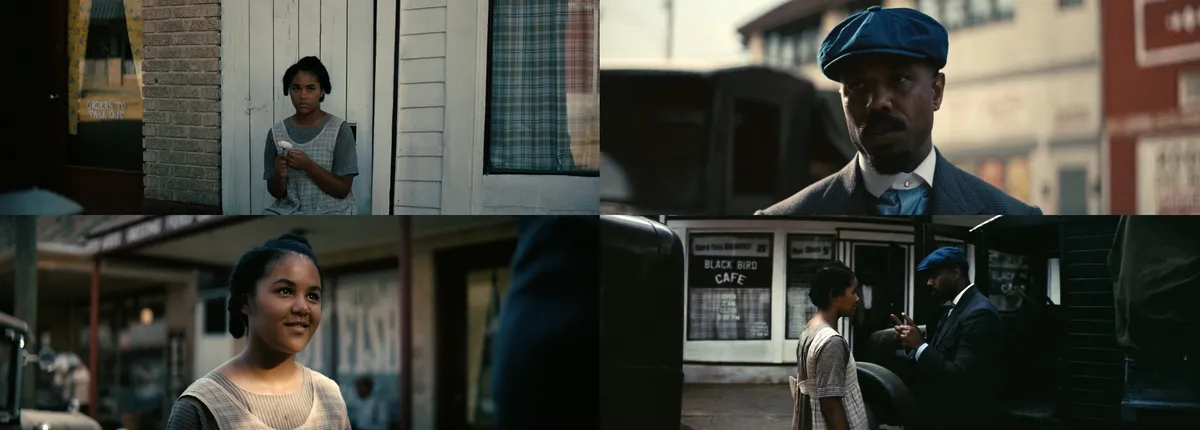
The last strike wasn’t in the story’s structure; it was in the writing and the performances, each collapsing under its own cleverness. Around the fifteen-minute mark, one of the twins or cousins or inbreds — I don’t fucking care at this point, delivers a TED Talk on negotiation to what I’m supposed to believe is a little girl, sitting on a front stoop, picking a daisy in 1930's rural Mississippi (Figs. 1.9 to 2.2).
He walks over and asks, “Do you know the Smoke Stack twins?” She replies in a flat, Los Angeles film school accent, “Of course.” The scene’s authenticity is about as convincing as their caricatured Southern drawl.
But, wait a second… I wondered. She didn’t even ask for this. She was just sitting there, picking a fucking daisy. Then I wondered further… did தோழர் Vetrimaaran write this? Did தோழர் Coogler got inspired by மக்கள் படையின் தலைவர், தோழர் பெருமாள், the man who hands out TED talks on negotiation, communism, and labor laws, delivered about a hundred frames off sync, though no one invited the lecture?
Figs. 1.9 to 2.2
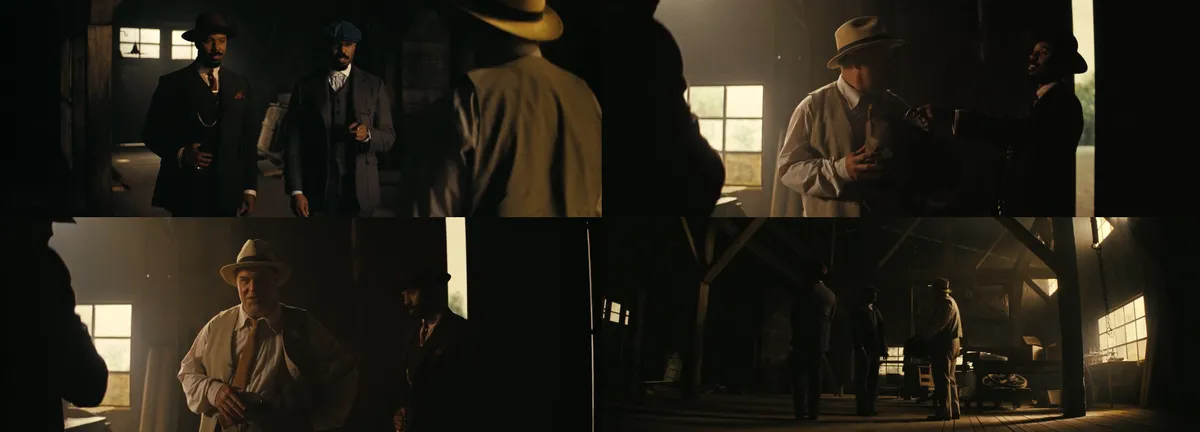
How am I supposed to believe, or even pretend, that this is all organic? This same character, just a few scenes earlier, buys out a sawmill by handing over a bag of cash (Figs. 2.3 to 2.6) without pushback or a counteroffer and now he’s standing there, giving a lecture on strategic financial thinking?
Figs. 2.3 to 2.6
Ain’t no boys here. Just grown men. With grown men money. And grown men bullets.
Whatta writingg yaar!? Instead of what could have been a demonstration of tactical negotiation skills, something that might actually add depth, or, I don’t know, maybe have the characters introduce each other by name, I get empty bravado, baseless trade, and hollow threats. Fucking poetry in motion. I can just picture Coogler, in front of his screen, reading what feels like it was spat out by an AI prompt, nodding to himself — “Got’emmmmmmmm”
But I get it. Films like this need a moment of moral wisdom for… sigh… say it with me now, "Won’t somebody please think of the children!" For my readers across the ocean, that is a catchphrase from a beloved Simpsons character, Helen Lovejoy — the reverend’s wife who plays the town’s socially conscious concern troll all while being just as hypocritical as the rest of us. But hey, not yours truly. Never. Anyway, you’ve got to wedge in an intergenerational empowerment scene to justify the screenplay’s faux depth.
My issue isn’t with the message à la கருத்து கந்தசாமி or the crowd it’s preaching to. Because, the kids are fucked beyond repair. They’ll slip right between influencers peddling gambling addictions and Instagram models, jet-setting by day, used as potter potty by wealthy sheikhs by night, crossing puberty only to graduate into premium adolescent content, all while hawking discount codes for scam therapy apps, shitty earbuds, and some green ass juice. Oh, it’s coming, folks! When desire is commodified, weakness is monetized, and vice packaged as content, age dissolves into irrelevance. Morality is optional, and no one is safe from the algorithm. அல்கோரிதமிற்கு அரோகரா!
No — my issue is with the hypocrisy of the message. Because the same guy who gave the TED Talk on negotiation, the same guy who bought a sawmill without any counteroffer, moments later, shoots two men over something that could have been solved easily with words (Figs. 2.7 to 3.0). What the fuck happened to those elite negotiating skills, mister?
Figs. 2.7 to 3.0
To me, this scene feels as if Coogler shoehorned it in as a clause to ensure the film got made. I can just imagine him at the negotiation table going: "One intergenerational ownership lesson for me, and a good ol' dose of Hollywood-style violence to perpetuate that same ownership lesson for thee." He then leans back. A dramatic pause follows. We cut to the suits, huddling, whispering. Then cut back to a wide of the table. As we push in on Coogler’s face, off-screen a studio exec calls out, “You got a deal.” Coogler presses his knuckles to his lips, a quiet exhale of triumph as his mind mutters — “Got’emmmmmmmm”
Again… I paused the movie.
Again… I turned to my wife.
You know the slogan by now.
Strike three and I checked out.
Fifteen.
I gave Sinners a proper share of my time. And let’s be clear, these aren’t nitpicks. These are basic elements. Fifteen minutes in, and I’ve got nothing. I don’t know who these two leads are, and frankly, I’m not compelled to find out. That’s not on me. That’s the film refusing to meet me halfway.
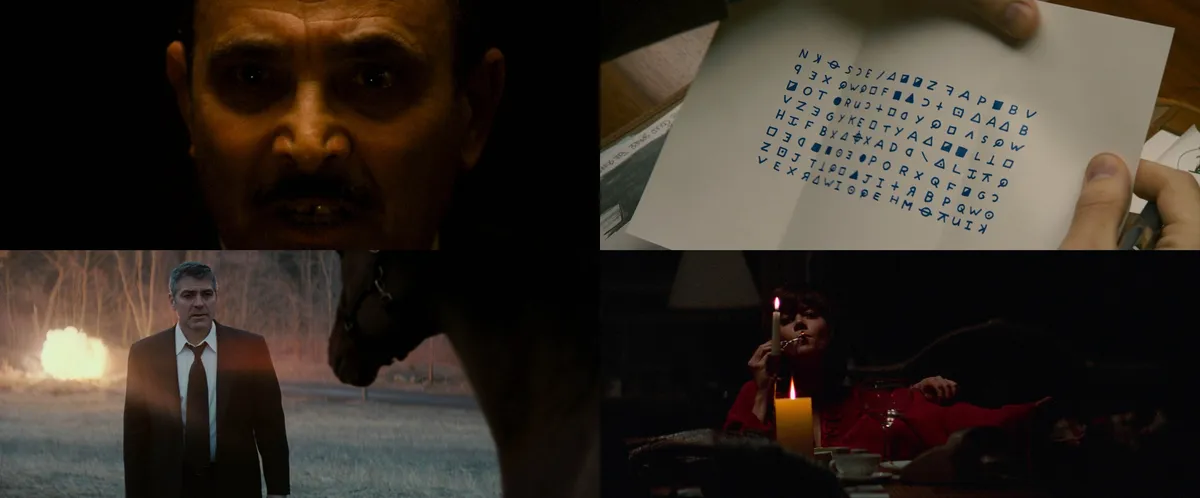
In those same fifteen minutes, we met the Corleone family and got a glimpse of their busssiiiness. The first Zodiac cipher was cracked. Michael Clayton's Mercedes S-Class went boom! Marla showed up at the testicular cancer meeting. Bree got her first phone call in Klute. Harry Caul listened… forget fifteen, if you miss just the first five of The Conversation, you are lost. Detective Park Doo-man and Seo Tae-yoon’s partnership got "kick" started. Maya’s claim about Bin Laden got her noticed by Dan. Chief Gillespie accused Virgil Tibbs of murder, unaware of who he really was. Meanwhile, Velu Bhai, the son of Rajalakshmi and Sreenivasan, embarked on his first smuggle run, setting him on the path to becoming the great Yakuza, Rangaraya Sakthivel Nayakar!
That's fifteen minutes mate! You miss a beat or come in late, and you’re not just lost in the sauce... you’re out! There is no handholding and no soft landings. Not because the directors lacked patience. They just didn’t see the point in wasting yours. Every frame had purpose. Every cut meant something. That’s filmmaking. Or at least, it used to be.
Technical excess
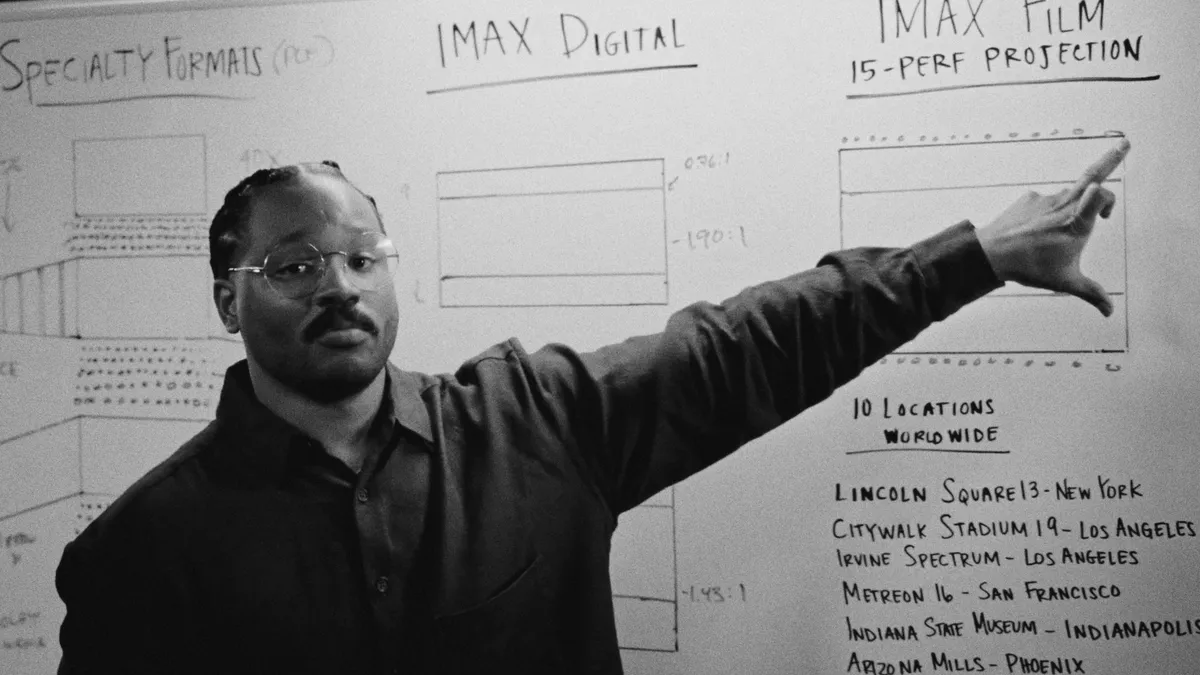
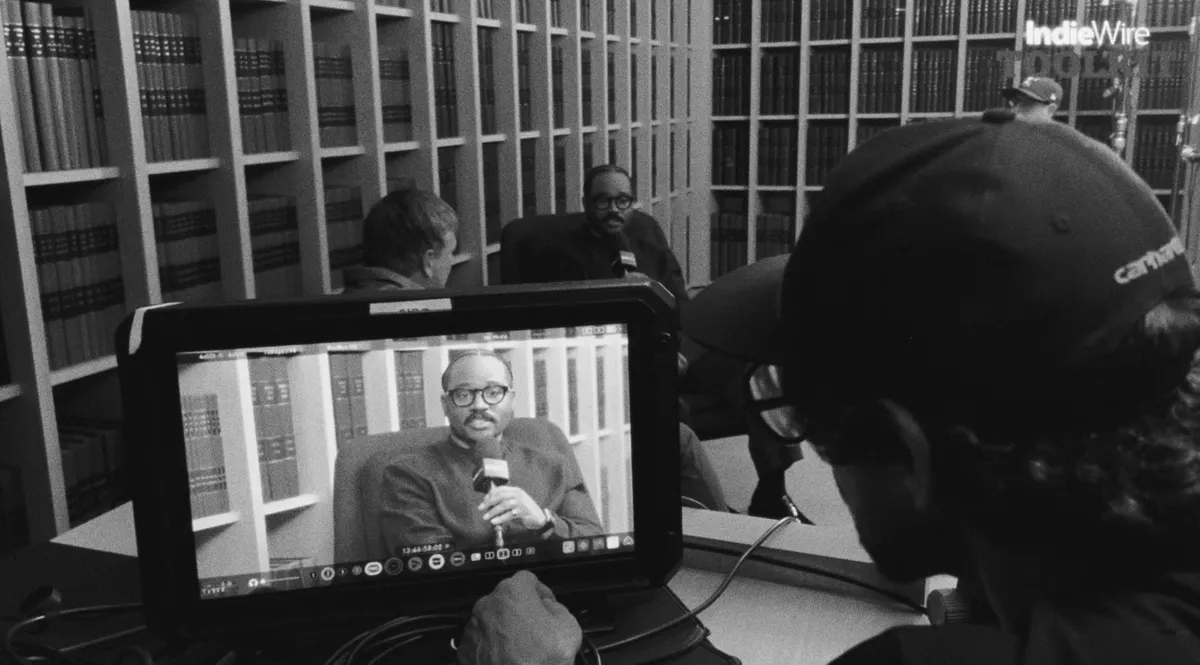
I have no doubt Coogler is fascinated by celluloid, yet the cinematography contributes nothing memorable. I’m aware of the whole parade of cross-pollinated promo videos Coogler did with Kodak, IMAX, and the ASC, just to name a few. All the same safe, PR-approved spiel, perfectly polished to sell the brand while the film barely gets a thought. Let’s be honest, who the fuck cares about format or perforation? The story stays the same. The characters stay the same. It’s all just technical noise with no intention of supporting the film.
What gets me is the disconnect. Here’s a movie parading its “shot on IMAX this,” “X-perf that,” anamorphic this, twinning technology that, but the final frame might as well have been composed for basic cable. If you're going to shoot in those formats, use them. But beyond that, I keep asking, was any of it even necessary? What about Sinners demanded a vertically dominant format, only to be presented like any other widescreen drama? All of the extraneous efforts for image acquisition feel like the cinematic equivalent of renting a helicopter with a gyrostabilized camera just to film an Aaron Sorkin walk and talk.
It's subjective bro!
I’ve been observing this deflective pattern for a while. It’s small, but it’s everywhere. You see it most in modern film criticism, and dare I say, in communication in general. It’s the habit of presenting indecisiveness as a point of view. Sure, art is subjective and interpretation leaves room for debate. I’m not arguing with that. But that also doesn’t make every creative decision immune to scrutiny.
Using subjectivity as a shield for sloppy storytelling isn’t just lazy. It’s evasive, and I’d go as far as to say it’s profoundly dangerous. It’s evasive in that it grants a convenient escape from accountability and kills the possibility of genuine dialogue. It’s dangerous because it discards the shared language of cinema, the intelligence of the audience, and the very logic that underpins narrative art.
This kind of thinking makes critique sound like static noise, blurring the line between a filmmaker’s intent and what actually ends up on screen. Sooner or later, the language of film has to mean something. Otherwise, it’s just a series of empty moves pretending to be cinema.
The pitch.
Everywhere you look in the press material, Coogler sells this film as deeply personal. Depending on which interview you read or listen to, he oscillates between two tales. One is the bluesy story about growing up middle-class in Oakland, the outsider, the music nerd, the lifelong storyteller waiting for his one shot, one opportunity, palms sweaty, mom’s spaghetti and all that. The other is the whole thing about demanding for ownership, which is apparently less about power and more about personal symbolism. Whatever that even means. And somewhere in the mix, there is Tupac. I kid you not. That’s the pitch. Fine.
If that’s the sell and you’re granted a $90 million budget, technical gluttony, final cut, and future ownership, shouldn’t the work rise above the noise? Maybe, I don’t know, a little more personal? Or at least skip the same reprocessed sludge clogging up the culture? A creative decision carries weight only if it holds up under pressure. Otherwise, it’s just noise pretending to be intention. When your choices start serving anything but the story, you’re not directing. You’re formatting.
Most people couldn’t tell a final cut from a rough cut any more than they could explain why they like Spielberg and they don’t need to. What matters is that they feel it — or feel its absence — in every frame. They may not know the difference between having their eye directed in a scene that’s a oner and one stitched together from coverage, but their instincts do. Audiences understand the grammar of cinema, even if they can’t name it. They know when an emotion is earned in a close-up, implied in a medium, or withheld in a wide.
Sinners, however, with its pacing, rhythm, dialogue, and editorial choices, fails to meet even the basic standards of film language, let alone justify a final cut. At best, it’s a pastiche of 1930s Mississippi, shot on film with contrast so heavy it collapses into its own darkness. I mean, if you call your film personal, shouldn’t it change the way you change? Otherwise, what’s so personal about it?
A wet flare
The more I reflect on this, one thing stands out. And that is, this “deal” isn’t really about Coogler. Or ownership. Or even the final cut. This “deal” is a flare. Not just any flare. It’s Dr. Stanley Goodspeed running at 60fps... kneeling at 120fps... F/A-18 Hornets shredding the skies at dusk... kids from the rural Americana gaping and pointing at them... Hans Zimmer blaring brass... the Star sand Stripes flapping in glory... fireworks blazing... full fucking Bayhem green smoke flare for the New Hollywood wave legacy directors.
It's for those who carried the flame forward from the Modernist wave, shaping the studio system we know today. Those same directors are now being poached by streaming services, handsomely compensated, and most importantly, freeing them from rigid rules and the endless grind of defending every choice.
As much as I dread enshittification, technofeudalism, surveillance capitalism, or whatever label you want to stick on Silicon Valley’s systematic erosion of media literacy and the sodomization of arts, Scorsese could never have funded The Irishman without their hand in the game.3 Yes, De Niro looked like a wax statue and moved like a claymation figure, but the film still breathed like only Scorsese could make it. Same goes for Mank, a project Fincher wished to undertake following The Game, but Polygram refused, citing its black-and-white format.4
Netflix, the very company that first named “sleep”5 as its greatest rival and later changed that to “screen time,”6 stepped in to breathe life into these projects, leaving me to reflect on the eternal conundrum — நீங்க நல்லவரா? கெட்டவரா? So, the message is loud, clear, and desperate. “Come back. We’re giving away final cuts now!”
Linguistic bait-and-switch
I’ve written about this before in my post titled From ‘For’ to ‘With’: The Slow Corruption of Language, and this is a continuation in the same vein. The studio system is stumbling, held together by denial and duct tape, and in some desperate bid for relevance, it's handed off to corporate doublespeak fuckery. Just like they turned “large” format screens into “premium,” and shot with IMAX to for, the latest is rewriting the meaning of “final cut” to mean "ownership." Motherfuckers, they are not the same! You say you care, but you don’t even know what you care about. And still, you stumble!
Fine. I’ll play your fucking game. Ownership after twenty-five years sounds meaningful, even noble, at first glance. But when you step back and really consider the value of the deal, it starts to feel more like a calculated piece of marketing than an actual creative victory. Because I can’t imagine anyone wanting to invest more time after the first watch, the film has zero rewatch value. I mean that in a kind of pseudo-objective sense.
Yeah, I know, after ranting about doublespeak, here I am pulling one myself. What I’m trying to convey is this: as time stretches and reshapes us, the films we tend to like and love stretches with it. You return not because you want to, but because they still have work to do on you. They hold details you missed back then, but that matter now. They hold your hand and pull you deeper into your own experience, offering something new each time, revealing something that connects, mirrors, and/or even transcends. Sinners isn’t that kind of film. It's empty and hollow. To be clear, the film isn’t hollow because it has nothing to say; it’s hollow because it doesn’t say it well.
Victory Without Value
This whole "deal" brings to mind the punch line of Vivek’s comedy in the film Lovely (2001).
பாரின் ஷூவ திருடிட்டு ஒரு கக்கூஸ் செப்பல்ல போட்டுவுட்டு போறாங்களே! டேய், ஒரு ஷூவை வச்சி நீ என்னடா பண்ணுவ? ஒரு செப்பல்ல வச்சி நான் என்னடா பண்ணுவேன்?
A fitting metaphor for the redundancy of this trade. Neither party really wins here. The studio gets to say they’re empowering filmmakers. Coogler gets a trophy that never matters. The film sits trapped on a server farm and the audience inherits another lifeless slop they’ll ignore forever.
I don’t know if I’ll be around in twenty-five years, but if I were the one on the receiving end of Coogler’s legacy, I’d have questions about its value. If this is what my father left behind, with every resource at his disposal and complete freedom, and the studio just shrugged and signed off, then what exactly have I inherited? Legacy isn’t just tangible possessions or corporate doublespeak titles. It’s what you choose to preserve. The choices that define both your being and your labor, the principles that outlast your lifetime.
Final Cut: The Discipline of Defiance
If you track the insights of the greats, the roads of final cut all lead to the same destination. It’s not about artistic indulgence. It’s all about control and protection. Control over tone, texture, theme, and the story’s overall architecture. Protection of the heartbeat of the film, making sure the story breathes exactly the way the director intended it to.
David Fincher defines it: “Final cut just means that, at a certain point, you have the ability to end the discussion. You have the ability to say, ‘I understand. I see what you’re saying. I don’t think it’s a better version of this. This is what I believe in. This is what I want to put my name on.’”7
Sidney Lumet puts it as: "Final cut means that whatever I hand in as the final picture cannot be touched in any audio or visual component. This is the last thing any studio wants to give up, so it’s very difficult to achieve. I’d had final cut for many years, since Murder on the Orient Express. In those years, I don’t think more than ten directors had it. Before we had begun rehearsals on Daniel, Edgar asked me to share final cut with him. I explained that final cut was one of the most difficult things for a director to achieve, and was therefore precious."8
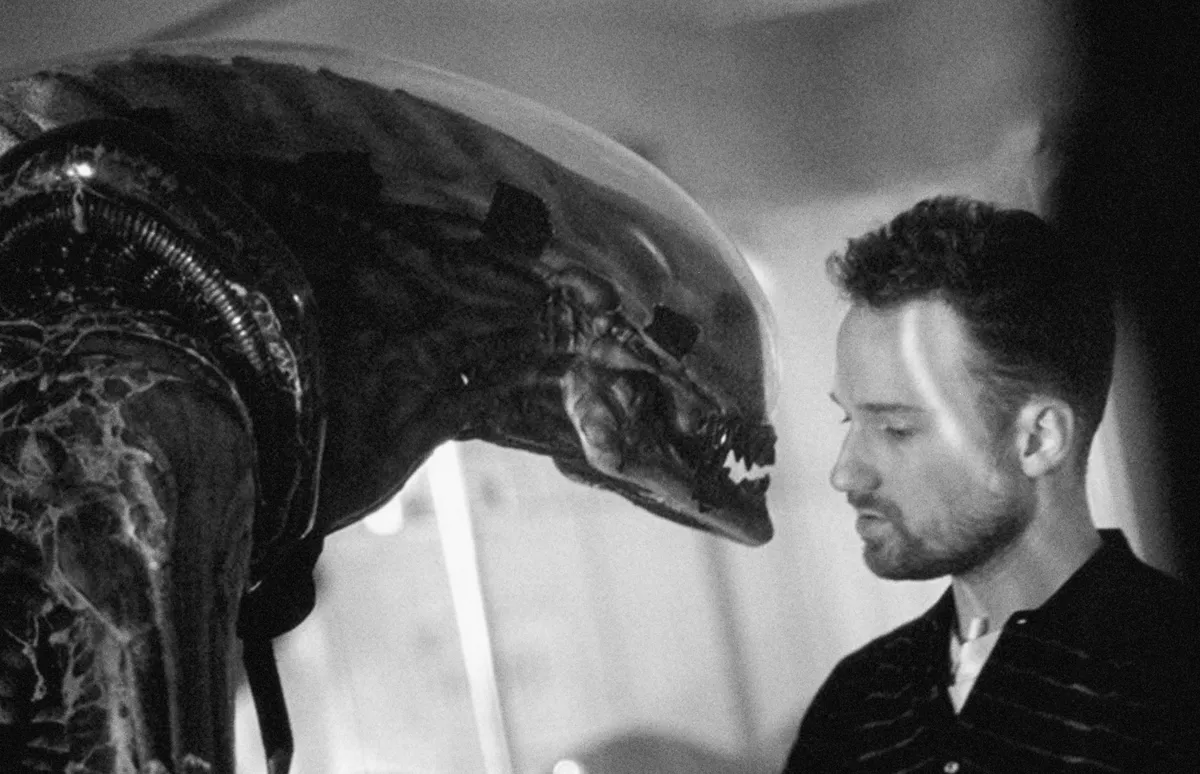
We’ve all heard the stories of directors who mortgaged their homes, torched their relationships, and gambled everything for the story they believed in. The Coppola story says it all. He lost his mind and most of his sanity trying to finish Apocalypse Now.9 Fincher fought to keep a single line in Fight Club.10 That was the battle. Or at least, one of them. Scorsese had to rely on producer Michael Phillips and former Governor Pat Brown just to get Taxi Driver’s X-rated version down to an R so it could actually be exhibited.11 Cameron fired his original cinematographer, clashed with the London crew, and fought the studio to keep Weaver in Aliens after they suggested cutting her over salary.12 And one of my favorites, my boy Bay writing a personal check to Columbia Pictures for ten grand (maybe twenty) just to shoot the final hangar explosion in Bad Boys.13
These struggles weren’t about hubris or inflexibility. They were simply fights to get the thing made the way it was meant to be and to maintain the creative decisions intact. That is what final cut used to signify. Next to the battles that once defined final cut, one can objectively claim that there are no bruises on Sinners. There is no tension in the making. No hint of pushback anywhere, especially not from the studio. If anything, it feels comfortably made within the studio system. Designed and approved by it. And this is the part that cannot be ignored. Without that struggle, what does final cut truly signify… if not the very scars of conviction?
Not just this article, but a quick search for “Sinners + final cut” will turn up a slew of puff pieces, all treating the ordeal like it’s somewhere between the invention of the printing press and the second coming of Christ.↩
Sharon Waxman, Rebels on the Backlot: Six Maverick Directors and How They Conquered the Hollywood Studio System (HarperCollins, 2005), p. 268; Chuck Palahniuk, interview on The Joe Rogan Experience, episode 1158, Fight Club’s Most Infamous Line, YouTube, August 22, 2018.↩
So… I stay away from “trust me, bro” citations, but in this case, you have to trust me. The actual footage appears in the DVD special features of Bad Boys, showing Bay signing the check addressed to Columbia Pictures before calling action on the explosion as a nudge to the studio. I watched it circa 1998, definitely before 9/11. Furthermore, he also mentions it in the commentary tracks on both the DVD and Blu-ray editions. Here is a review providing evidence of what I described (though I might be off on the exact amount): Bad Boys DVD Review by Rich Goodman, MyReviewer.com, June 8, 2010↩
Recently I lost a heart I held close. A presence that could not judge, for the concept itself was foreign. A presence that made the house live has moved on. More precisely, my boy, my rogue rascal, chose to move on, on his own terms, departing not in sorrow but with the dignity of a life fully lived, leaving behind only the echo of his presence. The pain hasn’t lessened. It just learned to breathe beside me. I’ve made my share of bad calls. The kind of errors that time itself could not erase. But at least those wounds were self-inflicted. This one was different. This one was carved into me by fate itself.
The morning after was its own punishment. A kind of living death. The house, the streets, the light... all were the same, but muffled by grief. At 45, this was my first sincere encounter with grief. My healer, the one I’ve come to trust, told me something that startled me.
He said grief hits harder after the age when we’re called upon to be caretakers and that it has a way of forcing you to reevaluate your life, your choices, everything you thought you understood.
Somewhere in the days that followed, a cowardly tremor ran through the depths of me. A whisper from the trenches. Like Gollum, that wretched voice hissed, we’ve tried before master… perhaps a third time will take?
But then another voice climbed up from even deeper in the trenches. The one that guards what’s left of me. The one that’s seen me at my lowest, through too many nights, and claimed its place and chose to stay.
It wasn’t just my voice. No. It carried an echo, a warmth. It carried her soul, keeping alive the man I was before my lowest. That part of me, of us, like a double helix, stood up and faced the coward. Together, we went full American History X, our wrath a tide he could not endure… for now.
With everything I have, my love... I hope these words never reach you. But if they do, you’ll find me at the golden arches on 77th and Broadway, fish filet and fries in hand.
I hate it. It’s not a language. It’s a linguistic car crash. A Frankenstein of laziness and insecurity, where meaning commits suicide by hanging between two alphabets. Every sentence reads like someone trying to run a marathon while sucking a bag of dicks. Every syllable lands like the collapse of the Twin Towers after the second plane hit. Slow, inevitable, tragic in the wrong ways. You are training yourself to be intellectually clumsy, I believe the scientific terminology is "deliberate retardation".
When you don’t fully inhabit a language, you lose the capacity to think clearly in it. You begin to mistake approximation for articulation. You no longer express ideas; you gesture at them. And that, in any civilization, is the first step toward intellectual decay.
The real cunts are the parents. They left the motherland for a “better life” (I suppose), and, in the process, erased the grammar and vocabulary that carried their identity, their poetry, and abandoned all together the architecture of meaning itself. Now that, right there, is a far crueler abuse than anything physical.
It is worse than Appa’s belt because he’s dragging himself through a second shift just to wash dishes, or Amma’s broomstick because her பூனை needs go unmet because Appa licks the dishes just to afford a shitty Honda Civic, a two-bedroom suburban house, a 60-inch TV only to plug archaic RCA cables to decrypt pirated channels, and send their kids to a building that wears the logo of a branded university, all the while the Uncle engaging in டிக்கிலோனா, ஜலபுலஜின்ஸ் and சப்புளிங் with the young ones, oddly enough with a camcorder.
This is a slow invisible violence. The erasure of language. The pilfering of precision. The theft of thought. It lingers longer than bruises. It shapes their mind. It distorts the way they interact with the world. This is not progress. This is self-imposed illiteracy dressed up as cosmopolitanism. We’re not clever. We never were. And the odds of us evolving past that is fucking zero.
As Calvin J. Candie put it, what first seized my curiosity to watch the film was the teaser. To set the scene: I was lollygagging with my wife at the Dunkirk screening, paying no mind to the trailers, partly because when I decide to watch a film, I don’t need a trailer to convince me, and partly because The Paris belongs to Netflix, which basically means every trailer is just Netflix selling Netflix, so I couldn’t care less.
That is, until an aerial shot of the Washington Monument at dawn rolled across the screen, paired with a measured narration — “Home… everyone you love, everyone you know…” Immediately, my mind activated like a sleeper agent, cataloging where I had heard it before. My internal media Rolodex spun and landed on Carl Sagan’s Pale Blue Dot. I went, huh… and now my internal Denzel is activated, specifically Alonzo okay... okay...
What grabbed my attention were the ruthless simplicity of the billing cards. Crimson red paired with black typeface, likely Bebas Neue. It gave an immediate sense of order. Very official. Very militarized. Very administrative. Pure, literal red tape.
One billing read “FROM THE ACADEMY AWARD WINNING DIRECTOR OF THE HURT LOCKER” highlighted with a bass, somewhere around 20–10Hz. It was felt more than heard.
Then Sagan's narration continued: “…think of the rivers of blood spilled by all those generals and emperors…”.
Then cut to another billing: “AND ZERO DARK THIRTY”
Back to Sagan: “…so that in glory and triumph they could become the momentary masters of a fraction of a dot.”
Then the final two billings: "NOT IF" & "WHEN"
I leaned toward my wife and whispered under my breath...
She couldn’t hear me, so I cupped my hand as a makeshift resonator and tried again...
The human mind, ever so corruptible. You perverted ghouls! I told her we’re watching this! She said no, not a fan of anxiety. For context, she still hasn’t recovered from Uncut Gems, bamboozled into thinking it was a Sandler family comedy. I countered with fish filet and fries afterward, chez les Golden Arches. She said make that two. The negotiation was brutal, high calories, but emotional casualties were minimal. Deal.
Now that I’ve watched it, I’m torn. I’m not going to revisit this film. Ever. And yet, it’s worth examining how it structures its narrative.
Pop quiz, hotshot!
An intercontinental ballistic missile is headed for Chicago. Nineteen minutes to annihilation. Defense Readiness Condition: DEFCON 2. What do you do? Unlike LAPD officer Jack Traven, director Kathryn Bigelow does not pause to trace its origin or parse the geopolitics. She cuts straight to the chase, leaving the deontological versus consequentialist moral framework completely out and that is a smart choice. But that very choice creates a new narrative obstacle.
How do you make visible the ontological weight suspended between might and must?
And what Bigelow chooses to dramatize is not the action itself, but the procedural choreography.
It worked in The Hurt Locker and Zero Dark Thirty because those stories had closure. Whether one agrees with their politics or not, their historical framework lends authenticity to both the reconstruction and, by extension, the dramatization. House of Dynamite does not have that luxury. It’s built on a hypothetical, a “what if,” and that turns precision into performance, bureaus into bunkers, and meeting rooms into minefields. And that is where I am torn, between admiring the craft and wondering what it is all in service of.
I was engaged for the first half hour, until the impact — or the absence of it. Bigelow refuses to show it, cutting to black. Another smart choice. Yet that very choice creates another obstacle. Where do you go from here? The enfant terrible in me hoped the end credits would crawl, forcing the narrative to conclude in a deliberate breach of convention. The form itself collapses, reflecting the empty rigor of procedure and the unbearable weight of impending doom.
Think of the Tyler Durden's "You are not your job " montage where his declaiming is so intense that the celluloid tries to dislodge from the sprockets. Or Funny Games, the 1997 version. I won’t even say a word about it for those who haven’t watched it. But alas, it didn’t happen. Instead, the story loops back from different vantage points higher up the hierarchy in a triptych structure, and each return adds nothing.
Or, as The Killer would put it with measured eloquence…
In one respect,
I start to wonder if the procedural banality is the point. Bigelow layers visual metrics to give the apocalypse a face — maps, numbers, timers, acronyms, trajectories, an updated big screen that would put Operation Treadstone to shame. Push in any further on the DEFCON display and my lord, we’re touching the coils of the dot pixels, on our merry way to The Nebuchadnezzar. Every visual choice mirrors the system’s procedural logic. No matter where you look, you’re staring into the same abyss, a testament to human inadequacy in the face of our own creations. A shade of Promethean shame.
Within the human machinery, every attempt at communication rebounds upon itself. What you hear on one line, you see repeated on another. The editing turns recursive. It does not build suspense; it builds confinement. I am caught in the same informational loop as the characters, suspended between knowledge and impotence. That makes the film’s refusal of melodrama feel deliberate. Perhaps this paralysis is the meaning. Perhaps I am reading it wrong.
Yet in another respect,
I wonder why we can so easily accept the comforting fiction of the “what if,” but recoil when confronted with the reality of real destruction. We can imagine establishing communiqués with the unknown, time travel, finger snap, multiverses, but not the actual doomsday device that actually exists in our basement. Maybe the fiction isn’t an escape from reality. Maybe it’s what allows us to endure it.
From that perspective, A House of Dynamite feels lifeless, maybe even obscene to some, precisely because it removes the fiction. Like infidelity in a marriage, it doesn’t destroy the love; it exposes the illusion of the marriage itself, forcing us to confront the unbearable pathos behind the façade.
There is no catharsis here. No speeches. No grand gestures. No Dwayne the influencer. Only the procedural. The mechanical unfolding of the end itself. The film does not ask what would happen if the world ended; it asks what happens when there is no one left to narrate it.
That said...
It is a film and it is made for entertainment. But that doesn’t mean it can’t make you think, make you reflect, make you discuss, or even give you a chance to transcend. I do not expect every work of cinema to flip the bird at authority and light the world on fire. Still, the medium offers, as Žižek, one of my spirit animals, would say in his hypnotic, slushy suffering succotash lisp, “a peculiar power” that allows the juxtaposition of perspectives.
The inside view of a character making a choice. The outside view that allows the audience to witness the cascading consequences. When the moral framework is missing, as it is here for good reason, tension has to be made visible by other means. Only then do we feel the full weight of verisimilitude. The problem is that none of it matters if the film fails to hold you. Engagement is the first requirement. Without it, reflection, even if it could exist, is denied. A House of Dynamite fails spectacularly after the blueprint act.
The film’s greatest strength is its discipline and also its weakness. The instant the story begins its looping descent, I find myself severed from its pulse. Not once do they make me feel like people caught inside a system; they feel like actors portraying people caught inside a system. Every breath, every glance, every shift of posture feels rehearsed.
DCI John Luther is now the POTUS. His jacket isn’t wool, the tie hangs at the proper length, and his hands stay out of his pockets. Still, the frowns run rampant, and the habitual head scratches make their usual appearance. I was told Idris Elba was in the film and when I couldn't find him, I was screening this very tête-à-tête inside my tête.
Then we enter the realm of clichéd Americana. A character going through a divorce, another dealing with a breakup, a daughter in therapy who “needs her space from her Daddy” while Daddy pays the bills, and another character attending the Battle of Gettysburg reenactment with her son. Get it? Do you get it?No, do you fucking get it? 'Merica is fundamentally violent, born in violence, and as such, it is a society that structures even its leisure and family life around conflict.
Now, Bigelow, naturally, is smarter than this, and I, full disclosure, as impartial as any fanboy could be. She knows these images are ideological, yet here they are, perfectly packaged, certainly to feed the Netflix algorithm, spoon-feeding us our own fantasies while pretending to entertain. A win-win.
All that remains is for Gopinath to announce the overture, throat fucking with connotative descriptors attributing the project before the screening.
Welcome to civilization on the brink! Presented by the middle management of a streaming service, co-presented by the sacred three-letter casting system, powered by political cowardice, fueled by PR — all for, as Jared Harris says in the film "A fucking coin flip? This is what we get for fifty billion dollars? A fucking coin flip?"
At this point, I can feel myself slipping into a rant, so I’ll wrap this up. But before I go, a bit of humor. There’s this decade old Bill Burr bit that kept screening in my head during the final act. I kid you not, DCI John Luther’s Lieutenant Commander actually says “bad guys” while discussing nuclear strategy. Meanwhile, John Luther drops a quote he once heard on a podcast, all while asking for his wife’s opinion on what to do, who happens to be vacationing in the Serengeti. Civilization collapses, but the Wi-Fi still works.
Lately, I’ve been thinking, or rather wrestling, with this notion of rights. Not the performative, brochure kind we’re sold, but the kind that comes with the price. The kind that are treated, or rather handled, by those who believe they have any authority over what belongs to me.
This is about ME! This is about my money, this is about money due me! Which I WILL collect! 3.7 Million dollars! It's my nest egg, Jack. At my age you have to think ahead. Forgive me, I tend to chase squirrels in my mind. Back to my thoughts.
It’s strange. Almost a sick irony. That the very essence of my existence, my right to autonomy, can be treated as something up for discussion, something negotiable, something up for vote. I wrestle with the folly of letting the common herd vote on something as basic as my rights when they can’t even come to terms on what ought to go on a pizza or which milk makes a man more virtuous, oat or almond.
Now, I’m not claiming the common herd is foolish. Ah, fuck the fence-sitting. I’ll let Mr. Carlin take it from here before I get back to my own musings. Take it away Mr.Carlin!
Carlin, George. George Carlin: Doin' It Again. HBO Video, 1990.
I won’t pretend the common herd isn’t dumb, though heaven knows plenty of us are FUBAR, and some of us are cannibals cutting other people open like cantaloupes. But when I look at it through the lens of empathy, I begin to observe a different kind of picture and discern how much of this foolishness springs from the individual mind and how much rides along with the herd, unexamined and unquestioned.
When every impulse is peddled as “individuality” and every whim paraded as “self-expression,” the notion of community slips away. It sits there like an old relic on display, admired from afar but never actually inhabited. I confess, and it pains me to say it. I’m stuck somewhere between pity and thinking they’ve earned it, watching as so many abandon community for the comforting lie of individuality.
So I ask myself if Tom, Dick, குப்பன், சுப்பன், and Harriet flaunt the cleverness they delude themselves into believing on account of every prefab piece is pre-chewed, pre-fed, pre-approved, worse when independent thought is forbidden, punished, and policed, and utterly worse when questioning itself becomes a crime against conformity, how can I trust them to think critically enough to vote on rights?
I’m supposed to be grateful for a system that calls itself democratic. Fine. Consider me grateful enough. After all, there are people who’d kill just for the privilege of pretending their voice counts, so who am I to sneer? But what exactly am I choosing? The “choices” I’m offered for who speaks in my name feel about as meaningful as picking a flavor of bottled water.
Sure, they’ve got labels, and they’ll tell you there’s a difference, but close your eyes and it all tastes like the same lukewarm tap with a trace of lead. The faces don’t change, just the slogans. Every few years they dust off the same promises, slap on a new sticker, and call it progress. Every time some officious ruler of the herd claims the right to “debate” my freedom, a little more of me drifts beyond the grasp of common sense. It is not a tragedy. It is a flaw baked into the very design of democracy.
I am not saying the system is a lie and I never shall for, in the end, even the most chaotic democracy is preferable to the boot of a dictator. No, what troubles me is the nature of my rights and how effortlessly they can be ignored, bent, or parcelled out by forces I neither chose nor control. And that is the quiet terror of it, a form of control that does not strike with the obvious force of tyranny but creeps like a shadow through everyday life, shaping, bending, and dictating without ever announcing itself.
It slips in through forms, words, guidelines, forced arbitration, the removal of headphone jacks and calling it "courage," removal of the dislike button, the subtle renaming of enclaves of the sea to sound patriotic to distract from pressing scandals,1 altering films to correct the language,2 paying for a film or a music album only to watch it disappear when the license expires, game studios releasing half-baked titles on day one, only to patch them later, conditioning you to accept incompleteness as normal, software companies ever so gently ass fucking with no lube, all because you didn’t slog through a labyrinth of legalese masquerading as terms and conditions or endure the even more ghoulish fate of having no fucking option to opt the fuck out of their updates, social media platforms removing posts under vaguely defined rules, the establishment deciding which businesses are essential and which are not, inoculating people with chemical cocktails and shrugging when some die...
Time for a break from text. Check out these examples from a tech context in Watch Dogs 2, created a decade ago...
Watch Dogs 2. Ubisoft, 2016.
... or to quote my boy Diamond Pearl
தீமை என்பது...
ஆமை போல் நுழைவது...
புத்தியை கொல்வது...
போதை அது.
You believe you have power because you voted? You do not. The instant you accept that your rights are negotiable, that they’re up for grabs, you’ve already lost. When enough hands reach for what is yours, they’ll justify it. They’ll sell it to you in pieces, under the guise of necessity, safety, or order.
Lincoln said government of the people, by the people, for the people, shall not perish from the earth. A century later, Osho remarked, 'Yeah… but the people are retarded.' And now, looking around, one cannot help but see how profoundly true both statements remain. The people… the people today… make it almost impossible to argue otherwise.
So fuck no. My rights are not up for discussion. They’re not even up for a vote. They’re mine. Mine to hold, mine to defend, mine to grip onto when the world’s trying to yank them away. And anyone who thinks otherwise? They’re about to run headfirst into a principle that doesn’t give a damn about laws, or men, or whatever temporary authority thinks it’s in charge.
I’ll leave you with the clip that sparked this quiet wrestling about my rights. About a month ago, I went to a screening of The Matrix with my wife, and we both felt this scene very deeply. Now that we are older, a little wiser, still carrying the scars of our childhood, it offered us a rare, grounded clarity amid the fragments of the world as we’ve come to experience it.
The Matrix. Directed by Lana Wachowski and Lilly Wachowski. Warner Bros., 1999.
And to end this scrawl, in a nod to Fincher — the first time I watched The Matrix, it was Friday, April 2nd, 1999, 9:30 pm, at Paramount Famous Players in Montreal. I was sixteen.
 Figs. 1.1 to 1.3
 Figs. 1.4 to 1.7
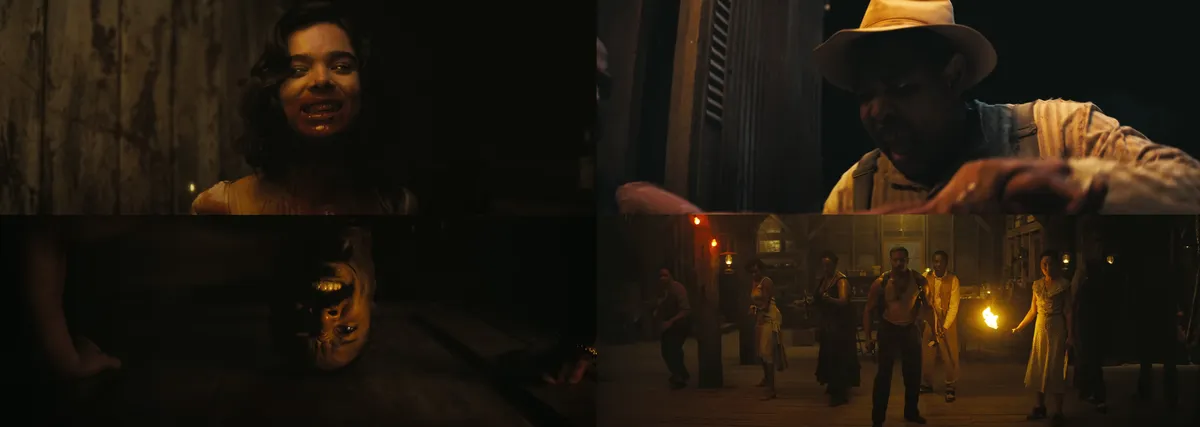 Fig. 1.8
 Figs. 1.9 to 2.2
 Figs. 2.3 to 2.6
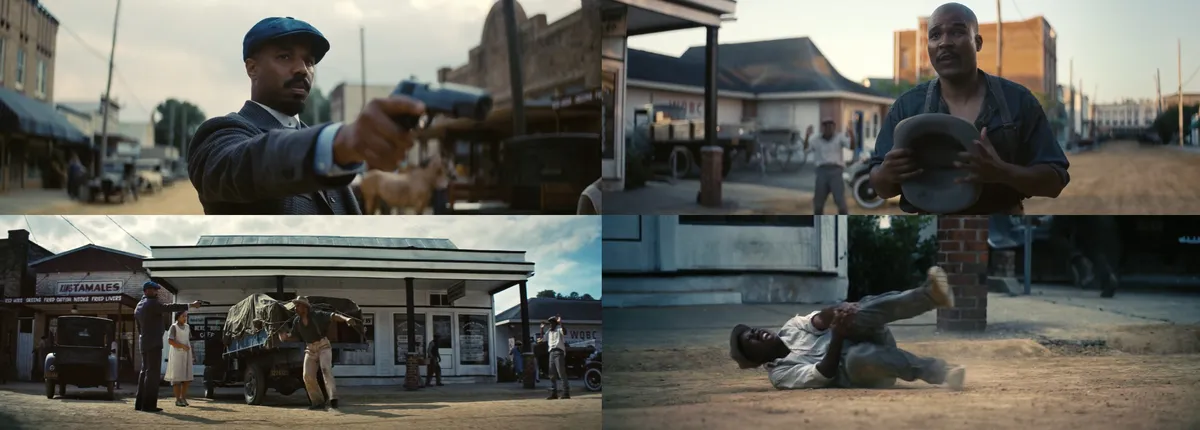 Figs. 2.7 to 3.0