GeistHaus
log in · sign up

https://aamir.me/rss

rss
15 posts
Polling state
Status active
Last polled May 18, 2026 22:37 UTC
Next poll May 20, 2026 01:43 UTC
Poll interval 86400s
ETag W/"14e5c-1mRLhTTeSMqcximuWEHBIsKpJW0"

Posts

A minimal AI agent in Python
How intelligence is embodied
Show full content

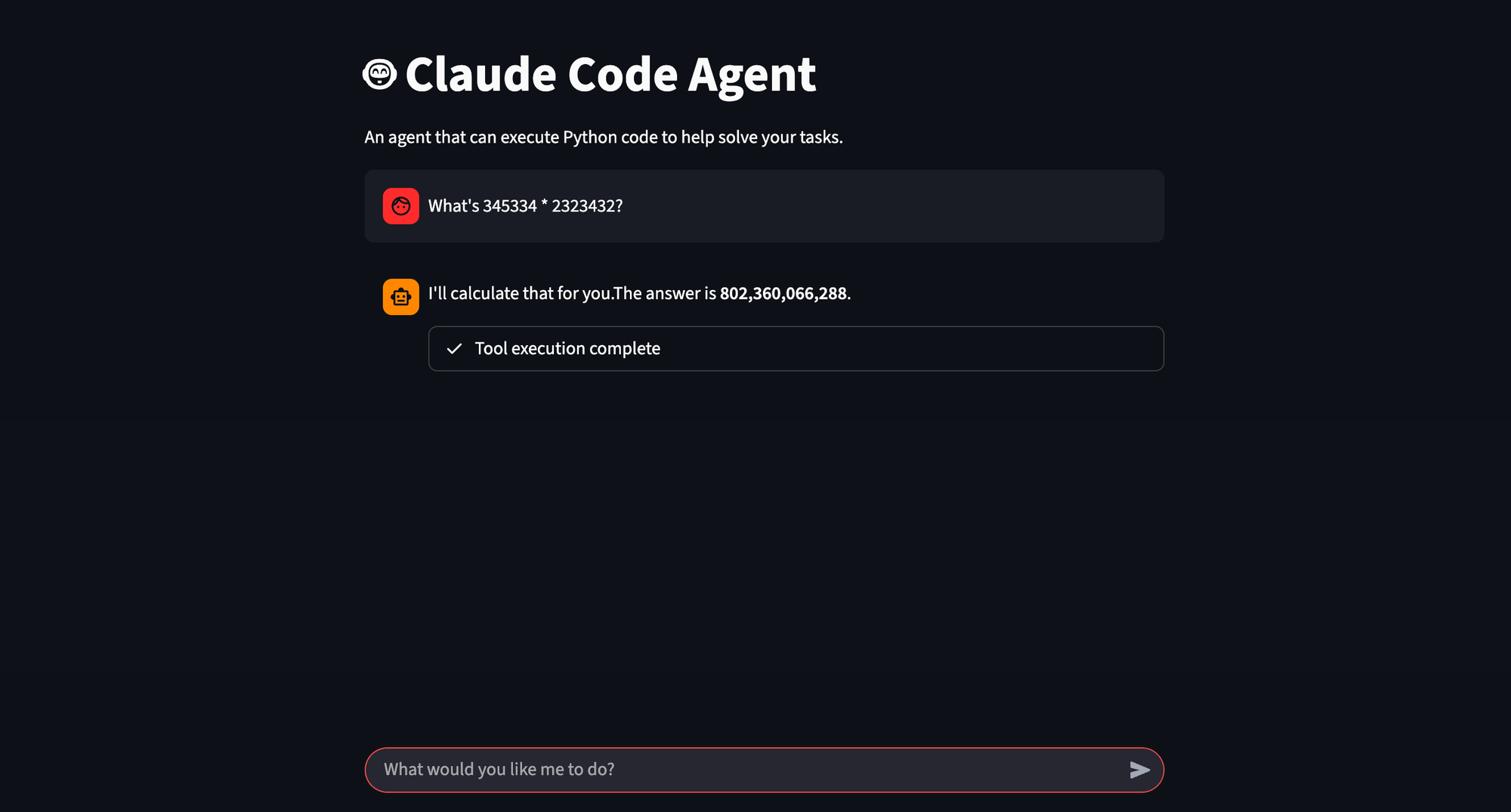
I'm writing this post to show off a small project I built last week: a minimal AI agent that executes Python code to fulfill user requests.

Click here to try the demo.
Click here to read the core ~160 lines of code.

While I've built more complex AI applications before, I wanted to go back to the basics and fundamentally grasp what an AI agent is. Coding something myself forced the clarity of thought I was looking for.

I learned that an AI agent has the following components:

  1. Trigger: A user action or API call
  2. Intelligence: A way of interpreting the goal and deciding what to do next
  3. Memory: A way of keeping track of what's been done
  4. Parser: A way to transform text into code
  5. Tools: A way of taking action in the world

My minimal AI agent executes code to fulfill user requests. Its components are:

  1. Trigger: A user sends a request to the chatbot
  2. Intelligence: The Anthropic API (Claude) with a system prompt
  3. Memory: The message history
  4. Parser: Reading structured output from Claude
  5. Tools: An exec_code function that runs Python code from Claude

A more complex agent could have the ability to reminders to call itself in the future, a disk-based memory system containing gigabytes of information that requires a search function, or even a robot body to take action in the real world.

But the underlying components are the same. Take away any one of them and the AI agent would be useless.

Finally, I learned that without access to the right data, an AI agent is useless. While my minimal agent can modify image files on your local filesystem, it can't tell me what the weather is. This is where Model Context Protocol (MCP), web search, and even basic APIs are important.

I hope this is useful to someone out there. Send me your questions!

695c074fb9e3b40001f812cc
Extensions
30 things I know at 30
Three decades around the sun.
Show full content
  1. Action produces information.
  2. Thinking is a form of dissociation.
  3. You don't have to keep thinking. You can just stop.
  4. Resist the pull of extremes and absolutes. Balance is boring, but usually the right approach.
  5. Hard work beats talent when talent doesn't work hard.
  6. Luck = hard work + opportunity.
  7. Being early beats being fast.
  8. Serendipity is controllable. It's proportional to your luck surface area.
  9. Success is a strong link problem. Iterate, fail, and learn quickly while maximizing serendipity. Enough attempts and success is guaranteed.
  10. Health is a weak link problem. Identify the biggest bottleneck and completely solve it before moving to anything else. Benching 225 doesn't matter if you have cancer.
  11. Health is a cold start problem. Your mood, sleep, diet, energy, and ability to exercise are interdependent. If you're starting from scratch, you'll have to do a few new things at once.
  12. Health anxiety is unhealthy.
  13. Anyone who professes to care about their time but not their health is not fundamentally serious.
  14. Most people would give up everything they own to go back in time 10 years.
  15. The best way to clean up a kitchen is while you're cooking the meal.
  16. The easiest path to tastier food is higher quality ingredients.
  17. Calling friends, meditation, and journaling is always underrated.
  18. Small talk is deeper than deep talk.
  19. Tesla will beat Waymo. It won't even be close.
  20. Health, social intelligence, attention, agency, taste, and trust will become increasingly valuable as automation eats the world.
  21. Angled showerheads > rain showerheads.
  22. There is no single unifying experience of New York City. It's a mirror. The sheer diversity & density reflects who you are.
  23. Life's better on offense.
  24. In a world of increasing convenience, seek friction to fight atrophy.
  25. Every world-changing technology is a double edged sword.
  26. Learning compounds faster than capital.
  27. Energy management over time management.
  28. Creation is the antidote to glassy-eyed, drooling consumption.
  29. You are not a population. For you, things only need to work out once.
  30. Follow the rules so you can break them later.

To friends, family, teachers, strangers, loved ones, authors, avatars, enemies, entertainers, competitors, forefathers, and butterflies: Thank you for shaping me into who I am.

6934fac493eca90001a18102
Extensions
Why I'm leaving product management and returning to engineering
One final retro
Show full content

I decided to pursue product management at 25, six months before graduating from grad school. There were two reasons I chose this path: First, I wanted to learn the non-tech side of tech business—sales, marketing, product sense, and operations—in hopes of preparing myself for building a tech startup. Second, I wanted to leverage and maintain my hard-won engineering skills. Engineers love working with PMs who understand software systems, so I knew I'd have a leg up over the MBAs who couldn't code.

Five years, two PM roles, and one entrepreneurship journey later, I found myself at a career junction (two months ago), reflecting how it had all played out. If I was being honest, I couldn't say that I'd enjoyed my PM roles the way I'd enjoyed my software engineering internships, and being a PM hadn't really prepared me for a startup journey either (if anything, it was the reverse). All I could say is that engineers did like working with technical PMs.

If I had to condense all the reasons why I didn't enjoy product management, I'd say it was because at startups (both of my PM roles), the C-suite is the de-facto product owner for all product decisions.

Everyone below the C-suite executes on, or at best, influences product decisions in line with their mandate. As a product manager in this situation, I wasn't building the product (designers/engineers were), setting the direction and vision (executives were), or growing the product (sales / marketing was). However, because I was a product owner in name, the implicit expectation was that product success hinged on my decision-making. This disconnect between expectations and actual influence led to frequent burnout and constant impostor syndrome.

That's not to say that it is wrong for the C-suite to have product authority at startups—in fact, I'd argue that's exactly their job. It just makes being a product manager in that situation less enjoyable. Bluntly speaking, I don't think my roles were necessary in the way they were defined.

I'm sure this tension eases as products grow too large for the C-suite to manage all context, and sheer scale forces product decisions to be delegated. Even then, the best product cultures establish frameworks that keep role expectations and responsibilities clear.

This point is driven home by the fact that my favorite moments as a PM either involved building something myself or talking to users directly. At Parallel Domain, I helped build, test, and document a data generation API called Data Lab, and at Function Health I built a data pipeline that processed gigabytes of unstructured wearables data to analyze customer usage patterns and derisk our product roadmap, and presented those findings to leadership. Also, there were seasons of customer interviews in both roles where I systematically interviewed customers, understood their needs, and synthesized those conversations into concrete product insights to guide the product roadmap. Both types of these experiences were rewarding, but rare in my ~3 years as a product manager.

Finally... remote work (both roles). Much ink has been spilled over remote work, so I won't add much other than my own observations: I never thrived in it, and no one I encountered particularly enjoyed it either. At best, people worked around its limitations by traveling to central jobsites or moving near coworkers to maximize informal in-person interactions. Outside of that, the only people who seemed to make it work were executives that had frequent informal collaboration across teams, engineers that could work solo for long stretches of time, or those with families/spouses at home. Even then, I couldn't say I saw someone doing their best work in the remote setup.

I did learn a lot as a PM. I learned to communicate effectively in a work setting. I learned to commit to reasonable timelines, then overdeliver. I learned that it's always worthwhile to talk to the customer. Most importantly, I learned to pour my engineer's enthusiasm into the mold of customers' needs, and much more. But I was ready to move on and try something new—or maybe something old.


Back to my career junction. It was time to look for a new role. Remote work and product management were off the table. So what, then?

To guide my thinking, I cracked open a book I'd saved for a moment just like this: Designing Your Life by Bill Burnett and Dave Evans. It's about applying product design principles to building a fulfilling life—mining the past for insights, creatively brainstorming solutions, and iteratively trying "life prototypes." More importantly, I knew the book contained structured exercises to guide my thinking, which, as uncertainty about life and the world loomed large in my subconscious, was exactly what I needed.

Picking up a book to choose my next role might sound like overkill, but after picking up roles that were less than fulfilling, I was willing to go the extra mile. And boy, was it was worth it.

Through the reflective exercises in the book, I discovered that I'd prioritized mission above all other dimensions of work so far. Live by the mission (self-driving cars), die by the mission (healthtech), regardless of how little I resonated with the day-to-day (remote PM roles). And so far, mission alignment alone had not led to the fulfillment or growth I'd hoped for.

Next, I discovered that the most fulfilling experiences in my life scored highly on the following dimensions, in addition to meaningful impact/mission:

  • Deep collaboration with coworkers I loved or customers who needed solutions
  • Creatively utilizing technical skills to build real things, fast
  • Communicating my work to the world, usually in the form of writing or presentations
  • Total ownership over some component of the project, where I knew that my work was a critical part of its success.

Being a remote PM scored poorly on these latter criteria. If I had to rate my experiences at Parallel Domain and Function Health on these dimensions, I'd rate them a 9/10 on mission and a 2/10 on everything else. This dynamic, where the mission was inspiring but I had no part in it, felt like being a benchwarmer as starting players scored goals over and over again.

One of the best decisions I made was sharing this journey with friends (I can't underscore how important this was, especially in the long stretches of isolation without a job), and one of them (shoutout Lexi) suggested forward deployed engineering—essentially an engineer that goes onsite to build software for individual customers.

The more I learned about it, the more right it felt. I'd enjoy deep collaboration with both coworkers and customers, flex the technical skills I learned in college, communicate work I was doing to the world and to coworkers, and own the customer experience.

Moreover, forward deployed engineering is on the rise, as is its B2C cousin, product engineering. It's a good time to enter this job function.

In retrospect, choosing to return to engineering was an easy choice. The few times I had to program as a PM were among the best times on the job. I deeply enjoyed building Agentboard (though I wish I'd had teammates), and I was always tinkering with some project or the other in my free time.

I'm happy to report that I did eventually land an engineering role that I'm really excited about, and I actually start in a few weeks! More on that later. There so much more to say on the job search process and our place as engineers in a world where AI writes most code, but this post is long enough for now.

689fb3d0e8bc47000127c4a8
Extensions
Earnest jest
On obtaining lemons in unpredictable ways
Show full content

Do you remember the best night of sleep you ever had? I do. Three years ago, on a foggy night out in San Francisco, I broke all the rules. I

  • Slept over at an unfamiliar apartment
  • Well past 2am
  • With drinks in my system
  • Without blackout curtains, magnesium tablets, temperature control, red light dimming, ideal meal timing, meditation, nothin'
  • Just me, a carpet, a random couch pillow, and a throw blanket

The next morning, I blinked open my eyes and noticed a cramp in my jaw and a crick in my neck. Unsurprising, deserved that.

Then I realized I was exploding with energy. Too much energy. I sprang up from my threadbare sleeping arrangements and almost burst into song and dance.

Somehow, the combination of alcohol and sleeping on the ground had locked my jaw into an unnatural underbite, allowing me to breathe normally at night for the first time in years.

So much energy. Needed to get it out. So I ran straight to the gym and proceeded to set personal bests in every exercise by 10-20%. No one at the Dogpatch Touchstone climbing gym had seen a lightning ball whizz around the weight room till that fateful day.

Over the following weeks, I tried to recreate the magic. I slept on my carpet, used different pillow sizes, even tried propped my legs up on a couch - all for nought. That beautiful night of sleep remained out of reach. I still strive for it, three years later.

It's funny, isn't it. Better sleep has been one of the biggest challenges of my life, and I struggle to make the smallest bits of improvement. Then I Sharpie the whiteboard, walk in the bike lane, put my elbows on the dinner table, and life hands me a silver platter filled the lemons I've been seeking.

Anyways, I won't stop striving. But here's to taking life less seriously every now and then.

6817888e243e6600016b2db3
Extensions
100 attempts is easier than 1 attempt

Here's a semi-famous story about a pottery class:

A ceramics teacher announced on opening day that he was dividing the class into two groups. All those on the left side of the studio, he said, would be graded solely on the quantity of work they produced,
Show full content

Here's a semi-famous story about a pottery class:

A ceramics teacher announced on opening day that he was dividing the class into two groups. All those on the left side of the studio, he said, would be graded solely on the quantity of work they produced, all those on the right solely on its quality. His procedure was simple: on the final day of class he would bring in his bathroom scales and weigh the work of the “quantity” group: fifty pound of pots rated an “A”, forty pounds a “B”, and so on. Those being graded on “quality”, however, needed to produce only one pot — albeit a perfect one — to get an “A”. Well, came grading time and a curious fact emerged: the works of highest quality were all produced by the group being graded for quantity. It seems that while the “quantity” group was busily churning out piles of work – and learning from their mistakes — the “quality” group had sat theorizing about perfection, and in the end had little more to show for their efforts than grandiose theories and a pile of dead clay.

from Art & Fear

A great story, but the less obvious takeaway is that focusing on quantity is more fun. The 'quantity' side of the class probably felt less pressure, collaborated more, and enjoyed their skill progression more than the 'quality' side did.

When something is fun, it's easier, because the more you do it, the more energy you have to keep going.

In other words: quantity not only beats quality, it's also literally less effort.

So if you're starting out, focus on failing 100 times first. It's easier, more fun, and you'll probably start succeeding before you know it.

678d2c8f30ec010001ec4102
Extensions
Navigating a Career Transition at 28 years old
I'm building a f*cking time machine
Show full content

I'm writing this post for three reasons:

  1. To document my thought process for future Aamir
  2. To give a perspective to anyone thinking about their own career change
  3. To share with you where I've chosen to go next so you can cheer me on and give me flowers

I'm going to share my thinking, my mistakes, and my strategy. Let's get into it.


After selling Agentboard last year and taking a well-deserved rest, I began contemplating what to focus on next. I knew that my decision would have a big impact on the next few years of my life, so I wanted to choose carefully.

Autonomous vehicles?

To ground myself, I looked back at my career so far. I'd spent the previous five years working in the autonomous vehicles industry. Maybe I could go back to that space.

When I first chose to focus on this space as a sophomore in college in 2016, it was filled with ambitious, small startups working on the hardest problems in computer vision. This was exciting and compelling to me.

But by early 2024, the players had changed. They had mostly consolidated into well-capitalized behemoths that could afford to take on the extreme costs of machine learning & hardware development with zero revenue. And despite their resources, many of them were failing (see Cruise, Argo, Uber ATG).

Furthermore, when applying the bitter lesson of AI research to autonomous vehicles, it became clear to me that Tesla was going to win, and it wouldn't even be close. So if I were to focus on autonomous vehicles again, I'd want to join Tesla.

But joining a big company meant prioritizing salary and stability over learning and growth. While stagnation may be less of a concern at a place like Tesla, thankfully, I still had the risk appetite for new projects.

So, self-driving cars were off the table.

Wow.

Realizing this was scary as a passion-driven person. It meant that I had some soul-searching to do, because I'd be aiming to find the level of passion I had (and still have, to this day) for self-driving cars. A high bar.

Looking beyond self-driving cars

I briefly considered fintech. My father's recent journey into the world of banking and finance taught me that money is oxygen to the living, breathing ecosystem that is our capitalistic economy. And there's no better place in the world than New York City to build a fintech business.

But I had no passion for this space. It just didn't speak to me. Off the table.

I took a look at my skills - I'm a solid engineer, have a good amount of experience and skill in AI, I could go try to work at a great research lab! But, also no. Deep down I knew I wouldn't be competitive in pure AI. But... I could make a helluva lot more impact applying AI to a field I care about.

So no OpenAI/Google/etc.

At this point, you're thinking that I'm being picky. Yes, I was. This has been, and hopefully always will be, my approach to a career. Pick something I care about so that when I enter it, I already have an energy advantage over everyone else. Targeted shots over a shotgun spray.

So I asked myself: What am I schizo about? What do I constantly watch YouTube videos on? What constantly fills my Twitter timeline? What newsletters have I subscribed to? What do I spend all of my disposable income on? What will I not shut up about to anyone who would listen?

The answer came gradually. Dealing with sleep apnea. My various physical injuries. Eating healthy. Intermittent fasting. Cardiovascular endurance. Don't die. My long list of purchases and even longer wishlist of various health-optimizing devices. My aging parents and relatives.

It finally hit me. Health! Health. I should explore health.. and AI? Healthtech? Biotech? Something in that space. I was gonna find out.

Validating and exploring healthtech

I began consuming as much media on health, healthtech, and biotech as I could: books, YouTube videos, Twitter accounts, blogposts, textbooks, and more. The more I read, the more fascinated I became. I had always written off biology as a field of study because of a bad experience in 9th grade with Mrs. Mukherjee (a story feat. a stuffed animal for another time). But learning health & biology now, at this stage of life, from the perspective of a computer scientist, led me to a deep appreciation for the complexity, effectiveness, and efficiency of biological lifeforms. It led to absolute dismay at the state of health in the world, which fueled my interest harder. It led to respect for a field I had written off.

I also traveled to the magical Edge Esmeralda in Healdsburg, CA for their longevity week, and the chaotic Vitalia City (now Infinita City) on the island of Roatan in Honduras to explore what the pioneers of bioengineering were focused on. I ordered a bioengineering 101 kit that I never finished, and tried starting a nutritional supplement business that never got off the ground.

But despite my wandering, through all of these experiences, I consolidated the following ideas that absolutely convinced me I was headed in the right direction. These ideas essentially form the thesis for a career in this field:

  • We die slowly, over decades, from mostly preventable diseases. This is absurd when considering that we live in the richest and most prosperous society of all of human history. This is solvable. We should solve it.
  • Health should take zero effort to maintain. We should automate health. We should never worry about it again. Something so basic and fundamental to the experience of life should be built into our technology, culture, and society. It should be part of our infrastructure, just like food, water, shelter, and peace. Anything that we are required to do for health should be most enjoyable and take zero cycles of brainpower. Maximum health on autopilot.
  • Health is the great filter. When we have it, we don't think about it; when we don't have it, it's all we can think about. If we can solve this part of Maslow's hierarchy of needs, just like we solved food, shelter, and water, we can ascend to building Dyson spheres, exploring the galaxy, healing the planet, discovering the laws of quantum physics, making incredible art, deepening human connection, and more of the infinite wonderful things life and our universe has to offer.
  • Improving our health is the closest thing we have to a time machine. If we push back the end date of our healthy lives through better choices and better technology, we are effectively traveling backwards in time, generating more of our most precious resource in the universe.
  • I want to work in atoms or cells, not bits. I'll have longer to master the field before AI automates it completely and I'm out of a job.
  • Just don't die. We have no idea how much progress will occur over the next century. We should stay alive to see it, and we should help as many people as possible who want to see it, see it.
  • To simplify an extremely complex intersection of fields, we are learning to represent the chaos and randomness of biology through AI. In other words, biology & health is a field I would be valuable in with my background in AI.

Each of the sentences in this section could be their own blog post, and maybe they will. But to keep things short - by the time I got to this point, I was hooked, I was set, I was ready: healthtech it was.

Deciding to look for a job

For most of the first half of 2024, I was still hoping to start a business. But after writing Slowing Down to Speed Up, realizing I wanted to pivot to a completely different field, the solo journey beginning to wear me out, and money being stretched thin, I came to the ego-killing yet strangely relieving conclusion that it was time to look for a job.

It took me three painful days on a highly abbreviated trip to Florence (a story, featuring betrayal and paninis, for another time) to fully accept that the goal of "starting a business" hadn't materialized in the way I wanted. It was time to suck it up, build a network and credibility in a new industry, re-evaluate entrepreneurship in the future when I was ready for it, and look for a gah-damn job.

How it turned out

This post is getting long already, so I'll save how I conducted the job search for another post (let me know if you're interested in reading that).

In the end, it all worked out. I'm very happy to report that I landed a role at Function Health in their product organization!

I was and still am beyond grateful for everyone who helped me get there, that I'm growing and learning something new every day, and that I get to work with extremely competent, smart, and passionate people who are all as schizo about health and the state of healthcare as I am. My kinda nerds.

Beyond that, having a steady job allowed me to stabilize many other parts of my life, including becoming more emotionally stable, resuming healthy habits, and the mental space to begin publishing on this blog more often.

So yeah. That's how I did it. I'm also very excited to begin sharing what I'm learning about at the bleeding edge of human health optimization, so look out for that in future posts.

Get in losers, let's build ourselves f*cking time machines!

678477cf3a245e0001b0c42c
Extensions
Emotions are partners, not problems

I've recently learned that I have a fundamental assumption about emotions, one that I've carried with me since my early teens, whose inverse is the point of this post. It goes like this:

Emotions are problems. Once solved, I can be normal again.

Emotions are indeed

Show full content

I've recently learned that I have a fundamental assumption about emotions, one that I've carried with me since my early teens, whose inverse is the point of this post. It goes like this:

Emotions are problems. Once solved, I can be normal again.

Emotions are indeed problems to be solved from the perspective of a student attempting to cram for a final tomorrow, an engineer looking for a bug in his program, or in any other one of the thousand intellectual heady situations in which I've learned to try succeeding at life.

To solve this problem, I first learned to become aware of emotions. Sometimes just becoming aware of emotions was enough to be stable. Then, I learned to feel them. That helped too. Sometimes feeling an emotion makes it go away. But often they don't. They hang around, and become louder, and then I start trying to escape because there's no end to it otherwise. That's part of what I was trying to understand at the end of that post. That understanding starts with changing my belief that emotions are problems, because they don't have to be. In fact, they're uniquely useful.

Emotions are uniquely useful

In Dune, Paul Atreides recites the famous Litany Against Fear during a test of his abilities:

I must not fear. Fear is the mind-killer. Fear is the little-death that brings total obliteration. I will face my fear. I will permit it to pass over me and through me. And when it has gone past I will turn the inner eye to see its path. Where the fear has gone there will be nothing. Only I will remain.

Most people remember this quote to remind them of the danger of fear. Fear is the mind-killer. We must fight and conquer fear so that our brains remain unmurdered.

But most ignore the most important and practical part: I will permit it to pass over me and through me. And when it has gone past, I will turn the inner eye to see its path.

What is fear's path? Fear focuses you on what is needed to survive at the exclusion of all else. Its path bestows vision in an otherwise blinding life-or-death situation.

In other words, fear is useful.

If you're reading this right now and going, "okay, that's obvious," I'd have agreed with you before. But my revealed preferences stated otherwise. All of my actions around fear, until just recently, were about fighting and ignoring it until it went away. Which rarely worked.

What allowed me to accept this truth is realizing that only fear can focus me in this way. Only fear can process hundreds of pieces of sensory information in less than a second to make a snap judgement about my attention. Logic and reason may be more accurate, but they're serial. One point must lead to another. Too slow. By the time my brain has caught up, the situation is over.

When I allow fear to focus me, I'm nimble, I'm responsive, I'm acting, I'm there.

What about when fear is unhelpful? For example, the fear of public speaking, asking someone out, or ordering pizza over the phone?

When fear seems unhelpful, it's probably pointing to a deeper belief that's colliding with reality. Public speaking doesn't involve any actual nakedness, and even if people judge you for the worse, you won't be exiled from the tribe. Getting rejected doesn't mean you aren't worthy of love, and perhaps pushing through a few of them would show you that you are worthy. Unfortunately, messing up a pizza order is the one exception - calling Pizza Hut and saying "I'd like to pepperoni a pizza with order" and instantly hanging up in shame will result in the nuclear apocalypse.

Another example: Anger. When anger arises, there's a boundary being crossed. Anger provides limitless fuel to protect that boundary, if we so choose. If anger seems inappropriate, then there's probably an operating belief that can be re-evaluated. The same could be said for sadness (honorably letting go), guilt (moral compass), envy (your true, unfulfilled desires), or any other emotions, which I leave as exercises to the reader while I continue figuring them out.

In summary, emotions point to deep truths about a situation or yourself almost instantly. Conscious, rational thought can't do this. That makes emotions pretty darn useful.

Okay, so if emotions are useful, how does one make use of them?

Emotions are partners

I've always found the phrase "work with your emotions" to be too vague to make sense to me. Instead, I've learned to treat emotions as embodied, collaborative agents. Like a people I'm partnering with on a project or assignment. Here's what I mean:

Emotions are embodied. They are often felt, surprisingly, in physical locations in the body. They often need to be felt - the physical lowering of your head, the knot in the pit of your stomach, the tears in your eyes. Emotions have an age, too. Sometimes they feel like toddlers, other times like wise elders.

Emotions are collaborative. They want to be heard. You can ask them questions (politely). Sometimes they tell you things. They provide you boundless energy when aligned, and you can provide them much needed release. Sometimes you need to lead them; other times, they lead you. You can thank them for providing you insight, which lead to gratitude and sometimes placation for strong emotions.

Emotions are agentic. They arise of their own volition and often point you to things you're not conscious of. Sometimes they're "wrong" about a situation, which reveals a deeper belief its based on that you can update, affecting that emotion in the future. Emotions can act - or at least, they often require you to act - to address the belief they're based on. You can have a totally different relationship with different emotions. For example, one's relationship to fear might be more mature and trusting than one's relationship to anger.

Treating emotions like partners is how to put this all together. It accords to emotions a respect that allows you to develop a connection with them. Strengthening that connection leads to more integrated communion with all of your emotions, like an experienced soccer team communicating nonverbally with each other on the field to create an opportunity for a goal.

One caveat is that when emotions have been repressed and are felt for the first time, they will not feel like equal partners. They'll feel like toddlers. They'll interrupt you at the most inconvenient times, cry very loudly, and drop dookies in places they shouldn't. There is a period - probably at least a few weeks if not a few months - of unavoidable growing pain to experience the benefits of integrated emotions. Over time, you'll begin to hear what they have to say.

Finally, this post wouldn't be complete without mentioning dissociation, aka the #1 way to make sure emotional growth never happens. There's only so much dissociation an emotion can take before it metastasizes and goes subconscious. And are plenty of ways to dissociate in our modern world. All I'll say is that it's painful to feel repressed emotions, but eventually, it's necessary. There's a calmer place on the other side, always.

How this change has affected me

Over the past few months, I've improved my awareness of myself and the world by listening to what my emotions have to say. Just as my eyes show me where things are in the world, emotions have helped me process and understand social interactions, identify load-bearing beliefs about myself, and guide me to express myself in ways that feel more mature and evolved.

Most importantly, and more than ever before, I feel peace. Not every day, but many days. Like a balmy summer day with nothing to do, but on the inside. My sleep has stabilized for the first time in a long time. My relationship to my emotions - and inevitably, my relationship to myself - has started to change for the better.

To the Aamir who is rereading this in the future: Going down this path was absolutely worth it. Emotions aren't bad, they're good. If you lose your way, find the way back through your emotions.

Putting it all together

In The Language of Emotions, Karla Mclaren identifies the concept of an "emotional genius":

My brothers invented a silly phrase - "emotional genius" - and it always made us howl with laughter. None of us could envision an emotional person - a sloppy, weeping, raging, fearful person - as a genius. The two words seemed to fight each other in the most ridiculous way, which is why I came back to them throughout my life. Was it possible, I wondered, for people to be as brilliant in their emotional lives as they were in their intellectual and artistic lives?

I'm aspiring to this goal by learning to work with emotions as partners. I'm trying to stop conquering fear, stop calming down, and stop escaping when those emotions get too intense. Getting scared, getting sad, getting angry - even if just for a moment - allows me to hear what the emotion has to say. And strangely enough, I often find myself calmer and freer than ever before.

Here's a different assumption about emotions that I'm taking with me into 2025:

Emotions are partners. If we collaborate, we can grow together.
677acfc396c5c40001ae4c3d
Extensions
Slowing Down to Speed Up

I've been reflecting on the most productive periods of my life recently, and the most striking insight so far is that I enjoyed them.

Running a mile every day after school when I was 6.

Practicing the same soccer move hundreds of times when I was 12.

Practicing

Show full content

I've been reflecting on the most productive periods of my life recently, and the most striking insight so far is that I enjoyed them.

Running a mile every day after school when I was 6.

Practicing the same soccer move hundreds of times when I was 12.

Practicing the piano every day when I was 14.

Late night tumblr essays when I was 16.

Coding for three days straight when I was 19.

Building my own robot at 23.

And on and on and on.

In those moments, I wasn't thinking about "productivity." There's no iron yoke of obligation around my neck. I didn't dread waking up each day. I didn't have some arbitrary deadline. I wasn't trying to please other people. I wasn't stressed out.

I was excited. I looked forward to the time I'd spend each day on my project, whatever it was. No deadlines, yet I completed work faster than expected. Strangely enough, I was always alone. They were always creative endeavors. These periods of my life - the most productive, the happiest, and the ones I'm the most proud of - were filled with flow.

It's striking to me because that's not how work has felt like this past year. Building Athenareader and Agentboard and most of my other tasks has been a slog. I'm proud of what I accomplished but I had to push myself very hard to get them done. And that came with its costs.

I think it's because I staked my entire professional identity on an outcome (starting a business) instead of a process (solving problems I and others deeply cared about). The stakes were too high, the time was too short, and it squeezed out any all enjoyment from the process.

My ego continues to lurk in the background, telling me I need to make something big of this period of my life. I need to be living up to my dreams and starting a company and doing something impressive because I kinda burned the boats and jumped off the cliff last year.

In other words, me me me.

I'm not trying to get rid of my ego. Ambition drives me well when coupled with more altruistic motives. But the the path that I've chosen isn't a sprint. It's a series of sprints stretching out into infinity. The only way I can work for that long is to enjoy it. Otherwise I'll break down long before exponential compounding kicks in. External validation is a catalyst, perhaps, but curiosity, service to others, and excellence for its own sake has always been the aerobic respiration of productivity in my life.

So I've been slowing down. Reflecting on what I want to work on next, and how I want to work on it.

When I've found it, life will accelerate again, and this time, I'm going to enjoy it.

66a66d5de0a73d0001f43670
Extensions
Generational Emotional Wealth

My life is as different as it's ever been. There's no meetings I have to attend. No grades I'm trying to achieve. No income to entice my compliance. No application committees to impress. Just me. I wake up every day, and my whole day

Show full content

My life is as different as it's ever been. There's no meetings I have to attend. No grades I'm trying to achieve. No income to entice my compliance. No application committees to impress. Just me. I wake up every day, and my whole day is wide open. How should I spend my time? Who am I serving with my skills? What am I building towards?

One concept (of many) that orients me is the idea of generational emotional wealth. I became curious about this idea after reading about generational wealth and intergenerational trauma. The question is this: If it is possible to pass on financial abundance and emotional dysfunction to future generations, is it possible to pass on emotional abundance?

I think so. One piece of evidence is families I've met who seem to do this well. They are far and few in between, but they exist. I spend ten minutes around them and they infect me with their boldness and earnestness. They take one look at me may not love me, but unconsciously accept me as I am, head to toe. My heart begins swelling with joy. I have more of a swagger to my step. My personality comes to the fore. I express myself with no burdens. I've met this type of family multiple times at different stages of my life, and without exception, I transform from a feeling of separatedness to one of belonging around them.

Spending extended time with them reveals that they're not much different behind closed doors. They love each openly. They handle their conflicts patiently. They seem to accept the very quirks and features (insert Doug Demuro emoji) of each person that would be judged and demeaned by the average outsider. They seem to egg each other on, explicitly and implicitly, encouraging each member of the family to develop into the most quirked up expressive version of themselves.

How does one build this? It must start with one person, or maybe two people, who are able to embrace the parts of their history and culture worth keeping, shrug off the rest, and create their own to fill the gap. The way they are inoculates others from their own baggage, and the love spreads. Their children are raised in a mostly healthy environment, and when they grow up they seem to go off and build families of their own that do the same.

There's so much more to it that I don't fully understand. Maybe these are truly outlier cases. I intend to find out and do the best I can to build it myself.

Why? Because when I'm all alone and I ask myself what keeps me going, why I work so hard, why I take these huge risks professionally and socially and spiritually, the answer is always the same: It's for love. For connection. And in our overconnected, isolating, rapidly changing world, a vehicle for love, connection, and belonging is damn well worth building.

Questions I'm pondering:

  • To give shade, one must first be a strong tree. How does one break the cycle of intergenerational trauma? What qualities do I need to develop that would attract the right partner, that would allow me to grow into the strong and loving father for my children that I want to be? Where are my gaps in emotional development, communication skills, or knowledge of human nature?
  • What qualities am I looking for in a life partner that would make a good mother?
  • How does a family inculcate traditions or values that both protect their children yet give them enough latitude to adapt to a rapidly changing world?
  • What simple yet difficult commitments or decisions am I putting off that would lead me closer to this goal?

P.S. Like many of us, I'm thankful for some aspects of my family life and was left wanting in others. But part of accepting the torch of leadership from the older generation is thinking about how I'd want my kids to be raised differently. Of course, part of the answer is "I'll figure it out once I get there," and that's what most parents do. But the other part of the answer, the part I have control over now, lies in preparation. Exploring what I can do to prepare and establishing a North Star is the goal of this post.

6671b77ad163f90001d246a2
Extensions
How I built and sold an AI app

I never mentioned it on the newsletter, but my entrepreneurial situation was dire last November. I had just moved to NY, my savings were running out, and I was getting desperate. I'd called several friends and told them that if I couldn't make 1 month'

Show full content

I never mentioned it on the newsletter, but my entrepreneurial situation was dire last November. I had just moved to NY, my savings were running out, and I was getting desperate. I'd called several friends and told them that if I couldn't make 1 month's living expenses by the end of the year, I'd start looking for a job.

This is the story of how I built Agentboard, sold it, and worked at the acquirer until just a month ago. It still feels unreal, and in all honesty it was mostly luck. I hope that in writing this, I can reflect on how it happened and take those lessons into my next adventure.

What I learned from Athenareader

I launched my previous app, Athenareader, here last October (To recap, it turned static blogs like paulgraham.com into a daily newsletter). You may have noticed that I never wrote about it afterwards. That's because no one wanted it.

It's the most classic reason of all: I didn't build something people want. I didn't talk to potential users beforehand to validate my idea.

Here's the feedback I got at launch that I could have gotten before I wrote a single line of code: There just aren't many people who read enough static blogs to justify more email into their already crowded inboxes. Learning that simple insight earlier was doable with a few conversations and would have saved me weeks of time.

It's not that I didn't know that I should talk to users. It's just that once I quit my job, my nascent project idea was all I had for a career. I didn't want anyone to trample all over my little dream. To avoid confronting that fear, I deluded myself into thinking that if I could just ship and launch it quickly, I could skip over that pesky little step of getting to know my target market. Of course I couldn't.

The other hard thing was that I was completely alone. Alone in developing the product, and isolated from any user feedback along the way. As a result, my motivation was fleeting. I'd have to push myself late into the night just to get small amounts of work done.

Overall, the project was painful, but not devastating (eight weeks of lost time). I look at it now as spending eight weeks to cure me of my fear of talking to users. I didn't make that same mistake the next time around.

Validating My Next Idea

I packed up my life in San Diego, moved to New York, and started brainstorming again. I had a few project ideas after working on Athenareader, but I settled on building something around "AI agents." They were all the hype in November, and more importantly, I didn't really know what the term really meant. I thought building an AI agent app would help me understand it better.

To make sure people actually cared, I started posting about AI agents on Twitter. I also talked to friends about AI agents, and generally shopped my ideas around.

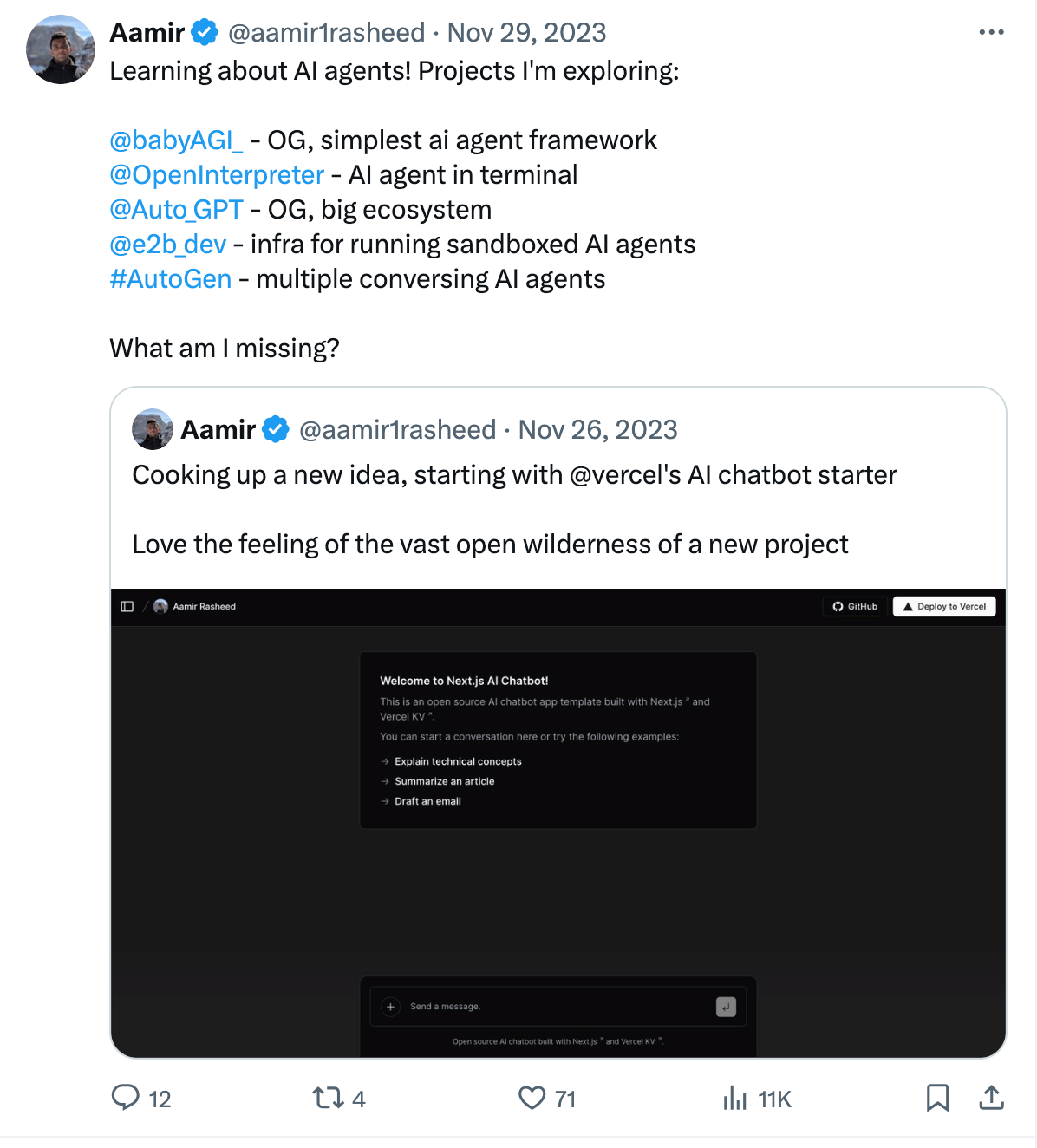
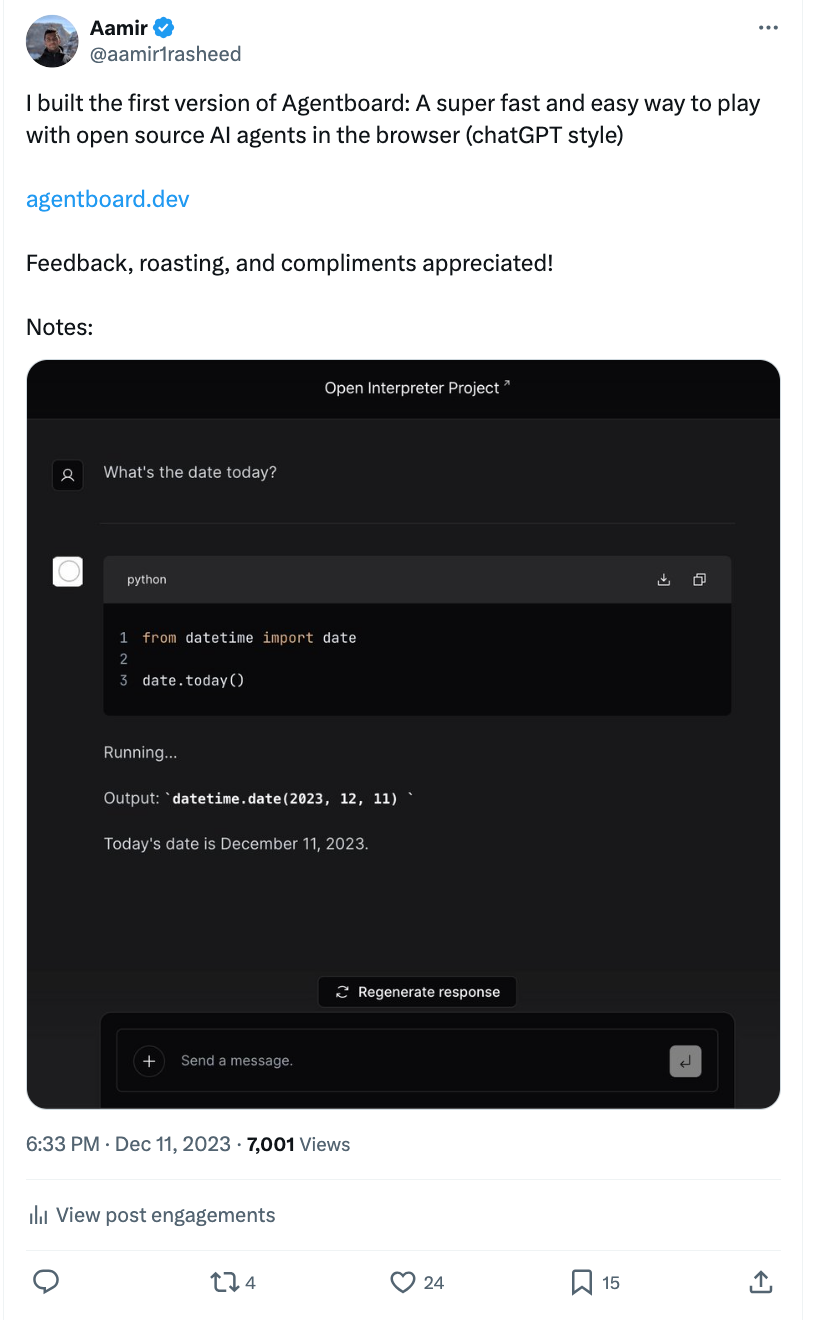
11k impressions is a lot for my small account

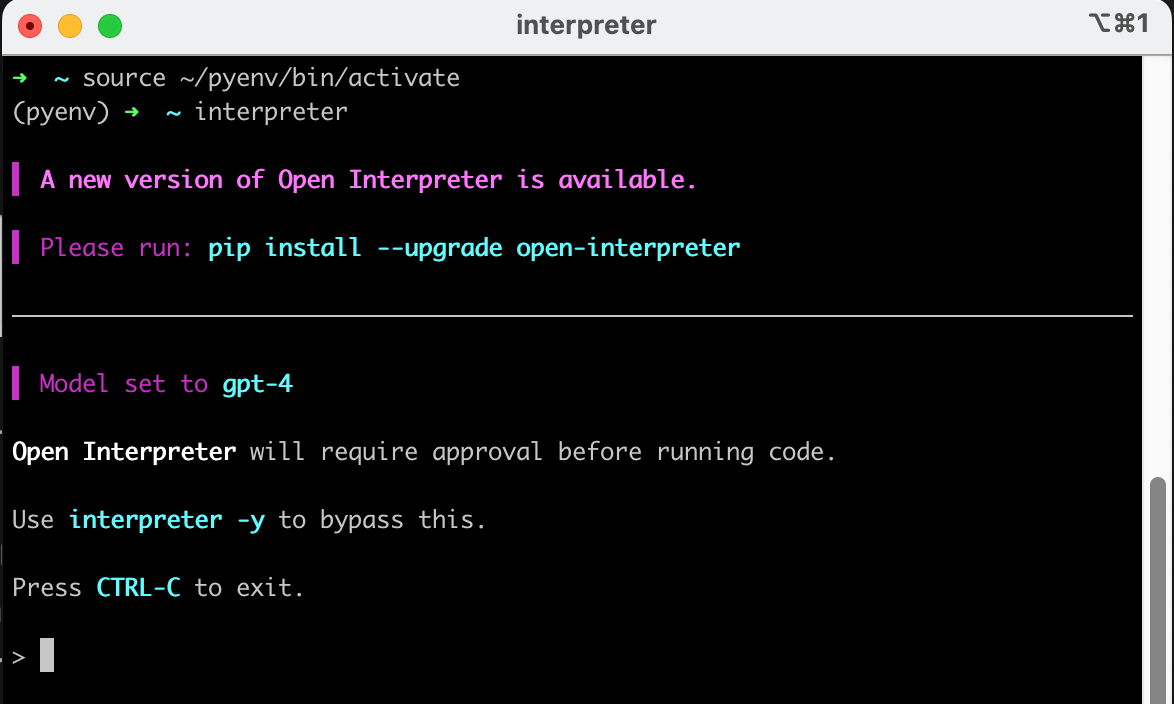
As I started playing around with the AI agent frameworks I listed in my tweet, I noticed a problem: All of them required users to clone a repository from Github and then run a framework using the command line.

This excludes everyone except developers. Nontechnical people simply don't know how to use Git or the command line. Besides, most other AI tools (like ChatGPT) are web-based and only require a login to use.

example of running Open Interpreter, a popular AI agent framework

I found my opportunity in this problem. If I could wrap AI agents in a web application, could I enable the nontechnical masses to use AI agents?

Before I wrote any code, I pitched this idea to a few friends and they generally liked it. I decided to call it "Agentboard" in the hopes it would one day host all of the AI agent frameworks I experimented with.

Was this a business idea? No.

Did I have a pricing model, or a monetization plan? Nope.

Did people froth at the mouth, wondering when it would be ready to use? Nada. If anything, their positive reactions came from politeness.

But because I successfully gauged interest in the problem space, both on Twitter and amongst my friends, then validated and refined the idea through conversations, and people didn't outright reject the idea this project was already miles ahead of Athenareader. That was good enough for me. It was time to start building.

(As it turned out, someone did want to pay for the idea. Just not for reasons I could have predicted)

Development

Like I mentioned before, AI agents require a runtime to execute the code they generate. So the key addition to my web stack was E2B, a product that supplies sandboxed runtimes for code execution via an API.

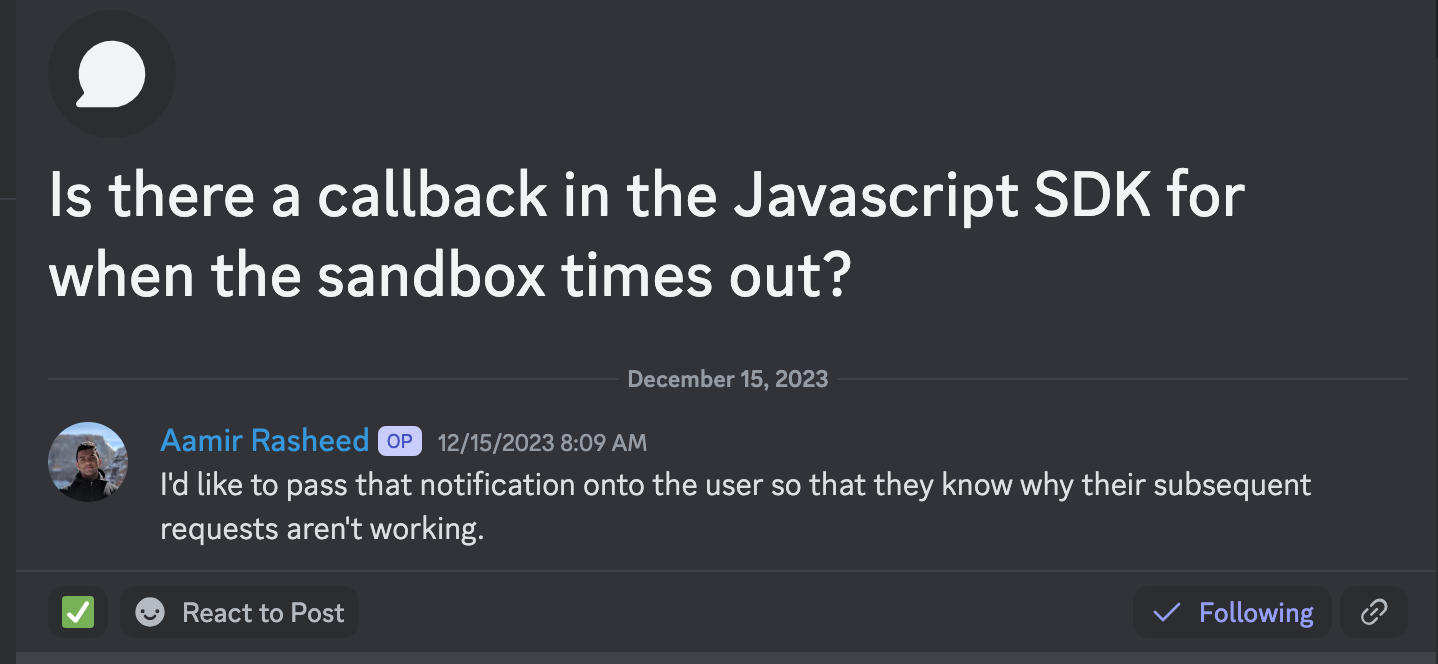
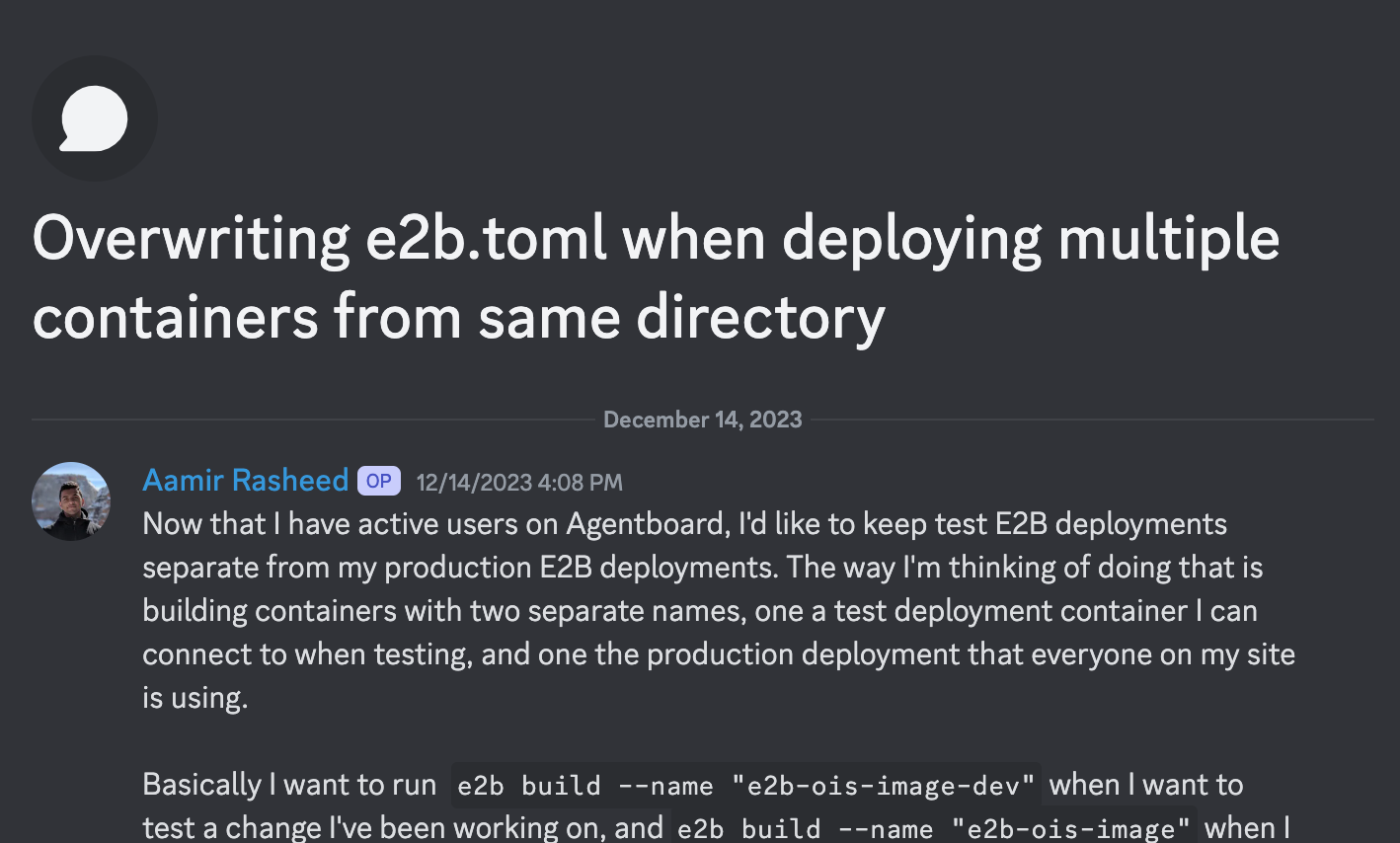
As I built the project, I learned that E2B was a nascent product from a small startup based in Prague. Their product was buggy, but they were very responsive on Discord, in which I frequently posted asking for help or making feature requests. My feedback was valuable to them, and the encouragement they supplied was energizing. Sharing my ideas and progress with Agentboard was actually kind of fun compared to the lonely, grindy development of Athenareader.

Also, I built it fast. Previous experience taught me that an aggressive deadline was the best way to ensure I actually launched. First commit to launch was two weeks, a big speedup over the eight weeks it took me to build Athenareader.

Launch

I didn't choose a particular day or time to optimize views or anything like that. I just launched as soon as I possibly could. The post did well, garnering 7000 views.

On a whim I also DM'd Agentboard to Guillermo Rauch, the CEO of Vercel because I had used one of their NextJS templates. To my surprise, he responded and gave me some product feedback! It's cool that he even responded at all.

Acquisition

Soon after I launched Agentboard, Vasek (CEO of E2B) DM'd me and asked to meet virtually to discuss the future of Agentboard. It took a few conversations but they let me know that Agentboard was solving an important problem for them: Getting developers to understand what they do and how they could build with E2B. They were interested in continuing to build Agentboard as a showcase of what's possible with E2B and AI agents. I thought about it for a while and consulted with family and friends, and ended up agreeing to sell it to them. A few weeks later, I came on as a contractor to continue building it for a few months.

It's hard to truly remember how I truly felt in that moment because it's been five months. It's definitely not as casual as I make it seem to most people. I think I was just so frayed from the constant stress of not knowing how I'd make money that it took me a few weeks to feel true joy. It wasn't a life changing amount of money, but symbolically it was such a huge win. I finally had something tangible to show for quitting my job earlier in 2023. I celebrated well in East Village that night.

Lessons

If Athenareader taught me to build something people want, Agentboard taught me that spending time harnessing luck is worth the effort. I spent little energy on making Agentboard a viable business. I put something I made in a place that others might see it. It just so happened to solve a very specific business problem for one (1) company. Serendipity and luck had much more to do with my success than the perfect business model.

From The Great Online Game:

The Great Online Game is an infinite video game that plays out constantly across the internet. It uses many of the mechanics of a video game, but removes the boundaries. You’re no longer playing as an avatar in Fortnite or Roblox; you’re playing as yourself across Twitter, YouTube, Discords, work, projects, and investments. People who play the Great Online Game rack up points, skills, and attributes that they can apply across their digital and physical lives. Some people even start pseudonymous and parlay their faceless brilliance into jobs and money. 

The Game rewards community and cooperation over individualism and competition. You get points for being curious, sharing, and helping with no expectation of reciprocation. By increasing your surface area, you’re opening yourself up to serendipity. For good actors, the Game has nearly unlimited upside, and practically no downside.

Yes, I was lucky, but increasing my surface area for luck was no accident. Social media apps are rightly criticized as the attention-sucking pastimes they are, but they are also the most powerful idea distribution tool ever invented. Posts are cannonballs, and the recommendation algorithm is a cannon that launches your ideas to the exact people most interested in what you want to show or say, for free. I utilized its power to put my ideas in front of people, and luck struck: I had only spent 24 days building my app before the deal was signed.

I also have to keep in mind that luck can strike just as suddenly in the negative as in the positive. As longtime readers of this blog know, a shower door exploding and cutting open my arm was not on my bingo card for 2023.

But I'll take the good luck when I get it. I'm proud that I sold something that I built. I'm proud that I can call myself an entrepreneur now, for real! I'm proud that I achieved the goal I started this post off with.

And I'm glad I learned this lesson about luck, because I'm going to need a lot more of it to get to where I want to go.

664a136e1e6db2000184ed4d
Extensions
Loving The Imperfections

I have this (lovely, wonderful, talented) friend who likes to micromanage hangouts. Basically, he calls and texts multiple times in a row to make sure I'm gonna be on time. Every time.

At first, this annoyed me. I don't like it when someone repeatedly questions my

Show full content

I have this (lovely, wonderful, talented) friend who likes to micromanage hangouts. Basically, he calls and texts multiple times in a row to make sure I'm gonna be on time. Every time.

At first, this annoyed me. I don't like it when someone repeatedly questions my integrity, especially someone I've known for a long time.

But then I finally realized the obvious thing: It has nothing to do with me. It's him. If he didn't call and text multiple times in a row before our hangouts, it would be weird. That's the game. It's the plot of every comedy show ever: New situation, same shtick. Like, hah! That's soooooooo him.

Now I look forward to his calls and texts. How long can the game go on? Two years of knowing this guy and I still find myself in loving disbelief that it just might be forever.

660ce443b367da000101043d
Extensions
Privilege

I worked hard for some of my advantages in life. But some were just blessings.

Blessed to be able to have a functioning mind and body, free of major defects.

Blessed to have the freedom to pursue a dream.

Blessed to play soccer for ten years with the same coach

Show full content

I worked hard for some of my advantages in life. But some were just blessings.

Blessed to be able to have a functioning mind and body, free of major defects.

Blessed to have the freedom to pursue a dream.

Blessed to play soccer for ten years with the same coach and team (life changing).

Blessed to have parents who, against all odds, built a home for our family in the United States.

I could go on and on. There are infinite.

I've had my struggles. But when it comes to head starts, I started pretty far ahead.

I don't "deserve" it. I was just one of 133 million souls born in 1995. I did nothing to get to this starting line.

That's privilege.

The way I look at privilege is recognize I have it, honor the sacrifices that created it, and use it to improve the lives of others.

I hope I live up that standard.

65fca13bec11420001d3c695
Extensions
My Pen, the Cleaver

Carving my own path requires zooming in and zooming out.

Zooming in is when I've already picked a milestone, and I just need to get there: I'm heads down. I'm grinding. I'm executing. Sprinting through the finish line. 100% of my effort,

Show full content

Carving my own path requires zooming in and zooming out.

Zooming in is when I've already picked a milestone, and I just need to get there: I'm heads down. I'm grinding. I'm executing. Sprinting through the finish line. 100% of my effort, to the very end.

Zooming out is when I don't know where I'm going next, and I need to choose my direction. Figuring out what I want. Analyzing how I've spent my time. Stepping back from the lure of busywork. Wrestling with the hard work of rediscovering my passions. Tuning out the noise (very important). Getting back in touch with what I can give to the world.

With the second launch of Agentboard in the books, I'm once more approaching a season of zooming out.

And in these times, when the waters are muddy, one thing becomes clear:

I must write.

65f0c890b123380001e755ad
Extensions
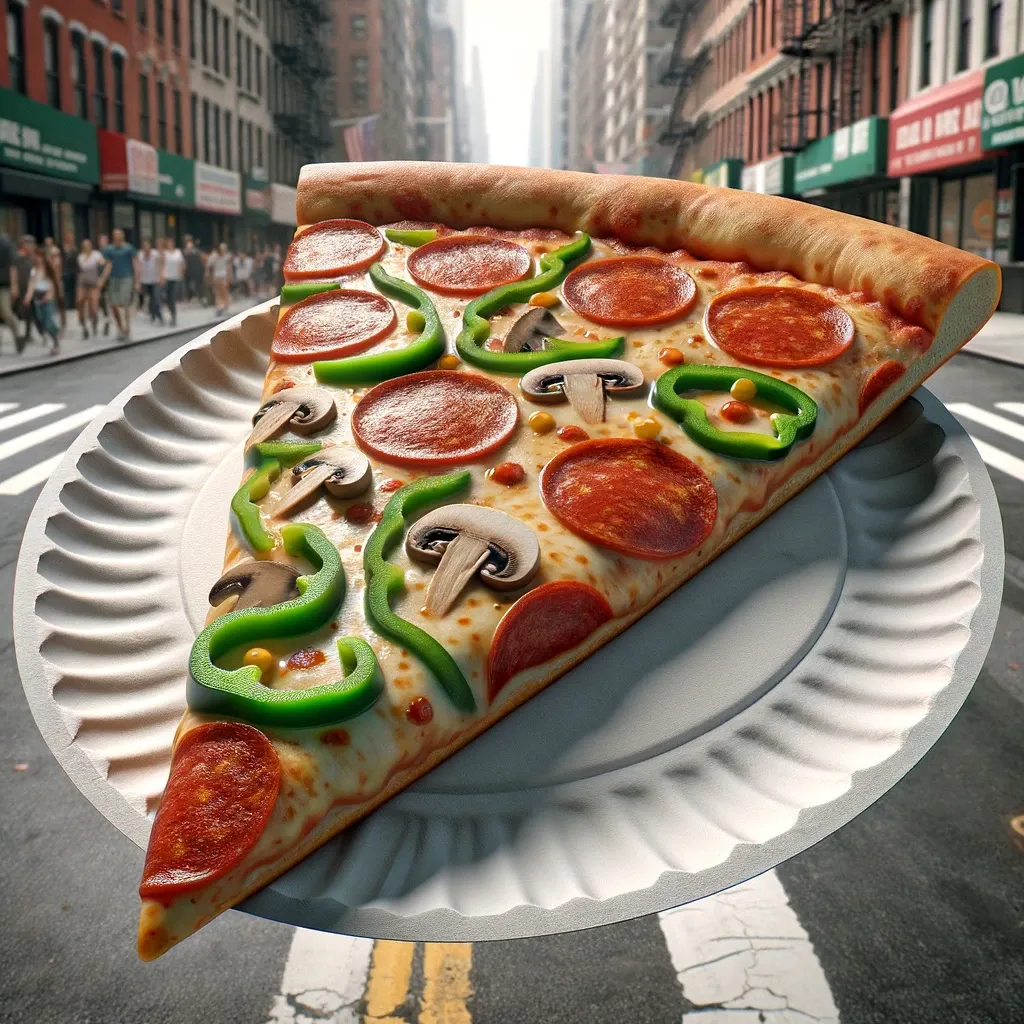
A Slice of NY

I'm buffeted along by icy winds as I head home from the subway stop. It's 4:34 PM, the goddamn sun is about to set, and Zephyrus himself has come down from Olympus to slap me in the face. Grumble grumble California wouldn't grumble

Show full content
A Slice of NY

I'm buffeted along by icy winds as I head home from the subway stop. It's 4:34 PM, the goddamn sun is about to set, and Zephyrus himself has come down from Olympus to slap me in the face. Grumble grumble California wouldn't grumble grumble.

I peek out from behind my jacket collar to check for trouble. Hangers-on loiter on stoops. The LIRR roars overhead on its way to Jamaica Station. And the good residents of Crown Heights are jaywalking like they're being paid to break the law.

I join a horde of them fording a river of oncoming traffic. I twist my head to meet my perpendicular adversaries, challenging them, goading them. Try and run me down buddy, I don't care if it's a green light, buddy, test me, buddy. Only in this city, where the subways reign supreme, will I telepathically challenge the twenty-ton vehicle about to flatten me into a novel set of pavement markings.

My stoop finally approaches. My home stoop. I approach my stoop, then begin to ascend. With every step I ascend, I feel more and more successful. At the top of my stoop I give myself a little pat. Nice job getting up your stoop. I badge the door and walk inside, beaming.

Hold up guys, I'm getting an email. It's the real estate agent for the apartment I applied for yesterday. We couldn't verify your income from your paystubs, bank account statements, and stock certificates, it reads. Can you also send the most embarrassing picture on your phone, a globule of spittle for DNA analysis, and your firstborn child? We just want to be sure. I sigh and send everything in a PDF before retiring to my bedroom.

I slither under the covers. As my eyes begin to droop, a cacophony of ambulance sirens and gangster rap blasting from open car windows lull me to sleep.

Another day awaits.

657decf1966a100001e2dbcd
Extensions
First Landfall

I moved to New York City.

Actually, that's not quite true. A backpack, a carry-on, two check-in bags, and a 27 year old homeless male nestled deep within Alaska Airlines 294, en route via same-day shipping to a warm couch waiting somewhere in Kips Bay (that's

Show full content

I moved to New York City.

Actually, that's not quite true. A backpack, a carry-on, two check-in bags, and a 27 year old homeless male nestled deep within Alaska Airlines 294, en route via same-day shipping to a warm couch waiting somewhere in Kips Bay (that's me). So not yet, but soon.

I like writing on planes. Sometimes when I sit down to write, the blank page looms menacingly, an American Ninja Warrior course of distractions and writer's block. Other times, the keyboard feels like an instrument of prose, and that's how it feels today. I'm enjoying a mildly drunken, pleasant veneer of sleep deprivation from a late night of packing. In Your Arms by Disclosure looping on repeat in my Sony XM3's, vocals and drum machines buttressing my keystrokes with a rhythm that pulls the words from my fingers onto the page. Best of all, if I need to dramatically stare into the distance for inspiration, a quick ninety degree swivel to the left provides.

Something about being isolated with 200 other people 8 miles above the Earth's surface does wonders for my little writer's brain.

It's been a while since I've published on this blog, longer than I intended. It's just that, before, when I was posting a lot, I felt like I was talking the talk, but not walking the walk. So I decided to shut up until I made some moves.

Right around then, two months ago, I started building an idea. And today, I'm going to show it to you. It's called Athenareader, a tool that allows you to read long-form content on the web over time by delivering it in bite-sized pieces to your inbox: https://www.athenareader.com/

I've always wanted to read Paul Graham's blog, but it was just too inconvenient. I didn't want to bookmark the website and keep track of the posts I'd read vs didn't read, and I didn't want to binge the blog either. I wanted to digest it over time, like I would with a good book.

And it's not just Paul Graham. James Clear, author of Atomic habits. Paul Millerd, author of the Pathless Path, Tim Ferriss, Naval, Palmer Luckey, Vitalik Buterin, and on and on. All of them have written blogs I thought I'd never read - until now.

All you have to do is tell Athenareader which blogs you want to read, and it sends the posts of those blogs to your email over time. Simple as that.

Oh, and it's completely free (for now).

Go check it out then come back to this post. I want to hear your honest first impressions.

Here's what I learned, building this over the last two months by myself:

  1. Build the landing page first. I put the landing page together after I built the app. Big mistake. The second I started showing folks the landing page, I received feedback about how I could modify the approach of the product. I felt like an idiot - how had I wasted so much time building the app and not shopping the idea to potential users? I think it came down to fear - I wanted to just build something, anything, even if it wasn't useful. And that's fine for a first time, I guess, but next time, I want to prioritize the landing page first.

    Why? A landing page is your hardest working salesperson. It talks to every customer, works 24/7, and can handle hundreds or thousands of customers per day. It's a valuable partner in pitching and distributing software, so its worthwhile to invest in it upfront.
  2. I can learn almost anything thanks to ChatGPT. Over the last two months, I learned frontend frameworks, authentication strategies, database schema design, serverless backends, DNS record management, and on and on, all thanks to ChatGPT. Usually, my lesson would often start off as a problem in my code. I would run into a bug I didn't understand, or I'd be faced with a decision I didn't know the answer to. Of course, ChatGPT always had a good answer.

    However, and this is critical: I didn't just blindly copy-paste. When ChatGPT gave me an answer, I'd continue asking it followup questions until I understood the underlying concept. While this slowed me down slightly, it saved me a ton of time later on because I wasn't asking ChatGPT for the same help over and over again. I didn't delegate work. I used it as a mentor and teacher, and in doing so, I learned a lot in a small amount of time. Now, I can build a similar web app in half the time or less.
  3. Building in public means walking AND talking at the same time. I know how to be write online. Now, I also know I can build cool shit. My challenge for the next project will be doing both simultaneously.
  4. In the early stages of a project, milestones should be time based, not feature based. I'm embarrassed to admit that my initial estimate for this project was one weekend. ONE WEEKEND! I missed that estimate by more than an order of magnitude. Despite my failure to hit that unreasonable deadline, I believe I had the right approach. Timeboxing forces clarity and conciseness, and acts as the opposing force to perfectionism.

    But that's not what I did. When I didn't finish the project on time, I stubbornly pushed myself (often late into the night) to finish the initial scope I had "committed" to (all in my head), despite the lack of user feedback. This led me down an implementation path that was not hyper-aligned with user problems, and more importantly, it wasted precious time and runway.

    All execution work should be timeboxed, because the biggest source of error this early in my entrepreneurial journey is direction, not magnitude.
  5. Be a painkiller, not a vitamin. As I shopped my landing page around to potential users, the most common reaction was: "I don't want more information. I have too much already, I want less!" That was a big aha moment, because I had discovered the real pain. But Athenareader was not painkilling. Instead, it solves an inconvenience that only some people have.
  6. I will completely burn out alone. I'm not the lone-wolf-hacking-in-my-bedroom-late-at-night type. I'm the I'll-talk-to-seven-people-a-day-for-30-days-straight type. I'm at my best building for others, with others. It's no surprise I felt unmotivated after seven weeks by myself without any user feedback.

Entrepreneurship at this stage is so damn honest. There's no team to distribute the blame. No one to prove that I'm doing a good job or not. Either I got the results I wanted or I didn't. It's a mirror, and it's forces me to confront the weaknesses I could ignore before.

I love it. Living or dying by my own sword.

So what's next?

First is the move to New York. I wasn't sure about it at the beginning of the summer, but after a few months living mostly alone in San Diego, I'm convinced. I'm at my best when surrounded by other ambitious, curious, driven people and the best places for that in the US (and perhaps the world) are New York and San Francisco. I chose New York, and there are a ton of reasons for that, but that's a topic for another post. Deep down, it feels right. It's my first time living outside of California. I'm excited.

Second is that aside from major bugs, I can finally step off the gas pedal with Athenareader. It completely consumed my focus for the last eight weeks, but now, it's time to see if it does well in the wild. Launching this product to you guys is a big step in that direction. So go use it! Tell me what you think! It's rough around the edges, but the basic value of the product should be clear.

In the meantime, I'll be reading, writing, and tinkering with new projects. The wonderful thing about creativity is that the more ideas I pursue, the more I seem to have.

Three months ago, I set sail onto the pathless path, not knowing where the adventure would take me. Now, I've discovered a new aspect of my identity, making landfall as an incoming Brooklyn resident after shipping my first big web project.

It'll be time to set sail again soon, but first, it's time to rest. That friend's warm couch in Kips Bay? I'm sitting in front of it now, typing up the last few words of this post. It looks so warm and cozy and inviting, and I'm tired. I think I'll sleep in tomorrow morning.

P.S. Thankfully, this mailing list is still small enough that I can say this: If you're receiving this email, and you're in New York City now or anytime in the future, this is a standing open invitation to grab a coffee or hangout. Yep, looked through all the names, I'm serious. Most likely, I'll invite you to something I'm organizing or we'll hit up a local spot. See you in the city!

651c76ca346b010001115622
Extensions