GeistHaus
log in · sign up

https://kaes-blog.bearblog.dev/atom.xml

atom
10 posts
Polling state
Status active
Last polled May 19, 2026 04:54 UTC
Next poll May 20, 2026 02:01 UTC
Poll interval 86400s
Last-Modified Tue, 19 May 2026 04:54:33 GMT

Posts

Posthuman Societies for TTRPGs (version 0.2)
diasporaqueersffscience-fictionsffstarforgedttrpg
Show full content
Posthuman Societies for TTRPGs

Human-centric science fiction doesn't mean everyone is the same. Posthuman societies can be just as weird and diverse as the classic aliens of Star Trek, Star Wars, and Babylon 5. Here are some information sheets for building characters for posthuman societies from various science fiction stories. I've included notes on the source material that inspired some of these. This is intended to be the start of homebrew rulemaking rather than a comprehensive sourcebook.

  • Adaptations: A short list of traits with suggested game mechanics.
  • Appearance, clothing, names: Optional notes on appearance, clothing, and names for fleshing out a characters.
  • Ethos: Some common (but very optional) ethos ideas.
  • Notes: A short discussion of primary and secondary inspirations for this character concept. These are based on my personal reading rather than an overview of the genre as a whole. Some ideas (such as clone families and military zombies) are ubiquitous but I'm most familiar with specific works.
  • Character Questions: Powered by the Apocalypse-style prompts for character development.
Aquatics

Aquatic humans have adapted to live on sea worlds with minimal contact with dry land. They've used advanced biotechnology to modify themselves and their environment to a delicate balance. They live on rafts of aquatic vegetation that serve as farms for fish, crustaceans, and plants. Their culture prioritizes long-term environmental stewardship and they actively resist changes that threaten that balance. Key modifications include symbiotic bacteria to store oxygen, reduced hair, webbed fingers and toes, and increased body fat.

Adaptations
  • Swimming: Aquatics are at home in the water. Aquatics experience no penalty performing complicated tasks while swimming or diving.
  • Oxygen: Aquatics store additional oxygen in symbiotic bacteria and have additional adaptations to make the best use of what they have. Roll with advantage when facing danger due to lack of oxygen. This ability has a short recharge time.
  • Hypothermia Resistance: Roll advantage when facing danger due to hypothermia.
Appearance

Webbed fingers and toes, no or minimal hair, variable blue-gray skin color, additional body fat.

Clothing

No clothing, swimming clothes, easily-removed clothing.

Ethos

Radical environmentalism

Names

Familiar names plus an epithet describing an emotional trait. Aquatics often choose names that are reminders of traits they want to improve: Bernin the Hungry, Golwa the Impatient, Wolg the Difficult.

Character Questions
  • What is the key event that led to you leave your home on the floating islands?
  • How does space compare to your oceans?
  • What is something you've learned to accept from non-aquatic humans?
Notes
  • Primary: Door into Ocean by Joan Sloczewski is my primary source for this version. Slonczewski's sharers are monogendered and ecofeminist.
  • Secondary: Starfish by Peter Watts has aquatic humans engineered for deep-sea labor. Starfarers by Vonda McIntyre includes an aquatic culture of humans who live with whales.

Book cover image from A Door into Ocean: A bald female figure with grey skin sits on the floor with knees up and facing the viewer.

Image from Tor re-release edition via Slonczewski's study guide for the book

Clone Families

Clone families are groups that have been cloned from a single or a few individuals. Variations in development and experience give each member unique personalities and abilities. Motives for establishing a clone family can vary but many have a shared family identity surrounding a particular profession or set of skills. They may have a familial language of inside jokes and gestures. Clone families may include others by birth, adoption, or marriage. The existence of clone families may or may not be illegal in different parts of the galaxy.

In spite of being a "family," each member is unique with differences in behavior, mannerisms, apparent age, sexuality, gender, and beliefs.

Adaptations
  • Extended Family: Members may not always get along, but they're still family to some degree. Social interactions with other clones are rolled with advantage.
  • Skill Focus: Members are expected or encouraged to master a shared skill or profession.
  • Impersonation: Some members can pass as each other, at least as far as outsiders are concerned.
Appearance
  • Individually, members are indistinguishable from their home culture. As a group, members may choose to express their relationship with their family through hairstyle or bodyart.
Clothing
  • Shared clothing style, individualized clothing style, uniform with personalized marker.
Ethos
  • Shared ethos, rebellious ethos.
Names
  • unique family name, serial number, typical name
Notes

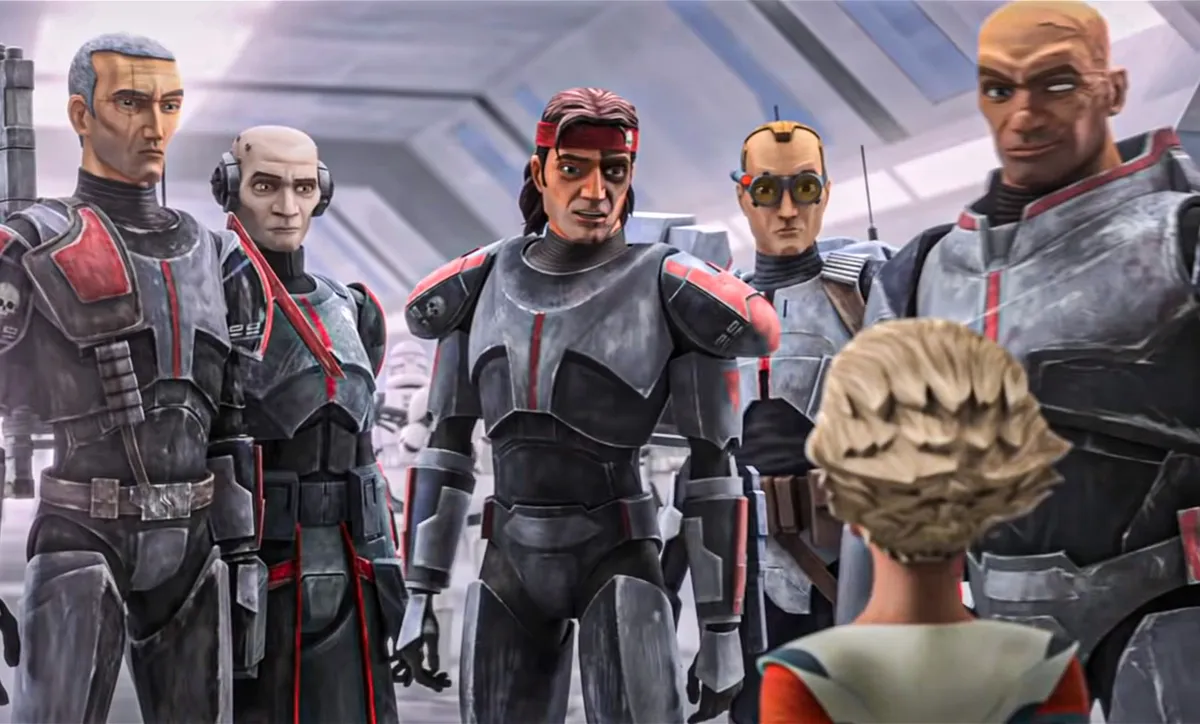
Probably the most popular example are the clone troopers from Star Wars: The Clone Wars and Star Wars: The Bad Batch. Other sources:

  • The Durona Group from Lois Bujold's Mirror Dance
  • Orphan Black
  • House of Suns by Alistair Reynolds

Still image from

Still from Lucasfilm/Disney The Bad Batch.

Character Questions
  • What do you have in common with your family? What separates you from your family?
  • What is the origin story of your family?
Engineered Caste Societies

Caste societies use genetic engineering to create specialized castes. Some of these roles may include:

  • Elites
  • Government Managers
  • Science/Technical
  • Military
  • Disposables: Slave labor for hazardous conditions

While a stratified society may be the designed intent of this posthuman culture, individuals may not act or identify according to their engineered roles. Individuals who try to escape the system or don't fit into it may be punished to different degrees.

Adaptations
  • Role focus: Roll with bonus when Facing Danger or Securing an Advantage using one's role.
  • (Optional) sterility: Individuals may be sterile depending on the caste rules.
Appearance
  • Normal appearance, caste tattoo, physical caste trait (eye color, lack of hair)
Clothing
  • Caste-identifying clothing, individualized clothing.
Ethos

Authoritarian, revolutionary.

Character Questions
  • What changes have you had to make in living away from your home planet?
  • What are your goals with respect to your home culture? Escape, reform, revolt, something else?
  • What accidentally reminds you of your caste origins? How do you respond?
Notes

Primary inspiration comes from A Closed and Common Orbit by Becky Chambers. Pepper is a woman who escapes slave labor as a child. Other examples include Cetaganda by Lois Bujold. Caste system plotlines should be discussed during the lines and veils negotiation of a TTRPG session.

Military Zombies and Weapons

Zombies are soldiers who have had their free will, higher cognitive functions, and moral conscience temporarily or permanently disabled through the use of neurosurgery and other interventions. Compared to unmodified humans, they have higher reflexes and react without hesitation or restraint in combat situations. Tactical and strategic thinking are usually handled by other soldiers.

Weapons have been modified to think as part of a weapon system. A pilot might be modified to consider the aircraft to be part of their body, and a ground soldier modified to consider a rifle to be an extension of their arm. Humans with these mods get improved skill and reflexes without the cognitive cost of zombification. Weapons may experience bodily dysphoria when not operating as part of their weapon system.

Adaptations
  • Combat Reflexes: Bonus to Face Danger when surprised by combat.
  • Preferred Weapon: Take a bonus when Clashing with preferred weapon.
  • Pain Tolerance: Defer Pay the Price for physical pain until immediately after combat.
Appearance

Visible modifications, cybernetics, military stance

Clothing

Clothing to accommodate hidden implants, ordinary clothing, military clothing

Character Questions
  • What are your current feelings regarding being modified?
  • Do you still have access to the weapons you were designed for? How does that affect you?
Notes

Peter Watts has discussed zombies in multiple stories including Echopraxia. Zombies are just one example of militarized neuroscience in his works. The ancillaries of Ancillary Justice by Ann Leckie and Murphy from Robocop are related works.

A primary source for weapons here is The Helicopter Story by Isobel Fall. In this story, militarized neuroscience manipulates gender dysphoria to create better helicopter pilots. Another story is "A Stick of Clay in the Hands of God is Infinite Potential" by Neon Yang centered on a mecha pilot.
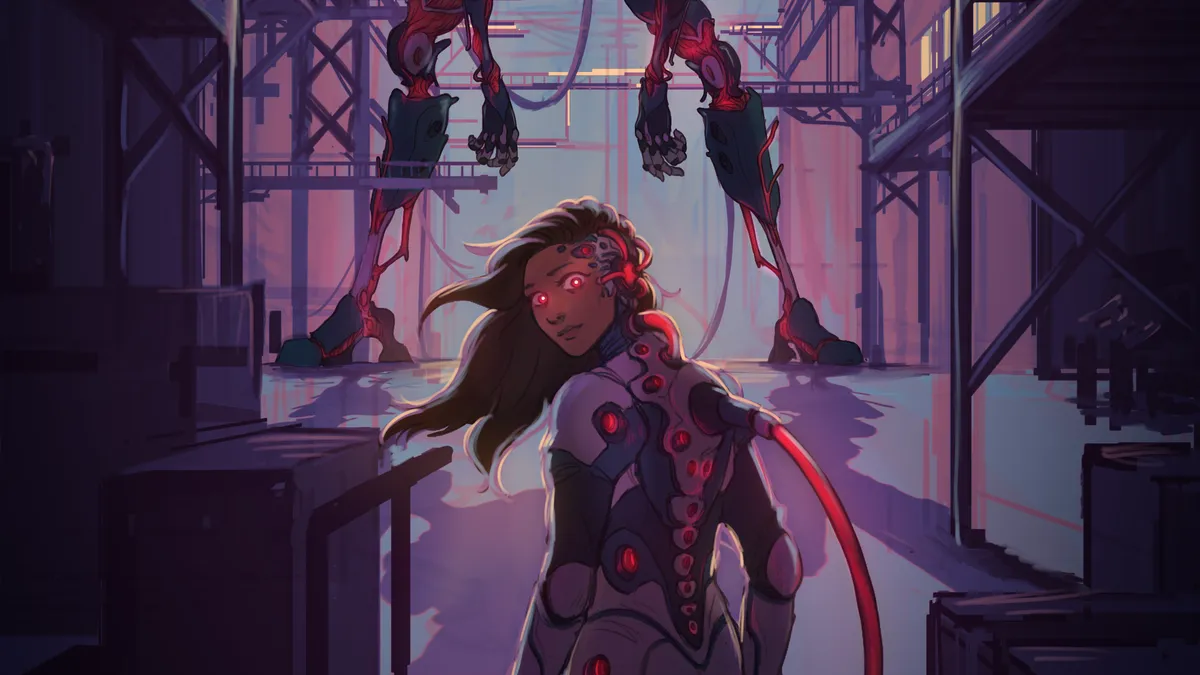
Illustration showing female mech pilot with mech in background

Illustration from girl frame ttrpg.

Tech Democracy

Tech consensus societies use ubiquitous information technology implants to facilitate direct democracy and/or consensus. Implanted individuals vote on dozens of small decisions each day, and choices are fed directly into algorithms to generate the next iteration of entertainment and consumer products. Prices for most goods are determined via consensus algorithms in real time.

Advantages
  • Information Implant: Members can look up common information without needing a terminal. However the information may be unreliable.
  • Consensus: Advantage to social interactions with other members.
  • Trader: Members can use the implant to simplify complex calculations when trading or bartering. Bonus when trading, including interactions with non-members.
Appearance
  • trendy hairstyle and makeup
Clothing
  • consumable clothing, trendy clothing
Ethos
  • Hypercapitalist
Character Questions
  • How do you feel when disconnected from the network?
Notes

This is largely based on the Demarchists of Chasm City by Alistair Reynolds.

https://kaes-blog.bearblog.dev/posthuman-societies-for-ttrpgs-version-02/
Brain Plague, Weekly Links, Bandcamp Friday
craftingmusicqueersffsewingsffweekly
Show full content

Brain Plague book cover showing a red-haired woman surrounded by butterflies

Catching up on stuff after dealing with the death of my mother in late April. I'd say "still processing," but it's one of those things that never ends. As with any death, there are both lost opportunities and unresolved conflicts. I was without a laptop for most of the time I was in Florida dealing with her last days.

Switched my reading focus from the Embodied Exegesis collection to a re-read of Joan Slonczewski's Brain Plague. The primary reason was that transfeminine cyberpunk body horror was the last thing I needed during daily visits to a hospital ICU. But I also wanted a refresh before starting Slonczewski's Minds in Transit. And I'm remembering just why it was such an influential novel for me back in 2000. For context, the market for queer SFF has exploded over the last 25 years, both in terms of out queer writers and works including queer people. In 2000 a lot of us were still very dependent on blogs, word of mouth, and curated reading lists to find friendly content. A lot of these ideas were not new, but they were new to me discovering the book on my local library shelf.

Early in the book we have this egg-crack moment for me. The protagonist, Chrys, is offered a very comprehensive health care plan for the first time in her life. The top-tier, nanotech-enabled health care plan includes options for gender-affirming body modification, which is handled in much the same way as Chrys's choice of age and muscularity presentation:

"A client of your sophistication might be interested in our more advanced options. Would you consider a change of gender?” She leaned forward confidentially. “Our competitor, Plan Nine, offers only one change of gender per lifetime. Can you imagine? What if you changed your mind, and couldn’t switch back?” She shook her head. “Our plan guarantees to switch you back, as often as you choose."

Another thing I had forgotten about was that Chrys still stands out as one of my favorite bi/pan characters in SFF. The relationships on the page are developed organically and evolve much the same way as the relationships around me did during this decade. I hope to wrap it up soon with a longer discussion.

Other Links Bandcamp Friday Crafting, Freesewing Simone 1
https://kaes-blog.bearblog.dev/brain-plague-weekly-links-bandcamp-friday/
Reframing Sex-Positive Feminism
ethicsfeminismsexuality
Show full content

The premise of sex-positive feminism is that healthy relationships require explicit communication and work. Rather than assume that everyone in a relationship wants the same things, sex-positive feminism assumes that each individual has different desires, needs, and backgrounds. Healthy sex requires explicit negotiation.

From this come some ethical positions:

  1. Censorship of sexually explicit materials limits our ability to fully communicate about sex and sexuality. This was a primary concern during the arguments about pornography at the point where sex-positive feminism emerged. Informed consent requires information. And censorship regimes almost always favor conservative politics and relationship values.

  2. If you don't practice the relationship work, other people are not obligated to have sex with you. Sex-positivity doesn't guarantee anything beyond a conversation. You can say no. The other person can say no.

  3. It's reasonable to choose not to have sexual relationships where there's a pervasive power imbalance. This includes choosing t4t and bi4bi relationships. It includes not dating straight men. It even includes celibacy if I feel that getting what I want is going to be too much work or risk.

  4. It's reasonable to choose not to have sexual relationships for any reason. A key influence here for me is Susie Bright, who wrote about being celibate after the birth of a child. If you're unable to engage in relationship work with a partner, it's reasonable to be single.

Sex-positive feminism does not say that everyone should have sex, only that people should be empowered to make informed choices based on personal needs and experiences. These choices include not having sex as a matter of personal choice and conscience.

https://kaes-blog.bearblog.dev/reframing-sex-positive-feminism/
Sundered Isles: Tinker Part 1
solorpgstarforgedtinkerttrpg
Show full content
How Tinker Molly Stole her first prize.

Tinker Molly

Molly had the plan but she needed a crew to pull it off. Tidecrest had a beautiful reef, which had beautiful fish and beautiful scavenging. Most silver sailed by just out of reach. But the flow is fickle and The Meridian Company made good cash on rescues, ransom, and salvage.

We didn't, the company made good silver on our rents, food, and boats. Most of us had a stash of salvage we held back, but we needed off the island to sell it.

Molly though had a map, a plan, and an itch to get off of Tidecrest.

First, we took Silver on Coral. She had been converted from fishing to salvage. Not a pretty boat, but one we knew. Molly had measured the depth and the tide, and predicted we could race away directly over the reef if we left at the right moment.

But that wasn't enough. Overseer Illy made chase with her personal yacht. It was faster. But Tinker had a plan for that. She hooked the drag chain from the Silver off the rudder of the yacht. And it already had six hands depth. Once they hit the reef, they were good as stuck until the next tide.

https://kaes-blog.bearblog.dev/sundered-isles-tinker-part-1/
Diaspora: Doctors in Space Session 1
solottrpgspacedoctorsttrpg
Show full content
Session 1

Pivotal rolls documented using lonelog.

Previous posts

Putting this campaign on hold for personal reasons.

Scene 1: Habitat B, Lightbulb

The RMT-1 is directed to Habitat B in the Lighbulb system to investigate an potentially emergent disease. At Hab. B, Dr. Carlyn Su is prevented from examining the body of the deceased patient. The Red Suns Mining Consortium is in conflict with Su's Omnitheist denomination. The postmortem is handled by a doctor with less experience.

Skipper Lakeshi and Navigator Sekhmet are able to identify Patient 0's route of origin through docking records. The crew decide to trace Patient 0's path to Mercury Orbital in the Steel System.

In Route to Mercury Orbital

Lakeshi gets into an argument with a junior member of the medical staff. Her military experience rubs the medical staff the wrong way. Dr. Su helps to defuse the situation.

Scene 2: At Mercury Orbital
  • What is the origin of the infection?
  • Identify species of the infection?
  • Clues to a cure.
  • Treat/contain local outbreak.

The RMT 1 arrives at Mercury Orbital. Six people have come down with symptoms of the new disease, three critically ill. The chief medical officer and dockmaster are concerned.

@ Medical Officer  
d: d100 = 64  
-> 'old'  
=> Medical officer is an older man concerned about a disease with new symptoms.  

@ Dockmaster   
d: d100 = 96  
-> 'principled'  
=> Dockmaster is strongly principled about their job.  

Lakeshi negotiates with the dockmaster for permission to dock. Her experiences as a navy veteran come in handy to convince the dockmaster to be open to accepting aid. However the dockmaster is still uncomfortable with the situation.

Carlyn similarly succeeds at getting the Medical Officer's permission. He invites her for a drink, which she turns down. This complicates their relationship.

Temporary scene attribute: concerned CMO

Lakeshi attempt to get access to docking records for Sekhmet to anaylize.

@ Obtain docking records
d: difficulty 2; 4dF 0; Profession 3; result +1
-> Weak result
=> Lakeshi gets minimal docking records

Carlyn examines the infected patients, collecting samples in an attempt to identify the infection.

@ Find clues about the nature of the infection
d: difficulty 4; 4dF -1; epidemeology skill: 5; total 0
-> success but it takes a full day
=> Carlyn determines that the infection is viral

@ Find clues about treatment/containment strategy
d: difficulty 3; 4dF -2; medicine skill: 4; total -1
-> efforts to identify treatment fail
=> In spite of narrowing down the species, the infection resists treatment attempts. 

Sekhmet attepts to model the infection to get clues about origin.

@ Use docking record to get clues about prior origin.
d: difficulty 4; roll 4dF -1; computer skill 4; stunt-interface: 2; total +1
-> weak success
=> Sekhmet narrows down the potential ships of origin. 

Number infected increases to 12. First death on mercury orbital.

Carlyn performs autoposy in attempt to find out more about infection.

@ Attempt to find more information by examining fatality
d: 4dF 2; difficulty 2 (with previous clues); science skill 5; total: 5
-> good result with +4 spin
=> Carlyn makes a major discovery about the nature of the illness

Lakeshi attempts to use the information gathered so far to get additional import/export records.

@ Attempt to get additional records using found information.
d: 4dF 0; difficulty 2; profession skill 3; total +1
-> weak success
=> Lakeshi gets minimal additional records.

@ Analyze records
d: 4dF -3; difficulty 2; computer skill 4; total -1
-> weak miss
=> records are inconclusive

Time is running out, the crew is ordered to investigate lost ship that may be carrying the infection.

@ Wrap up investigation on origin:
d: 4dF -2; status 2; challenge 5; result -6
-> strong miss
=> crew has multiple theories of origin but unable to support any

@ Wrap up investigtion on species
d: 4dF 0; status 5; challenge 7; result -2
-> strong miss
=> crew as multple theories of species but unable to pin down beyond viral 

@ Wrap up investigation on cure
d: 4dF 0: status 4; challenge 6; result -2
-> strong miss
=> crew unable to treat disease beyond basic precautions

In spite of setbacks, knowledge gained will help in further investigation.

https://kaes-blog.bearblog.dev/diaspora-doctors-in-space-session-1/
Weekly: April 13, 2026
weekly
Show full content
Links Veilguard: A bit of queer theology

One of the things I appreciate about Veilguard is this little bit of Lace Harding struggling with pronouns within her new-found theology. It's something I've had to work through myself.

Waiting on the Bus (In the rain, in the rain)
https://kaes-blog.bearblog.dev/weekly-april-13-2026/
Diaspora Setting Development: Rapid Medical Transport One
solottrpgspacedoctorsttrpg
Show full content

RMT-1 is a pilot project between Reedoc Medical University on Curiosity and Slipstream Industries in Steel and Breadbasket. After the outbreak of the melding epidemic, it became clear that emergent public health threats could be potentially be mitigated by rapid diagnostic and treatment response. The RMT-1 is a prototype to meet that need.

The mission of the RMT-1 is to transport expert medical personnel to potential trouble areas, serve as first response for disaster situations, and to support local medical teams with advanced diagnostic equipment. It prioritizes speed over capacity, relaying important triage and analysis information to slower response ships. It is equipped with the first civilian quantum entangled communication device (QEC-D) to enable instantaneous communication with similarly equipped base stations. Advances in drive and structural technology make it one of the fastest civilian ships of its size...

Attrs:
  • Fast
  • Advanced Lab
  • FTL Communications
  • Small
  • Experimental
Stunts:
  • FTL Communications: Instant communication with small number of base stations
  • Outrun: Can do high-G burn
  • Diagnosis lab: Bonus to medical research
https://kaes-blog.bearblog.dev/diaspora-setting-development-rapid-medical-transport-one/
Embodied Exegesis: Transfemininity and Neurodivergence in Science Fiction, Part 1
neurodivergencesfftransgender
Show full content

embodied+exegesis+aslant

For the last several years, I've been reading a lot more short fiction than long-form fiction. When you have limited time and bandwidth, keeping the complexity of a full novel in my head becomes a bit difficult. With a good short story, I can get through half of it or all of it in the space before bedtime or during lunch time. Especially within science fiction and fantasy, a short story can get right to the meat or big idea of the story without needing a lot of additional work

I also tend to focus on feminist and queer science fiction that comes not only from a desire to support artists within my community, but also poses some interesting ideas that go beyond the nuts and bolts of a lot of other works. At the more comforting end of the spectrum, I find works in which there may be serious problems, but my gender and sexuality is not a primary one. At the other end of the spectrum, I think that queer science fiction can get deeper into some of the more interesting ideas without having to explain itself to people outside of the community. In other words, the ability to present at the trans 301 level rather than the 101 level.

My current read is Embodied Exegesis: Transfeminine Cyberpunk Futures by Ann LeBlanc. And the story that kind of inspired me to take a break and write about this is "Syndical Organization in Revolutionary Transition" by Izzy Wasserstein. Astarte, a scientist working on the development of nanobots that can learn is informed that her project has been defunded. She responds by injecting her most talented nanobots into her own body. Parallel to this, Jocelyn, her best friend is having a baby in a world that has the technology to allow trans people to do that but legally denies trans people basic health care. Both are active parts of a mutual aid network that attempts to care for each other and other trans people within the community. At first glance, this would make the story rather crowded, but as I said, we're working on a trans 301 level. Common background conflicts such as liability for transgender health care, chasers, and workplace harassment don't need to be explained.

Explicitly developed, Astarte and Jocelyn both wrestle with the ethics of becoming parents to children in a hostile environment. The emergent intelligence of the nanobots needs to be nurtured and taught, which raises questions of inter-generational trauma and parent-child relationships. Perhaps less well developed is a parallel between the nanobots and the mutual-aid network, who both are engaged in developing a communal understanding of their world.

Sort of a personal reflection for me — inspired by a particularly rough week on the neuroqueer front — is the scientific theme of cognitive plurality. Sort of the way my brain works, my favorite Star Trek characters include Dax, Seven of Nine, and Agnes Jurati. But probably a deeper touchstone for me are The Children Star and Brain Plague by Joan Sloczewski. Slonczewski's explores the idea of a microbe intelligence that develops symbiotic — or sometimes parasitic — relationships with human hosts. (I just found out that they just published a sequel to Brain Plague exploring this further.) Part of my personal way of viewing the world includes times where I see myself as less of a person than a node in a ecosystem. It's something I've been struggling to explore through TTRPG writing, so this story landed in a good way.

Beyond "Syndical Organization," multiple stories hit on what I consider neurodivergent themes. "Bespoke" by Elly Bangs uses the idea of custom bodies (ala Ghost in the Shell) to explore contrasts between body and cognitive dysphoria. In "Labelscar" by Anya Johanna DeNiro, debt is processed by biological implants, that have the side effect of connecting trans women struggling for economic survival. In "Right to Remain" by Riley Tao, a person's consciousness can be split for multiprocessing, cloned as avatars, or live entirely within a virtual rave. The Transcendent anthologies from 10 years ago edited by Bogi Takács had multiple stories abut time travel and talking to younger selves.

Most of the stories lean into the dystopian vision of the future dictated by corporations and regressive populism. "High tech, low life." While trans people are vulnerable in distinct ways to the commodification of identity, health care, debt, and attention, we certainly are not the other only ones. "The Repossession of Kevin's Perfect Hair" by Lillian Boyd starts with wanting a cure for hair loss, but the challenge is how to distribute medical implants to a community that would not otherwise afford them. In the face of corporate dystopia, punk ethics of DIY, mutual aid, and solidarity with peers are survival strategies.

Overall, it's a good collection and I'm happy to pick it up. I'll likely do a followup post covering the second half. As with any collection, — or following any of the periodical websites like Strange Horizons, Lightspeed, or Clarkesworld — some stories will personally hit and some will personally miss. Almost always, I find something like "Syndical Organization" that become repeat reads or best of the year.

https://kaes-blog.bearblog.dev/embodied-exegesis-transfemininity-and-neurodivergence-in-science-fiction-part-1/
Music Post: Pink Panther and Angine de Poitrine
music
Show full content

Jazz — Pink Panther Theme with double bass quartet

Rock — Discovered Angine de Poitrine. Love seeing music that's wtf in a good way.

https://kaes-blog.bearblog.dev/new-post/
Weekly: April 4, 2026: SRY gene tests, LLM model collapse, and other links
LLMtest-driven-devtransgender
Show full content
SRY Gene Tests Not Suitable for Gender Testing

The International Olympic Committee reinstates SRY gene testing, a practice that was abandoned as unsuitable for the purpose. An earlier statement on World Athletics adopting the same standard:

In advance of the 2025 World Athletics Championships in Tokyo, World Athletics (WA) announced that passing a genetic test, specifically for the absence of the SRY gene, is a prerequisite for competing in the women’s category in all athletics World Rankings Competitions as of 1 September 2025 (online supplemental table 1). Athletes who do not pass the test will be considered ‘biological males’ and required to prove that they have complete androgen insensitivity syndrome (CAIS) in order to compete. This requirement recycles an intentionally discontinued practice from the last century. After ending the discredited chromosome (Barr body) tests that had been used since the 1960s, the International Olympic Committee briefly used SRY gene tests from 1992 to 19991 before they were also withdrawn because of inaccuracy, lack of evidence of performance advantage, excessive cost including the cost of counselling, and the trauma and stigmatisation experienced by athletes and their families.

-- Harmful anachronism: World Athletics reinstates gene testing to participate in women’s competitions

LLM Model Collapse

Model Collapse Is Already Happening, We Just Pretend It Isn’t has given me some food for thought. LLMs have a bias for the central tendency (most common elements) of the language they model. When you feed the results into training the next generation of models, the bias is increased in the output of the next model. This article argues that it's already happening.

In my work work, we're trying to incrementally upgrade systems with layers and layers of production web-application code. Some of the models we use are no longer maintained. I suspect some of the problems I've experienced with LLM-analysis based on this codebase comes from an inability to recognize this as distinct edge case. Feeding the LLM information from two different languages and frameworks might be poisoning the results.

It also might explain some of the uncanny valley sense we see with LLM-generated writing. The language used by individual humans has a statistical "fingerprint" unique to each writer/speaker. An LLM which delivers the most probable continuation may not have those tell-tale quirks that identify an individual writer's style. Reports that LLM-generated text feels bland and corporate might come from this.

Other
https://kaes-blog.bearblog.dev/weekly-april-4-2026-sry-gene-tests-llm-model-collapse-and-other-links/