GeistHaus
log in · sign up

https://kadavy.net/feed/atom

atom
10 posts
Polling state
Status active
Last polled May 19, 2026 00:43 UTC
Next poll May 20, 2026 04:00 UTC
Poll interval 86400s
ETag W/"bb4aff650eda6617deff6b528c24c4d4"
Last-Modified Mon, 18 May 2026 15:00:00 GMT

Posts

Not finishing what you start is actually pretty smart
Creativity
This article originally appeared on Maximum Reverie » The man who published 500 left 150 unfinished – and that’s just the beginning. His unique paper trail provides clues on how creative works get done (or don’t). When Niklas Luhmann1 began his professorship at the University of Bielefeld, he stated an ambitious plan: “My project: theory
Show full content

This article originally appeared on Maximum Reverie »

The man who published 500 left 150 unfinished – and that’s just the beginning. His unique paper trail provides clues on how creative works get done (or don’t).
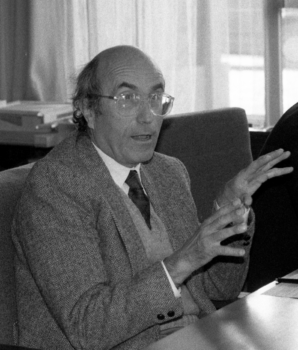
When Niklas Luhmann1 began his professorship at the University of Bielefeld, he stated an ambitious plan: “My project: theory of society. Time to complete: thirty years.”

He went on to publish a 1,200-page magnum opus. Its topic: theory of society. Time to publish: thirty years.

That’s the kind of planning and foresight we imagine having when we take on creative projects. You begin dreaming about a seven-book epic fantasy series, or a chain of innovative learning centers strewn about the country. But somewhere around 10,000 words or page seven of the business plan, something happens.

It looks like you just lose motivation, higher priorities get in the way, or life throws you a curveball. But what if it’s something simpler than all that?

What if you don’t finish what you start because it makes perfect sense?


Luhmann’s book, Theory of Society, covers in great detail every aspect of society, from law to commerce, from politics to love. On the surface, it’s incredible someone could state such an ambitious plan that spanned decades, then carry it out perfectly. But when we look closer it seems almost like what Bob Ross would have called “a happy accident.”

More than a quarter century after Luhmann’s death, his writing and research process is still itself the subject of ongoing research. Most famously, Luhmann left behind a couple cabinets2 full of 90,000 paper notes.

The University of Bielefeld has been digitizing these notes, aiming to publish all of them online. You can browse through each, but as you can see from the sample below3, you better understand German. Not to mention Luhmann’s handwriting looks like a car designed by members of the Vienna Secession, wrapped around a light pole.
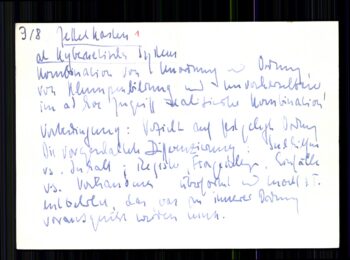
Lucky for us, the lead researcher on the project, Johannes F.K. Schmidt, has examined these notes and published a series of papers. What he’s found shows us Luhmann’s life’s work was anything but perfectly planned.

500 publications (that’s just what he got around to)

If you are or have attempted to be a writer, designer, entrepreneur or other creative, you know finishing what you start rarely goes as planned. Somehow Luhmann was able to make that part of the plan.

Maybe this sounds familiar: You get an idea for a project, then a burst of energy. At some point – whether it’s thirty minutes, three hours, or three weeks – something gets in the way. The project lingers in the back of your mind as you address more pressing matters. It unofficially becomes another rusted chassis in the boneyard, forgotten until the next Big Idea.

That’s when it resurfaces as a reminder: Why bother? It will just turn out like the last one.

Luhmann didn’t state a thirty-year project goal then disappear into a cave to carry it out. His magnum opus was just one work of many. In fact, he published 500 times: something like seventy books and over 400 articles.

Perhaps less intimidating and more comforting: He also left behind 150 unfinished works.


Schmidt and his colleagues are able to learn about Luhmann’s creative process because of the unique way he organized his notes. They weren’t sorted top-down, like the folders on your hard drive. Instead, Luhmann arranged the notes in what he himself described as like a “web” – decades before the World Wide Web.

Exactly how he organized his notes is more germane to the cultish followers of his method, known by the German word, Zettelkasten – a pretentious-sounding way of saying, Paper in a box. Suffice to say he branched his notes by codes compiled of alternating numbers and letters, created links amongst notes, and kept a directory of hundreds of keywords covered by the notes.

Within the limitations of physical paper, Luhmann did whatever he could to develop a system with no hierarchy. He described it as a system with “a combination of disorder and order.” From any one note, he could follow links and keywords to any other note in the system. He basically made his own paper Wikipedia, starting in the 1960s.

Because each note has its place, along with subtle clues like how worn a given note is and what’s on the back side of the scrap paper it was written on, researchers have a pretty good idea what Luhmann’s process looked like.

This helps us see how smaller works transformed into bigger works, and bigger works into smaller works. For example, he would stack notes together to write a presentation, and in the process of writing the presentation put additional notes back into his collection. Then he would expand the presentation into a book.

His system also gives us some sense, beyond the 150 unfinished works he left behind, just how many dead-ends and unexpected detours make up a creative career.

As Luhmann said:

“There are sets of ideas that were anticipated to become major complexes and are never elaborated; and there are secondary ideas that came to mind that gradually become more enriched and inflated.” —Niklas Luhmann

Stating a thirty-year project plan up-front then actually carrying it out seems superhuman. The actual story is more relatable. Even in the process of publishing 500 works that built up to his magnum opus, Luhmann in some sense started countless projects he never finished.

By the time he began his professorship in 1969, Luhmann had been compiling notes as he read for decades. He had experimented with methods such as keeping notes within the books he was reading or organizing them into folders before finally settling on his Zettelkasten method.

In 1969, he had been compiling his current collection for seven years. Before starting that collection, he had kept another collection for a decade. He apparently had to start over because he wasn’t satisfied with how the first collection was organized.

When he had started his second collection, his goal hadn’t been to form a theory of society, but an entire other book on administrative theory – which he never wrote. Researchers can see from his collection that his notes on a theory of society were filed deep within the system.

The lesson is useful to any creative who has struggled to finish what they start: What seemed would become his major focus turned out to be nothing. What had been a minor interest grew to define his career.

Not finishing is a part of finishing

When you take on a new project, there’s so much you don’t know. You haven’t built your fantasy world and your new teaching method hasn’t been proven. That you run out of motivation or other things take priority shouldn’t be a surprise. You don’t actually have information that confirms you’re on the right track or that the struggle will be worth it.

As Luhmann’s process shows us, grand visions are rarely carried out from plan to execution. They more often emerge from an improvisational process consisting of a combination of many projects – from tiny notes, to small articles, to big books, to grand theories. Many don’t become anything at all.

So instead of letting those rusted chassis in the boneyard discourage us from trying again, we should accept them as part of the process, and keep in mind Luhmann’s explanation for why he started organizing his work around tiny works that either fizzled out or blazed new trails: “It was obvious to me that I would have to plan for a lifetime not for a book.”

This article originally appeared on Maximum Reverie »


Footnotes
  1. Image Credit: Universitätsarchiv St.Gallen | HSGH 022/000941 | CC-BY-SA 4.0
  2. Image Credit: Niklas Luhmann Archive
  3. Image Credit: Niklas Luhmann Archive
https://kadavy.net/?p=11167
3 new articles this week
Miscellaneous
I published three new articles on Substack this week: Why the Curious Peak Late: When you’re curious it takes longer to build your foundation. Not finishing what you start is actually pretty smart: The unique paper trail of the man who published 500 – and left 150 unfinished – tells us a lot about how
Show full content

I published three new articles on Substack this week:

  1. Why the Curious Peak Late: When you’re curious it takes longer to build your foundation.
  2. Not finishing what you start is actually pretty smart: The unique paper trail of the man who published 500 – and left 150 unfinished – tells us a lot about how creative work gets done (or doesn’t).
  3. 47 lessons from 47 years: self-explanatory.

What’s up with the Substack?

This flurry of Substack articles is part of what Finish What Matters Preview Edition readers will recognize as a period of “coming up for air.” After years of inductively writing a book, I’m deductively revisiting the concepts in various mediums – Substack articles being one of them.

The goal is not only to iterate on the ideas so they come out more crisply, but also to get a feel for viable marketing channels for when the book launches.

If it’s confusing to decide whether to stay subscribed here or subscribe on Substack, I apologize! I myself am a little confused where to put my work in this world of so many walled gardens, and Substack may be a promising channel to get my work in front of more people.

If you’d like to help, I’d appreciate you subscribing to my Substack publication, Maximum Reverie.

Perhaps these articles will all be syndicated here on the blog at some point, but for this moment Substack is the focus of my experimentation.

https://kadavy.net/?p=11146
47 lessons from 47 years
Miscellaneous
As of today, I have been alive for 47 years. Here is everything I’ve learned: (I’ve also published this over on Substack, where I’m doing a short (for now) publishing experiment you might want to subscribe and be a part of.) Whenever possible, act now. You’re worth so much more than your eyeballs. What you
Show full content

As of today, I have been alive for 47 years. Here is everything I’ve learned:

(I’ve also published this over on Substack, where I’m doing a short (for now) publishing experiment you might want to subscribe and be a part of.)

  1. Whenever possible, act now.
  2. You’re worth so much more than your eyeballs.
  3. What you think is “all in your head,” may actually be in your body. Find a good doctor.
  4. Trust your subconscious. It knows your path better than you do.
  5. Get therapy.
  6. You’re bombarded with mediocre opportunities.
  7. Thus, it’s your challenge to ignore mediocre opportunities.
  8. You’re bombarded with mediocre friendships and relationships.
  9. Thus, it’s your challenge to ignore mediocre friendships and relationships.
  10. Most people are dying to distract themselves from their own thoughts.
  11. There is a lot of money to be made in distracting people from their own thoughts.
  12. Thus, everything around you is built to help people distract themselves from their own thoughts.
  13. So, ignore most everything, and make space for your own thoughts.
  14. Nobody reads the whole article before commenting.
  15. Nearly everybody is “juicing.” They’re making themselves sick trying to catch up with one another.
  16. Thus, your challenge is to catch up with your self.
  17. You can only know so much.
  18. And, your brain is ruled by biases.
  19. Thus, you can hardly trust what you think you know.
  20. And, you can only know so much about a person.
  21. So, if you feel jealous when comparing yourself to someone else, you’re wrong.
  22. Take improv classes. It will get you out of your head, and into the moment.
  23. Take voice lessons. It really is possible to improve your singing.
  24. Only sing in a key that is comfortable for you.
  25. Take lessons in a social dance (Salsa, Swing, Tango, etc.) You’ll learn to cooperate, and you’ll have instant community anywhere you travel.
  26. Traveling sucks. It’s much better to live in different places for short bursts.
  27. What you think is a personality flaw may just be the bad influence of the place where you live.
  28. What you think sucks about where you live may just be a flaw in your perception.
  29. If you merely suspect something is holding you back, it’s not. You are.
  30. When you dream of something, that thing seems impossible.
  31. When something you dream of feels impossible, it makes you unhappy.
  32. Thus, be comfortable with where you are.
  33. But still, dream, while being comfortable with where you are.
  34. When you use a bookmark, you invite yourself to forget what you’ve read.
  35. Thus, don’t use bookmarks.
  36. Smart people do dumb things when the pressure is on.
  37. When you’re 29, you’ll feel 28. When you’re 39, you’ll feel 28. When you’re 47, you’ll feel 28.
  38. When you meet someone 28, they’ll think you’re 100.
  39. Life can get super shitty and nobody wants to hear or talk about it.
  40. Losing a parent is good for your art because now you aren’t worried what they’ll think.
  41. You think you need to be a complete person to find a partner, but you never will be. You can be “fixed.”
  42. When someone’s behavior seems stupid, they probably just value something you don’t.
  43. You’ll never “efficient” your way out of a lack of time.
  44. Instead of delegating, just don’t do the thing. Being a master is being a slave.
  45. The most mundane observations are one step away from the most profound.
  46. You think you need to live where the “action” is, but the action is mostly a distraction.
  47. Even though it’s cliché to end a list with something pithy, it ties it up nicely. Clichés are clichés for a reason.

Surprisingly I don’t take back any I published when I turned 37, only additions. (If you remember any of those, Wow, am I grateful for you.)

https://kadavy.net/?p=11144
1st Quarter 2026 Income Report
Income Reports
To listen to an audio version of this report, join the Patreon » Revenue for the first quarter of 2026 was: January: $6,269 February: $2,918 March: $1,967 Q1 Total: $11,155 Q4 2025’s revenue was $11,883. Q1 2026 profits were: January: $5,386 February: $2,217 March: $478 Q1 Total: $8,081 Q4 2025’s profit was $7,724. First quarterly
Show full content

To listen to an audio version of this report, join the Patreon »

Revenue for the first quarter of 2026 was:

  • January: $6,269
  • February: $2,918
  • March: $1,967
  • Q1 Total: $11,155

Q4 2025’s revenue was $11,883.

Q1 2026 profits were:

  • January: $5,386
  • February: $2,217
  • March: $478
  • Q1 Total: $8,081

Q4 2025’s profit was $7,724.

First quarterly income report

I’ve talked in past reports about my doubts over how much time these reports take to compile, and whether the juice was worth the squeeze. As the months of 2026 went by, I decided to try a quarterly report.

This compresses the time investment both in bookkeeping and report writing. Doing three months of books does not take thrice as much time as one, and writing a quarterly report doesn’t take much longer than a monthly one.

For data consistency, however, I’m still recording each month’s numbers separately.

There’s also the question of how big a ship I am steering. While the ship isn’t currently “big” in terms of revenue, it has certainly gotten bigger over the years in terms of complexity. More books to track means more complicated to collect data.

Yet after years of writing these reports I have a better idea of what my business does and I feel I’ve improved my focus and decision-making. So it’s not as advantageous for me to think things over on a monthly basis as it once was. So maybe quarterly will suffice?

Records

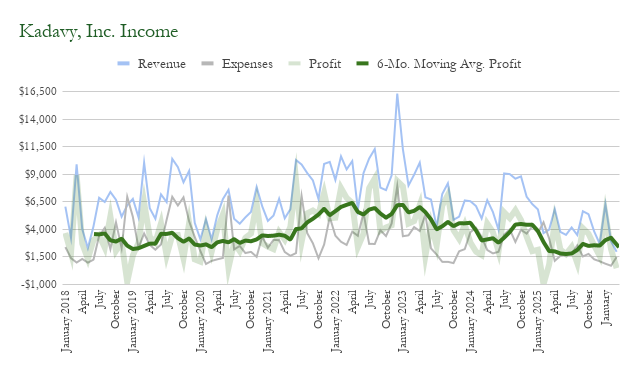
In past months I’ve been breaking lots of record lows in revenue and profit. In fact, March marks a record-low twelve-month income, at $49,474.

But, that record low was on a five-month streak which was briefly broken in January, at $52,221.

However, profit has trended back up to $31,888 at the end of March, from the record-low of $25,771 in December.

That’s because expenses have been lower. March marks the end of a four-month streak of record-low twelve-month ad spend, with $10,528. The streak started in December with $17,599, the lowest since December 2019, when it was $18,214.

(If there was advertising that clearly worked, I would be buying it!)

Direct sales of books bounced back up to 30% of book revenue over the six months ending in March. At the end of December, that was only 8.7%.

Finish What Matters Preview Edition complete!

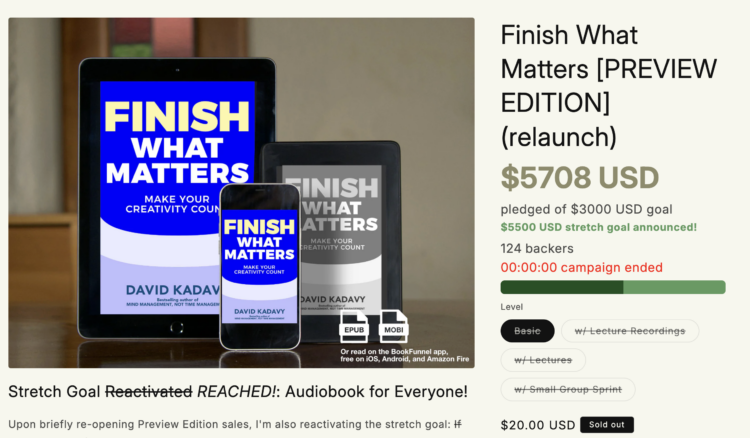
The big focus in Q1 was the Preview Edition of Finish What Matters. In a primary launch and a secondary launch, I sold over $5,700 in the various levels of the Preview Edition.

That just edged us above the stretch goal at which all Preview Edition customers will get a copy of the audiobook.

I’ve broken up the numbers below to separate purchases of the book portion of the Preview Edition from elements of the more premium levels. There was a three-lecture series, and a three-session small-group workshop.

There were 124 total customers:

  • 98 Basic Customers @ $20: $1,960
  • 15 Lecture Customers @ $89: $1,335
  • 7 Lecture Recordings @ $59: $413
  • 4 Cohort Students @ $500: $2,000
  • Total Earnings: $5,708

For a point of reference, I earned $4,220 from the Preview Edition of Mind Management. However that was purely from $20 equivalents to the “Basic” package – 211 sales.

So from one perspective, I converted a smaller number of Preview Edition customers. From another perspective, I made more money, and in the process built lectures and a small cohort course that should make the contents of the book better, and that can be future sources of revenue.

I locked into “devastating focus” mode for the quarter, and just delivered the final chapters of the Preview Edition (ahead of schedule!)

If you missed the Preview Edition, or want to be sure to get the Kindle edition, Finish What Matters is available for pre-order!

Media experiments for FWM

As I let the Preview Edition manuscript incubate a bit, I’m currently in a sort of “coming up for air” period in which I’m doing various media experiments for repurposing some of the ideas within FWM.

The purposes of these experiments are twofold: 1) Get a feel for what channels might be a good use of my energy when the launch comes around and 2) Experiment with repurposing the ideas to various mediums, which should in turn make the book better as I edit.

The past two weeks I gave myself permission to spend my mornings working on reels for both TikTok and Instagram. I once again find I’m able to get pretty solid views on my reels, but it continues to be difficult to convert those views into anything.

For example, I’m trying to give away a chapter of the Preview Edition as a lead magnet, and I’ve gotten about 18 email addresses on Instagram and one on TikTok.

Part of this process is also anticipating podcast questions and pontificating about what might be the most effective way to answer them. That process also informs some reels, but of course the medium is the message and what’s good for a podcast isn’t necessarily good for a reel and vice versa.

Migrating email to Kit + BigMailer

My focus in the afternoons, evenings, and sometimes late into the nights of the past month has been migrating my email marketing from ActiveCampaign to a combination of Kit + BigMailer. And I’m really excited about it!

I think we’re entering a new era in email marketing. Automation platforms like AC and Kit are getting really expensive, and how much of your list is in a sophisticated automation at any given moment?

Meanwhile, platforms like Kit have recommendation networks that can help creators grow (as do Substack and Beehiv).

And LLMs have made it easy for those who are merely somewhat-technical to use more sophisticated tools like Amazon Simple Email Service, which costs like 10¢ per 1,000 emails sent, and has excellent deliverability (so long as you can stay below their maximum unsubscribe, complaint, and bounce thresholds).

These recommendation networks fill creators’ lists with low-quality leads, which can’t be good for the sender reputations and deliverability rates of these platforms (Substack in particular I’ve heard a lot of complaints about).

So, my new email marketing stack will look like this:

  • Kit: Processing new leads through lead magnets, email courses, and the recommendation network, while nurturing existing Shopify customers through their integration.
  • BigMailer: A front-end for Amazon SES, for sending the weekly newsletter, these blog updates, and other bigger blasts.
  • Zapier: For keeping subscription preferences synced across platforms.

I’ve yapped a few times in recent years about why I still think RSS is an awesome technology, and I think that’s increasingly true. If you’re a content creator more interested in getting your work to readers than squeezing every last dime out of them, it makes sense to have a more decentralized or “federated” email strategy.

So Love Mondays is still powered by RSS, and the blog updates via email are, too. But I’ve realized Substack publications have RSS. So I’ve considered making that where I publish – for the growth potential – which would push the email updates to my existing list (you as a subscriber wouldn’t know the difference). By the way I syndicate LM to Substack if that is your platform of choice – I could use the subscribers.

But, RSS support isn’t great on the ESPs. ActiveCampaign’s is alright, but it got buggy recently and they don’t care about it. Kit’s templating is wonky for RSS. But BigMailer’s is perfect.

So if you are reading this report via email, you may be in the portion of subscribers already getting email via BigMailer instead of ActiveCampaign.

I’ve long had my eye on Kit, but the difference never felt urgent enough or the timing never felt right for what I knew would be an arduous migration process.

But ActiveCampaign has sent some signals lately that I interpret as them surrendering the creator market and focusing on enterprise. Along with that they have made some low-integrity moves that made me want to be less dependent on them or any single ESP.

It does feel great to have the automations set up on Kit. The user experience is so much faster and easier than AC. Their automation builder isn’t as “do whatever you want” as ActiveCampaign, but with some creativity you can do most things. It’s genius how versatile they’ve made such a simple interface.

I’m also excited about their Shopify integration, which will allow me to create follow-up sequences based upon customers’ purchase behavior. I think AC had something like that available, but it was on a much more expensive plan.

If you’re interested in sending email blasts for cheap, please use my affiliate link for BigMailer (it’s so cheap I won’t make much, but it’s so cool – just ask an LLM how to link it with Amazon SES).

It seems anyone who might be interested already switched to Kit long ago, but I have a link for Kit, too. And if you’re in charge of big enterprise email-marketing initiatives ActiveCampaign is still powerful.

Spotify payments now quarterly

Sometime last year, Findaway Voices split off into Spotify and InAudio. That’s been pretty confusing and I haven’t paid much attention to it, but I did eventually figure out that Spotify is now only paying on a quarterly basis.

You won’t see the breakdown in these reports, but it definitely got my attention when I got my latest payment from them.

Okay so I guess that’s only like $166 a month, but the way things have been going lately this has me considering trying some Spotify ads or other ways of promoting my audiobooks there.

ActiveCampaign affiliate revenue (almost) disappeared

I had thought going into 2026 that I still had another year of collecting revenue for my ActiveCampaign referrals. But it turned out they had some sneaky language in their agreements migrating affiliates to the new system.

So something like $15,000 of revenue I was anticipating for 2026 pretty much vanished. There’s a couple hundred dollars in my PartnerStack account that I haven’t transferred over yet – still considering whether maybe I should start counting that revenue on an accrual basis.

As you can imagine, this accelerated the switch I already had planned after they increased their prices without sufficient notice.

Digital Zettelkasten in Spanish! ¡Zettelkasten Digital en Español!

Amazon has made automatic translations available to some authors, and one book they made it available for was Digital Zettelkasten. So I clicked a couple buttons and literally within an hour there was a Spanish version available on the Kindle store.

My wife is a native speaker and I’m functionally fluent, so we read it together, and it’s a good translation! There wasn’t one part that was weird.

The only limitation is that words within graphics aren’t translated, nor, strangely, is the table of contents. However, they don’t allow you to edit any part of the translation. But I did upload a custom cover.

Spanish is definitely a sweet-spot language for automatic translation like this because the market is huge, yet you have to be selling really well to get a translation deal.

I once commissioned a translation of How to Write a Book, and I’ve made like $750 off the $250 translation in eight years – and there was a fair amount of extra translation and work I hadn’t anticipated.

This one has been out not even a month and I’ve sold 11 copies and made less than $5, so it remains to be seen that it contributes meaningfully to revenue.

MMT, HTS, and HSB are all eligible for translation and I’m putting it off – I don’t know exactly why. It would be cool for my wife to finally be able to read my books. Looks like you can also translate into German.

January Income Book Sales Finish What Matters $1,480 Mind Management, Not Time Management $752 100-Word Writing Habit $174 100 Journal Prompts Workbook $0 How to Sell a Book $56 Digital Zettelkasten $459 The Heart to Start $108 How to Write a Book $54 Total Book Sales $3,083 Misc. Products 100-Word Habit Wristband $8 Total Misc. Products $8 Affiliates / Advertising Active Campaign $429 Alliance of Independent Authors $0 Amazon $164 Google AdSense $0 TikTok $0 Total Affiliates $594 Reader Support Patreon $142 Total Reader Support $142 Services Clarity $0 Consulting Call $175 FWM Lecture Series $828 FWM Cohort $1,440 Total Services $2,443 GROSS INCOME $6,270 January Expenses General Accounting $35 Book Printing $0 Outside Contractors $0 Quickbooks $34 Shipping and Handling $127 Total General $196 Advertising Amazon $245 BookBub $0 Meta $20 Google $0 Influencer Marketing $0 Product Samples $0 Total Advertising $265 Hosting ActiveCampaign $161 Bookfunnel $15 Drafts $2 Dropbox $10 Fathom Analtyics $15 Libsyn $8 Namecheap $37 Shopify $39 Ulysses $3 WP Engine $96 X $5 Zapier $14 Zoom $17 Total Hosting $422 TOTAL EXPENSES $884 NET PROFIT $5,386 February Income Book Sales Finish What Matters $600 Mind Management, Not Time Management $573 100-Word Writing Habit $140 100 Journal Prompts Workbook $6 How to Sell a Book $24 Digital Zettelkasten $294 The Heart to Start $102 How to Write a Book $33 Total Book Sales $1,772 Misc. Products 100-Word Habit Wristband $8 Total Misc. Products $8 Affiliates / Advertising Active Campaign $0 Alliance of Independent Authors $0 Amazon $193 Google AdSense $121 TikTok $0 Total Affiliates $314 Reader Support Patreon $138 Total Reader Support $138 Services Clarity $0 Consulting Call $0 FWM Lecture Series $207 FWM Cohort $480 Total Services $687 GROSS INCOME $2,919 February Expenses General Accounting $115 Book Printing $0 Outside Contractors $0 Quickbooks $34 Shipping and Handling $23 Total General $172 Advertising Amazon $145 BookBub $0 Meta $0 Google $0 Influencer Marketing $0 Product Samples $0 Total Advertising $145 Hosting ActiveCampaign $161 Bookfunnel $15 Drafts $2 Dropbox $10 Fathom Analtyics $15 Libsyn $8 Namecheap $0 Shopify $39 Ulysses $3 WP Engine $96 X $5 Zapier $14 Zoom $17 Total Hosting $385 TOTAL EXPENSES $701 NET PROFIT $2,217 March Income Book Sales Finish What Matters $140 Mind Management, Not Time Management $400 100-Word Writing Habit $204 100 Journal Prompts Workbook $6 How to Sell a Book $0 Digital Zettelkasten $267 The Heart to Start $40 How to Write a Book $18 Design for Hackers $342 Total Book Sales $1,417 Misc. Products FWM Lecture Recordings $137 100-Word Habit Wristband Total Misc. Products $137 Affiliates / Advertising Active Campaign $0 Alliance of Independent Authors $238 Amazon $49 Google AdSense $0 TikTok $0 Total Affiliates $287 Reader Support Patreon $126 Total Reader Support $126 Services Clarity $0 Consulting Call $0 Total Services $0 GROSS INCOME $1,967 March Expenses General Accounting $735 Book Printing $0 Outside Contractors $0 Quickbooks $34 Shipping and Handling $20 Total General $789 Advertising Amazon $181 BookBub $0 Meta $95 Google $0 Influencer Marketing $0 Product Samples $0 Total Advertising $276 Hosting ActiveCampaign $161 Bookfunnel $15 Drafts $2 Dropbox $10 Fathom Analtyics $15 Libsyn $8 Namecheap $56 Shopify $39 Ulysses $3 WP Engine $96 X $5 Zapier $14 Total Hosting $424 TOTAL EXPENSES $1,489 NET PROFIT $478
https://kadavy.net/?p=11130
Hours left, stretch goal reached (audiobook included!)
Books
Just a quick post to let you know that the stretch goal has been reached for the briefly re-opened Finish What Matters Preview Edition. This means that every Preview Edition customer will get the audiobook (when it comes out). I’ve been making arrangements to produce a top-notch audiobook (read by me) with The Block House (Tim Ferriss,
Show full content

Just a quick post to let you know that the stretch goal has been reached for the briefly re-opened Finish What Matters Preview Edition.

This means that every Preview Edition customer will get the audiobook (when it comes out).

I’ve been making arrangements to produce a top-notch audiobook (read by me) with The Block House (Tim Ferriss, Ryan Holiday, Paul Millerd), so I’m very excited we have reached this goal and I hope you are too!

As I write this, there are about 5 hours left to join (closing 7 p.m. Central Time). Six of the ten chapters are available for reading right now.

Join the Preview Edition now »

https://kadavy.net/?p=11100
Finish What Matters Preview Edition (briefly) re-opened
Books
After a couple months of extra-focused writing I’ve re-opened the Preview Edition of Finish What Matters. You can get instant access to most of the Preview Edition (6/10 chapters ~27,000 words) by joining right now. I’ve even re-instated the stretch goal, which you can see on the page. Notice that you can also gain access
Show full content

After a couple months of extra-focused writing I’ve re-opened the Preview Edition of Finish What Matters.

You can get instant access to most of the Preview Edition (6/10 chapters ~27,000 words) by joining right now.

I’ve even re-instated the stretch goal, which you can see on the page.

Notice that you can also gain access to the recordings of the series of classes I’ve delivered over previous weeks.

The rest of the chapters will be delivered on the schedule, as listed, well before the first-edition release.

I’m very excited to be even closer to finishing, with readers already benefiting from this book. I hope you will join, and be a part of making it a reality.

https://kadavy.net/?p=11095
The hidden cost of Shiny Object Syndrome
Creative Productivity
Just a few days left to join the Finish What Matters Preview Edition » What’s the harm in taking on one more project? We can get some idea by asking the question, How many people need to be in a room before two have the same birthday? The answer is counterintuitive, and sheds light on
Show full content

Just a few days left to join the Finish What Matters Preview Edition »

What’s the harm in taking on one more project? We can get some idea by asking the question, How many people need to be in a room before two have the same birthday?

The answer is counterintuitive, and sheds light on the hidden complexity that holds us back from finishing what we start.

To be totally sure at least two have the same birthday, you’d need 366 people in a room (assuming no leap birthdays), but it gets really interesting when we ask how many it takes to have a 50/50 chance.

Using rough intuitive math, you might figure, There are 365 potential birthdays, so maybe about 180 people for a 50% chance two have the same?

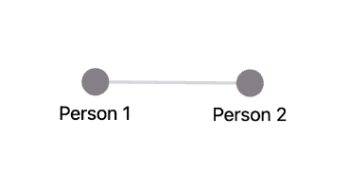
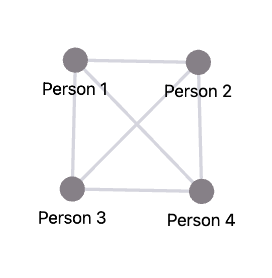
If you have two people in a room, you have one potential shared birthday.

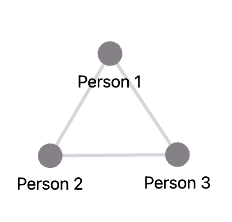
When you add just one more person to the room, the number of potential shared birthdays triples.

When you go from three to four people, the potential shared birthdays jump from three to six.

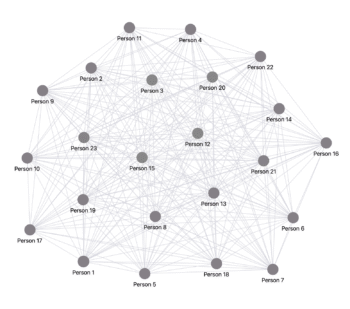
To have a 50% chance two people have the same birthday, you only need twenty three people. By that point, there are 253 potential shared birthdays.

The birthday paradox is a paradox because it is hard for our brains to grasp this rapid rise in connections. Now try to apply this to your creative projects, and everything else in your life.

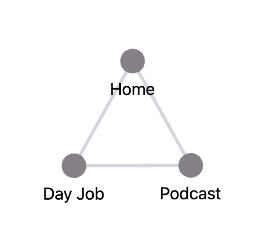
Let’s say you have your day job, your home life, and your podcast. These areas can conflict with each other in three different ways. For example, you can’t record your podcast at work but your house is only quiet enough to record while everyone is at work or school.

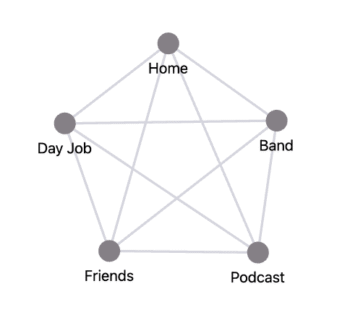
Add a social life with friends, and potential conflicts jump from three to six. Add one more project, say a rock band, and now you have ten potential conflicts.

When you get an idea to add on another project, you aren’t just adding one more thing – you’re adding that one thing and how it affects every other thing. You can very easily find yourself overwhelmed.

This idea is borrowed from Chapter 3 of Finish What Matters. It will debut in a couple weeks, explaining how to turn Shiny Object Syndrome into a shiny object strategy. But the Preview Edition closes in just a few days! Join now »

https://kadavy.net/?p=11038
Stretch goal for Finish What Matters: audiobook for all
Books
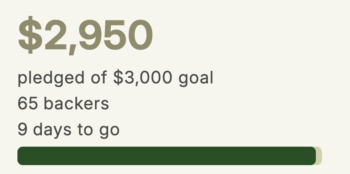
I have now reached my initial funding goal for the Finish What Matters Preview Edition! I’ve cooked up a very cool stretch goal: Free audiobook for all (Preview Edition customers). I’ve already been in talks with The Block House in Austin about producing the audiobook – to be read by me (they do audio for Ryan
Show full content

I have now reached my initial funding goal for the Finish What Matters Preview Edition!

I’ve cooked up a very cool stretch goal: Free audiobook for all (Preview Edition customers).

I’ve already been in talks with The Block House in Austin about producing the audiobook – to be read by me (they do audio for Ryan Holiday, Tim Ferriss, and Paul Millerd). If I can reach $5,500 total proceeds from the Preview Edition, I will give the audiobook to all Preview Edition customers, at all levels.

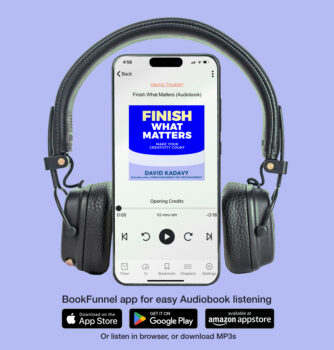
The audiobook will be delivered in the BookFunnel app, available on your favorite device, and available for download on MP3 – estimated delivery: September 2026.

If an additional $2,500 with only a week left seems like a lot after it took three weeks to get to $3,000, consider:

  • The last day of campaigns are the biggest (sometimes 40–50% of my sales come in on the last day)
  • There are still seats available for the small-group finishing cohort. At $500 each, they can get us close, quickly. Sign up to get a project done in Q1.
  • More of the book is available than before (Chapter 2 was just released, ahead of schedule)

Learn more and sign up for the Preview Edition »

I hope to be in your ears in an audiobook, soon.

https://kadavy.net/?p=11033
Chapter 2 of Finish What Matters Preview Edition now available
Books
There’s one week left to sign up for the Preview Edition » If you beat yourself up for not finishing what you start, you might want to look at how you define what’s finished. After running my podcast for six years, I found myself afraid to quit. I couldn’t confront not “finishing.” When we start
Show full content

There’s one week left to sign up for the Preview Edition »

If you beat yourself up for not finishing what you start, you might want to look at how you define what’s finished.

After running my podcast for six years, I found myself afraid to quit. I couldn’t confront not “finishing.”

When we start ongoing projects, like podcasts, YouTube channels, or newsletters, we can easily find ourselves feeling trapped. This can especially happen early on: There are so many blogs out there with two articles, or social media pages with two posts.

We get the first couple units shipped, but then aren’t excited as we used to be. So we end up feeling guilty.

But what really happens is we learn in the process of creating those first few units. Add to that, we’ve already imagined that we’d keep doing this thing forever.

Whether you’ve shipped 300 (as I had with my podcast), or 3 (as I also have with many other things), you need to define finish lines, where you can reflect on what you had been expecting, and consider whether to keep going.

I talk about that more in Chapter 2 of the Finish What Matters Preview Edition. (Which I’m delivering a week earlier than scheduled.)

Sign up for the Preview Edition and start reading now »

Best,
David
P.S. As I write this, we are very close to hitting my initial funding goal (now I’m thinking about stretch goals 🤔)

https://kadavy.net/?p=11030
Join the finishing cohort and get it done in Q1
Miscellaneous
Is there a creative project you want to finally finish in Q1 of 2026? A mostly-edited novel An app that’s been “almost ready” a bit too long A series of small things, such as 30 video reels, 6 podcast episodes, etc. During the Preview Edition of Finish What Matters I’m doing a very special Finishing Cohort. Here’s how
Show full content
Is there a creative project you want to finally finish in Q1 of 2026?
  • A mostly-edited novel
  • An app that’s been “almost ready” a bit too long
  • A series of small things, such as 30 video reels, 6 podcast episodes, etc.

During the Preview Edition of Finish What Matters I’m doing a very special Finishing Cohort. Here’s how it works: Meet with me and a small group of motivated creators three times throughout Q1.

  • First we’ll talk about Commitment: What will you finish, and what will you not?
  • Then we’ll talk about Friction: Where has momentum stalled, and what can you do about it?
  • Finally, we’ll talk about Closure: How do we ship this, then reflect to do it even better the next time?

We’ll also keep in touch in a dedicated WhatsApp Group. 6 weeks is long enough to finish something substantial, but short enough to commit and carve out before 2026 makes other plans.

See how the Finish What Matters content applies to a variety of real-world, real-time projects and personalities, and get the accountability that comes along with defining and stating your intentions to a group. I’ve taken a deep dive over the past decade into how creative projects get done, meeting fortnightly with my own mastermind partner – and have seen it all.

Finally shipping that project will be icing on the cake after baking in these concepts for a lifetime of confident action.

The cohort will meet at 11 a.m. U.S. Central Time on Wednesdays: February 11th, February 25th, and March 11th. (Recordings will be available, in case you miss one.

Just select the “Small Group Sprint” when purchasing the Preview Edition. Seats are very limited, and filling up!

(The Small Group Sprint also includes the lecture series.)

Questions? Email me david@kadavy.net

https://kadavy.net/?p=11016